US8218781B1 - Audible fan noise cancellation - Google Patents
Audible fan noise cancellation Download PDFInfo
- Publication number
- US8218781B1 US8218781B1 US11/821,281 US82128107A US8218781B1 US 8218781 B1 US8218781 B1 US 8218781B1 US 82128107 A US82128107 A US 82128107A US 8218781 B1 US8218781 B1 US 8218781B1
- Authority
- US
- United States
- Prior art keywords
- fan
- fans
- noise
- velocity
- coupled
- Prior art date
- Legal status (The legal status is an assumption and is not a legal conclusion. Google has not performed a legal analysis and makes no representation as to the accuracy of the status listed.)
- Expired - Fee Related, expires
Links
- 238000000034 method Methods 0.000 claims abstract description 30
- 238000012545 processing Methods 0.000 claims description 13
- 238000012544 monitoring process Methods 0.000 claims description 3
- 238000001816 cooling Methods 0.000 abstract description 13
- 230000008569 process Effects 0.000 abstract description 12
- 230000009467 reduction Effects 0.000 abstract description 6
- 238000010586 diagram Methods 0.000 description 8
- 239000007788 liquid Substances 0.000 description 3
- 238000010009 beating Methods 0.000 description 2
- 238000010276 construction Methods 0.000 description 2
- 230000006870 function Effects 0.000 description 2
- 230000001360 synchronised effect Effects 0.000 description 2
- 238000012546 transfer Methods 0.000 description 2
- 230000008859 change Effects 0.000 description 1
- 238000007796 conventional method Methods 0.000 description 1
- 230000007246 mechanism Effects 0.000 description 1
- 238000004886 process control Methods 0.000 description 1
Images


Classifications
-
- G—PHYSICS
- G10—MUSICAL INSTRUMENTS; ACOUSTICS
- G10K—SOUND-PRODUCING DEVICES; METHODS OR DEVICES FOR PROTECTING AGAINST, OR FOR DAMPING, NOISE OR OTHER ACOUSTIC WAVES IN GENERAL; ACOUSTICS NOT OTHERWISE PROVIDED FOR
- G10K11/00—Methods or devices for transmitting, conducting or directing sound in general; Methods or devices for protecting against, or for damping, noise or other acoustic waves in general
- G10K11/16—Methods or devices for protecting against, or for damping, noise or other acoustic waves in general
- G10K11/175—Methods or devices for protecting against, or for damping, noise or other acoustic waves in general using interference effects; Masking sound
- G10K11/178—Methods or devices for protecting against, or for damping, noise or other acoustic waves in general using interference effects; Masking sound by electro-acoustically regenerating the original acoustic waves in anti-phase
- G10K11/1781—Methods or devices for protecting against, or for damping, noise or other acoustic waves in general using interference effects; Masking sound by electro-acoustically regenerating the original acoustic waves in anti-phase characterised by the analysis of input or output signals, e.g. frequency range, modes, transfer functions
- G10K11/17821—Methods or devices for protecting against, or for damping, noise or other acoustic waves in general using interference effects; Masking sound by electro-acoustically regenerating the original acoustic waves in anti-phase characterised by the analysis of input or output signals, e.g. frequency range, modes, transfer functions characterised by the analysis of the input signals only
- G10K11/17825—Error signals
-
- G—PHYSICS
- G10—MUSICAL INSTRUMENTS; ACOUSTICS
- G10K—SOUND-PRODUCING DEVICES; METHODS OR DEVICES FOR PROTECTING AGAINST, OR FOR DAMPING, NOISE OR OTHER ACOUSTIC WAVES IN GENERAL; ACOUSTICS NOT OTHERWISE PROVIDED FOR
- G10K11/00—Methods or devices for transmitting, conducting or directing sound in general; Methods or devices for protecting against, or for damping, noise or other acoustic waves in general
- G10K11/16—Methods or devices for protecting against, or for damping, noise or other acoustic waves in general
- G10K11/175—Methods or devices for protecting against, or for damping, noise or other acoustic waves in general using interference effects; Masking sound
- G10K11/178—Methods or devices for protecting against, or for damping, noise or other acoustic waves in general using interference effects; Masking sound by electro-acoustically regenerating the original acoustic waves in anti-phase
- G10K11/1781—Methods or devices for protecting against, or for damping, noise or other acoustic waves in general using interference effects; Masking sound by electro-acoustically regenerating the original acoustic waves in anti-phase characterised by the analysis of input or output signals, e.g. frequency range, modes, transfer functions
- G10K11/17821—Methods or devices for protecting against, or for damping, noise or other acoustic waves in general using interference effects; Masking sound by electro-acoustically regenerating the original acoustic waves in anti-phase characterised by the analysis of input or output signals, e.g. frequency range, modes, transfer functions characterised by the analysis of the input signals only
-
- G—PHYSICS
- G10—MUSICAL INSTRUMENTS; ACOUSTICS
- G10K—SOUND-PRODUCING DEVICES; METHODS OR DEVICES FOR PROTECTING AGAINST, OR FOR DAMPING, NOISE OR OTHER ACOUSTIC WAVES IN GENERAL; ACOUSTICS NOT OTHERWISE PROVIDED FOR
- G10K11/00—Methods or devices for transmitting, conducting or directing sound in general; Methods or devices for protecting against, or for damping, noise or other acoustic waves in general
- G10K11/16—Methods or devices for protecting against, or for damping, noise or other acoustic waves in general
- G10K11/175—Methods or devices for protecting against, or for damping, noise or other acoustic waves in general using interference effects; Masking sound
- G10K11/178—Methods or devices for protecting against, or for damping, noise or other acoustic waves in general using interference effects; Masking sound by electro-acoustically regenerating the original acoustic waves in anti-phase
- G10K11/1785—Methods, e.g. algorithms; Devices
- G10K11/17857—Geometric disposition, e.g. placement of microphones
-
- G—PHYSICS
- G10—MUSICAL INSTRUMENTS; ACOUSTICS
- G10K—SOUND-PRODUCING DEVICES; METHODS OR DEVICES FOR PROTECTING AGAINST, OR FOR DAMPING, NOISE OR OTHER ACOUSTIC WAVES IN GENERAL; ACOUSTICS NOT OTHERWISE PROVIDED FOR
- G10K11/00—Methods or devices for transmitting, conducting or directing sound in general; Methods or devices for protecting against, or for damping, noise or other acoustic waves in general
- G10K11/16—Methods or devices for protecting against, or for damping, noise or other acoustic waves in general
- G10K11/175—Methods or devices for protecting against, or for damping, noise or other acoustic waves in general using interference effects; Masking sound
- G10K11/178—Methods or devices for protecting against, or for damping, noise or other acoustic waves in general using interference effects; Masking sound by electro-acoustically regenerating the original acoustic waves in anti-phase
- G10K11/1787—General system configurations
- G10K11/17879—General system configurations using both a reference signal and an error signal
- G10K11/17883—General system configurations using both a reference signal and an error signal the reference signal being derived from a machine operating condition, e.g. engine RPM or vehicle speed
-
- G—PHYSICS
- G10—MUSICAL INSTRUMENTS; ACOUSTICS
- G10K—SOUND-PRODUCING DEVICES; METHODS OR DEVICES FOR PROTECTING AGAINST, OR FOR DAMPING, NOISE OR OTHER ACOUSTIC WAVES IN GENERAL; ACOUSTICS NOT OTHERWISE PROVIDED FOR
- G10K2210/00—Details of active noise control [ANC] covered by G10K11/178 but not provided for in any of its subgroups
- G10K2210/10—Applications
- G10K2210/11—Computers, i.e. ANC of the noise created by cooling fan, hard drive or the like
-
- G—PHYSICS
- G10—MUSICAL INSTRUMENTS; ACOUSTICS
- G10K—SOUND-PRODUCING DEVICES; METHODS OR DEVICES FOR PROTECTING AGAINST, OR FOR DAMPING, NOISE OR OTHER ACOUSTIC WAVES IN GENERAL; ACOUSTICS NOT OTHERWISE PROVIDED FOR
- G10K2210/00—Details of active noise control [ANC] covered by G10K11/178 but not provided for in any of its subgroups
- G10K2210/10—Applications
- G10K2210/123—Synchrophasors or other applications where multiple noise sources are driven with a particular phase relationship
Definitions
- This description relates generally to the cooling of heat generating mechanical or electronic equipment with cooling fans and more specifically to, the reduction or cancellation of noise generated by the cooling fans.
- Heat buildup in a mechanical assembly such as an engine, or in an electronic assembly, such as a computer, can be a problem. Heat buildup typically prevents equipment from operating efficiently, and may also cause equipment failure by the seizing or binding of mechanical parts, and the failure of electronic parts due to various failure mechanisms.
- Cooling of equipment typically includes a heat exchanger for heat transfer from the equipment being cooled to either air or liquid. Liquid may be pumped through the heat exchanger and air may be moved over to the heat exchanger by fans, convection or the like in an attempt to increase the rate of heat transfer.
- pumps and fans typically generate noise which may be undesirable to operators working or stationed near this equipment. Fans in particular, tend to produce high pitched loud noise levels.
- Cooling fans are often used in cooling electronic equipment. Moving air has long been used as an efficient, and economical method of cooling electronics, without the need for complicated heat exchangers, pumps and liquid coolers and the like. However, fans tend to be noisy, making working near equipment cooled by fans unpleasant and possibly damaging to one's hearing.
- An operator is typically located near the electronic equipment they are working with, such as a radio transmitter or other high powered device that typically generates a great deal of heat.
- High heat dissipating equipment is typically cooled by banks of cooling fans running at high speeds.
- a high speed fan typically generates large amounts of fan noise which may be undesirable to those working with the equipment or nearby. Thus, it may be desirable to minimize fan noise heard by an operator or other person located near the equipment being cooled with fans.
- Local audio nulls may be created by adjusting fan velocity and/or phase to cancel the fan noise near an operator.
- phase and velocity of the fan may be controlled by feedback techniques.
- the feedback techniques utilize feedback provided by a microphone located in the proximity of the operator to create an area of audio nulling of the fan noise.
- Local audio nulls may also be created by manipulating fan, phase and velocity by a controller that implements a process to create local audio nulls using the fixed position of equipment and the operator in the determination.
- FIG. 1 shows a conventional electrical (or mechanical) equipment having cooling fans which generate noise heard by an operator.
- FIG. 2 is a block diagram of an example of equipment including audible fan noise cancellation, or reduction, that utilizes a fixed relative location to implement noise cancellation.
- FIG. 3 shows an example of audio noise cancellation in which feedback from a microphone may be used to produce a local audio null.
- FIG. 4 is a block diagram of an example of a fan controller that may utilize a fixed distance (of FIG. 2 ) to calculate a plurality of fan control outputs.
- FIG. 5 is a block diagram of an example of a fan controller utilizing control loop circuitry to set fan velocity and phase.
- FIG. 6 is block diagram showing a process for reducing audible fan noise that may be executed by an example of the fan controller (of FIG. 5 ).
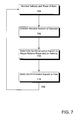
- FIG. 7 shows a process for calculating nulls and controlling the fan suitable for application by the fan controller (of FIG. 4 ).
- FIG. 1 shows a conventional electrical (or mechanical) equipment having cooling fans which generate noise heard by an operator 100 .
- AC or DC power 104 is typically applied to a plurality of conventionally constructing fans 136 , 138 and 140 that blow air over a conventional heat exchanger 134 to cool the exemplary electronic equipment 102 coupled to the heat exchanger 134 .
- Fan 136 may include a typical motor 106 and conventionally constructed fan blade 128 .
- Fan 138 includes a conventionally constructed motor 108 and a conventionally constructed fan blade 130 .
- motor 140 may include a conventionally constructed motor 110 and a conventionally constructed fan blade 132 .
- the fans, including the motors and blades, are typically similarly constructed so that the noise they generate tend to be alike, all other conditions such as, heat exchanger geometry being the same.
- the motors 106 , 108 and 110 are not locked in synchronization to the applied power signal 104 .
- Each of the fans 136 , 138 and 140 typically generate acoustical noise 112 , 114 and 116 that may be attributed to each of the fans as shown.
- the noise profile 112 , 114 and 116 are typically substantially equal in amplitude and phase.
- the noise profile may vary slightly in phase and amplitude. This phase and amplitude variation may result in a beating together of the individual noise signals 112 , 114 and 116 to create a pulsating sound 120 heard by an operator 118 .
- the noise signals may be sufficiently synchronized, and may not beat together. In this case, just a simple continuous loud noise may be heard by the operator 118 .
- the fact that beating is heard tends to indicate that the noise heard by the operator at his work station, may be manipulated and perhaps cancelled or reduced.
- Adjusting the phase and/or velocity of the fans may help reduce or eliminate noise 120 heard by an operator 118 if the fans can be synchronized so that noise signals 112 , 114 and 116 generated by each fan tends to cancel when superimposed at the operator's work station, or location.
- FIG. 2 in a block diagram of an example of equipment including audible fan noise cancellation, or reduction that utilizes a fixed distance 228 to implement noise cancellation 200 .
- This example includes a plurality of fans 220 , 222 and 224 that typically generate outputs indicating the velocity and phase of the fan.
- fan motor 1204 generates phase and velocity outputs ⁇ 1 and V 1 .
- Fan motor 2206 typically generates phase and velocity output ⁇ 2 and V 2 respectively.
- the nth fan motor 208 may generate phase and velocity output ⁇ n and V n respectively.
- Control inputs may typically include phase and velocity controls.
- the phase and velocity controls may be included in the motor assembly as built or added on as an associated, and possibly separate, assembly.
- Motor 204 includes phase and velocity input control ⁇ 1 , V 1 .
- Motor 206 may include phase and velocity input ⁇ 2 and V 2 respectively.
- the nth motor 208 may include phase and velocity input ⁇ n and V n .
- Each of the phase and velocity motor inputs are noted in the figure with arrows pointing to the respective motor.
- Each of the phase and velocity outputs from each fan motor are indicated by an arrow pointing away from the appropriate motor.
- a conventional power source 104 is coupled to each of the fans 220 , 222 and 224 to cool equipment 202 via a heat exchanger 226 .
- an operator 118 is typically located a fixed distance 228 from the equipment 202 . This distance may vary somewhat, and still maintain the desired noise cancellation, with the cancellation tending to degrade as one moves away from the prescribed distance. In an alternative example, not only distance, but location or angle away from a normal axis to the equipment may be used to determine cancellation.
- Equipment operators or other people are often located in somewhat of a fixed distance, or position from noisy electronic equipment. Such a situation may occur in a trailer filled with communications gear where an operator or other personnel are seated a fixed distance from the equipment without a lot of room to move about.
- Another example would be a person operating a piece of equipment who would usually be within arms length of the equipment so that they can operate it from the front panel.
- the operator or other person would typically be in a general distance area that tends to be somewhat of a known distance 228 away from the equipment.
- the fans 220 , 222 and 224 are adjusted such that a local audio null 210 tends to be produced in the operators work zone.
- the reduced noise level may be of any wave shape that tends to exhibit reduced acoustic energy heard by the operator 118 .
- a fan controller 214 utilizes the fixed distance 228 in order to control the fans 220 , 222 and 214 to produce a local audio null 210 .
- a plurality of fan control outputs 218 are coupled to fans 220 , 222 and 224 to control fan velocity (V) and/or phase ( ⁇ ).
- Fan output control signals 218 may be conventional control signals of either an analog or digital nature. If an analog signal, information may be represented by a current, or a voltage. A plurality of fan control input signal 216 may also be supplied from the respective fans 220 , 222 and 224 to the fan controller. The signals generated by the fans may be conventional analog or digital control signals. And again, if an analog signal, the signal information may be conveyed by a current or a voltage.
- These fan control input signals 216 may or may not be utilized in generating a local audio null. They are optional and may be utilized in alternative examples of generating an audio null. However, in the example shown, they are optional as the fixed distance 228 may be used alone in this example to generate the local audio null.
- the fan controller 214 controls the fan by taking into consideration the fan control inputs 216 and the fixed distance 228 of the operator 118 from the equipment 202 to generate the fan control outputs 218 such that a local audio null 210 is produced, and the noise level heard by the operator 118 tends to be reduced.
- FIG. 3 shows an example of audio noise cancellation in which feedback from a microphone 302 may be used to produce a local audio null 300 .
- a microphone 302 is used as a feedback element. Instead of using a known distance of the operator 118 to the equipment 202 to generate a local audio null as previously described.
- This audio noise cancellation example tends to allow an operator to move about (with the microphone) to maintain noise cancellation. Also, this example allows for ease in calculation such as when the operator is not directly positioned in front of the fans.
- Microphone 302 is conventionally constructed and typically placed near an operator 118 , or other location where it may be desired to cancel or eliminate audible fan noise.
- the microphone 302 may be coupled to the fan controller 304 at a microphone input 306 .
- the fan controller 304 may include conventionally constructed control loop circuitry to produce a plurality of fan control outputs 218 .
- a plurality of fan control inputs 216 may be coupled to inputs of the control loop to contribution to the generation of the fan control outputs 218 .
- the fans 220 , 222 and 224 and the equipment being cooled 202 , with the heat exchanger 226 are as previously described.
- the fan controller 304 generates fan control outputs 218 which can be coupled to each fan.
- the fans velocity and/or phase are adjusted accordingly as instructed by the fan controller 304 .
- the nulling operation may stop and the microphone may be removed. However, the microphone may be kept there with monitoring continuing and further adjustments made when conditions change.
- FIG. 4 is a block diagram of an example of the fan controller 214 that may utilize a fixed distance ( 228 of FIG. 2 ) to calculate a plurality of fan control outputs 218 .
- a plurality of fan control inputs 216 may be coupled to conventionally constructed input interface circuitry 406 , such that, digital signals may be generated and coupled to processing circuitry to determine nulls and control the fans 402 .
- an optional microphone input 306 may be utilized in sensing the null. As shown, the optional microphone input 306 may be coupled to the input interface circuitry 406 for processing into a control signal type suitable for use by the processing circuitry to contribute to determining nulls and controlling the fans 402 .
- the processing circuitry to determine nulls and control fans 402 typically includes a conventional processor 408 coupled to outputs from the input interface circuitry 406 .
- the processor 408 works in conjunction with a conventional memory 4102 produced fan control outputs.
- the digital fan control outputs may then be coupled to the output interface circuitry 404 .
- the fans may be controlled directly by the signals from the processing circuitry 402 , however, the output interface circuitry 404 may be used to augment the signal or drive levels as desired.
- the processing circuitry to determine nulls and control fans 402 typically executes a conventional process for determining nulls. In this process, the position of the equipment relative to the operator, including the distance between the operator and the equipment is taken into account, as well as the fan control inputs providing phase and velocity information regarding the current state of the fans to produce suitable fan control outputs 218 . The operators angle away from moral to the fans may also be taken into account in the determination.
- the processing circuitry may also be implemented as a DSP dedicated programmable gate array or the like.
- the output interface circuitry 404 is conventionally constructed and suitable for converting digital signals generated by the processing circuitry to determine nulls and control fans 402 into suitable control signals output as a plurality of fan control outputs 218 .
- Fan control outputs may be analog or digital signals. If an analog, the signal may be current or voltage based control signals.
- an optional microphone input 306 may be coupled to the input interface circuitry 406 .
- a microphone is used to provide a further degree of control in producing a fan control outputs 218 .
- FIG. 5 is a block diagram of an example of a fan controller 304 utilizing control loop circuitry to set fan velocity and phase.
- microphone input 306 is coupled to conventional control loop circuitry to set velocity and phase 500 .
- optional fan control inputs 216 may also be coupled to the control circuitry to set fan velocity and phase 500 .
- the control loop circuitry to set velocity and phase 500 generates suitable fan control outputs 218 that are coupled to the fans being controlled.
- the controlled loop circuitry to set velocity and phase 500 is conventionally constructed utilizing feedback circuit techniques.
- FIG. 6 is block diagram showing a process for reducing audible fan noise that may be executed by an example of the fan controller ( 304 of FIG. 5 ).
- the velocity and phase of the fans is monitored 604 .
- the signals from the microphone are also monitored 606 .
- the synchronization signals to adjust relative phase are determined 608 .
- the synchronization signals are applied to the fan 610 .
- the process is continuous with the flow control returning to block 604 where the velocity and phase of the fans continue to be monitored.
- either the velocity or phase of the fans may be monitored.
- the microphone 606 may be monitored alone.
- FIG. 7 shows a process for calculating nulls and controlling the fan suitable for application by the fan controller 214 (of FIG. 4 ).
- the velocity and phase of the fans may be monitored 704 .
- the distance of the operator to the equipment is inputted and taken into consideration 706 .
- the signals to adjust relative phase and/or velocity are determined 708 .
- the synchronization signals generated are applied to the fans 710 .
- process control returns to block 604 where the velocity and phase of the fans may continue to be monitored. In alternative examples, either the velocity or the phase may be monitored and utilized to derive a control signal.
Landscapes
- Physics & Mathematics (AREA)
- Engineering & Computer Science (AREA)
- Acoustics & Sound (AREA)
- Multimedia (AREA)
- Soundproofing, Sound Blocking, And Sound Damping (AREA)
- Control Of Positive-Displacement Air Blowers (AREA)
Abstract
Description
Claims (19)
Priority Applications (1)
| Application Number | Priority Date | Filing Date | Title |
|---|---|---|---|
| US11/821,281 US8218781B1 (en) | 2007-06-22 | 2007-06-22 | Audible fan noise cancellation |
Applications Claiming Priority (1)
| Application Number | Priority Date | Filing Date | Title |
|---|---|---|---|
| US11/821,281 US8218781B1 (en) | 2007-06-22 | 2007-06-22 | Audible fan noise cancellation |
Publications (1)
| Publication Number | Publication Date |
|---|---|
| US8218781B1 true US8218781B1 (en) | 2012-07-10 |
Family
ID=46395966
Family Applications (1)
| Application Number | Title | Priority Date | Filing Date |
|---|---|---|---|
| US11/821,281 Expired - Fee Related US8218781B1 (en) | 2007-06-22 | 2007-06-22 | Audible fan noise cancellation |
Country Status (1)
| Country | Link |
|---|---|
| US (1) | US8218781B1 (en) |
Cited By (8)
| Publication number | Priority date | Publication date | Assignee | Title |
|---|---|---|---|---|
| DE202013005423U1 (en) | 2013-06-17 | 2013-07-02 | Robert Bosch Gmbh | Cooling system for rail vehicles |
| US20140097779A1 (en) * | 2012-10-08 | 2014-04-10 | Huntair, Inc. | Fan array vibration control system and method |
| US20140180484A1 (en) * | 2012-12-23 | 2014-06-26 | Asia Vital Components (China) Co., Ltd. | Fan noise and vibration elimination system |
| JP2014222324A (en) * | 2013-05-14 | 2014-11-27 | 株式会社Ihi | Noise reduction device and noise reduction method |
| US20160083073A1 (en) * | 2014-09-23 | 2016-03-24 | Amazon Technologies, Inc. | Vehicle noise control and communication |
| US10043507B2 (en) * | 2016-10-13 | 2018-08-07 | Lenovo Enterprise Solutions (Singapore) Pte. Ltd. | Dynamic positioning of fans to reduce noise |
| US10937440B2 (en) | 2019-02-04 | 2021-03-02 | Dell Products L.P. | Information handling system microphone noise reduction |
| DE102022201616A1 (en) | 2022-02-16 | 2023-08-17 | Zf Friedrichshafen Ag | Cooling of a control unit |
Citations (4)
| Publication number | Priority date | Publication date | Assignee | Title |
|---|---|---|---|---|
| JPH04308397A (en) * | 1991-03-12 | 1992-10-30 | Mitsubishi Electric Corp | Fan with sensor |
| US5995632A (en) * | 1996-07-09 | 1999-11-30 | Nec Corporation | Fan noise canceller |
| US20050237717A1 (en) * | 2004-04-22 | 2005-10-27 | Babb Samuel M | Method and apparatus for reducing acoustic noise from paired cooling fans |
| US20060103334A1 (en) * | 2004-11-16 | 2006-05-18 | International Business Machines Corporation | Mutual active cancellation of fan noise and vibration |
-
2007
- 2007-06-22 US US11/821,281 patent/US8218781B1/en not_active Expired - Fee Related
Patent Citations (4)
| Publication number | Priority date | Publication date | Assignee | Title |
|---|---|---|---|---|
| JPH04308397A (en) * | 1991-03-12 | 1992-10-30 | Mitsubishi Electric Corp | Fan with sensor |
| US5995632A (en) * | 1996-07-09 | 1999-11-30 | Nec Corporation | Fan noise canceller |
| US20050237717A1 (en) * | 2004-04-22 | 2005-10-27 | Babb Samuel M | Method and apparatus for reducing acoustic noise from paired cooling fans |
| US20060103334A1 (en) * | 2004-11-16 | 2006-05-18 | International Business Machines Corporation | Mutual active cancellation of fan noise and vibration |
Cited By (13)
| Publication number | Priority date | Publication date | Assignee | Title |
|---|---|---|---|---|
| US8963466B2 (en) * | 2012-10-08 | 2015-02-24 | Huntair, Inc. | Fan array vibration control system and method |
| US20140097779A1 (en) * | 2012-10-08 | 2014-04-10 | Huntair, Inc. | Fan array vibration control system and method |
| US20140180484A1 (en) * | 2012-12-23 | 2014-06-26 | Asia Vital Components (China) Co., Ltd. | Fan noise and vibration elimination system |
| US9341228B2 (en) * | 2012-12-23 | 2016-05-17 | Asia Vital Components (China) Co., Ltd. | Fan noise and vibration elimination system |
| JP2014222324A (en) * | 2013-05-14 | 2014-11-27 | 株式会社Ihi | Noise reduction device and noise reduction method |
| DE202013005423U1 (en) | 2013-06-17 | 2013-07-02 | Robert Bosch Gmbh | Cooling system for rail vehicles |
| US20160083073A1 (en) * | 2014-09-23 | 2016-03-24 | Amazon Technologies, Inc. | Vehicle noise control and communication |
| US10013900B2 (en) * | 2014-09-23 | 2018-07-03 | Amazon Technologies, Inc. | Vehicle noise control and communication |
| US10043507B2 (en) * | 2016-10-13 | 2018-08-07 | Lenovo Enterprise Solutions (Singapore) Pte. Ltd. | Dynamic positioning of fans to reduce noise |
| US20180310434A1 (en) * | 2016-10-13 | 2018-10-25 | Lenovo Enterprise Solutions (Singapore) Pte. Ltd. | Apparatus for dynamic positioning of a fan to reduce noise |
| US10888021B2 (en) * | 2016-10-13 | 2021-01-05 | Lenovo Enterprise Solutions (Singapore) Pte. Ltd. | Apparatus for dynamic positioning of a fan to reduce noise |
| US10937440B2 (en) | 2019-02-04 | 2021-03-02 | Dell Products L.P. | Information handling system microphone noise reduction |
| DE102022201616A1 (en) | 2022-02-16 | 2023-08-17 | Zf Friedrichshafen Ag | Cooling of a control unit |
Similar Documents
| Publication | Publication Date | Title |
|---|---|---|
| CN101237208B (en) | Low noise heating, ventilating and/or air conditioning (HVAC) systems | |
| EP3208798B1 (en) | Method and system for reducing fan noise as well as electronic device using the same | |
| US8251671B2 (en) | Apparatus for controlling an air distribution system | |
| US5221185A (en) | Method and apparatus for synchronizing rotating machinery to reduce noise | |
| US8727843B2 (en) | Self-powered fluid control apparatus | |
| EP1467478A3 (en) | Motor control apparatus and motor control method | |
| CN113554998B (en) | Active noise reduction device, indoor electrical system and active noise reduction method | |
| EP0818771A2 (en) | Fan noise canceller | |
| WO2016086620A1 (en) | Communication device, and multi-fan control method and apparatus therefor | |
| US20070223715A1 (en) | Quiet active fan for servers chassis | |
| US20040057827A1 (en) | Noise reduction in an air moving apparatus | |
| JP2004229490A (en) | Method of estimating rotor inertia | |
| JPH11282538A (en) | Servo device | |
| US12387708B2 (en) | Electronic system having heat dissipation and feed-forward active noise control function | |
| JP2001038128A (en) | Ventilation dust collector control method | |
| US6642680B2 (en) | Multi-rate commutation of motors | |
| JPH03294731A (en) | Air conditioner outdoor unit | |
| JP7105882B2 (en) | Control parameter adjustment system and control parameter adjustment method | |
| EP4411727A1 (en) | A system and a method for acoustic noise control | |
| JP4411698B2 (en) | Turbo molecular pump drive | |
| JPH02115510A (en) | Silencer | |
| US20250095626A1 (en) | Method for actively monitoring sound emissions of turbomachinery, system comprising turbomachinery, and device for carrying out the method | |
| JP2846276B2 (en) | Vibration motion generator | |
| WO1994009483A1 (en) | Multiple source self noise cancellation | |
| JPH05157094A (en) | OA equipment cooling device |
Legal Events
| Date | Code | Title | Description |
|---|---|---|---|
| AS | Assignment |
Owner name: ROCKWELL COLLINS, INC., IOWA Free format text: ASSIGNMENT OF ASSIGNORS INTEREST;ASSIGNOR:SWANKE, CHRISTOPHER J.;REEL/FRAME:019525/0353 Effective date: 20070622 |
|
| ZAAA | Notice of allowance and fees due |
Free format text: ORIGINAL CODE: NOA |
|
| ZAAB | Notice of allowance mailed |
Free format text: ORIGINAL CODE: MN/=. |
|
| STCF | Information on status: patent grant |
Free format text: PATENTED CASE |
|
| FPAY | Fee payment |
Year of fee payment: 4 |
|
| MAFP | Maintenance fee payment |
Free format text: PAYMENT OF MAINTENANCE FEE, 8TH YEAR, LARGE ENTITY (ORIGINAL EVENT CODE: M1552); ENTITY STATUS OF PATENT OWNER: LARGE ENTITY Year of fee payment: 8 |
|
| FEPP | Fee payment procedure |
Free format text: MAINTENANCE FEE REMINDER MAILED (ORIGINAL EVENT CODE: REM.); ENTITY STATUS OF PATENT OWNER: LARGE ENTITY |
|
| LAPS | Lapse for failure to pay maintenance fees |
Free format text: PATENT EXPIRED FOR FAILURE TO PAY MAINTENANCE FEES (ORIGINAL EVENT CODE: EXP.); ENTITY STATUS OF PATENT OWNER: LARGE ENTITY |
|
| STCH | Information on status: patent discontinuation |
Free format text: PATENT EXPIRED DUE TO NONPAYMENT OF MAINTENANCE FEES UNDER 37 CFR 1.362 |
|
| FP | Lapsed due to failure to pay maintenance fee |
Effective date: 20240710 |