US8202894B2 - Microbiocides - Google Patents
Microbiocides Download PDFInfo
- Publication number
- US8202894B2 US8202894B2 US12/665,349 US66534908A US8202894B2 US 8202894 B2 US8202894 B2 US 8202894B2 US 66534908 A US66534908 A US 66534908A US 8202894 B2 US8202894 B2 US 8202894B2
- Authority
- US
- United States
- Prior art keywords
- formula
- alkyl
- ome
- oet
- compounds
- Prior art date
- Legal status (The legal status is an assumption and is not a legal conclusion. Google has not performed a legal analysis and makes no representation as to the accuracy of the status listed.)
- Expired - Fee Related, expires
Links
- NPDACUSDTOMAMK-UHFFFAOYSA-N CC1=CC=C(Cl)C=C1 Chemical compound CC1=CC=C(Cl)C=C1 NPDACUSDTOMAMK-UHFFFAOYSA-N 0.000 description 150
- NPTDXPDGUHAFKC-UHFFFAOYSA-N C#CC1CC1 Chemical compound C#CC1CC1 NPTDXPDGUHAFKC-UHFFFAOYSA-N 0.000 description 145
- UEXCJVNBTNXOEH-UHFFFAOYSA-N C#CC1=CC=CC=C1 Chemical compound C#CC1=CC=CC=C1 UEXCJVNBTNXOEH-UHFFFAOYSA-N 0.000 description 88
- TXVJSWLZYQMWPC-UHFFFAOYSA-N C#CC1CCCC1 Chemical compound C#CC1CCCC1 TXVJSWLZYQMWPC-UHFFFAOYSA-N 0.000 description 87
- WRWPPGUCZBJXKX-UHFFFAOYSA-N CC1=CC=C(F)C=C1 Chemical compound CC1=CC=C(F)C=C1 WRWPPGUCZBJXKX-UHFFFAOYSA-N 0.000 description 86
- SSDZYLQUYMOSAK-UHFFFAOYSA-N C#CC1CCCCC1 Chemical compound C#CC1CCCCC1 SSDZYLQUYMOSAK-UHFFFAOYSA-N 0.000 description 83
- 0 *C(=O)N([15*])C([1*])([2*])C([4*])(C)C[3*] Chemical compound *C(=O)N([15*])C([1*])([2*])C([4*])(C)C[3*] 0.000 description 47
- TZKXZWAUDYXRRO-UHFFFAOYSA-N C.CC1=CN(C)C=C1C(F)(F)F Chemical compound C.CC1=CN(C)C=C1C(F)(F)F TZKXZWAUDYXRRO-UHFFFAOYSA-N 0.000 description 7
- HZKOJBSLVGSAAT-UHFFFAOYSA-N C.CC1=CN(C)C=C1C(F)F Chemical compound C.CC1=CN(C)C=C1C(F)F HZKOJBSLVGSAAT-UHFFFAOYSA-N 0.000 description 7
- KUIGOMYGURYIKV-UHFFFAOYSA-N C.CC1=CN(C)N=C1C Chemical compound C.CC1=CN(C)N=C1C KUIGOMYGURYIKV-UHFFFAOYSA-N 0.000 description 6
- NTCFWHDODWRYMY-UHFFFAOYSA-N C.CC1=NC(C(F)F)=C(C)S1 Chemical compound C.CC1=NC(C(F)F)=C(C)S1 NTCFWHDODWRYMY-UHFFFAOYSA-N 0.000 description 6
- JYYMHSCNKWUMTE-UHFFFAOYSA-N C.CC1=NC(C)=C(C)S1 Chemical compound C.CC1=NC(C)=C(C)S1 JYYMHSCNKWUMTE-UHFFFAOYSA-N 0.000 description 6
- MHZHSXQDQYKJRP-UHFFFAOYSA-N C.CC1=CN(C)N=C1C(F)F Chemical compound C.CC1=CN(C)N=C1C(F)F MHZHSXQDQYKJRP-UHFFFAOYSA-N 0.000 description 5
- VZXOZSQDJJNBRC-UHFFFAOYSA-N Sc(cc1)ccc1Cl Chemical compound Sc(cc1)ccc1Cl VZXOZSQDJJNBRC-UHFFFAOYSA-N 0.000 description 5
- FXHLQHXVJWYAGQ-UHFFFAOYSA-N C#CC1=C(C)C=C(C)C(C)=C1 Chemical compound C#CC1=C(C)C=C(C)C(C)=C1 FXHLQHXVJWYAGQ-UHFFFAOYSA-N 0.000 description 4
- DSHHPQIITDSIQN-UHFFFAOYSA-N C.CC1=NN(C)N=C1C Chemical compound C.CC1=NN(C)N=C1C DSHHPQIITDSIQN-UHFFFAOYSA-N 0.000 description 4
- YHFSBSGOPJFDIG-UHFFFAOYSA-N C.CC1=NN(C)N=C1C(F)F Chemical compound C.CC1=NN(C)N=C1C(F)F YHFSBSGOPJFDIG-UHFFFAOYSA-N 0.000 description 4
- RENYIDZOAFFNHC-UHFFFAOYSA-N C#CC1=CC(C)=CC=C1 Chemical compound C#CC1=CC(C)=CC=C1 RENYIDZOAFFNHC-UHFFFAOYSA-N 0.000 description 3
- JFOSWQQRTHDTGG-UHFFFAOYSA-N C#CC1=CN=CN1C Chemical compound C#CC1=CN=CN1C JFOSWQQRTHDTGG-UHFFFAOYSA-N 0.000 description 3
- WCEANOIMPRVBIU-UHFFFAOYSA-N C#CC1=C(FC(F)F)C=CC=C1 Chemical compound C#CC1=C(FC(F)F)C=CC=C1 WCEANOIMPRVBIU-UHFFFAOYSA-N 0.000 description 2
- PTRUTZFCVFUTMW-UHFFFAOYSA-N C#CC1=CC(F)=CC=C1 Chemical compound C#CC1=CC(F)=CC=C1 PTRUTZFCVFUTMW-UHFFFAOYSA-N 0.000 description 2
- KSZVOXHGCKKOLL-UHFFFAOYSA-N C#CC1=CC=C(C)C=C1 Chemical compound C#CC1=CC=C(C)C=C1 KSZVOXHGCKKOLL-UHFFFAOYSA-N 0.000 description 2
- NKVINJAPLKEYQS-UHFFFAOYSA-N C#CC1=CC=C(C)N=C1 Chemical compound C#CC1=CC=C(C)N=C1 NKVINJAPLKEYQS-UHFFFAOYSA-N 0.000 description 2
- KBIAVTUACPKPFJ-UHFFFAOYSA-N C#CC1=CC=C(OC)C=C1 Chemical compound C#CC1=CC=C(OC)C=C1 KBIAVTUACPKPFJ-UHFFFAOYSA-N 0.000 description 2
- CLRPXACRDTXENY-UHFFFAOYSA-N C#CC1=CC=CN=C1 Chemical compound C#CC1=CC=CN=C1 CLRPXACRDTXENY-UHFFFAOYSA-N 0.000 description 2
- MJHLPKWONJUCFK-UHFFFAOYSA-N C#CC1=CSC=C1 Chemical compound C#CC1=CSC=C1 MJHLPKWONJUCFK-UHFFFAOYSA-N 0.000 description 2
- MRGFNPGJLRIKPG-UHFFFAOYSA-N C1=CSC=C1.CC.CC Chemical compound C1=CSC=C1.CC.CC MRGFNPGJLRIKPG-UHFFFAOYSA-N 0.000 description 2
- VJYXZJGDFJJDGF-UHFFFAOYSA-N CC1=CC(C(F)(F)F)=CC=C1 Chemical compound CC1=CC(C(F)(F)F)=CC=C1 VJYXZJGDFJJDGF-UHFFFAOYSA-N 0.000 description 2
- SZQCPPRPWDXLMM-UHFFFAOYSA-N Cc1c[n](C)nc1 Chemical compound Cc1c[n](C)nc1 SZQCPPRPWDXLMM-UHFFFAOYSA-N 0.000 description 2
- CBCKQZAAMUWICA-UHFFFAOYSA-N Nc(cc1)ccc1N Chemical compound Nc(cc1)ccc1N CBCKQZAAMUWICA-UHFFFAOYSA-N 0.000 description 2
- OOZKONVIIMFOKW-UHFFFAOYSA-N C#Cc1c(C(F)(F)F)cccc1 Chemical compound C#Cc1c(C(F)(F)F)cccc1 OOZKONVIIMFOKW-UHFFFAOYSA-N 0.000 description 1
- ORGWEOCPXMBCMF-UHFFFAOYSA-N C.C.C.C.C.CC.CC1=CSC=C1 Chemical compound C.C.C.C.C.CC.CC1=CSC=C1 ORGWEOCPXMBCMF-UHFFFAOYSA-N 0.000 description 1
- BXKIIRCKUGNIQP-UHFFFAOYSA-N CC(=CC1=C(Cl)C2=CC(Cl)=CC=C2S1)[N+](=O)[O-] Chemical compound CC(=CC1=C(Cl)C2=CC(Cl)=CC=C2S1)[N+](=O)[O-] BXKIIRCKUGNIQP-UHFFFAOYSA-N 0.000 description 1
- ROMFRVKCVSHRRD-UHFFFAOYSA-N CC(N)C(C)C1=C(Cl)C2=CC(Cl)=CC=C2S1 Chemical compound CC(N)C(C)C1=C(Cl)C2=CC(Cl)=CC=C2S1 ROMFRVKCVSHRRD-UHFFFAOYSA-N 0.000 description 1
- HXCHMJNCGUDRFY-UHFFFAOYSA-N CC.CC1=CC=CS1 Chemical compound CC.CC1=CC=CS1 HXCHMJNCGUDRFY-UHFFFAOYSA-N 0.000 description 1
- WZBBGXRBHPOYIW-UHFFFAOYSA-N COC(C1=C(Cl)C2=CC(Cl)=CC=C2S1)C(C)[N+](=O)[O-] Chemical compound COC(C1=C(Cl)C2=CC(Cl)=CC=C2S1)C(C)[N+](=O)[O-] WZBBGXRBHPOYIW-UHFFFAOYSA-N 0.000 description 1
- XNZPYMFZEKAEIF-UHFFFAOYSA-N COC(CN(C(=O)C1=C(F)N(C)N=C1C)C1CC1)C1=C(Cl)C=C(Cl)S1 Chemical compound COC(CN(C(=O)C1=C(F)N(C)N=C1C)C1CC1)C1=C(Cl)C=C(Cl)S1 XNZPYMFZEKAEIF-UHFFFAOYSA-N 0.000 description 1
- MUDLVRGCPOXKJP-UHFFFAOYSA-N COC(CNC(=O)C1=C(F)N(C)N=C1C)C1=C(C)C=C(Cl)S1 Chemical compound COC(CNC(=O)C1=C(F)N(C)N=C1C)C1=C(C)C=C(Cl)S1 MUDLVRGCPOXKJP-UHFFFAOYSA-N 0.000 description 1
- ULYWRCSUGXZVGG-UHFFFAOYSA-N Cc1c[n](C)cc1C(F)(F)F Chemical compound Cc1c[n](C)cc1C(F)(F)F ULYWRCSUGXZVGG-UHFFFAOYSA-N 0.000 description 1
- DKDLTAWBIMLEOX-UHFFFAOYSA-N Cc1c[n](C)nc1C(F)(F)F Chemical compound Cc1c[n](C)nc1C(F)(F)F DKDLTAWBIMLEOX-UHFFFAOYSA-N 0.000 description 1
- RKVUCIFREKHYTL-UHFFFAOYSA-N Cc1cccnc1Cl Chemical compound Cc1cccnc1Cl RKVUCIFREKHYTL-UHFFFAOYSA-N 0.000 description 1
- JLQCMGFETTYXSU-UHFFFAOYSA-N Cc1n[n](C)nc1 Chemical compound Cc1n[n](C)nc1 JLQCMGFETTYXSU-UHFFFAOYSA-N 0.000 description 1
- YLTVTURQCDYJBE-UHFFFAOYSA-N Cc1n[n](C)nc1C(F)(F)F Chemical compound Cc1n[n](C)nc1C(F)(F)F YLTVTURQCDYJBE-UHFFFAOYSA-N 0.000 description 1
- ZJDMKCXKTJZMJX-UHFFFAOYSA-N [H]C(F)(F)C1=NN(C)C=C1C(=O)NC(C)C(OC)C1=C(Cl)C2=CC(Cl)=CC=C2S1 Chemical compound [H]C(F)(F)C1=NN(C)C=C1C(=O)NC(C)C(OC)C1=C(Cl)C2=CC(Cl)=CC=C2S1 ZJDMKCXKTJZMJX-UHFFFAOYSA-N 0.000 description 1
Classifications
-
- C—CHEMISTRY; METALLURGY
- C07—ORGANIC CHEMISTRY
- C07D—HETEROCYCLIC COMPOUNDS
- C07D333/00—Heterocyclic compounds containing five-membered rings having one sulfur atom as the only ring hetero atom
- C07D333/02—Heterocyclic compounds containing five-membered rings having one sulfur atom as the only ring hetero atom not condensed with other rings
- C07D333/04—Heterocyclic compounds containing five-membered rings having one sulfur atom as the only ring hetero atom not condensed with other rings not substituted on the ring sulphur atom
- C07D333/26—Heterocyclic compounds containing five-membered rings having one sulfur atom as the only ring hetero atom not condensed with other rings not substituted on the ring sulphur atom with hetero atoms or with carbon atoms having three bonds to hetero atoms with at the most one bond to halogen, e.g. ester or nitrile radicals, directly attached to ring carbon atoms
- C07D333/28—Halogen atoms
-
- C—CHEMISTRY; METALLURGY
- C07—ORGANIC CHEMISTRY
- C07D—HETEROCYCLIC COMPOUNDS
- C07D333/00—Heterocyclic compounds containing five-membered rings having one sulfur atom as the only ring hetero atom
- C07D333/50—Heterocyclic compounds containing five-membered rings having one sulfur atom as the only ring hetero atom condensed with carbocyclic rings or ring systems
- C07D333/52—Benzo[b]thiophenes; Hydrogenated benzo[b]thiophenes
- C07D333/62—Benzo[b]thiophenes; Hydrogenated benzo[b]thiophenes with hetero atoms or with carbon atoms having three bonds to hetero atoms with at the most one bond to halogen, e.g. ester or nitrile radicals, directly attached to carbon atoms of the hetero ring
-
- C—CHEMISTRY; METALLURGY
- C07—ORGANIC CHEMISTRY
- C07D—HETEROCYCLIC COMPOUNDS
- C07D409/00—Heterocyclic compounds containing two or more hetero rings, at least one ring having sulfur atoms as the only ring hetero atoms
- C07D409/02—Heterocyclic compounds containing two or more hetero rings, at least one ring having sulfur atoms as the only ring hetero atoms containing two hetero rings
- C07D409/12—Heterocyclic compounds containing two or more hetero rings, at least one ring having sulfur atoms as the only ring hetero atoms containing two hetero rings linked by a chain containing hetero atoms as chain links
-
- C—CHEMISTRY; METALLURGY
- C07—ORGANIC CHEMISTRY
- C07D—HETEROCYCLIC COMPOUNDS
- C07D417/00—Heterocyclic compounds containing two or more hetero rings, at least one ring having nitrogen and sulfur atoms as the only ring hetero atoms, not provided for by group C07D415/00
- C07D417/02—Heterocyclic compounds containing two or more hetero rings, at least one ring having nitrogen and sulfur atoms as the only ring hetero atoms, not provided for by group C07D415/00 containing two hetero rings
- C07D417/12—Heterocyclic compounds containing two or more hetero rings, at least one ring having nitrogen and sulfur atoms as the only ring hetero atoms, not provided for by group C07D415/00 containing two hetero rings linked by a chain containing hetero atoms as chain links
Definitions
- the present invention relates to novel microbiocidally active, in particular fungicidally active, thienyl/benzthienyl ethyl amides. It further relates to intermediates used in the preparation of these compounds, to compositions which comprise these compounds and to their use in agriculture or horticulture for controlling or preventing infestation of plants by phytopathogenic microorganisms, preferably fungi.
- Thienyl ethyl amides and their use as fungicides are described in WO 2006/108791 and EP 1710237 A1.
- Benzthienyl ethyl amides and their use as fungicides are described in WO 2007/006739.
- R 1 , R 2 and R 4 independently of each other are hydrogen, halogen, C 1 -C 4 alkyl or C 1 -C 4 halogenalkyl;
- X is oxygen, sulfur, —N(R 9 )— or —N(R 10 )—O—;
- R 9 and R 10 independently of each other are hydrogen or C 1 -C 6 alkyl;
- R 3 is C 1 -C 6 alkyl or C 1 -C 6 haloalkyl;
- Q is Q 1
- each R 5 independently of each other is halogen, C 1 -C 4 alkyl, C 1 -C 4 halogenalkyl, phenyl, halogenphenyl, C 3 -C 7 cycloalkyl acetynyl, phenyl acetynyl or halogenphenyl acetynyl; n is 1, 2 or 3; m is 1, 2, 3 or 4; A is a 5- or 6-membered heterocyclic ring containing one to three heteroatoms, each independently selected from oxygen, nitrogen and sulphur, or a phenyl ring; the heterocyclic ring or the phenyl being substituted by the groups R 6 , R 7 and R 8 ; R 6 , R 7 and R 8 are each, independently, hydrogen, halogen, cyano, nitro, C 1-4 alkyl, C 1-4 halogenalkyl, C 1-4 halogenalkoxy, C 1-4 alkoxy(C 1-4 )al
- acetynyl as used in the definition of substituent R 5 , is the group “—C ⁇ C—”.
- C 3 cycloalkyl acetynyl is the group
- alkyl groups occurring in the definitions of the substituents can be straight-chain or branched and are, for example, methyl, ethyl, n-propyl, n-butyl, n-pentyl, n-hexyl, iso-propyl, n-butyl, sec-butyl, iso-butyl or tert-butyl.
- Alkoxy, alkenyl and alkynyl radicals are derived from the alkyl radicals mentioned.
- the alkenyl and alkynyl groups can be mono- or di-unsaturated.
- cycloalkyl groups occurring in the definitions of the substituents are, for example, cyclopropyl, cyclobutyl, cyclopentyl, cyclohexyl or cycloheptyl.
- Halogen is generally fluorine, chlorine, bromine or iodine, preferably fluorine, bromine or chlorine. This also applies, correspondingly, to halogen in combination with other meanings, such as halogenalkyl or halogenalkoxy.
- Halogenalkyl groups preferably have a chain length of from 1 to 4 carbon atoms.
- Halogenalkyl is, for example, fluoromethyl, difluoromethyl, trifluoromethyl, chloromethyl, dichloromethyl, trichloromethyl, 2,2,2-trifluoroethyl, 2-fluoroethyl, 2-chloroethyl, pentafluoroethyl, 1,1-difluoro-2,2,2-trichloroethyl, 2,2,3,3-tetrafluoroethyl and 2,2,2-trichloroethyl; preferably trichloromethyl, difluorochloromethyl, difluoromethyl, trifluoromethyl and dichlorofluoromethyl.
- Alkoxy is, for example, methoxy, ethoxy, propoxy, i-propoxy, n-butoxy, isobutoxy, sec-butoxy and tert-butoxy; preferably methoxy and ethoxy.
- Halogenalkoxy is, for example, fluoromethoxy, difluoromethoxy, trifluoromethoxy, 2,2,2-trifluoroethoxy, 1,1,2,2-tetrafluoroethoxy, 2-fluoroethoxy, 2-chloroethoxy, 2,2-difluoroethoxy and 2,2,2-trichloroethoxy; preferably difluoromethoxy, 2-chloroethoxy and trifluoromethoxy.
- Alkoxyalkyl is, for example, methoxymethyl, methoxyethyl, ethoxymethyl, ethoxyethyl, n-propoxymethyl, n-propoxyethyl, isopropoxymethyl or isopropoxyethyl.
- Halogenphenyl is preferably phenyl substituted by 1, 2 or 3 halogen atoms, for example 4-chloro-phenyl.
- a “5- or 6-membered heterocyclic ring containing one to three heteroatoms, each independently selected from oxygen, nitrogen and sulphur” preferably means pyrazolyl (especially pyrazol-4-yl), thiazolyl (especially thiazol-5-yl), pyrrolyl (especially pyrrol-3-yl), 1,2,3 triazolyl, oxazolyl (especially oxazol-5-yl), pyridyl (especially pyrid-3-yl) or 2,3 dihydro-[1,4]oxathiinyl (especially 2,3 dihydro-[1,4]oxathiin-5-yl).
- the compounds of formula I can occur in different isomeric forms; the invention covers all those isomers and mixtures thereof.
- the compounds of the formula I may occur in different tautomeric forms.
- compounds of formula I exist in the tautomeric forms I I and I II :
- the invention covers all those tautomeric forms and mixtures thereof.
- A is a 5-membered heterocyclic ring containing one to three heteroatoms, each independently selected from oxygen, nitrogen and sulphur; the heterocyclic ring being substituted by the groups R 6 , R 7 and R 8 .
- A is A 1
- R 16 is halogen, cyano, nitro, C 1 -C 4 alkyl, C 1 -C 4 halogenalkyl, C 1 -C 4 halogenalkoxy, C 1 -C 4 alkoxy-C 1 -C 4 alkyl or C 1 -C 4 halogenalkoxy-C 1 -C 4 alkyl;
- R 17 is C 1 -C 4 alkyl, C 1 -C 4 halogenalkyl, C 1 -C 4 halogenalkoxy, C 1 -C 4 alkoxy-C 1 -C 4 alkyl or C 1 -C 4 halogenalkoxy-C 1 -C 4 alkyl;
- R 18 is hydrogen, halogen or cyano; or A is A 2
- R 26 is halogen, cyano, nitro, C 1 -C 4 alkyl, C 1 -C 4 halogenalkyl, C 1 -C 4 halogenalkoxy, C 1 -C 4 alkoxy-C 1 -C 4 alkyl or C 1 -C 4 halogenalkoxy-C 1 -C 4 alkyl; and R 27 is C 1 -C 4 alkyl, C 1 -C 4 halogenalkyl, C 1 -C 4 halogenalkoxy, C 1 -C 4 alkoxy-C 1 -C 4 alkyl or C 1 -C 4 halogenalkoxy-C 1 -C 4 alkyl; or A is A 3
- R 36 is halogen, cyano, nitro, C 1 -C 4 alkyl, C 1 -C 4 halogenalkyl, C 1 -C 4 halogenalkoxy, C 1 -C 4 alkoxy-C 1 -C 4 alkyl or C 1 -C 4 halogenalkoxy-C 1 -C 4 alkyl;
- R 37 is C 1 -C 4 alkyl, C 1 -C 4 halogenalkyl, C 1 -C 4 halogenalkoxy, C 1 -C 4 alkoxy-C 1 -C 4 alkyl or C 1 -C 4 halogenalkoxy-C 1 -C 4 alkyl;
- R 38 is hydrogen, halogen or cyano; or A is A 4
- R 46 and R 47 independently of one another are halogen, cyano, nitro, C 1 -C 4 alkyl, C 1 -C 4 halogenalkyl, C 1 -C 4 halogenalkoxy, C 1 -C 4 alkoxy-C 1 -C 4 alkyl or C 1 -C 4 halogenalkoxy-C 1 -C 4 alkyl.
- A is A 1 .
- A is A 2 .
- A is A 3 .
- A is A 4 .
- In another preferred group of compounds A is a phenyl ring or a 6-membered heterocyclic ring containing one to three heteroatoms, each independently selected from oxygen, nitrogen and sulphur; the phenyl ring or the heterocyclic ring being substituted by the groups R 6 , R 7 and R 8 .
- A is A 5
- R 56 is halogen, C 1 -C 4 halogenalkyl, C 1 -C 4 halogenalkoxy or C 1 -C 4 halogenalkoxy-C 1 -C 4 alkyl; or A is A 6
- R 66 is halogen, cyano, nitro, C 1 -C 4 alkyl, C 1 -C 4 halogenalkyl, C 1 -C 4 alkoxy-C 1 -C 4 alkyl or C 1 -C 4 halogenalkoxy-C 1 -C 4 alkyl; or A is A 7
- R 76 is C 1 -C 4 alkyl or C 1 -C 4 halogenalkyl.
- A is A 5 .
- A is A 6 .
- A is A 7 .
- R 18 is hydrogen.
- R 16 is C 1 -C 4 alkyl or C 1 -C 4 halogenalkyl, preferably C 1 -C 4 halogenalkyl;
- R 17 is C 1 -C 4 alkyl; and
- R 18 is hydrogen or halogen, preferably hydrogen.
- a 2 In another particular preferred group of compounds A is A 2 , wherein R 26 is C 1 -C 4 alkyl or C 1 -C 4 halogenalkyl; and R 27 is C 1 -C 4 alkyl.
- a 3 In yet another particular preferred group of compounds A is A 3 , wherein R 36 is C 1 -C 4 alkyl or C 1 -C 4 halogenalkyl; R 37 is C 1 -C 4 alkyl; and R 38 is hydrogen or halogen.
- a 4 In yet another particular preferred group of compounds A is A 4 , wherein R 46 is C 1 -C 4 alkyl or C 1 -C 4 halogenalkyl; and R 47 is C 1 -C 4 alkyl.
- R 46 halogenmethyl preferably R 46 is selected from CF 3 , CF 2 H and CFH 2 ; and R 47 is C 1 -C 4 alkyl.
- R 1 , R 2 and R 4 independently of each other is hydrogen or methyl. In one embodiment, R 2 and R 4 are both hydrogen and R 1 is methyl. In one embodiment, R 1 , R 2 and R 4 are all hydrogen.
- X is oxygen or sulfur.
- R 3 is C 1 -C 6 alkyl, preferably methyl or ethyl. In one embodiment, R 3 is methyl. In another embodiment, R 3 is ethyl.
- Q is Q 1 (thienyl ethyl amides).
- Q 1 is Q 1A
- R 5 and n are as defined under formula I (thien-2-yl ethyl amides).
- Q 1A is Q 1A-1
- R 5a is halogen, more preferably chloro
- R 5b is halogen, phenyl, halogenphenyl, C 3 -C 7 cycloalkyl acetynyl, phenyl acetynyl or halogenphenyl acetynyl
- R 5c is hydrogen.
- Q 1 is Q 1B
- R 5 and n are as defined under formula I (thien-3-yl ethyl amides).
- R 5a is halogen, C 1 -C 4 alkyl, C 1 -C 4 halogenalkyl, phenyl, halogenphenyl, C 3 -C 7 cycloalkyl acetynyl, phenyl acetynyl or halogenphenyl acetynyl
- R 5b is halogen, C 1 -C 4 alkyl, C 1 -C 4 halogenalkyl, phenyl, halogenphenyl, C 3 -C 7 cycloalkyl acetynyl, phenyl acetynyl or halogenphenyl acetynyl
- R 5c is halogen, C 1 -C 4 alkyl, C 1 -C 4 halogenalkyl, phenyl, halogenphenyl, C 3 -C 7 cycloalkyl acetynyl, phenyl acetynyl
- R 5a and R 5b are both independently from each other halogen, more preferably chloro; and R 5c is halogen, C 1 -C 4 alkyl, C 1 -C 4 halogenalkyl, phenyl, halogenphenyl, C 3 -C 7 cycloalkyl acetynyl, phenyl acetynyl or halogenphenyl acetynyl. These compounds are shown in tables 14 to 20.
- R 5a and R 5c are both independently from each other halogen, more preferably chloro; and R 5b is halogen, C 1 -C 4 alkyl, C 1 -C 4 halogenalkyl, phenyl, halogenphenyl, C 3 -C 7 cycloalkyl acetynyl, phenyl acetynyl or halogenphenyl acetynyl. Also these compounds are shown in tables 14 to 20.
- Q is Q 2 (benzthienyl ethyl amides).
- Q 2 is Q 2A
- R 5 and m are as defined under formula I (benzthien-2-yl ethyl amides).
- Q 2A is Q 2A-1
- R 5a and R 5b are each independently from each other halogen, C 1 -C 4 alkyl, C 1 -C 4 halogenalkyl, phenyl, halogenphenyl, C 3 -C 7 cycloalkyl acetynyl, phenyl acetynyl or halogenphenyl acetynyl; and R 5c is hydrogen, halogen, C 1 -C 4 alkyl, C 1 -C 4 halogenalkyl, phenyl, halogenphenyl, C 3 -C 7 cycloalkyl acetynyl, phenyl acetynyl or halogenphenyl acetynyl.
- R 5a is halogen, more preferably chloro;
- R 5b is halogen, phenyl, halogenphenyl, C 3 -C 7 cycloalkyl acetynyl, phenyl acetynyl or halogenphenyl acetynyl; and
- R 5c is hydrogen.
- R 5b is in the 5′-position of the benzthiophene.
- R 5b is in the 6′-position of the benzthiophene.
- Q 2 is Q 2B
- R 5 and m are as defined under formula I (benzthien-3-yl ethyl amides).
- Q 2B is Q 2B-1
- R 5a and R 5b are each independently from each other halogen, C 1 -C 4 alkyl, C 1 -C 4 halogenalkyl, phenyl, halogenphenyl, C 3 -C 7 cycloalkyl acetynyl, phenyl acetynyl or halogenphenyl acetynyl; and R 5c is hydrogen, halogen, C 1 -C 4 alkyl, C 1 -C 4 halogenalkyl, phenyl, halogenphenyl, C 3 -C 7 cycloalkyl acetynyl, phenyl acetynyl or halogenphenyl acetynyl.
- R 5a is halogen, more preferably chloro;
- R 5b is halogen, phenyl, halogenphenyl, C 3 -C 7 cycloalkyl acetynyl, phenyl acetynyl or halogenphenyl acetynyl; and
- R 5c is hydrogen.
- the nitroalkene of formula IVA can be reacted with a compound of the formula MXR 3 , wherein M is Li, Na or K; X and R 3 is as defined under formula I, to form the nitroalkanes of formula IIIA, in which X, R 1 and R 3 are as defined under formula I.
- nitroalkanes of formula IIIA can be reduced to the amines of formula IIA-2, wherein X, R 1 and R 3 are as defined under formula IIIA, by using, for example, LiAlH 4 in an ether solvent, such as diethylether or tetrahydrofurane.
- ether solvent such as diethylether or tetrahydrofurane.
- the halogenated amines of formula IIA can be amidated by using the corresponding acid derivatives, such as acid chlorides of the formula A-C(O)Cl, wherein A is as defined under formula I, to form the halogenated amides of formula IA.
- Said amidations are conveniently carried out in the presence of a base, such as triethylamine, Hunig base, sodium bicarbonate, sodium carbonate, potassium carbonate, pyridine or quinoline, but preferably triethylamine, and in a solvent, such as diethylether, TBME, THF, dichloromethane, chloroform, DMF or NMP, for between 10 minutes and 48 hours, preferably 12 to 24 hours, and between 0° C. and reflux, preferably 20 to 25° C.
- a base such as triethylamine, Hunig base, sodium bicarbonate, sodium carbonate, potassium carbonate, pyridine or quinoline, but preferably triethylamine
- a solvent such as
- Compounds of formula IA-2 wherein A, X, R 1 and R 3 are as defined under formula IA and X1 is halogen and q is 0, 1, 2, 3, 4 or 5, may be prepared by reacting an amide of formula IA, wherein A, X, R 1 and R 3 are as defined under formula IA and Hal is bromo with a compound of formula VII, wherein X1 is halogen and q is 0, 1, 2, 3, 4 or 5, preferably 0 or 1, using the well known Suzuki coupling methodology.
- the Suzuki reaction has also become one of the standard methods for the direct coupling of two aromatic ring systems and is described, for example, in Journal of the American Chemical Society 121(41), 9550 (1999) and in Journal für Praktician Chemie 342(4), 334-339 (2000).
- Compounds of the formula IA-3 wherein A, X, R 1 and R 3 are as defined under formula IA and R* is C 3 -C 7 cycloalkyl, phenyl or halogenphenyl, may be prepared reacting an amide of formula IA, wherein A, X, R 1 and R 3 are as defined under formula IA and Hal is bromo with an acetynyl compound of the formula VIII, wherein R* is C 3 -C 7 cycloalkyl, phenyl or halogenphenyl, using the well known Sonogashira coupling methodology.
- the Sonogashira reaction has become one of the standard methods for introducing an alkynyl function into unsaturated and aromatic or heteroaromatic molecules.
- Thiophene-3-aldehyde (compound of formula VIB) can be exhaustively chlorinated with Cl 2 /AlCl 3 according to known methods to generate the tri-chlorinated thiophene aldehyde of formula VB.
- the compound of formula VB can be reacted with a nitroalkane of the formula R 1 CH 2 NO 2 , wherein R 1 is as defined under formula I to form the nitroalkene of formula IVB, in which R 1 is as defined under formula I.
- the nitroalkene of the formula IVB can be reacted with a compound of the formula MXR 3 , wherein M is Li, Na or K; X and R 3 is as defined under formula I to form the nitroalkanes of formula IIIB, in which X, R 1 and R 3 are as defined under formula I.
- the nitroalkanes of formula IIIB can be reduced to the di-chlorinated amines of formulae IIB-3 and IIB-4, in which X, R 1 and R 3 are as defined under formula I. Subsequently the amines of formulae IIB-3 and IIB-4 can be brominated to form the amines of formulae IIB-1 and IIB-2, in which X, R 1 and R 3 are as defined under formula I.
- the brominated amines of formulae IIB-1 and IIB-2 can be amidated by using the corresponding acid derivatives, such as acid chlorides of the formula A-C(O)Cl, wherein A is as defined under formula I, to form the brominated amides of formulae IB-1 and IB-2, wherein X, A, R 1 and R 3 are as defined under formula I.
- A, X, R 1 and R 3 are as defined under formula IA and X1 is halogen and q is 0, 1, 2, 3, 4 or 5, may be prepared by reacting the brominated amines of formulae IB-1 and IB-2 with a compound of formula VII via the above-described Suzuki reaction.
- A, X, R 1 and R 3 are as defined under formula IA and R* is C 3 -C 7 cycloalkyl, phenyl or halogenphenyl, may be prepared by reacting the brominated amines of formulae IB-1 and IB-2 with an acetynyl compound of the formula VIII using the well known Sonogashira coupling methodology as described above.
- Compounds of formulae IIB-1/IIB-2, IIB-3/IIB-4, IB-1/IB-2, IB-3/IB-4 and IB-5/IB-6 can be separated by HPLC.
- Benzthiophenes of formula VC wherein R 5b and R 5c are as defined under formula I, can be prepared from compounds of formula VIC, wherein R 5b and R 5c are as defined under formula I, as described in J. Org. Chem. 1996, 61(9), 6523-25.
- Compounds of formula IC wherein R 5b is phenyl, halogenphenyl, C 3 -C 7 cycloalkyl acetynyl, phenyl acetynyl or halogenphenyl acetynyl; and R 5c is hydrogen, may be prepared by reacting a compound of formula IC, wherein R 5b is bromo and R 5c is hydrogen, with a compound of formula VII or VIII as described above for scheme 1 via the Suzuki reaction or Sonogashira reaction.
- aprotic inert organic solvents are hydrocarbons such as benzene, toluene, xylene or cyclohexane, chlorinated hydrocarbons such as dichloromethane, trichloromethane, tetrachloromethane or chlorobenzene, ethers such as diethyl ether, ethylene glycol dimethyl ether, diethylene glycol dimethyl ether, tetrahydrofuran or dioxane, nitriles such as acetonitrile or propionitrile, amides such as N,N-dimethylformamide, diethylformamide or N-methylpyrrolidinone.
- hydrocarbons such as benzene, toluene, xylene or cyclohexane
- chlorinated hydrocarbons such as dichloromethane, trichloromethane, tetrachloromethane or chlorobenzene
- ethers such as diethyl
- the reaction temperatures are advantageously between ⁇ 20° C. and +120° C.
- the reactions are slightly exothermic and, as a rule, they can be carried out at room temperature.
- the mixture may be heated briefly to the boiling point of the reaction mixture.
- the reaction times can also be shortened by adding a few drops of base as reaction catalyst.
- Suitable bases are, in particular, tertiary amines such as trimethylamine, triethylamine, quinuclidine, 1,4-diazabicyclo[2.2.2]octane, 1,5-diazabicyclo[4.3.0]non-5-ene or 1,5-diazabicyclo-[5.4.0]undec-7-ene.
- inorganic bases such as hydrides, e.g. sodium hydride or calcium hydride, hydroxides, e.g. sodium hydroxide or potassium hydroxide, carbonates such as sodium carbonate and potassium carbonate, or hydrogen carbonates such as potassium hydrogen carbonate and sodium hydrogen carbonate may also be used as bases.
- the bases can be used as such or else with catalytic amounts of a phase-transfer catalyst, for example a crown ether, in particular 18-crown-6, or a tetraalkylammonium salt.
- the compounds of formula I can be isolated in the customary manner by concentrating and/or by evaporating the solvent and purified by recrystallization or trituration of the solid residue in solvents in which they are not readily soluble, such as ethers, aromatic hydrocarbons or chlorinated hydrocarbons.
- the compounds I and, where appropriate, the tautomers thereof can be present in the form of one of the isomers which are possible or as a mixture of these, for example in the form of pure isomers, such as antipodes and/or diastereomers, or as isomer mixtures, such as enantiomer mixtures, for example racemates, diastereomer mixtures or racemate mixtures, depending on the number, absolute and relative configuration of asymmetric carbon atoms which occur in the molecule and/or depending on the configuration of non-aromatic double bonds which occur in the molecule; the invention relates to the pure isomers and also to all isomer mixtures which are possible and is to be understood in each case in this sense hereinabove and hereinbelow, even when stereochemical details are not mentioned specifically in each case.
- the compounds I and, where appropriate, the tautomers thereof, can, if appropriate, also be obtained in the form of hydrates and/or include other solvents, for example those which may have been used for the crystallization of compounds which are present in solid form.
- a preferred group of intermediates of the formula II are compounds of the formula IIA or IIA-2.
- a further preferred group of intermediates of the formula II are compounds of the formula IIB-1, IIB-2, IIB-3 or IIB-4.
- a further preferred group of intermediates of the formula II are compounds of the formula IIC.
- a preferred group of intermediates of the formula III are compounds of the formula IIIA.
- a further preferred group of intermediates of the formula III are compounds of the formula IIIB.
- a further preferred group of intermediates of the formula III are compounds of the formula IIIC.
- the invention relates to a method of controlling or preventing infestation of useful plants by phytopathogenic microorganisms, wherein a compound of formula I is applied as active ingredient to the plants, to parts thereof or the locus thereof.
- the compounds of formula I according to the invention are distinguished by excellent activity at low rates of application, by being well tolerated by plants and by being environmentally safe. They have very useful curative, preventive and systemic properties and are used for protecting numerous useful plants.
- the compounds of formula I can be used to inhibit or destroy the diseases that occur on plants or parts of plants (fruit, blossoms, leaves, stems, tubers, roots) of different crops of useful plants, while at the same time protecting also those parts of the plants that grow later e.g. from phytopathogenic microorganisms.
- compounds of formula I as dressing agents for the treatment of plant propagation material, in particular of seeds (fruit, tubers, grains) and plant cuttings (e.g. rice), for the protection against fungal infections as well as against phytopathogenic fungi occurring in the soil.
- the compounds of formula I according to the invention may be used for controlling fungi in related areas, for example in the protection of technical materials, including wood and wood related technical products, in food storage or in hygiene management.
- the compounds of formula I are, for example, effective against the phytopathogenic fungi of the following classes: Fungi imperfecti (e.g. Botrytis, Pyricularia, Helminthosporium, Fusarium, Septoria, Cercospora and Alternaria ) and Basidiomycetes (e.g. Rhizoctonia, Hemileia, Puccinia ). Additionally, they are also effective against the Ascomycetes classes (e.g. Venturia and Erysiphe, Podosphaera, Monilinia, Uncinula ) and of the Oomycetes classes (e.g. Phytophthora, Pythium, Plasmopara ).
- Fungi imperfecti e.g. Botrytis, Pyricularia, Helminthosporium, Fusarium, Septoria, Cercospora and Alternaria
- Basidiomycetes e.g. Rhizoctonia, Hemileia, Puccinia
- novel compounds of formula I are effective against phytopathogenic bacteria and viruses (e.g. against Xanthomonas spp, Pseudomonas spp, Erwinia amylovora as well as against the tobacco mosaic virus). Good activity has been observed against Asian soybean rust ( Phakopsora pachyrhizi ).
- useful plants to be protected typically comprise the following species of plants: cereal (wheat, barley, rye, oat, rice, maize, sorghum and related species); beet (sugar beet and fodder beet); pomes, drupes and soft fruit (apples, pears, plums, peaches, almonds, cherries, strawberries, raspberries and blackberries); leguminous plants (beans, lentils, peas, soybeans); oil plants (rape, mustard, poppy, olives, sunflowers, coconut, castor oil plants, cocoa beans, groundnuts); cucumber plants (pumpkins, cucumbers, melons); fibre plants (cotton, flax, hemp, jute); citrus fruit (oranges, lemons, grapefruit, mandarins); vegetables (spinach, lettuce, asparagus, cabbages, carrots, onions, tomatoes, potatoes, paprika); lauraceae (avocado, cinnamomum , camphor) or plants such as
- useful plants is to be understood as including also useful plants that have been rendered tolerant to herbicides like bromoxynil or classes of herbicides (such as, for example, HPPD inhibitors, ALS inhibitors, for example primisulfuron, prosulfuron and trifloxysulfuron, EPSPS (5-enol-pyrovyl-shikimate-3-phosphate-synthase) inhibitors, GS (glutamine synthetase) inhibitors or PPO (protoporphyrinogen-oxidase) inhibitors) as a result of conventional methods of breeding or genetic engineering.
- herbicides like bromoxynil or classes of herbicides
- EPSPS (5-enol-pyrovyl-shikimate-3-phosphate-synthase) inhibitors
- GS glutamine synthetase
- PPO protoporphyrinogen-oxidase
- imazamox by conventional methods of breeding (mutagenesis) is Clearfield® summer rape (Canola).
- crops that have been rendered tolerant to herbicides or classes of herbicides by genetic engineering methods include glyphosate- and glufosinate-resistant maize varieties commercially available under the trade names RoundupReady®, Herculex I® and LibertyLink®.
- useful plants is to be understood as including also useful plants which have been so transformed by the use of recombinant DNA techniques that they are capable of synthesising one or more selectively acting toxins, such as are known, for example, from toxin-producing bacteria, especially those of the genus Bacillus.
- useful plants is to be understood as including also useful plants which have been so transformed by the use of recombinant DNA techniques that they are capable of synthesising antipathogenic substances having a selective action, such as, for example, the so-called “pathogenesis-related proteins” (PRPs, see e.g. EP-A-0 392 225).
- PRPs pathogenesis-related proteins
- Examples of such antipathogenic substances and transgenic plants capable of synthesising such antipathogenic substances are known, for example, from EP-A-0 392 225, WO 95/33818, and EP-A-0 353 191.
- the methods of producing such transgenic plants are generally known to the person skilled in the art and are described, for example, in the publications mentioned above.
- locus of a useful plant as used herein is intended to embrace the place on which the useful plants are growing, where the plant propagation materials of the useful plants are sown or where the plant propagation materials of the useful plants will be placed into the soil.
- An example for such a locus is a field, on which crop plants are growing.
- plant propagation material is understood to denote generative parts of the plant, such as seeds, which can be used for the multiplication of the latter, and vegetative material, such as cuttings or tubers, for example potatoes. There may be mentioned for example seeds (in the strict sense), roots, fruits, tubers, bulbs, rhizomes and parts of plants. Germinated plants and young plants which are to be transplanted after germination or after emergence from the soil, may also be mentioned. These young plants may be protected before transplantation by a total or partial treatment by immersion. Preferably “plant propagation material” is understood to denote seeds.
- the compounds of formula I can be used in unmodified form or, preferably, together with carriers and adjuvants conventionally employed in the art of formulation.
- the invention also relates to compositions for controlling and protecting against phytopathogenic microorganisms, comprising a compound of formula I and an inert carrier, and to a method of controlling or preventing infestation of useful plants by phytopathogenic microorganisms, wherein a composition, comprising a compound of formula I as active ingredient and an inert carrier, is applied to the plants, to parts thereof or the locus thereof.
- Suitable carriers and adjuvants can be solid or liquid and are substances useful in formulation technology, e.g. natural or regenerated mineral substances, solvents, dispersants, wetting agents, tackifiers, thickeners, binders or fertilizers. Such carriers are for example described in WO 97/33890.
- the compounds of formula I or compositions, comprising a compound of formula I as active ingredient and an inert carrier, can be applied to the locus of the plant or plant to be treated, simultaneously or in succession with further compounds.
- further compounds can be e.g. fertilizers or micronutrient donors or other preparations which influence the growth of plants. They can also be selective herbicides as well as insecticides, fungicides, bactericides, nematicides, molluscicides or mixtures of several of these preparations, if desired together with further carriers, surfactants or application promoting adjuvants customarily employed in the art of formulation.
- a preferred method of applying a compound of formula I, or a composition, comprising a compound of formula I as active ingredient and an inert carrier is foliar application.
- the frequency of application and the rate of application will depend on the risk of infestation by the corresponding pathogen.
- the compounds of formula I can also penetrate the plant through the roots via the soil (systemic action) by drenching the locus of the plant with a liquid formulation, or by applying the compounds in solid form to the soil, e.g. in granular form (soil application). In crops of water rice such granulates can be applied to the flooded rice field.
- the compounds of formula I may also be applied to seeds (coating) by impregnating the seeds or tubers either with a liquid formulation of the fungicide or coating them with a solid formulation.
- Advantageous rates of application are normally from 5 g to 2 kg of active ingredient (a.i.) per hectare (ha), preferably from 10 g to 1 kg a.i./ha, most preferably from 20 g to 600 g a.i./ha.
- convenient rates of application are from 10 mg to 1 g of active substance per kg of seeds.
- the rate of application for the desired action can be determined by experiments. It depends for example on the type of action, the developmental stage of the useful plant, and on the application (location, timing, application method) and can, owing to these parameters, vary within wide limits.
- Said methods may provide unexpectedly improved control of diseases compared to using the compounds of formula I in the absence of glyphosate. Said methods may be effective at enhancing the control of disease by compounds of formula I. While the mixture of glyphosate and at least one compound of formula I may increase the disease spectrum controlled, at least in part, by the compound of formula I, an increase in the activity of the compound of formula I on disease species already known to be controlled to some degree by the compound of formula I can also be the effect observed.
- Said methods are particularly effective against the phytopathogenic organisms of the kingdom Fungi, phylum Basidiomycot, class Uredinomycetes, subclass Urediniomycetidae and the order Uredinales (commonly referred to as rusts).
- Species of rusts having a particularly large impact on agriculture include those of the family Phakopsoraceae, particularly those of the genus Phakopsora , for example Phakopsora pachyrhizi , which is also referred to as Asian soybean rust, and those of the family Pucciniaceae, particularly those of the genus Puccinia such as Puccinia graminis , also known as stem rust or black rust, which is a problem disease in cereal crops and Puccinia recondita , also known as brown rust.
- An embodiment of said method is a method of protecting crops of useful plants against attack by a phytopathogenic organism and/or the treatment of crops of useful plants infested by a phytopathogenic organism, said method comprising simultaneously applying glyphosate, including salts or esters thereof, and at least one compound of formula I, which has activity against the phytopathogenic organism to at least one member selected from the group consisting of the plant, a part of the plant and the locus of the plant.
- the compounds of formula (I), or a pharmaceutical salt thereof, described above may also have an advantageous spectrum of activity for the treatment and/or prevention of microbial infection in an animal.
- Animal can be any animal, for example, insect, mammal, reptile, fish, amphibian, preferably mammal, most preferably human.
- Treatment means the use on an animal which has microbial infection in order to reduce or slow or stop the increase or spread of the infection, or to reduce the infection or to cure the infection.
- prevention means the use on an animal which has no apparent signs of microbial infection in order to prevent any future infection, or to reduce or slow the increase or spread of any future infection.
- a compound of formula (I) in the manufacture of a medicament for use in the treatment and/or prevention of microbial infection in an animal.
- a compound of formula (I) as a pharmaceutical agent.
- a compound of formula (I) as an antimicrobial agent in the treatment of an animal.
- a pharmaceutical composition comprising as an active ingredient a compound of formula (I), or a pharmaceutically acceptable salt thereof, and a pharmaceutically acceptable diluent or carrier. This composition can be used for the treatment and/or prevention of antimicrobial infection in an animal.
- This pharmaceutical composition can be in a form suitable for oral administration, such as tablet, lozenges, hard capsules, aqueous suspensions, oily suspensions, emulsions dispersible powders, dispersible granules, syrups and elixirs.
- this pharmaceutical composition can be in a form suitable for topical application, such as a spray, a cream or lotion.
- this pharmaceutical composition can be in a form suitable for parenteral administration, for example injection.
- this pharmaceutical composition can be in inhalable form, such as an aerosol spray.
- the compounds of formula (I) may be effective against various microbial species able to cause a microbial infection in an animal.
- Fusarium Spp such as Fusarium oxysporum and Fusarium solani and Scedosporium Spp such as Scedosporium apiospermum and Scedosporium prolificans .
- Table 1 provides 48 compounds of formula (I-1), wherein A is
- compound 1.1 has the following structure:
- Table 2 provides 48 compounds of formula (I-1) wherein A is
- Table 3 provides 48 compounds of formula (I-1) wherein A is
- Table 4 provides 48 compounds of formula (I-1) wherein A is
- Table 5 provides 48 compounds of formula (I-1) wherein A is
- Table 6 provides 48 compounds of formula (I-1) wherein. A is
- Table 7 provides 48 compounds of formula (I-1) wherein A is
- Table 8 provides 48 compounds of formula (I-1) wherein A is
- Table 9 provides 48 compounds of formula (I-1) wherein A is
- Table 10 provides 48 compounds of formula (I-1) wherein A is
- Table 11 provides 48 compounds of formula (I-1) wherein A is
- Table 12 provides 48 compounds of formula (I-1) wherein A is
- Table 13 provides 48 compounds of formula (I-1) wherein A is
- the invention is further illustrated by the preferred individual compounds of formula (I-2) listed below in Tables 14 to 20. Characterising data is given in Table 40.
- Tables 14 to 20 which follow the Table W below, comprises 158 compounds of the formula (I-2) in which R 1 , X—R 3 , R 5a , R 5b and R 5c have the values given in Table W and A has the value given in the relevant Table 14 to 20.
- Table 14 corresponds to Table W when W is 14 and A has the value given under the Table 14 heading
- Table 15 corresponds to Table W when W is 15 and A has the value given under the Table 15 heading, and so on for Tables 16 to 20.
- Table 14 provides 158 compounds of formula (I-2), wherein A is
- Table 15 provides 158 compounds of formula (I-2) wherein A is
- Table 16 provides 158 compounds of formula (I-2) wherein A is
- Table 17 provides 158 compounds of formula (I-2) wherein A is
- Table 18 provides 158 compounds of formula (I-2) wherein A is
- Table 19 provides 158 compounds of formula (I-2) wherein A is
- Table 20 provides 158 compounds of formula (I-2) wherein A is
- the invention is further illustrated by the preferred individual compounds of formula (I-3) listed below in Tables 21 to 33. Characterising data is given in Table 40.
- Tables 21 to 33 which follow the Table Y below, comprises 64 compounds of the formula (I-3) in which R 1 , X—R 3 , R 5a , R 5b and R 5c have the values given in Table Y and A has the value given in the relevant Table 21 to 33.
- Table 21 corresponds to Table Y when Y is 21 and A has the value given under the Table 21 heading
- Table 22 corresponds to Table Y when Y is 22 and A has the value given under the Table 22 heading, and so on for Tables 23 to 33.
- Table 21 provides 64 compounds of formula (I-3), wherein A is
- Table 22 provides 64 compounds of formula (I-3) wherein A is
- Table 24 provides 64 compounds of formula (I-3) wherein A is
- Table 25 provides 64 compounds of formula (I-3) wherein A is
- R 1 , X—R 3 , R 5a , R 5b and R 5c are as defined in Table.
- Table 26 provides 64 compounds of formula (I-3) wherein A is
- Table 27 provides 64 compounds of formula (I-3) wherein A is
- Table 28 provides 64 compounds of formula (I-3) wherein A is
- Table 29 provides 64 compounds of formula (I-3) wherein A is
- Table 30 provides 64 compounds of formula (I-3) wherein A is
- Table 31 provides 64 compounds of formula (I-3) wherein A is
- R 1 , X—R 3 , R 5a , R 5b and R 5c are as defined in Table.
- Table 32 provides 64 compounds of formula (I-3) wherein A is
- Table 33 provides 64 compounds of formula (I-3) wherein A is
- Table 40 shows selected melting points, and NMR data, all with CDCl 3 as solvent, if not otherwise stated; if a mixture of solvents is present, this is indicated as, for example, (CDCl 3 /d 6 -DMSO).
- the invention is further illustrated by the preferred individual compounds of formula (I-1a) listed below in Tables 1a to 13a.
- Table 1a provides 48 compounds of formula (I-1a), wherein A is
- compound 1a.1 has the following structure:
- Table 2a provides 48 compounds of formula (I-1a) wherein A is
- Table 3a provides 48 compounds of formula (I-1a) wherein A is
- Table 4a provides 48 compounds of formula (I-1a) wherein A is
- Table 5a provides 48 compounds of formula (I-1a) wherein A is
- Table 6a provides 48 compounds of formula (I-1a) wherein A is
- Table 8a provides 48 compounds of formula (I-1a) wherein A is
- Table 9a provides 48 compounds of formula (I-1a) wherein A is
- Table 11a provides 48 compounds of formula (I-1a) wherein A is
- Table 12a provides 48 compounds of formula (I-1a) wherein A is
- Table 13a provides 48 compounds of formula (I-1a) wherein A is
- the invention is further illustrated by the preferred individual compounds of formula (I-2a) listed below in Tables 14a to 20a.
- Table 14a provides 136 compounds of formula (I-2a), wherein A is
- Table 16a provides 136 compounds of formula (I-2a) wherein A is
- Table 17a provides 136 compounds of formula (I-2a) wherein A is
- Table 19a provides 136 compounds of formula (I-2a) wherein A is
- Table 20a provides 136 compounds of formula (I-2a) wherein A is
- the invention is further illustrated by the preferred individual compounds of formula (I-3a) listed below in Tables 21a to 33a.
- Table 21a provides 64 compounds of formula (I-3a), wherein A is
- Table 22a provides 64 compounds of formula (I-3a) wherein A is
- Table 23a provides 64 compounds of formula (I-3a) wherein A is
- Table 24a provides 64 compounds of formula (I-3a) wherein A is
- Table 26a provides 64 compounds of formula (I-3a) wherein A is
- Table 27a provides 64 compounds of formula (I-3a) wherein A is
- Table 28a provides 64 compounds of formula (I-3a) wherein A is
- Table 29a provides 64 compounds of formula (I-3a) wherein A is
- Table 30a provides 64 compounds of formula (I-3a) wherein A is
- Table 31a provides 64 compounds of formula (I-3a) wherein A is
- R 1 , X—R 3 , R 5a , R 5b and R 5c are as defined in Table.
- Table 32a provides 64 compounds of formula (I-3a) wherein A is
- Table 33a provides 64 compounds of formula (I-3a) wherein A is
- Components F-1.1 F-1.2 compound of Tables 1 to 33 25% 50% calcium dodecylbenzenesulfonate 5% 6% castor oil polyethylene glycol ether 5% — (36 mol ethylenoxy units) tributylphenolpolyethylene glycol ether — 4% (30 mol ethylenoxy units) cyclohexanone — 20% xylene mixture 65% 20%
- Emulsions of any desired concentration can be prepared by diluting such concentrates with water.
- Components F-2 compound of Tables 1 to 33 10% octylphenolpolyethylene glycol ether 3% (4 to 5 mol ethylenoxy units) calcium dodecylbenzenesulfonate 3% castor oil polyglycol ether 4% (36 mol ethylenoxy units) cyclohexanone 30% xylene mixture 50%
- Emulsions of any desired concentration can be prepared by diluting such concentrates with water.
- the solutions are suitable for use in the form of microdrops.
- the novel compound is dissolved in dichloromethane, the solution is sprayed onto the carrier and the solvent is then removed by distillation under vacuum.
- the finely ground active ingredient is intimately mixed with the adjuvants, giving a suspension concentrate from which suspensions of any desired dilution can be obtained by dilution with water.
- a suspension concentrate from which suspensions of any desired dilution can be obtained by dilution with water.
- living plants as well as plant propagation material can be treated and protected against infestation by microorganisms, by spraying, pouring or immersion.
- Botrytis cinerea /Tomato Botrytis on Tomatoes
- Compounds 22.2, 22.4, 22.33, 22.34, 22.36, 25.34, 29.34, 30.2, 30.4, 30.33, 30.34, 33.2, 33.4, 33.33, 33.34 and 33.36 show good activity in this test ( ⁇ 20% infestation).
Landscapes
- Chemical & Material Sciences (AREA)
- Organic Chemistry (AREA)
- Agricultural Chemicals And Associated Chemicals (AREA)
- Plural Heterocyclic Compounds (AREA)
- Organic Low-Molecular-Weight Compounds And Preparation Thereof (AREA)
Abstract

Description

wherein
R1, R2 and R4 independently of each other are hydrogen, halogen, C1-C4 alkyl or C1-C4 halogenalkyl;
X is oxygen, sulfur, —N(R9)— or —N(R10)—O—;
R9 and R10 independently of each other are hydrogen or C1-C6alkyl;
R3 is C1-C6alkyl or C1-C6haloalkyl;
Q is Q1

or Q is Q2

wherein
each R5 independently of each other is halogen, C1-C4 alkyl, C1-C4 halogenalkyl, phenyl, halogenphenyl, C3-C7 cycloalkyl acetynyl, phenyl acetynyl or halogenphenyl acetynyl;
n is 1, 2 or 3;
m is 1, 2, 3 or 4;
A is a 5- or 6-membered heterocyclic ring containing one to three heteroatoms, each independently selected from oxygen, nitrogen and sulphur, or a phenyl ring; the heterocyclic ring or the phenyl being substituted by the groups R6, R7 and R8;
R6, R7 and R8 are each, independently, hydrogen, halogen, cyano, nitro, C1-4 alkyl, C1-4 halogenalkyl, C1-4 halogenalkoxy, C1-4 alkoxy(C1-4)alkyl or C1-4 halogenalkoxy(C1-4)alkyl, provided that at least one of R6, R7 and R8 is not hydrogen;
R15 is hydrogen or C3-C7cycloalkyl;
and tautomers/isomers/enantiomers of these compounds.

and is present, for example, as substituent R5b in compound 1.17.


in which
R16 is halogen, cyano, nitro, C1-C4alkyl, C1-C4halogenalkyl, C1-C4halogenalkoxy, C1-C4alkoxy-C1-C4alkyl or C1-C4halogenalkoxy-C1-C4alkyl;
R17 is C1-C4alkyl, C1-C4halogenalkyl, C1-C4halogenalkoxy, C1-C4alkoxy-C1-C4alkyl or C1-C4halogenalkoxy-C1-C4alkyl; and
R18 is hydrogen, halogen or cyano;
or A is A2

in which
R26 is halogen, cyano, nitro, C1-C4alkyl, C1-C4halogenalkyl, C1-C4halogenalkoxy, C1-C4alkoxy-C1-C4alkyl or C1-C4halogenalkoxy-C1-C4alkyl; and
R27 is C1-C4alkyl, C1-C4halogenalkyl, C1-C4halogenalkoxy, C1-C4alkoxy-C1-C4alkyl or C1-C4halogenalkoxy-C1-C4alkyl;
or A is A3

in which
R36 is halogen, cyano, nitro, C1-C4alkyl, C1-C4halogenalkyl, C1-C4halogenalkoxy, C1-C4alkoxy-C1-C4alkyl or C1-C4halogenalkoxy-C1-C4alkyl;
R37 is C1-C4alkyl, C1-C4halogenalkyl, C1-C4halogenalkoxy, C1-C4alkoxy-C1-C4alkyl or C1-C4halogenalkoxy-C1-C4alkyl; and
R38 is hydrogen, halogen or cyano;
or A is A4

in which
R46 and R47 independently of one another are halogen, cyano, nitro, C1-C4alkyl, C1-C4halogenalkyl, C1-C4halogenalkoxy, C1-C4alkoxy-C1-C4alkyl or C1-C4halogenalkoxy-C1-C4alkyl.

in which
R56 is halogen, C1-C4halogenalkyl, C1-C4halogenalkoxy or C1-C4halogenalkoxy-C1-C4alkyl;
or A is A6

in which
R66 is halogen, cyano, nitro, C1-C4alkyl, C1-C4halogenalkyl, C1-C4alkoxy-C1-C4alkyl or C1-C4halogenalkoxy-C1-C4alkyl;
or A is A7

in which
R76 is C1-C4alkyl or C1-C4halogenalkyl.

wherein R5 and n are as defined under formula I (thien-2-yl ethyl amides).

wherein R5a is halogen, C1-C4 alkyl, C1-C4 halogenalkyl, phenyl, halogenphenyl, C3-C7 cycloalkyl acetynyl, phenyl acetynyl or halogenphenyl acetynyl; R5b is halogen, C1-C4 alkyl, C1-C4 halogenalkyl, phenyl, halogenphenyl, C3-C7 cycloalkyl acetynyl, phenyl acetynyl or halogenphenyl acetynyl; and R5c is hydrogen, halogen, C1-C4 alkyl, C1-C4 halogenalkyl, phenyl, halogenphenyl, C3-C7 cycloalkyl acetynyl, phenyl acetynyl or halogenphenyl acetynyl.

wherein R5 and n are as defined under formula I (thien-3-yl ethyl amides).

wherein R5a is halogen, C1-C4 alkyl, C1-C4 halogenalkyl, phenyl, halogenphenyl, C3-C7 cycloalkyl acetynyl, phenyl acetynyl or halogenphenyl acetynyl; R5b is halogen, C1-C4 alkyl, C1-C4 halogenalkyl, phenyl, halogenphenyl, C3-C7 cycloalkyl acetynyl, phenyl acetynyl or halogenphenyl acetynyl; and R5c is halogen, C1-C4 alkyl, C1-C4 halogenalkyl, phenyl, halogenphenyl, C3-C7 cycloalkyl acetynyl, phenyl acetynyl or halogenphenyl acetynyl.

wherein R5 and m are as defined under formula I (benzthien-2-yl ethyl amides).

wherein R5a and R5b are each independently from each other halogen, C1-C4 alkyl, C1-C4 halogenalkyl, phenyl, halogenphenyl, C3-C7 cycloalkyl acetynyl, phenyl acetynyl or halogenphenyl acetynyl; and R5c is hydrogen, halogen, C1-C4 alkyl, C1-C4 halogenalkyl, phenyl, halogenphenyl, C3-C7 cycloalkyl acetynyl, phenyl acetynyl or halogenphenyl acetynyl.

wherein R5 and m are as defined under formula I (benzthien-3-yl ethyl amides).

wherein R5a and R5b are each independently from each other halogen, C1-C4 alkyl, C1-C4 halogenalkyl, phenyl, halogenphenyl, C3-C7 cycloalkyl acetynyl, phenyl acetynyl or halogenphenyl acetynyl; and R5c is hydrogen, halogen, C1-C4 alkyl, C1-C4 halogenalkyl, phenyl, halogenphenyl, C3-C7 cycloalkyl acetynyl, phenyl acetynyl or halogenphenyl acetynyl.


wherein A, X, R1 and R3 are as defined under formula IA and X1 is halogen and q is 0, 1, 2, 3, 4 or 5, may be prepared by reacting the brominated amines of formulae IB-1 and IB-2 with a compound of formula VII via the above-described Suzuki reaction.

wherein A, X, R1 and R3 are as defined under formula IA and R* is C3-C7 cycloalkyl, phenyl or halogenphenyl, may be prepared by reacting the brominated amines of formulae IB-1 and IB-2 with an acetynyl compound of the formula VIII using the well known Sonogashira coupling methodology as described above.


in which Q, X, R1, R2, R3 and R4 are as defined under formula I, are novel and were developed specifically for the preparation of the compounds of the formula I. Accordingly, these intermediates of the formula II also form part of the subject-matter of the present invention.

in which Q, X, R1, R2, R3 and R4 are as defined under formula I, are novel and were developed specifically for the preparation of the compounds of the formula I. Accordingly, these intermediates of the formula III also form part of the subject-matter of the present invention.


| TABLE V | |||||
| Compound | |||||
| Number | R1 | XR3 | R5a | R5b | R5c |
| V.1 | H | OMe | Cl | Cl | H |
| V.2 | Me | OMe | Cl | Cl | H |
| V.3 | H | OMe | Cl | Br | H |
| V.4 | Me | OMe | Cl | Br | H |
| V.5 | H | OEt | Cl | Cl | H |
| V.6 | Me | OEt | Cl | Cl | H |
| V.7 | H | OEt | Cl | Br | H |
| V.8 | Me | OEt | Cl | Br | H |
| V.9 | H | SMe | Cl | Cl | H |
| V.10 | Me | SMe | Cl | Cl | H |
| V.11 | H | SMe | Cl | Br | H |
| V.12 | Me | SMe | Cl | Br | H |
| V.13 | H | SEt | Cl | Cl | H |
| V.14 | Me | SEt | Cl | Cl | H |
| V.15 | H | SEt | Cl | Br | H |
| V.16 | Me | SEt | Cl | Br | H |
| V.17 | H | OMe | Cl |
 |
H |
| V.18 | Me | OMe | Cl |
 |
H |
| V.19 | H | OEt | Cl |
 |
H |
| V.20 | Me | OEt | Cl |
 |
H |
| V.21 | H | OMe | Cl |
 |
H |
| V.22 | Me | OMe | Cl |
 |
H |
| V.23 | H | OEt | Cl |
 |
H |
| V.24 | Me | OEt | Cl |
 |
H |
| V.25 | H | OMe | Cl |
 |
H |
| V.26 | Me | OMe | Cl |
 |
H |
| V.27 | H | OEt | Cl |
 |
H |
| V.28 | Me | OEt | Cl |
 |
H |
| V.29 | H | OMe | Cl |
 |
H |
| V.30 | Me | OMe | Cl |
 |
H |
| V.31 | H | OEt | Cl |
 |
H |
| V.32 | Me | OEt | Cl |
 |
H |
| V.33 | H | OMe | Cl |
 |
H |
| V.34 | Me | OMe | Cl |
 |
H |
| V.35 | H | OEt | Cl |
 |
H |
| V.36 | Me | OEt | Cl |
 |
H |
| V.37 | H | OMe | Cl |
 |
H |
| V.38 | Me | OMe | Cl |
 |
H |
| V.39 | H | OEt | Cl |
 |
H |
| V.40 | Me | OEt | Cl |
 |
H |
| V.41 | H | OMe | Cl | H | H |
| V.42 | Me | OMe | Cl | H | H |
| V.43 | H | OEt | Cl | H | H |
| V.44 | Me | OEt | Cl | H | H |
| V.45 | H | SMe | Cl | H | H |
| V.46 | Me | SMe | Cl | H | H |
| V.47 | H | SEt | Cl | H | H |
| V.48 | Me | SEt | Cl | H | H |

wherein the dashed lines indicate the point of attachment of the group A to the amide group, and R1, X—R3, R5a, R5b and R5c are as defined in Table V. For example, compound 1.1 has the following structure:


wherein the dashed lines indicate the point of attachment of the group A to the amide group, and R1, X—R3, R5a, R5b and R5c are as defined in Table V.

wherein the dashed lines indicate the point of attachment of the group A to the amide group, and R1, X—R3, R5a, R5b and R5c are as defined in Table V.

wherein the dashed lines indicate the point of attachment of the group A to the amide group, and R1, X—R3, R5a, R5b and R5c are as defined in Table V.

wherein the dashed lines indicate the point of attachment of the group A to the amide group, and R1, X—R3, R5a, R5b and R5c are as defined in Table V.

wherein the dashed lines indicate the point of attachment of the group A to the amide group, and R1, X—R3, R5a, R5b and R5c are as defined in Table V.

wherein the dashed lines indicate the point of attachment of the group A to the amide group, and R1, X—R3, R5a, R5b and R5c are as defined in Table V.

wherein the dashed lines indicate the point of attachment of the group A to the amide group, and R1, X—R3, R5a, R5b and R5c are as defined in Table V.

wherein the dashed lines indicate the point of attachment of the group A to the amide group, and R1, X—R3, R5a, R5b and R5c are as defined in Table V.

wherein the dashed lines indicate the point of attachment of the group A to the amide group, and R1, X—R3, R5a, R5b and R5c are as defined in Table V.

wherein the dashed lines indicate the point of attachment of the group A to the amide group, and R1, X—R3, R5a, R5b and R5c are as defined in Table V.

wherein the dashed lines indicate the point of attachment of the group A to the amide group, and R1, X—R3, R5a, R5b and R5c, are as defined in Table V.

wherein the dashed lines indicate the point of attachment of the group A to the amide group, and R1, X—R3, R5a, R5b and R5c are as defined in Table V.
Tables 14 to 20: Compounds of Formula I-2:

| TABLE W | |||||
| Com - | |||||
| pound | |||||
| Num- | |||||
| ber | R1 | XR3 | R5a | R5b | R5c |
| W.1 | H | OMe | Cl |
 |
Cl |
| W.2 | Me | OMe | Cl |
 |
Cl |
| W.3 | H | OEt | Cl |
 |
Cl |
| W.4 | Me | OEt | Cl |
 |
Cl |
| W.5 | H | SMe | Cl |
 |
Cl |
| W.6 | Me | SMe | Cl |
 |
Cl |
| W.7 | H | SEt | Cl |
 |
Cl |
| W.8 | Me | SEt | Cl |
 |
Cl |
| W.9 | H | OMe | Cl | Cl |
 |
| W.10 | Me | OMe | Cl | Cl |
 |
| W.11 | H | OEt | Cl | Cl |
 |
| W.12 | Me | OEt | Cl | Cl |
 |
| W.13 | H | SMe | Cl | Cl |
 |
| W.14 | Me | SMe | Cl | Cl |
 |
| W.15 | H | SEt | Cl | Cl |
 |
| W.16 | Me | SEt | Cl | Cl |
 |
| W.17 | H | OMe | Cl |
 |
Cl |
| W.18 | Me | OMe | Cl |
 |
Cl |
| W.19 | H | OEt | Cl |
 |
Cl |
| W.20 | Me | OEt | Cl |
 |
Cl |
| W.21 | H | SMe | Cl |
 |
Cl |
| W.22 | Me | SMe | Cl |
 |
Cl |
| W.23 | H | SEt | Cl |
 |
Cl |
| W.24 | Me | SEt | Cl |
 |
Cl |
| W.25 | H | OMe | Cl | Cl |
 |
| W.26 | Me | OMe | Cl | Cl |
 |
| W.27 | H | OEt | Cl | Cl |
 |
| W.28 | Me | OEt | Cl | Cl |
 |
| W.29 | H | SMe | Cl | Cl |
 |
| W.30 | Me | SMe | Cl | Cl |
 |
| W.31 | H | SEt | Cl | Cl |
 |
| W.32 | Me | SEt | Cl | Cl |
 |
| W.33 | H | OMe | Cl |
 |
Cl |
| W.34 | Me | OMe | Cl |
 |
Cl |
| W.35 | H | OEt | Cl |
 |
Cl |
| W.36 | Me | OEt | Cl |
 |
Cl |
| W.37 | H | SMe | Cl |
 |
Cl |
| W.38 | Me | SMe | Cl |
 |
Cl |
| W.39 | H | SEt | Cl |
 |
Cl |
| W.40 | Me | SEt | Cl |
 |
Cl |
| W.41 | H | OMe | Cl | Cl |
 |
| W.42 | Me | OMe | Cl | Cl |
 |
| W.43 | H | OEt | Cl | Cl |
 |
| W.44 | Me | OEt | Cl | Cl |
 |
| W.45 | H | SMe | Cl | Cl |
 |
| W.46 | Me | SMe | Cl | Cl |
 |
| W.47 | H | SEt | Cl | Cl |
 |
| W.48 | Me | SEt | Cl | Cl |
 |
| W.49 | H | OMe | Cl |
 |
Cl |
| W.50 | Me | OMe | Cl |
 |
Cl |
| W.51 | H | OEt | Cl |
 |
Cl |
| W.52 | Me | OEt | Cl |
 |
Cl |
| W.53 | H | SMe | Cl |
 |
Cl |
| W.54 | Me | SMe | Cl |
 |
Cl |
| W.55 | H | SEt | Cl |
 |
Cl |
| W.56 | Me | SEt | Cl |
 |
Cl |
| W.57 | H | OMe | Cl | Cl |
 |
| W.58 | Me | OMe | Cl | Cl |
 |
| W.59 | H | OEt | Cl | Cl |
 |
| W.60 | Me | OEt | Cl | Cl |
 |
| W.61 | H | SMe | Cl | Cl |
 |
| W.62 | Me | SMe | Cl | Cl |
 |
| W.63 | H | SEt | Cl | Cl |
 |
| W.64 | Me | SEt | Cl | Cl |
 |
| W.65 | H | OMe | Cl |
 |
Cl |
| W.66 | Me | OMe | Cl |
 |
Cl |
| W.67 | H | OEt | Cl |
 |
Cl |
| W.68 | Me | OEt | Cl |
 |
Cl |
| W.69 | H | SMe | Cl |
 |
Cl |
| W.70 | Me | SMe | Cl |
 |
Cl |
| W.71 | H | SEt | Cl |
 |
Cl |
| W.72 | Me | SEt | Cl |
 |
Cl |
| W.73 | H | OMe | Cl | Cl |
 |
| W.74 | Me | OMe | Cl | Cl |
 |
| W.75 | H | OEt | Cl | Cl |
 |
| W.76 | Me | OEt | Cl | Cl |
 |
| W.77 | H | SMe | Cl | Cl |
 |
| W.78 | Me | SMe | Cl | Cl |
 |
| W.79 | H | SEt | Cl | Cl |
 |
| W.80 | Me | SEt | Cl | Cl |
 |
| W.81 | H | OMe | Cl |
 |
Cl |
| W.82 | Me | OMe | Cl |
 |
Cl |
| W.83 | H | OEt | Cl |
 |
Cl |
| W.84 | Me | OEt | Cl |
 |
|
| W.85 | H | SMe | Cl |
 |
Cl |
| W.86 | Me | SMe | Cl |
 |
Cl |
| W.87 | H | SEt | Cl |
 |
Cl |
| W.88 | Me | SEt | Cl |
 |
Cl |
| W.89 | H | OMe | Cl | Cl |
 |
| W.90 | Me | OMe | Cl | Cl |
 |
| W.91 | H | OEt | Cl | Cl |
 |
| W.92 | Me | OEt | Cl | Cl |
 |
| W.93 | H | SMe | Cl | Cl |
 |
| W.94 | Me | SMe | Cl | Cl |
 |
| W.95 | H | SEt | Cl | Cl |
 |
| W.96 | Me | SEt | Cl | Cl |
 |
| W.97 | H | OMe | Cl | Cl | Cl |
| W.98 | Me | OMe | Cl | Cl | Cl |
| W.99 | H | OEt | Cl | Cl | Cl |
| W.100 | Me | OEt | Cl | Cl | Cl |
| W.101 | H | SMe | Cl | Cl | Cl |
| W.102 | Me | SMe | Cl | Cl | Cl |
| W.103 | H | SEt | Cl | Cl | Cl |
| W.104 | Me | SEt | Cl | Cl | Cl |
| W.105 | H | OMe | Cl | H | Cl |
| W.106 | Me | OMe | Cl | H | Cl |
| W.107 | H | OEt | Cl | H | Cl |
| W.108 | Me | OEt | Cl | H | Cl |
| W.109 | H | SMe | Cl | H | Cl |
| W.110 | Me | SMe | Cl | H | Cl |
| W.111 | H | SEt | Cl | H | Cl |
| W.112 | Me | SEt | Cl | H | Cl |
| W.113 | H | OMe | Cl | Cl | H |
| W.114 | Me | OMe | Cl | Cl | H |
| W.115 | H | OEt | Cl | Cl | H |
| W.116 | Me | OEt | Cl | Cl | H |
| W.117 | H | SMe | Cl | Cl | H |
| W.118 | Me | SMe | Cl | Cl | H |
| W.119 | H | SEt | Cl | Cl | H |
| W.120 | Me | SEt | Cl | Cl | H |
| W.121 | H | OMe | Cl | Br | Cl |
| W.122 | Me | OMe | Cl | Br | Cl |
| W.123 | H | OEt | Cl | Br | Cl |
| W.124 | Me | OEt | Cl | Br | Cl |
| W.125 | H | SMe | Cl | Br | Cl |
| W.126 | Me | SMe | Cl | Br | Cl |
| W.127 | H | SEt | Cl | Br | Cl |
| W.128 | Me | SEt | Cl | Br | Cl |
| W.129 | H | OMe | Cl | Cl | Br |
| W.130 | Me | OMe | Cl | Cl | Br |
| W.131 | H | OEt | Cl | Cl | Br |
| W.132 | Me | OEt | Cl | Cl | Br |
| W.133 | H | SMe | Cl | Cl | Br |
| W.134 | Me | SMe | Cl | Cl | Br |
| W.135 | H | SEt | Cl | Cl | Br |
| W.136 | Me | SEt | Cl | Cl | Br |
| W.137 | H | OMe | Cl | Cl |
 |
| W.138 | Me | OMe | Cl | Cl |
 |
| W.139 | H | OMe | Cl | Cl |
 |
| W.140 | Me | OMe | Cl | Cl |
 |
| W.141 | H | OMe | Cl | Cl |
 |
| W.142 | Me | OMe | Cl | Cl |
 |
| W.143 | H | OMe | Cl | Cl |
 |
| W.144 | Me | OMe | Cl | Cl |
 |
| W.145 | H | OMe | Cl | Cl |
 |
| W.146 | Me | OMe | Cl | Cl |
 |
| W.147 | H | OMe | Cl | Cl |
 |
| W.148 | Me | OMe | Cl | Cl |
 |
| W.149 | H | OMe | Cl | Cl |
 |
| W.150 | Me | OMe | Cl | Cl |
 |
| W.151 | H | OMe | Cl | Cl |
 |
| W.152 | Me | OMe | Cl | Cl |
 |
| W.153 | H | OMe | Cl | Cl |
 |
| W.154 | Me | OMe | Cl | Cl |
 |
| W.155 | H | OMe | Cl | Cl |
 |
| W.156 | Me | OMe | Cl | Cl |
 |
| W.157 | H | OMe | Cl | Cl |
 |
| W.158 | Me | OMe | Cl | Cl |
 |

wherein the dashed lines indicate the point of attachment of the group A to the amide group, and R1, X—R3, R5a, R5b and R5c are as defined in Table W.

wherein the dashed lines indicate the point of attachment of the group A to the amide group, and R1, X—R3, R5a, R5b and R5c are as defined in Table W.

wherein the dashed lines indicate the point of attachment of the group A to the amide group, and R1, X—R3, R5a, R5b and R5c are as defined in Table W.

wherein the dashed lines indicate the point of attachment of the group A to the amide group, and R1, X—R3, R5a, R5b and R5c are as defined in Table W.

wherein the dashed lines indicate the point of attachment of the group A to the amide group, and R1, X—R3, R5a, R5b and R5c are as defined in Table W.

wherein the dashed lines indicate the point of attachment of the group A to the amide group, and R1, X—R3, R5a, R5b and R5c are as defined in Table W.

wherein the dashed lines indicate the point of attachment of the group A to the amide group, and R1, X—R3, R5a, R5b and R5c are as defined in Table W.
Tables 21 to 33: Compounds of Formula I-3:

| TABLE Y | |||||
| Compound | |||||
| Number | R1 | XR3 | R5a | R5b | R5c |
| Y.1 | H | OMe | Cl | 5′-Cl | H |
| Y.2 | Me | OMe | Cl | 5′-Cl | H |
| Y.3 | H | OEt | Cl | 5′-Cl | H |
| Y.4 | Me | OEt | Cl | 5′-Cl | H |
| Y.5 | H | SMe | Cl | 5′-Cl | H |
| Y.6 | Me | SMe | Cl | 5′-Cl | H |
| Y.7 | H | SEt | Cl | 5′-Cl | H |
| Y.8 | Me | SEt | Cl | 5′-Cl | H |
| Y.9 | H | OMe | Cl | 5′-Br | H |
| Y.10 | Me | OMe | Cl | 5′-Br | H |
| Y.11 | H | OEt | Cl | 5′-Br | H |
| Y.12 | Me | OEt | Cl | 5′-Br | H |
| Y.13 | H | SMe | Cl | 5′-Br | H |
| Y.14 | Me | SMe | Cl | 5′-Br | H |
| Y.15 | H | SEt | Cl | 5′-Br | H |
| Y.16 | Me | SEt | Cl | 5′-Br | H |
| Y.17 | H | OMe | Cl |
 |
H |
| Y.18 | Me | OMe | Cl |
 |
H |
| Y.19 | H | OEt | Cl |
 |
H |
| Y.20 | Me | OEt | Cl |
 |
H |
| Y.21 | H | SMe | Cl |
 |
H |
| Y.22 | Me | SMe | Cl |
 |
H |
| Y.23 | H | SEt | Cl |
 |
H |
| Y.24 | Me | SEt | Cl |
 |
H |
| Y.25 | H | OMe | Cl |
 |
H |
| Y.26 | Me | OMe | Cl |
 |
H |
| Y.27 | H | OEt | Cl |
 |
H |
| Y.28 | Me | OEt | Cl |
 |
H |
| Y.29 | H | SMe | Cl |
 |
H |
| Y.30 | Me | SMe | Cl |
 |
H |
| Y.31 | H | SEt | Cl |
 |
H |
| Y.32 | Me | SEt | Cl |
 |
H |
| Y.33 | H | OMe | Cl | 6′-Cl | H |
| Y.34 | Me | OMe | Cl | 6′-Cl | H |
| Y.35 | H | OEt | Cl | 6′-Cl | H |
| Y.36 | Me | OEt | Cl | 6′-Cl | H |
| Y.37 | H | SMe | Cl | 6′-Cl | H |
| Y.38 | Me | SMe | Cl | 6′-Cl | H |
| Y.39 | H | SEt | Cl | 6′-Cl | H |
| Y.40 | Me | SEt | Cl | 6′-Cl | H |
| Y.41 | H | OMe | Cl | 6′-Br | H |
| Y.42 | Me | OMe | Cl | 6′-Br | H |
| Y.43 | H | OEt | Cl | 6′-Br | H |
| Y.44 | Me | OEt | Cl | 6′-Br | H |
| Y.45 | H | SMe | Cl | 6′-Br | H |
| Y.46 | Me | SMe | Cl | 6′-Br | H |
| Y.47 | H | SEt | Cl | 6′-Br | H |
| Y.48 | Me | SEt | Cl | 6′-Br | H |
| Y.49 | H | OMe | Cl |
 |
H |
| Y.50 | Me | OMe | Cl |
 |
H |
| Y.51 | H | OEt | Cl |
 |
H |
| Y.52 | Me | OEt | Cl |
 |
H |
| Y.53 | H | SMe | Cl |
 |
H |
| Y.54 | Me | SMe | Cl |
 |
H |
| Y.55 | H | SEt | Cl |
 |
H |
| Y.56 | Me | SEt | Cl |
 |
H |
| Y.57 | H | OMe | Cl |
 |
H |
| Y.58 | Me | OMe | Cl |
 |
H |
| Y.59 | H | OEt | Cl |
 |
H |
| Y.60 | Me | OEt | Cl |
 |
H |
| Y.61 | H | SMe | Cl |
 |
H |
| Y.62 | Me | SMe | Cl |
 |
H |
| Y.63 | H | SEt | Cl |
 |
H |
| Y.64 | Me | SEt | Cl |
 |
H |

wherein the dashed lines indicate the point of attachment of the group A to the amide group, and R1, X—R3, R5a, R5b and R5c are as defined in Table Y.

wherein the dashed lines indicate the point of attachment of the group A to the amide group, and R1, X—R3, R5a, R5b and R5c are as defined in Table Y.

wherein the dashed lines indicate the point of attachment of the group A to the amide group, and R1, X—R3, R5a, R5b and R5c are as defined in Table Y.

wherein the dashed lines indicate the point of attachment of the group A to the amide group, and R1, X—R3, R5a, R5b and R5c are as defined in Table Y.

wherein the dashed lines indicate the point of attachment of the group A to the amide group, and R1, X—R3, R5a, R5b and R5c are as defined in Table.

wherein the dashed lines indicate the point of attachment of the group A to the amide group, and R1, X—R3, R5a, R5b and R5c are as defined in Table Y.

wherein the dashed lines indicate the point of attachment of the group A to the amide group, and R1, X—R3, R5a, R5b and R5c are as defined in Table Y.

wherein the dashed lines indicate the point of attachment of the group A to the amide group, and R1, X—R3, R5a, R5b and R5c are as defined in Table Y.

wherein the dashed lines indicate the point of attachment of the group A to the amide group, and R1, X—R3, R5a, R5b and R5c are as defined in Table Y.

wherein the dashed lines indicate the point of attachment of the group A to the amide group, and R1, X—R3, R5a, R5b and R5c are as defined in Table Y.

wherein the dashed lines indicate the point of attachment of the group A to the amide group, and R1, X—R3, R5a, R5b and R5c are as defined in Table.

wherein the dashed lines indicate the point of attachment of the group A to the amide group, and R1, X—R3, R5a, R5b and R5c are as defined in Table Y.

wherein the dashed lines indicate the point of attachment of the group A to the amide group, and R1, X—R3, R5a, R5b and R5c are as defined in Table Y.
| TABLE 34 |
| Compounds of formula II-1 |
| The invention is further illustrated by the preferred |
| individual compounds of formula (II-1) listed below in |
| Table 34. Characterising data is given in Table 40. |
| (II-1) |
 |
| Compound | |||||
| Number | R1 | XR3 | R5a | R5b | R5c |
| Z1.1 | H | OMe | Cl | Cl | H |
| Z1.2 | Me | OMe | Cl | Cl | H |
| Z1.3 | H | OMe | Cl | Br | H |
| Z1.4 | Me | OMe | Cl | Br | H |
| Z1.5 | H | OEt | Cl | Cl | H |
| Z1.6 | Me | OEt | Cl | Cl | H |
| Z1.7 | H | OEt | Cl | Br | H |
| Z1.8 | Me | OEt | Cl | Br | H |
| Z1.9 | H | SMe | Cl | Cl | H |
| Z1.10 | Me | SMe | Cl | Cl | H |
| Z1.11 | H | SMe | Cl | Br | H |
| Z1.12 | Me | SMe | Cl | Br | H |
| Z1.13 | H | SEt | Cl | Cl | H |
| Z1.14 | Me | SEt | Cl | Cl | H |
| Z1.15 | H | SEt | Cl | Br | H |
| Z1.16 | Me | SEt | Cl | Br | H |
| Z1.17 | H | OMe | Cl |
 |
H |
| Z1.18 | Me | OMe | Cl |
 |
H |
| Z1.19 | H | OEt | Cl |
 |
H |
| Z1.20 | Me | OEt | Cl |
 |
H |
| Z1.21 | H | OMe | Cl |
 |
H |
| Z1.22 | Me | OMe | Cl |
 |
H |
| Z1.23 | H | OEt | Cl |
 |
H |
| Z1.24 | Me | OEt | Cl |
 |
H |
| Z1.25 | H | OMe | Cl |
 |
H |
| Z1.26 | Me | OMe | Cl |
 |
H |
| Z1.27 | H | OEt | Cl |
 |
H |
| Z1.28 | Me | OEt | Cl |
 |
H |
| Z1.29 | H | OMe | Cl |
 |
H |
| Z1.30 | Me | OMe | Cl |
 |
H |
| Z1.31 | H | OEt | Cl |
 |
H |
| Z1.32 | Me | OEt | Cl |
 |
H |
| Z1.33 | H | OMe | Cl |
 |
H |
| Z1.34 | Me | OMe | Cl |
 |
H |
| Z1.35 | H | OEt | Cl |
 |
H |
| Z1.36 | Me | OEt | Cl |
 |
H |
| Z1.37 | H | OMe | Cl |
 |
H |
| Z1.38 | Me | OMe | Cl |
 |
H |
| Z1.39 | H | OEt | Cl |
 |
H |
| Z1.40 | Me | OEt | Cl |
 |
H |
| Z1.41 | H | OMe | Cl | H | H |
| Z1.42 | Me | OMe | Cl | H | H |
| Z1.43 | H | OEt | Cl | H | H |
| Z1.44 | Me | OEt | Cl | H | H |
| Z1.45 | H | SMe | Cl | H | H |
| Z1.46 | Me | SMe | Cl | H | H |
| Z1.47 | H | SEt | Cl | H | H |
| Z1.48 | Me | SEt | Cl | H | H |
| TABLE 35 |
| Compounds of formula II-2 |
| The invention is further illustrated by the preferred individual |
| compounds of formula (II-2) listed below in Table 35. |
| Characterising data is given in Table 40. |
| (II-2) |
 |
| Com- | |||||
| pound |
| Num- | |||||
| ber | R1 | XR3 | R5a | R5b | R5c |
| Z2.1 | H | OMe | Cl |
 |
Cl |
| Z2.2 | Me | OMe | Cl |
 |
Cl |
| Z2.3 | H | OEt | Cl |
 |
Cl |
| Z2.4 | Me | OEt | Cl |
 |
Cl |
| Z2.5 | H | SMe | Cl |
 |
Cl |
| Z2.6 | Me | SMe | Cl |
 |
Cl |
| Z2.7 | H | SEt | Cl |
 |
Cl |
| Z2.8 | Me | SEt | Cl |
 |
Cl |
| Z2.9 | H | OMe | Cl | Cl |
 |
| Z2.10 | Me | OMe | Cl | Cl |
 |
| Z2.11 | H | OEt | Cl | Cl |
 |
| Z2.12 | Me | OEt | Cl | Cl |
 |
| Z2.13 | H | SMe | Cl | Cl |
 |
| Z2.14 | Me | SMe | Cl | Cl |
 |
| Z2.15 | H | SEt | Cl | Cl |
 |
| Z2.16 | Me | SEt | Cl | Cl |
 |
| Z2.17 | H | OMe | Cl |
 |
Cl |
| Z2.18 | Me | OMe | Cl |
 |
Cl |
| Z2.19 | H | OEt | Cl |
 |
Cl |
| Z2.20 | Me | OEt | Cl |
 |
Cl |
| Z2.21 | H | SMe | Cl |
 |
Cl |
| Z2.22 | Me | SMe | Cl |
 |
Cl |
| Z2.23 | H | SEt | Cl |
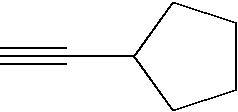 |
Cl |
| Z2.24 | Me | SEt | Cl |
 |
Cl |
| Z2.25 | H | OMe | Cl | Cl |
 |
| Z2.26 | Me | OMe | Cl | Cl |
 |
| Z2.27 | H | OEt | Cl | Cl |
 |
| Z2.28 | Me | OEt | Cl | Cl |
 |
| Z2.29 | H | SMe | Cl | Cl |
 |
| Z2.30 | Me | SMe | Cl | Cl |
 |
| Z2.31 | H | SEt | Cl | Cl |
 |
| Z2.32 | Me | SEt | Cl | Cl |
 |
| Z2.33 | H | OMe | Cl |
 |
Cl |
| Z2.34 | Me | OMe | Cl |
 |
Cl |
| Z2.35 | H | OEt | Cl |
 |
Cl |
| Z2.36 | Me | OEt | Cl |
 |
Cl |
| Z2.37 | H | SMe | Cl |
 |
Cl |
| Z2.38 | Me | SMe | Cl |
 |
Cl |
| Z2.39 | H | SEt | Cl |
 |
Cl |
| Z2.40 | Me | SEt | Cl |
 |
Cl |
| Z2.41 | H | OMe | Cl | Cl |
 |
| Z2.42 | Me | OMe | Cl | Cl |
 |
| Z2.43 | H | OEt | Cl | Cl |
 |
| Z2.44 | Me | OEt | Cl | Cl |
 |
| Z2.45 | H | SMe | Cl | Cl |
 |
| Z2.46 | Me | SMe | Cl | Cl |
 |
| Z2.47 | H | SEt | Cl | Cl |
 |
| Z2.48 | Me | SEt | Cl | Cl |
 |
| Z2.49 | H | OMe | Cl |
 |
Cl |
| Z2.50 | Me | OMe | Cl |
 |
Cl |
| Z2.51 | H | OEt | Cl |
 |
Cl |
| Z2.52 | Me | OEt | Cl |
 |
Cl |
| Z2.53 | H | SMe | Cl |
 |
Cl |
| Z2.54 | Me | SMe | Cl |
 |
Cl |
| Z2.55 | H | SEt | Cl |
 |
Cl |
| Z2.56 | Me | SEt | Cl |
 |
Cl |
| Z2.57 | H | OMe | Cl | Cl |
 |
| Z2.58 | Me | OMe | Cl | Cl |
 |
| Z2.59 | H | OEt | Cl | Cl |
 |
| Z2.60 | Me | OEt | Cl | Cl |
 |
| Z2.61 | H | SMe | Cl | Cl |
 |
| Z2.62 | Me | SMe | Cl | Cl |
 |
| Z2.63 | H | SEt | Cl | Cl |
 |
| Z2.64 | Me | SEt | Cl | Cl |
 |
| Z2.65 | H | OMe | Cl |
 |
Cl |
| Z2.66 | Me | OMe | Cl |
 |
Cl |
| Z2.67 | H | OEt | Cl |
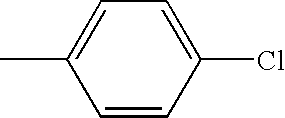 |
Cl |
| Z2.68 | Me | OEt | Cl |
 |
Cl |
| Z2.69 | H | SMe | Cl |
 |
Cl |
| Z2.70 | Me | SMe | Cl |
 |
Cl |
| Z2.71 | H | SEt | Cl |
 |
Cl |
| Z2.72 | Me | SEt | Cl |
 |
Cl |
| Z2.73 | H | OMe | Cl | Cl |
 |
| Z2.74 | Me | OMe | Cl | Cl |
 |
| Z2.75 | H | OEt | Cl | Cl |
 |
| Z2.76 | Me | OEt | Cl | Cl |
 |
| Z2.77 | H | SMe | Cl | Cl |
 |
| Z2.78 | Me | SMe | Cl | Cl |
 |
| Z2.79 | H | SEt | Cl | Cl |
 |
| Z2.80 | Me | SEt | Cl | Cl |
 |
| Z2.81 | H | OMe | Cl |
 |
Cl |
| Z2.82 | Me | OMe | Cl |
 |
Cl |
| Z2.83 | H | OEt | Cl |
 |
Cl |
| Z2.84 | Me | OEt | Cl |
 |
Cl |
| Z2.85 | H | SMe | Cl |
 |
Cl |
| Z2.86 | Me | SMe | Cl |
 |
Cl |
| Z2.87 | H | SEt | Cl |
 |
Cl |
| Z2.88 | Me | SEt | Cl |
 |
Cl |
| Z2.89 | H | OMe | Cl | Cl |
 |
| Z2.90 | Me | OMe | Cl | Cl |
 |
| Z2.91 | H | OEt | Cl | Cl |
 |
| Z2.92 | Me | OEt | Cl | Cl |
 |
| Z2.93 | H | SMe | Cl | Cl |
 |
| Z2.94 | Me | SMe | Cl | Cl |
 |
| Z2.95 | H | SEt | Cl | Cl |
 |
| Z2.96 | Me | SEt | Cl | Cl |
 |
| Z2.97 | H | OMe | Cl | Cl | Cl |
| Z2.98 | Me | OMe | Cl | Cl | Cl |
| Z2.99 | H | OEt | Cl | Cl | Cl |
| Z2.100 | Me | OEt | Cl | Cl | Cl |
| Z2.101 | H | SMe | Cl | Cl | Cl |
| Z2.102 | Me | SMe | Cl | Cl | Cl |
| Z2.103 | H | SEt | Cl | Cl | Cl |
| Z2.104 | Me | SEt | Cl | Cl | Cl |
| Z2.105 | H | OMe | Cl | H | Cl |
| Z2.106 | Me | OMe | Cl | H | Cl |
| Z2.107 | H | OEt | Cl | H | Cl |
| Z2.108 | Me | OEt | Cl | H | Cl |
| Z2.109 | H | SMe | Cl | H | Cl |
| Z2.110 | Me | SMe | Cl | H | Cl |
| Z2.111 | H | SEt | Cl | H | Cl |
| Z2.112 | Me | SEt | Cl | H | Cl |
| Z2.113 | H | OMe | Cl | Cl | H |
| Z2.114 | Me | OMe | Cl | Cl | H |
| Z2.115 | H | OEt | Cl | Cl | H |
| Z2.116 | Me | OEt | Cl | Cl | H |
| Z2.117 | H | SMe | Cl | Cl | H |
| Z2.118 | Me | SMe | Cl | Cl | H |
| Z2.119 | H | SEt | Cl | Cl | H |
| Z2.120 | Me | SEt | Cl | Cl | H |
| Z2.121 | H | OMe | Cl | Br | Cl |
| Z2.122 | Me | OMe | Cl | Br | Cl |
| Z2.123 | H | OEt | Cl | Br | Cl |
| Z2.124 | Me | OEt | Cl | Br | Cl |
| Z2.125 | H | SMe | Cl | Br | Cl |
| Z2.126 | Me | SMe | Cl | Br | Cl |
| Z2.127 | H | SEt | Cl | Br | Cl |
| Z2.128 | Me | SEt | Cl | Br | Cl |
| Z2.129 | H | OMe | Cl | Cl | Br |
| Z2.130 | Me | OMe | Cl | Cl | Br |
| Z2.131 | H | OEt | Cl | Cl | Br |
| Z2.132 | Me | OEt | Cl | Cl | Br |
| Z2.133 | H | SMe | Cl | Cl | Br |
| Z2.134 | Me | SMe | Cl | Cl | Br |
| Z2.135 | H | SEt | Cl | Cl | Br |
| Z2.136 | Me | SEt | Cl | Cl | Br |
| TABLE 36 |
| Compounds of formula II-3 |
| The invention is further illustrated by the preferred individual |
| compounds of formula (II-3) listed below in Table 36. |
| Characterising data is given in Table 40. |
| (II-3) |
 |
| Com- | |||||
| pound |
| Num- | |||||
| ber | R1 | XR3 | R5a | R5b | R5c |
| Z3.1 | H | OMe | Cl | 5′-Cl | H |
| Z3.2 | Me | OMe | Cl | 5′-Cl | H |
| Z3.3 | H | OEt | Cl | 5′-Cl | H |
| Z3.4 | Me | OEt | Cl | 5′-Cl | H |
| Z3.5 | H | SMe | Cl | 5′-Cl | H |
| Z3.6 | Me | SMe | Cl | 5′-Cl | H |
| Z3.7 | H | SEt | Cl | 5′-Cl | H |
| Z3.8 | Me | SEt | Cl | 5′-Cl | H |
| Z3.9 | H | OMe | Cl | 5′-Br | H |
| Z3.10 | Me | OMe | Cl | 5′-Br | H |
| Z3.11 | H | OEt | Cl | 5′-Br | H |
| Z3.12 | Me | OEt | Cl | 5′-Br | H |
| Z3.13 | H | SMe | Cl | 5′-Br | H |
| Z3.14 | Me | SMe | Cl | 5′-Br | H |
| Z3.15 | H | SEt | Cl | 5′-Br | H |
| Z3.16 | Me | SEt | Cl | 5′-Br | H |
| Z3.17 | H | OMe | Cl |
 |
H |
| Z3.18 | Me | OMe | Cl |
 |
H |
| Z3.19 | H | OEt | Cl |
 |
H |
| Z3.20 | Me | OEt | Cl |
 |
H |
| Z3.21 | H | SMe | Cl |
 |
H |
| Z3.22 | Me | SMe | Cl |
 |
H |
| Z3.23 | H | SEt | Cl |
 |
H |
| Z3.24 | Me | SEt | Cl |
 |
H |
| Z3.25 | H | OMe | Cl |
 |
H |
| Z3.26 | Me | OMe | Cl |
 |
H |
| Z3.27 | H | OEt | Cl |
 |
H |
| Z3.28 | Me | OEt | Cl |
 |
H |
| Z3.29 | H | SMe | Cl |
 |
H |
| Z3.30 | Me | SMe | Cl |
 |
H |
| Z3.31 | H | SEt | Cl |
 |
H |
| Z3.32 | Me | SEt | Cl |
 |
H |
| Z3.33 | H | OMe | Cl | 6′-Cl | H |
| Z3.34 | Me | OMe | Cl | 6′-Cl | H |
| Z3.35 | H | OEt | Cl | 6′-Cl | H |
| Z3.36 | Me | OEt | Cl | 6′-Cl | H |
| Z3.37 | H | SMe | Cl | 6′-Cl | H |
| Z3.38 | Me | SMe | Cl | 6′-Cl | H |
| Z3.39 | H | SEt | Cl | 6′-Cl | H |
| Z3.40 | Me | SEt | Cl | 6′-Cl | H |
| Z3.41 | H | OMe | Cl | 6′-Br | H |
| Z3.42 | Me | OMe | Cl | 6′-Br | H |
| Z3.43 | H | OEt | Cl | 6′-Br | H |
| Z3.44 | Me | OEt | Cl | 6′-Br | H |
| Z3.45 | H | SMe | Cl | 6′-Br | H |
| Z3.46 | Me | SMe | Cl | 6′-Br | H |
| Z3.47 | H | SEt | Cl | 6′-Br | H |
| Z3.48 | Me | SEt | Cl | 6′-Br | H |
| Z3.49 | H | OMe | Cl |
 |
H |
| Z3.50 | Me | OMe | Cl |
 |
H |
| Z3.51 | H | OEt | Cl |
 |
H |
| Z3.52 | Me | OEt | Cl |
 |
H |
| Z3.53 | H | SMe | Cl |
 |
H |
| Z3.54 | Me | SMe | Cl |
 |
H |
| Z3.55 | H | SEt | Cl |
 |
H |
| Z3.56 | Me | SEt | Cl |
 |
H |
| Z3.57 | H | OMe | Cl |
 |
H |
| Z3.58 | Me | OMe | Cl |
 |
H |
| Z3.59 | H | OEt | Cl |
 |
H |
| Z3.60 | Me | OEt | Cl |
 |
H |
| Z3.61 | H | SMe | Cl |
 |
H |
| Z3.62 | Me | SMe | Cl |
 |
H |
| Z3.63 | H | SEt | Cl |
 |
H |
| Z3.64 | Me | SEt | Cl |
 |
H |
| TABLE 37 |
| Compounds of formula III-1 |
| The invention is further illustrated by the preferred individual |
| compounds of formula (II-1) listed below in Table 37. |
| Characterising data is given in Table 40. |
| (III-1) |
 |
| Com- | |||||
| pound | |||||
| Num- | |||||
| ber | R1 | XR3 | R5a | R5b | R5c |
| Z4.1 | H | OMe | Cl | Cl | H |
| Z4.2 | Me | OMe | Cl | Cl | H |
| Z4.3 | H | OMe | Cl | Br | H |
| Z4.4 | Me | OMe | Cl | Br | H |
| Z4.5 | H | OEt | Cl | Cl | H |
| Z4.6 | Me | OEt | Cl | Cl | H |
| Z4.7 | H | OEt | Cl | Br | H |
| Z4.8 | Me | OEt | Cl | Br | H |
| Z4.9 | H | SMe | Cl | Cl | H |
| Z4.10 | Me | SMe | Cl | Cl | H |
| Z4.11 | H | SMe | Cl | Br | H |
| Z4.12 | Me | SMe | Cl | Br | H |
| Z4.13 | H | SEt | Cl | Cl | H |
| Z4.14 | Me | SEt | Cl | Cl | H |
| Z4.15 | H | SEt | Cl | Br | H |
| Z4.16 | Me | SEt | Cl | Br | H |
| Z4.17 | H | OMe | Cl |
 |
H |
| Z4.18 | Me | OMe | Cl |
 |
H |
| Z4.19 | H | OEt | Cl |
 |
H |
| Z4.20 | Me | OEt | Cl |
 |
H |
| Z4.21 | H | OMe | Cl |
 |
H |
| Z4.22 | Me | OMe | Cl |
 |
H |
| Z4.23 | H | OEt | Cl |
 |
H |
| Z4.24 | Me | OEt | Cl |
 |
H |
| Z4.25 | H | OMe | Cl |
 |
H |
| Z4.26 | Me | OMe | Cl |
 |
H |
| Z4.27 | H | OEt | Cl |
 |
H |
| Z4.28 | Me | OEt | Cl |
 |
H |
| Z4.29 | H | OMe | Cl |
 |
H |
| Z4.30 | Me | OMe | Cl |
 |
H |
| Z4.31 | H | OEt | Cl |
 |
H |
| Z4.32 | Me | OEt | Cl |
 |
H |
| Z4.33 | H | OMe | Cl |
 |
H |
| Z4.34 | Me | OMe | Cl |
 |
H |
| Z4.35 | H | OEt | Cl |
 |
H |
| Z4.36 | Me | OEt | Cl |
 |
H |
| Z4.37 | H | OMe | Cl |
 |
H |
| Z4.38 | Me | OMe | Cl |
 |
H |
| Z4.39 | H | OEt | Cl |
 |
H |
| Z4.40 | Me | OEt | Cl |
 |
H |
| Z4.41 | H | OMe | Cl | H | H |
| Z4.42 | Me | OMe | Cl | H | H |
| Z4.43 | H | OEt | Cl | H | H |
| Z4.44 | Me | OEt | Cl | H | H |
| Z4.45 | H | SMe | Cl | H | H |
| Z4.46 | Me | SMe | Cl | H | H |
| Z4.47 | H | SEt | Cl | H | H |
| Z4.48 | Me | SEt | Cl | H | H |
| TABLE 38 |
| Compounds of formula III-2 |
| The invention is further illustrated by the |
| preferred individual compounds |
| of formula (III-2) listed below in Table 38. |
| Characterising data is given in Table 40. |
| (III-2) |
 |
| Com- | |||||
| pound | |||||
| Num- | |||||
| ber | R1 | XR3 | R5a | R5b | R5c |
| Z5.1 | H | OMe | Cl |
 |
Cl |
| Z5.2 | Me | OMe | Cl |
 |
Cl |
| Z5.3 | H | OEt | Cl |
 |
Cl |
| Z5.4 | Me | OEt | Cl |
 |
Cl |
| Z5.5 | H | SMe | Cl |
 |
Cl |
| Z5.6 | Me | SMe | Cl |
 |
Cl |
| Z5.7 | H | SEt | Cl |
 |
Cl |
| Z5.8 | Me | SEt | Cl |
 |
Cl |
| Z5.9 | H | OMe | Cl | Cl |
 |
| Z5.10 | Me | OMe | Cl | Cl |
 |
| Z5.11 | H | OEt | Cl | Cl |
 |
| Z5.12 | Me | OEt | Cl | Cl |
 |
| Z5.13 | H | SMe | Cl | Cl |
 |
| Z5.14 | Me | SMe | Cl | Cl |
 |
| Z5.15 | H | SEt | Cl | Cl |
 |
| Z5.16 | Me | SEt | Cl | Cl |
 |
| Z5.17 | H | OMe | Cl |
 |
Cl |
| Z5.18 | Me | OMe | Cl |
 |
Cl |
| Z5.19 | H | OEt | Cl |
 |
Cl |
| Z5.20 | Me | OEt | Cl |
 |
Cl |
| Z5.21 | H | SMe | Cl |
 |
Cl |
| Z5.22 | Me | SMe | Cl |
 |
Cl |
| Z5.23 | H | SEt | Cl |
 |
Cl |
| Z5.24 | Me | SEt | Cl |
 |
Cl |
| Z5.25 | H | OMe | Cl | Cl |
 |
| Z5.26 | Me | OMe | Cl | Cl |
 |
| Z5.27 | H | OEt | Cl | Cl |
 |
| Z5.28 | Me | OEt | Cl | Cl |
 |
| Z5.29 | H | SMe | Cl | Cl |
 |
| Z5.30 | Me | SMe | Cl | Cl |
 |
| Z5.31 | H | SEt | Cl | Cl |
 |
| Z5.32 | Me | SEt | Cl | Cl |
 |
| Z5.33 | H | OMe | Cl |
 |
Cl |
| Z5.34 | Me | OMe | Cl |
 |
Cl |
| Z5.35 | H | OEt | Cl |
 |
Cl |
| Z5.36 | Me | OEt | Cl |
 |
Cl |
| Z5.37 | H | SMe | Cl |
 |
Cl |
| Z5.38 | Me | SMe | Cl |
 |
Cl |
| Z5.39 | H | SEt | Cl |
 |
Cl |
| Z5.40 | Me | SEt | Cl |
 |
Cl |
| Z5.41 | H | OMe | Cl | Cl |
 |
| Z5.42 | Me | OMe | Cl | Cl |
 |
| Z5.43 | H | OEt | Cl | Cl |
 |
| Z5.44 | Me | OEt | Cl | Cl |
 |
| Z5.45 | H | SMe | Cl | Cl |
 |
| Z5.46 | Me | SMe | Cl | Cl |
 |
| Z5.47 | H | SEt | Cl | Cl |
 |
| Z5.48 | Me | SEt | Cl | Cl |
 |
| Z5.49 | H | OMe | Cl |
 |
Cl |
| Z5.50 | Me | OMe | Cl |
 |
Cl |
| Z5.51 | H | OEt | Cl |
 |
Cl |
| Z5.52 | Me | OEt | Cl |
 |
Cl |
| Z5.53 | H | SMe | Cl |
 |
Cl |
| Z5.54 | Me | SMe | Cl |
 |
Cl |
| Z5.55 | H | SEt | Cl |
 |
Cl |
| Z5.56 | Me | SEt | Cl |
 |
Cl |
| Z5.57 | H | OMe | Cl | Cl |
 |
| Z5.58 | Me | OMe | Cl | Cl |
 |
| Z5.59 | H | OEt | Cl | Cl |
 |
| Z5.60 | Me | OEt | Cl | Cl |
 |
| Z5.61 | H | SMe | Cl | Cl |
 |
| Z5.62 | Me | SMe | Cl | Cl |
 |
| Z5.63 | H | SEt | Cl | Cl |
 |
| Z5.64 | Me | SEt | Cl | Cl |
 |
| Z5.65 | H | OMe | Cl |
 |
Cl |
| Z5.66 | Me | OMe | Cl |
 |
Cl |
| Z5.67 | H | OEt | Cl |
 |
Cl |
| Z5.68 | Me | OEt | Cl |
 |
Cl |
| Z5.69 | H | SMe | Cl |
 |
Cl |
| Z5.70 | Me | SMe | Cl |
 |
Cl |
| Z5.71 | H | SEt | Cl |
 |
Cl |
| Z5.72 | Me | SEt | Cl |
 |
Cl |
| Z5.73 | H | OMe | Cl | Cl |
 |
| Z5.74 | Me | OMe | Cl | Cl |
 |
| Z5.75 | H | OEt | Cl | Cl |
 |
| Z5.76 | Me | OEt | Cl | Cl |
 |
| Z5.77 | H | SMe | Cl | Cl |
 |
| Z5.78 | Me | SMe | Cl | Cl |
 |
| Z5.79 | H | SEt | Cl | Cl |
 |
| Z5.80 | Me | SEt | Cl | Cl |
 |
| Z5.81 | H | OMe | Cl |
 |
Cl |
| Z5.82 | Me | OMe | Cl |
 |
Cl |
| Z5.83 | H | OEt | Cl |
 |
Cl |
| Z5.84 | Me | OEt | Cl |
 |
Cl |
| Z5.85 | H | SMe | Cl |
 |
Cl |
| Z5.86 | Me | SMe | Cl |
 |
Cl |
| Z5.87 | H | SEt | Cl |
 |
Cl |
| Z5.88 | Me | SEt | Cl |
 |
Cl |
| Z5.89 | H | OMe | Cl | Cl |
 |
| Z5.90 | Me | OMe | Cl | Cl |
 |
| Z5.91 | H | OEt | Cl | Cl |
 |
| Z5.92 | Me | OEt | Cl | Cl |
 |
| Z5.93 | H | SMe | Cl | Cl |
 |
| Z5.94 | Me | SMe | Cl | Cl |
 |
| Z5.95 | H | SEt | Cl | Cl |
 |
| Z5.96 | Me | SEt | Cl | Cl |
 |
| Z5.97 | H | OMe | Cl | Cl | Cl |
| Z5.98 | Me | OMe | Cl | Cl | Cl |
| Z5.99 | H | OEt | Cl | Cl | Cl |
| Z5.100 | Me | OEt | Cl | Cl | Cl |
| Z5.101 | H | SMe | Cl | Cl | Cl |
| Z5.102 | Me | SMe | Cl | Cl | Cl |
| Z5.103 | H | SEt | Cl | Cl | Cl |
| Z5.104 | Me | SEt | Cl | Cl | Cl |
| Z5.105 | H | OMe | Cl | H | Cl |
| Z5.106 | Me | OMe | Cl | H | Cl |
| Z5.107 | H | OEt | Cl | H | Cl |
| Z5.108 | Me | OEt | Cl | H | Cl |
| Z5.109 | H | SMe | Cl | H | Cl |
| Z5.110 | Me | SMe | Cl | H | Cl |
| Z5.111 | H | SEt | Cl | H | Cl |
| Z5.112 | Me | SEt | Cl | H | Cl |
| Z5.113 | H | OMe | Cl | Cl | H |
| Z5.114 | Me | OMe | Cl | Cl | H |
| Z5.115 | H | OEt | Cl | Cl | H |
| Z5.116 | Me | OEt | Cl | Cl | H |
| Z5.117 | H | SMe | Cl | Cl | H |
| Z5.118 | Me | SMe | Cl | Cl | H |
| Z5.119 | H | SEt | Cl | Cl | H |
| Z5.120 | Me | SEt | Cl | Cl | H |
| Z5.121 | H | OMe | Cl | Br | Cl |
| Z5.122 | Me | OMe | Cl | Br | Cl |
| Z5.123 | H | OEt | Cl | Br | Cl |
| Z5.124 | Me | OEt | Cl | Br | Cl |
| Z5.125 | H | SMe | Cl | Br | Cl |
| Z5.126 | Me | SMe | Cl | Br | Cl |
| Z5.127 | H | SEt | Cl | Br | Cl |
| Z5.128 | Me | SEt | Cl | Br | Cl |
| Z5.129 | H | OMe | Cl | Cl | Br |
| Z5.130 | Me | OMe | Cl | Cl | Br |
| Z5.131 | H | OEt | Cl | Cl | Br |
| Z5.132 | Me | OEt | Cl | Cl | Br |
| Z5.133 | H | SMe | Cl | Cl | Br |
| Z5.134 | Me | SMe | Cl | Cl | Br |
| Z5.135 | H | SEt | Cl | Cl | Br |
| Z5.136 | Me | SEt | Cl | Cl | Br |
| TABLE 39 |
| Compounds of formula III-3 |
| The invention is further illustrated by the preferred individual |
| compounds of formula (III-3) listed below in Table 39. |
| Characterising data is given in Table 40. |
| (III-3) |
 |
| Compound |
| Number | R1 | XR3 | R5a | R5b | R5c |
| Z6.1 | H | OMe | Cl | 5′-Cl | H |
| Z6.2 | Me | OMe | Cl | 5′-Cl | H |
| Z6.3 | H | OEt | Cl | 5′-Cl | H |
| Z6.4 | Me | OEt | Cl | 5′-Cl | H |
| Z6.5 | H | SMe | Cl | 5′-Cl | H |
| Z6.6 | Me | SMe | Cl | 5′-Cl | H |
| Z6.7 | H | SEt | Cl | 5′-Cl | H |
| Z6.8 | Me | SEt | Cl | 5′-Cl | H |
| Z6.9 | H | OMe | Cl | 5′-Br | H |
| Z6.10 | Me | OMe | Cl | 5′-Br | H |
| Z6.11 | H | OEt | Cl | 5′-Br | H |
| Z6.12 | Me | OEt | Cl | 5′-Br | H |
| Z6.13 | H | SMe | Cl | 5′-Br | H |
| Z6.14 | Me | SMe | Cl | 5′-Br | H |
| Z6.15 | H | SEt | Cl | 5′-Br | H |
| Z6.16 | Me | SEt | Cl | 5′-Br | H |
| Z6.17 | H | OMe | Cl |  | H |
| Z6.18 | Me | OMe | Cl |  | H |
| Z6.19 | H | OEt | Cl |  | H |
| Z6.20 | Me | OEt | Cl |  | H |
| Z6.21 | H | SMe | Cl |  | H |
| Z6.22 | Me | SMe | Cl |  | H |
| Z6.23 | H | SEt | Cl |  | H |
| Z6.24 | Me | SEt | Cl |  | H |
| Z6.25 | H | OMe | Cl |  | H |
| Z6.26 | Me | OMe | Cl |  | H |
| Z6.27 | H | OEt | Cl |  | H |
| Z6.28 | Me | OEt | Cl |  | H |
| Z6.29 | H | SMe | Cl |  | H |
| Z6.30 | Me | SMe | Cl |  | H |
| Z6.31 | H | SEt | Cl |  | H |
| Z6.32 | Me | SEt | Cl |  | H |
| Z6.33 | H | OMe | Cl | 6′-Cl | H |
| Z6.34 | Me | OMe | Cl | 6′-Cl | H |
| Z6.35 | H | OEt | Cl | 6′-Cl | H |
| Z6.36 | Me | OEt | Cl | 6′-Cl | H |
| Z6.37 | H | SMe | Cl | 6′-Cl | H |
| Z6.38 | Me | SMe | Cl | 6′-Cl | H |
| Z6.39 | H | SEt | Cl | 6′-Cl | H |
| Z6.40 | Me | SEt | Cl | 6′-Cl | H |
| Z6.41 | H | OMe | Cl | 6′-Br | H |
| Z6.42 | Me | OMe | Cl | 6′-Br | H |
| Z6.43 | H | OEt | Cl | 6′-Br | H |
| Z6.44 | Me | OEt | Cl | 6′-Br | H |
| Z6.45 | H | SMe | Cl | 6′-Br | H |
| Z6.46 | Me | SMe | Cl | 6′-Br | H |
| Z6.47 | H | SEt | Cl | 6′-Br | H |
| Z6.48 | Me | SEt | Cl | 6′-Br | H |
| Z6.49 | H | OMe | Cl |  | H |
| Z6.50 | Me | OMe | Cl |  | H |
| Z6.51 | H | OEt | Cl |  | H |
| Z6.52 | Me | OEt | Cl |  | H |
| Z6.53 | H | SMe | Cl |  | H |
| Z6.54 | Me | SMe | Cl |  | H |
| Z6.55 | H | SEt | Cl |  | H |
| Z6.56 | Me | SEt | Cl |  | H |
| Z6.57 | H | OMe | Cl |  | H |
| Z6.58 | Me | OMe | Cl |  | H |
| Z6.59 | H | OEt | Cl |  | H |
| Z6.60 | Me | OEt | Cl |  | H |
| Z6.61 | H | SMe | Cl |  | H |
| Z6.62 | Me | SMe | Cl |  | H |
| Z6.63 | H | SEt | Cl |  | H |
| Z6.64 | Me | SEt | Cl |  | H |
Physical Data (Melting Points in ° C.):
| m.p. = melting point | b.p. = boiling point. | ||
| S = singlet | br = broad | ||
| d = doublet | dd = doublet of doublets | ||
| t = triplet | q = quartet | ||
| m = multiplet | ppm = parts per million | ||
| TABLE 40 | ||
| 1H-NMR data: | ||
| Cpd No. | (ppm/multiplicity/number of Hs). | m.p./(° C.) |
| 22.2 | — | 128-132 |
| 22.4 | — | 115-125 |
| 22.33 | — | 139-141 |
| 22.34 | — | 150-155 |
| 22.36 | — | 130-135 |
| 25.34 | — | resin |
| 29.34 | — | resin |
| 30.2 | — | 115-125 |
| 30.4 | — | 112-116 |
| 30.33 | — | 117-120 |
| 30.34 | — | resin |
| 33.1 | — | resin |
| 33.2 | — | 125-130 |
| 33.4 | — | 100-104 |
| 33.33 | — | 141-143 |
| 33.34 | — | resin |
| 33.36 | — | 150-155 |
Tables 1a to 13a: Compounds of Formula I-1a

| TABLE Va | |||||
| Compound | |||||
| Number | R1 | XR3 | R5a | R5b | R5c |
| Va.1 | H | OMe | Cl | Cl | H |
| Va.2 | Me | OMe | Cl | Cl | H |
| Va.3 | H | OMe | Cl | Br | H |
| Va.4 | Me | OMe | Cl | Br | H |
| Va.5 | H | OEt | Cl | Cl | H |
| Va.6 | Me | OEt | Cl | Cl | H |
| Va.7 | H | OEt | Cl | Br | H |
| Va.8 | Me | OEt | Cl | Br | H |
| Va.9 | H | SMe | Cl | Cl | H |
| Va.10 | Me | SMe | Cl | Cl | H |
| Va.11 | H | SMe | Cl | Br | H |
| Va.12 | Me | SMe | Cl | Br | H |
| Va.13 | H | SEt | Cl | Cl | H |
| Va.14 | Me | SEt | Cl | Cl | H |
| Va.15 | H | SEt | Cl | Br | H |
| Va.16 | Me | SEt | Cl | Br | H |
| Va.17 | H | OMe | Cl |
 |
H |
| Va.18 | Me | OMe | Cl |
 |
H |
| Va.19 | H | OEt | Cl |
 |
H |
| Va.20 | Me | OEt | Cl |
 |
H |
| Va.21 | H | OMe | Cl |
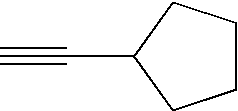 |
H |
| Va.22 | Me | OMe | Cl |
 |
H |
| Va.23 | H | OEt | Cl |
 |
H |
| Va.24 | Me | OEt | Cl |
 |
H |
| Va.25 | H | OMe | Cl |
 |
H |
| Va.26 | Me | OMe | Cl |
 |
H |
| Va.27 | H | OEt | Cl |
 |
H |
| Va.28 | Me | OEt | Cl |
 |
H |
| Va.29 | H | OMe | Cl |
 |
H |
| Va.30 | Me | OMe | Cl |
 |
H |
| Va.31 | H | OEt | Cl |
 |
H |
| Va.32 | Me | OEt | Cl |
 |
H |
| Va.33 | H | OMe | Cl |
 |
H |
| Va.34 | Me | OMe | Cl |
 |
H |
| Va.35 | H | OEt | Cl |
 |
H |
| Va.36 | Me | OEt | Cl |
 |
H |
| Va.37 | H | OMe | Cl |
 |
H |
| Va.38 | Me | OMe | Cl |
 |
|
| Va.39 | H | OEt | Cl |
 |
H |
| Va.40 | Me | OEt | Cl |
 |
H |
| Va.41 | H | OMe | Cl | H | H |
| Va.42 | Me | OMe | Cl | H | H |
| Va.43 | H | OEt | Cl | H | H |
| Va.44 | Me | OEt | Cl | H | H |
| Va.45 | H | SMe | Cl | H | H |
| Va.46 | Me | SMe | Cl | H | H |
| Va.47 | H | SEt | Cl | H | H |
| Va.48 | Me | SEt | Cl | H | H |

wherein the dashed lines indicate the point of attachment of the group A to the amide group, and R1, X—R3, R5a, R5b and R5c are as defined in Table Va. For example, compound 1a.1 has the following structure:


wherein the dashed lines indicate the point of attachment of the group A to the amide group, and R1, X—R3, R5a, R5b and R5c are as defined in Table Va.

wherein the dashed lines indicate the point of attachment of the group A to the amide group, and R1, X—R3, R5a, R5b and R5c are as defined in Table Va.

wherein the dashed lines indicate the point of attachment of the group A to the amide group, and R1, X—R3, R5a, R5b and R5c are as defined in Table Va.

wherein the dashed lines indicate the point of attachment of the group A to the amide group, and R1, X—R3, R5a, R5b and R5c are as defined in Table Va.

wherein the dashed lines indicate the point of attachment of the group A to the amide group, and R1, X—R3, R5a, R5b and R5c are as defined in Table Va.

wherein the dashed lines indicate the point of attachment of the group A to the amide group, and R1, X—R3, R5a, R5b and R5c are as defined in Table Va.

wherein the dashed lines indicate the point of attachment of the group A to the amide group, and R1, X—R3, R5a, R5b and R5c are as defined in Table Va.

wherein the dashed lines indicate the point of attachment of the group A to the amide group, and R1, X—R3, R5a, R5b and R5c are as defined in Table Va.

wherein the dashed lines indicate the point of attachment of the group A to the amide group, and R1, X—R3, R5a, R5b and R5c are as defined in Table Va.

wherein the dashed lines indicate the point of attachment of the group A to the amide group, and R1, X—R3, R5a, R5b and R5c are as defined in Table Va.

wherein the dashed lines indicate the point of attachment of the group A to the amide group, and R1, X—R3, R5a, R5b and R5c are as defined in Table Va.

wherein the dashed lines indicate the point of attachment of the group A to the amide group, and R1, X—R3, R5a, R5b and R5c are as defined in Table Va.
Tables 14a to 20a: Compounds of Formula I-2a:

| TABLE Wa | |||||
| Compound | |||||
| Number | R1 | XR3 | R5a | R5b | R5c |
| Wa.1 | H | OMe | Cl |
 |
Cl |
| Wa.2 | Me | OMe | Cl |
 |
Cl |
| Wa.3 | H | OEt | Cl |
 |
Cl |
| Wa.4 | Me | OEt | Cl |
 |
Cl |
| Wa.5 | H | SMe | Cl |
 |
Cl |
| Wa.6 | Me | SMe | Cl |
 |
Cl |
| Wa.7 | H | SEt | Cl |
 |
Cl |
| Wa.8 | Me | SEt | Cl |
 |
Cl |
| Wa.9 | H | OMe | Cl | Cl |
 |
| Wa.10 | Me | OMe | Cl | Cl |
 |
| Wa.11 | H | OEt | Cl | Cl |
 |
| Wa.12 | Me | OEt | Cl | Cl |
 |
| Wa.13 | H | SMe | Cl | Cl |
 |
| Wa.14 | Me | SMe | Cl | Cl |
 |
| Wa.15 | H | SEt | Cl | Cl |
 |
| Wa.16 | Me | SEt | Cl | Cl |
 |
| Wa.17 | H | OMe | Cl |
 |
Cl |
| Wa.18 | Me | OMe | Cl |
 |
Cl |
| Wa.19 | H | OEt | Cl |
 |
Cl |
| Wa.20 | Me | OEt | Cl |
 |
Cl |
| Wa.21 | H | SMe | Cl |
 |
Cl |
| Wa.22 | Me | SMe | Cl |
 |
Cl |
| Wa.23 | H | SEt | Cl |
 |
Cl |
| Wa.24 | Me | SEt | Cl |
 |
Cl |
| Wa.25 | H | OMe | Cl | Cl |
 |
| Wa.26 | Me | OMe | Cl | Cl |
 |
| Wa.27 | H | OEt | Cl | Cl |
 |
| Wa.28 | Me | OEt | Cl | Cl |
 |
| Wa.29 | H | SMe | Cl | Cl |
 |
| Wa.30 | Me | SMe | Cl | Cl |
 |
| Wa.31 | H | SEt | Cl | Cl |
 |
| Wa.32 | Me | SEt | Cl | Cl |
 |
| Wa.33 | H | OMe | Cl |
 |
Cl |
| Wa.34 | Me | OMe | Cl |
 |
Cl |
| Wa.35 | H | OEt | Cl |
 |
Cl |
| Wa.36 | Me | OEt | Cl |
 |
Cl |
| Wa.37 | H | SMe | Cl |
 |
Cl |
| Wa.38 | Me | SMe | Cl |
 |
Cl |
| Wa.39 | H | SEt | Cl |
 |
Cl |
| Wa.40 | Me | SEt | Cl |
 |
Cl |
| Wa.41 | H | OMe | Cl | Cl |
 |
| Wa.42 | Me | OMe | Cl | Cl |
 |
| Wa.43 | H | OEt | Cl | Cl |
 |
| Wa.44 | Me | OEt | Cl | Cl |
 |
| Wa.45 | H | SMe | Cl | Cl |
 |
| Wa.46 | Me | SMe | Cl | Cl |
 |
| Wa.47 | H | SEt | Cl | Cl |
 |
| Wa.48 | Me | SEt | Cl | Cl |
 |
| Wa.49 | H | OMe | Cl |
 |
Cl |
| Wa.50 | Me | OMe | Cl |
 |
Cl |
| Wa.51 | H | OEt | Cl |
 |
Cl |
| Wa.52 | Me | OEt | Cl |
 |
Cl |
| Wa.53 | H | SMe | Cl |
 |
Cl |
| Wa.54 | Me | SMe | Cl |
 |
Cl |
| Wa.55 | H | SEt | Cl |
 |
Cl |
| Wa.56 | Me | SEt | Cl |
 |
Cl |
| Wa.57 | H | OMe | Cl | Cl |
 |
| Wa.58 | Me | OMe | Cl | Cl |
 |
| Wa.59 | H | OEt | Cl | Cl |
 |
| Wa.60 | Me | OEt | Cl | Cl |
 |
| Wa.61 | H | SMe | Cl | Cl |
 |
| Wa.62 | Me | SMe | Cl | Cl |
 |
| Wa.63 | H | SEt | Cl | Cl |
 |
| Wa.64 | Me | SEt | Cl | Cl |
 |
| Wa.65 | H | OMe | Cl |
 |
Cl |
| Wa.66 | Me | OMe | Cl |
 |
Cl |
| Wa.67 | H | OEt | Cl |
 |
Cl |
| Wa.68 | Me | OEt | Cl |
 |
Cl |
| Wa.69 | H | SMe | Cl |
 |
Cl |
| Wa.70 | Me | SMe | Cl |
 |
Cl |
| Wa.71 | H | SEt | Cl |
 |
Cl |
| Wa.72 | Me | SEt | Cl |
 |
Cl |
| Wa.73 | H | OMe | Cl | Cl |
 |
| Wa.74 | Me | OMe | Cl | Cl |
 |
| Wa.75 | H | OEt | Cl | Cl |
 |
| Wa.76 | Me | OEt | Cl | Cl |
 |
| Wa.77 | H | SMe | Cl | Cl |
 |
| Wa.78 | Me | SMe | Cl | Cl |
 |
| Wa.79 | H | SEt | Cl | Cl |
 |
| Wa.80 | Me | SEt | Cl | Cl |
 |
| Wa.81 | H | OMe | Cl |
 |
Cl |
| Wa.82 | Me | OMe | Cl |
 |
Cl |
| Wa.83 | H | OEt | Cl |
 |
Cl |
| Wa.84 | Me | OEt | Cl |
 |
Cl |
| Wa.85 | H | SMe | Cl |
 |
Cl |
| Wa.86 | Me | SMe | Cl |
 |
Cl |
| Wa.87 | H | SEt | Cl |
 |
Cl |
| Wa.88 | Me | SEt | Cl |
 |
Cl |
| Wa.89 | H | OMe | Cl | Cl |
 |
| Wa.90 | Me | OMe | Cl | Cl |
 |
| Wa.91 | H | OEt | Cl | Cl |
 |
| Wa.92 | Me | OEt | Cl | Cl |
 |
| Wa.93 | H | SMe | Cl | Cl |
 |
| Wa.94 | Me | SMe | Cl | Cl |
 |
| Wa.95 | H | SEt | Cl | Cl |
 |
| Wa.96 | Me | SEt | Cl | Cl |
 |
| Wa.97 | H | OMe | Cl | Cl | Cl |
| Wa.98 | Me | OMe | Cl | Cl | Cl |
| Wa.99 | H | OEt | Cl | Cl | Cl |
| Wa.100 | Me | OEt | Cl | Cl | Cl |
| Wa.101 | H | SMe | Cl | Cl | Cl |
| Wa.102 | Me | SMe | Cl | Cl | Cl |
| Wa.103 | H | SEt | Cl | Cl | Cl |
| Wa.104 | Me | SEt | Cl | Cl | Cl |
| Wa.105 | H | OMe | Cl | H | Cl |
| Wa.106 | Me | OMe | Cl | H | Cl |
| Wa.107 | H | OEt | Cl | H | Cl |
| Wa.108 | Me | OEt | Cl | H | Cl |
| Wa.109 | H | SMe | Cl | H | Cl |
| Wa.110 | Me | SMe | Cl | H | Cl |
| Wa.111 | H | SEt | Cl | H | Cl |
| Wa.112 | Me | SEt | Cl | H | Cl |
| Wa.113 | H | OMe | Cl | Cl | H |
| Wa.114 | Me | OMe | Cl | Cl | H |
| Wa.115 | H | OEt | Cl | Cl | H |
| Wa.116 | Me | OEt | Cl | Cl | H |
| Wa.117 | H | SMe | Cl | Cl | H |
| Wa.118 | Me | SMe | Cl | Cl | H |
| Wa.119 | H | SEt | Cl | Cl | H |
| Wa.120 | Me | SEt | Cl | Cl | H |
| Wa.121 | H | OMe | Cl | Br | Cl |
| Wa.122 | Me | OMe | Cl | Br | Cl |
| Wa.123 | H | OEt | Cl | Br | Cl |
| Wa.124 | Me | OEt | Cl | Br | Cl |
| Wa.125 | H | SMe | Cl | Br | Cl |
| Wa.126 | Me | SMe | Cl | Br | Cl |
| Wa.127 | H | SEt | Cl | Br | Cl |
| Wa.128 | Me | SEt | Cl | Br | Cl |
| Wa.129 | H | OMe | Cl | Cl | Br |
| Wa.130 | Me | OMe | Cl | Cl | Br |
| Wa.131 | H | OEt | Cl | Cl | Br |
| Wa.132 | Me | OEt | Cl | Cl | Br |
| Wa.133 | H | SMe | Cl | Cl | Br |
| Wa.134 | Me | SMe | Cl | Cl | Br |
| Wa.135 | H | SEt | Cl | Cl | Br |
| Wa.136 | Me | SEt | Cl | Cl | Br |

wherein the dashed lines indicate the point of attachment of the group A to the amide group, and R1, X—R3, R5a, R5b and R5c are as defined in Table Wa.

wherein the dashed lines indicate the point of attachment of the group A to the amide group, and R1, X—R3, R5a, R5b and R5c are as defined in Table Wa.

wherein the dashed lines indicate the point of attachment of the group A to the amide group, and R1, X—R3, R5a, R5b and R5c are as defined in Table Wa.

wherein the dashed lines indicate the point of attachment of the group A to the amide group, and R1, X—R3, R5a, R5b and R5c are as defined in Table Wa.

wherein the dashed lines indicate the point of attachment of the group A to the amide group, and R1, X—R3, R5a, R5b and R5c are as defined in Table Wa.

wherein the dashed lines indicate the point of attachment of the group A to the amide group, and R1, X—R3, R5a, R5b and R5c, are as defined in Table Wa.

wherein the dashed lines indicate the point of attachment of the group A to the amide group, and R1, X—R3, R5a, R5b and R5c are as defined in Table Wa.
Tables 21a to 33a: Compounds of Formula I-3a:

| TABLE Ya | |||||
| Compound | |||||
| Number | R1 | XR3 | R5a | R5b | R5c |
| Ya.1 | H | OMe | Cl | 5′-Cl | H |
| Ya.2 | Me | OMe | Cl | 5′-Cl | H |
| Ya.3 | H | OEt | Cl | 5′-Cl | H |
| Ya.4 | Me | OEt | Cl | 5′-Cl | H |
| Ya.5 | H | SMe | Cl | 5′-Cl | H |
| Ya.6 | Me | SMe | Cl | 5′-Cl | H |
| Ya.7 | H | SEt | Cl | 5′-Cl | H |
| Ya.8 | Me | SEt | Cl | 5′-Cl | H |
| Ya.9 | H | OMe | Cl | 5′-Br | H |
| Ya.10 | Me | OMe | Cl | 5′-Br | H |
| Ya.11 | H | OEt | Cl | 5′-Br | H |
| Ya.12 | Me | OEt | Cl | 5′-Br | H |
| Ya.13 | H | SMe | Cl | 5′-Br | H |
| Ya.14 | Me | SMe | Cl | 5′-Br | H |
| Ya.15 | H | SEt | Cl | 5′-Br | H |
| Ya.16 | Me | SEt | Cl | 5′-Br | H |
| Ya.17 | H | OMe | Cl |
 |
H |
| Ya.18 | Me | OMe | Cl |
 |
H |
| Ya.19 | H | OEt | Cl |
 |
H |
| Ya.20 | Me | OEt | Cl |
 |
H |
| Ya.21 | H | SMe | Cl |
 |
H |
| Ya.22 | Me | SMe | Cl |
 |
H |
| Ya.23 | H | SEt | Cl |
 |
H |
| Ya.24 | Me | SEt | Cl |
 |
H |
| Ya.25 | H | OMe | Cl |
 |
H |
| Ya.26 | Me | OMe | Cl |
 |
H |
| Ya.27 | H | OEt | Cl |
 |
H |
| Ya.28 | Me | OEt | Cl |
 |
H |
| Ya.29 | H | SMe | Cl |
 |
H |
| Ya.30 | Me | SMe | Cl |
 |
H |
| Ya.31 | H | SEt | Cl |
 |
H |
| Ya.32 | Me | SEt | Cl |
 |
H |
| Ya.33 | H | OMe | Cl | 6′-Cl | H |
| Ya.34 | Me | OMe | Cl | 6′-Cl | H |
| Ya.35 | H | OEt | Cl | 6′-Cl | H |
| Ya.36 | Me | OEt | Cl | 6′-Cl | H |
| Ya.37 | H | SMe | Cl | 6′-Cl | H |
| Ya.38 | Me | SMe | Cl | 6′-Cl | H |
| Ya.39 | H | SEt | Cl | 6′-Cl | H |
| Ya.40 | Me | SEt | Cl | 6′-Cl | H |
| Ya.41 | H | OMe | Cl | 6′-Br | H |
| Ya.42 | Me | OMe | Cl | 6′-Br | H |
| Ya.43 | H | OEt | Cl | 6′-Br | H |
| Ya.44 | Me | OEt | Cl | 6′-Br | H |
| Ya.45 | H | SMe | Cl | 6′-Br | H |
| Ya.46 | Me | SMe | Cl | 6′-Br | H |
| Ya.47 | H | SEt | Cl | 6′-Br | H |
| Ya.48 | Me | SEt | Cl | 6′-Br | H |
| Ya.49 | H | OMe | Cl |
 |
H |
| Ya.50 | Me | OMe | Cl |
 |
H |
| Ya.51 | H | OEt | Cl |
 |
H |
| Ya.52 | Me | OEt | Cl |
 |
H |
| Ya.53 | H | SMe | Cl |
 |
H |
| Ya.54 | Me | SMe | Cl |
 |
H |
| Ya.55 | H | SEt | Cl |
 |
H |
| Ya.56 | Me | SEt | Cl |
 |
H |
| Ya.57 | H | OMe | Cl |
 |
H |
| Ya.58 | Me | OMe | Cl |
 |
H |
| Ya.59 | H | OEt | Cl |
 |
H |
| Ya.60 | Me | OEt | Cl |
 |
H |
| Ya.61 | H | SMe | Cl |
 |
H |
| Ya.62 | Me | SMe | Cl |
 |
H |
| Ya.63 | H | SEt | Cl |
 |
H |
| Ya.64 | Me | SEt | Cl |
 |
H |

wherein the dashed lines indicate the point of attachment of the group A to the amide group, and R1, X—R3, R5a, R5b and R5c are as defined in Table Ya.

wherein the dashed lines indicate the point of attachment of the group A to the amide group, and R1, X—R3, R5a, R5b and R5c are as defined in Table Ya.

wherein the dashed lines indicate the point of attachment of the group A to the amide group, and R1, X—R3, R5a, R5b and R5c are as defined in Table Ya.

wherein the dashed lines indicate the point of attachment of the group A to the amide group, and R1, X—R3, R5a, R5b and R5c are as defined in Table Ya.

wherein the dashed lines indicate the point of attachment of the group A to the amide group, and R1, X—R3, R5a, R5b and R5c are as defined in Table Ya.

wherein the dashed lines indicate the point of attachment of the group A to the amide group, and R1, X—R3, R5a, R5b and R5c are as defined in Table Ya.

wherein the dashed lines indicate the point of attachment of the group A to the amide group, and R1, X—R3, R5a, R5b and R5c are as defined in Table Ya.

wherein the dashed lines indicate the point of attachment of the group A to the amide group, and R1, X—R3, R5a, R5b and R5c are as defined in Table Ya.

wherein the dashed lines indicate the point of attachment of the group A to the amide group, and R1, X—R3, R5a, R5b and R5c are as defined in Table Ya.

wherein the dashed lines indicate the point of attachment of the group A to the amide group, and R1, X—R3, R5a, R5b and R5c are as defined in Table Ya.

wherein the dashed lines indicate the point of attachment of the group A to the amide group, and R1, X—R3, R5a, R5b and R5c are as defined in Table.

wherein the dashed lines indicate the point of attachment of the group A to the amide group, and R1, X—R3, R5a, R5b and R5c are as defined in Table Ya.

wherein the dashed lines indicate the point of attachment of the group A to the amide group, and R1, X—R3, R5a, R5b and R5c are as defined in Table Ya.
| Components | F-1.1 | F-1.2 | ||
| compound of Tables 1 to 33 | 25% | 50% | ||
| calcium dodecylbenzenesulfonate | 5% | 6% | ||
| castor oil polyethylene glycol ether | 5% | — | ||
| (36 mol ethylenoxy units) | ||||
| tributylphenolpolyethylene glycol ether | — | 4% | ||
| (30 mol ethylenoxy units) | ||||
| cyclohexanone | — | 20% | ||
| xylene mixture | 65% | 20% | ||
| Components | F-2 | ||
| compound of Tables 1 to 33 | 10% | ||
| octylphenolpolyethylene glycol ether | 3% | ||
| (4 to 5 mol ethylenoxy units) | |||
| calcium dodecylbenzenesulfonate | 3% | ||
| castor oil polyglycol ether | 4% | ||
| (36 mol ethylenoxy units) | |||
| cyclohexanone | 30% | ||
| xylene mixture | 50% | ||
| Components | F-3.1 | F-3.2 | F-3.3 | F-3.4 |
| compound of Tables 1 to 33 | 80% | 10% | 5% | 95% |
| propylene glycol monomethyl ether | 20% | — | — | — |
| polyethylene glycol (relative molecular | — | 70% | — | — |
| mass: 400 atomic mass units) | ||||
| N-methylpyrrolid-2-one | — | 20% | — | — |
| epoxidised coconut oil | — | — | 1% | 5% |
| benzin (boiling range: 160-190°) | — | — | 94% | — |
| Components | F-4.1 | F-4.2 | F-4.3 | F-4.4 | ||
| compound of Tables 1 to 33 | 5% | 10% | 8% | 21% | ||
| kaolin | 94% | — | 79% | 54% | ||
| highly dispersed silicic acid | 1% | — | 13% | 7% | ||
| attapulgite | — | 90% | — | 18% | ||
| Components | F-5.1 | F-5.2 | ||
| compound of Tables 1 to 33 | 2% | 5% | ||
| highly dispersed silicic acid | 1% | 5% | ||
| talcum | 97% | — | ||
| kaolin | — | 90% | ||
| Components | F-6.1 | F-6.2 | F-6.3 |
| compound of Tables 1 to 33 | 25% | 50% | 75% |
| sodium lignin sulfonate | 5% | 5% | — |
| sodium lauryl sulfate | 3% | — | 5% |
| sodium diisobutylnaphthalene sulfonate | — | 6% | 10% |
| octylphenolpolyethylene glycol ether | — | 2% | — |
| (7 to 8 mol ethylenoxy units) | |||
| highly dispersed silicic acid | 5% | 10% | 10% |
| kaolin | 62% | 27% | — |
| compound of Tables 1 to 33 | 40% |
| propylene glycol | 5% |
| copolymer butanol PO/EO | 2% |
| tristyrenephenole with 10-20 moles EO | 2% |
| 1,2-benzisothiazolin-3-one (in the form of a 20% solution in | 0.5% |
| water) | |
| monoazo-pigment calcium salt | 5% |
| Silicone oil (in the form of a 75% emulsion in water) | 0.2% |
| Water | 45.3% |
Claims (13)


Applications Claiming Priority (7)
| Application Number | Priority Date | Filing Date | Title |
|---|---|---|---|
| EP07012909 | 2007-07-02 | ||
| EP07012909.3 | 2007-07-02 | ||
| EP07012909 | 2007-07-02 | ||
| EP08004437 | 2008-03-11 | ||
| EP08004437.3 | 2008-03-11 | ||
| EP08004437 | 2008-03-11 | ||
| PCT/EP2008/005343 WO2009003672A2 (en) | 2007-07-02 | 2008-06-30 | Novel microbiocides |
Publications (2)
| Publication Number | Publication Date |
|---|---|
| US20100227898A1 US20100227898A1 (en) | 2010-09-09 |
| US8202894B2 true US8202894B2 (en) | 2012-06-19 |
Family
ID=40157724
Family Applications (1)
| Application Number | Title | Priority Date | Filing Date |
|---|---|---|---|
| US12/665,349 Expired - Fee Related US8202894B2 (en) | 2007-07-02 | 2008-06-30 | Microbiocides |
Country Status (10)
| Country | Link |
|---|---|
| US (1) | US8202894B2 (en) |
| EP (1) | EP2170858A2 (en) |
| JP (1) | JP2010531829A (en) |
| CN (1) | CN101687836A (en) |
| AR (1) | AR067381A1 (en) |
| BR (1) | BRPI0813781A2 (en) |
| CL (1) | CL2008001950A1 (en) |
| RU (1) | RU2010103102A (en) |
| TW (1) | TW200918516A (en) |
| WO (1) | WO2009003672A2 (en) |
Families Citing this family (9)
| Publication number | Priority date | Publication date | Assignee | Title |
|---|---|---|---|---|
| BR112012000180A2 (en) * | 2009-07-07 | 2015-10-06 | Syngenta Partipations Ag | microbicides |
| WO2011128989A1 (en) * | 2010-04-14 | 2011-10-20 | アグロカネショウ株式会社 | Pyrazine-2-carboxamide derivative and fungicides containing same as active ingredient |
| CA2796191A1 (en) | 2010-06-03 | 2011-12-08 | Bayer Cropscience Ag | N-[(het)arylethyl)] pyrazole(thio)carboxamides and their heterosubstituted analogues |
| WO2013171134A1 (en) | 2012-05-14 | 2013-11-21 | Bayer Cropscience Ag | Process for preparing 1-alkyl-3-fluoroalkyl-1h-pyrazole-4-carboxylic acid chlorides |
| TWI598325B (en) * | 2012-10-12 | 2017-09-11 | H 朗德貝克公司 | Benzoamide |
| TW201427947A (en) | 2012-10-12 | 2014-07-16 | Lundbeck & Co As H | Cyclic amines |
| WO2016166077A1 (en) * | 2015-04-13 | 2016-10-20 | Bayer Cropscience Aktiengesellschaft | N-cycloalkyl-n-(biheterocyclyethylene)-(thio)carboxamide derivatives |
| CN115232083B (en) * | 2021-04-22 | 2025-01-24 | 沈阳中化农药化工研发有限公司 | Substituted isoxazole ethylamine compounds and preparation method and use thereof |
| US20240409557A1 (en) * | 2023-05-09 | 2024-12-12 | Amgen Inc. | 5,6-fused and 6,6-fused bicyclic alcohols and ethers and compositions for use as 15-prostaglandin dehydrogenase modulators |
Citations (2)
| Publication number | Priority date | Publication date | Assignee | Title |
|---|---|---|---|---|
| WO2006108791A2 (en) | 2005-04-08 | 2006-10-19 | Bayer Cropscience Sa | Heterocyclylethylheterocyclylcarboxamide derivatives as fungicides |
| WO2007006739A1 (en) | 2005-07-12 | 2007-01-18 | Bayer Cropscience Sa | Benzoheterocyclylethylcarboxamide derivatives |
Family Cites Families (2)
| Publication number | Priority date | Publication date | Assignee | Title |
|---|---|---|---|---|
| EP1574511A1 (en) * | 2004-03-03 | 2005-09-14 | Bayer CropScience S.A. | 2-Pyridinylethylcarboxamide derivatives and their use as fungicides |
| CL2008001647A1 (en) * | 2007-06-08 | 2008-10-10 | Syngenta Participations Ag | COMPOUNDS DERIVED FROM FENILETIL-AMIDA ACIDO-1H-PIRAZOL-4-CARBOXILICO; COMPOUNDS DERIVED FROM (FENILETIL) AMINA; METHOD TO CONTROL OR PREVENT INFRASTATION OF PLANTS BY PHYTOOPATHOGEN MICROORGANISMS; AND COMPOSITION FOR CONTROL |
-
2008
- 2008-06-30 EP EP08773781A patent/EP2170858A2/en not_active Withdrawn
- 2008-06-30 US US12/665,349 patent/US8202894B2/en not_active Expired - Fee Related
- 2008-06-30 TW TW097124501A patent/TW200918516A/en unknown
- 2008-06-30 CN CN200880022601A patent/CN101687836A/en active Pending
- 2008-06-30 JP JP2010513773A patent/JP2010531829A/en active Pending
- 2008-06-30 RU RU2010103102/04A patent/RU2010103102A/en not_active Application Discontinuation
- 2008-06-30 WO PCT/EP2008/005343 patent/WO2009003672A2/en not_active Ceased
- 2008-06-30 BR BRPI0813781A patent/BRPI0813781A2/en not_active IP Right Cessation
- 2008-06-30 AR ARP080102835A patent/AR067381A1/en not_active Application Discontinuation
- 2008-07-01 CL CL200801950A patent/CL2008001950A1/en unknown
Patent Citations (2)
| Publication number | Priority date | Publication date | Assignee | Title |
|---|---|---|---|---|
| WO2006108791A2 (en) | 2005-04-08 | 2006-10-19 | Bayer Cropscience Sa | Heterocyclylethylheterocyclylcarboxamide derivatives as fungicides |
| WO2007006739A1 (en) | 2005-07-12 | 2007-01-18 | Bayer Cropscience Sa | Benzoheterocyclylethylcarboxamide derivatives |
Also Published As
| Publication number | Publication date |
|---|---|
| CN101687836A (en) | 2010-03-31 |
| CL2008001950A1 (en) | 2008-10-24 |
| WO2009003672A3 (en) | 2009-03-12 |
| EP2170858A2 (en) | 2010-04-07 |
| RU2010103102A (en) | 2011-08-10 |
| TW200918516A (en) | 2009-05-01 |
| AR067381A1 (en) | 2009-10-07 |
| US20100227898A1 (en) | 2010-09-09 |
| JP2010531829A (en) | 2010-09-30 |
| WO2009003672A2 (en) | 2009-01-08 |
| BRPI0813781A2 (en) | 2019-09-24 |
Similar Documents
| Publication | Publication Date | Title |
|---|---|---|
| US8486986B2 (en) | Microbiocides | |
| US8324263B2 (en) | Microbiocidally active carboxamides | |
| US8618023B2 (en) | Microbiocides | |
| US8304444B2 (en) | Pyrazole carboxylic acid amides useful as microbiocides | |
| US8188088B2 (en) | Ethenyl carboxamide derivatives useful as microbiocides | |
| US8202894B2 (en) | Microbiocides | |
| US8273783B2 (en) | Microbiocides | |
| US20110092558A1 (en) | Novel microbiocides | |
| WO2010106071A1 (en) | N-hydroxy-l-methyl-lh-pyrazole-4-carboxamide derivatives and their use as microbiocides | |
| WO2009127722A1 (en) | Novel microbiocides | |
| US8822523B2 (en) | Carboxamide microbiocides | |
| US8268877B2 (en) | Microbiocides | |
| US8536215B2 (en) | Pyrazole microbiocides | |
| WO2009127726A1 (en) | Novel microbiocides | |
| US8653003B2 (en) | Pyrazol-4-yl carboxamide derivatives as microbiocides | |
| US7723371B2 (en) | Microbiocides |
Legal Events
| Date | Code | Title | Description |
|---|---|---|---|
| AS | Assignment |
Owner name: SYNGENTA CROP PROTECTION, INC., NORTH CAROLINA Free format text: ASSIGNMENT OF ASSIGNORS INTEREST;ASSIGNORS:WALTER, HARALD;STIERLI, DANIEL;TOBLER, HANS;SIGNING DATES FROM 20091209 TO 20091219;REEL/FRAME:027768/0823 |
|
| STCF | Information on status: patent grant |
Free format text: PATENTED CASE |
|
| FPAY | Fee payment |
Year of fee payment: 4 |
|
| FEPP | Fee payment procedure |
Free format text: MAINTENANCE FEE REMINDER MAILED (ORIGINAL EVENT CODE: REM.); ENTITY STATUS OF PATENT OWNER: LARGE ENTITY |
|
| LAPS | Lapse for failure to pay maintenance fees |
Free format text: PATENT EXPIRED FOR FAILURE TO PAY MAINTENANCE FEES (ORIGINAL EVENT CODE: EXP.); ENTITY STATUS OF PATENT OWNER: LARGE ENTITY |
|
| STCH | Information on status: patent discontinuation |
Free format text: PATENT EXPIRED DUE TO NONPAYMENT OF MAINTENANCE FEES UNDER 37 CFR 1.362 |
|
| FP | Expired due to failure to pay maintenance fee |
Effective date: 20200619 |