US8108934B2 - Information processing apparatus and method, and a program - Google Patents
Information processing apparatus and method, and a program Download PDFInfo
- Publication number
- US8108934B2 US8108934B2 US11/900,055 US90005507A US8108934B2 US 8108934 B2 US8108934 B2 US 8108934B2 US 90005507 A US90005507 A US 90005507A US 8108934 B2 US8108934 B2 US 8108934B2
- Authority
- US
- United States
- Prior art keywords
- encrypted content
- moving
- content
- encrypted
- information
- Prior art date
- Legal status (The legal status is an assumption and is not a legal conclusion. Google has not performed a legal analysis and makes no representation as to the accuracy of the status listed.)
- Expired - Fee Related, expires
Links
Images



Classifications
-
- H—ELECTRICITY
- H04—ELECTRIC COMMUNICATION TECHNIQUE
- H04N—PICTORIAL COMMUNICATION, e.g. TELEVISION
- H04N21/00—Selective content distribution, e.g. interactive television or video on demand [VOD]
- H04N21/80—Generation or processing of content or additional data by content creator independently of the distribution process; Content per se
- H04N21/83—Generation or processing of protective or descriptive data associated with content; Content structuring
- H04N21/835—Generation of protective data, e.g. certificates
- H04N21/8355—Generation of protective data, e.g. certificates involving usage data, e.g. number of copies or viewings allowed
-
- G—PHYSICS
- G11—INFORMATION STORAGE
- G11B—INFORMATION STORAGE BASED ON RELATIVE MOVEMENT BETWEEN RECORD CARRIER AND TRANSDUCER
- G11B20/00—Signal processing not specific to the method of recording or reproducing; Circuits therefor
- G11B20/00086—Circuits for prevention of unauthorised reproduction or copying, e.g. piracy
-
- G—PHYSICS
- G06—COMPUTING OR CALCULATING; COUNTING
- G06F—ELECTRIC DIGITAL DATA PROCESSING
- G06F21/00—Security arrangements for protecting computers, components thereof, programs or data against unauthorised activity
- G06F21/10—Protecting distributed programs or content, e.g. vending or licensing of copyrighted material ; Digital rights management [DRM]
- G06F21/12—Protecting executable software
-
- G—PHYSICS
- G11—INFORMATION STORAGE
- G11B—INFORMATION STORAGE BASED ON RELATIVE MOVEMENT BETWEEN RECORD CARRIER AND TRANSDUCER
- G11B20/00—Signal processing not specific to the method of recording or reproducing; Circuits therefor
- G11B20/00086—Circuits for prevention of unauthorised reproduction or copying, e.g. piracy
- G11B20/0021—Circuits for prevention of unauthorised reproduction or copying, e.g. piracy involving encryption or decryption of contents recorded on or reproduced from a record carrier
-
- H—ELECTRICITY
- H04—ELECTRIC COMMUNICATION TECHNIQUE
- H04N—PICTORIAL COMMUNICATION, e.g. TELEVISION
- H04N21/00—Selective content distribution, e.g. interactive television or video on demand [VOD]
- H04N21/40—Client devices specifically adapted for the reception of or interaction with content, e.g. set-top-box [STB]; Operations thereof
- H04N21/41—Structure of client; Structure of client peripherals
- H04N21/4104—Peripherals receiving signals from specially adapted client devices
- H04N21/4126—The peripheral being portable, e.g. PDAs or mobile phones
-
- H—ELECTRICITY
- H04—ELECTRIC COMMUNICATION TECHNIQUE
- H04N—PICTORIAL COMMUNICATION, e.g. TELEVISION
- H04N21/00—Selective content distribution, e.g. interactive television or video on demand [VOD]
- H04N21/40—Client devices specifically adapted for the reception of or interaction with content, e.g. set-top-box [STB]; Operations thereof
- H04N21/41—Structure of client; Structure of client peripherals
- H04N21/414—Specialised client platforms, e.g. receiver in car or embedded in a mobile appliance
- H04N21/4147—PVR [Personal Video Recorder]
-
- H—ELECTRICITY
- H04—ELECTRIC COMMUNICATION TECHNIQUE
- H04N—PICTORIAL COMMUNICATION, e.g. TELEVISION
- H04N21/00—Selective content distribution, e.g. interactive television or video on demand [VOD]
- H04N21/40—Client devices specifically adapted for the reception of or interaction with content, e.g. set-top-box [STB]; Operations thereof
- H04N21/41—Structure of client; Structure of client peripherals
- H04N21/418—External card to be used in combination with the client device, e.g. for conditional access
- H04N21/4184—External card to be used in combination with the client device, e.g. for conditional access providing storage capabilities, e.g. memory stick
-
- H—ELECTRICITY
- H04—ELECTRIC COMMUNICATION TECHNIQUE
- H04N—PICTORIAL COMMUNICATION, e.g. TELEVISION
- H04N21/00—Selective content distribution, e.g. interactive television or video on demand [VOD]
- H04N21/40—Client devices specifically adapted for the reception of or interaction with content, e.g. set-top-box [STB]; Operations thereof
- H04N21/41—Structure of client; Structure of client peripherals
- H04N21/426—Internal components of the client ; Characteristics thereof
- H04N21/42607—Internal components of the client ; Characteristics thereof for processing the incoming bitstream
- H04N21/42623—Internal components of the client ; Characteristics thereof for processing the incoming bitstream involving specific decryption arrangements
-
- H—ELECTRICITY
- H04—ELECTRIC COMMUNICATION TECHNIQUE
- H04N—PICTORIAL COMMUNICATION, e.g. TELEVISION
- H04N21/00—Selective content distribution, e.g. interactive television or video on demand [VOD]
- H04N21/40—Client devices specifically adapted for the reception of or interaction with content, e.g. set-top-box [STB]; Operations thereof
- H04N21/43—Processing of content or additional data, e.g. demultiplexing additional data from a digital video stream; Elementary client operations, e.g. monitoring of home network or synchronising decoder's clock; Client middleware
- H04N21/433—Content storage operation, e.g. storage operation in response to a pause request, caching operations
- H04N21/4334—Recording operations
-
- H—ELECTRICITY
- H04—ELECTRIC COMMUNICATION TECHNIQUE
- H04N—PICTORIAL COMMUNICATION, e.g. TELEVISION
- H04N21/00—Selective content distribution, e.g. interactive television or video on demand [VOD]
- H04N21/40—Client devices specifically adapted for the reception of or interaction with content, e.g. set-top-box [STB]; Operations thereof
- H04N21/43—Processing of content or additional data, e.g. demultiplexing additional data from a digital video stream; Elementary client operations, e.g. monitoring of home network or synchronising decoder's clock; Client middleware
- H04N21/44—Processing of video elementary streams, e.g. splicing a video clip retrieved from local storage with an incoming video stream or rendering scenes according to encoded video stream scene graphs
- H04N21/4405—Processing of video elementary streams, e.g. splicing a video clip retrieved from local storage with an incoming video stream or rendering scenes according to encoded video stream scene graphs involving video stream decryption
-
- H—ELECTRICITY
- H04—ELECTRIC COMMUNICATION TECHNIQUE
- H04N—PICTORIAL COMMUNICATION, e.g. TELEVISION
- H04N21/00—Selective content distribution, e.g. interactive television or video on demand [VOD]
- H04N21/40—Client devices specifically adapted for the reception of or interaction with content, e.g. set-top-box [STB]; Operations thereof
- H04N21/43—Processing of content or additional data, e.g. demultiplexing additional data from a digital video stream; Elementary client operations, e.g. monitoring of home network or synchronising decoder's clock; Client middleware
- H04N21/44—Processing of video elementary streams, e.g. splicing a video clip retrieved from local storage with an incoming video stream or rendering scenes according to encoded video stream scene graphs
- H04N21/4408—Processing of video elementary streams, e.g. splicing a video clip retrieved from local storage with an incoming video stream or rendering scenes according to encoded video stream scene graphs involving video stream encryption, e.g. re-encrypting a decrypted video stream for redistribution in a home network
-
- H—ELECTRICITY
- H04—ELECTRIC COMMUNICATION TECHNIQUE
- H04N—PICTORIAL COMMUNICATION, e.g. TELEVISION
- H04N21/00—Selective content distribution, e.g. interactive television or video on demand [VOD]
- H04N21/40—Client devices specifically adapted for the reception of or interaction with content, e.g. set-top-box [STB]; Operations thereof
- H04N21/43—Processing of content or additional data, e.g. demultiplexing additional data from a digital video stream; Elementary client operations, e.g. monitoring of home network or synchronising decoder's clock; Client middleware
- H04N21/442—Monitoring of processes or resources, e.g. detecting the failure of a recording device, monitoring the downstream bandwidth, the number of times a movie has been viewed, the storage space available from the internal hard disk
- H04N21/44204—Monitoring of content usage, e.g. the number of times a movie has been viewed, copied or the amount which has been watched
-
- H—ELECTRICITY
- H04—ELECTRIC COMMUNICATION TECHNIQUE
- H04N—PICTORIAL COMMUNICATION, e.g. TELEVISION
- H04N21/00—Selective content distribution, e.g. interactive television or video on demand [VOD]
- H04N21/40—Client devices specifically adapted for the reception of or interaction with content, e.g. set-top-box [STB]; Operations thereof
- H04N21/45—Management operations performed by the client for facilitating the reception of or the interaction with the content or administrating data related to the end-user or to the client device itself, e.g. learning user preferences for recommending movies, resolving scheduling conflicts
- H04N21/462—Content or additional data management e.g. creating a master electronic programme guide from data received from the Internet and a Head-end or controlling the complexity of a video stream by scaling the resolution or bit-rate based on the client capabilities
- H04N21/4627—Rights management associated to the content
-
- H—ELECTRICITY
- H04—ELECTRIC COMMUNICATION TECHNIQUE
- H04N—PICTORIAL COMMUNICATION, e.g. TELEVISION
- H04N21/00—Selective content distribution, e.g. interactive television or video on demand [VOD]
- H04N21/80—Generation or processing of content or additional data by content creator independently of the distribution process; Content per se
- H04N21/83—Generation or processing of protective or descriptive data associated with content; Content structuring
- H04N21/835—Generation of protective data, e.g. certificates
- H04N21/8352—Generation of protective data, e.g. certificates involving content or source identification data, e.g. Unique Material Identifier [UMID]
-
- H—ELECTRICITY
- H04—ELECTRIC COMMUNICATION TECHNIQUE
- H04N—PICTORIAL COMMUNICATION, e.g. TELEVISION
- H04N21/00—Selective content distribution, e.g. interactive television or video on demand [VOD]
- H04N21/80—Generation or processing of content or additional data by content creator independently of the distribution process; Content per se
- H04N21/83—Generation or processing of protective or descriptive data associated with content; Content structuring
- H04N21/845—Structuring of content, e.g. decomposing content into time segments
- H04N21/8456—Structuring of content, e.g. decomposing content into time segments by decomposing the content in the time domain, e.g. in time segments
-
- H—ELECTRICITY
- H04—ELECTRIC COMMUNICATION TECHNIQUE
- H04N—PICTORIAL COMMUNICATION, e.g. TELEVISION
- H04N7/00—Television systems
- H04N7/16—Analogue secrecy systems; Analogue subscription systems
- H04N7/167—Systems rendering the television signal unintelligible and subsequently intelligible
- H04N7/1675—Providing digital key or authorisation information for generation or regeneration of the scrambling sequence
Definitions
- the present invention contains subject matter related to Japanese Patent Application JP 2006-246148, filed in the Japan Patent Office on Sep. 11, 2006, the entire contents of which being incorporated herein by reference.
- the present invention relates to an information processing apparatus and method, and a program therefor.
- the present invention relates to an information processing apparatus and method, and a program therefor which enable moving out and moving back of a part of a content with greatly simplified processing.
- HDV high definition television
- content refers to a variety of matters created by human creative activities. Examples of the contents include films, music, dramas, literature, photographs, comics, animation, computer games, other types of written, graphic, color-based, audio, motion-based, and video matters, a combination of the above, and a program for providing information related to the above via a computer.
- so-called content data i.e., matters created by the human creative activities and converted by a device into a processible form, such as an electrical signal, or fixed on memory, for example, is also referred to as a content.
- copy control information which represents whether or not copying of a video content is possible
- CCI copy control information
- use of the copy control information enables the video content to enter a Copy Free state, in which copying is not restricted, a Copy Once state, in which copying is permitted only once, a Copy Never state, in which copying is prohibited, or the like.
- copy control information representing “Copy Once” is added to all contents, and the recording apparatus normally causes such a content to enter the Copy Never state before recording the content on a storage medium.
- a video content recorded on the storage medium after being caused to enter the Copy Never state is permitted to be copied to another storage medium on the condition that data of the video content be deleted from the storage medium.
- This operation of copying the data to the other storage medium while deleting the original data is called “Move”.
- a video content has been received by the recording apparatus via digital broadcasting or the like and recorded on an HDD within the recording apparatus, for example, if a user desires to keep the video content for a long period of time, the user is able to move the video content to a removable medium such as a DVD.
- a removable medium such as a DVD.
- the content to be moved is encrypted in a source from a moving source. Thereafter, the content encrypted (hereinafter referred to as the encrypted content) is copied to a moving destination together with information (hereinafter referred to as identification information) for identifying the encrypted content, e.g., information composed of key information for decrypting the encrypted content, a protected content ID, and the like.
- identification information information for identifying the encrypted content, e.g., information composed of key information for decrypting the encrypted content, a protected content ID, and the like.
- the encrypted content copied to the moving destination can be copied back to the moving source on the condition that the content be deleted from the moving destination. That is, a first moving, from the moving source to the moving destination, and a subsequent second moving, from the moving destination to the moving source, are possible.
- the first moving and the second moving will be referred to as moving out and moving back, respectively.
- Patent Document 1 Japanese Patent Laid-open No. 2006-4543
- Patent Document 2 Japanese Patent Laid-open No. 2006-107165
- Patent Document 1 and Patent Document 2 have a problem in that in the case where an object to be moved is not the entire content but a part of the content, time-consuming processing may be required for both moving out and moving back.
- an encrypted content 11 which is a candidate for an object to be moved, and identification information 12 including key information A and a protected content ID are held in a single file.
- the moving source device 1 copies the encrypted content 11 as it is and the identification information 12 to a moving destination device 2 -A or 2 -B, and deletes the encrypted content 11 (i.e., the original data) and so on within itself, thereby completing moving out.
- an object to be moved is a part of the encrypted content 11 (hereinafter referred to as an encrypted part)
- an object to be moved to the moving destination device 2 -A is an encrypted part 11 - 1
- an object to be moved to the moving destination device 2 -B is an encrypted part 11 - 2
- moving out necessitates the following time-consuming series of processes.
- the moving source device 1 decrypts the entire encrypted content 11 using the key information A. As a result, the encrypted content 11 is converted back to a non-encrypted content.
- the moving source device 1 extracts a non-encrypted part corresponding to the encrypted part 11 - 1 from the non-encrypted content, and re-encrypts the extracted non-encrypted part to generate an encrypted content 21 - 1 .
- the new encrypted content 21 - 1 corresponding to the encrypted part 11 - 1 is generated.
- an encryption key different from an encryption key used for the encrypted content 11 is used.
- the moving source device 1 generates key information B necessary for decrypting the encrypted content 21 - 1 , i.e., key information B different from the key information A, and also generates a protected content ID for the encrypted content 21 - 1 , thereby generating identification information 22 containing them.
- the new identification information 22 different from the identification information 12 is generated for the new encrypted content 21 - 1 .
- the moving source device 1 copies the encrypted content 21 - 1 and the identification information 22 to the moving destination device 2 -A.
- the moving source device 1 extracts a non-encrypted part corresponding to the encrypted part 11 - 2 from the non-encrypted content, and re-encrypts the extracted non-encrypted part to generate an encrypted content 21 - 2 .
- the new encrypted content 21 - 2 corresponding to the encrypted part 11 - 2 is generated.
- an encryption key different from the encryption keys used for the encrypted content 11 and the encrypted content 21 - 1 is used.
- the moving source device 1 generates key information C necessary for decrypting the encrypted content 21 - 2 , i.e., key information C different from the key information A or B, and also generates a protected content ID for the encrypted content 21 - 2 , thereby generating identification information 23 containing them.
- the new identification information 23 different from the identification information 12 or 22 is generated for the new encrypted content 21 - 2 .
- the moving source device 1 copies the encrypted content 21 - 2 and the identification information 23 to the moving destination device 2 -B.
- the time-consuming series of processes i.e., the decryption of the encrypted content 11 , the re-encryption for generating the new encrypted contents 21 - 1 and 21 - 2 , and generation of the new identification information 22 and 23 , may be required.
- deletion of the original data in the moving source device 1 i.e., deletion of the encrypted parts 11 - 1 and 11 - 2
- This deletion necessitates the following time-consuming processes. That is, the moving source device 1 deletes the new encrypted contents 21 - 1 and 21 - 2 .
- the moving source device 1 re-encrypts a non-encrypted part that is not the object of moving among the non-encrypted content using the encryption key corresponding to the key information A to generate an encrypted part 11 - 3 , and holds the generated encrypted part 11 - 3 in the original file so as to be associated with the identification information 12 .
- a process equivalent to the deletion of the encrypted parts 11 - 1 and 11 - 2 is completed.
- the moving out of the encrypted part 11 - 1 to the moving destination device 2 -A and the moving out of the encrypted part 11 - 2 to the moving destination device 2 -B are completed after the above time-consuming series of processes are performed.
- the encrypted content 21 - 1 is held, in the moving source device 1 , in a file different from the file of the original encrypted content 11 , i.e., the file in which the encrypted part 11 - 3 is stored at the time of the moving back.
- the encrypted content 21 - 2 is held, in the moving source device 1 , in a file different from the file of the original encrypted content 11 , i.e., the file in which the encrypted part 11 - 3 is stored at the time of the moving back.
- completion of the moving back from the moving destination devices 2 -A and 2 -B to the moving source device 1 means that a state as illustrated in FIG. 1 is achieved again; that is, reconstruction of the encrypted content 11 and storage thereof in the original file is necessary.
- the moving source device 1 decrypts the encrypted part 11 - 3 using the key information A.
- the moving source device 1 also decrypts the encrypted content 21 - 1 corresponding to the encrypted part 11 - 1 using the key information B.
- the moving source device 1 also decrypts the encrypted content 21 - 2 corresponding to the encrypted part 11 - 2 using the key information C.
- the moving source device 1 combines the three non-encrypted parts obtained by the above three decryption processes to generate a non-encrypted content.
- the moving source device 1 re-encrypts the generated non-encrypted content using the encryption key corresponding to the key information A to reconstruct the encrypted content 11 .
- the moving source device 1 holds the reconstructed encrypted content 11 in the original file so as to be associated with the identification information 12 .
- the present invention enables moving out and moving back of a part of a content with greatly simplified processing.
- an information processing apparatus that processes an encrypted content and which includes a control section configured to control the following processes to be performed independently in a specified order as a process for achieving moving out of at least a part of the encrypted content from a moving source to a moving destination: a generation process of generating the encrypted content composed of a plurality of encrypted content units to which different serial numbers are assigned, and generating, as identification information, data necessary for identifying and making reproducible the encrypted content; a moving range determination process of determining, within the encrypted content generated by the generation process, a moving object range composed of one or more of the encrypted content units; a holding process of holding, as content information, a pair of serial number information representing serial numbers assigned to the one or more of the encrypted content units contained in the moving object range determined by the moving range determination process and the identification information generated by the generation process in the moving source; a copying process of copying a part of the encrypted content generated by the generation process that corresponds to the moving object range determined by the moving range determination process to the moving
- control section may control only the part of the encrypted content generated by the generation process that corresponds to the moving object range determined by the moving range determination process to enter the inactive state in the moving source.
- the control section may further control the following processes to be performed independently in a specified order as a process for achieving moving back from the moving destination to the moving source: a collation process of collating the content information held in the moving source by the holding process with information obtained from the encrypted content and the identification information in the moving destination; a deletion process of deleting the encrypted content and the identification information from the moving destination after the collation is successfully completed by the collation process; and an activation process of, after the collation is successfully completed by the collation process, causing a part of the encrypted content generated by the generation process that corresponds to the encrypted content in the moving destination to enter an active state in the moving source.
- control section may control the entire encrypted content generated by the generation process to enter the inactive state in the moving source.
- the control section may further control the following processes to be performed independently in a specified order as a process for achieving moving back from the moving destination to the moving source: a collation process of collating the content information held in the moving source by the holding process with information obtained from the encrypted content and the identification information in the moving destination; a deletion process of deleting the encrypted content and the identification information from the moving destination after the collation is successfully completed by the collation process; and an activation process of, after the collation is successfully completed by the collation process, causing the entire encrypted content generated by the generation process to enter the active state in the moving source if moving back of the encrypted content in the moving destination results in completion of moving back of the entire encrypted content generated by the generation process, but otherwise returning a right of reproducing the part of the encrypted content generated by the generation process that corresponds to the encrypted content in the moving destination.
- the inactive state may be an irreproducible state.
- an information processing method employed by an information processing apparatus that processes an encrypted content, for achieving moving out of at least a part of the encrypted content from a moving source to a moving destination, the method including the steps of: generating the encrypted content composed of a plurality of encrypted content units to which different serial numbers are assigned, and generating, as identification information, data necessary for identifying and making reproducible the encrypted content; determining, within the encrypted content generated in the generating step, a moving object range composed of one or more of the encrypted content units; holding, as content information, a pair of serial number information representing serial numbers assigned to the one or more of the encrypted content units contained in the moving object range determined in the determining and the identification information generated in the generating step in the moving source; copying a part of the encrypted content generated in the generating step that corresponds to the moving object range determined in the determining step to the moving destination together with the identification information generated in the generating step; and causing at least the part of the encrypted content generated in the generating step that corresponds to the
- the following processes are performed independently in a specified order as a move-out process for achieving moving out of at least a part of an encrypted content from a moving source to a moving destination: a generation process of generating the encrypted content composed of a plurality of encrypted content units to which different serial numbers are assigned, and generating, as identification information, data necessary for identifying and making reproducible the encrypted content; a moving range determination process of determining, within the encrypted content generated by the generation process, a moving object range composed of one or more of the encrypted content units; a holding process of holding, as content information, a pair of serial number information representing serial numbers assigned to the one or more of the encrypted content units contained in the moving object range determined by the moving range determination process and the identification information generated by the generation process in the moving source; a copying process of copying a part of the encrypted content generated by the generation process that corresponds to the moving object range determined by the moving range determination process to the moving destination together with the identification information generated by the
- FIGS. 1 and 2 are diagrams illustrating moving out according to a known technique
- FIG. 3 is a diagram illustrating moving back according to a known technique
- FIG. 4 is a diagram illustrating an example of an object of moving according to an inventive technique
- FIGS. 5 to 7 are diagrams illustrating examples of moving out according to an inventive technique
- FIGS. 8 to 10 are diagrams illustrating examples of moving back according to an inventive technique
- FIG. 11 is a diagram illustrating an exemplary structure of a moving source device, i.e., an information processing apparatus according to one embodiment of the present invention.
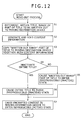
- FIG. 12 is a flowchart illustrating an example of a move-out process performed by the moving source device of FIG. 11 ;
- FIG. 13 is a flowchart illustrating an example of a move-back process performed by the moving source device of FIG. 11 .
- An information processing apparatus (e.g., a moving source device 101 in FIG. 11 ) is an information processing apparatus that processes an encrypted content, the apparatus including a control section (e.g., a control section 301 in FIG. 11 ) configured to control the following processes to be performed independently in a specified order as a process for achieving moving out of at least a part of the encrypted content from a moving source (e.g., a storage section 306 or the like of the moving source device 101 in FIG. 11 ) to a moving destination (e.g., a moving destination device 2 -A or 2 -B in FIG. 11 ): a generation process of generating the encrypted content (e.g., an encrypted content 121 in FIG.
- a control section e.g., a control section 301 in FIG. 11
- a control section configured to control the following processes to be performed independently in a specified order as a process for achieving moving out of at least a part of the encrypted content from a moving source (e.g.,
- a moving object range for the moving destination device 2 -A is an encrypted part 121 - 1
- a moving object range for the moving destination device 2 -B is an encrypted part 121 - 2 ); a holding process of holding, as content information (in the case of FIG.
- FIG. 7 for example, a process of copying a pair of the encrypted part 121 - 1 and the identification information 122 to the moving destination device 2 -A, and copying a pair of the encrypted part 121 - 2 and the identification information 122 to the moving destination device 2 -B); and an inactivation process of causing at least the part of the encrypted content generated by the generation process that corresponds to the moving object range determined by the moving range determination process to enter an inactive state in the moving source (in the case of FIG. 7 , for example, a process of causing the encrypted part 121 - 1 and the encrypted part 121 - 2 to enter an inactive state.
- the inactive state is indicated by gray while an active state is indicated by white).
- control section may control only the part of the encrypted content generated by the generation process that corresponds to the moving object range determined by the moving range determination process to enter the inactive state in the moving source (e.g., a process of step S 5 in FIG. 12 ).
- the control section may further control the following processes to be performed independently in a specified order as a process for achieving moving back from the moving destination to the moving source: a collation process of collating the content information held in the moving source by the holding process with information obtained from the encrypted content and the identification information in the moving destination (e.g., processes of steps S 21 and S 22 in FIG. 13 , and specifically, a process indicated by a white arrow in FIG. 8 , for example); a deletion process of deleting the encrypted content and the identification information from the moving destination after the collation is successfully completed by the collation process (e.g., a process of step S 23 in FIG. 13 , and specifically, a process indicated by a cross in FIG.
- a collation process of collating the content information held in the moving source by the holding process with information obtained from the encrypted content and the identification information in the moving destination e.g., processes of steps S 21 and S 22 in FIG. 13 , and specifically, a process indicated by a white arrow in FIG. 8 , for example
- an activation process of, after the collation is successfully completed by the collation process, causing a part of the encrypted content generated by the generation process that corresponds to the encrypted content in the moving destination to enter an active state in the moving source e.g., a process of step S 25 in FIG. 13 , and specifically, a process indicated by the change in color of the encrypted part 121 - 1 from gray, as in FIG. 8 , to white, as in FIG. 9 ).
- control section may control the entire encrypted content generated by the generation process to enter the inactive state in the moving source (e.g., a process of step S 6 in FIG. 12 ).
- the control section may further control the following processes to be performed independently in a specified order as a process for achieving moving back from the moving destination to the moving source: a collation process of collating the content information held in the moving source by the holding process with information obtained from the encrypted content and the identification information in the moving destination (e.g., the processes of steps S 21 and S 22 in FIG. 13 , and specifically, the process indicated by the white arrow in FIG. 8 , for example); a deletion process of deleting the encrypted content and the identification information from the moving destination after the collation is successfully completed by the collation process (e.g., the process of step S 23 in FIG. 13 , and specifically, a process indicated by a cross in FIG.
- a collation process of collating the content information held in the moving source by the holding process with information obtained from the encrypted content and the identification information in the moving destination e.g., the processes of steps S 21 and S 22 in FIG. 13 , and specifically, the process indicated by the white arrow in FIG. 8 , for example
- An information processing method is an information processing method employed by an information processing apparatus (e.g., the moving source device 101 in FIG. 11 ) that processes an encrypted content, for achieving moving out of at least a part of the encrypted content from a moving source to a moving destination, the method including the steps of: generating the encrypted content composed of a plurality of encrypted content units to which different serial numbers are assigned, and generating, as identification information, data necessary for identifying and making reproducible the encrypted content (e.g., a process illustrated in FIG. 4 ); determining, within the encrypted content generated in the generating step, a moving object range composed of one or more of the encrypted content units (e.g., a process of step S 1 in FIG.
- a program according to one embodiment of the present invention is, for example, a program for causing the steps of the above-described information processing method according to one embodiment of the present invention to be performed, and this program is executed by a computer that includes the control section 301 in FIG. 11 , for example.
- a moving source device 101 different from the known moving source device 1 is adopted as a moving source device. That is, the moving source device 101 is a moving source device to which the inventive techniques are applied. In other words, the moving source device 101 is an information processing apparatus according to one embodiment of the present invention. A specific exemplary structure of and exemplary processing by the moving source device 101 will be described later with reference to FIGS. 11 to 13 .
- known moving destination devices 2 -A and 2 -B are adopted as moving destination devices.
- the known moving destination devices 2 -A and 2 -B are adopted simply in order to facilitate comparison of the inventive techniques with known techniques, and that, naturally, the moving destinations are not limited to the known moving destination devices 2 -A and 2 -B, but another information processing apparatuses according to an embodiment of the present invention or a given storage medium, for example, may also be adopted as the moving destination.
- a state illustrated in FIG. 4 is an initial state.
- the moving source device 101 encrypts a content that is a candidate for moving according to an “encryption system in which encryption involves assignment of serial number information” to generate an encrypted content 121 composed of a series of N+1 (N is an integer of 1 or more) encrypted content units 131 - k (k is an integer of 0 to N) each assigned with a serial number [k].
- the “encryption system in which encryption involves assignment of serial number information” refers to a system in which a content is segmented into N+1 content units, the N+1 content units are encrypted sequentially, and serial numbers of 0 to N+1 are assigned to the resulting N+1 encrypted content units.
- Any encryption key can be used in this system as long as the encrypted content units can be decrypted independently of each other.
- the same key may be used for all the partial contents, or alternatively, different partial contents may be encrypted using different keys associated with the serial numbers.
- the initial state is assumed to be a state in which the encrypted content 121 composed of the collection of the above encrypted content units 131 - 0 to 131 -N is held, in a moving source as the candidate for moving, in the same file as that of identification information 122 that includes the key information A and a protected content ID.
- the moving source may be either a storage medium (e.g., a hard disk) contained in the moving source device 101 or a storage medium (e.g., a removable medium) external to the moving source device 101 .
- a storage medium e.g., a hard disk
- a storage medium e.g., a removable medium
- the inventive technique when starting from the initial state, at least a part of the encrypted content 121 is moved out as an object of moving, information (hereinafter referred to as content information) for identifying the object of moving at the time of moving back is held in the moving source device 101 .
- the unit of moving out is the encrypted content unit 131 - k , taking advantage of the fact that each of the encrypted content units 131 - k can be decrypted independently of each other.
- one or more of the encrypted content units 131 - k can be the object of moving; and information (hereinafter referred to as serial number information) representing each of the serial numbers k assigned to the one or more of the encrypted content units 131 - k and the identification information 122 for the original encrypted content 121 suffice to identify the one or more of the encrypted content units 131 - k . Therefore, content information composed of the serial number information and the identification information 122 is held in the moving source device 101 .
- the object of moving is a part of the encrypted content 121 (hereinafter referred to as an encrypted part), for example, referring to FIG. 6 , in the case where the object of moving for the moving destination device 2 -A is an encrypted part 121 - 1 and the object of moving for the moving destination device 2 -B is an encrypted part 121 - 2 , moving out is completed only by performing a simple process described below.
- the encrypted part 121 - 1 is a collection of the encrypted content units 131 - 0 to 131 - j to which the serial numbers [0] to [j], respectively, are assigned.
- the encrypted part 121 - 2 is a collection of the encrypted content units 131 - k to 131 -N to which the serial numbers [k] to [N], respectively, are assigned.
- j and k are integers that satisfy the following relationship: 0 ⁇ j ⁇ k ⁇ N.
- the moving source device 101 extracts, from the encrypted content 121 , the encrypted content units 131 - 0 to 131 - j to which the serial numbers [0] to [j], respectively, are assigned, and copies the extracted encrypted content units 131 - 0 to 131 - j as they are, as the encrypted part 121 - 1 , to the moving destination device 2 -A together with the same identification information 122 as that of the original encrypted content 121 , without the need to perform a decrypting process and a re-encrypting process in the known technique.
- the moving source device 101 generates content information 141 -A composed of serial number information 151 -A representing the serial numbers [0] to [j] and the identification information 122 , and holds the generated content information 141 -A within itself.
- the moving source device 101 extracts, from the encrypted content 121 , the encrypted content units 131 - k to 131 -N to which the serial numbers [k] to [N], respectively, are assigned, and copies the extracted encrypted content units 131 - k to 131 -N as they are, as the encrypted part 121 - 2 , to the moving destination device 2 -B together with the same identification information 122 as that of the original encrypted content 121 , without the need to perform the decrypting process and the re-encrypting process in the known technique.
- the moving source device 101 generates content information 141 -B composed of serial number information 151 -B representing the serial numbers [k] to [N] and the identification information 122 , and holds the generated content information 141 -B within itself.
- the adoption of the inventive technique eliminates the need for time-consuming processes which are required in the known technique when copying the encrypted part to the moving destination at the time of moving out, i.e., a decrypting process for the original encrypted content, a re-encrypting process for generating a new encrypted content to be copied, a generation process for generating new identification information for the new encrypted content, and the like.
- the adoption of the inventive technique enables moving out of a plurality of parts in the same file using the same key (key information) as long as the objects of moving do not overlap.
- the adoption of the inventive technique eliminates the need for a re-encrypting process using different keys, and the like.
- adoption of a technique illustrated in FIG. 7 eliminates the need for a process of deleting the original data at the time of moving out, making it possible to achieve the moving out with still simpler processing. That is, the technique illustrated in FIG. 7 is an inventive technique.
- the technique illustrated in FIG. 7 is as follows. That is, instead of deleting the encrypted parts 121 - 1 and 121 - 2 , which are the original data, as illustrated in FIG. 6 , the moving source device 101 causes at least the encrypted parts 121 - 1 and 121 - 2 to enter an inactive state. The addition of “at least” is because the moving source device 101 may cause the entire encrypted content 121 to enter the inactive state.
- the inactive state refers to an irreproducible state.
- an active state refers to a reproducible state.
- copying the encrypted part 121 - 1 to the moving destination device 2 -A and causing the encrypted part 121 - 1 to enter the active state therein while causing the encrypted part 121 - 1 to enter the inactive state in the moving source device 101 means transferring a “right of reproducing” the encrypted part 121 - 1 from the moving source device 101 to the moving destination device 2 -A.
- copying the encrypted part 121 - 2 to the moving destination device 2 -B and causing the encrypted part 121 - 2 to enter the active state therein while causing the encrypted part 121 - 2 to enter the inactive state in the moving source device 101 means transferring a “right of reproducing” the encrypted part 121 - 2 from the moving source device 101 to the moving destination device 2 -B.
- the moving back is achieved only by returning the “reproducing right”, without the need to move actual data of the encrypted part 121 - 1 or 121 - 2 .
- moving back will be described with reference to FIGS. 8 to 10 .
- the moving source device 101 first collates the serial number information 151 -A in the content information 141 -A with the serial numbers of the encrypted content units that constitute the encrypted part 121 - 1 in the moving destination device 2 -A, and collates the identification information 122 in the content information 141 -A with the identification information 122 in the moving destination device 2 -A.
- the serial number information 151 -A in the content information 141 -A represents the serial numbers [0] to [j], and therefore corresponds with the serial numbers [0] to [j] of the encrypted content units that constitute the encrypted part 121 - 1 in the moving destination device 2 -A.
- the identification information 122 in the content information 141 -A is identical to the identification information 122 in the moving destination device 2 -A. Therefore, the collation is completed successfully.
- the moving source device 101 deletes the encrypted part 121 - 1 and the identification information 122 from the moving destination device 2 -A, and causes the encrypted content units 131 - 0 to 131 - j to which the collated serial numbers [0] to [j], respectively, are assigned, i.e., the encrypted part 121 - 1 , to enter the active (reproducible) state.
- the encrypted part 121 - 2 is moved back from the moving destination device 2 -B, basically the same processes as the series of processes described above with reference to FIGS. 8 and 9 are performed, and as a result, the encrypted content units 131 - k to 131 -N to which the serial numbers [k] to [N], respectively, are assigned, i.e., the encrypted part 121 - 2 , are caused to enter the active (reproducible) state, while the encrypted part 121 - 2 and the identification information 122 are deleted from the moving destination device 2 -B. As a result, the entire encrypted content 121 enters the reproducible state.
- Moving back in that case may be achieved as follows. That is, until the plurality of encrypted parts moved out to the different moving destinations have all been moved back, the moving source device 101 only returns the “right of reproducing” the moved back encrypted part (range), and when all of the plurality of encrypted parts have been moved back, the moving source device 101 causes the entire encrypted content 121 to enter the active state.
- the moving back is carried out in the following manner. That is, when moving back only one of the encrypted parts 121 - 1 and 121 - 2 , the moving source device 101 deletes the one encrypted part from the moving destination device 2 -A or 2 -B, and only returns the “right of reproducing” the one encrypted part to itself. Thereafter, when moving back the other of the encrypted parts 121 - 1 and 121 - 2 , as illustrated in FIG. 10 , the moving source device 101 deletes the other encrypted part from the moving destination device 2 -B or 2 -A, and causes the entire encrypted content 121 to enter the active state.
- FIG. 11 is a block diagram illustrating an exemplary structure of the moving source device 101 to which the above-described inventive techniques are applied, i.e., an information processing apparatus according to one embodiment of the present invention.
- the moving source device 101 as illustrated in FIG. 11 is capable of the moving out and moving back of the object of moving, such as the whole or a part of the encrypted content, held in the moving source, such as a built-in storage section 306 or an external removable medium 308 , in connection with the moving destination devices 2 -A and 2 -B.
- the moving destination is not limited to the moving destination device 2 -A or 2 -B.
- the moving destination may be the removable medium 308 .
- the moving source device 101 includes a control section 301 , a read only memory (ROM) 302 , a random access memory (RAM) 303 , a communication control section 304 , a content processing section 305 , the storage section 306 , and a drive 307 .
- ROM read only memory
- RAM random access memory
- the control section 301 controls an overall operation of the moving source device 101 .
- the control section 301 controls operations of the content processing section 305 , the communication control section 304 , and the like described below.
- the control section 301 may perform various processes in accordance with a program stored in the ROM 302 or the storage section 306 as necessary.
- a program executed by the control section 301 , data, and the like are stored as appropriate.
- the above-described content information is stored in the RAM 303 .
- the content information may be stored in the storage section 306 described below.
- the communication control section 304 controls communication performed with the outside.
- the communication control section 304 transmits, at the time of moving out, the object of moving provided from the content processing section 305 , i.e., the encrypted content (including the encrypted part) and the identification information thereof, to the moving destination device 2 -A or the moving destination device 2 -B.
- the communication control section 304 receives the object of moving transmitted from the moving destination device 2 -A or the moving destination device 2 -B, i.e., the encrypted content (including the encrypted part) and the identification information thereof, and provides the object of moving received to the content processing section 305 .
- the object of moving the original data
- the object of moving is simply caused to return to the active (reproducible) state in the moving source at the time of moving back, and therefore, the transmission of the object of moving from the moving destination device 2 -A or the moving destination device 2 -B is not performed.
- the communication control section 304 is capable of controlling an operation of the moving destination device 2 -A or the moving destination device 2 -B by transmitting a control signal (e.g., a command) provided from the control section 301 to the moving destination device 2 -A or the moving destination device 2 -B.
- a control signal e.g., a command
- a delete command is issued to delete the object of moving within the moving destination device 2 -A or the moving destination device 2 -B.
- the communication control section 304 is connected to the moving destination device 2 -A or the moving destination device 2 -B via a dedicated i.LINK cable, for example, to achieve the above control of communication.
- i.LINK is a trademark of the present applicant, Sony Corporation, for the IEEE (Institute of Electrical and Electronics Engineers) 1394 high speed digital serial interface.
- the communication control section 304 is capable of relaying various information (e.g., the encrypted content, the control signal, etc.) exchanged between the control section 301 and the moving destination device 2 -A or 2 -B, or between the content processing section 305 and the moving destination device 2 -A or 2 -B, for example, in accordance with the IEEE 1394 standard.
- the communication control section 304 may achieve the above control of communication using another interface, such as USB (Universal Serial Bus), instead of using i.LINK.
- USB Universal Serial Bus
- the communication control section 304 is capable of receiving a broadcasting signal (e.g., an analog terrestrial broadcasting signal, a BS analog broadcasting signal, a digital terrestrial broadcasting signal, a BS digital broadcasting signal, etc.) and providing, as a content, a video signal of a television program obtained as a result of reception of the broadcasting signal to the content processing section 305 .
- a broadcasting signal e.g., an analog terrestrial broadcasting signal, a BS analog broadcasting signal, a digital terrestrial broadcasting signal, a BS digital broadcasting signal, etc.
- the communication control section 304 has a capability to connect with a network such as the Internet, and is capable of receiving-predetermined data or the like transmitted by broadcast delivery via a predetermined network, and providing the received predetermined data or the like to the content processing section 305 as the content.
- a network such as the Internet
- the content processing section 305 is capable of performing various processes on the content.
- the various processes include a process of converting the form of the content.
- Examples of the process of converting the form of the content include: an encryption process in accordance with the “encryption system in which encryption involves assignment of serial number information” for converting the non-encrypted content into the form of the encrypted content; and a process of inverse conversion, i.e., a decryption process for converting the encrypted content into the form of the non-encrypted content.
- process of converting the form of the content include: a process of encoding the content provided from the communication control section 304 in the form of the video signal in accordance with an encoding system, such as an MPEG (Moving Picture Experts Group) system, to convert the content into the form of encoded data; and a process of inverse conversion, i.e., a process of decoding the encoded data in accordance with a system corresponding to the encoding system such as the MPEG system to convert the encoded data into the form of the video signal.
- an encoding system such as an MPEG (Moving Picture Experts Group) system
- the storage section 306 is formed by a hard disk drive (hereinafter referred to as an HDD for short as appropriate), for example, and stores the encrypted content and the like provided from the content processing section 305 .
- the storage section 306 allows the encrypted content and the like stored therein to be read therefrom and provided to the content processing section 305 .
- the drive 307 causes the encrypted content and the like provided from the content processing section 305 to be recorded on the removable medium 308 .
- the drive 307 reads the encrypted content and the like recorded on the removable medium 308 , and provides the read encrypted content and the like to the content processing section 305 .
- the removable medium 308 may be formed by a magnetic disk (including a flexible disk), an optical disk (including a CD-ROM (Compact Disc-Read Only Memory), a DVD (Digital Versatile Disc), and a BD (Blu-ray Disc Founders)), a magneto-optical disk (including an MD (Mini Disc)), a magnetic tape, a semiconductor memory, or the like.
- a magnetic disk including a flexible disk
- an optical disk including a CD-ROM (Compact Disc-Read Only Memory), a DVD (Digital Versatile Disc), and a BD (Blu-ray Disc Founders)
- a magneto-optical disk including an MD (Mini Disc)
- a magnetic tape including a semiconductor memory, or the like.
- each title is composed of actual video data and additional data such as metadata.
- the actual video data may be divided into data for reproduction and data for transfer, which are contained in the title in different forms.
- the title simply means the entire encrypted content and the identification information thereof contained in a single file. Specifically, in the case of FIGS. 4 to 10 described above, for example, the entire encrypted content 121 and the identification information 122 correspond to one title.
- the encrypted content that is the candidate for the object of moving and the identification information thereof are stored in the moving source as a single title. Further, it is assumed that the moving source is the storage section 306 .
- the moving destination of the object of moving is the moving destination device 2 -A or 2 -B, but hereinafter, the moving destination devices 2 -A and 2 -B will be referred to collectively as a moving destination device 2 .
- the control section 301 controls the content processing section 305 to determine, within the title, a range of a part of the title to be written out to the moving destination device 2 .
- This range will hereinafter be referred to as a written-out range.
- the written-out range is the encrypted content unit(s) as described above. That is, the encrypted part composed of one or more encrypted content units is determined to be the “written-out range” within the title.
- the control section 301 controls the content processing section 305 to generate the content information and holds the generated content information in the RAM 303 or the like. That is, the content information composed of the serial number information representing the serial numbers of the one or more encrypted content units that constitute the “written-out range” part of the title and the identification information contained in the title is generated.
- control section 301 controls the communication control section 304 to copy the “written-out range” part of the title to the moving destination device 2 together with the content information.
- control section 301 determines whether or not to inactivate the entire title.
- control section 301 controls the content processing section 305 to cause the “written-out range” part of the title to enter the irreproducible (inactive) state at step S 5 . Then, control proceeds to step S 7 .
- control section 301 controls the content processing section 305 to cause the entire title to enter the irreproducible (inactive) state at step S 6 . Then, control proceeds to step S 7 .
- control section 301 controls the communication control section 304 to cause the encrypted content in the moving destination device 2 , i.e., the “written-out range” part of the title, to enter the reproducible (active) state.
- a process (hereinafter referred to as a “move-back process”) performed by the moving source device 101 as illustrated in FIG. 11 for achieving the moving back in accordance with the inventive technique will be described below with reference to a flowchart of FIG. 13 .
- control section 301 controls the communication control section 304 to collate the content information held in the RAM 303 or the like with information obtained from the encrypted content and the like within the moving destination device 2 .
- the information obtained from the encrypted content and the like within the moving destination device 2 refers to the serial numbers assigned to the one or more encrypted content units that constitute the encrypted content (more accurately, the encrypted part) within the moving destination device 2 , and the identification information held in the moving destination device 2 together with the encrypted content.
- control section 301 determines whether the content information and the information collated therewith coincide with each other.
- step S 22 If it is determined at step S 22 that the content information and the information collated therewith do not coincide with each other, the move-back process is terminated.
- step S 22 determines whether the content information and the information collated therewith coincide with each other. If it is determined at step S 22 that the content information and the information collated therewith coincide with each other, control proceeds to step S 23 .
- the control section 301 controls the communication control section 304 to delete the encrypted content and the like in the moving destination device 2 .
- the encrypted content and the like to be deleted at this time refers to the encrypted content (more accurately, the encrypted part) within the moving destination device 2 and the identification information held in the moving destination device 2 together with the encrypted content.
- control section 301 determines whether the entire title is in the inactive state.
- step S 24 determination at the process of step S 24 is NO, and control proceeds to step S 25 .
- the control section 301 controls the content processing section 305 to cause a moved-back part of the title to enter the reproducible (active) state.
- the move-back process is completed.
- step S 24 determination at the process of step S 24 is YES, and control proceeds to step S 26 .
- step S 26 the control section 301 determines whether the moving back of the entire title has been completed.
- control section 301 controls the content processing section 305 to return the “right of reproducing” the moved-back part of the title at step S 27 .
- the move-back process is completed.
- control section 301 controls the content processing section 305 to cause the entire title to enter the reproducible (active) state at step S 28 .
- the move-back process is completed.
- the above-described series of processes may be implemented by either hardware or software.
- a program that forms the software is installed from a program storage medium into a computer having a dedicated hardware configuration, a computer that includes, as appropriate, the content processing section 305 , the control section 301 , and so on of the moving source device 101 as illustrated in FIG. 11 and which becomes capable of performing various functions when various programs are installed therein, a general-purpose personal computer, or the like.
- the program storage medium that has stored therein the program to be installed into and made executable by the computer is formed, for example, by: the removable medium 308 , which is a packaged medium formed by the magnetic disk (including the flexible disk), the optical disk (including the CD-ROM (Compact Disc-Read Only Memory), and the DVD (Digital Versatile Disc)), the magneto-optical disk, or the semiconductor memory; the ROM 302 in which the program is temporarily or permanently stored; or the hard disk that forms the storage section 306 .
- the storage of the program into the program storage medium is achieved using a wired or wireless communication medium, such as a local area network, the Internet, or digital satellite broadcasting, via the communication control section 304 as necessary.
Landscapes
- Engineering & Computer Science (AREA)
- Signal Processing (AREA)
- Multimedia (AREA)
- Computer Security & Cryptography (AREA)
- Databases & Information Systems (AREA)
- Software Systems (AREA)
- Theoretical Computer Science (AREA)
- Computer Networks & Wireless Communication (AREA)
- Computer Hardware Design (AREA)
- Physics & Mathematics (AREA)
- General Engineering & Computer Science (AREA)
- General Physics & Mathematics (AREA)
- Technology Law (AREA)
- Storage Device Security (AREA)
- Two-Way Televisions, Distribution Of Moving Picture Or The Like (AREA)
Abstract
Description
Claims (8)
Applications Claiming Priority (3)
| Application Number | Priority Date | Filing Date | Title |
|---|---|---|---|
| JP2006246148A JP4293213B2 (en) | 2006-09-11 | 2006-09-11 | Information processing apparatus and method, and program |
| JP2006-246148 | 2006-09-11 | ||
| JPJP2006-246148 | 2006-09-11 |
Publications (2)
| Publication Number | Publication Date |
|---|---|
| US20080219442A1 US20080219442A1 (en) | 2008-09-11 |
| US8108934B2 true US8108934B2 (en) | 2012-01-31 |
Family
ID=38983496
Family Applications (1)
| Application Number | Title | Priority Date | Filing Date |
|---|---|---|---|
| US11/900,055 Expired - Fee Related US8108934B2 (en) | 2006-09-11 | 2007-09-10 | Information processing apparatus and method, and a program |
Country Status (6)
| Country | Link |
|---|---|
| US (1) | US8108934B2 (en) |
| EP (1) | EP1901546A3 (en) |
| JP (1) | JP4293213B2 (en) |
| KR (1) | KR101365725B1 (en) |
| CN (1) | CN101222602B (en) |
| BR (1) | BRPI0704131B1 (en) |
Families Citing this family (2)
| Publication number | Priority date | Publication date | Assignee | Title |
|---|---|---|---|---|
| JP4270252B2 (en) * | 2006-09-15 | 2009-05-27 | ソニー株式会社 | Information processing apparatus, download method, download interruption method, download resume method, and program |
| JP4876082B2 (en) * | 2008-01-28 | 2012-02-15 | 株式会社日立製作所 | Recording apparatus and recording method |
Citations (20)
| Publication number | Priority date | Publication date | Assignee | Title |
|---|---|---|---|---|
| WO2001067668A1 (en) | 2000-03-09 | 2001-09-13 | Matsushita Electric Industrial Company, Limited | Audio data playback management system and method with editing apparatus and recording medium |
| JP2001256195A (en) | 2000-03-14 | 2001-09-21 | Sony Corp | Information providing apparatus and method, information processing apparatus and method, and program storage medium |
| US20020099798A1 (en) | 2000-11-29 | 2002-07-25 | Fedorovsky Ruslan Gennadievich | File transfer method and system |
| JP2003018461A (en) | 2001-06-29 | 2003-01-17 | Oyo Keisoku Kenkyusho:Kk | Image composition method and image composition device |
| EP1300843A2 (en) | 2001-10-03 | 2003-04-09 | Victor Company of Japan, Ltd. | Information recording apparatus having function of encrypting information |
| US6658247B1 (en) | 1999-03-01 | 2003-12-02 | Sony Corporation | Portable telephone terminal apparatus for receiving data and data receiving method therewith |
| US20040117459A1 (en) | 2002-12-12 | 2004-06-17 | George Fry | System and method providing multimedia messaging in communication networks |
| JP2004178193A (en) | 2002-11-26 | 2004-06-24 | Toppan Printing Co Ltd | Network access system, device, method and program |
| WO2005076140A1 (en) | 2004-02-03 | 2005-08-18 | Matsushita Electric Industrial Co., Ltd. | Recording/reproduction device and content protection system |
| WO2005101215A1 (en) | 2004-04-14 | 2005-10-27 | Matsushita Electric Industrial Co., Ltd. | Terminal device and copyright protection system |
| US20050245243A1 (en) | 2004-04-28 | 2005-11-03 | Zuniga Michael A | System and method for wireless delivery of audio content over wireless high speed data networks |
| JP2005339514A (en) | 2004-04-26 | 2005-12-08 | Denso Corp | Map distribution reservation system |
| US20050281540A1 (en) | 2004-06-18 | 2005-12-22 | Sony Corporation | Information management method, information playback apparatus, and information management apparatus |
| EP1640889A1 (en) | 2004-09-16 | 2006-03-29 | Sony Corporation | License movement Component, program and method |
| JP2006085479A (en) | 2004-09-16 | 2006-03-30 | Sony Corp | License processing apparatus, program, and license processing method |
| JP2006107165A (en) | 2004-10-06 | 2006-04-20 | Matsushita Electric Ind Co Ltd | Content copy management method |
| US20060115241A1 (en) * | 2004-11-30 | 2006-06-01 | Matsushita Electric Industrial Co., Ltd. | Content management device and content management method |
| JP2006155403A (en) | 2004-11-30 | 2006-06-15 | Matsushita Electric Ind Co Ltd | Content management device |
| JP2006216164A (en) | 2005-02-03 | 2006-08-17 | Matsushita Electric Ind Co Ltd | Recording / playback device |
| US20080162666A1 (en) | 2006-09-15 | 2008-07-03 | Sony Corporation | Information processing device, download method, download interruption method, download resuming method, and program |
Family Cites Families (1)
| Publication number | Priority date | Publication date | Assignee | Title |
|---|---|---|---|---|
| CA2414154A1 (en) * | 2002-12-12 | 2004-06-12 | Mark W. Brooks | System and method for transmitting a file associated with an e-mail |
-
2006
- 2006-09-11 JP JP2006246148A patent/JP4293213B2/en active Active
-
2007
- 2007-09-03 EP EP07253483A patent/EP1901546A3/en not_active Ceased
- 2007-09-05 KR KR1020070089941A patent/KR101365725B1/en not_active Expired - Fee Related
- 2007-09-10 US US11/900,055 patent/US8108934B2/en not_active Expired - Fee Related
- 2007-09-10 BR BRPI0704131-4A patent/BRPI0704131B1/en not_active IP Right Cessation
- 2007-09-11 CN CN2007101999304A patent/CN101222602B/en not_active Expired - Fee Related
Patent Citations (21)
| Publication number | Priority date | Publication date | Assignee | Title |
|---|---|---|---|---|
| US6658247B1 (en) | 1999-03-01 | 2003-12-02 | Sony Corporation | Portable telephone terminal apparatus for receiving data and data receiving method therewith |
| WO2001067668A1 (en) | 2000-03-09 | 2001-09-13 | Matsushita Electric Industrial Company, Limited | Audio data playback management system and method with editing apparatus and recording medium |
| JP2001256195A (en) | 2000-03-14 | 2001-09-21 | Sony Corp | Information providing apparatus and method, information processing apparatus and method, and program storage medium |
| US20020099798A1 (en) | 2000-11-29 | 2002-07-25 | Fedorovsky Ruslan Gennadievich | File transfer method and system |
| JP2003018461A (en) | 2001-06-29 | 2003-01-17 | Oyo Keisoku Kenkyusho:Kk | Image composition method and image composition device |
| EP1300843A2 (en) | 2001-10-03 | 2003-04-09 | Victor Company of Japan, Ltd. | Information recording apparatus having function of encrypting information |
| JP2004178193A (en) | 2002-11-26 | 2004-06-24 | Toppan Printing Co Ltd | Network access system, device, method and program |
| US20040117459A1 (en) | 2002-12-12 | 2004-06-17 | George Fry | System and method providing multimedia messaging in communication networks |
| WO2005076140A1 (en) | 2004-02-03 | 2005-08-18 | Matsushita Electric Industrial Co., Ltd. | Recording/reproduction device and content protection system |
| WO2005101215A1 (en) | 2004-04-14 | 2005-10-27 | Matsushita Electric Industrial Co., Ltd. | Terminal device and copyright protection system |
| JP2005339514A (en) | 2004-04-26 | 2005-12-08 | Denso Corp | Map distribution reservation system |
| US20050245243A1 (en) | 2004-04-28 | 2005-11-03 | Zuniga Michael A | System and method for wireless delivery of audio content over wireless high speed data networks |
| US20050281540A1 (en) | 2004-06-18 | 2005-12-22 | Sony Corporation | Information management method, information playback apparatus, and information management apparatus |
| JP2006004543A (en) | 2004-06-18 | 2006-01-05 | Sony Corp | Information management method, information reproducing apparatus, and information management apparatus |
| EP1640889A1 (en) | 2004-09-16 | 2006-03-29 | Sony Corporation | License movement Component, program and method |
| JP2006085479A (en) | 2004-09-16 | 2006-03-30 | Sony Corp | License processing apparatus, program, and license processing method |
| JP2006107165A (en) | 2004-10-06 | 2006-04-20 | Matsushita Electric Ind Co Ltd | Content copy management method |
| US20060115241A1 (en) * | 2004-11-30 | 2006-06-01 | Matsushita Electric Industrial Co., Ltd. | Content management device and content management method |
| JP2006155403A (en) | 2004-11-30 | 2006-06-15 | Matsushita Electric Ind Co Ltd | Content management device |
| JP2006216164A (en) | 2005-02-03 | 2006-08-17 | Matsushita Electric Ind Co Ltd | Recording / playback device |
| US20080162666A1 (en) | 2006-09-15 | 2008-07-03 | Sony Corporation | Information processing device, download method, download interruption method, download resuming method, and program |
Also Published As
| Publication number | Publication date |
|---|---|
| EP1901546A2 (en) | 2008-03-19 |
| BRPI0704131B1 (en) | 2019-03-26 |
| BRPI0704131A (en) | 2008-04-29 |
| US20080219442A1 (en) | 2008-09-11 |
| JP4293213B2 (en) | 2009-07-08 |
| KR101365725B1 (en) | 2014-03-12 |
| CN101222602A (en) | 2008-07-16 |
| JP2008065791A (en) | 2008-03-21 |
| EP1901546A3 (en) | 2008-04-02 |
| CN101222602B (en) | 2011-01-26 |
| KR20080023637A (en) | 2008-03-14 |
Similar Documents
| Publication | Publication Date | Title |
|---|---|---|
| US7664262B2 (en) | Playback apparatus and playback control method | |
| US6167136A (en) | Method for preventing copying of digital video disks | |
| CN100435120C (en) | Terminal device and copyright protection system | |
| JP2000357213A (en) | Mutual authentication method, recording device, reproducing device, and recording medium | |
| JP5015742B2 (en) | Decryption method and apparatus for right object, and content sharing method and apparatus using the same | |
| US20070219911A1 (en) | Apparatus and method for utilizing data block of right to decrypt content | |
| US20070283442A1 (en) | Recording/Reproduction Device And Content Protection System | |
| JP2005244992A (en) | APPARATUS AND METHOD PROVIDED WITH LIMITED RECEPTION FUNCTION AND COPY PROTECTION FUNCTION FOR ENCRYPTED BROADCAST DATA | |
| US7814555B2 (en) | Information network system and information apparatus | |
| US7869595B2 (en) | Content copying device and content copying method | |
| US20080219442A1 (en) | Information processing apparatus and method, and a program | |
| CN101320582A (en) | Control method, recording apparatus, recording/reproducing apparatus | |
| US20090097372A1 (en) | Content data recording/reproducing device | |
| JP4589963B2 (en) | Recording device | |
| JP2009163560A (en) | Digital data recording device | |
| US20060077812A1 (en) | Player/recorder, contents playing back method and contents recording method | |
| JP2004109177A (en) | Content data recording medium, content data decryption device, content data encryption device, content data decryption method, and content data encryption method | |
| US20070189738A1 (en) | Contents recorder, contents processing method, and computer readable medium storing contents processing program | |
| JP4625737B2 (en) | Content recording / playback device | |
| JP2006330126A (en) | Encryption processing method and decryption processing method | |
| KR100965888B1 (en) | Method of providing or recording content and apparatus for performing the method | |
| JP2006107165A (en) | Content copy management method | |
| JP2001006279A (en) | Recording device | |
| US20090060462A1 (en) | Recording apparatus, recording method, and server apparatus | |
| JP2008067333A (en) | Information processing apparatus and method, and program |
Legal Events
| Date | Code | Title | Description |
|---|---|---|---|
| AS | Assignment |
Owner name: SONY CORPORATION, JAPAN Free format text: ASSIGNMENT OF ASSIGNORS INTEREST;ASSIGNORS:MITSUIKI, KAZUTAKA;EBIHARA, MUNETAKE;SHIMODA, TAKUJI;AND OTHERS;REEL/FRAME:020935/0811 Effective date: 20080418 |
|
| AS | Assignment |
Owner name: SONY CORPORATION, JAPAN Free format text: CORRECTIVE ASSIGNMENT TO CORRECT THE ASSIGNEE'S ADDRESS PREVIOUSLY RECORDED ON REEL 020935 FRAME 0811. ASSIGNOR(S) HEREBY CONFIRMS THE ASSIGNMENT OF ASSIGNOR(S) INTEREST.;ASSIGNORS:MITSUIKI, KAZUTAKA;EBIHARA, MUNETAKE;SHIMODA, TAKUJI;AND OTHERS;REEL/FRAME:020944/0832 Effective date: 20080418 Owner name: SONY CORPORATION, JAPAN Free format text: CORRECTIVE ASSIGNMENT TO CORRECT THE ASSIGNEE'S ADDRESS PREVIOUSLY RECORDED ON REEL 020935 FRAME 0811. ASSIGNOR(S) HEREBY CONFIRMS THE ASSIGNMENT OF ASSIGNOR(S) INTEREST;ASSIGNORS:MITSUIKI, KAZUTAKA;EBIHARA, MUNETAKE;SHIMODA, TAKUJI;AND OTHERS;REEL/FRAME:020944/0832 Effective date: 20080418 |
|
| ZAAA | Notice of allowance and fees due |
Free format text: ORIGINAL CODE: NOA |
|
| ZAAB | Notice of allowance mailed |
Free format text: ORIGINAL CODE: MN/=. |
|
| FEPP | Fee payment procedure |
Free format text: PAYOR NUMBER ASSIGNED (ORIGINAL EVENT CODE: ASPN); ENTITY STATUS OF PATENT OWNER: LARGE ENTITY |
|
| STCF | Information on status: patent grant |
Free format text: PATENTED CASE |
|
| FPAY | Fee payment |
Year of fee payment: 4 |
|
| AS | Assignment |
Owner name: SATURN LICENSING LLC, NEW YORK Free format text: ASSIGNMENT OF ASSIGNORS INTEREST;ASSIGNOR:SONY CORPORATION;REEL/FRAME:043177/0794 Effective date: 20170613 |
|
| MAFP | Maintenance fee payment |
Free format text: PAYMENT OF MAINTENANCE FEE, 8TH YEAR, LARGE ENTITY (ORIGINAL EVENT CODE: M1552); ENTITY STATUS OF PATENT OWNER: LARGE ENTITY Year of fee payment: 8 |
|
| FEPP | Fee payment procedure |
Free format text: MAINTENANCE FEE REMINDER MAILED (ORIGINAL EVENT CODE: REM.); ENTITY STATUS OF PATENT OWNER: LARGE ENTITY |
|
| LAPS | Lapse for failure to pay maintenance fees |
Free format text: PATENT EXPIRED FOR FAILURE TO PAY MAINTENANCE FEES (ORIGINAL EVENT CODE: EXP.); ENTITY STATUS OF PATENT OWNER: LARGE ENTITY |
|
| STCH | Information on status: patent discontinuation |
Free format text: PATENT EXPIRED DUE TO NONPAYMENT OF MAINTENANCE FEES UNDER 37 CFR 1.362 |
|
| FP | Lapsed due to failure to pay maintenance fee |
Effective date: 20240131 |