US8072137B2 - Fused heterocyclic compound and organic light emitting device - Google Patents

Fused heterocyclic compound and organic light emitting device Download PDF

Info

Publication number
US8072137B2
US8072137B2 US12/301,330 US30133007A US8072137B2 US 8072137 B2 US8072137 B2 US 8072137B2 US 30133007 A US30133007 A US 30133007A US 8072137 B2 US8072137 B2 US 8072137B2
Authority
US
United States
Prior art keywords
group
light emitting
substituted
emitting device
organic light
Prior art date
Legal status (The legal status is an assumption and is not a legal conclusion. Google has not performed a legal analysis and makes no representation as to the accuracy of the status listed.)
Expired - Fee Related, expires
Application number
US12/301,330
Other versions
US20090121625A1 (en
Inventor
Hiroki Ohrui
Shinjiro Okada
Akihiro Senoo
Naoki Yamada
Masanori Muratsubaki
Current Assignee (The listed assignees may be inaccurate. Google has not performed a legal analysis and makes no representation or warranty as to the accuracy of the list.)
Canon Inc
Original Assignee
Canon Inc
Priority date (The priority date is an assumption and is not a legal conclusion. Google has not performed a legal analysis and makes no representation as to the accuracy of the date listed.)
Filing date
Publication date
Application filed by Canon Inc filed Critical Canon Inc
Publication of US20090121625A1 publication Critical patent/US20090121625A1/en
Assigned to CANON KABUSHIKI KAISHA reassignment CANON KABUSHIKI KAISHA ASSIGNMENT OF ASSIGNORS INTEREST (SEE DOCUMENT FOR DETAILS). Assignors: YAMADA, NAOKI, MURATSUBAKI, MASANORI, OHRUI, HIROKI, OKADA, SHINJIRO, SENOO, AKIHIRO
Application granted granted Critical
Publication of US8072137B2 publication Critical patent/US8072137B2/en
Expired - Fee Related legal-status Critical Current
Adjusted expiration legal-status Critical

Links

Images

Classifications

    • CCHEMISTRY; METALLURGY
    • C07ORGANIC CHEMISTRY
    • C07DHETEROCYCLIC COMPOUNDS
    • C07D221/00Heterocyclic compounds containing six-membered rings having one nitrogen atom as the only ring hetero atom, not provided for by groups C07D211/00 - C07D219/00
    • C07D221/02Heterocyclic compounds containing six-membered rings having one nitrogen atom as the only ring hetero atom, not provided for by groups C07D211/00 - C07D219/00 condensed with carbocyclic rings or ring systems
    • C07D221/04Ortho- or peri-condensed ring systems
    • C07D221/18Ring systems of four or more rings
    • CCHEMISTRY; METALLURGY
    • C07ORGANIC CHEMISTRY
    • C07DHETEROCYCLIC COMPOUNDS
    • C07D239/00Heterocyclic compounds containing 1,3-diazine or hydrogenated 1,3-diazine rings
    • C07D239/70Heterocyclic compounds containing 1,3-diazine or hydrogenated 1,3-diazine rings condensed with carbocyclic rings or ring systems
    • CCHEMISTRY; METALLURGY
    • C09DYES; PAINTS; POLISHES; NATURAL RESINS; ADHESIVES; COMPOSITIONS NOT OTHERWISE PROVIDED FOR; APPLICATIONS OF MATERIALS NOT OTHERWISE PROVIDED FOR
    • C09KMATERIALS FOR MISCELLANEOUS APPLICATIONS, NOT PROVIDED FOR ELSEWHERE
    • C09K11/00Luminescent, e.g. electroluminescent, chemiluminescent materials
    • C09K11/06Luminescent, e.g. electroluminescent, chemiluminescent materials containing organic luminescent materials
    • HELECTRICITY
    • H05ELECTRIC TECHNIQUES NOT OTHERWISE PROVIDED FOR
    • H05BELECTRIC HEATING; ELECTRIC LIGHT SOURCES NOT OTHERWISE PROVIDED FOR; CIRCUIT ARRANGEMENTS FOR ELECTRIC LIGHT SOURCES, IN GENERAL
    • H05B33/00Electroluminescent light sources
    • H05B33/12Light sources with substantially two-dimensional radiating surfaces
    • H05B33/14Light sources with substantially two-dimensional radiating surfaces characterised by the chemical or physical composition or the arrangement of the electroluminescent material, or by the simultaneous addition of the electroluminescent material in or onto the light source
    • HELECTRICITY
    • H10SEMICONDUCTOR DEVICES; ELECTRIC SOLID-STATE DEVICES NOT OTHERWISE PROVIDED FOR
    • H10KORGANIC ELECTRIC SOLID-STATE DEVICES
    • H10K50/00Organic light-emitting devices
    • H10K50/10OLEDs or polymer light-emitting diodes [PLED]
    • H10K50/11OLEDs or polymer light-emitting diodes [PLED] characterised by the electroluminescent [EL] layers
    • HELECTRICITY
    • H10SEMICONDUCTOR DEVICES; ELECTRIC SOLID-STATE DEVICES NOT OTHERWISE PROVIDED FOR
    • H10KORGANIC ELECTRIC SOLID-STATE DEVICES
    • H10K85/00Organic materials used in the body or electrodes of devices covered by this subclass
    • H10K85/60Organic compounds having low molecular weight
    • H10K85/615Polycyclic condensed aromatic hydrocarbons, e.g. anthracene
    • H10K85/622Polycyclic condensed aromatic hydrocarbons, e.g. anthracene containing four rings, e.g. pyrene
    • HELECTRICITY
    • H10SEMICONDUCTOR DEVICES; ELECTRIC SOLID-STATE DEVICES NOT OTHERWISE PROVIDED FOR
    • H10KORGANIC ELECTRIC SOLID-STATE DEVICES
    • H10K85/00Organic materials used in the body or electrodes of devices covered by this subclass
    • H10K85/60Organic compounds having low molecular weight
    • H10K85/631Amine compounds having at least two aryl rest on at least one amine-nitrogen atom, e.g. triphenylamine
    • HELECTRICITY
    • H10SEMICONDUCTOR DEVICES; ELECTRIC SOLID-STATE DEVICES NOT OTHERWISE PROVIDED FOR
    • H10KORGANIC ELECTRIC SOLID-STATE DEVICES
    • H10K85/00Organic materials used in the body or electrodes of devices covered by this subclass
    • H10K85/60Organic compounds having low molecular weight
    • H10K85/631Amine compounds having at least two aryl rest on at least one amine-nitrogen atom, e.g. triphenylamine
    • H10K85/633Amine compounds having at least two aryl rest on at least one amine-nitrogen atom, e.g. triphenylamine comprising polycyclic condensed aromatic hydrocarbons as substituents on the nitrogen atom
    • HELECTRICITY
    • H10SEMICONDUCTOR DEVICES; ELECTRIC SOLID-STATE DEVICES NOT OTHERWISE PROVIDED FOR
    • H10KORGANIC ELECTRIC SOLID-STATE DEVICES
    • H10K85/00Organic materials used in the body or electrodes of devices covered by this subclass
    • H10K85/60Organic compounds having low molecular weight
    • H10K85/649Aromatic compounds comprising a hetero atom
    • H10K85/657Polycyclic condensed heteroaromatic hydrocarbons
    • H10K85/6572Polycyclic condensed heteroaromatic hydrocarbons comprising only nitrogen in the heteroaromatic polycondensed ring system, e.g. phenanthroline or carbazole
    • CCHEMISTRY; METALLURGY
    • C09DYES; PAINTS; POLISHES; NATURAL RESINS; ADHESIVES; COMPOSITIONS NOT OTHERWISE PROVIDED FOR; APPLICATIONS OF MATERIALS NOT OTHERWISE PROVIDED FOR
    • C09KMATERIALS FOR MISCELLANEOUS APPLICATIONS, NOT PROVIDED FOR ELSEWHERE
    • C09K2211/00Chemical nature of organic luminescent or tenebrescent compounds
    • C09K2211/10Non-macromolecular compounds
    • C09K2211/1003Carbocyclic compounds
    • C09K2211/1011Condensed systems
    • CCHEMISTRY; METALLURGY
    • C09DYES; PAINTS; POLISHES; NATURAL RESINS; ADHESIVES; COMPOSITIONS NOT OTHERWISE PROVIDED FOR; APPLICATIONS OF MATERIALS NOT OTHERWISE PROVIDED FOR
    • C09KMATERIALS FOR MISCELLANEOUS APPLICATIONS, NOT PROVIDED FOR ELSEWHERE
    • C09K2211/00Chemical nature of organic luminescent or tenebrescent compounds
    • C09K2211/10Non-macromolecular compounds
    • C09K2211/1018Heterocyclic compounds
    • C09K2211/1025Heterocyclic compounds characterised by ligands
    • C09K2211/1029Heterocyclic compounds characterised by ligands containing one nitrogen atom as the heteroatom

Definitions

  • the present invention relates to a material for an organic light emitting device having a fused, heterocyclic skeleton and an organic light emitting device using the material.
  • An organic light emitting device is a device which includes a thin film which contains a fluorescent or phosphorescent organic compound and is interposed between electrodes, in which an exciton of the fluorescent or phosphorescent compound is generated when a hole and an electron are injected from the respective electrodes and which makes use of light radiated upon return of the exciton to its ground state.
  • the recent progress of an organic light emitting device is significant, and the device suggests its potential to use in a wide variety of applications because of the following reasons.
  • the device shows a high luminance at a low applied voltage.
  • the device has a variety of emission wavelengths.
  • the device can be a thin, light-weight light emitting device with high-speed responsiveness.
  • the organic light emitting device still has many problems in terms of durability.
  • the device changes over time owing to long-term use, and deteriorates owing to an atmospheric gas containing oxygen, or to humidity or the like.
  • the device is applied to a full-color display or the like, the device must emit blue light, green light, and red light each having good color purity, but the problems concerning the color purity have not been sufficiently solved yet.
  • organic light emitting devices utilizing a compound having a diazabenzofluoranthene skeleton obtained by introducing two or more nitrogen atoms into a benzofluoranthene skeleton are disclosed in Japanese Patent Application Laid-Open No. 2001-160489, Japanese Patent Application Laid-Open No. 2003-212875, and Japanese Patent Application Laid-Open No. 2006-16363.
  • 2003-212875 each describe a compound having a fused diazabenzofluoranthene skeleton, so a light emitting material the luminescent color of which is limited to a luminescent color having a wavelength longer than that of a blue color, in particular, to a red color is provided.
  • Japanese Patent Application Laid-Open No. 2006-16363 describes that the compound described in the document is used mainly as an electron transporting material, and partly describes that the compound is used as a blue light emitting material.
  • the luminous efficiency of the device disclosed in the document is remarkably low.
  • Japanese Patent Application Laid-Open No. 2000-311786 describes an organic light emitting device using a compound having an azanaphthoanthracene skeleton obtained by: causing a benzene ring to fuse with a benzofluoranthene skeleton; and introducing one nitrogen atom into the resultant.
  • the application of the compound is limited to a green light emitting material owing to the skeleton of the compound.
  • the present invention has been made with a view to solving such problems of the prior art as described above, and an object of the present invention is to provide a material for an organic light emitting device showing a light emission hue with an extremely good purity and outputting light having high luminance and a long lifetime with high efficiency.
  • Another object of the present invention is to provide an organic light emitting device that can be easily produced at a relatively low cost.
  • the inventors of the present invention have made extensive studies with a view to solving the above-mentioned problems. As a result, the inventors have completed the present invention.
  • X 1 to X 10 each represent a carbon atom having a substituent R or a nitrogen atom, the carbon atom or the nitrogen atom forming a ring
  • R represents a hydrogen atom, a halogen atom, a group selected from a substituted or unsubstituted alkyl group, a substituted or unsubstituted alkenyl group, a substituted or unsubstituted alkynyl group, a substituted or unsubstituted amino group, a substituted or unsubstituted aralkyl group, a substituted or unsubstituted aryl group, a substituted or unsubstituted heterocyclic group, a substituted or unsubstituted fused polycyclic aromatic group, a substituted or unsubstituted fused polycyclic heterocyclic group and a cyano group, or a single bond provided that at least one of X 1 to X 10 represents a nitrogen atom, and when
  • R 1 and R 2 each represent a halogen atom, a group selected from a substituted or unsubstituted alkyl group, a substituted or unsubstituted alkenyl group, a substituted or unsubstituted alkynyl group, a substituted or unsubstituted amino group, a substituted or unsubstituted aralkyl group, a substituted or unsubstituted aryl group, a substituted or unsubstituted heterocyclic group, a substituted or unsubstituted fused polycyclic aromatic group, a substituted or unsubstituted fused polycyclic heterocyclic group and a cyano group, or a single bond, and R 1 and R 2 may be identical to or different from each other.
  • the fused heterocyclic compound provided by the present invention has a nitrogen-containing aromatic heterocyclic ring obtained by introducing a nitrogen atom into a specific position of a benzofluoranthene skeleton, so the compound can provide a stable amorphous film property and shows excellent electron transporting property. Further, an emission spectrum showing a wide range of luminescent colors and having a controlled molecular vibration can be monodispersed, and its half width can be reduced depending on the position where the nitrogen atom is introduced, and various combinations of the kind of a substituent and the position where the substituent is introduced, so a light emitting material having a good color purity can be provided.
  • an organic light emitting device containing the fused heterocyclic compound provided by the present invention can emit light having high luminance at a low applied voltage, and is excellent in durability.
  • an organic light emitting device using the fused heterocyclic compound as a guest for its light emitting layer exerts the following excellent effect. That is, the device has such extensibility that the device shows a wide range of light emission hues ranging from a blue light emission hue having a light emission peak at 430 nm or more to 460 nm or less and an extremely good purity to a red light emission hue having a light emission peak at 590 nm or more to 630 nm or less as a result of proper molecular modification of the compound.
  • the device can emit light having high luminance at a low applied voltage, and is excellent in durability.
  • FIG. 1 is a sectional view showing an example of an organic light emitting device of the present invention.
  • FIG. 2 is a sectional view showing another example of the organic light emitting device of the present invention.
  • FIG. 3 is a sectional view showing another example of the organic light emitting device of the present invention.
  • FIG. 4 is a sectional view showing another example of the organic light emitting device of the present invention.
  • FIG. 5 is a sectional view showing another example of the organic light emitting device of the present invention.
  • FIG. 6 is a diagram showing the 1 H-NMR (CDCl 3 ) spectrum of Exemplified Compound 1308.
  • FIG. 7 is a diagram showing the 1 H-NMR (CDCl 3 ) spectrum of Exemplified Compound 1303.
  • FIG. 8 is a diagram showing the 1 H-NMR (CDCl 3 ) spectrum of a mixture of Intermediate Compounds 4 and 5.
  • FIG. 9 is a diagram showing the 1 H-NMR (CDCl 3 ) spectrum of Exemplified Compound 1536.
  • FIG. 10 is a diagram showing the 1 H-NMR (CDCl 3 ) spectrum of Exemplified Compound 1540.
  • FIG. 11 is a diagram showing the 1 H-NMR (CDCl 3 ) spectrum of Exemplified Compound 1515.
  • FIG. 12 is a diagram showing the 1 H-NMR (CDCl 3 ) spectrum of Exemplified Compound 1901.
  • FIG. 13 is a diagram showing the PL spectrum of a solution (1.0 ⁇ 10 ⁇ 5 mol/L) of Exemplified Compound 1308 in toluene.
  • FIG. 14 is a diagram showing the PL spectrum of a solution (1.0 ⁇ 10 ⁇ 5 mol/L) of Exemplified Compound 1303 in toluene.
  • FIG. 15 is a diagram showing the PL spectrum of a solution (1.0 ⁇ 10 ⁇ 5 mol/L) of Exemplified Compound 1536 in toluene.
  • FIG. 16 is a diagram showing the PL spectrum of a solution (1.0 ⁇ 10 ⁇ 5 mol/L) of Exemplified Compound 1540 in toluene.
  • FIG. 17 is a diagram showing the PL spectrum of a solution (1.0 ⁇ 10 ⁇ 5 mol/L) of Exemplified Compound 1515 in toluene.
  • FIG. 18 is a diagram showing the PL spectrum of a solution (1.0 ⁇ 10 ⁇ 5 mol/L) of Exemplified Compound 1901 in toluene.
  • FIG. 19 is a diagram showing the 1 H-NMR (CDCl 3 ) spectrum of Exemplified Compound 1653.
  • the fused heterocyclic compound of the present invention has at least one partial structure represented by the above general formula [1].
  • R in the general formula [1] preferably represents any one of the following: a hydrogen atom, a group selected from a substituted or unsubstituted alkyl group, a substituted or unsubstituted amino group, a substituted or unsubstituted aryl group, a substituted or unsubstituted heterocyclic group, a substituted or unsubstituted fused polycyclic aromatic group and a substituted or unsubstituted fused polycyclic heterocyclic group, and a single bond.
  • R 1 and R 2 each preferably represent any one of the following: a group selected from a substituted or unsubstituted alkyl group, a substituted or unsubstituted aryl group, a substituted or unsubstituted heterocyclic group, a substituted or unsubstituted fused polycyclic aromatic group and a substituted or unsubstituted fused polycyclic heterocyclic group, and a single bond.
  • An example of the fused heterocyclic compound of the present invention is a compound in which none of R, R 1 , and R 2 in the general formula [1] represents a single bond.
  • fused heterocyclic compound is a compound represented by the following general formula [2]:
  • X 1 to X 10 each represent a carbon atom having a substituent R or a nitrogen atom, the carbon atom or the nitrogen atom forming a ring, at least one of X 1 to X 10 represents a nitrogen atom, and when a plurality of carbon atoms each having the substituent R are present, R's may be independently identical to or different from each other;
  • Y represents a single bond, or an n-valent linking group derived from a substituted or unsubstituted alkane, a substituted or unsubstituted alkene, a substituted or unsubstituted alkyne, a substituted or unsubstituted amine, a substituted or unsubstituted aromatic ring, a substituted or unsubstituted heterocyclic ring, a substituted or unsubstituted fused polycyclic aromatic ring, or a substituted or unsubstituted fused polycyclic heterocyclic ring;
  • R 1 and R 2 each represent a group selected from a substituted or unsubstituted alkyl group, a substituted or unsubstituted aryl group, a substituted or unsubstituted heterocyclic group, a substituted or unsubstituted fused polycyclic aromatic group, and a substituted or unsubstituted fused polycyclic heterocyclic group, and R 1 and R 2 may be identical to or different from each other;
  • Y is bonded to any one of a carbon atom represented by any one of X 1 to X 10 , R 1 , and R 2 ;
  • n an integer of 2 or more to 10 or less.
  • fused heterocyclic compound is a compound represented by the following general formula [3], more specifically, a compound represented by the following general formula [4] or [5]:
  • Z represents a ring structure
  • X 1 to X 8 each represent a carbon atom having a substituent R or a nitrogen atom, the carbon atom or the nitrogen atom forming a ring, at least one of X 1 to X 8 represents a nitrogen atom, R represents a hydrogen atom, a halogen atom, or a group selected from a substituted or unsubstituted alkyl group, a substituted or unsubstituted amino group, a substituted or unsubstituted aralkyl group, a substituted or unsubstituted aryl group, a substituted or unsubstituted heterocyclic group, a substituted or unsubstituted fused polycyclic aromatic group, a substituted or unsubstituted fused polycyclic heterocyclic group, and a cyano group, and when a plurality of carbon atoms each having the substituent R are present, R's may be independently identical to or different from each other; and
  • R 1 and R 2 each represent a halogen atom, or a group selected from a substituted or unsubstituted alkyl group, a substituted or unsubstituted amino group, a substituted or unsubstituted aralkyl group, a substituted or unsubstituted aryl group, a substituted or unsubstituted heterocyclic group, a substituted or unsubstituted fused polycyclic aromatic group, a substituted or unsubstituted fused polycyclic heterocyclic group and a cyano group, and R 1 and R 2 may be identical to or different from each other,
  • X 1 to X 8 each represent a carbon atom having a substituent R or a nitrogen atom, the carbon atom or the nitrogen atom forming a ring, at least one of X 1 to X 8 represents a nitrogen atom, R represents a hydrogen atom, a halogen atom, or a group selected from a substituted or unsubstituted alkyl group, a substituted or unsubstituted amino group, a substituted or unsubstituted aralkyl group, a substituted or unsubstituted aryl group, a substituted or unsubstituted heterocyclic group, a substituted or unsubstituted fused polycyclic aromatic group, a substituted or unsubstituted fused polycyclic heterocyclic group and a cyano group; and
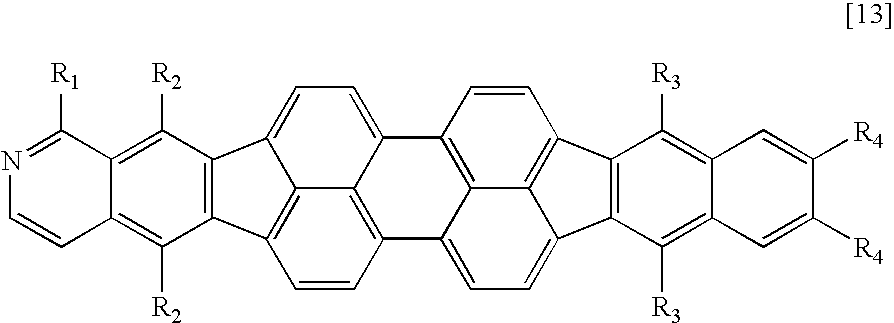
  • R 1 to R 10 each represent a halogen atom, or a group selected from a substituted or unsubstituted alkyl group, a substituted or unsubstituted amino group, a substituted or unsubstituted aralkyl group, a substituted or unsubstituted aryl group, a substituted or unsubstituted heterocyclic group, a substituted or unsubstituted fused polycyclic aromatic group, a substituted or unsubstituted fused polycyclic heterocyclic group and a cyano group, and R 1 to R 10 may be identical to or different from one another, and
  • X 1 to X 18 each represent a carbon atom having a substituent R or a nitrogen atom, the carbon atom or the nitrogen atom forming a ring, at least one of X 1 to X 18 represents a nitrogen atom, R represents a hydrogen atom, a halogen atom, or a group selected from a substituted or unsubstituted alkyl group, a substituted or unsubstituted amino group, a substituted or unsubstituted aralkyl group, a substituted or unsubstituted aryl group, a substituted or unsubstituted heterocyclic group, a substituted or unsubstituted fused polycyclic aromatic group, a substituted or unsubstituted fused polycyclic heterocyclic group, and a cyano group, and when a plurality of carbon atoms each having the substituent R are present, R's may be independently identical to or different from each other; and
  • R 1 to R 4 each represent a halogen atom, or a group selected from a substituted or unsubstituted alkyl group, a substituted or unsubstituted amino group, a substituted or unsubstituted aralkyl group, a substituted or unsubstituted aryl group, a substituted or unsubstituted heterocyclic group, a substituted or unsubstituted fused polycyclic aromatic group, a substituted or unsubstituted fused polycyclic heterocyclic group and a cyano group, and R 1 to R 4 may be identical to or different from one another.
  • a compound having an azabenzofluoranthene structure is an additionally preferable example of the fused heterocyclic compound.
  • More preferable examples of the fused heterocyclic compound include a compound represented by any one of the general formulae [1] to [4] in which X 1 or X 2 represents a nitrogen atom, and a compound represented by the general formula [5] in which at least one of X 1 , X 2 , X 17 , and X 18 represents a nitrogen atom.
  • the fused heterocyclic compound of the present invention can be used as a material for an organic light emitting device.
  • the compound can be used alone in the light emitting layer, or can be used in the layer for the purpose of serving as a dopant (guest) material or a host material, whereby a device emitting light with high efficiency, maintaining high luminance for a long time period, and showing small deterioration due to energization can be obtained.
  • guest dopant
  • light emission mainly involves some of the following processes:
  • Desired energy transfer or light emission in each process occurs in competition with various deactivation processes.
  • an improvement in luminous efficiency of an EL device requires a material itself that is mainly responsible for light emission to have a large light emission quantum yield.
  • how efficiently energy can be transferred between hosts or between a host and a guest is also of great concern.
  • no cause for the degradation of light emission due to energization has been revealed at present.
  • the degradation is assumed to be related to at least the material itself that is mainly responsible for light emission or a change in environment surrounding the luminescent material due to a molecule around the material.
  • the inventors of the present invention have made various studies, and have found that, when a fused ring compound represented by the general formula [1] is especially used as a host or guest. for the light emission layer of a device, the device emits light with high efficiency, maintains high luminance for a long time period, and shows small degradation of light emission due to energization.
  • the deterioration of the thin film shape of the light emitting layer is considered to result from the crystallization of an organic thin film due to, for example, the temperature of an environment in which the device is driven, and heat generation at the time of the driving of the device. This is considered to originate from the low glass transition temperature of a material for the device, so an organic EL material is required to have a high glass transition temperature.
  • the fused heterocyclic compound of the present invention has a high glass transition temperature, so an achievement in high durability of an organic EL device can be expected.
  • the fused heterocyclic compound of the present invention is a material having a high reduction potential and large electron accepting property because an atom having high electronegativity is inserted into the fused aromatic ring structure of the compound.
  • electron mobility can be adjusted by controlling the reduction potential through the selection of R and Y in the compound represented by any one of the general formulae [1]. to [5].
  • the inventors have found that the voltage at which the device is driven can be reduced, high luminance can be maintained for a long time period, and the deterioration of the device due to energization can be reduced by properly selecting R and Y in the compound represented by any one of the general formulae [1] to [5] through a combination with any one of various host materials.
  • a wide range of luminescent colors ranging from a pure blue color to a red color can be shown by properly modifying the molecular structure represented by the general formula [1] as represented by any one of the general formulae [2] to [5], so a material having the molecular structure represented by the general formula [1] is a light emitting material having extensibility.
  • an improvement in quantum yield of a light emitting material to be used in an organic electroluminescence device is indispensable for providing an organic electroluminescence device having an optical output with high efficiency.
  • a nitrogen atom is introduced mainly into a fused polycyclic aromatic group
  • the n- ⁇ * orbital of a triplet becomes an orbital at a Tn level (n represents 1 or more) depending on the position where the atom is introduced.
  • the n- ⁇ * orbital (triplet) is energetically close to an S1 orbital, energy deactivation from the S1 orbital to the n- ⁇ * orbital is apt to occur, so the quantum yield of the light emitting material is apt to reduce.
  • the proper selection of the position where the nitrogen atom is introduced and the kind of a substituent to be introduced into the molecular skeleton of the light emitting material can increase a difference in energy between the n- ⁇ * orbital (triplet) and the S1 orbital, and can alleviate the reduction in quantum yield.
  • the position where the nitrogen atom is introduced is preferably simulated on the basis of molecular orbital calculation. That is, nitrogen atoms are more preferably introduced into the positions of X 1 and X 2 represented in the general formula [1] on the basis of the design of a molecular skeleton capable of maintaining high quantum yield.
  • an emission spectrum having a controlled molecular vibration can be monodispersed, and its half width can be reduced by properly designing not only the position where a nitrogen atom is introduced but also the position and kind of a substituent to be introduced into the molecular skeleton of a light emitting material, so a light emitting material having a good color purity can be provided.
  • R 1 and R 2 represented in the general formula [1] prevents molecules of the compound of the present invention from associating with each other.
  • an increase in wavelength of light to be emitted from the device due to the molecular association of the light emitting material itself can be prevented, whereby an organic electroluminescence device having a good color purity can be provided.
  • positions of X 9 and X 10 represented in the general formula [1] have high reactivity, so the introduction of a ring structure such as Z represented in the general formula [3] as a structure having a substituent introduced into each of the positions can improve the chemical stability of the compound of the present invention.
  • the present invention has been made as a result of molecular design based on the foregoing discussion.
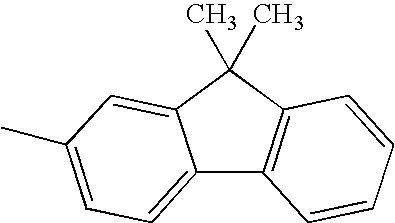
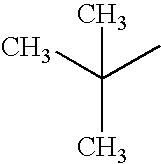
  • Examples of the substituted or unsubstituted alkyl group in any one of the above general formulae. [1] to [ 5 ] include, but of course are not limited to, the following.
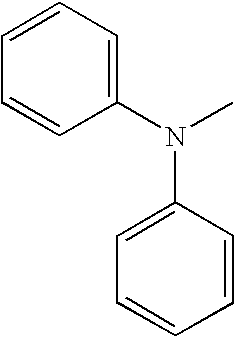
  • Examples of the substituted amino group include a dimethylamino group, a diethylamino group, a dibenzylamino group, a diphenylamino group, a ditolylamino group, a dianisolylamino group, and a carbazoyl group. From the viewpoints of conductive property and glass transition temperature, a dimethylamino group, a diphenylamino group, a ditolylamino group, and a carbazoyl group are preferable.
  • substituted or unsubstituted aralkyl group examples include, but of course are not limited to, the following.
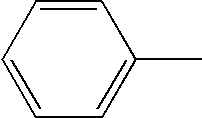
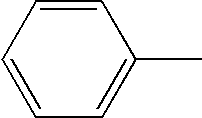
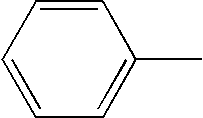
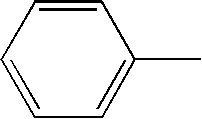
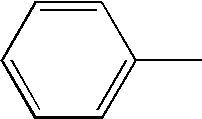
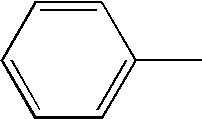
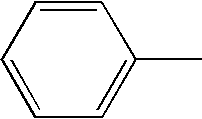
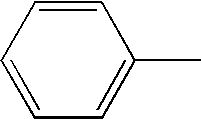
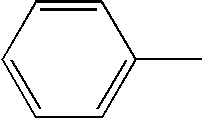
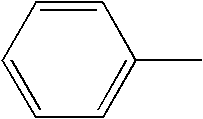
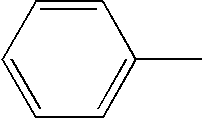
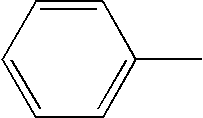
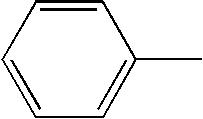
  • substituted or unsubstituted aryl group examples include, but of course are not limited to, the following.
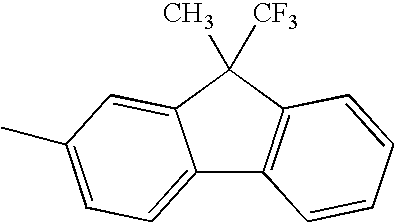
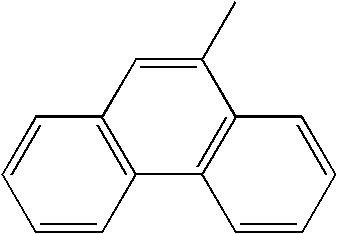
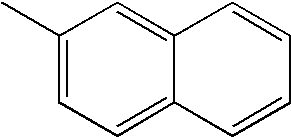
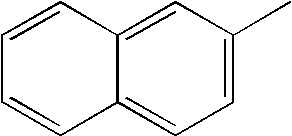
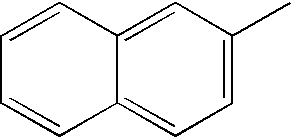
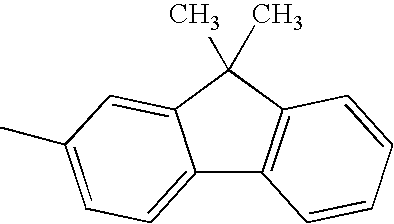
  • substituted or unsubstituted fused polycyclic aromatic group examples include, but of course are not limited to, the following.
  • substituted or unsubstituted heterocyclic group examples include, but of course are not limited to, the following.
  • substituted or unsubstituted fused polycyclic heterocyclic group examples include, but of course are not limited to, the following.
  • halogen atom examples include fluorine, chlorine, bromine, and iodine.
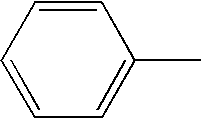
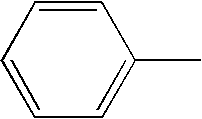
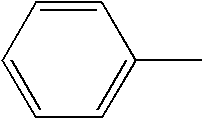
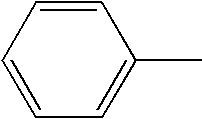
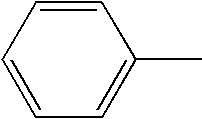
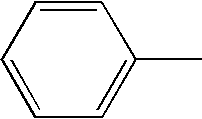
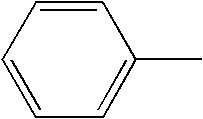
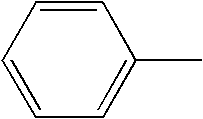
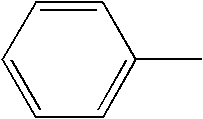
  • Alkyl groups such as a methyl group, an ethyl group, a propyl group, a tert-butyl group, and a trifluoromethyl group; aryl groups such as a phenyl group and a biphenyl group; heterocyclic groups such as a thienyl group and a pyrrolyl group; amino groups such as a dimethylamino group, a diethylamino group, dibenzylamino group, a diphenylamino group, ditolylamino group, and a dianisolylamino group; alkoxy groups such as a methoxy group, and an ethoxy group; halogen atoms such as fluorine, chlorine, bromine, and iodine; hydroxyl group; cyano group; and nitro group.
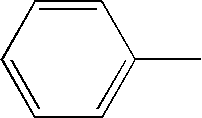
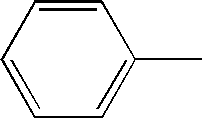
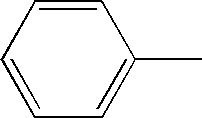
  • aryl groups such as a phenyl group and a biphenyl group
  • heterocyclic groups such as a thienyl
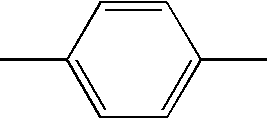
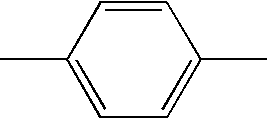
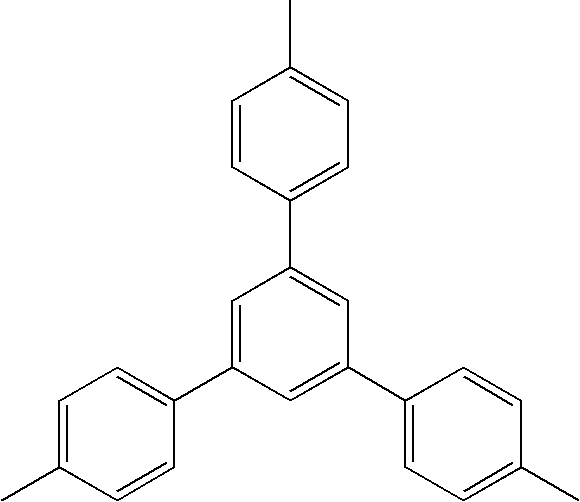
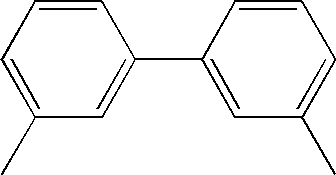
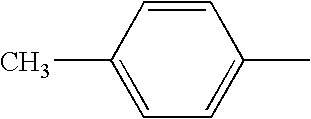
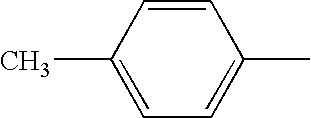
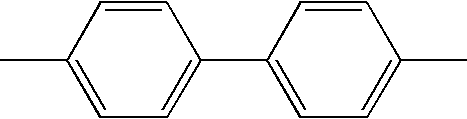
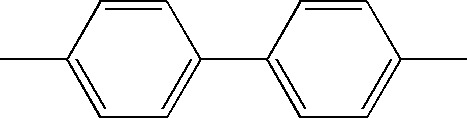
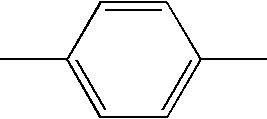
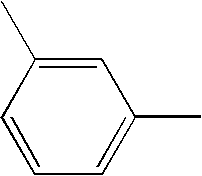
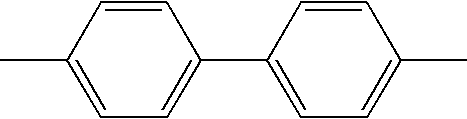
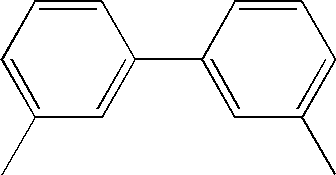
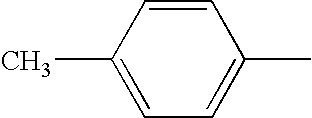
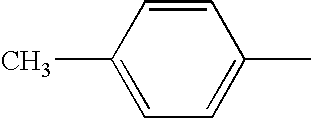
  • Y represents a linking group which is divalent or more such as a phenylene group or a biphenylene group
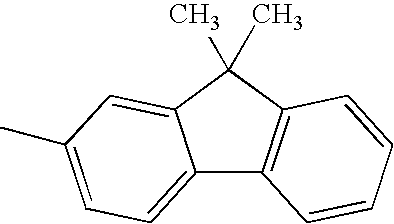
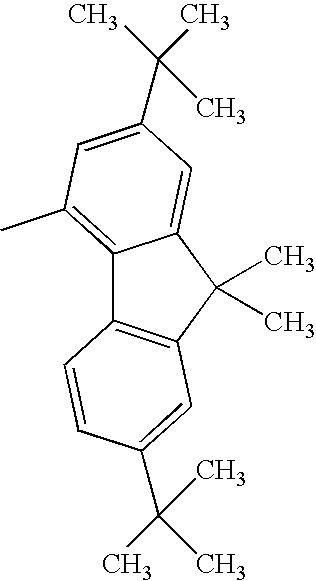
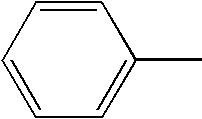
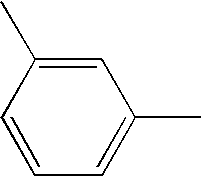
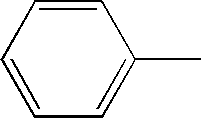
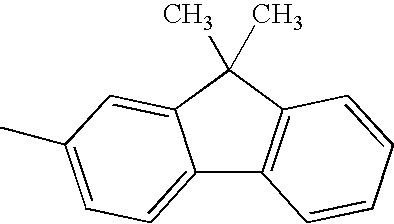
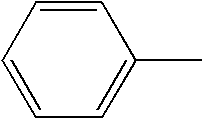
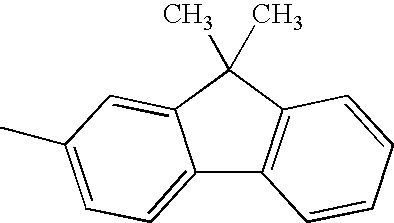
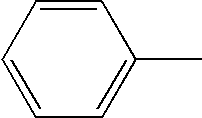
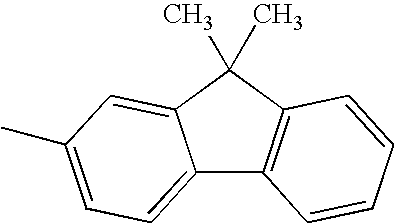
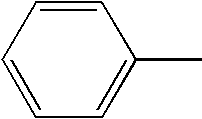
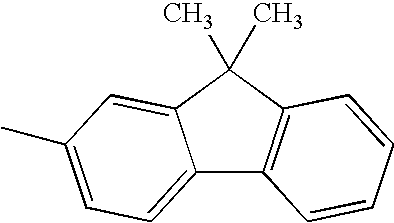
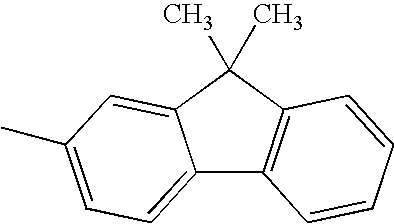
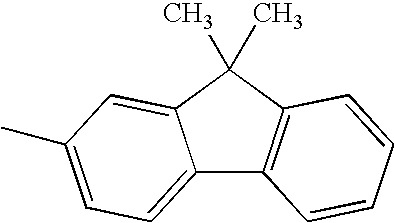
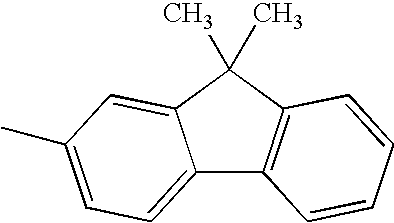
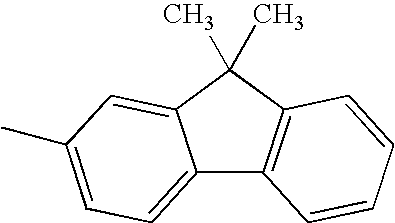
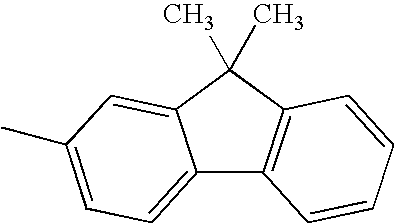
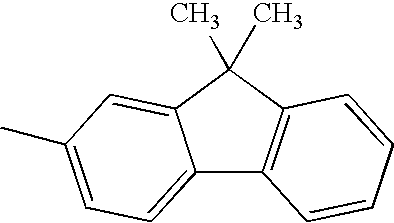
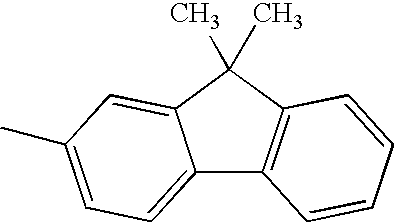
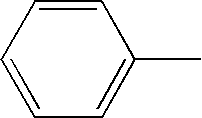
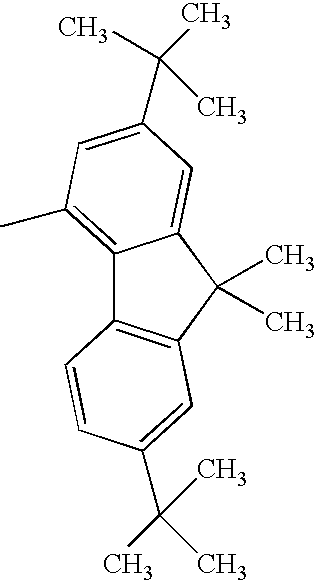
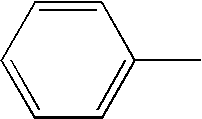
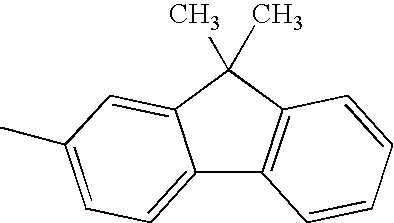
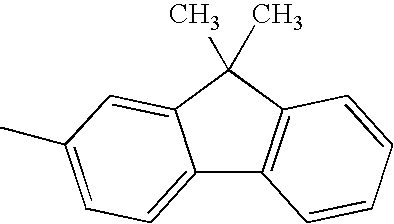
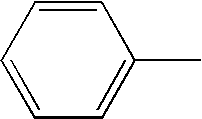
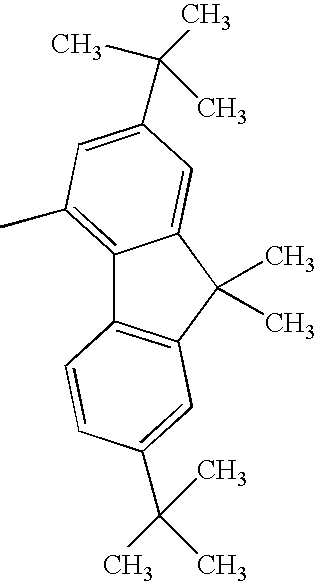
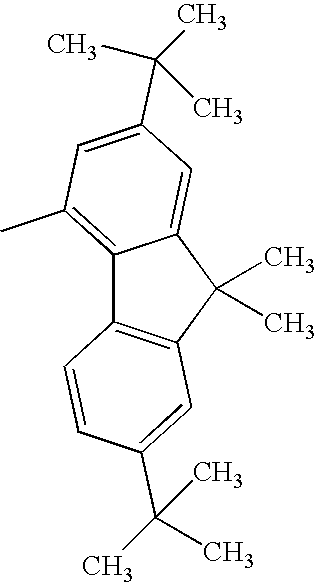
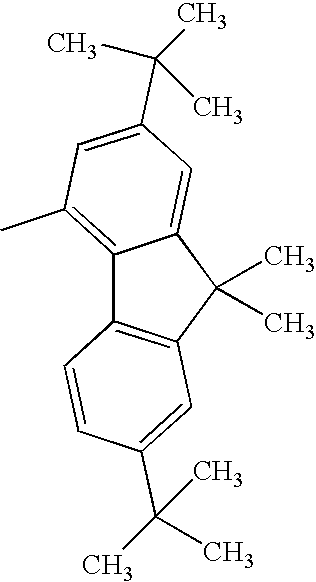
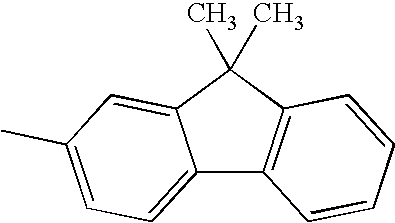
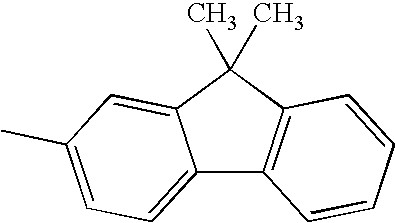
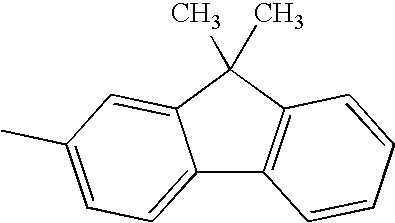
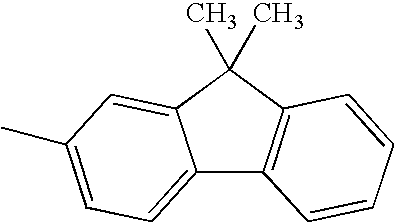
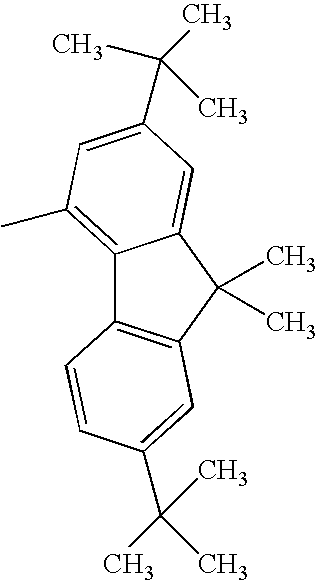
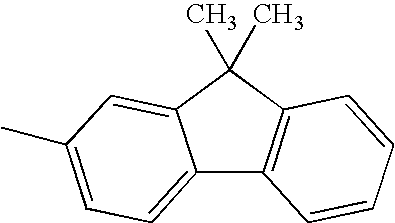
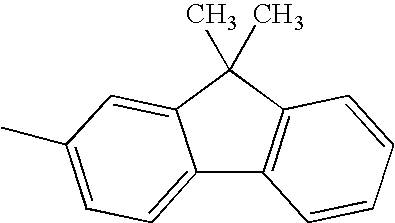
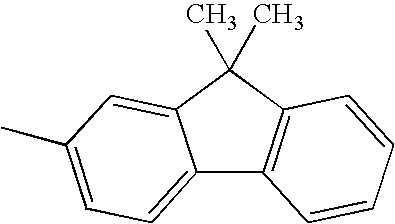
  • R 1 and R 2 each represent an aryl group such as a phenyl group, a fused polycyclic aromatic group with three or less rings such as a fluorenyl group, or an alkyl group such as a methyl group or a butyl group.
  • R 1 and R 2 shown in the following tables may be replaced with each other.
  • Y represents a linking group which is divalent or more such as a phenylene group or a biphenylene group
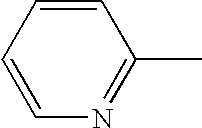
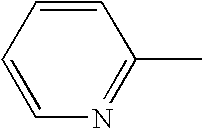
  • At least one of R 1 and R 2 represents a heterocyclic group such as a pyridyl group, or a fused polycyclic heterocyclic group such as a quinolyl group.
  • R 1 and R 2 shown in the following tables may be replaced with each other.
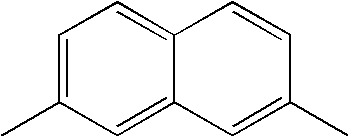
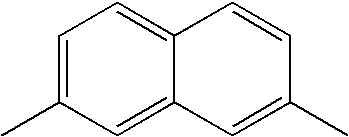
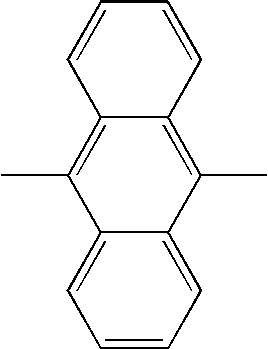
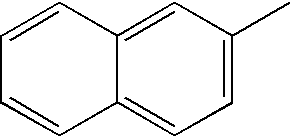
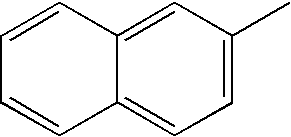
  • Y represents a linking group which is divalent or more and is formed of a fused polycyclic aromatic group such as a naphthylene group, an anthrylene group, or a fluorenylene group;
  • R 1 and R 2 each represent an aryl group such as a phenyl group, a fused polycyclic aromatic group with three or less rings such as a fluorenyl group, or an alkyl group such as a methyl group.
  • R 1 and R 2 shown in the following tables may be replaced with each other.
  • Ar 1 and Ar 2 each represent an aryl group such as a phenyl group or a biphenyl group, or a fused polycyclic aromatic group with three or less rings such as a naphthyl group, a fluorenyl group, or a phenanthryl group; and
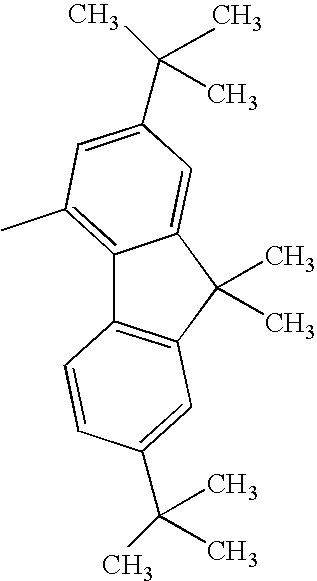
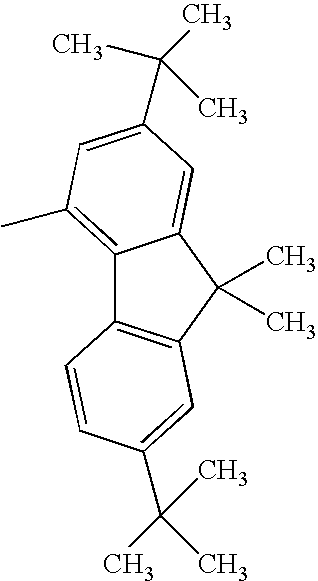
  • R 1 and R 2 each represent a hydrogen atom, or an alkyl group such as a methyl group, an ethyl group, or a tertiary butyl group.
  • Ar 1 and Ar 2 shown in the following tables may be replaced with each other.
  • At least one of Ar 1 and Ar 2 represents a fused polycyclic aromatic group with four or more rings such as a fluoranthenyl group, a pyrenyl group, or a chrysenyl group; and
  • R 1 and R 2 each represent a hydrogen atom, or an alkyl group such as a methyl group, an ethyl group, or a tertiary butyl group.
  • Ar 1 and Ar 2 shown in the following tables may be replaced with each other.
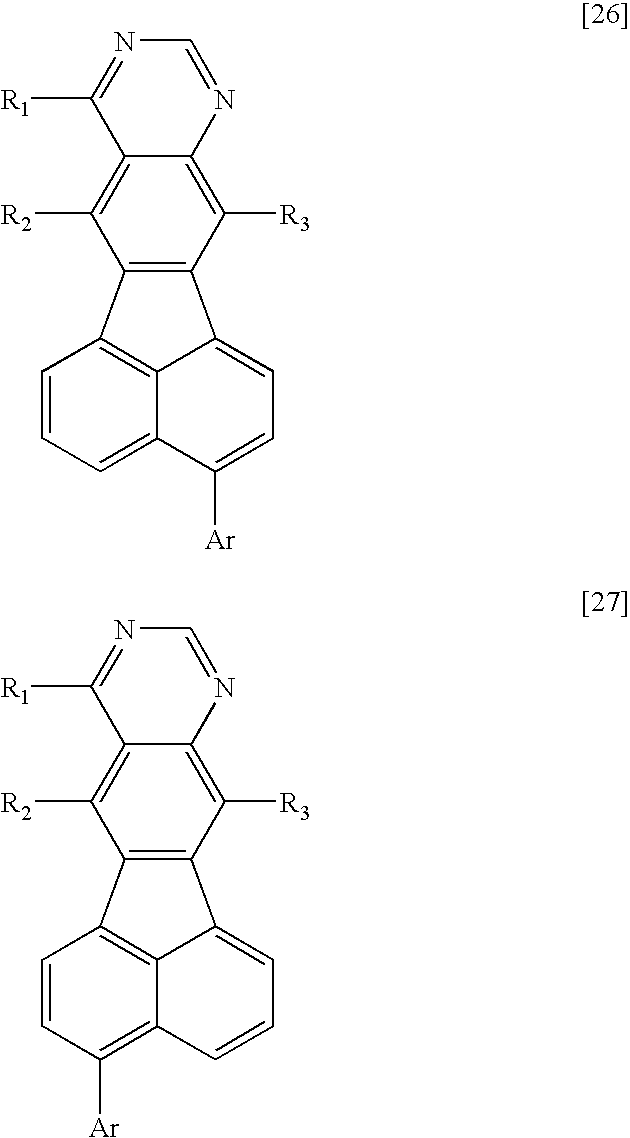
  • R 1 represents a hydrogen atom, or an alkyl group such as a methyl group or an ethyl group
  • R 2 and R 3 each represent an aryl group such as a phenyl group, a fused polycyclic aromatic group with three or less rings such as a fluorenyl group, or an alkyl group such as a methyl group; and
  • Ar represents a fused polycyclic aromatic group such as a naphthyl group, a fluorenyl group, a pyrenyl group, a fluoranthenyl group, or a benzofluoranthenyl group.
  • R 2 and R 3 shown in the following tables may be replaced with each other.
  • R 1 represents a hydrogen atom, or an alkyl group such as a methyl group or an ethyl group
  • R 2 and R 3 each represent an aryl group such as a phenyl group, a fused polycyclic aromatic group with three or less rings such as a fluorenyl group, or an alkyl group such as a methyl group; and
  • Ar represents a substituted amino group such as a diphenylamino group.
  • R 2 and R 3 shown in the following tables may be replaced with each other.
  • R 1 represents a hydrogen atom, or an alkyl group such as a methyl group or an ethyl group
  • R 2 represents an aryl group such as a phenyl group or a tolyl group, or a fused polycyclic aromatic group with three or less rings such as a fluorenyl group;
  • R 3 and R 4 each represent a hydrogen atom, or an alkyl group such as a methyl group.
  • R 1 represents a hydrogen atom, or an alkyl group such as a methyl group or an ethyl group
  • R 2 and R 3 represent each an aryl group such as a phenyl group or a tolyl group, or a fused polycyclic aromatic group with three or less rings such as a fluorenyl group; and
  • R 4 represents a hydrogen atom, or an alkyl group such as a methyl group.
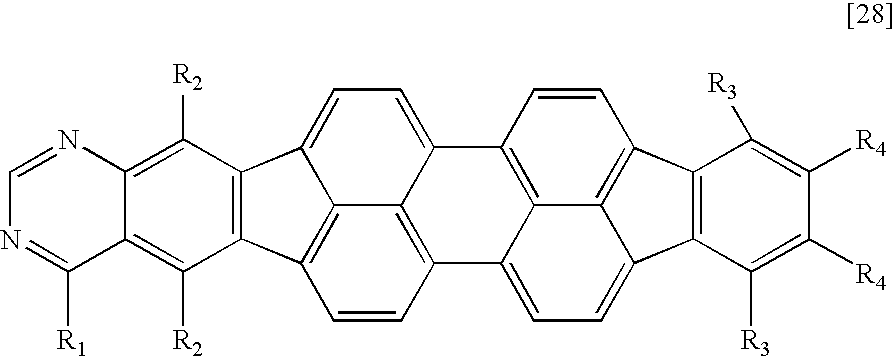
  • R1 R2 R3 R4 1801 H— H— 1802 CH 3 — H— 1803 H— CH 3 — 1804 CH 3 — CH 3 — 1805 H— C 2 H 5 — 1806 CH 3 — C 2 H 5 — 1807 H— H— 1808 CH 3 — H— 1809 H— H— 1810 CH 3 — H— 1811 H— CH 3 — 1812 CH 3 — CH 3 — 1813 H— C 2 H 5 — 1814 CH 3 — C 2 H 5 — 1815 H— H— 1816 CH 3 — H— 1817 H— CH 3 — 1818 CH 3 — CH 3 — 1819 H— C 2 H 5 — 1820 CH 3 — C 2 H 5 — 1821 H— H— 1822 H— H— 1823 H— H— 1824 H— H— 1825 H— H— H— H—
  • R 1 represents a hydrogen atom, or an alkyl group such as a methyl group or an ethyl group
  • R 2 and R 3 each represent an aryl group such as a phenyl group or a tolyl group, or a fused polycyclic aromatic group with three or less rings such as a fluorenyl group; and
  • R 4 represents a hydrogen atom, or an alkyl group such as a methyl group.
  • R1 R2 R3 R4 1901 H— H— 1902 CH 3 — H— 1903 H— CH 3 — 1904 CH 3 — CH 3 — 1905 H— C 2 H 5 — 1906 CH 3 — C 2 H 5 — 1907 H— H— 1908 CH 3 — H— 1909 H— CH 3 — 1910 CH 3 — CH 3 — 1911 H— H— 1912 CH 3 — H— 1913 H— CH 3 — 1914 CH 3 — CH 3 — 1915 H— H— 1916 CH 3 — H— 1917 H— H— 1918 CH 3 — H— 1919 H— H— 1920 CH 3 — H— 1921 H— H— 1922 CH 3 — H—
  • R 1 represents a hydrogen atom, or an alkyl group such as a methyl group or an ethyl group
  • R 2 represents an aryl group such as a phenyl group or a tolyl group, or a fused polycyclic aromatic group with three or less rings such as a fluorenyl group;
  • R 3 and R 4 each represent a hydrogen atom, or an alkyl group such as a methyl group.
  • R 1 represents a hydrogen atom, or an alkyl group such as a methyl group or an ethyl group
  • R 2 to R 4 each represent an aryl group such as a phenyl group or a tolyl group, or a fused polycyclic aromatic group with three or less rings such as a fluorenyl group.
  • R1 R2 R3 R4 2101 H— 2102 CH 3 — 2103 H— 2104 CH 3 — 2105 H— 2106 CH 3 — 2107 H— 2108 CH 3 — 2109 H— 2110 CH 3 — 2111 H— 2112 CH 3 — 2113 H— 2114 CH 3 — 2115 H— 2116 CH 3 — 2117 H—
  • R 1 represents a hydrogen atom, or an alkyl group such as a methyl group or an ethyl group
  • R 2 represents an aryl group such as a phenyl group or a tolyl group, or a fused polycyclic aromatic group with three or less rings such as a fluorenyl group;
  • R 3 and R 4 each represent an alkyl group such as a methyl group.
  • R 1 represents a hydrogen atom, or an alkyl group such as a methyl group
  • R 2 and R 3 each represent an aryl group such as a phenyl group or a tolyl group, a fused polycyclic aromatic group with three or less rings such as a fluorenyl group, or an alkyl group such as a methyl group.
  • Y represents a linking group which is divalent or more such as a phenylene group or a biphenylene group
  • R 1 and R 2 each represent an aryl group such as a phenyl group, a fused polycyclic aromatic group with three or less rings such as a fluorenyl group, or an alkyl group such as a methyl group or a butyl group.
  • R 1 and R 2 shown in the following tables may be replaced with each other.
  • Ar 1 and Ar 2 each represent an aryl group such as a phenyl group or a biphenyl group, or a fused polycyclic aromatic group with three or less rings such as a naphthyl group or a fluorenyl group; and
  • R 1 and R 2 each represent a hydrogen atom, or an alkyl group such as a methyl group, an ethyl group, or a tertiary butyl group.
  • Ar 1 and Ar 2 shown in the following tables may be replaced with each other.
  • R 1 represents a hydrogen atom, or an alkyl group such as a methyl group
  • R 2 and R 3 each represent an aryl group such as a phenyl group or a biphenyl group, a fused polycyclic aromatic group with three or less rings such as a fluorenyl group, or an alkyl group such as a methyl group; and
  • Ar represents a fused polycyclic aromatic group such as a fluoranthenyl group or a benzofluoranthenyl group.
  • R 2 and R 3 shown in the following tables may be replaced with each other.
  • R 1 represents a hydrogen atom, or an alkyl group such as a methyl group or an ethyl group
  • R 2 represents an aryl group such as a phenyl group or a tolyl group, or a fused polycyclic aromatic group with three or less rings such as a fluorenyl group;
  • R 3 and R 4 each represent a hydrogen atom, or an alkyl group such as a methyl group.
  • R 1 represents a hydrogen atom, or an alkyl group such as a methyl group
  • R 2 and R 3 each represent an aryl group such as a phenyl group or a tolyl group, or a fused polycyclic aromatic group with three or less rings such as a fluorenyl group; and
  • R 4 represents a hydrogen atom, or an alkyl group such as a methyl group.
  • R 1 represents a hydrogen atom, or an alkyl group such as a methyl group
  • R 2 and R 3 each represent an aryl group such as a phenyl group or a tolyl group, a fused polycyclic aromatic group with three or less rings such as a fluorenyl group, or an alkyl group such as a methyl group.
  • Ar 1 and Ar 2 each represent an aryl group such as a phenyl group, or a fused polycyclic aromatic group with three or less rings such as a fluorenyl group; and
  • R 1 and R 2 each represent a hydrogen atom, or an alkyl group such as a methyl group, an ethyl group, or a tertiary butyl group.
  • Ar 1 and Ar 2 shown in the following tables may be replaced with each other.
  • R 1 represents a hydrogen atom, or an alkyl group such as a methyl group
  • R 2 and R 3 each represent an aryl group such as a phenyl group, a fused polycyclic aromatic group with three or less rings such as a fluorenyl group, or an alkyl group such as a methyl group; and
  • Ar represents a fused polycyclic aromatic group such as a fluoranthenyl group or a benzofluoranthenyl group.
  • R 2 and R 3 shown in the following tables may be replaced with each other.
  • R 1 represents a hydrogen atom, or an alkyl group such as a methyl group or an ethyl group
  • R 2 represents an aryl group such as a phenyl group, or a fused polycyclic aromatic group with three or less rings such as a fluorenyl group;
  • R 3 and R 4 each represent a hydrogen atom, or an alkyl group such as a methyl group.
  • R 1 represents a hydrogen atom, or an alkyl group such as a methyl group
  • R 2 and R 3 each represent an aryl group such as a phenyl group, or a fused polycyclic aromatic group with three or less rings such as a fluorenyl group;
  • R 4 represents a hydrogen atom, or an alkyl group such as a methyl group.
  • R 1 represents a hydrogen atom, or an alkyl group such as a methyl group
  • R 2 and R 3 each represent an aryl group such as a phenyl group or a tolyl group, a fused polycyclic aromatic group with three or less rings such as a fluorenyl group, or an alkyl group such as a methyl group.
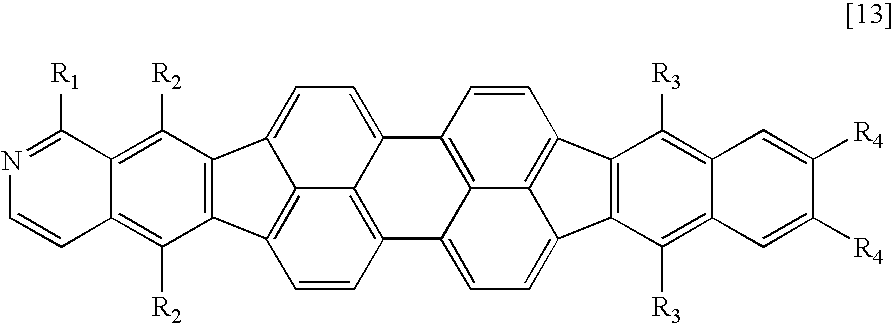
  • R 1 represents a hydrogen atom, an aryl group such as a phenyl group, or a fused polycyclic aromatic group with three or less rings such as a fluorenyl group;
  • R 2 represents a hydrogen atom, an aryl group such as a phenyl group or a biphenyl group, or a fused polycyclic aromatic group such as a naphthyl group, a fluorenyl group, or a pyrenyl group.
  • R 1 represents a hydrogen atom, an aryl group such as a phenyl group, or a fused polycyclic aromatic group with three or less rings such as a fluorenyl group;
  • R 2 represents a hydrogen atom, an aryl group such as a phenyl group or a biphenyl group, or a fused polycyclic aromatic group such as a naphthyl group, a fluorenyl group, or a pyrenyl group.
  • the fused heterocyclic compound of the present invention has a nitrogen-containing aromatic heterocyclic ring structure obtained by introducing at least one nitrogen atom into a specific position of a benzofluoranthene skeleton. Accordingly, a stable amorphous film can be formed of the compound, and the compound shows excellent electron transporting property.
  • Those properties allow the compound to be suitably used as a charge transportable material in, for example, an electrophotographic photosensitive member, an organic electroluminescence device, a photoelectric conversion element, or an organic solar cell.
  • the compound is suitable as a material for an organic electroluminescence device because the application of the compound to an organic electroluminescence device can contribute to an achievement of high luminous efficiency and a reduction in voltage at which the device is driven.
  • the organic light emitting device of the present invention comprised a pair of electrodes composed of an anode and a cathode at least one of which is made of an electrode material transparent or semi-transparent; and at least a layer containing one or a plurality of organic compounds held between the pair of electrodes.
  • the organic light emitting device of the present invention is preferably an electroluminescence device that emits light by applying voltage between the pair of electrodes.
  • At least one layer containing an organic compound preferably at least one layer having a light emitting region, or more preferably a light emitting layer contains at least one kind of the above fused heterocyclic compound of the present invention.
  • the layer containing the fused heterocyclic compound is formed of two or more compounds including a host and a guest
  • the host or the guest is preferably the fused heterocyclic compound of the present invention.
  • guest refers to a compound that emits light in response to recombination between a hole and an electron in the light emitting region of an organic EL device. The guest is incorporated into another compound (host) of which the light emitting region is formed.
  • the content of the compound is preferably 0.01 wt % or more to 80 wt % or less, more preferably 0.1 wt % or more to 30 wt % or less, or particularly preferably 0.1 wt % or more to 15 wt % or less.
  • a guest material may be incorporated into the entirety of a layer formed of a host material uniformly or with a concentration gradient. Alternatively, the guest material may be partially incorporated into a certain region of the host material layer so that a region of the layer free of the guest material is present.
  • the layer preferably contains a host having an energy gap (value calculated from an optical absorption end of UV measurement) larger than that of the guest.
  • energy gap value calculated from an optical absorption end of UV measurement
  • energy transfer from the guest to the host can be controlled, and luminous efficiency can be enhanced as a result of light emission only from the guest.
  • the reduction potential of the guest is preferably higher than the reduction potential of the host by 0.3 V or more.
  • the voltage at which the device is driven can be reduced, high luminance can be maintained for a long time period, and the deterioration of the device due to energization can be reduced.
  • the layer containing the fused heterocyclic compound of the present invention is applicable to a layer except the light emitting layer (such as a hole injecting layer, a hole transporting layer, an electron injecting layer, an electron transporting layer, or an electron blocking layer) as required.
  • the fused heterocyclic compound of the present invention is formed into an organic layer between the anode and the cathode by a vacuum vapor deposition method or a solution application method.
  • the thickness of the organic layer is smaller than 10 ⁇ m, preferably 0.5 ⁇ m or less, or more preferably 0.01 ⁇ m or more to 0.5 ⁇ m or less.
  • FIGS. 1 to 5 each show a preferable example of the organic light emitting device of the present invention.
  • FIG. 1 is a sectional view showing an example of an organic light emitting device according to the present invention.
  • the organic light emitting device has a structure in which an anode 2 , a light emitting layer 3 , and a cathode 4 are provided on a substrate 1 in this order.
  • the electroluminescence device used herein is useful in the case where a compound having hole transporting property, electron transporting property, and light emitting property by itself is used or where compounds having the respective properties are used in a mixture.
  • FIG. 2 is a sectional view showing another example of the organic light emitting device according to the present invention.
  • the organic light emitting device has a structure in which the anode 2 , a hole transport layer 5 , an electron transport layer 6 , and the cathode 4 are provided on the substrate 1 in this order.
  • This structure is useful in the case where a material having one or both of hole transporting property and electron transporting property is used as a light emitting substance in each layer, and the light emitting substance is used in combination with a non-illuminant hole transporting substance or electron transporting substance.
  • the light emitting layer is formed of either the hole transport layer 5 or the electron transport layer 6 .
  • FIG. 3 is a sectional view showing still another example of the organic light emitting device according to the present invention.
  • the organic light emitting device has a structure in which the anode 2 , the hole transport layer 5 , the light emitting layer 3 , the electron transport layer 6 , and the cathode 4 are provided on the substrate 1 in this order.
  • This organic light emitting device has carrier transporting function and light emitting function separately.
  • the device is used in combination with compounds each having hole transporting property, electron transporting property, or light emitting property as appropriate, thereby allowing a substantial increase in freedom of choice in material to be used.
  • various compounds having different emission wavelengths can be used, thereby allowing an increase in variety of luminescent colors.
  • luminous efficiency may be enhanced by efficiently trapping each carrier or exciton in the light emitting layer 3 provided in the middle of the device.
  • FIG. 4 is a sectional view showing yet another example of the organic light emitting device according to the present invention.
  • FIG. 4 has a structure similar to that shown in FIG. 3 except that a hole-injecting layer 7 is inserted into a side of the anode 2 .
  • the structure is effective for improving adhesiveness between the anode 2 and the hole transport layer 5 or for improving hole-injecting property, which is effective in lowering a voltage to be applied to the device.
  • FIG. 5 is a sectional view showing still yet another example of the organic light emitting device according to the present invention.
  • FIG. 5 has a structure similar to that shown in FIG. 3 except that a layer (a hole/exciton-blocking layer 8 ) for blocking travel of a hole or exciton to a side of the cathode 4 is inserted between the light emitting layer 3 and the electron transport layer 6 .
  • the structure uses a compound having an extremely high ionization potential in the hole/exciton-blocking layer 8 and is effective for enhancing luminous efficiency.
  • FIGS. 1 to 5 each show a basic device structure, and the structure of the organic light emitting device of the present invention is not limited to the structures shown in FIGS. 1 to 5 .
  • the organic light emitting device of the present invention may have any one of various layer structures including: a structure in which an insulating layer is provided at an interface between an electrode and an organic layer; a structure in which an adhesive layer or interference layer is provided; and a structure in which a hole transport layer is composed of two layers with different ionization potentials.
  • the organic light emitting device of the present invention may be used in any one of the modes shown in FIGS. 1 to 5 .
  • an organic layer using the fused heterocyclic aromatic compound of the present invention is useful as a light emitting layer, an electron transport layer, or a hole transport layer.
  • a layer formed by a vacuum deposition method, a solution coating method, or the like is hardly crystallized and has excellent stability over time.
  • the fused heterocyclic compound is used particularly as a component of the light emitting layer.
  • a conventionally known additive compound such as a hole transporting compound of a low molecular weight compound or polymer compound, luminescent compound, or electron transporting compound can be used together as required.
  • a preferred hole-injection transporting material has excellent mobility for facilitating injection of a hole from an anode and for transporting the injected hole to a light emitting layer.
  • Examples of a low molecular weight material or polymer material having hole-injection transporting property include, but of course are not limited to, the following.
  • Examples of a material which is mainly involved in a light emitting function to be used in the organic light emitting device of the present invention include, but are not limited to, the following.
  • a fused aromatic ring compound such as a naphthalene derivative, a phenanthrene derivative, a fluorene derivative, a pyrene derivative, a tetracene derivative, a coronene derivative, a chrysene derivative, a perylene derivative, a 9,10-diphenylanthracene derivative, or rubrene; a quinacridone derivative; an acridone derivative; a coumarin derivative; a pyran derivative; Nile red; a pyrazine derivative; a benzoimidazole derivative; a benzothiazole derivative; a benzoxazole derivative; a stilbene derivative; an organometallic complex such as: an organic aluminum complex such as tris(8-quinolinolato)aluminum; or an organic beryllium complex; and a polymer derivative such as a poly(phenylenevinylene)derivative, a poly(fluorene) derivative, a poly
  • the electron-injection transporting material may be arbitrarily selected from materials which facilitate injection of an electron from a cathode and which have a function of transporting the injected electron into a light emitting layer.
  • the material is selected in consideration of, for example, the balance with the mobility of a carrier of the hole transport material.
  • Examples of a material having electron-injection transporting property include, but of course are not limited to, the following.
  • a layer containing the compound of the present invention and a layer containing other organic compounds are each formed by the following method.
  • a thin film is generally formed by a vacuum deposition method, an ionized evaporation method, sputtering, plasma, or a known coating method (such as a spin coating, dipping, casting, LB, or inkjet method) in which a compound is dissolved in an appropriate solvent.
  • a coating method in particular, a film may be formed by using a compound in combination with an appropriate binder resin.
  • the binder resin may be selected from a wide variety of binder resins.
  • Examples of the binder resin include, but of course not limited to, the following.
  • resins may be used alone or in a mixture of two or more kinds thereof as a homopolymer or copolymer. Further, an additive such as a known plasticizer, antioxidant, or ultraviolet absorber may be used in combination as required.
  • An anode material preferably has as large a work function as possible, and examples thereof include: a metal element such as gold, platinum, silver, copper, nickel, palladium, cobalt, selenium, vanadium, or tungsten; an alloy thereof; and a metal oxide such as tin oxide, zinc oxide, indium oxide, indium tin oxide (ITO), or indium zinc oxide.
  • a conductive polymer such as polyaniline, polypyrrole, polythiophene, or polyphenylene sulfide may also be used. Each of those electrode materials may be used alone, or two or more kinds thereof may be used in combination.
  • the anode may have a single layer structure or a multilayer structure.
  • a cathode material preferably has a small work function, and examples thereof include: a metal element such as lithium, sodium, potassium, calcium, magnesium, aluminum, indium, ruthenium, titanium, manganese, yttrium, silver, lead, tin, or chromium; and an alloy thereof such as a lithium-indium alloy, a sodium-potassium alloy, a magnesium-silver alloy, an aluminum-lithium alloy, an aluminum-magnesium alloy, or a magnesium-indium alloy.
  • a metal oxide such as indium tin oxide (ITO) may also be used.
  • ITO indium tin oxide
  • the cathode may have a single layer structure or a multilayer structure.
  • the substrate to be used in the present invention is not particularly limited, but examples thereof include: an opaque substrate such as a metallic substrate or a ceramics substrate; and a transparent substrate such as a glass substrate, a quartz substrate, or a plastic sheet substrate.
  • a color filter film, a fluorescent color converting filter film, a dielectric reflection film, or the like may be used in the substrate for controlling luminescent color.
  • a protective layer or a sealing layer may be formed on the produced device to prevent contact between the device and oxygen, moisture, or the like.
  • the protective layer include: a diamond thin film; a film formed of an inorganic material such as metal oxide or metal nitride; a polymer film formed of a fluorine resin, polyparaxylene, polyethylene, a silicone resin, or a polystyrene resin; and a photo-curable resin.
  • the device itself may be covered with glass, a gas impermeable film, a metal, or the like and packaged with an appropriate sealing resin.
  • a thin film transistor may be produced on a substrate, and then the device of the present invention may be produced to be connected to TFT.
  • the device may have a bottom emission structure (structure in which light is emitted from a substrate side) or a top emission structure (structure in which light is emitted from an opposite side of the substrate).
  • Exemplified Compound 1308 of the present invention can be produced by, for example, such method as described below.
  • a mass spectrometer manufactured by Waters Corporation was used to identify 636.3 as the M + of the compound.
  • NMR measurement identified the structure of the compound ( FIG. 6 ).
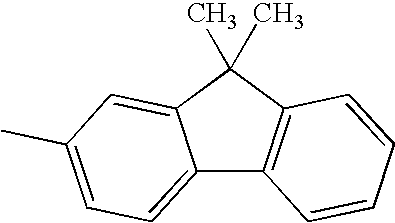
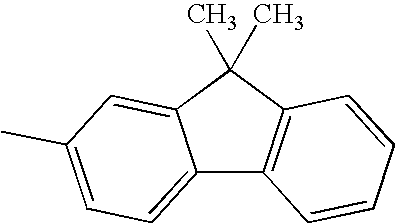
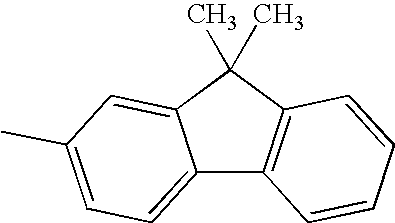
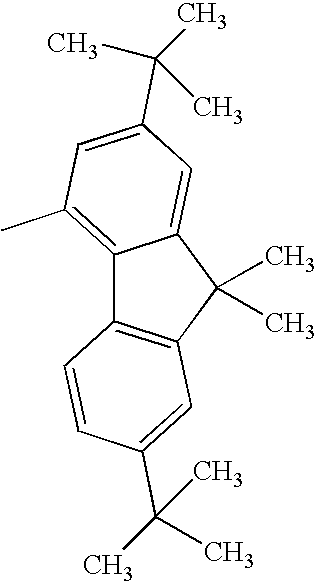
  • Example 1 The following exemplified compound can be synthesized in the same manner as in Example 1 except that the following compound is used instead of 2-iodo-9,9-dimethyl-9H-fluorene in Example 1.
  • Example 1 the following exemplified compounds can be synthesized in the same manner as in Example 1 except that the following respective compounds are used instead of 2-iodo-9,9-dimethyl-9H-fluorene and 9,9-dimethyl-9H-fluorene-2-carbaldehyde in Example 1.
  • Exemplified Compound No. 2511 can be synthesized in the same manner as in Example 1 except that picolinic acid is used instead of isonicotinonitrile in Example 1.
  • Exemplified Compound No. 1309 can be synthesized by using Exemplified Compound No. 1308 as a starting material in accordance with a method described in J. Org. Chem. 31, 248 (1966). A specific method for the synthesis will be described below.
  • NMR measurement identified the structure of the compound ( FIG. 7 ).
  • the resultant solid product was dissolved in 90 mL of xylene. 4.83 g (25.39 mmol) of p-toluenesulfonic monohydrate and 2.55 g (11.04 mmol) of 5-bromoacenaphthylene were added to the solution, and the whole was stirred under heat and reflux for 30 hours. After the resultant had been cooled to room temperature, water was added to the resultant to stop the reaction. Sodium carbonate was added to the resultant, and the whole was repeatedly extracted with chloroform twice, whereby an organic layer was separated. After the organic layer had been washed with water twice, the solvent was removed by distillation.
  • NMR measurement identified the structure of the compound ( FIG. 8 ).
  • Matrix-assisted laser desorption/ionization time-of-flight mass spectrometry identified 531.9 as the M + of the compound.
  • NMR measurement identified the structure of the compound ( FIG. 9 ).
  • Exemplified Compound 2611 can be synthesized in the same manner as in Example 4 except that: picolinic acid is used instead of isonicotinonitrile in Example 4; and 2-(7,12-diphenylbenzo[k]-fluoranthen-3-yl)-4,4,5,5-tetramethyl-1,3,2-dioxaborolane is used instead of 4,4,5,5-tetramethyl-2-(naphthalen-2-yl)-1,3,2-dioxaborolane in Example 4.
  • Exemplified Compound No. 3101 can be synthesized in the same manner as in Example 4 except that: pyrimidine-4-carboxylic acid is used instead of isonicotinonitrile in Example 4; and 2-(fluoranthen-3-yl)-4,4,5,5-tetramethyl-1,3,2-dioxaborolane is used instead of 4,4,5,5-tetramethyl-2-(naphthalen-2-yl)-1,3,2-dioxaborolane in Example 4.
  • Exemplified Compound 3109 can be synthesized in the same manner as in Example 4 except that: pyrimidine-4-carboxylic acid is used instead of isonicotinonitrile in Example 4; and 2-(7,12-diphenylbenzo[k]-fluoranthen-3-yl)-4,4,5,5-tetramethyl-1,3,2-dioxaborolane is used instead of 4,4,5,5-tetramethyl-2-(naphthalen-2-yl)-1,3,2-dioxaborolane in Example 4.
  • NMR measurement identified the structure of the compound ( FIG. 10 ).
  • Matrix-assisted laser desorption/ionization time-of-flight mass spectrometry identified 807.85 as the M + of the compound.
  • NMR measurement identified the structure of the compound ( FIG. 11 ).
  • each of the following exemplified compounds can be synthesized in the same manner as in Example 6 except that any one of the following compounds is used instead of 2-(7,12-diphenylbenzo[k]-fluoranthen-3-yl)-4,4,5,5-tetramethyl-1,3,2-dioxaborolane in Example 6.
  • Matrix-assisted laser desorption/ionization time-of-flight mass spectrometry identified 805.31 as the M + of the compound.
  • NMR measurement identified the structure of the compound ( FIG. 12 ).
  • Example 7 the following exemplified compounds can be synthesized in the same manner as in Example 7 except that any one of the following compounds is used instead of Exemplified Compound 1515 in Example 7.
  • Exemplified Compound 3512 of the present invention can be produced by, for example, such method as described below.
  • Exemplified Compound 3512 can be synthesized by using Intermediate Compound 7 as a starting material by the above synthesis route through six steps of reactions.
  • Exemplified Compound No. 3509 can be synthesized in the same manner as in Example 8 except that 4,4,5,5-tetramethyl-2-(pyren-1-yl)-1,3,2-dioxaborolane is used instead of 2-(fluoranthen-3-yl)-4,4,5,5-tetramethyl-1,3,2-dioxaborolane in Example 8.
  • An organic light emitting device having a structure shown in FIG. 3 was produced by the following method.
  • ITO Indium tin oxide
  • IPA isopropyl alcohol
  • a chloroform solution having a concentration of 0.1 wt % was prepared by using Compound 13 represented by the following structural formula as a hole transporting material.
  • the solution was dropped onto the above ITO electrode, and the whole was subjected to spin coating initially at 500 RPM for 10 seconds and then at 1,000 RPM for 40 seconds, whereby a film was formed. After that, the resultant was dried in a vacuum oven at 80° C. for 10 minutes so that the solvent in the thin film was completely removed. As a result, the hole transporting layer 5 was formed.
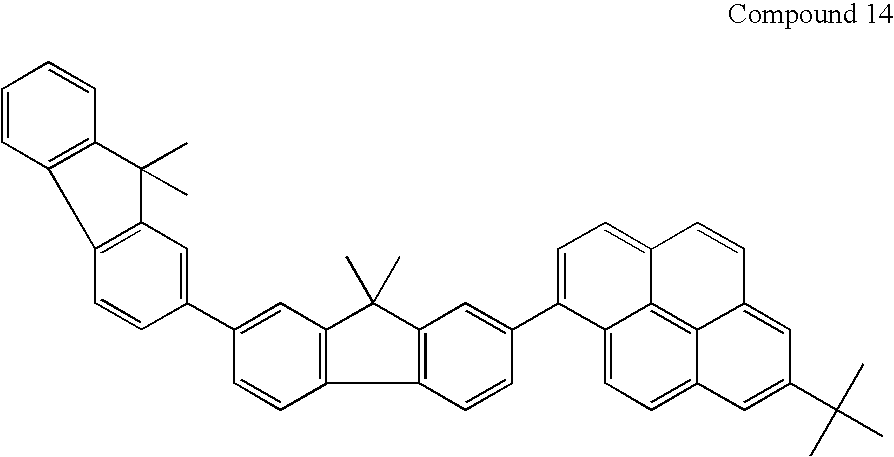
  • Exemplified Compound 1308 shown above and Compound 14 having a structure represented by the following structural formula were co-deposited from the vapor at a weight ratio of 5:95 onto the hole transporting layer 5 , whereby the light emitting layer 3 having a thickness of 30 nm was provided.
  • the layer was formed under conditions including a degree of vacuum at the time of the deposition of 1.0 ⁇ 10 ⁇ 4 Pa and a deposition rate of 0.1 nm/sec or more to 0.2 nm/sec or less.
  • 2,9-bis[2-(9,9-dimethylfluorenyl)]-1,10-phenanthroline was formed into a film having a thickness of 30 nm by a vacuum vapor deposition method to serve as the electron transporting layer 6 .
  • the layer was formed under conditions including a degree of vacuum at the time of the deposition of 1.0 ⁇ 10 ⁇ 4 Pa and a deposition rate of 0.1 nm/sec or more to 0.2 nm/sec or less.
  • lithium fluoride (LiF) was formed into a film having a thickness of 0.5 nm by a vacuum vapor deposition method on the foregoing organic layer. Further, an aluminum film having a thickness of 100 nm was provided by a vacuum vapor deposition method to serve as an electron injecting electrode (cathode 4 ), whereby an organic light emitting device was produced.
  • the lithium fluoride film was formed under conditions including a degree of vacuum at the time of the deposition of 1.0 ⁇ 10 ⁇ 4 Pa and a deposition rate of 0.01 nm/sec.
  • the aluminum film was formed under conditions including a degree of vacuum at the time of the deposition of 1.0 ⁇ 10 ⁇ 4 Pa and a deposition rate of 0.5 nm/sec or more to 1.0 nm/sec or less.
  • the resultant organic EL device was covered with a protective glass plate in a dry air atmosphere and sealed with an acrylic resin-based adhesive in order that the device might not deteriorate owing to the adsorption of moisture.
  • a voltage of 4 V was applied to the device thus obtained with the ITO electrode (anode 2 ) defined as a positive electrode and the Al electrode (cathode 4 ) defined as a negative electrode.
  • the device was observed to emit blue light with a luminous efficiency of 2.0 lm/W.
  • the device was observed to emit blue light having CIE chromaticity coordinates (x, y) of (0.15, 0.10) and a good color purity.
  • the energy gap of each of Exemplified Compound 1308 and Compound 14 was determined by optical absorption measurement with a UV measuring device U-3010 manufactured by Hitachi, Ltd.
  • a dilute solution of Exemplified Compound 1308 showed an optical absorption end at 426 nm.
  • the energy gap of the compound was calculated to be 2.91 eV from the foregoing.
  • a spin-coated film of Compound 14 showed an optical absorption end at 417 nm.
  • the energy gap of the compound was calculated to be 2.97 eV from the foregoing.
  • a device was produced in the same manner as in Example 9 except that Compound 15 having a structure represented by the following formula was used instead of Compound 14 in Example 9.
  • the device of this example was observed to emit blue light with a luminous efficiency of 2.2 lm/W at an applied voltage of 4 V.
  • the device was observed to emit blue light having CIE chromaticity coordinates (x, y) of (0.15, 0.10) and a good color purity.
  • the energy gap of Compound 15 was determined by optical absorption measurement with a UV measuring device U-3010 manufactured by Hitachi, Ltd. A spin-coated film of Compound 15 showed an optical absorption end at 405 nm. The energy gap of the compound was calculated to be 3.06 eV from the foregoing.
  • An organic light emitting device having a structure shown in FIG. 4 was produced by the following method.
  • ITO Indium tin oxide
  • IPA isopropyl alcohol
  • a chloroform solution having a concentration of 0.1 wt % was prepared by using Compound 16 represented by the following structural formula as a hole transporting material.
  • the solution was dropped onto the above ITO electrode, and the whole was subjected to spin coating initially at 500 RPM for 10 seconds and then at 1,000 RPM for 40 seconds, whereby a film was formed. After that, the resultant was dried in a vacuum oven at 80° C. for 10 minutes so that the solvent in the thin film was completely removed. As a result, the hole injecting layer 7 was formed. Next, Compound 13 shown above was formed into a film having a thickness of 15 nm by a vacuum vapor deposition method on the hole injecting layer 7 so as to serve as the hole transporting layer 5 .
  • Exemplified Compound 1303 and Compound 17 having a structural represented by the following structure formula were co-deposited from the vapor at a weight ratio of 5:95 onto the hole transporting layer 5 , whereby the light emitting layer 3 having a thickness of 30 nm was provided.
  • the layer was formed under conditions including a degree of vacuum at the time of the deposition of 1.0 ⁇ 10 ⁇ 4 Pa and a deposition rate of 0.1 nm/sec or more to 0.2 nm/sec or less.
  • 2,9-bis[2-(9,9′-dimethylfluorenyl)]-1,10-phenanthroline was formed into a film having a thickness of 30 nm by a vacuum vapor deposition method to serve as the electron transporting layer 6 .
  • the layer was formed under conditions including a degree of vacuum at the time of the deposition of 1.0 ⁇ 10 ⁇ 4 Pa and a deposition rate of 0.1 nm/sec to 0.2 nm/sec.
  • lithium fluoride (LiF) was formed into a film having a thickness of 0.5 nm by a vacuum vapor deposition method on the foregoing organic layer. Further, an aluminum film having a thickness of 100 nm was provided by a vacuum vapor deposition method to serve as an electron injecting electrode (cathode 4 ), whereby an organic light emitting device was produced.
  • the lithium fluoride film was formed under conditions including a degree of vacuum at the time of the deposition of 1.0 ⁇ 10 ⁇ 4 Pa and a deposition rate of 0.01 nm/sec.
  • the aluminum film was formed under conditions including a degree of vacuum at the time of the deposition of 1.0 ⁇ 10 ⁇ 4 Pa and a deposition rate of 0.5 nm/sec to 1.0 nm/sec.
  • the resultant organic EL device was covered with a protective glass plate in a dry air atmosphere and sealed with an acrylic resin-based adhesive in order that the device might not deteriorate owing to the adsorption of moisture.
  • a voltage of 4.9 V was applied to the device thus obtained with the ITO electrode (anode 2 ) defined as a positive electrode and the Al electrode (cathode 4 ) defined as a negative electrode.
  • the device was observed to emit blue light with a luminous efficiency of 1.39 lm/W.
  • the device was observed to emit blue light having CIE chromaticity coordinates (x, y) of (0.15, 0.08) and a good color purity.
  • the energy gap of each of Exemplified Compound 1303 and Compound 17 was determined by optical absorption measurement with a UV measuring device U-3010 manufactured by Hitachi, Ltd.
  • a dilute solution of Exemplified Compound 1303 showed an optical absorption end of the dilute solution at 419 nm.
  • the energy gap of the compound was calculated to be 2.96 eV from the foregoing.
  • a spin-coated film of Compound 17 showed an optical absorption end at 390 nm.
  • the energy gap of the compound was calculated to be 3.18 eV from the foregoing.
  • a device was produced in the same manner as in Example 11 except that: Compound 14 shown above was used instead of Compound 17 in Example 11; and Exemplified Compound 1536 was used instead of Exemplified Compound 1303 in Example 11.
  • the device of this example was observed to emit blue light with a luminous efficiency of 2.65 lm/W at an applied voltage of 4.7 V.
  • the device was observed to emit blue light having CIE chromaticity coordinates (x, y) of (0.14, 0.13) and a good color purity.
  • the energy gap of Exemplified Compound 1536 was determined by optical absorption measurement with a UV measuring device U-3010 manufactured by Hitachi, Ltd. A spin-coated film of Exemplified Compound 1536 showed an optical absorption end of the dilute solution at 438 nm. The energy gap of the compound was calculated to be 2.83 eV from the foregoing.
  • a device was produced in the same manner as in Example 11 except that: Compound 14 shown above was used instead of Compound 17 in Example 11; Exemplified Compound 1515 was used instead of Exemplified Compound 1303 in Example 11; and Compound 14 and Exemplified Compound 1515 were co-deposited from the vapor at a weight ratio of 2:98.
  • the device of this example was observed to emit blue light with a luminous efficiency of 5.03 lm/W at an applied voltage of 4.4 V.
  • the device was observed to emit blue light having CIE chromaticity coordinates (x, y) of (0.14, 0.21) and a good color purity.
  • the energy gap of Exemplified Compound 1515 was determined by optical absorption measurement with a UV measuring device U-3010 manufactured by Hitachi, Ltd. A spin-coated film of Exemplified Compound 1515 showed an optical absorption end of the dilute solution at 454 nm. The energy gap of the compound was calculated to be 2.73 eV from the foregoing.
  • a device was produced in the same manner as in Example 10 except that Compound 18 having a structure represented by the following formula was used instead of Exemplified Compound 1308 in Example 10.
  • the device of this example was observed to emit light with a luminous efficiency of 1.9 lm/W at an applied voltage of 4 V.
  • Example 10 and Comparative Example 1 show that a difference in reduction potential between a host material and a guest material to be used in the light emitting layer of an organic electroluminescence device is related to a reduction in deterioration of the device due to energization. That is, Exemplified Compound 1308 as a guest used in a light emitting layer has a reduction potential of ⁇ 2.03 V, which is higher than the reduction potential of Compound 18, that is, ⁇ 2.17 V.
  • Exemplified Compound 1308 is a material having an electron affinity larger than that of Compound 18 and excellent in durability because a difference in reduction potential between the common host used in light emitting layers and Exemplified Compound 1308 is as large as 0.34 V. It has been found that when Compound 15 is used as a host material, high luminance can be maintained for a long time period, and the deterioration of a light emitting device using the compound due to energization at a constant current can be reduced by combining Exemplified Compound 1308 as a guest material having a reduction potential higher than that of the host material by 0.3 V or more with the host material in the light emitting layer of the device.
  • Matrix-assisted laser desorption/ionization time-of-flight mass spectrometry identified 684 as the M + of the compound.
  • NMR measurement identified the structure of the compound ( FIG. 19 ).
  • a device was produced in the same manner as in Example 11 except that: Compound 19 shown below was used instead of Compound 17 in Example 11; Exemplified Compound 1635 was used instead of Exemplified Compound 1303 in Example 11; and Compound 19 and Exemplified Compound 1635 were co-deposited from the vapor at a weight ratio of 5:95.
  • the device of this example was observed to emit green light with a luminous efficiency of 8.74 ⁇ m/W at an applied voltage of 4.3 V.
  • the device was observed to emit green light having CIE chromaticity coordinates (x, y) of (0.39, 0.59) and a good color purity.

Landscapes

  • Chemical & Material Sciences (AREA)
  • Organic Chemistry (AREA)
  • Engineering & Computer Science (AREA)
  • Materials Engineering (AREA)
  • Physics & Mathematics (AREA)
  • Spectroscopy & Molecular Physics (AREA)
  • Optics & Photonics (AREA)
  • Electroluminescent Light Sources (AREA)
  • Other In-Based Heterocyclic Compounds (AREA)

Abstract

To provide a material for an organic light emitting device showing a light emission hue with an extremely good purity and outputting light having high luminance and a long lifetime with high efficiency, the present invention relates to a fused heterocyclic compound having at least one partial structure represented by the following general formula [1].
Figure US08072137-20111206-C00001

Description

TECHNICAL FIELD
The present invention relates to a material for an organic light emitting device having a fused, heterocyclic skeleton and an organic light emitting device using the material.
BACKGROUND ART
An organic light emitting device is a device which includes a thin film which contains a fluorescent or phosphorescent organic compound and is interposed between electrodes, in which an exciton of the fluorescent or phosphorescent compound is generated when a hole and an electron are injected from the respective electrodes and which makes use of light radiated upon return of the exciton to its ground state. The recent progress of an organic light emitting device is significant, and the device suggests its potential to use in a wide variety of applications because of the following reasons. The device shows a high luminance at a low applied voltage. In addition, the device has a variety of emission wavelengths. Furthermore, the device can be a thin, light-weight light emitting device with high-speed responsiveness.
However, at present, an optical output with additionally higher luminance, or additionally higher conversion efficiency has been needed. In addition, the organic light emitting device still has many problems in terms of durability. For example, the device changes over time owing to long-term use, and deteriorates owing to an atmospheric gas containing oxygen, or to humidity or the like. Further, assuming that the device is applied to a full-color display or the like, the device must emit blue light, green light, and red light each having good color purity, but the problems concerning the color purity have not been sufficiently solved yet.
In the meantime, compounds related to the compound of the present invention are disclosed in J. Chem. Soc. 3920 (1964), Compt. Rend. 258 (12), 3387 (1964), Tetrahedron 30, 813 (1974), and Monatsh. fur Chem. 129, 1035 (1998). However, in each of J. Chem. Soc. 3920 (1964) and Compt. Rend. 258 (12), 3387 (1964), research has been conducted mainly on the carcinogenicity of a compound having an azabenzofluoranthene skeleton. In addition, Tetrahedron 30, 813 (1974) describes the emission spectrum of an unsubstituted azabenzofluoranthene compound having a nitrogen atom at a specific position. However, the spectrum has a light emission peak in an ultraviolet region, so the compound may be lowly useful as a light emitting substance.
In addition, organic light emitting devices utilizing a compound having a diazabenzofluoranthene skeleton obtained by introducing two or more nitrogen atoms into a benzofluoranthene skeleton are disclosed in Japanese Patent Application Laid-Open No. 2001-160489, Japanese Patent Application Laid-Open No. 2003-212875, and Japanese Patent Application Laid-Open No. 2006-16363. However, Japanese Patent Application Laid-Open No. 2001-160489 and Japanese Patent Application Laid-Open No. 2003-212875 each describe a compound having a fused diazabenzofluoranthene skeleton, so a light emitting material the luminescent color of which is limited to a luminescent color having a wavelength longer than that of a blue color, in particular, to a red color is provided. In addition, Japanese Patent Application Laid-Open No. 2006-16363 describes that the compound described in the document is used mainly as an electron transporting material, and partly describes that the compound is used as a blue light emitting material. However, the luminous efficiency of the device disclosed in the document is remarkably low.
In addition, Japanese Patent Application Laid-Open No. 2000-311786 describes an organic light emitting device using a compound having an azanaphthoanthracene skeleton obtained by: causing a benzene ring to fuse with a benzofluoranthene skeleton; and introducing one nitrogen atom into the resultant. However, the application of the compound is limited to a green light emitting material owing to the skeleton of the compound.
The present invention has been made with a view to solving such problems of the prior art as described above, and an object of the present invention is to provide a material for an organic light emitting device showing a light emission hue with an extremely good purity and outputting light having high luminance and a long lifetime with high efficiency.
Another object of the present invention is to provide an organic light emitting device that can be easily produced at a relatively low cost.
DISCLOSURE OF THE INVENTION
The inventors of the present invention have made extensive studies with a view to solving the above-mentioned problems. As a result, the inventors have completed the present invention.
Therefore, according to the present invention, there is provided a fused heterocyclic compound having at least one partial structure represented by the following general formula [1]:
Figure US08072137-20111206-C00002

wherein:
X1 to X10 each represent a carbon atom having a substituent R or a nitrogen atom, the carbon atom or the nitrogen atom forming a ring, R represents a hydrogen atom, a halogen atom, a group selected from a substituted or unsubstituted alkyl group, a substituted or unsubstituted alkenyl group, a substituted or unsubstituted alkynyl group, a substituted or unsubstituted amino group, a substituted or unsubstituted aralkyl group, a substituted or unsubstituted aryl group, a substituted or unsubstituted heterocyclic group, a substituted or unsubstituted fused polycyclic aromatic group, a substituted or unsubstituted fused polycyclic heterocyclic group and a cyano group, or a single bond provided that at least one of X1 to X10 represents a nitrogen atom, and when a plurality of carbon atoms each having the substituent R are present, R's may be independently identical to or different from each other, and adjacent substituents may form a ring structure; and
R1 and R2 each represent a halogen atom, a group selected from a substituted or unsubstituted alkyl group, a substituted or unsubstituted alkenyl group, a substituted or unsubstituted alkynyl group, a substituted or unsubstituted amino group, a substituted or unsubstituted aralkyl group, a substituted or unsubstituted aryl group, a substituted or unsubstituted heterocyclic group, a substituted or unsubstituted fused polycyclic aromatic group, a substituted or unsubstituted fused polycyclic heterocyclic group and a cyano group, or a single bond, and R1 and R2 may be identical to or different from each other.
The fused heterocyclic compound provided by the present invention has a nitrogen-containing aromatic heterocyclic ring obtained by introducing a nitrogen atom into a specific position of a benzofluoranthene skeleton, so the compound can provide a stable amorphous film property and shows excellent electron transporting property. Further, an emission spectrum showing a wide range of luminescent colors and having a controlled molecular vibration can be monodispersed, and its half width can be reduced depending on the position where the nitrogen atom is introduced, and various combinations of the kind of a substituent and the position where the substituent is introduced, so a light emitting material having a good color purity can be provided.
In addition, an organic light emitting device containing the fused heterocyclic compound provided by the present invention can emit light having high luminance at a low applied voltage, and is excellent in durability. In particular, an organic light emitting device using the fused heterocyclic compound as a guest for its light emitting layer exerts the following excellent effect. That is, the device has such extensibility that the device shows a wide range of light emission hues ranging from a blue light emission hue having a light emission peak at 430 nm or more to 460 nm or less and an extremely good purity to a red light emission hue having a light emission peak at 590 nm or more to 630 nm or less as a result of proper molecular modification of the compound. In addition, the device can emit light having high luminance at a low applied voltage, and is excellent in durability.
Further features of the present invention will become apparent from the following description of exemplary embodiments with reference to the attached drawings.
BRIEF DESCRIPTION OF THE DRAWINGS
FIG. 1 is a sectional view showing an example of an organic light emitting device of the present invention.
FIG. 2 is a sectional view showing another example of the organic light emitting device of the present invention.
FIG. 3 is a sectional view showing another example of the organic light emitting device of the present invention.
FIG. 4 is a sectional view showing another example of the organic light emitting device of the present invention.
FIG. 5 is a sectional view showing another example of the organic light emitting device of the present invention.
FIG. 6 is a diagram showing the 1H-NMR (CDCl3) spectrum of Exemplified Compound 1308.
FIG. 7 is a diagram showing the 1H-NMR (CDCl3) spectrum of Exemplified Compound 1303.
FIG. 8 is a diagram showing the 1H-NMR (CDCl3) spectrum of a mixture of Intermediate Compounds 4 and 5.
FIG. 9 is a diagram showing the 1H-NMR (CDCl3) spectrum of Exemplified Compound 1536.
FIG. 10 is a diagram showing the 1H-NMR (CDCl3) spectrum of Exemplified Compound 1540.
FIG. 11 is a diagram showing the 1H-NMR (CDCl3) spectrum of Exemplified Compound 1515.
FIG. 12 is a diagram showing the 1H-NMR (CDCl3) spectrum of Exemplified Compound 1901.
FIG. 13 is a diagram showing the PL spectrum of a solution (1.0×10⁻⁵ mol/L) of Exemplified Compound 1308 in toluene.
FIG. 14 is a diagram showing the PL spectrum of a solution (1.0×10⁻⁵ mol/L) of Exemplified Compound 1303 in toluene.
FIG. 15 is a diagram showing the PL spectrum of a solution (1.0×10⁻⁵ mol/L) of Exemplified Compound 1536 in toluene.
FIG. 16 is a diagram showing the PL spectrum of a solution (1.0×10⁻⁵ mol/L) of Exemplified Compound 1540 in toluene.
FIG. 17 is a diagram showing the PL spectrum of a solution (1.0×10⁻⁵ mol/L) of Exemplified Compound 1515 in toluene.
FIG. 18 is a diagram showing the PL spectrum of a solution (1.0×10⁻⁵ mol/L) of Exemplified Compound 1901 in toluene.
FIG. 19 is a diagram showing the 1H-NMR (CDCl3) spectrum of Exemplified Compound 1653.
BEST MODE FOR CARRYING OUT THE INVENTION
Hereinafter, the present invention will be described in detail.
First, a fused heterocyclic compound of the present invention will be described.
The fused heterocyclic compound of the present invention has at least one partial structure represented by the above general formula [1]. R in the general formula [1] preferably represents any one of the following: a hydrogen atom, a group selected from a substituted or unsubstituted alkyl group, a substituted or unsubstituted amino group, a substituted or unsubstituted aryl group, a substituted or unsubstituted heterocyclic group, a substituted or unsubstituted fused polycyclic aromatic group and a substituted or unsubstituted fused polycyclic heterocyclic group, and a single bond.
In addition, R1 and R2 each preferably represent any one of the following: a group selected from a substituted or unsubstituted alkyl group, a substituted or unsubstituted aryl group, a substituted or unsubstituted heterocyclic group, a substituted or unsubstituted fused polycyclic aromatic group and a substituted or unsubstituted fused polycyclic heterocyclic group, and a single bond.
An example of the fused heterocyclic compound of the present invention is a compound in which none of R, R1, and R2 in the general formula [1] represents a single bond.
Another example of the fused heterocyclic compound is a compound represented by the following general formula [2]:
Figure US08072137-20111206-C00003

wherein:
X1 to X10 each represent a carbon atom having a substituent R or a nitrogen atom, the carbon atom or the nitrogen atom forming a ring, at least one of X1 to X10 represents a nitrogen atom, and when a plurality of carbon atoms each having the substituent R are present, R's may be independently identical to or different from each other;
Y represents a single bond, or an n-valent linking group derived from a substituted or unsubstituted alkane, a substituted or unsubstituted alkene, a substituted or unsubstituted alkyne, a substituted or unsubstituted amine, a substituted or unsubstituted aromatic ring, a substituted or unsubstituted heterocyclic ring, a substituted or unsubstituted fused polycyclic aromatic ring, or a substituted or unsubstituted fused polycyclic heterocyclic ring;
R1 and R2 each represent a group selected from a substituted or unsubstituted alkyl group, a substituted or unsubstituted aryl group, a substituted or unsubstituted heterocyclic group, a substituted or unsubstituted fused polycyclic aromatic group, and a substituted or unsubstituted fused polycyclic heterocyclic group, and R1 and R2 may be identical to or different from each other;
Y is bonded to any one of a carbon atom represented by any one of X1 to X10, R1, and R2; and
n represents an integer of 2 or more to 10 or less.
In addition, another example of the fused heterocyclic compound is a compound represented by the following general formula [3], more specifically, a compound represented by the following general formula [4] or [5]:
Figure US08072137-20111206-C00004

wherein:
Z represents a ring structure;
X1 to X8 each represent a carbon atom having a substituent R or a nitrogen atom, the carbon atom or the nitrogen atom forming a ring, at least one of X1 to X8 represents a nitrogen atom, R represents a hydrogen atom, a halogen atom, or a group selected from a substituted or unsubstituted alkyl group, a substituted or unsubstituted amino group, a substituted or unsubstituted aralkyl group, a substituted or unsubstituted aryl group, a substituted or unsubstituted heterocyclic group, a substituted or unsubstituted fused polycyclic aromatic group, a substituted or unsubstituted fused polycyclic heterocyclic group, and a cyano group, and when a plurality of carbon atoms each having the substituent R are present, R's may be independently identical to or different from each other; and
R1 and R2 each represent a halogen atom, or a group selected from a substituted or unsubstituted alkyl group, a substituted or unsubstituted amino group, a substituted or unsubstituted aralkyl group, a substituted or unsubstituted aryl group, a substituted or unsubstituted heterocyclic group, a substituted or unsubstituted fused polycyclic aromatic group, a substituted or unsubstituted fused polycyclic heterocyclic group and a cyano group, and R1 and R2 may be identical to or different from each other,
Figure US08072137-20111206-C00005

wherein:
X1 to X8 each represent a carbon atom having a substituent R or a nitrogen atom, the carbon atom or the nitrogen atom forming a ring, at least one of X1 to X8 represents a nitrogen atom, R represents a hydrogen atom, a halogen atom, or a group selected from a substituted or unsubstituted alkyl group, a substituted or unsubstituted amino group, a substituted or unsubstituted aralkyl group, a substituted or unsubstituted aryl group, a substituted or unsubstituted heterocyclic group, a substituted or unsubstituted fused polycyclic aromatic group, a substituted or unsubstituted fused polycyclic heterocyclic group and a cyano group; and
R1 to R10 each represent a halogen atom, or a group selected from a substituted or unsubstituted alkyl group, a substituted or unsubstituted amino group, a substituted or unsubstituted aralkyl group, a substituted or unsubstituted aryl group, a substituted or unsubstituted heterocyclic group, a substituted or unsubstituted fused polycyclic aromatic group, a substituted or unsubstituted fused polycyclic heterocyclic group and a cyano group, and R1 to R10 may be identical to or different from one another, and
Figure US08072137-20111206-C00006

wherein:
X1 to X18 each represent a carbon atom having a substituent R or a nitrogen atom, the carbon atom or the nitrogen atom forming a ring, at least one of X1 to X18 represents a nitrogen atom, R represents a hydrogen atom, a halogen atom, or a group selected from a substituted or unsubstituted alkyl group, a substituted or unsubstituted amino group, a substituted or unsubstituted aralkyl group, a substituted or unsubstituted aryl group, a substituted or unsubstituted heterocyclic group, a substituted or unsubstituted fused polycyclic aromatic group, a substituted or unsubstituted fused polycyclic heterocyclic group, and a cyano group, and when a plurality of carbon atoms each having the substituent R are present, R's may be independently identical to or different from each other; and
R1 to R4 each represent a halogen atom, or a group selected from a substituted or unsubstituted alkyl group, a substituted or unsubstituted amino group, a substituted or unsubstituted aralkyl group, a substituted or unsubstituted aryl group, a substituted or unsubstituted heterocyclic group, a substituted or unsubstituted fused polycyclic aromatic group, a substituted or unsubstituted fused polycyclic heterocyclic group and a cyano group, and R1 to R4 may be identical to or different from one another.
A compound having an azabenzofluoranthene structure is an additionally preferable example of the fused heterocyclic compound. More preferable examples of the fused heterocyclic compound include a compound represented by any one of the general formulae [1] to [4] in which X1 or X2 represents a nitrogen atom, and a compound represented by the general formula [5] in which at least one of X1, X2, X17, and X18 represents a nitrogen atom.
The fused heterocyclic compound of the present invention can be used as a material for an organic light emitting device. When the compound is used for a light emitting layer in the device, the compound can be used alone in the light emitting layer, or can be used in the layer for the purpose of serving as a dopant (guest) material or a host material, whereby a device emitting light with high efficiency, maintaining high luminance for a long time period, and showing small deterioration due to energization can be obtained.
When a light emission layer is composed of a host material and a guest each having carrier transport property, light emission mainly involves some of the following processes:
1. the transport of an electron or a hole in the light emission layer;
2. the generation of an exciton of the host;
3. the transfer of excitation energy between host molecules; and
4. the transfer of excitation energy from the host to the guest.
Desired energy transfer or light emission in each process occurs in competition with various deactivation processes.
It is needless to say that an improvement in luminous efficiency of an EL device requires a material itself that is mainly responsible for light emission to have a large light emission quantum yield. However, how efficiently energy can be transferred between hosts or between a host and a guest is also of great concern. In addition, no cause for the degradation of light emission due to energization has been revealed at present. However, the degradation is assumed to be related to at least the material itself that is mainly responsible for light emission or a change in environment surrounding the luminescent material due to a molecule around the material.
In view of the foregoing, the inventors of the present invention have made various studies, and have found that, when a fused ring compound represented by the general formula [1] is especially used as a host or guest. for the light emission layer of a device, the device emits light with high efficiency, maintains high luminance for a long time period, and shows small degradation of light emission due to energization.
One possible cause for the deterioration of light emission due to energization is the deterioration of the thin film shape of the light emitting layer. The deterioration of the thin film shape is considered to result from the crystallization of an organic thin film due to, for example, the temperature of an environment in which the device is driven, and heat generation at the time of the driving of the device. This is considered to originate from the low glass transition temperature of a material for the device, so an organic EL material is required to have a high glass transition temperature. The fused heterocyclic compound of the present invention has a high glass transition temperature, so an achievement in high durability of an organic EL device can be expected.
In addition, the fused heterocyclic compound of the present invention is a material having a high reduction potential and large electron accepting property because an atom having high electronegativity is inserted into the fused aromatic ring structure of the compound. In addition, electron mobility can be adjusted by controlling the reduction potential through the selection of R and Y in the compound represented by any one of the general formulae [1]. to [5]. In view of the foregoing, the inventors have found that the voltage at which the device is driven can be reduced, high luminance can be maintained for a long time period, and the deterioration of the device due to energization can be reduced by properly selecting R and Y in the compound represented by any one of the general formulae [1] to [5] through a combination with any one of various host materials.
Further, the inventors have found that a wide range of luminescent colors ranging from a pure blue color to a red color can be shown by properly modifying the molecular structure represented by the general formula [1] as represented by any one of the general formulae [2] to [5], so a material having the molecular structure represented by the general formula [1] is a light emitting material having extensibility.
In addition, an improvement in quantum yield of a light emitting material to be used in an organic electroluminescence device is indispensable for providing an organic electroluminescence device having an optical output with high efficiency. When a nitrogen atom is introduced mainly into a fused polycyclic aromatic group, the n-Π* orbital of a triplet becomes an orbital at a Tn level (n represents 1 or more) depending on the position where the atom is introduced. Then, when the n-Π* orbital (triplet) is energetically close to an S1 orbital, energy deactivation from the S1 orbital to the n-Π* orbital is apt to occur, so the quantum yield of the light emitting material is apt to reduce. However, the proper selection of the position where the nitrogen atom is introduced and the kind of a substituent to be introduced into the molecular skeleton of the light emitting material can increase a difference in energy between the n-Π* orbital (triplet) and the S1 orbital, and can alleviate the reduction in quantum yield. The position where the nitrogen atom is introduced is preferably simulated on the basis of molecular orbital calculation. That is, nitrogen atoms are more preferably introduced into the positions of X1 and X2 represented in the general formula [1] on the basis of the design of a molecular skeleton capable of maintaining high quantum yield.
Further, an emission spectrum having a controlled molecular vibration can be monodispersed, and its half width can be reduced by properly designing not only the position where a nitrogen atom is introduced but also the position and kind of a substituent to be introduced into the molecular skeleton of a light emitting material, so a light emitting material having a good color purity can be provided.
Further, the introduction of substituents into R1 and R2 represented in the general formula [1] prevents molecules of the compound of the present invention from associating with each other. As a result, upon use of the compound of the present invention as a light emitting material for an organic electroluminescence device, an increase in wavelength of light to be emitted from the device due to the molecular association of the light emitting material itself can be prevented, whereby an organic electroluminescence device having a good color purity can be provided.
Further, the positions of X9 and X10 represented in the general formula [1] have high reactivity, so the introduction of a ring structure such as Z represented in the general formula [3] as a structure having a substituent introduced into each of the positions can improve the chemical stability of the compound of the present invention.
The present invention has been made as a result of molecular design based on the foregoing discussion.
Examples of the substituted or unsubstituted alkyl group in any one of the above general formulae. [1] to [5] include, but of course are not limited to, the following.
A methyl group, an ethyl group, an n-propyl group, an n-butyl group, an n-pentyl group, an n-hexyl group, an n-heptyl group, an n-octyl group, an n-decyl group, an iso-propyl group, an iso-butyl group, a sec-butyl group, a tert-butyl group, an iso-pentyl group, a neopentyl group, a tert-octyl group, a fluoromethyl group, a difluoromethyl group, a trifluoromethyl group, a 2-fluoroethyl group, a 2,2,2-trifluoroethyl group, a perfluoroethyl group, a 3-fluoropropyl group, a perfluoropropyl group, a 4-fluorobutyl group, a perfluorobutyl group, a 5-fluoropentyl group, a 6-fluorohexyl group, a chloromethyl group, a trichloromethyl group, 2-chloroethyl group, a 2,2,2-trichloroethyl group, a 4-chlorobutyl group, a 5-chloropentyl group, a 6 chlorohexyl group, a bromomethyl group, a 2-bromoethyl group, an iodomethyl group, a 2-iodoethyl group, a hydroxymethyl group, a hydroxyethyl group, a cyclopropyl group, a cyclobutyl group, a cyclopentyl group, a cyclohexyl group, a cyclopentylmethyl group, a cyclohexylmethyl group, a cyclohexylethyl group, a 4-fluorocyclohexyl group, a norbornyl group, and an adamantyl group.
Examples of the substituted amino group include a dimethylamino group, a diethylamino group, a dibenzylamino group, a diphenylamino group, a ditolylamino group, a dianisolylamino group, and a carbazoyl group. From the viewpoints of conductive property and glass transition temperature, a dimethylamino group, a diphenylamino group, a ditolylamino group, and a carbazoyl group are preferable.
Examples of the substituted or unsubstituted aralkyl group include, but of course are not limited to, the following.
A benzyl group, a 2-phenylethyl group, a 2-phenylisopropyl group, a 1-naphthylmethyl group, a 2-naphthylmethyl group, a 2-(1-naphthyl)ethyl group, a 2-(2-naphthyl)ethyl group, a 9-anthrylmethyl group, a 2-(9-anthryl)ethyl group, a 2-fluorobenzyl group, a 3-fluorobenzyl group, a 4-fluorobenzyl group, a 2-chlorobenzyl group, a 3-chlorobenzyl group, a 4-chlorobenzyl group, a 2-bromobenzyl group, a 3-bromobenzyl group, and a 4-bromobenzyl group.
Examples of the substituted or unsubstituted aryl group include, but of course are not limited to, the following.
A phenyl group, a 4-methylphenyl group, a 4-ethylphenyl group, a 4-fluorophenyl group, a 4-trifluorophenyl group, a 3,5-dimethylphenyl group, a 2,6-diethylphenyl group, a mesityl group, a 4-tert-butylphenyl group, a ditolylaminophenyl group, and a biphenyl group.
Examples of the substituted or unsubstituted fused polycyclic aromatic group include, but of course are not limited to, the following.
A naphthyl group, an acenaphthylenyl group, an anthryl group, a phenanthryl group, a pyrenyl group, an acephenanthrylenyl group, an aceanthrylenyl group, a chrysenyl group, a dibenzochrysenyl group, a benzoanthryl group, a dibenzoanthryl group, a naphthacenyl group, a picenyl group, a pentacenyl group, a fluorenyl group, a 9,9-dihydroanthryl group, a triphenylenyl group, a perylenyl group, and a fluoranthenyl group.
Examples of the substituted or unsubstituted heterocyclic group include, but of course are not limited to, the following.
A pyridyl group, a pyrrolyl group, a bipyridyl group, a methylpyridyl group, a pyrimidinyl group, a pyrazinyl group, a pyridazinyl group, a terpyrrolyl group, a thienyl group, a terthienyl group, a propylthienyl group, a furyl group, an oxazolyl group, an oxadiazolyl group, a thiazolyl group, and a thiadiazolyl group.
Examples of the substituted or unsubstituted fused polycyclic heterocyclic group include, but of course are not limited to, the following.
A quinolyl group, an isoquinolyl group, a benzothienyl group, a dibenzothienyl group, a benzofuryl group, an isobenzofuryl group, a dibenzofuryl group, a quinoxalinyl group, a naphthylidinyl group, a quinazolinyl group, a phenanthridinyl group, an indolidinyl group, a phenadinyl group, a carbazolyl group, an acridinyl group, a phenadinyl group, and a diazafluorenyl group.
Examples of the halogen atom include fluorine, chlorine, bromine, and iodine.
Examples of a substituent which the above substituents may additionally have include, but of course are not limited to, the following.
Alkyl groups such as a methyl group, an ethyl group, a propyl group, a tert-butyl group, and a trifluoromethyl group; aryl groups such as a phenyl group and a biphenyl group; heterocyclic groups such as a thienyl group and a pyrrolyl group; amino groups such as a dimethylamino group, a diethylamino group, dibenzylamino group, a diphenylamino group, ditolylamino group, and a dianisolylamino group; alkoxy groups such as a methoxy group, and an ethoxy group; halogen atoms such as fluorine, chlorine, bromine, and iodine; hydroxyl group; cyano group; and nitro group.
Hereinafter, specific structural formulae of the fused heterocyclic compound of the present invention are shown below. However, these formulae are merely representative examples, and the present invention is not limited to them.
Compound Example 1
Figure US08072137-20111206-C00007

wherein:
Y represents a linking group which is divalent or more such as a phenylene group or a biphenylene group; and
R1 and R2 each represent an aryl group such as a phenyl group, a fused polycyclic aromatic group with three or less rings such as a fluorenyl group, or an alkyl group such as a methyl group or a butyl group.
When R1 and R2 are different from each other, R1 and R2 shown in the following tables may be replaced with each other.
In the tables, “Compd. No.” is Compound No.
TABLE 1
Compd. No. n R1 R2 Y
1001 2
Figure US08072137-20111206-C00008
Figure US08072137-20111206-C00009
Figure US08072137-20111206-C00010
1002 2
Figure US08072137-20111206-C00011
CH3
Figure US08072137-20111206-C00012
1003 2
Figure US08072137-20111206-C00013
C4H9
Figure US08072137-20111206-C00014
1004 2 CH3 CH3
Figure US08072137-20111206-C00015
1005 2 C4H9 C4H9
Figure US08072137-20111206-C00016
1006 2
Figure US08072137-20111206-C00017
Figure US08072137-20111206-C00018
Figure US08072137-20111206-C00019
1007 2
Figure US08072137-20111206-C00020
CH3
Figure US08072137-20111206-C00021
1008 2
Figure US08072137-20111206-C00022
C4H9
Figure US08072137-20111206-C00023
1009 2 CH3 CH3
Figure US08072137-20111206-C00024
1010 2 C4H9 C4H9
Figure US08072137-20111206-C00025
1011 2
Figure US08072137-20111206-C00026
Figure US08072137-20111206-C00027
Figure US08072137-20111206-C00028
1012 2
Figure US08072137-20111206-C00029
C4H9
Figure US08072137-20111206-C00030
1013 2 CH3 CH3
Figure US08072137-20111206-C00031
1014 2 C4H9 C4H9
Figure US08072137-20111206-C00032
1015 2
Figure US08072137-20111206-C00033
Figure US08072137-20111206-C00034
Figure US08072137-20111206-C00035
1016 2
Figure US08072137-20111206-C00036
C4H9
Figure US08072137-20111206-C00037
1017 2 CH3 CH3
Figure US08072137-20111206-C00038
1018 2 C4H9 C4H9
Figure US08072137-20111206-C00039
TABLE 2
Compd. No. n R1 R2 Y
1019 2
Figure US08072137-20111206-C00040
Figure US08072137-20111206-C00041
Figure US08072137-20111206-C00042
1020 2 CH3
Figure US08072137-20111206-C00043
Figure US08072137-20111206-C00044
1021 2 C4H9
Figure US08072137-20111206-C00045
Figure US08072137-20111206-C00046
1022 2
Figure US08072137-20111206-C00047
Figure US08072137-20111206-C00048
Figure US08072137-20111206-C00049
1023 2
Figure US08072137-20111206-C00050
Figure US08072137-20111206-C00051
Figure US08072137-20111206-C00052
1024 2 CH3
Figure US08072137-20111206-C00053
Figure US08072137-20111206-C00054
1025 2 C4H9
Figure US08072137-20111206-C00055
Figure US08072137-20111206-C00056
1026 2
Figure US08072137-20111206-C00057
Figure US08072137-20111206-C00058
Figure US08072137-20111206-C00059
1027 2
Figure US08072137-20111206-C00060
Figure US08072137-20111206-C00061
Figure US08072137-20111206-C00062
1028 2 CH3
Figure US08072137-20111206-C00063
Figure US08072137-20111206-C00064
1029 2 C4H9
Figure US08072137-20111206-C00065
Figure US08072137-20111206-C00066
1030 2
Figure US08072137-20111206-C00067
Figure US08072137-20111206-C00068
Figure US08072137-20111206-C00069
TABLE 3
Compd. No. n R1 R2 Y
1031 2
Figure US08072137-20111206-C00070
Figure US08072137-20111206-C00071
Figure US08072137-20111206-C00072
1032 2 CH3
Figure US08072137-20111206-C00073
Figure US08072137-20111206-C00074
1033 2 C4H9
Figure US08072137-20111206-C00075
Figure US08072137-20111206-C00076
1034 2
Figure US08072137-20111206-C00077
Figure US08072137-20111206-C00078
Figure US08072137-20111206-C00079
1035 2
Figure US08072137-20111206-C00080
Figure US08072137-20111206-C00081
Figure US08072137-20111206-C00082
1036 2 CH3
Figure US08072137-20111206-C00083
Figure US08072137-20111206-C00084
1037 2 C4H9
Figure US08072137-20111206-C00085
Figure US08072137-20111206-C00086
TABLE 4
Compd. No n R1 R2 Y
1038 2
Figure US08072137-20111206-C00087
Figure US08072137-20111206-C00088
Figure US08072137-20111206-C00089
1039 2
Figure US08072137-20111206-C00090
Figure US08072137-20111206-C00091
Figure US08072137-20111206-C00092
1040 2 CH3
Figure US08072137-20111206-C00093
Figure US08072137-20111206-C00094
1041 2 C4H9
Figure US08072137-20111206-C00095
Figure US08072137-20111206-C00096
1042 2
Figure US08072137-20111206-C00097
Figure US08072137-20111206-C00098
Figure US08072137-20111206-C00099
TABLE 5
Compd. No. n R1 R2 Y
1043 2
Figure US08072137-20111206-C00100
Figure US08072137-20111206-C00101
Figure US08072137-20111206-C00102
1044 2 CH3
Figure US08072137-20111206-C00103
Figure US08072137-20111206-C00104
1045 2 C4H9
Figure US08072137-20111206-C00105
Figure US08072137-20111206-C00106
1046 2
Figure US08072137-20111206-C00107
Figure US08072137-20111206-C00108
Figure US08072137-20111206-C00109
1047 2
Figure US08072137-20111206-C00110
Figure US08072137-20111206-C00111
Figure US08072137-20111206-C00112
TABLE 6
Compd.
No. n R1 R2 Y
1048 2 CH3
Figure US08072137-20111206-C00113
Figure US08072137-20111206-C00114
1049 2 C4H9
Figure US08072137-20111206-C00115
Figure US08072137-20111206-C00116
1050 2
Figure US08072137-20111206-C00117
Figure US08072137-20111206-C00118
Figure US08072137-20111206-C00119
1051 3
Figure US08072137-20111206-C00120
Figure US08072137-20111206-C00121
Figure US08072137-20111206-C00122
1052 3 CH3 CH3
Figure US08072137-20111206-C00123
1053 3 C4H9 C4H9
Figure US08072137-20111206-C00124
1054 3
Figure US08072137-20111206-C00125
Figure US08072137-20111206-C00126
Figure US08072137-20111206-C00127
TABLE 7
Compd.
No. n R1 R2 Y
1055 3 CH3 CH3
Figure US08072137-20111206-C00128
1056 3 C4H9 C4H9
Figure US08072137-20111206-C00129
1057 3
Figure US08072137-20111206-C00130
Figure US08072137-20111206-C00131
Figure US08072137-20111206-C00132
1058 3 CH3 CH3
Figure US08072137-20111206-C00133
1059 3 C4H9 C4H9
Figure US08072137-20111206-C00134
1060 4
Figure US08072137-20111206-C00135
Figure US08072137-20111206-C00136
Figure US08072137-20111206-C00137
1061 4 CH3 CH3
Figure US08072137-20111206-C00138
1062 4 C4H9 C4H9
Figure US08072137-20111206-C00139
Compound Example 2
Figure US08072137-20111206-C00140

wherein:
Y represents a linking group which is divalent or more such as a phenylene group or a biphenylene group; and
At least one of R1 and R2 represents a heterocyclic group such as a pyridyl group, or a fused polycyclic heterocyclic group such as a quinolyl group.
When R1 and R2 are different from each other, R1 and R2 shown in the following tables may be replaced with each other.
TABLE 8
Compd.
No. n R1 R2 Y
1101 2
Figure US08072137-20111206-C00141
Figure US08072137-20111206-C00142
Figure US08072137-20111206-C00143
1102 2
Figure US08072137-20111206-C00144
CH3
Figure US08072137-20111206-C00145
1103 2
Figure US08072137-20111206-C00146
C4H9
Figure US08072137-20111206-C00147
1104 2
Figure US08072137-20111206-C00148
Figure US08072137-20111206-C00149
Figure US08072137-20111206-C00150
1105 2
Figure US08072137-20111206-C00151
CH3
Figure US08072137-20111206-C00152
1106 2
Figure US08072137-20111206-C00153
C4H9
Figure US08072137-20111206-C00154
1107 2
Figure US08072137-20111206-C00155
Figure US08072137-20111206-C00156
Figure US08072137-20111206-C00157
1108 2
Figure US08072137-20111206-C00158
CH3
Figure US08072137-20111206-C00159
1109 2
Figure US08072137-20111206-C00160
C4H9
Figure US08072137-20111206-C00161
1110 2
Figure US08072137-20111206-C00162
Figure US08072137-20111206-C00163
Figure US08072137-20111206-C00164
1111 2
Figure US08072137-20111206-C00165
CH3
Figure US08072137-20111206-C00166
1112 2
Figure US08072137-20111206-C00167
C4H9
Figure US08072137-20111206-C00168
1113 2
Figure US08072137-20111206-C00169
Figure US08072137-20111206-C00170
Figure US08072137-20111206-C00171
1114 2
Figure US08072137-20111206-C00172
CH3
Figure US08072137-20111206-C00173
1115 2
Figure US08072137-20111206-C00174
C4H9
Figure US08072137-20111206-C00175
TABLE 9
Compd.
No. n R1 R2 Y
1116 2
Figure US08072137-20111206-C00176
Figure US08072137-20111206-C00177
Figure US08072137-20111206-C00178
1117 2
Figure US08072137-20111206-C00179
CH3
Figure US08072137-20111206-C00180
1118 2
Figure US08072137-20111206-C00181
C4H9
Figure US08072137-20111206-C00182
1119 2
Figure US08072137-20111206-C00183
Figure US08072137-20111206-C00184
Figure US08072137-20111206-C00185
1120 2
Figure US08072137-20111206-C00186
CH3
Figure US08072137-20111206-C00187
1121 2
Figure US08072137-20111206-C00188
C4H9
Figure US08072137-20111206-C00189
1122 2
Figure US08072137-20111206-C00190
Figure US08072137-20111206-C00191
Figure US08072137-20111206-C00192
1123 2
Figure US08072137-20111206-C00193
CH3
Figure US08072137-20111206-C00194
1124 2
Figure US08072137-20111206-C00195
C4H9
Figure US08072137-20111206-C00196
Compound Example 3
Figure US08072137-20111206-C00197

In the compound example:
Y represents a linking group which is divalent or more and is formed of a fused polycyclic aromatic group such as a naphthylene group, an anthrylene group, or a fluorenylene group; and
R1 and R2 each represent an aryl group such as a phenyl group, a fused polycyclic aromatic group with three or less rings such as a fluorenyl group, or an alkyl group such as a methyl group.
When R1 and R2 are different from each other, R1 and R2 shown in the following tables may be replaced with each other.
TABLE 10
Compd.
No. n R1 R2 Y
1201 2
Figure US08072137-20111206-C00198
Figure US08072137-20111206-C00199
Figure US08072137-20111206-C00200
1202 2
Figure US08072137-20111206-C00201
CH3
Figure US08072137-20111206-C00202
1203 2
Figure US08072137-20111206-C00203
C4H9
Figure US08072137-20111206-C00204
1204 2
Figure US08072137-20111206-C00205
Figure US08072137-20111206-C00206
Figure US08072137-20111206-C00207
1205 2
Figure US08072137-20111206-C00208
Figure US08072137-20111206-C00209
Figure US08072137-20111206-C00210
1206 2
Figure US08072137-20111206-C00211
Figure US08072137-20111206-C00212
Figure US08072137-20111206-C00213
1207 2
Figure US08072137-20111206-C00214
Figure US08072137-20111206-C00215
Figure US08072137-20111206-C00216
1208 2 CH3 CH3
Figure US08072137-20111206-C00217
1209 2 C4H9 C4H9
Figure US08072137-20111206-C00218
1210 2
Figure US08072137-20111206-C00219
Figure US08072137-20111206-C00220
Figure US08072137-20111206-C00221
1211 2
Figure US08072137-20111206-C00222
CH3
Figure US08072137-20111206-C00223
1212 2
Figure US08072137-20111206-C00224
C4H9
Figure US08072137-20111206-C00225
TABLE 11
Compd.
No. n R1 R2 Y
1213 2
Figure US08072137-20111206-C00226
Figure US08072137-20111206-C00227
Figure US08072137-20111206-C00228
1214 2
Figure US08072137-20111206-C00229
Figure US08072137-20111206-C00230
Figure US08072137-20111206-C00231
1215 2
Figure US08072137-20111206-C00232
Figure US08072137-20111206-C00233
Figure US08072137-20111206-C00234
1216 2
Figure US08072137-20111206-C00235
Figure US08072137-20111206-C00236
Figure US08072137-20111206-C00237
1217 2 CH3 CH3
Figure US08072137-20111206-C00238
1218 2 C4H9 C4H9
Figure US08072137-20111206-C00239
1219 2
Figure US08072137-20111206-C00240
Figure US08072137-20111206-C00241
Figure US08072137-20111206-C00242
1220 2
Figure US08072137-20111206-C00243
CH3
Figure US08072137-20111206-C00244
1221 2
Figure US08072137-20111206-C00245
C4H9
Figure US08072137-20111206-C00246
TABLE 12
Compd.
No. n R1 R2 Y
1222 2
Figure US08072137-20111206-C00247
Figure US08072137-20111206-C00248
Figure US08072137-20111206-C00249
1223 2
Figure US08072137-20111206-C00250
Figure US08072137-20111206-C00251
Figure US08072137-20111206-C00252
1224 2
Figure US08072137-20111206-C00253
Figure US08072137-20111206-C00254
Figure US08072137-20111206-C00255
1225 2
Figure US08072137-20111206-C00256
Figure US08072137-20111206-C00257
Figure US08072137-20111206-C00258
1226 2 CH3 CH3
Figure US08072137-20111206-C00259
1227 2 C4H9 C4H9
Figure US08072137-20111206-C00260
1228 2
Figure US08072137-20111206-C00261
Figure US08072137-20111206-C00262
Figure US08072137-20111206-C00263
1229 2
Figure US08072137-20111206-C00264
CH3
Figure US08072137-20111206-C00265
1230 2
Figure US08072137-20111206-C00266
C4H9
Figure US08072137-20111206-C00267
TABLE 13
Compd.
No. n R1 R2 Y
1231 2 CH3 CH3
Figure US08072137-20111206-C00268
1232 2 C4H9 C4H9
Figure US08072137-20111206-C00269
1233 2
Figure US08072137-20111206-C00270
Figure US08072137-20111206-C00271
Figure US08072137-20111206-C00272
1234 2
Figure US08072137-20111206-C00273
C4H9
Figure US08072137-20111206-C00274
1235 2
Figure US08072137-20111206-C00275
Figure US08072137-20111206-C00276
Figure US08072137-20111206-C00277
1236 2
Figure US08072137-20111206-C00278
Figure US08072137-20111206-C00279
Figure US08072137-20111206-C00280
1237 2
Figure US08072137-20111206-C00281
Figure US08072137-20111206-C00282
Figure US08072137-20111206-C00283
1238 2
Figure US08072137-20111206-C00284
Figure US08072137-20111206-C00285
Figure US08072137-20111206-C00286
TABLE 14
Compd.
No. n R1 R2 Y
1239 2 CH3 CH3
Figure US08072137-20111206-C00287
1240 2 C4H9 C4H9
Figure US08072137-20111206-C00288
1241 2
Figure US08072137-20111206-C00289
Figure US08072137-20111206-C00290
Figure US08072137-20111206-C00291
1242 2
Figure US08072137-20111206-C00292
C4H9
Figure US08072137-20111206-C00293
1243 2
Figure US08072137-20111206-C00294
Figure US08072137-20111206-C00295
Figure US08072137-20111206-C00296
1244 2
Figure US08072137-20111206-C00297
Figure US08072137-20111206-C00298
Figure US08072137-20111206-C00299
1245 2
Figure US08072137-20111206-C00300
Figure US08072137-20111206-C00301
Figure US08072137-20111206-C00302
TABLE 15
Compd.
No. n R1 R2 Y
1246 2
Figure US08072137-20111206-C00303
Figure US08072137-20111206-C00304
Figure US08072137-20111206-C00305
1247 2 CH3 CH3
Figure US08072137-20111206-C00306
1248 2 C4H9 C4H9
Figure US08072137-20111206-C00307
1249 2
Figure US08072137-20111206-C00308
Figure US08072137-20111206-C00309
Figure US08072137-20111206-C00310
1250 2
Figure US08072137-20111206-C00311
C4H9
Figure US08072137-20111206-C00312
1251 2
Figure US08072137-20111206-C00313
Figure US08072137-20111206-C00314
Figure US08072137-20111206-C00315
TABLE 16
Compd.
No. n R1 R2 Y
1252 2
Figure US08072137-20111206-C00316
Figure US08072137-20111206-C00317
Figure US08072137-20111206-C00318
1253 2
Figure US08072137-20111206-C00319
Figure US08072137-20111206-C00320
Figure US08072137-20111206-C00321
1254 2
Figure US08072137-20111206-C00322
Figure US08072137-20111206-C00323
Figure US08072137-20111206-C00324
1255 2 CH3 CH3
Figure US08072137-20111206-C00325
1256 2 C4H9 C4H9
Figure US08072137-20111206-C00326
Compound Example 4
Figure US08072137-20111206-C00327

wherein:
Ar1 and Ar2 each represent an aryl group such as a phenyl group or a biphenyl group, or a fused polycyclic aromatic group with three or less rings such as a naphthyl group, a fluorenyl group, or a phenanthryl group; and
R1 and R2 each represent a hydrogen atom, or an alkyl group such as a methyl group, an ethyl group, or a tertiary butyl group.
When Ar1 and Ar2 are different from each other, Ar1 and Ar2 shown in the following tables may be replaced with each other.
TABLE 17
Compd.
No. Ar1 Ar2 R1 R2
1301
Figure US08072137-20111206-C00328
Figure US08072137-20111206-C00329
H— H—
1302
Figure US08072137-20111206-C00330
Figure US08072137-20111206-C00331
CH3 H—
1303
Figure US08072137-20111206-C00332
Figure US08072137-20111206-C00333
CH3
Figure US08072137-20111206-C00334
1304
Figure US08072137-20111206-C00335
Figure US08072137-20111206-C00336
H—
Figure US08072137-20111206-C00337
1305
Figure US08072137-20111206-C00338
Figure US08072137-20111206-C00339
CH3 H—
1306
Figure US08072137-20111206-C00340
Figure US08072137-20111206-C00341
CH3 H—
1307
Figure US08072137-20111206-C00342
Figure US08072137-20111206-C00343
H—
Figure US08072137-20111206-C00344
1308
Figure US08072137-20111206-C00345
Figure US08072137-20111206-C00346
H— H—
1309
Figure US08072137-20111206-C00347
Figure US08072137-20111206-C00348
CH3 H—
1310
Figure US08072137-20111206-C00349
Figure US08072137-20111206-C00350
H—
Figure US08072137-20111206-C00351
1311
Figure US08072137-20111206-C00352
Figure US08072137-20111206-C00353
CH3
Figure US08072137-20111206-C00354
1312
Figure US08072137-20111206-C00355
Figure US08072137-20111206-C00356
H— H—
1313
Figure US08072137-20111206-C00357
Figure US08072137-20111206-C00358
CH3 H—
1314
Figure US08072137-20111206-C00359
Figure US08072137-20111206-C00360
H—
Figure US08072137-20111206-C00361
1315
Figure US08072137-20111206-C00362
Figure US08072137-20111206-C00363
H— H—
TABLE 18
Compd.
No. Ar1 Ar2 R1 R2
1316
Figure US08072137-20111206-C00364
Figure US08072137-20111206-C00365
CH3 H—
1317
Figure US08072137-20111206-C00366
Figure US08072137-20111206-C00367
H—
Figure US08072137-20111206-C00368
1318
Figure US08072137-20111206-C00369
Figure US08072137-20111206-C00370
H— H—
1319
Figure US08072137-20111206-C00371
Figure US08072137-20111206-C00372
CH3 H—
1320
Figure US08072137-20111206-C00373
Figure US08072137-20111206-C00374
H—
Figure US08072137-20111206-C00375
1321
Figure US08072137-20111206-C00376
Figure US08072137-20111206-C00377
CH3
Figure US08072137-20111206-C00378
1322
Figure US08072137-20111206-C00379
Figure US08072137-20111206-C00380
H— H—
TABLE 19
Compd.
No. Ar1 Ar2 R1 R2
1323
Figure US08072137-20111206-C00381
Figure US08072137-20111206-C00382
CH3 H—
1324
Figure US08072137-20111206-C00383
Figure US08072137-20111206-C00384
H—
Figure US08072137-20111206-C00385
1325
Figure US08072137-20111206-C00386
Figure US08072137-20111206-C00387
CH3
Figure US08072137-20111206-C00388
1326
Figure US08072137-20111206-C00389
Figure US08072137-20111206-C00390
H— H—
1327
Figure US08072137-20111206-C00391
Figure US08072137-20111206-C00392
CH3 H—
1328
Figure US08072137-20111206-C00393
Figure US08072137-20111206-C00394
H—
Figure US08072137-20111206-C00395
1329
Figure US08072137-20111206-C00396
Figure US08072137-20111206-C00397
H— H—
1330
Figure US08072137-20111206-C00398
Figure US08072137-20111206-C00399
CH3 H—
1331
Figure US08072137-20111206-C00400
Figure US08072137-20111206-C00401
H—
Figure US08072137-20111206-C00402
TABLE 20
Compd.
No. Ar1 Ar2 R1 R2
1332
Figure US08072137-20111206-C00403
Figure US08072137-20111206-C00404
H— H—
1333
Figure US08072137-20111206-C00405
Figure US08072137-20111206-C00406
CH3 H—
1334
Figure US08072137-20111206-C00407
Figure US08072137-20111206-C00408
H—
Figure US08072137-20111206-C00409
1335
Figure US08072137-20111206-C00410
Figure US08072137-20111206-C00411
H— H—
1336
Figure US08072137-20111206-C00412
Figure US08072137-20111206-C00413
CH3 H—
1337
Figure US08072137-20111206-C00414
Figure US08072137-20111206-C00415
H—
Figure US08072137-20111206-C00416
1338
Figure US08072137-20111206-C00417
Figure US08072137-20111206-C00418
H— H—
1339
Figure US08072137-20111206-C00419
Figure US08072137-20111206-C00420
CH3 H—
1340
Figure US08072137-20111206-C00421
Figure US08072137-20111206-C00422
H—
Figure US08072137-20111206-C00423
Compound Example 5
Figure US08072137-20111206-C00424

wherein:
At least one of Ar1 and Ar2 represents a fused polycyclic aromatic group with four or more rings such as a fluoranthenyl group, a pyrenyl group, or a chrysenyl group; and
R1 and R2 each represent a hydrogen atom, or an alkyl group such as a methyl group, an ethyl group, or a tertiary butyl group.
When Ar1 and Ar2 are different from each other, Ar1 and Ar2 shown in the following tables may be replaced with each other.
TABLE 21
Compd.
No. Ar1 Ar2 R1 R2
1401
Figure US08072137-20111206-C00425
Figure US08072137-20111206-C00426
H— H—
1402
Figure US08072137-20111206-C00427
Figure US08072137-20111206-C00428
CH3 H—
1403
Figure US08072137-20111206-C00429
Figure US08072137-20111206-C00430
H—
Figure US08072137-20111206-C00431
1404
Figure US08072137-20111206-C00432
Figure US08072137-20111206-C00433
H— H—
1405
Figure US08072137-20111206-C00434
Figure US08072137-20111206-C00435
CH3 H—
1406
Figure US08072137-20111206-C00436
Figure US08072137-20111206-C00437
H—
Figure US08072137-20111206-C00438
1407
Figure US08072137-20111206-C00439
Figure US08072137-20111206-C00440
H— H—
1408
Figure US08072137-20111206-C00441
Figure US08072137-20111206-C00442
CH3 H—
1409
Figure US08072137-20111206-C00443
Figure US08072137-20111206-C00444
H—
Figure US08072137-20111206-C00445
TABLE 22
Compd.
No. Ar1 Ar2 R1 R2
1410
Figure US08072137-20111206-C00446
Figure US08072137-20111206-C00447
H— H—
1411
Figure US08072137-20111206-C00448
Figure US08072137-20111206-C00449
CH3 H—
1412
Figure US08072137-20111206-C00450
Figure US08072137-20111206-C00451
H—
Figure US08072137-20111206-C00452
1413
Figure US08072137-20111206-C00453
Figure US08072137-20111206-C00454
H— H—
1414
Figure US08072137-20111206-C00455
Figure US08072137-20111206-C00456
CH3 H—
1415
Figure US08072137-20111206-C00457
Figure US08072137-20111206-C00458
H—
Figure US08072137-20111206-C00459
1416
Figure US08072137-20111206-C00460
Figure US08072137-20111206-C00461
H— H—
1417
Figure US08072137-20111206-C00462
Figure US08072137-20111206-C00463
CH3 H—
1418
Figure US08072137-20111206-C00464
Figure US08072137-20111206-C00465
H—
Figure US08072137-20111206-C00466
1419
Figure US08072137-20111206-C00467
Figure US08072137-20111206-C00468
H— H—
TABLE 23
Compd.
No. Ar1 Ar2 R1 R2
1420
Figure US08072137-20111206-C00469
Figure US08072137-20111206-C00470
CH3 H—
1421
Figure US08072137-20111206-C00471
Figure US08072137-20111206-C00472
H—
Figure US08072137-20111206-C00473
1422
Figure US08072137-20111206-C00474
Figure US08072137-20111206-C00475
H— H—
1423
Figure US08072137-20111206-C00476
Figure US08072137-20111206-C00477
CH3 H—
1424
Figure US08072137-20111206-C00478
Figure US08072137-20111206-C00479
H—
Figure US08072137-20111206-C00480
1425
Figure US08072137-20111206-C00481
Figure US08072137-20111206-C00482
H— H—
1426
Figure US08072137-20111206-C00483
Figure US08072137-20111206-C00484
CH3 H—
1427
Figure US08072137-20111206-C00485
Figure US08072137-20111206-C00486
H—
Figure US08072137-20111206-C00487
1428
Figure US08072137-20111206-C00488
Figure US08072137-20111206-C00489
H— H—
TABLE 24
Compd.
No. Ar1 Ar2 R1 R2
1429
Figure US08072137-20111206-C00490
Figure US08072137-20111206-C00491
CH3 H—
1430
Figure US08072137-20111206-C00492
Figure US08072137-20111206-C00493
H—
Figure US08072137-20111206-C00494
1431
Figure US08072137-20111206-C00495
Figure US08072137-20111206-C00496
H— H—
1432
Figure US08072137-20111206-C00497
Figure US08072137-20111206-C00498
CH3 H—
1433
Figure US08072137-20111206-C00499
Figure US08072137-20111206-C00500
H—
Figure US08072137-20111206-C00501
1434
Figure US08072137-20111206-C00502
Figure US08072137-20111206-C00503
H— H—
1435
Figure US08072137-20111206-C00504
Figure US08072137-20111206-C00505
CH3 H—
1436
Figure US08072137-20111206-C00506
Figure US08072137-20111206-C00507
H—
Figure US08072137-20111206-C00508
Compound Example 6
Figure US08072137-20111206-C00509

wherein:
R1 represents a hydrogen atom, or an alkyl group such as a methyl group or an ethyl group;
R2 and R3 each represent an aryl group such as a phenyl group, a fused polycyclic aromatic group with three or less rings such as a fluorenyl group, or an alkyl group such as a methyl group; and
Ar represents a fused polycyclic aromatic group such as a naphthyl group, a fluorenyl group, a pyrenyl group, a fluoranthenyl group, or a benzofluoranthenyl group.
When R2 and R3 are different from each other, R2 and R3 shown in the following tables may be replaced with each other.
TABLE 25
Compd.
No. R1 R2 R3 Ar
1501 H—
Figure US08072137-20111206-C00510
Figure US08072137-20111206-C00511
Figure US08072137-20111206-C00512
1502 CH3
Figure US08072137-20111206-C00513
Figure US08072137-20111206-C00514
Figure US08072137-20111206-C00515
1503 H—
Figure US08072137-20111206-C00516
CH3
Figure US08072137-20111206-C00517
1504 CH3
Figure US08072137-20111206-C00518
CH3
Figure US08072137-20111206-C00519
1505 H—
Figure US08072137-20111206-C00520
C4H9
Figure US08072137-20111206-C00521
1506 CH3
Figure US08072137-20111206-C00522
C4H9
Figure US08072137-20111206-C00523
1507 H—
Figure US08072137-20111206-C00524
Figure US08072137-20111206-C00525
Figure US08072137-20111206-C00526
1508 CH3
Figure US08072137-20111206-C00527
Figure US08072137-20111206-C00528
Figure US08072137-20111206-C00529
1509 H—
Figure US08072137-20111206-C00530
Figure US08072137-20111206-C00531
Figure US08072137-20111206-C00532
1510 CH3
Figure US08072137-20111206-C00533
Figure US08072137-20111206-C00534
Figure US08072137-20111206-C00535
1511 H— CH3 CH3
Figure US08072137-20111206-C00536
1512 CH3 CH3 CH3
Figure US08072137-20111206-C00537
TABLE 26
Compd.
No. R1 R2 R3 Ar
1513 H— C4H9 C4H9
Figure US08072137-20111206-C00538
1514 CH3 C4H9 C4H9
Figure US08072137-20111206-C00539
1515 H—
Figure US08072137-20111206-C00540
Figure US08072137-20111206-C00541
Figure US08072137-20111206-C00542
1516 CH3
Figure US08072137-20111206-C00543
Figure US08072137-20111206-C00544
Figure US08072137-20111206-C00545
1517 H—
Figure US08072137-20111206-C00546
Figure US08072137-20111206-C00547
Figure US08072137-20111206-C00548
1518 CH3
Figure US08072137-20111206-C00549
Figure US08072137-20111206-C00550
Figure US08072137-20111206-C00551
1519 H—
Figure US08072137-20111206-C00552
CH3
Figure US08072137-20111206-C00553
TABLE 27
Compd.
No. R1 R2 R3 Ar
1520 CH3
Figure US08072137-20111206-C00554
CH3
Figure US08072137-20111206-C00555
1521 H—
Figure US08072137-20111206-C00556
Figure US08072137-20111206-C00557
Figure US08072137-20111206-C00558
1522 CH3
Figure US08072137-20111206-C00559
Figure US08072137-20111206-C00560
Figure US08072137-20111206-C00561
1523 H—
Figure US08072137-20111206-C00562
Figure US08072137-20111206-C00563
Figure US08072137-20111206-C00564
1524 CH3
Figure US08072137-20111206-C00565
Figure US08072137-20111206-C00566
Figure US08072137-20111206-C00567
1525 H— CH3 CH3
Figure US08072137-20111206-C00568
TABLE 28
Compd.
No. R1 R2 R3 Ar
1526 CH3 CH3 CH3
Figure US08072137-20111206-C00569
1527 H— C4H9 C4H9
Figure US08072137-20111206-C00570
1528 CH3 C4H9 C4H9
Figure US08072137-20111206-C00571
1529 H—
Figure US08072137-20111206-C00572
Figure US08072137-20111206-C00573
Figure US08072137-20111206-C00574
Figure US08072137-20111206-C00575
1530 CH3
Figure US08072137-20111206-C00576
Figure US08072137-20111206-C00577
Figure US08072137-20111206-C00578
Figure US08072137-20111206-C00579
TABLE 29
Compd.
No. R1 R2 R3 Ar
1531 CH3
Figure US08072137-20111206-C00580
Figure US08072137-20111206-C00581
Figure US08072137-20111206-C00582
Figure US08072137-20111206-C00583
1532 H—
Figure US08072137-20111206-C00584
Figure US08072137-20111206-C00585
Figure US08072137-20111206-C00586
1533 CH3
Figure US08072137-20111206-C00587
Figure US08072137-20111206-C00588
Figure US08072137-20111206-C00589
1534 H—
Figure US08072137-20111206-C00590
Figure US08072137-20111206-C00591
Figure US08072137-20111206-C00592
1535 CH3
Figure US08072137-20111206-C00593
Figure US08072137-20111206-C00594
Figure US08072137-20111206-C00595
TABLE 30
Compd.
No. R1 R2 R3 Ar
1536 H—
Figure US08072137-20111206-C00596
Figure US08072137-20111206-C00597
Figure US08072137-20111206-C00598
1537 CH3
Figure US08072137-20111206-C00599
Figure US08072137-20111206-C00600
Figure US08072137-20111206-C00601
1538 H—
Figure US08072137-20111206-C00602
Figure US08072137-20111206-C00603
Figure US08072137-20111206-C00604
1539 CH3
Figure US08072137-20111206-C00605
Figure US08072137-20111206-C00606
Figure US08072137-20111206-C00607
1540 H—
Figure US08072137-20111206-C00608
Figure US08072137-20111206-C00609
Figure US08072137-20111206-C00610
1541 CH3
Figure US08072137-20111206-C00611
Figure US08072137-20111206-C00612
Figure US08072137-20111206-C00613
1542 H—
Figure US08072137-20111206-C00614
Figure US08072137-20111206-C00615
Figure US08072137-20111206-C00616
1543 CH3
Figure US08072137-20111206-C00617
Figure US08072137-20111206-C00618
Figure US08072137-20111206-C00619
1544 H—
Figure US08072137-20111206-C00620
Figure US08072137-20111206-C00621
Figure US08072137-20111206-C00622
1545 CH3
Figure US08072137-20111206-C00623
Figure US08072137-20111206-C00624
Figure US08072137-20111206-C00625
1546 H—
Figure US08072137-20111206-C00626
Figure US08072137-20111206-C00627
Figure US08072137-20111206-C00628
1547 CH3
Figure US08072137-20111206-C00629
Figure US08072137-20111206-C00630
Figure US08072137-20111206-C00631
TABLE 31
Compd.
No. R1 R2 R3 Ar
1548 H—
Figure US08072137-20111206-C00632
Figure US08072137-20111206-C00633
Figure US08072137-20111206-C00634
1549 CH3
Figure US08072137-20111206-C00635
Figure US08072137-20111206-C00636
Figure US08072137-20111206-C00637
1550 H—
Figure US08072137-20111206-C00638
Figure US08072137-20111206-C00639
Figure US08072137-20111206-C00640
1551 CH3
Figure US08072137-20111206-C00641
Figure US08072137-20111206-C00642
Figure US08072137-20111206-C00643
1552 H—
Figure US08072137-20111206-C00644
Figure US08072137-20111206-C00645
Figure US08072137-20111206-C00646
1553 CH3
Figure US08072137-20111206-C00647
Figure US08072137-20111206-C00648
Figure US08072137-20111206-C00649
1554 H—
Figure US08072137-20111206-C00650
Figure US08072137-20111206-C00651
Figure US08072137-20111206-C00652
1555 CH3
Figure US08072137-20111206-C00653
Figure US08072137-20111206-C00654
Figure US08072137-20111206-C00655
1556 H—
Figure US08072137-20111206-C00656
Figure US08072137-20111206-C00657
Figure US08072137-20111206-C00658
1557 CH3
Figure US08072137-20111206-C00659
Figure US08072137-20111206-C00660
Figure US08072137-20111206-C00661
TABLE 32
Compd.
No. R1 R2 R3 Ar
1558 H—
Figure US08072137-20111206-C00662
Figure US08072137-20111206-C00663
Figure US08072137-20111206-C00664
1559 CH3
Figure US08072137-20111206-C00665
Figure US08072137-20111206-C00666
Figure US08072137-20111206-C00667
1560 H—
Figure US08072137-20111206-C00668
Figure US08072137-20111206-C00669
Figure US08072137-20111206-C00670
1561 CH3
Figure US08072137-20111206-C00671
Figure US08072137-20111206-C00672
Figure US08072137-20111206-C00673
1562 H—
Figure US08072137-20111206-C00674
Figure US08072137-20111206-C00675
Figure US08072137-20111206-C00676
1563 CH3
Figure US08072137-20111206-C00677
Figure US08072137-20111206-C00678
Figure US08072137-20111206-C00679
Compound Example 7
Figure US08072137-20111206-C00680

wherein:
R1 represents a hydrogen atom, or an alkyl group such as a methyl group or an ethyl group;
R2 and R3 each represent an aryl group such as a phenyl group, a fused polycyclic aromatic group with three or less rings such as a fluorenyl group, or an alkyl group such as a methyl group; and
Ar represents a substituted amino group such as a diphenylamino group.
When R2 and R3 are different from each other, R2 and R3 shown in the following tables may be replaced with each other.
TABLE 33
Compd.
No. R1 R2 R3 Ar
1601 H—
Figure US08072137-20111206-C00681
Figure US08072137-20111206-C00682
Figure US08072137-20111206-C00683
1602 CH3
Figure US08072137-20111206-C00684
Figure US08072137-20111206-C00685
Figure US08072137-20111206-C00686
1603 H—
Figure US08072137-20111206-C00687
CH3
Figure US08072137-20111206-C00688
1604 CH3
Figure US08072137-20111206-C00689
CH3
Figure US08072137-20111206-C00690
1605 H—
Figure US08072137-20111206-C00691
C4H9
Figure US08072137-20111206-C00692
1606 CH3
Figure US08072137-20111206-C00693
C4H9
Figure US08072137-20111206-C00694
1607 H— CH3 CH3
Figure US08072137-20111206-C00695
1608 CH3 CH3 CH3
Figure US08072137-20111206-C00696
1609 H— C4H9 C4H9
Figure US08072137-20111206-C00697
1610 CH3 C4H9 C4H9
Figure US08072137-20111206-C00698
TABLE 34
Compd.
No. R1 R2 R3 Ar
1611 H—
Figure US08072137-20111206-C00699
Figure US08072137-20111206-C00700
Figure US08072137-20111206-C00701
1612 CH3
Figure US08072137-20111206-C00702
Figure US08072137-20111206-C00703
Figure US08072137-20111206-C00704
1613 H—
Figure US08072137-20111206-C00705
Figure US08072137-20111206-C00706
Figure US08072137-20111206-C00707
1614 CH3
Figure US08072137-20111206-C00708
Figure US08072137-20111206-C00709
Figure US08072137-20111206-C00710
1615 H—
Figure US08072137-20111206-C00711
CH3
Figure US08072137-20111206-C00712
1616 CH3
Figure US08072137-20111206-C00713
CH3
Figure US08072137-20111206-C00714
1617 H—
Figure US08072137-20111206-C00715
C4H9
Figure US08072137-20111206-C00716
1618 CH3
Figure US08072137-20111206-C00717
C4H9
Figure US08072137-20111206-C00718
1619 H—
Figure US08072137-20111206-C00719
Figure US08072137-20111206-C00720
Figure US08072137-20111206-C00721
1620 CH3
Figure US08072137-20111206-C00722
Figure US08072137-20111206-C00723
Figure US08072137-20111206-C00724
1621 H—
Figure US08072137-20111206-C00725
CH3
Figure US08072137-20111206-C00726
TABLE 35
Compd.
No. R1 R2 R3 Ar
1622 CH3
Figure US08072137-20111206-C00727
CH3
Figure US08072137-20111206-C00728
1623 H—
Figure US08072137-20111206-C00729
C4H9
Figure US08072137-20111206-C00730
1624 CH3
Figure US08072137-20111206-C00731
C4H9
Figure US08072137-20111206-C00732
1625 H—
Figure US08072137-20111206-C00733
Figure US08072137-20111206-C00734
Figure US08072137-20111206-C00735
1626 CH3
Figure US08072137-20111206-C00736
Figure US08072137-20111206-C00737
Figure US08072137-20111206-C00738
1627 H—
Figure US08072137-20111206-C00739
CH3
Figure US08072137-20111206-C00740
1628 CH3
Figure US08072137-20111206-C00741
CH3
Figure US08072137-20111206-C00742
1629 H—
Figure US08072137-20111206-C00743
C4H9
Figure US08072137-20111206-C00744
1630 CH3
Figure US08072137-20111206-C00745
C4H9
Figure US08072137-20111206-C00746
1631 H— CH3 CH3
Figure US08072137-20111206-C00747
1632 CH3 CH3 CH3
Figure US08072137-20111206-C00748
1633 H— C4H9 C4H9
Figure US08072137-20111206-C00749
1634 CH3 C4H9 C4H9
Figure US08072137-20111206-C00750
1635 H—
Figure US08072137-20111206-C00751
Figure US08072137-20111206-C00752
Figure US08072137-20111206-C00753
1636 H—
Figure US08072137-20111206-C00754
Figure US08072137-20111206-C00755
Figure US08072137-20111206-C00756
Compound Example 8
Figure US08072137-20111206-C00757

wherein:
R1 represents a hydrogen atom, or an alkyl group such as a methyl group or an ethyl group;
R2 represents an aryl group such as a phenyl group or a tolyl group, or a fused polycyclic aromatic group with three or less rings such as a fluorenyl group; and
R3 and R4 each represent a hydrogen atom, or an alkyl group such as a methyl group.
TABLE 36
Compd.
No. R1 R2 R3 R4
1701 H—
Figure US08072137-20111206-C00758
H— H—
1702 CH3
Figure US08072137-20111206-C00759
H— H—
1703 H—
Figure US08072137-20111206-C00760
CH3 CH3
1704 CH3
Figure US08072137-20111206-C00761
CH3 CH3
1705 H—
Figure US08072137-20111206-C00762
CH3 C2H5
1706 CH3
Figure US08072137-20111206-C00763
CH3 C2H5
1707 H—
Figure US08072137-20111206-C00764
CH3 H—
1708 CH3
Figure US08072137-20111206-C00765
CH3 H—
1709 H—
Figure US08072137-20111206-C00766
H— H—
1710 CH3
Figure US08072137-20111206-C00767
H— H—
1711 H—
Figure US08072137-20111206-C00768
CH3 H—
1712 CH3
Figure US08072137-20111206-C00769
CH3 H—
1713 H—
Figure US08072137-20111206-C00770
C2H5 H—
1714 CH3
Figure US08072137-20111206-C00771
C2H5 H—
1715 H—
Figure US08072137-20111206-C00772
H— H—
1716 CH3
Figure US08072137-20111206-C00773
H— H—
1717 H—
Figure US08072137-20111206-C00774
CH3 H—
1718 CH3
Figure US08072137-20111206-C00775
CH3 H—
1719 H—
Figure US08072137-20111206-C00776
C2H5 H—
1720 CH3
Figure US08072137-20111206-C00777
C2H5 H—
1721 H—
Figure US08072137-20111206-C00778
H— H—
1722 CH3
Figure US08072137-20111206-C00779
H— H—
1723 H—
Figure US08072137-20111206-C00780
CH3 H—
TABLE 37
Compd.
No. R1 R2 R3 R4
1724 CH3
Figure US08072137-20111206-C00781
CH3 H—
1725 H—
Figure US08072137-20111206-C00782
C2H5 H—
1726 CH3
Figure US08072137-20111206-C00783
C2H5 H—
1727 H—
Figure US08072137-20111206-C00784
CH3 CH3
1728 CH3
Figure US08072137-20111206-C00785
CH3 CH3
1729 H—
Figure US08072137-20111206-C00786
C2H5 C2H5
1730 CH3
Figure US08072137-20111206-C00787
C2H5 C2H5
1731 H—
Figure US08072137-20111206-C00788
H— H—
1732 CH3
Figure US08072137-20111206-C00789
H— H—
1733 H—
Figure US08072137-20111206-C00790
CH3 H—
TABLE 38
Compd. No. R1 R2 R3 R4
1734 CH3
Figure US08072137-20111206-C00791
CH3 H—
1735 H—
Figure US08072137-20111206-C00792
CH3 CH3
1736 CH3
Figure US08072137-20111206-C00793
CH3 CH3
Compound Example 9
Figure US08072137-20111206-C00794

wherein:
R1 represents a hydrogen atom, or an alkyl group such as a methyl group or an ethyl group;
R2 and R3 represent each an aryl group such as a phenyl group or a tolyl group, or a fused polycyclic aromatic group with three or less rings such as a fluorenyl group; and
R4 represents a hydrogen atom, or an alkyl group such as a methyl group.
TABLE 39
Compd. No. R1 R2 R3 R4
1801 H—
Figure US08072137-20111206-C00795
Figure US08072137-20111206-C00796
H—
1802 CH3
Figure US08072137-20111206-C00797
Figure US08072137-20111206-C00798
H—
1803 H—
Figure US08072137-20111206-C00799
Figure US08072137-20111206-C00800
CH3
1804 CH3
Figure US08072137-20111206-C00801
Figure US08072137-20111206-C00802
CH3
1805 H—
Figure US08072137-20111206-C00803
Figure US08072137-20111206-C00804
C2H5
1806 CH3
Figure US08072137-20111206-C00805
Figure US08072137-20111206-C00806
C2H5
1807 H—
Figure US08072137-20111206-C00807
Figure US08072137-20111206-C00808
H—
1808 CH3
Figure US08072137-20111206-C00809
Figure US08072137-20111206-C00810
H—
1809 H—
Figure US08072137-20111206-C00811
Figure US08072137-20111206-C00812
H—
1810 CH3
Figure US08072137-20111206-C00813
Figure US08072137-20111206-C00814
H—
1811 H—
Figure US08072137-20111206-C00815
Figure US08072137-20111206-C00816
CH3
1812 CH3
Figure US08072137-20111206-C00817
Figure US08072137-20111206-C00818
CH3
1813 H—
Figure US08072137-20111206-C00819
Figure US08072137-20111206-C00820
C2H5
1814 CH3
Figure US08072137-20111206-C00821
Figure US08072137-20111206-C00822
C2H5
1815 H—
Figure US08072137-20111206-C00823
Figure US08072137-20111206-C00824
H—
1816 CH3
Figure US08072137-20111206-C00825
Figure US08072137-20111206-C00826
H—
1817 H—
Figure US08072137-20111206-C00827
Figure US08072137-20111206-C00828
CH3
1818 CH3
Figure US08072137-20111206-C00829
Figure US08072137-20111206-C00830
CH3
1819 H—
Figure US08072137-20111206-C00831
Figure US08072137-20111206-C00832
C2H5
1820 CH3
Figure US08072137-20111206-C00833
Figure US08072137-20111206-C00834
C2H5
1821 H—
Figure US08072137-20111206-C00835
Figure US08072137-20111206-C00836
H—
1822 H—
Figure US08072137-20111206-C00837
Figure US08072137-20111206-C00838
H—
1823 H—
Figure US08072137-20111206-C00839
Figure US08072137-20111206-C00840
H—
1824 H—
Figure US08072137-20111206-C00841
Figure US08072137-20111206-C00842
H—
1825 H—
Figure US08072137-20111206-C00843
Figure US08072137-20111206-C00844
H—
Compound Example 10
Figure US08072137-20111206-C00845

wherein:
R1 represents a hydrogen atom, or an alkyl group such as a methyl group or an ethyl group;
R2 and R3 each represent an aryl group such as a phenyl group or a tolyl group, or a fused polycyclic aromatic group with three or less rings such as a fluorenyl group; and
R4 represents a hydrogen atom, or an alkyl group such as a methyl group.
TABLE 40
Compd. No. R1 R2 R3 R4
1901 H—
Figure US08072137-20111206-C00846
Figure US08072137-20111206-C00847
H—
1902 CH3
Figure US08072137-20111206-C00848
Figure US08072137-20111206-C00849
H—
1903 H—
Figure US08072137-20111206-C00850
Figure US08072137-20111206-C00851
CH3
1904 CH3
Figure US08072137-20111206-C00852
Figure US08072137-20111206-C00853
CH3
1905 H—
Figure US08072137-20111206-C00854
Figure US08072137-20111206-C00855
C2H5
1906 CH3
Figure US08072137-20111206-C00856
Figure US08072137-20111206-C00857
C2H5
1907 H—
Figure US08072137-20111206-C00858
Figure US08072137-20111206-C00859
H—
1908 CH3
Figure US08072137-20111206-C00860
Figure US08072137-20111206-C00861
H—
1909 H—
Figure US08072137-20111206-C00862
Figure US08072137-20111206-C00863
CH3
1910 CH3
Figure US08072137-20111206-C00864
Figure US08072137-20111206-C00865
CH3
1911 H—
Figure US08072137-20111206-C00866
Figure US08072137-20111206-C00867
H—
1912 CH3
Figure US08072137-20111206-C00868
Figure US08072137-20111206-C00869
H—
1913 H—
Figure US08072137-20111206-C00870
Figure US08072137-20111206-C00871
CH3
1914 CH3
Figure US08072137-20111206-C00872
Figure US08072137-20111206-C00873
CH3
1915 H—
Figure US08072137-20111206-C00874
Figure US08072137-20111206-C00875
H—
1916 CH3
Figure US08072137-20111206-C00876
Figure US08072137-20111206-C00877
H—
1917 H—
Figure US08072137-20111206-C00878
Figure US08072137-20111206-C00879
H—
1918 CH3
Figure US08072137-20111206-C00880
Figure US08072137-20111206-C00881
H—
1919 H—
Figure US08072137-20111206-C00882
Figure US08072137-20111206-C00883
H—
1920 CH3
Figure US08072137-20111206-C00884
Figure US08072137-20111206-C00885
H—
1921 H—
Figure US08072137-20111206-C00886
Figure US08072137-20111206-C00887
H—
1922 CH3
Figure US08072137-20111206-C00888
Figure US08072137-20111206-C00889
H—
TABLE 41
Compd. No. R1 R2 R3 R4
1923 H—
Figure US08072137-20111206-C00890
Figure US08072137-20111206-C00891
H—
1924 CH3
Figure US08072137-20111206-C00892
Figure US08072137-20111206-C00893
H—
1925 H—
Figure US08072137-20111206-C00894
Figure US08072137-20111206-C00895
H—
1926 CH3
Figure US08072137-20111206-C00896
Figure US08072137-20111206-C00897
H—
1927 H—
Figure US08072137-20111206-C00898
Figure US08072137-20111206-C00899
H—
1928 CH3
Figure US08072137-20111206-C00900
Figure US08072137-20111206-C00901
H—
1929 H—
Figure US08072137-20111206-C00902
Figure US08072137-20111206-C00903
H—
1930 CH3
Figure US08072137-20111206-C00904
Figure US08072137-20111206-C00905
H—
Compound Example 11
Figure US08072137-20111206-C00906

wherein:
R1 represents a hydrogen atom, or an alkyl group such as a methyl group or an ethyl group;
R2 represents an aryl group such as a phenyl group or a tolyl group, or a fused polycyclic aromatic group with three or less rings such as a fluorenyl group; and
R3 and R4 each represent a hydrogen atom, or an alkyl group such as a methyl group.
TABLE 42
Compd. No. R1 R2 R3 R4
2001 H—
Figure US08072137-20111206-C00907
CH3 H—
2002 CH3
Figure US08072137-20111206-C00908
CH3 H—
2003 H—
Figure US08072137-20111206-C00909
CH3 CH3
2004 CH3
Figure US08072137-20111206-C00910
CH3 CH3
2005 H—
Figure US08072137-20111206-C00911
CH3 C2H5
2006 CH3
Figure US08072137-20111206-C00912
CH3 C2H5
2007 H—
Figure US08072137-20111206-C00913
H— H—
2008 CH3
Figure US08072137-20111206-C00914
H— H—
2009 H—
Figure US08072137-20111206-C00915
H— CH3
2010 CH3
Figure US08072137-20111206-C00916
H— CH3
2011 H—
Figure US08072137-20111206-C00917
H— C2H5
2012 CH3
Figure US08072137-20111206-C00918
H— C2H5
2013 H—
Figure US08072137-20111206-C00919
H— H—
2014 CH3
Figure US08072137-20111206-C00920
H— H—
2015 H—
Figure US08072137-20111206-C00921
H— CH3
2016 CH3
Figure US08072137-20111206-C00922
H— CH3
2017 H—
Figure US08072137-20111206-C00923
CH3 H—
2018 CH3
Figure US08072137-20111206-C00924
CH3 H—
2019 H—
Figure US08072137-20111206-C00925
CH3 CH3
2020 CH3
Figure US08072137-20111206-C00926
CH3 CH3
2021 H—
Figure US08072137-20111206-C00927
CH3 H—
2022 CH3
Figure US08072137-20111206-C00928
CH3 H—
2023 H—
Figure US08072137-20111206-C00929
CH3 CH3
2024 CH3
Figure US08072137-20111206-C00930
CH3 CH3
2025 H—
Figure US08072137-20111206-C00931
H— H—
TABLE 43
Compd.
No. R1 R2 R3 R4
2026 CH3
Figure US08072137-20111206-C00932
H— H—
2027 H—
Figure US08072137-20111206-C00933
H— CH3
2028 CH3
Figure US08072137-20111206-C00934
H— CH3
2029 H—
Figure US08072137-20111206-C00935
H— H—
2030 CH3
Figure US08072137-20111206-C00936
H— H—
2031 H—
Figure US08072137-20111206-C00937
H— CH3
2032 CH3
Figure US08072137-20111206-C00938
H— CH3
2033 H—
Figure US08072137-20111206-C00939
CH3 H—
2034 CH3
Figure US08072137-20111206-C00940
CH3 H—
2035 H—
Figure US08072137-20111206-C00941
CH3 CH3
2036 CH3
Figure US08072137-20111206-C00942
CH3 CH3
2037 H—
Figure US08072137-20111206-C00943
CH3 H—
2038 CH3
Figure US08072137-20111206-C00944
CH3 H—
TABLE 44
Compd. No. R1 R2 R3 R4
2039 H—
Figure US08072137-20111206-C00945
H— H—
2040 CH3
Figure US08072137-20111206-C00946
H— H—
Compound Example 12
Figure US08072137-20111206-C00947

wherein:
R1 represents a hydrogen atom, or an alkyl group such as a methyl group or an ethyl group; and
R2 to R4 each represent an aryl group such as a phenyl group or a tolyl group, or a fused polycyclic aromatic group with three or less rings such as a fluorenyl group.
TABLE 45
Compd. No. R1 R2 R3 R4
2101 H—
Figure US08072137-20111206-C00948
Figure US08072137-20111206-C00949
Figure US08072137-20111206-C00950
2102 CH3
Figure US08072137-20111206-C00951
Figure US08072137-20111206-C00952
Figure US08072137-20111206-C00953
2103 H—
Figure US08072137-20111206-C00954
Figure US08072137-20111206-C00955
Figure US08072137-20111206-C00956
2104 CH3
Figure US08072137-20111206-C00957
Figure US08072137-20111206-C00958
Figure US08072137-20111206-C00959
2105 H—
Figure US08072137-20111206-C00960
Figure US08072137-20111206-C00961
Figure US08072137-20111206-C00962
2106 CH3
Figure US08072137-20111206-C00963
Figure US08072137-20111206-C00964
Figure US08072137-20111206-C00965
2107 H—
Figure US08072137-20111206-C00966
Figure US08072137-20111206-C00967
Figure US08072137-20111206-C00968
2108 CH3
Figure US08072137-20111206-C00969
Figure US08072137-20111206-C00970
Figure US08072137-20111206-C00971
2109 H—
Figure US08072137-20111206-C00972
Figure US08072137-20111206-C00973
Figure US08072137-20111206-C00974
2110 CH3
Figure US08072137-20111206-C00975
Figure US08072137-20111206-C00976
Figure US08072137-20111206-C00977
2111 H—
Figure US08072137-20111206-C00978
Figure US08072137-20111206-C00979
Figure US08072137-20111206-C00980
2112 CH3
Figure US08072137-20111206-C00981
Figure US08072137-20111206-C00982
Figure US08072137-20111206-C00983
2113 H—
Figure US08072137-20111206-C00984
Figure US08072137-20111206-C00985
Figure US08072137-20111206-C00986
2114 CH3
Figure US08072137-20111206-C00987
Figure US08072137-20111206-C00988
Figure US08072137-20111206-C00989
2115 H—
Figure US08072137-20111206-C00990
Figure US08072137-20111206-C00991
Figure US08072137-20111206-C00992
2116 CH3
Figure US08072137-20111206-C00993
Figure US08072137-20111206-C00994
Figure US08072137-20111206-C00995
2117 H—
Figure US08072137-20111206-C00996
Figure US08072137-20111206-C00997
Figure US08072137-20111206-C00998
TABLE 46
Compd. No. R1 R2 R3 R4
2118 CH3
Figure US08072137-20111206-C00999
Figure US08072137-20111206-C01000
Figure US08072137-20111206-C01001
2119 H—
Figure US08072137-20111206-C01002
Figure US08072137-20111206-C01003
Figure US08072137-20111206-C01004
2120 CH3
Figure US08072137-20111206-C01005
Figure US08072137-20111206-C01006
Figure US08072137-20111206-C01007
Compound Example 13
Figure US08072137-20111206-C01008

wherein:
R1 represents a hydrogen atom, or an alkyl group such as a methyl group or an ethyl group;
R2 represents an aryl group such as a phenyl group or a tolyl group, or a fused polycyclic aromatic group with three or less rings such as a fluorenyl group; and
R3 and R4 each represent an alkyl group such as a methyl group.
TABLE 47
Compd.
No. R1 R2 R3 R4
2201 H—
Figure US08072137-20111206-C01009
CH3 CH3
2202 CH3
Figure US08072137-20111206-C01010
CH3 CH3
2203 H—
Figure US08072137-20111206-C01011
CH3 C2H5
2204 CH3
Figure US08072137-20111206-C01012
CH3 C2H5
2205 H—
Figure US08072137-20111206-C01013
CH3 CH3
2206 CH3
Figure US08072137-20111206-C01014
CH3 CH3
2207 H—
Figure US08072137-20111206-C01015
CH3 CH3
2208 CH3
Figure US08072137-20111206-C01016
CH3 CH3
2209 H—
Figure US08072137-20111206-C01017
CH3 CH3
2210 CH3
Figure US08072137-20111206-C01018
CH3 CH3
2211 H—
Figure US08072137-20111206-C01019
CH3 CH3
2212 CH3
Figure US08072137-20111206-C01020
CH3 CH3
Compound Example 14
Figure US08072137-20111206-C01021

wherein:
R1, represents a hydrogen atom, or an alkyl group such as a methyl group;
R2 and R3 each represent an aryl group such as a phenyl group or a tolyl group, a fused polycyclic aromatic group with three or less rings such as a fluorenyl group, or an alkyl group such as a methyl group.
TABLE 48
Compd. No. R1 R2 R3
2301 H—
Figure US08072137-20111206-C01022
Figure US08072137-20111206-C01023
2302 CH3
Figure US08072137-20111206-C01024
Figure US08072137-20111206-C01025
2303 H—
Figure US08072137-20111206-C01026
CH3
2304 CH3
Figure US08072137-20111206-C01027
CH3
2305 H—
Figure US08072137-20111206-C01028
C4H9
2306 CH3
Figure US08072137-20111206-C01029
C4H9
2307 H—
Figure US08072137-20111206-C01030
Figure US08072137-20111206-C01031
2308 CH3
Figure US08072137-20111206-C01032
Figure US08072137-20111206-C01033
2309 H—
Figure US08072137-20111206-C01034
Figure US08072137-20111206-C01035
2310 CH3
Figure US08072137-20111206-C01036
Figure US08072137-20111206-C01037
2311 H—
Figure US08072137-20111206-C01038
Figure US08072137-20111206-C01039
2312 CH3
Figure US08072137-20111206-C01040
Figure US08072137-20111206-C01041
2313 H—
Figure US08072137-20111206-C01042
Figure US08072137-20111206-C01043
2314 CH3
Figure US08072137-20111206-C01044
Figure US08072137-20111206-C01045
2315 H—
Figure US08072137-20111206-C01046
Figure US08072137-20111206-C01047
2316 CH3
Figure US08072137-20111206-C01048
Figure US08072137-20111206-C01049
2317 H—
Figure US08072137-20111206-C01050
Figure US08072137-20111206-C01051
2318 CH3
Figure US08072137-20111206-C01052
Figure US08072137-20111206-C01053
2319 H—
Figure US08072137-20111206-C01054
CH3
2320 CH3
Figure US08072137-20111206-C01055
CH3
2321 H—
Figure US08072137-20111206-C01056
Figure US08072137-20111206-C01057
TABLE 49
Compd. No. R1 R2 R3
2322 CH3
Figure US08072137-20111206-C01058
Figure US08072137-20111206-C01059
2323 H—
Figure US08072137-20111206-C01060
Figure US08072137-20111206-C01061
2324 CH3
Figure US08072137-20111206-C01062
Figure US08072137-20111206-C01063
2325 H—
Figure US08072137-20111206-C01064
Figure US08072137-20111206-C01065
2326 CH3
Figure US08072137-20111206-C01066
Figure US08072137-20111206-C01067
2327 H—
Figure US08072137-20111206-C01068
CH3
2328 CH3
Figure US08072137-20111206-C01069
CH3
Compound Example 15
Figure US08072137-20111206-C01070

wherein:
Y represents a linking group which is divalent or more such as a phenylene group or a biphenylene group; and
R1 and R2 each represent an aryl group such as a phenyl group, a fused polycyclic aromatic group with three or less rings such as a fluorenyl group, or an alkyl group such as a methyl group or a butyl group.
When R1 and R2 are different from each other, R1 and R2 shown in the following tables may be replaced with each other.
TABLE 50
Compd. No. n R1 R2 Y
2401 2
Figure US08072137-20111206-C01071
Figure US08072137-20111206-C01072
Figure US08072137-20111206-C01073
2402 2
Figure US08072137-20111206-C01074
CH3
Figure US08072137-20111206-C01075
2403 2
Figure US08072137-20111206-C01076
Figure US08072137-20111206-C01077
Figure US08072137-20111206-C01078
2404 2
Figure US08072137-20111206-C01079
CH3
Figure US08072137-20111206-C01080
2405 2
Figure US08072137-20111206-C01081
Figure US08072137-20111206-C01082
Figure US08072137-20111206-C01083
2406 2
Figure US08072137-20111206-C01084
CH3
Figure US08072137-20111206-C01085
2407 2
Figure US08072137-20111206-C01086
Figure US08072137-20111206-C01087
Figure US08072137-20111206-C01088
2408 2
Figure US08072137-20111206-C01089
CH3
Figure US08072137-20111206-C01090
2409 2
Figure US08072137-20111206-C01091
Figure US08072137-20111206-C01092
Figure US08072137-20111206-C01093
2410 2 CH3
Figure US08072137-20111206-C01094
Figure US08072137-20111206-C01095
2411 2
Figure US08072137-20111206-C01096
Figure US08072137-20111206-C01097
Figure US08072137-20111206-C01098
2412 2
Figure US08072137-20111206-C01099
Figure US08072137-20111206-C01100
Figure US08072137-20111206-C01101
TABLE 51
Compd. No. n R1 R2 Y
2413 2 CH3
Figure US08072137-20111206-C01102
Figure US08072137-20111206-C01103
2414 2
Figure US08072137-20111206-C01104
Figure US08072137-20111206-C01105
Figure US08072137-20111206-C01106
2415 2
Figure US08072137-20111206-C01107
Figure US08072137-20111206-C01108
Figure US08072137-20111206-C01109
2416 2 CH3
Figure US08072137-20111206-C01110
Figure US08072137-20111206-C01111
2417 2
Figure US08072137-20111206-C01112
Figure US08072137-20111206-C01113
Figure US08072137-20111206-C01114
2418 2
Figure US08072137-20111206-C01115
Figure US08072137-20111206-C01116
Figure US08072137-20111206-C01117
2419 2 CH3
Figure US08072137-20111206-C01118
Figure US08072137-20111206-C01119
TABLE 52
Compd. No. n R1 R2 Y
2420 2
Figure US08072137-20111206-C01120
Figure US08072137-20111206-C01121
Figure US08072137-20111206-C01122
2421 2
Figure US08072137-20111206-C01123
Figure US08072137-20111206-C01124
Figure US08072137-20111206-C01125
2422 2 CH3
Figure US08072137-20111206-C01126
Figure US08072137-20111206-C01127
2423 2
Figure US08072137-20111206-C01128
Figure US08072137-20111206-C01129
Figure US08072137-20111206-C01130
2424 2
Figure US08072137-20111206-C01131
Figure US08072137-20111206-C01132
Figure US08072137-20111206-C01133
2425 2 CH3
Figure US08072137-20111206-C01134
Figure US08072137-20111206-C01135
2426 2
Figure US08072137-20111206-C01136
Figure US08072137-20111206-C01137
Figure US08072137-20111206-C01138
TABLE 53
Compd.No. n R1 R2 Y
2427 2
Figure US08072137-20111206-C01139
Figure US08072137-20111206-C01140
Figure US08072137-20111206-C01141
2428 2 CH3
Figure US08072137-20111206-C01142
Figure US08072137-20111206-C01143
2429 2
Figure US08072137-20111206-C01144
Figure US08072137-20111206-C01145
Figure US08072137-20111206-C01146
2430 2
Figure US08072137-20111206-C01147
Figure US08072137-20111206-C01148
Figure US08072137-20111206-C01149
2431 2 CH3
Figure US08072137-20111206-C01150
Figure US08072137-20111206-C01151
2432 2
Figure US08072137-20111206-C01152
Figure US08072137-20111206-C01153
Figure US08072137-20111206-C01154
Compound Example 16
Figure US08072137-20111206-C01155

wherein:
Ar1 and Ar2 each represent an aryl group such as a phenyl group or a biphenyl group, or a fused polycyclic aromatic group with three or less rings such as a naphthyl group or a fluorenyl group; and
R1 and R2 each represent a hydrogen atom, or an alkyl group such as a methyl group, an ethyl group, or a tertiary butyl group.
When Ar1 and Ar2 are different from each other, Ar1 and Ar2 shown in the following tables may be replaced with each other.
TABLE 54
Compd. No. Ar1 Ar2 R1 R2
2501
Figure US08072137-20111206-C01156
Figure US08072137-20111206-C01157
H— H—
2502
Figure US08072137-20111206-C01158
Figure US08072137-20111206-C01159
CH3 H—
2503
Figure US08072137-20111206-C01160
Figure US08072137-20111206-C01161
H—
Figure US08072137-20111206-C01162
2504
Figure US08072137-20111206-C01163
Figure US08072137-20111206-C01164
CH3
Figure US08072137-20111206-C01165
2505
Figure US08072137-20111206-C01166
Figure US08072137-20111206-C01167
H— H—
2506
Figure US08072137-20111206-C01168
Figure US08072137-20111206-C01169
CH3 H—
2507
Figure US08072137-20111206-C01170
Figure US08072137-20111206-C01171
H—
Figure US08072137-20111206-C01172
2508
Figure US08072137-20111206-C01173
Figure US08072137-20111206-C01174
H— H—
2509
Figure US08072137-20111206-C01175
Figure US08072137-20111206-C01176
CH3 H—
2510
Figure US08072137-20111206-C01177
Figure US08072137-20111206-C01178
H—
Figure US08072137-20111206-C01179
2511
Figure US08072137-20111206-C01180
Figure US08072137-20111206-C01181
H— H—
TABLE 55
Compd. No. Ar1 Ar2 R1 R2
2512
Figure US08072137-20111206-C01182
Figure US08072137-20111206-C01183
CH3 H—
2513
Figure US08072137-20111206-C01184
Figure US08072137-20111206-C01185
H—
Figure US08072137-20111206-C01186
2314
Figure US08072137-20111206-C01187
Figure US08072137-20111206-C01188
CH3
Figure US08072137-20111206-C01189
2315
Figure US08072137-20111206-C01190
Figure US08072137-20111206-C01191
H— H—
2316
Figure US08072137-20111206-C01192
Figure US08072137-20111206-C01193
CH3 H—
2517
Figure US08072137-20111206-C01194
Figure US08072137-20111206-C01195
H—
Figure US08072137-20111206-C01196
2518
Figure US08072137-20111206-C01197
Figure US08072137-20111206-C01198
H— H—
2519
Figure US08072137-20111206-C01199
Figure US08072137-20111206-C01200
CH3 H—
2520
Figure US08072137-20111206-C01201
Figure US08072137-20111206-C01202
H—
Figure US08072137-20111206-C01203
2521
Figure US08072137-20111206-C01204
Figure US08072137-20111206-C01205
H— H—
2522
Figure US08072137-20111206-C01206
Figure US08072137-20111206-C01207
CH3 H—
2523
Figure US08072137-20111206-C01208
Figure US08072137-20111206-C01209
H—
Figure US08072137-20111206-C01210
Compound Example 17
Figure US08072137-20111206-C01211

wherein:
R1 represents a hydrogen atom, or an alkyl group such as a methyl group;
R2 and R3 each represent an aryl group such as a phenyl group or a biphenyl group, a fused polycyclic aromatic group with three or less rings such as a fluorenyl group, or an alkyl group such as a methyl group; and
Ar represents a fused polycyclic aromatic group such as a fluoranthenyl group or a benzofluoranthenyl group.
When R2 and R3 are different from each other, R2 and R3 shown in the following tables may be replaced with each other.
TABLE 56
Compd. No. R1 R2 R3 Ar
2601 H—
Figure US08072137-20111206-C01212
Figure US08072137-20111206-C01213
Figure US08072137-20111206-C01214
2602 CH3
Figure US08072137-20111206-C01215
Figure US08072137-20111206-C01216
Figure US08072137-20111206-C01217
2603 H—
Figure US08072137-20111206-C01218
CH3
Figure US08072137-20111206-C01219
2604 CH3
Figure US08072137-20111206-C01220
CH3
Figure US08072137-20111206-C01221
2605 H—
Figure US08072137-20111206-C01222
Figure US08072137-20111206-C01223
Figure US08072137-20111206-C01224
2606 CH3
Figure US08072137-20111206-C01225
Figure US08072137-20111206-C01226
Figure US08072137-20111206-C01227
2607 H—
Figure US08072137-20111206-C01228
Figure US08072137-20111206-C01229
Figure US08072137-20111206-C01230
2608 CH3
Figure US08072137-20111206-C01231
Figure US08072137-20111206-C01232
Figure US08072137-20111206-C01233
2609 H— CH3 CH3
Figure US08072137-20111206-C01234
2610 CH3 CH3 CH3
Figure US08072137-20111206-C01235
2611 H—
Figure US08072137-20111206-C01236
Figure US08072137-20111206-C01237
Figure US08072137-20111206-C01238
TABLE 57
Compd. No. R1 R2 R3 Ar
2612 CH3
Figure US08072137-20111206-C01239
Figure US08072137-20111206-C01240
Figure US08072137-20111206-C01241
2613 H—
Figure US08072137-20111206-C01242
CH3
Figure US08072137-20111206-C01243
2614 CH3
Figure US08072137-20111206-C01244
CH3
Figure US08072137-20111206-C01245
2615 H—
Figure US08072137-20111206-C01246
Figure US08072137-20111206-C01247
Figure US08072137-20111206-C01248
2616 CH3
Figure US08072137-20111206-C01249
Figure US08072137-20111206-C01250
Figure US08072137-20111206-C01251
2617 H—
Figure US08072137-20111206-C01252
Figure US08072137-20111206-C01253
Figure US08072137-20111206-C01254
TABLE 58
Compd. No. R1 R2 R3 Ar
2618 CH3
Figure US08072137-20111206-C01255
Figure US08072137-20111206-C01256
Figure US08072137-20111206-C01257
2619 H—
Figure US08072137-20111206-C01258
Figure US08072137-20111206-C01259
Figure US08072137-20111206-C01260
2620 CH3
Figure US08072137-20111206-C01261
Figure US08072137-20111206-C01262
Figure US08072137-20111206-C01263
2621 H—
Figure US08072137-20111206-C01264
Figure US08072137-20111206-C01265
Figure US08072137-20111206-C01266
2622 CH3
Figure US08072137-20111206-C01267
Figure US08072137-20111206-C01268
Figure US08072137-20111206-C01269
2623 H—
Figure US08072137-20111206-C01270
Figure US08072137-20111206-C01271
Figure US08072137-20111206-C01272
2624 CH3
Figure US08072137-20111206-C01273
Figure US08072137-20111206-C01274
Figure US08072137-20111206-C01275
Compound Example 18
Figure US08072137-20111206-C01276

wherein:
R1 represents a hydrogen atom, or an alkyl group such as a methyl group or an ethyl group;
R2 represents an aryl group such as a phenyl group or a tolyl group, or a fused polycyclic aromatic group with three or less rings such as a fluorenyl group; and
R3 and R4 each represent a hydrogen atom, or an alkyl group such as a methyl group.
TABLE 59
Compd.
No. R1 R2 R3 R4
2701 H—
Figure US08072137-20111206-C01277
H— H—
2702 CH3
Figure US08072137-20111206-C01278
H— H—
2703 H—
Figure US08072137-20111206-C01279
CH3 CH3
2704 CH3
Figure US08072137-20111206-C01280
CH3 CH3
2705 H—
Figure US08072137-20111206-C01281
H— H—
2706 CH3
Figure US08072137-20111206-C01282
H— H—
2707 H—
Figure US08072137-20111206-C01283
CH3 H—
2708 CH3
Figure US08072137-20111206-C01284
CH3 H—
2709 H—
Figure US08072137-20111206-C01285
H— H—
2710 CH3
Figure US08072137-20111206-C01286
H— H—
2711 H—
Figure US08072137-20111206-C01287
CH3 H—
2712 CH3
Figure US08072137-20111206-C01288
CH3 H—
2713 H—
Figure US08072137-20111206-C01289
H— H—
2714 CH3
Figure US08072137-20111206-C01290
H— H—
2715 H—
Figure US08072137-20111206-C01291
CH3 H—
2716 CH3
Figure US08072137-20111206-C01292
CH3 H—
2717 H—
Figure US08072137-20111206-C01293
CH3 CH3
2718 CH3
Figure US08072137-20111206-C01294
CH3 CH3
TABLE 60
Compd. No. R1 R2 R3 R4
2719 H—
Figure US08072137-20111206-C01295
H— H—
2720 CH3
Figure US08072137-20111206-C01296
H— H—
Compound Example 19
Figure US08072137-20111206-C01297

wherein:
R1 represents a hydrogen atom, or an alkyl group such as a methyl group;
R2 and R3 each represent an aryl group such as a phenyl group or a tolyl group, or a fused polycyclic aromatic group with three or less rings such as a fluorenyl group; and
R4 represents a hydrogen atom, or an alkyl group such as a methyl group.
TABLE 61
Compd.
No. R1 R2 R3 R4
2801 H—
Figure US08072137-20111206-C01298
Figure US08072137-20111206-C01299
H—
2802 CH3
Figure US08072137-20111206-C01300
Figure US08072137-20111206-C01301
H—
2803 H—
Figure US08072137-20111206-C01302
Figure US08072137-20111206-C01303
CH3
2804 CH3
Figure US08072137-20111206-C01304
Figure US08072137-20111206-C01305
CH3
2805 H—
Figure US08072137-20111206-C01306
Figure US08072137-20111206-C01307
H—
2806 CH3
Figure US08072137-20111206-C01308
Figure US08072137-20111206-C01309
H—
2807 H—
Figure US08072137-20111206-C01310
Figure US08072137-20111206-C01311
CH3
2808 CH3
Figure US08072137-20111206-C01312
Figure US08072137-20111206-C01313
CH3
2809 H—
Figure US08072137-20111206-C01314
Figure US08072137-20111206-C01315
H—
2810 CH3
Figure US08072137-20111206-C01316
Figure US08072137-20111206-C01317
H—
2811 H—
Figure US08072137-20111206-C01318
Figure US08072137-20111206-C01319
H—
2812 CH3
Figure US08072137-20111206-C01320
Figure US08072137-20111206-C01321
H—
2813 H—
Figure US08072137-20111206-C01322
Figure US08072137-20111206-C01323
CH3
2814 CH3
Figure US08072137-20111206-C01324
Figure US08072137-20111206-C01325
CH3
2815 H—
Figure US08072137-20111206-C01326
Figure US08072137-20111206-C01327
H—
2816 CH3
Figure US08072137-20111206-C01328
Figure US08072137-20111206-C01329
H—
2817 H—
Figure US08072137-20111206-C01330
Figure US08072137-20111206-C01331
H—
2818 CH3
Figure US08072137-20111206-C01332
Figure US08072137-20111206-C01333
H—
2819 H—
Figure US08072137-20111206-C01334
Figure US08072137-20111206-C01335
H—
2820 CH3
Figure US08072137-20111206-C01336
Figure US08072137-20111206-C01337
H—
TABLE 62
Compd. No. R1 R2 R3 R4
2821 H—
Figure US08072137-20111206-C01338
Figure US08072137-20111206-C01339
H—
2822 CH3
Figure US08072137-20111206-C01340
Figure US08072137-20111206-C01341
H—
2823 H—
Figure US08072137-20111206-C01342
Figure US08072137-20111206-C01343
H—
2824 CH3
Figure US08072137-20111206-C01344
Figure US08072137-20111206-C01345
H—
2825 H—
Figure US08072137-20111206-C01346
Figure US08072137-20111206-C01347
H—
2826 CH3
Figure US08072137-20111206-C01348
Figure US08072137-20111206-C01349
H—
2827 H—
Figure US08072137-20111206-C01350
Figure US08072137-20111206-C01351
H—
2828 CH3
Figure US08072137-20111206-C01352
Figure US08072137-20111206-C01353
H—
2829 H—
Figure US08072137-20111206-C01354
Figure US08072137-20111206-C01355
H—
TABLE 63
Compd.No. R1 R2 R3 R4
2830 CH3
Figure US08072137-20111206-C01356
Figure US08072137-20111206-C01357
H—
2831 H—
Figure US08072137-20111206-C01358
Figure US08072137-20111206-C01359
H—
2832 CH3
Figure US08072137-20111206-C01360
Figure US08072137-20111206-C01361
H—
Compound Example 20
Figure US08072137-20111206-C01362

wherein:
R1 represents a hydrogen atom, or an alkyl group such as a methyl group;
R2 and R3 each represent an aryl group such as a phenyl group or a tolyl group, a fused polycyclic aromatic group with three or less rings such as a fluorenyl group, or an alkyl group such as a methyl group.
TABLE 64
Compd.No. R1 R2 R3
2901 H—
Figure US08072137-20111206-C01363
Figure US08072137-20111206-C01364
2902 CH3
Figure US08072137-20111206-C01365
Figure US08072137-20111206-C01366
2903 H—
Figure US08072137-20111206-C01367
CH3
2904 CH3
Figure US08072137-20111206-C01368
CH3
2905 H—
Figure US08072137-20111206-C01369
Figure US08072137-20111206-C01370
2906 CH3
Figure US08072137-20111206-C01371
Figure US08072137-20111206-C01372
2907 H—
Figure US08072137-20111206-C01373
Figure US08072137-20111206-C01374
2908 CH3
Figure US08072137-20111206-C01375
Figure US08072137-20111206-C01376
2909 H—
Figure US08072137-20111206-C01377
Figure US08072137-20111206-C01378
2910 CH3
Figure US08072137-20111206-C01379
Figure US08072137-20111206-C01380
2911 H—
Figure US08072137-20111206-C01381
Figure US08072137-20111206-C01382
2912 CH3
Figure US08072137-20111206-C01383
Figure US08072137-20111206-C01384
2913 H—
Figure US08072137-20111206-C01385
Figure US08072137-20111206-C01386
2914 CH3
Figure US08072137-20111206-C01387
Figure US08072137-20111206-C01388
2915 H—
Figure US08072137-20111206-C01389
Figure US08072137-20111206-C01390
2916 CH3
Figure US08072137-20111206-C01391
Figure US08072137-20111206-C01392
2917 H—
Figure US08072137-20111206-C01393
CH3
2918 CH3
Figure US08072137-20111206-C01394
CH3
2919 H—
Figure US08072137-20111206-C01395
Figure US08072137-20111206-C01396
2920 CH3
Figure US08072137-20111206-C01397
Figure US08072137-20111206-C01398
TABLE 65
Compd.No. R1 R2 R3
2921 H—
Figure US08072137-20111206-C01399
Figure US08072137-20111206-C01400
2922 CH3
Figure US08072137-20111206-C01401
Figure US08072137-20111206-C01402
2923 H—
Figure US08072137-20111206-C01403
Figure US08072137-20111206-C01404
2924 CH3
Figure US08072137-20111206-C01405
Figure US08072137-20111206-C01406
Compound Example 21
Figure US08072137-20111206-C01407

wherein:
Ar1 and Ar2 each represent an aryl group such as a phenyl group, or a fused polycyclic aromatic group with three or less rings such as a fluorenyl group; and
R1 and R2 each represent a hydrogen atom, or an alkyl group such as a methyl group, an ethyl group, or a tertiary butyl group.
When Ar1 and Ar2 are different from each other, Ar1 and Ar2 shown in the following tables may be replaced with each other.
TABLE 66
Compd.No. Ar1 Ar2 R1 R2
3001
Figure US08072137-20111206-C01408
Figure US08072137-20111206-C01409
H— H—
3002
Figure US08072137-20111206-C01410
Figure US08072137-20111206-C01411
CH3 H—
3003
Figure US08072137-20111206-C01412
Figure US08072137-20111206-C01413
H—
Figure US08072137-20111206-C01414
3004
Figure US08072137-20111206-C01415
Figure US08072137-20111206-C01416
CH3
Figure US08072137-20111206-C01417
3005
Figure US08072137-20111206-C01418
Figure US08072137-20111206-C01419
H— H—
3006
Figure US08072137-20111206-C01420
Figure US08072137-20111206-C01421
CH3 H—
3007
Figure US08072137-20111206-C01422
Figure US08072137-20111206-C01423
H—
Figure US08072137-20111206-C01424
3008
Figure US08072137-20111206-C01425
Figure US08072137-20111206-C01426
H— H—
3009
Figure US08072137-20111206-C01427
Figure US08072137-20111206-C01428
CH3 H—
3010
Figure US08072137-20111206-C01429
Figure US08072137-20111206-C01430
H—
Figure US08072137-20111206-C01431
3011
Figure US08072137-20111206-C01432
Figure US08072137-20111206-C01433
CH3
Figure US08072137-20111206-C01434
3012
Figure US08072137-20111206-C01435
Figure US08072137-20111206-C01436
H— H—
TABLE 67
Compd.No. Ar1 Ar2 R1 R2
3013
Figure US08072137-20111206-C01437
Figure US08072137-20111206-C01438
CH3 H—
3014
Figure US08072137-20111206-C01439
Figure US08072137-20111206-C01440
H—
Figure US08072137-20111206-C01441
Compound Example 22
Figure US08072137-20111206-C01442

wherein:
R1 represents a hydrogen atom, or an alkyl group such as a methyl group;
R2 and R3 each represent an aryl group such as a phenyl group, a fused polycyclic aromatic group with three or less rings such as a fluorenyl group, or an alkyl group such as a methyl group; and
Ar represents a fused polycyclic aromatic group such as a fluoranthenyl group or a benzofluoranthenyl group.
When R2 and R3 are different from each other, R2 and R3 shown in the following tables may be replaced with each other.
TABLE 68
Compd.No. R1 R2 R3 Ar
3101 H—
Figure US08072137-20111206-C01443
Figure US08072137-20111206-C01444
Figure US08072137-20111206-C01445
3102 CH3
Figure US08072137-20111206-C01446
Figure US08072137-20111206-C01447
Figure US08072137-20111206-C01448
3103 H—
Figure US08072137-20111206-C01449
CH3
Figure US08072137-20111206-C01450
3104 CH3
Figure US08072137-20111206-C01451
CH3
Figure US08072137-20111206-C01452
3105 H—
Figure US08072137-20111206-C01453
Figure US08072137-20111206-C01454
Figure US08072137-20111206-C01455
3106 CH3
Figure US08072137-20111206-C01456
Figure US08072137-20111206-C01457
Figure US08072137-20111206-C01458
3107 H—
Figure US08072137-20111206-C01459
Figure US08072137-20111206-C01460
Figure US08072137-20111206-C01461
3108 CH3
Figure US08072137-20111206-C01462
Figure US08072137-20111206-C01463
Figure US08072137-20111206-C01464
3109 H—
Figure US08072137-20111206-C01465
Figure US08072137-20111206-C01466
Figure US08072137-20111206-C01467
3110 CH3
Figure US08072137-20111206-C01468
Figure US08072137-20111206-C01469
Figure US08072137-20111206-C01470
TABLE 69
Compd.No. R1 R2 R3 Ar
3111 H—
Figure US08072137-20111206-C01471
CH3
Figure US08072137-20111206-C01472
3112 CH3
Figure US08072137-20111206-C01473
CH3
Figure US08072137-20111206-C01474
3113 H—
Figure US08072137-20111206-C01475
Figure US08072137-20111206-C01476
Figure US08072137-20111206-C01477
3114 CH3
Figure US08072137-20111206-C01478
Figure US08072137-20111206-C01479
Figure US08072137-20111206-C01480
3115 H—
Figure US08072137-20111206-C01481
Figure US08072137-20111206-C01482
Figure US08072137-20111206-C01483
3116 CH3
Figure US08072137-20111206-C01484
Figure US08072137-20111206-C01485
Figure US08072137-20111206-C01486
TABLE 70
Compd.No. R1 R2 R3 Ar
3117 H—
Figure US08072137-20111206-C01487
Figure US08072137-20111206-C01488
Figure US08072137-20111206-C01489
3118 CH3
Figure US08072137-20111206-C01490
Figure US08072137-20111206-C01491
Figure US08072137-20111206-C01492
Compound Example 23
Figure US08072137-20111206-C01493

wherein:
R1 represents a hydrogen atom, or an alkyl group such as a methyl group or an ethyl group;
R2 represents an aryl group such as a phenyl group, or a fused polycyclic aromatic group with three or less rings such as a fluorenyl group; and
R3 and R4 each represent a hydrogen atom, or an alkyl group such as a methyl group.
TABLE 71
Compd.No. R1 R2 R3 R4
3201 H—
Figure US08072137-20111206-C01494
H— H—
3202 CH3
Figure US08072137-20111206-C01495
H— H—
3203 H—
Figure US08072137-20111206-C01496
CH3 CH3
3204 CH3
Figure US08072137-20111206-C01497
CH3 CH3
3205 H—
Figure US08072137-20111206-C01498
H— H—
3206 CH3
Figure US08072137-20111206-C01499
H— H—
3207 H—
Figure US08072137-20111206-C01500
CH3 H—
3208 CH3
Figure US08072137-20111206-C01501
CH3 H—
3209 H—
Figure US08072137-20111206-C01502
CH3 CH3
3210 CH3
Figure US08072137-20111206-C01503
CH3 CH3
3211 H—
Figure US08072137-20111206-C01504
H— H—
3212 CH3
Figure US08072137-20111206-C01505
H— H—
Compound Example 24
Figure US08072137-20111206-C01506

wherein:
R1 represents a hydrogen atom, or an alkyl group such as a methyl group;
R2 and R3 each represent an aryl group such as a phenyl group, or a fused polycyclic aromatic group with three or less rings such as a fluorenyl group; and
R4 represents a hydrogen atom, or an alkyl group such as a methyl group.
TABLE 72
Compd.No. R1 R2 R3 R4
3301 H—
Figure US08072137-20111206-C01507
Figure US08072137-20111206-C01508
H—
3302 CH3
Figure US08072137-20111206-C01509
Figure US08072137-20111206-C01510
H—
3303 H—
Figure US08072137-20111206-C01511
Figure US08072137-20111206-C01512
CH3
3304 CH3
Figure US08072137-20111206-C01513
Figure US08072137-20111206-C01514
CH3
3305 H—
Figure US08072137-20111206-C01515
Figure US08072137-20111206-C01516
H—
3306 CH3
Figure US08072137-20111206-C01517
Figure US08072137-20111206-C01518
H—
3307 H—
Figure US08072137-20111206-C01519
Figure US08072137-20111206-C01520
H—
3308 CH3
Figure US08072137-20111206-C01521
Figure US08072137-20111206-C01522
H—
3309 H—
Figure US08072137-20111206-C01523
Figure US08072137-20111206-C01524
H—
3310 CH3
Figure US08072137-20111206-C01525
Figure US08072137-20111206-C01526
H—
3311 H—
Figure US08072137-20111206-C01527
Figure US08072137-20111206-C01528
H—
3312 CH3
Figure US08072137-20111206-C01529
Figure US08072137-20111206-C01530
H—
3313 H—
Figure US08072137-20111206-C01531
Figure US08072137-20111206-C01532
H—
TABLE 73
Compd.No. R1 R2 R3 R4
3314 CH3
Figure US08072137-20111206-C01533
Figure US08072137-20111206-C01534
H—
3315 H—
Figure US08072137-20111206-C01535
Figure US08072137-20111206-C01536
H—
3316 CH3
Figure US08072137-20111206-C01537
Figure US08072137-20111206-C01538
H—
Compound Example 25
Figure US08072137-20111206-C01539

wherein:
R1 represents a hydrogen atom, or an alkyl group such as a methyl group;
R2 and R3 each represent an aryl group such as a phenyl group or a tolyl group, a fused polycyclic aromatic group with three or less rings such as a fluorenyl group, or an alkyl group such as a methyl group.
TABLE 74
Compd.No. R1 R2 R3
3401 H—
Figure US08072137-20111206-C01540
Figure US08072137-20111206-C01541
3402 CH3
Figure US08072137-20111206-C01542
Figure US08072137-20111206-C01543
3403 H—
Figure US08072137-20111206-C01544
CH3
3404 CH3
Figure US08072137-20111206-C01545
CH3
3405 H—
Figure US08072137-20111206-C01546
Figure US08072137-20111206-C01547
3406 CH3
Figure US08072137-20111206-C01548
Figure US08072137-20111206-C01549
3407 H—
Figure US08072137-20111206-C01550
Figure US08072137-20111206-C01551
3408 CH3
Figure US08072137-20111206-C01552
Figure US08072137-20111206-C01553
3409 H—
Figure US08072137-20111206-C01554
Figure US08072137-20111206-C01555
3410 CH3
Figure US08072137-20111206-C01556
Figure US08072137-20111206-C01557
3411 H—
Figure US08072137-20111206-C01558
CH3
3412 CH3
Figure US08072137-20111206-C01559
CH3
3413 H—
Figure US08072137-20111206-C01560
Figure US08072137-20111206-C01561
3414 CH3
Figure US08072137-20111206-C01562
Figure US08072137-20111206-C01563
3415 H—
Figure US08072137-20111206-C01564
Figure US08072137-20111206-C01565
TABLE 75
Compd.No. R1 R2 R3
3416 CH3
Figure US08072137-20111206-C01566
Figure US08072137-20111206-C01567
3417 H—
Figure US08072137-20111206-C01568
Figure US08072137-20111206-C01569
3418 CH3
Figure US08072137-20111206-C01570
Figure US08072137-20111206-C01571
Compound Example 26
Figure US08072137-20111206-C01572

wherein:
R1 represents a hydrogen atom, an aryl group such as a phenyl group, or a fused polycyclic aromatic group with three or less rings such as a fluorenyl group; and
R2 represents a hydrogen atom, an aryl group such as a phenyl group or a biphenyl group, or a fused polycyclic aromatic group such as a naphthyl group, a fluorenyl group, or a pyrenyl group.
TABLE 76
Compd.No. R1 R2
3501
Figure US08072137-20111206-C01573
Figure US08072137-20111206-C01574
3502 H—
Figure US08072137-20111206-C01575
3503
Figure US08072137-20111206-C01576
H—
3504
Figure US08072137-20111206-C01577
Figure US08072137-20111206-C01578
3505
Figure US08072137-20111206-C01579
Figure US08072137-20111206-C01580
3506 H—
Figure US08072137-20111206-C01581
3507
Figure US08072137-20111206-C01582
H—
3508
Figure US08072137-20111206-C01583
Figure US08072137-20111206-C01584
3509 H—
Figure US08072137-20111206-C01585
3510
Figure US08072137-20111206-C01586
Figure US08072137-20111206-C01587
3511
Figure US08072137-20111206-C01588
Figure US08072137-20111206-C01589
3512 H—
Figure US08072137-20111206-C01590
3513
Figure US08072137-20111206-C01591
Figure US08072137-20111206-C01592
Compound Example 27
Figure US08072137-20111206-C01593

wherein:
R1 represents a hydrogen atom, an aryl group such as a phenyl group, or a fused polycyclic aromatic group with three or less rings such as a fluorenyl group; and
R2 represents a hydrogen atom, an aryl group such as a phenyl group or a biphenyl group, or a fused polycyclic aromatic group such as a naphthyl group, a fluorenyl group, or a pyrenyl group.
TABLE 77
Compd.No. R1 R2
3601
Figure US08072137-20111206-C01594
Figure US08072137-20111206-C01595
3602 H—
Figure US08072137-20111206-C01596
3603
Figure US08072137-20111206-C01597
H—
3604
Figure US08072137-20111206-C01598
Figure US08072137-20111206-C01599
3605
Figure US08072137-20111206-C01600
Figure US08072137-20111206-C01601
3606 H—
Figure US08072137-20111206-C01602
3607
Figure US08072137-20111206-C01603
H—
3608
Figure US08072137-20111206-C01604
Figure US08072137-20111206-C01605
3609 H—
Figure US08072137-20111206-C01606
3610
Figure US08072137-20111206-C01607
Figure US08072137-20111206-C01608
3611
Figure US08072137-20111206-C01609
Figure US08072137-20111206-C01610
3612 H—
Figure US08072137-20111206-C01611
3613
Figure US08072137-20111206-C01612
Figure US08072137-20111206-C01613
The fused heterocyclic compound of the present invention has a nitrogen-containing aromatic heterocyclic ring structure obtained by introducing at least one nitrogen atom into a specific position of a benzofluoranthene skeleton. Accordingly, a stable amorphous film can be formed of the compound, and the compound shows excellent electron transporting property. Those properties allow the compound to be suitably used as a charge transportable material in, for example, an electrophotographic photosensitive member, an organic electroluminescence device, a photoelectric conversion element, or an organic solar cell. In addition, the compound is suitable as a material for an organic electroluminescence device because the application of the compound to an organic electroluminescence device can contribute to an achievement of high luminous efficiency and a reduction in voltage at which the device is driven.
Next, an organic light emitting device of the present invention will be described in more detail.
The organic light emitting device of the present invention comprised a pair of electrodes composed of an anode and a cathode at least one of which is made of an electrode material transparent or semi-transparent; and at least a layer containing one or a plurality of organic compounds held between the pair of electrodes. The organic light emitting device of the present invention is preferably an electroluminescence device that emits light by applying voltage between the pair of electrodes.
In addition, at least one layer containing an organic compound, preferably at least one layer having a light emitting region, or more preferably a light emitting layer contains at least one kind of the above fused heterocyclic compound of the present invention.
In addition, when the layer containing the fused heterocyclic compound is formed of two or more compounds including a host and a guest, the host or the guest is preferably the fused heterocyclic compound of the present invention. It should be noted that the term “guest” as used in the present invention refers to a compound that emits light in response to recombination between a hole and an electron in the light emitting region of an organic EL device. The guest is incorporated into another compound (host) of which the light emitting region is formed.
When the fused heterocyclic compound of the present invention is used as a guest, the content of the compound is preferably 0.01 wt % or more to 80 wt % or less, more preferably 0.1 wt % or more to 30 wt % or less, or particularly preferably 0.1 wt % or more to 15 wt % or less. A guest material may be incorporated into the entirety of a layer formed of a host material uniformly or with a concentration gradient. Alternatively, the guest material may be partially incorporated into a certain region of the host material layer so that a region of the layer free of the guest material is present.
In addition, when the fused heterocyclic compound of the present invention is used as a guest, the layer preferably contains a host having an energy gap (value calculated from an optical absorption end of UV measurement) larger than that of the guest. In this case, energy transfer from the guest to the host can be controlled, and luminous efficiency can be enhanced as a result of light emission only from the guest.
In addition, when the fused heterocyclic compound of the present invention is used as a guest, the reduction potential of the guest is preferably higher than the reduction potential of the host by 0.3 V or more. In this case, the voltage at which the device is driven can be reduced, high luminance can be maintained for a long time period, and the deterioration of the device due to energization can be reduced.
Only a light emitting layer may be the layer containing the fused heterocyclic compound of the present invention. However, the layer containing the fused heterocyclic compound of the present invention is applicable to a layer except the light emitting layer (such as a hole injecting layer, a hole transporting layer, an electron injecting layer, an electron transporting layer, or an electron blocking layer) as required.
In the organic light emitting device of the present invention, the fused heterocyclic compound of the present invention is formed into an organic layer between the anode and the cathode by a vacuum vapor deposition method or a solution application method. The thickness of the organic layer is smaller than 10 μm, preferably 0.5 μm or less, or more preferably 0.01 μm or more to 0.5 μm or less.
FIGS. 1 to 5 each show a preferable example of the organic light emitting device of the present invention.
FIG. 1 is a sectional view showing an example of an organic light emitting device according to the present invention. As shown in FIG. 1, the organic light emitting device has a structure in which an anode 2, a light emitting layer 3, and a cathode 4 are provided on a substrate 1 in this order. The electroluminescence device used herein is useful in the case where a compound having hole transporting property, electron transporting property, and light emitting property by itself is used or where compounds having the respective properties are used in a mixture.
FIG. 2 is a sectional view showing another example of the organic light emitting device according to the present invention. As shown in FIG. 2, the organic light emitting device has a structure in which the anode 2, a hole transport layer 5, an electron transport layer 6, and the cathode 4 are provided on the substrate 1 in this order. This structure is useful in the case where a material having one or both of hole transporting property and electron transporting property is used as a light emitting substance in each layer, and the light emitting substance is used in combination with a non-illuminant hole transporting substance or electron transporting substance. In this case, the light emitting layer is formed of either the hole transport layer 5 or the electron transport layer 6.
FIG. 3 is a sectional view showing still another example of the organic light emitting device according to the present invention. As shown in FIG. 3, the organic light emitting device has a structure in which the anode 2, the hole transport layer 5, the light emitting layer 3, the electron transport layer 6, and the cathode 4 are provided on the substrate 1 in this order. This organic light emitting device has carrier transporting function and light emitting function separately. The device is used in combination with compounds each having hole transporting property, electron transporting property, or light emitting property as appropriate, thereby allowing a substantial increase in freedom of choice in material to be used. Further, various compounds having different emission wavelengths can be used, thereby allowing an increase in variety of luminescent colors. Further, luminous efficiency may be enhanced by efficiently trapping each carrier or exciton in the light emitting layer 3 provided in the middle of the device.
FIG. 4 is a sectional view showing yet another example of the organic light emitting device according to the present invention. FIG. 4 has a structure similar to that shown in FIG. 3 except that a hole-injecting layer 7 is inserted into a side of the anode 2. The structure is effective for improving adhesiveness between the anode 2 and the hole transport layer 5 or for improving hole-injecting property, which is effective in lowering a voltage to be applied to the device.
FIG. 5 is a sectional view showing still yet another example of the organic light emitting device according to the present invention. FIG. 5 has a structure similar to that shown in FIG. 3 except that a layer (a hole/exciton-blocking layer 8) for blocking travel of a hole or exciton to a side of the cathode 4 is inserted between the light emitting layer 3 and the electron transport layer 6. The structure uses a compound having an extremely high ionization potential in the hole/exciton-blocking layer 8 and is effective for enhancing luminous efficiency.
However, FIGS. 1 to 5 each show a basic device structure, and the structure of the organic light emitting device of the present invention is not limited to the structures shown in FIGS. 1 to 5. For example, the organic light emitting device of the present invention may have any one of various layer structures including: a structure in which an insulating layer is provided at an interface between an electrode and an organic layer; a structure in which an adhesive layer or interference layer is provided; and a structure in which a hole transport layer is composed of two layers with different ionization potentials.
The organic light emitting device of the present invention may be used in any one of the modes shown in FIGS. 1 to 5.
In particular, an organic layer using the fused heterocyclic aromatic compound of the present invention is useful as a light emitting layer, an electron transport layer, or a hole transport layer. In addition, a layer formed by a vacuum deposition method, a solution coating method, or the like is hardly crystallized and has excellent stability over time.
In the present invention, the fused heterocyclic compound is used particularly as a component of the light emitting layer. However, a conventionally known additive compound such as a hole transporting compound of a low molecular weight compound or polymer compound, luminescent compound, or electron transporting compound can be used together as required.
Examples of the compounds will be shown below.
A preferred hole-injection transporting material has excellent mobility for facilitating injection of a hole from an anode and for transporting the injected hole to a light emitting layer. Examples of a low molecular weight material or polymer material having hole-injection transporting property include, but of course are not limited to, the following.
A triarylamine derivative, a phenylenediamine derivative, a triazole derivative, an oxadiazole derivative, an imidazole derivative, a pyrazoline derivative, a pyrazolone derivative, an oxazole derivative, a fluorenone derivative, a hydrazone derivative, a stilbene derivative, a phthalocyanine derivative, a porphyrin derivative, poly(vinylcarbazole), poly(silylene), poly(thiophene), and other conductive polymers.
Examples of a material which is mainly involved in a light emitting function to be used in the organic light emitting device of the present invention include, but are not limited to, the following.
A fused aromatic ring compound such as a naphthalene derivative, a phenanthrene derivative, a fluorene derivative, a pyrene derivative, a tetracene derivative, a coronene derivative, a chrysene derivative, a perylene derivative, a 9,10-diphenylanthracene derivative, or rubrene; a quinacridone derivative; an acridone derivative; a coumarin derivative; a pyran derivative; Nile red; a pyrazine derivative; a benzoimidazole derivative; a benzothiazole derivative; a benzoxazole derivative; a stilbene derivative; an organometallic complex such as: an organic aluminum complex such as tris(8-quinolinolato)aluminum; or an organic beryllium complex; and a polymer derivative such as a poly(phenylenevinylene)derivative, a poly(fluorene) derivative, a poly(phenylene) derivative, a poly(thienylenevinylene)derivative, or a poly(acetylene) derivative.
The electron-injection transporting material may be arbitrarily selected from materials which facilitate injection of an electron from a cathode and which have a function of transporting the injected electron into a light emitting layer. The material is selected in consideration of, for example, the balance with the mobility of a carrier of the hole transport material. Examples of a material having electron-injection transporting property include, but of course are not limited to, the following.
An oxadiazole derivative, an oxazole derivative, a thiazole derivative, a thiadiazole derivative, a pyrazine derivative, a triazole derivative, a triazine derivative, a perylene derivative, a quinoline derivative, a quinoxaline derivative, a fluorenone derivative, an anthrone derivative, a phenanthroline derivative, and an organometallic complex.
In the organic light emitting device according to the present invention, a layer containing the compound of the present invention and a layer containing other organic compounds are each formed by the following method. A thin film is generally formed by a vacuum deposition method, an ionized evaporation method, sputtering, plasma, or a known coating method (such as a spin coating, dipping, casting, LB, or inkjet method) in which a compound is dissolved in an appropriate solvent. In film formation by a coating method, in particular, a film may be formed by using a compound in combination with an appropriate binder resin.
The binder resin may be selected from a wide variety of binder resins. Examples of the binder resin include, but of course not limited to, the following.
A polyvinyl carbazole resin, a polycarbonate resin, a polyester resin, a polyarylate resin, a polystyrene resin, an ABS resin, a polybutadiene resin, a polyurethane resin, an acrylic resin, a methacrylic resin, a butyral resin, a polyvinyl acetal resin, a polyamide resin, a polyimide resin, a polyethylene resin, a polyethersulfone resin, a diallyl phthalate resin, a phenol resin, an epoxy resin, a silicone resin, a polysulfone resin, and a urea resin.
These resins may be used alone or in a mixture of two or more kinds thereof as a homopolymer or copolymer. Further, an additive such as a known plasticizer, antioxidant, or ultraviolet absorber may be used in combination as required.
An anode material preferably has as large a work function as possible, and examples thereof include: a metal element such as gold, platinum, silver, copper, nickel, palladium, cobalt, selenium, vanadium, or tungsten; an alloy thereof; and a metal oxide such as tin oxide, zinc oxide, indium oxide, indium tin oxide (ITO), or indium zinc oxide. Further, a conductive polymer such as polyaniline, polypyrrole, polythiophene, or polyphenylene sulfide may also be used. Each of those electrode materials may be used alone, or two or more kinds thereof may be used in combination. Further, the anode may have a single layer structure or a multilayer structure.
Meanwhile, a cathode material preferably has a small work function, and examples thereof include: a metal element such as lithium, sodium, potassium, calcium, magnesium, aluminum, indium, ruthenium, titanium, manganese, yttrium, silver, lead, tin, or chromium; and an alloy thereof such as a lithium-indium alloy, a sodium-potassium alloy, a magnesium-silver alloy, an aluminum-lithium alloy, an aluminum-magnesium alloy, or a magnesium-indium alloy. A metal oxide such as indium tin oxide (ITO) may also be used. Each of those electrode materials may be used alone, or two or more kinds thereof may be used in combination. Further, the cathode may have a single layer structure or a multilayer structure.
The substrate to be used in the present invention is not particularly limited, but examples thereof include: an opaque substrate such as a metallic substrate or a ceramics substrate; and a transparent substrate such as a glass substrate, a quartz substrate, or a plastic sheet substrate. In addition, a color filter film, a fluorescent color converting filter film, a dielectric reflection film, or the like may be used in the substrate for controlling luminescent color.
Further, a protective layer or a sealing layer may be formed on the produced device to prevent contact between the device and oxygen, moisture, or the like. Examples of the protective layer include: a diamond thin film; a film formed of an inorganic material such as metal oxide or metal nitride; a polymer film formed of a fluorine resin, polyparaxylene, polyethylene, a silicone resin, or a polystyrene resin; and a photo-curable resin. Further, the device itself may be covered with glass, a gas impermeable film, a metal, or the like and packaged with an appropriate sealing resin.
A thin film transistor (TFT) may be produced on a substrate, and then the device of the present invention may be produced to be connected to TFT.
Regarding the emission direction of a device, the device may have a bottom emission structure (structure in which light is emitted from a substrate side) or a top emission structure (structure in which light is emitted from an opposite side of the substrate).
EXAMPLES
Hereinafter, the present invention will be described more specifically by way of examples, but the present invention is not limited to the examples.
Example 1 Method of Producing Exemplified Compound No. 1308
Exemplified Compound 1308 of the present invention can be produced by, for example, such method as described below.
(1) Synthesis of Intermediate Compound 1: 3-(9,9-dimethyl-9H-fluore-2-yl)-furo[3,4-c]-pyridine-1-(3H)-one
Figure US08072137-20111206-C01614
Under a nitrogen atmosphere, 4.35 g (30.8 mmol) of 2,2,6,6-tetramethylpiperidine was dissolved in tetrahydrofuran (60 ml) as a solvent, and the solution was cooled to −30° C. After that, 17.5 mL (1.6-mol/L solution, 28.0 mmol) of normal butyllithium was slowly dropped to the solution. After the dropping, the mixture was heated to 0° C., and was stirred for 15 minutes. After that, the mixture was cooled to −70° C. A solution (30 ml) of 1.46 g (14.0 mmol) of isonicotinonitrile in tetrahydrofuran was dropped over 15 minutes to the mixture at −70° C. After the mixture had been stirred at −70° C. for an additional 30 minutes, a solution (15 ml) of 6.24 g (28.1 mmol) of 9,9-dimethyl-9H-fluorene-2-carbaldehyde in tetrahydrofuran was dropped over 10 minutes to the mixture. After having been stirred at −70° C. for an additional 30 minutes, the mixture was slowly heated to 0° C., and water was added to the mixture to stop the reaction. Chloroform was added to the mixture to separate an organic layer, and the layer was washed with water four times. After that, the solvent was removed by distillation, and chloroform (50 ml) and 10 g of silica gel were added to the resultant residue. The mixture was stirred under heat and reflux for 3 hours. After the mixture had been cooled to room temperature, the solvent was removed by distillation again. The resultant residue was purified by silica gel column chromatography (toluene:ethyl acetate=2:1), whereby 2.41 g of Intermediate Compound 1 was obtained.
(2) Synthesis of Exemplified Compound 1308
Figure US08072137-20111206-C01615
Under a nitrogen atmosphere, 2.94 g (9.19 mmol) of 2-iodo-9,9-dimethyl-9H-fluorene was dissolved in heptane (88 mL), and the solution was cooled to −30° C. After that, 5.7 mL (1.6-mol/L solution, 9.12 mmol) of normal butyllithium was slowly dropped to the solution. After having been stirred at −30° C. for 30 minutes, the mixture was heated to 0° C., and was stirred for 10 minutes. After that, the mixture was cooled to −50° C. A solution (90 mL) of Intermediate Compound 1 (1.48 g, 4.52 mmol) in toluene was dropped to the mixture at −50° C., and the whole was slowly heated to 0° C. After water had been added to the resultant at 0° C. to stop the reaction, 5 mL of acetic acid was added to the resultant. Toluene was added to the resultant to separate an organic layer, and the layer was washed with water twice. After that, the solvent was removed by distillation. Xylene (45 mL) was added to the resultant residue, and then 1.39 g (9.13 mmol) of acenaphthylene and 1.75 g (9.20 mmol) of p-toluenesulfonic monohydrate were added to the residue. Then, the mixture was stirred under heat and reflux for 8 hours. After the mixture had been cooled to room temperature, water was added to the mixture to stop the reaction. Sodium carbonate was added to the mixture, and the whole was repeatedly extracted with chloroform twice, whereby an organic layer was separated. After the organic layer had been washed with water twice, the solvent was removed by distillation. The resultant residue was purified by silica gel column chromatography (toluene:ethyl acetate=30:1), whereby 0.38 g of Exemplified Compound 1308 was obtained.
A mass spectrometer manufactured by Waters Corporation was used to identify 636.3 as the M+ of the compound.
Further, NMR measurement identified the structure of the compound (FIG. 6).
The PL spectrum of a solution (1.0×10⁻⁵ mol/L) of Exemplified Compound 1308 in toluene was measured. As a result, a blue light emission spectrum having a light emission peak at 435 nm, a half width of 62 nm, and an excellent color purity was shown (FIG. 13).
The following exemplified compound can be synthesized in the same manner as in Example 1 except that the following compound is used instead of 2-iodo-9,9-dimethyl-9H-fluorene in Example 1.
  • (Exemplified Compound No. 1404): 1-bromo-pyrene
Further, the following exemplified compounds can be synthesized in the same manner as in Example 1 except that the following respective compounds are used instead of 2-iodo-9,9-dimethyl-9H-fluorene and 9,9-dimethyl-9H-fluorene-2-carbaldehyde in Example 1.
  • (Exemplified Compound No. 1410): 1-bromo-pyrene, pyrene-1-carbaldehyde
  • (Exemplified Compound No. 1425): 3-bromo-fluoranthene, fluoranthene-3-carbaldehyde
  • (Exemplified Compound No. 1322): 4-bromo-2-tert-butyl-9,9-dimethyl-9H-fluorene, 2-tert-butyl-9,9-dimethyl-9H-fluorene-4-carbaldehyde
Further, Exemplified Compound No. 2511 can be synthesized in the same manner as in Example 1 except that picolinic acid is used instead of isonicotinonitrile in Example 1.
Example 2 Method of Producing Exemplified Compound No. 1309
Figure US08072137-20111206-C01616
Exemplified Compound No. 1309 can be synthesized by using Exemplified Compound No. 1308 as a starting material in accordance with a method described in J. Org. Chem. 31, 248 (1966). A specific method for the synthesis will be described below.
Under a nitrogen atmosphere, a suspension of sodium hydride in dimethyl sulfoxide is heated to 70° C., and a solution of Exemplified Compound No. 1308 in dimethyl sulfoxide is dropped to the suspension of sodium hydride. After having been stirred at 70° C. for 4 hours, the mixture is cooled to room temperature, and water is added to the mixture to stop the reaction. The mixture is repeatedly extracted with chloroform twice, whereby an organic layer is separated. The solvent is removed by distillation. The resultant residue is purified by silica gel column chromatography (toluene/ethyl acetate-based), whereby Exemplified Compound 1309 can be obtained.
Example 3 Method of Producing Exemplified Compound No. 1303 (1) Synthesis of Intermediate Compound 3: 3-phenylfuro[3,4-c]-pyridine-1-(3H)-one
Figure US08072137-20111206-C01617
Under a nitrogen atmosphere, 14.35 g (105.5 mmol) of 2,2,6,6-tetramethylpiperidine was dissolved in tetrahydrofuran (200 ml) as a solvent, and the solution was cooled to −30° C. After that, 60 mL (1.6-mol/L solution, 96.1 mmol) of normal butyllithium was slowly dropped to the solution. After the dropping, the mixture was heated to 0° C., and was stirred for 15 minutes. After that, the mixture was cooled to −70° C. A solution (100 ml) of 5.00 g (48.0 mmol) of isonicotinonitrile in tetrahydrofuran was dropped over 15 minutes to the mixture at −70° C. After the mixture had been stirred at −70° C. for an additional 30 minutes, a solution (50 ml) of 10.2 g (96.1 mmol) of benzaldehyde in tetrahydrofuran was dropped over 5 minutes to the mixture. After having been stirred at −70° C. for an additional 30 minutes, the mixture was slowly heated to 0° C., and water was added to the mixture to stop the reaction. Chloroform was added to the mixture to separate an organic layer, and the layer was washed with water four times. After that, the solvent was removed by distillation, and chloroform (50 ml) and 35 g of silica gel were added to the resultant residue. The mixture was stirred under heat and reflux for 6 hours, and then stirred under heat and reflux for 3 hours with addition of acetic acid. After the mixture had been cooled to room temperature, the solvent was removed by distillation again. The resultant residue was purified by silica gel column chromatography (toluene:ethyl acetate=8:1), whereby 2.06 g of Intermediate Compound 3 were obtained.
(2) Synthesis of Exemplified Compound 1303
Figure US08072137-20111206-C01618
Under a nitrogen atmosphere, 6.3 mL (1.04-mol/L solution, 6.55 mmol) of phenyllithium was dropped to 30 mL of heptane, and the solution was cooled to −50° C. A solution (55 mL) of Intermediate Compound 3 (1.00 g, 4.73 mmol) in toluene was dropped to the mixture at −50° C., and the whole was slowly heated to 0° C. Water was added to the resultant at 0° C. to stop the reaction, and then 5 mL of acetic acid was added to the resultant. The resultant solid product was filtrated and washed with heptane.
Subsequently, the resultant solid product was dissolved in 30 mL of xylene. 2.70 g (14.19 mmol) of p-toluenesulfonic monohydrate and 3.11 g (11.76 mmol) of 4,7-di-t-butylacenaphthylene were added to the solution, and the whole was stirred under heat and reflux for 26 hours. After the resultant had been cooled to room temperature, water was added to the resultant to stop the reaction. Sodium carbonate was added to the resultant, and the whole was repeatedly extracted with chloroform twice, whereby an organic layer was separated. After the organic layer had been washed with water twice, the solvent was removed by distillation. The resultant residue was purified by silica gel column chromatography (toluene:ethyl acetate=20:1), whereby 0.37 g of Exemplified Compound 1303 was obtained.
It should be noted that NMR measurement identified the structure of the compound (FIG. 7).
The PL spectrum of a solution (1.0×10⁻⁵ mol/L) of Exemplified Compound 1303 in toluene was measured. As a result, a blue light emission spectrum having a light emission peak at 422 nm, a half width of 58 nm, and an excellent color purity was shown (FIG. 14).
Example 4 Method of Producing Exemplified Compound No. 1536 (1) Synthesis of Intermediate Compound 4: 4-bromo-7,12-diphenylacenaphtho[1,2-g]isoquinoline and Intermediate Compound 5: 3-bromo-7,12-diphenylacenaphtho[1,2-g]isoquinoline
Figure US08072137-20111206-C01619
Under a nitrogen atmosphere, 6.3 mL (1.04-mol/L solution, 6.55 mmol) of phenyllithium was dropped to 30 mL of heptane, and the solution was cooled to −50° C. A solution (55 mL) of Intermediate Compound 3 (0.925 g, 4.52 mmol) in toluene was dropped to the mixture at −50° C., and the whole was slowly heated to 0° C. Water was added to the resultant at 0° C. to stop the reaction, and then 5 mL of acetic acid was added to the resultant. The resultant solid product was filtrated and washed with heptane.
Subsequently, the resultant solid product was dissolved in 90 mL of xylene. 4.83 g (25.39 mmol) of p-toluenesulfonic monohydrate and 2.55 g (11.04 mmol) of 5-bromoacenaphthylene were added to the solution, and the whole was stirred under heat and reflux for 30 hours. After the resultant had been cooled to room temperature, water was added to the resultant to stop the reaction. Sodium carbonate was added to the resultant, and the whole was repeatedly extracted with chloroform twice, whereby an organic layer was separated. After the organic layer had been washed with water twice, the solvent was removed by distillation. The resultant residue was purified by silica gel column chromatography (toluene:ethyl acetate=20:1), whereby 0.43 g of the mixture of Intermediate Compounds 4 and 5 (Intermediate Compound 4 Intermediate Compound 5=1:1) was obtained.
It should be noted that NMR measurement identified the structure of the compound (FIG. 8).
(2) Synthesis of Exemplified Compound No. 1536
Figure US08072137-20111206-C01620
Under a nitrogen atmosphere, 0.30 g (0.62 mmol) of the mixture of Intermediate Compounds 4 and 5, 0.11 g (0.62 mmol) of 4,4,5,5-tetramethyl-2-(naphthalen-2-yl)-1,3,2-dioxaborolane, and 0.04 g (0.03 mmol) of tetrakistriphenylphosphinepalladium were suspended in the mixed solvent of 15 mL of toluene, 8 mL of ethanol, and 6 mL of a 10% aqueous solution of sodium carbonate. The resultant solution was stirred under heat and reflux for 1 hour, and the disappearance of Intermediate Compounds 4 and 5 was observed. After that, the resultant was cooled to room temperature, and water was added to the resultant to stop the reaction. An organic layer was separated, and was then washed with water twice. After that, the solvent was removed by distillation. The resultant residue was purified by silica gel column chromatography (toluene:ethyl acetate=10:1), whereby 0.192 g of the mixture of Exemplified Compounds 1536 containing Exemplified Compounds 1536-1 and 1536-2 at a composition ratio of 1:1 was obtained.
Matrix-assisted laser desorption/ionization time-of-flight mass spectrometry (MALDI-TOF MS) identified 531.9 as the M+ of the compound.
Further, NMR measurement identified the structure of the compound (FIG. 9).
The PL spectrum of a solution (1.0×10⁻⁵ mol/t) of Exemplified Compound 1536 in toluene was measured. As a result, a blue light emission spectrum having a light emission peak at 439 nm, a half width of 59 nm, and an excellent color purity was shown (FIG. 15).
In addition, Exemplified Compound 2611 can be synthesized in the same manner as in Example 4 except that: picolinic acid is used instead of isonicotinonitrile in Example 4; and 2-(7,12-diphenylbenzo[k]-fluoranthen-3-yl)-4,4,5,5-tetramethyl-1,3,2-dioxaborolane is used instead of 4,4,5,5-tetramethyl-2-(naphthalen-2-yl)-1,3,2-dioxaborolane in Example 4.
In addition, Exemplified Compound No. 3101 can be synthesized in the same manner as in Example 4 except that: pyrimidine-4-carboxylic acid is used instead of isonicotinonitrile in Example 4; and 2-(fluoranthen-3-yl)-4,4,5,5-tetramethyl-1,3,2-dioxaborolane is used instead of 4,4,5,5-tetramethyl-2-(naphthalen-2-yl)-1,3,2-dioxaborolane in Example 4.
In addition, Exemplified Compound 3109 can be synthesized in the same manner as in Example 4 except that: pyrimidine-4-carboxylic acid is used instead of isonicotinonitrile in Example 4; and 2-(7,12-diphenylbenzo[k]-fluoranthen-3-yl)-4,4,5,5-tetramethyl-1,3,2-dioxaborolane is used instead of 4,4,5,5-tetramethyl-2-(naphthalen-2-yl)-1,3,2-dioxaborolane in Example 4.
Example 5 Method of Producing Exemplified Compound No. 1540
Figure US08072137-20111206-C01621
Under a nitrogen atmosphere, 0.50 g (1.03 mmol) of the mixture of Intermediate Compounds 4 and 5, 0.19 g (1.10 mmol) of 4,4,5,5-tetramethyl-2-(naphthalen-1-yl)-1,3,2-dioxaborolane, and 0.06 g (0.05 mmol) of tetrakistriphenylphosphinepalladium were suspended in a mixed solvent of 25 mL of toluene, 13 mL of ethanol, and 10 mL of a 10% aqueous solution of sodium carbonate. The resultant solution was stirred under heat and reflux for 2 hours, and the disappearance of Intermediate Compounds 4 and 5 was observed. After that, the resultant was cooled to room temperature, and water was added to the resultant to stop the reaction. An organic layer was separated, and was then washed with water twice. After that, the solvent was removed by distillation. The resultant residue was purified by silica gel column chromatography (toluene:ethyl acetate=10:1), whereby 0.476 g of the mixture of Exemplified Compounds 1540 containing Exemplified Compounds 1540-1 and 1540-2 at a composition ratio of 1:1 was obtained.
NMR measurement identified the structure of the compound (FIG. 10).
The PL spectrum of a solution (1.0×10⁻⁵ mol/L) of Exemplified Compound 1540 in toluene was measured. As a result, a blue light emission spectrum having a light emission peak at 434 nm, a half width of 62 nm, and an excellent color purity was shown (FIG. 16).
Example 6 Method of Producing Exemplified Compound No. 1515
Figure US08072137-20111206-C01622
Under a nitrogen atmosphere, 0.30 g (0.62 mmol) of the mixture of Intermediate Compounds 4 and 5, 0.34 g (0.64 mmol) of 2-(7,12-diphenylbenzo[k]-fluoranthen-3-yl)-4,4,5,5-tetramethyl-1,3,2-dioxaborolane, and 0.04 g (0.03 mmol) of tetrakistriphenylphosphinepalladium were suspended in a mixed solvent of 15 mL of toluene, 8 mL of ethanol, and 6 mL of a 10% aqueous solution of sodium carbonate. The resultant solution was stirred under heat and reflux for 2 hours, and the disappearance of Intermediate Compounds 4 and 5 was observed. After that, the resultant was cooled to room temperature, and water was added to the resultant to stop the reaction. An organic layer was separated, and was then washed with water twice. After that, the solvent was removed by distillation. The resultant residue was purified by silica gel column chromatography (toluene:ethyl acetate=10:1), whereby 0.372 g of the mixture of Exemplified Compounds 1515 containing Exemplified Compounds 1515-1 and 1515-2 at a composition ratio of 1:1 was obtained.
Matrix-assisted laser desorption/ionization time-of-flight mass spectrometry (MALDI-TOF MS) identified 807.85 as the M+ of the compound.
Further, NMR measurement identified the structure of the compound (FIG. 11).
The PL spectrum of a solution (1.0×10⁻⁵ mol/L) of Exemplified Compound 1515 in toluene was measured. As a result, a blue light emission spectrum having a light emission peak at 461 nm, a half width of 58 nm, and an excellent color purity was shown (FIG. 17).
In addition, each of the following exemplified compounds can be synthesized in the same manner as in Example 6 except that any one of the following compounds is used instead of 2-(7,12-diphenylbenzo[k]-fluoranthen-3-yl)-4,4,5,5-tetramethyl-1,3,2-dioxaborolane in Example 6.
  • (Exemplified Compound 1501): 2-(fluoranthen-3-yl)-4,4,5,5-tetramethyl-1,3,2-dioxaborolane
  • (Exemplified Compound 1529): 7,12-diphenyl-3-(4,4,5,5-tetramethyl-1,3,2-dioxaborolane-2-yl)-acenaphtho[1,2-g]isoquinoline
  • (Exemplified Compound 1534): 4,4,5,5-tetramethyl-2-(pyren-1-yl)-1,3,2-dioxaborolane)
  • (Exemplified Compound 1517): 2-(7,12-bis(2,7-di-tert-butyl-9,9-dimethyl-9H-fluoren-4-yl)benzo[k]fluoranthen-3-yl)-4,4,5,5,tetramethyl-1,3,2-dioxaborolane
Example 7 Method of Producing Exemplified Compound No. 1901
Figure US08072137-20111206-C01623
In accordance with a method described in J. Org. Chem. 66, 94 (2001), under a nitrogen atmosphere, 3.03 g (27 mmol) of t-butoxypotassium and 4.47 g (36 mmol) of DBN were added to 9 mL of diglyme, and the whole was stirred under heat and reflux for 1 hour. After that, 0.13 g (1.23 mmol) of Exemplified Compound 1515 was added in one stroke to the resultant, and the whole was stirred under heat and reflux for an additional 2 hours. After having been cooled to room temperature, the resultant was cooled in an ice bath to 5° C., and then water and chloroform were sequentially added to the resultant. An organic layer was separated, and was then washed with a saturated aqueous solution of ammonium chloride twice. After that, the organic layer was additionally washed with water twice, and the solvent was removed by distillation. The resultant residue was purified by alumina column chromatography (toluene ethyl acetate=5:1), whereby 0.80 g of Exemplified Compound 1901 was obtained.
Matrix-assisted laser desorption/ionization time-of-flight mass spectrometry (MALDI-TOF MS) identified 805.31 as the M+ of the compound.
Further, NMR measurement identified the structure of the compound (FIG. 12).
The PL spectrum of a solution (1.0×10⁻⁵ mol/L) of Exemplified Compound 1901 in toluene was measured. As a result, a red light emission spectrum having a light emission peak at 597 nm, a half width of 21 nm, and an excellent color purity was shown (FIG. 8).
In addition, the following exemplified compounds can be synthesized in the same manner as in Example 7 except that any one of the following compounds is used instead of Exemplified Compound 1515 in Example 7.
  • (Exemplified Compound 1701): Exemplified Compound 1501
  • (Exemplified Compound 1927): Exemplified Compound 1517
  • (Exemplified Compound 2301): Exemplified Compound 1529
  • (Exemplified Compound 2321): Exemplified Compound 1308
  • (Exemplified Compound 2701): Exemplified Compound 2601
  • (Exemplified Compound 2801): Exemplified Compound 2611
  • (Exemplified Compound 2919): Exemplified Compound 2511
  • (Exemplified Compound 3201): Exemplified Compound 3101
  • (Exemplified Compound 3301): Exemplified Compound 3109
  • (Exemplified Compound 3413): Exemplified Compound 3008
Example 8 Method of Producing Exemplified Compound No. 3512
Exemplified Compound 3512 of the present invention can be produced by, for example, such method as described below.
(1) Synthesis of Intermediate Compound 6: 3-methoxynaphthalen-2-ylboronic acid
Figure US08072137-20111206-C01624
Under a nitrogen atmosphere, 15.0 g (94.9 mmol) of 2-methoxynaphthalene was dissolved in tetrahydrofuran (300 ml), and the solution was cooled to 0° C. After that, 238 mL (1.6-mol/L solution, 190 mmol) of normal butyllithium were slowly dropped to the solution. After the dropping, the mixture was stirred at 0° C. for 2 hours. After that, the mixture was cooled to −10° C., and 33 mL (340 mmol) of trimethyl borate was dropped over 10 minutes to the mixture. The resultant was heated to room temperature, and was stirred overnight. After that, 0.2N hydrochloric acid was added to the resultant to stop the reaction. Chloroform was added to the resultant to separate an organic layer, and the layer was washed with a saturated aqueous solution of ammonium chloride once and with water four times. After that, the solvent was removed by distillation, and heptane and toluene were added to the resultant residue to purify the residue by recrystallization, whereby 4.81 g of Intermediate Compound 6 were obtained.
(2) Synthesis of Intermediate Compound 7: 3-hydroxynaphthalen-2-ylboronic acid
Figure US08072137-20111206-C01625
Under a nitrogen atmosphere, 4.81 g (23.8 mmol) of Intermediate Compound 6 were dissolved in methylene chloride (96 ml), and the solution was cooled to 0° C. After that, 71 mL of a solution of tribromoborate in methylene chloride (1.0-mol/L solution, 71 mmol) were dropped over 15 minutes to the solution. After the dropping, the mixture was heated to room temperature, and was stirred for 5 hours. After that, the reaction solution was transferred to water so that the reaction was stopped. Chloroform was added to the resultant to separate an organic layer, and the layer was washed with water three times. After that, the solvent was removed by distillation, and methanol and heptane were added to the resultant residue to precipitate a crystal. After that, the crystal was filtrated, whereby 3.96 g of Intermediate Compound 7 were obtained.
(3) Synthesis route from Intermediate Compound 7 to Exemplified Compound 3512
Figure US08072137-20111206-C01626
Figure US08072137-20111206-C01627
Exemplified Compound 3512 can be synthesized by using Intermediate Compound 7 as a starting material by the above synthesis route through six steps of reactions.
In addition, Exemplified Compound No. 3509 can be synthesized in the same manner as in Example 8 except that 4,4,5,5-tetramethyl-2-(pyren-1-yl)-1,3,2-dioxaborolane is used instead of 2-(fluoranthen-3-yl)-4,4,5,5-tetramethyl-1,3,2-dioxaborolane in Example 8.
Example 9
An organic light emitting device having a structure shown in FIG. 3 was produced by the following method.
Indium tin oxide (ITO) was formed into a film having a thickness of 120 nm by a sputtering method on a glass substrate as the substrate 1 so as to serve as the anode 2, and the resultant was used as a transparent, conductive supporting substrate. The substrate was subjected to ultrasonic cleaning with acetone and isopropyl alcohol (IPA) sequentially. Next, the substrate was washed with pure water and dried. Further, the substrate was subjected to UV/ozone cleaning, and the resultant was used as a transparent, conductive supporting substrate.
A chloroform solution having a concentration of 0.1 wt % was prepared by using Compound 13 represented by the following structural formula as a hole transporting material.
Figure US08072137-20111206-C01628
The solution was dropped onto the above ITO electrode, and the whole was subjected to spin coating initially at 500 RPM for 10 seconds and then at 1,000 RPM for 40 seconds, whereby a film was formed. After that, the resultant was dried in a vacuum oven at 80° C. for 10 minutes so that the solvent in the thin film was completely removed. As a result, the hole transporting layer 5 was formed.
Next, Exemplified Compound 1308 shown above and Compound 14 having a structure represented by the following structural formula were co-deposited from the vapor at a weight ratio of 5:95 onto the hole transporting layer 5, whereby the light emitting layer 3 having a thickness of 30 nm was provided. The layer was formed under conditions including a degree of vacuum at the time of the deposition of 1.0×10⁻⁴ Pa and a deposition rate of 0.1 nm/sec or more to 0.2 nm/sec or less.
Figure US08072137-20111206-C01629
Further, 2,9-bis[2-(9,9-dimethylfluorenyl)]-1,10-phenanthroline was formed into a film having a thickness of 30 nm by a vacuum vapor deposition method to serve as the electron transporting layer 6. The layer was formed under conditions including a degree of vacuum at the time of the deposition of 1.0×10⁻⁴ Pa and a deposition rate of 0.1 nm/sec or more to 0.2 nm/sec or less.
Next, lithium fluoride (LiF) was formed into a film having a thickness of 0.5 nm by a vacuum vapor deposition method on the foregoing organic layer. Further, an aluminum film having a thickness of 100 nm was provided by a vacuum vapor deposition method to serve as an electron injecting electrode (cathode 4), whereby an organic light emitting device was produced. The lithium fluoride film was formed under conditions including a degree of vacuum at the time of the deposition of 1.0×10⁻⁴ Pa and a deposition rate of 0.01 nm/sec. The aluminum film was formed under conditions including a degree of vacuum at the time of the deposition of 1.0×10⁻⁴ Pa and a deposition rate of 0.5 nm/sec or more to 1.0 nm/sec or less.
The resultant organic EL device was covered with a protective glass plate in a dry air atmosphere and sealed with an acrylic resin-based adhesive in order that the device might not deteriorate owing to the adsorption of moisture.
A voltage of 4 V was applied to the device thus obtained with the ITO electrode (anode 2) defined as a positive electrode and the Al electrode (cathode 4) defined as a negative electrode. As a result, the device was observed to emit blue light with a luminous efficiency of 2.0 lm/W. In addition, the device was observed to emit blue light having CIE chromaticity coordinates (x, y) of (0.15, 0.10) and a good color purity.
Further, a voltage was applied to the device for 100 hours under a nitrogen atmosphere with a current density kept at 30 mA/cm2. As a result, the initial luminance of the device, that is, 690 cd/m2 reduced to 563 cd/m2 in 100 hours. This means that luminance deterioration was small.
It should be noted that the energy gap of each of Exemplified Compound 1308 and Compound 14 was determined by optical absorption measurement with a UV measuring device U-3010 manufactured by Hitachi, Ltd. A dilute solution of Exemplified Compound 1308 showed an optical absorption end at 426 nm. The energy gap of the compound was calculated to be 2.91 eV from the foregoing. A spin-coated film of Compound 14 showed an optical absorption end at 417 nm. The energy gap of the compound was calculated to be 2.97 eV from the foregoing.
Example 10
A device was produced in the same manner as in Example 9 except that Compound 15 having a structure represented by the following formula was used instead of Compound 14 in Example 9.
Figure US08072137-20111206-C01630
The device of this example was observed to emit blue light with a luminous efficiency of 2.2 lm/W at an applied voltage of 4 V. In addition, the device was observed to emit blue light having CIE chromaticity coordinates (x, y) of (0.15, 0.10) and a good color purity.
Further, a voltage was applied to the device for 100 hours under a nitrogen atmosphere with a current density kept at 30 mA/cm2. As a result, the initial luminance of the device, that is, 931 cd/m2 reduced to 690 cd/m2 in 100 hours. This means that luminance deterioration was small.
It should be noted that the energy gap of Compound 15 was determined by optical absorption measurement with a UV measuring device U-3010 manufactured by Hitachi, Ltd. A spin-coated film of Compound 15 showed an optical absorption end at 405 nm. The energy gap of the compound was calculated to be 3.06 eV from the foregoing.
Example 11
An organic light emitting device having a structure shown in FIG. 4 was produced by the following method.
Indium tin oxide (ITO) was formed into a film having a thickness of 120 nm by a sputtering method on a glass substrate as the substrate 1 so as to serve as the anode 2, and the resultant was used as a transparent, conductive supporting substrate. The substrate was subjected to ultrasonic cleaning with acetone and isopropyl alcohol (IPA) sequentially. Next, the substrate was washed with pure-water and dried. Further, the substrate was subjected to UV/ozone cleaning, and the resultant was used as a transparent, conductive supporting substrate.
A chloroform solution having a concentration of 0.1 wt % was prepared by using Compound 16 represented by the following structural formula as a hole transporting material.
Figure US08072137-20111206-C01631
The solution was dropped onto the above ITO electrode, and the whole was subjected to spin coating initially at 500 RPM for 10 seconds and then at 1,000 RPM for 40 seconds, whereby a film was formed. After that, the resultant was dried in a vacuum oven at 80° C. for 10 minutes so that the solvent in the thin film was completely removed. As a result, the hole injecting layer 7 was formed. Next, Compound 13 shown above was formed into a film having a thickness of 15 nm by a vacuum vapor deposition method on the hole injecting layer 7 so as to serve as the hole transporting layer 5.
Exemplified Compound 1303 and Compound 17 having a structural represented by the following structure formula were co-deposited from the vapor at a weight ratio of 5:95 onto the hole transporting layer 5, whereby the light emitting layer 3 having a thickness of 30 nm was provided. The layer was formed under conditions including a degree of vacuum at the time of the deposition of 1.0×10⁻⁴ Pa and a deposition rate of 0.1 nm/sec or more to 0.2 nm/sec or less.
Figure US08072137-20111206-C01632
Further, 2,9-bis[2-(9,9′-dimethylfluorenyl)]-1,10-phenanthroline was formed into a film having a thickness of 30 nm by a vacuum vapor deposition method to serve as the electron transporting layer 6. The layer was formed under conditions including a degree of vacuum at the time of the deposition of 1.0×10⁻⁴ Pa and a deposition rate of 0.1 nm/sec to 0.2 nm/sec.
Next, lithium fluoride (LiF) was formed into a film having a thickness of 0.5 nm by a vacuum vapor deposition method on the foregoing organic layer. Further, an aluminum film having a thickness of 100 nm was provided by a vacuum vapor deposition method to serve as an electron injecting electrode (cathode 4), whereby an organic light emitting device was produced. The lithium fluoride film was formed under conditions including a degree of vacuum at the time of the deposition of 1.0×10⁻⁴ Pa and a deposition rate of 0.01 nm/sec. The aluminum film was formed under conditions including a degree of vacuum at the time of the deposition of 1.0×10⁻⁴ Pa and a deposition rate of 0.5 nm/sec to 1.0 nm/sec.
The resultant organic EL device was covered with a protective glass plate in a dry air atmosphere and sealed with an acrylic resin-based adhesive in order that the device might not deteriorate owing to the adsorption of moisture.
A voltage of 4.9 V was applied to the device thus obtained with the ITO electrode (anode 2) defined as a positive electrode and the Al electrode (cathode 4) defined as a negative electrode. As a result, the device was observed to emit blue light with a luminous efficiency of 1.39 lm/W. In addition, the device was observed to emit blue light having CIE chromaticity coordinates (x, y) of (0.15, 0.08) and a good color purity.
It should be noted that the energy gap of each of Exemplified Compound 1303 and Compound 17 was determined by optical absorption measurement with a UV measuring device U-3010 manufactured by Hitachi, Ltd. A dilute solution of Exemplified Compound 1303 showed an optical absorption end of the dilute solution at 419 nm. The energy gap of the compound was calculated to be 2.96 eV from the foregoing. A spin-coated film of Compound 17 showed an optical absorption end at 390 nm. The energy gap of the compound was calculated to be 3.18 eV from the foregoing.
Example 12
A device was produced in the same manner as in Example 11 except that: Compound 14 shown above was used instead of Compound 17 in Example 11; and Exemplified Compound 1536 was used instead of Exemplified Compound 1303 in Example 11. The device of this example was observed to emit blue light with a luminous efficiency of 2.65 lm/W at an applied voltage of 4.7 V. In addition, the device was observed to emit blue light having CIE chromaticity coordinates (x, y) of (0.14, 0.13) and a good color purity.
Further, a voltage was applied to the device for 100 hours under a nitrogen atmosphere with a current density kept at 30 mA/cm2. As a result, the initial luminance of the device, that is, 1178 cd/m2 reduced to 1021 cd/m2 in 100 hours. This means that luminance deterioration was small.
It should be noted that the energy gap of Exemplified Compound 1536 was determined by optical absorption measurement with a UV measuring device U-3010 manufactured by Hitachi, Ltd. A spin-coated film of Exemplified Compound 1536 showed an optical absorption end of the dilute solution at 438 nm. The energy gap of the compound was calculated to be 2.83 eV from the foregoing.
Example 13
A device was produced in the same manner as in Example 11 except that: Compound 14 shown above was used instead of Compound 17 in Example 11; Exemplified Compound 1515 was used instead of Exemplified Compound 1303 in Example 11; and Compound 14 and Exemplified Compound 1515 were co-deposited from the vapor at a weight ratio of 2:98.
The device of this example was observed to emit blue light with a luminous efficiency of 5.03 lm/W at an applied voltage of 4.4 V. In addition, the device was observed to emit blue light having CIE chromaticity coordinates (x, y) of (0.14, 0.21) and a good color purity.
Further, a voltage was applied to the device for 100 hours under a nitrogen atmosphere with a current density kept at 30 mA/cm2. As a result, the initial luminance of the device, that is, 2118 cd/m2 reduced to 2031 cd/m2 in 100 hours. This means that luminance deterioration was small.
It should be noted that the energy gap of Exemplified Compound 1515 was determined by optical absorption measurement with a UV measuring device U-3010 manufactured by Hitachi, Ltd. A spin-coated film of Exemplified Compound 1515 showed an optical absorption end of the dilute solution at 454 nm. The energy gap of the compound was calculated to be 2.73 eV from the foregoing.
COMPARATIVE EXAMPLE 1
A device was produced in the same manner as in Example 10 except that Compound 18 having a structure represented by the following formula was used instead of Exemplified Compound 1308 in Example 10.
Figure US08072137-20111206-C01633
The device of this example was observed to emit light with a luminous efficiency of 1.9 lm/W at an applied voltage of 4 V.
Further, a voltage was applied to the device for 20 hours under a nitrogen atmosphere with a current density kept at 30 mA/cm2. As a result, the initial luminance of the device, that is, 840 cd/m2 reduced to 406 cd/m2, which was half or less as high as the initial luminance, in 20 hours.
Example 14
The results of the measurement of the oxidation-reduction potential of each of the following compounds by a cyclic voltammetry method are shown in the following table.
  • Guest used in the light emitting layer of Example 10 (Exemplified Compound 1308)
  • Guest used in the light emitting layer of Comparative Example 1 (Compound 18)
  • Host commonly used in the light emitting layers of Example 10 and Comparative Example 1 (Compound 15)
It should be noted that the measurement was performed in a solution of each of the compounds in N,N-dimethylformamide having a concentration of 1×10⁻⁴ mol/L or more to 1×10⁻⁶ mol/L or less under the following conditions.
  • Supporting electrolyte: 0.1-mol/L tetrabutyl ammonium perchlorate
  • Temperature: 25° C.
  • Reference electrode: Ag/AgNO3
  • Counter electrode: platinum electrode
  • Working electrode: glassic carbon
Relative
Compound Ered/VvsAg/Ag+ durable time
Exemplified −2.03 1
Compound 1308
Compound 18 −2.17 0.06
Compound 15 −2.37
The results of Table 1, and the results of Example 10 and Comparative Example 1 show that a difference in reduction potential between a host material and a guest material to be used in the light emitting layer of an organic electroluminescence device is related to a reduction in deterioration of the device due to energization. That is, Exemplified Compound 1308 as a guest used in a light emitting layer has a reduction potential of −2.03 V, which is higher than the reduction potential of Compound 18, that is, −2.17 V. In addition, Exemplified Compound 1308 is a material having an electron affinity larger than that of Compound 18 and excellent in durability because a difference in reduction potential between the common host used in light emitting layers and Exemplified Compound 1308 is as large as 0.34 V. It has been found that when Compound 15 is used as a host material, high luminance can be maintained for a long time period, and the deterioration of a light emitting device using the compound due to energization at a constant current can be reduced by combining Exemplified Compound 1308 as a guest material having a reduction potential higher than that of the host material by 0.3 V or more with the host material in the light emitting layer of the device.
Example 15 Method of Producing Exemplified Compound No. 1635
Figure US08072137-20111206-C01634
Under a nitrogen atmosphere, 0.192 g (2.0 mmol) of t-butoxysodium, 0.48 g (1.0 mmol) of the mixture of Intermediate Compounds 4 and 5, 0.44 g (1.50 mmol) of di-4-t-butylphenylamine, 0.10 g of bisdibenzylidene acetone palladium, and 0.050 g of tri-t-butylphosphine were suspended in 100 mL of xylene. The resultant solution was stirred under heat and reflux for 5 hours, and the disappearance of Intermediate Compounds 4 and 5 was observed. After that, the resultant was cooled to room temperature, and water was added to the resultant to stop the reaction. An organic layer was separated, and was then washed with water twice. After that, the solvent was removed by distillation. The resultant residue was purified by silica gel column chromatography (toluene:heptane=1:1), whereby 0.483 g of the mixture of Exemplified Compounds 1653 containing Exemplified Compounds 1653-1 and 1653-2 at a composition ratio of 1:1 was obtained.
Matrix-assisted laser desorption/ionization time-of-flight mass spectrometry (MALDI-TOF MS) identified 684 as the M+ of the compound.
Further, NMR measurement identified the structure of the compound (FIG. 19).
The PL spectrum of a solution (1.0×10⁻⁵ mol/L) of Exemplified Compound 1653 in toluene was measured. As a result, a green light emission spectrum having a light emission peak at 529 nm, a half width of 66.3 nm, and an excellent color purity was shown.
In addition, the following exemplified compounds can be synthesized in the same manner as in Example 15 except that the following compounds is used instead of di-4-t-butylphenylamine in Example 15. (Di-4-methylphenylamine): Exemplified Compound 1636 (Carbazole): Exemplified Compound 1625
Example 16
A device was produced in the same manner as in Example 11 except that: Compound 19 shown below was used instead of Compound 17 in Example 11; Exemplified Compound 1635 was used instead of Exemplified Compound 1303 in Example 11; and Compound 19 and Exemplified Compound 1635 were co-deposited from the vapor at a weight ratio of 5:95.
The device of this example was observed to emit green light with a luminous efficiency of 8.74 μm/W at an applied voltage of 4.3 V. In addition, the device was observed to emit green light having CIE chromaticity coordinates (x, y) of (0.39, 0.59) and a good color purity.
Further, a voltage was applied to the device for 100 hours under an atmospheric condition with a current density kept at 165 mA/cm2. As a result, the initial luminance of the device, that is, 15,700 cd/m2 reduced to 12,420 cd/m2 in 100 hours. This means that luminance deterioration was small.
Figure US08072137-20111206-C01635
While the present invention has been described with reference to exemplary embodiments, it is to be understood that the invention is not limited to the disclosed exemplary embodiments. The scope of the following claims is to be accorded the broadest interpretation so as to encompass all such modifications and equivalent structures and functions
This application claims the benefit of Japanese Patent Application No. 2006-213063, filed Aug. 4, 2006 and 2007-118218, filed Apr. 27, 2007, which are incorporated by reference herein in their entirety.

Claims (14)

1. A fused heterocyclic compound represented by the following general formula [1]:
Figure US08072137-20111206-C01636
wherein:
X1 represents a nitrogen atom, X2 to X8 each represent CH, one of X9 and X10 represents CH and the other represents a carbon atom having a substituent R, R represents a substituted or unsubstituted arylamino group or a substituted or unsubstituted fused polycyclic aromatic group having two rings or more to five rings or less; and
R1 and R2 each represent a phenyl group.
2. A fused heterocyclic compound represented by the following general formula [5]:
Figure US08072137-20111206-C01637
wherein:
X1 represents a nitrogen atom, X2 to X8 and X11 to X16 each represent CH, X17 and X18 each represent CH, or one of X17 and X18 represents CH, the other represents a nitrogen atom; and
R1 and R2 represent a phenyl group, and R3 and R4 each represent a substituted or unsubstituted aryl group.
3. An organic light emitting device comprising:
a pair of electrodes constituted of an anode and a cathode at least one of which is formed of a transparent or semitransparent electrode material; and
a layer containing an organic compound, the layer being interposed between the pair of electrodes,
wherein the layer containing an organic compound contains the fused heterocyclic compound according to claim 1.
4. An organic light emitting device according to claim 3, wherein the layer containing the fused heterocyclic compound comprises at least two kinds of compounds of a host and a guest.
5. An organic light emitting device according to claim 4, wherein the guest comprises the fused heterocyclic compound, and the host comprises a compound having an energy gap larger than an energy gap of the fused heterocyclic compound.
6. An organic light emitting device according to claim 5, wherein the guest has a reduction potential higher than that of the host by 0.3 V or more.
7. An organic light emitting device according to claim 3, wherein the layer containing the fused heterocyclic compound comprises at least one layer having a light emitting region.
8. An organic light emitting device according to claim 7, wherein the at least one layer having the light emitting region comprises a light emitting layer.
9. An organic light emitting device comprising:
a pair of electrodes constituted of an anode and a cathode at least one of which is formed of a transparent or semitransparent electrode material; and
a layer containing an organic compound, the layer being interposed between the pair of electrodes,
wherein the layer containing an organic compound contains the fused heterocyclic compound according to claim 2.
10. An organic light emitting device according to claim 9, wherein the layer containing the fused heterocyclic compound comprises at least two kinds of compounds of a host and a guest.
11. An organic light emitting device according to claim 10, wherein the guest comprises the fused heterocyclic compound, and the host comprises a compound having an energy gap larger than an energy gap of the fused heterocyclic compound.
12. An organic light emitting device according to claim 11, wherein the guest has a reduction potential higher than that of the host by 0.3 V or more.
13. An organic light emitting device according to claim 9, wherein the layer containing the fused heterocyclic compound comprises at least one layer having a light emitting region.
14. An organic light emitting device according to claim 13, wherein the at least one layer having the light emitting region comprises a light emitting layer.
US12/301,330 2006-08-04 2007-07-31 Fused heterocyclic compound and organic light emitting device Expired - Fee Related US8072137B2 (en)

Applications Claiming Priority (5)

Application Number Priority Date Filing Date Title
JP2006-213063 2006-08-04
JP2006213063 2006-08-04
JP2007118218A JP5089235B2 (en) 2006-08-04 2007-04-27 Fused heterocyclic compounds and organic light emitting devices
JP2007-118218 2007-04-27
PCT/JP2007/065328 WO2008016166A1 (en) 2006-08-04 2007-07-31 Fused heterocyclic compound and organic light emitting device

Publications (2)

Publication Number Publication Date
US20090121625A1 US20090121625A1 (en) 2009-05-14
US8072137B2 true US8072137B2 (en) 2011-12-06

Family

ID=38997336

Family Applications (1)

Application Number Title Priority Date Filing Date
US12/301,330 Expired - Fee Related US8072137B2 (en) 2006-08-04 2007-07-31 Fused heterocyclic compound and organic light emitting device

Country Status (5)

Country Link
US (1) US8072137B2 (en)
JP (1) JP5089235B2 (en)
KR (1) KR101101059B1 (en)
CN (1) CN101490008A (en)
WO (1) WO2008016166A1 (en)

Cited By (2)

* Cited by examiner, † Cited by third party
Publication number Priority date Publication date Assignee Title
US8952873B2 (en) 2011-05-30 2015-02-10 Canon Kabushiki Kaisha Fused polycyclic compound and organic light-emitting device using the compound
US10854821B2 (en) 2013-04-30 2020-12-01 Canon Kabushiki Kaisha Organic light emitting device

Families Citing this family (22)

* Cited by examiner, † Cited by third party
Publication number Priority date Publication date Assignee Title
CN101595080B (en) 2006-11-15 2013-12-18 出光兴产株式会社 Fluoranthene compound, organic electroluminescent element using fluoranthene compound, and solution containing organic electroluminescent material
JP5273544B2 (en) * 2006-12-08 2013-08-28 独立行政法人産業技術総合研究所 Metal coordination compound and light emitting material using the same
JP5064787B2 (en) * 2006-12-26 2012-10-31 キヤノン株式会社 Benzofluoranthene compound and organic light-emitting device using the same
JP5241256B2 (en) * 2007-03-09 2013-07-17 キヤノン株式会社 Fused ring aromatic compound and organic light emitting device using the same
JP5142589B2 (en) * 2007-05-28 2013-02-13 キヤノン株式会社 Indenochrysene derivative and organic light emitting device using the same
JP5424681B2 (en) * 2008-04-01 2014-02-26 キヤノン株式会社 Organic light emitting device
JP5335284B2 (en) * 2008-05-22 2013-11-06 キヤノン株式会社 Fused polycyclic compound and organic light emitting device having the same
JP5376857B2 (en) * 2008-08-04 2013-12-25 キヤノン株式会社 Fused polycyclic compound and organic light emitting device using the same
KR100945123B1 (en) 2009-04-23 2010-03-02 삼성전기주식회사 Antenna pattern frame, method and mould for manufacturing the same,and electronic device
GB0916700D0 (en) * 2009-09-23 2009-11-04 Nanoco Technologies Ltd Semiconductor nanoparticle-based materials
GB0916699D0 (en) 2009-09-23 2009-11-04 Nanoco Technologies Ltd Semiconductor nanoparticle-based materials
KR101642117B1 (en) 2010-04-22 2016-07-25 삼성디스플레이 주식회사 Organic light emitting device
DE102010048499A1 (en) 2010-10-14 2012-04-19 Merck Patent Gmbh Process for the preparation of aromatic compounds
KR101971198B1 (en) 2011-10-19 2019-04-23 삼성디스플레이 주식회사 Heterocyclic compound, organic light-emitting diode comprising the same, and flat display device comprising the organic light-emitting diode
KR101366492B1 (en) 2012-06-20 2014-02-25 주식회사 두산 Novel compound and organic electroluminescent device comprising the same
CN104981471B (en) * 2013-02-07 2017-03-08 株式会社Lg化学 Heterocyclic compound and organic light-emitting device using same
US10629821B2 (en) 2015-04-08 2020-04-21 Idemitsu Kosan Co., Ltd. Compound, material for organic electroluminescent elements using same, and organic electroluminescent element and electronic device each using same
KR101900370B1 (en) * 2015-05-13 2018-09-19 삼성에스디아이 주식회사 Compound for ORGANIC OPTOELECTRIC DEVICE, ORGANIC OPTOELECTRIC DEVICE AND DISPLAY DEVICE
CN109305981B (en) * 2018-11-20 2021-10-29 白银棓诺新材料有限公司 Synthesis method of 2-hydroxynaphthalene-1-boric acid
CN109776562A (en) * 2019-03-07 2019-05-21 安徽师范大学 A kind of epoxy bridged anthracene derivative and preparation method thereof
CN114456167A (en) * 2022-02-14 2022-05-10 上海八亿时空先进材料有限公司 A kind of azafluoranthene derivative and its application
CN115650901B (en) * 2022-11-23 2024-05-31 常州创索新材料科技有限公司 Synthesis method of benzo [ b ] carbazole compound

Citations (11)

* Cited by examiner, † Cited by third party
Publication number Priority date Publication date Assignee Title
JPH10189247A (en) 1996-11-07 1998-07-21 Mitsui Chem Inc Organic electroluminescent element
JP2000311786A (en) 1999-04-27 2000-11-07 Toyota Central Res & Dev Lab Inc Organic electroluminescent device
JP2001160489A (en) 1999-12-01 2001-06-12 Toyota Central Res & Dev Lab Inc Organic electroluminescent device
JP2003026616A (en) 2001-04-19 2003-01-29 Tdk Corp Compound for organic el(electroluminescent) device and organic el device using it
JP2003212875A (en) 2002-01-22 2003-07-30 Petroleum Energy Center Novel azaaromatic compound having amino group and organic electroluminescent device using the same
US6652997B2 (en) 2001-04-27 2003-11-25 Canon Kabushiki Kaisha Organic luminescence device
JP2005068367A (en) 2003-08-27 2005-03-17 Toyo Ink Mfg Co Ltd Material for organic electroluminescence device and organic electroluminescence device
JP2006016363A (en) 2004-07-05 2006-01-19 Chemiprokasei Kaisha Ltd 1,8-naphthyridine derivative, process for producing the same, and organic electroluminescence device containing the same
US20070249878A1 (en) 2006-04-25 2007-10-25 Canon Kabushiki Kaisha Compound and organic light-emitting element
US20070252141A1 (en) 2006-04-25 2007-11-01 Canon Kabushiki Kaisha Organic compound and organic light-emitting element
US20080286611A1 (en) 2007-05-14 2008-11-20 Canon Kabushiki Kaisha Benzo(ghi)fluoranthene derivative and organic light emitting device using the same

Family Cites Families (1)

* Cited by examiner, † Cited by third party
Publication number Priority date Publication date Assignee Title
JP2007230887A (en) * 2006-02-28 2007-09-13 Idemitsu Kosan Co Ltd Heterocyclic perylene derivatives and organic electroluminescence devices

Patent Citations (11)

* Cited by examiner, † Cited by third party
Publication number Priority date Publication date Assignee Title
JPH10189247A (en) 1996-11-07 1998-07-21 Mitsui Chem Inc Organic electroluminescent element
JP2000311786A (en) 1999-04-27 2000-11-07 Toyota Central Res & Dev Lab Inc Organic electroluminescent device
JP2001160489A (en) 1999-12-01 2001-06-12 Toyota Central Res & Dev Lab Inc Organic electroluminescent device
JP2003026616A (en) 2001-04-19 2003-01-29 Tdk Corp Compound for organic el(electroluminescent) device and organic el device using it
US6652997B2 (en) 2001-04-27 2003-11-25 Canon Kabushiki Kaisha Organic luminescence device
JP2003212875A (en) 2002-01-22 2003-07-30 Petroleum Energy Center Novel azaaromatic compound having amino group and organic electroluminescent device using the same
JP2005068367A (en) 2003-08-27 2005-03-17 Toyo Ink Mfg Co Ltd Material for organic electroluminescence device and organic electroluminescence device
JP2006016363A (en) 2004-07-05 2006-01-19 Chemiprokasei Kaisha Ltd 1,8-naphthyridine derivative, process for producing the same, and organic electroluminescence device containing the same
US20070249878A1 (en) 2006-04-25 2007-10-25 Canon Kabushiki Kaisha Compound and organic light-emitting element
US20070252141A1 (en) 2006-04-25 2007-11-01 Canon Kabushiki Kaisha Organic compound and organic light-emitting element
US20080286611A1 (en) 2007-05-14 2008-11-20 Canon Kabushiki Kaisha Benzo(ghi)fluoranthene derivative and organic light emitting device using the same

Non-Patent Citations (9)

* Cited by examiner, † Cited by third party
Title
Buu-Hoi et al. (J. Chem. Soc., 1964, pp. 3920-3924). *
Buu-Hoï et al., "Carcinogenic Nitrogen Compounds. Part XL. Condensed Heterocyclic Derivatives of Fluoranthene," J. Chem. Soc., pp. 3920-3924 (1964).
Eckert et al., "Synthesis of Polycylic Aromatic Heterocyclic Compounds via Thermal Isomerizations of 1,8-Diarylethynylnaphthalenes," Monatshefte für Chemie, vol. 129, 1035-1048 (1998).
International Preliminary Report on Patentability issued Feb. 10, 2009 in International Application PCT/JP 2007/065328.
Jaung et al., "Syntheses and Spectral Properties of New Dicyanopyrazine-Related Heterocycles from Diaminomaleonitrile," Journal of Chemical Research, Synopses, No. 6, 1301-1323 (1998).
Lacassagne et al., "Cancérologie-Activité Cancërogëne de Quelques Isostères Azotés D'hydrocarbures Pentacycliques Cancérogènes," C. R. Acad. Sc. Paris, vol. 258, 3387-3389 (1964).
Michl et al., "Polarization Spectra in Stretched Polymer Sheets-IV," Tetrahedron, vol. 30, 813-817 (1974).
Russell et al., "Methylation nof Aromatic Hydrocarbons by Dimethyl Sulfoxide in the Presence of Base," J. Org. Chem., vol. 31, 248-251 (1966).
Sakamoto et al., "A 'Green' Route to Perylene Dyes: Direct Coupling Reactions of 1,8-Naphthalimide and Related Compounds under Mild Conditions Using a 'New' Base Complex Reagent, t-BuOK/DBN," J. Org. Chem., vol. 66, 94-98 (2001).

Cited By (2)

* Cited by examiner, † Cited by third party
Publication number Priority date Publication date Assignee Title
US8952873B2 (en) 2011-05-30 2015-02-10 Canon Kabushiki Kaisha Fused polycyclic compound and organic light-emitting device using the compound
US10854821B2 (en) 2013-04-30 2020-12-01 Canon Kabushiki Kaisha Organic light emitting device

Also Published As

Publication number Publication date
JP2008056658A (en) 2008-03-13
KR20090035637A (en) 2009-04-09
CN101490008A (en) 2009-07-22
KR101101059B1 (en) 2011-12-29
JP5089235B2 (en) 2012-12-05
WO2008016166A1 (en) 2008-02-07
US20090121625A1 (en) 2009-05-14

Similar Documents

Publication Publication Date Title
US8072137B2 (en) Fused heterocyclic compound and organic light emitting device
US8026664B2 (en) Compound and organic light emitting device
US8431244B2 (en) Indenochrysene derivative and organic light-emitting device using same
US7977869B2 (en) Organic luminescent device and benzo[k]fluoranthene compound
US8628863B2 (en) Indenopyrene compound and organic light-emitting device using the compound
JP4677221B2 (en) Organic light emitting device
US7129386B2 (en) Substituted anthryl derivative and electroluminescence device using the same
US7709104B2 (en) Aminoanthryl derivative-substituted pyrene compound and organic light-emitting device
US8021766B2 (en) Benzo(GHI)fluoranthene derivative and organic light emitting device using the same
US8288018B2 (en) Amino compound for organic light-emitting device and organic light-emitting device including the same
US7365198B2 (en) Silyl compound, light emitting material, and organic light emitting device using the same
US7709832B2 (en) Organic compound and organic light-emitting element
US8034944B2 (en) Benzofluoranthene compound and organic light-emitting device using the compound
US20120049176A1 (en) Azafluorene derivative and organic light-emitting device using the derivative
JP2006151845A (en) Fluorene compound and organic light emitting device
US20110024737A1 (en) Fused polycyclic compound and organic light emitting device having the compound
JP2007186449A (en) Aminobisanthryl derivative-substituted compound and organic light-emitting device using the same
US8173275B2 (en) Azaindenochrysene derivative and organic light-emitting device
US20070155998A1 (en) Fluorenylene compound and organic light-emitting device using same
US7794854B2 (en) Corannulene compound and organic light-emitting device

Legal Events

Date Code Title Description
AS Assignment

Owner name: CANON KABUSHIKI KAISHA, JAPAN

Free format text: ASSIGNMENT OF ASSIGNORS INTEREST;ASSIGNORS:OHRUI, HIROKI;OKADA, SHINJIRO;SENOO, AKIHIRO;AND OTHERS;REEL/FRAME:023309/0882;SIGNING DATES FROM 20080611 TO 20080612

Owner name: CANON KABUSHIKI KAISHA, JAPAN

Free format text: ASSIGNMENT OF ASSIGNORS INTEREST;ASSIGNORS:OHRUI, HIROKI;OKADA, SHINJIRO;SENOO, AKIHIRO;AND OTHERS;SIGNING DATES FROM 20080611 TO 20080612;REEL/FRAME:023309/0882

STCF Information on status: patent grant

Free format text: PATENTED CASE

FPAY Fee payment

Year of fee payment: 4

FEPP Fee payment procedure

Free format text: MAINTENANCE FEE REMINDER MAILED (ORIGINAL EVENT CODE: REM.); ENTITY STATUS OF PATENT OWNER: LARGE ENTITY

LAPS Lapse for failure to pay maintenance fees

Free format text: PATENT EXPIRED FOR FAILURE TO PAY MAINTENANCE FEES (ORIGINAL EVENT CODE: EXP.); ENTITY STATUS OF PATENT OWNER: LARGE ENTITY

STCH Information on status: patent discontinuation

Free format text: PATENT EXPIRED DUE TO NONPAYMENT OF MAINTENANCE FEES UNDER 37 CFR 1.362

FP Lapsed due to failure to pay maintenance fee

Effective date: 20191206