US7920474B2 - System and method for context-based hierarchical adaptive round robin scheduling - Google Patents
System and method for context-based hierarchical adaptive round robin scheduling Download PDFInfo
- Publication number
- US7920474B2 US7920474B2 US11/868,906 US86890607A US7920474B2 US 7920474 B2 US7920474 B2 US 7920474B2 US 86890607 A US86890607 A US 86890607A US 7920474 B2 US7920474 B2 US 7920474B2
- Authority
- US
- United States
- Prior art keywords
- connection
- queues
- queue
- weight
- processor
- Prior art date
- Legal status (The legal status is an assumption and is not a legal conclusion. Google has not performed a legal analysis and makes no representation as to the accuracy of the status listed.)
- Expired - Fee Related, expires
Links
Images




Classifications
-
- G—PHYSICS
- G06—COMPUTING OR CALCULATING; COUNTING
- G06F—ELECTRIC DIGITAL DATA PROCESSING
- G06F15/00—Digital computers in general; Data processing equipment in general
- G06F15/16—Combinations of two or more digital computers each having at least an arithmetic unit, a program unit and a register, e.g. for a simultaneous processing of several programs
- G06F15/163—Interprocessor communication
- G06F15/173—Interprocessor communication using an interconnection network, e.g. matrix, shuffle, pyramid, star, snowflake
-
- G—PHYSICS
- G06—COMPUTING OR CALCULATING; COUNTING
- G06F—ELECTRIC DIGITAL DATA PROCESSING
- G06F13/00—Interconnection of, or transfer of information or other signals between, memories, input/output devices or central processing units
- G06F13/14—Handling requests for interconnection or transfer
-
- G—PHYSICS
- G06—COMPUTING OR CALCULATING; COUNTING
- G06F—ELECTRIC DIGITAL DATA PROCESSING
- G06F13/00—Interconnection of, or transfer of information or other signals between, memories, input/output devices or central processing units
- G06F13/10—Program control for peripheral devices
- G06F13/12—Program control for peripheral devices using hardware independent of the central processor, e.g. channel or peripheral processor
-
- H—ELECTRICITY
- H04—ELECTRIC COMMUNICATION TECHNIQUE
- H04L—TRANSMISSION OF DIGITAL INFORMATION, e.g. TELEGRAPHIC COMMUNICATION
- H04L47/00—Traffic control in data switching networks
- H04L47/50—Queue scheduling
-
- H—ELECTRICITY
- H04—ELECTRIC COMMUNICATION TECHNIQUE
- H04L—TRANSMISSION OF DIGITAL INFORMATION, e.g. TELEGRAPHIC COMMUNICATION
- H04L47/00—Traffic control in data switching networks
- H04L47/50—Queue scheduling
- H04L47/62—Queue scheduling characterised by scheduling criteria
- H04L47/622—Queue service order
- H04L47/623—Weighted service order
-
- H—ELECTRICITY
- H04—ELECTRIC COMMUNICATION TECHNIQUE
- H04L—TRANSMISSION OF DIGITAL INFORMATION, e.g. TELEGRAPHIC COMMUNICATION
- H04L47/00—Traffic control in data switching networks
- H04L47/50—Queue scheduling
- H04L47/62—Queue scheduling characterised by scheduling criteria
- H04L47/625—Queue scheduling characterised by scheduling criteria for service slots or service orders
- H04L47/6255—Queue scheduling characterised by scheduling criteria for service slots or service orders queue load conditions, e.g. longest queue first
Definitions
- This application relates to enhancing data transmission. More particularly, this application relates to systems and methods which enhance data transmission rates by utilizing adaptive, weighted, hierarchical scheduling techniques.
- a system may include a large central processing unit which shares information with a less powerful secondary processor in the system that is used to perform certain specified tasks within the system.
- Data transmitted between the two processors typically is sent in a connection queue.
- the bandwidth and processor time available to the connection queue is limited, which means that when large amounts of data need to be transmitted between the processors, the data transmission may be delayed because the amount of data to be transmitted exceeds the available bandwidth. This delay is called data latency.
- a multi-stage computer-implemented method of allocating bandwidth includes providing an allocation weight for each of a plurality of connection queues, wherein each of the connection queues is configured to transmit data, and generating a plurality of codebooks, wherein each of the codebooks corresponds to a stage of weight refinement.
- the method also includes modifying an allocation weight in a plurality of stages, wherein the modifying for each stage comprises determining weight refinement values from a codebook associated with the stage from the plurality of codebooks.
- a computer-implemented method of allocating bandwidth includes defining an associated threshold for each of a plurality of connection queues, wherein each of the plurality of connection queues is configured to transmit data.
- the method further includes determining a context vector associated with one or more connection queues selected from the connection queues, wherein each context element corresponds to a connection queue and is indicative of whether the size of its corresponding connection queue exceeds its associated threshold. Allocation weights are assigned to the selected connection queues based at least partly upon the determined context vector.
- a computer-implemented method of transmitting data from a processor has a data path configured to transmit data from the processor.
- the method includes creating within the data path a plurality of connection queues, each connection queue being configured to transmit data and defining a first associated threshold for each of the connection queues.
- the method further includes comparing a size of a connection queue to its first associated threshold and determining a first allocation weight for each of the plurality of connection queues based upon the comparison of the size of the connection queue and its associated threshold.
- a system for sharing data in a multi-processor environment includes a processor and a data path.
- the data path has a fixed bandwidth which comprises a plurality of connection queues defined therein.
- the bandwidth is allocated among the connection queues based on allocation weights assigned to each of the connection queues, which are at least partly determined based upon comparing thresholds associated with each of the connection queues to a size of the connection queues.
- FIG. 1 is an example of a device suitable for the implementation of various embodiments.
- FIG. 2 is a diagram illustrating the configuration of the data path from FIG. 1 .
- FIG. 3 is a block diagram of a connection queue and its associated thresholds.
- FIG. 4 is a block diagram of a plurality of queues and associated thresholds.
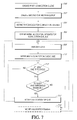
- FIG. 5 is a flowchart showing a method of providing inter-processor communication on a channel between a first processor and a second processor.
- FIG. 6 is a block diagram of a plurality of queues and associated thresholds and the associated context vectors.
- FIG. 7 is a flowchart showing a method of providing inter-processor communication on a channel between a first processor and a second processor.
- FIG. 8 illustrates a three-stage weight refinement for two connection queues.
- FIG. 9 illustrates a linear and an exponential refinement of an allocation weight.
- FIG. 10 illustrates a two-stage example of allocation weight refinement.
- a computer system refers to any type of device which uses microprocessors to process data.
- Computer systems may include personal computers, notebook computers, cable set top boxes, digital video recorders, mobile telephones, televisions, printing devices, multimedia players, or some other multi-processor device.
- FIG. 1 is an example of a device 100 suitable for the implementation of various embodiments that will be more fully described below.
- the device 100 which may be a computer system, includes a first processor 102 .
- the first processor 102 may be a system processor such as a central processing unit which is used to help control the operation of the device by processing computer instructions and other data.
- the first processor 102 may include a memory 108 .
- the memory 108 may be an on board memory cache, or it may be some other type of memory which is able to store data to be processed by the processor.
- the device 100 further includes a second processor 104 .
- the second processor 104 may take various forms.
- the second processor is a specialized processor which performs more limited duties than a central processing unit.
- the second processor 104 may be associated with a more peripheral function such as processing multimedia data, such as with a video card, a graphics card, or the like.
- the second processor 104 may also take the form of a smartcard or some other secondary processor in a set top box.
- the second processor 104 may further include an onboard memory 110 which stores or caches data in such a way as to allow the processor faster access to that data.
- the data path 105 is a physical connection which allows data to be transmitted from the first processor 102 to the second processor 104 .
- the data path 105 may be in the form of dedicated wire(s) having a fixed bandwidth.
- the data path 105 may be an allocated or dedicated portion of a wider data channel which permits two way transmission of data between the first processor 102 and the second processor 104 .
- the data path may take other forms.
- the data path 105 may be dynamically divided into one or more connection queues which are prioritized with different allocation weights by a scheduler, such as a round robin scheduler, for example.
- the allocation weight relates to the amount of processor time allocated to the queue, such that data may be efficiently transmitted based on the priority of the data and the allocation weight of the queue.
- the second processor 104 has limited processing power and a low bandwidth of interface as compared to the first processor 102 . As a result, data sent from the first processor 102 to the second processor may exceed the interface bandwidth of the second processor 104 with the first processor 102 . When this occurs, portions of the incoming data may be queued or delayed until the second processor 104 has available capacity to handle those portions of the incoming data.
- connection queues 106 may comprise virtual connections through which data is transmitted from the first processor 102 to the second processor 104 .
- a virtual connection refers to any data connection between two entities.
- the connection queues 106 may be data structures which manage the transmission of data through the data path 105 .
- the connection queues 106 are typically in communication with a scheduling module 111 which is used to allocate resources of the second processor 104 among the respective connection queues 106 .
- the scheduling module 111 may take the form of software stored on one of the processors 102 or 104 in memory 108 or 110 .
- the scheduling module 111 may be hardware based and implemented an application specific integrated circuit (ASIC).
- ASIC application specific integrated circuit
- the scheduling module 111 may be a round robin scheduler. Alternatively, it may take the form of a fair-queuing scheduler, a proportionally fair scheduler, a maximum throughput scheduler, or some other scheduler known in the art.
- connection queues 106 are implemented as a linked list data structure.
- the connection queues 106 may be some other form of data structure, such as an array for example.
- an allocation weight may be associated with a connection queue 106 , and the allocation weight may be adaptively modified.
- one or more thresholds may be defined. Each threshold may indicate a size of data awaiting transmission over its respective connection queue 106 .
- One or more thresholds may be defined for a connection queue 106 , and the thresholds may be based on a variety of factors such as a transmission latency for the connection queue 106 , a priority for the data sent through the queue 106 , a total size of data to be transmitted across the connection queue, or some other factor.
- connection queue 106 As there may be multiple connection queues 106 having multiple thresholds 112 in a given device 100 , for ease of reference, different connection queues 106 (and their associated subcomponents) will be called out herein with a sub-identifier such as connection queue 106 ( n ), where n is an integer.
- a connection queue 106 ( 0 ) is characterized by a bandwidth allocation 110 ( 0 ).
- the bandwidth allocation 110 ( 0 ) is a measurement of the portion of data path 105 bandwidth made available to this particular connection queue 106 ( 0 ). In some embodiments, the bandwidth allocations for each of the connection queues 106 are the same.
- connection queues 106 may also include one or more thresholds 112 . As is discussed in detail below, the thresholds 112 are used to determine when, if, and/or the extent to which to modify an allocation weight associated with a connection queue 106 . In the example provided in FIG.
- the connection queue 106 ( 0 ) has three defined thresholds 112 ( 0 )( 0 ), 112 ( 0 )( 1 ), 112 ( 0 )( 2 ).
- Each threshold conceptually represents an amount of data awaiting transmission by the queue (a connection queue size).
- the threshold may be a connection queue size and/or a data size.
- the threshold may be a particular data characteristic or element. For example, if a specific data feature is known to occur 1 ⁇ 5 of the way through a connection queue, identifying whether the specific data feature continues to await transmission or whether it has already been transmitted can indicate information regarding the size of the data still awaiting transmission.
- the threshold may be a fraction or percentage. For example, the threshold may indicate 1 ⁇ 5 of the total data to be transmitted by the connection queue continues to await transmission.
- an initial threshold (such as threshold 112 ( 0 )( 0 ) shown in FIG. 3 ) may be used to compute additional thresholds associated with a connection queue (such as connection queue 106 ( 0 )).
- Each additional threshold such as threshold 112 ( 0 )( 1 ) and threshold 112 ( 0 )( 2 ) for example, may have a linear or non-linear relationship with the initial threshold 112 ( 0 )( 0 ).
- an alpha ( ⁇ ) value may be defined.
- an exponential formula may be used. In these instances the ⁇ value may be set to a value of 1 ⁇ 2.
- the next threshold 112 ( 0 )( 1 ) may be defined as 512 bytes+1 ⁇ 2*512 bytes. Additional thresholds may be defined similarly according to the equation:
- connection queues 106 0 ), 106 ( 1 ), 106 ( 2 ), . . . 106 ( n ⁇ 1), each characterized by a bandwidth allocation 110 ( 0 ), 110 ( 1 ), 110 ( 2 ), . . . 110 ( n ⁇ 1), is provided.
- each of the connection queues 106 ( 0 ), 106 ( 1 ), 106 ( 2 ), . . . 106 ( n ⁇ 1) is characterized by a connection queue size 120 ( 0 ), 120 ( 1 ), 120 ( 2 ), . . . 120 ( n ⁇ 1).
- the queue size 120 may include one or more data packets.
- Each of the connection queues may be configured to carry the same or different types of data.
- three thresholds 112 are associated with each of the plurality of connection queues 106 ( 0 ), 106 ( 1 ), 106 ( 2 ), . . . 106 ( n ⁇ 1). For each queue, it can be determined whether the queue size 120 exceeds one or more of the thresholds 106 . For example, for connection queue 106 ( 0 ), the queue size 120 ( 0 ) exceeds the first threshold 112 ( 0 )( 0 ) but not the second and third thresholds 112 ( 0 )( 1 ) and 112 ( 0 )( 2 ).
- the thresholds associated with any given connection queue 106 differ from the thresholds 112 associated with another given connection queue 106 .
- one or more of the thresholds 112 may be substantially the same across two or more connection queues 106 .
- Thresholds 112 may be set according to one or more priorities of the connection queues. Connection queues 106 of high priorities may have short thresholds 112 relative to the thresholds 112 of other connection queues 106 .
- connection queue 106 ( 2 ) may carry a lower priority between the first processor 102 and the second processor 104 than the connection queues 106 ( 0 ), 106 ( 1 ) and 106 ( n ⁇ 1), as the thresholds 112 ( 2 )( 0 - 2 ) are higher than the respective thresholds 112 ( 0 )( 0 - 2 ), 112 ( 1 )( 0 - 2 ) and 112 ( n ⁇ 1)( 0 - 2 ).
- the higher priority data to be sent over the first connection queue 106 ( 2 ) may take the form of key data which may be used to descramble video sent from a first processor 102 to the second processor 104 .
- the lower priority data to be sent over the remaining connection queues may include firmware downloads or housekeeping data.
- Each of the connection queues 106 is associated with an allocation weight 116 , wherein the allocation weights 116 may be managed by the scheduling module 111 .
- the scheduling module 111 may preferentially allocate bandwidth for transmission of connection queues 106 associated with large allocation weights 116 .
- higher allocation weights 112 may be assigned to connection queues of higher priority.
- the allocation weights 116 may be adaptable, as described in greater detail below. In some embodiments, the allocation weights 116 are normalized, while in other embodiments, they are not.
- Normalization can include instances in which each allocation weight 116 is restricted to a range defined by a maximum value (e.g., 1) and a minimum value (e.g., 0) or instances in which the sum of the allocation weights 116 across all connection queues 106 sum to a constant value (e.g., 1).
- the allocation weight 109 for a given connection queue 106 may be a percentage of the interface bandwidth of the second processor 104 allocated to that connection queue.
- FIG. 5 is a flowchart of describing one exemplary embodiment. The process begins at block 500 , where a first connection queue is created between the first processor and the second processor. Next at block 502 , a second connection queue is created between the first processor and the second processor.
- one or more thresholds 112 are defined for each of the first and second connection queues. Important and urgent data may be sent through the first connection queue, while less important data may be sent through the second connection queue. In this instance, the one or more thresholds 112 defined for the first connection queues may be less than the thresholds 112 defined for the second connection queue.
- a set of masks V 0 , V 1 , V 2 , . . . , V M-1 , is defined, wherein M is the number of thresholds per connection queue.
- N is the number of connection queues.
- V 0 is a vector comprising the initial thresholds T j,1 of all connection queues.
- V 1 is a vector comprising the second thresholds T j,1 of all connection queues. Therefore, all thresholds for all connections can be represented as shown:
- connection queue size may include one or more packets of data.
- the measurement includes any such measurement that can be used to determine a connection queue size.
- the measurement may independently identify the size of the data awaiting transmission, may cumulatively track the data size awaiting transmission as the connection queue transmits data, or may determine whether a particular data component remains to be transmitted.
- the measurement may comprise a fraction or percentage, such as a fraction of accumulated data that remains to be transmitted.
- the measurement may be determined by summing the length of packets that await transmission. This calculation may occur each time a new packet is sent by the queue.
- an exponential moving average (EMA) may be utilized to determine a data size.
- the EMA may be calculated according to the equation
- EMA sometimes also called an exponentially weighted moving average (EWMA), applies weighting factors which decrease exponentially as shown in the above equation.
- EWMA exponentially weighted moving average
- EMA gives a more accurate estimate of the data size, by giving more importance to recent observations while not discarding older observations entirely.
- each entry q(t) represents the connection queue time at a specific time t.
- q(t) present the EMA of the connection queue size at time t.
- the degree of weighing decrease is expressed as a constant smoothing factor ⁇ , a number between 0 and 1. The larger value of ⁇ makes the measurement adapt more rapidly to the instantaneously data input.
- a context element is determined.
- the context element may be determined by comparing the measured or estimated queue size to a threshold.
- the context element may indicate whether a connection queue size exceeds a threshold.
- a context vector is associated with a connection queue, wherein the context vector includes a plurality of context elements corresponding to a plurality of thresholds associated with a specific connection queue.
- N defines the number of connection queues
- M defines the number of thresholds associated with a connection queue.
- c k,j is a binary context element that relates a queue size q to a threshold T. For example:
- an allocation weight is assigned.
- the allocation weight may be determined based upon a context element, a plurality of transmission indicators associated with the same and/or different connection queues, a context vector, or a plurality of context vectors.
- the assignment of the allocation weight comprises modifying an existing allocation weight.
- the existing allocation weight may be modified by using a code book, indicating an amount by which the allocation weight should be modified. Further detail regarding assignment of an allocation weight is described below.
- the process continues by returning to block 510 .
- the connection queue size may be compared to another threshold for the queue, or the queue size of a plurality or queues may be compared to thresholds from another mask V. Therefore, the process of FIG. 5 may be characterized as a multiple-stage and/or a progressive process. In some embodiments, the process continues from block 512 by returning to block 506 .
- FIG. 6 shows an example for a system comprising four connection queues and three hierarchies, corresponding to three masks 124 ( 0 ), 124 ( 1 ) and 124 ( 2 ).
- Each mask 124 ( k ) includes a threshold for each of the connection queues, 112 ( 0 )( k ), 112 ( 1 )( k ), 112 ( 2 )( k ) and 112 ( 3 )( k ).
- FIG. 6 illustrates the connection queue size as the dotted region for each queue. For each mask 124 , the connection queue size for each queue may be compared to the thresholds 112 .
- Context vectors 128 ( 0 ), 128 ( 1 ) and 128 ( 2 ) comprise binary context elements indicating whether the queue size surpassed the thresholds from each of the masks 124 ( 0 ), 124 ( 1 ) and 124 ( 2 ).
- context vector 128 ( 0 ) is equal to [1, 1, 1, 0] because the queue sizes for Q 0 , Q 1 and Q 2 exceed the initial thresholds 112 ( 0 )( 0 ), 112 ( 1 )( 0 ) and 112 ( 2 )( 0 ), while the queue size for Q 3 does not exceed the initial threshold 112 ( 3 )( 0 ).
- context vector 128 ( 1 ) is equal to [1, 0, 1, 0] because the queue sizes for Q 0 and Q 2 exceeds the second thresholds 112 ( 0 )( 0 ) and 112 ( 2 )( 0 ), while the queue sizes for Q 1 and Q 3 does not exceed the second thresholds 112 ( 1 )( 0 ) and 112 ( 3 )( 0 ).
- Context vectors may thus reflect the traffic conditions of the queues. Contexts may be characterized by various resolutions. C 0 , C 1 , and C 2 , for example, provide a set of coarse to fine queuing traffic information for progressive allocation weight refinement.
- FIG. 7 is a flowchart of describing one exemplary embodiment.
- Blocks 700 , 702 and 704 correspond to blocks 500 , 502 and 504 from the embodiment shown in FIG. 5 and described in the related text.
- initial allocation weights are defined for the connection queues. Weights may be measured in terms of packets, which may be particularly suitable for networks having fixed packet sizes. Weights may be measured in terms of bandwidth (bytes), i.e. an amount of credit (bytes) for transmission. This approach may particularly suitable for networks of variable packet size.
- N is the number of connection queues.
- Higher allocation weights may indicate a higher priority queue. Weights may initially be assigned at least partially based upon the priority and/or buffer size of the connection queues.
- Blocks 708 and 710 correspond to blocks 506 and 508 from the embodiment shown in FIG. 5 and described in the related text.
- a connection queue size is compared to a threshold to determine whether the queue size for a connection queue does not exceed at least one threshold of that queue. In some embodiments, if no thresholds are exceeded, then no allocation weights are modified. In some embodiments, if all thresholds are exceeded, then no allocation weights are modified. If all thresholds are exceeded, the process may continue by returning to block 708 .
- the process may continue at block 714 with the determining of whether a queue size for a connection queue exceeds at least one threshold of that queue.
- the thresholds examined in block 714 are from the same mask as the threshold not exceeded in block 712 . Therefore, in some embodiments, an affirmative response to block 714 indicates a context vector comprises at least two non-equal values.
- the process continues at block 716 with the modifying of an allocation weight.
- the allocation weights are modified such that an allocation weight associated with the connection queue identified in block 714 for which the threshold was not exceeded is increased relative to the allocation weight associated with the connection queue identified in block 712 for which the threshold was exceeded.
- the allocation weights of one or more connection queues may be modified. Modification of an allocation weight may comprise adding an incrementing value to an existing allocation weight. The incrementing value may be a fixed value or may be obtained by a refinement value from a codebook.
- allocation weights are modified whenever a queue size stops exceeding a threshold being analyzed.
- refinement values may be added to allocation weights associated with all connection queues.
- the refinement values for the connection queues may be the same or different across queues.
- the refinement values may be extracted from a codebook. The addition of the refinement values may or may not modify the relative weighting between the queues.
- the process may continue from block 714 , 716 or 716 ′ to return to block 712 .
- the measured queue sizes associated with a plurality of connection queues may be compared to thresholds from a different mask. By comparing the queue sizes to a plurality of thresholds, the allocation weights may be progressively refined.
- the process may also continue from block 714 , 716 or 716 ′ to return to block 708 . For example, after the queue size has been compared to all thresholds for the connection queue, the process may continue at block 708 . As another example, after the one or more context elements indicate that the queue size exceeds one or more thresholds, the process may continue at block 708 .
- FIG. 8 illustrates a three-stage weight refinement for two connection queues (Q 0 and Q 1 ) in a 2-dimensional vector space.
- the initial weight vector 800 comprises weights w 0 and w 1 associated with each connection queue and is located at the center of the highlighted vector space, which is defined by a maximum and minimum allocation weight of each dimension.
- a context vector corresponds to each stage, indicating whether an queue sizes of each of the two connection queues exceeds a threshold.
- the three contexts C 0 , C 1 and C 2 are equal to [1,1], [0,1] and [0,1].
- the C 0 [1,1] vector indicates that the queue size exceeds the initial thresholds for both connection queues.
- both weights are increased with positive refinements to produce a first weight vector 802 .
- the C 1 [0,1] vector indicates that the queue size by Q 1 further exceeds the second threshold.
- w 1 is further increased, but we remains the same to produce a second weight vector 804 .
- the C 2 [0,1] vector indicates that the queue size by Q 1 further exceeds the third threshold, so w 1 is again increased to produce a third weight vector 806 .
- a context value was 0 at a certain stage, indicating that the queue size is less than the current threshold, then all of the queue's context values in future stages would also be 0. Refinement may be complete until further data was transmitted.
- Allocation weights may be modified by using a codebook.
- a single codebook or a plurality of codebooks may be used across stages of weight refinement.
- a different codebook is associated with each stage of weight refinement.
- the total size of all codebooks can increase linearly rather exponentially as the stages of weight refinement increase.
- codebook sizes may remain constant across stages.
- codebook sizes may vary and/or may adapt across stages.
- a stage of weight refinement may correspond to analysis corresponding to a one mask or one context vector.
- codebook comprises one or more codewords.
- a codeword is a refinement vector, which comprises one or more refinement values. The refinement values are the vector elements of the codeword.
- Codebook values may be at least partially user-defined and/or trained, for example, by sample data. Codebook values may be at least partially determined based upon one or more of queue priority, a minimum allocation scheduling weight, a maximum allocation scheduling weight, a threshold, queue buffer size, threshold design model (e.g., linear or exponential model), and hierarchical structure of the scheduler (e.g., number of stages). Scalar- or vector- (e.g. LBG method) based methods may be used for codebook design.
- FIG. 9 shows a linear weight refinement process (top) and an exponential weight refinement process (bottom). For linear weight refinement, a refinement value associated with a connection queue may linearly vary across refinement stages.
- the differences between weights associated with consecutive stages do not depend on the refinement stage.
- the refinement value may exponentially vary across refinement stages.
- the differences between weights associated with consecutive stages depend on the refinement stage. In some instances, the refinement value decreases during later refinement stages, while in other instances it increases.
- FIG. 10 illustrates an example of weight refinement with two stages and four connection queues.
- Codebooks 132 ′ and 132 are associated with the first and second stage of refinement, respectively.
- the initial weights 116 ′′ for the four connection queues are set as [7, 5, 6, 5].
- the first-stage context vector 128 ( 0 ) is equal to [1, 1, 1, 0], indicating that the queue sizes of connection queues Q 0 , Q 1 , and Q 2 but not Q 3 exceeded initial thresholds.
- a refinement vector 140 ′ with refinement values [8, 4, 4, 0] is selected from the codebook 132 ′ and added to the initial weights 116 ′′ to produce a first-modified weight vector 116 ′.
- the context vector 128 ( 1 ) is [1, 0, 1, 0], indicating that queue sizes of Q 0 and Q 2 further exceed a second threshold.
- a second refinement vector 140 with refinement values [4, 0, 2, 0] is selected from the codebook 132 and added to the first-modified-weight vector 116 ′ to produce a second-modified weight vector 116 .
- Further stages may proceed in a similar manner. Therefore, the allocation weights are progressively refined based upon the context vectors.
- the look-up process associated with the codebooks may reduce the computational complexity as compared to other methods. In some instances, the values within the codebooks may be at least partially dynamically defined, thereby reducing or eliminating the need to store pre-computed codebooks in memory.
Landscapes
- Engineering & Computer Science (AREA)
- Theoretical Computer Science (AREA)
- Computer Networks & Wireless Communication (AREA)
- Signal Processing (AREA)
- Physics & Mathematics (AREA)
- General Engineering & Computer Science (AREA)
- General Physics & Mathematics (AREA)
- Computer Hardware Design (AREA)
- Mathematical Physics (AREA)
- Software Systems (AREA)
- Data Exchanges In Wide-Area Networks (AREA)
Abstract
Description
Tj,k=└Tj,0Tj,1Tj,2 . . . Tj,M-1┘
Vk=└T0,kT1,kT2,k . . . TN-1,k┘,
Ck=└ck,j┘=└ck,0ck,1ck,2 . . . ck,N-1┘; k=0,1,2, . . . , M−1, j=0,1,2 . . . N−1,
w=└wj┘=[w0w1w2 . . . wN-1];
Bm={xi; i=0, . . . , L−1}; m=0,1,2, . . . , M−1;
xi[ri,j]=[ri,0,ri,1,ri,2, . . . , ri,N-1]; j=0,1,2, . . . , N−1;
Claims (21)
Priority Applications (2)
| Application Number | Priority Date | Filing Date | Title |
|---|---|---|---|
| US11/868,906 US7920474B2 (en) | 2007-10-08 | 2007-10-08 | System and method for context-based hierarchical adaptive round robin scheduling |
| KR1020080054859A KR20090036072A (en) | 2007-10-08 | 2008-06-11 | System and method for context-based hierarchical and adaptive round robin scheduling |
Applications Claiming Priority (1)
| Application Number | Priority Date | Filing Date | Title |
|---|---|---|---|
| US11/868,906 US7920474B2 (en) | 2007-10-08 | 2007-10-08 | System and method for context-based hierarchical adaptive round robin scheduling |
Publications (2)
| Publication Number | Publication Date |
|---|---|
| US20090092048A1 US20090092048A1 (en) | 2009-04-09 |
| US7920474B2 true US7920474B2 (en) | 2011-04-05 |
Family
ID=40523149
Family Applications (1)
| Application Number | Title | Priority Date | Filing Date |
|---|---|---|---|
| US11/868,906 Expired - Fee Related US7920474B2 (en) | 2007-10-08 | 2007-10-08 | System and method for context-based hierarchical adaptive round robin scheduling |
Country Status (2)
| Country | Link |
|---|---|
| US (1) | US7920474B2 (en) |
| KR (1) | KR20090036072A (en) |
Families Citing this family (4)
| Publication number | Priority date | Publication date | Assignee | Title |
|---|---|---|---|---|
| US7944830B2 (en) * | 2008-08-07 | 2011-05-17 | Agere Systems Inc. | Methods and appratus for evaluating a utilization of a system that provides connections using a normalized bandwidth scheme |
| CN114077568B (en) | 2020-08-18 | 2025-02-14 | Oppo广东移动通信有限公司 | Inter-core communication method, device, electronic component and electronic device |
| CN114461408B (en) * | 2021-12-28 | 2025-10-28 | 东莞市李群自动化技术有限公司 | Inter-core interaction method, device, equipment and storage medium of multi-core system |
| US11917017B1 (en) * | 2022-09-29 | 2024-02-27 | Amazon Technologies, Inc. | Prioritized restoration of connections and sessions |
Citations (11)
| Publication number | Priority date | Publication date | Assignee | Title |
|---|---|---|---|---|
| US20050066053A1 (en) * | 2001-03-20 | 2005-03-24 | Worldcom, Inc. | System, method and apparatus that isolate virtual private network (VPN) and best effort traffic to resist denial of service attacks |
| US6990113B1 (en) * | 2000-09-08 | 2006-01-24 | Mitsubishi Electric Research Labs., Inc. | Adaptive-weighted packet scheduler for supporting premium service in a communications network |
| US20070070907A1 (en) * | 2005-09-29 | 2007-03-29 | Alok Kumar | Method and apparatus to implement a very efficient random early detection algorithm in the forwarding path |
| US20070121499A1 (en) * | 2005-11-28 | 2007-05-31 | Subhasis Pal | Method of and system for physically distributed, logically shared, and data slice-synchronized shared memory switching |
| US20070153803A1 (en) * | 2005-12-30 | 2007-07-05 | Sridhar Lakshmanamurthy | Two stage queue arbitration |
| US20070268823A1 (en) * | 2004-08-30 | 2007-11-22 | Ken Madison | Device and method for managing oversubscription in a network |
| US20080075003A1 (en) * | 2006-09-21 | 2008-03-27 | Futurewei Technologies, Inc. | Method and system for admission and congestion control of network communication traffic |
| US20080175270A1 (en) * | 2007-01-23 | 2008-07-24 | Deepak Kataria | Multi-Stage Scheduler with Processor Resource and Bandwidth Resource Allocation |
| US20080228977A1 (en) * | 2007-03-13 | 2008-09-18 | Sun Microsystems, Inc. | Method and Apparatus for Dynamic Hardware Arbitration |
| US7457241B2 (en) * | 2004-02-05 | 2008-11-25 | International Business Machines Corporation | Structure for scheduler pipeline design for hierarchical link sharing |
| US20090073884A1 (en) * | 2003-02-14 | 2009-03-19 | Istor Networks, Inc. | Network receive interface for high bandwidth hardware-accelerated packet processing |
Family Cites Families (2)
| Publication number | Priority date | Publication date | Assignee | Title |
|---|---|---|---|---|
| EP0699008A1 (en) * | 1994-08-23 | 1996-02-28 | BELL TELEPHONE MANUFACTURING COMPANY Naamloze Vennootschap | Method for rerouting a data stream |
| US8571012B2 (en) * | 2006-05-12 | 2013-10-29 | Oracle International Corporation | Customized sip routing to cross firewalls |
-
2007
- 2007-10-08 US US11/868,906 patent/US7920474B2/en not_active Expired - Fee Related
-
2008
- 2008-06-11 KR KR1020080054859A patent/KR20090036072A/en not_active Ceased
Patent Citations (11)
| Publication number | Priority date | Publication date | Assignee | Title |
|---|---|---|---|---|
| US6990113B1 (en) * | 2000-09-08 | 2006-01-24 | Mitsubishi Electric Research Labs., Inc. | Adaptive-weighted packet scheduler for supporting premium service in a communications network |
| US20050066053A1 (en) * | 2001-03-20 | 2005-03-24 | Worldcom, Inc. | System, method and apparatus that isolate virtual private network (VPN) and best effort traffic to resist denial of service attacks |
| US20090073884A1 (en) * | 2003-02-14 | 2009-03-19 | Istor Networks, Inc. | Network receive interface for high bandwidth hardware-accelerated packet processing |
| US7457241B2 (en) * | 2004-02-05 | 2008-11-25 | International Business Machines Corporation | Structure for scheduler pipeline design for hierarchical link sharing |
| US20070268823A1 (en) * | 2004-08-30 | 2007-11-22 | Ken Madison | Device and method for managing oversubscription in a network |
| US20070070907A1 (en) * | 2005-09-29 | 2007-03-29 | Alok Kumar | Method and apparatus to implement a very efficient random early detection algorithm in the forwarding path |
| US20070121499A1 (en) * | 2005-11-28 | 2007-05-31 | Subhasis Pal | Method of and system for physically distributed, logically shared, and data slice-synchronized shared memory switching |
| US20070153803A1 (en) * | 2005-12-30 | 2007-07-05 | Sridhar Lakshmanamurthy | Two stage queue arbitration |
| US20080075003A1 (en) * | 2006-09-21 | 2008-03-27 | Futurewei Technologies, Inc. | Method and system for admission and congestion control of network communication traffic |
| US20080175270A1 (en) * | 2007-01-23 | 2008-07-24 | Deepak Kataria | Multi-Stage Scheduler with Processor Resource and Bandwidth Resource Allocation |
| US20080228977A1 (en) * | 2007-03-13 | 2008-09-18 | Sun Microsystems, Inc. | Method and Apparatus for Dynamic Hardware Arbitration |
Non-Patent Citations (3)
| Title |
|---|
| Kwon et al., "Scheduling algorithm for real-time burst traffic using dynamic weighted round robin", Proceedings of International Symposium on Circuits and Systems (ISCAS), pp. 506-509, May 1998. |
| Liang, A Simple and Effective Scheduling Mechanism using Minimized Cycle, 2002, IEEE. * |
| Wang et al., "Adaptive-Weighted Packet Scheduling for Premium Service", Proceedings of IEEE International Conference on Communications (ICC), vol. 6, pp. 1846-1850, 2001. |
Also Published As
| Publication number | Publication date |
|---|---|
| KR20090036072A (en) | 2009-04-13 |
| US20090092048A1 (en) | 2009-04-09 |
Similar Documents
| Publication | Publication Date | Title |
|---|---|---|
| US8140827B2 (en) | System and method for efficient data transmission in a multi-processor environment | |
| US6701389B2 (en) | Bandwidth allocation in accordance with shared queue output limit | |
| KR102226014B1 (en) | A data processing engine and a method for managing resources thereof | |
| US7876763B2 (en) | Pipeline scheduler including a hierarchy of schedulers and multiple scheduling lanes | |
| CN108681484B (en) | Task allocation method, device and equipment | |
| US20080244209A1 (en) | Methods and devices for determining quality of services of storage systems | |
| CN111211830A (en) | A method for satellite uplink bandwidth resource allocation based on Markov prediction | |
| US7142552B2 (en) | Method and system for priority enforcement with flow control | |
| US20090092048A1 (en) | System and method for context-based hierarchical adaptive round robin scheduling | |
| JP2003188914A (en) | Weighted fair queue operating a plurality of output ports | |
| CN118368249A (en) | Congestion control method, device, equipment, medium and product | |
| JP4447521B2 (en) | Packet scheduler and packet scheduling method | |
| CN116483551A (en) | Method, electronic device and computer program product for requesting control | |
| EP2477112A1 (en) | Method for efficient scheduling in a resource-sharing system | |
| US7350208B1 (en) | Method and apparatus for scheduling using a resource variable decreased by amounts corresponding to the efficiency of the resource | |
| US20070276933A1 (en) | Providing quality of service to prioritized clients with dynamic capacity reservation within a server cluster | |
| CN118488023A (en) | Data frame queue scheduling method, system, and vehicle-mounted Ethernet switch | |
| JP2024518019A (en) | Method and system for predictive analytics based buffer management - Patents.com | |
| US7583678B1 (en) | Methods and apparatus for scheduling entities using a primary scheduling mechanism such as calendar scheduling filled in with entities from a secondary scheduling mechanism | |
| US20250238279A1 (en) | Input-output scheduling for virtualized computing instances sending input-output requests to shared storage | |
| JP7485213B1 (en) | Packet control system, packet control method, and packet control device | |
| Hanczewski et al. | The Impact of the adopted queue discipline on the accuracy of the analytical model in queuing systems with elastic and adaptive traffic | |
| JP7848873B2 (en) | Accelerator offload device, accelerator offload method, and program | |
| CN119484431B (en) | Resource allocation method, device and system, storage medium and computer program product | |
| EP1723536B1 (en) | Rate computations of particular use in scheduling |
Legal Events
| Date | Code | Title | Description |
|---|---|---|---|
| AS | Assignment |
Owner name: SAMSUNG ELECTRONICS CO., LTD., KOREA, REPUBLIC OF Free format text: ASSIGNMENT OF ASSIGNORS INTEREST;ASSIGNORS:LIANG, VICTOR K.;LEE, SHIANG-FENG;REEL/FRAME:019939/0044 Effective date: 20070928 |
|
| FEPP | Fee payment procedure |
Free format text: PAYOR NUMBER ASSIGNED (ORIGINAL EVENT CODE: ASPN); ENTITY STATUS OF PATENT OWNER: LARGE ENTITY |
|
| REMI | Maintenance fee reminder mailed | ||
| LAPS | Lapse for failure to pay maintenance fees | ||
| STCH | Information on status: patent discontinuation |
Free format text: PATENT EXPIRED DUE TO NONPAYMENT OF MAINTENANCE FEES UNDER 37 CFR 1.362 |
|
| STCH | Information on status: patent discontinuation |
Free format text: PATENT EXPIRED DUE TO NONPAYMENT OF MAINTENANCE FEES UNDER 37 CFR 1.362 |
|
| FP | Lapsed due to failure to pay maintenance fee |
Effective date: 20150405 |