US7879898B1 - Hepatocyte growth factor pathway activators in chronic obstructive pulmonary disease - Google Patents
Hepatocyte growth factor pathway activators in chronic obstructive pulmonary disease Download PDFInfo
- Publication number
- US7879898B1 US7879898B1 US11/705,202 US70520207A US7879898B1 US 7879898 B1 US7879898 B1 US 7879898B1 US 70520207 A US70520207 A US 70520207A US 7879898 B1 US7879898 B1 US 7879898B1
- Authority
- US
- United States
- Prior art keywords
- alkyl
- optionally substituted
- aryl
- group
- alkoxy
- Prior art date
- Legal status (The legal status is an assumption and is not a legal conclusion. Google has not performed a legal analysis and makes no representation as to the accuracy of the status listed.)
- Active, expires
Links
- 0 BC.[1*]N1C=CC=N1.[2*]C Chemical compound BC.[1*]N1C=CC=N1.[2*]C 0.000 description 38
- VIMBLVRTEPNZJP-UHFFFAOYSA-N Bc1n[nH]cc1 Chemical compound Bc1n[nH]cc1 VIMBLVRTEPNZJP-UHFFFAOYSA-N 0.000 description 2
- IZCXWBFTRPUBFP-STHOXSQBSA-N COC(=O)C1=CC=C(C(=O)N2C=CC(/C=C/C3=CC=CS3)=N2)C=C1.COC(=O)C1=CC=CC(C(=O)N2C=CC(/C=C/C3=CC=CO3)=N2)=C1.N#CC1=CC=C(C(=O)N2C=CC(/C=C/C3=CC=CS3)=N2)C=C1.O=C(C1=C(OC(F)(F)F)C=CC=C1)N1C=CC(/C=C/C2=CC=CS2)=N1.O=C(C1=CC(OC(F)(F)F)=CC=C1)N1C=CC(/C=C/C2=CC=CS2)=N1.O=C(C1=CC=C(OC(F)(F)F)C=C1)N1C=CC(/C=C/C2=CC=CS2)=N1.O=C(C1=CC=CC=C1)N1C=CC(/C=C/C2=CC=CS2)=N1 Chemical compound COC(=O)C1=CC=C(C(=O)N2C=CC(/C=C/C3=CC=CS3)=N2)C=C1.COC(=O)C1=CC=CC(C(=O)N2C=CC(/C=C/C3=CC=CO3)=N2)=C1.N#CC1=CC=C(C(=O)N2C=CC(/C=C/C3=CC=CS3)=N2)C=C1.O=C(C1=C(OC(F)(F)F)C=CC=C1)N1C=CC(/C=C/C2=CC=CS2)=N1.O=C(C1=CC(OC(F)(F)F)=CC=C1)N1C=CC(/C=C/C2=CC=CS2)=N1.O=C(C1=CC=C(OC(F)(F)F)C=C1)N1C=CC(/C=C/C2=CC=CS2)=N1.O=C(C1=CC=CC=C1)N1C=CC(/C=C/C2=CC=CS2)=N1 IZCXWBFTRPUBFP-STHOXSQBSA-N 0.000 description 2
- VWLUVONGFNPDDL-CWGWWDPUSA-N COC1=CC=C(CC(=O)N2C=CC(/C=C/C3=CC=CC=C3)=N2)C=C1.O=C(C1=CC=CO1)N1C=CC(/C=C/C2=CC=CC=C2)=N1.O=C(C1=CC=CS1)N1C=CC(/C=C/C2=CC=CC=C2)=N1.O=C(C1=CN=C(N2CCOCC2)C=C1)N1C=CC(/C=C/C2=CC=CC=C2)=N1.O=C(C1=CSC([N+](=O)[O-])=C1)N1C=CC(/C=C/C2=CC=CC=C2)=N1.O=C(C1=CSC=C1)N1C=CC(/C=C/C2=CC=CC=C2)=N1.O=C(CC1=CC=C(Cl)C=C1)N1C=CC(/C=C/C2=CC=CC=C2)=N1 Chemical compound COC1=CC=C(CC(=O)N2C=CC(/C=C/C3=CC=CC=C3)=N2)C=C1.O=C(C1=CC=CO1)N1C=CC(/C=C/C2=CC=CC=C2)=N1.O=C(C1=CC=CS1)N1C=CC(/C=C/C2=CC=CC=C2)=N1.O=C(C1=CN=C(N2CCOCC2)C=C1)N1C=CC(/C=C/C2=CC=CC=C2)=N1.O=C(C1=CSC([N+](=O)[O-])=C1)N1C=CC(/C=C/C2=CC=CC=C2)=N1.O=C(C1=CSC=C1)N1C=CC(/C=C/C2=CC=CC=C2)=N1.O=C(CC1=CC=C(Cl)C=C1)N1C=CC(/C=C/C2=CC=CC=C2)=N1 VWLUVONGFNPDDL-CWGWWDPUSA-N 0.000 description 2
- PEQFXPKWELWQGB-UHFFFAOYSA-N *.C/C=C/C=C/C(C)C.CC Chemical compound *.C/C=C/C=C/C(C)C.CC PEQFXPKWELWQGB-UHFFFAOYSA-N 0.000 description 1
- UNPDXQHRHLAASV-WRTRKOICSA-N C1=CC(/C=C/C2=CC=NC2)=NN1.C1=CC(/C=C/C2=CSC=C2)=NN1.C1=CC2=C(C=C1)NC(/C=C/C1=NNC=C1)=C2.C1=CNC(/C=C/C2=NNC=C2)=C1.C1=COC(/C=C/C2=NNC=C2)=C1.C1=CSC(/C=C/C2=NNC=C2)=C1.O=[N+]([O-])C1=CC=C(/C=C/C2=NNC=C2)O1 Chemical compound C1=CC(/C=C/C2=CC=NC2)=NN1.C1=CC(/C=C/C2=CSC=C2)=NN1.C1=CC2=C(C=C1)NC(/C=C/C1=NNC=C1)=C2.C1=CNC(/C=C/C2=NNC=C2)=C1.C1=COC(/C=C/C2=NNC=C2)=C1.C1=CSC(/C=C/C2=NNC=C2)=C1.O=[N+]([O-])C1=CC=C(/C=C/C2=NNC=C2)O1 UNPDXQHRHLAASV-WRTRKOICSA-N 0.000 description 1
- UHXSRNZGGQQFRY-MTWHIDOSSA-N C1=CC(/C=C/C2=CSC=C2)=NN1.C1=CC(/C=C/C2=NNC=C2)=CN1.C1=CNC(/C=C/C2=NNC=C2)=C1.C1=COC(/C=C/C2=NNC=C2)=C1.C1=CSC(/C=C/C2=NNC=C2)=C1 Chemical compound C1=CC(/C=C/C2=CSC=C2)=NN1.C1=CC(/C=C/C2=NNC=C2)=CN1.C1=CNC(/C=C/C2=NNC=C2)=C1.C1=COC(/C=C/C2=NNC=C2)=C1.C1=CSC(/C=C/C2=NNC=C2)=C1 UHXSRNZGGQQFRY-MTWHIDOSSA-N 0.000 description 1
- SPWBXZILVBGGPQ-CLBDPKKASA-N C1=CC(/C=C/C2=NNC=C2)=C2OCOC2=C1.C1=CC2=C(C=C1)C=C(/C=C/C1=NNC=C1)C=C2.C1=CC2=C(C=C1)NC(/C=C/C1=NNC=C1)=C2.C1=CC=C(/C=C/C2=NNC=C2)C=C1.CCOC(OCC)C1=CC=C(/C=C/C2=NNC=C2)C=C1.CN(C)C1=CC=C(/C=C/C2=NNC=C2)C=C1.COC1=CC=C(/C=C/C2=NNC=C2)C=C1.ClC1=CC=CC(Cl)=C1/C=C/C1=NNC=C1.FC(F)(F)C1=C(/C=C/C2=NNC=C2)C=CC=C1.FC(F)(F)C1=CC(C(F)(F)F)=C(/C=C/C2=NNC=C2)C=C1.O=[N+]([O-])C1=CC=C(/C=C/C2=NNC=C2)O1 Chemical compound C1=CC(/C=C/C2=NNC=C2)=C2OCOC2=C1.C1=CC2=C(C=C1)C=C(/C=C/C1=NNC=C1)C=C2.C1=CC2=C(C=C1)NC(/C=C/C1=NNC=C1)=C2.C1=CC=C(/C=C/C2=NNC=C2)C=C1.CCOC(OCC)C1=CC=C(/C=C/C2=NNC=C2)C=C1.CN(C)C1=CC=C(/C=C/C2=NNC=C2)C=C1.COC1=CC=C(/C=C/C2=NNC=C2)C=C1.ClC1=CC=CC(Cl)=C1/C=C/C1=NNC=C1.FC(F)(F)C1=C(/C=C/C2=NNC=C2)C=CC=C1.FC(F)(F)C1=CC(C(F)(F)F)=C(/C=C/C2=NNC=C2)C=C1.O=[N+]([O-])C1=CC=C(/C=C/C2=NNC=C2)O1 SPWBXZILVBGGPQ-CLBDPKKASA-N 0.000 description 1
- XNYAFZZAJKLJLF-JDTXBFKESA-N C1=CC(/C=C/C2=NNC=C2)=C2OCOC2=C1.C1=CC2=C(C=C1)C=C(/C=C/C1=NNC=C1)C=C2.C1=CC=C(/C=C/C2=NNC=C2)C=C1.CCOC(OCC)C1=CC=C(/C=C/C2=NNC=C2)C=C1.CN(C)C1=CC=C(/C=C/C2=NNC=C2)C=C1.COC1=CC=C(/C=C/C2=NNC=C2)C=C1.ClC1=CC=CC(Cl)=C1/C=C/C1=NNC=C1.FC(F)(F)C1=C(/C=C/C2=NNC=C2)C=CC=C1.FC(F)(F)C1=CC(Cl)=C(/C=C/C2=NNC=C2)C=C1 Chemical compound C1=CC(/C=C/C2=NNC=C2)=C2OCOC2=C1.C1=CC2=C(C=C1)C=C(/C=C/C1=NNC=C1)C=C2.C1=CC=C(/C=C/C2=NNC=C2)C=C1.CCOC(OCC)C1=CC=C(/C=C/C2=NNC=C2)C=C1.CN(C)C1=CC=C(/C=C/C2=NNC=C2)C=C1.COC1=CC=C(/C=C/C2=NNC=C2)C=C1.ClC1=CC=CC(Cl)=C1/C=C/C1=NNC=C1.FC(F)(F)C1=C(/C=C/C2=NNC=C2)C=CC=C1.FC(F)(F)C1=CC(Cl)=C(/C=C/C2=NNC=C2)C=C1 XNYAFZZAJKLJLF-JDTXBFKESA-N 0.000 description 1
- FFTZWJNNDVASCO-UHFFFAOYSA-N C1=CC=C(/C=C/C=C/C2=NNC=C2)C=C1 Chemical compound C1=CC=C(/C=C/C=C/C2=NNC=C2)C=C1 FFTZWJNNDVASCO-UHFFFAOYSA-N 0.000 description 1
- NIACSMVLLBCYMG-UHFFFAOYSA-N C1=CC=NC=C1.CC.CC Chemical compound C1=CC=NC=C1.CC.CC NIACSMVLLBCYMG-UHFFFAOYSA-N 0.000 description 1
- HHBZHVQQMOYIMI-UHFFFAOYSA-N C1=CCC=C1.CC.CC(C)C Chemical compound C1=CCC=C1.CC.CC(C)C HHBZHVQQMOYIMI-UHFFFAOYSA-N 0.000 description 1
- MYEPOZHSAFAGNG-UHFFFAOYSA-N C1CCCCC1.C=C1CN=C(C2=CC=C(C)C=C2)C2=CC=CC=C12.CC.CC Chemical compound C1CCCCC1.C=C1CN=C(C2=CC=C(C)C=C2)C2=CC=CC=C12.CC.CC MYEPOZHSAFAGNG-UHFFFAOYSA-N 0.000 description 1
- UGKVNIQGOWUDIR-UHFFFAOYSA-M C1CCCCC1.CC.CC(=O)[Ra]O.CC1=CC=C(C2=NCC(=O)C3=CC=CC=C32)C=C1 Chemical compound C1CCCCC1.CC.CC(=O)[Ra]O.CC1=CC=C(C2=NCC(=O)C3=CC=CC=C32)C=C1 UGKVNIQGOWUDIR-UHFFFAOYSA-M 0.000 description 1
- UMDBLRGYFFOPMR-UHFFFAOYSA-N C1CCCCC1.CC.CC1=C(N)C=C(C2=NCC(=O)C3=CC=CC=C32)C=C1 Chemical compound C1CCCCC1.CC.CC1=C(N)C=C(C2=NCC(=O)C3=CC=CC=C32)C=C1 UMDBLRGYFFOPMR-UHFFFAOYSA-N 0.000 description 1
- KXHABIZXARFNST-UHFFFAOYSA-N C1CCCCC1.CC.CC1=CC=C(C2=NCC(=O)C3=CC=CC=C32)C=C1 Chemical compound C1CCCCC1.CC.CC1=CC=C(C2=NCC(=O)C3=CC=CC=C32)C=C1 KXHABIZXARFNST-UHFFFAOYSA-N 0.000 description 1
- QTSRIUZILFKVBY-UHFFFAOYSA-N C1CCCCC1.CC.CC1=CC=C(C2=NCC(=O)C3=CC=CC=C32)C=C1.CN(C)C Chemical compound C1CCCCC1.CC.CC1=CC=C(C2=NCC(=O)C3=CC=CC=C32)C=C1.CN(C)C QTSRIUZILFKVBY-UHFFFAOYSA-N 0.000 description 1
- ABVPVWMQZZFXIA-UHFFFAOYSA-N C1CCCCC1.CC.CC1=CC=C(C2=NCC(=O)C3=CC=CC=C32)C=C1.C[N+](=O)[O-] Chemical compound C1CCCCC1.CC.CC1=CC=C(C2=NCC(=O)C3=CC=CC=C32)C=C1.C[N+](=O)[O-] ABVPVWMQZZFXIA-UHFFFAOYSA-N 0.000 description 1
- HYSGSFBEUXJSSM-UHFFFAOYSA-N C=C1CN=C(C2=CC=C(N3CCCC3)C=C2)C2=CC=CC=C12.CC.CC Chemical compound C=C1CN=C(C2=CC=C(N3CCCC3)C=C2)C2=CC=CC=C12.CC.CC HYSGSFBEUXJSSM-UHFFFAOYSA-N 0.000 description 1
- RGTAZMLTCGLKJT-IZHPBVLZSA-N CC(=O)N1CCC(C(=O)N2C=CC(/C=C/C3=CC=CS3)=N2)CC1.COC1=C(Cl)SC=C1C(=O)N1C=CC(/C=C/C2=CC=CS2)=N1.O=C(C1=CC=CO1)N1C=CC(/C=C/C2=CC=CS2)=N1.O=C(C1=CC=CS1)N1C=CC(/C=C/C2=CC=CS2)=N1.O=C(C1=CN=C(Cl)C=C1)N1C=CC(/C=C/C2=CC=CS2)=N1.O=C(C1=CSC([N+](=O)[O-])=C1)N1C=CC(/C=C/C2=CC=CS2)=N1.O=C(C1=CSC=C1)N1C=CC(/C=C/C2=CC=CS2)=N1 Chemical compound CC(=O)N1CCC(C(=O)N2C=CC(/C=C/C3=CC=CS3)=N2)CC1.COC1=C(Cl)SC=C1C(=O)N1C=CC(/C=C/C2=CC=CS2)=N1.O=C(C1=CC=CO1)N1C=CC(/C=C/C2=CC=CS2)=N1.O=C(C1=CC=CS1)N1C=CC(/C=C/C2=CC=CS2)=N1.O=C(C1=CN=C(Cl)C=C1)N1C=CC(/C=C/C2=CC=CS2)=N1.O=C(C1=CSC([N+](=O)[O-])=C1)N1C=CC(/C=C/C2=CC=CS2)=N1.O=C(C1=CSC=C1)N1C=CC(/C=C/C2=CC=CS2)=N1 RGTAZMLTCGLKJT-IZHPBVLZSA-N 0.000 description 1
- SAIDZHHDQLHWSU-ZIYMNYPSSA-N CC(=O)N1CCC(C(=O)N2C=CC(/C=C/C3=CC=CS3)=N2)CC1.O=C(C1=CC=CO1)N1C=CC(/C=C/C2=CC=CS2)=N1.O=C(C1=CC=CS1)N1C=CC(/C=C/C2=CC=CS2)=N1.O=C(C1=CN=C(Cl)C=C1)N1C=CC(/C=C/C2=CC=CS2)=N1.O=C(C1=CSC([N+](=O)[O-])=C1)N1C=CC(/C=C/C2=CC=CS2)=N1.O=C(C1=CSC=C1)N1C=CC(/C=C/C2=CC=CS2)=N1.O=C(C1CCC1)N1C=CC(/C=C/C2=CC=CS2)=N1 Chemical compound CC(=O)N1CCC(C(=O)N2C=CC(/C=C/C3=CC=CS3)=N2)CC1.O=C(C1=CC=CO1)N1C=CC(/C=C/C2=CC=CS2)=N1.O=C(C1=CC=CS1)N1C=CC(/C=C/C2=CC=CS2)=N1.O=C(C1=CN=C(Cl)C=C1)N1C=CC(/C=C/C2=CC=CS2)=N1.O=C(C1=CSC([N+](=O)[O-])=C1)N1C=CC(/C=C/C2=CC=CS2)=N1.O=C(C1=CSC=C1)N1C=CC(/C=C/C2=CC=CS2)=N1.O=C(C1CCC1)N1C=CC(/C=C/C2=CC=CS2)=N1 SAIDZHHDQLHWSU-ZIYMNYPSSA-N 0.000 description 1
- ODHQJAGXBKWLDN-UHFFFAOYSA-N CC(=O)NC1=C(N2CCCCCC2)C=CC(C2=NCC(=O)C3=CC=CC=C32)=C1.CC(=O)NC1=C(N2CCCCCC2)C=CC(C2=NCC(=O)C3=CC=CC=C32)=C1.O=C1CN=C(C2=C(Cl)C=C(N3CCCCCC3)C=C2)C2=CC=CC=C12.O=C1CN=C(C2=C([N+](=O)[O-])C=C(N3CCCCCC3)C=C2)C2=CC=CC=C12.O=C1CN=C(C2=CC(N3C=CC=C3)=C(N3CCCCCC3)C=C2)C2=CC=CC=C12.O=C=O.[H]C1CCCCCN1C1=CC(Cl)=C(C2=NCC(=O)C3=CC=CC=C32)C=C1 Chemical compound CC(=O)NC1=C(N2CCCCCC2)C=CC(C2=NCC(=O)C3=CC=CC=C32)=C1.CC(=O)NC1=C(N2CCCCCC2)C=CC(C2=NCC(=O)C3=CC=CC=C32)=C1.O=C1CN=C(C2=C(Cl)C=C(N3CCCCCC3)C=C2)C2=CC=CC=C12.O=C1CN=C(C2=C([N+](=O)[O-])C=C(N3CCCCCC3)C=C2)C2=CC=CC=C12.O=C1CN=C(C2=CC(N3C=CC=C3)=C(N3CCCCCC3)C=C2)C2=CC=CC=C12.O=C=O.[H]C1CCCCCN1C1=CC(Cl)=C(C2=NCC(=O)C3=CC=CC=C32)C=C1 ODHQJAGXBKWLDN-UHFFFAOYSA-N 0.000 description 1
- QIEJMUYJRQKBAW-UHFFFAOYSA-M CC.CC(=O)[Ra]O.O=C1CN=C(C2=CC=C(N3CCCCCC3)C=C2)C2=CC=CC=C12 Chemical compound CC.CC(=O)[Ra]O.O=C1CN=C(C2=CC=C(N3CCCCCC3)C=C2)C2=CC=CC=C12 QIEJMUYJRQKBAW-UHFFFAOYSA-M 0.000 description 1
- GRNBBTYLVIXLKU-UHFFFAOYSA-N CC.CC(C)(C)C1=CC=CC1 Chemical compound CC.CC(C)(C)C1=CC=CC1 GRNBBTYLVIXLKU-UHFFFAOYSA-N 0.000 description 1
- DPMHKYYHGJIBDR-UHFFFAOYSA-N CC.CC.O=C1CN=C(C2=CC=C(N3CCCCCC3)C=C2)C2=CC=CC=C12 Chemical compound CC.CC.O=C1CN=C(C2=CC=C(N3CCCCCC3)C=C2)C2=CC=CC=C12 DPMHKYYHGJIBDR-UHFFFAOYSA-N 0.000 description 1
- LVMKCRCLCLZNJP-OVYYEPAXSA-N CC.CC1CCN(C2=C([N+](=O)[O-])C=C(/C3=N/CC(=O)C4=CC=CC=C43)C=C2)CC1.O=C1C/N=C(/C2=CC([N+](=O)[O-])=C(N3CCC(CC4=CC=CC=C4)CC3)C=C2)C2=CC=CC=C12.O=C1C/N=C(/C2=CC([N+](=O)[O-])=C(N3CCCC3)C=C2)C2=CC=CC=C12.O=C1C/N=C(/C2=CC([N+](=O)[O-])=C(N3CCN(CC4=CC=CC=C4)CC3)C=C2)C2=CC=CC=C12.O=C1C/N=C(/C2=CC([N+](=O)[O-])=C(N3CCN(CCO)CC3)C=C2)C2=CC=CC=C12.O=C1C/N=C(/C2=CC([N+](=O)[O-])=C(N3CCOCC3)C=C2)C2=CC=CC=C12.O=C1CN=C(C2=CC=C(N3C(=O)/C(=C/C4=CC=CC=C4)N=C3C3=CC=CC=C3)C=C2)C2=CC=CC=C12 Chemical compound CC.CC1CCN(C2=C([N+](=O)[O-])C=C(/C3=N/CC(=O)C4=CC=CC=C43)C=C2)CC1.O=C1C/N=C(/C2=CC([N+](=O)[O-])=C(N3CCC(CC4=CC=CC=C4)CC3)C=C2)C2=CC=CC=C12.O=C1C/N=C(/C2=CC([N+](=O)[O-])=C(N3CCCC3)C=C2)C2=CC=CC=C12.O=C1C/N=C(/C2=CC([N+](=O)[O-])=C(N3CCN(CC4=CC=CC=C4)CC3)C=C2)C2=CC=CC=C12.O=C1C/N=C(/C2=CC([N+](=O)[O-])=C(N3CCN(CCO)CC3)C=C2)C2=CC=CC=C12.O=C1C/N=C(/C2=CC([N+](=O)[O-])=C(N3CCOCC3)C=C2)C2=CC=CC=C12.O=C1CN=C(C2=CC=C(N3C(=O)/C(=C/C4=CC=CC=C4)N=C3C3=CC=CC=C3)C=C2)C2=CC=CC=C12 LVMKCRCLCLZNJP-OVYYEPAXSA-N 0.000 description 1
- PTIXNQDFLFDNIC-UHFFFAOYSA-N CC.CN(C)C.O=C1CN=C(C2=CC=C(N3CCCCCC3)C=C2)C2=CC=CC=C12 Chemical compound CC.CN(C)C.O=C1CN=C(C2=CC=C(N3CCCCCC3)C=C2)C2=CC=CC=C12 PTIXNQDFLFDNIC-UHFFFAOYSA-N 0.000 description 1
- WLBATBACMKZOBZ-UHFFFAOYSA-N CC.NC1=C(N2CCCCCC2)C=CC(C2=NCC(=O)C3=CC=CC=C32)=C1 Chemical compound CC.NC1=C(N2CCCCCC2)C=CC(C2=NCC(=O)C3=CC=CC=C32)=C1 WLBATBACMKZOBZ-UHFFFAOYSA-N 0.000 description 1
- AGTQFMVRMMXRHE-UHFFFAOYSA-N CC.O=C1CN=C(C2=CC([N+](=O)[O-])=C(N3CCCCCC3)C=C2)C2=CC=CC=C12 Chemical compound CC.O=C1CN=C(C2=CC([N+](=O)[O-])=C(N3CCCCCC3)C=C2)C2=CC=CC=C12 AGTQFMVRMMXRHE-UHFFFAOYSA-N 0.000 description 1
- WRYIJZPTALAEIA-UHFFFAOYSA-N CC.O=C1CN=C(C2=CC=C(N3CCCCCC3)C=C2)C2=CC=CC=C12 Chemical compound CC.O=C1CN=C(C2=CC=C(N3CCCCCC3)C=C2)C2=CC=CC=C12 WRYIJZPTALAEIA-UHFFFAOYSA-N 0.000 description 1
- ALCGWPVADXPOHF-UHFFFAOYSA-N CC1(C)CCCC(C)(C)N1C1=C([N+](=O)[O-])C=C(C2=NCC(=O)C3=CC=CC=C32)C=C1.CC1CCN(C2=C(N)C=C(C3=NCC(=O)C4=CC=CC=C43)C=C2)CC1.CCS(=O)(=O)N1CCN(C2=C([N+](=O)[O-])C=C(C3=NCC(=O)C4=CC=CC=C43)C=C2)CC1.CN1CCN(C2=C([N+](=O)[O-])C=C(C3=NCC(=O)C4=CC=CC=C43)C=C2)CC1.NC1=C(N2CCC(CC3=CC=CC=C3)CC2)C=CC(C2=NCC(=O)C3=CC=CC=C32)=C1.NC1=C(N2CCCCC2)C=CC(C2=NCC(=O)C3=CC=CC=C32)=C1.O=C1CN=C(C2=CC([N+](=O)[O-])=C(N3CCSCC3)C=C2)C2=CC=CC=C12 Chemical compound CC1(C)CCCC(C)(C)N1C1=C([N+](=O)[O-])C=C(C2=NCC(=O)C3=CC=CC=C32)C=C1.CC1CCN(C2=C(N)C=C(C3=NCC(=O)C4=CC=CC=C43)C=C2)CC1.CCS(=O)(=O)N1CCN(C2=C([N+](=O)[O-])C=C(C3=NCC(=O)C4=CC=CC=C43)C=C2)CC1.CN1CCN(C2=C([N+](=O)[O-])C=C(C3=NCC(=O)C4=CC=CC=C43)C=C2)CC1.NC1=C(N2CCC(CC3=CC=CC=C3)CC2)C=CC(C2=NCC(=O)C3=CC=CC=C32)=C1.NC1=C(N2CCCCC2)C=CC(C2=NCC(=O)C3=CC=CC=C32)=C1.O=C1CN=C(C2=CC([N+](=O)[O-])=C(N3CCSCC3)C=C2)C2=CC=CC=C12 ALCGWPVADXPOHF-UHFFFAOYSA-N 0.000 description 1
- LWFDMHOAEVNOCE-UHFFFAOYSA-N CC1=C(/C2=N/CC(=O)C3=CC=CC=C32)C=CC(N2CCCCCC2)=C1.NC1=C(N2CCCCCC2)C=CC(/C2=N/CC(=O)C3=CC=CC=C32)=C1.O=C1C/N=C(/C2=CC(Br)=C(N3CCCCCC3)C=C2)C2=CC=CC=C12.O=C1C/N=C(/C2=CC(Cl)=C(N3CCCCCC3)C=C2)C2=CC=CC=C12.O=C1C/N=C(/C2=CC(I)=C(N3CCCCCC3)C=C2)C2=CC=CC=C12.O=C1C/N=C(/C2=CC([N+](=O)[O-])=C(N3CCCCCC3)C=C2)C2=CC=CC=C12.O=C1C/N=C(/C2=CC=C(N3CCCCCC3)C=C2)C2=CC=CC=C12 Chemical compound CC1=C(/C2=N/CC(=O)C3=CC=CC=C32)C=CC(N2CCCCCC2)=C1.NC1=C(N2CCCCCC2)C=CC(/C2=N/CC(=O)C3=CC=CC=C32)=C1.O=C1C/N=C(/C2=CC(Br)=C(N3CCCCCC3)C=C2)C2=CC=CC=C12.O=C1C/N=C(/C2=CC(Cl)=C(N3CCCCCC3)C=C2)C2=CC=CC=C12.O=C1C/N=C(/C2=CC(I)=C(N3CCCCCC3)C=C2)C2=CC=CC=C12.O=C1C/N=C(/C2=CC([N+](=O)[O-])=C(N3CCCCCC3)C=C2)C2=CC=CC=C12.O=C1C/N=C(/C2=CC=C(N3CCCCCC3)C=C2)C2=CC=CC=C12 LWFDMHOAEVNOCE-UHFFFAOYSA-N 0.000 description 1
- NUJDSGHOQDUCLA-WBZZMUKUSA-N CC1=NN=C(N2N=CCC2/C=C/C2=CC=CC(Cl)=C2)N1N.CN1C=CC=C1C(=O)N1C=CC(/C=C/C2=CC=CO2)=N1.CN1C=CC=C1C(=O)N1C=CC(/C=C/C2=CC=CS2)=N1.COC1=CC=C(CC(=O)N2C=CC(/C=C/C3=CC=CO3)=N2)C=C1.COC1=CC=C(CC(=O)N2C=CC(/C=C/C3=CC=CS3)=N2)C=C1.O=C(CC1=CC=C(Cl)C=C1)N1C=CC(/C=C/C2=CC=CS2)=N1.O=C(CC1CCCC1)N1C=CC(/C=C/C2=CC=CO2)=N1 Chemical compound CC1=NN=C(N2N=CCC2/C=C/C2=CC=CC(Cl)=C2)N1N.CN1C=CC=C1C(=O)N1C=CC(/C=C/C2=CC=CO2)=N1.CN1C=CC=C1C(=O)N1C=CC(/C=C/C2=CC=CS2)=N1.COC1=CC=C(CC(=O)N2C=CC(/C=C/C3=CC=CO3)=N2)C=C1.COC1=CC=C(CC(=O)N2C=CC(/C=C/C3=CC=CS3)=N2)C=C1.O=C(CC1=CC=C(Cl)C=C1)N1C=CC(/C=C/C2=CC=CS2)=N1.O=C(CC1CCCC1)N1C=CC(/C=C/C2=CC=CO2)=N1 NUJDSGHOQDUCLA-WBZZMUKUSA-N 0.000 description 1
- SWYJJTSNWYSZPJ-DVPYBUHUSA-N CC1=NN=C(N2N=CCC2/C=C/C2=CC=CC(Cl)=C2)N1N.N#CC1=CC=CC(C(=O)N2C=CC(/C=C/C3=CC=CO3)=N2)=C1.O=C(C1=C(OC(F)(F)F)C=CC=C1)N1C=CC(/C=C/C2=CC=CO2)=N1.O=C(C1=CC(OC(F)(F)F)=CC=C1)N1C=CC(/C=C/C2=CC=CO2)=N1.O=C(C1=CC2=C(C=C1)OCO2)N1C=CC(/C=C/C2=CC=CO2)=N1.O=C(C1=CC=C(OC(F)(F)F)C=C1)N1C=CC(/C=C/C2=CC=CO2)=N1.O=C(C1=CC=CC=C1)N1C=CC(/C=C/C2=CC=CO2)=N1 Chemical compound CC1=NN=C(N2N=CCC2/C=C/C2=CC=CC(Cl)=C2)N1N.N#CC1=CC=CC(C(=O)N2C=CC(/C=C/C3=CC=CO3)=N2)=C1.O=C(C1=C(OC(F)(F)F)C=CC=C1)N1C=CC(/C=C/C2=CC=CO2)=N1.O=C(C1=CC(OC(F)(F)F)=CC=C1)N1C=CC(/C=C/C2=CC=CO2)=N1.O=C(C1=CC2=C(C=C1)OCO2)N1C=CC(/C=C/C2=CC=CO2)=N1.O=C(C1=CC=C(OC(F)(F)F)C=C1)N1C=CC(/C=C/C2=CC=CO2)=N1.O=C(C1=CC=CC=C1)N1C=CC(/C=C/C2=CC=CO2)=N1 SWYJJTSNWYSZPJ-DVPYBUHUSA-N 0.000 description 1
- LQNJUHYMRKXYIT-UHFFFAOYSA-N CC1CCCCCN1C1=CC=C(C2=NCC(=O)C3=CC=CC=C32)C=C1.CC1CCCCN(C2=CC=C(C3=NCC(=O)C4=CC=CC=C43)C=C2)C1.NC1CCCCN(C2=C([N+](=O)[O-])C=C(C3=NCC(=O)C4=CC=CC=C43)C=C2)C1.NC1CCCCN(C2=CC=C(C3=NCC(=O)C4=CC=CC=C43)C=C2)C1 Chemical compound CC1CCCCCN1C1=CC=C(C2=NCC(=O)C3=CC=CC=C32)C=C1.CC1CCCCN(C2=CC=C(C3=NCC(=O)C4=CC=CC=C43)C=C2)C1.NC1CCCCN(C2=C([N+](=O)[O-])C=C(C3=NCC(=O)C4=CC=CC=C43)C=C2)C1.NC1CCCCN(C2=CC=C(C3=NCC(=O)C4=CC=CC=C43)C=C2)C1 LQNJUHYMRKXYIT-UHFFFAOYSA-N 0.000 description 1
- WFJHHPZWKZJDKH-UHFFFAOYSA-N CC1CCCCN1C1=CC=C(C2=NCC(=O)C3=CC=CC=C32)C=C1[N+](=O)[O-].CC1CCCN(C2=C([N+](=O)[O-])C=C(C3=NCC(=O)C4=CC=CC=C43)C=C2)C1.CCC1CCCCN1C1=CC=C(C2=NCC(=O)C3=CC=CC=C32)C=C1[N+](=O)[O-].O=C1CN=C(C2=CC([N+](=O)[O-])=C(N3CCC(N4CCCCC4)CC3)C=C2)C2=CC=CC=C12.O=C1CN=C(C2=CC([N+](=O)[O-])=C(N3CCN(C4=CC=CC=C4)CC3)C=C2)C2=CC=CC=C12.O=C1CN=C(C2=CC=C(N3CCSCC3)C=C2)C2=CC=CC=C12 Chemical compound CC1CCCCN1C1=CC=C(C2=NCC(=O)C3=CC=CC=C32)C=C1[N+](=O)[O-].CC1CCCN(C2=C([N+](=O)[O-])C=C(C3=NCC(=O)C4=CC=CC=C43)C=C2)C1.CCC1CCCCN1C1=CC=C(C2=NCC(=O)C3=CC=CC=C32)C=C1[N+](=O)[O-].O=C1CN=C(C2=CC([N+](=O)[O-])=C(N3CCC(N4CCCCC4)CC3)C=C2)C2=CC=CC=C12.O=C1CN=C(C2=CC([N+](=O)[O-])=C(N3CCN(C4=CC=CC=C4)CC3)C=C2)C2=CC=CC=C12.O=C1CN=C(C2=CC=C(N3CCSCC3)C=C2)C2=CC=CC=C12 WFJHHPZWKZJDKH-UHFFFAOYSA-N 0.000 description 1
- VWQFUDMRKSCADL-UHFFFAOYSA-N CCN(CC)C1=C([N+](=O)[O-])C=C(C2=NCC(=O)C3=CC=CC=C32)C=C1.CCN(CC)C1=CC(N)=C(C2=NCC(=O)C3=CC=CC=C32)C=C1.CCN(CC)C1=CC=C(C2=NCC(=O)C3=CC=CC=C32)C=C1.CN(C)C1=C(N)C=C(C2=NCC(=O)C3=CC=CC=C32)C=C1.CN(C)C1=C([N+](=O)[O-])C=C(C2=NCC(=O)C3=CC=CC=C32)C=C1.CN(C)C1=CC=C(C2=NCC(=O)C3=CC=CC=C32)C=C1 Chemical compound CCN(CC)C1=C([N+](=O)[O-])C=C(C2=NCC(=O)C3=CC=CC=C32)C=C1.CCN(CC)C1=CC(N)=C(C2=NCC(=O)C3=CC=CC=C32)C=C1.CCN(CC)C1=CC=C(C2=NCC(=O)C3=CC=CC=C32)C=C1.CN(C)C1=C(N)C=C(C2=NCC(=O)C3=CC=CC=C32)C=C1.CN(C)C1=C([N+](=O)[O-])C=C(C2=NCC(=O)C3=CC=CC=C32)C=C1.CN(C)C1=CC=C(C2=NCC(=O)C3=CC=CC=C32)C=C1 VWQFUDMRKSCADL-UHFFFAOYSA-N 0.000 description 1
- VPXUJGUEJMNGJS-XPPYVDTESA-N CN1C=CC=C1C(=O)N1C=CC(/C=C/C2=CC=CO2)=N1.CN1C=CC=C1C(=O)N1C=CC(/C=C/C2=CC=CS2)=N1.COC1=CC=C(CC(=O)N2C=CC(/C=C/C3=CC=CO3)=N2)C=C1.COC1=CC=C(CC(=O)N2C=CC(/C=C/C3=CC=CS3)=N2)C=C1.O=C(CC1=CC=C(Cl)C=C1)N1C=CC(/C=C/C2=CC=CS2)=N1.O=C(CC1CCCC1)N1C=CC(/C=C/C2=CC=CS2)=N1 Chemical compound CN1C=CC=C1C(=O)N1C=CC(/C=C/C2=CC=CO2)=N1.CN1C=CC=C1C(=O)N1C=CC(/C=C/C2=CC=CS2)=N1.COC1=CC=C(CC(=O)N2C=CC(/C=C/C3=CC=CO3)=N2)C=C1.COC1=CC=C(CC(=O)N2C=CC(/C=C/C3=CC=CS3)=N2)C=C1.O=C(CC1=CC=C(Cl)C=C1)N1C=CC(/C=C/C2=CC=CS2)=N1.O=C(CC1CCCC1)N1C=CC(/C=C/C2=CC=CS2)=N1 VPXUJGUEJMNGJS-XPPYVDTESA-N 0.000 description 1
- BBLQJKNZFZXMDX-FMTUFPSPSA-N COC1=C(Cl)SC=C1C(=O)N1C=CC(/C=C/C2=CC=CS2)=N1.COCCOCC(=O)N1C=CC(/C=C/C2=CC=CO2)=N1.O=C(C1=CC=CO1)N1C=CC(/C=C/C2=CC=CO2)=N1.O=C(C1=CC=CS1)N1C=CC(/C=C/C2=CC=CO2)=N1.O=C(C1=CN=C(N2CCOCC2)C=C1)N1C=CC(/C=C/C2=CC=CO2)=N1.O=C(C1=CSC=C1)N1C=CC(/C=C/C2=CC=CO2)=N1.O=C(CC1=CC=C(Cl)C=C1)N1C=CC(/C=C/C2=CC=CO2)=N1.O=C(CC1CCCC1)N1C=CC(/C=C/C2=CC=CO2)=N1 Chemical compound COC1=C(Cl)SC=C1C(=O)N1C=CC(/C=C/C2=CC=CS2)=N1.COCCOCC(=O)N1C=CC(/C=C/C2=CC=CO2)=N1.O=C(C1=CC=CO1)N1C=CC(/C=C/C2=CC=CO2)=N1.O=C(C1=CC=CS1)N1C=CC(/C=C/C2=CC=CO2)=N1.O=C(C1=CN=C(N2CCOCC2)C=C1)N1C=CC(/C=C/C2=CC=CO2)=N1.O=C(C1=CSC=C1)N1C=CC(/C=C/C2=CC=CO2)=N1.O=C(CC1=CC=C(Cl)C=C1)N1C=CC(/C=C/C2=CC=CO2)=N1.O=C(CC1CCCC1)N1C=CC(/C=C/C2=CC=CO2)=N1 BBLQJKNZFZXMDX-FMTUFPSPSA-N 0.000 description 1
- ATCVHGQIKPFVMN-NUJLKDHQSA-N COC1=CC(OC)=C(C(=O)N2C=CC(/C=C/C3=CC=CC=C3)=N2)C=C1.COC1=CC=C(C(=O)N2C=CC(/C=C/C3=CC=CC=C3)=N2)C=C1.O=C(C1=C(Cl)C=CC=C1)N1C=CC(/C=C/C2=CC=CC=C2)=N1.O=C(C1=CC(Cl)=CC=C1)N1C=CC(/C=C/C2=CC=CC=C2)=N1.O=C(C1=CC=C(Cl)C=C1)N1C=CC(/C=C/C2=CC=CC=C2)=N1.O=C(C1=CC=C(N2C=CC=N2)C=C1)N1C=CC(/C=C/C2=CC=CC=C2)=N1.O=C(C1CC1)N1C=CC(/C=C/C2=CC=CC=C2)=N1.O=C(C1CCCCC1)N1C=CC(/C=C/C2=CC=CC=C2)=N1 Chemical compound COC1=CC(OC)=C(C(=O)N2C=CC(/C=C/C3=CC=CC=C3)=N2)C=C1.COC1=CC=C(C(=O)N2C=CC(/C=C/C3=CC=CC=C3)=N2)C=C1.O=C(C1=C(Cl)C=CC=C1)N1C=CC(/C=C/C2=CC=CC=C2)=N1.O=C(C1=CC(Cl)=CC=C1)N1C=CC(/C=C/C2=CC=CC=C2)=N1.O=C(C1=CC=C(Cl)C=C1)N1C=CC(/C=C/C2=CC=CC=C2)=N1.O=C(C1=CC=C(N2C=CC=N2)C=C1)N1C=CC(/C=C/C2=CC=CC=C2)=N1.O=C(C1CC1)N1C=CC(/C=C/C2=CC=CC=C2)=N1.O=C(C1CCCCC1)N1C=CC(/C=C/C2=CC=CC=C2)=N1 ATCVHGQIKPFVMN-NUJLKDHQSA-N 0.000 description 1
- GHFAYYKWMFBHIM-QZVXLTMESA-N COCCOCC(=O)N1C=CC(/C=C/C2=CC=CO2)=N1.O=C(C1=CC=CO1)N1C=CC(/C=C/C2=CC=CO2)=N1.O=C(C1=CC=CS1)N1C=CC(/C=C/C2=CC=CO2)=N1.O=C(C1=CN=C(N2CCOCC2)C=C1)N1C=CC(/C=C/C2=CC=CO2)=N1.O=C(C1=CSC=C1)N1C=CC(/C=C/C2=CC=CO2)=N1.O=C(CC1=CC=C(Cl)C=C1)N1C=CC(/C=C/C2=CC=CO2)=N1.O=C(CC1CCCC1)N1C=CC(/C=C/C2=CC=CO2)=N1 Chemical compound COCCOCC(=O)N1C=CC(/C=C/C2=CC=CO2)=N1.O=C(C1=CC=CO1)N1C=CC(/C=C/C2=CC=CO2)=N1.O=C(C1=CC=CS1)N1C=CC(/C=C/C2=CC=CO2)=N1.O=C(C1=CN=C(N2CCOCC2)C=C1)N1C=CC(/C=C/C2=CC=CO2)=N1.O=C(C1=CSC=C1)N1C=CC(/C=C/C2=CC=CO2)=N1.O=C(CC1=CC=C(Cl)C=C1)N1C=CC(/C=C/C2=CC=CO2)=N1.O=C(CC1CCCC1)N1C=CC(/C=C/C2=CC=CO2)=N1 GHFAYYKWMFBHIM-QZVXLTMESA-N 0.000 description 1
- OMGBLAYXGXTDSQ-UHFFFAOYSA-N CS(=O)(=O)NC1=C(N2CCCCCC2)C=CC(C2=NCC(=O)C3=CC=CC=C32)=C1.O=C1CN=C(C2=CC(NC(=O)C(F)(F)F)=C(N3CCCCCC3)C=C2)C2=CC=CC=C12.O=C1CN=C(C2=CC(NS(=O)(=O)C(F)(F)F)=C(N3CCCCCC3)C=C2)C2=CC=CC=C12.O=C=O.O=C=O.[H]C1CCCCCN1C1=CC=C(C2=NCC(=O)C3=CC=CC=C32)C=C1.[H]C1CCCCCN1C1=CC=C(C2=NCC(=O)C3=CC=CC=C32)C=C1[N+](=O)[O-] Chemical compound CS(=O)(=O)NC1=C(N2CCCCCC2)C=CC(C2=NCC(=O)C3=CC=CC=C32)=C1.O=C1CN=C(C2=CC(NC(=O)C(F)(F)F)=C(N3CCCCCC3)C=C2)C2=CC=CC=C12.O=C1CN=C(C2=CC(NS(=O)(=O)C(F)(F)F)=C(N3CCCCCC3)C=C2)C2=CC=CC=C12.O=C=O.O=C=O.[H]C1CCCCCN1C1=CC=C(C2=NCC(=O)C3=CC=CC=C32)C=C1.[H]C1CCCCCN1C1=CC=C(C2=NCC(=O)C3=CC=CC=C32)C=C1[N+](=O)[O-] OMGBLAYXGXTDSQ-UHFFFAOYSA-N 0.000 description 1
- MRNXRNDLLHIUHW-UCIPIPRSSA-N N#CC1=CC(C(=O)N2C=CC(/C=C/C3=CC=CN3)=N2)=CC=C1.N#CC1=CC(C(=O)N2C=CC(/C=C/C3=CNC=C3)=N2)=CC=C1.N#CC1=CC(C(=O)N2C=CC(/C=C/C3=COC=C3)=N2)=CC=C1.N#CC1=CC(C(=O)N2C=CC(/C=C/C3=CSC=C3)=N2)=CC=C1.N#CC1=CC=CC(C(=O)N2C=CC(/C=C/C3=CC=CS3)=N2)=C1.O=C(C1=CC2=C(C=C1)OCO2)N1C=CC(/C=C/C2=CC=CS2)=N1.O=C(O)C1=CC=C(C(=O)N2C=CC(/C=C/C3=CC=CS3)=N2)C=C1 Chemical compound N#CC1=CC(C(=O)N2C=CC(/C=C/C3=CC=CN3)=N2)=CC=C1.N#CC1=CC(C(=O)N2C=CC(/C=C/C3=CNC=C3)=N2)=CC=C1.N#CC1=CC(C(=O)N2C=CC(/C=C/C3=COC=C3)=N2)=CC=C1.N#CC1=CC(C(=O)N2C=CC(/C=C/C3=CSC=C3)=N2)=CC=C1.N#CC1=CC=CC(C(=O)N2C=CC(/C=C/C3=CC=CS3)=N2)=C1.O=C(C1=CC2=C(C=C1)OCO2)N1C=CC(/C=C/C2=CC=CS2)=N1.O=C(O)C1=CC=C(C(=O)N2C=CC(/C=C/C3=CC=CS3)=N2)C=C1 MRNXRNDLLHIUHW-UCIPIPRSSA-N 0.000 description 1
- HOHBFFWHUISQMJ-TTXMQCPYSA-N N#CC1=CC=CC(C(=O)N2C=CC(/C=C/C3=CC=CO3)=N2)=C1.O=C(C1=C(OC(F)(F)F)C=CC=C1)N1C=CC(/C=C/C2=CC=CO2)=N1.O=C(C1=CC(OC(F)(F)F)=CC=C1)N1C=CC(/C=C/C2=CC=CO2)=N1.O=C(C1=CC2=C(C=C1)OCO2)N1C=CC(/C=C/C2=CC=CO2)=N1.O=C(C1=CC=C(OC(F)(F)F)C=C1)N1C=CC(/C=C/C2=CC=CO2)=N1.O=C(C1=CC=CC=C1)N1C=CC(/C=C/C2=CC=CO2)=N1 Chemical compound N#CC1=CC=CC(C(=O)N2C=CC(/C=C/C3=CC=CO3)=N2)=C1.O=C(C1=C(OC(F)(F)F)C=CC=C1)N1C=CC(/C=C/C2=CC=CO2)=N1.O=C(C1=CC(OC(F)(F)F)=CC=C1)N1C=CC(/C=C/C2=CC=CO2)=N1.O=C(C1=CC2=C(C=C1)OCO2)N1C=CC(/C=C/C2=CC=CO2)=N1.O=C(C1=CC=C(OC(F)(F)F)C=C1)N1C=CC(/C=C/C2=CC=CO2)=N1.O=C(C1=CC=CC=C1)N1C=CC(/C=C/C2=CC=CO2)=N1 HOHBFFWHUISQMJ-TTXMQCPYSA-N 0.000 description 1
- JAFOOXKMKQSNGS-ULTQAHKESA-N N#CC1=CC=CC(C(=O)N2C=CC(/C=C/C3=CC=CO3)=N2)=C1.O=C(C1=CC2=C(C=C1)OCO2)N1C=CC(/C=C/C2=CC=CS2)=N1.O=C(C1=CC=CC(O)=C1)N1C=CC(/C=C/C2=CC=CN2)=N1.O=C(C1=CC=CC(O)=C1)N1C=CC(/C=C/C2=CNC=C2)=N1.O=C(C1=CC=CC(O)=C1)N1C=CC(/C=C/C2=COC=C2)=N1.O=C(C1=CC=CC(O)=C1)N1C=CC(/C=C/C2=CSC=C2)=N1.O=C(O)C1=CC=C(C(=O)N2C=CC(/C=C/C3=CC=CS3)=N2)C=C1 Chemical compound N#CC1=CC=CC(C(=O)N2C=CC(/C=C/C3=CC=CO3)=N2)=C1.O=C(C1=CC2=C(C=C1)OCO2)N1C=CC(/C=C/C2=CC=CS2)=N1.O=C(C1=CC=CC(O)=C1)N1C=CC(/C=C/C2=CC=CN2)=N1.O=C(C1=CC=CC(O)=C1)N1C=CC(/C=C/C2=CNC=C2)=N1.O=C(C1=CC=CC(O)=C1)N1C=CC(/C=C/C2=COC=C2)=N1.O=C(C1=CC=CC(O)=C1)N1C=CC(/C=C/C2=CSC=C2)=N1.O=C(O)C1=CC=C(C(=O)N2C=CC(/C=C/C3=CC=CS3)=N2)C=C1 JAFOOXKMKQSNGS-ULTQAHKESA-N 0.000 description 1
- YQFGECBJWVAGOZ-JOMUZNGZSA-N O=C(C1=C(OC(F)(F)F)C=CC=C1)N1C=CC(/C=C/C2=CC=CC=C2)=N1.O=C(C1=CC(OC(F)(F)F)=CC=C1)N1C=CC(/C=C/C2=CC=CC=C2)=N1.O=C(C1=CC2=C(C=C1)OCO2)N1C=CC(/C=C/C2=CC=CC=C2)=N1.O=C(C1=CC=C(N2CCOCC2)C=C1)N1C=CC(/C=C/C2=CC=CC=C2)=N1.O=C(C1=CC=C(OC(F)(F)F)C=C1)N1C=CC(/C=C/C2=CC=CC=C2)=N1.O=C(C1=CC=CC=C1)N1C=CC(/C=C/C2=CC=CC=C2)=N1 Chemical compound O=C(C1=C(OC(F)(F)F)C=CC=C1)N1C=CC(/C=C/C2=CC=CC=C2)=N1.O=C(C1=CC(OC(F)(F)F)=CC=C1)N1C=CC(/C=C/C2=CC=CC=C2)=N1.O=C(C1=CC2=C(C=C1)OCO2)N1C=CC(/C=C/C2=CC=CC=C2)=N1.O=C(C1=CC=C(N2CCOCC2)C=C1)N1C=CC(/C=C/C2=CC=CC=C2)=N1.O=C(C1=CC=C(OC(F)(F)F)C=C1)N1C=CC(/C=C/C2=CC=CC=C2)=N1.O=C(C1=CC=CC=C1)N1C=CC(/C=C/C2=CC=CC=C2)=N1 YQFGECBJWVAGOZ-JOMUZNGZSA-N 0.000 description 1
- YPUAEDCZLLVUJA-NLWZGUKXSA-N O=C(C1=C(OC(F)(F)F)C=CC=C1)N1C=CC(/C=C/C2=CC=CC=C2)=N1.O=C(C1=CC(OC(F)(F)F)=CC=C1)N1C=CC(/C=C/C2=CC=CC=C2)=N1.O=C(C1=CC=C(OC(F)(F)F)C=C1)N1C=CC(/C=C/C2=CC=CC=C2)=N1.O=C(C1=CC=CC=C1)N1C=CC(/C=C/C2=CC=CC=C2)=N1.O=C(C1=CC=CS1)N1N=CC=C1/C=C/C1=C(Cl)C=CC=C1Cl.O=C(CC1CCCC1)N1C=CC(/C=C/C2=CC=CC=C2)=N1 Chemical compound O=C(C1=C(OC(F)(F)F)C=CC=C1)N1C=CC(/C=C/C2=CC=CC=C2)=N1.O=C(C1=CC(OC(F)(F)F)=CC=C1)N1C=CC(/C=C/C2=CC=CC=C2)=N1.O=C(C1=CC=C(OC(F)(F)F)C=C1)N1C=CC(/C=C/C2=CC=CC=C2)=N1.O=C(C1=CC=CC=C1)N1C=CC(/C=C/C2=CC=CC=C2)=N1.O=C(C1=CC=CS1)N1N=CC=C1/C=C/C1=C(Cl)C=CC=C1Cl.O=C(CC1CCCC1)N1C=CC(/C=C/C2=CC=CC=C2)=N1 YPUAEDCZLLVUJA-NLWZGUKXSA-N 0.000 description 1
- QCGJHIQKPWAWNC-XTQPEMPGSA-N O=C(C1=CC2=C(C=C1)OCO2)N1C=CC(/C=C/C2=CC=CC=C2)=N1.O=C(C1=CC=C(N2CCCCC2)C=C1)N1C=CC(/C=C/C2=CC=CC=C2)=N1 Chemical compound O=C(C1=CC2=C(C=C1)OCO2)N1C=CC(/C=C/C2=CC=CC=C2)=N1.O=C(C1=CC=C(N2CCCCC2)C=C1)N1C=CC(/C=C/C2=CC=CC=C2)=N1 QCGJHIQKPWAWNC-XTQPEMPGSA-N 0.000 description 1
- VCRCHGJWLXTPFM-REAZOKNCSA-N O=C(C1=CC=CS1)N1N=CC=C1/C=C/C1=C(Cl)C=CC=C1Cl.O=C(CC1CCCC1)N1C=CC(/C=C/C2=CC=CC=C2)=N1 Chemical compound O=C(C1=CC=CS1)N1N=CC=C1/C=C/C1=C(Cl)C=CC=C1Cl.O=C(CC1CCCC1)N1C=CC(/C=C/C2=CC=CC=C2)=N1 VCRCHGJWLXTPFM-REAZOKNCSA-N 0.000 description 1
- VLQLKUJEHNPJQA-MDZDMXLPSA-N O=C(C1CCC1)N1C=CC(/C=C/C2=CC=CC=C2)=N1 Chemical compound O=C(C1CCC1)N1C=CC(/C=C/C2=CC=CC=C2)=N1 VLQLKUJEHNPJQA-MDZDMXLPSA-N 0.000 description 1
Images


Classifications
-
- A—HUMAN NECESSITIES
- A61—MEDICAL OR VETERINARY SCIENCE; HYGIENE
- A61K—PREPARATIONS FOR MEDICAL, DENTAL OR TOILETRY PURPOSES
- A61K31/00—Medicinal preparations containing organic active ingredients
- A61K31/33—Heterocyclic compounds
- A61K31/395—Heterocyclic compounds having nitrogen as a ring hetero atom, e.g. guanethidine or rifamycins
- A61K31/41—Heterocyclic compounds having nitrogen as a ring hetero atom, e.g. guanethidine or rifamycins having five-membered rings with two or more ring hetero atoms, at least one of which being nitrogen, e.g. tetrazole
- A61K31/415—1,2-Diazoles
- A61K31/4155—1,2-Diazoles non condensed and containing further heterocyclic rings
-
- A—HUMAN NECESSITIES
- A61—MEDICAL OR VETERINARY SCIENCE; HYGIENE
- A61K—PREPARATIONS FOR MEDICAL, DENTAL OR TOILETRY PURPOSES
- A61K31/00—Medicinal preparations containing organic active ingredients
- A61K31/33—Heterocyclic compounds
- A61K31/395—Heterocyclic compounds having nitrogen as a ring hetero atom, e.g. guanethidine or rifamycins
- A61K31/41—Heterocyclic compounds having nitrogen as a ring hetero atom, e.g. guanethidine or rifamycins having five-membered rings with two or more ring hetero atoms, at least one of which being nitrogen, e.g. tetrazole
- A61K31/415—1,2-Diazoles
Definitions
- Emphysema is a major cause of death and disability in the United States and currently afflicts approximately 2 million people. Each year, this chronic lung disease causes or contributes to 100,000 deaths and costs more than $2.5 billion in health care expenses. Since it was reported centuries ago, an enormous effort has been directed towards fighting this devastating disease. Emphysema is a major form of chronic obstructive pulmonary disease (COPD) and is characterized by destruction of the alveolar wall, permanent enlargement of the airspaces and loss of lung recoil capability. Cigarette smoking is by far the single most important etiological factor of emphysema.
- COPD chronic obstructive pulmonary disease
- ⁇ 1-antitrypsin ( ⁇ 1-AT) deficiency directly relates to and predisposes to the disease. Since about 40 years ago, the imbalance between protease and anti-protease activities, and its association with pulmonary inflammation has been a prevailing hypothesis for explaining the pathogenesis of emphysema. It suggests that elastolytic proteinases derived primarily from inflammatory cells (e.g. neutrophils and macrophages) overplays/outplays their counterparts—antiproteinases, and cause proteolytic destruction of the alveolar wall. Further, proteolysis and inflammation interact with each other in a positive feedback manner, causing further damage to the alveoli and ultimately result in emphysema.
- inflammatory cells e.g. neutrophils and macrophages
- VEGF-R2 vascular endothelial growth factor receptor-2
- Lung volume reduction surgery improves exercise capacity and yields a survival advantage for patients with predominantly upper-lobe emphysema and low base-line exercise capacity; however, it also increases mortality and offers negligible functional gain for other patients with non-upper lobe emphysema and high base-line exercise capacity.
- ATRA all-trans retinoic acid
- VEGF vascular endothelial growth factor
- HGF or SF hepatocyte growth factor/scatter factor
- HGF hepatocyte growth factor
- scatter factor hepatocyte growth factor
- HGF is normally expressed in lung, and is essential for lung development and maintenance, e.g., as a morphogenic factor during fetal lung development, and is required for alveolarization in neonatal mice.
- HGF also promotes compensatory lung growth post pneumonectomy.
- HGF responds in an acute-phase like manner to various lung injuries including pulmonary ischemia, HCl-induced acute lung injury, and P. aeruginosa pneumonia.
- HGF is a pulmotropic factor for lung regeneration by promoting proliferation of alveolar type II and bronchial epithelial cells and pulmonary endothelial cells as well. HGF increases capillary density via therapeutic angiogenesis. PI3K/Akt and partially MAPK1/2 pathways induced by HGF are implicated in eNOS-mediated angiogenesis. HGF also induces angiogenesis in the elastase-injured lung through mobilizing endothelial progenitor cells and inducing them differentiation into capillary endothelial cells. In addition, HGF protects against oxidative stress-induced apoptosis in lung epithelial cells.
- COPD chronic obstructive pulmonary disease
- COPD includes, by way of non-limiting example, emphysema, chronic bronchitis and chronic asthma.
- Small molecule agents that activate signaling pathways of hepatocyte growth factor (also known as scatter factor; abbreviated HGF) or mimic HGF have been found to be useful in various therapeutic modalities including prophylaxis and treatment of the aforementioned diseases.
- HGF hepatocyte growth factor
- These agents and compounds can be subdivided into the following categories, each of which will be described in further detail below: 1) compounds and pharmaceutical compositions described in WO2004/058721, which is incorporated herein by reference in its entirety; 2) compounds and pharmaceutical compositions described in WO02/002593 and U.S.
- HGF agonists and mimetics are merely exemplary of small molecule HGF agonists and mimetics and the invention is in no means limited thereto, but embraces small molecule HGF mimetics and agonists generally.
- the invention is generally directed to the use of HGF mimics or HGF pathway activators for prophylaxis or treatment of COPD.
- compounds useful for the purposes described herein are substituted pyrazoles having the structure:
- the invention is directed to a method for the use for any of the purposes described herein of compounds or pharmaceutical compositions comprising compounds that modulate HGF/SF activity with the general formula A:
- R3 and R5 are independently or together a straight-chain or branched C1-C6 alkyl optionally substituted with a cyano or halogen, halogen, trifluoromethyl or difluoromethyl groups;
- R1 is hydrogen, methyl, CO-Aryl, SO 2 -Aryl, CO-heteroaryl, or CO-alkyl; and
- R4 is CH 2 -Aryl, halogen, arylcarbonylvinyl or S-heteroaryl.
- the invention is directed to methods for the use for the purposes described herein of compounds or pharmaceutical compositions comprising compounds that modulate HGF/SF activity with the general formula B:
- R5 is a C1 to C6 branched or straight-chained alkyl group
- R3 is a substituted or unsubstituted Aryl group
- R1 is hydrogen or a C1 to C4 straight-chained, branched or cycloalkyl group
- R2 is COCH 2 ONCH-Aryl; heteroaryl, COCH 2 CH 2 Aryl; Aryl; COS-Aryl; CO-Heteroaryl; C1 to C4 straight-chained alkyl, branched alkyl, or cycloalkyl; or wherein R1 and R2 form a cyclic group of 5 or 6 carbon atoms.
- the invention is directed to methods for the use for any of the purposes described herein of compounds or pharmaceutical compositions comprising compounds that modulate HGF/SF activity with the general formula C:
- R1 is SO 2 Alkyl, SO 2 -Aryl, CO-t-Butyl, COAryl, CONHAlkyl; CONHAryl; and R3 is CHCH-heteroaryl; phenoxyphenyl; heteroaryl; or Aryl substituted heteroaryl.
- the invention is directed to methods for the use for any of the purposes described herein of compounds or pharmaceutical compositions comprising compounds that modulate HGF/SF activity with the general formula D:
- R1 is Aryl or Heteroaryl; and R2 is one or more halogen, nitro, C1 to C4 straight-chained alkyl, branched alkyl, or cycloalkyl, or C1 to C4 alkyloxy groups.
- the invention is also directed to methods for use of any of the purposes described herein compounds or pharmaceutical compositions comprising compounds that modulate HGF activity with the general formulae I and II A :
- FIGS. 1A-C show (A) the knock-down of c-Met mRNA by c-Met siRNA; (B) shows that a compound of the invention stimulates proliferation of bovine pulmonary endothelial cells under siRNA knockdown of endogenous c-Met, and (C) shows similar results using c-Met.
- FIG. 2 shows that compound of the invention stimulates migration of bovine pulmonary endothelial cells.
- FIGS. 3A-B show that compounds of the invention improve blood gas exchange (A, oxygen; B, carbon dioxide) in the PPE-induced emphysema model.
- FIGS. 4A-E show that test compound ameliorates lung damage in PPE-induced emphysematous mice.
- A alveoli of control mice;
- B alveoli of PPE-induced, vehicle-treated mice, and
- C alveoli of PPE-induced, compound-treated mice.
- D The mean linear intercepts of the three groups are shown in (D), and the radial alveolar counts in (E).
- FIGS. 5A-B show (A) reduction in apoptosis levels in mice treated with test compound, and (B) increased proliferation assessed by measure of proliferating cell nuclear antigen (PCNA).
- PCNA proliferating cell nuclear antigen
- aliphatic includes both saturated and unsaturated, straight chain (i.e., unbranched) or branched aliphatic hydrocarbons, which are optionally substituted with one or more functional groups.
- aliphatic is intended herein to include, but is not limited to, alkyl, alkenyl, or alkynyl moieties.
- alkyl includes straight and branched alkyl groups.
- alkyl encompass both substituted and unsubstituted groups.
- lower alkyl is used to indicate those alkyl groups (substituted, unsubstituted, branched or unbranched) having 1-6 carbon atoms.
- Lower alkenyl and “lower alkynyl” respectively include corresponding 1-6 carbon moieties.
- the alkyl, alkenyl and alkynyl groups employed in the invention contain 1-20; 2-20; 3-20; 4-20; 5-20; 6-20; 7-20 or 8-20 aliphatic carbon atoms. In certain other embodiments, the alkyl, alkenyl, and alkynyl groups employed in the invention contain 1-10; 2-10; 3-10; 4-10; 5-10; 6-10; 7-10 or 8-10 aliphatic carbon atoms. In yet other embodiments, the alkyl, alkenyl, and alkynyl groups employed in the invention contain 1-8; 2-8; 3-8; 4-8; 5-8; 6-20 or 7-8 aliphatic carbon atoms.
- the alkyl, alkenyl, and alkynyl groups employed in the invention contain 1-6; 2-6; 3-6; 4-6 or 5-6 aliphatic carbon atoms. In yet other embodiments, the alkyl, alkenyl, and alkynyl groups employed in the invention contain 1-4; 2-4 or 3-4 carbon atoms.
- Illustrative aliphatic groups thus include, but are not limited to, for example, methyl, ethyl, n-propyl, isopropyl, allyl, n-butyl, sec-butyl, isobutyl, tert-butyl, n-pentyl, sec-pentyl, isopentyl, tert-pentyl, n-hexyl, sec-hexyl, moieties and the like, which again, may bear one or more substituents.
- Alkenyl groups include, but are not limited to, for example, ethenyl, propenyl, butenyl, 1-methyl-2-buten-1-yl, and the like.
- alkynyl groups include, but are not limited to, ethynyl, 2-propynyl (propargyl), 1-propynyl and the like.
- alicyclic refers to compounds which combine the properties of aliphatic and cyclic compounds and include but are not limited to monocyclic, or polycyclic aliphatic hydrocarbons and bridged cycloalkyl compounds, which are optionally substituted with one or more functional groups.
- alicyclic is intended herein to include, but is not limited to, cycloalkyl, cycloalkenyl, and cycloalkynyl moieties, which are optionally substituted with one or more functional groups.
- Illustrative alicyclic groups thus include, but are not limited to, for example, cyclopropyl, —CH 2 -cyclopropyl, cyclobutyl, —CH 2 -cyclobutyl, cyclopentyl, —CH 2 -cyclopentyl, cyclohexyl, —CH 2 -cyclohexyl, cyclohexenylethyl, cyclohexanylethyl, norborbyl moieties and the like, which again, may bear one or more substituents.
- alkoxy refers to a saturated (i.e., O-alkyl) or unsaturated (i.e., O-alkenyl and O-alkynyl) group attached to the parent molecular moiety through an oxygen atom.
- the alkyl group contains 1-20; 2-20; 3-20; 4-20; 5-20; 6-20; 7-20 or 8-20 aliphatic carbon atoms.
- the alkyl group contains 1-10; 2-10; 3-10; 4-10; 5-10; 6-10; 7-10 or 8-10 aliphatic carbon atoms.
- the alkyl, alkenyl, and alkynyl groups employed in the invention contain 1-8; 2-8; 3-8; 4-8; 5-8; 6-20 or 7-8 aliphatic carbon atoms.
- the alkyl group contains 1-6; 2-6; 3-6; 4-6 or 5-6 aliphatic carbon atoms.
- the alkyl group contains 1-4; 2-4 or 3-4 aliphatic carbon atoms. Examples of alkoxy, include but are not limited to, methoxy, ethoxy, propoxy, isopropoxy, n-butoxy, i-butoxy, sec-butoxy, tert-butoxy, neopentoxy, n-hexoxy and the like.
- thioalkyl refers to a saturated (i.e., S-alkyl) or unsaturated (i.e., S-alkenyl and S-alkynyl) group attached to the parent molecular moiety through a sulfur atom.
- the alkyl group contains 1-20 aliphatic carbon atoms.
- the alkyl group contains 1-10 aliphatic carbon atoms.
- the alkyl, alkenyl, and alkynyl groups employed in the invention contain 1-8 aliphatic carbon atoms.
- the alkyl group contains 1-6 aliphatic carbon atoms.
- the alkyl group contains 1-4 aliphatic carbon atoms.
- thioalkyl include, but are not limited to, methylthio, ethylthio, propylthio, isopropylthio, n-butylthio, and the like.
- alkylamino refers to a group having the structure —NHR′ wherein R′ is aliphatic or alicyclic, as defined herein.
- aminoalkyl refers to a group having the structure NH 2 R′—, wherein R′ is aliphatic or alicyclic, as defined herein.
- the aliphatic or alicyclic group contains 1-20 aliphatic carbon atoms.
- the aliphatic or alicyclic group contains 1-10 aliphatic carbon atoms.
- the aliphatic or alicyclic group contains 1-6 aliphatic carbon atoms.
- the aliphatic or alicyclic group contains 1-4 aliphatic carbon atoms.
- R′ is an alkyl, alkenyl, or alkynyl group containing 1-8 aliphatic carbon atoms.
- alkylamino include, but are not limited to, methylamino, ethylamino, iso-propylamino and the like.
- substituents of the above-described aliphatic (and other) moieties of compounds of the invention include, but are not limited to aliphatic; alicyclic; heteroaliphatic; heterocyclic; aromatic; heteroaromatic; aryl; heteroaryl; alkylaryl; heteroalkylaryl; alkylheteroaryl; heteroalkylheteroaryl; alkoxy; aryloxy; heteroalkoxy; heteroaryloxy; alkylthio; arylthio; heteroalkylthio; heteroarylthio; F; Cl; Br; I; —OH; —NO 2 ; —CN; —CF 3 ; —CH 2 CF 3 ; —CHCl 2 ; —CH 2 OH; —CH 2 CH 2 OH; —CH 2 NH 2 ; —CH 2 SO 2 CH 3 ; —C( ⁇ O)R x ; —CO 2 (R x ); —C( ⁇ O)N(R)
- aromatic moiety refers to a stable mono- or polycyclic, unsaturated moiety having preferably 3-14 carbon atoms, each of which may be substituted or unsubstituted.
- aromatic moiety refers to a planar ring having p-orbitals perpendicular to the plane of the ring at each ring atom and satisfying the Huckel rule where the number of pi electrons in the ring is (4n+2) wherein n is an integer.
- a mono- or polycyclic, unsaturated moiety that does not satisfy one or all of these criteria for aromaticity is defined herein as “non-aromatic”, and is encompassed by the term “alicyclic”.
- heteromatic moiety refers to a stable mono- or polycyclic, unsaturated moiety having preferably 3-14 carbon atoms, each of which may be substituted or unsubstituted; and comprising at least one heteroatom selected from O, S and N within the ring (i.e., in place of a ring carbon atom).
- heteromatic moiety refers to a planar ring comprising at least one heteroatom, having p-orbitals perpendicular to the plane of the ring at each ring atom, and satisfying the Huckel rule where the number of pi electrons in the ring is (4n+2) wherein n is an integer.
- aromatic and heteroaromatic moieties may be attached via an alkyl or heteroalkyl moiety and thus also include -(alkyl)aromatic, -heteroalkyl)aromatic, -(heteroalkyl)heteroaromatic, and -(heteroalkyl)heteroaromatic moieties.
- aromatic or heteroaromatic moieties and “aromatic, heteroaromatic, -(alkyl)aromatic, -(heteroalkyl)aromatic, -(heteroalkyl)heteroaromatic, and -(heteroalkyl)heteroaromatic” are interchangeable.
- Substituents include, but are not limited to, any of the previously mentioned substituents, i.e., the substituents recited for aliphatic moieties, or for other moieties as disclosed herein, resulting in the formation of a stable compound.
- aryl does not differ significantly from the common meaning of the term in the art, and refers to an unsaturated cyclic moiety comprising at least one aromatic ring.
- aryl refers to a mono- or bicyclic carbocyclic ring system having one or two aromatic rings including, but not limited to, phenyl, naphthyl, tetrahydronaphthyl, indanyl, indenyl and the like.
- heteroaryl does not differ significantly from the common meaning of the term in the art, and refers to a cyclic aromatic radical having from five to ten ring atoms of which one ring atom is selected from S, O and N; zero, one or two ring atoms are additional heteroatoms independently selected from S, O and N; and the remaining ring atoms are carbon, the radical being joined to the rest of the molecule via any of the ring atoms, such as, for example, pyridyl, pyrazinyl, pyrimidinyl, quinolinyl, isoquinolinyl, and the like.
- aryl and heteroaryl groups can be unsubstituted or substituted, wherein substitution includes replacement of one or more of the hydrogen atoms thereon independently with any one or more of the following moieties including, but not limited to: aliphatic; alicyclic; heteroaliphatic; heterocyclic; aromatic; heteroaromatic; aryl; heteroaryl; alkylaryl; heteroalkylaryl; alkylheteroaryl; heteroalkylheteroaryl; alkoxy; aryloxy; heteroalkoxy; heteroaryloxy; alkylthio; arylthio; heteroalkylthio; heteroarylthio; F; Cl; Br; I; —OH; —NO 2 ; —CN; —CF 3 ; —CH 2 CF 3 ; —CHCl 2 ; —CH 2 OH; —CH 2 CH 2 OH; —CH 2 NH 2 ; —CH 2 SO 2
- any two adjacent groups taken together may represent a 4, 5, 6, or 7-membered substituted or unsubstituted alicyclic or heterocyclic moiety. Additional examples of generally applicable substituents are illustrated by the specific embodiments shown in the Examples that are described herein.
- cycloalkyl refers specifically to groups having three to seven, preferably three to ten carbon atoms. Suitable cycloalkyls include, but are not limited to cyclopropyl, cyclobutyl, cyclopentyl, cyclohexyl, cycloheptyl and the like, which, as in the case of aliphatic, alicyclic, heteroaliphatic or heterocyclic moieties, may optionally be substituted with substituents including, but not limited to aliphatic; alicyclic; heteroaliphatic; heterocyclic; aromatic; heteroaromatic; aryl; heteroaryl; alkylaryl; heteroalkylaryl; alkylheteroaryl; heteroalkylheteroaryl; alkoxy; aryloxy; heteroalkoxy; heteroaryloxy; alkylthio; arylthio; heteroalkylthio; heteroarylthio; F; Cl; Br; I; —OH
- heteroaliphatic refers to aliphatic moieties in which one or more carbon atoms in the main chain have been substituted with a heteroatom.
- a heteroaliphatic group refers to an aliphatic chain which contains one or more oxygen, sulfur, nitrogen, phosphorus or silicon atoms, e.g., in place of carbon atoms.
- Heteroaliphatic moieties may be linear or branched, and saturated or unsaturated.
- heteroaliphatic moieties are substituted by independent replacement of one or more of the hydrogen atoms thereon with one or more moieties including, but not limited to aliphatic; alicyclic; heteroaliphatic; heterocyclic; aromatic; heteroaromatic; aryl; heteroaryl; alkylaryl; alkylheteroaryl; alkoxy; aryloxy; heteroalkoxy; heteroaryloxy; alkylthio; arylthio; heteroalkylthio; heteroarylthio; F; Cl; Br; I; —OH; —NO 2 ; —CN; —CF 3 ; —CH 2 CF 3 ; —CHCl 2 ; —CH 2 OH; —CH 2 CH 2 OH; —CH 2 NH 2 ; —CH 2 SO 2 CH 3 ; —C( ⁇ O)R x ; —CO 2 (R x ); —C( ⁇ O)N(R x ) 2 ;
- heterocycloalkyl refers to compounds which combine the properties of heteroaliphatic and cyclic compounds and include, but are not limited to, saturated and unsaturated mono- or polycyclic cyclic ring systems having 5-16 atoms wherein at least one ring atom is a heteroatom selected from O, S and N (wherein the nitrogen and sulfur heteroatoms may be optionally be oxidized), wherein the ring systems are optionally substituted with one or more functional groups, as defined herein.
- heterocycloalkyl refers to a non-aromatic 5-, 6- or 7-membered ring or a polycyclic group wherein at least one ring atom is a heteroatom selected from O, S and N (wherein the nitrogen and sulfur heteroatoms may be optionally be oxidized), including, but not limited to, a bi- or tri-cyclic group, comprising fused six-membered rings having between one and three heteroatoms independently selected from oxygen, sulfur and nitrogen, wherein (i) each 5-membered ring has 0 to 2 double bonds, each 6-membered ring has 0 to 2 double bonds and each 7-membered ring has 0 to 3 double bonds, (ii) the nitrogen and sulfur heteroatoms may be optionally be oxidized, (iii) the nitrogen heteroatom may optionally be quaternized, and (iv) any of the above heterocyclic rings may be fused to an aryl
- heterocycles include, but are not limited to, heterocycles such as furanyl, thiofuranyl, pyranyl, pyrrolyl, pyrazolyl, imidazolyl, thienyl, pyrrolidinyl, pyrazolinyl, pyrazolidinyl, imidazolinyl, imidazolidinyl, piperidinyl, piperazinyl, oxazolyl, oxazolidinyl, isooxazolyl, isoxazolidinyl, dioxazolyl, thiadiazolyl, oxadiazolyl, tetrazolyl, triazolyl, thiatriazolyl, oxatriazolyl, thiadiazolyl, oxadiazolyl, morpholinyl, thiazolyl, thiazolidinyl, isothiazolyl, isothiazolidinyl, dithiazolyl, dithiazolid
- a “substituted heterocycle, or heterocycloalkyl or heterocyclic” group refers to a heterocycle, or heterocycloalkyl or heterocyclic group, as defined above, substituted by the independent replacement of one, two or three of the hydrogen atoms thereon with but are not limited to aliphatic; alicyclic; heteroaliphatic; heterocyclic; aromatic; heteroaromatic; aryl; heteroaryl; alkylaryl; heteroalkylaryl; alkylheteroaryl; heteroalkylheteroaryl; alkoxy; aryloxy; heteroalkoxy; heteroaryloxy; alkylthio; arylthio; heteroalkylthio; heteroarylthio; F; Cl; Br; I; —OH; —NO 2 ; —CN; —CF 3 ; —CH 2 CF 3 ; —CHCl 2 ; —CH 2 OH; —CH 2 CH 2
- any of the alicyclic or heterocyclic moieties described above and herein may comprise an aryl or heteroaryl moiety fused thereto. Additional examples of generally applicable substituents are illustrated by the specific embodiments shown in the Examples that are described herein.
- halo and “halogen” as used herein refer to an atom selected from fluorine, chlorine, bromine and iodine.
- haloalkyl denotes an alkyl group, as defined above, having one, two, or three halogen atoms attached thereto and is exemplified by such groups as chloromethyl, bromoethyl, trifluoromethyl, and the like.
- amino refers to a primary (—NH 2 ), secondary (—NHR x ), tertiary (—NR x R y ) or quaternary (—N + R x R y R z ) amine, where R x , R y and R z are independently an aliphatic, alicyclic, heteroaliphatic, heterocyclic, aromatic or heteroaromatic moiety, as defined herein.
- amino groups include, but are not limited to, methylamino, dimethylamino, ethylamino, diethylamino, diethylaminocarbonyl, methylethylamino, iso-propylamino, piperidino, trimethylamino, and propylamino.
- acyl refers to a group having the general formula —C( ⁇ O)R, where R is an aliphatic, alicyclic, heteroaliphatic, heterocyclic, aromatic or heteroaromatic moiety, as defined herein.
- C 2-6 alkenylidene refers to a substituted or unsubstituted, linear or branched unsaturated divalent radical consisting solely of carbon and hydrogen atoms, having from two to six carbon atoms, having a free valence “-” at both ends of the radical, and wherein the unsaturation is present only as double bonds and wherein a double bond can exist between the first carbon of the chain and the rest of the molecule.
- aliphatic As used herein, the terms “aliphatic”, “heteroaliphatic”, “alkyl”, “alkenyl”, “alkynyl”, “heteroalkyl”, “heteroalkenyl”, “heteroalkynyl”, and the like encompass substituted and unsubstituted, saturated and unsaturated, and linear and branched groups. Similarly, the terms “alicyclic”, “heterocyclic”, “heterocycloalkyl”, “heterocycle” and the like encompass substituted and unsubstituted, and saturated and unsaturated groups.
- cycloalkyl encompass both substituted and unsubstituted groups.
- pharmaceutically acceptable derivative denotes any pharmaceutically acceptable salt, ester, or salt of such ester, of such compound, or any other adduct or derivative which, upon administration to a patient, is capable of providing (directly or indirectly) a compound as otherwise described herein, or a metabolite or residue thereof.
- Pharmaceutically acceptable derivatives thus include among others pro-drugs.
- a pro-drug is a derivative of a compound, usually with significantly reduced pharmacological activity, which contains an additional moiety, which is susceptible to removal in vivo yielding the parent molecule as the pharmacologically active species.
- An example of a pro-drug is an ester, which is cleaved in vivo to yield a compound of interest.
- N-methyl derivative of a compound which is susceptible to oxidative metabolism resulting in N-demethylation, particularly on the 1 position of the 3(5)-monosubstituted pyrazole derivatives of the invention.
- Pro-drugs of a variety of compounds, and materials and methods for derivatizing the parent compounds to create the pro-drugs are known and may be adapted to the present invention. Certain exemplary pharmaceutical compositions and pharmaceutically acceptable derivatives will be discussed in more detail herein below.
- tautomerization refers to the phenomenon wherein a proton of one atom of a molecule shifts to another atom. See, Jerry March, Advanced Organic Chemistry: Reactions, Mechanisms and Structures, Fourth Edition, John Wiley & Sons, pages 69-74 (1992).
- tautomer refers to the compounds produced by the proton shift.
- compounds of formula II (and more generally, compounds of formula I where R 1 is hydrogen), can exist as a tautomer as shown below:
- the present invention encompasses the 3-monosubstituted pyrazole compounds described herein (e.g., compounds of formula I, II, and related formulae II A , II B , II C , etc . . . ), as well as their tautomeric 5-monosubstituted pyrazole counterparts.
- any compound shown as 5-monosubstituted pyrazole embraces its corresponding 3-monosubstituted tautomer.
- C(5)-positional isomer refers to 1,5-disubstituted counterparts of the 1,3-disubstituted pyrazole compounds described herein.
- the invention encompasses compounds of the formula (IV B ) and its C(5)-positional isomer (IV B′ ):
- the present invention encompasses the 1,3-disubstituted pyrazole compounds described herein (e.g., compounds of formula I, III, A, C, and related formulae III A , III B , III C , III D , etc . . . ), as well as their C(5)-positional pyrazole counterparts.
- any compound shown as 1,5-disubstituted pyrazole embraces its corresponding 1,3-disubstituted positional isomer.
- protecting group By the term “protecting group”, as used herein, it is meant that a particular functional moiety, e.g., O, S, or N, is temporarily blocked so that a reaction can be carried out selectively at another reactive site in a multifunctional compound.
- a protecting group reacts selectively in good yield to give a protected substrate that is stable to the projected reactions; the protecting group must be selectively removed in good yield by readily available, preferably nontoxic reagents that do not attack the other functional groups; the protecting group forms an easily separable derivative (more preferably without the generation of new stereogenic centers); and the protecting group has a minimum of additional functionality to avoid further sites of reaction.
- oxygen, sulfur, nitrogen and carbon protecting groups may be utilized.
- oxygen protecting groups include, but are not limited to methyl ethers, substituted methyl ethers (e.g., MOM (methoxymethyl ether), MTM (methylthiomethyl ether), BOM (benzyloxymethyl ether), PMBM or MPM (p-methoxybenzyloxymethyl ether), to name a few), substituted ethyl ethers, substituted benzyl ethers, silyl ethers (e.g., TMS (trimethylsilyl ether), TES (triethylsilylether), TIPS (triisopropylsilyl ether), TBDMS (t-butyldimethylsilyl ether), tribenzyl silyl ether, TBDPS (t-butyldiphenyl silyl ether), to name a few), esters (e.g., formate, acetate, benzoate (Bz),
- nitrogen protecting groups are utilized. These nitrogen protecting groups include, but are not limited to, carbamates (including methyl, ethyl and substituted ethyl carbamates (e.g., Troc), to name a few) amides, cyclic imide derivatives, N-Alkyl and N-Aryl amines, imine derivatives, and enamine derivatives, to name a few. Certain other exemplary protecting groups are detailed herein, however, it will be appreciated that the present invention is not intended to be limited to these protecting groups; rather, a variety of additional equivalent protecting groups can be readily identified using the above criteria and utilized in the present invention. Additionally, a variety of protecting groups are described in “Protective Groups in Organic Synthesis” Third Ed. Greene, T. W. and Wuts, P. G., Eds., John Wiley & Sons, New York: 1999, the entire contents of which are hereby incorporated by reference.
- the present invention is directed generally to the treatment and prevention of chronic obstructive pulmonary diseases.
- Chronic obstructive pulmonary disease COPD
- COPD chronic obstructive pulmonary disease
- Patients typically have symptoms of both chronic bronchitis and emphysema, but the classic triad also includes asthma.
- Most of the time COPD is secondary to tobacco abuse, although cystic fibrosis, alpha-1 antitrypsin deficiency, bronchiectasis, and some rare forms of bullous lung diseases may be causes as well.
- the invention is directed to all such causes of COPD.
- COPD chronic bronchitis, emphysema and, to a lesser extent, asthma.
- Each case of COPD is unique in the blend of processes; however, 2 main types of the disease are recognized.
- Chronic bronchitis In this type, chronic bronchitis plays the major role. Chronic bronchitis is defined by excessive mucus production with airway obstruction and notable hyperplasia of mucus-producing glands. Damage to the endothelium impairs the mucociliary response that clears bacteria and mucus. Inflammation and secretions provide the obstructive component of chronic bronchitis. In contrast to emphysema, chronic bronchitis is associated with a relatively undamaged pulmonary capillary bed. Emphysema is present to a variable degree but usually is centrilobular rather than panlobular. The body responds by decreasing ventilation and increasing cardiac output. This V/Q mismatch results in rapid circulation in a poorly ventilated lung, leading to hypoxemia and polycythemia.
- Emphysema The second major type is that in which emphysema is the primary underlying process. Emphysema is defined by destruction of airways distal to the terminal bronchiole. Physiology of emphysema involves gradual destruction of alveolar septae and of the pulmonary capillary bed, leading to decreased ability to oxygenate blood. The body compensates with lowered cardiac output and hyperventilation. This V/Q mismatch results in relatively limited blood flow through a fairly well oxygenated lung with normal blood gases and pressures in the lung, in contrast to the situation in blue bloaters. Because of low cardiac output, however, the rest of the body suffers from tissue hypoxia and pulmonary cachexia. Eventually, these patients develop muscle wasting and weight loss and are identified as “pink puffers.”
- Chronic bronchitis Patients with COPD present with a combination of signs and symptoms of chronic bronchitis, emphysema, and asthma. Symptoms include worsening dyspnea, progressive exercise intolerance, and alteration in mental status. In addition, some important clinical and historical differences can exist between the types of COPD. In the chronic bronchitis group, classic symptoms include the following: productive cough, with progression over time to intermittent dyspnea; frequent and recurrent pulmonary infections; and progressive cardiac/respiratory failure over time, with edema and weight gain.
- the history is somewhat different and may include the following set of classic symptoms: a long history of progressive dyspnea with late onset of nonproductive cough; occasional mucopurulent relapses; and eventual cachexia and respiratory failure.
- HGF hepatocyte growth factor
- HGF/SF scatter factor
- Compounds of this invention include those generally set forth above and described specifically herein, and are illustrated in part by the various classes, subgenera and species disclosed herein. Additionally, the present invention provides pharmaceutically acceptable derivatives of the inventive compounds, and methods of treating a subject using these compounds, pharmaceutical compositions thereof, or either of these in combination with one or more additional therapeutic agents. Exemplary small molecule activators of HGF pathways are described in WO2004/058721; WO02/002593 and U.S. Pat. No. 6,589,997; and U.S. Ser. No. 11/238,285 and WO application PCT/US2005/034669 (published as WO2006/036981), all of which are incorporated herein by reference in their entireties. These are described in more detail below.
- one class of compounds of special interest includes those compounds of formula (I) wherein the nitrogen atom at position 1 is unsubstituted and the compound has the structure (II):
- Another class of compounds of special interest includes those compounds of formula (II) having the structure (II A ):
- Another class of compounds of special interest includes those compounds of formula (II) having the structure (II B ):
- Another class of compounds of special interest includes those compounds of formula (II) having the structure (II C ):
- Another class of compounds of special interest includes those compounds of formula (I) wherein the nitrogen atom at position bears a substituent R 1 and the comnound has the structure (III):
- Another class of compounds of special interest includes those compounds of formula (III) having the structure (III A ):
- Another class of compounds of special interest includes those compounds of formula (III) having the structure (III B ):
- Another class of compounds of special interest includes those compounds of formula (III) having the structure (III C ):
- Another class of compounds of special interest includes those compounds of formula (III) having the structure (III D ):
- subclasses of the foregoing classes include subclasses of the foregoing classes in which:
- any one or more occurrences of aliphatic and/or heteroaliphatic may independently be substituted or unsubstituted, linear or branched, saturated or unsaturated; any one or more occurrences of alicyclic and/or heteroalicyclic may independently be substituted or unsubstituted, saturated or unsaturated; and any one or more occurrences of aryl and/or heteroaryl may independently be substituted or unsubstituted.
- an exemplary combination of variables described in i) through liv) above includes those compounds of Formula I wherein:
- a non-limiting example of compounds of this subgroup includes:
- A is an aromatic or non-aromatic 5-6 membered monocyclic ring, optionally containing 1-4 heteroatoms selected from N, O or S; or an aromatic or non-aromatic 8-12 membered bicyclic ring, optionally containing 1-6 heteroatoms selected from N, O or S;
- Non-limiting examples of compounds in the aforementioned subgroups include:
- AL 2 is an alkyl or cycloalkyl moiety.
- Non-limiting examples of compounds of this subgroup include:
- Non-limiting examples of compounds of this subgroup include:
- Non-limiting examples of compound of this subgroup include:
- Non-limiting examples of this subgroup include:
- the C 1-6 alkyl moiety is substituted.
- the substituents are independently selected from halogen, hydroxy, C 1-5 alkoxy, nitro and N(R e ) 2 .
- Non-limiting examples of compounds of this subgroup include:
- each of the compounds described herein and each of the subclasses of compounds described above may be substituted as described generally herein, or may be substituted according to any one or more of the subclasses described above and herein [e.g., i)-liv)].
- inventive compounds and pharmaceutical compositions thereof may be in the form of an individual enantiomer, diastereomer or geometric isomer, or may be in the form of a mixture of stereoisomers.
- the compounds of the invention are enantiopure compounds. In certain other embodiments, mixtures of stereoisomers or diastereomers are provided.
- the invention is directed to the use for any one or more of the aforementioned purposes of compounds that activate HGF/SF pathways with the general formula A:
- R3 and R5 are independently or together a straight-chain or branched C1-C6 alkyl optionally substituted with a cyano or halogen, halogen, trifluoromethyl or difluoromethyl groups;
- R3 and R5 preferably may be methyl, t-butyl or chloro groups.
- the aryl group of substituent R1 is preferably an aromatic group such as phenyl, naphthyl, or biphenyl, substituted with one or more halogen, C1 to C4 alkyl or C1 to C4 alkyloxy groups.
- the heteroaryl group of substituent R1 preferably is a 3-aryl-substituted isoxazole or 3-aryl-substituted thienyl group.
- the alkyl group of substituent R1 preferably is t-butyl, or a C1-C6 straight, branched or cycloalkyl group. In a most preferred embodiment, R3 is methyl, R5 is chloro, R1 is methyl, and R4 is 4-chlorophenylcarbonylvinyl group.
- Non-limiting example of modulators of HGF/SF activity of Formula A useful for the purposes described herein include the following compounds.
- the invention is directed to the use for any one or more of the aforementioned purposes of compounds that modulate HGF/SF activity with the general formula B:
- R5 is a C1 to C6 branched or straight-chained alkyl group
- R5 is methyl.
- R3 is preferably an alkyl-, halogen- or alkyloxy-substituted phenyl group such as 2,6-dichlorophenyl.
- R1 is preferably hydrogen or methyl.
- R2 is preferably a substituted pyridyl group such as 2-(6-trifluoromethyl)pyridyl, a substituted arylthiocarbonyl group such as 2-(nitrophenyl)thiocarbonyl, or a 4-aryl-substituted-5-methylisoxazonecarbonyl group.
- Non-limiting examples of compounds of Formula B include:
- the invention is directed to the use for the aforementioned purposes of compounds that modulate HGF/SF activity with the general formula C:
- R1 is SO 2 Alkyl, SO 2 -Aryl, CO-t-Butyl, COAryl, CONHAlkyl; CONHAryl; and
- R1 may be SO 2 Alkyl, wherein Alkyl is C1 to C4 straight-chained, branched or cyclo, most preferably SO 2 CH 3 ; SO 2 -Aryl, wherein Aryl is halo, C1-4 alkyl or alkyloxy substituted phenyl; COAlkyl, wherein alkyl is C1 to C6 straight-chained alkyl, branched alkyl or cycloalkyl, most preferably CO-t-Butyl; COAryl wherein Aryl is phenyl substituted with halo, C1-C4 alkyl or alkyloxy; CONHAlkyl wherein alkyl is C1 to C6 straight-chained alkyl, branched alkyl or cycloalkyl, most preferably CONHCH 3 ; or CONHAryl, wherein aryl is phenyl substituted with halo, C1 to C4 alkyl or C1 to C4 alkyloxy.
- R3 may be CHCH-heteroaryl, where in heteroaryl includes but is not limited to both cis and trans CHCH-3-thienyl, CHCH-2-furyl and CHCH-3-furyl, and substituted CHCH-thienyl and CHCH-furyl, most preferably CHCH-2-thienyl; phenoxyphenyl; heteroaryl; or aryl substituted heteroaryl.
- Non-limiting examples of compounds of Formula C include:
- the invention is directed to the use for any one or more of the aforementioned purposes of compounds that modulate HGF/SF activity with the general formula D:
- R1 is a phenyl group substituted with one or more halogen, C1 to C4 alkyl, or C1 to C4 alkyloxy groups, or a heteroaryl, most preferably 4-bromo-2-thienyl, 4-pyridyl, 2-furyl, 3-thienyl, substituted with halogens and/or C1 to C4 alkyl.
- R2 preferably is halogen (F, Cl, Br), nitro, or a C1 to C4 straight-chained alkyl, branched alkyl, or cycloalkyl group or a C1 to C4 alkyloxy group; most preferably, R2 is a methyl group and a chloro group.
- Non-limiting examples of modulators of Formula D include:
- the invention is also directed to the use for the purposes described herein of the following compounds and pharmaceutical compositions comprising compounds of the general Formula (V) as further defined below:
- the invention is directed to the use for the purposes described herein of the following compounds and pharmaceutical compositions comprising compounds of formula (VI):
- the present invention defines certain classes of compounds which are of special interest for the uses and methods described herein.
- one class of compounds of special interest includes those compounds having the structure of formula (VI A ) in which the compound has the structure:
- Another class of compounds of special interest includes those compounds having the structure of formula (VI B ) in which the compound has the structure:
- any one or more occurrences of groups such as aliphatic, heteroaliphatic, alkyl, heteroalkyl may independently be substituted or unsubstituted, linear or branched, saturated or unsaturated; and any one or more occurrences of alicyclic, heterocyclic, cycloalkyl, aryl, heteroaryl, cycloaliphatic, cycloheteroaliphatic may be substituted or unsubstituted.
- At least one occurrence of R 4 is a hydrophobic group.
- each occurrence of R 4 is independently a hydrophobic group.
- the hydrophobic group is an aliphatic group.
- the hydrophobic group is an unsubstituted aliphatic group.
- the hydrophobic group is a cyclic or acyclic C 6-12 alkyl, C 6-12 alkenyl, or C 6-12 alkynyl group.
- the hydrophobic group is an unsubstituted cyclic or acyclic C 6-12 alkyl, C 6-12 alkenyl, or C 6-12 alkynyl group. In certain embodiments, the hydrophobic group is a -(alkyl)aryl group. In certain embodiments, the hydrophobic group is an unsubstituted -(alkyl)aryl group.
- n is 0-2. In certain embodiments, m is 0. In certain embodiments, m is 1.
- p is 0-2. In certain embodiments, p is 0. In certain embodiments, p is 1.
- Non-limiting examples of compounds of the invention in Formula (V) include:
- Examples of compounds of Formula (VI) where R 2 and R 3 do not form a ring include:
- Non-limiting examples of compounds of Formula (VI) wherein the —NR 2 R 3 moiety forms a ring, optionally further substituted include the following compounds:
- inventive compounds and pharmaceutical compositions thereof may be in the form of an individual enantiomer, diastereomer or geometric isomer, or may be in the form of a mixture of stereoisomers.
- the compounds of the invention are enantiopure compounds. In certain other embodiments, mixtures of stereoisomers or diastereomers are provided.
- certain compounds, as described herein may have one or more double bonds that can exist as either the Z or E isomer, unless otherwise indicated.
- the invention additionally encompasses the compounds as individual isomers substantially free of other isomers and alternatively, as mixtures of various isomers, e.g., racemic mixtures of stereoisomers.
- this invention also encompasses pharmaceutically acceptable derivatives of these compounds and compositions comprising one or more compounds of the invention and one or more pharmaceutically acceptable excipients or additives.
- polymorphs of compound forming part of this invention may be prepared by crystallization under different conditions and may exist as one or a combination of polymorphs of compound forming part of this invention.
- different polymorphs may be identified and/or prepared using different solvents, or different mixtures of solvents for recrystallization; by performing crystallizations at different temperatures; or by using various modes of cooling, ranging from very fast to very slow cooling during crystallizations.
- Polymorphs may also be obtained by heating or melting the compound followed by gradual or fast cooling.
- the presence of polymorphs may be determined by solid probe NMR spectroscopy, IR spectroscopy, differential scanning calorimetry, powder X-ray diffractogram and/or other techniques.
- a pharmaceutically acceptable derivative includes, but is not limited to, pharmaceutically acceptable salts, esters, salts of such esters, or a prodrug or other adduct or derivative of a compound of this invention which upon administration to a patient in need is capable of providing, directly or indirectly, a compound as otherwise described herein, or a metabolite or residue thereof.
- this invention provides uses of compounds described herein that have biological properties useful for the treatment of chronic obstructive pulmonary diseases.
- compositions for the uses described herein which comprise any one or more of the compounds described herein (or a prodrug, pharmaceutically acceptable salt or other pharmaceutically acceptable derivative thereof), and optionally comprise a pharmaceutically acceptable carrier.
- these compositions optionally further comprise one or more additional therapeutic agents.
- a compound of this invention may be administered to a patient in need thereof in combination with the administration of one or more other therapeutic agents.
- additional therapeutic agents for conjoint administration or inclusion in a pharmaceutical composition with a compound of this invention may be an approved agent to treat the same or related indication, or it may be any one of a number of agents undergoing approval in the Food and Drug Administration that ultimately obtain approval for the treatment of any disorder related to HGF/SF activity.
- a pharmaceutically acceptable derivative includes, but is not limited to, pharmaceutically acceptable salts, esters, salts of such esters, or a pro-drug or other adduct or derivative of a compound of this invention which upon administration to a patient in need is capable of providing, directly or indirectly, a compound as otherwise described herein, or a metabolite or residue thereof.
- the term “pharmaceutically acceptable salt” refers to those salts which are, within the scope of sound medical judgment, suitable for use in contact with the tissues of humans and lower animals without undue toxicity, irritation, allergic response and the like, and are commensurate with a reasonable benefit/risk ratio.
- Pharmaceutically acceptable salts of amines, carboxylic acids, and other types of compounds are well known in the art. For example, S. M. Berge, et al. describe pharmaceutically acceptable salts in detail in J. Pharmaceutical Sciences, 66: 1-19 (1977), incorporated herein by reference.
- suitable pharmaceutically acceptable salts thereof may, include metal salts such as alkali metal salts, e.g. sodium or potassium salts; and alkaline earth metal salts, e.g. calcium or magnesium salts.
- Examples of pharmaceutically acceptable, nontoxic acid addition salts are salts of an amino group formed with inorganic acids such as hydrochloric acid, hydrobromic acid, phosphoric acid, sulfuric acid and perchloric acid or with organic acids such as acetic acid, oxalic acid, maleic acid, tartaric acid, citric acid, succinic acid or malonic acid or by using other methods used in the art such as ion exchange.
- inorganic acids such as hydrochloric acid, hydrobromic acid, phosphoric acid, sulfuric acid and perchloric acid
- organic acids such as acetic acid, oxalic acid, maleic acid, tartaric acid, citric acid, succinic acid or malonic acid or by using other methods used in the art such as ion exchange.
- salts include adipate, alginate, ascorbate, aspartate, benzenesulfonate, benzoate, bisulfate, borate, butyrate, camphorate, camphorsulfonate, citrate, cyclopentanepropionate, digluconate, dodecylsulfate, ethanesulfonate, formate, fumarate, glucoheptonate, glycerophosphate, gluconate, hernisulfate, heptanoate, hexanoate, hydroiodide, 2-hydroxy-ethanesulfonate, lactobionate, lactate, laurate, lauryl sulfate, malate, maleate, malonate, methanesulfonate, 2-naphthalenesulfonate, nicotinate, nitrate, oleate, oxalate, palmitate, pamoate, pectinate,
- alkali or alkaline earth metal salts include sodium, lithium, potassium, calcium, magnesium, and the like.
- Further pharmaceutically acceptable salts include, when appropriate, nontoxic ammonium, quaternary ammonium, and amine cations formed using counterions such as halide, hydroxide, carboxylate, sulfate, phosphate, nitrate, loweralkyl sulfonate and aryl sulfonate.
- ester refers to esters that hydrolyze in vivo and include those that break down readily in the human body to leave the parent compound or a salt thereof.
- Suitable ester groups include, for example, those derived from pharmaceutically acceptable aliphatic carboxylic acids, particularly alkanoic, alkenoic, cycloalkanoic and alkanedioic acids, in which each alkyl or alkenyl moiety advantageously has not more than 6 carbon atoms.
- esters include formates, acetates, propionates, butyrates, acrylates and ethylsuccinates.
- prodrugs refers to those prodrugs of the compounds of the present invention which are, within the scope of sound medical judgment, suitable for use in contact with the issues of humans and lower animals with undue toxicity, irritation, allergic response, and the like, commensurate with a reasonable benefit/risk ratio, and effective for their intended use, as well as the zwitterionic forms, where possible, of the compounds of the invention.
- prodrug refers to compounds that are rapidly transformed in vivo to yield the parent compound of the above formula, for example by hydrolysis in blood, or N-demethylation of a compound of the invention where R 1 is methyl.
- the pharmaceutical compositions of the present invention additionally comprise a pharmaceutically acceptable carrier, which, as used herein, includes any and all solvents, diluents, or other liquid vehicle, dispersion or suspension aids, surface active agents, isotonic agents, thickening or emulsifying agents, preservatives, solid binders, lubricants and the like, as suited to the particular dosage form desired.
- a pharmaceutically acceptable carrier includes any and all solvents, diluents, or other liquid vehicle, dispersion or suspension aids, surface active agents, isotonic agents, thickening or emulsifying agents, preservatives, solid binders, lubricants and the like, as suited to the particular dosage form desired.
- any conventional carrier medium is incompatible with the compounds of the invention, such as by producing any undesirable biological effect or otherwise interacting in a deleterious manner with any other component(s) of the pharmaceutical composition, its use is contemplated to be within the scope of this invention.
- materials which can serve as pharmaceutically acceptable carriers include, but are not limited to, sugars such as lactose, glucose and sucrose; starches such as corn starch and potato starch; cellulose and its derivatives such as sodium carboxymethyl cellulose, ethyl cellulose and cellulose acetate; powdered tragacanth; malt; gelatine; talc; excipients such as cocoa butter and suppository waxes; oils such as peanut oil, cottonseed oil; safflower oil, sesame oil; olive oil; corn oil and soybean oil; glycols; such as propylene glycol; esters such as ethyl oleate and ethyl laurate; agar; buffering agents such as magnesium hydroxide and aluminum hydroxide; alginic acid; pyrogen free water; isotonic saline; Ringer's solution; ethyl alcohol, and phosphate buffer solutions, as well as other non-toxic compatible lubricants such as sodium
- Liquid dosage forms for oral administration include, but are not limited to, pharmaceutically acceptable emulsions, microemulsions, solutions, suspensions, syrups and elixirs.
- the liquid dosage forms may contain inert diluents commonly used in the art such as, for example, water or other solvents, solubilizing agents and emulsifiers such as ethyl alcohol, isopropyl alcohol, ethyl carbonate, ethyl acetate, benzyl alcohol, benzyl benzoate, propylene glycol, 1,3-butylene glycol, dimethylformamide, oils (in particular, cottonseed, groundnut (peanut), corn, germ, olive, castor, and sesame oils), glycerol, tetrahydrofurfuryl alcohol, polyethylene glycols and fatty acid esters of sorbitan, and mixtures thereof.
- the oral compositions can also include adj
- sterile injectable aqueous or oleaginous suspensions may be formulated according to the known art using suitable dispersing or wetting agents and suspending agents.
- the sterile injectable preparation may also be a sterile injectable solution, suspension or emulsion in a nontoxic parenterally acceptable diluent or solvent, for example, as a solution in 1,3-butanediol.
- acceptable vehicles and solvents that may be employed are water, Ringer's solution, U.S.P. and isotonic sodium chloride solution.
- sterile, fixed oils are conventionally employed as a solvent or suspending medium.
- any bland fixed oil can be employed including synthetic mono- or diglycerides.
- fatty acids such as oleic acid are used in the preparation of injectables.
- the injectable formulations can be sterilized, for example, by filtration through a bacterial-retaining filter, or by incorporating sterilizing agents in the form of sterile solid compositions which can be dissolved or dispersed in sterile water or other sterile injectable medium prior to use.
- the rate of drug release can be controlled.
- biodegradable polymers include (poly(orthoesters) and poly(anhydrides). Depot injectable formulations are also prepared by entrapping the drug in liposomes or microemulsions which are compatible with body tissues.
- compositions for rectal or vaginal administration are preferably suppositories which can be prepared by mixing the compounds of this invention with suitable non-irritating excipients or carriers such as cocoa butter, polyethylene glycol or a suppository wax which are solid at ambient temperature but liquid at body temperature and therefore melt in the rectum or vaginal cavity and release the active compound.
- suitable non-irritating excipients or carriers such as cocoa butter, polyethylene glycol or a suppository wax which are solid at ambient temperature but liquid at body temperature and therefore melt in the rectum or vaginal cavity and release the active compound.
- Solid dosage forms for oral administration include capsules, tablets, pills, powders, and granules.
- the active compound is mixed with at least one inert, pharmaceutically acceptable excipient or carrier such as sodium citrate or dicalcium phosphate and/or a) fillers or extenders such as starches, lactose, sucrose, glucose, mannitol, and silicic acid, b) binders such as, for example, carboxymethylcellulose, alginates, gelatin, polyvinylpyrrolidinone, sucrose, and acacia, c) humectants such as glycerol, d) disintegrating agents such as agar-agar, calcium carbonate, potato or tapioca starch, alginic acid, certain silicates, and sodium carbonate, e) solution retarding agents such as paraffin, f) absorption accelerators such as quaternary ammonium compounds, g) wetting agents such as, for example, cetyl alcohol and gly
- Solid compositions of a similar type may also be employed as fillers in soft and hard-filled gelatin capsules using such excipients as lactose or milk sugar as well as high molecular weight polyethylene glycols and the like.
- the solid dosage forms of tablets, dragees, capsules, pills, and granules can be prepared with coatings and shells such as enteric coatings and other coatings well known in the pharmaceutical formulating art. They may optionally contain opacifying agents and can also be of a composition that they release the active ingredient(s) only, or preferentially, in a certain part of the intestinal tract, optionally, in a delayed manner. Examples of embedding compositions that can be used include polymeric substances and waxes. Solid compositions of a similar type may also be employed as fillers in soft and hard-filled gelatin capsules using such excipients as lactose or milk sugar as well as high molecular weight polyethylene glycols and the like.
- the active compounds can also be in micro-encapsulated form with one or more excipients as noted above.
- the solid dosage forms of tablets, dragees, capsules, pills, and granules can be prepared with coatings and shells such as enteric coatings, release controlling coatings and other coatings well known in the pharmaceutical formulating art.
- the active compound may be admixed with at least one inert diluent such as sucrose, lactose and starch.
- Such dosage forms may also comprise, as in normal practice, additional substances other than inert diluents, e.g., tableting lubricants and other tableting aids such as magnesium stearate and microcrystalline cellulose.
- the dosage forms may also comprise buffering agents. They may optionally contain opacifying agents and can also be of a composition that they release the active ingredient(s) only, or preferentially, in a certain part of the intestinal tract, optionally, in a delayed manner.
- buffering agents include polymeric substances and waxes.
- the present invention encompasses pharmaceutically acceptable topical formulations of inventive compounds.
- pharmaceutically acceptable topical formulation means any formulation which is pharmaceutically acceptable for intradermal administration of a compound of the invention by application of the formulation to the epidermis.
- the topical formulation comprises a carrier system.
- Pharmaceutically effective carriers include, but are not limited to, solvents (e.g., alcohols, poly alcohols, water), creams, lotions, ointments, oils, plasters, liposomes, powders, emulsions, microemulsions, and buffered solutions (e.g., hypotonic or buffered saline) or any other carrier known in the art for topically administering pharmaceuticals.
- topical formulations of the invention may comprise excipients. Any pharmaceutically acceptable excipient known in the art may be used to prepare the inventive pharmaceutically acceptable topical formulations.
- excipients that can be included in the topical formulations of the invention include, but are not limited to, preservatives, antioxidants, moisturizers, emollients, buffering agents, solubilizing agents, other penetration agents, skin protectants, surfactants, and propellants, and/or additional therapeutic agents used in combination to the inventive compound.
- Suitable preservatives include, but are not limited to, alcohols, quaternary amines, organic acids, parabens, and phenols.
- Suitable antioxidants include, but are not limited to, ascorbic acid and its esters, sodium bisulfite, butylated hydroxytoluene, butylated hydroxyanisole, tocopherols, and chelating agents like EDTA and citric acid.
- Suitable moisturizers include, but are not limited to, glycerine, sorbitol, polyethylene glycols, urea, and propylene glycol.
- Suitable buffering agents for use with the invention include, but are not limited to, citric, hydrochloric, and lactic acid buffers.
- Suitable solubilizing agents include, but are not limited to, quaternary ammonium chlorides, cyclodextrins, benzyl benzoate, lecithin, and polysorbates.
- Suitable skin protectants that can be used in the topical formulations of the invention include, but are not limited to, vitamin E oil, allatoin, dimethicone, glycerin, petrolatum, and zinc oxide.
- the pharmaceutically acceptable topical formulations of the invention comprise at least a compound of the invention and a penetration enhancing agent.
- the choice of topical formulation will depend or several factors, including the condition to be treated, the physicochemical characteristics of the inventive compound and other excipients present, their stability in the formulation, available manufacturing equipment, and costs constraints.
- penetration enhancing agent means an agent capable of transporting a pharmacologically active compound through the stratum corneum and into the epidermis or dermis, preferably, with little or no systemic absorption.
- a wide variety of compounds have been evaluated as to their effectiveness in enhancing the rate of penetration of drugs through the skin. See, for example, Percutaneous Penetration Enhancers, Maibach H. I.
- penetration agents for use with the invention include, but are not limited to, triglycerides (e.g., soybean oil), aloe compositions (e.g., aloe-vera gel), ethyl alcohol, isopropyl alcohol, octolyphenylpolyethylene glycol, oleic acid, polyethylene glycol 400, propylene glycol, N-decylmethylsulfoxide, fatty acid esters (e.g., isopropyl myristate, methyl laurate, glycerol monooleate, and propylene glycol monooleate) and N-methyl pyrrolidone.
- triglycerides e.g., soybean oil
- aloe compositions e.g., aloe-vera gel
- ethyl alcohol isopropyl alcohol
- octolyphenylpolyethylene glycol oleic acid
- polyethylene glycol 400 propylene glycol
- compositions may be in the form of ointments, pastes, creams, lotions, gels, powders, solutions, sprays, inhalants or patches.
- formulations of the compositions according to the invention are creams, which may further contain saturated or unsaturated fatty acids such as stearic acid, palmitic acid, oleic acid, palmito-oleic acid, cetyl or oleyl alcohols, stearic acid being particularly preferred.
- Creams of the invention may also contain a non-ionic surfactant, for example, polyoxy-40-stearate.
- the active component is admixed under sterile conditions with a pharmaceutically acceptable carrier and any needed preservatives or buffers as may be required.
- Ophthalmic formulation, eardrops, and eye drops are also contemplated as being within the scope of this invention.
- Formulations for intraocular administration are also included.
- the present invention contemplates the use of transdermal patches, which have the added advantage of providing controlled delivery of a compound to the body. Such dosage forms are made by dissolving or dispensing the compound in the proper medium.
- penetration enhancing agents can also be used to increase the flux of the compound across the skin. The rate can be controlled by either providing a rate controlling membrane or by dispersing the compound in a polymer matrix or gel.
- the compounds and pharmaceutical compositions of the present invention can be formulated and employed in combination therapies, that is, the compounds and pharmaceutical compositions can be formulated with or administered concurrently with, prior to, or subsequent to, one or more other desired therapeutics or medical procedures.
- the particular combination of therapies (therapeutics or procedures) to employ in a combination regimen will take into account compatibility of the desired therapeutics and/or procedures and the desired therapeutic effect to be achieved.
- the therapies employed may achieve a desired effect for the same disorder (for example, an inventive compound may be administered concurrently with another anti-inflammatory agent), or they may achieve different effects (e.g., control of any adverse effects).
- one or more compounds of the invention may be formulated with at least one cytokine, growth factor or other biological, such as an interferon, e.g., alpha interferon, or with at least another small molecule compound.
- interferon e.g., alpha interferon
- pharmaceutical agents that may be combined therapeutically with compounds of the invention include: antivirals and antifibrotics such as interferon alpha, combination of interferon alpha and ribavirin, Lamivudine, Adefovir dipivoxil and interferon gamma; anticoagulants such as heparin and warfarin; antiplatelets e.g., aspirin, ticlopidine and clopidogrel; other growth factors involved in regeneration, e.g., VEGF and FGF and mimetics of these growth factors; antiapoptotic agents; and motility and morphogenic agents.
- the pharmaceutical compositions of the present invention further comprise one or more additional therapeutically active ingredients (e.g., anti-inflammatory and/or palliative).
- additional therapeutically active ingredients e.g., anti-inflammatory and/or palliative.
- palliative refers to treatment that is focused on the relief of symptoms of a disease and/or side effects of a therapeutic regimen, but is not curative.
- palliative treatment encompasses painkillers, antinausea medications and anti-sickness drugs.
- the method involves the administration of a therapeutically effective amount of the compound or a pharmaceutically acceptable derivative thereof to a subject (including, but not limited to a human or animal) in need of it.
- a subject including, but not limited to a human or animal
- Subjects for which the benefits of the compounds of the invention are intended for administration include, in addition to humans, livestock, domesticated, zoo and companion animals.
- this invention provides novel compounds that have biological properties useful for modulating, and preferably mimicking or agonizing, HGF/SF activity.
- the compounds and compositions, according to the method of the present invention may be administered using any amount and any route of administration effective for the treatment of COPD and other pulmonary diseases and conditions or diseases in which HGF/SF or the activities thereof have a therapeutically useful role.
- the expression “effective amount” as used herein refers to a sufficient amount of agent to modulate HGF/SF activity (e.g., mimic HGF/SF activity), and to exhibit a therapeutic effect.
- the exact amount required will vary from subject to subject, depending on the species, age, and general condition of the subject, the severity of the infection, the particular therapeutic agent, its mode and/or route of administration, and the like.
- the compounds of the invention are preferably formulated in dosage unit form for ease of administration and uniformity of dosage.
- dosage unit form refers to a physically discrete unit of therapeutic agent appropriate for the patient to be treated. It will be understood, however, that the total daily usage of the compounds and compositions of the present invention will be decided by the attending physician within the scope of sound medical judgment.
- the specific therapeutically effective dose level for any particular patient or organism will depend upon a variety of factors including the disorder being treated and the severity of the disorder; the activity of the specific compound employed; the specific composition employed; the age, body weight, general health, sex and diet of the patient; the time of administration, route of administration, and rate of excretion of the specific compound employed; the duration of the treatment; drugs used in combination or coincidental with the specific compound employed; and like factors well known in the medical arts.
- the pharmaceutical compositions of this invention can be administered to humans and other animals orally, rectally, parenterally, intracisternally, intravaginally, intraperitoneally, subcutaneously, intradermally, intra-ocularly, topically (as by powders, ointments, or drops), buccally, as an oral or nasal spray, or the like, depending on the severity of the disease or disorder being treated.
- the compound or pharmaceutical composition of the invention is administered by a route and a dose and frequency of dosing to provide therapeutic levels to achieve the benefits described herein.
- the small molecule compounds of the invention may be administered at dosage levels of about 0.001 mg/kg to about 50 mg/kg, preferably from about 0.1 mg/kg to about 10 mg/kg for parenteral administration, or preferably from about 1 mg/kg to about 50 mg/kg, more preferably from about 10 mg/kg to about 50 mg/kg for oral administration, of subject body weight per day, one or more times a day, to obtain the desired therapeutic effect. It will also be appreciated that dosages smaller than 0.001 mg/kg or greater than 50 mg/kg (for example 50-100 mg/kg) can be administered to a subject. In certain embodiments, compounds are administered orally or parenterally.
- compositions comprising one or more compounds of the invention may also contain other compounds or agents for which co-administration with the compound(s) of the invention is therapeutically advantageous.
- pharmaceutical agents are used in the treatment of the diseases and disorders for which the compounds of the invention are also beneficial, any may be formulated together for administration.
- Synergistic formulations are also embraced herein, where the combination of at least one compound of the invention and at least one other compounds act more beneficially than when each is given alone.
- the present invention relates to a kit for conveniently and effectively carrying out the methods in accordance with the present invention.
- the pharmaceutical pack or kit comprises one or more containers filled with one or more of the ingredients of the pharmaceutical compositions of the invention.
- kits are especially suited for the delivery of solid oral forms such as tablets or capsules.
- Such a kit preferably includes a number of unit dosages, and may also include a card having the dosages oriented in the order of their intended use.
- a memory aid can be provided, for example in the form of numbers, letters, or other markings or with a calendar insert, designating the days in the treatment schedule in which the dosages can be administered.
- placebo dosages, or calcium dietary supplements can be included to provide a kit in which a dosage is taken every day.
- Optionally associated with such container(s) can be a notice in the form prescribed by a governmental agency regulating the manufacture, use or sale of pharmaceutical products, which notice reflects approval by the agency of manufacture, use or sale for human administration.
- Compounds promote proliferation of pulmonary endothelial cells specifically through c-Met.
- Proliferation of pulmonary endothelial cells is one of the important pulmotrophic activities of HGF.
- inventive compounds like HGF, exhibit proliferative activity and the activity is specifically mediated through the HGF receptor c-Met
- a cell proliferation assay was performed using bovine pulmonary endothelial cells (bPAEC) in combination with the siRNA technique.
- bPAEC bovine pulmonary endothelial cells
- a c-Met siRNA was used with a lipo-transfecting reagent to knock down the c-Met mRNA level in bPAEC cells, and real time RT-PCR conducted to measure the effect.
- the c-Met siRNA can knock down ⁇ 90% of c-Met mRNA at a c-Met siRNA concentration as low as 50 nM.
- inventive compound similar to HGF, can promote proliferation of bPAEC cells specifically through HGF receptor c-Met.
- FIG. 1A ⁇ 500,000 bovine pulmonary endothelial cells (bPAEC) (Cambrex, Md.) were plated in a 6-well plate and incubated at 5% CO 2 , 37° C., overnight, to ⁇ 70% confluency. The next day, the cells were washed once with no-serum medium; 0, 10, 50, 100, 200 nM of c-Met siRNA (Dharmacon) added, mixed with Lipofectamine (Invitrogen) following the manufacturer's instructions. The cells were incubated for another 48 h; then RNA prepared using RNeasy (Quiagen). The mRNA level of c-Met was measured by realtime RT-PCR using ABI 7700 Sequence Detector and specific primers and probes for c-Met and GAPDH (internal control), respectively.
- bPAEC bovine pulmonary endothelial cells
- FIG. 1B-C Shown in FIG. 1B-C , ⁇ 5,000/well bPAEC were plated in 96 well plates. The steps as described above were continued until 24 h after adding the mixture of siRNAs and lipofectamine. Then the medium was changed with the fresh mixture of siRNAs and lipofectamine containing serial dilutions of the compound 5-((E)-2-thiophen-2-yl-vinyl)-1H-pyrazole or HGF, incubated another 24 h, 100 ul of 3 H-thymidine(1uCi/ml) was added and incubation continued overnight. Then, 100 ul/well Trypsin/EDTA was added, and 3 H-thymidine incorporation analysis was conducted using an auto-harvester and Topcount NXT v2.12 instrument.
- HGF pulmonary endothelial growth factor
- bPAEC cells were used to test if test compound, like HGF, can stimulate migration of the cells.
- the CytoSelect 24-well cell migration assay (Cell Biolabs, Inc.) was used to measure the migration of bPAEC cells according to the kit manual. The results indicate that compound stimulates bPAEC cells migration, similar to HGF.
- FIG. 2 The results of a migration assay of bPAEC are shown in FIG. 2 .
- CytoSelect 24-well cell migration assay kit (Cell Biolabs, Inc.) was used. Briefly, ⁇ 300,000 cells/chamber were seeded in serum-free medium and put into a larger well containing medium with no-serum (C), serum, HGF, compound at multiple concentrations (see above), respectively, and incubated for 24 h. The medium was then aspirated from the chamber and then carefully and completely, the cells on the inner surface of the membrane were removed with cotton and the membrane washed twice. The migrated cells were stained and quantified by measuring OD at 560 nM. The mean values from bouble wells for each compound are shown.
- mice were randomly divided into groups and received daily administration via i.p. route of compounds mentioned above, or of vehicle (DMSO) for the vehicle control group.
- the PBS control mice (instilled with PBS) also divided into two groups: one receive daily i.p. injection with DMSO in the same way as the vehicle group; the other without injection. The administration continued for 5 weeks.
- FIGS. 4A-C Representative histological images are shown in FIGS. 4A-C , and calculations show that compound significantly decreased LM (mean linear intercept; FIG. 4D ) and increased RAC (radial alveolar count, FIG. 4E ) as compared to those of vehicle treated PPE-mice.
- LM mean linear intercept
- RAC radial alveolar count
- Immunohistochemistry analysis of PCNA proliferating cell nuclear antigen was carried out to assess proliferation increased by compound in PPE-induced emphysematous rats.
- FIG. 5B the proliferation of lung cells was significantly increased in compound-treated PPE-emphysema rats as compared with that of vehicle-treated group.
Landscapes
- Health & Medical Sciences (AREA)
- Chemical & Material Sciences (AREA)
- Medicinal Chemistry (AREA)
- Pharmacology & Pharmacy (AREA)
- Epidemiology (AREA)
- Life Sciences & Earth Sciences (AREA)
- Animal Behavior & Ethology (AREA)
- General Health & Medical Sciences (AREA)
- Public Health (AREA)
- Veterinary Medicine (AREA)
- Pharmaceuticals Containing Other Organic And Inorganic Compounds (AREA)
Abstract
Description

-
- wherein R1, R2 and B are as described generally and in classes and subclasses herein In certain embodiments, the present invention embraces the use of compounds of general formula (IIA1) and (IIID1),

tautomers thereof, C(5)-positional isomers thereof; and pharmaceutical compositions thereof, as described generally and in subclasses herein, which compounds are useful for the purposes described herein.

wherein R3 and R5 are independently or together a straight-chain or branched C1-C6 alkyl optionally substituted with a cyano or halogen, halogen, trifluoromethyl or difluoromethyl groups; R1 is hydrogen, methyl, CO-Aryl, SO2-Aryl, CO-heteroaryl, or CO-alkyl; and R4 is CH2-Aryl, halogen, arylcarbonylvinyl or S-heteroaryl.

wherein R5 is a C1 to C6 branched or straight-chained alkyl group; R3 is a substituted or unsubstituted Aryl group; R1 is hydrogen or a C1 to C4 straight-chained, branched or cycloalkyl group; R2 is COCH2ONCH-Aryl; heteroaryl, COCH2CH2Aryl; Aryl; COS-Aryl; CO-Heteroaryl; C1 to C4 straight-chained alkyl, branched alkyl, or cycloalkyl; or wherein R1 and R2 form a cyclic group of 5 or 6 carbon atoms.

Wherein R1 is SO2Alkyl, SO2-Aryl, CO-t-Butyl, COAryl, CONHAlkyl; CONHAryl; and R3 is CHCH-heteroaryl; phenoxyphenyl; heteroaryl; or Aryl substituted heteroaryl.

Wherein R1 is Aryl or Heteroaryl; and R2 is one or more halogen, nitro, C1 to C4 straight-chained alkyl, branched alkyl, or cycloalkyl, or C1 to C4 alkyloxy groups.
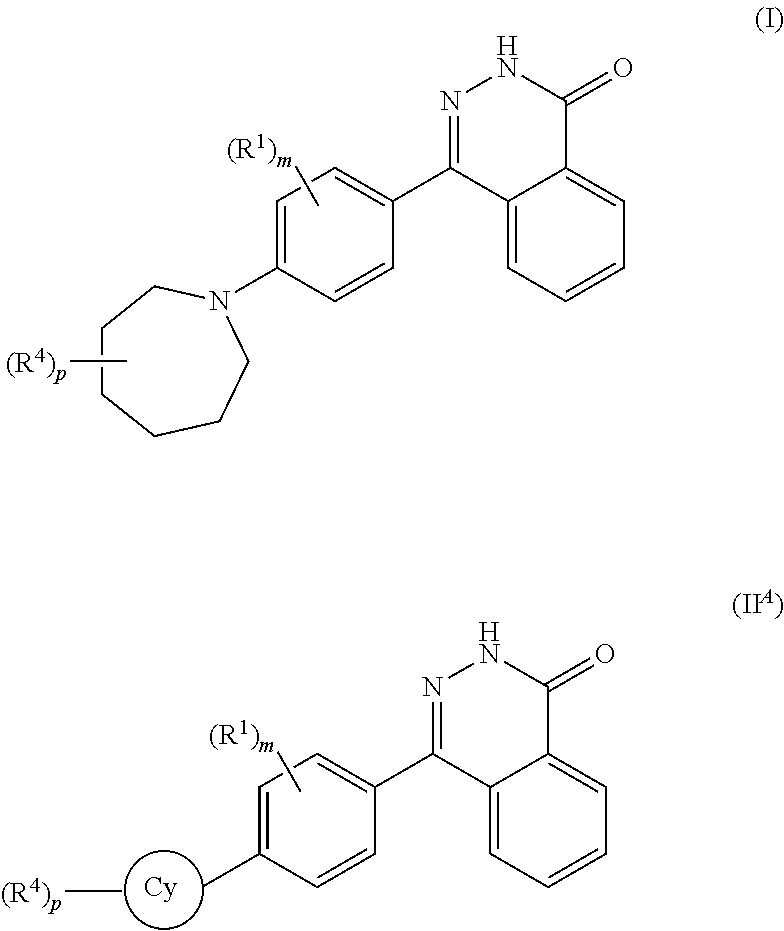
wherein the substituents depicted therein are described in detail below.

Thus, the present invention encompasses the 3-monosubstituted pyrazole compounds described herein (e.g., compounds of formula I, II, and related formulae IIA, IIB, IIC, etc . . . ), as well as their tautomeric 5-monosubstituted pyrazole counterparts. Likewise, any compound shown as 5-monosubstituted pyrazole embraces its corresponding 3-monosubstituted tautomer. The term “C(5)-positional isomer” as used herein refers to 1,5-disubstituted counterparts of the 1,3-disubstituted pyrazole compounds described herein. For example, the invention encompasses compounds of the formula (IVB) and its C(5)-positional isomer (IVB′):

Thus, whether or not explicitly specified, the present invention encompasses the 1,3-disubstituted pyrazole compounds described herein (e.g., compounds of formula I, III, A, C, and related formulae IIIA, IIIB, IIIC, IIID, etc . . . ), as well as their C(5)-positional pyrazole counterparts. Likewise, any compound shown as 1,5-disubstituted pyrazole embraces its corresponding 1,3-disubstituted positional isomer.

and tautomers and C(5)-positional isomers thereof;
-
- wherein B is a C(3)- or C(5)-substituent selected from the group consisting of —AL1—A, aryl, heteroaryl and heterocyclic; wherein AL1 is an optionally substituted C2-6alkenylidene moiety, and A is an optionally substituted alicyclic, heteroalicyclic, aromatic or heteroaromatic moiety;
- R1 is hydrogen, —C(═O)(CH2)mR1A, —C(═O)OR1A, —C(═O)N(R1A)2 or —SO2R1A; wherein m is an integer from 0-3; each occurrence of R1A is independently hydrogen or an optionally substituted aliphatic, alicyclic, heteroaliphatic, heteroalicyclic, aromatic or heteroaromatic moiety; and
- R2 is one or more substituents selected from the group consisting of hydrogen, halogen, hydroxyl, —NO2, —CN, an optionally substituted aliphatic, heteroaliphatic, aromatic, heteroaromatic moiety; —ORR, —S(═O)nRd, —NRbRc, and —C(═O)Ra; wherein n is 0-2, RR is an optionally substituted aliphatic, heteroaliphatic, aromatic or heteroaromatic moiety;
- Ra, for each occurrence, is independently selected from the group consisting of hydrogen, hydroxy, aliphatic, heteroaliphatic, aryl and heteroaryl;
- Rb and Rc, for each occurrence, are independently selected from the group consisting of hydrogen; hydroxy; SO2Rd; aliphatic, heteroaliphatic, aryl and heteroaryl;
- Rd, for each occurrence, is independently selected from the group consisting of hydrogen; —N(Re)2; aliphatic, aryl and heteroaryl; and
- Re, for each occurrence, is independently hydrogen or aliphatic.

-
- and tautomers thereof;
- wherein R2 and B are as defined generally above and in classes and subclasses herein.

-
- and tautomers thereof;
- wherein A is as defined generally above and in classes and subclasses herein; m is an integer from 0-3; and R is one or two substituents selected from the group consisting of hydrogen, halogen, hydroxyl, —NO2, —CN, an optionally substituted aliphatic, heteroaliphatic, aromatic, heteroaromatic moiety; —ORR, —S(═O)nRd, —NRbRc, and —C(═O)Ra; wherein n is 0-2, RR is an optionally substituted aliphatic, heteroaliphatic, aromatic or heteroaromatic moiety;
- Ra, for each occurrence, is independently selected from the group consisting of hydrogen, hydroxy, aliphatic, heteroaliphatic, aryl and heteroaryl;
- Rb and Rc, for each occurrence, are independently selected from the group consisting of hydrogen; hydroxy; SO2Rd; aliphatic, heteroaliphatic, aryl and heteroaryl;
- Rd, for each occurrence, is independently selected from the group consisting of hydrogen; —N(Re)2; aliphatic, aryl and heteroaryl; and
- Re, for each occurrence, is independently hydrogen or aliphatic.

-
- and tautomers thereof;
- wherein R is as defined generally above and in classes and subclasses herein; and AR1 is an optionally substituted aryl moiety.

-
- and tautomers thereof;
- wherein R is as defined generally above and in classes and subclasses herein; and Cy is an optionally substituted heterocyclic moiety.

-
- and C(5)-positional isomers thereof;
- wherein B is as defined generally above and in classes and subclasses herein; and R1 is —C(═O)(CH2)mR1A, —C(═O)OR1A, —C(═O)N(R1A)2 or —SO2R1A; wherein m is an integer from 0-3; and each occurrence of R1A is independently hydrogen or an optionally substituted aliphatic, alicyclic, heteroaliphatic, heteroalicyclic, aromatic or heteroaromatic moiety.

-
- and C(5)-positional isomers thereof;
- wherein R1, R and A are as defined generally above and in classes and subclasses herein; and m is an integer from 0-3.

-
- and C(5)-positional isomer thereof;
- wherein R and R1 are as defined generally above and in classes and subclasses herein; and AR1 is an optionally substituted aryl moiety.

-
- and C(5)-positional isomers thereof;
- wherein R and R1 are as defined generally above and in classes and subclasses herein; and Cy is an optionally substituted heterocyclic moiety.

-
- and C(5)-positional isomers thereof;
- wherein R1 is —SO2R1A; —C(═O)(CH2)mR1A, —C(═O)OR1A or —C(═O)NHR1A, wherein m is an integer from 0-3; and each occurrence of R1A is independently an optionally substituted aliphatic, alicyclic, heteroaliphatic, aryl or heterocyclic moiety; and
- R3 is a cis or trans —CH═CH—AR1, —CH═CH—Cy, phenoxyphenyl, or a heterocyclic group; wherein AR1 is an optionally substituted aryl moiety and Cy is an optionally substituted heterocyclic moiety.
- i) R1 is hydrogen;
- ii) R1 is —C(═O)R1A, —C(═O)NHR1A or —SO2R1A; wherein each occurrence of R1A is independently alkyl, alkenyl, alkynyl, cycloalkyl, cycloalkenyl, cycloalkynyl, heterocyclic, aryl, heteroaryl, -(alkyl)aryl, -(heteroalkyl)aryl, -(alkyl)heteroaryl or -(heteroalkyl)heteroaryl moiety;
- iii) R1 is —C(═O)R1A, —C(═O)NHR1A or —SO2R1A; wherein each occurrence of R1A is independently an alkyl, cycloalkyl, heterocyclic or aryl moiety;
- iv) R1 is —SO2R1A, —C(═O)(CH2)mR1A, —C(═O)OR1A or —C(═O)NHR1A, wherein m is an integer from 0-3; and each occurrence of R1A is independently alkyl, alkenyl, alkynyl, cycloalkyl, cycloalkenyl, cycloalkynyl, heterocyclic, aryl, heteroaryl, -(alkyl)aryl, -(heteroalkyl)aryl, -(alkyl)heteroaryl or -(heteroalkyl)heteroaryl moiety;
- v) R1 is —SO2R1A, —C(═O)(CH2)mR1A, —C(═O)OR1A or —C(═O)NHR1A, wherein m is an integer from 0-3; and each occurrence of R1A is independently an alkyl, cycloalkyl, heterocyclic or aryl moiety;
- vi) R1 is SO2AL1, C(═O)(CH2)mAL1, C(═O)OAL1, C(═O)NHAL1, SO2Aryl, C(═O)(CH2)mAryl, C(═O)OAryl, C(═O)OHeterocyclic, C(═O)(CH2)mHeterocyclic, or C(═O)NHAryl; wherein m is 0-3; AL1 is an aliphatic or alicyclic moiety; and AL1, the aryl and heterocyclic moiety are independently optionally substituted with one or more substituents independently selected from the group consisting of hydrogen; halogen; hydroxy; nitro; CN; aryl; heteroaryl; —C(═O)Ra, —NRbRc, or —S(O)nRd where n=0-2; C1-6alkoxy optionally substituted with one or more substituents independently selected from halogen and C1-6alkyl; an optionally substituted fused bicyclic 8-12-membered aromatic or alicyclic ring containing 0-3 heteroatoms selected from the group consisting of N, O, and S; C1-6 alkyl, C2-6 alkenyl, C2-6 alkynyl, or C3-6 cycloalkyl, optionally substituted with one or more substituents independently selected from halogen, hydroxy, C1-5 alkoxy, nitro, and N(Re)2; and further optionally substituted with 1-3 substituents independently selected from the group consisting of —C(═O)Ra, —NRbRc, —S(O)nRd where n=0-2, hydroxy, C1-6alkoxy, haloC1-6alkoxy, aryl, heteroaryl and heterocyclyl; or COCH2OC2H5OCH3;
- vii) compounds of subset vi) above wherein AL1 is alkyl or cycloalkyl;
- viii) R1 is C(═O)(CH2)mAL1; C(═O)(CH2)mAryl or C(═O)Heterocyclic; wherein m-1-3; AL1 is an aliphatic or alicyclic moiety; and AL1, the aryl and heterocyclic moiety are independently optionally substituted with one or more substituents independently selected from hydrogen; halogen; hydroxy; nitro; CN; aryl; heteroaryl; —C(═O)Ra, —NRbRc, or —S(O)nRd where n=0-2; C1-6alkoxy optionally substituted with one or more substituents independently selected from halogen and C1-6 alkyl; an optionally substituted fused bicyclic 8-12-membered aromatic or alicyclic ring containing 0-3 heteroatoms selected from the group consisting of N, O, and S; C1-6 alkyl, C2-6 alkenyl, C2-6 alkynyl, or C3-6 cycloalkyl, optionally substituted with one or more substituents independently selected from halogen, hydroxy, C1-5 alkoxy, nitro, and N(Re)2; and further optionally substituted with 1-3 substituents independently selected from the group consisting of —C(═O)Ra, —NRbRc, —S(O)nRd where n=0-2, hydroxy, C1-6 alkoxy, haloC1-6 alkoxy, aryl, heteroaryl and heterocyclyl; or COCH2OC2H5OCH3;
- ix) compounds of subset vii) above where AL1 is alkyl or cycloalkyl;
- x) R1 is C(═O)O-AL1 or C(═O)O-Aryl; wherein AL1 is an aliphatic or alicyclic moiety; and AL1 and the aryl moiety are optionally substituted with one or more substituents independently selected from hydrogen; halogen; hydroxy; nitro; CN; aryl; heteroaryl; —C(═O)Ra, —NRbRc, or —S(O)nRd where n=0-2; C1-6alkoxy optionally substituted with one or more substituents independently selected from halogen and C1-6 alkyl; an optionally substituted fused bicyclic 8-12-membered aromatic or alicyclic ring containing 0-3 heteroatoms selected from the group consisting of N, O, and S; C1-6 alkyl, C2-6 alkenyl, C2-6 alkynyl, or C3-6 cycloalkyl, optionally substituted with one or more substituents independently selected from halogen, hydroxy, C1-5 alkoxy, nitro, and N(Re)2; and further optionally substituted with 1-3 substituents independently selected from the group consisting of —C(═O)Ra, —NRbRc, —S(O)nRd where n=0-2, hydroxy, C1-6 alkoxy, haloC1-6 alkoxy, aryl, heteroaryl and heterocyclyl;
- xi) compounds of subset x) above where AL1 is alkyl or cycloalkyl;
- xii) R1 is SO2AL1, C(═O)(CH2)mAL1, C(═O)NHAL1, SO2Aryl, C(═O)(CH2)mAryl, C(═O)(CH2)mHeterocyclic or C(═O)NHAryl; wherein m is 0-3; AL1 is an aliphatic or alicyclic moiety; and AL1, the aryl and heterocyclic moiety are independently optionally substituted with one or more substituents independently selected from the group consisting of hydrogen; halogen; hydroxy; nitro; CN; aryl; heteroaryl; —C(═O)Ra, —NRbRc, or —S(O)nRd where n=0-2; C1-6alkoxy optionally substituted with one or more substituents independently selected from halogen and C1-6 alkyl; an optionally substituted fused bicyclic 8-12-membered aromatic or alicyclic ring containing 0-3 heteroatoms selected from the group consisting of N, O, and S; C1-6 alkyl, C2-6 alkenyl, C2-6 alkynyl, or C3-6 cycloalkyl, optionally substituted with one or more substituents independently selected from halogen, hydroxy, C1-5 alkoxy, nitro, and N(Re)2; and further optionally substituted with 1-3 substituents independently selected from the group consisting of —C(═O)Ra, —NRbRc, —S(O)nRd where n=0-2, hydroxy, C1-6 alkoxy, haloC1-6 alkoxy, aryl, heteroaryl and heterocyclyl; or COCH2OC2H5OCH3;
- xiii) compounds of subset xii) above where AL1 is alkyl or cycloalkyl;
- xiv) R1 is C(═O)(CH2)mAL1 wherein m is 1-3, C(═O)(CH2)mAryl, C(═O)(CH2)mHeterocyclic where m is 0-3; AL1 is an aliphatic or alicyclic moiety; and AL1, the aryl and heterocyclic moiety are independently optionally substituted with one or more substituents independently selected from the group consisting of hydrogen; halogen; hydroxy; nitro; CN; aryl; heteroaryl; —C(═O)Ra, —NRbRc, or —S(O)nRd where n=0-2; C1-6alkoxy optionally substituted with one or more substituents independently selected from halogen and C1-6 alkyl; an optionally substituted fused bicyclic 8-12-membered aromatic or alicyclic ring containing 0-3 heteroatoms selected from the group consisting of N, O, and S; C1-6 alkyl, C2-6 alkenyl, C2-6 alkynyl, or C3-6 cycloalkyl, optionally substituted with one or more substituents independently selected from halogen, hydroxy, C1-5 alkoxy, nitro, and N(Re)2; and further optionally substituted with 1-3 substituents independently selected from the group consisting of —C(═O)Ra, —NRbRc, —S(O)nRd where n=0-2, hydroxy, C1-6 alkoxy, haloC1-6 alkoxy, aryl, heteroaryl and heterocyclyl; or COCH2OC2H5OCH3;
- xv) compounds of subset xiv) above where AL1 is alkyl or cycloalkyl;
- xvii) R1 as SO2AL1, C(═O)AL1, C(═O)NHAL1, SO2Aryl, C(═O)Aryl, or C(═O)NHAryl, wherein AL1 is an aliphatic or alicyclic moiety; and AL1 and the aryl moiety are independently optionally substituted with one or more substituents independently selected from the group consisting of hydrogen; halogen; hydroxy; nitro; CN; aryl; heteroaryl; —C(═O)Ra, —NRbRc, or —S(O)nRd where n=0-2; C1-6alkoxy optionally substituted with one or more substituents independently selected from halogen and C1-6 alkyl; an optionally substituted fused bicyclic 8-12-membered aromatic or alicyclic ring containing 0-3 heteroatoms selected from the group consisting of N, O, and S; C1-6 alkyl, C2-6 alkenyl, C2-6 alkynyl, or C3-6 cycloalkyl, optionally substituted with one or more substituents independently selected from halogen, hydroxy, C1-5 alkoxy, nitro, and N(Re)2; and further optionally substituted with 1-3 substituents independently selected from the group consisting of —C(═O)Ra, —NRbRc, —S(O)nRd where n=0-2, hydroxy, C1-6 alkoxy, haloC1-6 alkoxy, aryl, heteroaryl and heterocyclyl; or COCH2OC2H5OCH3;
- xviii) compounds of subset xvii) above wherein AL1 is alkyl or cycloalkyl;
- xix) R1 is C(═O)Aryl optionally substituted with one or more substituents independently selected from the group consisting of hydrogen; CN; carboxy ester; —C(═O)Ra, or —S(O)nRd where n=0-2; C1-6alkoxy substituted with one or more substituents independently selected from halogen and C1-6 alkyl; an optionally substituted fused bicyclic 8-12-membered aromatic or alicyclic ring containing 0-3 heteroatoms selected from the group consisting of N, O, and S; —NRfRg; C1-6 alkyl substituted with one or more substituents independently selected from halogen, hydroxy, C1-5 alkoxy, nitro, and N(Re)2, or C2-6 alkenyl, C2-6 alkynyl, or C3-6 cycloalkyl, optionally substituted with one or more substituents independently selected from halogen, hydroxy, C1-5 alkoxy, nitro, and N(Re)2;
- xx) B or R3 is a cis or trans CHCHAryl, CHCHHeterocyclic, phenoxyphenyl, or a heterocyclic group, optionally substituted with one or more substituents independently selected from the group consisting of hydrogen; halogen; hydroxy; nitro; CN; aryl; heteroaryl; —C(═O)Ra, —NRbRc, or —S(O)nRd where n=0-2; C1-6alkoxy optionally substituted with one or more substituents independently selected from halogen and C1-6 alkyl; an optionally substituted fused bicyclic 8-12-membered aromatic or alicyclic ring containing 0-3 heteroatoms selected from the group consisting of N, O, and S; C1-6 alkyl, C2-6 alkenyl, C2-6 alkynyl, or C 3-6 cycloalkyl, optionally substituted with one or more substituents independently selected from halogen, hydroxy, C1-5 alkoxy, nitro, and N(Re)2;
- xxi) B or R3 is a cis or trans CHCHAryl, optionally substituted with one or more substituents independently selected from the group consisting of hydrogen; halogen; hydroxy; nitro; CN; aryl; heteroaryl; —C(═O)Ra, —NRbRc, or —S(O)nRd where n=0-2; C1-6alkoxy optionally substituted with one or more substituents independently selected from halogen and C1-6 alkyl; an optionally substituted fused bicyclic 8-12-membered aromatic or alicyclic ring containing 0-3 heteroatoms selected from the group consisting of N, O, and S; C1-6 alkyl, C2-6 alkenyl, C2-6 alkynyl, or C3-6 cycloalkyl, optionally substituted with one or more substituents independently selected from halogen, hydroxy, C1-5 alkoxy, nitro, and N(Re)2;
- xxii) B or R3 is a cis or trans CHCHheterocyclic, phenoxyphenyl, or a heterocyclic group, optionally substituted with one or more substituents independently selected from the group consisting of hydrogen; halogen; hydroxy; nitro; CN; aryl; heteroaryl; —C(═O)Ra, —NRbRc, or —S(O)nRd where n=0-2; C1-6alkoxy optionally substituted with one or more substituents independently selected from halogen and C1-6 alkyl; an optionally substituted fused bicyclic 8-12-membered aromatic or alicyclic ring containing 0-3 heteroatoms selected from the group consisting of N, O, and S; C1-6 alkyl, C2-6 alkenyl, C2-6 alkynyl, or C3-6 cycloalkyl, optionally substituted with one or more substituents independently selected from halogen, hydroxy, C1-5 alkoxy, nitro, and N(Re)2;
- xxiii) R is one or more substituents selected from the group consisting of hydrogen, halogen, hydroxyl, —NO2, —CN, alkyl, alkenyl, alkynyl, cycloalkyl, cycloalkenyl, cycloalkynyl, heterocyclic, aryl, heteroaryl, -(alkyl)aryl, -(heteroalkyl)aryl, -(alkyl)heteroaryl or -(heteroalkyl)heteroaryl moiety; hydrogen, alkyl, heteroalkyl, aryl, heteroaryl, -(alkyl)aryl, -(alkyl)heteroaryl, —ORR, —S(═O)nRR, —N(RR)2, —SO2N(RR)2, —C(═O)RR, —C(═O)N(RR)2, —C(═O)ORR, —N(RR)C(═O)RR or —N(RR)SO2RR; wherein n is 0-2, and RR, for each occurrence, is independently hydrogen, lower alkyl, lower heteroalkyl, aryl, heteroaryl, -(alkyl)aryl, or -(alkyl)heteroaryl;
- xxiv) R is one or more substituents selected from the group consisting of hydrogen, halogen, hydroxyl, —NO2, —CN, alkoxy, alkyl, alkenyl, alkynyl, cycloalkyl, cycloalkenyl, cycloalkynyl, heterocyclic, aryl, heteroaryl, -(alkyl)aryl, -(heteroalkyl)aryl, -(alkyl)heteroaryl, -(heteroalkyl)heteroaryl moiety, —S(═O)nRd, —NRbRc, and —C(═O)Ra; wherein n is 0-2;
- xxv) R is one or more substituents selected from hydrogen; halogen; hydroxy; nitro; CN; aryl; heteroaryl; —C(═O)Ra; —NRbRc; —S(O)nRd where n=0-2; C1-6alkoxy optionally substituted with one or more substituents independently selected from halogen and C1-6 alkyl; an optionally substituted fused bicyclic 8-12-membered aromatic or alicyclic ring optionally containing 1-3 heteroatoms selected from the group consisting of N, O, and S; and C1-6 alkyl, C2-6 alkenyl, C2-6 alkynyl, or C3-6 cycloalkyl, each independently optionally substituted with one or more substituents independently selected from halogen, hydroxy, C1-5 alkoxy, nitro, and N(Re)2;
- xxvi) R is one or more substituents selected from hydrogen; halogen; hydroxy; nitro; CN; C1-6 alkyl; C1-6 alkoxy; haloC1-6 alkoxy; —C(═O)Ra; —C(═O)ORa; —ORa and —NRaRb; wherein Ra and Rb are independently lower alkyl or any two adjacent Ra groups, or Ra and Rb groups, taken together, may form a heterocyclic moiety;
- xxvii) R is one or more substituents selected from hydrogen; halogen; hydroxy or nitro;
- xxviii) Ra, for each occurrence, is independently selected from the group consisting of hydrogen, hydroxy, C1-6 alkyl, C1-6 alkoxy, aryl, heteroaryl, and NRbRc, wherein C1-6 alkyl and C1-6 alkoxy are optionally substituted with one or more substituents independently selected from halogen, hydroxy, C1-5 alkoxy, nitro, and N(Re)2;
- xxix) Rb and Rc, for each occurrence, are independently selected from the group consisting of hydrogen; hydroxy; SO2Rd; C1-6 alkyl optionally substituted with one or more substituents independently selected from halogen, hydroxy, C1-5 alkoxy, nitro, and N(Re)2; C1-6 alkoxy optionally substituted with one or more substituents independently selected from halogen, hydroxy, C1-5 alkoxy, nitro and N(Re)2; aryl optionally substituted with one or more substituents independently selected from halogen, hydroxy, C1-4 alkyl, C1-5 alkoxy, nitro, and N(Re)2; and heteroaryl optionally substituted with one or more substituents independently selected from halogen, hydroxy, C1-4 alkyl, C1-5 alkoxy, nitro, and N(Re)2;
- xxx) Rd, for each occurrence, is independently selected from the group consisting of hydrogen; N(Re)2; C1-6 alkyl optionally substituted with one or more substituents independently selected from halogen, hydroxy, C1-5 alkoxy, nitro, and N(Re)2; aryl and heteroaryl;
- xxxi) Re, for each occurrence, is independently hydrogen or C1-6 alkyl;
- xxxii) Rf and Rg, for each occurrence, are independently selected from the group consisting of hydrogen; hydroxy; SO2Rd; C1-6 alkyl substituted with one or more substituents independently selected from halogen, hydroxy, C1-5 alkoxy, nitro, and N(Re)2; C1-6 alkoxy optionally substituted with one or more substituents independently selected from halogen, hydroxy, C1-5 alkoxy, nitro and N(Re)2; aryl optionally substituted with one or more substituents independently selected from halogen, hydroxy, C1-4 alkyl, C1-5 alkoxy, nitro, and N(Re)2; and heteroaryl optionally substituted with one or more substituents independently selected from halogen, hydroxy, C1-4 alkyl, C1-5 alkoxy, nitro, and N(Re)2;
- xxxiii) R2 is one or more substituents selected from the group consisting of hydrogen, halogen, hydroxyl, —NO2, —CN, alkyl, alkenyl, alkynyl, cycloalkyl, cycloalkenyl, cycloalkynyl, heterocyclic, aryl, heteroaryl, -(alkyl)aryl, -(heteroalkyl)aryl, -(alkyl)heteroaryl or -(heteroalkyl)heteroaryl moiety; hydrogen, alkyl, heteroalkyl, aryl, heteroaryl, -(alkyl)aryl, -(alkyl)heteroaryl, —ORR, —S(═O)nRR, —N(RR)2, —SO2N(RR)2, —C(═O)RR, —C(═O)N(RR)2, —C(═O)ORR, —N(RR)C(═O)RR or —N(RR)SO2RR; wherein n is 0-2, and RR, for each occurrence, is independently hydrogen, lower alkyl, lower heteroalkyl, aryl, heteroaryl, -(alkyl)aryl, or -(alkyl)heteroaryl;
- xxxiv) R2 is one or more substituents selected from the group consisting of hydrogen, halogen, hydroxyl, —NO2, —CN, alkoxy, alkyl, alkenyl, alkynyl, cycloalkyl, cycloalkenyl, cycloalkynyl, heterocyclic, aryl, heteroaryl, -(alkyl)aryl, -(heteroalkyl)aryl, -(alkyl)heteroary, -(heteroalkyl)heteroaryl moiety, —S(═O)nRd, —NRbRc, and —C(═O)Ra; wherein n is 0-2;
- xxxv) R2 is one or more substituents selected from hydrogen; halogen; hydroxy; nitro; CN; aryl; heteroaryl; —C(═O)Ra; —NRbRc; —S(O)nRd where n=0-2; C1-6alkoxy optionally substituted with one or more substituents independently selected from halogen and C1-6 alkyl; an optionally substituted fused bicyclic 8-12-membered aromatic or alicyclic ring optionally containing 1-3 heteroatoms selected from the group consisting of N, O, and S; and C1-6 alkyl, C2-6 alkenyl, C2-6 alkynyl, or C3-6 cycloalkyl, each independently optionally substituted with one or more substituents independently selected from halogen, hydroxy, C1-5 alkoxy, nitro, and N(Re)2;
- xxxvi) R2 is one or more substituents selected from hydrogen; halogen; hydroxy; nitro; CN; C1-6 alkyl; C1-6 alkoxy; haloC1-6 alkoxy; —C(═O)Ra; —C(═O)ORa; —ORa and —NRaRb; wherein Ra and Rb are independently lower alkyl or any two adjacent Ra groups, or Ra and Rb groups, taken together, may form a heterocyclic moiety;
- xxxvii) A is an alicyclic, heteroalicyclic, aromatic or heteroaromatic moiety;
- xxxviii) A is an optionally substituted aromatic or non-aromatic 5-6 membered monocyclic ring, optionally containing 1-4 heteroatoms selected from N, O or S; or an optionally substituted aromatic or non-aromatic 8-12 membered bicyclic ring, optionally containing 1-6 heteroatoms selected from N, O or S;
- xxxix) A is an aromatic or non-aromatic 5-6 membered monocyclic ring or 8-12 membered bicyclic ring, optionally substituted with one or more substituents selected from hydrogen; halogen; hydroxy; nitro; CN; C1-6 alkyl; C1-6 alkoxy; haloC1-6 alkoxy; —C(═O)Ra; —C(═O)ORa; —ORa and —NRaRb; wherein Ra and Rb are independently lower alkyl or any two adjacent Ra groups, or Ra and Rb groups, taken together, may form a heterocyclic moiety;
- xl) A is an aromatic or non-aromatic 5-6 membered monocyclic ring or 8-12 membered bicyclic ring, optionally substituted with one or more substituents selected from hydrogen; Cl; hydroxy; nitro; CN; —OCF3; —C(═O)OMe; —C(═O)Me; —OMe; methyldioxyl; —NMe2 and morpholinyl;
- xli) A is optionally substituted aryl;
- xlii) A is optionally substituted phenyl or naphthyl;
- xliii) A is optionally substituted heteroaryl;
- xliv) A has the structure:

-
- wherein R represents one or more substituents, as defined in subsets xxiii)-xxvii);
- xlv) A is an optionally substituted C1-6cycloalkyl or C1-6cycloalkenyl moiety;
- xlvi) A is optionally substituted cyclohexenyl;
- xlvii) A is an optionally substituted heterocyclic moiety;
- xlviii) A and/or Cy is one of:

-
- wherein R represents one or more substituents, as defined in subsets xxiii)-xxvii); and r is an integer from 1-6;
- xlix) A and/or Cy is an optionally substituted 5-membered heterocyclic moiety having the structure:

-
- wherein R represents one or more substituents, as defined in subsets xxiii)-xxvii); and X is O, S or NRN; wherein RN is hydrogen, lower alkyl, aryl, acyl or a nitrogen protecting group;
- l) A and/or Cy is an optionally substituted 5-membered heterocyclic moiety having the structure:

-
- wherein R represents one or more substituents, as defined in subsets xxiii)-xxvii); and X is O, S or NRN; wherein RN is hydrogen, lower alkyl, aryl, acyl or a nitrogen protecting group;
- li) B is a moiety having the structure:

-
- wherein A and R are as defined in classes and subclasses herein;
- lii) B is a moiety having one of the structures:

-
- wherein R represents one or more substituents, as defined in subsets xxiii)-xxvii); m is an integer from 1-3; and r is an integer from 1-6;
- liii) AR is phenyl or naphthyl; and/or
- liv) AR1 is phenyl or naphthyl.
-
- B is a C(3)- or C(5)-substituent selected from the group consisting of optionally substituted cis or trans CHCHAryl, CHCHHeterocyclic, phenoxyphenyl and a heterocyclic group;
- R1 is C(═O)Aryl optionally substituted with one or more substituents independently selected from the group consisting of hydrogen; CN; carboxy ester; —C(═O)Ra, or —S(O)nRd where n=0-2; C1-6alkoxy substituted with one or more substituents independently selected from halogen and C1-6 alkyl; an optionally substituted fused bicyclic 8-12-membered aromatic or alicyclic ring containing 0-3 heteroatoms selected from the group consisting of N, O, and S; —NRfRg; C1-6 alkyl substituted with one or more substituents independently selected from halogen, hydroxy, C1-5 alkoxy, nitro, and N(Re)2, or C2-6 alkenyl, C2-6 alkynyl, or C3-6 cycloalkyl, optionally substituted with one or more substituents independently selected from halogen, hydroxy, C1-5 alkoxy, nitro, and N(Re)2; and further optionally substituted with 1-3 substituents independently selected from the group consisting of —C(═O)Ra, —NRbRc, —S(O)nRd where n=0-2, hydroxy, C1-6 alkoxy, haloC1-6alkoxy, aryl, heteroaryl and heterocyclyl; and
- R is one or more substituents selected from hydrogen; halogen; hydroxy; nitro; CN; aryl; heteroaryl; —C(═O)Ra, —NRbRc; —S(O)nRd where n=0-2; C1-6alkoxy optionally substituted with one or more substituents independently selected from halogen and C1-6 alkyl; an optionally substituted fused bicyclic 8-12-membered aromatic or alicyclic ring optionally containing 1-3 heteroatoms selected from the group consisting of N, O, and S; and C1-6 alkyl, C2-6 alkenyl, C2-6 alkynyl, or C3-6 cycloalkyl, each independently optionally substituted with one or more substituents independently selected from halogen, hydroxy, C1-5 alkoxy, nitro, and N(Re)2;
- wherein Ra, for each occurrence, is independently selected from the group consisting of hydrogen, hydroxy, C1-6 alkyl, C1-6 alkoxy, aryl, heteroaryl, and NRbRc, wherein C1-6 alkyl and C1-6 alkoxy are optionally substituted with one or more substituents independently selected from halogen, hydroxy, C1-5 alkoxy, nitro, and N(Re)2;
- Rb and Rc, for each occurrence, are independently selected from the group consisting of hydrogen; hydroxy; SO2Rd; C1-6 alkyl optionally substituted with one or more substituents independently selected from halogen, hydroxy, C1-5 alkoxy, nitro, and N(Re)2; C1-6 alkoxy optionally substituted with one or more substituents independently selected from halogen, hydroxy, C1-5 alkoxy, nitro and N(Re)2; aryl optionally substituted with one or more substituents independently selected from halogen, hydroxy, C1-4 alkyl, C1-5 alkoxy, nitro, and N(Re)2; and heteroaryl optionally substituted with one or more substituents independently selected from halogen, hydroxy, C1-4 alkyl, C1-5 alkoxy, nitro, and N(Re)2;
- Rd, for each occurrence, is independently selected from the group consisting of hydrogen; N(Re)2; C1-6 alkyl optionally substituted with one or more substituents independently selected from halogen, hydroxy, C1-5 alkoxy, nitro, and N(Re)2; aryl and heteroaryl; and
- Re, for each occurrence, is independently hydrogen or C1-6 alkyl.

tautomers thereof; and pharmaceutically acceptable derivatives thereof;
-
- wherein A and R are as defined generally and in classes and subclasses herein. In certain embodiments, A represents an optionally substituted aromatic or non-aromatic 5-6 membered monocyclic ring, optionally containing 1-4 heteroatoms selected from N, O or S; or an optionally substituted aromatic or non-aromatic 8-12 membered bicyclic ring, optionally containing 1-6 heteroatoms selected from N, O or S. In certain other embodiments, R is one or more substituents selected from the group consisting of hydrogen; halogen; hydroxy; nitro; CN; aryl; heteroaryl; —C(═O)Ra; —NRbRc; —S(O)nRd where n=0-2; C1-6alkoxy optionally substituted with one or more substituents independently selected from halogen and C1-6 alkyl; an optionally substituted fused bicyclic 8-12-membered aromatic or alicyclic ring optionally containing 1-3 heteroatoms selected from the group consisting of N, O, and S; and C1-6 alkyl, C2-6 alkenyl, C2-6 alkynyl, or C3-6 cycloalkyl, each independently optionally substituted with one or more substituents independently selected from halogen, hydroxy, C1-5 alkoxy, nitro, and N(Re)2; and further optionally substituted with 1-3 substituents independently selected from the group consisting of —C(═O)Ra, —NRbRc, —S(O)nRd where n=0-2, hydroxy, C1-6 alkoxy, haloC1-6 alkoxy, aryl, heteroaryl and heterocyclyl;
- wherein each occurrence of Ra is independently selected from the group consisting of hydrogen, hydroxy, C1-6 alkyl, C1-6 alkoxy, aryl, heteroaryl, and NRbRc, wherein C1-6 alkyl and C1-6 alkoxy are optionally substituted with one or more substituents independently selected from halogen, hydroxy, C1-5 alkoxy, nitro, and N(Re)2;
- each occurrence of Rb and Rc is independently selected from the group consisting of hydrogen; hydroxy; SO2Rd; C1-6 alkyl optionally substituted with one or more substituents independently selected from halogen, hydroxy, C1-5 alkoxy, nitro, and N(Re)2; C1-6 alkoxy optionally substituted with one or more substituents independently selected from halogen, hydroxy, C1-5 alkoxy, nitro and N(Re)2; aryl optionally substituted with one or more substituents independently selected from halogen, hydroxy, C1-4 alkyl, C1-5 alkoxy, nitro, and N(Re)2; and heteroaryl optionally substituted with one or more substituents independently selected from halogen, hydroxy, C1-4 alkyl, C1-5 alkoxy, nitro, and N(Re)2;
- each occurrence of Rd is independently selected from the group consisting of hydrogen; N(Re)2; C1-6 alkyl optionally substituted with one or more substituents independently selected from halogen, hydroxy, C1-5 alkoxy, nitro, and N(Re)2; aryl and heteroaryl; and
- each occurrence of Re is independently hydrogen or C1-6 alkyl.


-
- tautomers thereof, and pharmaceutically acceptable derivatives thereof;
- wherein A and R are as defined generally and in classes and subclasses herein.
-
- and R is one or more substituents selected from the group consisting of hydrogen; halogen; hydroxy; nitro; CN; aryl; heteroaryl; —C(═O)Ra; —NRbRc; —S(O)nRd where n=0-2; C1-6alkoxy optionally substituted with one or more substituents independently selected from halogen and C1-6 alkyl; an optionally substituted fused bicyclic 8-12-membered aromatic or alicyclic ring optionally containing 1-3 heteroatoms selected from the group consisting of N, O, and S; and C1-6 alkyl, C2-6 alkenyl, C2-6 alkynyl, or C3-6 cycloalkyl, each independently optionally substituted with one or more substituents independently selected from halogen, hydroxy, C1-5 alkoxy, nitro, and N(Re)2;
- wherein each occurrence of Ra is independently selected from the group consisting of hydrogen, hydroxy, C1-6 alkyl, C1-6 alkoxy, aryl, heteroaryl, and NRbRc, wherein C1-6 alkyl and C1-6 alkoxy are optionally substituted with one or more substituents independently selected from halogen, hydroxy, C1-5 alkoxy, nitro, and N(Re)2;
- each occurrence of Rb and Rc is independently selected from the group consisting of hydrogen; hydroxy; SO2Rd; C1-6 alkyl optionally substituted with one or more substituents independently selected from halogen, hydroxy, C1-5 alkoxy, nitro, and N(Re)2; C1-6 alkoxy optionally substituted with one or more substituents independently selected from halogen, hydroxy, C1-5 alkoxy, nitro and N(Re)2; aryl optionally substituted with one or more substituents independently selected from halogen, hydroxy, C1-4 alkyl, C1-5 alkoxy, nitro, and N(Re)2; and heteroaryl optionally substituted with one or more substituents independently selected from halogen, hydroxy, C1-4 alkyl, C1-5 alkoxy, nitro, and N(Re)2;
- each occurrence of Rd is independently selected from the group consisting of hydrogen; N(Re)2; C1-6 alkyl optionally substituted with one or more substituents independently selected from halogen, hydroxy, C1-5 alkoxy, nitro, and N(Re)2; aryl and heteroaryl; and
- each occurrence of Re is independently hydrogen or C1-6 alkyl;
- or a prodrug, salt, hydrate, or ester thereof.


-
- C(5)-positional isomers thereof; and pharmaceutically acceptable derivatives thereof;
- wherein R1 is C(═O)(CH2)mAL2, C(═O)OAL2, C(═O)(CH2)mAryl, C(═O)OAryl, C(═O)Heteroaryl or C(═O)Heterocyclic; where m is an integer from 1-3; AL2 is an aliphatic or alicyclic moiety; and AL2, the aryl, heteroaryl and heterocyclic moiety are independently optionally substituted with one or more substituents independently selected from hydrogen; halogen; hydroxy; nitro; CN; aryl; heteroaryl; —C(═O)Ra, —NRbRc, or —S(O)nRd where n=0-2; C1-6alkoxy optionally substituted with one or more substituents independently selected from halogen and C1-6 alkyl; an optionally substituted fused bicyclic 8-12-membered aromatic or alicyclic ring containing 0-3 heteroatoms selected from the group consisting of N, O, and S; C1-6 alkyl, C2-6 alkenyl, C2-6 alkynyl, or C3-6 cycloalkyl, optionally substituted with one or more substituents independently selected from halogen, hydroxy, C1-5 alkoxy, nitro, and N(Re)2; and further optionally substituted with 1-3 substituents independently selected from the group consisting of —C(═O)Ra, —NRbRc, —S(O)nRd where n=0-2, hydroxy, C1-6 alkoxy, haloC1-6 alkoxy, aryl, heteroaryl and heterocyclyl; or COCH2OC2H5OCH3; and
- R3 is a cis or trans CHCHAryl, CHCHHeterocyclic, phenoxyphenyl, or a heterocyclic group, wherein the aryl, heterocyclic or phenoxyphenyl moiety may be optionally substituted with one or more substituents independently selected from the group consisting of hydrogen; halogen; hydroxy; nitro; CN; aryl; heteroaryl; —C(═O)Ra, —NRbRc, or —S(O)nRd where n=0-2; C1-6alkoxy optionally substituted with one or more substituents independently selected from halogen and C1-6 alkyl; an optionally substituted fused bicyclic 8-12-membered aromatic or alicyclic ring containing 0-3 heteroatoms selected from the group consisting of N, O, and S; C1-6 alkyl, C2-6 alkenyl, C2-6 alkynyl, or C3-6 cycloalkyl, optionally substituted with one or more substituents independently selected from halogen, hydroxy, C1-5 alkoxy, nitro, and N(Re)2; and further optionally substituted with 1-3 substituents independently selected from the group consisting of —C(═O)Ra, —NRbRc, —S(O)nRd where n=0-2, hydroxy, C1-6 alkoxy, haloC1-6 alkoxy, aryl, heteroaryl and heterocyclyl;
- wherein Ra is selected from the group consisting of hydrogen, hydroxy, C1-6 alkyl, C1-6 alkoxy, aryl, heteroaryl, and NRbRc, wherein C1-6 alkyl and C1-6 alkoxy are optionally substituted with one or more substituents independently selected from halogen, hydroxy, C1-5 alkoxy, nitro, and N(Re)2;
- Rb and Rc are independently selected from the group consisting of hydrogen; hydroxy; SO2Rd; C1-6 alkyl optionally substituted with one or more substituents independently selected from halogen, hydroxy, C1-5 alkoxy, nitro, and N(Re)2; C1-6 alkoxy optionally substituted with one or more substituents independently selected from halogen, hydroxy, C1-5 alkoxy, nitro and N(Re)2; aryl optionally substituted with one or more substituents independently selected from halogen, hydroxy, C1-4 alkyl, C1-5 alkoxy, nitro, and N(Re)2; and heteroaryl optionally substituted with one or more substituents independently selected from halogen, hydroxy, C1-4 alkyl, C1-5 alkoxy, nitro, and N(Re)2;
- Rd is selected from the group consisting of hydrogen; N(Re)2; C1-6 alkyl optionally substituted with one or more substituents independently selected from halogen, hydroxy, C1-5 alkoxy, nitro, and N(Re)2; aryl and heteroaryl; and
- Re is hydrogen or C1-6 alkyl.
-
- wherein Ra is selected from the group consisting of hydrogen, hydroxy, C1-6 alkyl, C1-6 alkoxy, aryl, heteroaryl, and NRbRc, wherein C1-6 alkyl and C1-6 alkoxy are optionally substituted with one or more substituents independently selected from halogen, hydroxy, C1-5 alkoxy, nitro, and N(Re)2;
- Rb and Rc are independently selected from the group consisting of hydrogen; hydroxy; SO2Rd; C1-6 alkyl optionally substituted with one or more substituents independently selected from halogen, hydroxy, C1-5 alkoxy, nitro, and N(Re)2; C1-6 alkoxy optionally substituted with one or more substituents independently selected from halogen, hydroxy, C1-5 alkoxy, nitro and N(Re)2; aryl optionally substituted with one or more substituents independently selected from halogen, hydroxy, C1-4 alkyl, C1-5 alkoxy, nitro, and N(Re)2; and heteroaryl optionally substituted with one or more substituents independently selected from halogen, hydroxy, C1-4 alkyl, C1-5 alkoxy, nitro, and N(Re)2;
- Rd is selected from the group consisting of hydrogen; N(Re)2; C1-6 alkyl optionally substituted with one or more substituents independently selected from halogen, hydroxy, C1-5 alkoxy, nitro, and N(Re)2; aryl and heteroaryl; and
- Re is hydrogen or C1-6 alkyl.


-
- wherein Ra is selected from the group consisting of hydrogen, hydroxy, C1-6 alkyl, C1-6 alkoxy, aryl, heteroaryl, and NRbRc, wherein C1-6 alkyl and C1-6 alkoxy are optionally substituted with one or more substituents independently selected from halogen, hydroxy, C1-5 alkoxy, nitro, and N(Re)2;
- Rb and Rc are independently selected from the group consisting of hydrogen; hydroxy; SO2Rd; C1-6 alkyl optionally substituted with one or more substituents independently selected from halogen, hydroxy, C1-5 alkoxy, nitro, and N(Re)2; C1-6 alkoxy optionally substituted with one or more substituents independently selected from halogen, hydroxy, C1-5 alkoxy, nitro and N(Re)2; aryl optionally substituted with one or more substituents independently selected from halogen, hydroxy, C1-4 alkyl, C1-5 alkoxy, nitro, and N(Re)2; and heteroaryl optionally substituted with one or more substituents independently selected from halogen, hydroxy, C1-4 alkyl, C1-5 alkoxy, nitro, and N(Re)2;
- Rd is selected from the group consisting of hydrogen; N(Re)2; C1-6 alkyl optionally substituted with one or more substituents independently selected from halogen, hydroxy, C1-5 alkoxy, nitro, and N(Re)2; aryl and heteroaryl; and
- Re is hydrogen or C1-6 alkyl.


-
- C(5)-positional isomers thereof; and pharmaceutically acceptable derivatives thereof;
- wherein R1 is SO2AL2, C(═O)(CH2)mAL2, C(═O)OAL2, C(═O)NHAL2, SO2Aryl, C(═O)(CH2)mAryl, C(═O)OAryl, C(═O)Oheterocyclic, C(═O)(CH2)mHeterocyclic, or C(═O)NHAryl; wherein m is an integer from 1-3; AL2 is an aliphatic or alicyclic moiety; and AL2, the aryl and heterocyclic moiety are independently optionally substituted with one or more substituents independently selected from the group consisting of hydrogen; halogen; hydroxy; nitro; CN; aryl; heteroaryl; —C(═O)Ra, —NRbRc, or or —S(O)nRd where n=0-2; C1-6alkoxy optionally substituted with one or more substituents independently selected from halogen and C1-6 alkyl; an optionally substituted fused bicyclic 8-12-membered aromatic or alicyclic ring containing 0-3 heteroatoms selected from the group consisting of N, O, and S; C1-6 alkyl, C2-6 alkenyl, C2-6 alkynyl, or C3-6 cycloalkyl, optionally substituted with one or more substituents independently selected from halogen, hydroxy, C1-5 alkoxy, nitro, and N(Re)2; and further optionally substituted with 1-3 substituents independently selected from the group consisting of —C(═O)Ra, —NRbRc, —S(O)nRd where n=0-2, hydroxy, C1-6 alkoxy, haloC1-6 alkoxy, aryl, heteroaryl and heterocyclyl; or COCH2OC2H5OCH3; and
- CHCHAr is a cis or trans CH═CHAryl optionally substituted with one or more substituents independently selected from the group consisting of hydrogen; halogen; hydroxy; nitro; CN; aryl; heteroaryl; —C(═O)Ra, —NRbRc, or —S(O)nRd where n=0-2; C1-6alkoxy optionally substituted with one or more substituents independently selected from halogen and C1-6 alkyl; an optionally substituted fused bicyclic 8-12-membered aromatic or alicyclic ring containing 0-3 heteroatoms selected from the group consisting of N, O, and S; C1-6 alkyl, C2-6 alkenyl, C2-6 alkynyl, or C3-6 cycloalkyl, optionally substituted with one or more substituents independently selected from halogen, hydroxy, C1-5 alkoxy, nitro, and N(Re)2;
- wherein Ra is selected from the group consisting of hydrogen, hydroxy, C1-6 alkyl, C1-6 alkoxy, aryl, heteroaryl, and NRbRc, wherein C1-6 alkyl and C1-6 alkoxy are optionally substituted with one or more substituents independently selected from halogen, hydroxy, C1-5 alkoxy, nitro, and N(Re)2;
- Rb and Rc are independently selected from the group consisting of hydrogen; hydroxy; SO2Rd; C1-6 alkyl optionally substituted with one or more substituents independently selected from halogen, hydroxy, C1-5 alkoxy, nitro, and N(Re)2; C1-6 alkoxy optionally substituted with one or more substituents independently selected from halogen, hydroxy, C1-5 alkoxy, nitro and N(Re)2; aryl optionally substituted with one or more substituents independently selected from halogen, hydroxy, C1-4 alkyl, C1-5 alkoxy, nitro, and N(Re)2; and heteroaryl optionally substituted with one or more substituents independently selected from halogen, hydroxy, C1-4 alkyl, C1-5 alkoxy, nitro, and N(Re)2;
- Rd is selected from the group consisting of hydrogen; N(Re)2; C1-6 alkyl optionally substituted with one or more substituents independently selected from halogen, hydroxy, C1-5 alkoxy, nitro, and N(Re)2; aryl and heteroaryl; and
- Re is hydrogen or C1-6 alkyl.
- In certain embodiments, for compounds of Formula (IIID2), R1 is C(═O)(CH2)mAL2, C(═O)OAL2, C(═O)(CH2)mAryl, C(═O)OAryl, C(═O)OHeterocyclic or C(═O)(CH2)mHeterocyclic; wherein m is an integer from 1-3; AL2 is an aliphatic or alicyclic moiety; and AL2, the aryl and heterocyclic moiety are independently optionally substituted with one or more substituents independently selected from the group consisting of hydrogen; halogen; hydroxy; nitro; CN; aryl; heteroaryl; —C(═O)Ra, —NRbRc, or —S(O)nRd where n=0-2; C1-6alkoxy optionally substituted with one or more substituents independently selected from halogen and C1-6 alkyl; an optionally substituted fused bicyclic 8-12-membered aromatic or alicyclic ring containing 0-3 heteroatoms selected from the group consisting of N, O, and S; C1-6 alkyl, C2-6 alkenyl, C2-6 alkynyl, or C3-6 cycloalkyl, optionally substituted with one or more substituents independently selected from halogen, hydroxy, C1-5 alkoxy, nitro, and N(Re)2; and further optionally substituted with 1-3 substituents independently selected from the group consisting of —C(═O)Ra, —NRbRc, —S(O)nRd where n=0-2, hydroxy, C1-6 alkoxy, haloC1-6 alkoxy, aryl, heteroaryl and heterocyclyl; or COCH2OC2H5OCH3.


-
- In certain embodiments, for the compounds of subgroup XI above, AL2 is an alkyl or cycloalkyl moiety.

-
- C(5)-positional isomer thereof; and pharmaceutically acceptable derivatives thereof;
- wherein AR is an optionally fused 3-12 membered aromatic or alicyclic mono- or bicyclic-ring containing 0-3 heteroatoms selected from the group consisting of N, O, and S optionally substituted with one or more substituents independently selected from the group consisting of hydrogen; halogen; hydroxy; nitro; CN; aryl; heteroaryl; heterocycle; carboxy ester; —C(═O)Ra, —NRbRc, or —S(O)nRd where n=0-2; C1-6alkoxy substituted with one or more substituents independently selected from halogen and C1-6 alkyl; an optionally substituted fused bicyclic 8-12-membered aromatic or alicyclic ring containing 0-3 heteroatoms selected from the group consisting of N, O, and S; —NRfRg; C1-6 alkyl, C2-6 alkenyl, C2-6 alkynyl, or C3-6 cycloalkyl, optionally substituted with one or more substituents independently selected from halogen, hydroxy, C1-5 alkoxy, nitro, and N(Re)2; and further optionally substituted with 1-3 substituents independently selected from the group consisting of —C(═O)Ra, —NRbRc, —S(O)nRd where n=0-2, hydroxy, C1-6 alkoxy, haloC1-6 alkoxy, aryl, heteroaryl and heterocyclyl; and
- R3 is a cis or trans CHCHheterocyclic, phenoxyphenyl, or a heterocyclic group, optionally substituted with one or more substituents independently selected from the group consisting of hydrogen; halogen; hydroxy; nitro; CN; aryl; heteroaryl; —C(═O)Ra, —NRbRc, or —S(O)nRd where n=0-2; C1-6alkoxy optionally substituted with one or more substituents independently selected from halogen and C1-6 alkyl; an optionally substituted fused bicyclic 8-12-membered aromatic or alicyclic ring containing 0-3 heteroatoms selected from the group consisting of N, O, and S; C1-6 alkyl, C2-6 alkenyl, C2-6 alkynyl, or C3-6 cycloalkyl, optionally substituted with one or more substituents independently selected from halogen, hydroxy, C1-5 alkoxy, nitro, and N(Re)2; and further optionally substituted with 1-3 substituents independently selected from the group consisting of —C(═O)Ra, —NRbRc, —S(O)nRd where n=0-2, hydroxy, C1-6 alkoxy, haloC1-6 alkoxy, aryl, heteroaryl and heterocyclyl;
- wherein Ra is selected from the group consisting of hydrogen, hydroxy, C1-6 alkyl, C1-6 alkoxy, aryl, heteroaryl, and NRbRc, wherein C1-6 alkyl and C1-6 alkoxy are optionally substituted with one or more substituents independently selected from halogen, hydroxy, C1-5 alkoxy, nitro, and N(Re)2;
- Rb and Rc are independently selected from the group consisting of hydrogen; hydroxy; SO2Rd; C1-6 alkyl optionally substituted with one or more substituents independently selected from halogen, hydroxy, C1-5 alkoxy, nitro, and N(Re)2; C1-6 alkoxy optionally substituted with one or more substituents independently selected from halogen, hydroxy, C1-5 alkoxy, nitro and N(Re)2; aryl optionally substituted with one or more substituents independently selected from halogen, hydroxy, C1-4 alkyl, C1-5 alkoxy, nitro, and N(Re)2; and heteroaryl optionally substituted with one or more substituents independently selected from halogen, hydroxy, C1-4 alkyl, C1-5 alkoxy, nitro, and N(Re)2;
- Rd is selected from the group consisting of hydrogen; N(Re)2; C1-6 alkyl optionally substituted with one or more substituents independently selected from halogen, hydroxy, C1-5alkoxy, nitro, and N(Re)2; aryl and heteroaryl;
- Re is hydrogen or C1-6 alkyl; and
- Rf and Rg are independently selected from the group consisting of hydrogen; hydroxy; SO2Rd; C1-6 alkyl substituted with one or more substituents independently selected from halogen, hydroxy, C1-5 alkoxy, nitro, and N(Re)2; C1-6 alkoxy optionally substituted with one or more substituents independently selected from halogen, hydroxy, C1-5 alkoxy, nitro and N(Re)2; aryl optionally substituted with one or more substituents independently selected from halogen, hydroxy, C1-4 alkyl, C1-5 alkoxy, nitro, and N(Re)2; and heteroaryl optionally substituted with one or more substituents independently selected from halogen, hydroxy, C1-4 alkyl, C1-5 alkoxy, nitro, and N(Re)2.


wherein R3 and R5 are independently or together a straight-chain or branched C1-C6 alkyl optionally substituted with a cyano or halogen, halogen, trifluoromethyl or difluoromethyl groups;
-
- R1 is hydrogen, methyl, CO-Aryl, SO2-Aryl, CO-heteroaryl, or CO-alkyl; and
- R4 is CH2-Aryl, halogen, arylcarbonylvinyl or S-heteroaryl.
- 3-(5-chloro-1,3-dimethyl-1H-pyrazol-4-yl)-1-(4-chlorophenyl)prop-2-en-1-one
- [4-(2,6-dichlorobenzyl)-3,5-dimethyl-1H-pyrazol-1-yl][3-(2,6-dichlorophenyl)-5-methylisoxazol-4-yl]methanone
- (4-(2-chloro-6-fluorobenzyl)-3,5-dimethyl-1H-pyrazole-1-yl)(3-(2,6-dichlorophenyl)-5-methylisoxazol-4-yl)methanone
- 4-(2-chloro-6-fluorobenzyl)-1-((3,4-dichlorophenyl)sulfonyl)-3,5-dimethyl-1H-pyrazole
- 4-(2-chloro-6-fluorobenzyl)-1,3,5-trimethyl-1H-pyrazole
- 4-(2-chloro-6-fluorobenzyl)-3,5-dimethyl-1H-pyrazole
- (4-bromo-3,5-dimethyl-1H-pyrazol-1-yl)(3-(2,6-dichlorophenyl)isoxazole-4-carbohydrazide)
- 3-(4-(2,6-dichlorobenzyl)-3,5-dimethyl-1H-pyrazol-1-yl)propanenitrile
- 3,5-di(tert-butyl)-4-(2-chloro-6-fluorobenzyl)-1H-pyrazole
- (4-(2-chloro-6-fluorobenzyl)-3,5-dimethyl-1H-pyrazole-1-yl)(2,6-dichlorophenyl)methanone
- 1-(4-(2-chloro-6-fluorobenzyl)-3,5-dimethyl-1H-pyrazole-1-yl)2,2-dimethylpropan-1-one
- (4-(2-chloro-6-fluorobenzyl)-3,5-dimethyl-1H-pyrazole-1-yl)(4-chlorophenyl)methanone
- (4-(2-chloro-6-fluorobenzyl)-3,5-dimethyl-1H-pyrazole-1-yl)(2-thienyl)methanone; and
- (4-chlorophenyl)(3,5-dimethyl-4-((1-methyl-1H-imidazol-2-yl)thio)-1H-pyrazol-1-yl)methanone.

wherein R5 is a C1 to C6 branched or straight-chained alkyl group;
-
- R3 is a substituted or unsubstituted Aryl group;
- R1 is hydrogen or a C1 to C4 straight-chained, branched or cycloalkyl group;
- R2 is COCH2ONCH-Aryl; heteroaryl, COCH2CH2Aryl; Aryl; COS-Aryl; CO-Heteroaryl; C1 to C4 straight-chained alkyl, branched alkyl, or cycloalkyl; or wherein R1 and R2 form a cyclic group of 5 or 6 carbon atoms.
- N′4,5-dimethyl-N′4-(5-nitro-2-pyridyl)-3-(2,6-dichlorophenyl)isoxazole-4-carbohydrazide
- N′4-(2-(((2,4-dichlorobenzylidene)amino)oxy)acetyl)-3-(2,6-dichlorophenyl)-5-methylisoxazole-4-carbohydrazide
- N′4-(3-(3,4,5-trimethoxyphenyl)propanoyl)-3-(2,6-dichlorophenyl)-5-methylisoxazole-4-carbohydrazide
- 2-nitrophenyl 2-((3-(2,6-dichlorophenyl)-5-methylisoxazol-4-yl)carbonyphydrazine-1-carbothioate
- N′4-((2-methyl-1,3-thiazol-4-4yl)carbonyl)-3-(2,6-dichlorophenyl)-5-methylisoxazole-4-4carbohydrazide
- N1-((2-((3-(2,6-dichlorophenyl)-5-methylisoxazol-4-yl)carbonyl)hydrazino)(methylthio)methylidene)benzene-1-sulfonamide
- N′4-(2,4,6-trichlorophenyl)-3-3(2,6-dichlorophenyl)-5-methylisoxazole-4-carbohydrazide
- N′4,3-di(2,6-dichlorophenyl)-5-methylisoxazole-4-carbohydrazide
- N′4-(3,5-dichloro-4-pyridyl)-3-(2,6-dichlorophenyl)-5-methylisoxazole-4-carbohydrazide
- N′4-phenyl-3-(2,6-dichlorophenyl)-5-methylisoxazole-4-carbohydrazide
- N′4,N′4,5-trimethyl-3-(2,6-dichlorophenyl)isoxazole-4-carbohydrazide
- N4-azepan-1-yl-3-(2,6-dichlorophenyl)-5-methylisoxazole-4-carboxamide
- N′4-(6-(trifluoromethyl)-2-pyridyl)-3-(2,6-dichlorophenyl)-5-methylisoxazole-4-carbohydrazide; and
- N′4-(3,3-diethoxypropanoyl)-3-(2,6-dichlorophenyl)-5-methylisoxazole-4-carbohydrazide.

-
- R3 is CHCH-heteroaryl; phenoxyphenyl; heteroaryl; or Aryl substituted heteroaryl.
- (4-chlorophenyl)[3-(2-(2-thienyl)vinyl)-1H-pyrazol-1-yl]methanone;
- 1-(methylsulfonyl)-3-(2-(2-thienyl)vinyl)-1H-pyrazole
- 2,2-dimethyl-1-(3-(2-(2-thienyl)vinyl)-1H-pyrazole-1-yl)propan-1-one
- N-methyl-3-(2-(2-thienyl)vinyl)-1H-pyrazole-1-carboxamide
- (4-chlorophenyl)(3-(3-phenylisoxazol-5-yl)-1H-pyrazol-1-yl)methanone
- (4-chlorophenyl)(3-(3-(4-chlorophenyl)-5-methylisoxazol-4-yl)-1H-pyrazol-1-yl)methanone
- (4-chlorophenyl)(3-(5-(2-thienyl)-2-thienyl)-1H-pyrazol-1-yl)methanone
- (2,4-dichlorophenyl)(3-(5-(2,4-difluorophenyl)-2-furyl)-1H-pyrazol-1-yl)methanone
- N1-phenyl-3-(2-(2-thienyl)vinyl)-1H-pyrazole-1-carboxamide
- (4-chlorophenyl)(3-(2-(5-(2-thienyl)-2-thienyl)-4-methyl-1,3-thiazol-5-yl)-1H-pyrazol-1-yl)methanone
- (3-benzhydryl-1H-pyrazol-1-yl)(4-chlorophenyl)methanone
- N1-(4-chlorophenyl)-3-(2-(2-thienyl)vinyl)-1H-pyrazole-1-carboxamide
- (4-chlorophenyl)(3-(2-methylimidazo(1,2-a)pyridin-3-yl)-1H-pyrazol-1-yl)methanone
- 2-chloro-6-(4-(1-(4-chlorobenzyl)-1H-pyrazol-3-yl)phenoxy)benzonitrile; and
- 1-((4-chlorophenyl)sulfonyl)-3-(2-(2-thienyl)vinyl)-1H-pyrazole.

-
- wherein R1 is Aryl or Heteroaryl; and
- R2 is one or more halogen, nitro, C1 to C4 straight-chained alkyl, branched alkyl, or cycloalkyl, or C1 to C4 alkyloxy groups.
- 1-(4-chloro-3-methylphenyl)-3-(2,6-dichlorophenyl)-prop-2-en-1-one
- 1-(4-chloro-3-methylphenyl)-3-(2-chlorophenyl)prop-2-en-1-one
- 3-(2-chloro-6-fluorophenyl)-1-(4-chloro-3-methylphenyl)prop-2-en-1-one
- 3-(4-bromo-2-thienyl)-1-(3,4-dichlorophenyl)prop-2-en-1-one
- 3-(4-bromo-2-thienyl)-1-(4-chloro-3-methylphenyl)prop-2-en-1-one
- 3-(4-bromo-2-thienyl)-1-(4-fluorophenyl)prop-2-en-1-one
- 3-(4-bromo-2-thienyl)-1-(4-chlorophenyl)prop-2-en-1-one
- 1-(4-chlorophenyl)-3-(2,4-dichlorophenyl)prop-2-en-1-one
- 3-(1,3-benzodioxol-5-yl)-1-(4-bromophenyl)prop-2-en-1-one
- 3-(3-phenoxy-2-thienyl)-1-(2-thienyl)prop-2-en-1-one
- 3-(3-bromo-4-methoxyphenyl)-1-phenylprop-2-en-one
- 3-(3,4-dichlorophenyl)-1-(2-nitrophenyl)prop-2-en-1-one
- 1-(4-chlorophenyl)-3-(3,4-dichlorophenyl)prop-2-en-1-one
- 1-(4-chlorophenyl)-3-(3,5-dichloro-2-hydroxyphenyl)prop-2-en-1-one
- 1-(2-chlorophenyl)-3-(3,5-dichloro-2-hydroxyphenyl)prop-2-en-1-one
- 3-(4-chlorophenyl)-1-(2,6-dichlorophenyl)prop-2-en-1-one
- 1-(4-bromophenyl)-3-(4-chlorophenyl)prop-2-en-1-one
- 1-(2-chlorophenyl)-3-(2,6-dichlorophenyl)prop-2-en-1-one
- 1-(4-chlorophenyl)-3-(2,6-dichlorophenyl)prop-2-en-1-one
- 3-(2,6-dichlorophenyl)-1-(4-methoxyphenyl)prop-2-en-1-one
- 3-(4-chloro-1-methyl-1H-pyrazol-3-yl)-1-[4-(trifluoromethyl)phenyl]prop-2-en-1-one
- 3-(2,4-dichlorophenyl)-1-(2-methylphenyl)prop-2-en-1-one
- 3-(2,6-dichlorophenyl)-1-(2-methylphenyl)prop-2-en-1-one
- 3-(3,4-dichlorophenyl)-1-(2-methylphenyl)prop-2-en-1-one
- 3-(5-bromo-2-hydroxyphenyl)-1-(3-methylphenyl)prop-2-en-1-one
- 3-(5-bromo-2-hydroxyphenyl)-1-(4-methylphenyl)prop-2-en-1-one
- 3-(2,4-dichlorophenyl)-1-(3-methylphenyl)prop-2-en-1-one
- 3-(2,4-dichlorophenyl)-1-(4-methoxyphenyl)prop-2-en-1-one
- 1-[4-amino-2-(methylthio)-1,3-thiazol-5-yl]-3-(4-chlorophenyl)prop-2-en-1-one
- 1-(4-chlorophenyl)-3-[4-(trifluoromethyl)phenyl]prop-2-en-1-one
- 1-benzo[b]thiophen-3-yl-3-(4-chlorophenyl)prop-2-en-1-one
- 1,3-di(5-nitro-3-thienyl)prop-2-en-1-one
- 1-(4-bromophenyl)-3-(3,5-difluorophenyl)prop-2-en-1-one; and
- 3-(3,5-difluorophenyl)-1-(3-nitrophenyl)prop-2-en-1-one.
- 1-(methylsulfonyl)-5-(2-(2-thienyl)vinyl)-1H-pyrazole
- 2,2-dimethyl-1-(5-(2-(2-thienyl)vinyl)-1H-pyrazole-1-yl)propan-1-one
- N-methy-5-(2-(2thienyl)vinyl)-1H-pyrazole-1-carboxamide
- (4-chlorophenyl)(5-(3-phenylisoxazol-5-yl)-1H-pyrazol-1-yl)methanone
- (4-chlorophenyl)(5-(5-(2-thienyl)-2-thienyl)-1H-pyrazol-1-yl)methanone
- (4-(2-chloro-6-fluorobenzyl)-3,5-dimethyl-1H-pyrazol-1-yl)(4-chlorophenyl)methanone
- (4-chlorophenyl)(5-(methylthio)-3-(4-phenoxyphenyl)-1H-pyrazol-1-yl)methanone
- (4-chlorophenyl)(3,5-dimethyl-4-((1-methyl-1H-imidazol-2-yl)thio)-1H-pyrazol-1-yl)methanone
- N1-phenyl-5-(2-(2-thienyl)vinyl)-1H-pyrazole-1-carboxamide
- (4-chlorophenyl)(5-(2-(5-(2-thienyl)-2-thienyl)-4-methyl-1,3-thiazol-5-yl)-1H-pyrazol-1-yl)methanone
- (5-benzhydryl-1H-pyrazol-1-yl)(4-chlorophenyl)methanone
- N1-(4-chlorophenyl)-5-(2-(2-thienyl)vinyl)-1H-pyrazole-1-carboxamide
- methyl 1-(4-chlorobenzoyl)-5-isoxazol-5-yl-3-methyl-1H-pyrazole-4-carboxylate
- 2-chloro-6-(4-(1-(4-chlorobenzyl)-1H-pyrazol-5-yl)phenoxy)benzonitrile
- 4(5-chlorobenzo(b)thiophen-3-yl)-1-(2chlorophenyl)sulfonyl)-3,5dimethyl-1-H-pyrazole
- 4-(2,6-dichlorobenzyl)-3-methyl-1-phenyl-1H-pyrazol-5-ol
- 3-methyl-4-(2-methylallyl)-1-(phenylsulfonyl)-1H-pyrazol-5-ol
- [3-(2,6-difluorophenyl)-4-ethyl-1H-pyrazol-1-yl](2-thienyl)methanone
- 4-[(5-chloro-1-benzothiophen-3-yl)methyl]-N, 3,5-trimethyl-1H-pyrazole-1-carboxamide
- 3-(2,6-difluorophenyl)-4-ethyl-1H-pyrazole
- N1-(3-chlorophenyl)-4-[(5-chlorobenzo[b]thiophen-3-yl)methyl]-3,5-dimethyl-1H-pyrazole-1-carboxamide
- {4-[(5-chlorobenzo[b]thiophen-3-yl)methyl]-3,5-dimethyl-1H-pyrazol-1-yl}(4-nitrophenyl)methanone
- N1-phenyl-4-[(5-chlorobenzo[b]thiophen-3-yl)methyl]-3,5-dimethyl-1H-pyrazole-1-carboxamide
- 4-[(5-chloro-1-benzothiophen-3-yl)methyl]-N-(2,4-dichlorophenyl)-3,5-dimethyl-1H-pyrazole-1-carboxamide
- 1-[3 -(2,6-difluorophenyl)-4-ethyl-1H-pyrazol-1-yl]-2,2-dimethylpropan-1-one
- 4-(2-chloro-6-fluorobenzyl)-1-{[3,5-di(trifluoromethyl)phenyl]sulfonyl}-3,5-dimethyl-1H-pyrazole
- (4-(2-chloro-6-fluorobenzyl)-3,5-dimethyl-1H-pyrazole-1-yl)(3-(2,6-dichlorophenyl)-5--yl)methanone
- 4-(2-chloro-6-fluorobenzyl)-1-((3,4-dichlorophenyl)sulfonyl)-3,5-dimethyl-1H-pyrazole
- 4-(2-chloro-6-fluorobenzyl)-1,3,5-trimethyl-1H-pyrazole
- 4-(2-chloro-6-fluorobenzyl)-3,5-dimethyl-1H-pyrazole
- (4-bromo-3,5-dimethyl-1H-pyrazol-1-yl)(3-(2,6-dichlorophenyl)isoxazole-4-carbohydrazide)
- N′4,5-dimethyl-N′4-(5-nitro-2-pyridyl)-3-(2,6-dichlorophenyl)isoxazole-4-carbohydrazide
- N′4-(2-(((2,4-dichlorobenzylidene)amino)oxy)acetyl)-3-(2,6-dichlorophenyl)-5-methylisoxazole-4-carbohydrazide
- 3-(2,6-dichlorophenyl)-5-methylisoxazole-4-carbohydrazide
- N′4-(3-(3,4,5-trimethoxyphenyl)propanoyl)-3-(2,6-dichlorophenyl)-5-methylisoxazole-4-carbohydrazide
- 2-nitrophenyl 2-((3-(2,6-dichlorophenyl)-5-methylisoxazol-4-yl)carbonyl)hydrazine-1-carbothioate
- 1-((4-chlorophenyl)sulfonyl)-4-(2,6-dichlorobenzyl)-3,5-dimethyl-1H-pyrazol
- 3-(4-(2,6-dichlorobenzyl)-3,5-dimethyl-1H-pyrazol-1-yl)propanenitrile
- N′4-((2-methyl-1,3-thiazol-4-4y1)carbonyl)-3-(2,6-dichlorophenyl)-5-methylisoxazole-4-4carbohydrazide
- N1-((2-((3-(2,6-dichlorophenyl)-5-methylisoxazol-4-yl)carbonyl)hydrazino)(methylthio)methylidene)benzene-1-sulfonamide
- N′4-(2,4,6-trichlorophenyl)-3-3(2,6-dichlorophenyl)-5-methylisoxazole-4-carbohydrazide
- N′4,3-di(2,6-dichlorophenyl)-5-methylisoxazole-4-carbohydrazide
- 3,5-di(tert-butyl)-4-(2-chloro-6-fluorobenzyl)-1H-pyrazole
- N′4-(3,5-dichloro-4-pyridyl)-3-(2,6-dichlorophenyl)-5-methylisoxazole-4-carbohydrazide
- N′4-phenyl-3-(2,6-dichlorophenyl)-5-methylisoxazole-4-carbohydrazide
- (4-(2-chloro-6-fluorobenzyl)-3,5-dimethyl-1H-pyrazole-1-yl)(2,6-dichlorophenyl)methanone
- 1-(4-(2-chloro-6-fluorobenzyl)-3,5-dimethyl-1H-pyrazole-1-yl)2,2-dimethylpropan-1-one
- N′4,N′4,5-trimethyl-3-(2,6-dichlorophenyl)isoxazole-4-carbohydrazide
- N4-azepan-1-yl-3-(2,6-dichlorophenyl)-5-methylisoxazole-4-carboxamide
- N′4-(6-(trifluoromethyl)-2-pyridyl)-3-(2,6-dichlorophenyl)-5-methylisoxazole-4-carbohydrazide
- (4-(2-chloro-6-fluorobenzyl)-3,5-dimethyl-1H-pyrazole-1-yl)(4-chlorophenyl)methanone
- N′4-(3,3-diethoxypropanoyl)-3-(2,6-dichlorophenyl)-5-methylisoxazole-4-carbohydrazide
- (4-(2-chloro-6-fluorobenzyl)-3,5-dimethyl-1H-pyrazole-1-yl)(2-thienyl)methanone
- Tetraphenylthiophene
- Pentaphenylbenzene
- 1,3,5-triphenylbenzene
- (3-Biphenyl) Trimethyl silane
- 16 methyl-16 Dehydropregnenolone
- 9-biphenyl-4-ylmethylene-9H- tri-benzo(A,C,E)-cycloheptene
- 1,1,3-triphenylinedene
- 9,9-Biphenanthrene
- N-(furfurylidene)-2,4-xylidine
- 1-(4-Chloro-3 Methyl Phenyl)3-2(2,6-dichlorophenyl)Prop-2-ene-1-one
- 3-(4-Bromophenyl)-1-phenylprop-2-en-1-one
- 8-Benzyledene-2,4 Diphenyl-5,6,7,8 Tetrahydrophosphinoline
- 6-(3,5-Dimethylphenyl)Thio)-3-Phenyl (1,2,4-Triazolo(4,3-b)pyridazine
- 3,3-dibromo-1-phenyl-1,2,3,4-tetrahydroquinoline-2,4-dione
- 4-(4-chlorophenyl)-6-(dimethylamino)-2-phenyl-5-pyrimidinecarbonitrile

-
- or pharmaceutically acceptable derivative thereof;
- wherein m is an integer from 1 to 4;
- p is an integer from 1 to 6;
- each occurrence of R1 and R4 is independently hydrogen, halogen, hydroxyl, —NO2, —NH2, —CN, an optionally substituted aliphatic, alicyclic, heteroaliphatic, heterocyclic, aromatic or heteroaromatic moiety, —ORR, —S(═O)nRd, —NRbRc, —C(═O)Ra, —OPO2ORa or —C(═O)ORa; wherein n is 0-2, RR is an optionally substituted aliphatic, alicyclic, heteroaliphatic, heterocyclic, aromatic, heteroaromatic or acyl moiety;
- Ra, for each occurrence, is independently selected from the group consisting of hydrogen and an optionally substituted aliphatic, alicyclic, heteroaliphatic, heterocyclic, aromatic, or heteroaromatic moiety;
- Rb and Rc, for each occurrence, are independently selected from the group consisting of hydrogen; hydroxy; SO2Rd; and aliphatic, alicyclic, heteroaliphatic, heterocyclic, aromatic, heteroaromatic or acyl moiety;
- Rd, for each occurrence, is independently selected from the group consisting of hydrogen; —N(Re)2; aliphatic, alicyclic, heteroaliphatic, heterocyclic, aromatic or heteroaromatic; and
- Re, for each occurrence, is independently hydrogen or aliphatic.
-
- m is an integer from 1 to 4;
- p is an integer from 1 to 6;
- each occurrence of R1 and R4 is independently hydrogen, halogen, hydroxyl, —NO2, —NH2, —CN, an optionally substituted alkyl, heteroalkyl, cycloalkyl, heterocyclic, aryl or heteroaryl moiety, —ORR, —S(═O)nRd, —NRbRc, —C(═O)Ra, —OPO2ORa or —C(═O)ORa; wherein n is 0-2, RR is an optionally substituted alkyl, heteroalkyl, cycloalkyl, heterocyclic, aryl, heteroaryl or acyl moiety;
- Ra, for each occurrence, is independently hydrogen or an optionally substituted alkyl, heteroalkyl, cycloalkyl, heterocyclic, aryl or heteroaryl moiety;
- Rb and Rc, for each occurrence, are independently hydrogen, hydroxy, SO2Rd, or an alkyl, heteroalkyl, cycloalkyl, heterocyclic, aryl, heteroaryl or acyl moiety;
- Rd, for each occurrence, is independently hydrogen, —N(Re)2, alkyl, heteroalkyl, cycloalkyl, heterocyclic, aryl or heteroaryl; and
- Re, for each occurrence, is independently hydrogen or alkyl.

-
- or pharmaceutically acceptable derivatives thereof;
- m is an integer from 1 to 4;
- each occurrence of R1 is independently hydrogen, halogen, hydroxyl, —NO2, —NH2, —CN, an optionally substituted aliphatic, alicyclic, heteroaliphatic, heterocyclic, aromatic or heteroaromatic moiety, —ORR, —S(═O)nRd, —NRbRc, —C(═O)Ra, —OPO2ORa or —C(═O)ORa; wherein n is 0-2, RR is an optionally substituted aliphatic, alicyclic, heteroaliphatic, heterocyclic, aromatic, heteroaromatic or acyl moiety;
- R2 and R3 are independently hydrogen, hydroxyl, —NH2, an optionally substituted aliphatic, heteroaliphatic, alicyclic, heterocyclic, aromatic or heteroaromatic moiety, —ORR, —S(═O)nRd, —NRbRc, —C(═O)Ra or —C(═O)ORa; wherein n is 0-2, RR is an optionally substituted aliphatic, heteroaliphatic, alicyclic, heterocyclic, aromatic or heteroaromatic or acyl moiety; or R2 and R3 taken together with the nitrogen to which they are attached form an optionally substituted heteroaromatic or heterocyclic group comprising 4-10 ring members and 0-3 additional heteroatoms selected from the group consisting of O, N and S; the heteroaromatic or heterocyclic group optionally further substituted with one or more optionally substituted aliphatic, alicyclic, heteroaliphatic, heterocyclic, aromatic, heteroaromatic or acyl groups;
- Ra, for each occurrence, is hydrogen or an optionally substituted aliphatic, alicyclic, heteroaliphatic, heterocyclic, aromatic, or heteroaromatic moiety;
- Rb and Rc, for each occurrence, are independently hydrogen, hydroxy, SO2Rd, or an optionally substituted aliphatic, alicyclic, heteroaliphatic, heterocyclic, aromatic, heteroaromatic or acyl moiety;
- Rd, for each occurrence, is independently hydrogen, —N(Re)2, or an optionally substituted aliphatic, alicyclic, heteroaliphatic, heterocyclic, aromatic or heteroaromatic moiety; and
- Re, for each occurrence, is independently hydrogen or aliphatic.
-
- m is an integer from 1 to 4;
- each occurrence of R1 is independently hydrogen, halogen, hydroxyl, —NO2, —NH2, —CN, an optionally substituted alkyl, heteroalkyl, cycloalkyl, heterocyclic, aryl or heteroaryl moiety, —ORR, —S(═O)nRd, —NRbRc, —C(═O)Ra, —OPO2ORa or —C(═O)ORa; wherein n is 0-2, RR is an optionally substituted alkyl, heteroalkyl, cycloalkyl, heterocyclic, aryl, heteroaryl or acyl moiety;
- R2 and R3 are independently hydrogen, hydroxyl, —NH2, an optionally substituted alkyl, heteroalkyl, cycloalkyl, heterocyclic, aryl or heteroaryl moiety, —ORR, —S(═O)nRd, —NRbRc, —C(═O)Ra or —C(═O)ORa; wherein n is 0-2, RR is an optionally substituted alkyl, heteroalkyl, cycloalkyl, heterocyclic, aryl, heteroaryl or acyl moiety; or R2 and R3 taken together with the nitrogen to which they are attached form a optionally substituted heteroaryl or heterocyclic group comprising 4-10 ring members and 0-3 additional heteroatoms selected from the group consisting of O, N and S; the heteroaryl or heterocyclic group optionally further substituted with one or more optionally substituted alkyl, cycloalkyl, heteroalkyl, heterocyclic, aryl, heteroaryl or acyl groups;
- wherein Ra, for each occurrence, is independently hydrogen or an optionally substituted alkyl, heteroalkyl, cycloalkyl, heterocyclic, aryl or heteroaryl moiety;
- Rb and Rc, for each occurrence, are independently hydrogen, hydroxy, SO2Rd, or an alkyl, heteroalkyl, cycloalkyl, heterocyclic, aryl, heteroaryl or acyl moiety;
- Rd, for each occurrence, is independently hydrogen, —N(Re)2, alkyl, heteroalkyl, cycloalkyl, heterocyclic, aryl or heteroaryl; and
- Re, for each occurrence, is independently hydrogen or alkyl.

-
- wherein m, p, R1 and R4 are as defined in classes and subclasses herein; and Cy is an optionally substituted N-linked 5- to 10-membered heterocyclic group.

-
- wherein m, p, R1 and R4 are as defined in classes and subclasses herein; and q is an integer selected from 1, 2 or 4.
- i) each occurrence of R1 is independently hydrogen, halogen, hydroxyl, —NO2, —NH2, —CN, an optionally substituted alkyl, heteroalkyl, cycloalkyl, heterocyclic, aryl or heteroaryl moiety, —ORR, —S(═O)nRd, —NRbRc, —C(═O)Ra, —OPO2ORa or —C(═O)ORa; wherein n is 0-2, RR is an optionally substituted alkyl, heteroalkyl, cycloalkyl, heterocyclic, aryl, heteroaryl or acyl moiety; wherein Ra is as defined in subset lxvi) below;
- ii) at least one occurrence of R1 is hydrogen;
- iii) at least one occurrence of R1 is —NO2;
- iv) at least one occurrence of R1 is —NH2;
- v) at least one occurrence of R1 is —COOH, —C(═O)OCH3, —COCH3, —CONH2, —SO2OH, —SO2CH3, —SO2CF3, —OPO2OH, —NHC(═O)CH3, —NHC(═O)CF3, —NHC(═O)CH3, —NHC(═O)CF3, —NHSO2CH3 or —NHSO2CF3.
- vi) at least one occurrence of R1 is halogen;
- vii) at least one occurrence of R1 is an optionally substituted N-linked heterocyclic group;
- viii) at least one occurrence of R1 is an optionally substituted N-pyrrolyl group;
- ix) at least one occurrence of R1 is an aliphatic moiety;
- x) at least one occurrence of R1 is an alkyl moiety;
- xi) at least one occurrence of R1 is a lower alkyl moiety;
- xii) m is 1 and at least one occurrence of R1 is ortho to the bond to the phthalazinone ring;
- xiii) m is 1 and at least one occurrence of R1 is meta to the bond to the phthalazinone ring;
- xiv) each occurrence of R1 is independently hydrogen, —NO2, —NH2, —COOH, —C(═O)OCH3, —COCH3, —CONH2, —SO2OH, —SO2CH3, —SO2CF3, —OPO2OH, —NHC(═O)CH3, —NHC(═O)CF3, —NHSO2CH3, —NHSO2CF3, halogen, an optionally substituted N-linked heterocyclic group or an aliphatic moiety;
- xv) each occurrence of R1 is independently hydrogen, —NO2, —NH2, —COOH, —C(═O)OCH3, —COCH3, —CONH2, —SO2OH, —SO2CH3, —SO2CF3, —OPO2OH, —NHC(═O)CH3, —NHC(═O)CF3, —NHSO2CH3, —NHSO2CF3, halogen, an optionally substituted N-pyrrolyl group or a lower alkyl moiety;
- xvi) R2 and R3 are independently hydrogen, hydroxyl, —NH2, an optionally substituted alkyl, heteroalkyl, cycloalkyl, heterocyclic, aryl or heteroaryl moiety, —ORR, —S(═O)nRd, —NRbRc, —C(═O)Ra or —C(═O)ORa; wherein n is 0-2, RR is an optionally substituted alkyl, heteroalkyl, cycloalkyl, heterocyclic, aryl, heteroaryl or acyl moiety; or R2 and R3 taken together with the nitrogen to which they are attached form a optionally substituted heteroaryl or heterocyclic group comprising 4-10 ring members and 0-3 additional heteroatoms selected from the group consisting of O, N and S; the heteroaryl or heterocyclic group optionally further substituted with one or more optionally substituted alkyl, cycloalkyl, heteroalkyl, heterocyclic, aryl, heteroaryl or acyl groups; wherein Ra is as defined in subset lxvi) below;
- xvii) R2 and R3 are independently hydrogen, hydroxyl, —NH2, an optionally substituted alkyl, heteroalkyl, cycloalkyl, heterocyclic, aryl or heteroaryl moiety, —ORR, —S(═O)nRd, —NRbRc, —C(═O)Ra or —C(═O)ORa; wherein n is 0-2, RR is an optionally substituted alkyl, heteroalkyl, cycloalkyl, heterocyclic, aryl, heteroaryl or acyl moiety; wherein Ra is as defined in subset lxvi) below;
- xviii) R2 and R3 are independently hydrogen, lower alkyl or aryl;
- xix) R2 and R3 are independently hydrogen or lower alkyl;
- xx) R2 and R3 are independently a hydrophobic group;
- xxi) R2 and R3 are independently an aliphatic group;
- xxii) R2 and R3 are independently an unsubstituted aliphatic group;
- xxiii) R2 and R3 are independently a cyclic or acyclic C6-12alkyl, C6-12alkenyl, or C6-12alkynyl group;
- xxiv) R2 and R3 are independently an unsubstituted cyclic or acyclic C6-12alkyl, C6-12alkenyl, or C6-12alkynyl group;
- xxv) R2 and R3 are independently is an -(alkyl)aryl group;
- xxvi) R2 and R3 are independently a unsubstituted -(alkyl)aryl group;
- xxvii) R2 and R3 taken together with the nitrogen to which they are attached form a optionally substituted heteroaryl or heterocyclic group comprising 4-10 ring members and 0-3 additional heteroatoms selected from the group consisting of O, N and S; the heteroaryl or heterocyclic group optionally further substituted with one or more optionally substituted alkyl, cycloalkyl, heteroalkyl, heterocyclic, aryl, heteroaryl or acyl groups;
- xxviii) R2 and R3 taken together with the nitrogen atom to which they are attached form an optionally substituted pyrrolyl, pyrrolidinyl, imidazolyl, imidazolidinyl, pyrazolyl, pyrazolidinyl, 1,2,3-triazolyl, piperidinyl, morpholinyl, thiomorpholinyl, piperazinyl, indolyl, isoindolyl, indolinyl, indazolyl, benzimidazolyl or purinyl moiety;
- xxix) R2 and R3 taken together with the nitrogen to which they are attached form an optionally substituted 6-membered heterocyclic group comprising 0-3 additional heteroatoms selected from the group consisting of O, N and S;
- xxx) R2 and R3, taken together, represent the hydrophobic portion of an optionally substituted N-linked ring;
- xxxi) R2 and R3, taken together, represent the hydrophobic portion of an N-linked ring substituted with hydrophobic groups, such as one or more aliphatic groups;
- xxxii) R2 and R3, taken together, represent the hydrophobic portion of an optionally substituted piperidinyl ring;
- xxxiii) R2 and R3, taken together, represent the hydrophobic portion of a piperidinyl ring substituted with hydrophobic groups, such as one or more aliphatic groups;
- xxxiv) each occurrence of R4 is independently hydrogen, halogen, hydroxyl, —NO2, —NH2, —CN, an optionally substituted alkyl, heteroalkyl, cycloalkyl, heterocyclic, aryl or heteroaryl moiety, —ORR, —S(═O)nRd, —NRbRc, —C(═O)Ra, —OPO2ORa or —C(═O)ORa; wherein n is 0-2, RR is an optionally substituted alkyl, heteroalkyl, cycloalkyl, heterocyclic, aryl, heteroaryl or acyl moiety; wherein Ra, Rb, Rc and Rd are as defined in subsets lxvi), lxvii) and lxviii) below;
- xxxv) at least one occurrence of R4 is hydrogen;
- xxxvi) at least one occurrence of R4 is a hydrophobic group;
- xxxvii) at least one occurrence of R4 is an optionally substituted aliphatic group;
- xxxviii) at least one occurrence of R4 is an unsubstituted aliphatic group;
- xxxix) at least one occurrence of R4 is an optionally substituted cyclic or acyclic C6-12alkyl, C6-12alkenyl, or C6-12alkynyl group;
- xl) at least one occurrence of R4 is an unsubstituted cyclic or acyclic C6-12alkyl, C6-12alkenyl, or C6-12alkynyl group;
- xli) at least one occurrence of R4 is an optionally substituted -(alkyl)aryl group;
- xlii) at least one occurrence of R4 is a unsubstituted -(alkyl)aryl group;
- xliii) at least one occurrence of R4 is —NRbRc;
- xliv) at least one occurrence of R4 is —NH2;
- xlv) at least one occurrence of R4 is —C(═O)ORa; wherein Ra is as defined in subset lxvi) below;
- xlvi) at least one occurrence of R4 is —CO2H;
- xlvii) p is ≧3 and each occurrence of R4 is independently a cyclic or a cyclic C1-6alkyl, C2-6alkenyl, C2-6alkynyl or —(C1-6alkyl)aryl group;
- xlviii) p is ≧3 and each occurrence of R4 is independently methyl, ethyl, propyl, butyl, pentyl, hexyl, i-propyl or benzyl;
- xlixi) each occurrence of R4 is independently hydrogen, halogen, an optionally substituted aliphatic group, —NRbRc, or —C(═O)ORa, wherein Ra, Rb and Rc are as defined in subsets lxvi) and lxvii) below;
- l) each occurrence of R4 is independently hydrogen, halogen, an optionally substituted cyclic or acyclic C6-12alkyl, C6-12alkenyl, or C6-12alkynyl group, an optionally substituted -(alkyl)aryl group, —NH2 or —CO2H;
- li) m is 0;
- lii) m is 1;
- liii) m is 2;
- liv) m is 3;
- lv) m is 4;
- lvi) p is 0;
- lvii) p is 1;
- lviii) p is 2;
- lix) p is 3;
- lx) p is 4;
- lxi) p is 5;
- lxii) p is 6;
- lxiii) q is 1;
- lxiv) q is 2;
- xlv) q is 4;
- lxvi) Ra, for each occurrence, is independently hydrogen or an optionally substituted alkyl, heteroalkyl, cycloalkyl, heterocyclic, aryl or heteroaryl moiety;
- lxvii) Rb and Rc, for each occurrence, are independently hydrogen, hydroxy, SO2Rd, or an alkyl, heteroalkyl, cycloalkyl, heterocyclic, aryl, heteroaryl or acyl moiety;
- lxviii) Rd, for each occurrence, is independently hydrogen, —N(Re)2, alkyl, heteroalkyl, cycloalkyl, heterocyclic, aryl or heteroaryl;
- lxix) Re, for each occurrence, is independently hydrogen or alkyl; and/or
- lx) Cy is one of:

-
- wherein q is 1, 2 or 4 and p and R4 are as defined in classes and subclasses herein, and R4A is hydrogen, hydroxy, SO2Rd, or an alkyl, heteroalkyl, cycloalkyl, heterocyclic, aryl, heteroaryl or acyl moiety; wherein Rd is as defined in classes and subclasses herein.

-
- wherein p, R1 and R4 are as defined in classes and subclasses herein. In certain embodiments, p is 1-4 and each occurrence of R4 is independently hydrogen or lower alkyl. In certain embodiments, at least one occurrence of R4 is a hydrophilic group.
XIV) Compounds of the Formula (and Pharmaceutically Acceptable Derivatives Thereof):
- wherein p, R1 and R4 are as defined in classes and subclasses herein. In certain embodiments, p is 1-4 and each occurrence of R4 is independently hydrogen or lower alkyl. In certain embodiments, at least one occurrence of R4 is a hydrophilic group.

-
- wherein p and R4 are as defined in classes and subclasses herein. In certain embodiments, p is 1-4 and each occurrence of R4 is independently hydrogen or lower alkyl. In certain embodiments, at least one occurrence of R4 is a hydrophilic group.
XV) Compounds of the Formula (and Pharmaceutically Acceptable Derivatives Thereof):
- wherein p and R4 are as defined in classes and subclasses herein. In certain embodiments, p is 1-4 and each occurrence of R4 is independently hydrogen or lower alkyl. In certain embodiments, at least one occurrence of R4 is a hydrophilic group.

-
- wherein p and R4 are as defined in classes and subclasses herein. In certain embodiments, p is 1-4 and each occurrence of R4 is independently hydrogen or lower alkyl. In certain embodiments, at least one occurrence of R4 is a hydrophilic group.
XVI) Compounds of the Formula (and Pharmaceutically Acceptable Derivatives Thereof):
- wherein p and R4 are as defined in classes and subclasses herein. In certain embodiments, p is 1-4 and each occurrence of R4 is independently hydrogen or lower alkyl. In certain embodiments, at least one occurrence of R4 is a hydrophilic group.

-
- wherein p and R4 are as defined in classes and subclasses herein. In certain embodiments, p is 1-4 and each occurrence of R4 is independently hydrogen or lower alkyl. In certain embodiments, at least one occurrence of R4 is a hydrophilic group.
XVII) Compounds of the Formula (and Pharmaceutically Acceptable Derivatives Thereof):
- wherein p and R4 are as defined in classes and subclasses herein. In certain embodiments, p is 1-4 and each occurrence of R4 is independently hydrogen or lower alkyl. In certain embodiments, at least one occurrence of R4 is a hydrophilic group.

-
- wherein m, R1 and Ra are as defined in classes and subclasses herein. In certain embodiments, Ra is hydrogen. In certain embodiments, Ra is lower alkyl. In certain embodiments, Ra is a hydrophilic group. In certain embodiments, Ra is an optionally substituted cyclic or acyclic C6-12alkyl, C6-12alkenyl, or C6-12alkynyl group. In certain embodiments, Ra is an optionally substituted -(alkyl)aryl group.
XVIII) Compounds of the Formula (and Pharmaceutically Acceptable Derivatives Thereof):
- wherein m, R1 and Ra are as defined in classes and subclasses herein. In certain embodiments, Ra is hydrogen. In certain embodiments, Ra is lower alkyl. In certain embodiments, Ra is a hydrophilic group. In certain embodiments, Ra is an optionally substituted cyclic or acyclic C6-12alkyl, C6-12alkenyl, or C6-12alkynyl group. In certain embodiments, Ra is an optionally substituted -(alkyl)aryl group.

-
- wherein m, R1, Rb and Rc are as defined in classes and subclasses herein. In certain embodiments, Rb and Rc are independently hydrogen or lower alkyl. In certain embodiments, Rb and Rc are independently a hydrophilic group. In certain embodiments, Rb and Rc are independently an optionally substituted cyclic or acyclic C6-12alkyl, C6-12alkenyl, or C6-12alkynyl group. In certain embodiments, Rb and Rc are independently an optionally substituted -(alkyl)aryl group.
XIX) Compounds of the Formula (and Pharmaceutically Acceptable Derivatives Thereof):
- wherein m, R1, Rb and Rc are as defined in classes and subclasses herein. In certain embodiments, Rb and Rc are independently hydrogen or lower alkyl. In certain embodiments, Rb and Rc are independently a hydrophilic group. In certain embodiments, Rb and Rc are independently an optionally substituted cyclic or acyclic C6-12alkyl, C6-12alkenyl, or C6-12alkynyl group. In certain embodiments, Rb and Rc are independently an optionally substituted -(alkyl)aryl group.

-
- wherein Cy, p, R1 and R4 are as defined in classes and subclasses herein. In certain embodiments, p is 1-4 and each occurrence of R4 is independently hydrogen or lower alkyl. In certain embodiments, at least one occurrence of R4 is a hydrophilic group.
XX) Compounds of the Formula (and Pharmaceutically Acceptable Derivatives Thereof):
- wherein Cy, p, R1 and R4 are as defined in classes and subclasses herein. In certain embodiments, p is 1-4 and each occurrence of R4 is independently hydrogen or lower alkyl. In certain embodiments, at least one occurrence of R4 is a hydrophilic group.

-
- wherein Cy, p and R4 are as defined in classes and subclasses herein. In certain embodiments, p is 1-4 and each occurrence of R4 is independently hydrogen or lower alkyl. In certain embodiments, at least one occurrence of R4 is a hydrophilic group.
XXI) Compounds of the Formula (and Pharmaceutically Acceptable Derivatives Thereof):
- wherein Cy, p and R4 are as defined in classes and subclasses herein. In certain embodiments, p is 1-4 and each occurrence of R4 is independently hydrogen or lower alkyl. In certain embodiments, at least one occurrence of R4 is a hydrophilic group.

-
- wherein Cy, p and R4 are as defined in classes and subclasses herein. In certain embodiments, p is 1-4 and each occurrence of R4 is independently hydrogen or lower alkyl. In certain embodiments, at least one occurrence of R4 is a hydrophilic group.
XXII) Compounds of the Formula (and Pharmaceutically Acceptable Derivatives Thereof):
- wherein Cy, p and R4 are as defined in classes and subclasses herein. In certain embodiments, p is 1-4 and each occurrence of R4 is independently hydrogen or lower alkyl. In certain embodiments, at least one occurrence of R4 is a hydrophilic group.

-
- wherein Cy, p and R4 are as defined in classes and subclasses herein.
- In certain embodiments, p is 1-4 and each occurrence of R4 is independently hydrogen or lower alkyl. In certain embodiments, at least one occurrence of R4 is a hydrophilic group.
XXIII) Compounds of the Formula (and Pharmaceutically Acceptable Derivatives Thereof):

-
- wherein Cy, m, R1 and Ra are as defined in classes and subclasses herein. In certain embodiments, Ra is hydrogen. In certain embodiments, Ra is lower alkyl.
XXIV) Compounds of the Formula (and Pharmaceutically Acceptable Derivatives Thereof):
- wherein Cy, m, R1 and Ra are as defined in classes and subclasses herein. In certain embodiments, Ra is hydrogen. In certain embodiments, Ra is lower alkyl.

-
- wherein Cy, m, R1, Rb and Rc are as defined in classes and subclasses herein. In certain embodiments, Rb and Rc are independently hydrogen or lower alkyl.


Claims (12)


Priority Applications (1)
| Application Number | Priority Date | Filing Date | Title |
|---|---|---|---|
| US11/705,202 US7879898B1 (en) | 2006-02-14 | 2007-02-12 | Hepatocyte growth factor pathway activators in chronic obstructive pulmonary disease |
Applications Claiming Priority (2)
| Application Number | Priority Date | Filing Date | Title |
|---|---|---|---|
| US77302306P | 2006-02-14 | 2006-02-14 | |
| US11/705,202 US7879898B1 (en) | 2006-02-14 | 2007-02-12 | Hepatocyte growth factor pathway activators in chronic obstructive pulmonary disease |
Publications (1)
| Publication Number | Publication Date |
|---|---|
| US7879898B1 true US7879898B1 (en) | 2011-02-01 |
Family
ID=43501929
Family Applications (1)
| Application Number | Title | Priority Date | Filing Date |
|---|---|---|---|
| US11/705,202 Active 2028-02-08 US7879898B1 (en) | 2006-02-14 | 2007-02-12 | Hepatocyte growth factor pathway activators in chronic obstructive pulmonary disease |
Country Status (1)
| Country | Link |
|---|---|
| US (1) | US7879898B1 (en) |
Cited By (5)
| Publication number | Priority date | Publication date | Assignee | Title |
|---|---|---|---|---|
| US8772326B2 (en) | 2008-07-10 | 2014-07-08 | Anigion Biomedica Corp. | Methods and compositions of small molecule modulators of hepatocyte growth factor (scatter factor) activity |
| US10875849B2 (en) | 2019-04-11 | 2020-12-29 | Angion Biomedica Corp. | Solid forms of (E)-3-[2-(2-thienyl)vinyl]-1H-pyrazole |
| WO2021183774A1 (en) * | 2020-03-12 | 2021-09-16 | Angion Biomedica Corp. | Treating acute respiratory distress |
| WO2022081703A3 (en) * | 2020-10-14 | 2022-10-20 | Angion Biomedica Corp. | Preparation of terevalefim and formulations thereof |
| JP2023550543A (en) * | 2020-11-02 | 2023-12-01 | アティラ・ファーマ・インコーポレイテッド | Bicyclic compounds and their use for the treatment of diseases |
Citations (5)
| Publication number | Priority date | Publication date | Assignee | Title |
|---|---|---|---|---|
| WO2002002593A2 (en) | 2000-06-29 | 2002-01-10 | North Shore-Long Island Jewish Health System | Modulators of cellular proliferation and angiogenesis, methods for use and identification thereof |
| US20030022924A1 (en) | 2001-06-29 | 2003-01-30 | Sivaram Pillarisetti | Compositions and agents for modulating cellular proliferation and angiogenesis |
| US20030045559A1 (en) | 2001-06-29 | 2003-03-06 | Sivaram Pillarisetti | Small-molecule modulators of hepatocyte growth factor / scatter factor activities |
| WO2004058721A2 (en) | 2002-12-21 | 2004-07-15 | Angion Biomedica Corp. | Pyrazole derivatives modulators of hepatocyte growth factor (scatter factor) activity |
| WO2006036981A2 (en) | 2004-09-28 | 2006-04-06 | Angion Biomedica Corp. | Small molecule modulators of cytokine activity |
-
2007
- 2007-02-12 US US11/705,202 patent/US7879898B1/en active Active
Patent Citations (17)
| Publication number | Priority date | Publication date | Assignee | Title |
|---|---|---|---|---|
| WO2002002593A2 (en) | 2000-06-29 | 2002-01-10 | North Shore-Long Island Jewish Health System | Modulators of cellular proliferation and angiogenesis, methods for use and identification thereof |
| US6855728B2 (en) | 2001-06-29 | 2005-02-15 | North Shore-Long Island Jewish Health System | Small-molecule modulators of hepatocyte growth factor / scatter factor activities |
| US20050096372A1 (en) | 2001-06-29 | 2005-05-05 | Sivaram Pillarisetti | Small-molecule modulators of hepatocyte growth factor/scatter factor activities |
| US6589997B2 (en) | 2001-06-29 | 2003-07-08 | North Shore-Long Island Jewish Health System | Small-molecule modulators of hepatocyte growth factor/scatter factor activities |
| US6610726B2 (en) | 2001-06-29 | 2003-08-26 | North Shore-Long Island Jewish Research Institute | Compositions and agents for modulating cellular proliferation and angiogenesis |
| US20030216459A1 (en) | 2001-06-29 | 2003-11-20 | Sivaram Pillarisetti | Small-molecule modulators of hepatocyte growth factor / scatter factor activities |
| US20030022924A1 (en) | 2001-06-29 | 2003-01-30 | Sivaram Pillarisetti | Compositions and agents for modulating cellular proliferation and angiogenesis |
| US20030045559A1 (en) | 2001-06-29 | 2003-03-06 | Sivaram Pillarisetti | Small-molecule modulators of hepatocyte growth factor / scatter factor activities |
| US20050113369A1 (en) | 2002-12-21 | 2005-05-26 | Zembower David E. | Small molecule modulators of hepatocyte growth factor (scatter factor) activity |
| US20040180882A1 (en) | 2002-12-21 | 2004-09-16 | Zembower David E. | Small molecule modulators of hepatocyte growth factor (scatter factor) activity |
| WO2004058721A2 (en) | 2002-12-21 | 2004-07-15 | Angion Biomedica Corp. | Pyrazole derivatives modulators of hepatocyte growth factor (scatter factor) activity |
| US20050192331A1 (en) | 2002-12-21 | 2005-09-01 | Zembower David E. | Small molecule modulators of hepatocyte growth factor (scatter factor) activity |
| US7192976B2 (en) | 2002-12-21 | 2007-03-20 | Angion Biomedica Corporation | Small molecule modulators of hepatocyte growth factor (scatter factor) activity |
| US7250437B2 (en) | 2002-12-21 | 2007-07-31 | Angion Biomedica Corp. | Small molecule modulators of hepatocyte growth factor (scatter factor) activity |
| US7265112B2 (en) | 2002-12-21 | 2007-09-04 | Angion Biomedica Corp. | Small molecule modulators of hepatocyte growth factor (scatter factor) activity |
| WO2006036981A2 (en) | 2004-09-28 | 2006-04-06 | Angion Biomedica Corp. | Small molecule modulators of cytokine activity |
| US20060116365A1 (en) | 2004-09-28 | 2006-06-01 | Zembower David E | Small molecule modulators of cytokine activity |
Non-Patent Citations (1)
| Title |
|---|
| Frey et al., Lancet (Sep. 20, 2008), 372(9643), 1088-99 (abstract). * |
Cited By (7)
| Publication number | Priority date | Publication date | Assignee | Title |
|---|---|---|---|---|
| US8772326B2 (en) | 2008-07-10 | 2014-07-08 | Anigion Biomedica Corp. | Methods and compositions of small molecule modulators of hepatocyte growth factor (scatter factor) activity |
| US10899750B2 (en) | 2008-07-10 | 2021-01-26 | Angion Biomedica Corp. | Methods and compositions of small molecule modulators of hepatocyte growth factor (scatter factor) activity |
| US10875849B2 (en) | 2019-04-11 | 2020-12-29 | Angion Biomedica Corp. | Solid forms of (E)-3-[2-(2-thienyl)vinyl]-1H-pyrazole |
| US11370783B2 (en) | 2019-04-11 | 2022-06-28 | Angion Biomedica Corp. | Solid forms of (E)-3-[2-(2-thienyl)vinyl]-1H-pyrazole |
| WO2021183774A1 (en) * | 2020-03-12 | 2021-09-16 | Angion Biomedica Corp. | Treating acute respiratory distress |
| WO2022081703A3 (en) * | 2020-10-14 | 2022-10-20 | Angion Biomedica Corp. | Preparation of terevalefim and formulations thereof |
| JP2023550543A (en) * | 2020-11-02 | 2023-12-01 | アティラ・ファーマ・インコーポレイテッド | Bicyclic compounds and their use for the treatment of diseases |
Similar Documents
| Publication | Publication Date | Title |
|---|---|---|
| US8580834B2 (en) | Small molecule modulators of hepatocyte growth factor (scatter factor) activity | |
| US10899750B2 (en) | Methods and compositions of small molecule modulators of hepatocyte growth factor (scatter factor) activity | |
| US20110237633A1 (en) | Small molecule modulators of hepatocyte growth factor (scatter factor) activity | |
| US20090131447A1 (en) | Combination therapy | |
| US20120190668A1 (en) | Enhancement of cellular transplantation using small moleucle modulators of hepatocyte growth factor (scatter factor) activity | |
| AU2003301224B2 (en) | Pyrazole derivatives modulators of Hepatocyte Growth Factor (Scatter Factor) activity | |
| US20100137285A1 (en) | Small molecule modulators of cytokine activity | |
| US7879898B1 (en) | Hepatocyte growth factor pathway activators in chronic obstructive pulmonary disease | |
| US8193177B2 (en) | Hepatocyte growth factor pathway activators in fibrotic connective tissue diseases | |
| US20130190376A1 (en) | Methods of use of small molecule modulators of hepatocyte growth factor (scatter factor) activity | |
| US20110230407A1 (en) | Hepatocyte growth factor pathway activators in demyelinating diseases and central nervous system trauma | |
| WO2025016548A1 (en) | Sitagliptin is a malt1 inhibitor | |
| JP2021020875A (en) | Cancer stem cell self-replication inhibitor and stat3 phosphorylation inhibitor | |
| HK1085651B (en) | Pyrazole derivatives modulators of hepatocyte growth factor (scatter factor) activity |
Legal Events
| Date | Code | Title | Description |
|---|---|---|---|
| AS | Assignment |
Owner name: NATIONAL INSTITUTES OF HEALTH (NIH), U.S. DEPT. OF Free format text: CONFIRMATORY LICENSE;ASSIGNOR:ANGION BIOMEDICA CORP;REEL/FRAME:025574/0041 Effective date: 20101230 |
|
| STCF | Information on status: patent grant |
Free format text: PATENTED CASE |
|
| CC | Certificate of correction | ||
| AS | Assignment |
Owner name: ANGION BIOMEDICA CORP, NEW YORK Free format text: ASSIGNMENT OF ASSIGNORS INTEREST;ASSIGNOR:HE, YANCHUN;REEL/FRAME:032253/0268 Effective date: 20060424 |
|
| FPAY | Fee payment |
Year of fee payment: 4 |
|
| MAFP | Maintenance fee payment |
Free format text: PAYMENT OF MAINTENANCE FEE, 8TH YR, SMALL ENTITY (ORIGINAL EVENT CODE: M2552) Year of fee payment: 8 |
|
| MAFP | Maintenance fee payment |
Free format text: PAYMENT OF MAINTENANCE FEE, 12TH YR, SMALL ENTITY (ORIGINAL EVENT CODE: M2553); ENTITY STATUS OF PATENT OWNER: SMALL ENTITY Year of fee payment: 12 |