US7879838B2 - Heteroaryl substituted pyrazinyl-piperazine-piperidines with CXCR3 antagonist activity - Google Patents
Heteroaryl substituted pyrazinyl-piperazine-piperidines with CXCR3 antagonist activity Download PDFInfo
- Publication number
- US7879838B2 US7879838B2 US11/353,474 US35347406A US7879838B2 US 7879838 B2 US7879838 B2 US 7879838B2 US 35347406 A US35347406 A US 35347406A US 7879838 B2 US7879838 B2 US 7879838B2
- Authority
- US
- United States
- Prior art keywords
- alkyl
- group
- nhr
- aryl
- cycloalkyl
- Prior art date
- Legal status (The legal status is an assumption and is not a legal conclusion. Google has not performed a legal analysis and makes no representation as to the accuracy of the status listed.)
- Active, expires
Links
- 0 CC.CC.[3*]C1=C(N2CCN(C3([12*])CCN([Y][2H])CC3)CC2)N=C([6*])C(C([7*])([8*])[2*][1*]C)=N1 Chemical compound CC.CC.[3*]C1=C(N2CCN(C3([12*])CCN([Y][2H])CC3)CC2)N=C([6*])C(C([7*])([8*])[2*][1*]C)=N1 0.000 description 10
- CZLMDTZGLZWVOE-SFHVURJKSA-N CC[C@H]1CN(C2=NC(N)=C(C(=O)NC)N=C2Cl)CCN1C1CCN(CC2=COC3=C(C=C(Cl)C(C)=C3)C2=O)CC1 Chemical compound CC[C@H]1CN(C2=NC(N)=C(C(=O)NC)N=C2Cl)CCN1C1CCN(CC2=COC3=C(C=C(Cl)C(C)=C3)C2=O)CC1 CZLMDTZGLZWVOE-SFHVURJKSA-N 0.000 description 5
- IDRFLEWCYSGDPN-INIZCTEOSA-N CCNC(=O)C1=C(N)N=C(N2CCN(C3CCN(C(=O)C4=C(N)N=C(Cl)C=C4)CC3)[C@@H](CC)C2)C(C)=N1 Chemical compound CCNC(=O)C1=C(N)N=C(N2CCN(C3CCN(C(=O)C4=C(N)N=C(Cl)C=C4)CC3)[C@@H](CC)C2)C(C)=N1 IDRFLEWCYSGDPN-INIZCTEOSA-N 0.000 description 4
- KGJPFBXODXYPGM-ZDUSSCGKSA-N CC[C@H]1CN(C2=C(C(F)(F)F)N=C(C(N)=O)C=N2)CCN1C1CCN(C(=O)C2=C(N)N=C(Cl)C=C2)CC1 Chemical compound CC[C@H]1CN(C2=C(C(F)(F)F)N=C(C(N)=O)C=N2)CCN1C1CCN(C(=O)C2=C(N)N=C(Cl)C=C2)CC1 KGJPFBXODXYPGM-ZDUSSCGKSA-N 0.000 description 4
- CJIVCBAFCVOICI-SFHVURJKSA-N CC[C@H]1CN(C2=NC(N)=C(C(=O)NC)N=C2Cl)CCN1C1CCN(CC2=COC3=C(C=C(Cl)C=C3)C2=O)CC1 Chemical compound CC[C@H]1CN(C2=NC(N)=C(C(=O)NC)N=C2Cl)CCN1C1CCN(CC2=COC3=C(C=C(Cl)C=C3)C2=O)CC1 CJIVCBAFCVOICI-SFHVURJKSA-N 0.000 description 4
- CSEQDXMYWKRGRK-SFHVURJKSA-N CC[C@H]1CN(C2=NC(N)=C(C(=O)NC3=CC=C(Cl)C=C3)N=C2Cl)CCN1C1CCN(C(=O)C2=C(N)N=C(Cl)C=C2)CC1 Chemical compound CC[C@H]1CN(C2=NC(N)=C(C(=O)NC3=CC=C(Cl)C=C3)N=C2Cl)CCN1C1CCN(C(=O)C2=C(N)N=C(Cl)C=C2)CC1 CSEQDXMYWKRGRK-SFHVURJKSA-N 0.000 description 4
- JBHOLLYOBQRSCD-KRWDZBQOSA-N CC[C@H]1CN(C2=NC(N)=C(C(=O)NC3CC3)N=C2C)CCN1C1CCN(C(=O)C2=C(N)N=C(Cl)C=C2)CC1 Chemical compound CC[C@H]1CN(C2=NC(N)=C(C(=O)NC3CC3)N=C2C)CCN1C1CCN(C(=O)C2=C(N)N=C(Cl)C=C2)CC1 JBHOLLYOBQRSCD-KRWDZBQOSA-N 0.000 description 4
- SAWYRGAUXBSQLX-DEOSSOPVSA-N CC[C@H]1CN(C2=NC(N)=C(C(=O)NC3CC3)N=C2Cl)CCN1C1CCN(CC2=C(C)OC(C3=CC=CC=C3)=C2)CC1 Chemical compound CC[C@H]1CN(C2=NC(N)=C(C(=O)NC3CC3)N=C2Cl)CCN1C1CCN(CC2=C(C)OC(C3=CC=CC=C3)=C2)CC1 SAWYRGAUXBSQLX-DEOSSOPVSA-N 0.000 description 4
- QLAUVUQTWVLNFG-HNNXBMFYSA-N CC[C@H]1CN(C2=NC(N)=C(C(=O)NCCNS(C)(=O)=O)N=C2Cl)CCN1C1CCN(C(=O)C2=C(N)N=C(Cl)C=C2)CC1 Chemical compound CC[C@H]1CN(C2=NC(N)=C(C(=O)NCCNS(C)(=O)=O)N=C2Cl)CCN1C1CCN(C(=O)C2=C(N)N=C(Cl)C=C2)CC1 QLAUVUQTWVLNFG-HNNXBMFYSA-N 0.000 description 4
- PUNZDZRZEMYIGX-FQEVSTJZSA-N CC[C@H]1CN(C2=NC(N)=C(C(=O)NCCO)N=C2Cl)CCN1C1CCN(CC2=CC3=C(C=CC=C3)N=C2Cl)CC1 Chemical compound CC[C@H]1CN(C2=NC(N)=C(C(=O)NCCO)N=C2Cl)CCN1C1CCN(CC2=CC3=C(C=CC=C3)N=C2Cl)CC1 PUNZDZRZEMYIGX-FQEVSTJZSA-N 0.000 description 4
- XEXJFUNXPFPJPN-XQOPPPRMSA-N CC[C@H]1CN(C2=NC(N)=C(C(N)=O)N=C2Cl)CCN1C1CCN(C2OC(C(=O)N(C)C)C3=C2C=CC(Cl)=C3)CC1 Chemical compound CC[C@H]1CN(C2=NC(N)=C(C(N)=O)N=C2Cl)CCN1C1CCN(C2OC(C(=O)N(C)C)C3=C2C=CC(Cl)=C3)CC1 XEXJFUNXPFPJPN-XQOPPPRMSA-N 0.000 description 4
- TUVVIKPQNAVJEH-AWEZNQCLSA-N CC[C@H]1CN(C2=NC(N)=C(C(N)=O)N=C2Cl)CCN1C1CCN(CC2=CC=C(Cl)C3=C2NC(C(F)(F)F)=N3)CC1 Chemical compound CC[C@H]1CN(C2=NC(N)=C(C(N)=O)N=C2Cl)CCN1C1CCN(CC2=CC=C(Cl)C3=C2NC(C(F)(F)F)=N3)CC1 TUVVIKPQNAVJEH-AWEZNQCLSA-N 0.000 description 4
- DOHSBRNMTJUJJP-SFHVURJKSA-N CC[C@H]1CN(C2=NC(NCC3=CC=C(F)C(F)=C3)=C(C(=O)OC)N=C2Cl)CCN1C1CCN(C(=O)C2=C(N)N=C(Cl)C=C2)CC1 Chemical compound CC[C@H]1CN(C2=NC(NCC3=CC=C(F)C(F)=C3)=C(C(=O)OC)N=C2Cl)CCN1C1CCN(C(=O)C2=C(N)N=C(Cl)C=C2)CC1 DOHSBRNMTJUJJP-SFHVURJKSA-N 0.000 description 4
- CMSRTEJWYKVSNG-APWZRJJASA-N CC[C@H]1CN(C2=NC=C(C(=O)NC3CC3)N=C2C)[C@H](C)CN1C1CCN(C(=O)C2=C(N)N=C(Cl)C=C2)CC1 Chemical compound CC[C@H]1CN(C2=NC=C(C(=O)NC3CC3)N=C2C)[C@H](C)CN1C1CCN(C(=O)C2=C(N)N=C(Cl)C=C2)CC1 CMSRTEJWYKVSNG-APWZRJJASA-N 0.000 description 4
- WZCRIIBEXZDQBB-CVEARBPZSA-N CC[C@H]1CN(C2=NC=C(C(=O)NC[C@@H](C)O)N=C2Cl)CCN1C1CCN(C(=O)C2=C(N)N=C(Cl)C=C2)CC1 Chemical compound CC[C@H]1CN(C2=NC=C(C(=O)NC[C@@H](C)O)N=C2Cl)CCN1C1CCN(C(=O)C2=C(N)N=C(Cl)C=C2)CC1 WZCRIIBEXZDQBB-CVEARBPZSA-N 0.000 description 4
- WFXAGMMHSXAMFG-UHFFFAOYSA-N C#C/N=C(/NC)C(C)C.C#C/N=C(/NCC(F)(F)F)C(C)C.CC(C)/C(N)=N\C#N.CC(C)C(=O)N(C(=O)NC1CC1)C1CC1.CC(C)C(=O)NC1=CC=C(F)C(F)=C1.CC(C)C(C)C1=CC=C(Cl)C=C1.CC(C)C1=NCCN1.CC(C)CC1CCC2CC1C2(C)C.CC(C)CCC1=CNC2=C1C=CC=C2.CC1=NOC(C)=C1NC(=O)C(C)C.CNC1=C(C(C)C)C(=O)C1=O.[H]C(C)(C(C)C)C1CCCCC1 Chemical compound C#C/N=C(/NC)C(C)C.C#C/N=C(/NCC(F)(F)F)C(C)C.CC(C)/C(N)=N\C#N.CC(C)C(=O)N(C(=O)NC1CC1)C1CC1.CC(C)C(=O)NC1=CC=C(F)C(F)=C1.CC(C)C(C)C1=CC=C(Cl)C=C1.CC(C)C1=NCCN1.CC(C)CC1CCC2CC1C2(C)C.CC(C)CCC1=CNC2=C1C=CC=C2.CC1=NOC(C)=C1NC(=O)C(C)C.CNC1=C(C(C)C)C(=O)C1=O.[H]C(C)(C(C)C)C1CCCCC1 WFXAGMMHSXAMFG-UHFFFAOYSA-N 0.000 description 3
- PIOBNCFNXQYNGQ-UHFFFAOYSA-N C#C/N=C(/NC)C(C)C.C#C/N=C(/NCC(F)(F)F)C(C)C.CC(C)/C(N)=N\C#N.CC(C)C(=O)N(C(=O)NC1CC1)C1CC1.CC(C)C(=O)NC1=CC=C(F)C(F)=C1.CC1=NOC(C)=C1NC(=O)C(C)C.CNC1=C(C(C)C)C(=O)C1=O.[H]C(C)(C(C)C)C1CCCCC1 Chemical compound C#C/N=C(/NC)C(C)C.C#C/N=C(/NCC(F)(F)F)C(C)C.CC(C)/C(N)=N\C#N.CC(C)C(=O)N(C(=O)NC1CC1)C1CC1.CC(C)C(=O)NC1=CC=C(F)C(F)=C1.CC1=NOC(C)=C1NC(=O)C(C)C.CNC1=C(C(C)C)C(=O)C1=O.[H]C(C)(C(C)C)C1CCCCC1 PIOBNCFNXQYNGQ-UHFFFAOYSA-N 0.000 description 3
- YMTQLIKMOAVNSD-ZDUSSCGKSA-N CC[C@H]1CN(C2=NC(N)=C(C(=O)NC(=N)NC)N=C2Cl)CCN1C1CCN(C(=O)C2=C(N)N=C(Cl)C=C2)CC1 Chemical compound CC[C@H]1CN(C2=NC(N)=C(C(=O)NC(=N)NC)N=C2Cl)CCN1C1CCN(C(=O)C2=C(N)N=C(Cl)C=C2)CC1 YMTQLIKMOAVNSD-ZDUSSCGKSA-N 0.000 description 3
- LTBNJJGWLWPGSB-NNGSBXSVSA-N CC[C@H]1CN(C2=NC(N)=C(C(=O)NC3COCC3O)N=C2Cl)CCN1C1CCN(C(=O)C2=C(N)N=C(Cl)C=C2)CC1 Chemical compound CC[C@H]1CN(C2=NC(N)=C(C(=O)NC3COCC3O)N=C2Cl)CCN1C1CCN(C(=O)C2=C(N)N=C(Cl)C=C2)CC1 LTBNJJGWLWPGSB-NNGSBXSVSA-N 0.000 description 3
- PSPRAHMIZSPLPZ-SFHVURJKSA-N CC[C@H]1CN(C2=NC(N)=C(C(=O)NCCN3CCCC3)N=C2Cl)CCN1C1CCN(C(=O)C2=C(N)N=C(Cl)C=C2)CC1 Chemical compound CC[C@H]1CN(C2=NC(N)=C(C(=O)NCCN3CCCC3)N=C2Cl)CCN1C1CCN(C(=O)C2=C(N)N=C(Cl)C=C2)CC1 PSPRAHMIZSPLPZ-SFHVURJKSA-N 0.000 description 3
- XDDLOSZIDWKADQ-AWEZNQCLSA-N CC[C@H]1CN(C2=NC(N)=C(C(N)=O)N=C2Cl)CCN1C1CCN(CC2=CC=C(Cl)C3=C2NC(=O)N3)CC1 Chemical compound CC[C@H]1CN(C2=NC(N)=C(C(N)=O)N=C2Cl)CCN1C1CCN(CC2=CC=C(Cl)C3=C2NC(=O)N3)CC1 XDDLOSZIDWKADQ-AWEZNQCLSA-N 0.000 description 3
- RBTNRFLQEKDHQP-OLZOCXBDSA-N CC[C@H]1CN(C2=NC(N)=C(C(N)=O)N=C2Cl)[C@H](C)CN1C1CCN(C(=O)C2=C(N)N=C(Cl)C=C2)CC1 Chemical compound CC[C@H]1CN(C2=NC(N)=C(C(N)=O)N=C2Cl)[C@H](C)CN1C1CCN(C(=O)C2=C(N)N=C(Cl)C=C2)CC1 RBTNRFLQEKDHQP-OLZOCXBDSA-N 0.000 description 3
- WUPWWBOWFCZANR-HNNXBMFYSA-N CC[C@H]1CN(C2=NC=C(C(N)=O)N=C2C)CCN1C1CCN(C(=O)C2=C(N)N=C(Cl)C=C2)CC1 Chemical compound CC[C@H]1CN(C2=NC=C(C(N)=O)N=C2C)CCN1C1CCN(C(=O)C2=C(N)N=C(Cl)C=C2)CC1 WUPWWBOWFCZANR-HNNXBMFYSA-N 0.000 description 3
- VFUSKKLEATVZII-UHFFFAOYSA-N C.CC(C)N=C(N)N Chemical compound C.CC(C)N=C(N)N VFUSKKLEATVZII-UHFFFAOYSA-N 0.000 description 2
- GCUQYSDIFHWNFW-QFIPXVFZSA-N CCC[C@@H](CN(CC1)c2nc(N)c(C(NCCO)=O)nc2Cl)N1C1CCN(Cc(cc(cccc2)c2n2)c2Cl)CC1 Chemical compound CCC[C@@H](CN(CC1)c2nc(N)c(C(NCCO)=O)nc2Cl)N1C1CCN(Cc(cc(cccc2)c2n2)c2Cl)CC1 GCUQYSDIFHWNFW-QFIPXVFZSA-N 0.000 description 2
- TVOGHMGJCOWGEP-AWEZNQCLSA-N CCNC(=N)NC(=O)C1=C(N)N=C(N2CCN(C3CCN(C(=O)C4=C(N)N=C(Cl)C=C4)CC3)[C@@H](CC)C2)C(Cl)=N1 Chemical compound CCNC(=N)NC(=O)C1=C(N)N=C(N2CCN(C3CCN(C(=O)C4=C(N)N=C(Cl)C=C4)CC3)[C@@H](CC)C2)C(Cl)=N1 TVOGHMGJCOWGEP-AWEZNQCLSA-N 0.000 description 2
- WMLHPNNQGJXUEY-KRWDZBQOSA-N CCNC(=O)C1=CN=C(N2CCN(C3CCN(C(=O)C4=C(N)N=C(Cl)C=C4)CC3)[C@@H](CC)C2)C(C)=N1 Chemical compound CCNC(=O)C1=CN=C(N2CCN(C3CCN(C(=O)C4=C(N)N=C(Cl)C=C4)CC3)[C@@H](CC)C2)C(C)=N1 WMLHPNNQGJXUEY-KRWDZBQOSA-N 0.000 description 2
- AEZOOYHCGHTRCX-AEFFLSMTSA-N CCNC(=O)C1=CN=C(N2C[C@H](CC)N(C3CCN(C(=O)C4=C(N)N=C(Cl)C=C4)CC3)C[C@H]2C)C(C)=N1 Chemical compound CCNC(=O)C1=CN=C(N2C[C@H](CC)N(C3CCN(C(=O)C4=C(N)N=C(Cl)C=C4)CC3)C[C@H]2C)C(C)=N1 AEZOOYHCGHTRCX-AEFFLSMTSA-N 0.000 description 2
- KGYZOMUYFNZARL-HNNXBMFYSA-N CCNC(=O)NCC1=C(N)N=C(N2CCN(C3CCN(C(=O)C4=C(N)N=C(Cl)C=C4)CC3)[C@@H](CC)C2)C(Cl)=N1 Chemical compound CCNC(=O)NCC1=C(N)N=C(N2CCN(C3CCN(C(=O)C4=C(N)N=C(Cl)C=C4)CC3)[C@@H](CC)C2)C(Cl)=N1 KGYZOMUYFNZARL-HNNXBMFYSA-N 0.000 description 2
- VYJLIOCSCCQICJ-INIZCTEOSA-N CCOC(=O)C1(NC(=O)C2=C(N)N=C(N3CCN(C4CCN(C(=O)C5=C(N)N=C(Cl)C=C5)CC4)[C@@H](CC)C3)C(Cl)=N2)CC1 Chemical compound CCOC(=O)C1(NC(=O)C2=C(N)N=C(N3CCN(C4CCN(C(=O)C5=C(N)N=C(Cl)C=C5)CC4)[C@@H](CC)C3)C(Cl)=N2)CC1 VYJLIOCSCCQICJ-INIZCTEOSA-N 0.000 description 2
- KVABGORJWMCBRJ-HNNXBMFYSA-N CCOC(=O)NCC1=C(N)N=C(N2CCN(C3CCN(C(=O)C4=C(N)N=C(Cl)C=C4)CC3)[C@@H](CC)C2)C(Cl)=N1 Chemical compound CCOC(=O)NCC1=C(N)N=C(N2CCN(C3CCN(C(=O)C4=C(N)N=C(Cl)C=C4)CC3)[C@@H](CC)C2)C(Cl)=N1 KVABGORJWMCBRJ-HNNXBMFYSA-N 0.000 description 2
- LTYSICNBAGZNTN-INIZCTEOSA-N CC[C@H]1CN(C2=C(C(F)(F)F)N=C(C(=O)NC(C)C)C=N2)CCN1C1CCN(C(=O)C2=C(N)N=C(Cl)C=C2)CC1 Chemical compound CC[C@H]1CN(C2=C(C(F)(F)F)N=C(C(=O)NC(C)C)C=N2)CCN1C1CCN(C(=O)C2=C(N)N=C(Cl)C=C2)CC1 LTYSICNBAGZNTN-INIZCTEOSA-N 0.000 description 2
- VMEJSBYATPPBRJ-AWEZNQCLSA-N CC[C@H]1CN(C2=C(C(F)(F)F)N=C(C(=O)NC)C=N2)CCN1C1CCN(C(=O)C2=C(N)N=C(Cl)C=C2)CC1 Chemical compound CC[C@H]1CN(C2=C(C(F)(F)F)N=C(C(=O)NC)C=N2)CCN1C1CCN(C(=O)C2=C(N)N=C(Cl)C=C2)CC1 VMEJSBYATPPBRJ-AWEZNQCLSA-N 0.000 description 2
- YMASBDCSTMYTAD-INIZCTEOSA-N CC[C@H]1CN(C2=C(C(F)(F)F)N=C(C(=O)NC3CC3)C=N2)CCN1C1CCN(C(=O)C2=C(N)N=C(Cl)C=C2)CC1 Chemical compound CC[C@H]1CN(C2=C(C(F)(F)F)N=C(C(=O)NC3CC3)C=N2)CCN1C1CCN(C(=O)C2=C(N)N=C(Cl)C=C2)CC1 YMASBDCSTMYTAD-INIZCTEOSA-N 0.000 description 2
- LGQLYASCZJCFMF-KRWDZBQOSA-N CC[C@H]1CN(C2=C(C(F)(F)F)N=C(C(=O)NC3CCC3)C=N2)CCN1C1CCN(C(=O)C2=C(N)N=C(Cl)C=C2)CC1 Chemical compound CC[C@H]1CN(C2=C(C(F)(F)F)N=C(C(=O)NC3CCC3)C=N2)CCN1C1CCN(C(=O)C2=C(N)N=C(Cl)C=C2)CC1 LGQLYASCZJCFMF-KRWDZBQOSA-N 0.000 description 2
- BVIRTBHQJNJILY-HNNXBMFYSA-N CC[C@H]1CN(C2=C(C(F)(F)F)N=C(C(=O)NCCO)C=N2)CCN1C1CCN(C(=O)C2=C(N)N=C(Cl)C=C2)CC1 Chemical compound CC[C@H]1CN(C2=C(C(F)(F)F)N=C(C(=O)NCCO)C=N2)CCN1C1CCN(C(=O)C2=C(N)N=C(Cl)C=C2)CC1 BVIRTBHQJNJILY-HNNXBMFYSA-N 0.000 description 2
- WRMLRKPDYXHLCM-SFHVURJKSA-N CC[C@H]1CN(C2=C(C)N=C(C(=O)NC3CC3)C=N2)CCN1C1CCN(C(=O)C2=C(N)N=C(C(F)(F)F)C=C2)CC1 Chemical compound CC[C@H]1CN(C2=C(C)N=C(C(=O)NC3CC3)C=N2)CCN1C1CCN(C(=O)C2=C(N)N=C(C(F)(F)F)C=C2)CC1 WRMLRKPDYXHLCM-SFHVURJKSA-N 0.000 description 2
- KTZRGQMSTKHAPE-KRWDZBQOSA-N CC[C@H]1CN(C2=C(C)N=C(C(=O)NCCO)C=N2)CCN1C1CCN(C(=O)C2=C(N)N=C(Cl)C=C2)CC1 Chemical compound CC[C@H]1CN(C2=C(C)N=C(C(=O)NCCO)C=N2)CCN1C1CCN(C(=O)C2=C(N)N=C(Cl)C=C2)CC1 KTZRGQMSTKHAPE-KRWDZBQOSA-N 0.000 description 2
- WNDVYYKABVFZNP-AWEZNQCLSA-N CC[C@H]1CN(C2=C(C)N=C(C(N)=O)C(N)=N2)CCN1C1CCN(C(=O)C2=C(N)N=C(Cl)C=C2)CC1 Chemical compound CC[C@H]1CN(C2=C(C)N=C(C(N)=O)C(N)=N2)CCN1C1CCN(C(=O)C2=C(N)N=C(Cl)C=C2)CC1 WNDVYYKABVFZNP-AWEZNQCLSA-N 0.000 description 2
- FXTSOBGGTQGKTD-HNNXBMFYSA-N CC[C@H]1CN(C2=C(C)N=C(C(N)=O)C=N2)CCN1C1CCN(C(=O)C2=C(N)N=C(C(F)(F)F)C=C2)CC1 Chemical compound CC[C@H]1CN(C2=C(C)N=C(C(N)=O)C=N2)CCN1C1CCN(C(=O)C2=C(N)N=C(C(F)(F)F)C=C2)CC1 FXTSOBGGTQGKTD-HNNXBMFYSA-N 0.000 description 2
- BBOXRIKMWPMXOO-ZBFHGGJFSA-N CC[C@H]1CN(C2=C(C)N=C(C(N)=O)C=N2)[C@H](C)CN1C1CCN(C(=O)C2=C(N)N=C(Cl)C=C2)CC1 Chemical compound CC[C@H]1CN(C2=C(C)N=C(C(N)=O)C=N2)[C@H](C)CN1C1CCN(C(=O)C2=C(N)N=C(Cl)C=C2)CC1 BBOXRIKMWPMXOO-ZBFHGGJFSA-N 0.000 description 2
- QRTFRKFGJLQDBS-ZDUSSCGKSA-N CC[C@H]1CN(C2=C(Cl)N=C(C(N)=O)C(N)=N2)CCN1C1CCN(C(=O)C2=C(N)N=C(C)C=N2)CC1 Chemical compound CC[C@H]1CN(C2=C(Cl)N=C(C(N)=O)C(N)=N2)CCN1C1CCN(C(=O)C2=C(N)N=C(C)C=N2)CC1 QRTFRKFGJLQDBS-ZDUSSCGKSA-N 0.000 description 2
- PNOZMSPUPAYXSR-AWEZNQCLSA-N CC[C@H]1CN(C2=C(Cl)N=C(C(N)=O)C(N)=N2)CCN1C1CCN(C(=O)C2=CC=C(Cl)N3C=CN=C23)CC1 Chemical compound CC[C@H]1CN(C2=C(Cl)N=C(C(N)=O)C(N)=N2)CCN1C1CCN(C(=O)C2=CC=C(Cl)N3C=CN=C23)CC1 PNOZMSPUPAYXSR-AWEZNQCLSA-N 0.000 description 2
- KODSXSKSINKXEP-AWEZNQCLSA-N CC[C@H]1CN(C2=C(Cl)N=C(C(N)=O)C(N)=N2)CCN1C1CCN(CC2=C3NN=NC3=C(Cl)C=C2)CC1 Chemical compound CC[C@H]1CN(C2=C(Cl)N=C(C(N)=O)C(N)=N2)CCN1C1CCN(CC2=C3NN=NC3=C(Cl)C=C2)CC1 KODSXSKSINKXEP-AWEZNQCLSA-N 0.000 description 2
- WHHYACDUBGXORA-INIZCTEOSA-N CC[C@H]1CN(C2=C(Cl)N=C(C(N)=O)C(N)=N2)CCN1C1CCN(CC2=CC=C(Cl)N3C=CN=C23)CC1 Chemical compound CC[C@H]1CN(C2=C(Cl)N=C(C(N)=O)C(N)=N2)CCN1C1CCN(CC2=CC=C(Cl)N3C=CN=C23)CC1 WHHYACDUBGXORA-INIZCTEOSA-N 0.000 description 2
- NKSVMXUGOPPVES-AWEZNQCLSA-N CC[C@H]1CN(C2=NC(N)=C(C(=O)N(C)OC)N=C2Cl)CCN1C1CCN(C(=O)C2=C(N)N=C(Cl)C=C2)CC1 Chemical compound CC[C@H]1CN(C2=NC(N)=C(C(=O)N(C)OC)N=C2Cl)CCN1C1CCN(C(=O)C2=C(N)N=C(Cl)C=C2)CC1 NKSVMXUGOPPVES-AWEZNQCLSA-N 0.000 description 2
- LYKXYZBOSALOHS-ZDUSSCGKSA-N CC[C@H]1CN(C2=NC(N)=C(C(=O)N/C(N)=N/C#N)N=C2Cl)CCN1C1CCN(C(=O)C2=C(N)N=C(Cl)C=C2)CC1 Chemical compound CC[C@H]1CN(C2=NC(N)=C(C(=O)N/C(N)=N/C#N)N=C2Cl)CCN1C1CCN(C(=O)C2=C(N)N=C(Cl)C=C2)CC1 LYKXYZBOSALOHS-ZDUSSCGKSA-N 0.000 description 2
- FMWKFEJACUNXEM-AWEZNQCLSA-N CC[C@H]1CN(C2=NC(N)=C(C(=O)N3CC(O)C3)N=C2Cl)CCN1C1CCN(C(=O)C2=C(N)N=C(Cl)C=C2)CC1 Chemical compound CC[C@H]1CN(C2=NC(N)=C(C(=O)N3CC(O)C3)N=C2Cl)CCN1C1CCN(C(=O)C2=C(N)N=C(Cl)C=C2)CC1 FMWKFEJACUNXEM-AWEZNQCLSA-N 0.000 description 2
- ALWOGXNKNSPHOM-LBPRGKRZSA-N CC[C@H]1CN(C2=NC(N)=C(C(=O)NC(=N)N)N=C2Cl)CCN1C1CCN(C(=O)C2=C(N)N=C(Cl)C=C2)CC1 Chemical compound CC[C@H]1CN(C2=NC(N)=C(C(=O)NC(=N)N)N=C2Cl)CCN1C1CCN(C(=O)C2=C(N)N=C(Cl)C=C2)CC1 ALWOGXNKNSPHOM-LBPRGKRZSA-N 0.000 description 2
- RKMBZTOILBIYNI-HNNXBMFYSA-N CC[C@H]1CN(C2=NC(N)=C(C(=O)NC(=N)N3C=CC=N3)N=C2Cl)CCN1C1CCN(C(=O)C2=C(N)N=C(Cl)C=C2)CC1 Chemical compound CC[C@H]1CN(C2=NC(N)=C(C(=O)NC(=N)N3C=CC=N3)N=C2Cl)CCN1C1CCN(C(=O)C2=C(N)N=C(Cl)C=C2)CC1 RKMBZTOILBIYNI-HNNXBMFYSA-N 0.000 description 2
- MDVSUAGEOSALIQ-INIZCTEOSA-N CC[C@H]1CN(C2=NC(N)=C(C(=O)NC(=N)N3CCCC3)N=C2Cl)CCN1C1CCN(C(=O)C2=C(N)N=C(Cl)C=C2)CC1 Chemical compound CC[C@H]1CN(C2=NC(N)=C(C(=O)NC(=N)N3CCCC3)N=C2Cl)CCN1C1CCN(C(=O)C2=C(N)N=C(Cl)C=C2)CC1 MDVSUAGEOSALIQ-INIZCTEOSA-N 0.000 description 2
- YFMKIRYYXTWNBM-AWEZNQCLSA-N CC[C@H]1CN(C2=NC(N)=C(C(=O)NC(=N)NC(C)=O)N=C2Cl)CCN1C1CCN(C(=O)C2=C(N)N=C(Cl)C=C2)CC1 Chemical compound CC[C@H]1CN(C2=NC(N)=C(C(=O)NC(=N)NC(C)=O)N=C2Cl)CCN1C1CCN(C(=O)C2=C(N)N=C(Cl)C=C2)CC1 YFMKIRYYXTWNBM-AWEZNQCLSA-N 0.000 description 2
- ZUSOIZZZBBRRMR-LBPRGKRZSA-N CC[C@H]1CN(C2=NC(N)=C(C(=O)NC)N=C2Cl)CCN1C1CCN(C(=O)C2=C(Cl)N=C(Cl)C(F)=C2)CC1 Chemical compound CC[C@H]1CN(C2=NC(N)=C(C(=O)NC)N=C2Cl)CCN1C1CCN(C(=O)C2=C(Cl)N=C(Cl)C(F)=C2)CC1 ZUSOIZZZBBRRMR-LBPRGKRZSA-N 0.000 description 2
- WOFBWQMVNDBLCB-ZDUSSCGKSA-N CC[C@H]1CN(C2=NC(N)=C(C(=O)NC)N=C2Cl)CCN1C1CCN(C(=O)C2=C(Cl)N=C(Cl)C=C2)CC1 Chemical compound CC[C@H]1CN(C2=NC(N)=C(C(=O)NC)N=C2Cl)CCN1C1CCN(C(=O)C2=C(Cl)N=C(Cl)C=C2)CC1 WOFBWQMVNDBLCB-ZDUSSCGKSA-N 0.000 description 2
- FTYCCVCZFIWNGE-LBPRGKRZSA-N CC[C@H]1CN(C2=NC(N)=C(C(=O)NC)N=C2Cl)CCN1C1CCN(C(=O)C2=C(N)N=C(Cl)C(F)=C2)CC1 Chemical compound CC[C@H]1CN(C2=NC(N)=C(C(=O)NC)N=C2Cl)CCN1C1CCN(C(=O)C2=C(N)N=C(Cl)C(F)=C2)CC1 FTYCCVCZFIWNGE-LBPRGKRZSA-N 0.000 description 2
- OUXRKIVUKMCWLQ-AWEZNQCLSA-N CC[C@H]1CN(C2=NC(N)=C(C(=O)NC)N=C2Cl)CCN1C1CCN(C(=O)C2=C(N)N=C(OC)C=C2)CC1 Chemical compound CC[C@H]1CN(C2=NC(N)=C(C(=O)NC)N=C2Cl)CCN1C1CCN(C(=O)C2=C(N)N=C(OC)C=C2)CC1 OUXRKIVUKMCWLQ-AWEZNQCLSA-N 0.000 description 2
- VEXAJBUWJGXDML-AWEZNQCLSA-N CC[C@H]1CN(C2=NC(N)=C(C(=O)NC)N=C2Cl)CCN1C1CCN(C(=O)C2=CC(Cl)=NC(Cl)=C2)CC1 Chemical compound CC[C@H]1CN(C2=NC(N)=C(C(=O)NC)N=C2Cl)CCN1C1CCN(C(=O)C2=CC(Cl)=NC(Cl)=C2)CC1 VEXAJBUWJGXDML-AWEZNQCLSA-N 0.000 description 2
- PEIGOMBFQBYFRE-HNNXBMFYSA-N CC[C@H]1CN(C2=NC(N)=C(C(=O)NC)N=C2Cl)CCN1C1CCN(C(=O)C2=CC=NC(Cl)=C2)CC1 Chemical compound CC[C@H]1CN(C2=NC(N)=C(C(=O)NC)N=C2Cl)CCN1C1CCN(C(=O)C2=CC=NC(Cl)=C2)CC1 PEIGOMBFQBYFRE-HNNXBMFYSA-N 0.000 description 2
- IMUGJPYESAIOAS-HNNXBMFYSA-N CC[C@H]1CN(C2=NC(N)=C(C(=O)NC)N=C2Cl)CCN1C1CCN(C(=O)C2=CN=C(Cl)C=C2)CC1 Chemical compound CC[C@H]1CN(C2=NC(N)=C(C(=O)NC)N=C2Cl)CCN1C1CCN(C(=O)C2=CN=C(Cl)C=C2)CC1 IMUGJPYESAIOAS-HNNXBMFYSA-N 0.000 description 2
- PAQGBIINGLMWCG-HNNXBMFYSA-N CC[C@H]1CN(C2=NC(N)=C(C(=O)NC)N=C2Cl)CCN1C1CCN(C(=O)C2=NC=C(C)N=C2)CC1 Chemical compound CC[C@H]1CN(C2=NC(N)=C(C(=O)NC)N=C2Cl)CCN1C1CCN(C(=O)C2=NC=C(C)N=C2)CC1 PAQGBIINGLMWCG-HNNXBMFYSA-N 0.000 description 2
- BJNIISGEJCBRAE-HNNXBMFYSA-N CC[C@H]1CN(C2=NC(N)=C(C(=O)NC)N=C2Cl)CCN1C1CCN(CC2=CC(Cl)=NC(Cl)=C2)CC1 Chemical compound CC[C@H]1CN(C2=NC(N)=C(C(=O)NC)N=C2Cl)CCN1C1CCN(CC2=CC(Cl)=NC(Cl)=C2)CC1 BJNIISGEJCBRAE-HNNXBMFYSA-N 0.000 description 2
- RGGUGLAUPFILMD-HNNXBMFYSA-N CC[C@H]1CN(C2=NC(N)=C(C(=O)NC3(CO)CC3)N=C2Cl)CCN1C1CCN(C(=O)C2=C(N)N=C(Cl)C=C2)CC1 Chemical compound CC[C@H]1CN(C2=NC(N)=C(C(=O)NC3(CO)CC3)N=C2Cl)CCN1C1CCN(C(=O)C2=C(N)N=C(Cl)C=C2)CC1 RGGUGLAUPFILMD-HNNXBMFYSA-N 0.000 description 2
- VDNKSTGWGYOIEP-HNNXBMFYSA-N CC[C@H]1CN(C2=NC(N)=C(C(=O)NC3=C(O)C=CC=N3)N=C2Cl)CCN1C1CCN(C(=O)C2=C(N)N=C(Cl)C=C2)CC1 Chemical compound CC[C@H]1CN(C2=NC(N)=C(C(=O)NC3=C(O)C=CC=N3)N=C2Cl)CCN1C1CCN(C(=O)C2=C(N)N=C(Cl)C=C2)CC1 VDNKSTGWGYOIEP-HNNXBMFYSA-N 0.000 description 2
- QJKYVJUQCAKMGP-KRWDZBQOSA-N CC[C@H]1CN(C2=NC(N)=C(C(=O)NC3=CC=NC=C3)N=C2Cl)CCN1C1CCN(C(=O)C2=C(N)N=C(Cl)C=C2)CC1 Chemical compound CC[C@H]1CN(C2=NC(N)=C(C(=O)NC3=CC=NC=C3)N=C2Cl)CCN1C1CCN(C(=O)C2=C(N)N=C(Cl)C=C2)CC1 QJKYVJUQCAKMGP-KRWDZBQOSA-N 0.000 description 2
- MZHOVXCSUWCCHY-AWEZNQCLSA-N CC[C@H]1CN(C2=NC(N)=C(C(=O)NC3=NC=CC(=O)N3)N=C2Cl)CCN1C1CCN(C(=O)C2=C(N)N=C(Cl)C=C2)CC1 Chemical compound CC[C@H]1CN(C2=NC(N)=C(C(=O)NC3=NC=CC(=O)N3)N=C2Cl)CCN1C1CCN(C(=O)C2=C(N)N=C(Cl)C=C2)CC1 MZHOVXCSUWCCHY-AWEZNQCLSA-N 0.000 description 2
- XOOAXTHQWPZFHC-AWEZNQCLSA-N CC[C@H]1CN(C2=NC(N)=C(C(=O)NC3=NC=CN3)N=C2Cl)CCN1C1CCN(C(=O)C2=C(N)N=C(Cl)C=C2)CC1 Chemical compound CC[C@H]1CN(C2=NC(N)=C(C(=O)NC3=NC=CN3)N=C2Cl)CCN1C1CCN(C(=O)C2=C(N)N=C(Cl)C=C2)CC1 XOOAXTHQWPZFHC-AWEZNQCLSA-N 0.000 description 2
- JCOVTEIBYCQUOS-HNNXBMFYSA-N CC[C@H]1CN(C2=NC(N)=C(C(=O)NC3=NNC(C)=C3)N=C2Cl)CCN1C1CCN(C(=O)C2=C(N)N=C(Cl)C=C2)CC1 Chemical compound CC[C@H]1CN(C2=NC(N)=C(C(=O)NC3=NNC(C)=C3)N=C2Cl)CCN1C1CCN(C(=O)C2=C(N)N=C(Cl)C=C2)CC1 JCOVTEIBYCQUOS-HNNXBMFYSA-N 0.000 description 2
- CWRAGNAFRYILAB-ZDUSSCGKSA-N CC[C@H]1CN(C2=NC(N)=C(C(=O)NC3=NNC(O)=C3)N=C2Cl)CCN1C1CCN(C(=O)C2=C(N)N=C(Cl)C=C2)CC1 Chemical compound CC[C@H]1CN(C2=NC(N)=C(C(=O)NC3=NNC(O)=C3)N=C2Cl)CCN1C1CCN(C(=O)C2=C(N)N=C(Cl)C=C2)CC1 CWRAGNAFRYILAB-ZDUSSCGKSA-N 0.000 description 2
- OBKQRUMOLJERQY-AWEZNQCLSA-N CC[C@H]1CN(C2=NC(N)=C(C(=O)NC3=NOC=C3)N=C2Cl)CCN1C1CCN(C(=O)C2=C(N)N=C(Cl)C=C2)CC1 Chemical compound CC[C@H]1CN(C2=NC(N)=C(C(=O)NC3=NOC=C3)N=C2Cl)CCN1C1CCN(C(=O)C2=C(N)N=C(Cl)C=C2)CC1 OBKQRUMOLJERQY-AWEZNQCLSA-N 0.000 description 2
- SKTHJCVBTKHKOI-QAPCUYQASA-N CC[C@H]1CN(C2=NC(N)=C(C(=O)NC3CC3)N=C2C)[C@H](C)CN1C1CCN(C(=O)C2=C(N)N=C(Cl)C=C2)CC1 Chemical compound CC[C@H]1CN(C2=NC(N)=C(C(=O)NC3CC3)N=C2C)[C@H](C)CN1C1CCN(C(=O)C2=C(N)N=C(Cl)C=C2)CC1 SKTHJCVBTKHKOI-QAPCUYQASA-N 0.000 description 2
- FTGFOCATNFQYEB-KRWDZBQOSA-N CC[C@H]1CN(C2=NC(N)=C(C(=O)NC3CC3)N=C2Cl)CCN1C1CCN(C(=O)C2=C(C)N=C(C)S2)CC1 Chemical compound CC[C@H]1CN(C2=NC(N)=C(C(=O)NC3CC3)N=C2Cl)CCN1C1CCN(C(=O)C2=C(C)N=C(C)S2)CC1 FTGFOCATNFQYEB-KRWDZBQOSA-N 0.000 description 2
- AIZBYKZUPJSQOT-AWEZNQCLSA-N CC[C@H]1CN(C2=NC(N)=C(C(=O)NC3CC3)N=C2Cl)CCN1C1CCN(C(=O)C2=C(Cl)N=C(Cl)C(F)=C2)CC1 Chemical compound CC[C@H]1CN(C2=NC(N)=C(C(=O)NC3CC3)N=C2Cl)CCN1C1CCN(C(=O)C2=C(Cl)N=C(Cl)C(F)=C2)CC1 AIZBYKZUPJSQOT-AWEZNQCLSA-N 0.000 description 2
- AKEUXWMCSHPQEN-HNNXBMFYSA-N CC[C@H]1CN(C2=NC(N)=C(C(=O)NC3CC3)N=C2Cl)CCN1C1CCN(C(=O)C2=C(Cl)N=C(Cl)C=C2)CC1 Chemical compound CC[C@H]1CN(C2=NC(N)=C(C(=O)NC3CC3)N=C2Cl)CCN1C1CCN(C(=O)C2=C(Cl)N=C(Cl)C=C2)CC1 AKEUXWMCSHPQEN-HNNXBMFYSA-N 0.000 description 2
- CHUKZGDKPBJOFX-AWEZNQCLSA-N CC[C@H]1CN(C2=NC(N)=C(C(=O)NC3CC3)N=C2Cl)CCN1C1CCN(C(=O)C2=C(Cl)N=C(N)C(F)=C2)CC1 Chemical compound CC[C@H]1CN(C2=NC(N)=C(C(=O)NC3CC3)N=C2Cl)CCN1C1CCN(C(=O)C2=C(Cl)N=C(N)C(F)=C2)CC1 CHUKZGDKPBJOFX-AWEZNQCLSA-N 0.000 description 2
- VZEHOTVLMCXQBT-AWEZNQCLSA-N CC[C@H]1CN(C2=NC(N)=C(C(=O)NC3CC3)N=C2Cl)CCN1C1CCN(C(=O)C2=C(N)N=C(Cl)C(F)=C2)CC1 Chemical compound CC[C@H]1CN(C2=NC(N)=C(C(=O)NC3CC3)N=C2Cl)CCN1C1CCN(C(=O)C2=C(N)N=C(Cl)C(F)=C2)CC1 VZEHOTVLMCXQBT-AWEZNQCLSA-N 0.000 description 2
- OJWBNPSLRWISAK-HNNXBMFYSA-N CC[C@H]1CN(C2=NC(N)=C(C(=O)NC3CC3)N=C2Cl)CCN1C1CCN(C(=O)C2=C(N)N=C(Cl)C=C2)CC1 Chemical compound CC[C@H]1CN(C2=NC(N)=C(C(=O)NC3CC3)N=C2Cl)CCN1C1CCN(C(=O)C2=C(N)N=C(Cl)C=C2)CC1 OJWBNPSLRWISAK-HNNXBMFYSA-N 0.000 description 2
- ODFIPAWFZFCZFM-IBGZPJMESA-N CC[C@H]1CN(C2=NC(N)=C(C(=O)NC3CC3)N=C2Cl)CCN1C1CCN(CC2=C(C)N(C)N=C2C)CC1 Chemical compound CC[C@H]1CN(C2=NC(N)=C(C(=O)NC3CC3)N=C2Cl)CCN1C1CCN(CC2=C(C)N(C)N=C2C)CC1 ODFIPAWFZFCZFM-IBGZPJMESA-N 0.000 description 2
- VZYKERBWKIUWEW-DEOSSOPVSA-N CC[C@H]1CN(C2=NC(N)=C(C(=O)NC3CC3)N=C2Cl)CCN1C1CCN(CC2=C(C)N=C(C3=CC=CC=C3)N=C2)CC1 Chemical compound CC[C@H]1CN(C2=NC(N)=C(C(=O)NC3CC3)N=C2Cl)CCN1C1CCN(CC2=C(C)N=C(C3=CC=CC=C3)N=C2)CC1 VZYKERBWKIUWEW-DEOSSOPVSA-N 0.000 description 2
- MGFZTJSZUXXDNI-ZBFHGGJFSA-N CC[C@H]1CN(C2=NC(N)=C(C(=O)NC3CC3)N=C2Cl)[C@H](C)CN1C1CCN(C(=O)C2=C(N)N=C(Cl)C=C2)CC1 Chemical compound CC[C@H]1CN(C2=NC(N)=C(C(=O)NC3CC3)N=C2Cl)[C@H](C)CN1C1CCN(C(=O)C2=C(N)N=C(Cl)C=C2)CC1 MGFZTJSZUXXDNI-ZBFHGGJFSA-N 0.000 description 2
- BRFKPRVDFVHSOQ-HFCFLWKCSA-N CC[C@H]1CN(C2=NC(N)=C(C(=O)NC3CCC(O)CC3)N=C2Cl)CCN1C1CCN(C(=O)C2=C(N)N=C(Cl)C=C2)CC1 Chemical compound CC[C@H]1CN(C2=NC(N)=C(C(=O)NC3CCC(O)CC3)N=C2Cl)CCN1C1CCN(C(=O)C2=C(N)N=C(Cl)C=C2)CC1 BRFKPRVDFVHSOQ-HFCFLWKCSA-N 0.000 description 2
- KLRBKLYTIKQLFX-MNNVXMFVSA-N CC[C@H]1CN(C2=NC(N)=C(C(=O)NC3CCCC3O)N=C2Cl)CCN1C1CCN(C(=O)C2=C(N)N=C(Cl)C=C2)CC1 Chemical compound CC[C@H]1CN(C2=NC(N)=C(C(=O)NC3CCCC3O)N=C2Cl)CCN1C1CCN(C(=O)C2=C(N)N=C(Cl)C=C2)CC1 KLRBKLYTIKQLFX-MNNVXMFVSA-N 0.000 description 2
- MERLMXOQQHCZFW-LYKKTTPLSA-N CC[C@H]1CN(C2=NC(N)=C(C(=O)NC3CCOC3)N=C2Cl)CCN1C1CCN(C(=O)C2=C(N)N=C(Cl)C=C2)CC1 Chemical compound CC[C@H]1CN(C2=NC(N)=C(C(=O)NC3CCOC3)N=C2Cl)CCN1C1CCN(C(=O)C2=C(N)N=C(Cl)C=C2)CC1 MERLMXOQQHCZFW-LYKKTTPLSA-N 0.000 description 2
- OFNCTZVDYRYOCN-MBIQTGHCSA-N CC[C@H]1CN(C2=NC(N)=C(C(=O)NC3CCOC3=O)N=C2Cl)CCN1C1CCN(C(=O)C2=C(N)N=C(Cl)C=C2)CC1 Chemical compound CC[C@H]1CN(C2=NC(N)=C(C(=O)NC3CCOC3=O)N=C2Cl)CCN1C1CCN(C(=O)C2=C(N)N=C(Cl)C=C2)CC1 OFNCTZVDYRYOCN-MBIQTGHCSA-N 0.000 description 2
- KXVUPWVQJBJGEQ-LYKKTTPLSA-N CC[C@H]1CN(C2=NC(N)=C(C(=O)NC3CCS(=O)(=O)C3)N=C2Cl)CCN1C1CCN(C(=O)C2=C(N)N=C(Cl)C=C2)CC1 Chemical compound CC[C@H]1CN(C2=NC(N)=C(C(=O)NC3CCS(=O)(=O)C3)N=C2Cl)CCN1C1CCN(C(=O)C2=C(N)N=C(Cl)C=C2)CC1 KXVUPWVQJBJGEQ-LYKKTTPLSA-N 0.000 description 2
- LHGYBICZTYUYNU-HNNXBMFYSA-N CC[C@H]1CN(C2=NC(N)=C(C(=O)NCC(C)(C)O)N=C2Cl)CCN1C1CCN(C(=O)C2=C(N)N=C(Cl)C=C2)CC1 Chemical compound CC[C@H]1CN(C2=NC(N)=C(C(=O)NCC(C)(C)O)N=C2Cl)CCN1C1CCN(C(=O)C2=C(N)N=C(Cl)C=C2)CC1 LHGYBICZTYUYNU-HNNXBMFYSA-N 0.000 description 2
- KBPJQHLQMGLOJV-LOACHALJSA-N CC[C@H]1CN(C2=NC(N)=C(C(=O)NCC(C)O)N=C2Cl)CCN1C1CCN(C(=O)C2=C(N)N=C(Cl)C=C2)CC1 Chemical compound CC[C@H]1CN(C2=NC(N)=C(C(=O)NCC(C)O)N=C2Cl)CCN1C1CCN(C(=O)C2=C(N)N=C(Cl)C=C2)CC1 KBPJQHLQMGLOJV-LOACHALJSA-N 0.000 description 2
- XGZRYYSNSMAUMI-ZDUSSCGKSA-N CC[C@H]1CN(C2=NC(N)=C(C(=O)NCC(F)(F)F)N=C2Cl)CCN1C1CCN(C(=O)C2=C(N)N=C(Cl)C=C2)CC1 Chemical compound CC[C@H]1CN(C2=NC(N)=C(C(=O)NCC(F)(F)F)N=C2Cl)CCN1C1CCN(C(=O)C2=C(N)N=C(Cl)C=C2)CC1 XGZRYYSNSMAUMI-ZDUSSCGKSA-N 0.000 description 2
- CGHAPRONGWQJSS-HNNXBMFYSA-N CC[C@H]1CN(C2=NC(N)=C(C(=O)NCC3(O)CC3)N=C2Cl)CCN1C1CCN(C(=O)C2=C(N)N=C(Cl)C=C2)CC1 Chemical compound CC[C@H]1CN(C2=NC(N)=C(C(=O)NCC3(O)CC3)N=C2Cl)CCN1C1CCN(C(=O)C2=C(N)N=C(Cl)C=C2)CC1 CGHAPRONGWQJSS-HNNXBMFYSA-N 0.000 description 2
- NGGZZOXTVYRNBF-INIZCTEOSA-N CC[C@H]1CN(C2=NC(N)=C(C(=O)NCC3=CC=CO3)N=C2Cl)CCN1C1CCN(C(=O)C2=C(N)N=C(Cl)C=C2)CC1 Chemical compound CC[C@H]1CN(C2=NC(N)=C(C(=O)NCC3=CC=CO3)N=C2Cl)CCN1C1CCN(C(=O)C2=C(N)N=C(Cl)C=C2)CC1 NGGZZOXTVYRNBF-INIZCTEOSA-N 0.000 description 2
- GHCCIONMEIBDEU-INIZCTEOSA-N CC[C@H]1CN(C2=NC(N)=C(C(=O)NCC3=CC=CS3)N=C2Cl)CCN1C1CCN(C(=O)C2=C(N)N=C(Cl)C=C2)CC1 Chemical compound CC[C@H]1CN(C2=NC(N)=C(C(=O)NCC3=CC=CS3)N=C2Cl)CCN1C1CCN(C(=O)C2=C(N)N=C(Cl)C=C2)CC1 GHCCIONMEIBDEU-INIZCTEOSA-N 0.000 description 2
- VXWARPJZRAJBFE-INIZCTEOSA-N CC[C@H]1CN(C2=NC(N)=C(C(=O)NCC3CC3)N=C2Cl)CCN1C1CCN(C(=O)C2=C(N)N=C(Cl)C=C2)CC1 Chemical compound CC[C@H]1CN(C2=NC(N)=C(C(=O)NCC3CC3)N=C2Cl)CCN1C1CCN(C(=O)C2=C(N)N=C(Cl)C=C2)CC1 VXWARPJZRAJBFE-INIZCTEOSA-N 0.000 description 2
- VRGHTQDVFWQFPH-HNNXBMFYSA-N CC[C@H]1CN(C2=NC(N)=C(C(=O)NCCC#N)N=C2Cl)CCN1C1CCN(C(=O)C2=C(N)N=C(Cl)C=C2)CC1 Chemical compound CC[C@H]1CN(C2=NC(N)=C(C(=O)NCCC#N)N=C2Cl)CCN1C1CCN(C(=O)C2=C(N)N=C(Cl)C=C2)CC1 VRGHTQDVFWQFPH-HNNXBMFYSA-N 0.000 description 2
- RGXXMGHPZNYJMM-KRWDZBQOSA-N CC[C@H]1CN(C2=NC(N)=C(C(=O)NCCCN(C)C)N=C2Cl)CCN1C1CCN(C(=O)C2=C(N)N=C(Cl)C=C2)CC1 Chemical compound CC[C@H]1CN(C2=NC(N)=C(C(=O)NCCCN(C)C)N=C2Cl)CCN1C1CCN(C(=O)C2=C(N)N=C(Cl)C=C2)CC1 RGXXMGHPZNYJMM-KRWDZBQOSA-N 0.000 description 2
- MATDNWIGAZAZQB-INIZCTEOSA-N CC[C@H]1CN(C2=NC(N)=C(C(=O)NCCN(C)C)N=C2Cl)CCN1C1CCN(C(=O)C2=C(N)N=C(Cl)C=C2)CC1 Chemical compound CC[C@H]1CN(C2=NC(N)=C(C(=O)NCCN(C)C)N=C2Cl)CCN1C1CCN(C(=O)C2=C(N)N=C(Cl)C=C2)CC1 MATDNWIGAZAZQB-INIZCTEOSA-N 0.000 description 2
- RMMFSCWLGLXKHB-KRWDZBQOSA-N CC[C@H]1CN(C2=NC(N)=C(C(=O)NCCNS(C)(=O)=O)N=C2Cl)CCN1C1CCN(CC2=C(N)N=C(Cl)C=C2)CC1 Chemical compound CC[C@H]1CN(C2=NC(N)=C(C(=O)NCCNS(C)(=O)=O)N=C2Cl)CCN1C1CCN(CC2=C(N)N=C(Cl)C=C2)CC1 RMMFSCWLGLXKHB-KRWDZBQOSA-N 0.000 description 2
- PZRWNFHOLFUIRP-INIZCTEOSA-N CC[C@H]1CN(C2=NC(N)=C(C(=O)NCCO)N=C2C)CCN1C1CCN(C(=O)C2=C(N)N=C(Cl)C=C2)CC1 Chemical compound CC[C@H]1CN(C2=NC(N)=C(C(=O)NCCO)N=C2C)CCN1C1CCN(C(=O)C2=C(N)N=C(Cl)C=C2)CC1 PZRWNFHOLFUIRP-INIZCTEOSA-N 0.000 description 2
- MCCKLAICQXJKPK-ZDUSSCGKSA-N CC[C@H]1CN(C2=NC(N)=C(C(=O)NCCO)N=C2Cl)CCN1C1CCN(C(=O)C2=C(C(F)(F)F)N=C(Cl)N=C2)CC1 Chemical compound CC[C@H]1CN(C2=NC(N)=C(C(=O)NCCO)N=C2Cl)CCN1C1CCN(C(=O)C2=C(C(F)(F)F)N=C(Cl)N=C2)CC1 MCCKLAICQXJKPK-ZDUSSCGKSA-N 0.000 description 2
- BQGXLAOXFCCCRU-AWEZNQCLSA-N CC[C@H]1CN(C2=NC(N)=C(C(=O)NCCO)N=C2Cl)CCN1C1CCN(C(=O)C2=C(Cl)N=C(C(F)(F)F)C=C2)CC1 Chemical compound CC[C@H]1CN(C2=NC(N)=C(C(=O)NCCO)N=C2Cl)CCN1C1CCN(C(=O)C2=C(Cl)N=C(C(F)(F)F)C=C2)CC1 BQGXLAOXFCCCRU-AWEZNQCLSA-N 0.000 description 2
- QCVBYZHCEFOPGX-INIZCTEOSA-N CC[C@H]1CN(C2=NC(N)=C(C(=O)NCCO)N=C2Cl)CCN1C1CCN(C(=O)C2=C(Cl)N=C(C)C=C2)CC1 Chemical compound CC[C@H]1CN(C2=NC(N)=C(C(=O)NCCO)N=C2Cl)CCN1C1CCN(C(=O)C2=C(Cl)N=C(C)C=C2)CC1 QCVBYZHCEFOPGX-INIZCTEOSA-N 0.000 description 2
- VJGXGDPEMNXSIO-ZDUSSCGKSA-N CC[C@H]1CN(C2=NC(N)=C(C(=O)NCCO)N=C2Cl)CCN1C1CCN(C(=O)C2=C(Cl)N=C(Cl)C(F)=C2)CC1 Chemical compound CC[C@H]1CN(C2=NC(N)=C(C(=O)NCCO)N=C2Cl)CCN1C1CCN(C(=O)C2=C(Cl)N=C(Cl)C(F)=C2)CC1 VJGXGDPEMNXSIO-ZDUSSCGKSA-N 0.000 description 2
- VXTHYIBWQUOWLZ-AWEZNQCLSA-N CC[C@H]1CN(C2=NC(N)=C(C(=O)NCCO)N=C2Cl)CCN1C1CCN(C(=O)C2=C(Cl)N=C(Cl)C=C2)CC1 Chemical compound CC[C@H]1CN(C2=NC(N)=C(C(=O)NCCO)N=C2Cl)CCN1C1CCN(C(=O)C2=C(Cl)N=C(Cl)C=C2)CC1 VXTHYIBWQUOWLZ-AWEZNQCLSA-N 0.000 description 2
- QVVLQWYBIBXZGJ-AWEZNQCLSA-N CC[C@H]1CN(C2=NC(N)=C(C(=O)NCCO)N=C2Cl)CCN1C1CCN(C(=O)C2=C(N)N=C(C(F)(F)F)C=C2)CC1 Chemical compound CC[C@H]1CN(C2=NC(N)=C(C(=O)NCCO)N=C2Cl)CCN1C1CCN(C(=O)C2=C(N)N=C(C(F)(F)F)C=C2)CC1 QVVLQWYBIBXZGJ-AWEZNQCLSA-N 0.000 description 2
- AKBFCMHPMRRAGL-AWEZNQCLSA-N CC[C@H]1CN(C2=NC(N)=C(C(=O)NCCO)N=C2Cl)CCN1C1CCN(C(=O)C2=C(N)N=C(C(N)=O)C=C2)CC1 Chemical compound CC[C@H]1CN(C2=NC(N)=C(C(=O)NCCO)N=C2Cl)CCN1C1CCN(C(=O)C2=C(N)N=C(C(N)=O)C=C2)CC1 AKBFCMHPMRRAGL-AWEZNQCLSA-N 0.000 description 2
- AQQKZOGAQKRTLT-AWEZNQCLSA-N CC[C@H]1CN(C2=NC(N)=C(C(=O)NCCO)N=C2Cl)CCN1C1CCN(C(=O)C2=C(N)N=C(Cl)C=C2)CC1 Chemical compound CC[C@H]1CN(C2=NC(N)=C(C(=O)NCCO)N=C2Cl)CCN1C1CCN(C(=O)C2=C(N)N=C(Cl)C=C2)CC1 AQQKZOGAQKRTLT-AWEZNQCLSA-N 0.000 description 2
- QDHFGKBCYCMBLX-HNNXBMFYSA-N CC[C@H]1CN(C2=NC(N)=C(C(=O)NCCO)N=C2Cl)CCN1C1CCN(C(=O)C2=C(N)N=C(OC)C=C2)CC1 Chemical compound CC[C@H]1CN(C2=NC(N)=C(C(=O)NCCO)N=C2Cl)CCN1C1CCN(C(=O)C2=C(N)N=C(OC)C=C2)CC1 QDHFGKBCYCMBLX-HNNXBMFYSA-N 0.000 description 2
- CXXBXEFNMHCOLU-AWEZNQCLSA-N CC[C@H]1CN(C2=NC(N)=C(C(=O)NCCO)N=C2Cl)CCN1C1CCN(C(=O)C2=C(N)N=CC=N2)CC1 Chemical compound CC[C@H]1CN(C2=NC(N)=C(C(=O)NCCO)N=C2Cl)CCN1C1CCN(C(=O)C2=C(N)N=CC=N2)CC1 CXXBXEFNMHCOLU-AWEZNQCLSA-N 0.000 description 2
- YHNBAQHUXQAOQK-HNNXBMFYSA-N CC[C@H]1CN(C2=NC(N)=C(C(=O)NCCO)N=C2Cl)CCN1C1CCN(C(=O)C2=C(NC)N=C(Cl)C=C2)CC1 Chemical compound CC[C@H]1CN(C2=NC(N)=C(C(=O)NCCO)N=C2Cl)CCN1C1CCN(C(=O)C2=C(NC)N=C(Cl)C=C2)CC1 YHNBAQHUXQAOQK-HNNXBMFYSA-N 0.000 description 2
- PYRUEESOCGZXPJ-INIZCTEOSA-N CC[C@H]1CN(C2=NC(N)=C(C(=O)NCCO)N=C2Cl)CCN1C1CCN(C(=O)C2=C(O)N=C(C)C=C2)CC1 Chemical compound CC[C@H]1CN(C2=NC(N)=C(C(=O)NCCO)N=C2Cl)CCN1C1CCN(C(=O)C2=C(O)N=C(C)C=C2)CC1 PYRUEESOCGZXPJ-INIZCTEOSA-N 0.000 description 2
- WNRDBZNUXRNQHH-YDNXMHBPSA-N CC[C@H]1CN(C2=NC(N)=C(C(=O)NCCO)N=C2Cl)CCN1C1CCN(C2CCOC3=C2C=CC(C#N)=C3)CC1 Chemical compound CC[C@H]1CN(C2=NC(N)=C(C(=O)NCCO)N=C2Cl)CCN1C1CCN(C2CCOC3=C2C=CC(C#N)=C3)CC1 WNRDBZNUXRNQHH-YDNXMHBPSA-N 0.000 description 2
- UEYDCXKPYBFQNG-INIZCTEOSA-N CC[C@H]1CN(C2=NC(N)=C(C(=O)NCCO)N=C2Cl)CCN1C1CCN(CC2=C(Cl)N=C(Cl)C=C2)CC1 Chemical compound CC[C@H]1CN(C2=NC(N)=C(C(=O)NCCO)N=C2Cl)CCN1C1CCN(CC2=C(Cl)N=C(Cl)C=C2)CC1 UEYDCXKPYBFQNG-INIZCTEOSA-N 0.000 description 2
- AECAYTWGKJOETO-FQEVSTJZSA-N CC[C@H]1CN(C2=NC(N)=C(C(=O)NCCO)N=C2Cl)CCN1C1CCN(CC2=C(Cl)N=C(N3CCOCC3)C=C2)CC1 Chemical compound CC[C@H]1CN(C2=NC(N)=C(C(=O)NCCO)N=C2Cl)CCN1C1CCN(CC2=C(Cl)N=C(N3CCOCC3)C=C2)CC1 AECAYTWGKJOETO-FQEVSTJZSA-N 0.000 description 2
- JGYUITBPLLLUKL-IBGZPJMESA-N CC[C@H]1CN(C2=NC(N)=C(C(=O)NCCO)N=C2Cl)CCN1C1CCN(CC2=C(Cl)N=C(NC3CC3)C=C2)CC1 Chemical compound CC[C@H]1CN(C2=NC(N)=C(C(=O)NCCO)N=C2Cl)CCN1C1CCN(CC2=C(Cl)N=C(NC3CC3)C=C2)CC1 JGYUITBPLLLUKL-IBGZPJMESA-N 0.000 description 2
- CXUKDOYCCWAUSF-FQEVSTJZSA-N CC[C@H]1CN(C2=NC(N)=C(C(=O)NCCO)N=C2Cl)CCN1C1CCN(CC2=C(N3CCOCC3)N=C(Cl)C=C2)CC1 Chemical compound CC[C@H]1CN(C2=NC(N)=C(C(=O)NCCO)N=C2Cl)CCN1C1CCN(CC2=C(N3CCOCC3)N=C(Cl)C=C2)CC1 CXUKDOYCCWAUSF-FQEVSTJZSA-N 0.000 description 2
- STJJXDCYCPABTK-IBGZPJMESA-N CC[C@H]1CN(C2=NC(N)=C(C(=O)NCCO)N=C2Cl)CCN1C1CCN(CC2=CN3C=CN=C3C=C2)CC1 Chemical compound CC[C@H]1CN(C2=NC(N)=C(C(=O)NCCO)N=C2Cl)CCN1C1CCN(CC2=CN3C=CN=C3C=C2)CC1 STJJXDCYCPABTK-IBGZPJMESA-N 0.000 description 2
- PRXWKCVBOSJGER-IBGZPJMESA-N CC[C@H]1CN(C2=NC(N)=C(C(=O)NCCO)N=C2Cl)CCN1C1CCN(CC2=CN=C(C#N)C=C2)CC1 Chemical compound CC[C@H]1CN(C2=NC(N)=C(C(=O)NCCO)N=C2Cl)CCN1C1CCN(CC2=CN=C(C#N)C=C2)CC1 PRXWKCVBOSJGER-IBGZPJMESA-N 0.000 description 2
- DPNGIQPTLZCNKU-KRWDZBQOSA-N CC[C@H]1CN(C2=NC(N)=C(C(=O)NCCO)N=C2Cl)CCN1C1CCN(CC2=CN=C(C(F)(F)F)C=C2)CC1 Chemical compound CC[C@H]1CN(C2=NC(N)=C(C(=O)NCCO)N=C2Cl)CCN1C1CCN(CC2=CN=C(C(F)(F)F)C=C2)CC1 DPNGIQPTLZCNKU-KRWDZBQOSA-N 0.000 description 2
- QAEPNBCNVQGLNY-SFHVURJKSA-N CC[C@H]1CN(C2=NC(N)=C(C(=O)NCCO)N=C2Cl)CCN1C1CCN(CC2=CN=C(OC)C=C2)CC1 Chemical compound CC[C@H]1CN(C2=NC(N)=C(C(=O)NCCO)N=C2Cl)CCN1C1CCN(CC2=CN=C(OC)C=C2)CC1 QAEPNBCNVQGLNY-SFHVURJKSA-N 0.000 description 2
- HONKQTNKIWPMMF-INIZCTEOSA-N CC[C@H]1CN(C2=NC(N)=C(C(=O)NCCO)N=C2Cl)CCN1C1CCN(CC2=NN=C(Cl)C=C2)CC1 Chemical compound CC[C@H]1CN(C2=NC(N)=C(C(=O)NCCO)N=C2Cl)CCN1C1CCN(CC2=NN=C(Cl)C=C2)CC1 HONKQTNKIWPMMF-INIZCTEOSA-N 0.000 description 2
- LEXUXHBCKBKDDI-HNNXBMFYSA-N CC[C@H]1CN(C2=NC(N)=C(C(=O)NCCS(C)(=O)=O)N=C2Cl)CCN1C1CCN(C(=O)C2=C(N)N=C(Cl)C=C2)CC1 Chemical compound CC[C@H]1CN(C2=NC(N)=C(C(=O)NCCS(C)(=O)=O)N=C2Cl)CCN1C1CCN(C(=O)C2=C(N)N=C(Cl)C=C2)CC1 LEXUXHBCKBKDDI-HNNXBMFYSA-N 0.000 description 2
- MVJNQYQFEQVHAF-KRWDZBQOSA-N CC[C@H]1CN(C2=NC(N)=C(C(=O)NCCS(C)(=O)=O)N=C2Cl)CCN1C1CCN(CC2=C(N)N=C(Cl)C=C2)CC1 Chemical compound CC[C@H]1CN(C2=NC(N)=C(C(=O)NCCS(C)(=O)=O)N=C2Cl)CCN1C1CCN(CC2=C(N)N=C(Cl)C=C2)CC1 MVJNQYQFEQVHAF-KRWDZBQOSA-N 0.000 description 2
- KBPJQHLQMGLOJV-CABCVRRESA-N CC[C@H]1CN(C2=NC(N)=C(C(=O)NC[C@@H](C)O)N=C2Cl)CCN1C1CCN(C(=O)C2=C(N)N=C(Cl)C=C2)CC1 Chemical compound CC[C@H]1CN(C2=NC(N)=C(C(=O)NC[C@@H](C)O)N=C2Cl)CCN1C1CCN(C(=O)C2=C(N)N=C(Cl)C=C2)CC1 KBPJQHLQMGLOJV-CABCVRRESA-N 0.000 description 2
- ODYUVSZUHYOFLP-WBVHZDCISA-N CC[C@H]1CN(C2=NC(N)=C(C(=O)NC[C@@H](C)O)N=C2Cl)CCN1C1CCN(CC2=C(N)N=C(Cl)C=C2)CC1 Chemical compound CC[C@H]1CN(C2=NC(N)=C(C(=O)NC[C@@H](C)O)N=C2Cl)CCN1C1CCN(CC2=C(N)N=C(Cl)C=C2)CC1 ODYUVSZUHYOFLP-WBVHZDCISA-N 0.000 description 2
- CJKLENFLGGTWJO-AWEZNQCLSA-N CC[C@H]1CN(C2=NC(N)=C(C(=O)NN)N=C2Cl)CCN1C1CCN(C(=O)C2=C(C)ON=C2C)CC1 Chemical compound CC[C@H]1CN(C2=NC(N)=C(C(=O)NN)N=C2Cl)CCN1C1CCN(C(=O)C2=C(C)ON=C2C)CC1 CJKLENFLGGTWJO-AWEZNQCLSA-N 0.000 description 2
- BJQVOJMFNOYHOD-NSHDSACASA-N CC[C@H]1CN(C2=NC(N)=C(C(=O)NN)N=C2Cl)CCN1C1CCN(C(=O)C2=C(Cl)N=C(N)C(F)=C2)CC1 Chemical compound CC[C@H]1CN(C2=NC(N)=C(C(=O)NN)N=C2Cl)CCN1C1CCN(C(=O)C2=C(Cl)N=C(N)C(F)=C2)CC1 BJQVOJMFNOYHOD-NSHDSACASA-N 0.000 description 2
- ZANBXKMXOGBOGU-LBPRGKRZSA-N CC[C@H]1CN(C2=NC(N)=C(C(=O)NN)N=C2Cl)CCN1C1CCN(C(=O)C2=C(N)N=C(Cl)C=C2)CC1 Chemical compound CC[C@H]1CN(C2=NC(N)=C(C(=O)NN)N=C2Cl)CCN1C1CCN(C(=O)C2=C(N)N=C(Cl)C=C2)CC1 ZANBXKMXOGBOGU-LBPRGKRZSA-N 0.000 description 2
- BYKGYQFQBQVTPW-ZDUSSCGKSA-N CC[C@H]1CN(C2=NC(N)=C(C(=O)NN)N=C2Cl)CCN1C1CCN(C(=O)C2=CN=C(Cl)C(Cl)=C2)CC1 Chemical compound CC[C@H]1CN(C2=NC(N)=C(C(=O)NN)N=C2Cl)CCN1C1CCN(C(=O)C2=CN=C(Cl)C(Cl)=C2)CC1 BYKGYQFQBQVTPW-ZDUSSCGKSA-N 0.000 description 2
- ZKJMXHFXLKDNAW-SFHVURJKSA-N CC[C@H]1CN(C2=NC(N)=C(C(=O)NN)N=C2Cl)CCN1C1CCN(C(=O)C2=CN=C(N3C=CC=C3)C=C2)CC1 Chemical compound CC[C@H]1CN(C2=NC(N)=C(C(=O)NN)N=C2Cl)CCN1C1CCN(C(=O)C2=CN=C(N3C=CC=C3)C=C2)CC1 ZKJMXHFXLKDNAW-SFHVURJKSA-N 0.000 description 2
- AWUNIIIRPWOVJU-AWEZNQCLSA-N CC[C@H]1CN(C2=NC(N)=C(C(=O)NN)N=C2Cl)CCN1C1CCN(S(=O)(=O)C2=C(C)ON=C2C)CC1 Chemical compound CC[C@H]1CN(C2=NC(N)=C(C(=O)NN)N=C2Cl)CCN1C1CCN(S(=O)(=O)C2=C(C)ON=C2C)CC1 AWUNIIIRPWOVJU-AWEZNQCLSA-N 0.000 description 2
- GMYDDJPYRBKAGB-HNNXBMFYSA-N CC[C@H]1CN(C2=NC(N)=C(C(=O)NNC(=O)C3CC3)N=C2Cl)CCN1C1CCN(C(=O)C2=C(N)N=C(Cl)C=C2)CC1 Chemical compound CC[C@H]1CN(C2=NC(N)=C(C(=O)NNC(=O)C3CC3)N=C2Cl)CCN1C1CCN(C(=O)C2=C(N)N=C(Cl)C=C2)CC1 GMYDDJPYRBKAGB-HNNXBMFYSA-N 0.000 description 2
- YXEGESZMDNLOHD-AWEZNQCLSA-N CC[C@H]1CN(C2=NC(N)=C(C(=O)NNC(C)=O)N=C2Cl)CCN1C1CCN(C(=O)C2=C(N)N=C(Cl)C=C2)CC1 Chemical compound CC[C@H]1CN(C2=NC(N)=C(C(=O)NNC(C)=O)N=C2Cl)CCN1C1CCN(C(=O)C2=C(N)N=C(Cl)C=C2)CC1 YXEGESZMDNLOHD-AWEZNQCLSA-N 0.000 description 2
- KLRBKLYTIKQLFX-KFKAGJAMSA-N CC[C@H]1CN(C2=NC(N)=C(C(=O)N[C@@H]3CCC[C@H]3O)N=C2Cl)CCN1C1CCN(C(=O)C2=C(N)N=C(Cl)C=C2)CC1 Chemical compound CC[C@H]1CN(C2=NC(N)=C(C(=O)N[C@@H]3CCC[C@H]3O)N=C2Cl)CCN1C1CCN(C(=O)C2=C(N)N=C(Cl)C=C2)CC1 KLRBKLYTIKQLFX-KFKAGJAMSA-N 0.000 description 2
- LOGROYRTYJRRIQ-QGTPRVQTSA-N CC[C@H]1CN(C2=NC(N)=C(C(=O)N[C@@H]3CC[C@@H]3O)N=C2Cl)CCN1C1CCN(C(=O)C2=C(N)N=C(Cl)C=C2)CC1 Chemical compound CC[C@H]1CN(C2=NC(N)=C(C(=O)N[C@@H]3CC[C@@H]3O)N=C2Cl)CCN1C1CCN(C(=O)C2=C(N)N=C(Cl)C=C2)CC1 LOGROYRTYJRRIQ-QGTPRVQTSA-N 0.000 description 2
- ZJNOJGVGUGIULC-RRQGHBQHSA-N CC[C@H]1CN(C2=NC(N)=C(C(=O)N[C@@H]3C[C@@H]3F)N=C2Cl)CCN1C1CCN(C(=O)C2=C(N)N=C(Cl)C=C2)CC1 Chemical compound CC[C@H]1CN(C2=NC(N)=C(C(=O)N[C@@H]3C[C@@H]3F)N=C2Cl)CCN1C1CCN(C(=O)C2=C(N)N=C(Cl)C=C2)CC1 ZJNOJGVGUGIULC-RRQGHBQHSA-N 0.000 description 2
- KLRBKLYTIKQLFX-SNRMKQJTSA-N CC[C@H]1CN(C2=NC(N)=C(C(=O)N[C@H]3CCC[C@@H]3O)N=C2Cl)CCN1C1CCN(C(=O)C2=C(N)N=C(Cl)C=C2)CC1 Chemical compound CC[C@H]1CN(C2=NC(N)=C(C(=O)N[C@H]3CCC[C@@H]3O)N=C2Cl)CCN1C1CCN(C(=O)C2=C(N)N=C(Cl)C=C2)CC1 KLRBKLYTIKQLFX-SNRMKQJTSA-N 0.000 description 2
- LOGROYRTYJRRIQ-JCGIZDLHSA-N CC[C@H]1CN(C2=NC(N)=C(C(=O)N[C@H]3CC[C@H]3O)N=C2Cl)CCN1C1CCN(C(=O)C2=C(N)N=C(Cl)C=C2)CC1 Chemical compound CC[C@H]1CN(C2=NC(N)=C(C(=O)N[C@H]3CC[C@H]3O)N=C2Cl)CCN1C1CCN(C(=O)C2=C(N)N=C(Cl)C=C2)CC1 LOGROYRTYJRRIQ-JCGIZDLHSA-N 0.000 description 2
- RQJNGCGVABXKIM-LBPRGKRZSA-N CC[C@H]1CN(C2=NC(N)=C(C(=O)O)N=C2Cl)CCN1C1CCN(C(=O)C2=C(N)N=C(Cl)C=C2)CC1 Chemical compound CC[C@H]1CN(C2=NC(N)=C(C(=O)O)N=C2Cl)CCN1C1CCN(C(=O)C2=C(N)N=C(Cl)C=C2)CC1 RQJNGCGVABXKIM-LBPRGKRZSA-N 0.000 description 2
- WHDKJHNHYAHREU-ZDUSSCGKSA-N CC[C@H]1CN(C2=NC(N)=C(C(=O)OC)N=C2Cl)CCN1C1CCN(C(=O)C2=C(N)N=C(Cl)C=C2)CC1 Chemical compound CC[C@H]1CN(C2=NC(N)=C(C(=O)OC)N=C2Cl)CCN1C1CCN(C(=O)C2=C(N)N=C(Cl)C=C2)CC1 WHDKJHNHYAHREU-ZDUSSCGKSA-N 0.000 description 2
- VGTWDJFXMZTRNH-KGLIPLIRSA-N CC[C@H]1CN(C2=NC(N)=C(C(=O)OC)N=C2Cl)[C@H](C)CN1C1CCN(C(=O)C2=C(N)N=C(Cl)C=C2)CC1 Chemical compound CC[C@H]1CN(C2=NC(N)=C(C(=O)OC)N=C2Cl)[C@H](C)CN1C1CCN(C(=O)C2=C(N)N=C(Cl)C=C2)CC1 VGTWDJFXMZTRNH-KGLIPLIRSA-N 0.000 description 2
- MKRDPYKYDHACKC-NSHDSACASA-N CC[C@H]1CN(C2=NC(N)=C(C(N)=O)N=C2Cl)CCN1C1CCN(C(=O)C2=C(Cl)N=C(Cl)C(F)=C2)CC1 Chemical compound CC[C@H]1CN(C2=NC(N)=C(C(N)=O)N=C2Cl)CCN1C1CCN(C(=O)C2=C(Cl)N=C(Cl)C(F)=C2)CC1 MKRDPYKYDHACKC-NSHDSACASA-N 0.000 description 2
- RCKNBXQMBGLTMF-NSHDSACASA-N CC[C@H]1CN(C2=NC(N)=C(C(N)=O)N=C2Cl)CCN1C1CCN(C(=O)C2=C(Cl)N=C(N)C(F)=C2)CC1 Chemical compound CC[C@H]1CN(C2=NC(N)=C(C(N)=O)N=C2Cl)CCN1C1CCN(C(=O)C2=C(Cl)N=C(N)C(F)=C2)CC1 RCKNBXQMBGLTMF-NSHDSACASA-N 0.000 description 2
- BZPMITCOKXHMRY-NSHDSACASA-N CC[C@H]1CN(C2=NC(N)=C(C(N)=O)N=C2Cl)CCN1C1CCN(C(=O)C2=C(N)N=C(Cl)C(F)=C2)CC1 Chemical compound CC[C@H]1CN(C2=NC(N)=C(C(N)=O)N=C2Cl)CCN1C1CCN(C(=O)C2=C(N)N=C(Cl)C(F)=C2)CC1 BZPMITCOKXHMRY-NSHDSACASA-N 0.000 description 2
- FGSBMOGDGZKEDL-LBPRGKRZSA-N CC[C@H]1CN(C2=NC(N)=C(C(N)=O)N=C2Cl)CCN1C1CCN(C(=O)C2=C(N)N=C(Cl)C=C2)CC1 Chemical compound CC[C@H]1CN(C2=NC(N)=C(C(N)=O)N=C2Cl)CCN1C1CCN(C(=O)C2=C(N)N=C(Cl)C=C2)CC1 FGSBMOGDGZKEDL-LBPRGKRZSA-N 0.000 description 2
- IZWVOIZVSBWPBG-ZDUSSCGKSA-N CC[C@H]1CN(C2=NC(N)=C(C(N)=O)N=C2Cl)CCN1C1CCN(C(=O)C2=C(N)N=C(OC)C=C2)CC1 Chemical compound CC[C@H]1CN(C2=NC(N)=C(C(N)=O)N=C2Cl)CCN1C1CCN(C(=O)C2=C(N)N=C(OC)C=C2)CC1 IZWVOIZVSBWPBG-ZDUSSCGKSA-N 0.000 description 2
- RNVSWNILKWQLMI-AWEZNQCLSA-N CC[C@H]1CN(C2=NC(N)=C(C(N)=O)N=C2Cl)CCN1C1CCN(C(=O)C2=C3NC=CC3=C(Cl)C=C2)CC1 Chemical compound CC[C@H]1CN(C2=NC(N)=C(C(N)=O)N=C2Cl)CCN1C1CCN(C(=O)C2=C3NC=CC3=C(Cl)C=C2)CC1 RNVSWNILKWQLMI-AWEZNQCLSA-N 0.000 description 2
- FRZURADQEMYAML-SFHVURJKSA-N CC[C@H]1CN(C2=NC(N)=C(C(N)=O)N=C2Cl)CCN1C1CCN(C(=O)C2=CN=C(N3C=CC=C3)C=C2)CC1 Chemical compound CC[C@H]1CN(C2=NC(N)=C(C(N)=O)N=C2Cl)CCN1C1CCN(C(=O)C2=CN=C(N3C=CC=C3)C=C2)CC1 FRZURADQEMYAML-SFHVURJKSA-N 0.000 description 2
- JFVUKTBVXGVSOZ-INIZCTEOSA-N CC[C@H]1CN(C2=NC(N)=C(C(N)=O)N=C2Cl)CCN1C1CCN(C(=O)C2=CN=C(N3C=NC=N3)C=C2)CC1 Chemical compound CC[C@H]1CN(C2=NC(N)=C(C(N)=O)N=C2Cl)CCN1C1CCN(C(=O)C2=CN=C(N3C=NC=N3)C=C2)CC1 JFVUKTBVXGVSOZ-INIZCTEOSA-N 0.000 description 2
- FFEJZGWQJZHDQU-AWEZNQCLSA-N CC[C@H]1CN(C2=NC(N)=C(C(N)=O)N=C2Cl)CCN1C1CCN(CC2=C(N)N=C(Cl)C=C2)CC1 Chemical compound CC[C@H]1CN(C2=NC(N)=C(C(N)=O)N=C2Cl)CCN1C1CCN(CC2=C(N)N=C(Cl)C=C2)CC1 FFEJZGWQJZHDQU-AWEZNQCLSA-N 0.000 description 2
- MIMPSXWDAATRDT-HNNXBMFYSA-N CC[C@H]1CN(C2=NC(N)=C(C(N)=O)N=C2Cl)CCN1C1CCN(CC2=CN=C(Cl)C=C2)CC1 Chemical compound CC[C@H]1CN(C2=NC(N)=C(C(N)=O)N=C2Cl)CCN1C1CCN(CC2=CN=C(Cl)C=C2)CC1 MIMPSXWDAATRDT-HNNXBMFYSA-N 0.000 description 2
- PCLICSZHZZYDRY-ATNAJCNCSA-N CC[C@H]1CN(C2=NC(N)=C(C(N)=O)N=C2Cl)CCN1C1CCN(CC2COC3=C(C=CC=C3)O2)CC1 Chemical compound CC[C@H]1CN(C2=NC(N)=C(C(N)=O)N=C2Cl)CCN1C1CCN(CC2COC3=C(C=CC=C3)O2)CC1 PCLICSZHZZYDRY-ATNAJCNCSA-N 0.000 description 2
- PWIFYPMLADUZGK-HNNXBMFYSA-N CC[C@H]1CN(C2=NC(NC(=O)N(C)C)=C(C(=O)NC)N=C2Cl)CCN1C1CCN(C(=O)C2=C(N)N=C(Cl)C=C2)CC1 Chemical compound CC[C@H]1CN(C2=NC(NC(=O)N(C)C)=C(C(=O)NC)N=C2Cl)CCN1C1CCN(C(=O)C2=C(N)N=C(Cl)C=C2)CC1 PWIFYPMLADUZGK-HNNXBMFYSA-N 0.000 description 2
- ISIQEFPHJFYSDT-KRWDZBQOSA-N CC[C@H]1CN(C2=NC(NC(=O)N(C)C)=C(C(=O)NC3CC3)N=C2Cl)CCN1C1CCN(C(=O)C2=C(N)N=C(Cl)C=C2)CC1 Chemical compound CC[C@H]1CN(C2=NC(NC(=O)N(C)C)=C(C(=O)NC3CC3)N=C2Cl)CCN1C1CCN(C(=O)C2=C(N)N=C(Cl)C=C2)CC1 ISIQEFPHJFYSDT-KRWDZBQOSA-N 0.000 description 2
- LCOWTRNXCZQFKH-KRWDZBQOSA-N CC[C@H]1CN(C2=NC(NCC3CC3)=C(C(=O)OC)N=C2Cl)CCN1C1CCN(C(=O)C2=C(N)N=C(Cl)C=C2)CC1 Chemical compound CC[C@H]1CN(C2=NC(NCC3CC3)=C(C(=O)OC)N=C2Cl)CCN1C1CCN(C(=O)C2=C(N)N=C(Cl)C=C2)CC1 LCOWTRNXCZQFKH-KRWDZBQOSA-N 0.000 description 2
- ZCRYWAGFRSJAEJ-INIZCTEOSA-N CC[C@H]1CN(C2=NC(NCC3CC3)=C(C(N)=O)N=C2Cl)CCN1C1CCN(C(=O)C2=C(N)N=C(Cl)C=C2)CC1 Chemical compound CC[C@H]1CN(C2=NC(NCC3CC3)=C(C(N)=O)N=C2Cl)CCN1C1CCN(C(=O)C2=C(N)N=C(Cl)C=C2)CC1 ZCRYWAGFRSJAEJ-INIZCTEOSA-N 0.000 description 2
- FMOXXNGTHSQCCI-SFHVURJKSA-N CC[C@H]1CN(C2=NC(NCCC(=O)OC)=C(C(=O)NC3CC3)N=C2Cl)CCN1C1CCN(C(=O)C2=C(N)N=C(Cl)C=C2)CC1 Chemical compound CC[C@H]1CN(C2=NC(NCCC(=O)OC)=C(C(=O)NC3CC3)N=C2Cl)CCN1C1CCN(C(=O)C2=C(N)N=C(Cl)C=C2)CC1 FMOXXNGTHSQCCI-SFHVURJKSA-N 0.000 description 2
- QOVMAGWIQMJCCT-SFHVURJKSA-N CC[C@H]1CN(C2=NC(NCCOC)=C(C(=O)NC3CC3)N=C2Cl)CCN1C1CCN(C(=O)C2=C(N)N=C(Cl)C=C2)CC1 Chemical compound CC[C@H]1CN(C2=NC(NCCOC)=C(C(=O)NC3CC3)N=C2Cl)CCN1C1CCN(C(=O)C2=C(N)N=C(Cl)C=C2)CC1 QOVMAGWIQMJCCT-SFHVURJKSA-N 0.000 description 2
- HVEWWROBMDOZMG-SFHVURJKSA-N CC[C@H]1CN(C2=NC=C(C(=O)NC(C)(C)C)N=C2C)CCN1C1CCN(C(=O)C2=C(N)N=C(Cl)C=C2)CC1 Chemical compound CC[C@H]1CN(C2=NC=C(C(=O)NC(C)(C)C)N=C2C)CCN1C1CCN(C(=O)C2=C(N)N=C(Cl)C=C2)CC1 HVEWWROBMDOZMG-SFHVURJKSA-N 0.000 description 2
- BJYRCSZRYLMYPY-INIZCTEOSA-N CC[C@H]1CN(C2=NC=C(C(=O)NC(C)(C)C)N=C2Cl)CCN1C1CCN(C(=O)C2=C(N)N=C(Cl)C=C2)CC1 Chemical compound CC[C@H]1CN(C2=NC=C(C(=O)NC(C)(C)C)N=C2Cl)CCN1C1CCN(C(=O)C2=C(N)N=C(Cl)C=C2)CC1 BJYRCSZRYLMYPY-INIZCTEOSA-N 0.000 description 2
- PWLJTHHMZONDEH-SFHVURJKSA-N CC[C@H]1CN(C2=NC=C(C(=O)NC(C)C)N=C2C)CCN1C1CCN(C(=O)C2=C(N)N=C(Cl)C=C2)CC1 Chemical compound CC[C@H]1CN(C2=NC=C(C(=O)NC(C)C)N=C2C)CCN1C1CCN(C(=O)C2=C(N)N=C(Cl)C=C2)CC1 PWLJTHHMZONDEH-SFHVURJKSA-N 0.000 description 2
- JXOBHXULBSGIAE-INIZCTEOSA-N CC[C@H]1CN(C2=NC=C(C(=O)NC(C)C)N=C2Cl)CCN1C1CCN(C(=O)C2=C(N)N=C(Cl)C=C2)CC1 Chemical compound CC[C@H]1CN(C2=NC=C(C(=O)NC(C)C)N=C2Cl)CCN1C1CCN(C(=O)C2=C(N)N=C(Cl)C=C2)CC1 JXOBHXULBSGIAE-INIZCTEOSA-N 0.000 description 2
- NFGBWIWMXATCSZ-WBVHZDCISA-N CC[C@H]1CN(C2=NC=C(C(=O)NC)N=C2C)[C@H](C)CN1C1CCN(C(=O)C2=C(N)N=C(Cl)C=C2)CC1 Chemical compound CC[C@H]1CN(C2=NC=C(C(=O)NC)N=C2C)[C@H](C)CN1C1CCN(C(=O)C2=C(N)N=C(Cl)C=C2)CC1 NFGBWIWMXATCSZ-WBVHZDCISA-N 0.000 description 2
- LIGNCZWQNFEUES-AWEZNQCLSA-N CC[C@H]1CN(C2=NC=C(C(=O)NC)N=C2Cl)CCN1C1CCN(C(=O)C2=C(N)N=C(Cl)C=C2)CC1 Chemical compound CC[C@H]1CN(C2=NC=C(C(=O)NC)N=C2Cl)CCN1C1CCN(C(=O)C2=C(N)N=C(Cl)C=C2)CC1 LIGNCZWQNFEUES-AWEZNQCLSA-N 0.000 description 2
- BBVLEESFTAAKGW-MJGOQNOKSA-N CC[C@H]1CN(C2=NC=C(C(=O)NC3(C)CC3)N=C2C)[C@H](C)CN1C1CCN(C(=O)C2=C(N)N=C(Cl)C=C2)CC1 Chemical compound CC[C@H]1CN(C2=NC=C(C(=O)NC3(C)CC3)N=C2C)[C@H](C)CN1C1CCN(C(=O)C2=C(N)N=C(Cl)C=C2)CC1 BBVLEESFTAAKGW-MJGOQNOKSA-N 0.000 description 2
- YTEAELCTVXTNJX-SFHVURJKSA-N CC[C@H]1CN(C2=NC=C(C(=O)NC3CC3)N=C2C)CCN1C1CCN(C(=O)C2=C(N)N=C(Cl)C=C2)CC1 Chemical compound CC[C@H]1CN(C2=NC=C(C(=O)NC3CC3)N=C2C)CCN1C1CCN(C(=O)C2=C(N)N=C(Cl)C=C2)CC1 YTEAELCTVXTNJX-SFHVURJKSA-N 0.000 description 2
- XUMIGZOWIJCFGP-INIZCTEOSA-N CC[C@H]1CN(C2=NC=C(C(=O)NC3CC3)N=C2Cl)CCN1C1CCN(C(=O)C2=C(N)N=C(Cl)C=C2)CC1 Chemical compound CC[C@H]1CN(C2=NC=C(C(=O)NC3CC3)N=C2Cl)CCN1C1CCN(C(=O)C2=C(N)N=C(Cl)C=C2)CC1 XUMIGZOWIJCFGP-INIZCTEOSA-N 0.000 description 2
- IJOAZNLQEABXIN-HNNXBMFYSA-N CC[C@H]1CN(C2=NC=C(C(=O)NCCO)N=C2Cl)CCN1C1CCN(C(=O)C2=C(N)N=C(Cl)C=C2)CC1 Chemical compound CC[C@H]1CN(C2=NC=C(C(=O)NCCO)N=C2Cl)CCN1C1CCN(C(=O)C2=C(N)N=C(Cl)C=C2)CC1 IJOAZNLQEABXIN-HNNXBMFYSA-N 0.000 description 2
- VGRGGQKGNQPPDE-ZDUSSCGKSA-N CC[C@H]1CN(C2=NC=C(C(=O)O)N=C2Cl)CCN1C1CCN(C(=O)C2=C(N)N=C(Cl)C=C2)CC1 Chemical compound CC[C@H]1CN(C2=NC=C(C(=O)O)N=C2Cl)CCN1C1CCN(C(=O)C2=C(N)N=C(Cl)C=C2)CC1 VGRGGQKGNQPPDE-ZDUSSCGKSA-N 0.000 description 2
- GITFJIFEBUVRNA-INIZCTEOSA-N CC[C@H]1CN(C2=NC=C(C(=O)OC)N=C2C)CCN1C1CCN(C(=O)C2=C(N)N=C(Cl)C=C2)CC1 Chemical compound CC[C@H]1CN(C2=NC=C(C(=O)OC)N=C2C)CCN1C1CCN(C(=O)C2=C(N)N=C(Cl)C=C2)CC1 GITFJIFEBUVRNA-INIZCTEOSA-N 0.000 description 2
- AVTGSAPJLBNXLA-WBVHZDCISA-N CC[C@H]1CN(C2=NC=C(C(=O)OC)N=C2C)[C@H](C)CN1C1CCN(C(=O)C2=C(N)N=C(Cl)C=C2)CC1 Chemical compound CC[C@H]1CN(C2=NC=C(C(=O)OC)N=C2C)[C@H](C)CN1C1CCN(C(=O)C2=C(N)N=C(Cl)C=C2)CC1 AVTGSAPJLBNXLA-WBVHZDCISA-N 0.000 description 2
- BYGRTAFMFBIVLK-KRWDZBQOSA-N CC[C@H]1CN(C2=NC=C(C(N)=O)N=C2C)CCN1C1CCN(C(=O)C2=C(N)N=C(C)C=C2)CC1 Chemical compound CC[C@H]1CN(C2=NC=C(C(N)=O)N=C2C)CCN1C1CCN(C(=O)C2=C(N)N=C(C)C=C2)CC1 BYGRTAFMFBIVLK-KRWDZBQOSA-N 0.000 description 2
- XKWUNFUNQBEBRO-ZDUSSCGKSA-N CC[C@H]1CN(C2=NC=C(C(N)=O)N=C2Cl)CCN1C1CCN(C(=O)C2=C(N)N=C(Cl)C=C2)CC1 Chemical compound CC[C@H]1CN(C2=NC=C(C(N)=O)N=C2Cl)CCN1C1CCN(C(=O)C2=C(N)N=C(Cl)C=C2)CC1 XKWUNFUNQBEBRO-ZDUSSCGKSA-N 0.000 description 2
- JIOCZXGSCLWXBV-NPTZSBPASA-N B.BB.[H]N1CCN(C2=C(Cl)N=C(C(=O)NCCO)C(N)=N2)C[C@@H]1CC.[H]N1CCN(C2=C(Cl)N=C(C(=O)OC)C(N)=N2)C[C@@H]1CC Chemical compound B.BB.[H]N1CCN(C2=C(Cl)N=C(C(=O)NCCO)C(N)=N2)C[C@@H]1CC.[H]N1CCN(C2=C(Cl)N=C(C(=O)OC)C(N)=N2)C[C@@H]1CC JIOCZXGSCLWXBV-NPTZSBPASA-N 0.000 description 1
- FILAUIHTGAFCBR-UHFFFAOYSA-N C#C/N=C(/NC)C(C)C.C#C/N=C(/NCC(F)(F)F)C(C)C.CC(C)/C(N)=N\C#N.CC(C)C(=O)C(C(=O)NC1CC1)C1CC1.CC(C)C(=O)NC1=CC=C(F)C(F)=C1.CC(C)C(=O)NC1=CC=C(F)C=C1.CC(C)C(C)C1=CC=C(Cl)C=C1.CC(C)C1=C(NC2CC2)C(=O)C1=O.CC(C)CC/C1=C/NC2=C1C=CC=C2.CC(C)CC1CCC2CC1C2(C)C.CC(C)CC1COC2=C(C=CC=C2)O1.CC1=NOC(C)=C1NC(=O)C(C)C.CNC1C(=O)C(=O)C1C(C)C.[H]C(C)(C(C)C)C1CCCCC1 Chemical compound C#C/N=C(/NC)C(C)C.C#C/N=C(/NCC(F)(F)F)C(C)C.CC(C)/C(N)=N\C#N.CC(C)C(=O)C(C(=O)NC1CC1)C1CC1.CC(C)C(=O)NC1=CC=C(F)C(F)=C1.CC(C)C(=O)NC1=CC=C(F)C=C1.CC(C)C(C)C1=CC=C(Cl)C=C1.CC(C)C1=C(NC2CC2)C(=O)C1=O.CC(C)CC/C1=C/NC2=C1C=CC=C2.CC(C)CC1CCC2CC1C2(C)C.CC(C)CC1COC2=C(C=CC=C2)O1.CC1=NOC(C)=C1NC(=O)C(C)C.CNC1C(=O)C(=O)C1C(C)C.[H]C(C)(C(C)C)C1CCCCC1 FILAUIHTGAFCBR-UHFFFAOYSA-N 0.000 description 1
- XDWUYPBUHZRNKN-BNAMGJCSSA-N C#CC.CC[C@H]1CN(C2=C(Cl)N=C(C(=O)OC)C(N)=N2)CCN1C1CCN(C(=O)OC(C)(C)C)CC1.CC[C@H]1CN(C2=C(Cl)N=C(C(=O)OC)C(N)=N2)CCN1C1CCNCC1.[2HH].[2H][2H] Chemical compound C#CC.CC[C@H]1CN(C2=C(Cl)N=C(C(=O)OC)C(N)=N2)CCN1C1CCN(C(=O)OC(C)(C)C)CC1.CC[C@H]1CN(C2=C(Cl)N=C(C(=O)OC)C(N)=N2)CCN1C1CCNCC1.[2HH].[2H][2H] XDWUYPBUHZRNKN-BNAMGJCSSA-N 0.000 description 1
- QRGYTKRTCZVNHX-IRULAWBPSA-N C#CC.CC[C@H]1CN(C2=NC(N)=C(C(=O)OC)N=C2C)CCN1C1CCN(C(=O)OC(C)(C)C)CC1.CC[C@H]1CN(C2=NC(N)=C(C(=O)OC)N=C2Cl)CCN1C1CCN(C(=O)OC(C)(C)C)CC1.[2HH] Chemical compound C#CC.CC[C@H]1CN(C2=NC(N)=C(C(=O)OC)N=C2C)CCN1C1CCN(C(=O)OC(C)(C)C)CC1.CC[C@H]1CN(C2=NC(N)=C(C(=O)OC)N=C2Cl)CCN1C1CCN(C(=O)OC(C)(C)C)CC1.[2HH] QRGYTKRTCZVNHX-IRULAWBPSA-N 0.000 description 1
- TXJAVRDPVJUYNJ-RAPUXFPSSA-N C.C#C.C#CC.CC(C)(C)OC(=O)N1CCC(=O)CC1.CC[C@H]1CN(C2=C(Cl)N=C(C(=O)NCCO)C(N)=N2)CCN1C1CCN(C(=O)OC(C)(C)C)CC1.[H]N1CCN(C2=C(Cl)N=C(C(=O)NCCO)C(N)=N2)C[C@@H]1CC Chemical compound C.C#C.C#CC.CC(C)(C)OC(=O)N1CCC(=O)CC1.CC[C@H]1CN(C2=C(Cl)N=C(C(=O)NCCO)C(N)=N2)CCN1C1CCN(C(=O)OC(C)(C)C)CC1.[H]N1CCN(C2=C(Cl)N=C(C(=O)NCCO)C(N)=N2)C[C@@H]1CC TXJAVRDPVJUYNJ-RAPUXFPSSA-N 0.000 description 1
- ALJCUCCSPCGLLR-GLLVDKMVSA-N C.C#C.C#CC.CC(C)(C)OC(=O)N1CCC(=O)CC1.CC[C@H]1CN(C2=C(Cl)N=C(C(=O)OC)C(N)=N2)CCN1C1CCN(C(=O)OC(C)(C)C)CC1.[H]N1CCN(C2=C(Cl)N=C(C(=O)OC)C(N)=N2)C[C@@H]1CC Chemical compound C.C#C.C#CC.CC(C)(C)OC(=O)N1CCC(=O)CC1.CC[C@H]1CN(C2=C(Cl)N=C(C(=O)OC)C(N)=N2)CCN1C1CCN(C(=O)OC(C)(C)C)CC1.[H]N1CCN(C2=C(Cl)N=C(C(=O)OC)C(N)=N2)C[C@@H]1CC ALJCUCCSPCGLLR-GLLVDKMVSA-N 0.000 description 1
- UWBWEEUTEQEWAZ-QGKWGGEESA-M C.C.CC[C@H]1CN(C2=C(Cl)N=C(C(=O)N[C@H]3CCC[C@@H]3O)C(N)=N2)CCN1C1CCN(C(=O)C2=C(N)N=C(Cl)C=C2)CC1.[Li]OC(=O)C1=NC(Cl)=C(N2CCN(C3CCN(C(=O)C4=C(N)N=C(Cl)C=C4)CC3)[C@@H](CC)C2)N=C1N Chemical compound C.C.CC[C@H]1CN(C2=C(Cl)N=C(C(=O)N[C@H]3CCC[C@@H]3O)C(N)=N2)CCN1C1CCN(C(=O)C2=C(N)N=C(Cl)C=C2)CC1.[Li]OC(=O)C1=NC(Cl)=C(N2CCN(C3CCN(C(=O)C4=C(N)N=C(Cl)C=C4)CC3)[C@@H](CC)C2)N=C1N UWBWEEUTEQEWAZ-QGKWGGEESA-M 0.000 description 1
- FFSBQZSEEJAORI-PDBSGWCKSA-M C.C.CC[C@H]1CN(C2=C(Cl)N=C(C(=O)OC)C(N)=N2)CCN1C1CCN(C(=O)C2=C(N)N=C(Cl)C=C2)CC1.[Li]OC(=O)C1=NC(Cl)=C(N2CCN(C3CCN(C(=O)C4=C(N)N=C(Cl)C=C4)CC3)[C@@H](CC)C2)N=C1N Chemical compound C.C.CC[C@H]1CN(C2=C(Cl)N=C(C(=O)OC)C(N)=N2)CCN1C1CCN(C(=O)C2=C(N)N=C(Cl)C=C2)CC1.[Li]OC(=O)C1=NC(Cl)=C(N2CCN(C3CCN(C(=O)C4=C(N)N=C(Cl)C=C4)CC3)[C@@H](CC)C2)N=C1N FFSBQZSEEJAORI-PDBSGWCKSA-M 0.000 description 1
- YRBLBORDHRZXDL-RBHMXMRUSA-M C.CC[C@H]1CN(C2=C(Cl)N=C(C(=O)OC)C(N)=N2)CCN1C1CCN(C(=O)C2=C(N)N=C(Cl)C=C2)CC1.[2HH].[2H][2H].[H]N1CCC(N2CCN(C3=C(Cl)N=C(C(=O)OC)C(N)=N3)C[C@@H]2CC)CC1.[Li]OC(=O)C1=C(N)N=C(Cl)C=C1 Chemical compound C.CC[C@H]1CN(C2=C(Cl)N=C(C(=O)OC)C(N)=N2)CCN1C1CCN(C(=O)C2=C(N)N=C(Cl)C=C2)CC1.[2HH].[2H][2H].[H]N1CCC(N2CCN(C3=C(Cl)N=C(C(=O)OC)C(N)=N3)C[C@@H]2CC)CC1.[Li]OC(=O)C1=C(N)N=C(Cl)C=C1 YRBLBORDHRZXDL-RBHMXMRUSA-M 0.000 description 1
- IZGFFZWLIMFECK-NFRIJXNYSA-N C.CC[C@H]1CN(C2=C(Cl)N=C(C(=O)OC)C=N2)[C@H](C)CN1C(=O)OC(C)(C)C.CC[C@H]1CN(C2=CN=C(C(=O)OC)C=N2)[C@H](C)CN1C(=O)OC(C)(C)C Chemical compound C.CC[C@H]1CN(C2=C(Cl)N=C(C(=O)OC)C=N2)[C@H](C)CN1C(=O)OC(C)(C)C.CC[C@H]1CN(C2=CN=C(C(=O)OC)C=N2)[C@H](C)CN1C(=O)OC(C)(C)C IZGFFZWLIMFECK-NFRIJXNYSA-N 0.000 description 1
- MJEWOIGDNBYFBK-MMMFVHNWSA-N C/C=C1/NC(=O)[C@@H](C)N(CC2=CC=CC=C2)C1=O.CCC(=NC(=O)OC(C)(C)C)C(=O)O.COC(=O)[C@@H](C)NCC1=CC=CC=C1 Chemical compound C/C=C1/NC(=O)[C@@H](C)N(CC2=CC=CC=C2)C1=O.CCC(=NC(=O)OC(C)(C)C)C(=O)O.COC(=O)[C@@H](C)NCC1=CC=CC=C1 MJEWOIGDNBYFBK-MMMFVHNWSA-N 0.000 description 1
- YUUOXWPHSWSGJZ-OXSCZWQGSA-N C/C=C1\C(=O)N(CC2=CC=CC=C2)[C@H](C)C(=O)N1C(=O)OC(C)(C)C.C/C=C1\CN(CC2=CC=CC=C2)[C@H](C)CN1C(=O)OC(C)(C)C Chemical compound C/C=C1\C(=O)N(CC2=CC=CC=C2)[C@H](C)C(=O)N1C(=O)OC(C)(C)C.C/C=C1\CN(CC2=CC=CC=C2)[C@H](C)CN1C(=O)OC(C)(C)C YUUOXWPHSWSGJZ-OXSCZWQGSA-N 0.000 description 1
- FOKQUNFLAYCROE-SZKYKYDVSA-N C/C=C1\CN(CC2=CC=CC=C2)[C@H](C)CN1C(=O)OC(C)(C)C.C/C=C1\CN[C@H](C)CN1C(=O)OC(C)(C)C.CC(=O)O Chemical compound C/C=C1\CN(CC2=CC=CC=C2)[C@H](C)CN1C(=O)OC(C)(C)C.C/C=C1\CN[C@H](C)CN1C(=O)OC(C)(C)C.CC(=O)O FOKQUNFLAYCROE-SZKYKYDVSA-N 0.000 description 1
- DXQMXMSEGISVEF-UHFFFAOYSA-N C1=CC=CC=C1.C1CCNCC1.C1CCSCC1.CC.CC.CC.CC.CC.CC Chemical compound C1=CC=CC=C1.C1CCNCC1.C1CCSCC1.CC.CC.CC.CC.CC.CC DXQMXMSEGISVEF-UHFFFAOYSA-N 0.000 description 1
- IIXXYPKULOIAIE-ZFPYLDGYSA-N CB(O)O.CC[C@H]1CN(C2=C(C)N=C(C(=O)OC)C=N2)[C@H](C)CN1C1CCN(C(=O)OC(C)(C)C)CC1.CC[C@H]1CN(C2=C(Cl)N=C(C(=O)OC)C=N2)[C@H](C)CN1C1CCN(C(=O)OC(C)(C)C)CC1 Chemical compound CB(O)O.CC[C@H]1CN(C2=C(C)N=C(C(=O)OC)C=N2)[C@H](C)CN1C1CCN(C(=O)OC(C)(C)C)CC1.CC[C@H]1CN(C2=C(Cl)N=C(C(=O)OC)C=N2)[C@H](C)CN1C1CCN(C(=O)OC(C)(C)C)CC1 IIXXYPKULOIAIE-ZFPYLDGYSA-N 0.000 description 1
- HGCMWCURMSYGAA-NEDUIEBSSA-N CC#CC.CC[C@H]1CN(C2=NC=C(C(=O)OC)N=C2Br)CCN1C1CCN(C(=O)OC(C)(C)C)CC1.CC[C@H]1CN(C2=NC=C(C(=O)OC)N=C2C(F)(F)F)CCN1C1CCN(C(=O)OC(C)(C)C)CC1.[2H][2H] Chemical compound CC#CC.CC[C@H]1CN(C2=NC=C(C(=O)OC)N=C2Br)CCN1C1CCN(C(=O)OC(C)(C)C)CC1.CC[C@H]1CN(C2=NC=C(C(=O)OC)N=C2C(F)(F)F)CCN1C1CCN(C(=O)OC(C)(C)C)CC1.[2H][2H] HGCMWCURMSYGAA-NEDUIEBSSA-N 0.000 description 1
- GYTDAGLNSKKLCT-UHFFFAOYSA-N CC(C)(C)N1CCOCC1.CC(C)C1=NN(C)N=N1.CC(C)C1=NN=NC1.CC(C)N1C=CC=C1 Chemical compound CC(C)(C)N1CCOCC1.CC(C)C1=NN(C)N=N1.CC(C)C1=NN=NC1.CC(C)N1C=CC=C1 GYTDAGLNSKKLCT-UHFFFAOYSA-N 0.000 description 1
- YSHKGROJHOXBIW-MSPQZMEXSA-N CC(C)(C)NC(=O)NC(C)(C)C.CC(C)(C)NC(=O)NC1(C)CCCCC1.CC(C)(C)NC(=O)NS(C)(=O)=O.CC(C)(C)NC(=O)N[C@@H](C(=O)OC(C)(C)C)C(C)(C)C.CC(C)(C)NC(=O)OC(C)(C)C.CC(C)(C)NC(=O)OCC1=CC=CC=C1.CC(C)OC(=O)NC(C)(C)C.CN(CS(C)(=O)=O)C(=O)NC(C)(C)C Chemical compound CC(C)(C)NC(=O)NC(C)(C)C.CC(C)(C)NC(=O)NC1(C)CCCCC1.CC(C)(C)NC(=O)NS(C)(=O)=O.CC(C)(C)NC(=O)N[C@@H](C(=O)OC(C)(C)C)C(C)(C)C.CC(C)(C)NC(=O)OC(C)(C)C.CC(C)(C)NC(=O)OCC1=CC=CC=C1.CC(C)OC(=O)NC(C)(C)C.CN(CS(C)(=O)=O)C(=O)NC(C)(C)C YSHKGROJHOXBIW-MSPQZMEXSA-N 0.000 description 1
- HBOLPXSETWAEDB-YZVKKCCPSA-N CC(C)(C)OC(=O)N1CCC(=O)CC1.CC[C@H]1CN(C2=C(Cl)N=C(C(=O)OC)C=N2)[C@H](C)CN1.CC[C@H]1CN(C2=C(Cl)N=C(C(=O)OC)C=N2)[C@H](C)CN1C1CCN(C(=O)OC(C)(C)C)CC1 Chemical compound CC(C)(C)OC(=O)N1CCC(=O)CC1.CC[C@H]1CN(C2=C(Cl)N=C(C(=O)OC)C=N2)[C@H](C)CN1.CC[C@H]1CN(C2=C(Cl)N=C(C(=O)OC)C=N2)[C@H](C)CN1C1CCN(C(=O)OC(C)(C)C)CC1 HBOLPXSETWAEDB-YZVKKCCPSA-N 0.000 description 1
- HRQLMGCYPZLGNV-UHFFFAOYSA-N CC(C)C(=N)C(C)C.CC(C)C(=NO)C(C)C.CC(C)C(=O)C(C)C Chemical compound CC(C)C(=N)C(C)C.CC(C)C(=NO)C(C)C.CC(C)C(=O)C(C)C HRQLMGCYPZLGNV-UHFFFAOYSA-N 0.000 description 1
- SYOALQOTIBZAMQ-UHFFFAOYSA-N CC(C)C(=N)C(C)C.CC(C)C(=NO)C(C)C.CC(C)C(=O)C(C)C.CCN=C(C(C)C)C(C)C.CON=C(C(C)C)C(C)C Chemical compound CC(C)C(=N)C(C)C.CC(C)C(=NO)C(C)C.CC(C)C(=O)C(C)C.CCN=C(C(C)C)C(C)C.CON=C(C(C)C)C(C)C SYOALQOTIBZAMQ-UHFFFAOYSA-N 0.000 description 1
- WTEDCVRBSQROIW-UHFFFAOYSA-N CC(C)C1(C(C)C)CCCCC1.CC(C)CCC1(C(C)C)CCCCC1 Chemical compound CC(C)C1(C(C)C)CCCCC1.CC(C)CCC1(C(C)C)CCCCC1 WTEDCVRBSQROIW-UHFFFAOYSA-N 0.000 description 1
- LXKUVNGNGDXMGV-UHFFFAOYSA-N CC(C)C1=C(C(C)C)C2=C(C=C1)OCC2.CC(C)C1C2CCC(O2)C1C(C)C Chemical compound CC(C)C1=C(C(C)C)C2=C(C=C1)OCC2.CC(C)C1C2CCC(O2)C1C(C)C LXKUVNGNGDXMGV-UHFFFAOYSA-N 0.000 description 1
- ODJCLSUZLFELSK-UHFFFAOYSA-N CC(C)C1=NC=CO1.CC(C)C1=NCCN1 Chemical compound CC(C)C1=NC=CO1.CC(C)C1=NCCN1 ODJCLSUZLFELSK-UHFFFAOYSA-N 0.000 description 1
- AYERVRHBZSCSNR-UHFFFAOYSA-N CC(C)C1=NN(C)N=N1.CC(C)C1=NN=NN1.CC(C)N1C=CC=C1 Chemical compound CC(C)C1=NN(C)N=N1.CC(C)C1=NN=NN1.CC(C)N1C=CC=C1 AYERVRHBZSCSNR-UHFFFAOYSA-N 0.000 description 1
- UZEKTDVGUQCDBI-UHFFFAOYSA-N CC(C)N=C(N)N Chemical compound CC(C)N=C(N)N UZEKTDVGUQCDBI-UHFFFAOYSA-N 0.000 description 1
- WWTYBXCIJXQHIA-UHFFFAOYSA-N CC(C)[n]1cc(CC(C)c2nnn[nH]2)cc1 Chemical compound CC(C)[n]1cc(CC(C)c2nnn[nH]2)cc1 WWTYBXCIJXQHIA-UHFFFAOYSA-N 0.000 description 1
- ZQGLDBXQRFJLIN-DKXWOSEQSA-N CC(C1)C1(CN([C@H](C)C1)c2ncc(C(OC)=O)nc2Cl)N1C(OC(C)(C)C)=O Chemical compound CC(C1)C1(CN([C@H](C)C1)c2ncc(C(OC)=O)nc2Cl)N1C(OC(C)(C)C)=O ZQGLDBXQRFJLIN-DKXWOSEQSA-N 0.000 description 1
- USGJHALFLRIVTL-UHFFFAOYSA-N CC(C1=NC2=CC=CC=C2C(=O)N1C1=CC=C(C(F)(F)F)C=C1)N(CC1=CN=CC=C1)C(=O)CC1=CC=C(C(F)(F)F)C=C1 Chemical compound CC(C1=NC2=CC=CC=C2C(=O)N1C1=CC=C(C(F)(F)F)C=C1)N(CC1=CN=CC=C1)C(=O)CC1=CC=C(C(F)(F)F)C=C1 USGJHALFLRIVTL-UHFFFAOYSA-N 0.000 description 1
- JKEVRKTUQRGLAE-UHFFFAOYSA-N CC(c1n[n](C)nn1)S Chemical compound CC(c1n[n](C)nn1)S JKEVRKTUQRGLAE-UHFFFAOYSA-N 0.000 description 1
- VEFZPEQLLXCVAO-UHFFFAOYSA-N CC1CC(C)CN(C2CCN(C(C)C)C2)C1.CC1CC(C)CN(C2CCN(C(C)C)C2)C1 Chemical compound CC1CC(C)CN(C2CCN(C(C)C)C2)C1.CC1CC(C)CN(C2CCN(C(C)C)C2)C1 VEFZPEQLLXCVAO-UHFFFAOYSA-N 0.000 description 1
- JUPPAZHAJYHUFF-VEDVMXKPSA-N CCC(C1)NC[C@@H](C)N1c1ncc(C(OC)=O)nc1Cl Chemical compound CCC(C1)NC[C@@H](C)N1c1ncc(C(OC)=O)nc1Cl JUPPAZHAJYHUFF-VEDVMXKPSA-N 0.000 description 1
- XYYZUUXRJWIQFL-UHFFFAOYSA-N CCCC(C(=O)O)N1CCC(N2CCN(C3=NC=C(C(=N)NC)C=C3)CC2C)CC1 Chemical compound CCCC(C(=O)O)N1CCC(N2CCN(C3=NC=C(C(=N)NC)C=C3)CC2C)CC1 XYYZUUXRJWIQFL-UHFFFAOYSA-N 0.000 description 1
- AWJWQMJQLFPWKF-SYYJFZTOSA-N CCC[C@@H](CN(CC1)c2nc(N)c(C(NC(CC3)CCC3O)=O)nc2Cl)N1C(CC1)CCN1C(c(cc1)c(N)nc1Cl)=O Chemical compound CCC[C@@H](CN(CC1)c2nc(N)c(C(NC(CC3)CCC3O)=O)nc2Cl)N1C(CC1)CCN1C(c(cc1)c(N)nc1Cl)=O AWJWQMJQLFPWKF-SYYJFZTOSA-N 0.000 description 1
- AMMZHCCFLQTMBJ-INIZCTEOSA-N CCC[C@@H](CN(CC1)c2nc(N)c(C(NC3CC3)=O)nc2Cl)N1C(CC1)CCN1C(c(c(Cl)n1)cc(F)c1Cl)=O Chemical compound CCC[C@@H](CN(CC1)c2nc(N)c(C(NC3CC3)=O)nc2Cl)N1C(CC1)CCN1C(c(c(Cl)n1)cc(F)c1Cl)=O AMMZHCCFLQTMBJ-INIZCTEOSA-N 0.000 description 1
- SEGFTCMZMJPDGY-KRWDZBQOSA-N CCC[C@@H](CN(CC1)c2nc(N)c(C(NC3CC3)=O)nc2Cl)N1C(CC1)CCN1C(c(c(Cl)n1)ccc1Cl)=O Chemical compound CCC[C@@H](CN(CC1)c2nc(N)c(C(NC3CC3)=O)nc2Cl)N1C(CC1)CCN1C(c(c(Cl)n1)ccc1Cl)=O SEGFTCMZMJPDGY-KRWDZBQOSA-N 0.000 description 1
- UVVIKYOFVBFUIZ-FQEVSTJZSA-N CCC[C@@H](CN(CC1)c2nc(N)c(C(NC3CC3)=O)nc2Cl)N1C1CCN(Cc2cc(C)n[n]2C)CC1 Chemical compound CCC[C@@H](CN(CC1)c2nc(N)c(C(NC3CC3)=O)nc2Cl)N1C1CCN(Cc2cc(C)n[n]2C)CC1 UVVIKYOFVBFUIZ-FQEVSTJZSA-N 0.000 description 1
- UIJFLHCBYVKNJX-SFHVURJKSA-N CCC[C@@H](CN(CC1)c2nc(N)c(C(NCCO)=O)nc2Cl)N1C(CC1)CCN1C(c(cn1)ccc1Cl)=O Chemical compound CCC[C@@H](CN(CC1)c2nc(N)c(C(NCCO)=O)nc2Cl)N1C(CC1)CCN1C(c(cn1)ccc1Cl)=O UIJFLHCBYVKNJX-SFHVURJKSA-N 0.000 description 1
- KUZBGAAABMAOAI-QFIPXVFZSA-N CCC[C@@H](CN(CC1)c2nc(N)c(C(NCCO)=O)nc2Cl)N1C1CCN(Cc(cc2)c(N3CCOCC3)nc2Cl)CC1 Chemical compound CCC[C@@H](CN(CC1)c2nc(N)c(C(NCCO)=O)nc2Cl)N1C1CCN(Cc(cc2)c(N3CCOCC3)nc2Cl)CC1 KUZBGAAABMAOAI-QFIPXVFZSA-N 0.000 description 1
- BVTFUCVVBXOLJX-NRFANRHFSA-N CCC[C@@H](CN(CC1)c2nc(N)c(C(NCCO)=O)nc2Cl)N1C1CCN(Cc(cc2)c[n]3c2ncc3)CC1 Chemical compound CCC[C@@H](CN(CC1)c2nc(N)c(C(NCCO)=O)nc2Cl)N1C1CCN(Cc(cc2)c[n]3c2ncc3)CC1 BVTFUCVVBXOLJX-NRFANRHFSA-N 0.000 description 1
- KANHHCHCVBGFDT-QFIPXVFZSA-N CCC[C@@H](CN(CC1)c2nc(N)c(C(NCCO)=O)nc2Cl)N1C1CCN(Cc(ccc(N2CCOCC2)n2)c2Cl)CC1 Chemical compound CCC[C@@H](CN(CC1)c2nc(N)c(C(NCCO)=O)nc2Cl)N1C1CCN(Cc(ccc(N2CCOCC2)n2)c2Cl)CC1 KANHHCHCVBGFDT-QFIPXVFZSA-N 0.000 description 1
- MLOILRIKPZSJBQ-IBGZPJMESA-N CCC[C@@H](CN(CC1)c2nc(N)c(C(NCCO)=O)nc2Cl)N1C1CCN(Cc(cn2)ccc2Cl)CC1 Chemical compound CCC[C@@H](CN(CC1)c2nc(N)c(C(NCCO)=O)nc2Cl)N1C1CCN(Cc(cn2)ccc2Cl)CC1 MLOILRIKPZSJBQ-IBGZPJMESA-N 0.000 description 1
- JXRQMKLJUCXGIP-KRWDZBQOSA-N CCC[C@@H](CN(CC1)c2nc(N)c(C(NCCS(C)(=O)=O)=O)nc2Cl)N1C(CC1)CCN1C(c(cc1)c(N)nc1Cl)=O Chemical compound CCC[C@@H](CN(CC1)c2nc(N)c(C(NCCS(C)(=O)=O)=O)nc2Cl)N1C(CC1)CCN1C(c(cc1)c(N)nc1Cl)=O JXRQMKLJUCXGIP-KRWDZBQOSA-N 0.000 description 1
- KOKRJQRWSZLPRF-INIZCTEOSA-N CCC[C@@H](CN(CC1)c2nc(N)c(C(NN)=O)nc2Cl)N1C(CC1)CCN1C(c1c(C)[o]nc1C)=O Chemical compound CCC[C@@H](CN(CC1)c2nc(N)c(C(NN)=O)nc2Cl)N1C(CC1)CCN1C(c1c(C)[o]nc1C)=O KOKRJQRWSZLPRF-INIZCTEOSA-N 0.000 description 1
- MHEGBPSQSZZMPX-INIZCTEOSA-N CCC[C@@H](CN(CC1)c2nc(N)c(C(NN)=O)nc2Cl)N1C(CC1)CCN1S(c1c(C)[o]nc1C)(=O)=O Chemical compound CCC[C@@H](CN(CC1)c2nc(N)c(C(NN)=O)nc2Cl)N1C(CC1)CCN1S(c1c(C)[o]nc1C)(=O)=O MHEGBPSQSZZMPX-INIZCTEOSA-N 0.000 description 1
- LJNLFDIEFKJTKY-FQEVSTJZSA-N CCC[C@@H](CN(CC1)c2nc(N)c(C(Nc(cc3)ccc3Cl)=O)nc2Cl)N1C(CC1)CCN1C(c(cc1)c(N)nc1Cl)=O Chemical compound CCC[C@@H](CN(CC1)c2nc(N)c(C(Nc(cc3)ccc3Cl)=O)nc2Cl)N1C(CC1)CCN1C(c(cc1)c(N)nc1Cl)=O LJNLFDIEFKJTKY-FQEVSTJZSA-N 0.000 description 1
- QYKHTYGSMDOLOE-IBGZPJMESA-N CCC[C@@H](CN(CC1)c2nc(NC(N(C)C)=O)c(C(NC3CC3)=O)nc2Cl)N1C(CC1)CCN1C(c(cc1)c(N)nc1Cl)=O Chemical compound CCC[C@@H](CN(CC1)c2nc(NC(N(C)C)=O)c(C(NC3CC3)=O)nc2Cl)N1C(CC1)CCN1C(c(cc1)c(N)nc1Cl)=O QYKHTYGSMDOLOE-IBGZPJMESA-N 0.000 description 1
- BSGUTPRXOSDYCE-FQEVSTJZSA-N CCC[C@@H](CN(CC1)c2nc(NCCC(OC)=O)c(C(NC3CC3)=O)nc2Cl)N1C(CC1)CCN1C(c(cc1)c(N)nc1Cl)=O Chemical compound CCC[C@@H](CN(CC1)c2nc(NCCC(OC)=O)c(C(NC3CC3)=O)nc2Cl)N1C(CC1)CCN1C(c(cc1)c(N)nc1Cl)=O BSGUTPRXOSDYCE-FQEVSTJZSA-N 0.000 description 1
- WZFIPJVOYXGQFL-FQEVSTJZSA-N CCC[C@@H](CN(CC1)c2nc(NCCOC)c(C(NC3CC3)=O)nc2Cl)N1C(CC1)CCN1C(c(cc1)c(N)nc1Cl)=O Chemical compound CCC[C@@H](CN(CC1)c2nc(NCCOC)c(C(NC3CC3)=O)nc2Cl)N1C(CC1)CCN1C(c(cc1)c(N)nc1Cl)=O WZFIPJVOYXGQFL-FQEVSTJZSA-N 0.000 description 1
- GAUMERUCKIOLDS-SFHVURJKSA-N CCC[C@@H](CN(CC1)c2ncc(C(NC(C)(C)C)=O)nc2Cl)N1C(CC1)CCN1C(c(cc1)c(N)nc1Cl)=O Chemical compound CCC[C@@H](CN(CC1)c2ncc(C(NC(C)(C)C)=O)nc2Cl)N1C(CC1)CCN1C(c(cc1)c(N)nc1Cl)=O GAUMERUCKIOLDS-SFHVURJKSA-N 0.000 description 1
- GWKLALZIIPXVLD-IBGZPJMESA-N CCC[C@@H](CN(CC1)c2ncc(C(NCC)=O)nc2C)N1C(CC1)CCN1C(c(cc1)c(N)nc1Cl)=O Chemical compound CCC[C@@H](CN(CC1)c2ncc(C(NCC)=O)nc2C)N1C(CC1)CCN1C(c(cc1)c(N)nc1Cl)=O GWKLALZIIPXVLD-IBGZPJMESA-N 0.000 description 1
- YKEWSJZALSFXJB-QAPCUYQASA-N CCC[C@@H](CN([C@H](C)C1)c2nc(N)c(C(NC3CC3)=O)nc2Cl)N1C(CC1)CCN1C(c(cc1)c(N)nc1Cl)=O Chemical compound CCC[C@@H](CN([C@H](C)C1)c2nc(N)c(C(NC3CC3)=O)nc2Cl)N1C(CC1)CCN1C(c(cc1)c(N)nc1Cl)=O YKEWSJZALSFXJB-QAPCUYQASA-N 0.000 description 1
- FDWATSDSGVAQGV-UTKZUKDTSA-N CCC[C@@H](CN([C@H](C)C1)c2ncc(C(NC3CC3)=O)nc2C)N1C(CC1)CCN1C(c(c(N)n1)ccc1Cl)=O Chemical compound CCC[C@@H](CN([C@H](C)C1)c2ncc(C(NC3CC3)=O)nc2C)N1C(CC1)CCN1C(c(c(N)n1)ccc1Cl)=O FDWATSDSGVAQGV-UTKZUKDTSA-N 0.000 description 1
- YGNPOBJWQOKQKU-FQMHUQEJSA-N CCNC(=N)NC(=O)C1=C(N)N=C(N2CCN(C3CCN(C(=O)C4=C(N)N=C(Cl)C=C4)CC3)[C@@H](CC)C2)C(Cl)=N1.CC[C@H]1CN(C2=C(Cl)N=C(C(=O)NC[C@@H](C)O)C(N)=N2)CCN1C1CCN(C(=O)C2=C(N)N=C(Cl)C=C2)CC1.CC[C@H]1CN(C2=NC(N)=C(C(=O)NC(=N)NC)N=C2Cl)CCN1C1CCN(C(=O)C2=C(N)N=C(Cl)C=C2)CC1.CC[C@H]1CN(C2=NC(N)=C(C(=O)NC3CC3)N=C2Cl)CCN1C1CCN(C(=O)C2=C(N)N=C(Cl)C(F)=C2)CC1 Chemical compound CCNC(=N)NC(=O)C1=C(N)N=C(N2CCN(C3CCN(C(=O)C4=C(N)N=C(Cl)C=C4)CC3)[C@@H](CC)C2)C(Cl)=N1.CC[C@H]1CN(C2=C(Cl)N=C(C(=O)NC[C@@H](C)O)C(N)=N2)CCN1C1CCN(C(=O)C2=C(N)N=C(Cl)C=C2)CC1.CC[C@H]1CN(C2=NC(N)=C(C(=O)NC(=N)NC)N=C2Cl)CCN1C1CCN(C(=O)C2=C(N)N=C(Cl)C=C2)CC1.CC[C@H]1CN(C2=NC(N)=C(C(=O)NC3CC3)N=C2Cl)CCN1C1CCN(C(=O)C2=C(N)N=C(Cl)C(F)=C2)CC1 YGNPOBJWQOKQKU-FQMHUQEJSA-N 0.000 description 1
- UEKZLYTXHQNYKZ-YMOZDQJDSA-N CCNC(=N)NC(=O)C1=C(N)N=C(N2CCN(C3CCN(C(=O)C4=C(N)N=C(Cl)C=C4)CC3)[C@@H](CC)C2)C(Cl)=N1.CC[C@H]1CN(C2=NC(N)=C(C(=O)NC(=N)NC)N=C2Cl)CCN1C1CCN(C(=O)C2=C(N)N=C(Cl)C=C2)CC1.CC[C@H]1CN(C2=NC(N)=C(C(=O)NC3CC3)N=C2Cl)CCN1C1CCN(C(=O)C2=C(N)N=C(Cl)C(F)=C2)CC1.CC[C@H]1CN(C2=NC(N)=C(C(=O)NCC(C)O)N=C2Cl)CCN1C1CCN(CC2=C(N)N=C(Cl)C=C2)CC1 Chemical compound CCNC(=N)NC(=O)C1=C(N)N=C(N2CCN(C3CCN(C(=O)C4=C(N)N=C(Cl)C=C4)CC3)[C@@H](CC)C2)C(Cl)=N1.CC[C@H]1CN(C2=NC(N)=C(C(=O)NC(=N)NC)N=C2Cl)CCN1C1CCN(C(=O)C2=C(N)N=C(Cl)C=C2)CC1.CC[C@H]1CN(C2=NC(N)=C(C(=O)NC3CC3)N=C2Cl)CCN1C1CCN(C(=O)C2=C(N)N=C(Cl)C(F)=C2)CC1.CC[C@H]1CN(C2=NC(N)=C(C(=O)NCC(C)O)N=C2Cl)CCN1C1CCN(CC2=C(N)N=C(Cl)C=C2)CC1 UEKZLYTXHQNYKZ-YMOZDQJDSA-N 0.000 description 1
- BYSOJGIOWWPVDI-FAHJHXAISA-N CCNC(=O)C1=C(N)N=C(N2CCN(C3CCN(C(=O)C4=C(N)N=C(Cl)C=C4)CC3)[C@@H](CC)C2)C(C)=N1.CC[C@H]1CN(C2=C(Cl)N=C(C(=O)NC3CC3)C(N)=N2)[C@H](C)CN1C1CCN(C(=O)C2=C(N)N=C(C)C=C2)CC1.CC[C@H]1CN(C2=NC(N)=C(C(=O)NC3CC3)N=C2C)CCN1C1CCN(C(=O)C2=C(N)N=C(Cl)C=C2)CC1.CC[C@H]1CN(C2=NC=C(C(N)=O)N=C2C(F)(F)F)CCN1C1CCN(C(=O)C2=C(N)N=C(Cl)C=C2)CC1 Chemical compound CCNC(=O)C1=C(N)N=C(N2CCN(C3CCN(C(=O)C4=C(N)N=C(Cl)C=C4)CC3)[C@@H](CC)C2)C(C)=N1.CC[C@H]1CN(C2=C(Cl)N=C(C(=O)NC3CC3)C(N)=N2)[C@H](C)CN1C1CCN(C(=O)C2=C(N)N=C(C)C=C2)CC1.CC[C@H]1CN(C2=NC(N)=C(C(=O)NC3CC3)N=C2C)CCN1C1CCN(C(=O)C2=C(N)N=C(Cl)C=C2)CC1.CC[C@H]1CN(C2=NC=C(C(N)=O)N=C2C(F)(F)F)CCN1C1CCN(C(=O)C2=C(N)N=C(Cl)C=C2)CC1 BYSOJGIOWWPVDI-FAHJHXAISA-N 0.000 description 1
- MURMLRCQJWFRPG-YLFSYAQQSA-N CCNC(=O)C1=C(N)N=C(N2CCN(C3CCN(C(=O)C4=C(N)N=C(Cl)C=C4)CC3)[C@@H](CC)C2)C(Cl)=N1.CC[C@H]1CN(C2=NC(N)=C(C(=O)NC3CC3)N=C2Cl)CCN1C1CCN(C(=O)C2=C(N)N=C(Cl)C=C2)CC1.CC[C@H]1CN(C2=NC(N)=C(C(=O)N[C@@H]3CC[C@@H]3O)N=C2Cl)CCN1C1CCN(C(=O)C2=C(N)N=C(Cl)C=C2)CC1.CC[C@H]1CN(C2=NC=C(C(=O)NC(C)C)N=C2Cl)CCN1C1CCN(C(=O)C2=C(N)N=C(Cl)C=C2)CC1.CC[C@H]1CN(C2=NC=C(C(=O)NC3CC3)N=C2Cl)CCN1C1CCN(C(=O)C2=C(N)N=C(Cl)C=C2)CC1 Chemical compound CCNC(=O)C1=C(N)N=C(N2CCN(C3CCN(C(=O)C4=C(N)N=C(Cl)C=C4)CC3)[C@@H](CC)C2)C(Cl)=N1.CC[C@H]1CN(C2=NC(N)=C(C(=O)NC3CC3)N=C2Cl)CCN1C1CCN(C(=O)C2=C(N)N=C(Cl)C=C2)CC1.CC[C@H]1CN(C2=NC(N)=C(C(=O)N[C@@H]3CC[C@@H]3O)N=C2Cl)CCN1C1CCN(C(=O)C2=C(N)N=C(Cl)C=C2)CC1.CC[C@H]1CN(C2=NC=C(C(=O)NC(C)C)N=C2Cl)CCN1C1CCN(C(=O)C2=C(N)N=C(Cl)C=C2)CC1.CC[C@H]1CN(C2=NC=C(C(=O)NC3CC3)N=C2Cl)CCN1C1CCN(C(=O)C2=C(N)N=C(Cl)C=C2)CC1 MURMLRCQJWFRPG-YLFSYAQQSA-N 0.000 description 1
- SEJFYJUGYUQMTB-MMMHLMMGSA-N CC[C@@H](CN(CC1)c2nc(N)c(C(NCCNS(C)=O)=O)nc2Cl)N1C(CC1)CCN1C(c(cc1)c(N)nc1Cl)=O Chemical compound CC[C@@H](CN(CC1)c2nc(N)c(C(NCCNS(C)=O)=O)nc2Cl)N1C(CC1)CCN1C(c(cc1)c(N)nc1Cl)=O SEJFYJUGYUQMTB-MMMHLMMGSA-N 0.000 description 1
- WSHNDYIKEYOFRG-LRKNVZEHSA-M CC[C@H]1CN(C2=C(C)N=C(C(=O)NC3CC3)C=N2)[C@H](C)CN1C1CCN(C(=O)C2=C(N)N=C(Cl)C=C2)CC1.CC[C@H]1CN(C2=C(C)N=C(C(=O)OC)C=N2)[C@H](C)CN1C1CCN(C(=O)OC(C)(C)C)CC1.[Li]OC(=O)C1=C(N)N=C(Cl)C=C1 Chemical compound CC[C@H]1CN(C2=C(C)N=C(C(=O)NC3CC3)C=N2)[C@H](C)CN1C1CCN(C(=O)C2=C(N)N=C(Cl)C=C2)CC1.CC[C@H]1CN(C2=C(C)N=C(C(=O)OC)C=N2)[C@H](C)CN1C1CCN(C(=O)OC(C)(C)C)CC1.[Li]OC(=O)C1=C(N)N=C(Cl)C=C1 WSHNDYIKEYOFRG-LRKNVZEHSA-M 0.000 description 1
- IZXPLPLQCNMLPN-IQWBEBQVSA-N CC[C@H]1CN(C2=C(Cl)N=C(C(=O)NC3CC3)C(N)=N2)[C@H](C)CN1C1CCN(C(=O)C2=C(N)N=C(Cl)C=C2)CC1.CC[C@H]1CN(C2=NC=C(C(N)=O)N=C2C(F)(F)F)CCN1C1CCN(C(=O)C2=C(N)N=C(C)C=C2)CC1 Chemical compound CC[C@H]1CN(C2=C(Cl)N=C(C(=O)NC3CC3)C(N)=N2)[C@H](C)CN1C1CCN(C(=O)C2=C(N)N=C(Cl)C=C2)CC1.CC[C@H]1CN(C2=NC=C(C(N)=O)N=C2C(F)(F)F)CCN1C1CCN(C(=O)C2=C(N)N=C(C)C=C2)CC1 IZXPLPLQCNMLPN-IQWBEBQVSA-N 0.000 description 1
- CTHZEPBWRYZORS-IDWMFHJPSA-M CC[C@H]1CN(C2=C(Cl)N=C(C(=O)NCCO)C(N)=N2)CCN1C1CCN(C(=O)C2=C(N)N=C(Cl)C=C2)CC1.F.FF.[H]N1CCC(N2CCN(C3=C(Cl)N=C(C(=O)NCCO)C(N)=N3)C[C@@H]2CC)CC1.[Li]OC(=O)C1=C(N)N=C(Cl)C=C1 Chemical compound CC[C@H]1CN(C2=C(Cl)N=C(C(=O)NCCO)C(N)=N2)CCN1C1CCN(C(=O)C2=C(N)N=C(Cl)C=C2)CC1.F.FF.[H]N1CCC(N2CCN(C3=C(Cl)N=C(C(=O)NCCO)C(N)=N3)C[C@@H]2CC)CC1.[Li]OC(=O)C1=C(N)N=C(Cl)C=C1 CTHZEPBWRYZORS-IDWMFHJPSA-M 0.000 description 1
- PIHWIMJPHGGGTF-QTBVAMEFSA-N CC[C@H]1CN(C2=C(Cl)N=C(C(=O)NCCO)C(N)=N2)CCN1C1CCN(C(=O)OC(C)(C)C)CC1.[2HH].[2H][2H].[2H][2H].[2H][2H].[2H][2H].[H]N1CCC(N2CCN(C3=C(Cl)N=C(C(=O)NCCO)C(N)=N3)C[C@@H]2CC)CC1 Chemical compound CC[C@H]1CN(C2=C(Cl)N=C(C(=O)NCCO)C(N)=N2)CCN1C1CCN(C(=O)OC(C)(C)C)CC1.[2HH].[2H][2H].[2H][2H].[2H][2H].[2H][2H].[H]N1CCC(N2CCN(C3=C(Cl)N=C(C(=O)NCCO)C(N)=N3)C[C@@H]2CC)CC1 PIHWIMJPHGGGTF-QTBVAMEFSA-N 0.000 description 1
- OLNUKTRLSIKBNF-QMEUMKHJSA-N CC[C@H]1CN(C2=C(Cl)N=C(C(=O)NC[C@H](C)O)C(N)=N2)CCN1C1CCN(CC2=C(N)N=C(Cl)C=C2)CC1.F.FF.FF.FF.NC1=C(CCl)C=CC(Cl)=N1.[H]N1CCC(N2CCN(C3=C(Cl)N=C(C(=O)NC[C@H](C)O)C(N)=N3)C[C@@H]2CC)CC1 Chemical compound CC[C@H]1CN(C2=C(Cl)N=C(C(=O)NC[C@H](C)O)C(N)=N2)CCN1C1CCN(CC2=C(N)N=C(Cl)C=C2)CC1.F.FF.FF.FF.NC1=C(CCl)C=CC(Cl)=N1.[H]N1CCC(N2CCN(C3=C(Cl)N=C(C(=O)NC[C@H](C)O)C(N)=N3)C[C@@H]2CC)CC1 OLNUKTRLSIKBNF-QMEUMKHJSA-N 0.000 description 1
- FAKCXXUFPVEOSD-AJCKVBDHSA-N CC[C@H]1CN(C2=C(Cl)N=C(C(=O)OC)C=N2)[C@H](C)CN1.CC[C@H]1CN(C2=C(Cl)N=C(C(=O)OC)C=N2)[C@H](C)CN1C(=O)OC(C)(C)C.Cl Chemical compound CC[C@H]1CN(C2=C(Cl)N=C(C(=O)OC)C=N2)[C@H](C)CN1.CC[C@H]1CN(C2=C(Cl)N=C(C(=O)OC)C=N2)[C@H](C)CN1C(=O)OC(C)(C)C.Cl FAKCXXUFPVEOSD-AJCKVBDHSA-N 0.000 description 1
- HYYLVPIIFHMXSE-JIKOSPPUSA-N CC[C@H]1CN(C2=NC(N)=C(C(=O)NC(=N)N)N=C2Cl)CCN1C1CCN(C(=O)C2=C(N)N=C(Cl)C=C2)CC1.CC[C@H]1CN(C2=NC(N)=C(C(=O)NC3CC3)N=C2Cl)CCN1C1CCN(C(=O)C2=C(N)N=C(Cl)C=C2)CC1.CC[C@H]1CN(C2=NC(N)=C(C(=O)NCCO)N=C2Cl)CCN1C1CCN(C(=O)C2=C(N)N=C(Cl)C=C2)CC1.CC[C@H]1CN(C2=NC(N)=C(C(=O)NC[C@@H](C)O)N=C2Cl)CCN1C1CCN(C(=O)C2=C(N)N=C(Cl)C=C2)CC1 Chemical compound CC[C@H]1CN(C2=NC(N)=C(C(=O)NC(=N)N)N=C2Cl)CCN1C1CCN(C(=O)C2=C(N)N=C(Cl)C=C2)CC1.CC[C@H]1CN(C2=NC(N)=C(C(=O)NC3CC3)N=C2Cl)CCN1C1CCN(C(=O)C2=C(N)N=C(Cl)C=C2)CC1.CC[C@H]1CN(C2=NC(N)=C(C(=O)NCCO)N=C2Cl)CCN1C1CCN(C(=O)C2=C(N)N=C(Cl)C=C2)CC1.CC[C@H]1CN(C2=NC(N)=C(C(=O)NC[C@@H](C)O)N=C2Cl)CCN1C1CCN(C(=O)C2=C(N)N=C(Cl)C=C2)CC1 HYYLVPIIFHMXSE-JIKOSPPUSA-N 0.000 description 1
- SFFMFJLKCPTCAP-JOOUPRORSA-N CC[C@H]1CN(C2=NC(N)=C(C(=O)NC(=N)N)N=C2Cl)CCN1C1CCN(C(=O)C2=C(N)N=C(Cl)C=C2)CC1.CC[C@H]1CN(C2=NC(N)=C(C(=O)NC3CC3)N=C2Cl)CCN1C1CCN(C(=O)C2=C(N)N=C(Cl)C=C2)CC1.CC[C@H]1CN(C2=NC(N)=C(C(=O)NCCO)N=C2Cl)CCN1C1CCN(C(=O)C2=C(N)N=C(Cl)C=C2)CC1.CC[C@H]1CN(C2=NC(N)=C(C(=O)NC[C@@H](C)O)N=C2Cl)CCN1C1CCN(C(=O)C2=C(N)N=C(Cl)C=C2)CC1.CC[C@H]1CN(C2=NC=C(C(N)=O)N=C2Cl)CCN1C1CCN(C(=O)C2=C(N)N=C(Cl)C=C2)CC1 Chemical compound CC[C@H]1CN(C2=NC(N)=C(C(=O)NC(=N)N)N=C2Cl)CCN1C1CCN(C(=O)C2=C(N)N=C(Cl)C=C2)CC1.CC[C@H]1CN(C2=NC(N)=C(C(=O)NC3CC3)N=C2Cl)CCN1C1CCN(C(=O)C2=C(N)N=C(Cl)C=C2)CC1.CC[C@H]1CN(C2=NC(N)=C(C(=O)NCCO)N=C2Cl)CCN1C1CCN(C(=O)C2=C(N)N=C(Cl)C=C2)CC1.CC[C@H]1CN(C2=NC(N)=C(C(=O)NC[C@@H](C)O)N=C2Cl)CCN1C1CCN(C(=O)C2=C(N)N=C(Cl)C=C2)CC1.CC[C@H]1CN(C2=NC=C(C(N)=O)N=C2Cl)CCN1C1CCN(C(=O)C2=C(N)N=C(Cl)C=C2)CC1 SFFMFJLKCPTCAP-JOOUPRORSA-N 0.000 description 1
- FSYFHOJBQRQKJD-SFHVURJKSA-N CC[C@H]1CN(C2=NC(N)=C(C(=O)NC3CC3)N=C2Cl)CCN1C1CCN(CC2=CC(C)=NN2C)CC1 Chemical compound CC[C@H]1CN(C2=NC(N)=C(C(=O)NC3CC3)N=C2Cl)CCN1C1CCN(CC2=CC(C)=NN2C)CC1 FSYFHOJBQRQKJD-SFHVURJKSA-N 0.000 description 1
- XROHIWZQJNKNTJ-INIZCTEOSA-N CC[C@H]1CN(C2=NC(N)=C(C(=O)NCCO)N=C2Cl)CCN1C1CCN(C(=O)C2=CN=C(Cl)C=C2)CC1 Chemical compound CC[C@H]1CN(C2=NC(N)=C(C(=O)NCCO)N=C2Cl)CCN1C1CCN(C(=O)C2=CN=C(Cl)C=C2)CC1 XROHIWZQJNKNTJ-INIZCTEOSA-N 0.000 description 1
- DSMLRMRKMQGEGL-KRWDZBQOSA-N CC[C@H]1CN(C2=NC(N)=C(C(=O)NCCO)N=C2Cl)CCN1C1CCN(CC2=CN=C(Cl)C=C2)CC1 Chemical compound CC[C@H]1CN(C2=NC(N)=C(C(=O)NCCO)N=C2Cl)CCN1C1CCN(CC2=CN=C(Cl)C=C2)CC1 DSMLRMRKMQGEGL-KRWDZBQOSA-N 0.000 description 1
- QSZOTBUWORCWRZ-XIFCZXMJSA-N CC[C@H]1CN(C2=NC(N)=C(C(=O)N[C@@H]3CC[C@@H]3O)N=C2Cl)CCN1C1CCN(C(=O)C2=C(N)N=C(Cl)C=C2)CC1.CC[C@H]1CN(C2=NC=C(C(=O)NC(C)N)N=C2Cl)CCN1C1CCN(C(=O)C2=C(N)N=C(Cl)C=C2)CC1.CC[C@H]1CN(C2=NC=C(C(=O)NC3CC3)N=C2C)CCN1C1CCN(C(=O)C2=C(N)N=C(Cl)C=C2)CC1.CC[C@H]1CN(C2=NC=C(C(N)=O)N=C2Cl)CCN1C1CCN(C(=O)C2=C(N)N=C(Cl)C=C2)CC1 Chemical compound CC[C@H]1CN(C2=NC(N)=C(C(=O)N[C@@H]3CC[C@@H]3O)N=C2Cl)CCN1C1CCN(C(=O)C2=C(N)N=C(Cl)C=C2)CC1.CC[C@H]1CN(C2=NC=C(C(=O)NC(C)N)N=C2Cl)CCN1C1CCN(C(=O)C2=C(N)N=C(Cl)C=C2)CC1.CC[C@H]1CN(C2=NC=C(C(=O)NC3CC3)N=C2C)CCN1C1CCN(C(=O)C2=C(N)N=C(Cl)C=C2)CC1.CC[C@H]1CN(C2=NC=C(C(N)=O)N=C2Cl)CCN1C1CCN(C(=O)C2=C(N)N=C(Cl)C=C2)CC1 QSZOTBUWORCWRZ-XIFCZXMJSA-N 0.000 description 1
- FQVUMFHSPQRNKA-UVTXBQTLSA-N CC[C@H]1CNCCN1.COC(=O)C1=NC(Cl)=C(Cl)N=C1N.[H]N1CCN(C2=C(Cl)N=C(C(=O)OC)C(N)=N2)C[C@@H]1CC Chemical compound CC[C@H]1CNCCN1.COC(=O)C1=NC(Cl)=C(Cl)N=C1N.[H]N1CCN(C2=C(Cl)N=C(C(=O)OC)C(N)=N2)C[C@@H]1CC FQVUMFHSPQRNKA-UVTXBQTLSA-N 0.000 description 1
- KQEDDDQPLXVEOG-PKKZZZSMSA-N CC[C@H]1CN[C@H](C)CN1C(=O)OC(C)(C)C.COC(=O)C1=NC=C(Cl)N=C1.[H]N1C[C@@H](C)N(C2=CN=C(C(=O)OC)C=N2)C[C@@H]1CC Chemical compound CC[C@H]1CN[C@H](C)CN1C(=O)OC(C)(C)C.COC(=O)C1=NC=C(Cl)N=C1.[H]N1C[C@@H](C)N(C2=CN=C(C(=O)OC)C=N2)C[C@@H]1CC KQEDDDQPLXVEOG-PKKZZZSMSA-N 0.000 description 1
- HVUKXVNBUJZPDS-UHFFFAOYSA-M CO.O=C(O)C1=CC=C(Cl)N=C1Cl.[Li]OC(=O)C1=CC=C(Cl)N=C1N Chemical compound CO.O=C(O)C1=CC=C(Cl)N=C1Cl.[Li]OC(=O)C1=CC=C(Cl)N=C1N HVUKXVNBUJZPDS-UHFFFAOYSA-M 0.000 description 1
- CEHXLCPDMACTTJ-IWADJKDLSA-N COC(=O)[C@@H](C)N.COC(=O)[C@@H](C)NCC1=CC=CC=C1.Cl.O=CC1=CC=CC=C1 Chemical compound COC(=O)[C@@H](C)N.COC(=O)[C@@H](C)NCC1=CC=CC=C1.Cl.O=CC1=CC=CC=C1 CEHXLCPDMACTTJ-IWADJKDLSA-N 0.000 description 1
- XGOPYROLJKXJNS-UHFFFAOYSA-N O=C(CN1C=C[N+](CC(=O)C2=CC=C(Cl)C=C2)=C1)C1=CC(Cl)=C(Cl)C=C1.[Br-] Chemical compound O=C(CN1C=C[N+](CC(=O)C2=CC=C(Cl)C=C2)=C1)C1=CC(Cl)=C(Cl)C=C1.[Br-] XGOPYROLJKXJNS-UHFFFAOYSA-N 0.000 description 1
- BIWOSRSKDCZIFM-UHFFFAOYSA-N OC1CCCNC1 Chemical compound OC1CCCNC1 BIWOSRSKDCZIFM-UHFFFAOYSA-N 0.000 description 1
- IOKHVMNITOWKOY-JZLFTLSWSA-N O[C@@H]1CCCNC1.O[C@H]1CCCNC1 Chemical compound O[C@@H]1CCCNC1.O[C@H]1CCCNC1 IOKHVMNITOWKOY-JZLFTLSWSA-N 0.000 description 1
- DOQVYBGDNHOCKJ-NVQSTNCTSA-N [C-]#[N+]/C(C#N)=C1\N(CCN(CC)CC2=CC=C(CN3CCCCC3)C=C2)CCN1C(=O)C1=CC(C)=CC(C)=C1 Chemical compound [C-]#[N+]/C(C#N)=C1\N(CCN(CC)CC2=CC=C(CN3CCCCC3)C=C2)CCN1C(=O)C1=CC(C)=CC(C)=C1 DOQVYBGDNHOCKJ-NVQSTNCTSA-N 0.000 description 1
Classifications
-
- C—CHEMISTRY; METALLURGY
- C07—ORGANIC CHEMISTRY
- C07D—HETEROCYCLIC COMPOUNDS
- C07D401/00—Heterocyclic compounds containing two or more hetero rings, having nitrogen atoms as the only ring hetero atoms, at least one ring being a six-membered ring with only one nitrogen atom
- C07D401/02—Heterocyclic compounds containing two or more hetero rings, having nitrogen atoms as the only ring hetero atoms, at least one ring being a six-membered ring with only one nitrogen atom containing two hetero rings
- C07D401/12—Heterocyclic compounds containing two or more hetero rings, having nitrogen atoms as the only ring hetero atoms, at least one ring being a six-membered ring with only one nitrogen atom containing two hetero rings linked by a chain containing hetero atoms as chain links
-
- A—HUMAN NECESSITIES
- A61—MEDICAL OR VETERINARY SCIENCE; HYGIENE
- A61K—PREPARATIONS FOR MEDICAL, DENTAL OR TOILETRY PURPOSES
- A61K31/00—Medicinal preparations containing organic active ingredients
- A61K31/33—Heterocyclic compounds
- A61K31/395—Heterocyclic compounds having nitrogen as a ring hetero atom, e.g. guanethidine or rifamycins
- A61K31/495—Heterocyclic compounds having nitrogen as a ring hetero atom, e.g. guanethidine or rifamycins having six-membered rings with two or more nitrogen atoms as the only ring heteroatoms, e.g. piperazine or tetrazines
- A61K31/4965—Non-condensed pyrazines
- A61K31/497—Non-condensed pyrazines containing further heterocyclic rings
-
- A—HUMAN NECESSITIES
- A61—MEDICAL OR VETERINARY SCIENCE; HYGIENE
- A61P—SPECIFIC THERAPEUTIC ACTIVITY OF CHEMICAL COMPOUNDS OR MEDICINAL PREPARATIONS
- A61P1/00—Drugs for disorders of the alimentary tract or the digestive system
- A61P1/04—Drugs for disorders of the alimentary tract or the digestive system for ulcers, gastritis or reflux esophagitis, e.g. antacids, inhibitors of acid secretion, mucosal protectants
-
- A—HUMAN NECESSITIES
- A61—MEDICAL OR VETERINARY SCIENCE; HYGIENE
- A61P—SPECIFIC THERAPEUTIC ACTIVITY OF CHEMICAL COMPOUNDS OR MEDICINAL PREPARATIONS
- A61P17/00—Drugs for dermatological disorders
-
- A—HUMAN NECESSITIES
- A61—MEDICAL OR VETERINARY SCIENCE; HYGIENE
- A61P—SPECIFIC THERAPEUTIC ACTIVITY OF CHEMICAL COMPOUNDS OR MEDICINAL PREPARATIONS
- A61P17/00—Drugs for dermatological disorders
- A61P17/06—Antipsoriatics
-
- A—HUMAN NECESSITIES
- A61—MEDICAL OR VETERINARY SCIENCE; HYGIENE
- A61P—SPECIFIC THERAPEUTIC ACTIVITY OF CHEMICAL COMPOUNDS OR MEDICINAL PREPARATIONS
- A61P19/00—Drugs for skeletal disorders
-
- A—HUMAN NECESSITIES
- A61—MEDICAL OR VETERINARY SCIENCE; HYGIENE
- A61P—SPECIFIC THERAPEUTIC ACTIVITY OF CHEMICAL COMPOUNDS OR MEDICINAL PREPARATIONS
- A61P25/00—Drugs for disorders of the nervous system
- A61P25/28—Drugs for disorders of the nervous system for treating neurodegenerative disorders of the central nervous system, e.g. nootropic agents, cognition enhancers, drugs for treating Alzheimer's disease or other forms of dementia
-
- A—HUMAN NECESSITIES
- A61—MEDICAL OR VETERINARY SCIENCE; HYGIENE
- A61P—SPECIFIC THERAPEUTIC ACTIVITY OF CHEMICAL COMPOUNDS OR MEDICINAL PREPARATIONS
- A61P27/00—Drugs for disorders of the senses
- A61P27/02—Ophthalmic agents
-
- A—HUMAN NECESSITIES
- A61—MEDICAL OR VETERINARY SCIENCE; HYGIENE
- A61P—SPECIFIC THERAPEUTIC ACTIVITY OF CHEMICAL COMPOUNDS OR MEDICINAL PREPARATIONS
- A61P29/00—Non-central analgesic, antipyretic or antiinflammatory agents, e.g. antirheumatic agents; Non-steroidal antiinflammatory drugs [NSAID]
-
- A—HUMAN NECESSITIES
- A61—MEDICAL OR VETERINARY SCIENCE; HYGIENE
- A61P—SPECIFIC THERAPEUTIC ACTIVITY OF CHEMICAL COMPOUNDS OR MEDICINAL PREPARATIONS
- A61P3/00—Drugs for disorders of the metabolism
- A61P3/08—Drugs for disorders of the metabolism for glucose homeostasis
- A61P3/10—Drugs for disorders of the metabolism for glucose homeostasis for hyperglycaemia, e.g. antidiabetics
-
- A—HUMAN NECESSITIES
- A61—MEDICAL OR VETERINARY SCIENCE; HYGIENE
- A61P—SPECIFIC THERAPEUTIC ACTIVITY OF CHEMICAL COMPOUNDS OR MEDICINAL PREPARATIONS
- A61P31/00—Antiinfectives, i.e. antibiotics, antiseptics, chemotherapeutics
- A61P31/04—Antibacterial agents
- A61P31/08—Antibacterial agents for leprosy
-
- A—HUMAN NECESSITIES
- A61—MEDICAL OR VETERINARY SCIENCE; HYGIENE
- A61P—SPECIFIC THERAPEUTIC ACTIVITY OF CHEMICAL COMPOUNDS OR MEDICINAL PREPARATIONS
- A61P31/00—Antiinfectives, i.e. antibiotics, antiseptics, chemotherapeutics
- A61P31/12—Antivirals
-
- A—HUMAN NECESSITIES
- A61—MEDICAL OR VETERINARY SCIENCE; HYGIENE
- A61P—SPECIFIC THERAPEUTIC ACTIVITY OF CHEMICAL COMPOUNDS OR MEDICINAL PREPARATIONS
- A61P35/00—Antineoplastic agents
-
- A—HUMAN NECESSITIES
- A61—MEDICAL OR VETERINARY SCIENCE; HYGIENE
- A61P—SPECIFIC THERAPEUTIC ACTIVITY OF CHEMICAL COMPOUNDS OR MEDICINAL PREPARATIONS
- A61P37/00—Drugs for immunological or allergic disorders
-
- A—HUMAN NECESSITIES
- A61—MEDICAL OR VETERINARY SCIENCE; HYGIENE
- A61P—SPECIFIC THERAPEUTIC ACTIVITY OF CHEMICAL COMPOUNDS OR MEDICINAL PREPARATIONS
- A61P37/00—Drugs for immunological or allergic disorders
- A61P37/02—Immunomodulators
- A61P37/06—Immunosuppressants, e.g. drugs for graft rejection
-
- A—HUMAN NECESSITIES
- A61—MEDICAL OR VETERINARY SCIENCE; HYGIENE
- A61P—SPECIFIC THERAPEUTIC ACTIVITY OF CHEMICAL COMPOUNDS OR MEDICINAL PREPARATIONS
- A61P43/00—Drugs for specific purposes, not provided for in groups A61P1/00-A61P41/00
-
- C—CHEMISTRY; METALLURGY
- C07—ORGANIC CHEMISTRY
- C07D—HETEROCYCLIC COMPOUNDS
- C07D401/00—Heterocyclic compounds containing two or more hetero rings, having nitrogen atoms as the only ring hetero atoms, at least one ring being a six-membered ring with only one nitrogen atom
- C07D401/14—Heterocyclic compounds containing two or more hetero rings, having nitrogen atoms as the only ring hetero atoms, at least one ring being a six-membered ring with only one nitrogen atom containing three or more hetero rings
-
- C—CHEMISTRY; METALLURGY
- C07—ORGANIC CHEMISTRY
- C07D—HETEROCYCLIC COMPOUNDS
- C07D405/00—Heterocyclic compounds containing both one or more hetero rings having oxygen atoms as the only ring hetero atoms, and one or more rings having nitrogen as the only ring hetero atom
- C07D405/14—Heterocyclic compounds containing both one or more hetero rings having oxygen atoms as the only ring hetero atoms, and one or more rings having nitrogen as the only ring hetero atom containing three or more hetero rings
-
- C—CHEMISTRY; METALLURGY
- C07—ORGANIC CHEMISTRY
- C07D—HETEROCYCLIC COMPOUNDS
- C07D409/00—Heterocyclic compounds containing two or more hetero rings, at least one ring having sulfur atoms as the only ring hetero atoms
- C07D409/14—Heterocyclic compounds containing two or more hetero rings, at least one ring having sulfur atoms as the only ring hetero atoms containing three or more hetero rings
-
- C—CHEMISTRY; METALLURGY
- C07—ORGANIC CHEMISTRY
- C07D—HETEROCYCLIC COMPOUNDS
- C07D413/00—Heterocyclic compounds containing two or more hetero rings, at least one ring having nitrogen and oxygen atoms as the only ring hetero atoms
- C07D413/14—Heterocyclic compounds containing two or more hetero rings, at least one ring having nitrogen and oxygen atoms as the only ring hetero atoms containing three or more hetero rings
-
- C—CHEMISTRY; METALLURGY
- C07—ORGANIC CHEMISTRY
- C07D—HETEROCYCLIC COMPOUNDS
- C07D417/00—Heterocyclic compounds containing two or more hetero rings, at least one ring having nitrogen and sulfur atoms as the only ring hetero atoms, not provided for by group C07D415/00
- C07D417/14—Heterocyclic compounds containing two or more hetero rings, at least one ring having nitrogen and sulfur atoms as the only ring hetero atoms, not provided for by group C07D415/00 containing three or more hetero rings
-
- C—CHEMISTRY; METALLURGY
- C07—ORGANIC CHEMISTRY
- C07D—HETEROCYCLIC COMPOUNDS
- C07D487/00—Heterocyclic compounds containing nitrogen atoms as the only ring hetero atoms in the condensed system, not provided for by groups C07D451/00 - C07D477/00
- C07D487/02—Heterocyclic compounds containing nitrogen atoms as the only ring hetero atoms in the condensed system, not provided for by groups C07D451/00 - C07D477/00 in which the condensed system contains two hetero rings
- C07D487/04—Ortho-condensed systems
Definitions
- the present invention relates to novel substituted pyrazinyl-piperazine-piperidines with CXCR3 antagonist activity, pharmaceutical compositions containing one or more such antagonists, one or more such antagonists in combination with other compounds with chemokine activity, one or more such antagonists in combination with known immunosuppressive agents, non-limiting example(s) include Methotrexate, interferon, cyclosporin, FK-506 and FTY720, methods of preparing such antagonists and methods of using such antagonists to modulate CXCR3 activity.
- This invention also discloses methods of using such CXCR3 antagonists for the treatment (non-limiting examples include palliative, curative and prophylactic therapies) of diseases and conditions where CXCR3 has been implicated.
- CXCR3 Diseases and conditions where CXCR3 has been implicated include but are not limited to inflammatory conditions (psoriasis and inflammatory bowel disease), autoimmune disease (multiple sclerosis, rheumatoid arthritis), fixed drug eruptions, cutaneous delayed-type hypersensitivity responses, type I diabetes, viral meningitis and tuberculoid leprosy.
- CXCR3 antagonist activity has also been indicated as a therapy for tumor growth suppression as well as graft rejection (allograft and zenograft rejections for example).
- Chemokines constitute a family of small cytokines that are produced in inflammation and regulate leukocyte recruitment (Baggiolini, M. et al., Adv. Immunol., 55: 97-179 (1994); Springer, T. A., Annu. Rev. Physio., 57: 827-872 (1995); and Schall, T. J. and K. B. Bacon, Curr. Opin. Immunol, 6: 865-873 (1994)).
- Chemokines are capable of selectively inducing chemotaxis of the formed elements of the blood (other than red blood cells), including leukocytes such as neutrophils, monocytes, macrophages, eosinophils, basophils, mast cells, and lymphocytes, such as T cells and B cells.
- leukocytes such as neutrophils, monocytes, macrophages, eosinophils, basophils, mast cells, and lymphocytes, such as T cells and B cells.
- other changes can be selectively induced by chemokines in responsive cells, including changes in cell shape, transient rises in the concentration of intracellular free calcium ions ([Ca 2+ ] i ), granule exocytosis, integrin upregulation, formation of bioactive lipids (e.g., leukotrienes) and respiratory burst, associated with leukocyte activation.
- the chemokines are early triggers of the inflammatory response, causing inflammatory mediator release,
- the chemokines are related in primary structure and share four conserved cysteines, which form disulfide bonds. Based upon this conserved cysteine motif, the family can be divided into distinct branches, including the C—X—C chemokines ( ⁇ -chemokines) in which the first two conserved cysteines are separated by an intervening residue (e.g., IL-8, IP-10, Mig, I-TAC, PF4, ENA-78, GCP-2, GRO ⁇ , GRO ⁇ , GRO ⁇ , NAP-2, NAP-4), and the C—C chemokines ( ⁇ -chemokines), in which the first two conserved cysteines are adjacent residues (e.g., MIP-1 ⁇ , MIP-1 ⁇ , RANTES, MCP-1, MCP-2, MCP-3, I-309) (Baggiolini, M.
- CXC-chemokines attract neutrophil leukocytes.
- CXC-chemokines interleukin 8 (IL-8), GRO alpha (GRO ⁇ ), and neutrophil-activating peptide 2 (NAP-2) are potent chemoattractants and activators of neutrophils.
- the CXC-chemokines designated Mig (monokine induced by gamma interferon) and IP-10 (interferon-gamma inducible 10 kDa protein) are particularly active in inducing chemotaxis of activated peripheral blood lymphocytes.
- CC-chemokines are generally less selective and can attract a variety of leukocyte cell types, including monocytes, eosinophils, basophils, T lymphocytes and natural killer cells.
- CC-chemokines such as human monocyte chemotactic proteins 1-3 (MCP-1, MCP-2 and MCP-3), RANTES (Regulated on Activation, Normal T Expressed and Secreted), and the macrophage inflammatory proteins 1 ⁇ and 1 ⁇ (MIP-1 ⁇ and MIP-1 ⁇ ) have been characterized as chemoattractants and activators of monocytes or lymphocytes, but do not appear to be chemoattractants for neutrophils.
- CXCR3 is a G-protein coupled receptor with seven transmembrane-spanning domains and has been shown to be restrictively expressed in activated T cells, preferentially human Th1 cells.
- chemokine receptors transduce an intracellular signal through the associated G-protein resulting in a rapid increase in intracellular calcium concentration.
- CXCR3 expressing cells show no significant response to the CXC-chemokines IL-8, GRO ⁇ , NAP-2, GCP-2 (granulocyte chemotactic protein-2), ENA78 (epithelial-derived neutrophil-activating peptide 78), PF4 (platelet factor 4), or the CC-chemokines MCP-1, MCP-2, MCP-3, MCP-4, MIP-I ⁇ , MIP-1 ⁇ , RANTES, 1309, eotaxin or lymphotactin.
- CXCR3, I-TAC Interferon-inducible T cell Alpha Chemoattractant
- the restricted expression of human CXCR3 in activated T lymphocytes and the ligand selectivity of CXCR3 are noteworthy.
- the human receptor is highly expressed in IL-2 activated T lymphocytes, but was not detected in resting T lymphocytes, monocytes or granulocytes (Qin, S. et al., J. Clin. Invest., 101: 746-754 (1998)). Additional studies of receptor distribution indicate that it is mostly CD3 + cells that express CXCR3, including cells which are CD95 + , CD45RO + , and CD45RA low , a phenotype consistent with previous activation, although a proportion of CD20 + (B) cells and CD56 + (NK) cells also express this receptor.
- the selective expression in activated T lymphocytes is of interest, because other receptors for chemokines which have been reported to attract lymphocytes (e.g., MCP-1, MCP-2, MCP-3, MIP-1 ⁇ , MIP-1 ⁇ , RANTES) are also expressed by granulocytes, such as neutrophils, eosinophils, and basophils, as well as monocytes. These results suggest that the CXCR3 receptor is involved in the selective recruitment of effector T cells.
- CXCR3 recognizes unusual CXC-chemokines, designated IP-10, Mig and I-TAC. Although these belong to the CXC-subfamily, in contrast to IL-8 and other CXC-chemokines which are potent chemoattractants for neutrophils, the primary targets of IP-10, Mig and I-TAC are lymphocytes, particularly effector cells such as activated or stimulated T lymphocytes and natural killer (NK) cells (Taub, D. D. et al., J. Exp. Med., 177: 18090-1814 (1993); Taub, D. D. et al., J. Immunol., 155: 3877-3888 (1995); Cole, K. E. et al., J. Exp.
- NK cells are large granular lymphocytes, which lack a specific T cell receptor for antigen recognition, but possess cytolytic activity against cells such as tumor cells and virally infected cells.
- IP-10, Mig and I-TAC lack the ELR motif, an essential binding epitope in those CXC-chemokines that efficiently induce neutrophil chemotaxis (Clark-Lewis, I. et al., J. Biol. Chem. 266: 23128-23134 (1991); Hebert, C. A. et al., J. Biol. Chem., 266:18989-18994 (1991); and Clark-Lewis, 1. et al., Proc.
- IP-10 expression is induced in a variety of tissues in inflammatory conditions such as psoriasis, fixed drug eruptions, cutaneous delayed-type hypersensitivity responses and tuberculoid leprosy as well as tumors and in animal model studies, for example, experimental glomerulonephritis, and experimental allergic encephalomyelitis.
- IP-10 has a potent in vivo antitumor effect that is T cell dependent, is reported to be an inhibitor of angiogenesis in vivo and can induce chemotaxis and degranulation of NK cells in vitro, suggesting a role as a mediator of NK cell recruitment and degranulation (in tumor cell destruction, for example)
- a potent in vivo antitumor effect that is T cell dependent, is reported to be an inhibitor of angiogenesis in vivo and can induce chemotaxis and degranulation of NK cells in vitro, suggesting a role as a mediator of NK cell recruitment and degranulation (in tumor cell destruction, for example)
- IP-10, Mig and I-TAC are also distinct from that of other CXC chemokines in that expression of each is induced by interferon-gamma (IFN ⁇ ), while the expression of IL-8 is down-regulated by IFN ⁇ (Luster, A. D. et al., Nature, 315: 672-676 (1985); Farber, J. M., Proc. Natl. Acad. Sci. USA, 87: 5238-5242 (1990); Farber, J. M., Biochem. Biophys. Res. Commun., 192 (1): 223-230 (1993), Liao, F.
- Chemokines are recognized as the long-sought mediators for the recruitment of lymphocytes.
- Several CC-chemokines were found to elicit lymphocyte chemotaxis (Loetscher, P. et al., FASEB J., 8: 1055-1060 (1994)), however, they are also active on granulocytes and monocytes (Uguccioni, M. et al., Eur. J. Immunol., 25: 64-68 (1995); Baggiolini, M. and C. A. Dahinden, Immunol. Today, 15: 127-133 (1994)).
- IP-10, Mig and I-TAC which are selective in their action on lymphocytes, including activated T lymphocytes and NK cells, and which bind CXCR3, a receptor which does not recognize numerous other chemokines and which displays a selective pattern of expression.
- CXCR3 IL-12 kinase-like kinase
- T lymphocytes bearing a CXCR3 receptor as a result of activation can be recruited into inflammatory lesions, sites of infection and/or tumors by IP-10, Mig and/or I-TAC, which can be induced locally by interferon-gamma.
- CXCR3 plays a role in the selective recruitment of lymphocytes, particularly effector cells such as activated or stimulated T lymphocytes.
- CXCR3 represents a promising target for the development of novel compounds having valuable pharmacological properties.
- CXCR3 activity There is a need for compounds that are capable of modulating CXCR3 activity.
- diseases and conditions associated with CXCR3 such as inflammatory conditions (psoriasis and inflammatory bowel disease), autoimmune disease (multiple sclerosis, rheumatoid arthritis) and graft rejection (allograft and zenograft rejections for example) as well as infectious diseases, cancers and tumors, fixed drug eruptions, cutaneous delayed-type hypersensitivity responses, type I diabetes, viral meningitis and tuberculoid leprosy.
- the invention provides novel compounds of the Formula 1:
- X is N, O, alkyl, cycloalkyl, alkylcycloalkyl-, heteroaryl, heterocyclyl or heterocyclenyl;
- D is a five to nine membered cycloalkyl, cycloalkenyl, aryl, heteroaryl, heterocyclenyl or heterocyclyl ring, wherein said aryl excludes phenyl and said heteroaryl, heterocyclenyl and heterocyclyl ring have 0-4 heteroatoms independently selected from O, S and N as ring atoms, further wherein said ring D is unsubstituted or optionally substituted with 1-5 independently selected R 20 moieties;
- R 1 and R 2 are independently absent or present, and if present each is independently selected from the group consisting of H, alkyl, hydroxyalkyl, alkoxy, alkenyl, carbonyl, cycloalkyl, alkylcycloalkyl-, hydroxycycloalkyl, cycloalkenyl, alkylaryl, arylalkyl, aryl, amino, alkylamino, amidinyl, alkylamidinyl, carboxamido, cyano, hydroxyl, urea, —N ⁇ CH, ⁇ NCN, —(CH 2 ) q OH, —(CH 2 ) q OR 31 , —(CH 2 ) q NH 2 , —(CH 2 ) q NHR 31 , —(CH 2 ) q N(R 31 ) 2 , —(CH 2 ) q C( ⁇ O)NHR 31 , —(CH 2 ) q SO 2 R 31 ,
- R 3 and R 6 moieties can be the same or different, each being independently selected from the group consisting of H, alkyl, alkylaryl, aralkyl, —CN, CF 3 , haloalkyl, cycloalkyl, halogen, hydroxyalkyl, —N ⁇ CH—(R 31 ), —C( ⁇ O)N(R 30 ) 2 , —N(R 30 ) 2 , —OR 30 , —SO 2 (R 31 ), —N(R 30 )C( ⁇ O)N(R 30 ) 2 and —N(R 30 )C( ⁇ O)R 31 ;
- R 7 and R 8 are the same or different, each being independently selected from the group consisting of H, alkyl, alkylaryl, heteroaryl, hydroxyl, —CN, alkoxy, alkylamino, —N(H)S(O) 2 alkyl and —N(H)C( ⁇ O)N(H)alkyl; or alternatively R 7 and R 8 taken together is ⁇ O, ⁇ S, ⁇ NH, ⁇ N(alkyl), ⁇ N(Oalkyl), ⁇ N(OH) or cycloalkyl;
- the R 10 moieties can be the same or different, each being independently selected from the group consisting of H, alkyl, cycloalkyl, aryl, heteroaryl, heterocyclenyl, heterocyclyl, alkylaryl, arylalkyl, —CO 2 H, hydroxyalkyl, —C( ⁇ O)N(R 30 ) 2 , —(CH 2 ) q OH, —(CH 2 ) q OR 31 , —(CH 2 ) q NHR 31 , —(CH 2 ) q N(R 31 ) 2 , —OR 30 , halogen, ⁇ O, and —C( ⁇ O)R 31 ;
- the R 11 moieties can be the same or different, each being independently selected from the group consisting of H, alkyl, cycloalkyl, aryl, heteroaryl, heterocyclyl, heterocyclenyl, alkylaryl, arylalkyl, hydroxyalkyl, carboxamide, CO 2 H, —(CH 2 ) q OH, —(CH 2 ) q OR 31 , —(CH 2 ) q NHR 31 , —(CH 2 ) q N(R 31 ) 2 , —OR 30 , halogen, ⁇ O, and —C( ⁇ O)R 31 ;
- R 12 is selected from the group consisting of H, alkyl, —CN, —C( ⁇ O)N(R 30 ) 2 , —(CH 2 ) q OH, —(CH 2 ) q OR 31 —(CH 2 ) q NHR 31 , —(CH 2 ) q N(R 31 ) 2 , and —S(O 2 )R 31 ;
- the R 20 moieties can be the same or different, each being independently selected from the group consisting of H, alkyl, alkenyl, alkylaryl, alkynyl, alkoxy, alkylamino, alkylthiocarboxy, alkylheteroaryl, alkylthio, alkylsulfinyl, alkylsulfonyl, alkoxycarbonyl, aminoalkyl, amidinyl, aralkyl, aralkenyl, aralkoxy, aralkoxycarbonyl, aralkylthio, aryl, aroyl, aryloxy, cyano, cycloalkyl, cycloalkenyl, formyl, guanidinyl, halogen, haloalkyl, haloalkoxy, heteroalkyl, heteroaryl, heterocyclyl, heterocyclenyl, hydroxyalkyl, hydroxamate, nitro, trifluoromethyl,
- the R 21 moieties can be the same or different, each being independently selected from the group consisting of H, alkyl, alkenyl, alkylaryl, alkynyl, alkoxy, alkylamino, alkylthiocarboxy, alkylheteroaryl, alkylthio, alkylsulfinyl, alkylsulfonyl, alkoxycarbonyl, aminoalkyl, amidinyl, aralkyl, aralkenyl, aralkoxy, aralkoxycarbonyl, aralkylthio, aryl, aroyl, aryloxy, carboxamido, cyano, cycloalkyl, cycloalkenyl, formyl, guanidinyl, halogen, haloalkyl, heteroalkyl, heteroaryl, heterocyclyl, heterocyclenyl, hydroxyalkyl, hydroxamate, nitro, trifluoromethoxy,
- Y is selected from the group consisting of —(CR 13 R 13 ) r —, —CHR 13 C( ⁇ O)—, —(CHR 13 ) r O—, —(CHR 13 ) r N(R 30 )—, —C( ⁇ O)—, —C( ⁇ NR 30 )—, —C( ⁇ N—OR 30 )—, —CH(C( ⁇ O)NHR 30 )—, CH-heteroaryl-, —C(R 13 R 13 ) r C(R 13 ) ⁇ C(R 13 )—, —(CHR 13 ) r C( ⁇ O)— and —(CHR 13 ) r N(H)C( ⁇ O)—; or alternatively Y is cycloalkyl, heterocyclenyl, or heterocyclyl wherein the cycloalkyl, heterocyclenyl, or heterocyclyl is fused with ring D;
- the R 13 moieties can be the same or different, each being independently selected from the group consisting of H, alkyl, alkylaryl, cycloalkyl, alkoxy, aryl, heteroaryl, heterocyclenyl, heterocyclyl, spiroalkyl, —CN, —CO 2 H, —C( ⁇ O)R 30 , —C( ⁇ O)N(R 30 ) 2 , —(CHR 30 ) q OH, —(CHR 30 ) q OR 31 , —(CHR 30 ) q NH 2 , —(CH R 30 ) q NHR 31 , —(CH 2 ) q C( ⁇ O)NHR 31 , —(CH 2 ) q SO 2 R 31 , —(CH 2 ) q NSO 2 R 31 , —(CH 2 ) q SO 2 NHR 31 , —NH 2 , —N(R 30 ) 2 , —N(R
- the R 30 moieties can be the same or different, each being independently selected from the group consisting of H, alkyl, alkylaryl, aryl, aralkyl, cycloalkyl, CN, —(CH 2 ) q OH, —(CH 2 ) q Oalkyl, —(CH 2 ) q Oalkylaryl, —(CH 2 ) q Oaryl, —(CH 2 ) q Oaralkyl, —(CH 2 ) q Ocycloalkyl, —(CH 2 ) q NH 2 , —(CH 2 ) q NHalkyl, —(CH 2 ) q N(alkyl) 2 , —(CH 2 ) q NHalkylaryl, —(CH 2 ) q NHaryl, —(CH 2 ) q NHaralkyl, —(CH 2 ) q NHcycloalkyl, —(CH 2
- the R 31 moieties can be the same or different, each being independently selected from the group consisting of alkyl, alkylaryl, aryl, aralkyl, cycloalkyl, —(CH 2 ) q OH, —(CH 2 ) q Oalkyl, —(CH 2 ) q Oalkylaryl, —(CH 2 ) q Oaryl, —(CH 2 ) q Oaralkyl, —(CH 2 ) q Ocycloalkyl, —(CH 2 ) q NH 2 , —(CH 2 ) q NHalkyl, —(CH 2 ) q N(alkyl) 2 , —(CH 2 ) q NHalkylaryl, —(CH 2 ) q NHaryl, —(CH 2 ) q NHaralkyl, —(CH 2 ) q NHcycloalkyl, —(CH 2 ) q C(
- n 0 to 4.
- n 0 to 4.
- each q can be the same or different, each being independently selected from 1 to 5;
- r 1 to 4;
- the invention also provides novel compounds of the Formula 1, or pharmaceutically acceptable salts, solvates or esters thereof wherein:
- X is N, O, alkyl, cycloalkyl, heteroaryl, heterocyclyl or heterocyclenyl;
- D is a five to nine membered cycloalkyl, cycloalkenyl, aryl, heteroaryl, heterocyclenyl or heterocyclyl ring, wherein said aryl excludes phenyl and said heteroaryl, heterocyclenyl and heterocyclyl ring have 0-4 heteroatoms independently selected from O, S and N as ring atoms, further wherein said ring D is unsubstituted or optionally substituted with 1-5 independently selected R 20 moieties;
- R 1 and R 2 are independently absent or present, and if present each is independently selected from the group consisting of H, alkyl, alkoxy, alkenyl, carbonyl, cycloalkyl, cycloalkenyl, alkylaryl, arylalkyl, aryl, amino, alkylamino, amidinyl, carboxamido, cyano, hydroxyl, urea, —N ⁇ CH, ⁇ NCN, —(CH 2 ) q OH, (CH 2 ) q OR 31 , —(CH 2 ) q NH 2 , —(CH 2 ) q NHR 31 , —(CH 2 ) q N(R 31 ) 2 , —(CH 2 ) q C( ⁇ O)NHR 31 , —(CH 2 ) q SO 2 R 31 , —(CH 2 ) q NHSO 2 R 31 , —(CH 2 ) q SO 2 NHR 31 , —
- R 3 and R 6 moieties can be the same or different, each being independently selected from the group consisting of H, alkyl, alkylaryl, aralkyl, —CN, CF 3 , haloalkyl, cycloalkyl, halogen, hydroxyalkyl, —N ⁇ CH—(R 31 ), —C( ⁇ O)N(R 30 ) 2 , —N(R 30 ) 2 , —OR 30 , —SO 2 (R 31 ), —N(R 30 )C( ⁇ O)N(R 30 ) 2 and —N(R 30 )C( ⁇ O)R 31 ;
- R 7 and R 8 are the same or different, each being independently selected from the group consisting of H, alkyl, alkylaryl, heteroaryl, hydroxyl, —CN, alkoxy, alkylamino, —N(H)S(O) 2 alkyl and —N(H)C( ⁇ O)N(H)alkyl; or alternatively R 7 and R 8 taken together is ⁇ O, ⁇ S, ⁇ NH, ⁇ N(alkyl), ⁇ N(Oalkyl), ⁇ N(OH) or cycloalkyl;
- the R 10 moieties can be the same or different, each being independently selected from the group consisting of H, alkyl, cycloalkyl, aryl, heteroaryl, heterocyclenyl, heterocyclyl, alkylaryl, arylalkyl, —CO 2 H, hydroxyalkyl, —C( ⁇ O)N(R 30 ) 2 , —(CH 2 ) q OH, —(CH 2 ) q OR 31 , —(CH 2 ) q NHR 31 , —(CH 2 ) q N(R 31 ) 2 , —OR 30 , halogen, ⁇ O, and —C( ⁇ O)R 31 ;
- the R 11 moieties can be the same or different, each being independently selected from the group consisting of H, alkyl, cycloalkyl, aryl, heteroaryl, heterocyclyl, heterocyclenyl, alkylaryl, arylalkyl, hydroxyalkyl, carboxamide, CO 2 H, —(CH 2 ) q OH, —(CH 2 ) q OR 31 , —(CH 2 ) q NHR 31 , —(CH 2 ) q N(R 31 ) 2 , —OR 30 , halogen, ⁇ O, and —C( ⁇ O)R 31 ;
- R 12 is selected from the group consisting of H, alkyl, —CN, —C( ⁇ O)N(R 30 ) 2 , —(CH 2 ) q OH, —(CH 2 ) q R 31 , (CH 2 ) q NHR 31 , —(CH 2 ) q N(R 31 ) 2 , and —S(O 2 )R 31 ;
- the R 20 moieties can be the same or different, each being independently selected from the group consisting of H, alkyl, alkenyl, alkylaryl, alkynyl, alkoxy, alkylamino, alkylthiocarboxy, alkylheteroaryl, alkylthio, alkylsulfinyl, alkylsulfonyl, alkoxycarbonyl, aminoalkyl, amidinyl, aralkyl, aralkenyl, aralkoxy, aralkoxycarbonyl, aralkylthio, aryl, aroyl, aryloxy, cyano, cycloalkyl, cycloalkenyl, formyl, guanidinyl, halogen, haloalkyl, heteroalkyl, heteroaryl, heterocyclyl, heterocyclenyl, hydroxyalkyl, hydroxamate, nitro, trifluoromethoxy, —(CH 2
- the R 21 moieties can be the same or different, each being independently selected from the group consisting of H, alkyl, alkenyl, alkylaryl, alkynyl, alkoxy, alkylamino, alkylthiocarboxy, alkylheteroaryl, alkylthio, alkylsulfinyl, alkylsulfonyl, alkoxycarbonyl, aminoalkyl, amidinyl, aralkyl, aralkenyl, aralkoxy, aralkoxycarbonyl, aralkylthio, aryl, aroyl, aryloxy, carboxamido, cyano, cycloalkyl, cycloalkenyl, formyl, guanidinyl, halogen, haloalkyl, heteroalkyl, heteroaryl, heterocyclyl, heterocyclenyl, hydroxyalkyl, hydroxamate, nitro, trifluoromethoxy,
- Y is selected from the group consisting of —(CR 13 R 13 ) r —, —CHR 13 C( ⁇ O)—, —(CHR 13 ) r O, —(CHR 13 ) r N(R 30 )—, —C( ⁇ O)—, —C( ⁇ NR 30 )—, —C( ⁇ N—OR 30 )—, —CH(C( ⁇ O)NHR 30 )—, CH-heteroaryl-, —C(R 13 R 13 ) r C(R 13 ) ⁇ C(R 13 )—, —(CHR 13 ) r C( ⁇ O)— and —(CHR 13 ) r N(H)C( ⁇ O)—; or alternatively Y is cycloalkyl, heterocyclenyl, or heterocyclyl wherein the cycloalkyl, heterocyclenyl, or heterocyclyl is fused with ring D;
- the R 13 moieties can be the same or different, each being independently selected from the group consisting of H, alkyl, alkylaryl, cycloalkyl, alkoxy, aryl, heteroaryl, heterocyclenyl, heterocyclyl, spiroalkyl, —CN, —CO 2 H, —C( ⁇ O)R 30 , —C( ⁇ O)N(R 30 ) 2 , —(CHR 30 ) q OH, —(CHR 30 ) q OR 31 , —(CHR 30 ) q NH 2 , —(CH R 30 ) q NHR 31 , —(CH 2 ) q C( ⁇ O)NHR 31 , —(CH 2 ) q SO 2 R 31 , —(CH 2 ) q NSO 2 R 31 , —(CH 2 ) q SO 2 NHR 31 , —NH 2 , —N(R 30 ) 2 , —N(R
- the R 30 moieties can be the same or different, each being independently selected from the group consisting of H, alkyl, alkylaryl, aryl, aralkyl, cycloalkyl, CN.
- the R 31 moieties can be the same or different, each being independently selected from the group consisting of alkyl, alkylaryl, aryl, aralkyl, cycloalkyl, —(CH 2 ) q OH, —(CH 2 ) q Oalkyl, —(CH 2 ) q Oalkylaryl, —(CH 2 ) q Oaryl, —(CH 2 ) q Oaralkyl, —(CH 2 ) q Ocycloalkyl, —(CH 2 ) q NH 2 , —(CH 2 ) q NHalkyl, —(CH 2 ) q N(alkyl) 2 , —(CH 2 ) q NHalkylaryl, —(CH 2 ) q NHaryl, —(CH 2 ) q NHaralkyl, —(CH 2 ) q NHcycloalkyl, —(CH 2 ) q C(
- n 0 to 4.
- n 0 to 4.
- each q can be the same or different, each being independently selected from 1 to 5;
- r 1 to 4;
- aryl excludes phenyl
- ring D is aryl, it cannot be phenyl but it can be a multicyclic aryl such as, for example, naphthyl, phenanthryl, anthracenyl and the like.
- a further feature of the invention is a pharmaceutical composition containing as active ingredient at least one compound of Formula 1 together with at least one pharmaceutically acceptable carrier or excipient.
- the invention provides methods of preparing compounds of Formula 1, as well as methods for treating diseases, for example, treatment (e.g., palliative therapy, curative therapy, prophylactic therapy) of certain diseases and conditions e.g., inflammatory diseases (e.g., psoriasis, inflammatory bowel disease), autoimmune diseases (e.g., rheumatoid arthritis, multiple sclerosis), graft rejection (e.g., allograft rejection, xenograft rejection), ophthalmic inflammation or dry eye, infectious diseases and tumors.
- treatment e.g., palliative therapy, curative therapy, prophylactic therapy
- certain diseases and conditions e.g., inflammatory diseases (e.g., psoriasis, inflammatory bowel disease), autoimmune diseases (e.g., rheumatoid arthritis, multiple sclerosis), graft rejection (e.g., allograft rejection, xenograft rejection), ophthalmic inflammation or dry
- the invention provides a method of treating a CXCR3 chemokine mediated disease in a patient in need of such treatment comprising administering to the patient a therapeutically effective amount of at least one compound of Formula 1, or a pharmaceutically acceptable salt, solvate or ester thereof.
- the invention provides methods of treating diseases, for example, treatment (e.g., palliative therapy, curative therapy, prophylactic therapy) of certain diseases and conditions such as inflammatory diseases (e.g., psoriasis, inflammatory bowel disease), autoimmune diseases (e.g., rheumatoid arthritis, multiple sclerosis), graft rejection (e.g., allograft rejection, xenograft rejection), infectious diseases as well as cancers and tumors, fixed drug eruptions, cutaneous delayed-type hypersensitivity responses, ophthalmic inflammation or dry eye, type I diabetes, viral meningitis and tuberculoid leprosy comprising administering: (a) a therapeutically effective amount of at least one compound according to Formula 1, or a pharmaceutically acceptable salt, solvate or ester thereof concurrently or sequentially with (b) at least one medicament selected from the group consisting of: disease modifying antirheumatic drugs; nonsteroidal anti-inflammatory drugs; COX-2 selective inhibitors; COX-1 inhibitors; immuno
- the invention also provides a method of modulating (inhibiting or promoting) an inflammatory response in an individual in need of such therapy.
- the method comprises administering a therapeutically effective amount of a compound (e.g., small organic molecule) which inhibits or promotes mammalian CXCR3 function in an individual in need thereof.
- a method of inhibiting or blocking T-cell mediated chemotaxis in a patient in need of such treatment comprising administering to the patient a therapeutically effective amount of a compound of Formula 1 or a pharmaceutically acceptable salt, solvate or ester thereof.
- Also disclosed is a method of treating inflammatory bowel disease (such Crohn's disease, ulcerative colitis) in a patient in need of such treatment comprising administering to the patient a therapeutically effective amount of at least one compound of Formula 1, or a pharmaceutically acceptable salt, solvate or ester thereof.
- inflammatory bowel disease such Crohn's disease, ulcerative colitis
- Also disclosed is a method of treating inflammatory bowel disease in a patient in need of such treatment comprising administering to the patient a therapeutically effective amount of: (a) at least one compound of Formula 1, or a pharmaceutically acceptable salt, solvate or ester thereof concurrently or sequentially with (b) at least one compound selected from the group consisting of: sulfasalazine, 5-aminosalicylic acid, sulfapyridine, anti-TNF compounds, anti-IL-12 compounds, corticosteroids, glucocorticoids, T-cell receptor directed therapies (such as anti-CD3 antibodies), immunosuppresives, methotrexate, azathioprine, and 6-mercaptopurines.
- Also disclosed is a method of treating graft rejection in a patient in need of such treatment comprising administering to the patient a therapeutically effective amount of at least one compound of Formula 1, or a pharmaceutically acceptable salt, solvate or ester thereof.
- Also disclosed is a method of treating graft rejection in a patient in need of such treatment comprising administering to the patient a therapeutically effective amount of: (a) at least one compound of Formula 1, or a pharmaceutically acceptable salt, solvate or ester thereof concurrently or sequentially with (b) at least one compound selected from the group consisting of: cyclosporine A, FK-506, FTY720, beta-interferon, rapamycin, mycophenolate, prednisolone, azathioprine, cyclophosphamide and an antilymphocyte globulin.
- non-steroidal anti-inflammatory agents COX-2 inhibitors, COX-1 inhibitors, immunosuppressives, cyclosporine, methotrexate, steroids, PDE IV inhibitors,
- immunosuppressives cyclosporins, methotrexate, steroids, corticosteroids, anti-TNF- ⁇ compounds, anti-IL compounds, anti-IL-23 compounds, vitamin A and D compounds and fumarates.
- ophthalmic inflammation including, for e.g., uveitis, posterior segment intraocular inflammation, Sjogren's syndrome
- dry eye in a patient in need of such treatment the method comprising administering to the patient a therapeutically effective amount of: a) at least one compound according to Formula 1, or a pharmaceutically acceptable salt, solvate or ester thereof concurrently or sequentially with (b) at least one compound selected from the group consisting of: immunosuppressives, cyclosporins, methotrexate, FK506, steroids, corticosteroids, and anti-TNF- ⁇ compounds.
- a disease selected from the group consisting of: inflammatory disease, rheumatoid arthritis, multiple sclerosis, inflammatory bowel disease, graft rejection, psoriasis, fixed drug eruptions, cutaneous delayed-type hypersensitivity responses, ophthalmic inflammation (including e.g., uveitis, posterior segment intraocular inflammation, and S
- the invention also provides a method of treating a disease selected from the group consisting of: inflammatory disease, rheumatoid arthritis, multiple sclerosis, inflammatory bowel disease, graft rejection, psoriasis, fixed drug eruptions, cutaneous delayed-type hypersensitivity responses and tuberculoid leprosy, ophthalmic inflammation, type I diabetes, viral meningitis and cancer in a patient in need of such treatment, such method comprising administering to the patient an effective amount of (a) at least one compound according to Formula 1, or a pharmaceutically acceptable salt, solvate or ester thereof concurrently or sequentially with (b) at least one medicament selected from the group consisting of: disease modifying antirheumatic drugs; nonsteroidal antiinflammatory drugs; COX-2 selective inhibitors; COX-1 inhibitors; immunosuppressives; steroids; PDE IV inhibitors, anti-TNF- ⁇ compounds, MMP inhibitors, corticosteroids, glucocorticoids, chemokine inhibitors, CB2-selective inhibitors
- alkyl refers to “alkyl” as well as the “alkyl” portions of “hydroxyalkyl,” “haloalkyl,” “alkoxy,” etc.
- acyl means an H—C( ⁇ O)—, alkyl-C( ⁇ O)—, alkenyl-C( ⁇ O)—, alkynyl-C( ⁇ O)—, cycloalkyl-C( ⁇ O)—, cycloalkenyl-C( ⁇ O)—, or cycloalkynyl-C( ⁇ O)— group in which the various groups are as previously described.
- the bond to the parent moiety is through the carbonyl carbon atom.
- Preferred acyls contain a lower alkyl.
- suitable acyl groups include formyl, acetyl, propanoyl, 2-methylpropanoyl, butanoyl and cyclohexanoyl.
- Alkenyl means an aliphatic hydrocarbon group containing at least one carbon-carbon double bond and which may be straight or branched and comprising about 2 to about 15 carbon atoms in the chain. Preferred alkenyl groups have about 2 to about 12 carbon atoms in the chain; and more preferably about 2 to about 6 carbon atoms in the chain. Branched means that one or more lower alkyl groups such as methyl, ethyl or propyl, are attached to a linear alkenyl chain. “Lower alkenyl” means about 2 to about 6 carbon atoms in the chain which may be straight or branched.
- the alkenyl group may be substituted by one or more substituents which may be the same or different, each substituent being independently selected from the group consisting of alkyl, alkenyl, alkynyl, alkoxyl, aryl, aryloxy, cycloalkyl, cycloalkenyl, cyano, heteroaryl, heterocyclyl, heterocyclenyl, amino, aminosulfonyl, halo, carboxyl, carboxyalkyl (non-limiting example(s) include ester), alkoxycarbonyl, hydroxyalkyl, carbonyl (non-limiting example(s) include ketone), —C( ⁇ O)heterocyclyl, formyl (non-limiting example(s) include aldehyde), carboxamido (i.e amido, —C( ⁇ O)NH 2 ), —C( ⁇ O)N(alkyl) 2 , —C( ⁇ O)NH(alkyl), —C
- Alkyl means an aliphatic hydrocarbon group which may be straight or branched and comprising about 1 to about 20 carbon atoms in the chain. Preferred alkyl groups contain about 1 to about 12 carbon atoms in the chain. More preferred alkyl groups contain about 1 to about 6 carbon atoms in the chain. Branched means that one or more lower alkyl groups such as methyl, ethyl or propyl, are attached to a linear alkyl chain. “Lower alkyl” means a group having about 1 to about 6 carbon atoms in the chain which may be straight or branched.
- the alkyl group may be substituted by one or more substituents which may be the same or different, each substituent being independently selected from the group consisting of alkyl, alkenyl, alkynyl, alkoxyl, aryl, aryloxy, cycloalkyl, cycloalkenyl, cyano, heteroaryl, heterocyclyl, heterocyclenyl, amino, —NH(alkyl), —N(alkyl) 2 , —NH(cycloalkyl), —N(cycloalkyl) 2 , —NH(aryl), —N(aryl) 2 , —NH(heteroaryl), —N(heteroaryl) 2 , —NH(heterocyclyl), N(heterocyclyl) 2 , halo, hydroxy, carboxyl, carboxyalkyl (non-limiting example(s) include ester), alkoxycarbonyl, hydroxyalkyl, carbonyl (non
- Non-limiting examples of suitable alkyl groups include methyl, ethyl, n-propyl, isopropyl, n-butyl, t-butyl, n-pentyl, heptyl, nonyl, decyl, fluoromethyl, trifluoromethyl and cyclopropylmethyl.
- Alkylheteroaryl means an alkyl-heteroaryl-group wherein the alkyl is as previously described and the bond to the parent moiety is through the heteroaryl group.
- Alkylamino means an —NH2 or —NH3+ group in which one or more of the hydrogen atoms on the nitrogen is replaced by an alkyl group as defined above. The bond to the parent is through the nitrogen.
- Alkylaryl means an alkyl-aryl-group in which the alkyl and aryl are as described herein. Preferred alkylaryls comprise a lower alkyl group. Non-limiting examples of suitable alkylaryl groups include o-tolyl, p-tolyl and xylyl. The bond to the parent moiety is through the aryl.
- Alkylthio means an alkyl-S— group in which the alkyl group is as described herein.
- suitable alkylthio groups include methylthio, ethylthio, i-propylthio and heptylthio.
- the bond to the parent moiety is through the sulfur.
- Alkylthiocarboxy means an alkyl-S—C( ⁇ O)O— group. Preferred groups are those in which the alkyl group is lower alkyl. The bond to the parent moiety is through the carboxy.
- Alkynyl means an aliphatic hydrocarbon group containing at least one carbon-carbon triple bond and which may be straight or branched and comprising about 2 to about 15 carbon atoms in the chain. Preferred alkynyl groups have about 2 to about 12 carbon atoms in the chain; and more preferably about 2 to about 4 carbon atoms in the chain. Branched means that one or more lower alkyl groups such as methyl, ethyl or propyl, are attached to a linear alkynyl chain. “Lower alkynyl” means about 2 to about 6 carbon atoms in the chain which may be straight or branched.
- Non-limiting examples of suitable alkynyl groups include ethynyl, propynyl, 2-butynyl, 3-methylbutynyl, n-pentynyl, and decynyl.
- the alkynyl group may be substituted by one or more substituents which may be the same or different, each substituent being independently selected from the group consisting of alkyl, alkoxyl, aryl, aryloxy, cycloalkyl, cycloalkenyl, cyano, heteroaryl, heterocyclyl, heterocyclenyl, —NH(alkyl), —N(alkyl) 2 , —NH(cycloalkyl), —N(cycloalkyl) 2 , —NH(aryl), —N(aryl) 2 , —NH(heteroaryl), —N(heteroaryl) 2 , —NH(heterocyclyl), N(heterocyclyl),
- Alkoxy means an alkyl-O— group in which the alkyl group is as previously described.
- suitable alkoxy groups include methoxy, ethoxy, n-propoxy, isopropoxy, n-butoxy, heptoxy and methylhydroxy.
- the bond to the parent moiety is through the ether oxygen.
- Alkoxycarbonyl means an alkyl-O—C( ⁇ O)— group.
- suitable alkoxycarbonyl groups include methoxycarbonyl and ethoxycarbonyl. The bond to the parent moiety is through the carbonyl.
- Aminoalkyl means an amine-alkyl-group in which alkyl is as previously defined. Preferred aminoalkyls contain lower alkyl. Non-limiting examples of suitable aminoalkyl groups include aminomethyl and 2-Dimethlylamino-2-ethyl. The bond to the parent moiety is through the alkyl.
- “Amidinyl” means —C( ⁇ NR)NHR group.
- the R groups are defined as H, alkyl, alkylaryl, heteroaryl, hydroxyl, alkoxy, amino, ester, CN, —NHSO 2 alkyl, —NHSO 2 Aryl, —NHC( ⁇ O)NHalkyl, and —NHalkyl.
- the bond to the parent moiety is through the carbon.
- “Aralkyl” or “arylalkyl” means an aryl-alkyl-group in which the aryl and alkyl are as previously described. Preferred aralkyls comprise a lower alkyl group attached to the aryl group. Non-limiting examples of suitable aralkyl groups include benzyl, 2-phenethyl and naphthalenylmethyl. The bond to the parent moiety is through the alkyl.
- Alkenyl means an aryl-alkenyl-group in which the aryl and alkenyl are as previously described. Preferred aralkenyls contain a lower alkenyl group. Non-limiting examples of suitable aralkenyl groups include 2-phenethenyl and 2-naphthylethenyl. The bond to the parent moiety is through the alkenyl.
- Alkoxy means an aralkyl-O— group in which the aralkyl group is as described above. The bond to the parent moiety is through the oxygen group.
- Alkoxycarbonyl means an aralkyl-O—C( ⁇ O)— group.
- a suitable aralkoxycarbonyl group is benzyloxycarbonyl.
- the bond to the parent moiety is through the carbonyl.
- “Aroyl” means an aryl-C( ⁇ O)— group in which the aryl group is as previously described. The bond to the parent moiety is through the carbonyl.
- suitable groups include benzoyl and 1- and 2-naphthoyl.
- Aryl (sometimes abbreviated “Ar”) means an aromatic monocyclic or multicyclic ring system comprising about 6 to about 14 carbon atoms, preferably about 6 to about 10 carbon atoms.
- the aryl group can be optionally substituted with one or more “ring system substituents” which may be the same or different, and are as defined herein.
- suitable aryl groups include phenyl and naphthyl.
- Aryloxy means an aryl-O— group in which the aryl group is as previously described.
- suitable aryloxy groups include phenoxy and naphthoxy.
- the bond to the parent moiety is through the ether oxygen.
- Carboxyalkyl means an alkyl-C( ⁇ O)O— group. The bond to the parent moiety is through the carboxy.
- Carbamates and urea substituents refer to groups with oxygens and nitrogens respectively adjacent an amide; representative carbamate and urea substituents include the following:
- Cycloalkyl means a non-aromatic mono- or multicyclic ring system comprising about 3 to about 10 carbon atoms, preferably about 5 to about 10 carbon atoms. Preferred cycloalkyl rings contain about 5 to about 7 ring atoms.
- the cycloalkyl can be optionally substituted with one or more “ring system substituents” which may be the same or different, and are as defined herein.
- suitable monocyclic cycloalkyls include cyclopropyl, cyclopentyl, cyclohexyl, cycloheptyl and the like.
- Non-limiting examples of suitable multicyclic cycloalkyls include 1-decalin, norbornyl, adamantyl and the like.
- “Cycloalkenyl” means a non-aromatic mono or multicyclic ring system comprising about 3 to about 10 carbon atoms, preferably about 5 to about 10 carbon atoms which contains at least one carbon-carbon double bond. Preferred cycloalkenyl rings contain about 5 to about 7 ring atoms.
- the cycloalkenyl can be optionally substituted with one or more “ring system substituents” which may be the same or different, and are as defined above.
- suitable monocyclic cycloalkenyls include cyclopentenyl, cyclohexenyl, cycloheptenyl, and the like.
- Non-limiting example of a suitable multicyclic cycloalkenyl is norbornylenyl.
- the term “cycloalkenyl” additionally means moieties such as cyclobutenedione, cyclopentenone, cyclopentenedione and the like.
- Halogen (or halo) means fluorine, chlorine, bromine, or iodine. Preferred are fluorine, chlorine and bromine.
- Haloalkyl means an alkyl as defined above wherein one or more hydrogen atoms on the alkyl is replaced by a halo group defined above.
- Heteroaryl means an aromatic monocyclic or multicyclic ring system comprising about 5 to about 14 ring atoms, preferably about 5 to about 10 ring atoms, in which one or more of the ring atoms is an element other than carbon, for example nitrogen, oxygen or sulfur, alone or in combination. Preferred heteroaryls contain about 5 to about 6 ring atoms.
- the “heteroaryl” can be optionally substituted by one or more “ring system substituents” which may be the same or different, and are as defined herein.
- the prefix aza, oxa or thia before the heteroaryl root name means that at least a nitrogen, oxygen or sulfur atom respectively, is present as a ring atom.
- the nitrogen or sulfur atom of the heteroaryl can be optionally oxidized to the corresponding N-oxide, S-oxide or S,S-dioxide.
- suitable heteroaryls include pyridyl, pyrazinyl, furanyl, thienyl, pyrimidinyl, isoxazolyl, isothiazolyl, oxazolyl, thiazolyl, pyrazolyl, furazanyl, pyrrolyl, pyrazolyl, triazolyl, 1,2,4-thiadiazolyl, pyridazinyl, quinoxalinyl, phthalazinyl, imidazo[1,2-a]pyridinyl, imidazo[2,1-b]thiazolyl, benzofurazanyl, indolyl, azaindolyl, benzimidazolyl, benzothienyl, quinolinyl, imidazolyl, thienopyri
- Heterocyclyl (or heterocycloalkyl) means a non-aromatic saturated monocyclic or multicyclic ring system comprising about 3 to about 10 ring atoms, preferably about 5 to about 10 ring atoms, in which one or more of the atoms in the ring system is an element other than carbon, for example nitrogen, oxygen or sulfur, alone or in combination. There are no adjacent oxygen and/or sulfur atoms present in the ring system.
- Preferred heterocyclyls contain about 5 to about 6 ring atoms.
- the prefix aza, oxa or thia before the heterocyclyl root name means that at least a nitrogen, oxygen or sulfur atom respectively is present as a ring atom.
- the heterocyclyl can be optionally substituted by one or more “ring system substituents” which may be the same or different, and are as defined herein.
- the nitrogen or sulfur atom of the heterocyclyl can be optionally oxidized to the corresponding N-oxide, S-oxide or S,S-dioxide.
- Non-limiting examples of suitable monocyclic heterocyclyl rings include piperidyl, pyrrolidinyl, piperazinyl, morpholinyl, oxazolidinyl, imidazolidinyl, thiomorpholinyl, thiazolidinyl, 1,3-dioxolanyl, 1,4-dioxanyl, tetrahydrofuranyl, tetrahydrothiophenyl, tetrahydrothiopyranyl, and the like.
- Heterocyclenyl means a non-aromatic monocyclic or multicyclic ring system comprising about 3 to about 10 ring atoms, preferably about 5 to about 10 ring atoms, in which one or more of the atoms in the ring system is an element other than carbon, for example nitrogen, oxygen or sulfur atom, alone or in combination, and which contains at least one carbon-carbon double bond or carbon-nitrogen double bond. There are no adjacent oxygen and/or sulfur atoms present in the ring system.
- Preferred heterocyclenyl rings contain about 5 to about 6 ring atoms.
- the prefix aza, oxa or thia before the heterocyclenyl root name means that at least a nitrogen, oxygen or sulfur atom respectively is present as a ring atom.
- the heterocyclenyl can be optionally substituted by one or more ring system substituents, wherein “ring system substituent” is as defined herein.
- the nitrogen or sulfur atom of the heterocyclenyl can be optionally oxidized to the corresponding N-oxide, S-oxide or S,S-dioxide.
- Non-limiting examples of suitable monocyclic azaheterocyclenyl groups include 1,2,3,4-tetrahydropyridine, 1,2-dihydropyridyl, 1,4-dihydropyridyl, 1,2,3,6-tetrahydropyridine, 1,4,5,6-tetrahydropyrimidine, dihydro-2-pyrrolinyl, dihydro-3-pyrrolinyl, dihydro-2-imidazolinyl, dihydro-2-pyrazolinyl, dihydro-4,5-trizolyl and the like.
- Non-limiting examples of suitable oxaheterocyclenyl groups include 3,4-dihydro-2H-pyran, dihydrofuranyl, fluorodihydrofuranyl, and the like.
- Non-limiting example of a suitable multicyclic oxaheterocyclenyl group is 7-oxabicyclo[2.2.1]heptenyl.
- suitable monocyclic thiaheterocyclenyl rings include dihydrothiophenyl, dihydrothiopyranyl, and the like.
- Heteroaralkyl means a heteroaryl-alkyl-group in which the heteroaryl and alkyl are as previously described. Preferred heteroaralkyls contain a lower alkyl group. Non-limiting examples of suitable aralkyl groups include pyridylmethyl, 2-(furan-3-yl)ethyl and quinolin-(3-yl)methyl. The bond to the parent moiety is through the alkyl.
- “Hydroxyalkyl” means a HO-alkyl-group in which alkyl is as previously defined. Preferred hydroxyalkyls contain lower alkyl. Non-limiting examples of suitable hydroxyalkyl groups include hydroxymethyl and 2-hydroxyethyl. The bond to the parent moiety is through the alkyl.
- “Hydroxamate” means an alkyl-C( ⁇ O)NH—O— group. The bond to the parent moiety is through the oxygen group.
- Ring system substituent means a substituent attached to an aromatic or non-aromatic ring system which, for example, replaces an available hydrogen on the ring system.
- Ring system substituents may be the same or different, each being independently selected from the group consisting of H, alkyl, alkenyl, alkynyl, alkoxyl, aryl, aroyl, aryloxy, cycloalkyl, cycloalkenyl, heteroaryl, heterocyclyl, heterocyclenyl, alkylaryl, alkylheteroaryl, aralkyl, aralkenyl, aralkoxy, aralkoxycarbonyl, amino, —NH(alkyl), —N(alkyl) 2 , —NH(cycloalkyl), —N(cycloalkyl) 2 , —NH(aryl), —N(aryl) 2 , —NH(heteroaryl), —N(heteroaryl) 2 ,
- “Spiroalkyl” means an alkylene group wherein two carbon atoms of an alkyl group are attached to one carbon atom of a parent molecular group thereby forming a carbocyclic or heterocyclic ring of three to eleven atoms.
- Representative structures include examples such as:
- spiroalkyl groups of this invention can be optionally substituted by one or more ring system substituents, wherein “ring system substituent” is as defined herein.
- Ring system substituent also means a cyclic ring of 3 to 7 ring atoms of which may contain 1 or 2 heteroatoms, attached to an aryl, heteroaryl, heterocyclyl or heterocyclenyl ring by simultaneously substituting two ring hydrogen atoms on said aryl, heteroaryl, heterocyclyl or heterocyclenyl ring.
- Non-limiting examples include:
- moieties include, substituents, groups or rings
- the phrases “one or more” and “at least one” mean that, there can be as many moieties as chemically permitted, and the determination of the maximum number of such moieties is well within the knowledge of those skilled in the art.
- composition is intended to encompass a product comprising the specified ingredients in the specified amounts, as well as any product which results, directly or indirectly, from combination of the specified ingredients in the specified amounts.
- the straight line as a bond generally indicates a mixture of, or either of, the possible isomers, non-limiting example(s) include, containing (R)- and (S)-stereochemistry.
- the possible isomers non-limiting example(s) include, containing (R)- and (S)-stereochemistry.
- a dashed line (-----) represents an optional bond.
- ring atoms include carbon, nitrogen and sulfur ring atoms.
- Prodrugs and solvates of the compounds of the invention are also contemplated herein.
- the term “prodrug”, as employed herein, denotes a compound that is a drug precursor which, upon administration to a subject, undergoes chemical conversion by metabolic or chemical processes to yield a compound of Formula 1 or a salt and/or solvate thereof.
- a discussion of prodrugs is provided in T. Higuchi and V. Stella, Pro - drugs as Novel Delivery Systems (1987) Volume 14 of the A.C.S. Symposium Series, and in Bioreversible Carriers in Drug Design , (1987) Edward B. Roche, ed., American Pharmaceutical Association and Pergamon Press, both of which are incorporated herein by reference thereto.
- Metabolic conjugates for example, glucoronides and sulfates which can under reversible conversion to compounds of Formula 1 are contemplated in this application.
- Effective amount or “therapeutically effective amount” is meant to describe an amount of compound or a composition of the present invention effective to antagonize CXCR3 and thus produce the desired therapeutic effect in a suitable patient.
- “Mammal” means humans and other mammalian animals.
- Patient includes both human and animals.
- Solvate means a physical association of a compound of this invention with one or more solvent molecules. This physical association involves varying degrees of ionic and covalent bonding, including hydrogen bonding. In certain instances the solvate will be capable of isolation, for example when one or more solvent molecules are incorporated in the crystal lattice of the crystalline solid. “Solvate” encompasses both solution-phase and isolateble solvates. Non-limiting examples of suitable solvates include ethanolates, methanolates, and the like. “Hydrate” is a solvate wherein the solvent molecule is H 2 O.
- the compounds of Formula 1 form salts which are also within the scope of this invention.
- Reference to a compound of Formula 1 herein is understood to include reference to salts thereof, unless otherwise indicated.
- the term “salt(s)”, as employed herein, denotes acidic salts formed with inorganic and/or organic acids, as well as basic salts formed with inorganic and/or organic bases.
- zwitterions inner salts may be formed and are included within the term “salt(s)” as used herein.
- Salts of the compounds of the Formula 1 may be formed, for example, by reacting a compound of Formula 1 with an amount of acid or base, such as an equivalent amount, in a medium such as one in which the salt precipitates or in an aqueous medium followed by lyophilization.
- Acids (and bases) which are generally considered suitable for the formation of pharmaceutically useful salts from basic (or acidic) pharmaceutical compounds are discussed, for example, by S. Berge et al, Journal of Pharmaceutical Sciences (1977) 66(1) 1-19; P. Gould, International J.
- Exemplary acid addition salts include acetates, adipates, alginates, ascorbates, aspartates, benzoates, benzenesulfonates, bisulfates, borates, butyrates, citrates, camphorates, camphorsulfonates, cyclopentanepropionates, digluconates, dodecylsulfates, ethanesulfonates, fumarates, glucoheptanoates, glycerophosphates, hemisulfates, heptanoates, hexanoates, hydrochlorides, hydrobromides, hydroiodides, 2-hydroxyethanesulfonates, lactates, maleates, methanesulfonates, methyl sulfates, 2-naphthalenesulfonates, nicotinates, nitrates, oxalates, pamoates, pectinates, persulfates, 3-
- Exemplary basic salts include ammonium salts, alkali metal salts such as sodium, lithium, and potassium salts, alkaline earth metal salts such as calcium and magnesium salts, aluminum salts, zinc salts, salts with organic bases (for example, organic amines) such as benzathines, diethylamine, dicyclohexylamines, hydrabamines (formed with N,N-bis(dehydroabietyl)ethylenediamine), N-methyl-D-glucamines, N-methyl-D-glucamides, t-butyl amines, piperazine, phenylcyclohexylamine, choline, tromethamine, and salts with amino acids such as arginine, lysine and the like.
- organic bases for example, organic amines
- organic bases for example, organic amines
- Basic nitrogen-containing groups may be quarternized with agents such as lower alkyl halides (non-limiting example(s) include methyl, ethyl, propyl, and butyl chlorides, bromides and iodides), dialkyl sulfates (non-limiting example(s) include dimethyl, diethyl, dibutyl, and diamyl sulfates), long chain halides (non-limiting example(s) include decyl, lauryl, myristyl and stearyl chlorides, bromides and iodides), aralkyl halides (non-limiting example(s) include benzyl and phenethyl bromides), and others.
- agents such as lower alkyl halides (non-limiting example(s) include methyl, ethyl, propyl, and butyl chlorides, bromides and iodides), dialkyl sulfates (non-limiting example(s
- esters of the present compounds include the following groups: (1) carboxylic acid esters obtained by esterification of the hydroxy groups, in which the non-carbonyl moiety of the carboxylic acid portion of the ester grouping is selected from straight or branched chain alkyl (for example, acetyl, n-propyl, t-butyl, or n-butyl), alkoxyalkyl (for example, methoxymethyl), aralkyl (for example, benzyl), aryloxyalkyl (for example, phenoxymethyl), aryl (for example, phenyl optionally substituted with, for example, halogen, C 1-4 alkyl, or C 1-4 alkoxy or amino); (2) sulfonate esters, such as alkyl- or aralkylsulfonyl (for example, methanesulfonyl); (3) amino acid esters (for example, L-valyl or L-isoleucyl); (4) phosphoric acid
- All stereoisomers for example, geometric isomers, optical isomers and the like
- of the present compounds including those of the salts, solvates, esters and prodrugs of the compounds as well as the salts and solvates of the prodrugs, such as those which may exist due to asymmetric carbons on various substituents, including enantiomeric forms (which may exist even in the absence of asymmetric carbons), rotameric forms, atropisomers, and diastereomeric forms, are contemplated within the scope of this invention.
- Individual stereoisomers of the compounds of the invention may, for example, be substantially free of other isomers, or may be admixed, for example, as racemates or with all other, or other selected, stereoisomers.
- the chiral centers of the present invention can have the S or R configuration as defined by the IUPAC 1974 Recommendations.
- the use of the terms “salt”, “solvate” “ester”, “prodrug” and the like, is intended to equally apply to the salt, solvate, ester and prodrug of enantiomers, stereoisomers, rotamers, tautomers, racemates or prodrugs of the inventive compounds.
- the present invention discloses compounds of Formula 1, having CXCR3 antagonist activity, or a pharmaceutically acceptable derivative thereof, where the various definitions are given above.
- R 1 and R 2 are independently absent or present, and if present each is independently selected from the group consisting of H, alkyl, aryl, amino, alkoxy, halogen, hydroxy, cycloalkyl, alkylcycloalkyl-, cycloalkenyl, arylalkyl, amidinyl, alkylamidinyl, carboxamido, heteroaryl, heterocyclyl, heterocyclenyl, urea, —S(O) 2 alkyl, —S(O) 2 N(H)alkyl, —S(O) 2 N(alkyl) 2 , and —C( ⁇ S)N(H)cycloalkyl.
- R 1 and R 2 are independently absent or present, and if present each is independently selected from the group consisting of H, alkyl, aryl, amino, alkoxy, halogen, hydroxy, cycloalkyl, cycloalkenyl, arylalkyl, amidinyl, carboxamido, heteroaryl, heterocyclyl, heterocyclenyl, urea, —S(O) 2 alkyl, —S(O) 2 N(H)alkyl, —S(O) 2 N(alkyl) 2 , and —C( ⁇ S)N(H)cycloalkyl.
- R 1 and R 2 are independently absent or present, and if present each is independently selected from the group consisting of H, alkylaryl, aryl, heteroaryl, —(CH 2 ) q CF 3 , —(CH 2 ) q OH, —(CH 2 ) q OR 31 , —(CH 2 ) q NH 2 , —(CH 2 ) q NHR 31 , —(CH 2 ) q N(R 31 ) 2 , —(CH 2 ) q C( ⁇ O)NHR 31 , —(CH 2 ) q SO 2 R 31 , —(CH 2 ) q NHSO 2 R 31 , —(CH 2 ) q SO 2 NHR 31 , —(CH 2 ) q -amidinyl, alkylamidinyl, cyclopropyl, CH 3 -cyclopropyl-, -cyclopropylhydroxyl, cyclobutyl,
- R 1 and R 2 are independently absent or present, and if present each is independently selected from the group consisting of H, alkylaryl, aryl, heteroaryl, —(CH 2 ) q CF 3 , —(CH 2 ) q OH, —(CH 2 ) q OR 31 , —(CH 2 ) q NH 2 , —(CH 2 ) q NHR 31 , —(CH 2 ) q N(R 31 ) 2 , —(CH 2 ) q C( ⁇ O)NHR 31 , —(CH 2 ) q SO 2 R 31 , —(CH 2 ) q NHSO 2 R 31 , —(CH 2 ) q SO 2 NHR 31 , —(CH 2 ) q -amidinyl, cyclopropyl, cyclopropylhydroxyl, cyclobutyl, cyclobutylhydroxy, cyclopentyl, and cyclopentyl, and
- R 1 and R 2 are independently absent or present, and if present each is independently selected from the group consisting of H, —CH 3 , fluorophenylmethylene, trifluoromethylphenylmethylene, indanyl, cyanophenylmethylene, difluorophenylmethylene, bromophenylmethylene, chlorophenylmethylene, —CH 2 CH 2 Ophenyl, cyclopentyl, bromochlorophenylmethylene, fluorochlorophenylmethylene, dichlorophenylmethylene, phenylmethylene, —(CH 2 ) 3 phenyl, —CH 2 CF 3 , methoxylphenylmethylene, —CH(CH 3 ) 2 , —C(CH 3 ) 3 , —C 2 H 5 , —CH 2 -cyclopropyl, —(CH 2 ) 2 CH 3 , cyclohexylmethylene, cyclohex
- R 1 and R 2 are independently absent or present, and if present each is independently selected from the group consisting of H, —CH 3 , fluorophenylmethylene, trifluoromethylphenylmethylene, indanyl, cyanophenylmethylene, difluorophenylmethylene, bromophenylmethylene, chlorophenylmethylene, —CH 2 CH 2 Ophenyl, cyclopentyl, bromochlorophenylmethylene, fluorochlorophenylmethylene, dichlorophenylmethylene, phenylmethylene, —(CH 2 ) 3 phenyl, —CH 2 CF 3 , methoxylphenylmethylene, —CH(CH 3 ) 2 , —C 2 H 5 , —CH 2 -cyclopropyl, —(CH 2 ) 2 CH 3 , cyclohexylmethylene, cyclohexyl, —CH 2 CH 2 SO 2
- R 1 and R 2 are independently absent or present, and if present each is independently selected from the group consisting of H, —CH 3 , —C 2 H 5 , difluorophenylmethylene, cyclopropyl, CH 3 -cyclopropyl, cyclobutyl, hydroxycyclobutyl, dichlorophenyl methylene, —CH(CH 3 ) 2 , —C(CH 3 ) 3 , cyclohexylmethylene, cyclohexyl, isoxazolyl, oxadiazoyl, aminooxadiazoyl, substituted isooxazoyl, substituted oxadiazoyl, substituted aminooxadiazoyl, difluorophenyl, —CH 2 CH 2 OH, —CH 2 —CH 2 —N(CH 3 )) 2 , —C( ⁇ O)N(H)cyclopropyl, —C( ⁇ O)
- R 1 and R 2 are independently absent or present, and if present each is independently selected from the group consisting of H, —CH 3 , —C 2 H 5 , difluorophenylmethylene, cyclopropyl, dichlorophenylmethylene, —CH(CH 3 ) 2 , cyclohexylmethylene, cyclohexyl, isoxazolyl, difluorophenyl, —CH 2 CH 2 OH, —CH 2 —CH 2 —N(CH 3 )) 2 , —C( ⁇ O)N(H)cyclopropyl, —C( ⁇ O)N(H)C 2 H 5 , —C( ⁇ O)N(H)CH 2 CF 3 , —C( ⁇ O)N(H)CH(CH 3 ) 2 , —C( ⁇ O)N(H)C(CH 3 ) 3 , —C( ⁇ S)N(H)cyclopropyl, —
- X is selected from the group consisting of N, O, —CH 3 , —CH 2 —, —CH, —CH 2 CH 3 , —CH 2 CN, —NH 2 , cyclopropyl,
- R 3 is selected from the group consisting of H, alkyl, haloalkyl, hydroxyalkyl, halogen, —N(R 30 ) 2 , —OR 30 and —CF 3 .
- R 3 is selected from the group consisting of H, —CH 3 , —CH 2 CH 3 , cyclopropyl, —F, —Cl, OCH 3 , OCF 3 and CF 3 .
- R 6 is selected from the group consisting of H, alkyl, halogen, hydroxyalkyl, —CN, —N(R 30 ) 2 , —OR 30 , —N ⁇ CH-alkyl, and —NR 30 C( ⁇ O)alkyl.
- R 6 is selected from the group consisting of H, —NH 2 , —CH 3 , —CN and —F.
- R 7 and R 8 are the same or different, each being independently selected from the group consisting of H, —(CH 2 ) q OH, —(CH 2 ) q Oalkyl, —(CH 2 ) q N(H)-alkyl, —(CH 2 ) q N(H)—S(O) 2 alkyl, and —(CH 2 ) q N(H)—CO—N(H)alkyl; or alternatively R 7 and R 8 taken together is ⁇ O, ⁇ N(OAlkyl), or ⁇ S.
- R 7 and R 8 are the same or different, each being independently selected from the group consisting of H, —CH 3 , and —OH; or alternatively R 7 and R 8 taken together with the carbon atom to which R 7 and R 8 are shown attached, is
- R 7 and R 8 are each H; or alternatively R 7 and R 8 taken together with the carbon atom to which R 7 and R 8 are shown attached, is
- R 10 is selected from the group consisting of H, alkyl, aralkyl, hydroxyalkyl, and carbonyl.
- R 10 is selected from the group consisting of —CH 3 , —CH 2 CH 3 and —CH 2 CH 2 CH 3 , and m is 0-2.
- R 11 is selected from the group consisting of H, alkyl, hydroxyalkyl and carbonyl.
- R 11 is H or —CH 3 .
- R 12 is selected from the group consisting of H, CN, —C( ⁇ O)N(R 30 ) 2 and alkyl.
- R 12 is selected from the group consisting of H, —CH 3 , CN and —CH 2 CH 3 .
- the ring atoms of ring D are independently C or N and substituted by independently selected 1-4 R 20 moieties.
- ring D is a 5 to 6 membered aryl, heteroaryl, heterocyclenyl or heterocyclyl ring and substituted by independently selected 0-4 R 20 moieties.
- the R 20 moieties can be the same or different, each being independently selected from the group consisting of H, alkyl, alkylaryl, alkynyl, alkoxy, alkylamino, alkylheteroaryl, alkylsulfinyl, alkoxycarbonyl, aminoalkyl, amidinyl, aralkyl, aralkoxy, aryl, aryloxy, cyano, cycloalkyl, cycloalkenyl, halogen, haloalkyl, haloalkoxy, heteroalkyl, heteroaryl, heterocyclyl, hydroxyalkyl, trifluromethyl, trifluoromethoxy, —(CH 2 ) q OR 31 , —(CH 2 ) q NHR 31 , —(CH 2 ) q C( ⁇ O)NHR 31 , —(CH 2 ) q SO 2 R 31 , —(CH 2 ) q NSO 2 R
- the R 20 moieties can be the same or different, each being independently selected from the group consisting of H, alkyl, alkylaryl, alkynyl, alkoxy, alkylamino, alkylheteroaryl, alkylsulfinyl, alkoxycarbonyl, aminoalkyl, amidinyl, aralkyl, aralkoxy, aryl, aryloxy, cyano, cycloalkyl, cycloalkenyl, halogen, haloalkyl, heteroalkyl, heteroaryl, heterocyclyl, hydroxyalkyl, trifluromethyl, trifluoromethoxy, —(CH 2 ) q OR 31 , —(CH 2 ) q NHR 31 , —(CH 2 ) q C( ⁇ O)NHR 31 , —(CH 2 ) q SO 2 R 31 , —(CH 2 ) q NSO 2 R 31 , —(CH 2 )
- the R 20 moieties can be the same or different, each being independently selected from the group consisting of H, alkyl, amino, halogen, CN, CH 3 , CF 3 , OCF 3 , —(CH 2 ) q OR 31 , —(CH 2 ) q NHR 31 , —(CH 2 ) q C( ⁇ O)NHR 31 , —(CH 2 ) q SO 2 R 31 , —(CH 2 ) q NSO 2 R 31 , —(CH 2 ) q SO 2 NHR 31 , -alkynylC(R 31 ) 2 OR 31 , —C( ⁇ O)R 30 , —C( ⁇ O)OR 30 , —N(R 30 ) 2 , —N(R 30 )C( ⁇ O)R 31 , —NHC( ⁇ O)N(R 30 ) 2 , —N(R 30 )C( ⁇ O)OR 31 , —N(N(R
- the R 20 moieties can be the same or different, each being independently selected from the group consisting of H, alkyl, amino, halogen, CN, CH 3 , CF 3 , OCF 3 , —(CH 2 ) q OR 31 , —(CH 2 ) q NHR 31 , —(CH 2 ) q C( ⁇ O)NHR 31 , —(CH 2 ) q SO 2 R 31 , —(CH 2 ) q NSO 2 R 31 , —(CH 2 ) q SO 2 NHR 31 , -alkynylC(R 31 ) 2 OR 31 , —C( ⁇ O)R 30 , —C( ⁇ O)OR 30 , —N(R 30 ) 2 , —N(R 30 )C( ⁇ O)R 31 , —NHC( ⁇ O)N(R 30 ) 2 , —N(R 30 )C( ⁇ O)OR 31 , —N(N(R
- the two R 20 moieties are linked together to form a five or six membered aryl, cycloalkyl, heterocyclenyl, heterocyclyl or heteroaryl ring wherein said five or six membered aryl, cycloalkyl, heterocyclenyl, heterocyclyl, and heteroaryl ring is fused to ring D and the fused ring is optionally substituted with 0 to 4 R 21 moieties.
- the R 20 moieties can be the same or different, each being independently selected from the group consisting of H, —CN, —CH 3 , —CF 3 , —CH 2 OH, —CO 2 H, —CO 2 CH 3 , —NH 2 , —NHCH 3 , —OCF 3 , —OH, F, Cl, Br, —C( ⁇ NOH)NH 2 , —OCH 2 CH 2 S(O 2 )CH 3 , —C( ⁇ O)NH 2 ,
- Y is selected from the group consisting of: —(CHR 13 ) r —, —(CR 13 R 13 ) r —, —C( ⁇ O)— and —CHR 13 C( ⁇ O)—.
- Y is selected from the group consisting of: —CH 2 —, —CH(CH 3 )—, —CH(CH 2 OH)—, —C( ⁇ O)— and —CH(CO 2 alkyl)-.
- m is 0-3.
- n is 0-2.
- q is 1, 2 or 3.
- r is 1 or 2.
- X is N (i.e., nitrogen);
- R 1 and R 2 are independently absent or present, and if present each is independently selected from the group consisting of H, alkylaryl, aryl, heteroaryl, —(CH 2 ) q CF 3 , —(CH 2 ) q OH, —(CH 2 ) q OR 31 , —(CH 2 ) q NH 2 , —(CH 2 ) q NHR 31 , —(CH 2 ) q —N(R 31 ) 2 , —(CH 2 ) q C( ⁇ O)NHR 31 —(CH 2 ) q SO 2 R 31 —(CH 2 ) q NHSO 2 R 31 , —(CH 2 ) q SO 2 NHR 31 , —(CH 2 ) q -amidinyl, amidinyl, alkylamidinyl, cyclopropyl, CH 3 -cyclopropyl, cyclopropylhydroxyl, cyclobutyl, cyclo
- R 3 is selected from the group consisting of H, alkyl, haloalkyl, hydroxyalkyl, halogen, —N(R 30 ) 2 , —OR 30 and —CF 3 ;
- R 6 is selected from the group consisting of H, alkyl, halogen, hydroxyalkyl, —CN, —N(R 30 ) 2 , —OR 30 , —N ⁇ CH-alkyl, and —NR 30 C( ⁇ O)alkyl;
- R 7 and R 8 are independently selected from the group consisting of ⁇ O, ⁇ S, ⁇ NH, ⁇ NOH, and ⁇ N(OAlkyl);
- R 10 is selected from the group consisting of H, alkyl, aralkyl, hydroxyalkyl, and carbonyl;
- R 11 is selected from the group consisting of H, alkyl, hydroxyalkyl, and carbonyl;
- R 12 is selected from the group consisting of H, CN, —C( ⁇ O)N(R 30 ) 2 and alkyl;
- ring D is a 5 to 6 membered aryl, heteroaryl, heterocyclenyl, or heterocyclyl ring and substituted by 0-4 R 20 moieties;
- the R 20 moieties can be the same or different, each being independently selected from the group consisting of H, alkyl, amino, halogen, CN, CH 3 , CF 3 , OCF 3 , —(CH 2 ) q OR 31 , —(CH 2 ) q NHR 31 , —(CH 2 ) q C( ⁇ O)NHR 31 , —(CH 2 ) q SO 2 R 31 , —(CH 2 ) q NSO 2 R 31 , —(CH 2 ) q SO 2 NHR 31 , -alkynylC(R 31 ) 2 OR 31 , —C( ⁇ O)R 30 , —C( ⁇ O)OR 30 , —N(R 30 ) 2 , —N(R 30 )C( ⁇ O)R 31 , —NHC( ⁇ O)N(R 30 ) 2 , —N(R 30 )C( ⁇ O)OR 31 , —N(R 30
- Y is selected from the group consisting of: —CH 2 —, —CH(CH 3 )—, —CH(CH 2 OH)—, —C( ⁇ O)— and —CH(CO 2 alkyl)-;
- n 0-2;
- n 0-2;
- q 1 or 2;
- r is 1 or 2.
- X is N
- R 1 and R 2 are independently absent or present, and if present each is independently selected from the group consisting of H, alkylaryl, aryl, heteroaryl, —(CH 2 ) q CF 3 , —(CH 2 ) q OH, —(CH 2 ) q OR 31 , —(CH 2 ) q NH 2 , —(CH 2 ) q NHR 31 , —(CH 2 ) q —N(R 31 ) 2 , —(CH 2 ) q C( ⁇ O)NHR 31 , —(CH 2 ) q SO 2 R 31 , —(CH 2 ) q NHSO 2 R 31 , —(CH 2 ) q SO 2 NHR 31 , —(CH 2 ) q -amidinyl, cyclopropyl, cyclopropylhydroxyl, cyclobutyl, cyclobutylhydroxy, cyclopentyl, and cyclopentyl
- R 3 is selected from the group consisting of H, alkyl, haloalkyl, hydroxyalkyl, halogen, —N(R 30 ) 2 , —OR 30 and —CF 3 ;
- R 6 is selected from the group consisting of H, alkyl, halogen, hydroxyalkyl, —CN, —N(R 30 ) 2 , —OR 30 , —N ⁇ CH-alkyl, and —NR 30 C( ⁇ O)alkyl;
- R 7 and R 8 are independently selected from the group consisting of ⁇ O, ⁇ S, ⁇ NH, ⁇ NOH, and ⁇ N(OAlkyl);
- R 10 is selected from the group consisting of H, alkyl, aralkyl, hydroxyalkyl, and carbonyl;
- R 11 is selected from the group consisting of H, alkyl, hydroxyalkyl, and carbonyl;
- R 12 is selected from the group consisting of H, CN, —C( ⁇ O)N(R 30 ) 2 and alkyl;
- ring D is a 5 to 6 membered aryl, heteroaryl, heterocyclenyl, or heterocyclyl ring and substituted by 0-4 R 20 moieties;
- the R 20 moieties can be the same or different, each being independently selected from the group consisting of H, alkyl, amino, halogen, CN, CH 3 , CF 3 , OCF 3 , —(CH 2 ) q OR 31 , —(CH 2 ) q NHR 31 , —(CH 2 ) q C( ⁇ O)NHR 31 , —(CH 2 ) q SO 2 R 31 , —(CH 2 ) q NSO 2 R 31 , —(CH 2 ) q SO 2 NHR 31 , -alkynylC(R 31 ) 2 OR 31 , —C( ⁇ O)R 30 , —C( ⁇ O)OR 30 , —N(R 30 ) 2 , —N(R 30 )C( ⁇ O)R 31 , —NHC( ⁇ O)N(R 30 ) 2 , —N(R 30 )C( ⁇ O)OR 31 , —N(R 30
- Y is selected from the group consisting of: —CH 2 —, —CH(CH 3 )—, —CH(CH 2 OH)—, —C( ⁇ O)— and —CH(CO 2 alkyl)-;
- n 0-2;
- n 0-2;
- q 1 or 2;
- r is 1 or 2.
- the compound of Formula 1 is represented by the following structural formula:
- a compound of the invention is selected from the following structures (all valences/bonds not shown are assumed to be hydrogen):
- the compound according to Formula 1 can be in purified form.
- a compound is selected from the following structures in Table 1 below (or pharmaceutically acceptable salts or solvates thereof) which are shown along with their IC 50 ratings.
- the IC 50 values are rated, “A” for IC 50 values less than about 25 nanomolar (nM), “B” for IC 50 values in the range of from about 25 to about 100 nM and “C” for IC 50 values greater than about 100 nM.
- Compound No. 1 has an IC 50 of 0.7 nM.
- the compound according to Formula 1 can be in purified form.
- this invention provides a pharmaceutical composition
- a pharmaceutical composition comprising at least one compound of Formula 1, or a pharmaceutically acceptable salt or solvate thereof in combination with at least one pharmaceutically acceptable carrier.
- the invention provides a pharmaceutical composition of Formula 1, further comprising at least one additional agent, drug, medicament, antibody and/or inhibitor for treating a CXCR3 chemokine receptor mediated disease.
- the present invention discloses methods for preparing pharmaceutical compositions comprising the inventive substituted pyrazine-piperazine-piperidine compounds of Formula 1 as an active ingredient.
- the active ingredients will typically be administered in admixture with suitable carrier materials suitably selected with respect to the intended form of administration, i.e. oral tablets, capsules (either solid-filled, semi-solid filled or liquid filled), powders for constitution, oral gels, elixirs, dispersible granules, syrups, suspensions, and the like, and consistent with conventional pharmaceutical practices.
- the active drug component may be combined with any oral non-toxic pharmaceutically acceptable inert carrier, such as lactose, starch, sucrose, cellulose, magnesium stearate, dicalcium phosphate, calcium sulfate, talc, mannitol, ethyl alcohol (liquid forms) and the like.
- suitable binders, lubricants, disintegrating agents and coloring agents may also be incorporated in the mixture.
- Powders and tablets may be comprised of from about 5 to about 95 percent inventive composition.
- Suitable binders include starch, gelatin, natural sugars, corn sweeteners, natural and synthetic gums such as acacia, sodium alginate, carboxymethylcellulose, polyethylene glycol and waxes.
- lubricants there may be mentioned for use in these dosage forms, boric acid, sodium benzoate, sodium acetate, sodium chloride, and the like.
- Disintegrants include starch, methylcellulose, guar gum and the like. Sweetening and flavoring agents and preservatives may also be included where appropriate.
- composition is also intended to encompass both the bulk composition and individual dosage units comprised of more than one (e.g., two) pharmaceutically active agents such as, for example, a compound of the present invention and an additional agent selected from the lists of the additional agents described herein, along with any pharmaceutically inactive excipients.
- the bulk composition and each individual dosage unit can contain fixed amounts of the afore-said “more than one pharmaceutically active agents”.
- the bulk composition is material that has not yet been formed into individual dosage units.
- An illustrative dosage unit is an oral dosage unit such as tablets, pills and the like.
- the herein-described method of treating a patient by administering a pharmaceutical composition of the present invention is also intended to encompass the administration of the afore-said bulk composition and individual dosage units.
- compositions of the present invention may be formulated in sustained release form to provide the rate controlled release of any one or more of the components or active ingredients to optimize the therapeutic effects, i.e. anti-inflammatory activity and the like.
- Suitable dosage forms for sustained release include layered tablets containing layers of varying disintegration rates or controlled release polymeric matrices impregnated with the active components and shaped in tablet form or capsules containing such impregnated or encapsulated porous polymeric matrices.
- Liquid form preparations include solutions, suspensions and emulsions. As an example may be mentioned water or water-propylene glycol solutions for parenteral injections or addition of sweeteners and pacifiers for oral solutions, suspensions and emulsions. Liquid form preparations may also include solutions for intranasal administration.
- Aerosol preparations suitable for inhalation may include solutions and solids in powder form, which may be in combination with a pharmaceutically acceptable carrier such as inert compressed gas, e.g. nitrogen.
- a pharmaceutically acceptable carrier such as inert compressed gas, e.g. nitrogen.
- a low melting wax such as a mixture of fatty acid glycerides such as cocoa butter is first melted, and the active ingredient is dispersed homogeneously therein by stirring or similar mixing. The molten homogeneous mixture is then poured into convenient sized molds, allowed to cool and thereby solidify.
- solid form preparations which are intended to be converted, shortly before use, to liquid form preparations for either oral or parenteral administration.
- liquid forms include solutions, suspensions and emulsions.
- the compounds of the invention may also be deliverable transdermally.
- the transdermal compositions may take the form of creams, lotions, aerosols and/or emulsions and can be included in a transdermal patch of the matrix or reservoir type as are conventional in the art for this purpose.
- the compound is administered orally.
- the pharmaceutical preparation is in a unit dosage form.
- the preparation is subdivided into suitably sized unit doses containing appropriate quantities of the active components, e.g., an effective amount to achieve the desired purpose.
- the quantity of the inventive active composition in a unit dose of preparation may be generally varied or adjusted from about 1.0 milligram to about 1,000 milligrams, preferably from about 1.0 to about 950 milligrams, more preferably from about 1.0 to about 500 milligrams, and typically from about 1 to about 250 milligrams, according to the particular application.
- the actual dosage employed may be varied depending upon the patient's age, sex, weight and severity of the condition being treated. Such techniques are well known to those skilled in the art.
- the human oral dosage form containing the active ingredients can be administered 1 or 2 times per day.
- the amount and frequency of the administration will be regulated according to the judgment of the attending clinician.
- a generally recommended daily dosage regimen for oral administration may range from about 1.0 milligram to about 1,000 milligrams per day, in single or divided doses.
- Capsule refers to a special container or enclosure made of methyl cellulose, polyvinyl alcohols, or denatured gelatins or starch for holding or containing compositions comprising the active ingredients.
- Hard shell capsules are typically made of blends of relatively high gel strength bone and pork skin gelatins. The capsule itself may contain small amounts of dyes, opaquing agents, plasticizers and preservatives.
- Tablet refers to a compressed or molded solid dosage form containing the active ingredients with suitable diluents.
- the tablet can be prepared by compression of mixtures or granulations obtained by wet granulation, dry granulation or by compaction.
- Oral gels refer to the active ingredients dispersed or solubilized in a hydrophillic semi-solid matrix.
- Powders for constitution refers to powder blends containing the active ingredients and suitable diluents which can be suspended in water or juices.
- Diluent refers to substances that usually make up the major portion of the composition or dosage form. Suitable diluents include sugars such as lactose, sucrose, mannitol and sorbitol; starches derived from wheat, corn, rice and potato; and celluloses such as microcrystalline cellulose.
- the amount of diluent in the composition can range from about 10 to about 90% by weight of the total composition, preferably from about 25 to about 75%, more preferably from about 30 to about 60% by weight, even more preferably from about 12 to about 60%.
- Disintegrants refers to materials added to the composition to help it break apart (disintegrate) and release the medicaments.
- Suitable disintegrants include starches; “cold water soluble” modified starches such as sodium carboxymethyl starch; natural and synthetic gums such as locust bean, karaya, guar, tragacanth and agar; cellulose derivatives such as methylcellulose and sodium carboxymethylcellulose; microcrystalline celluloses and cross-linked microcrystalline celluloses such as sodium croscarmellose; alginates such as alginic acid and sodium alginate; clays such as bentonites; and effervescent mixtures.
- the amount of disintegrant in the composition can range from about 2 to about 15% by weight of the composition, more preferably from about 4 to about 10% by weight.
- Binders refer to substances that bind or “glue” powders together and make them cohesive by forming granules, thus serving as the “adhesive” in the formulation. Binders add cohesive strength already available in the diluent or bulking agent. Suitable binders include sugars such as sucrose; starches derived from wheat, corn rice and potato; natural gums such as acacia, gelatin and tragacanth; derivatives of seaweed such as alginic acid, sodium alginate and ammonium calcium alginate; cellulosic materials such as methylcellulose and sodium carboxymethylcellulose and hydroxypropylmethylcellulose; polyvinylpyrrolidone; and inorganics such as magnesium aluminum silicate.
- the amount of binder in the composition can range from about 2 to about 20% by weight of the composition, more preferably from about 3 to about 10% by weight, even more preferably from about 3 to about 6% by weight.
- Lubricant refers to a substance added to the dosage form to enable the tablet, granules, etc. after it has been compressed, to release from the mold or die by reducing friction or wear.
- Suitable lubricants include metallic stearates such as magnesium stearate, calcium stearate or potassium stearate; stearic acid; high melting point waxes; and water soluble lubricants such as sodium chloride, sodium benzoate, sodium acetate, sodium oleate, polyethylene glycols and d′l-leucine. Lubricants are usually added at the very last step before compression, since they must be present on the surfaces of the granules and in between them and the parts of the tablet press.
- the amount of lubricant in the composition can range from about 0.2 to about 5% by weight of the composition, preferably from about 0.5 to about 2%, more preferably from about 0.3 to about 1.5% by weight.
- Glidents materials that prevent caking and improve the flow characteristics of granulations, so that flow is smooth and uniform.
- Suitable glidents include silicon dioxide and talc.
- the amount of glident in the composition can range from about 0.1% to about 5% by weight of the total composition, preferably from about 0.5 to about 2% by weight.
- Coloring agents that provide coloration to the composition or the dosage form.
- excipients can include food grade dyes and food grade dyes adsorbed onto a suitable adsorbent such as clay or aluminum oxide.
- the amount of the coloring agent can vary from about 0.1 to about 5% by weight of the composition, preferably from about 0.1 to about 1%.
- Bioavailability refers to the rate and extent to which the active drug ingredient or therapeutic moiety is absorbed into the systemic circulation from an administered dosage form as compared to a standard or control.
- Conventional methods for preparing tablets are known. Such methods include dry methods such as direct compression and compression of granulation produced by compaction, or wet methods or other special procedures.
- Conventional methods for making other forms for administration such as, for example, capsules, suppositories and the like are also well known.
- the invention includes tautomers, enantiomers and other stereoisomers of the compounds also.
- certain imidazole compounds may exist in tautomeric forms. Such variations are contemplated to be within the scope of the invention.
- Certain compounds of the present invention may exist in multiple crystalline forms or amorphous forms. All physical forms of the current invention are contemplated.
- Another embodiment of the invention discloses the use of the pharmaceutical compositions disclosed above for treatment of diseases of a CXCR3 chemokine receptor mediated disease in a patient in need of such treatment comprising administering to the patient a therapeutically effective amount of at least one compound according to Formula 1, or a pharmaceutically acceptable salt or solvate thereof.
- the method is directed to administering to the patient (a) an effective amount of at least one compound according to Formula 1, or a pharmaceutically acceptable salt or solvate thereof concurrently or sequentially with (b) at least one additional agent, drug, medicament, antibody and/or inhibitor for treating a CXCR3 chemokine receptor mediated disease, in combination with a pharmaceutically acceptable carrier.
- At least one compound of Formula 1 binds to a CXCR3 receptor.
- the method can further comprise administering: (a) a therapeutically effective amount of at least one compound according to Formula 1, or a pharmaceutically acceptable salt, solvate or ester thereof concurrently or sequentially with (b) at least one medicament selected from the group consisting of: disease modifying antirheumatic drugs; nonsteroidal anti-inflammatory drugs; COX-2 selective inhibitors; COX-1 inhibitors; immunosuppressives (such as cyclosporins and methotrexate); steroids (including corticosteroids such as glucorticoids); PDE IV inhibitors, anti-TNF- ⁇ compounds, TNF- ⁇ -convertase (TACE) inhibitors, MMP inhibitors, cytokine inhibitors, glucocorticoids, other chemokine inhibitors such as CCR2 and CCR5, CB2-selective inhibitors, p38 inhibitors, biological response modifiers; anti-inflammatory agents and therapeutics.
- the disease can be an inflammatory disease (e.g., psoriasis, inflammatory bowel disease
- Another embodiment of this invention is directed to a method of inhibiting or blocking T-cell mediated chemotaxis in a patient in need of such treatment the method comprising administering to the patient a therapeutically effective amount of at least one compound according to Formula 1 or a pharmaceutically acceptable salt, solvate or ester thereof.
- Another embodiment of this invention is directed to a method of treating inflammatory bowel disease (such Crohn's disease, ulcerative colitis) in a patient in need of such treatment comprising administering to the patient a therapeutically effective amount of at least one compound according to Formula 1, or a pharmaceutically acceptable salt, solvate or ester thereof.
- inflammatory bowel disease such Crohn's disease, ulcerative colitis
- Another embodiment of this invention is directed to a method of treating inflammatory bowel disease in a patient in need of such treatment comprising administering to the patient a therapeutically effective amount of: (a) at least one compound of Formula 1, or a pharmaceutically acceptable salt, solvate or ester thereof concurrently or sequentially with (b) at least one compound selected from the group consisting of: sulfasalazine, 5-aminosalicylic acid, sulfapyridine, anti-TNF compounds, anti-IL-12 compounds, corticosteroids, glucocorticoids, T-cell receptor directed therapies (such as anti-CD3 antibodies), immunosuppresives, methotrexate, azathioprine, and 6-mercaptopurines.
- Another embodiment of this invention is directed to a method of treating or preventing graft rejection in a patient in need of such treatment comprising administering to the patient a therapeutically effective amount of at least one compound according to Formula 1, or a pharmaceutically acceptable salt, solvate or ester thereof.
- Another embodiment of this invention is directed to a method comprising administering to the patient a therapeutically effective amount of: (a) at least one compound according to Formula 1, or a pharmaceutically acceptable salt, solvate or ester thereof concurrently or sequentially with (b) at least one compound selected from the group consisting of: cyclosporine A, FK-506, FTY720, beta-interferon, rapamycin, mycophenolate, prednisolone, azathioprine, cyclophosphamide and an antilymphocyte globulin.
- Another embodiment of this invention is directed to a method of treating multiple sclerosis in a patient in need of such treatment the method comprising administering to the patient a therapeutically effective amount of: (a) at least one compound according to Formula 1, or a pharmaceutically acceptable salt, solvate or ester thereof concurrently or sequentially with (b) at least one compound selected from the group consisting of: beta-interferon, glatiramer acetate, corticosteroids, glucocorticoids, methotrexate, azothioprine, mitoxantrone, VLA-4 inhibitors, FTY720, anti-IL-12 inhibitors, and CB2-selective inhibitors.
- Another embodiment of this invention is directed to a method of treating multiple sclerosis in a patient in need of such treatment the method comprising administering to the patient a therapeutically effective amount of: a) at least one compound according to Formula 1, or a pharmaceutically acceptable salt, solvate or ester thereof concurrently or sequentially with (b) at least one compound selected from the group consisting of: methotrexate, cyclosporin, leflunomide, sulfasalazine, corticosteroids, ⁇ -methasone, ⁇ -interferon, glatiramer acetate, prednisone, etonercept, and infliximab.
- Another embodiment of this invention is directed to a method of treating rheumatoid arthritis in a patient in need of such treatment the method comprising administering to the patient a therapeutically effective amount of: (a) at least one compound according to Formula 1, or a pharmaceutically acceptable salt, solvate or ester thereof concurrently or sequentially with (b) at least one compound selected from the group consisting of: non-steroidal anti-inflammatory agents, COX-2 inhibitors, COX-1 inhibitors, immunosuppressives, cyclosporine, methotrexate, steroids, PDE IV inhibitors, anti-TNF- ⁇ compounds, MMP inhibitors, corticosteroids, glucocorticoids, chemokine inhibitors, CB2-selective inhibitors, caspase (ICE) inhibitors and other classes of compounds indicated for the treatment of rheumatoid arthritis.
- ICE caspase
- Another embodiment of this invention is directed to a method of treating ophthalmic inflammation (including, for e.g., uveitis, posterior segment intraocular inflammation, Sjogren's syndrome) or dry eye in a patient in need of such treatment the method comprising administering to the patient a therapeutically effective amount of: a) at least one compound according to Formula 1, or a pharmaceutically acceptable salt, solvate or ester thereof concurrently or sequentially with (b) at least one compound selected from the group consisting of: immunosuppressives, cyclosporins, methotrexate, FK506, steroids, corticosteroids, and anti-TNF- ⁇ compounds.
- Another embodiment of this invention is directed to a method of treating a disease selected from the group consisting of: inflammatory disease, rheumatoid arthritis, multiple sclerosis, inflammatory bowel disease, graft rejection, psoriasis, fixed drug eruptions, cutaneous delayed-type hypersensitivity responses, ophthalmic inflammation (including e.g., uveitis, posterior segment intraocular inflammation, and Sjogren's syndrome), tuberculoid leprosy and cancer in a patient in need of such treatment, such method comprising administering to the patient an effective amount of at least one compound according to Formula 1, or a pharmaceutically acceptable salt, solvate or ester thereof.
- a disease selected from the group consisting of: inflammatory disease, rheumatoid arthritis, multiple sclerosis, inflammatory bowel disease, graft rejection, psoriasis, fixed drug eruptions, cutaneous delayed-type hypersensitivity responses, ophthalmic inflammation (including e.g., uveitis, posterior segment intra
- Another embodiment of this invention is directed to a method of treating a disease selected from the group consisting of inflammatory disease, rheumatoid arthritis, multiple sclerosis, inflammatory bowel disease, graft rejection, psoriasis, fixed drug eruptions, cutaneous delayed-type hypersensitivity responses and tuberculoid leprosy, ophthalmic inflammation, type I diabetes, viral meningitis and cancer in a patient in need of such treatment, such method comprising administering to the patient an effective amount of (a) at least one compound according to Formula 1, or a pharmaceutically acceptable salt, solvate or ester thereof concurrently or sequentially with (b) at least one medicament selected from the group consisting of: disease modifying antirheumatic drugs; nonsteroidal antiinflammatory drugs; COX-2 selective inhibitors; COX-1 inhibitors; immunosuppressives; steroids; PDE IV inhibitors, anti-TNF- ⁇ compounds, MMP inhibitors, corticosteroids, glucocorticoids, chemokine inhibitors, CB2-select
- Another embodiment of the invention discloses a method of making the substituted pyrazine compounds, disclosed above.
- HATU N-(Diethylamino)-1H-1,2,3-triazolo[4,5-b]pyridine-1-ylmethylene]-N-methylmethanaminium Hexafluorophosphate N-oxide
- LAH lithium aluminum hydride
- NaHMDS sodium hexamethyl disilylazide
- nM nanomolar
- Ki Dissociation Constant for substrate/receptor complex
- pA2 ⁇ logEC 50 , as defined by J. Hey, Eur. J. Pharmacol ., (1995), Vol. 294, 329-335.
- Ci/mmol Curie/mmol (a measure of specific activity)
- the thus prepared compounds may be analyzed for their composition and purity as well as characterized by standard analytical techniques such as, for example, elemental analysis, NMR, mass spectroscopy, and IR spectra.
- Suitable protecting groups for carboxylic acid include methyl, ethyl, isopropyl, or benzyl ester and the like.
- Suitable protecting groups for amines include methyl, benzyl, ethoxyethyl, t-butoxycarbonyl, phthaloyl and the like. All protecting groups can be appended to and removed by literature methods known to those skilled in the art.
- a reactive carboxy derivative e.g. acid halide, or ester at elevated temperatures
- an acid with a coupling reagent e.g. DECI, DCC
- Suitable solvents for the reaction are halogenated hydrocarbons, ethereal solvents, dimethylformamide and the like. The reaction may be conducted under pressure or in a sealed vessel.
- Suitable reducing reagents of the intermediate imine are sodium borohydride, sodium triacetoxyborohydride and the like at 0° C. to 100° C.
- Suitable solvents for the reaction are halogenated hydrocarbons, ethereal solvents, dimethylformamide and the like.
- Another such method is but not limited to the reaction of a primary or secondary amine with a reactive alkylating agent such as an alkyl halide, benzyl halide, mesylate, tosylate or the like.
- a reactive alkylating agent such as an alkyl halide, benzyl halide, mesylate, tosylate or the like.
- Suitable solvents for the reaction are halogenated hydrocarbons, ethereal solvents, dimethylformamide and the like.
- the reaction may be conducted under pressure or in a sealed vessel at 0° C. to 100° C.
- Suitable reducing reagents include sodium borohydride, lithium aluminum hydride, diborane and the like at ⁇ 20° C. to 100° C.
- Suitable solvents for the reaction are halogenated hydrocarbons, ethereal solvents, dimethylformamide and the like.
- Suitable oxidizing reagents include oxygen, hydrogen peroxide, m-chloroperoxybenzoic acid and the like at ⁇ 20° C. to 100° C.
- Suitable solvents for the reaction are halogenated hydrocarbons, ethereal solvents, water and the like.
- the starting materials and the intermediates of a reaction may be isolated and purified if desired using conventional techniques, including but not limited to filtration, distillation, crystallization, chromatography and the like. Such materials can be characterized using conventional means, including physical constants and spectral data.
- a suitably protected 2-halopyrazine of structure I is reacted with a piperazine of structure II to form a compound of general structure III.
- other leaving groups may replace the chlorine (O-mesyl, Br etc.) or a group capable of activation under the reaction conditions (H, OH, etc.) may be used.
- the reaction is carried out in a solvent such as dioxane in the presence of a base such as potassium carbonate or cesium carbonate.
- a suitably protected 2-halo pyrazine of structure I is reacted with a piperazine of structure XV to form a compound of general structure X.
- the reaction is performed in a solvent such as 1,4 dioxane in the presence of a base such as potassium carbonate or cesium carbonate.
- a base such as potassium carbonate or cesium carbonate.
- Step A if the product of Step A is a protected piperazine of structure III, deprotection is required.
- Pr 2 is benzyl or substituted benzyl deprotection can be effected by reaction under a pressure of hydrogen gas in the presence of a catalyst such as palladium.
- Pr 2 is ethoxyethyl deprotection can be effected by reaction with trimethylsilyl iodide.
- Pr 2 is t-butoxycarbonyl deprotection can be effected with a strong acid such as trifluoroacetic acid.
- a piperazine of structure IV or structure XII is reacted with a ketone of structure V in the presence of a reducing agent to form a compound of structure VI or structure XIII where R 12 is hydrogen.
- a piperazine of structure IV or structure XII is reacted with a ketone of structure V in the presence of a reducing agent to form a compound of structure VI or structure XIII where R 12 is a cyanide residue.
- Typical conditions are the reaction of an equi-molar quantity of a piperazine of structure IV or structure XII and a ketone of structure in the presence of titanium isopropoxide in a halogenated solvent such as methylene chloride for 1-48 hours.
- a cyanide source such as dimethylaluminum cyanide affords a compound of structure VI where R 12 is a cyanide residue.
- a piperazine of structure XII is reacted with a ketone of structure XVI in the presence of a reducing agent to form a general compound of structure X where R 12 is hydrogen.
- a reducing agent for the reductive amination reaction.
- a compound of structure VI or structure XIII when R 3 ⁇ Cl or Br is reacted with a organometallic alkylating agent such a alkyl boronic acid, or an alkyl halide in the presence of a metal to promote heterocoupling, or nucleophile to yield a different structure of general structure VI or XIII where the halogen at the R 3 position has been replaced by the appropriate group described for R 3 .
- a organometallic alkylating agent such as a alkyl boronic acid, or an alkyl halide in the presence of a metal to promote heterocoupling, or nucleophile to yield a different structure of general structure VI or XIII where the halogen at the R 3 position has been replaced by the appropriate group described for R 3 .
- a protected piperidine of structure VI or structure XIII is deprotected to provide the secondary amine of structure VII or structure XIV.
- Pr 3 is benzyl or substituted benzyl deprotection can be effected by reaction under a pressure of hydrogen gas in the presence of a catalyst such as palladium.
- Pr 2 is ethoxyethyl deprotection can be effected by reaction with trimethylsilyl iodide.
- Pr 2 is t-butoxycarbonyl deprotection can be effected with a strong acid such as trifluoroacetic acid.
- a piperazine of structure IV is reacted with a compound of structure XVI in the presence of a reducing agent to form a compound of structure VII where R 12 is hydrogen.
- a piperazine of structure IV is reacted with an elaborated piperidine to form structure VII. Conditions for the reductive amination reaction are described above.
- a secondary piperidine of structure VII or XIV is either alkylated or acylated to provide compounds of structure VII or X.
- General methods for such alkylations and acylations are described above and are well known to those skilled in the art.
- Typical conditions include the reaction of the ester and the amine in a polar solvent such as methanol in a sealed tube at 25° C. to 100° C.
- Step A A round bottomed flask was charged the product of Step A (0.9 g, 3 mmol), 2-amino ethanol (1.5 ml, 25 mmol) and 1,4 dioxane (20 ml). The reaction was heated at 80° C. for 17 hours, and then concentrated to an oil under vacuum. The title compound was isolated by Preparative TLC (10/90 MeOH//MC) to provide 0.8 g (2.4 mmol, 81% yield) of the compound B2.
- Benzaldehyde (19 mL, 19 g, 0.18 mol) was added to a solution of D-alanine methyl ester hydrochloride (25 g, 0.18 mol) in dry CH 2 Cl 2 (300 mL). The solution was stirred at 22° C. for 19 h. The reaction mixture was cooled with an ice-water bath and solid sodium triacetoxyborohydride (46 g, 0.22 mol) was added in portions over ⁇ 15 min. The cooling bath was removed and the milky white solution was stirred at 22° C. for 7 h.
- the diketopiperazine A35 (21.9 g, 89 mmol) was dissolved in dry THF (500 mL). Powdered LiAlH 4 (10.1 g, 267 mmol) was added cautiously and in portions over ⁇ 30 min. The reaction mixture was stirred at 22° C. for 1 h, at 65° C. for 1 d, and then at 22° C. for a further 24 h. The reaction was quenched by cautious dropwise addition of water (10 mL) over 1 h. 1 N aqueous NaOH solution (20 mL) and water (30 mL) were added sequentially and the milky white reaction mixture was stirred at rt for 1 h.
- 1-Boc-2(S)-ethyl-5(R)-methylpiperazine acetic acid salt (10 g) was dissolved in dichloromethane (100 mL) and treated with triethylamine (4 mL, 3 g). Solvent was evaporated and the residue was passed through a silica gel column, eluting with 3% methanol (containing ammonia) in dichloromethane, to give 1-Boc-2(S)-ethyl-5(R)-methylpiperazine free base (7.2 g).
- the compound A21 (9.0 g, 25 mmol) was dissolved in DMF (60 mL) and N-chlorosuccinimide (4.2 g, 32 mmol) was added. The reaction was stirred at rt for 18 h. The reaction mixture was diluted with ethyl acetate (500 mL) and washed sequentially with water (2 ⁇ 250 mL) and brine (250 mL). The organic phase was dried over anhydrous magnesium sulfate, filtered, and concentrated under reduced pressure to afford A22 (7.95 g, 81%) as a pale yellow solid.
- the compound A22 (7.95 g, 20 mmol) was dissolved in methanol (15 mL) and was treated with HCl (25 mL, 4 M in dioxane, 100 mmol). After stirring for 3 h at rt, solvent was removed to afford a yellow crude product. The crude product was taken up in methanol (100 mL), treated with triethylamine (10 mL), the solution concentrated under reduced pressure, and the residue purified by flash column chromatography, eluting with 4.5% methanol (containing ammonia) in dichloromethane. The desired product A23 (4.8 g, 81%) was isolated.
- a round-bottomed flask was charged with A23 (4.8 g, 16 mmol), N-Boc-4-piperidone (9.61 g, 48 mmol), and dichloromethane (60 mL) and the resulting solution was stirred at rt for 30 min.
- the reducing reagent NaBH(OAc) 3 (10.2 g, 48 mmol) was added slowly with stirring.
- the resulting suspension was stirred at rt for 1 h, then diluted with dichloromethane (40 mL), and stirred at rt for 18 h.
- 1.0 M Aqueous sodium bicarbonate (300 mL) solution was added and the mixture was stirred at rt for 2 h.
- a round-bottomed flask was charged with A24 (4.83 g, 10 mmol), methylboronic acid (Aldrich, 1.8 g, 30 mmol), potassium carbonate (Aldrich, 6.9 g, 50 mmol), and DMF (30 mL).
- the resulting suspension was degassed for 30 min via bubbling nitrogen prior to the addition of dichlorobis(triphenylphosphine)palladium(II) (Aldrich, 351 mg, 0.5 mmol).
- the reaction mixture was maintained at 100° C. for 3 hours with stirring, cooled to room temperature, and filtered.
- the reaction mixture was diluted with water (50 mL) and extracted with EtOAc (2 ⁇ 200 mL). The organic extracts were washed with brine (100 mL), dried over anhydrous MgSO 4 , filtered, and concentrated under reduced pressure. The residue was purified by flash chromatography on silica gel using 2% methanol (containing 10% ammonium hydroxide) in dichloromethane as an eluent to provide the ester intermediate as a pale yellow solid (1.0 g). This was dissolved in 10 mL MeOH, added cyclopropyl amine (2.68 mL) and stirred at 80° C. in a sealed tube for 4 days.
- methyl 2,5-dichloronicotinate (4.5 g, 22 mmol) was dissolved in ammonia solution (250 mL, 0.5 M in 1,4-dioxane; 0.125 mol).
- ammonia solution 250 mL, 0.5 M in 1,4-dioxane; 0.125 mol.
- the pressure vessels were sealed and heated at (85 ⁇ 5)° C. for 9 days.
- the two reaction mixtures were allowed to cool to room temperature, then combined and concentrated under reduced pressure to yield a white solid.
- the inventive compounds can readily be evaluated to determine activity at The CXCR3 receptors by known methods, such as, for example, Development of Human CXCR3 (N-delta 4) Binding Assay.
- the DNA encoding human CXCR3 was cloned by PCR using human genomic DNA (Promega, Madison, Wis.) as a template.
- the PCR primers were designed based on the published sequence of human orphan receptor GPR9 (1) with incorporated restriction sites, a Kozak consensus sequence, CD8 leader and Flag tag.
- the PCR product was subcloned into the mammalian expression vector pME18Sneo, a derivative of the SR-alpha expression vector (designated as pME18Sneo-hCXCR3 (N-delta 4).
- IL-3-dependent mouse pro-B cells Ba/F3 were transfected by electroporation in 0.4 ml Dulbecco's PBS containing 4 ⁇ 10 6 cells with 20 ⁇ g of pME18Sneo-hCXCR3 (N-delta 4) plasmid DNA. Cells were pulsed at 400 Volts, 100 OHMs, 960 ⁇ Fd. The transfected cells were under selection with 1 mg/ml G418 (Life Technologies, Gaithersburg, Md.). G418-resistant Ba/F3 clones were screened for CXCR3 expression by specific binding of [ 125 I] IP-10 (NEN Life Science Products, Boston, Mass.).
- Ba/F3 cells expressing human CXCR3 were pelleted and resuspended in the lysis buffer containing 10 mM HEPES, pH 7.5 and Complete® protease inhibitors (1 tablet per 100 ml) (Boehringer Mannheim, Indianapolis, Ind.) at a cell density of 20 ⁇ 10 6 cells per ml. After 5 minutes incubation on ice, cells were transferred to 4639 cell disruption bomb (Parr Instrument, Moline, Ill.) and applied with 1,500 psi of nitrogen for 30 minutes on ice. Large cellular debris was removed by centrifugation at 1,000 ⁇ g. Cell membrane in the supernatant was sedimented at 100,000 ⁇ g. The membrane was resuspended in the lysis buffer supplemented with 10% sucrose and stored at ⁇ 80° C. Total protein concentration of the membrane was determined by BCA method from Pierce (Rockford, Ill.).
- Ki values for the various example compounds of the present invention are given in the afore-mentioned Table 1. From these values, it would be apparent to the skilled artisan that the compounds of the invention have excellent utility CXCR3 antagonists.
Landscapes
- Chemical & Material Sciences (AREA)
- Organic Chemistry (AREA)
- Health & Medical Sciences (AREA)
- Life Sciences & Earth Sciences (AREA)
- Animal Behavior & Ethology (AREA)
- Medicinal Chemistry (AREA)
- Pharmacology & Pharmacy (AREA)
- General Health & Medical Sciences (AREA)
- Public Health (AREA)
- Veterinary Medicine (AREA)
- Chemical Kinetics & Catalysis (AREA)
- General Chemical & Material Sciences (AREA)
- Nuclear Medicine, Radiotherapy & Molecular Imaging (AREA)
- Bioinformatics & Cheminformatics (AREA)
- Engineering & Computer Science (AREA)
- Immunology (AREA)
- Diabetes (AREA)
- Communicable Diseases (AREA)
- Biomedical Technology (AREA)
- Oncology (AREA)
- Dermatology (AREA)
- Neurosurgery (AREA)
- Neurology (AREA)
- Psychiatry (AREA)
- Rheumatology (AREA)
- Hospice & Palliative Care (AREA)
- Ophthalmology & Optometry (AREA)
- Virology (AREA)
- Transplantation (AREA)
- Pain & Pain Management (AREA)
- Epidemiology (AREA)
- Physical Education & Sports Medicine (AREA)
- Emergency Medicine (AREA)
- Endocrinology (AREA)
- Hematology (AREA)
- Obesity (AREA)
- Pharmaceuticals Containing Other Organic And Inorganic Compounds (AREA)
- Medicines That Contain Protein Lipid Enzymes And Other Medicines (AREA)
- Plural Heterocyclic Compounds (AREA)
Abstract

and the pharmaceutically acceptable salts, solvates or esters thereof. Also disclosed is a method of treating chemokine mediated diseases, such as, palliative therapy, curative therapy, prophylactic therapy of certain diseases and conditions such as inflammatory diseases (non-limiting example(s) include, psoriasis), autoimmune diseases (non-limiting example(s) include, rheumatoid arthritis, multiple sclerosis), graft rejection (non-limiting example(s) include, allograft rejection, xenograft rejection), infectious diseases (e.g, tuberculoid leprosy), fixed drug eruptions, cutaneous delayed-type hypersensitivity responses, ophthalmic inflammation, type I diabetes, viral meningitis and tumors using a compound of Formula 1.
Description


or pharmaceutically acceptable salts, solvates or esters thereof wherein:


and the like.


means containing both


or when X is N, the N taken together with the R1 and R2 to which X is shown attached, forms a —N-cyclopropyl, —N-cyclobutyl, —N-cyclohexyl or


or when X is N, the N taken together with the R1 and R2 to which X is shown attached, forms a —N-cyclopropyl, —N-cyclobutyl, —N-cyclohexyl or


or pharmaceutically acceptable salts, solvates or esters thereof. The human IC50 values (in nM) of the above compounds are shown above underneath their structures.
| TABLE 1 | ||
| Compound No. | Structure | IC50 |
| 1 |  | A |
| 2 |  | A |
| 3 |  | A |
| 4 |  | A |
| 5 |  | A |
| 6 |  | A |
| 7 |  | A |
| 8 |  | A |
| 9 |  | A |
| 10 |  | A |
| 11 |  | A |
| 12 |  | A |
| 13 |  | A |
| 14 |  | A |
| 15 |  | A |
| 16 |  | A |
| 17 |  | A |
| 18 |  | A |
| 19 |  | A |
| 20 |  | A |
| 21 |  | A |
| 22 |  | A |
| 23 |  | A |
| 24 |  | A |
| 25 |  | A |
| 26 |  | A |
| 27 |  | A |
| 28 |  | A |
| 29 |  | A |
| 30 |  | A |
| 31 |  | A |
| 32 |  | A |
| 33 |  | A |
| 34 |  | A |
| 35 |  | A |
| 36 |  | A |
| 37 |  | A |
| 38 |  | A |
| 39 |  | A |
| 40 |  | A |
| 41 |  | A |
| 42 |  | A |
| 43 |  | A |
| 44 |  | A |
| 45 |  | A |
| 46 |  | A |
| 47 |  | A |
| 48 |  | A |
| 49 |  | B |
| 50 |  | B |
| 51 |  | B |
| 52 |  | B |
| 53 |  | B |
| 54 |  | B |
| 55 |  | B |
| 56 |  | B |
| 57 |  | B |
| 58 |  | B |
| 59 |  | B |
| 60 |  | B |
| 61 |  | B |
| 62 |  | B |
| 63 |  | B |
| 64 |  | B |
| 65 |  | B |
| 66 |  | B |
| 67 |  | B |
| 68 |  | B |
| 69 |  | B |
| 70 |  | B |
| 71 |  | B |
| 72 |  | C |
| 73 |  | C |
| 74 |  | C |
| 75 |  | C |
| 76 |  | C |
| 77 |  | C |
| 78 |  | C |
| 79 |  | C |
| 80 |  | C |
| 81 |  | C |
| 82 |  | C |
| 83 |  | C |
| 84 |  | C |
| 85 |  | C |
| 86 |  | C |
| 87 |  | C |
| 88 |  | C |
| 89 |  | C |
| 90 |  | C |
| 91 |  | C |
| 92 |  | C |
| 93 |  | C |
| 94 |  | C |
| 95 |  | C |
| 96 |  | C |
| 97 |  | C |
| 98 |  | C |
| 99 |  | C |
| 100 |  | C |
| 101 |  | C |
| 102 |  | C |
| 103 |  | C |
| 104 |  | C |
| 105 |  | C |
| 106 |  | C |
| 107 |  | C |
| 108 |  | C |
| 109 |  | C |
| 110 |  | C |
| 111 |  | C |
| 112 |  | C |
| 113 |  | C |
| 114 |  | C |
| 115 |  | C |
| 116 |  | C |
| 117 |  | C |
| 118 | 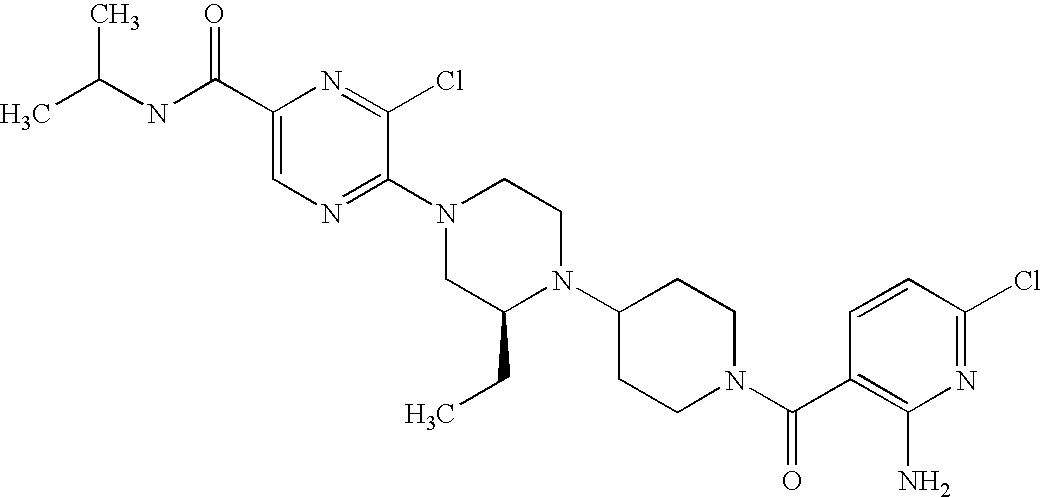 | A |
| 119 |  | A |
| 120 |  | A |
| 121 |  | A |
| 122 |  | A |
| 123 |  | A |
| 124 |  | A |
| 125 |  | A |
| 126 |  | A |
| 127 |  | A |
| 128 |  | A |
| 129 |  | A |
| 130 |  | A |
| 131 |  | B |
| 132 |  | B |
| 133 |  | B |
| 134 |  | B |
| 135 |  | B |
| 136 |  | C |
| 137 |  | C |
| 138 |  | C |
| 139 |  | C |
| 140 |  | A |
| 141 |  | A |
| 142 |  | C |
| 143 |  | C |
| 144 |  | A |
| 145 |  | C |
| 146 |  | C |
| 147 |  | B |
| 148 |  | C |
| 149 |  | A |
| 150 |  | C |
| 151 |  | B |
| 152 |  | C |
| 153 |  | C |
| 154 |  | B |
| 155 |  | A |
| 156 |  | A |
| 157 |  | A |
| 158 |  | A |
| 159 |  | A |
| 160 |  | A |
| 161 |  | A |
| 162 |  | A |
| 163 |  | A |
| 164 |  | A |
| 165 |  | B |
| 166 |  | A |
| 167 |  | A |
| 168 |  | A |
| 169 |  | A |
| 170 |  | A |
| 171 |  | A |
| 172 |  | A |
| 173 |  | A |
| 174 |  | A |
| 175 |  | A |
| 176 |  | A |
| 177 |  | A |
| 178 |  | A |
| 179 |  | A |
| 180 |  | A |
| 181 |  | A |
or a pharmaceutically acceptable salt, solvate or ester thereof.


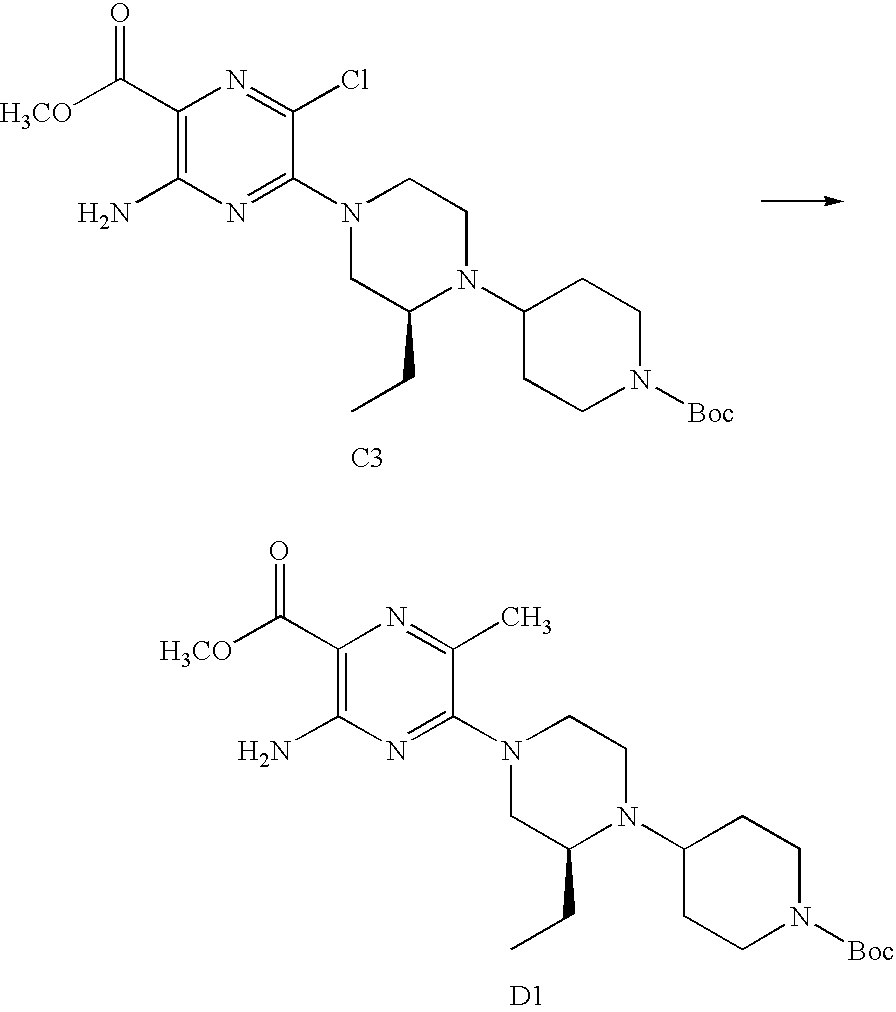


Claims (28)


Priority Applications (1)
| Application Number | Priority Date | Filing Date | Title |
|---|---|---|---|
| US11/353,474 US7879838B2 (en) | 2005-02-16 | 2006-02-14 | Heteroaryl substituted pyrazinyl-piperazine-piperidines with CXCR3 antagonist activity |
Applications Claiming Priority (2)
| Application Number | Priority Date | Filing Date | Title |
|---|---|---|---|
| US65347705P | 2005-02-16 | 2005-02-16 | |
| US11/353,474 US7879838B2 (en) | 2005-02-16 | 2006-02-14 | Heteroaryl substituted pyrazinyl-piperazine-piperidines with CXCR3 antagonist activity |
Publications (2)
| Publication Number | Publication Date |
|---|---|
| US20060276448A1 US20060276448A1 (en) | 2006-12-07 |
| US7879838B2 true US7879838B2 (en) | 2011-02-01 |
Family
ID=36617152
Family Applications (1)
| Application Number | Title | Priority Date | Filing Date |
|---|---|---|---|
| US11/353,474 Active 2027-03-03 US7879838B2 (en) | 2005-02-16 | 2006-02-14 | Heteroaryl substituted pyrazinyl-piperazine-piperidines with CXCR3 antagonist activity |
Country Status (13)
| Country | Link |
|---|---|
| US (1) | US7879838B2 (en) |
| EP (1) | EP1858888B1 (en) |
| JP (1) | JP2008530213A (en) |
| KR (1) | KR20070107040A (en) |
| CN (1) | CN101189225A (en) |
| AR (1) | AR053020A1 (en) |
| AU (1) | AU2006216941B2 (en) |
| CA (1) | CA2598418A1 (en) |
| IL (1) | IL185071A0 (en) |
| MX (1) | MX2007009949A (en) |
| TW (1) | TWI318977B (en) |
| WO (1) | WO2006091428A2 (en) |
| ZA (1) | ZA200706588B (en) |
Cited By (5)
| Publication number | Priority date | Publication date | Assignee | Title |
|---|---|---|---|---|
| US10172789B2 (en) | 2013-01-24 | 2019-01-08 | Palvella Therapeutics Llc | Compositions for transdermal delivery of mTOR inhibitors |
| US20190262287A1 (en) * | 2016-10-17 | 2019-08-29 | Neopharm Co., Ltd. | Anti-inflammatory composition |
| US10722499B2 (en) | 2017-01-06 | 2020-07-28 | Palvella Therapeutics, Inc. | Anyhydrous compositions of mTOR inhibitors and methods of use |
| US11000513B2 (en) | 2018-07-02 | 2021-05-11 | Palvella Therapeutics, Inc. | Anhydrous compositions of mTOR inhibitors and methods of use |
| US11351131B2 (en) | 2016-10-17 | 2022-06-07 | Neopharm Co., Ltd. | Anti-inflammatory composition |
Families Citing this family (31)
| Publication number | Priority date | Publication date | Assignee | Title |
|---|---|---|---|---|
| WO2005023241A1 (en) | 2003-09-09 | 2005-03-17 | Fumapharm Ag | The use of fumaric acid derivatives for treating cardiac insufficiency, and asthma |
| AU2005234596B8 (en) | 2004-04-13 | 2011-06-16 | Incyte Holdings Corporation | Piperazinylpiperidine derivatives as chemokine receptor antagonists |
| EP1856098B1 (en) * | 2005-02-16 | 2012-08-01 | Schering Corporation | Pyrazinyl substituted piperazine-piperidines with cxcr3 antagonist activity |
| MX2007010068A (en) * | 2005-02-16 | 2007-10-10 | Schering Corp | Piperazine-piperidines with cxcr3 antagonist activity. |
| MX2007009946A (en) * | 2005-02-16 | 2007-09-26 | Schering Corp | Pyridyl and phenyl substituted piperazine-piperidines with cxcr3 antagonist activity. |
| CN101146793A (en) * | 2005-02-16 | 2008-03-19 | 先灵公司 | Novel heterocyclic substituted pyridine or phenyl compounds with CXCR3 antagonist activity |
| TW200714610A (en) | 2005-02-16 | 2007-04-16 | Univ Maryland | CXCR3 is a gliadin receptor |
| CN101163692B (en) * | 2005-02-16 | 2012-01-18 | 先灵公司 | Heterocyclic substituted piperazines with cxcr3 antagonist activity |
| US7781437B2 (en) * | 2005-10-11 | 2010-08-24 | Schering Corporation | Substituted heterocyclic compounds with CXCR3 antagonist activity |
| AU2007227425A1 (en) * | 2006-03-21 | 2007-09-27 | Pharmacopeia, Inc. | Heterocyclic substituted pyridine compounds with CXCR3 antagonist activity |
| US7902199B2 (en) * | 2006-07-14 | 2011-03-08 | Schering Corporation | Heterocyclic substituted piperazine compounds with CXCR3 antagonist activity |
| MX2009006871A (en) * | 2006-12-22 | 2009-07-07 | Schering Corp | Heterocyclic compounds with cxcr3 antagonist activity. |
| US7638541B2 (en) | 2006-12-28 | 2009-12-29 | Metabolex Inc. | 5-ethyl-2-{4-[4-(4-tetrazol-1-yl-phenoxymethyl)-thiazol-2-yl]-piperidin-1-yl}-pyrimidine |
| DK2653873T3 (en) | 2007-02-08 | 2022-07-25 | Biogen Ma Inc | Compositions and uses for the treatment of multiple sclerosis |
| JP2008222603A (en) * | 2007-03-09 | 2008-09-25 | Institute Of Physical & Chemical Research | Preventive and therapeutic agents for neurodegenerative diseases |
| US8367052B2 (en) | 2007-03-26 | 2013-02-05 | General Regeneratives Holdings Inc. | Methods for promoting protection and regeneration of bone marrow using CXCL9 and anti-CXCL9 antibodies |
| JP5489997B2 (en) | 2007-07-19 | 2014-05-14 | シマベイ セラピューティクス, インコーポレーテッド | N-aza cyclic substituted pyrrole, pyrazole, imidazole, triazole and tetrazole derivatives as agonists of RUP3 or GPRl 19 receptors for the treatment of diabetes and metabolic diseases |
| CN102203074A (en) * | 2008-06-20 | 2011-09-28 | 麦它波莱克斯股份有限公司 | Aryl GPR119 agonists and uses thereof |
| WO2011041154A1 (en) | 2009-10-01 | 2011-04-07 | Metabolex, Inc. | Substituted tetrazol-1-yl-phenoxymethyl-thiazol-2-yl-piperidinyl-pyrimidine salts |
| EP2585048B1 (en) | 2010-06-23 | 2018-04-11 | CymaBay Therapeutics, Inc. | Compositions of 5-ethyl-2-{4-[4-(4-tetrazol-1-yl-phenoxymethyl)-thiazol-2-yl]-piperidin-1-yl}-pyrimidine |
| US9095591B2 (en) | 2010-06-28 | 2015-08-04 | Institut National De La Sante Et De La Recherche Medicale (Inserm) | Pharmaceutical composition for use in the treatment of glaucoma |
| ES2882807T3 (en) | 2011-09-16 | 2021-12-02 | Novartis Ag | N-substituted heterocyclyl carboxamides |
| EP2771484A1 (en) | 2011-10-28 | 2014-09-03 | Galderma Research & Development | New leukocyte infiltrate markers for rosacea and uses thereof |
| EP2809668B1 (en) | 2012-02-02 | 2017-04-12 | Actelion Pharmaceuticals Ltd. | 4-(benzoimidazol-2-yl)-thiazole compounds and related aza derivatives |
| SG11201600504TA (en) | 2013-07-22 | 2016-02-26 | Actelion Pharmaceuticals Ltd | 1-(piperazin-1-yl)-2-([1,2,4]triazol-1-yl)-ethanone derivatives |
| US9763992B2 (en) | 2014-02-13 | 2017-09-19 | Father Flanagan's Boys' Home | Treatment of noise induced hearing loss |
| AR099789A1 (en) | 2014-03-24 | 2016-08-17 | Actelion Pharmaceuticals Ltd | DERIVATIVES OF 8- (PIPERAZIN-1-IL) -1,2,3,4-TETRAHYDRO-ISOQUINOLINE |
| TWI693221B (en) | 2015-01-15 | 2020-05-11 | 瑞士商愛杜西亞製藥有限公司 | Hydroxyalkyl-piperazine derivatives as cxcr3 receptor modulators |
| AR103399A1 (en) | 2015-01-15 | 2017-05-10 | Actelion Pharmaceuticals Ltd | DERIVATIVES OF (R) -2-METHYL-PIPERAZINE AS CXCR3 RECEIVER MODULATORS |
| EP3493807A1 (en) | 2016-08-03 | 2019-06-12 | CymaBay Therapeutics, Inc. | Oxymethylene aryl compounds for treating inflammatory gastrointestinal diseases or gastrointestinal conditions |
| CN114702440B (en) * | 2022-04-26 | 2024-06-18 | 永农生物科学有限公司 | Preparation method of picloram and picloram prepared by same |
Citations (23)
| Publication number | Priority date | Publication date | Assignee | Title |
|---|---|---|---|---|
| WO1993010091A2 (en) | 1991-11-14 | 1993-05-27 | Glaxo Group Limited | Piperidine acetic acid derivatives as inhibitors of fibrinogen-dependent blood platelet aggregation |
| WO1993014077A1 (en) | 1992-01-21 | 1993-07-22 | Glaxo Group Limited | Piperidineacetic acid derivatives as inhibitors of fibrinogen-dependent blood platelet aggregation |
| WO1999020606A2 (en) | 1997-10-23 | 1999-04-29 | J. Uriach & Cia. S.A. | Piperidines and piperazines as platelet aggregation inhibitors |
| US6124319A (en) | 1997-01-21 | 2000-09-26 | Merck & Co., Inc. | 3,3-disubstituted piperidines as modulators of chemokine receptor activity |
| US20020018776A1 (en) | 2000-04-14 | 2002-02-14 | Millennium Pharmaceuticals, Inc. | Method of treating graft rejection using inhibitors of CXCR3 function |
| WO2002062784A1 (en) | 2001-02-06 | 2002-08-15 | F. Hoffmann-La Roche Ag | Piperidinee derivatives as neurokinin 1 antagonists |
| WO2002085861A1 (en) | 2001-04-19 | 2002-10-31 | Millennium Pharmaceuticals, Inc. | Imidazolidine compounds and their use as cxcr3 antagonists |
| US20030055054A1 (en) | 2000-12-11 | 2003-03-20 | Tularik, Inc. | CXCR3 antagonists |
| WO2003070242A1 (en) | 2002-02-20 | 2003-08-28 | Celltech R & D Limited | Piperidin-4-yl urea derivatives and related compounds as chemokine receptor inhibitors for the treatment of inflammatory diseases |
| WO2003082335A1 (en) | 2002-04-03 | 2003-10-09 | Sumitomo Pharmaceuticals Co., Ltd. | Novel blood sugar controller and method of screening the same |
| WO2003098185A2 (en) | 2002-05-14 | 2003-11-27 | Renovar, Inc. | Systems and methods for identifying organ transplant risk |
| WO2003101970A1 (en) | 2002-06-03 | 2003-12-11 | Smithkline Beecham Corporation | Imidazolium cxcr3 inhibitors |
| WO2004113323A1 (en) | 2003-06-13 | 2004-12-29 | Schering Aktiengesellschaft | Quinolyl amide derivatives as ccr-5 antagonists |
| US20060276479A1 (en) | 2005-02-16 | 2006-12-07 | Schering Corporation and | Heterocyclic substituted piperazines with CXCR3 antagonist activity |
| US20060276457A1 (en) | 2005-02-16 | 2006-12-07 | Schering Corporation And Pharmacopeia Drug Discovery, Inc. | Piperazine-piperidines with CXCR3 antagonist activity |
| US20070021611A1 (en) | 2005-02-16 | 2007-01-25 | Schering Corporation | Pyridyl and phenyl substituted piperazine-piperidines with CXCR3 antagonist activity |
| US20070054919A1 (en) | 2005-02-16 | 2007-03-08 | Schering Corporation | Pyrazinyl substituted piperazine-piperidines with CXCR3 antagonist activity |
| US20070082913A1 (en) * | 2005-10-11 | 2007-04-12 | Schering Corporation | Substituted heterocyclic compounds with CXCR3 antagonist activity |
| US20080039474A1 (en) | 2006-03-21 | 2008-02-14 | Schering Corporation | Novel heterocyclic substituted pyridine compounds with cxcr3 antagonist activity |
| US20080058343A1 (en) | 2006-07-14 | 2008-03-06 | Schering Corporation And Pharmacopeia, Inc. | Heterocyclic substituted piperazine compounds with cxcr3 antagonist activity |
| WO2008079279A1 (en) | 2006-12-22 | 2008-07-03 | Schering Corporation | Heterocyclic compounds with cxcr3 antagonist activity |
| US7417045B2 (en) | 2005-02-16 | 2008-08-26 | Schering Corporation | Heterocyclic substituted pyridine or phenyl compounds with CXCR3 antagonist activity |
| US7566718B2 (en) | 2005-02-16 | 2009-07-28 | Schering Corporation | Amine-linked pyridyl and phenyl substituted piperazine-piperidines with CXCR3 antagonist activity |
-
2006
- 2006-02-14 US US11/353,474 patent/US7879838B2/en active Active
- 2006-02-14 EP EP06758146.2A patent/EP1858888B1/en not_active Expired - Lifetime
- 2006-02-14 AU AU2006216941A patent/AU2006216941B2/en not_active Ceased
- 2006-02-14 KR KR1020077018606A patent/KR20070107040A/en not_active Withdrawn
- 2006-02-14 CA CA002598418A patent/CA2598418A1/en not_active Abandoned
- 2006-02-14 CN CNA2006800126395A patent/CN101189225A/en active Pending
- 2006-02-14 JP JP2007556235A patent/JP2008530213A/en active Pending
- 2006-02-14 WO PCT/US2006/005122 patent/WO2006091428A2/en not_active Ceased
- 2006-02-14 MX MX2007009949A patent/MX2007009949A/en unknown
- 2006-02-15 AR ARP060100550A patent/AR053020A1/en not_active Application Discontinuation
- 2006-02-15 TW TW095105087A patent/TWI318977B/en active
-
2007
- 2007-08-06 IL IL185071A patent/IL185071A0/en unknown
- 2007-08-08 ZA ZA200706588A patent/ZA200706588B/en unknown
Patent Citations (26)
| Publication number | Priority date | Publication date | Assignee | Title |
|---|---|---|---|---|
| WO1993010091A2 (en) | 1991-11-14 | 1993-05-27 | Glaxo Group Limited | Piperidine acetic acid derivatives as inhibitors of fibrinogen-dependent blood platelet aggregation |
| WO1993014077A1 (en) | 1992-01-21 | 1993-07-22 | Glaxo Group Limited | Piperidineacetic acid derivatives as inhibitors of fibrinogen-dependent blood platelet aggregation |
| US6124319A (en) | 1997-01-21 | 2000-09-26 | Merck & Co., Inc. | 3,3-disubstituted piperidines as modulators of chemokine receptor activity |
| WO1999020606A2 (en) | 1997-10-23 | 1999-04-29 | J. Uriach & Cia. S.A. | Piperidines and piperazines as platelet aggregation inhibitors |
| US20020018776A1 (en) | 2000-04-14 | 2002-02-14 | Millennium Pharmaceuticals, Inc. | Method of treating graft rejection using inhibitors of CXCR3 function |
| US20030055054A1 (en) | 2000-12-11 | 2003-03-20 | Tularik, Inc. | CXCR3 antagonists |
| WO2002062784A1 (en) | 2001-02-06 | 2002-08-15 | F. Hoffmann-La Roche Ag | Piperidinee derivatives as neurokinin 1 antagonists |
| US6642226B2 (en) * | 2001-02-06 | 2003-11-04 | Hoffman-La Roche Inc. | Substituted phenyl-piperidine methanone compounds |
| WO2002085861A1 (en) | 2001-04-19 | 2002-10-31 | Millennium Pharmaceuticals, Inc. | Imidazolidine compounds and their use as cxcr3 antagonists |
| WO2003070242A1 (en) | 2002-02-20 | 2003-08-28 | Celltech R & D Limited | Piperidin-4-yl urea derivatives and related compounds as chemokine receptor inhibitors for the treatment of inflammatory diseases |
| WO2003082335A1 (en) | 2002-04-03 | 2003-10-09 | Sumitomo Pharmaceuticals Co., Ltd. | Novel blood sugar controller and method of screening the same |
| WO2003098185A2 (en) | 2002-05-14 | 2003-11-27 | Renovar, Inc. | Systems and methods for identifying organ transplant risk |
| WO2003101970A1 (en) | 2002-06-03 | 2003-12-11 | Smithkline Beecham Corporation | Imidazolium cxcr3 inhibitors |
| WO2004113323A1 (en) | 2003-06-13 | 2004-12-29 | Schering Aktiengesellschaft | Quinolyl amide derivatives as ccr-5 antagonists |
| US7417045B2 (en) | 2005-02-16 | 2008-08-26 | Schering Corporation | Heterocyclic substituted pyridine or phenyl compounds with CXCR3 antagonist activity |
| US20060276457A1 (en) | 2005-02-16 | 2006-12-07 | Schering Corporation And Pharmacopeia Drug Discovery, Inc. | Piperazine-piperidines with CXCR3 antagonist activity |
| US20070021611A1 (en) | 2005-02-16 | 2007-01-25 | Schering Corporation | Pyridyl and phenyl substituted piperazine-piperidines with CXCR3 antagonist activity |
| US20070054919A1 (en) | 2005-02-16 | 2007-03-08 | Schering Corporation | Pyrazinyl substituted piperazine-piperidines with CXCR3 antagonist activity |
| US20060276479A1 (en) | 2005-02-16 | 2006-12-07 | Schering Corporation and | Heterocyclic substituted piperazines with CXCR3 antagonist activity |
| US20080292589A1 (en) | 2005-02-16 | 2008-11-27 | Schering Corporation | Novel heterocyclic substituted pyridine or phenyl compounds with cxcr3 antagonist activity |
| US7566718B2 (en) | 2005-02-16 | 2009-07-28 | Schering Corporation | Amine-linked pyridyl and phenyl substituted piperazine-piperidines with CXCR3 antagonist activity |
| US7763616B2 (en) | 2005-02-16 | 2010-07-27 | Schering Corporation | Piperazine-piperidines with CXCR3 antagonist activity |
| US20070082913A1 (en) * | 2005-10-11 | 2007-04-12 | Schering Corporation | Substituted heterocyclic compounds with CXCR3 antagonist activity |
| US20080039474A1 (en) | 2006-03-21 | 2008-02-14 | Schering Corporation | Novel heterocyclic substituted pyridine compounds with cxcr3 antagonist activity |
| US20080058343A1 (en) | 2006-07-14 | 2008-03-06 | Schering Corporation And Pharmacopeia, Inc. | Heterocyclic substituted piperazine compounds with cxcr3 antagonist activity |
| WO2008079279A1 (en) | 2006-12-22 | 2008-07-03 | Schering Corporation | Heterocyclic compounds with cxcr3 antagonist activity |
Non-Patent Citations (13)
| Title |
|---|
| Banker, et. al., Modern Pharmaceuticals, p. 596-597. * |
| Borisy, et. al., Proceedings of the National Academy of Sciences of the United States of America, 100(13) 7977-7982. * |
| Dorwald F. A. Side Reactions in Organic Synthesis, 2005, Wiley: VCH, Weinheim p. IX of Preface. * |
| International Search Report for International Application No. PCT/US2006/005122 mailed Aug. 7, 2006 (3pgs.). |
| Notice of Allowance in U.S. Appl. No. 11/353,697 mailed Jan. 7, 2010. |
| Notice of Allowance in U.S. Appl. No. 11/354,138 mailed Feb. 23, 2010. |
| Notice of Allowance in U.S. Appl. No. 11/545,201 mailed Nov. 17, 2009. |
| Notice of Allowance in U.S. Appl. No. 11/688,014 mailed Jan. 19, 2010. |
| Notice of Allowance in U.S. Appl. No. 11/776,901 mailed Jul. 2, 2010. |
| Notice of Allowance in U.S. Appl. No. 12/147,140 mailed Apr. 14, 2010. |
| Qingbei Zeng et al., U.S. Appl. No. 12/519,970; Preliminary Amendment-Mailed Jun. 18, 2009. |
| Vippagunta et. al. Advanced Drug Delivery Reviews 48 (2001) 3-26. * |
| Wolff et. al., "Burger's Medicinal Chemistry and Drug Discovery," 5th Ed. Part 1, pp. 575-977 (1995). * |
Cited By (10)
| Publication number | Priority date | Publication date | Assignee | Title |
|---|---|---|---|---|
| US10172789B2 (en) | 2013-01-24 | 2019-01-08 | Palvella Therapeutics Llc | Compositions for transdermal delivery of mTOR inhibitors |
| US20190262287A1 (en) * | 2016-10-17 | 2019-08-29 | Neopharm Co., Ltd. | Anti-inflammatory composition |
| US11285119B2 (en) * | 2016-10-17 | 2022-03-29 | Neopharm Co., Ltd. | Anti-inflammatory composition |
| US11351131B2 (en) | 2016-10-17 | 2022-06-07 | Neopharm Co., Ltd. | Anti-inflammatory composition |
| US10722499B2 (en) | 2017-01-06 | 2020-07-28 | Palvella Therapeutics, Inc. | Anyhydrous compositions of mTOR inhibitors and methods of use |
| US11135204B2 (en) | 2017-01-06 | 2021-10-05 | Palvella Therapeutics, Inc. | Anhydrous compositions of mTOR inhibitors and methods of use |
| US12268673B2 (en) | 2017-01-06 | 2025-04-08 | Palvella Therapeutics, Inc. | Anhydrous compositions of mTOR inhibitors and methods of use |
| US11000513B2 (en) | 2018-07-02 | 2021-05-11 | Palvella Therapeutics, Inc. | Anhydrous compositions of mTOR inhibitors and methods of use |
| US11679101B2 (en) | 2018-07-02 | 2023-06-20 | Palvella Therapeutics, Inc. | Anhydrous compositions of mTOR inhibitors and methods of use |
| US12329748B2 (en) | 2018-07-02 | 2025-06-17 | Palvella Therapeutics, Inc. | Anhydrous compositions of mTOR inhibitors and methods of use |
Also Published As
| Publication number | Publication date |
|---|---|
| IL185071A0 (en) | 2007-12-03 |
| TWI318977B (en) | 2010-01-01 |
| MX2007009949A (en) | 2007-09-26 |
| EP1858888A2 (en) | 2007-11-28 |
| AU2006216941A1 (en) | 2006-08-31 |
| US20060276448A1 (en) | 2006-12-07 |
| AR053020A1 (en) | 2007-04-18 |
| TW200640906A (en) | 2006-12-01 |
| EP1858888B1 (en) | 2013-04-17 |
| WO2006091428A3 (en) | 2006-11-02 |
| ZA200706588B (en) | 2008-09-25 |
| AU2006216941B2 (en) | 2009-12-03 |
| CA2598418A1 (en) | 2006-08-31 |
| JP2008530213A (en) | 2008-08-07 |
| CN101189225A (en) | 2008-05-28 |
| WO2006091428A2 (en) | 2006-08-31 |
| KR20070107040A (en) | 2007-11-06 |
Similar Documents
| Publication | Publication Date | Title |
|---|---|---|
| US7868005B2 (en) | Pyrazinyl substituted piperazine-piperidines with CXCR3 antagonist activity | |
| US7868006B2 (en) | Heterocyclic substituted piperazines with CXCR3 antagonist activity | |
| US7776862B2 (en) | Pyridyl and phenyl substituted piperazine-piperidines with CXCR3 antagonist activity | |
| US7763616B2 (en) | Piperazine-piperidines with CXCR3 antagonist activity | |
| US7417045B2 (en) | Heterocyclic substituted pyridine or phenyl compounds with CXCR3 antagonist activity | |
| EP1858888B1 (en) | Heteroaryl substituted pyrazinyl-piperazine-piperidines with cxcr3 antagonist activity | |
| US7781437B2 (en) | Substituted heterocyclic compounds with CXCR3 antagonist activity | |
| US7902199B2 (en) | Heterocyclic substituted piperazine compounds with CXCR3 antagonist activity | |
| US7566718B2 (en) | Amine-linked pyridyl and phenyl substituted piperazine-piperidines with CXCR3 antagonist activity | |
| US7786124B2 (en) | Heterocyclic substituted pyridine compounds with CXCR3 antagonist activity | |
| US20120157466A1 (en) | Heterocyclic compounds with cxcr3 antagonist activity |
Legal Events
| Date | Code | Title | Description |
|---|---|---|---|
| AS | Assignment |
Owner name: SCHERING CORPORATION, NEW JERSEY Free format text: ASSIGNMENT OF ASSIGNORS INTEREST;ASSIGNORS:ZENG, QINGBEI;YANG, DE-YI;ROSENBLUM, STUART B.;AND OTHERS;SIGNING DATES FROM 20060307 TO 20060316;REEL/FRAME:018324/0577 Owner name: PHARMACOPEIA DRUG DISCOVERY, INC., NEW JERSEY Free format text: ASSIGNMENT OF ASSIGNORS INTEREST;ASSIGNORS:MCGUINNESS, BRIAN F.;HOBBS, DOUGLAS H.;ZAWACKI, LISA GUISE;REEL/FRAME:018324/0646 Effective date: 20060330 Owner name: SCHERING CORPORATION, NEW JERSEY Free format text: ASSIGNMENT OF ASSIGNORS INTEREST;ASSIGNORS:ZENG, QINGBEI;YANG, DE-YI;ROSENBLUM, STUART B.;AND OTHERS;REEL/FRAME:018324/0577;SIGNING DATES FROM 20060307 TO 20060316 |
|
| AS | Assignment |
Owner name: PHARMACOPEIA DRUG DISCOVERY, INC., NEW JERSEY Free format text: CORRECTIVE ASSIGNMENT TO CORRECT THE ASSIGNOR: HOBBS, DOUGLAS H. PREVIOUSLY RECORDED ON REEL 018324 FRAME 0646. ASSIGNOR(S) HEREBY CONFIRMS THE ASSIGNOR: HOBBS, DOUGLAS W;ASSIGNORS:MCGUINNESS, BRIAN F.;HOBBS, DOUGLAS W.;ZAWACKI, LISA GUISE;REEL/FRAME:018410/0417 Effective date: 20060330 Owner name: PHARMACOPEIA DRUG DISCOVERY, INC., NEW JERSEY Free format text: CORRECTIVE ASSIGNMENT TO CORRECT THE ASSIGNOR;ASSIGNORS:MCGUINNESS, BRIAN F.;HOBBS, DOUGLAS W.;ZAWACKI, LISA GUISE;REEL/FRAME:018410/0417 Effective date: 20060330 |
|
| STCF | Information on status: patent grant |
Free format text: PATENTED CASE |
|
| AS | Assignment |
Owner name: MERCK SHARP & DOHME CORP., NEW JERSEY Free format text: CHANGE OF NAME;ASSIGNOR:SCHERING CORPORATION;REEL/FRAME:028884/0151 Effective date: 20120502 |
|
| FPAY | Fee payment |
Year of fee payment: 4 |
|
| MAFP | Maintenance fee payment |
Free format text: PAYMENT OF MAINTENANCE FEE, 8TH YEAR, LARGE ENTITY (ORIGINAL EVENT CODE: M1552) Year of fee payment: 8 |
|
| MAFP | Maintenance fee payment |
Free format text: PAYMENT OF MAINTENANCE FEE, 12TH YEAR, LARGE ENTITY (ORIGINAL EVENT CODE: M1553); ENTITY STATUS OF PATENT OWNER: LARGE ENTITY Year of fee payment: 12 |
|
| AS | Assignment |
Owner name: MERCK SHARP & DOHME LLC, NEW JERSEY Free format text: MERGER;ASSIGNOR:MERCK SHARP & DOHME CORP.;REEL/FRAME:061102/0145 Effective date: 20220407 |