US7860702B1 - Assessing distributed energy resources for the energynet - Google Patents
Assessing distributed energy resources for the energynet Download PDFInfo
- Publication number
- US7860702B1 US7860702B1 US10/666,209 US66620903A US7860702B1 US 7860702 B1 US7860702 B1 US 7860702B1 US 66620903 A US66620903 A US 66620903A US 7860702 B1 US7860702 B1 US 7860702B1
- Authority
- US
- United States
- Prior art keywords
- distribution
- transmission
- network
- der
- level
- Prior art date
- Legal status (The legal status is an assumption and is not a legal conclusion. Google has not performed a legal analysis and makes no representation as to the accuracy of the status listed.)
- Expired - Fee Related, expires
Links
Images



Classifications
-
- H—ELECTRICITY
- H02—GENERATION; CONVERSION OR DISTRIBUTION OF ELECTRIC POWER
- H02J—ELECTRIC POWER NETWORKS; CIRCUIT ARRANGEMENTS OR SYSTEMS FOR SUPPLYING OR DISTRIBUTING ELECTRIC POWER; SYSTEMS FOR STORING ELECTRIC ENERGY
- H02J3/00—Circuit arrangements for AC mains or AC distribution networks
- H02J3/38—Arrangements for feeding a single network from two or more generators or sources in parallel; Arrangements for feeding already energised networks from additional generators or sources in parallel
- H02J3/381—Dispersed generators
-
- G—PHYSICS
- G06—COMPUTING OR CALCULATING; COUNTING
- G06F—ELECTRIC DIGITAL DATA PROCESSING
- G06F30/00—Computer-aided design [CAD]
- G06F30/30—Circuit design
- G06F30/36—Circuit design at the analogue level
- G06F30/367—Design verification, e.g. using simulation, simulation program with integrated circuit emphasis [SPICE], direct methods or relaxation methods
-
- H—ELECTRICITY
- H02—GENERATION; CONVERSION OR DISTRIBUTION OF ELECTRIC POWER
- H02J—ELECTRIC POWER NETWORKS; CIRCUIT ARRANGEMENTS OR SYSTEMS FOR SUPPLYING OR DISTRIBUTING ELECTRIC POWER; SYSTEMS FOR STORING ELECTRIC ENERGY
- H02J2103/00—Details of circuit arrangements for mains or AC distribution networks
- H02J2103/30—Simulating, planning, modelling, reliability check or computer assisted design [CAD] of electric power networks
-
- Y—GENERAL TAGGING OF NEW TECHNOLOGICAL DEVELOPMENTS; GENERAL TAGGING OF CROSS-SECTIONAL TECHNOLOGIES SPANNING OVER SEVERAL SECTIONS OF THE IPC; TECHNICAL SUBJECTS COVERED BY FORMER USPC CROSS-REFERENCE ART COLLECTIONS [XRACs] AND DIGESTS
- Y02—TECHNOLOGIES OR APPLICATIONS FOR MITIGATION OR ADAPTATION AGAINST CLIMATE CHANGE
- Y02E—REDUCTION OF GREENHOUSE GAS [GHG] EMISSIONS, RELATED TO ENERGY GENERATION, TRANSMISSION OR DISTRIBUTION
- Y02E60/00—Enabling technologies; Technologies with a potential or indirect contribution to GHG emissions mitigation
-
- Y—GENERAL TAGGING OF NEW TECHNOLOGICAL DEVELOPMENTS; GENERAL TAGGING OF CROSS-SECTIONAL TECHNOLOGIES SPANNING OVER SEVERAL SECTIONS OF THE IPC; TECHNICAL SUBJECTS COVERED BY FORMER USPC CROSS-REFERENCE ART COLLECTIONS [XRACs] AND DIGESTS
- Y04—INFORMATION OR COMMUNICATION TECHNOLOGIES HAVING AN IMPACT ON OTHER TECHNOLOGY AREAS
- Y04S—SYSTEMS INTEGRATING TECHNOLOGIES RELATED TO POWER NETWORK OPERATION, COMMUNICATION OR INFORMATION TECHNOLOGIES FOR IMPROVING THE ELECTRICAL POWER GENERATION, TRANSMISSION, DISTRIBUTION, MANAGEMENT OR USAGE, i.e. SMART GRIDS
- Y04S40/00—Systems for electrical power generation, transmission, distribution or end-user application management characterised by the use of communication or information technologies, or communication or information technology specific aspects supporting them
- Y04S40/20—Information technology specific aspects, e.g. CAD, simulation, modelling, system security
Definitions
- the present invention relates generally to power transmission and distribution systems or networks, and more particularly to such power networks that may incorporate distributed energy resources.
- Distributed energy resources may include power generation capacity located at customer sites and/or located near load centers. This is sometimes referred to in the art as “distributed generation” to distinguish it from central station generation, which is prevailing in the art.
- dispatchable demand reduction reduction of demand upon command from the system operator, sometimes referred to as “dispatchable demand reduction” or load shedding, is in some respects an alternative to adding incremental generating capacity.
- the capacity, or energy source, represented by dispatchable demand reduction is, by definition, located at customer sites. Dispatchable demand reduction thus may be considered DER.
- DER may also include the capacitors, reactive energy sources that provide reactive power capacity, and that are located at various points within either the transmission system or the distribution system as part of conventional practice in the art. It should be noted that in this description we use the term capacity with two meanings depending on context. Capacitors may have a certain capacity value or capicitance and energy sources provide added capacity to the network, either as real power, e.g., a generator, or reactive power, e.g., a capacitor bank.
- T&D system analysis and planning methods in the art have significant limitations in making a thorough assessment of the potential benefits of DER to a given T&D network.
- distribution system analysis methods in the art consider distribution circuits or feeders individually rather than as part of a network.
- traditional approaches prohibit direct assessment of the extent to which problems arising on one distribution feeder may affect, or be caused by, or may be best remedied on other distribution feeders.
- non-wires alternatives a class of alternatives, i.e., dispatchable demand reduction, reactive capacity, or generation, may be considered alone.
- Traditional methods do not include consideration of these alternatives interchangeably to achieve a certain outcome.
- traditional methods do not consider the broad set of impacts such alternatives may have.
- DER is often seen as a way to gain incremental energy or capacity, but using DER to improve system stability or even reduce losses is often not considered.
- Chiang's method is demonstrated using transmission-only datasets, consistent with conventional practice in the art. Even though Schleuter notes that voltage instability problems can arise in both distribution systems and in transmission systems, his method does not provide any means for taking into account voltage instability problems in the distribution system. In fact, Schleuter's method excludes those instability problems that arise in distribution systems from consideration. Schleuter's method focuses exclusively on transmission systems and mathematical models of transmission systems.
- Neither Chiang's method or Schleuter's method anticipates consideration of instability problems in distribution systems in the analysis of instability problems in transmission system. Also, neither anticipates any analysis to assess the degree to which instability problems in the transmission system arise from or are exacerbated by instability problems in the distribution system. Also, neither anticipates consideration of the extent to which mitigation of instability problems in the distribution system could also mitigate instability problems in the transmission system.
- Chiang's method or Schleuter's method anticipates the analysis of transmission and distribution integrated together as a single network to assess and/or remedy instability problems in the network overall. Also, neither anticipates consideration of the relative merits of mitigating instability problems in the distribution system rather than (or in addition to) mitigating them in the transmission system.
- Schleuter's method is a voltage stability assessment method only. It does not provide a means to determine whether additions of real or reactive capacity within the system analyzed could mitigate the problems identified and improve voltage stability and system security.
- Chiang's method provides the means to make a stability assessment on a near-term look-ahead basis (specifically 25 minutes ahead) based on anticipated loads.
- the method provides “load margin measures” or measures of the system's ability to withstand deviations from forecast load and generation conditions based on forecast voltage profiles.
- the method also anticipates operating responses including the addition of power generating capacity or load sheds to maintain stability in those areas of the system identified by the method as becoming weak.
- Chiang's method does consider operational responses to predicted voltage collapse conditions; however, this method is designed to guide operational responses given the short (25 minute) predictive window. These responses would presumably be limited to deployment of existing load shed, generation or reactive capacity opportunities. Chiang's method does not address the question of how generation, load sheds, and reactive capacity, considered as interchangeable alternatives, could be embedded anywhere in the network on a planning basis to achieve the greatest improvement in network performance. Given a method to determine those additions of real and reactive capacity throughout the T&D network that would achieve the greatest operational improvement, Chiang's method could be used to guide operation or dispatch of that embedded capacity.
- U.S. Pat. No. 5,760,492 to Kanoi et. al. describes a control strategy for real power capacity (distributed generation) installed on a distribution feeder.
- the objective of Kanoi's strategy is to operate distributed generation units on the feeder to achieve a certain operating condition on the feeder.
- the Williams strategy is based on the premise, accepted in the art, that reactive capacity close to the customer load is more effective than reactive capacity provided by a remote power generation source. Kanoi notes that widely varying conditions in lower voltage-level distribution systems, particularly where distributed generation units are present, make it difficult to control power quality merely by controlling voltage and reactive power at the transmission level.
- both the Williams and Kanoi control strategies focus on individual lines of a power system. In neither case are the lines in question considered as part of a larger network comprised of many similar and dissimilar lines.
- the Williams strategy considers the impact of switching capacitors in a line with multiple voltages, where those voltages could represent transmission and distribution levels. But it does not contemplate the impact of switching capacitors throughout the network on conditions throughout the network.
- the Kanoi strategy considers the impact of dispatching generating units in a distribution line on the conditions of that line, its associated step-down transformer and its associated transmission line. It does not contemplate the impact of dispatching distributed generation units embedded throughout the network on conditions throughout the network.
- both the Williams strategy and the Kanoi strategy acknowledge that problems in a transmission system may be the result problems in the distribution system, or that problems in a transmission system may be best mitigated in the distribution system.
- both strategies focus on individual lines, not the network, neither is capable of addressing the extent to which problems observed in the transmission system are the accumulation of problems in the distribution system. Further, neither is capable of assessing the extent to which problems observed at either the transmission or distribution level are best mitigated at the distribution level, e.g. using DER.
- Both the Williams and Kanoi strategies are operational strategies.
- the strategy focuses on the switching of existing capacitors to achieve certain types of operational improvements on the circuit.
- Kanoi the strategy focuses on dispatching of distributed generation to achieve certain types of operational conditions on the distribution line and at its associated step-down transformer.
- reactive capacity in the case of the Williams strategy
- real capacity in the case of the Kanoi strategy
- Both strategies are examples of the practice in the art of considering a single class of embedded capacity and a narrow set of performance criteria.
- reactive capacity is managed to increase generator efficiency, reduce losses, and improve throughput capability of the circuit in question.
- real capacity is managed to achieve a given set of conditions on the distribution line and at the step-down transformer, specifically voltage levels.
- the Williams strategy does not consider real capacity (load sheds) or real and reactive power together (embedded generation) as additional means to improve performance of the circuit.
- the Kanoi strategy does not consider reactive capacity (capacitors) or load sheds as additional means to improve performance.
- the Williams strategy does not consider the impacts of adding or removing reactive capacity on the stability or voltage security of the circuit.
- the Kanoi strategy considers voltage, but not reactive power requirements or reactive power flows.
- U.S. Pat. No. 5,414,640 to Seem describes dispatchable demand reduction as an element in a power system.
- Seem's method considers dispatchable demand reduction only as a means to reduce energy consumption, not to as a means to improve T&D network performance. His method does not envision taking into account impacts on the transmission system or the coordination of the installation or operation of demand reduction with power generation and/or reactive capacity in the power system.
- U.S. Pat. No. 4,208,593 to Sullivan describes controllable electrical demand (or dispatchable demand management) in the art as selective disconnection of loads at specified levels of aggregate load.
- Sullivan describes a method and system for controlling electrical demand that overcomes disadvantages in the prior art arising from failures of the control system.
- Sullivan's method also introduces the capability to control demand on the basis of time as well as aggregate load. Again, Sullivan's method does not anticipate the use of dispatchable demand reduction as a way to improve network performance.
- EPRI characterizes the conventional assessment of DER benefits as the cost of a planned network upgrade that is avoided or deferred by DER capacity, less the cost of that DER capacity.
- EPRI points out that the limitation of this approach is that the “planned” network upgrade to be avoided or deferred was identified without consideration of DER in the plan.
- the Area Investment Strategy Model developed by EPRI for assessing the benefits of DER involves analysis to determine if DER can be incorporated in distribution to minimize the overall cost of capacity required to serve customers. Again, this method focuses the distribution system alone. It also considers DER as a source of incremental capacity only; it does not consider DER as a means to improve system stability or voltage security.
- a further limitation of such an approach is that the utility is not the decision-maker for DER projects sponsored by a customer or third party. Moreover, a utility cannot make an informed economic evaluation of customer-sponsored DER projects. The utility cannot determine the value the customer places on the project's customer benefits, particularly as these benefits may include such intangibles as energy cost certainty, independence, or peace of mind. The utility also cannot know the actual DER technology costs the customer has been quoted. Thus, a conclusion under the EPRI methodology that DER additions result in a least cost solution is at best incomplete, and might be incorrect. The EPRI method is not capable of assessing or quantifying the stand-alone benefits of DER to the T&D system.
- a thorough assessment of the network benefits of DER requires an evaluation that goes beyond a distribution planning area by itself, or, for that matter, beyond the transmission system by itself. It also requires the consideration of a broad set of factors that DER may affect.
- a more efficient approach to DER planning is for the utility to determine the potential benefits DER could provide to the utility's system as described, and the nature of projects that would deliver those benefits, independently of customer considerations. Then the utility has the means to promote projects having similar characteristics among its customers (and discourage dissimilar projects). The utility then also has the ability to identify those projects that customers will not pursue but whose value to the system justifies utility investment.
- one object of the present invention is to provide a method for providing a thorough assessment of the potential benefits DER may provide to a T&D network.
- Such benefits may include performance improvement such as the reduction in electrical losses, improvement in system stability and/or power quality.
- These benefits could also include the deferral or avoidance of system additions that would otherwise be required to reliably serve load.
- a further object of the present invention is to provide a method for providing a thorough assessment of the potential benefits DER may provide to a T&D network that considers a variety of DER alternatives interchangeably, not generation, capacitors, or load sheds alone.
- This object and the prior object overcome a significant drawback of the prior art in thoroughly assessing the potential T&D benefits of DER that arises from the practice of considering classes of DER individually and/or considering a narrow set of performance measures.
- a further object of the present invention is to provide a method for analyzing the T&D network, including but not limited to providing a thorough and objective assessment of the potential benefits DER may provide to a T&D network, that includes a means to directly observe the extent to which problems at the transmission level are caused by or exacerbated by problems on any given distribution feeder (and vice versa).
- a further object of the present invention is to provide a method for analyzing the T&D network, including but not limited to providing a thorough, objective assessment of the potential benefits DER may provide to a T&D network, that includes a means to directly consider the merits of remedying problems close to where they occur, whether in the distribution system or in the transmission system, including possibly using DER to remedy problems anywhere in the network.
- This object and the prior object overcome a significant drawback in the prior art, particularly as it relates to assessing the benefits of DER to a T&D network, that arises from the analysis of transmission independently of distribution, and vice-versa, and the analysis of distribution feeders individually.
- a further object of the present invention is to provide a method for analyzing the T&D network, including the incorporation of DER within the network, that facilitates the evaluation of how these elements should operate and interact under a variety of network conditions.
- a further object of the present invention is to provide a method for providing an objective measure of the potential benefits DER may provide to a T&D network, where such measure is independent of non-network considerations such as DER benefits for customers or the environment.
- This object enables decision-making relative to T&D network matters, including the design of DER incentives based on network benefits, without the distortion of non-network considerations.
- a further object of the present invention is to provide a method for quantifying the potential benefits DER could provide a given network, in both engineering and economic or financial terms.
- Quantifying potential T&D network benefits of DER in economic terms enables the transfer of the value associated with such network benefits between stakeholders. This could include, for example, financial incentives for DER projects based on a sharing of the network value such projects create rather than simply shifting costs from one set of customers to another.
- a further object of the present invention is to provide a method for characterizing the specific DER projects that realize or approach the potential benefits DER may provide to a T&D network. This characterization would include where within the network particular types of DER would make the greatest contribution.
- Such an assessment of potential DER benefits, and the specific projects that would provide them, is of great value to a utility if determined objectively, independent of non-network considerations.
- a utility cannot accurately incorporate customer economics in its planning, nor can it unilaterally implement purported “least cost” solutions if they include customer-sponsored projects.
- a utility can quantify the potential benefits of DER for its system, and devise incentives that share that value with third parties to encourage beneficial DER projects and capture at least a portion of that potential value.
- the method of this invention also has substantial economic value to developers of DER projects and vendors of DER technologies.
- This invention opens new markets for DER projects and DER technologies.
- the means to analyze the integrated T&D network, with DER incorporated within the network, under a variety of conditions would have great value to network operators and other stakeholders.
- the means to analyze the integrated T&D network, with DER incorporated within the network, under a variety of conditions would permit, for example, identification of DER projects that make the greatest contribution to load-carrying capability of the overall network under peak load conditions, and an operating plan for those projects to provide other benefits under non-peak load conditions. This type of analysis is essential to realizing the potential of such concepts as those described in the Wired Magazine article above.
- a method for analyzing the T&D network including providing an objective assessment of the potential benefits DER may provide to a T&D network, that includes a means to directly observe the extent to which problems at the transmission level are caused by or exacerbated by problems on any given distribution feeder (and vice versa) would have substantial value to network operators by identifying the root causes of problems contributing to substandard network performance.
- a method for analyzing the T&D network including providing an objective assessment of the potential benefits DER may provide to a T&D network, that includes a means to directly consider the merits of remedying problems, where such problems may arise either at the transmission level or at the distribution level, at either the transmission level or at the distribution level would have substantial value to network operators in identifying additional solutions for remedying network problems, solutions that may be more effective and/or less costly to implement.
- the present invention provides an improved method for analyzing power systems; in particular, power systems that may incorporate DER.
- a method according to one embodiment of the present invention provides a thorough determination of the potential for network performance improvement that DER could provide.
- the method also determines the potential for network performance improvement that DER could provide independently and distinct from other benefits DER may provide.
- the method also quantifies the network performance improvement in engineering and financial terms, and identifies and characterizes the specific DER projects that would realize that potential improvement in network performance.
- the T&D network is analyzed as a single “Energynet,” encompassing distribution as well as transmission elements and with embedded distributed energy resources (DER) at all voltage levels.
- DER embedded distributed energy resources
- the method evaluates multiple classes of DER for their impacts on multiple aspects of network performance—factors affecting stability and power quality in addition to losses or the ability to displace network upgrades. This overcomes drawbacks of prior methods by permitting a more thorough assessment of the impact and potential benefits of DER. This is of particular interest when evaluating potential DER additions where their differences in loss reduction may be small, but they may contribute very differently to stability and power quality.
- this methodology introduces the notion of an “optimal” portfolio of DER projects, or the Optimal DER Portfolio.
- This theoretical portfolio is developed and optimized purely from the standpoint of its network benefits. That is, this portfolio is not influenced by other considerations for DER such as customer benefits or environmental benefits.
- the Optimal DER Portfolio feature overcomes several limitations of prior methods and provides new information and benefits as discussed below.
- the network benefits attributable to the Optimal DER Portfolio represent the greatest potential DER has to improve network performance consistent with the conditions and limitations incorporated in the method.
- the individual projects of the Optimal DER Portfolio are the projects that, if implemented in the subject network, would yield the greatest improvement in network performance.
- the Optimal DER Portfolio is not a plan to implement, but a guide for utilities to better manage their power systems.
- the network benefits the Optimal DER Portfolio projects would provide—that is, network benefits of DER assessed according to the method of this invention—are distinct from, and additive to, benefits of DER projects other than network benefits.
- the Optimal DER Portfolio thus enables a determination of real DER projects that combine network benefits with other benefits such as benefits to an end-use customer, and thus might be developed at a lower cost to the utility.
- the Optimal DER Portfolio also enables a determination of those projects that would benefit the system only, and thus must be developed by the utility.
- the Optimal DER Portfolio offers an objective means for identifying, quantifying, and pricing network benefits of DER. Further, it is ideally suited for formulating policies to promote the development of real DER projects based on their potential for direct enhancement of network performance. The Optimal DER Portfolio also is ideal for formulating pricing, tariffs, or financial incentives based on sharing of the value of DER's system benefits with DER developers rather than cost shifting.
- the Optimal DER Portfolio projects can also be used to guide policies to promote greater deployment of DER that benefits the T&D network. Identifying the specific projects that provide the greatest network benefits permits, in turn, identification of the most consequential barriers to those projects. These barriers, then, are the ones with the most impact on T&D network improvement and reasonably should receive the most targeted attention.
- FIG. 1 is a Venn diagram illustrating one purpose of a method according to one embodiment of the present invention.
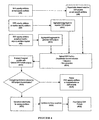
- FIG. 2 is a flowchart illustrating the creation of an Energynet dataset according to one embodiment of the present invention
- FIG. 3 is a flowchart illustrating the process for identifying the DER capacity additions that underlie that set of DER projects that provide the maximum potential for improvement in network performance according to one embodiment of the present invention.
- FIG. 4 is a flowchart illustrating the process for characterizing DER capacity additions as Optimal DER Portfolio projects according to one embodiment of the present invention.
- FIG. 5 is a flowchart illustrating the process of quantifying the network benefits provided by the Optimal DER Portfolio projects according to one embodiment of the present invention.
- FIG. 1 is a Venn diagram illustrating one purpose of a method according to one embodiment of the present invention; specifically the determination of potential network benefits of DER as distinct from benefits of DER for customers or environmental benefits of DER, and the specific DER projects that provide such grid benefits.
- Space 102 represents those DER projects that provide benefits to end-use electricity customers. These benefits might be reduced energy cost or increased reliability. Space 102 is characteristic of the customers served by the T&D network. Methods for identifying the DER projects in Space 102 and the potential benefits of these projects are well-known in the art.
- Space 104 represents those DER projects that provide benefits to the environment. These benefits might be reduced emissions, or greater fuel-use efficiency, or use of a waste for fuel. Space 104 is characteristic of the technologies available for deployment within the T&D network. Methods for identifying the DER projects represented in Space 104 are well known in the art.
- Space 106 represents those DER projects that provide benefits to the performance of the T&D network. These benefits might be reduced losses, improved stability or voltage security, improved power quality, improved load-serving capability, or the opportunity to forego or defer improvements to the network that would otherwise be required to adequately serve loads.
- the potential network benefits achieved and the specific DER projects that achieve them are characteristic of the T&D network itself.
- a method concerns itself in part with assessing the magnitude and value of the potential network benefits DER projects in Space 106 represent, and identifying nature of those projects—the Optimal DER Portfolio projects.
- a method according to one embodiment of the present invention overcomes significant drawbacks of previous T&D network analysis methods, particularly as they relate to assessing the network impact or potential network benefits of DER, by performing mathematical simulation of the subject network using a dataset that combines transmission and distribution elements and their interconnection together, as a single integrated network.
- This simulated network has the capability to incorporate additions of real capacity, reactive capacity, and real and reactive capacity together as real and reactive energy sources, e.g., generators, capacitors, dispatchable demand, and the like, embedded within the network at either distribution or transmission voltage levels, as needed.
- real and reactive energy sources e.g., generators, capacitors, dispatchable demand, and the like
- real capacity or energy source, reactive capacity or energy source, and real and reactive capacity or energy source together may represent dispatchable demand reductions, capacitors, generators and the like.
- the Energynet may also refer to a transmission and distribution system, combined as a single network that incorporates dispatchable demand reduction, capacitors, and generation, all of which may be analyzed and managed as an integrated system.
- the Energynet dataset would include the following: For the transmission portion of the subject network, generating stations interconnected at transmission voltage level(s), impedances and interconnections of transformers and transmission lines, impedances of loads interconnected at transmission voltage level(s), and sources of reactive power such as synchronous voltage condensers and capacitor banks.
- the Energynet dataset would include impedances of distribution transformers, transmission-to-distribution stepdown transformers, impedances of distribution lines, impedances of loads interconnected at distribution voltage level(s), the interconnection of lines and transformers, and sources of reactive reserves such as synchronous voltage condensers and capacitor banks.
- the distribution portion of the system would also include generating stations interconnected at distribution voltage level(s), taking into consideration their capacity to provide reactive power, loads that may be curtailed by the network operator on demand, and interconnections such as those on looped distribution radials that may be switched, along with the switch positions normally used under different operating conditions.
- FIG. 2 is a flowchart illustrating the creation of an Energynet dataset set of network conditions according to one embodiment of the present invention.
- An Energynet dataset so created would specific to a given set of network conditions, e.g. Summer Peak in a given year, as represented by Block 202 .
- creating this Energynet dataset begins with an existing dataset incorporating the elements of the transmission system that may be read and interpreted by a commercially-available “load flow” computer program traditionally used in the art for analyzing transmission systems. Elements of the distribution feeders of the subject network are then added to the dataset as described below. In general, utilities or transmission system operators have such transmission load flow datasets available as they are commonly used in the art for transmission planning. In Block 204 such a transmission load flow dataset consistent with the conditions to be analyzed is secured.
- utilities may also have impedances of loads and elements of their distribution feeders available in a compatible dataset format for combination with the transmission dataset.
- these distribution data are evaluated by one skilled in the art to ensure the conditions they represent are consistent with the network conditions to be analyzed and the conditions represented by the transmission dataset.
- one skilled in the art would exercise ordinary judgment to ensure that the distribution-level data chosen for incorporation in an Energynet dataset that begins with a Summer Peak transmission dataset represent conditions that are consistent with the Summer Peak conditions reflected in the transmission data.
- Block 2014 the interconnection of distribution elements and the normal switch settings for the switchable looped radial feeders are obtained from engineering and operational records and verified by one skilled in the art to be consistent with the network conditions to be analyzed. For example, for an Energynet dataset depicting Summer Peak conditions, one skilled in the art would use judgment to ensure that switch positions are modeled as appropriate for those conditions.
- the available distribution element and load impedances and interconnections are incorporated in the transmission dataset, according to the means of the particular load flow program selected for analyzing the dataset for adding or appending data to a dataset.
- a method according to an alternative embodiment of the present invention that is appropriate for an analysis that focuses primarily on DER capacity additions may involve incorporating in the Energynet dataset only the distribution feeders that are likely sites for DER. This could allow the exclusion of secondary distribution feeders and/or the exclusion of those feeders serving primarily or only residential areas.
- the potential for on-site generation at residences and the opportunity evaluate and improve the operation of all the distribution portions of the network suggests some drawbacks of excluding portions of the network from the Energynet simulation.
- the Energynet dataset once constructed, is analyzed using a computer programmed with one or more load flow programs similar to those traditionally used in the art for analyzing transmission systems.
- Load flow programs are used initially to characterize the condition of the Energynet “as found,” or prior to any changes according to the method.
- Load flow programs are also used to evaluate the impact on the condition of the Energynet of any changes to the Energynet; in particular, the addition of DER capacity anywhere in the network as described below.
- the selection of the program to be used may impact the format required for the Energynet dataset, its contents, and the types of adjustments required in Block 2018 .
- a new format may be developed specifically for a new load-flow program developed according to one embodiment of the present invention.
- Block 2020 the result of the foregoing process, is an Energynet dataset that represents the subject network under the selected conditions and that is compatible with the selected load flow program.
- Such load flow tools will characterize the power flows, losses, voltage profile, and power factor within the integrated transmission and distribution network represented by the Energynet dataset, in this case before the addition of any DER.
- Some analysis tools known in the art have the capability to evaluate (not just characterize) the voltage profile of the network being analyzed and/or determine the proximity to voltage collapse or the voltage security of the network. If such analysis tools are applied to an Energynet dataset according to one embodiment of the present invention, results will include an evaluation of the voltage profile and/or the proximity to voltage collapse or voltage security across the transmission and distribution portions of the integrated network represented by the Energynet dataset.
- Energynet datasets are developed, each representing the subject network under a different set of conditions.
- Different Energynet datasets for different system conditions may be prepared by making appropriate modifications to one Energynet dataset that incorporates transmission and distribution elements prepared as described above.
- a method according to one embodiment of the present invention provides the ability to determine the potential improvement in network performance available through deployment of DER by evaluating potential additions of real power generating capacity, reactive capacity, or real and reactive capacity together, interchangeably as potential DER capacity additions to improve network performance.
- potential DER capacity additions may be applied anywhere within the Energynet, at any voltage, in any combination.
- potential additions to the Energynet of such DER capacity are evaluated for their ability to improve network performance.
- Such DER capacity additions are evaluated for their impact on a variety of factors, including reducing losses, improving power quality and improving system stability and voltage security.
- additions of real and reactive power together represent power generators with synchronous condensers.
- Additions of real power alone represent dispatchable demand reductions.
- Additions of reactive power alone represent capacitors.
- the method of the present invention thus permits a comprehensive evaluation of all the possibilities in terms of DER capacity additions, as well as the interplay between them, and permits consideration of the impact of different potential DER additions on a broad set of network performance criteria.
- FIG. 3 is a flowchart illustrating this process According to one embodiment of the present invention.
- the evaluation of the impact of particular DER capacity additions is performed by comparison, in Block 3010 , of network performance with the DER capacity additions (Block 308 ) with network performance without those DER capacity additions (Block 302 ) using the selected analytical tools.
- one skilled in the art formulates proposed DER capacity additions to improve system performance in an ad hoc fashion.
- This process is similar to the process described as background art by Schleuter for identifying system improvements in the system planning of transmission systems; however, in this case the potential improvements are expanded to include real and reactive capacity at locations within either the distribution or transmission portions of the network.
- proposed DER capacity additions are formulated by or with the assistance of software tools known in the art having the capability to determine where additional real or reactive capacity is needed based on an analysis of the network condition.
- Block 308 the condition of the updated Energynet model is re-assessed using the selected load flow tools.
- Block 3010 the results are evaluated by comparison with the Energynet conditions prior to the addition of such DER capacity additions. According to one embodiment of the present invention, these results are evaluated to determine if the DER capacity additions result in reduced losses, improved power quality, and improved network stability and voltage security.
- the updated Energynet datasets are evaluated using analytical tools known in the art to directly evaluate voltage security, or proximity to voltage collapse, such that DER capacity additions may be evaluated directly for the improvement in voltage security they offer.
- the foregoing process of formulating DER capacity additions in Block 306 and assessing their impact in Blocks 308 and 3010 is repeated until it appears to one skilled in the art in Block 3014 that further DER additions will not yield meaningful performance improvement based on the observation of successive sets of results.
- Additions of dispatchable demand reductions may be limited based on an assessment of the types of customers represented in the Energynet model; particularly the willingness of such customers to provide such dispatchable demand reductions, as determined through past practice by one experienced in the art.
- Additions of new generating capacity are limited by an assessment of the technical limits of the distribution feeders represented in the Energynet model to accommodate such new generating capacity, as determined by one knowledgeable in the art.
- Block 3016 results in a set of additions of real capacity, reactive capacity, and real and reactive capacity together that, based on an evaluation of alternatives, yields the greatest reduction in losses, improvement in power quality, and improvement in network stability and voltage security.
- Network analysis tools in the art may exist or emerge with the capability to determine with greater precision the locations in the network where such DER capacity additions will reduce losses, improve power quality, and/or improve system stability and voltage security. Such tools used within a method according to one embodiment of the present invention will yield results having greater accuracy and repeatability more quickly.
- the set of DER capacity additions determined in Block 3014 are now characterized as specific DER projects in an Optimal DER Portfolio.
- these DER projects may be characterized in terms of their type, size, location within the network, operating profile under varying network conditions, and when they must be added to the network to match anticipated changes in network conditions.
- FIG. 4 is a flowchart of this process According to one embodiment of the present invention.
- additions of real and reactive power together represent power generators with synchronous condensers.
- Additions of real power capacity alone represent dispatchable demand reductions (Block 408 ).
- Additions of reactive capacity represent capacitors.
- additions of real power capacity alone may also represent power generators with inverters.
- DER capacity additions are aggregated or disaggregated as appropriate to match the sizes of capacitors and generating units, respectively, known to be available.
- the Energynet dataset is updated to reflect such aggregation or disaggregation, and a determination is made in Block 4018 by one skilled in the art, using the selected analytical tools as described above, of whether such aggregation or disaggregation yields network performance that is acceptably close to the performance achieved before such aggregation or disaggregation.
- revisions are made as appropriate.
- this process yields a list of generators, capacitors, and dispatchable demand reductions, or load sheds, that are demonstrated to yield the greatest improvement in the performance of the subject network, specifically as reduced losses, improved power quality, and improved system stability or voltage security.
- generators, capacitors, and dispatchable demand reductions are individually characterized in terms of their size and their interconnection point within the network.
- Energynet datasets are prepared a variety of different system conditions according to the process described above and illustrated in FIG. 2 .
- different sets of capacity additions that achieve the greatest network performance improvement under the different sets of conditions are developed according to the process described above and illustrated in FIG. 3 .
- one or more Energynet datasets are prepared to reflect system conditions in the future, particularly incorporating load growth, as described above and illustrated in FIG. 2 .
- sets of DER capacity additions that achieve the greatest network performance improvement under those future conditions are developed as described above and illustrated in FIG. 3 .
- these DER capacity additions are characterized as Optimal DER Portfolio projects, as described above and illustrated in FIG. 4 .
- those additional Optimal Portfolio DER projects that must be added to accommodate future conditions are identified, along with when they must be operational.
- This Optimal DER Portfolio is a list of DER projects, specifically dispatchable demand reduction, capacitors, and generation. These projects are characterized in terms of their size, location in the network, operating profile, and when they must be operational. These projects offer the greatest potential for network performance improvement given the conditions and limitations of the analysis.
- FIG. 5 is a flowchart illustrating this process.
- the improvement in system stability and voltage security is evaluated qualitatively by one skilled in the art by observing the voltage profiles in the Energynet load flow results with and without the Optimal DER Portfolio projects.
- the improvement in system stability and voltage security is assessed more rigorously by performing stability studies upon the Energynet datasets with and without the Optimal DER Portfolio projects using methods well known in the art.
- an analytical tool with the capability to directly assess voltage security or proximity to voltage collapse is used. This permits a direct measurement of the change in voltage security or the change in proximity to voltage collapse by comparing the Energynet with and without the Optimal DER Portfolio projects.
- Block 504 the aggregate reduction in real power losses attributable to the Optimal DER Portfolio projects is readily observable from the results from Block 502 .
- Block 506 the aggregate reduction in reactive power losses attributable to the Optimal DER Portfolio projects is readily observable from the results from Block 502 .
- Energynet datasets corresponding to different network conditions are prepared as described above.
- the variation in network performance improvement achieved by the Optimal DER Portfolio projects under different network conditions may be assessed by comparing results for Energynet datasets corresponding to those different network conditions with and without the Optimal DER Portfolio projects, incorporating the operational adjustments and dispatch schemes developed in Block 4022 .
- the increase in the network's load-serving capability attributable to the Optimal DER Portfolio projects is evaluated.
- the increase in load-serving capability of the Energynet attributable to the Optimal DER Portfolio projects is determined by increasing loads in the Energynet datasets with and without the Optimal DER Portfolio projects to the point of overload, according to conventional method in the art.
- the increase in load-serving capability of the Energynet attributable to the Optimal DER Portfolio projects is assessed by comparing the performance of the Energynet using datasets reflecting expected future conditions, with load growth, with the Optimal DER Portfolio projects on one hand and, on the other hand, with network improvements otherwise contemplated to accommodate these expected future conditions.
- any of these assessments of the Energynet performance with and without the Optimal Portfolio projects are also made for groups of Optimal DER Portfolio projects or individual projects from the Optimal Portfolio. It should be noted that because the impact of elements of the network may be closely coupled, it does not necessarily follow that the performance improvement attributable to the Optimal Portfolio as a whole equals the sum of the performance improvement attributable to groups of Optimal Portfolio projects or individual projects.
- the network performance improvement attributable to the Optimal DER Portfolio projects is now assessed in financial terms.
- Block 5010 in Block 5010 , according to one embodiment of the present inventionreductions in real power losses attributable to the Optimal DER Portfolio projects are valued based on the spot market value of the energy gained.
- Block 5012 according to one embodiment of the present inventionreductions in reactive power losses attributable to the Optimal DER Portfolio projects are valued based on the cost of capacitors that would be required to provide the same amount of reactive power.
- Block 5014 increases in the load-serving capability of the Energynet attributable to the Optimal DER Portfolio projects are valued based on the cost of traditional network additions, such as wires and transformers, that would be required to serve the same load.
- increases in the load-serving capability of the Energynet attributable to the Optimal DER Portfolio projects are valued based on the market value of reserves that are effectively created.
- Space 106 of FIG. 1 represents those DER projects that provide benefits to the performance of the T&D network.
- the set of DER projects represented by Space 106 is distinct from the set of DER projects represented by Space 104 , those projects with environmental benefits.
- the set of DER projects represented by Space 106 is distinct from the set of DER projects represented by Space 102 , those projects with benefits for customers.
- the method of the present invention involves the preparation of an Energynet dataset, as described above and illustrated in FIG. 2 .
- the Energynet dataset for the subject T&D network is an integrated mathematical representation of integrated transmission and distribution elements and their interconnection, with the capability to incorporate additions of real capacity, reactive capacity, and real and reactive capacity together at any point in the network.
- Block 2020 of FIG. 2 represents the Energynet dataset for the subject T&D network for a particular set of conditions.
- the Energynet dataset once constructed, is analyzed using a suitably programmed computer incorporating commercially-available “load flow” programs traditionally used in the art for analyzing transmission systems.
- load flow programs traditionally used in the art for analyzing transmission systems.
- These tools are used initially to characterize the condition of the Energynet “as found,” or prior to any changes according to the method.
- These tools are also used to evaluate the impact on the condition of the Energynet of any changes to the Energynet; in particular, the addition of DER capacity anywhere in the network as described below.
- Such load flow tools will characterize the power flows, losses, voltage profile, and power factor within the integrated transmission and distribution network represented by the Energynet dataset, in this case before the addition of any DER.
- Some power system analysis tools may have the capability to evaluate (not just characterize) the voltage profile of the network being analyzed and/or determine the proximity to voltage collapse or voltage security of the network being analyzed. If such analysis tools are applied to an Energynet dataset according to the method of this invention, results will include an evaluation of the voltage profile and/or the proximity to voltage collapse or voltage security across the transmission and distribution portions of the integrated network represented by the Energynet dataset.
- one benefit of the method of this invention is that load flow results from an Energynet dataset will reveal the extent to which deficiencies known at the transmission level are actually the accumulation of deficiencies at the distribution level, as well as reveal new deficiencies within the distribution portion of the network that only reveal themselves through this type of analysis.
- the Energynet dataset includes representations of any looped distribution feeders with switchable connections.
- the Energynet dataset provides the means to readily evaluate the merits of switching the feeders serving particular loads under different operating conditions.
- potential DER capacity additions include additions of real capacity, additions of reactive capacity, and additions of real capacity together with reactive capacity. These are evaluated as interchangeable alternatives.
- the method of the present invention may be carried out with any one of a number of commercially-available transmission network analysis tools known in the art.
- the minimum requirement is that they be capable of characterizing the Energynet dataset under a given set of conditions.
- the enormous range of possibilities and flexibility inherent in alternative DER capacity additions places new demands on these tools—demands that are not evident in traditional transmission system analysis.
- Network analysis tools capable of detecting and quantifying differences between many different sets of DER capacity additions, particularly in terms of their impact on network stability and voltage security, will yield better results more quickly when applied under the methodology of this invention.
- the set of DER capacity additions determined in Block 3014 are characterized as specific DER projects in an Optimal DER Portfolio, as described above.
- the result, in Block 4026 is the Optimal DER Portfolio for the subject network.
- the Optimal DER Portfolio is a list of DER projects, specifically dispatchable demand reduction, capacitors, and generation. These projects are characterized in terms of their size, location in the network, and when they must be operational. They are also characterized in terms of how they should operate under different conditions. This set of projects offer the greatest potential for network performance improvement given the conditions and limitations of the analysis.
- This element in the method of the present invention may not add to the overall potential network benefits determined to be available through the implementation of DER.
- the method of the present invention provides information on the operating profile required for those units to permit them to make the greatest contribution to network performance under varying system conditions. This information informs the utility as to the degree of control of a third-party the utility can benefit from and what the contractual terms between the utility and the project sponsor should be.
- the Optimal DER Portfolio includes dispatchable demand response specified for particular locations in the network. In addition, these specifications change for different network conditions. This information goes far beyond the present basis in the art for developing demand response programs. This information would permit a utility to design a demand response program that could request demand reductions in specific locations under specific conditions to yield the most benefit to system performance, in addition to or instead of simple energy demand reduction. Such programs could be both less invasive for customers and more valuable to utilities.
- the Optimal DER Portfolio also includes specifications for reactive capacity additions in specific locations within the network under various conditions. Utilities may use this information to conclude that there is value in more flexible reactive capacity devices.
- the projects in the Optimal DER Portfolio are sufficiently characterized to determine the interconnection and regulatory requirements they would be required to satisfy. While the prime movers for the generating facilities are not specified, one skilled in the art can determine what might be appropriate given the operating profile of each project.
- Optimal DER Portfolio projects may be used to identify those consequential requirements. Once identified, these requirements are readily evaluated by those skilled in the art for the barriers they may represent to these projects. A reasonable way to orient policies and initiatives intended to remove barriers to the implementation of DER is to focus on barriers having the greatest impacts on the set of projects that has the greatest potential to benefit network performance.
- the value of the potential network benefits yielded by the Optimal DER portfolio is determined in engineering and monetary terms as described above and illustrated in FIG. 5 .
- Block 508 the increase in the network's load-serving capability attributable to the Optimal DER Portfolio projects is evaluated.
- This information could be used by a utility to identify planned network improvements, specifically new transmission and distribution lines that may be deferred or avoided through expanded deployment of DER projects similar to those in the Optimal DER portfolio.
- the Energynet dataset and the method of the present invention provides a convenient means to analyze different combinations of network additions and DER projects for their impact across the network on a variety of factors.
- the value of the network benefits the Optimal DER Portfolio projects is the financial quantification of incremental network benefits that demonstrably accrue to all customers on the network if projects similar to these are developed.
- financial incentives for DER may be developed based on the sharing of this value. Such financial incentives would demonstrably benefit the network operator, the project participants, and non-participating customers.
- a utility may determine that a generating unit of a certain size, interconnected at a particular voltage level in a particular location within the network, with a particular operating profile and with a certain level of control by the utility is worth a certain dollar amount to the network.
- the network benefits attributable to the Optimal DER Portfolio are, in general, attributable to the portfolio as a whole. If the impacts of the units are closely coupled, it may not be valid to allocate these benefits to individual projects. The values allocable to individual projects, if properly assessed, may not be as great as the whole. However, it should be apparent in the application of the methodology of this invention, which projects have the greatest impact. It may also be possible for one skilled in the art to judge a reasonable share of the total benefit attributable to individual projects or groups of projects. Finally, incentives designed to share value rather than give it away entirely, permit some margin for error.
- the method of the present invention characterizes the improvements in network stability and voltage security, and by inference the improvement in power quality, attributable to the Optimal DER Portfolio.
- means to assign monetary value to improvements in network stability or power quality may gain acceptance. It is conceivable that at some point these considerations could be incorporated directly in value-sharing incentives promoting DER that benefits the network.
- Analysis using an integrated network model allows the direct observation of the degree to which problems observed at the transmission level are actually the accumulation of problems at the distribution level, or vice versa.
- Analysis of the incorporation of DER in the network using an integrated network model allows the direct observation of the merits of mitigating network problems in a decentralized fashion close to their source, rather than in an aggregated fashion at the transmission level, perhaps far from their source.
- Analysis of potential DER additions using a network model integrating transmission and distribution under different network conditions permits demonstration of how network conditions affect the entire network and how DER operational profiles must be tailored or managed to maintain network performance.
- Analysis of a network using an integrated model permits direct demonstration of the effects across the network and potential merits of switching loads between looped distribution feeders as one tool for enhancing network performance.
Landscapes
- Engineering & Computer Science (AREA)
- Computer Hardware Design (AREA)
- Physics & Mathematics (AREA)
- Theoretical Computer Science (AREA)
- Microelectronics & Electronic Packaging (AREA)
- Evolutionary Computation (AREA)
- Geometry (AREA)
- General Engineering & Computer Science (AREA)
- General Physics & Mathematics (AREA)
- Power Engineering (AREA)
- Supply And Distribution Of Alternating Current (AREA)
Abstract
Description
-
- Impedances of the transmission-to-distribution stepdown transformers under the conditions to be modeled may be determined from recorded circle charts.
- Individual feeder currents under the conditions to be modeled may be taken from SCADA records.
- The total impedance of each feeder can be calculated from this information.
- The impedance of the elements of each feeder may then be then calculated from engineering design records for the feeder (e.g. line length and construction and details of other feeder elements).
- The each feeder's total load impedance can then be derived as the difference between the calculated total impedance and the feeder element impedance.
- Impedances of individual loads on a given feeder can be estimated using transformer ratings taken from engineering records.
-
- Different real capacity additions under different system conditions represent dispatch schemes for dispatchable demand reductions in the Optimal DER Portfolio.
- Different reactive capacity additions may be accommodated to some extent by variable or switchable capacitors in the Optimal DER Portfolio.
- Different real and reactive capacity additions together may be accommodated to some extent in dispatch schemes for generators in the Optimal DER Portfolio.
-
- 102 DER with customer benefits
- 104 DER projects with environmental benefits
- 106 DER projects with network benefits
- 202 selection of network conditions for analysis
- 204 transmission dataset
- 206 determination of availability of impedances of loads and elements of distribution feeders from compatible dataset
- 208 engineering and operational data
- 2010 derivation of impedances of loads and elements of distribution feeders derived from engineering and operational data
- 2012 evaluation to ensure consistency of distribution data and transmission data
- 2014 incorporation and verification of distribution element interconnections and switch positions
- 2016 incorporation of distribution impedance data with transmission data
- 2018 adjustments to combined dataset
- 2020 Energynet dataset representing subject network under the selected conditions
- 302 characterization of integrated transmission and distribution network under the conditions selected for analysis before addition of DER.
- 304 external limits on real capacity additions
- 306 formulation and incorporation of alternative DER capacity additions
- 308 reassessment of dataset with DER additions
- 3010 comparison of Energynet performance with base case
- 3012 revision of DER capacity additions that do not improve Energynet performance
- 3014 determination if further DER additions will yield meaningful performance improvement
- 3016 DER capacity additions yielding the greatest evaluated reduction in losses, improvement in power quality, and improvement in network stability and voltage security.
- 402 real capacity DER additions representing dispatchable demand reduction
- 404 reactive capacity DER additions representing capacitors
- 406 DER additions of real and reactive power capacity together representing power generators
- 408 dispatchable demand reduction DER projects
- 4010 aggregation or disaggregation of reactive capacity additions into for DER projects matching available capacitors
- 4012 aggregation or disaggregation of additions of real and reactive capacity together into DER projects matching available power generators
- 4014 provisional Optimal DER Portfolio projects
- 4016 update of Energynet dataset for aggregated or disaggregated capacity
- 4018 determination of any significant impacts of aggregation or disaggregation on Energynet performance
- 4020 appropriate revisions to Energynet dataset and capacity additions
- 4022 operational adjustments and dispatch schemes for Optimal DER Portfolio projects
- 4024 DER projects to accommodate future conditions
- 4026 final Optimal DER Portfolio for the subject network
- 502 comparison of Energynet condition with and without the Optimal DER Portfolio projects
- 504 determination of aggregate reduction in real power losses attributable to the Optimal DER Portfolio projects
- 506 determination of aggregate reduction in reactive power losses attributable to the Optimal DER Portfolio projects
- 508 determination of increase in the network's load-serving capability attributable to the Optimal DER Portfolio projects
- 5010 valuation of reductions in real power losses attributable to Optimal DER Portfolio projects
- 5012 valuation of reductions in reactive power losses attributable to Optimal DER Portfolio projects
- 5014 valuation of increase in network's load-serving capability attributable to Optimal DER Portfolio projects
- 5016 engineering and economic valuation of network benefits attributable to Optimal DER Portfolio projects
-
- Simulation of the Energynet under a great variety of load conditions to determine appropriate operational responses for embedded DER to maintain optimum network conditions. These results could be used to:
- design network control and feedback requirements for DER
- establish contractual control provisions between the network operator and DER operators
- Assessment of the benefits of more extensive network monitoring, particularly at the distribution level, and the use of feedback such monitoring would provide.
- Assessment of the benefits of automated switching capability, to allow switching of loads from one feeder to another during operation to maintain network performance.
- Quantification of the potential for overall efficiency and power quality gains through active management of the network, particularly at the distribution voltage level.
- Assessment of the potential for distribution-connected DER to defer or avoid transmission-level network additions.
- Simulation of the Energynet under a great variety of load conditions to determine appropriate operational responses for embedded DER to maintain optimum network conditions. These results could be used to:
Claims (16)
Priority Applications (3)
| Application Number | Priority Date | Filing Date | Title |
|---|---|---|---|
| US10/666,209 US7860702B1 (en) | 2002-09-18 | 2003-09-17 | Assessing distributed energy resources for the energynet |
| US11/489,916 US20070043549A1 (en) | 2002-09-18 | 2006-07-19 | Distributed energy resources |
| US11/510,430 US7398194B2 (en) | 2002-09-18 | 2006-08-25 | Distributed energy resources |
Applications Claiming Priority (2)
| Application Number | Priority Date | Filing Date | Title |
|---|---|---|---|
| US41183602P | 2002-09-18 | 2002-09-18 | |
| US10/666,209 US7860702B1 (en) | 2002-09-18 | 2003-09-17 | Assessing distributed energy resources for the energynet |
Related Child Applications (2)
| Application Number | Title | Priority Date | Filing Date |
|---|---|---|---|
| US11/489,916 Division US20070043549A1 (en) | 2002-09-18 | 2006-07-19 | Distributed energy resources |
| US11/510,430 Division US7398194B2 (en) | 2002-09-18 | 2006-08-25 | Distributed energy resources |
Publications (1)
| Publication Number | Publication Date |
|---|---|
| US7860702B1 true US7860702B1 (en) | 2010-12-28 |
Family
ID=37590761
Family Applications (3)
| Application Number | Title | Priority Date | Filing Date |
|---|---|---|---|
| US10/666,209 Expired - Fee Related US7860702B1 (en) | 2002-09-18 | 2003-09-17 | Assessing distributed energy resources for the energynet |
| US11/489,916 Abandoned US20070043549A1 (en) | 2002-09-18 | 2006-07-19 | Distributed energy resources |
| US11/510,430 Expired - Fee Related US7398194B2 (en) | 2002-09-18 | 2006-08-25 | Distributed energy resources |
Family Applications After (2)
| Application Number | Title | Priority Date | Filing Date |
|---|---|---|---|
| US11/489,916 Abandoned US20070043549A1 (en) | 2002-09-18 | 2006-07-19 | Distributed energy resources |
| US11/510,430 Expired - Fee Related US7398194B2 (en) | 2002-09-18 | 2006-08-25 | Distributed energy resources |
Country Status (1)
| Country | Link |
|---|---|
| US (3) | US7860702B1 (en) |
Cited By (16)
| Publication number | Priority date | Publication date | Assignee | Title |
|---|---|---|---|---|
| US8219258B1 (en) * | 2011-02-25 | 2012-07-10 | eCurv, Inc. | Queuing access to a shared power supply |
| US20130154614A1 (en) * | 2011-12-20 | 2013-06-20 | General Electric Company | Systems and Methods for Predicting Power System Instability |
| US9014868B2 (en) | 2012-03-29 | 2015-04-21 | International Business Machines Corporation | Power factor |
| CN105391065A (en) * | 2015-12-17 | 2016-03-09 | 国网浙江诸暨市供电公司 | Reliability modeling method for running characteristics of distributed generation and energy storage device |
| CN106934078A (en) * | 2015-12-29 | 2017-07-07 | 中国电力科学研究院 | A kind of power distribution network physical simulation system topological implementation method |
| CN107067090A (en) * | 2016-08-29 | 2017-08-18 | 北京泰和恒丰科贸有限公司 | Operation of power networks remote scheduling method |
| USD810104S1 (en) | 2015-11-16 | 2018-02-13 | Kohler, Co. | Display screen with graphical user interface |
| USD811423S1 (en) | 2015-11-16 | 2018-02-27 | Kohler, Co. | Display screen with graphical user interface |
| US20180269681A1 (en) * | 2017-03-14 | 2018-09-20 | V & R Energy Systems Research, Inc. | Power systems and related voltage stability methods |
| US10281507B2 (en) | 2014-11-21 | 2019-05-07 | Kohler Co. | Generator sizing |
| US11126843B2 (en) | 2019-10-28 | 2021-09-21 | X Development Llc | Image translation for image recognition to compensate for source image regional differences |
| US11152785B1 (en) | 2019-09-17 | 2021-10-19 | X Development Llc | Power grid assets prediction using generative adversarial networks |
| US11270019B2 (en) | 2019-10-04 | 2022-03-08 | X Development Llc | Processing data and programs with mutual security to the data and programs |
| US11580728B2 (en) | 2020-06-26 | 2023-02-14 | X Development Llc | Electrical power grid modeling |
| US12242775B2 (en) | 2020-06-29 | 2025-03-04 | X Development Llc | Electrical power grid interconnections |
| US12316109B2 (en) | 2020-01-15 | 2025-05-27 | X Development Llc | Electrical power grid visualization |
Families Citing this family (49)
| Publication number | Priority date | Publication date | Assignee | Title |
|---|---|---|---|---|
| US8024076B2 (en) * | 2003-06-27 | 2011-09-20 | Intelilcon, Inc. | Voltage collapse diagnostic and ATC system |
| US8239070B1 (en) * | 2003-06-27 | 2012-08-07 | Intellicon, Inc. | Root cause and system enhancement analysis |
| US20090043520A1 (en) * | 2006-08-10 | 2009-02-12 | V2Green, Inc. | User Interface and User Control in a Power Aggregation System for Distributed Electric Resources |
| US8898278B2 (en) | 2006-08-10 | 2014-11-25 | Gridpoint, Inc. | Connection locator in a power aggregation system for distributed electric resources |
| US20080039979A1 (en) * | 2006-08-10 | 2008-02-14 | V2 Green Inc. | Smart Islanding and Power Backup in a Power Aggregation System for Distributed Electric Resources |
| US20090043519A1 (en) * | 2006-08-10 | 2009-02-12 | V2Green, Inc. | Electric Resource Power Meter in a Power Aggregation System for Distributed Electric Resources |
| US20090040029A1 (en) | 2006-08-10 | 2009-02-12 | V2Green, Inc. | Transceiver and charging component for a power aggregation system |
| US7747739B2 (en) * | 2006-08-10 | 2010-06-29 | Gridpoint, Inc. | Connection locator in a power aggregation system for distributed electric resources |
| US20080040263A1 (en) * | 2006-08-10 | 2008-02-14 | V2 Green, Inc. | Business Methods in a Power Aggregation System for Distributed Electric Resources |
| US7949435B2 (en) * | 2006-08-10 | 2011-05-24 | V2Green, Inc. | User interface and user control in a power aggregation system for distributed electric resources |
| US20080040223A1 (en) * | 2006-08-10 | 2008-02-14 | V2 Green Inc. | Electric Resource Module in a Power Aggregation System for Distributed Electric Resources |
| US7844370B2 (en) * | 2006-08-10 | 2010-11-30 | Gridpoint, Inc. | Scheduling and control in a power aggregation system for distributed electric resources |
| US20080052145A1 (en) * | 2006-08-10 | 2008-02-28 | V2 Green, Inc. | Power Aggregation System for Distributed Electric Resources |
| US20080040296A1 (en) * | 2006-08-10 | 2008-02-14 | V2 Green Inc. | Electric Resource Power Meter in a Power Aggregation System for Distributed Electric Resources |
| US20090066287A1 (en) * | 2006-08-10 | 2009-03-12 | V2Green, Inc. | Business Methods in a Power Aggregation System for Distributed Electric Resources |
| US20080040295A1 (en) * | 2006-08-10 | 2008-02-14 | V2 Green, Inc. | Power Aggregation System for Distributed Electric Resources |
| GB0712749D0 (en) * | 2007-07-02 | 2007-08-08 | Areva T & D Uk Ltd | Method of determining voltage stability margin for load shedding within an electrical power system |
| US8965719B1 (en) | 2008-03-07 | 2015-02-24 | Versify Solutions, Inc. | Universal performance monitor for power generators |
| US8606686B1 (en) | 2008-03-07 | 2013-12-10 | Versify Solutions, Inc. | System and method for gathering and performing complex analyses on power data from multiple remote sources |
| US8761948B1 (en) | 2008-04-25 | 2014-06-24 | Versify Solutions, Inc. | System and method for managing and monitoring renewable energy power generation |
| CA2728091A1 (en) * | 2008-06-25 | 2010-01-21 | Versify Solutions, Inc. | Aggregator, monitor, and manager of distributed demand response |
| US8041465B2 (en) * | 2008-10-09 | 2011-10-18 | General Electric Company | Voltage control at windfarms |
| SG173525A1 (en) * | 2009-02-11 | 2011-09-29 | Accenture Global Services Ltd | Method and system for reducing feeder circuit loss using demand response |
| US7778738B2 (en) * | 2009-02-11 | 2010-08-17 | Accenture Global Services Gmbh | Method and system for reducing feeder circuit loss using demand response |
| WO2011056654A2 (en) * | 2009-10-27 | 2011-05-12 | Enphase Energy, Inc. | Method and apparatus for distributed generator planning |
| US8401709B2 (en) * | 2009-11-03 | 2013-03-19 | Spirae, Inc. | Dynamic distributed power grid control system |
| US8924033B2 (en) | 2010-05-12 | 2014-12-30 | Alstom Grid Inc. | Generalized grid security framework |
| WO2012015508A1 (en) * | 2010-07-29 | 2012-02-02 | Spirae, Inc. | Dynamic distributed power grid control system |
| CN102467592A (en) * | 2010-11-09 | 2012-05-23 | 华东电力试验研究院有限公司 | Device and method for calculating specific power supply networking benefit |
| US20120316688A1 (en) * | 2011-06-08 | 2012-12-13 | Alstom Grid | Coordinating energy management systems and intelligent electrical distribution grid control systems |
| US9641026B2 (en) | 2011-06-08 | 2017-05-02 | Alstom Technology Ltd. | Enhanced communication infrastructure for hierarchical intelligent power distribution grid |
| US9281689B2 (en) | 2011-06-08 | 2016-03-08 | General Electric Technology Gmbh | Load phase balancing at multiple tiers of a multi-tier hierarchical intelligent power distribution grid |
| US8965590B2 (en) | 2011-06-08 | 2015-02-24 | Alstom Grid Inc. | Intelligent electrical distribution grid control system data |
| CN102313850B (en) * | 2011-06-24 | 2014-07-23 | 中国电力科学研究院 | Physical real-time dynamic simulation device for flexible direct current transmission system |
| US8731728B2 (en) * | 2011-07-25 | 2014-05-20 | General Electric Company | Power distribution system |
| US8761954B2 (en) | 2011-07-26 | 2014-06-24 | General Electric Company | Devices and methods for decentralized coordinated volt/VAR control |
| US8965588B2 (en) | 2011-07-26 | 2015-02-24 | General Electric Company | Devices and methods for decentralized voltage control |
| US8838284B2 (en) | 2011-07-26 | 2014-09-16 | General Electric Company | Devices and methods for decentralized Volt/VAR control |
| US9570909B2 (en) | 2011-07-26 | 2017-02-14 | General Electric Company | Devices and methods for decentralized power loss reduction control |
| US8838285B2 (en) | 2011-07-26 | 2014-09-16 | General Electric Company | Devices and methods for decentralized power factor control |
| CN103107533B (en) * | 2012-11-02 | 2015-04-22 | 国电南瑞科技股份有限公司 | Power transmission network short-term expansion planning method applicable to access of large-scale gap type energy sources |
| WO2016067438A1 (en) * | 2014-10-31 | 2016-05-06 | 株式会社日立製作所 | System stabilizing control device and method |
| CN104615427A (en) * | 2015-01-21 | 2015-05-13 | 国家电网公司 | Model base system for active power distribution network digital simulation |
| KR20160122016A (en) * | 2015-04-13 | 2016-10-21 | 엘에스산전 주식회사 | An apparatus and method for establishing a dynamic security assessment |
| US10256633B2 (en) | 2015-11-04 | 2019-04-09 | Utopus Insights, Inc | Real-time estimation of contributions from classes of energy generators in residual load signals |
| CN107968431A (en) * | 2017-12-04 | 2018-04-27 | 淮阴师范学院 | A kind of distributed power grid electric energy control method for coordinating |
| CN108683182B (en) * | 2018-05-25 | 2020-07-31 | 国网山东省电力公司经济技术研究院 | Regional power distribution network vulnerability assessment method |
| CN111896887B (en) * | 2020-05-26 | 2022-09-16 | 广西电网有限责任公司电力科学研究院 | Distribution network real-environment test platform connected with distributed power supply and test method thereof |
| CN113746104B (en) * | 2021-09-02 | 2023-08-22 | 云南电网有限责任公司 | Power distribution network coordination control method and system for diesel storage power supply mode |
Citations (4)
| Publication number | Priority date | Publication date | Assignee | Title |
|---|---|---|---|---|
| US6549880B1 (en) * | 1999-09-15 | 2003-04-15 | Mcgraw Edison Company | Reliability of electrical distribution networks |
| US6885915B2 (en) * | 2001-06-07 | 2005-04-26 | Abb Research Ltd | Configuration of a part of an electrical power distribution network |
| US7096175B2 (en) * | 2001-05-21 | 2006-08-22 | Abb Research Ltd | Stability prediction for an electric power network |
| US20070203779A1 (en) | 2000-12-29 | 2007-08-30 | Tveit Tor A | System and method to provide maintenance for an electrical power generation, transmission and distribution system |
-
2003
- 2003-09-17 US US10/666,209 patent/US7860702B1/en not_active Expired - Fee Related
-
2006
- 2006-07-19 US US11/489,916 patent/US20070043549A1/en not_active Abandoned
- 2006-08-25 US US11/510,430 patent/US7398194B2/en not_active Expired - Fee Related
Patent Citations (4)
| Publication number | Priority date | Publication date | Assignee | Title |
|---|---|---|---|---|
| US6549880B1 (en) * | 1999-09-15 | 2003-04-15 | Mcgraw Edison Company | Reliability of electrical distribution networks |
| US20070203779A1 (en) | 2000-12-29 | 2007-08-30 | Tveit Tor A | System and method to provide maintenance for an electrical power generation, transmission and distribution system |
| US7096175B2 (en) * | 2001-05-21 | 2006-08-22 | Abb Research Ltd | Stability prediction for an electric power network |
| US6885915B2 (en) * | 2001-06-07 | 2005-04-26 | Abb Research Ltd | Configuration of a part of an electrical power distribution network |
Non-Patent Citations (20)
| Title |
|---|
| "Aempfasto® Software" (product description) available at http://www.otii.com/aempfast.html, Optimal Technologies International Inc. |
| "Applications Guide: Distribution Capacity Planning With Distributed Resources", EPRI, Palo Alto, CA: 1999. TR-114684 (Final Report, Jan. 2000). |
| "RT-Lab(TM) Electrical Engineering Simulator," OPAL-RT, 2003, 2 pages. |
| "RT-Lab™ Electrical Engineering Simulator," OPAL-RT, 2003, 2 pages. |
| "SimPowerSystems 4 Data Sheet," The MathWorks, Sep. 2004, 4 pages. |
| "The Optimal Portfolio Methodology for Assessing Distributed Energy Resource Benefits for the Energynet", Aug. 12, 2003, New Power Technologies . |
| Alderfer, R. Brent, et al., "Making Connections, Case Studies of Interconnection Barriers and their Impact on Distributed Power Projects", NREL/SR-200-28053, May 2000. |
| Business Wire, "Innovative Technologies Can Improve National Security; Optimal Technologies Software Able to Make Nation's Power Grid More Secure", Dec. 17, 2001, 3 pages. * |
| Devos, A. et al., "Knowledge Representation for Power System Modeling," IEEE, 2001, [online] [Retrieved on Feb. 14, 2008], Retrieved from the Internet. |
| Devos, A. et al., "Knowledge Representation for Power System Modeling," IEEE, 2001, [online] [Retrieved on Feb. 14, 2008], Retrieved from the Internet<URL: http://ieeexplore.ieee.org/xpls/abs—all.jsp?arnumber=932318>. |
| Hope, Gordon, et al., "Operations Review of Jun. 14, 2000, PG&E Bay Area System Events Using Aempfast® Software", Final Report, Oct. 3, 2001, pp. 1-30, Optimal Technologies International Inc., Lawrence Berkeley National Lab (California, US). |
| Lasseter, R. et al. "Scenarios for Distributed Technology Applications with Steady State and Dynamic Models of Loads and Micro-Sources," Consortium for Electric Reliability Technology Solutions, Apr. 14, 2000, 90 pages. |
| Li et al., "Load Following Functions Using Distribute Energy Resources", IEEE, 2000, pp. 1756-1761. * |
| Market Wire, "First-Of-Its-Kind power Project fires Up in Silicon Valley", Oct. 2002, 2 pages. * |
| Marnay C. et al., "Modeling of Customer Adoption of Distributed Energy Resources," Consortium for Electric Reliability Technology Solutions, Aug. 2001, 116 pages. |
| Optimal Technologies, "Operations Review of Jun. 14, 2000 PG&E Bay Area System Events Using Aempfast Software" Oct. 3, 2001, 32 pgs. * |
| Optimal Technologies, "Operations Review of Jun. 14, 2000 PG&E Bay Area System Events Using Aempfast® Software," Oct. 3, 2001, 32 pages. |
| Silberman, Steve, "The Energy Web", [online] Retrieved from the internet, WIRED Magazine, vol. 9.07, Jul. 2001. Available online at www.wired.com/wired/archive/9.07/juice.html (Oct. 21, 2004). |
| Teresko, John. "Tackling the Energy Crisis", Industry Week, Jul. 16, 2001, 1 page. * |
| Tolbert et al., "Scalable Multi-Agent System for Real-Time Electric Power Management", IEEE, 2001, pp. 1676-1679. * |
Cited By (30)
| Publication number | Priority date | Publication date | Assignee | Title |
|---|---|---|---|---|
| US9594363B2 (en) * | 2011-02-25 | 2017-03-14 | eCurv, Inc. | Queuing access to a shared power supply |
| US20120277925A1 (en) * | 2011-02-25 | 2012-11-01 | eCurv, Inc. | Queuing access to a shared power supply |
| US8798802B2 (en) * | 2011-02-25 | 2014-08-05 | eCurv, Inc. | Queuing access to a shared power supply |
| US20140350744A1 (en) * | 2011-02-25 | 2014-11-27 | eCurv, Inc. | Queuing access to a shared power supply |
| US10474114B2 (en) * | 2011-02-25 | 2019-11-12 | eCurv, Inc. | Queuing access to a shared power supply |
| US8219258B1 (en) * | 2011-02-25 | 2012-07-10 | eCurv, Inc. | Queuing access to a shared power supply |
| US20130154614A1 (en) * | 2011-12-20 | 2013-06-20 | General Electric Company | Systems and Methods for Predicting Power System Instability |
| US8941372B2 (en) * | 2011-12-20 | 2015-01-27 | General Electric Company | Systems and methods for predicting power system instability |
| US9343904B2 (en) | 2012-03-29 | 2016-05-17 | International Business Machines Corporation | Power factor |
| US9014868B2 (en) | 2012-03-29 | 2015-04-21 | International Business Machines Corporation | Power factor |
| US10281507B2 (en) | 2014-11-21 | 2019-05-07 | Kohler Co. | Generator sizing |
| USD810104S1 (en) | 2015-11-16 | 2018-02-13 | Kohler, Co. | Display screen with graphical user interface |
| USD811423S1 (en) | 2015-11-16 | 2018-02-27 | Kohler, Co. | Display screen with graphical user interface |
| CN105391065A (en) * | 2015-12-17 | 2016-03-09 | 国网浙江诸暨市供电公司 | Reliability modeling method for running characteristics of distributed generation and energy storage device |
| CN106934078A (en) * | 2015-12-29 | 2017-07-07 | 中国电力科学研究院 | A kind of power distribution network physical simulation system topological implementation method |
| CN106934078B (en) * | 2015-12-29 | 2020-09-15 | 中国电力科学研究院 | Topology implementation method of physical simulation system of power distribution network |
| CN107067090B (en) * | 2016-08-29 | 2022-01-28 | 刘宏伟 | Power grid operation remote scheduling method |
| CN107067090A (en) * | 2016-08-29 | 2017-08-18 | 北京泰和恒丰科贸有限公司 | Operation of power networks remote scheduling method |
| US20180269681A1 (en) * | 2017-03-14 | 2018-09-20 | V & R Energy Systems Research, Inc. | Power systems and related voltage stability methods |
| US11152785B1 (en) | 2019-09-17 | 2021-10-19 | X Development Llc | Power grid assets prediction using generative adversarial networks |
| US11270019B2 (en) | 2019-10-04 | 2022-03-08 | X Development Llc | Processing data and programs with mutual security to the data and programs |
| US12061715B2 (en) | 2019-10-04 | 2024-08-13 | X Development Llc | Processing data and programs with mutual security to the data and programs |
| US11126843B2 (en) | 2019-10-28 | 2021-09-21 | X Development Llc | Image translation for image recognition to compensate for source image regional differences |
| US11721088B2 (en) | 2019-10-28 | 2023-08-08 | X Development Llc | Image translation for image recognition to compensate for source image regional differences |
| US12211251B2 (en) | 2019-10-28 | 2025-01-28 | X Development Llc | Image translation for image recognition to compensate for source image regional differences |
| US12316109B2 (en) | 2020-01-15 | 2025-05-27 | X Development Llc | Electrical power grid visualization |
| US11580728B2 (en) | 2020-06-26 | 2023-02-14 | X Development Llc | Electrical power grid modeling |
| US11875561B2 (en) | 2020-06-26 | 2024-01-16 | X Development Llc | Electrical power grid modeling |
| US11954907B2 (en) | 2020-06-26 | 2024-04-09 | X Development Llc | Electrical power grid modeling |
| US12242775B2 (en) | 2020-06-29 | 2025-03-04 | X Development Llc | Electrical power grid interconnections |
Also Published As
| Publication number | Publication date |
|---|---|
| US20070043549A1 (en) | 2007-02-22 |
| US20070005315A1 (en) | 2007-01-04 |
| US7398194B2 (en) | 2008-07-08 |
Similar Documents
| Publication | Publication Date | Title |
|---|---|---|
| US7398194B2 (en) | Distributed energy resources | |
| Strezoski | Distributed energy resource management systems—DERMS: State of the art and how to move forward | |
| US10229376B2 (en) | Dynamic contingency avoidance and mitigation system | |
| McCalley et al. | Probabilistic security assessment for power system operations | |
| Burger et al. | Restructuring revisited part 1: Competition in electricity distribution systems | |
| Horowitz et al. | The cost of distribution system upgrades to accommodate increasing penetrations of distributed photovoltaic systems on real feeders in the United States | |
| Backhaus et al. | Networked microgrids scoping study | |
| Dunham et al. | Cost-optimal evaluation of centralized and distributed microgrid topologies considering voltage constraints | |
| Aljohani | Distribution system reliability analysis for smart grid applications | |
| Ardani et al. | Coordinating distributed energy resources for grid services: A case study of pacific gas and electric | |
| Hajiaghapour-Moghimi et al. | Investigating the cryptocurrency mining loads’ high penetration impact on electric power grid | |
| Gopstein et al. | Framework and roadmap for smart grid interoperability standards regional roundtables summary report | |
| Albertini et al. | Distributed energy resources management systems (DERMS) | |
| Burger et al. | Restructuring revisited: competition and coordination in electricity distribution systems | |
| Gilanifar et al. | Synergistic integration of control equipment and renewable resources for improved self-healing in smart distribution networks | |
| Ingram et al. | A Guide to Updating Interconnection Rules and Incorporating IEEE Standard 1547 | |
| Nykamp et al. | Break‐even analysis for the storage of PV in power distribution grids | |
| Humayun et al. | Quantifying distribution system state estimation accuracies achieved by adding telemetry and operational forecasting | |
| Widergren et al. | Using smart grids to enhance use of energy-efficiency and renewable-energy technologies | |
| Paget et al. | Using smart grids to enhance use of energy-efficiency and renewable-energy technologies | |
| Gleadow | Cost Benefit Analysis for HVDC Projects | |
| Nagarajan et al. | Preparing distribution utilities for utility-scale storage and electric vehicles: A novel analytical framework | |
| Park et al. | Determining the Relationship Between Required Frequency Response Reserves and Short-Circuit Capacity of Renewable Energy Sources Location via KEPCO Power System | |
| Chatterjee | A conceptual framework to improve the design of sustainable off-grid microgrid systems for remote communities in developing countries | |
| Jaramillo-Leon et al. | Hosting capacity: fundamentals and state-of-the-art |
Legal Events
| Date | Code | Title | Description |
|---|---|---|---|
| AS | Assignment |
Owner name: EVANS, PETER B., CALIFORNIA Free format text: ASSIGNMENT OF ASSIGNORS INTEREST;ASSIGNOR:SCHUMER, STEVEN E.;REEL/FRAME:025023/0083 Effective date: 20100722 |
|
| FEPP | Fee payment procedure |
Free format text: PAYOR NUMBER ASSIGNED (ORIGINAL EVENT CODE: ASPN); ENTITY STATUS OF PATENT OWNER: SMALL ENTITY |
|
| REMI | Maintenance fee reminder mailed | ||
| LAPS | Lapse for failure to pay maintenance fees | ||
| STCH | Information on status: patent discontinuation |
Free format text: PATENT EXPIRED DUE TO NONPAYMENT OF MAINTENANCE FEES UNDER 37 CFR 1.362 |
|
| FP | Lapsed due to failure to pay maintenance fee |
Effective date: 20141228 |
|
| FEPP | Fee payment procedure |
Free format text: PETITION RELATED TO MAINTENANCE FEES FILED (ORIGINAL EVENT CODE: PMFP); ENTITY STATUS OF PATENT OWNER: SMALL ENTITY Free format text: SURCHARGE, PETITION TO ACCEPT PYMT AFTER EXP, UNINTENTIONAL. (ORIGINAL EVENT CODE: M2558); ENTITY STATUS OF PATENT OWNER: SMALL ENTITY |
|
| MAFP | Maintenance fee payment |
Free format text: PAYMENT OF MAINTENANCE FEE, 8TH YR, SMALL ENTITY (ORIGINAL EVENT CODE: M2552); ENTITY STATUS OF PATENT OWNER: SMALL ENTITY Year of fee payment: 8 Free format text: PAYMENT OF MAINTENANCE FEE, 4TH YR, SMALL ENTITY (ORIGINAL EVENT CODE: M2551); ENTITY STATUS OF PATENT OWNER: SMALL ENTITY Year of fee payment: 4 |
|
| FEPP | Fee payment procedure |
Free format text: PETITION RELATED TO MAINTENANCE FEES DISMISSED (ORIGINAL EVENT CODE: PMFS); ENTITY STATUS OF PATENT OWNER: SMALL ENTITY |
|
| FEPP | Fee payment procedure |
Free format text: PETITION RELATED TO MAINTENANCE FEES FILED (ORIGINAL EVENT CODE: PMFP); ENTITY STATUS OF PATENT OWNER: SMALL ENTITY Free format text: SURCHARGE, PETITION TO ACCEPT PYMT AFTER EXP, UNINTENTIONAL. (ORIGINAL EVENT CODE: M2558); ENTITY STATUS OF PATENT OWNER: SMALL ENTITY |
|
| PRDP | Patent reinstated due to the acceptance of a late maintenance fee |
Effective date: 20200115 |
|
| FEPP | Fee payment procedure |
Free format text: PETITION RELATED TO MAINTENANCE FEES GRANTED (ORIGINAL EVENT CODE: PMFG); ENTITY STATUS OF PATENT OWNER: SMALL ENTITY |
|
| STCF | Information on status: patent grant |
Free format text: PATENTED CASE |
|
| FEPP | Fee payment procedure |
Free format text: MAINTENANCE FEE REMINDER MAILED (ORIGINAL EVENT CODE: REM.); ENTITY STATUS OF PATENT OWNER: SMALL ENTITY |
|
| LAPS | Lapse for failure to pay maintenance fees |
Free format text: PATENT EXPIRED FOR FAILURE TO PAY MAINTENANCE FEES (ORIGINAL EVENT CODE: EXP.); ENTITY STATUS OF PATENT OWNER: SMALL ENTITY |
|
| STCH | Information on status: patent discontinuation |
Free format text: PATENT EXPIRED DUE TO NONPAYMENT OF MAINTENANCE FEES UNDER 37 CFR 1.362 |
|
| FP | Lapsed due to failure to pay maintenance fee |
Effective date: 20221228 |