US7858789B2 - Derivatives of 4-aminopiperidine and their use as a medicament - Google Patents
Derivatives of 4-aminopiperidine and their use as a medicament Download PDFInfo
- Publication number
- US7858789B2 US7858789B2 US12/151,115 US15111508A US7858789B2 US 7858789 B2 US7858789 B2 US 7858789B2 US 15111508 A US15111508 A US 15111508A US 7858789 B2 US7858789 B2 US 7858789B2
- Authority
- US
- United States
- Prior art keywords
- radical
- alkyl
- formula
- resin
- radicals
- Prior art date
- Legal status (The legal status is an assumption and is not a legal conclusion. Google has not performed a legal analysis and makes no representation as to the accuracy of the status listed.)
- Expired - Fee Related
Links
- 0 [1*]N([2*])C1CCN([3*])CC1 Chemical compound [1*]N([2*])C1CCN([3*])CC1 0.000 description 1163
- FTNJQNQLEGKTGD-UHFFFAOYSA-N C1Oc2ccccc2O1 Chemical compound C1Oc2ccccc2O1 FTNJQNQLEGKTGD-UHFFFAOYSA-N 0.000 description 9
- XDHLOFYTVVFJDL-UHFFFAOYSA-N [CH2-][C+](=O)NC1=CC=C(C#N)C=C1 Chemical compound [CH2-][C+](=O)NC1=CC=C(C#N)C=C1 XDHLOFYTVVFJDL-UHFFFAOYSA-N 0.000 description 5
- PJQJDPCEESCJJM-UHFFFAOYSA-N [CH2-][C+](=O)NC1=CC=C(C2=CC=CC=C2)C=C1 Chemical compound [CH2-][C+](=O)NC1=CC=C(C2=CC=CC=C2)C=C1 PJQJDPCEESCJJM-UHFFFAOYSA-N 0.000 description 5
- ZWQVSFUBIJWORX-UHFFFAOYSA-N CC1=CC2=C(C=CC=C2)CC1.O=C1CC2=C(C=CC=C2)N1 Chemical compound CC1=CC2=C(C=CC=C2)CC1.O=C1CC2=C(C=CC=C2)N1 ZWQVSFUBIJWORX-UHFFFAOYSA-N 0.000 description 4
- VWEPYEDNXJXTNQ-UHFFFAOYSA-N [CH2-][C+](=O)CCCC1=CC=CS1 Chemical compound [CH2-][C+](=O)CCCC1=CC=CS1 VWEPYEDNXJXTNQ-UHFFFAOYSA-N 0.000 description 4
- IIFIKCYZUZWVDS-UHFFFAOYSA-N [CH2-][C+](=O)CC1=CC=C(N(C)C)C=C1 Chemical compound [CH2-][C+](=O)CC1=CC=C(N(C)C)C=C1 IIFIKCYZUZWVDS-UHFFFAOYSA-N 0.000 description 3
- AWBOSXFRPFZLOP-UHFFFAOYSA-N c1cc2n[o]nc2cc1 Chemical compound c1cc2n[o]nc2cc1 AWBOSXFRPFZLOP-UHFFFAOYSA-N 0.000 description 3
- PWPDWSDKDCUYLA-UHFFFAOYSA-N C1=CC2=C(C=C1)OCC2.C1=CC2=C(C=C1)OCCO2.C1=CC2=C(C=C1)OCO2 Chemical compound C1=CC2=C(C=C1)OCC2.C1=CC2=C(C=C1)OCCO2.C1=CC2=C(C=C1)OCO2 PWPDWSDKDCUYLA-UHFFFAOYSA-N 0.000 description 2
- HKEBGYNKQWYSLB-UHFFFAOYSA-N C1=CC2=C(C=C1)OCCO2.C1=CC2=C(C=C1)OCO2 Chemical compound C1=CC2=C(C=C1)OCCO2.C1=CC2=C(C=C1)OCO2 HKEBGYNKQWYSLB-UHFFFAOYSA-N 0.000 description 2
- ORWPHPKEQXCWRE-UHFFFAOYSA-N C1=CC2=C(C=C1)OCO2.C1=CC2=NON=C2C=C1.CC1=CC2=C(C=CC=C2)CC1.O=C1CC2=C(C=CC=C2)N1.O=C1NC(=O)C2=C1C=CC=C2 Chemical compound C1=CC2=C(C=C1)OCO2.C1=CC2=NON=C2C=C1.CC1=CC2=C(C=CC=C2)CC1.O=C1CC2=C(C=CC=C2)N1.O=C1NC(=O)C2=C1C=CC=C2 ORWPHPKEQXCWRE-UHFFFAOYSA-N 0.000 description 2
- JZTYSIKQIDRZJG-UHFFFAOYSA-N CC(CCc1cc(C(F)(F)F)cc(C(F)(F)F)c1)=O Chemical compound CC(CCc1cc(C(F)(F)F)cc(C(F)(F)F)c1)=O JZTYSIKQIDRZJG-UHFFFAOYSA-N 0.000 description 2
- LDVHYJKRIKBISQ-UHFFFAOYSA-N CC(Cc1c[nH]c2c1cccc2)=O Chemical compound CC(Cc1c[nH]c2c1cccc2)=O LDVHYJKRIKBISQ-UHFFFAOYSA-N 0.000 description 2
- SCYGGCAQZFJGRF-UHFFFAOYSA-N CC(Nc(cc1)cc(Cl)c1Cl)=O Chemical compound CC(Nc(cc1)cc(Cl)c1Cl)=O SCYGGCAQZFJGRF-UHFFFAOYSA-N 0.000 description 2
- BHSMRMCWSGHMKF-UHFFFAOYSA-N CCc(c(F)ccc1)c1F Chemical compound CCc(c(F)ccc1)c1F BHSMRMCWSGHMKF-UHFFFAOYSA-N 0.000 description 2
- IEVDBQXSTXWQDG-UHFFFAOYSA-N CN1CCC(N(CCC2=CN(C)C3=C2C=CC=C3)C(=O)NC2=CC=C(C(F)(F)F)C=C2)CC1 Chemical compound CN1CCC(N(CCC2=CN(C)C3=C2C=CC=C3)C(=O)NC2=CC=C(C(F)(F)F)C=C2)CC1 IEVDBQXSTXWQDG-UHFFFAOYSA-N 0.000 description 2
- UMYMCXACRHGXDC-UHFFFAOYSA-N COC1=CC=C(S(=O)(=O)N2CCC(N(CCC(C3=CC=CC=C3)C3=CC=CC=C3)C(=O)NC3=CC(C(F)(F)F)=CC=C3)CC2)C=C1 Chemical compound COC1=CC=C(S(=O)(=O)N2CCC(N(CCC(C3=CC=CC=C3)C3=CC=CC=C3)C(=O)NC3=CC(C(F)(F)F)=CC=C3)CC2)C=C1 UMYMCXACRHGXDC-UHFFFAOYSA-N 0.000 description 2
- PXZTVPBVFCWOFB-LJGSYFOKSA-N NC[C@H](CC1)CC[C@@H]1C(I)=O Chemical compound NC[C@H](CC1)CC[C@@H]1C(I)=O PXZTVPBVFCWOFB-LJGSYFOKSA-N 0.000 description 2
- CBTJNMOOGWWJQU-UHFFFAOYSA-N Nc1ccc(CC=O)cc1N Chemical compound Nc1ccc(CC=O)cc1N CBTJNMOOGWWJQU-UHFFFAOYSA-N 0.000 description 2
- OVMCXGCUQCYFEF-UHFFFAOYSA-N O=C(NC1=CC=CC=C1)N1CCC(N(CCC(C2=CC=CC=C2)C2=CC=CC=C2)C(=O)NC2=CC=CC(C(F)(F)F)=C2)CC1 Chemical compound O=C(NC1=CC=CC=C1)N1CCC(N(CCC(C2=CC=CC=C2)C2=CC=CC=C2)C(=O)NC2=CC=CC(C(F)(F)F)=C2)CC1 OVMCXGCUQCYFEF-UHFFFAOYSA-N 0.000 description 2
- MIWBGEGYTOYNSQ-UHFFFAOYSA-N O=C(Nc1cc(C(F)(F)F)ccc1)I Chemical compound O=C(Nc1cc(C(F)(F)F)ccc1)I MIWBGEGYTOYNSQ-UHFFFAOYSA-N 0.000 description 2
- WHOOUMGHGSPMGR-UHFFFAOYSA-N O=CCc1c[nH]c2ccccc12 Chemical compound O=CCc1c[nH]c2ccccc12 WHOOUMGHGSPMGR-UHFFFAOYSA-N 0.000 description 2
- DMKOLWGRFHPKFM-UHFFFAOYSA-N S=C(NCCN1CCCCC1)I Chemical compound S=C(NCCN1CCCCC1)I DMKOLWGRFHPKFM-UHFFFAOYSA-N 0.000 description 2
- FANLMYCCHOYFBX-UHFFFAOYSA-N [CH2-][CH+]C(=O)C1=CC=C2C(=C1)C(C)(C)CCC2(C)C Chemical compound [CH2-][CH+]C(=O)C1=CC=C2C(=C1)C(C)(C)CCC2(C)C FANLMYCCHOYFBX-UHFFFAOYSA-N 0.000 description 2
- NMVRCCIHRGBQFK-UHFFFAOYSA-N [O-][N+](c1ccc(CI)[o]1)=O Chemical compound [O-][N+](c1ccc(CI)[o]1)=O NMVRCCIHRGBQFK-UHFFFAOYSA-N 0.000 description 2
- NDIRYSSLLPKKDO-UHFFFAOYSA-N C=CS(C)(=O)=O.CS(=O)(=O)CCN1CCC(=O)CC1.O=C1CCNCC1 Chemical compound C=CS(C)(=O)=O.CS(=O)(=O)CCN1CCC(=O)CC1.O=C1CCNCC1 NDIRYSSLLPKKDO-UHFFFAOYSA-N 0.000 description 1
- KZTJZWPOAUPVHY-UHFFFAOYSA-N CC(=O)N(CCC1=CC=C(Br)C=C1)C1CCNCC1 Chemical compound CC(=O)N(CCC1=CC=C(Br)C=C1)C1CCNCC1 KZTJZWPOAUPVHY-UHFFFAOYSA-N 0.000 description 1
- ZLCXJJKSKROTBW-UHFFFAOYSA-N CC(=O)N1CCC(N(CCC(C2=CC=CC=C2)C2=CC=CC=C2)C(=O)NC2=CC=CC(C(F)(F)F)=C2)CC1 Chemical compound CC(=O)N1CCC(N(CCC(C2=CC=CC=C2)C2=CC=CC=C2)C(=O)NC2=CC=CC(C(F)(F)F)=C2)CC1 ZLCXJJKSKROTBW-UHFFFAOYSA-N 0.000 description 1
- ZENOPRAZXFHVBI-UHFFFAOYSA-N CC(C)(C)OC(=O)N1CCC(N(CCC(C2=CC=CC=C2)C2=CC=CC=C2)C(=O)CC2=CNC3=C2C=CC=C3)CC1 Chemical compound CC(C)(C)OC(=O)N1CCC(N(CCC(C2=CC=CC=C2)C2=CC=CC=C2)C(=O)CC2=CNC3=C2C=CC=C3)CC1 ZENOPRAZXFHVBI-UHFFFAOYSA-N 0.000 description 1
- VDWZNZYWMQQBSU-UHFFFAOYSA-N CC(C)(C)OC(=O)N1CCC(N(CCC(C2=CC=CC=C2)C2=CC=CC=C2)C(=O)NC2=CC=CC(C(F)(F)F)=C2)CC1 Chemical compound CC(C)(C)OC(=O)N1CCC(N(CCC(C2=CC=CC=C2)C2=CC=CC=C2)C(=O)NC2=CC=CC(C(F)(F)F)=C2)CC1 VDWZNZYWMQQBSU-UHFFFAOYSA-N 0.000 description 1
- SWSLZAOTKYXATJ-UHFFFAOYSA-N CC(C)(C)OC(=O)N1CCC(NCCC(C2=CC=CC=C2)C2=CC=CC=C2)CC1 Chemical compound CC(C)(C)OC(=O)N1CCC(NCCC(C2=CC=CC=C2)C2=CC=CC=C2)CC1 SWSLZAOTKYXATJ-UHFFFAOYSA-N 0.000 description 1
- CFMMTXJMIJRUSH-UHFFFAOYSA-N CC(Cc(cc1)ccc1Br)=O Chemical compound CC(Cc(cc1)ccc1Br)=O CFMMTXJMIJRUSH-UHFFFAOYSA-N 0.000 description 1
- ZUEKIIWSVFBTCM-UHFFFAOYSA-N CC(Cc(cc1)ccc1F)=O Chemical compound CC(Cc(cc1)ccc1F)=O ZUEKIIWSVFBTCM-UHFFFAOYSA-N 0.000 description 1
- FQIZFAJMBXZVOL-UHFFFAOYSA-N CC(Cc1cccc(Br)c1)=O Chemical compound CC(Cc1cccc(Br)c1)=O FQIZFAJMBXZVOL-UHFFFAOYSA-N 0.000 description 1
- JPHQCDCEBDRIOL-UHFFFAOYSA-N CC(Cc1cccc(C(F)(F)F)c1)=O Chemical compound CC(Cc1cccc(C(F)(F)F)c1)=O JPHQCDCEBDRIOL-UHFFFAOYSA-N 0.000 description 1
- BESIJXLJKGMJRN-UHFFFAOYSA-N CC(Nc([s]1)nc(C)c1S(I)(=O)=O)=O Chemical compound CC(Nc([s]1)nc(C)c1S(I)(=O)=O)=O BESIJXLJKGMJRN-UHFFFAOYSA-N 0.000 description 1
- GGUOCFNAWIODMF-UHFFFAOYSA-N CC(Nc(cc1)ccc1Cl)=O Chemical compound CC(Nc(cc1)ccc1Cl)=O GGUOCFNAWIODMF-UHFFFAOYSA-N 0.000 description 1
- UQMHSFLLSVQNGL-UHFFFAOYSA-N CC(Nc1ccc(C(F)(F)F)cc1)=S Chemical compound CC(Nc1ccc(C(F)(F)F)cc1)=S UQMHSFLLSVQNGL-UHFFFAOYSA-N 0.000 description 1
- MOEXTBIPPMLEFX-UHFFFAOYSA-N CC(c(cc1)ccc1OC(F)(F)F)=O Chemical compound CC(c(cc1)ccc1OC(F)(F)F)=O MOEXTBIPPMLEFX-UHFFFAOYSA-N 0.000 description 1
- KVBCOFOORZPXSP-UHFFFAOYSA-N CCN(CC)CCCNC(I)=S Chemical compound CCN(CC)CCCNC(I)=S KVBCOFOORZPXSP-UHFFFAOYSA-N 0.000 description 1
- MXEVRAZBSSAFGG-UHFFFAOYSA-N CN(C)c1c(cccc2S(I)(=O)=O)c2ccc1 Chemical compound CN(C)c1c(cccc2S(I)(=O)=O)c2ccc1 MXEVRAZBSSAFGG-UHFFFAOYSA-N 0.000 description 1
- XPHPHZCZGPANLC-UHFFFAOYSA-N CN1C=C(CCN(C(=O)NC2=CC=C(C(F)(F)F)C=C2)C2CCN(CCS(C)(=O)=O)CC2)C2=C1C=CC=C2 Chemical compound CN1C=C(CCN(C(=O)NC2=CC=C(C(F)(F)F)C=C2)C2CCN(CCS(C)(=O)=O)CC2)C2=C1C=CC=C2 XPHPHZCZGPANLC-UHFFFAOYSA-N 0.000 description 1
- ZIHYMCINGWSEBA-UHFFFAOYSA-N CN1C=C(CCNC2CCN(CCS(C)(=O)=O)CC2)C2=C1C=CC=C2 Chemical compound CN1C=C(CCNC2CCN(CCS(C)(=O)=O)CC2)C2=C1C=CC=C2 ZIHYMCINGWSEBA-UHFFFAOYSA-N 0.000 description 1
- XHWBFAOLPWHYAG-UHFFFAOYSA-N CO.COC(=O)OC1=CC=C([N+](=O)[O-])C=C1.O=C(Cl)OC1=CC=C([N+](=O)[O-])C=C1 Chemical compound CO.COC(=O)OC1=CC=C([N+](=O)[O-])C=C1.O=C(Cl)OC1=CC=C([N+](=O)[O-])C=C1 XHWBFAOLPWHYAG-UHFFFAOYSA-N 0.000 description 1
- HOEOMWYFJBSYSF-UHFFFAOYSA-N COC(=O)N1CCC(=O)CC1 Chemical compound COC(=O)N1CCC(=O)CC1 HOEOMWYFJBSYSF-UHFFFAOYSA-N 0.000 description 1
- ACTYBVMIPJGVTO-UHFFFAOYSA-N COC(=O)N1CCC(=O)CC1.COC(=O)OC1=CC=C([N+](=O)[O-])C=C1.O=C1CCNCC1 Chemical compound COC(=O)N1CCC(=O)CC1.COC(=O)OC1=CC=C([N+](=O)[O-])C=C1.O=C1CCNCC1 ACTYBVMIPJGVTO-UHFFFAOYSA-N 0.000 description 1
- ICWBUZVUCRNPKF-UHFFFAOYSA-N COC1=CC=C(S(=O)(=O)N(CCC2=CC=C(Br)C=C2)C2CCNCC2)C=C1 Chemical compound COC1=CC=C(S(=O)(=O)N(CCC2=CC=C(Br)C=C2)C2CCNCC2)C=C1 ICWBUZVUCRNPKF-UHFFFAOYSA-N 0.000 description 1
- PAYWTSIBCDFXGE-UHFFFAOYSA-N COc(ccc(CCC=O)c1)c1OC Chemical compound COc(ccc(CCC=O)c1)c1OC PAYWTSIBCDFXGE-UHFFFAOYSA-N 0.000 description 1
- FLUUWBSOLRFAKL-UHFFFAOYSA-N CS(c1cc(C(F)(F)F)ccc1)(=O)=O Chemical compound CS(c1cc(C(F)(F)F)ccc1)(=O)=O FLUUWBSOLRFAKL-UHFFFAOYSA-N 0.000 description 1
- YRPBQCAMDBONDW-UHFFFAOYSA-N CSO(O)CCN1CCC(=O)CC1 Chemical compound CSO(O)CCN1CCC(=O)CC1 YRPBQCAMDBONDW-UHFFFAOYSA-N 0.000 description 1
- WYKKVHBQCPJLHP-UHFFFAOYSA-N Nc1ccc(CCC=O)cc1 Chemical compound Nc1ccc(CCC=O)cc1 WYKKVHBQCPJLHP-UHFFFAOYSA-N 0.000 description 1
- NDYUASDYTXPTAH-UHFFFAOYSA-N O=C(C1=CC=CS1)N(CCC1=CC=C(Br)C=C1)C1CCNCC1 Chemical compound O=C(C1=CC=CS1)N(CCC1=CC=C(Br)C=C1)C1CCNCC1 NDYUASDYTXPTAH-UHFFFAOYSA-N 0.000 description 1
- UWBVHLFWGMCVBT-UHFFFAOYSA-N O=C(NC1=CC=C(C(F)(F)F)C=C1)N(CCC1=CC=C(Br)C=C1)C1CCNCC1 Chemical compound O=C(NC1=CC=C(C(F)(F)F)C=C1)N(CCC1=CC=C(Br)C=C1)C1CCNCC1 UWBVHLFWGMCVBT-UHFFFAOYSA-N 0.000 description 1
- XJCCTLMFRHOWMU-UHFFFAOYSA-N O=C(NC1=CC=CC(C(F)(F)F)=C1)N(CCC(C1=CC=CC=C1)C1=CC=CC=C1)C1CCNCC1 Chemical compound O=C(NC1=CC=CC(C(F)(F)F)=C1)N(CCC(C1=CC=CC=C1)C1=CC=CC=C1)C1CCNCC1 XJCCTLMFRHOWMU-UHFFFAOYSA-N 0.000 description 1
- NZQDUUXQTHLIPV-UHFFFAOYSA-N O=C(Nc(cc1)ccc1OC(F)(F)F)I Chemical compound O=C(Nc(cc1)ccc1OC(F)(F)F)I NZQDUUXQTHLIPV-UHFFFAOYSA-N 0.000 description 1
- XKJCHHZQLQNZHY-UHFFFAOYSA-N O=C(c1c2cccc1)NC2=O Chemical compound O=C(c1c2cccc1)NC2=O XKJCHHZQLQNZHY-UHFFFAOYSA-N 0.000 description 1
- JYGFTBXVXVMTGB-UHFFFAOYSA-N O=C1Nc2ccccc2C1 Chemical compound O=C1Nc2ccccc2C1 JYGFTBXVXVMTGB-UHFFFAOYSA-N 0.000 description 1
- JVXRVLIEIQPSGY-UHFFFAOYSA-N O=S(c(c(Br)c([s]1)Cl)c1Cl)(I)=O Chemical compound O=S(c(c(Br)c([s]1)Cl)c1Cl)(I)=O JVXRVLIEIQPSGY-UHFFFAOYSA-N 0.000 description 1
- VYGGBHYJFXBJQD-UHFFFAOYSA-N O=S(c1c(cccc2)c2ccc1)(I)=O Chemical compound O=S(c1c(cccc2)c2ccc1)(I)=O VYGGBHYJFXBJQD-UHFFFAOYSA-N 0.000 description 1
- VKQNBZSCYYOQHG-UHFFFAOYSA-N O=S(c1ccc(C(F)(F)F)cc1)(I)=O Chemical compound O=S(c1ccc(C(F)(F)F)cc1)(I)=O VKQNBZSCYYOQHG-UHFFFAOYSA-N 0.000 description 1
- OMZJMAONLLBWLU-UHFFFAOYSA-N S=C(NCc(cc1Cl)ccc1Cl)I Chemical compound S=C(NCc(cc1Cl)ccc1Cl)I OMZJMAONLLBWLU-UHFFFAOYSA-N 0.000 description 1
- ZMZDUCLCNMTMDF-UHFFFAOYSA-N S=C(NCc1ccc[o]1)I Chemical compound S=C(NCc1ccc[o]1)I ZMZDUCLCNMTMDF-UHFFFAOYSA-N 0.000 description 1
- DOUFDGZYQGRKTF-UHFFFAOYSA-N [CH2-][C+](=O)NC1=CC=C(Br)C=C1 Chemical compound [CH2-][C+](=O)NC1=CC=C(Br)C=C1 DOUFDGZYQGRKTF-UHFFFAOYSA-N 0.000 description 1
- ZYEMGPIYFIJGTP-UHFFFAOYSA-N [CH2-][CH+]CC1=CC(OC)=C(OC)C=C1 Chemical compound [CH2-][CH+]CC1=CC(OC)=C(OC)C=C1 ZYEMGPIYFIJGTP-UHFFFAOYSA-N 0.000 description 1
- UNKYLBAVYNGVAX-UHFFFAOYSA-N [H]N(CCC1=CC=C(Br)C=C1)C1CCN(C(=O)OC)CC1 Chemical compound [H]N(CCC1=CC=C(Br)C=C1)C1CCN(C(=O)OC)CC1 UNKYLBAVYNGVAX-UHFFFAOYSA-N 0.000 description 1
Classifications
-
- C—CHEMISTRY; METALLURGY
- C07—ORGANIC CHEMISTRY
- C07D—HETEROCYCLIC COMPOUNDS
- C07D401/00—Heterocyclic compounds containing two or more hetero rings, having nitrogen atoms as the only ring hetero atoms, at least one ring being a six-membered ring with only one nitrogen atom
- C07D401/02—Heterocyclic compounds containing two or more hetero rings, having nitrogen atoms as the only ring hetero atoms, at least one ring being a six-membered ring with only one nitrogen atom containing two hetero rings
- C07D401/12—Heterocyclic compounds containing two or more hetero rings, having nitrogen atoms as the only ring hetero atoms, at least one ring being a six-membered ring with only one nitrogen atom containing two hetero rings linked by a chain containing hetero atoms as chain links
-
- A—HUMAN NECESSITIES
- A61—MEDICAL OR VETERINARY SCIENCE; HYGIENE
- A61P—SPECIFIC THERAPEUTIC ACTIVITY OF CHEMICAL COMPOUNDS OR MEDICINAL PREPARATIONS
- A61P1/00—Drugs for disorders of the alimentary tract or the digestive system
-
- A—HUMAN NECESSITIES
- A61—MEDICAL OR VETERINARY SCIENCE; HYGIENE
- A61P—SPECIFIC THERAPEUTIC ACTIVITY OF CHEMICAL COMPOUNDS OR MEDICINAL PREPARATIONS
- A61P1/00—Drugs for disorders of the alimentary tract or the digestive system
- A61P1/02—Stomatological preparations, e.g. drugs for caries, aphtae, periodontitis
-
- A—HUMAN NECESSITIES
- A61—MEDICAL OR VETERINARY SCIENCE; HYGIENE
- A61P—SPECIFIC THERAPEUTIC ACTIVITY OF CHEMICAL COMPOUNDS OR MEDICINAL PREPARATIONS
- A61P1/00—Drugs for disorders of the alimentary tract or the digestive system
- A61P1/12—Antidiarrhoeals
-
- A—HUMAN NECESSITIES
- A61—MEDICAL OR VETERINARY SCIENCE; HYGIENE
- A61P—SPECIFIC THERAPEUTIC ACTIVITY OF CHEMICAL COMPOUNDS OR MEDICINAL PREPARATIONS
- A61P1/00—Drugs for disorders of the alimentary tract or the digestive system
- A61P1/18—Drugs for disorders of the alimentary tract or the digestive system for pancreatic disorders, e.g. pancreatic enzymes
-
- A—HUMAN NECESSITIES
- A61—MEDICAL OR VETERINARY SCIENCE; HYGIENE
- A61P—SPECIFIC THERAPEUTIC ACTIVITY OF CHEMICAL COMPOUNDS OR MEDICINAL PREPARATIONS
- A61P11/00—Drugs for disorders of the respiratory system
-
- A—HUMAN NECESSITIES
- A61—MEDICAL OR VETERINARY SCIENCE; HYGIENE
- A61P—SPECIFIC THERAPEUTIC ACTIVITY OF CHEMICAL COMPOUNDS OR MEDICINAL PREPARATIONS
- A61P13/00—Drugs for disorders of the urinary system
- A61P13/12—Drugs for disorders of the urinary system of the kidneys
-
- A—HUMAN NECESSITIES
- A61—MEDICAL OR VETERINARY SCIENCE; HYGIENE
- A61P—SPECIFIC THERAPEUTIC ACTIVITY OF CHEMICAL COMPOUNDS OR MEDICINAL PREPARATIONS
- A61P15/00—Drugs for genital or sexual disorders; Contraceptives
-
- A—HUMAN NECESSITIES
- A61—MEDICAL OR VETERINARY SCIENCE; HYGIENE
- A61P—SPECIFIC THERAPEUTIC ACTIVITY OF CHEMICAL COMPOUNDS OR MEDICINAL PREPARATIONS
- A61P17/00—Drugs for dermatological disorders
- A61P17/06—Antipsoriatics
-
- A—HUMAN NECESSITIES
- A61—MEDICAL OR VETERINARY SCIENCE; HYGIENE
- A61P—SPECIFIC THERAPEUTIC ACTIVITY OF CHEMICAL COMPOUNDS OR MEDICINAL PREPARATIONS
- A61P19/00—Drugs for skeletal disorders
-
- A—HUMAN NECESSITIES
- A61—MEDICAL OR VETERINARY SCIENCE; HYGIENE
- A61P—SPECIFIC THERAPEUTIC ACTIVITY OF CHEMICAL COMPOUNDS OR MEDICINAL PREPARATIONS
- A61P19/00—Drugs for skeletal disorders
- A61P19/08—Drugs for skeletal disorders for bone diseases, e.g. rachitism, Paget's disease
-
- A—HUMAN NECESSITIES
- A61—MEDICAL OR VETERINARY SCIENCE; HYGIENE
- A61P—SPECIFIC THERAPEUTIC ACTIVITY OF CHEMICAL COMPOUNDS OR MEDICINAL PREPARATIONS
- A61P19/00—Drugs for skeletal disorders
- A61P19/08—Drugs for skeletal disorders for bone diseases, e.g. rachitism, Paget's disease
- A61P19/10—Drugs for skeletal disorders for bone diseases, e.g. rachitism, Paget's disease for osteoporosis
-
- A—HUMAN NECESSITIES
- A61—MEDICAL OR VETERINARY SCIENCE; HYGIENE
- A61P—SPECIFIC THERAPEUTIC ACTIVITY OF CHEMICAL COMPOUNDS OR MEDICINAL PREPARATIONS
- A61P25/00—Drugs for disorders of the nervous system
- A61P25/04—Centrally acting analgesics, e.g. opioids
-
- A—HUMAN NECESSITIES
- A61—MEDICAL OR VETERINARY SCIENCE; HYGIENE
- A61P—SPECIFIC THERAPEUTIC ACTIVITY OF CHEMICAL COMPOUNDS OR MEDICINAL PREPARATIONS
- A61P25/00—Drugs for disorders of the nervous system
- A61P25/06—Antimigraine agents
-
- A—HUMAN NECESSITIES
- A61—MEDICAL OR VETERINARY SCIENCE; HYGIENE
- A61P—SPECIFIC THERAPEUTIC ACTIVITY OF CHEMICAL COMPOUNDS OR MEDICINAL PREPARATIONS
- A61P25/00—Drugs for disorders of the nervous system
- A61P25/28—Drugs for disorders of the nervous system for treating neurodegenerative disorders of the central nervous system, e.g. nootropic agents, cognition enhancers, drugs for treating Alzheimer's disease or other forms of dementia
-
- A—HUMAN NECESSITIES
- A61—MEDICAL OR VETERINARY SCIENCE; HYGIENE
- A61P—SPECIFIC THERAPEUTIC ACTIVITY OF CHEMICAL COMPOUNDS OR MEDICINAL PREPARATIONS
- A61P3/00—Drugs for disorders of the metabolism
- A61P3/04—Anorexiants; Antiobesity agents
-
- A—HUMAN NECESSITIES
- A61—MEDICAL OR VETERINARY SCIENCE; HYGIENE
- A61P—SPECIFIC THERAPEUTIC ACTIVITY OF CHEMICAL COMPOUNDS OR MEDICINAL PREPARATIONS
- A61P3/00—Drugs for disorders of the metabolism
- A61P3/08—Drugs for disorders of the metabolism for glucose homeostasis
- A61P3/10—Drugs for disorders of the metabolism for glucose homeostasis for hyperglycaemia, e.g. antidiabetics
-
- A—HUMAN NECESSITIES
- A61—MEDICAL OR VETERINARY SCIENCE; HYGIENE
- A61P—SPECIFIC THERAPEUTIC ACTIVITY OF CHEMICAL COMPOUNDS OR MEDICINAL PREPARATIONS
- A61P35/00—Antineoplastic agents
-
- A—HUMAN NECESSITIES
- A61—MEDICAL OR VETERINARY SCIENCE; HYGIENE
- A61P—SPECIFIC THERAPEUTIC ACTIVITY OF CHEMICAL COMPOUNDS OR MEDICINAL PREPARATIONS
- A61P35/00—Antineoplastic agents
- A61P35/02—Antineoplastic agents specific for leukemia
-
- A—HUMAN NECESSITIES
- A61—MEDICAL OR VETERINARY SCIENCE; HYGIENE
- A61P—SPECIFIC THERAPEUTIC ACTIVITY OF CHEMICAL COMPOUNDS OR MEDICINAL PREPARATIONS
- A61P43/00—Drugs for specific purposes, not provided for in groups A61P1/00-A61P41/00
-
- A—HUMAN NECESSITIES
- A61—MEDICAL OR VETERINARY SCIENCE; HYGIENE
- A61P—SPECIFIC THERAPEUTIC ACTIVITY OF CHEMICAL COMPOUNDS OR MEDICINAL PREPARATIONS
- A61P5/00—Drugs for disorders of the endocrine system
-
- A—HUMAN NECESSITIES
- A61—MEDICAL OR VETERINARY SCIENCE; HYGIENE
- A61P—SPECIFIC THERAPEUTIC ACTIVITY OF CHEMICAL COMPOUNDS OR MEDICINAL PREPARATIONS
- A61P5/00—Drugs for disorders of the endocrine system
- A61P5/02—Drugs for disorders of the endocrine system of the hypothalamic hormones, e.g. TRH, GnRH, CRH, GRH, somatostatin
-
- A—HUMAN NECESSITIES
- A61—MEDICAL OR VETERINARY SCIENCE; HYGIENE
- A61P—SPECIFIC THERAPEUTIC ACTIVITY OF CHEMICAL COMPOUNDS OR MEDICINAL PREPARATIONS
- A61P5/00—Drugs for disorders of the endocrine system
- A61P5/02—Drugs for disorders of the endocrine system of the hypothalamic hormones, e.g. TRH, GnRH, CRH, GRH, somatostatin
- A61P5/04—Drugs for disorders of the endocrine system of the hypothalamic hormones, e.g. TRH, GnRH, CRH, GRH, somatostatin for decreasing, blocking or antagonising the activity of the hypothalamic hormones
-
- A—HUMAN NECESSITIES
- A61—MEDICAL OR VETERINARY SCIENCE; HYGIENE
- A61P—SPECIFIC THERAPEUTIC ACTIVITY OF CHEMICAL COMPOUNDS OR MEDICINAL PREPARATIONS
- A61P5/00—Drugs for disorders of the endocrine system
- A61P5/06—Drugs for disorders of the endocrine system of the anterior pituitary hormones, e.g. TSH, ACTH, FSH, LH, PRL, GH
- A61P5/08—Drugs for disorders of the endocrine system of the anterior pituitary hormones, e.g. TSH, ACTH, FSH, LH, PRL, GH for decreasing, blocking or antagonising the activity of the anterior pituitary hormones
-
- A—HUMAN NECESSITIES
- A61—MEDICAL OR VETERINARY SCIENCE; HYGIENE
- A61P—SPECIFIC THERAPEUTIC ACTIVITY OF CHEMICAL COMPOUNDS OR MEDICINAL PREPARATIONS
- A61P5/00—Drugs for disorders of the endocrine system
- A61P5/14—Drugs for disorders of the endocrine system of the thyroid hormones, e.g. T3, T4
- A61P5/16—Drugs for disorders of the endocrine system of the thyroid hormones, e.g. T3, T4 for decreasing, blocking or antagonising the activity of the thyroid hormones
-
- A—HUMAN NECESSITIES
- A61—MEDICAL OR VETERINARY SCIENCE; HYGIENE
- A61P—SPECIFIC THERAPEUTIC ACTIVITY OF CHEMICAL COMPOUNDS OR MEDICINAL PREPARATIONS
- A61P5/00—Drugs for disorders of the endocrine system
- A61P5/38—Drugs for disorders of the endocrine system of the suprarenal hormones
- A61P5/46—Drugs for disorders of the endocrine system of the suprarenal hormones for decreasing, blocking or antagonising the activity of glucocorticosteroids
-
- A—HUMAN NECESSITIES
- A61—MEDICAL OR VETERINARY SCIENCE; HYGIENE
- A61P—SPECIFIC THERAPEUTIC ACTIVITY OF CHEMICAL COMPOUNDS OR MEDICINAL PREPARATIONS
- A61P5/00—Drugs for disorders of the endocrine system
- A61P5/48—Drugs for disorders of the endocrine system of the pancreatic hormones
-
- A—HUMAN NECESSITIES
- A61—MEDICAL OR VETERINARY SCIENCE; HYGIENE
- A61P—SPECIFIC THERAPEUTIC ACTIVITY OF CHEMICAL COMPOUNDS OR MEDICINAL PREPARATIONS
- A61P9/00—Drugs for disorders of the cardiovascular system
-
- A—HUMAN NECESSITIES
- A61—MEDICAL OR VETERINARY SCIENCE; HYGIENE
- A61P—SPECIFIC THERAPEUTIC ACTIVITY OF CHEMICAL COMPOUNDS OR MEDICINAL PREPARATIONS
- A61P9/00—Drugs for disorders of the cardiovascular system
- A61P9/10—Drugs for disorders of the cardiovascular system for treating ischaemic or atherosclerotic diseases, e.g. antianginal drugs, coronary vasodilators, drugs for myocardial infarction, retinopathy, cerebrovascula insufficiency, renal arteriosclerosis
-
- C—CHEMISTRY; METALLURGY
- C07—ORGANIC CHEMISTRY
- C07D—HETEROCYCLIC COMPOUNDS
- C07D211/00—Heterocyclic compounds containing hydrogenated pyridine rings, not condensed with other rings
- C07D211/04—Heterocyclic compounds containing hydrogenated pyridine rings, not condensed with other rings with only hydrogen or carbon atoms directly attached to the ring nitrogen atom
- C07D211/06—Heterocyclic compounds containing hydrogenated pyridine rings, not condensed with other rings with only hydrogen or carbon atoms directly attached to the ring nitrogen atom having no double bonds between ring members or between ring members and non-ring members
- C07D211/36—Heterocyclic compounds containing hydrogenated pyridine rings, not condensed with other rings with only hydrogen or carbon atoms directly attached to the ring nitrogen atom having no double bonds between ring members or between ring members and non-ring members with hetero atoms or with carbon atoms having three bonds to hetero atoms with at the most one bond to halogen, e.g. ester or nitrile radicals, directly attached to ring carbon atoms
- C07D211/56—Nitrogen atoms
- C07D211/58—Nitrogen atoms attached in position 4
-
- C—CHEMISTRY; METALLURGY
- C07—ORGANIC CHEMISTRY
- C07D—HETEROCYCLIC COMPOUNDS
- C07D401/00—Heterocyclic compounds containing two or more hetero rings, having nitrogen atoms as the only ring hetero atoms, at least one ring being a six-membered ring with only one nitrogen atom
- C07D401/14—Heterocyclic compounds containing two or more hetero rings, having nitrogen atoms as the only ring hetero atoms, at least one ring being a six-membered ring with only one nitrogen atom containing three or more hetero rings
-
- C—CHEMISTRY; METALLURGY
- C07—ORGANIC CHEMISTRY
- C07D—HETEROCYCLIC COMPOUNDS
- C07D405/00—Heterocyclic compounds containing both one or more hetero rings having oxygen atoms as the only ring hetero atoms, and one or more rings having nitrogen as the only ring hetero atom
- C07D405/14—Heterocyclic compounds containing both one or more hetero rings having oxygen atoms as the only ring hetero atoms, and one or more rings having nitrogen as the only ring hetero atom containing three or more hetero rings
-
- C—CHEMISTRY; METALLURGY
- C07—ORGANIC CHEMISTRY
- C07D—HETEROCYCLIC COMPOUNDS
- C07D409/00—Heterocyclic compounds containing two or more hetero rings, at least one ring having sulfur atoms as the only ring hetero atoms
- C07D409/14—Heterocyclic compounds containing two or more hetero rings, at least one ring having sulfur atoms as the only ring hetero atoms containing three or more hetero rings
-
- C—CHEMISTRY; METALLURGY
- C07—ORGANIC CHEMISTRY
- C07D—HETEROCYCLIC COMPOUNDS
- C07D417/00—Heterocyclic compounds containing two or more hetero rings, at least one ring having nitrogen and sulfur atoms as the only ring hetero atoms, not provided for by group C07D415/00
- C07D417/14—Heterocyclic compounds containing two or more hetero rings, at least one ring having nitrogen and sulfur atoms as the only ring hetero atoms, not provided for by group C07D415/00 containing three or more hetero rings
Definitions
- a subject of the present application is new derivatives of 4-aminopiperidines and their preparation processes by synthetic methods in parallel in liquid and solid phase. These products having a good affinity with certain sub-types of somatostatin receptors, they are particularly useful for treating the pathological states or diseases in which one (or more) somatostatin receptors are involved.
- Somatostatin is a cyclic tetradecapeptide which was isolated for the first time from the hypothalamus as a substance which inhibits the growth hormone (Brazeau P. et al., Science 1973, 179, 77-79). It also operates as a neurotransmitter in the brain (Reisine T. et al., Neuroscience 1995, 67, 777-790; Reisine T. et al., Endocrinology 1995, 16, 427-442). Molecular cloning has allowed it to be shown that the bioactivity of somatostatin depends directly on a family of five receptors linked to the membrane.
- somatostatin The heterogeneity of the biological functions of somatostatin has led to studies which try to identify the structure-activity relationships of peptide analogues on somatostatin receptors, which has led to the discovery of 5 sub-types of receptors (Yamada et al., Proc. Natl. Acad. Sci. U.S.A, 89, 251-255, 1992; Raynor, K. et al, Mol. Pharmacol., 44, 385-392, 1993). The functional roles of these receptors are currently being actively studied. The affinities with different sub-types of somatostatin receptors have been associated with the treatment of the following disorders/diseases.
- Activation of sub-types 2 and 5 has been associated with suppression of the growth hormone (GH) and more particularly with that of adenomas secreting GH (acromegalia) and those secreting hormone TSH.
- Activation of sub-type 2 but not sub-type 5 has been associated with the treatment of adenomas secreting prolactin.
- somatostatin receptors Other indications associated with the activation of sub-types of somatostatin receptors are the recurrence of stenosis, inhibition of the secretion of insulin and/or of glucagon and in particular diabetes mellitus, hyperlipidemia, insensibility to insulin, Syndrome X, angiopathy, proliferative retinopathy, Dawn phenomenon and nephropathy; inhibition of the secretion of gastric acid and in particular peptic ulcers, enterocutaneous and pancreaticocutaneous fistulae, irritable colon syndrome, dumping syndrome, aqueous diarrhea syndrome, diarrhea associated with AIDS, diarrhea induced by chemotherapy, acute or chronic pancreatitis and secretory gastrointestinal tumors; the treatment of cancer such as hepatomas; the inhibition of angiogenesis, the treatment of inflammatory disorders such as arthritis; chronic rejection of allografts; angioplasty; the prevention of bleeding of grafted vessels and gastrointestinal bleeding.
- somatostatin pathological disorders associated with somatostatin
- acromegalia hypophyseal adenomas, Cushing's disease, gonadotrophinomas and prolactinomas
- catabolic side-effects of glucocorticoids insulin dependent diabetes, diabetic retinopathy, diabetic nephropathy, hyperthyroidism, gigantism, endocrinic gastroenteropancreatic tumors including carcinoid syndrome, VIPoma, insulinoma, nesidioblastoma, hyperinsulinemia, glucagonoma, gastrinoma and Zollinger-Ellison's syndrome, GRFoma as well as acute bleeding of the esophageal varices, gastroesophageal reflux, gastroduodenal reflux, pancre
- the compounds of general formula described hereafter have an affinity and a selectivity for the somatostatin receptors.
- somatostatin and its peptide analogues often have a poor bioavailability by oral route and a low selectivity (Robinson, C., Drugs of the Future, 1994, 19, 992; Reubi, J. C. et al., TIPS, 1995, 16, 110)
- said compounds, non-peptide agonists or antagonists of somatostatin can be advantageously used to treat pathological states or illnesses as presented above and in which one (or more) somatostatin receptors are involved.
- said compounds can be used for the treatment of acromegalia, hypophyseal adenomas or endocrine gastroenteropancreatic tumors including carcinoid syndrome.
- R 1 represents a linear or branched (C 1 -C 16 )alkyl, alkenyl, alkynyl, —(CH 2 ) m —Y—Z 11 or —(CH 2 ) m —Z 12 radical in which
- R 1 represents a radical of formula
- R 2 represents a radical of formula —C(Y)NHX 1 , —C(O)X 2 or SO 2 X 3 ;
- R 3 represents the hydrogen atom, an optionally substituted alkyl, alkenyl, alkynyl, optionally substituted aralkyl, optionally substituted heteroarylalkyl radical, or a radical of formula —C(Y)—NHX 1 , —(CH 2 ) n —C(O)X 2 , SO 2 X 3 or
- X 1 represents a linear or branched (C 1 -C 15 )alkyl, alkenyl, alkynyl, —(CH 2 ) m —Y—Z 21 or —(CH 2 ) p Z 22 radical in which
- X 2 represents a linear or branched (C 1 -C 10 )alkyl radical, an alkenyl radical optionally substituted by a phenyl radical (the phenyl radical being itself optionally substituted), an alkynyl radical, or a radical of formula —(CH 2 ) m —W—(CH 2 ) q —Z 23 or —(CH 2 ) p —U—Z 24 in which
- X 2 represents a radical represented below:
- PG represents H or tert-butyloxycarbonyl
- X 3 represents a linear or branched (C 1 -C 10 )alkyl radical, an alkenyl radical optionally substituted by a phenyl radical (the phenyl radical being itself optionally substituted), CF 3 , or —(CH 2 ) p Z 25 in which
- Y represents an oxygen or sulphur atom
- W represents an oxygen or sulphur atom, or SO 2
- U represents a covalent bond or the oxygen atom
- n is an integer from 0 to 4
- m is an integer from 1 to 6
- p is an integer from 0 to 6
- q is an integer from 0 to 2, or their addition salts with pharmaceutically acceptable mineral or organic acids, with the exclusion of compounds of general formula I wherein R 1 represents the radical alkyle, alkenyle or benzyle, R 2 an optionally substituted benzyloxy and R 3 aralkyle.
- a more particularly subject of the invention is the products of general formula I as defined above, characterized in that
- the substituent or substituents which can be carried by the aryl radicals represented by Z 11 and Z 12 and heteroaryl represented by Z 12 are chosen independently from the fluoro, chloro, bromo, iodo, alkyl, alkoxy, alkylthio, —CF 3 , —OCF 3 , phenyl, phenoxy, aminosulphonyl radicals;
- the substituent or substituents which can be carried by the heterocycloalkyl radical represented by Z 12 are chosen independently from the oxy and alkyl radicals;
- the substituent or substituents which can be carried by the aryl and heteroaryl radicals represented by Z 22 are chosen independently from the fluoro, chloro, bromo, iodo, alkyl, alkenyl, alkoxy, alkylthio, CF 3 , OCF 3 , nitro, cyano, azido, aminosulphonyl, piperidinosulphonyl, mono
- alkyl radicals containing 1 to 15 carbon atoms there can be mentioned the alkyls as defined above but also the heptyl, octyl, nonyl, decyl, dodecyl, tridecyl or pentadecyl radicals.
- alkenyl when it is not specified otherwise, is understood a linear or branched alkyl radical containing 1 to 6 carbon atoms and having at least one unsaturation (double bond), such as for example vinyl, allyl, propenyl, butenyl or pentenyl.
- alkynyl when it is not specified otherwise, is understood a linear or branched alkyl radical containing 1 to 6 carbon atoms and having at least one double unsaturation (triple bond) such as for example an ethynyl, propargyl, butynyl or pentynyl radical.
- cycloalkyl designates a monocyclic carbon system comprising 3 to 7 carbon atoms, and preferably the cyclopropyl, cyclobutyl, cyclopentyl or cyclohexyl rings.
- heterocycloalkyl designates a saturated cycloalkyl containing 2 to 7 carbon atoms and at least one heteroatom. This radical can contain several identical or different heteroatoms. Preferably, the heteroatoms are chosen from oxygen, sulphur or nitrogen.
- heterocycloalkyl there can be mentioned the pyrrolidine, pyrrolidinone, imidazolidine, pyrazolidine, isothiazolidine, thiazolidine, isoxazolidine, piperidine, piperazine or morpholine ring.
- the alkoxy radicals can correspond to the alkyl radicals indicated above such as for example the methoxy, ethoxy, propyloxy or isopropyloxy radicals but also linear, secondary or tertiary butoxy, pentyloxy.
- the term lower alkylthio preferably designates the radicals in which the alkyl radical is as defined above such as for example methylthio, ethylthio.
- the term alkylsulphonyl preferably designates the radicals in which the alkyl radical is as defined above.
- aryl represents an aromatic radical, constituted by a condensed ring or rings, such as for example the phenyl or naphthyl radical.
- heteroaryl designates an aromatic radical, constituted by a ring or condensed rings, with at least one ring containing one or more identical or different heteroatoms chosen from sulphur, nitrogen or oxygen.
- heteroaryl radical there can be mentioned the thienyl, furyl, pyrrolyl, imidazolyl, pyrazolyl, isothiazolyl, thiazolyl, isoxazolyl, oxazolyl, triazolyl, pyridyl, pyrazinyl, pyrimidyl, quinolyl, isoquinolyl, quinoxalinyl, benzothienyl, benzofuryl, indolyl, benzoxadiazolyl radicals.
- mono- and di-alkylamino preferably designate the radicals in which the alkyl radicals are as defined above, such as for example methylamino, ethylamino, dimethylamino, diethylamino or (methyl)(ethyl)amino.
- ⁇ * corresponds to the attachment point of the radical.
- R 1 represents a linear or branched (C 1 -C 6 )alkyl radical, the —(CH 2 ) m —Y—Z 11 or (CH 2 ) m —Z 12 radical in which
- R 2 represents a radical of formula —C(Y)NHX 1 , —C(O)X 2 or SO 2 X 3 in which
- R 1 represents a linear or branched (C 1 -C 6 )alkyl radical, the (CH 2 ) m —Y—Z 11 or —(CH 2 ) m —Z 12 radical in which
- R 2 represents a radical of formula —C(Y)NHX 1 , —C(O)X 2 or SO 2 X 3 in which
- R 3 represents the hydrogen atom, an alkyl, alkenyl or furyl-methyl radical substituted by one or more nitro radicals, or a radical of formula —C(Y)—NHX 1 , —C(O)X 2 or SO 2 X 3 in which
- R 2 represents the radicals of formula —C(Y)NHX 1 and —C(O)X 2 in which
- R 3 represents the hydrogen atom or the methyl radical.
- the compounds according to the invention can be prepared in solid or liquid phase.
- N-substituted piperidone is carried out in anhydrous chlorinated solvents such as dichloroethane in the presence of a primary amine (1.1 to 1.5 eq.), a reducing agent such as sodium triacetoxyborohydride (1.1 to 1.5 eq.) and acetic acid (10% by mass relative to the N-substituted piperidone).
- a primary amine 1.1 to 1.5 eq.
- a reducing agent such as sodium triacetoxyborohydride (1.1 to 1.5 eq.)
- acetic acid 10% by mass relative to the N-substituted piperidone.
- the reaction mixture is agitated for 1 to 4 hours at ambient temperature. In certain cases, a solution of soda (0.1 M) is added and the mixture is agitated for 20 to 90 minutes. If not, the reaction mixture is washed with a saturated solution of sodium bicarbonate, with sodium chloride, dried over magnesium sulphate, filtered and concentrated.
- the desired product is purified
- 3,3-diphenylpropylamine (5.8 g, 27.5 mmol), sodium triacetoxyborohydride (6.36 g, 30 mmol) and 0.5 ml of acetic acid are added to 5 g (25 mmol) of N-Boc-piperidone in 100 ml of dry dichloroethane.
- the turbid yellow solution is agitated at ambient temperature 1 hour 1 hour.
- 50 ml of a soda solution (0.1 M) is then added and the mixture is agitated for 30 minutes.
- the organic phase is washed with a saturated solution of sodium bicarbonate, with sodium chloride, dried over magnesium sulphate, filtered and concentrated in order to produce 10 g of a yellow solid.
- R represents methyl or Boc and X 1 and Y have the meaning indicated above. It should be noted that in the case where R represents Boc, the product thus obtained is a final product corresponding to formula I according to the invention but can also be used as a synthesis intermediate.
- the general procedure is as follows: the isocyanate or the isothiocyanate (1.1 to 1.5 eq.) is added to the 4-aminosubstituted-1-piperidine in aprotic solvents such as dichloromethane, tetrahydrofuran or dimethylformamide and the mixture is agitated for 45 minutes to 18 hours at ambient temperature.
- the aminomethyl resin (Novabiochem, 1.33 mmol/g, 0.2 to 1 eq.) is added and the mixture is agitated for 45 minutes to 18 hours.
- the basic ion exchange resin such as IRA-68 (Gayo, L. M.; Suto, M. J. Tetrahedron Lett. 1997, 38, 513-516) can be added.
- the resins are filtered and the filtrate is concentrated.
- Other purifications on silica gel or basic alumina cartridges 500 mg, Interchim) can optionally be carried out.
- the X 1 groups which can be envisaged for the synthesis of ureas (Y ⁇ O) according to the above procedure, are the following:
- the X 1 groups which can be envisaged for the synthesis of thioureas (Y ⁇ S) according to the above procedure, are the following:
- R represents methyl or Boc and X 2 has the meaning indicated above. It should be noted that in the case where R represents Boc, the product thus obtained is a final product corresponding to formula I according to the invention but can also be used such as a synthesis intermediate.
- 4-aminopiperidines were prepared by synthesis in solid phase starting with Wang resin.
- This resin was prepared from Wang resin (supplied by Bachem or Novabiochem) with a load rate greater than 0.89 mmol/g, following the procedure described in the literature (Bunin, B. A. The Combinatorial Index , Academic Press, 1998, p. 62-63; Dressman, B. A.; Spangle, L. A.; Kaldor, S. W. Tetrahedron Lett. 1996, 37, 937-940 Hauske, J. R.; Dorff, P. Tetrahedron Lett. 1995, 36, 1589-1592; Cao, J.; Cuny, G. D.; Hauske, J. R.
- N-methylmorpholine or pyridine and 4-nitrophenyl chloroformate are added successively to the Wang resin preswollen in dichloromethane or tetrahydrofuran at ambient temperature. The mixture is agitated overnight. The resin is washed with tetrahydrofuran, with diethylether and with dichloromethane then dried in vacuo at 50° C. overnight.
- Triethylamine (1 eq.) and the molecular sieve are added to the hydrated piperidone hydrochloride diluted in dimethylformamide. The mixture is heated until complete dissolution of the ketone. This solution is added to the p-nitrophenyl carbonate Wang resin (0.05 eq.) preswollen in dimethylformamide. After agitation for 24 to 72 hours at ambient temperature, the resin is filtered then washed several times with dimethylformamide, tetrahydrofuran, diethylether and dichloromethane.
- the resin is filtered then washed with dimethylformamide, tetrahydrofuran, diethylether and dichloromethane (3 times with each solvent) then dried under vacuum. 2.4 g of pale yellow resin is isolated with a load rate of 0.88 mmol/g calculated after elementary analysis of the nitrogen.
- the general procedure is the following: the primary amine (5 to 10 eq.) is added to the ketonic resin preswollen in trimethylorthoformate (TMOF) then the mixture is sonicated. Then, the borane pyridine complex (8M, 5 to 10 eq.) is added and the mixture is agitated for 12 to 72 hours. The resin is filtered, washed with solvents such as dichloromethane, dimethylformamide and tetrahydrofuran then dried under vacuum (Pelter, A.; Rosser, R. M. J. Chem. Soc. Perkin Trans I 1984, 717-720; Bomann, M. D.; Guch, I. C.; DiMare, M. J. Org. Chem. 1995, 60, 5995-5996; Khan, N. M.; Arumugam, V.; Balasubramanian, S. Tetrahedron Lett. 1996, 37, 4819-4822).
- the general procedure is the following: the “secondary amine” resin is preswollen in a solvent such as dichloromethane or dimethylformamide before the addition of isocyanate or isothiocyanate (3 to 10 eq.). The mixture is agitated for 1 to 24 hours at ambient temperature. The resin is then filtered, washed with solvents such as dichloromethane, dimethylformamide and tetrahydrofuran then dried under vacuum. Cleavage of the resin is carried out in the presence of an equimolar mixture of dichloromethane and trifluoroacetic acid and agitation is carried out for 30 minutes to 4 hours. The resin is rinsed with dichloromethane then the filtrate is concentrated under vacuum. In certain cases the filtrate is redissolved in dichloromethane then desalified with a saturated solution of sodium carbonate. The organic phase is evaporated under vacuum in order to produce the free base.
- a solvent such as dichloromethane or dimethylformamide
- isothiocyanate 3
- the X 1 radicals which can be envisaged are those illustrated in point A above.
- the “secondary amine” resin is preswollen in solvents such as dichloromethane, dimethylformamide or tetrahydrofuran. Then sulphonyl chloride (5 to 10 eq.) and triethylamine (6 to 12 eq.) are added and the mixture is agitated for 12 to 24 hours at ambient temperature. The resin is filtered, washed with solvents such as dichloromethane, dimethylformamide and tetrahydrofuran, then dried under vacuum. Then the resin is agitated for 1 to 4 hours in the presence of an equimolar mixture of dichloromethane and trifluoroacetic acid. The resin is rinsed with dichloromethane then the filtrate is concentrated under vacuum. In certain cases the filtrate is redissolved in dichloromethane then desalified with a saturated solution of sodium carbonate. The organic phase is evaporated under vacuum in order to produce the free base.
- solvents such as dichloromethane, dimethylformamide or tetra
- the “secondary amine” resin is preswollen in solvents such as dichloromethane, dimethylformamide or tetrahydrofuran. Then the acid chloride (5 to 10 eq.) and triethylamine (6 to 12 eq.) are added and the mixture is agitated for 12 to 24 hours at ambient temperature. The resin is filtered, washed with solvents such as dichloromethane, dimethylformamide and tetrahydrofuran, then dried under vacuum. The resin is then agitated for 1 to 4 hours in the presence of an equimolar mixture of dichloromethane and trifluoroacetic acid. The resin is rinsed with dichloromethane then the filtrate is concentrated under vacuum. In certain cases the filtrate is redissolved in dichloromethane then desalified with a saturated solution of sodium carbonate. The organic phase is evaporated under vacuum in order to produce the free base.
- solvents such as dichloromethane, dimethylformamide or tetrahydrofuran.
- the “secondary amine” resin is preswollen in solvents such as dichloromethane, dimethylformamide or tetrahydrofuran. Then the carboxylic acid (3 to 5 eq.), benzo-triazol-1-yl-oxy-tris-pyrrolidino phosphonium hexafluorophosphate (PyBoP, 3 to 5 eq.) and diisopropylethylamine (6 to 10 eq.) are added and the mixture is agitated for 24 hours at ambient temperature. The resin is filtered, washed with solvents such as dichloromethane, dimethylformamide and tetrahydrofuran, then dried under vacuum.
- solvents such as dichloromethane, dimethylformamide or tetrahydrofuran.
- the resin is agitated for 1 to 4 hours in the presence of an equimolar mixture of dichloromethane and trifluoroacetic acid.
- the resin is rinsed with dichloromethane then the filtrate is concentrated under vacuum.
- the filtrate is redissolved in dichloromethane then desalified with a saturated solution of sodium carbonate.
- the organic phase is evaporated under vacuum in order to produce the free base.
- ion exchange resin such as IRA68 or SAX is added and the mixture is again agitated at ambient temperature for 1 to 18 hours.
- the resins are filtered on frit, on a SAX ion exchange resin cartridge (500 mg, Interchim) or on a basic alumina cartridge (500 mg, Interchim).
- R 1 , X 1 and X 2 groups which can be envisaged, are those illustrated in points (A and B3a), A, (A and B3c) respectively.
- ion exchange resin such as IRA68 or SAX is added and the mixture is agitated at ambient temperature for 1 to 18 hours.
- the resins are filtered on frit, on a SAX ion exchange resin cartridge (500 mg, Interchim) or on a basic alumina cartridge (500 mg, Interchim).
- R 1 , X 1 , X 2 and X 3 group which can be envisaged are those illustrated in points (A and B3a), A, (A and B3c) and B3b respectively.
- Triethylamine (1 eq.) is added to hydrated piperidone hydrochloride diluted in dimethylformamide. The mixture is heated until complete dissolution of the ketone. This solution is added to the vinyl sulphone resin (0.05 eq.) preswollen in dimethylformamide. After agitation for 24 to 72 hours at ambient temperature, the resin is filtered then washed several times with dimethylformamide, tetrahydrofuran, diethylether and dichloromethane.
- the “secondary amine” resin is preswollen in a solvent such as dichloromethane or dimethylformamide before the addition of isocyanate (3 to 10 eq.). The mixture is agitated for 1 to 24 hours at ambient temperature. The resin is then filtered, washed with solvents such as dichloromethane, dimethylformamide and tetrahydrofuran then dried under vacuum.
- a solvent such as dichloromethane or dimethylformamide
- the functionalization operating method is identical to that stated in point B3b.
- the functionalization operating method is identical to that stated in point B3c.
- the functionalization operating method is identical to that stated in point B3d.
- R 1 , X 1 , X 2 and X 3 groups as illustrated in points A and B above, the R 3 groups which can be envisaged for the synthesis of trisubstituted 4-aminopiperidines according to the above procedure, are the following:
- a subject of the invention is also the process for the preparation of compounds I according to the invention, in solid or liquid phase, as described previously.
- a more particular subject of the invention is a process for the preparation, in liquid phase, of compounds of formula I as defined above, characterized in that it comprises the reducing amination of the following N-substituted piperidone
- a more particular subject of the invention is also a preparation process, in solid phase, for compounds of formula I as defined above, characterized in that it comprises
- compounds I of the present invention have useful pharmacological properties.
- compounds I of the present invention have a high affinity for one (or more) of the somatostatin receptors. They can be used as non-peptide agonists or antagonists of somatostatin in a selective or non-selective manner.
- the compounds of the present invention can therefore be used in different therapeutic applications. They can advantageously be used to treat the pathological states or the diseases as presented above and in which one (or more) of the somatostatin receptors are involved.
- a subject of the present Application is also, as medicaments, the products of formula I as defined above, as well as the addition salts with pharmaceutically acceptable mineral or organic acids of said products of formula I, as well as the pharmaceutical compositions containing, as active ingredient, at least one of the medicaments as defined above, in combination with a pharmaceutically acceptable support.
- the pharmaceutical composition can be in the form of a solid, for example, powders, granules, tablets, gelatin capsules or suppositories.
- Appropriate solid supports can be, for example, calcium phosphate, magnesium stearate, talc, sugars, lactose, dextrin, starch, gelatin, cellulose, methyl cellulose, sodium carboxymethyl cellulose, polyvinylpyrrolidine and wax.
- compositions containing a compound of the invention can also be presented in liquid form, for example, solutions, emulsions, suspensions or syrups.
- Appropriate liquid supports can be, for example, water, organic solvents such as glycerol or glycols, similarly their mixtures, in varying proportions, in water, with added pharmaceutically acceptable oils or fats.
- the sterile liquid compositions can be used for intramuscular, intraperitoneal or subcutaneous injections and the sterile compositions can also be administered intravenously.
- a subject of the present invention is also the use of compounds of general formula I a
- R 1a represents a linear or branched (C 1 -C 16 )alkyl, alkenyl, alkynyl, —(CH 2 ) m —Y—Z 11 or —(CH 2 ) m —Z 12 radical in which
- R 1a represents a radical of formula
- R 2a represents a radical of formula —C(Y)NHX 1 , —C(O)X 2 or SO 2 X 3 ;
- R 3a represents the hydrogen atom, an optionally substituted alkyl, alkenyl, alkynyl, optionally substituted aralkyl, optionally substituted heteroarylalkyl radical, or a radical of formula —C(Y)—NHX 1 , —(CH 2 ) n —C(O)X 2 , SO 2 X 3 or
- X 1 represents a linear or branched (C 1 -C 15 )alkyl, alkenyl, alkynyl, —(CH 2 ) m —Y—Z 21 or —(CH 2 ) p Z 22 radical in which
- X 2 represents a linear or branched (C 1 -C 10 )alkyl radical, an alkenyl radical optionally substituted by a phenyl radical (the phenyl radical being itself optionally substituted), an alkynyl radical, or a radical of formula —(CH 2 ) m —W—(CH 2 ) q —Z 23 or —(CH 2 ) p —U—Z 24 in which
- X 2 represents a radical represented below:
- PG represents H or tert-butyloxycarbonyl
- X 3 represents a linear or branched (C 1 -C 10 )alkyl radical, an alkenyl radical optionally substituted by a phenyl radical (the phenyl radical being itself optionally substituted), CF 3 , or —(CH 2 ) p Z 25 in which
- Y represents an oxygen or sulphur atom
- W represents an oxygen or sulphur atom, or SO 2
- U represents a covalent bond or the oxygen atom
- n is an integer from 0 to 4
- m is an integer from 1 to 6
- p is an integer from 0 to 6
- q is an integer from 0 to 2, or their addition salts with pharmaceutically acceptable mineral or organic acids, for the preparation of a medicament intended to treat pathological states or diseases in which one (or more) receptor(s) of somatostatin is (are) involved.
- a more particularly subject of the invention is the use of products of general formula I a as defined above, characterized in that
- the substituent or substituents which can be carried by the aryl radicals represented by Z 11 and Z 12 and heteroaryl represented by Z 12 are chosen independently from the fluoro, chloro, bromo, iodo, alkyl, alkoxy, alkylthio, —CF 3 , —OCF 3 , phenyl, phenoxy, aminosulphonyl radicals;
- the substituent or substituents which can be carried by the heterocycloalkyl radical represented by Z 12 are chosen independently from the oxy and alkyl radicals;
- the substituent or substituents which can be carried by the aryl and heteroaryl radicals represented by Z 22 are chosen independently from the fluoro, chloro, bromo, iodo, alkyl, alkenyl, alkoxy, alkylthio, CF 3 , OCF 3 , nitro, cyano, azido, aminosulphonyl, piperidinosulphonyl, mono
- the substituent or substituents which can be carried by the aralkyl radical represented by R 3 are chosen independently from the fluoro, chloro, bromo, iodo, alkyl, alkoxy, CF 3 , OCF 3 , OCHF 2 , SCF 3 , SCHF 2 , nitro, cyano, —C(O)O-alkyl, alkylsulphonyl, thiadiazolyl radicals, or the phenyl and phenoxy radicals the phenyl radical of which is optionally substituted by one or more halo radicals.
- the substituent or substituents which can be carried by the heteroarylalkyl radical represented by R 3 are chosen independently from the fluoro, chloro, bromo or nitro radicals.
- a more particular subject of the present invention is the use of compounds of general formula I a as defined above in which R 1a represents a linear or branched (C 1 -C 6 )alkyl radical, the —(CH 2 ) m —Y—Z 11 or —(CH 2 ) m —Z 12 radical in which
- a more particular subject of the present invention is the use of compounds of general formula I a as defined above in which R 2a represents a radical of formula —C(Y)NHX 1 , —C(O)X 2 or SO 2 X 3 in which
- a more particular subject of the present invention is the use of compounds of general formula I a as defined above in which R 3a represents the hydrogen atom, an alkyl alkenyl, heteroarylalkyl radical optionally substituted or a radical of formula —C(Y)—NHX 1 , —C(O)X 2 or SO 2 X 3 in which
- R 1a represents a linear or branched (C 1 -C 6 )alkyl radical, the —(CH 2 ) n —Y—Z 11 or —(CH 2 ) m —Z 12 radical in which
- R 2a represents a radical of formula —C(Y)NHX 1 , —C(O)X 2 or SO 2 X 3 in which
- R 3a represents the hydrogen atom, an alkyl, alkenyl or furyl-methyl radical substituted by one or more nitro radicals, or a radical of formula —C(Y)—NHX 1 , —C(O)X 2 or SO 2 X 3 in which
- R 2a represents the radicals of formula —C(Y)NHX 1 and —C(O)X 2 in which
- R 3a represents the hydrogen atom or the methyl radical.
- the compounds are characterized by their retention time (rt), expressed in minutes, and their molecular peak (M+H+) determined by mass spectroscopy (MS).
- Condition C1 Condition C2 Flow rate: 1.1 ml/min Flow rate: 1.1 ml/min Injection: 5 ⁇ l Injection: 20 ⁇ l Temp: 40° C Temp: 40° C Wavelength (% UV): 210 nm Wavelength (% UV): 210 nm
- Flow rate 1.1 ml/min
- Injection 5 ⁇ l
- 20 ⁇ l Temp 40° C Temp: 40° C
- % UV 210 nm
- the compounds of the present invention can and have been tested as regards their affinity for different sub-types of somatostatin receptors according to the procedures described below.
- the affinity of a compound of the invention for sub-types of human somatostatin receptors 1 to 5 is determined by measurement of the inhibition of the bond of [ 125 I-Tyr 11 ]SRIF-14 to transfected CHO-K1 cells.
- the gene of the sst 1 receptor of human somatostatin has been cloned in the form of a genomic fragment.
- a segment PstI-XmnI of 1.5 Kb containing 100 bp of the non transcribed 5′ region, 1.17 Kb of the coding region in totality, and 230 bp of the non transcribed 3′ region is modified by the addition of the linker BglII.
- the resulting DNA fragment is subcloned in the BamHI site of a pCMV-81 in order to produce the expression plasmid in mammals (provided by Dr. Graeme Bell, Univ. Chicago).
- a cloned cell line expressing in a stable fashion the sst 1 receptor is obtained by transfection in CHO-K1 cells (ATCC) using the calcium phosphate co-precipitation method.
- the plasmid pRSV-neo (ATCC) is included as selection marker.
- Cloned cell lines were selected in an RPMI 1640 medium containing 0.5 mg/ml of G418 (Gibco), followed by circular cloning and multiplication in culture.
- the gene of the sst 2 receptor of human somatostatin isolated in the form of a genomic fragment of DNA of 1.7 Kb BamHI-HindII and subcloned in a plasmid vector pGEM3Z (Promega), was provided by Dr. G. Bell (Univ. of Chicago).
- the expression vector of the mammalian cells is constructed by inserting the BamHI-HindIII fragment of 1.7 Kb in endonuclease restriction sites compatible with the plasmid pCMV5.
- a cloned cell line is obtained by transfection in CHO-K1 cells using the calcium phosphate co-precipitation method.
- the plasmid pRSV-neo is included as selection marker.
- the sst 3 receptor is isolated as a genomic fragment, and the complete coding sequence is contained in a BamHI/HindIII fragment of 2.4 Kb.
- the expression plasmid in mammals, pCMV-h3, is constructed by insertion of the NcoI-HindIII fragment of 2.0 Kb in the EcoR1 site of the vector pCMV after modification of the terminations and addition of EcoR1 linkers.
- a cloned cell line expressing in a stable fashion the sst 3 receptor is obtained by transfection in CHO-K1 cells (ATCC) by the calcium phosphate co-precipitation method.
- the plasmid pRSV-neo (ATCC) is included as selection marker. Cloned cell lines were selected in an RPMI 1640 medium containing 0.5 mg/ml of G418 (Gibco), followed by circular cloning and multiplication in culture.
- the expression plasmid of the human sst 4 receptor, pCMV-HX was provided by Dr. Graeme Bell (Univ. Chicago). This vector contains the genomic fragment coding for the human sst 4 receptor of 1.4 Kb NheI-NheI, 456 pb of the non transcribed 5′ region, and 200 pb of the non transcribed 3′ region, cloned in the XbaI/EcoR1 sites of PCMV-HX.
- a cloned cell line expressing in a stable fashion the sst 4 receptor is obtained by transfection in CHO-K1 (ATCC) cells by the calcium phosphate co-precipitation method.
- the plasmid pRSV-neo (ATCC) is included as selection marker.
- the cloned cell lines were selected in an RPMI 1640 medium containing 0.5 mg/ml of G418 (Gibco), followed by circular cloning and multiplication in culture.
- the resulting PCR fragment of 1.2 Kb contains 21 base pairs of the non transcribed 5′ region, the coding region in totality, and 55 pb of the non transcribed 3′ region.
- the clone is inserted in an EcoR1 site of the plasmid pBSSK(+).
- the insert is recovered in the form of a HindIII-XbaI fragment of 1.2 Kb for subcloning in an expression vector in mammals, pCVM5.
- a cloned cell lines expressing in a stable fashion the sst 5 receptor is obtained by transfection in CHO-K1 cells (ATCC) by the calcium phosphate co-precipitation method.
- the plasmid pRSV-neo (ATCC) is included as selection marker.
- the cloned cell lines were selected in an RPMI 1640 medium containing 0.5 mg/ml of G418 (Gibco), followed by circular cloning and multiplication in culture.
- the CHO-K1 cells which express in a stable fashion one of the human sst receptors are cultured in an RPMI 1640 medium containing 10% of foetal calf serum and 0.4 mg/ml of geneticin.
- the cells are collected with EDTA at 0.5 mM and centrifuged at 500 g for approximately 5 minutes at approximately 4° C.
- the pellet is resuspended in Tris 50 mM buffer medium at pH 7.4 and centrifuged twice at 500 g for approximately 5 minutes at approximately 4° C.
- the cells are lysed by sonication then centrifuged at 39000 g for approximately 10 minutes at 4° C.
- the pellet is resuspended in the same buffer and centrifuged at 50000 g for approximately 10 minutes at approximately 4° C. and the cell membranes in the pellet obtained are stored at ⁇ 80° C.
- the competitive inhibition tests of the bond with [ 125 I-Tyr 11 ]SRIF-14 are carried out in duplicate in 96-well polypropylene plates.
- the cell membranes (10 ⁇ g protein/well) are incubated with [ 125 I-Tyr 11 ]SRIF-14 (0.05 nM) for approximately 60 min. at approximately 37° C. in a HEPES 50 mM buffer (pH 7.4) containing BSA 0.2%, MgCl 2 5 mM, Trasylol 200 KIU/ml, bacitricin 0.02 mg/ml and phenylmethylsulphonyl fluoride 0.02 mg/ml.
- the bound [ 125 I-Tyr 11 ]SRIF-14 is separated from the free [ 125 I-Tyr 11 ]SRIF-14 by immediate filtration through GF/C glass fibre filter plates (Unifilter, Packard) pre-impregnated with 0.1% of polyethylenimine (P.E.I.), using a Filtermate 196 (Packard).
- the filters are washed with 50 mM HEPES buffer at approximately 0-4° C. for approximately 4 seconds and their radioactivity is determined using a counter (Packard Top Count).
- the specific bond is obtained by subtracting the non-specific bond (determined in the presence of 0.1 ⁇ M of SRIF-14) from the total bond.
- the data relative to the bond are analyzed by computer-aided non-linear regression analysis (MDL) and the values of the inhibition constants (Ki) are determined.
- CHO-K1 cells expressing the sub-types of human somatostatin receptors are cultured in 24-well plates in an RPMI 1640 medium with 10% of foetal calf serum and 0.4 mg ⁇ ml of geneticin. The medium is changed the day preceding the experiment.
- the cells at a rate of 10 5 cells/well are washed twice with 0.5 ml of new RPMI medium comprising 0.2% BSA completed by 0.5 mM of 3-isobutyl-1-methylxanthine (IBMX) and incubated for approximately 5 min at approximately 37° C.
- new RPMI medium comprising 0.2% BSA
- IBMX 3-isobutyl-1-methylxanthine
- the reaction medium is eliminated and 200 ml of 0.1 N HCl are added.
- the quantity of cAMP is measured by a radioimmunological test (FlashPlate SMP001A kit, New England Nuclear).
Landscapes
- Health & Medical Sciences (AREA)
- Organic Chemistry (AREA)
- Chemical & Material Sciences (AREA)
- Life Sciences & Earth Sciences (AREA)
- Bioinformatics & Cheminformatics (AREA)
- Chemical Kinetics & Catalysis (AREA)
- General Chemical & Material Sciences (AREA)
- Medicinal Chemistry (AREA)
- Nuclear Medicine, Radiotherapy & Molecular Imaging (AREA)
- Engineering & Computer Science (AREA)
- Pharmacology & Pharmacy (AREA)
- Veterinary Medicine (AREA)
- Animal Behavior & Ethology (AREA)
- General Health & Medical Sciences (AREA)
- Public Health (AREA)
- Diabetes (AREA)
- Endocrinology (AREA)
- Physical Education & Sports Medicine (AREA)
- Biomedical Technology (AREA)
- Neurosurgery (AREA)
- Neurology (AREA)
- Rheumatology (AREA)
- Orthopedic Medicine & Surgery (AREA)
- Hematology (AREA)
- Heart & Thoracic Surgery (AREA)
- Obesity (AREA)
- Urology & Nephrology (AREA)
- Pain & Pain Management (AREA)
- Cardiology (AREA)
- Psychiatry (AREA)
- Hospice & Palliative Care (AREA)
- Child & Adolescent Psychology (AREA)
- Pulmonology (AREA)
- Emergency Medicine (AREA)
- Vascular Medicine (AREA)
- Oncology (AREA)
- Dermatology (AREA)
- Reproductive Health (AREA)
- Pharmaceuticals Containing Other Organic And Inorganic Compounds (AREA)
- Plural Heterocyclic Compounds (AREA)
Abstract

in which R1, R2 and R3 represent various radical, and their preparation processes by synthetic methods in parallel in liquid and solid phase. These products having a good affinity with certain sub-types of somatostatin receptors, they are particularly useful for treating the pathological states or diseases in which one (or more) somatostatin receptors are involved.
Description

in racemic, enantiomeric form or all combinations of these forms, in which:
R1 represents a linear or branched (C1-C16)alkyl, alkenyl, alkynyl, —(CH2)m—Y—Z11 or —(CH2)m—Z12 radical in which
-
- Z11 represents a (C1-C6)alkyl or aryl optionally substituted,
- Z12 represents cyano, cyclohexenyl, bis-phenyl, (C3-C7)cycloalkyl, optionally substituted (C3-C7) heterocycloalkyl, optionally substituted aryl or optionally substituted heteroaryl,
- or Z12 represents a radical of formula

or R1 represents a radical of formula

R2 represents a radical of formula —C(Y)NHX1, —C(O)X2 or SO2X3;
R3 represents the hydrogen atom, an optionally substituted alkyl, alkenyl, alkynyl, optionally substituted aralkyl, optionally substituted heteroarylalkyl radical, or a radical of formula —C(Y)—NHX1, —(CH2)n—C(O)X2, SO2X3 or

X1 represents a linear or branched (C1-C15)alkyl, alkenyl, alkynyl, —(CH2)m—Y—Z21 or —(CH2)pZ22 radical in which
-
- Z21 represents a (C1-C6)alkyl
- Z22 represents cyclohexenyl, indanyl, bis-phenyl, (C3-C7)cycloalkyl, (C3-C7)heterocycloalkyl, mono- or di-alkylamino, —C(O)—O-alkyl, or aryl or heteroaryl optionally substituted,
- or Z22 represents a radical of formula

X2 represents a linear or branched (C1-C10)alkyl radical, an alkenyl radical optionally substituted by a phenyl radical (the phenyl radical being itself optionally substituted), an alkynyl radical, or a radical of formula —(CH2)m—W—(CH2)q—Z23 or —(CH2)p—U—Z24 in which
-
- Z23 represents a (C1-C6)alkyl or aryl optionally substituted;
- Z24 represents alkyl, cyclohexenyl, bis-phenyl, (C3-C7)cycloalkyl optionally substituted, (C3-C7)heterocycloalkyl, cyano, amino, mono or di-alkylamino, or aryl or heteroaryl optionally substituted,
- or Z24 represents a radical of formula

or X2 represents a radical represented below:

where the protective group (PG) represents H or tert-butyloxycarbonyl;
X3 represents a linear or branched (C1-C10)alkyl radical, an alkenyl radical optionally substituted by a phenyl radical (the phenyl radical being itself optionally substituted), CF3, or —(CH2)pZ25 in which
-
- Z25 represents aryl or heteroaryl optionally substituted,
or X3 represents a radical of formula
- Z25 represents aryl or heteroaryl optionally substituted,

Optionally substituted by one or more halo radicals identical or different;
Y represents an oxygen or sulphur atom;
W represents an oxygen or sulphur atom, or SO2;
U represents a covalent bond or the oxygen atom;
n is an integer from 0 to 4;
m is an integer from 1 to 6;
p is an integer from 0 to 6;
q is an integer from 0 to 2,
or their addition salts with pharmaceutically acceptable mineral or organic acids, with the exclusion of compounds of general formula I wherein R1 represents the radical alkyle, alkenyle or benzyle, R2 an optionally substituted benzyloxy and R3 aralkyle.
ii) the substituent or substituents which can be carried by the heterocycloalkyl radical represented by Z12 are chosen independently from the oxy and alkyl radicals;
iii) the substituent or substituents which can be carried by the aryl and heteroaryl radicals represented by Z22 are chosen independently from the fluoro, chloro, bromo, iodo, alkyl, alkenyl, alkoxy, alkylthio, CF3, OCF3, nitro, cyano, azido, aminosulphonyl, piperidinosulphonyl, mono- or di-alkylamino, —C(O)—O-alkyl, —C(O)-alkyl, or phenyl, phenoxy, phenylthio, benzyloxy radicals, the phenyl radical being able to be substituted;
iv) the substituent or substituents which can be carried by the aryl radicals represented by Z23 and Z24, cycloalkyl and heteroaryl represented by Z24 are chosen independently from the fluoro, chloro, bromo, iodo, alkyl, alkoxy, alkylthio, CF3, OCF3, OCHF2, SCF3, nitro, cyano, azido, hydroxy, —C(O)O-alkyl, —O—C(O)-alkyl, —NH—C(O)-alkyl, alkylsulphonyl, mono- or di-alkylamino, amino, aminoalkyl, pyrrolyl, pyrrolydinyl or the radicals phenyl, phenoxy, phenylthio, benzyl, benzyloxy radicals the aryl radical of which is optionally substituted by one or more alkyl, CF3 or halo radicals;
v) the substituent or substituents which can be carried by the aryl and heteroaryl radicals represented by Z25 are chosen independently from the fluoro, chloro, bromo, iodo, alkyl, alkoxy, CF3, OCF3, nitro, cyano, —NH—C(O)-alkyl, alkylsulphonyl, amino, mono- and di-alkylamino, phenyl, pyridino radicals;
vi) the substituent which can be carried by the alkyl radical represented by R3 is the cyano radical;
vii) the substituent or substituents which can be carried by the aralkyl radical represented by R3 are chosen independently from the fluoro, chloro, bromo, iodo, alkyl, alkoxy, CF3, OCF3, OCHF2, SCF3, SCHF2, nitro, cyano, —C(O)O-alkyl, alkylsulphonyl, thiadiazolyl radicals, or the phenyl and phenoxy radicals the phenyl radical of which is optionally substituted by one or more halo radicals;
viii) the substituent or substituents which can be carried by the heteroarylalkyl radical represented by R3 are chosen independently from the fluoro, chloro, bromo or nitro radicals.
-
- Z11 represents a (C1-C6)alkyl,
- Z12 represents bis-phenyl, (C3-C7)cycloalkyl, (C3-C7)heterocycloalkyl optionally substituted, or aryl or heteroaryl optionally substituted by one or more substituents chosen independently from the fluoro, chloro, bromo, iodo, alkyl, alkoxy radicals,
- or Z12 represents

-
- Y represents the oxygen atom,
or R1 represents a radical of formula
- Y represents the oxygen atom,

R2 represents a radical of formula —C(Y)NHX1, —C(O)X2 or SO2X3 in which
-
- X1 represents a linear or branched (C1-C15)alkyl radical, or —(CH2)pZ22 in which
- Z22 represents cyclohexenyl, bis-phenyl, (C3-C7)cycloalkyl, (C3-C7)heterocycloalkyl, mono- or di-alkylamino, —C(O)—O-alkyl, or aryl or heteroaryl optionally substituted by one or more radicals chosen independently from the fluoro, chloro, bromo, iodo, alkyl, alkoxy, alkylthio, CF3, OCF3, nitro, cyano, azido, piperidinosulphonyl, —C(O)—O-alkyl, —C(O)-alkyl, or phenyl radicals,
- or Z22 represents a radical of formula
- X1 represents a linear or branched (C1-C15)alkyl radical, or —(CH2)pZ22 in which

-
- X2 represents a linear or branched (C1-C10)alkyl, alkynyl, —(CH2)m—W—(CH2)q—Z23 or —(CH2)p—U—Z24 radical in which
- W represents SO2,
- U represents a covalent bond,
- Z23 represents an aryl radical;
- Z24 represents cyclohexenyl, bis-phenyl, (C3-C7)cycloalkyl optionally substituted by an aminoalkyl, or aryl or heteroaryl radical optionally substituted by one or more radicals chosen from fluoro, chloro, bromo, iodo, alkyl, alkoxy, —CF3, —OCF3, SCF3, hydroxy, —O—C(O)-alkyl, mono- or di-alkylamino, amino
- or Z24 represents a radical of formula
- X2 represents a linear or branched (C1-C10)alkyl, alkynyl, —(CH2)m—W—(CH2)q—Z23 or —(CH2)p—U—Z24 radical in which

-
- or X2 represents

-
- X3 represents a-(CH2)pZ25 radical in which Z25 represents an aryl radical optionally substituted by one or more identical or different radicals chosen from alkoxy and CF3,
R3 represents the hydrogen atom, an alkyl, alkenyl, heteroarylalkyl radical optionally substituted or a radical of formula —C(Y)—NHX1, —C(O)X2 or SO2X3 in which - X1 represents a —(CH2)pZ22 radical in which
- Z22 represents an aryl radical optionally substituted by one or more radicals chosen independently from the fluoro, chloro, bromo, iodo, alkyl, alkoxy, CF3, nitro, phenoxy radicals;
- X2 represents the vinyl radical substituted by a phenyl, the phenyl radical being itself optionally substituted by one or more halo, or —(CH2)p—U—Z24 radicals in which
- Z24 represents alkyl, (C3-C7)cycloalkyl, (C3-C7)heterocycloalkyl, bis-phenyl, amino, mono or di-alkylamino, or aryl or heteroaryl optionally substituted by one or more radicals chosen from alkoxy, bromo, chloro, fluoro, hydroxy, CF3, nitro, amino, mono- and di-alkylamino, pyrrolyl,
- or X2 represents a radical of formula
- X3 represents a-(CH2)pZ25 radical in which Z25 represents an aryl radical optionally substituted by one or more identical or different radicals chosen from alkoxy and CF3,

-
- X3 represents a linear or branched (C1-C10)alkyl radical, the vinyl radical substituted by a radical (the phenyl radical being itself optionally substituted). CF3, or —(CH2)pZ25 in which
- Z25 represents aryl or heteroaryl optionally substituted by one or more substituents chosen independently from the fluoro, chloro, bromo, iodo, alkyl, alkoxy, CF3, nitro, —NH—C(O)-alkyl, mono- and di-alkylamino radicals.
- X3 represents a linear or branched (C1-C10)alkyl radical, the vinyl radical substituted by a radical (the phenyl radical being itself optionally substituted). CF3, or —(CH2)pZ25 in which
-
- Z11 represents a (C1-C6)alkyl,
- Z12 represents naphthyl, morpholino, bis-phenyl, pyrrolidinyl substituted by the oxy radical, or the phenyl, piperazinyl, pyridinyl and indolyl radicals which are optionally substituted by one or more substituents chosen independently from the bromo, fluoro, chloro, alkyl, alkoxy, —CF3, —OCF3 radicals;
- or Z12 represents

-
- Y represents the oxygen atom,
or R1 represents a radical of formula given below:
- Y represents the oxygen atom,

-
- X1 represents a linear or branched (C1-C10)alkyl, or —(CH2)pZ22 radical in which
- Z22 represents cyclohexyl, cyclohexenyl, bis-phenyl, morpholino, piperidino, mono- or di-alkylamino, —C(O)—O-alkyl, or phenyl, naphthyl or furyl optionally substituted by one or more radicals chosen independently from the fluoro, chloro, bromo, iodo, alkyl, alkoxy, alkylthio, CF3, OCF3, nitro, cyano, azido, piperidinosulphonyl, —C(O)—O-alkyl, —C(O)-alkyl or phenyl radicals,
- or Z22 represents a radical of formula
- X1 represents a linear or branched (C1-C10)alkyl, or —(CH2)pZ22 radical in which

-
- X2 represents an alkyl, alkynyl, —(CH2)m—W—(CH2)q—Z23 or —(CH2)pZ24 radical in which
- W represents SO2;
- Z23 represents the phenyl radical;
- Z24 represents cyclohexenyl, bis-phenyl, cyclohexyl optionally substituted by an aminoalkyl, or phenyl, naphthyl, benzothienyl, thienyl or indolyl radical optionally substituted by one or more radicals chosen from fluoro, chloro, bromo. Iodo, alkyl, alkyl, —CF3, —OCF3, SCF3, hydroxy, —O—C(O)-alkyl, —NH—C(O)-alkyl, mono- or di-alkylamino, amino, or
- Z24 represents a radical of formula
- X2 represents an alkyl, alkynyl, —(CH2)m—W—(CH2)q—Z23 or —(CH2)pZ24 radical in which

-
- or X2 represents

-
- X3 represents a —(CH2)pZ25 radical in which Z25 represents the phenyl radical optionally substituted by one or more identical or different radicals chosen from alkoxy and CF3,
-
- X1 represents a —(CH2)pZ22 radical in which
- Z22 represents the phenyl or naphthyl radical optionally substituted by one or more radicals chosen independently from the fluoro, chloro, bromo, iodo, alkyl, alkoxy, CF3, nitro, phenoxy radicals,
- X2 represents the vinyl radical substituted by a phenyl radical itself optionally substituted by one or more halo, or —(CH2)p—U—Z24 radicals in which
- Z24 represents alkyl, cyclohexyl, tetrahydrofuryl, bis-phenyl, amino, mono or di-alkylamino, or phenyl, indolyl, thienyl, pyridinyl, benzothienyl and furyl optionally substituted by one or more radicals chosen from alkoxy, bromo, chloro, fluoro, amino, mono- and di-alkylamino, nitro, hydroxy, pyrrolyl
- or X2 represents a radical of formula
- X1 represents a —(CH2)pZ22 radical in which

-
- X3 represents a linear or branched (C1-C10)alkyl radical, the vinyl radical substituted by a phenyl, CF3, or —(CH2)pZ25 radical in which
- Z25 represents a phenyl, naphthyl, thienyl, pyrazolyl or thiazolyl radical optionally substituted by one or more substituents chosen independently from the fluoro, chloro, bromo, iodo, alkyl, alkoxy, CF3, nitro, —NH—C(O)-alkyl, mono- and di-alkylamino radicals;
- X3 represents a linear or branched (C1-C10)alkyl radical, the vinyl radical substituted by a phenyl, CF3, or —(CH2)pZ25 radical in which
-
- Y represents S;
- X1 represents a phenyl radical optionally substituted by one or more azido radicals,
- X2 represents —(CH2)pZ24 in which
- p is equal to 1, 2 or 3,
- Z24 represents cyclohexyl, or phenyl or benzothienyl optionally substituted by one or more radicals chosen from fluoro, chloro, bromo, iodo or —CF3.

in which R represents methyl or Boc and R1 has the meaning indicated above.


A2) Functionalization of Piperidines
A2a) Syntheses of Ureas and Thioureas

in which R represents methyl or Boc and X1 and Y have the meaning indicated above. It should be noted that in the case where R represents Boc, the product thus obtained is a final product corresponding to formula I according to the invention but can also be used as a synthesis intermediate.


A2b) Synthesis of Amides from Carboxylic Acids

in which R represents methyl or Boc and X2 has the meaning indicated above. It should be noted that in the case where R represents Boc, the product thus obtained is a final product corresponding to formula I according to the invention but can also be used such as a synthesis intermediate.


where the protective group (PG) represents H or tert-butyloxycarbonyl.
A3) Syntheses of 4-aminodisubstituted piperidines


B3c) Functionalization with Acid Chlorides


B3d) Functionalization with Carboxylic Acids


in which R represents the methyl or Boc radical, in the presence of an amine of formula R1NH2 in which R1 has the meaning indicated above, in order to obtain the compound of formula 1
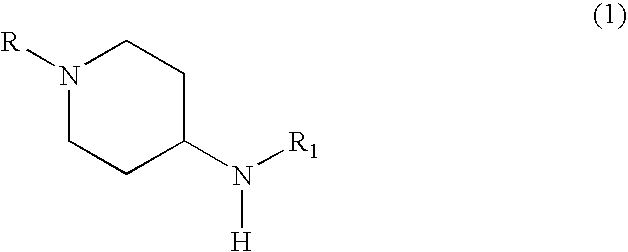
which compound of formula (1) is reacted with
A) either a compound of formula X1NC(Y) in which X1 and Y have the meaning indicated above, in order to obtain a compound of formula (2)

which compound of formula (2) represents the corresponding compound of formula (I) in which R3 represents Me or Boc and which, when R3 represents Boc, can be subjected to an acid treatment in order to obtain the corresponding compound of formula (I) in which R3 represents the hydrogen atom,
which compound of formula (I) thus obtained can be reacted with a compound of formula —X1NC(Y), X2CO2H or X3SO2Cl in which X1, Y, X2 and X3 have the meaning indicated above, in order to obtain the corresponding compound of formula I in which R2 represents a radical of formula —C(Y)NHX1 and R3 the —C(Y)—NHX1, —C(O)X2 or SO2X3 radical respectively;
B) or a compound of formula X2CO2H in which X2 has the meaning indicated above, in order to obtain a compound of formula (3)

which compound of formula (3) represents the corresponding compound of formula (I) in which R3 represents Me or Boc and which, when R3 represents Boc, can be subjected to an acid treatment in order to obtain the corresponding compound of formula (I) in which R3 represents the hydrogen atom,
which compound of formula (I) thus obtained can be reacted with a compound of formula X1NC(Y), X2CO2H or X3SO2Cl in which X1, Y, X2 and X3 have the meaning indicated above, in order to obtain the corresponding compound of formula I in which R2 represents a radical of formula —C(O)X2 and R3 the —C(Y)—NHX1, —C(O)X2 or SO2X3 radical respectively.

in the presence of an amine of formula R1NH2 in which R1 has the meaning indicated above, in order to obtain the compound of formula (4)

which compound of formula (4) is reacted with
A) either a compound of formula X1NC(Y) in which X1 and Y have the meaning indicated above, in order to obtain a compound of formula (5)

followed by cleavage of the resin in order to obtain the corresponding compound of formula (I) in which R3 represents the hydrogen atom,
B) or a compound of formula X3SO2Cl in which X3 has the meaning indicated above, in order to obtain a compound of formula (6)

followed by cleavage of the resin in order to obtain the corresponding compound of formula (I) in which R3 represents the hydrogen atom,
C) or a compound of formula X2CO2Cl in which X2 has the meaning indicated above, in order to obtain a compound of formula (7)

followed by cleavage of the resin in order to obtain the corresponding compound of formula (I) in which R3 represents the hydrogen atom;
D) or a compound of formula X2CO2H in which X2 has the meaning indicated above, in order to obtain a compound of formula (7) as defined above, followed by cleavage of the resin in order to obtain the corresponding compound of formula (I) in which R3 represents the hydrogen atom.

in the presence of an amine of formula R1NH2 in which R1 has the meaning indicated above, in order to obtain the compound of formula (8)

which compound of formula (8) is reacted with
A) either a compound of formula X1NC(O) in which X1 has the meaning indicated above, in order to obtain a compound of formula (9)

which compound (9) thus formed is reacted with a compound of formula R3X in which R3 is as defined above and X represents Br or I, followed by cleavage of the resin in order to obtain the corresponding compound of formula (I);
B) or a compound of formula X3SO2Cl in which X3 has the meaning indicated above, in order to obtain a compound of formula (10)

which compound (10) thus formed is reacted with a compound of formula R3X in which R3 is as defined above and X represents Br or I, followed by cleavage of the resin in order to obtain the corresponding compound of formula (I);
C) or a compound of formula X2CO2Cl in which X2 has the meaning indicated above, in order to obtain a compound of formula (11)

which compound (11) thus formed is reacted with a compound of formula R3X in which R3 is as defined above and X represents Br or I, followed by cleavage of the resin in order to obtain the corresponding compound of formula (I);
D) or a compound of formula X2CO2H in which X2 has the meaning indicated above, in order to obtain a compound of formula (11) as defined above,
which compound (11) thus formed is reacted with a compound of formula R3X in which R3 is as defined above and X represents Br or I, followed by cleavage of the resin in order to obtain the corresponding compound of formula (I).

in racemic, enantiomeric form or all combinations of these forms, in which:
R1a represents a linear or branched (C1-C16)alkyl, alkenyl, alkynyl, —(CH2)m—Y—Z11 or —(CH2)m—Z12 radical in which
-
- Z11 represents a (C1-C6)alkyl or aryl optionally substituted,
- Z12 represents cyano, cyclohexenyl, bis-phenyl, (C3-C7)cycloalkyl, optionally substituted (C3-C7) heterocycloalkyl, optionally substituted aryl or optionally substituted heteroaryl,
- or Z12 represents a radical of formula

or R1a represents a radical of formula

R2a represents a radical of formula —C(Y)NHX1, —C(O)X2 or SO2X3;
R3a represents the hydrogen atom, an optionally substituted alkyl, alkenyl, alkynyl, optionally substituted aralkyl, optionally substituted heteroarylalkyl radical, or a radical of formula —C(Y)—NHX1, —(CH2)n—C(O)X2, SO2X3 or

X1 represents a linear or branched (C1-C15)alkyl, alkenyl, alkynyl, —(CH2)m—Y—Z21 or —(CH2)pZ22 radical in which
-
- Z21 represents a (C1-C6)alkyl
- Z22 represents cyclohexenyl, indanyl, bis-phenyl, (C3-C7)cycloalkyl, (C3-C7)heterocycloalkyl, mono- or di-alkylamino, —C(O)—O-alkyl, or aryl or heteroaryl optionally substituted,
- or Z22 represents a radical of formula

X2 represents a linear or branched (C1-C10)alkyl radical, an alkenyl radical optionally substituted by a phenyl radical (the phenyl radical being itself optionally substituted), an alkynyl radical, or a radical of formula —(CH2)m—W—(CH2)q—Z23 or —(CH2)p—U—Z24 in which
-
- Z23 represents a (C1-C6)alkyl or aryl optionally substituted;
- Z24 represents alkyl, cyclohexenyl, bis-phenyl, (C3-C7)cycloalkyl optionally substituted, (C3-C7)heterocycloalkyl, cyano, amino, mono or di-alkylamino, or aryl or heteroaryl optionally substituted,
- or Z24 represents a radical of formula

or X2 represents a radical represented below:

where the protective group (PG) represents H or tert-butyloxycarbonyl;
X3 represents a linear or branched (C1-C10)alkyl radical, an alkenyl radical optionally substituted by a phenyl radical (the phenyl radical being itself optionally substituted), CF3, or —(CH2)pZ25 in which
-
- Z25 represents aryl or heteroaryl optionally substituted,
or X3 represents a radical of formula
- Z25 represents aryl or heteroaryl optionally substituted,

optionally substituted by one or more halo radicals identical or different;
Y represents an oxygen or sulphur atom;
W represents an oxygen or sulphur atom, or SO2;
U represents a covalent bond or the oxygen atom;
n is an integer from 0 to 4;
m is an integer from 1 to 6;
p is an integer from 0 to 6;
q is an integer from 0 to 2,
or their addition salts with pharmaceutically acceptable mineral or organic acids, for the preparation of a medicament intended to treat pathological states or diseases in which one (or more) receptor(s) of somatostatin is (are) involved.
ii) the substituent or substituents which can be carried by the heterocycloalkyl radical represented by Z12 are chosen independently from the oxy and alkyl radicals;
iii) the substituent or substituents which can be carried by the aryl and heteroaryl radicals represented by Z22 are chosen independently from the fluoro, chloro, bromo, iodo, alkyl, alkenyl, alkoxy, alkylthio, CF3, OCF3, nitro, cyano, azido, aminosulphonyl, piperidinosulphonyl, mono- or di-alkylamino, —C(O)—O-alkyl, —C(O)-alkyl, or phenyl, phenoxy, phenylthio, benzyloxy radicals, the phenyl radical being able to be substituted;
iv) the substituent or substituents which can be carried by the aryl radicals represented by Z23 and Z24, cycloalkyl and heteroaryl represented by Z24 are chosen independently from the fluoro, chloro, bromo, iodo, alkyl, alkoxy, alkylthio, CF3, OCF3, OCHF2, SCF3, nitro, cyano, azido, hydroxy, —C(O)O-alkyl, —O—C(O)-alkyl, —NH—C(O)-alkyl, alkylsulphonyl, mono- or di-alkylamino, amino, aminoalkyl, pyrrolyl, pyrrolydinyl or the radicals phenyl, phenoxy, phenylthio, benzyl, benzyloxy radicals the aryl radical of which is optionally substituted by one or more alkyl, CF3 or halo radicals;
v) the substituent or substituents which can be carried by the aryl and heteroaryl radicals represented by Z25 are chosen independently from the fluoro, chloro, bromo, iodo, alkyl, alkoxy, CF3, OCF3, nitro, cyano, —NH—C(O)-alkyl, alkylsulphonyl, amino, mono- and di-alkylamino, phenyl, pyridino radicals;
vi) the substituent which can be carried by the alkyl radical represented by R3 is the cyano radical.
vii) the substituent or substituents which can be carried by the aralkyl radical represented by R3 are chosen independently from the fluoro, chloro, bromo, iodo, alkyl, alkoxy, CF3, OCF3, OCHF2, SCF3, SCHF2, nitro, cyano, —C(O)O-alkyl, alkylsulphonyl, thiadiazolyl radicals, or the phenyl and phenoxy radicals the phenyl radical of which is optionally substituted by one or more halo radicals.
viii) the substituent or substituents which can be carried by the heteroarylalkyl radical represented by R3 are chosen independently from the fluoro, chloro, bromo or nitro radicals.
-
- Z11 represents a (C1-C6)alkyl,
- Z12 represents bis-phenyl, (C3-C7)cycloalkyl, (C3-C7)heterocycloalkyl optionally substituted, or aryl or heteroaryl optionally substituted by one or more substituents chosen independently from the fluoro, chloro, bromo, iodo, alkyl, alkoxy radicals,
- or Z12 represents

-
- Y represents the oxygen atom,
or R1a represents a radical of formula
- Y represents the oxygen atom,

-
- X1 represents a linear or branched (C1-C15)alkyl radical, or —(CH2)pZ22 in which
- Z22 represents cyclohexenyl, bis-phenyl, (C3-C7)cycloalkyl, (C3-C7)heterocycloalkyl, mono- or di-alkylamino, —C(O)—O-alkyl, or aryl or heteroaryl optionally substituted by one or more radicals chosen independently from the fluoro, chloro, bromo, iodo, alkyl, alkoxy, alkylthio, CF3, OCF3, nitro, cyano, azido, piperidinosulphonyl, —C(O)—O-alkyl, —C(O)-alkyl, or phenyl radicals,
- or Z22 represents a radical of formula
- X1 represents a linear or branched (C1-C15)alkyl radical, or —(CH2)pZ22 in which

-
- X2 represents a linear or branched (C1-C10)alkyl, alkynyl, —(CH2)m—W—(CH2)q—Z23 or —(CH2)p—U—Z24 radical in which
- W represents SO2,
- U represents a covalent bond,
- Z23 represents an aryl radical;
- Z24 represents cyclohexenyl, bis-phenyl, (C3-C7)cycloalkyl optionally substituted by an aminoalkyl, or aryl or heteroaryl radical optionally substituted by one or more radicals chosen from fluoro, chloro, bromo, iodo, alkyl, alkoxy, —CF3, —OCF3, SCF3, hydroxy, —O—C(O)-alkyl, mono- or di-alkylamino, amino
- or Z24 represents a radical of formula
- X2 represents a linear or branched (C1-C10)alkyl, alkynyl, —(CH2)m—W—(CH2)q—Z23 or —(CH2)p—U—Z24 radical in which
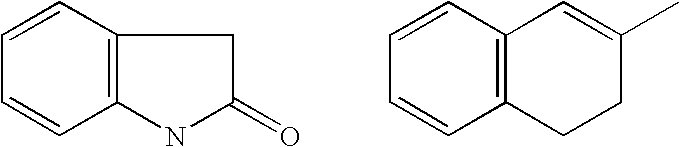
-
- or X2 represents

-
- X3 represents a —(CH2)pZ25 radical in which Z25 represents an aryl radical optionally substituted by one or more identical or different radicals chosen from alkoxy and CF3.
-
- X1 represents a —(CH2)pZ22 radical in which
- Z22 represents an aryl radical optionally substituted by one or more radicals chosen independently from the fluoro, chloro, bromo, iodo, alkyl, alkoxy CF3, nitro, phenoxy radicals;
- X2 represents the vinyl radical substituted by a phenyl, the phenyl radical being itself optionally substituted by one or more halo, or —(CH2)p—U—Z24 radicals in which
- Z24 represents alkyl, (C3-C7)cycloalkyl, (C3-C7)heterocycloalkyl, bis-phenyl, amino, mono or di-alkylamino, or aryl or heteroaryl optionally substituted by one or more radicals chosen from alkoxy, bromo, chloro, fluoro, hydroxy, CF3, nitro, amino, mono- and di-alkylamino, pyrrolyl,
- or X2 represents a radical of formula
- X1 represents a —(CH2)pZ22 radical in which

-
- X3 represents a linear or branched (C1-C10)alkyl radical, the vinyl radical substituted by a radical (the phenyl radical being itself optionally substituted), CF3, or —(CH2)pZ25 in which
- Z25 represents aryl or heteroaryl optionally substituted by one or more substituents chosen independently from the fluoro, chloro, bromo, iodo, alkyl, alkoxy, CF3, nitro, —NH—C(O)-alkyl, mono- and di-alkylamino radicals.
- X3 represents a linear or branched (C1-C10)alkyl radical, the vinyl radical substituted by a radical (the phenyl radical being itself optionally substituted), CF3, or —(CH2)pZ25 in which
-
- Z11 represents a (C1-C6)alkyl,
- Z12 represents naphthyl, morpholino, bis-phenyl, pyrrolidinyl substituted by the oxy radical, or the phenyl, piperazinyl, pyridinyl and indolyl radicals which are optionally substituted by one or more substituents chosen independently from the bromo, fluoro, chloro, alkyl, alkoxy, —CF3, —OCF3 radicals;
- or Z12 represents

-
- Y represents the oxygen atom,
or R1a represents a radical of formula given below:
- Y represents the oxygen atom,

-
- X1 represents a linear or branched (C1-C10)alkyl, or —(CH2)pZ22 radical in which
- Z22 represents cyclohexyl, cyclohexenyl, bis-phenyl, morpholino, piperidino, mono- or di-alkylamino, —C(O)—O-alkyl, or phenyl, naphthyl or furyl optionally substituted by one or more radicals chosen independently from the fluoro, chloro, bromo, iodo, alkyl, alkoxy, alkylthio, CF3, OCF3, nitro, cyano, azido, piperidinosulphonyl, —C(O)—O— alkyl, —C(O)-alkyl or phenyl radicals,
- or Z22 represents a radical of formula
- X1 represents a linear or branched (C1-C10)alkyl, or —(CH2)pZ22 radical in which

-
- X2 represents an alkyl, alkynyl, —(CH2)m—W—(CH2)q—Z23 or —(CH2)pZ24 radical in which
- W represents SO2;
- Z23 represents the phenyl radical;
- Z24 represents cyclohexenyl, bis-phenyl, cyclohexyl optionally substituted by an aminoalkyl, or phenyl, naphthyl, benzothienyl, thienyl or indolyl radical optionally substituted by one or more radicals chosen from fluoro, chloro, bromo, iodo, alkyl, alkoxy, —CF3, —OCF3, SCF3, hydroxy, —O—C(O)-alkyl, —NH—C(O)-alkyl, mono- or di-alkylamino, amino, or
- Z24 represents a radical of formula
- X2 represents an alkyl, alkynyl, —(CH2)m—W—(CH2)q—Z23 or —(CH2)pZ24 radical in which

-
- or X2 represents

-
- X3 represents a —(CH2)pZ25 radical in which Z25 represents the phenyl radical optionally substituted by one or more identical or different radicals chosen from alkoxy and CF3,
-
- X1 represents a —(CH2)pZ22 radical in which
- Z22 represents the phenyl or naphthyl radical optionally substituted by one or more radicals chosen independently from the fluoro, chloro, bromo, iodo, alkyl, alkoxy, CF3, nitro, phenoxy radicals,
- X2 represents the vinyl radical substituted by a phenyl radical itself optionally substituted by one or more halo, or —(CH2)p—U—Z24 radicals in which
- Z24 represents alkyl, cyclohexyl, tetrahydrofuryl, bis-phenyl, amino, mono or di-alkylamino, or phenyl, indolyl, thienyl, pyridinyl, benzothienyl and furyl optionally substituted by one or more radicals chosen from alkoxy, bromo, chloro, fluoro, amino, mono- and di-alkylamino, nitro, hydroxy, pyrrolyl
- or X2 represents a radical of formula
- X1 represents a —(CH2)pZ22 radical in which

-
- X3 represents a linear or branched (C1-C10)alkyl radical, the vinyl radical substituted by a phenyl, CF3, or —(CH2)pZ25 radical in which
- Z25 represents a phenyl, naphtyl, thienyl, pyrazolyl or thiazolyl radical optionally substituted by one or more substituents chosen independently from the fluoro, chloro, bromo, iodo, alkyl, alkoxy, CF3, nitro, —NH—C(O)-alkyl, mono- and di-alkylamino radicals;
- X3 represents a linear or branched (C1-C10)alkyl radical, the vinyl radical substituted by a phenyl, CF3, or —(CH2)pZ25 radical in which
-
- Y represents S;
- X1 represents a phenyl radical optionally substituted by one or more azido radicals,
- X2 represents —(CH2)pZ24 in which
- p is equal to 1, 2 or 3,
- Z24 represents cyclohexyl, or phenyl or benzothienyl optionally substituted by one or more radicals chosen from fluoro, chloro, bromo, iodo or —CF3.
| T (min) | A % | B % |
| 0 | 100 | 0 |
| 1 | 100 | 0 |
| 10 | 15 | 85 |
| 12 | 15 | 85 |
| Condition C1 | Condition C2 |
| Flow rate: 1.1 ml/min | Flow rate: 1.1 ml/min |
| Injection: 5 μl | Injection: 20 μl |
| Temp: 40° C | Temp: 40° C |
| Wavelength (% UV): 210 nm | Wavelength (% UV): 210 nm |
| Column: Uptisphere ODS 3 μm | Column: Kromasyl ODS 3.5 μm |
| 33 * 4.6 mm i.d | 50 * 4.6 mm i.d |
| T (min) | A % | B % |
| 0 | 90 | 10 |
| 6 | 15 | 85 |
| 10 | 15 | 85 |
| Examples | Conditions | ||
| 1 to 29 | C2 | ||
| 30 to 263 | C1 | ||
| 264 to 425 | C3 | ||
| 426 to 456 | C2 | ||
| 457 to 503 | C3 | ||
| 504 to 586 | C1 | ||
| 587 to 778 | C3 | ||
| Pu- | ||||||
| rity | ||||||
| Ex | R1 | R2 | R3 | (%) | rt | M + H+ |
| 1 |  |  |  | 66 | 7.6 | 523.3 |
| 2 | ″ | ″ |  | 94 | 7.7 | 543.2 |
| 3 | ″ | ″ |  | 96 | 8.1 | 557.2 |
| 4 | ″ | ″ |  | 98 | 8.5 | 593.2 |
| 5 | ″ | ″ |  | 95 | 7.8 | 557.2 |
| 6 | ″ | ″ |  | 97 | 8.1 | 623.1 |
| 7 | ″ | ″ |  | 95 | 8.1 | 588.2 |
| 8 | ″ | ″ |  | 19 | 8.1 | 535.2 |
| 9 | ″ | ″ |  | 99 | 8.5 | 622.2 |
| 10 | ″ | ″ |  | 80 | 8.4 | 611.2 |
| 11 | ″ | ″ |  | 99 | 8.2 | 569.2 |
| 12 | ″ | ″ |  | 93 | 8.9 | 656.2 |
| 13 | ″ | ″ |  | 85 | 9.1 | 697.0 |
| 14 | ″ | ″ |  | 95 | 8.7 | 611.2 |
| 15 | ″ | ″ |  | 87 | 7.8 | 573.2 |
| 16 | ″ | ″ |  | 100 | 8.4 | 653.2 |
| 17 | ″ | ″ |  | 97 | 8.6 | 611.1 |
| 18 | ″ | ″ |  | 99 | 8.7 | 636.3 |
| 19 | ″ | ″ |  | 83 | 7.2 | 621.2 |
| 20 | ″ | ″ |  | 98 | 7.4 | 595.2 |
| 21 | ″ | ″ |  | 84 | 7.4 | 536.3 |
| 22 | ″ | ″ |  | 99 | 8.4 | 614.3 |
| 23 | ″ | ″ |  | 63 | 8.2 | 570.2 |
| 24 | ″ | ″ |  | 92 | 7.5 | 572.3 |
| 25 | ″ | ″ |  | 93 | 8.4 | 606.4 |
| 26 | ″ | ″ |  | 96 | 7.4 | 582.3 |
| 27 | ″ | ″ |  | 93 | 8.1 | 624.2 |
| 28 | ″ | ″ |  | 93 | 7.8 | 602.2 |
| 29 | ″ | ″ |  | 95 | 7.4 | 585.2 |
| 30 | ″ | ″ |  | 87.39 | 4.0 | 516.4 |
| 31 | ″ | ″ |  | 92 | 5.5 | 560.3 |
| 32 | ″ | ″ |  | 90 | 5.7 | 563.3 |
| 33 | ″ | ″ |  | 87.73 | 5.6 | 625.4 |
| 34 | ″ | ″ |  | 85.41 | 6.0 | 565.4 |
| 35 | ″ | ″ |  | 98.4 | 6.4 | 671.1 |
| 36 | ″ | ″ |  | 86 | 4.9 | 542.3 |
| 37 | ″ | ″ |  | 89 | 6.1 | 572.3 |
| 38 | ″ | ″ |  | 77.61 | 6.8 | 555.4 |
| 39 | ″ | ″ |  | 89.16 | 4.2 | 545.4 |
| 40 | ″ | ″ |  | 92.32 | 5.3 | 599.3 |
| 41 | ″ | ″ |  | 83 | 6.0 | 589.2 |
| 42 | ″ | ″ |  | 36.3 | 5.9 | 531.2 |
| 43 | ″ | ″ |  | 83.27 | 5.9 | 555.3 |
| 44 | ″ | ″ |  | 82 | 4.5 | 564.4 |
| 45 | ″ | ″ |  | 86.75 | 6.0 | 577.3 |
| 46 | ″ | ″ |  | 91.95 | 4.7 | 501.4 |
| 47 | ″ | ″ |  | 88.94 | 4.5 | 475.3 |
| 48 | ″ | ″ |  | 73 | 5.3 | 542.3 |
| 49 | ″ |  |  | 90.96 | 4.4 | 486.4 |
| 50 | ″ | ″ |  | 95.5 | 5.9 | 530.4 |
| 51 | ″ | ″ |  | 94.51 | 6.1 | 533.4 |
| 52 | ″ | ″ |  | 93.64 | 6.0 | 595.4 |
| 53 | ″ | ″ |  | 96.05 | 6.5 | 535.4 |
| 54 | ″ | ″ |  | 84.68 | 6.9 | 641.1 |
| 55 | ″ | ″ |  | 86 | 5.5 | 512.3 |
| 56 | ″ | ″ |  | 92 | 6.5 | 542.4 |
| 57 | ″ | ″ |  | 91.29 | 7.2 | 525.5 |
| 58 | ″ | ″ |  | 94.7 | 4.7 | 515.4 |
| 59 | ″ | ″ |  | 94 | 5.8 | 569.3 |
| 60 | ″ | ″ |  | 89.43 | 6.6 | 559.3 |
| 61 | ″ | ″ |  | 32 | 6.9 | 501.5 |
| 62 | ″ | ″ |  | 93.53 | 6.4 | 525.4 |
| 63 | ″ | ″ |  | 94.7 | 4.9 | 534.4 |
| 64 | ″ | ″ |  | 94.32 | 6.4 | 547.3 |
| 65 | ″ | ″ |  | 91.71 | 5.2 | 471.4 |
| 66 | ″ | ″ |  | 92.47 | 5.0 | 445.4 |
| 67 | ″ | ″ |  | 58 | 5.9 | 512.3 |
| 68 | ″ |  |  | 84.55 | 3.6 | 559.4 |
| 69 | ″ | ″ |  | 87.7 | 4.7 | 603.4 |
| 70 | ″ | ″ |  | 90.77 | 4.8 | 606.4 |
| 71 | ″ | ″ |  | 72.34 | 4.8 | 668.4 |
| 72 | ″ | ″ |  | 87.18 | 5.1 | 608.4 |
| 73 | ″ | ″ |  | 69.52 | 5.4 | 714.1 |
| 74 | ″ | ″ |  | 63.39 | 4.2 | 585.3 |
| 75 | ″ | ″ |  | 54.46 | 5.1 | 615.4 |
| 76 | ″ | ″ |  | 87.3 | 5.7 | 598.4 |
| 77 | ″ | ″ |  | 96.1 | 3.8 | 588.4 |
| 78 | ″ | ″ |  | 89.9 | 4.5 | 642.3 |
| 79 | ″ | ″ |  | 61.5 | 5.1 | 632.3 |
| 80 | ″ | ″ |  | 43.65 | 5.0 | 574.3 |
| 81 | ″ | ″ |  | 88.18 | 5.0 | 598.3 |
| 82 | ″ | ″ |  | 88.6 | 4.0 | 607.4 |
| 83 | ″ | ″ |  | 90.08 | 5.1 | 620.3 |
| 84 | ″ | ″ |  | 85.57 | 4.0 | 544.3 |
| 85 | ″ | ″ |  | 48.41 | 4.5 | 585.3 |
| 86 | ″ |  |  | 82.68 | 6.1 | 589.3 |
| 87 | ″ | ″ |  | 79.99 | 6.5 | 611.4 |
| 88 | ″ | ″ |  | 86.07 | 4.8 | 503.4 |
| 89 | ″ | ″ |  | 82 | 5.1 | 551.4 |
| 90 | ″ | ″ |  | 19.44 | 4.4 | 502.4 |
| 91 | ″ | ″ |  | 86.48 | 5.1 | 550.4 |
| 92 | ″ | ″ |  | 80 | 6.3 | 567.3 |
| 93 | ″ |  |  | 94.62 | 6.6 | 559.3 |
| 94 | ″ | ″ |  | 57.01 | 6.9 | 581.4 |
| 95 | ″ | ″ |  | 92 | 5.2 | 473.4 |
| 96 | ″ | ″ |  | 87.4 | 5.6 | 521.4 |
| 97 | ″ | ″ |  | 20.99 | 5.0 | 472.4 |
| 98 | ″ | ″ |  | 88.63 | 5.7 | 520.4 |
| 99 | ″ | ″ |  | 84 | 6.7 | 537.3 |
| 100 | ″ |  |  | 89.71 | 5.2 | 632.3 |
| 101 | ″ | ″ |  | 90.25 | 5.5 | 654.4 |
| 102 | ″ | ″ |  | 90.09 | 4.0 | 546.4 |
| 103 | ″ | ″ |  | 71 | 4.4 | 594.3 |
| 104 | ″ | ″ |  | 37.19 | 3.8 | 545.3 |
| 105 | ″ | ″ |  | 76.55 | 4.5 | 593.4 |
| 106 |  |  |  | 69.62 | 5.9 | 405.2 |
| 107 |  | 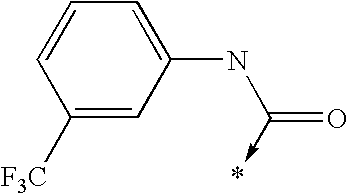 | ″ | 98 | 7.1 | 493.2 |
| 108 |  |  | ″ | 80 | 6.0 | 467.3 |
| 109 |  |  | ″ | 88 | 6.5 | 471.2 |
| 110 |  |  | ″ | 60.04 | 5.7 | 427.3 |
| 111 |  |  | ″ | 78 | 6.5 | 515.2 |
| 112 |  |  | ″ | 97 | 6.2 | 455.2 |
| 113 |  |  | ″ | 70 | 5.7 | 489.3 |
| 114 |  |  | ″ | 90 | 6.2 | 493.3 |
| 115 |  |  |  | 62.88 | 3.6 | 305.3 |
| 116 |  |  | ″ | 82.99 | 4.7 | 393.2 |
| 117 |  |  | ″ | 74.42 | 5.0 | 393.1 |
| 118 |  |  | ″ | 10.53 | 5.4 | 367.3 |
| 119 |  |  | ″ | 74.79 | 4.3 | 371.2 |
| 120 |  |  | ″ | 50.14 | 3.4 | 327.3 |
| 121 |  |  | ″ | 70 | 4.3 | 415.2 |
| 122 |  |  | ″ | 84 | 3.9 | 355.3 |
| 123 |  |  | ″ | 66 | 3.5 | 389.3 |
| 124 |  |  | ″ | 94.61 | 3.9 | 393.2 |
| 125 |  |  |  | 71 | 5.5 | 462.3 |
| 126 |  |  | ″ | 52 | 6.6 | 550.2 |
| 127 |  |  | ″ | 57 | 6.8 | 550.1 |
| 128 |  |  | ″ | 60 | 5.6 | 524.2 |
| 129 |  |  | ″ | 64 | 6.1 | 528.2 |
| 130 |  |  | ″ | 27 | 5.4 | 484.3 |
| 131 |  |  | ″ | 51 | 6.2 | 572.2 |
| 132 |  |  | ″ | 73 | 5.7 | 512.2 |
| 133 |  |  | ″ | 61 | 5.4 | 546.2 |
| 134 |  |  | ″ | 43 | 5.8 | 550.2 |
| 135 |  |  |  | 76 | 5.3 | 483.3 |
| 136 |  |  | ″ | 49 | 6.4 | 571.2 |
| 137 |  |  | ″ | 63 | 6.6 | 571.1 |
| 138 |  |  | ″ | 79 | 5.4 | 545.2 |
| 139 |  |  | ″ | 57 | 5.9 | 549.2 |
| 140 |  |  | ″ | 66.58 | 5.2 | 505.3 |
| 141 |  |  | ″ | 61 | 6.0 | 593.2 |
| 142 |  |  | ″ | 67 | 5.5 | 533.2 |
| 143 |  |  | ″ | 61 | 5.2 | 567.3 |
| 144 |  |  | ″ | 51 | 5.6 | 571.2 |
| 145 |  |  |  | 56 | 7.0 | 457.3 |
| 146 |  |  | ″ | 64 | 8.1 | 545.2 |
| 147 |  |  | ″ | 52 | 8.3 | 545.2 |
| 148 |  |  | ″ | 69 | 7.1 | 519.3 |
| 149 |  |  | ″ | 70 | 7.6 | 523.3 |
| 150 |  |  | ″ | 63.77 | 6.7 | 479.4 |
| 151 |  |  | ″ | 50 | 7.3 | 567.3 |
| 152 |  |  | ″ | 46 | 7.3 | 507.3 |
| 153 |  |  | ″ | 78 | 6.7 | 541.3 |
| 154 |  |  | ″ | 66 | 7.0 | 545.3 |
| 155 |  |  |  | 68 | 6.0 | 457.2 |
| 156 |  |  | ″ | 65 | 7.1 | 545.2 |
| 157 |  |  | ″ | 67 | 7.3 | 545.1 |
| 158 |  |  | ″ | 66 | 6.1 | 519.2 |
| 159 |  |  | ″ | 77 | 6.6 | 523.2 |
| 160 |  |  | ″ | 60.49 | 5.8 | 479.3 |
| 161 |  |  | ″ | 60 | 6.6 | 567.3 |
| 162 |  |  | ″ | 69 | 6.2 | 507.2 |
| 163 |  |  | ″ | 50 | 5.8 | 541.2 |
| 164 |  |  | ″ | 49 | 6.2 | 545.2 |
| 165 |  |  |  | 67 | 4.4 | 466.3 |
| 166 |  |  | ″ | 45 | 5.5 | 554.2 |
| 167 |  |  | ″ | 65.89 | 5.7 | 554.1 |
| 168 |  |  | ″ | 5 | 5.4 | 528.2 |
| 169 |  |  | ″ | 64.08 | 5.0 | 532.2 |
| 170 |  |  | ″ | 62.51 | 4.3 | 488.3 |
| 171 |  | 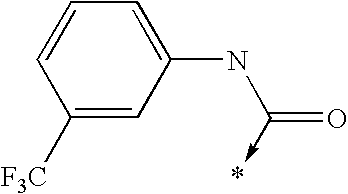 | ″ | 55 | 5.2 | 576.3 |
| 172 |  |  | ″ | 50.35 | 4.7 | 516.3 |
| 173 |  |  | ″ | 7 | 5.2 | 550.3 |
| 174 |  |  | ″ | 48.63 | 4.8 | 554.3 |
| 175 |  |  |  | 53 | 5.7 | 459.2 |
| 176 |  |  | ″ | 49 | 6.9 | 547.2 |
| 177 |  |  | ″ | 61 | 7.1 | 547.1 |
| 178 |  |  | ″ | 57 | 5.9 | 521.2 |
| 179 |  |  | ″ | 65 | 6.4 | 525.2 |
| 180 |  |  | ″ | 88.99 | 5.6 | 481.3 |
| 181 |  |  | ″ | 58 | 6.4 | 569.2 |
| 182 |  |  | ″ | 64 | 6.0 | 509.2 |
| 183 |  |  | ″ | 63 | 6.0 | 547.2 |
| 184 |  |  |  | 67.83 | 10.1 | 516.3 |
| 185 |  |  | ″ | 61.66 | 6.7 | 525.3 |
| 186 |  |  | ″ | 40.48 | 9.9 | 537.3 |
| 187 |  |  | ″ | 50 | 6.4 | 546.3 |
| 188 |  |  | ″ | 42.57 | 7.4 | 478.4 |
| 189 |  |  | ″ | 29 | 4.8 | 487.3 |
| 190 |  |  | ″ | 55 | 10.3 | 499.3 |
| 191 |  |  | ″ | 19.39 | 6.7 | 508.3 |
| 192 |  |  | ″ | 67 | 11.1 | 567.3 |
| 193 |  |  | ″ | 64.73 | 7.9 | 576.3 |
| 194 |  |  |  | 92 | 10.6 | 586.3 |
| 195 |  |  | ″ | 85 | 7.3 | 595.3 |
| 196 |  |  | ″ | 96 | 10.5 | 607.3 |
| 197 |  |  | ″ | 89.25 | 7.2 | 616.3 |
| 198 |  |  | ″ | 98.24 | 7.9 | 548.3 |
| 199 |  |  | ″ | 94 | 5.6 | 557.3 |
| 200 |  |  | ″ | 98 | 10.8 | 569.2 |
| 201 |  |  | ″ | 93.17 | 7.3 | 578.2 |
| 202 |  |  | ″ | 97.82 | 11.7 | 637.3 |
| 203 |  |  | ″ | 88.11 | 8.5 | 646.3 |
| 204 |  |  |  | 73 | 11.2 | 690.0 |
| 205 |  |  | ″ | 60.44 | 7.9 | 699.0 |
| 206 |  |  | ″ | 76 | 11.1 | 711.0 |
| 207 |  |  | ″ | 72.2 | 7.8 | 720.0 |
| 208 |  |  | ″ | 89.42 | 8.5 | 652 |
| 209 |  |  | ″ | 48 | 6.2 | 659.0 |
| 210 |  |  | ″ | 78.2 | 11.6 | 673.0 |
| 211 |  |  | ″ | 66.1 | 7.9 | 682.0 |
| 212 |  |  | ″ | 78 | 12.6 | 739.1 |
| 213 |  |  | ″ | 88.77 | 9.1 | 750.0 |
| 214 |  |  |  | 73 | 10.6 | 604.3 |
| 215 |  |  | ″ | 67 | 7.5 | 613.2 |
| 216 |  |  | ″ | 73 | 10.5 | 625.3 |
| 217 |  |  | ″ | 83 | 7.3 | 634.2 |
| 218 |  |  | ″ | 87.32 | 7.9 | 566.3 |
| 219 |  |  | ″ | 79 | 5.7 | 575.2 |
| 220 |  |  | ″ | 89 | 10.7 | 587.2 |
| 221 |  |  | ″ | 78.75 | 7.4 | 596.2 |
| 222 |  |  | ″ | 95 | 11.6 | 655.3 |
| 223 |  |  | ″ | 79 | 8.6 | 664.3 |
| 224 |  |  |  | 58 | 9.4 | 614.2 |
| 225 |  |  | ″ | 78 | 6.4 | 623.2 |
| 226 |  |  | ″ | 75 | 9.2 | 635.3 |
| 227 |  |  | ″ | 88 | 6.1 | 644.3 |
| 228 |  |  | ″ | 86 | 6.7 | 576.3 |
| 229 |  |  | ″ | 80 | 4.6 | 585.2 |
| 230 |  |  | ″ | 73 | 9.5 | 597.2 |
| 231 |  |  | ″ | 66 | 6.2 | 606.2 |
| 232 |  |  | ″ | 62 | 10.5 | 665.3 |
| 233 |  |  | ″ | 81 | 7.5 | 674.3 |
| 234 |  | 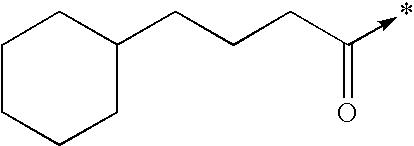 |  | 92 | 8.9 | 540.3 |
| 235 |  |  | ″ | 86 | 5.6 | 549.2 |
| 236 |  |  | ″ | 91 | 8.7 | 561.3 |
| 237 |  |  | ″ | 94.51 | 5.4 | 570.2 |
| 238 |  |  | ″ | 93.36 | 6.2 | 502.3 |
| 239 |  |  | ″ | 97 | 3.8 | 511.3 |
| 240 |  |  | ″ | 98.13 | 9.0 | 523.3 |
| 241 |  |  | ″ | 82 | 5.4 | 532.2 |
| 242 |  |  | ″ | 99 | 10.1 | 591.3 |
| 243 |  |  | ″ | 94.74 | 6.8 | 600.3 |
| 244 |  |  |  | 89 | 9.8 | 596.3 |
| 245 |  |  | ″ | 81 | 6.6 | 605.3 |
| 246 |  |  | ″ | 96 | 9.7 | 617.3 |
| 247 |  |  | ″ | 85.68 | 6.4 | 626.3 |
| 248 |  |  | ″ | 98.65 | 7.1 | 558.3 |
| 249 |  |  | ″ | 92 | 4.8 | 567.2 |
| 250 |  |  | ″ | 96 | 10.0 | 579.2 |
| 251 |  |  | ″ | 88.12 | 6.5 | 588.2 |
| 252 |  |  | ″ | 97 | 10.9 | 647.3 |
| 253 |  |  | ″ | 86 | 7.8 | 656.3 |
| 254 |  |  |  | 79 | 10.1 | 572.2 |
| 255 |  |  | ″ | 79 | 7.0 | 581.2 |
| 256 |  |  | ″ | 71 | 10.0 | 593.3 |
| 257 |  |  | ″ | 72.74 | 6.6 | 602.2 |
| 258 |  |  | ″ | 79.1 | 7.4 | 534.3 |
| 259 |  |  | ″ | 74 | 4.9 | 543.2 |
| 260 |  |  | ″ | 84.17 | 10.3 | 555.2 |
| 261 |  |  | ″ | 76.16 | 6.7 | 564.2 |
| 262 |  |  | ″ | 95 | 11.1 | 623.3 |
| 263 |  |  | ″ | 78.91 | 8.0 | 632.3 |
| 264 |  |  |  | 75.26 | 5.1 | 430.2 |
| 265 | ″ |  | ″ | 90.43 | 5.0 | 430.3 |
| 266 | ″ |  | ″ | 74.93 | 4.3 | 452.3 |
| 267 | ″ |  | ″ | 79.62 | 4.9 | 390.3 |
| 268 | ″ |  | ″ | 92.82 | 5.6 | 490.4 |
| 269 | ″ |  | ″ | 68.87 | 3.6 | 421.3 |
| 270 | ″ |  | ″ | 79.07 | 4.9 | 440.2 |
| 271 | ″ |  | ″ | 84.22 | 3.0 | 392.3 |
| 272 | ″ |  | ″ | 67.34 | 4.9 | 418.2 |
| 273 | ″ |  | ″ | 81.63 | 4.4 | 352.3 |
| 274 | ″ |  | ″ | 90.11 | 4.7 | 342.3 |
| 275 | ″ |  | ″ | 54.36 | 4.3 | 438.3 |
| 276 | ″ |  | ″ | 81.69 | 4.9 | 432.2 |
| 277 | ″ |  | ″ | 85.62 | 5.2 | 382.3 |
| 278 | ″ |  | ″ | 86.19 | 3.2 | 377.3 |
| 279 | 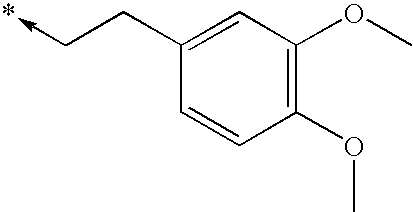 |  | ″ | 94.76 | 4.9 | 451.2 |
| 280 | ″ |  | ″ | 99.42 | 4.7 | 451.3 |
| 281 | ″ |  | ″ | 90.55 | 4.0 | 473.3 |
| 282 | ″ |  | ″ | 93.80 | 4.6 | 411.3 |
| 283 | ″ |  | ″ | 82.71 | 5.4 | 511.4 |
| 284 | ″ |  | ″ | 90.85 | 3.4 | 442.3 |
| 285 | ″ |  | ″ | 98.65 | 4.6 | 461.2 |
| 286 | ″ |  | ″ | 98.80 | 2.8 | 404.3 |
| 287 | ″ |  | ″ | 86.02 | 4.6 | 439.3 |
| 288 | ″ |  | ″ | 97.47 | 4.1 | 373.3 |
| 289 | ″ |  | ″ | 99.31 | 4.4 | 363.3 |
| 290 | ″ |  | ″ | 45.77 | 4.1 | 459.3 |
| 291 | ″ |  | ″ | 94.07 | 4.6 | 453.3 |
| 292 | ″ |  | ″ | 95.65 | 5.0 | 403.4 |
| 293 | ″ |  | ″ | 94.30 | 2.9 | 398.3 |
| 294 |  |  | ″ | 80.64 | 5.9 | 481.2 |
| 295 | ″ |  | ″ | 98.05 | 5.7 | 481.3 |
| 296 | ″ |  | ″ | 94.93 | 5.0 | 503.4 |
| 297 | ″ |  | ″ | 96.81 | 5.6 | 441.3 |
| 298 | ″ |  | ″ | 95.00 | 6.3 | 541.4 |
| 299 | ″ |  | ″ | 95.13 | 4.2 | 472.4 |
| 300 | ″ |  | ″ | 52.68 | 3.2 | 452.4 |
| 301 | ″ |  | ″ | 98.03 | 5.6 | 491.2 |
| 302 | ″ |  | ″ | 96.44 | 3.7 | 217.9 |
| 303 | ″ |  | ″ | 97.22 | 5.6 | 469.3 |
| 304 | ″ |  | ″ | 96.97 | 5.2 | 403.3 |
| 305 | ″ |  | ″ | 99.05 | 5.4 | 393.4 |
| 306 | ″ |  | ″ | 32.67 | 5.1 | 489.3 |
| 307 | ″ |  | ″ | 84.51 | 5.6 | 483.3 |
| 308 | ″ |  | ″ | 98.44 | 6.0 | 433.4 |
| 309 | ″ |  | ″ | 97.78 | 4.0 | 428.3 |
| 310 | 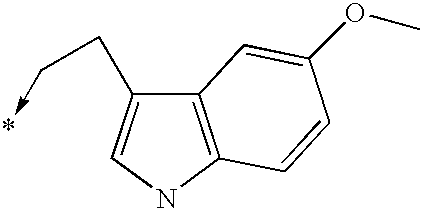 |  | ″ | 79.54 | 5.0 | 460.2 |
| 311 | ″ |  | ″ | 78.59 | 4.9 | 460.3 |
| 312 | ″ |  | ″ | 66.24 | 4.2 | 482.3 |
| 313 | ″ |  | ″ | 70.15 | 4.8 | 420.3 |
| 314 | ″ |  | ″ | 57.87 | 5.5 | 520.4 |
| 315 | ″ |  | ″ | 71.26 | 3.6 | 451.3 |
| 316 | ″ |  | ″ | 81.16 | 4.8 | 470.2 |
| 317 | ″ |  | ″ | 74.96 | 2.9 | 413.3 |
| 318 | ″ |  | ″ | 53.47 | 4.8 | 448.3 |
| 319 | ″ |  | ″ | 87.88 | 4.3 | 382.3 |
| 320 | ″ |  | ″ | 91.41 | 4.6 | 372.3 |
| 321 | ″ |  | ″ | 1.59 | 5.0 | 468.3 |
| 322 | ″ |  | ″ | 77.81 | 4.8 | 462.3 |
| 323 | ″ |  | ″ | 76.59 | 5.1 | 412.3 |
| 324 | ″ |  | ″ | 83.35 | 3.1 | 407.3 |
| 325 |  |  |  | 87.42 | 5.2 | 444.2 |
| 326 | ″ |  | ″ | 98.89 | 5.1 | 444.3 |
| 327 | ″ |  | ″ | 95.68 | 4.3 | 466.3 |
| 328 | ″ |  | ″ | 97.27 | 4.9 | 404.3 |
| 329 | ″ |  | ″ | 95.73 | 5.7 | 504.4 |
| 330 | ″ |  | ″ | 83.37 | 3.7 | 435.3 |
| 331 | ″ |  | ″ | 71.88 | 3.2 | 413.3 |
| 332 | ″ |  | ″ | 98.33 | 5.0 | 454.2 |
| 333 | ″ |  | ″ | 83.73 | 3.0 | 397.3 |
| 334 | ″ |  | ″ | 94.77 | 5.0 | 432.3 |
| 335 | ″ |  | ″ | 95.88 | 4.5 | 366.3 |
| 336 | ″ |  | ″ | 98.9 | 4.7 | 356.3 |
| 337 | ″ |  | ″ | 50.74 | 4.4 | 452.3 |
| 338 | ″ |  | ″ | 95.39 | 5.0 | 446.3 |
| 339 | ″ |  | ″ | 98.2 | 5.3 | 396.3 |
| 340 | ″ |  | ″ | 92.35 | 3.2 | 391.3 |
| 341 |  |  |  | 90.41 | 5.1 | 444.2 |
| 342 | ″ |  | ″ | 87.41 | 5.0 | 444.3 |
| 343 | ″ |  | ″ | 87.37 | 4.3 | 466.3 |
| 344 | ″ |  | ″ | 83.01 | 4.9 | 404.3 |
| 345 | ″ |  | ″ | 89.47 | 5.6 | 504.4 |
| 346 | ″ |  | ″ | 77.55 | 3.6 | 435.3 |
| 347 | ″ |  | ″ | 49.49 | 2.4 | 414.3 |
| 348 | ″ |  | ″ | 85.63 | 4.9 | 454.2 |
| 349 | ″ |  | ″ | 88.12 | 2.9 | 397.3 |
| 350 | ″ |  | ″ | 87.73 | 4.9 | 432.3 |
| 351 | ″ |  | ″ | 84.48 | 4.4 | 366.3 |
| 352 | ″ |  | ″ | 82.03 | 4.7 | 356.3 |
| 353 | ″ |  | ″ | 82.93 | 4.9 | 446.3 |
| 354 | ″ |  | ″ | 72.6 | 5.3 | 396.3 |
| 355 | ″ |  | ″ | 86.75 | 3.2 | 391.3 |
| 356 |  |  | ″ | 93.75 | 4.7 | 413.1 |
| 357 | ″ |  | ″ | 96.13 | 4.6 | 413.2 |
| 358 | ″ |  | ″ | 98.3 | 3.8 | 435.2 |
| 359 | ″ |  | ″ | 96.45 | 4.5 | 373.2 |
| 360 | ″ |  | ″ | 97.9 | 5.3 | 473.4 |
| 361 | ″ |  | ″ | 97.57 | 3.0 | 404.3 |
| 362 | ″ |  | ″ | 78.0 | 2.5 | 383.2 |
| 363 | ″ |  | ″ | 98.96 | 4.5 | 423.1 |
| 364 | ″ |  | ″ | 93.98 | 2.4 | 366.3 |
| 365 | ″ |  | ″ | 97.98 | 4.5 | 401.2 |
| 366 | ″ |  | ″ | 93.33 | 4.0 | 335.2 |
| 367 | ″ |  | ″ | 95.73 | 4.3 | 325.3 |
| 368 | ″ |  | ″ | 1.21 | 3.9 | 421.3 |
| 369 | ″ |  | ″ | 88.55 | 4.6 | 415.2 |
| 370 | ″ |  | ″ | 95.93 | 4.9 | 365.3 |
| 371 | ″ |  | ″ | 99.1 | 2.6 | 360.2 |
| 372 |  |  | ″ | 90.59 | 3.4 | 392.1 |
| 373 | ″ |  | ″ | 93.57 | 3.3 | 392.2 |
| 374 | ″ |  | ″ | 97.23 | 2.6 | 414.2 |
| 375 | ″ |  | ″ | 93.83 | 3.1 | 352.3 |
| 376 | ″ |  | ″ | 96.81 | 4.0 | 452.4 |
| 377 | ″ |  | ″ | 97.7 | 2.2 | 383.3 |
| 378 | ″ |  | ″ | 53.69 | 2.3 | 362.2 |
| 379 | ″ |  | ″ | 97.1 | 3.1 | 402.1 |
| 380 | ″ |  | ″ | 70.3 | 2.5 | 345.3 |
| 381 | ″ |  | ″ | 97.59 | 3.1 | 380.2 |
| 382 | ″ |  | ″ | 86.74 | 2.4 | 314.2 |
| 383 | ″ |  | ″ | 87.28 | 2.6 | 304.3 |
| 384 | ″ |  | ″ | 10.27 | 3.1 | 400.2 |
| 385 | ″ |  | ″ | 93.38 | 3.1 | 394.2 |
| 386 | ″ |  | ″ | 88.99 | 3.4 | 344.3 |
| 387 | ″ |  | ″ | 89.43 | 2.5 | 339.3 |
| 388 |  |  |  | 86.18 | 4.2 | 458.3 |
| 389 | ″ |  | ″ | 37.01 | 3.9 | 404.3 |
| 390 | ″ |  | ″ | 57.02 | 2.7 | 437.4 |
| 391 | ″ |  | ″ | 78.70 | 4.3 | 441.3 |
| 392 | ″ |  | ″ | 67.94 | 4.6 | 490.3 |
| 393 | ″ |  | ″ | 39.75 | 4.5 | 479.3 |
| 394 | ″ |  | ″ | 94.48 | 2.8 | 435.4 |
| 395 | ″ |  | ″ | 83.7 | 3.4 | 432.3 |
| 396 | ″ |  | ″ | 96.5 | 4.7 | 464.4 |
| 397 | ″ |  | ″ | 43.75 | 4.5 | 547.3 |
| 398 |  |  | ″ | 86.87 | 3.3 | 399.3 |
| 399 | ″ |  | ″ | 47.77 | 2.9 | 345.3 |
| 400 | ″ |  | ″ | 82 | 3.4 | 382.3 |
| 401 | ″ |  | ″ | 97.10 | 3.8 | 431.2 |
| 402 | ″ |  | ″ | 76.92 | 3.8 | 420.2 |
| 403 | ″ |  | ″ | 97.3 | 2.8 | 373.3 |
| 404 | ″ |  | ″ | 95.9 | 4.0 | 405.3 |
| 405 | ″ |  | ″ | 69.50 | 3.7 | 488.3 |
| 406 |  |  | ″ | 90.79 | 4.1 | 420.3 |
| 407 | ″ |  | ″ | 86.38 | 2.5 | 399.3 |
| 408 | ″ |  | ″ | 67.52 | 4.6 | 452.2 |
| 409 | ″ |  | ″ | 99.8 | 2.7 | 397.3 |
| 410 | ″ |  | ″ | 97.7 | 3.3 | 394.3 |
| 411 |  |  | ″ | 87.97 | 5.0 | 488.3 |
| 412 | ″ |  | ″ | 97.23 | 3.6 | 467.4 |
| 413 | ″ |  | ″ | 99.29 | 3.7 | 465.4 |
| 414 | ″ |  | ″ | 96.2 | 4.2 | 462.4 |
| 415 | ″ |  | ″ | 72.0 | 5.5 | 494.3 |
| 416 |  |  | ″ | 85.09 | 4.3 | 467.3 |
| 417 | ″ |  | ″ | 68.52 | 4.1 | 413.3 |
| 418 | ″ |  | ″ | 98.76 | 2.8 | 446.4 |
| 419 | ″ |  | ″ | 73.21 | 4.4 | 450.3 |
| 420 | ″ |  | ″ | 76.94 | 4.7 | 499.2 |
| 421 | ″ |  | ″ | 85.12 | 4.6 | 488.2 |
| 422 | ″ |  | ″ | 98.15 | 2.9 | 444.4 |
| 423 | ″ |  | ″ | 58 | 5.1 | 477.3 |
| 424 | ″ |  | ″ | 25 | 3.6 | 410.3 |
| 425 | ″ |  | ″ | 69.90 | 4.6 | 556.3 |
| 426 |  |  |  | 90.11 | 8.2 | 556.3 |
| 427 | ″ |  | ″ | 95.30 | 9.7 | 552.3 |
| 428 | ″ |  | ″ | 89.35 | 9.6 | 573.3 |
| 429 | ″ |  | ″ | 97.48 | 11.8 | 547.4 |
| 430 | ″ |  | ″ | 91.35 | 9.6 | 591.3 |
| 431 | ″ |  | ″ | 66.60 | 9.7 | 557.3 |
| 432 | ″ |  | ″ | 97.25 | 10.5 | 547.3 |
| 433 | ″ |  | ″ | 98.20 | 10.2 | 549.3 |
| 434 |  |  | ″ | 88.28 | 4.7 | 489.3 |
| 435 | ″ |  | ″ | 94.30 | 5.8 | 485.3 |
| 436 | ″ |  | ″ | 92.92 | 5.6 | 506.3 |
| 437 | ″ |  | ″ | 95.73 | 7.1 | 480.4 |
| 438 | ″ |  | ″ | 89.80 | 5.6 | 524.3 |
| 439 | ″ |  | ″ | 69.38 | 5.6 | 490.3 |
| 440 | ″ |  | ″ | 95.21 | 6.2 | 480.3 |
| 441 | ″ |  | ″ | 96.98 | 6.0 | 482.3 |
| 442 |  |  |  | 85.00 | 5.4 | 456.3 |
| 443 | ″ |  | ″ | 94.40 | 6.5 | 452.3 |
| 444 | ″ |  | ″ | 91.10 | 6.3 | 473.3 |
| 445 | ″ |  | ″ | 96.60 | 7.7 | 447.3 |
| 446 | ″ |  | ″ | 92.80 | 6.3 | 491.2 |
| 447 | ″ |  | ″ | 85.40 | 6.3 | 457.2 |
| 448 | ″ |  | ″ | 96.70 | 6.9 | 447.2 |
| 449 | ″ |  | ″ | 98 | 6.7 | 449.2 |
| 450 |  |  | ″ | 38.17 | 3.6 | 385.2 |
| 451 | ″ |  | ″ | 92.70 | 3.4 | 406.2 |
| 452 | ″ |  | ″ | 89.50 | 4.7 | 380.3 |
| 453 | ″ |  | ″ | 86.24 | 3.4 | 424.2 |
| 454 | ″ |  | ″ | 71.20 | 3.3 | 390.2 |
| 455 | ″ |  | ″ | 88.60 | 3.8 | 380.2 |
| 456 | ″ |  | ″ | 89.26 | 3.5 | 382.2 |
| 457 |  |  | ″ | 96.55 | 4.9 | 445.3 |
| 458 | ″ |  | ″ | 94.46 | 4.8 | 455.2 |
| 459 | ″ |  | ″ | 95.6 | 4.7 | 411.3 |
| 460 | ″ |  | ″ | 98.1 | 5.0 | 461.3 |
| 461 | ″ |  | ″ | 93.31 | 5.1 | 419.4 |
| 462 | ″ |  | ″ | 97.08 | 4.2 | 402.3 |
| 463 | ″ |  | ″ | 94.61 | 4.4 | 395.3 |
| 464 | ″ |  | ″ | 97.05 | 4.9 | 503.2 |
| 465 | ″ |  | ″ | 95.13 | 5.1 | 453.4 |
| 466 |  |  | ″ | 93.21 | 4.8 | 475.3 |
| 467 | ″ |  | ″ | 94.08 | 4.7 | 485.2 |
| 468 | ″ |  | ″ | 93.08 | 4.6 | 441.3 |
| 469 | ″ |  | ″ | 95.17 | 4.9 | 491.3 |
| 470 | ″ |  | ″ | 89.99 | 5.0 | 449.4 |
| 471 | ″ |  | ″ | 92 | 4.1 | 432.3 |
| 472 | ″ |  | ″ | 94.71 | 4.3 | 425.3 |
| 473 | ″ |  | ″ | 95.3 | 4.8 | 533.2 |
| 474 | ″ |  | ″ | 94.13 | 5.0 | 483.4 |
| 475 |  |  | ″ | 95 | 5.1 | 459.3 |
| 476 | ″ |  | ″ | 94.69 | 5.0 | 469.2 |
| 477 | ″ |  | ″ | 94.44 | 4.9 | 425.3 |
| 478 | ″ |  | ″ | 98 | 5.2 | 475.3 |
| 479 | ″ |  | ″ | 96.2 | 5.3 | 433.4 |
| 480 | ″ |  | ″ | 93 | 4.4 | 416.3 |
| 481 | ″ |  | ″ | 94.59 | 4.6 | 409.3 |
| 482 | ″ |  | ″ | 95.22 | 5.1 | 517.2 |
| 483 | ″ |  | ″ | 95.7 | 5.3 | 467.4 |
| 484 |  |  | ″ | 94.8 | 4.6 | 457.2 |
| 485 | ″ |  | ″ | 86.7 | 4.5 | 420.3 |
| 486 | ″ |  | ″ | 88.5 | 4.8 | 447.3 |
| 487 | ″ |  | ″ | 96.9 | 5.1 | 483.4 |
| 488 | ″ |  | ″ | 92.3 | 4.7 | 505.2 |
| 489 |  |  | ″ | 65.4 | 4.9 | 471.2 |
| 490 | ″ |  | ″ | 62.6 | 4.7 | 434.3 |
| 491 | ″ |  | ″ | 57.9 | 5.0 | 461.3 |
| 492 | ″ |  | ″ | 94.2 | 5.3 | 497.4 |
| 493 | ″ |  | ″ | 54.0 | 5.0 | 519.2 |
| 494 |  |  | ″ | 54.6 | 4.8 | 501.3 |
| 495 | ″ |  | ″ | 64.9 | 4.7 | 464.3 |
| 496 | ″ |  | ″ | 70.4 | 4.9 | 491.3 |
| 497 | ″ |  | ″ | 96.5 | 5.2 | 527.4 |
| 498 | ″ |  | ″ | 55.7 | 4.9 | 549.2 |
| 499 |  |  | ″ | 57.4 | 5.1 | 485.3 |
| 500 | ″ |  | ″ | 59.3 | 4.9 | 448.4 |
| 501 | ″ |  | ″ | 53.6 | 5.2 | 475.3 |
| 502 | ″ |  | ″ | 97.8 | 5.4 | 511.4 |
| 503 | ″ |  | ″ | 10 +36.87 | 5.2 | 533.2 |
| 504 |  |  |  | 96.33 | 11.2 | 646.3 |
| 505 | ″ |  | ″ | 92.67 | 9.4 | 690.1 |
| 506 | ″ |  | ″ | 41.11 | 9.5 | 656.2 |
| 507 | ″ |  | ″ | 97.65 | 10.1 | 646.2 |
| 508 | ″ |  | ″ | 96.29 | 9.9 | 648.2 |
| 509 |  |  |  | 90.89 | 8.5 | 501.3 |
| 510 | ″ | ″ |  | 61.04 | 5.8 | 401.2 |
| 511 | ″ |  |  | 99.16 | 10.5 | 496.4 |
| 512 | ″ | ″ |  | 95.73 | 7.1 | 396.3 |
| 513 | ″ |  |  | 66 | 9.3 | 496.3 |
| 514 | ″ | ″ |  | 95.00 | 8.9 | 396.2 |
| 515 | ″ |  |  | 96.61 | 9.5 | 530.3 |
| 516 | ″ | ″ |  | 94.05 | 6.4 | 430.3 |
| 517 | ″ |  |  | 87 | 8.6 | 536.3 |
| 518 | ″ | ″ |  | 91.59 | 5.6 | 436.3 |
| 519 |  |  |  | 86.84 | 8.4 | 522.3 |
| 520 | ″ | ″ |  | 94.18 | 5.4 | 422.3 |
| 521 | ″ |  |  | 99.75 | 10.4 | 517.4 |
| 522 | ″ | ″ |  | 96.8 | 6.8 | 417.4 |
| 523 | ″ |  |  | 70.34 | 9.1 | 517.3 |
| 524 | ″ | ″ |  | 93.49 | 5.8 | 417.3 |
| 525 | ″ |  |  | 93.03 | 9.3 | 551.3 |
| 526 | ″ | ″ |  | 97.13 | 6.1 | 451.3 |
| 527 | ″ |  |  | 74.37 | 8.4 | 557.3 |
| 528 | ″ | ″ |  | 92.92 | 5.3 | 457.3 |
| 529 |  |  |  | 92.92 | 8.8 | 484.3 |
| 530 | ″ | ″ |  | 92.68 | 5.5 | 384.2 |
| 531 | ″ |  |  | 98.29 | 10.8 | 479.3 |
| 532 | ″ | ″ |  | 96.39 | 7.0 | 379.3 |
| 533 | ″ |  |  | 99 | 9.5 | 479.2 |
| 534 | ″ | ″ |  | 99.76 | 6.0 | 379.2 |
| 535 | ″ |  |  | 99.17 | 9.7 | 513.2 |
| 536 | ″ | ″ |  | 99.74 | 6.3 | 413.2 |
| 537 | ″ |  |  | 68.71 | 8.7 | 519.3 |
| 538 | ″ | ″ |  | 90.09 | 5.4 | 419.3 |
| 539 |  |  |  | 91.37 | 9.8 | 552.3 |
| 540 | ″ | ″ |  | 95.39 | 6.6 | 452.3 |
| 541 | ″ |  |  | 98.71 | 11.7 | 547.4 |
| 542 | ″ | ″ |  | 99.02 | 7.9 | 447.4 |
| 543 | ″ |  |  | 79.38 | 10.5 | 547.3 |
| 544 | ″ | ″ |  | 95.46 | 7.1 | 447.3 |
| 545 | ″ |  |  | 95.3 | 10.6 | 581.3 |
| 546 | ″ | ″ |  | 95.45 | 7.3 | 481.3 |
| 547 | ″ |  |  | 80.92 | 9.8 | 587.3 |
| 548 | ″ | ″ |  | 92.06 | 6.5 | 487.3 |
| 549 |  |  |  | 63 | 7.7 | 529.4 |
| 550 | ″ | ″ |  | 79 | 7.1 | 495.4 |
| 551 | ″ |  |  | 70 | 6.7 | 529.3 |
| 552 | ″ | ″ |  | 77 | 6.3 | 495.3 |
| 553 | ″ |  |  | 61 | 6.9 | 563.3 |
| 554 | ″ | ″ |  | 69 | 6.5 | 529.3 |
| 555 | ″ |  |  | 69 | 6.1 | 569.3 |
| 556 | ″ | ″ |  | 76 | 5.8 | 535.3 |
| 557 |  |  |  | 79 | 5.9 | 555.3 |
| 558 | ″ | ″ |  | 88 | 5.6 | 521.3 |
| 559 | ″ | 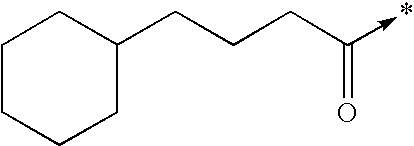 |  | 90.81 | 7.4 | 550.4 |
| 560 | ″ | ″ |  | 95.6 | 6.9 | 516.4 |
| 561 | ″ |  |  | 80.85 | 6.4 | 550.3 |
| 562 | ″ | ″ |  | 85.8 | 6.0 | 516.3 |
| 563 | ″ |  |  | 92.92 | 6.6 | 584.3 |
| 564 | ″ | ″ |  | 97.26 | 6.3 | 550.3 |
| 565 | ″ |  |  | 82.91 | 5.8 | 590.3 |
| 566 | ″ | ″ |  | 87.77 | 5.5 | 556.3 |
| 567 |  |  |  | 86 | 6.0 | 517.3 |
| 568 | ″ | ″ |  | 83.41 | 5.7 | 483.3 |
| 569 | ″ |  |  | 95 | 7.6 | 512.3 |
| 570 | ″ | ″ |  | 94.08 | 7.1 | 478.4 |
| 571 | ″ |  |  | 87.39 | 6.5 | 512.3 |
| 572 | ″ | ″ |  | 90.06 | 6.1 | 478.3 |
| 573 | ″ |  |  | 85.61 | 6.8 | 546.2 |
| 574 | ″ | ″ |  | 83.51 | 6.4 | 512.3 |
| 575 | ″ |  |  | 78.63 | 5.9 | 552.3 |
| 576 | ″ | ″ |  | 79.58 | 5.6 | 518.3 |
| 577 |  |  |  | 84 | 7.1 | 585.3 |
| 578 | ″ | ″ |  | 91 | 6.7 | 551.3 |
| 579 | ″ |  |  | 89.59 | 8.6 | 580.4 |
| 580 | ″ | ″ |  | 97.13 | 7.9 | 546.4 |
| 581 | ″ |  |  | 83 | 7.6 | 580.3 |
| 582 | ″ | ″ |  | 92.05 | 7.1 | 546.3 |
| 583 | ″ |  |  | 86 | 7.8 | 614.3 |
| 584 | ″ | ″ |  | 95.49 | 7.3 | 580.3 |
| 585 | ″ |  |  | 77 | 7.0 | 620.3 |
| 586 | ″ | ″ |  | 91.1 | 6.6 | 586.4 |
| 587 |  |  |  | 95 | 4.6 | 435 |
| 588 | ″ |  | ″ | 90 | 4.4 | 391.3 |
| 589 | ″ |  | ″ | 88 | 5.1 | 435.3 |
| 590 | ″ |  | ″ | 92 | 4.9 | 447.3 |
| 591 | ″ |  | ″ | 20.32 | 5.1 | 399.4 |
| 592 |  |  | ″ | 85 | 5.3 | 486.3 |
| 593 | ″ |  | ″ | 97 | 5.1 | 442.3 |
| 594 | ″ |  | ″ | 92 | 5.7 | 486.4 |
| 595 | ″ |  | ″ | 79 | 5.5 | 498.3 |
| 596 |  |  | ″ | 93.4 | 4.68 | 451.29 |
| 597 | ″ |  | ″ | 94.9 | 4.86 | 425.27 |
| 598 | ″ |  | ″ | 97.9 | 5.37 | 475.22 |
| 599 | ″ |  | ″ | 97.1 | 5.20 | 457.32 |
| 600 | ″ |  | ″ | 95.1 | 5.10 | 441.24 |
| 601 |  |  | ″ | 91.1 | 4.61 | 481.29 |
| 602 | ″ |  | ″ | 97.5 | 4.78 | 455.29 |
| 603 | ″ |  | ″ | 98.0 | 5.28 | 505.22 |
| 604 | ″ |  | ″ | 95.4 | 5.12 | 487.33 |
| 605 | ″ |  | ″ | 94.0 | 5.03 | 471.27 |
| 606 |  |  | ″ | 89.8 | 4.86 | 465.29 |
| 607 | ″ |  | ″ | 98.2 | 5.03 | 439.29 |
| 608 | ″ |  | ″ | 97.6 | 5.53 | 489.24 |
| 609 | ″ |  | ″ | 93.3 | 5.36 | 471.34 |
| 610 | ″ |  | ″ | 91.4 | 5.27 | 455.26 |
| 611 |  |  |  | 94 | 4.9 | 459.3 |
| 612 | ″ |  | ″ | 92.95 | 4.8 | 469.2 |
| 613 | ″ |  | ″ | 91.61 | 4.7 | 425.3 |
| 614 | ″ |  | ″ | 92 | 5.0 | 475.3 |
| 615 | ″ |  | ″ | 85.2 | 5.1 | 433.4 |
| 616 | ″ |  | ″ | 83 | 4.2 | 416.3 |
| 617 | ″ |  | ″ | 94.11 | 4.4 | 409.3 |
| 618 | ″ |  | ″ | 93.85 | 5.0 | 517.2 |
| 619 | ″ |  | ″ | 92.74 | 5.1 | 467.4 |
| 620 |  |  | ″ | 91 | 4.8 | 489.3 |
| 621 | ″ |  | ″ | 91.9 | 4.7 | 499.3 |
| 622 | ″ |  | ″ | 89.71 | 4.6 | 455.3 |
| 623 | ″ |  | ″ | 90 | 4.9 | 505.3 |
| 624 | ″ |  | ″ | 83.96 | 5.0 | 463.4 |
| 625 | ″ |  | ″ | 87 | 4.1 | 446.3 |
| 626 | ″ |  | ″ | 93.1 | 4.3 | 439.3 |
| 627 | ″ |  | ″ | 93.21 | 4.8 | 547.2 |
| 628 | ″ | 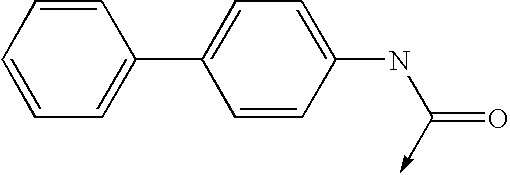 | ″ | 90.67 | 5.0 | 497.4 |
| 629 |  |  | ″ | 79.6 | 4.9 | 485.2 |
| 630 | ″ |  | ″ | 72.8 | 4.8 | 448.3 |
| 631 | ″ |  | ″ | 78.7 | 5.1 | 475.3 |
| 632 | ″ |  | ″ | 97.3 | 5.4 | 511.4 |
| 633 | ″ |  | ″ | 51.5 | 5.1 | 533.2 |
| 634 |  |  | ″ | 76.1 | 4.9 | 515.3 |
| 635 | ″ |  | ″ | 74.2 | 4.7 | 478.3 |
| 636 | ″ |  | ″ | 76.5 | 5.0 | 505.3 |
| 637 | ″ |  | ″ | 97.7 | 5.3 | 541.4 |
| 638 | ″ |  | ″ | 71.4 | 5.0 | 563.2 |
| 639 |  |  | ″ | 82.54 | 4.4 | 451.3 |
| 640 | ″ |  | ″ | 93.42 | 4.2 | 397.3 |
| 641 | ″ |  | ″ | 98.93 | 2.9 | 430.4 |
| 642 | ″ |  | ″ | 81.46 | 4.5 | 434.3 |
| 643 | ″ |  | ″ | 96.41 | 4.9 | 483.3 |
| 644 | ″ |  | ″ | 91.55 | 4.7 | 472.3 |
| 645 | ″ |  | ″ | 97.96 | 2.9 | 428.4 |
| 646 | ″ |  | ″ | 96.9 | 5.0 | 425.3 |
| 647 | ″ |  | ″ | 95.8 | 4.9 | 457.3 |
| 648 | ″ |  | ″ | 91.41 | 4.6 | 540.3 |
| 649 |  |  | ″ | 88.0 | 4.75 | 465.3 |
| 650 | ″ |  | ″ | 99.0 | 4.89 | 439.3 |
| 651 | ″ |  | ″ | 98.5 | 5.42 | 489.2 |
| 652 | ″ |  | ″ | 93.3 | 5.24 | 471.3 |
| 653 | ″ | 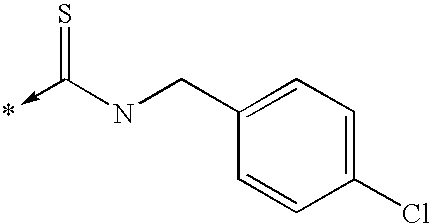 | ″ | 87.6 | 5.14 | 455.3 |
| 654 |  |  | ″ | 88.3 | 4.66 | 495.3 |
| 655 | ″ |  | ″ | 98.1 | 4.82 | 469.3 |
| 656 | ″ |  | ″ | 98.4 | 5.34 | 519.2 |
| 657 | ″ |  | ″ | 95.4 | 5.16 | 501.3 |
| 658 | ″ |  | ″ | 89.8 | 5.08 | 485.3 |
| 659 |  |  |  | 80.76 | 4.84 | 410.2 |
| 660 | ″ |  | ″ | 61.69 | 4.97 | 426.2 |
| 661 | ″ |  | ″ | 90.93 | 4.79 | 454.1 |
| 662 | ″ |  | ″ | 91.55 | 4.58 | 394.2 |
| 663 | ″ |  | ″ | 91.99 | 4.88 | 454.1 |
| 664 | ″ |  | ″ | 92.79 | 5.55 | 526.2 |
| 665 | ″ |  | ″ | 93.78 | 5.02 | 502.1 |
| 666 | ″ |  | ″ | 96.3 | 4.75 | 408.2 |
| 667 | ″ |  | ″ | 81.2 | 5.02 | 408.2 |
| 668 |  |  | ″ | 90.79 | 4.74 | 440.2 |
| 669 | ″ |  | ″ | 78.93 | 4.88 | 456.3 |
| 670 | ″ |  | ″ | 91.87 | 4.69 | 484.2 |
| 671 | ″ |  | ″ | 91.19 | 4.51 | 424.2 |
| 672 | ″ |  | ″ | 95.27 | 4.79 | 484.2 |
| 673 | ″ |  | ″ | 89.5 | 5.46 | 542.2 |
| 674 | ″ |  | ″ | 90.77 | 4.92 | 532.1 |
| 675 | ″ |  | ″ | 95.1 | 4.66 | 438.2 |
| 676 | ″ |  | ″ | 88.7 | 4.92 | 524.2 |
| 677 |  |  | ″ | 81.65 | 4.99 | 424.2 |
| 678 | ″ |  | ″ | 70.32 | 5.11 | 440.3 |
| 679 | ″ |  | ″ | 90.06 | 4.96 | 468.2 |
| 680 | ″ |  | ″ | 94.11 | 4.74 | 408.2 |
| 681 | ″ |  | ″ | 93.96 | 5.04 | 468.2 |
| 682 | ″ |  | ″ | 93.3 | 5.66 | 540.2 |
| 683 | ″ |  | ″ | 94.79 | 5.16 | 516.1 |
| 684 | ″ |  | ″ | 96.5 | 4.9 | 422.3 |
| 685 | ″ |  | ″ | 88.2 | 5.19 | 438.2 |
| 686 |  |  |  | 87.93 | 4.86 | 424.2 |
| 687 | ″ |  | ″ | 84.74 | 5 | 440.2 |
| 688 | ″ |  | ″ | 95.34 | 4.82 | 468.2 |
| 689 | ″ |  | ″ | 89.78 | 4.6 | 408.2 |
| 690 | ″ |  | ″ | 95.16 | 4.9 | 468.1633 |
| 691 | ″ |  | ″ | 95.6 | 5.56 | 540.2 |
| 692 | ″ |  | ″ | 95.24 | 5.05 | 516.3 |
| 693 | ″ |  | ″ | 96.6 | 4.8 | 422.2 |
| 694 | ″ |  | ″ | 90.4 | 5.04 | 438.2 |
| 695 | 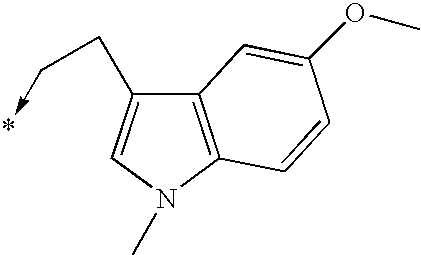 |  | ″ | 93.12 | 4.78 | 454.2 |
| 696 | ″ |  | ″ | 86.11 | 4.92 | 470.3 |
| 697 | ″ |  | ″ | 94.89 | 4.73 | 498.2 |
| 698 | ″ |  | ″ | 94.1 | 4.54 | 438.3 |
| 699 | ″ |  | ″ | 95.66 | 4.81 | 498.2 |
| 700 | ″ |  | ″ | 94.8 | 5.48 | 570.2 |
| 701 | ″ |  | ″ | 93.63 | 4.96 | 546.1 |
| 702 | ″ |  | ″ | 96.7 | 4.7 | 452.3 |
| 703 | ″ |  | ″ | 85.6 | 4.96 | 468.2 |
| 704 |  |  |  | 78.36 | 3.14 | 359.1 |
| 705 |  |  | ″ | 47.4 | 3.9 | 367.1 |
| 706 |  |  | ″ | 69.72 | 4.28 | 385.2 |
| 707 |  |  | ″ | 34.86 | 4.96 | 393.2 |
| 708 |  |  | ″ | 37.54 | 4.91 | 449.2 |
| 709 |  |  | ″ | 81.57 | 4.46 | 483.1 |
| 710 |  |  | ″ | 55.98 | 5.12 | 491.1 |
| 711 |  |  | ″ | 73.74 | 3.09 | 441.2 |
| 712 |  |  | ″ | 40.19 | 2.85 | 449.2 |
| 713 |  |  | ″ | 90.07 | 3.18 | 426.2 |
| 714 |  |  | ″ | 74.98 | 3.84 | 434.2 |
| 715 |  |  | ″ | 78.14 | 4.24 | 397.2 |
| 716 |  |  | ″ | 39.87 | 4.92 | 405.2 |
| 717 |  |  | ″ | 57.34 | 4.45 | 477.2 |
| 718 |  |  | ″ | 37.75 | 5.01 | 485.1 |
| 719 |  |  |  | 70.3 | 5.2 | 412.1 |
| 720 | ″ | ″ |  | 70.7 | 5.0 | 386.1 |
| 721 | ″ | ″ |  | 61.9 | 6.3 | 600.3 |
| 722 | ″ |  | ″ | 49.3 | 6.1 | 538.4 |
| 723 |  |  |  | 65.0 | 5.1 | 412.2 |
| 724 | ″ | ″ |  | 44.3 | 4.9 | 386.2 |
| 725 | ″ | ″ |  | 49.2 | 6.2 | 600.3 |
| 726 | ″ |  | ″ | 37.5 | 6.0 | 538.4 |
| 727 |  |  |  | 87.1 | 5.1 | 468.1 |
| 728 | ″ | ″ |  | 84.4 | 4.9 | 442.1 |
| 729 | ″ | ″ |  | 82.3 | 6.2 | 656.3 |
| 730 | ″ |  |  | 93.8 | 4.7 | 406.3 |
| 731 | ″ | ″ |  | 80.7 | 4.6 | 380.3 |
| 732 | ″ | ″ |  | 84.1 | 5.9 | 594.3 |
| 733 |  |  |  | 67.9 | 4.7 | 462.1 |
| 734 | ″ | ″ |  | 66.9 | 4.6 | 436.1 |
| 735 | ″ | ″ |  | 56.8 | 5.9 | 650.2 |
| 736 | ″ |  |  | 88.1 | 4.3 | 400.3 |
| 737 | ″ | ″ |  | 82.8 | 4.1 | 374.3 |
| 738 | ″ | ″ |  | 51.4 | 5.6 | 588.3 |
| 739 |  |  |  | 77.7 | 5.1 | 446.2 |
| 740 | ″ | ″ |  | 76.1 | 4.9 | 420.2 |
| 741 | ″ | ″ |  | 67.1 | 6.2 | 634.3 |
| 742 | ″ |  |  | 88.9 | 4.7 | 384.3 |
| 743 | ″ | ″ |  | 79.3 | 4.5 | 358.3 |
| 744 | ″ | ″ |  | 65.1 | 5.9 | 572.4 |
| 745 |  |  |  | 80.0 | 4.0 | 398.3 |
| 746 | ″ | ″ |  | 76.9 | 3.8 | 372.3 |
| 747 | ″ | ″ |  | 42.7 | 5.8 | 586.4 |
| 748 | ″ | ″ |  | 64.6 | 4.4 | 483.3 |
| 749 | ″ |  |  | 87.4 | 5.3 | 409.3 |
| 750 | ″ | ″ |  | 71.0 | 5.1 | 383.3 |
| 751 | ″ | ″ |  | 59.8 | 6.7 | 597.4 |
| 752 | ″ | ″ |  | 84.4 | 5.6 | 494.3 |
| 753 |  |  |  | 80.1 | 3.9 | 398.3 |
| 754 | ″ | ″ |  | 63.1 | 3.7 | 372.3 |
| 755 | ″ | ″ |  | 64.4 | 4.3 | 483.3 |
| 756 | ″ |  |  | 84.6 | 5.3 | 409.3 |
| 757 | ″ | ″ |  | 59.6 | 5.0 | 383.3 |
| 758 | ″ | ″ |  | 52.9 | 6.6 | 597.4 |
| 759 | ″ | ″ |  | 81.6 | 5.5 | 494.3 |
| 760 |  | ″ |  | 75.3 | 5.3 | 465.3 |
| 761 | ″ | ″ |  | 60.3 | 5.1 | 439.3 |
| 762 | ″ | ″ |  | 61.8 | 6.6 | 653.4 |
| 763 | ″ | ″ |  | 74.4 | 5.6 | 550.3 |
| 764 |  |  |  | 74.5 | 3.6 | 448.2 |
| 765 | ″ | ″ |  | 51.3 | 3.4 | 422.2 |
| 766 | ″ | ″ |  | 58.8 | 3.9 | 533.2 |
| 767 | ″ |  |  | 86.2 | 4.8 | 459.3 |
| 768 | ″ | ″ |  | 63.2 | 4.6 | 433.3 |
| 769 | ″ | ″ |  | 60.1 | 6.2 | 647.4 |
| 770 | ″ | ″ |  | 83.5 | 5.1 | 544.2 |
| 771 |  |  |  | 68.1 | 4.1 | 432.3 |
| 772 | ″ | ″ |  | 63.8 | 3.9 | 406.2 |
| 773 | ″ | ″ |  | 41.1 | 5.8 | 620.4 |
| 774 | ″ | ″ |  | 62.8 | 4.4 | 517.2 |
| 775 | ″ |  |  | 85.5 | 5.4 | 443.3 |
| 776 | ″ | ″ |  | 62.5 | 5.2 | 417.3 |
| 777 | ″ | ″ | 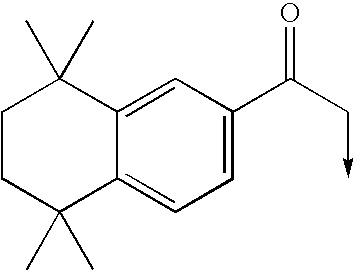 | 66.0 | 6.7 | 631.4 |
| 778 | ″ | ″ |  | 87.7 | 5.6 | 528.3 |
Pharmacological Study
-
- the production of cyclic AMP is stimulated by the addition of 1 mM of forskolin (FSK) for 15-30 minutes at approximately 37° C.
- the inhibitory effect of the somatostatin of an agonist compound is measured by the simultaneous addition of FSK (1 μM), SRIF-14 (10−12 M to 10−6 M) and of the compound to be tested (10−10 M to 10−5 M).
- the antagonist effect of a compound is measured by the simultaneous addition of FSK (1 μM), SRIF-14 (1 to 10 nM) and of the compound to be tested (10−10 M to 10−5 M).
Claims (1)

Priority Applications (2)
| Application Number | Priority Date | Filing Date | Title |
|---|---|---|---|
| US12/151,115 US7858789B2 (en) | 1999-12-14 | 2008-05-02 | Derivatives of 4-aminopiperidine and their use as a medicament |
| US12/946,504 US8110574B2 (en) | 1999-12-14 | 2010-11-15 | Derivatives of 4-aminopiperidine and their use as a medicament |
Applications Claiming Priority (7)
| Application Number | Priority Date | Filing Date | Title |
|---|---|---|---|
| FR99/15724 | 1999-12-14 | ||
| FR9915724A FR2802206B1 (en) | 1999-12-14 | 1999-12-14 | 4-AMINOPIPERIDINE DERIVATIVES AND THEIR USE AS MEDICINAL PRODUCTS |
| FR9915724 | 1999-12-14 | ||
| PCT/FR2000/003497 WO2001044191A1 (en) | 1999-12-14 | 2000-12-13 | 4-aminopiperidine derivatives and their use as medicine |
| US10/130,924 US7115634B2 (en) | 1999-12-14 | 2000-12-13 | 4-aminopiperidine and their use as a medicine |
| US11/122,293 US7393861B2 (en) | 1999-12-14 | 2005-05-04 | Derivatives of 4-aminopiperidine and their use as a medicament |
| US12/151,115 US7858789B2 (en) | 1999-12-14 | 2008-05-02 | Derivatives of 4-aminopiperidine and their use as a medicament |
Related Parent Applications (1)
| Application Number | Title | Priority Date | Filing Date |
|---|---|---|---|
| US11/122,293 Division US7393861B2 (en) | 1999-12-14 | 2005-05-04 | Derivatives of 4-aminopiperidine and their use as a medicament |
Related Child Applications (1)
| Application Number | Title | Priority Date | Filing Date |
|---|---|---|---|
| US12/946,504 Division US8110574B2 (en) | 1999-12-14 | 2010-11-15 | Derivatives of 4-aminopiperidine and their use as a medicament |
Publications (2)
| Publication Number | Publication Date |
|---|---|
| US20090149652A1 US20090149652A1 (en) | 2009-06-11 |
| US7858789B2 true US7858789B2 (en) | 2010-12-28 |
Family
ID=9553215
Family Applications (4)
| Application Number | Title | Priority Date | Filing Date |
|---|---|---|---|
| US10/130,924 Expired - Lifetime US7115634B2 (en) | 1999-12-14 | 2000-12-13 | 4-aminopiperidine and their use as a medicine |
| US11/122,293 Expired - Lifetime US7393861B2 (en) | 1999-12-14 | 2005-05-04 | Derivatives of 4-aminopiperidine and their use as a medicament |
| US12/151,115 Expired - Fee Related US7858789B2 (en) | 1999-12-14 | 2008-05-02 | Derivatives of 4-aminopiperidine and their use as a medicament |
| US12/946,504 Expired - Fee Related US8110574B2 (en) | 1999-12-14 | 2010-11-15 | Derivatives of 4-aminopiperidine and their use as a medicament |
Family Applications Before (2)
| Application Number | Title | Priority Date | Filing Date |
|---|---|---|---|
| US10/130,924 Expired - Lifetime US7115634B2 (en) | 1999-12-14 | 2000-12-13 | 4-aminopiperidine and their use as a medicine |
| US11/122,293 Expired - Lifetime US7393861B2 (en) | 1999-12-14 | 2005-05-04 | Derivatives of 4-aminopiperidine and their use as a medicament |
Family Applications After (1)
| Application Number | Title | Priority Date | Filing Date |
|---|---|---|---|
| US12/946,504 Expired - Fee Related US8110574B2 (en) | 1999-12-14 | 2010-11-15 | Derivatives of 4-aminopiperidine and their use as a medicament |
Country Status (22)
| Country | Link |
|---|---|
| US (4) | US7115634B2 (en) |
| EP (1) | EP1286966B1 (en) |
| JP (2) | JP4838474B2 (en) |
| KR (2) | KR20070014235A (en) |
| CN (1) | CN1207283C (en) |
| AR (1) | AR034244A1 (en) |
| AT (1) | ATE401308T1 (en) |
| AU (1) | AU779341B2 (en) |
| CA (1) | CA2394086C (en) |
| CY (1) | CY1108415T1 (en) |
| CZ (1) | CZ305360B6 (en) |
| DE (1) | DE60039539D1 (en) |
| DK (1) | DK1286966T3 (en) |
| ES (1) | ES2310529T3 (en) |
| FR (1) | FR2802206B1 (en) |
| HU (1) | HU227838B1 (en) |
| MY (1) | MY126973A (en) |
| NZ (1) | NZ520071A (en) |
| PL (1) | PL204864B1 (en) |
| PT (1) | PT1286966E (en) |
| RU (1) | RU2266282C2 (en) |
| WO (1) | WO2001044191A1 (en) |
Cited By (9)
| Publication number | Priority date | Publication date | Assignee | Title |
|---|---|---|---|---|
| US20110059971A1 (en) * | 1999-12-14 | 2011-03-10 | Ipsen S.A.S. | Derivatives of 4-aminopiperidine and their use as a medicament |
| US9765053B2 (en) | 2000-03-06 | 2017-09-19 | Acadia Pharmaceuticals Inc. | Methods of treatment using selective 5-HT2A inverse agonists |
| US10449185B2 (en) | 2017-08-30 | 2019-10-22 | Acadia Pharmaceuticals Inc. | Formulations of pimavanserin |
| US10517860B2 (en) | 2016-03-25 | 2019-12-31 | Acadia Pharmaceuticals Inc. | Combination of pimavanserin and cytochrome P450 modulators |
| US10953000B2 (en) | 2016-03-25 | 2021-03-23 | Acadia Pharmaceuticals Inc. | Combination of pimavanserin and cytochrome P450 modulators |
| US10981870B2 (en) | 2015-07-20 | 2021-04-20 | Acadia Pharmaceuticals Inc. | Methods for preparing N-(4-fluorobenzyl)-N-(1-methylpiperidin-4-yl)-N′-(4-(2-methylpropyloxy)phenylmethyl)carbamide and its tartrate salt and polymorphic form |
| US11135211B2 (en) | 2017-04-28 | 2021-10-05 | Acadia Pharmaceuticals Inc. | Pimavanserin for treating impulse control disorder |
| US11464768B2 (en) | 2016-12-20 | 2022-10-11 | Acadia Pharmaceuticals Inc. | Pimavanserin alone or in combination for use in the treatment of Alzheimer's disease psychosis |
| US11655235B2 (en) | 2019-11-06 | 2023-05-23 | Yuhan Corporation | Pyrrolidine and piperidine compounds |
Families Citing this family (72)
| Publication number | Priority date | Publication date | Assignee | Title |
|---|---|---|---|---|
| AU2001279958A1 (en) * | 2000-08-17 | 2002-03-04 | Celltech R And D Limited | Bicyclic heteroaromatic derivatives for the treatment of immune and inflammatorydisorders |
| US7208497B2 (en) | 2001-07-02 | 2007-04-24 | Novo Nordisk A/S | Substituted piperazines and diazepanes |
| MXPA04001016A (en) * | 2001-08-03 | 2004-05-27 | Schering Corp | Sulfonamide derivatives as gamma secretase inhibitors. |
| WO2003024928A2 (en) | 2001-09-14 | 2003-03-27 | Novo Nordisk A/S | Novel aminoazetidine, -pyrrolidine and -piperidine derivatives |
| US20030186963A1 (en) | 2001-09-14 | 2003-10-02 | Dorwald Florencio Zaragoza | Substituted piperidines |
| EP1434765B1 (en) * | 2001-09-14 | 2009-12-02 | High Point Pharmaceuticals, LLC | Substituted piperidines with selective binding to histamine h3-receptor |
| US6673829B2 (en) | 2001-09-14 | 2004-01-06 | Novo Nordisk A/S | Aminoazetidine,-pyrrolidine and -piperidine derivatives |
| FR2832710B1 (en) * | 2001-11-28 | 2004-09-03 | Sod Conseils Rech Applic | 5-SULFANYL-4H-1,2,4-TRIAZOLES DERIVATIVES AND THEIR USE AS MEDICAMENTS |
| RU2367655C2 (en) * | 2001-11-28 | 2009-09-20 | Сосьете Де Консей Де Решерш Э Д`Аппликасьон Сьентифик (С.К.Р.А.С.) | 5-sulphanyl-4h-1,2,4-triazole derivative and their use as medicinal agents |
| NZ571695A (en) | 2001-12-28 | 2010-02-26 | Acadia Pharm Inc | Spiroazacyclic compounds as monoamine receptor for modulating 5-HT2A receptor-mediated events |
| US7101898B2 (en) | 2002-02-01 | 2006-09-05 | Novo Nordisk A/S | Amides of aminoalkyl-substituted azetidines, pyrrolidines, piperidines and azepanes |
| PL371435A1 (en) * | 2002-02-01 | 2005-06-13 | Novo Nordisk A/S | Amides of aminoalkyl-substituted azetidines, pyrrolidines, piperidines and azepanes |
| US20030236259A1 (en) * | 2002-02-05 | 2003-12-25 | Rolf Hohlweg | Novel aryl- and heteroarylpiperazines |
| EP1483283A4 (en) | 2002-03-13 | 2007-04-11 | Signum Biosciences Inc | MODULATION OF PROTEIN METHYLATION AND PHOSPHOPROTEIN PHOSPHATE |
| CA2490397A1 (en) * | 2002-06-24 | 2003-12-31 | Acadia Pharmaceuticals Inc. | N-substituted piperidine derivatives as serotonin receptor agents |
| US7538222B2 (en) | 2002-06-24 | 2009-05-26 | Acadia Pharmaceuticals, Inc. | N-substituted piperidine derivatives as serotonin receptor agents |
| US7253186B2 (en) | 2002-06-24 | 2007-08-07 | Carl-Magnus Andersson | N-substituted piperidine derivatives as serotonin receptor agents |
| TW200409637A (en) * | 2002-06-26 | 2004-06-16 | Glaxo Group Ltd | Compounds |
| WO2004009549A2 (en) * | 2002-07-18 | 2004-01-29 | Actelion Pharmaceuticals Ltd | Piperidines useful for the treatment of central nervous system disorders |
| MY139563A (en) * | 2002-09-04 | 2009-10-30 | Bristol Myers Squibb Co | Heterocyclic aromatic compounds useful as growth hormone secretagogues |
| HRP20050053A2 (en) * | 2002-09-19 | 2005-04-30 | Solvay Pharmaceuticals B.V. | 1 h-1,2,4-triazole-3-carboxamide derivatives as cannabinoid-cb1 receptor ligands |
| US7601740B2 (en) | 2003-01-16 | 2009-10-13 | Acadia Pharmaceuticals, Inc. | Selective serotonin 2A/2C receptor inverse agonists as therapeutics for neurodegenerative diseases |
| GB0314054D0 (en) * | 2003-06-17 | 2003-07-23 | Pfizer Ltd | Amide derivatives as selective serotonin re-uptake inhibitors |
| DK1638933T3 (en) * | 2003-06-17 | 2008-07-28 | Pfizer | N-pyrrolidin-3-yl amide derivatives as serotonin and noradrenaline reuptake inhibitors |
| US7820695B2 (en) | 2004-05-21 | 2010-10-26 | Acadia Pharmaceuticals, Inc. | Selective serotonin receptor inverse agonists as therapeutics for disease |
| US20050261278A1 (en) | 2004-05-21 | 2005-11-24 | Weiner David M | Selective serotonin receptor inverse agonists as therapeutics for disease |
| MX2007000040A (en) * | 2004-06-30 | 2007-03-07 | Schering Corp | Substituted n-arylsulfonylheterocyclic amines as gamma-secretase inhibitors. |
| BRPI0516063A (en) | 2004-09-27 | 2008-08-19 | Acadia Pharm Inc | Synthesis of n- (4-fluorbenzyl) -N- (1-methylpiperidin-4-yl) -N '- (4- (2-methylpyropyloxy) phenylmethyl) carbamide and its tartrate salt and crystalline forms |
| US7790899B2 (en) | 2004-09-27 | 2010-09-07 | Acadia Pharmaceuticals, Inc. | Synthesis of N-(4-fluorobenzyl)-N-(1-methylpiperidin-4-yl)-N′-(4-(2-methylpropyloxy)phenylmethyl)carbamide and its tartrate salt and crystalline forms |
| TW200630337A (en) | 2004-10-14 | 2006-09-01 | Euro Celtique Sa | Piperidinyl compounds and the use thereof |
| US7923041B2 (en) | 2005-02-03 | 2011-04-12 | Signum Biosciences, Inc. | Compositions and methods for enhancing cognitive function |
| WO2006084033A1 (en) * | 2005-02-03 | 2006-08-10 | Signum Biosciences, Inc. | Compositions and methods for enhancing cognitive function |
| EP1893603B1 (en) * | 2005-06-02 | 2009-10-14 | F. Hoffmann-La Roche AG | Piperidin-4-yl-amide derivatives and their use as sst receptor subtype 5 antagonists |
| MX2007015675A (en) | 2005-07-04 | 2008-02-20 | Novo Nordisk As | Hists1mine h3 receptor antagonists. |
| US7855194B2 (en) * | 2006-03-27 | 2010-12-21 | Hoffmann-La Roche Inc. | Pyrimidine, quinazoline, pteridine and triazine derivatives |
| WO2007110449A1 (en) * | 2006-03-29 | 2007-10-04 | Euro-Celtique S.A. | Benzenesulfonamide compounds and their use |
| TW200812963A (en) * | 2006-04-13 | 2008-03-16 | Euro Celtique Sa | Benzenesulfonamide compounds and the use thereof |
| WO2007118853A1 (en) * | 2006-04-13 | 2007-10-25 | Euro-Celtique S.A. | Benzenesulfonamide compounds and their use as blockers of calcium channels |
| KR20090040259A (en) | 2006-05-29 | 2009-04-23 | 하이 포인트 파마슈티칼스, 엘엘씨 | 3- (1,3-benzodioxol-5-yl) -6- (4-cyclopropylpiperazin-1-yl) -pyridazine, its salts and solvates and its use as histamine H3 receptor antagonists |
| US7674804B2 (en) * | 2006-06-29 | 2010-03-09 | Hoffmann-La Roche Inc. | Pyrimidine and quinazoline derivatives as SST5 modulators |
| EP2134330B1 (en) | 2007-03-19 | 2013-05-08 | Acadia Pharmaceuticals Inc. | Combinations of 5-ht2a inverse agonists and antagonists with antipsychotics |
| BRPI0809680A2 (en) * | 2007-03-30 | 2014-10-07 | Hoffmann La Roche | COMPOUNDS, PROCESS FOR THE MANUFACTURE, PHARMACEUTICAL COMPOSITIONS UNDERSTANDING THEM, A METHOD FOR THERAPEUTIC AND / OR PROPHYLATIC TREATMENT THAT ARE MODULATED BY LXR ALPHA AND / OR LXR BETA AGONISTS AND USE OF THE COMPOUNDS. |
| US8399486B2 (en) | 2007-04-09 | 2013-03-19 | Purdue Pharma L.P. | Benzenesulfonyl compounds and the use thereof |
| EP2014656A3 (en) * | 2007-06-11 | 2011-08-24 | High Point Pharmaceuticals, LLC | New heteocyclic h3 antagonists |
| SI2200610T1 (en) * | 2007-09-21 | 2018-06-29 | Acadia Pharmaceuticals Inc. | Co-administration of pimavanserin with other agents |
| US8765736B2 (en) * | 2007-09-28 | 2014-07-01 | Purdue Pharma L.P. | Benzenesulfonamide compounds and the use thereof |
| EP2060564A1 (en) * | 2007-11-19 | 2009-05-20 | Ludwig-Maximilians-Universität München | Non-peptidic promoters of apoptosis |
| AU2009239430B2 (en) | 2008-04-21 | 2015-01-22 | Signum Biosciences, Inc. | Compounds, compositions and methods for making the same |
| ES2352398B1 (en) * | 2009-06-25 | 2011-09-29 | Institut Univ. De Ciencia I Tecnologia S.A. | N-FENETILSULFONAMIDAS-N-SUBSTITUTED FOR THE IDENTIFICATION OF BIOLOGICAL AND PHARMACOLOGICAL ACTIVITY. |
| AU2012345638C1 (en) | 2011-11-30 | 2018-10-18 | Sarepta Therapeutics, Inc. | Induced exon inclusion in spinal muscle atrophy |
| EP2785729B1 (en) | 2011-11-30 | 2020-11-04 | Sarepta Therapeutics, Inc. | Oligonucleotides for treating expanded repeat diseases |
| US9630976B2 (en) | 2012-07-03 | 2017-04-25 | Ono Pharmaceutical Co., Ltd. | Compound having agonistic activity on somatostatin receptor, and use thereof for medical purposes |
| BR112015026513A2 (en) * | 2013-04-17 | 2017-07-25 | Pfizer | n-piperidin-3-ylbenzamide derivatives to treat cardiovascular disease |
| CN105593221B (en) | 2013-09-30 | 2017-09-22 | 小野药品工业株式会社 | Compounds having somatostatin receptor agonistic activity and pharmaceutical uses thereof |
| KR101541647B1 (en) | 2014-04-24 | 2015-08-03 | 고려대학교 산학협력단 | A composition for prevention and treatment of inflammatory diseases |
| MA42695A (en) | 2015-08-28 | 2018-07-04 | Sarepta Therapeutics Inc | MODIFIED ANTISENSE OLIGOMERS FOR THE INCLUSION OF EXONS IN SPINAL MUSCLE ATROPHY |
| CA2998753A1 (en) | 2015-09-18 | 2017-03-23 | St. Jude Children's Research Hospital | Methods and compositions of inhibiting dcn1-ubc12 interaction |
| SMT202200465T1 (en) | 2016-07-14 | 2023-01-13 | Crinetics Pharmaceuticals Inc | Somatostatin modulators and uses thereof |
| SG11201908512YA (en) | 2017-03-16 | 2019-10-30 | Crinetics Pharmaceuticals Inc | Somatostatin modulators and uses thereof |
| WO2019023278A1 (en) | 2017-07-25 | 2019-01-31 | Crinetics Pharmaceuticals, Inc. | Somatostatin modulators and uses thereof |
| EP3672960A2 (en) | 2017-08-21 | 2020-07-01 | Acadia Pharmaceuticals Inc. | Compounds, salts thereof and their use for the treatment of diseases |
| RS67273B1 (en) * | 2017-08-21 | 2025-10-31 | Acadia Pharm Inc | Compounds, salts thereof and their use for the treatment of diseases |
| CN111868049B (en) | 2018-01-17 | 2023-06-30 | 克林提克斯医药股份有限公司 | Process for the preparation of somatostatin modulators |
| MA51840A (en) | 2018-02-12 | 2021-05-19 | Crinetics Pharmaceuticals Inc | SOMATOSTATIN MODULATORS AND THEIR USES |
| FI3853218T3 (en) | 2018-09-18 | 2025-04-15 | Crinetics Pharmaceuticals Inc | Somatostatin modulators and uses thereof |
| MX2021016133A (en) | 2019-06-20 | 2022-07-19 | Univ Kentucky Res Found | PHARMACEUTICALLY ACTIVE MODULATORS OF CULLIN NEDDILATION MEDIATED BY DCN1/2 PYRAZOLE-TYPE PYRIDONE. |
| TWI841768B (en) | 2019-08-14 | 2024-05-11 | 美商克林提克斯醫藥股份有限公司 | Nonpeptide somatostatin type 5 receptor agonists and uses thereof |
| WO2021193790A1 (en) * | 2020-03-26 | 2021-09-30 | 塩野義製薬株式会社 | Aromatic heterocyclic derivative having serotonin receptor binding activity |
| WO2022017440A1 (en) * | 2020-07-22 | 2022-01-27 | 山东绿叶制药有限公司 | 5-ht2a receptor inhibitor or inverse agonist, preparation method therefor, and application thereof |
| CN116456968B (en) | 2020-09-09 | 2026-03-20 | 克林提克斯医药股份有限公司 | Somatostatin regulator formulations |
| JP2024506715A (en) | 2021-02-17 | 2024-02-14 | クリネティックス ファーマシューティカルズ,インク. | Crystalline forms of somatostatin modulators |
| KR20250117433A (en) | 2022-12-13 | 2025-08-04 | 크리네틱스 파마슈티칼스, 인크. | Somatostatin subtype 2 receptor (SST2R) targeted therapeutic agents and uses thereof |
Citations (5)
| Publication number | Priority date | Publication date | Assignee | Title |
|---|---|---|---|---|
| JPS5076076A (en) | 1973-10-10 | 1975-06-21 | ||
| JPS5387365A (en) | 1976-11-16 | 1978-08-01 | Anphar Sa | Piperidine derivative |
| WO1999038514A1 (en) | 1998-02-02 | 1999-08-05 | Merck & Co., Inc. | Cyclic amine modulators of chemokine receptor activity |
| WO2000072834A2 (en) | 1999-05-28 | 2000-12-07 | Fujisawa Pharmaceutical Co., Ltd. | Agent for expression of long-term potentiation of synaptic transmission comprising compound having brain somatostatin activation property |
| US6756393B2 (en) * | 2000-03-06 | 2004-06-29 | Acadia Pharmaceuticals, Inc. | Azacyclic compounds |
Family Cites Families (8)
| Publication number | Priority date | Publication date | Assignee | Title |
|---|---|---|---|---|
| GB1460389A (en) * | 1974-07-25 | 1977-01-06 | Pfizer Ltd | 4-substituted quinazoline cardiac stimulants |
| JPS5152176A (en) * | 1974-10-12 | 1976-05-08 | Yoshitomi Pharmaceutical | |
| JPS5285174A (en) * | 1976-01-05 | 1977-07-15 | Yoshitomi Pharmaceut Ind Ltd | Novel urea or thiourea derivatives |
| ZW12187A1 (en) * | 1986-07-03 | 1989-02-01 | Janssen Pharmaceutica Nv | 4-(aroylamino)piperidinebutanamide derivatives |
| US6057338A (en) * | 1997-04-04 | 2000-05-02 | Merck & Co., Inc. | Somatostatin agonists |
| AU1285499A (en) * | 1997-10-30 | 1999-05-24 | Merck & Co., Inc. | Somatostatin agonists |
| AU4537900A (en) * | 1999-05-17 | 2000-12-05 | Agouron Pharmaceuticals, Inc. | Glucagon antagonists/inverse agonists |
| FR2802206B1 (en) | 1999-12-14 | 2005-04-22 | Sod Conseils Rech Applic | 4-AMINOPIPERIDINE DERIVATIVES AND THEIR USE AS MEDICINAL PRODUCTS |
-
1999
- 1999-12-14 FR FR9915724A patent/FR2802206B1/en not_active Expired - Lifetime
-
2000
- 2000-12-13 PT PT00993405T patent/PT1286966E/en unknown
- 2000-12-13 DK DK00993405T patent/DK1286966T3/en active
- 2000-12-13 AU AU28560/01A patent/AU779341B2/en not_active Expired
- 2000-12-13 KR KR1020077001118A patent/KR20070014235A/en not_active Ceased
- 2000-12-13 US US10/130,924 patent/US7115634B2/en not_active Expired - Lifetime
- 2000-12-13 JP JP2001544681A patent/JP4838474B2/en not_active Expired - Lifetime
- 2000-12-13 DE DE60039539T patent/DE60039539D1/en not_active Expired - Lifetime
- 2000-12-13 HU HU0204515A patent/HU227838B1/en unknown
- 2000-12-13 EP EP00993405A patent/EP1286966B1/en not_active Expired - Lifetime
- 2000-12-13 RU RU2002118705/04A patent/RU2266282C2/en active
- 2000-12-13 WO PCT/FR2000/003497 patent/WO2001044191A1/en not_active Ceased
- 2000-12-13 CZ CZ2002-2060A patent/CZ305360B6/en not_active IP Right Cessation
- 2000-12-13 PL PL356365A patent/PL204864B1/en unknown
- 2000-12-13 CN CNB008171777A patent/CN1207283C/en not_active Expired - Lifetime
- 2000-12-13 MY MYPI20005862A patent/MY126973A/en unknown
- 2000-12-13 ES ES00993405T patent/ES2310529T3/en not_active Expired - Lifetime
- 2000-12-13 AT AT00993405T patent/ATE401308T1/en active
- 2000-12-13 NZ NZ520071A patent/NZ520071A/en not_active IP Right Cessation
- 2000-12-13 CA CA2394086A patent/CA2394086C/en not_active Expired - Lifetime
- 2000-12-13 KR KR1020027007506A patent/KR100725190B1/en not_active Expired - Lifetime
- 2000-12-14 AR ARP000106648A patent/AR034244A1/en active IP Right Grant
-
2005
- 2005-05-04 US US11/122,293 patent/US7393861B2/en not_active Expired - Lifetime
-
2008
- 2008-05-02 US US12/151,115 patent/US7858789B2/en not_active Expired - Fee Related
- 2008-10-14 CY CY20081101138T patent/CY1108415T1/en unknown
-
2010
- 2010-11-15 US US12/946,504 patent/US8110574B2/en not_active Expired - Fee Related
-
2011
- 2011-02-07 JP JP2011024405A patent/JP2011121982A/en not_active Withdrawn
Patent Citations (7)
| Publication number | Priority date | Publication date | Assignee | Title |
|---|---|---|---|---|
| JPS5076076A (en) | 1973-10-10 | 1975-06-21 | ||
| GB1425354A (en) | 1973-10-10 | 1976-02-18 | Wyeth John & Brother Ltd | Indole derivatives |
| JPS5387365A (en) | 1976-11-16 | 1978-08-01 | Anphar Sa | Piperidine derivative |
| GB1574418A (en) | 1976-11-16 | 1980-09-03 | Anphar Sa | Piperidine derivatives |
| WO1999038514A1 (en) | 1998-02-02 | 1999-08-05 | Merck & Co., Inc. | Cyclic amine modulators of chemokine receptor activity |
| WO2000072834A2 (en) | 1999-05-28 | 2000-12-07 | Fujisawa Pharmaceutical Co., Ltd. | Agent for expression of long-term potentiation of synaptic transmission comprising compound having brain somatostatin activation property |
| US6756393B2 (en) * | 2000-03-06 | 2004-06-29 | Acadia Pharmaceuticals, Inc. | Azacyclic compounds |
Non-Patent Citations (3)
| Title |
|---|
| Archibald et al., "Antihypertensive Ureidopiperidines," Journal of Medicinal Chemistry, vol. 23, pp. 857-861 (1980). |
| Harper et al., "The Chemistry and Pharmacology of Some 4-Aminopiperidines and Their Derivatives," Journal of Medicinal Chemistry, vol. 7, pp. 729-732 (1964). |
| Hungarian Patent Document No. HU 157325, dated Apr. 8, 1970. |
Cited By (16)
| Publication number | Priority date | Publication date | Assignee | Title |
|---|---|---|---|---|
| US8110574B2 (en) | 1999-12-14 | 2012-02-07 | Ipsen Pharma S.A.S. | Derivatives of 4-aminopiperidine and their use as a medicament |
| US20110059971A1 (en) * | 1999-12-14 | 2011-03-10 | Ipsen S.A.S. | Derivatives of 4-aminopiperidine and their use as a medicament |
| US9765053B2 (en) | 2000-03-06 | 2017-09-19 | Acadia Pharmaceuticals Inc. | Methods of treatment using selective 5-HT2A inverse agonists |
| US10981870B2 (en) | 2015-07-20 | 2021-04-20 | Acadia Pharmaceuticals Inc. | Methods for preparing N-(4-fluorobenzyl)-N-(1-methylpiperidin-4-yl)-N′-(4-(2-methylpropyloxy)phenylmethyl)carbamide and its tartrate salt and polymorphic form |
| US11840515B2 (en) | 2015-07-20 | 2023-12-12 | Acadia Pharmaceuticals Inc. | Methods for preparing N-(4-fluorobenzyl)-N-(1-methylpiperidin-4-yl)-N′-(4-(2-methylpropyloxy)phenylmethyl)carbamide and its tartrate salt and polymorphic form c |
| US10981871B2 (en) | 2015-07-20 | 2021-04-20 | Acadia Pharmaceuticals Inc. | Methods for preparing N-(4-fluorobenzyl)-N-(1-methylpiperidin-4-yl)-N′-(4-(2-methylpropyloxy)phenylmethyl)carbamide and its tartrate salt and polymorphic form C |
| US10517860B2 (en) | 2016-03-25 | 2019-12-31 | Acadia Pharmaceuticals Inc. | Combination of pimavanserin and cytochrome P450 modulators |
| US10953000B2 (en) | 2016-03-25 | 2021-03-23 | Acadia Pharmaceuticals Inc. | Combination of pimavanserin and cytochrome P450 modulators |
| US11191757B2 (en) | 2016-03-25 | 2021-12-07 | Acadia Pharmaceuticals Inc. | Combination of pimavanserin and cytochrome P450 modulators |
| US11464768B2 (en) | 2016-12-20 | 2022-10-11 | Acadia Pharmaceuticals Inc. | Pimavanserin alone or in combination for use in the treatment of Alzheimer's disease psychosis |
| US11135211B2 (en) | 2017-04-28 | 2021-10-05 | Acadia Pharmaceuticals Inc. | Pimavanserin for treating impulse control disorder |
| US10849891B2 (en) | 2017-08-30 | 2020-12-01 | Acadia Pharmaceuticals Inc. | Formulations of pimavanserin |
| US10646480B2 (en) | 2017-08-30 | 2020-05-12 | Acadia Pharmaceuticals Inc. | Formulations of pimavanserin |
| US11452721B2 (en) | 2017-08-30 | 2022-09-27 | Acadia Pharmaceuticals Inc. | Formulations of pimavanserin |
| US10449185B2 (en) | 2017-08-30 | 2019-10-22 | Acadia Pharmaceuticals Inc. | Formulations of pimavanserin |
| US11655235B2 (en) | 2019-11-06 | 2023-05-23 | Yuhan Corporation | Pyrrolidine and piperidine compounds |
Also Published As
Similar Documents
| Publication | Publication Date | Title |
|---|---|---|
| US7858789B2 (en) | Derivatives of 4-aminopiperidine and their use as a medicament | |
| US7238688B2 (en) | Piperidine compounds | |
| US6951871B2 (en) | Indole derivatives useful as histamine H3 antagonists | |
| JP4563800B2 (en) | 1- (4-Piperidinyl) benzimidazolone as a histamine H3 antagonist | |
| EP1377293B1 (en) | Aryl and biaryl piperidines used as mch antagonists | |
| US6083960A (en) | Constrained somatostatin agonists and antagonists | |
| SK16152002A3 (en) | Pharmaceutically active piperidine derivatives, in particular as modulators of chemokine receptor activity | |
| US20070021420A1 (en) | New derivatives of hydantoins, thiohydantoins, pyrimidinediones and thioxopyrimidinones, their preparation processes and their use as medicaments | |
| US20130324556A1 (en) | Protease Activated Receptor 2 (PAR2) Antagonists | |
| US7220765B2 (en) | Derivatives of 2-arylimino-2,3-dihydrothiazoles, their preparation processes and their therapeutic use | |
| US7262195B2 (en) | Compounds useful as motilin agonists and method | |
| EP1954677B1 (en) | Thiomorpholine compound and process for preparing the same | |
| HK1054029B (en) | 4-aminopiperidine derivatives and their use as medicine |
Legal Events
| Date | Code | Title | Description |
|---|---|---|---|
| AS | Assignment |
Owner name: IPSEN PHARMA S.A.S., FRANCE Free format text: CHANGE OF NAME;ASSIGNOR:SOCIETE DE CONSEILS DE RECHERCHES ET D`APPLICATIONS SCIENTIFIQUES (S.C.R.A.S.);REEL/FRAME:022466/0793 Effective date: 20081128 |
|
| STCF | Information on status: patent grant |
Free format text: PATENTED CASE |
|
| FPAY | Fee payment |
Year of fee payment: 4 |
|
| AS | Assignment |
Owner name: IPSEN PHARMA S.A.S., FRANCE Free format text: CORRECTIVE ASSIGNMENT TO CORRECT THE CONVEYING PARTY NAME PREVIOUSLY RECORDED AT REEL: 022466 FRAME: 0793. ASSIGNOR(S) HEREBY CONFIRMS THE CHANGE OF NAME;ASSIGNOR:SOCIETE DE CONSEILS DE RECHERCHES ET D'APPLICATIONS SCIENTIFIQUES, S.A.S.;REEL/FRAME:038628/0931 Effective date: 20081128 |
|
| MAFP | Maintenance fee payment |
Free format text: PAYMENT OF MAINTENANCE FEE, 8TH YEAR, LARGE ENTITY (ORIGINAL EVENT CODE: M1552) Year of fee payment: 8 |
|
| FEPP | Fee payment procedure |
Free format text: MAINTENANCE FEE REMINDER MAILED (ORIGINAL EVENT CODE: REM.); ENTITY STATUS OF PATENT OWNER: LARGE ENTITY |
|
| LAPS | Lapse for failure to pay maintenance fees |
Free format text: PATENT EXPIRED FOR FAILURE TO PAY MAINTENANCE FEES (ORIGINAL EVENT CODE: EXP.); ENTITY STATUS OF PATENT OWNER: LARGE ENTITY |
|
| STCH | Information on status: patent discontinuation |
Free format text: PATENT EXPIRED DUE TO NONPAYMENT OF MAINTENANCE FEES UNDER 37 CFR 1.362 |
|
| FP | Lapsed due to failure to pay maintenance fee |
Effective date: 20221228 |