US7842462B2 - Identification of substances that inhibit NEMO oligomerization - Google Patents
Identification of substances that inhibit NEMO oligomerization Download PDFInfo
- Publication number
- US7842462B2 US7842462B2 US12/138,551 US13855108A US7842462B2 US 7842462 B2 US7842462 B2 US 7842462B2 US 13855108 A US13855108 A US 13855108A US 7842462 B2 US7842462 B2 US 7842462B2
- Authority
- US
- United States
- Prior art keywords
- nemo
- fluorescent
- substance
- cell
- oligomerization
- Prior art date
- Legal status (The legal status is an assumption and is not a legal conclusion. Google has not performed a legal analysis and makes no representation as to the accuracy of the status listed.)
- Expired - Fee Related, expires
Links
- 239000000126 substance Substances 0.000 title claims abstract description 62
- 238000006384 oligomerization reaction Methods 0.000 title claims abstract description 55
- 238000000034 method Methods 0.000 claims abstract description 41
- 210000004027 cell Anatomy 0.000 claims description 105
- 108090000765 processed proteins & peptides Proteins 0.000 claims description 37
- 102000004196 processed proteins & peptides Human genes 0.000 claims description 35
- 230000009918 complex formation Effects 0.000 claims description 20
- 238000002866 fluorescence resonance energy transfer Methods 0.000 claims description 14
- 102000040430 polynucleotide Human genes 0.000 claims description 13
- 108091033319 polynucleotide Proteins 0.000 claims description 13
- 239000002157 polynucleotide Substances 0.000 claims description 13
- 229920001184 polypeptide Polymers 0.000 claims description 13
- 108010082025 cyan fluorescent protein Proteins 0.000 claims description 12
- 108091005957 yellow fluorescent proteins Proteins 0.000 claims description 11
- 210000004899 c-terminal region Anatomy 0.000 claims description 7
- 230000002950 deficient Effects 0.000 claims description 7
- 239000005090 green fluorescent protein Substances 0.000 claims description 6
- 108010043121 Green Fluorescent Proteins Proteins 0.000 claims description 5
- 102000004144 Green Fluorescent Proteins Human genes 0.000 claims description 5
- 230000009467 reduction Effects 0.000 claims description 5
- HCHKCACWOHOZIP-UHFFFAOYSA-N Zinc Chemical compound [Zn] HCHKCACWOHOZIP-UHFFFAOYSA-N 0.000 claims description 2
- 239000011701 zinc Substances 0.000 claims description 2
- 229910052725 zinc Inorganic materials 0.000 claims description 2
- 230000019491 signal transduction Effects 0.000 abstract description 5
- 238000012216 screening Methods 0.000 abstract description 2
- 102100022219 NF-kappa-B essential modulator Human genes 0.000 description 121
- 101710090077 NF-kappa-B essential modulator Proteins 0.000 description 121
- PEDCQBHIVMGVHV-UHFFFAOYSA-N Glycerine Chemical compound OCC(O)CO PEDCQBHIVMGVHV-UHFFFAOYSA-N 0.000 description 69
- 102000001284 I-kappa-B kinase Human genes 0.000 description 53
- 108060006678 I-kappa-B kinase Proteins 0.000 description 53
- 230000000694 effects Effects 0.000 description 27
- 239000000284 extract Substances 0.000 description 27
- 108090000623 proteins and genes Proteins 0.000 description 27
- 101100508533 Drosophila melanogaster IKKbeta gene Proteins 0.000 description 23
- 102000020233 phosphotransferase Human genes 0.000 description 20
- 108010057466 NF-kappa B Proteins 0.000 description 18
- 102000003945 NF-kappa B Human genes 0.000 description 18
- 108091000080 Phosphotransferase Proteins 0.000 description 18
- 102000004169 proteins and genes Human genes 0.000 description 17
- 150000007523 nucleic acids Chemical class 0.000 description 16
- 239000013612 plasmid Substances 0.000 description 16
- 230000004913 activation Effects 0.000 description 15
- 102000039446 nucleic acids Human genes 0.000 description 15
- 108020004707 nucleic acids Proteins 0.000 description 15
- 238000001262 western blot Methods 0.000 description 14
- 230000015572 biosynthetic process Effects 0.000 description 10
- 230000037361 pathway Effects 0.000 description 10
- 238000004458 analytical method Methods 0.000 description 9
- 238000002523 gelfiltration Methods 0.000 description 9
- 230000014509 gene expression Effects 0.000 description 8
- 239000000203 mixture Substances 0.000 description 8
- 239000002773 nucleotide Substances 0.000 description 8
- 125000003729 nucleotide group Chemical group 0.000 description 8
- 239000013598 vector Substances 0.000 description 8
- 108060008682 Tumor Necrosis Factor Proteins 0.000 description 7
- 102000000852 Tumor Necrosis Factor-alpha Human genes 0.000 description 7
- 230000001086 cytosolic effect Effects 0.000 description 7
- 238000001514 detection method Methods 0.000 description 7
- 238000012360 testing method Methods 0.000 description 7
- 108020004414 DNA Proteins 0.000 description 6
- 102000004190 Enzymes Human genes 0.000 description 6
- 108090000790 Enzymes Proteins 0.000 description 6
- 230000001419 dependent effect Effects 0.000 description 6
- 230000005284 excitation Effects 0.000 description 6
- 239000001963 growth medium Substances 0.000 description 6
- 238000001890 transfection Methods 0.000 description 6
- 108091026890 Coding region Proteins 0.000 description 5
- 239000005089 Luciferase Substances 0.000 description 5
- 238000005119 centrifugation Methods 0.000 description 5
- 238000000295 emission spectrum Methods 0.000 description 5
- 238000002474 experimental method Methods 0.000 description 5
- 108091006047 fluorescent proteins Proteins 0.000 description 5
- 102000034287 fluorescent proteins Human genes 0.000 description 5
- 238000000021 kinase assay Methods 0.000 description 5
- 239000000463 material Substances 0.000 description 5
- 230000001404 mediated effect Effects 0.000 description 5
- 239000000178 monomer Substances 0.000 description 5
- 230000034190 positive regulation of NF-kappaB transcription factor activity Effects 0.000 description 5
- 101150012059 IKBKG gene Proteins 0.000 description 4
- 238000003556 assay Methods 0.000 description 4
- 210000000349 chromosome Anatomy 0.000 description 4
- 230000000875 corresponding effect Effects 0.000 description 4
- 239000000539 dimer Substances 0.000 description 4
- 201000010099 disease Diseases 0.000 description 4
- 208000037265 diseases, disorders, signs and symptoms Diseases 0.000 description 4
- 210000002950 fibroblast Anatomy 0.000 description 4
- 239000012634 fragment Substances 0.000 description 4
- 238000009396 hybridization Methods 0.000 description 4
- 230000028709 inflammatory response Effects 0.000 description 4
- 230000002401 inhibitory effect Effects 0.000 description 4
- 239000006166 lysate Substances 0.000 description 4
- 238000005259 measurement Methods 0.000 description 4
- 230000011664 signaling Effects 0.000 description 4
- 241000588724 Escherichia coli Species 0.000 description 3
- 108010002352 Interleukin-1 Proteins 0.000 description 3
- 102100026888 Mitogen-activated protein kinase kinase kinase 7 Human genes 0.000 description 3
- 102000001253 Protein Kinase Human genes 0.000 description 3
- 239000012190 activator Substances 0.000 description 3
- 239000000872 buffer Substances 0.000 description 3
- 230000010261 cell growth Effects 0.000 description 3
- 230000001413 cellular effect Effects 0.000 description 3
- 210000000805 cytoplasm Anatomy 0.000 description 3
- 238000010828 elution Methods 0.000 description 3
- 239000013604 expression vector Substances 0.000 description 3
- 230000028993 immune response Effects 0.000 description 3
- 230000003993 interaction Effects 0.000 description 3
- 239000003550 marker Substances 0.000 description 3
- 108060006633 protein kinase Proteins 0.000 description 3
- 230000007115 recruitment Effects 0.000 description 3
- 230000004044 response Effects 0.000 description 3
- 108010038751 tax Gene Products Proteins 0.000 description 3
- 108091008743 testicular receptors 4 Proteins 0.000 description 3
- 230000001131 transforming effect Effects 0.000 description 3
- 238000005199 ultracentrifugation Methods 0.000 description 3
- 206010000117 Abnormal behaviour Diseases 0.000 description 2
- 208000005623 Carcinogenesis Diseases 0.000 description 2
- ZHNUHDYFZUAESO-UHFFFAOYSA-N Formamide Chemical compound NC=O ZHNUHDYFZUAESO-UHFFFAOYSA-N 0.000 description 2
- 101000979342 Homo sapiens Nuclear factor NF-kappa-B p105 subunit Proteins 0.000 description 2
- 108060001084 Luciferase Proteins 0.000 description 2
- TWRXJAOTZQYOKJ-UHFFFAOYSA-L Magnesium chloride Chemical compound [Mg+2].[Cl-].[Cl-] TWRXJAOTZQYOKJ-UHFFFAOYSA-L 0.000 description 2
- 102000007474 Multiprotein Complexes Human genes 0.000 description 2
- 108010085220 Multiprotein Complexes Proteins 0.000 description 2
- 108010014632 NF-kappa B kinase Proteins 0.000 description 2
- 206010028980 Neoplasm Diseases 0.000 description 2
- 102100023050 Nuclear factor NF-kappa-B p105 subunit Human genes 0.000 description 2
- 108020004711 Nucleic Acid Probes Proteins 0.000 description 2
- 108700026244 Open Reading Frames Proteins 0.000 description 2
- 240000004808 Saccharomyces cerevisiae Species 0.000 description 2
- FAPWRFPIFSIZLT-UHFFFAOYSA-M Sodium chloride Chemical compound [Na+].[Cl-] FAPWRFPIFSIZLT-UHFFFAOYSA-M 0.000 description 2
- 230000002159 abnormal effect Effects 0.000 description 2
- 150000001413 amino acids Chemical group 0.000 description 2
- 230000006907 apoptotic process Effects 0.000 description 2
- 230000008901 benefit Effects 0.000 description 2
- 230000027455 binding Effects 0.000 description 2
- 201000011510 cancer Diseases 0.000 description 2
- 230000036952 cancer formation Effects 0.000 description 2
- 231100000504 carcinogenesis Toxicity 0.000 description 2
- 238000012512 characterization method Methods 0.000 description 2
- 239000003795 chemical substances by application Substances 0.000 description 2
- 150000001875 compounds Chemical class 0.000 description 2
- 230000007423 decrease Effects 0.000 description 2
- 239000002158 endotoxin Substances 0.000 description 2
- 238000005516 engineering process Methods 0.000 description 2
- 230000002255 enzymatic effect Effects 0.000 description 2
- 238000012921 fluorescence analysis Methods 0.000 description 2
- 238000000198 fluorescence anisotropy Methods 0.000 description 2
- 238000005194 fractionation Methods 0.000 description 2
- 108020001507 fusion proteins Proteins 0.000 description 2
- 102000037865 fusion proteins Human genes 0.000 description 2
- 238000013537 high throughput screening Methods 0.000 description 2
- 238000003119 immunoblot Methods 0.000 description 2
- 239000012133 immunoprecipitate Substances 0.000 description 2
- 230000001939 inductive effect Effects 0.000 description 2
- 238000002372 labelling Methods 0.000 description 2
- 229920006008 lipopolysaccharide Polymers 0.000 description 2
- 239000012139 lysis buffer Substances 0.000 description 2
- 238000012423 maintenance Methods 0.000 description 2
- 230000007246 mechanism Effects 0.000 description 2
- 238000010369 molecular cloning Methods 0.000 description 2
- 239000002853 nucleic acid probe Substances 0.000 description 2
- 210000004940 nucleus Anatomy 0.000 description 2
- 239000002953 phosphate buffered saline Substances 0.000 description 2
- 230000002265 prevention Effects 0.000 description 2
- 239000000047 product Substances 0.000 description 2
- 230000000770 proinflammatory effect Effects 0.000 description 2
- 238000011002 quantification Methods 0.000 description 2
- 230000006798 recombination Effects 0.000 description 2
- 238000005215 recombination Methods 0.000 description 2
- 108010054624 red fluorescent protein Proteins 0.000 description 2
- 230000028617 response to DNA damage stimulus Effects 0.000 description 2
- 230000000284 resting effect Effects 0.000 description 2
- 230000007781 signaling event Effects 0.000 description 2
- 238000002415 sodium dodecyl sulfate polyacrylamide gel electrophoresis Methods 0.000 description 2
- 239000000243 solution Substances 0.000 description 2
- 239000000758 substrate Substances 0.000 description 2
- 208000024891 symptom Diseases 0.000 description 2
- 238000012546 transfer Methods 0.000 description 2
- 230000001052 transient effect Effects 0.000 description 2
- 238000003146 transient transfection Methods 0.000 description 2
- OENHQHLEOONYIE-JLTXGRSLSA-N β-Carotene Chemical compound CC=1CCCC(C)(C)C=1\C=C\C(\C)=C\C=C\C(\C)=C\C=C\C=C(/C)\C=C\C=C(/C)\C=C\C1=C(C)CCCC1(C)C OENHQHLEOONYIE-JLTXGRSLSA-N 0.000 description 2
- CXNPLSGKWMLZPZ-GIFSMMMISA-N (2r,3r,6s)-3-[[(3s)-3-amino-5-[carbamimidoyl(methyl)amino]pentanoyl]amino]-6-(4-amino-2-oxopyrimidin-1-yl)-3,6-dihydro-2h-pyran-2-carboxylic acid Chemical compound O1[C@@H](C(O)=O)[C@H](NC(=O)C[C@@H](N)CCN(C)C(N)=N)C=C[C@H]1N1C(=O)N=C(N)C=C1 CXNPLSGKWMLZPZ-GIFSMMMISA-N 0.000 description 1
- MZOFCQQQCNRIBI-VMXHOPILSA-N (3s)-4-[[(2s)-1-[[(2s)-1-[[(1s)-1-carboxy-2-hydroxyethyl]amino]-4-methyl-1-oxopentan-2-yl]amino]-5-(diaminomethylideneamino)-1-oxopentan-2-yl]amino]-3-[[2-[[(2s)-2,6-diaminohexanoyl]amino]acetyl]amino]-4-oxobutanoic acid Chemical compound OC[C@@H](C(O)=O)NC(=O)[C@H](CC(C)C)NC(=O)[C@H](CCCN=C(N)N)NC(=O)[C@H](CC(O)=O)NC(=O)CNC(=O)[C@@H](N)CCCCN MZOFCQQQCNRIBI-VMXHOPILSA-N 0.000 description 1
- 108091008875 B cell receptors Proteins 0.000 description 1
- 102100026189 Beta-galactosidase Human genes 0.000 description 1
- 108091003079 Bovine Serum Albumin Proteins 0.000 description 1
- IVOMOUWHDPKRLL-KQYNXXCUSA-N Cyclic adenosine monophosphate Chemical compound C([C@H]1O2)OP(O)(=O)O[C@H]1[C@@H](O)[C@@H]2N1C(N=CN=C2N)=C2N=C1 IVOMOUWHDPKRLL-KQYNXXCUSA-N 0.000 description 1
- 102000004127 Cytokines Human genes 0.000 description 1
- 108090000695 Cytokines Proteins 0.000 description 1
- 230000004568 DNA-binding Effects 0.000 description 1
- 101001112318 Dictyostelium discoideum Nucleoside diphosphate kinase, cytosolic Proteins 0.000 description 1
- 101001112320 Dictyostelium discoideum Nucleoside diphosphate kinase, mitochondrial Proteins 0.000 description 1
- 239000006144 Dulbecco’s modified Eagle's medium Substances 0.000 description 1
- 102100038415 ELKS/Rab6-interacting/CAST family member 1 Human genes 0.000 description 1
- 102100034051 Heat shock protein HSP 90-alpha Human genes 0.000 description 1
- 101001100208 Homo sapiens ELKS/Rab6-interacting/CAST family member 1 Proteins 0.000 description 1
- 101001016865 Homo sapiens Heat shock protein HSP 90-alpha Proteins 0.000 description 1
- 101001018145 Homo sapiens Mitogen-activated protein kinase kinase kinase 3 Proteins 0.000 description 1
- 101001128731 Homo sapiens Putative nucleoside diphosphate kinase Proteins 0.000 description 1
- 101001059454 Homo sapiens Serine/threonine-protein kinase MARK2 Proteins 0.000 description 1
- 101001129796 Homo sapiens p53-induced death domain-containing protein 1 Proteins 0.000 description 1
- 241000714260 Human T-lymphotropic virus 1 Species 0.000 description 1
- 230000004950 I-kappaB phosphorylation Effects 0.000 description 1
- 108050006617 Interleukin-1 receptor Proteins 0.000 description 1
- 108091092195 Intron Proteins 0.000 description 1
- 102100033059 Mitogen-activated protein kinase kinase kinase 3 Human genes 0.000 description 1
- 101710154541 Modulator protein Proteins 0.000 description 1
- 108010006519 Molecular Chaperones Proteins 0.000 description 1
- 241001529936 Murinae Species 0.000 description 1
- 108010052419 NF-KappaB Inhibitor alpha Proteins 0.000 description 1
- 102100039337 NF-kappa-B inhibitor alpha Human genes 0.000 description 1
- 102220476563 NF-kappa-B inhibitor alpha_S32A_mutation Human genes 0.000 description 1
- 102220476551 NF-kappa-B inhibitor alpha_S36A_mutation Human genes 0.000 description 1
- 238000000636 Northern blotting Methods 0.000 description 1
- 108091028043 Nucleic acid sequence Proteins 0.000 description 1
- 108700020796 Oncogene Proteins 0.000 description 1
- 108010076504 Protein Sorting Signals Proteins 0.000 description 1
- 102100032116 Putative nucleoside diphosphate kinase Human genes 0.000 description 1
- 108700008625 Reporter Genes Proteins 0.000 description 1
- 102000006382 Ribonucleases Human genes 0.000 description 1
- 108010083644 Ribonucleases Proteins 0.000 description 1
- 108090000829 Ribosome Inactivating Proteins Proteins 0.000 description 1
- 102100028904 Serine/threonine-protein kinase MARK2 Human genes 0.000 description 1
- 239000012505 Superdex™ Substances 0.000 description 1
- 108091008874 T cell receptors Proteins 0.000 description 1
- 102000016266 T-Cell Antigen Receptors Human genes 0.000 description 1
- 108020000411 Toll-like receptor Proteins 0.000 description 1
- 108060008683 Tumor Necrosis Factor Receptor Proteins 0.000 description 1
- 102100040247 Tumor necrosis factor Human genes 0.000 description 1
- IVOMOUWHDPKRLL-UHFFFAOYSA-N UNPD107823 Natural products O1C2COP(O)(=O)OC2C(O)C1N1C(N=CN=C2N)=C2N=C1 IVOMOUWHDPKRLL-UHFFFAOYSA-N 0.000 description 1
- 108090000848 Ubiquitin Proteins 0.000 description 1
- 102000044159 Ubiquitin Human genes 0.000 description 1
- 238000002835 absorbance Methods 0.000 description 1
- 230000003213 activating effect Effects 0.000 description 1
- 238000007792 addition Methods 0.000 description 1
- 230000004075 alteration Effects 0.000 description 1
- 239000002246 antineoplastic agent Substances 0.000 description 1
- 229940041181 antineoplastic drug Drugs 0.000 description 1
- 238000000376 autoradiography Methods 0.000 description 1
- 230000001580 bacterial effect Effects 0.000 description 1
- 108010005774 beta-Galactosidase Proteins 0.000 description 1
- 238000002306 biochemical method Methods 0.000 description 1
- CXNPLSGKWMLZPZ-UHFFFAOYSA-N blasticidin-S Natural products O1C(C(O)=O)C(NC(=O)CC(N)CCN(C)C(N)=N)C=CC1N1C(=O)N=C(N)C=C1 CXNPLSGKWMLZPZ-UHFFFAOYSA-N 0.000 description 1
- 239000007975 buffered saline Substances 0.000 description 1
- 239000008366 buffered solution Substances 0.000 description 1
- 238000011088 calibration curve Methods 0.000 description 1
- 150000001720 carbohydrates Chemical class 0.000 description 1
- 235000014633 carbohydrates Nutrition 0.000 description 1
- 230000015556 catabolic process Effects 0.000 description 1
- 230000003197 catalytic effect Effects 0.000 description 1
- 238000004113 cell culture Methods 0.000 description 1
- 230000030833 cell death Effects 0.000 description 1
- 239000013592 cell lysate Substances 0.000 description 1
- 239000006285 cell suspension Substances 0.000 description 1
- 238000010382 chemical cross-linking Methods 0.000 description 1
- 239000003153 chemical reaction reagent Substances 0.000 description 1
- 230000002759 chromosomal effect Effects 0.000 description 1
- 238000010367 cloning Methods 0.000 description 1
- 108010045512 cohesins Proteins 0.000 description 1
- 238000003340 combinatorial analysis Methods 0.000 description 1
- 239000002299 complementary DNA Substances 0.000 description 1
- 239000003636 conditioned culture medium Substances 0.000 description 1
- 230000021615 conjugation Effects 0.000 description 1
- 239000013068 control sample Substances 0.000 description 1
- 230000002596 correlated effect Effects 0.000 description 1
- 238000004132 cross linking Methods 0.000 description 1
- 229940095074 cyclic amp Drugs 0.000 description 1
- 230000009089 cytolysis Effects 0.000 description 1
- 230000003247 decreasing effect Effects 0.000 description 1
- 230000007547 defect Effects 0.000 description 1
- 230000006735 deficit Effects 0.000 description 1
- 238000006731 degradation reaction Methods 0.000 description 1
- 238000012217 deletion Methods 0.000 description 1
- 230000037430 deletion Effects 0.000 description 1
- 238000000326 densiometry Methods 0.000 description 1
- 238000010217 densitometric analysis Methods 0.000 description 1
- LOKCTEFSRHRXRJ-UHFFFAOYSA-I dipotassium trisodium dihydrogen phosphate hydrogen phosphate dichloride Chemical compound P(=O)(O)(O)[O-].[K+].P(=O)(O)([O-])[O-].[Na+].[Na+].[Cl-].[K+].[Cl-].[Na+] LOKCTEFSRHRXRJ-UHFFFAOYSA-I 0.000 description 1
- 229940042399 direct acting antivirals protease inhibitors Drugs 0.000 description 1
- 239000003937 drug carrier Substances 0.000 description 1
- 239000003623 enhancer Substances 0.000 description 1
- 239000012091 fetal bovine serum Substances 0.000 description 1
- 239000007850 fluorescent dye Substances 0.000 description 1
- 238000009472 formulation Methods 0.000 description 1
- 230000006870 function Effects 0.000 description 1
- 230000004927 fusion Effects 0.000 description 1
- 102000034356 gene-regulatory proteins Human genes 0.000 description 1
- 108091006104 gene-regulatory proteins Proteins 0.000 description 1
- 230000002068 genetic effect Effects 0.000 description 1
- 231100000024 genotoxic Toxicity 0.000 description 1
- 230000001738 genotoxic effect Effects 0.000 description 1
- 102000034238 globular proteins Human genes 0.000 description 1
- 108091005896 globular proteins Proteins 0.000 description 1
- 125000005842 heteroatom Chemical group 0.000 description 1
- 239000000833 heterodimer Substances 0.000 description 1
- 210000005260 human cell Anatomy 0.000 description 1
- 238000001114 immunoprecipitation Methods 0.000 description 1
- 230000006872 improvement Effects 0.000 description 1
- 238000000338 in vitro Methods 0.000 description 1
- 238000011534 incubation Methods 0.000 description 1
- 239000003112 inhibitor Substances 0.000 description 1
- 230000003834 intracellular effect Effects 0.000 description 1
- 230000009916 joint effect Effects 0.000 description 1
- 230000002147 killing effect Effects 0.000 description 1
- 238000011005 laboratory method Methods 0.000 description 1
- 101150066555 lacZ gene Proteins 0.000 description 1
- 230000000670 limiting effect Effects 0.000 description 1
- 210000004698 lymphocyte Anatomy 0.000 description 1
- 239000008176 lyophilized powder Substances 0.000 description 1
- 229920002521 macromolecule Polymers 0.000 description 1
- 229910001629 magnesium chloride Inorganic materials 0.000 description 1
- 239000012528 membrane Substances 0.000 description 1
- 230000005012 migration Effects 0.000 description 1
- 238000013508 migration Methods 0.000 description 1
- 230000004048 modification Effects 0.000 description 1
- 238000012986 modification Methods 0.000 description 1
- 108091008819 oncoproteins Proteins 0.000 description 1
- 102000027450 oncoproteins Human genes 0.000 description 1
- 210000003463 organelle Anatomy 0.000 description 1
- 230000002018 overexpression Effects 0.000 description 1
- 102100031691 p53-induced death domain-containing protein 1 Human genes 0.000 description 1
- 230000036961 partial effect Effects 0.000 description 1
- 239000000137 peptide hydrolase inhibitor Substances 0.000 description 1
- 230000035699 permeability Effects 0.000 description 1
- 230000002085 persistent effect Effects 0.000 description 1
- 239000000546 pharmaceutical excipient Substances 0.000 description 1
- 239000008363 phosphate buffer Substances 0.000 description 1
- 230000004962 physiological condition Effects 0.000 description 1
- 230000008288 physiological mechanism Effects 0.000 description 1
- 229920002401 polyacrylamide Polymers 0.000 description 1
- 230000008569 process Effects 0.000 description 1
- 238000012545 processing Methods 0.000 description 1
- 230000004224 protection Effects 0.000 description 1
- 238000001814 protein method Methods 0.000 description 1
- 238000011084 recovery Methods 0.000 description 1
- 230000002829 reductive effect Effects 0.000 description 1
- 230000022532 regulation of transcription, DNA-dependent Effects 0.000 description 1
- 230000010076 replication Effects 0.000 description 1
- 238000003757 reverse transcription PCR Methods 0.000 description 1
- 239000000523 sample Substances 0.000 description 1
- 239000011780 sodium chloride Substances 0.000 description 1
- 241000894007 species Species 0.000 description 1
- 238000003153 stable transfection Methods 0.000 description 1
- 230000000638 stimulation Effects 0.000 description 1
- 238000006467 substitution reaction Methods 0.000 description 1
- 239000006228 supernatant Substances 0.000 description 1
- 230000008093 supporting effect Effects 0.000 description 1
- 238000013518 transcription Methods 0.000 description 1
- 230000035897 transcription Effects 0.000 description 1
- 230000002463 transducing effect Effects 0.000 description 1
- 230000001960 triggered effect Effects 0.000 description 1
- PIEPQKCYPFFYMG-UHFFFAOYSA-N tris acetate Chemical compound CC(O)=O.OCC(N)(CO)CO PIEPQKCYPFFYMG-UHFFFAOYSA-N 0.000 description 1
- 239000003656 tris buffered saline Substances 0.000 description 1
- JLEXUIVKURIPFI-UHFFFAOYSA-N tris phosphate Chemical compound OP(O)(O)=O.OCC(N)(CO)CO JLEXUIVKURIPFI-UHFFFAOYSA-N 0.000 description 1
- 230000034512 ubiquitination Effects 0.000 description 1
- 238000010798 ubiquitination Methods 0.000 description 1
- 238000011144 upstream manufacturing Methods 0.000 description 1
- 239000003981 vehicle Substances 0.000 description 1
- 230000035899 viability Effects 0.000 description 1
- XLYOFNOQVPJJNP-UHFFFAOYSA-N water Substances O XLYOFNOQVPJJNP-UHFFFAOYSA-N 0.000 description 1
Images



Classifications
-
- G—PHYSICS
- G01—MEASURING; TESTING
- G01N—INVESTIGATING OR ANALYSING MATERIALS BY DETERMINING THEIR CHEMICAL OR PHYSICAL PROPERTIES
- G01N33/00—Investigating or analysing materials by specific methods not covered by groups G01N1/00 - G01N31/00
- G01N33/48—Biological material, e.g. blood, urine; Haemocytometers
- G01N33/50—Chemical analysis of biological material, e.g. blood, urine; Testing involving biospecific ligand binding methods; Immunological testing
- G01N33/53—Immunoassay; Biospecific binding assay; Materials therefor
- G01N33/536—Immunoassay; Biospecific binding assay; Materials therefor with immune complex formed in liquid phase
- G01N33/542—Immunoassay; Biospecific binding assay; Materials therefor with immune complex formed in liquid phase with steric inhibition or signal modification, e.g. fluorescent quenching
-
- G—PHYSICS
- G01—MEASURING; TESTING
- G01N—INVESTIGATING OR ANALYSING MATERIALS BY DETERMINING THEIR CHEMICAL OR PHYSICAL PROPERTIES
- G01N2333/00—Assays involving biological materials from specific organisms or of a specific nature
- G01N2333/435—Assays involving biological materials from specific organisms or of a specific nature from animals; from humans
- G01N2333/705—Assays involving receptors, cell surface antigens or cell surface determinants
- G01N2333/70578—NGF-receptor/TNF-receptor superfamily, e.g. CD27, CD30 CD40 or CD95
-
- G—PHYSICS
- G01—MEASURING; TESTING
- G01N—INVESTIGATING OR ANALYSING MATERIALS BY DETERMINING THEIR CHEMICAL OR PHYSICAL PROPERTIES
- G01N2500/00—Screening for compounds of potential therapeutic value
- G01N2500/02—Screening involving studying the effect of compounds C on the interaction between interacting molecules A and B (e.g. A = enzyme and B = substrate for A, or A = receptor and B = ligand for the receptor)
Definitions
- the present invention provides methods for screening for substances which inhibit the oligomerization of NEMO and/or IKK-related complexes and/or signaling pathways based on the interference with NEMO oligomerization.
- NF- ⁇ B plays a prominent role in the inducible expression of genes involved in processes like immune and inflammatory responses, cell growth and death, oncogenesis (Hayden, M. S. and Ghosh, S. (2004) Genes Dev, 18, 2195-2224).
- I ⁇ Bs inhibitory proteins known as I ⁇ Bs (Baldwin, A. S., Jr. (1996) Annu Rev Immunol, 14, 649-683).
- Stimuli transducing through the TNF, Toll-like, IL-1, B and T cell receptors as well as the HTLV-1 Tax protein promote I ⁇ B phosphorylation by I ⁇ B kinases (IKK), ubiquitination and degradation.
- NF- ⁇ B This allows NF- ⁇ B to translocate into the nucleus where it activates gene transcription (Karin, M. and Ben-Neriah, Y. (2000) Annu Rev Immunol, 18, 621-663). IKK activation proceeds from outside the cell to the cytoplasm, but it can also occur from the nucleus to the cytoplasm (Wu et al (2006a) Nat Cell Biol ).
- the NF- ⁇ B signaling cascade can be triggered through a ⁇ classical>> or an ⁇ alternative>> pathway (Bonizzi, G. and Karin, M. (2004) Trends Immunol, 25, 280-288).
- IKK activity is associated with a multiprotein complex composed of two serine/threonine kinases, IKK ⁇ and IKK ⁇ (Zandi et al (1997) Cell, 91, 243-252) and a non catalytic protein, NEMO ( N F- ⁇ B e ssential mo dulator) (Yamaoka, S et al (1998) Cell, 93, 1231-1240).
- NEMO N F- ⁇ B e ssential mo dulator
- one object of the present invention is to provide nucleic acid molecules encoding a full length NEMO polypeptide and/or at least a portion of the C-terminal oligomerization domain of NEMO and at least fluorescent protein as well as a cell containing the nucleic acid molecules.
- the C-terminal domain is composed of the minimal oligomerization domain including two sucessives coiled-coil motifs, CC2 (residues 246-286) and LZ (residues 390-412) (Tegethoff, 2003, Mol. Cell Biol.; Traincard, 2003, J. Biol. Chem. submitted), and a zinc finger motif at the extremity of the C-terminus.
- the invention provides a nucleic acid molecule encoding the portion of the C-terminal oligomerization domain of NEMO encompassing the two sequences CC- and LZ. and at least fluorescent protein.
- Another object is to provide methods for identifying substances which can be useful for the treatment of diseases or studying physiological mechanisms in which NF ⁇ -B plays a prominent role, such as immune and inflammatory responses, cell growth and de9ath and oncogenesis.
- Another object of the present invention is to provide a method of identifying a substance which inhibits NF ⁇ -B Essential Modulator (NEMO) oligomerization, by providing a cell deficient in endogenous NEMO and which is transformed with one or more polynucleotides that express at least two peptides that comprise a NEMO oligomerization region or transforming a cell with such polynucleotides; applying the substance to the cell; and analyzing the level of oligomerization of the peptides that comprise a NEMO oligomerization region compared to the level of oligomerization of the peptides in the absence of the substance, wherein a reduction of oligomerization of the peptides in the presence of the substance indicates that the substance inhibits NEMO oligomerization.
- NEMO NF ⁇ -B Essential Modulator
- Another object of the present invention is to provide a method of identifying a substance which inhibits IKK complex formation or activation [The complex can be formed, but not followed by its activation, both kind of compounds: those altering the formation and those altering the activation could be interesting and useful], comprising providing a cell deficient in endogenous NEMO and which is transformed with one or more polynucleotides that express at least two peptides that comprise a NEMO oligomerization region or transforming a cell with the polynucleotides; applying the substance to the cell; and analyzing the level of IKK complex formation compared to the level of IKK complex formation in the absence of the substance, wherein a reduction of IKK complex formation in the presence of the substance indicates that the substance inhibits IKK complex formation.
- Another object of the present invention is to provide a method of identifying a substance which inhibits NF ⁇ -B Essential Modulator (NEMO) oligomerization and/or which inhibits IKK complex formation or activation, by providing a system in which at least two NEMO polypeptides are provided and in which the NEMO polypeptides are capable of oligomerization, applying the substance to the system; and analyzing the level of oligomerization of the peptides that comprise a NEMO oligomerization region compared to the level of oligomerization of the peptides in the absence of the substance, wherein a reduction of oligomerization of the peptides in the presence of the substance indicates that the substance inhibits NEMO oligomerization.
- NEMO NF ⁇ -B Essential Modulator
- Another object of the present invention is to provide substances that are identified by the above-methods and, further to their use to inhibit NF ⁇ -B and to treat disease in which NF ⁇ -B plays a prominent role.
- FIG. 1 rNEMO behaviour in gel filtration and glycerol gradient. 280 nm detection of rNEMO either A. chromatographed over a Superdex 200 HR gel filtration column or B. ultracentrifugated through a 15-30% linear glycerol gradient. Inset: Mr calibration curves of five independent gradients. C. Densitometric quantification of Western blot (WB) detected NEMO protein in fractions from cytosolic Ikk ⁇ ⁇ / ⁇ Ikk ⁇ ⁇ / ⁇ MEF cell extracts submitted to glycerol gradient. a.u.: arbitrary unit.
- WB Western blot
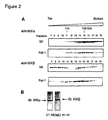
- FIG. 2 Distribution of IKK ⁇ and IKK ⁇ in glycerol gradient fractions from Rat-1 and Nemo ⁇ / ⁇ 5R extracts.
- FIG. 3 Distribution and activity of the IKK complex components in glycerol gradient fractions from Rat-1 or Tax-activated M319-5b cell extracts.
- A Densitometric analysis (arbitrary units) of Western blot-detected NEMO (-), IKK ⁇ (-••-) or IKK ⁇ in glycerol gradient fractions of Rat-1 or M319-5b cell extracts. LMW/HMW: Low and High Molecular Weight complex.
- B In vitro kinase assays in LMW and HMW fractions from Rat-1 or M319-5b cells. Kinase assays (KA) were performed using wt or S32A/S36A mutant GST-I ⁇ B ⁇ substrate.
- FIG. 4 IL-1 ⁇ promotes FRET between CFP-NEMO and YFP-NEMO fusion proteins
- A Luciferase activity resulting from Ig ⁇ -luciferase reporter gene activation by TNF ⁇ or IL-1 ⁇ (left or right histogram) in MEF wt cell lysates or in lysates from Nemo ⁇ / ⁇ MEF cells either mock treated or transfected with pECFP-Nemo (C-n.), pEYFP-Nemo (Y-n.) plasmids or with both plasmids (CY-n.).
- B Emission spectra in lysates from C-n. ( ⁇ ), Y-n. ( ⁇ ) or from CY-n.
- FIG. 5 M319-5b cell characterization.
- An extract from cytosolic M319 — 5b cell extract was analyzed by Western blotting using an anti-Tax monoclonal antibody.
- C. Kinase assay of the cell extract was performed with the GST-I ⁇ B ⁇ protein (aa 1-54) followed by SDS-PAGE and autoradiography for 7 hr.
- FIG. 6 Western blot analysis of CFP- and YFP-Nemo transfected cells.
- Polynucleotide in general relates to polyribonucleotides and polydeoxyribonucleotides, it being possible for these to be non-modified RNA or DNA or modified RNA or DNA.
- nucleotide sequence means a polynucleotide molecule in the form of a separate fragment or as a component of a larger nucleic acid construct that has been derived from DNA or RNA isolated at least once in substantially pure form (i.e., free of contaminating endogenous materials) and in a quantity or concentration enabling identification, manipulation, and recovery of its component nucleotide sequences by standard biochemical methods.
- sequences are preferably provided in the form of an open reading frame uninterrupted by internal non-translated sequences, or introns that are typically present in eukaryotic genes. Sequences of non-translated DNA may be present 5′ or 3′ from an open reading frame where the same do not interfere with manipulation or expression of the coding region.
- nucleic acid molecule as used herein means RNA or DNA, including cDNA, single or double stranded, and linear or covalently closed molecules.
- a nucleic acid molecule may also be genomic DNA corresponding to the entire gene or a substantial portion therefor to fragments and derivatives thereof.
- the nucleotide sequence may correspond to the naturally occurring nucleotide sequence or may contain single or multiple nucleotide substitutions, deletions and/or additions including fragments thereof. All such variations in the nucleic acid molecule retain the ability to encode a biologically active enzyme when expressed in the appropriate host or an enzymatically active fragment thereof.
- the nucleic acid molecule of the present invention may comprise solely the nucleotide sequence encoding an enzyme or may be part of a larger nucleic acid molecule that extends to the gene for the enzyme.
- the non-enzyme encoding sequences in a larger nucleic acid molecule may include vector, promoter, terminator, enhancer, replication, signal sequences, or non-coding regions of the gene.
- Polypeptides are understood as meaning peptides or proteins which comprise two or more amino acids bonded via peptide bonds.
- a substance that can be identified and/or screened by the methods described herein include biological macromolecules, such as polypeptides, peptides, nucleic acids, antibodies, and carbohydrates, and other chemical organic molecules. Combinations of substances for their joint effect at achieving the goals of the present invention can also be used.
- the term “reduced” or “inhibited” in relation to enzymatic activity means decreasing the intracellular activity of one or more enzymes in the NF- ⁇ B pathway either directly or indirectly and/or that inhibits IKK complex formation or activation,
- the phrase “inhibiting the NF- ⁇ B pathway” preferably means that the NF- ⁇ B pathway is inhibited by alteration of NEMO oligomerization.
- NF- ⁇ B transcription factors whose activation is modulated by a specific high molecular weight complex composed of two protein kinases named IKK-alpha and IKK-beta associated with a modulator and regulatory protein called NEMO (NF- ⁇ B Essential Modulator/IKK gamma).
- NEMO NF- ⁇ B Essential Modulator/IKK gamma
- the invention provides a method of identifying a substance which inhibits NF ⁇ -B Essential Modulator (NEMO) oligomerization and/or that inhibits IKK complex formation or activation, by providing a cell deficient in endogenous NEMO and which is transformed with one or more polynucleotides that express at least two peptides that comprise a NEMO oligomerization region or transforming a cell with such polynucleotides; applying the substance to the cell; and analyzing the level of oligomerization of the peptides that comprise a NEMO oligomerization region compared to the level of oligomerization of the peptides in the absence of the substance, wherein a reduction of oligomerization of the peptides in the presence of the substance indicates that the substance inhibits NEMO oligomerization.
- NEMO NF ⁇ -B Essential Modulator
- oligomerization domain of NEMO has been identified (Agou et al., 2004, J. Biol. Chem., 279, 27861) and peptides mimicking this domain display inhibitory properties on the NF- ⁇ B pathway have been described (Agou et al, 2004, J. Biol. Chem., 279, 54248, and U.S. application Ser. No. 10/948,649, which is incorporated herein by reference) that block the inflammatory response and killing cancer cells.
- at least two peptides, polypeptides or proteins having the same oligomerization domain can be used.
- the at least two polypeptides, peptides, or proteins have different binding domains provided that the different binding domains can cause the interaction between the NEMO peptides, polypeptides or proteins and/or facilitate the formation of IKK complexes and/or mediate NF ⁇ -B mediated signaling.
- Compounds to be detected are “activators”, but it will be also possible to reduce the formation of IKK complex, then inhibitors will be identified.
- NEMO proteins are those encoded by the nucleotides 754 to 1989 of SEQ ID NO:1 or SEQ ID NO:2 (SEQ ID NO:1 and 2 are the regions of the plasmids of pECFP-NEMO and pEYFP-NEMO described further below in the Examples section containing the coding sequence for the hybrid fluorescent/NEMO protein).
- the NEMO that can be used are those that are encoded by polynucleotide sequence with at least 70%, preferably 80%, more preferably at least 90, 95, 97, 98 and/or 99% identity to the NEMO coding sequence within nucleotides 754 to 1989 of SEQ ID NO:1 and/or 2 and which mediate oligomerization.
- stringent conditions or “stringent hybridization conditions” includes reference to conditions under which a polynucleotide will hybridize to its target sequence, to a detectably greater degree than other sequences (e.g., at least 2-fold over background) And can include hybridization in 50% formamide, 1 M NaCl, 1% SDS at 37° C., and a wash in 0.1 ⁇ SSC at 60 to 65° C.
- the methods described herein utilize cells, preferably mammalian, and more preferably human cells that are deficient in endogenous nemo (i.e., do not express NEMO protein from the endogenous chromosome, which is different from exogenously introduced nucleic acid coding regions that may reside episomally or have been integrated into the chromosome).
- the cells are transformed with one or more nucleic acid molecules that encode at least a region of the NEMO protein that forms oligomers and/or mediates IKK complex formation.
- a nucleotide sequence encoding the whole NEMO protein is used.
- a partial NEMO sequence is used, containing the C-terminal portion comprising the oligomerization region.
- the vector is an expression vector.
- an expression vector is one that places the nucleic acid encoding a particular protein or polypeptide under the direct transcriptional control of a promoter that is either constitutive or inducible (i.e., causes expression in response to certain stimuli such as heat or chemicals).
- This expression vector may be engineered to self-replicate in the cell thereby maintaining it as an episome (but may also be incorporated into one or more chromosomes of the cell.
- the vector may be engineered to direct recombination into the cellular chromosomal material, and preferably engineered to direct site-specific recombination. Appropriate selectable markers as known in this field can be used.
- Preferable vectors are, for example, lentiviral vectors, in particular those encompassing the triplex sequence, as those disclosed in the U.S. Pat. No. 6,682,907 and in WO 99-55892 international PCT application which are incorporated here by reference.
- Levels of expression from the vector can be determined by measuring changes in transcript levels, e.g, using Northern blots, dot-blots, primer extensions, RNase protections, RT-PCR and the like. Such methodologies are well-known in this field. Likewise, assessing protein expression, protein complexes are known in the field.
- the substances to be tested can be brought into contact with the NEMO molecules in a test involving their membrane permeability whereby the substances are brought into contact with cells containing the NEMO proteins prior to their lysis. Additionally or alternatively, na ⁇ ve cell extracts or cell extracts treated with NF ⁇ B channel activators can be used. Additionally or alternatively, the oligomerization can be reconstituted ex cellulo and the testing can be performed in the reconstituted system.
- the substance can be simply added to the culture medium or to the cells directly having removed the culture medium from the cells for a time to allow the application of the test substance. If the cells are not provided in a culture medium but a buffered solution that are known in this field, e.g., phosphate buffered saline or Tris-buffered saline, the substance can be added directly to the solution.
- a buffered solution e.g., phosphate buffered saline or Tris-buffered saline
- the substance can be added in the form of a lyophilized powder or as deemed appropriate in a proper biologically acceptable carrier solution, such as buffered saline or water.
- the oligomerization of NEMO can be analyzed by conventional protein methods and preferably, to simplify the analysis, use one or more detectable moieties.
- the at least two NEMO molecules have different detectable moieties.
- FRET Fluorescence Resonance Energy Transfer
- a hybrid construct is used such that the NEMO molecule is linked, either directly or through a linker molecule (e.g., a short peptide), to the fluorescent protein.
- the linkage can occur at the N-terminus or C-terminus of the NEMO molecule, preferably provided that the added linkage does not interfere with NEMO oligomerization.
- FRET measurements can be performed on cell extracts that have been transiently transfected with the appropriate expression vehicles and that have been treated with an NF ⁇ B channel activator.
- stably transformed cells can be used that express the NEMO proteins at physiological or non-physiological levels.
- the interaction between NEMO and substances that modulate its oligomerization can be detected by direct measurement of the FRET perturbation resulting from position two different fluorescent protein-NEMO proteins in proximity; measurement of the loss of fluorescence anisotropy resulting from hetero FRET; and/or measurement of the loss of fluorescence anisotropy resulting from homo FRET in the case in which a single fluorescent marker is used.
- Determining and comparing NEMO oligomerization and indirectly the determination of the formation IKK complex may also be used for identifying substances that modulate NF ⁇ -B mediated signaling.
- Such a method for identifying a substance that modulates these complexes and/or activities may include comparing the relative complex formation and/or activities in a cell that is deficient in NEMO before and after contacting the cell with a substance, and selecting a substance that modulates the complex formation and/or activities.
- a comparison is made between a control sample of cell that has not been contacted with the substance being tested and a test sample of the same cell type exposed to the putative substance.
- the comparison can also assess the kinetic profile of the oligomerization of the NEMO oligomerization domains. For example, an agent that decreases NEMO oligomerization in a cell compared to the untreated control is indicative of an agent that may affect IKK complex formation and/or NF ⁇ -B mediated activities.
- high-throughput screening technology may also be employed to identify single or multiple substances.
- High throughput screening technology is commonly used to define the rapid processing of cells on a large scale. This method may comprise contacting multiple cells with multiple candidate substances and measuring the effects of those substances on a variety of cells compared to control cell lines. Thus, identifying substances on a large scale can be performed. For example, the methods described above can be applied on large scale to distinguish substances having different effects or magnitudes of effects on the oligomerization of NEMO peptides, endogenous NEMO oligomerization, NF ⁇ -B formation, and NF- ⁇ -B mediate signaling pathways.
- the analysis of substances could be part of a multiplexing assay where other molecules/parameters are monitored simultaneously to provide a multi-sided biochemical signature of the effect the substance has on the cell and the formation of complexes and activities.
- two or more parameters such as NEMO protein or peptide oligomerization, IKK complex formation, and NF ⁇ -B mediated signaling activities, are measured simultaneously or separately for a particular substance to identify a correlation between NEMO oligomerization, IKK complex formation, and NF ⁇ -B mediated signaling activities.
- signaling pathways such as second messengers (including but not limited to cyclic AMP, protein kinases, and enzymes) and cellular parameters (including but not limited to cell morphology, viability, apoptosis, and organelle distribution) can be tested in combination to study the effects of the substances on these aspects as well.
- second messengers including but not limited to cyclic AMP, protein kinases, and enzymes
- cellular parameters including but not limited to cell morphology, viability, apoptosis, and organelle distribution
- Substances identified with the present methods may be formulated as compositions with a pharmaceutically acceptable excipient or carrier, or in combination with other anticancer drugs. Such substances or compositions may be administered by known routes, e.g. orally, parenterally, intravenously, intramuscularly, subcutaneously, or directly to the site of the cancer, to subjects having diseases characterized as having an NF ⁇ -B signaling component. Formulation in general is described in Chapter 25.2 of Comprehensive Medicinal Chemistry, Volume 5, Editor Hansch et al, Pergamon Press 1990.
- the dosages can be set up individually depending on the purpose of administration (prevention, maintenance (prevention of aggravation), alleviation (improvement of symptom) or cure); the kind of disease; the symptom, sex and age of patient; the administration method and the like and is not limited particularly.
- kits for use in determining whether a substance has the effect of the methods described herein can include, for example, cell samples; reagents for detecting oligomerization; and may also contain control substances known to have a specific inhibitory effect thereby enabling a comparison with the test substances.
- These kits can also contain detectable moieties, which may be a fluorescent label.
- Rat-1, M319-5b (see supplementary data), 5R fibroblast and wild type, Ikk ⁇ ⁇ / ⁇ Ikk ⁇ ⁇ / ⁇ and Nemo ⁇ / ⁇ MEF cells were grown in Dulbecco's modified Eagle's medium supplemented with 10% fetal bovine serum. For 5R cells, 20% 5R conditioned medium was added to fresh culture medium. Transfections using Fugene 6 (Roche) were performed according to the manufacturer protocol using, per well of a 6 well-plate, 2 ⁇ g of pECFP-Nemo or pEYFP-Nemo plasmid (single transfection) or 1 ⁇ g each (double transfection). For plasmid obtaining, see supplementary data.
- NF- ⁇ B complementation assays 100 ng of pEF1-lacZ (marker for transfection efficiency) and Ig ⁇ -luciferase plasmids were added to the transfection mix. Cell fluorescence was controlled with an Axiovert 200 (Zeiss) inverted microscope one day after transfection.
- Cells transfected with the lacZ and the Ig ⁇ -luciferase plasmids were trypsinated, pelleted and resuspended in fresh culture medium.
- Cell suspension was stimulated by IL-1 ⁇ (BD, Biosciences, 10 ng/ml) or TNF ⁇ (BD Biosciences, 20 ng/ml) for 30 min at 37° C. They were washed in PBS buffer, resuspended in culture medium and incubated in plate for an additional 3.5 hr period at 37° C.
- Cells were lysed in 200 ⁇ l of cold FRET buffer (Tris-phosphate buffer pH 7.8 containing 8 mM MgCl 2 , 1 mM DTE, 1 mM DDM, 10% glycerol and Roche protease inhibitors) and clarified by centrifugation (10,000 g, 30 min at 4° C.). Supernatants were tested for ⁇ -galactosidase (30 ⁇ l) (Detection kit II, BD Biosciences) and luciferase (70 ⁇ l) activity.
- cold FRET buffer Tris-phosphate buffer pH 7.8 containing 8 mM MgCl 2 , 1 mM DTE, 1 mM DDM, 10% glycerol and Roche protease inhibitors
- Fluorescence analysis of cell extracts (2 ⁇ 5 ⁇ 10 5 in 150 ⁇ l) was performed using a PTI Quantamaster fluorometer with excitation wavelength of 480 nm (YFP) or 433 nm (CFP and CFP/YFP FRET) and emission/excitation bandpasses of 3/6 nm.
- FIG. 1 shows the behavior of recombinant NEMO (rNEMO) analyzed either by gel filtration ( FIG. 1A ) or by glycerol gradient centrifugation ( FIG. 1B ), a highly reproducible technique (see FIG. 1 , inset).
- rNEMO recombinant NEMO
- FIG. 1A gel filtration
- FIG. 1B glycerol gradient centrifugation
- Mr apparent mass
- rNEMO displayed the migrational properties of a globular protein with an apparent mass of 50 kDa indicating that the abnormal elution profile is due to the elongated shape of NEMO.
- NEMO oligomeric state of native NEMO in Ikk ⁇ ⁇ / ⁇ Ikk ⁇ ⁇ / ⁇ cells ( FIG. 1C ).
- NEMO migrated as an asymmetrical peak.
- the first peak (80%) corresponds to monomeric NEMO, the other one (20%) to either a homotrimer or a heterocomplex (Mr 150 kDa).
- IKK kinases were analyzed by Western blot in glycerol gradient fractions from Rat-1 and 5R cytosolic extracts. In both extracts, IKK ⁇ was found in a complex of 140-160 kDa ( FIG. 2A ) corresponding to dimeric species. In contrast, in 5R cell extracts, most of IKK ⁇ (80%) migrated as a monomer of 80 kDa (calculated Mr 86, 6 kDa), and only a small amount of IKK ⁇ (20%) was detected as dimers.
- NEMO eluted mainly in two peaks with Mr of 50 kDa and 140-160 kDa.
- LMW low molecular weight
- IKK ⁇ and IKK ⁇ kinases two peaks were identified, one corresponding to LMW complex, the other one with a high (350 kDa) molecular weight (HMW complex) was associated with a minor amount of NEMO ( FIG. 3A , top). Only a weak kinase activity was detected in these two molecular complexes likely reflecting basal activity ( FIG. 3B ).
- Nemo ⁇ / ⁇ MEF cells were reconstituted by transient transfection with plasmids encoding CFP- or/and YFP-NEMO fusion proteins.
- NF- ⁇ B pathway activation by TNF ⁇ in cells transfected with each of the fluorescent NEMO plasmids was rescued ( FIG. 4A left panel).
- the activation of the pathway by IL-1 was comparable between wt and Nemo ⁇ / ⁇ MEF cells transfected by a plasmid coding for untagged NEMO or doubly transfected with pECFP-Nemo and pEYFP-Nemo plasmids ( FIG. 4A , right panel).
- FIG. 4B the emission spectra of CFP-NEMO (maximum at 475 nm) or YFP-NEMO (maximum at 525 nm) expressing cells and of pECFP- and pEYFP-Nemo doubly transfected cells are shown following excitation at 433 nm (CFP and CFP/YFP double transfectant) or 480 nm (YFP). Under the experimental conditions employed, neither YFP excitation at 433 nm nor CFP excitation at 480 nm was observed (not shown). The double transfectant displayed an emission spectrum typical of cells expressing both fluorescent fusion NEMO proteins with characteristic maxima at 475 and 525 nm.
- IKK complex assembly has been studied by gel filtration in 293T, Yeast, COS and HeLa cells where several groups observed the formation of a large complex (700-900 kDa) but most of the time under overexpression conditions.
- IKK complex molecular mass measurement by gel filtration is erroneous mainly due to the abnormal hydrodynamic properties of NEMO.
- NEMO contains a long N-terminal coiled-coil domain called CC1 which is thought to form stable dimers.
- CC1 N-terminal coiled-coil domain
- the N-terminal domain may form an intramolecular rather than an intermolecular coiled-coil structure like that observed in the Structural Maintenance of Chromosomes family of proteins (Haering, C. H., Lowe, J., Hochwagen, A. and Nasmyth, K. (2002) Molecular architecture of SMC proteins and the yeast cohesin complex. Mol Cell, 9, 773-788).
- the major fraction of NEMO co-migrates within the 140-160 kDa LMW complex, a mass which is compatible with that of NEMO/IKK ⁇ and NEMO/IKK ⁇ complexes with 1:1 stoichiometry.
- the overlapping, yet slightly different, migrations between dimeric pools of kinases (5R cells), ( FIG. 2A ), and NEMO/IKK complexes make it difficult to determine the relative proportion of kinase/kinase and NEMO/kinase complexes in these fractions.
- HMW IKK complex formation was specific to the Tax-dependent pathway because no similar complex was observed in transiently TNF ⁇ -activated Rat-1 cells where a 220-240 kDa complex was found (not shown).
- the Mr of this TNF ⁇ -dependent IKK complex composed of NEMO, IKK ⁇ and IKK ⁇ is compatible with a subunit composition of two kinases and two NEMOs.
- NEMO Lys63-linked ubiquitin conjugation by upstream proteins such as TRAFs and RIP proteins
- NEMO is a sensor of Lys 63-linked polyubiquitination and functions in NF-kappaB activation. Nat Cell Biol ) could provide this attractive molecular basis, but awaits future analysis.
- the murine Nemo gene was amplified using plasmid HA-Nemo (Agou, F., et al (2002) J Biol Chem, 277, 17464-17475) as template (EcoR1 and BamH1 site extended primer sequences on request).
- the PCR product, pECFP-C1 and pEYFP-C1 plasmids (BD Biosciences) were digested by BamH1 and EcoR1 and the digested PCR product was ligated to the digested plasmids giving rise to pECFP-Nemo and pEYFP-Nemo vectors.
- the cfp/yfp-Nemo regions of the plasmids were sequenced to control gene integrity.
- M319-5 cells were derived from rat fibroblast transformed by a mutant Tax protein competent to activate NF- ⁇ B. As M319-5 cells tend to loose Tax expression after extended passages in the presence of G418, stable transfection of M319-5 cells with Ig ⁇ 2bsrH have been performed to confer them a NF- ⁇ B dependent blasticidin S resistance (Yamaoka, S., et al (1998) Cell, 93, 1231-1240).
- the resistant M319-5 cells (M319-5b) express the Tax protein ( FIG. 5A ), display a high NF- ⁇ B DNA binding activity ( FIG. 5B ) and an I ⁇ B ⁇ kinase activity (supplementary FIG. 5C ). Nuclear extracts and supershift assays were performed as described previously (Yamaoka et al. (1998) Cell, 93, 1231-1240).
Landscapes
- Health & Medical Sciences (AREA)
- Immunology (AREA)
- Life Sciences & Earth Sciences (AREA)
- Engineering & Computer Science (AREA)
- Molecular Biology (AREA)
- Biomedical Technology (AREA)
- Chemical & Material Sciences (AREA)
- Hematology (AREA)
- Urology & Nephrology (AREA)
- Biotechnology (AREA)
- Microbiology (AREA)
- Cell Biology (AREA)
- Food Science & Technology (AREA)
- Medicinal Chemistry (AREA)
- Physics & Mathematics (AREA)
- Analytical Chemistry (AREA)
- Biochemistry (AREA)
- General Health & Medical Sciences (AREA)
- General Physics & Mathematics (AREA)
- Pathology (AREA)
- Measuring Or Testing Involving Enzymes Or Micro-Organisms (AREA)
- Peptides Or Proteins (AREA)
Abstract
The present invention provides methods for screening for substances which inhibit the oligomerization of NEMO and/or IKK-related complexes and/or signaling pathways based on the interference with NEMO oligomerization.
Description
The present application is a divisional of U.S. Ser. No. 11/760,014 filed Jun. 8, 2007, now U.S. Pat. No. 7,413,863 and claims the benefit of U.S. provisional application 60/811,770 filed Jun. 8, 2006.
1. Field of the Invention
The present invention provides methods for screening for substances which inhibit the oligomerization of NEMO and/or IKK-related complexes and/or signaling pathways based on the interference with NEMO oligomerization.
2. Description of the Background
NF-κB plays a prominent role in the inducible expression of genes involved in processes like immune and inflammatory responses, cell growth and death, oncogenesis (Hayden, M. S. and Ghosh, S. (2004) Genes Dev, 18, 2195-2224). In resting cells, NF-κB is sequestered in the cytoplasm through interaction with inhibitory proteins known as IκBs (Baldwin, A. S., Jr. (1996) Annu Rev Immunol, 14, 649-683). Stimuli transducing through the TNF, Toll-like, IL-1, B and T cell receptors as well as the HTLV-1 Tax protein promote IκB phosphorylation by IκB kinases (IKK), ubiquitination and degradation. This allows NF-κB to translocate into the nucleus where it activates gene transcription (Karin, M. and Ben-Neriah, Y. (2000) Annu Rev Immunol, 18, 621-663). IKK activation proceeds from outside the cell to the cytoplasm, but it can also occur from the nucleus to the cytoplasm (Wu et al (2006a) Nat Cell Biol). The NF-κB signaling cascade can be triggered through a <<classical>> or an <<alternative>> pathway (Bonizzi, G. and Karin, M. (2004) Trends Immunol, 25, 280-288). Unlike most proinflammatory stimuli which lead to transient increase in IKK activity, the oncoprotein Tax leads to a persistent activation of IKKs through both pathways (Sun, S. C. and Yamaoka, S. (2005) Oncogene, 24, 5952-5964).
In the classical pathway, IKK activity is associated with a multiprotein complex composed of two serine/threonine kinases, IKKα and IKKβ (Zandi et al (1997) Cell, 91, 243-252) and a non catalytic protein, NEMO (NF-κB essential modulator) (Yamaoka, S et al (1998) Cell, 93, 1231-1240). Cells lacking NEMO are unable to assemble the IKK complex and exhibit severe defects in NF-κB activation. The mechanism by which the IKK complex is activated remains unclear: trans-autophosphorylation (Tang et al (2003) J Biol Chem, 278, 37297-37305) as well as kinases such as MEKK3 (Yang et al (2001) Nat Immunol, 2, 620-624) or TAK1 (Takaesu et al (2003) J Mol Biol, 326, 105-115) have been implicated. Recently, the first genetic evidence that TAK1 was essential for TNFα and IL-1 NF-κB activation (Sato et al (2005) Nat Immunol, 6, 1087-1095) was published. Besides, converging evidence suggests that NEMO oligomerization also plays a crucial role in the IKK complex activation (Inohara et al., (2000) J Biol Chem 275, 27823-27831; Poyet et al (2000) J Biol Chem, 275, 37966-37977). The subunit composition and stoichiometry of the IKK complex is still debated although many reports suggest an association between the IKKα/IKKβ heterodimer and NEMO.
Accordingly, one object of the present invention is to provide nucleic acid molecules encoding a full length NEMO polypeptide and/or at least a portion of the C-terminal oligomerization domain of NEMO and at least fluorescent protein as well as a cell containing the nucleic acid molecules. The C-terminal domain is composed of the minimal oligomerization domain including two sucessives coiled-coil motifs, CC2 (residues 246-286) and LZ (residues 390-412) (Tegethoff, 2003, Mol. Cell Biol.; Traincard, 2003, J. Biol. Chem. submitted), and a zinc finger motif at the extremity of the C-terminus. In a particular embodiment, the invention provides a nucleic acid molecule encoding the portion of the C-terminal oligomerization domain of NEMO encompassing the two sequences CC- and LZ. and at least fluorescent protein.
Another object is to provide methods for identifying substances which can be useful for the treatment of diseases or studying physiological mechanisms in which NFκ-B plays a prominent role, such as immune and inflammatory responses, cell growth and de9ath and oncogenesis.
Another object of the present invention is to provide a method of identifying a substance which inhibits NFκ-B Essential Modulator (NEMO) oligomerization, by providing a cell deficient in endogenous NEMO and which is transformed with one or more polynucleotides that express at least two peptides that comprise a NEMO oligomerization region or transforming a cell with such polynucleotides; applying the substance to the cell; and analyzing the level of oligomerization of the peptides that comprise a NEMO oligomerization region compared to the level of oligomerization of the peptides in the absence of the substance, wherein a reduction of oligomerization of the peptides in the presence of the substance indicates that the substance inhibits NEMO oligomerization.
Another object of the present invention is to provide a method of identifying a substance which inhibits IKK complex formation or activation [The complex can be formed, but not followed by its activation, both kind of compounds: those altering the formation and those altering the activation could be interesting and useful], comprising providing a cell deficient in endogenous NEMO and which is transformed with one or more polynucleotides that express at least two peptides that comprise a NEMO oligomerization region or transforming a cell with the polynucleotides; applying the substance to the cell; and analyzing the level of IKK complex formation compared to the level of IKK complex formation in the absence of the substance, wherein a reduction of IKK complex formation in the presence of the substance indicates that the substance inhibits IKK complex formation.
Another object of the present invention is to provide a method of identifying a substance which inhibits NFκ-B Essential Modulator (NEMO) oligomerization and/or which inhibits IKK complex formation or activation, by providing a system in which at least two NEMO polypeptides are provided and in which the NEMO polypeptides are capable of oligomerization, applying the substance to the system; and analyzing the level of oligomerization of the peptides that comprise a NEMO oligomerization region compared to the level of oligomerization of the peptides in the absence of the substance, wherein a reduction of oligomerization of the peptides in the presence of the substance indicates that the substance inhibits NEMO oligomerization.
Another object of the present invention is to provide substances that are identified by the above-methods and, further to their use to inhibit NFκ-B and to treat disease in which NFκ-B plays a prominent role.
A more complete appreciation of the invention and many of the attendant advantages thereof will be readily obtained as the same becomes better understood by reference to the following detailed description when considered in connection with the accompanying drawings, wherein:

Unless otherwise defined, all technical and scientific terms used herein have the same meaning as commonly understood by one of ordinary skill in the art of molecular biology. Although methods and materials similar or equivalent to those described herein can be used in the practice or testing of the present invention, suitable methods and materials are described herein. All publications, patent applications, patents, and other references mentioned herein are incorporated by reference in their entirety. In case of conflict, the present specification, including definitions, will control. In addition, the materials, methods, and examples are illustrative only and are not intended to be limiting.
Reference is made to standard textbooks of molecular biology that contain definitions and methods and means for carrying out basic techniques, encompassed by the present invention. See, for example, Maniatis et al., Molecular Cloning: A Laboratory Manual, Cold Spring Harbor Laboratory, New York (1982) and Sambrook et al., Molecular Cloning: A Laboratory Manual, Cold Spring Harbor Laboratory, New York (1989) and the various references cited therein.
“Isolated” means separated out of its natural environment.
“Polynucleotide” in general relates to polyribonucleotides and polydeoxyribonucleotides, it being possible for these to be non-modified RNA or DNA or modified RNA or DNA.
The term “nucleotide sequence” as used herein means a polynucleotide molecule in the form of a separate fragment or as a component of a larger nucleic acid construct that has been derived from DNA or RNA isolated at least once in substantially pure form (i.e., free of contaminating endogenous materials) and in a quantity or concentration enabling identification, manipulation, and recovery of its component nucleotide sequences by standard biochemical methods. Such sequences are preferably provided in the form of an open reading frame uninterrupted by internal non-translated sequences, or introns that are typically present in eukaryotic genes. Sequences of non-translated DNA may be present 5′ or 3′ from an open reading frame where the same do not interfere with manipulation or expression of the coding region.
The term “nucleic acid molecule” as used herein means RNA or DNA, including cDNA, single or double stranded, and linear or covalently closed molecules. A nucleic acid molecule may also be genomic DNA corresponding to the entire gene or a substantial portion therefor to fragments and derivatives thereof. The nucleotide sequence may correspond to the naturally occurring nucleotide sequence or may contain single or multiple nucleotide substitutions, deletions and/or additions including fragments thereof. All such variations in the nucleic acid molecule retain the ability to encode a biologically active enzyme when expressed in the appropriate host or an enzymatically active fragment thereof. The nucleic acid molecule of the present invention may comprise solely the nucleotide sequence encoding an enzyme or may be part of a larger nucleic acid molecule that extends to the gene for the enzyme. The non-enzyme encoding sequences in a larger nucleic acid molecule may include vector, promoter, terminator, enhancer, replication, signal sequences, or non-coding regions of the gene.
“Polypeptides” are understood as meaning peptides or proteins which comprise two or more amino acids bonded via peptide bonds.
As used herein, a substance that can be identified and/or screened by the methods described herein include biological macromolecules, such as polypeptides, peptides, nucleic acids, antibodies, and carbohydrates, and other chemical organic molecules. Combinations of substances for their joint effect at achieving the goals of the present invention can also be used.
As used herein, the term “reduced” or “inhibited” in relation to enzymatic activity means decreasing the intracellular activity of one or more enzymes in the NF-κB pathway either directly or indirectly and/or that inhibits IKK complex formation or activation, The phrase “inhibiting the NF-κB pathway” preferably means that the NF-κB pathway is inhibited by alteration of NEMO oligomerization.
Cells activate a large variety of genes implicated in the inflammatory and immune responses, and in apoptosis and cell growth In response to a large variety of stimuli such as pro inflammatory cytokines (TNF-alpha and IL-1) or bacterial lipopolysaccharide (LPS). Most of these genes are controlled by NF-κB transcription factors whose activation is modulated by a specific high molecular weight complex composed of two protein kinases named IKK-alpha and IKK-beta associated with a modulator and regulatory protein called NEMO (NF-κB Essential Modulator/IKK gamma). NEMO is essential as nemo −/−fibroblasts or lymphocytes cannot respond to a wide variety of NF-κB activating stimuli. NF-kB activation by several stimuli requires NEMO oligomerization.
The invention provides a method of identifying a substance which inhibits NFκ-B Essential Modulator (NEMO) oligomerization and/or that inhibits IKK complex formation or activation, by providing a cell deficient in endogenous NEMO and which is transformed with one or more polynucleotides that express at least two peptides that comprise a NEMO oligomerization region or transforming a cell with such polynucleotides; applying the substance to the cell; and analyzing the level of oligomerization of the peptides that comprise a NEMO oligomerization region compared to the level of oligomerization of the peptides in the absence of the substance, wherein a reduction of oligomerization of the peptides in the presence of the substance indicates that the substance inhibits NEMO oligomerization.
The oligomerization domain of NEMO has been identified (Agou et al., 2004, J. Biol. Chem., 279, 27861) and peptides mimicking this domain display inhibitory properties on the NF-κB pathway have been described (Agou et al, 2004, J. Biol. Chem., 279, 54248, and U.S. application Ser. No. 10/948,649, which is incorporated herein by reference) that block the inflammatory response and killing cancer cells. In one embodiment, at least two peptides, polypeptides or proteins having the same oligomerization domain can be used. In another embodiment, the at least two polypeptides, peptides, or proteins have different binding domains provided that the different binding domains can cause the interaction between the NEMO peptides, polypeptides or proteins and/or facilitate the formation of IKK complexes and/or mediate NFκ-B mediated signaling. Compounds to be detected are “activators”, but it will be also possible to reduce the formation of IKK complex, then inhibitors will be identified.
Examples of NEMO proteins are those encoded by the nucleotides 754 to 1989 of SEQ ID NO:1 or SEQ ID NO:2 (SEQ ID NO:1 and 2 are the regions of the plasmids of pECFP-NEMO and pEYFP-NEMO described further below in the Examples section containing the coding sequence for the hybrid fluorescent/NEMO protein). In another embodiment, the NEMO that can be used are those that are encoded by polynucleotide sequence with at least 70%, preferably 80%, more preferably at least 90, 95, 97, 98 and/or 99% identity to the NEMO coding sequence within nucleotides 754 to 1989 of SEQ ID NO:1 and/or 2 and which mediate oligomerization. These homologous polynucleotides can hybridize under stringent conditions to those NEMO nucleic acid sequences. The terms “stringent conditions” or “stringent hybridization conditions” includes reference to conditions under which a polynucleotide will hybridize to its target sequence, to a detectably greater degree than other sequences (e.g., at least 2-fold over background) And can include hybridization in 50% formamide, 1 M NaCl, 1% SDS at 37° C., and a wash in 0.1×SSC at 60 to 65° C. (see Tijssen, Laboratory Techniques in Biochemistry and Molecular Biology—Hybridization with Nucleic Acid Probes, Part I, Chapter 2 “Overview of principles of hybridization and the strategy of nucleic acid probe assays”, Elsevier, N.Y. (1993); and Current Protocols in Molecular Biology, Chapter 2, Ausubel, et al., Eds., Greene Publishing and Wiley-Interscience, New York (1995)). Amino acid and polynucleotide identity, homology and/or similarity can be determined using the ClustalW algorithm, MEGALIGN™, Lasergene, Wis.)
Preferably the methods described herein utilize cells, preferably mammalian, and more preferably human cells that are deficient in endogenous nemo (i.e., do not express NEMO protein from the endogenous chromosome, which is different from exogenously introduced nucleic acid coding regions that may reside episomally or have been integrated into the chromosome).
The cells are transformed with one or more nucleic acid molecules that encode at least a region of the NEMO protein that forms oligomers and/or mediates IKK complex formation. In one preferred embodiment, a nucleotide sequence encoding the whole NEMO protein is used. In another preferred embodiment, a partial NEMO sequence is used, containing the C-terminal portion comprising the oligomerization region. Introducing nucleic acid molecules into cells is a well-known technique; reference being made to the general methodology textbooks described hereinabove and otherwise known in this field. In one embodiment, these nucleic acid molecules are contained within and can be provided in a vector.
Preferably the vector is an expression vector. Typically an expression vector is one that places the nucleic acid encoding a particular protein or polypeptide under the direct transcriptional control of a promoter that is either constitutive or inducible (i.e., causes expression in response to certain stimuli such as heat or chemicals). This expression vector may be engineered to self-replicate in the cell thereby maintaining it as an episome (but may also be incorporated into one or more chromosomes of the cell. In addition or alternatively, the vector may be engineered to direct recombination into the cellular chromosomal material, and preferably engineered to direct site-specific recombination. Appropriate selectable markers as known in this field can be used. Preferable vectors are, for example, lentiviral vectors, in particular those encompassing the triplex sequence, as those disclosed in the U.S. Pat. No. 6,682,907 and in WO 99-55892 international PCT application which are incorporated here by reference.
Levels of expression from the vector can be determined by measuring changes in transcript levels, e.g, using Northern blots, dot-blots, primer extensions, RNase protections, RT-PCR and the like. Such methodologies are well-known in this field. Likewise, assessing protein expression, protein complexes are known in the field.
The substances to be tested can be brought into contact with the NEMO molecules in a test involving their membrane permeability whereby the substances are brought into contact with cells containing the NEMO proteins prior to their lysis. Additionally or alternatively, naïve cell extracts or cell extracts treated with NFκB channel activators can be used. Additionally or alternatively, the oligomerization can be reconstituted ex cellulo and the testing can be performed in the reconstituted system.
To test a particular substance on the cell, generally, the substance can be simply added to the culture medium or to the cells directly having removed the culture medium from the cells for a time to allow the application of the test substance. If the cells are not provided in a culture medium but a buffered solution that are known in this field, e.g., phosphate buffered saline or Tris-buffered saline, the substance can be added directly to the solution.
The substance can be added in the form of a lyophilized powder or as deemed appropriate in a proper biologically acceptable carrier solution, such as buffered saline or water.
The oligomerization of NEMO can be analyzed by conventional protein methods and preferably, to simplify the analysis, use one or more detectable moieties. In one aspect, the at least two NEMO molecules have different detectable moieties.
Techniques using FRET (Fluorescence Resonance Energy Transfer)-based fluorescent labels (Patterson et al (2000) Anal. Biochem 284, 438) and, preferably proteins which fluoresce under different wavelengths may also be employed. Examples of known fluorescent proteins include, green fluorescent protein (GFP), cyan fluorescent protein (CFP), yellow fluorescent protein (YFP) and others described in Shaner et al (2004) (Nat. Biotech 22:1567). Other fluorophore that can be used include CFP/ds Red and/or GFP/ds Red (Erickson et al (2003) Biophys J, vol. 85:599-611) and Cyan variants of the orange type (Karawawa et al, Biochem J. 2004 Jul. 1; 381 (Pt 1):307-12) In this embodiment of using fluorescent proteins, it is preferred that a hybrid construct is used such that the NEMO molecule is linked, either directly or through a linker molecule (e.g., a short peptide), to the fluorescent protein. The linkage can occur at the N-terminus or C-terminus of the NEMO molecule, preferably provided that the added linkage does not interfere with NEMO oligomerization.
FRET measurements can be performed on cell extracts that have been transiently transfected with the appropriate expression vehicles and that have been treated with an NFκB channel activator. Alternatively, stably transformed cells can be used that express the NEMO proteins at physiological or non-physiological levels. The interaction between NEMO and substances that modulate its oligomerization can be detected by direct measurement of the FRET perturbation resulting from position two different fluorescent protein-NEMO proteins in proximity; measurement of the loss of fluorescence anisotropy resulting from hetero FRET; and/or measurement of the loss of fluorescence anisotropy resulting from homo FRET in the case in which a single fluorescent marker is used.
Determining and comparing NEMO oligomerization and indirectly the determination of the formation IKK complex may also be used for identifying substances that modulate NFκ-B mediated signaling. Such a method for identifying a substance that modulates these complexes and/or activities may include comparing the relative complex formation and/or activities in a cell that is deficient in NEMO before and after contacting the cell with a substance, and selecting a substance that modulates the complex formation and/or activities.
A comparison is made between a control sample of cell that has not been contacted with the substance being tested and a test sample of the same cell type exposed to the putative substance. The comparison can also assess the kinetic profile of the oligomerization of the NEMO oligomerization domains. For example, an agent that decreases NEMO oligomerization in a cell compared to the untreated control is indicative of an agent that may affect IKK complex formation and/or NFκ-B mediated activities.
In addition, high-throughput screening technology may also be employed to identify single or multiple substances. High throughput screening technology is commonly used to define the rapid processing of cells on a large scale. This method may comprise contacting multiple cells with multiple candidate substances and measuring the effects of those substances on a variety of cells compared to control cell lines. Thus, identifying substances on a large scale can be performed. For example, the methods described above can be applied on large scale to distinguish substances having different effects or magnitudes of effects on the oligomerization of NEMO peptides, endogenous NEMO oligomerization, NFκ-B formation, and NF-κ-B mediate signaling pathways.
The analysis of substances could be part of a multiplexing assay where other molecules/parameters are monitored simultaneously to provide a multi-sided biochemical signature of the effect the substance has on the cell and the formation of complexes and activities. In one embodiment of this combinatorial analysis, two or more parameters, such as NEMO protein or peptide oligomerization, IKK complex formation, and NFκ-B mediated signaling activities, are measured simultaneously or separately for a particular substance to identify a correlation between NEMO oligomerization, IKK complex formation, and NFκ-B mediated signaling activities.
In another embodiment, other signaling pathways, such as second messengers (including but not limited to cyclic AMP, protein kinases, and enzymes) and cellular parameters (including but not limited to cell morphology, viability, apoptosis, and organelle distribution) can be tested in combination to study the effects of the substances on these aspects as well.
Substances identified with the present methods may be formulated as compositions with a pharmaceutically acceptable excipient or carrier, or in combination with other anticancer drugs. Such substances or compositions may be administered by known routes, e.g. orally, parenterally, intravenously, intramuscularly, subcutaneously, or directly to the site of the cancer, to subjects having diseases characterized as having an NFκ-B signaling component. Formulation in general is described in Chapter 25.2 of Comprehensive Medicinal Chemistry, Volume 5, Editor Hansch et al, Pergamon Press 1990.
The dosages can be set up individually depending on the purpose of administration (prevention, maintenance (prevention of aggravation), alleviation (improvement of symptom) or cure); the kind of disease; the symptom, sex and age of patient; the administration method and the like and is not limited particularly.
The present invention also embodies kits for use in determining whether a substance has the effect of the methods described herein and can include, for example, cell samples; reagents for detecting oligomerization; and may also contain control substances known to have a specific inhibitory effect thereby enabling a comparison with the test substances. These kits can also contain detectable moieties, which may be a fluorescent label.
In the following experiments, we reevaluated the molecular mass and the activity of the IKK complex in extracts from resting or Tax-activated cells by glycerol gradient ultracentrifugation since this method alleviates the problems encountered with NEMO in gel filtration. We also monitored a stimulus-dependent oligomerization of NEMO in living cells through FRET experiments.
Methods
Cell Culture and Transient Transfections
Rat-1, M319-5b (see supplementary data), 5R fibroblast and wild type, Ikkα−/−Ikkβ−/− and Nemo−/− MEF cells were grown in Dulbecco's modified Eagle's medium supplemented with 10% fetal bovine serum. For 5R cells, 20% 5R conditioned medium was added to fresh culture medium. Transfections using Fugene 6 (Roche) were performed according to the manufacturer protocol using, per well of a 6 well-plate, 2 μg of pECFP-Nemo or pEYFP-Nemo plasmid (single transfection) or 1 μg each (double transfection). For plasmid obtaining, see supplementary data. In NF-κB complementation assays 100 ng of pEF1-lacZ (marker for transfection efficiency) and Igκ-luciferase plasmids were added to the transfection mix. Cell fluorescence was controlled with an Axiovert 200 (Zeiss) inverted microscope one day after transfection.
NF-κB Complementation and Kinase Assays
Cells transfected with the lacZ and the Igκ-luciferase plasmids were trypsinated, pelleted and resuspended in fresh culture medium. Cell suspension was stimulated by IL-1β (BD, Biosciences, 10 ng/ml) or TNFα (BD Biosciences, 20 ng/ml) for 30 min at 37° C. They were washed in PBS buffer, resuspended in culture medium and incubated in plate for an additional 3.5 hr period at 37° C. Cells were lysed in 200 μl of cold FRET buffer (Tris-phosphate buffer pH 7.8 containing 8 mM MgCl2, 1 mM DTE, 1 mM DDM, 10% glycerol and Roche protease inhibitors) and clarified by centrifugation (10,000 g, 30 min at 4° C.). Supernatants were tested for β-galactosidase (30 μl) (Detection kit II, BD Biosciences) and luciferase (70 μl) activity. Kinase activity in cytosolic extracts or glycerol gradient fractions was detected as described by Yamaoka, S., Courtois, G., Bessia, C., Whiteside, S. T., Weil, R., Agou, F., Kirk, H. E., Kay, R. J. and Israel, A. (1998) Complementation cloning of NEMO, a component of the IkappaB kinase (IKK) complex essential for NF-kappaB activation. Cell, 93, 1231-1240.
Gel Filtration Analysis and Glycerol Gradient Ultracentrifugation
Gel filtration analysis was performed as previously described (Agou, F., Ye, F., Goffinont, S., Courtois, G., Yamaoka, S., Israel, A. and Veron, M. (2002) NEMO trimerizes through its coiled-coil C-terminal domain. J Biol Chem, 277, 17464-17475). For glycerol gradient experiments, 108 cells were treated with 200 μl cold lysis buffer (Yamaoka et al (1998) Cell, 93, 1231-1240) and centrifugated at 100,000 g for 1 hr at 4° C. 15%-30% linear glycerol gradients were prepared in lysis buffer using the Gradient Master (Biocomp, Serlabo), then rotated at a pre-set angle of 85° (20 rpm, 58 sec) and run for 12 hr at 40,000 rpm in a SW55Ti rotor (Beckman) at 10° C. Fractions (160 μl) were collected using the Piston Gradient Fractionator (Biocomp, Serlabo) and their absorbance at 280 nm was measured. To calibrate the gradient, standard proteins were applied to glycerol gradient and run in parallel. The reproducibility of each glycerol gradient was also checked by measuring in each fraction the enzymatic activity of an endogenous marker, NDP kinase (110 kDa).
Fluorescence Analysis of Cell Extracts
Fluorescence analysis of cell extracts (2−5×10⁵ in 150 μl) was performed using a PTI Quantamaster fluorometer with excitation wavelength of 480 nm (YFP) or 433 nm (CFP and CFP/YFP FRET) and emission/excitation bandpasses of 3/6 nm.
Results
Nemo Behaves as a Monomer in E. coli and in Ikkα−/−Ikkβ−/− Cells
Analysis of IKKs in 5R (Nemo−/−) and Rat-1 Cell Extracts by Glycerol Gradient Centrifugation
In order to better understand the role of NEMO in the assembly of the IKK complex, IKK kinases were analyzed by Western blot in glycerol gradient fractions from Rat-1 and 5R cytosolic extracts. In both extracts, IKKα was found in a complex of 140-160 kDa (FIG. 2A ) corresponding to dimeric species. In contrast, in 5R cell extracts, most of IKKβ (80%) migrated as a monomer of 80 kDa (calculated Mr 86, 6 kDa), and only a small amount of IKKβ (20%) was detected as dimers. The monomeric form of IKKβ was no longer present in Rat-1 cell extracts showing that the presence of NEMO induces the formation of IKKβ/NEMO heterocomplexes with a 1:1 stoichiometry. NEMO association with IKKα or IKKβ was also investigated by NEMO immunoprecipitation followed by analysis of the pull down by Western blot. As shown in FIG. 2B , NEMO pull down contained both IKKα and IKKβ. Taken together, these results suggest the existence of both IKK dimers and NEMO/IKK heterocomplexes within the 140-160 kDa protein complexes.
Oligomerization of the IKK Complex in Rat-1 and M319-5b Cells
The presence of NEMO, IKKα and IKKβ in cytosolic extracts from Rat-1 and constitutively activated M319-5b cells (see supplementary data) was analyzed following fractionation on glycerol gradient (FIG. 3 ).
In Rat-1 cell extracts, NEMO eluted mainly in two peaks with Mr of 50 kDa and 140-160 kDa. We further call the latest the low molecular weight (LMW) complex. For IKKα and IKKβ kinases, two peaks were identified, one corresponding to LMW complex, the other one with a high (350 kDa) molecular weight (HMW complex) was associated with a minor amount of NEMO (FIG. 3A , top). Only a weak kinase activity was detected in these two molecular complexes likely reflecting basal activity (FIG. 3B ).
In M319-5b cell extracts, a fraction of NEMO was again detected as a monomer, but less NEMO was found in the LMW complex, correlated with a significant recruitment into the HMW complex (FIG. 3A , bottom) and an enhancement of kinase activity (FIG. 3B ). The HMW complex (≈440 kDa) was slightly shifted compared to that of Rat-1 cell extracts. In the LMW complex, IKKα elution shifted from 140-160 kDa (Rat-1) to 160-180 kDa (M319-5b) while IKKβ elution shift was less important. As NEMO was depleted in these fractions, these peaks reflected several forms of dimeric kinases. Intriguingly, a 5-fold increase in kinase activity of the LMW complex was observed compared to only a 2-fold increase for the HMW complex (FIG. 3B ). We hypothesize that this shifted LMW pool corresponds to permanently activated dimeric kinases unbound to NEMO.
NEMO FRET Following IL-1β Treatment of Reconstituted Nemo−/−MEF Cells
Nemo−/−MEF cells were reconstituted by transient transfection with plasmids encoding CFP- or/and YFP-NEMO fusion proteins. For Western blot analysis of cell extracts, see supplementary data. NF-κB pathway activation by TNFα in cells transfected with each of the fluorescent NEMO plasmids was rescued (FIG. 4A left panel). The activation of the pathway by IL-1 was comparable between wt and Nemo−/−MEF cells transfected by a plasmid coding for untagged NEMO or doubly transfected with pECFP-Nemo and pEYFP-Nemo plasmids (FIG. 4A , right panel).
In FIG. 4B the emission spectra of CFP-NEMO (maximum at 475 nm) or YFP-NEMO (maximum at 525 nm) expressing cells and of pECFP- and pEYFP-Nemo doubly transfected cells are shown following excitation at 433 nm (CFP and CFP/YFP double transfectant) or 480 nm (YFP). Under the experimental conditions employed, neither YFP excitation at 433 nm nor CFP excitation at 480 nm was observed (not shown). The double transfectant displayed an emission spectrum typical of cells expressing both fluorescent fusion NEMO proteins with characteristic maxima at 475 and 525 nm. When cells were incubated with IL1-β (30 min) a decrease in intensity of the CFP emission spectrum was observed coupled with an increase in intensity of the YFP emission spectrum typical of a FRET transfer between CFP and YFP. The transfer efficiency reached 21.7% for a 30 min incubation with IL-1β.
Glycerol gradient ultracentrifugation analysis of the three main IKK complex subunits provided new insights into the NEMO-dependent mechanism of IKK activation and allowed us to observe the heterogenous composition of the IKK complex under near physiological conditions. IKK complex assembly has been studied by gel filtration in 293T, Yeast, COS and HeLa cells where several groups observed the formation of a large complex (700-900 kDa) but most of the time under overexpression conditions. We show here that the IKK complex molecular mass measurement by gel filtration is erroneous mainly due to the abnormal hydrodynamic properties of NEMO. Similar abnormal behaviour was observed with tight NEMO:DnaK heterocomplex containing one DnaK per NEMO molecule (data not shown), indicating that this abnormal behaviour is not restricted to NEMO:IKK heterocomplexes. The other methods previously used to determine the structure of the IKK complexes including chemical cross-linking and co-IP could have been misleading since cross-linking is biased by the formation of nonspecific NEMO oligomers and co-IP does not allow quantitative determination of kinase bound to NEMO.
Surprisingly, in Ikkα−/−Ikkβ−/− MEF cells, cytosolic protein fractionation by glycerol gradient centrifugation showed that endogeneous NEMO predominantly forms monomers. Similar results were previously reported with rNEMO expressed in E. coli (Agou, F., Ye, F., Goffinont, S., Courtois, G., Yamaoka, S., Israel, A. and Veron, M. (2002) NEMO trimerizes through its coiled-coil C-terminal domain. J Biol Chem, 277, 17464-17475) indicating that the monomeric state results mainly from an intrinsic property of NEMO rather than an impairment in the E. coli chaperone machinery. This monomeric state is unexpected because NEMO contains a long N-terminal coiled-coil domain called CC1 which is thought to form stable dimers. One possible explanation is that the N-terminal domain may form an intramolecular rather than an intermolecular coiled-coil structure like that observed in the Structural Maintenance of Chromosomes family of proteins (Haering, C. H., Lowe, J., Hochwagen, A. and Nasmyth, K. (2002) Molecular architecture of SMC proteins and the yeast cohesin complex. Mol Cell, 9, 773-788). When IKKα and IKKβ are present, the major fraction of NEMO co-migrates within the 140-160 kDa LMW complex, a mass which is compatible with that of NEMO/IKKβ and NEMO/IKKα complexes with 1:1 stoichiometry. The overlapping, yet slightly different, migrations between dimeric pools of kinases (5R cells), (FIG. 2A ), and NEMO/IKK complexes make it difficult to determine the relative proportion of kinase/kinase and NEMO/kinase complexes in these fractions. Since the presence of NEMO induced a shift of IKKβ toward the LMW complex, it is very likely that the amount of NEMO/kinase complexes is higher than that of kinase dimers in the LMW complexes, at least for IKKβ. The fact that two distinct IKKα and IKKβ kinase complexes could be fractionated in NEMO-deficient 5R fibroblasts expressing Tax shows for the first time that IKKβ homodimers are less stable than IKKα homodimers. However, we can not rule out the possibility that this difference is promoted by the presence of Tax even if we could not detect it in the IKKα complex by Western blot.
When comparing constitutively Tax-activated and unstimulated fibroblasts, significant NEMO recruitment was observed within the ≈440 kDa IKK complex. This NEMO recruitment/oligomerization which was confirmed by FRET experiments following transient IL-1β stimulation, was observed in parallel with an increase in kinase activity of both LMW and HMW complexes. The Mr shift of kinases within the LMW complex may simply reflect an increase in the relative proportion of dimeric kinases and of NEMO/IKK heterocomplexes. The exact composition of the HMW IKK complex is nevertheless difficult to determine. Our experiments showed that it did not contain previously described components of the IKK complex such as Hsp90, TAK1 or ELKS (not shown). Furthermore, HMW IKK complex formation was specific to the Tax-dependent pathway because no similar complex was observed in transiently TNFα-activated Rat-1 cells where a 220-240 kDa complex was found (not shown). The Mr of this TNFα-dependent IKK complex composed of NEMO, IKKα and IKKβ is compatible with a subunit composition of two kinases and two NEMOs.
The results presented here reveal a dynamic assembly of the IKK complexes and the presence of a free pool of NEMO monomer provide more consistent data supporting the view that NEMO can enter into multiple protein-protein partnerships as recently reported with the ATM-NEMO (Wu, Z. H., Shi, Y., Tibbetts, R. S. and Miyamoto, S. (2006b) Molecular Linkage Between the Kinase ATM and NF-{kappa}B Signaling in Response to Genotoxic Stimuli. Science, 311, 1141-1146) and the PIDDosome complexes (Janssens, S., Tinel, A., Lippens, S, and Tschopp, J. (2005) PIDD mediates NF-kappaB activation in response to DNA damage. Cell, 123, 1079-1092) in response to DNA damage. It still remains to be determined what molecular and cellular events promote the spatiotemporal formation of NEMO oligomers in a stimulus dependent manner. Clearly, Lys63-linked ubiquitin conjugation by upstream proteins such as TRAFs and RIP proteins (Wu, et al (2006a) NEMO is a sensor of Lys 63-linked polyubiquitination and functions in NF-kappaB activation. Nat Cell Biol) could provide this attractive molecular basis, but awaits future analysis.
The murine Nemo gene was amplified using plasmid HA-Nemo (Agou, F., et al (2002) J Biol Chem, 277, 17464-17475) as template (EcoR1 and BamH1 site extended primer sequences on request). The PCR product, pECFP-C1 and pEYFP-C1 plasmids (BD Biosciences) were digested by BamH1 and EcoR1 and the digested PCR product was ligated to the digested plasmids giving rise to pECFP-Nemo and pEYFP-Nemo vectors. The cfp/yfp-Nemo regions of the plasmids were sequenced to control gene integrity.
Characterization of the M319-5b Cells
M319-5 cells were derived from rat fibroblast transformed by a mutant Tax protein competent to activate NF-κB. As M319-5 cells tend to loose Tax expression after extended passages in the presence of G418, stable transfection of M319-5 cells with Igκ2bsrH have been performed to confer them a NF-κB dependent blasticidin S resistance (Yamaoka, S., et al (1998) Cell, 93, 1231-1240). The resistant M319-5 cells (M319-5b) express the Tax protein (FIG. 5A ), display a high NF-κB DNA binding activity (FIG. 5B ) and an IκBα kinase activity (supplementary FIG. 5C ). Nuclear extracts and supershift assays were performed as described previously (Yamaoka et al. (1998) Cell, 93, 1231-1240).
Analysis of Protein Expression in pECFP- and pEYFP-Nemo Transfected Cells
A volume of clarified lysate corresponding to 1×10⁵ cells in Laemmli buffer was loaded on a 3-8% Tris-acetate polyacrylamide gel which was run in denaturing conditions. Nitrocellulosis transferred proteins were analyzed by Western blot using an ECL detection system (Amersham) (FIG. 6 ).
Obviously, numerous modifications and variations of the present invention are possible in light of the above teachings. It is therefore to be understood that within the scope of the appended claims, the invention may be practiced otherwise than as specifically described herein.
Claims (11)
1. A method of identifying a substance which inhibits IKK complex formation, comprising
providing a cell deficient in endogenous NEMO and which is transformed with one or more polynucleotides that express at least two peptides that comprise a NEMO oligomerization region wherein the NEMO oligomerization region is at least one of coiled-coil motif or zinc finger moiety of the C-terminal domain of mammalian NEMO;
applying the substance to the cell; and
analyzing the level of IKK complex formation compared to the level of IKK complex formation in the absence of the substance, wherein a reduction of IKK complex formation in the presence of the substance indicates that the substance inhibits IKK complex formation.
2. The method of claim 1 , wherein the at least two peptides each comprise a detectable moiety.
3. The method of claim 2 , wherein the detectable moiety is a fluorescent moiety.
4. The method of claim 2 , wherein the fluorescent moiety is a fluorescent polypeptide.
5. The method of claim 4 , wherein the fluorescent polypeptide is one or more of a green fluorescent protein, cyan fluorescent protein, and a yellow fluorescent protein.
6. The method of claim 3 , wherein analyzing-comprises a Fluorescence Resonance Energy Transfer protocol.
7. The method of claim 2 , wherein the at least two peptides comprise at least two different detectable moieties.
8. The method of claim 7 , wherein the detectable moieties are fluorescent moieties.
9. The method of claim 8 , wherein the fluorescent moieties are fluorescent polypeptides.
10. The method of claim 9 , wherein the fluorescent polypeptides are a green fluorescent protein, cyan fluorescent protein, or a yellow fluorescent protein.
11. The method of claim 8 , wherein analyzing comprises a Fluorescence Resonance Energy Transfer protocol.
Priority Applications (1)
| Application Number | Priority Date | Filing Date | Title |
|---|---|---|---|
| US12/138,551 US7842462B2 (en) | 2006-06-08 | 2008-06-13 | Identification of substances that inhibit NEMO oligomerization |
Applications Claiming Priority (3)
| Application Number | Priority Date | Filing Date | Title |
|---|---|---|---|
| US81177006P | 2006-06-08 | 2006-06-08 | |
| US11/760,014 US7413863B2 (en) | 2006-06-08 | 2007-06-08 | Identification of substances that inhibit NEMO oligomerization |
| US12/138,551 US7842462B2 (en) | 2006-06-08 | 2008-06-13 | Identification of substances that inhibit NEMO oligomerization |
Related Parent Applications (1)
| Application Number | Title | Priority Date | Filing Date |
|---|---|---|---|
| US11/760,014 Division US7413863B2 (en) | 2006-06-08 | 2007-06-08 | Identification of substances that inhibit NEMO oligomerization |
Publications (2)
| Publication Number | Publication Date |
|---|---|
| US20090269748A1 US20090269748A1 (en) | 2009-10-29 |
| US7842462B2 true US7842462B2 (en) | 2010-11-30 |
Family
ID=39113903
Family Applications (2)
| Application Number | Title | Priority Date | Filing Date |
|---|---|---|---|
| US11/760,014 Expired - Fee Related US7413863B2 (en) | 2006-06-08 | 2007-06-08 | Identification of substances that inhibit NEMO oligomerization |
| US12/138,551 Expired - Fee Related US7842462B2 (en) | 2006-06-08 | 2008-06-13 | Identification of substances that inhibit NEMO oligomerization |
Family Applications Before (1)
| Application Number | Title | Priority Date | Filing Date |
|---|---|---|---|
| US11/760,014 Expired - Fee Related US7413863B2 (en) | 2006-06-08 | 2007-06-08 | Identification of substances that inhibit NEMO oligomerization |
Country Status (1)
| Country | Link |
|---|---|
| US (2) | US7413863B2 (en) |
Families Citing this family (1)
| Publication number | Priority date | Publication date | Assignee | Title |
|---|---|---|---|---|
| BRPI0414714A (en) * | 2003-09-24 | 2006-11-21 | Pasteur Institut | purified polynucleotide, vector, host cell, polypeptide fusion construct, methods of inhibiting the nf-capab signaling pathway, disrupting nemo oligomerization, and identifying polypeptides that modulate nemo oligomerization, and use of a effective amount of a composition |
-
2007
- 2007-06-08 US US11/760,014 patent/US7413863B2/en not_active Expired - Fee Related
-
2008
- 2008-06-13 US US12/138,551 patent/US7842462B2/en not_active Expired - Fee Related
Also Published As
| Publication number | Publication date |
|---|---|
| US7413863B2 (en) | 2008-08-19 |
| US20080050763A1 (en) | 2008-02-28 |
| US20090269748A1 (en) | 2009-10-29 |
Similar Documents
| Publication | Publication Date | Title |
|---|---|---|
| Liu et al. | Identification of a novel protein, PDIP38, that interacts with the p50 subunit of DNA polymerase δ and proliferating cell nuclear antigen | |
| Polson et al. | Mammalian Atg18 (WIPI2) localizes to omegasome-anchored phagophores and positively regulates LC3 lipidation | |
| Kirchhefer et al. | Protein phosphatase 2A is regulated by protein kinase Cα (PKCα)-dependent phosphorylation of its targeting subunit B56α at Ser41 | |
| Endo et al. | Identification and characterization of zipper-interacting protein kinase as the unique vascular smooth muscle myosin phosphatase-associated kinase | |
| WO2004055519A2 (en) | Specific markers for pancreatic cancer | |
| JP4583682B2 (en) | Screening method for circadian rhythm protein changes | |
| Weissman et al. | The intrinsic kinase activity of BRD4 spans its BD2-B-BID domains | |
| Rege et al. | Thy-1, via its GPI anchor, modulates Src family kinase and focal adhesion kinase phosphorylation and subcellular localization, and fibroblast migration, in response to thrombospondin-1/hep I | |
| Fontan et al. | NEMO oligomerization in the dynamic assembly of the IκB kinase core complex | |
| Zhang et al. | Rab1 GTPase and dimerization in the cell surface expression of angiotensin II type 2 receptor | |
| Kim et al. | Modulation of EWS/WT1 activity by the v-Src protein tyrosine kinase | |
| US7842462B2 (en) | Identification of substances that inhibit NEMO oligomerization | |
| Lin et al. | Abi enhances Abl-mediated CDC2 phosphorylation and inactivation | |
| US20030104500A1 (en) | Enzymatic assays for screening anti-cancer agents | |
| EP1541694A1 (en) | Methods of identifying, selecting and/or characterizing compounds which modulate the activity of a Src family kinase | |
| US20060094101A1 (en) | Mk2 interacting proteins | |
| AU2001265947A1 (en) | Enzymatic assays for screening anti-cancer agents | |
| EP2006686A1 (en) | Method for screening for selective modulator of the NF-kB pathway activation | |
| AU783824B2 (en) | Assays for assessing AB-TAU aggregation | |
| Zhang et al. | Homodimerization through coiled-coil regions enhances activity of the myotonic dystrophy protein kinase | |
| US7252944B2 (en) | Methods and compositions for modulating cell proliferation | |
| US7485434B2 (en) | Method for screening compounds for those that modulate transducers of regulated CREB activity | |
| US20130196922A1 (en) | Bnip3 isoforms and methods of use | |
| MX2007014221A (en) | Method of identifying compounds that modulate interaction of androgen receptor with beta-catenin. | |
| Rodriguez Rondon et al. | Functional Assessment of G-Protein Coupled Receptor Variants Associated with Genetic Obesity |
Legal Events
| Date | Code | Title | Description |
|---|---|---|---|
| FPAY | Fee payment |
Year of fee payment: 4 |
|
| SULP | Surcharge for late payment | ||
| FEPP | Fee payment procedure |
Free format text: MAINTENANCE FEE REMINDER MAILED (ORIGINAL EVENT CODE: REM.) |
|
| LAPS | Lapse for failure to pay maintenance fees |
Free format text: PATENT EXPIRED FOR FAILURE TO PAY MAINTENANCE FEES (ORIGINAL EVENT CODE: EXP.); ENTITY STATUS OF PATENT OWNER: LARGE ENTITY |
|
| STCH | Information on status: patent discontinuation |
Free format text: PATENT EXPIRED DUE TO NONPAYMENT OF MAINTENANCE FEES UNDER 37 CFR 1.362 |
|
| FP | Expired due to failure to pay maintenance fee |
Effective date: 20181130 |