US7833124B2 - Power train of an automatic transmission for a vehicle - Google Patents

Power train of an automatic transmission for a vehicle Download PDF

Info

Publication number
US7833124B2
US7833124B2 US11/949,619 US94961907A US7833124B2 US 7833124 B2 US7833124 B2 US 7833124B2 US 94961907 A US94961907 A US 94961907A US 7833124 B2 US7833124 B2 US 7833124B2
Authority
US
United States
Prior art keywords
operating member
planetary gear
gear set
clutch
power train
Prior art date
Legal status (The legal status is an assumption and is not a legal conclusion. Google has not performed a legal analysis and makes no representation as to the accuracy of the status listed.)
Expired - Fee Related, expires
Application number
US11/949,619
Other versions
US20090048057A1 (en
Inventor
Hyun Seok Choi
Current Assignee (The listed assignees may be inaccurate. Google has not performed a legal analysis and makes no representation or warranty as to the accuracy of the list.)
Hyundai Motor Co
Original Assignee
Hyundai Motor Co
Priority date (The priority date is an assumption and is not a legal conclusion. Google has not performed a legal analysis and makes no representation as to the accuracy of the date listed.)
Filing date
Publication date
Application filed by Hyundai Motor Co filed Critical Hyundai Motor Co
Assigned to HYUNDAI MOTOR COMPANY reassignment HYUNDAI MOTOR COMPANY ASSIGNMENT OF ASSIGNORS INTEREST (SEE DOCUMENT FOR DETAILS). Assignors: CHOI, HYUN SEOK
Publication of US20090048057A1 publication Critical patent/US20090048057A1/en
Application granted granted Critical
Publication of US7833124B2 publication Critical patent/US7833124B2/en
Expired - Fee Related legal-status Critical Current
Adjusted expiration legal-status Critical

Links

Images

Classifications

    • FMECHANICAL ENGINEERING; LIGHTING; HEATING; WEAPONS; BLASTING
    • F16ENGINEERING ELEMENTS AND UNITS; GENERAL MEASURES FOR PRODUCING AND MAINTAINING EFFECTIVE FUNCTIONING OF MACHINES OR INSTALLATIONS; THERMAL INSULATION IN GENERAL
    • F16HGEARING
    • F16H3/00Toothed gearings for conveying rotary motion with variable gear ratio or for reversing rotary motion
    • F16H3/44Toothed gearings for conveying rotary motion with variable gear ratio or for reversing rotary motion using gears having orbital motion
    • FMECHANICAL ENGINEERING; LIGHTING; HEATING; WEAPONS; BLASTING
    • F16ENGINEERING ELEMENTS AND UNITS; GENERAL MEASURES FOR PRODUCING AND MAINTAINING EFFECTIVE FUNCTIONING OF MACHINES OR INSTALLATIONS; THERMAL INSULATION IN GENERAL
    • F16HGEARING
    • F16H3/00Toothed gearings for conveying rotary motion with variable gear ratio or for reversing rotary motion
    • F16H3/44Toothed gearings for conveying rotary motion with variable gear ratio or for reversing rotary motion using gears having orbital motion
    • F16H3/62Gearings having three or more central gears
    • F16H3/66Gearings having three or more central gears composed of a number of gear trains without drive passing from one train to another
    • F16H3/666Gearings having three or more central gears composed of a number of gear trains without drive passing from one train to another with intermeshing orbital gears
    • FMECHANICAL ENGINEERING; LIGHTING; HEATING; WEAPONS; BLASTING
    • F16ENGINEERING ELEMENTS AND UNITS; GENERAL MEASURES FOR PRODUCING AND MAINTAINING EFFECTIVE FUNCTIONING OF MACHINES OR INSTALLATIONS; THERMAL INSULATION IN GENERAL
    • F16HGEARING
    • F16H3/00Toothed gearings for conveying rotary motion with variable gear ratio or for reversing rotary motion
    • F16H3/44Toothed gearings for conveying rotary motion with variable gear ratio or for reversing rotary motion using gears having orbital motion
    • F16H3/62Gearings having three or more central gears
    • F16H3/66Gearings having three or more central gears composed of a number of gear trains without drive passing from one train to another
    • F16H3/663Gearings having three or more central gears composed of a number of gear trains without drive passing from one train to another with conveying rotary motion between axially spaced orbital gears, e.g. a stepped orbital gear or Ravigneaux
    • FMECHANICAL ENGINEERING; LIGHTING; HEATING; WEAPONS; BLASTING
    • F16ENGINEERING ELEMENTS AND UNITS; GENERAL MEASURES FOR PRODUCING AND MAINTAINING EFFECTIVE FUNCTIONING OF MACHINES OR INSTALLATIONS; THERMAL INSULATION IN GENERAL
    • F16HGEARING
    • F16H2200/00Transmissions for multiple ratios
    • F16H2200/003Transmissions for multiple ratios characterised by the number of forward speeds
    • F16H2200/0069Transmissions for multiple ratios characterised by the number of forward speeds the gear ratios comprising ten forward speeds
    • FMECHANICAL ENGINEERING; LIGHTING; HEATING; WEAPONS; BLASTING
    • F16ENGINEERING ELEMENTS AND UNITS; GENERAL MEASURES FOR PRODUCING AND MAINTAINING EFFECTIVE FUNCTIONING OF MACHINES OR INSTALLATIONS; THERMAL INSULATION IN GENERAL
    • F16HGEARING
    • F16H2200/00Transmissions for multiple ratios
    • F16H2200/0082Transmissions for multiple ratios characterised by the number of reverse speeds
    • F16H2200/0086Transmissions for multiple ratios characterised by the number of reverse speeds the gear ratios comprising two reverse speeds
    • FMECHANICAL ENGINEERING; LIGHTING; HEATING; WEAPONS; BLASTING
    • F16ENGINEERING ELEMENTS AND UNITS; GENERAL MEASURES FOR PRODUCING AND MAINTAINING EFFECTIVE FUNCTIONING OF MACHINES OR INSTALLATIONS; THERMAL INSULATION IN GENERAL
    • F16HGEARING
    • F16H2200/00Transmissions for multiple ratios
    • F16H2200/20Transmissions using gears with orbital motion
    • F16H2200/2002Transmissions using gears with orbital motion characterised by the number of sets of orbital gears
    • F16H2200/2007Transmissions using gears with orbital motion characterised by the number of sets of orbital gears with two sets of orbital gears
    • FMECHANICAL ENGINEERING; LIGHTING; HEATING; WEAPONS; BLASTING
    • F16ENGINEERING ELEMENTS AND UNITS; GENERAL MEASURES FOR PRODUCING AND MAINTAINING EFFECTIVE FUNCTIONING OF MACHINES OR INSTALLATIONS; THERMAL INSULATION IN GENERAL
    • F16HGEARING
    • F16H2200/00Transmissions for multiple ratios
    • F16H2200/20Transmissions using gears with orbital motion
    • F16H2200/202Transmissions using gears with orbital motion characterised by the type of Ravigneaux set
    • F16H2200/2025Transmissions using gears with orbital motion characterised by the type of Ravigneaux set using a Ravigneaux set with 5 connections
    • FMECHANICAL ENGINEERING; LIGHTING; HEATING; WEAPONS; BLASTING
    • F16ENGINEERING ELEMENTS AND UNITS; GENERAL MEASURES FOR PRODUCING AND MAINTAINING EFFECTIVE FUNCTIONING OF MACHINES OR INSTALLATIONS; THERMAL INSULATION IN GENERAL
    • F16HGEARING
    • F16H2200/00Transmissions for multiple ratios
    • F16H2200/20Transmissions using gears with orbital motion
    • F16H2200/203Transmissions using gears with orbital motion characterised by the engaging friction means not of the freewheel type, e.g. friction clutches or brakes
    • F16H2200/2048Transmissions using gears with orbital motion characterised by the engaging friction means not of the freewheel type, e.g. friction clutches or brakes with seven engaging means
    • FMECHANICAL ENGINEERING; LIGHTING; HEATING; WEAPONS; BLASTING
    • F16ENGINEERING ELEMENTS AND UNITS; GENERAL MEASURES FOR PRODUCING AND MAINTAINING EFFECTIVE FUNCTIONING OF MACHINES OR INSTALLATIONS; THERMAL INSULATION IN GENERAL
    • F16HGEARING
    • F16H2200/00Transmissions for multiple ratios
    • F16H2200/20Transmissions using gears with orbital motion
    • F16H2200/2097Transmissions using gears with orbital motion comprising an orbital gear set member permanently connected to the housing, e.g. a sun wheel permanently connected to the housing

Definitions

  • the present invention relates to a power train of an automatic transmission for a vehicle. More particularly, the present invention relates to a power train of an automatic transmission for a vehicle which realizes ten forward speeds and two reverse speeds.
  • a typical shift mechanism of an automatic transmission utilizes a combination of a plurality of planetary gear sets.
  • a power train of such an automatic transmission that includes the plurality of planetary gear sets changes rotating speed and torque received from a torque converter of the automatic transmission, and accordingly changes and transmits the changed torque to an output shaft.
  • a transmission control unit automatically executes shifting by controlling the operation of the power train, and therefore more speeds usually implies more merits.
  • the present invention has been made in an effort to provide a power train of an automatic transmission for a vehicle, which includes two planetary gear sets, five clutches, and two brakes, and realizes ten forward speeds and two reverse speeds.
  • a power train of an automatic transmission for a vehicle obtains a shift speed by combining two elements of five clutches and two brakes, and can shift by connecting or releasing one element.
  • a power train of an automatic transmission for a vehicle may be easily controlled and shift feel may be enhanced.
  • a power train of an automatic transmission for a vehicle may include: an input shaft connected to a torque converter; an output gear; a transmission case; a first planetary gear set that includes a first operating member fixedly connected to the input shaft, a second operating member fixedly connected to the transmission case, and a third operating member outputting a reduced speed by an operation of the first operating member and the second operating member; a second planetary gear set that includes a fourth operating member selectively connected to the third operating member, a fifth operating member selectively connected to the input shaft and selectively connected to the second operating member or selectively connected to the third operating member, a sixth operating member selectively connected to the input shaft or selectively connected to the transmission case, a seventh operating member selectively connected to the transmission case, and an eighth operating member always acting as an output element, wherein the second planetary gear set outputs ten forward speeds and two reverse speeds to the output gear; and a plurality of friction members selectively connecting the operating members, the input shaft, or the transmission case.
  • the plurality of friction members may includes a first clutch selectively connecting the fourth operating member and the third operating member, a second clutch selectively connecting the fifth operating member and the third operating member, a third clutch selectively connecting the fifth operating member and the input shaft, a fourth clutch selectively connecting the sixth operating member and the input shaft, a fifth clutch selectively connecting the fifth operating member and the second operating member, a first brake selectively connecting the sixth operating member and the transmission case, and a second brake selectively connecting the seventh operating member and the transmission case.
  • the first planetary gear set may be a double pinion planetary gear set that includes the first sun gear, the first planet carrier, and the first ring gear as an operating member.
  • the first sun gear may be the first operating member
  • the first planet carrier may be the second operating member
  • the first ring gear may be the third operating member
  • the second planetary gear set may be a compound planetary gear set in a combination of two double pinion planetary gear sets that share a pinion gear in common, and may include the second sun gear, the third sun gear, the second planet carrier, the second ring gear, and the third ring gear as operating elements.
  • the second sun gear may be the fourth operating member
  • the third sun gear may be the fifth operating member
  • the second planet carrier may be the sixth operating member
  • the third ring gear may be the seventh operating member
  • the second ring gear may be the eighth operating member.
  • the first planetary gear set and the second planetary gear set may be disposed in a sequence of the first planetary gear set and the second planetary gear set from the torque converter, the first, second, and fifth clutches and the first brake may be disposed between the first planetary gear set and the second planetary gear set, and the third and fourth clutches and the second brake may be disposed opposite to the side of the torque converter with respect to the first planetary gear set and the second planetary gear.
  • the power train of an automatic transmission may include two planetary gear sets, five clutches, and two brakes, and may realize ten forward speeds and two reverse speeds.
  • the power train of an automatic transmission according to an exemplary embodiment of the present invention may be combined to obtain a shift speed by two elements of five clutches and two brakes, and can shift by connecting or releasing one element.
  • a power train of an automatic transmission for a vehicle according to an exemplary embodiment of present invention may be easily controlled and shift feel may be enhanced.
  • FIG. 1 is a schematic diagram showing a power train according to an exemplary embodiment of the present invention.
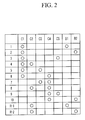
  • FIG. 2 is an operational chart of a power train according to an exemplary embodiment of the present invention.
  • FIG. 3 is a shift diagram of a power train according to an exemplary embodiment of the present invention.
  • FIG. 1 is a schematic diagram showing a power train according to an exemplary embodiment of the present invention.
  • a power train according to an exemplary embodiment of the present invention includes a first and second planetary gear sets PG 1 and PG 2 that are disposed on an input shaft 20 that is connected to a torque converter TC.
  • the first planetary gear set PG 1 is a double pinion planetary gear set that includes a first sun gear S 1 , a first ring gear R 1 , and a first planet carrier PC 1 .
  • the second planetary gear set PG 2 is a compound planetary gear set in a combination of two double pinion planetary gear sets that share a pinion gear in common, and includes the second sun gear S 2 , the third sun gear S 3 , the second planet carrier PC 2 , the second ring gear R 2 , and the third ring gear R 3 as operating elements.
  • the first planetary gear set PG 1 and the second planetary gear set PG 2 are disposed in a sequence of the first planetary gear set PG 1 and the second planetary gear set PG 2 from the torque converter TC.
  • the power train according to an exemplary embodiment of the present invention is provided with first, second, third, fourth, and fifth clutches C 1 , C 2 , C 3 , C 4 , and C 5 and first and second brakes B 1 and B 2 as operating elements, and connects or releases each operating element according to requested shifting.
  • the first sun gear S 1 is always fixedly connected to the input shaft 20 .
  • the first carrier PC 1 is always fixedly connected to a transmission case 10 .
  • the second sun gear S 2 interposing the first clutch C 1 , is selectively connected to the first ring gear R 1 .
  • the third sun gear S 3 interposing the second, third, and fifth clutches C 2 , C 3 , and C 5 , is selectively connected to the first ring gear R 1 , the input shaft 20 , and the first carrier PC 1 respectively.
  • the second carrier PC 2 interposing the fourth clutch C 4 , is selectively connected to the input shaft 20 , or interposing the first brake B 1 , is selectively connected to the transmission case 10 .
  • the third ring gear R 3 interposing the second brake B 2 , is connected to the transmission case 10 .
  • the second ring gear R 2 is connected to an output gear 30 .
  • the first, second, and fifth clutches C 1 , C 2 , and C 5 and first brake 131 are disposed between the first planetary gear set PG 1 and the second planetary gear set PG 2 , and the third and fourth clutches C 3 and C 4 and the second brake B 2 are disposed opposite to the side of the torque converter TC.
  • the power train according to an exemplary embodiment of the present invention operates clutches and brakes as shown in FIG. 2 , and realizes ten forward speeds and two reverse speeds.
  • first forward speed the first clutch C 1 and the first brake B 1 are operated, and in the second forward speed the first clutch C 1 and the second brake B 2 are operated.
  • third forward speed the first clutch C 1 and the fifth clutch C 5 are operated, and in the fourth forward speed the first clutch C 1 and the second clutch C 2 are operated.
  • fifth forward speed the first clutch C 1 and the third clutch C 3 are operated, and in the sixth forward speed the first clutch and the fourth clutch C 4 are operated.
  • seventh forward speed the third clutch C 3 and the fourth clutch C 4 are operated, and in the eighth forward speed the second clutch C 2 and the fourth clutch C 4 are operated.
  • the power train according to an exemplary embodiment of the present invention has eight operational elements as shown in FIG. 3 .
  • a first node N 1 is the first sun gear S 1
  • a second node N 2 is the first ring gear R 1
  • a third node N 3 is the first carrier PC 1
  • a fourth node N 4 is the third sun gear S 3
  • a fifth node N 5 is the third ring gear R 3
  • a sixth node N 6 is the second carrier PC 2
  • a seventh node N 7 is the second ring gear R 2
  • an eighth node N 8 is the second sun gear S 2 .
  • the first clutch C 1 and the first brake B 1 are operated in the first forward speed.
  • the third node N 3 operates as fixed element by connection to transmission case 10 and the sixth node N 6 operate as fixed element by engagement of the first brake B 1 and the second sun gear S 2 is connected by engagement of the first clutch C 1 with the first ring gear R 1 and rotates at the same speed as the first ring gear R 1 .
  • the output element of the seventh node N 7 rotates at a speed D 1 , and the shifting to the first forward speed is realized.
  • the first clutch C 1 and the second brake B 2 are operated in the second forward speed.
  • the third node N 3 operates as fixed element by connection to transmission case 10 and the fifth node N 5 operate as fixed element by engagement of the second brake B 2 and the second sun gear S 2 is connected by engagement of the first clutch C 1 with the first ring gear R 1 and rotates at the same speed as the first ring gear R 1 .
  • the output element of the seventh node N 7 rotates at a speed D 2 , and the shifting to the second forward speed is realized.
  • the first clutch C 1 and the fifth clutch C 5 are operated in the third forward speed.
  • the first sun gear S 1 of the first node N 1 receives the input speed by engagement of the first clutch C 1
  • the third node N 3 and the fourth node N 4 operate as fixed elements by engagement of the fifth clutch C 5
  • the second sun gear S 2 is connected with the first ring gear R 1 and rotates at the same speed as the first ring gear R 1 .
  • the output element of the seventh node N 7 rotates at a speed D 3 , and the shifting to the third forward speed is realized.
  • the first clutch C 1 and the second clutch C 2 are operated in the fourth forward speed.
  • the third node N 3 While the first sun gear S 1 of the first node N 1 receives the input speed, the third node N 3 operates as a fixed element, and the second sun gear S 2 and the third sun gear S 3 are connected with the first ring gear R 1 by engagement of the first clutch C 1 and the second clutch C 2 respectively and rotate at the same speed as the first ring gear R 1 .
  • the output element of the seventh node N 7 rotates at a speed D 4 , and the shifting to the fourth forward speed is realized.
  • the first clutch C 1 and the third clutch C 3 are operated in the fifth forward speed.
  • the third node N 3 operates as a fixed element.
  • the second sun gear S 2 is connected with the first ring gear R 1 by engagement of the first clutch C 1 and rotates at the same speed as the first ring gear R 1
  • the third sun gear S 3 is connected with the input shaft 20 by engagement of the first clutch C 3 and rotates at the same speed as the input shaft 20 .
  • the output element of the seventh node N 7 rotates at a speed D 5 , and the shifting to the fifth forward speed is realized.
  • the first clutch C 1 and the fourth clutch C 4 are operated in the sixth forward speed.
  • the third node N 3 operates as a fixed element.
  • the second sun gear S 2 is connected with the first ring gear R 1 by engagement of the first clutch C 1 and rotates at the same speed as the first ring gear R 1
  • the second carrier PC 2 is connected with the input shaft 20 by engagement of the fourth clutch C 4 and rotates at the same speed as the input shaft 20 .
  • the output element of the seventh node N 7 rotates at a speed D 6 , and the shifting to the sixth forward speed is realized.
  • the third clutch C 3 and the fourth clutch C 4 are operated in the seventh forward speed.
  • the third sun gear S 3 of the fourth node N 4 and the second carrier PC 2 of the sixth node N 6 receive the input speed.
  • the third sun gear S 3 and the second carrier PC 2 are connected with the input shaft 20 by engagement of the third clutch C 3 and the fourth clutch C 4 respectively, and rotate at the same speed as the input shaft 20 .
  • the output element of the seventh node N 7 rotates at a speed D 7 , and the shifting to the seventh forward speed is realized.
  • the second clutch C 2 and the fourth clutch C 4 are operated in the eighth forward speed.
  • the third node N 3 operates as a fixed element.
  • the third sun gear S 3 is connected with the first ring gear R 1 by engagement of the second clutch C 2 and rotates at the same speed as the first ring gear R 1
  • the second carrier PC 2 is connected with the input shaft 20 by engagement of the fourth clutch C 4 and rotates at the same speed as the input shaft 20 .
  • the output element of the seventh node N 7 rotates at a speed D 8 , and the shifting to the eighth forward speed is realized.
  • the fourth clutch C 4 and the fifth clutch C 5 are operated in the ninth forward speed.
  • the third node N 3 and the fourth node N 4 operate as fixed elements by engagement of the fifth clutch C 5 .
  • the output element of the seventh node N 7 rotates at a speed D 9 , and the shifting to the ninth forward speed is realized.
  • the fourth clutch C 4 and the second brake B 2 are operated in the tenth forward speed.
  • the fifth node N 5 operates as a fixed element by engagement of the second brake B 2 .
  • the output element of the seventh node N 7 rotates at a speed D 10 , and the shifting to the tenth forward speed is realized.
  • the second clutch C 2 and the first brake B 1 are operated in the first reverse speed.
  • the third node N 3 While the first sun gear S 1 of the first node N 1 receives the input speed, the third node N 3 operate as fixed elements by connection to the transmission case 10 and the sixth node N 6 operate as fixed elements by engagement of the first brake B 1 , and the third sun gear S 3 is connected with the first ring gear R 1 by engagement of the second clutch C 2 and rotates at the same speed as the first ring gear R 1 .
  • the output element of the seventh node N 7 rotates at a speed R- 1 , and the shifting to the first reverse speed is realized.
  • the second clutch C 2 and the second brake B 2 are operated in the second reverse speed.
  • the third node N 3 While the first sun gear S 1 of the first node N 1 receives the input speed, the third node N 3 operate as fixed elements by connection to the transmission case 10 and the fifth node N 5 operate as fixed elements by engagement of the second brake B 2 , and the third sun gear S 3 is connected with the first ring gear R 1 by engagement of the second clutch C 2 and rotates at the same speed as the first ring gear R 1 .
  • the output element of the seventh node N 7 rotates at a speed R- 2 , and the shifting to the second reverse speed is realized.

Landscapes

  • Engineering & Computer Science (AREA)
  • General Engineering & Computer Science (AREA)
  • Mechanical Engineering (AREA)
  • Structure Of Transmissions (AREA)

Abstract

A power train of an automatic transmission includes an input shaft connected to a torque converter; an output gear; a transmission case; a first planetary gear set including a first operating member fixedly connected to the input shaft, a second operating member fixedly connected to the transmission case, and a third operating member; a second planetary gear set including a fourth operating member selectively connected to the third operating member, a fifth operating member selectively connected to the input shaft, second or third operating members, a sixth operating member selectively connected to the input shaft or transmission case, a seventh operating member selectively connected to the transmission case, and an eighth operating member acting as an output element, wherein the second planetary gear set outputs ten forward speeds and two reverse speeds; and a plurality of friction members selectively connecting the operating members, input shaft, or transmission case.

Description

CROSS-REFERENCE TO RELATED APPLICATION
This application claims priority to and the benefit of Korean Patent Application No. 10-2007-0082376, filed in the Korean Intellectual Property Office on Aug. 16, 2007, the entire contents of which are incorporated herein by reference.
BACKGROUND OF THE INVENTION
(a) Field of the Invention
The present invention relates to a power train of an automatic transmission for a vehicle. More particularly, the present invention relates to a power train of an automatic transmission for a vehicle which realizes ten forward speeds and two reverse speeds.
(b) Description of the Related Art
A typical shift mechanism of an automatic transmission utilizes a combination of a plurality of planetary gear sets. A power train of such an automatic transmission that includes the plurality of planetary gear sets changes rotating speed and torque received from a torque converter of the automatic transmission, and accordingly changes and transmits the changed torque to an output shaft.
It is well known that when a transmission realizes a greater number of shift speeds, speed ratios of the transmission can be more optimally designed and therefore a vehicle can have better fuel mileage and better performance. For that reason, an automatic transmission that enables more shift speeds is under constant investigation.
In addition, with the same number of speeds, features of a power train such as durability, efficiency in power transmission, and size depend a lot on the layout of combined planetary gear sets. Therefore, designs for a combining structure of a power train are also under constant investigation.
Usually, development of a power train using planetary gear sets does not include devising a wholly new type of planetary gear set. To the contrary, it involves how single/double pinion planetary gear sets are combined, and how clutches, brakes, and one-way clutches are disposed to the combination of planetary gear sets such that required shift speeds and speed ratios are realized with minimal power loss.
For a manual transmission, too many speeds cause a driver the inconvenience of excessive manual shifting. However, for an automatic transmission, a transmission control unit automatically executes shifting by controlling the operation of the power train, and therefore more speeds usually implies more merits.
The above information disclosed in this Background section is only for enhancement of understanding of the background of the invention and therefore it may contain information that does not form the prior art that is already known in this country to a person of ordinary skill in the art.
SUMMARY OF THE INVENTION
The present invention has been made in an effort to provide a power train of an automatic transmission for a vehicle, which includes two planetary gear sets, five clutches, and two brakes, and realizes ten forward speeds and two reverse speeds.
According to an exemplary embodiment of the present invention, a power train of an automatic transmission for a vehicle obtains a shift speed by combining two elements of five clutches and two brakes, and can shift by connecting or releasing one element.
Thus, a power train of an automatic transmission for a vehicle according to an exemplary embodiment of present invention may be easily controlled and shift feel may be enhanced.
A power train of an automatic transmission for a vehicle according to an exemplary embodiment of present invention may include: an input shaft connected to a torque converter; an output gear; a transmission case; a first planetary gear set that includes a first operating member fixedly connected to the input shaft, a second operating member fixedly connected to the transmission case, and a third operating member outputting a reduced speed by an operation of the first operating member and the second operating member; a second planetary gear set that includes a fourth operating member selectively connected to the third operating member, a fifth operating member selectively connected to the input shaft and selectively connected to the second operating member or selectively connected to the third operating member, a sixth operating member selectively connected to the input shaft or selectively connected to the transmission case, a seventh operating member selectively connected to the transmission case, and an eighth operating member always acting as an output element, wherein the second planetary gear set outputs ten forward speeds and two reverse speeds to the output gear; and a plurality of friction members selectively connecting the operating members, the input shaft, or the transmission case.
The plurality of friction members may includes a first clutch selectively connecting the fourth operating member and the third operating member, a second clutch selectively connecting the fifth operating member and the third operating member, a third clutch selectively connecting the fifth operating member and the input shaft, a fourth clutch selectively connecting the sixth operating member and the input shaft, a fifth clutch selectively connecting the fifth operating member and the second operating member, a first brake selectively connecting the sixth operating member and the transmission case, and a second brake selectively connecting the seventh operating member and the transmission case.
The first planetary gear set may be a double pinion planetary gear set that includes the first sun gear, the first planet carrier, and the first ring gear as an operating member.
The first sun gear may be the first operating member, the first planet carrier may be the second operating member, and the first ring gear may be the third operating member.
The second planetary gear set may be a compound planetary gear set in a combination of two double pinion planetary gear sets that share a pinion gear in common, and may include the second sun gear, the third sun gear, the second planet carrier, the second ring gear, and the third ring gear as operating elements.
The second sun gear may be the fourth operating member, the third sun gear may be the fifth operating member, the second planet carrier may be the sixth operating member, the third ring gear may be the seventh operating member, and the second ring gear may be the eighth operating member.
The first planetary gear set and the second planetary gear set may be disposed in a sequence of the first planetary gear set and the second planetary gear set from the torque converter, the first, second, and fifth clutches and the first brake may be disposed between the first planetary gear set and the second planetary gear set, and the third and fourth clutches and the second brake may be disposed opposite to the side of the torque converter with respect to the first planetary gear set and the second planetary gear.
The power train of an automatic transmission according to an exemplary embodiment of the present invention may include two planetary gear sets, five clutches, and two brakes, and may realize ten forward speeds and two reverse speeds.
The power train of an automatic transmission according to an exemplary embodiment of the present invention may be combined to obtain a shift speed by two elements of five clutches and two brakes, and can shift by connecting or releasing one element. Thus, a power train of an automatic transmission for a vehicle according to an exemplary embodiment of present invention may be easily controlled and shift feel may be enhanced.
The above features and advantages of the present invention will be apparent from or are set forth in more detail in the accompanying drawings, which are incorporated in and form a part of this specification, and the following Detailed Description of the Invention, which together serve to explain by way of example the principles of the present invention.
BRIEF DESCRIPTION OF THE DRAWINGS
The above and other features of the present invention will now be described in detail with reference to certain exemplary embodiments thereof illustrated the accompanying drawings which are given hereinbelow by way of illustration only, and thus are not limitative of the present invention, and wherein:
FIG. 1 is a schematic diagram showing a power train according to an exemplary embodiment of the present invention.
FIG. 2 is an operational chart of a power train according to an exemplary embodiment of the present invention.
FIG. 3 is a shift diagram of a power train according to an exemplary embodiment of the present invention.
It should be understood that the appended drawings are not necessarily to scale, presenting a somewhat simplified representation of various preferred features illustrative of the basic principles of the invention. The specific design features of the present invention as disclosed herein, including, for example, specific dimensions, orientations, locations, and shapes will be determined in part by the particular intended application and use environment.
In the figures, reference numbers refer to the same or equivalent parts of the present invention throughout the several figures of the drawing.
DETAILED DESCRIPTION OF THE EMBODIMENTS
Hereinafter reference will now be made in detail to various embodiments of the present invention, examples of which are illustrated in the accompanying drawings and described below. While the invention will be described in conjunction with exemplary embodiments, it will be understood that present description is not intended to limit the invention to those exemplary embodiments. On the contrary, the invention is intended to cover not only the exemplary embodiments, but also various alternatives, modifications, equivalents and other embodiments, which may be included within the spirit and scope of the invention as defined by the appended claims.
FIG. 1 is a schematic diagram showing a power train according to an exemplary embodiment of the present invention.
A power train according to an exemplary embodiment of the present invention includes a first and second planetary gear sets PG1 and PG2 that are disposed on an input shaft 20 that is connected to a torque converter TC.
The first planetary gear set PG1 is a double pinion planetary gear set that includes a first sun gear S1, a first ring gear R1, and a first planet carrier PC1.
The second planetary gear set PG2 is a compound planetary gear set in a combination of two double pinion planetary gear sets that share a pinion gear in common, and includes the second sun gear S2, the third sun gear S3, the second planet carrier PC2, the second ring gear R2, and the third ring gear R3 as operating elements.
The first planetary gear set PG1 and the second planetary gear set PG2 are disposed in a sequence of the first planetary gear set PG1 and the second planetary gear set PG2 from the torque converter TC.
The power train according to an exemplary embodiment of the present invention is provided with first, second, third, fourth, and fifth clutches C1, C2, C3, C4, and C5 and first and second brakes B1 and B2 as operating elements, and connects or releases each operating element according to requested shifting.
The first sun gear S1 is always fixedly connected to the input shaft 20.
The first carrier PC1 is always fixedly connected to a transmission case 10.
The second sun gear S2, interposing the first clutch C1, is selectively connected to the first ring gear R1.
The third sun gear S3, interposing the second, third, and fifth clutches C2, C3, and C5, is selectively connected to the first ring gear R1, the input shaft 20, and the first carrier PC1 respectively.
The second carrier PC2, interposing the fourth clutch C4, is selectively connected to the input shaft 20, or interposing the first brake B1, is selectively connected to the transmission case 10.
The third ring gear R3, interposing the second brake B2, is connected to the transmission case 10.
The second ring gear R2 is connected to an output gear 30.
The first, second, and fifth clutches C1, C2, and C5 and first brake 131 are disposed between the first planetary gear set PG1 and the second planetary gear set PG2, and the third and fourth clutches C3 and C4 and the second brake B2 are disposed opposite to the side of the torque converter TC.
The power train according to an exemplary embodiment of the present invention operates clutches and brakes as shown in FIG. 2, and realizes ten forward speeds and two reverse speeds.
That is, in the first forward speed the first clutch C1 and the first brake B1 are operated, and in the second forward speed the first clutch C1 and the second brake B2 are operated. In the third forward speed the first clutch C1 and the fifth clutch C5 are operated, and in the fourth forward speed the first clutch C1 and the second clutch C2 are operated. In the fifth forward speed the first clutch C1 and the third clutch C3 are operated, and in the sixth forward speed the first clutch and the fourth clutch C4 are operated. In the seventh forward speed the third clutch C3 and the fourth clutch C4 are operated, and in the eighth forward speed the second clutch C2 and the fourth clutch C4 are operated. In the ninth forward speed the fourth clutch C4 and the fifth clutch C5 are operated, and in the tenth forward speed the fourth clutch C4 and the second brake B2 are operated. In the first reverse speed the second clutch C2 and the first brake B1 are operated, and in the second reverse speed the second clutch C2 and the second brake B2 are operated.
The power train according to an exemplary embodiment of the present invention has eight operational elements as shown in FIG. 3.
A first node N1 is the first sun gear S1, a second node N2 is the first ring gear R1, a third node N3 is the first carrier PC1, a fourth node N4 is the third sun gear S3, a fifth node N5 is the third ring gear R3, a sixth node N6 is the second carrier PC2, a seventh node N7 is the second ring gear R2, and an eighth node N8 is the second sun gear S2.
Hereinafter, referring FIG. 3, shifting operation of the power train according to an exemplary embodiment of the present invention will be explained.
The first clutch C1 and the first brake B1 are operated in the first forward speed.
While the first sun gear S1 of the first node N1 receives the input speed, the third node N3 operates as fixed element by connection to transmission case 10 and the sixth node N6 operate as fixed element by engagement of the first brake B1 and the second sun gear S2 is connected by engagement of the first clutch C1 with the first ring gear R1 and rotates at the same speed as the first ring gear R1. In this case, according to cooperative reaction of the first planetary gear set PG1 and the second planetary gear set PG2, the output element of the seventh node N7 rotates at a speed D1, and the shifting to the first forward speed is realized.
The first clutch C1 and the second brake B2 are operated in the second forward speed.
While the first sun gear S1 of the first node N1 receives the input speed, the third node N3 operates as fixed element by connection to transmission case 10 and the fifth node N5 operate as fixed element by engagement of the second brake B2 and the second sun gear S2 is connected by engagement of the first clutch C1 with the first ring gear R1 and rotates at the same speed as the first ring gear R1. In this case, according to cooperative reaction of the first planetary gear set PG1 and the second planetary gear set PG2, the output element of the seventh node N7 rotates at a speed D2, and the shifting to the second forward speed is realized.
The first clutch C1 and the fifth clutch C5 are operated in the third forward speed.
While the first sun gear S1 of the first node N1 receives the input speed by engagement of the first clutch C1, the third node N3 and the fourth node N4 operate as fixed elements by engagement of the fifth clutch C5, and the second sun gear S2 is connected with the first ring gear R1 and rotates at the same speed as the first ring gear R1. In this case, according to cooperative reaction of the first planetary gear set PG1 and the second planetary gear set PG2, the output element of the seventh node N7 rotates at a speed D3, and the shifting to the third forward speed is realized.
The first clutch C1 and the second clutch C2 are operated in the fourth forward speed.
While the first sun gear S1 of the first node N1 receives the input speed, the third node N3 operates as a fixed element, and the second sun gear S2 and the third sun gear S3 are connected with the first ring gear R1 by engagement of the first clutch C1 and the second clutch C2 respectively and rotate at the same speed as the first ring gear R1. In this case, according to cooperative reaction of the first planetary gear set PG1 and the second planetary gear set PG2, the output element of the seventh node N7 rotates at a speed D4, and the shifting to the fourth forward speed is realized.
The first clutch C1 and the third clutch C3 are operated in the fifth forward speed.
While the first sun gear S1 of the first node N1 and the third sun gear S3 of the fourth node N4 receive the input speed, the third node N3 operates as a fixed element. The second sun gear S2 is connected with the first ring gear R1 by engagement of the first clutch C1 and rotates at the same speed as the first ring gear R1, and the third sun gear S3 is connected with the input shaft 20 by engagement of the first clutch C3 and rotates at the same speed as the input shaft 20. In this case, according to cooperative reaction of the first planetary gear set PG1 and the second planetary gear set PG2, the output element of the seventh node N7 rotates at a speed D5, and the shifting to the fifth forward speed is realized.
The first clutch C1 and the fourth clutch C4 are operated in the sixth forward speed.
While the first sun gear S1 of the first node N1 and the second carrier PC2 of the sixth node N6 receive the input speed, the third node N3 operates as a fixed element. The second sun gear S2 is connected with the first ring gear R1 by engagement of the first clutch C1 and rotates at the same speed as the first ring gear R1, and the second carrier PC2 is connected with the input shaft 20 by engagement of the fourth clutch C4 and rotates at the same speed as the input shaft 20. In this case, according to cooperative reaction of the first planetary gear set PG1 and the second planetary gear set PG2, the output element of the seventh node N7 rotates at a speed D6, and the shifting to the sixth forward speed is realized.
The third clutch C3 and the fourth clutch C4 are operated in the seventh forward speed.
The third sun gear S3 of the fourth node N4 and the second carrier PC2 of the sixth node N6 receive the input speed. The third sun gear S3 and the second carrier PC2 are connected with the input shaft 20 by engagement of the third clutch C3 and the fourth clutch C4 respectively, and rotate at the same speed as the input shaft 20. In this case, according to cooperative reaction of the first planetary gear set PG1 and the second planetary gear set PG2, the output element of the seventh node N7 rotates at a speed D7, and the shifting to the seventh forward speed is realized.
The second clutch C2 and the fourth clutch C4 are operated in the eighth forward speed.
While the first sun gear S1 of the first node N1 and the second carrier PC2 of the sixth node N6 receive the input speed, the third node N3 operates as a fixed element. The third sun gear S3 is connected with the first ring gear R1 by engagement of the second clutch C2 and rotates at the same speed as the first ring gear R1, and the second carrier PC2 is connected with the input shaft 20 by engagement of the fourth clutch C4 and rotates at the same speed as the input shaft 20. In this case, according to cooperative reaction of the first planetary gear set PG1 and the second planetary gear set PG2, the output element of the seventh node N7 rotates at a speed D8, and the shifting to the eighth forward speed is realized.
The fourth clutch C4 and the fifth clutch C5 are operated in the ninth forward speed.
While the second carrier sun gear PC2 of the sixth node N6 receives the input speed by engagement of the fourth clutch C4, the third node N3 and the fourth node N4 operate as fixed elements by engagement of the fifth clutch C5. In this case, according to cooperative reaction of the first planetary gear set PG1 and the second planetary gear set PG2, the output element of the seventh node N7 rotates at a speed D9, and the shifting to the ninth forward speed is realized.
The fourth clutch C4 and the second brake B2 are operated in the tenth forward speed.
While the second carrier sun gear PC2 of the sixth node N6 receives the input speed by engagement of the fourth clutch C1, the fifth node N5 operates as a fixed element by engagement of the second brake B2. In this case, according to cooperative reaction of the first planetary gear set PG1 and the second planetary gear set PG2, the output element of the seventh node N7 rotates at a speed D10, and the shifting to the tenth forward speed is realized.
The second clutch C2 and the first brake B1 are operated in the first reverse speed.
While the first sun gear S1 of the first node N1 receives the input speed, the third node N3 operate as fixed elements by connection to the transmission case 10 and the sixth node N6 operate as fixed elements by engagement of the first brake B1, and the third sun gear S3 is connected with the first ring gear R1 by engagement of the second clutch C2 and rotates at the same speed as the first ring gear R1. In this case, according to cooperative reaction of the first planetary gear set PG1 and the second planetary gear set PG2, the output element of the seventh node N7 rotates at a speed R-1, and the shifting to the first reverse speed is realized.
The second clutch C2 and the second brake B2 are operated in the second reverse speed.
While the first sun gear S1 of the first node N1 receives the input speed, the third node N3 operate as fixed elements by connection to the transmission case 10 and the fifth node N5 operate as fixed elements by engagement of the second brake B2, and the third sun gear S3 is connected with the first ring gear R1 by engagement of the second clutch C2 and rotates at the same speed as the first ring gear R1. In this case, according to cooperative reaction of the first planetary gear set PG1 and the second planetary gear set PG2, the output element of the seventh node N7 rotates at a speed R-2, and the shifting to the second reverse speed is realized.
The forgoing descriptions of specific exemplary embodiments of the present invention have been presented for purposes of illustration and description. They are not intended to be exhaustive or to limit the invention to the precise forms disclosed, and obviously many modifications and variations are possible in light of the above teachings. The exemplary embodiment were chosen and described in order to explain certain principles of the invention and their practical application, to thereby enable others skilled in the art to make and utilize various exemplary embodiments of the present invention, as well as various alternatives and modifications thereof. It is intended that technical spirit and scope of the present invention be defined by the Claims appended hereto and their equivalents.

Claims (7)

1. A power train of an automatic transmission for a vehicle, the power train comprising:
an input shaft connected to a torque converter;
an output gear;
a transmission case;
a first planetary gear set that includes a first operating member fixedly connected to the input shaft, a second operating member fixedly connected to the transmission case, and a third operating member outputting a reduced speed by an operation of the first operating member and the second operating member;
a second planetary gear set that includes a fourth operating member selectively connected to the third operating member, a fifth operating member selectively connected to the input shaft and selectively connected to the second operating member or selectively connected to the third operating member, a sixth operating member selectively connected to the input shaft or selectively connected to the transmission case, a seventh operating member selectively connected to the transmission case, and an eighth operating member always acting as an output element, wherein the second planetary gear set outputs ten forward speeds and two reverse speeds to the output gear; and
a plurality of friction members selectively connecting the operating members, the input shaft, or the transmission case,
wherein the plurality of friction members comprise:
a first clutch selectively connecting the fourth operating member and the third operating member;
a second clutch selectively connecting the fifth operating member and the third operating member;
a third clutch selectively connecting the fifth operating member and the input shaft;
a fourth clutch selectively connecting the sixth operating member and the input shaft;
a fifth clutch selectively connecting the fifth operating member and the second operating member;
a first brake selectively connecting the sixth operating member and the transmission case; and
a second brake selectively connecting the seventh operating member and the transmission case.
2. The power train of the automatic transmission for the vehicle of claim 1, wherein the first planetary gear set is a double pinion planetary gear set that includes the first sun gear, the first planet carrier, and the first ring gear as an operating member.
3. The power train of the automatic transmission for the vehicle of claim 2, wherein the first sun gear is the first operating member, the first planet carrier is the second operating member, and the first ring gear is the third operating member.
4. The power train of the automatic transmission for the vehicle of claim 3, wherein the first planetary gear set and the second planetary gear set are disposed in a sequence of the first planetary gear set and the second planetary gear set from the torque converter;
the first, second, and fifth clutches and first brake are disposed between the first planetary gear set and the second planetary gear set; and
the third and fourth clutches and the second brake are disposed opposite to the side of the torque converter with respect to the first planetary gear set and the second planetary gear set.
5. The power train of the automatic transmission for the vehicle of claim 1, wherein the second planetary gear set is a compound planetary gear set in a combination of two double pinion planetary gear sets that share a pinion gear in common, and includes the second sun gear, the third sun gear, the second planet carrier, the second ring gear, and the third ring gear as operating elements.
6. The power train of the automatic transmission for the vehicle of claim 5, wherein the second sun gear is the fourth operating member, the third sun gear is the fifth operating member, the second planet carrier is the sixth operating member, the third ring gear is the seventh operating member, and the second ring gear is the eighth operating member.
7. The power train of the automatic transmission for the vehicle of claim 6, wherein the first planetary gear set and the second planetary gear set are disposed in a sequence of the first planetary gear set and the second planetary gear set from the torque converter;
the first, second, and fifth clutches and first brake are disposed between the first planetary gear set and the second planetary gear set; and
the third and fourth clutches and the second brake are disposed opposite to the side of the torque converter with respect to the first planetary gear set and the second planetary gear set.
US11/949,619 2007-08-16 2007-12-03 Power train of an automatic transmission for a vehicle Expired - Fee Related US7833124B2 (en)

Applications Claiming Priority (2)

Application Number Priority Date Filing Date Title
KR1020070082376A KR100957141B1 (en) 2007-08-16 2007-08-16 Power train of car automatic transmission
KR10-2007-0082376 2007-08-16

Publications (2)

Publication Number Publication Date
US20090048057A1 US20090048057A1 (en) 2009-02-19
US7833124B2 true US7833124B2 (en) 2010-11-16

Family

ID=40279587

Family Applications (1)

Application Number Title Priority Date Filing Date
US11/949,619 Expired - Fee Related US7833124B2 (en) 2007-08-16 2007-12-03 Power train of an automatic transmission for a vehicle

Country Status (5)

Country Link
US (1) US7833124B2 (en)
JP (1) JP5367253B2 (en)
KR (1) KR100957141B1 (en)
CN (1) CN101368615B (en)
DE (1) DE102007058202A1 (en)

Cited By (4)

* Cited by examiner, † Cited by third party
Publication number Priority date Publication date Assignee Title
US20090011893A1 (en) * 2007-07-03 2009-01-08 Aisin Aw Co., Ltd. Automatic transmission
CN101984271A (en) * 2010-11-18 2011-03-09 黄庆培 Multistage transmission
US20130150204A1 (en) * 2011-12-08 2013-06-13 Hyundai Motor Company Planetary gear train of automatic transmission for vehicles
US10378616B2 (en) * 2016-10-26 2019-08-13 Zf Friedrichshafen Ag Transmission for a vehicle

Families Citing this family (7)

* Cited by examiner, † Cited by third party
Publication number Priority date Publication date Assignee Title
KR100916774B1 (en) * 2007-11-02 2009-09-14 현대자동차주식회사 Power train of automatic transmission
KR101251532B1 (en) 2011-12-09 2013-04-05 현대자동차주식회사 Planetary gear train of automatic transmission for vehicles
JP5773917B2 (en) * 2012-03-15 2015-09-02 ジヤトコ株式会社 Automatic transmission for vehicles
JP5733254B2 (en) * 2012-03-28 2015-06-10 アイシン・エィ・ダブリュ株式会社 Automatic transmission
KR101394299B1 (en) 2013-04-29 2014-05-14 현대 파워텍 주식회사 Power train device of automatic transmission for car
CN108547920B (en) * 2018-04-12 2021-04-20 天津市职业大学 An 8-speed automatic transmission
JP7713859B2 (en) 2021-11-05 2025-07-28 株式会社小松製作所 Multi-speed transmission

Citations (7)

* Cited by examiner, † Cited by third party
Publication number Priority date Publication date Assignee Title
JP2001082555A (en) * 1999-09-09 2001-03-27 Aisin Aw Co Ltd Vehicular automatic transmission
US6634980B1 (en) * 1999-10-14 2003-10-21 Zf Friedrichshafen Ag Multi-step gear
US6723018B2 (en) * 2001-01-09 2004-04-20 Aisin Aw Co., Ltd. Automatic transmission
US6962548B2 (en) * 2004-02-10 2005-11-08 General Motors Corporation Wide ratio transmissions with a stationary planetary gear member and at least five clutches
US6988972B2 (en) * 2004-03-24 2006-01-24 General Motors Corporation Wide ratio transmissions having three planetary gear sets and three brakes
US7094173B2 (en) * 2004-06-04 2006-08-22 General Motors Corporation Wide ratio transmissions having a stationary planetary member and at least four clutches
US7402119B2 (en) * 2004-12-28 2008-07-22 Toyota Jidosha Kabushiki Kaisha Multi-speed transmission for vehicle

Family Cites Families (10)

* Cited by examiner, † Cited by third party
Publication number Priority date Publication date Assignee Title
JPH0765651B2 (en) * 1989-02-28 1995-07-19 日産自動車株式会社 Gear transmission
DE60239332D1 (en) * 2001-05-30 2011-04-14 Jatco Ltd GEAR SWITCH FOR AN AUTOMATIC GEARBOX
JP4039309B2 (en) * 2002-05-27 2008-01-30 トヨタ自動車株式会社 Automatic transmission for vehicles
JP4269832B2 (en) * 2003-07-15 2009-05-27 トヨタ自動車株式会社 Multi-speed transmission
JP2005048909A (en) 2003-07-30 2005-02-24 Toyota Motor Corp Multi-speed transmission
KR100579294B1 (en) * 2004-06-21 2006-05-11 현대자동차주식회사 Multi stage automatic transmission for a vehicle
JP4517839B2 (en) 2004-12-06 2010-08-04 アイシン・エィ・ダブリュ株式会社 Transmission
JP2006248287A (en) * 2005-03-08 2006-09-21 Toyota Motor Corp Driving force control device for four-wheel drive vehicle
JP4839686B2 (en) 2005-05-16 2011-12-21 トヨタ自動車株式会社 Multi-speed transmission
KR20070082376A (en) 2006-02-16 2007-08-21 엘지전자 주식회사 Drum-type washing machine with dryer

Patent Citations (7)

* Cited by examiner, † Cited by third party
Publication number Priority date Publication date Assignee Title
JP2001082555A (en) * 1999-09-09 2001-03-27 Aisin Aw Co Ltd Vehicular automatic transmission
US6634980B1 (en) * 1999-10-14 2003-10-21 Zf Friedrichshafen Ag Multi-step gear
US6723018B2 (en) * 2001-01-09 2004-04-20 Aisin Aw Co., Ltd. Automatic transmission
US6962548B2 (en) * 2004-02-10 2005-11-08 General Motors Corporation Wide ratio transmissions with a stationary planetary gear member and at least five clutches
US6988972B2 (en) * 2004-03-24 2006-01-24 General Motors Corporation Wide ratio transmissions having three planetary gear sets and three brakes
US7094173B2 (en) * 2004-06-04 2006-08-22 General Motors Corporation Wide ratio transmissions having a stationary planetary member and at least four clutches
US7402119B2 (en) * 2004-12-28 2008-07-22 Toyota Jidosha Kabushiki Kaisha Multi-speed transmission for vehicle

Cited By (6)

* Cited by examiner, † Cited by third party
Publication number Priority date Publication date Assignee Title
US20090011893A1 (en) * 2007-07-03 2009-01-08 Aisin Aw Co., Ltd. Automatic transmission
US8298111B2 (en) * 2007-07-03 2012-10-30 Aisin Aw Co., Ltd. Automatic transmission
CN101984271A (en) * 2010-11-18 2011-03-09 黄庆培 Multistage transmission
US20130150204A1 (en) * 2011-12-08 2013-06-13 Hyundai Motor Company Planetary gear train of automatic transmission for vehicles
US8647227B2 (en) * 2011-12-08 2014-02-11 Hyundai Motor Company Planetary gear train of automatic transmission for vehicles
US10378616B2 (en) * 2016-10-26 2019-08-13 Zf Friedrichshafen Ag Transmission for a vehicle

Also Published As

Publication number Publication date
JP5367253B2 (en) 2013-12-11
DE102007058202A1 (en) 2009-02-19
KR100957141B1 (en) 2010-05-12
CN101368615A (en) 2009-02-18
US20090048057A1 (en) 2009-02-19
JP2009047303A (en) 2009-03-05
CN101368615B (en) 2012-09-05
KR20090017873A (en) 2009-02-19

Similar Documents

Publication Publication Date Title
US7736262B2 (en) Power train of automatic transmission
US7833124B2 (en) Power train of an automatic transmission for a vehicle
US8328678B2 (en) Gear train of automatic transmission for vehicles
US7674200B2 (en) Power train of automatic transmission
US8647227B2 (en) Planetary gear train of automatic transmission for vehicles
US7452303B2 (en) Eight speed powertrain of automatic transmission for vehicle
US7878938B2 (en) Power train of automatic transmission
US8556768B2 (en) Planetary gear train of automatic transmission for vehicles
US7220210B2 (en) Multiple speed automatic transmission for a vehicle
US7850569B2 (en) Gear train of an automatic transmission for a vehicle
US8333676B2 (en) Gear train of automatic transmission for vehicles
US7614975B2 (en) Gear train of an automatic transmission for a vehicle
US20080312026A1 (en) Power train of automatic transmission
US7854677B2 (en) Power train of automatic transmission
US8079930B2 (en) Powertrain of an automatic transmission
US20080103012A1 (en) Gear train of an automatic transmission for a vehicle
US7985160B2 (en) Gear train of automatic transmission
US7485069B2 (en) Power train of automatic transmission
US8651995B2 (en) Powertrain of an automatic transmission
US8043191B2 (en) Powertrain of an automatic transmission
US20060172850A1 (en) Six-speed powertrain of automatic transmission for vehicle
US7988589B2 (en) Gear train of automatic transmission for vehicle
US8075440B2 (en) Power train of automatic transmission
US7455614B2 (en) Power train of automatic transmission
US8083629B2 (en) Powertrain of an automatic transmission

Legal Events

Date Code Title Description
AS Assignment

Owner name: HYUNDAI MOTOR COMPANY, KOREA, REPUBLIC OF

Free format text: ASSIGNMENT OF ASSIGNORS INTEREST;ASSIGNOR:CHOI, HYUN SEOK;REEL/FRAME:020189/0488

Effective date: 20071203

FEPP Fee payment procedure

Free format text: PAYOR NUMBER ASSIGNED (ORIGINAL EVENT CODE: ASPN); ENTITY STATUS OF PATENT OWNER: LARGE ENTITY

REMI Maintenance fee reminder mailed
LAPS Lapse for failure to pay maintenance fees
STCH Information on status: patent discontinuation

Free format text: PATENT EXPIRED DUE TO NONPAYMENT OF MAINTENANCE FEES UNDER 37 CFR 1.362

STCH Information on status: patent discontinuation

Free format text: PATENT EXPIRED DUE TO NONPAYMENT OF MAINTENANCE FEES UNDER 37 CFR 1.362

FP Lapsed due to failure to pay maintenance fee

Effective date: 20141116