US7829087B2 - Methods of treating cognitive impairment - Google Patents
Methods of treating cognitive impairment Download PDFInfo
- Publication number
- US7829087B2 US7829087B2 US11/723,745 US72374507A US7829087B2 US 7829087 B2 US7829087 B2 US 7829087B2 US 72374507 A US72374507 A US 72374507A US 7829087 B2 US7829087 B2 US 7829087B2
- Authority
- US
- United States
- Prior art keywords
- antibody
- agent
- integrin
- antibodies
- ltp
- Prior art date
- Legal status (The legal status is an assumption and is not a legal conclusion. Google has not performed a legal analysis and makes no representation as to the accuracy of the status listed.)
- Expired - Lifetime, expires
Links
- 0 [1*]N1N=C([10*])C2=C1C=CC([W]C[Y])=C2.[1*]N1N=C([10*])C2=C1C=CC=C2[W]C[Y] Chemical compound [1*]N1N=C([10*])C2=C1C=CC([W]C[Y])=C2.[1*]N1N=C([10*])C2=C1C=CC=C2[W]C[Y] 0.000 description 3
- RBOYQOAXNXMRDJ-UHFFFAOYSA-N CC(=O)C(CNC(=O)C1=CC2=C(C=C1)N(CCCNC1=NC=CN1)N=C2)NS(C)(O)O Chemical compound CC(=O)C(CNC(=O)C1=CC2=C(C=C1)N(CCCNC1=NC=CN1)N=C2)NS(C)(O)O RBOYQOAXNXMRDJ-UHFFFAOYSA-N 0.000 description 2
Images


Classifications
-
- C—CHEMISTRY; METALLURGY
- C07—ORGANIC CHEMISTRY
- C07K—PEPTIDES
- C07K16/00—Immunoglobulins [IG], e.g. monoclonal or polyclonal antibodies
- C07K16/18—Immunoglobulins [IG], e.g. monoclonal or polyclonal antibodies against material from animals or humans
- C07K16/28—Immunoglobulins [IG], e.g. monoclonal or polyclonal antibodies against material from animals or humans against receptors, cell surface antigens or cell surface determinants
- C07K16/2839—Immunoglobulins [IG], e.g. monoclonal or polyclonal antibodies against material from animals or humans against receptors, cell surface antigens or cell surface determinants against the integrin superfamily
- C07K16/2842—Immunoglobulins [IG], e.g. monoclonal or polyclonal antibodies against material from animals or humans against receptors, cell surface antigens or cell surface determinants against the integrin superfamily against integrin beta1-subunit-containing molecules, e.g. CD29, CD49
-
- A—HUMAN NECESSITIES
- A61—MEDICAL OR VETERINARY SCIENCE; HYGIENE
- A61K—PREPARATIONS FOR MEDICAL, DENTAL OR TOILETRY PURPOSES
- A61K31/00—Medicinal preparations containing organic active ingredients
- A61K31/33—Heterocyclic compounds
- A61K31/395—Heterocyclic compounds having nitrogen as a ring hetero atom, e.g. guanethidine or rifamycins
- A61K31/41—Heterocyclic compounds having nitrogen as a ring hetero atom, e.g. guanethidine or rifamycins having five-membered rings with two or more ring hetero atoms, at least one of which being nitrogen, e.g. tetrazole
- A61K31/4164—1,3-Diazoles
- A61K31/4178—1,3-Diazoles not condensed 1,3-diazoles and containing further heterocyclic rings, e.g. pilocarpine, nitrofurantoin
-
- A—HUMAN NECESSITIES
- A61—MEDICAL OR VETERINARY SCIENCE; HYGIENE
- A61K—PREPARATIONS FOR MEDICAL, DENTAL OR TOILETRY PURPOSES
- A61K38/00—Medicinal preparations containing peptides
- A61K38/16—Peptides having more than 20 amino acids; Gastrins; Somatostatins; Melanotropins; Derivatives thereof
- A61K38/17—Peptides having more than 20 amino acids; Gastrins; Somatostatins; Melanotropins; Derivatives thereof from animals; from humans
- A61K38/39—Connective tissue peptides, e.g. collagen, elastin, laminin, fibronectin, vitronectin, cold insoluble globulin [CIG]
-
- A—HUMAN NECESSITIES
- A61—MEDICAL OR VETERINARY SCIENCE; HYGIENE
- A61P—SPECIFIC THERAPEUTIC ACTIVITY OF CHEMICAL COMPOUNDS OR MEDICINAL PREPARATIONS
- A61P25/00—Drugs for disorders of the nervous system
-
- A—HUMAN NECESSITIES
- A61—MEDICAL OR VETERINARY SCIENCE; HYGIENE
- A61P—SPECIFIC THERAPEUTIC ACTIVITY OF CHEMICAL COMPOUNDS OR MEDICINAL PREPARATIONS
- A61P25/00—Drugs for disorders of the nervous system
- A61P25/14—Drugs for disorders of the nervous system for treating abnormal movements, e.g. chorea, dyskinesia
- A61P25/16—Anti-Parkinson drugs
-
- A—HUMAN NECESSITIES
- A61—MEDICAL OR VETERINARY SCIENCE; HYGIENE
- A61P—SPECIFIC THERAPEUTIC ACTIVITY OF CHEMICAL COMPOUNDS OR MEDICINAL PREPARATIONS
- A61P25/00—Drugs for disorders of the nervous system
- A61P25/28—Drugs for disorders of the nervous system for treating neurodegenerative disorders of the central nervous system, e.g. nootropic agents, cognition enhancers, drugs for treating Alzheimer's disease or other forms of dementia
-
- A—HUMAN NECESSITIES
- A61—MEDICAL OR VETERINARY SCIENCE; HYGIENE
- A61P—SPECIFIC THERAPEUTIC ACTIVITY OF CHEMICAL COMPOUNDS OR MEDICINAL PREPARATIONS
- A61P3/00—Drugs for disorders of the metabolism
- A61P3/08—Drugs for disorders of the metabolism for glucose homeostasis
- A61P3/10—Drugs for disorders of the metabolism for glucose homeostasis for hyperglycaemia, e.g. antidiabetics
-
- A—HUMAN NECESSITIES
- A61—MEDICAL OR VETERINARY SCIENCE; HYGIENE
- A61P—SPECIFIC THERAPEUTIC ACTIVITY OF CHEMICAL COMPOUNDS OR MEDICINAL PREPARATIONS
- A61P43/00—Drugs for specific purposes, not provided for in groups A61P1/00-A61P41/00
-
- C—CHEMISTRY; METALLURGY
- C07—ORGANIC CHEMISTRY
- C07K—PEPTIDES
- C07K16/00—Immunoglobulins [IG], e.g. monoclonal or polyclonal antibodies
- C07K16/18—Immunoglobulins [IG], e.g. monoclonal or polyclonal antibodies against material from animals or humans
-
- C—CHEMISTRY; METALLURGY
- C07—ORGANIC CHEMISTRY
- C07K—PEPTIDES
- C07K16/00—Immunoglobulins [IG], e.g. monoclonal or polyclonal antibodies
- C07K16/18—Immunoglobulins [IG], e.g. monoclonal or polyclonal antibodies against material from animals or humans
- C07K16/28—Immunoglobulins [IG], e.g. monoclonal or polyclonal antibodies against material from animals or humans against receptors, cell surface antigens or cell surface determinants
- C07K16/2839—Immunoglobulins [IG], e.g. monoclonal or polyclonal antibodies against material from animals or humans against receptors, cell surface antigens or cell surface determinants against the integrin superfamily
-
- A—HUMAN NECESSITIES
- A61—MEDICAL OR VETERINARY SCIENCE; HYGIENE
- A61K—PREPARATIONS FOR MEDICAL, DENTAL OR TOILETRY PURPOSES
- A61K39/00—Medicinal preparations containing antigens or antibodies
- A61K2039/505—Medicinal preparations containing antigens or antibodies comprising antibodies
-
- C—CHEMISTRY; METALLURGY
- C07—ORGANIC CHEMISTRY
- C07K—PEPTIDES
- C07K2317/00—Immunoglobulins specific features
- C07K2317/70—Immunoglobulins specific features characterized by effect upon binding to a cell or to an antigen
- C07K2317/76—Antagonist effect on antigen, e.g. neutralization or inhibition of binding
Definitions
- Amyloidogenic proteins are involved in the pathology of multiple disease states. Diseases resulting from abnormal deposition of amyloidogenic proteins include, but are not limited to, Alzheimer's disease, type II diabetes, Parkinson's disease, diffuse lewy body disease, diseases caused all or in part by prions (such as Creutzfeldt-Jakob disease, scrapie, and bovine spongiform encephalopathy), and amyloidoses, including both hereditary amyloidoses and systemic amyloidoses.
- prions such as Creutzfeldt-Jakob disease, scrapie, and bovine spongiform encephalopathy
- AD Alzheimer's disease
- senile dementia a progressive neurodegenerative disease resulting in senile dementia that afflicts four million people in the United States alone (see generally Sloe, TINS, 16:403-409 (1993); Hardy et al., WO 92/13069; Sloe, J. Neuropathol. Exp. Neurol., 53:438-447 (1994); Duff et al., Nature, 373:476-477 (1995); Games et al., Nature, 373:523 (1995).
- the disease falls into two categories: late onset, which occurs in old age (65+ years); and early onset, which develops well before the senile period, i.e., between 35 and 60 years.
- the pathology is the same but the abnormalities tend to be more severe and widespread in cases beginning at an earlier age.
- the disease is characterized by at least two types of lesions in the brain, senile plaques and neurofibrillary tangles.
- Neurofibrillary tangles are intracellular deposits of microtubule associated tau protein consisting of two filaments twisted about each other in pairs.
- Senile plaques are areas of disorganized neuropil up to 150 microns across (visible by microscopic analysis of sections of brain tissue) and have extracellular amyloid deposits at the center. The principal component of such plaques is A ⁇ peptide (see Forsyth Phys. Ther., 78:1325-1331 (1998)).
- a ⁇ peptide is an internal fragment of 39-43 amino acids of a precursor protein termed amyloid precursor protein (APP).
- Alzheimer's disease Goate et al., Nature, 349:704-06 (1991) (valine 717 to isoleucine); Harlin et al., Nature, 353:844-46 (1991) (valine 717 to glycine); Murrell et al., Science, 254:97-99 (1991) (valine 717 to phenylalanine); Mullan et al., Nature Genet., 1:345-47 (1992) (a double mutation changing lysine 595 methionine 596 to asparagine 595 leucine 596 ).
- Such mutations are thought to cause Alzheimer's disease by increased or altered processing of APP to A ⁇ , particularly processing of APP to increased amounts of the long form of A ⁇ (i.e., A1-42 and A1-43).
- Mutations in other genes, such as the presenilin genes PS1 and PS2 are thought to indirectly affect processing of APP to generate increased amounts of long form A ⁇ (Hardy, TINS, 20:154 (1997)).
- LTP Long-term potentiation
- LTP is a persistent, use-dependent increase in the efficiency of synaptic transmission.
- LTP is experimentally induced by the delivery of high-frequency synaptic stimulation (HFS).
- HFS high-frequency synaptic stimulation
- other conditioning protocols exist, some of which are pharmacological in nature and do not involve synaptic stimulation.
- multiple forms of LTP have been identified.
- Studies in rodent brain slices have illucidated many aspects of LTP, particularly at the CA3-CA1 synapse of the hippocampus.
- Four features of LTP are cooperativity, associativity, persistence, and input-specificity.
- LTP induction which constitutes those early events that initiate the increase in synaptic efficiency, is mechanistically distinct from the subsequent, persistent expression of LTP.
- the delivery of HFS to fibers that project from area CA3 to area CA1 releases glutamate into the synapse and depolarizes the postsynaptic neuron.
- the high frequency of stimulation for example 100 Hz
- ESPs excitatory postsynaptic potentials
- HFS fails to induce LTP if the postsynaptic membrane is directly hyperpolarized during conditioning. Conversely, directly depolarizing the postsynaptic membrane with current injection enables even low-frequency synaptic stimulation to induce LTP.
- Islet amyloid has been recognized as a pathological entity in type II diabetes since the turn of the century. It has as its unique component the islet ⁇ -cell peptide, islet amyloid polypeptide (IAPP) or amylin, which is co-secreted with insulin. In addition to this unique component, islet amyloid contains other proteins, such as apolipoprotein E and the heparin sulfate proteoglycan perlecan, which are typically observed in other forms of generalized and localized amyloid. Islet amyloid is observed at pathological examination in the vast majority of individuals with type II diabetes but is rarely observed in humans without disturbances of glucose metabolism.
- the transmissible spongiform encephalopathies constitute a group of transmissible, rapidly progressive, invariably fatal neurodegenerative diseases that can manifest as acquired, hereditary or idiopathic (“sporadic”) diseases. They include Creutzfeldt-Jakob disease in humans, as well as scrapie and bovine spongiform encephalopathy (BSE) in animals, and are characterized by a long incubation period that may last up to decades after experimental or accidental transmission.
- the classic pathological features of prion diseases include spongiform change, gliosis, and neuronal loss. In contrast to what is typically seen in infectious diseases caused by viruses, prion diseases lack a significant inflammatory response (Prusiner, Arch. Neurol., 50:1129-1153 (1953), Prusiner, Proc. Natl. Acad. Sci. U.S.A., 95:13363-13383 (1998).
- Prion diseases have received considerable scientific attention due to the unique properties of the transmissible agent, the “prion” (Prusiner, Science, 216:136-144 (1982)).
- the infectious agent is very small and extremely resistant to treatments that destroy nucleic acids and inactivate conventional viruses (id.), but is susceptible to treatments that denature proteins.
- Attempts to purify the infectious agent yielded fractions highly enriched for a hitherto unknown protein, which has been named prion protein (PrP) (Bolton et al., Science, 218:1309-1311 (1982); Prusiner et al., Cell, 38:127-134 (1983); Oesch et al., Cell, 40:735-746 (1985)).
- PrP prion protein
- PrP Sc is derived through an ill-defined post-translational process involving conformational changes from the normal cellular isoform of the prion protein (PrP C ) (Prusiner, Proc. Natl. Acad. Sci. U.S.A., 95:13363-13383 (1998)). PrP C and PrP Sc have the same amino acid sequence (Stahl et al., Biochemistry, 32:1991-2002 (1993)), however, they differ in conformation. PrP Sc can be distinguished from PrP C by its high content of ⁇ -sheet structures (Pan et al., Proc. Natl. Acad. Sci. U.S.A., 90:10962-10966 (1993)), its tendency to form large aggregates, and its partial resistance to digestion with proteinase K.
- Hereditary amyloidoses comprise a clinically and genetically heterogeneous group of autosomal dominant inherited diseases characterized by the deposit of insoluble protein fibrils in the extracellular matrix. These diseases typically present symptoms of polyneuropathy, carpal tunnel syndrome, autonomic insufficiency, cardiomyopathy, and gastrointestinal features, occasionally accompanied by vitreous opacities and renal insufficiency. Other phenotypes are characterized by nephropathy, gastric ulcers, cranial nerve dysfunction, and corneal lattice dystrophy. Rarely, the leptomeningeal or cerebral structures are also involved in the clinical picture. The age at onset is as early as 17 and as late as 78 years.
- the basic constituents of amyloid fibrils are physiologic proteins that have become amyloidogenic through genetically determined conformation changes.
- Mutated transthyretin (TTR), formerly termed prealbumin, is the most frequent offender in hereditary amyloidosis.
- Orthotopic liver transplantation (OLT) stops the progression of the disease, which is otherwise generally fatal, by removing the main production site of the amyloidogenic protein.
- OLT Orthotopic liver transplantation
- the indications for OLT and its success depend on the grade of cardiovascular and autonomic dysfunction at the time of surgery, age, comorbidity, and type of mutation.
- Alternative treatment modalities with drugs stabilizing the native tetrameric conformation of TTR and inhibiting fibril formation are currently being intensively studied.
- Systemic amyloidoses are characterized by the extracellular deposit of fibrillary protein aggregations in parenchymal organs; blood vessels; subcutaneous, submucosal, and peritendinous fat; heart; eyes; and meninges.
- any part of the peripheral nervous system may be involved, including the nerve trunks, plexuses, and the sensory and autonomic ganglia.
- amyloid deposits occur in the epi-, peri-, or endoneurium, usually in a patchy and localized distribution. On light microscopy with conventional stains, amyloid deposits have a homogeneous, eosinophilic appearance. With Congo red staining, they show a characteristic yellow-green birefringence under polarized light.
- Nonhereditary systemic amyloidoses can be caused by immunoglobulin light chains (AL-type, in plasma cell dyscrasias), fragments of serum amyloid A, an acute-phase protein (AA-type, in chronic inflammatory diseases), transthyretin (TTR; in senile systemic amyloidosis), and ⁇ 2 -microglobulin (in patients with uremia and dialysis).
- AL-type immunoglobulin light chains
- AA-type in plasma cell dyscrasias
- AA-type an acute-phase protein
- TTR transthyretin
- ⁇ 2 -microglobulin in patients with uremia and dialysis
- Hereditary amyloidoses are due to genetic variants of physiologic proteins, including TTR and, much more rarely, apolipoprotein-A1, lysozyme, fibrinogen, gelsolin, amyloid- ⁇ , and cystatin C.
- TTR formerly called prealbumin
- prealbumin is a normal tetrameric serum protein that is involved in the transport of serum thyroxine and retinal-binding protein. It is encoded by a single gene on chromosome 18, of which more than 70 autosomal dominantly inherited point mutations occurring at 51 different sites have been described.
- substitution of valine by methionine at position 30 is by far the most frequent and geographically most widely disseminated.
- Parkinson's disease is a progressive neurological disorder marked by tremors, muscle rigidity, and balance and coordination problems. The destruction of brain cells that produce the chemical dopamine underlies these symptoms. These diseased cells are also marked by protein deposits called Lewy bodies. No one knows why the cells die or whether the Lewy bodies help kill them. Mutations in the genes for two proteins, called parkin and ⁇ -synuclein, are linked to separate, rare forms of inherited Parkinson's disease. But both parkin and ⁇ -synuclein are found in Lewy bodies that build up in the brains of all Parkinson's disease patients.
- parkin plays an important role in regulating proteins associated with Lewy bodies in the brain, including ⁇ -synuclein and synphilin. Normally, parkin uses yet another protein, called ubiquitin, to “tag” other proteins for destruction. But if something goes wrong in the relationship among these proteins, this could lay the groundwork for the cell death seen in Parkinson's disease. Both parkin and ⁇ -synuclein are linked with synphilin-1 in a common pathogenic mechanism involving the ubiquitination of Lewy body-associated proteins. Dawson et al., Nature Medicine, 7:1144-1150 (2001). Thus, given its interaction with parkin, problems with ⁇ -synuclein may be at the core of both the inherited and common forms of Parkinson's disease. Id.
- a method of suppressing amyloid-mediated inhibition of long-term potentiation comprising administering an effective dosage of one or more agents that bind to integrin subunit ⁇ v under conditions such that the one or more agents suppress amyloid-mediated inhibition of LTP.
- effective dosages of at least two agents that bind to integrin subunit ⁇ v are administered.
- the agent is administered in combination with a secondary agent chosen from the group consisting of an inhibitor of A ⁇ production, an inhibitor of A ⁇ deposition, a mediator of A ⁇ clearance, a mediator of amyloid plaque clearance, an inhibitor of A ⁇ neurotoxicity, an inhibitor of A ⁇ aggregation, and a mediator of A ⁇ disaggregation.
- the inhibitor of A ⁇ production is a gamma secretase inhibitor. In an embodiment, the inhibitor of A ⁇ production is a beta secretase inhibitor.
- the agent is administered in combination with an antibody to A ⁇ . In an embodiment of the method, the agent is a peptide comprising an RGD (Arg-Gly-Asp) motif. In an embodiment of the method, the agent is a ligand of ⁇ v ⁇ 1 integrin. In an embodiment of the method, the agent is fibronectin or superfibronectin. In an embodiment of the method, the agent inhibits adhesion of ⁇ v integrin subunit-expressing cells to vitronectin or fibronectin.
- the agent inhibits adhesion of ⁇ v integrin subunit-expressing cells to osteopontin.
- the agent is a monoclonal or polyclonal antibody.
- the agent is an antibody that recognizes the same epitope as an antibody selected from 18C7, 20A9, and 17E6.
- the antibody is selected from a humanized antibody, a chimeric antibody, and a nanobody.
- the agent is an antibody selected from 18C7, 20A9, and 17E6.
- the agent competes for binding to the integrin subunit ⁇ v with an antibody chosen from 18C7, 20A9, and 17E6.
- X 1 and X 3 are independently selected from nitrogen or carbon;
- R 1 is selected from:
- heterocycles are optionally substituted with 0-2 substituents selected from the group consisting of: NH 2 , halogen, NO 2 , CN, CF 3 , C 1 -C 4 alkoxy, C 1 -C 6 alkyl, and C 3 -C 7 cycloalkyl;
- R 17 is selected from: C 1 -C 10 alkyl, C 3 -C 11 cycloalkyl, aryl(C 1 -C 6 alkyl)-, (C 1 -C 6 alkyl)aryl, heteroaryl (C 1 -C 6 alkyl)-, (C 1 -C 6 alkyl)heteroaryl, biaryl(C 1 -C 6 alkyl)-, heteroaryl, or aryl, wherein said aryl or heteroaryl groups are optionally substituted with 0-3 substituents selected from the group consisting of: C 1 -C 4 alkyl, C 1 -C 4 alkoxy, aryl, heteroaryl, halo, cyano, amino, CF 3 , and NO 2 ;
- R 19 is —O—(CH 2 ) k N + (R 22 )(R 23 )(R 24 )Z ⁇ ;
- Z ⁇ is a pharmaceutically acceptable anion selected from halide, bisulfate, sulfate, hydrogenphosphate, phosphate, toluenesulfonate, methanesulfonate, ethanesulfonate, acetate, trifluoroacetate, citrate, oxalate, succinate, and malonate;
- R 22 , R 23 , and R 24 are independently selected from H, C 1 -C 4 alkyl, and C 4 -C 11 cycloalkylalkyl;
- R 22 and R 23 can be taken together to form a 5-7 membered heterocyclic ring system containing 1-2 heteroatoms selected from N, O and S, and R 24 is defined as above or R 22 , R 23 , and R 24 can be taken together to form a heterobicyclic ring system containing 1-2 heteroatoms selected from N, O and S;
- R 20 is selected from H and CH 3 ;
- R 21 is selected from COOH and NR 6 2 ;
- the agent is a compound of Formula II:
- R19 is chosen from —H, —CH 3 , and —CH 2 CH 2 N + (CH 3 ) 3 .
- R19 is —H.
- R19 is —CH 3 .
- R19 is —CH 2 CH 2 N + (CH 3 ) 3 .
- the agent is a disintegrin. In another embodiment of the method, the agent is echistatin. In another embodiment of the method, the agent is a human antibody. In another embodiment of the method, the agent is a humanized antibody. In another embodiment of the method, the agent is a chimeric antibody. In another embodiment of the method, the agent is a nanobody. In another embodiment of the method, the agent is an antibody fragment. In another embodiment of the method, the agent comprises one or more heavy chains, light chains, F(ab), F(ab) 2 , F(ab) c , or F(v) of an antibody, or any combination thereof.
- the agent is an antibody and the isotype of the antibody is IgG1 or IgG4. In another embodiment of the method, the agent is an antibody and the isotype of the antibody is IgG2 or IgG3. In another embodiment of the method, the agent is an antibody chain. In another embodiment of the method, the agent is an antibody and the antibody comprises two pairs of light and heavy chains.
- the agent is administered to a patient.
- the agent is an antibody and the dosage of the antibody ranges from about 0.01 to about 10 mg/kg body weight of the patient.
- the agent is administered with a carrier as a pharmaceutical composition.
- the agent is administered intraperitoneally, orally, intranasally, subcutaneously, intrathecally, intramuscularly, topically or intravenously.
- the patient is suffering from an amyloidogenic disease.
- the disease is chosen from the group consisting of Alzheimer's disease, type II diabetes, Parkinson's disease, diffuse lewy body disease, amyloidosis, Down's syndrome, and a disease caused all or in part by prion infection.
- a nucleic acid is administered that encodes the agent.
- the agent is chosen from the group consisting of an antisense RNA molecule, an antisense DNA molecule, a ribozyme, RNAi, and a zinc-finger protein.
- the method further comprises inhibiting formation of an amyloid deposit.
- the method further comprises inhibiting amyloid toxicity.
- the agent does not block the maintenance phase of LTP.
- the agent suppresses amyloid-mediated inhibition of LTP in a slice preparation in culture.
- the agent suppresses inhibition of LTP by soluble A ⁇ .
- the step of identifying an agent comprises one or more of a direct binding assay, a competitive binding assay and a cell adhesion assay; and wherein the step of determining that the identified ⁇ v binding agent suppresses amyloid-mediated inhibition of LTP comprises introducing a high frequency stimulation to a first neural circuit and measuring induction of LTP, introducing a high frequency stimulation to a second neural circuit in the presence of A ⁇ and measuring an inhibition of LTP induction, and introducing a high frequency stimulation to a third neural circuit in the presence of A ⁇ and the agent, and measuring a suppression of inhibition of LTP induction.
- agent that suppresses amyloid-mediated inhibition of LTP, identified by the method.
- the agent is an antibody.
- composition comprising the agent and a pharmaceutically acceptable carrier.
- LTP long-term potentiation
- an agent that suppresses amyloid-mediated inhibition of LTP, identified by the method is also provided.
- the agent is an antibody.
- composition comprising the agent and a pharmaceutically acceptable carrier is also provided.
- a method of suppressing amyloid-mediated inhibition of long-term potentiation (LTP), comprising administering an effective dosage of the agent identified by the method is also provided.
- LTP long-term potentiation
- LTP long-term potentiation
- the amyloidogenic disease is Azheimer's disease.
- the amyloidgenic disease is mild cognitive impairment.
- amyloidogenic disease characterized by A ⁇ deposition
- administering an effective dosage of one or more agents that bind to integrin subunit ⁇ v under conditions such that the one or more agents suppress amyloid-mediated inhibition of LTP comprising administering an effective dosage of one or more agents that bind to integrin subunit ⁇ v under conditions such that the one or more agents suppress amyloid-mediated inhibition of LTP.
- the amyloidogenic disease is Alzheimer's disease or mild cognitive impairment.
- the amyloidogeic disease is Parkinson's disease or diffuse lewy body disease.
- FIG. 1 illustrates the A ⁇ meshwork in human cortical cultures (HCC) (top) or polyethyleneimine (PEI) (bottom) coated plates.
- HCC human cortical cultures
- PEI polyethyleneimine
- FIG. 2 illustrates the effects of ⁇ 1 integrin subunit on both A ⁇ meshwork formation and neurotoxicity in HCC.
- FIG. 2A illustrates ⁇ 1 integrin subunit expression in HCC.
- FIG. 2B illustrates 72 hour A ⁇ meshwork formation in HCC in the absence (top) or presence (bottom) of the anti- ⁇ 1 antibody, 1965.
- FIG. 3A illustrates the effects of ⁇ 2 and ⁇ v integrin subunits on A ⁇ meshwork formation and neurotoxicity in HCC.
- FIG. 3B illustrates 72 hour A ⁇ meshwork formation in HCC preincubated in the absence (top) or presence of anti- ⁇ 2 (middle) or anti- ⁇ v (bottom) antibodies.
- FIG. 3C illustrates the neurotoxicity in HCC preincubated with ⁇ 1 integrin subunit blocking antibodies.
- FIG. 4 illustrates ⁇ 2 and ⁇ v expression in HCC.
- FIG. 5 illustrates the effects of anti-laminin antibodies in inhibiting A ⁇ meshwork formation and neurotoxicity.
- FIG. 5A illustrates 72 hour A ⁇ meshwork formation in HCC preincubated in the absence (top) or presence of anti-laminin antibody (bottom).
- FIG. 6 illustrates activation of the A ⁇ signaling pathway in HCC.
- FIG. 6A illustrates tyrosine phosphorylation of focal adhesion kinase (Fak)-associated paxillin in A ⁇ treated HCC.
- FIG. 6B illustrates tyrosine phosphorylation of proline-rich tyrosine kinase (Pyk2)-associated paxillin in A ⁇ treated HCC.
- FIG. 7 illustrates toxicity after 1 day when human cortical neurons are seeded for 1 hour followed by aspiration and treatment with soluble amylin.
- Integrin or integrin subunit antibodies can be added to the cells in the presence of the seed and soluble amylin to inhibit toxicity. Seed and soluble amylin alone are not toxic. However, if cells are seeded for 1 hour followed by aspiration and treatment with amylin, the amylin is toxic.
- FIG. 8 illustrates that integrin and integrin subunit antibodies, particularly, anti-laminin, anti- ⁇ 1, anti- ⁇ v and anti- ⁇ 2 antibodies protect against amylin toxicity.
- FIGS. 9A and 9B illustrate the effect of integrin or integrin subunit antibodies, including anti- ⁇ v ⁇ 3 anti- ⁇ v; and cytochalasin D, in protecting against amylin toxicity as demonstrated by the percent inhibition of amylin 2 component toxicity after cells are exposed for 1 hour to the seed amylin.
- FIG. 10A illustrates that anti- ⁇ v integrin antibody 18C7 suppresses the inhibition of LTP by synthetic A ⁇ in the dentate gyrus in vitro.
- FIG. 10B illustrates that anti- ⁇ v integrin antibody 20A9 suppresses the inhibition of LTP by synthetic A ⁇ in the dentate gyrus in vitro.
- FIG. 10C illustrates that anti- ⁇ v integrin antibody 17E6 suppresses the inhibition of LTP by synthetic A ⁇ in the dentate gyrus in vitro.
- FIG. 11A illustrates that control anti- ⁇ v antibody 27/1 did not prevent the suppression of LTP by A ⁇ .
- FIG. 11B illustrates that control anti- ⁇ v antibody 7H10 did not prevent the suppression of LTP by A ⁇ .
- FIG. 12A illustrates that soluble A ⁇ inhibits LTP in the CA1 area in vivo.
- FIG. 12B illustrates that that an anti- ⁇ v integrin antibody 17E6 suppresses inhibition of LTP by soluble A ⁇ in the CA1 area in vivo.
- FIG. 12C illustrates that that SM256 suppresses inhibition of LTP by soluble A ⁇ in the CA1 area in vivo.
- FIG. 13A illustrates that ⁇ v-containing integrin ligand SM256 suppresses inhibition of LTP by A ⁇ .
- FIG. 13B illustrates that ⁇ v-containing integrin ligand superfibronectin suppresses inhibition of LTP by A ⁇ .
- FIG. 13C illustrates that ⁇ v-containing integrin ligand echistatin suppresses inhibition of LTP by A ⁇ .
- Therapeutic agents of the invention are typically substantially purified from undesired contaminants. This means that an agent is typically at least about 50% w/w (weight/weight) purity, as well as being substantially free from interfering proteins and contaminants. Sometimes the agents are at least about 60%, 70%, 80%, 90%, or 95% w/w purity. Using conventional protein purification techniques, homogenous peptides of at least 99% w/w can also be obtained.
- Specific binding between two entities means an affinity of at least 10 6 , 10 7 , 10 8 , 10 9 , or 10 10 M ⁇ 1 . In one embodiment, affinities are greater than about 10 8 M ⁇ 1 .
- antibody or “immunoglobulin” is used to include intact antibodies and binding fragments thereof. Typically, fragments compete with the intact antibody from which they were derived for specific binding to an antigen fragment including separate heavy chains, light chains Fab, Fab′, F(ab′) 2 , F(ab)c, and Fv. Fragments may be produced by recombinant DNA techniques, or by enzymatic or chemical separation of intact immunoglobulins.
- antibody also includes one or more immunoglobulin chains that are chemically conjugated to, or expressed as, fusion proteins with other proteins.
- antibody also includes bispecific antibody. A bispecific or bifunctional antibody is an artificial hybrid antibody having two different heavy/light chain pairs and two different binding sites.
- Bispecific antibodies can be produced by a variety of methods including fusion of hybridomas or linking of Fab′ fragments (See, e.g., Songsivilai and Lachmann, Clin. Exp. Immunol., 79:315-321 (1990); Kostelny et al., J. Immunol., 148:1547-53 (1992)).
- APP 695 , APP 751 , and APP 770 refer, respectively, to the 695, 751, and 770 amino acid residue long polypeptides encoded by the human APP gene. See Kang et al., Nature, 325:733-36 (1987); Ponte et al., Nature, 331:525-27 (1988); and Kitaguchi et al., Nature, 331:530-32 (1988). Amino acids within the human amyloid precursor protein (APP) are assigned numbers according to the sequence of the APP 770 isoform.
- a ⁇ 39, A ⁇ 40, A ⁇ 41, A ⁇ 42, and A ⁇ 43 refer to an A ⁇ peptide containing amino acid residues 1-39, 1-40, 1-41, 1-42, and 1-43.
- a ⁇ 42 has the sequence (SEQ ID NO:1):
- a ⁇ 41 (SEQ ID NO:3), A ⁇ 40 (SEQ ID NO:4), and A ⁇ 39 (SEQ ID NO:5) differ from A ⁇ 42 (SEQ ID NO:1) by the omission of Ala, Ala-Ile, and Ala-Ile-Val, respectively, from the C-terminal end.
- a ⁇ 43 (SEQ ID NO:2) differs from A ⁇ 42 (SEQ ID NO:1) by the presence of a threonine residue at the C-terminus.
- Amylin refers to the protein known commonly in the art or to a peptide or polypeptide or fragment thereof, or to a precursor protein or polymer of the protein, peptide or polypeptide. The term encompasses islet amyloid polypeptide. A description of amylin may be found in the art in such places as Cooper et al., Proc. Natl. Acad. Sci. U.S.A., 85:7763 (1988) and Leighton et al., Nature, 335:632 (1988).
- amyloid peptide or protein refers to the family of peptides and proteins that form amyloid-like deposits, including amylin and A ⁇ .
- amyloid or amyloid-like deposits includes amyloid fibrils as well as other amyloid or amyloid-like deposits, fibrillar or nonfibrillar in structure, which are recognized in the art as being amyloid or amyloid-like, such as deposits in senile amyloidosis (e.g., A ⁇ ), prion-related encephalopathies (e.g., PrP), and in the kidney or pancreas of diabetic patients (e.g., amylin), etc.
- senile amyloidosis e.g., A ⁇
- PrP prion-related encephalopathies
- the kidney or pancreas of diabetic patients e.g., amylin
- deposits On light microscopy with conventional stains, such deposits have a homogeneous, eosinophilic appearance. With Congo red staining, they show a characteristic yellow-green birefringence under polarized light.
- the term also includes pre-a
- amyloidogenic disease is intended to encompass a disease characterized by unwanted deposition of a protein or peptide.
- the term specifically encompasses diseases characterized by unwanted deposition of amyloid peptides such as occurs in type II diabetes (e.g., amylin), Alzheimer's disease (e.g., A ⁇ ), multiple myeloma, and rheumatoid arthritis, as described by Kahn et al., Diabetes, 48:241-253 (1999); and Johnson et al., Laboratory Investigation, 66(5):522-535 (1992).
- type II diabetes e.g., amylin
- Alzheimer's disease e.g., A ⁇
- multiple myeloma rheumatoid arthritis
- the term also specifically encompasses diseases characterized by unwanted deposition of amyloidogenic proteins such as Parkinson's disease or hereditary or systemic amyloidoses as described by Hund et al., Neurology, 56:431-435 (2001) including those mediated by transthyretin (TTR) deposition.
- TTR transthyretin
- the term also includes diffuse lewy body disease.
- the term includes diseases caused all or in part by infection with a prion such as Creutzfeldt-Jakob disease.
- Such prion mediated diseases are characterized by accumulation of a prion protein as described by Giese et al., Curr. Topics Microbiology and Immunology, 253:203-217 (2001).
- the term is meant to include all diseases wherein the pathology is mediated by unwanted protein or peptide deposits that adversely affect the health and well-being of surrounding cells.
- an “antigen” is an entity to which an antibody specifically binds.
- epitopes or “antigenic determinant” refers to a site on an antigen to which B and/or T cells respond.
- B-cell epitopes can be formed both from contiguous amino acids or noncontiguous amino acids juxtaposed by tertiary folding of a protein. Epitopes formed from contiguous amino acids are typically retained on exposure to denaturing solvents whereas epitopes formed by tertiary folding are typically lost on treatment with denaturing solvents.
- An epitope typically includes at least 3, and more usually, at least 5 or 8-10 amino acids in a unique spatial conformation. Methods of determining spatial conformation of epitopes include, for example, x-ray crystallography and 2-dimensional nuclear magnetic resonance.
- Antibodies that recognize the same or overlapping epitopes can be identified in a simple immunoassay showing the ability of one antibody to block the binding of another antibody to a target antigen.
- naked polynucleotide or “naked DNA” refers to a polynucleotide not complexed with colloidal materials, e.g., proteins. Naked polynucleotides are sometimes cloned in a plasmid vector.
- patient includes human and other mammalian subjects that receive either prophylactic or therapeutic treatment.
- prevent refers to the administration of therapy on a prophylactic or preventative basis to an individual who may ultimately manifest at least one symptom of a disease or condition (e.g., suppression of long-term potentiation and/or neurodegeneration) but who has not yet done so.
- a disease or condition e.g., suppression of long-term potentiation and/or neurodegeneration
- Such individuals may be identified on the basis of risk factors that are known to correlate with the subsequent occurrence of the disease.
- prevention therapy may be administered without prior identification of a risk factor, as a prophylactic measure. Delaying the onset of the at least one symptom of the disease or condition may also be considered prevention or prophylaxis.
- treat refers to the administration of therapy to an individual who already manifests at least one symptom of a disease or condition (e.g., suppression of long-term potentiation and/or neurodegeneration).
- Co-administration of an agent and a secondary agent includes administration by any dosing regimen to achieve therapeutic concentrations of the agent and secondary agent that overlap in time, in an in vitro system or in vivo, such as in a patient.
- co-administration includes administration of a formulation comprising both the agent and the secondary agent, as well as administration of separate formulations, one comprising the agent and another comprising the secondary agent.
- administration may be simultaneous or in series. If in series, the agents may be administered one right after the other, or the time between administration of the agent and administration of the secondary agent may be up to 1 hour, up to 2 hours, up to 4 hours, up to 6 hours, up to 12 hours, or up to 1 day or several days, for example.
- Neuronal cells can be exposed to A ⁇ peptide as a result of the natural processing of APP to A ⁇ that occurs in vivo, or as a result of contacting the neuronal cells with a preparation of A ⁇ in an in vitro assay. Exposure to A ⁇ peptide can occur before, after, or at the same time as exposure to drugs.
- Amyloid deposits of A ⁇ peptide refer to aggregates of the A ⁇ peptides, possibly including fibrils, that form on and around cortical cells in vitro, such as shown in FIG. 1A , or in vivo.
- fibronectin includes superfibronectin.
- Competition between antibodies is determined by an assay in which the immunoglobulin under test inhibits specific binding of a reference antibody to a common antigen.
- Numerous types of competitive binding assays are known, for example: solid phase direct or indirect radioimmunoassay (RIA), solid phase direct or indirect enzyme immunoassay (EIA), sandwich competition assay (see Stahli et al., Methods in Enzymology, 9:242-53 (1983)); solid phase direct biotin-avidin EIA (see Kirkland et al., J.
- such an assay involves the use of purified antigen bound to a solid surface or cells bearing either an unlabelled test immunoglobulin or a labeled reference immunoglobulin.
- Competitive inhibition is measured by determining the amount of label bound to the solid surface or cells in the presence of the test immunoglobulin.
- the test immunoglobulin is present in excess.
- Antibodies identified by competition assay include antibodies binding to the same epitope as the reference antibody and antibodies binding to an adjacent epitope sufficiently proximal to the epitope bound by the reference antibody for steric hindrance to occur.
- a competing antibody is present in excess, it will inhibit specific binding of a reference antibody to a common antigen by at least 50 or 75%.
- compositions or methods “comprising” one or more recited elements may include other elements not specifically recited.
- a composition that comprises antibody may contain the antibody alone or in combination with other ingredients.
- the invention provides methods of inhibiting or preventing formation of extracellular meshworks of amyloid proteins, such as amylin and A ⁇ peptide, methods for mediating the toxic effects of such proteins, and agents for use in the methods.
- the methods can be used to treat or prevent Alzheimer's disease, type II diabetes, Parkinson's disease, diffuse lewy body disease, systemic and hereditary amyloidoses, as well as diseases caused all or in part by prion infection.
- Agents effective for use in these methods include antibodies and other agents that bind to an integrin subunit such as ⁇ 1, ⁇ 2, ⁇ 6, or ⁇ v. These subunits associate as heterodimeric receptors to form integrins, e.g., ⁇ 2 ⁇ 1, ⁇ 6 ⁇ 1, and ⁇ v ⁇ 1.
- the above agents can be used individually or in combinations to inhibit interaction between integrins and the A ⁇ peptide. Use of an agent or agents that inhibit interactions between both ⁇ v ⁇ 1 and ⁇ 2 ⁇ 1 integrins and A ⁇ is preferred. Fibronectin, a ligand of integrin, ⁇ v ⁇ 1, can also be used as an agent, as can antibodies to laminin, a ligand of ⁇ v ⁇ 1 in the above methods.
- the invention is premised, in part, on the observation that antibodies to ⁇ 2, ⁇ v, ⁇ 6 and ⁇ 1 integrin subunits inhibit formation of extracellular meshworks of amyloid proteins, such as amylin and A ⁇ peptide. Thereby, such antibodies inhibit the toxicity of amyloid proteins.
- the ⁇ v ⁇ 1 ligand, fibronectin also inhibits meshwork formation.
- the ⁇ 2 ⁇ 1 ligand, laminin does not inhibit meshwork formation but antibodies to laminin do inhibit meshwork formation and toxicity.
- the invention is further premised, in part, on the observation that selective antibodies to the ⁇ v integrin subunit suppress inhibition of LTP by A ⁇ , both in vitro and in vivo.
- agents that bind to the ⁇ v integrin subunit suppress A ⁇ inhibition of LTP, and inhibit or prevent formation of extracellular meshworks of amyloid proteins, such as amylin and A ⁇ peptide.
- the invention also provides methods for suppressing amyloid-mediated inhibition of long-term potentiation (LTP), and methods for treating or preventing amyloidogenic disease characterized by A ⁇ deposition, as well as methods for treating an amyloidogenic disease characterized by the deposition of A ⁇ , comprising administering an ⁇ v antagonist or an inhibitor of ⁇ v-mediated cell adhesion in an amount effective to suppress amyloid-mediated inhibition of long-term potentiation (LTP).
- the methods are useful to treat or prevent diseases or conditions, including but not limited to, Alzheimer's disease, type II diabetes, Parkinson's disease, diffuse lewy body disease, systemic and hereditary amyloidoses, as well as diseases caused all or in part by prion infection.
- Agents effective for use in these methods include, but are not limited to, antibodies and other agents, such as for example SM256, that bind to integrin subunit ⁇ v.
- agents such as for example SM256, that bind to integrin subunit ⁇ v.
- the above agents can be used individually or in combinations to inhibit interaction between integrins and the A ⁇ peptide.
- Integrins are a superfamily of cell surface adhesion heterodimeric transmembrane receptors, which control the attachment of cells both to the extracellular matrix and to other cells. Adhesion provides anchorages and signals for growth, migration, and differentiation. Integrins are formed by the association of one of about fifteen known alpha chains with one of about eight known beta chains. All human cells but erythrocytes express one or more integrins.
- Integrin subunits ⁇ 2, ⁇ v, ⁇ 6 and ⁇ 1 are all well known. Exemplary human sequences are retrievable from GenBank accession numbers AF062039, M14648, X59512 and X07979, respectively. Unless otherwise indicated, reference to ⁇ 2, ⁇ v, ⁇ 6, ⁇ 1 includes these exemplary sequences, allelic variants thereof, and cognate variants from other species. Induced variants of these sequences, having sufficient sequence identity to the natural sequence to compete with the natural sequence for specific binding to a ligand of the natural sequence, can also be used in some methods.
- Integrins containing ⁇ v and one of the ⁇ subunits ⁇ 1, ⁇ 3, ⁇ 5, ⁇ 6 or ⁇ 8 recognize ligands bearing an RGD motif, but the binding specificity varies depending on which ⁇ subunit is present.
- ⁇ v ⁇ 1 is known to recognize vitronectin (GenBank accession number X03168), fibronectin (GenBank accession number M26179) and osteopontin (GenBank accession number J04765).
- Fibronectin is a large multidomain glycoprotein found in connective tissue, on cell surfaces, and in plasma and other body fluids.
- Fibronectin acts with a variety of macromolecules, including components of the cytoskeleton and the extracellular matrix; circulating components involved in the blood clotting response, fibrinolytic, acute phase and complement systems, and with cell-surface receptors on a variety of cells including fibroblasts, neurons, phagocytes, and bacteria.
- Integrins containing ⁇ 2 and ⁇ 1 subunits are known as VLA-2 (very late activation antigen 2), GPIa-IIa (glycoprotein Ia-IIa on platelets), and ECMRII (extracellular matrix receptor II).
- VLA-2 very late activation antigen 2
- GPIa-IIa glycoprotein Ia-IIa on platelets
- ECMRII extracellular matrix receptor II
- the ⁇ 2 ⁇ 1 integrins bind collagen-I to VI, laminin and possibly fibronectin.
- the receptor is expressed on B and T lymphocytes, platelets, fibroblasts, endothelial cells, and melanoma cells, and specifically recognizes collagen and laminins as ligands.
- Laminins are large, multi domain proteins with a common structural organization. Laminin molecules have alpha, beta, and gamma chain subunits joined together though a coiled coil domain.
- At least five alpha chains, two beta chains, and three gamma chains are known, and at least twelve laminins having different combinations of these chains have been reported (WO 00/66730).
- Laminin is found in extracellular matrices including plaques in Alzheimer's disease (Murtomaki, et al., J. Neuro. Res., 32:261-73 (1992); Bronfinan, et al., Int. J. Exp. Clin. Invest., 5:16-23 (1997); and Castillo, et al., J. Neuro. Res., 62:451-62 (2000)).
- Collagen is the most abundant protein in mammals and is the main fibrous component of skin, bone, tendon, cartilage, and teeth. There are more than 23 known collagen genes (Adams et al., Am. J. Respir. Cell. Molec. Biol., 1:161-168 (1989)).
- the ⁇ 6/ ⁇ 1 integrin is expressed on platelets, lymphocytes, monocytes, thymocytes, and epithelial cells, on which it functions as a laminin receptor for laminin-1, laminin-2, and laminin-4 in vivo. It is also a receptor for laminin-5, but not in vivo. For laminin-1, the binding site has been localized in the E8 domain of this extracellular matrix molecule. This receptor is also known as very late activation antigen 6 (VLA-6) and glycoprotein Ic-IIa (GPIc-IIa on platelets).
- VLA-6 very late activation antigen 6
- GPIc-IIa glycoprotein Ic-IIa
- Integrins are an example of a larger class of proteins known as adhesion proteins that also includes selectins and immunoglobulin (Ig) superfamily members (see Springer, Nature, 346:425 (1990); Osborn, Cell, 62:3 (1990); Hynes, Cell, 69:11 (1992), which are incorporated by reference in their entirety for all purposes).
- Antibodies and other agents that bind to adhesion proteins or their ligands, and/or block interaction between the two, can be screened for activity in preventing or inhibiting the accumulation of A ⁇ deposits in the methods of screening described below.
- selectins and their ligands suitable for screening by the methods described below include integrins ⁇ 2 ⁇ 5, ⁇ v ⁇ 5, ⁇ 6 ⁇ 5, ⁇ 2 ⁇ 6, ⁇ v ⁇ 6, and ⁇ 6 ⁇ 6.
- Other ligands besides ⁇ 2 ⁇ 1 that bind to collagen may also be screened.
- Therapeutic agents of the invention include antibodies that specifically bind to ⁇ 2, ⁇ v, ⁇ 6, and ⁇ 1 integrin subunits. Binding can be assessed either with isolated integrin subunits or fragments thereof, optionally immobilized to a solid phase, or with integrin subunits expressed on the surface of cells. Often, binding is analyzed using cells expressing a heterodimeric integrin. For example, if an agent binds to cells expressing ⁇ 2 ⁇ 1 as the only integrin, then it can be concluded that the agent binds to ⁇ 2 or ⁇ 1 or to ⁇ 2 ⁇ 1 without binding to either subunit alone. These possibilities can be distinguished by testing binding of the same agent to cells bearing a different heterodimeric integrin.
- Monoclonal or polyclonal antibodies can be used in the methods of the invention.
- Preferred antibodies block interaction of these integrin subunits with one or more of their natural ligands. That is, blocking antibodies to ⁇ v ⁇ 1 block interaction of this integrin with fibronectin, osteopontin and/or vitronectin.
- the 14D9.F8 antibody described by WO 99/37683 blocks binding of ⁇ v to fibronectin.
- Blocking antibodies to ⁇ 2 ⁇ 1 block interaction of this integrin with collagen or laminin.
- the capacity of an antibody or other agent to block can be recognized by a simple assay in which cells expressing an integrin are tested for adhesion to a plate coated with ligand in the presence or absence of antibody (or other agent).
- a reduction of at least about 30%, 40%, 50%, 60%, 70%, 80%, 90%, or 100% of the amount of cells binding to the plate identifies a blocking antibody (or other agent) when the antibody is present in molar excess relative to the integrin. Further analyses of the blocking capacity of the agent to other combinations of integrin subunits can pinpoint which subunit of a heterodimeric integrin is being blocked. Binding specificity of an antibody or other agent can also be determined by a competition assay in which a test antibody competes with a reference antibody known to have the desired epitope specificity for binding to an integrin subunit or cells bearing the same. If the test and reference antibodies compete, then they bind to the same epitope or epitopes sufficiently proximal that binding of one antibody interferes with binding of the other. In some embodiments, transfected cells express a single type of integrin.
- Some antibodies for use in the invention bind to only one type of integrin subunit. Some antibodies specifically bind to two or more integrin subunits. Some antibodies bind only when the subunits of an integrin are associated as a heterodimeric integrin. For example, some antibodies bind to ⁇ 2 ⁇ 1 without binding to either ⁇ 2 or ⁇ 1 alone. Some antibodies bind to ⁇ v ⁇ 1 without binding to either ⁇ v or ⁇ 1 alone. Some antibodies bind to the ⁇ v integrin subunit. Some antibodies bind to subunits both in free form and when the subunit is a component of a heterodimeric integrin. Peptides and small molecules that have the same binding specificity of the above antibodies can also be used.
- therapeutic agents for use in the invention include fibrinogen, osteopontin, vitronectin, fragments thereof, and other natural or synthetic peptides containing an RGD peptide motif that competes with fibrinogen or vitronectin for binding to ⁇ v ⁇ 1. Small molecule mimetics that compete with fibrinogen, vitronectin, or osteopontin for binding to ⁇ v ⁇ 1 can also be used.
- Other therapeutic agents include antibodies to laminin, and peptides and small molecules with the same binding specificity.
- Candidate therapeutic agents can be evaluated by performing one or more of the following screens. Typically, agents are first evaluated for specific binding to an integrin subunit, ⁇ 2, ⁇ v, ⁇ 6, or ⁇ 1, and/or a heterodimeric integrin ⁇ 2 ⁇ 1, ⁇ v ⁇ 1 ⁇ 6 ⁇ 1, or laminin. Suitable agents typically bind with specific affinities of at least 10 7 , 10 8 , 10 9 or 10 10 M ⁇ 1 .
- candidates are optionally evaluated for a particular epitope specificity. This can be determined by a competition assay with a reference agent, by a functional plate blocking assay as described above, or by an epitope mapping experiment in which an antibody or other agent is evaluated by Western blotting or ELISA for its capacity to bind a series of deletion mutants of an antigen. The smallest fragment to show specific binding to the antibody or other agent defines the epitope of the antibody or other agent.
- candidate agents are evaluated for the capacity to inhibit formation of extracellular meshworks of amyloid peptides.
- Suitable agents typically reduce toxicity resulting from treatment with amyloid peptides, such as amylin or A ⁇ , in the presence of an agent relative to a control by at least about 10%, 20%, 30%, 40%, 50%, 60%, 70%, 80%, 90%, or 100% or more.
- Candidate compounds can also be tested for prophylactic and therapeutic efficacy in transgenic animals predisposed to an amyloidogenic disease.
- Such animals include, for example, mice bearing a 717 mutation of APP described by Games et al., supra, and mice bearing a 670/671 Swedish mutation of APP such as described by McConlogue et al., U.S. Pat. No. 5,612,486; Hsiao et al., Science, 274:99 (1996); Sturchler-Plerrat et al., Proc. Natl. Acad. Sci. U.S.A., 94:13287-92 (1997); and Borchelt et al., Neuron, 19:939-45 (1997).
- Agents showing activity in transgenic mice can then be evaluated in human clinical trials. Exemplary formats for conducting human clinical trials in Alzheimer's patients are described in WO 98/24678, which is incorporated herein by reference.
- the compound may be tested in an in vitro and/or an in vivo model of LTP.
- a candidate compound may be first tested in an in vitro model, and then, if the compound suppresses amyloid-mediated inhibition of long-term potentiation (LTP) in that model, tested subsequently in an in vivo model.
- the basic antibody structural unit is known to comprise a tetramer of subunits.
- Each tetramer is composed of two identical pairs of polypeptide chains, each pair having one “light” (about 25 kDa) and one “heavy” chain (about 50-70 kDa).
- the amino-terminal portion of each chain includes a variable region of about 100 to 110 or more amino acids primarily responsible for antigen recognition.
- the carboxy-terminal portion of each chain defines a constant region primarily responsible for effector function.
- Light chains are classified as either kappa or lambda.
- Heavy chains are classified as gamma, mu, alpha, delta, or epsilon, and define the antibody's isotype as IgG, IgM, IgA, IgD, and IgE, respectively.
- the variable and constant regions are joined by a “J” region of about 12 or more amino acids, with the heavy chain also including a “D” region of about 10 more amino acids.
- variable regions of each light/heavy chain pair form the antibody binding site.
- an intact antibody has two binding sites.
- the chains all exhibit the same general structure of relatively conserved framework regions (FR) joined by three hypervariable regions, also called complementarity determining regions or CDRs.
- the CDRs from the two chains of each pair are aligned by the framework regions, enabling binding to a specific epitope.
- FR1, CDR1, FR2, CDR2, FR3, CDR3, and FR4 From N-terminal to C-terminal, both light and heavy chains comprise the domains FR1, CDR1, FR2, CDR2, FR3, CDR3, and FR4.
- nonhuman monoclonal antibodies e.g., murine, guinea pig, primate, rabbit, or rat
- production of nonhuman monoclonal antibodies can be accomplished by, for example, immunizing the animal with an integrin, subunits thereof, or fragments thereof, or with cells bearing the integrin or a subunit thereof.
- Laminin can also be used as an immunogen for generating antibodies to laminin. See Harlow & Lane, Antibodies, A Laboratory Manual (Cold Spring Harbor Press, NY, 1988, incorporated herein by reference for all purposes).
- Such an immunogen can be obtained from a natural source, by peptide synthesis, or by recombinant expression.
- the immunogen can be administered fused or otherwise complexed with a carrier protein, as described below.
- the immunogen can be administered with an adjuvant.
- adjuvant Several types of adjuvant can be used as described below. Complete Freund's adjuvant followed by incomplete adjuvant is preferred for immunization of laboratory animals. Rabbits, goats, sheep, or guinea pigs are typically used for making polyclonal antibodies. Mice are typically used for making monoclonal antibodies. Antibodies are screened for specific binding to the intended integrin or subunit thereof, or other antigen such as laminin. Antibodies can also be screened for the capacity to block binding of an integrin to its ligand as described above. Other screening procedures described above can also be conducted.
- Chimeric and humanized antibodies may have the same or similar binding specificity and affinity as a mouse or other nonhuman antibody that provides the starting material for construction of a chimeric or humanized antibody. Some chimeric or humanized antibodies have affinities within a factor of 2-fold, 5-fold or 10-fold that of a mouse.
- Chimeric antibodies are antibodies whose light and heavy chain genes have been constructed, typically by genetic engineering, from immunoglobulin gene segments belonging to different species. For example, the variable (V) segments of the genes from a mouse monoclonal antibody may be joined to human constant (C) segments, such as IgG1, IgG2, IgG3, or IgG4.
- V variable
- C constant
- a typical chimeric antibody is thus a hybrid protein consisting of the V or antigen-binding domain from a mouse antibody and the C or effector domain from a human antibody.
- Humanized antibodies have variable region framework residues substantially from a human antibody (termed an acceptor antibody) and complementarity determining regions substantially from a nonhuman antibody such as a mouse-antibody, (referred to as the donor immunoglobulin). See Queen et al., Proc. Nat. Acad. Sci. U.S.A., 86:10029-33 (1989) and WO 90/07861, U.S. Pat. Nos. 5,693,762, 5,693,761, 5,585,089, 5,530,101, and Winter, U.S. Pat. No. 5,225,539 (each of which are incorporated herein by reference in their entirety for all purposes).
- the constant region, if present, is also substantially or entirely from a human immunoglobulin.
- the human variable domains are usually chosen from human antibodies whose framework sequences exhibit a high degree of sequence identity with the murine variable region domains from which the CDRs were derived.
- the heavy and light chain variable region framework residues can be derived from the same or different human antibody sequences.
- the human antibody sequences can be the sequences of naturally occurring human antibodies or can be consensus sequences of several human antibodies. See Carter et al., WO 92/22653.
- Certain amino acids from the human variable region framework residues are selected for substitution based on their possible influence on CDR conformation and/or binding to antigen. Investigation of such possible influences is by modeling, examination of the characteristics of the amino acids at particular locations, or empirical observation of the effects of substitution or mutagenesis of particular amino acids.
- the human framework amino acid should usually be substituted by the equivalent framework amino acid from the mouse antibody when it is reasonably expected that the amino acid:
- a CDR region e.g., is within about 6 angstroms of a CDR region
- variable region frameworks of humanized immunoglobulins usually show at least 85% sequence identity to a human variable region framework sequence or consensus of such sequences.
- Human antibodies against the above integrins or laminin are provided by a variety of techniques described below. Some human antibodies are selected by competitive binding experiments, or otherwise, to have the same epitope specificity as a particular mouse antibody, such as one of the mouse monoclonals described in the Examples. Human antibodies can also be screened for a particular epitope specificity by using only a fragment of an integrin or laminin as the immunogen, and/or by screening antibodies against a collection of deletion mutants of the integrin.
- a mouse myeloma line is fused with a human B-lymphocyte to obtain a nonantibody-producing xenogeneic hybrid cell, such as the SPAZ-4 cell line described by Oestberg, supra.
- the xenogeneic cell is then fused with an immunized human B-lymphocyte to obtain an antibody-producing trioma cell line.
- Triomas have been found to produce antibody more stably than ordinary hybridomas made from human cells.
- the immunized B-lymphocytes are obtained from the blood, spleen, lymph nodes, or bone marrow of a human donor. If antibodies against a specific antigen or epitope are desired, it is preferable to use that antigen or an epitope thereof for immunization. Immunization can be either in vivo or in vitro.
- B cells are typically isolated from a human immunized with A ⁇ , a fragment thereof, larger polypeptide containing A ⁇ or fragment, or an anti-idiotypic antibody to an antibody to A. In some methods, B cells are isolated from the same patient who is ultimately to be administered antibody therapy.
- B-lymphocytes are typically exposed to antigen for a period of 7-14 days in a medium such as RPMI-1640 (see Engleman, supra) supplemented with 10% human plasma.
- the immunized B-lymphocytes are fused to a xenogeneic hybrid cell such as SPAZ-4 by well known methods.
- the cells are treated with 40-50% polyethylene glycol of MW 1000-4000, at about 37° C., for about 5-10 min.
- Cells are separated from the fusion mixture and propagated in medium selective for the desired hybrids (e.g., containing Hypoxanthine+Amethopterin+Thymidine (HAT Media) or Amethopterin+Hypoxanthine (AH Media)).
- Clones secreting antibodies having the required binding specificity are identified by assaying the trioma culture medium for the ability to bind to A ⁇ or a fragment thereof.
- Triomas producing human antibodies having the desired specificity are subcloned by the limiting dilution technique and grown in vitro in culture medium. The trioma cell lines obtained are then tested for the ability to bind A ⁇ or a fragment thereof.
- triomas are genetically stable they do not produce antibodies at very high levels. Expression levels can be increased by cloning antibody genes from the trioma into one or more expression vectors, and transforming the vector into standard mammalian, bacterial, or yeast cell lines.
- Human antibodies against integrins or laminin can also be produced from non-human transgenic mammals having transgenes encoding at least a segment of the human immunoglobulin locus.
- the endogenous immunoglobulin locus of such transgenic mammals is functionally inactivated.
- the segment of the human immunoglobulin locus includes non-rearranged sequences of heavy and light chain components.
- transgenic mammals resulting from this process are capable of functionally rearranging the immunoglobulin component sequences, and expressing a repertoire of antibodies of various isotypes encoded by human immunoglobulin genes, without expressing endogenous immunoglobulin genes.
- the production and properties of mammals having these properties are described in detail by, e.g., Lonberg et al., WO93/12227 (1993); U.S. Pat. Nos.
- Transgenic mice are particularly suitable.
- Anti-integrin or anti-laminin antibodies are obtained by immunizing a transgenic nonhuman mammal, such as described by Lonberg or Kucherlapati, supra, with an integrin or subunit or a fragment thereof.
- Monoclonal antibodies are prepared by, e.g., fusing B-cells from such mammals to suitable myeloma cell lines using conventional Kohler-Milstein technology.
- Human polyclonal antibodies can also be provided in the form of serum from humans immunized with an immunogenic agent.
- such polyclonal antibodies can be concentrated by affinity purification using an integrin or laminin as an affinity reagent.
- a further approach for obtaining human anti-integrin or anti-laminin antibodies is to screen a DNA library from human B cells according to the general protocol outlined by Huse et al., Science, 246:1275-81 (1989).
- B cells can be obtained from a human immunized with an integrin, subunits, or fragments thereof, or laminin and fragments thereof.
- B cells are obtained from a patient who is ultimately to receive antibody treatment.
- Antibodies binding to an antigen of interest or a fragment thereof are selected. Sequences encoding such antibodies (or binding fragments) are then cloned and amplified.
- the protocol described by Huse is rendered more efficient in combination with phage-display technology.
- phage display methods libraries of phage are produced in which members display different antibodies on their outer surfaces. Antibodies are usually displayed as Fv or Fab fragments. Phage displaying antibodies with a desired specificity are selected by affinity enrichment to an integrin, subunit, or fragment thereof.
- human antibodies having the binding specificity of a selected murine antibody can be produced. See Winter, WO 92/20791.
- either the heavy or light chain variable region of the selected murine antibody is used as a starting material. If, for example, a light chain variable region is selected as the starting material, a phage library is constructed in which members display the same light chain variable region (i.e., the murine starting material) and a different heavy chain variable region. The heavy chain variable regions are obtained from a library of rearranged human heavy chain variable regions.
- a phage showing strong specific binding for A ⁇ (e.g., at least about 10 8 or at least about 10 9 M ⁇ 1 ) is selected.
- the human heavy chain variable region from this phage then serves as the starting material for constructing a further phage library.
- each phage displays the same heavy chain variable region (i.e., the region identified from the first display library) and a different light chain variable region.
- the light chain variable regions are obtained from a library of rearranged human variable light chain regions. Again, phage showing strong specific binding for a desired integrin are selected. These phage display the variable regions of completely human anti-integrin antibodies. These antibodies usually have the same or similar epitope specificity as the murine starting material.
- the heavy and light chain variable regions of chimeric, humanized, or human antibodies can be linked to at least a portion of a human constant region.
- the choice of constant region depends, in part, on whether antibody-dependent complement and/or cellular mediated toxicity is desired. For example, isotypes IgG1 and IgG3 have complement activity and isotypes IgG2 and IgG4 do not. Choice of isotype can also affect passage of the antibody into the brain.
- Light chain constant regions can be lambda or kappa.
- Antibodies can be expressed as tetramers containing two light and two heavy chains, as separate heavy chains, light chains, as Fab, Fab′, F(ab′) 2 , and Fv, or as single chain antibodies in which heavy and light chain variable domains are linked through a spacer.
- Chimeric, humanized, and human antibodies are typically produced by recombinant expression.
- Recombinant polynucleotide constructs typically include an expression control sequence operably linked to the coding sequences of the antibody chains, including naturally-associated or heterologous promoter regions.
- the expression control sequences are eukaryotic promoter systems in vectors capable of transforming or transfecting eukaryotic host cells. Once the vector has been incorporated into the appropriate host, the host is maintained under conditions suitable for high level expression of the nucleotide sequences and for the collection and purification of the crossreacting antibodies.
- expression vectors typically replicate in the host organisms either as episomes or as an integral part of the host chromosomal DNA.
- expression vectors contain selection markers, e.g., ampicillin-resistance or hygromycin-resistance, to permit detection of those cells transformed with the desired DNA sequences.
- Escherichia coli is one prokaryotic host particularly useful for cloning the DNA sequences of the present invention.
- Microbes such as yeast are also useful for expression. Saccharomyces is a preferred yeast host, with suitable vectors having expression control sequences, an origin of replication, termination sequences and the like as desired.
- Typical promoters include the 3-phosphoglycerate kinase promoter and promoters from other glycolytic enzymes.
- Inducible yeast promoters include, among others, the promoters from alcohol dehydrogenase, isocytochrome C, and the enzymes responsible for maltose and galactose utilization.
- Mammalian cells are a preferred host for expressing nucleotide segments encoding immunoglobulins, or fragments thereof. See Winnacker, From Genes to Clones , (VCH Publishers, NY, 1987).
- a number of suitable host cell lines capable of secreting intact heterologous proteins have been developed in the art, and include CHO cell lines, various COS cell lines, HeLa cells, L cells, and myeloma cell lines.
- the cells are nonhuman.
- Expression vectors for these cells can include expression control sequences, such as an origin of replication, a promoter, an enhancer (Queen et al., Immunol.
- Preferred expression control sequences are promoters derived from endogenous genes, cytomegalovirus, SV40, adenovirus, bovine papillomavirus, and the like. See Co et al., J. Immunol., 148:1149-54 (1992).
- antibody coding sequences can be incorporated in transgenes for introduction into the genome of a transgenic animal and subsequent expression in the milk of the transgenic animal (see, e.g., U.S. Pat. Nos. 5,741,957, 5,304,489, 5,849,992).
- Suitable transgenes include coding sequences for light and/or heavy chains in operable linkage with a promoter and enhancer from a mammary gland specific gene, such as casein or beta lactoglobulin.
- the vectors containing the DNA segments of interest can be transferred into the host cell by well-known methods, depending on the type of cellular host. For example, calcium chloride transfection is commonly utilized for prokaryotic cells, whereas calcium phosphate treatment, electroporation, lipofection, biolistics, or viral-based transfection can be used for other cellular hosts. Other methods used to transform mammalian cells include the use of polybrene, protoplast fusion, liposomes, and microinjection. For production of transgenic animals, transgenes can be microinjected into fertilized oocytes, or can be incorporated into the genome of embryonic stem cells, and the nuclei of such cells transferred into enucleated oocytes.
- antibodies can be purified according to standard procedures known in the art, including HPLC purification, column chromatography, gel electrophoresis, and the like (see generally, Scopes, Protein Purification (Springer-Verlag, NY, 1982)).
- Nanobodies are heavy-chain antibodies that contain a single variable domain (VHH) and two constant domains (CH2 and CH3).
- VHH variable domain
- CH2 and CH3 constant domains
- the cloned and isolated VHH domain is a stable polypeptide harboring the full antigen-binding capacity of the original heavy-chain antibody.
- Antibodies may also be identified and/or produced by methods such as those described in U.S. Patent Application Publications Nos. 20040038304, 20070020685, 20060257396, 20060160184, 20060134098, 20050255552, 20050008625, 20040132066, 20040038317, 20030198971, and 20030157579.
- Agents can be naturally occurring or synthetic molecules. Agents to be screened can also be obtained from natural sources, such as, e.g., marine microorganisms, algae, plants, and fungi.
- natural sources such as, e.g., marine microorganisms, algae, plants, and fungi.
- U.S. Pat. No. 6,096,707 provides peptides derived from jararhagin, a metalloproteinase from the pit viper Bothrops jararaca . These peptides contain the amino acid motif Arg-Lys-Lys (RKK), and decrease the interaction of the human ⁇ 2 ⁇ 1 integrin with collagen.
- agents to be screened can be from combinatorial libraries of agents, including peptides or small molecules, or from existing repertories of chemical compounds synthesized in industry, e.g., by the chemical, pharmaceutical, environmental, agricultural, marine, cosmeceutical, drug, and biotechnological industries.
- Agents can include, e.g., pharmaceuticals, therapeutics, environmental, agricultural, or industrial agents, pollutants, cosmeceuticals, drugs, organic compounds, lipids, glucocorticoids, antibiotics, peptides, proteins, sugars, carbohydrates, and chimeric molecules.
- Peptide libraries can also be generated by phage display methods. See, e.g., Devlin, WO 91/18980.
- Combinatorial libraries can be produced for many types of compounds that can be synthesized in a step-by-step fashion (see e.g., Ellman & Bunin, J. Amer. Chem. Soc., 114:10997, 1992 (benzodiazepine template), WO 95/32184 (oxazolone and aminidine template), WO 95/30642 (dihydrobenzopyran template), and WO 95/35278 (pyrrolidine template)).
- Libraries of compounds are usually synthesized by solid phase chemistry. However, solution-phase library synthesis can also be useful. Strategies for combinatorial synthesis are described by Dolle & Nelson, J. Combinatorial Chemistry, 1:235-282 (1999) (incorporated herein by reference in its entirety for all purposes).
- Synthesis is typically performed in a cyclic fashion with a different monomer or other component being added in each round of synthesis. Some methods are performed by successively fractionating an initial pool. For example, a first round of synthesis is performed on all supports. The supports are then divided into two pools and separate synthesis reactions are performed on each pool. The two pools are then further divided, each into a further two pools and so forth. Other methods employ both splitting and repooling. For example, after an initial round of synthesis, a pool of compounds is split into two for separate syntheses in a second round. Thereafter, aliquots from the separate pools are recombined for a third round of synthesis. Split and pool methods result in a pool of mixed compounds. These methods are particularly amenable for tagging as described in more detail below. The size of libraries generated by such methods can vary from 2 different compounds to 10 6 , or 10 10 , or any range there between.
- the method typically includes steps of: (a) apportioning a plurality of solid supports among a plurality of reaction vessels; (b) coupling to the supports in each reaction vessel a first monomer and a first tag using different first monomer and tag combinations in each different reaction vessel; (c) pooling the supports; (d) apportioning the supports among a plurality of reaction vessels; (e) coupling to the first monomer a second monomer and coupling to either the solid support or to the first tag a second tag using different second monomer and second tag combinations in each different reaction vessel; and optionally repeating the coupling and apportioning steps with different tags and different monomers one to twenty or more times.
- the monomer set can be expanded or contracted from step to step; or the monomer set could be changed completely for the next step (e.g., amino acids in one step, nucleosides in another step, carbohydrates in another step).
- a monomer unit for peptide synthesis for example, can include single amino acids or larger peptide units, or both.
- Compounds synthesizable by such methods include polypeptides, beta-turn mimetics, polysaccharides, phospholipids, hormones, prostaglandins, steroids, aromatic compounds, heterocyclic compounds, benzodiazepines, oligomeric N-substituted glycines, and oligocarbamates.
- Prepared combinatorial libraries are also available from commercial sources (e.g., ChemRx, South San Francisco, Calif.).
- Combinatorial libraries and other compounds are initially screened for suitability by determining their capacity to bind to ⁇ 2 ⁇ 1, ⁇ 6 ⁇ 1, or ⁇ v ⁇ 1 integrins, or to laminin.
- the additional screening procedures described above can also be used.
- X 1 and X 3 are independently selected from nitrogen or carbon;
- R 1 is selected from:
- heterocycles are optionally substituted with 0-2 substituents selected from the group consisting of: NH 2 , halogen, NO 2 , CN, CF 3 , C 1 -C 4 alkoxy, C 1 -C 6 alkyl, and C 3 -C 7 cycloalkyl;
- R 17 is selected from: C 1 -C 10 alkyl, C 3 -C 11 cycloalkyl, aryl(C 1 -C 6 alkyl)-, (C 1 -C 6 alkyl)aryl, heteroaryl (C 1 -C 6 alkyl)-, (C 1 -C 6 alkyl)heteroaryl, biaryl(C 1 -C 6 alkyl)-, heteroaryl, or aryl, wherein said aryl or heteroaryl groups are optionally substituted with 0-3 substituents selected from the group consisting of: C 1 -C 4 alkyl, C 1 -C 4 alkoxy, aryl, heteroaryl, halo, cyano, amino, CF 3 , and NO 2 ;
- R 19 is —O—(CH 2 ) k N + (R 22 )(R 23 )(R 24 )Z ⁇ ;
- Z ⁇ is a pharmaceutically acceptable anion selected from halide, bisulfate, sulfate, hydrogenphosphate, phosphate, toluenesulfonate, methanesulfonate, ethanesulfonate, acetate, trifluoroacetate, citrate, oxalate, succinate, and malonate;
- R 22 , R 23 , and R 24 are independently selected from H, C 1 -C 4 alkyl, and C 4 -C 11 cycloalkylalkyl;
- R 22 and R 23 can be taken together to form a 5-7 membered heterocyclic ring system containing 1-2 heteroatoms selected from N, O and S, and R 24 is defined as above or R 22 , R 23 , and R 24 can be taken together to form a heterobicyclic ring system containing 1-2 heteroatoms selected from N, O and S;
- R 20 is selected from H and CH 3 ;
- R 21 is selected from COOH and NR 6 2 ;
- Examples of compounds of Formula Ia include, but are not limited to, compounds of Formula II:
- R19 is chosen from —H, —CH 3 , and —CH 2 CH 2 N + (CH 3 ) 3 .
- R19 is —H (the compound of Formula II is SM256).
- Additional compounds useful in methods for suppressing A ⁇ induced inhibition of LTP include compounds disclosed in U.S. Pat. No. 6,214,834. That patent discloses use of SM256 (Formula II), and other compounds, to antagonize ⁇ v ⁇ 3 . Accordingly, ⁇ v ⁇ 3 antagonists may be screened to identify compounds that bind to integrin subunit ⁇ v under conditions such that the one or more agents suppress amyloid-mediated inhibition of LTP. Exemplary ⁇ v ⁇ 3 antagonists that may be so screened include, but are not limited to, ⁇ v ⁇ 3 antagonists disclosed in U.S. Pat. No. 6,214,834.
- Antisense agents can also be used to suppress expression of certain ligands thereto, such as laminin. Suppression of laminin expression can achieve similar effects to treatment with antibodies against laminin.
- Administration of the antisense reagents of the invention to a target cell or patient results in reduced activity of one of the above integrin genes or its ligand.
- antisense polynucleotides see, e.g., Antisense RNA and DNA, (1988), D. A.
- Ribozymes are another antisense agent that can suppress gene expression.
- Antisense oligonucleotides can cause suppression by binding to, and interfering with the translation of sense mRNA, rendering mRNA susceptible to nuclease digestion, interfering with transcription, interfering with the processing or localization of RNA precursors, repressing the transcription of mRNA, or acting through some other mechanism.
- the particular mechanism by which the antisense molecule reduces expression is not critical.
- antisense polynucleotides comprise an antisense sequence of at least 7 to 10 to typically 20 or more nucleotides that specifically hybridize to a sequence from an mRNA of a gene. Some antisense polynucleotides are from about 10 to about 50 nucleotides in length or from about 14 to about 35 nucleotides in length. Some antisense polynucleotides are polynucleotides of less than about 100 nucleotides or less than about 200 nucleotides. In general, the antisense polynucleotide should be long enough to form a stable duplex, but short enough, depending on the mode of delivery, to administer in vivo, if desired.
- the minimum length of a polynucleotide required for specific hybridization to a target sequence depends on several factors, such as the G/C content, the positioning of mismatched bases (if any), the overall differences of the sequence relative to the population of target polynucleotides, and the chemical nature of the polynucleotide (e.g., methylphosphonate backbone, peptide nucleic acid, phosphorothioate), among other factors.
- Suitable conditions for hybridizing complementary nucleic acid molecules are well known to those of skill in the art. For example, hybridization under typical high stringency conditions may be performed in a mixture containing 5 ⁇ SSPE, 5 ⁇ Denhart solution, 0.5% SDS (w/v), and 100 ⁇ g/ml salmon sperm DNA. The DNA is allowed to hybridize for a specified period of time at about 68° C. The hybridized DNA, which is typically bound to a membrane or filter, is then washed 2 times for 10 minutes, in 2 ⁇ SSPE, 0.1% SDS (w/v) at room temperature.
- the membrane (or filter) is then immersed in a solution of 1 ⁇ SSPE, 0.1% SDS (w/v) for 15 minutes at 68° C., and finally in a solution of 1 ⁇ SSPE, 0.1% SDS (w/v) for 15 minutes at 68° C.
- the antisense sequence is at least substantially complementary to the target mRNA or gene encoding the same. Some antisense sequences are exactly complementary to their intended target sequence.
- the antisense polynucleotides can also include, however, nucleotide substitutions, additions, deletions, transitions, transpositions, or modifications, or other nucleic acid sequences or non-nucleic acid moieties so long as specific binding to the relevant target sequence corresponding to the RNA or its gene is retained as a functional property of the polynucleotide.
- Some antisense sequences are complementary to relatively accessible sequences of mRNA (e.g., relatively devoid of secondary structure). This can be determined by analyzing predicted RNA secondary structures using, for example, the MFOLD program (Genetics Computer Group, Madison Wis.) and testing in vitro or in vivo as is known in the art.
- Another useful method for identifying effective antisense compositions uses combinatorial arrays of oligonucleotides (see, e.g., Milner et al., Nature Biotechnology, 15:537 (1997).
- RNAi double-stranded RNA
- the RNAi comprises two complementary strands of RNA (a sense strand and an antisense strand) annealed to each other to form a double stranded RNA molecule.
- the RNAi is typically derived from an exon or coding sequence of the gene that is being targeted for inhibition.
- the RNAi results in the destruction of mRNA complementary to the sequence of the RNAi molecule.
- RNAi examples of RNAi and their use in living organisms are described, for example, by Fire et al., Nature, 391:806-811 (1998); Ny relienen et al., Cell, 107:309-321 (2001); and in WO 01/29058, WO 01/75164, and WO 99/32619.
- the RNAi is between about 100 bp and 1000 bp, for example, about 100, 200, 300, 400, 500, 600, 700, 800, 900, 1000, or more base pairs.
- the RNAi is derived from an exon.
- the RNAi is derived from an intron or signaling sequence.
- antisense polynucleotides have sequences in addition to the antisense sequence, including promoters and other regulatory sequences that result in expression of an antisense sequence. Provided that the promoter and, preferably termination and polyadenylation signals, are properly positioned, the strand of the inserted sequence corresponding to the noncoding strand is transcribed and acts as an antisense oligonucleotide.
- the polynucleotide consists essentially of, or is, the antisense sequence.
- the antisense nucleic acids can be made using any suitable method for producing a nucleic acid, such as the chemical synthesis and recombinant methods disclosed herein. For example, antisense RNA molecules can be prepared by de novo chemical synthesis or by cloning.
- Zinc finger proteins can be used as an alternative or in addition to antisense polynucleotides to suppress the expression of the genes encoding the ⁇ 1, ⁇ 2, ⁇ 6 or ⁇ v integrin subunits. Zinc finger proteins can also be used to suppress the expression of certain ligands of these integrin subunits, such as laminin. Zinc finger proteins can also be used to activate or enhance the expression of other ligands, such as fibronectin, that can themselves be used as agents in the present methods. Zinc finger proteins can be engineered or selected to bind to any desired target site within a target gene. In some methods, the target site is within a promoter or enhancer. In other methods, the target site is within the structural gene.
- the zinc finger protein is linked to a transcriptional repressor, such as the KRAB repression domain from the human KOX-1 protein (Thiesen et al., New Biologist, 2, 363-374 (1990); Margolin et al., Proc. Natl. Acad. Sci. U.S.A., 91, 4509-4513 (1994)); Pengue et al., Nucl. Acids Res., 22:2908-2914 (1994); Witzgall et al., Proc. Natl. Acad. Sci. U.S.A., 91, 4514-4518 (1994).
- a transcriptional repressor such as the KRAB repression domain from the human KOX-1 protein (Thiesen et al., New Biologist, 2, 363-374 (1990); Margolin et al., Proc. Natl. Acad. Sci. U.S.A., 91, 4509-4513 (1994)); Pengue
- Preferred domains for achieving activation include the HSV VP16 activation domain (see, e.g., Hagmann et al., J. Virol., 71:5952-5962 (1997)) nuclear hormone receptors (see, e.g., Torchia et al., Curr. Opin. Cell. Biol., 10:373-383 (1998)); the p65 subunit of nuclear factor kappa B (Bitko & Barik, J.
- Zinc finger proteins can be administered either as proteins or in the form of nucleic acids encoding zinc fingers and having appropriate regulatory sequences.
- Antibody or other peptide reagents can be administered in the form of nucleic acids encoding antibody chains or peptides.
- nucleic acids are typically linked to regulatory elements, such as a promoter and enhancer, that allow expression of the DNA segment in the intended target cells of a patient.
- promoter and enhancer elements from light or heavy chain immunoglobulin genes or the cytomegalovirus (CMV) major intermediate early promoter and enhancer are suitable to direct expression.
- CMV cytomegalovirus
- promoters that cause expression in the brain are used. Promoters such as platlet-derived growth factor (PDGF), prion, or the neural enolase promoter are suitable.
- the linked regulatory elements and coding sequences are often cloned into a vector.
- the two chains can be cloned in the same or separate vectors.
- a number of viral vector systems are available including retroviral systems (see, e.g., Lawrie and Tumin, Curr. Opin. Genet Develop., 2:102-109 (1993)); adenoviral vectors (see, e.g., Bett et al., J. Virol., 67:5911 (1993)); adeno-associated virus vectors (see, e.g., Zhou et al., J. Exp.
- viral vectors from the pox family including vaccinia virus and the avian pox viruses, viral vectors from the alpha virus genus such as those derived from Sindbis and Semliki Forest Viruses (see, e.g., Dubensky et al., J. Virol., 70:508-19 (1996)), Venezuelan equine encephalitis virus (see U.S. Pat. No.
- rhabdoviruses such as vesicular stomatitis virus (see WO 96/34625), and papillomaviruses (Ohe et al., Human Gene Therapy, 6:325-33 (1995); Woo et al., WO 94/12629; and Xiao & Brandsma, Nucleic Acids. Res., 24:2630-22 (1996)).
- DNA can be packaged into liposomes. Suitable lipids and related analogs are described by U.S. Pat. Nos. 5,208,036, 5,264,618, 5,279,833, and 5,283,185. Vectors and DNA encoding an immunogen can also be adsorbed to or associated with particulate carriers, examples of which include polymethyl methacrylate polymers, polylactides, and poly(lactide-co-glycolides).
- Gene therapy vectors or naked DNA can be delivered in vivo by administration to an individual patient, typically by systemic administration (e.g., intravenous, intraperitoneal, nasal, gastric, intradermal, intramuscular, intrathecal, subdermal, or intracranial infusion) or topical application (see, e.g., U.S. Pat. No. 5,399,346).
- Such vectors can further include facilitating agents such as bupivacine (U.S. Pat. No. 5,593,970).
- DNA can also be administered using a gene gun. See Xiao & Brandsma, supra. The DNA is precipitated onto the surface of microscopic metal beads.
- microprojectiles are accelerated with a shock wave or expanding helium gas, and penetrate tissues to a depth of several cell layers.
- a shock wave or expanding helium gas for example, the AccelTM Gene Delivery Device manufactured by Agacetus, Inc., Middleton, Wis. is suitable.
- naked DNA can pass through skin into the blood stream simply by spotting the DNA onto skin with chemical or mechanical irritation (see WO 95/05853).
- nucleic acids can be delivered to cells ex vivo, such as cells explanted from an individual patient (e.g., lymphocytes, bone marrow aspirates, tissue biopsy) or universal donor hematopoietic stem cells, followed by reimplantation of the cells into a patient, usually after selection for cells that have incorporated the vector.
- cells explanted from an individual patient e.g., lymphocytes, bone marrow aspirates, tissue biopsy
- tissue biopsy e.g., lymphocytes, bone marrow aspirates, tissue biopsy
- universal donor hematopoietic stem cells e.g., hematopoietic stem cells
- Small molecule agents that bind to integrin subunit ⁇ v may be administered under conditions such that the one or more agents suppress amyloid-mediated inhibition of LTP.
- Suitable small molecule agents are identified, for example, by a method comprising an integrin subunit ⁇ v binding assay and an amyloid-mediated inhibition of LTP suppression assay, or by a method comprising an amyloid-mediated inhibition of LTP suppression assay but not comprising an integrin subunit ⁇ v binding assay.
- An integrin subunit ⁇ v binding assay is, for example, any assay that identifies specific binding of an agent to integrin subunit ⁇ v, either as a monomer or a dimer.
- Exemplary assays detect binding directly, such as by use of a labeled agent that is bound to integrin subunit ⁇ v, which may be immobilized, such as by direct or indirect attachment to a substrate. Further exemplary assays detect binding indirectly.
- a competitive binding assay is used. Competitive binding may be performed, for example, using another integrin subunit ⁇ v-binding agent, such as one disclosed herein or known in the art, or a binding agent previously identified by an assay disclosed herein.
- Suitable binding agents for use in an integrin subunit ⁇ v binding assay include, but are not limited to, fibronectin or superfibronectin, a monoclonal or polyclonal antibody, an antibody that recognizes the same epitope as an antibody chosen from 18C7, 20A9, and 17E6, and antibody chosen from 18C7, 20A9, and 17E6, an agent that competes for binding to the integrin subunit ⁇ v with an antibody chosen from 18C7, 20A9, and 17E6, and a compound of Formula 1, such as SM256.
- An amyloid-mediated inhibition of LTP suppression assay includes, but is not limited to, assays using a system in which LTP is experimentally induced. Suitable systems may be in vivo or in vitro, such as in brain slices comprising the hippocampal region or a subregion of the hippocampus. Exemplary assays are described in examples 10-13.
- LTP is induced by HFS or pharmacological stimulation.
- LTP is inhibited by A ⁇ peptide, added to the system before, concurrently with, or after administration of HFS or pharmacological stimulation.
- Suppression of amyloid-mediated inhibition of LTP by a candidate agent is then assayed by comparing the inhibition of LTP by A ⁇ peptide in the presence and absence of the candidate agent.
- the degree of suppression is measured in relation to the amplitude of field excitatory postsynaptic potentials (EPSPs) observed following HFS or pharmacological stimulation of a control system, which can either be the system following induction of LTP in the absence of A ⁇ peptide and/or the system following inhibition of LTP by A ⁇ peptide.
- EPPs field excitatory postsynaptic potentials
- the present invention is further directed to the co-administration of one or more agents and one or more secondary agents.
- suitable secondary agents include, but are not limited to, a secondary agent selected from an inhibitor of A ⁇ production, an inhibitor of A ⁇ deposition, a mediator of A ⁇ clearance, a mediator of amyloid plaque clearance, an inhibitor of A ⁇ neurotoxicity, an inhibitor of A ⁇ aggregation, a mediator of A ⁇ disaggregation, and an antibody to A ⁇ , and any combination thereof.
- suitable inhibitors of A ⁇ production include, but are not limited to, gamma secretase inhibitors and beta secretase inhibitors.
- Exemplary gamma secretase inhibitors include, but are not limited to, gamma secretase inhibitors such as those disclosed in U.S. Pat. Nos. 6,992,081, 6,982,264, 6,962,934, and 6,610,493, and U.S. Patent Application Publications Nos. 20060287306, 20060154926, 20050159460, 20020016320, and 20030148392.
- beta secretase inhibitors include, but are not limited to, beta secretase inhibitors such as those disclosed in U.S. Pat. Nos. 7,115,410, 7,109,017, 7,067,271, 6,864,240, 6,852,482, 6,627,739, 6,321,163, 6,221,645, 5,942,400, and 5,744,346, and U.S. Patent Application Publications Nos. 20050196839, 20050182138, 20050177888, 20050170489, 20050164327, 20050164294, and 200402655965.
- Exemplary antibodies to A ⁇ include, but are not limited to, antibodies to A ⁇ such as those disclosed in U.S. Pat. Nos. 7,014,855, 6,982,084, 6,972,127, 6,962,707, 6,946,135, 6,913,745, 6,905,686, 6,890,535, 6,875,434, 6,866,850, 6,866,849, 6,818,218, 6,808,712, 6,787,637, 6,787,523, 6,787,144, 6,787,143, 6,787,140, 6,787,139, 6,787,138, 6,761,888, 6,750,324, 6,743,427, and 6,710,226.
- Long Term Potentiation occurs naturally in vivo or vitro, and may be experimentally induced in an in vitro or in vivo model system.
- Certain methods disclosed herein contemplate experimental induction of LTP, which can be inhibited by administration or exposure of the experimental system to A ⁇ peptide. In those methods, agents are used to experimentally suppress that inhibition of LTP by A ⁇ peptide.
- Naturally occurring LTP is inhibited by A ⁇ peptide in the course of development of various amyloidogenic disease states.
- An agent disclosed herein may be administered to a patient, for example, as a pharmaceutical preparation, to treat and/or prevent inhibition of LTP by A ⁇ peptide in vivo and/or to treat and/or prevent the disease state.
- LTP may be experimentally induced by delivery of HFS or by pharmacological methods.
- a neural circuit exhibiting LTP in response to experimental manipulation is provided. That can be done with an organism chosen from an animal, such as a mammal, such as a rodent or primate, such as a mouse or rat.
- Techniques are known in the art for experimentally inducing LTP in mammalian brain slices, such as primate or rodent brain slices, cultured in vitro, or in the brain of a mammal in vivo.
- LTP strength can be quantified by the magnitude of EPSP elevation observed relative to baseline (in the absence of induction) at a designated time following induction. That magnitude may be expressed as a percentage relative to baseline, such as 150%. LTP inhibition, observed following administration of A ⁇ peptide, results in a reduction in the magnitude of EPSP elevation relative to baseline.
- a ⁇ peptide inhibits LTP completely, to the point that the EPSP observed following HFS is not statistically different than baseline.
- LTP can be observed even in the presence of A ⁇ .
- That suppression can be quantified relative to the magnitude of EPSP observed following induction of LTP in the absence of A ⁇ . For example, suppression may be complete, so that the magnitude of EPSP observed across a data set following induction of LTP in the presence of A ⁇ and an ⁇ v binding agent, is statistically indistinguishable from the magnitude of EPSP observed following induction of LTP in the absence of A ⁇ .
- the magnitude of EPSP observed across a data set following induction of LTP the presence of A ⁇ and an ⁇ v binding agent is, for example, greater that 25%, greater than 50%, greater than 75%, greater than 85%, greater than 90%, or greater than 95% of the magnitude of EPSP observed following induction of LTP in the absence of A ⁇ .
- the present methods are useful for prophylactic or therapeutic treatment of diseases or disorders charactarized by a loss of memory or a potential for loss of memory, including diseases or disorders characterized by progressive memory loss.
- diseases or disorders include, but not limited to, amyloidogenic diseases and conditions that are characterized by the presence of deposits of amyloid proteins, such as amylin or A ⁇ peptide.
- amyloidogenic diseases and conditions that are characterized by the presence of deposits of amyloid proteins, such as amylin or A ⁇ peptide.
- diseases include Alzheimer's disease, Down's syndrome and cognitive impairment, type II diabetes, Parkinson's disease, diffuse lewy body disease, amyloidoses such as hereditary or systemic amyloidoses, and diseases caused all or in part by prion infection.
- Patients amenable to treatment include individuals at risk of disease but not showing symptoms, as well as patients presently showing symptoms.
- Alzheimer's disease virtually anyone is at risk of suffering from Alzheimer's disease if he or she lives long enough.
- the present methods are especially useful for individuals who have a known genetic risk of Alzheimer's disease. Such individuals include those having relatives who have experienced this disease, and those whose risk is determined by analysis of genetic or biochemical markers.
- Genetic markers of risk toward Alzheimer's disease include mutations in the APP gene, for example mutations at position 717 and positions 670 and 671 referred to as the Hardy and Swedish mutations respectively (see Hardy, TINS, supra).
- markers of risk are mutations in the presenilin genes, PS1 and PS2, and ApoE4, family history of AD, hypercholesterolemia, or arteriosclerosis.
- Individuals presently suffering from Alzheimer's disease can be recognized from characteristic dementia, as well as the presence of the risk factors described above.
- a number of diagnostic tests are available for identifying individuals who have AD. These include measurement of cerebrospinal fluid (CSF) tau and A ⁇ 42 levels. Elevated tau and decreased A ⁇ 42 levels signify the presence of AD.
- Individuals suffering from Alzheimer's disease can also be diagnosed by ADRDA criteria. In asymptomatic patients, treatment can begin at any age (e.g., about 10, about 20, about 30).
- Treatment typically entails multiple dosages over a period of time.
- treatment can begin prenatally by administering therapeutic agents to the mother; or treatment may begin shortly after birth.
- compositions or medicaments are administered to a patient susceptible to, or otherwise at risk of developing an amyloidogenic disease, in an amount sufficient to eliminate or reduce the risk, lessen the severity, or delay the onset of the disease, including biochemical, histological and/or behavioral symptoms of the disease, its complications and intermediate pathological phenotypes presenting during development of the disease.
- compositions or medicaments are administered to a patient suspected of, or already suffering from such a disease in an amount sufficient to cure, or at least partially arrest, the symptoms of the disease (biochemical, histological, and/or behavioral), including its complications and intermediate pathological symptoms.
- An amount adequate to accomplish therapeutic or prophylactic treatment is defined as a therapeutically- or prophylactically-effective dose.
- the agent is usually administered at intervals until symptoms of the disease disappear or significantly decrease.
- administration can be continued to prevent recurrence.
- agents are also usually administered at intervals, in some instances for the rest of a patient's life. Treatment can be monitored by assaying levels of administered agent, or by monitoring the response of the patient. The response can be monitored by ADRDA criteria and imaging of plaques in the brain of the patient (see WO 00/14810).
- Effective doses of the compositions of the present invention for the treatment of the above-described conditions vary depending upon many different factors, including means of administration, target site, physiological state of the patient, whether the patient is human or an animal, other medications administered, and whether treatment is prophylactic or therapeutic.
- the patient is a human; nonhuman mammals, including transgenic mammals, can also be treated.
- Treatment dosages are typically titrated to optimize safety and efficacy.
- Dosages of antibodies, peptides, and small molecules range from about 0.0001 to about 100 mg/kg, and more usually about 0.01 to about 20 mg/kg, of the host body weight.
- dosages can be about 1 mg/kg body weight or about 20 mg/kg body weight or within the range of about 1 to about 10 mg/kg.
- An exemplary treatment regime entails administration once per every two weeks or once a month or once every 3 to 6 months.
- two, three, four or more monoclonal antibodies with different binding specificities are administered simultaneously, in which case the dosage of each antibody administered falls within the ranges indicated.
- antibodies to two or all three of ⁇ 1 integrin, ⁇ 2 integrin, and ⁇ v integrin subunits are administered simultaneously.
- antibodies to the ⁇ 6 integrin subunit are also administered.
- Antibody is usually administered on multiple occasions. Intervals between single dosages can be weekly, monthly or yearly. Intervals can also be irregular as indicated by measuring blood levels of antibody to integrins in the patient.
- dosage of antibody is adjusted to achieve a plasma antibody concentration of about 1 to about 1000 ⁇ g/ml, and in some methods about 25 to about 300 ⁇ g/ml.
- antibody can be administered as a sustained release formulation, in which case less frequent administration is required. Dosage and frequency vary depending on the half-life of the antibody in the patient. In general, human antibodies show the longest half life, followed by humanized antibodies, chimeric antibodies, and nonhuman antibodies.
- the dosage and frequency of administration can vary depending on whether the treatment is prophylactic or therapeutic.
- a relatively low dosage is administered at relatively infrequent intervals over a long period of time. Some patients continue to receive treatment for the rest of their lives.
- a relatively high dosage at relatively short intervals is sometimes required until the progression of the disease is reduced or terminated, and preferably until the patient shows partial or complete amelioration of the symptoms of the disease. Thereafter, the patient can be administered a prophylactic regime.
- Doses for nucleic acid encoding agents range from about 10 ng to 1 g, about 100 ng to about 100 mg, about 1 ⁇ g to about 10 mg, or about 30 to about 300 ⁇ g DNA per patient.
- Doses for infectious viral vectors may vary from about 10 to about 100, or about 10 3 , about 10 4 , about 10 5 , about 10 6 , about 10 7 , about 10 8 , about 10 9 , about 10 10 , or more virions per dose.
- Agents of the invention can be administered by parenteral, topical, intravenous, oral, subcutaneous, intrathecal, intraarterial, intracranial, intraperitoneal, intranasal, or intramuscular means for prophylactic and/or therapeutic treatment.
- agents are injected directly into a particular tissue where deposits have accumulated, for example, intracranial injection.
- intramuscular injection or intravenous infusion are employed for the administration of antibody.
- particular therapeutic antibodies are injected directly into the cranium.
- antibodies are administered as a sustained release composition or device, such as a MedipadTM device.
- Agents of the invention can optionally be administered in combination with other agents that are at least partly effective in the treatment of amyloidogenic disease.
- agents of the invention can also be administered in conjunction with other agents that increase passage of the agents of the invention across the blood-brain barrier.
- Agents of the invention are often administered as compositions comprising an active therapeutic agent and a variety of other pharmaceutically acceptable components. See Remington's Pharmaceutical Science (15th ed., Mack Publishing Company, Easton, Pa., 1980). The particular formulation employed depends on the intended mode of administration and the therapeutic application.
- the compositions can also include, depending on the formulation desired, pharmaceutically-acceptable, non-toxic carriers or diluents, which are defined as vehicles commonly used to formulate pharmaceutical compositions for animal or human administration. The diluent is selected so as not to negatively impact the biological activity of the combination.
- diluents include, but are not limited to, distilled water, physiological phosphate-buffered saline, Ringer's solution, dextrose solution, and Hank's solution.
- the pharmaceutical composition or formulation may also include other carriers, adjuvants, or nontoxic, nontherapeutic, nonimmunogenic stabilizers, and the like.
- compositions can also include large, slowly metabolized macromolecules such as proteins, polysaccharides such as chitosan, polylactic acids, polyglycolic acids, copolymers (such as latex functionalized SepharoseTM beads, agarose, cellulose, and the like), polymeric amino acids, amino acid copolymers, and lipid aggregates (such as oil droplets or liposomes).
- macromolecules such as proteins, polysaccharides such as chitosan, polylactic acids, polyglycolic acids, copolymers (such as latex functionalized SepharoseTM beads, agarose, cellulose, and the like), polymeric amino acids, amino acid copolymers, and lipid aggregates (such as oil droplets or liposomes).
- agents of the invention can be administered as injectable dosages of a solution or suspension of the substance in a physiologically-acceptable diluent with a pharmaceutical carrier that can be a sterile liquid such as water, oils, saline, glycerol, or ethanol.
- a pharmaceutical carrier that can be a sterile liquid such as water, oils, saline, glycerol, or ethanol.
- Parenteral compositions for human administration are sterile, substantially isotonic, and made under GMP conditions. Additionally, auxiliary substances, such as wetting or emulsifying agents, surfactants, pH buffering substances, and the like, can be present in compositions.
- Other components of pharmaceutical compositions are those of petroleum, animal, vegetable, or synthetic origin, for example, peanut oil, soybean oil, and mineral oil.
- glycols such as propylene glycol or polyethylene glycol
- Antibodies can be administered in the form of a depot injection or implant preparation that can be formulated in such a manner as to permit a sustained release of the active ingredient.
- An exemplary composition comprises monoclonal antibody at 5 mg/mL, formulated in aqueous buffer containing 50 mM L-histidine (optional), 150 mM NaCl, adjusted to a suitable pH with HCl.
- compositions are prepared as injectables, either as liquid solutions or suspensions; solid forms suitable for solution in, or suspension in, liquid vehicles prior to injection can also be prepared.
- the preparation also can be emulsified or encapsulated in liposomes or microparticles such as polylactide, polyglycolide, or copolymer for enhanced adjuvant effect, as discussed above (see Langer, Science, 249:1527-33 (1990) and Hanes et al., Advanced Drug Delivery Reviews, 28:97-119 (1997).
- the agents of this invention can be administered in the form of a depot injection or implant preparation that can be formulated in such a manner as to permit a sustained or pulsatile release of the active ingredient.
- binders and carriers include, for example, polyalkylene glycols or triglycerides; such suppositories can be formed from mixtures containing the active ingredient in the range of about 0.5% to about 10%, or about 1% to about 2%.
- Oral formulations include, but are not limited to, excipients such as pharmaceutical grades of mannitol, lactose, starch, magnesium stearate, sodium saccharine, cellulose, and magnesium carbonate. These compositions typically take the form of solutions, suspensions, tablets, pills, capsules, sustained release formulations or powders and contain about 10% to about 95% of active ingredient, or about 25% to about 70%.
- Topical application can result in transdermal or intradermal delivery.
- Topical administration can be facilitated by co-administration of the agent with cholera toxin or detoxified derivatives or subunits thereof or other similar bacterial toxins (See Glenn et al., Nature, 391:851 (1998)).
- Coadministration can be achieved by using the components as a mixture or as linked molecules obtained by chemical crosslinking or expression as a fusion protein.
- transdermal delivery can be achieved using a skin patch or using transferosomes (Paul et al., Eur. J. Immunol., 25:3521-24 (1995); Cevc et al., Biochem. Biophys. Acta, 1368:201-15 (1998)).
- Tissue culture plates were coated with polyethyleneimine (PEI) in 150 mM sodium borate, pH 8.5, and incubated overnight at room temperature. Prior to adding cells, the wells were washed with PBS and Minimal Essential Media (MEM with 10% FBS) was added until cells were ready for plating.
- Human fetal cerebral cortex (E13-E16) was rinsed with Hank's Balanced Salt Solution (HBSS). Tissue was triturated in 1 mg of DNAse in HBSS. This suspension was filtered through a 100 micron nylon cell strainer and spun at 250 ⁇ g for 5 minutes. The cells were resuspended in trypsin and incubated at 37° C. for 20 minutes.
- MMEM Modified Minimal Essential Media
- HCC human cortical cultures
- a ⁇ was generated by adding double distilled water (ddH 2 O) to A ⁇ to make up a 1 mM stock. This was aged for 3 days at 37° C., aliquoted, and stored frozen at ⁇ 20° C. Soluble A ⁇ was made by adding DMSO to A ⁇ to make a 7.5 mM stock, sonicating for 30 minutes, aliquoting, and freezing at ⁇ 20° C. Neurotoxic A ⁇ was generated by adding ddH 2 O to A ⁇ , aliquoting, and freezing at ⁇ 20° C.
- HCC in 6 well plates were labeled with 100 ⁇ Ci/ml 35 S-Methionine in methionine-free medium overnight.
- Cells were washed, lysed with 25 mM Hepes, pH 7.5, 1% Triton X-100, 0.1% SDS, 150 mM NaCl, 0.5 mM EDTA, 0.5 mM EGTA, and passed through a 26 gauge needle three times. Insoluble material was removed by centrifugation at 15,000 rpm for 15 minutes at 4° C.
- Lysates were pre-cleared on rabbit anti-mouse (RAM) antibody coupled to protein A beads and immunoprecipitated with integrin subunit-specific antibodies (Lia1/2 for ⁇ 1, TS2/7 for ⁇ 1, Gi9 for ⁇ 2, P1B5 for ⁇ 3, AN100226m for ⁇ 4, Ab0771 for ⁇ 5, GoH3 for ⁇ 6, Y9A2 for ⁇ 9, and VNR147 for ⁇ v).
- Immunoprecipitates were washed 3 times with 1 ml of 25 mM Hepes, pH 7.5, 1% Triton X-100 150 mM NaCl, 0.5 mM EDTA, and 0.5 mM EGTA. Immunoprecipitated samples were separated on 8% tris-glycine gels (Novex) and fixed; gels were dried, and the 35 S-labeled proteins in the gels were visualized by autoradiography.
- HCC treated with A ⁇ for 72 hours were fixed with 4% paraformaldehyde, stained with 5 ⁇ g/ml anti-A ⁇ -3D6-biotin, and visualized with 10 ⁇ g/ml streptavidin-FITC (Jackson).
- HCC were pretreated with antibodies or ligands for 30 minutes in neuronal medium (MEM) supplemented with glutamine and penicillin/streptomycin (basal media).
- MEM neuronal medium
- basal media glutamine and penicillin/streptomycin
- One micromolar A ⁇ in basal medium was added for 1 hour.
- the medium was removed and the HCC were treated with antibodies or ligands and 20 ⁇ M soluble A ⁇ in basal medium for 3 days. At three days, the toxicity was determined by incubating in 10% alamar blue in basal medium for two hours. Fluorescence levels were measured relative to control and A ⁇ treated wells in triplicate.
- HCC in 6-well plates in MMEM media supplemented with N-2 (Bottenstein's N-2 Formulation, e.g., Catalog #17502, Invitrogen Corp., Carlsbad, Calif.) were placed on wet-ice, washed with PBS, lysed with 25 mM Hepes, pH 7.5, 1% Triton X-100, 0.1% SDS, 150 mM NaCl, 0.5 mM EDTA, and 0.5 mM EGTA, and passed through a 26 gauge needle 3 times. Insoluble material was removed by centrifugation at 15,000 rpm for 15 minutes at 4° C.
- N-2 Bottenstein's N-2 Formulation, e.g., Catalog #17502, Invitrogen Corp., Carlsbad, Calif.
- Lysates were precleared on protein A beads and ⁇ 1 integrin immunoprecipitated using anti- ⁇ 1 integrin, Lia1/2 (Immunotech), and RAM/protein G beads (Pharmacia). Immunoprecipitates were washed 3 times with 1 ml of 25 mM Hepes, pH 7.5, 1% Triton X-100 150 mM NaCl, 0.5 mM EDTA, and 0.5 mM EGTA. Immunoprecipitated samples were separated on 4-12% tris-glycine gels (Novex) and Western-blotted with anti- ⁇ 2 integrin (AB 1936 from Chemicon) or with anti- ⁇ v integrin, MAB 1960 (Chemicon).
- HCC Neurotoxic A ⁇ was added to HCC in 6-well plates in basal media supplemented with N-2 for 0 minutes to 24 hours. HCC was placed on wet-ice, washed with PBS, lysed with 25 mM Hepes, pH 7.5, 1% Triton X-100, 0.1% SDS, 150 mM NaCl, 0.5 mM EDTA, and 0.5 mM EGTA, and passed through a 26 gauge needle 3 times. Insoluble material was removed by centrifugation at 15,000 rpm for 15 minutes at 4° C.
- Lysates were precleared on protein A beads and Fak or Pyk2 immunoprecipitated using anti-Fak (UBI) or anti-Pyk2 antibody (UBI), respectively, and protein A beads.
- Immunoprecipitates were washed 3 times with 1 ml of 25 mM Hepes, pH 7.5, 1% Triton X-100 150 mM NaCl, 0.5 mM EDTA, and 0.5 mM EGTA. Immunoprecipitated samples were separated on 8% tris-glycine gels (Novex) and Western blotted with anti-phosphotyrosine (RC20 from Transduction labs) and with anti-paxillin (Transduction labs).
- the present examples produce an in vitro tissue culture model of A ⁇ plaques that form on hippocampal and cortical neurons in Alzheimer's disease (AD) and exhibit the associated neurotoxicity.
- the model uses primary human cortical neuronal cultures to represent the neurons effected in AD as closely as possible. Addition of A ⁇ to these cultures results in a reproducible A ⁇ meshwork that forms over 1-3 days on the neurons and subsequently causes toxicity in the neurons.
- a ⁇ incubated on plates without HCC also stained as a meshwork but consistently showed a more uniform pattern with extensions that were shorter, thinner, and more linear than those seen on HCC.
- FIGS. 1A and 1B compare the meshwork in the presence and absence of HCC.
- HCC were incubated with ⁇ 1 integrin blocking antibodies (AIIB2 and MAB1965) that had been shown to block the A ⁇ meshwork. These antibodies also blocked A ⁇ induced toxicity in a dose dependent manner ( FIG. 2C ).
- the antibody AIIB2 is a very potent blocker of A ⁇ toxicity, exhibiting an IC 50 of 170 ng/ml or 1 nM. In contrast, a control antibody had no effect on toxicity.
- ⁇ 1 integrin can pair with several ⁇ subunits to form different heterodimers. It was therefore tested which ⁇ integrin subunits were present in the HCC. The ⁇ 2, ⁇ 3, ⁇ 4, ⁇ 5, ⁇ 6, and ⁇ v integrins were expressed in HCC. The ⁇ 1 and ⁇ 9 integrins were not expressed in HCC. Inhibitory antibodies against all these alpha integrin subunits were tested for their ability to inhibit A ⁇ meshwork formation and to inhibit its neurotoxicity. Inhibitory antibodies to ⁇ 2 and ⁇ v inhibited A ⁇ meshwork formation ( FIG. 3A ). These antibodies also inhibited A ⁇ 's neurotoxic effect in HCC ( FIG. 3B ).
- a weak but reproducible effect of an anti- ⁇ 6 antibody on toxicity was observed.
- a ⁇ toxicity was analyzed side-by-side in human and mouse cortical cultures.
- the antibodies used in these assays do not crossreact with mouse integrins.
- the anti-human integrin antibodies could inhibit A ⁇ toxicity in human cultures but not in mouse cultures, suggesting that the antibodies were not nonspecifically interacting with A ⁇ to inhibit toxicity.
- integrin/extracellular meshwork Other components of the integrin/extracellular meshwork were investigated for involvement in mediating A ⁇ meshwork formation and neurotoxicity. These other components included the ⁇ v ⁇ 1 integrin ligands, fibronectin, and superfibronectin (multimers of fibronectin domain forming a meshwork), and the ⁇ 2 ⁇ 1 ligands, collagen and laminin. Laminin has two chains ⁇ 1 and ⁇ I, both of which are elevated in Alzheimer's disease plaques (Murtomaki et al., J. Neur. Res., 32:261-73 (1992)). Fibronectin and superfibronectin were capable of inhibiting A ⁇ meshwork formation and neurotoxicity (Table 1).
- Integrin activation by an extracellular matrix ligand leads to the activation of focal adhesion kinases, such as Fak, and tyrosine phosphorylation of its substrate, paxillin.
- focal adhesion kinases such as Fak
- tyrosine phosphorylation of its substrate, paxillin To determine if A ⁇ was similarly stimulating integrin signaling pathways, the tyrosine phosphorylation pattern of Fak-associated paxillin upon A ⁇ addition to HCC ( FIG. 6A ) was analyzed. Consistent activation of Fak-associated paxillin tyrosine phosphorylation was not found. However, a consistent increase in Pyk2-associated paxillin tyrosine phosphorylation subsequent to A ⁇ stimulation was observed.
- Pyk2 is also a focal adhesion kinase and may be mediating an aberrant A ⁇ /integrin signaling pathway that leads to neurotoxicity ( FIG. 6B ).
- the activation of Pyk2-, rather than Fak-associated paxillin tyrosine phosphorylation, may be what causes a toxic response in these conditions.
- a ⁇ activates paxillin tyrosine phosphorylation, an early event in integrin signaling pathways, indicating that the A ⁇ neurotoxic signal may be mediated through direct engagement of the ⁇ 2 ⁇ 1 and ⁇ v ⁇ 1 integrin signaling pathways.
- Seed or aggregated amylin (1 mM) from CPR, Inc. (641-80, lot NG-0213) was made by adding 200 ⁇ l water/mg powder and then aging the solution for three days at 37° C.
- Soluble amylin (5 mM) was prepared by adding 40 ⁇ l DMSO/mg powder and sonicating the mixture for 30 minutes in a water bath. Both stock solutions were aliquoted and frozen until ready for use. Soluble amylin stock was diluted to 20 ⁇ M in culture medium just prior to use and filtered through an Amicon 30 filter that had been pre-washed with water. Filtered material was then diluted to its appropriate concentration.
- Human cortical neurons (at 125,000 cells/96 well) were treated for 1 hour with seed amylin at 5 ⁇ M, 100 ⁇ l/well. Cells were aspirated and soluble amylin was added back at 5 ⁇ M per 100 ⁇ l/well. For compound studies, 50 ⁇ l of 2 ⁇ compound was added before adding the soluble amylin.
- FIG. 6 demonstrates toxicity after 1 day when the human cortical neurons were seeded for 1 hour followed by aspiration and treatment with soluble amylin. Integrin antibodies were added to the cells in the presence of the seed and soluble amylin to inhibit toxicity.
- FIG. 7 demonstrates that some integrin antibodies, namely 2034 anti-laminin, 1965 anti- ⁇ 1 integrin, 1958 anti- ⁇ v (VNR) and 1950 anti- ⁇ 2, protected the cells against the toxicity of the amylin two components.
- FIG. 8 demonstrates that amylin two component toxicity is further inhibited by additional integrin antibodies including anti- ⁇ v ⁇ 3 and anti- ⁇ v; and cytochalasin D.
- control media contained (in mM): NaCl, 120; KCl 2.5, NaH 2 PO4, 1.25; NaHCO 3 26; MgSO 4 , 2.0; CaCl 2 , 2.0; D-glucose 10. All solutions contained 100 ⁇ M picrotoxin (Sigma) to block GABA A -mediated activity.
- LTP was evoked by 8 trains of high frequency stimulation (HFS), each of 8 stimuli at 200 Hz, inter-train interval 2s, with the stimulation voltage increased during the HFS so as to evoke an initial EPSP of the train of double the normal test EPSP amplitude.
- HFS high frequency stimulation
- Control vehicle alone
- experimental levels of LTP were measured on slices prepared from the same hippocampus. Recordings were analysed using p-CLAMP (Axon Instruments, CA, USA). The values reported herein were the means ⁇ S.E.M. for n slices. Two-tailed Student's t-test was used for statistical comparison.
- Electrodes were made and implanted as described previously (Klyubin et al, 2004, 2005). Briefly, twisted-wire bipolar electrodes were constructed from Teflon-coated tungsten wires (62.5 ⁇ m inner core diameter, 75 ⁇ m external diameter). Single pathway recordings of field excitatory postsynaptic potentials (EPSPs) were made from the stratum radiatum in the CA1 area of the right hippocampal hemisphere in response to stimulation of the ipsilateral Schaffer collateral-commissural pathway.
- EBPs field excitatory postsynaptic potentials
- Electrode implantation sites were identified using stereotaxic coordinates relative to bregma, with the recording site located about 3.4 mm posterior to bregma and about 2.5 mm right of midline, and the stimulating electrode located about 4.2 mm posterior to bregma and about 3.8 right of midline.
- the optimal depth of the wire electrodes in the stratum radiatum of the CA1 region of the dorsal hippocampus was determined using electrophysiological criteria and verified post mortem. Test EPSPs were evoked at a frequency of 0.033 Hz and at a stimulation intensity adjusted to give an EPSP amplitude of 50% of maximum.
- the HFS protocol for inducing LTP consisted of 10 trains of 20 stimuli, inter-stimulus interval 5 ms (200 Hz), inter-train interval 2 sec. The intensity was increased to give an EPSP of about 75% of maximum amplitude during the HFS.
- a stainless-steel guide cannula 22 gauge, 0.7 mm outer diameter, 13 mm length
- Intracerebroventricular (i.c.v.) injections were made via an internal cannula (28 gauge, 0.36 mm outer diameter). Verification of the placement of the cannula was performed post mortem by checking the spread of ink dye after i.c.v. injection. The values reported herein were the means ⁇ S.E.M. for n slices. Two-tailed Student's t-test was used for statistical comparison.
- Synthetic A ⁇ (1-42) was obtained from Bachem.
- synthetic A ⁇ 1-42 was prepared as a stock solution of 50 ⁇ M in ammonium hydroxide (0.1%), stored at ⁇ 20° C., and then added to physiological medium immediately prior to each experiment.
- synthetic A ⁇ (1-42) (Bachem) was re-suspended in ice-cold milliQ water or Teplow. An aliquot was removed and centrifuged at 100,000 g for 3 h, conditions known to pellet fibrils and protofibrils (Klyubin et al., 2004). After centrifugation, the supernatant, which had a final concentration of soluble A ⁇ of 30 or 64 ⁇ M as determined by amino acid analysis, was stored in small aliquots at ⁇ 80° C.
- the following integrin- ⁇ v antibodies (all IgG1 isotype) were used in the studies: 18C7, 17E6 and 20A9 (all from Calbiochem).
- the control antibodies used were 7H10, an IgG2a mouse antibody against human ICAM-1 and 27/1, an IgG1 isotype.
- SM256 (3-[1-[3-(N-imidazol-2-ylamino)propyl]indazol-5-ylcarbonylamino]-2(S)-(2,4,6-trimethylbenzenesulfonylamino)propionic acid trifluoroacetate) which was prepared by Elan Pharmaceuticals (recoded as ELN 151993) according to the methods of Van Maes et al, 1994, superfibernectin (Sigma) and phalloidin (Calbiochem). In the in vivo experiments, SM256 was prepared for i.p administration in a suspension of Tween 80 (Sigma) in saline (15% v/v).
- Anti-Integrin ⁇ v Antibodies Prevent the A ⁇ -Mediated Inhibition of LTP in the Dentate Gyrus in Vitro
- LTP in the presence of A ⁇ 500 nM
- FIGS. 10A-10C show that all three ⁇ v antibodies were effective in preventing the inhibitory effect of A ⁇ on LTP compared with interleaved control experiments.
- LTP measured 144 ⁇ 6%, 137 ⁇ 7, and 153 ⁇ 11% in the presence of A ⁇ plus anti-integrin antibodies 18C7, 20A9 and 17E6.
- Anti- ⁇ v Integrin Antibodies Prevent the A ⁇ -Mediated Inhibition of LTP in the CA1 in Vivo
- a selective antibody against ⁇ v integrin subunits, 17E6 (27.9 ⁇ g in 10 ⁇ l), prevented the A ⁇ -mediated inhibition of LTP, which measured 135 ⁇ 8% (n 5, P ⁇ 0.01 compared to vehicle plus A ⁇ ; P>0.05 compared to vehicle plus vehicle).
- An isotype (IgG1 mouse) control antibody, 27/1 (27.9 ⁇ g in 10 ⁇ l), failed to affect the A ⁇ -mediated inhibition of LTP (103 ⁇ 6%, n 6, P>0.05 compared to vehicle plus A ⁇ ; P ⁇ 0.01 compared to vehicle plus vehicle) ( FIG. 12B ).
- SM256 systemic pre-administration of SM256 abrogated the inhibition of LTP in the CA1 in vivo caused by i.c.v. injection of soluble, fibril-free A ⁇ .
- the dose of SM256 chosen (40 mg in 1.2 ml vehicle, i.p.) had no discernible effect on baseline synaptic transmission or control LTP ( FIG. 12C and data not shown).
- Disintegrins Prevent the A ⁇ -Mediated Inhibition of LTP in the Dentate Gyrus in Vitro
- Disintegrins are small 4-10 kDa RGD-containing cystein rich peptides isolated from snake venom, that are antagonists of integrin, binding to integrins with very high affinity and more potently than the RGD peptide (Gan et al, 1988).
- Echistatin is one such disintegrin that has been shown to inhibit RGD-dependent integrin including ⁇ v/ ⁇ 3 and ⁇ 5/ ⁇ 1 (Kumar et al, 1997).
- Echistatin (50 nM) alone did not inhibit LTP, which measured 158 ⁇ 5%.
Landscapes
- Health & Medical Sciences (AREA)
- Chemical & Material Sciences (AREA)
- Life Sciences & Earth Sciences (AREA)
- Organic Chemistry (AREA)
- General Health & Medical Sciences (AREA)
- Medicinal Chemistry (AREA)
- Immunology (AREA)
- Engineering & Computer Science (AREA)
- Bioinformatics & Cheminformatics (AREA)
- Veterinary Medicine (AREA)
- Pharmacology & Pharmacy (AREA)
- Animal Behavior & Ethology (AREA)
- Public Health (AREA)
- Proteomics, Peptides & Aminoacids (AREA)
- Biomedical Technology (AREA)
- Biophysics (AREA)
- Genetics & Genomics (AREA)
- Biochemistry (AREA)
- Molecular Biology (AREA)
- General Chemical & Material Sciences (AREA)
- Chemical Kinetics & Catalysis (AREA)
- Neurosurgery (AREA)
- Neurology (AREA)
- Nuclear Medicine, Radiotherapy & Molecular Imaging (AREA)
- Epidemiology (AREA)
- Diabetes (AREA)
- Zoology (AREA)
- Gastroenterology & Hepatology (AREA)
- Emergency Medicine (AREA)
- Endocrinology (AREA)
- Hematology (AREA)
- Obesity (AREA)
- Psychology (AREA)
- Hospice & Palliative Care (AREA)
- Psychiatry (AREA)
- Medicines Containing Antibodies Or Antigens For Use As Internal Diagnostic Agents (AREA)
- Medicines That Contain Protein Lipid Enzymes And Other Medicines (AREA)
- Pharmaceuticals Containing Other Organic And Inorganic Compounds (AREA)
- Peptides Or Proteins (AREA)
- Investigating Or Analysing Biological Materials (AREA)
Abstract
Description

including stereoisomeric forms thereof, or mixtures of stereoisomeric forms thereof, or pharmaceutically acceptable salt forms thereof, wherein:

wherein the above heterocycles are optionally substituted with 0-2 substituents selected from the group consisting of: NH2, halogen, NO2, CN, CF3, C1-C4 alkoxy, C1-C6 alkyl, and C3-C7 cycloalkyl;
- U is selected from —(CH2)n—, —(CH2)tQ(CH2)m— and —C(═O)
- (CH2)n−1—, wherein one of the methylene groups is optionally substituted with R7;
- Q is selected from 1,2-phenylene, 1,3-phenylene, 2,3-pyridinylene, 3,4-pyridinylene, and 2,4-pyridinylene;
- R6 is selected from: H, C1-C4 alkyl, and benzyl;
- R7 is selected from: C1-C6 alkyl, C3-C7 cycloalkyl,
- C4-C11 cycloalkylalkyl, aryl, aryl(C1-C6 alkyl), heteroaryl, and heteroaryl(C1-C6 alkyl);
- R10 is selected from: H, halogen, CO2R17, CONR17R20, C1-C6 alkyl substituted with 0-1 R15 or 0-1 R21, C1-C4 alkoxy substituted with 0-1 R21, C3-C7 cycloalkyl substituted with 0-1 R15 or 0-1 R21, C4-C11 cycloalkylalkyl substituted with 0-1 R15 or 0-1 R21, and aryl(C1-C6 alkyl)-substituted with 0-1 R15 or 0-2 R11 or 0-1 R21;
- R11 is selected from: H, halogen, CF3, CN, NO2, hydroxy, NR2R3, C1-C4 alkyl substituted with 0-1 R21, C1-C4 alkoxy substituted with 0-1 R21, aryl substituted with 0-1 R21, aryl(C1-C6 alkyl)-substituted with 0-1 R21, (C1-C4 alkoxy)carbonyl substituted with 0-1 R21, (C1-C4 alkyl)carbonyl substituted with 0-1 R21, C1-C4 alkylsulfonyl substituted with 0-1 R21, and C1-C4 alky-laminosulfonyl substituted with 0-1 R21;
- W is —C(═O)—N(R13)—;
- X is —CH(R14)—CH(R15)—;
- R13 is selected from H and CH3;
- R14 is selected from: H, C1-C10 alkyl, aryl, and heteroaryl, wherein said aryl or heteroaryl groups are optionally substituted with 0-3 substituents selected from: C1-C4 alkyl, C1-C4 alkoxy, aryl, halo, cyano, amino, CF3, and NO2;
- R15 is selected from H and R16;
- Y is —COR19;
- R16 is selected from:
- k is 2;
- m is selected from 0 and 1;
- n is 1-4; and
- t is selected from 0 and 1.


including stereoisomeric forms thereof, or mixtures of stereoisomeric forms thereof, or pharmaceutically acceptable salt forms thereof, wherein:
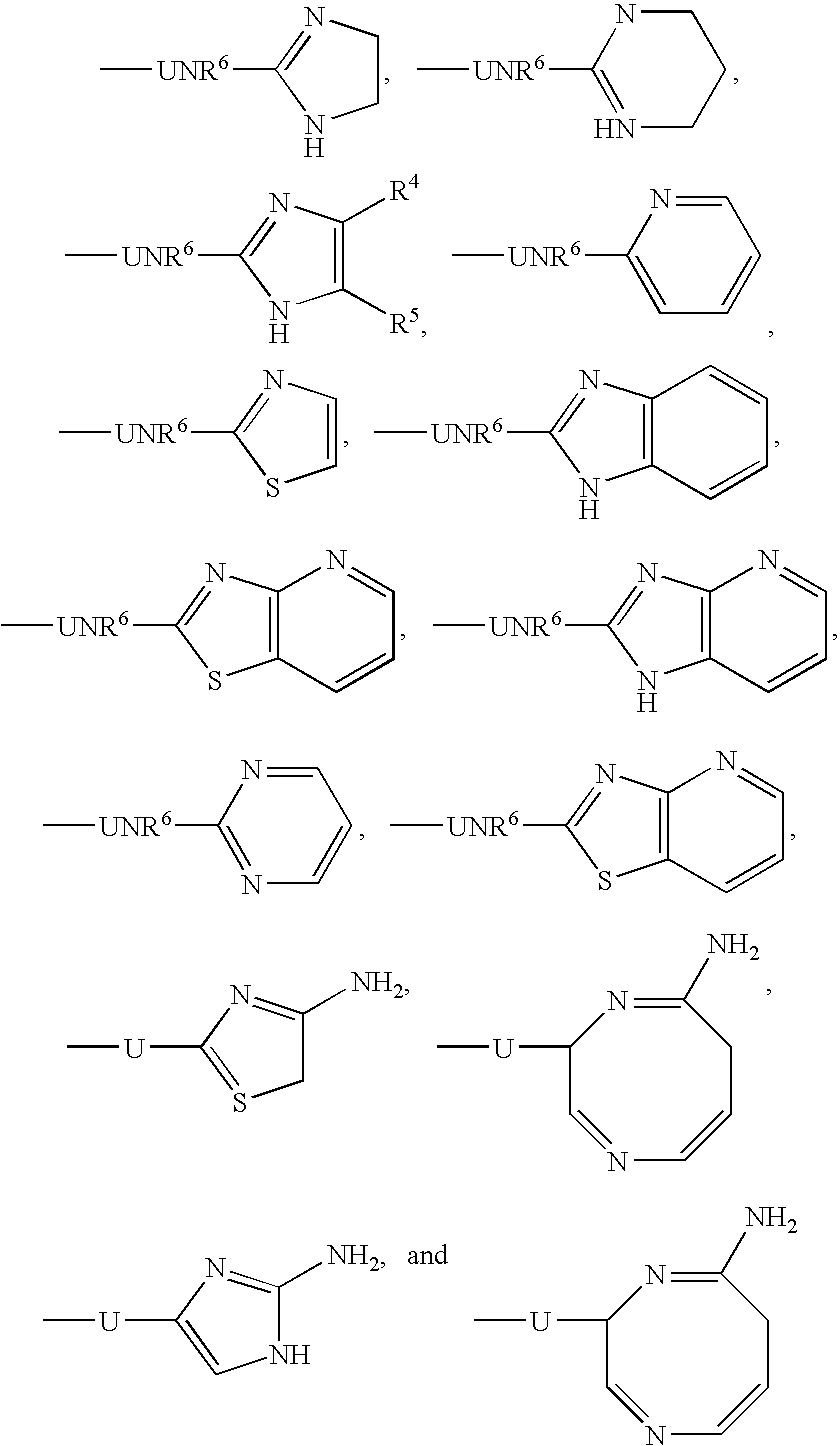
wherein the above heterocycles are optionally substituted with 0-2 substituents selected from the group consisting of: NH2, halogen, NO2, CN, CF3, C1-C4 alkoxy, C1-C6 alkyl, and C3-C7 cycloalkyl;
- U is selected from —(CH2)n—, —(CH2)tQ(CH2)m— and —C(═O)
- (CH2)n−1—, wherein one of the methylene groups is optionally substituted with R7;
- Q is selected from 1,2-phenylene, 1,3-phenylene, 2,3-pyridinylene, 3,4-pyridinylene, and 2,4-pyridinylene;
- R6 is selected from: H, C1-C4 alkyl, and benzyl;
- R7 is selected from: C1-C6 alkyl, C3-C7 cycloalkyl,
- C4-C11 cycloalkylalkyl, aryl, aryl(C1-C6 alkyl), heteroaryl, and heteroaryl(C1-C6 alkyl);
- R10 is selected from: H, halogen, CO2R17, CONR17R20, C1-C6 alkyl substituted with 0-1 R15 or 0-1 R21, C1-C4 alkoxy substituted with 0-1 R21, C3-C7 cycloalkyl substituted with 0-1 R15 or 0-1 R21, C4-C11 cycloalkylalkyl substituted with 0-1 R15 or 0-1 R21, and aryl(C1-C6 alkyl)-substituted with 0-1 R15 or 0-2 R11 or 0-1 R21;
- R11 is selected from: H, halogen, CF3, CN, NO2, hydroxy, NR2R3, C1-C4 alkyl substituted with 0-1 R21, C1-C4 alkoxy substituted with 0-1 R21, aryl substituted with 0-1 R21, aryl(C1-C6 alkyl)-substituted with 0-1 R21, (C1-C4 alkoxy)carbonyl substituted with 0-1 R21, (C1-C4 alkyl)carbonyl substituted with 0-1 R21, C1-C4 alkylsulfonyl substituted with 0-1 R21, and C1-C4 alkyl-aminosulfonyl substituted with 0-1 R21;
- W is —C(═O)—N(R13)—;
- X is —CH(R14)—CH(R15)—;
- R13 is selected from H and CH3;
- R14 is selected from: H, C1-C10 alkyl, aryl, and heteroaryl, wherein said aryl or heteroaryl groups are optionally substituted with 0-3 substituents selected from: C1-C4 alkyl, C1-C4 alkoxy, aryl, halo, cyano, amino, CF3, and NO2;
- R15 is selected from H and R16;
- Y is —COR19;
- R16 is selected from:
- k is 2;
- m is selected from 0 and 1;
- n is 1-4; and
- t is selected from 0 and 1.

wherein R19 is chosen from —H, —CH3, and —CH2CH2N+(CH3)3. In an embodiment, R19 is —H (the compound of Formula II is SM256).
| Antibody | Source | Antigen | Ligand blocked |
| MAB1998 | Chemicon | human α2 integrin | collagen and |
| laminin | |||
| MAB1950Z | Chemicon | human α2 integrin | collagen and |
| laminin | |||
| Gi9 | Immunotech | human α2 integrin | collagen |
| VNR147 | Gibco or Chemicon | human αV integrin | fibrinogen and |
| vitronectin | |||
| MAB1980 | Chemicon | human αV integrin | vitronectin |
| IM1603 | Immunotech | human αV integrin | vitronectin |
| Lia1/2 | Immunotech | human β1 integrin | fibronectin |
| MAB1965 | Chemicon | human β1 integrin | collagen and |
| fibronectin | |||
| AIIB2 | Caroline Damsky, | human β1 integrin | fibronectin |
| UCSF | |||
| AB19012 | Chemicon | human laminin | laminin |
| AB2034 | Chemicon | mouse laminin | laminin |
Tissue Culture
| TABLE 1 |
| Aβ meshwork and neurotoxicity inhibition |
| with integrin blocking antibodies and ligands |
| Meshwork | Maximal inhibition | |||
| Antibody: | Inhibition | of toxicity (%) | ||
| β1 integrin: | ||||
| | ND | 100 | ||
| 1965 | |
100 | ||
| Lia1/2 | |
80 | ||
| TS2/16 (activating) | |
0 | ||
| α1 integrin: | ||||
| TS2/7 | |
5 | ||
| 1973Z | ND | 6 | ||
| α2 integrin: | ||||
| | Yes | 100 | ||
| | Yes | 100 | ||
| 1998 | |
25 | ||
| α3 integrin: | ||||
| | ND | 10 | ||
| 2056 | |
10 | ||
| 2057 | |
20 | ||
| α4 integrin: | ||||
| | ND | 10 | ||
| α5 integrin: | ||||
| | ND | 5 | ||
| SAM1 | No | 5 | ||
| α6 integrin: | ||||
| | ND | 40 | ||
| α9 integrin: | ||||
| | No | 0 | ||
| αv integrin: | ||||
| | Yes | 100 | ||
| 1980 | |
40 | ||
| | ND | 20 | ||
| Fibronectin | Yes | 32 | ||
| | Yes | 100 | ||
| | ND | 20 | ||
| NCAM antibody | No?? | 0 | ||
Claims (16)
Priority Applications (5)
| Application Number | Priority Date | Filing Date | Title |
|---|---|---|---|
| US11/723,745 US7829087B2 (en) | 2001-07-09 | 2007-03-21 | Methods of treating cognitive impairment |
| CA002681635A CA2681635A1 (en) | 2007-03-21 | 2008-03-20 | Methods of suppressing ltp inhibition |
| PCT/US2008/057713 WO2008116100A1 (en) | 2007-03-21 | 2008-03-20 | Methods of suppressing ltp inhibition |
| EP08732604A EP2142188A4 (en) | 2007-03-21 | 2008-03-20 | METHODS OF SUPPRESSING INHIBITION OF LTP |
| JP2009554752A JP2010524847A (en) | 2007-03-21 | 2008-03-20 | Method for suppressing LTP inhibition |
Applications Claiming Priority (4)
| Application Number | Priority Date | Filing Date | Title |
|---|---|---|---|
| US30431501P | 2001-07-09 | 2001-07-09 | |
| US34177201P | 2001-12-17 | 2001-12-17 | |
| US10/190,548 US7517525B2 (en) | 2001-07-09 | 2002-07-09 | Methods of inhibiting amyloid toxicity |
| US11/723,745 US7829087B2 (en) | 2001-07-09 | 2007-03-21 | Methods of treating cognitive impairment |
Related Parent Applications (1)
| Application Number | Title | Priority Date | Filing Date |
|---|---|---|---|
| US10/190,548 Continuation-In-Part US7517525B2 (en) | 2001-07-09 | 2002-07-09 | Methods of inhibiting amyloid toxicity |
Publications (2)
| Publication Number | Publication Date |
|---|---|
| US20080193444A1 US20080193444A1 (en) | 2008-08-14 |
| US7829087B2 true US7829087B2 (en) | 2010-11-09 |
Family
ID=39766466
Family Applications (1)
| Application Number | Title | Priority Date | Filing Date |
|---|---|---|---|
| US11/723,745 Expired - Lifetime US7829087B2 (en) | 2001-07-09 | 2007-03-21 | Methods of treating cognitive impairment |
Country Status (5)
| Country | Link |
|---|---|
| US (1) | US7829087B2 (en) |
| EP (1) | EP2142188A4 (en) |
| JP (1) | JP2010524847A (en) |
| CA (1) | CA2681635A1 (en) |
| WO (1) | WO2008116100A1 (en) |
Families Citing this family (7)
| Publication number | Priority date | Publication date | Assignee | Title |
|---|---|---|---|---|
| CA2453403C (en) * | 2001-07-09 | 2013-10-08 | Elan Pharmaceuticals, Inc. | Methods of inhibiting amyloid toxicity |
| US7829087B2 (en) | 2001-07-09 | 2010-11-09 | Elan Pharmaceuticals, Inc. | Methods of treating cognitive impairment |
| CA2723842A1 (en) * | 2008-05-09 | 2009-11-12 | Peter Vanlandschoot | Amino acid sequences directed against integrins and uses thereof |
| WO2011085136A2 (en) | 2010-01-06 | 2011-07-14 | Elan Pharmaceuticals, Inc. | Use of perlecan domain v in treating amyloidogenic disease |
| US10729777B2 (en) | 2012-04-09 | 2020-08-04 | Case Western Reserve University | Compositions and methods for inhibiting the activity of LAR family phosphatases |
| KR20200045446A (en) * | 2017-06-05 | 2020-05-04 | 케이스 웨스턴 리저브 유니버시티 | Compositions and methods for the treatment of Alzheimer's disease |
| US12138300B2 (en) | 2018-09-05 | 2024-11-12 | Case Western Reserve University | Methods and compositions for inducing neural plasticity |
Citations (18)
| Publication number | Priority date | Publication date | Assignee | Title |
|---|---|---|---|---|
| EP0719859A1 (en) * | 1994-12-20 | 1996-07-03 | MERCK PATENT GmbH | Anti-alpha V-integrin monoclonal antibody |
| US5612486A (en) | 1993-10-27 | 1997-03-18 | Athena Neurosciences, Inc. | Transgenic animals harboring APP allele having swedish mutation |
| WO1998015179A1 (en) | 1996-10-08 | 1998-04-16 | University Of Washington | Therapeutic and diagnostic applications of laminin and laminin-derived protein fragments |
| US5753230A (en) | 1994-03-18 | 1998-05-19 | The Scripps Research Institute | Methods and compositions useful for inhibition of angiogenesis |
| US5849865A (en) | 1994-04-13 | 1998-12-15 | La Jolla Cancer Research Foundation | Peptides for altering bone resorption, angiogenesis and restenosis |
| WO1999027944A1 (en) | 1997-12-02 | 1999-06-10 | Neuralab Limited | Prevention and treatment of amyloidogenic disease |
| WO1999037683A1 (en) | 1998-01-23 | 1999-07-29 | Merck Patent Gmbh | MONOCLONAL ANTIBODY ANTI αv-INTEGRIN AND ITS USE TO INHIBIT αvβ6-INTEGRIN ATTACHMENT TO FIBRONECTIN |
| WO2000044404A2 (en) | 1999-02-01 | 2000-08-03 | Childrens Hospital Los Angeles | Methods for inhibiting brain tumor growth by using selected integrin antagonists |
| WO2000066730A2 (en) | 1999-04-30 | 2000-11-09 | University Of Medicine And Dentistry Of New Jersey Robert Wood Johnson Medical School | Laminin 2 and methods for its use |
| US6469024B2 (en) * | 2000-05-11 | 2002-10-22 | Bristol-Myers Squibb Company | Tetrahydroisoquinoline analogs useful as growth hormone secretagogues |
| US20020160954A1 (en) | 1998-10-29 | 2002-10-31 | University Of Iowa Research Foundation | Therapeutics and diagnostics for ocular abnormalities |
| WO2003006893A2 (en) | 2001-07-09 | 2003-01-23 | Elan Pharmaceuticals, Inc. | Methods of inhibiting amyloid toxicity |
| US20030040044A1 (en) * | 2000-08-07 | 2003-02-27 | George Heavner | Anti-dual integrin antibodies, compositions, methods and uses |
| US20030202977A1 (en) | 1998-11-16 | 2003-10-30 | New York University | Treatment of osteoarthritis |
| US6743427B1 (en) * | 1997-12-02 | 2004-06-01 | Neuralab Limited | Prevention and treatment of amyloidogenic disease |
| US20040259152A1 (en) | 2000-02-22 | 2004-12-23 | Richard Murray | Novel methods of diagnosing and screening for modulators of tissue remodeling and treating related diseases |
| US20050255120A1 (en) * | 2004-05-12 | 2005-11-17 | Simon Michael R | Composition and method for introduction of DNA directed RNA interference sequences into targeted cells and tissues |
| US20080193444A1 (en) | 2001-07-09 | 2008-08-14 | Sarah Wright | Methods of suppressing LTP inhibition |
Family Cites Families (2)
| Publication number | Priority date | Publication date | Assignee | Title |
|---|---|---|---|---|
| EP0950709A1 (en) * | 1998-04-17 | 1999-10-20 | Hoechst Marion Roussel Deutschland GmbH | Antisense oligonucleotides for the inhibition of integrin alphaV-subunit expression |
| AU2001268883A1 (en) * | 2000-06-29 | 2002-01-08 | Mcgill University | Antisense oligonucleotides to inhibit angiogenesis and/or metastasis |
-
2007
- 2007-03-21 US US11/723,745 patent/US7829087B2/en not_active Expired - Lifetime
-
2008
- 2008-03-20 EP EP08732604A patent/EP2142188A4/en not_active Withdrawn
- 2008-03-20 CA CA002681635A patent/CA2681635A1/en not_active Abandoned
- 2008-03-20 JP JP2009554752A patent/JP2010524847A/en active Pending
- 2008-03-20 WO PCT/US2008/057713 patent/WO2008116100A1/en not_active Ceased
Patent Citations (21)
| Publication number | Priority date | Publication date | Assignee | Title |
|---|---|---|---|---|
| US5612486A (en) | 1993-10-27 | 1997-03-18 | Athena Neurosciences, Inc. | Transgenic animals harboring APP allele having swedish mutation |
| US5753230A (en) | 1994-03-18 | 1998-05-19 | The Scripps Research Institute | Methods and compositions useful for inhibition of angiogenesis |
| US5849865A (en) | 1994-04-13 | 1998-12-15 | La Jolla Cancer Research Foundation | Peptides for altering bone resorption, angiogenesis and restenosis |
| US5985278A (en) | 1994-12-20 | 1999-11-16 | Merck Patent Gesellschaft Mit Beschrankter Haftung | Anti-αV-integrin monoclonal antibody |
| EP0719859A1 (en) * | 1994-12-20 | 1996-07-03 | MERCK PATENT GmbH | Anti-alpha V-integrin monoclonal antibody |
| WO1998015179A1 (en) | 1996-10-08 | 1998-04-16 | University Of Washington | Therapeutic and diagnostic applications of laminin and laminin-derived protein fragments |
| US6743427B1 (en) * | 1997-12-02 | 2004-06-01 | Neuralab Limited | Prevention and treatment of amyloidogenic disease |
| WO1999027944A1 (en) | 1997-12-02 | 1999-06-10 | Neuralab Limited | Prevention and treatment of amyloidogenic disease |
| WO1999037683A1 (en) | 1998-01-23 | 1999-07-29 | Merck Patent Gmbh | MONOCLONAL ANTIBODY ANTI αv-INTEGRIN AND ITS USE TO INHIBIT αvβ6-INTEGRIN ATTACHMENT TO FIBRONECTIN |
| US20020160954A1 (en) | 1998-10-29 | 2002-10-31 | University Of Iowa Research Foundation | Therapeutics and diagnostics for ocular abnormalities |
| US20030202977A1 (en) | 1998-11-16 | 2003-10-30 | New York University | Treatment of osteoarthritis |
| WO2000044404A2 (en) | 1999-02-01 | 2000-08-03 | Childrens Hospital Los Angeles | Methods for inhibiting brain tumor growth by using selected integrin antagonists |
| WO2000066730A2 (en) | 1999-04-30 | 2000-11-09 | University Of Medicine And Dentistry Of New Jersey Robert Wood Johnson Medical School | Laminin 2 and methods for its use |
| US20040259152A1 (en) | 2000-02-22 | 2004-12-23 | Richard Murray | Novel methods of diagnosing and screening for modulators of tissue remodeling and treating related diseases |
| US6469024B2 (en) * | 2000-05-11 | 2002-10-22 | Bristol-Myers Squibb Company | Tetrahydroisoquinoline analogs useful as growth hormone secretagogues |
| US20030040044A1 (en) * | 2000-08-07 | 2003-02-27 | George Heavner | Anti-dual integrin antibodies, compositions, methods and uses |
| WO2003006893A2 (en) | 2001-07-09 | 2003-01-23 | Elan Pharmaceuticals, Inc. | Methods of inhibiting amyloid toxicity |
| US20080193444A1 (en) | 2001-07-09 | 2008-08-14 | Sarah Wright | Methods of suppressing LTP inhibition |
| US7517525B2 (en) | 2001-07-09 | 2009-04-14 | Elan Pharmaceuticals, Inc. | Methods of inhibiting amyloid toxicity |
| US20050255120A1 (en) * | 2004-05-12 | 2005-11-17 | Simon Michael R | Composition and method for introduction of DNA directed RNA interference sequences into targeted cells and tissues |
| WO2008116100A1 (en) | 2007-03-21 | 2008-09-25 | Elan Pharmaceuticals, Inc. | Methods of suppressing ltp inhibition |
Non-Patent Citations (97)
Also Published As
| Publication number | Publication date |
|---|---|
| US20080193444A1 (en) | 2008-08-14 |
| JP2010524847A (en) | 2010-07-22 |
| CA2681635A1 (en) | 2008-09-25 |
| EP2142188A1 (en) | 2010-01-13 |
| WO2008116100A1 (en) | 2008-09-25 |
| EP2142188A4 (en) | 2011-03-23 |
Similar Documents
| Publication | Publication Date | Title |
|---|---|---|
| US7901683B2 (en) | Methods of inhibiting amyloid toxicity | |
| Vassar | BACE1 inhibitor drugs in clinical trials for Alzheimer’s disease | |
| Xiao et al. | Neuronal-targeted TFEB accelerates lysosomal degradation of APP, reducing Aβ generation and amyloid plaque pathogenesis | |
| TWI508975B (en) | Monoclonal antibody | |
| Obregon et al. | Soluble amyloid precursor protein-α modulates β-secretase activity and amyloid-β generation | |
| Yan et al. | Targeting the β secretase BACE1 for Alzheimer's disease therapy | |
| Park et al. | Subcutaneous Nogo receptor removes brain amyloid-β and improves spatial memory in Alzheimer's transgenic mice | |
| US11104710B2 (en) | Methods and compositions comprising tau oligomers | |
| US8124358B2 (en) | Methods of screening for compounds that inhibit binding between amyloid-β(Aβ) and FC-γ receptor IIB (FcγRIIb) | |
| US20080193444A1 (en) | Methods of suppressing LTP inhibition | |
| Laurén | Cellular prion protein as a therapeutic target in Alzheimer's disease | |
| McAlary et al. | Emerging Developments in Targeting Proteotoxicity in Neurodegenerative Diseases: L. McAlary et al. | |
| Foley et al. | Trapping and characterization of nontoxic Aβ42 aggregation intermediates | |
| Chen et al. | New insights into innate immunity in Alzheimer’s disease: from APOE protective variants to therapies | |
| WO2008051326A2 (en) | Identification of contactins and l1- cams as ligands for the amyloid precursor protein | |
| US10919971B2 (en) | Prion protein antibodies for the treatment of Alzheimer's disease | |
| CN101325972B (en) | A β 1-42 specific monoclonal antibody with therapeutic properties | |
| Soheili-Nezhad | Alzheimer’s disease: the large gene instability hypothesis | |
| US20100303824A1 (en) | Signaling intermediates in an in vitro model of alzheimer's disease | |
| Crowe et al. | HDAC6 inhibition reduces seeded Tau and α-Synuclein pathologies in primary neuron cultures and wild-type mice | |
| Zaccagnini | In silico and in vitro screening of acridine and phenothiazine derivatives as anti-prion agents | |
| Soheili-Nezhad et al. | Mutational burden of giant synaptic genes may be the cause of Alzheimer’s disease | |
| US9358273B2 (en) | Use of perlecan domain V in treating amyloidogenic disease | |
| Santoni | New generation recombinant antigenic peptides for vaccine and diagnostic antibody production |
Legal Events
| Date | Code | Title | Description |
|---|---|---|---|
| AS | Assignment |
Owner name: ELAN PHARMACEUTICALS, INC., CALIFORNIA Free format text: ASSIGNMENT OF ASSIGNORS INTEREST;ASSIGNORS:WRIGHT, SARAH;GRISWOLD-PRENNER, IRENE;REEL/FRAME:019838/0043 Effective date: 20070912 |
|
| AS | Assignment |
Owner name: THE PROVOST FELLOWS AND SCHOLARS OF THE COLLEGE OF Free format text: ASSIGNMENT OF ASSIGNORS INTEREST;ASSIGNORS:WANG, QINWEN;KLYUBIN, IGOR;ROWAN, MICHAEL;AND OTHERS;REEL/FRAME:022827/0577;SIGNING DATES FROM 20080310 TO 20080428 Owner name: THE PROVOST FELLOWS AND SCHOLARS OF THE COLLEGE OF Free format text: ASSIGNMENT OF ASSIGNORS INTEREST;ASSIGNORS:WANG, QINWEN;KLYUBIN, IGOR;ROWAN, MICHAEL;AND OTHERS;SIGNING DATES FROM 20080310 TO 20080428;REEL/FRAME:022827/0577 |
|
| STCF | Information on status: patent grant |
Free format text: PATENTED CASE |
|
| FPAY | Fee payment |
Year of fee payment: 4 |
|
| MAFP | Maintenance fee payment |
Free format text: PAYMENT OF MAINTENANCE FEE, 8TH YEAR, LARGE ENTITY (ORIGINAL EVENT CODE: M1552) Year of fee payment: 8 |
|
| FEPP | Fee payment procedure |
Free format text: MAINTENANCE FEE REMINDER MAILED (ORIGINAL EVENT CODE: REM.); ENTITY STATUS OF PATENT OWNER: LARGE ENTITY |
|
| FEPP | Fee payment procedure |
Free format text: 11.5 YR SURCHARGE- LATE PMT W/IN 6 MO, LARGE ENTITY (ORIGINAL EVENT CODE: M1556); ENTITY STATUS OF PATENT OWNER: LARGE ENTITY |
|
| MAFP | Maintenance fee payment |
Free format text: PAYMENT OF MAINTENANCE FEE, 12TH YEAR, LARGE ENTITY (ORIGINAL EVENT CODE: M1553); ENTITY STATUS OF PATENT OWNER: LARGE ENTITY Year of fee payment: 12 |