US7820703B2 - Lysophosphatidic acid receptor selective antagonists - Google Patents
Lysophosphatidic acid receptor selective antagonists Download PDFInfo
- Publication number
- US7820703B2 US7820703B2 US11/579,658 US57965805A US7820703B2 US 7820703 B2 US7820703 B2 US 7820703B2 US 57965805 A US57965805 A US 57965805A US 7820703 B2 US7820703 B2 US 7820703B2
- Authority
- US
- United States
- Prior art keywords
- group
- alkyl
- lpa
- compound
- alkenyl
- Prior art date
- Legal status (The legal status is an assumption and is not a legal conclusion. Google has not performed a legal analysis and makes no representation as to the accuracy of the status listed.)
- Expired - Lifetime, expires
Links
- 0 [1*]N[C@@]([2*])([3*])C Chemical compound [1*]N[C@@]([2*])([3*])C 0.000 description 97
- CKJRQPWAXMFUCK-UHFFFAOYSA-N C.CC(C)=O Chemical compound C.CC(C)=O CKJRQPWAXMFUCK-UHFFFAOYSA-N 0.000 description 10
- XJHMJOMULFLBSI-UHFFFAOYSA-N CC(C)(C)C(=O)OCO.CC(C)(C)O.CC(C)O.CC(C)OC(=O)C(C)N.CC(C)OC(=O)CN.CC(C)OC(=O)OCO.CCC(N)C(=O)OC(C)C.CCOC(=O)CN.CCOC1=CC=CC=C1CO.CCOC1=CC=CC=C1O.C[N+](C)(C)CCO.NCCO.OC1=CC=CC=C1.OCC1=CC=CC=C1 Chemical compound CC(C)(C)C(=O)OCO.CC(C)(C)O.CC(C)O.CC(C)OC(=O)C(C)N.CC(C)OC(=O)CN.CC(C)OC(=O)OCO.CCC(N)C(=O)OC(C)C.CCOC(=O)CN.CCOC1=CC=CC=C1CO.CCOC1=CC=CC=C1O.C[N+](C)(C)CCO.NCCO.OC1=CC=CC=C1.OCC1=CC=CC=C1 XJHMJOMULFLBSI-UHFFFAOYSA-N 0.000 description 10
- CSCPPACGZOOCGX-UHFFFAOYSA-N CC(C)=O Chemical compound CC(C)=O CSCPPACGZOOCGX-UHFFFAOYSA-N 0.000 description 9
- NRGGMCIBEHEAIL-UHFFFAOYSA-N CCC1=NC=CC=C1 Chemical compound CCC1=NC=CC=C1 NRGGMCIBEHEAIL-UHFFFAOYSA-N 0.000 description 6
- ZFUGTZFIEDPVPR-UHFFFAOYSA-N CC(C)(C)C(=O)OCO.CC(C)OC(=O)C(C)N.CC(C)OC(=O)CN.CC(C)OC(=O)OCO.CCC(N)C(=O)OC(C)C.CCOC(=O)CN.CCOC1=CC=CC=C1CO.CCOC1=CC=CC=C1O.OC1=CC=CC=C1.OCC1=CC=CC=C1 Chemical compound CC(C)(C)C(=O)OCO.CC(C)OC(=O)C(C)N.CC(C)OC(=O)CN.CC(C)OC(=O)OCO.CCC(N)C(=O)OC(C)C.CCOC(=O)CN.CCOC1=CC=CC=C1CO.CCOC1=CC=CC=C1O.OC1=CC=CC=C1.OCC1=CC=CC=C1 ZFUGTZFIEDPVPR-UHFFFAOYSA-N 0.000 description 4
- CXLDIZGWCCTZGU-UHFFFAOYSA-N CCC1=NC=C(C)C(OC)=C1C Chemical compound CCC1=NC=C(C)C(OC)=C1C CXLDIZGWCCTZGU-UHFFFAOYSA-N 0.000 description 4
- FEZZPJVZEHCMNT-LBPGQFGGSA-N CCCCCCC/C=C\CCCCCCCC(=O)N[C@@H](CCP(=O)(O)O)CC1=CC=C(OCC2=NC=CC=C2)C=C1 Chemical compound CCCCCCC/C=C\CCCCCCCC(=O)N[C@@H](CCP(=O)(O)O)CC1=CC=C(OCC2=NC=CC=C2)C=C1 FEZZPJVZEHCMNT-LBPGQFGGSA-N 0.000 description 4
- NXHKQBCTZHECQF-UHFFFAOYSA-N CCP(C)(=O)O Chemical compound CCP(C)(=O)O NXHKQBCTZHECQF-UHFFFAOYSA-N 0.000 description 4
- HHTBGFDJAOTDEE-UHFFFAOYSA-N CC(C)(C)C(=O)OCO.CC(C)(C)O.CC(C)O.CC(C)OC(=O)C(C)N.CC(C)OC(=O)CN.CC(C)OC(=O)OCO.CCC(N)C(=O)OC(C)C.CCOC1=CC=CC=C1CO.CCOC1=CC=CC=C1O.C[N+](C)(C)CCO.NCCO.OC1=CC=CC=C1.OCC1=CC=CC=C1 Chemical compound CC(C)(C)C(=O)OCO.CC(C)(C)O.CC(C)O.CC(C)OC(=O)C(C)N.CC(C)OC(=O)CN.CC(C)OC(=O)OCO.CCC(N)C(=O)OC(C)C.CCOC1=CC=CC=C1CO.CCOC1=CC=CC=C1O.C[N+](C)(C)CCO.NCCO.OC1=CC=CC=C1.OCC1=CC=CC=C1 HHTBGFDJAOTDEE-UHFFFAOYSA-N 0.000 description 3
- JRLPEMVDPFPYPJ-UHFFFAOYSA-N CCC1=CC=C(C)C=C1 Chemical compound CCC1=CC=C(C)C=C1 JRLPEMVDPFPYPJ-UHFFFAOYSA-N 0.000 description 3
- QORIWACGFMMFAH-UHFFFAOYSA-N CCC1=NC(OC)=CC=C1 Chemical compound CCC1=NC(OC)=CC=C1 QORIWACGFMMFAH-UHFFFAOYSA-N 0.000 description 3
- FEZZPJVZEHCMNT-HJWRWDBZSA-N CCCCCCC/C=C\CCCCCCCC(=O)NC(CCP(=O)(O)O)CC1=CC=C(OCC2=NC=CC=C2)C=C1 Chemical compound CCCCCCC/C=C\CCCCCCCC(=O)NC(CCP(=O)(O)O)CC1=CC=C(OCC2=NC=CC=C2)C=C1 FEZZPJVZEHCMNT-HJWRWDBZSA-N 0.000 description 3
- FEZZPJVZEHCMNT-JZZALUKGSA-N CCCCCCC/C=C\CCCCCCCC(=O)N[C@H](CCP(=O)(O)O)CC1=CC=C(OCC2=NC=CC=C2)C=C1 Chemical compound CCCCCCC/C=C\CCCCCCCC(=O)N[C@H](CCP(=O)(O)O)CC1=CC=C(OCC2=NC=CC=C2)C=C1 FEZZPJVZEHCMNT-JZZALUKGSA-N 0.000 description 3
- FBWFSHHWILKWPN-UHFFFAOYSA-N C.C.C.C.C.C.C.C.C.C.C.C.C.CC(C)(C)C(=O)OCO.CC(C)(C)O.CC(C)O.CC(C)OC(=O)C(C)N.CC(C)OC(=O)CN.CC(C)OC(=O)OCO.CCC(N)C(=O)OC(C)C.CCOC(=O)CN.CCOC1=CC=CC=C1CO.CCOC1=CC=CC=C1O.C[N+](C)(C)CCO.NCCO.OC1=CC=CC=C1.OCC1=CC=CC=C1 Chemical compound C.C.C.C.C.C.C.C.C.C.C.C.C.CC(C)(C)C(=O)OCO.CC(C)(C)O.CC(C)O.CC(C)OC(=O)C(C)N.CC(C)OC(=O)CN.CC(C)OC(=O)OCO.CCC(N)C(=O)OC(C)C.CCOC(=O)CN.CCOC1=CC=CC=C1CO.CCOC1=CC=CC=C1O.C[N+](C)(C)CCO.NCCO.OC1=CC=CC=C1.OCC1=CC=CC=C1 FBWFSHHWILKWPN-UHFFFAOYSA-N 0.000 description 2
- PNYIDLUCGIHAPO-UHFFFAOYSA-N CCC1=CC(OC)=C2C=CC=CC2=N1 Chemical compound CCC1=CC(OC)=C2C=CC=CC2=N1 PNYIDLUCGIHAPO-UHFFFAOYSA-N 0.000 description 2
- VJXRKZJMGVSXPX-UHFFFAOYSA-N CCC1=CC=NC=C1 Chemical compound CCC1=CC=NC=C1 VJXRKZJMGVSXPX-UHFFFAOYSA-N 0.000 description 2
- MFEIKQPHQINPRI-UHFFFAOYSA-N CCC1=CN=CC=C1 Chemical compound CCC1=CN=CC=C1 MFEIKQPHQINPRI-UHFFFAOYSA-N 0.000 description 2
- IEAHRIRQHNEUKN-UHFFFAOYSA-N CCC1=NC=CC(OC)=C1 Chemical compound CCC1=NC=CC(OC)=C1 IEAHRIRQHNEUKN-UHFFFAOYSA-N 0.000 description 2
- YHJZCWSJOCWKPI-KTKRTIGZSA-N CCCCCCCC/C=C\CCCCCCCC(=O)NC(COP(=O)(O)O)CC1=CC=C(O)C=C1 Chemical compound CCCCCCCC/C=C\CCCCCCCC(=O)NC(COP(=O)(O)O)CC1=CC=C(O)C=C1 YHJZCWSJOCWKPI-KTKRTIGZSA-N 0.000 description 2
- SGUXYZOXHVNKHF-HHTWCINGSA-B C#CCOC1=CC=C(CC(COP(=O)([O-])[O-])NC(=O)CCCCCCC/C=C\CCCCCCCC)C=C1.CCCCCCCC/C=C\CCCCCCCC(=O)NC(COP(=O)([O-])[O-])CC1=CC=C(C#CCCO)C=C1.CCCCCCCC/C=C\CCCCCCCC(=O)NC(COP(=O)([O-])[O-])CC1=CC=C(C2=CC=C(OC)C=C2)C=C1.CCCCCCCC/C=C\CCCCCCCC(=O)NC(COP(=O)([O-])[O-])CC1=CC=C(C2=CC=CC=C2)C=C1.CCCCCCCC/C=C\CCCCCCCC(=O)NC(COP(=O)([O-])[O-])CC1=CC=C(OCCC(C)C)C=C1.CCCCCCCC/C=C\CCCCCCCC(=O)N[C@@H](COP(=O)([O-])[O-])CC1=CC=C(/C=C/C2=CC=CC=C2)C=C1 Chemical compound C#CCOC1=CC=C(CC(COP(=O)([O-])[O-])NC(=O)CCCCCCC/C=C\CCCCCCCC)C=C1.CCCCCCCC/C=C\CCCCCCCC(=O)NC(COP(=O)([O-])[O-])CC1=CC=C(C#CCCO)C=C1.CCCCCCCC/C=C\CCCCCCCC(=O)NC(COP(=O)([O-])[O-])CC1=CC=C(C2=CC=C(OC)C=C2)C=C1.CCCCCCCC/C=C\CCCCCCCC(=O)NC(COP(=O)([O-])[O-])CC1=CC=C(C2=CC=CC=C2)C=C1.CCCCCCCC/C=C\CCCCCCCC(=O)NC(COP(=O)([O-])[O-])CC1=CC=C(OCCC(C)C)C=C1.CCCCCCCC/C=C\CCCCCCCC(=O)N[C@@H](COP(=O)([O-])[O-])CC1=CC=C(/C=C/C2=CC=CC=C2)C=C1 SGUXYZOXHVNKHF-HHTWCINGSA-B 0.000 description 1
- WPRBHYYVWMQFHP-ARZDGEECSA-A C#CC[C@@H](COP(=O)([O-])[O-])NC(=O)CCCCCCC/C=C\CCCCCCCC.CCCCCCCC/C=C\CCCCCCCC(=O)NC(C)(C)COP(=O)([O-])[O-].CCCCCCCC/C=C\CCCCCCCC(=O)NC(C)(CO)COP(=O)([O-])[O-].CCCCCCCC/C=C\CCCCCCCC(=O)NC(C)(COP(=O)([O-])[O-])C(=O)OC.CCCCCCCC/C=C\CCCCCCCC(=O)NCCOP(=O)([O-])[O-].CCCCCCCC/C=C\CCCCCCCC(=O)N[C@@H](CN)COP(=O)([O-])[O-].CCCCCCCC/C=C\CCCCCCCC(=O)N[C@@H](COP(=O)([O-])[O-])C(=O)O.CCCCCCCC/C=C\CCCCCCCC(=O)N[C@@H](COP(=O)([O-])[O-])C(=O)OC.CCCCCCCC/C=C\CCCCCCCC(=O)N[C@H](CN)COP(=O)([O-])[O-].CCCCCCCC/C=C\CCCCCCCC(=O)N[C@H](COP(=O)([O-])[O-])C(=O)O Chemical compound C#CC[C@@H](COP(=O)([O-])[O-])NC(=O)CCCCCCC/C=C\CCCCCCCC.CCCCCCCC/C=C\CCCCCCCC(=O)NC(C)(C)COP(=O)([O-])[O-].CCCCCCCC/C=C\CCCCCCCC(=O)NC(C)(CO)COP(=O)([O-])[O-].CCCCCCCC/C=C\CCCCCCCC(=O)NC(C)(COP(=O)([O-])[O-])C(=O)OC.CCCCCCCC/C=C\CCCCCCCC(=O)NCCOP(=O)([O-])[O-].CCCCCCCC/C=C\CCCCCCCC(=O)N[C@@H](CN)COP(=O)([O-])[O-].CCCCCCCC/C=C\CCCCCCCC(=O)N[C@@H](COP(=O)([O-])[O-])C(=O)O.CCCCCCCC/C=C\CCCCCCCC(=O)N[C@@H](COP(=O)([O-])[O-])C(=O)OC.CCCCCCCC/C=C\CCCCCCCC(=O)N[C@H](CN)COP(=O)([O-])[O-].CCCCCCCC/C=C\CCCCCCCC(=O)N[C@H](COP(=O)([O-])[O-])C(=O)O WPRBHYYVWMQFHP-ARZDGEECSA-A 0.000 description 1
- HMEPZFPIXDLQCN-WVVFRXKKSA-A C#CC[C@@H](COP(=O)([O-])[O-])NC(=O)CCCCCCC/C=C\CCCCCCCC.CCCCCCCC/C=C\CCCCCCCC(=O)N[C@@H](COP(=O)([O-])[O-])CC1=CC=C(Br)C=C1.CCCCCCCC/C=C\CCCCCCCC(=O)N[C@@H](COP(=O)([O-])[O-])CC1=CC=C(I)C=C1.CCCCCCCC/C=C\CCCCCCCC(=O)N[C@@H](COP(=O)([O-])[O-])CC1=COC=C1.CCCCCCCC/C=C\CCCCCCCC(=O)N[C@H](COP(=O)([O-])[O-])CC1=CC=C(I)C=C1.CCCCCCCC/C=C\CCCCCCCC(=O)N[C@H](COP(=O)([O-])[O-])CC1=CNC2=CC=CC=C12.CCCCCCCC/C=C\CCCCCCCC(=O)N[C@H](COP(=O)([O-])[O-])CC1=COC=C1 Chemical compound C#CC[C@@H](COP(=O)([O-])[O-])NC(=O)CCCCCCC/C=C\CCCCCCCC.CCCCCCCC/C=C\CCCCCCCC(=O)N[C@@H](COP(=O)([O-])[O-])CC1=CC=C(Br)C=C1.CCCCCCCC/C=C\CCCCCCCC(=O)N[C@@H](COP(=O)([O-])[O-])CC1=CC=C(I)C=C1.CCCCCCCC/C=C\CCCCCCCC(=O)N[C@@H](COP(=O)([O-])[O-])CC1=COC=C1.CCCCCCCC/C=C\CCCCCCCC(=O)N[C@H](COP(=O)([O-])[O-])CC1=CC=C(I)C=C1.CCCCCCCC/C=C\CCCCCCCC(=O)N[C@H](COP(=O)([O-])[O-])CC1=CNC2=CC=CC=C12.CCCCCCCC/C=C\CCCCCCCC(=O)N[C@H](COP(=O)([O-])[O-])CC1=COC=C1 HMEPZFPIXDLQCN-WVVFRXKKSA-A 0.000 description 1
- HLGBNQRHFNHJHP-GLSFNMFMSA-N C.C#CC1=CC=CC=C1.CC(=O)Cl.CC(=O)N[C@@H](CO)CC1=CC=C(O[Si](C)(C)C(C)(C)C)C=C1.CC(=O)N[C@@H](COP(C)(C)=O)CC1=CC=C(C#CC2=CC=CC=C2)C=C1.CC(=O)N[C@@H](COP(C)(C)=O)CC1=CC=C(C2=CC=CC=C2)C=C1.CC(=O)N[C@@H](COP(C)(C)=O)CC1=CC=C(OS(=O)(=O)C(F)(F)F)C=C1.CC(=O)N[C@@H](COP(C)(C)=O)CC1=CC=C(OS(=O)(=O)C(F)(F)F)C=C1.CC(=O)N[C@@H](COP(C)(C)=O)CC1=CC=C(O[Si](C)(C)C(C)(C)C)C=C1.CC(C)N(C(C)C)P(O)OC(C)(C)C.COC(=O)[C@@H](CC1=CC=C(O)C=C1)NC(C)=O.COC(=O)[C@@H](CC1=CC=C(O[Si](C)(C)C(C)(C)C)C=C1)NC(C)=O.COC(=O)[C@H](N)CC1=CC=C(O)C=C1.N[C@H](CC1=CC=C(O)C=C1)C(=O)O.O=S(Cl)Cl.OB(O)C1=CC=CC=C1 Chemical compound C.C#CC1=CC=CC=C1.CC(=O)Cl.CC(=O)N[C@@H](CO)CC1=CC=C(O[Si](C)(C)C(C)(C)C)C=C1.CC(=O)N[C@@H](COP(C)(C)=O)CC1=CC=C(C#CC2=CC=CC=C2)C=C1.CC(=O)N[C@@H](COP(C)(C)=O)CC1=CC=C(C2=CC=CC=C2)C=C1.CC(=O)N[C@@H](COP(C)(C)=O)CC1=CC=C(OS(=O)(=O)C(F)(F)F)C=C1.CC(=O)N[C@@H](COP(C)(C)=O)CC1=CC=C(OS(=O)(=O)C(F)(F)F)C=C1.CC(=O)N[C@@H](COP(C)(C)=O)CC1=CC=C(O[Si](C)(C)C(C)(C)C)C=C1.CC(C)N(C(C)C)P(O)OC(C)(C)C.COC(=O)[C@@H](CC1=CC=C(O)C=C1)NC(C)=O.COC(=O)[C@@H](CC1=CC=C(O[Si](C)(C)C(C)(C)C)C=C1)NC(C)=O.COC(=O)[C@H](N)CC1=CC=C(O)C=C1.N[C@H](CC1=CC=C(O)C=C1)C(=O)O.O=S(Cl)Cl.OB(O)C1=CC=CC=C1 HLGBNQRHFNHJHP-GLSFNMFMSA-N 0.000 description 1
- YLAXLDUBYVKZNI-UHFFFAOYSA-N C.C.C.C.C.C.C.C.C.C.C.C.C.C.C.C=O.CC(C)(C)C(=O)OCO.CC(C)(C)O.CC(C)O.CC(C)OC(=O)C(C)N.CC(C)OC(=O)CN.CC(C)OC(=O)OCO.CCC(N)C(=O)OC(C)C.CCOC(=O)CN.CCOC1=CC=CC=C1CO.CCOC1=CC=CC=C1O.C[N+](C)(C)CCO.NCCO.OC1=CC=CC=C1.OCC1=CC=CC=C1 Chemical compound C.C.C.C.C.C.C.C.C.C.C.C.C.C.C.C=O.CC(C)(C)C(=O)OCO.CC(C)(C)O.CC(C)O.CC(C)OC(=O)C(C)N.CC(C)OC(=O)CN.CC(C)OC(=O)OCO.CCC(N)C(=O)OC(C)C.CCOC(=O)CN.CCOC1=CC=CC=C1CO.CCOC1=CC=CC=C1O.C[N+](C)(C)CCO.NCCO.OC1=CC=CC=C1.OCC1=CC=CC=C1 YLAXLDUBYVKZNI-UHFFFAOYSA-N 0.000 description 1
- PKCSQVYDGBIJNS-UHFFFAOYSA-N C.C.C.C.C.C.C.C.C.C.C.C.C.C.C=O.CC(C)(C)C(=O)OCO.CC(C)(C)O.CC(C)O.CC(C)OC(=O)C(C)N.CC(C)OC(=O)CN.CC(C)OC(=O)OCO.CCC(N)C(=O)OC(C)C.CCOC(=O)CN.CCOC1=CC=CC=C1CO.CCOC1=CC=CC=C1O.C[N+](C)(C)CCO.NCCO.OC1=CC=CC=C1.OCC1=CC=CC=C1 Chemical compound C.C.C.C.C.C.C.C.C.C.C.C.C.C.C=O.CC(C)(C)C(=O)OCO.CC(C)(C)O.CC(C)O.CC(C)OC(=O)C(C)N.CC(C)OC(=O)CN.CC(C)OC(=O)OCO.CCC(N)C(=O)OC(C)C.CCOC(=O)CN.CCOC1=CC=CC=C1CO.CCOC1=CC=CC=C1O.C[N+](C)(C)CCO.NCCO.OC1=CC=CC=C1.OCC1=CC=CC=C1 PKCSQVYDGBIJNS-UHFFFAOYSA-N 0.000 description 1
- OWLSOLFZYDFDKF-UHFFFAOYSA-N C.C.C.C.C.C.CC(C)(C)C(=O)OCO.CC(C)OC(=O)C(C)N.CC(C)OC(=O)CN.CC(C)OC(=O)OCO.CCC(N)C(=O)OC(C)C.OC1=CC=CC=C1 Chemical compound C.C.C.C.C.C.CC(C)(C)C(=O)OCO.CC(C)OC(=O)C(C)N.CC(C)OC(=O)CN.CC(C)OC(=O)OCO.CCC(N)C(=O)OC(C)C.OC1=CC=CC=C1 OWLSOLFZYDFDKF-UHFFFAOYSA-N 0.000 description 1
- MIMGFVZUTUKBSO-XKEKEQKMSA-N C.C.C.C.CC(=O)P(C)(C)=O.CC(F)(F)P(C)(C)=O.CC(O)(P(C)(C)=O)P(C)(C)=O.CCP(C)(C)=O.C[C@@H](F)P(C)(C)=O.C[C@@H](O)P(C)(C)=O.C[C@H](F)P(C)(C)=O.C[C@H](O)P(C)(C)=O Chemical compound C.C.C.C.CC(=O)P(C)(C)=O.CC(F)(F)P(C)(C)=O.CC(O)(P(C)(C)=O)P(C)(C)=O.CCP(C)(C)=O.C[C@@H](F)P(C)(C)=O.C[C@@H](O)P(C)(C)=O.C[C@H](F)P(C)(C)=O.C[C@H](O)P(C)(C)=O MIMGFVZUTUKBSO-XKEKEQKMSA-N 0.000 description 1
- APYOQVBZNDMKAL-UHFFFAOYSA-N C.C.C.C.CC(C)OC(=O)C(C)N.CC(C)OC(=O)CN.CCC(N)C(=O)OC(C)C.OC1=CC=CC=C1 Chemical compound C.C.C.C.CC(C)OC(=O)C(C)N.CC(C)OC(=O)CN.CCC(N)C(=O)OC(C)C.OC1=CC=CC=C1 APYOQVBZNDMKAL-UHFFFAOYSA-N 0.000 description 1
- YRBRVMGXTWJLBZ-UHFFFAOYSA-N C1=CNC=C1.C1=CNC=N1 Chemical compound C1=CNC=C1.C1=CNC=N1 YRBRVMGXTWJLBZ-UHFFFAOYSA-N 0.000 description 1
- RAXXELZNTBOGNW-UHFFFAOYSA-N C1=CNC=N1 Chemical compound C1=CNC=N1 RAXXELZNTBOGNW-UHFFFAOYSA-N 0.000 description 1
- ZMVGXDNCNCWKBH-OCBMLBHUSA-A C=CCOC1=CC=C(C[C@@H](COP(=O)([O-])[O-])NC(=O)CCCCCCC/C=C\CCCCCCCC)C=C1.CCCCCCCC/C=C\CCCCCCCC(=O)N[C@@H](COP(=O)([O-])[O-])CC1=CC=C(C2=CC=CC=C2)C=C1.CCCCCCCC/C=C\CCCCCCCC(=O)N[C@@H](COP(=O)([O-])[O-])CC1=CC=C(OCC2=CC=C(CCCCC)C=C2)C=C1.CCCCCCCC/C=C\CCCCCCCC(=O)N[C@H](COP(=O)([O-])[O-])CC1=CC=C(I)C=C1.CCCCCCCC/C=C\CCCCCCCC(=O)N[C@H](COP(=O)([O-])[O-])CC1=CC=C(OC(=O)C2=CC=C(N)C=C2)C=C1.CCCCCCCC/C=C\CCCCCCCC(=O)N[C@H](COP(=O)([O-])[O-])CC1=CC=C(OCC2=CC(OC)=CC=C2)C=C1.CCCCCCCC/C=C\CCCCCCCC(=O)N[C@H](COP(=O)([O-])[O-])CC1=CC=C(OCC2=CC=C(CCCCC)C=C2)C=C1 Chemical compound C=CCOC1=CC=C(C[C@@H](COP(=O)([O-])[O-])NC(=O)CCCCCCC/C=C\CCCCCCCC)C=C1.CCCCCCCC/C=C\CCCCCCCC(=O)N[C@@H](COP(=O)([O-])[O-])CC1=CC=C(C2=CC=CC=C2)C=C1.CCCCCCCC/C=C\CCCCCCCC(=O)N[C@@H](COP(=O)([O-])[O-])CC1=CC=C(OCC2=CC=C(CCCCC)C=C2)C=C1.CCCCCCCC/C=C\CCCCCCCC(=O)N[C@H](COP(=O)([O-])[O-])CC1=CC=C(I)C=C1.CCCCCCCC/C=C\CCCCCCCC(=O)N[C@H](COP(=O)([O-])[O-])CC1=CC=C(OC(=O)C2=CC=C(N)C=C2)C=C1.CCCCCCCC/C=C\CCCCCCCC(=O)N[C@H](COP(=O)([O-])[O-])CC1=CC=C(OCC2=CC(OC)=CC=C2)C=C1.CCCCCCCC/C=C\CCCCCCCC(=O)N[C@H](COP(=O)([O-])[O-])CC1=CC=C(OCC2=CC=C(CCCCC)C=C2)C=C1 ZMVGXDNCNCWKBH-OCBMLBHUSA-A 0.000 description 1
- FCECVFHTIIUWAL-FSGGJMMBSA-N CC(=O)N[C@@H](CO)CNC(=O)OCC1C2=C(C=CC=C2)C2=C1C=CC=C2.CC(=O)N[C@H](CN)COP(=O)(O)O.CC(=O)N[C@H](CNC(=O)OCC1C2=C(C=CC=C2)C2=C1C=CC=C2)COP(C)(C)=O.CC(C)(C)OC(=O)N1[C@H](CN)COC1(C)C.CC(C)(C)OC(=O)N1[C@H](CNCC2=CC=CC=C2)COC1(C)C.O=C(NC[C@@H](CO)NCl)OCC1C2=C(C=CC=C2)C2=C1C=CC=C2.[H]C(=O)[C@@H]1COC(C)(C)N1C(=O)OC(C)(C)C Chemical compound CC(=O)N[C@@H](CO)CNC(=O)OCC1C2=C(C=CC=C2)C2=C1C=CC=C2.CC(=O)N[C@H](CN)COP(=O)(O)O.CC(=O)N[C@H](CNC(=O)OCC1C2=C(C=CC=C2)C2=C1C=CC=C2)COP(C)(C)=O.CC(C)(C)OC(=O)N1[C@H](CN)COC1(C)C.CC(C)(C)OC(=O)N1[C@H](CNCC2=CC=CC=C2)COC1(C)C.O=C(NC[C@@H](CO)NCl)OCC1C2=C(C=CC=C2)C2=C1C=CC=C2.[H]C(=O)[C@@H]1COC(C)(C)N1C(=O)OC(C)(C)C FCECVFHTIIUWAL-FSGGJMMBSA-N 0.000 description 1
- QLUXACFCGZAWDA-UHFFFAOYSA-N CC(C)(C)C(=O)OCO.CC(C)OC(=O)C(C)N.CC(C)OC(=O)CN.CC(C)OC(=O)OCO.CCC(N)C(=O)OC(C)C.CCOC(=O)CN.OC1=CC=CC=C1 Chemical compound CC(C)(C)C(=O)OCO.CC(C)OC(=O)C(C)N.CC(C)OC(=O)CN.CC(C)OC(=O)OCO.CCC(N)C(=O)OC(C)C.CCOC(=O)CN.OC1=CC=CC=C1 QLUXACFCGZAWDA-UHFFFAOYSA-N 0.000 description 1
- IYXZKKVIBWWHTI-KBOUQBNYSA-N CC(C)(C)OC(=O)N1[C@@H](C(=O)C2=CC=C(OCC3=CC=CC=C3)C=C2)COC1(C)C.CCCCCCCC/C=C\CCCCCCCC(=O)N[C@H](COP(=O)(O)O)C(=O)C1=CC=C(OCC2=CC=CC=C2)C=C1.CON(C)C(=O)[C@H]1COC(C)(C)N1C(=O)OC(C)(C)C.C[C@H](CO)C(=O)C1=CC=C(OCC2=CC=CC=C2)C=C1.O=C(C(Cl)Cl)C(F)(F)F.O=C(C(Cl)Cl)C(F)(F)F Chemical compound CC(C)(C)OC(=O)N1[C@@H](C(=O)C2=CC=C(OCC3=CC=CC=C3)C=C2)COC1(C)C.CCCCCCCC/C=C\CCCCCCCC(=O)N[C@H](COP(=O)(O)O)C(=O)C1=CC=C(OCC2=CC=CC=C2)C=C1.CON(C)C(=O)[C@H]1COC(C)(C)N1C(=O)OC(C)(C)C.C[C@H](CO)C(=O)C1=CC=C(OCC2=CC=CC=C2)C=C1.O=C(C(Cl)Cl)C(F)(F)F.O=C(C(Cl)Cl)C(F)(F)F IYXZKKVIBWWHTI-KBOUQBNYSA-N 0.000 description 1
- KSVVEIUCRSCLKR-UHFFFAOYSA-N CC(C)OC(=O)C(C)N.CC(C)OC(=O)CN.CCC(N)C(=O)OC(C)C.OC1=CC=CC=C1 Chemical compound CC(C)OC(=O)C(C)N.CC(C)OC(=O)CN.CCC(N)C(=O)OC(C)C.OC1=CC=CC=C1 KSVVEIUCRSCLKR-UHFFFAOYSA-N 0.000 description 1
- ONVDMSLMBIVDTM-UHFFFAOYSA-N CC(C)OC(=O)C(C)N.OC1=CC=CC=C1 Chemical compound CC(C)OC(=O)C(C)N.OC1=CC=CC=C1 ONVDMSLMBIVDTM-UHFFFAOYSA-N 0.000 description 1
- QDQVXVRZVCTVHE-UHFFFAOYSA-N CC(C)OC(C(C)N)=O Chemical compound CC(C)OC(C(C)N)=O QDQVXVRZVCTVHE-UHFFFAOYSA-N 0.000 description 1
- GGVSKEUXMQEFND-UHFFFAOYSA-N CC(C)OC(CNc(cc1)ccc1O)=O Chemical compound CC(C)OC(CNc(cc1)ccc1O)=O GGVSKEUXMQEFND-UHFFFAOYSA-N 0.000 description 1
- NXHUHEUOFBLGGT-UHFFFAOYSA-N CC.CCC1=CC=CC=C1 Chemical compound CC.CCC1=CC=CC=C1 NXHUHEUOFBLGGT-UHFFFAOYSA-N 0.000 description 1
- ZJIVVFUSMATLTN-UHFFFAOYSA-N CCC(C(OC(C)C)=O)N Chemical compound CCC(C(OC(C)C)=O)N ZJIVVFUSMATLTN-UHFFFAOYSA-N 0.000 description 1
- ZMXIYERNXPIYFR-UHFFFAOYSA-N CCC1=C2C=CC=CC2=CC=C1 Chemical compound CCC1=C2C=CC=CC2=CC=C1 ZMXIYERNXPIYFR-UHFFFAOYSA-N 0.000 description 1
- YMZOBSWAIIFNEP-OUKQBFOZSA-N CCC1=CC=C(/C=C/C2=CC=CC=C2)C=C1 Chemical compound CCC1=CC=C(/C=C/C2=CC=CC=C2)C=C1 YMZOBSWAIIFNEP-OUKQBFOZSA-N 0.000 description 1
- IIHCBXLKRQANHA-UHFFFAOYSA-N CCC1=CC=C(C#CC2=CC=CC=C2)C=C1 Chemical compound CCC1=CC=C(C#CC2=CC=CC=C2)C=C1 IIHCBXLKRQANHA-UHFFFAOYSA-N 0.000 description 1
- XSTKYODKQMWYGN-UHFFFAOYSA-N CCC1=CC=C(C#CC2=CCCCC2)C=C1 Chemical compound CCC1=CC=C(C#CC2=CCCCC2)C=C1 XSTKYODKQMWYGN-UHFFFAOYSA-N 0.000 description 1
- SRQOBNUBCLPPPH-UHFFFAOYSA-N CCC1=CC=C(C2=CC=CC=C2)C=C1 Chemical compound CCC1=CC=C(C2=CC=CC=C2)C=C1 SRQOBNUBCLPPPH-UHFFFAOYSA-N 0.000 description 1
- SVCIULYLIFQUHJ-UHFFFAOYSA-N CCC1=CC=C(OCC2=C(Cl)C=CC=C2Cl)C=C1 Chemical compound CCC1=CC=C(OCC2=C(Cl)C=CC=C2Cl)C=C1 SVCIULYLIFQUHJ-UHFFFAOYSA-N 0.000 description 1
- PLPFNFUMBJDJKF-UHFFFAOYSA-N CCC1=CC=C(OCC2=CC=CC=C2)C=C1 Chemical compound CCC1=CC=C(OCC2=CC=CC=C2)C=C1 PLPFNFUMBJDJKF-UHFFFAOYSA-N 0.000 description 1
- XCIZVKSCLVSDHN-UHFFFAOYSA-N CCC1=CC=C2C=CC=CC2=N1 Chemical compound CCC1=CC=C2C=CC=CC2=N1 XCIZVKSCLVSDHN-UHFFFAOYSA-N 0.000 description 1
- YNQLUTRBYVCPMQ-UHFFFAOYSA-N CCC1=CC=CC=C1 Chemical compound CCC1=CC=CC=C1 YNQLUTRBYVCPMQ-UHFFFAOYSA-N 0.000 description 1
- GOVXKUCVZUROAN-UHFFFAOYSA-N CCC1=CNC2=C1/C=C\C=C/2 Chemical compound CCC1=CNC2=C1/C=C\C=C/2 GOVXKUCVZUROAN-UHFFFAOYSA-N 0.000 description 1
- RPCHNECSJGMRGP-UHFFFAOYSA-N CCC1=COC=C1 Chemical compound CCC1=COC=C1 RPCHNECSJGMRGP-UHFFFAOYSA-N 0.000 description 1
- CGLNXWAVLULUMH-UHFFFAOYSA-N CCC1=NC=CC(OCC(F)(F)F)=C1 Chemical compound CCC1=NC=CC(OCC(F)(F)F)=C1 CGLNXWAVLULUMH-UHFFFAOYSA-N 0.000 description 1
- MAAOSILZWPZOCH-UHFFFAOYSA-N CCC1=NC=CC(OCCOC)=C1 Chemical compound CCC1=NC=CC(OCCOC)=C1 MAAOSILZWPZOCH-UHFFFAOYSA-N 0.000 description 1
- AQJPBBFAYQUEAD-KHPPLWFESA-N CCCCCCC/C=C\CCCCCCCC(=O)NC(CCP(=O)(O)O)CC1=CC=C(OCC2=NC=CC(OCC)=C2)C=C1 Chemical compound CCCCCCC/C=C\CCCCCCCC(=O)NC(CCP(=O)(O)O)CC1=CC=C(OCC2=NC=CC(OCC)=C2)C=C1 AQJPBBFAYQUEAD-KHPPLWFESA-N 0.000 description 1
- ONMRPVMBZCSBCS-AZJLZOPISA-B CCCCCCCC/C=C\CCCCCCCC(=O)NC(COP(=O)([O-])[O-])CC1=CC=C(OCC2=C(Cl)C=CC=C2Cl)C=C1.CCCCCCCC/C=C\CCCCCCCC(=O)N[C@@H](COP(=O)([O-])[O-])CC1=CC=C(Cl)C=C1.CCCCCCCC/C=C\CCCCCCCC(=O)N[C@@H](COP(=O)([O-])[O-])CC1=CC=C(OCC2=CC=CC=C2)C=C1.CCCCCCCC/C=C\CCCCCCCC(=O)N[C@H](CNC(=O)OCC1C2=CC=CC=C2C2=CC=CC=C21)COP(=O)([O-])[O-].CCCCCCCC/C=C\CCCCCCCC(=O)N[C@H](COP(=O)([O-])[O-])CC1=CC=C(Cl)C=C1.CCCCCCCC/C=C\CCCCCCCC(=O)N[C@H](COP(=O)([O-])[O-])CC1=CC=C(OCC2=CC=CC=C2)C=C1 Chemical compound CCCCCCCC/C=C\CCCCCCCC(=O)NC(COP(=O)([O-])[O-])CC1=CC=C(OCC2=C(Cl)C=CC=C2Cl)C=C1.CCCCCCCC/C=C\CCCCCCCC(=O)N[C@@H](COP(=O)([O-])[O-])CC1=CC=C(Cl)C=C1.CCCCCCCC/C=C\CCCCCCCC(=O)N[C@@H](COP(=O)([O-])[O-])CC1=CC=C(OCC2=CC=CC=C2)C=C1.CCCCCCCC/C=C\CCCCCCCC(=O)N[C@H](CNC(=O)OCC1C2=CC=CC=C2C2=CC=CC=C21)COP(=O)([O-])[O-].CCCCCCCC/C=C\CCCCCCCC(=O)N[C@H](COP(=O)([O-])[O-])CC1=CC=C(Cl)C=C1.CCCCCCCC/C=C\CCCCCCCC(=O)N[C@H](COP(=O)([O-])[O-])CC1=CC=C(OCC2=CC=CC=C2)C=C1 ONMRPVMBZCSBCS-AZJLZOPISA-B 0.000 description 1
- NXDYPALCYXVWIB-OWENVBOISA-B CCCCCCCC/C=C\CCCCCCCC(=O)NC(COP(=O)([O-])[O-])CC1=CC=CC2=CC=CC=C21.CCCCCCCC/C=C\CCCCCCCC(=O)N[C@@H](COP(=O)([O-])[O-])CC1=CC=C(C#CC2=CCCCC2)C=C1.CCCCCCCC/C=C\CCCCCCCC(=O)N[C@@H](COP(=O)([O-])[O-])CC1=CC=C(O)C=C1.CCCCCCCC/C=C\CCCCCCCC(=O)N[C@@H](COP(=O)([O-])[O-])CC1=CC=CC2=CC=CC=C21.CCCCCCCC/C=C\CCCCCCCC(=O)N[C@H](COP(=O)([O-])[O-])CC1=CC=C(/C=C/C2=CC=CC=C2)C=C1.CCCCCCCC/C=C\CCCCCCCC(=O)N[C@H](COP(=O)([O-])[O-])CC1=CC=C(O)C=C1 Chemical compound CCCCCCCC/C=C\CCCCCCCC(=O)NC(COP(=O)([O-])[O-])CC1=CC=CC2=CC=CC=C21.CCCCCCCC/C=C\CCCCCCCC(=O)N[C@@H](COP(=O)([O-])[O-])CC1=CC=C(C#CC2=CCCCC2)C=C1.CCCCCCCC/C=C\CCCCCCCC(=O)N[C@@H](COP(=O)([O-])[O-])CC1=CC=C(O)C=C1.CCCCCCCC/C=C\CCCCCCCC(=O)N[C@@H](COP(=O)([O-])[O-])CC1=CC=CC2=CC=CC=C21.CCCCCCCC/C=C\CCCCCCCC(=O)N[C@H](COP(=O)([O-])[O-])CC1=CC=C(/C=C/C2=CC=CC=C2)C=C1.CCCCCCCC/C=C\CCCCCCCC(=O)N[C@H](COP(=O)([O-])[O-])CC1=CC=C(O)C=C1 NXDYPALCYXVWIB-OWENVBOISA-B 0.000 description 1
- BXBZKTOVFLATAM-KTKRTIGZSA-L CCCCCCCC/C=C\CCCCCCCC(=O)NCCC(=O)P(=O)([O-])[O-] Chemical compound CCCCCCCC/C=C\CCCCCCCC(=O)NCCC(=O)P(=O)([O-])[O-] BXBZKTOVFLATAM-KTKRTIGZSA-L 0.000 description 1
- AXJIGVFVTBKRID-NGROMBTPSA-A CCCCCCCC/C=C\CCCCCCCC(=O)NCCC(=O)P(=O)([O-])[O-].CCCCCCCC/C=C\CCCCCCCC(=O)NCCC(F)(F)P(=O)([O-])[O-].CCCCCCCC/C=C\CCCCCCCC(=O)NCCC(F)P(=O)([O-])[O-].CCCCCCCC/C=C\CCCCCCCC(=O)NCCC(O)(P(=O)([O-])[O-])P(=O)([O-])[O-].CCCCCCCC/C=C\CCCCCCCC(=O)NCCC(O)P(=O)([O-])[O-].CCCCCCCC/C=C\CCCCCCCC(=O)NCCC(P(=O)([O-])[O-])P(=O)([O-])[O-] Chemical compound CCCCCCCC/C=C\CCCCCCCC(=O)NCCC(=O)P(=O)([O-])[O-].CCCCCCCC/C=C\CCCCCCCC(=O)NCCC(F)(F)P(=O)([O-])[O-].CCCCCCCC/C=C\CCCCCCCC(=O)NCCC(F)P(=O)([O-])[O-].CCCCCCCC/C=C\CCCCCCCC(=O)NCCC(O)(P(=O)([O-])[O-])P(=O)([O-])[O-].CCCCCCCC/C=C\CCCCCCCC(=O)NCCC(O)P(=O)([O-])[O-].CCCCCCCC/C=C\CCCCCCCC(=O)NCCC(P(=O)([O-])[O-])P(=O)([O-])[O-] AXJIGVFVTBKRID-NGROMBTPSA-A 0.000 description 1
- MZENGNOXTCCUDF-KTKRTIGZSA-L CCCCCCCC/C=C\CCCCCCCC(=O)NCCC(O)P(=O)([O-])[O-] Chemical compound CCCCCCCC/C=C\CCCCCCCC(=O)NCCC(O)P(=O)([O-])[O-] MZENGNOXTCCUDF-KTKRTIGZSA-L 0.000 description 1
- MTQWUSVFYPSZKB-QXMHVHEDSA-N CCCCCCCC/C=C\CCCCCCCC(=O)NCCC(O)P(C)(C)=O Chemical compound CCCCCCCC/C=C\CCCCCCCC(=O)NCCC(O)P(C)(C)=O MTQWUSVFYPSZKB-QXMHVHEDSA-N 0.000 description 1
- OGYVFRIFTOYZBU-KTKRTIGZSA-L CCCCCCCC/C=C\CCCCCCCC(=O)NCCCP(=O)([O-])[O-] Chemical compound CCCCCCCC/C=C\CCCCCCCC(=O)NCCCP(=O)([O-])[O-] OGYVFRIFTOYZBU-KTKRTIGZSA-L 0.000 description 1
- QYXZVLKTMGBVAD-MTXDYQKWSA-N CCCCCCCC/C=C\CCCCCCCC(=O)N[C@@H](CC1=CC=C(C)C=C1)C(=O)OC.CCCCCCCC/C=C\CCCCCCCC(=O)N[C@@H](CC1=CC=C(C)C=C1)C(=O)OP(=O)(O)O.CCCCCCCC/C=C\CCCCCCCC(=O)N[C@@H](CC1=CC=C(C)C=C1)C(=O)OP(=O)(OC(C)(C)C)OC(C)(C)C.CCOC1CCCO1.COC(=O)[C@@H](CC1=CC=C(O)C=C1)NCl.O=C(C(Cl)Cl)C(F)(F)F Chemical compound CCCCCCCC/C=C\CCCCCCCC(=O)N[C@@H](CC1=CC=C(C)C=C1)C(=O)OC.CCCCCCCC/C=C\CCCCCCCC(=O)N[C@@H](CC1=CC=C(C)C=C1)C(=O)OP(=O)(O)O.CCCCCCCC/C=C\CCCCCCCC(=O)N[C@@H](CC1=CC=C(C)C=C1)C(=O)OP(=O)(OC(C)(C)C)OC(C)(C)C.CCOC1CCCO1.COC(=O)[C@@H](CC1=CC=C(O)C=C1)NCl.O=C(C(Cl)Cl)C(F)(F)F QYXZVLKTMGBVAD-MTXDYQKWSA-N 0.000 description 1
- XALDKWMMECJYPI-HXNDIBJZSA-B CCCCCCCC/C=C\CCCCCCCC(=O)N[C@@H](CCC1=CC=CC=C1)COP(=O)([O-])[O-].CCCCCCCC/C=C\CCCCCCCC(=O)N[C@@H](CNCC1=CC=CC=C1)COP(=O)([O-])[O-].CCCCCCCC/C=C\CCCCCCCC(=O)N[C@@H](COP(=O)([O-])[O-])CC1=CNC2=CC=CC=C12.CCCCCCCC/C=C\CCCCCCCC(=O)N[C@H](CCC1=CC=CC=C1)COP(=O)([O-])[O-].CCCCCCCC/C=C\CCCCCCCC(=O)N[C@H](CNCC1=CC=CC=C1)COP(=O)([O-])[O-].CCCCCCCC/C=C\CCCCCCCC(=O)N[C@H](COP(=O)([O-])[O-])CC1=CC=C(Br)C=C1 Chemical compound CCCCCCCC/C=C\CCCCCCCC(=O)N[C@@H](CCC1=CC=CC=C1)COP(=O)([O-])[O-].CCCCCCCC/C=C\CCCCCCCC(=O)N[C@@H](CNCC1=CC=CC=C1)COP(=O)([O-])[O-].CCCCCCCC/C=C\CCCCCCCC(=O)N[C@@H](COP(=O)([O-])[O-])CC1=CNC2=CC=CC=C12.CCCCCCCC/C=C\CCCCCCCC(=O)N[C@H](CCC1=CC=CC=C1)COP(=O)([O-])[O-].CCCCCCCC/C=C\CCCCCCCC(=O)N[C@H](CNCC1=CC=CC=C1)COP(=O)([O-])[O-].CCCCCCCC/C=C\CCCCCCCC(=O)N[C@H](COP(=O)([O-])[O-])CC1=CC=C(Br)C=C1 XALDKWMMECJYPI-HXNDIBJZSA-B 0.000 description 1
- NZUFTMFBJOUOOU-AOGBKUGOSA-A CCCCCCCC/C=C\CCCCCCCC(=O)N[C@@H](COP(=O)([O-])[O-])C1=CC=CC=C1.CCCCCCCC/C=C\CCCCCCCC(=O)N[C@@H](COP(=O)([O-])[O-])CC1=CC=CC=C1.CCCCCCCC/C=C\CCCCCCCC(=O)N[C@@H](COP(=O)([O-])[O-])CC1=CNC=N1.CCCCCCCC/C=C\CCCCCCCC(=O)N[C@H](COP(=O)([O-])[O-])C(=O)OC.CCCCCCCC/C=C\CCCCCCCC(=O)N[C@H](COP(=O)([O-])[O-])C1=CC=CC=C1.CCCCCCCC/C=C\CCCCCCCC(=O)N[C@H](COP(=O)([O-])[O-])CC1=CC=CC=C1.CCCCCCCC/C=C\CCCCCCCC(=O)N[C@H](COP(=O)([O-])[O-])CC1=CNC=N1 Chemical compound CCCCCCCC/C=C\CCCCCCCC(=O)N[C@@H](COP(=O)([O-])[O-])C1=CC=CC=C1.CCCCCCCC/C=C\CCCCCCCC(=O)N[C@@H](COP(=O)([O-])[O-])CC1=CC=CC=C1.CCCCCCCC/C=C\CCCCCCCC(=O)N[C@@H](COP(=O)([O-])[O-])CC1=CNC=N1.CCCCCCCC/C=C\CCCCCCCC(=O)N[C@H](COP(=O)([O-])[O-])C(=O)OC.CCCCCCCC/C=C\CCCCCCCC(=O)N[C@H](COP(=O)([O-])[O-])C1=CC=CC=C1.CCCCCCCC/C=C\CCCCCCCC(=O)N[C@H](COP(=O)([O-])[O-])CC1=CC=CC=C1.CCCCCCCC/C=C\CCCCCCCC(=O)N[C@H](COP(=O)([O-])[O-])CC1=CNC=N1 NZUFTMFBJOUOOU-AOGBKUGOSA-A 0.000 description 1
- RAJNRWNGKMOJOC-SJONXCRVSA-H CCCCCCCC/C=C\CCCCCCCC(=O)N[C@@H](COP(=O)([O-])[O-])CC1=CC=C(C#CC2=CC=CC=C2)C=C1.CCCCCCCC/C=C\CCCCCCCC(=O)N[C@@H](COP(=O)([O-])[O-])CC1=CC=C(OCC)C=C1.CCCCCCCC/C=C\CCCCCCCC(=O)N[C@H](COP(=O)([O-])[O-])CC1=CC=C(OCC)C=C1 Chemical compound CCCCCCCC/C=C\CCCCCCCC(=O)N[C@@H](COP(=O)([O-])[O-])CC1=CC=C(C#CC2=CC=CC=C2)C=C1.CCCCCCCC/C=C\CCCCCCCC(=O)N[C@@H](COP(=O)([O-])[O-])CC1=CC=C(OCC)C=C1.CCCCCCCC/C=C\CCCCCCCC(=O)N[C@H](COP(=O)([O-])[O-])CC1=CC=C(OCC)C=C1 RAJNRWNGKMOJOC-SJONXCRVSA-H 0.000 description 1
- PEIVKUMQHXUGFJ-UHFFFAOYSA-N CCCOC1=CC(CC)=NC=C1 Chemical compound CCCOC1=CC(CC)=NC=C1 PEIVKUMQHXUGFJ-UHFFFAOYSA-N 0.000 description 1
- NWYRZTGYXMGRBE-UHFFFAOYSA-N CCOC1=CC(CC)=NC=C1 Chemical compound CCOC1=CC(CC)=NC=C1 NWYRZTGYXMGRBE-UHFFFAOYSA-N 0.000 description 1
- ICJVQAHPHKYCNU-UHFFFAOYSA-N CCOc1ccccc1CO Chemical compound CCOc1ccccc1CO ICJVQAHPHKYCNU-UHFFFAOYSA-N 0.000 description 1
- MOEFFSWKSMRFRQ-UHFFFAOYSA-N CCOc1ccccc1O Chemical compound CCOc1ccccc1O MOEFFSWKSMRFRQ-UHFFFAOYSA-N 0.000 description 1
- GATNOFPXSDHULC-UHFFFAOYSA-N CCP(=O)(O)O Chemical compound CCP(=O)(O)O GATNOFPXSDHULC-UHFFFAOYSA-N 0.000 description 1
- OEYIOHPDSNJKLS-UHFFFAOYSA-N C[N+](C)(C)CCO Chemical compound C[N+](C)(C)CCO OEYIOHPDSNJKLS-UHFFFAOYSA-N 0.000 description 1
- YXFVVABEGXRONW-UHFFFAOYSA-N Cc1ccccc1 Chemical compound Cc1ccccc1 YXFVVABEGXRONW-UHFFFAOYSA-N 0.000 description 1
Images




Classifications
-
- C—CHEMISTRY; METALLURGY
- C07—ORGANIC CHEMISTRY
- C07F—ACYCLIC, CARBOCYCLIC OR HETEROCYCLIC COMPOUNDS CONTAINING ELEMENTS OTHER THAN CARBON, HYDROGEN, HALOGEN, OXYGEN, NITROGEN, SULFUR, SELENIUM OR TELLURIUM
- C07F9/00—Compounds containing elements of Groups 5 or 15 of the Periodic Table
- C07F9/02—Phosphorus compounds
- C07F9/547—Heterocyclic compounds, e.g. containing phosphorus as a ring hetero atom
- C07F9/655—Heterocyclic compounds, e.g. containing phosphorus as a ring hetero atom having oxygen atoms, with or without sulfur, selenium, or tellurium atoms, as the only ring hetero atoms
- C07F9/65515—Heterocyclic compounds, e.g. containing phosphorus as a ring hetero atom having oxygen atoms, with or without sulfur, selenium, or tellurium atoms, as the only ring hetero atoms the oxygen atom being part of a five-membered ring
-
- A—HUMAN NECESSITIES
- A61—MEDICAL OR VETERINARY SCIENCE; HYGIENE
- A61P—SPECIFIC THERAPEUTIC ACTIVITY OF CHEMICAL COMPOUNDS OR MEDICINAL PREPARATIONS
- A61P17/00—Drugs for dermatological disorders
- A61P17/02—Drugs for dermatological disorders for treating wounds, ulcers, burns, scars, keloids, or the like
-
- C—CHEMISTRY; METALLURGY
- C07—ORGANIC CHEMISTRY
- C07F—ACYCLIC, CARBOCYCLIC OR HETEROCYCLIC COMPOUNDS CONTAINING ELEMENTS OTHER THAN CARBON, HYDROGEN, HALOGEN, OXYGEN, NITROGEN, SULFUR, SELENIUM OR TELLURIUM
- C07F9/00—Compounds containing elements of Groups 5 or 15 of the Periodic Table
- C07F9/02—Phosphorus compounds
- C07F9/06—Phosphorus compounds without P—C bonds
- C07F9/08—Esters of oxyacids of phosphorus
- C07F9/09—Esters of phosphoric acids
- C07F9/091—Esters of phosphoric acids with hydroxyalkyl compounds with further substituents on alkyl
-
- C—CHEMISTRY; METALLURGY
- C07—ORGANIC CHEMISTRY
- C07F—ACYCLIC, CARBOCYCLIC OR HETEROCYCLIC COMPOUNDS CONTAINING ELEMENTS OTHER THAN CARBON, HYDROGEN, HALOGEN, OXYGEN, NITROGEN, SULFUR, SELENIUM OR TELLURIUM
- C07F9/00—Compounds containing elements of Groups 5 or 15 of the Periodic Table
- C07F9/02—Phosphorus compounds
- C07F9/06—Phosphorus compounds without P—C bonds
- C07F9/08—Esters of oxyacids of phosphorus
- C07F9/09—Esters of phosphoric acids
- C07F9/094—Esters of phosphoric acids with arylalkanols
-
- C—CHEMISTRY; METALLURGY
- C07—ORGANIC CHEMISTRY
- C07F—ACYCLIC, CARBOCYCLIC OR HETEROCYCLIC COMPOUNDS CONTAINING ELEMENTS OTHER THAN CARBON, HYDROGEN, HALOGEN, OXYGEN, NITROGEN, SULFUR, SELENIUM OR TELLURIUM
- C07F9/00—Compounds containing elements of Groups 5 or 15 of the Periodic Table
- C07F9/02—Phosphorus compounds
- C07F9/28—Phosphorus compounds with one or more P—C bonds
- C07F9/38—Phosphonic acids [RP(=O)(OH)2]; Thiophosphonic acids ; [RP(=X1)(X2H)2(X1, X2 are each independently O, S or Se)]
- C07F9/3804—Phosphonic acids [RP(=O)(OH)2]; Thiophosphonic acids ; [RP(=X1)(X2H)2(X1, X2 are each independently O, S or Se)] not used, see subgroups
- C07F9/3886—Acids containing the structure -C(=X)-P(=X)(XH)2 or NC-P(=X)(XH)2, (X = O, S, Se)
- C07F9/3891—Acids containing the structure -C(=X)-P(=X)(XH)2, (X = O, S, Se)
-
- C—CHEMISTRY; METALLURGY
- C07—ORGANIC CHEMISTRY
- C07F—ACYCLIC, CARBOCYCLIC OR HETEROCYCLIC COMPOUNDS CONTAINING ELEMENTS OTHER THAN CARBON, HYDROGEN, HALOGEN, OXYGEN, NITROGEN, SULFUR, SELENIUM OR TELLURIUM
- C07F9/00—Compounds containing elements of Groups 5 or 15 of the Periodic Table
- C07F9/02—Phosphorus compounds
- C07F9/28—Phosphorus compounds with one or more P—C bonds
- C07F9/38—Phosphonic acids [RP(=O)(OH)2]; Thiophosphonic acids ; [RP(=X1)(X2H)2(X1, X2 are each independently O, S or Se)]
- C07F9/40—Esters thereof
- C07F9/4003—Esters thereof the acid moiety containing a substituent or a structure which is considered as characteristic
- C07F9/4025—Esters of poly(thio)phosphonic acids
- C07F9/404—Esters of poly(thio)phosphonic acids containing hydroxy substituents in the hydrocarbon radicals
-
- C—CHEMISTRY; METALLURGY
- C07—ORGANIC CHEMISTRY
- C07F—ACYCLIC, CARBOCYCLIC OR HETEROCYCLIC COMPOUNDS CONTAINING ELEMENTS OTHER THAN CARBON, HYDROGEN, HALOGEN, OXYGEN, NITROGEN, SULFUR, SELENIUM OR TELLURIUM
- C07F9/00—Compounds containing elements of Groups 5 or 15 of the Periodic Table
- C07F9/02—Phosphorus compounds
- C07F9/547—Heterocyclic compounds, e.g. containing phosphorus as a ring hetero atom
- C07F9/553—Heterocyclic compounds, e.g. containing phosphorus as a ring hetero atom having one nitrogen atom as the only ring hetero atom
- C07F9/572—Five-membered rings
- C07F9/5728—Five-membered rings condensed with carbocyclic rings or carbocyclic ring systems
-
- C—CHEMISTRY; METALLURGY
- C07—ORGANIC CHEMISTRY
- C07F—ACYCLIC, CARBOCYCLIC OR HETEROCYCLIC COMPOUNDS CONTAINING ELEMENTS OTHER THAN CARBON, HYDROGEN, HALOGEN, OXYGEN, NITROGEN, SULFUR, SELENIUM OR TELLURIUM
- C07F9/00—Compounds containing elements of Groups 5 or 15 of the Periodic Table
- C07F9/02—Phosphorus compounds
- C07F9/547—Heterocyclic compounds, e.g. containing phosphorus as a ring hetero atom
- C07F9/553—Heterocyclic compounds, e.g. containing phosphorus as a ring hetero atom having one nitrogen atom as the only ring hetero atom
- C07F9/576—Six-membered rings
- C07F9/58—Pyridine rings
-
- C—CHEMISTRY; METALLURGY
- C07—ORGANIC CHEMISTRY
- C07F—ACYCLIC, CARBOCYCLIC OR HETEROCYCLIC COMPOUNDS CONTAINING ELEMENTS OTHER THAN CARBON, HYDROGEN, HALOGEN, OXYGEN, NITROGEN, SULFUR, SELENIUM OR TELLURIUM
- C07F9/00—Compounds containing elements of Groups 5 or 15 of the Periodic Table
- C07F9/02—Phosphorus compounds
- C07F9/547—Heterocyclic compounds, e.g. containing phosphorus as a ring hetero atom
- C07F9/645—Heterocyclic compounds, e.g. containing phosphorus as a ring hetero atom having two nitrogen atoms as the only ring hetero atoms
- C07F9/6503—Five-membered rings
- C07F9/6506—Five-membered rings having the nitrogen atoms in positions 1 and 3
Definitions
- a 2-methylene hydroxy-containing compound which is an analog of 2-acyl LPA wherein the ester is replaced by an amide, has been reported as activating recombinant LPA receptors in a stereoselective fashion while mitogenic responses and platelet aggregation did not show this stereoselectivity.
- PNPA N-palmitoyl-norleucinol-1-phosphate
- PNPA N-palmitoyl-norleucinol-1-phosphate
- R 1 is a large lipophilic group
- R 2 and R 3 are independently selected from the group consisting of H, C 1 -C 6 alkyl
- FIGS. 4A and 4B illustrate the inhibitory activity of NOHPP (VPC12031) and alpha keto NOHPP analog (VPC12060), respectively, at the LPP1 (PAP2a) phosphatase.
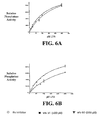
- FIGS. 6A and 6B illustrate the inhibitory activity of NOHPP (VPC12031) and alpha keto NOHPP analog (VPC12060), respectively, at the LPP3 (PAP2b) phosphatase.
- halogen or “halo” includes bromo, chloro, fluoro, and iodo.
- phosphate analog and “phosphonate analog” comprise analogs of phosphate and phosphonate wherein the phosphorous atom is in the +5 oxidation state and one or more of the oxygen atoms is replaced with a non-oxygen moiety, including for example, the phosphate analogs phosphorothioate, phosphorodithioate, phosphoroselenoate, phosphorodiselenoate, phosphoroanilothioate, phosphoranilidate, phosphoramidate, boronophosphates, and the like, including associated counterions, e.g., H. NH 4 , Na, and the like if such counterions are present.
- LPPs lyso-lipid phosphate phosphatases
- a GTP[ ⁇ 35 S] binding assay was developed to analyze directly the activation of individual LPA receptors, and thus allow the identification of LPA receptor agonists and antagonists as well as determine the relative efficacies and potencies at each receptor in a common system.
- the same results were obtained regardless of whether the recombinant receptor used exogenous G proteins (HEK293T cells) or endogenous G proteins (RH7777 cells) and further, the activities measured in the broken cell assay predicted the responses seen in whole cell assays.
- the primary assay used in the present invention for compound potency and efficacy is a valid measure of activity at LPA/Edg receptors.
- m is 0-20;
- R 2 and R 3 are independently selected from the group consisting of H, C 1 -C 6 alkyl, C 2 -C 4 alkenyl, C 2 -C 4 alkynyl, —(C 1 -C 4 alkyl)OH, —(C 1 -C 4 alkyl)NH 2 , —COOR 5 , —(C 1 -C 4 alkyl)COOR 5 , —(C 1 -C 10 alkyl)aryl, C 3 -C 8 cycloalkyl, C 3 -C 8 heterocyclic, C 7 -C 12 bicyclic, (C 5 -C 8 alkyl)aryl, (C 5 -C 8 alkenyl)aryl, (C 5 -C 8 alkynyl)aryl, and
- n 0-10;
- R 5 is selected from the group consisting of H and C 1 -C 4 alkyl
- R 12 is selected from the group consisting of halo, C 1 -C 10 alkyl, (C 0 -C 12 alkyl)aryl, (C 2 -C 12 alkenyl)aryl, (C 2 -C 12 alkynyl)aryl, —(C 1 -C 4 alkyl)OH, —(C 2 -C 12 alkenyl)OH, SR 6 , SOR 6 , NHR 6 and OR 6 ;
- R 13 is selected from the group consisting of H, halo, C 1 -C 10 alkyl, (C 0 -C 12 alkyl)aryl, (C 2 -C 12 alkenyl)aryl, (C 2 -C 12 alkynyl)aryl, —(C 1 -C 4 alkyl)OH, —(C 2 -C 12 alkenyl)OH, SR 6 , SOR 6 , NHR 6 and OR 6 ;
- R 32 is selected from the group consisting of O, NH and S;
- an LPA analog of the general structure of Formula I wherein R 1 is selected from the group consisting of C 8 -C 22 alkyl, C 8 -C 22 alkenyl, C 8 -C 22 alkanoyl, C 8 -C 22 alkenoyl,
- m is 0-20;
- R 11 is selected from the group consisting of C 1 -C 10 alkyl, C 1 -C 20 alkoxyl, C 1 -C 20 alkylthio, and C 1 -C 20 alkylamino;
- y is 1-4; n and p are independently 1-5; and
- R 4 is selected from the group consisting of hydroxy
- R 30 and R 31 are independently selected from the group consisting of C 1 -C 2 alkoxy, hydroxy,
- y is 1-4; n and p are independently 1-5;
- m is 0-20;
- R 4 is selected from the group consisting of hydroxy
- X is selected from the group consisting of CH 2 , CHOH, CHF, CF 2 , and
- R 13 , R 14 , R 15 and R 16 are independently selected from the group consisting of H, halo, C 1 -C 6 alkyl, C 1 -C 6 haloalkyl and C 1 -C 6 alkoxy;
- Z is selected from the group consisting of C 4 -C 8 cycloalkyl, C 5 -C 8 heterocyclic and C 5 -C 8 aryl;
- R 4 is selected from the group consisting of hydroxy
- R 32 is selected from the group consisting of O, NH and S;
- X is selected from the group consisting of O, NH, S, CH 2 , CHOH, CHF, CF 2 , and
- R 1 is selected from the group consisting of C 8 -C 22 alkyl, C 8 -C 22 alkenyl,
- Z is selected from the group consisting of C 3 -C 10 cycloalkyl, C 3 -C 15 bicycloalkyl, C 5 -C 10 heterocyclic and phenyl;
- R 5 is selected from the group consisting of H and C 1 -C 4 alkyl
- R 12 is selected from the group consisting of halo, C 1 -C 10 alkyl, (C 0 -C 12 alkyl)aryl, (C 2 -C 12 alkenyl)aryl, (C 2 -C 12 alkynyl)aryl, —(C 1 -C 4 alkyl)OH, —(C 2 -C 12 alkenyl)OH, SR 6 , SOR 6 , NHR 6 and OR 6 ;
- R 13 is selected from the group consisting of H, halo, C 1 -C 10 alkyl, (C 0 -C 12 alkyl)aryl, (C 2 -C 12 alkenyl)aryl, (C 2 -C 12 alkynyl)aryl, —(C 1 -C 4 alkyl)OH, —(C 2 -C 12 alkenyl)OH, SR 6 , SOR 6 , NHR 6 and OR 6 ;
- R 4 is selected from the group consisting of hydroxy
- R 32 is selected from the group consisting of O and S;
- X is selected from the group consisting of O, NH, S, CH 2 , CHOH, CHF, CF 2 , and
- R 30 and R 31 are independently selected from the group consisting of C 1 -C 2 alkoxy, C 2 -C 3 alkenyloxy, C 2 -C 3 alkynyloxy, aryloxy,
- R 1 is selected from the group consisting of
- X is selected from the group consisting of O, S, CH 2 , CHOH and CHF;
- R 30 and R 31 are independently selected from the group consisting of C 1 -C 2 alkoxy,
- X is selected from the group consisting of O, S, CH 2 , CHOH and CHF;
- R 1 is selected from the group consisting of C 8 -C 22 alkyl, C 8 -C 22 alkenyl, C 8 -C 22 alkanoyl, C 9 -C 22 alkenoyl,
- m is 0-20;
- Z is selected from the group consisting of C 5 -C 6 aryl
- n 0-10;
- R 5 is selected from the group consisting of H and C 1 -C 4 alkyl
- R 12 and R 13 are independently selected from the group consisting of H, halo, C 1 -C 16 alkyl, C 2 -C 16 alkenyl, C 2 -C 16 alkynyl, —(C 1 -C 4 alkyl)R 7 , —(C 2 -C 4 alkenyl)R 7 , —(C 1 -C 4 carboxy)R 7 and —(C 2 -C 4 alkynyl)R 7 ;
- X is selected from the group consisting of O, S, CH 2 , CHOH and CHF;
- R 30 and R 31 are independently selected from the group consisting of C 1 -C 2 alkoxy,
- R 1 is selected from the group consisting of C 8 -C 22 alkyl and C 8 -C 22 alkenyl, substituted C 8 -C 22 alkyl and substituted C 8 -C 22 alkenyl;
- R 2 and R 3 are independently selected from the group consisting of H, C 1 -C 6 alkyl, C 2 -C 4 alkenyl, C 2 -C 4 alkynyl, —(C 1 -C 4 alkyl)OH, —(C 1 -C 4 alkyl)NH 2 , —COOR 5 , —(C 1 -C 4 alkyl)COOR 5 , —(C 1 -C 10 alkyl)aryl, C 3 -C 8 cycloalkyl, C 3 -C 8 heterocyclic, C 7 -C 12 bicyclic, (C 5 -C 8 alkyl)aryl, (C 5 -C 8 alkenyl)aryl, (C 5 -C 8 alkynyl)aryl, and
- n 0-10;
- R 5 is selected from the group consisting of H and C 1 -C 4 alkyl
- R 12 is selected from the group consisting of halo, C 1 -C 10 alkyl, (C 0 -C 12 alkyl)aryl, (C 2 -C 12 alkenyl)aryl, (C 2 -C 12 alkynyl)aryl, —(C 1 -C 4 alkyl)OH, —(C 2 -C 12 alkenyl)OH, SR 1 , SOR 6 , NHR 6 and OR 6 ;
- R 4 is selected from the group consisting of
- R 32 is selected from the group consisting of O and S;
- X is selected from the group consisting of O, S, CH 2 , CHOH and CHF;
- R 30 and R 31 are independently selected from the group consisting of C 1 -C 2 alkoxy,
- X is selected from the group consisting of O, S, CH 2 , CHOH, CF 2 , CHF and
- R 30 and R 31 are independently selected from the group consisting of C 1 -C 2 alkoxy,
- R 5 is selected from the group consisting of H and C 1 -C 4 alkyl
- R 12 is selected from the group consisting of halo, C 1 -C 6 alkyl, C 1 -C 6 alkyl(C 5 -C 8 cycloalkenyl), C 1 -C 6 alkenyl(C 5 -C 8 cycloalkenyl), (C 0 -C 12 alkyl)aryl, (C 2 -C 12 alkenyl)aryl, (C 2 -C 12 alkynyl)aryl, —(C 1 -C 4 alkyl)OH, —(C 1 -C 4 alkenyl)OH, and OR 6 ;
- R 6 is selected from the group consisting of C 1 -C 16 alkyl, C 2 -C 16 alkenyl, C 2 -C 16 alkynyl, —(C 1 -C 4 carboxy)R 7 —(C 1 -C 4 alkyl)R 7 , —(C 2 -C 4 alkenyl)R 7 and —(C 2 -C 4 alkynyl)R 7 ; and
- R 7 is selected from the group consisting of optionally substituted C 3 -C 8 cycloalkyl, optionally substituted C 3 -C 8 heterocyclic, optionally substituted C 7 -C 12 bicyclic and optionally substituted C 5 -C 8 aryl, wherein the ring structures are substituted with one or more substituents selected from the group of C 1 -C 4 alkyl, C 1 -C 4 alkoxyl, halo, amino or hydroxy groups and pharmaceutically acceptable salts thereof.
- R 1 is C 13 -C 17 alkyl or C 17 -C 21 alkenyl
- R 3 is H.
- R 1 is a 15:0, 17:0, 17:1, 19:4 or 21:6 hydrocarbon
- R 3 is H
- R 4 is OPO 3 ⁇ 2 or methylene phosphonate.
- an LPA antagonist of general Formula III wherein R 1 is selected from the group consisting of C 8 -C 22 alkyl, C 8 -C 22 alkenyl;
- R 3 is H or C 1 -C 6 alkyl
- X is selected from the group consisting of O, S, CHOH, CR 17 R 18 , and
- R 30 and R 31 are independently selected from the group consisting of C 1 -C 2 alkoxy,
- R 13 , R 14 , R 15 and R 16 are independently selected from the group consisting of H, halo, C 1 -C 6 alkyl, C 1 -C 6 haloalkyl and C 1 -C 6 alkoxy;
- an LPA antagonist of general Formula III wherein R 1 is selected from the group consisting of C 8 -C 22 alkyl, C 8 -C 22 alkenyl;
- R 2 is H or C 1 -C 6 alkyl
- X is selected from the group consisting of O, S, CHOH, CR 17 R 18 , and
- R 12 is a heterocyclic substituent selected from the group consisting of
- R 2 and R 3 are independently selected from the group consisting of H and
- R 4 selected from the group consisting of
- X is selected from the group consisting of O, S, CHOH, CR 17 R 18 and
- R 17 and R 18 are independently H or F;
- R 12 is a heterocyclic substituent represented by the formula
- R 1 is C 13 -C 17 alkyl or C 17 -C 21 alkenyl
- R 17 and R 18 are both H.
- R 1 is C 13 -C 17 alkyl or C 17 -C 21 alkenyl
- R 3 is H and R 2 is
- R 13 , R 14 and R 15 are independently selected from the group consisting of H, C 1 -C 6 alkyl, C 1 -C 6 haloalkyl and C 1 -C 6 alkoxy.
- R 1 is a 15:0, 17:0, 17:1, 19:4 or 21:6 hydrocarbon
- R 3 is H and X is CH 2 , CHOH, CHF, CF 2 or
- R 1 is a 15:0, 17:0, 17:1, 19:4 or 21:6 hydrocarbon
- R 3 is H
- R 4 is OPO 3 ⁇ 2 (or a phosphor-ester derivative thereof)
- R 2 is selected from the group consisting of 2-substitutions: methylene amino; para chloro benzyl; methylene benzyl; phenyl; methyl amino benzyl; aryl, and di-methyl.
- LPA analogs wherein R 4 is hydroxyl have not demonstrated activity as LPA receptor agonists or antagonists. However, it is anticipated that such compounds will be phosphorylated in vivo upon administration.
- R 4 may be formulated as prodrugs by substituting a hydroxy for OPO 3 ⁇ 2 at R 4 .
- the OPO 3 ⁇ 2 group at R 4 can be substituted with a phospho-ester group to form a prodrug that is more readily taken up by a patient's alimentary canal.
- the corresponding enantiomers for all the LPA analogs of the present invention are also encompassed by the present invention wherein R 1 is a 15:0, 17:0, 17:1, 19:4 or 21:6 hydrocarbon, R 4 is selected from the group consisting of
- R 30 and R 31 are independently selected from the group consisting of C 1 -C 2 alkoxy,
- R 12 is a heterocyclic substituent represented by the formula
- R 13 , R 14 and R 15 are independently selected from the group consisting of H, F, C 1 -C 6 alkyl, C 1 -C 6 haloalkyl and C 1 -C 6 alkoxy;
- LPA is metabolized by a variety of conceivable routes including phosphatases, esterases and LPA acyl transferases or transported into cells.
- the LPA signal at receptors might be prolonged if the routes of degradation could be evaded or inhibited by LPA structural analogs.
- the LPA analogs of the present invention can be used, in accordance with one embodiment, to inhibit/evade endogenous LPA metabolic pathways including phosphotases, esterases, transporters and LPA acyl transferases.
- those LPA analogs of Formula I that lack and ester bond would be resistant to degradation by endogenous esterases.
- Alpha hydroxy phosphonates are well known phosphate mimetics.
- the compounds used clinically to treat osteoporosis are alpha hydroxy bisphosphonates that are analogs of pyrophosphate.
- LPA analogs were synthesized wherein the phosphate moiety is replaced by an alpha hydroxy phosphonate.
- the LPP resistant compounds of the present invention are analogous to N-oleoyl ethanolamide phosphate—a compound that has been reported to be a potent, efficacious LPA mimetic.
- the structure of this compound, N-oleoyl-1-hydroxy propylamide phosphonic acid (NOHPP) is as follows:
- NOHPP 9Z-N-(rac-3-hydroxy-3-phosphonopropyl)octadec-9-enamide.
- present invention also encompasses phospho-ester prodrug forms of this compound having the structure
- R 30 and R 31 are independently selected from the group consisting of C 1 -C 2 alkoxy,
- NOHPP inhibits LPP activity to varying degrees, and is a receptor subtype selective LPA mimetic. Specifically, NOHPP is fully efficacious (compared to LPA) at the LPA1 and LPA2 receptors, but has little activity at the LPA3 receptor. NOHPP is about one log order less potent than 1-oleoyl LPA at both the LPA1 and LPA2 but greater than two log orders less potent at LPA3. Since the LPA receptor LPA3 has been reported to be less responsive to LPA with saturated acyl groups (Bandoh et al. (1999) J. Biol. Chem. vol. 274, pp.
- NOHPP with a palmitoyl group (16:0) might have even greater selectivity for LPA1 and LPA2 vs. LPA3.
- NOHPP inhibits LPP activities with rank order potency LPP3>LPP1>>LPP2.
- the LPA analogs of the present invention may function as LPP inhibitors even though they have poor agonist LPA activity.
- the LPP resistant compounds are used as selective inhibitors of LPP activity.
- LPP resistant compounds have the general structure:
- R 1 is selected from the group consisting of C 8 -C 22 alkyl, C 8 -C 22 alkenyl, C 8 -C 22 alkanoyl, C 8 -C 22 alkenoyl,
- m is 0-20;
- R 2 and R 3 are independently selected from the group consisting of H, hydroxy, C 1 -C 6 alkyl, C 2 -C 4 alkenyl, C 2 -C 4 alkynyl, —(C 1 -C 4 alkyl)OH, —(C 1 -C 4 alkyl)NH 2 , —COOR 5 , —(C 1 -C 4 alkyl)COOR 5 , —(C 1 -C 4 alkyl)aryl, C 3 -C 8 cycloalkyl, C 3 -C 8 heterocyclic, C 7 -C 12 bicyclic, (C 5 -C 10 alkyl)aryl, (C 5 -C 8 alkenyl)aryl, (C 5 -C 8 alkynyl)aryl, and
- n 0-10;
- R 5 is selected from the group consisting of H and C 1 -C 4 alkyl
- R 12 is selected from the group consisting of halo, C 1 -C 10 alkyl, (C 0 -C 12 alkyl)aryl, (C 2 -C 12 alkenyl)aryl, (C 2 -C 12 alkynyl)aryl, —(C 1 -C 4 alkyl)OH, —(C 2 -C 12 alkenyl)OH, SR 6 , SOR 6 , NHR 6 and OR 6 ;
- R 13 is selected from the group consisting of H, halo, C 1 -C 10 alkyl, (C 0 -C 12 alkyl)aryl, (C 2 -C 12 alkenyl)aryl, (C 2 -C 12 alkynyl)aryl, —(C 1 -C 4 alkyl)OH, —(C 2 -C 12 alkenyl)OH, SR 6 , SOR 6 , NHR 6 and OR 6 ;
- R 1 is C 8 -C 22 alkanoyl or C 8 -C 22 alkenoyl
- R 2 and R 3 are selected from the group hydroxy, C 1 -C 6 alkyl, C 2 -C 4 alkenyl, C 2 -C 4 alkynyl, —(C 1 -C 4 alkyl)OH, —(C 1 -C 4 alkyl)NH 2 , —COOR 5 or
- R 13 , R 14 and R 15 are independently selected from the group consisting of H, C 1 -C 6 alkyl, C 1 -C 6 haloalkyl and C 1 -C 6 alkoxy; and q is 1.
- R 1 is selected from the group consisting of C 8 -C 22 alkyl, C 8 -C 22 alkenyl, substituted C 8 -C 22 alkyl and substituted C 8 -C 22 alkenyl;
- R 2 and R 3 are independently selected from the group consisting of H, hydroxy, C 1 -C 6 alkyl, C 2 -C 4 alkenyl, C 2 -C 4 alkynyl, —(C 1 -C 4 alkyl)OH, —(C 1 -C 4 alkyl)NH 2 , —COOR 5 , —(C 1 -C 4 alkyl)COOR 5 , —(C 1 -C 10 alkyl)aryl and
- n 1-10;
- R 5 is selected from the group consisting of H and C 1 -C 4 alkyl
- R 12 is selected from the group consisting of halo, C 1 -C 10 alkyl, (C 0 -C 12 alkyl)aryl, (C 2 -C 12 alkenyl)aryl, (C 2 -C 12 alkynyl)aryl, —(C 1 -C 4 alkyl)OH, —(C 2 -C 12 alkenyl)OH, SR 6 , SOR 6 , NHR 6 and OR 6 ;
- the LPP resistant LPA analogs have the general structure of Formula V, wherein R 1 is selected from the group consisting of C 8 -C 22 alkyl, C 8 -C 22 alkenyl;
- R 5 is H or C 1 -C 4 alkyl
- R 6 is selected from the group consisting of C 3 -C 16 alkyl, C 3 -C 16 alkenyl, —(C 1 -C 4 alkyl)R 7 ;
- R 7 is selected from the group consisting of C 3 -C 8 cycloalkyl, C 3 -C 8 heterocyclic, C 7 -C 12 bicyclic and C 5 -C 8 aryl;
- R 8 and R 9 are independently selected from the group consisting of H, hydroxyl, amino, COOH, halo, —PO 3 ; or R 8 and R 9 taken together form a keto group or a methylene group and R 30 and R 31 are independently selected from the group consisting of C 1 -C 2 alkoxy,
- R 1 is C 13 -C 17 alkyl or C 17 -C 21 alkenyl, and in one embodiment R 1 is a 15:0, 17:0, 17:1, 19:4 or 21:6 hydrocarbon and R 30 and R 31 are independently selected from the group consisting of
- R 13 , R 14 , R 15 and R 16 are independently selected from the group consisting of H, F, C 1 -C 6 alkyl, C 1 -C 6 haloalkyl and C 1 -C 6 alkoxy;
- R 30 and R 31 are independently selected from the group consisting of C 1 -C 2 alkoxy,
- R 1 is C 14 -C 18 alkyl or C 18 -C 22 alkenyl
- R 2 and R 3 are independently selected from the group consisting of H, and
- R 6 is selected from the group consisting of C 3 -C 16 alkyl, C 3 -C 16 alkenyl, —(C 1 -C 4 alkenyl)R 7 and —(C 1 -C 4 alkyl)R 7 ;
- R 7 is a heterocyclic substituent represented by the formula
- L, M, and Q are selected from the group consisting of N, O, S and CHR 15 , with the proviso that at least one of M, Q and L is not CHR 15 ;
- R 13 , R 14 and R 15 are independently selected from the group consisting of H, F, C 1 -C 6 alkyl, C 1 -C 6 haloalkyl and C 1 -C 6 alkoxy;
- R 9 is selected from the group consisting of H, hydroxyl, halo, keto and —PO 3 and R 30 and R 31 are independently selected from the group consisting of C 1 -C 2 alkoxy,
- R 1 is C 8 -C 22 alkyl or C 8 -C 22 alkenyl
- R 2 is selected from the group consisting of C 1 -C 6 alkyl, —(C 1 -C 4 alkyl)OH, —(C 1 -C 4 alkyl)NH 2 , COOR 5 , —(C 1 -C 4 alkyl)COOR 5 , and —(C 1 -C 4 alkyl)aryl;
- R 5 is selected from the group consisting of H and C 1 -C 4 alkyl.
- R 1 is C 13 -C 17 alkyl or C 17 -C 21 alkenyl
- R 2 is C 1 -C 4 alkyl, methylene hydroxyl, carbomethyl, methylene amino or benzyl;
- R 30 and R 31 are independently selected from the group consisting of C 1 -C 2 alkoxy,
- One aspect of the present invention is directed to the NOHPP analog, wls-b8L and phospho-ester derivatives and pharmaceutically acceptable salts thereof.
- the IUPAC name for wls-b8L is: (9Z)-N-(3-phosphonopropyl)octadec-9-enamide, and the trivial name is oleoylaminopropylphosphonate.
- the structure of wls-b8L is shown below:
- wls-b8L is expected to be resistant to hydrolysis by phosphohydrolases by virtue of its containing a phosphonate, rather than a phosphate, group. Furthermore this chemical entity (wls-b8L) has two additional desirable properties. Firstly, wls-b8L is distinctly more selective regarding its agonist activity at a single LPA receptor (LPA1) than VPC12031 (the alpha hydroxy analog of NOHPP) and VPC12060 (the alpha keto analog of NOHPP) and, secondly, at concentrations up to 10 micromolar, wls-b8L does not elicit aggregation of human platelets.
- LPA1 LPA receptor
- VPC12031 the alpha hydroxy analog of NOHPP
- VPC12060 the alpha keto analog of NOHPP
- novel LPA receptor agonists disclosed in the present invention are anticipated to have utility in a variety of clinical settings including but not limited to the acceleration of wound healing (including corneal wounds), the promotion of myelination (oligodendrocyte cell function) and for immuno-modulation.
- LPA has been reported (Balazs et al. Am J Physiol Regul Integr Comp Physiol, 2001 280(2):R466-472) as having activity in accelerating wound closing and increasing neoepithelial thickness.
- one embodiment of the present invention comprises administering a pharmaceutical composition comprising one or more of the LPA receptor agonists of the present invention to a mammalian species (including humans) to treat a wound, improve neuronal function or enhance an immune response of that species.
- LPA has been demonstrated to induce a modest dose-dependent increase in proliferating cells, and a marked increase in the immigration of histiocyte-macrophage cells.
- compositions comprising an LPA receptor agonist is used to treat wounds, including burns, cuts, lacerations, surgical incisions, bed sores, and slow-healing ulcers such as those seen in diabetics.
- a composition comprising an LPA agonist is administered to a patient to enhance wound repair. Typically the composition is administered locally as a topical formulation, however other standard routes of administration are also acceptable.
- R 1 is selected from the group consisting of C 8 -C 22 alkyl, C 8 -C 22 alkenyl, substituted C 8 -C 22 alkyl and substituted C 8 -C 22 alkenyl;
- R 2 is selected from the group consisting of C 1 -C 4 alkyl, C 2 -C 4 alkenyl, C 2 -C 4 alkynyl, —(C 1 -C 4 alkyl)OH, —(C 1 -C 4 alkyl)NH 2 , —(C 1 -C 4 alkyl)COOR 5 , —(C 0 -C 10 alkyl)aryl and
- Q is selected from the group consisting of N, O, S and CHR 15 ;
- R 13 , R 14 and R 15 are independently selected from the group consisting of H, C 1 -C 6 alkyl, C 1 -C 6 haloalkyl and C 1 -C 6 alkoxy;
- R 4 is represented by the formula
- R 32 is O or S
- X is selected from the group consisting of O, NH, S, CH 2 , CHOH, CO 2 H, CHF, CF 2 , and
- R 30 and R 31 are independently selected from the group consisting of C 1 -C 2 alkoxy,
- R 5 is selected from the group consisting of H and C 1 -C 4 alkyl.
- R 1 is a saturated or unsaturated, substituted or non-substituted, straight or branched chain alkyl of about 8 to 22 carbon atoms where the #1 carbon may be in the form of a carbonyl group (C ⁇ O), i.e. the alkyl chain is joined by an amide linkage.
- R 1 is oleic acid (18:1) or palmitic acid (16:0) combined in an amide linkage
- R 2 is methyl, ethyl, propyl, isopropyl, butyl, methylene hydroxy, methylene amino, methylene alkyne, phenyl, benzyl, methylene furan, methylene-2-naphthalene
- R 4 is hydroxyl (OH), phosphate (PO 4 ), or methylene phosphonate (CH 2 PO 3 ).
- R 4 is methylene phosphonate
- the carbon alpha to the phosphorus can be optionally substituted with an hydroxyl, keto, fluoro or phosphonate moieties or di-substituted with fluoro or hydroxy and phosphonate substituents, and in further embodiments where R 4 is a phospho-ester of the general structure
- R 2 is methyl, ethyl, propyl, isopropyl, butyl, methylene hydroxy, methylene amino, methylene alkyne, phenyl, benzyl, methylene furan, methylene-2-naphthalene or
- R 4 is a phospho-ester of the general structure
- R 30 and R 31 are independently selected from the group consisting of C 1 -C 2 alkoxy,
- Q is selected from the group consisting of N, O, S and CHR 16 ;
- R 13 , R 14 , R 15 and R 16 are independently selected from the group consisting of H, C 1 -C 6 alkyl, C 1 -C 6 haloalkyl and C 1 -C 6 alkoxy;
- R 4 selected from the group consisting of
- X is selected from the group consisting of O, S, CHOH, CR 17 R 18 and
- R 32 and R 33 are independently selected from the group consisting of hydroxy, C 1 -C 2 alkoxy,
- LPA receptor subtype-selective compounds having agonist and/or antagonist properties can be administered to a subject to treat or prevent a disorder of abnormal cell growth and differentiation.
- disorders include, but are not limited to, Alzheimer's disease, aberrant corpus luteum formation, osteoarthritis, osteoporosis, anovulation, Parkinson's disease, multiple sclerosis and rheumatoid arthritis.
- an LPA3 subtype-selective agonist can be used to decrease LPA1 and LPA2 mediated activities.
- an LPA3 subtype-selective agonist can be administered to a subject to treat or prevent a disorder of abnormal cell growth and differentiation, including cancer.
- the compound should be 10 ⁇ more potent, and more preferably 100 ⁇ more potent, at the preferred LPA receptor.
- LPA receptor antagonist can also be used to inhibit LPA mediated activities and thus treat disorders of abnormal cell growth and differentiation as well as inflammatory diseases. These disorders include, but are not limited to, Alzheimer's disease, aberrant corpus luteum formation, osteoarthritis, osteoporosis, anovulation, Parkinson's disease, multiple sclerosis, rheumatoid arthritis and treatment of cancer. Such antagonists can then be formulated as pharmaceutical compositions using standard pharmaceutically acceptable carriers, fillers, solubilizing agents and stabilizers known to those skilled in the art.
- compositions comprising the LPA receptor subtype-selective agonist and/or antagonist are administered to an individual in need thereof by any number of routes including, but not limited to, topical, oral, intravenous, intramuscular, intra-arterial, intramedullary, intrathecal, intraventricular, transdermal, subcutaneous, intraperitoneal, intranasal, enteral, topical, sublingual, or rectal means.
- LPA receptor antagonists are provided, wherein the antagonists have the general structure
- R 1 is selected from the group consisting of C 8 -C 22 alkyl, C 8 -C 22 alkenyl, C 8 -C 22 alkanoyl, C 8 -C 22 alkenoyl,
- m is 0-20;
- Z is selected from the group consisting of C 3 -C 10 cycloalkyl, C 3 -C 15 bicycloalkyl, C 5 -C 10 heterocyclic and phenyl;
- R 11 is selected from the group consisting of C 1 -C 10 alkyl, C 1 -C 20 alkoxyl, C 1 -C 20 alkylthio, and C 1 -C 20 alkylamino;
- n 0-10;
- R 12 is selected from the group consisting of C 1 -C 10 alkyl, (C 0 -C 12 alkyl)aryl, (C 2 -C 12 alkenyl)aryl, (C 2 -C 12 alkynyl)aryl, —(C 1 -C 4 alkyl)OH, —(C 2 -C 12 alkenyl)OH, SR 6 , SOR 6 , NHR 6 and OR 6 ;
- R 13 is selected from the group consisting of H, C 1 -C 10 alkyl, (C 0 -C 12 alkyl)aryl, (C 2 -C 12 alkenyl)aryl, (C 2 -C 12 alkynyl)aryl, —(C 1 -C 4 alkyl)OH, —(C 2 -C 12 alkenyl)OH, phenyl-4-methoxy, SR 6 , SOR 6 , NHR 6 and OR 6 ;
- R 32 is selected from the group consisting of O and S;
- R 30 and R 31 are independently selected from the group consisting of
- n 1, R 13 is H and R 12 is SR 6 , SOR 6 , NHR 6 or OR 6 .
- LPA receptor antagonists are provided, wherein the antagonists have the general structure
- R 1 is selected from the group consisting of C 8 -C 22 alkyl, C 8 -C 22 alkenyl, substituted C 8 -C 22 alkyl and substituted C 8 -C 22 alkenyl;
- R 2 and R 3 are independently selected from the group consisting of H, and
- R 6 is selected from the group consisting of C 3 -C 16 alkyl, C 3 -C 16 alkenyl, —(C 1 -C 4 alkenyl)R 7 , —(C 2 -C 4 alkynyl)R 7 and —(C 2 -C 4 alkyl)R 7 ;
- R 14 and R 15 are independently selected from the group consisting of H, C 1 -C 12 alkyl, C 2 -C 6 alkenyl, C 2 -C 6 alkynyl, halo;
- R 32 is selected from the group consisting of O and S;
- R 30 and R 31 are independently selected from the group consisting of
- R 1 is C 13 -C 17 alkyl or C 17 -C 21 alkenyl and R 4 is
- R 30 and R 31 are independently selected from the group consisting of
- R 1 is a 15:0, 17:0, 17:1, 19:4 or 21:6 hydrocarbon and R 4 is
- R 30 and R 31 are independently selected from the group consisting of
- R 2 and R 3 are independently selected from the group consisting of H, benzyl, methylene furan, methylene-2-naphthalene, methylene phenyl-4-O-benzyl, methylene phenyl-4-benzyl, methylene phenyl-4-chloro, methylene phenyl-4-trans-styrene, methylene phenyl-4-cis-styrene, methylene phenyl-4-O-2,6-dichlorobenzyl and methylene phenyl-4-phenyl.
- R 2 is H and the compound is prepared as a phospho-ester derivatives thereof.
- Additional compounds that serve as antagonists of LPA receptor function include compounds of the general formula:
- R 30 and R 31 are independently selected from the group consisting of C 1 -C 2 alkoxy,
- R 3 is selected from the group:
- VPC12249 One example of an LPA antagonist in accordance with the present invention is VPC12249. That compound, having the backbone structure of Formula II, wherein R 1 is a 17:1 hydrocarbon, R 2 is H, R 4 is OPO 3 ⁇ 2 (or a phosphos-ester or pharmaceutically acceptable salt thereof) and R 3 contains the benzyl-4-oxybenzyl functionality in the S-configuration, which confers antagonistic activity at LPA1 and LPA3 receptors.
- compound VPC31162 (structure of Formula II, wherein R 1 is a 17:1 hydrocarbon, R 2 is H, R 4 is OPO 3 ⁇ 2 (or a phosphos-ester or pharmaceutically acceptable salt thereof) and R 3 is benzyl-4-oxybenzyl-4-pentane) has antagonist activity at the LPA2 receptor, but is an agonist at LPA1 and LPA3.
- the LPA analogs that exhibit LPA receptor antagonist activity can be used to treat ischemia reperfusion type injury. Interference with the supply of oxygenated blood to tissues is defined as ischemia.
- ischemia Interference with the supply of oxygenated blood to tissues is defined as ischemia.
- the effects of ischemia are known to be progressive, such that over time cellular vitality continues to deteriorate and tissues become necrotic.
- Total persistent ischemia, with limited oxygen perfusion of tissues results in cell death and eventually in coagulation-induced necrosis despite reperfusion with arterial blood.
- a substantial body of evidence indicates that a significant proportion of the injury associated with ischemia is a consequence of the events associated with reperfusion of ischemic tissues, hence the term reperfusion injury.
- R 2 and R 3 are independently selected from the group consisting of H, and
- R 14 and R 15 are independently selected from the group consisting of H, C 1 -C 12 alkyl, C 2 -C 6 alkenyl, C 2 -C 6 alkynyl, halo;
- R 32 is selected from the group consisting of O and S;
- R 30 and R 31 are independently selected from the group consisting of
- R 1 is C 13 -C 17 alkyl or C 17 -C 21 alkenyl and R 4 is
- R 30 and R 31 are independently selected from the group consisting of
- R 1 is a 15:0, 17:0, 17:1, 19:4 or 21:6 hydrocarbon and R 4 is
- R 30 and R 31 are independently selected from the group consisting of
- the compound is VPC12249.
- the LPA receptor antagonist of the present invention can be formulated with pharmaceutically acceptable carriers, diluents, and solubilizing agents for administration to patient in need of such therapy.
- the compounds are preferably administered intravenously, but any standard route of administration is acceptable including oral delivery.
- the LPA receptor antagonist is administered prior to tissue injury, such as to a patient prior to surgery, the LPA receptor antagonist can be administered orally.
- a therapeutically effective amount of the LPA receptor antagonist is administered intravenously in a physiologically acceptable carrier as early as possible, and most preferably within four hours of a reperfusion injury. Subsequent doses of the LPA receptor antagonist, can be administered intravenously or orally.
- the appropriate receptor plasmid DNA (encoding mouse LPA1, human LPA2 or human LPA3) was mixed with equal amounts of expression plasmids (pcDNA3) encoding a mutated (C351F) rat Gi2a, cow ⁇ 1, and ⁇ 2 proteins and these DNAs were used to transfect monolayers of HEK293T cells (where ‘T’ indicates expression of the SV-40 virus large T antigen) using the calcium phosphate precipitate method. After about 60 hours, cells were harvested, membranes were prepared, aliquoted and stored at ⁇ 70° C. until use.
- the GTP[35 ⁇ S] assay was performed as described by us previously. Membranes containing 5 ug of protein were incubated in 0.1 ml GTP-binding buffer (in mM: HEPES 50, NaCl 100, MgCl2 10, pH7.5) containing 5 mg saponin, 10 mM GDP, 0.1 nM GTP[35 ⁇ S] (1200 Ci/mmol), and indicated lipid(s) for 30 minutes at 30° C. Samples were analyzed for membrane-bound radionuclide using a Brandel Cell Harvester (Gaithersburg, Md.). The C351F mutation renders the Gi2 ⁇ protein resistant to inactivation by pertussis toxin or the alkylating agent N-ethylmaleimide; however in practice background binding was sufficiently low to obviate these maneuvers.
- GTP-binding buffer in mM: HEPES 50, NaCl 100, MgCl2 10, pH7.5
- Assays for cAMP accumulation were conducted on populations of 5 ⁇ 10 5 cells stimulated with 10 mM forskolin in the presence of the phosphodiesterase inhibitor isomethylbutylxanthine (IBMX) for 15 minutes at 30° C. cAMP was measured by automated radioimmunoassay.
- IBMX isomethylbutylxanthine
- a FLIPRTM (Molecular Devices, Inc.) was used to measure intracellular calcium in A431 and HEK293T cells.
- A431 cells were seeded ( ⁇ 50,000 cells/well) in 96-well clear bottom black microplates (Corning Costar Corp., Cambridge, Mass.) and left overnight in CO 2 incubator at 37° C.
- HEK293T cells were treated likewise, but seeded onto poly D-lysine coated microplates (Becton Dickinson, Franklin Lakes, N.J.).
- A431 cells were dye-loaded with 4 ⁇ M Fluo-3 AM ester (Molecular Probes Inc., Eugene, Oreg.) in a loading buffer (1 ⁇ HBSS buffer, pH 7.4, containing 20 mM HEPES, 0.1% BSA, and 2.5 mM probenecid) for 1 hour at 37° C. Cells were then washed four times with the loading buffer and exposed in the FLIPRTM to sets of compounds. HEK293T cells were loaded with 2 ⁇ M Fluo-4 AM ester (Molecular Probes Inc., Eugene, Oreg.) in the same loading buffer without probenecid for 30 minutes and washed four times before being exposed to compounds in the FLIPRTM. In all cases, each concentration of each compound was tested in at least quintuplicate.
- KI for VPC12249 in experiments were determined by plotting the log of Dose Ratio-1 at each concentration of inhibitor against the log concentration of inhibitor.
- the X-intercept of the linear transformation is equal to the inverse log of the KI.
- Rat hepatoma RH7777 cell monolayers were transfected with the mLPA1 plasmid DNA using the calcium phosphate precipitate method and clonal populations expressing the neomycin phosphotransferase gene were selected by addition of geneticin (G418) to the culture media.
- the RH7777 cells were grown in monolayers at 37° C. in a 5% CO02/95% air atmosphere in growth media consisting of: 90% MEM, 10% fetal bovine serum, 2 mM glutamine and 1 mM sodium pyruvate.
- the left splancnic nerve was isolated via a retroperitoneal approach, and the segment distal to the suprarenal ganglion was placed on two Teflon-coated silver wires that had been bared at the tip (250 mm bare diameter; A-M Systems, Everett, Wash.).
- the nerve and wires were embedded in a dental impression material (polyvinysiloxane; Darby Dental Supply, Westbury, N.Y.), and the wound was closed around the exiting recording wires.
- LPAs (1-oleoyl and 1-palmitoyl) and dioctyl glyceryl pyrophosphate were purchased from Avanti Polar Lipids (Alabaster, Ala.).
- N-oleoyl ethanolamide phosphoric acid (NAEPA) as a lead structure
- a series of 2-substituted LPA analogs was synthesized. The details of the synthesis and analysis of the full set of compounds in this series is described in Example 2. Each compound was characterized by 1 H NMR, 13 C NMR, and mass spectrometry.
- the 2-substituted NAEPA compounds containing either hydrophilic (methylene hydroxy, carbomethyl, methylene amino) or hydrophobic moieties (methyl, ethyl, isopropyl, benzyl) exhibited agonist activity in the GTP[ ⁇ 35 S] binding assay (see Table 1).
- the smaller groups conferred greater potency, with the methyl (VPC12086), methylene hydroxy (VPC31143) and methylene amino (VPC12178) compounds being more potent than 1-oleoyl LPA at LPA1 (Table 1).
- the 2-substituent becomes bulkier, the efficacy was noticeably reduced at this receptor.
- bulkier hydrophobic side chains, although less potent were fully efficacious at the LPA2 receptor (Table 1).
- the small methyl and methylene amino groups conferred the highest potency at the LPA2 receptor but none of these compounds proved more potent than 1-oleoyl LPA at this site.
- the LPA3 receptor exhibited much the same profile as the LPA2 receptor as far as efficacies and potencies of compounds relative to LPA are concerned. However, the LPA3 receptor characteristically exhibited higher (1-2 log order) EC50 values for all compounds, including LPA. Presumably, the LPA3 receptor has an intrinsically lower affinity for LPA and LPA analogs. Like the hydrophilic compounds, each LPA receptor showed strong stereoselectivity for a hydrophobic substituent in the R2 position of Formula I.
- MAP mean arterial blood pressure
- heart rate heart rate
- postganglionic sympathetic tone was monitored in anesthetized adult rats as a function of LPA or LPA analog administration.
- LPA had been shown previously to increase blood pressure transiently in this model.
- Intravenous injection of three enantiomeric pairs of compounds resulted in a transient increase in MAP with the same pattern of stereoselectivity as observed with the in vitro assays.
- Concomitant with this rise in MAP was a decrease in heart rate and sympathetic output indicative of baroreceptor reflex response.
- the KI values for VPC12249 determined by Schild regression are 137 and 428 nM at the LPA1 and LPA3 receptors, respectively, in this assay.
- the same activity was determined with human LPA1 using a recombinant baculovirus-infected insect Sf9 cell membrane preparation.
- the antagonist activity measured in the broken cell assays was confirmed in whole cell experiments wherein LPA-induced rises in free intracellular calcium in HEK293T cells were blocked.
- This cell type expresses the LPA1 and LPA3, but not LPA2 receptor genes, as determined by RT-PCR.
- Increasing concentrations of VPC12249 resulted in parallel, rightward shifts in the LPA concentration response curves (KI 132 nM).
- the extent of rightward shift observed in the same experimental protocol with A431 cells, which express the LPA2 as well as the LPA1 and LPA3 genes RT-PCR not shown) was much smaller (KI 1970 nM) as predicted from the lack of antagonist activity of VPC12249 at the calcium-mobilizing LPA2 receptor in the GTP binding assay.
- VPC12249 The blocking action of VPC12249 was not a general post-receptor event as shown by the lack of antagonism of ATP-evoked calcium transients. Inhibition of forskolin-induced increases in cAMP levels in RH7777 cells stably expressing LPA1 was also inhibited by VPC12249.
- VPC12031 Two batches of NOHPP have been synthesized as a racemic mixture. After observing LPA mimetic activity with the first batch (named JAR1842), the material was re-synthesized, and this batch was named VPC12031. Both batches showed the same profile on thin layer chromatography (TLC) (R f 0.31, chloroform/acetone/methanol/glacial acetic acid/water, 50/15/13/12/4) whereon they migrated as a single, discrete spot. Further, the NMR spectrum of VPC12031 was as expected and the formula weight measured by mass spectrometry (419.5 daltons) agrees with that of the structure. Thus confirming the identity and high degree of purity of the NOHPP sample.
- TLC thin layer chromatography
- Example 3 To assay NOHPP and other compounds at individual LPA receptors, the adapted GTP ⁇ S binding assay of Example 3 was used. Briefly, individual, recombinant LPA receptors were express along with heterotrimeric G proteins in HEK293T cells. For the LPA receptor LPA1, which naturally couples to Gi/o proteins, membranes from rat hepatoma cells (RH7777) were also used that have been transfected only with LPA1 DNA. Membranes prepared from these cells are used to measure GTP ⁇ [ 35 S] binding as a function of test compound concentration. The resulting dose-response curves provide relative potency (EC 50 ) and efficacy (E max ) for the test compounds.
- EC 50 relative potency
- E max efficacy
- the assay is robust and free of background from the LPA receptors endogenous to HEK293T cells.
- FIGS. 2A-C we show the relative activities of LPA and NOHPP at the three known (i.e. cloned) LPA receptors (LPA1, LPA2 and LPA3).
- NOHPP is distinctly less potent and far less efficacious than LPA at LPA3, but as efficacious as, but somewhat less potent than, LPA at LPA1 and LPA2.
- alpha keto NOHPP analog VPC12060
- the structure of the alpha keto NOHPP analog is as follows:
- FIG. 4 presents data concerning the inhibition of the three phosphatases (PAP2a, PAP2b and PAP2c (aka LPP1, LPP3, LPP2, respectively) by the alpha hydroxy phosphonate analog of LPA(VPC12031) and the alpha keto phosphonate analog of LPA (wls060). Both compounds are markedly better at the PAP2b (LPP3) than PAP2a (LPP1) which in turn is better than PAP2c (LPP2). Based on the results of the activity of NOHPP, it is anticipated that analogs of NOHPP will also be active.
- PAP2a, PAP2b and PAP2c aka LPP1, LPP3, LPP2, respectively
- Example 2 To assay wls-b8L at individual LPA receptors, the GTP ⁇ S binding assay described in Example 2 was utilized. Briefly, individual recombinant LPA receptors were expressed along with heterotrimeric G proteins in HEK293T cells. Membranes prepared from these cells are used to measure GTP ⁇ ( 35 S] binding as a function of test compound concentration. The resulting dose-response curves provide relative potency (EC 50 ) and efficacy (E max ) for the test compounds. wls-b8L was found to be more potent and efficacious at LPA1 than at either LPA2 or LPA3. Also evident is the lack of receptor-type selectivity by the other phosphonate compounds.
- wls-b8L activity of wls-b8L in activating a chloride conductance in Xenopus laevis ooctyes was measured. These cells are normally activated by LPA through an endogenous receptor. However, wls-b8L does not evoke this response. However, when injected with human LPA3 or LPA2 mRNAs a very modest response to wls-b8L is detected, but only when a concentration of 10 ⁇ M is applied to the oocyte surface.
- NAEPA N-acyl ethanolamine phosphoric acid
- the amide 32 was obtained by selective acylation of tyrosine methyl ester followed by protection of the phenol as the silyl ether. Methyl ester reduction and phosphorylation followed by desilylation with tetrabutylammonium fluoride (TBAF) afforded the phosphotriester 34.
- Compound 34 was a common intermediate used to generate a series of ethers/esters by the Mitsunobu reaction or standard PyBOP chemistry, respectively. TFA deprotection afforded phosphates 35a-u.
- glucuronide 35u In the case of glucuronide 35u, catalytic hydrogenolysis using Pearlmann's catalyst deprotected the tetra-O-benzyl-D-glucopyranose moiety prior to TFA deprotection of the phosphate ester. Compound 35u is therefore the only compound in this series, which contains a saturated acyl chain.
- ketone derivatives 39a-b The synthesis of ketone derivatives 39a-b is outlined in Scheme 11. Serine was converted in three steps into Weinreb's hydroxamate 36, whose condensation with the Grignard reagent 4-benzyloxyphenyl magnesium iodide proceeded to give the expected ketone 37 in modest yield. TFA deprotection afforded the ammonium salt 38, which underwent selective acylation followed by phosphorylation. TFA deprotection provided ketones 39a-b.
- the detergent-like properties of the ligands prohibit the use of concentrations greater than 30 IM, which are required to achieve a statistically significant rightward shift in the sigmoidal curve requisite to the Ki determination. Consequently, the relative potencies, in the form of IC 50 values, are shown for the LPA3 receptor in Tables 2-4.
- the Ki values as determined by Schild regression are shown for the LPA1 receptor. That is, compounds that produced rightward, parallel shifts in the concentration-response curves as a function of antagonist concentration were considered surmountable antagonists for which a reliable Ki value could be calculated for the LPA1 receptor.
- LPA1 IC 50 values are also listed for comparison with LPA3 data. The compounds presented here were devoid of any significant activity at the LPA2 receptor.
- N-Oleoyl lead compound 26 displays potent LPA1/LPA3 dual antagonism.
- active compounds generally contained relatively long chain length and unsaturation (26 and 29e) in the N-acyl region. Palmitoyl derivatives 29c-d showed no activity at LPA1 while the unsaturated derivative 29e displayed potency comparable to lead compound 26.
- Palmitoyl derivatives 29c-d were comparable in activity to 26 while shorter chain lengths and increased unsaturation led to a marked reduction in inhibitory activity.
- compound 29e which contains a linoleoylamide shows selectivity for LPA1 while palmitoyl derivatives 29c-d were active only at LPA3.
- the outermost benzyl substituent of LPA antagonists can be modified with various ether/ester linkages to improve the potency and selectivity of lead compound 26.
- LPA receptors also clearly exhibit stereochemical recognition as has been previously reported.
- the N-oleoyl lipid chain is held constant among derivatives 35a-u as this feature has been shown to afford dual LPA1/LPA3 antagonism and good potency (Table 2).
- Table 2 When the benzyl moiety of 26 is replaced with small alkyl substituents as in compounds 35a, inhibitory activity is generally diminished.
- Relatively bulkier alkyl ethers 35f-i display varying degrees of antagonism at LPA3 but are inactive at LPA1.
- Sterically demanding electron-rich aromatic substituents in general, retain the potency of 1 at LPA3 but exhibit diminished activity at LPA1. This trend is particularly evident in compounds 35m and 35r.
- 4-npentylbenzoyl derivative 35o was inactive at both receptors, a result which implies some limitation to the steric tolerance of the LPA3 antagonist binding pocket.
- Polar groups such as 4-aminobenzoyl (35p) and glucuronide 35u were also devoid of activity.
- 2-pyridyl derivatives 35s-t were significantly more potent than lead compound 26 at LPA1 and LPA3 receptors.
- R enantiomer 35t improves on the antagonist activity of 26 by approximately one log order at each receptor ( FIGS. 2 and 3 ). Indeed, all of the R derivatives in Table 3 are more potent than their S counterparts at LPA receptors.
- N-heterocycle derivative 35t is a high affinity dual antagonist, with a Ki value of 18 nM at the LPA1 receptor and IC 50 of 175 nM at LPA3.
- compound 34 is first reacted with ROH, PBu 3 , DIAD, CH 2 Cl 2 , 18 h, 73-88%; and then TfA:CH 2 Cl 2 (1:2), 1 h, 80-90% after crystallization from MeOH/Et 2 O.
- the benzylic alcohols were either prepared in a straightforward manner from commercially available methyl esters or carboxylic acids (57n-p) or the synthetic methods have been described elsewhere [(57e-f (Haudrechy et al., Tetrahedron 2000, 56,3181-3187), 57g-m (Kuhler et al., J. Med. Chem., 1995, 38, 4906-4916)].
- ⁇ -methylene phosphonates 63a-e were realized from the N,N-dibenzylamino aldehyde 58, which was easily prepared from tyrosine following the procedure reported by Reetz et al., J. Chem. Soc., Chem. Commun. 1982, 1270-1271.
- treatment of tetraethyl methylenediphosphonate with n-butyllithium at ⁇ 78° C. generated the lithiated carbanion which condensed with 58 to afford the vinylphosphonate 59 in good yield.
- Electron-rich compounds 57g-h, 26a are more potent at the LPA 3 receptor than the unsubstituted lead compound 26a ( FIG. 2 ).
- the aforementioned derivatives neither gain nor lose activity at LPA 1 .
- the 4-methoxy-3,5-dimethylpyridine system of 57l-m has been reported to possess approximately one log order greater basicity than pyridine.
- methoxy-quinoline derivative 57o is less potent than the unsubstituted 57n at the LPA 3 receptor and more potent at LPA 1 .
- the quinoline series 57n-p exhibits a marked dual reduction in potency compared to 26a and therefore may be too sterically demanding for either antagonist binding pocket.
- Sterics in the form of pyridyl ring substitutions, presumably acting in concert with correspondingly enhanced basicity, generally improve antagonist activity at the LPA 3 receptor (26a as compared with 57g-i, l).
- Compound 57g is particularly potent and LPA 3 -selective.
- trifluoroethoxy derivative 57i is equipotent to 26a at the LPA 1 receptor and ⁇ three-fold more potent at LPA 3 .
- this compound is the most potent LPA 1 /LPA 3 dual antagonist reported to date.
- highly potent and somewhat LPA 3 -selective antagonists may be realized.
- LPA 1 IC 50 , K i , LPA 3 Compds R S/R nM nM IC 50 , nM 1 11 26a R 109 18 175 14 11 S 604 156 940 57a R 992 N/D 1688 57b S 4500 N/D 6236 57c R 735 N/D 2075 57d S >10000 N/D 6960 57e R 2840 N/D 455 57f S >10000 N/D 1093 57g R 6250 N/D 102 57h R 143 26 39 57i R 84 19 48 57j R 141 64 N/D 57k R 114 35 N/D 57l R 62 28 39 57m S 3690 N/D 561 57n R 1430 N/D 533 57o R 962 N/D 1156 57p S >10000 N/D 2600
- Antagonist potency data for phosphonate derivatives 63a-f are presented in Table 2.
- ⁇ -methylene phosphonate compounds 63a-e do not retain the inhibitory activity of their phosphate analogues at the LPA 1 receptor (Table 2).
- a truly subtypeselective LPA 3 receptor antagonist was developed (63d).
- 63d shows improved potency over lead compound 26a at the LPA 3 receptor FIG. 3 ) and is the first non-hydrolyzable and presumably phosphataseresistant LPA antagonist reported to-date.
- 63d displays no antagonism at the LPA 1 receptor ( FIG. 4 ).
Landscapes
- Chemical & Material Sciences (AREA)
- Organic Chemistry (AREA)
- Health & Medical Sciences (AREA)
- Life Sciences & Earth Sciences (AREA)
- General Health & Medical Sciences (AREA)
- Biochemistry (AREA)
- Molecular Biology (AREA)
- Crystallography & Structural Chemistry (AREA)
- Dermatology (AREA)
- Bioinformatics & Cheminformatics (AREA)
- Engineering & Computer Science (AREA)
- Chemical Kinetics & Catalysis (AREA)
- General Chemical & Material Sciences (AREA)
- Medicinal Chemistry (AREA)
- Nuclear Medicine, Radiotherapy & Molecular Imaging (AREA)
- Pharmacology & Pharmacy (AREA)
- Animal Behavior & Ethology (AREA)
- Public Health (AREA)
- Veterinary Medicine (AREA)
- Pharmaceuticals Containing Other Organic And Inorganic Compounds (AREA)
- Acyclic And Carbocyclic Compounds In Medicinal Compositions (AREA)
Abstract
Description

wherein R1 is a large lipophilic group, R2 and R3 are independently selected from the group consisting of H, C1-C6 alkyl, and


is understood to represent a mixture of the structures:


wherein R1 is selected from the group consisting of C8-C22 alkyl, C8-C22 alkenyl, C8-C22 alkanoyl, C8-C22 alkenoyl,


-
- wherein R6 is selected from the group consisting of C1-C16 alkyl, C2-C16 alkenyl, C2-C16 alkynyl, —(C1-C4 alkyl)R7, —(C2-C4 alkenyl)R7, —(C1-C4 carboxy)R7 and —(C2-C4 alkynyl)R7; and
- R7 is selected from the group consisting of optionally substituted C3-C8 cycloalkyl, optionally substituted C3-C8 heterocyclic, optionally substituted C7-C12 bicyclic and optionally substituted C5-C8 cycloalkenyl, optionally C5-C8 substituted aryl and optionally substituted C5-C8 heteroaryl, wherein the ring structures are substituted with one or more substituents selected from the group of C1-C6 alkyl, C2-C6 alkenyl, C1-C6 alkoxy, halo, C1-C6 haloalkyl, C1-C6 haloalkoxy, amino or hydroxy groups;
- y is 0-4; and


and

and pharmaceutically acceptable salts thereof.


and other phosphate and phosphonate analogs;

and

and pharmaceutically acceptable salts thereof.

wherein R1 is selected from the group consisting of C8-C22 alkyl, C8-C22 alkenyl, C8-C22 alkanoyl, C8-C22 alkenoyl,


and

wherein

is a heterocyclic substituent selected from the group consisting of


is a heterocyclic substituent selected from the group consisting of


is provided wherein R1 is selected from the group consisting of C8-C22 alkyl, C8-C22 alkenyl


is a heterocyclic substituent selected from the group consisting of


and


is a heterocyclic substituent represented by the formula


wherein R1 is selected from the group consisting of C8-C22 alkyl, C8-C22 alkenyl,


-
- wherein R6 is selected from the group consisting of C1-C16 alkyl, C2-C16 alkenyl, C2-C16 alkynyl, —(C1-C4 alkyl)R7, —(C2-C4 alkenyl)R7, —(C1-C4 carboxy)R7 and —(C2-C4 alkynyl)R7; and
- R7 is selected from the group consisting of optionally substituted C3-C8 cycloalkyl, optionally substituted C3-C8 heterocyclic, optionally substituted C7-C12 bicyclic optionally substituted C5-C8 aryl and optionally substituted C5-C8 heteroaryl, wherein the ring structures are substituted with one or more substituents selected from the group of C1-C4 alkyl, C1-C4 alkoxyl, halo, amino or hydroxy groups; and


and

and pharmaceutically acceptable salts thereof. In one embodiment, R1 is selected from the group consisting of

R3 is H and R4 is


Alternatively, R1 is selected from the group consisting of

R2 is H and R4 is


In one embodiment a compound of Formula I is provided wherein R1 is selected from the group consisting of C8-C22 alkyl, C8-C22 alkenyl, C8-C22 alkanoyl, C9-C22 alkenoyl,


with the proviso that R2 and R3 are not both H;
-
- R7 is selected from the group consisting of optionally substituted C3-C8 cycloalkyl, optionally substituted C3-C8 heterocyclic, optionally substituted C7-C12 bicyclic optionally substituted C5-C8 aryl and optionally substituted C5-C8 heteroaryl, wherein the ring structures are substituted with one or more substituents selected from the group of C1-C4 alkyl, C1-C4 alkoxyl and C1-C4 haloalkyl;
- y is 0 or 1; and
- R4 is


wherein R1 is selected from the group consisting of C8-C22 alkyl and C8-C22 alkenyl, substituted C8-C22 alkyl and substituted C8-C22 alkenyl;

-
- wherein R6 is selected from the group consisting of C1-C16 alkyl, C2-C16 alkenyl, C2-C16 alkynyl, —(C1-C4 alkyl)R7, —(C2-C4 alkenyl)R7, —(C1-C4 carboxy)R7 and —(C2-C4 alkynyl)R7; and
- R7 is selected from the group consisting of optionally substituted C3-C8 cycloalkyl, optionally substituted C3-C8 heterocyclic, optionally substituted C7-C12 bicyclic and optionally substituted C5-C8 cycloalkenyl and optionally substituted aryl, wherein the ring structures are substituted with one or more substituents selected from the group of C1-C4 alkyl, C1-C4 alkoxyl, halo, amino or hydroxy groups; and


and pharmaceutically acceptable salts thereof.

wherein R1 is selected from the group consisting of C8-C22 alkyl, C8-C22 alkenyl;


and


or other phosphonate analog;

-
- wherein R17 and R18 are independently H or halo; and,


or other phosphonate analog;

-
- wherein R17 and R18 are independently H or halo; and


wherein L and M are independently selected from the group consisting of N, O, S and CHR15;

The activities of various members of this series have been tested at the three LPA receptor subtypes and found to have LPA receptor antagonist activities.

wherein R30 and R31 are independently selected from the group consisting of C1-C2 alkoxy,

and R2 and R3 are independently selected from the group consisting of H, and


as well as phospho-ester derivatives of such compounds.

The IUPAC name of NOHPP is (9Z)-N-(rac-3-hydroxy-3-phosphonopropyl)octadec-9-enamide. The present invention also encompasses phospho-ester prodrug forms of this compound having the structure

wherein R30 and R31 are independently selected from the group consisting of C1-C2 alkoxy,


wherein R1 is selected from the group consisting of C8-C22 alkyl, C8-C22 alkenyl, C8-C22 alkanoyl, C8-C22 alkenoyl,


-
- wherein R6 is selected from the group consisting of C1-C16 alkyl, C2-C16 alkenyl, C2-C16 alkynyl, —(C1-C4 alkyl)R7, —(C2-C4 alkenyl)R7, —(C1-C4 carboxy)R7 and —(C2-C4 alynyl)R7; and
- R7 is selected from the group consisting of optionally substituted C3-C8 cycloalkyl, optionally substituted C3-C8 heterocyclic, optionally substituted C7-C12 bicyclic and optionally substituted C5-C8 cycloalkenyl and optionally substituted aryl, wherein the ring structures are substituted with one or more substituents selected from the group of C1-C4 alkyl, C1-C4 alkoxyl, halo, amino or hydroxy groups;
- q is 0-4
- R8 and R9 are independently selected from H, hydroxyl, amino, COOH, halo, —PO3; or R8 and R9 taken together form a keto group or a methylene group; and
- R10 is selected from the group consisting of O, S and NH and
- R30 and R31 are independently selected from the group consisting of C1-C2 alkoxy,

In one embodiment, R1 is C8-C22 alkanoyl or C8-C22 alkenoyl, R2 and R3 are selected from the group hydroxy, C1-C6 alkyl, C2-C4 alkenyl, C2-C4 alkynyl, —(C1-C4 alkyl)OH, —(C1-C4 alkyl)NH2, —COOR5 or


wherein R1 is selected from the group consisting of C8-C22 alkyl, C8-C22 alkenyl, substituted C8-C22 alkyl and substituted C8-C22 alkenyl;

-
- wherein R6 is selected from the group consisting of C1-C16 alkyl, C2-C16 alkenyl, C2-C16 alkynyl, —(C1-C4 alkyl)R7, —(C2-C4 alkenyl)R7, —(C1-C4 carboxy)R7 and —(C2-C4 alkynyl)R7; and
- R7 is selected from the group consisting of optionally substituted C3-C8 cycloalkyl, optionally substituted C3-C8 heterocyclic, optionally substituted C7-C12 bicyclic and optionally substituted C5-C8 cycloalkenyl, optionally substituted C5-C8 aryl and optionally substituted C5-C8 heteroaryl, wherein the ring structures are substituted with one or more substituents selected from the group of C1-C4 alkyl, C1-C4 alkoxyl, halo, amino or hydroxy groups; and
- R8 and R9 are independently selected from H, hydroxyl, amino, COOH, halo, —PO3; or R8 and R9 taken together form a keto group or a methylene group, and
- R30 and R31 are independently selected from the group consisting of C1-C2 alkoxy,

-
- R2 and R3 are independently selected from the group consisting of H, hydroxy, C1-C6 alkyl, C2-C4 alkenyl, C2-C4 alkynyl, —(C1-C4 alkyl)OH, —(C1-C4 alkyl)NH2, —COOR5, —(C1-C4 alkyl)COOR5, —(C1-C4 alkyl)aryl and


In one embodiment, R1 is C13-C17 alkyl or C17-C21 alkenyl, and in one embodiment R1 is a 15:0, 17:0, 17:1, 19:4 or 21:6 hydrocarbon and R30 and R31 are independently selected from the group consisting of


wherein R1 is C13-C17 alkyl or C17-C21 alkenyl, R8 and R9 are independently selected from the group consisting of H, hydroxy, fluoro, or R8 and R9 together form a keto group; Q is selected from the group consisting of N, O, S and CHR16;


wherein R1 is C14-C18 alkyl or C18-C22 alkenyl;


wherein R1 is C8-C22 alkyl or C8-C22 alkenyl;


as well as phospho-ester derivatives of such compounds.


wherein R1 is selected from the group consisting of C8-C22 alkyl, C8-C22 alkenyl, substituted C8-C22 alkyl and substituted C8-C22 alkenyl;

wherein Q is selected from the group consisting of N, O, S and CHR15;


and


wherein R30 and R31 are independently selected from the group consisting of C1-C2 alkoxy,


wherein R30 and R31 are independently selected from the group consisting of C1-C2 alkoxy,


wherein R2 is


-
- wherein R17 and R18 are independently H or F; and


wherein R1 is selected from the group consisting of C8-C22 alkyl, C8-C22 alkenyl, C8-C22 alkanoyl, C8-C22 alkenoyl,


-
- wherein R6 is selected from the group consisting of C1-C16 alkyl, C2-C16 alkenyl, C2-C16 alkynyl, —(C1-C4 alkyl)R7, —(C2-C4 alkenyl)R7, —(C1-C4 carboxy)R7 and —(C2-C4 alkynyl)R7;
- R7 is selected from the group consisting of optionally substituted C3-C8 cycloalkyl, optionally substituted C3-C8 heterocyclic, optionally substituted C7-C12 bicyclic, optionally substituted C5-C8 cycloalkenyl and optionally substituted aryl; and


In one embodiment n is 1, R13 is H and R12 is SR6, SOR6, NHR6 or OR6.

wherein R1 is selected from the group consisting of C8-C22 alkyl, C8-C22 alkenyl, substituted C8-C22 alkyl and substituted C8-C22 alkenyl;


with the proviso that R2 and R3 are not both H. In one embodiment, R1 is C13-C17 alkyl or C17-C21 alkenyl and R4 is


and R3 is selected from the group:
| Compound name and Stereochemistry |
| (R) | (S) | ||
 |
VPC12204 | VPC12249 |
 |
VPC12250 | VPC12229 |
 |
VPC12193 | VPC12227 |
 |
VPC12235 | VPC12228 |
 |
VPC12284 | |
 |
VPC13061 | VPC13082 |
 |
VPC13063 | VPC13086 |
 |
VPC13066 | |
 |
VPC13069 | VPC13089 |

wherein R1 is selected from the group consisting of C8-C22 alkyl, C8-C22 alkenyl, substituted C8-C22 alkyl and substituted C8-C22 alkenyl;


In one embodiment the compound is VPC12249.


| TABLE 1 |
| Agonist activities of 2-substituted N-oleoyl EPA compounds |
| A1 | A2 | A3 |
| LP | LP | LP | |||||
| Functional | EC50 | EC50 | EC50 | ||||
| Lipid | Group | (nM) | Emax | (nM) | Emax | (nM) | Emax |
| LPA | 11.7 | 100 | 6.8 | 100 | 262.5 | 100 | |
| 31143 | Methylene | 7.9 | 161.4 | 116.5 | 104.6 | 321.8 | 106.6 |
| Hydroxy | |||||||
| 31144 | Methylene | >5000 | 91.1 | 2645 | 77.3 | 4349 | N/A |
| Hydroxy | |||||||
| 31139 | Carbo | 18.5 | 66.2 | 29.2 | 91.3 | 1484 | 84.4 |
| Methyl | |||||||
| 31180 | Carbo | 1215 | 50.6 | 3461 | 60.2 | >5000 | 3.8 |
| Methyl | |||||||
| 12178 | Methylene | 4.9 | 98.7 | 50.3 | 103.2 | 683.7 | 102.9 |
| Amino | |||||||
| 12048 | Methylene | >5000 | 9.4 | >5000 | 36.4 | >5000 | 3.8 |
| Amino | |||||||
| 12086 | Methyl | 3.4 | 107.6 | 18.3 | 95.2 | 112.6 | 93.4 |
| 12101 | ″ | 2900 | 48.1 | >5000 | 6.9 | >5000 | 9.7 |
| 12109 | Ethyl | 35.8 | 66.8 | 161.9 | 92.6 | 1083 | 83.5 |
| 12115 | ″ | 1580 | 62.3 | 4280 | 85.6 | 4980 | 89.3 |
| 12098 | Isopropyl | 73.8 | 51 | 799.3 | 85.8 | 3815 | 45.3 |
| 40105 | ″ | >5000 | 14.8 | >5000 | 27.6 | >5000 | 27.7 |
| 12084 | Benzyl | 38.4 | 23.7 | 268.3 | 97 | 351.4 | 78.7 |
| 12255 | ″ | >5000 | N/A | >5000 | N/A | >5000 | N/A |


To more thoroughly elucidate the structural parameters that contribute to potency and selectivity in LPA antagonism, a series of VPC12249 (26) analogues were prepared and analyzed. Syntheses of all the compounds listed in Tables 2-4 are described in Schemes 9-11. As outlined in


| TABLE 4 |
| Comparison of ketone derivatives 14a-b with tyrosine-based |
| |
| LPA1 | LPA3 IC50 |
| Compounds | S/R | IC50 (nM) | Ki (nM) | (nM) |
| 26 | S | 5210 | 137 | 6450 |
| 39a | S | >10,000 | N/D | >10,000 |
| 39b | R | 2490 | N/D | >10,000 |
| TABLE 5 |
| Inhibitory evaluation of aryl ether derivatives 7a-n as compared with |
 |
| LPA1 |
| IC50, | Ki, | LPA3 | |||
| Compds | R | S/R | nM | nM | IC50, |
| 111 26a |
 |
R | 109 | 18 | 175 |
| 1411 |
 |
S | 604 | 156 | 940 |
| 57a |
 |
R | 992 | N/D | 1688 |
| 57b |
 |
S | 4500 | N/D | 6236 |
| 57c |
 |
R | 735 | N/D | 2075 |
| 57d |
 |
S | >10000 | N/D | 6960 |
| 57e |
 |
R | 2840 | N/D | 455 |
| 57f |
 |
S | >10000 | N/D | 1093 |
| 57g |
 |
R | 6250 | N/D | 102 |
| 57h |
 |
R | 143 | 26 | 39 |
| 57i |
 |
R | 84 | 19 | 48 |
| 57j |
 |
R | 141 | 64 | N/D |
| 57k |
 |
R | 114 | 35 | N/D |
| 57l |
 |
R | 62 | 28 | 39 |
| 57m |
 |
S | 3690 | N/D | 561 |
| 57n |
 |
R | 1430 | N/D | 533 |
| 57o |
 |
R | 962 | N/D | 1156 |
| 57p |
 |
S | >10000 | N/D | 2600 |
| TABLE 6 |
| Inhibitory evaluation of polar head group derivatives 13a-f as |
| compared with |
 |
| LPA1 | LPA3 |
| IC50, | Ki, | IC50, | |||||
| Compds | X | Ar | R | S/R | nM | nM | nM |
| 26a | —O— |
 |
Oleoyl, 17:1b | R | 109 | 18 | 175 |
| 63a | —CH2— |
 |
Oleoyl, 17:1b | R | >10000 | N/D | >10000 |
| 63b | —CH2— |
 |
Oleoyl, 17:1b | S | >10000 | N/D | >10000 |
| 63c | —CH2— |
 |
n-C15H31 | S | >10000 | N/D | 1050 |
| 63d | —CH2— |
 |
Oleoyl, 17:1b | R | >10000 | N/ |
150 |
| 63e | —CH2— |
 |
Oleoyl, 17:1b | S | >10000 | N/ |
4000 |
| 63f | —CH(OH)—a |
 |
Oleoyl, 17:1b | S | 4230 | N/D | 232 |
| aTo the best of our knowledge, the additional stereocenter (a to P) is racemic. 13f is therefore evaluated as the unseparated mixture of diastereomers. | |||||||
| b18 carbon chain; cis double bond between C-9 and C-10 from the carbonyl. | |||||||
Claims (17)


Priority Applications (1)
| Application Number | Priority Date | Filing Date | Title |
|---|---|---|---|
| US11/579,658 US7820703B2 (en) | 2004-05-06 | 2005-05-06 | Lysophosphatidic acid receptor selective antagonists |
Applications Claiming Priority (3)
| Application Number | Priority Date | Filing Date | Title |
|---|---|---|---|
| US56852004P | 2004-05-06 | 2004-05-06 | |
| PCT/US2005/016011 WO2005115150A2 (en) | 2004-05-06 | 2005-05-06 | Novel lysophosphatidic acid receptor selective antagonists |
| US11/579,658 US7820703B2 (en) | 2004-05-06 | 2005-05-06 | Lysophosphatidic acid receptor selective antagonists |
Publications (2)
| Publication Number | Publication Date |
|---|---|
| US20080318901A1 US20080318901A1 (en) | 2008-12-25 |
| US7820703B2 true US7820703B2 (en) | 2010-10-26 |
Family
ID=35451353
Family Applications (1)
| Application Number | Title | Priority Date | Filing Date |
|---|---|---|---|
| US11/579,658 Expired - Lifetime US7820703B2 (en) | 2004-05-06 | 2005-05-06 | Lysophosphatidic acid receptor selective antagonists |
Country Status (3)
| Country | Link |
|---|---|
| US (1) | US7820703B2 (en) |
| EP (1) | EP1750722A4 (en) |
| WO (1) | WO2005115150A2 (en) |
Families Citing this family (7)
| Publication number | Priority date | Publication date | Assignee | Title |
|---|---|---|---|---|
| MX2007001661A (en) | 2004-08-13 | 2007-04-23 | Praecis Pharm Inc | Methods and compositions for modulating sphingosine-1-phosphate (s1p) receptor activity. |
| EP2054424A1 (en) * | 2006-07-24 | 2009-05-06 | University Of Virginia Patent Foundation | Vinyl phosphonate lysophosphatidic acid receptor antagonists |
| US20100239501A1 (en) * | 2007-06-12 | 2010-09-23 | Riken | Gene sensitive to bone/joint disease and use thereof |
| PT2303270T (en) | 2008-05-05 | 2017-08-25 | Sanofi Sa | DERIVATIVES FROM CYLOPENTANOCARBOXYLIC ACID REPLACED BY ACILAMINO AND ITS USE AS PHARMACEUTICAL PRODUCTS |
| AR079022A1 (en) | 2009-11-02 | 2011-12-21 | Sanofi Aventis | DERIVATIVES OF CYCLIC CARBOXYL ACID SUBSTITUTED WITH ACILAMINE, ITS USE AS PHARMACEUTICAL PRODUCTS, PHARMACEUTICAL COMPOSITION AND PREPARATION METHOD |
| JP6039559B2 (en) | 2010-09-02 | 2016-12-07 | メルク パテント ゲゼルシャフト ミット ベシュレンクテル ハフツングMerck Patent Gesellschaft mit beschraenkter Haftung | Pyrazolopyridinone derivatives as LPA receptor antagonists |
| AU2020225354B2 (en) * | 2019-02-21 | 2025-03-06 | Centre National De La Recherche Scientifique | Structured molecular vectors for anti-inflammatory compounds and uses thereof |
Citations (21)
| Publication number | Priority date | Publication date | Assignee | Title |
|---|---|---|---|---|
| USRE29829E (en) | 1974-05-16 | 1978-11-07 | Scm Corporation | Insect repellent compositions and process having an N-substituted hydroxyalkyl amine as an active ingredient |
| US4331685A (en) | 1978-05-12 | 1982-05-25 | Kureha Kagaku Kogyo Kabushiki Kaisha | Control of plant virus diseases |
| US4845292A (en) | 1988-01-13 | 1989-07-04 | American Home Products Corporation | Hydroxy containing amines as phospholipase A2 inhibitors |
| US4906767A (en) | 1987-06-30 | 1990-03-06 | The University Of Southern Mississippi | Monomers with urea groups |
| US5219884A (en) | 1988-09-14 | 1993-06-15 | Taito Co., Ltd. | Immunosuppressant |
| DE4225488A1 (en) | 1992-07-30 | 1994-02-03 | Schering Ag | New bi:cyclooctane carbacyclin analogues - useful as thromboxane A2 and prostaglandin H2 antagonists |
| US5307308A (en) | 1990-08-22 | 1994-04-26 | Mitsubishi Denki Kabushiki Kaisha | Semiconductor memory device comprising one or more high-resistance elements |
| US5405988A (en) | 1991-10-11 | 1995-04-11 | Schering Aktiengesellschaft | 9-substituted bicyclo[3.3.0]octane derivatives, process for their production and their pharmaceutical use |
| WO1996018600A1 (en) | 1994-12-14 | 1996-06-20 | Lifegroup S.P.A. | Amides of mono and bicarboxylic acids with amino acids or glycosamines, selectively active on the cannabinoid peripheral receptor |
| WO1996031124A1 (en) | 1995-04-07 | 1996-10-10 | Zeneca Limited | Herbicidal aza bisphosphonic acids and compositions containing the same |
| US5604229A (en) | 1992-10-21 | 1997-02-18 | Yoshitomi Pharmaceutical Industries, Ltd. | 2-amino-1,3-propanediol compound and immunosuppressant |
| US5773475A (en) | 1997-03-17 | 1998-06-30 | Research Corporation Technologies, Inc. | Anticonvulsant enantiomeric amino acid derivatives |
| WO1998045249A1 (en) | 1997-04-04 | 1998-10-15 | Yoshitomi Pharmaceutical Industries, Ltd. | 2-aminopropane-1,3-diol compounds, medicinal use thereof, and intermediates in synthesizing the same |
| WO1999047101A2 (en) | 1998-03-18 | 1999-09-23 | Lxr Biotechnology, Inc. | Compositions containing lysophosphatidic acids which inhibit apoptosis and uses thereof |
| WO2001057057A1 (en) | 2000-02-07 | 2001-08-09 | Merck & Co., Inc. | Mammalian sphingosine-1-phosphate phosphatase |
| WO2001071022A2 (en) | 2000-03-17 | 2001-09-27 | The University Of Tennessee Research Corporation | Lpa receptor agonists and antagonists and methods of use |
| WO2002006268A1 (en) | 2000-07-13 | 2002-01-24 | Sankyo Company, Limited | Amino alcohol derivatives |
| WO2002018395A1 (en) | 2000-08-31 | 2002-03-07 | Merck & Co., Inc. | Phosphate derivatives as immunoregulatory agents |
| WO2002029001A2 (en) | 2000-10-03 | 2002-04-11 | University Of Virginian Patent Foundation | Novel lysophosphatidic acid receptor agonists and antagonists |
| US6380177B1 (en) | 1999-06-25 | 2002-04-30 | Atairgin Technologies, Inc. | LPA analogs as agonists of the Edg2 LPA receptor |
| EP1156054B1 (en) | 1999-02-23 | 2004-04-14 | Ono Pharmaceutical Co., Ltd. | Drugs containing phosphoric acid derivatives as the active ingredient |
-
2005
- 2005-05-06 EP EP05780061A patent/EP1750722A4/en not_active Withdrawn
- 2005-05-06 US US11/579,658 patent/US7820703B2/en not_active Expired - Lifetime
- 2005-05-06 WO PCT/US2005/016011 patent/WO2005115150A2/en not_active Ceased
Patent Citations (22)
| Publication number | Priority date | Publication date | Assignee | Title |
|---|---|---|---|---|
| USRE29829E (en) | 1974-05-16 | 1978-11-07 | Scm Corporation | Insect repellent compositions and process having an N-substituted hydroxyalkyl amine as an active ingredient |
| US4331685A (en) | 1978-05-12 | 1982-05-25 | Kureha Kagaku Kogyo Kabushiki Kaisha | Control of plant virus diseases |
| US4906767A (en) | 1987-06-30 | 1990-03-06 | The University Of Southern Mississippi | Monomers with urea groups |
| US4845292A (en) | 1988-01-13 | 1989-07-04 | American Home Products Corporation | Hydroxy containing amines as phospholipase A2 inhibitors |
| US5219884A (en) | 1988-09-14 | 1993-06-15 | Taito Co., Ltd. | Immunosuppressant |
| US5307308A (en) | 1990-08-22 | 1994-04-26 | Mitsubishi Denki Kabushiki Kaisha | Semiconductor memory device comprising one or more high-resistance elements |
| US5405988A (en) | 1991-10-11 | 1995-04-11 | Schering Aktiengesellschaft | 9-substituted bicyclo[3.3.0]octane derivatives, process for their production and their pharmaceutical use |
| DE4225488A1 (en) | 1992-07-30 | 1994-02-03 | Schering Ag | New bi:cyclooctane carbacyclin analogues - useful as thromboxane A2 and prostaglandin H2 antagonists |
| US5604229A (en) | 1992-10-21 | 1997-02-18 | Yoshitomi Pharmaceutical Industries, Ltd. | 2-amino-1,3-propanediol compound and immunosuppressant |
| WO1996018600A1 (en) | 1994-12-14 | 1996-06-20 | Lifegroup S.P.A. | Amides of mono and bicarboxylic acids with amino acids or glycosamines, selectively active on the cannabinoid peripheral receptor |
| WO1996031124A1 (en) | 1995-04-07 | 1996-10-10 | Zeneca Limited | Herbicidal aza bisphosphonic acids and compositions containing the same |
| US5773475A (en) | 1997-03-17 | 1998-06-30 | Research Corporation Technologies, Inc. | Anticonvulsant enantiomeric amino acid derivatives |
| WO1998045249A1 (en) | 1997-04-04 | 1998-10-15 | Yoshitomi Pharmaceutical Industries, Ltd. | 2-aminopropane-1,3-diol compounds, medicinal use thereof, and intermediates in synthesizing the same |
| WO1999047101A2 (en) | 1998-03-18 | 1999-09-23 | Lxr Biotechnology, Inc. | Compositions containing lysophosphatidic acids which inhibit apoptosis and uses thereof |
| EP1156054B1 (en) | 1999-02-23 | 2004-04-14 | Ono Pharmaceutical Co., Ltd. | Drugs containing phosphoric acid derivatives as the active ingredient |
| US6380177B1 (en) | 1999-06-25 | 2002-04-30 | Atairgin Technologies, Inc. | LPA analogs as agonists of the Edg2 LPA receptor |
| WO2001057057A1 (en) | 2000-02-07 | 2001-08-09 | Merck & Co., Inc. | Mammalian sphingosine-1-phosphate phosphatase |
| WO2001071022A2 (en) | 2000-03-17 | 2001-09-27 | The University Of Tennessee Research Corporation | Lpa receptor agonists and antagonists and methods of use |
| WO2002006268A1 (en) | 2000-07-13 | 2002-01-24 | Sankyo Company, Limited | Amino alcohol derivatives |
| WO2002018395A1 (en) | 2000-08-31 | 2002-03-07 | Merck & Co., Inc. | Phosphate derivatives as immunoregulatory agents |
| WO2002029001A2 (en) | 2000-10-03 | 2002-04-11 | University Of Virginian Patent Foundation | Novel lysophosphatidic acid receptor agonists and antagonists |
| US7169818B2 (en) | 2000-10-03 | 2007-01-30 | University Of Virginia Patent Foundation | Lysophosphatidic acid receptor agonists and antagonists |
Non-Patent Citations (22)
| Title |
|---|
| Bektas, Meryem et al. The G Protein-Coupled Receptor GPR4 Suppresses ERK Activation in a Ligand-Independent Manner. Biochemistry. 2003. vol. 42, 12181-12191. |
| Choi, D. et al. Synthesis and Anticonvulsant Activities of N-Benzyl-2-acetamidopropionamide Derivatives, J. Med. Chem., 1996.vol. 39, 1907-1916. |
| Ferry, Gilles et al. A Nanomolar Inhibitor of Autotaxin : Discovery, Synthesis and Applications as a Pharmacological Tool. J. Pharmacology And Experimental Therapeutics. 2008. vol. 327, No. 3, 809-819. |
| Gajewiak, Joanna et al. Alkoxymethylenephosphonate Analogues of (Lyso) phosphatidic Acid Stimulate Signaling Networks Coupled to the LPA2 Receptor. Chem. Med. Chem. 2007. vol. 2, 1789-1798. |
| Heasley et al., Bioorganic & Medicinal Chemistry, 2004, 14(11), pp. 2735-2740. * |
| Heasley, Brian H. et al. A novel series of 2-pyridyl-containing compounds as lysophosphatidic acid receptor antagonists: development of a nonhydrolyzable LPA3 receptor-selective antagonist. Bioorganic & Medicinal Chemistry Letters. 2004. 4069-4074. |
| Heasley, Brian H. et al. Initial structure-activity relationships of lysophosphatidic acid receptor antagonists: discovery of a high-affinity LPA1/LPA3 receptor antagonist. Bioorganic & Medicinal Chemistry Letters. 2004. 2735-2740. |
| Heise, C. et al., Molecular Pharmacology, 60, 1173-1180, (2001). |
| Hopper et al., "Facile synthesis of lysophospholipids Containing unsaturated fatty acid chains," Tetrahedron Letters, vol. 37 ( No. 44), p. 7871-7874, 1996. |
| Jiang, Guowei et al. alpha-Substituted Phosphonate Analogues of Lysophosphatidic Acid (LPA) Selectively Inhibit Production and Action of LPA. Chem. Med. Chem. 2007. vol. 2, 679-690. |
| Jiang, Guowei et al. α-Substituted Phosphonate Analogues of Lysophosphatidic Acid (LPA) Selectively Inhibit Production and Action of LPA. Chem. Med. Chem. 2007. vol. 2, 679-690. |
| Lynch, K., et al., Molecular Pharmacology, 52, 75-81, (1997). |
| Ortiz, A., et al., J. Med. Chem., 38, 2681-2691, (1995): Erratum 40, 4168, (1997). |
| Santos, Webster L. et al. Synthesis and biological evaluation of phosphonic and thiophosphoric acid derivatives of lysophosphatidic acid. Bioorganic & Medicinal Chemistry Letters. 2004. 3473-3476. |
| Santos, Webster L., et al. The Molecular Pharmacology of Lysophosphatidate Signaling. Annals New York Academy of Sciences. 2000. vol. 905, 232-241. |
| Sturtz, Georges et al. About an original pharmacomodulation approach of methotrexate: synthesis of gem-diphosphonic amethopterine and N-10 deaza analogs. Academie des Sciences. 1990. 739-742. |
| Sturtz, Georges et al. Analogues phosphonoglutamiques d'amethopterine (methotrexate). Eur. J. Med. Chem. 1984. vol. 19, No. 3, 267-273. |
| Sturtz,G., et al. A study of the deliver-targeting concept applied to antineoplastic drugs active on human osteosarcoma. I. Synthesis & biolocial activity in nude mice carrying human osteosarcoma xenografts of gem-bisphosphonic methotrexate analogues.Eur. J. Med. Chem. 1992., vol. 27, 825-833. |
| Sugiura, Takayuki et al. Biochemical Characterization of the Interaction of Lipid Phosphoric Acids with Human Platelets: Comparison with Platelet Activating Factor. Archives of Biochemistry & Biophysics. 1994. vol. 311(2), 358-368. |
| Tsukamoto, Takashi et al. Mechanism-Based Inhibition of Human Folypolyglutamate Synthetase: Design, Synthesis, and Biochemical Characterization of a Phophapeptide Mimic of the Tetrahedral Intermediate. Archives of Biochemistry & Biophysics, 1998. vol. 355(1),109-118. |
| Xu, Yong et al. Alkyl lysophosphatidic acid and fluoromethylene phosphonate analogs as metabolically-stabilized agonists for LPA receptors. Bioorganic & Medicinal Chemistry Letters. 2004. 5323-5328. |
| Xu, Yong et al. Structure-Activity Relationships of Fluorinated Lysophosphatidic Acid Analogues. J. Medicinal Chemistry. 2005. vol. 48, 3319-3327. |
Also Published As
| Publication number | Publication date |
|---|---|
| EP1750722A2 (en) | 2007-02-14 |
| US20080318901A1 (en) | 2008-12-25 |
| EP1750722A4 (en) | 2010-03-10 |
| WO2005115150A3 (en) | 2006-05-04 |
| WO2005115150A2 (en) | 2005-12-08 |
Similar Documents
| Publication | Publication Date | Title |
|---|---|---|
| US7169818B2 (en) | Lysophosphatidic acid receptor agonists and antagonists | |
| US7638637B2 (en) | Orally available sphingosine 1-phosphate receptor agonists and antagonists | |
| US7241790B2 (en) | Compounds active in spinigosine 1-phosphate signaling | |
| US10166250B2 (en) | Bicyclic aryl sphingosine 1-phosphate analogs | |
| EP1383778B1 (en) | Agonists and antagonists of sphingosine-1-phosphate receptors | |
| US20090105315A1 (en) | Phenyl-cycloalkyl and phenyl-heterocyclic derivatives as s1p receptor agonists | |
| US8283339B2 (en) | Vinyl phosphonate lysophosphatidic acid receptor antagonists | |
| US20090253760A1 (en) | Hydrindane analogs having sphingosine 1-phosphate receptor agonist activity | |
| US20100240617A1 (en) | Bicyclic sphingosine 1-phosphate analogs | |
| JP2009526073A (en) | Bicyclic sphingosine-1-phosphate receptor analogs | |
| US7960588B2 (en) | Benzyl cycloalkyl sphingosine 1-phosphate receptor modulators | |
| US20100016258A1 (en) | Phosphonate derivatives as autotaxin inhibitors | |
| US7820703B2 (en) | Lysophosphatidic acid receptor selective antagonists | |
| US20050107447A1 (en) | Novel lysophosphatidic acid receptor agonists and antagonists | |
| US8541582B2 (en) | Phenyl bicyclic methyl amine derivatives as sphingosine-1 phosphate receptors modulators |
Legal Events
| Date | Code | Title | Description |
|---|---|---|---|
| AS | Assignment |
Owner name: UNIVERSITY OF VIRGINIA, VIRGINIA Free format text: ASSIGNMENT OF ASSIGNORS INTEREST;ASSIGNORS:LYNCH, KEVIN R.;MACDONALD, TIMOTHY L.;HEASLEY, BRIAN H.;REEL/FRAME:018559/0621;SIGNING DATES FROM 20050609 TO 20050628 Owner name: UNIVERSITY OF VIRGINIA PATENT FOUNDATION, VIRGINIA Free format text: ASSIGNMENT OF ASSIGNORS INTEREST;ASSIGNOR:UNIVERSITY OF VIRGINIA;REEL/FRAME:018561/0868 Effective date: 20050628 Owner name: UNIVERSITY OF VIRGINIA, VIRGINIA Free format text: ASSIGNMENT OF ASSIGNORS INTEREST;ASSIGNORS:LYNCH, KEVIN R.;MACDONALD, TIMOTHY L.;HEASLEY, BRIAN H.;SIGNING DATES FROM 20050609 TO 20050628;REEL/FRAME:018559/0621 |
|
| AS | Assignment |
Owner name: NATIONAL INSTITUTES OF HEALTH (NIH), U.S. DEPT. OF Free format text: EXECUTIVE ORDER 9424, CONFIRMATORY LICENSE;ASSIGNOR:UNIVERSITY OF VIRGINIA;REEL/FRAME:021030/0705 Effective date: 20061117 |
|
| STCF | Information on status: patent grant |
Free format text: PATENTED CASE |
|
| REMI | Maintenance fee reminder mailed | ||
| FPAY | Fee payment |
Year of fee payment: 4 |
|
| SULP | Surcharge for late payment | ||
| MAFP | Maintenance fee payment |
Free format text: PAYMENT OF MAINTENANCE FEE, 8TH YR, SMALL ENTITY (ORIGINAL EVENT CODE: M2552) Year of fee payment: 8 |
|
| MAFP | Maintenance fee payment |
Free format text: PAYMENT OF MAINTENANCE FEE, 12TH YR, SMALL ENTITY (ORIGINAL EVENT CODE: M2553); ENTITY STATUS OF PATENT OWNER: SMALL ENTITY Year of fee payment: 12 |