US7807704B2 - Bicyclic, nitrogen-containing compounds modulating CXCR4 and/or CCXCKR2 - Google Patents
Bicyclic, nitrogen-containing compounds modulating CXCR4 and/or CCXCKR2 Download PDFInfo
- Publication number
- US7807704B2 US7807704B2 US11/731,695 US73169507A US7807704B2 US 7807704 B2 US7807704 B2 US 7807704B2 US 73169507 A US73169507 A US 73169507A US 7807704 B2 US7807704 B2 US 7807704B2
- Authority
- US
- United States
- Prior art keywords
- nhr
- group
- alkyl
- nhc
- methyl
- Prior art date
- Legal status (The legal status is an assumption and is not a legal conclusion. Google has not performed a legal analysis and makes no representation as to the accuracy of the status listed.)
- Active, expires
Links
- 0 CC.N.[1*]C([2*])(C)CC([3*])([4*])N([5*])[6*].c1ccc2c(c1)CCC2 Chemical compound CC.N.[1*]C([2*])(C)CC([3*])([4*])N([5*])[6*].c1ccc2c(c1)CCC2 0.000 description 9
- RGSFGYAAUTVSQA-UHFFFAOYSA-N C1CCCC1 Chemical compound C1CCCC1 RGSFGYAAUTVSQA-UHFFFAOYSA-N 0.000 description 4
- GXRCSNNAFLSAHW-UHFFFAOYSA-N CN(CCNC(=O)CN1C=CC2=C1C=C(C1=CC(C#N)=CC=C1)C=C2)C1CCCCC1 Chemical compound CN(CCNC(=O)CN1C=CC2=C1C=C(C1=CC(C#N)=CC=C1)C=C2)C1CCCCC1 GXRCSNNAFLSAHW-UHFFFAOYSA-N 0.000 description 4
- UHOVQNZJYSORNB-UHFFFAOYSA-N N.c1ccccc1 Chemical compound N.c1ccccc1 UHOVQNZJYSORNB-UHFFFAOYSA-N 0.000 description 4
- ONZWZRPFEAKPOP-UHFFFAOYSA-N C=CC1=CC=C(C2=CC3=C(C=C2)C=CN3CC(=O)NCCN(C)C2CCCCC2)C=C1 Chemical compound C=CC1=CC=C(C2=CC3=C(C=C2)C=CN3CC(=O)NCCN(C)C2CCCCC2)C=C1 ONZWZRPFEAKPOP-UHFFFAOYSA-N 0.000 description 3
- OTDYXRQQJCGXBC-UHFFFAOYSA-N CC1=CC(F)=C(C2=CC3=C(C=C2)C=CN3CC(=O)NCCN(C)C2CCCCC2)C=C1 Chemical compound CC1=CC(F)=C(C2=CC3=C(C=C2)C=CN3CC(=O)NCCN(C)C2CCCCC2)C=C1 OTDYXRQQJCGXBC-UHFFFAOYSA-N 0.000 description 3
- NKMDRFOHZRYCFR-UHFFFAOYSA-N CC1=CC=C(C2=CC3=C(C=C2)C=C(C(=O)O)N3CC(=O)NCCN(C)C2CCCCC2)C=C1 Chemical compound CC1=CC=C(C2=CC3=C(C=C2)C=C(C(=O)O)N3CC(=O)NCCN(C)C2CCCCC2)C=C1 NKMDRFOHZRYCFR-UHFFFAOYSA-N 0.000 description 3
- HOZLJCPQYHJWKP-UHFFFAOYSA-N CC1=CC=C(C2=CC3=C(C=C2)N(CC(=O)NCCN(C)C2CCCCC2)C=C3)C=C1 Chemical compound CC1=CC=C(C2=CC3=C(C=C2)N(CC(=O)NCCN(C)C2CCCCC2)C=C3)C=C1 HOZLJCPQYHJWKP-UHFFFAOYSA-N 0.000 description 3
- RPTMZVPPSVIZIQ-UHFFFAOYSA-N CN(CCNC(=O)CN1C=CC2=C1C=C(C1=CC=CC=C1)C=C2)C1CCCCC1 Chemical compound CN(CCNC(=O)CN1C=CC2=C1C=C(C1=CC=CC=C1)C=C2)C1CCCCC1 RPTMZVPPSVIZIQ-UHFFFAOYSA-N 0.000 description 3
- RRPXPNSGLNWHHB-UHFFFAOYSA-N CN1C=CC2=CC(C3=CC4=C(C=C3)C=CN4CC(=O)NCCN(C)C3CCCCC3)=CC=C21 Chemical compound CN1C=CC2=CC(C3=CC4=C(C=C3)C=CN4CC(=O)NCCN(C)C3CCCCC3)=CC=C21 RRPXPNSGLNWHHB-UHFFFAOYSA-N 0.000 description 3
- OIWPTIIPMIMQTA-UHFFFAOYSA-N COC1=CC=C(C2=CC3=C(C=C2)C=CN3CC(=O)NCCN(C)C2CCCCC2)C=C1 Chemical compound COC1=CC=C(C2=CC3=C(C=C2)C=CN3CC(=O)NCCN(C)C2CCCCC2)C=C1 OIWPTIIPMIMQTA-UHFFFAOYSA-N 0.000 description 3
- IQGDNWYHRZTBQW-UHFFFAOYSA-N CC(=O)NC1=CC=C(C2=CC3=C(C=C2)C=CN3CC(=O)NCCN(C)C2CCCCC2)C=C1 Chemical compound CC(=O)NC1=CC=C(C2=CC3=C(C=C2)C=CN3CC(=O)NCCN(C)C2CCCCC2)C=C1 IQGDNWYHRZTBQW-UHFFFAOYSA-N 0.000 description 2
- OITNUYZKBYSYQC-UHFFFAOYSA-N CC(C)OC1=CC=C(C2=CC3=C(C=C2)C=CN3CC(=O)NCCN(C)C2CCCCC2)C=C1 Chemical compound CC(C)OC1=CC=C(C2=CC3=C(C=C2)C=CN3CC(=O)NCCN(C)C2CCCCC2)C=C1 OITNUYZKBYSYQC-UHFFFAOYSA-N 0.000 description 2
- VLCXSBNBICRZNI-UHFFFAOYSA-N CC1=C(C)C=C(C2=CC3=C(C=C2)C=CN3CC(=O)NCCN(C)C2CCCCC2)C=C1 Chemical compound CC1=C(C)C=C(C2=CC3=C(C=C2)C=CN3CC(=O)NCCN(C)C2CCCCC2)C=C1 VLCXSBNBICRZNI-UHFFFAOYSA-N 0.000 description 2
- PYFZFADCXVNMJL-UHFFFAOYSA-N CC1=C(C2=CC3=C(C=C2)C=CN3CC(=O)NCCN(C)C2CCCCC2)C=CC=C1 Chemical compound CC1=C(C2=CC3=C(C=C2)C=CN3CC(=O)NCCN(C)C2CCCCC2)C=CC=C1 PYFZFADCXVNMJL-UHFFFAOYSA-N 0.000 description 2
- GXEQQOGINRAKCK-UHFFFAOYSA-N CC1=C(F)C=C(C2=CC3=C(C=C2)C=CN3CC(=O)NCCN(C)C2CCCCC2)C=C1 Chemical compound CC1=C(F)C=C(C2=CC3=C(C=C2)C=CN3CC(=O)NCCN(C)C2CCCCC2)C=C1 GXEQQOGINRAKCK-UHFFFAOYSA-N 0.000 description 2
- LTFFPTRGCNVKJC-UHFFFAOYSA-N CC1=C(F)C=CC(C2=CC3=C(C=C2)C=CN3CC(=O)NCCN(C)C2CCCCC2)=C1 Chemical compound CC1=C(F)C=CC(C2=CC3=C(C=C2)C=CN3CC(=O)NCCN(C)C2CCCCC2)=C1 LTFFPTRGCNVKJC-UHFFFAOYSA-N 0.000 description 2
- RJDGHZLENSJXHD-UHFFFAOYSA-N CC1=CC(C)=CC(C2=CC3=C(C=C2)C=CN3CC(=O)NCCN(C)C2CCCCC2)=C1 Chemical compound CC1=CC(C)=CC(C2=CC3=C(C=C2)C=CN3CC(=O)NCCN(C)C2CCCCC2)=C1 RJDGHZLENSJXHD-UHFFFAOYSA-N 0.000 description 2
- BAHHRBLXKQGMAV-UHFFFAOYSA-N CC1=CC(C2=CC3=C(C=C2)C=CN3CC(=O)NCCN(C)C2CCCCC2)=CC=N1 Chemical compound CC1=CC(C2=CC3=C(C=C2)C=CN3CC(=O)NCCN(C)C2CCCCC2)=CC=N1 BAHHRBLXKQGMAV-UHFFFAOYSA-N 0.000 description 2
- ALUZJSYBXWIACX-UHFFFAOYSA-N CC1=CC=C(C2=C/C3=C(C=CN3CC(=O)NCCN3CCCC3)/C=C\2)C=C1 Chemical compound CC1=CC=C(C2=C/C3=C(C=CN3CC(=O)NCCN3CCCC3)/C=C\2)C=C1 ALUZJSYBXWIACX-UHFFFAOYSA-N 0.000 description 2
- XRJVUUFRMOFFLJ-UHFFFAOYSA-N CC1=CC=C(C2=CC3=C(C=C2)C=CN3CC(=O)NCCN(C)C2CCCCC2)C=C1 Chemical compound CC1=CC=C(C2=CC3=C(C=C2)C=CN3CC(=O)NCCN(C)C2CCCCC2)C=C1 XRJVUUFRMOFFLJ-UHFFFAOYSA-N 0.000 description 2
- LTNFMLJEZLURMI-UHFFFAOYSA-N CC1=CC=C(C2=CC3=C(C=C2)C=NN3CC(=O)NCCN(C)C2CCCCC2)C=C1 Chemical compound CC1=CC=C(C2=CC3=C(C=C2)C=NN3CC(=O)NCCN(C)C2CCCCC2)C=C1 LTNFMLJEZLURMI-UHFFFAOYSA-N 0.000 description 2
- MXUXNGSIWXKUPW-UHFFFAOYSA-N CC1=CC=C(C2=CC3=C(C=C2)OC(=O)N3CC(=O)NCCN(C)C2CCCCC2)C=C1 Chemical compound CC1=CC=C(C2=CC3=C(C=C2)OC(=O)N3CC(=O)NCCN(C)C2CCCCC2)C=C1 MXUXNGSIWXKUPW-UHFFFAOYSA-N 0.000 description 2
- AIGFLIAKIGTBST-UHFFFAOYSA-N CC1=CC=C(C2=CC=CC3=C2C=CN3CC(=O)NCCN(C)C2CCCCC2)C=C1 Chemical compound CC1=CC=C(C2=CC=CC3=C2C=CN3CC(=O)NCCN(C)C2CCCCC2)C=C1 AIGFLIAKIGTBST-UHFFFAOYSA-N 0.000 description 2
- LDBMBIVQGPKSBS-UHFFFAOYSA-N CC1=CC=CC(C2=CC3=C(C=C2)C=CN3CC(=O)NCCN(C)C2CCCCC2)=C1 Chemical compound CC1=CC=CC(C2=CC3=C(C=C2)C=CN3CC(=O)NCCN(C)C2CCCCC2)=C1 LDBMBIVQGPKSBS-UHFFFAOYSA-N 0.000 description 2
- HXQJJIOIYANXTN-UHFFFAOYSA-N CCC1=CC=C(C2=CC3=C(C=C2)C=CN3CC(=O)NCCN(C)C2CCCCC2)C=C1 Chemical compound CCC1=CC=C(C2=CC3=C(C=C2)C=CN3CC(=O)NCCN(C)C2CCCCC2)C=C1 HXQJJIOIYANXTN-UHFFFAOYSA-N 0.000 description 2
- QQMPBBPQTUPCSD-UHFFFAOYSA-N CCCCC1=CC=C(C2=CC3=C(C=C2)C=CN3CC(=O)NCCN(C)C2CCCCC2)C=C1 Chemical compound CCCCC1=CC=C(C2=CC3=C(C=C2)C=CN3CC(=O)NCCN(C)C2CCCCC2)C=C1 QQMPBBPQTUPCSD-UHFFFAOYSA-N 0.000 description 2
- QMCVRTMJOWTVNX-UHFFFAOYSA-N CN(C)C1=CC=C(C2=CC3=C(C=C2)C=CN3CC(=O)NCCN(C)C2CCCCC2)C=C1 Chemical compound CN(C)C1=CC=C(C2=CC3=C(C=C2)C=CN3CC(=O)NCCN(C)C2CCCCC2)C=C1 QMCVRTMJOWTVNX-UHFFFAOYSA-N 0.000 description 2
- JRDKOAWJVXRGTQ-UHFFFAOYSA-N CN(CCNC(=O)CC1=CNC2=C1C=CC=C2)C1CCCCC1 Chemical compound CN(CCNC(=O)CC1=CNC2=C1C=CC=C2)C1CCCCC1 JRDKOAWJVXRGTQ-UHFFFAOYSA-N 0.000 description 2
- AHUSCDJPZNTXLB-UHFFFAOYSA-N CN(CCNC(=O)CN1C=CC2=C1C(Br)=CC=C2)C1CCCCC1 Chemical compound CN(CCNC(=O)CN1C=CC2=C1C(Br)=CC=C2)C1CCCCC1 AHUSCDJPZNTXLB-UHFFFAOYSA-N 0.000 description 2
- ABOBZOFRYVNQMW-UHFFFAOYSA-N CN(CCNC(=O)CN1C=CC2=C1C([N+](=O)[O-])=CC=C2)C1CCCCC1 Chemical compound CN(CCNC(=O)CN1C=CC2=C1C([N+](=O)[O-])=CC=C2)C1CCCCC1 ABOBZOFRYVNQMW-UHFFFAOYSA-N 0.000 description 2
- UFOWHWLKNGARHB-UHFFFAOYSA-N CN(CCNC(=O)CN1C=CC2=C1C=C(/C1=C/C3=C(C=CC=C3)O1)C=C2)C1CCCCC1 Chemical compound CN(CCNC(=O)CN1C=CC2=C1C=C(/C1=C/C3=C(C=CC=C3)O1)C=C2)C1CCCCC1 UFOWHWLKNGARHB-UHFFFAOYSA-N 0.000 description 2
- QAXXQLXRBAZNQN-UHFFFAOYSA-N CN(CCNC(=O)CN1C=CC2=C1C=C(C(=O)C1=CC=CC=C1)C=C2)C1CCCCC1 Chemical compound CN(CCNC(=O)CN1C=CC2=C1C=C(C(=O)C1=CC=CC=C1)C=C2)C1CCCCC1 QAXXQLXRBAZNQN-UHFFFAOYSA-N 0.000 description 2
- FMIPVIZFPHZOPP-UHFFFAOYSA-N CN(CCNC(=O)CN1C=CC2=C1C=C(C1=CC=C(C#N)C=C1)C=C2)C1CCCCC1 Chemical compound CN(CCNC(=O)CN1C=CC2=C1C=C(C1=CC=C(C#N)C=C1)C=C2)C1CCCCC1 FMIPVIZFPHZOPP-UHFFFAOYSA-N 0.000 description 2
- YDWFAZMGLOZCTO-UHFFFAOYSA-N CN(CCNC(=O)CN1C=CC2=C1C=C(C1=CC=C(C(F)(F)F)C=C1)C=C2)C1CCCCC1 Chemical compound CN(CCNC(=O)CN1C=CC2=C1C=C(C1=CC=C(C(F)(F)F)C=C1)C=C2)C1CCCCC1 YDWFAZMGLOZCTO-UHFFFAOYSA-N 0.000 description 2
- NHJABAGIUDJZLS-UHFFFAOYSA-N CN(CCNC(=O)CN1C=CC2=C1C=C(C1=CC=C(C(N)=O)C=C1)C=C2)C1CCCCC1 Chemical compound CN(CCNC(=O)CN1C=CC2=C1C=C(C1=CC=C(C(N)=O)C=C1)C=C2)C1CCCCC1 NHJABAGIUDJZLS-UHFFFAOYSA-N 0.000 description 2
- LUSHGIYZLUKHAT-UHFFFAOYSA-N CN(CCNC(=O)CN1C=CC2=C1C=C(C1=CC=C(Cl)C(Cl)=C1)C=C2)C1CCCCC1 Chemical compound CN(CCNC(=O)CN1C=CC2=C1C=C(C1=CC=C(Cl)C(Cl)=C1)C=C2)C1CCCCC1 LUSHGIYZLUKHAT-UHFFFAOYSA-N 0.000 description 2
- DXMCEKXHYAGJTB-UHFFFAOYSA-N CN(CCNC(=O)CN1C=CC2=C1C=C(C1=CC=C(Cl)C=C1)C=C2)C1CCCCC1 Chemical compound CN(CCNC(=O)CN1C=CC2=C1C=C(C1=CC=C(Cl)C=C1)C=C2)C1CCCCC1 DXMCEKXHYAGJTB-UHFFFAOYSA-N 0.000 description 2
- SLUHABKJHKQMGD-UHFFFAOYSA-N CN(CCNC(=O)CN1C=CC2=C1C=C(C1=CC=C(F)C=C1)C=C2)C1CCCCC1 Chemical compound CN(CCNC(=O)CN1C=CC2=C1C=C(C1=CC=C(F)C=C1)C=C2)C1CCCCC1 SLUHABKJHKQMGD-UHFFFAOYSA-N 0.000 description 2
- MSVKHLJNSLSVCO-UHFFFAOYSA-N CN(CCNC(=O)CN1C=CC2=C1C=C(C1=CC=NC=C1)C=C2)C1CCCCC1 Chemical compound CN(CCNC(=O)CN1C=CC2=C1C=C(C1=CC=NC=C1)C=C2)C1CCCCC1 MSVKHLJNSLSVCO-UHFFFAOYSA-N 0.000 description 2
- XCGRXDQLBSUZNL-UHFFFAOYSA-N CN(CCNC(=O)CN1C=CC2=C1C=C(C1=CN=C3C=CC=CC3=C1)C=C2)C1CCCCC1 Chemical compound CN(CCNC(=O)CN1C=CC2=C1C=C(C1=CN=C3C=CC=CC3=C1)C=C2)C1CCCCC1 XCGRXDQLBSUZNL-UHFFFAOYSA-N 0.000 description 2
- QWXPPEIJBUFNTH-UHFFFAOYSA-N CN(CCNC(=O)CN1C=CC2=C1C=C(C1=NC=CC=C1)C=C2)C1CCCCC1 Chemical compound CN(CCNC(=O)CN1C=CC2=C1C=C(C1=NC=CC=C1)C=C2)C1CCCCC1 QWXPPEIJBUFNTH-UHFFFAOYSA-N 0.000 description 2
- ACDXSVUJXFQVPS-UHFFFAOYSA-N CN(CCNC(=O)CN1C=CC2=C1C=CC(C1=CC=C(F)C=C1)=C2)C1CCCCC1 Chemical compound CN(CCNC(=O)CN1C=CC2=C1C=CC(C1=CC=C(F)C=C1)=C2)C1CCCCC1 ACDXSVUJXFQVPS-UHFFFAOYSA-N 0.000 description 2
- MYVSIWMTKKWQMO-UHFFFAOYSA-N CN(CCNC(=O)CN1C=NC2=C1C=CC=N2)C1CCCCC1 Chemical compound CN(CCNC(=O)CN1C=NC2=C1C=CC=N2)C1CCCCC1 MYVSIWMTKKWQMO-UHFFFAOYSA-N 0.000 description 2
- BKXVQOMSDYSODX-JYFHCDHNSA-N [H][C@@]12CCCC[C@@]1([H])N(CCNC(=O)CN1C=CC3=C1C=C(C1=CC=C(C)C=C1)C=C3)CCC2 Chemical compound [H][C@@]12CCCC[C@@]1([H])N(CCNC(=O)CN1C=CC3=C1C=C(C1=CC=C(C)C=C1)C=C3)CCC2 BKXVQOMSDYSODX-JYFHCDHNSA-N 0.000 description 2
- IBTLQJQBKXHSRF-UHFFFAOYSA-N BC(=O)N1C(C(=O)OC)=CC2=C1C=CC=C2C1=CC=C(C)C=C1.BC(=O)N1C=CC2=C1C=CC=C2C1=CC=C(C)C=C1.BrC1=CC=CC2=C1C=CN2.CC1=CC=C(B(O)O)C=C1.CC1=CC=C(C2=CC=CC3=C2C=C(C(=O)NCCN(C)C2CCCCC2)N3)C=C1.CC1=CC=C(C2=CC=CC3=C2C=C(C(=O)O)N3)C=C1.CC1=CC=C(C2=CC=CC3=C2C=CN3)C=C1.CN(CCN)C1CCCCC1 Chemical compound BC(=O)N1C(C(=O)OC)=CC2=C1C=CC=C2C1=CC=C(C)C=C1.BC(=O)N1C=CC2=C1C=CC=C2C1=CC=C(C)C=C1.BrC1=CC=CC2=C1C=CN2.CC1=CC=C(B(O)O)C=C1.CC1=CC=C(C2=CC=CC3=C2C=C(C(=O)NCCN(C)C2CCCCC2)N3)C=C1.CC1=CC=C(C2=CC=CC3=C2C=C(C(=O)O)N3)C=C1.CC1=CC=C(C2=CC=CC3=C2C=CN3)C=C1.CN(CCN)C1CCCCC1 IBTLQJQBKXHSRF-UHFFFAOYSA-N 0.000 description 1
- BNRNAKTVFSZAFA-UHFFFAOYSA-N C(C1)CC2C1CCCC2 Chemical compound C(C1)CC2C1CCCC2 BNRNAKTVFSZAFA-UHFFFAOYSA-N 0.000 description 1
- ULBGGWUHXKHZCK-UHFFFAOYSA-L C1=CC=C(P(C2=CC=CC=C2)C2=CC=CC=C2)C=C1.C1=CC=C(P(C2=CC=CC=C2)C2=CC=CC=C2)C=C1.CC1=C(N)C=C(Br)C=C1.CC1=CC=C(B(O)O)C=C1.CC1=CC=C(C2=CC(N)=C(C)C=C2)C=C1.CC1=CC=C(C2=CC3=C(C=C2)C(I)=NN3)C=C1.CC1=CC=C(C2=CC3=C(C=C2)C(I)=NN3CC(=O)O)C=C1.CC1=CC=C(C2=CC3=C(C=C2)C=NN3)C=C1.CCOC(=O)CN1N=C(I)C2=C1C=C(C1=CC=C(C)C=C1)C=C2.CN(CCN)C1CCCCC1.Cl[Pd]Cl Chemical compound C1=CC=C(P(C2=CC=CC=C2)C2=CC=CC=C2)C=C1.C1=CC=C(P(C2=CC=CC=C2)C2=CC=CC=C2)C=C1.CC1=C(N)C=C(Br)C=C1.CC1=CC=C(B(O)O)C=C1.CC1=CC=C(C2=CC(N)=C(C)C=C2)C=C1.CC1=CC=C(C2=CC3=C(C=C2)C(I)=NN3)C=C1.CC1=CC=C(C2=CC3=C(C=C2)C(I)=NN3CC(=O)O)C=C1.CC1=CC=C(C2=CC3=C(C=C2)C=NN3)C=C1.CCOC(=O)CN1N=C(I)C2=C1C=C(C1=CC=C(C)C=C1)C=C2.CN(CCN)C1CCCCC1.Cl[Pd]Cl ULBGGWUHXKHZCK-UHFFFAOYSA-L 0.000 description 1
- OTEYYGXWQTUXHH-UHFFFAOYSA-N C=CC1=CC=C(C2=C/C3=C(C=CN3CC(=O)NCCN(C)C3CCCCC3)/C=C\2)C=C1.CC1=C(F)C=C(C2=C/C3=C(C=CN3CC(=O)NCCN(C)C3CCCCC3)/C=C\2)C=C1.CC1=CC(F)=C(C2=C/C3=C(C=CN3CC(=O)NCCN(C)C3CCCCC3)/C=C\2)C=C1.CN(CCNC(=O)CN1C=CC2=C1/C=C(C1=CC=C(C(N)=O)C=C1)\C=C/2)C1CCCCC1 Chemical compound C=CC1=CC=C(C2=C/C3=C(C=CN3CC(=O)NCCN(C)C3CCCCC3)/C=C\2)C=C1.CC1=C(F)C=C(C2=C/C3=C(C=CN3CC(=O)NCCN(C)C3CCCCC3)/C=C\2)C=C1.CC1=CC(F)=C(C2=C/C3=C(C=CN3CC(=O)NCCN(C)C3CCCCC3)/C=C\2)C=C1.CN(CCNC(=O)CN1C=CC2=C1/C=C(C1=CC=C(C(N)=O)C=C1)\C=C/2)C1CCCCC1 OTEYYGXWQTUXHH-UHFFFAOYSA-N 0.000 description 1
- MOLSYVZTYVELHC-UHFFFAOYSA-N CC(=O)C1=CC2=C(C=C(C3=CC=C(C)C=C3)C=C2)N1CC(=O)NCCN(C)C1CCCCC1.CC(C)C1=CC=C(C2=CC3=C(C=C2)C=CN3CC(=O)NCCN2CCCC3CCCCC32)C=C1.CC1=CC=C(C2=CC3=C(C=C2)C=CN3CC(=O)NCCN2CCCCC2)C=C1.CN(CCCNC(=O)CN1C=CC2=C1C(C1=CC=C(F)C=C1)=CC=C2)C1CCCCC1.CN(CCNC(=O)CN1C=CC2=C1C([N+](=O)[O-])=CC=C2)C1CCCCC1.O=C(CN1C=CC2=C1C(C1=CC=C(F)C=C1)=CC=C2)NCCN1CCCC2CCCCC21 Chemical compound CC(=O)C1=CC2=C(C=C(C3=CC=C(C)C=C3)C=C2)N1CC(=O)NCCN(C)C1CCCCC1.CC(C)C1=CC=C(C2=CC3=C(C=C2)C=CN3CC(=O)NCCN2CCCC3CCCCC32)C=C1.CC1=CC=C(C2=CC3=C(C=C2)C=CN3CC(=O)NCCN2CCCCC2)C=C1.CN(CCCNC(=O)CN1C=CC2=C1C(C1=CC=C(F)C=C1)=CC=C2)C1CCCCC1.CN(CCNC(=O)CN1C=CC2=C1C([N+](=O)[O-])=CC=C2)C1CCCCC1.O=C(CN1C=CC2=C1C(C1=CC=C(F)C=C1)=CC=C2)NCCN1CCCC2CCCCC21 MOLSYVZTYVELHC-UHFFFAOYSA-N 0.000 description 1
- LYGFQCHVLKHARE-UHFFFAOYSA-N CC(=O)N(CCNC(=O)C(C)C)C1CCCCC1.CC(C)C(=O)NCCCN(C)C1CCOCC1.CC(C)C(=O)NCCCNC1CC2CCC1CC2.CC(C)C(=O)NCCCNC1CCCCC1.CC(C)C(=O)NCCCNC1CCN(C)CC1.CC(C)C(=O)NCCN1CCC2CCCCC2C1 Chemical compound CC(=O)N(CCNC(=O)C(C)C)C1CCCCC1.CC(C)C(=O)NCCCN(C)C1CCOCC1.CC(C)C(=O)NCCCNC1CC2CCC1CC2.CC(C)C(=O)NCCCNC1CCCCC1.CC(C)C(=O)NCCCNC1CCN(C)CC1.CC(C)C(=O)NCCN1CCC2CCCCC2C1 LYGFQCHVLKHARE-UHFFFAOYSA-N 0.000 description 1
- HSGQDTXALWVEEY-UHFFFAOYSA-N CC(C)(C)C1=C(F)C=NC=C1.CC(C)(C)C1=CC(C#N)=CC=C1.CC(C)(C)C1=CC=C(Cl)C(Cl)=C1.CC(C)(C)C1=CC=CC(F)=C1.CC(C)(C)C1=CC=NC=C1.CC(C)(C)C1=NC=CC=C1.CC1=CC(C(C)(C)C)=CC=C1F.COC1=CC(C(C)(C)C)=CC=C1 Chemical compound CC(C)(C)C1=C(F)C=NC=C1.CC(C)(C)C1=CC(C#N)=CC=C1.CC(C)(C)C1=CC=C(Cl)C(Cl)=C1.CC(C)(C)C1=CC=CC(F)=C1.CC(C)(C)C1=CC=NC=C1.CC(C)(C)C1=NC=CC=C1.CC1=CC(C(C)(C)C)=CC=C1F.COC1=CC(C(C)(C)C)=CC=C1 HSGQDTXALWVEEY-UHFFFAOYSA-N 0.000 description 1
- FKMWQNNAFVNRHN-UHFFFAOYSA-N CC(C)(C)NC(=O)CN1CCCCC1.CC(C)C(=O)NCCN1CCCC(C2=CC=CC=C2)C1.CC(C)C(=O)NCCN1CCCC2=C1C=CC=C2.CC(C)C(=O)NCCN1CCN(C)CC1.CC(C)C(=O)NCCN1CCN(F)(F)CC1.CC(C)C(=O)NCCNCC1=NC=CS1.CC1CCCN(CCNC(=O)C(C)C)C1 Chemical compound CC(C)(C)NC(=O)CN1CCCCC1.CC(C)C(=O)NCCN1CCCC(C2=CC=CC=C2)C1.CC(C)C(=O)NCCN1CCCC2=C1C=CC=C2.CC(C)C(=O)NCCN1CCN(C)CC1.CC(C)C(=O)NCCN1CCN(F)(F)CC1.CC(C)C(=O)NCCNCC1=NC=CS1.CC1CCCN(CCNC(=O)C(C)C)C1 FKMWQNNAFVNRHN-UHFFFAOYSA-N 0.000 description 1
- JQSOBVQWJNNROC-UHFFFAOYSA-N CC(C)C(=O)NC(C)(C)CN1CCCC1.CC(C)C(=O)NCCN1CCCC(C)(C)C1.CC(CN1CCCC1)NC(=O)C(C)C.CC(CN1CCCCC1)NC(=O)C(C)C.CC1CC(C)CN(CCNC(=O)C(C)C)C1 Chemical compound CC(C)C(=O)NC(C)(C)CN1CCCC1.CC(C)C(=O)NCCN1CCCC(C)(C)C1.CC(CN1CCCC1)NC(=O)C(C)C.CC(CN1CCCCC1)NC(=O)C(C)C.CC1CC(C)CN(CCNC(=O)C(C)C)C1 JQSOBVQWJNNROC-UHFFFAOYSA-N 0.000 description 1
- XQACSMQIWSYXPO-UHFFFAOYSA-N CC(C)C(=O)NC(CC1=CC=CC=C1)CN1CCCC1.CC(C)C(=O)NCCCN1CCOCC1.CC(C)C(=O)NCCN(C)C1CCOCC1.CC(C)C(=O)NCCN1CCCCC1C.CC(C)C(=O)NCCN1CCOCC1.CC(C)C(=O)NCCN1CCSCC1.CCN(CCNC(=O)C(C)C)C1CCCCC1 Chemical compound CC(C)C(=O)NC(CC1=CC=CC=C1)CN1CCCC1.CC(C)C(=O)NCCCN1CCOCC1.CC(C)C(=O)NCCN(C)C1CCOCC1.CC(C)C(=O)NCCN1CCCCC1C.CC(C)C(=O)NCCN1CCOCC1.CC(C)C(=O)NCCN1CCSCC1.CCN(CCNC(=O)C(C)C)C1CCCCC1 XQACSMQIWSYXPO-UHFFFAOYSA-N 0.000 description 1
- WFRLOJNCWHIRGH-UHFFFAOYSA-N CC(C)C(=O)NCC(C)N1CCCC1.CC(C)C(=O)NCC1CCCCN1C.CC(C)C(=O)NCC1CCCCN1C1CCCCC1.CC(C)C(=O)NCCCN1C(C)CCCC1C.CC(C)C(=O)NCCN(C)C1=CC=CC=C1.CC(C)C(=O)NCCNC1CCOC1.CC1CCN(CCNC(=O)C(C)C)CC1 Chemical compound CC(C)C(=O)NCC(C)N1CCCC1.CC(C)C(=O)NCC1CCCCN1C.CC(C)C(=O)NCC1CCCCN1C1CCCCC1.CC(C)C(=O)NCCCN1C(C)CCCC1C.CC(C)C(=O)NCCN(C)C1=CC=CC=C1.CC(C)C(=O)NCCNC1CCOC1.CC1CCN(CCNC(=O)C(C)C)CC1 WFRLOJNCWHIRGH-UHFFFAOYSA-N 0.000 description 1
- MDSBNTCBFRMZEZ-UHFFFAOYSA-N CC(C)C(=O)NCCC1CCCCN1C1CCCCC1.CC(C)C(=O)NCCCCN(C)C1CCCCC1.CC(C)C(=O)NCCCN(C(C)C)C1CCCCC1.CC(C)C(=O)NCCCN(C(C)C)C1CCCCC1.CC(C)C(=O)NCCCNCC1=CC=CC=N1.CC(C)C(=O)NCCN(C1=CC=CC=C1)C1CCCCC1.CN(CCN(C)C1CCCCC1)C(=O)C(C)(C)C Chemical compound CC(C)C(=O)NCCC1CCCCN1C1CCCCC1.CC(C)C(=O)NCCCCN(C)C1CCCCC1.CC(C)C(=O)NCCCN(C(C)C)C1CCCCC1.CC(C)C(=O)NCCCN(C(C)C)C1CCCCC1.CC(C)C(=O)NCCCNCC1=CC=CC=N1.CC(C)C(=O)NCCN(C1=CC=CC=C1)C1CCCCC1.CN(CCN(C)C1CCCCC1)C(=O)C(C)(C)C MDSBNTCBFRMZEZ-UHFFFAOYSA-N 0.000 description 1
- BVTGRSFBFQXAQY-UHFFFAOYSA-N CC(C)C(=O)NCCCN(C)C1CCCCC1.CC(C)C(=O)NCCN(C)C(C)(C)C.CC(C)C(=O)NCCN(C)CC1=CC=CC=C1.CC(C)C(=O)NCCN(C1CCCCC1)C1CCCCC1.CC(C)C(=O)NCCNC1CCCCC1.CC1CCCN(CCCNC(=O)C(C)C)C1.CC1CCN(CCCNC(=O)C(C)C)CC1 Chemical compound CC(C)C(=O)NCCCN(C)C1CCCCC1.CC(C)C(=O)NCCN(C)C(C)(C)C.CC(C)C(=O)NCCN(C)CC1=CC=CC=C1.CC(C)C(=O)NCCN(C1CCCCC1)C1CCCCC1.CC(C)C(=O)NCCNC1CCCCC1.CC1CCCN(CCCNC(=O)C(C)C)C1.CC1CCN(CCCNC(=O)C(C)C)CC1 BVTGRSFBFQXAQY-UHFFFAOYSA-N 0.000 description 1
- CSZXYFJBAKMYID-UHFFFAOYSA-N CC(C)C(=O)NCCCN1C(C)CCCC1C.CC(C)C(=O)NCCCN1CCC2=C(C=CC=C2)C1.CC(C)C(=O)NCCCN1CCCCCC1.CC(C)C(=O)NCCN(C)C1CCCCC1.CC(C)C(=O)NCCN1CCCCC1C.CC1CC(C)CN(CCCNC(=O)C(C)C)C1.CCC1CCCCN1CCCNC(=O)C(C)C.CCN(CC)CCNC(=O)C(C)C Chemical compound CC(C)C(=O)NCCCN1C(C)CCCC1C.CC(C)C(=O)NCCCN1CCC2=C(C=CC=C2)C1.CC(C)C(=O)NCCCN1CCCCCC1.CC(C)C(=O)NCCN(C)C1CCCCC1.CC(C)C(=O)NCCN1CCCCC1C.CC1CC(C)CN(CCCNC(=O)C(C)C)C1.CCC1CCCCN1CCCNC(=O)C(C)C.CCN(CC)CCNC(=O)C(C)C CSZXYFJBAKMYID-UHFFFAOYSA-N 0.000 description 1
- FNEYPIGTUQDAHE-UHFFFAOYSA-N CC(C)C(=O)NCCCN1CCC2CCCCC2C1.CC(C)C(=O)NCCCNC1CCC(C(C)(C)C)CC1.CC(C)C(=O)NCCCNC1CCCN(C)C1.CC(C)C(=O)NCCN(C)C.CC(C)C(=O)NCCN(C1CCCCC1)S(C)(=O)=O.CC(C)C(=O)NCCN1CCCC1.CC(CN(C)C)NC(=O)C(C)C.CCN(CCCNC(=O)C(C)C)C1CCCCC1 Chemical compound CC(C)C(=O)NCCCN1CCC2CCCCC2C1.CC(C)C(=O)NCCCNC1CCC(C(C)(C)C)CC1.CC(C)C(=O)NCCCNC1CCCN(C)C1.CC(C)C(=O)NCCN(C)C.CC(C)C(=O)NCCN(C1CCCCC1)S(C)(=O)=O.CC(C)C(=O)NCCN1CCCC1.CC(CN(C)C)NC(=O)C(C)C.CCN(CCCNC(=O)C(C)C)C1CCCCC1 FNEYPIGTUQDAHE-UHFFFAOYSA-N 0.000 description 1
- IQIAQJMTEBTHGR-UHFFFAOYSA-N CC(C)C(=O)NCCN.CC(C)C(=O)NCCN(C)C1=NC=CC=C1.CC(C)C(=O)NCCN(C)C1CCCC1.CC(C)C(=O)NCCN(C)C1CCCCCC1.CC(C)C(=O)NCCN(C)C1CCCCCCC1.CC(C)C(=O)NCCN1CCCC2CCCCC21.CC(C)C(=O)NCCNC1CCC(O)CC1.CNCCNC(=O)C(C)C Chemical compound CC(C)C(=O)NCCN.CC(C)C(=O)NCCN(C)C1=NC=CC=C1.CC(C)C(=O)NCCN(C)C1CCCC1.CC(C)C(=O)NCCN(C)C1CCCCCC1.CC(C)C(=O)NCCN(C)C1CCCCCCC1.CC(C)C(=O)NCCN1CCCC2CCCCC21.CC(C)C(=O)NCCNC1CCC(O)CC1.CNCCNC(=O)C(C)C IQIAQJMTEBTHGR-UHFFFAOYSA-N 0.000 description 1
- NSWORNIYNITHDJ-UHFFFAOYSA-N CC(C)C1=CC=C(C2=CC3=C(C=C2)C=CN3CC(=O)NCCN(C)C2CCCCC2)C=C1 Chemical compound CC(C)C1=CC=C(C2=CC3=C(C=C2)C=CN3CC(=O)NCCN(C)C2CCCCC2)C=C1 NSWORNIYNITHDJ-UHFFFAOYSA-N 0.000 description 1
- GWNMFXBUOXPXKL-UHFFFAOYSA-N CC(C)C1=CC=C(C2=CC3=C(C=C2)C=CN3CC(=O)NCCN2CCCC3CCCCC32)C=C1 Chemical compound CC(C)C1=CC=C(C2=CC3=C(C=C2)C=CN3CC(=O)NCCN2CCCC3CCCCC32)C=C1 GWNMFXBUOXPXKL-UHFFFAOYSA-N 0.000 description 1
- JXXXKKANGXZSFK-UHFFFAOYSA-N CC(C)C1=NC2=C(C=CC=C2)N1CC(=O)NCCN(C)C1CCCCC1 Chemical compound CC(C)C1=NC2=C(C=CC=C2)N1CC(=O)NCCN(C)C1CCCCC1 JXXXKKANGXZSFK-UHFFFAOYSA-N 0.000 description 1
- PSVDUPHZPHALCT-UHFFFAOYSA-N CC(C)OC1=CC=C(C2=C/C3=C(C=CN3CC(=O)NCCN(C)C3CCCCC3)/C=C\2)C=C1.CC1=CC(C)=CC(C2=C/C3=C(C=CN3CC(=O)NCCN(C)C3CCCCC3)/C=C\2)=C1.CC1=CC(C2=C/C3=C(C=CN3CC(=O)NCCN(C)C3CCCCC3)/C=C\2)=CC=C1F.CCCCC1=CC=C(C2=C/C3=C(C=CN3CC(=O)NCCN(C)C3CCCCC3)/C=C\2)C=C1 Chemical compound CC(C)OC1=CC=C(C2=C/C3=C(C=CN3CC(=O)NCCN(C)C3CCCCC3)/C=C\2)C=C1.CC1=CC(C)=CC(C2=C/C3=C(C=CN3CC(=O)NCCN(C)C3CCCCC3)/C=C\2)=C1.CC1=CC(C2=C/C3=C(C=CN3CC(=O)NCCN(C)C3CCCCC3)/C=C\2)=CC=C1F.CCCCC1=CC=C(C2=C/C3=C(C=CN3CC(=O)NCCN(C)C3CCCCC3)/C=C\2)C=C1 PSVDUPHZPHALCT-UHFFFAOYSA-N 0.000 description 1
- ZOBJMFODNXKHDP-PYCDLUKNSA-N CC1=C(C)C=C(C2=C/C3=C(C=CN3CC(=O)NCCN(C)C3CCCCC3)/C=C\2)C=C1.CC1=CC=C(/C2=C/C=C\C3=C2C=CN3CC(=O)NCCN(C)C2CCCCC2)C=C1.[H][C@@]12CCCC[C@@]1([H])N(CCNC(=O)CN1C=CC3=C1/C=C(C1=CC=C(C)C=C1)\C=C/3)CCC2 Chemical compound CC1=C(C)C=C(C2=C/C3=C(C=CN3CC(=O)NCCN(C)C3CCCCC3)/C=C\2)C=C1.CC1=CC=C(/C2=C/C=C\C3=C2C=CN3CC(=O)NCCN(C)C2CCCCC2)C=C1.[H][C@@]12CCCC[C@@]1([H])N(CCNC(=O)CN1C=CC3=C1/C=C(C1=CC=C(C)C=C1)\C=C/3)CCC2 ZOBJMFODNXKHDP-PYCDLUKNSA-N 0.000 description 1
- UBHWWQXIDRDYLI-UHFFFAOYSA-N CC1=C(C2=C/C3=C(C=CN3CC(=O)NCCN(C)C3CCCCC3)/C=C\2)C=CC=C1.CN(CCNC(=O)CN1C=CC2=C1/C=C(C1=CC(C#N)=CC=C1)\C=C/2)C1CCCCC1.CN(CCNC(=O)CN1C=CC2=C1/C=C(C1=CC(Cl)=C(Cl)C=C1)\C=C/2)C1CCCCC1.CN(CCNC(=O)CN1C=CC2=C1/C=C(C1=CC=C(Cl)C=C1)\C=C/2)C1CCCCC1 Chemical compound CC1=C(C2=C/C3=C(C=CN3CC(=O)NCCN(C)C3CCCCC3)/C=C\2)C=CC=C1.CN(CCNC(=O)CN1C=CC2=C1/C=C(C1=CC(C#N)=CC=C1)\C=C/2)C1CCCCC1.CN(CCNC(=O)CN1C=CC2=C1/C=C(C1=CC(Cl)=C(Cl)C=C1)\C=C/2)C1CCCCC1.CN(CCNC(=O)CN1C=CC2=C1/C=C(C1=CC=C(Cl)C=C1)\C=C/2)C1CCCCC1 UBHWWQXIDRDYLI-UHFFFAOYSA-N 0.000 description 1
- RMWZESQIMSXDCR-UHFFFAOYSA-N CC1=CC2=C(C=C1)N(CC(=O)NCCN(C)C1CCCCC1)C=N2 Chemical compound CC1=CC2=C(C=C1)N(CC(=O)NCCN(C)C1CCCCC1)C=N2 RMWZESQIMSXDCR-UHFFFAOYSA-N 0.000 description 1
- QGLRDGWKXMUGME-UHFFFAOYSA-N CC1=CC2=C(C=C1)N(CC(=O)NCCN(C)C1CCCCC1)C=N2.CC1=CC2=C(C=C1)N=CN2CC(=O)NCCN(C)C1CCCCC1 Chemical compound CC1=CC2=C(C=C1)N(CC(=O)NCCN(C)C1CCCCC1)C=N2.CC1=CC2=C(C=C1)N=CN2CC(=O)NCCN(C)C1CCCCC1 QGLRDGWKXMUGME-UHFFFAOYSA-N 0.000 description 1
- CWZQIAOEAGWQFV-UHFFFAOYSA-N CC1=CC=C(B(O)O)C=C1.CC1=CC=C(N2C=CC3=C(C2=O)N(CC(=O)NCCN(C)C2CCCCC2)C=N3)C=C1.CC1=CC=C(N2C=CC3=C(C2=O)N(CC(=O)O)C=N3)C=C1.CCOC(=O)CN1C=NC2=C1C(=O)N(C1=CC=C(C)C=C1)C=C2.CCOC(=O)CN1C=NC2=C1C(=O)NC=C2.CN(CCN)C1CCCCC1.O=C1NC=CC2=C1NC=N2 Chemical compound CC1=CC=C(B(O)O)C=C1.CC1=CC=C(N2C=CC3=C(C2=O)N(CC(=O)NCCN(C)C2CCCCC2)C=N3)C=C1.CC1=CC=C(N2C=CC3=C(C2=O)N(CC(=O)O)C=N3)C=C1.CCOC(=O)CN1C=NC2=C1C(=O)N(C1=CC=C(C)C=C1)C=C2.CCOC(=O)CN1C=NC2=C1C(=O)NC=C2.CN(CCN)C1CCCCC1.O=C1NC=CC2=C1NC=N2 CWZQIAOEAGWQFV-UHFFFAOYSA-N 0.000 description 1
- WLCAUDOEPMOLRY-UHFFFAOYSA-N CC1=CC=C(B(O)O)C=C1.CCOC(=O)C1=CC2=C(C=C(C3=CC=C(C)C=C3)C=C2)N1.CN(CCNC(=O)CCl)C1CCCCC1.COC(=O)C1=CC2=C(C=C(C3=CC=C(C)C=C3)C=C2)N1CC(=O)NCCN(C)C1CCCCC1.O=C(O)C1=CC2=C(C=C(Br)C=C2)N1 Chemical compound CC1=CC=C(B(O)O)C=C1.CCOC(=O)C1=CC2=C(C=C(C3=CC=C(C)C=C3)C=C2)N1.CN(CCNC(=O)CCl)C1CCCCC1.COC(=O)C1=CC2=C(C=C(C3=CC=C(C)C=C3)C=C2)N1CC(=O)NCCN(C)C1CCCCC1.O=C(O)C1=CC2=C(C=C(Br)C=C2)N1 WLCAUDOEPMOLRY-UHFFFAOYSA-N 0.000 description 1
- NWCIDQBNXOTLLY-UHFFFAOYSA-N CC1=CC=C(C2=C/C3=C(C=CN3CC(=O)NC(C)CN3CCCC3)/C=C\2)C=C1 Chemical compound CC1=CC=C(C2=C/C3=C(C=CN3CC(=O)NC(C)CN3CCCC3)/C=C\2)C=C1 NWCIDQBNXOTLLY-UHFFFAOYSA-N 0.000 description 1
- VTARDWDHCPCCFN-UHFFFAOYSA-N CC1=CC=C(C2=C/C3=C(C=CN3CC(=O)NC(C)CN3CCCC3)/C=C\2)C=C1.CC1=CC=C(C2=C/C3=C(C=CN3CC(=O)NCCN3CC(C)CC(C)C3)/C=C\2)C=C1.CN(C)C1=CC=C(C2=C/C3=C(C=CN3CC(=O)NCCN(C)C3CCCCC3)/C=C\2)C=C1 Chemical compound CC1=CC=C(C2=C/C3=C(C=CN3CC(=O)NC(C)CN3CCCC3)/C=C\2)C=C1.CC1=CC=C(C2=C/C3=C(C=CN3CC(=O)NCCN3CC(C)CC(C)C3)/C=C\2)C=C1.CN(C)C1=CC=C(C2=C/C3=C(C=CN3CC(=O)NCCN(C)C3CCCCC3)/C=C\2)C=C1 VTARDWDHCPCCFN-UHFFFAOYSA-N 0.000 description 1
- ZNKWAHUZGSFKQO-UHFFFAOYSA-N CC1=CC=C(C2=C/C3=C(C=CN3CC(=O)NCC(C)N3CCCC3)/C=C\2)C=C1 Chemical compound CC1=CC=C(C2=C/C3=C(C=CN3CC(=O)NCC(C)N3CCCC3)/C=C\2)C=C1 ZNKWAHUZGSFKQO-UHFFFAOYSA-N 0.000 description 1
- VZXKRRGHFFRRQE-UHFFFAOYSA-N CC1=CC=C(C2=C/C3=C(C=CN3CC(=O)NCCN(C)C3CCCC3)/C=C\2)C=C1 Chemical compound CC1=CC=C(C2=C/C3=C(C=CN3CC(=O)NCCN(C)C3CCCC3)/C=C\2)C=C1 VZXKRRGHFFRRQE-UHFFFAOYSA-N 0.000 description 1
- DVGBFTDBJBCXAC-UHFFFAOYSA-N CC1=CC=C(C2=C/C3=C(C=CN3CC(=O)NCCN(C)C3CCCC3)/C=C\2)C=C1.CC1=CC=C(C2=C/C3=C(C=CN3CC(=O)NCCN3CCCC3)/C=C\2)C=C1.CC1=CC=C(C2=C/C3=C(C=CN3CC(=O)NCCN3CCCCC3C)/C=C\2)C=C1.CC1=CC=C(C2=C/C3=C(C=CN3CC(=O)NCCN3CCCCCC3)/C=C\2)C=C1 Chemical compound CC1=CC=C(C2=C/C3=C(C=CN3CC(=O)NCCN(C)C3CCCC3)/C=C\2)C=C1.CC1=CC=C(C2=C/C3=C(C=CN3CC(=O)NCCN3CCCC3)/C=C\2)C=C1.CC1=CC=C(C2=C/C3=C(C=CN3CC(=O)NCCN3CCCCC3C)/C=C\2)C=C1.CC1=CC=C(C2=C/C3=C(C=CN3CC(=O)NCCN3CCCCCC3)/C=C\2)C=C1 DVGBFTDBJBCXAC-UHFFFAOYSA-N 0.000 description 1
- ZBISRXKQTMNFJS-UHFFFAOYSA-N CC1=CC=C(C2=C/C3=C(C=CN3CC(=O)NCCN(C)C3CCCCC3)/C=C\2)C=C1.CN(CCNC(=O)CN1C=CC2=C1/C=C(C1=CC=C(C(F)(F)F)C=C1)\C=C/2)C1CCCCC1.CN(CCNC(=O)CN1C=CC2=C1/C=C(C1=CC=C(F)C=C1)\C=C/2)C1CCCCC1.COC1=CC=C(C2=C/C3=C(C=CN3CC(=O)NCCN(C)C3CCCCC3)/C=C\2)C=C1 Chemical compound CC1=CC=C(C2=C/C3=C(C=CN3CC(=O)NCCN(C)C3CCCCC3)/C=C\2)C=C1.CN(CCNC(=O)CN1C=CC2=C1/C=C(C1=CC=C(C(F)(F)F)C=C1)\C=C/2)C1CCCCC1.CN(CCNC(=O)CN1C=CC2=C1/C=C(C1=CC=C(F)C=C1)\C=C/2)C1CCCCC1.COC1=CC=C(C2=C/C3=C(C=CN3CC(=O)NCCN(C)C3CCCCC3)/C=C\2)C=C1 ZBISRXKQTMNFJS-UHFFFAOYSA-N 0.000 description 1
- FQEPCQIYJIUHHW-UHFFFAOYSA-N CC1=CC=C(C2=C/C3=C(C=CN3CC(=O)NCCN3CC(C)CC(C)C3)/C=C\2)C=C1 Chemical compound CC1=CC=C(C2=C/C3=C(C=CN3CC(=O)NCCN3CC(C)CC(C)C3)/C=C\2)C=C1 FQEPCQIYJIUHHW-UHFFFAOYSA-N 0.000 description 1
- XBYUVKYWYCVZTE-UHFFFAOYSA-N CC1=CC=C(C2=C/C3=C(C=CN3CC(=O)NCCN3CCC(C)CC3)/C=C\2)C=C1 Chemical compound CC1=CC=C(C2=C/C3=C(C=CN3CC(=O)NCCN3CCC(C)CC3)/C=C\2)C=C1 XBYUVKYWYCVZTE-UHFFFAOYSA-N 0.000 description 1
- MGNACBKDSBJFEQ-UHFFFAOYSA-N CC1=CC=C(C2=C/C3=C(C=CN3CC(=O)NCCN3CCC(C)CC3)/C=C\2)C=C1.CCN(CCNC(=O)CN1C=CC2=C1/C=C(C1=CC=C(C)C=C1)\C=C/2)C1CCCCC1.CN(CCNC(=O)CN1C=CC2=C1/C=C(C1=CC=C(C#N)C=C1)\C=C/2)C1CCCCC1.COC(=O)C1=CC2=C(/C=C(C3=CC=C(C)C=C3)\C=C/2)N1CC(=O)NCCN(C)C1CCCCC1 Chemical compound CC1=CC=C(C2=C/C3=C(C=CN3CC(=O)NCCN3CCC(C)CC3)/C=C\2)C=C1.CCN(CCNC(=O)CN1C=CC2=C1/C=C(C1=CC=C(C)C=C1)\C=C/2)C1CCCCC1.CN(CCNC(=O)CN1C=CC2=C1/C=C(C1=CC=C(C#N)C=C1)\C=C/2)C1CCCCC1.COC(=O)C1=CC2=C(/C=C(C3=CC=C(C)C=C3)\C=C/2)N1CC(=O)NCCN(C)C1CCCCC1 MGNACBKDSBJFEQ-UHFFFAOYSA-N 0.000 description 1
- TYZDFVVCDVQNMU-UHFFFAOYSA-N CC1=CC=C(C2=C/C3=C(C=CN3CC(=O)NCCN3CCCC(C)(C)C3)/C=C\2)C=C1 Chemical compound CC1=CC=C(C2=C/C3=C(C=CN3CC(=O)NCCN3CCCC(C)(C)C3)/C=C\2)C=C1 TYZDFVVCDVQNMU-UHFFFAOYSA-N 0.000 description 1
- FSNKRIJVAULBRU-UHFFFAOYSA-N CC1=CC=C(C2=C/C3=C(C=CN3CC(=O)NCCN3CCCCC3C)/C=C\2)C=C1 Chemical compound CC1=CC=C(C2=C/C3=C(C=CN3CC(=O)NCCN3CCCCC3C)/C=C\2)C=C1 FSNKRIJVAULBRU-UHFFFAOYSA-N 0.000 description 1
- UDRWFJBHIUXUDN-UHFFFAOYSA-N CC1=CC=C(C2=C/C3=C(C=CN3CC(=O)NCCN3CCCCCC3)/C=C\2)C=C1 Chemical compound CC1=CC=C(C2=C/C3=C(C=CN3CC(=O)NCCN3CCCCCC3)/C=C\2)C=C1 UDRWFJBHIUXUDN-UHFFFAOYSA-N 0.000 description 1
- ICNSRDKFJZAHGK-UHFFFAOYSA-N CC1=CC=C(C2=C/C3=C(\C=C/2)N(CC(=O)NCCN(C)C2CCCCC2)C=C3)C=C1.CC1=CC=CC(C2=C/C3=C(C=CN3CC(=O)NCCN(C)C3CCCCC3)/C=C\2)=C1.CN(CCNC(=O)CN1C=CC2=C1/C=C\C(C1=CC=C(F)C=C1)=C/2)C1CCCCC1 Chemical compound CC1=CC=C(C2=C/C3=C(\C=C/2)N(CC(=O)NCCN(C)C2CCCCC2)C=C3)C=C1.CC1=CC=CC(C2=C/C3=C(C=CN3CC(=O)NCCN(C)C3CCCCC3)/C=C\2)=C1.CN(CCNC(=O)CN1C=CC2=C1/C=C\C(C1=CC=C(F)C=C1)=C/2)C1CCCCC1 ICNSRDKFJZAHGK-UHFFFAOYSA-N 0.000 description 1
- PZDVQLFTMPSCMV-UHFFFAOYSA-N CC1=CC=C(C2=C/C3=C(\C=C/2)N=CN3CC(=O)NCCN(C)C2CCCCC2)C=C1 Chemical compound CC1=CC=C(C2=C/C3=C(\C=C/2)N=CN3CC(=O)NCCN(C)C2CCCCC2)C=C1 PZDVQLFTMPSCMV-UHFFFAOYSA-N 0.000 description 1
- JCEHWMGGLGCKGG-UHFFFAOYSA-N CC1=CC=C(C2=CC3=C(C=C2)C(C2=CC=CC=C2)=NN3CC(=O)NCCN(C)C2CCCCC2)C=C1.CC1=CC=C(C2=CC3=C(C=C2)C(I)=NN3CC(=O)NCCN(C)C2CCCCC2)C=C1 Chemical compound CC1=CC=C(C2=CC3=C(C=C2)C(C2=CC=CC=C2)=NN3CC(=O)NCCN(C)C2CCCCC2)C=C1.CC1=CC=C(C2=CC3=C(C=C2)C(I)=NN3CC(=O)NCCN(C)C2CCCCC2)C=C1 JCEHWMGGLGCKGG-UHFFFAOYSA-N 0.000 description 1
- AWLHQXKFGFPWPY-UHFFFAOYSA-N CC1=CC=C(C2=CC3=C(C=C2)C(C2=CC=NC=C2)=NN3CC(=O)NCCN(C)C2CCCCC2)C=C1 Chemical compound CC1=CC=C(C2=CC3=C(C=C2)C(C2=CC=NC=C2)=NN3CC(=O)NCCN(C)C2CCCCC2)C=C1 AWLHQXKFGFPWPY-UHFFFAOYSA-N 0.000 description 1
- WKVSRUHXOGATOO-UHFFFAOYSA-N CC1=CC=C(C2=CC3=C(C=C2)C(C2=CCCC=C2)=NN3CC(=O)NCCN(C)C2CCCCC2)C=C1 Chemical compound CC1=CC=C(C2=CC3=C(C=C2)C(C2=CCCC=C2)=NN3CC(=O)NCCN(C)C2CCCCC2)C=C1 WKVSRUHXOGATOO-UHFFFAOYSA-N 0.000 description 1
- WBFKDCSPOCMLAD-UHFFFAOYSA-N CC1=CC=C(C2=CC3=C(C=C2)C(C2=CN=CN=C2)=NN3CC(=O)NCCN(C)C2CCCCC2)C=C1 Chemical compound CC1=CC=C(C2=CC3=C(C=C2)C(C2=CN=CN=C2)=NN3CC(=O)NCCN(C)C2CCCCC2)C=C1 WBFKDCSPOCMLAD-UHFFFAOYSA-N 0.000 description 1
- COFFXPPACQDVGA-UHFFFAOYSA-N CC1=CC=C(C2=CC3=C(C=C2)C=CN3CC#N)C=C1.CC1=CC=C(C2=CC3=C(C=C2)C=CN3CCN)C=C1.CC1=CC=C(C2=CC3=C(C=C2)C=CN3CCNC(=O)CN2CCCCC2)C=C1.CC1=CC=C(C2=CC3=C(C=CN3)C=C2)C=C1.O=C(O)CN1CCCCC1 Chemical compound CC1=CC=C(C2=CC3=C(C=C2)C=CN3CC#N)C=C1.CC1=CC=C(C2=CC3=C(C=C2)C=CN3CCN)C=C1.CC1=CC=C(C2=CC3=C(C=C2)C=CN3CCNC(=O)CN2CCCCC2)C=C1.CC1=CC=C(C2=CC3=C(C=CN3)C=C2)C=C1.O=C(O)CN1CCCCC1 COFFXPPACQDVGA-UHFFFAOYSA-N 0.000 description 1
- LTNAGXHVKJQIJZ-UHFFFAOYSA-N CC1=CC=C(C2=CC3=C(C=C2)C=CN3CC(=O)NC(C)(C)CN2CCCC2)C=C1 Chemical compound CC1=CC=C(C2=CC3=C(C=C2)C=CN3CC(=O)NC(C)(C)CN2CCCC2)C=C1 LTNAGXHVKJQIJZ-UHFFFAOYSA-N 0.000 description 1
- PIXPKAGNEKCBMP-UHFFFAOYSA-N CC1=CC=C(C2=CC3=C(C=C2)C=CN3CC(=O)NC(C)(C)CN2CCCC2)C=C1.CC1=CC=C(C2=CC3=C(C=C2)C=CN3CC(=O)NCCNC2CCOC2)C=C1.CC1=CC=C(C2=CC3=C(C=CN3CC(=O)NCCN(C)C3CCCCC3)C(C)=C2)C=C1.CN(CCNC(=O)CC1=CNC2=C1C=CC=C2)C1CCCCC1.CN(CCNC(=O)CN1C=CC2=C1/C=C(C1=CC=CC=C1)\C=C/2)C1CCCCC1 Chemical compound CC1=CC=C(C2=CC3=C(C=C2)C=CN3CC(=O)NC(C)(C)CN2CCCC2)C=C1.CC1=CC=C(C2=CC3=C(C=C2)C=CN3CC(=O)NCCNC2CCOC2)C=C1.CC1=CC=C(C2=CC3=C(C=CN3CC(=O)NCCN(C)C3CCCCC3)C(C)=C2)C=C1.CN(CCNC(=O)CC1=CNC2=C1C=CC=C2)C1CCCCC1.CN(CCNC(=O)CN1C=CC2=C1/C=C(C1=CC=CC=C1)\C=C/2)C1CCCCC1 PIXPKAGNEKCBMP-UHFFFAOYSA-N 0.000 description 1
- YQOLFSLIFFMMKT-UHFFFAOYSA-N CC1=CC=C(C2=CC3=C(C=C2)C=CN3CC(=O)NCCN2CCCCC2)C=C1 Chemical compound CC1=CC=C(C2=CC3=C(C=C2)C=CN3CC(=O)NCCN2CCCCC2)C=C1 YQOLFSLIFFMMKT-UHFFFAOYSA-N 0.000 description 1
- YSJJBSFFBPAUJX-UHFFFAOYSA-N CC1=CC=C(C2=CC3=C(C=C2)C=CN3CC(=O)NCCNC2CCOC2)C=C1 Chemical compound CC1=CC=C(C2=CC3=C(C=C2)C=CN3CC(=O)NCCNC2CCOC2)C=C1 YSJJBSFFBPAUJX-UHFFFAOYSA-N 0.000 description 1
- JGIZVFVKFXSCFT-UHFFFAOYSA-N CC1=CC=C(C2=CC3=C(C=C2)N(CC(=O)NCCN(C)C2CCCCC2)C=N3)C=C1.CC1=CC=C(C2=CC3=C(C=C2)N=CN3CC(=O)NCCN(C)C2CCCCC2)C=C1 Chemical compound CC1=CC=C(C2=CC3=C(C=C2)N(CC(=O)NCCN(C)C2CCCCC2)C=N3)C=C1.CC1=CC=C(C2=CC3=C(C=C2)N=CN3CC(=O)NCCN(C)C2CCCCC2)C=C1 JGIZVFVKFXSCFT-UHFFFAOYSA-N 0.000 description 1
- BNAZVMPJATZZFE-UHFFFAOYSA-N CC1=CC=C(C2=CC=CC3=C2N(CC(=O)NCCN(C)C2CCCCC2)C=C3)C=C1 Chemical compound CC1=CC=C(C2=CC=CC3=C2N(CC(=O)NCCN(C)C2CCCCC2)C=C3)C=C1 BNAZVMPJATZZFE-UHFFFAOYSA-N 0.000 description 1
- RBIKMELBFJJHHV-UHFFFAOYSA-N CC1=CC=C(N2=C(=O)C3=C(/C=C\2)N=CN3CC(=O)NCCN(C)C2CCCCC2)C=C1 Chemical compound CC1=CC=C(N2=C(=O)C3=C(/C=C\2)N=CN3CC(=O)NCCN(C)C2CCCCC2)C=C1 RBIKMELBFJJHHV-UHFFFAOYSA-N 0.000 description 1
- DGWQZPRXDKZYKO-UHFFFAOYSA-N CC1=CC=CC2=C1N(CC(=O)NCCN(C)C1CCCCC1)C=C2 Chemical compound CC1=CC=CC2=C1N(CC(=O)NCCN(C)C1CCCCC1)C=C2 DGWQZPRXDKZYKO-UHFFFAOYSA-N 0.000 description 1
- SLAASGUDPYVWLC-UHFFFAOYSA-N CC1=NC2=C(C=CC=C2)N1CC(=O)NCCN(C)C1CCCCC1 Chemical compound CC1=NC2=C(C=CC=C2)N1CC(=O)NCCN(C)C1CCCCC1 SLAASGUDPYVWLC-UHFFFAOYSA-N 0.000 description 1
- UGBXHBLTIQYEMG-UHFFFAOYSA-N CC1=NC2=C(C=CC=C2Cl)N1CC(=O)NCCN(C)C1CCCCC1 Chemical compound CC1=NC2=C(C=CC=C2Cl)N1CC(=O)NCCN(C)C1CCCCC1 UGBXHBLTIQYEMG-UHFFFAOYSA-N 0.000 description 1
- HQNZDUXFKMNEEE-UHFFFAOYSA-N CCC1=CC=C(C2=C/C3=C(C=CN3CC(=O)NCCN(C)C3CCCCC3)/C=C\2)C=C1.CN(CCNC(=O)CN1C=CC2=C1/C=C(C1=CC3=C(C=CC=C3)O1)\C=C/2)C1CCCCC1.CN(CCNC(=O)CN1C=CC2=C1/C=C(C1=CC=NC=C1)\C=C/2)C1CCCCC1.CN(CCNC(=O)CN1C=CC2=C1/C=C(C1=CN=C3C=CC=CC3=C1)\C=C/2)C1CCCCC1.CN1C=CC2=CC(C3=C/C4=C(C=CN4CC(=O)NCCN(C)C4CCCCC4)/C=C\3)=CC=C21 Chemical compound CCC1=CC=C(C2=C/C3=C(C=CN3CC(=O)NCCN(C)C3CCCCC3)/C=C\2)C=C1.CN(CCNC(=O)CN1C=CC2=C1/C=C(C1=CC3=C(C=CC=C3)O1)\C=C/2)C1CCCCC1.CN(CCNC(=O)CN1C=CC2=C1/C=C(C1=CC=NC=C1)\C=C/2)C1CCCCC1.CN(CCNC(=O)CN1C=CC2=C1/C=C(C1=CN=C3C=CC=CC3=C1)\C=C/2)C1CCCCC1.CN1C=CC2=CC(C3=C/C4=C(C=CN4CC(=O)NCCN(C)C4CCCCC4)/C=C\3)=CC=C21 HQNZDUXFKMNEEE-UHFFFAOYSA-N 0.000 description 1
- BYVNZAVACPKMME-UHFFFAOYSA-N CCC1=CC=CC2=C1N(CC(=O)NCCN(C)C1CCCCC1)C=C2 Chemical compound CCC1=CC=CC2=C1N(CC(=O)NCCN(C)C1CCCCC1)C=C2 BYVNZAVACPKMME-UHFFFAOYSA-N 0.000 description 1
- UTGIQXWOVUAJJK-UHFFFAOYSA-N CCC1=NC2=C(C=CC=C2)N1CC(=O)NCCN(C)C1CCCCC1 Chemical compound CCC1=NC2=C(C=CC=C2)N1CC(=O)NCCN(C)C1CCCCC1 UTGIQXWOVUAJJK-UHFFFAOYSA-N 0.000 description 1
- LQSMYQLEVNBIDK-UHFFFAOYSA-N CCN(CCNC(=O)CN1C=CC2=C1/C=C(C1=CC=C(C)C=C1)\C=C/2)C1CCCCC1 Chemical compound CCN(CCNC(=O)CN1C=CC2=C1/C=C(C1=CC=C(C)C=C1)\C=C/2)C1CCCCC1 LQSMYQLEVNBIDK-UHFFFAOYSA-N 0.000 description 1
- YTZQULQGQFCRQG-UHFFFAOYSA-N CCOC(=O)CN1N=C([Si](C)(C)C)C2=C1C(C(F)(F)F)=CC=C2.CN(CCN)C1CCCCC1.CN(CCNC(=O)CN1N=CC2=C1C(C(F)(F)F)=CC=C2)C1CCCCC1.C[Si](C)(C)C1=NNC2=C1C=CC=C2C(F)(F)F.FC(F)(F)C1=CC=CC=C1Cl.O=C(O)CN1N=CC2=C1C(C(F)(F)F)=CC=C2 Chemical compound CCOC(=O)CN1N=C([Si](C)(C)C)C2=C1C(C(F)(F)F)=CC=C2.CN(CCN)C1CCCCC1.CN(CCNC(=O)CN1N=CC2=C1C(C(F)(F)F)=CC=C2)C1CCCCC1.C[Si](C)(C)C1=NNC2=C1C=CC=C2C(F)(F)F.FC(F)(F)C1=CC=CC=C1Cl.O=C(O)CN1N=CC2=C1C(C(F)(F)F)=CC=C2 YTZQULQGQFCRQG-UHFFFAOYSA-N 0.000 description 1
- ZHFPUMGGAMADTD-UHFFFAOYSA-N CCOC(=O)CN1N=CC2=C1C=CN=C2Cl.CN(CCN)C1CCCCC1.CN(CCNC(=O)CN1N=CC2=C1C=CN=C2Cl)C1CCCCC1.O=C(O)CN1N=CC2=C1C=CN=C2Cl.O=CC1=C(I)C=CN=C1Cl Chemical compound CCOC(=O)CN1N=CC2=C1C=CN=C2Cl.CN(CCN)C1CCCCC1.CN(CCNC(=O)CN1N=CC2=C1C=CN=C2Cl)C1CCCCC1.O=C(O)CN1N=CC2=C1C=CN=C2Cl.O=CC1=C(I)C=CN=C1Cl ZHFPUMGGAMADTD-UHFFFAOYSA-N 0.000 description 1
- ZPGWLORQYVLDKE-UHFFFAOYSA-N CCOC(=O)CN1N=CC2=C1C=CN=C2Cl.CN(CCN)C1CCCCC1.CN1C=CC2=C(C=NN2CC(=O)O)C1=O.COC(=O)CN1N=CC2=C1C=CN(C)C2=O.COC(=O)CN1N=CC2=C1C=CN=C2O.O=C(O)CN1N=CC2=C1C=CN=C2O.O=CC1=C(I)C=CN=C1Cl Chemical compound CCOC(=O)CN1N=CC2=C1C=CN=C2Cl.CN(CCN)C1CCCCC1.CN1C=CC2=C(C=NN2CC(=O)O)C1=O.COC(=O)CN1N=CC2=C1C=CN(C)C2=O.COC(=O)CN1N=CC2=C1C=CN=C2O.O=C(O)CN1N=CC2=C1C=CN=C2O.O=CC1=C(I)C=CN=C1Cl ZPGWLORQYVLDKE-UHFFFAOYSA-N 0.000 description 1
- HBPZKKZSKSRKJE-UHFFFAOYSA-N CN(C1CCCCC1)C(CCNC(C1)=O)c(cc2)ccc2-c2c3[n]1ccc3ccc2 Chemical compound CN(C1CCCCC1)C(CCNC(C1)=O)c(cc2)ccc2-c2c3[n]1ccc3ccc2 HBPZKKZSKSRKJE-UHFFFAOYSA-N 0.000 description 1
- GOODZUIQBJNDNO-UHFFFAOYSA-N CN(CCCN)C1CCCCC1 Chemical compound CN(CCCN)C1CCCCC1 GOODZUIQBJNDNO-UHFFFAOYSA-N 0.000 description 1
- IWDFAJMLXFPQFE-UHFFFAOYSA-N CN(CCCNC(=O)CN1C=CC2=C1C(C1=CC=C(F)C=C1)=CC=C2)C1CCCCC1 Chemical compound CN(CCCNC(=O)CN1C=CC2=C1C(C1=CC=C(F)C=C1)=CC=C2)C1CCCCC1 IWDFAJMLXFPQFE-UHFFFAOYSA-N 0.000 description 1
- FULHJUVTTNIWRM-UHFFFAOYSA-N CN(CCCNC(=O)CN1C=CC2=C1C(C1=CC=C(F)C=C1)=CC=C2)C1CCCCC1.FC1=CC=C(C2=CC=CC3=C2NC=C3)C=C1 Chemical compound CN(CCCNC(=O)CN1C=CC2=C1C(C1=CC=C(F)C=C1)=CC=C2)C1CCCCC1.FC1=CC=C(C2=CC=CC3=C2NC=C3)C=C1 FULHJUVTTNIWRM-UHFFFAOYSA-N 0.000 description 1
- DPQGKSPMWYUHPB-UHFFFAOYSA-N CN(CCNC(=O)CCC1=CNC2=C1C=CC=C2)C1CCCCC1 Chemical compound CN(CCNC(=O)CCC1=CNC2=C1C=CC=C2)C1CCCCC1 DPQGKSPMWYUHPB-UHFFFAOYSA-N 0.000 description 1
- QTBUXYPMBCYTPO-UHFFFAOYSA-N CN(CCNC(=O)CN1C(C(F)(F)F)=NC2=C1C=CC=C2)C1CCCCC1 Chemical compound CN(CCNC(=O)CN1C(C(F)(F)F)=NC2=C1C=CC=C2)C1CCCCC1 QTBUXYPMBCYTPO-UHFFFAOYSA-N 0.000 description 1
- FUTBQBIEYOBJPL-UHFFFAOYSA-N CN(CCNC(=O)CN1C(C2=CC=CC=C2)=NC2=C1C=CC=C2)C1CCCCC1 Chemical compound CN(CCNC(=O)CN1C(C2=CC=CC=C2)=NC2=C1C=CC=C2)C1CCCCC1 FUTBQBIEYOBJPL-UHFFFAOYSA-N 0.000 description 1
- IBWYBTFWJSMLLU-UHFFFAOYSA-N CN(CCNC(=O)CN1C(C2=NC=CC=C2)=NC2=C1C=CC=C2)C1CCCCC1 Chemical compound CN(CCNC(=O)CN1C(C2=NC=CC=C2)=NC2=C1C=CC=C2)C1CCCCC1 IBWYBTFWJSMLLU-UHFFFAOYSA-N 0.000 description 1
- IGGXRWOOYAEIGF-UHFFFAOYSA-N CN(CCNC(=O)CN1C(Cl)=NC2=C1C=CC=C2)C1CCCCC1 Chemical compound CN(CCNC(=O)CN1C(Cl)=NC2=C1C=CC=C2)C1CCCCC1 IGGXRWOOYAEIGF-UHFFFAOYSA-N 0.000 description 1
- PMERKVOQBQDGFR-UHFFFAOYSA-N CN(CCNC(=O)CN1C2=C(C=CC=C2)C2=C1C=CC=C2)C1CCCCC1 Chemical compound CN(CCNC(=O)CN1C2=C(C=CC=C2)C2=C1C=CC=C2)C1CCCCC1 PMERKVOQBQDGFR-UHFFFAOYSA-N 0.000 description 1
- FIUAVSJSXJSGAS-UHFFFAOYSA-N CN(CCNC(=O)CN1C=C2C=CC=CC2=N1)C1CCCCC1 Chemical compound CN(CCNC(=O)CN1C=C2C=CC=CC2=N1)C1CCCCC1 FIUAVSJSXJSGAS-UHFFFAOYSA-N 0.000 description 1
- NTWIOWVIFGWNTO-UHFFFAOYSA-N CN(CCNC(=O)CN1C=CC2=C1C(Br)=CC=C2)C1CCCCC1.CN(CCNC(=O)CN1C=CC2=C1C(C1=CC=CC=C1)=CC=C2)C1CCCCC1 Chemical compound CN(CCNC(=O)CN1C=CC2=C1C(Br)=CC=C2)C1CCCCC1.CN(CCNC(=O)CN1C=CC2=C1C(C1=CC=CC=C1)=CC=C2)C1CCCCC1 NTWIOWVIFGWNTO-UHFFFAOYSA-N 0.000 description 1
- IVDYMNOEVNBVEW-UHFFFAOYSA-N CN(CCNC(=O)CN1C=CC2=C1C(Br)=CC=C2)C1CCCCC1.COC1=CC=C(C2=CC=CC3=C2N(CC(=O)NCCN(C)C2CCCCC2)C=C3)C=C1 Chemical compound CN(CCNC(=O)CN1C=CC2=C1C(Br)=CC=C2)C1CCCCC1.COC1=CC=C(C2=CC=CC3=C2N(CC(=O)NCCN(C)C2CCCCC2)C=C3)C=C1 IVDYMNOEVNBVEW-UHFFFAOYSA-N 0.000 description 1
- ADYLUCYRVILEGQ-UHFFFAOYSA-N CN(CCNC(=O)CN1C=CC2=C1C(C1=CC=C(C(F)(F)F)C=C1)=CC=C2)C1CCCCC1 Chemical compound CN(CCNC(=O)CN1C=CC2=C1C(C1=CC=C(C(F)(F)F)C=C1)=CC=C2)C1CCCCC1 ADYLUCYRVILEGQ-UHFFFAOYSA-N 0.000 description 1
- FHWDHDRIWIBGJJ-UHFFFAOYSA-N CN(CCNC(=O)CN1C=CC2=C1C(C1=CC=C(Cl)C(Cl)=C1)=CC=C2)C1CCCCC1 Chemical compound CN(CCNC(=O)CN1C=CC2=C1C(C1=CC=C(Cl)C(Cl)=C1)=CC=C2)C1CCCCC1 FHWDHDRIWIBGJJ-UHFFFAOYSA-N 0.000 description 1
- NQCHPZLGDPSKCC-UHFFFAOYSA-N CN(CCNC(=O)CN1C=CC2=C1C(C1=CC=C(Cl)C=C1)=CC=C2)C1CCCCC1 Chemical compound CN(CCNC(=O)CN1C=CC2=C1C(C1=CC=C(Cl)C=C1)=CC=C2)C1CCCCC1 NQCHPZLGDPSKCC-UHFFFAOYSA-N 0.000 description 1
- MCVWLZVIOARMAG-UHFFFAOYSA-N CN(CCNC(=O)CN1C=CC2=C1C(C1=CC=C(F)C=C1)=CC=C2)C1CCCCC1 Chemical compound CN(CCNC(=O)CN1C=CC2=C1C(C1=CC=C(F)C=C1)=CC=C2)C1CCCCC1 MCVWLZVIOARMAG-UHFFFAOYSA-N 0.000 description 1
- PVZQYDVKTNEJDB-UHFFFAOYSA-N CN(CCNC(=O)CN1C=CC2=C1C(C1=CC=CC(C#N)=C1)=CC=C2)C1CCCCC1 Chemical compound CN(CCNC(=O)CN1C=CC2=C1C(C1=CC=CC(C#N)=C1)=CC=C2)C1CCCCC1 PVZQYDVKTNEJDB-UHFFFAOYSA-N 0.000 description 1
- ZQZTYNKFCUEEKF-UHFFFAOYSA-N CN(CCNC(=O)CN1C=CC2=C1C(C1=CC=CC(F)=C1)=CC=C2)C1CCCCC1 Chemical compound CN(CCNC(=O)CN1C=CC2=C1C(C1=CC=CC(F)=C1)=CC=C2)C1CCCCC1 ZQZTYNKFCUEEKF-UHFFFAOYSA-N 0.000 description 1
- WNYUDTYSJBPTKN-UHFFFAOYSA-N CN(CCNC(=O)CN1C=CC2=C1C(C1=CC=NC=C1)=CC=C2)C1CCCCC1 Chemical compound CN(CCNC(=O)CN1C=CC2=C1C(C1=CC=NC=C1)=CC=C2)C1CCCCC1 WNYUDTYSJBPTKN-UHFFFAOYSA-N 0.000 description 1
- BRVRYGJDPXRWEF-UHFFFAOYSA-N CN(CCNC(=O)CN1C=CC2=C1C(C1=CN=CC=C1)=CC=C2)C1CCCCC1 Chemical compound CN(CCNC(=O)CN1C=CC2=C1C(C1=CN=CC=C1)=CC=C2)C1CCCCC1 BRVRYGJDPXRWEF-UHFFFAOYSA-N 0.000 description 1
- ASIMVGLWHOBBOJ-UHFFFAOYSA-N CN(CCNC(=O)CN1C=CC2=C1C(C1=CN=CN=C1)=CC=C2)C1CCCCC1 Chemical compound CN(CCNC(=O)CN1C=CC2=C1C(C1=CN=CN=C1)=CC=C2)C1CCCCC1 ASIMVGLWHOBBOJ-UHFFFAOYSA-N 0.000 description 1
- DZZDSHIWLJQPJR-UHFFFAOYSA-N CN(CCNC(=O)CN1C=CC2=C1C(OCC1=CC=CC=C1)=CC=C2)C1CCCCC1 Chemical compound CN(CCNC(=O)CN1C=CC2=C1C(OCC1=CC=CC=C1)=CC=C2)C1CCCCC1 DZZDSHIWLJQPJR-UHFFFAOYSA-N 0.000 description 1
- RGDXVRQLRFFFHK-UHFFFAOYSA-N CN(CCNC(=O)CN1C=CC2=C1C=C(Br)C=C2)C1CCCCC1 Chemical compound CN(CCNC(=O)CN1C=CC2=C1C=C(Br)C=C2)C1CCCCC1 RGDXVRQLRFFFHK-UHFFFAOYSA-N 0.000 description 1
- HKLQAGYIFYTDOS-UHFFFAOYSA-N CN(CCNC(=O)CN1C=CC2=C1C=C(C1=C(C(N)=O)C=CC=C1)C=C2)C1CCCCC1 Chemical compound CN(CCNC(=O)CN1C=CC2=C1C=C(C1=C(C(N)=O)C=CC=C1)C=C2)C1CCCCC1 HKLQAGYIFYTDOS-UHFFFAOYSA-N 0.000 description 1
- BMBVWYLIBREHLL-UHFFFAOYSA-N CN(CCNC(=O)CN1C=CC2=C1C=C(C1=C(F)C=NC=C1)C=C2)C1CCCCC1 Chemical compound CN(CCNC(=O)CN1C=CC2=C1C=C(C1=C(F)C=NC=C1)C=C2)C1CCCCC1 BMBVWYLIBREHLL-UHFFFAOYSA-N 0.000 description 1
- JBPCPQGJVSVUOZ-UHFFFAOYSA-N CN(CCNC(=O)CN1C=CC2=C1C=C(C1=C(N)C=CC=C1)C=C2)C1CCCCC1 Chemical compound CN(CCNC(=O)CN1C=CC2=C1C=C(C1=C(N)C=CC=C1)C=C2)C1CCCCC1 JBPCPQGJVSVUOZ-UHFFFAOYSA-N 0.000 description 1
- PBGVGVKAJVNGKD-UHFFFAOYSA-N CN(CCNC(=O)CN1C=CC2=C1C=C(C1=CC(C(F)(F)F)=CC(C(F)(F)F)=C1)C=C2)C1CCCCC1 Chemical compound CN(CCNC(=O)CN1C=CC2=C1C=C(C1=CC(C(F)(F)F)=CC(C(F)(F)F)=C1)C=C2)C1CCCCC1 PBGVGVKAJVNGKD-UHFFFAOYSA-N 0.000 description 1
- JCVVSQGTBJQVSM-UHFFFAOYSA-N CN(CCNC(=O)CN1C=CC2=C1C=C(C1=CC(C(N)=O)=CC=C1)C=C2)C1CCCCC1 Chemical compound CN(CCNC(=O)CN1C=CC2=C1C=C(C1=CC(C(N)=O)=CC=C1)C=C2)C1CCCCC1 JCVVSQGTBJQVSM-UHFFFAOYSA-N 0.000 description 1
- IZOJZYITKRDNKL-UHFFFAOYSA-N CN(CCNC(=O)CN1C=CC2=C1C=C(C1=CC(F)=CC=C1)C=C2)C1CCCCC1 Chemical compound CN(CCNC(=O)CN1C=CC2=C1C=C(C1=CC(F)=CC=C1)C=C2)C1CCCCC1 IZOJZYITKRDNKL-UHFFFAOYSA-N 0.000 description 1
- YHZJGYBYPARASW-UHFFFAOYSA-N CN(CCNC(=O)CN1C=CC2=C1C=C(C1=CC=C(C(=O)O)C=C1)C=C2)C1CCCCC1 Chemical compound CN(CCNC(=O)CN1C=CC2=C1C=C(C1=CC=C(C(=O)O)C=C1)C=C2)C1CCCCC1 YHZJGYBYPARASW-UHFFFAOYSA-N 0.000 description 1
- UHPAYYCUQVNASJ-UHFFFAOYSA-N CN(CCNC(=O)CN1C=CC2=C1C=C(C1=CC=C(C(C)(C)C)C=C1)C=C2)C1CCCCC1 Chemical compound CN(CCNC(=O)CN1C=CC2=C1C=C(C1=CC=C(C(C)(C)C)C=C1)C=C2)C1CCCCC1 UHPAYYCUQVNASJ-UHFFFAOYSA-N 0.000 description 1
- SXDKOXTZMCOSOQ-UHFFFAOYSA-N CN(CCNC(=O)CN1C=CC2=C1C=C(C1=CC=C(N)C=C1)C=C2)C1CCCCC1 Chemical compound CN(CCNC(=O)CN1C=CC2=C1C=C(C1=CC=C(N)C=C1)C=C2)C1CCCCC1 SXDKOXTZMCOSOQ-UHFFFAOYSA-N 0.000 description 1
- DJOAJLAWKOTOAJ-UHFFFAOYSA-N CN(CCNC(=O)CN1C=CC2=C1C=C(C1=CC=C(N3CCOCC3)C=C1)C=C2)C1CCCCC1 Chemical compound CN(CCNC(=O)CN1C=CC2=C1C=C(C1=CC=C(N3CCOCC3)C=C1)C=C2)C1CCCCC1 DJOAJLAWKOTOAJ-UHFFFAOYSA-N 0.000 description 1
- HSYCZPFYFAZFMW-UHFFFAOYSA-N CN(CCNC(=O)CN1C=CC2=C1C=C(C1=CC=C(NS(C)(=O)=O)C=C1)C=C2)C1CCCCC1 Chemical compound CN(CCNC(=O)CN1C=CC2=C1C=C(C1=CC=C(NS(C)(=O)=O)C=C1)C=C2)C1CCCCC1 HSYCZPFYFAZFMW-UHFFFAOYSA-N 0.000 description 1
- AGJLHPSHFFSWIU-UHFFFAOYSA-N CN(CCNC(=O)CN1C=CC2=C1C=C(C1=CN=CC=C1)C=C2)C1CCCCC1 Chemical compound CN(CCNC(=O)CN1C=CC2=C1C=C(C1=CN=CC=C1)C=C2)C1CCCCC1 AGJLHPSHFFSWIU-UHFFFAOYSA-N 0.000 description 1
- IWNWFCGMFFMXPG-UHFFFAOYSA-N CN(CCNC(=O)CN1C=CC2=C1C=C(C1=CN=CN=C1)C=C2)C1CCCCC1 Chemical compound CN(CCNC(=O)CN1C=CC2=C1C=C(C1=CN=CN=C1)C=C2)C1CCCCC1 IWNWFCGMFFMXPG-UHFFFAOYSA-N 0.000 description 1
- KIHOJFRHWLWXSM-UHFFFAOYSA-N CN(CCNC(=O)CN1C=CC2=C1C=CC=C2C1=CC=C(F)C=C1)C1CCCCC1 Chemical compound CN(CCNC(=O)CN1C=CC2=C1C=CC=C2C1=CC=C(F)C=C1)C1CCCCC1 KIHOJFRHWLWXSM-UHFFFAOYSA-N 0.000 description 1
- PSNXTUOQLTXQDK-UHFFFAOYSA-N CN(CCNC(=O)CN1C=CC2=C1C=CC=C2F)C1CCCCC1 Chemical compound CN(CCNC(=O)CN1C=CC2=C1C=CC=C2F)C1CCCCC1 PSNXTUOQLTXQDK-UHFFFAOYSA-N 0.000 description 1
- AGHSUYGDZOUQIE-UHFFFAOYSA-N CN(CCNC(=O)CN1C=CC2=C1CCCC2=O)C1CCCCC1 Chemical compound CN(CCNC(=O)CN1C=CC2=C1CCCC2=O)C1CCCCC1 AGHSUYGDZOUQIE-UHFFFAOYSA-N 0.000 description 1
- QYPOCHRNVNMENE-UHFFFAOYSA-N CN(CCNC(=O)CN1C=NC2=C1C(F)=C(F)C=C2)C1CCCCC1.CN(CCNC(=O)CN1C=NC2=C1C=CC(F)=C2F)C1CCCCC1 Chemical compound CN(CCNC(=O)CN1C=NC2=C1C(F)=C(F)C=C2)C1CCCCC1.CN(CCNC(=O)CN1C=NC2=C1C=CC(F)=C2F)C1CCCCC1 QYPOCHRNVNMENE-UHFFFAOYSA-N 0.000 description 1
- FPUZBKAQIOOQQQ-UHFFFAOYSA-N CN(CCNC(=O)CN1C=NC2=C1C=C(Cl)C(Cl)=C2)C1CCCCC1 Chemical compound CN(CCNC(=O)CN1C=NC2=C1C=C(Cl)C(Cl)=C2)C1CCCCC1 FPUZBKAQIOOQQQ-UHFFFAOYSA-N 0.000 description 1
- JTYJGQQMRDLLNS-UHFFFAOYSA-N CN(CCNC(=O)CN1C=NC2=C1C=C(Cl)C=C2)C1CCCCC1.CN(CCNC(=O)CN1C=NC2=C1C=CC(Cl)=C2)C1CCCCC1 Chemical compound CN(CCNC(=O)CN1C=NC2=C1C=C(Cl)C=C2)C1CCCCC1.CN(CCNC(=O)CN1C=NC2=C1C=CC(Cl)=C2)C1CCCCC1 JTYJGQQMRDLLNS-UHFFFAOYSA-N 0.000 description 1
- NOTJHCIMTYNIQZ-UHFFFAOYSA-N CN(CCNC(=O)CN1C=NC2=C1C=CC(F)=C2F)C1CCCCC1 Chemical compound CN(CCNC(=O)CN1C=NC2=C1C=CC(F)=C2F)C1CCCCC1 NOTJHCIMTYNIQZ-UHFFFAOYSA-N 0.000 description 1
- SNDXXDDDVSSSNL-UHFFFAOYSA-N CN(CCNC(=O)CN1C=NC2=C1CCOC2)C1CCCCC1 Chemical compound CN(CCNC(=O)CN1C=NC2=C1CCOC2)C1CCCCC1 SNDXXDDDVSSSNL-UHFFFAOYSA-N 0.000 description 1
- SCOOHWVFWHFQIB-UHFFFAOYSA-N CN(CCNC(=O)CN1C=NC2=C1N=CC=C2)C1CCCCC1 Chemical compound CN(CCNC(=O)CN1C=NC2=C1N=CC=C2)C1CCCCC1 SCOOHWVFWHFQIB-UHFFFAOYSA-N 0.000 description 1
- MWGPEYMHKKGPSC-UHFFFAOYSA-N CN(CCNC(=O)CN1N=C(Cl)C2=C1C=CC=C2)C1CCCCC1 Chemical compound CN(CCNC(=O)CN1N=C(Cl)C2=C1C=CC=C2)C1CCCCC1 MWGPEYMHKKGPSC-UHFFFAOYSA-N 0.000 description 1
- FLVNPWZXDDUQIU-UHFFFAOYSA-N CN(CCNC(=O)CN1N=CC2=C1C=CC=C2)C1CCCCC1 Chemical compound CN(CCNC(=O)CN1N=CC2=C1C=CC=C2)C1CCCCC1 FLVNPWZXDDUQIU-UHFFFAOYSA-N 0.000 description 1
- MYJRFWIPYGGALU-UHFFFAOYSA-N CN(CCNC(=O)CN1N=CC2=C1CCCC2)C1CCCCC1 Chemical compound CN(CCNC(=O)CN1N=CC2=C1CCCC2)C1CCCCC1 MYJRFWIPYGGALU-UHFFFAOYSA-N 0.000 description 1
- LQVOJHUUHZGJPE-UHFFFAOYSA-N CN(CCNC(=O)CN1N=NC2=C1C=CC=C2)C1CCCCC1 Chemical compound CN(CCNC(=O)CN1N=NC2=C1C=CC=C2)C1CCCCC1 LQVOJHUUHZGJPE-UHFFFAOYSA-N 0.000 description 1
- JYGNWFOQMKJTID-UHFFFAOYSA-N CN1C=CC2=C(C=NN2CC(=O)NCCN(C)C2CCCCC2)C1=O Chemical compound CN1C=CC2=C(C=NN2CC(=O)NCCN(C)C2CCCCC2)C1=O JYGNWFOQMKJTID-UHFFFAOYSA-N 0.000 description 1
- WPMZAYRCOIDHOP-UHFFFAOYSA-N COC(=O)C1=CC2=C(/C=C(C3=CC=C(C)C=C3)\C=C/2)N1CC(=O)NCCN(C)C1CCCCC1 Chemical compound COC(=O)C1=CC2=C(/C=C(C3=CC=C(C)C=C3)\C=C/2)N1CC(=O)NCCN(C)C1CCCCC1 WPMZAYRCOIDHOP-UHFFFAOYSA-N 0.000 description 1
- WLFCGFMBZIMFGF-UHFFFAOYSA-N COC1=C(C2=CC3=C(C=C2)C=CN3CC(=O)NCCN(C)C2CCCCC2)C=CN=C1 Chemical compound COC1=C(C2=CC3=C(C=C2)C=CN3CC(=O)NCCN(C)C2CCCCC2)C=CN=C1 WLFCGFMBZIMFGF-UHFFFAOYSA-N 0.000 description 1
- LGTRUXNCACXSIP-UHFFFAOYSA-N COC1=CC(C2=CC=C(C)C=C2)=CC2=C1C=CN2CC(=O)NCCN(C)C1CCCCC1 Chemical compound COC1=CC(C2=CC=C(C)C=C2)=CC2=C1C=CN2CC(=O)NCCN(C)C1CCCCC1 LGTRUXNCACXSIP-UHFFFAOYSA-N 0.000 description 1
- QXNHIVCDBGAUOM-UHFFFAOYSA-N COC1=CC(C2=CC=CC3=C2N(CC(=O)NCCN(C)C2CCCCC2)C=C3)=CC=C1 Chemical compound COC1=CC(C2=CC=CC3=C2N(CC(=O)NCCN(C)C2CCCCC2)C=C3)=CC=C1 QXNHIVCDBGAUOM-UHFFFAOYSA-N 0.000 description 1
- RUBXZHXMTDRNOX-UHFFFAOYSA-N COC1=CC2=C(C=C1)N(CC(=O)NCCN(C)C1CCCCC1)C=N2 Chemical compound COC1=CC2=C(C=C1)N(CC(=O)NCCN(C)C1CCCCC1)C=N2 RUBXZHXMTDRNOX-UHFFFAOYSA-N 0.000 description 1
- HQUZSPOOPMETIM-UHFFFAOYSA-N COC1=CC2=C(C=C1)N(CC(=O)NCCN(C)C1CCCCC1)C=N2.COC1=CC2=C(C=C1)N=CN2CC(=O)NCCN(C)C1CCCCC1 Chemical compound COC1=CC2=C(C=C1)N(CC(=O)NCCN(C)C1CCCCC1)C=N2.COC1=CC2=C(C=C1)N=CN2CC(=O)NCCN(C)C1CCCCC1 HQUZSPOOPMETIM-UHFFFAOYSA-N 0.000 description 1
- WKEFVZCNULPLOA-UHFFFAOYSA-N COC1=CC=CC(C2=CC3=C(C=C2)C=CN3CC(=O)NCCN(C)C2CCCCC2)=C1 Chemical compound COC1=CC=CC(C2=CC3=C(C=C2)C=CN3CC(=O)NCCN(C)C2CCCCC2)=C1 WKEFVZCNULPLOA-UHFFFAOYSA-N 0.000 description 1
- VCKGHUYXGRUHMS-UHFFFAOYSA-N COC1=CC=CC2=C1N(CC(=O)NCCN(C)C1CCCCC1)C=C2 Chemical compound COC1=CC=CC2=C1N(CC(=O)NCCN(C)C1CCCCC1)C=C2 VCKGHUYXGRUHMS-UHFFFAOYSA-N 0.000 description 1
- KUNDBSJXRYATDX-UHFFFAOYSA-N NCCN1CCCC2CCCCC21 Chemical compound NCCN1CCCC2CCCCC21 KUNDBSJXRYATDX-UHFFFAOYSA-N 0.000 description 1
- DMLJGKOERSSWKY-UHFFFAOYSA-N O=C(CN1C=CC2=C1C(C1=CC=C(F)C=C1)=CC=C2)NCCN1CCCC2CCCCC21 Chemical compound O=C(CN1C=CC2=C1C(C1=CC=C(F)C=C1)=CC=C2)NCCN1CCCC2CCCCC21 DMLJGKOERSSWKY-UHFFFAOYSA-N 0.000 description 1
- DMLJGKOERSSWKY-SQJMNOBHSA-N [H][C@@]12CCCC[C@@]1([H])N(CCNC(=O)CN1C=CC3=C1C(C1=CC=C(F)C=C1)=CC=C3)CCC2 Chemical compound [H][C@@]12CCCC[C@@]1([H])N(CCNC(=O)CN1C=CC3=C1C(C1=CC=C(F)C=C1)=CC=C3)CCC2 DMLJGKOERSSWKY-SQJMNOBHSA-N 0.000 description 1
- DMLJGKOERSSWKY-PXDATVDWSA-N [H][C@]12CCCC[C@@]1([H])N(CCNC(=O)CN1C=CC3=C1C(C1=CC=C(F)C=C1)=CC=C3)CCC2 Chemical compound [H][C@]12CCCC[C@@]1([H])N(CCNC(=O)CN1C=CC3=C1C(C1=CC=C(F)C=C1)=CC=C3)CCC2 DMLJGKOERSSWKY-PXDATVDWSA-N 0.000 description 1
Images


Classifications
-
- C—CHEMISTRY; METALLURGY
- C07—ORGANIC CHEMISTRY
- C07D—HETEROCYCLIC COMPOUNDS
- C07D209/00—Heterocyclic compounds containing five-membered rings, condensed with other rings, with one nitrogen atom as the only ring hetero atom
- C07D209/02—Heterocyclic compounds containing five-membered rings, condensed with other rings, with one nitrogen atom as the only ring hetero atom condensed with one carbocyclic ring
- C07D209/04—Indoles; Hydrogenated indoles
- C07D209/08—Indoles; Hydrogenated indoles with only hydrogen atoms or radicals containing only hydrogen and carbon atoms, directly attached to carbon atoms of the hetero ring
-
- A—HUMAN NECESSITIES
- A61—MEDICAL OR VETERINARY SCIENCE; HYGIENE
- A61P—SPECIFIC THERAPEUTIC ACTIVITY OF CHEMICAL COMPOUNDS OR MEDICINAL PREPARATIONS
- A61P27/00—Drugs for disorders of the senses
- A61P27/02—Ophthalmic agents
-
- A—HUMAN NECESSITIES
- A61—MEDICAL OR VETERINARY SCIENCE; HYGIENE
- A61P—SPECIFIC THERAPEUTIC ACTIVITY OF CHEMICAL COMPOUNDS OR MEDICINAL PREPARATIONS
- A61P29/00—Non-central analgesic, antipyretic or antiinflammatory agents, e.g. antirheumatic agents; Non-steroidal antiinflammatory drugs [NSAID]
-
- A—HUMAN NECESSITIES
- A61—MEDICAL OR VETERINARY SCIENCE; HYGIENE
- A61P—SPECIFIC THERAPEUTIC ACTIVITY OF CHEMICAL COMPOUNDS OR MEDICINAL PREPARATIONS
- A61P35/00—Antineoplastic agents
-
- A—HUMAN NECESSITIES
- A61—MEDICAL OR VETERINARY SCIENCE; HYGIENE
- A61P—SPECIFIC THERAPEUTIC ACTIVITY OF CHEMICAL COMPOUNDS OR MEDICINAL PREPARATIONS
- A61P35/00—Antineoplastic agents
- A61P35/04—Antineoplastic agents specific for metastasis
-
- C—CHEMISTRY; METALLURGY
- C07—ORGANIC CHEMISTRY
- C07D—HETEROCYCLIC COMPOUNDS
- C07D209/00—Heterocyclic compounds containing five-membered rings, condensed with other rings, with one nitrogen atom as the only ring hetero atom
- C07D209/02—Heterocyclic compounds containing five-membered rings, condensed with other rings, with one nitrogen atom as the only ring hetero atom condensed with one carbocyclic ring
- C07D209/04—Indoles; Hydrogenated indoles
- C07D209/10—Indoles; Hydrogenated indoles with substituted hydrocarbon radicals attached to carbon atoms of the hetero ring
-
- C—CHEMISTRY; METALLURGY
- C07—ORGANIC CHEMISTRY
- C07D—HETEROCYCLIC COMPOUNDS
- C07D209/00—Heterocyclic compounds containing five-membered rings, condensed with other rings, with one nitrogen atom as the only ring hetero atom
- C07D209/02—Heterocyclic compounds containing five-membered rings, condensed with other rings, with one nitrogen atom as the only ring hetero atom condensed with one carbocyclic ring
- C07D209/04—Indoles; Hydrogenated indoles
- C07D209/10—Indoles; Hydrogenated indoles with substituted hydrocarbon radicals attached to carbon atoms of the hetero ring
- C07D209/18—Radicals substituted by carbon atoms having three bonds to hetero atoms with at the most one bond to halogen, e.g. ester or nitrile radicals
-
- C—CHEMISTRY; METALLURGY
- C07—ORGANIC CHEMISTRY
- C07D—HETEROCYCLIC COMPOUNDS
- C07D209/00—Heterocyclic compounds containing five-membered rings, condensed with other rings, with one nitrogen atom as the only ring hetero atom
- C07D209/02—Heterocyclic compounds containing five-membered rings, condensed with other rings, with one nitrogen atom as the only ring hetero atom condensed with one carbocyclic ring
- C07D209/04—Indoles; Hydrogenated indoles
- C07D209/30—Indoles; Hydrogenated indoles with hetero atoms or with carbon atoms having three bonds to hetero atoms with at the most one bond to halogen, directly attached to carbon atoms of the hetero ring
-
- C—CHEMISTRY; METALLURGY
- C07—ORGANIC CHEMISTRY
- C07D—HETEROCYCLIC COMPOUNDS
- C07D209/00—Heterocyclic compounds containing five-membered rings, condensed with other rings, with one nitrogen atom as the only ring hetero atom
- C07D209/02—Heterocyclic compounds containing five-membered rings, condensed with other rings, with one nitrogen atom as the only ring hetero atom condensed with one carbocyclic ring
- C07D209/04—Indoles; Hydrogenated indoles
- C07D209/30—Indoles; Hydrogenated indoles with hetero atoms or with carbon atoms having three bonds to hetero atoms with at the most one bond to halogen, directly attached to carbon atoms of the hetero ring
- C07D209/42—Carbon atoms having three bonds to hetero atoms with at the most one bond to halogen, e.g. ester or nitrile radicals
-
- C—CHEMISTRY; METALLURGY
- C07—ORGANIC CHEMISTRY
- C07D—HETEROCYCLIC COMPOUNDS
- C07D231/00—Heterocyclic compounds containing 1,2-diazole or hydrogenated 1,2-diazole rings
- C07D231/54—Heterocyclic compounds containing 1,2-diazole or hydrogenated 1,2-diazole rings condensed with carbocyclic rings or ring systems
- C07D231/56—Benzopyrazoles; Hydrogenated benzopyrazoles
-
- C—CHEMISTRY; METALLURGY
- C07—ORGANIC CHEMISTRY
- C07D—HETEROCYCLIC COMPOUNDS
- C07D235/00—Heterocyclic compounds containing 1,3-diazole or hydrogenated 1,3-diazole rings, condensed with other rings
- C07D235/02—Heterocyclic compounds containing 1,3-diazole or hydrogenated 1,3-diazole rings, condensed with other rings condensed with carbocyclic rings or ring systems
- C07D235/04—Benzimidazoles; Hydrogenated benzimidazoles
- C07D235/06—Benzimidazoles; Hydrogenated benzimidazoles with only hydrogen atoms, hydrocarbon or substituted hydrocarbon radicals, directly attached in position 2
- C07D235/08—Radicals containing only hydrogen and carbon atoms
-
- C—CHEMISTRY; METALLURGY
- C07—ORGANIC CHEMISTRY
- C07D—HETEROCYCLIC COMPOUNDS
- C07D235/00—Heterocyclic compounds containing 1,3-diazole or hydrogenated 1,3-diazole rings, condensed with other rings
- C07D235/02—Heterocyclic compounds containing 1,3-diazole or hydrogenated 1,3-diazole rings, condensed with other rings condensed with carbocyclic rings or ring systems
- C07D235/04—Benzimidazoles; Hydrogenated benzimidazoles
- C07D235/06—Benzimidazoles; Hydrogenated benzimidazoles with only hydrogen atoms, hydrocarbon or substituted hydrocarbon radicals, directly attached in position 2
- C07D235/10—Radicals substituted by halogen atoms or nitro radicals
-
- C—CHEMISTRY; METALLURGY
- C07—ORGANIC CHEMISTRY
- C07D—HETEROCYCLIC COMPOUNDS
- C07D235/00—Heterocyclic compounds containing 1,3-diazole or hydrogenated 1,3-diazole rings, condensed with other rings
- C07D235/02—Heterocyclic compounds containing 1,3-diazole or hydrogenated 1,3-diazole rings, condensed with other rings condensed with carbocyclic rings or ring systems
- C07D235/04—Benzimidazoles; Hydrogenated benzimidazoles
- C07D235/18—Benzimidazoles; Hydrogenated benzimidazoles with aryl radicals directly attached in position 2
-
- C—CHEMISTRY; METALLURGY
- C07—ORGANIC CHEMISTRY
- C07D—HETEROCYCLIC COMPOUNDS
- C07D235/00—Heterocyclic compounds containing 1,3-diazole or hydrogenated 1,3-diazole rings, condensed with other rings
- C07D235/02—Heterocyclic compounds containing 1,3-diazole or hydrogenated 1,3-diazole rings, condensed with other rings condensed with carbocyclic rings or ring systems
- C07D235/04—Benzimidazoles; Hydrogenated benzimidazoles
- C07D235/24—Benzimidazoles; Hydrogenated benzimidazoles with hetero atoms or with carbon atoms having three bonds to hetero atoms with at the most one bond to halogen, e.g. ester or nitrile radicals, directly attached in position 2
-
- C—CHEMISTRY; METALLURGY
- C07—ORGANIC CHEMISTRY
- C07D—HETEROCYCLIC COMPOUNDS
- C07D263/00—Heterocyclic compounds containing 1,3-oxazole or hydrogenated 1,3-oxazole rings
- C07D263/52—Heterocyclic compounds containing 1,3-oxazole or hydrogenated 1,3-oxazole rings condensed with carbocyclic rings or ring systems
- C07D263/54—Benzoxazoles; Hydrogenated benzoxazoles
- C07D263/58—Benzoxazoles; Hydrogenated benzoxazoles with hetero atoms or with carbon atoms having three bonds to hetero atoms with at the most one bond to halogen, e.g. ester or nitrile radicals, directly attached in position 2
-
- C—CHEMISTRY; METALLURGY
- C07—ORGANIC CHEMISTRY
- C07D—HETEROCYCLIC COMPOUNDS
- C07D401/00—Heterocyclic compounds containing two or more hetero rings, having nitrogen atoms as the only ring hetero atoms, at least one ring being a six-membered ring with only one nitrogen atom
- C07D401/02—Heterocyclic compounds containing two or more hetero rings, having nitrogen atoms as the only ring hetero atoms, at least one ring being a six-membered ring with only one nitrogen atom containing two hetero rings
- C07D401/04—Heterocyclic compounds containing two or more hetero rings, having nitrogen atoms as the only ring hetero atoms, at least one ring being a six-membered ring with only one nitrogen atom containing two hetero rings directly linked by a ring-member-to-ring-member bond
-
- C—CHEMISTRY; METALLURGY
- C07—ORGANIC CHEMISTRY
- C07D—HETEROCYCLIC COMPOUNDS
- C07D403/00—Heterocyclic compounds containing two or more hetero rings, having nitrogen atoms as the only ring hetero atoms, not provided for by group C07D401/00
- C07D403/02—Heterocyclic compounds containing two or more hetero rings, having nitrogen atoms as the only ring hetero atoms, not provided for by group C07D401/00 containing two hetero rings
- C07D403/04—Heterocyclic compounds containing two or more hetero rings, having nitrogen atoms as the only ring hetero atoms, not provided for by group C07D401/00 containing two hetero rings directly linked by a ring-member-to-ring-member bond
-
- C—CHEMISTRY; METALLURGY
- C07—ORGANIC CHEMISTRY
- C07D—HETEROCYCLIC COMPOUNDS
- C07D471/00—Heterocyclic compounds containing nitrogen atoms as the only ring hetero atoms in the condensed system, at least one ring being a six-membered ring with one nitrogen atom, not provided for by groups C07D451/00 - C07D463/00
- C07D471/02—Heterocyclic compounds containing nitrogen atoms as the only ring hetero atoms in the condensed system, at least one ring being a six-membered ring with one nitrogen atom, not provided for by groups C07D451/00 - C07D463/00 in which the condensed system contains two hetero rings
- C07D471/04—Ortho-condensed systems
Definitions
- Chemokines are a superfamily of small, cytokine-like proteins that induce cytoskeletal rearrangement, firm adhesion to endothelial cells, and directional migration, and may also effect cell activation and proliferation. Chemokines act in a coordinated fashion with cell surface proteins to direct the specific homing of various subsets of cells to specific anatomical sites. Chemokines are thought to mediate their effect by binding to seven-transmembrane G protein-coupled receptors to attract leukocyte subsets to sites of inflammation, and are generally thought to play an important role in the initiation and maintenance of inflammation (Baglionini et al. (1998) Nature 392: 565-568); Luster, A. D., New Eng. J. Med., (1998) 338(7), 436).
- SDF-1 Stromal cell derived factor one
- SDF-1 has two isoforms (SDF-1 ⁇ and SDF-1 ⁇ ); Genbank accession numbers L36033 and L36034, respectively), which are closely related, and is referred to herein collectively as SDF-1.
- SDF-1 is the natural ligand for the chemokine receptor CXCR4.
- CXCR4 receptor was originally cloned by Loetscher et al. (see, Loetscher, M., et al. J. Biol. Chem. (1994) 269, 232) and is found to be expressed on neutrophils, monocytes, myeloid cells and T lymphocytes (see, Murdoch, C., et al. Blood, (2000) 95(10), 3032).
- CXCR4 has been found to be the major co-receptor for T-tropic HIV-1 entry, i.e., it interacts with HIV and with the cellular CD4 receptor to facilitate viral entry into cells (See, Feng, Y., et al. Science (1996) 272, 872).
- the CXCR4 receptor plays a role in many cell signaling processes. The importance of the signaling mechanism between the CXCR4 natural ligand, pre-B-cell growth-stimulating factor/stromal cell derived factor (PBSF/SDF-1) to the CXCR4 chemokine receptor has been described by researchers.
- PBSF/SDF-1 pre-B-cell growth-stimulating factor/stromal cell derived factor
- CXCR4 receptor has been found to be essential for the vascularization of the gastrointestinal tract (Tachibana, et al., Nature (1998) 393:591-594) as well as haematopoiesis and cerebellar development (Zou, et al., Nature (1998) 393:591-594). Interference with any of these important functions served by the binding of pre-B-cell growth-stimulating factor/stromal derived factor (PBSF/SDF-1) to the CXCR4 chemokine receptor results in lethal deficiencies in vascular development, haematopoiesis and cardiogenesis.
- PBSF/SDF-1 pre-B-cell growth-stimulating factor/stromal derived factor
- SDF-1 is functionally distinct from other chemokines in that it is reported to have a fundamental role in the trafficking, export and homing of bone marrow progenitor cells (See, Hattori, K., et al. Blood (2000) 97, 3354-3360; WO 2005/000333). It has been reported that CXCR4-deficient mice display hematopoietic defects (Nagasawa et al. Nature (1996) 382, 635-638). The migration of CXCR4 expressing leukocytes and hematopoietic progenitors to SDF-1 appears to be important for maintaining B-cell lineage and localization of CD34+ progenitor cells in bone marrow (see, Bleul et al. J. Exp. Med.
- the cell signaling initiated upon binding of SDF-1 to CXCR4 may also play an important role in tumor cell proliferation and regulation of angiogenesis associated with tumor growth (See, “Chemokines and Cancer” published by Humana Press (1999), Edited by B. J. Rollins; Arenburg et al. J Leukocyte Biol. (1997) 62, 554-562; Moore et al. J. Invest. Med. (1998) 46, 113-120; Moore et al. Trends Cardiovasc. Med. (1998) 8, 51-58; Seghal et al. J. Surg. Oncol. (1998) 69, 99-104).
- the expression of CXCR4 has been associated with osteosarcoma, pancreatic cancer, brain, breast, and colon cancer.
- chemokines have been linked to metastasis of cancer from specific organs, including lymph node, bone marrow, and skin; or from carcinomas of breast, head and neck, melanoma or prostate origin. (See, Mueller et al., WO 01/38352).
- the SDF-1/CXCR4 cell signaling pathway have been found to be involved in modulating non-tumor associated angiogenesis.
- Mice deficient for either CXCR4 or SDF-1 have defects in the formation of the large blood vessels that supply the organs of the GI tract and the brain, see Yong-Rui Zou, et. al., Nature 393, 591-594 (1998); Kazunobu Tachibana et. al., Nature 393, 595-599 (1998) and Takashi Nagasawa et. al., Nature 382, 635-638 (1996).
- subcutaneous injection of SDF-1 causes localized neovascularization (Rosalba Salcedo et al., American Journal of Pathology 154: 1125-1135 (1999)).
- CXCR4 A role for CXCR4 in ocular neovascular disease is suggested by its expression pattern in the eye.
- mRNA for CXCR4 has been shown to “be expressed in vascular endothelial cells that are a component of blood vessels and capillaries (Orribretta Salvucci et al., Blood 99: 2703-2711 (2002).
- CXCR4 is expressed in the retinal pigmented epithelium (RPE) that lies between the choroidal vasculature and the retinal neurons (Isabel Crane et al., Journal of Immunology 165: 4372-4378 (2000).
- RPE retinal pigmented epithelium
- CXCR4 may play a role in the non-neovascular form of AMD, also called dry or atrophic AMD.
- AMD non-neovascular form of AMD
- CXCR4 has been implicated in the inflammatory process (Nicholas Lukacs et al., American Journal of Pathology 160: 1353-1360 (2002); Patrick Matthys et al., Journal of Immunology 167: 4686-4692 (2001) and Jose-Angel Gonzalo et al., Journal of Immunology 165: 499-508 (2000).
- chemokine receptor CXCR4 As described above, early research efforts by a number of groups have indicated a role for the chemokine receptor CXCR4 in metastasis and tumor growth. Muller, et al., “Involvement of Chemokine Receptors in Breast Cancer Metastasis,” Nature, 410:50-56 (2001) demonstrated that breast tumor cells use chemokine-mediated mechanisms, such as those regulating leukocyte trafficking, during the process of metastasis. Tumor cells express a distinct, non-random pattern of functionally active chemokine receptors. Signaling through CXCR4 mediates actin polymerization and pseudopodia formation in breast cancer cells, and induces chemotactic and invasive responses. Additionally, the organs representing the main sites of breast cancer metastasis (such as lymph nodes, bone marrow, and lungs) are the most abundant sources of ligand for the CXCR4 receptor.
- CXCR4 Neutralization a Novel Therapeutic Approach for Non-Hodgkin's Lymphoma
- Cancer Research, 62:3106-3112 (2002) demonstrated a reduction of tumor volume as well as prolonged survival of immunodeficient mice injected with human lymphoma cells treated with anti-CXCR4 antibodies. They interpreted their finding to mean that tumor volume could be reduced by treating a patient with a CXCR4 antagonist.
- CCXCKR2 may also be a potential candidate in the treatment of cancer.
- CCXCKR2 is preferentially expressed in transformed cells over normal cells, with detectable expression in a number of human cancers.
- proliferation of CCXCKR2 expressing cells can be inhibited by an antagonist of CCXCKR2.
- CCXCKR2 antagonists can inhibit tumor formation and tumor growth.
- CCXCKR2 The potential importance of CCXCKR2 is illustrated by an alternative interpretation of the reduction in tumor volume seen by Bertolini and colleagues. This reduction could clearly be the result of an antibody-mediated clearance, and not the result of the anti-CXCR4 antibody as originally believed. In an antibody-mediated clearance, any antibody that recognized a protein on the cell surface of the lymphoma cells would have had the same effect as that attributed to the anti-CXCR4 antibody. Unfortunately, Bertolini and colleagues studies are inconclusive as to whether the observed tumor response was due to antibody-mediated clearance or interaction with CXCR4.
- SDF-1 is the only ligand for CXCR4.
- SDF-1 and I-TAC both bind CCXCKR2.
- anti-SDF-1 antibody it has now been shown that antagonists of CCXCKR2 are responsible for the reduction in tumor load and increased survival rate. Because SDF-1 is the only ligand for CXCR4, one would expect neutralization of SDF-1 with anti-SDF-1 antibody would be equivalent to the neutralization of CXCR4 with anti-CXCR4 antibody.
- experiments using an anti-SDF-1 antibody demonstrated only a partial reduction in tumor load and an increased survival rate.
- CCXCKR2 is the likely target, as the continued activity appears due to the interactions of the second ligand, I-TAC, with CCXCKR2.
- CCXCKR2 can serve as a co-receptor for certain genetically divergent human immunodeficiency virus (HIV) and simian immunodeficiency virus (SIV), in particular for the HIV-2-ROD, an X4-tropic isolate (Shimizu, N. et al., J. Virol ., (2000) 74: 619-626; Balabanian, K., et al., J. Biol. Chem ., in press; published on Aug. 17, 2005 as Manuscript M508234200).
- HCV human immunodeficiency virus
- SIV simian immunodeficiency virus
- SDF-1 has been described to have a role in the mobilization of hematopoietic progenitor cells and stem cells, and in particular of those cells bearing the CXCR4 receptor, to specific hematopoietic tissues including bone marrow has been described (Hattori, K., et al., Blood , (2000) 97:3354-3360; WO 2005/000333, the disclosure of which are incorporated herein by reference).
- CD34+ progenitor cells express CXCR4 and require SDF-1 produced by bone marrow stromal cells for chemoattraction and engraftment, and that in vitro, SDF-1 is chemotactic for both CD34+ cells and for progenitor/stem cells.
- SDF-1 is also an important chemoattractant, signaling via the CXCR4 receptor, for several other more committed progenitors and mature blood cells including T-lymphocytes and monocytes, pro- and pre-B lymphocytes, and megakaryocytes.
- SDF-1 is the only ligand for the CXCR4 receptor.
- SDF-1 and I-TAC are both ligands for CCXCKR2 receptor. More recent studies suggest that the CCXCKR2 receptor may also play a part in stem cell mobilization processes.
- CXCR4 chemokine receptor and associated cell signaling processes plays a role in the pathology diseases, such as cancer, inflammation, HIV, stem cell related disorders, ocular disorders, etc.
- pathology diseases such as cancer, inflammation, HIV, stem cell related disorders, ocular disorders, etc.
- small molecule inhibitors of the CXCR4 receptor that could serve to modulate (e.g., antagonize, agonize) the binding, signaling and chemotactic effects of the SDF-1 for the receptor.
- CXCR4 small molecule inhibitors of the CXCR4 receptor
- compounds that are able to bind specifically to CCXCKR2 receptors may be useful to treating diseases and other biological conditions that may benefit from such interactions.
- the present invention fulfills this and other needs.
- the present invention provides for compounds having the formula I
- the substituents R 1 , R 2 , R 3 and R 4 at each occurrence are each independently selected from the group consisting of, hydrogen, halogen, C 1-8 alkyl, C 1-8 haloalkyl, C 1-8 heteroalkyl, C 2-8 alkenyl, C 2-8 alkynyl, in which the aliphatic portions of R 1 -R 4 are each independently substituted with from 0-3 substituents selected from the group consisting of —OH, —OR m , —OC(O)NHR m , —OC(O)N(R m ) 2 , —SH, —SR m , —S(O)R m , —S(O) 2 R m , —SO 2 NH 2 , —S(O) 2 NHR m , —S(O) 2 N(R m ) 2 , —NHS(O)
- the substituents R 5 and R 6 are each independently selected from the group consisting of hydrogen, C 1-8 alkyl, C 1-8 haloalkyl, C 2-8 alkenyl, C 2-8 alkynyl, C 3-10 cycloalkyl, C 3-10 heterocycloalkyl, C 1-8 acyl, C 1-8 alkyl-S(O) 2 —, aryl, heteroaryl, aryl-C 1-6 alkyl and aryl-C 1-6 heteroalkyl.
- the substituents R 5 and R 6 are combined to form a 5- to 10-membered ring system having from 1-3 heteroatoms selected from N, O and S.
- R 5 and R 6 are further substituted with 0-3 substituents selected from the group consisting of —OH, —OR n , —OC(O)NHR n , —OC(O)N(R n ) 2 , —SH, —SR n , —S(O)R n , —S(O) 2 R n , —SO 2 NH 2 , —S(O) 2 NHR n , —S(O) 2 N(R n ) 2 , —NHS(O) 2 R n , —NR n S(O) 2 R n , —C(O)NH 2 , —C(O)NHR n , —C(O)N(R n ) 2 , —C(O)R n , —NHC(O)R n , —NR n C(O)R n , —NHC(O)NH 2 , —NR n
- the symbol Z in formula I, is a linking group selected from the group consisting of —C(O)—, —C( ⁇ NOR b )—, —C( ⁇ NR d )—, —C(O)O—, —CONR b —, —OC(O)NR b —, —NR b C(O)—, —NR b C(O) 2 —, —NR b C(O)NR c —, —NHC( ⁇ NH)NH—, —NR d C( ⁇ NH)NH—, —NHC( ⁇ NR d )NH—, —NHC( ⁇ NH)—NR d —, —S(O)—, —S(O) 2 —, —NR b S(O) 2 —, —S(O) 2 NR b — and —NR b S(O) 2 NR c —.
- R b and R c at each occurrence are members independently selected from the group consisting of hydrogen, C 1-8 acyl, C 1-8 alkyl-S(O) 2 —, C 1-8 alkyl, C 1-8 haloalkyl, C 2-8 heteroalkyl, C 3-6 cycloalkyl, C 2-8 alkenyl, C 2-8 alkynyl, aryl, heteroaryl, aryl-C 1-4 alkyl; and R d is a member independently selected from the group including, but not limited to C 1-8 alkyl, C 1-8 acyl, C 1-8 alkyl-S(O) 2 —, C 1-8 haloalkyl, C 2-8 heteroalkyl, C 3-6 cycloalkyl, C 2-8 alkenyl, C 2-8 alkynyl, aryl, heteroaryl and aryl-C 1-4 alkyl.
- the aliphatic portions of the linking group Z are substituted with from 0-3 substituents selected from the group consisting of —OH, —OR o , —OC(O)NHR o , —OC(O)N(R o ) 2 , —SH, —SR o , —S(O)R o , —S(O) 2 R o , —SO 2 NH 2 , —S(O) 2 NHR o , —S(O) 2 N(R o ) 2 , —NHS(O) 2 R o , —NR o S(O) 2 R o , —C(O)NH 2 , —C(O)NHR o , —C(O)N(R o ) 2 , —C(O)R o , —NHC(O)R o , —NR o C(O)R o , —NHC(O)NH 2
- the subscripts m and n are each independently an integer from 1 to 6.
- the substituents R 1 and R 2 , R 3 and R 4 , R 3 and R 5 , R 3 and R 6 , R 5 and the R b , R c or R d group of Z, R 6 and the R b , R c or R d group of Z, R 3 and the R b , R c or R d group of Z, and R 2 and the R b , R c or R d group of Z are optionally combined to form a 5-10 membered ring having from 0-2 heteroatoms selected from the group consisting of N, O and S.
- the subscripts m or n in formula I is an integer from 2-6, the R 1 and R 2 , or R 3 and R 4 substituents that are combined can be attached to the same or different carbon atoms.
- a fused 5-membered heteroaromatic or heterocycloalkane ring selected from the group including, but not limited to, pyrazole, pyrrole, imidazole, triazole, furan, thiene, oxazole, oxadiazole, pyrrolidine, 2-oxopyrrolidine, 2-oxo-oxazolidine and 2-oxo-imidazolidine, in which said ring is substituted with 0-2 substitutents selected from the group consisting of -L 1 R 8 and —R 8 .
- R 8 at each occurrence is a member selected from the group consisting of hydrogen, C 1-6 alkyl, C 1-6 haloalkyl, C 2-6 alkenyl, C 2-6 alkynyl, C 3-8 cycloalkyl, C 3-8 cycloalkyl-C 1-6 alkyl, aryl-C 1-6 alkyl, heterocycloalkyl-C 1-6 alkyl, aryl-C 1-6 heteroalkyl, aryl, heteroaryl or halogen; or any two R 8 group can be combined to form a 5- to 6-membered aryl or heteroaryl ring.
- the symbol L 1 represents a linking group selected from the group consisting of —C(O)—, —C( ⁇ NOR e )—, —C( ⁇ NR g )—, —CO 2 —, —CONR e —, —OC(O)NR e —, —NR e C(O)—, —NR e C(O) 2 —, —NR e C(O)NR f —, —NHC( ⁇ NH)NH—, —NR g C( ⁇ NH)NH—, —NHC( ⁇ NR g )NH—, —NHC( ⁇ NH)—NR g —, —S(O)—, —S(O) 2 —, —NR e S(O) 2 —, —S(O) 2 NR e — and —NR e S(O) 2 NR f —.
- R e and R f at each occurrence, is independently is a member selected from the group consisting of hydrogen, C 1-8 alkyl, C 1-8 haloalkyl, C 2-8 heteroalkyl, C 3-6 cycloalkyl, C 2-8 alkenyl, C 2-8 alkynyl, aryl, heteroaryl, aryl-C 1-4 alkyl.
- R g is independently a member selected from the group consisting of C 1-8 alkyl, C 1-8 haloalkyl, C 2-8 heteroalkyl, C 3-6 cycloalkyl, C 2-8 alkenyl, C 2-8 alkynyl, aryl, heteroaryl and aryl-C 1-4 alkyl.
- the aliphatic portions of the R 8 group is substituted with from 0-3 substituents selected from the group consisting of halogen, —OH, —OR q , —OC(O)NHR q , —OC(O)N(R q ) 2 , —SH, —SR q , —S(O)R q , —S(O) 2 R q , —SO 2 NH 2 , —S(O) 2 NHR q , —S(O) 2 N(R q ) 2 , —NHS(O) 2 R q , —NR q S(O) 2 R q , —C(O)NH 2 —C(O)NHR q , —C(O)N(R q ) 2 , —C(O)R q , —NHC(O)R q , —NR q C(O)R q , —NHC(O)NH
- a fused 6-membered aromatic, heteroaromatic, cycloalkane or heterocycloalkane ring selected from the group including, but not limited to, benzene, pyridine, pyrimidine, pyrazine, pyridazine, 2-oxopiperidine, 1-oxocyclohexane, 2,4-dioxo-5,6-dihydropyrimidine, 2-oxo-4,5-dehydropiperidine and cyclohexane, in which said ring has from 0-4 R 7 substituents independently selected from the group consisting of halogen, cyano, heteroaryl, —R j , —NO 2 , —CO 2 R h , —C(O)NR h R i , —C(O)R h , —S(O)R j , —S(O) 2 R j , —OC(O) R h , —NR h
- any two R 7 substituents located on adjacent atoms can be combined to form a 5- to 7-membered ring optionally having from 1-3 heteroatoms selected from the group consisting of N, O and S.
- the linking group X 1 is selected from the group consisting of C 1-4 alkylene, C 1-4 heteroalkylene, C 2-4 alkenylene and C 2-4 alkynylene.
- Each R h and R i is a member independently selected from the group consisting of hydrogen, C 1-8 alkyl, C 1-8 haloalkyl, C 3-6 cycloalkyl, C 2-8 alkenyl, C 2-8 alkynyl, aryl, heteroaryl and aryl-C 1-4 alkyl.
- R h and R i when attached to the same nitrogen atom, can be combined to form a five or six-membered ring having from 0 to 2 additional heteroatoms as ring members.
- Each R j is independently a member selected from the group consisting of C 1-8 alkyl, C 1-8 haloalkyl, C 3-6 cycloalkyl, C 2-8 alkenyl, C 2-8 alkynyl, aryl and heteroaryl.
- Each of X 1 , R h , R i and R j is further substituted with from 0-3 members selected from the group consisting of halogen, —OH, —OR r , —OC(O)NHR r , —OC(O)N(R r ) 2 , —SH, —SR r , —S(O)R r , —S(O) 2 R r , —SO 2 NH 2 , —S(O) 2 NHR r , —S(O) 2 N(R r ) 2 , —NHS(O) 2 R r , —NR r S(O) 2 R r , —C(O)NH 2 , —C(O)NHR r , —C(O)N(R r ) 2 , —C(O)R r , —NHC(O)R r , —NR r C(O)R r
- the symbol V is independently selected from the group including, but not limited to —R j , —CN, —CO 2 R h and —NO 2 .
- the substituent Ar is a 5-10 membered aryl or a heteroaryl ring system having from 1-3 nitrogen atoms.
- the Ar group has from 1-5 R 9 substituents independently selected from the group consisting of hydroxy, halogen, cyano, heteroaryl, —R m , —NO 2 , —CO 2 R k , —C(O)NR k R L , —C(O)R k , —S(O)R m , —S(O) 2 R m , —OC(O)R k , —NR k —C(O)NR k R L , —NH—C(NH 2 ) ⁇ NH, —NR m C(NH 2 ) ⁇ NH, —NH—C(NH 2 ) ⁇ NR m , —NH—C(NHR m ) ⁇ NH, —NR k S(O) 2 R m , —NR k S(O) 2 R m , —NR k S(O) 2 NR k R L , —N 3 , —C(NOR k )
- any two R 9 substituents located on adjacent atoms can be combined to form a 5- to 7-membered ring optionally having from 1-3 heteroatoms selected from the group consisting of N, O and S.
- the linking group X 2 is selected from the group consisting of C 1-4 alkylene, C 1-4 heteroalkylene, C 2-4 alkenylene and C 2-4 alkynylene.
- Each R k and R L is independently selected from the group consisting of hydrogen, C 1-8 alkyl, C 1-8 haloalkyl, C 3-6 cycloalkyl, C 2-8 alkenyl, C 2-8 alkynyl, aryl, heteroaryl, aryl-C 1-4 alkyl.
- each R m is independently a member selected from the group consisting of C 1-8 alkyl, C 1-8 haloalkyl, C 3-6 cycloalkyl, C 2-8 alkenyl, C 2-8 alkynyl, aryl and heteroaryl, aryl-C 1-6 alkyl.
- aliphatic portions of X 2 , R k , R L and R m are further substituted with from 0-3 members selected from the group consisting of halogen, —OH, —OR s , —OC(O)NHR s , —OC(O)N(R s ) 2 , —SH, —SR s , —S(O)R s , —S(O) 2 R s , —SO 2 NH 2 , —S(O) 2 NHR s , —S(O) 2 N(R s ) 2 , —NHS(O) 2 R s , —NR s S(O) 2 R s , —C(O)NH 2 , —C(O)NHR s , —C(O)N(R s ) 2 , —C(O)R s , —NHC(O)R s , —NR s C(O)R
- the present invention provides for pharmaceutical compositions comprising compounds of formula I.
- a method of preventing the binding the CXCR4 receptor expressed on cells with its natural ligand SDF-1a or SDF-1 ⁇ and for treating CXCR4-mediated diseases or conditions comprising administering to a patient in need thereof a therapeutically effective amount of a compound of formula I.
- a method of preventing the binding the CCXCKR2 (CXCR7) receptor expressed on cells with its SDF-1 or I-TAC and for treating CCXCKR2-mediated diseases or conditions comprising administering to a patient in need thereof a therapeutically effective amount of a compound of formula I.
- FIGS. 1A-1D show preferred R 5 R 6 N—(CR 3 R 4 ) n Z-groups in Formula I of the invention.
- alkyl by itself or as part of another substituent, means, unless otherwise stated, a straight or branched chain hydrocarbon radical, having the number of carbon atoms designated (i.e. C 1-8 means one to eight carbons).
- alkyl groups include methyl, ethyl, n-propyl, isopropyl, n-butyl, t-butyl, isobutyl, sec-butyl, n-pentyl, n-hexyl, n-heptyl, n-octyl, and the like.
- alkenyl refers to an unsaturated alkyl group having one or more double bonds.
- alkynyl refers to an unsaturated alkyl group having one or more triple bonds.
- unsaturated alkyl groups include vinyl, 2-propenyl, crotyl, 2-isopentenyl, 2-(butadienyl), 2,4-pentadienyl, 3-(1,4-pentadienyl), ethynyl, 1- and 3-propynyl, 3-butynyl, and the higher homologs and isomers.
- cycloalkyl or “cycloalkane” refers to hydrocarbon rings having the indicated number of ring atoms (e.g., C 3-6 cycloalkyl) and being fully saturated or having no more than one double bond between ring vertices. “Cycloalkyl” or “cycloalkane” is also meant to refer to bicyclic and polycyclic hydrocarbon rings such as, for example, bicyclo[2.2.1]heptane, bicyclo[2.2.2]octane, etc.
- heterocycloalkyl or “heterocycloalkane” refers to a cycloalkyl or cycloalkane group that contain from one to five heteroatoms selected from N, O, and S, wherein the nitrogen and sulfur atoms are optionally oxidized, and the nitrogen atom(s) are optionally quaternized.
- the heterocycloalkyl may be a monocyclic, a bicyclic or a polycylic ring system.
- heterocycloalkyl and heterocycloalkane groups include pyrrolidine, piperidine, imidazolidine, pyrazolidine, butyrolactam, valerolactam, imidazolidinone, hydantoin, dioxolane, phthalimide, piperidine, 1,4-dioxane, morpholine, thiomorpholine, thiomorpholine-5-oxide, thiomorpholine-S,S-oxide, piperazine, pyran, pyridone, 3-pyrroline, thiopyran, pyrone, tetrahydrofuran, tetrhydrothiophene, quinuclidine, and the like.
- a heterocycloalkyl group can be attached to the remainder of the molecule through a ring carbon or a heteroatom.
- alkylene by itself or as part of another substituent means a divalent radical derived from an alkane, as exemplified by —CH 2 CH 2 CH 2 CH 2 —.
- an alkyl (or alkylene) group will have from 1 to 24 carbon atoms, with those groups having 10 or fewer carbon atoms being preferred in the present invention.
- a “lower alkyl” or “lower alkylene” is a shorter chain alkyl or alkylene group, generally having four or fewer carbon atoms.
- alkenylene” and alkynylene refer to the unsaturated forms of “alkylene” having double or triple bonds, respectively.
- heteroalkyl by itself or in combination with another term, means, unless otherwise stated, a stable straight or branched chain, or cyclic hydrocarbon radical, or combinations thereof, consisting of the stated number of carbon atoms and from one to three heteroatoms selected from the group consisting of O, N, Si and S, and wherein the nitrogen and sulfur atoms may optionally be oxidized and the nitrogen heteroatom may optionally be quaternized.
- the heteroatom(s) O, N and S may be placed at any interior position of the heteroalkyl group.
- the heteroatom Si may be placed at any position of the heteroalkyl group, including the position at which the alkyl group is attached to the remainder of the molecule.
- Examples include —CH 2 —CH 2 —O—CH 3 , —CH 2 —CH 2 —NH—CH 3 , —CH 2 —CH 2 —N(CH 3 )—CH 3 , —CH 2 —S—CH 2 —CH 3 , —CH 2 —CH 2 , —S(O)—CH 3 , —CH 2 —CH 2 —S(O) 2 —CH 3 , —CH ⁇ CH—O—CH 3 , —Si(CH 3 ) 3 , —CH 2 —CH ⁇ N—OCH 3 , and —CH ⁇ CH—N(CH 3 )—CH 3 .
- heteroalkenyl and “heteroalkynyl” by itself or in combination with another term, means, unless otherwise stated, an alkenyl group or alkynyl group, respectively, that contains the stated number of carbons and having from one to three heteroatoms selected from the group consisting of O, N, Si and S, and wherein the nitrogen and sulfur atoms may optionally be oxidized and the nitrogen heteroatom may optionally be quaternized.
- the heteroatom(s) O, N and S may be placed at any interior position of the heteroalkyl group.
- heteroalkylene by itself or as part of another substituent means a divalent radical, saturated or unsaturated or polyunsaturated, derived from heteroalkyl, as exemplified by —CH 2 —CH 2 —S—CH 2 CH 2 — and —CH 2 —S—CH 2 —CH 2 —NH—CH 2 —, —O—CH 2 —CH ⁇ CH—, —CH 2 —CH ⁇ C(H)CH 2 —O—CH 2 — and —S—CH 2 —C ⁇ C—.
- heteroatoms can also occupy either or both of the chain termini (e.g., alkyleneoxy, alkylenedioxy, alkyleneamino, alkylenediamino, and the like).
- alkoxy alkylamino and “alkylthio” (or thioalkoxy) are used in their conventional sense, and refer to those alkyl groups attached to the remainder of the molecule via an oxygen atom, an amino group, or a sulfur atom, respectively. Additionally, for dialkylamino groups, the alkyl portions can be the same or different and can also be combined to form a 3-10 membered ring with the nitrogen atom to which each is attached. The ring may be monocyclic, bicyclic or polycyclic.
- a group represented as —NR a R b is meant to include piperidinyl, pyrrolidinyl, morpholinyl, azetidinyl, decahydro-isoquinolinyl, decahydroquinolinyl, tetrahydroquinolinyl and the like.
- halo or “halogen,” by themselves or as part of another substituent, mean, unless otherwise stated, a fluorine, chlorine, bromine, or iodine atom. Additionally, terms such as “haloalkyl,” are meant to include monohaloalkyl and polyhaloalkyl.
- C 1-4 haloalkyl is mean to include trifluoromethyl, 2,2,2-trifluoroethyl, 4-chlorobutyl, 3-bromopropyl, and the like.
- aryl or “aromatic” means, unless otherwise stated, a polyunsaturated, typically aromatic, hydrocarbon group which can be a single ring or multiple rings (up to three rings) which are fused together or linked covalently.
- heteroaryl or “heteroaromatic” refers to aryl groups (or rings) that contain from one to five heteroatoms selected from N, O, and S, wherein the nitrogen and sulfur atoms are optionally oxidized, and the nitrogen atom(s) are optionally quaternized.
- a heteroaryl group can be attached to the remainder of the molecule through a heteroatom.
- Non-limiting examples of aryl groups include phenyl, naphthyl and biphenyl, while non-limiting examples of heteroaryl groups include pyridyl, pyridazinyl, pyrazinyl, pyrimindinyl, triazinyl, quinolinyl, quinoxalinyl, quinazolinyl, cinnolinyl, phthalaziniyl, benzotriazinyl, purinyl, benzimidazolyl, benzopyrazolyl, benzotriazolyl, benzisoxazolyl, isobenzofuryl, isoindolyl, indolizinyl, benzotriazinyl, thienopyridinyl, thienopyrimidinyl, pyrazolopyrimidinyl, imidazopyridines, benzothiaxolyl, benzofuranyl, benzothienyl, indolyl, quinoly
- aryl when used in combination with other terms (e.g., aryloxy, arylthioxy, arylalkyl) includes both aryl and heteroaryl rings as defined above.
- arylalkyl is meant to include those radicals in which an aryl group is attached to an alkyl group (e.g., benzyl, phenethyl, pyridylmethyl and the like).
- alkyl in some embodiments, will include both substituted and unsubstituted forms of the indicated radical. Preferred substituents for each type of radical are provided below.
- aryl and heteroaryl will refer to substituted or unsubstituted versions as provided below, while the term “alkyl” and related aliphatic radicals is meant to refer to unsubstituted version, unless indicated to be substituted.
- Substituents for the alkyl radicals can be a variety of groups selected from: -halogen, —OR′, —NR′R′′, —SR′, —SiR′R′′R′′′, —OC(O)R′, —C(O)R′, —CO 2 R′, —CONR′R′′, —OC(O)NR′R′′, —NR′′C(O)R′, —NR′—C(O)NR′′R′′′, —NR′′C(O) 2 R′, —NH—C(NH 2 ) ⁇ NH, —NR′C(NH 2 ) ⁇ NH, —NH—C(NH 2 ) ⁇ NR′, —S(O)R′, —S(O) 2 R′, —S(O) 2 NR′R′′, —NR′S(O) 2 R′′, —NR′S(O) 2 R′′, —NR′S(O) 2 R′′, —NR′S(O
- R′, R′′ and R′′′ each independently refer to hydrogen, unsubstituted C 1-8 alkyl, unsubstituted heteroalkyl, unsubstituted aryl, aryl substituted with 1-3 halogens, unsubstituted C 1-8 alkyl, C 1-8 alkoxy or C 1-8 thioalkoxy groups, or unsubstituted aryl-C 1-4 alkyl groups.
- R′ and R′′ are attached to the same nitrogen atom, they can be combined with the nitrogen atom to form a 3-, 4-, 5-, 6-, 7-, 8-, 9- or 10-membered monocyclic or polycyclic ring.
- —NR′R′′ is meant to include 1-pyrrolidinyl, 1-tetrahydroquinolinyl and 4-morpholinyl.
- acyl as used by itself or as part of another group refers to an alkyl radical wherein two substitutents on the carbon that is closest to the point of attachment for the radical is replaced with the substitutent ⁇ O (e.g., —C(O)CH 3 , —C(O)CH 2 CH 2 OR′ and the like).
- substituents for the aryl and heteroaryl groups are varied and are generally selected from: -halogen, —OR′, —OC(O)R′, —NR′R′′, —SR′, —R′, —CN, —NO 2 , —CO 2 R′, —CONR′R′′, —C(O)R′, —OC(O)NR′R′′, —NR′′C(O)R′, —NR′′C(O) 2 R′, —NR′—C(O)NR′′R′′′, —NH—C(NH 2 ) ⁇ NH, —NR′C(NH 2 ) ⁇ NH, —NH—C(NH 2 ) ⁇ NR′, —S(O)R′, —S(O) 2 R′, —S(O) 2 NR′R′′, —NR′S(O) 2 R′′, —N 3 , perfluoro(C 1 -C 4 )alkoxy, and perfluoro
- Two of the substituents on adjacent atoms of the aryl or heteroaryl ring may optionally be replaced with a substituent of the formula -T-C(O)—(CH 2 ) q —U—, wherein T and U are independently —NH—, —O—, —CH 2 — or a single bond, and q is an integer of from 0 to 2.
- two of the substituents on adjacent atoms of the aryl or heteroaryl ring may optionally be replaced with a substituent of the formula -A-(CH 2 ) r —B—, wherein A and B are independently —CH 2 —, —O—, —NH—, —S—, —S(O)—, —S(O) 2 —, —S(O) 2 NR′— or a single bond, and r is an integer of from 1 to 3.
- One of the single bonds of the new ring so formed may optionally be replaced with a double bond.
- two of the substituents on adjacent atoms of the aryl or heteroaryl ring may optionally be replaced with a substituent of the formula —(CH 2 ) s — X—(CH 2 ) t —, where s and t are independently integers of from 0 to 3, and X is —O—, —NR′—, —S—, —S(O)—, —S(O) 2 —, or —S(O) 2 NR′—.
- the substituent R′ in —NR′— and —S(O) 2 NR′— is selected from hydrogen or unsubstituted C 1-6 alkyl.
- heteroatom is meant to include oxygen (O), nitrogen (N), sulfur (S) and silicon (Si).
- salts are meant to include salts of the active compounds which are prepared with relatively nontoxic acids or bases, depending on the particular substituents found on the compounds described herein.
- base addition salts can be obtained by contacting the neutral form of such compounds with a sufficient amount of the desired base, either neat or in a suitable inert solvent.
- salts derived from pharmaceutically-acceptable inorganic bases include aluminum, ammonium, calcium, copper, ferric, ferrous, lithium, magnesium, manganic, manganous, potassium, sodium, zinc and the like.
- Salts derived from pharmaceutically-acceptable organic bases include salts of primary, secondary and tertiary amines, including substituted amines, cyclic amines, naturally-occurring amines and the like, such as arginine, betaine, caffeine, choline, N,N′-dibenzylethylenediamine, diethylamine, 2-diethylaminoethanol, 2-dimethylaminoethanol, ethanolamine, ethylenediamine, N-ethylmorpholine, N-ethylpiperidine, glucamine, glucosamine, histidine, hydrabamine, isopropylamine, lysine, methylglucamine, morpholine, piperazine, piperadine, polyamine resins, procaine, purines, theobromine, triethylamine, trimethylamine, tripropylamine, tromethamine and the like.
- arginine betaine
- caffeine choline
- acid addition salts can be obtained by contacting the neutral form of such compounds with a sufficient amount of the desired acid, either neat or in a suitable inert solvent.
- pharmaceutically acceptable acid addition salts include those derived from inorganic acids like hydrochloric, hydrobromic, nitric, carbonic, monohydrogencarbonic, phosphoric, monohydrogenphosphoric, dihydrogenphosphoric, sulfuric, monohydrogensulfuric, hydriodic, or phosphorous acids and the like, as well as the salts derived from relatively nontoxic organic acids like acetic, propionic, isobutyric, malonic, benzoic, succinic, suberic, fumaric, mandelic, phthalic, benzenesulfonic, p-tolylsulfonic, citric, tartaric, methanesulfonic, and the like.
- salts of amino acids such as arginate and the like, and salts of organic acids like glucuronic or galactunoric acids and the like (see, for example, Berge, S. M., et al, “Pharmaceutical Salts”, Journal of Pharmaceutical Science, 1977, 66, 1-19).
- Certain specific compounds of the present invention contain both basic and acidic functionalities that allow the compounds to be converted into either base or acid addition salts.
- the neutral forms of the compounds may be regenerated by contacting the salt with a base or acid and isolating the parent compound in the conventional manner.
- the parent form of the compound differs from the various salt forms in certain physical properties, such as solubility in polar solvents, but otherwise the salts are equivalent to the parent form of the compound for the purposes of the present invention.
- the present invention provides compounds which are in a prodrug form.
- Prodrugs of the compounds described herein are those compounds that readily undergo chemical changes under physiological conditions to provide the compounds of the present invention.
- prodrugs can be converted to the compounds of the present invention by chemical or biochemical methods in an ex vivo environment. For example, prodrugs can be slowly converted to the compounds of the present invention when placed in a transdermal patch reservoir with a suitable enzyme or chemical reagent.
- Certain compounds of the present invention can exist in unsolvated forms as well as solvated forms, including hydrated forms. In general, the solvated forms are equivalent to unsolvated forms and are intended to be encompassed within the scope of the present invention. Certain compounds of the present invention may exist in multiple crystalline or amorphous forms. In general, all physical forms are equivalent for the uses contemplated by the present invention and are intended to be within the scope of the present invention.
- Certain compounds of the present invention possess asymmetric carbon atoms (optical centers) or double bonds; the racemates, diastereomers, geometric isomers, regioisomers and individual isomers (e.g., separate enantiomers) are all intended to be encompassed within the scope of the present invention.
- the compounds of the present invention may also contain unnatural proportions of atomic isotopes at one or more of the atoms that constitute such compounds.
- the compounds may be radiolabeled with radioactive isotopes, such as for example tritium ( 3 H), iodine-125 ( 125 I) or carbon-14 ( 14 C). All isotopic variations of the compounds of the present invention, whether radioactive or not, are intended to be encompassed within the scope of the present invention.
- the present invention provides for compounds having the formula
- the substituents R 1 , R 2 , R 3 and R 4 at each occurrence are each independently selected from the group consisting of hydrogen, halogen, C 1-8 alkyl, C 1-8 haloalkyl, C 1-8 heteroalkyl, C 2-8 alkenyl, and C 2-8 alkynyl, in which the aliphatic portions of R 1 -R 4 are each independently substituted with from 0-3 substituents selected from the group consisting of —OH, —OR m , —OC(O)NHR m , —OC(O)N(R m ) 2 , —SH, —SR m , —S(O)R m , —S(O) 2 R m , —SO 2 NH 2 , —S(O) 2 NHR m , —S(O) 2 N(R m ) 2 , —NHS(O) 2 R m , —NR m S(O) 2 R
- the substituents R 5 and R 6 are each independently selected from the group consisting of hydrogen, C 1-8 alkyl, C 1-8 haloalkyl, C 2-8 alkenyl, C 2-8 alkynyl, C 3-10 cycloalkyl, C 3-10 heterocycloalkyl, C 1-8 acyl, C 1-8 alkyl-S(O) 2 —, aryl, heteroaryl, aryl-C 1-6 alkyl and aryl-C 1-6 heteroalkyl.
- the substituents R 5 and R 6 are combined to form a 5- to 10-membered ring system having from 1-3 heteroatoms selected from N, O and S; in which the aliphatic portions of R 5 and R 6 are further substituted with 0-3 substituents selected from the group consisting of —OH, —OR n , —OC(O)NHR n , —OC(O)N(R n ) 2 , —SH, —SR n , —S(O)R n , —S(O) 2 R n , —SO 2 NH 2 , —S(O) 2 NHR n , —S(O) 2 N(R n ) 2 , —NHS(O) 2 R n , —NR n S(O) 2 R n , —C(O)NH 2 , —C(O)NHR n , —C(O)N(R n ) 2 , —C(O
- the symbol Z in formula I, is a linking group selected from the group consisting of —C(O)—, —C( ⁇ NOR b )—, —C( ⁇ NR d )—, —C(O)O—, —CONR b —, —OC(O)NR b —, —NR b C(O)—, —NR b C(O) 2 —, —NR b C(O)NR c —, —NHC( ⁇ NH)NH—, —NR d C( ⁇ NH)NH—, —NHC( ⁇ NR d )NH—, —NHC( ⁇ NH)—NR d —, —S(O)—, —S(O) 2 —, —NR b S(O) 2 —, —S(O) 2 NR b — and —NR b S(O) 2 NR c —.
- R b and R c at each occurrence are members independently selected from the group consisting of hydrogen, C 1-8 acyl, C 1-8 alkyl-S(O) 2 —, C 1-8 alkyl, C 1-8 haloalkyl, C 2-8 heteroalkyl, C 3-6 cycloalkyl, C 2-8 alkenyl, C 2-8 alkynyl, aryl, heteroaryl and aryl-C 1-4 alkyl;
- R d is a member independently selected from the group consisting of C 1-8 alkyl, C 1-8 acyl, C 1-8 alkyl-S(O) 2 —, C 1-8 haloalkyl, C 2-8 heteroalkyl, C 3-6 cycloalkyl, C 2-8 alkenyl, C 2-8 alkynyl, aryl, heteroaryl and aryl-C 1-4 alkyl.
- the aliphatic portions of the linking group Z are substituted with from 0-3 substituents selected from the group consisting of —OH, —OR o , —OC(O)NHR o , —OC(O)N(R o ) 2 , —SH, —SR o , —S(O)R o , —S(O) 2 R o , —SO 2 NH 2 , —S(O) 2 NHR o , —S(O) 2 N(R o ) 2 , —NHS(O) 2 R o , —NR o S(O) 2 R o , —C(O)NH 2 , —C(O)NHR o , —C(O)N(R o ) 2 , —C(O)R o , —NHC(O)R o , —NR o C(O)R o , —NHC(O)NH 2
- the subscripts m and n, in formula I are each independently an integer from 1 to 6.
- the substituents R 1 and R 2 , R 3 and R 4 , R 3 and R 5 , R 3 and R 6 , R 5 and the R b , R c or R d group of Z, R 6 and the R b , R c or R d group of Z, R 3 and the R b , R c or R d group of Z, and R 2 and the R b , R c or R d group of Z are optionally combined to form a 5-10 membered ring having from 0-2 heteroatoms selected from the group consisting of N, O and S.
- the subscripts m or n, in formula I is an integer from 2-6, the R 1 and R 2 , or R 3 and R 4 substituents that are combined can be attached to the same or different carbon atoms.
- a fused 5-membered heteroaromatic or heterocycloalkane ring selected from the group including, but not limited to, pyrazole, pyrrole, imidazole, triazole, furan, thiene, oxazole, oxadiazole, pyrrolidine, 2-oxopyrrolidine, 2-oxo-oxazolidine and 2-oxo-imidazolidine, in which said ring is substituted with 0-2 substitutents selected from the group consisting of -L 1 R 8 and —R 8 .
- R 8 at each occurrence is a member selected from the group consisting of hydrogen, C 1-6 alkyl, C 1-6 haloalkyl, C 2-6 alkenyl, C 2-6 alkynyl, C 3-8 cycloalkyl, C 3-8 cycloalkyl-C 1-6 alkyl, aryl-C 1-6 alkyl, heterocycloalkyl-C 1-6 alkyl, aryl-C 1-6 heteroalkyl, aryl, heteroaryl and halogen; or any two R 8 substituents located on adjacent atoms can be combined to form a 5- to 6-membered aryl or heteroaryl ring.
- the symbol L 1 represents a linking group selected from the group consisting of —C(O)—, —C( ⁇ NOR e )—, —C( ⁇ NR g )—, —CO 2 —, —CONR e —, —OC(O)NR e —, —NR e C(O)—, —NR e C(O) 2 —, —NR e C(O)NR f —, —NHC( ⁇ NH)NH—, —NR g C( ⁇ NH)NH—, —NHC( ⁇ NR g )NH—, —NHC( ⁇ NH)—NR g —, —S(O)—, —S(O) 2 —, —NR e S(O) 2 —, —S(O) 2 NR e — and —NR e S(O) 2 NR f —.
- R e and R f are independently a member selected from the group consisting of hydrogen, C 1-8 alkyl, C 1-8 haloalkyl, C 2-8 heteroalkyl, C 3-6 cycloalkyl, C 2-8 alkenyl, C 2-8 alkynyl, aryl, heteroaryl and aryl-C 1-4 alkyl.
- R 8 at each occurrence, is independently a member selected from the group consisting of C 1-8 alkyl, C 1-8 haloalkyl, C 2-8 heteroalkyl, C 3-6 cycloalkyl, C 2-8 alkenyl, C 2-8 alkynyl, aryl, heteroaryl and aryl-C 1-4 alkyl.
- the aliphatic portions of the R 8 group is substituted with from 0-3 substituents selected from the group consisting of halogen, —OH, —OR q , —OC(O)NHR q , —OC(O)N(R q ) 2 , —SH, —SR q , —S(O)R q , —S(O) 2 R q , —SO 2 NH 2 , —S(O) 2 NHR q , —S(O) 2 N(R q ) 2 , —NHS(O) 2 R q , —NR q S(O) 2 R q , —C(O)NH 2 , —C(O)NHR q , —C(O)N(R q ) 2 , —C(O)R q , —NHC(O)R q , —NR q C(O)R q , —NHC(O
- a fused 6-membered aromatic, heteroaromatic, cycloalkane or heterocycloalkane ring system selected from the group including, but not limited to, benzene, pyridine, pyrimidine, pyrazine, pyridazine, 2-oxopiperidine, 1-oxocyclohexane, 2,4-dioxo-5,6-dihydropyrimidine, 2-oxo-4,5-dehydropiperidine and cyclohexane, in which said ring has from 0-4 R 7 substituents independently selected from the group consisting of halogen, cyano, heteroaryl, —R j , —NO 2 , —CO 2 R h , —C(O)NR h R i , —C(O)R h , —S(O)R j , —S(O) 2 R j , —OC(O)R h , —NR h
- any two R 7 substituents located on adjacent atoms can be combined to form a 5- to 7-membered ring optionally having from 1-3 heteroatoms selected from the group consisting of N, O and S.
- the linking group X 1 is a member selected from the group consisting of C 1-4 alkylene, C 1-4 heteroalkylene, C 2-4 alkenylene and C 2-4 alkynylene.
- Each R h and R i is a member independently selected from the group consisting of hydrogen, C 1-8 alkyl, C 1-8 haloalkyl, C 3-6 cycloalkyl, C 2-8 alkenyl, C 2-8 alkynyl, aryl, heteroaryl and aryl-C 1-4 alkyl.
- R h and R i when attached to the same nitrogen atom can be combined to form a five or six-membered ring having from 0 to 2 additional heteroatoms as ring members.
- Each R j is independently a member selected from the group consisting of C 1-8 alkyl, C 1-8 haloalkyl, C 3-6 cycloalkyl, C 2-8 alkenyl, C 2-8 alkynyl, aryl and heteroaryl.
- Each of X 1 , R h , R i and R j is further substituted with from 0-3 members selected from the group including but not limited to halogen, —OH, —OR r , —OC(O)NHR r , —OC(O)N(R r ) 2 , —SH, —SR r , —S(O)R r , —S(O) 2 R r , —SO 2 NH 2 , —S(O) 2 NHR r , —S(O) 2 N(R r ) 2 , —NHS(O) 2 R r , —NR r S(O) 2 R r , —C(O)NH 2 , —C(O)NHR r , —C(O)N(R r ) 2 , —C(O)R r , —NHC(O)R r , —NR r C(O)R
- the substituent Ar in formula I, is a 5-10 membered aryl or a heteroaryl ring system having from 1-3 nitrogen atoms.
- the Ar group has from 1-5 R 9 substituents independently selected from the group including, but not limited to, hydroxy, halogen, cyano, heteroaryl, —R m , —NO 2 , —CO 2 R k , —C(O)NR k R L , —C(O)R k , —S(O)R m , —S(O) 2 R m , —OC(O)R k , —NR k —C(O)NR k R L , —NH—C(NH 2 ) ⁇ NH, —NR m C(NH 2 ) ⁇ NH, —NH—C(NH 2 ) ⁇ NR m , —NH—C(NHR m ) ⁇ NH, —NR k S(O) 2 R m , —NR k
- any two R 9 substituents located on adjacent atoms can be combined to form a 5- to 7-membered ring optionally having from 1-3 heteroatoms selected from the group consisting of N, O and S; wherein X 2 is C 1-4 alkylene, C 1-4 heteroalkylene, C 2-4 alkenylene or C 2-4 alkynylene.
- Each R k and R L is independently selected from the group consisting of hydrogen, C 1-8 alkyl, C 1-8 haloalkyl, C 3-6 cycloalkyl, C 2-8 alkenyl, C 2-8 alkynyl, aryl, heteroaryl and aryl-C 1-4 alkyl.
- each R m is independently a member selected from the group consisting of C 1-8 alkyl, C 1-8 haloalkyl, C 3-6 cycloalkyl, C 2-8 alkenyl, C 2-8 alkynyl, aryl, heteroaryl and aryl-C 1-6 alkyl.
- aliphatic portions of X 2 , R k , R L and R m are further substituted with from 0-3 members selected from the group consisting of halogen, —OH, —OR s , —OC(O)NHR s , —OC(O)N(R s ) 2 , —SH, —SR s , —S(O)R s , —S(O) 2 R s , —SO 2 NH 2 , —S(O) 2 NHR s , —S(O) 2 N(R S ) 2 , —NHS(O) 2 R s , —NR s S(O) 2 R s , —C(O)NH 2 , —C(O)NHR s , —C(O)N(R S ) 2 , —C(O)R s , —NHC(O)R s , —NR s C(O)R s
- the substituent Ar in formulae I is an optionally substituted phenyl ring.
- the substituents for the phenyl ring is selected from the group consisting of hydroxy, halogen, cyano, —R m , —NO 2 , —C(O)NR k R L , —C(O)R k , —NR k S(O) 2 R m , —NR k R L , —OR m , and —NR L C(O)R k .
- the Ar group is a phenyl ring having the formula
- R 9b and R 9d are selected from the group consisting of hydroxy, halogen, cyano, —R m , —NO 2 , —C(O)NR k R L , —C(O)R k , —NR k S(O) 2 R m , —NR k R L , —OR m , —NR L C(O)R k , —SR k , and —CO 2 R k .
- the Ar group is a phenyl ring having the formula
- R 9a and R 9c are selected from the group consisting of hydroxy, halogen, cyano, R m , —NO 2 , —C(O)NR k R L , —C(O)R k , —NR k S(O) 2 R m , —NR k R L , —OR m , —NR L C(O)R k , —SR k , and —CO 2 R k .
- the Ar group is a phenyl ring having the formula
- R 9c is selected from the group consisting of hydroxy, halogen, cyano, R m , —NO 2 , —C(O)NR k R L , —C(O)R k , —NR k S(O) 2 R m , —NR k R L , —OR m , —NR L C(O)R k , —SR k , and —CO 2 R k .
- the Ar group is an optionally substituted phenyl ring selected from the group consisting of:
- the Ar group in formula I is an optionally substituted heteroaryl ring selected from the group consisting of 2-quinolinyl, 1-isoquinolinyl, 2-pyridyl, 3-pyridyl, 4-pyridyl, 4-pyrimidinyl, 3-quinolinyl, 5-indolyl and 2-benzofuranyl.
- the Ar group is selected from the group consisting of
- the Ar group in formula I can be attached to the remainder of the molecule through any of the ring vertex positions of fused 6-membered aryl, heteroaryl, cycloalkyl or heterocycloalkyl ring system in formula I.
- the R 1 , R 2 , R 3 and R 4 substituents in formula I are each independently selected from the group consisting of hydrogen and C 1-8 alkyl, wherein the aliphatic portions of R 1 -R 4 are independently substituted with from 0-3 substituents selected from the group consisting of —OH, —OR m , —OC(O)NHR m , —OC(O)N(R m ) 2 , —SH, —SR m , —S(O)R m , —S(O) 2 R m , —SO 2 NH 2 , —S(O) 2 NHR m , —S(O) 2 N(R m ) 2 , —NHS(O) 2 R m , —NR m S(O) 2 R m , —C(O)NH 2 , —C(O)NHR m , —C(O)N(R m )N(R m
- R 5 and R 6 in formula I are each independently selected from the group consisting of hydrogen, C 1-8 alkyl, C 1-8 haloalkyl, C 2-8 alkenyl, C 2-8 alkynyl and C 3-8 cycloalkyl, or optionally R 5 and R 6 are combined to form a 5- to 10-membered heterocycloalkyl ring; wherein the aliphatic portions of R 5 and R 6 are substituted with from 0-3 substituents selected from the group consisting of, —OH, —OR n , —OC(O)NHR n , —OC(O)N(R n ) 2 , —SH, —SR n , —S(O)R n , —S(O) 2 R n , —SO 2 NH 2 , —S(O) 2 NHR n , —S(O) 2 N(R n ) 2 , —NHS(O)
- R 5 is an optionally substituted member selected from the group consisting of C 1-8 alkyl, C 2-8 alkenyl and C 2-8 alkynyl; and R 6 is an optionally substituted C 3-10 membered cycloalkyl ring.
- R 5 is methyl, ethyl, n-propyl, isopropyl, isobutyl, tert-butyl or n-butyl; and R 6 is cyclopentyl, cyclohexyl, cycloheptyl or cyclooctyl.
- R 5 and R 6 groups are combined to form a 5- to 10-membered ring system having from 1-3 heteroatoms selected from the group consisting of N, O and S.
- —NR 5 R 6 group is selected from the group consisting of
- the symbol Z in formula I, is selected from the group consisting of —CONR b — and —NR b C(O)—, wherein R b is selected from the group consisting of hydrogen, C 1-8 acyl, C 1-8 alkyl-S(O) 2 —, C 1-8 alkyl, C 1-8 haloalkyl, C 2-8 heteroalkyl, C 3-6 cycloalkyl, C 2-8 alkenyl, C 2-8 alkynyl, aryl, heteroaryl and aryl-C 1-4 alkyl; and wherein the aliphatic portions of the linking group Z are substituted with from 0-3 substituents selected from the group consisting of —OH, —OR o , —OC(O)NHR o , —OC(O)N(R o ) 2 , —SH, —SR o , —S(O)R o , —S(O) 2 R o ,
- subscript p, in formula I is O and R 7 is selected from the group consisting of halogen, cyano, —R j , —OR h , —NO 2 and —CO 2 R h .
- the group R 5 R 6 N—(CR 3 R 4 ) n Z-, in formulae I is selected from the group as set forth in FIGS. 1 a to 1 d.
- compounds of the invention have a formula selected from
- the substituents R 3 and R 4 at each occurrence is independently selected from the group consisting of hydrogen, halogen and C 1-8 alkyl.
- the substituents R 5 and R 6 are each independently selected from the group consisting of hydrogen, C 1-8 alkyl, C 3-10 cycloalkyl, C 3-10 heterocycloalkyl, C 1-8 acyl, C 1-8 alkyl-S(O) 2 —, aryl, heteroaryl, aryl-C 1-6 alkyl and aryl-C 1-6 heteroalkyl.
- R 3 and R 5 or R 5 and R 6 are combined to form a 5- to 10-membered ring system having from 1-3 additional heteroatoms selected from the group consisting of N, O and S.
- the symbols W and X are each independently selected from the group consisting of CH, CR 8 and C(L 1 R 8 ).
- the symbol Z represents a group selected from the group consisting of —CONR b — and —NR b C(O)—.
- the subscript n is an integer from 2-4.
- the Ar group in formula Ia and Ib is an optionally substituted member selected from the group consisting of phenyl, pyridyl, pyrimidinyl, benzofuranyl, quinolinyl, isoquinolinyl and indolyl.
- compounds of the invention have a formula selected from
- the substituents R 3 and R 4 at each occurrence is independently selected from the group consisting of hydrogen, halogen or C 1-8 alkyl.
- the substituents R 5 and R 6 are each independently selected from the group consisting of hydrogen, C 1-8 alkyl, C 3-10 cycloalkyl, C 3-10 -heterocycloalkyl, C 1-8 acyl, C 1-8 alkyl-S(O) 2 —, aryl, heteroaryl, aryl-C 1-6 alkyl and aryl-C 1-6 heteroalkyl.
- R 3 and R 5 or R 5 and R 6 are combined to form a 5- to 10-membered ring system having from 1-3 heteroatoms selected from the group consisting of N, O and S.
- the symbol X is selected from the group consisting of CH, CR 8 , or C(L 1 R 8 ). In certain embodiments, the symbol X is CH or CR 8 wherein in R 8 is C 1-6 alkyl, C 1-6 haloalkyl, phenyl, pyridyl, pyrimidinyl or halogen.
- the symbol Z is a linking group selected from the group consisting of —CONR b — and —NR b C(O)—. The subscript n is an integer from 2-4.
- the Ar group is an optionally substituted group selected from the group consisting of phenyl, pyridyl, pyrimidinyl, benzofuranyl, quinolinyl, isoquinolinyl and indolyl.
- compounds of the invention have a formula selected from
- R 3 and R 4 at each occurrence is independently selected from the group consisting of hydrogen, halogen and C 1-8 alkyl.
- the substituents R 5 and R 6 are each independently selected from the group consisting of hydrogen, C 1-8 alkyl, C 3-10 cycloalkyl, C 3-10 heterocycloalkyl, C 1-8 acyl, C 1-8 alkyl-S(O) 2 —, aryl, heteroaryl, aryl-C 1-6 alkyl and aryl-C 1-6 heteroalkyl.
- R 3 and R 5 or R 5 and R 6 are combined to form a 5- to 10-membered ring system having from 1-3 heteroatoms selected from the group consisting of N, O and S.
- the symbols W and X are each independently selected from the group consisting of —CH 2 —, —C(R 8 ) 2 —, —CH(R 8 )—, —C(L 1 R 8 )(R 8 )— and —CH(L 1 R 8 )—.
- the symbol Y is selected from the group consisting of —NH—, —NR 8 —, NL 1 R 8 —, —CH 2 —, —C(R 8 ) 2 —, —CH(R 8 )—, —C(L 1 R 8 )(R 8 )—, —CH(L 1 R 8 )— and —O—.
- the symbol Z represents a group selected from the group consisting of —CONR b — and —NR b C(O)—.
- n is an integer from 2-4; and Ar is an optionally substituted group selected from the group consisting of phenyl, pyridyl, pyrimidinyl, benzofuranyl, quinolinyl, isoquinolinyl and indolyl.
- the Ar group in formula Ia-If can be attached to the remainder of the molecule through any of the ring vertex positions of the fused benzene ring in formula Ia-If.
- the Ar group in formula Ia-If can be attached to the fused benzene ring at the 4, 5, 6 or 7 position of said ring.
- the ring vertex positions of the fused benzene ring represented in formula Ia-If are numbered and shown below:
- the Ar group of formulae Ia-If is attached to the remainder of the molecule at the 4 position of said benzene ring. In another embodiment, the Ar group of formulae Ia-If is attached to the remainder of the molecule at the 5 position of said fused benzne ring. In another embodiment, the Ar group of formulae Ia-If is attached to the remainder of the molecule at the 6 position of said fused benzene ring. In another embodiment, the Ar group of formulae Ia-if is attached to the remainder of the molecule at the 7 position of said fused benzene ring. Preferably, the Ar group is attached to the remainder of the molecule, in formulae Ia-If, at the 4 or 6 position of said fused benzene ring.
- the present invention provides for compounds of formula I and subformulae (Ia-If) that comprise one or more radioisotopic atoms.
- These radioactive variants of formula I are useful for radioimaging and radiotherapy purposes, especially in cancer diagnostics and therapies.
- one or more atoms in a compound of formula I is replaced with a radioactive atom.
- the radioactive atom in formula I is a radioactive bromine, such as, bromine-76 and bromine-77.
- a bromine-76 compound can be used for PET (Positron Emission Tomography) radioimaging, while a bromine-77 compound can be used for radiotherapy.
- the radioactive atom is radioactive iodine, such as, iodine-123, iodine-124, or iodine-131.
- An iodine-123 labeled compound can be used for SPECT (Single Photon Emission Compute Tomography) radioimaging
- an iodine 124 labeled compound can be used for both PET radioimaging and/or radiotherapy and an iodine-131 labeled compound can be used for radiotherapy.
- the radioactive atom in formula I is a radioactive fluorine
- the radioactive fluorine is fluorine-18.
- a compound of formula I can be conjugated to a chelating group that is capable of chelating to a radioactive atom, such as, for example, Actinium-225, Bismut-212, Bismut-213, Lead-203, Copper-64, Copper-67, Gallium-66, Gallium-67, Gallium-68, Lutetium-177, Indium-111, Indium-113, Yttrium-86 and Yttrium-90, Dysprosium 162, Dysprosium 165, Dysprosium 167, Holmium-166, Praseodymium-142, Praseodymium-143, Promethium-149, and Terbium-149, to form a radioactive variant of formula I.
- a radioactive atom such as, for example, Actinium-225, Bismut-212, Bismut-213, Lead-203, Copper-64, Copper-67, Gallium-66, Gallium-67, Gallium-68, Lutetium-177, Indium-111, In
- Chelating groups that are useful in the present invention for chelating to the above-listed radioactive atoms include, but are not limited to, 1-(1,3-carboxy-propyl)-4,7,10-(carboxymethyl)-1,4,7,10-tetraazacyclododec-ane (chelator DOTAGA), 1-(1,2-carboxyethyl)-4,7,10-(carboxymethyl)-1,4,7,10-tetraazacyclododecane (chelator DOTASA) or 1,4,7,10-tetraazaacyclo-dodecane-1,4,7,10-tetra-acetic acid (chelator DOTA), among others.
- the chelating agent can be conjugated, for example, to a substituent (e.g., an —OH, —NH 2 ) located on the
- the chelating group is attached to a compound of formula I through a linking group, such as, for example, a C 1-10 alkyl, C 1-10 heteroalkyl linker.
- compositions for modulating CXCR4 activity in humans and animals will typically contain a pharmaceutical carrier or diluent.
- composition as used herein is intended to encompass a product comprising the specified ingredients in the specified amounts, as well as any product which results, directly or indirectly, from combination of the specified ingredients in the specified amounts.
- pharmaceutically acceptable it is meant the carrier, diluent or excipient must be compatible with the other ingredients of the formulation and not deleterious to the recipient thereof.
- compositions for the administration of the compounds of this invention may conveniently be presented in unit dosage form and may be prepared by any of the methods well known in the art of pharmacy and drug delivery. All methods include the step of bringing the active ingredient into association with the carrier which constitutes one or more accessory ingredients.
- the pharmaceutical compositions are prepared by uniformly and intimately bringing the active ingredient into association with a liquid carrier or a finely divided solid carrier or both, and then, if necessary, shaping the product into the desired formulation.
- the active object compound is included in an amount sufficient to produce the desired effect upon the process or condition of diseases.
- compositions containing the active ingredient may be in a form suitable for oral use, for example, as tablets, troches, lozenges, aqueous or oily suspensions, dispersible powders or granules, emulsions and self emulsifications as described in U.S. Patent Application 2002-0012680, hard or soft capsules, syrups, elixirs, solutions, buccal patch, oral gel, chewing gum, chewable tablets, effervescent powder and effervescent tablets.
- compositions intended for oral use may be prepared according to any method known to the art for the manufacture of pharmaceutical compositions and such compositions may contain one or more agents selected from the group consisting of sweetening agents, flavoring agents, coloring agents, antioxidants and preserving agents in order to provide pharmaceutically elegant and palatable preparations.
- Tablets contain the active ingredient in admixture with non-toxic pharmaceutically acceptable excipients which are suitable for the manufacture of tablets.
- excipients may be for example, inert diluents, such as cellulose, silicon dioxide, aluminum oxide, calcium carbonate, sodium carbonate, glucose, mannitol, sorbitol, lactose, calcium phosphate or sodium phosphate; granulating and disintegrating agents, for example, corn starch, or alginic acid; binding agents, for example PVP, cellulose, PEG, starch, gelatin or acacia, and lubricating agents, for example magnesium stearate, stearic acid or talc.
- the tablets may be uncoated or they may be coated, enterically or otherwise, by known techniques to delay disintegration and absorption in the gastrointestinal tract and thereby provide a sustained action over a longer period.
- a time delay material such as glyceryl monostearate or glyceryl distearate may be employed. They may also be coated by the techniques described in the U.S. Pat. Nos. 4,256,108; 4,166,452; and 4,265,874 to form osmotic therapeutic tablets for control release.
- Formulations for oral use may also be presented as hard gelatin capsules wherein the active ingredient is mixed with an inert solid diluent, for example, calcium carbonate, calcium phosphate or kaolin, or as soft gelatin capsules wherein the active ingredient is mixed with water or an oil medium, for example peanut oil, liquid paraffin, or olive oil.
- emulsions can be prepared with a non-water miscible ingredient such as oils and stabilized with surfactants such as mono-diglycerides, PEG esters and the like.
- Aqueous suspensions contain the active materials in admixture with excipients suitable for the manufacture of aqueous suspensions.
- excipients are suspending agents, for example sodium carboxymethylcellulose, methylcellulose, hydroxy-propylmethylcellulose, sodium alginate, polyvinyl-pyrrolidone, gum tragacanth and gum acacia; dispersing or wetting agents may be a naturally-occurring phosphatide, for example lecithin, or condensation products of an alkylene oxide with fatty acids, for example polyoxy-ethylene stearate, or condensation products of ethylene oxide with long chain aliphatic alcohols, for example heptadecaethyleneoxycetanol, or condensation products of ethylene oxide with partial esters derived from fatty acids and a hexitol such as polyoxyethylene sorbitol monooleate, or condensation products of ethylene oxide with partial esters derived from fatty acids and hexitol anhydrides, for example polyethylene sorbitan mono
- the aqueous suspensions may also contain one or more preservatives, for example ethyl, or n-propyl, p-hydroxybenzoate, one or more coloring agents, one or more flavoring agents, and one or more sweetening agents, such as sucrose or saccharin.
- preservatives for example ethyl, or n-propyl, p-hydroxybenzoate
- coloring agents for example ethyl, or n-propyl, p-hydroxybenzoate
- coloring agents for example ethyl, or n-propyl, p-hydroxybenzoate
- flavoring agents for example ethyl, or n-propyl, p-hydroxybenzoate
- sweetening agents such as sucrose or saccharin.
- Oily suspensions may be formulated by suspending the active ingredient in a vegetable oil, for example arachis oil, olive oil, sesame oil or coconut oil, or in a mineral oil such as liquid paraffin.
- the oily suspensions may contain a thickening agent, for example beeswax, hard paraffin or cetyl alcohol. Sweetening agents such as those set forth above, and flavoring agents may be added to provide a palatable oral preparation. These compositions may be preserved by the addition of an anti-oxidant such as ascorbic acid.
- Dispersible powders and granules suitable for preparation of an aqueous suspension by the addition of water provide the active ingredient in admixture with a dispersing or wetting agent, suspending agent and one or more preservatives.
- a dispersing or wetting agent e.g., glycerol, glycerol, glycerol, glycerol, glycerol, glycerol, glycerin, glycerin, glycerin, glycerin, glycerin, sorbitol, sorbitol, sorbitol, sorbitol, sorbitol, sorbitol, sorbitol, sorbitol, sorbitol, sorbitol, glycerol, glycerol, glycerol, glycerol, glycerol, glycerol, glycerol, glycerol, glycerol
- the pharmaceutical compositions of the invention may also be in the form of oil-in-water emulsions.
- the oily phase may be a vegetable oil, for example olive oil or arachis oil, or a mineral oil, for example liquid paraffin or mixtures of these.
- Suitable emulsifying agents may be naturally-occurring gums, for example gum acacia or gum tragacanth, naturally-occurring phosphatides, for example soy bean, lecithin, and esters or partial esters derived from fatty acids and hexitol anhydrides, for example sorbitan monooleate, and condensation products of the said partial esters with ethylene oxide, for example polyoxyethylene sorbitan monooleate.
- the emulsions may also contain sweetening and flavoring agents.
- Syrups and elixirs may be formulated with sweetening agents, for example glycerol, propylene glycol, sorbitol or sucrose. Such formulations may also contain a demulcent, a preservative and flavoring and coloring agents.
- Oral solutions can be prepared in combination with, for example, cyclodextrin, PEG and surfactants.
- the pharmaceutical compositions may be in the form of a sterile injectable aqueous or oleagenous suspension.
- This suspension may be formulated according to the known art using those suitable dispersing or wetting agents and suspending agents which have been mentioned above.
- the sterile injectable preparation may also be a sterile injectable solution or suspension in a non-toxic parenterally-acceptable diluent or solvent, for example as a solution in 1,3-butane diol.
- the acceptable vehicles and solvents that may be employed are water, Ringer's solution and isotonic sodium chloride solution.
- sterile, fixed oils are conventionally employed as a solvent or suspending medium.
- any bland fixed oil may be employed including synthetic mono- or diglycerides.
- fatty acids such as oleic acid find use in the preparation of injectables.
- the compounds of the present invention may also be administered in the form of suppositories for rectal administration of the drug.
- These compositions can be prepared by mixing the drug with a suitable non-irritating excipient which is solid at ordinary temperatures but liquid at the rectal temperature and will therefore melt in the rectum to release the drug.
- a suitable non-irritating excipient which is solid at ordinary temperatures but liquid at the rectal temperature and will therefore melt in the rectum to release the drug.
- Such materials include cocoa butter and polyethylene glycols.
- the compounds can be administered via ocular delivery by means of solutions or ointments.
- transdermal delivery of the subject compounds can be accomplished by means of iontophoretic patches and the like.
- creams, ointments, jellies, solutions or suspensions, etc., containing the compounds of the present invention are employed.
- topical application is also meant to include the use of mouth washes and gargles.
- compositions may be adapted for localized administration to the eye in the form of solutions, suspensions, ointments, creams or as a solid or semi-solid insert.
- Ophthalmic fo ⁇ nulations of this compound may contain from 0.0001 to 10% of medicament. Higher dosages as, for example, up to about 20% or lower dosages can be employed provided the dose is therapeutically effective.
- suitable ophthalmic vehicles can be used as carrier media for the present purpose including conventional phosphate buffer vehicle systems, isotonic boric acid vehicles, isotonic sodium chloride vehicles, isotonic sodium borate vehicles and the like.
- the compounds of this invention may also be coupled a carrier that is a suitable polymers as targetable drug carriers.
- suitable polymers can include polyvinylpyrrolidone, pyran copolymer, polyhydroxy-propyl-methacrylamide-phenol, polyhydroxyethyl-aspartamide-phenol, or polyethyleneoxide-polylysine substituted with palmitoyl residues.
- the compounds of the invention may be coupled to a carrier that is a class of biodegradable polymers useful in achieving controlled release of a drug, for example polylactic acid, polyglycolic acid, copolymers of polylactic and polyglycolic acid, polyepsilon caprolactone, polyhydroxy butyric acid, polyorthoesters, polyacetals, polydihydropyrans, polycyanoacrylates and cross linked or amphipathic block copolymers of hydrogels.
- Polymers and semipermeable polymer matrices may be formed into shaped articles, such as valves, stents, tubing, prostheses and the like.
- compositions comprising compounds, pharmaceutically acceptable salts, hydrates or N-oxides thereof having formula I, as set forth in Table 1 (vide supra) are of particular interest for the present invention.
- the compounds and compositions of the invention can be used to modulate, preferably inhibit, the binding of SDF-1 to the CXCR4 receptor or the binding or SDF-1 or I-TAC to CCXCKR2. Therefore, the compounds and compositions of the invention can be used in the treatment or prevention of diseases or disorders in a mammal in which the inhibition of binding of SDF-1 to the CXCR4 receptor or binding of SDF-1 or I-TAC to CCXCKR2 would provide a therapeutic effect.
- Diseases and disorders that can be treated by the compounds or compositions of the present invention include cancer, inflammation, HIV infectivity, progenitor/stem cell disorders, among others.
- radioisotopic variants of compounds of Formula I are also useful as radiopharmaceuticals.
- the compounds of the invention can be use to prevent the development or spread of cancer cells in a mammal, such as a human.
- a compound of the invention that inhibits the binding of SDF-1 to the CXCR4 receptor can provide effective treatment of cancers that over express CXCR4 by decreasing the rate of proliferation (e.g., cellular division) of cancer cells, by causing cessation of proliferation of cancer cells (e.g., entry into G0 phase or senescence), or by causing death of cancer cells, e.g., by initiating apoptosis or through necrotic cell death.
- a compound of the invention that inhibits the binding of SDF-1 to the CXCR4 receptor can provide therapeutic treatment of cancers that over express the CXCR4 receptor by causing the death of the cancer cells.
- the CXCR4 inhibitor can cause cell death through initiation of an apoptotic program or through necrotic cell death.
- the present invention is directed to methods that are useful in the prevention and/or treatment of various cancers, particularly solid tumor cancers, more particularly breast cancer and glioblastoma.
- the compounds of the invention are useful for treating breast cancer.
- CCXCKR2 was preferentially expressed in human transformed cells. Included in Table 1B are those tissue types in which CCXCKR2 was expressed (CCXCKR2 + ) as well as those tissue types in which CCXCKR2 was not expressed (CCXCKR2 ⁇ ).
- a preferred method of treating cancer includes administering a therapeutically effective amount of one or more of the previously mentioned compounds (or salts thereof) to a cancer patient for a time sufficient to treat the cancer.
- compositions of the present invention may be administered by oral, parenteral (e.g., intramuscular, intraperitoneal, intravenous, ICV, intracistemal injection or infusion, subcutaneous injection, or implant), by inhalation spray, nasal, vaginal, rectal, sublingual, or topical routes of administration and may be formulated, alone or together, in suitable dosage unit formulations containing conventional non-toxic pharmaceutically acceptable carriers, adjuvants and vehicles appropriate for each route of administration.
- parenteral e.g., intramuscular, intraperitoneal, intravenous, ICV, intracistemal injection or infusion, subcutaneous injection, or implant
- inhalation spray nasal, vaginal, rectal, sublingual, or topical routes of administration and may be formulated, alone or together, in suitable dosage unit formulations containing conventional non-toxic pharmaceutically acceptable carriers, adjuvants and vehicles appropriate for each route of administration.
- mammals consisting of other primates, cows, sheep, goats, horses, dogs, cats, guinea pigs, rats or other bovine, ovine, equine, canine, feline, rodent or murine species can be treated.
- the method can also be practiced in other species, such as avian species (e.g., chickens).
- Standard in vivo assays demonstrating that the compositions of the present invention are useful for treating cancer include those described in Bertolini, F., et al., Endostatin, an antiangiogenic drug, induces tumor stabilization after chemotherapy or anti - CD 20 therapy in a NOD/SCID mouse model of human high - grade non - Hodgkin lymphoma .
- an appropriate dosage level will generally be about 0.001 to 100 mg per kg patient body weight per day which can be administered in single or multiple doses.
- the dosage level will be about 0.01 to about 25 mg/kg per day; more preferably about 0.05 to about 10 mg/kg per day.
- a suitable dosage level may be about 0.01 to 25 mg/kg per day, about 0.05 to 10 mg/kg per day, or about 0.1 to 5 mg/kg per day. Within this range the dosage may be 0.005 to 0.05, 0.05 to 0.5 or 0.5 to 5.0 mg/kg per day.
- compositions are preferably provided in the form of tablets containing 1.0 to 1000 milligrams of the active ingredient, particularly 1.0, 5.0, 10.0, 15.0, 20.0, 25.0, 50.0, 75.0, 100.0, 150.0, 200.0, 250.0, 300.0, 400.0, 500.0, 600.0, 750.0, 800.0, 900.0, and 1000.0 milligrams of the active ingredient for the symptomatic adjustment of the dosage to the patient to be treated.
- the compounds may be administered on a regimen of 1 to 4 times per day, preferably once or twice per day.
- the specific dose level and frequency of dosage for any particular patient may be varied and will depend upon a variety of factors including the activity of the specific compound employed, the metabolic stability and length of action of that compound, the age, body weight, hereditary characteristics, general health, sex and diet of the subject, as well as the mode and time of administration, rate of excretion, drug combination, and the severity of the particular condition for the subject undergoing therapy.
- the compounds and compositions of the present invention can be combined with other compounds and compositions having related utilities to prevent and treat cancer and diseases or conditions associated with CXCR4 signaling.
- Such other drugs may be administered, by a route and in an amount commonly used therefor, contemporaneously or sequentially with a compound or composition of the present invention.
- a pharmaceutical composition containing such other drugs in addition to the compound or composition of the present invention is preferred.
- the pharmaceutical compositions of the present invention include those that also contain one or more other active ingredients or therapeutic agents, in addition to a compound or composition of the present invention.
- Examples of other therapeutic agents that may be combined with a compound or composition of the present invention, either administered separately or in the same pharmaceutical compositions, include, but are not limited to: cisplatin, paclitaxel, methotrexate, cyclophosphamide, ifosfamide, chlorambucil, carmustine, carboplatin, vincristine, vinblastine, thiotepa, lomustine, semustine, 5-fluorouracil and cytarabine.
- the weight ratio of the compound of the present invention to the second active ingredient may be varied and will depend upon the effective dose of each ingredient. Generally, an effective dose of each will be used.
- the weight ratio of the compound of the present invention to the second agent will generally range from about 1000:1 to about 1:1000, preferably about 200:1 to about 1:200.
- Combinations of a compound of the present invention and other active ingredients will generally also be within the aforementioned range, but in each case, an effective dose of each active ingredient should be used.
- chemokine receptors i.e., CXCR4 or CXCR7
- CXCR4 or CXCR7 chemokine receptors
- nuclear medicine modality such as, for example, in Positron Emission Tomography (PET).
- the present invention provides radioisotopes of compounds of formula I for use in radio-imaging and radiotherapy purposes.
- radioactive nuclides for medicinal purposes is well known in the art.
- Biologically active compounds that bind to specific cell surface receptors or that otherwise modify cellular functions have received some consideration as radiopharmaceuticals, and therefore, when labeled with a radioactive nuclide, such compounds are used as biospecific agents in radioimaging and radiotherapy.
- PET Positron Emission Tomography
- a nuclear medicine imagine technology which allows the three-dimensional, quantitative determination of the distribution of radioactivity within the human body, is becoming an increasingly important tool for the measurement of physiological, biochemical, and pharmacological function at a molecular level, both in healthy and pathological states.
- PET requires the administration to a subject of a molecule labeled with a positron-emitting nuclide (radiotracer) such as 15 O, 13 N, 11 C, and 18 F, which have half-lives of 2, 10, 20, and 110 minutes, respectively.
- a positron-emitting nuclide such as 15 O, 13 N, 11 C, and 18 F
- Single Photon Emission Computed Tomography is a form of chemical imaging in which emissions from radioactive compounds, labeled with gamma-emitting radionuclides, are used to create cross-sectional images of radioactivity distribution in vivo.
- SPECT requires the administration to a subject of a molecule labeled with a gamma-emitting nuclide such as 99m Tc, 67 Ga, 111 In and 123 I.
- nuclear medicine imaging techniques such as Single Photon Emission Compute Tomography (SPECT) and Positron Emission Tomography (PET)
- SPECT Single Photon Emission Compute Tomography
- PET Positron Emission Tomography
- a suitable radiotracer that binds selectively (or non-selectively) to at least one chemokine receptor that is overexpressed in cancer cells, (i.e., CXCR4 or CCXCKR2 (CXCR7)), can provide for in vivo drug development and identification of a lead chemical structure to be used as a chemokine receptor biospecific agent for radiotherapy or as a labeled bioprobe for diagnosis by radioimaging.
- Nuclear imaging can be further used for in vivo mapping and quantification of the one or more chemokine receptors in cancer.
- CXCR4 or CXCR7 inhibitor would enable both the identification of patients having tumors overexpressing the CXCR4 or CXCR7 receptors and the study of changes in the levels of receptor expression during therapy. Such a diagnostic method can lead to a better patient management and differentiation in regards to therapeutic course of action.
- combination methods and compositions are also a component of the present invention to prevent and treat the condition or disease of interest, such as inflammatory or autoimmune disorders, conditions and diseases, including inflammatory bowel disease, rheumatoid arthritis, osteoarthritis, psoriatic arthritis, polyarticular arthritis, multiple sclerosis, allergic diseases, psoriasis, atopic dermatitis and asthma, and those pathologies noted above.
- condition or disease of interest such as inflammatory or autoimmune disorders, conditions and diseases, including inflammatory bowel disease, rheumatoid arthritis, osteoarthritis, psoriatic arthritis, polyarticular arthritis, multiple sclerosis, allergic diseases, psoriasis, atopic dermatitis and asthma, and those pathologies noted above.
- the present compounds and compositions may be used in conjunction with an anti-inflammatory or analgesic agent such as an opiate agonist, a lipoxygenase inhibitor, such as an inhibitor of 5-lipoxygenase, a cyclooxygenase inhibitor, such as a cyclooxygenase-2 inhibitor, an interleukin inhibitor, such as an interleukin-1 inhibitor, an NMDA antagonist, an inhibitor of nitric oxide or an inhibitor of the synthesis of nitric oxide, a non steroidal anti-inflammatory agent, or a cytokine-suppressing anti-inflammatory agent, for example with a compound such as acetaminophen, aspirin, codeine, fentanyl, ibuprofen, indomethacin, ketorolac, morphine, naproxen, phenacetin, piroxicam, a steroidal analgesic,
- an anti-inflammatory or analgesic agent such as an opiate agonist, a
- the instant compounds and compositions may be administered with an analgesic listed above; a potentiator such as caffeine, an H2 antagonist (e.g., ranitidine), simethicone, aluminum or magnesium hydroxide; a decongestant such as phenylephrine, phenylpropanolamine, pseudoephedrine, oxymetazoline, ephinephrine, naphazoline, xylometazoline, propylhexedrine, or levo desoxy ephedrine; an antitussive such as codeine, hydrocodone, caramiphen, carbetapentane, or dextromethorphan; a diuretic; and a sedating or non sedating antihistamine.
- a potentiator such as caffeine, an H2 antagonist (e.g., ranitidine), simethicone, aluminum or magnesium hydroxide
- a decongestant such as phenylephrine, phenylprop
- compounds and compositions of the present invention may be used in combination with other drugs that are used in the treatment, prevention, suppression or amelioration of the diseases or conditions for which compounds and compositions of the present invention are useful.
- Such other drugs may be administered, by a route and in an amount commonly used therefor, contemporaneously or sequentially with a compound or composition of the present invention.
- a pharmaceutical composition containing such other drugs in addition to the compound or composition of the present invention is preferred.
- the pharmaceutical compositions of the present invention include those that also contain one or more other active ingredients or therapeutic agents, in addition to a compound or composition of the present invention.
- Examples of other therapeutic agents that may be combined with a compound or composition of the present invention, either administered separately or in the same pharmaceutical compositions, include, but are not limited to: (a) VLA-4 antagonists, (b) corticosteroids, such as beclomethasone, methylprednisolone, betamethasone, prednisone, prenisolone, dexamethasone, fluticasone, hydrocortisone, budesonide, triamcinolone, salmeterol, salmeterol, salbutamol, formeterol; (c) immunosuppressants such as cyclosporine (cyclosporine A, Sandimmune®, Neoral®), tacrolirnus (FK-506, Prograf®), rapamycin (sirolimus, Rapamune®) and other FK-506 type immunosuppressants, and mycophenolate, e.g., mycophenolate mofetil (CellCept®); (d) antihistamines (H1
- the weight ratio of the compound of the present invention to the second active ingredient may be varied and will depend upon the effective dose of each ingredient. Generally, an effective dose of each will be used. Thus, for example, when a compound of the present invention is combined with an NSAID the weight ratio of the compound of the present invention to the NSAID will generally range from about 1000:1 to about 1:1000, preferably about 200:1 to about 1:200. Combinations of a compound of the present invention and other active ingredients will generally also be within the aforementioned range, but in each case, an effective dose of each active ingredient should be used.
- the compounds and compositions of the present invention are useful for the (prophylactic, curative or palliative) treatment of HIV infectivity, and can be combined with other compounds and compositions having therapeutic utilities that may require treatment either before, after or simultaneously with the treatment of HIV infectivity with the present compounds.
- an appropriate dosage level in the treatment of HIV infectivity, will generally be about 0.001 to 100 mg per kg patient body weight per day which can be administered in single or multiple doses. It will be understood, however, that the specific dose level and frequency of dosage for any particular patient may be varied and will depend upon a variety of factors including the activity of the specific compound employed, the metabolic stability and length of action of that compound, the age, body weight, general health, sex, diet, mode and time of administration, rate of excretion, drug combination, the severity of the particular condition, and the host undergoing therapy.
- inventions comprising the co-administration of a compound of the invention with one or more additional therapeutic agents, and compositions containing a compound of the invention along with one or more additional therapeutic agents.
- a combination therapy is especially useful for the prevention and/or treatment of infection by HIV and related retroviruses which may evolve rapidly into strains resistant to any monotherapy.
- additional therapeutic agents may be desirable to treat diseases and conditions which result from or accompany the disease being treated with the compound of the invention.
- Preferred combinations of the invention include simultaneous or sequential treatment with a compound of the invention and one or more: (a) reverse transcriptase inhibitors such as abacavir, adefovir, didanosine, lamivudine, stavudine, zalcitabine and zidovudine; (b) non-nucleoside reverse transcriptase inhibitors such as capavirine, delavirdine, efavirenz, and nevirapine; (c) HIV protease inhibitors such as indinivir, nelfinavir, ritonavir, and saquinavir; (d) CCR5 antagonists such as TAK-779 or UK-427,857; (e) CXCR4 antagonists such as AMD-3100; (f) integrase inhibitors, such as L-870,810 or S-1360; (g) inhibitors of viral fusion such as T-20; (h) investigational drugs such as trizivir, KNI-272, amp
- the compounds and compositions of the present invention can be useful for the mobilization of progenitor/stem cells following the procedures and protocols described in WO05/000333 incorporated herein by reference in its entirety for all purposes.
- Typical conditions which may be ameliorated or otherwise benefited include hematopoietic disorders, such as aplastic anemia, leukemias, drug-induced anemias, and hematopoietic deficits from chemotherapy or radiation therapy.
- the compounds and compositions of the invention can be used in enhancing the success of transplantation during and following immunosuppressive treatments as well as in effecting more efficient wound healing and treatment of bacterial infections.
- agents that prevent stem cell proliferation may be useful in therapies that use cytotoxic agents (e.g., chemotherapeutic, or radiation therapy) that can kill proliferating cells such as cancer cells and hematopoietic cells.
- cytotoxic agents e.g., chemotherapeutic, or radiation therapy
- Preventing the progenitor/stem cell proliferation during the use of therapies requiring cytotoxic agents can enhance recovery of mature blood cell counts, such as leukocytes, lymphocytes and red blood cells following cytotoxin treatment.
- an appropriate dosage level will generally be about 0.001 to 100 mg per kg patient body weight per day which can be administered in single or multiple doses.
- the compounds may be administered as a single dose, a dose over time, as in i.v., or transdermal administration, or in multiple doses.
- the compounds of the invention can also be used in ex vivo treatment protocols to prepare cell cultures which are then used to replenish the blood cells of the subject. Ex vivo treatment can be conducted on autologous cells harvested from the peripheral blood or bone marrow or from allografts from matched donors.
- the present compounds can be combined with other compounds and compositions having therapeutic utilities that may require treatment either before, after or simultaneously with the treatment of the progenitor/stem cell disorder with the present compounds.
- the compounds of the invention can be used in combination with other agent that increase white blood cells and progenitor cells in human and animal subjects.
- agents include granulocyte-macrophage colony stimulating factor (GM-CSF), Interleukin-1 (IL-1), Interleukin-2 (IL-3), Interleukin-8 (IL-8), PIXy-321 (GM-CSF/IL-3 fusin protein), macrophage inflammatory protein, stem cell factor, thrombopoietin and growth related oncogene or chemotherapy and the like.
- combination methods and compositions are also a component of the present invention to prevent and treat the condition or disease of interest.
- the compounds and compositions disclosed in the present invention are useful for treating and/or preventing a variety of angiogenic, microvascular and macular disorders including primary indications for diabetic retinopathy, macular degeneration (such as wet or neovascular age-related macular degeneration (AMD) and dry or atrophic AMD), macular edema, and secondary indications for inhibiting tumor vascularization, and corneal and iris neovascularization.
- macular degeneration such as wet or neovascular age-related macular degeneration (AMD) and dry or atrophic AMD
- macular edema secondary indications for inhibiting tumor vascularization
- corneal and iris neovascularization corneal and iris neovascularization
- Neovascular diseases of the eye such as neovascular AMD and diabetic retinopathy, occur when the normally quiescent vessels in the retina or choroid are stimulated to proliferate within or beneath the retina. These newly formed vessels may also cause hemorrhages at the sites of neovascularization. Together, the vessel overgrowth and hemorrhaging lead to disruption of the retinal structure and vision loss.
- the compounds and compositions of the present invention inhibit angiogenesis in an established animal model of ocular neovascularization. This model has been described previously by Kyoichi Takahashi et al., Investigative Opthalmology and Visual Science, 2003, 44: 406, and is incorporated herein by reference.
- Macular edema is a swelling of the retina that occurs within the critically important central visual zone at the posterior pole of the eye (the macula).
- the capillaries within the retina are composed of endothelial cells and pericytes interconnected by tight junctions. These endothelial cell:pericyte connections contribute to the blood-retinal barrier. Newly formed vessels that contain endothelial cells but that have not yet acquired a pericyte coating are more permeable and can allow the leakage of fluid and proteins which can lead to macular edema.
- the anti-angiogenic activities of CXCR4 inhibitors will inhibit formation of these immature, leaky vessels and potentially reduce the risk of macular edema.
- the compounds produced in the present invention are readily combined with suitable and known pharmaceutically acceptable excipients to produce compositions which may be administered to mammals, including humans, to treat or prevent macular disorders.
- the compounds may also be combined with other angiogenesis inhibitors including, but not limited to, KDR kinase inhibitors (U.S. Pat. No. 6,306,874, incorporated herein by reference in its entirety) or angiogenic steroids such as dexamethasone, anecortave acetate, fluocinolone and triamcinolone.
- Reagents and solvents used below can be obtained from commercial sources such as Aldrich Chemical Co. (Milwaukee, Wis., USA).
- I H-NMR spectra were recorded on a Varian Mercury 400 MHz NMR spectrometer. Significant peaks are provided relative to TMS and are tabulated in the order: multiplicity (s, singlet; d, doublet; t, triplet; q, quartet; m, multiplet) and number of protons.
- Mass spectrometry results are reported as the ratio of mass over charge, followed by the relative abundance of each ion (in parenthesis).
- Electrospray ionization (ESI) mass spectrometry analysis was conducted on a Hewlett-Packard MSD electrospray mass spectrometer using the HP1100 HPLC for sample delivery. Normally the analyte was dissolved in methanol at 0.1 mg/mL and 1 microlitre was infused with the delivery solvent into the mass spectrometer, which scanned from 100 to 1500 daltons.
- ESI Electrospray ionization
- N 1 -Cyclohexyl-N 1 -methyl-ethane-1,2-diamine (1a) To a solution of N-methylcyclohexylamine (10 g, 0.88 mol) in 100 mL of MeCN, was added K 2 CO 3 (24 g, 0.17 mol) and (N-2-bromo-ethyl)-phthalimide (33 g, 0.13 mol). The reaction mixture was heated at refluxed (90° C.) under nitrogen atmosphere for 2 days. The reaction mixture was cooled to room temperature and filtered through a pad of celite and concentrated in vacuo.
- reaction mixture was then filtered over a pad of celite and the filtrate concentrated to provide the crude product which was purified by column chromatography (SiO 2 , 8% MeOH in CHCl 3 ) to obtain 6 g, 61% yield of amine 1a.
- the bromoindole 3i (20 mg, 0.063 mmol) was combined with 4-methoxyphenyl boronic acid (15 mg, 0.082 mmol), PdCl 2 (PPh 3 ) 2 (catalytic amount) and dissolved in 1 mL of Dioxanes/H 2 O (4:1). 1M KOtBu in THF (100 ⁇ L) was then added and the resultant reaction mixture was stirred at 80° C. under a nitrogen atmosphere in a sealed vial for 12 hours.
- the indole 5a (100 mg, 0.47 mmol) was dissolved in DMF (500 ⁇ L) and NaH (60% dispersed in mineral oil (27 mg, 0.7 mmol) was added. The mixture was heated to 65° C. and stirred for 30 minutes followed by the addition of ethyl chloroacetate (62 ⁇ L, 0.6 mmol). The reaction mixture was continued for 2 hours then cooled to room temperature and diluted in EtOAc. The organic solution was washed with water (2 ⁇ ) and brine (1 ⁇ ) and then dried over MgSO 4 and concentrated. The product was purified by column chromatography (1:8 EtOAc/hexanes).
- the resulting oil was diluted in THF (2 mL) and to it was added 1M LiOH(aq) (1 mL). The resultant solution was stirred for 6 hours then neutralized with 1N HCl and the concentrated in vacuo. The resulting yellowish powder was then combined with HATU (33 mg, 0.09 mmol), the amine (0.07 mmol) and dissolved in DMF (250 ⁇ L). To the reaction solution was added triethylamine (50 ⁇ L, 0.2 mmol) and the solution was stirred for 2 hours. The reaction mixture was diluted with sat'd NaHCO 3 (aq) and the crude product was isolated by extraction with EtOAc (3 ⁇ ).
- the reaction solution was diluted with H 2 O and extracted with EtOAc (3 ⁇ ). The organic layer was dried over MgSO 4 , and concentrated to provide the desired product 8a which was used without further purification.
- the crude residue 8a (55 mg, 0.223 mmol) was dissolved in THF (6 mL) and cooled to 0° C. Lithium aluminum hydride (10 mg, 0.246 mmol) was then added and the reaction solution was stirred at 0° C. for 1 hour. The reaction solution was then quenched with 1N HCl (1 mL) at 0° C. and was extracted with CH 2 Cl 2 (3 ⁇ ). The combined organic layer was dried over MgSO 4 and concentrated to provide 9a which was used without further purification.
- the resultant solution was stirred at rt, then concentrated to provide the ethyl ester product 14a.
- Compound 14a was used in the alkylation reaction as described in step 3 of Example 1.
- the resultant alkylated material was treated under the reaction conditions of LiOH in THF/water to provide the saponified carboxylic acid product.
- the isolated carboxylic acid product (70 mg, 0.156 mmol) was dissolved in MeOH (2 mL) and to the resultant solution was added TMSCHN 2 (2M in Et 2 O) (170 ⁇ L) and stirred for 1 hour.
- the crude product 25a was purified by column chromatography (1:7 EtOAc/hexanes).
- the purified product 25a was dissolved in a solution of tetrabutylammonium fluoride (TBAF)/THF and stirred at rt which results in the removal of the trimethyl silyl group on compound 25a; and the isolated desired product from this reaction was then dissolved in a solution of 1M LiOH (aq.)/THF and stirred at rt.
- the solution was neutralized with 1N HCl and the solvents removed to produce compound 26a.
- the resulting carboxylic acid 26a was coupled to N 1 -Cyclohexyl-N 1 -methyl-ethane-1,2-diamine (5.3 mg) in the presence of HATU (16.3 mg) and TEA (33 ⁇ L) in DMF (200 ⁇ L) as described in Example 15.
- Aldehyde 37a (500 mg, 1.87 mmol) was dissolved in EtOH (3 mL) and Hydrazino-acetic acid ethyl ester (290 mg, 1.87 mmol) was added to the solution. The reaction solution was heated to reflux for 6 hours. The solvent was then removed under reduced pressure and the product 38a was purified by column chromatography (1:5 EtOAc/hexanes). The isolated product 38a (113 mg, 0.47 mmol) was dissolved in H 2 O (463 ⁇ L) and AcOH (1.85 mL) and heated at 95° C. in a sealed vial for 4 days to produce compound 41a.
- the crude compound 41a was dissolved in MeOH (4 mL) and to the reaction solution was added TMSCHN 2 (2M in Et 2 O) (500 ⁇ L, 1 mmol). The resultant mixture was stirred for 1 hour at room temperature. Then, the solvent was removed and to provide the crude product 42a.
- Compound 42a (21 mg, 0.10 mmol) was dissolved in DMF (300 ⁇ L) and to it was added MeI (7 ⁇ L, 0.1 mmol) and Cs 2 CO 3 (65 mg, 0.20 mmol) and reaction mixture was stirred for 2 hours at room temperature.
- the reaction solution was diluted with H 2 O and extracted with EtOAc (3 ⁇ ). The combined organic layer was removed under reduced pressure to provide compound 43a.
- 3-deazahypoxanthine 46a was prepared following a literature procedure (see, J. Am. Chem. Soc. 2004, 126, 9532-9533). 3-deazahypoxanthine 46a (372 mg, 2.75 mmol) was dissolved in DMF (5 mL) and to it was added Ethyl bromoacetate (340 ⁇ L, 3.03 mmol) and K 2 CO 3 (420 mg, 3.03 mmol) and the resultant solution was heated to 65° C. for 4 hours. The reaction solution was concentrated and crude 47a purified by column chromatography (5% MeOH/CH 2 Cl 2 ).
- CEM-Nkr CEM-Nkr
- CCRF-CEM ATCC #CCL-119
- Jurkat ATCC #TIB-152
- Molt-4 ATCC# CRL-1582
- cell lines all endogenously expressing CXCR4
- These cell lines were cultured as a suspension in RPMI-1640 medium supplemented with 2 mM L-glutamine, 1.5 g/L sodium bicarbonate, 4.5 g/L glucose, 10 mM HEPES, 1 mM sodium pyruvate, and 10% FBS.
- Cells were grown under 5% CO 2 /95% air, 100% humidity at 37° C. and subcultured twice weekly at 1:6 (cells were cultured at a density range of 1 ⁇ 10 5 to 2 ⁇ 10 6 cells/mL) and harvested at 1 ⁇ 10 6 cells/mL.
- Il-2 stimulated lymphocytes were isolated from fresh human blood using density separation and centrifigation. Briefly, whole blood is incubated with equal parts 3% dextran and allowed to separate for 45 minutes. After separation, the top layer is then layered on top of 15 mls of Ficoll (15 mls of Ficoll for every 30 mls of blood suspension) and centrifuged for 30 minutes at 400 ⁇ g with no brake. The pellet at the bottom of the tube is then isolated and resuspended into PharmLyse RBC Lysis Buffer (BD Biosciences, San Jose, Calif.) after which the sample is again centrifuged for 10 minutes at 400 ⁇ g with brake. The remaining cell pellet is resuspended as appropriate and stimulated with PHA for 2 days, followed by culturing in the presence of human IL-2 cytokine.
- PharmLyse RBC Lysis Buffer BD Biosciences, San Jose, Calif.
- Binding assays were set up as follows. 0.15 mL of cells (6 ⁇ 10 5 cells/well) was added to the assay plates containing the compounds, giving a final concentration of ⁇ 2-10 ⁇ M each compound for screening (or part of a dose response for compound IC 50 determinations).
- Relative intracellular calcium levels were expressed as the 400 nm/490 nm emission ratio. Experiments were performed at 37° C. with constant mixing in cuvettes each containing 10 6 cells in 2 mL of flux buffer. The chemokine ligands may be used over a range from 1 to 100 nM. The emission ratio was plotted over time (typically 2-3 minutes).
- Candidate ligand blocking compounds up to 10 ⁇ M were added at 10 seconds, followed by chemokines at 60 seconds (i.e., TECK; R&D Systems; Minneapolis, Minn.) and control chemokine (i.e., SDF-1 ⁇ ; R&D Systems; Minneapolis, Minn.) at 150 seconds.
- Chemotaxis assays were performed using 5 ⁇ m pore polycarbonate, polyvinylpyrrolidone-coated filters in 96-well chemotaxis chambers (Neuroprobe; Gaithersburg, Md.) using chemotaxis buffer (Hank's balanced salt solution (HBSS) and 1% FBS).
- CXCR4 ligand i.e., SDF1a, R&D Systems; Minneapolis, Minn.
- Other chemokines i.e., TECK; R&D Systems; Minneapolis, Minn. are used as specificity controls.
- the lower chamber was loaded with 29 ⁇ l of chemokine (i.e., 0.1 nM SDF1a); the top chamber contained 50,000 Jurkat cells or IL-2 lymphocytes in 20 ⁇ l.
- the chambers were incubated 2 hours at 37° C., and the number of cells in the lower chamber quantified either by direct cell counts in five high powered fields per well or by the CyQuant assay (Molecular Probes), a fluorescent dye method that measures nucleic acid content and microscopic observation.
- radioactive ligand i.e, SDF-1
- CEM-Nkr cells cells expressing CXCR4 on the cell surface
- % ⁇ ⁇ inhibition ( 1 - [ ( sample ⁇ ⁇ cpm ) - ( nonspecific ⁇ ⁇ cpm ) ] / [ ( total ⁇ ⁇ cpm ) - ( nonspecific ⁇ ⁇ cpm ) ] ) ⁇ 100.
- inhibitory activity was titered over a 1 ⁇ 10 ⁇ 10 to 1 ⁇ 10 ⁇ 4 M range of compound concentrations. In the assay, the amount of compound was varied; while cell number and ligand concentration were held constant.
- CXCR4 is a seven transmembrane, G-protein linked receptor. A hallmark of signaling cascades induced by the ligation of some such receptors is the pulse-like release of calcium ions from intracellular stores. Calcium mobilization assays were performed to determine if the candidate CXCR4 inhibitory compounds were able to also block aspects of CXCR4 signaling. Candidate compounds able to inhibit ligand binding and signaling with an enhanced specificity over other chemokine and non-chemokine receptors were desired.
- CXCR4 chemokine ligand i.e., SDF-1 ⁇
- SDF-1 ⁇ CXCR4 chemokine ligand
- TECK non-CXCR4 ligands
- chemoattractant proteins such as SDF-1 ⁇
- SDF-1 ⁇ chemoattractant receptor-expressing cells
- chemoattractant receptor-expressing cells such as white blood cells.
- a chemotaxis assay was employed. Jurkat, Molt-4, as wells as Il-2 stimulated lymphocytes, are used as targets for chemoattraction by CXCR4 ligands (i.e., SDF-1 ⁇ ).
- Cells are place in the top compartment of a microwell chemotaxis chamber with increasing concentrations of a candidate compound, while a fixed amount of SDF1a (0.05-0.1 nM) is loaded in the lower chamber.
- SDF1a 0.05-0.1 nM
- cells proceed to move chemotactically into the lower chamber in response to the chemoattractant; if a compound modulates CXCR4 function, then the majority of cells will remain in the upper chamber.
- inhibitory activity was titered over a 1 ⁇ 10 ⁇ 10 to 1 ⁇ 10 ⁇ 4 M range of compound concentrations in this chemotaxis assay.
- IC 50 values are those compound concentrations required to inhibit the number of cells responding to a CXCR4 agonist by 50%.
- the compounds of interest can be evaluated for potential efficacy in treating a CXCR4 mediated conditions by determining the efficacy of the compound in an animal model.
- a tumor implantation model is used to study the efficacy of candidate compounds against both murine derived tumors (syngenic) or human derived tumors (xenograft) by employing immune competent (C57B16, Balb/C) or incompetent mice (SCID, Nude), respectively.
- Tumor cells, grown in vitro, are washed and implanted into mice by a number of different means (sc, iv, ip). Compound dosing is employed over the course of the study and animal weights and tumor measurements are taken at various time points.
- A549 tumor fragments (30-40 mg) are implanted into the sub cutaneous space in nude mice. Tumors are permitted to grow until approximately 150 mg in size (between 100 and 200 mg) at which point mice are enrolled in the study and treatment begins. Mice are treated with the CXCR4 ligand competitor (25 mpk; sc administration, Q1D) or the vehicle control. Melphalan may be included as the positive control (9 mpk/dose, ip administration, Q4D ⁇ 3).
- Body weights are also measured twice weekly to assess any adverse effects of compound dosing. Antitumor activity is assessed by the delay in tumor growth of the treated group in comparison to the vehicle-treated control group.
- mice receiving the competitor or positive control may be expected to exhibit reduced tumor load compared to the vehicle treated group.
- LPS bacterial membrane component lipopolysaccharide
- vehicle only phosphate buffered saline with 1% DMSO
- Rat collagen arthritis is an experimental model of polyarthritis that has been widely used for preclinical testing of numerous anti-arthritic agents (see Trentham, et al., J. Exp. Med. 146(3):857-868 (1977), Bendele, et al., Toxicologic Pathol. 27:134-142 (1999), Bendele, et al., Arthritis Rheum. 42:498-506 (1999)).
- the hallmarks of this model are reliable onset and progression of robust, easily measurable polyarticular inflammation, marked cartilage destruction in association with pannus formation and mild to moderate bone resorption and periosteal bone proliferation.
- Female Lewis rats (approximately 0.2 kilograms) are anesthetized with isoflurane and injected with Freund's Incomplete Adjuvant containing 2 mg/mL bovine type II collagen at the base of the tail and two sites on the back on days 0 and 6 of this 17 day study.
- a compound of interest is dosed daily in a sub-cutaneous manner from day 0 till day 17 at a efficacious dose.
- Caliper measurements of the ankle joint diameter is taken, and reducing joint swelling was taken as a measure of efficacy.
- mice are dosed (sc) with test compound or vehicle and blood is harvested at various times over the course of 24 hours via eyebleed.
- Cell counts are normalized and an equivalent number of cells are plated in MethoCult for 7-10 days to allow stem/progenitor cells to grow into colonies.
- Final counts of colony forming units are recorded from test compound dosed animals and compared with vehicle dosed animals. Elevation of colony forming units in compound dosed animals confirmed mobilization.
- Detailed protocols can be found in for instance Broxmeyer et al. J Exp Med. 2005 Apr. 18; 201(8):1307-18.
- the compounds in the present invention are useful modulators for chemokine binding to CCXCKR2
- the compounds were screened in vitro to determine their ability to displace SDF-1 from the CCXCKR2 receptor at multiple concentrations.
- the compounds were combined with mammary gland cells expressing the CCXCKR2 receptor in the presence of the 125 I-labeled chemokine as detailed in Determination of IC 50 values, Reagents and Cells (see below). The ability of the compounds to displace the labeled chemokine from the CCXCKR2 receptor sites at multiple concentrations was then determined with the screening process.
- 125 I-labeled SDF-1 was purchased from Perkin-Elmer Life Sciences, Inc. (Boston, Mass.).
- the MCF-7 (adenocarcinoma; mammary gland) cell line was obtained from the American Type Culture Collection (Manassas, Va.) or and was cultured in DMEM (Mediatech, Herndon, Va.) supplemented with 10% fetal bovine serum (FBS) (HyClone Logan, Utah) and bovine insulin (0.01 mg/mL) (Sigma, St. Louis, Mo.) at 37° C. in a humidified incubator at a 5% CO 2 /air mixture.
- CCXCKR2 transfected MDA-MB-435S were produced as described below.
- MDA-MB-435S human breast cancer line was purchased from ATCC, and cultured in DMEM/10% FBS medium.
- the complete coding sequence of the gene encoding CCXCKR2 (a.k.a. CXCR7, hRDC1), was isolated from MCF-7 cells using ⁇ MACs mRNA isolation kit (Miltenyi Biotec, Auburn, Calif.). DNA contamination was removed by DNase digestion via RNeasy columns (Qiagen, Inc., Valencia, Calif.) and cDNA was generated using GeneAmp RNA PCR Core Kit (Applied Biosystems, Foster City, Calif.).
- PCR of cDNA samples was performed using Taq PCR Master Mix kit (Qiagen, Inc.) and hRDC1 primers harboring 5′ and 3′ NotI sites (hRDC1F 5′ GAATGCGGCCGCTATGGATCTGCATCTCTTCGACT-3′ (SEQ ID NO:11, hRDC1R 5′-GAATGCGGCCGCTCATTTGGTGCTCTGCTCCAAG-3′) Not I digested PCR product was ligated into Not I digested pcDNA3.1 (+)(Invitrogen, Carlsbad, Calif.) and screened for orientation and sequence confirmed. Plasmid DNA was then isolated from overnight bacterial cultures by Maxiprep (Qiagen, Inc.).
- Target compounds were tested to determine their ability to bind with CCXCKR2 sites on MCF-7 and/or MDA-MB-435S cells.
- Efficiency-maximized radioligand binding using filtration protocols as described in Dairaghi D J, et al., HHV 8- encoded vMIP - I selectively engages chemokine receptor CCR 5 .
- Agonist and antagonist profiles of viral chemokines ., J. Biol. Chem. 1999 Jul.
- MCF-7 and/or MDA-MB-435S cells were interrogated with the target compounds and the ability of these compounds to displace 125 I radiolabeled SDF-1 was assessed using the protocol described in Dairaghi and Gosling .
- the target compounds were added to the plate to the indicated concentration and were then incubated with cells followed by the addition of radiolabeled chemokine ( 125 I SDF-1) for 3 hr at 4° C. in the following binding medium (25 mM HEPES, 140 mM NaCl, 1 mM CaCl 2 , 5 mM MgCl 2 and 0.2% bovine serum albumin, adjusted to pH 7.1). All assays were then incubated for 3 hrs at 4° C.
- Activity is provided as follows for either the chemotaxis assay or binding assays as described above for either CXCR4 or CXCR7. If only one activity is listed, the activity is for CXCR4. If two activities are listed, the second value pertains to CXCR7: +, IC 50 >10 uM; ++, 1 uM ⁇ IC 50 ⁇ 10 uM; +++, and +++, IC 50 ⁇ 1000 nM.
Landscapes
- Organic Chemistry (AREA)
- Chemical & Material Sciences (AREA)
- Health & Medical Sciences (AREA)
- Animal Behavior & Ethology (AREA)
- Public Health (AREA)
- Medicinal Chemistry (AREA)
- Nuclear Medicine, Radiotherapy & Molecular Imaging (AREA)
- Chemical Kinetics & Catalysis (AREA)
- Pharmacology & Pharmacy (AREA)
- Life Sciences & Earth Sciences (AREA)
- Veterinary Medicine (AREA)
- General Health & Medical Sciences (AREA)
- General Chemical & Material Sciences (AREA)
- Oncology (AREA)
- Ophthalmology & Optometry (AREA)
- Engineering & Computer Science (AREA)
- Bioinformatics & Cheminformatics (AREA)
- Pain & Pain Management (AREA)
- Rheumatology (AREA)
- Pharmaceuticals Containing Other Organic And Inorganic Compounds (AREA)
- Plural Heterocyclic Compounds (AREA)
Abstract
Description

and pharmaceutically acceptable salts, hydrates and N-oxides thereof. In formula I, the substituents R1, R2, R3 and R4 at each occurrence are each independently selected from the group consisting of, hydrogen, halogen, C1-8 alkyl, C1-8 haloalkyl, C1-8 heteroalkyl, C2-8 alkenyl, C2-8 alkynyl, in which the aliphatic portions of R1-R4 are each independently substituted with from 0-3 substituents selected from the group consisting of —OH, —ORm, —OC(O)NHRm, —OC(O)N(Rm)2, —SH, —SRm, —S(O)Rm, —S(O)2Rm, —SO2NH2, —S(O)2NHRm, —S(O)2N(Rm)2, —NHS(O)2Rm, —NRmS(O)2Rm, —C(O)NH2, —C(O)NHRm, —C(O)N(Rm)2, —C(O)Rm, —NHC(O)Rm, —NRmC(O)Rm, —NHC(O)NH2, —NRmC(O)NH2, —NRmC(O)NHRm, —NHC(O)NHRm, —NRmC(O)N(Rm)2, —NHC(O)N(Rm)2, —CO2H, —CO2Rm, —NHCO2Rm, —NRmCO2Rm, —CN, —NO2, —NH2, —NHRm, —N(Rm)2, —NRmS(O)NH2 and —NRmS(O)2NHRm, wherein Rm at each occurrence is independently an unsubstituted C1-6 alkyl. The substituents R5 and R6 are each independently selected from the group consisting of hydrogen, C1-8 alkyl, C1-8 haloalkyl, C2-8 alkenyl, C2-8 alkynyl, C3-10 cycloalkyl, C3-10 heterocycloalkyl, C1-8 acyl, C1-8 alkyl-S(O)2—, aryl, heteroaryl, aryl-C1-6 alkyl and aryl-C1-6 heteroalkyl. Optionally, the substituents R5 and R6 are combined to form a 5- to 10-membered ring system having from 1-3 heteroatoms selected from N, O and S. The aliphatic portions of R5 and R6 are further substituted with 0-3 substituents selected from the group consisting of —OH, —ORn, —OC(O)NHRn, —OC(O)N(Rn)2, —SH, —SRn, —S(O)Rn, —S(O)2Rn, —SO2NH2, —S(O)2NHRn, —S(O)2N(Rn)2, —NHS(O)2Rn, —NRnS(O)2Rn, —C(O)NH2, —C(O)NHRn, —C(O)N(Rn)2, —C(O)Rn, —NHC(O)Rn, —NRnC(O)Rn, —NHC(O)NH2, —NRnC(O)NH2, —NRnC(O)NHRn, —NHC(O)NHRn, —NRnC(O)N(Rn)2, —NHC(O)N(Rn)2, —CO2H, —CO2Rn, —NHCO2Rn, —NRnCO2Rn, —CN, —NO2, —NH2, —NHRn, —N(Rn)2, —NRnS(O)NH2 and —NRnS(O)2NHRn, in which the group Rn at each occurrence is independently an unsubstituted C1-6 alkyl. The symbol Z, in formula I, is a linking group selected from the group consisting of —C(O)—, —C(═NORb)—, —C(═NRd)—, —C(O)O—, —CONRb—, —OC(O)NRb—, —NRbC(O)—, —NRbC(O)2—, —NRbC(O)NRc—, —NHC(═NH)NH—, —NRdC(═NH)NH—, —NHC(═NRd)NH—, —NHC(═NH)—NRd—, —S(O)—, —S(O)2—, —NRbS(O)2—, —S(O)2NRb— and —NRbS(O)2NRc—. Rb and Rc at each occurrence are members independently selected from the group consisting of hydrogen, C1-8 acyl, C1-8 alkyl-S(O)2—, C1-8 alkyl, C1-8 haloalkyl, C2-8 heteroalkyl, C3-6 cycloalkyl, C2-8alkenyl, C2-8 alkynyl, aryl, heteroaryl, aryl-C1-4 alkyl; and Rd is a member independently selected from the group including, but not limited to C1-8 alkyl, C1-8 acyl, C1-8 alkyl-S(O)2—, C1-8 haloalkyl, C2-8 heteroalkyl, C3-6 cycloalkyl, C2-8 alkenyl, C2-8 alkynyl, aryl, heteroaryl and aryl-C1-4 alkyl. The aliphatic portions of the linking group Z are substituted with from 0-3 substituents selected from the group consisting of —OH, —ORo, —OC(O)NHRo, —OC(O)N(Ro)2, —SH, —SRo, —S(O)Ro, —S(O)2Ro, —SO2NH2, —S(O)2NHRo, —S(O)2N(Ro)2, —NHS(O)2Ro, —NRoS(O)2Ro, —C(O)NH2, —C(O)NHRo, —C(O)N(Ro)2, —C(O)Ro, —NHC(O)Ro, —NRoC(O)Ro, —NHC(O)NH2, —NRoC(O)NH2, —NRoC(O)NHRo, —NHC(O)NH Ro, —NRoC(O)N(Ro)2, —NHC(O)N(Ro)2, —CO2H, —CO2Ro, —NHCO2Ro, —NRoCO2Ro, —CN, —NO2, —NH2, —NHRo, —N(Ro)2, —NRoS(O)NH2 and —NRoS(O)2NHRo, in which Ro at each occurrence is independently an unsubstituted C1-6 alkyl. The subscripts m and n are each independently an integer from 1 to 6. In formula I, the substituents R1 and R2, R3 and R4, R3 and R5, R3 and R6, R5 and the Rb, Rc or Rd group of Z, R6 and the Rb, Rc or Rd group of Z, R3 and the Rb, Rc or Rd group of Z, and R2 and the Rb, Rc or Rd group of Z are optionally combined to form a 5-10 membered ring having from 0-2 heteroatoms selected from the group consisting of N, O and S. Also, when the subscripts m or n in formula I, is an integer from 2-6, the R1 and R2, or R3 and R4 substituents that are combined can be attached to the same or different carbon atoms. The ring represented by

in formula I, is a fused 5-membered heteroaromatic or heterocycloalkane ring selected from the group including, but not limited to, pyrazole, pyrrole, imidazole, triazole, furan, thiene, oxazole, oxadiazole, pyrrolidine, 2-oxopyrrolidine, 2-oxo-oxazolidine and 2-oxo-imidazolidine, in which said ring is substituted with 0-2 substitutents selected from the group consisting of -L1R8 and —R8. R8 at each occurrence is a member selected from the group consisting of hydrogen, C1-6 alkyl, C1-6 haloalkyl, C2-6 alkenyl, C2-6 alkynyl, C3-8 cycloalkyl, C3-8 cycloalkyl-C1-6 alkyl, aryl-C1-6 alkyl, heterocycloalkyl-C1-6 alkyl, aryl-C1-6 heteroalkyl, aryl, heteroaryl or halogen; or any two R8 group can be combined to form a 5- to 6-membered aryl or heteroaryl ring. The symbol L1 represents a linking group selected from the group consisting of —C(O)—, —C(═NORe)—, —C(═NRg)—, —CO2—, —CONRe—, —OC(O)NRe—, —NReC(O)—, —NReC(O)2—, —NReC(O)NRf—, —NHC(═NH)NH—, —NRgC(═NH)NH—, —NHC(═NRg)NH—, —NHC(═NH)—NRg—, —S(O)—, —S(O)2—, —NReS(O)2—, —S(O)2NRe— and —NReS(O)2NRf—. Re and Rf, at each occurrence, is independently is a member selected from the group consisting of hydrogen, C1-8 alkyl, C1-8 haloalkyl, C2-8 heteroalkyl, C3-6 cycloalkyl, C2-8 alkenyl, C2-8 alkynyl, aryl, heteroaryl, aryl-C1-4 alkyl. Rg, at each occurrence, is independently a member selected from the group consisting of C1-8 alkyl, C1-8 haloalkyl, C2-8 heteroalkyl, C3-6 cycloalkyl, C2-8alkenyl, C2-8alkynyl, aryl, heteroaryl and aryl-C1-4 alkyl. The aliphatic portions of the R8 group is substituted with from 0-3 substituents selected from the group consisting of halogen, —OH, —ORq, —OC(O)NHRq, —OC(O)N(Rq)2, —SH, —SRq, —S(O)Rq, —S(O)2Rq, —SO2NH2, —S(O)2NHRq, —S(O)2N(Rq)2, —NHS(O)2Rq, —NRqS(O)2Rq, —C(O)NH2—C(O)NHRq, —C(O)N(Rq)2, —C(O)Rq, —NHC(O)Rq, —NRqC(O)Rq, —NHC(O)NH2, —NRqC(O)NH2, —NRqC(O)NHRq, —NHC(O)NHRq, —NRqC(O)N(Rq)2, —NHC(O)N(Rq)2, —CO2H, —CO2Rq, —NHCO2Rq, —NRqCO2Rq, —CN, —NO2, —NH2, —NHRq, —N(Rq)2, —NRqS(O)NH2 and —NRqS(O)2NHRq, in which each Rq is independently an unsubstituted C1-6 alkyl. The ring represented by

in formula I, is a fused 6-membered aromatic, heteroaromatic, cycloalkane or heterocycloalkane ring selected from the group including, but not limited to, benzene, pyridine, pyrimidine, pyrazine, pyridazine, 2-oxopiperidine, 1-oxocyclohexane, 2,4-dioxo-5,6-dihydropyrimidine, 2-oxo-4,5-dehydropiperidine and cyclohexane, in which said ring has from 0-4 R7 substituents independently selected from the group consisting of halogen, cyano, heteroaryl, —Rj, —NO2, —CO2Rh, —C(O)NRhRi, —C(O)Rh, —S(O)Rj, —S(O)2Rj, —OC(O) Rh, —NRh—C(O)NRhRi, —NH—C(NH2)═NH, —NRjC(NH2)═NH, —NH—C(NH2)═NRj, —NH—C(NHRj)═NH, —NRhS(O)2Rj, —NRhS(O)2Rj, —NRhS(O)2NRhRi, —N3, —C(NORh)Ri, —C(NRhV)═NV, —N(V)C(Rh)═NV, —X1C(NORh)Ri, —X1C(NRhV)═NV, —X1N(V)C(Rh)═NV, —X1NRhRi, —X1SRh, —X1CN, —X1NO2, —X1CO2Rh, —X1CONRhRi, —X1C(O)Rh, —X1OC(O)NRhRi, —X1NRiC(O)Rh, —X1NRiC(O)2Rj, —X1NRhC(O)NRiRj, —X1 NH—C(NH2)═NH, —X1NRjC(NH2)═NH, —X1NH—C(NH2)═NRj, —X1NH—C(NHRj)═NH, —X1S(O)Rj, —X1S(O)2Rj, —X1NRhS(O)2Rj, —X1S(O)2NRhRi, —X1N3, —NRhRi, —ORh, —SRh, —NRiC(O)Rh, —NRiC(O)2Rj, —S(O)2NRhRi, —X1ORh, —O—X1ORh, —O—X1NRhRi and —NRi—X1CO2Rh. Optionally, any two R7 substituents located on adjacent atoms can be combined to form a 5- to 7-membered ring optionally having from 1-3 heteroatoms selected from the group consisting of N, O and S. The linking group X1 is selected from the group consisting of C1-4 alkylene, C1-4 heteroalkylene, C2-4 alkenylene and C2-4 alkynylene. Each Rh and Ri is a member independently selected from the group consisting of hydrogen, C1-8 alkyl, C1-8 haloalkyl, C3-6 cycloalkyl, C2-8 alkenyl, C2-8 alkynyl, aryl, heteroaryl and aryl-C1-4 alkyl. Optionally, Rh and Ri, when attached to the same nitrogen atom, can be combined to form a five or six-membered ring having from 0 to 2 additional heteroatoms as ring members. Each Rj is independently a member selected from the group consisting of C1-8 alkyl, C1-8 haloalkyl, C3-6 cycloalkyl, C2-8 alkenyl, C2-8 alkynyl, aryl and heteroaryl. Each of X1, Rh, Ri and Rj is further substituted with from 0-3 members selected from the group consisting of halogen, —OH, —ORr, —OC(O)NHRr, —OC(O)N(Rr)2, —SH, —SRr, —S(O)Rr, —S(O)2Rr, —SO2NH2, —S(O)2NHRr, —S(O)2N(Rr)2, —NHS(O)2Rr, —NRrS(O)2Rr, —C(O)NH2, —C(O)NHRr, —C(O)N(Rr)2, —C(O)Rr, —NHC(O)Rr, —NRrC(O)Rr, —NHC(O)NH2, —NRrC(O)NH2, —NRrC(O)NHRr, —NHC(O)NHRr, —NRrC(O)N(Rr)2, —NHC(O)N(Rr)2, —CO2H, —CO2Rr, —NHCO2Rr, —NRrCO2Rr, —CN, —NO2, —NH2, —NHRr, —N(Rr)2, —NRrS(O)NH2 and —NRrS(O)2NHRr, wherein each Rr is independently an unsubstituted C1-6 alkyl. The symbol V is independently selected from the group including, but not limited to —Rj, —CN, —CO2Rh and —NO2. The substituent Ar is a 5-10 membered aryl or a heteroaryl ring system having from 1-3 nitrogen atoms. The Ar group has from 1-5 R9 substituents independently selected from the group consisting of hydroxy, halogen, cyano, heteroaryl, —Rm, —NO2, —CO2Rk, —C(O)NRkRL, —C(O)Rk, —S(O)Rm, —S(O)2Rm, —OC(O)Rk, —NRk—C(O)NRkRL, —NH—C(NH2)═NH, —NRmC(NH2)═NH, —NH—C(NH2)═NRm, —NH—C(NHRm)═NH, —NRkS(O)2Rm, —NRkS(O)2Rm, —NRkS(O)2NRkRL, —N3, —C(NORk)RL, —C(NRkU)═NU, —N(U)C(Rk)═NU, —X2C(NORk) RL, —X2C(NRkU)═NU, —X2N(U)C(Rk)═NU, —X2NRkRL, —X2 SRk, —X2CN, —X2NO2, —X2CO2Rk, —X2CONRkRL, —X2C(O)Rk, —X2OC(O)NRkRL, —X2NRLC(O)Rk, —X2NRLC(O)2Rm, —X2NRkC(O)NRLRm, —X2NH—C(NH2)═NH, —X2NRmC(NH2)═NH, —X2 NH—C(NH2)═NRm, —X1NH—C(NHRm)═NH, —X1S(O)Rm, —X2S(O)2Rm, —X2NRkS(O)2Rm, —X2S(O)2NRkRL, —X2N3, —NRkRL, —ORm, —SRk, —NRLC(O)Rk, —NRLC(O)2Rm, —S(O)2NRkRL, —X2ORk, —O—X2ORk, —O—X2NRkRL and —NRL—X2CO2Rk. Optionally any two R9 substituents located on adjacent atoms can be combined to form a 5- to 7-membered ring optionally having from 1-3 heteroatoms selected from the group consisting of N, O and S. The linking group X2 is selected from the group consisting of C1-4 alkylene, C1-4 heteroalkylene, C2-4 alkenylene and C2-4 alkynylene. Each Rk and RL is independently selected from the group consisting of hydrogen, C1-8 alkyl, C1-8 haloalkyl, C3-6 cycloalkyl, C2-8 alkenyl, C2-8 alkynyl, aryl, heteroaryl, aryl-C1-4 alkyl. Optionally, the groups Rk and RL when attached to the same nitrogen atom can be combined to form a five or six-membered ring having from 0 to 2 additional heteroatoms as ring members. Each Rm is independently a member selected from the group consisting of C1-8 alkyl, C1-8 haloalkyl, C3-6 cycloalkyl, C2-8 alkenyl, C2-8 alkynyl, aryl and heteroaryl, aryl-C1-6 alkyl. The aliphatic portions of X2, Rk, RL and Rm are further substituted with from 0-3 members selected from the group consisting of halogen, —OH, —ORs, —OC(O)NHRs, —OC(O)N(Rs)2, —SH, —SRs, —S(O)Rs, —S(O)2Rs, —SO2NH2, —S(O)2NHRs, —S(O)2N(Rs)2, —NHS(O)2Rs, —NRsS(O)2Rs, —C(O)NH2, —C(O)NHRs, —C(O)N(Rs)2, —C(O)Rs, —NHC(O)Rs, —NRsC(O)Rs, —NHC(O)NH2, —NRsC(O)NH2, —NRsC(O)NHRs, —NHC(O)NHRs, —NRsC(O)N(Rs)2, —NHC(O)N(Rs)2, —CO2H, —CO2Rs, —NHCO2Rs, —NRsCO2Rs, —CN, —NO2, —NH2, —NHRs, —N(Rs)2, —NRsS(O)NH2 and —NRqS(O)2NHRs, wherein each Rs is independently an unsubstituted C1-6 alkyl; and the symbol U is independently selected from the group consisting of —Rm, —CN, —CO2Rk and —NO2. The subscript p, in formula I, is an integer from 0-1.


and pharmaceutically acceptable salts, hydrates and N-oxides thereof.

in formula I, is a fused 5-membered heteroaromatic or heterocycloalkane ring selected from the group including, but not limited to, pyrazole, pyrrole, imidazole, triazole, furan, thiene, oxazole, oxadiazole, pyrrolidine, 2-oxopyrrolidine, 2-oxo-oxazolidine and 2-oxo-imidazolidine, in which said ring is substituted with 0-2 substitutents selected from the group consisting of -L1R8 and —R8. R8 at each occurrence is a member selected from the group consisting of hydrogen, C1-6 alkyl, C1-6 haloalkyl, C2-6 alkenyl, C2-6 alkynyl, C3-8 cycloalkyl, C3-8 cycloalkyl-C1-6 alkyl, aryl-C1-6 alkyl, heterocycloalkyl-C1-6 alkyl, aryl-C1-6 heteroalkyl, aryl, heteroaryl and halogen; or any two R8 substituents located on adjacent atoms can be combined to form a 5- to 6-membered aryl or heteroaryl ring. The symbol L1 represents a linking group selected from the group consisting of —C(O)—, —C(═NORe)—, —C(═NRg)—, —CO2—, —CONRe—, —OC(O)NRe—, —NReC(O)—, —NReC(O)2—, —NReC(O)NRf—, —NHC(═NH)NH—, —NRgC(═NH)NH—, —NHC(═NRg)NH—, —NHC(═NH)—NRg—, —S(O)—, —S(O)2—, —NReS(O)2—, —S(O)2NRe— and —NReS(O)2NRf—. Re and Rf, at each occurrence, are independently a member selected from the group consisting of hydrogen, C1-8 alkyl, C1-8 haloalkyl, C2-8 heteroalkyl, C3-6 cycloalkyl, C2-8 alkenyl, C2-8 alkynyl, aryl, heteroaryl and aryl-C1-4 alkyl. R8, at each occurrence, is independently a member selected from the group consisting of C1-8 alkyl, C1-8 haloalkyl, C2-8 heteroalkyl, C3-6 cycloalkyl, C2-8 alkenyl, C2-8 alkynyl, aryl, heteroaryl and aryl-C1-4 alkyl. The aliphatic portions of the R8 group is substituted with from 0-3 substituents selected from the group consisting of halogen, —OH, —ORq, —OC(O)NHRq, —OC(O)N(Rq)2, —SH, —SRq, —S(O)Rq, —S(O)2Rq, —SO2NH2, —S(O)2NHRq, —S(O)2N(Rq)2, —NHS(O)2Rq, —NRqS(O)2Rq, —C(O)NH2, —C(O)NHRq, —C(O)N(Rq)2, —C(O)Rq, —NHC(O)Rq, —NRqC(O)Rq, —NHC(O)NH2, —NRqC(O)NH2, —NRqC(O)NHRq, —NHC(O)NHRq, —NRqC(O)N(Rq)2, —NHC(O)N(Rq)2, —CO2H, —CO2Rq, —NHCO2Rq, —NRqCO2Rq, —CN, —NO2, —NH2, —NHRq, —N(Rq)2, —NRqS(O)NH2 and —NRqS(O)2NHRq, in which each Rq is independently an unsubstituted C1-6 alkyl.

in formula I, is a fused 6-membered aromatic, heteroaromatic, cycloalkane or heterocycloalkane ring system selected from the group including, but not limited to, benzene, pyridine, pyrimidine, pyrazine, pyridazine, 2-oxopiperidine, 1-oxocyclohexane, 2,4-dioxo-5,6-dihydropyrimidine, 2-oxo-4,5-dehydropiperidine and cyclohexane, in which said ring has from 0-4 R7 substituents independently selected from the group consisting of halogen, cyano, heteroaryl, —Rj, —NO2, —CO2Rh, —C(O)NRhRi, —C(O)Rh, —S(O)Rj, —S(O)2Rj, —OC(O)Rh, —NRh—C(O)NRhRi, —NH—C(NH2)═NH, —NRjC(NH2)═NH, —NH—C(NH2)═NRj, —NH—C(NHRj)═NH, —NRhS(O)2Rj, —NRhS(O)2Rj, —NRhS(O)2NRhRi, —N3, —C(NORh)Ri, —C(NRhV)═NV, —N(V)C(Rh)═NV, —X1C(NORh)Ri, —X1C(NRhV)═NV, —X1N(V)C(Rh)═NV, —X1NRhRi, —X1SRh, —X1CN, —X1NO2, —X1CO2Rh, —X1CONRhRi, —X1C(O)NRhRi, —X1NRi(O)2Rj, —X1NRhC(O)NRiRj, —X1NH—C(NH2)═NH, —X1NRjC(NH2)═NH, —X1NH—C(NH2)═NRj, —X1NH—C(NHRj)═NH, —X1S(O)Rj, —X1S(O)2Rj, —X1NRhS(O)2Rj, —X1S(O)2NRhRi, —X1N3, —NRhRi, —ORh, —SRh, —NRiC(O)Rh, —NRiC(O)2Rj, —S(O)2NRhRi, —X1ORh, —O—X1ORh, —O—X1NRhRi and —NRi—X1CO2Rh. Optionally, any two R7 substituents located on adjacent atoms can be combined to form a 5- to 7-membered ring optionally having from 1-3 heteroatoms selected from the group consisting of N, O and S. The linking group X1 is a member selected from the group consisting of C1-4 alkylene, C1-4 heteroalkylene, C2-4 alkenylene and C2-4 alkynylene. Each Rh and Ri is a member independently selected from the group consisting of hydrogen, C1-8 alkyl, C1-8 haloalkyl, C3-6 cycloalkyl, C2-8 alkenyl, C2-8 alkynyl, aryl, heteroaryl and aryl-C1-4 alkyl. Optionally, Rh and Ri when attached to the same nitrogen atom can be combined to form a five or six-membered ring having from 0 to 2 additional heteroatoms as ring members. Each Rj is independently a member selected from the group consisting of C1-8 alkyl, C1-8 haloalkyl, C3-6 cycloalkyl, C2-8alkenyl, C2-8alkynyl, aryl and heteroaryl. Each of X1, Rh, Ri and Rj is further substituted with from 0-3 members selected from the group including but not limited to halogen, —OH, —ORr, —OC(O)NHRr, —OC(O)N(Rr)2, —SH, —SRr, —S(O)Rr, —S(O)2Rr, —SO2NH2, —S(O)2NHRr, —S(O)2N(Rr)2, —NHS(O)2Rr, —NRrS(O)2Rr, —C(O)NH2, —C(O)NHRr, —C(O)N(Rr)2, —C(O)Rr, —NHC(O)Rr, —NRrC(O)Rr, —NHC(O)NH2, —NRrC(O)NH2, —NRrC(O)NHRr, —NHC(O)NHRr, —NRrC(O)N(Rr)2, —NHC(O)N(Rr)2, —CO2H, —CO2Rr, —NHCO2Rr, —NRrCO2Rr, —CN, —NO2, —NH2, —NHRr, —N(Rr)2, —NRrS(O)NH2 and —NRrS(O)2NHRr, wherein each Rr is independently an unsubstituted C1-6 alkyl. The symbol V is independently selected from the group consisting of —Rj, —CN, —CO2Rh and —NO2.

wherein R9b and R9d are selected from the group consisting of hydroxy, halogen, cyano, —Rm, —NO2, —C(O)NRkRL, —C(O)Rk, —NRkS(O)2Rm, —NRkRL, —ORm, —NRLC(O)Rk, —SRk, and —CO2Rk. Within certain other aspects of this embodiment, the Ar group is a phenyl ring having the formula

wherein R9a and R9c are selected from the group consisting of hydroxy, halogen, cyano, Rm, —NO2, —C(O)NRkRL, —C(O)Rk, —NRkS(O)2Rm, —NRkRL, —ORm, —NRLC(O)Rk, —SRk, and —CO2Rk. Within certain other aspects of this embodiment, the Ar group is a phenyl ring having the formula

wherein R9c is selected from the group consisting of hydroxy, halogen, cyano, Rm, —NO2, —C(O)NRkRL, —C(O)Rk, —NRkS(O)2Rm, —NRkRL, —ORm, —NRLC(O)Rk, —SRk, and —CO2Rk. Within certain other aspects of this embodiment, the Ar group is an optionally substituted phenyl ring selected from the group consisting of:


ring, the

ring or the Ar group in formula I. Preferably, the chelating group is attached to a compound of formula I through a linking group, such as, for example, a C1-10 alkyl, C1-10 heteroalkyl linker.
| TABLE 1 | |
| 1. | N-[2-(Cyclohexyl-methyl-amino)-ethyl]-2-indazol-1-yl-acetamide |
| 2. | N-[2-(Cyclohexyl-methyl-amino)-ethyl]-2-(3a,4,5,6,7,7a-hexahydro-indazol-1-yl)- |
| acetamide | |
| 3. | N-[2-(Cyclohexyl-methyl-amino)-ethyl]-2-pyrazolo[3,4-b]pyridin-1-yl- |
| acetamide | |
| 4. | 2-(3-Chloro-pyrazolo[3,4-b]pyridin-1-yl)-N-[2-(cyclohexyl-methyl-amino)- |
| ethyl]-acetamide | |
| 5. | N-[2-(Cyclohexyl-methyl-amino)-ethyl]-2-(3a,6,7,7a-tetrahydro-4H- |
| pyrano[4,3-c]pyrazol-1-yl)-acetamide | |
| 6. | N-[2-(Cyclohexyl-methyl-amino)-ethyl]-2-(3-methyl-indazol-1-yl)-acetamide |
| 7. | N-[2-(Cyclohexyl-methyl-amino)-ethyl]-2-indazol-2-yl-acetamide |
| 8. | N-[2-(Cyclohexyl-methyl-amino)-ethyl]-2-(5,7-dimethyl-4,6-dioxo-4,5,6,7- |
| tetrahydro-pyrazolo[3,4-d]pyrimidin-2-yl)-acetamide | |
| 9. | N-[2-(Cyclohexyl-methyl-amino)-ethyl]-2-(2-methyl-benzoimidazol-1-yl)-acetamide |
| 10. | N-[2-(Cyclohexyl-methyl-amino)-ethyl]-2-(2-ethyl-benzoimidazol-1-yl)- |
| acetamide | |
| 11. | N-[2-(Cyclohexyl-methyl-amino)-ethyl]-2-(2-isopropyl-benzoimidazol-1-yl)- |
| acetamide | |
| 12. | N-[2-(Cyclohexyl-methyl-amino)-ethyl]-2-(2-trifluoromethyl-benzoimidazol- |
| 1-yl)-acetamide | |
| 13. | N-[2-(Cyclohexyl-methyl-amino)-ethyl]-2-(2-pyridin-2-yl-benzoimidazol-1- |
| yl)-acetamide | |
| 14. | N-[2-(Cyclohexyl-methyl-amino)-ethyl]-2-(2-phenyl-benzoimidazol-1-yl)- |
| acetamide | |
| 15. | 2-(2-Chloro-benzoimidazol-1-yl)-N-[2-(cyclohexyl-methyl-amino)-ethyl]- |
| acetamide | |
| 16. | N-[2-(Cyclohexyl-methyl-amino)-ethyl]-2-imidazo[4,5-b]pyridin-1-yl- |
| acetamide | |
| 17. | N-[2-(Cyclohexyl-methyl-amino)-ethyl]-2-imidazo[4,5-b]pyridin-3-yl- |
| acetamide | |
| 18. | 2-(4-Chloro-2-methyl-benzoimidazol-1-yl)-N-[2-(cyclohexyl-methyl-amino)- |
| ethyl]-acetamide | |
| 19. | N-[2-(Cyclohexyl-methyl-amino)-ethyl]-2-(4,5-difluoro-benzoimidazol-1-yl)- |
| acetamide | |
| 20. | 2-(5-Chloro-benzoimidazol-1-yl)-N-[2-(cyclohexyl-methyl-amino)-ethyl]-acetamide |
| 21. | N-[2-(Cyclohexyl-methyl-amino)-ethyl]-2-(5-methyl-benzoimidazol-1-yl)- |
| acetamide | |
| 22. | N-[2-(Cyclohexyl-methyl-amino)-ethyl]-2-(5-methoxy-benzoimidazol-1-yl)- |
| acetamide | |
| 23. | 2-(4-Chloro-pyrazolo[4,3-c]pyridin-1-yl)-N-[2-(cyclohexyl-methyl-amino)- |
| ethyl]-acetamide | |
| 24. | 2-(7-Chloro-1H-pyrrolo[2,3-c]pyridin-3-yl)-N-[2-(cyclohexyl-methyl-amino)- |
| ethyl]-acetamide | |
| 25. | N-[2-(Cyclohexyl-methyl-amino)-ethyl]-3-(1H-indol-3-yl)-propionamide |
| 26. | 2-(6-Chloro-benzoimidazol-1-yl)-N-[2-(cyclohexyl-methyl-amino)-ethyl]- |
| acetamide | |
| 27. | N-[2-(Cyclohexyl-methyl-amino)-ethyl]-2-(7-trifluoromethyl-indazol-1-yl)- |
| acetamide | |
| 28. | N-[2-(Cyclohexyl-methyl-amino)-ethyl]-2-(5-methyl-4-oxo-4,5-dihydro- |
| pyrazolo[4,3-c]pyridin-1-yl)-acetamide | |
| 29. | N-[2-(Cyclohexyl-methyl-amino)-ethyl]-2-indol-1-yl-acetamide |
| 30. | 2-Benzotriazol-1-yl-N-[2-(cyclohexyl-methyl-amino)-ethyl]-acetamide |
| 31. | N-[2-(Cyclohexyl-methyl-amino)-ethyl]-2-(7-nitro-indol-1-yl)-acetamide |
| 32. | 2-(7-Benzyloxy-indol-1-yl)-N-[2-(cyclohexyl-methyl-amino)-ethyl]-acetamide |
| 33. | N-[2-(Cyclohexyl-methyl-amino)-ethyl]-2-(7-methyl-indol-1-yl)-acetamide |
| 34. | N-[2-(Cyclohexyl-methyl-amino)-ethyl]-2-(7-methoxy-indol-1-yl)-acetamide |
| 35. | N-[2-(Cyclohexyl-methyl-amino)-ethyl]-2-[7-(4-fluoro-phenyl)-indol-1-yl]- |
| acetamide | |
| 36. | N-[2-(Cyclohexyl-methyl-amino)-ethyl]-2-(7-ethyl-indol-1-yl)-acetamide |
| 37. | N-[2-(Cyclohexyl-methyl-amino)-ethyl]-2-(5,6-dichloro-benzoimidazol-1-yl)- |
| acetamide | |
| 38. | N-[2-(Cyclohexyl-methyl-amino)-ethyl]-2-(4-fluoro-indol-1-yl)-acetamide |
| 39. | N-[2-(Cyclohexyl-methyl-amino)-ethyl]-2-(4-oxo-4,5,6,7-tetrahydro-indol-1- |
| yl)-acetamide | |
| 40. | 2-(7-Bromo-indol-1-yl)-N-[2-(cyclohexyl-methyl-amino)-ethyl]-acetamide |
| 41. | N-[2-(Cyclohexyl-methyl-amino)-ethyl]-2-(7-phenyl-indol-1-yl)-acetamide |
| 42. | N-[3-(Cyclohexyl-methyl-amino)-propyl]-2-[7-(4-fluoro-phenyl)-indol-1-yl]- |
| acetamide | |
| 43. | 2-[7-(4-Fluoro-phenyl)-indol-1-yl]-N-[2-(octahydro-quinolin-1-yl)-ethyl]- |
| acetamide | |
| 44. | N-[2-(Cyclohexyl-methyl-amino)-ethyl]-2-[7-(4-methoxy-phenyl)-indol-1-yl]- |
| acetamide | |
| 45. | N-[2-(Cyclohexyl-methyl-amino)-ethyl]-2-[7-(4-trifluoromethyl-phenyl)- |
| indol-1-yl]-acetamide | |
| 46. | N-[2-(Cyclohexyl-methyl-amino)-ethyl]-2-(7-p-tolyl-indol-1-yl)-acetamide |
| 47. | 2-[7-(4-Chloro-phenyl)-indol-1-yl]-N-[2-(cyclohexyl-methyl-amino)-ethyl]- |
| acetamide | |
| 48. | N-[2-(Cyclohexyl-methyl-amino)-ethyl]-2-[7-(3,4-dichloro-phenyl)-indol-1- |
| yl]-acetamide | |
| 49. | N-[2-(Cyclohexyl-methyl-amino)-ethyl]-2-(7-pyridin-3-yl-indol-1-yl)- |
| acetamide | |
| 50. | N-[2-(Cyclohexyl-methyl-amino)-ethyl]-2-(7-pyridin-4-yl-indol-1-yl)- |
| acetamide | |
| 51. | N-[2-(Cyclohexyl-methyl-amino)-ethyl]-2-(7-pyrimidin-5-yl-indol-1-yl)- |
| acetamide | |
| 52. | 2-[7-(3-Cyano-phenyl)-indol-1-yl]-N-[2-(cyclohexyl-methyl-amino)-ethyl]- |
| acetamide | |
| 53. | N-[2-(Cyclohexyl-methyl-amino)-ethyl]-2-(6-phenyl-indol-1-yl)-acetamide |
| 54. | N-[2-(Cyclohexyl-methyl-amino)-ethyl]-2-[6-(4-fluoro-phenyl)-indol-1-yl]- |
| acetamide | |
| 55. | N-[2-(Cyclohexyl-methyl-amino)-ethyl]-2-(6-p-tolyl-indol-1-yl)-acetamide |
| 56. | N-[2-(Cyclohexyl-methyl-amino)-ethyl]-2-[6-(4-trifluoromethyl-phenyl)- |
| indol-1-yl]-acetamide | |
| 57. | N-[2-(Cyclohexyl-methyl-amino)-ethyl]-2-[6-(4-methoxy-phenyl)-indol-1-yl]- |
| acetamide | |
| 58. | 2-(6-Bromo-indol-1-yl)-N-[2-(cyclohexyl-methyl-amino)-ethyl]-acetamide |
| 59. | N-[2-(Cyclohexyl-methyl-amino)-ethyl]-2-[7-(3-fluoro-phenyl)-indol-1-yl]- |
| acetamide | |
| 60. | N-[2-(Cyclohexyl-methyl-amino)-ethyl]-2-[7-(3-methoxy-phenyl)-indol-1-yl]- |
| acetamide | |
| 61. | N-[2-(Cyclohexyl-methyl-amino)-ethyl]-2-[6-(3,4-dichloro-phenyl)-indol-1- |
| yl]-acetamide | |
| 62. | N-[2-(Cyclohexyl-methyl-amino)-ethyl]-2-[6-(3-methoxy-phenyl)-indol-1-yl]- |
| acetamide | |
| 63. | N-[2-(Cyclohexyl-methyl-amino)-ethyl]-2-[6-(3-fluoro-phenyl)-indol-1-yl]- |
| acetamide | |
| 64. | 2-[6-(4-tert-Butyl-phenyl)-indol-1-yl]-N-[2-(cyclohexyl-methyl-amino)- |
| ethyl]-acetamide | |
| 65. | 2-[6-(3-Cyano-phenyl)-indol-1-yl]-N-[2-(cyclohexyl-methyl-amino)-ethyl]- |
| acetamide | |
| 66. | 2-[6-(4-Chloro-phenyl)-indol-1-yl]-N-[2-(cyclohexyl-methyl-amino)-ethyl]- |
| acetamide | |
| 67. | N-[2-(Cyclohexyl-methyl-amino)-ethyl]-2-(6-o-tolyl-indol-1-yl)-acetamide |
| 68. | 2-[6-(3,5-Bis-trifluoromethyl-phenyl)-indol-1-yl]-N-[2-(cyclohexyl-methyl- |
| amino)-ethyl]-acetamide | |
| 69. | 2-[6-(4-Butyl-phenyl)-indol-1-yl]-N-[2-(cyclohexyl-methyl-amino)-ethyl]- |
| acetamide | |
| 70. | N-[2-(Cyclohexyl-methyl-amino)-ethyl]-2-[6-(3,5-dimethyl-phenyl)-indol-1- |
| yl]-acetamide | |
| 71. | N-[2-(Cyclohexyl-methyl-amino)-ethyl]-2-[6-(4-fluoro-3-methyl-phenyl)- |
| indol-1-yl]-acetamide | |
| 72. | N-[2-(Cyclohexyl-methyl-amino)-ethyl]-2-[6-(4-isopropoxy-phenyl)-indol-1- |
| yl]-acetamide | |
| 73. | N-[2-(Cyclohexyl-methyl-amino)-ethyl]-2-(1-methyl-1H-[4,6′]biindolyl-1′-yl)- |
| acetamide | |
| 74. | N-[2-(Cyclohexyl-methyl-amino)-ethyl]-2-(6-quinolin-4-yl-indol-1-yl)- |
| acetamide | |
| 75. | 2-(6-Benzofuran-3-yl-indol-1-yl)-N-[2-(cyclohexyl-methyl-amino)-ethyl]- |
| acetamide | |
| 76. | N-[2-(Cyclohexyl-methyl-amino)-ethyl]-2-[6-(4-ethyl-phenyl)-indol-1-yl]- |
| acetamide | |
| 77. | N-[2-(Cyclohexyl-methyl-amino)-ethyl]-2-[6-(4-isopropyl-phenyl)-indol-1- |
| yl]-acetamide | |
| 78. | N-[2-(Cyclohexyl-methyl-amino)-ethyl]-2-(6-m-tolyl-indol-1-yl)-acetamide |
| 79. | N-[2-(Cyclohexyl-methyl-amino)-ethyl]-2-(6-pyridin-4-yl-indol-1-yl)- |
| acetamide | |
| 80. | N-[2-(Cyclohexyl-methyl-amino)-ethyl]-2-(6-pyridin-3-yl-indol-1-yl)- |
| acetamide | |
| 81. | N-[2-(Cyclohexyl-methyl-amino)-ethyl]-2-(6-pyrimidin-5-yl-indol-1-yl)- |
| acetamide | |
| 82. | N-[2-(Cyclohexyl-methyl-amino)-ethyl]-2-(5-p-tolyl-indol-1-yl)-acetamide |
| 83. | N-[2-(Cyclohexyl-methyl-amino)-ethyl]-2-[5-(4-fluoro-phenyl)-indol-1-yl]- |
| acetamide | |
| 84. | N-[2-(Cyclohexyl-methyl-amino)-ethyl]-2-(4-methyl-indol-1-yl)-acetamide |
| 85. | N-[2-(Cyclohexyl-methyl-amino)-ethyl]-2-(4-fluoro-indol-1-yl)-acetamide |
| 86. | N-[2-(Octahydro-quinolin-1-yl)-ethyl]-2-(6-p-tolyl-indol-1-yl)-acetamide |
| 87. | N-[2-(Cyclohexyl-methyl-amino)-ethyl]-2-[6-(4-vinyl-phenyl)-indol-1-yl]- |
| acetamide | |
| 88. | N-[2-(Cyclohexyl-methyl-amino)-ethyl]-2-[6-(3,4-dimethyl-phenyl)-indol-1- |
| yl]-acetamide | |
| 89. | N-[2-(Cyclohexyl-methyl-amino)-ethyl]-2-[6-(2-fluoro-4-methyl-phenyl)- |
| indol-1-yl]-acetamide | |
| 90. | N-[2-(Cyclohexyl-methyl-amino)-ethyl]-2-[6-(3-fluoro-4-methyl-phenyl)- |
| indol-1-yl]-acetamide | |
| 91. | N-[2-(Cyclohexyl-methyl-amino)-ethyl]-2-(6-p-tolyl-indazol-1-yl)-acetamide |
| 92. | N-[2-(Cyclohexyl-methyl-amino)-ethyl]-2-[6-(3-fluoro-pyridin-4-yl)-indol-1- |
| yl]-acetamide | |
| 93. | N-[2-(Cyclohexyl-methyl-amino)-ethyl]-2-[6-(3-methoxy-pyridin-4-yl)-indol- |
| 1-yl]-acetamide | |
| 94. | 4-(1-{[2-(Cyclohexyl-methyl-amino)-ethylcarbamoyl]-methyl}-1H-indol-6- |
| yl)-benzoic acid | |
| 95. | 4-(1-{[2-(Cyclohexyl-methyl-amino)-ethylcarbamoyl]-methyl}-1H-indol-6- |
| yl)-benzamide | |
| 96. | N-[2-(Cyclopentyl-methyl-amino)-ethyl]-2-(6-p-tolyl-indol-1-yl)-acetamide |
| 97. | N-[2-(Acetyl-cyclohexyl-amino)-ethyl]-2-(6-p-tolyl-indol-1-yl)-acetamide |
| 98. | N-[2-(Cyclohexyl-methanesulfonyl-amino)-ethyl]-2-(6-p-tolyl-indol-1-yl)- |
| acetamide | |
| 99. | N-(2-Piperidin-1-yl-ethyl)-2-(6-p-tolyl-indol-1-yl)-acetamide |
| 100. | N-(2-Cyclohexylamino-ethyl)-2-(6-p-tolyl-indol-1-yl)-acetamide |
| 101. | N-(2-Dimethylamino-ethyl)-2-(6-p-tolyl-indol-1-yl)-acetamide |
| 102. | N-(2-Diethylamino-ethyl)-2-(6-p-tolyl-indol-1-yl)-acetamide |
| 103. | N-(2-Dimethylamino-1-methyl-ethyl)-2-(6-p-tolyl-indol-1-yl)-acetamide |
| 104. | N-(2-Pyrrolidin-1-yl-ethyl)-2-(6-p-tolyl-indol-1-yl)-acetamide |
| 105. | 3-(1-{[2-(Cyclohexyl-methyl-amino)-ethylcarbamoyl]-methyl}-1H-indol-6- |
| yl)-benzamide | |
| 106. | 2-(1-{[2-(Cyclohexyl-methyl-amino)-ethylcarbamoyl]-methyl}-1H-indol-6- |
| yl)-benzamide | |
| 107. | N-(2-Morpholin-4-yl-ethyl)-2-(6-p-tolyl-indol-1-yl)-acetamide |
| 108. | N-(3-Morpholin-4-yl-propyl)-2-(6-p-tolyl-indol-1-yl)-acetamide |
| 109. | N-[3-(2,6-Dimethyl-piperidin-1-yl)-propyl]-2-(6-p-tolyl-indol-1-yl)-acetamide |
| 110. | N-[3-(3-Methyl-piperidin-1-yl)-propyl]-2-(6-p-tolyl-indol-1-yl)-acetamide |
| 111. | N-[2-(Cyclohexyl-methyl-amino)-ethyl]-2-(2-oxo-5-p-tolyl-benzooxazol-3- |
| yl)-acetamide | |
| 112. | 1-(4-Cyclopentyl-piperazin-1-yl)-2-(6-p-tolyl-indol-1-yl)-ethanone |
| 113. | 1-(4-Isopropyl-piperazin-1-yl)-2-(6-p-tolyl-indol-1-yl)-ethanone |
| 114. | N-(1-Methyl-piperidin-2-ylmethyl)-2-(6-p-tolyl-indol-1-yl)-acetamide |
| 115. | N-(2-Azepan-1-yl-ethyl)-2-(6-p-tolyl-indol-1-yl)-acetamide |
| 116. | N-[2-(2,6-Dimethyl-piperidin-1-yl)-ethyl]-2-(6-p-tolyl-indol-1-yl)-acetamide |
| 117. | N-[2-(Cyclohexyl-ethyl-amino)-ethyl]-2-(6-p-tolyl-indol-1-yl)-acetamide |
| 118. | N-[2-(4-Methyl-piperidin-1-yl)-ethyl]-2-(6-p-tolyl-indol-1-yl)-acetamide |
| 119. | N-{2-[Methyl-(tetrahydro-pyran-4-yl)-amino]-ethyl}-2-(6-p-tolyl-indol-1-yl)- |
| acetamide | |
| 120. | N-{2-[Methyl-(tetrahydro-furan-3-yl)-amino]-ethyl}-2-(6-p-tolyl-indol-1-yl)- |
| acetamide | |
| 121. | N-[2-(1,2,3,4-Tetrahydro-naphthalen-1-ylamino)-ethyl]-2-(6-p-tolyl-indol-1- |
| yl)-acetamide | |
| 122. | N-{2-[(Thiazol-2-ylmethyl)-amino]-ethyl}-2-(6-p-tolyl-indol-1-yl)-acetamide |
| 123. | N-(2-Thiomorpholin-4-yl-ethyl)-2-(6-p-tolyl-indol-1-yl)-acetamide |
| 124. | N-[2-(Cyclohexyl-methyl-amino)-ethyl]-2-(6-pyridin-2-yl-indol-1-yl)- |
| acetamide | |
| 125. | 2-[6-(2-Amino-phenyl)-indol-1-yl]-N-[2-(cyclohexyl-methyl-amino)-ethyl]- |
| acetamide | |
| 126. | N-[2-(Cyclohexyl-methyl-amino)-ethyl]-2-[6-(4-morpholin-4-yl-phenyl)- |
| indol-1-yl]-acetamide | |
| 127. | N-[2-(Cyclohexyl-methyl-amino)-ethyl]-2-[6-(4-methanesulfonylamino- |
| phenyl)-indol-1-yl]-acetamide | |
| 128. | 2-[6-(4-Acetylamino-phenyl)-indol-1-yl]-N-[2-(cyclohexyl-methyl-amino)- |
| ethyl]-acetamide | |
| 129. | 2-[6-(4-Cyano-phenyl)-indol-1-yl]-N-[2-(cyclohexyl-methyl-amino)-ethyl]- |
| acetamide | |
| 130. | N-(1-Cyclohexyl-piperidin-2-ylmethyl)-2-(6-p-tolyl-indol-1-yl)-acetamide |
| 131. | 2-Piperidin-1-yl-N-[2-(6-p-tolyl-indol-1-yl)-ethyl]-acetamide |
| 132. | 1-{[2-(Cyclohexyl-methyl-amino)-ethylcarbamoyl]-methyl}-6-p-tolyl-1H- |
| indole-2-carboxylic acid methyl ester | |
| 133. | 1-{[2-(Cyclohexyl-methyl-amino)-ethylcarbamoyl]-methyl}-6-p-tolyl-1H- |
| indole-2-carboxylic acid | |
| 134. | N-(1-Methyl-2-piperidin-1-yl-ethyl)-2-(6-p-tolyl-indol-1-yl)-acetamide |
| 135. | N-(1-Methyl-2-pyrrolidin-1-yl-ethyl)-2-(6-p-tolyl-indol-1-yl)-acetamide |
| 136. | N-(1,1-Dimethyl-2-pyrrolidin-1-yl-ethyl)-2-(6-p-tolyl-indol-1-yl)-acetamide |
| 137. | N-(1-Benzyl-2-pyrrolidin-1-yl-ethyl)-2-(6-p-tolyl-indol-1-yl)-acetamide |
| 138. | N-[2-(Methyl-phenyl-amino)-ethyl]-2-(6-p-tolyl-indol-1-yl)-acetamide |
| 139. | N-[2-(Cyclohexyl-methyl-amino)-ethyl]-2-(6-p-tolyl-benzoimidazol-1-yl)- |
| acetamide | |
| 140. | N-(2-Pyrrolidin-1-yl-propyl)-2-(6-p-tolyl-indol-1-yl)-acetamide |
| 141. | N-[2-(Cyclohexyl-methyl-amino)-ethyl]-2-(4-methoxy-6-p-tolyl-indol-1-yl)- |
| acetamide | |
| 142. | N-[2-(3,3-Dimethyl-piperidin-1-yl)-ethyl]-2-(6-p-tolyl-indol-1-yl)-acetamide |
| 143. | N-[2-(3-Phenyl-piperidin-1-yl)-ethyl]-2-(6-p-tolyl-indol-1-yl)-acetamide |
| 144. | N-[2-(3,5-Dimethyl-piperidin-1-yl)-ethyl]-2-(6-p-tolyl-indol-1-yl)-acetamide |
| 145. | N-[2-(Cyclohexyl-methyl-amino)-ethyl]-2-(4-oxo-5-p-tolyl-4,5-dihydro- |
| imidazo[4,5-c]pyridin-3-yl)-acetamide | |
| 146. | N-[2-(Cyclohexyl-methyl-amino)-ethyl]-2-(3-phenyl-6-p-tolyl-indazol-1-yl)- |
| acetamide | |
| 147. | N-[2-(Cyclohexyl-methyl-amino)-ethyl]-2-(3-pyridin-4-yl-6-p-tolyl-indazol-1- |
| yl)-acetamide | |
| 148. | N-[2-(Cyclohexyl-methyl-amino)-ethyl]-2-(3-pyrimidin-5-yl-6-p-tolyl- |
| indazol-1-yl)-acetamide | |
| 149. | N-[2-(Cyclohexyl-methyl-amino)-ethyl]-2-[6-(2-methyl-pyridin-4-yl)indol-1- |
| yl]-acetamide | |
| 150. | 2-(3-Chloro-indazol-1-yl)-N-[2-(cyclohexyl-methyl-amino)-ethyl]-acetamide; |
| compound with methane | |
| 151. | N-[2-(Cyclohexyl-methyl-amino)-ethyl]-2-(6-phenyl-indol-1-yl)-acetamide |
| 152. | N-[2-(Cyclohexyl-methyl-amino)-ethyl]-2-[6-(4-fluoro-phenyl)indol-1-yl]- |
| acetamide | |
| 153. | N-[2-(Cyclohexyl-methyl-amino)-ethyl]-2-(6-p-tolyl-indol-1-yl)-acetamide |
| 154. | N-[2-(Cyclohexyl-methyl-amino)-ethyl]-2-[6-(4-trifluoromethyl-phenyl)- |
| indol-1-yl]-acetamide | |
| 155. | N-[2-(Cyclohexyl-methyl-amino)-ethyl]-2-[6-(4-methoxy-phenyl)-indol-1-yl]- |
| acetamide | |
| 156. | N-[2-(Cyclohexyl-methyl-amino)-ethyl]-2-[6-(3,4-dichloro-phenyl)-indol-1- |
| yl]-acetamide | |
| 157. | 2-[6-(3-Cyano-phenyl)-indol-1-yl]-N-[2-(cyclohexyl-methyl-amino)-ethyl]- |
| acetamide | |
| 158. | 2-[6-(4-Chloro-phenyl)-indol-1-yl]-N-[2-(cyclohexyl-methyl-amino)-ethyl]- |
| acetamide | |
| 159. | N-[2-(Cyclohexyl-methyl-amino)-ethyl]-2-(6-o-tolyl-indol-1-yl)-acetamide |
| 160. | 2-[6-(4-Butyl-phenyl)-indol-1-yl]-N-[2-(cyclohexyl-methyl-amino)-ethyl]- |
| acetamide | |
| 161. | N-[2-(Cyclohexyl-methyl-amino)-ethyl]-2-[6-(3,5-dimethyl-phenyl)-indol-1- |
| yl]-acetamide | |
| 162. | N-[2-(Cyclohexyl-methyl-amino)-ethyl]-2-[6-(4-fluoro-3-methyl-phenyl)- |
| indol-1-yl]-acetamide | |
| 163. | N-[2-(Cyclohexyl-methyl-amino)-ethyl]-2-[6-(4-isopropoxy-phenyl)-indol-1- |
| yl]-acetamide | |
| 164. | N-[2-(Cyclohexyl-methyl-amino)-ethyl]-2-(1-methyl-1H-[5,6′]biindolyl-1′-yl)- |
| acetamide | |
| 165. | N-[2-(Cyclohexyl-methyl-amino)-ethyl]-2-(6-quinolin-3-yl-indol-1-yl)- |
| acetamide | |
| 166. | 2-(6-Benzofuran-2-yl-indol-1-yl)-N-[2-(cyclohexyl-methyl-amino)-ethyl]- |
| acetamide | |
| 167. | N-[2-(Cyclohexyl-methyl-amino)-ethyl]-2-[6-(4-ethyl-phenyl)-indol-1-yl]- |
| acetamide | |
| 168. | N-[2-(Cyclohexyl-methyl-amino)-ethyl]-2-(6-m-tolyl-indol-1-yl)-acetamide |
| 169. | N-[2-(Cyclohexyl-methyl-amino)-ethyl]-2-(6-pyridin-4-yl-indol-1-yl)- |
| acetamide | |
| 170. | N-[2-(Cyclohexyl-methyl-amino)-ethyl]-2-(5-p-tolyl-indol-1-yl)-acetamide |
| 171. | N-[2-(Cyclohexyl-methyl-amino)-ethyl]-2-[5-(4-fluoro-phenyl)-indol-1-yl]- |
| acetamide | |
| 172. | N-[2-(Cyclohexyl-methyl-amino)-ethyl]-2-(4-p-tolyl-indol-1-yl)-acetamide |
| 173. | N-[2-(Octahydro-quinolin-1-yl)-ethyl]-2-(6-p-tolyl-indol-1-yl)-acetamide |
| 174. | N-[2-(Cyclohexyl-methyl-amino)-ethyl]-2-[6-(4-vinyl-phenyl)-indol-1-yl]- |
| acetamide | |
| 175. | N-[2-(Cyclohexyl-methyl-amino)-ethyl]-2-[6-(3,4-dimethyl-phenyl)-indol-1- |
| yl]-acetamide | |
| 176. | N-[2-(Cyclohexyl-methyl-amino)-ethyl]-2-[6-(2-fluoro-4-methyl-phenyl)- |
| indol-1-yl]-acetamide | |
| 177. | N-[2-(Cyclohexyl-methyl-amino)-ethyl]-2-[6-(3-fluoro-4-methyl-phenyl)- |
| indol-1-yl]-acetamide | |
| 178. | N-[2-(Cyclohexyl-methyl-amino)-ethyl]-2-(6-p-tolyl-indazol-1-yl)-acetamide |
| 179. | 4-(1-{[2-(Cyclohexyl-methyl-amino)-ethylcarbamoyl]-methyl}-1H-indol-6- |
| yl)-benzamide | |
| 180. | N-[2-(Cyclopentyl-methyl-amino)-ethyl]-2-(6-p-tolyl-indol-1-yl)-acetamide |
| 181. | N-(2-Pyrrolidin-1-yl-ethyl)-2-(6-p-tolyl-indol-1-yl)-acetamide |
| 182. | N-[2-(2-Methyl-piperidin-1-yl)-ethyl]-2-(6-p-tolyl-indol-1-yl)-acetamide |
| 183. | N-(2-Azepan-1-yl-ethyl)-2-(6-p-tolyl-indol-1-yl)-acetamide |
| 184. | N-[2-(Cyclohexyl-ethyl-amino)-ethyl]-2-(6-p-tolyl-indol-1-yl)-acetamide |
| 185. | N-[2-(4-Methyl-piperidin-1-yl)-ethyl]-2-(6-p-tolyl-indol-1-yl)-acetamide |
| 186. | 2-[6-(4-Cyano-phenyl)-indol-1-yl]-N-[2-(cyclohexyl-methyl-amino)-ethyl]- |
| acetamide | |
| 187. | 1-{[2-(Cyclohexyl-methyl-amino)-ethylcarbamoyl]-methyl}-6-p-tolyl-1H- |
| indole-2-carboxylic acid methyl ester | |
| 188. | N-(1-Methyl-2-pyrrolidin-1-yl-ethyl)-2-(6-p-tolyl-indol-1-yl)-acetamide |
| 189. | N-[2-(Cyclohexyl-methyl-amino)-ethyl]-2-(6-p-tolyl-benzoimidazol-1-yl)- |
| acetamide | |
| 190. | N-(2-Pyrrolidin-1-yl-propyl)-2-(6-p-tolyl-indol-1-yl)-acetamide |
| 191. | N-[2-(Cyclohexyl-methyl-amino)-ethyl]-2-[6-(4-dimethylamino-phenyl)- |
| indol-1-yl]-acetamide | |
| 192. | N-[2-(3,3-Dimethyl-piperidin-1-yl)-ethyl]-2-(6-p-tolyl-indol-1-yl)-acetamide |
| 193. | N-[2-(3,5-Dimethyl-piperidin-1-yl)-ethyl]-2-(6-p-tolyl-indol-1-yl)-acetamide |
| 194. | N-[2-(Cyclohexyl-methyl-amino)-ethyl]-2-(4-oxo-5-p-tolyl-4,5-dihydro- |
| imidazo[4,5-c]pyridin-3-yl)-acetamide | |
| TABLE 1B | |
| CCXCKR2+ | CCXCKR2− |
| Human Cervical Adenocarcinoma | Normal Mouse Adult Progenitors |
| (c-kit+ & CD34+ BM derived) | |
| Human Adenocarcinoma, Mammary | Human Acute Lymphoblastic |
| Gland | Leukemia, T Cell |
| Human Burkitt's Lymphoma, B | Normal Murine Bone Marrow |
| Lymphocyte | |
| Human Glioblastoma Multiforme, | Normal Murine Thymus |
| Brain | |
| Human Carcinoma, Prostate | Normal Murine Lung |
| Murine Lymphoblastic Leukemia, B | Normal Murine Spleen |
| Lymphocyte | |
| Murine Mammary Gland Tumor | Normal Murine Liver |
| Normal Murine Fetal Liver | Normal Murine PBL |
| Normal Mouse Brain | Normal Human PBL |
| Normal Mouse Kidney | Normal Murine Heart |
| Normal Murine Pancreas | |
-
- rt: room temperature
- HPLC: high pressure liquic chromatography
- TLC: Thin Layer Chromatography
- EtOH: Ethanol
- MeOH: Methanol
- SiO2: Silicon dioxide gel
- EtOAc: Ethyl Acetate
- AcOH: Acetic Acid
- HATU: 2-(7-Aza-1H-benzotriazole-1-yl)-1,1,3,3-tetramethyluronium hexafluorophosphate
- DMF: Dimethylformamide
- THF: Tetrahydrofuran
- DMAP: Dimethylaminopyridine
- TEA: Triethylamine
- TMSCHN2: (Trimethylsilyl)diazomethane [Cas No. 18107-18-1]


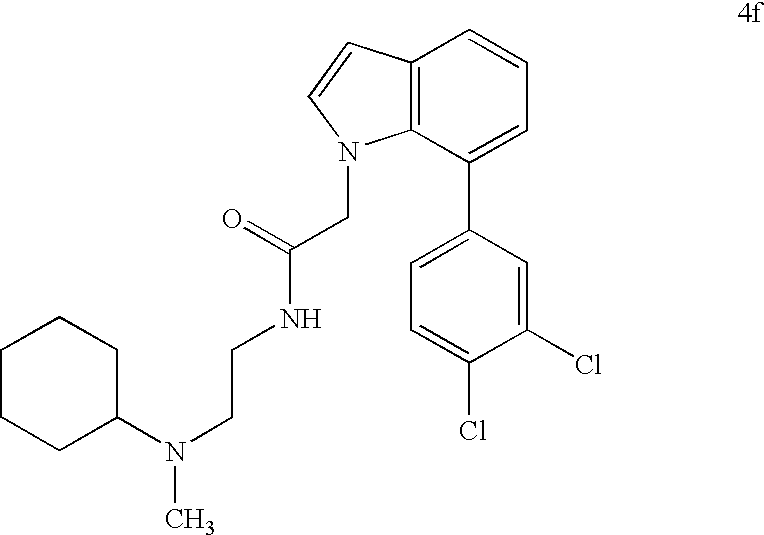


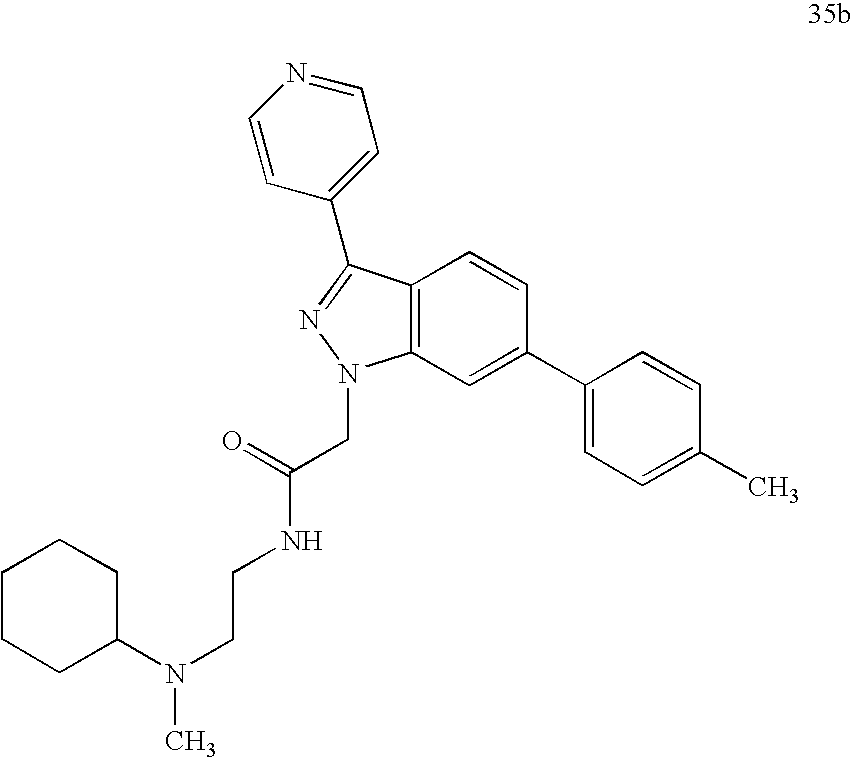


-
-
- b) Isolated Human IL-2 Stimulated Lymphocytes
-
| TABLE 2 | ||
| CXCR4/ | ||
| No | Structure | CXCR7 |
| 1 |
 |
+++ |
| 2 |
 |
+ |
| 3 |
 |
+++ |
| 4 |
 |
+++ |
| 5 |
 |
+++ |
| 6 |
 |
+ |
| 7 |
 |
++ |
| 8 |
 |
+++ |
| 9 |
 |
+++ |
| 10 |
 |
++ |
| 11 |
 |
+++ |
| 12 |
 |
+++ |
| 13 |
 |
++ |
| 14 |
 |
+++ |
| 15 |
 |
++ |
| 16 |
 |
++ |
| 17 |
 |
+++ |
| 18 |
 |
+++ |
| 19 |
 |
+ |
| 20 |
 |
++ |
| 21 |
 |
++ |
| 22 |
 |
+++ |
| 23 |
 |
+++/+++ |
| 24 |
 |
+++/++ |
| 25 |
 |
+++ |
| 26 |
 |
+++/++ |
| 27 |
 |
+++/+++ |
| 28 |
 |
++/++ |
| 29 |
 |
+++ |
| 30 |
 |
++ |
| 31 |
 |
+++/++ |
| 32 |
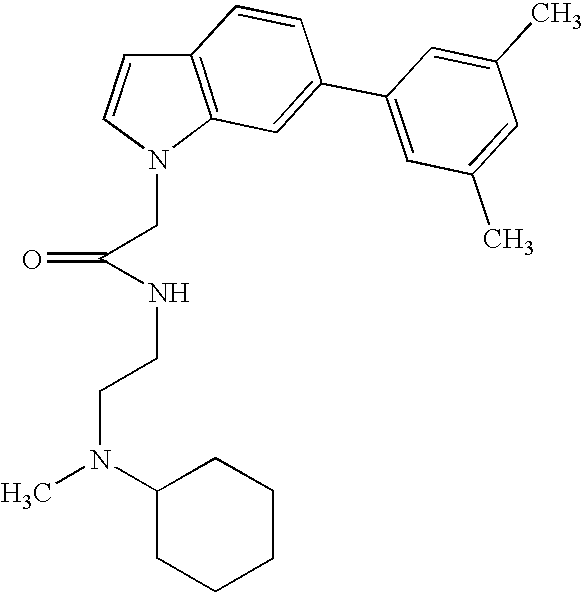 |
+++/++ |
| 33 |
 |
+++/+++ |
| 34 |
 |
++++ |
| 35 |
 |
+++/++ |
| 36 |
 |
+++ |
| No | Structure | Activity |
| 37 |
 |
+++ |
| 38 |
 |
+++ |
| 39 |
 |
+++ |
| 40 |
 |
+++ |
| 41 |
 |
+++ |
| 42 |
 |
+++ |
| 43 |
 |
+++ |
| 44 |
 |
+++ |
| 45 |
 |
+++ |
| 46 |
 |
+++ |
| 47 |
 |
+++ |
| 48 |
 |
+++ |
| 49 |
 |
+++ |
| 50 |
 |
+++ |
| 51 |
 |
+++ |
| 52 |
 |
+++ |
| 53 |
 |
+++ |
| 54 |
 |
+++ |
| 55 |
 |
+++ |
| 56 |
 |
+++ |
| 57 |
 |
+++ |
| 58 |
 |
+++ |
| 59 |
 |
+++ |
| 60 |
 |
+++ |
| 61 |
 |
+++ |
| 62 |
 |
+++ |
| 63 |
 |
+++ |
| 64 |
 |
+++ |
| 65 |
 |
+++ |
Claims (18)


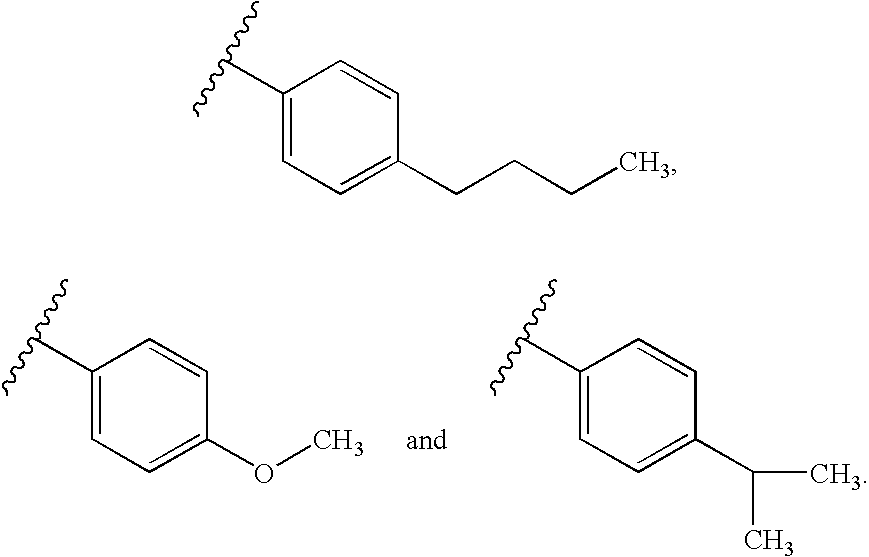


Priority Applications (1)
| Application Number | Priority Date | Filing Date | Title |
|---|---|---|---|
| US11/731,695 US7807704B2 (en) | 2006-03-30 | 2007-03-30 | Bicyclic, nitrogen-containing compounds modulating CXCR4 and/or CCXCKR2 |
Applications Claiming Priority (2)
| Application Number | Priority Date | Filing Date | Title |
|---|---|---|---|
| US78792506P | 2006-03-30 | 2006-03-30 | |
| US11/731,695 US7807704B2 (en) | 2006-03-30 | 2007-03-30 | Bicyclic, nitrogen-containing compounds modulating CXCR4 and/or CCXCKR2 |
Publications (2)
| Publication Number | Publication Date |
|---|---|
| US20070275965A1 US20070275965A1 (en) | 2007-11-29 |
| US7807704B2 true US7807704B2 (en) | 2010-10-05 |
Family
ID=38564274
Family Applications (1)
| Application Number | Title | Priority Date | Filing Date |
|---|---|---|---|
| US11/731,695 Active 2027-06-10 US7807704B2 (en) | 2006-03-30 | 2007-03-30 | Bicyclic, nitrogen-containing compounds modulating CXCR4 and/or CCXCKR2 |
Country Status (2)
| Country | Link |
|---|---|
| US (1) | US7807704B2 (en) |
| WO (1) | WO2007115231A2 (en) |
Cited By (12)
| Publication number | Priority date | Publication date | Assignee | Title |
|---|---|---|---|---|
| US20110003836A1 (en) * | 2009-01-09 | 2011-01-06 | Mcknight Steven L | Pro-Neurogenic Compounds |
| US20110015217A1 (en) * | 2009-01-09 | 2011-01-20 | Mcknight Steven L | Pro-Neurogenic Compounds |
| US20110172227A1 (en) * | 2009-12-21 | 2011-07-14 | Conn P Jeffrey | Alkyl 3-((2-amidoethyl)amino)-8-azabicyclo[3.2.1]octane-8-carboxylate analogs as selective m1 agonists and methods of making and using same |
| US8735440B2 (en) | 2009-01-09 | 2014-05-27 | Board Of Regents Of The University Of Texas System | Methods for treating amyotrophic lateral sclerosis using pro-neurogenic compounds |
| US9095572B2 (en) | 2009-01-09 | 2015-08-04 | Board Of Regents Of The University Of Texas System | Pro-neurogenic compounds |
| US9162980B2 (en) | 2009-01-09 | 2015-10-20 | Board Of Regents Of The University Of Texas System | Anti-depression compounds |
| US9243281B2 (en) | 2013-11-11 | 2016-01-26 | Board Of Regents Of The University Of Texas System | Neuroprotective chemicals and methods for identifying and using same |
| US9701676B2 (en) | 2012-08-24 | 2017-07-11 | Board Of Regents Of The University Of Texas System | Pro-neurogenic compounds |
| US9902713B2 (en) | 2013-11-11 | 2018-02-27 | Board Of Regents Of The University Of Texas System | Neuroprotective compounds and use thereof |
| WO2018129393A1 (en) * | 2017-01-06 | 2018-07-12 | The Regents Of The University Of California | Mu opioid receptor modulators |
| US11352316B2 (en) | 2018-04-04 | 2022-06-07 | Epiodyne, Inc. | Opioid receptor modulators and products and methods related thereto |
| US11634396B2 (en) | 2021-04-05 | 2023-04-25 | Epiodyne, Inc. | Opioid receptor modulators |
Families Citing this family (32)
| Publication number | Priority date | Publication date | Assignee | Title |
|---|---|---|---|---|
| US7671069B2 (en) | 2006-03-30 | 2010-03-02 | Chemocentryx, Inc. | Tricyclic, heteroaromatic compounds modulating CXCR4 and/ or CXCR7 |
| AR072297A1 (en) | 2008-06-27 | 2010-08-18 | Novartis Ag | DERIVATIVES OF INDOL-2-IL-PIRIDIN-3-ILO, PHARMACEUTICAL COMPOSITION THAT INCLUDES THEM AND ITS USE IN MEDICINES FOR THE TREATMENT OF DISEASES MEDIATED BY THE SYNTHESIS ALDOSTERONE. |
| US20110014121A1 (en) * | 2008-11-04 | 2011-01-20 | Chemocentryx, Inc. | Modulators of cxcr7 |
| US8853202B2 (en) * | 2008-11-04 | 2014-10-07 | Chemocentryx, Inc. | Modulators of CXCR7 |
| MX2011004490A (en) * | 2008-11-04 | 2011-07-20 | Chemocentryx Inc | Modulators of cxcr7. |
| EP2531204B1 (en) * | 2010-02-05 | 2016-02-03 | Polyphor AG | Template - fixed peptidomimetics with cxcr7 modulating activity |
| JPWO2013180265A1 (en) | 2012-06-01 | 2016-01-21 | 武田薬品工業株式会社 | Heterocyclic compounds |
| CA2892042C (en) * | 2012-11-29 | 2022-06-14 | Chemocentryx, Inc. | Cxcr7 antagonists |
| CN104370824A (en) * | 2013-01-29 | 2015-02-25 | 韩冰 | Intraocular tension reducing compound and preparation method and use thereof |
| HUE049278T2 (en) | 2014-08-15 | 2020-09-28 | Janssen Pharmaceuticals Inc | Pyrazoles |
| US9981950B2 (en) | 2014-08-15 | 2018-05-29 | Janssen Pharmaceuticals, Inc. | Triazoles as NR2B receptor inhibitors |
| ES2924394T3 (en) | 2015-01-09 | 2022-10-06 | Adalta Ltd | CXCR4 binding molecules |
| WO2017007938A1 (en) * | 2015-07-09 | 2017-01-12 | Janssen Pharmaceutica Nv | Substituted 4-azaindoles and their use as glun2b receptor modulators |
| WO2017011517A1 (en) * | 2015-07-16 | 2017-01-19 | Emory University | Bis-amines, compositions, and uses related to cxcr4 inhibition |
| TWI747873B (en) * | 2016-02-01 | 2021-12-01 | 美商百歐克斯製藥公司 | Benzopyrazole compounds and analogues thereof |
| EA201891799A1 (en) | 2016-02-10 | 2019-02-28 | Янссен Фармацевтика Нв | SUBSTITUTED 1,2,3-TRIAZOLES AS NR2B-SELECTIVE NMDA MODULATORS |
| TW201819376A (en) | 2016-10-06 | 2018-06-01 | 比利時商健生藥品公司 | Substituted 1H-imidazo[4,5-b]pyridin-2(3H)-ones and their use as GLUN2B receptor modulators |
| CN110770224B (en) | 2017-03-10 | 2022-11-18 | 罗格斯新泽西州立大学 | Indole derivatives as efflux pump inhibitors |
| BR112020009055A2 (en) | 2017-11-06 | 2020-11-03 | Rapt Therapeutics, Inc. | chemokine receptor modulators for positive cancer treatment for epstein-Barr virus |
| EP3774732A4 (en) | 2018-04-04 | 2022-02-09 | Janssen Pharmaceutica NV | Substituted pyridine and pyrimidines and their use as glun2b receptor modulators |
| JP7590084B2 (en) | 2018-12-12 | 2024-11-26 | ケモセントリックス,インコーポレイティド | CXCR7 INHIBITORS FOR CANCER TREATMENT - Patent application |
| JOP20210328A1 (en) | 2019-06-14 | 2023-01-30 | Janssen Pharmaceutica Nv | Substituted pyrazolo-pyridine amides and their use as glun2b receptor modulators |
| JP2022536773A (en) | 2019-06-14 | 2022-08-18 | ヤンセン ファーマシューティカ エヌ.ベー. | Substituted pyrazolopyrazines and their use as GLUN2B receptor modulators |
| JP7667097B2 (en) | 2019-06-14 | 2025-04-22 | ヤンセン ファーマシューティカ エヌ.ベー. | Substituted pyrazolo-pyridine amides and their use as glun2b receptor modulators - Patents.com |
| PE20220806A1 (en) | 2019-06-14 | 2022-05-20 | Janssen Pharmaceutica Nv | SUBSTITUTED HETEROAROMATIC PYRIZOLO PYRIDINES AND THEIR USE AS GLUN2B RECEPTOR MODULATORS |
| MX2021015510A (en) | 2019-06-14 | 2022-04-11 | Janssen Pharmaceutica Nv | SUBSTITUTED PYRAZOLO[4,3-b]PYRIDINES AND THEIR USE AS GLUN2B RECEPTOR MODULATORS. |
| BR112021023562A2 (en) | 2019-06-14 | 2022-01-04 | Janssen Pharmaceutica Nv | Pyrazine carbamates and their uses as glun2b receptor modulators |
| MX2021015508A (en) | 2019-06-14 | 2022-01-31 | Janssen Pharmaceutica Nv | Pyridine carbamates and their use as glun2b receptor modulators. |
| WO2021007386A1 (en) | 2019-07-10 | 2021-01-14 | Chemocentryx, Inc. | Indanes as pd-l1 inhibitors |
| CR20220216A (en) | 2019-10-16 | 2023-01-09 | Chemocentryx Inc | Heteroaryl-biphenyl amines for the treatment of pd-l1 diseases |
| US11713307B2 (en) | 2019-10-16 | 2023-08-01 | Chemocentryx, Inc. | Heteroaryl-biphenyl amides for the treatment of PD-L1 diseases |
| CN120192362B (en) * | 2025-05-26 | 2025-10-21 | 原子高科股份有限公司 | A compound targeting chemokine receptor 4 and its application |
Citations (9)
| Publication number | Priority date | Publication date | Assignee | Title |
|---|---|---|---|---|
| WO1994003483A1 (en) * | 1992-07-30 | 1994-02-17 | Chiron Corporation | Endothelin receptor-binding compounds |
| US5612360A (en) | 1992-06-03 | 1997-03-18 | Eli Lilly And Company | Angiotensin II antagonists |
| WO1999056765A1 (en) | 1998-05-05 | 1999-11-11 | Warner-Lambert Company | SUCCINAMIDE INHIBITORS OF INTERLEUKIN-1β CONVERTING ENZYME |
| US20030148940A1 (en) | 2000-04-12 | 2003-08-07 | Tudan Christopher R. | CXCR4 agonist treatment of hematopoietic cells |
| US20030232818A1 (en) | 2002-03-12 | 2003-12-18 | David Anderson | Antibacterial compounds |
| US20050002939A1 (en) | 2002-12-23 | 2005-01-06 | Albert Zlotnik | Tumor killing/tumor regression using CXCR4 antagonists |
| WO2005000333A1 (en) | 2003-06-05 | 2005-01-06 | Anormed Inc. | Methods to mobilize progenitor/stem cells |
| US6864265B2 (en) | 2000-09-15 | 2005-03-08 | Anormed, Inc. | Chemokine receptor binding heterocyclic compounds |
| WO2007115232A2 (en) | 2006-03-30 | 2007-10-11 | Chemocentryx, Inc. | Cxcr4 modulators |
-
2007
- 2007-03-30 US US11/731,695 patent/US7807704B2/en active Active
- 2007-03-30 WO PCT/US2007/065729 patent/WO2007115231A2/en not_active Ceased
Patent Citations (10)
| Publication number | Priority date | Publication date | Assignee | Title |
|---|---|---|---|---|
| US5612360A (en) | 1992-06-03 | 1997-03-18 | Eli Lilly And Company | Angiotensin II antagonists |
| WO1994003483A1 (en) * | 1992-07-30 | 1994-02-17 | Chiron Corporation | Endothelin receptor-binding compounds |
| WO1999056765A1 (en) | 1998-05-05 | 1999-11-11 | Warner-Lambert Company | SUCCINAMIDE INHIBITORS OF INTERLEUKIN-1β CONVERTING ENZYME |
| US20030148940A1 (en) | 2000-04-12 | 2003-08-07 | Tudan Christopher R. | CXCR4 agonist treatment of hematopoietic cells |
| US6864265B2 (en) | 2000-09-15 | 2005-03-08 | Anormed, Inc. | Chemokine receptor binding heterocyclic compounds |
| US20030232818A1 (en) | 2002-03-12 | 2003-12-18 | David Anderson | Antibacterial compounds |
| US20050002939A1 (en) | 2002-12-23 | 2005-01-06 | Albert Zlotnik | Tumor killing/tumor regression using CXCR4 antagonists |
| WO2005000333A1 (en) | 2003-06-05 | 2005-01-06 | Anormed Inc. | Methods to mobilize progenitor/stem cells |
| WO2007115232A2 (en) | 2006-03-30 | 2007-10-11 | Chemocentryx, Inc. | Cxcr4 modulators |
| WO2007115232A3 (en) | 2006-03-30 | 2008-07-24 | Chemocentryx Inc | Cxcr4 modulators |
Non-Patent Citations (9)
| Title |
|---|
| Busillo, J.M. et al., "Regulation of CXCR4 Signaling," Biochimica et Biophysica Acta, Nov. 10, 2006, vol. 1768, pp. 952-963. |
| Dairaghi, D.J. et al., "Chemokine Receptor CCR3 Function is Highly Dependent on Local pH and Ionic Strength," The Journal of Biological Chemistry, Nov. 7, 1997, vol. 272, No. 45, pp. 28206-28209. |
| Dairaghi, D.J. et al., "HHV8-Encoded vMIP-I Selectively Engages Chemokine Receptor GCR8. Agonist and antagonist Profiles of Viral Chemokines," The Journal of Biological Chemistry, Jul. 30, 1999, vol. 274, No. 31, pp. 21569-21574. |
| Gosling, J. et al., "Cutting Edge: Identification of a Novel Chemokine Receptor That Binds Dendritic Cell- and T Cell-Active Chemokines Including ELC, SLC, and TECK," J. Immunol., Mar. 15, 2000, vol. 164, No. 6, pp. 2851-2856. |
| Nicolaou et al.; "The CP Molecule Labyrinth: A Paradigm of How Endeavors in Total Synthesis Lead to Discoveries and Inventions in Organic Synthesis"; 2002; Angew. Chem. Int. Ed.; 41: 2678-2720. * |
| Paluchowska, M.H. et al., "Structure Activity Relationship Studies of CNS Agents. Effect of the Amide Fragment on 5-HT1A Receptor Activity of Some Analogs of MP 3022," Polish Journal of Medicinal Chemistry, 1999, vol. 51, No. 5, pp. 415-421. |
| Penfold, M.E.T. et al., "Cytomegalovirus Encodes a Potent alpha Chemokine," Proc. Natl. Acad. Sci. USA, Aug. 1999, vol. 96, pp. 9839-9844. |
| Penfold, M.E.T. et al., "Cytomegalovirus Encodes a Potent α Chemokine," Proc. Natl. Acad. Sci. USA, Aug. 1999, vol. 96, pp. 9839-9844. |
| Yang. Tetrahedron Letters, 2000, 41, 6981-84. * |
Cited By (30)
| Publication number | Priority date | Publication date | Assignee | Title |
|---|---|---|---|---|
| US9884820B2 (en) | 2009-01-09 | 2018-02-06 | Board Of Regents Of The University Of Texas System | Pro-neurogenic compounds |
| US9446042B2 (en) | 2009-01-09 | 2016-09-20 | Board Of Regents Of The University Of Texas System | Pro-neurogenic compounds |
| US10183011B2 (en) | 2009-01-09 | 2019-01-22 | Board Of Regents Of The University Of Texas System | Anti-depression compounds |
| US8362277B2 (en) | 2009-01-09 | 2013-01-29 | Board Of Regents Of The University Of Texas System | Pro-neurogenic compounds |
| US8604074B2 (en) | 2009-01-09 | 2013-12-10 | Board Of Regents Of The University Of Texas System | Pro-neurogenic compounds |
| US10172827B2 (en) | 2009-01-09 | 2019-01-08 | Board Of Regents Of The University Of Texas System | Pro-neurogenic compounds |
| US8735440B2 (en) | 2009-01-09 | 2014-05-27 | Board Of Regents Of The University Of Texas System | Methods for treating amyotrophic lateral sclerosis using pro-neurogenic compounds |
| US8748473B2 (en) | 2009-01-09 | 2014-06-10 | Board Of The Regents Of The University Of Texas System | Methods of treating post-traumatic stress disorder using pro-neurogenic compounds |
| US8791149B2 (en) | 2009-01-09 | 2014-07-29 | Board Of Regents Of The University Of Texas System | Methods of treating traumatic brain injury using pro-neurogenic compounds |
| US8877797B2 (en) | 2009-01-09 | 2014-11-04 | Board Of Regents Of The University Of Texas System | Methods for treating Parkinson's disease using pro-neurogenic compounds |
| US9095572B2 (en) | 2009-01-09 | 2015-08-04 | Board Of Regents Of The University Of Texas System | Pro-neurogenic compounds |
| US9095571B2 (en) | 2009-01-09 | 2015-08-04 | Board Of Regents Of The University Of Texas System | Pro-neurogenic compounds |
| US9156787B2 (en) | 2009-01-09 | 2015-10-13 | Board Of Regents Of The University Of Texas System | Pro-neurogenic compounds |
| US9162980B2 (en) | 2009-01-09 | 2015-10-20 | Board Of Regents Of The University Of Texas System | Anti-depression compounds |
| US20110015217A1 (en) * | 2009-01-09 | 2011-01-20 | Mcknight Steven L | Pro-Neurogenic Compounds |
| US9962368B2 (en) | 2009-01-09 | 2018-05-08 | Board Of Regents Of The University Of Texas System | Pro-neurogenic compounds |
| US20110003836A1 (en) * | 2009-01-09 | 2011-01-06 | Mcknight Steven L | Pro-Neurogenic Compounds |
| US9446022B2 (en) | 2009-01-09 | 2016-09-20 | Board Of Regents Of The University Of Texas System | Pro-neurogenic compounds |
| US9616048B2 (en) | 2009-01-09 | 2017-04-11 | Board Of Regents Of The University Of Texas System | Anti-depression compounds |
| US9278923B2 (en) | 2009-01-09 | 2016-03-08 | Board Of Regents Of The University Of Texas System | Pro-neurogenic compounds |
| US8697691B2 (en) | 2009-12-21 | 2014-04-15 | Vanderbilt University | Alkyl 3-((2-amidoethyl)amino)-8-azabicyclo[3.2.1]octane-8-carboxylate analogs as selective M1 agonists and methods of making and using same |
| US20110172227A1 (en) * | 2009-12-21 | 2011-07-14 | Conn P Jeffrey | Alkyl 3-((2-amidoethyl)amino)-8-azabicyclo[3.2.1]octane-8-carboxylate analogs as selective m1 agonists and methods of making and using same |
| US9701676B2 (en) | 2012-08-24 | 2017-07-11 | Board Of Regents Of The University Of Texas System | Pro-neurogenic compounds |
| US9645139B2 (en) | 2013-11-11 | 2017-05-09 | Board Of Regents Of The University Of Texas System | Neuroprotective chemicals and methods for identifying and using same |
| US9902713B2 (en) | 2013-11-11 | 2018-02-27 | Board Of Regents Of The University Of Texas System | Neuroprotective compounds and use thereof |
| US9243281B2 (en) | 2013-11-11 | 2016-01-26 | Board Of Regents Of The University Of Texas System | Neuroprotective chemicals and methods for identifying and using same |
| WO2018129393A1 (en) * | 2017-01-06 | 2018-07-12 | The Regents Of The University Of California | Mu opioid receptor modulators |
| US11352316B2 (en) | 2018-04-04 | 2022-06-07 | Epiodyne, Inc. | Opioid receptor modulators and products and methods related thereto |
| US11634396B2 (en) | 2021-04-05 | 2023-04-25 | Epiodyne, Inc. | Opioid receptor modulators |
| US12168648B2 (en) | 2021-04-05 | 2024-12-17 | Epiodyne, Inc. | Opioid receptor modulators |
Also Published As
| Publication number | Publication date |
|---|---|
| WO2007115231A2 (en) | 2007-10-11 |
| US20070275965A1 (en) | 2007-11-29 |
| WO2007115231A3 (en) | 2008-07-17 |
Similar Documents
| Publication | Publication Date | Title |
|---|---|---|
| US7807704B2 (en) | Bicyclic, nitrogen-containing compounds modulating CXCR4 and/or CCXCKR2 | |
| US7671069B2 (en) | Tricyclic, heteroaromatic compounds modulating CXCR4 and/ or CXCR7 | |
| US10647696B2 (en) | Substituted benzimidazoles and benzopyrazoles as CCR(4) antagonists | |
| US10786494B2 (en) | CCR6 compounds | |
| US8288373B2 (en) | Modulators of CXCR7 | |
| US7524845B2 (en) | Azaindazole compounds and methods of use | |
| EP2785692B1 (en) | Substituted anilines as ccr(4) antagonists | |
| US20130225580A1 (en) | Aza-aryl 1h-pyrazol-1-yl benzene sulfonamides | |
| US8853202B2 (en) | Modulators of CXCR7 | |
| US20070021484A1 (en) | Substituted N-cinnamyl benzamides | |
| US20110014121A1 (en) | Modulators of cxcr7 | |
| HK1202866B (en) | Substituted benzimidazoles and benzopyrazoles as ccr(4) antagonists | |
| HK40026727A (en) | 6-5 fused rings as c5a inhibitors | |
| HK40026727B (en) | 6-5 fused rings as c5a inhibitors | |
| US20180009797A1 (en) | Aza-aryl 1h-pyrazol-1-yl benzene sulfonamides | |
| HK1229729A1 (en) | Ccr6 compounds | |
| HK1229729B (en) | Ccr6 compounds | |
| HK1202867B (en) | Substituted anilines as ccr(4) antagonists |
Legal Events
| Date | Code | Title | Description |
|---|---|---|---|
| AS | Assignment |
Owner name: CHEMOCENTRYX, INC., CALIFORNIA Free format text: ASSIGNMENT OF ASSIGNORS INTEREST;ASSIGNOR:THOMAS, WILLIAM D.;REEL/FRAME:019391/0382 Effective date: 20070509 |
|
| STCF | Information on status: patent grant |
Free format text: PATENTED CASE |
|
| CC | Certificate of correction | ||
| FPAY | Fee payment |
Year of fee payment: 4 |
|
| MAFP | Maintenance fee payment |
Free format text: PAYMENT OF MAINTENANCE FEE, 8TH YR, SMALL ENTITY (ORIGINAL EVENT CODE: M2552) Year of fee payment: 8 |
|
| MAFP | Maintenance fee payment |
Free format text: PAYMENT OF MAINTENANCE FEE, 12TH YR, SMALL ENTITY (ORIGINAL EVENT CODE: M2553); ENTITY STATUS OF PATENT OWNER: SMALL ENTITY Year of fee payment: 12 |
|
| FEPP | Fee payment procedure |
Free format text: ENTITY STATUS SET TO UNDISCOUNTED (ORIGINAL EVENT CODE: BIG.); ENTITY STATUS OF PATENT OWNER: LARGE ENTITY |