US7807472B2 - Methods for separation and detection of ketosteroids and other carbonyl-containing compounds - Google Patents
Methods for separation and detection of ketosteroids and other carbonyl-containing compounds Download PDFInfo
- Publication number
- US7807472B2 US7807472B2 US10/511,409 US51140904A US7807472B2 US 7807472 B2 US7807472 B2 US 7807472B2 US 51140904 A US51140904 A US 51140904A US 7807472 B2 US7807472 B2 US 7807472B2
- Authority
- US
- United States
- Prior art keywords
- hplc
- ketosteroid
- sample
- derivatization
- esi
- Prior art date
- Legal status (The legal status is an assumption and is not a legal conclusion. Google has not performed a legal analysis and makes no representation as to the accuracy of the status listed.)
- Active, expires
Links
- 238000000034 method Methods 0.000 title claims abstract description 86
- 238000001514 detection method Methods 0.000 title claims abstract description 25
- 150000001875 compounds Chemical class 0.000 title abstract description 55
- 125000002915 carbonyl group Chemical group [*:2]C([*:1])=O 0.000 title abstract description 52
- 238000000926 separation method Methods 0.000 title abstract description 28
- 239000000262 estrogen Substances 0.000 claims abstract description 74
- 229940011871 estrogen Drugs 0.000 claims abstract description 74
- YCIMNLLNPGFGHC-UHFFFAOYSA-N catechol Chemical compound OC1=CC=CC=C1O YCIMNLLNPGFGHC-UHFFFAOYSA-N 0.000 claims abstract description 62
- 238000000132 electrospray ionisation Methods 0.000 claims abstract description 46
- ICGLPKIVTVWCFT-UHFFFAOYSA-N 4-methylbenzenesulfonohydrazide Chemical compound CC1=CC=C(S(=O)(=O)NN)C=C1 ICGLPKIVTVWCFT-UHFFFAOYSA-N 0.000 claims abstract description 45
- 238000004128 high performance liquid chromatography Methods 0.000 claims abstract description 44
- 238000004949 mass spectrometry Methods 0.000 claims abstract description 17
- 150000003461 sulfonyl halides Chemical class 0.000 claims abstract description 16
- 238000004811 liquid chromatography Methods 0.000 claims abstract description 15
- OKKJLVBELUTLKV-UHFFFAOYSA-N Methanol Chemical compound OC OKKJLVBELUTLKV-UHFFFAOYSA-N 0.000 claims description 138
- 239000000523 sample Substances 0.000 claims description 42
- 238000004458 analytical method Methods 0.000 claims description 36
- 239000002904 solvent Substances 0.000 claims description 32
- XLYOFNOQVPJJNP-UHFFFAOYSA-N water Substances O XLYOFNOQVPJJNP-UHFFFAOYSA-N 0.000 claims description 29
- 238000004007 reversed phase HPLC Methods 0.000 claims description 13
- 230000005526 G1 to G0 transition Effects 0.000 claims description 12
- 125000000217 alkyl group Chemical group 0.000 claims description 12
- 238000010828 elution Methods 0.000 claims description 7
- 125000003118 aryl group Chemical group 0.000 claims description 6
- 125000000547 substituted alkyl group Chemical group 0.000 claims description 5
- 125000003107 substituted aryl group Chemical group 0.000 claims description 5
- 229910052794 bromium Inorganic materials 0.000 claims description 4
- 229910052801 chlorine Inorganic materials 0.000 claims description 4
- 239000012468 concentrated sample Substances 0.000 claims description 4
- GBMDVOWEEQVZKZ-UHFFFAOYSA-N methanol;hydrate Chemical compound O.OC GBMDVOWEEQVZKZ-UHFFFAOYSA-N 0.000 claims description 3
- 238000001212 derivatisation Methods 0.000 abstract description 85
- 150000003431 steroids Chemical class 0.000 abstract description 26
- 125000002887 hydroxy group Chemical group [H]O* 0.000 abstract description 20
- 238000006243 chemical reaction Methods 0.000 abstract description 19
- 230000008569 process Effects 0.000 abstract description 13
- 230000002441 reversible effect Effects 0.000 abstract description 7
- 150000001728 carbonyl compounds Chemical class 0.000 abstract description 5
- 230000002708 enhancing effect Effects 0.000 abstract description 5
- 239000007921 spray Substances 0.000 abstract description 3
- 230000015572 biosynthetic process Effects 0.000 abstract description 2
- 210000002700 urine Anatomy 0.000 description 55
- 150000002500 ions Chemical class 0.000 description 45
- 238000002330 electrospray ionisation mass spectrometry Methods 0.000 description 35
- 239000012071 phase Substances 0.000 description 29
- -1 ketosteroids Chemical class 0.000 description 24
- 239000012491 analyte Substances 0.000 description 21
- 239000003153 chemical reaction reagent Substances 0.000 description 21
- 239000002207 metabolite Substances 0.000 description 18
- 239000000203 mixture Substances 0.000 description 17
- 238000000065 atmospheric pressure chemical ionisation Methods 0.000 description 15
- 230000035945 sensitivity Effects 0.000 description 13
- 239000012086 standard solution Substances 0.000 description 13
- LFQSCWFLJHTTHZ-UHFFFAOYSA-N Ethanol Chemical compound CCO LFQSCWFLJHTTHZ-UHFFFAOYSA-N 0.000 description 12
- BDAGIHXWWSANSR-UHFFFAOYSA-N methanoic acid Natural products OC=O BDAGIHXWWSANSR-UHFFFAOYSA-N 0.000 description 12
- 238000002098 selective ion monitoring Methods 0.000 description 12
- XPDXVDYUQZHFPV-UHFFFAOYSA-N Dansyl Chloride Chemical compound C1=CC=C2C(N(C)C)=CC=CC2=C1S(Cl)(=O)=O XPDXVDYUQZHFPV-UHFFFAOYSA-N 0.000 description 11
- 230000007062 hydrolysis Effects 0.000 description 11
- 238000006460 hydrolysis reaction Methods 0.000 description 11
- 238000004895 liquid chromatography mass spectrometry Methods 0.000 description 11
- 125000000472 sulfonyl group Chemical group *S(*)(=O)=O 0.000 description 11
- 238000000605 extraction Methods 0.000 description 10
- CSCPPACGZOOCGX-UHFFFAOYSA-N Acetone Chemical compound CC(C)=O CSCPPACGZOOCGX-UHFFFAOYSA-N 0.000 description 9
- WEVYAHXRMPXWCK-UHFFFAOYSA-N Acetonitrile Chemical compound CC#N WEVYAHXRMPXWCK-UHFFFAOYSA-N 0.000 description 9
- 238000004587 chromatography analysis Methods 0.000 description 9
- 239000007788 liquid Substances 0.000 description 9
- 239000007789 gas Substances 0.000 description 8
- 229910052739 hydrogen Inorganic materials 0.000 description 8
- 239000001257 hydrogen Substances 0.000 description 8
- 238000001819 mass spectrum Methods 0.000 description 8
- 230000002485 urinary effect Effects 0.000 description 8
- 125000006527 (C1-C5) alkyl group Chemical group 0.000 description 7
- 0 *S(=O)(=O)NN Chemical compound *S(=O)(=O)NN 0.000 description 7
- 239000003513 alkali Substances 0.000 description 7
- 238000002360 preparation method Methods 0.000 description 7
- OSWFIVFLDKOXQC-UHFFFAOYSA-N 4-(3-methoxyphenyl)aniline Chemical compound COC1=CC=CC(C=2C=CC(N)=CC=2)=C1 OSWFIVFLDKOXQC-UHFFFAOYSA-N 0.000 description 6
- CIWBSHSKHKDKBQ-JLAZNSOCSA-N Ascorbic acid Chemical compound OC[C@H](O)[C@H]1OC(=O)C(O)=C1O CIWBSHSKHKDKBQ-JLAZNSOCSA-N 0.000 description 6
- IJGRMHOSHXDMSA-UHFFFAOYSA-N Atomic nitrogen Chemical compound N#N IJGRMHOSHXDMSA-UHFFFAOYSA-N 0.000 description 6
- 206010028980 Neoplasm Diseases 0.000 description 6
- UIIMBOGNXHQVGW-UHFFFAOYSA-M Sodium bicarbonate Chemical compound [Na+].OC([O-])=O UIIMBOGNXHQVGW-UHFFFAOYSA-M 0.000 description 6
- HEMHJVSKTPXQMS-UHFFFAOYSA-M Sodium hydroxide Chemical compound [OH-].[Na+] HEMHJVSKTPXQMS-UHFFFAOYSA-M 0.000 description 6
- 238000000451 chemical ionisation Methods 0.000 description 6
- 238000010790 dilution Methods 0.000 description 6
- 239000012895 dilution Substances 0.000 description 6
- 235000019253 formic acid Nutrition 0.000 description 6
- 239000000243 solution Substances 0.000 description 6
- 125000000229 (C1-C4)alkoxy group Chemical group 0.000 description 5
- SWINWPBPEKHUOD-UHFFFAOYSA-N 2-hydroxyestron Natural products OC1=C(O)C=C2C3CCC(C)(C(CC4)=O)C4C3CCC2=C1 SWINWPBPEKHUOD-UHFFFAOYSA-N 0.000 description 5
- XQZVQQZZOVBNLU-UHFFFAOYSA-N 4-Hydroxyestrone Natural products OC1=CC=C2C3CCC(C)(C(CC4)=O)C4C3CCC2=C1O XQZVQQZZOVBNLU-UHFFFAOYSA-N 0.000 description 5
- XQZVQQZZOVBNLU-QDTBLXIISA-N 4-hydroxyestrone Chemical compound OC1=CC=C2[C@H]3CC[C@](C)(C(CC4)=O)[C@@H]4[C@@H]3CCC2=C1O XQZVQQZZOVBNLU-QDTBLXIISA-N 0.000 description 5
- QTBSBXVTEAMEQO-UHFFFAOYSA-N Acetic acid Chemical compound CC(O)=O QTBSBXVTEAMEQO-UHFFFAOYSA-N 0.000 description 5
- 206010006187 Breast cancer Diseases 0.000 description 5
- 208000026310 Breast neoplasm Diseases 0.000 description 5
- OAKJQQAXSVQMHS-UHFFFAOYSA-N Hydrazine Chemical compound NN OAKJQQAXSVQMHS-UHFFFAOYSA-N 0.000 description 5
- 239000008186 active pharmaceutical agent Substances 0.000 description 5
- 238000013459 approach Methods 0.000 description 5
- 239000012472 biological sample Substances 0.000 description 5
- 230000015556 catabolic process Effects 0.000 description 5
- 238000006731 degradation reaction Methods 0.000 description 5
- 238000000119 electrospray ionisation mass spectrum Methods 0.000 description 5
- 229910052736 halogen Inorganic materials 0.000 description 5
- 150000002367 halogens Chemical class 0.000 description 5
- 238000005259 measurement Methods 0.000 description 5
- 238000011084 recovery Methods 0.000 description 5
- 239000007787 solid Substances 0.000 description 5
- 239000000126 substance Substances 0.000 description 5
- NQRKYASMKDDGHT-UHFFFAOYSA-N (aminooxy)acetic acid Chemical compound NOCC(O)=O NQRKYASMKDDGHT-UHFFFAOYSA-N 0.000 description 4
- SWINWPBPEKHUOD-JPVZDGGYSA-N 2-hydroxyestrone Chemical compound OC1=C(O)C=C2[C@H]3CC[C@](C)(C(CC4)=O)[C@@H]4[C@@H]3CCC2=C1 SWINWPBPEKHUOD-JPVZDGGYSA-N 0.000 description 4
- UFHFLCQGNIYNRP-UHFFFAOYSA-N Hydrogen Chemical compound [H][H] UFHFLCQGNIYNRP-UHFFFAOYSA-N 0.000 description 4
- 239000003098 androgen Substances 0.000 description 4
- 229940030486 androgens Drugs 0.000 description 4
- 201000011510 cancer Diseases 0.000 description 4
- 239000003795 chemical substances by application Substances 0.000 description 4
- 125000004093 cyano group Chemical group *C#N 0.000 description 4
- 125000001295 dansyl group Chemical group [H]C1=C([H])C(N(C([H])([H])[H])C([H])([H])[H])=C2C([H])=C([H])C([H])=C(C2=C1[H])S(*)(=O)=O 0.000 description 4
- 238000001704 evaporation Methods 0.000 description 4
- 230000008020 evaporation Effects 0.000 description 4
- 238000002290 gas chromatography-mass spectrometry Methods 0.000 description 4
- 238000010438 heat treatment Methods 0.000 description 4
- 150000007857 hydrazones Chemical class 0.000 description 4
- 150000002431 hydrogen Chemical class 0.000 description 4
- 230000001965 increasing effect Effects 0.000 description 4
- 238000002347 injection Methods 0.000 description 4
- 239000007924 injection Substances 0.000 description 4
- 125000000018 nitroso group Chemical group N(=O)* 0.000 description 4
- 125000002924 primary amino group Chemical group [H]N([H])* 0.000 description 4
- 239000011541 reaction mixture Substances 0.000 description 4
- 239000011550 stock solution Substances 0.000 description 4
- YBBRCQOCSYXUOC-UHFFFAOYSA-N sulfuryl dichloride Chemical compound ClS(Cl)(=O)=O YBBRCQOCSYXUOC-UHFFFAOYSA-N 0.000 description 4
- ZMXDDKWLCZADIW-UHFFFAOYSA-N N,N-Dimethylformamide Chemical compound CN(C)C=O ZMXDDKWLCZADIW-UHFFFAOYSA-N 0.000 description 3
- 229920005654 Sephadex Polymers 0.000 description 3
- 239000012507 Sephadex™ Substances 0.000 description 3
- 229960005070 ascorbic acid Drugs 0.000 description 3
- KGBXLFKZBHKPEV-UHFFFAOYSA-N boric acid Chemical compound OB(O)O KGBXLFKZBHKPEV-UHFFFAOYSA-N 0.000 description 3
- 238000004850 capillary HPLC Methods 0.000 description 3
- 230000008878 coupling Effects 0.000 description 3
- 238000010168 coupling process Methods 0.000 description 3
- 238000005859 coupling reaction Methods 0.000 description 3
- 238000013467 fragmentation Methods 0.000 description 3
- 238000006062 fragmentation reaction Methods 0.000 description 3
- 229910052740 iodine Inorganic materials 0.000 description 3
- 238000000752 ionisation method Methods 0.000 description 3
- 238000000050 ionisation spectroscopy Methods 0.000 description 3
- 238000012417 linear regression Methods 0.000 description 3
- 230000014759 maintenance of location Effects 0.000 description 3
- 230000027758 ovulation cycle Effects 0.000 description 3
- 239000002798 polar solvent Substances 0.000 description 3
- 238000004445 quantitative analysis Methods 0.000 description 3
- 238000003127 radioimmunoassay Methods 0.000 description 3
- 229910000030 sodium bicarbonate Inorganic materials 0.000 description 3
- 235000017557 sodium bicarbonate Nutrition 0.000 description 3
- 238000001228 spectrum Methods 0.000 description 3
- 125000000008 (C1-C10) alkyl group Chemical group 0.000 description 2
- AZQWKYJCGOJGHM-UHFFFAOYSA-N 1,4-benzoquinone Chemical compound O=C1C=CC(=O)C=C1 AZQWKYJCGOJGHM-UHFFFAOYSA-N 0.000 description 2
- YSULOORXQBDPCU-UHFFFAOYSA-N 2-(trimethylazaniumyl)ethanehydrazonate;hydrochloride Chemical compound [Cl-].C[N+](C)(C)CC(=O)NN YSULOORXQBDPCU-UHFFFAOYSA-N 0.000 description 2
- QOZFCKXEVSGWGS-ZHIYBZGJSA-N 4-hydroxy-17beta-estradiol Chemical compound OC1=CC=C2[C@H]3CC[C@](C)([C@H](CC4)O)[C@@H]4[C@@H]3CCC2=C1O QOZFCKXEVSGWGS-ZHIYBZGJSA-N 0.000 description 2
- QTBSBXVTEAMEQO-UHFFFAOYSA-M Acetate Chemical compound CC([O-])=O QTBSBXVTEAMEQO-UHFFFAOYSA-M 0.000 description 2
- YZCKVEUIGOORGS-OUBTZVSYSA-N Deuterium Chemical compound [2H] YZCKVEUIGOORGS-OUBTZVSYSA-N 0.000 description 2
- 102000053187 Glucuronidase Human genes 0.000 description 2
- 108010060309 Glucuronidase Proteins 0.000 description 2
- 241000237369 Helix pomatia Species 0.000 description 2
- AVXURJPOCDRRFD-UHFFFAOYSA-N Hydroxylamine Chemical compound ON AVXURJPOCDRRFD-UHFFFAOYSA-N 0.000 description 2
- 239000002211 L-ascorbic acid Substances 0.000 description 2
- 235000000069 L-ascorbic acid Nutrition 0.000 description 2
- GMPKIPWJBDOURN-UHFFFAOYSA-N Methoxyamine Chemical compound CON GMPKIPWJBDOURN-UHFFFAOYSA-N 0.000 description 2
- PXIPVTKHYLBLMZ-UHFFFAOYSA-N Sodium azide Chemical compound [Na+].[N-]=[N+]=[N-] PXIPVTKHYLBLMZ-UHFFFAOYSA-N 0.000 description 2
- 229930182558 Sterol Natural products 0.000 description 2
- 102000005262 Sulfatase Human genes 0.000 description 2
- 229930003316 Vitamin D Natural products 0.000 description 2
- QYSXJUFSXHHAJI-XFEUOLMDSA-N Vitamin D3 Natural products C1(/[C@@H]2CC[C@@H]([C@]2(CCC1)C)[C@H](C)CCCC(C)C)=C/C=C1\C[C@@H](O)CCC1=C QYSXJUFSXHHAJI-XFEUOLMDSA-N 0.000 description 2
- 229960000583 acetic acid Drugs 0.000 description 2
- 125000002015 acyclic group Chemical group 0.000 description 2
- 150000001412 amines Chemical class 0.000 description 2
- 125000005427 anthranyl group Chemical group 0.000 description 2
- 239000002585 base Substances 0.000 description 2
- 239000003613 bile acid Substances 0.000 description 2
- 239000000872 buffer Substances 0.000 description 2
- 238000011088 calibration curve Methods 0.000 description 2
- 125000004432 carbon atom Chemical group C* 0.000 description 2
- WHHGLZMJPXIBIX-UHFFFAOYSA-N decabromodiphenyl ether Chemical compound BrC1=C(Br)C(Br)=C(Br)C(Br)=C1OC1=C(Br)C(Br)=C(Br)C(Br)=C1Br WHHGLZMJPXIBIX-UHFFFAOYSA-N 0.000 description 2
- 229910052805 deuterium Inorganic materials 0.000 description 2
- 238000007865 diluting Methods 0.000 description 2
- 229910001873 dinitrogen Inorganic materials 0.000 description 2
- 238000000835 electrochemical detection Methods 0.000 description 2
- OUZWUKMCLIBBOG-UHFFFAOYSA-N ethoxzolamide Chemical compound CCOC1=CC=C2N=C(S(N)(=O)=O)SC2=C1 OUZWUKMCLIBBOG-UHFFFAOYSA-N 0.000 description 2
- 230000029142 excretion Effects 0.000 description 2
- 238000002474 experimental method Methods 0.000 description 2
- 239000012634 fragment Substances 0.000 description 2
- 238000004817 gas chromatography Methods 0.000 description 2
- 125000004435 hydrogen atom Chemical group [H]* 0.000 description 2
- 230000002209 hydrophobic effect Effects 0.000 description 2
- 238000011534 incubation Methods 0.000 description 2
- 238000005040 ion trap Methods 0.000 description 2
- 230000007246 mechanism Effects 0.000 description 2
- 230000002503 metabolic effect Effects 0.000 description 2
- 125000002496 methyl group Chemical group [H]C([H])([H])* 0.000 description 2
- 239000002858 neurotransmitter agent Substances 0.000 description 2
- 230000007935 neutral effect Effects 0.000 description 2
- 229910052757 nitrogen Inorganic materials 0.000 description 2
- 238000004305 normal phase HPLC Methods 0.000 description 2
- AQFWNELGMODZGC-UHFFFAOYSA-N o-ethylhydroxylamine Chemical compound CCON AQFWNELGMODZGC-UHFFFAOYSA-N 0.000 description 2
- 125000001181 organosilyl group Chemical group [SiH3]* 0.000 description 2
- 150000002923 oximes Chemical class 0.000 description 2
- 238000012856 packing Methods 0.000 description 2
- 125000001997 phenyl group Chemical group [H]C1=C([H])C([H])=C(*)C([H])=C1[H] 0.000 description 2
- 239000000843 powder Substances 0.000 description 2
- 238000000746 purification Methods 0.000 description 2
- 238000013207 serial dilution Methods 0.000 description 2
- 238000001877 single-ion monitoring Methods 0.000 description 2
- 241000894007 species Species 0.000 description 2
- 235000003702 sterols Nutrition 0.000 description 2
- 150000003432 sterols Chemical class 0.000 description 2
- SEEPANYCNGTZFQ-UHFFFAOYSA-N sulfadiazine Chemical compound C1=CC(N)=CC=C1S(=O)(=O)NC1=NC=CC=N1 SEEPANYCNGTZFQ-UHFFFAOYSA-N 0.000 description 2
- 229960004306 sulfadiazine Drugs 0.000 description 2
- 108060007951 sulfatase Proteins 0.000 description 2
- JNMRHUJNCSQMMB-UHFFFAOYSA-N sulfathiazole Chemical compound C1=CC(N)=CC=C1S(=O)(=O)NC1=NC=CS1 JNMRHUJNCSQMMB-UHFFFAOYSA-N 0.000 description 2
- 150000003515 testosterones Chemical class 0.000 description 2
- 230000008016 vaporization Effects 0.000 description 2
- 235000019166 vitamin D Nutrition 0.000 description 2
- 239000011710 vitamin D Substances 0.000 description 2
- 150000003710 vitamin D derivatives Chemical class 0.000 description 2
- 229940046008 vitamin d Drugs 0.000 description 2
- XQZVQQZZOVBNLU-RFZGAVBWSA-N (8r,9s,13s,14s)-1,2,16,16-tetradeuterio-3,4-dihydroxy-13-methyl-6,7,8,9,11,12,14,15-octahydrocyclopenta[a]phenanthren-17-one Chemical compound C([C@@H]12)C[C@]3(C)C(=O)C([2H])([2H])C[C@H]3[C@@H]1CCC1=C2C([2H])=C([2H])C(O)=C1O XQZVQQZZOVBNLU-RFZGAVBWSA-N 0.000 description 1
- DILDHNKDVHLEQB-YVRXZLTFSA-N (8r,9s,13s,14s)-13-methyl-6,7,8,9,11,12,14,15,16,17-decahydrocyclopenta[a]phenanthrene-2,3,17-triol Chemical compound OC1=C(O)C=C2[C@H]3CC[C@](C)(C(CC4)O)[C@@H]4[C@@H]3CCC2=C1 DILDHNKDVHLEQB-YVRXZLTFSA-N 0.000 description 1
- 150000005206 1,2-dihydroxybenzenes Chemical class 0.000 description 1
- LOTKRQAVGJMPNV-UHFFFAOYSA-N 1-fluoro-2,4-dinitrobenzene Chemical compound [O-][N+](=O)C1=CC=C(F)C([N+]([O-])=O)=C1 LOTKRQAVGJMPNV-UHFFFAOYSA-N 0.000 description 1
- KJDGFQJCHFJTRH-YONAWACDSA-N 16-Ketoestradiol Chemical compound OC1=CC=C2[C@H]3CC[C@](C)([C@H](C(=O)C4)O)[C@@H]4[C@@H]3CCC2=C1 KJDGFQJCHFJTRH-YONAWACDSA-N 0.000 description 1
- KJDGFQJCHFJTRH-UHFFFAOYSA-N 16-Ketoestradiol Natural products OC1=CC=C2C3CCC(C)(C(C(=O)C4)O)C4C3CCC2=C1 KJDGFQJCHFJTRH-UHFFFAOYSA-N 0.000 description 1
- WPOCIZJTELRQMF-UHFFFAOYSA-N 16alpha-Hydroxyestrone Natural products OC1=CC=C2C3CCC(C)(C(C(O)C4)=O)C4C3CCC2=C1 WPOCIZJTELRQMF-UHFFFAOYSA-N 0.000 description 1
- WPOCIZJTELRQMF-QFXBJFAPSA-N 16alpha-hydroxyestrone Chemical compound OC1=CC=C2[C@H]3CC[C@](C)(C([C@H](O)C4)=O)[C@@H]4[C@@H]3CCC2=C1 WPOCIZJTELRQMF-QFXBJFAPSA-N 0.000 description 1
- DILDHNKDVHLEQB-XSSYPUMDSA-N 2-hydroxy-17beta-estradiol Chemical compound OC1=C(O)C=C2[C@H]3CC[C@](C)([C@H](CC4)O)[C@@H]4[C@@H]3CCC2=C1 DILDHNKDVHLEQB-XSSYPUMDSA-N 0.000 description 1
- RSZMTXPFGDUHSE-UHFFFAOYSA-N 2-nitro-1-benzofuran Chemical class C1=CC=C2OC([N+](=O)[O-])=CC2=C1 RSZMTXPFGDUHSE-UHFFFAOYSA-N 0.000 description 1
- NDXLVXDHVHWYFR-UHFFFAOYSA-N 2-pyridin-1-ium-1-ylacetohydrazide;chloride Chemical compound [Cl-].NNC(=O)C[N+]1=CC=CC=C1 NDXLVXDHVHWYFR-UHFFFAOYSA-N 0.000 description 1
- UIWFWZLAICURGT-UHFFFAOYSA-N 4-Methoxybenzenesulfonohydrazide Chemical compound COC1=CC=C(S(=O)(=O)NN)C=C1 UIWFWZLAICURGT-UHFFFAOYSA-N 0.000 description 1
- VTVWTPGLLAELLI-UHFFFAOYSA-N 4-[[4-(dimethylamino)phenyl]diazenyl]benzenesulfonyl chloride Chemical compound C1=CC(N(C)C)=CC=C1N=NC1=CC=C(S(Cl)(=O)=O)C=C1 VTVWTPGLLAELLI-UHFFFAOYSA-N 0.000 description 1
- DQYWREMVUWQFHW-UHFFFAOYSA-N 4-fluoro-3-nitro-1h-2,1,3-benzoxadiazole Chemical compound C1=CC(F)=C2N([N+](=O)[O-])ONC2=C1 DQYWREMVUWQFHW-UHFFFAOYSA-N 0.000 description 1
- ARSGYMQWFLAJAQ-JNHUKLDISA-N C.C.C.C=C1CCC2C3CCC4=C(O)C(O)=CC=C4C3CCC12C.C=C1CCC2C3CCC4=CC(O)=C(O)C=C4C3CCC12C.CC12CCC3C4=CC(O)=C(O)C=C4CCC3C1CCC2=O.CC12CCC3C4=CC=C(O)C(O)=C4CCC3C1CCC2=O.Cc1ccc(C)cc1.Cc1ccc(C)cc1.[2H]C1=C2CCC3C(CCC4(C)C(=O)C([2H])([2H])CC34)C2=C([2H])C(O)=C1O.[3H]S.[3H]S Chemical compound C.C.C.C=C1CCC2C3CCC4=C(O)C(O)=CC=C4C3CCC12C.C=C1CCC2C3CCC4=CC(O)=C(O)C=C4C3CCC12C.CC12CCC3C4=CC(O)=C(O)C=C4CCC3C1CCC2=O.CC12CCC3C4=CC=C(O)C(O)=C4CCC3C1CCC2=O.Cc1ccc(C)cc1.Cc1ccc(C)cc1.[2H]C1=C2CCC3C(CCC4(C)C(=O)C([2H])([2H])CC34)C2=C([2H])C(O)=C1O.[3H]S.[3H]S ARSGYMQWFLAJAQ-JNHUKLDISA-N 0.000 description 1
- YMKFIWDMXINPOU-UHFFFAOYSA-N CC12CCC3C4=C(C=C(O)C(O)=C4)CCC3C1CCC2=O.CC12CCC3C4=C(C=C(O)C=C4)CCC3C1CCC2=O.CC12CCC3C4=C(C=C(O)C=C4)CCC3C1CCC2O.CC12CCC3C4=C(CCC3C1CCC2=O)C(O)=C(O)C=C4 Chemical compound CC12CCC3C4=C(C=C(O)C(O)=C4)CCC3C1CCC2=O.CC12CCC3C4=C(C=C(O)C=C4)CCC3C1CCC2=O.CC12CCC3C4=C(C=C(O)C=C4)CCC3C1CCC2O.CC12CCC3C4=C(CCC3C1CCC2=O)C(O)=C(O)C=C4 YMKFIWDMXINPOU-UHFFFAOYSA-N 0.000 description 1
- OVMPRNBPPWJRII-OAIYLIDKSA-N CC12CCC3C4=C(C=C(O)C(O)=C4)CCC3C1CCC2=O.CC12CCC3C4=C(CCC3C1CCC2=O)C(O)=C(O)C=C4.[2H]C1=C(O)C(O)=C([2H])C2=C1CCC1C2CCC2(C)C(=O)C([2H])([2H])CC12.[2H]C1=C([2H])C2=C(CCC3C2CCC2(C)C(=O)C([2H])([2H])CC32)C(O)=C1O Chemical compound CC12CCC3C4=C(C=C(O)C(O)=C4)CCC3C1CCC2=O.CC12CCC3C4=C(CCC3C1CCC2=O)C(O)=C(O)C=C4.[2H]C1=C(O)C(O)=C([2H])C2=C1CCC1C2CCC2(C)C(=O)C([2H])([2H])CC12.[2H]C1=C([2H])C2=C(CCC3C2CCC2(C)C(=O)C([2H])([2H])CC32)C(O)=C1O OVMPRNBPPWJRII-OAIYLIDKSA-N 0.000 description 1
- VBDHPCFRLGQTJP-UHFFFAOYSA-N CC12CCC3c4cc(O)c(O)cc4CCC3C1CCC2=O.CC12CCC3c4cc(O)c(O)cc4CCC3C1CCC2O.CC12CCC3c4ccc(O)c(O)c4CCC3C1CCC2=O.CC12CCC3c4ccc(O)c(O)c4CCC3C1CCC2O.CC12CCC3c4ccc(O)cc4CCC3C1CCC2=O.CC12CCC3c4ccc(O)cc4CCC3C1CCC2O Chemical compound CC12CCC3c4cc(O)c(O)cc4CCC3C1CCC2=O.CC12CCC3c4cc(O)c(O)cc4CCC3C1CCC2O.CC12CCC3c4ccc(O)c(O)c4CCC3C1CCC2=O.CC12CCC3c4ccc(O)c(O)c4CCC3C1CCC2O.CC12CCC3c4ccc(O)cc4CCC3C1CCC2=O.CC12CCC3c4ccc(O)cc4CCC3C1CCC2O VBDHPCFRLGQTJP-UHFFFAOYSA-N 0.000 description 1
- NRDIWYUPFDCSEZ-CJDSMPLLSA-N CC12CCC3c4ccc(O)cc4CCC3C1CC(=O)C2O.CC12CCC3c4ccc(O)cc4CCC3C1C[C@@H](O)C2=O.CC12CCC3c4ccc(O)cc4CCC3C1C[C@@H](O)C2O.CC12CCC3c4ccc(O)cc4CCC3C1C[C@H](O)C2=O Chemical compound CC12CCC3c4ccc(O)cc4CCC3C1CC(=O)C2O.CC12CCC3c4ccc(O)cc4CCC3C1C[C@@H](O)C2=O.CC12CCC3c4ccc(O)cc4CCC3C1C[C@@H](O)C2O.CC12CCC3c4ccc(O)cc4CCC3C1C[C@H](O)C2=O NRDIWYUPFDCSEZ-CJDSMPLLSA-N 0.000 description 1
- OMAUWLTXPBQAFG-PTTSRZHPSA-N CC12CCC3c4ccc(O)cc4CCC3C1CC(O)C2O.CC12CCC3c4ccc(O)cc4CCC3C1C[C@@H](O)[C@H]2O.COc1c(O)ccc2c1CCC1C2CCC2(C)C(=O)CCC12.COc1c(O)ccc2c1CCC1C2CCC2(C)C(O)CCC12.COc1cc2c(cc1O)CCC1C2CCC2(C)C(=O)CCC12.COc1cc2c(cc1O)CCC1C2CCC2(C)C(O)CCC12 Chemical compound CC12CCC3c4ccc(O)cc4CCC3C1CC(O)C2O.CC12CCC3c4ccc(O)cc4CCC3C1C[C@@H](O)[C@H]2O.COc1c(O)ccc2c1CCC1C2CCC2(C)C(=O)CCC12.COc1c(O)ccc2c1CCC1C2CCC2(C)C(O)CCC12.COc1cc2c(cc1O)CCC1C2CCC2(C)C(=O)CCC12.COc1cc2c(cc1O)CCC1C2CCC2(C)C(O)CCC12 OMAUWLTXPBQAFG-PTTSRZHPSA-N 0.000 description 1
- PFNKEIMMTPGHKZ-UHFFFAOYSA-N CN(C)C1=C2C=CC=C(S(=O)(=O)OCl)C2=CC=C1 Chemical compound CN(C)C1=C2C=CC=C(S(=O)(=O)OCl)C2=CC=C1 PFNKEIMMTPGHKZ-UHFFFAOYSA-N 0.000 description 1
- 208000005623 Carcinogenesis Diseases 0.000 description 1
- QQHXMKGQMSGDST-LJRCRKJKSA-N Cc1ccc(C)cc1.Cc1ccc(C)cc1.[2H]C1=C(O)C(O)=C2CCC3C(CCC4(C)C(=C)C([2H])([2H])CC34)C2=C1[2H].[2H]C1=C(O)C(O)=C2CCC3C(CCC4(C)C(=O)C([2H])([2H])CC34)C2=C1[2H].[2H]C1=C2CCC3C(CCC4(C)C(=C)C([2H])([2H])CC34)C2=C([2H])C(O)=C1O.[3H]S.[3H]S Chemical compound Cc1ccc(C)cc1.Cc1ccc(C)cc1.[2H]C1=C(O)C(O)=C2CCC3C(CCC4(C)C(=C)C([2H])([2H])CC34)C2=C1[2H].[2H]C1=C(O)C(O)=C2CCC3C(CCC4(C)C(=O)C([2H])([2H])CC34)C2=C1[2H].[2H]C1=C2CCC3C(CCC4(C)C(=C)C([2H])([2H])CC34)C2=C([2H])C(O)=C1O.[3H]S.[3H]S QQHXMKGQMSGDST-LJRCRKJKSA-N 0.000 description 1
- VYZAMTAEIAYCRO-UHFFFAOYSA-N Chromium Chemical compound [Cr] VYZAMTAEIAYCRO-UHFFFAOYSA-N 0.000 description 1
- 241000699800 Cricetinae Species 0.000 description 1
- 102000004190 Enzymes Human genes 0.000 description 1
- 108090000790 Enzymes Proteins 0.000 description 1
- 229920013685 Estron Polymers 0.000 description 1
- 241000282412 Homo Species 0.000 description 1
- 239000012359 Methanesulfonyl chloride Substances 0.000 description 1
- 208000008589 Obesity Diseases 0.000 description 1
- VYPSYNLAJGMNEJ-UHFFFAOYSA-N Silicium dioxide Chemical compound O=[Si]=O VYPSYNLAJGMNEJ-UHFFFAOYSA-N 0.000 description 1
- VMHLLURERBWHNL-UHFFFAOYSA-M Sodium acetate Chemical compound [Na+].CC([O-])=O VMHLLURERBWHNL-UHFFFAOYSA-M 0.000 description 1
- DHKHKXVYLBGOIT-UHFFFAOYSA-N acetaldehyde Diethyl Acetal Natural products CCOC(C)OCC DHKHKXVYLBGOIT-UHFFFAOYSA-N 0.000 description 1
- 125000002777 acetyl group Chemical class [H]C([H])([H])C(*)=O 0.000 description 1
- 239000002253 acid Substances 0.000 description 1
- 230000004913 activation Effects 0.000 description 1
- 125000002252 acyl group Chemical group 0.000 description 1
- 230000002411 adverse Effects 0.000 description 1
- 150000001298 alcohols Chemical class 0.000 description 1
- 150000001325 aldosterones Chemical class 0.000 description 1
- 125000003277 amino group Chemical group 0.000 description 1
- 150000001441 androstanes Chemical class 0.000 description 1
- 150000001444 androsterones Chemical class 0.000 description 1
- 230000003466 anti-cipated effect Effects 0.000 description 1
- 235000010323 ascorbic acid Nutrition 0.000 description 1
- 239000011668 ascorbic acid Substances 0.000 description 1
- 125000004429 atom Chemical group 0.000 description 1
- 230000001580 bacterial effect Effects 0.000 description 1
- 230000008901 benefit Effects 0.000 description 1
- VJRITMATACIYAF-UHFFFAOYSA-N benzenesulfonohydrazide Chemical group NNS(=O)(=O)C1=CC=CC=C1 VJRITMATACIYAF-UHFFFAOYSA-N 0.000 description 1
- 125000003236 benzoyl group Chemical group [H]C1=C([H])C([H])=C(C([H])=C1[H])C(*)=O 0.000 description 1
- 239000012496 blank sample Substances 0.000 description 1
- 239000008280 blood Substances 0.000 description 1
- 210000004369 blood Anatomy 0.000 description 1
- 239000004327 boric acid Substances 0.000 description 1
- 210000004556 brain Anatomy 0.000 description 1
- 210000000481 breast Anatomy 0.000 description 1
- 230000036952 cancer formation Effects 0.000 description 1
- 231100000504 carcinogenesis Toxicity 0.000 description 1
- 150000001768 cations Chemical class 0.000 description 1
- 230000001364 causal effect Effects 0.000 description 1
- 230000010307 cell transformation Effects 0.000 description 1
- 230000008859 change Effects 0.000 description 1
- 150000001793 charged compounds Chemical class 0.000 description 1
- 150000001829 cholanes Chemical class 0.000 description 1
- 150000001838 cholestanes Chemical class 0.000 description 1
- 238000013375 chromatographic separation Methods 0.000 description 1
- 230000002860 competitive effect Effects 0.000 description 1
- 150000001884 corticosterones Chemical class 0.000 description 1
- 150000001886 cortisols Chemical class 0.000 description 1
- 150000001887 cortisones Chemical class 0.000 description 1
- 230000009260 cross reactivity Effects 0.000 description 1
- XUJNEKJLAYXESH-UHFFFAOYSA-N cysteine Natural products SCC(N)C(O)=O XUJNEKJLAYXESH-UHFFFAOYSA-N 0.000 description 1
- 238000000354 decomposition reaction Methods 0.000 description 1
- 230000001540 depurinating effect Effects 0.000 description 1
- 238000003795 desorption Methods 0.000 description 1
- 230000001627 detrimental effect Effects 0.000 description 1
- 238000011161 development Methods 0.000 description 1
- 230000018109 developmental process Effects 0.000 description 1
- 238000003113 dilution method Methods 0.000 description 1
- 230000000694 effects Effects 0.000 description 1
- 230000005684 electric field Effects 0.000 description 1
- 239000012156 elution solvent Substances 0.000 description 1
- 230000007071 enzymatic hydrolysis Effects 0.000 description 1
- 238000006047 enzymatic hydrolysis reaction Methods 0.000 description 1
- 150000002162 estranes Chemical class 0.000 description 1
- 150000002167 estrones Chemical class 0.000 description 1
- 125000001495 ethyl group Chemical group [H]C([H])([H])C([H])([H])* 0.000 description 1
- 239000007850 fluorescent dye Substances 0.000 description 1
- 229910052731 fluorine Inorganic materials 0.000 description 1
- 230000006870 function Effects 0.000 description 1
- 239000000499 gel Substances 0.000 description 1
- 231100000024 genotoxic Toxicity 0.000 description 1
- 230000001738 genotoxic effect Effects 0.000 description 1
- 239000012362 glacial acetic acid Substances 0.000 description 1
- 150000003804 gonanes Chemical class 0.000 description 1
- LHGVFZTZFXWLCP-UHFFFAOYSA-N guaiacol Chemical compound COC1=CC=CC=C1O LHGVFZTZFXWLCP-UHFFFAOYSA-N 0.000 description 1
- 230000036541 health Effects 0.000 description 1
- XLYOFNOQVPJJNP-ZSJDYOACSA-N heavy water Substances [2H]O[2H] XLYOFNOQVPJJNP-ZSJDYOACSA-N 0.000 description 1
- 238000000589 high-performance liquid chromatography-mass spectrometry Methods 0.000 description 1
- 150000002466 imines Chemical class 0.000 description 1
- 238000003018 immunoassay Methods 0.000 description 1
- 238000000338 in vitro Methods 0.000 description 1
- 238000001727 in vivo Methods 0.000 description 1
- 238000005342 ion exchange Methods 0.000 description 1
- 125000000959 isobutyl group Chemical group [H]C([H])([H])C([H])(C([H])([H])[H])C([H])([H])* 0.000 description 1
- 238000010829 isocratic elution Methods 0.000 description 1
- 125000001449 isopropyl group Chemical group [H]C([H])([H])C([H])(*)C([H])([H])[H] 0.000 description 1
- 230000000155 isotopic effect Effects 0.000 description 1
- 150000002576 ketones Chemical class 0.000 description 1
- 238000012886 linear function Methods 0.000 description 1
- 239000007791 liquid phase Substances 0.000 description 1
- 239000000463 material Substances 0.000 description 1
- 239000011159 matrix material Substances 0.000 description 1
- 230000009245 menopause Effects 0.000 description 1
- 210000004914 menses Anatomy 0.000 description 1
- 230000005906 menstruation Effects 0.000 description 1
- VKHZYWVEBNIRLX-UHFFFAOYSA-N methanesulfonohydrazide Chemical compound CS(=O)(=O)NN VKHZYWVEBNIRLX-UHFFFAOYSA-N 0.000 description 1
- QARBMVPHQWIHKH-UHFFFAOYSA-N methanesulfonyl chloride Chemical compound CS(Cl)(=O)=O QARBMVPHQWIHKH-UHFFFAOYSA-N 0.000 description 1
- 239000003595 mist Substances 0.000 description 1
- 230000035772 mutation Effects 0.000 description 1
- 125000004108 n-butyl group Chemical group [H]C([H])([H])C([H])([H])C([H])([H])C([H])([H])* 0.000 description 1
- 125000001971 neopentyl group Chemical group [H]C([*])([H])C(C([H])([H])[H])(C([H])([H])[H])C([H])([H])[H] 0.000 description 1
- 239000012454 non-polar solvent Substances 0.000 description 1
- 238000002414 normal-phase solid-phase extraction Methods 0.000 description 1
- 235000020824 obesity Nutrition 0.000 description 1
- 238000009806 oophorectomy Methods 0.000 description 1
- 230000003647 oxidation Effects 0.000 description 1
- 238000007254 oxidation reaction Methods 0.000 description 1
- 239000002245 particle Substances 0.000 description 1
- 230000000144 pharmacologic effect Effects 0.000 description 1
- ISWSIDIOOBJBQZ-UHFFFAOYSA-N phenol group Chemical group C1(=CC=CC=C1)O ISWSIDIOOBJBQZ-UHFFFAOYSA-N 0.000 description 1
- UHZYTMXLRWXGPK-UHFFFAOYSA-N phosphorus pentachloride Chemical compound ClP(Cl)(Cl)(Cl)Cl UHZYTMXLRWXGPK-UHFFFAOYSA-N 0.000 description 1
- 230000000704 physical effect Effects 0.000 description 1
- 239000003880 polar aprotic solvent Substances 0.000 description 1
- 150000003128 pregnanes Chemical class 0.000 description 1
- 150000003132 pregnenolones Chemical class 0.000 description 1
- 125000001436 propyl group Chemical group [H]C([*])([H])C([H])([H])C([H])([H])[H] 0.000 description 1
- 125000006239 protecting group Chemical group 0.000 description 1
- 102000004169 proteins and genes Human genes 0.000 description 1
- 108090000623 proteins and genes Proteins 0.000 description 1
- 239000003586 protic polar solvent Substances 0.000 description 1
- 238000011002 quantification Methods 0.000 description 1
- 125000001453 quaternary ammonium group Chemical group 0.000 description 1
- 230000035484 reaction time Effects 0.000 description 1
- 230000002829 reductive effect Effects 0.000 description 1
- 238000010992 reflux Methods 0.000 description 1
- 230000004044 response Effects 0.000 description 1
- 238000012552 review Methods 0.000 description 1
- 125000002914 sec-butyl group Chemical group [H]C([H])([H])C([H])([H])C([H])(*)C([H])([H])[H] 0.000 description 1
- 150000007659 semicarbazones Chemical class 0.000 description 1
- 210000002966 serum Anatomy 0.000 description 1
- 239000000741 silica gel Substances 0.000 description 1
- 229910002027 silica gel Inorganic materials 0.000 description 1
- 239000001632 sodium acetate Substances 0.000 description 1
- 235000017281 sodium acetate Nutrition 0.000 description 1
- 239000007974 sodium acetate buffer Substances 0.000 description 1
- 238000000638 solvent extraction Methods 0.000 description 1
- 238000004611 spectroscopical analysis Methods 0.000 description 1
- 229960001975 sulfisomidine Drugs 0.000 description 1
- YZMCKZRAOLZXAZ-UHFFFAOYSA-N sulfisomidine Chemical compound CC1=NC(C)=CC(NS(=O)(=O)C=2C=CC(N)=CC=2)=N1 YZMCKZRAOLZXAZ-UHFFFAOYSA-N 0.000 description 1
- 150000003460 sulfonic acids Chemical class 0.000 description 1
- 125000004213 tert-butoxy group Chemical group [H]C([H])([H])C(O*)(C([H])([H])[H])C([H])([H])[H] 0.000 description 1
- 125000000999 tert-butyl group Chemical group [H]C([H])([H])C(*)(C([H])([H])[H])C([H])([H])[H] 0.000 description 1
- 210000001519 tissue Anatomy 0.000 description 1
- 238000012546 transfer Methods 0.000 description 1
- 239000006200 vaporizer Substances 0.000 description 1
Images




Classifications
-
- G—PHYSICS
- G01—MEASURING; TESTING
- G01N—INVESTIGATING OR ANALYSING MATERIALS BY DETERMINING THEIR CHEMICAL OR PHYSICAL PROPERTIES
- G01N33/00—Investigating or analysing materials by specific methods not covered by groups G01N1/00 - G01N31/00
- G01N33/48—Biological material, e.g. blood, urine; Haemocytometers
- G01N33/50—Chemical analysis of biological material, e.g. blood, urine; Testing involving biospecific ligand binding methods; Immunological testing
- G01N33/74—Chemical analysis of biological material, e.g. blood, urine; Testing involving biospecific ligand binding methods; Immunological testing involving hormones or other non-cytokine intercellular protein regulatory factors such as growth factors, including receptors to hormones and growth factors
- G01N33/743—Steroid hormones
-
- G—PHYSICS
- G01—MEASURING; TESTING
- G01N—INVESTIGATING OR ANALYSING MATERIALS BY DETERMINING THEIR CHEMICAL OR PHYSICAL PROPERTIES
- G01N30/00—Investigating or analysing materials by separation into components using adsorption, absorption or similar phenomena or using ion-exchange, e.g. chromatography or field flow fractionation
- G01N30/02—Column chromatography
-
- G—PHYSICS
- G01—MEASURING; TESTING
- G01N—INVESTIGATING OR ANALYSING MATERIALS BY DETERMINING THEIR CHEMICAL OR PHYSICAL PROPERTIES
- G01N30/00—Investigating or analysing materials by separation into components using adsorption, absorption or similar phenomena or using ion-exchange, e.g. chromatography or field flow fractionation
- G01N30/02—Column chromatography
- G01N30/62—Detectors specially adapted therefor
- G01N30/72—Mass spectrometers
- G01N30/7233—Mass spectrometers interfaced to liquid or supercritical fluid chromatograph
-
- G—PHYSICS
- G01—MEASURING; TESTING
- G01N—INVESTIGATING OR ANALYSING MATERIALS BY DETERMINING THEIR CHEMICAL OR PHYSICAL PROPERTIES
- G01N30/00—Investigating or analysing materials by separation into components using adsorption, absorption or similar phenomena or using ion-exchange, e.g. chromatography or field flow fractionation
- G01N30/02—Column chromatography
- G01N30/62—Detectors specially adapted therefor
- G01N30/72—Mass spectrometers
- G01N30/7233—Mass spectrometers interfaced to liquid or supercritical fluid chromatograph
- G01N30/724—Nebulising, aerosol formation or ionisation
- G01N30/7266—Nebulising, aerosol formation or ionisation by electric field, e.g. electrospray
-
- Y—GENERAL TAGGING OF NEW TECHNOLOGICAL DEVELOPMENTS; GENERAL TAGGING OF CROSS-SECTIONAL TECHNOLOGIES SPANNING OVER SEVERAL SECTIONS OF THE IPC; TECHNICAL SUBJECTS COVERED BY FORMER USPC CROSS-REFERENCE ART COLLECTIONS [XRACs] AND DIGESTS
- Y10—TECHNICAL SUBJECTS COVERED BY FORMER USPC
- Y10S—TECHNICAL SUBJECTS COVERED BY FORMER USPC CROSS-REFERENCE ART COLLECTIONS [XRACs] AND DIGESTS
- Y10S436/00—Chemistry: analytical and immunological testing
- Y10S436/815—Test for named compound or class of compounds
- Y10S436/817—Steroids or hormones
-
- Y—GENERAL TAGGING OF NEW TECHNOLOGICAL DEVELOPMENTS; GENERAL TAGGING OF CROSS-SECTIONAL TECHNOLOGIES SPANNING OVER SEVERAL SECTIONS OF THE IPC; TECHNICAL SUBJECTS COVERED BY FORMER USPC CROSS-REFERENCE ART COLLECTIONS [XRACs] AND DIGESTS
- Y10—TECHNICAL SUBJECTS COVERED BY FORMER USPC
- Y10T—TECHNICAL SUBJECTS COVERED BY FORMER US CLASSIFICATION
- Y10T436/00—Chemistry: analytical and immunological testing
- Y10T436/24—Nuclear magnetic resonance, electron spin resonance or other spin effects or mass spectrometry
Definitions
- Non-immunochemical qualitative and quantitative determinations of compounds found in biological samples often require separation of the compound of interest from others in the sample. Once separated, the compound of interest may be detected and/or identified by measuring some property of the compound.
- HPLC high performance liquid chromatography
- derivatization is useful in HPLC to enhance separation of molecules and to increase sensitivity of detection of the separated molecules.
- the analyte molecules might not possess physical properties that can be accurately measured in the presence of solvent molecules.
- Detection of the analyte may be improved by derivatization with reagents to form readily detectable derivatives.
- an analyte can be derivatized with a fluorescent compound to make it readily detectable.
- MS mass spectrometry
- MS requires conversion of analyte molecules to gas phase ions
- coupling an HPLC column to a mass spectrometer requires a means of isolating the analyte molecules from excess liquid solvent as they emerge from the column. If the solvent were introduced into the vacuum of a mass spectrometer, the pressure increase would prevent the instrument from functioning.
- MS also requires that isolated analyte molecules be ionized before they can be detected.
- Electrospray ionization is one method for coupling the effluent of an HPLC column to a mass spectrometer. ESI functions to remove solvent from a liquid sample without losing the analytes and to ionize the analytes.
- ESI ESI
- a stream of analyte-containing solvent is passed through a narrow capillary tube, the end of which is held at a high positive or negative electrical potential.
- the strong electric field that surrounds the end of the capillary tube causes the emerging liquid to leave the capillary as a fine mist of droplets.
- the droplets acquire an excess of charge (positive or negative depending upon the potential applied to the capillary) as they leave the capillary and enter an atmospheric pressure evaporation chamber (ESI is an example of an atmospheric pressure ionization, or API, method).
- ESI is an example of an atmospheric pressure ionization, or API, method.
- ion evaporation a process termed ion evaporation.
- analyte ions formed in the evaporation chamber are selectively introduced into the mass spectrometer, they collide with other ions and neutral molecules. During these collisions, charges may be transferred between species to form new ions and new neutral molecules in a process called chemical ionization.
- Positive ion mode ESI i.e. the capillary is held at a high positive potential
- an important chemical ionization process is transfer of protons (H + ) between species in the evaporation chamber.
- Positive ion mode ESI is widely used for vaporizing and ionizing biological molecules because biological molecules typically have multiple sites in their structures that have an affinity for protons. Proteins, in fact, can attract and hold enough protons and other cations (e.g. Na + ) during the ESI process that they can form multiply charged ions. Smaller biological molecules, however, may not ionize efficiently, especially if they do not possess groups of atoms having an affinity for protons. Derivatization of such molecules offers one way to improve the efficiency of ionization in ESI and hence detection by MS.
- both separability in the HPLC column and detection by ESI-MS determine whether the method may be used to determine particular analytes.
- Derivatization to improve separation by HPLC can have a detrimental effect on detection by ESI-MS, and the converse is true, making it difficult to find appropriate derivatization schemes for HPLC-EIS-MS.
- Sulfonhydrazide derivatization is also disclosed to improve ionization of carbonyl-bearing compounds under electrospray ionization conditions. Increased ionization efficiency improves detection in a mass spectrometer.
- derivatization of catechol estrogens with p-toluenesulfonhydrazide makes it possible to quantify as little as 1 nanogram catechol estrogen in a 10 mL urine sample. At this level of quantitation, it is possible measure the low endogenous levels of catechol estrogens in urine from post-menopausal women.
- a second step derivatization is performed by derivatizing the ketosteroids under alkali conditions with a sulfonyl compound, such as a sulfonyl halide, for example sulfonyl chloride.
- a sulfonyl compound such as a sulfonyl halide, for example sulfonyl chloride.
- the prior reaction with the sulfonhydrazide protects the carbonyl group against alkali conditions that can destroy the carbonyl group of the ketosteroids in the absence of such protection.
- Reaction with the sulfonyl compound provides a highly ionizable moiety that enhances their electron spray ionization efficiency and HPLC-ESI-MS sensitivity.
- the carbonyl groups of a ketosteroid are reacted with a carbonyl protecting reagent, and the hydroxyl groups are then reacted with a hydroxyl protecting reagent under alkali conditions.
- Protecting the carbonyl group of the steroids allows for the derivatization of the hydroxyl group without significant degradation, particularly alkali degradation.
- This two-step process of carbonyl and hydroxyl derivatizations provides better liquid chromatography separation of steroids, and allows for better signal detection in mass spectrometry, such as API-MS (for example ESI-MS), when at least one of the derivatization groups contains a highly ionizable moiety that enables ionization under either positive ion or negative ion modes of electrospray ionization.
- API-MS for example ESI-MS
- FIGS. 1A-B are HPLC ESI-MS chromatographic profiles for CE samples without (A) and with (B) sulfonhydrazide derivatization.
- FIGS. 2A-D are ESI mass spectra of CE-TSH (A, B) and d-CE-TSH (C,D).
- FIGS. 3A-D are APCI mass spectra for CE (A, B) and d-CE (C, D) without derivatization.
- FIGS. 4A-B are HPLC chromatographic profiles (detected using single ion monitoring, SIM, at the indicated masses) of CE and d-CE without (A) and with (B) TSH derivatization.
- FIGS. 5A-B are HPLC-ESI-MS SIM chromatographic profiles of CE-TSH and d-CE-TSH for a 1-ng working standard (A), and a blank postmenopausal urine sample (B).
- FIGS. 6A-B are graphs showing standard curves for determination of CE in urine.
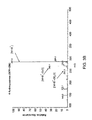
- FIG. 7 is a bar graph showing the urinary endogenous CE excretion in post- and pre-menopausal women as determined by the disclosed methods.
- FIG. 8 shows ESI mass spectra for the dansyl derivatives of 2-hydroxyestrone ( FIG. 8A ), 2-hydroxyestrone-TSH ( FIG. 8B ); 4-hydroxyestrone ( FIG. 8C ); and 4-hydroxyestrone-TSH ( FIG. 8D ).
- FIG. 9 shows ESI mass spectra for the dansyl derivatives of 2-hydroxyestrone-d4 ( FIG. 9A ); 4-hydroxyestrone-d4 ( FIG. 9B ); 2-hydroxyestradiol ( FIG. 9C ); 4-hydroxyestradiol ( FIG. 9D ); 2-hydroxylestradiol ( FIG. 9E ); and 4-hydroxylestradiol ( FIG. 9F ).
- Alkaline conditions Having a pH greater than 7. In some examples highly alkaline conditions are used, for example with a pH of greater than 9 or 10.
- API Atmospheric pressure ionization. This term includes (without limitation) both ESI and APCI.
- HPLC high performance liquid chromatography, a liquid chromatographic method of separation that includes the techniques of nano-LC and capillary HPLC.
- ESI-MS electrospray ionization mass spectrometry, which is a particular example of ionization spectroscopy.
- HPLC-ESI-MS high performance liquid chromatography-electrospray ionization-mass spectrometry, a specific type of LC-MS in which ESI is the ionization method.
- Ionization spectroscopy Spectroscopy preceded by ionization of the analyte, for example by gas-phase ionization, electron ionization, chemical ionization (such as desorption chemical ionization), negative ion chemical ionization, and atmospheric pressure ionization (such as electrospray ionization and atmospheric chemical ionization).
- APCI atmospheric pressure chemical ionization
- APCI atmospheric pressure chemical ionization
- ketosteroid a carbonyl-bearing steroid.
- catechol estrogens (CE)—genotoxic estrogen metabolites having an aromatic ring bearing two hydroxyl groups.
- dCE deuterated analogs of catechol estrogens.
- carbonyl-bearing compond a compound having as part of its structure a carbon-oxygen double bond.
- TSH p-toluenesulfonhydrazide
- CE-TSH catechol estrogens derivatized with p-toluenesulfonhydrazide.
- dCE-TSH deuterated catechol estrogen derivatized with p-toluenesulfonhydrazide.
- HPLC High performance liquid chromatography
- Sulfonhydrazide derivative A compound produced by reaction with a sulfonhydrazide reagent.
- Sulfonyl halide derivative A compound produced by reaction with a sulfonyl halide.
- a method for detecting ketosteroids by reacting a ketosteroid in a sample with a sulfonhydrazide compound to form a sulfonhydrazone of the ketosteroid and analyzing the reacted sample by positive ion mode electrospray ionization mass spectrometry.
- the determination may be either qualitative or quantitative and is based on detecting the sulfonhydrazone of the ketosteroid.
- the ketosteroid may be separated from other components in the sample by HPLC, either before or after derivatization, and analysis by API-MS (for example EIS-MS) is facilitated by derivatization.
- Chormatography such as liquid chromatography, for example HPLC
- HPLC separation may be accomplished by an isocratic or gradient elution with a methanol/water solvent system and a C18 stationary phase.
- Useful gradient systems include a gradient from 20:80 methanol/water to 80:20 methanol/water, for example, a gradient from 25:75 to 75:25 methanol/water, such as a gradient from 40:60 to 60:40 methanol/water.
- the ketosteroid is extracted from the sample to provide a concentrated sample for analysis.
- a method for enhancing the positive ion mode electrospray ionization efficiency of a carbonyl compound includes reacting a carbonyl compound with a sulfonhydrazide to form a sulfonhydrazone of the carbonyl-containing compound.
- Sulfonhydrazones are efficiently ionized by electrospray ionization processes making them more easily detected by mass spectrometry.
- Sulfonhydrazide derivatization is particularly effective for increasing the ESI-MS signal of ketosteroids, such as androgens, corticoids, estrogens, sterols, vitamin D metabolites, phytosteroids, neurosteroids and bile acids, and combinations thereof.
- derivatization of catechol estrogens with p-toluenesulfonhydrazide particularly improves their ESI-MS detection.
- Examples of sulfonhydrazide compounds useful for forming detectable derivatives of carbonyl-containing compounds have the structure
- R is selected from the group consisting of alkyl (such as C1-C10 alkyl, for example C1-C5 alkyl), substituted alkyl, aryl, and substituted aryl.
- the sulfonhydrazide may have the structure
- R 1 -R 5 are independently selected from the group consisting of hydrogen, C1-C5 alkyl, C1-C4 alkoxy, halogen, amino, nitro, hydroxyl, carbonyl, nitroso, cyano, and sulfonyl, and combinations thereof.
- a sulfonhydrazide having this structure is p-toluenesulfonhydrazide.
- ketosteroids in a biological sample, such as a blood, urine, or tissue sample.
- a ketosteroid may be extracted from a biological sample to provide a concentrated sample of the ketosteroid, which is then reacted with p-toluenesulfonhydrazide to form a p-toluenesulfonhydrazone product of the ketosteroid. Separation of the p-toluenesulfonhydrazone product of the ketosteroid from other components in the concentrated sample is conveniently accomplished by chromatography, such as liquid chromatography, for example reverse phase HPLC.
- the ketosteroid may be detected in the HPLC effluent by API-MS (such as ESI-MS).
- the p-toluenesulfonhydrazone product provides an intense ESI-MS signal that may be used to determine the presence and/or amount of the ketosteroid in the sample.
- quantitation of the ketosteroid is facilitated by a stable-isotope dilution method where a known amount of a deuterated analog of the ketosteroid is added to the biological sample prior to extracting the ketosteroid and used as an internal standard.
- the ketosteroid in the sample is quantified by comparing the intensity of the ESI-MS signals from the ketosteroid and its deuterated analog.
- the method is applied to determine the amount of estrogen, specifically catechol estrogen, in a urine sample.
- Derivatization with p-toluenesulfonhydrazine also facilitates separation under convenient reverse phase HPLC condition, such as a methanol/water mobile phase and a C18 stationary phase.
- kits can comprise in packaged combination (a) a sulfonhydrazide compound and (b) other reagents and equipment for determining the amount of ketosteroid in a sample.
- Such other reagents and equipment include those described in Example 1 below.
- a kit for determining the presence of a ketosteroid can include a sulfonhydrazide compound and a deuterated standard of the ketosteroid in packaged combination.
- the kit may also include a sulfonyl halide, such as sulfonyl chloride.
- FIGS. 1A and 1B show that the effect of derivatization with a sulfonhydrazide compound on detectability of compounds by ESI-MS.
- FIG. 1A shows that no ESI-MS signal is observed for catechol estrogens (CE) as they elute from the HPLC column without derivatization.
- FIG. 1B shows that with derivatization well-resolved and symmetrical peaks corresponding to elution of the catechol estrogens are observed.
- a stable isotope dilution HPLC-ESI-MS method is described.
- the method includes a simple and rapid derivatization step that greatly improves method sensitivity and HPLC separability of catechol estrogens (CE), making LC-MS a much more competitive method for human endogenous catechol estrogen analysis.
- CE catechol estrogens
- estrogen-related breast cancer may be the metabolic activation of estrogens to genotoxic metabolites called catechol estrogens (see, for example, Yager and Liehr, Annu. Rev. Pharmacol. Toxicol., 36: 203, 1996) mainly 2-hydroxyestrone and 4-hydroxyestrone in humans. This process is shown below.
- Electrophilic quinone products of these catechol estrogens can react with DNA to form both stable and depurinating adducts known to generate mutations and cell transformation that can initiate cancers (see, for example, Cavalieri et al., Proc. Natl. Acad. Sci. USA, 94: 10937, 1997). It is believed that quantitative measurement of endogenous catechol estrogens will play an important role in elucidating the mechanism of breast carcinogenesis and in estimating the risk of breast cancer in individual women.
- RIA radioimmunoassay
- EIA enzyme immunoassay
- HPLC high-performance liquid chromatography
- GC-MS stable isotope dilution gas chromatography-mass spectrometry
- RIA and EIA suffer from relatively poor specificity due to the cross-reactivity of antibodies (see, for example, Ziegler et al., Environ. Health Perspect, 105(3): 607, 1997).
- HPLC with electrochemical detection has been used for catechol estrogen analysis in hamsters treated with catechol estrogens and in pregnant women, whose estrogen levels are elevated at least 10-fold.
- the stable isotope dilution GC-MS method is both sensitive and specific, and has been successfully used not only for urine samples from non-pregnant premenopausal women but also for urine from postmenopausal women, in which catechol estrogens are substantially reduced.
- LC-MS liquid chromatography-mass spectrometry
- ESI electrospray ionization
- APCI atmospheric pressure chemical ionization
- Catechol estrogens (CE), 2-hydroxyestrone (2-hydroxyE 1 ) and 4-hydroxyestrone (4-hydroxyE 1 ), were obtained from Steraloids, Inc. (Newport, R.I., USA).
- p-Toluenesulfonhydrazide was purchased from Aldrich Chemical Co. (Milwaukee, Wis., USA). Methanol (HPLC grade) and formic acid (reagent grade) were obtained from EM Science (Gibbstown, N.J., USA), and water (HPLC grade) was obtained from Mallinckrodt Baker, Inc. (Paris, Ky., USA). Glacial acetic acid (HPLC grade), L-ascorbic acid (reagent grade), boric acid (reagent grade), sodium bicarbonate (reagent grade) and sodium hydroxide (reagent grade) were purchased from J. T.
- Stock solutions of CE and d-CE were each prepared at 80 ⁇ g ml ⁇ 1 by addition of 2 mg catechol estrogen powders to a volumetric flask and diluting to 25 ml with 100% methanol. These solutions were stored at ⁇ 20° C. until needed to prepare working standard solutions.
- working standards of CE and d-CE were prepared by serial dilutions of stock solutions with 100% methanol. For the analyses, d-CE working standard solution was prepared at 800 ng ml ⁇ 1 , while CE working standard solutions were prepared at 800 and 50 ng ml ⁇ 1 .
- Non-biologic matrix calibration standards were prepared by combining 50 ⁇ l of the d-CE working internal standard solution (40 ng d-CE) with various volumes of CE working standard solution, which typically ranged from 0.5 to 64 ng CE.
- d-CE working internal standard solution 40 ng d-CE
- 10 ml of freshly prepared enzymatic hydrolysis buffer containing 50 mg of L-ascorbic acid, 100 ⁇ l of ⁇ -glucuronidase/sulfatase from Helix pomatia (Type H-2) and 10 ml of 0.15 M sodium acetate buffer (pH 4.1).
- the sample was incubated overnight at 37° C. After hydrolysis, the sample was applied to a primed C 18 column (Bond Elut LRC, Chrom Tech, Inc., Apple Valley, Minn., USA) and washed with 5 ml of water.
- CE and d-CE were eluted with 3 ml of methanol and further purified on QAE-Sephadex in acetate and borate forms, respectively, as described by Fotsis and Adlercreutz.
- the fraction containing both CE and d-CE was evaporated to dryness under nitrogen gas (Reacti-Vap IIITM, Pierce, Rockford, Ill., USA) and derivatized to form the CE and d-CE p-toluenesulfonhydrazones (CE-TSH and d-CE-TSH, respectively) by reaction with 400 ⁇ g p-toluenesulfonhydrazide (TSH) in 200 ⁇ l methanol and heating at 60° C. (Reacti-Therm IIITM Heating Module, Pierce, Rockford, Ill., USA) for 30 min. Calibration standard mixtures were derivatized in the same way. These reactions are represented below. After derivatization, urine samples and calibration standards were evaporated to dryness under nitrogen and redissolved in 100 ⁇ l methanol for LC-MS analysis. The reactions that produce the TSH derivatives are shown below.
- LC-MS analysis was performed on a Finnigan LCQTM DECA ion trap mass spectrometer with Surveyor HPLC system (ThermoFinnigan, San Jose, Calif., USA) controlled by the Xcalibur software. Liquid chromatography was carried out on a reverse phase Luna C18(2) column (150 ⁇ 2.0 mm, 3 ⁇ m; Phenomenex, Torrance, Calif., USA). The mobile phase consisted of methanol as solvent A and water with 0.1% (v/v) formic acid as solvent B. The LC flow rate of 200 ⁇ l/min was used for both ESI and APCI modes. Sensitivity was such that only 5 ⁇ l of each 100- ⁇ l sample was injected by autosampler for analysis. The entire chromatography effluent was passed into the mass spectrometer interface for subsequent detection.
- CE-TSH and d-CE-TSH For the analysis of CE-TSH and d-CE-TSH, a linear gradient of A/B changing from 60:40 to 75:25 in 15 min was employed. After changing back from 75:25 to 60:40 in 2 min, the mobile phase composition A/B stayed at 60:40 for 8 min before the next injection.
- the ESI positive ion mode was used as follows: ion source voltage, 5 kV; heated capillary temperature, 250° C.; capillary voltage, 15 V; sheath gas flow rate, 70 units; auxiliary gas flow rate, 15 units; tube lens offset, 50 V.
- MS full scan mode was employed for characterizing mass spectra of CE-TSH and d-CE-TSH ( FIGS. 2A-2D ).
- MS selected ion monitoring (SIM) mode was used for the quantitative analysis.
- LC-MS performance of CE and d-CE separation/detection without TSH derivatization were also examined.
- a linear gradient of A/B changing from 40:60 to 60:40 in 10 min was employed, and then held at 60:40 for an additional 10 min.
- the mobile phase composition A/B stayed at 40:60 for 8 min before the next injection.
- the APCI positive ion mode was used as follows: ion source current, 10 ⁇ A; vaporizer temperature, 450° C.; heated capillary temperature, 175° C.; capillary voltage, 15 V; sheath gas flow rate, 80 units; tube lens offset, 30 V.
- MS full scan mode was employed for characterizing the mass spectra of CE and d-CE ( FIGS. 4A-D ).
- MS SIM mode was used for the analysis of calibration standards without TSH derivatization.
- the protonated analyte ions [MH + ], m/z 287 and m/z 291, were monitored for CE and d-CE, respectively.
- CE-TSH/d-CE-TSH area ratios were determined for the SIM chromatographic peaks using the Xcalibur software. Calibration curves were constructed by plotting CE-TSH/d-CE-TSH peak area ratios obtained from calibration standards versus CE concentrations and fitting these data using linear regression. CE concentrations in urine samples were then interpolated using this linear function.
- the ESI mass spectra for CE-TSH and d-CE-TSH derivatives are presented in FIGS. 2A-D . These spectra are characterized by intense protonated analyte ions [MH + ] at m/z 455 and m/z 459 for CE-TSH and d-CE-TSH, respectively, and less abundant natriated analyte ions [MNa + ], about 15-20% of [MH + ], at m/z 477 and m/z 481 for CE-TSH and d-CE-TSH, respectively.
- the APCI mode was chosen for their analysis.
- the APCI mass spectra for CE and d-CE without derivatization are shown in FIGS. 3A-D .
- the spectra of [MH + -H 2 O], [MH + -2H 2 O] and various steroid ring fragments were also observed in addition to [MH + ].
- the protonated analyte ions [MH + ], m/z 287 and m/z 291, were monitored for CE and d-CE, respectively, during SIM mode analysis.
- TSH derivatization improved the peak separation and shortened the chromatography time.
- baseline separation of 2-hydroxyE 1 -TSH and 4-hydroxyE 1 -TSH was achieved with a difference in retention times of more than 1 min, whereas underivatized 2-hydroxyE 1 and 4-hydroxyE 1 did not begin eluting until 15 min after injection and were still not fully separated, with a difference in retention times of less than 0.6 min, on the same C 18 column.
- TSH derivatization improved HPLC column retention of the analytes.
- a higher mobile phase methanol composition could be employed for chromatography of CE-TSH and d-CE-TSH, which improved the efficiency of the ESI process and enhanced method sensitivity, compared with CE and d-CE without derivatization.
- TSH derivatization of CE and d-CE resulted in stable and intense protonated analyte ions [MH + ] with no fragmentation during their ionization process (see FIGS. 2A-D ), which contributed to the improved sensitivity.
- the sulfonhydrazone in CE-TSH and d-CE-TSH has greater proton affinity than the ketone in CE and d-CE. This greatly enhanced the method sensitivity for ESI positive ion mode.
- Standard curves for CE were linear over a 100-fold calibration range (0.5-64 ng CE/sample) with correlation coefficients for the linear regression curves typically 0.999 ( FIGS. 6A-B ).
- Replicate (n 6) injections of a 1-ng working standard, representing 50 pg on column, resulted in Relative Standard Deviations (R.S.D.) of SIM peak area ratios for 2-hydroxyE 1 -TSH/[ 2 H 4 ] 2-hydroxyE 1 -TSH and 4-hydroxyE 1 -TSH/[ 2 H 4 ] 4-hydroxyE 1 -TSH of 1.0 and 1.6%, respectively.
- the Signal to Noise (S/N) ratios obtained for the 1-ng working standard, representing 50 pg on column, were typically greater than 15 ( FIG. 5A ), which provides an adequate lower limit of quantitation for endogenous CE analyses in urine from postmenopausal women.
- the absolute recovery of CE after the hydrolysis and extraction procedure was determined by comparing SIM chromatographic peak area ratios of CE-TSH/d-CE-TSH in pooled urine from postmenopausal women that had been spiked with d-CE before and after the hydrolysis and extraction procedure. Mean absolute recoveries were 82.4 ⁇ 2.9% and 81.5 ⁇ 2.5%, respectively, for 2-hydroxyE 1 and 4-hydroxyE 1 .
- the HPLC-ESI-MS method for measuring endogenous CE in human urine described above simplifies sample preparation and increases the throughput of analysis.
- the disclosed method provides a simple and rapid derivatization step that forms p-toluenesulfonhydrazone derivatives of CE and d-CE. This derivatization step greatly enhances ESI-MS sensitivity as well as HPLC separability of the 2- and 4-hydroxyE 1 .
- Standard curves were linear over a 100-fold calibration range (0.5-64 ng CE/sample) with correlation coefficients for the linear regression curves typically 0.999.
- the lower limit of quantitation for each CE is 1 ng per 10-ml urine sample, with accuracy of 97-99% and overall precision, including the necessary preparation and derivatization steps, of 1-3% for samples prepared concurrently and 2-11% for samples prepared in several batches. This method is useful for measuring the low endogenous levels of 2- and 4-hydroxyE 1 in urine from postmenopausal women.
- sulfonhydrazide compounds useful for forming ESI-MS detectable derivatives of carbonyl-containing compounds have the structure
- R is selected from the group consisting of alkyl, substituted alkyl, aryl, and substituted aryl.
- Alkyl groups includes C1-C18 straight and branched chain alkyl groups (for example C1-C10 or C1-C5 groups).
- Substituted alkyl includes alkyl groups in which one or more hydrogens are substituted with halogen (F, Cl, Br, I), amino groups or hydroxyl groups.
- Aryl includes phenyl, napthyl, and anthranyl groups.
- Substituted aryl includes phenyl, napthyl, and anthranyl groups where one or more hydrogens are substituted with C1-C5 alkyl, C1-C4 alkoxy, halogen, amino, nitro, hydroxyl, carbonyl, nitroso, cyano, and sulfonyl groups, and combinations thereof.
- the sulfonhydrazide compound has the structure
- R 1 -R 5 are independently selected from the group consisting of hydrogen, C 1 -C 5 alkyl, C1-C4 alkoxy, halogen, amino, nitro, hydroxyl, carbonyl, nitroso, cyano, and sulfonyl, and combinations thereof.
- C1-C5 alkyl includes methyl, ethyl, propyl, isopropyl, n-butyl, sec-butyl, isobutyl, tert-butyl, and neopentyl groups.
- C1-C4 alkoxy includes, methoxy, ethoxy, propoxy, isopropoxy, n-butoxy, sec-butoxy, isobutoxy, and tert-butoxy groups.
- a sulfonhydrazide compound having this structure is p-toluenesulfonhydrazide, wherein R 3 is methyl and R 1 , R 2 , R 4 , and R 5 are hydrogen.
- R 1 -R 5 are all hydrogen.
- Both p-toluenesulfonhydrazide and benzenesulfony hydrazide are available from Aldrich (Milwaukee, Wis.), as are 2,4,6-triisopropylbensenesulfonyl hydrazide, 2,4,6-trimethylbensenesulfonyl hydrazide, 4-methoxybenzenesulfonyl hydrazide, and 4-amino-2-nitrobenzenesulfonyl hydrazide.
- sulfonhydrazides may be synthesized by reacting a sulfonyl halide (such as sulfonyl chloride) compound with hydrazine, an amine (see, Streitwieser and Heathcock, “Introduction to Organic Chemistry,” Macmillan Publishing Co., Inc., 1976, pages 789-790).
- a sulfonyl halide such as sulfonyl chloride
- amine see, Streitwieser and Heathcock, “Introduction to Organic Chemistry,” Macmillan Publishing Co., Inc., 1976, pages 789-790.
- methanesulfonyl chloride may be reacted with hydrazine to form methanesulfonyl hydrazide.
- Over 150 sulfonyl chloride compounds are available from Aldrich (Milwaukee, Wis.). Others may be synthesized from sulfonic acid compounds by reaction
- Sulfonhydrazide compounds may be reacted with carbonyl-containing compounds by combining the two compounds in a solvent that will dissolve both but does not itself react with the sulfonhydrazide compound (for example, acetone would be a bad choice).
- Methanol is a good solvent in which to react sulfonhydrazide compounds with carbonyl compounds, such as ketosteroids, because it is a good solvent for both polar and non-polar solutes and it will not react with the sulfonhydrazide compound.
- the reaction mixture may be heated to accelerate the reaction, for example, to between 30° C. and 65° C. (reflux) when methanol is the solvent.
- estrogen samples were incubated at 60° C. for 0.5, 1, 1.5 or 2 hours in 200 ⁇ L of 0.5 mg TSH/mL 100% methanol, 1 mg TSH/mL 100% methanol or 2 mg TSH/mL 100% methanol. Improved derivatization was obtained using the 2 mg TSH/mL 100% methanol solution, which showed no significant difference between the incubation periods. Estrogen samples were also incubated with 2 mg TSH/mL solutions in methanol that also contained 0.05 M or 0.10 M acetic acid.
- ketosteroids include steroids having at least one carbonyl group.
- Groups of steroids that include numbers of ketosteroids are androgens, corticoids, estrogens, sterols, vitamin D metabolites, phytosteroids, neurosteroids and bile acids (see, for example, Shimada et al., J. Chromatogr. A, 935: 141-172, 2001, for a discussion of the many types of steroids and many particular examples of ketosteroids).
- the basic steroid molecular skeleton consists of four rings of carbon atoms, perhydro-1,2-cyclopentenophenanthrene.
- steroids fall within six broad groups according to the number of carbon atoms in the 4-ring skeleton and in side chains, namely, gonanes (C17), estranes (C18), androstanes (C19), pregnanes (C21), cholanes (C24), and cholestanes (C27). Any of these skeletons bearing a carbonyl group is also a ketosteroid.
- ketosteroids include the carbonyl-bearing testosterones, testosterone esters, androsterones, norandrosterones, noretiocholanolones, cortisols, cortisones, aldosterones, corticosterones, tetrahydrocortisones, etiocholanolones pregnenolones, protesterones, estrones, gestrinones, oxosterols, guaicol estrogens, and metabolites of these compounds.
- Ketosteroids may be naturally occurring or synthetic, making the methods of the disclosure applicable to metabolic studies as well as for detecting abuse of performance enhancing steroids.
- HPLC is a form of liquid chromatography, meaning the mobile phase is a liquid.
- the stationary phase used in HPLC is typically a solid, more typically a derivatized solid having groups that impart a hydrophilic or hydrophobic character to the solid. For example, silica gel is often used as the base solid and it is derivatized to alter its normally hydrophobic characteristics.
- Normal phase HPLC refers to using a non-polar mobile phase and a polar stationary phase.
- Reverse phase HPLC refers to a polar mobile phase and a non-polar stationary phase. Reverse phase HPLC is convenient because polar solvents such as water, methanol, and ethanol may be used and these solvents are easily and safely handled and disposed. Furthermore, reverse phase conditions improve ESI efficiency.
- Typical reverse phase mobile phase solvents include polar protic solvents such as water, methanol, ethanol, and sometimes other alcohols and polar aprotic solvents such as dimethylformamide and acetonitrile. Of these, methanol and water are particularly convenient to use, especially since they are miscible in all proportions with each other.
- polar protic solvents such as water, methanol, ethanol, and sometimes other alcohols
- polar aprotic solvents such as dimethylformamide and acetonitrile.
- methanol and water are particularly convenient to use, especially since they are miscible in all proportions with each other.
- the chromatography is termed isocratic.
- the composition of the mobile phase solvent is changed during a chromatographic run it is termed a gradient elution.
- a gradient begins with the more polar solvent mixture and then progressively is changed to a more non-polar solvent system.
- a reverse phase gradient elution may begin with a 20:80 methanol/water mixture and change to an 80:20 methanol/water mixture during the course of a chromatographic run.
- Other examples of methanol/water mixture gradients include beginning with a 25:75 methanol/water mixture and changing to 75:25 methanol/water during the chromatographic run or beginning with a 40:60 methanol/water solvent and changing to a 60:40 methanol/water mixture.
- Formic acid may also be added to the solvent in an amount from 0.05% to 1%, such as from 0.05% to 0.2%, to assist in positive ion mode ESI of the HPLC effluent.
- a convenient isocratic solvent system for separation of p-toluenesulfonhydrazide derivatized catechol estrogens is a 60:40 methanol/water mixture.
- Such a solvent system has an espsilon value (solvent strength parameter) of about 51.
- espsilon value solvent strength parameter
- One of ordinary skill in the art of chromatography will recognize that other solvent systems of similar epsilon value can be chosen to accomplish the separation. For example, a 50:50 acetonitrile/water mixture has an epsilon value of 50 and may be chosen as an alternative solvent system.
- equivalents for other methanol/water solvents that are better suited for particular ketosteroid separations may be chosen on the basis of epsilon values.
- solvents may be mixed beforehand or be mixed during a chromatographic run in varying proportions in what is called a gradient elution.
- appropriate solvent systems and gradients for reverse phase HPLC will have an epsilon value from 30 to 80, for example, from 40 to 70, such as from 45 to 55.
- solvents that may be used to provide an epsilon values from 30 to 80 include water, methanol, ethanol, and acetonitrile.
- the non-polar stationary phase may be a C8 or a C18 derivatized column or an embedded polar/non-polar column such as an amine/C18 or C8 column.
- the embedded column polar groups close to the surface of the solid stationary phase support are interspersed with non-polar C8 or C18 groups.
- Many types of non-polar columns for reverse phase HPLC are available, for example, from Alltech Associates, Inc. (Deerfield, Ill.).
- Nano-LC capillary HPLC
- Nano-LC columns are available in a variety of sizes and lengths. For example, a typical column might have an inner diameter of 75 ⁇ m and a length of between 5 and 25 cm.
- a typical nano-LC packing is C18, with a 5 ⁇ m particle size, making it especially suitable for separations of ketosteroids according to the disclosed methods.
- Nano-LC equipment is available, for example, from LC Packings (San Francisco, Calif.).
- sulfonhydrazide compounds it is also possible to use sulfonhydrazide compounds to increase the ionization efficiency of carbonyl-containing compounds under positive ion mode ESI conditions and thereby lower the limit of detection of the compound by ESI-MS.
- a sulfonhydrazide compound is added to a liquid sample containing a carbonyl-containing compound and allowed to react to form a sulfonhydrazone derivative of the carbonyl-containing compound. The sample is then injected in liquid form (with or without further purification) into an ESI-MS device for measurement (see for example, Fenn et al., “Electrospray Ionization-Principles and Practice,” Mass Spectrom. Rev., 9: 37-70, 1990).
- An API interface (such as an ESI interface) may be used to introduce a liquid sample into any type of mass spectrometer in API-MS.
- Examples of the types of mass spectrometers that may be used include sector instruments, quadrupole instruments, ion-cyclotron resonance instruments, time-of-flight instruments, and tandem mass spectrometers.
- a particularly useful type of tandem mass spectrometer for ESI ionized samples is an instrument having a collision cell, such as a low-energy or high-energy collision cell, placed between the mass selecting regions of the spectrometer. Since ESI typically creates ions from molecules without breaking them apart, it is advantageous to break the ions apart into fragment ions in a collision cell. The fragmentation pattern created in the collision cell is detected by a second mass selective device and may be used for identification of the analyte.
- Girard's Reagent P and T (quaternary ammonium hydrazine compounds with a permanent positive charge) derivatives showed improved signal for ESI, but they adversely affected the HPLC separation of catechol estrogens. 6-Ethoxy-2-benzothiazolesulfonamide, N′-(2-thiazolyl)sulfanilamide, sulfisomididine, and sulfadiazine were also tried as derivatization agents, but no signal was observed in either ESI or ACPI.
- carbonyl protection via derivatization with a sulfahydrazide in combination with hydroxyl protection via derivatization with a sulfonyl halide allows the detection of both carbonyl and hydroxyl containing steroids, such as estrogens and androgens, and their metabolites.
- steroids such as estrogens and androgens
- all endogenous estrogens and their metabolites have a phenolic or catechol A-ring.
- Addition to the hydroxyl of a highly ionizable moiety such as a dansyl group can be performed by reaction with a sulfonyl halide.
- Such a step will add the highly ionizable moiety to all endogenous estrogens, because all these estrogens have a hydroxyl group that can be derivatized by the reaction.
- not all endogenous estrogens contain a carbonyl group, and in the absence of the carbonyl group they are not capable of being derivatized by the sulfonhydrazide.
- Derivatization with the sulfonhydrazide alone is therefore not able to derivatize all endogenous estrogens for the purpose of enhancing their API (such as ESI) efficiency and HPLC-ESI-MS method sensitivity at positive ion mode.
- the carbonyl group in D-ring ketolic steroid metabolites (such as estrogen) is alkali labile, and is readily destroyed or interconverted in an alkaline environment during the reaction with the sulfonyl halide.
- the inventors disclose protecting the carbonyl group in D-ring ketolic estrogen metabolites by reacting with a sulfonhydrazide to form a chemically stable hydrazone before carrying out the sulfonyl derivatization.
- This method allows the derivatization of the hydroxyl group while avoiding carbonyl degradation under the alkali conditions of the sulfonyl derivatization.
- This combined derivatization approach allows both the hydroxyl and carbonyl groups to be derivatized without altering the carbonyl groups of the steroids.
- Example 2 Examples of the sulfonhyrazide compound are listed in Example 2, and in a specific example is TSH.
- the sulfonyl derivatizing agents such as sulfonyl halides
- API-MS such as ESI-MS
- X is Cl, Br, I, or any good leaving group
- R is any highly ionizable group that allow for the formation of ions under either the positive ion mode or the negative mode of ESI-MS, such as alkyl; substituted alkyl, aryl, and substituted aryl.
- the alkyl is a lower alkyl (a C1-C10 alkyl, such as a C1-C5 alkyl).
- the sulfonyl derivatizing agent is a sulfonyl halide, such as a having the structure
- R1-R8 are independently selected from the group consisting of hydrogen, C1-C5 alkyl, C1-C4 alkoxy, halogen, amino, nitro, hydroxyl, carbonyl, nitroso, cyano, and sulfonyl, and combinations thereof.
- R1-R6 are all hydrogen
- R7 and R8 are lower alkyl.
- a sulfonyl halide compound having this structure is a dansyl halide such as dansyl chloride which has the following chemical structure.
- EM estrogens and estrogen metabolites
- Steraloids, Inc. Newport, R.I., USA
- d-EM Deuterium-labeled estrogens and estrogen metabolites
- All EM and d-EM analytical standards have chemical and isotopic purity ⁇ 98%, respectively, as reported by the manufacturers, and were used without further purifications.
- p-Toluenesulfonhydrazide (TSH), dansyl chloride, and acetone (HPLC grade) were purchased from Aldrich Chemical Co. (Milwaukee, Wis., USA). Methanol (HPLC grade) and formic acid (reagent grade) were obtained from EM Science (Gibbstown, N.J., USA), and water (HPLC grade) was obtained from Mallinckrodt Baker, Inc. (Paris, Ky., USA). Sodium bicarbonate (reagent grade) and sodium hydroxide (reagent grade) were purchased from J. T. Baker (Phillipsburg, N.J., USA).
- Stock solutions of EM and d-EM were prepared at 80 ⁇ g ml ⁇ 1 by addition of 2 mg individual estrogen powder to a volumetric flask and diluting to 25 ml with 100% methanol. These solutions were stored at ⁇ 20° C. until needed to prepare working standard solutions. During each day of analysis, working standards of EM and d-EM were freshly prepared by serial dilutions of stock solutions with 100% methanol. In this example, d-EM working standard solution was prepared at 800 ng ml ⁇ 1 , while EM working standard solutions were prepared at 800 and 50 ng ml ⁇ 1 .
- reaction mixtures were directly injected for HPLC-ESI-MS analysis.
- HPLC-ESI-MS analysis was performed on a Finnigan LCQTM DECA ion trap mass spectrometer with Surveyor HPLC system (ThermoFinnigan, San Jose, Calif., USA) controlled by the XcaliburTM software. Liquid chromatography was carried out on a reverse phase Luna C 18 column (150 ⁇ 2.0 mm, 3 ⁇ m; Phenomenex, Torrance, Calif., USA). The mobile phase consisted of methanol and water (85:15) with 0.1% (v/v) formic acid at the flow rate of 200 ⁇ l/min was used. Sensitivity was such that only 5 ⁇ l of each 100- ⁇ l sample was injected by autosampler for analysis. The entire chromatography effluent was passed into the mass spectrometer ESI interface for subsequent detection.
- the ESI positive ion mode was used as follows: ion source voltage, 5 kV; heated capillary temperature, 250° C.; capillary voltage, 15 V; sheath gas flow rate, 70 units; auxiliary gas flow rate, 15 units; tube lens offset, 50 V.
- MS full scan mode was employed for characterizing mass spectra of both derivatization approaches.
- the combined TSH carbonyl protection and dansyl chloride derivatization is a method suitable for the quantitative measurement of all endogenous steroids (such as estrogens and estrogen metabolites) by HPLC-ESI-MS.
- protecting the carbonyl group of the steroids allows for the derivatization of the hydroxyl group without significant steroid degradation.
- This two-step process of carbonyl derivatization followed by hydroxyl derivatization provides for better HPLC separation of steroids, and allows for better signal detection in API-MS (such as ESI-MS) when at least one of the derivatization groups contains a highly ionizable moiety that enables ionization under either positive ion or negative ion mode of electrospray ionization.
- carbonyl protecting reagents that could be used in this two-step process include but are not limited to compounds that form an oxime derivative, silyl derivative, ketal/acetal, hydrazone, and Schiff's base derivative. Specific examples include methoxyamine, ethoxyamine, carboxymethoxylamine, Girard's Reagent T, Giard's Reagent P, 6-ethoxy-2-benzothiazolesulfonamide, cystein, N′-(2-Thiazolyl)sulfanilamide, sulfisomidine, sulfadiazine, and p-toluenesulfohydrazide (TSH).
- TSH p-toluenesulfohydrazide
- hydroxyl protecting reagent that could be used in this two-step process includes but not limited to compounds that form silyl derivative, acyl derivative, benzoyl derivative, alkyl derivative, dansyl derivative, nitrobenzofuran derivative.
- Specific examples include nitrobenzopentaflurobenzoyl hydroxylamine, hydroxylamine, dabsyl chloride, and dansyl chloride, 1-fluoro-2,4-dinitrobenzene, and 4-fluoro-3nitrobenzofurazan.
- the carbonyl group in D-ring ketolic steroid metabolites (such as estrogen metabolites) is protected by forming a hydrazone, such as a chemically stable p-toluenesulfonhydrazone, before carrying out a dansyl halide derivatization (for example with dansyl chloride) under alkaline conditions.
- a hydrazone such as a chemically stable p-toluenesulfonhydrazone
- the most useful protective groups are the acyclic and cyclic acetals or ketals, and the acyclic and cyclic thioacetals or ketals.
- the carbonyl group can form a number of very stable derivatives such as cyanohydrins, hydrazones, imines, oximes, and semicarbazones, which is suitable for derivatization.
Landscapes
- Life Sciences & Earth Sciences (AREA)
- Health & Medical Sciences (AREA)
- Molecular Biology (AREA)
- Engineering & Computer Science (AREA)
- Immunology (AREA)
- Chemical & Material Sciences (AREA)
- Biomedical Technology (AREA)
- Urology & Nephrology (AREA)
- Hematology (AREA)
- Microbiology (AREA)
- Cell Biology (AREA)
- Biotechnology (AREA)
- Endocrinology (AREA)
- Food Science & Technology (AREA)
- Medicinal Chemistry (AREA)
- Physics & Mathematics (AREA)
- Analytical Chemistry (AREA)
- Biochemistry (AREA)
- General Health & Medical Sciences (AREA)
- General Physics & Mathematics (AREA)
- Pathology (AREA)
- Other Investigation Or Analysis Of Materials By Electrical Means (AREA)
Abstract
Description

wherein R is selected from the group consisting of alkyl (such as C1-C10 alkyl, for example C1-C5 alkyl), substituted alkyl, aryl, and substituted aryl.

wherein R1-R5 are independently selected from the group consisting of hydrogen, C1-C5 alkyl, C1-C4 alkoxy, halogen, amino, nitro, hydroxyl, carbonyl, nitroso, cyano, and sulfonyl, and combinations thereof. One example of a sulfonhydrazide having this structure is p-toluenesulfonhydrazide.


G. HPLC-MS
| TABLE 1 |
| Accuracy and intra batch precision of urinary CE analyses, including |
| hydrolysis, extraction, and derivatization stepsa |
| Postmenopausal | Postmenopausal | ||
| Postmenopausal urine | urine + 8 ng CE | urine + 30 ng CE |
| 4- | 2- | 4- | 2- | 4- | |||
| 2-hydroxyE1 | hydroxyE1 | hydroxyE1 | hydroxyE1 | hydroxyE1 | hydroxyE1 | ||
| Mean (n = 6) | 9.64 | 1.40 | 17.54 | 9.24 | 38.76 | 31.10 |
| SD (n = 6) | 0.31 | 0.07 | 0.29 | 0.18 | 1.15 | 0.33 |
| Accuracy | N/A | N/A | 98.76 | 98.01 | 97.06 | 98.99 |
| (%) | ||||||
| aThe mean is expressed in units of ng/10 mL of urine. | ||||||
| TABLE 2 |
| Inter-batch precision of urinary CE analyses, including hydrolysis, |
| extraction, and derivatization stepsa |
| Postmenopausal | Premenopausal | |
| urine | mid-luteal urine |
| 2-hydroxyE1 | 4-hydroxyE1 | 2-hydroxyE1 | 4-hydroxyE1 | ||
| Mean (n = 4) | 9.78 | 1.34 | 32.46 | 3.95 |
| SD (n = 4) | 0.23 | 0.06 | 0.77 | 0.42 |
| Precision (%) | 2.36 | 4.44 | 2.37 | 10.68 |
| aThe mean is expressed in units of ng/10 ml urine. | ||||
Q. Application to Pre- and Postmenopausal Urine Samples

where R is selected from the group consisting of alkyl, substituted alkyl, aryl, and substituted aryl. Alkyl groups includes C1-C18 straight and branched chain alkyl groups (for example C1-C10 or C1-C5 groups). Substituted alkyl includes alkyl groups in which one or more hydrogens are substituted with halogen (F, Cl, Br, I), amino groups or hydroxyl groups. Aryl includes phenyl, napthyl, and anthranyl groups. Substituted aryl includes phenyl, napthyl, and anthranyl groups where one or more hydrogens are substituted with C1-C5 alkyl, C1-C4 alkoxy, halogen, amino, nitro, hydroxyl, carbonyl, nitroso, cyano, and sulfonyl groups, and combinations thereof.

wherein R1-R5 are independently selected from the group consisting of hydrogen, C1-C5 alkyl, C1-C4 alkoxy, halogen, amino, nitro, hydroxyl, carbonyl, nitroso, cyano, and sulfonyl, and combinations thereof. C1-C5 alkyl includes methyl, ethyl, propyl, isopropyl, n-butyl, sec-butyl, isobutyl, tert-butyl, and neopentyl groups. C1-C4 alkoxy includes, methoxy, ethoxy, propoxy, isopropoxy, n-butoxy, sec-butoxy, isobutoxy, and tert-butoxy groups. One example of a sulfonhydrazide compound having this structure is p-toluenesulfonhydrazide, wherein R3 is methyl and R1, R2, R4, and R5 are hydrogen. Another example is benzenesulfonyl hydrazide where R1-R5 are all hydrogen. Both p-toluenesulfonhydrazide and benzenesulfony hydrazide are available from Aldrich (Milwaukee, Wis.), as are 2,4,6-triisopropylbensenesulfonyl hydrazide, 2,4,6-trimethylbensenesulfonyl hydrazide, 4-methoxybenzenesulfonyl hydrazide, and 4-amino-2-nitrobenzenesulfonyl hydrazide. Other sulfonhydrazides may be synthesized by reacting a sulfonyl halide (such as sulfonyl chloride) compound with hydrazine, an amine (see, Streitwieser and Heathcock, “Introduction to Organic Chemistry,” Macmillan Publishing Co., Inc., 1976, pages 789-790). For example methanesulfonyl chloride may be reacted with hydrazine to form methanesulfonyl hydrazide. Over 150 sulfonyl chloride compounds are available from Aldrich (Milwaukee, Wis.). Others may be synthesized from sulfonic acid compounds by reaction with PCl5.

wherein X is Cl, Br, I, or any good leaving group, and R is any highly ionizable group that allow for the formation of ions under either the positive ion mode or the negative mode of ESI-MS, such as alkyl; substituted alkyl, aryl, and substituted aryl. In particular embodiments the alkyl is a lower alkyl (a C1-C10 alkyl, such as a C1-C5 alkyl).

wherein X is Cl, Br, I, or any good leaving group, and R1-R8 are independently selected from the group consisting of hydrogen, C1-C5 alkyl, C1-C4 alkoxy, halogen, amino, nitro, hydroxyl, carbonyl, nitroso, cyano, and sulfonyl, and combinations thereof. In particular examples, R1-R6 are all hydrogen, and R7 and R8 are lower alkyl.

A. Chemicals and Reagents


Claims (17)

Priority Applications (1)
| Application Number | Priority Date | Filing Date | Title |
|---|---|---|---|
| US10/511,409 US7807472B2 (en) | 2002-04-15 | 2003-04-15 | Methods for separation and detection of ketosteroids and other carbonyl-containing compounds |
Applications Claiming Priority (3)
| Application Number | Priority Date | Filing Date | Title |
|---|---|---|---|
| US37284802P | 2002-04-15 | 2002-04-15 | |
| PCT/US2003/011562 WO2003089921A1 (en) | 2002-04-15 | 2003-04-15 | Methods for separation and detection of ketosteroids and other carbonyl-containing compounds |
| US10/511,409 US7807472B2 (en) | 2002-04-15 | 2003-04-15 | Methods for separation and detection of ketosteroids and other carbonyl-containing compounds |
Publications (2)
| Publication Number | Publication Date |
|---|---|
| US20050181514A1 US20050181514A1 (en) | 2005-08-18 |
| US7807472B2 true US7807472B2 (en) | 2010-10-05 |
Family
ID=29250919
Family Applications (1)
| Application Number | Title | Priority Date | Filing Date |
|---|---|---|---|
| US10/511,409 Active 2027-02-13 US7807472B2 (en) | 2002-04-15 | 2003-04-15 | Methods for separation and detection of ketosteroids and other carbonyl-containing compounds |
Country Status (3)
| Country | Link |
|---|---|
| US (1) | US7807472B2 (en) |
| AU (1) | AU2003228536A1 (en) |
| WO (1) | WO2003089921A1 (en) |
Cited By (4)
| Publication number | Priority date | Publication date | Assignee | Title |
|---|---|---|---|---|
| US20100129923A1 (en) * | 2007-05-04 | 2010-05-27 | Oregon Health & Science University | Tandem mass spectrometry for detecting and/or screening for conditions associated with altered sterols |
| US20120126107A1 (en) * | 2010-05-27 | 2012-05-24 | Bingfang Yue | Enhanced Sensitivity for Analysis of Carbonyl Containing Compounds Using Mass Spectrometry |
| US20130316462A1 (en) * | 2012-05-25 | 2013-11-28 | Health Diagnostic Laboratory, Inc. | Rapid and high-throughput analysis of sterols/stanols or derivatives thereof |
| US9851368B2 (en) * | 2012-09-06 | 2017-12-26 | Swansea University | Kit and method for quantitative detection of steroids |
Families Citing this family (21)
| Publication number | Priority date | Publication date | Assignee | Title |
|---|---|---|---|---|
| WO2003089921A1 (en) | 2002-04-15 | 2003-10-30 | The Government Of The United States Of America As Represented By The Secretary Of The Department Of Health And Human Services | Methods for separation and detection of ketosteroids and other carbonyl-containing compounds |
| US20070004045A1 (en) * | 2005-06-07 | 2007-01-04 | Xia Xu | Analysis of large numbers of estrogens and other steroids and applications thereof |
| US20090215111A1 (en) * | 2005-06-07 | 2009-08-27 | Veenstra Timothy D | Analysis of steroid hormones in thin tissue sections |
| WO2007139956A2 (en) | 2006-05-26 | 2007-12-06 | Laboratory Corporation Of America Holdings | Methods and systems for the quantitative analysis of biomarkers |
| WO2008150488A1 (en) * | 2007-06-01 | 2008-12-11 | Laboratory Corporation Of America Holdings | Methods and systems for quantification of peptides and other analytes |
| WO2009070457A1 (en) * | 2007-11-30 | 2009-06-04 | Waters Technologies Corporation | Determining the presence or absence of mineralocorticoids in samples |
| CN103185762B (en) * | 2011-12-29 | 2015-08-26 | 复旦大学 | A kind of method analyzing multiple incretion interferent in mensuration food |
| JP6041125B2 (en) * | 2012-07-06 | 2016-12-07 | 株式会社あすか製薬メディカル | Ultrasensitive measurement method of estrogen |
| GB2523114A (en) * | 2014-02-12 | 2015-08-19 | Kratos Analytical Ltd | Oxidized lipid detection |
| AU2016349111A1 (en) * | 2015-11-04 | 2018-05-17 | Indivior Uk Limited | Quantification of drugs in biological samples |
| CN106706802A (en) * | 2017-03-03 | 2017-05-24 | 中国水产科学研究院淡水渔业研究中心 | Detection method for content of sulfadiazine antibiotics in aquatic animal health care product |
| US11674969B2 (en) * | 2018-03-16 | 2023-06-13 | Quest Diagnostics Investments Llc | Mass spectrometric determination of testosterone in multiplexed patient samples |
| CN110187043A (en) * | 2019-04-25 | 2019-08-30 | 中南民族大学 | Method that is a kind of while detecting 13 kinds of steroid hormones in serum |
| CN109991357A (en) * | 2019-05-10 | 2019-07-09 | 广州质量监督检测研究院 | Screening methods for glucocorticoids and their derivatives and their applications |
| CN111983044B (en) * | 2019-05-24 | 2023-04-11 | 中国科学院大连化学物理研究所 | Detection method for analyzing steroid hormone based on double-derivative treatment |
| CN110907565B (en) * | 2019-11-19 | 2022-10-04 | 国家烟草质量监督检验中心 | Method for measuring carbonyl-containing aroma components in smoke of cigarette heated without combustion |
| CN112034072B (en) * | 2020-09-12 | 2023-05-12 | 河南牧业经济学院 | Method for measuring content and condensation degree of citral diethyl acetal and laural diethyl acetal in perfume by gas chromatography-tandem mass spectrometry |
| CN114624343B (en) * | 2020-12-10 | 2023-01-24 | 中国科学院大连化学物理研究所 | Method for relatively quantifying 45 inflammations and immune metabolites in serum |
| CN114618457A (en) * | 2020-12-11 | 2022-06-14 | 中国科学院大连化学物理研究所 | Binitryl-substituted phenyl chromatographic stationary phase and preparation and application thereof |
| CN115541776B (en) * | 2022-11-03 | 2024-01-19 | 北京大学第三医院(北京大学第三临床医学院) | Method for detecting steroid hormones using high performance liquid chromatography-ion mobility differential mass spectrometry |
| CN116990425A (en) * | 2023-08-04 | 2023-11-03 | 国家烟草质量监督检验中心 | An analysis method for carbonyl compounds in e-cigarette liquid |
Citations (5)
| Publication number | Priority date | Publication date | Assignee | Title |
|---|---|---|---|---|
| US5272134A (en) * | 1992-03-24 | 1993-12-21 | Erox Corporation | Fragrance compositions and other compositions which contain human pheromones |
| US5807748A (en) * | 1994-07-08 | 1998-09-15 | City Of Hope | N-terminal protein sequencing reagents and methods which form amino acid detectable by a variety of techniques |
| US6326209B1 (en) | 2000-01-07 | 2001-12-04 | Univera Pharmaceuticals, Inc. | Measurement and quantification of 17 ketosteroid-sulfates as a biomarker of biological age |
| US6541263B2 (en) | 2001-02-21 | 2003-04-01 | Euro-Celtique, S.A. Luxembourg | Determination of corticosteroids in human plasma using micromass LC/MS/MS |
| WO2003089921A1 (en) | 2002-04-15 | 2003-10-30 | The Government Of The United States Of America As Represented By The Secretary Of The Department Of Health And Human Services | Methods for separation and detection of ketosteroids and other carbonyl-containing compounds |
-
2003
- 2003-04-15 WO PCT/US2003/011562 patent/WO2003089921A1/en not_active Ceased
- 2003-04-15 US US10/511,409 patent/US7807472B2/en active Active
- 2003-04-15 AU AU2003228536A patent/AU2003228536A1/en not_active Abandoned
Patent Citations (6)
| Publication number | Priority date | Publication date | Assignee | Title |
|---|---|---|---|---|
| US5272134A (en) * | 1992-03-24 | 1993-12-21 | Erox Corporation | Fragrance compositions and other compositions which contain human pheromones |
| US5807748A (en) * | 1994-07-08 | 1998-09-15 | City Of Hope | N-terminal protein sequencing reagents and methods which form amino acid detectable by a variety of techniques |
| US6326209B1 (en) | 2000-01-07 | 2001-12-04 | Univera Pharmaceuticals, Inc. | Measurement and quantification of 17 ketosteroid-sulfates as a biomarker of biological age |
| US6541263B2 (en) | 2001-02-21 | 2003-04-01 | Euro-Celtique, S.A. Luxembourg | Determination of corticosteroids in human plasma using micromass LC/MS/MS |
| WO2003089921A1 (en) | 2002-04-15 | 2003-10-30 | The Government Of The United States Of America As Represented By The Secretary Of The Department Of Health And Human Services | Methods for separation and detection of ketosteroids and other carbonyl-containing compounds |
| US20050181514A1 (en) | 2002-04-15 | 2005-08-18 | Xia Xu | Methods for separation and detection of ketosteroids and other carbonyl-containing compounds |
Non-Patent Citations (81)
Cited By (6)
| Publication number | Priority date | Publication date | Assignee | Title |
|---|---|---|---|---|
| US20100129923A1 (en) * | 2007-05-04 | 2010-05-27 | Oregon Health & Science University | Tandem mass spectrometry for detecting and/or screening for conditions associated with altered sterols |
| US8158435B2 (en) * | 2007-05-04 | 2012-04-17 | Oregon Health & Science University | Tandem mass spectrometry for detecting and/or screening for conditions associated with altered sterols |
| US20120126107A1 (en) * | 2010-05-27 | 2012-05-24 | Bingfang Yue | Enhanced Sensitivity for Analysis of Carbonyl Containing Compounds Using Mass Spectrometry |
| US9834578B2 (en) * | 2010-05-27 | 2017-12-05 | University Of Utah Research Foundation | Enhanced sensitivity for analysis of ketosteroid compounds using mass spectrometry |
| US20130316462A1 (en) * | 2012-05-25 | 2013-11-28 | Health Diagnostic Laboratory, Inc. | Rapid and high-throughput analysis of sterols/stanols or derivatives thereof |
| US9851368B2 (en) * | 2012-09-06 | 2017-12-26 | Swansea University | Kit and method for quantitative detection of steroids |
Also Published As
| Publication number | Publication date |
|---|---|
| US20050181514A1 (en) | 2005-08-18 |
| AU2003228536A1 (en) | 2003-11-03 |
| WO2003089921A1 (en) | 2003-10-30 |
Similar Documents
| Publication | Publication Date | Title |
|---|---|---|
| US20050181514A1 (en) | Methods for separation and detection of ketosteroids and other carbonyl-containing compounds | |
| Giese | Measurement of endogenous estrogens: analytical challenges and recent advances | |
| US12584928B2 (en) | Methods for detecting estradiol by mass spectrometry | |
| Gao et al. | Sensitivity enhancement in liquid chromatography/atmospheric pressure ionization mass spectrometry using derivatization and mobile phase additives | |
| US20220214364A1 (en) | Methods for detecting estrone by mass spectrometry | |
| Xu et al. | Analysis of steroidal estrogens as pyridine-3-sulfonyl derivatives by liquid chromatography electrospray tandem mass spectrometry | |
| Yang et al. | Stable isotope-coded quaternization for comparative quantification of estrogen metabolites by high-performance liquid chromatography–electrospray ionization mass spectrometry | |
| EP2344661B1 (en) | Methods for detecting dihydrotestosterone by mass spectrometry | |
| Gravitte et al. | Liquid chromatography–mass spectrometry applications for quantification of endogenous sex hormones | |
| Khedr et al. | Liquid chromatography–tandem mass spectrometric analysis of ten estrogen metabolites at sub-picogram levels in breast cancer women | |
| US11536733B2 (en) | Methods and systems for the detection of 11-oxo androgens by LC-MS/MS | |
| Courant et al. | Exposure assessment of prepubertal children to steroid endocrine disrupters: 1. Analytical strategy for estrogens measurement in plasma at ultra-trace level | |
| Honda et al. | Integration of rotating disk sorptive extraction and dispersive-solid phase extraction for the determination of estrogens and their metabolites in urine by liquid chromatography/mass spectrometry | |
| Higashi et al. | Procedure for increasing the detection responses of estrogens in LC–MS based on introduction of a nitrobenzene moiety followed by electron capture atmospheric pressure chemical ionization | |
| Xu et al. | Stable isotope dilution high-performance liquid chromatography–electrospray ionization mass spectrometry method for endogenous 2-and 4-hydroxyestrones in human urine | |
| US7893399B2 (en) | Methods for detecting dehydroepiandrosterone by mass spectrometry | |
| Higashi et al. | Detection and characterization of 20-oxosteroids in rat brains using LC-electron capture APCI-MS after derivatization with 2-nitro-4-trifluoromethylphenylhydrazine | |
| JP7669323B2 (en) | Estrogen derivatization method, mass spectrometry method, derivatization reagent, and derivatization reagent kit | |
| JP2000088834A (en) | Analyzing method | |
| You et al. | 10-Ethyl-acridine-2-sulfonyl chloride: a new derivatization agent for enhancement of atmospheric pressure chemical ionization of estrogens in urine | |
| Santa | Derivatization in LC‐MS Bioanalysis | |
| Abbas et al. | A COMPARATIVE ASSESSMENT OF THE EFFICIENCY OF HPLC COLUMNS AND CHROMATOGRAPHIC CONDITIONS IN LC-MS ANALYSIS OF DERIVATISED ESTROGEN HORMONES AND THEIR METABOLITES | |
| Cheng et al. | Simultaneously determination of fifteen estrogens and metabolites in human serum by an efficient liquid chromatography-tandem mass spectrometry method | |
| AU2017272277B2 (en) | Methods for detecting dihydrotestosterone by mass spectrometry |
Legal Events
| Date | Code | Title | Description |
|---|---|---|---|
| AS | Assignment |
Owner name: GOVERNMENT OF THE UNITED STATES OF AMERICA AS REPR Free format text: ASSIGNMENT OF ASSIGNORS INTEREST;ASSIGNORS:XU, XIA;ZIEGLER, REGINA G.;WATERHOUSE, DAVID J.;AND OTHERS;REEL/FRAME:014776/0052;SIGNING DATES FROM 20040316 TO 20040612 Owner name: GOVERNMENT OF THE UNITED STATES OF AMERICA AS REPR Free format text: ASSIGNMENT OF ASSIGNORS INTEREST;ASSIGNORS:XU, XIA;ZIEGLER, REGINA G.;WATERHOUSE, DAVID J.;AND OTHERS;SIGNING DATES FROM 20040316 TO 20040612;REEL/FRAME:014776/0052 |
|
| AS | Assignment |
Owner name: HEALTH AND HUMAN SERVICES, THE GOVERNMENT OF THE U Free format text: ASSIGNMENT OF ASSIGNORS INTEREST;ASSIGNORS:XU, XIA;ZIEGLER, REGINA G.;WATERHOUSE, DAVID J.;AND OTHERS;REEL/FRAME:016502/0500;SIGNING DATES FROM 20040316 TO 20040612 Owner name: HEALTH AND HUMAN SERVICES, THE GOVERNMENT OF THE U Free format text: ASSIGNMENT OF ASSIGNORS INTEREST;ASSIGNORS:XU, XIA;ZIEGLER, REGINA G.;WATERHOUSE, DAVID J.;AND OTHERS;SIGNING DATES FROM 20040316 TO 20040612;REEL/FRAME:016502/0500 |
|
| FEPP | Fee payment procedure |
Free format text: PAYOR NUMBER ASSIGNED (ORIGINAL EVENT CODE: ASPN); ENTITY STATUS OF PATENT OWNER: LARGE ENTITY |
|
| STCF | Information on status: patent grant |
Free format text: PATENTED CASE |
|
| FPAY | Fee payment |
Year of fee payment: 4 |
|
| MAFP | Maintenance fee payment |
Free format text: PAYMENT OF MAINTENANCE FEE, 8TH YEAR, LARGE ENTITY (ORIGINAL EVENT CODE: M1552) Year of fee payment: 8 |
|
| MAFP | Maintenance fee payment |
Free format text: PAYMENT OF MAINTENANCE FEE, 12TH YEAR, LARGE ENTITY (ORIGINAL EVENT CODE: M1553); ENTITY STATUS OF PATENT OWNER: LARGE ENTITY Year of fee payment: 12 |