US7803652B2 - Semiconductor device for image sensor - Google Patents

Semiconductor device for image sensor Download PDF

Info

Publication number
US7803652B2
US7803652B2 US11/963,124 US96312407A US7803652B2 US 7803652 B2 US7803652 B2 US 7803652B2 US 96312407 A US96312407 A US 96312407A US 7803652 B2 US7803652 B2 US 7803652B2
Authority
US
United States
Prior art keywords
insulating film
cavities
color filters
forming
upper insulating
Prior art date
Legal status (The legal status is an assumption and is not a legal conclusion. Google has not performed a legal analysis and makes no representation as to the accuracy of the status listed.)
Expired - Fee Related, expires
Application number
US11/963,124
Other versions
US20080211046A1 (en
Inventor
Dong-Bin Park
Current Assignee (The listed assignees may be inaccurate. Google has not performed a legal analysis and makes no representation or warranty as to the accuracy of the list.)
DB HiTek Co Ltd
Original Assignee
Dongbu HitekCo Ltd
Priority date (The priority date is an assumption and is not a legal conclusion. Google has not performed a legal analysis and makes no representation as to the accuracy of the date listed.)
Filing date
Publication date
Application filed by Dongbu HitekCo Ltd filed Critical Dongbu HitekCo Ltd
Assigned to DONGBU HITEK CO., LTD. reassignment DONGBU HITEK CO., LTD. ASSIGNMENT OF ASSIGNORS INTEREST (SEE DOCUMENT FOR DETAILS). Assignors: Park, Dong-bin
Publication of US20080211046A1 publication Critical patent/US20080211046A1/en
Application granted granted Critical
Publication of US7803652B2 publication Critical patent/US7803652B2/en
Expired - Fee Related legal-status Critical Current
Adjusted expiration legal-status Critical

Links

Images

Classifications

    • HELECTRICITY
    • H10SEMICONDUCTOR DEVICES; ELECTRIC SOLID-STATE DEVICES NOT OTHERWISE PROVIDED FOR
    • H10FINORGANIC SEMICONDUCTOR DEVICES SENSITIVE TO INFRARED RADIATION, LIGHT, ELECTROMAGNETIC RADIATION OF SHORTER WAVELENGTH OR CORPUSCULAR RADIATION
    • H10F39/00Integrated devices, or assemblies of multiple devices, comprising at least one element covered by group H10F30/00, e.g. radiation detectors comprising photodiode arrays
    • H10F39/10Integrated devices
    • H10F39/12Image sensors
    • HELECTRICITY
    • H10SEMICONDUCTOR DEVICES; ELECTRIC SOLID-STATE DEVICES NOT OTHERWISE PROVIDED FOR
    • H10FINORGANIC SEMICONDUCTOR DEVICES SENSITIVE TO INFRARED RADIATION, LIGHT, ELECTROMAGNETIC RADIATION OF SHORTER WAVELENGTH OR CORPUSCULAR RADIATION
    • H10F39/00Integrated devices, or assemblies of multiple devices, comprising at least one element covered by group H10F30/00, e.g. radiation detectors comprising photodiode arrays
    • H10F39/011Manufacture or treatment of image sensors covered by group H10F39/12
    • H10F39/024Manufacture or treatment of image sensors covered by group H10F39/12 of coatings or optical elements
    • HELECTRICITY
    • H10SEMICONDUCTOR DEVICES; ELECTRIC SOLID-STATE DEVICES NOT OTHERWISE PROVIDED FOR
    • H10FINORGANIC SEMICONDUCTOR DEVICES SENSITIVE TO INFRARED RADIATION, LIGHT, ELECTROMAGNETIC RADIATION OF SHORTER WAVELENGTH OR CORPUSCULAR RADIATION
    • H10F39/00Integrated devices, or assemblies of multiple devices, comprising at least one element covered by group H10F30/00, e.g. radiation detectors comprising photodiode arrays
    • H10F39/80Constructional details of image sensors
    • H10F39/805Coatings
    • H10F39/8053Colour filters
    • HELECTRICITY
    • H10SEMICONDUCTOR DEVICES; ELECTRIC SOLID-STATE DEVICES NOT OTHERWISE PROVIDED FOR
    • H10FINORGANIC SEMICONDUCTOR DEVICES SENSITIVE TO INFRARED RADIATION, LIGHT, ELECTROMAGNETIC RADIATION OF SHORTER WAVELENGTH OR CORPUSCULAR RADIATION
    • H10F39/00Integrated devices, or assemblies of multiple devices, comprising at least one element covered by group H10F30/00, e.g. radiation detectors comprising photodiode arrays
    • H10F39/80Constructional details of image sensors
    • H10F39/806Optical elements or arrangements associated with the image sensors
    • H10F39/8063Microlenses

Definitions

  • Some communication equipment is capable of processing only voice signals, while other more complex equipment processes both voice signals and image signals. Recently, more communication equipment is cable of possessing both voice signals and image signals at the same time. Accordingly, a semiconductor device for an image sensor that can process image signals is in increasing demand, and its importance is gradually increasing.
  • FIGS. 1A to 1E are cross-sectional drawings illustrating a procedure of fabricating a semiconductor device for an image sensor according to the related art.
  • an insulating material may be deposited on semiconductor substrate 102 and may form lower insulating film 104 on the entire surface of semiconductor substrate 102 .
  • a photoelectric element and a logic circuit may be formed in semiconductor substrate 102 .
  • an insulating material may be deposited on lower insulating film 104 to form upper insulating film 106 .
  • a metal interconnection (not shown) may be formed. That is, after upper insulating film 106 may be formed, via holes or contact holes may be formed. Then, metal may be buried in the formed via holes or contact holes and the metal interconnection may be formed by performing a planarization process such as a CMP process. Accordingly, upper insulating film 106 may be formed to be flat.
  • a photoresist may be coated on the entire surface of semiconductor substrate 102 . Then, an exposure process may be performed using a mask to selectively remove a portion of the photoresist, thereby forming a photoresist pattern.
  • color filters 108 which may have a specified pattern, may be formed on upper insulating film 106 using the photoresist pattern.
  • a photoresist may be coated on semiconductor substrate 102 , Planarization layer 110 may be formed over color filters 108 .
  • a photoresist may be coated on semiconductor substrate 102 .
  • An exposure process may then be performed using a mask to selectively remove a portion of the photoresist, thereby leaving the photoresist only at positions corresponding to color filters 108 formed below the photoresist, i.e., on the portions where color filters 108 may be formed.
  • a heat treatment process may be performed on the remaining photoresist. Accordingly, through the photoresist flow process, convex micro lenses 112 having a specified radius of curvature may be formed on planarization layer 110 .
  • micro lenses 112 that may be used to collect light may be formed on the planar surface of planarization layer 110 .
  • a light-receiving region may be small. That is, there may be a limited area onto which light may be projected, which may limit a range of real images to be captured.
  • Color filters 108 may receive light which has passed through micro lenses 112 and may transmit only a specified wavelength of light. Accordingly, photodiodes may convert light which has passed through color filters 108 into signals, and may then output the signals.
  • all of the projected light may not pass through color filters 108 and the light may leak between color filters 108 as natural light, which may cause noise in the signals.
  • light having a substantially short wavelength which has passed through color filters 108 may be also incident on another photodiode under the neighboring color filter, which may cause a crosstalk phenomenon.
  • the crosstalk phenomenon may deteriorate the characteristics of the image sensor.
  • Embodiments relate to the fabrication of semiconductor devices, and to a method of fabricating a semiconductor device for an image sensor having a micro lens. Embodiments relate to semiconductor devices, and to a semiconductor device for an image sensor having a micro lens.
  • Embodiments relate to a method of fabricating a semiconductor device for an image sensor that may be capable of expanding a light-receiving region of the micro lens.
  • Embodiments relate to a method of fabricating a semiconductor device for an image sensor that may be capable of preventing noise from being generated due to light leaking between the color filters.
  • Embodiments relate to a method of fabricating a semiconductor device for an image sensor that may be capable of preventing prevent a crosstalk phenomenon.
  • a method of fabricating a semiconductor device for an image sensor may include forming a lower insulating film having cavities on a substrate, forming an upper insulating film having cavities on the lower insulating film, forming a protective insulating film having metal films on the upper insulating film, forming a number of color filters having a specified pattern on the protective insulating film, forming a planarization layer having a specified curvature on the color filters to bury the color filters in the planarization layer, and forming a number of micro lenses on the planarization layer at respective positions corresponding to the color filters.
  • the metal films may be formed in the protective insulating film such that the metal films may be respectively formed below regions between the color filters.
  • the metal films may be respectively formed below regions between the color filters, and the cavities of the upper insulating film may be respectively formed in inner portions of the upper insulating film corresponding to positions of the metal films. Further, the cavities of the lower insulating film may be respectively formed in inner portions of the lower insulating film corresponding to positions of the cavities of the upper insulating film.
  • the cavities of the lower insulating film and the cavities of the upper insulating film may be formed at boundaries between unit pixels.
  • forming a planarization layer may include coating a photoresist having a specified curvature, and blanket etching the coated photoresist.
  • FIGS. 1A to 1E are cross-sectional views showing a procedure of fabricating a semiconductor device for an image sensor according to a related art.
  • FIGS. 2A to 2E are cross-sectional views showing a semiconductor device for an image sensor and procedure of manufacturing a semiconductor device for an image sensor according to embodiments.
  • FIGS. 2A to 2E are cross-sectional drawings illustrating a semiconductor device for an image sensor and a procedure of manufacturing a semiconductor device for an image sensor according to embodiments.
  • an insulating material may be deposited on semiconductor device 202 and may form lower insulating film 204 on a surface, for example the entire surface, of semiconductor device 202 .
  • a photoelectric element and a logic circuit may be formed in semiconductor substrate 102 .
  • Cavities 206 may be formed in lower insulating film 204 .
  • cavities 206 may be formed at boundaries between unit pixels of the image sensor.
  • Cavities 206 may be formed as follows.
  • Reactive ion etching may be performed on the boundaries between the unit pixels of lower insulating film 204 and may form a trench.
  • an oxide film may be coated on lower insulating film 204 including the trench. Accordingly, an upper portion of the trench may be covered with the oxide film and may form cavities 206 serving as empty spaces in lower insulating film 204 .
  • a trench having a great aspect ratio may be formed on lower insulating film 204 . Then, gaseous oxide may be deposited on the trench and oxide may thus be concentrated onto an opening portion of the trench. The oxide film may be therefore be coated on only the opening portion of the trench.
  • CMP chemical mechanical polishing
  • An insulating material may then be deposited on lower insulating film 204 and may form upper insulating film 208 .
  • a metal bonding pad (not shown) and a metal interconnection (not shown) may be formed.
  • a metal material may be formed on a surface, for example the entire surface of lower insulating film 204 .
  • an etching process may be performed using an etching mask and may selectively remove a portion of the metal material. This may selectively expose an upper portion of lower insulating film 204 .
  • the metal bonding pad (not shown) and the metal interconnection (not shown) may be formed in a certain pattern on the upper portion of lower insulating film 204 .
  • cavities 207 may be formed in upper insulating film 208 .
  • cavities 207 in upper insulating film 208 may be formed at the boundaries between the unit pixels of the image sensor in the same way as cavities 206 in lower insulating film 204 . That is, cavities 207 may be formed at the edges of the pixels.
  • cavities 207 in the upper insulating film 208 may be formed in the same manner as the above-described manner of forming cavities 206 in lower insulating film 204 .
  • a deposition process may be performed on a surface, for example the entire surface of the semiconductor substrate 202 with the metal bonding pad, and may planarize the surface of upper insulating film 208 having cavities 207 to be planar.
  • cavities 207 in upper insulating film 208 may be formed at the edges of the pixels. Accordingly, a medium may have a smaller refractive index at the edges of the pixels than neighboring portions. According to embodiments, when light reaches cavities 206 after passing through upper insulating film 208 and lower insulating film 204 having a high refractive index, total reflection may occur and may prevent the light from passing into an adjacent photodiode.
  • a photoresist may be coated on a surface, for example, the entire surface of semiconductor substrate 202 .
  • an exposure process, a developing process and the like may then be performed and may form an etching mask.
  • An etching process may be performed using the etching mask to selectively remove a portion of upper insulating film 208 .
  • An upper portion of the metal bonding pad (not shown) may be exposed by etching upper insulating film 208 .
  • protective insulating film 210 of a thin film may be formed on a surface, for example the entire surface of semiconductor substrate 202 .
  • metal films 212 may be formed in protective insulating film 210 and may prevent light from leaking between the color filters that may be subsequently formed. According to embodiments, metal films 212 may be respectively disposed below regions between the color filters as shown in drawings.
  • a photoresist may be coated on a surface, for example the entire surface of semiconductor substrate 202 .
  • An exposure process may be performed using a mask to selectively remove a portion of the photoresist, and may form a photoresist pattern.
  • color filters 214 having a specified pattern may be formed on protective insulating film 210 using the photoresist pattern.
  • Planarization layer 216 may then be formed over color filters 214 .
  • planarization layer 216 may have a convex top surface and a specified radius of curvature.
  • a process of forming planarization layer 216 may be described as follows. First, a photoresist may be deposited and may cover color filters 214 . Then, a photoresist having a specified curvature may be coated and may form planarization layer 216 , for example by blanket etching.
  • color filters 214 , metal films 212 formed in protective insulating film 210 , cavities 207 formed in the upper insulating film 208 and cavities 206 formed in lower insulating film 204 may be positioned as follows, according to embodiments. That is, metal films 212 in protective insulating film 210 may be respectively formed below the regions between color filters 214 . Further, cavities 207 in upper insulating film 208 may be respectively formed at inner portions of upper insulating film 208 corresponding to positions of the metal films 212 .
  • cavities 206 in the lower insulating film 204 may be respectively formed at inner portions of lower insulating film 204 corresponding to the positions of cavities 207 in upper insulating film 208 , according to embodiments.
  • a photoresist for forming micro lenses 218 may be coated on a surface, for example the entire surface of semiconductor substrate 202 .
  • an exposure process may be performed using a mask to selectively remove a portion of the photoresist.
  • the photoresist may thus remain only at positions corresponding to color filters 214 formed below the photoresist, i.e., on the portions where color filters 214 may have been formed.
  • a heat treatment process may be performed on the remaining photoresist.
  • convex micro lenses 218 having a specified radius of curvature may be formed on planarization layer 216 .
  • Micro lenses 218 may be formed on convex planarization layer 216 having a specified curvature, and may thereby expand a region where micro lenses 218 substantially receive light.
  • the planarization layer may be formed in a convex curved surface, thereby expanding a light-receiving region of the micro lenses formed on the planarization layer.
  • it may be possible to improve the performance of the image sensor.
  • the metal films may be respectively formed below the regions between the color filters, and may prevent light from leaking between the color filters. Thus, it may be possible to prevent the noise from being generated due to leaking light according to embodiments.
  • a medium has a smaller refractive index at the edges of the pixels than neighboring portions, and may thereby prevent light from being incident on the adjacent photodiode. Accordingly, it may be possible to prevent a crosstalk phenomenon from occurring.

Landscapes

  • Solid State Image Pick-Up Elements (AREA)

Abstract

Embodiments relate to a semiconductor device for an image sensor method of fabricating a semiconductor device for an image sensor having a micro lens. According to embodiments, the method may include forming a lower insulating film having cavities on a substrate, forming an upper insulating film having cavities on the lower insulating film, forming a protective insulating film having metal films on the upper insulating film, forming a number of color filters having a specified pattern on the protective insulating film, forming a planarization layer having a specified curvature on the color filters to bury the color filters in the planarization layer, and forming a number of micro lenses on the planarization layer at respective positions corresponding to the color filters.

Description

The present application claims priority under 35 U.S.C. 119 and 35 U.S.C. 365 to Korean Patent Application No. 10-2006-0137339 (filed on Dec. 29, 2006), which is hereby incorporated by reference in its entirety.
BACKGROUND
Some communication equipment is capable of processing only voice signals, while other more complex equipment processes both voice signals and image signals. Recently, more communication equipment is cable of possessing both voice signals and image signals at the same time. Accordingly, a semiconductor device for an image sensor that can process image signals is in increasing demand, and its importance is gradually increasing.
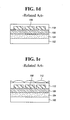
FIGS. 1A to 1E are cross-sectional drawings illustrating a procedure of fabricating a semiconductor device for an image sensor according to the related art.
Referring to FIG. 1A, an insulating material may be deposited on semiconductor substrate 102 and may form lower insulating film 104 on the entire surface of semiconductor substrate 102. A photoelectric element and a logic circuit may be formed in semiconductor substrate 102.
Referring to FIG. 1B, an insulating material may be deposited on lower insulating film 104 to form upper insulating film 106. During the formation of upper insulating film 106, a metal interconnection (not shown) may be formed. That is, after upper insulating film 106 may be formed, via holes or contact holes may be formed. Then, metal may be buried in the formed via holes or contact holes and the metal interconnection may be formed by performing a planarization process such as a CMP process. Accordingly, upper insulating film 106 may be formed to be flat.
Referring to FIG. 1C, a photoresist may be coated on the entire surface of semiconductor substrate 102. Then, an exposure process may be performed using a mask to selectively remove a portion of the photoresist, thereby forming a photoresist pattern.
Further, color filters 108, which may have a specified pattern, may be formed on upper insulating film 106 using the photoresist pattern.
Referring to FIG. 1D, a photoresist may be coated on semiconductor substrate 102, Planarization layer 110 may be formed over color filters 108.
Referring to FIG. 1E, a photoresist may be coated on semiconductor substrate 102. An exposure process may then be performed using a mask to selectively remove a portion of the photoresist, thereby leaving the photoresist only at positions corresponding to color filters 108 formed below the photoresist, i.e., on the portions where color filters 108 may be formed.
Next, a heat treatment process may be performed on the remaining photoresist. Accordingly, through the photoresist flow process, convex micro lenses 112 having a specified radius of curvature may be formed on planarization layer 110.
In the related art semiconductor device for an image sensor formed through the above process, micro lenses 112 that may be used to collect light may be formed on the planar surface of planarization layer 110.
Thus, a light-receiving region may be small. That is, there may be a limited area onto which light may be projected, which may limit a range of real images to be captured.
Color filters 108 may receive light which has passed through micro lenses 112 and may transmit only a specified wavelength of light. Accordingly, photodiodes may convert light which has passed through color filters 108 into signals, and may then output the signals.
However, in the above-described related art technology, all of the projected light may not pass through color filters 108 and the light may leak between color filters 108 as natural light, which may cause noise in the signals.
Further, light having a substantially short wavelength which has passed through color filters 108 may be also incident on another photodiode under the neighboring color filter, which may cause a crosstalk phenomenon. The crosstalk phenomenon may deteriorate the characteristics of the image sensor.
SUMMARY
Embodiments relate to the fabrication of semiconductor devices, and to a method of fabricating a semiconductor device for an image sensor having a micro lens. Embodiments relate to semiconductor devices, and to a semiconductor device for an image sensor having a micro lens.
Embodiments relate to a method of fabricating a semiconductor device for an image sensor that may be capable of expanding a light-receiving region of the micro lens.
Embodiments relate to a method of fabricating a semiconductor device for an image sensor that may be capable of preventing noise from being generated due to light leaking between the color filters.
Embodiments relate to a method of fabricating a semiconductor device for an image sensor that may be capable of preventing prevent a crosstalk phenomenon.
According to embodiments, a method of fabricating a semiconductor device for an image sensor may include forming a lower insulating film having cavities on a substrate, forming an upper insulating film having cavities on the lower insulating film, forming a protective insulating film having metal films on the upper insulating film, forming a number of color filters having a specified pattern on the protective insulating film, forming a planarization layer having a specified curvature on the color filters to bury the color filters in the planarization layer, and forming a number of micro lenses on the planarization layer at respective positions corresponding to the color filters.
According to embodiments, the metal films may be formed in the protective insulating film such that the metal films may be respectively formed below regions between the color filters.
According to embodiments, the metal films may be respectively formed below regions between the color filters, and the cavities of the upper insulating film may be respectively formed in inner portions of the upper insulating film corresponding to positions of the metal films. Further, the cavities of the lower insulating film may be respectively formed in inner portions of the lower insulating film corresponding to positions of the cavities of the upper insulating film.
According to embodiments, the cavities of the lower insulating film and the cavities of the upper insulating film may be formed at boundaries between unit pixels.
According to embodiments, forming a planarization layer may include coating a photoresist having a specified curvature, and blanket etching the coated photoresist.
DRAWINGS
FIGS. 1A to 1E are cross-sectional views showing a procedure of fabricating a semiconductor device for an image sensor according to a related art.
FIGS. 2A to 2E are cross-sectional views showing a semiconductor device for an image sensor and procedure of manufacturing a semiconductor device for an image sensor according to embodiments.
DESCRIPTION
FIGS. 2A to 2E are cross-sectional drawings illustrating a semiconductor device for an image sensor and a procedure of manufacturing a semiconductor device for an image sensor according to embodiments.
Referring to FIG. 2A, an insulating material may be deposited on semiconductor device 202 and may form lower insulating film 204 on a surface, for example the entire surface, of semiconductor device 202. A photoelectric element and a logic circuit may be formed in semiconductor substrate 102.
Cavities 206 may be formed in lower insulating film 204.
In lower insulating film 204, cavities 206 may be formed at boundaries between unit pixels of the image sensor.
Cavities 206 may be formed as follows.
Reactive ion etching (RIE) may be performed on the boundaries between the unit pixels of lower insulating film 204 and may form a trench.
Then, an oxide film may be coated on lower insulating film 204 including the trench. Accordingly, an upper portion of the trench may be covered with the oxide film and may form cavities 206 serving as empty spaces in lower insulating film 204.
According to embodiments, a trench having a great aspect ratio may be formed on lower insulating film 204. Then, gaseous oxide may be deposited on the trench and oxide may thus be concentrated onto an opening portion of the trench. The oxide film may be therefore be coated on only the opening portion of the trench.
After cavities 206 are formed, a chemical mechanical polishing (CMP) process may be performed and may planarize the surface of lower insulating film 204.
An insulating material may then be deposited on lower insulating film 204 and may form upper insulating film 208.
According to embodiments, while upper insulating film 208 may be formed, a metal bonding pad (not shown) and a metal interconnection (not shown) may be formed. In order to form the metal bonding pad and the metal interconnection, a metal material may be formed on a surface, for example the entire surface of lower insulating film 204. Then, an etching process may be performed using an etching mask and may selectively remove a portion of the metal material. This may selectively expose an upper portion of lower insulating film 204. Accordingly, the metal bonding pad (not shown) and the metal interconnection (not shown) may be formed in a certain pattern on the upper portion of lower insulating film 204.
Referring to FIG. 2B, cavities 207 may be formed in upper insulating film 208. According to embodiments, cavities 207 in upper insulating film 208 may be formed at the boundaries between the unit pixels of the image sensor in the same way as cavities 206 in lower insulating film 204. That is, cavities 207 may be formed at the edges of the pixels.
According to embodiments, cavities 207 in the upper insulating film 208 may be formed in the same manner as the above-described manner of forming cavities 206 in lower insulating film 204.
According to embodiments, a deposition process may be performed on a surface, for example the entire surface of the semiconductor substrate 202 with the metal bonding pad, and may planarize the surface of upper insulating film 208 having cavities 207 to be planar.
According to embodiments, cavities 207 in upper insulating film 208 may be formed at the edges of the pixels. Accordingly, a medium may have a smaller refractive index at the edges of the pixels than neighboring portions. According to embodiments, when light reaches cavities 206 after passing through upper insulating film 208 and lower insulating film 204 having a high refractive index, total reflection may occur and may prevent the light from passing into an adjacent photodiode.
Referring to FIG. 2C, a photoresist may be coated on a surface, for example, the entire surface of semiconductor substrate 202. According to embodiments, an exposure process, a developing process and the like may then be performed and may form an etching mask. An etching process may be performed using the etching mask to selectively remove a portion of upper insulating film 208. An upper portion of the metal bonding pad (not shown) may be exposed by etching upper insulating film 208.
Further, after removing the etching mask used in etching upper insulating film 208, protective insulating film 210 of a thin film may be formed on a surface, for example the entire surface of semiconductor substrate 202.
Then, metal films 212 may be formed in protective insulating film 210 and may prevent light from leaking between the color filters that may be subsequently formed. According to embodiments, metal films 212 may be respectively disposed below regions between the color filters as shown in drawings.
Referring to FIG. 2D, a photoresist may be coated on a surface, for example the entire surface of semiconductor substrate 202. An exposure process may be performed using a mask to selectively remove a portion of the photoresist, and may form a photoresist pattern. Further, color filters 214 having a specified pattern may be formed on protective insulating film 210 using the photoresist pattern.
Planarization layer 216 may then be formed over color filters 214. According to embodiments, planarization layer 216 may have a convex top surface and a specified radius of curvature.
A process of forming planarization layer 216 according to embodiments may be described as follows. First, a photoresist may be deposited and may cover color filters 214. Then, a photoresist having a specified curvature may be coated and may form planarization layer 216, for example by blanket etching.
According to embodiments, color filters 214, metal films 212 formed in protective insulating film 210, cavities 207 formed in the upper insulating film 208 and cavities 206 formed in lower insulating film 204 may be positioned as follows, according to embodiments. That is, metal films 212 in protective insulating film 210 may be respectively formed below the regions between color filters 214. Further, cavities 207 in upper insulating film 208 may be respectively formed at inner portions of upper insulating film 208 corresponding to positions of the metal films 212.
Further, cavities 206 in the lower insulating film 204 may be respectively formed at inner portions of lower insulating film 204 corresponding to the positions of cavities 207 in upper insulating film 208, according to embodiments.
Referring to FIG. 2E, a photoresist for forming micro lenses 218 may be coated on a surface, for example the entire surface of semiconductor substrate 202.
According to embodiments, an exposure process may be performed using a mask to selectively remove a portion of the photoresist. The photoresist may thus remain only at positions corresponding to color filters 214 formed below the photoresist, i.e., on the portions where color filters 214 may have been formed.
According to embodiments, a heat treatment process may be performed on the remaining photoresist.
According to embodiments, through a photoresist flow process, convex micro lenses 218 having a specified radius of curvature may be formed on planarization layer 216.
Micro lenses 218 may be formed on convex planarization layer 216 having a specified curvature, and may thereby expand a region where micro lenses 218 substantially receive light.
According to embodiments, the planarization layer may be formed in a convex curved surface, thereby expanding a light-receiving region of the micro lenses formed on the planarization layer. Thus, it may be possible to improve the performance of the image sensor.
Further, the metal films may be respectively formed below the regions between the color filters, and may prevent light from leaking between the color filters. Thus, it may be possible to prevent the noise from being generated due to leaking light according to embodiments.
Further, a medium has a smaller refractive index at the edges of the pixels than neighboring portions, and may thereby prevent light from being incident on the adjacent photodiode. Accordingly, it may be possible to prevent a crosstalk phenomenon from occurring.
It will be apparent to those skilled in the art that various modifications and variations can be made to embodiments. Thus, it is intended that embodiments cover modifications and variations thereof within the scope of the appended claims. It is also understood that when a layer is referred to as being “on” or “over” another layer or substrate, it can be directly on the other layer or substrate, or intervening layers may also be present.

Claims (6)

1. A method, comprising:
forming a lower insulating film having cavities over a substrate;
forming an upper insulating film having cavities over the lower insulating film;
forming a protective insulating film having metal films over the upper insulating film;
forming a plurality of color filters having a prescribed pattern over the protective insulating film;
forming a planarization layer having a specified curvature over the color filters; and
forming a plurality of micro lenses over the planarization layer at respective positions corresponding to positions of the color filters.
2. The method of claim 1, wherein the metal films are formed in the protective insulating film such that the metal films are respectively formed below regions between the color filters.
3. The method of claim 1, wherein the metal films are respectively formed below regions between the color filters, and the cavities of the upper insulating film are respectively formed in inner portions of the upper insulating film corresponding to positions of the metal films.
4. The method of claim 3, wherein the cavities of the lower insulating film are respectively formed in inner portions of the lower insulating film corresponding to positions of the cavities of the upper insulating film.
5. The method of claim 1, wherein the cavities of the lower insulating film and the cavities of the upper insulating film are formed at boundaries between unit pixels.
6. The method of claim 1, wherein forming the planarization layer comprises:
coating a photoresist having a specified curvature; and
blanket etching the coated photoresist.
US11/963,124 2006-12-29 2007-12-21 Semiconductor device for image sensor Expired - Fee Related US7803652B2 (en)

Applications Claiming Priority (2)

Application Number Priority Date Filing Date Title
KR1020060137339A KR100840649B1 (en) 2006-12-29 2006-12-29 Manufacturing Method of Semiconductor Device for Image Sensor
KR10-2006-0137339 2006-12-29

Publications (2)

Publication Number Publication Date
US20080211046A1 US20080211046A1 (en) 2008-09-04
US7803652B2 true US7803652B2 (en) 2010-09-28

Family

ID=39611712

Family Applications (1)

Application Number Title Priority Date Filing Date
US11/963,124 Expired - Fee Related US7803652B2 (en) 2006-12-29 2007-12-21 Semiconductor device for image sensor

Country Status (3)

Country Link
US (1) US7803652B2 (en)
KR (1) KR100840649B1 (en)
CN (1) CN101211814B (en)

Families Citing this family (1)

* Cited by examiner, † Cited by third party
Publication number Priority date Publication date Assignee Title
KR20100046766A (en) * 2008-10-28 2010-05-07 삼성전자주식회사 Image sensor

Citations (3)

* Cited by examiner, † Cited by third party
Publication number Priority date Publication date Assignee Title
US7193289B2 (en) * 2004-11-30 2007-03-20 International Business Machines Corporation Damascene copper wiring image sensor
US7342268B2 (en) * 2004-12-23 2008-03-11 International Business Machines Corporation CMOS imager with Cu wiring and method of eliminating high reflectivity interfaces therefrom
US7482646B2 (en) * 2006-10-18 2009-01-27 Hejian Technology (Suzhou) Co., Ltd. Image sensor

Family Cites Families (2)

* Cited by examiner, † Cited by third party
Publication number Priority date Publication date Assignee Title
JP4348062B2 (en) 2002-10-15 2009-10-21 京セラ株式会社 Solid-state imaging device
KR100518215B1 (en) * 2003-12-23 2005-10-04 매그나칩 반도체 유한회사 Method for fabricating image sensor

Patent Citations (3)

* Cited by examiner, † Cited by third party
Publication number Priority date Publication date Assignee Title
US7193289B2 (en) * 2004-11-30 2007-03-20 International Business Machines Corporation Damascene copper wiring image sensor
US7342268B2 (en) * 2004-12-23 2008-03-11 International Business Machines Corporation CMOS imager with Cu wiring and method of eliminating high reflectivity interfaces therefrom
US7482646B2 (en) * 2006-10-18 2009-01-27 Hejian Technology (Suzhou) Co., Ltd. Image sensor

Also Published As

Publication number Publication date
US20080211046A1 (en) 2008-09-04
CN101211814A (en) 2008-07-02
KR100840649B1 (en) 2008-06-24
CN101211814B (en) 2010-11-03

Similar Documents

Publication Publication Date Title
US7524770B2 (en) Methods of forming image sensor microlens structures
CN101188208B (en) Image sensor with curved micromirror above sensing photodiode and manufacturing method thereof
JP5241902B2 (en) Manufacturing method of semiconductor device
US20080135897A1 (en) method and system for image sensor and lens on a silicon back plane wafer
KR20100083625A (en) Backside-illuminated image sensor and method of forming the same
US20190157332A1 (en) Back-side Illumination CMOS Image Sensor and Forming Method Thereof
KR100698091B1 (en) CMOS image sensor and its manufacturing method
US20080286896A1 (en) Method for manufacturing image sensor
KR20060136072A (en) CMOS Image sensor and method for manufacturing the same
US7279763B2 (en) CMOS image sensor having photodiode and method for manufacturing the same
JP6039294B2 (en) Manufacturing method of semiconductor device
CN101183663A (en) Image sensor and method for manufacturing the same
US7803652B2 (en) Semiconductor device for image sensor
JP2006191000A (en) Photoelectric conversion device
KR100329782B1 (en) Method for fabricating image sensor with improved photo sensitivity
US7713775B2 (en) CMOS image sensor
KR100720524B1 (en) CMOS image sensor and its manufacturing method
US20070145445A1 (en) CMOS Image Sensor and Method for Manufacturing the Same
KR100449951B1 (en) Image sensor and method of fabricating the same
JP2005303310A (en) Planarization method of insulating layer around metal pattern to increase optical efficiency
KR100521969B1 (en) Image sensor having high light sensitivity and manufacturing method
US20080153194A1 (en) Method for manufacturing image sensor
US9269744B2 (en) Manufacturing method of solid-state imaging apparatus
KR100520685B1 (en) Method of manufacturing a image device
KR100790211B1 (en) Image sensor and its manufacturing method

Legal Events

Date Code Title Description
AS Assignment

Owner name: DONGBU HITEK CO., LTD., KOREA, REPUBLIC OF

Free format text: ASSIGNMENT OF ASSIGNORS INTEREST;ASSIGNOR:PARK, DONG-BIN;REEL/FRAME:020287/0230

Effective date: 20071217

FEPP Fee payment procedure

Free format text: PAYOR NUMBER ASSIGNED (ORIGINAL EVENT CODE: ASPN); ENTITY STATUS OF PATENT OWNER: LARGE ENTITY

REMI Maintenance fee reminder mailed
LAPS Lapse for failure to pay maintenance fees
STCH Information on status: patent discontinuation

Free format text: PATENT EXPIRED DUE TO NONPAYMENT OF MAINTENANCE FEES UNDER 37 CFR 1.362

STCH Information on status: patent discontinuation

Free format text: PATENT EXPIRED DUE TO NONPAYMENT OF MAINTENANCE FEES UNDER 37 CFR 1.362

FP Lapsed due to failure to pay maintenance fee

Effective date: 20140928