US7781596B1 - Substituted 2-phenylbenzimidazoles, the production thereof and their use - Google Patents
Substituted 2-phenylbenzimidazoles, the production thereof and their use Download PDFInfo
- Publication number
- US7781596B1 US7781596B1 US09/830,992 US83099299A US7781596B1 US 7781596 B1 US7781596 B1 US 7781596B1 US 83099299 A US83099299 A US 83099299A US 7781596 B1 US7781596 B1 US 7781596B1
- Authority
- US
- United States
- Prior art keywords
- alkyl
- hydrogen
- phenyl
- unbranched
- branched
- Prior art date
- Legal status (The legal status is an assumption and is not a legal conclusion. Google has not performed a legal analysis and makes no representation as to the accuracy of the status listed.)
- Expired - Fee Related
Links
- 0 CC.CC.[1*]N1=C(C2=CC=CC=C2)NC2=C1C(C(N)=O)=CC=C2.[1*]N1C(C2=CC=CC=C2)=NC2=C1C=CC=C2C(N)=O.[3*]C.[3*]C.[4*]C.[4*]C Chemical compound CC.CC.[1*]N1=C(C2=CC=CC=C2)NC2=C1C(C(N)=O)=CC=C2.[1*]N1C(C2=CC=CC=C2)=NC2=C1C=CC=C2C(N)=O.[3*]C.[3*]C.[4*]C.[4*]C 0.000 description 38
- XFCOCCMXXFTEEC-UHFFFAOYSA-N CCN(CC)CCOC1=CC=C(C2=NC3=C(C(N)=O)C=CC=C3N2)C=C1 Chemical compound CCN(CC)CCOC1=CC=C(C2=NC3=C(C(N)=O)C=CC=C3N2)C=C1 XFCOCCMXXFTEEC-UHFFFAOYSA-N 0.000 description 3
- JYIJSCDEDFAXGM-UHFFFAOYSA-N CCN(CC)CCOC1=CC=CC(C2=NC3=C(C(N)=O)C=CC=C3N2)=C1 Chemical compound CCN(CC)CCOC1=CC=CC(C2=NC3=C(C(N)=O)C=CC=C3N2)=C1 JYIJSCDEDFAXGM-UHFFFAOYSA-N 0.000 description 3
- ZKGAUYXIUBCBIG-UHFFFAOYSA-N CCCC(=O)OC.CCCC(=O)OC Chemical compound CCCC(=O)OC.CCCC(=O)OC ZKGAUYXIUBCBIG-UHFFFAOYSA-N 0.000 description 2
- DNWXPSYLVCYKCN-UHFFFAOYSA-N CN(C)CCOC1=CC=CC(C2=NC3=C(C=CC=C3C(N)=O)N2)=C1 Chemical compound CN(C)CCOC1=CC=CC(C2=NC3=C(C=CC=C3C(N)=O)N2)=C1 DNWXPSYLVCYKCN-UHFFFAOYSA-N 0.000 description 2
- UFPBZCKQIULMIL-UHFFFAOYSA-N CN1CCN(C2=CC=C(C3=NC4=C(C(N)=O)C=CC=C4N3)C=C2)CC1 Chemical compound CN1CCN(C2=CC=C(C3=NC4=C(C(N)=O)C=CC=C4N3)C=C2)CC1 UFPBZCKQIULMIL-UHFFFAOYSA-N 0.000 description 2
- JMHREQISLXCNBT-UHFFFAOYSA-N COC1=CC=C(C2=NC3=C(C(N)=O)C=CC=C3N2)C=C1OCCN(C)C Chemical compound COC1=CC=C(C2=NC3=C(C(N)=O)C=CC=C3N2)C=C1OCCN(C)C JMHREQISLXCNBT-UHFFFAOYSA-N 0.000 description 2
- KYXXKPHBIYDCJK-UHFFFAOYSA-N NC(=O)C1=C2N=C(C3=CC=C(N4C=CN=C4)C=C3)NC2=CC=C1 Chemical compound NC(=O)C1=C2N=C(C3=CC=C(N4C=CN=C4)C=C3)NC2=CC=C1 KYXXKPHBIYDCJK-UHFFFAOYSA-N 0.000 description 2
- MWZQMDAOWPFBBG-UHFFFAOYSA-N NCC1=CN(C2=CC=C(C3=NC4=C(C(N)=O)C=CC=C4N3)C=C2)C=C1 Chemical compound NCC1=CN(C2=CC=C(C3=NC4=C(C(N)=O)C=CC=C4N3)C=C2)C=C1 MWZQMDAOWPFBBG-UHFFFAOYSA-N 0.000 description 2
- NQRYJNQNLNOLGT-UHFFFAOYSA-N C1CCNCC1 Chemical compound C1CCNCC1 NQRYJNQNLNOLGT-UHFFFAOYSA-N 0.000 description 1
- ZSIQJIWKELUFRJ-UHFFFAOYSA-N C1CCNCCC1 Chemical compound C1CCNCCC1 ZSIQJIWKELUFRJ-UHFFFAOYSA-N 0.000 description 1
- YNAVUWVOSKDBBP-UHFFFAOYSA-N C1NCCOC1 Chemical compound C1NCCOC1 YNAVUWVOSKDBBP-UHFFFAOYSA-N 0.000 description 1
- NHHUQGFSPUHOIL-UHFFFAOYSA-N CC(C)(C)OC(=O)NCCCOC1=CC(C2=NC3=C(C(N)=O)C=CC=C3N2)=CC=C1 Chemical compound CC(C)(C)OC(=O)NCCCOC1=CC(C2=NC3=C(C(N)=O)C=CC=C3N2)=CC=C1 NHHUQGFSPUHOIL-UHFFFAOYSA-N 0.000 description 1
- PUIRGUWNOWOEKF-UHFFFAOYSA-N CC(C)(C)OC(=O)NCCOC1=CC(C2=NC3=C(C(N)=O)C=CC=C3N2)=CC=C1 Chemical compound CC(C)(C)OC(=O)NCCOC1=CC(C2=NC3=C(C(N)=O)C=CC=C3N2)=CC=C1 PUIRGUWNOWOEKF-UHFFFAOYSA-N 0.000 description 1
- SYUFKPRDMYQYKH-UHFFFAOYSA-N CCCC(=O)OC.CCCCC(=O)OC Chemical compound CCCC(=O)OC.CCCCC(=O)OC SYUFKPRDMYQYKH-UHFFFAOYSA-N 0.000 description 1
- QWQQJJUAOOKQRR-UHFFFAOYSA-N CCN(CC)CCCOC1=CC(C2=NC3=C(C(N)=O)C=CC=C3N2)=CC=C1 Chemical compound CCN(CC)CCCOC1=CC(C2=NC3=C(C(N)=O)C=CC=C3N2)=CC=C1 QWQQJJUAOOKQRR-UHFFFAOYSA-N 0.000 description 1
- VEPCLCNWKGTYDE-UHFFFAOYSA-L CCOC(=O)C1=C(N)C(N)=CC=C1.I[V]I.NC(=O)C1=C(N)C(N)=CC=C1.NC(=O)C1=C2N=C(C3=CC=CC=C3)NC2=CC=C1.O=CC1=CC=CC=C1 Chemical compound CCOC(=O)C1=C(N)C(N)=CC=C1.I[V]I.NC(=O)C1=C(N)C(N)=CC=C1.NC(=O)C1=C2N=C(C3=CC=CC=C3)NC2=CC=C1.O=CC1=CC=CC=C1 VEPCLCNWKGTYDE-UHFFFAOYSA-L 0.000 description 1
- OXJUIINXSRUUIE-UHFFFAOYSA-N CN(C)CCOC1=CC=CC=C1C1=NC2=C(C(N)=O)C=CC=C2N1 Chemical compound CN(C)CCOC1=CC=CC=C1C1=NC2=C(C(N)=O)C=CC=C2N1 OXJUIINXSRUUIE-UHFFFAOYSA-N 0.000 description 1
- WPYFRSBISDNECZ-UHFFFAOYSA-N CN(CC1=CC=CC=C1)CC1=CN(C2=CC(C3=NC4=C(C(N)=O)C=CC=C4N3)=CC=C2)C=C1 Chemical compound CN(CC1=CC=CC=C1)CC1=CN(C2=CC(C3=NC4=C(C(N)=O)C=CC=C4N3)=CC=C2)C=C1 WPYFRSBISDNECZ-UHFFFAOYSA-N 0.000 description 1
- QMNJMVYEOXVBQR-UHFFFAOYSA-J COC(=O)C1=C(N)C(N)=CC=C1.COC(=O)C1=C2N=C(C3=CC=CC=C3)NC2=CC=C1.I[V]I.NC(=O)C1=C2N=C(C3=CC=CC=C3)NC2=CC=C1.O=C(O)C1=CC=CC=C1.[V].[V]I.[V]I Chemical compound COC(=O)C1=C(N)C(N)=CC=C1.COC(=O)C1=C2N=C(C3=CC=CC=C3)NC2=CC=C1.I[V]I.NC(=O)C1=C2N=C(C3=CC=CC=C3)NC2=CC=C1.O=C(O)C1=CC=CC=C1.[V].[V]I.[V]I QMNJMVYEOXVBQR-UHFFFAOYSA-J 0.000 description 1
- IVECIWLVOYDMRU-UHFFFAOYSA-N COC(C)=O.COC(C)=O Chemical compound COC(C)=O.COC(C)=O IVECIWLVOYDMRU-UHFFFAOYSA-N 0.000 description 1
- SESPCMYDDSPABY-UHFFFAOYSA-N NC(=O)C1=C2N=C(C3=CC(N4C=CC(CNC(=O)C(F)(F)F)=C4)=CC=C3)NC2=CC=C1 Chemical compound NC(=O)C1=C2N=C(C3=CC(N4C=CC(CNC(=O)C(F)(F)F)=C4)=CC=C3)NC2=CC=C1 SESPCMYDDSPABY-UHFFFAOYSA-N 0.000 description 1
- OADVXHOBFINVAM-UHFFFAOYSA-N NC(=O)C1=C2N=C(C3=CC=C(N4C=CC(CNC(=O)C(F)(F)F)=C4)C=C3)NC2=CC=C1 Chemical compound NC(=O)C1=C2N=C(C3=CC=C(N4C=CC(CNC(=O)C(F)(F)F)=C4)C=C3)NC2=CC=C1 OADVXHOBFINVAM-UHFFFAOYSA-N 0.000 description 1
- UBHOYDWOGPCHLT-UHFFFAOYSA-N NC(=O)C1=C2N=C(C3=CC=CC(N4C=CC(C=O)=C4)=C3)NC2=CC=C1 Chemical compound NC(=O)C1=C2N=C(C3=CC=CC(N4C=CC(C=O)=C4)=C3)NC2=CC=C1 UBHOYDWOGPCHLT-UHFFFAOYSA-N 0.000 description 1
- YRKLNURTRUPQPN-UHFFFAOYSA-N NC(=O)C1=C2N=C(C3=CC=CC(N4C=CC=C4CNC(=O)C(F)(F)F)=C3)NC2=CC=C1 Chemical compound NC(=O)C1=C2N=C(C3=CC=CC(N4C=CC=C4CNC(=O)C(F)(F)F)=C3)NC2=CC=C1 YRKLNURTRUPQPN-UHFFFAOYSA-N 0.000 description 1
- RQIVAQJZNFXIAK-UHFFFAOYSA-N NC(=O)C1=C2N=C(C3=CC=CC(OCCCN4CCN(C5=CC=CC(Cl)=C5)CC4)=C3)NC2=CC=C1 Chemical compound NC(=O)C1=C2N=C(C3=CC=CC(OCCCN4CCN(C5=CC=CC(Cl)=C5)CC4)=C3)NC2=CC=C1 RQIVAQJZNFXIAK-UHFFFAOYSA-N 0.000 description 1
- RCNZKAQPRBCRTA-UHFFFAOYSA-N NCC1=CC=CN1C1=CC(C2=NC3=C(C(N)=O)C=CC=C3N2)=CC=C1 Chemical compound NCC1=CC=CN1C1=CC(C2=NC3=C(C(N)=O)C=CC=C3N2)=CC=C1 RCNZKAQPRBCRTA-UHFFFAOYSA-N 0.000 description 1
- LDKBCQKOJOFDHF-UHFFFAOYSA-N NCC1=CN(C2=CC(C3=NC4=C(C(N)=O)C=CC=C4N3)=CC=C2)C=C1 Chemical compound NCC1=CN(C2=CC(C3=NC4=C(C(N)=O)C=CC=C4N3)=CC=C2)C=C1 LDKBCQKOJOFDHF-UHFFFAOYSA-N 0.000 description 1
- QYFCSBQLBHFJDT-UHFFFAOYSA-N NCCCOC1=CC(C2=NC3=C(C(N)=O)C=CC=C3N2)=CC=C1 Chemical compound NCCCOC1=CC(C2=NC3=C(C(N)=O)C=CC=C3N2)=CC=C1 QYFCSBQLBHFJDT-UHFFFAOYSA-N 0.000 description 1
- SVFBIQHDFXBYLN-UHFFFAOYSA-N NCCOC1=CC(C2=NC3=C(C(N)=O)C=CC=C3N2)=CC=C1 Chemical compound NCCOC1=CC(C2=NC3=C(C(N)=O)C=CC=C3N2)=CC=C1 SVFBIQHDFXBYLN-UHFFFAOYSA-N 0.000 description 1
Classifications
-
- C—CHEMISTRY; METALLURGY
- C07—ORGANIC CHEMISTRY
- C07D—HETEROCYCLIC COMPOUNDS
- C07D231/00—Heterocyclic compounds containing 1,2-diazole or hydrogenated 1,2-diazole rings
- C07D231/02—Heterocyclic compounds containing 1,2-diazole or hydrogenated 1,2-diazole rings not condensed with other rings
- C07D231/10—Heterocyclic compounds containing 1,2-diazole or hydrogenated 1,2-diazole rings not condensed with other rings having two or three double bonds between ring members or between ring members and non-ring members
- C07D231/12—Heterocyclic compounds containing 1,2-diazole or hydrogenated 1,2-diazole rings not condensed with other rings having two or three double bonds between ring members or between ring members and non-ring members with only hydrogen atoms, hydrocarbon or substituted hydrocarbon radicals, directly attached to ring carbon atoms
-
- A—HUMAN NECESSITIES
- A61—MEDICAL OR VETERINARY SCIENCE; HYGIENE
- A61K—PREPARATIONS FOR MEDICAL, DENTAL OR TOILETRY PURPOSES
- A61K31/00—Medicinal preparations containing organic active ingredients
- A61K31/33—Heterocyclic compounds
- A61K31/395—Heterocyclic compounds having nitrogen as a ring hetero atom, e.g. guanethidine or rifamycins
- A61K31/41—Heterocyclic compounds having nitrogen as a ring hetero atom, e.g. guanethidine or rifamycins having five-membered rings with two or more ring hetero atoms, at least one of which being nitrogen, e.g. tetrazole
- A61K31/4164—1,3-Diazoles
- A61K31/4184—1,3-Diazoles condensed with carbocyclic rings, e.g. benzimidazoles
-
- A—HUMAN NECESSITIES
- A61—MEDICAL OR VETERINARY SCIENCE; HYGIENE
- A61P—SPECIFIC THERAPEUTIC ACTIVITY OF CHEMICAL COMPOUNDS OR MEDICINAL PREPARATIONS
- A61P11/00—Drugs for disorders of the respiratory system
-
- A—HUMAN NECESSITIES
- A61—MEDICAL OR VETERINARY SCIENCE; HYGIENE
- A61P—SPECIFIC THERAPEUTIC ACTIVITY OF CHEMICAL COMPOUNDS OR MEDICINAL PREPARATIONS
- A61P13/00—Drugs for disorders of the urinary system
- A61P13/12—Drugs for disorders of the urinary system of the kidneys
-
- A—HUMAN NECESSITIES
- A61—MEDICAL OR VETERINARY SCIENCE; HYGIENE
- A61P—SPECIFIC THERAPEUTIC ACTIVITY OF CHEMICAL COMPOUNDS OR MEDICINAL PREPARATIONS
- A61P17/00—Drugs for dermatological disorders
- A61P17/02—Drugs for dermatological disorders for treating wounds, ulcers, burns, scars, keloids, or the like
-
- A—HUMAN NECESSITIES
- A61—MEDICAL OR VETERINARY SCIENCE; HYGIENE
- A61P—SPECIFIC THERAPEUTIC ACTIVITY OF CHEMICAL COMPOUNDS OR MEDICINAL PREPARATIONS
- A61P19/00—Drugs for skeletal disorders
- A61P19/02—Drugs for skeletal disorders for joint disorders, e.g. arthritis, arthrosis
-
- A—HUMAN NECESSITIES
- A61—MEDICAL OR VETERINARY SCIENCE; HYGIENE
- A61P—SPECIFIC THERAPEUTIC ACTIVITY OF CHEMICAL COMPOUNDS OR MEDICINAL PREPARATIONS
- A61P25/00—Drugs for disorders of the nervous system
-
- A—HUMAN NECESSITIES
- A61—MEDICAL OR VETERINARY SCIENCE; HYGIENE
- A61P—SPECIFIC THERAPEUTIC ACTIVITY OF CHEMICAL COMPOUNDS OR MEDICINAL PREPARATIONS
- A61P25/00—Drugs for disorders of the nervous system
- A61P25/08—Antiepileptics; Anticonvulsants
-
- A—HUMAN NECESSITIES
- A61—MEDICAL OR VETERINARY SCIENCE; HYGIENE
- A61P—SPECIFIC THERAPEUTIC ACTIVITY OF CHEMICAL COMPOUNDS OR MEDICINAL PREPARATIONS
- A61P25/00—Drugs for disorders of the nervous system
- A61P25/08—Antiepileptics; Anticonvulsants
- A61P25/10—Antiepileptics; Anticonvulsants for petit-mal
-
- A—HUMAN NECESSITIES
- A61—MEDICAL OR VETERINARY SCIENCE; HYGIENE
- A61P—SPECIFIC THERAPEUTIC ACTIVITY OF CHEMICAL COMPOUNDS OR MEDICINAL PREPARATIONS
- A61P25/00—Drugs for disorders of the nervous system
- A61P25/14—Drugs for disorders of the nervous system for treating abnormal movements, e.g. chorea, dyskinesia
-
- A—HUMAN NECESSITIES
- A61—MEDICAL OR VETERINARY SCIENCE; HYGIENE
- A61P—SPECIFIC THERAPEUTIC ACTIVITY OF CHEMICAL COMPOUNDS OR MEDICINAL PREPARATIONS
- A61P25/00—Drugs for disorders of the nervous system
- A61P25/14—Drugs for disorders of the nervous system for treating abnormal movements, e.g. chorea, dyskinesia
- A61P25/16—Anti-Parkinson drugs
-
- A—HUMAN NECESSITIES
- A61—MEDICAL OR VETERINARY SCIENCE; HYGIENE
- A61P—SPECIFIC THERAPEUTIC ACTIVITY OF CHEMICAL COMPOUNDS OR MEDICINAL PREPARATIONS
- A61P25/00—Drugs for disorders of the nervous system
- A61P25/28—Drugs for disorders of the nervous system for treating neurodegenerative disorders of the central nervous system, e.g. nootropic agents, cognition enhancers, drugs for treating Alzheimer's disease or other forms of dementia
-
- A—HUMAN NECESSITIES
- A61—MEDICAL OR VETERINARY SCIENCE; HYGIENE
- A61P—SPECIFIC THERAPEUTIC ACTIVITY OF CHEMICAL COMPOUNDS OR MEDICINAL PREPARATIONS
- A61P29/00—Non-central analgesic, antipyretic or antiinflammatory agents, e.g. antirheumatic agents; Non-steroidal antiinflammatory drugs [NSAID]
-
- A—HUMAN NECESSITIES
- A61—MEDICAL OR VETERINARY SCIENCE; HYGIENE
- A61P—SPECIFIC THERAPEUTIC ACTIVITY OF CHEMICAL COMPOUNDS OR MEDICINAL PREPARATIONS
- A61P3/00—Drugs for disorders of the metabolism
- A61P3/08—Drugs for disorders of the metabolism for glucose homeostasis
- A61P3/10—Drugs for disorders of the metabolism for glucose homeostasis for hyperglycaemia, e.g. antidiabetics
-
- A—HUMAN NECESSITIES
- A61—MEDICAL OR VETERINARY SCIENCE; HYGIENE
- A61P—SPECIFIC THERAPEUTIC ACTIVITY OF CHEMICAL COMPOUNDS OR MEDICINAL PREPARATIONS
- A61P31/00—Antiinfectives, i.e. antibiotics, antiseptics, chemotherapeutics
- A61P31/04—Antibacterial agents
-
- A—HUMAN NECESSITIES
- A61—MEDICAL OR VETERINARY SCIENCE; HYGIENE
- A61P—SPECIFIC THERAPEUTIC ACTIVITY OF CHEMICAL COMPOUNDS OR MEDICINAL PREPARATIONS
- A61P35/00—Antineoplastic agents
-
- A—HUMAN NECESSITIES
- A61—MEDICAL OR VETERINARY SCIENCE; HYGIENE
- A61P—SPECIFIC THERAPEUTIC ACTIVITY OF CHEMICAL COMPOUNDS OR MEDICINAL PREPARATIONS
- A61P35/00—Antineoplastic agents
- A61P35/02—Antineoplastic agents specific for leukemia
-
- A—HUMAN NECESSITIES
- A61—MEDICAL OR VETERINARY SCIENCE; HYGIENE
- A61P—SPECIFIC THERAPEUTIC ACTIVITY OF CHEMICAL COMPOUNDS OR MEDICINAL PREPARATIONS
- A61P35/00—Antineoplastic agents
- A61P35/04—Antineoplastic agents specific for metastasis
-
- A—HUMAN NECESSITIES
- A61—MEDICAL OR VETERINARY SCIENCE; HYGIENE
- A61P—SPECIFIC THERAPEUTIC ACTIVITY OF CHEMICAL COMPOUNDS OR MEDICINAL PREPARATIONS
- A61P37/00—Drugs for immunological or allergic disorders
-
- A—HUMAN NECESSITIES
- A61—MEDICAL OR VETERINARY SCIENCE; HYGIENE
- A61P—SPECIFIC THERAPEUTIC ACTIVITY OF CHEMICAL COMPOUNDS OR MEDICINAL PREPARATIONS
- A61P37/00—Drugs for immunological or allergic disorders
- A61P37/02—Immunomodulators
- A61P37/06—Immunosuppressants, e.g. drugs for graft rejection
-
- A—HUMAN NECESSITIES
- A61—MEDICAL OR VETERINARY SCIENCE; HYGIENE
- A61P—SPECIFIC THERAPEUTIC ACTIVITY OF CHEMICAL COMPOUNDS OR MEDICINAL PREPARATIONS
- A61P43/00—Drugs for specific purposes, not provided for in groups A61P1/00-A61P41/00
-
- A—HUMAN NECESSITIES
- A61—MEDICAL OR VETERINARY SCIENCE; HYGIENE
- A61P—SPECIFIC THERAPEUTIC ACTIVITY OF CHEMICAL COMPOUNDS OR MEDICINAL PREPARATIONS
- A61P9/00—Drugs for disorders of the cardiovascular system
-
- A—HUMAN NECESSITIES
- A61—MEDICAL OR VETERINARY SCIENCE; HYGIENE
- A61P—SPECIFIC THERAPEUTIC ACTIVITY OF CHEMICAL COMPOUNDS OR MEDICINAL PREPARATIONS
- A61P9/00—Drugs for disorders of the cardiovascular system
- A61P9/10—Drugs for disorders of the cardiovascular system for treating ischaemic or atherosclerotic diseases, e.g. antianginal drugs, coronary vasodilators, drugs for myocardial infarction, retinopathy, cerebrovascula insufficiency, renal arteriosclerosis
-
- C—CHEMISTRY; METALLURGY
- C07—ORGANIC CHEMISTRY
- C07C—ACYCLIC OR CARBOCYCLIC COMPOUNDS
- C07C237/00—Carboxylic acid amides, the carbon skeleton of the acid part being further substituted by amino groups
- C07C237/28—Carboxylic acid amides, the carbon skeleton of the acid part being further substituted by amino groups having the carbon atom of at least one of the carboxamide groups bound to a carbon atom of a non-condensed six-membered aromatic ring of the carbon skeleton
- C07C237/30—Carboxylic acid amides, the carbon skeleton of the acid part being further substituted by amino groups having the carbon atom of at least one of the carboxamide groups bound to a carbon atom of a non-condensed six-membered aromatic ring of the carbon skeleton having the nitrogen atom of the carboxamide group bound to hydrogen atoms or to acyclic carbon atoms
-
- C—CHEMISTRY; METALLURGY
- C07—ORGANIC CHEMISTRY
- C07D—HETEROCYCLIC COMPOUNDS
- C07D207/00—Heterocyclic compounds containing five-membered rings not condensed with other rings, with one nitrogen atom as the only ring hetero atom
- C07D207/02—Heterocyclic compounds containing five-membered rings not condensed with other rings, with one nitrogen atom as the only ring hetero atom with only hydrogen or carbon atoms directly attached to the ring nitrogen atom
- C07D207/30—Heterocyclic compounds containing five-membered rings not condensed with other rings, with one nitrogen atom as the only ring hetero atom with only hydrogen or carbon atoms directly attached to the ring nitrogen atom having two double bonds between ring members or between ring members and non-ring members
- C07D207/32—Heterocyclic compounds containing five-membered rings not condensed with other rings, with one nitrogen atom as the only ring hetero atom with only hydrogen or carbon atoms directly attached to the ring nitrogen atom having two double bonds between ring members or between ring members and non-ring members with only hydrogen atoms, hydrocarbon or substituted hydrocarbon radicals, directly attached to ring carbon atoms
- C07D207/33—Heterocyclic compounds containing five-membered rings not condensed with other rings, with one nitrogen atom as the only ring hetero atom with only hydrogen or carbon atoms directly attached to the ring nitrogen atom having two double bonds between ring members or between ring members and non-ring members with only hydrogen atoms, hydrocarbon or substituted hydrocarbon radicals, directly attached to ring carbon atoms with substituted hydrocarbon radicals, directly attached to ring carbon atoms
- C07D207/335—Radicals substituted by nitrogen atoms not forming part of a nitro radical
-
- C—CHEMISTRY; METALLURGY
- C07—ORGANIC CHEMISTRY
- C07D—HETEROCYCLIC COMPOUNDS
- C07D233/00—Heterocyclic compounds containing 1,3-diazole or hydrogenated 1,3-diazole rings, not condensed with other rings
- C07D233/54—Heterocyclic compounds containing 1,3-diazole or hydrogenated 1,3-diazole rings, not condensed with other rings having two double bonds between ring members or between ring members and non-ring members
- C07D233/56—Heterocyclic compounds containing 1,3-diazole or hydrogenated 1,3-diazole rings, not condensed with other rings having two double bonds between ring members or between ring members and non-ring members with only hydrogen atoms or radicals containing only hydrogen and carbon atoms, attached to ring carbon atoms
-
- C—CHEMISTRY; METALLURGY
- C07—ORGANIC CHEMISTRY
- C07D—HETEROCYCLIC COMPOUNDS
- C07D233/00—Heterocyclic compounds containing 1,3-diazole or hydrogenated 1,3-diazole rings, not condensed with other rings
- C07D233/54—Heterocyclic compounds containing 1,3-diazole or hydrogenated 1,3-diazole rings, not condensed with other rings having two double bonds between ring members or between ring members and non-ring members
- C07D233/56—Heterocyclic compounds containing 1,3-diazole or hydrogenated 1,3-diazole rings, not condensed with other rings having two double bonds between ring members or between ring members and non-ring members with only hydrogen atoms or radicals containing only hydrogen and carbon atoms, attached to ring carbon atoms
- C07D233/61—Heterocyclic compounds containing 1,3-diazole or hydrogenated 1,3-diazole rings, not condensed with other rings having two double bonds between ring members or between ring members and non-ring members with only hydrogen atoms or radicals containing only hydrogen and carbon atoms, attached to ring carbon atoms with hydrocarbon radicals, substituted by nitrogen atoms not forming part of a nitro radical, attached to ring nitrogen atoms
-
- C—CHEMISTRY; METALLURGY
- C07—ORGANIC CHEMISTRY
- C07D—HETEROCYCLIC COMPOUNDS
- C07D235/00—Heterocyclic compounds containing 1,3-diazole or hydrogenated 1,3-diazole rings, condensed with other rings
- C07D235/02—Heterocyclic compounds containing 1,3-diazole or hydrogenated 1,3-diazole rings, condensed with other rings condensed with carbocyclic rings or ring systems
- C07D235/04—Benzimidazoles; Hydrogenated benzimidazoles
- C07D235/18—Benzimidazoles; Hydrogenated benzimidazoles with aryl radicals directly attached in position 2
-
- C—CHEMISTRY; METALLURGY
- C07—ORGANIC CHEMISTRY
- C07D—HETEROCYCLIC COMPOUNDS
- C07D235/00—Heterocyclic compounds containing 1,3-diazole or hydrogenated 1,3-diazole rings, condensed with other rings
- C07D235/02—Heterocyclic compounds containing 1,3-diazole or hydrogenated 1,3-diazole rings, condensed with other rings condensed with carbocyclic rings or ring systems
- C07D235/04—Benzimidazoles; Hydrogenated benzimidazoles
- C07D235/24—Benzimidazoles; Hydrogenated benzimidazoles with hetero atoms or with carbon atoms having three bonds to hetero atoms with at the most one bond to halogen, e.g. ester or nitrile radicals, directly attached in position 2
-
- C—CHEMISTRY; METALLURGY
- C07—ORGANIC CHEMISTRY
- C07D—HETEROCYCLIC COMPOUNDS
- C07D249/00—Heterocyclic compounds containing five-membered rings having three nitrogen atoms as the only ring hetero atoms
- C07D249/02—Heterocyclic compounds containing five-membered rings having three nitrogen atoms as the only ring hetero atoms not condensed with other rings
- C07D249/08—1,2,4-Triazoles; Hydrogenated 1,2,4-triazoles
-
- C—CHEMISTRY; METALLURGY
- C07—ORGANIC CHEMISTRY
- C07D—HETEROCYCLIC COMPOUNDS
- C07D295/00—Heterocyclic compounds containing polymethylene-imine rings with at least five ring members, 3-azabicyclo [3.2.2] nonane, piperazine, morpholine or thiomorpholine rings, having only hydrogen atoms directly attached to the ring carbon atoms
- C07D295/04—Heterocyclic compounds containing polymethylene-imine rings with at least five ring members, 3-azabicyclo [3.2.2] nonane, piperazine, morpholine or thiomorpholine rings, having only hydrogen atoms directly attached to the ring carbon atoms with substituted hydrocarbon radicals attached to ring nitrogen atoms
- C07D295/08—Heterocyclic compounds containing polymethylene-imine rings with at least five ring members, 3-azabicyclo [3.2.2] nonane, piperazine, morpholine or thiomorpholine rings, having only hydrogen atoms directly attached to the ring carbon atoms with substituted hydrocarbon radicals attached to ring nitrogen atoms substituted by singly bound oxygen or sulfur atoms
- C07D295/084—Heterocyclic compounds containing polymethylene-imine rings with at least five ring members, 3-azabicyclo [3.2.2] nonane, piperazine, morpholine or thiomorpholine rings, having only hydrogen atoms directly attached to the ring carbon atoms with substituted hydrocarbon radicals attached to ring nitrogen atoms substituted by singly bound oxygen or sulfur atoms with the ring nitrogen atoms and the oxygen or sulfur atoms attached to the same carbon chain, which is not interrupted by carbocyclic rings
- C07D295/088—Heterocyclic compounds containing polymethylene-imine rings with at least five ring members, 3-azabicyclo [3.2.2] nonane, piperazine, morpholine or thiomorpholine rings, having only hydrogen atoms directly attached to the ring carbon atoms with substituted hydrocarbon radicals attached to ring nitrogen atoms substituted by singly bound oxygen or sulfur atoms with the ring nitrogen atoms and the oxygen or sulfur atoms attached to the same carbon chain, which is not interrupted by carbocyclic rings to an acyclic saturated chain
-
- C—CHEMISTRY; METALLURGY
- C07—ORGANIC CHEMISTRY
- C07D—HETEROCYCLIC COMPOUNDS
- C07D401/00—Heterocyclic compounds containing two or more hetero rings, having nitrogen atoms as the only ring hetero atoms, at least one ring being a six-membered ring with only one nitrogen atom
- C07D401/02—Heterocyclic compounds containing two or more hetero rings, having nitrogen atoms as the only ring hetero atoms, at least one ring being a six-membered ring with only one nitrogen atom containing two hetero rings
- C07D401/10—Heterocyclic compounds containing two or more hetero rings, having nitrogen atoms as the only ring hetero atoms, at least one ring being a six-membered ring with only one nitrogen atom containing two hetero rings linked by a carbon chain containing aromatic rings
-
- C—CHEMISTRY; METALLURGY
- C07—ORGANIC CHEMISTRY
- C07D—HETEROCYCLIC COMPOUNDS
- C07D401/00—Heterocyclic compounds containing two or more hetero rings, having nitrogen atoms as the only ring hetero atoms, at least one ring being a six-membered ring with only one nitrogen atom
- C07D401/02—Heterocyclic compounds containing two or more hetero rings, having nitrogen atoms as the only ring hetero atoms, at least one ring being a six-membered ring with only one nitrogen atom containing two hetero rings
- C07D401/12—Heterocyclic compounds containing two or more hetero rings, having nitrogen atoms as the only ring hetero atoms, at least one ring being a six-membered ring with only one nitrogen atom containing two hetero rings linked by a chain containing hetero atoms as chain links
-
- C—CHEMISTRY; METALLURGY
- C07—ORGANIC CHEMISTRY
- C07D—HETEROCYCLIC COMPOUNDS
- C07D403/00—Heterocyclic compounds containing two or more hetero rings, having nitrogen atoms as the only ring hetero atoms, not provided for by group C07D401/00
- C07D403/02—Heterocyclic compounds containing two or more hetero rings, having nitrogen atoms as the only ring hetero atoms, not provided for by group C07D401/00 containing two hetero rings
- C07D403/10—Heterocyclic compounds containing two or more hetero rings, having nitrogen atoms as the only ring hetero atoms, not provided for by group C07D401/00 containing two hetero rings linked by a carbon chain containing aromatic rings
-
- C—CHEMISTRY; METALLURGY
- C12—BIOCHEMISTRY; BEER; SPIRITS; WINE; VINEGAR; MICROBIOLOGY; ENZYMOLOGY; MUTATION OR GENETIC ENGINEERING
- C12Q—MEASURING OR TESTING PROCESSES INVOLVING ENZYMES, NUCLEIC ACIDS OR MICROORGANISMS; COMPOSITIONS OR TEST PAPERS THEREFOR; PROCESSES OF PREPARING SUCH COMPOSITIONS; CONDITION-RESPONSIVE CONTROL IN MICROBIOLOGICAL OR ENZYMOLOGICAL PROCESSES
- C12Q1/00—Measuring or testing processes involving enzymes, nucleic acids or microorganisms; Compositions therefor; Processes of preparing such compositions
- C12Q1/48—Measuring or testing processes involving enzymes, nucleic acids or microorganisms; Compositions therefor; Processes of preparing such compositions involving transferase
Definitions
- the present invention relates to novel 2-phenylbenzimidazoles, their preparation with novel intermediates and their use as inhibitors of the enzyme poly(ADP-ribose) polymerase or PARP (EC 2.4.2.30) for producing drugs.
- PARP Poly(ADP-ribose) polymerase
- PARS poly(ADP-ribose) synthase
- PARP is a regulatory enzyme found in cell nuclei (K. Ikai et al., J. Histochem. Cytochem. 1983, 31, 1261-1264). It is assumed that PARP is involved in the repair of DNA breaks (M. S. Satoh et al., Nature 1992, 356, 356-358). Damage or breaks in DNA strands activate the enzyme PARP which, when it is activated, catalyzes the transfer of ADP-ribose from NAD (S. Shaw, Adv. Radiat. Biol., 1984, 11, 1-69).
- Nicotinamide is released from NAD. Nicotinamide is converted back into NAD by other enzymes with consumption of the energy carrier ATP. Overactivation of PARP would accordingly result in a nonphysiologically large consumption of ATP, and this leads in the extreme case to cell damage and cell death.
- the enzyme PARP influences the repair of DNA damage and thus might also play a part in the therapy of cancers since a greater action potential on tumor tissue was observed (G. Chen et al. Cancer Chemo. Pharmacol. 1988, 22, 303) in combination with substances with cytostatic activity.
- Nonlimiting examples of tumors are leukemia, glioblastomas, lymphomas, melanomas and carcinomas of the breast and cervix.
- PARP inhibitors may show an immunosuppressant effect (D. Weltin et al. Int. J. Immunopharmacol. 1995, 17, 265-271).
- PARP is understood to include for the purpose of this invention isoenzymes of the PARP enzyme described above. Such isoenzymes are, for example, PARP II and PARP III.
- the PARP inhibitor 3-aminobenzamide showed protective effects in a model of circulatory failure (S. Cuzzocrea et al., Br. J. Pharmacol. 1997, 121, 1065-1074).
- 2-Phenylbenzimidazoles have been described many times. Thus, DE 38 30 060 discloses alkylated derivatives as inhibitors of erythrocyte aggregation. DE 35 22 230 mentions an ester derivative of 2-phenylbenzimidazole as inhibitor of platelet aggregation. Halogen-substituted 2-phenylbenzimizaoles having substituted amine radicals on the phenyl ring have been described in WO 98/06703 as MCP-1-antagonists.
- 2-phenylbenzimidazoles in which the benzimidazole group is substituted by an amide group.
- 5-Amido derivatives of 2-phenylbenzimidazole with alkoxy radicals on the phenyl ring have been described in WO 94/12461 as inhibitors of cAMP phosphodiesterase. It was found in DE 35 46 575 (e.g. Example 15) for analogous derivatives that these compounds induce positive inotropic effects.
- 4-Amido derivatives having a pyridyl radical in position 3 are likewise mentioned in WO 97/48697 as inhibitors of cAMP phosphodiesterase.
- the active substances are administered intravenously as infusion solution.
- PARP inhibitors which have adequate solubility in water at physiological pH values of close pH values (e.g. pH valued of 5-8), so that an infusion solution can be prepared.
- Many of the PARP inhibitors described, especially the more effected PARP inhibitors have the disadvantage, however, that they have only low or no solubility in water at these pH values and thus are unsuitable for intravenous administration.
- Active substances of this type can be administered only with ancillary substances intended to promote solubility in water (cf. WO 97/04771). These ancillary substances, for example polyethylene glycol and dimethyl sulfoxide, frequently cause side effects or are not tolerated. Very effective PARP inhibitors with adequate solubility in water have not previously been described.
- the present invention describes novel 2-phenylbenzimidazole derivatives of the general formula I which have advantages compared with the previously described compounds and are potent PARP inhibitors and, at the same time, show adequate solubility in water to allow administration as infusion solution.
- the present invention relates to substituted 2-phenylbenzimidazoles of the general formula I or II
- R 3 is —O—(CH 2 ) o —(CHR 31 ) m —(CH 2 ) n —R 5 , where
- positions for the R 2 radical in the general formula I or II are position 3 and position 4 relative to the benzimidazole ring. Position 3 or position 4 relative to the benzimidazole ring is likewise preferred for the R 3 radical.
- R 1 is hydrogen
- R 2 is hydrogen, branched or unbranched C 1 -C 6 -alkyl, nitro, CN, NH 2 , O—C 1 -C 4 -alkyl.
- R 3 is —O—(CH 2 ) p —R 5 with p equal to 2, 3 or 4.
- R 4 is hydrogen
- Particularly preferred positions for the radical R 2 in the formula I or II are the 3-position and the 4-position with respect to the benzimidazole ring.
- R 1 is hydrogen
- R 2 is hydrogen, branched or unbranched C 1 -C 6 -alkyl, nitro, CN, NH 2 , O—C 1 -C 4 -alkyl. Particularly preferably, R 2 is hydrogen.
- R 31 is hydrogen or —(CH 2 ) p —R 5 , where
- R 3 being the particularly preferred meaning of R 31 is hydrogen or —(CH 2 ) p —R 5 , where
- R 4 is hydrogen
- the compounds of the formula I can be employed as racemates, as enantiomerically pure compounds or as diastereomers. If enantiomerically pure compounds are required, these can be obtained, for example, by carrying out a classical racemate resolution with the compounds of the formula I or their intermediates using a suitable optically active base or acid.
- the invention also relates to compounds which are mesomeric or tautomeric to compounds of the formula I.
- the invention further relates to the physiologically tolerated salts of the compounds I which can be obtained by reacting compounds I with a suitable acid or base.
- suitable acids and bases are listed, for example, in Fort Whitneye der Arzneistoffforschung, 1966, Birkhäuser Verlag, Volume 10, pp. 224-285. These include, for example, hydrochloric acid, citric acid, tartaric acid, lactic acid, phosphoric acid, methanesulfonic acid, acetic acid, formic acid, maleic acid, fumaric acid etc., or sodium hydroxide, lithium hydroxide, potassium hydroxide and tris.
- Prodrugs mean compounds which are metabolized in vivo to compounds of the general formula I or II. Typical prodrugs are phosphates, carbamates of amino acids, esters and others.
- the 2-phenylbenzimidazoles of the formula I or II according to the invention can be prepared in various ways which are outlined in the following synthesis schemes.
- benzaldehydes V with phenylenediamines VI results in the benzimidazole VII, preferably using polar solvents such as ethanol or dimethylformamide and adding acids such as acetic acid, at elevated temperature, usually 80 to 120° C. It is beneficial for the reaction to add weak oxidizing agents such as copper(II) salts, which are added as aqueous solution.
- R ⁇ NH 2 in the phenylenediamine VI the condensation directly results in compounds I according to the invention.
- R is O-alkyl
- the ester XII can be reacted with hydrazine in polar solvents such as the alcohols butanol and ethanol, or else dimethylformamide, at elevated temperatures, preferably 80 to 130° C., resulting in a hydrazide XII (R ⁇ NHNH 2 ) which can then be reduced under reductive conditions, such as with raney nickels in alcohols under reflux, to the amide I.
- the ring closure takes place to the benzimidazole then takes place at elevated temperature, for example 60 to 180° C., with or without solvent such as dimethylformamide, with the addition of acids such as acetic acid, or directly in acetic acid itself.
- Reaction of the phenylenediamine VI with ah benzonitrile XIII likewise takes place under conventional conditions. This can be carried out in solvents such as dimethylformamide with the addition of acids at elevated temperatures such as 60 to 200° C.
- solvents such as dimethylformamide
- acids at elevated temperatures such as 60 to 200° C.
- the present invention also relates to 2,3-diaminobenzamides of the formula XX, XXI and their synthesis and use as intermediates.
- Diaminobenzamides carrying a substituted alkyl chain on the amide radical are disclosed in WO 9631462 for the treatment of neurodegenerative disorders.
- Diaminobenzamides carrying a substituted aryl radical on the amide radical are disclosed in JP 09059236 for the treatment of inflammations and allergies.
- the effects of benzohydroxamic acids on DNA synthesis were investigated in Bull. Soc. Chim. Belg. 1997, 106, 767.
- the present invention provides 2,3-diaminobenzamides of the formulae XX and XXI:
- R 4 and R 1 are as defined above, and salts thereof.
- the compounds XX or XXI are synthesized in accordance with Scheme 5, by hydrazinolysis of a suitably substituted ester VIII with hydrazine hydrate in an alcohol such as n-butanol at 100° C. and subsequent reduction of the hydrazide with Raney nickel in polar solvents, such as dimethylformamide, at 100° C.
- a peptide-like coupling with the compounds XX or XXI is effected.
- the customary conditions listed, for example, in Houben Weyl, Methoden der Organischen Chemie, 4th Ed, E5, Chap. V or C. R. Larock, Comprehensive Organic Transformations, VCH Publisher, 1989, p. 972f, are employed. Ring closure is then effected at elevated temperature, for example at from 60 to 180° C., in the presence or absence of solvents such as dimethylformamide, with addition of acids such as acetic acid, or directly in acetic acid.
- substituted 2-phenylbenzimidazoles I or II comprised in the present invention are inhibitors of the enzyme poly(ADP-ribose) polymerase or PARP (EC 2.4.2.30).
- the inhibitory effect of the substituted 2-phenylbenzimidazoles I or II was determined using an enzyme assay disclosed in the literature, with a K i being determined as gage of the effect.
- the 2-phenylbenzimidazoles I were measured in this way for an inhibitory effect on the enzyme poly(ADP-ribose) polymerase or PARP (EC 2.4.2.30).
- the invention further relates to an in vitro detection method, which can be carried out homogeneously or heterogeneously, for PARP inhibitors, which comprises
- the detection method is preferably carried out by preincubating the PARP homolog with the PARP activator and the PARP inhibitor or an analyte in which at least one PARP inhibitor is suspected, for example for about 1-30 minutes, before carrying out the polyADP ribosylation reaction.
- the polyADP-ribosylatable table preferably used in the detection method is a histone protein in its native form or a polyADP-ribosylatable equivalent derived therefrom.
- a histone preparation supplied by Sigma (SIGMA catalog No. H-7755; histone type II as from calf thymus, Luck J M et al., J. Biol. Chem., 235, 2801 (1960)) was used by way of example. It is possible in principle to use all types of proteins or parts thereof amenable to polyADP-ribosylation of PARP. These are preferably nuclear proteins, e.g. histone, DNA-polymerase, telomerase or PARP itself. Synthetic peptides derived from the corresponding proteins can also act as target.
- amounts of histones in the range from 0.1 ⁇ m/well to 100 ⁇ m/well, preferably 1 ⁇ m/well to 10 ⁇ m/well.
- the amounts of the PARP enzyme are in the range from 0.2 pmol/well to 2 nmol/well, preferably from 2 pmol/well to 200 pmol/well; the reaction mixture in each comprising 100 ⁇ l/well. Reductions to smaller wells and correspondingly smaller reaction volumes are possible.
- the amount of histone or modified histones is in the range from 2 ng/well to 25 ⁇ g/well, preferably 25 ng/well to 2.5 ⁇ g/well, the reaction mixture in each case comprising 50 ⁇ l/well. Reduction to smaller wells and correspondingly smaller reaction volumes are possible.
- the PARP activator used according to the invention is preferably activated DNA.
- DNA damage can be produced by digestion with DNAases or other DNA-modifying enzymes (e.g. restriction endocucleases), by irradiation or other physical method or chemical treatment of the DNA. It is further possible to simulate the DNA damage situation in a targeted manner by using synthetic oligonucleotides.
- activated DNA from calf thymus was employed (SIGMA, Product No. D4522, CAS: 91080-16-9, prepared by the method of Aposhian and Kornberg using calf thymus DNA (SIGMA D-1501) and deoxyribonuclease type I (D-4263).
- the activated DAN was used in a concentration range of 0.1-1000 ⁇ g/ml, preferably from 1 to 100 ⁇ g/ml, in the reaction step.
- the polyADP ribosylation reaction is started in the method according to the invention by adding NAD + .
- the NAD concentrations were in a range from 0.1 ⁇ M to 10 mM, preferably from 10 ⁇ M to 1 mM.
- the polyADP ribosylation of the supported target is determined using anti-poly(ADP-ribose) antibodies.
- the reaction mixture is separated from the supported target, washed and incubated with the antibody.
- This antibody can itself be labeled.
- Suitable labels are, for example, radiolabeling, chromophore- or fluorophore-labeling, biotinylation, chemiluminescence labeling, labeling with paramagnetic metal or, in particular, enzyme labels, e.g. with horseradish peroxidase.
- Appropriate detection techniques are generally known to the skilled worker.
- the unsupported target is labeled with an acceptor fluorophore.
- the target preferably used in this case is biotinylated histone, the acceptor fluorophore being coupled via avidin or streptavidin to the biotin groups of the histone.
- acceptor fluorophore are phycobiliproteins (e.g. phycocyanins, phycoerythrins), e.g.
- R-phycocyanin R-phycocyanin (R—PC), allophycocyanin (APC), R-phycoerythrin (R-PE), C-phycocyanin (C—PC), B-phycoerythrin (B-PE) or their combinations with one another or with fluorescent dyes such as Cy5, Cy7 or Texas Red (tandem system).
- the dye XL665 used in this is a crosslinked allophycocyanin (Glazer A N, Rev. Microbiol. 36:173 198 (1982); Kronick M. N., J. Imm. Meth. 92:1 13 (1986); MacColl R. et al., Phycobiliproteins, CRC Press, Inc., Boca Raton, Fla. (1987); MacColl R. et al., Arch. Biochem. Biophys. 208:1:42 48 (1981)).
- a europium cryptate is preferably used as donor fluorophore for the anti-poly(ADP-ribose) antibody.
- the detection methods described above are based on the principle that there is a correlation between the PARP activity and the amount of ADP-ribose polymers formed on the histones.
- the assay described herein makes it possible to quantify the ADP-ribose polymers using specific antibodies in the form of an ELISA and an HTRF (homogenous time-resolved fluorescence) assay. Specific embodiments of these two assays are described in detail in the following examples.
- HTRF homogeneous time-resolved fluorescence
- the donor fluorophore is a europium cryptate [(Eu)K] and the acceptor is XL665, a stabilized allophycocyanin.
- the europium cryptate is based on studies by Jean Marie Lehn (Strasbourg). (Lopez E. et al., Clin Chem 39/2, 196-201, 1993; U.S. Pat. No. 5,534,622).
- HTRF precludes such interference by time-delayed measurement at two wavelengths (665 nm, 620 nm).
- the HTRF fluorescence has a very long decay time and time-delayed measurement is therefore possible.
- There is no longer any interference from short-lived background fluorescence e.g. from assay components or inhibitors of the substance bank.
- measurement is always carried out, at two wavelengths in order to compensated for quench effects of colored substances.
- HTRF assays can be carried out, for example, in 96- or 384-well microtiter plate format and are evaluated using a Discovery HTRF Microplate Analyzer (Packard Instruments).
- a first variant is carried out by
- a second variant entails
- poly(ADP-ribose) as antigen for generating anti-poly(ADP-ribose) antibodies.
- the production of anti-poly(ADP-ribose) antibodies is described in the literature (Kanai Y. et al. (1974) Biochem Biophys Res Comm 59:1, 300-306; Kawamaitsu H. et al. (1984) Biochemistry 23, 3771-3777; Kanai Y. et al. (1978) Immunology 34, 501-508).
- anti-poly(ADF-ribose) antibodies polyclonal antiserum, rabbits
- BIOMOL order No. SA-276.
- Anti-poly(ADP-ribose) antibodies monoclonal, mouse; Clone 10H; hybrioma supernatant, affinity-purified).
- the antisera or monoclonal antibodies obtained from hybridoma culture supernatant were purified by protein A affinity chromatography in the manner familiar to the skilled worker.
- a 96-well microtiter plate (FALCON Micro-Test IIIä Flexible Assay Plate, #3912) was coated with histones (SIGMA, H-7755). Histones were for this purpose dissolved in carbonate buffer (0.05 M Na 2 HCO 3 ; pH 9.4) in a concentration of 50 ⁇ g/ml. The individual wells of the microtiter plate were each incubated with 150 ⁇ l of this histone solution at room temperature for at least 2 hours or at 4° C. over night. The wells are then blocked by adding 150 ⁇ l of a 1% strength BSA solution (SIGMA, A-7888) in carbonate buffer at room temperature for 2 hours.
- SIGMA 1% strength BSA solution
- washing buffer 0.21 g/l KH 2 PO 4 , 9 g/l NaCl, 0.726 g/l Na 2 HPO 4 .7H 2 O, pH 7.4
- washing buffer 0.21 g/l KH 2 PO 4 , 9 g/l NaCl, 0.726 g/l Na 2 HPO 4 .7H 2 O, pH 7.4
- composition of the enzyme reaction solution per well Composition of the enzyme reaction solution per well:
- Inhibitors were dissolved 1 ⁇ PARP reaction buffer. DMSO, which was occasionally used to dissolve inhibitors in higher concentrations, was no problem up to a final concentration of 2%.
- DMSO dimethyl methacrylate
- For the enzyme reaction 40 ⁇ l of the enzyme reaction solution were introduced into each well and incubated with 10 ⁇ l of inhibitor solution for 10 minutes. The enzyme reaction was then started by adding 50 ⁇ l of substrate solution per well. The reaction was carried out at room temperature for 30 minutes and then stopped by washing three times with washing buffer.
- the primary antibodies employed were specific anti-poly(ADP-ribose) antibodies in a dilution of 1:5000. Dilution took place in antibody buffer (1% BSA in PBS; 0.05% Tween20). The incubation time for the primary antibody was one hour at room temperature. After subsequently washing three times with washing buffer, incubation was carried out with the secondary antibody (anti-mouse IgG, Fab fragments, peroxidase-coupled, Boehringer Mannheim, order No. 1500.686; anti-rabbit IgG, peroxidase-coupled, SIGMA, order No. A-6154) in a 1:10000 dilution in antibody buffer at room temperature for one hour.
- the secondary antibody anti-mouse IgG, Fab fragments, peroxidase-coupled, Boehringer Mannheim, order No. 1500.686; anti-rabbit IgG, peroxidase-coupled, SIGMA, order No. A-6154
- Various concentrations were used to construct a dose-effect blot to determine the K i of an inhibitor. Values are obtained in triplicate for a particular inhibitor concentration. Arithmetic means are determined using Microsoft ⁇ Excel. The IC 50 is determined using the Microcal ⁇ Origin Software (Vers. 5.0) (“Sigmoidal Fit”). Conversion of the IC 50 values calculated in this way into K i values took place by using “calibration inhibitors”. The “calibration inhibitors” were also measured in each analysis. The K i values of the “calibration inhibitors” were determined in the same assay system by analysis of the Dixon diagram in the manner familiar to the skilled worker.
- histones as target proteins for modification by PARP, are labeled indirectly with an XL665 fluorophore.
- the antibody is directly labeled with a europium cryptate. If the XL665-fluorophore is in the direct vicinity in space, which is ensured by binding to the poly(ADP-ribose) on the histone, then energy transfer is possible. The emission at 665 nm is thus directly proportional to the amount of bound antibody, which is in turn is equivalent to the amount of poly(ADP-ribose). The measured signal thus corresponds to the PARP activity.
- the materials use are identical to those used in the ELISA assay (see above) unless not expressly indicated.
- the anti-poly(ADP-ribose) antibody was labeled with europium cryptate using bifunctional coupling reagents (Lopez E. et al. Clin. Chem. 39/2, 196-201, 1993 U.S. Pat. No. 5,534,662). Purification took place on a G25SF HR10/30 column. A molar ratio of 3.1 cryptates per antibody was achieved. The yield was 25%.
- a compound to be measured is dissolved directly in a fixed volume of water, and the resulting solution is adjusted to pH 5 to 6 with a sodium acetate solution so that the active ingredient concentration to be tested is reached. If the measured substance is not in the form of a water-soluble salt, it was dissolved in the minimum amount of dimethyl sulfoxide and then diluted with water (final dimethyl sulfoxide concentration ⁇ 1%), after which the pH was again adjusted.
- the potent PARP inhibitor NU 1076 (WO 97/04771) showed a solubility ⁇ 0.01%, whereas Example 2 according to the invention has a solubility>0.5%.
- the substituted 2-phenylbenzimidazoles of the general formula I are inhibitors of poly(ADP-ribose) polymerase (PARP) or, as it is also called, poly(ADP-ribose) synthase (PARS), and can thus be used for the treatment and prophylaxis of diseases associated with an increased activity of these enzymes.
- PARP poly(ADP-ribose) polymerase
- PARS poly(ADP-ribose) synthase
- the compounds of the formula I can be employed to produce drugs for treating damage following ischemias and for the prophylaxis of expected ischemias in various organs.
- the present 2-phenylbenzimidazoles of the general formula I can accordingly be used for the treatment and prophylaxis of neurodegenerative diseases occurring after ischemia, trauma (craniocerebral trauma), massive bleeding, subarachnoid hemorrhages and stroke, and of neurodegenerative diseases such as multi-infarct dementia, Alzheimer's disease, Huntington's disease and of epilepsies, in particular of generalized epileptic seizures, such as, for example, petit mal and tonoclonic seizures and partial epileptic seizures such as temporal lope, and complex partial seizures, and further for the treatment and prophylaxis of damage to the heart after cardiac ischemia and damage to the kidneys after renal ischemia, for example of acute renal insufficiency, of acute kidney failure or of damage occurring during and after a kidney transplant.
- neurodegenerative diseases such as multi-infarct dementia, Alzheimer's disease, Huntington's disease and of epilepsies
- generalized epileptic seizures such as, for example, petit mal and
- the compounds of the general formula I can further be used treat acute myocardial infarct and damage occurring during and after medical lysis thereof (for example with TPA, Reteplase, streptokinase or mechanically with a laser or Rotablator) and of microinfarcts during and after heart valve replacement, aneurysm resections and heart transplants. It is likewise possible to use the present 2-phenylbenzimidazoles I for treatment in cases of revascularitzation of critically narrowed coronary arteries, for example in PCTA and bypass operations, and critically narrowed peripheral arteries, for example leg arteries. In addition, the 2-phenylbenzimidazoles I can be beneficial in the chemotherapy of tumors and metastasis thereof and can be used to treat inflammations and rheumatic disorders such as, for example, rheumatoid arthritis.
- Novel PARP inhibitors can have therapeutic efficacy checked in relevant pharmacological models. Examples of some suitable models are listed in Table 1.
- the pharmaceutical preparations according to the invention comprise a therapeutically effective amount of the compounds I in addition to the conventional pharmaceutical ancillary substances.
- the active substances can be present in the usual concentrations.
- the active substances are ordinarily present in an amount of from 0.001 to 1% by weight, preferably 0.001 to 0.1% by weight.
- the preparations are administered in single doses. From 0.1 to 100 mg are given per kg of body weight in a single dose.
- the preparation may be administered in one or more doses each day, depending on the nature and severity of the disorders.
- the pharmaceutical preparations according to the invention comprise conventional excipients and diluents in addition to the active substance.
- pharmaceutical ancillary substances such as ethanol, isopropanol, ethoxylated castor oil, ethoxylated hydrogenated castor oil, polyacrylic acid, polyethylene glycol, polyethylene glycol stearate, ethoxylated fatty alcohols, liquid paraffin, petrolatum and wool fat.
- suitable for internal use are lactose, propylene glycol, ethanol, starch, talc and polyvinylpyrrolidone.
- antioxidants such as tocopherol and butylated hydroxyanisole, and butylated hydroxytoluene, flavor-improving additives, stabilizers, emulsifiers and lubricants to be present.
- the substances present in the preparation in addition to the active substance, and the substances used in the production of the pharmaceutical preparations, are toxicologically acceptable and compatible with the particular active substance.
- the pharmaceutical preparations are produced in a conventional way, for example by mixing the active substance with conventional excipients and diluents.
- the pharmaceutical preparations can be administered in various ways, for example orally, parenterally such as intravenously by infusion, subcutaneously, intraperitoneally and topically.
- parenterally such as intravenously by infusion, subcutaneously, intraperitoneally and topically.
- possible presentations are tablets, emulsions, infusion and injection solutions, pastes, ointments, gels, creams, lotions, dusting powders and sprays.
- Example 2 0.2 g of the product of Example 1 were dissolved in a mixture of ethyl acetate and a little tetrahydrofuran, and ethereal hydrogen chloride solution was added to form a precipitate. This precipitate was filtered off with suction, suspended in acetone and again filtered off with suction, resulting in about 200 mg of the product.
- Example 3 0.2 g of the product from Example 3 was dissolved in a mixture of ethyl acetate and tetrahydrofuran, and ethereal hydrogen chloride solution was added to form a precipitate. This precipitate was filtered off with suction, suspended in acetone and again filtered off with suction, to result in about 200 mg of the product.
- Example 25 0.1 g of the product from Example 25 was dissolved in 2 ml of tetrahydrofuran and admixed with 20.5 ⁇ l of methanesulfonic acid, diluted with 5 ml of water. The mixture was subsequently diluted with water and the resulting solution was lyophilized, giving 117 mg of the product.
- the batch was poured into water, made alkaline using concentrated ammonia solution and extracted with ethyl acetate.
- the organic phase was washed with water and, with addition of activated carbon, dried over magnesium sulfate and concentrated under reduced pressure.
- the resinous residue was triturated with diethyl ether, and the crystals that separated off were washed with diethyl ether and dried under reduced pressure. This gave 1.5 g of the product.
Landscapes
- Chemical & Material Sciences (AREA)
- Organic Chemistry (AREA)
- Health & Medical Sciences (AREA)
- Life Sciences & Earth Sciences (AREA)
- Engineering & Computer Science (AREA)
- General Health & Medical Sciences (AREA)
- Bioinformatics & Cheminformatics (AREA)
- Veterinary Medicine (AREA)
- Public Health (AREA)
- Animal Behavior & Ethology (AREA)
- Medicinal Chemistry (AREA)
- Pharmacology & Pharmacy (AREA)
- General Chemical & Material Sciences (AREA)
- Nuclear Medicine, Radiotherapy & Molecular Imaging (AREA)
- Chemical Kinetics & Catalysis (AREA)
- Biomedical Technology (AREA)
- Immunology (AREA)
- Neurosurgery (AREA)
- Neurology (AREA)
- Zoology (AREA)
- Wood Science & Technology (AREA)
- Proteomics, Peptides & Aminoacids (AREA)
- Analytical Chemistry (AREA)
- Microbiology (AREA)
- Genetics & Genomics (AREA)
- General Engineering & Computer Science (AREA)
- Biophysics (AREA)
- Biotechnology (AREA)
- Pain & Pain Management (AREA)
- Physics & Mathematics (AREA)
- Diabetes (AREA)
- Oncology (AREA)
- Biochemistry (AREA)
- Molecular Biology (AREA)
- Cardiology (AREA)
- Rheumatology (AREA)
- Hematology (AREA)
- Heart & Thoracic Surgery (AREA)
- Psychology (AREA)
- Urology & Nephrology (AREA)
Abstract
Description

in which
- R1 is hydrogen, branched and unbranched C1-C6-alkyl, it also being possible for one C atom of the alkyl radical to carry OR11 or a group R5, where
- R11 is hydrogen or C1-C4-alkyl, and
- R2 is hydrogen, chlorine, bromine, iodine, fluorine, CF3, nitro, NHCOR21, NR22R23, OH, O—C1-C4-alkyl, O—C1-C4-alkylphenyl, NH2, phenyl, it also being possible for the phenyl rings to be substituted by at most two radicals R24, and R21 and R22 independently of one another are hydrogen or C1-C4-alkyl and R23 is hydrogen, C1-C4-alkyl or phenyl, and R24 is OH, C1-C6-alkyl, O—C1-C4-alkyl, chlorine, bromine, iodine, fluorine, CF3, nitro, NH2, and
- x may be 0, 1 or 2 and
- R3 is -D-(F1)p-(E)q-(F2)r-G, where p, q and r may not simultaneously be 0, or is -E-(D)u-(F2)s-(G)v, it also being possible for the radical E to be substituted by one or two radicals A, or R3 is B and
- R4 is hydrogen, chlorine, fluorine, bromine, iodine, branched and unbranched C1-C6-alkyl, OH, nitro, CF3, CN, NR41R42, NH—CO—R43, O—C1-C4-alkyl, where
- R41 and R42 independently of one another are hydrogen or C1-C4-alkyl and
- R43 is hydrogen, C1-C4-alkyl, C1-C4-alkylphenyl or phenyl, and
- D is S or O,
- E is phenyl, imidazole, pyrrole, thiophene, pyridine, pyrimidine, piperazine, pyrazine, furan, thiazole, isoxazole, pyrrolidine, piperidine, trihydroazepine and
- F1 is a chain of 1 to 8 carbon atoms, it also being possible for one carbon atom of the chain to carry an OH or O—C1-C4-alkyl group and
- F2 is a chain of 1 to 8 carbon atoms, it also being possible for one carbon atom of the chain to carry an OH or O—C1-C4-alkyl group and
- p may be 0 or 1 and
- q may be 0 or 1, and
- r may be 0 or 1 and
- s may be 0 or 1 and
- u may be 0 or 1 and
- v may be 0 or 1
- G may be NR51R52 or

-
- and
- R51 is hydrogen or branched and unbranched C1-C6-alkyl, (CH2)t—K and
- R52 is hydrogen, branched and unbranched C1-C6-alkyl, phenyl,

-
- —SO2R53, —(C═N)—R53, —CO—NHR53, —(C═N)—NHR53, in which
- R53 may be branched or unbranched O—C1-C6-alkyl, phenyl, branched or unbranched C1-C4-alkylphenyl, where in the case of R52 and R53 independently of one another one hydrogen of the C1-C6-alkyl radical may be substituted by one of the following radicals: OH, O—C1-C4-alkyl, cyclohexyl, cyclopentyl, tetrahydronaphthyl, cyclopropyl, cyclobutyl, cycloheptyl, naphthyl and phenyl, it also being possible for the carbocycles of the radicals R52 and R53 independently of one another to carry one or two of the following radicals: branched or unbranched C1-C6-alkyl, branched or unbranched O—C1-C4-alkyl, OH, F, Cl, Br, I, CF3, NO2, NH2, CN, COOH, COOC1-C4-alkyl, C1-C4-alkylamino, CCl3, C1-C4-dialkylamino, SO2—C1-C4-alkyl, SO2phenyl, CONH2, CONH—C1-C4-alkyl, CONHphenyl, CONH—C1-C4-alkylphenyl, NHSO2—C1-C4-alkyl, NHSO2phenyl, S—C1-C4-alkyl,

-
- CHO, CH2—O—C1-C4-alkyl, —CH2O—C1-C4-alkylphenyl, —CH2OH, —SO—C1-C4-alkyl, —SO—C1-C4-alkylphenyl, —SO2NH2, —SO2NH—C1-C4-alkyl
- and two radicals form a bridge —O—(CH2)1,2—O—,
B may be

-
- and
- A may be hydrogen, chlorine, bromine, iodine, fluorine, CF3, nitro, OH, O—C1-C4-alkyl, O—C1-C4-alkylphenyl, NH2, branched and unbranched CN, NH—CO—R33, where R33 is hydrogen, C1-C4-alkyl or phenyl and
- t is 0, 1, 2, 3, 4 and
- K is phenyl which may carry at most two radicals R, is NRk1Rk2 (where Rk1 and Rk2 are as defined for R41 and R42 respectively), NH—C1-C4-alkylphenyl, pyrrolidine, piperidine, 1,2,5,6-tetrahydropyridine, morpholine, trihydroazepine, piperazine, which may also be substituted by an alkyl radical C1-C6-alkyl, and homopiperazine, which may also be substituted by an alkyl radical C1-C6-alkyl, and
- R5 may be hydrogen, C1-C6-alkyl, NR7R9 and

- R7 is hydrogen, C1-C6-alkyl, C1-C4-alkylphenyl, phenyl, it also being possible for the rings to be substituted by up to two radicals R71, and
- R71 is OH, C1-C6-alkyl, O—C1-C4-alkyl, chlorine, bromine, iodine, fluorine, CF3, nitro, NH2, and
- R8 is hydrogen, C1-C6-alkyl, phenyl, C1-C4-alkylphenyl, it also being possible for the ring to be substituted by up to two radicals R81, and
- R81 is OH, C1-C6-alkyl, O—C1-C4-alkyl, chlorine, bromine, iodine, fluorine, CF3, nitro, NH2, and
- R9 is hydrogen, COCH3, CO—O—C1-C4-alkyl, COCF3, branched and unbranched, C1-C6-alkyl, it being possible for one or two hydrogens of the C1-C6-alkyl radical to be substituted in each case by one of the following radicals: OH, O—C1-C4-alkyl and phenyl, and for the phenyl ring also to carry one or two of the following radicals: iodine, chlorine, bromine, flourine, branched or unbranched C1-C6-alkyl, nitro, amino, C1-C4-alkylamino, C1-C4-dialkylamino, OH, CN, CF3, SO2—C1-C4-alkyl, and
- and the tautomeric forms, possible enantiomeric and diastereomeric forms thereof, the prodrugs thereof and pharmacologically tolerated salts.
- R1 is hydrogen, branched and unbranched C1-C6-alkyl, it also being possible for one C atom of the alkyl radical to carry OR11 or a group R5, where
- R11 is hydrogen or C1-C4-alkyl, and
- R2 is hydrogen, chlorine, fluorine, bromine, iodine, branched and unbranched C1-C6-alkyl, nitro, CF3, CN, NR21R22, NH—CO—R23, OR21, where
- R21 and R22 are, independently of one another, hydrogen or C1-C4-alkyl, and
- R23 are hydrogen, C1-C4-alkyl or phenyl, and
- R31 is hydrogen, C1-C4-alkyl, OH and O—C1-C4-alkyl,
- m, o is, independently of one another, 0, 1 or 2, and
- n is 1, 2, 3 or 4, and
- R4 is hydrogen, branched and unbranched C1-C6-alkyl, chlorine, bromine, fluorine, nitro, cyano, NR41R42, NH—CO—R43, OR41, where
- R41 and R42 are, independently of one another, hydrogen or C1-C4-alkyl, and
- R43 are C1-C4-alkyl or phenyl, and
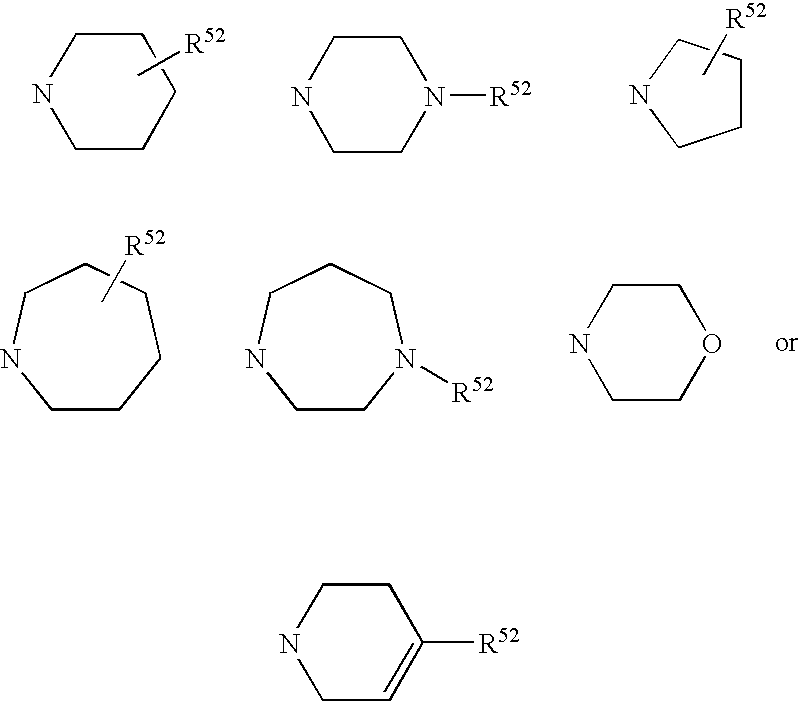
- R5 is NR51R52 or one of the following radicals

where
- R51 is hydrogen and branched and unbranched C1-C6-alkyl, and
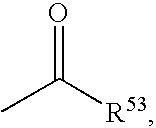
- R52 is hydrogen, branched and unbranched C1-C6-alkyl, phenyl,
—SO2R53, in which
-
- R53 is branched or unbranched O—C1-C6-alkyl, phenyl, branched or unbranched C1-C4-alkyl-phenyl,
- where one hydrogen in the C1-C6-alkyl radical in R52 and R53 can, independently of one another, be substituted by one of the following radicals: OH, O—C1-C4-alkyl, cyclohexyl, cyclopentyl, tetrahydronaphthyl, cyclopropyl, cyclobutyl, cycloheptyl, naphthyl and phenyl, where the carbocycles of the R52 and R53 radicals may also, independently of one another, carry one or two of the following radicals: branched or unbranched C1-C6-alkyl, branched or unbranched O—C1-C4-alkyl, OH, F, Cl, Br, I, CF3, NO2, NH2, CN, COOH, COOC1-C4-alkyl, C1-C4-alkylamino, CCl3, C1-C4-dialkylamino, SO2—C1-C4-alkyl, SO2-phenyl, CONH2, CONH—C1-C4-alkyl, CONHphenyl, CONH—C1-C4-alkyl-phenyl, NHSO2—C1-C4-alkyl, NHSO2-phenyl, S—C1-C4-alkyl,

-
- CHO, CH2—O—C1-C4-alkyl, —CH2O—C1-C4-alkyl-phenyl, —CH2OH, —SO—C1-C4-alkyl, —SO—C1-C4-alkyl-phenyl, SO2NH2, —SO2NH—C1-C4-alkyl and two radicals form a bridge —O—(CH2)1,2—O—.
- R5 is preferably a 6-membered ring, in particular piperazine, 10,
- R52 is preferably an optionally substituted phenyl ring, especially if R5 is a 6-membered ring.
- R1 is hydrogen, branched and unbranched C1-C6-alkyl, it also being possible for one C atom of the alkyl radical to carry OR11 or a group R5, where R11 is hydrogen or C1-C4-alkyl, and
- R2 is hydrogen, chlorine, fluorine, bromine, iodine, branched and unbranched, C1-C6-alkyl nitro, CF3, CN, NR21R22,NH—CO—R23, OR21, where
- R21 and R22 independently of one another are hydrogen or C1-C4-alkyl and
- R23 is hydrogen, C1-C4-alkyl or phenyl, and
- R3 is

- and
- R32 is hydrogen, CHO or (CH2)o—CHR31)m—CH2)n-G or (CH2)p-G
- where
- R31 is hydrogen, C1-C4-alkyl, OH and O—C1-C4-alkyl,
- m, o independently of one another are 0, 1 or 2 and
- n is 1, 2, 3 or 4, and
- R4 is hydrogen, branched and unbranched C1-C6-alkyl, chlorine, bromine, fluorine, nitro, cyano, NR41R42, NH—CO—R43, OR41,
- where
- R41 and R42 independently of one another are hydrogen or C1-C4-alkyl and
- R43 is C1-C4-alkyl or phenyl, and
- R5 is NR51R52 or one of the radicals below

- where
- R51 is hydrogen and branched and unbranched C1-C6-alkyl and
- R52 is hydrogen, COCH3, CO—O—C1-C4-alkyl, COCF3, branched and unbranched C1-C6-alkyl, it being possible for one hydrogen of the C1-C6-alkyl radical to be substituted by one of the following radicals: OH, O—C1-C4-alkyl and phenyl and for the phenyl ring also to carry one or two of the following radicals:
- chlorine, bromine, fluorine, branched and unbranched
- C1-C4-alkyl, nitro, amino, C1-C4-alkylamino,
- C1-C4-dialkylamino, OH, O—C1-C4-alkyl, CN, SO2—C1-C4-alkyl.

the particularly preferred meaning of R31 is hydrogen or —(CH2)p—R5, where
- p is 1 or 2 and
- R52 may be hydrogen, branched and unbranched C1-C6-alkyl, where one hydrogen of the C1-C6-alkyl radical may be substituted by one of the following radicals: OH, O—C1-C4-alkyl and phenyl, and where the phenyl ring may also carry one or two of the following radicals: chlorine, bromine, fluorine, branched and unbranched C1-C4-alkyl, nitro, amino, C1-C4-alkylamino, C1-C4-dialkylamino, OH, O—C1-C4-alkyl, CN, SO2—C1-C4-alkyl.
- p is 1 or 2 and
- R52 may be hydrogen, branched and unbranched C1-C6-alkyl, where one hydrogen of the C1-C6-alkyl radical may be substituted by one of the following radicals: OH, O—C1-C4-alkyl and phenyl, and where the phenyl ring may also carry one or two of the following radicals: chlorine, bromine, fluorine, branched and unbranched C1-C4-alkyl, nitro, amino, C1-C4-alkylamino, C1-C4-dialkylamino, OH, O—C1-C4-alkyl, CN, SO2—C1-C4-alkyl.

-
- the particularly preferred meaning of
- R52 can be hydrogen, branched and unbranched C1-C6-alkyl, where one hydrogen of the C1-C6-alkyl radical may be substituted by one of the following radicals: OH, O—C1-C4-alkyl and phenyl, and where the phenyl ring may also carry one or two of the following radicals:
- chlorine, bromine, fluorine, branched and unbranched C1-C4-alkyl, nitro, amino, C1-C4-alkylamino, C1-C4-dialkylamino, OH, O—C1-C4-alkyl, CN, SO2—C1-C4-alkyl.


in which


- a) incubating an unsupported or supported polyADP-ribosylatable target with a reaction mixture comprising
- a1) a PARP;
- a2) a PARP activator; and
- a3) a PARP inhibitor or an analyte in which at least one PARP inhibitor is suspected;
- b) carrying out the polyADP-ribosylation reaction; and
- c) determining the polyADP-ribosylation of the target qualitatively or quantitatively using an anti-poly(ADP-ribose) antibody.
- a1) immobilizing PARP on a support;
- b1) contacting the immobilized PARP homolog with an analyze in which at least one binding partner is suspected; and
- c1) determining, where appropriate after an incubation period, analyte constituents bound to the immobilized PARP.
- a2) immobilizing on a support an analyte which comprises at least one possible binding partner for PARP;
- b2) contacting the immobilized analyte with at least one PARP for which a binding partner is sought; and
- c3) [sic] examining the immobilized analyte, where appropriate after an incubation period, for binding of PARP.
-
- 4 μl of PARP reaction buffer (1 M Tris-HCl pH 8.0, 100 mM MgCl2, 10 mM DTT)
- 20 ng of PARP (human or bovine)
- 4 μl of activated DNA (1 mg/ml; SIGMA, D-4522)
- H2O ad 40 μl
Composition of the Substrate Solution Per Well: - 5 μl of PARP reaction buffer (10×)
- 0.8 μl NAD solution (10 mM, SIGMA N-1511)
- 44 μl of H2O
-
- 10 μl of PARP solution in PARP HTRF reaction buffer (50 mM Tris-HCl pH 8.0, 10 mM MgCl12, 1 mM DTT) with 20 ng of PARP (human or bovine)
- 10 μl of activated DNA in PARP HTRF reaction buffer (50 μg/ml)
- 10 μl of biotinylated histones in PARP HTRF reaction buffer (1.25 μM)
- 10 μl of inhibitor in PARP HTRF reaction buffer
-
- 10 μl of NAD solution in PARP HTRF reaction buffer (41 μM/ml). The reaction time was 30 minutes at room temperature.
-
- 10 μl of PARP inhibitor (25 μM, Ki=10 nM) in “Revelation” buffer (100 mM Tris-HCl pH 7.2, 0.2 M KF, 0.05% BSA).
-
- 10 μl EDTA-solution (SIGMA, E-7889, 0.5 M in H2O)
- 100 μl Sa-XL665 (Packard Instruments) in “Revelation” buffer (15-31.25 nM)
- 50 μl of anti-PARP cryptate in “Revelation” buffer (1.6-3.3 nM).
| TABLE I | ||
| Disorder | Model | Literature |
| Neurodegenerative | NMDA excitotoxicity in mice or | |
| disorders | rats | |
| (stroke, | ||
| Parkinson's etc.) | ||
| Stroke | Permanent MCAO (“middle | Tokime T. et al., J. Cereb Blood Flow Ketab, |
| cerebral artherial | 18(9):991-7, 1998, Guegan C. Brain Research. | |
| occlusion”) | Molecular Brain Research 55(1) 133-40, 1998 | |
| Transient, focal MCAO in rats | Eliasson MJL et al., Nat Med 1997, 3:1089-1095. | |
| or mice | Endres M. et al., J. Cereb Blood Flow Metab 1997, | |
| 17:1143-1151. Takahasbi K. et al., J. Cereb Blood | ||
| Flow Metab 1997, 17:1137-1142. | ||
| Parkinson's | MPTP (1-methyl-4-phenyl- | Cosi C. et al., Brain Res., 1998 809(1):58-67. Cosi C. et |
| disease | 1,2,3,6-tetrahydro-pyridine) | al., Brain Res., 1996 729(2):264-9. |
| toxicity in mice/rats | ||
| Myocardial infarct | Coronary vessel occlusion in | Richard V. et al., Br. J. Pharmacol 1994, 113, 869-876. |
| rats, pigs or rabbits | Thiemermann C. et al., Proc Natl Acad Sci USA. | |
| 1997, 94(2):679-83. | ||
| Zingarelli B. et al., Cardiovasc Res. 1997, 36(2):205-15. | ||
| Langendorf heart model in rats | See below for description | |
| or rabbits | ||
| Septic shock | Endotoxin shock in rats | Szabo C. et al., J. Clin Invest, 1997, 100(3):723-35. |
| Zymosan- or carrageenan- | Szabo C. et al., J. Exp Med. 1997, 186(7):1041-9. | |
| induced multiple organ failure in | Cuzzocrea S. et al., Eur J. Pharmacol. 1998, 342(1):67- | |
| rats or mice | 76. | |
| Rheumatoid | Adjuvant- or collagen-induced | Szabo C. et al., Proc Natl Acad Sci USA. 1998, |
| arthritis | arthritis in rats or mice | 95(7):3867-72. |
| Diabetes | Streptozotocin- and alloxan- | Uchigata Y. et al., Diabetes 1983, 32: 316-318. |
| induced or obesity-associated | Masiello P. et al., Diabetologia 1985, 28: 683-686. | |
| Shimabukuro M. et al., J. Clin Invest 1997, 100: 290- | ||
| 295. | ||
| Cancer | Schlicker et al. Int J Radiat Biol. 1999 Jan:75(1):91- | |
| 100. | ||

- b) Ethyl 2-(4-(2-(N,N-diethylamino)eth-1-yloxy)phenyl)benzimidazole-4-carboxylate
- c) 2-(4-(2-(N,N-Diethylamino)eth-1-yloxy)phenyl)benzimidazole-4-carbohydrazide


Claims (20)




Applications Claiming Priority (7)
| Application Number | Priority Date | Filing Date | Title |
|---|---|---|---|
| DE19850709 | 1998-11-03 | ||
| DE19850709 | 1998-11-03 | ||
| DE19852801 | 1998-11-16 | ||
| DE19852801 | 1998-11-16 | ||
| DE19908733 | 1999-03-01 | ||
| DE19808733 | 1999-03-01 | ||
| PCT/EP1999/008169 WO2000026192A1 (en) | 1998-11-03 | 1999-10-28 | Substituted 2-phenylbenzimidazoles, the production thereof and their use |
Publications (1)
| Publication Number | Publication Date |
|---|---|
| US7781596B1 true US7781596B1 (en) | 2010-08-24 |
Family
ID=27218793
Family Applications (1)
| Application Number | Title | Priority Date | Filing Date |
|---|---|---|---|
| US09/830,992 Expired - Fee Related US7781596B1 (en) | 1998-11-03 | 1999-10-28 | Substituted 2-phenylbenzimidazoles, the production thereof and their use |
Country Status (26)
| Country | Link |
|---|---|
| US (1) | US7781596B1 (en) |
| EP (2) | EP1391457B1 (en) |
| JP (4) | JP2002528531A (en) |
| KR (1) | KR20010100977A (en) |
| CN (1) | CN1331682A (en) |
| AR (1) | AR024517A1 (en) |
| AT (1) | ATE284392T1 (en) |
| AU (1) | AU765224B2 (en) |
| BG (1) | BG105515A (en) |
| BR (1) | BR9915013A (en) |
| CA (1) | CA2349227C (en) |
| CO (1) | CO5140126A1 (en) |
| CY (1) | CY1105410T1 (en) |
| CZ (1) | CZ20011546A3 (en) |
| DE (1) | DE59911249D1 (en) |
| ES (2) | ES2234318T3 (en) |
| HK (1) | HK1041702A1 (en) |
| HU (1) | HUP0200312A3 (en) |
| ID (1) | ID28787A (en) |
| IL (1) | IL142917A0 (en) |
| NO (1) | NO20012158L (en) |
| PL (1) | PL347500A1 (en) |
| PT (1) | PT1127052E (en) |
| SK (1) | SK5952001A3 (en) |
| TR (2) | TR200101239T2 (en) |
| WO (1) | WO2000026192A1 (en) |
Cited By (14)
| Publication number | Priority date | Publication date | Assignee | Title |
|---|---|---|---|---|
| WO2012096813A1 (en) * | 2011-01-11 | 2012-07-19 | Merck Sharp & Dohme Corp. | Imidazole derivatives |
| CN103333679A (en) * | 2013-07-05 | 2013-10-02 | 渤海大学 | Excited state intramolecular proton transfer regulation based fluorescence probe, and synthetic method and applications thereof |
| US9006454B2 (en) | 2009-04-02 | 2015-04-14 | Merck Serono S.A. | Dihydroorotate dehydrogenase inhibitors |
| WO2015103526A1 (en) * | 2014-01-05 | 2015-07-09 | Washington University | Radiolabeled tracers for poly (adp-ribose) polymerase-1 (parp-1), methods and uses therefor |
| US20150216168A1 (en) * | 2012-09-05 | 2015-08-06 | Bayer Cropscience Ag | Use of substituted 2-amidobenzimidazoles, 2-amidobenzoxazoles and 2-amidobenzothiazoles or salts thereof as active substances against abiotic plant stress |
| WO2019136298A1 (en) | 2018-01-05 | 2019-07-11 | Cybrexa, Inc. | Compounds, compositions, and methods for treatment of diseases involving acidic or hypoxic diseased tissues |
| WO2020033359A1 (en) * | 2018-08-06 | 2020-02-13 | The Board Of Trustees Of The Leland Stanford Junior University | 2-arylbenzimidazoles as ppargc1a activators for treating neurodegenerative diseases |
| US10583125B2 (en) | 2014-10-14 | 2020-03-10 | The Board Of Trustees Of The Leland Stanford Junio | Method for treating neurodegenerative diseases |
| US10653669B2 (en) | 2015-12-15 | 2020-05-19 | The Board Of Trustees Of The Leland Stanford Junior University | Method for preventing and/or treating aging-associated cognitive impairment and neuroinflammation |
| US10722484B2 (en) | 2016-03-09 | 2020-07-28 | K-Gen, Inc. | Methods of cancer treatment |
| WO2022150596A1 (en) | 2021-01-08 | 2022-07-14 | Cybrexa 2, Inc. | Process for preparing a conjugate linking moiety |
| WO2022155172A1 (en) | 2021-01-13 | 2022-07-21 | Cybrexa 3, Inc. | Peptide conjugates of therapeutics |
| US11555019B2 (en) | 2019-07-10 | 2023-01-17 | Cybrexa 3, Inc. | Peptide conjugates of microtubule-targeting agents as therapeutics |
| US11634508B2 (en) | 2019-07-10 | 2023-04-25 | Cybrexa 2, Inc. | Peptide conjugates of cytotoxins as therapeutics |
Families Citing this family (64)
| Publication number | Priority date | Publication date | Assignee | Title |
|---|---|---|---|---|
| US6911462B2 (en) | 1998-05-22 | 2005-06-28 | Avanir Pharmaceuticals | Benzimidazole compounds for regulating IgE |
| US6919366B2 (en) | 1998-05-22 | 2005-07-19 | Avanir Pharmaceuticals | Benzimidazole derivatives as modulators of IgE |
| EP1391457B1 (en) | 1998-11-03 | 2013-12-25 | AbbVie Deutschland GmbH & Co KG | Substituted 2-Phenylbenzimidazoles and their use as PARP inhibitors |
| DE19920936A1 (en) * | 1999-05-07 | 2000-11-09 | Basf Ag | Heterocyclically substituted benzimidazoles, their preparation and use |
| US6759425B2 (en) | 1999-10-21 | 2004-07-06 | Avanir Pharmaceuticals | Benzimidazole compounds for modulating IgE and inhibiting cellular proliferation |
| ES2291455T3 (en) * | 2001-03-12 | 2008-03-01 | Avanir Pharmaceuticals | BENCIMIDAZOL COMPOUNDS TO MODULATE IGE AND INHIBIT THE CELL PROLIFERATION. |
| US6956035B2 (en) | 2001-08-31 | 2005-10-18 | Inotek Pharmaceuticals Corporation | Isoquinoline derivatives and methods of use thereof |
| AU2002334355A1 (en) * | 2001-09-06 | 2003-03-18 | Prochon Biotech Ltd. | Protein tyrosine kinase inhibitors |
| DE60221866T2 (en) | 2001-10-19 | 2008-05-29 | Ortho-Mcneil Pharmaceutical, Inc. | 2-PHENYL BENZIMIDAZOLE AND IMIDAZO-i4,5ö-PYRIDINE AS CDS1 / CHK2 INHIBITORS AND ADJUVANTIES IN CHEMOTHERAPY OR RADIATION THERAPY FOR THE TREATMENT OF CANCER |
| TW200304820A (en) * | 2002-03-25 | 2003-10-16 | Avanir Pharmaceuticals | Use of benzimidazole analogs in the treatment of cell proliferation |
| ATE546539T1 (en) | 2002-07-26 | 2012-03-15 | Basf Plant Science Gmbh | REVERSING THE NEGATIVE-SELECTIVE EFFECT OF NEGATIVE MARKER PROTEINS AS A SELECTION METHOD |
| WO2004024655A2 (en) | 2002-09-12 | 2004-03-25 | Avanir Pharmaceuticals | Phenyl-indole compounds for modulating ige and inhibiting cellular proliferation |
| TWI276631B (en) | 2002-09-12 | 2007-03-21 | Avanir Pharmaceuticals | Phenyl-aza-benzimidazole compounds for modulating IgE and inhibiting cellular proliferation |
| WO2004037808A1 (en) * | 2002-10-24 | 2004-05-06 | Chong Kun Dang Pharmaceutical Corp. | 2 - substituted heterocyclic compounds and antitumor composition comprising the same |
| DE10300398A1 (en) * | 2003-01-09 | 2004-07-22 | Boehringer Ingelheim Pharma Gmbh & Co. Kg | Use of substituted 2-phenylbenzimidazoles as a drug |
| US7151114B2 (en) | 2003-01-09 | 2006-12-19 | Boehringer Ingelheim International Gmbh | Use of substituted 2-phenylbenzimidazoles as medicaments |
| KR20050118169A (en) | 2003-02-28 | 2005-12-15 | 이노텍 파마슈티컬스 코포레이션 | Tetracyclic benzamide derivatives and methods of use thereof |
| DE602004006852D1 (en) | 2003-04-17 | 2007-07-19 | Janssen Pharmaceutica Nv | 2-PHENYL-BENZIMIDAZOLE AND 2-PHENYL-IMIDAZO-4,5'-PYRIDINE DERIVATIVES AS CHECKPOINT-KINASE-CDS1 (CHK2) INHIBITOR FOR THE TREATMENT OF CANCER |
| JP4765627B2 (en) * | 2003-09-22 | 2011-09-07 | Msd株式会社 | Novel piperidine derivatives |
| NZ546259A (en) * | 2003-09-30 | 2009-05-31 | Janssen Pharmaceutica Nv | Benzoimidazole compounds |
| JP4767857B2 (en) * | 2003-09-30 | 2011-09-07 | ジヤンセン・フアーマシユーチカ・ナームローゼ・フエンノートシヤツプ | Benzimidazole compounds |
| MXPA06011021A (en) * | 2004-03-25 | 2007-04-13 | Johnson & Johnson | Imidazole compounds. |
| US20080119477A1 (en) * | 2004-12-13 | 2008-05-22 | Smith Brian M | N-Biaryl and N-Arylheteroaryl Piperazine Derivatives as Modulators of the 5Ht2c Receptor Useful For the Treatment of Disorders Related Thereto |
| AU2006209117B2 (en) * | 2005-01-28 | 2009-12-10 | Daewoong Pharmaceutical Co., Ltd. | Novel benzoimidazole derivatives and pharmaceutical composition comprising the same |
| KR20060087386A (en) | 2005-01-28 | 2006-08-02 | 주식회사 대웅제약 | Novel benzoimidazole derivatives and pharmaceutical compositions containing them |
| JP2008531562A (en) | 2005-02-25 | 2008-08-14 | イノテック ファーマシューティカルズ コーポレイション | Tetracyclic amino compounds and tetracyclic carboxamide compounds and methods of use thereof |
| EP2045327B8 (en) | 2005-03-08 | 2012-03-14 | BASF Plant Science GmbH | Expression enhancing intron sequences |
| TWI375673B (en) | 2005-04-11 | 2012-11-01 | Abbott Lab | 1h-benzimidazole-4-carboxamides substituted with a quaternary carbon at the 2-position are potent parp inhibitors |
| WO2006110683A1 (en) | 2005-04-11 | 2006-10-19 | Abbott Laboratories | 2-substituted-1h-benzimidazole-4-carboxamides are parp inhibitors |
| MY147756A (en) | 2005-05-25 | 2013-01-15 | Theravance Inc | Benzimidazole-carboxamide compounds as 5-ht4 receptor agonists |
| RU2447889C2 (en) | 2005-07-18 | 2012-04-20 | Бипар Сайенсиз, Инк. | Method of treating cancer (versions) |
| RU2008110955A (en) | 2005-08-24 | 2009-09-27 | Инотек Фармасьютикалз Корпорейшн (Us) | INDENOISOCHINOLINONE ANALOGUES AND WAYS OF THEIR APPLICATION |
| CA2623822C (en) | 2005-09-29 | 2013-11-12 | Abbott Laboratories | 1h-benzimidazole-4-carboxamides substituted with phenyl at the 2-position are potent parp inhibitors |
| WO2007059230A2 (en) | 2005-11-15 | 2007-05-24 | Abbott Laboratories | Substituted 1h-benzimidazole-4-carboxamides are potent parp inhibitors |
| CA2636929A1 (en) * | 2005-12-21 | 2007-07-12 | Decode Genetics, Ehf | Biaryl nitrogen heterocycle inhibitors of lta4h for treating inflammation |
| US20090275619A1 (en) * | 2006-04-03 | 2009-11-05 | BOUERES Julia | Amide Substituted Indazole and Benzotriazole Derivatives as Poly(ADP-Ribose)Polymerase (PARP) Inhibitors |
| GB0606663D0 (en) * | 2006-04-03 | 2006-05-10 | Angeletti P Ist Richerche Bio | Therapeutic compounds |
| US20070259937A1 (en) | 2006-05-02 | 2007-11-08 | Giranda Vincent L | Substituted 1h-benzimidazole-4-carboxamides are potent parp inhibitors |
| CA2662337A1 (en) | 2006-09-05 | 2008-03-13 | Bipar Sciences, Inc. | Inhibition of fatty acid synthesis by parp inhibitors and methods of treatment thereof |
| CN101522609A (en) | 2006-09-05 | 2009-09-02 | 彼帕科学公司 | Treatment of cancer |
| EA016079B1 (en) * | 2007-01-10 | 2012-01-30 | Институто Ди Ричерке Ди Биолоджиа Молеколаре П. Анджелетти Спа | Amide substituted indazoles as poly(adp-ribose)polymerase (parp) inhibitors |
| KR20090115879A (en) | 2007-02-28 | 2009-11-09 | 이노텍 파마슈티컬스 코포레이션 | Indenoisoquinolinone analogs and methods of using them |
| US8067613B2 (en) * | 2007-07-16 | 2011-11-29 | Abbott Laboratories | Benzimidazole poly(ADP ribose)polymerase inhibitors |
| JP2011503111A (en) | 2007-11-12 | 2011-01-27 | バイパー サイエンシズ,インコーポレイティド | Treatment of breast cancer with PARP inhibitors alone or in combination with antitumor agents |
| CA2709203A1 (en) * | 2007-12-13 | 2009-06-18 | Siena Biotech S.P.A. | Hedgehog pathway antagonists and therapeutic applications thereof |
| NZ586675A (en) | 2008-01-08 | 2012-04-27 | Merck Sharp & Dohme | Pharmaceutically acceptable salts of 2-{ 4-[(3s)-piperidin-3- yl]phenyl} -2h-indazole-7-carboxamide |
| WO2009099736A2 (en) * | 2008-02-06 | 2009-08-13 | Lead Therapeutics, Inc. | Benzoxazole carboxamide inhibitors of poly(adp-ribose)polymerase (parp) |
| WO2010083199A1 (en) | 2009-01-19 | 2010-07-22 | Abbott Laboratories | Benzthiazole inhibitors of poly(adp-ribose)polymerase |
| MX2011013294A (en) * | 2009-06-11 | 2012-01-12 | Siena Biotech Spa | Hedgehog pathway antagonists and therapeutic applications thereof. |
| BR112012000915A2 (en) * | 2009-07-15 | 2019-09-24 | Janssen Pharmaceuticals Inc | substituted triazole and imidazole derivatives as gamma secretase modulators. |
| EP2504429B1 (en) | 2009-11-27 | 2016-04-20 | BASF Plant Science Company GmbH | Chimeric endonucleases and uses thereof |
| DE112010004582T5 (en) | 2009-11-27 | 2012-11-29 | Basf Plant Science Company Gmbh | Optimized endonucleases and applications thereof |
| JP2013511979A (en) | 2009-11-27 | 2013-04-11 | ビーエーエスエフ プラント サイエンス カンパニー ゲーエムベーハー | Chimeric endonuclease and use thereof |
| JP2013521255A (en) | 2010-03-04 | 2013-06-10 | バイエル・インテレクチュアル・プロパティ・ゲゼルシャフト・ミット・ベシュレンクテル・ハフツング | Fluoroalkyl-substituted 2-amidobenzimidazoles and their use to enhance stress tolerance in plants |
| EP2561759A1 (en) | 2011-08-26 | 2013-02-27 | Bayer Cropscience AG | Fluoroalkyl-substituted 2-amidobenzimidazoles and their effect on plant growth |
| CN103242273B (en) * | 2012-02-09 | 2015-06-03 | 中国科学院上海药物研究所 | 2-arylbenzofuran-7-methanamide compound, preparation method and application thereof |
| CN104230898B (en) * | 2013-06-17 | 2016-06-29 | 上海汇伦生命科技有限公司 | Benzimidazolyl-2 radicals-piperazine heterocycle compound, its pharmaceutical composition and its production and use |
| CN104230897B (en) * | 2013-06-17 | 2016-07-06 | 上海汇伦生命科技有限公司 | Benzimidazolyl-2 radicals-piperazine heterocycle compound, its pharmaceutical composition and its production and use |
| CN106986937B (en) * | 2017-05-11 | 2020-09-08 | 南京羚诺生物医药技术研究院有限公司 | A kind of ETH polypeptide antibody composition, preparation method and test kit thereof |
| US11874276B2 (en) | 2018-04-05 | 2024-01-16 | Dana-Farber Cancer Institute, Inc. | STING levels as a biomarker for cancer immunotherapy |
| US20210347758A1 (en) | 2018-10-03 | 2021-11-11 | Tesaro, Inc. | Crystalline Forms of Niraparib Freebase |
| WO2021041532A1 (en) | 2019-08-26 | 2021-03-04 | Dana-Farber Cancer Institute, Inc. | Use of heparin to promote type 1 interferon signaling |
| CN111334537A (en) * | 2020-04-01 | 2020-06-26 | 中山万汉制药有限公司 | Enzyme-catalyzed synthesis of intermediates of dabigatran etexilate |
| CN116606256A (en) * | 2023-03-13 | 2023-08-18 | 山东大学 | Benzimidazole-4-carboxamide derivatives with selective PARP-1 inhibition effect |
Citations (26)
| Publication number | Priority date | Publication date | Assignee | Title |
|---|---|---|---|---|
| DE2248596A1 (en) | 1971-10-05 | 1973-04-12 | Leo Pharm Prod Ltd | NEW DERIVATIVES OF AMINOISOPHTALIC ACID |
| GB1354554A (en) | 1970-08-31 | 1974-06-05 | Robins Co Inc A H | 2-substituted benzimidazoles |
| US4093726A (en) | 1976-12-02 | 1978-06-06 | Abbott Laboratories | N-(2-benzimidazolyl)-piperazines |
| EP0209707A2 (en) | 1985-06-21 | 1987-01-28 | Dr. Karl Thomae GmbH | 2-Aryl imidazoles, pharmaceutical compositions containing them and process for their preparation |
| DE3830060A1 (en) | 1988-09-03 | 1990-03-15 | Boehringer Mannheim Gmbh | 2-PHENYLBENZIMIDAZOLES - PROCESS FOR PRODUCING THE SAME AND MEDICINAL PRODUCTS CONTAINING THESE COMPOUNDS |
| FR2707011A1 (en) | 1993-06-25 | 1994-12-30 | Pasteur Sanofi Diagnostics | Immunological process for the detection and assay of antibodies directed against poly(ADP-ribose) polymerase, application to diagnosis, kit for its implementation |
| EP0719765A2 (en) | 1994-12-27 | 1996-07-03 | Mitsui Toatsu Chemicals, Inc. | Phenylbenzimidazole derivatives |
| WO1997004771A1 (en) | 1995-08-02 | 1997-02-13 | Newcastle University Ventures Limited | Benzimidazole compounds |
| WO1998039343A1 (en) | 1997-03-07 | 1998-09-11 | Metabasis Therapeutics, Inc. | Novel benzimidazole inhibitors of fructose-1,6-bisphosphatase |
| WO2000026192A1 (en) | 1998-11-03 | 2000-05-11 | Basf Aktiengesellschaft | Substituted 2-phenylbenzimidazoles, the production thereof and their use |
| WO2000029384A1 (en) | 1998-11-17 | 2000-05-25 | Basf Aktiengesellschaft | 2-phenylbenzimidazoles and 2-phenylindoles, and production and use thereof |
| WO2000032579A1 (en) | 1998-11-27 | 2000-06-08 | Basf Aktiengesellschaft | Substituted benzimidazoles and their use as parp inhibitors |
| DE19916460A1 (en) | 1999-04-12 | 2000-10-19 | Basf Ag | New heterocyclyl-benzimidazole carboxamide derivatives, useful for treating e.g. neurodegenerative diseases, epilepsy, ischemic damage, myocardial infarction, tumors, inflammation and diabetes |
| DE19920936A1 (en) | 1999-05-07 | 2000-11-09 | Basf Ag | Heterocyclically substituted benzimidazoles, their preparation and use |
| WO2001021634A1 (en) | 1999-09-21 | 2001-03-29 | Lion Bioscience Ag | Benzimidazole derivatives and combinatorial libraries thereof |
| WO2001021615A1 (en) | 1999-09-17 | 2001-03-29 | Yamanouchi Pharmaceutical Co., Ltd. | Benzimidazole derivatives |
| WO2001082877A2 (en) | 2000-05-04 | 2001-11-08 | Basf Aktiengesellschaft | Use of parp inhibitors in cosmetic preparations |
| US6372736B1 (en) | 1998-07-21 | 2002-04-16 | Pfizer Inc | Heterocyclic compounds as inhibitors of rotamase enzymes |
| US20030100582A1 (en) | 1998-05-22 | 2003-05-29 | Sircar Jagadish C. | Benzimidazole compounds for regulating IgE |
| US20060229351A1 (en) | 2005-04-11 | 2006-10-12 | Gui-Dong Zhu | 2-Substituted-1 H-benzimidazile-4-carboxamides are PARP inhibitors |
| US20070179136A1 (en) | 2005-09-29 | 2007-08-02 | Penning Thomas D | 1h-benzimidazole-4-carboxamides substituted with phenyl at the 2-position are potent parp inhibitors |
| US20070265324A1 (en) | 2006-01-17 | 2007-11-15 | Wolfgang Wernet | Combination Therapy with Parp Inhibitors |
| US7462724B2 (en) | 2005-11-15 | 2008-12-09 | Abbott Laboratories | Substituted 1H-benzimidazole-4-carboxamides are potent PARP inhibitors |
| US20090030016A1 (en) | 2007-07-16 | 2009-01-29 | Abbott Laboratories | Benzimidazole poly(adp ribose)polymerase inhibitors |
| US7550603B2 (en) | 2005-04-11 | 2009-06-23 | Abbott Laboratories Inc. | 1H-benzimidazole-4-carboxamides substituted with a quaternary carbon at the 2-position are potent PARP inhibitors |
| US20090186877A1 (en) | 2006-05-02 | 2009-07-23 | Abbott Laboratories | Substituted 1h-benzimidazole-4-carboxamides are potent parp inhibitors |
-
1999
- 1999-10-28 EP EP03024899.1A patent/EP1391457B1/en not_active Expired - Lifetime
- 1999-10-28 AT AT99955894T patent/ATE284392T1/en not_active IP Right Cessation
- 1999-10-28 CA CA002349227A patent/CA2349227C/en not_active Expired - Fee Related
- 1999-10-28 DE DE1999511249 patent/DE59911249D1/en not_active Expired - Lifetime
- 1999-10-28 PL PL99347500A patent/PL347500A1/en not_active Application Discontinuation
- 1999-10-28 TR TR2001/01239T patent/TR200101239T2/en unknown
- 1999-10-28 EP EP99955894A patent/EP1127052B1/en not_active Expired - Lifetime
- 1999-10-28 JP JP2000579581A patent/JP2002528531A/en active Pending
- 1999-10-28 KR KR1020017005550A patent/KR20010100977A/en not_active Ceased
- 1999-10-28 ES ES99955894T patent/ES2234318T3/en not_active Expired - Lifetime
- 1999-10-28 HK HK02103405.1A patent/HK1041702A1/en unknown
- 1999-10-28 PT PT99955894T patent/PT1127052E/en unknown
- 1999-10-28 WO PCT/EP1999/008169 patent/WO2000026192A1/en not_active Ceased
- 1999-10-28 ID IDW00200101198A patent/ID28787A/en unknown
- 1999-10-28 US US09/830,992 patent/US7781596B1/en not_active Expired - Fee Related
- 1999-10-28 TR TR2002/00972T patent/TR200200972T2/en unknown
- 1999-10-28 BR BR9915013-1A patent/BR9915013A/en not_active IP Right Cessation
- 1999-10-28 CZ CZ20011546A patent/CZ20011546A3/en unknown
- 1999-10-28 HU HU0200312A patent/HUP0200312A3/en unknown
- 1999-10-28 SK SK595-2001A patent/SK5952001A3/en unknown
- 1999-10-28 AU AU12665/00A patent/AU765224B2/en not_active Ceased
- 1999-10-28 IL IL14291799A patent/IL142917A0/en unknown
- 1999-10-28 CN CN99814796A patent/CN1331682A/en active Pending
- 1999-10-28 ES ES03024899.1T patent/ES2449713T3/en not_active Expired - Lifetime
- 1999-11-02 AR ARP990105543A patent/AR024517A1/en not_active Application Discontinuation
- 1999-11-03 CO CO99069358A patent/CO5140126A1/en unknown
-
2001
- 2001-05-02 NO NO20012158A patent/NO20012158L/en not_active Application Discontinuation
- 2001-05-16 BG BG105515A patent/BG105515A/en unknown
-
2005
- 2005-02-28 CY CY20051100286T patent/CY1105410T1/en unknown
-
2006
- 2006-08-02 JP JP2006211209A patent/JP2007024902A/en active Pending
-
2008
- 2008-11-05 JP JP2008284436A patent/JP2009108072A/en active Pending
- 2008-11-05 JP JP2008284437A patent/JP2009114188A/en active Pending
Patent Citations (28)
| Publication number | Priority date | Publication date | Assignee | Title |
|---|---|---|---|---|
| GB1354554A (en) | 1970-08-31 | 1974-06-05 | Robins Co Inc A H | 2-substituted benzimidazoles |
| DE2248596A1 (en) | 1971-10-05 | 1973-04-12 | Leo Pharm Prod Ltd | NEW DERIVATIVES OF AMINOISOPHTALIC ACID |
| US4093726A (en) | 1976-12-02 | 1978-06-06 | Abbott Laboratories | N-(2-benzimidazolyl)-piperazines |
| EP0209707A2 (en) | 1985-06-21 | 1987-01-28 | Dr. Karl Thomae GmbH | 2-Aryl imidazoles, pharmaceutical compositions containing them and process for their preparation |
| DE3830060A1 (en) | 1988-09-03 | 1990-03-15 | Boehringer Mannheim Gmbh | 2-PHENYLBENZIMIDAZOLES - PROCESS FOR PRODUCING THE SAME AND MEDICINAL PRODUCTS CONTAINING THESE COMPOUNDS |
| FR2707011A1 (en) | 1993-06-25 | 1994-12-30 | Pasteur Sanofi Diagnostics | Immunological process for the detection and assay of antibodies directed against poly(ADP-ribose) polymerase, application to diagnosis, kit for its implementation |
| EP0719765A2 (en) | 1994-12-27 | 1996-07-03 | Mitsui Toatsu Chemicals, Inc. | Phenylbenzimidazole derivatives |
| WO1997004771A1 (en) | 1995-08-02 | 1997-02-13 | Newcastle University Ventures Limited | Benzimidazole compounds |
| WO1998039343A1 (en) | 1997-03-07 | 1998-09-11 | Metabasis Therapeutics, Inc. | Novel benzimidazole inhibitors of fructose-1,6-bisphosphatase |
| US20030100582A1 (en) | 1998-05-22 | 2003-05-29 | Sircar Jagadish C. | Benzimidazole compounds for regulating IgE |
| US6372736B1 (en) | 1998-07-21 | 2002-04-16 | Pfizer Inc | Heterocyclic compounds as inhibitors of rotamase enzymes |
| WO2000026192A1 (en) | 1998-11-03 | 2000-05-11 | Basf Aktiengesellschaft | Substituted 2-phenylbenzimidazoles, the production thereof and their use |
| WO2000029384A1 (en) | 1998-11-17 | 2000-05-25 | Basf Aktiengesellschaft | 2-phenylbenzimidazoles and 2-phenylindoles, and production and use thereof |
| WO2000032579A1 (en) | 1998-11-27 | 2000-06-08 | Basf Aktiengesellschaft | Substituted benzimidazoles and their use as parp inhibitors |
| DE19916460A1 (en) | 1999-04-12 | 2000-10-19 | Basf Ag | New heterocyclyl-benzimidazole carboxamide derivatives, useful for treating e.g. neurodegenerative diseases, epilepsy, ischemic damage, myocardial infarction, tumors, inflammation and diabetes |
| DE19920936A1 (en) | 1999-05-07 | 2000-11-09 | Basf Ag | Heterocyclically substituted benzimidazoles, their preparation and use |
| US6696437B1 (en) * | 1999-05-07 | 2004-02-24 | Abbott Gmbh & Co. Kg | Heterocyclically substituted benzimidazoles, the production and application thereof |
| WO2001021615A1 (en) | 1999-09-17 | 2001-03-29 | Yamanouchi Pharmaceutical Co., Ltd. | Benzimidazole derivatives |
| WO2001021634A1 (en) | 1999-09-21 | 2001-03-29 | Lion Bioscience Ag | Benzimidazole derivatives and combinatorial libraries thereof |
| DE10021468A1 (en) | 2000-05-04 | 2001-11-08 | Basf Ag | Use of PARP inhibitors in cosmetic preparations |
| WO2001082877A2 (en) | 2000-05-04 | 2001-11-08 | Basf Aktiengesellschaft | Use of parp inhibitors in cosmetic preparations |
| US20060229351A1 (en) | 2005-04-11 | 2006-10-12 | Gui-Dong Zhu | 2-Substituted-1 H-benzimidazile-4-carboxamides are PARP inhibitors |
| US7550603B2 (en) | 2005-04-11 | 2009-06-23 | Abbott Laboratories Inc. | 1H-benzimidazole-4-carboxamides substituted with a quaternary carbon at the 2-position are potent PARP inhibitors |
| US20070179136A1 (en) | 2005-09-29 | 2007-08-02 | Penning Thomas D | 1h-benzimidazole-4-carboxamides substituted with phenyl at the 2-position are potent parp inhibitors |
| US7462724B2 (en) | 2005-11-15 | 2008-12-09 | Abbott Laboratories | Substituted 1H-benzimidazole-4-carboxamides are potent PARP inhibitors |
| US20070265324A1 (en) | 2006-01-17 | 2007-11-15 | Wolfgang Wernet | Combination Therapy with Parp Inhibitors |
| US20090186877A1 (en) | 2006-05-02 | 2009-07-23 | Abbott Laboratories | Substituted 1h-benzimidazole-4-carboxamides are potent parp inhibitors |
| US20090030016A1 (en) | 2007-07-16 | 2009-01-29 | Abbott Laboratories | Benzimidazole poly(adp ribose)polymerase inhibitors |
Non-Patent Citations (21)
Cited By (26)
| Publication number | Priority date | Publication date | Assignee | Title |
|---|---|---|---|---|
| US9006454B2 (en) | 2009-04-02 | 2015-04-14 | Merck Serono S.A. | Dihydroorotate dehydrogenase inhibitors |
| WO2012096813A1 (en) * | 2011-01-11 | 2012-07-19 | Merck Sharp & Dohme Corp. | Imidazole derivatives |
| US20150216168A1 (en) * | 2012-09-05 | 2015-08-06 | Bayer Cropscience Ag | Use of substituted 2-amidobenzimidazoles, 2-amidobenzoxazoles and 2-amidobenzothiazoles or salts thereof as active substances against abiotic plant stress |
| CN103333679A (en) * | 2013-07-05 | 2013-10-02 | 渤海大学 | Excited state intramolecular proton transfer regulation based fluorescence probe, and synthetic method and applications thereof |
| CN103333679B (en) * | 2013-07-05 | 2014-10-22 | 渤海大学 | Excited state intramolecular proton transfer regulation based fluorescence probe, and synthetic method and applications thereof |
| WO2015103526A1 (en) * | 2014-01-05 | 2015-07-09 | Washington University | Radiolabeled tracers for poly (adp-ribose) polymerase-1 (parp-1), methods and uses therefor |
| EP3089965A4 (en) * | 2014-01-05 | 2017-06-21 | Washington University | Radiolabeled tracers for poly (adp-ribose) polymerase-1 (parp-1), methods and uses therefor |
| US9993570B2 (en) | 2014-01-05 | 2018-06-12 | Washington University | Radiolabeled tracers for poly (ADP-ribose) polymerase-1 (PARP-1), methods and uses therefor |
| EP3424909A1 (en) * | 2014-01-05 | 2019-01-09 | Washington University | A poly (adp-ribose) polymerase-1 (parp-1) inhibitor and uses therefor |
| US10583125B2 (en) | 2014-10-14 | 2020-03-10 | The Board Of Trustees Of The Leland Stanford Junio | Method for treating neurodegenerative diseases |
| US10966962B2 (en) | 2014-10-14 | 2021-04-06 | The Board Of Trustees Of The Leland Stanford Junior University | Method for treating neurodegenerative diseases |
| US10653669B2 (en) | 2015-12-15 | 2020-05-19 | The Board Of Trustees Of The Leland Stanford Junior University | Method for preventing and/or treating aging-associated cognitive impairment and neuroinflammation |
| US10722484B2 (en) | 2016-03-09 | 2020-07-28 | K-Gen, Inc. | Methods of cancer treatment |
| US10933069B2 (en) | 2018-01-05 | 2021-03-02 | Cybrexa 1, Inc. | Compounds, compositions, and methods for treatment of diseases involving acidic or hypoxic diseased tissues |
| WO2019136298A1 (en) | 2018-01-05 | 2019-07-11 | Cybrexa, Inc. | Compounds, compositions, and methods for treatment of diseases involving acidic or hypoxic diseased tissues |
| US12427157B2 (en) | 2018-01-05 | 2025-09-30 | Cybrexa 1, Inc. | Methods for treatment of diseases involving acidic or hypoxic diseased tissues |
| WO2020033359A1 (en) * | 2018-08-06 | 2020-02-13 | The Board Of Trustees Of The Leland Stanford Junior University | 2-arylbenzimidazoles as ppargc1a activators for treating neurodegenerative diseases |
| US10851066B2 (en) | 2018-08-06 | 2020-12-01 | The Board Of Trustees Of The Leland Stanford Junior University | 2-arylbenzimidazoles as PPARGC1A activators for treating neurodegenerative diseases |
| US11111217B2 (en) | 2018-08-06 | 2021-09-07 | The Board Of Trustees Of The Leland Stanford Junior University | 2-arylbenzimidazoles as Ppargc1a activators for treating neurodegenerative diseases |
| US12195432B2 (en) | 2018-08-06 | 2025-01-14 | The Board Of Trustees Of The Leland Stanford Junior University | 2-arylbenzimidazoles as Ppargc1a activators for treating neurodegenerative diseases |
| US11634508B2 (en) | 2019-07-10 | 2023-04-25 | Cybrexa 2, Inc. | Peptide conjugates of cytotoxins as therapeutics |
| US11555019B2 (en) | 2019-07-10 | 2023-01-17 | Cybrexa 3, Inc. | Peptide conjugates of microtubule-targeting agents as therapeutics |
| US12234212B2 (en) | 2019-07-10 | 2025-02-25 | Cybrexa 3, Inc. | Peptide conjugates of microtubule-targeting agents as therapeutics |
| US12410262B2 (en) | 2019-07-10 | 2025-09-09 | Cybrexa 2, Inc. | Peptide conjugates of cytotoxins as therapeutics |
| WO2022150596A1 (en) | 2021-01-08 | 2022-07-14 | Cybrexa 2, Inc. | Process for preparing a conjugate linking moiety |
| WO2022155172A1 (en) | 2021-01-13 | 2022-07-21 | Cybrexa 3, Inc. | Peptide conjugates of therapeutics |
Also Published As
Similar Documents
| Publication | Publication Date | Title |
|---|---|---|
| CA2349227C (en) | Substituted 2-phenylbenzimidazoles, the production thereof and their use | |
| US6737421B1 (en) | Cyclo-alkyl substituted benzimidazoles and their use as PARP inhibitors | |
| US6696437B1 (en) | Heterocyclically substituted benzimidazoles, the production and application thereof | |
| US6509365B1 (en) | 2-phenylbenzimidazoles and 2-phenylindoles, and production and use thereof | |
| USRE39608E1 (en) | Substituted benzimidazoles and their use as PARP inhibitors | |
| US20030134843A1 (en) | Heterocyclic compounds and their use as parp inhibitors | |
| HUP0203225A2 (en) | Benzodiazepin derivatives, the production and use thereof | |
| CN102428079B (en) | Imidazolidine-2,4-dione derivatives and use thereof as a medicament | |
| JP2002541145A (en) | Aryl and heteroaryl fused aminoalkyl-imidazole derivatives: Bradykinin B2 receptor selective modulators | |
| Guerrini et al. | Development of ligands at γ-aminobutyrric acid type A (GABAA) receptor subtype as new agents for pain relief | |
| MXPA01004442A (en) | Substituted 2-phenylbenzimidazoles, the production thereof and their use | |
| ZA200103558B (en) | Substituted 2-phenylbenzimidazoles, the production thereof and their use. | |
| JPH11158158A (en) | New benzimidazole derivative | |
| MXPA01010673A (en) | Cyclo-alkyl substituted benzimidazoles and their use as parp inhibitors | |
| MXPA01004869A (en) | 2-phenylbenzimidazoles and 2-phenylindoles, and production and use thereof | |
| MXPA01005197A (en) | Substituted benzimidazoles and their use as parp inhibitors |
Legal Events
| Date | Code | Title | Description |
|---|---|---|---|
| AS | Assignment |
Owner name: BASF AKTIENGESELLSCHAFT, GERMANY Free format text: ASSIGNMENT OF ASSIGNORS INTEREST;ASSIGNORS:LUBISCH, WILFRIED;KOCK, MICHAEL;HOEGER, THOMAS;REEL/FRAME:011875/0941 Effective date: 20010426 |
|
| AS | Assignment |
Owner name: ABBOTT GMBH & CO. KG, GERMANY Free format text: ASSIGNMENT OF ASSIGNORS INTEREST;ASSIGNOR:BASF AKTIENGESELLSCHAFT;REEL/FRAME:014624/0331 Effective date: 20030926 |
|
| CC | Certificate of correction | ||
| AS | Assignment |
Owner name: ABBVIE DEUTSCHLAND GMBH & CO KG, GERMANY Free format text: ASSIGNMENT OF ASSIGNORS INTEREST;ASSIGNOR:ABBOTT GMBH & CO KG;REEL/FRAME:030711/0477 Effective date: 20121101 |
|
| FPAY | Fee payment |
Year of fee payment: 4 |
|
| FEPP | Fee payment procedure |
Free format text: MAINTENANCE FEE REMINDER MAILED (ORIGINAL EVENT CODE: REM.) |
|
| LAPS | Lapse for failure to pay maintenance fees |
Free format text: PATENT EXPIRED FOR FAILURE TO PAY MAINTENANCE FEES (ORIGINAL EVENT CODE: EXP.); ENTITY STATUS OF PATENT OWNER: LARGE ENTITY |
|
| STCH | Information on status: patent discontinuation |
Free format text: PATENT EXPIRED DUE TO NONPAYMENT OF MAINTENANCE FEES UNDER 37 CFR 1.362 |
|
| FP | Lapsed due to failure to pay maintenance fee |
Effective date: 20180824 |