US7720158B2 - Memory managing method and video data decoding method - Google Patents
Memory managing method and video data decoding method Download PDFInfo
- Publication number
- US7720158B2 US7720158B2 US10/907,562 US90756205A US7720158B2 US 7720158 B2 US7720158 B2 US 7720158B2 US 90756205 A US90756205 A US 90756205A US 7720158 B2 US7720158 B2 US 7720158B2
- Authority
- US
- United States
- Prior art keywords
- frame
- definition
- memory
- type
- video data
- Prior art date
- Legal status (The legal status is an assumption and is not a legal conclusion. Google has not performed a legal analysis and makes no representation as to the accuracy of the status listed.)
- Expired - Fee Related, expires
Links
- 238000000034 method Methods 0.000 title claims abstract description 68
- 230000008901 benefit Effects 0.000 description 2
- 230000015556 catabolic process Effects 0.000 description 2
- 238000006731 degradation reaction Methods 0.000 description 2
- 230000005540 biological transmission Effects 0.000 description 1
- 238000013144 data compression Methods 0.000 description 1
- 238000004519 manufacturing process Methods 0.000 description 1
- 238000002620 method output Methods 0.000 description 1
- 238000012986 modification Methods 0.000 description 1
- 230000004048 modification Effects 0.000 description 1
Images




Classifications
-
- H—ELECTRICITY
- H04—ELECTRIC COMMUNICATION TECHNIQUE
- H04N—PICTORIAL COMMUNICATION, e.g. TELEVISION
- H04N19/00—Methods or arrangements for coding, decoding, compressing or decompressing digital video signals
- H04N19/42—Methods or arrangements for coding, decoding, compressing or decompressing digital video signals characterised by implementation details or hardware specially adapted for video compression or decompression, e.g. dedicated software implementation
- H04N19/43—Hardware specially adapted for motion estimation or compensation
- H04N19/433—Hardware specially adapted for motion estimation or compensation characterised by techniques for memory access
-
- H—ELECTRICITY
- H04—ELECTRIC COMMUNICATION TECHNIQUE
- H04N—PICTORIAL COMMUNICATION, e.g. TELEVISION
- H04N19/00—Methods or arrangements for coding, decoding, compressing or decompressing digital video signals
- H04N19/10—Methods or arrangements for coding, decoding, compressing or decompressing digital video signals using adaptive coding
- H04N19/102—Methods or arrangements for coding, decoding, compressing or decompressing digital video signals using adaptive coding characterised by the element, parameter or selection affected or controlled by the adaptive coding
-
- H—ELECTRICITY
- H04—ELECTRIC COMMUNICATION TECHNIQUE
- H04N—PICTORIAL COMMUNICATION, e.g. TELEVISION
- H04N19/00—Methods or arrangements for coding, decoding, compressing or decompressing digital video signals
- H04N19/10—Methods or arrangements for coding, decoding, compressing or decompressing digital video signals using adaptive coding
- H04N19/134—Methods or arrangements for coding, decoding, compressing or decompressing digital video signals using adaptive coding characterised by the element, parameter or criterion affecting or controlling the adaptive coding
- H04N19/157—Assigned coding mode, i.e. the coding mode being predefined or preselected to be further used for selection of another element or parameter
- H04N19/159—Prediction type, e.g. intra-frame, inter-frame or bidirectional frame prediction
-
- H—ELECTRICITY
- H04—ELECTRIC COMMUNICATION TECHNIQUE
- H04N—PICTORIAL COMMUNICATION, e.g. TELEVISION
- H04N19/00—Methods or arrangements for coding, decoding, compressing or decompressing digital video signals
- H04N19/10—Methods or arrangements for coding, decoding, compressing or decompressing digital video signals using adaptive coding
- H04N19/169—Methods or arrangements for coding, decoding, compressing or decompressing digital video signals using adaptive coding characterised by the coding unit, i.e. the structural portion or semantic portion of the video signal being the object or the subject of the adaptive coding
- H04N19/17—Methods or arrangements for coding, decoding, compressing or decompressing digital video signals using adaptive coding characterised by the coding unit, i.e. the structural portion or semantic portion of the video signal being the object or the subject of the adaptive coding the unit being an image region, e.g. an object
- H04N19/172—Methods or arrangements for coding, decoding, compressing or decompressing digital video signals using adaptive coding characterised by the coding unit, i.e. the structural portion or semantic portion of the video signal being the object or the subject of the adaptive coding the unit being an image region, e.g. an object the region being a picture, frame or field
-
- H—ELECTRICITY
- H04—ELECTRIC COMMUNICATION TECHNIQUE
- H04N—PICTORIAL COMMUNICATION, e.g. TELEVISION
- H04N19/00—Methods or arrangements for coding, decoding, compressing or decompressing digital video signals
- H04N19/10—Methods or arrangements for coding, decoding, compressing or decompressing digital video signals using adaptive coding
- H04N19/169—Methods or arrangements for coding, decoding, compressing or decompressing digital video signals using adaptive coding characterised by the coding unit, i.e. the structural portion or semantic portion of the video signal being the object or the subject of the adaptive coding
- H04N19/17—Methods or arrangements for coding, decoding, compressing or decompressing digital video signals using adaptive coding characterised by the coding unit, i.e. the structural portion or semantic portion of the video signal being the object or the subject of the adaptive coding the unit being an image region, e.g. an object
- H04N19/176—Methods or arrangements for coding, decoding, compressing or decompressing digital video signals using adaptive coding characterised by the coding unit, i.e. the structural portion or semantic portion of the video signal being the object or the subject of the adaptive coding the unit being an image region, e.g. an object the region being a block, e.g. a macroblock
Definitions
- the present invention relates to a decoding method and a memory managing method, and more particularly, to a video data decoding method and a memory managing method for video data decoding process.
- the amount of the video data is usually enormous.
- the video data In order to save the space for storing the video data, and to save the transmission bandwidth for transmitting the video data, the video data have to be compressed before it is transmitted.
- the object of the data compression is achieved by removing the superfluous information from the video data. For example, if a subsequent frame is similar to the previous frame, the previous frame is preserved and the same content in the subsequent frames are removed (that is, only the information with different content is preserved), such that the amount of the digital video data is significantly reduced.
- the video decoding process usually produces three types of frames, which are intra-coding frame (I frame), prediction frame (P frame), and Bi-directional frame (B frame).
- I frame intra-coding frame
- P frame prediction frame
- B frame Bi-directional frame
- the memory size for storing I frame, P frame, and B frame are increased according to the big size of the video data.
- the memory size and bandwidth for 1920 ⁇ 1080 interleaved displaying is about 6 times the memory size of the specification defined by the National Television System Committee (NTSC).
- the present invention provides a memory managing method for video decoding process.
- the memory managing method comprises the following steps.
- step A a first frame having a first definition is stored in an unused memory space of a memory, wherein the first frame is either a first type or a second type.
- step B a second frame having the first definition is stored in the unused memory space of the memory, wherein the second frame is either the first type or the second type.
- step C a first frame having a second definition is stored in the memory space where the first frame having the first definition was originally stored, and the remaining memory space left after the original first frame having the first definition had been stored is then released, wherein the memory size for storing the first frame having the first definition is greater than the memory size for storing the first frame having the second definition.
- step D a third frame having a second definition is stored in the unused memory space of the memory, wherein the third frame is a third type.
- the step C comprises the following steps: obtaining a macroblock data of the first frame having the second definition; releasing the memory space where the corresponding macroblock data of the first frame having the first definition was originally stored; and storing the macroblock data of the first frame having the second definition in the unused memory space of the memory.
- the memory space for storing any type of frame having the second definition in the memory is released.
- the memory space for storing the frame in the memory is released.
- the memory managing method further comprises a step of arranging the unused memory space of the memory.
- the first type of frame is I frame
- the second type of frame is P frame
- the third type of frame is B frame.
- the first definition is satisfied with the ATSC specification
- the second definition is satisfied with the NTSC specification.
- the memory size is greater than or equal to two times of the memory size for storing the frame having the first definition.
- the present invention provides a memory managing method for video decoding process.
- the memory managing method comprises the following steps.
- step A a first frame having a first definition is stored in an unused memory space of a memory, wherein the first frame is either a first type or a second type.
- step B the Xth row data of a second frame having the first definition is sequentially stored in an unused memory space of a memory, wherein the second frame is either the first type or the second type.
- the Yth row data of the first frame having the second definition is sequentially stored in the unused memory space of the memory, wherein the memory size for storing the first definition is greater than the memory size for storing the second definition.
- step D the memory space where the Yth row data of the first frame having the first definition was originally stored is sequentially released, wherein (X ⁇ Y) is greater than or equal to a predetermined tolerance value.
- step E a third frame having the second definition is stored in the unused memory space of the memory, wherein the third frame is a third type.
- the predetermined tolerance value is a vertical component of a motion vector.
- the vertical component of the motion vector is satisfied with the MPEG-2 specification.
- the memory space for storing any type of frame having the second definition in the memory is released.
- the memory space for storing the frame in the memory is released.
- the memory managing method further comprises a step of arranging the unused memory space of the memory.
- the first type of frame is I frame
- the second type of frame is P frame
- the third type of frame is B frame.
- the first definition is satisfied with the ATSC specification
- the second definition is satisfied with the NTSC specification.
- the memory size is less than two times of the frame having the first definition, and is greater than a sum of one time of the frame having the first definition and one time of the frame having the second definition.
- the present invention provides a video data decoding method.
- the video data decoding method comprises the following steps. First, a memory is provided. In step A, a first frame having a first definition is decoded, wherein the first frame is either a first type or a second type, and the first frame having the first definition is stored in an unused memory space of the memory. In step B, the video data is decoded with reference to the first frame having the first definition, so as to obtain a second frame having the first definition, wherein the second frame is the second type, and the second frame having the first definition is stored in the unused memory space of the memory.
- step C the first frame having the first definition is changed to a first frame having the second definition which is then stored in the unused memory space of the memory, wherein the memory size for storing the first definition is greater than the memory size for storing the second definition, and the memory space where the first frame having the first definition was originally stored is released.
- step D the video data is decoded with reference to both the first frame having the second definition and the second frame having the first definition, so as to obtain a third frame having the second definition, wherein the third frame is the third type, and the third frame having the second definition is stored in the unused memory space of the memory.
- the step C comprises: sequentially converting a macroblock data of the first frame having the second definition; releasing the memory space where the corresponding macroblock data of the first frame having the first definition was originally stored; and sequentially storing the macroblock data of first frame having the second definition in the unused memory space of the memory.
- the method for changing the first frame having the first definition to the first frame having the second definition comprises either compressing or shrinking it.
- the first type of frame is I frame
- the second type of frame is P frame
- the third type of frame is B frame.
- the first definition is satisfied with the ATSC specification
- the second definition is satisfied with the NTSC specification.
- the memory size is greater than or equal to two times of the memory size for storing the frame having the first definition.
- the present invention provides a video data decoding method.
- the video data decoding method comprises the following steps. First, a memory is provided. In step A, a first frame having a first definition is decoded, wherein the first frame is either a first type or a second type, and the first frame having the first definition is stored in an unused memory space of a memory. In step B, the video data is decoded with reference to the first frame having the first definition, so as to sequentially obtain the Xth row data of a second frame having the first definition, wherein the second frame is the second type, and the Xth row data of the second frame having the first definition is sequentially stored in the unused memory space of the memory.
- step C the Yth row data of the first frame having the first definition is sequentially changed to the Yth row data of a first frame having the second definition, which is then sequentially stored in the unused memory space of the memory.
- step D the memory space where the Yth row data of a first frame having the first definition was originally stored is sequentially released, wherein (X ⁇ Y) is greater than or equal to a predetermined tolerance value.
- step E the video data are decoded with reference to both the first frame having the second definition and the second frame having the first definition, so as to obtain a third frame having the second definition, wherein the third frame is the third type, and the third frame having the second definition is stored in the unused memory space of the memory.
- the predetermined tolerance value is a vertical component of a motion vector.
- the vertical component of the motion vector is satisfied with the MPEG-2 specification.
- the method for changing the Yth row data of the first frame having the first definition to the Yth row data of the first frame having the second definition comprises either compressing or shrinking it.
- the first type of frame is I frame
- the second type of frame is P frame
- the third type of frame is B frame.
- the first definition is satisfied with the ATSC specification
- the second definition is satisfied with the NTSC specification.
- the memory size is less than two times of the frame having the first definition, and is greater than a sum of one time of the frame having the first definition and one time of the frame having the second definition.
- the present invention provides a video data decoding method.
- the video data decoding method comprises the following steps. First, a decoding module and a memory are provided, wherein the decoding module is suitable for providing a first mode, a second mode, a third mode, or a fourth mode of video data, and the decoding module outputs either a first type or a second type of a first frame, either a first type or a second type of a second frame, and a third type of a third frame to an unused memory space of the memory.
- the decoding module is outputting the first mode of the video data, all of the first frame, the second frame, and the third frame received by the memory have the same first definition.
- both the first frame and the second frame received by the memory have the same first definition
- the third frame has the second definition
- the memory size for storing the first definition is greater than the memory size for storing the second definition.
- the first type of frame is I frame
- the second type of frame is P frame
- the third type of frame is B frame.
- the first definition is satisfied with the ATSC specification
- the second definition is satisfied with the NTSC specification.
- the memory managing method provided by the present invention replaces a first frame having a first definition with a first frame having a second definition, such that the unused memory space of the memory is increased.
- the video frame with higher definition is decoded in a limited memory size.
- the video data decoding method outputs frame with different quality according to the different memory sizes.
- FIG. 1 is a flow chart illustrating a memory managing method according to a first embodiment of the present invention.
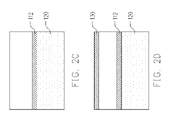
- FIGS. 2A ⁇ 2D schematically show a memory space according to the first embodiment of the present invention.
- FIG. 3 is a flow chart illustrating a memory managing method according to a second embodiment of the present invention.
- FIGS. 4A ⁇ 4E schematically show a memory space according to the second embodiment of the present invention.
- FIG. 5 schematically shows a video data decoding method according to a embodiment of the present invention.
- FIG. 1 is a flow chart illustrating a memory managing method according to a first embodiment of the present invention.
- FIGS. 2A ⁇ 2D schematically show a memory space according to the first embodiment of the present invention.
- the memory managing method of the first embodiment comprises the following steps.
- a frame is obtained from a decoding module (not shown).
- the frame obtained in step S 100 may be a first type, a second type, or a third type of frame.
- the first type of frame is I frame
- the second type of frame is P frame
- the third type of frame is B frame, for example.
- the frame obtained in step S 100 may have either a first definition or a second definition, wherein the memory size for storing the first definition is greater than the memory size for storing the second definition.
- the first definition may be satisfied with the ATSC specification or other video specification
- the second definition may be satisfied with the NTSC specification or other video specification.
- step S 100 a first frame 110 having a first definition is obtained. Then, in step S 102 , it is determined whether the obtained first frame 110 is I frame or P frame. If the obtained first frame 110 is either I frame or P frame, step S 104 is performed to determine whether any type of two first frames had been stored in the memory or not. If any type of two first frames had been stored in the memory, step S 106 is performed to release an older first frame among any type of these two first frames. Then, step S 110 is performed to store the first frame 110 having the first definition in an unused memory space of the memory.
- step S 112 is performed to determine whether any type of frame having the second definition had been stored in the memory or not. If any type of frame having the second definition had been stored in the memory, step S 114 is performed to release the memory space where any type of frame having the second definition was originally stored. Then, step S 110 is performed to store the first frame 110 having the first definition to the unused memory space of the memory. If any type of frame having the second definition had not been stored in the memory, step S 110 is performed to store the first frame 110 having the first definition in the unused memory space of the memory as shown in FIG. 2A .
- step S 100 is performed again to obtain a second frame 120 having the first definition. Since only the first frame 110 having the first definition is stored in the memory now, step S 110 is directly performed. Meanwhile, the first frame 110 having the first definition and the second frame 120 having the first definition had been stored in the memory (as shown in FIG. 2B ). In particular, if the second frame 120 is P frame, the second frame 120 is decoded with reference to the first frame 110 . If the second frame 120 is I frame, the second frame is directly decoded without having to refer to any frame. It should be noted that the memory size used in the present embodiment is equal to two times of the frame size having the first definition. However, the memory size may be greater than two times of the frame size having the first definition.
- Step S 100 is performed. If the B frame having the second definition is to be decoded, step S 108 is performed to determine whether B frame having the second definition had been stored in the memory or not. If B frame having the second definition had been stored in the memory, step S 122 is performed to release the memory space where B frame having the second definition was originally stored, and then step S 120 is performed. If B frame having the second definition had not been stored in the memory yet, step S 120 is directly performed to store the first frame having the second definition to the memory space where the first frame having the first definition was originally stored, and to release the remaining memory space left after the original first frame having the first definition was stored.
- step S 120 comprises steps S 124 , S 126 , and S 128 .
- step S 124 is performed to obtain a macroblock data of the first frame 112 having the second definition.
- step S 126 is performed to release the memory space where the corresponding macroblock data of the first frame 110 having the first definition was originally stored.
- step S 128 is performed to store the macroblock data of the first frame 112 having the second definition in the unused memory space of the memory. It should be noted that steps S 124 , S 126 , and S 128 are repeated (as shown in the dotted line) until the first frame 110 having the first definition is changed to the first frame 112 having the second definition (as shown in FIG. 2C ).
- the method for changing the first frame 110 having the first definition to the first frame 112 having the second definition comprises either compressing or shrinking it.
- the size of the first frame 110 having the first definition is six times of the size of the first frame 112 having the second definition.
- B frame having the second definition is decoded with reference to both the first frame 112 having the second definition and the second frame 120 having the first definition in the memory. Then, step S 130 is performed to store B frame having the second definition in the unused memory space of the memory. Meanwhile, the first frame 112 having the second definition, the second frame 120 having the first definition, and the third frame 130 having the second definition had been stored in the memory. It should be noted that a step of arranging the unused memory space of the memory may be further added into any of the steps mentioned above.
- the second frame 120 (either I frame or P frame) having the first definition
- the first frame 112 (either I frame or P frame) having the second definition
- the third frame 130 (B frame) having the second definition
- the first frame 110 having the first definition needs to be changed to the first frame 112 having the second definition, so as to empty the memory space for storing the third frame 130 having the second definition.
- the memory managing method provided by the present invention can store frame with higher definition in a limited memory size. In other words, even when the memory size is not changed, the frame with higher definition can be stored by changing the type of the video decoded data.
- FIG. 3 is a flow chart illustrating a memory managing method according to a second embodiment of the present invention.
- FIGS. 4A ⁇ 4E schematically show a memory space according to the second embodiment of the present invention.
- the difference between the second embodiment and the first embodiment mentioned above is that the memory size used in the second embodiment is less than two times of the memory size of the frame having the first definition, and is greater than a sum of one time of the frame having the first definition and one time of the frame having the second definition.
- the memory managing method of the second embodiment comprises the following steps.
- Steps S 200 and S 202 are performed, wherein steps S 200 and S 202 are similar to steps S 100 and S 102 , respectively. Then, if the obtained frame is either I frame or P frame, step S 204 is performed to determine whether I frame or P frame of the first frame had been stored in the memory or not. If not, step S 210 is performed to store the first frame 210 having the first definition in the unused memory space of the memory. If I frame or P frame of the first frame had been stored in the memory, step S 206 is performed to determine whether any type of frame having the second definition had been stored in the memory or not.
- step S 208 is performed to release the memory space where any type of frame having the second definition was originally stored, and then step S 220 is performed.
- step S 220 is directly performed to sequentially store the Xth row data of the I frame or P frame having the first definition in the unused memory space of the memory. Meanwhile, the Xth row data of the second frame 220 having the first definition had been stored in the memory. It should be noted that if the second frame 220 having the first definition is P frame, the Xth row data of the second frame 220 having the first definition is decoded with reference to the first frame 210 having the first definition. Similarly, if the second frame 220 having the first definition is I frame, the second frame 220 is decoded without having to refer to any frame.
- step S 230 is performed to change the Yth row data of the first frame 210 having the first definition to the Yth row data of the first frame 212 having the second definition, and to store the Yth row data of the first frame 212 having the second definition in the unused memory space of the memory.
- step S 240 is performed to sequentially release the memory space where the Yth row data of the I frame having the first definition was originally stored, wherein (X ⁇ Y) is greater than or equal to a predetermined tolerance value.
- part of the first frame 210 having the first definition, part of the first frame 212 having the second definition, and part of the second frame 220 having the first definition had been stored in the memory.
- the second frame 220 having the first definition is decoded with reference to the first frame 210 having the first definition.
- the predetermined tolerance value mentioned above may be a vertical component of a motion vector.
- the vertical component of the motion vector is satisfied with the MPEG-2 specification, and the vertical component of the motion vector is, for example, equal to [ ⁇ 128, +127.5]. Then, steps S 220 , S 230 , and S 240 are repeated until the whole second frame 220 having the first definition is stored in the memory, and the first frame 210 having the first definition is totally replaced with the first frame 212 having the second definition.
- step S 252 is performed to determine whether the B frame having the second definition had been stored in the memory or not. If the B frame having the second definition had been stored in the memory, step S 254 is performed to release the memory space where the B frame having the second definition was originally stored. Then, step S 250 is performed to store a third frame 230 having the second definition in the unused memory space of the memory.
- step S 250 is performed to store the third frame 230 having the second definition in the unused memory space of the memory. It should be noted that a step of arranging the unused memory space of the memory may be further added into any of the steps mentioned above.
- the second frame 220 (either I frame or P frame) having the first definition
- the first frame 212 (either I frame or P frame) having the second definition
- the third frame 230 (B frame) having the second definition
- the memory managing method provided by the present invention can store frame with higher definition in a limited memory size.
- FIG. 5 schematically shows a flow chart illustrating a video data decoding method according to an embodiment of the present invention.
- the video data decoding method comprises the following steps. First, a decoding module 310 and a memory 320 are provided, wherein the decoding module 310 provides a first type or a second type of a first frame, a second type of a second frame, and a third type of a third frame to an unused memory space of a memory. Then, step S 310 is performed to determine a mode of the video data provided by the decoding module 310 .
- the first type of frame is I frame
- the second type of frame is P frame
- the third type of frame is B frame.
- step S 322 is performed, wherein when a first mode of the video data is output, all of the first frame, the second frame, and the third frame received by the memory 320 have the same first definition.
- the first definition is satisfied with the ATSC specification or other video specification. In other words, it is not necessary to change the size or specification of the frame generated by the decoding module 310 . Meanwhile, the first mode of the video data provides the best quality but requires maximum memory size to store it.
- step S 324 is performed, wherein when a second mode of the video data is output, both the first frame and the second frame received by the memory 320 have the same first definition, and the third frame has a second definition, wherein the memory size for storing the first definition is greater than the memory size for storing the second definition.
- the second definition is satisfied with the NTSC specification or other video specification.
- the decoding module 310 generates the third frame having the first definition originally, however the definition of the third frame is changed from the original first definition to the second definition before the third frame is provided to the memory 320 .
- the method for changing the first definition to the second definition comprises either compressing or shrinking it.
- the second mode of the video data provides second best quality and requires second maximum memory size to store it.
- step S 326 is performed, wherein when a third mode of the video data is output, the second frame stored in the memory 320 has the first definition, and both the first frame and the third frame have the same second definition.
- a third mode of the video data has been described in the first embodiment and the second embodiment mentioned above.
- the third mode of the video data provides quality just inferior to the one of the second mode, and requires memory size smaller than the one used in the second mode to store it.
- step S 328 is performed, wherein when a fourth mode of the video data is output, all of the first frame, the second frame, and the third frame stored in the memory 320 have the same second definition.
- the frame generated by the decoding module 310 needs to be changed to the frame having the second definition before it is provided to the memory 320 .
- the fourth mode of the video data provides worst quality and requires minimum memory size to store it.
- the memory managing method and the video data decoding method provided by the present invention have at least the following advantages.
- the memory managing method provided by the present invention can store frame with higher definition in a limited memory size.
- the memory managing method provided by the present invention can store the frame which is satisfied with the ATSC specification without having to increase the memory size.
- the video data decoding method provided by the present invention can generate four different modes of frame, according to different memory sizes.
Landscapes
- Engineering & Computer Science (AREA)
- Multimedia (AREA)
- Signal Processing (AREA)
- Compression Or Coding Systems Of Tv Signals (AREA)
Abstract
Description
Claims (19)
Applications Claiming Priority (3)
| Application Number | Priority Date | Filing Date | Title |
|---|---|---|---|
| TW93131760A | 2004-10-20 | ||
| TW93131760 | 2004-10-20 | ||
| TW093131760A TWI244339B (en) | 2004-10-20 | 2004-10-20 | Memory managing method and video data decoding method |
Publications (2)
| Publication Number | Publication Date |
|---|---|
| US20060083313A1 US20060083313A1 (en) | 2006-04-20 |
| US7720158B2 true US7720158B2 (en) | 2010-05-18 |
Family
ID=36180740
Family Applications (1)
| Application Number | Title | Priority Date | Filing Date |
|---|---|---|---|
| US10/907,562 Expired - Fee Related US7720158B2 (en) | 2004-10-20 | 2005-04-06 | Memory managing method and video data decoding method |
Country Status (2)
| Country | Link |
|---|---|
| US (1) | US7720158B2 (en) |
| TW (1) | TWI244339B (en) |
Families Citing this family (1)
| Publication number | Priority date | Publication date | Assignee | Title |
|---|---|---|---|---|
| CN107659822B (en) * | 2017-09-29 | 2019-07-09 | 武汉斗鱼网络科技有限公司 | A kind of method and device for the frame type judging video frame |
Citations (3)
| Publication number | Priority date | Publication date | Assignee | Title |
|---|---|---|---|---|
| US5561465A (en) * | 1993-03-31 | 1996-10-01 | U.S. Philips Corporation | Video decoder with five page memory for decoding of intraframes, predicted frames and bidirectional frames |
| US5974521A (en) * | 1993-12-12 | 1999-10-26 | Neomagic Israel Ltd. | Apparatus and method for signal processing |
| US6057862A (en) * | 1997-07-01 | 2000-05-02 | Memtrax Llc | Computer system having a common display memory and main memory |
-
2004
- 2004-10-20 TW TW093131760A patent/TWI244339B/en not_active IP Right Cessation
-
2005
- 2005-04-06 US US10/907,562 patent/US7720158B2/en not_active Expired - Fee Related
Patent Citations (4)
| Publication number | Priority date | Publication date | Assignee | Title |
|---|---|---|---|---|
| US5561465A (en) * | 1993-03-31 | 1996-10-01 | U.S. Philips Corporation | Video decoder with five page memory for decoding of intraframes, predicted frames and bidirectional frames |
| US5974521A (en) * | 1993-12-12 | 1999-10-26 | Neomagic Israel Ltd. | Apparatus and method for signal processing |
| US6460127B1 (en) * | 1993-12-12 | 2002-10-01 | Neomagic Israel Ltd. | Apparatus and method for signal processing |
| US6057862A (en) * | 1997-07-01 | 2000-05-02 | Memtrax Llc | Computer system having a common display memory and main memory |
Also Published As
| Publication number | Publication date |
|---|---|
| TW200614816A (en) | 2006-05-01 |
| US20060083313A1 (en) | 2006-04-20 |
| TWI244339B (en) | 2005-11-21 |
Similar Documents
| Publication | Publication Date | Title |
|---|---|---|
| US5668599A (en) | Memory management for an MPEG2 compliant decoder | |
| US6917652B2 (en) | Device and method for decoding video signal | |
| US5923375A (en) | Memory reduction in the MPEG-2 main profile main level decoder | |
| US5838597A (en) | MPEG-2 decoding with a reduced RAM requisite by ADPCM recompression before storing MPEG-2 decompressed data | |
| US6714686B2 (en) | Image processing device | |
| EP0817498B1 (en) | MPEG-2 decoding with a reduced RAM requisite by ADPCM recompression before storing MPEG-2 decompressed data optionally after a subsampling algorithm | |
| US8428126B2 (en) | Image decoding device with parallel processors | |
| JPH08214312A (en) | Syntax parser for video decompression processor | |
| CN1155254C (en) | Programmable filter for removing chosen user data from MPEG-2 bit stream | |
| US9386310B2 (en) | Image reproducing method, image reproducing device, image reproducing program, imaging system, and reproducing system | |
| EP1832118A2 (en) | Local macroblock information buffer | |
| EP1276331A2 (en) | Method for preventing dual-step half-pixel motion compensation accumulation errors in prediction-rich MPEG-2 sequences | |
| US7720158B2 (en) | Memory managing method and video data decoding method | |
| EP0858206B1 (en) | Method for memory requirement reduction in a video decoder | |
| KR101057590B1 (en) | How to reconstruct a group of pictures to provide random access into the group of pictures | |
| US6205250B1 (en) | System and method for minimizing clock cycles lost to overhead data in a video decoder | |
| CN103124348A (en) | Predictive frame dropping method used in wireless video/audio data transmission | |
| JP2007259323A (en) | Image decoding device | |
| US7675437B2 (en) | Variable length decoding device and method for improving variable length decoding performance | |
| US7199733B2 (en) | Variable length decoding apparatus and method for the image format of a digital video camera | |
| EP4633168A1 (en) | Language and purpose information for text comments in a video bitstream using supplemental enhancement information message | |
| EP4661398A1 (en) | Method and apparatus for encoding/decoding with exponential golomb coding | |
| US7606306B2 (en) | Output method for improving video image quality | |
| CN100499812C (en) | Method for managing internal memory and video data coding method | |
| KR100306903B1 (en) | Mpeg decoder and control method thereof |
Legal Events
| Date | Code | Title | Description |
|---|---|---|---|
| AS | Assignment |
Owner name: SUNPLUS TECHNOLOGY CO., LTD.,TAIWAN Free format text: ASSIGNMENT OF ASSIGNORS INTEREST;ASSIGNORS:YANG, YING-CHIH;CHOU, HAN-LIANG;LIAO, JEN-YI;REEL/FRAME:015863/0214 Effective date: 20050302 Owner name: SUNPLUS TECHNOLOGY CO., LTD., TAIWAN Free format text: ASSIGNMENT OF ASSIGNORS INTEREST;ASSIGNORS:YANG, YING-CHIH;CHOU, HAN-LIANG;LIAO, JEN-YI;REEL/FRAME:015863/0214 Effective date: 20050302 |
|
| STCF | Information on status: patent grant |
Free format text: PATENTED CASE |
|
| FPAY | Fee payment |
Year of fee payment: 4 |
|
| FEPP | Fee payment procedure |
Free format text: PAYOR NUMBER ASSIGNED (ORIGINAL EVENT CODE: ASPN); ENTITY STATUS OF PATENT OWNER: LARGE ENTITY |
|
| MAFP | Maintenance fee payment |
Free format text: PAYMENT OF MAINTENANCE FEE, 8TH YEAR, LARGE ENTITY (ORIGINAL EVENT CODE: M1552) Year of fee payment: 8 |
|
| FEPP | Fee payment procedure |
Free format text: MAINTENANCE FEE REMINDER MAILED (ORIGINAL EVENT CODE: REM.); ENTITY STATUS OF PATENT OWNER: LARGE ENTITY |
|
| LAPS | Lapse for failure to pay maintenance fees |
Free format text: PATENT EXPIRED FOR FAILURE TO PAY MAINTENANCE FEES (ORIGINAL EVENT CODE: EXP.); ENTITY STATUS OF PATENT OWNER: LARGE ENTITY |
|
| STCH | Information on status: patent discontinuation |
Free format text: PATENT EXPIRED DUE TO NONPAYMENT OF MAINTENANCE FEES UNDER 37 CFR 1.362 |
|
| FP | Lapsed due to failure to pay maintenance fee |
Effective date: 20220518 |