US7696226B2 - HIV protease inhibiting compounds - Google Patents

HIV protease inhibiting compounds Download PDF

Info

Publication number
US7696226B2
US7696226B2 US11/010,177 US1017704A US7696226B2 US 7696226 B2 US7696226 B2 US 7696226B2 US 1017704 A US1017704 A US 1017704A US 7696226 B2 US7696226 B2 US 7696226B2
Authority
US
United States
Prior art keywords
alkyl
methyl
hydroxy
oxo
imidazolidinyl
Prior art date
Legal status (The legal status is an assumption and is not a legal conclusion. Google has not performed a legal analysis and makes no representation as to the accuracy of the status listed.)
Expired - Fee Related, expires
Application number
US11/010,177
Other versions
US20050159469A1 (en
Inventor
John T. Randolph
Hui-Ju Chen
David A. Degoey
Charles A. Flentge
William J. Flosi
David J. Grampovnik
Peggy P. Huang
Douglas K. Hutchinson
Dale J. Kempf
Larry L. Klein
Ming C. Yeung
Current Assignee (The listed assignees may be inaccurate. Google has not performed a legal analysis and makes no representation or warranty as to the accuracy of the list.)
AbbVie Inc
Original Assignee
Abbott Laboratories
Priority date (The priority date is an assumption and is not a legal conclusion. Google has not performed a legal analysis and makes no representation as to the accuracy of the date listed.)
Filing date
Publication date
Priority to CA2549228A priority Critical patent/CA2549228C/en
Priority to PCT/US2004/037711 priority patent/WO2005061487A1/en
Priority to MXPA06006609A priority patent/MXPA06006609A/en
Priority to EP04810778A priority patent/EP1697348B1/en
Priority to US11/010,177 priority patent/US7696226B2/en
Application filed by Abbott Laboratories filed Critical Abbott Laboratories
Assigned to ABBOTT LABORATORIES reassignment ABBOTT LABORATORIES ASSIGNMENT OF ASSIGNORS INTEREST (SEE DOCUMENT FOR DETAILS). Assignors: CHEN, HUI-JU, HUTCHINSON, DOUGLAS K., KEMPF, DALE J., FLENTGE, CHARLES A., FLOSI, WILLIAM J., GRAMPOVNIK, DAVID J., HUANG, PEGGY P., KLEIN, LARRY L., YEUNG, MING C., DEGOEY, DAVID A., RANDOLPH, JOHN T.
Publication of US20050159469A1 publication Critical patent/US20050159469A1/en
Application granted granted Critical
Publication of US7696226B2 publication Critical patent/US7696226B2/en
Assigned to ABBVIE INC. reassignment ABBVIE INC. ASSIGNMENT OF ASSIGNORS INTEREST (SEE DOCUMENT FOR DETAILS). Assignors: ABBOTT LABORATORIES
Expired - Fee Related legal-status Critical Current
Adjusted expiration legal-status Critical

Links

Classifications

    • CCHEMISTRY; METALLURGY
    • C07ORGANIC CHEMISTRY
    • C07CACYCLIC OR CARBOCYCLIC COMPOUNDS
    • C07C271/00Derivatives of carbamic acids, i.e. compounds containing any of the groups, the nitrogen atom not being part of nitro or nitroso groups
    • C07C271/06Esters of carbamic acids
    • C07C271/08Esters of carbamic acids having oxygen atoms of carbamate groups bound to acyclic carbon atoms
    • C07C271/10Esters of carbamic acids having oxygen atoms of carbamate groups bound to acyclic carbon atoms with the nitrogen atoms of the carbamate groups bound to hydrogen atoms or to acyclic carbon atoms
    • C07C271/22Esters of carbamic acids having oxygen atoms of carbamate groups bound to acyclic carbon atoms with the nitrogen atoms of the carbamate groups bound to hydrogen atoms or to acyclic carbon atoms to carbon atoms of hydrocarbon radicals substituted by carboxyl groups
    • AHUMAN NECESSITIES
    • A61MEDICAL OR VETERINARY SCIENCE; HYGIENE
    • A61PSPECIFIC THERAPEUTIC ACTIVITY OF CHEMICAL COMPOUNDS OR MEDICINAL PREPARATIONS
    • A61P31/00Antiinfectives, i.e. antibiotics, antiseptics, chemotherapeutics
    • A61P31/12Antivirals
    • A61P31/14Antivirals for RNA viruses
    • A61P31/18Antivirals for RNA viruses for HIV
    • CCHEMISTRY; METALLURGY
    • C07ORGANIC CHEMISTRY
    • C07DHETEROCYCLIC COMPOUNDS
    • C07D401/00Heterocyclic compounds containing two or more hetero rings, having nitrogen atoms as the only ring hetero atoms, at least one ring being a six-membered ring with only one nitrogen atom
    • C07D401/02Heterocyclic compounds containing two or more hetero rings, having nitrogen atoms as the only ring hetero atoms, at least one ring being a six-membered ring with only one nitrogen atom containing two hetero rings
    • C07D401/06Heterocyclic compounds containing two or more hetero rings, having nitrogen atoms as the only ring hetero atoms, at least one ring being a six-membered ring with only one nitrogen atom containing two hetero rings linked by a carbon chain containing only aliphatic carbon atoms
    • CCHEMISTRY; METALLURGY
    • C07ORGANIC CHEMISTRY
    • C07DHETEROCYCLIC COMPOUNDS
    • C07D401/00Heterocyclic compounds containing two or more hetero rings, having nitrogen atoms as the only ring hetero atoms, at least one ring being a six-membered ring with only one nitrogen atom
    • C07D401/14Heterocyclic compounds containing two or more hetero rings, having nitrogen atoms as the only ring hetero atoms, at least one ring being a six-membered ring with only one nitrogen atom containing three or more hetero rings
    • CCHEMISTRY; METALLURGY
    • C07ORGANIC CHEMISTRY
    • C07DHETEROCYCLIC COMPOUNDS
    • C07D403/00Heterocyclic compounds containing two or more hetero rings, having nitrogen atoms as the only ring hetero atoms, not provided for by group C07D401/00
    • C07D403/02Heterocyclic compounds containing two or more hetero rings, having nitrogen atoms as the only ring hetero atoms, not provided for by group C07D401/00 containing two hetero rings
    • C07D403/06Heterocyclic compounds containing two or more hetero rings, having nitrogen atoms as the only ring hetero atoms, not provided for by group C07D401/00 containing two hetero rings linked by a carbon chain containing only aliphatic carbon atoms
    • CCHEMISTRY; METALLURGY
    • C07ORGANIC CHEMISTRY
    • C07DHETEROCYCLIC COMPOUNDS
    • C07D405/00Heterocyclic compounds containing both one or more hetero rings having oxygen atoms as the only ring hetero atoms, and one or more rings having nitrogen as the only ring hetero atom
    • C07D405/14Heterocyclic compounds containing both one or more hetero rings having oxygen atoms as the only ring hetero atoms, and one or more rings having nitrogen as the only ring hetero atom containing three or more hetero rings
    • CCHEMISTRY; METALLURGY
    • C07ORGANIC CHEMISTRY
    • C07DHETEROCYCLIC COMPOUNDS
    • C07D409/00Heterocyclic compounds containing two or more hetero rings, at least one ring having sulfur atoms as the only ring hetero atoms
    • C07D409/14Heterocyclic compounds containing two or more hetero rings, at least one ring having sulfur atoms as the only ring hetero atoms containing three or more hetero rings
    • CCHEMISTRY; METALLURGY
    • C07ORGANIC CHEMISTRY
    • C07DHETEROCYCLIC COMPOUNDS
    • C07D413/00Heterocyclic compounds containing two or more hetero rings, at least one ring having nitrogen and oxygen atoms as the only ring hetero atoms
    • C07D413/14Heterocyclic compounds containing two or more hetero rings, at least one ring having nitrogen and oxygen atoms as the only ring hetero atoms containing three or more hetero rings
    • CCHEMISTRY; METALLURGY
    • C07ORGANIC CHEMISTRY
    • C07DHETEROCYCLIC COMPOUNDS
    • C07D417/00Heterocyclic compounds containing two or more hetero rings, at least one ring having nitrogen and sulfur atoms as the only ring hetero atoms, not provided for by group C07D415/00
    • C07D417/02Heterocyclic compounds containing two or more hetero rings, at least one ring having nitrogen and sulfur atoms as the only ring hetero atoms, not provided for by group C07D415/00 containing two hetero rings
    • C07D417/06Heterocyclic compounds containing two or more hetero rings, at least one ring having nitrogen and sulfur atoms as the only ring hetero atoms, not provided for by group C07D415/00 containing two hetero rings linked by a carbon chain containing only aliphatic carbon atoms
    • CCHEMISTRY; METALLURGY
    • C07ORGANIC CHEMISTRY
    • C07DHETEROCYCLIC COMPOUNDS
    • C07D417/00Heterocyclic compounds containing two or more hetero rings, at least one ring having nitrogen and sulfur atoms as the only ring hetero atoms, not provided for by group C07D415/00
    • C07D417/14Heterocyclic compounds containing two or more hetero rings, at least one ring having nitrogen and sulfur atoms as the only ring hetero atoms, not provided for by group C07D415/00 containing three or more hetero rings

Definitions

  • the present invention relates to novel compounds and a composition and a method for inhibiting human immunodeficiency virus (HIV) protease, a composition and method for inhibiting or treating an HIV infection, processes for making the compounds and synthetic intermediates employed in the processes.
  • HIV human immunodeficiency virus
  • HIV human immunodeficiency virus
  • the genome of the human immunodeficiency virus (HIV) encodes a protease that is responsible for the proteolytic processing of one or more polyprotein precursors such as the pol and gag gene products. HIV protease processes the gag precursor into core proteins and also processes the pol precursor into reverse transcriptase and protease.
  • HIV protease The correct processing of the precursor polyproteins by HIV protease is necessary for the assembly of infectious virions. Therefore, inhibition of HIV protease provides a useful target for development of therapeutic agents for treatment of HIV infection.
  • HIV protease inhibitors are especially effective when administered in combination with other classes of HIV therapeutic agents, especially inhibitors of HIV reverse transcriptase, in “cocktails” of HIV therapeutic agents.
  • HIV protease inhibitors saquinavir, ritonavir, indinavir, nelfinavir, amprenavir, lopinavir/ritonavir, fosamprenavir, and atazanavir have been approved in the U.S. for treatment of HIV infection.
  • HIV protease inhibitors that are very potent, that have reduced side-effects and that are effective against resistant strains of HIV.
  • the present invention provides a compound of formula (I)
  • R 5 is alkyl, alkenyl, alkynyl, cycloalkyl, cycloalkenyl, aryl, heteroaryl or heterocycle; wherein each R 5 is substituted with 0, 1, 2 or 3 substituents independently selected from the group consisting of alkyl, alkenyl, alkynyl, cyano, halo, nitro, oxo, —OR a , —OC( ⁇ O)R a , —SR a , —SOR a , —SO 2 R a , —SO 2 NR a , —SO 2 OR a , —NR a R b , —N(R b )NR a R b , —N(R b )C( ⁇ O)R a , —N(R b )SO 2 R a , —N(R b )C( ⁇ O)OR a , —N(R b )C(
  • the present invention also provides the processes of making a compound of the present invention and intermediates employed in the processes.
  • the present invention further provides a pharmaceutical composition
  • a pharmaceutical composition comprising a therapeutically effective amount of a compound or combination of compounds of the present invention, or a pharmaceutically acceptable salt form, stereoisomer, ester, salt of an ester, prodrug, salt of a prodrug, or combination thereof, and a pharmaceutically acceptable carrier.
  • the present invention yet further provides a pharmaceutical composition
  • a pharmaceutical composition comprising a therapeutically effective amount of a compound or combination of compounds of the present invention, or a pharmaceutically acceptable salt form, stereoisomer, ester, salt of an ester, prodrug, salt of a prodrug, or combination thereof, and one, two, three, four, five or six agents selected from the group consisting of a second HIV protease inhibitor, a HIV reverse transcriptase inhibitor, an HIV entry/fusion inhibitor, an HIV integrase inhibitor and an HIV budding/maturation inhibitor, and a pharmaceutically acceptable carrier.
  • the present invention also provides a pharmaceutical composition
  • a pharmaceutical composition comprising a therapeutically effective amount of a compound or combination of compounds of the present invention, or a pharmaceutically acceptable salt form, stereoisomer, ester, salt of an ester, prodrug, salt of a prodrug, or combination thereof, ritonavir, and a pharmaceutically acceptable carrier.
  • the present invention still further provides a method of inhibiting the replication of an HIV virus comprising contacting said virus with a therapeuctially effective amount of a compound or combination of compounds of the present invention, or a pharmaceutically acceptable salt form, stereoisomer, ester, salt of an ester, prodrug, salt of a prodrug, or combination thereof.
  • the present invention still further provides a method of inhibiting the replication of an HIV virus comprising contacting said virus with the pharmaceutical composition of the present invention.
  • the present invention still further provides a method of inhibiting an HIV protease comprising contacting said HIV protease with a therapeuctially effective amount of a compound or combination of compounds of the present invention, or a pharmaceutically acceptable salt form, stereoisomer, ester, salt of an ester, prodrug, salt of a prodrug, or combination thereof.
  • the present invention still further provides a method of inhibiting an HIV protease comprising contacting said HIV protease with the pharmaceutical composition of the present invention.
  • the present invention also provides a method of treating or preventing an HIV infection comprising administering to a patient in need of such treatment a therapeuctially effective amount of a compound or combination of compounds of the present invention, or a pharmaceutically acceptable salt form, stereoisomer, ester, salt of an ester, prodrug, salt of a prodrug or combination thereof.
  • the present invention also provides a method of treating or preventing an HIV infection comprising administering to a patient in need of such treatment the pharmaceutical composition of the present invention.
  • activated carboxylic acid group refers to acid halides such as acid chlorides and also refers to activated ester derivatives including, but not limited to, formic and acetic acid derived anhydrides, anhydrides derived from alkoxycarbonyl halides such as isobutyloxycarbonylchloride and the like, anhydrides derived from reaction of the carboxylic acid with N,N′-carbonyldiimidazole and the like, N-hydroxysuccinimide derived esters, N hydroxyphthalimide derived esters, N-hydroxybenzotriazole derived esters, N-hydroxy-5-norbornene-2,3-dicarboximide derived esters, 2,4,5-trichlorophenol derived esters, p-nitrophenol derived esters, phenol derived esters, pentachlorophenol derived esters, 8-hydroxyquinoline derived esters and the like.
  • alkanoyl refers to an alkyl group, as defined herein, attached to the parent molecular moiety through a carbonyl group.
  • Representative examples of alkanoyl include, but not limited to, methylcarbonyl, ethylcarbonyl and tert-butylcarbonyl.
  • alkyl refers to a group derived from a straight or branched chain saturated hydrocarbon containing 1, 2, 3, 4, 5, 6, 7, 8, 9 or 10 carbon atoms.
  • Representative examples of alkyl groups include, but not limited to, butyl, methyl, 1-methylpropyl, 1-methylbutyl, isopropyl (1-methylethyl), 2-methylbutyl, 1,3-dimethylbutyl, 2-ethylbutyl, 3-methylbutyl, 3,3-dimethylbutyl, tert-butyl and isopropyl (1-methylethyl).
  • alkylamino refers to —N(H)(alkyl).
  • alkylaminocarbonyl refers to an alkylamino group, as defined herein, attached to the parent molecular moiety through a carbonyl group.
  • alkylaminocarbonyl includes, but not limited to, acetylamino.
  • alkenyl refers to a straight or branched chain group of 2, 3, 4, 5, 6, 7, 8, 9 or 10 carbon atoms containing at least one carbon-carbon double bond.
  • Representative examples of alkenyl groups include, but not limited to, allyl, propenyl, 3-methyl-2-butenyl and 3,7-dimethyl-6-octenyl.
  • alkynyl refers to a straight or branched chain hydrocarbon of 2, 3, 4, 5, 6, 7, 8, 9 or 10 carbon atoms containing at least one carbon-carbon triple bond.
  • Representative examples of alkynyl groups include, but not limited to, ethynyl, 2-methyl-3-butynyl, 3-pentynyl and 2-octynyl.
  • alkoxy refers to an alkyl group, as defined herein, attached to the parent molecular moiety through an oxygen atom.
  • Representative examples of alkoxy groups include, but not limited to, tert-butoxy, methoxy and isopropoxy.
  • alkoxyalkyl refers to an alkyl group substituted by at least one alkoxy group.
  • Representative examples of alkoxyalkyl include, but not limited to, methoxymethyl and 1-methyoxyethyl.
  • alkoxycarbonyl refers to an alkoxy group attached to the parent molecular moiety through a carbonyl group.
  • Representative examples of alkoxycarbonyl groups include, but not limited to, tert-butoxycarbonyl, ethoxycarbonyl and methoxycarbonyl.
  • amino refers to —NH 2 .
  • aminoalkyl refers to an amino group appended to the parent molecular moiety through an alkyl group as defined herein.
  • aryl refers to a phenyl group, or a bicyclic or tricyclic hydrocarbon fused ring systems wherein one or more of the rings is a phenyl group.
  • Bicyclic fused ring systems have a phenyl group fused to a monocyclic cycloalkenyl group, as defined herein, a monocyclic cycloalkyl group, as defined herein, or another phenyl group.
  • Tricyclic fused ring systems are exemplified by a bicyclic fused ring system fused to a monocyclic cycloalkenyl group, as defined herein, a monocyclic cycloalkyl group, as defined herein, or another phenyl group.
  • Representative examples of aryl groups include, but not limited to, anthracenyl, azulenyl, fluorenyl, indanyl, indenyl, naphthyl, phenyl and tetrahydronaphthyl.
  • the aryl groups of the present invention can be connected to the parent molecular moiety through any substitutable carbon atom of the group.
  • the aryl groups of the compounds of the present invention can be substituted or unsubstituted.
  • arylalkyl refers to an aryl group attached to the parent molecular moiety through an alkyl group.
  • Representative examples of arylalkyl include, but not limited to, phenylmethyl, phenylethyl and naphthylmethyl.
  • aryloxy refers to an aryl group, as defined herein, appended to the parent molecular moiety through an oxygen atom.
  • Representative examples of aryloxy include, but not limited to, phenoxy, naphthyloxy, 3-bromophenoxy, 4-chlorophenoxy, 4-methylphenoxy, 3,5-dimethoxyphenoxy, 4-methoxyphenoxy and 4-methylphenoxy.
  • carbonyl refers to —C( ⁇ O).
  • cyano refers to —CN.
  • cyanoalkyl refers to a cyano group attached to the parent molecular moiety through an alkyl group.
  • cycloalkenyl refers to a non-aromatic, partially unsaturated, monocyclic, bicyclic or tricyclic ring system, having three to fourteen carbon atoms and zero heteroatom.
  • Representative examples of cycloalkenyl groups include, but not limited to, cyclohexenyl, octahydronaphthalenyl and norbornylenyl.
  • the cycloalkenyl groups of the compounds of the present invention can be unsubstituted or substituted.
  • cycloalkenylalkyl refers to a cycloalkenyl group attached to the parent molecular moiety through an alkyl group as defined herein.
  • cycloalkyl refers to a saturated monocyclic, bicyclic, or tricyclic hydrocarbon ring system having three to fourteen carbon atoms and zero heteroatom.
  • Representative examples of cycloalkyl groups include cyclopropyl, cyclobutyl, cyclopentyl, cyclohexyl, cycloheptyl, bicyclo[3.1.1]heptyl, 6,6-dimethylbcyclo[3.1.1]heptyl and adamantyl.
  • the cycloalkyl groups of the compounds of the present invention can be unsubstituted or substituted.
  • cycloalkylalkyl refers to a cycloalkyl group attached to the parent molecular moiety through an alkyl group as defined herein.
  • dialkylamino refers to —NR 90 R 91 , wherein R 90 and R 91 are alkyls.
  • dialkylaminocarbonyl refers to a dialkylamino group as defined herein, appended to the parent molecular moiety through a carbonyl group.
  • Formylalkyl refers to a formyl group appended to the parent molecular moiety through an alkyl group.
  • halo and halogen, as used herein, refer to F, Cl, Br, and I.
  • haloalkenyl refers to an alkenyl group, as defined herein, substituted by one, two, three, or four halogen atoms.
  • haloalkoxy refers to a haloalkyl group attached to the parent molecular moiety through an oxygen atom.
  • haloalkyl refers to an alkyl group substituted by one, two, three, or four halogen atoms.
  • haloalkynyl refers to an alkynyl group, as defined herein, substituted by one, two, three, or four halogen atoms.
  • heteroaryl refers to an aromatic five or six-membered ring where at least one atom is selected from the group consisting of N, O, and S, and the remaining atoms are carbon.
  • heteroaryl also includes bicyclic systems where a heteroaryl ring is fused to a phenyl group, a monocyclic cycloalkyl group, as defined herein, a heterocycle group, as defined herein, or an additional heteroaryl group.
  • heteroaryl also includes tricyclic systems where a bicyclic system is fused to a phenyl group, a monocyclic cycloalkyl group, as defined herein, a heterocycle group, as defined herein, or an additional heteroaryl group.
  • the heteroaryl groups are connected to the parent molecular moiety through any substitutable carbon or nitrogen atom in the groups.
  • heteroaryl groups include benzothienyl, benzoxazolyl, benzimidazolyl, benzoxadiazolyl, dibenzofuranyl, dihydrobenzothiazolyl, furanyl (furyl), imidazolyl, imidazopyridinyl, indazolyl, indolyl, isoindolyl, isoxazolyl, isoquinolinyl, isothiazolyl, oxadiazolyl, oxazolyl, thiazolyl, thienopyridinyl, thienyl, triazolyl, thiadiazolyl, tetrazolyl, pyridoimidazolyl, pyridyl, pyridazinyl, pyrimidinyl, pyrazinyl, pyrazolyl, pyrrolyl, quinolinyl, tetrahydroquinolinyl, tetrahydropyranyl and
  • heteroaryl groups of the present invention can be substituted or unsubstituted.
  • the nitrogen heteroatoms can be optionally quaternized or oxidized to the N-oxide.
  • the nitrogen containing rings can be optionally N-protected.
  • heteroaryloxy refers to a heteroaryl group, as defined herein, appended to the parent molecular moiety through an oxygen atom.
  • Representative examples of heteroaryloxy include, but not limited to, pyridin-3-yloxy and quinolin-3-yloxy.
  • heteroarylalkyl refers to a heteroaryl group attached to the parent molecular moiety through an alkyl group.
  • Representative examples of heteroarylalkyl groups include, but are not limited to, thiazolylmethyl, thienylmethyl, furylmethyl, imidazolylmethyl and pyridylmethyl.
  • heterocycle refers to cyclic, non-aromatic, saturated or partially unsaturated, three, four, five-, six-, or seven-membered rings containing at least one atom selected from the group consisting of oxygen, nitrogen, and sulfur.
  • heterocycle also includes bicyclic systems where a heterocycle ring is fused to a phenyl group, a monocyclic cycloalkenyl group, as defined herein, a monocyclic cycloalkyl group, as defined herein, or an additional monocyclic heterocycle group.
  • heterocycle also includes tricyclic systems where a bicyclic system is fused to a phenyl group, a monocyclic cycloalkenyl group, as defined herein, a monocyclic cycloalkyl group, as defined herein, or an additional monocyclic heterocycle group.
  • the heterocycle groups of the invention are connected to the parent molecular moiety through any substitutable carbon or nitrogen atom in the group.
  • heterocycle groups include, but not limited to, benzoxazinyl, dihydroindolyl, dihydropyridinyl, 1,3-dioxanyl, 1,4-dioxanyl, 1,3-dioxolanyl, 1,3-benzodioxolyl, 2,3-dihydro-1,4-benzodioxinyl, 2,3-dihydrobenzofuranyl, hexahydrofurofuranyl, isoindolinyl, morpholinyl, piperazinyl, pyrrolidinyl, tetrahydropyridinyl, piperidinyl, thiomorpholinyl, tetrahydropyranyl.
  • the heterocycle groups of the present invention can be substituted or substituted.
  • the nitrogen heteroatoms can be optionally quaternized or oxidized to the N-oxide.
  • heterocycleoxy refers to a heterocycle group, as defined herein, appended to the parent molecular moiety through an oxygen atom.
  • heterocyclealkyl refers to refers to a heterocycle group attached to the parent molecular moiety through an alkyl group, as defined herein.
  • Representative examples of heterocyclealkyl groups include, 1,3-dioxolanyl, 1,3-benzodioxolylmethyl, 2,3-dihydro-1,4-benzodioxinylmethyl and 2,3-dihydrobenzofuranylmethyl.
  • hydroxy or “hydroxyl” as used herein, refer to —OH.
  • hydroxyalkyl refers to an alkyl group as substituted by at least one hydroxy group.
  • Representative examples of hydroxyalkyl groups include, but not limited to, 1-methyl-1-hydroxyethyl and 1-hydroxyethyl.
  • nitro refers to NO 2 .
  • nitroalkyl refers to an alkyl group substituted by at least one nitro group.
  • oxo refers to ⁇ O.
  • thioalkoxy refers to an alkyl group as defined herein, appended to the parent molecular moiety through a sulfur atom.
  • thioalkoxyalkyl refers to a thioalkoxy group as defined herein, appended to the parent molecular moiety through a alkyl group as defined herein.
  • alkanoyl alkenyl, alkoxy, alkoxyalkyl, alkoxycarbonyl, alkyl, alkylamino, alkylaminocarbonyl, alkynyl, aminoalkyl, aryl, arylalkyl, aryloxy, cyanoalkyl, cycloalkenyl, cycloalkenylalkyl, cycloalkyl, cycloalkylalkyl, dialkylamino, dialkylaminocarbonyl, formylalkyl, haloalkenyl, haloalkoxy, haloalkyl, haloalkynyl, heteroaryl, heteroaryloxy, heterocycle, heterocyclealkyl, heterocycleoxy, hydroxyalkyl, nitroalkyl, thioalkoxy and thioalkoxyalkyl used herein may be unsubstituted or substituted.
  • the present invention provides a compound of formula (I),
  • R 5 is alkyl, alkenyl, alkynyl, cycloalkyl, cycloalkenyl, aryl, heteroaryl or heterocycle; wherein each R 5 is substituted with 0, 1, 2 or 3 substituents independently selected from the group consisting of alkyl, alkenyl, alkynyl, cyano, halo, nitro, oxo, —OR a , —OC( ⁇ O)R a , —SR a , —SOR a , SO 2 R a , —SO 2 NR a , —SO 2 OR a , —NR a R b , —N(R b )NR a R b , —N(R b )C( ⁇ O)R a , —N(R b )SO 2 R a , —N(R b )C( ⁇ O)OR a , —N(R b )C( ⁇ O
  • the present invention provides a compound of formula (I) wherein R 1 is alkyl.
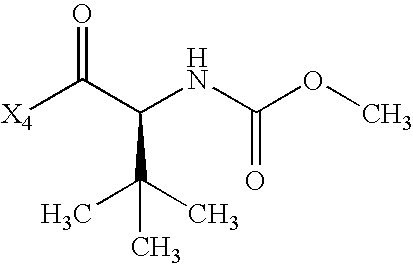
  • the present invention provides a compound of formula (I) wherein R 1 is alkyl and R 4 is —C(O)C(H)(R 8 )NHC(O)R 9 .
  • the present invention provides a compound of formula (I) wherein R 1 is alkyl, R 4 is —C(O)C(H)(R 8 )NHC(O)R 9 and R 9 is —OR 9a .
  • the present invention provides a compound of formula (I) wherein R 1 is alkyl, R 4 is —C(O)C(H)(R 8 )NHC(O)R 9 , R 8 is alkyl and R 9 is —OR 9a .
  • the present invention provides a compound of formula (I) wherein R 1 is alkyl, R 3 is alkyl, alkenyl, alkynyl, cycloalkyl, cycloalkylalkyl, hydroxyalkyl, alkoxyalkyl, arylalkyl, heteroarylalkyl or heterocyclealkyl, R 4 is —C(O)C(H)(R 8 )NHC(O)R 9 , R 8 is alkyl and R 9 is —OR 9a .
  • the present invention provides a compound of formula (I) wherein R 1 is alkyl, R 3 is alkyl, alkenyl, alkynyl, cycloalkyl, cycloalkylalkyl, hydroxyalkyl, alkoxyalkyl, arylalkyl, heteroarylalkyl or heterocyclealkyl, R 4 is —C(O)C(H)(R 8 )NHC(O)R 9 , R 8 is alkyl, R 9 is —OR 9a and R 2 is arylalkyl.
  • the present invention provides a compound of formula (I) wherein R 1 is alkyl; R 3 is alkyl, alkenyl, alkynyl, cycloalkyl, cycloalkylalkyl, hydroxyalkyl, alkoxyalkyl, arylalkyl, heteroarylalkyl or heterocyclealkyl, R 4 is —C(O)C(H)(R 8 )NHC(O)R 9 , R 8 is alkyl, R 9 is —OR 9a , R 9a is alkyl and R 2 is arylalkyl.
  • the present invention provides a compound of formula (I) wherein R 1 is alkyl; R 3 is alkyl, alkenyl, alkynyl, cycloalkyl, cycloalkylalkyl, hydroxyalkyl, alkoxyalkyl, arylalkyl, heteroarylalkyl or heterocyclealkyl, R 4 is —C(O)C(H)(R 8 )NHC(O)R 9 , R 8 is alkyl, R 9 is —OR 9a , R 9a is alkyl, R 2 is arylalkyl, and R 5 , R 6 and R 7 are heteroaryl.
  • the present invention provides a compound of formula (I) wherein X is O, Y is O, R 1 is alkyl; R 3 is alkyl, alkenyl, alkynyl, cycloalkyl, cycloalkylalkyl, hydroxyalkyl, alkoxyalkyl, arylalkyl, heteroarylalkyl or heterocyclealkyl, 4 is —C(O)C(H)(R 8 )NHC(O)R 9 , R 8 is alkyl, R 9 is —OR 9a , R 9a is alkyl, R 2 is arylalkyl, and R 5 , R 6 and R 7 are heteroaryl.
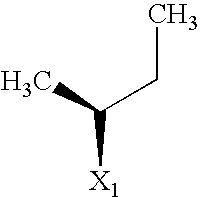
  • the present invention provides a compound of formula (I) wherein X is O, Y is O, R 1 is C3 alkyl, C4 alkyl or C5 alkyl; R 3 is alkyl, alkenyl, alkynyl, cycloalkyl, cycloalkylalkyl, hydroxyalkyl, alkoxyalkyl, arylalkyl, heteroarylalkyl or heterocyclealkyl, R 4 is —C(O)C(H)(R 8 )NHC(O)R 9 , R 8 is C3 alkyl, C4 alkyl or C5 alkyl, R 9 is —OR 9a , R 9a is alkyl, R 2 is arylalkyl, and R 5 , R 6 and R 7 are heteroaryl.
  • the present invention provides a compound of formula (I) wherein X is O, Y is O, R 1 is C3 alkyl, C4 alkyl or C5 alkyl; R 3 is alkyl, alkenyl, alkynyl, cycloalkyl, cycloalkylalkyl, hydroxyalkyl, alkoxyalkyl, arylalkyl, heteroarylalkyl or heterocyclealkyl, R 4 is —C(O)C(H)(R 8 )NHC(O)R 9 , R 8 is C3 alkyl, C4 alkyl or C5 alkyl, R 9 is —OR 9a , R 9a is methyl, R 2 is arylalkyl, and R 5 , R 6 and R 7 are heteroaryl.
  • the present invention provides a compound of formula (I) wherein X is O, Y is O, R 1 is C3 alkyl, C4 alkyl or C5 alkyl; R 3 is alkyl, alkenyl, alkynyl, cycloalkyl, cycloalkylalkyl, hydroxyalkyl, alkoxyalkyl, arylalkyl, heteroarylalkyl or heterocyclealkyl, R 4 is —C(O)C(H)(R 8 )NHC(O)R 9 , R 8 is C3 alkyl, C4 alkyl or C5 alkyl, R 9 is —OR 9a , R 9a is methyl, R 2 is arylalkyl, and R 5 , R 6 and R 7 are independently selected from the group consisting of thienyl, furyl, oxazolyl, isoxazolyl, thiazolyl, pyridyl, pyridazinyl,
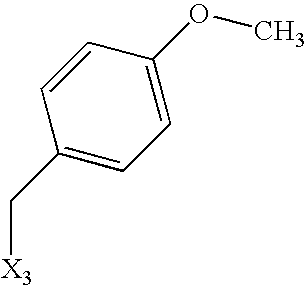
  • the present invention provides a compound of formula (I) wherein X is O, Y is O, R 1 is C3 alkyl, C4 alkyl or C5 alkyl; R 3 is arylalkyl, R 4 is —C(O)C(H)(R 8 )NHC(O)R 9 , R 8 is C3 alkyl, C4 alkyl or C5 alkyl, R 9 is —OR 9a , R 9a is methyl, R 2 is phenylmethyl, and R 5 , R 6 and R 7 are independently selected from the group consisting of thienyl, furyl, oxazolyl, isoxazolyl, thiazolyl, pyridyl, pyridazinyl, indazolyl, imidazopyridinyl, indolyl, benzimidazolyl, isoquinolinyl and quinolinyl.
  • the present invention provides a compound of formula (I) wherein X is O, Y is O, R 1 is C3 alkyl, C4 alkyl or C5 alkyl; R 3 is arylalkyl substituted with R 3a , R 4 is —C(O)C(H)(R 8 )NHC(O)R 9 , R 8 is C3 alkyl, C4 alkyl or C5 alkyl, R 9 is —OR 9a , R 9a is methyl, R 2 is phenylmethyl, R 5 , R 6 and R 7 are independently selected from the group consisting of thienyl, furyl, oxazolyl, isoxazolyl, thiazolyl, pyridyl, pyridazinyl, indazolyl, imidazopyridinyl, indolyl, benzimidazolyl, isoquinolinyl and quinolinyl, and R 3a is heteroaryl.
  • the present invention provides a compound of formula (I) wherein X is O, Y is O, R 1 is C3 alkyl, C4 alkyl or C5 alkyl; R 3 is phenylmethyl substituted with R 3a , R 4 is —C(O)C(H)(R 8 )NHC(O)R 9 , R 8 is C3 alkyl, C4 alkyl or C5 alkyl, R 9 is —OR 9a , R 9a is methyl, R 2 is phenylmethyl, and R 5 , R 6 and R 7 are independently selected from the group consisting of thienyl, furyl, oxazolyl, isoxazolyl, thiazolyl, pyridyl, pyridazinyl, indazolyl, imidazopyridinyl, indolyl, benzimidazolyl, isoquinolinyl and quinolinyl, and R 3a is pyridyl
  • the present invention provides a compound of formula (I) wherein X is O, Y is O, R 1 is C3 alkyl, C4 alkyl or C5 alkyl; R 3 is phenylmethyl substituted with R 3a , R 4 is —C(O)C(H)(R 9 )NHC(O)R 9 , R 8 is C3 alkyl, C4 alkyl or C5 alkyl, R 9 is —OR 9a , R 9a is methyl, R 2 is phenylmethyl, and R 5 , R 6 and R 7 are independently selected from the group consisting of thienyl, furyl, oxazolyl, isoxazolyl, thiazolyl, pyridyl, pyridazinyl, indazolyl, imidazopyridinyl, indolyl, benzimidazolyl, isoquinolinyl and quinolinyl, and R 3a is pyridyl
  • the present invention provides a compound of formula (I) wherein X is O, Y is O, R 1 is C3 alkyl, C4 alkyl or C5 alkyl; R 3 is phenylmethyl substituted with R 3a , R 4 is —C(O)C(H)(R 8 )NHC(O)R 9 , R 8 is C3 alkyl, C4 alkyl or C5 alkyl, R 9 is —OR 9a , R 9a is methyl, R 2 is phenylmethyl, and R 5 , R 6 and R 7 are pyridyl, and R 3a is 2-pyridyl.
  • the present invention provides a compound of formula (I) wherein X is O, Y is O, R 1 is C3 alkyl, C4 alkyl or C5 alkyl; R 3 is phenylmethyl substituted with R 3a , R 4 is —C(O)C(H)(R 8 )NHC(O)R 9 , R 8 is C3 alkyl, C4 alkyl or C5 alkyl, R 9 is —OR 9a , R 9a is methyl, R 2 is phenylmethyl, and R 5 , R 6 and R 7 are 2-pyridyl substituted with one alkyl substituent, and R 3a is 2-pyridyl.
  • the present invention provides a compound of formula (I) wherein X is O, Y is O, R 1 is C3 alkyl, C4 alkyl or C5 alkyl; R 3 is phenylmethyl substituted with R 3a , R 4 is —C(O)C(H)(R 8 )NHC(O)R 9 , R 8 is C3 alkyl, C4 alkyl or C5 alkyl, R 9 is —OR 9a , R 9a is methyl, R 2 is phenylmethyl, and R 5 , R 6 and R 7 are 2-pyridyl substituted with one methyl substituent, and R 3a is 2-pyridyl.
  • Exemplary compounds of the present invention of formula (I) include, but not limited to, the following:
  • the present invention provides a compound of formula (II)
  • X is O, S or NH
  • R 1 is alkyl, alkenyl, alkynyl, cycloalkyl, cycloalkenyl, aryl, heteroaryl, arylalkyl, heteroarylalkyl, cycloalkylalkyl or cycloalkenylalkyl; wherein each R 1 is substituted with 0, 1 or 2 substituents independently selected from the group consisting of halo, haloalkyl, alkyl, alkenyl, cyano, nitro, —OR a , —OalkylC( ⁇ O)NR a R b , —SR a , —SOR a , —SO 2 R a , —SO 2 NR a R b , —C( ⁇ O)R a , —NR a R b , —N(R b )C( ⁇ O)R a , —N(R b )C( ⁇ O)OR a , —N(
  • R 5 is alkyl, alkenyl, alkynyl, cycloalkyl, cycloalkenyl, aryl, heteroaryl or heterocycle; wherein each R 5 is substituted with 0, 1, 2 or 3 substituents independently selected from the group consisting of alkyl, alkenyl, alkynyl, cyano, halo, nitro, oxo, —OR a , —OC( ⁇ O)R a , —SR a , —SOR a , —SO 2 R a , —SO 2 NR a , —SO 2 OR a , —NR a R b , —N(R b )NR a R b , —N(R b )C( ⁇ O)R a , —N(R b )SO 2 R a , —N(R b )C( ⁇ O)OR a , —N(R b )C(
  • the present invention provides a compound of formula (II) wherein X is O.
  • the present invention provides a compound of formula (II) wherein X is O and R 1 is alkyl.
  • the present invention provides a compound of formula (II) wherein X is O, R 1 is alkyl and R 4 is —C(O)C(H)(R 8 )NHC(O)R 9a .
  • the present invention provides a compound of formula (II) wherein X is O, R 1 is alkyl, R 4 is —C(O)C(H)(R 8 )NHC(O)R 9 and R 9 is —OR 9a .
  • the present invention provides a compound of formula (II) wherein X is O, R 1 is alkyl, R 4 is —C(O)C(H)(R 8 )NHC(O)R 9 , R 8 is alkyl and R 9 is —OR 9a .
  • the present invention provides a compound of formula (II) wherein X is O, R 1 is alkyl, R 3 is alkyl, alkenyl, alkynyl, cycloalkyl, cycloalkylalkyl, hydroxyalkyl, alkoxyalkyl, arylalkyl, heteroarylalkyl or heterocyclealkyl, R 4 is —C(O)C(H)(R 8 )NHC(O)R 9 , R 8 is alkyl and R 9 is —OR 9a .
  • the present invention provides a compound of formula (II) wherein X is O, R 1 is alkyl, R 3 is alkyl, alkenyl, alkynyl, cycloalkyl, cycloalkylalkyl, hydroxyalkyl, alkoxyalkyl, arylalkyl, heteroarylalkyl or heterocyclealkyl, R 4 is —C(O)C(H)(R 8 )NHC(O)R 9 , R 8 is alkyl, R 9 is —OR 9a and R 2 is arylalkyl.
  • the present invention provides a compound of formula (II) wherein X is O, R 1 is alkyl; R 3 is alkyl, alkenyl, alkynyl, cycloalkyl, cycloalkylalkyl, hydroxyalkyl, alkoxyalkyl, arylalkyl, heteroarylalkyl or heterocyclealkyl, R 4 is —C(O)C(H)(R 8 )NHC(O)R 9 , R 8 is alkyl, R 9 is —OR 9a , R 9a is alkyl and R 2 is arylalkyl.
  • the present invention provides a compound of formula (II) wherein X is O, R 1 is alkyl; R 3 is alkyl, alkenyl, alkynyl, cycloalkyl, cycloalkylalkyl, hydroxyalkyl, alkoxyalkyl, arylalkyl, heteroarylalkyl or heterocyclealkyl, R 4 is —C(O)C(H)(R 8 )NHC(O)R 9 , R 8 is alkyl, R 9 is —OR 9a , R 9a is alkyl, R 2 is arylalkyl and R 5 is heteroaryl.
  • the present invention provides a compound of formula (II) wherein X is O, R 1 is C3 alkyl, C4 alkyl or C5 alkyl; R 3 is alkyl, alkenyl, alkynyl, cycloalkyl, cycloalkylalkyl, hydroxyalkyl, alkoxyalkyl, arylalkyl, heteroarylalkyl or heterocyclealkyl, R 4 is —C(O)C(H)(R 8 )NHC(O)R 9 , R 8 is C3 alkyl, C4 alkyl or C5 alkyl, R 9 is —OR 9a , R 9a is alkyl, R 2 is arylalkyl, and R 5 is heteroaryl.
  • the present invention provides a compound of formula (II) wherein X is O, R 1 is C3 alkyl, C4 alkyl or C5 alkyl; R 3 is alkyl, alkenyl, alkynyl, cycloalkyl, cycloalkylalkyl, hydroxyalkyl, alkoxyalkyl, arylalkyl, heteroarylalkyl or heterocyclealkyl, R 4 is —C(O)C(H)(R 8 )NHC(O)R 9 , R 8 is C3 alkyl, C4 alkyl or C5 alkyl, R 9 is —OR 9a , R 9a is methyl, R 2 is arylalkyl, and R 5 is heteroaryl.
  • the present invention provides a compound of formula (II) wherein X is O, R 1 is C3 alkyl, C4 alkyl or C5 alkyl; R 3 is alkyl, alkenyl, alkynyl, cycloalkyl, cycloalkylalkyl, hydroxyalkyl, alkoxyalkyl, arylalkyl, heteroarylalkyl or heterocyclealkyl, R 4 is —C(O)C(H)(R 8 )NHC(O)R 9 , R 8 is C3 alkyl, C4 alkyl or C5 alkyl, R 9 is —OR 9a , R 9a is methyl, R 2 is phenylmethyl, and R 5 is heteroaryl.
  • the present invention provides a compound of formula (II) wherein X is O, R 1 is C3 alkyl, C4 alkyl or C5 alkyl; R 3 is alkyl, alkenyl, alkynyl, cycloalkyl, cycloalkylalkyl, hydroxyalkyl, alkoxyalkyl, arylalkyl, heteroarylalkyl or heterocyclealkyl, R 4 is —C(O)C(H)(R 8 )NHC(O)R 9 , R 8 is C3 alkyl, C4 alkyl or C5 alkyl, R 9 is —OR 9a , R 9a is methyl, R 2 is phenylmethyl, and R 5 is thienyl, furyl, oxazolyl, isoxazolyl, thiazolyl, pyridyl, pyridazinyl, indazolyl, imidazopyridinyl, indolyl
  • the present invention provides a compound of formula (II) wherein X is O, R 1 is C3 alkyl, C4 alkyl or C5 alkyl; R 3 is arylalkyl, R 4 is —C(O)C(H)(R 8 )NHC(O)R 9 , R 8 is C3 alkyl, C4 alkyl or C5 alkyl, R 9 is —OR 9a , R 9a is methyl, R 2 is phenylmethyl, and R 5 is thienyl, furyl, oxazolyl, isoxazolyl, thiazolyl, pyridyl, pyridazinyl, indazolyl, imidazopyridinyl, indolyl, benzimidazolyl, isoquinolinyl or quinolinyl.
  • the present invention provides a compound of formula (II) wherein X is O, R 1 is C3 alkyl, C4 alkyl or C5 alkyl; R 3 is arylalkyl substituted with R 3a , R 4 is —C(O)C(H)(R 8 )NHC(O)R 9 , R 8 is C3 alkyl, C4 alkyl or C5 alkyl, R 9 is —OR 9a , R 9a is methyl, R 2 is phenylmethyl, and R 5 is thienyl, furyl, oxazolyl, isoxazolyl, thiazolyl, pyridyl, pyridazinyl, indazolyl, imidazopyridinyl, indolyl, benzimidazolyl, isoquinolinyl or quinolinyl.
  • the present invention provides a compound of formula (II) wherein X is O, R 1 is C3 alkyl, C4 alkyl or C5 alkyl; R 3 is arylalkyl substituted with R 3a , R 4 is —C(O)C(H)(R 8 )NHC(O)R 9 , R 8 is C3 alkyl, C4 alkyl or C5 alkyl, R 9 is —OR 9a , R 9a is methyl, R 2 is phenylmethyl, R 5 is thienyl, furyl, oxazolyl, isoxazolyl, thiazolyl, pyridyl, pyridazinyl, indazolyl, imidazopyridinyl, indolyl, benzimidazolyl, isoquinolinyl or quinolinyl, and R 3a is heteroaryl.
  • the present invention provides a compound of formula (II) wherein X is O, R 1 is C3 alkyl, C4 alkyl or C5 alkyl; R 3 is phenylmethyl substituted with R 3a , R 4 is —C(O)C(H)(R 8 )NHC(O)R 9 , R 8 is C3 alkyl, C4 alkyl or C5 alkyl, R 9 is —OR 9a , R 9a is methyl, R 2 is phenylmethyl, R 5 is thienyl, furyl, oxazolyl, isoxazolyl, thiazolyl, pyridyl, pyridazinyl, indazolyl, imidazopyridinyl, indolyl, benzimidazolyl, isoquinolinyl or quinolinyl, and R 3a is pyridyl, thiazolyl or isoxaolyl.
  • the present invention provides a compound of formula (II) wherein X is O, R 1 is C3 alkyl, C4 alkyl or C5 alkyl; R 3 is phenylmethyl substituted with R 3a , R 4 is —C(O)C(H)(R 8 )NHC(O)R 9 , R 8 is C3 alkyl, C4 alkyl or C5 alkyl, R 9 is —OR 9a , R 9a is methyl, R 2 is phenylmethyl, R 5 is pyridyl, and R 3a is pyridyl.
  • the present invention provides a compound of formula (II) wherein X is O, R 1 is C3 alkyl, C4 alkyl or C5 alkyl; R 3 is phenylmethyl substituted with R 3a , R 4 is —C(O)C(H)(R 8 )NHC(O)R 9 , R 8 is C3 alkyl, C4 alkyl or C5 alkyl, R 9 is —OR 9a , R 9a is methyl, R 2 is phenylmethyl, R 5 is pyridyl substituted with one alkyl substituent, and R 3a is pyridyl.
  • the present invention provides a compound of formula (II) wherein X is O, R 1 is C3 alkyl, C4 alkyl or C5 alkyl; R 3 is phenylmethyl substituted with R 3a , R 4 is —C(O)C(H)(R 8 )NHC(O)R 9 , R 8 is C3 alkyl, C4 alkyl or C5 alkyl, R 9 is —OR 9a , R 9a is methyl, R 2 is phenylmethyl, R 5 is pyridyl substituted with one methyl substituent, and R 3a is pyridyl.
  • the present invention provides a compound of formula (II) wherein X is O, R 1 is C3 alkyl, C4 alkyl or C5 alkyl; R 3 is phenylmethyl substituted with R 3a , R 4 is —C(O)C(H)(R 8 )NHC(O)R 9 , R 8 is C3 alkyl, C4 alkyl or C5 alkyl, R 9 is —OR 9a , R 9a is methyl, R 2 is phenylmethyl, R 5 is 2-pyridyl substituted with one methyl substituent, and R 3a is 2-pyridyl.
  • Exemplary compounds of the present invention of formula (II) include, but not limited to, the following:
  • the present invention provides a compound of formula (III),
  • X is O, S or NH
  • R 1 is alkyl, alkenyl, alkynyl, cycloalkyl, cycloalkenyl, aryl, heteroaryl, arylalkyl, heteroarylalkyl, cycloalkylalkyl or cycloalkenylalkyl; wherein each R 1 is substituted with 0, 1 or 2 substituents independently selected from the group consisting of halo, haloalkyl, alkyl, alkenyl, cyano, nitro, —OR a , —OalkylC( ⁇ O)NR a R b , —SR a , —SOR a , —SO 2 R a , —SO 2 NR a R b , —C( ⁇ O)R a , —NR a R b , —N(R b )C( ⁇ O)R a , —N(R b )C( ⁇ O)OR a , —N(
  • R 6 is alkyl, alkenyl, alkynyl, cycloalkyl, cycloalkenyl, aryl, heteroaryl or heterocycle; wherein each R 6 is substituted with 0, 1, 2 or 3 substituents independently selected from the group consisting of alkyl, alkenyl, alkynyl, cyano, halo, nitro, oxo, —OR a , —OC( ⁇ O)R a , —SR a , —SOR a , —SO 2 R a , —SO 2 NR a , —SO 2 OR a , —NR a R b , —N(R b )NR a R b , —N(R b )C( ⁇ O)R a , —N(R b )SO 2 R a , —N(R b )C( ⁇ O)OR a , —N(R b )C(
  • the present invention provides a compound of formula (III) wherein X is O.
  • the present invention provides a compound of formula (III) wherein X is O and R 1 is alkyl.
  • the present invention provides a compound of formula (III) wherein X is O, R 1 is alkyl and R 4 is —C(O)C(H)(R 8 )NHC(O)R 9 .
  • the present invention provides a compound of formula (III) wherein X is O, R 1 is alkyl, R 4 is —C(O)C(H)(R 8 )NHC(O)R 9 and R 9 is —OR 9a .
  • the present invention provides a compound of formula (III) wherein X is O, R 1 is alkyl, R 4 is —C(O)C(H)(R 8 )NHC(O)R 9 , R 8 is alkyl and R 9 is —OR 9a .
  • the present invention provides a compound of formula (III) wherein X is O, R 1 is alkyl, R 3 is alkyl, alkenyl, alkynyl, cycloalkyl, cycloalkylalkyl, hydroxyalkyl, alkxoyalkyl, arylalkyl, heteroarylalkyl or heterocyclealkyl, R 4 is —C(O)C(H)(R 8 )NHC(O)R 9 , R 8 is alkyl and R 9 is —OR 9a .
  • the present invention provides a compound of formula (III) wherein X is O, R 1 is alkyl, R 3 is alkyl, alkenyl, alkynyl, cycloalkyl, cycloalkylalkyl, hydroxyalkyl, alkxoyalkyl, arylalkyl, heteroarylalkyl or heterocyclealkyl, R 4 is —C(O)C(H)(R 8 )NHC(O)R 9 , R 8 is alkyl, R 9 is —OR 9a and R 2 is arylalkyl.
  • the present invention provides a compound of formula (III) wherein X is O, R 1 is alkyl; R 3 is alkyl, alkenyl, alkynyl, cycloalkyl, cycloalkylalkyl, hydroxyalkyl, alkoxyalkyl, arylalkyl, heteroarylalkyl or heterocyclealkyl, R 4 is —C(O)C(H)(R 8 )NHC(O)R 9 , R 8 is alkyl, R 9 is —OR a , R 9a is alkyl and R 2 is arylalkyl.
  • the present invention provides a compound of formula (III) wherein X is O, R 1 is alkyl; R 3 is alkyl, alkenyl, alkynyl, cycloalkyl, cycloalkylalkyl, hydroxyalkyl, alkoxyalkyl, arylalkyl, heteroarylalkyl or heterocyclealkyl, R 4 is —C(O)C(H)(R 8 )NHC(O)R 9 , R 8 is alkyl, R 9 is —OR 9a , R 9a is alkyl, R 2 is arylalkyl and R 6 is heteroaryl.
  • the present invention provides a compound of formula (III) wherein X is O, R 1 is C3 alkyl, C4 alkyl or C5 alkyl; R 3 is alkyl, alkenyl, alkynyl, cycloalkyl, cycloalkylalkyl, hydroxyalkyl, alkoxyalkyl, arylalkyl, heteroarylalkyl or heterocyclealkyl, R 4 is —C(O)C(H)(R 8 )NHC(O)R 9 , R 8 is C3 alkyl, C4 alkyl or C5 alkyl, R 9 is —OR 9a , R 9a is alkyl, R 2 is arylalkyl, and R 6 is heteroaryl.
  • the present invention provides a compound of formula (III) wherein X is O, R 1 is C3 alkyl, C4 alkyl or C5 alkyl; R 3 is alkyl, alkenyl, alkynyl, cycloalkyl, cycloalkylalkyl, hydroxyalkyl, alkoxyalkyl, arylalkyl, heteroarylalkyl or heterocyclealkyl, R 4 is —C(O)C(H)(R 8 )NHC(O)R 9 , R 8 is C3 alkyl, C4 alkyl or C5 alkyl, R 9 is —OR 9a , R 9a is methyl, R 2 is arylalkyl, and R 6 is heteroaryl.
  • the present invention provides a compound of formula (III) X is O, wherein R 1 is C3 alkyl, C4 alkyl or C5 alkyl; R 3 is alkyl, alkenyl, alkynyl, cycloalkyl, cycloalkylalkyl, hydroxyalkyl, alkoxyalkyl, arylalkyl, heteroarylalkyl or heterocyclealkyl, R 4 is —C(O)C(H)(R 8 )NHC(O)R 9 , R 8 is C3 alkyl, C4 alkyl or C5 alkyl, R 9 is —OR 9a , R 9a is methyl, R 2 is phenylmethyl, and R 6 is heteroaryl.
  • the present invention provides a compound of formula (III) wherein X is O, R 1 is C3 alkyl, C4 alkyl or C5 alkyl; R 3 is alkyl, alkenyl, alkynyl, cycloalkyl, cycloalkylalkyl, hydroxyalkyl, alkoxyalkyl, arylalkyl, heteroarylalkyl or heterocyclealkyl, R 4 is —C(O)C(H)(R 8 )NHC(O)R 9 , R 8 is C3 alkyl, C4 alkyl or C5 alkyl, R 9 is —OR 9a , R 9a is methyl, R 2 is phenylmethyl, and R 6 is thienyl, furyl, oxazolyl, isoxazolyl, thiazolyl, pyridyl, pyridazinyl, indazolyl, imidazopyridinyl, indolyl,
  • the present invention provides a compound of formula (III) wherein X is O, R 1 is C3 alkyl, C4 alkyl or C5 alkyl; R 3 is arylalkyl, R 4 is —C(O)C(H)(R 8 )NHC(O)R 9 , R 9 is C3 alkyl, C4 alkyl or C5 alkyl, R 9 is —OR 9a , R 9a is methyl, R 2 is phenylmethyl, and R 6 is thienyl, furyl, oxazolyl, isoxazolyl, thiazolyl, pyridyl, pyridazinyl, indazolyl, imidazopyridinyl, indolyl, benzimidazolyl, isoquinolinyl or quinolinyl.
  • the present invention provides a compound of formula (III) wherein X is O, R 1 is C3 alkyl, C4 alkyl or C5 alkyl; R 3 is arylalkyl substituted with R 3a , R 4 is —C(O)C(H)(R 8 )NHC(O)R 9 , R 8 is C3 alkyl, C4 alkyl or C5 alkyl, R 9 is —OR 9a , R 9a is methyl, R 2 is phenylmethyl, and R 5 is thienyl, furyl, oxazolyl, isoxazolyl, thiazolyl, pyridyl, pyridazinyl, indazolyl, imidazopyridinyl, indolyl, benzimidazolyl, isoquinolinyl or quinolinyl.
  • the present invention provides a compound of formula (III) wherein X is O, R 1 is C3 alkyl, C4 alkyl or C5 alkyl; R 3 is arylalkyl substituted with R 3a , R 4 is —C(O)C(H)(R 8 )NHC(O)R 9 , R 8 is C3 alkyl, C4 alkyl or C5 alkyl, R 9 is —OR 9a , R 9a is methyl, R 2 is phenylmethyl, R 6 is thienyl, furyl, oxazolyl, isoxazolyl, thiazolyl, pyridyl, pyridazinyl, indazolyl, imidazopyridinyl, indolyl, benzimidazolyl, isoquinolinyl or quinolinyl, and R 3a is heteroaryl.
  • the present invention provides a compound of formula (III) wherein X is O, R 1 is C3 alkyl, C4 alkyl or C5 alkyl; R 3 is phenylmethyl substituted with R 3a , R 4 is —C(O)C(H)(R 8 )NHC(O)R 9 , R 8 is C3 alkyl, C4 alkyl or C5 alkyl, R 9 is —OR 9a , R 9a is methyl, R 2 is phenylmethyl, R 6 is thienyl, furyl, oxazolyl, isoxazolyl, thiazolyl, pyridyl, pyridazinyl, indazolyl, imidazopyridinyl, indolyl, benzimidazolyl, isoquinolinyl or quinolinyl, and R 3a is pyridyl, thiazolyl or isoxaolyl.
  • the present invention provides a compound of formula (III) wherein X is O, R 1 is C3 alkyl, C4 alkyl or C5 alkyl; R 3 is phenylmethyl substituted with R 3a , R 4 is —C(O)C(H)(R 8 )NHC(O)R 9 , R 8 is C3 alkyl, C4 alkyl or C5 alkyl, R 9 is —OR 9a , R 9a is methyl, R 2 is phenylmethyl, R 6 is pyridyl, and R 3a is pyridyl.
  • the present invention provides a compound of formula (III) wherein X is O, R 1 is C3 alkyl, C4 alkyl or C5 alkyl; R 3 is phenylmethyl substituted with R 3a , R 4 is —C(O)C(H)(R 8 )NHC(O)R 9 , R 8 is C3 alkyl, C4 alkyl or C5 alkyl, R 9 is —OR 9a , R 9a is methyl, R 2 is phenylmethyl, R 6 is pyridyl substituted with one alkyl substituent, and R 3a is pyridyl.
  • the present invention provides a compound of formula (III) wherein X is O, R 1 is C3 alkyl, C4 alkyl or C5 alkyl; R 3 is phenylmethyl substituted with R 3a , R 4 is —C(O)C(H)(R 8 )NHC(O)R 9 , R 8 is C3 alkyl, C4 alkyl or C5 alkyl, R 9 is —OR 9a , R 9a is methyl, R 2 is phenylmethyl, R 6 is pyridyl substituted with one methyl substituent, and R 3a is pyridyl.
  • the present invention provides a compound of formula (III) wherein X is O, R 1 is C3 alkyl, C4 alkyl or C5 alkyl; R 3 is phenylmethyl substituted with R 3a , R 4 is —C(O)C(H)(R 8 )NHC(O)R 9 , R 8 is C3 alkyl, C4 alkyl or C5 alkyl, R 9 is —OR 9a , R 9a is methyl, R 2 is phenylmethyl, R 6 is 2-pyridyl substituted with one methyl substituent, and R 3a is 2-pyridyl.
  • the present invention provides a compound of formula (IV),
  • X is O, S or NH
  • Y is O, S or NH
  • R 1 is alkyl, alkenyl, alkynyl, cycloalkyl, cycloalkenyl, aryl, heteroaryl, arylalkyl, heteroarylalkyl, cycloalkylalkyl or cycloalkenylalkyl; wherein each R 1 is substituted with 0, 1 or 2 substituents independently selected from the group consisting of halo, haloalkyl, alkyl, alkenyl, cyano, nitro, —OR a , —OalkylC( ⁇ O)NR a R b , —SR a , —SOR a , —SO 2 R a , —SO 2 NR a R b , —C( ⁇ O)R a , —NR a R b , —N(R b )C( ⁇ O)R a , —N(R b )C( ⁇ O)OR a , —N(
  • R 7 is alkyl, alkenyl, alkynyl, cycloalkyl, cycloalkenyl, aryl, heteroaryl or heterocycle; wherein each R 7 is substituted with 0, 1, 2 or 3 substituents independently selected from the group consisting of alkyl, alkenyl, alkynyl, cyano, halo, nitro, oxo, —OR a , —OC( ⁇ O)R a , —SR a , —SOR a , —SO 2 R a , —SO 2 NR a , —SO 2 OR a , —NR a R b , —N(R b )NR a R b , —N(R b )C( ⁇ O)R a , —N(R b )SO 2 R a , —N(R b )C( ⁇ O)OR a , —N(R b )C(
  • the present invention provides a compound of formula (IV) wherein X is O and Y is O.
  • the present invention provides a compound of formula (IV) wherein X is O, Y is O and R 1 is alkyl.
  • the present invention provides a compound of formula (IV) wherein X is O, Y is O, R 1 is alkyl and R 4 is —C(O)C(H)(R 8 )NHC(O)R 9 .
  • the present invention provides a compound of formula (IV) wherein X is O, Y is O, R 1 is alkyl, R 4 is —C(O)C(H)(R 8 )NHC(O)R 9 and R 9 is —OR 9a .
  • the present invention provides a compound of formula (IV) wherein X is O, Y is O, R 1 is alkyl, R 4 is —C(O)C(H)(R 8 )NHC(O)R 9 , R 8 is alkyl and R 9 is —OR 9a .
  • the present invention provides a compound of formula (IV) wherein X is O, Y is O, R 1 is alkyl, R 3 is alkyl, alkenyl, alkynyl, cycloalkyl, cycloalkylalkyl, hydroxyalkyl, alkoxyalkyl, arylalkyl, heteroarylalkyl or heterocyclealkyl, R 4 is —C(O)C(H)(R 8 )NHC(O)R 9 , R 8 is alkyl and R 9 is —OR 9a .
  • the present invention provides a compound of formula (IV) wherein X is O, Y is O, R 1 is alkyl, R 3 is alkyl, alkenyl, alkynyl, cycloalkyl, cycloalkylalkyl, hydroxyalkyl, alkoxyalkyl, arylalkyl, heteroarylalkyl or heterocyclealkyl, R 4 is —C(O)C(H)(R 8 )NHC(O)R 9 , R 8 is alkyl, R 9 is —OR 9a and R 2 is arylalkyl.
  • the present invention provides a compound of formula (IV) wherein X is O, Y is O, R 1 is alkyl; R 3 is alkyl, alkenyl, alkynyl, cycloalkyl, cycloalkylalkyl, hydroxyalkyl, alkoxyalkyl, arylalkyl, heteroarylalkyl or heterocyclealkyl, R 4 is —C(O)C(H)(R 8 )NHC(O)R 9 , R 8 is alkyl, R 9 is —OR 9a , R 9a is alkyl and R 2 is arylalkyl.
  • the present invention provides a compound of formula (IV) wherein X is O, Y is O, R 1 is alkyl; R 3 is alkyl, alkenyl, alkynyl, cycloalkyl, cycloalkylalkyl, hydroxyalkyl, alkoxyalkyl, arylalkyl, heteroarylalkyl or heterocyclealkyl, R 4 is —C(O)C(H)(R 8 )NHC(O)R 9 , R 8 is alkyl, R 9 is —OR 9a , R 9a is alkyl, R 2 is arylalkyl and R 7 is heteroaryl.
  • the present invention provides a compound of formula (IV) wherein X is O, Y is O, R 1 is C3 alkyl, C4 alkyl or C5 alkyl; R 3 is alkyl, alkenyl, alkynyl, cycloalkyl, cycloalkylalkyl, hydroxyalkyl, alkoxyalkyl, arylalkyl, heteroarylalkyl or heterocyclealkyl, R 4 is —C(O)C(H)(R 8 )NHC(O)R 9 , R 8 is C3 alkyl, C4 alkyl or C5 alkyl, R 9 is —OR 9a , R 9a is alkyl, R 2 is arylalkyl, and R 7 is heteroaryl.
  • the present invention provides a compound of formula (IV) wherein X is O, Y is O, R 1 is C3 alkyl, C4 alkyl or C5 alkyl; R 3 is alkyl, alkenyl, alkynyl, cycloalkyl, cycloalkylalkyl, hydroxyalkyl, alkoxyalkyl, arylalkyl, heteroarylalkyl or heterocyclealkyl, R 4 is —C(O)C(H)(R 8 )NHC(O)R 9 , R 8 is C3 alkyl, C4 alkyl or C5 alkyl, R 9 is —OR 9a , R 9a is methyl, R 2 is arylalkyl, and R 7 is heteroaryl.
  • the present invention provides a compound of formula (IV) X is O, Y is O, wherein R 1 is C3 alkyl, C4 alkyl or C5 alkyl; R 3 is alkyl, alkenyl, alkynyl, cycloalkyl, cycloalkylalkyl, hydroxyalkyl, alkoxyalkyl, arylalkyl, heteroarylalkyl or heterocyclealkyl, R 4 is —C(O)C(H)(R 8 )NHC(O)R 9 , R 8 is C3 alkyl, C4 alkyl or C5 alkyl, R 9 is —OR 9a , R 9a is methyl, R 2 is phenylmethyl, and R 7 is heteroaryl.
  • R 1 is C3 alkyl, C4 alkyl or C5 alkyl
  • R 3 is alkyl, alkenyl, alkynyl, cycloalkyl, cycloalkylalkyl,
  • the present invention provides a compound of formula (IV) wherein X is O, Y is O, R 1 is C3 alkyl, C4 alkyl or C5 alkyl; R 3 is alkyl, alkenyl, alkynyl, cycloalkyl, cycloalkylalkyl, hydroxyalkyl, alkoxyalkyl, arylalkyl, heteroarylalkyl or heterocyclealkyl, R 4 is —C(O)C(H)(R 8 )NHC(O)R 9 , R 8 is C3 alkyl, C4 alkyl or C5 alkyl, R 9 is —OR 9a , R 9a is methyl, R 2 is phenylmethyl, and R 7 is thienyl, furyl, oxazolyl, isoxazolyl, thiazolyl, pyridyl, pyridazinyl, indazolyl, imidazopyridinyl, in
  • the present invention provides a compound of formula (IV) wherein X is O, Y is O, R 1 is C3 alkyl, C4 alkyl or C5 alkyl; R 3 is arylalkyl, R 4 is —C(O)C(H)(R 8 )NHC(O)R 9 , R 8 is C3 alkyl, C4 alkyl or C5 alkyl, R 9 is —OR 9a , R 9a is methyl, R 2 is phenylmethyl, and R 7 is thienyl, furyl, oxazolyl, isoxazolyl, thiazolyl, pyridyl, pyridazinyl, indazolyl, imidazopyridinyl, indolyl, benzimidazolyl, isoquinolinyl or quinolinyl.
  • the present invention provides a compound of formula (IV) wherein X is O, Y is O, R 1 is C3 alkyl, C4 alkyl or C5 alkyl; R 3 is arylalkyl substituted with R 3a , R 4 is —C(O)C(H)(R 8 )NHC(O)R 9 , R 8 is C3 alkyl, C4 alkyl or C5 alkyl, R 9 is —OR 9a , R 9a is methyl, R 2 is phenylmethyl, and R 7 is thienyl, furyl, oxazolyl, isoxazolyl, thiazolyl, pyridyl, pyridazinyl, indazolyl, imidazopyridinyl, indolyl, benzimidazolyl, isoquinolinyl or quinolinyl.
  • the present invention provides a compound of formula (IV) wherein X is O, Y is O, R 1 is C3 alkyl, C4 alkyl or C5 alkyl; R 3 is arylalkyl substituted with R 3a , R 4 is —C(O)C(H)(R 8 )NHC(O)R 9 , R 8 is C3 alkyl, C4 alkyl or C5 alkyl, R 9 is —OR 9a , R 9a is methyl, R 2 is phenylmethyl, R 5 is thienyl, furyl, oxazolyl, isoxazolyl, thiazolyl, pyridyl, pyridazinyl, indazolyl, imidazopyridinyl, indolyl, benzimidazolyl, isoquinolinyl or quinolinyl, and R 3a is heteroaryl.
  • the present invention provides a compound of formula (IV) wherein X is O, Y is O, R 1 is C3 alkyl, C4 alkyl or C5 alkyl; R 3 is phenylmethyl substituted with R 3a , R 4 is —C(O)C(H)(R 8 )NHC(O)R 9 , R 8 is C3 alkyl, C4 alkyl or C5 alkyl, R 9 is —OR 9a , R 9a is methyl, R 2 is phenylmethyl, R 7 is thienyl, furyl, oxazolyl, isoxazolyl, thiazolyl, pyridyl, pyridazinyl, indazolyl, imidazopyridinyl, indolyl, benzimidazolyl, isoquinolinyl or quinolinyl, and R 3a is pyridyl, thiazolyl or isoxaolyl.
  • the present invention provides a compound of formula (IV) wherein X is O, Y is O, R 1 is C3 alkyl, C4 alkyl or C5 alkyl; R 3 is phenylmethyl substituted with R 3a , R 4 is —C(O)C(H)(R 8 )NHC(O)R 9 , R 8 is C3 alkyl, C4 alkyl or C5 alkyl, R 9 is —OR 9a , R 9a is methyl, R 2 is phenylmethyl, R 7 is pyridyl, and R 3a is pyridyl.
  • the present invention provides a compound of formula (IV) wherein X is O, Y is O, R 1 is C3 alkyl, C4 alkyl or C5 alkyl; R 3 is phenylmethyl substituted with R 3a , R 4 is —C(O)C(H)(R 8 )NHC(O)R 9 , R 8 is C3 alkyl, C4 alkyl or C5 alkyl, R 9 is —OR 9a , R 9a is methyl, R 2 is phenylmethyl, R 7 is pyridyl substituted with one alkyl substituent, and R 3a is pyridyl.
  • the present invention provides a compound of formula (IV) wherein X is O, Y is O, R 1 is C3 alkyl, C4 alkyl or C5 alkyl; R 3 is phenylmethyl substituted with R 3a , R 4 is —C(O)C(H)(R 8 )NHC(O)R 9 , R 8 is C3 alkyl, C4 alkyl or C5 alkyl, R 9 is —OR 9a , R 9a is methyl, R 2 is phenylmethyl, R 7 is pyridyl substituted with one methyl substituent, and R 3a is pyridyl.
  • the present invention provides a compound of formula (IV) wherein X is O, Y is O, R 1 is C3 alkyl, C4 alkyl or C5 alkyl; R 3 is phenylmethyl substituted with R 3a , R 4 is —C(O)C(H)(R 8 )NHC(O)R 9 , R 8 is C3 alkyl, C4 alkyl or C5 alkyl, R 9 is —OR 9a , R 9a is methyl, R 2 is phenylmethyl, R 7 is 2-pyridyl substituted with one methyl substituent, and R 3a is 2-pyridyl.
  • Exemplary compound of the present invention of formula (IV) includes, but not limited to, methyl (1S)-1-( ⁇ 2-[(2S,3S)-3-( ⁇ (2S,3S)-2-[2,4-dioxo-3-(2-pyridinylmethyl)-1-imidazolidinyl]-3-methylpentanoyl ⁇ amino)-2-hydroxy-4-phenylbutyl]-2-[4-(2-pyridinyl)benzyl]hydrazino ⁇ carbonyl)-2,2-dimethylpropylcarbamate, or a pharmaceutically acceptable salt form, stereoisomer, ester, salt of an ester, prodrug, salt of a prodrug or combination thereof.
  • the present invention provides a compound of formula (V),
  • R 5 is alkyl, alkenyl, alkynyl, cycloalkyl, cycloalkenyl, aryl, heteroaryl or heterocycle; wherein each R 5 is substituted with 0, 1, 2 or 3 substituents independently selected from the group consisting of alkyl, alkenyl, alkynyl, cyano, halo, nitro, oxo, —OR a , —OC( ⁇ O)R a , —SR a , —SOR a , —SO 2 R a , —SO 2 NR a , —SO 2 OR a , —NR a R b , —N(R b )NR a R b , —N(R b )C( ⁇ O)R a , —N(R b )SO 2 R a , —N(R b )C( ⁇ O)OR a , —N(R b )C(
  • the present invention provides a compound of formula (V) wherein R 1 is alkyl.
  • the present invention provides a compound of formula (V) wherein R 1 is alkyl and R 4 is —C(O)C(H)(R 8 )NHC(O)R 9 .
  • the present invention provides a compound of formula (V) wherein R 1 is alkyl, R 4 is —C(O)C(H)(R 8 )NHC(O)R 9 and R 9 is —OR 9a .
  • the present invention provides a compound of formula (V) wherein R 1 is alkyl, R 4 is —C(O)C(H)(R 8 )NHC(O)R 9 , R 8 is alkyl and R 9 is OR 9a .
  • the present invention provides a compound of formula (V) wherein R 1 is alkyl, R 3 is alkyl, alkenyl, alkynyl, cycloalkyl, cycloalkylalkyl, hydroxyalkyl, alkoxyalkyl, arylalkyl, heteroarylalkyl or heterocyclealkyl, R 4 is —C(O)C(H)(R 8 )NHC(O)R 9 , R 8 is alkyl and R 9 is —OR 9a .
  • the present invention provides a compound of formula (V) wherein R 1 is alkyl, R 3 is alkyl, alkenyl, alkynyl, cycloalkyl, cycloalkylalkyl, hydroxyalkyl, alkoxyalkyl, arylalkyl, heteroarylalkyl or heterocyclealkyl, R 4 is —C(O)C(H)(R 8 )NHC(O)R 9 , R 8 is alkyl, R 9 is —OR 9a and R 2 is arylalkyl.
  • the present invention provides a compound of formula (V) wherein R 1 is alkyl; R 3 is alkyl, alkenyl, alkynyl, cycloalkyl, cycloalkylalkyl, hydroxyalkyl, alkoxyalkyl, arylalkyl, heteroarylalkyl or heterocyclealkyl, R 4 is —C(O)C(H)(R 8 )NHC(O)R 9 , R 8 is alkyl, R 9 is —OR 9a , R 9a is alkyl and R 2 is arylalkyl.
  • the present invention provides a compound of formula (V) wherein R 1 is alkyl; R 3 is alkyl, alkenyl, alkynyl, cycloalkyl, cycloalkylalkyl, hydroxyalkyl, alkoxyalkyl, arylalkyl, heteroarylalkyl or heterocyclealkyl, R 4 is —C(O)C(H)(R 8 )NHC(O)R 9 , R 8 is alkyl, R 9 is —OR 9a , R 9a is alkyl, R 2 is arylalkyl, and R 5 , R 6 and R 7 are heteroaryl.
  • the present invention provides a compound of formula (V) wherein X is O, Y is O, R 1 is alkyl; R 3 is alkyl, alkenyl, alkynyl, cycloalkyl, cycloalkylalkyl, hydroxyalkyl, alkoxyalkyl, arylalkyl, heteroarylalkyl or heterocyclealkyl, R 4 is —C(O)C(H)(R 8 )NHC(O)R 9 , R 8 is alkyl, R 9 is —OR 9a , R 9a is alkyl, R 2 is arylalkyl, and R 5 , R 6 and R 7 are heteroaryl.
  • V formula (V) wherein X is O, Y is O, R 1 is alkyl; R 3 is alkyl, alkenyl, alkynyl, cycloalkyl, cycloalkylalkyl, hydroxyalkyl, alkoxyalkyl, arylal
  • the present invention provides a compound of formula (V) wherein X is O, Y is O, R 1 is C3 alkyl, C4 alkyl or C5 alkyl; R 3 is alkyl, alkenyl, alkynyl, cycloalkyl, cycloalkylalkyl, hydroxyalkyl, alkoxyalkyl, arylalkyl, heteroarylalkyl or heterocyclealkyl, R 4 is —C(O)C(H)(R 8 )NHC(O)R 9 , R 8 is C3 alkyl, C4 alkyl or C5 alkyl, R 9 is —OR 9a , R 9a is alkyl, R 2 is arylalkyl, and R 5 , R 6 and R 7 are heteroaryl.
  • the present invention provides a compound of formula (V) wherein X is O, Y is O, R 1 is C3 alkyl, C4 alkyl or C5 alkyl; R 3 is alkyl, alkenyl, alkynyl, cycloalkyl, cycloalkylalkyl, hydroxyalkyl, alkoxyalkyl, arylalkyl, heteroarylalkyl or heterocyclealkyl, R 4 is —C(O)C(H)(R 8 )NHC(O)R 9 , R 8 is C3 alkyl, C4 alkyl or C5 alkyl, R 9 is OR 9a , R 9a is methyl, R 2 is arylalkyl, and R 5 , R 6 and R 7 are heteroaryl.
  • the present invention provides a compound of formula (V) wherein X is O, Y is O, R 1 is C3 alkyl, C4 alkyl or C5 alkyl; R 3 is alkyl, alkenyl, alkynyl, cycloalkyl, cycloalkylalkyl, hydroxyalkyl, alkoxyalkyl, arylalkyl, heteroarylalkyl or heterocyclealkyl, R 4 is —C(O)C(H)(R 8 )NHC(O)R 9 , R 8 is C3 alkyl, C4 alkyl or C5 alkyl, R 9 is OR 9a , R 9a is methyl, R 2 is arylalkyl, and R 5 , R 6 and R 7 are independently selected from the group consisting of thienyl, furyl, oxazolyl, isoxazolyl, thiazolyl, pyridyl, pyridazinyl, ind
  • the present invention provides a compound of formula (V) wherein X is O, Y is O, R 1 is C3 alkyl, C4 alkyl or C5 alkyl; R 3 is arylalkyl, R 4 is —C(O)C(H)(R 8 )NHC(O)R 9 , R 8 is C3 alkyl, C4 alkyl or C5 alkyl, R 9 is —OR 9a , R 9a is methyl, R 2 is phenylmethyl, and R 5 , R 6 and R 7 are independently selected from the group consisting of thienyl, furyl, oxazolyl, isoxazolyl, thiazolyl, pyridyl, pyridazinyl, indazolyl, imidazopyridinyl, indolyl, benzimidazolyl, isoquinolinyl and quinolinyl.
  • the present invention provides a compound of formula (V) wherein X is O, Y is O, R 1 is C3 alkyl, C4 alkyl or C5 alkyl; R 3 is arylalkyl substituted with R 3a , R 4 is —C(O)C(H)(R 8 )NHC(O)R 9 , R 8 is C3 alkyl, C4 alkyl or C5 alkyl, R 9 is —OR 9a , R 9a is methyl, R 2 is phenylmethyl, R 5 , R 6 and R 7 are independently selected from the group consisting of thienyl, furyl, oxazolyl, isoxazolyl, thiazolyl, pyridyl, pyridazinyl, indazolyl, imidazopyridinyl, indolyl, benzimidazolyl, isoquinolinyl and quinolinyl, and R 3a is heteroaryl.
  • the present invention provides a compound of formula (V) wherein X is O, Y is O, R 1 is C3 alkyl, C4 alkyl or C5 alkyl; R 3 is phenylmethyl substituted with R 3a , R 4 is —C(O)C(H)(R 8 )NHC(O)R 9 , R 8 is C3 alkyl, C4 alkyl or C5 alkyl, R 9 is —OR 9a , R 9a is methyl, R 2 is phenylmethyl, and R 5 , R 6 and R 7 are independently selected from the group consisting of thienyl, furyl, oxazolyl, isoxazolyl, thiazolyl, pyridyl, pyridazinyl, indazolyl, imidazopyridinyl, indolyl, benzimidazolyl, isoquinolinyl and quinolinyl, and R 3a is pyridyl
  • the present invention provides a compound of formula (V) wherein X is O, Y is O, R 1 is C3 alkyl, C4 alkyl or C5 alkyl; R 3 is phenylmethyl substituted with R 3a , R 4 is —C(O)C(H)(R 8 )NHC(O)R 9 , R 8 is C3 alkyl, C4 alkyl or C5 alkyl, R 9 is —OR 9a , R 9a is methyl, R 2 is phenylmethyl, and R 5 , R 6 and R 7 are independently selected from the group consisting of thienyl, furyl, oxazolyl, isoxazolyl, thiazolyl, pyridyl, pyridazinyl, indazolyl, imidazopyridinyl, indolyl, benzimidazolyl, isoquinolinyl and quinolinyl, and R 3a is pyridyl
  • the present invention provides a compound of formula (V) wherein X is O, Y is O, R 1 is C3 alkyl, C4 alkyl or C5 alkyl; R 3 is phenylmethyl substituted with R 3a , R 4 is —C(O)C(H)(R 8 )NHC(O)R 9 , R 8 is C3 alkyl, C4 alkyl or C5 alkyl, R 9 is —OR 9a , R 9a is methyl, R 2 is phenylmethyl, and R 5 , R 6 and R 7 are pyridyl, and R 3a is 2-pyridyl.
  • the present invention provides a compound of formula (V) wherein X is O, Y is O, R 1 is C3 alkyl, C4 alkyl or C5 alkyl; R 3 is phenylmethyl substituted with R 3a , R 4 is —C(O)C(H)(R 8 )NHC(O)R 9 , R 8 is C3 alkyl, C4 alkyl or C5 alkyl, R 9 is —OR 9a , R 9a is methyl, R 2 is phenylmethyl, and R 5 , R 6 and R 7 are 2-pyridyl substituted with one alkyl substituent, and R 3a is 2-pyridyl.
  • the present invention provides a compound of formula (V) wherein X is O, Y is O, R 1 is C3 alkyl, C4 alkyl or C5 alkyl; R 3 is phenylmethyl substituted with R 3a , R 4 is —C(O)C(H)(R 8 )NHC(O)R 9 , R 8 is C3 alkyl, C4 alkyl or C5 alkyl, R 9 is —OR 9a , R 9a is methyl, R 2 is phenylmethyl, and R 5 , R 6 and R 7 are 2-pyridyl substituted with one methyl substituent, and R 3a is 2-pyridyl.
  • the present invention provides pharmaceutical composition
  • the present invention provides a pharmaceutical composition
  • a pharmaceutical composition comprising a therapeutically effective amount of a compound or combination of compounds of formula (I), (II), (III), (IV) or (V), or a pharmaceutically acceptable salt form, stereoisomer, ester, salt of an ester, prodrug, salt of a prodrug, or combination thereof, and one, two, three, four, five or six second HIV protease inhibitors, and a pharmaceutically acceptable carrier.
  • the present invention provides a pharmaceutical composition
  • a pharmaceutical composition comprising a therapeutically effective amount of a compound or combination of compounds of formula (I), (II), (III), (IV) or (V), or a pharmaceutically acceptable salt form, stereoisomer, ester, salt of an ester, prodrug, salt of a prodrug, or combination thereof, and one, two, three, four, five or six second HIV protease inhibitors selected from the group consisting of ritonavir, lopinavir, saquinavir, amprenavir, fosamprenavir, nelfinavir, tipranavir, indinavir, atazanavir, TMC-126, TMC-114, mozenavir (DMP-450), JE-2147 (AG1776), L-756423, RO0334649, KNI-272, DPC-681, DPC-684 and GW640385X, and a pharmaceutically acceptable carrier.
  • a pharmaceutically acceptable carrier selected from the group
  • the present invention provides a pharmaceutical composition
  • a pharmaceutical composition comprising a therapeutically effective amount of a compound or combination of compounds of formula (I), (II), (III), (IV) or (V), or a pharmaceutically acceptable salt form, stereoisomer, ester, salt of an ester, prodrug, salt of a prodrug, or combination thereof, and one, two, three, four, five or six HIV reverse transcriptase inhibitors, and a pharmaceutically acceptable carrier.
  • the present invention provides a pharmaceutical composition
  • a pharmaceutical composition comprising a therapeutically effective amount of a compound or combination of compounds of formula (I), (II), (III), (IV) or (V), or a pharmaceutically acceptable salt form, stereoisomer, ester, salt of an ester, prodrug, salt of a prodrug, or combination thereof, and one, two, three, four, five or six HIV reverse transcriptase inhibitors selected from the group consisting of lamivudine, stavudine, zidovudine, abacavir, zalcitabine, didanosine, tenofovir, emtricitabine, amdoxovir, elvucitabine, alovudine, MIV-210, Racivir ( ⁇ -FTC), D-D4FC (Reverset, DPC-817), SPD754, nevirapine, delavirdine, efavirenz, capravirine, emivirine, calanolide A,
  • the present invention provides a pharmaceutical composition
  • a pharmaceutical composition comprising a therapeutically effective amount of a compound or combination of compounds of formula (I), (II), (III), (IV) or (V), or a pharmaceutically acceptable salt form, stereoisomer, ester, salt of an ester, prodrug, salt of a prodrug, or combination thereof, and one, two, three, four, five or six HIV entry/fusion inhibitors, and a pharmaceutically acceptable carrier.
  • the present invention provides a pharmaceutical composition
  • a pharmaceutical composition comprising a therapeutically effective amount of a compound or combination of compounds of formula (I), (II), (III), (IV) or (V), or a pharmaceutically acceptable salt form, stereoisomer, ester, salt of an ester, prodrug, salt of a prodrug, or combination thereof, and one, two, three, four, five or six HIV entry/fusion inhibitors selected from the group consisting of enfuvirtide (T-20), T-1249, PRO 2000, PRO 542, PRO 140, AMD-3100, BMS-806, FP21399, GW873140, Schering C (SCH-C), Schering D (SCH-D), TNX-355 and UK-427857, and a pharmaceutically acceptable carrier.
  • the present invention provides a pharmaceutical composition
  • a pharmaceutical composition comprising a therapeutically effective amount of a compound or combination of compounds of formula (I), (II), (III), (IV) or (V), or a pharmaceutically acceptable salt form, stereoisomer, ester, salt of an ester, prodrug, salt of a prodrug, or combination thereof, and one, two, three, four, five or six HIV integrase inhibitors, and a pharmaceutically acceptable carrier.
  • the present invention provides a pharmaceutical composition
  • a pharmaceutical composition comprising a therapeutically effective amount of a compound or combination of compounds of formula (I), (II), (III), (IV) or (V), or a pharmaceutically acceptable salt form, stereoisomer, ester, salt of an ester, prodrug, salt of a prodrug, or combination thereof, and one, two, three or four HIV integrase inhibitors selected from the group consisting of S-1360, zintevir (AR-177), L-870812 and L-870810, and a pharmaceutically acceptable carrier.
  • the present invention provides a pharmaceutical composition
  • a pharmaceutical composition comprising a therapeutically effective amount of a compound or combination of compounds of formula (I), (II), (III), (IV) or (V), or a pharmaceutically acceptable salt form, stereoisomer, ester, salt of an ester, prodrug, salt of a prodrug, or combination thereof, and one, two, three, four, five or six HIV budding/maturation inhibitors, and a pharmaceutically acceptable carrier.
  • the present invention provides a pharmaceutical composition
  • a pharmaceutical composition comprising a therapeutically effective amount of a compound or combination of compounds of formula (I), (II), (III), (IV) or (V), or a pharmaceutically acceptable salt form, stereoisomer, ester, salt of an ester, prodrug, salt of a prodrug, or combination thereof, PA-457, and a pharmaceutically acceptable carrier.
  • the present invention provides a pharmaceutical composition
  • a pharmaceutical composition comprising a therapeutically effective amount of a compound or combination of compounds of formula (I), (II), (III), (IV) or (V), or a pharmaceutically acceptable salt form, stereoisomer, ester, salt of an ester, prodrug, salt of a prodrug, or combination thereof, one, two or three second HIV protease inhibitors, one, two or three HIV reverese transcriptase inhibitors and a pharmaceutically acceptable carrier.
  • the present invention provides a pharmaceutical composition
  • a pharmaceutical composition comprising a therapeutically effective amount of a compound or combination of compounds of formula (I), (II), (III), (IV) or (V), or a pharmaceutically acceptable salt form, stereoisomer, ester, salt of an ester, prodrug, salt of a prodrug, or combination thereof, one, two or three second HIV protease inhibitors selected from the group consisting of ritonavir, lopinavir, saquinavir, amprenavir, fosamprenavir, nelfinavir, tipranavir, indinavir, atazanavir, TMC-126, TMC-114, mozenavir (DMP-450), JE-2147 (AG1776), L-756423, RO0334649, KNI-272, DPC-681, DPC-684 and GW640385X, one, two or three HIV reverse transcriptase inhibitors selected from the group consisting of lamivudine
  • the present invention provides a pharmaceutical composition
  • a pharmaceutical composition comprising a therapeutically effective amount of a compound or combination of compounds of formula (I), (II), (III), (IV) or (V), or a pharmaceutically acceptable salt form, stereoisomer, ester, salt of an ester, prodrug, salt of a prodrug, or combination thereof, one, two or three second HIV protease inhibitors, one, two or three HIV entry/fusion inhibitors, and a pharmaceutically acceptable carrier.
  • the present invention provides a pharmaceutical composition
  • a pharmaceutical composition comprising a therapeutically effective amount of a compound or combination of compounds of formula (I), (II), (III), (IV) or (V), or a pharmaceutically acceptable salt form, stereoisomer, ester, salt of an ester, prodrug, salt of a prodrug, or combination thereof, one, two or three second HIV protease inhibitors selected from the group consisting of ritonavir, lopinavir, saquinavir, amprenavir, fosamprenavir, nelfinavir, tipranavir, indinavir, atazanavir, TMC-126, TMC-114, mozenavir (DMP-450), JE-2147 (AG1776), L-756423, RO0334649, KNI-272, DPC-681, DPC-684 and GW640385X, one, two or three HIV entry/fusion inhibitors selected from the group consisting of enfuvirtide (T
  • the present invention provides a pharmaceutical composition
  • a pharmaceutical composition comprising a therapeutically effective amount of a compound or combination of compounds of formula (I), (II), (III), (IV) or (V), or a pharmaceutically acceptable salt form, stereoisomer, ester, salt of an ester, prodrug, salt of a prodrug, or combination thereof, one, two or three second HIV protease inhibitors, one, two or three HIV integrase inhibitors, and a pharmaceutically acceptable carrier.
  • the present invention provides a pharmaceutical composition
  • a pharmaceutical composition comprising a therapeutically effective amount of a compound or combination of compounds of formula (I), (II), (III), (IV) or (V), or a pharmaceutically acceptable salt form, stereoisomer, ester, salt of an ester, prodrug, salt of a prodrug, or combination thereof, one, two or three second HIV protease inhibitors selected from the group consisting of ritonavir, lopinavir, saquinavir, amprenavir, fosamprenavir, nelfinavir, tipranavir, indinavir, atazanavir, TMC-126, TMC-114, mozenavir (DMP-450), JE-2147 (AG1776), L-756423, RO0334649, KNI-272, DPC-681, DPC-684 and GW640385X, one, two or three HIV integrase inhibitors selected from the group consisting of S-1360, zinte
  • the present invention provides a pharmaceutical composition
  • a pharmaceutical composition comprising a therapeutically effective amount of a compound, or combination of compounds of formula (I), (II), (III), (IV) or (V), or a pharmaceutically acceptable salt form, stereoisomer, ester, salt of an ester, prodrug, salt of a prodrug, or combination thereof, one, two or three second HIV protease inhibitors, one, two or three HIV budding/maturation inhibitors, and a pharmaceutically acceptable carrier.
  • the present invention provides a pharmaceutical composition
  • a pharmaceutical composition comprising a therapeutically effective amount of a compound or combination of compounds of formula (I), (II), (III), (IV) or (V), or a pharmaceutically acceptable salt form, stereoisomer, ester, salt of an ester, prodrug, salt of a prodrug, or combination thereof, one, two or three second HIV protease inhibitors selected from the group consisting of ritonavir, lopinavir, saquinavir, amprenavir, fosamprenavir, nelfinavir, tipranavir, indinavir, atazanavir, TMC-126, TMC-114, mozenavir (DMP-450), JE-2147 (AG1776), L-756423, RO0334649, KNI-272, DPC-681, DPC-684 and GW640385X, and PA-457, and a pharmaceutically acceptable carrier.
  • a pharmaceutically acceptable carrier selected from the group consisting
  • the present invention provides a method of inhibiting the replication of HIV virus comprising contacting said virus with a therapeuctially effective amount of a compound, or combination of compounds, of formula (I), (II), (III), (IV) or (V), or a pharmaceutically acceptable salt form, stereoisomer, ester, salt of an ester, prodrug, salt of a prodrug, or combination thereof.
  • the present invention provides a method of inhibiting the replication of HIV virus comprising contacting said virus with any one of the pharmaceutical compositions as described hereinabove.
  • the present invention provides a method of treating or preventing an HIV infection comprising administering to a patient in need of such treatment a therapeutically effective amount of a compound or combination of compounds, of formula (I), (II), (III), (IV) or (V), or a pharmaceutically acceptable salt form, stereoisomer, ester, salt of an ester, prodrug, salt of a prodrug, or combination thereof.
  • the present invention provides a method of treating or preventing an HIV infection comprising administering to a patient in need of such treatment any one of the pharmaceutical compositions as disclosed hereinabove.
  • the present invention provides a method of inhibiting an HIV protease comprising contacting said HIV protease with a therapeutically effective amount of a compound or combination of compounds of formula (I), (II), (III), (IV) or (V), or a pharmaceutically acceptable salt form, stereoisomer, ester, salt of an ester, prodrug, salt of a prodrug, or combination thereof.
  • the present invention provides a method of inhibiting an HIV protease comprising contacting said HIV protease with any one of the pharmaceutical composition as disclosed hereinabove.
  • N-protecting group or “N-protected” as used herein refers to those groups intended to protect the N-terminus of an amino acid or peptide or to protect an amino group against undesirable reactions during synthetic procedures. Commonly used N-protecting groups are disclosed in T. H. Greene and P. G. M. Wuts, Protective Groups in Organic Synthesis, 2nd edition, John Wiley & Sons, New York (1991).
  • N-protecting groups comprise acyl groups such as formyl, acetyl, propionyl, pivaloyl, t-butylacetyl, 2-chloroacetyl, 2-bromoacetyl, trifluoroacetyl, trichloroacetyl, phthalyl, o-nitrophenoxyacetyl, benzoyl, 4-chlorobenzoyl, 4-bromobenzoyl, 4-nitrobenzoyl, and the like; sulfonyl groups such as benzenesulfonyl, p-toluenesulfonyl and the like; sulfenyl groups such as phenylsulfenyl (phenyl-S—), triphenylmethylsulfenyl (trityl-S—) and the like; sulfinyl groups such as p-methylphenylsulfinyl (p-methylphenyl-S(
  • N-protecting groups include formyl, acetyl, benzoyl, pivaloyl, t-butylacetyl, phenylsulfonyl, benzyl, t-butyloxycarbonyl (Boc) and benzyloxycarbonyl (Cbz).
  • the compounds of the invention can comprise asymmetrically substituted carbon atoms.
  • all stereoisomers of the compounds of the invention are meant to be included in the invention, including racemic mixtures, mixtures of diastereomers, as well as individual optical isomers, including, enantiomers and single diastereomers of the compounds of the invention substantially free from their enantiomers or other diastereomers.
  • substantially free is meant greater than about 80% free of other enantiomers or diastereomers of the compound, more preferably greater than about 90% free of other enantiomers or diastereomers of the compound, even more preferably greater than about 95% free of other enantiomers or diastereomers of the compound, even more highly preferably greater than about 98% free of other enantiomers or diastereomers of the compound and most preferably greater than about 99% free of other enantiomers or diastereomers of the compound.
  • Individual stereoisomers of the compounds of this invention can be prepared by any one of a number of methods which are within the knowledge of one of ordinary skill in the art. These methods include stereospecific synthesis, chromatographic separation of diastereomers, chromatographic resolution of enantiomers, conversion of enantiomers in an enantiomeric mixture to diastereomers and then chromatographically separating the diastereomers and regeneration of the individual enantiomers, enzymatic resolution and the like.
  • Stereospecific synthesis involves the use of appropriate chiral starting materials and synthetic reactions which do not cause racemization or inversion of stereochemistry at the chiral centers.
  • Diastereomeric mixtures of compounds resulting from a synthetic reaction can often be separated by chromatographic techniques which are well-known to those of ordinary skill in the art.
  • Chromatographic resolution of enantiomers can be accomplished on chiral chromatography resins. Chromatography columns containing chiral resins are commercially available. In practice, the racemate is placed in solution and loaded onto the column containing the chiral stationary phase. The enantiomers are then separated by HPLC.
  • Resolution of enantiomers can also be accomplished by converting the enantiomers in the mixture to diastereomers by reaction with chiral auxiliaries.
  • the resulting diastereomers can then be separated by column chromatography. This technique is especially useful when the compounds to be separated contain a carboxyl, amino or hydroxyl group that will form a salt or covalent bond with the chiral auxiliary. Chirally pure amino acids, organic carboxylic acids or organosulfonic acids are especially useful as chiral auxiliaries.
  • Enzymes such as esterases, phosphatases and lipases, can be useful for resolution of derivatives of the enantiomers in an enantiomeric mixture. For example, an ester derivative of a carboxyl group in the compounds to be separated can be prepared. Certain enzymes will selectively hydrolyze only one of the enantiomers in the mixture. Then the resulting enantiomerically pure acid can be separated from the unhydrolyzed ester.
  • solvates and hydrates of the compounds of formula (I), (II), (III), (IV) or (V), are meant to be included in this invention.
  • any variable for example A, R 1 , R 2 , R 3 , R 4 , R 5 , R 6 , R 7 , R 8 , R 9 , R 10 , R 11 , R 12 , R 13 , R 14 , R a , R b , R c , n, Z, Z′, X, Y, etc.
  • any substituent or in the compound of formula (I), (II), (III), (IV) or (V) or any other formula herein its definition on each occurrence is independent of its definition at every other occurrence.
  • combinations of substituents are permissible only if such combinations result in stable compounds.
  • Stable compounds are compounds which can be isolated in a useful degree of purity from a reaction mixture.
  • the compounds of the present invention can be used in the form of salts derived from inorganic or organic acids.
  • These salts include but are not limited to the following: 4 acetamido-benzoate, acetate, adipate, alginate, carbonate, 4-chlorobenzenesulfonate, citrate, aspartate, benzoate, benzenesulfonate, bisulfate, butyrate, camphorate, camphorsulfonate, cholate, digluconate, cyclopentanepropionate, dichloroacetate, dodecylsulfate, ethanedisulfonate, ethanesulfonate, ethylsuccinate, formate, fumarate, galactarate, D-gluconate, D-glucuronate, glucoheptanoate, glutarate, lycerophosphate, glycolate, hemisulfate, heptanoate, hexano
  • the basic nitrogen-containing groups can be quaternized with such agents as loweralkyl halides, such as methyl, ethyl, propyl, and butyl chloride, bromides, and iodides; dialkyl sulfates like dimethyl, diethyl, dibutyl, and diamyl sulfates, long chain halides such as decyl, lauryl, myristyl and stearyl chlorides, bromides and iodides, aralkyl halides like benzyl and phenethyl bromides, and others. Water or oil-soluble or dispersible products are thereby obtained.
  • loweralkyl halides such as methyl, ethyl, propyl, and butyl chloride, bromides, and iodides
  • dialkyl sulfates like dimethyl, diethyl, dibutyl, and diamyl sulfates
  • long chain halides such
  • salts include salts with alkali metals or alkaline earth metals, such as aluminum, sodium, lithium, potassium, calcium, magnesium or zinc or with organic bases such as diethylethanolamine, diethanolamine, ethylenediamine, guanidine, meglumine, olamine (ethnolamine), piperazine, piperidine, triethylamine, tromethamine, benzathine, benzene-ethanamine, adenine, cytosine, diethylamine, glucosamine, guanine, nicotinamide, hydrabamine, tributylamine, deanol, epolamine or triethanolamine.
  • organic bases such as diethylethanolamine, diethanolamine, ethylenediamine, guanidine, meglumine, olamine (ethnolamine), piperazine, piperidine, triethylamine, tromethamine, benzathine, benzene-ethanamine
  • Representative salts of the compounds of the present invention include, but not limited to, hydrochloride, methanesulfonate, sulfonate, phosphonate, isethionate and trifluoroacetate.
  • the compounds of the present invention can also be used in the form of prodrugs.
  • prodrugs include compounds wherein one, two or three hydroxy groups in the compound of this invention are functionalized with R 15 wherein R 15 is
  • R 103 is C(R 105 ) 2 , O or N(R 105 );
  • R 104 is hydrogen, alkyl, haloalkyl, alkoxycarbonyl, aminocarbonyl, alkylaminocarbonyl or dialkylaminocarbonyl, each M is independently selected from the group consisting of H, Li, Na, K, Mg, Ca, Ba, —N(R 105 ) 2 , alkyl, alkenyl, and R 106 ; wherein 1 to 4-CH 2 radicals of the alkyl or alkenyl, other than the —CH 2 radical that is bound to Z′′, is optionally replaced by a heteroatom group selected from the group consisting of O, S, S(O), SO 2 and N(R 105 ); and wherein any hydrogen in said alkyl, alkenyl or R 106 is optionally replaced with a substituent selected from the group consisting of oxo, —OR 105 , —R 105 , —N(R
  • R 15 of formula (VI) or (VII) that can be utilized for the functionalization of the hydroxy groups in the compound of the present invention include, but not limited to, the following:
  • component M or M′ in the formulae set forth herein will have either a covalent, a covalent/zwitterionic, or an ionic association with either Z′′ or R 103 depending upon the actual choice for M or M′.
  • M or M′ is hydrogen, alkyl, alkenyl or R 106 , then M or M′, is covalently bound to —R 103 or Z′′. If M is a mono or bivalent metal or other charged species (i.e. NH 4 + ), there is an ionic interaction between M and Z′′ and the resulting compound is a salt.
  • prodrugs of the compound of the present invention serve to increase the solubility of these compounds in the gastrointestinal tract. These prodrugs also serve to increase solubility for intravenous administration of the compound. These prodrugs may be prepared by using conventional synthetic techniques. One of skill in the art would be well aware of conventional synthetic reagents to convert one or more of the hydroxy groups of the compounds of the present invention to a desired prodrug, functionalized by the substituents of formula (VI) or (VII) as defined above.
  • the prodrugs of this invention are metabolized in vivo to provide the compound of this invention.
  • the compounds of the invention are useful for inhibiting retroviral protease, in particular HIV protease, in vitro or in vivo (especially in mammals and in particular in humans).
  • the compounds of the present invention are also useful for the inhibition of retroviruses in vivo, especially human immunodeficiency virus (HIV).
  • the compounds of the present invention are also useful for the treatment or prophylaxis of diseases caused by retroviruses, especially acquired immune deficiency syndrome or an HIV infection in a human or other mammal.
  • Total daily dose administered to a human or other mammal host in single or divided doses may be in amounts, for example, from 0.001 to 300 mg/kg body weight daily and more usually 0.1 to 20 mg/kg body weight daily. Dosage unit compositions may contain such amounts of submultiples thereof to make up the daily dose.
  • the amount of active ingredient that may be combined with the carrier materials to produce a single dosage form will vary depending upon the host treated and the particular mode of administration.
  • the specific dose level for any particular patient will depend upon a variety of factors including the activity of the specific compound employed, the age, body weight, general health, sex, diet, time of administration, route of administration, rate of excretion, drug combination, and the severity of the particular disease undergoing therapy.
  • the compounds of the present invention may be administered orally, parenterally, sublingually, by inhalation spray, rectally, or topically in dosage unit formulations containing conventional nontoxic pharmaceutically acceptable carriers, adjuvants, and vehicles as desired. Topical administration may also involve the use of transdermal administration such as transdermal patches or iontophoresis devices.
  • parenteral as used herein includes subcutaneous injections, intravenous, intramuscular, intrasternal injection, or infusion techniques.
  • sterile injectable preparations for example, sterile injectable aqueous or oleagenous suspensions may be formulated according to the known art using suitable dispersing or wetting agents and suspending agents.
  • the sterile injectable preparation may also be a sterile injectable solution or suspension in a nontoxic parenterally acceptable diluent or solvent, for example, as a solution in 1,3-propanediol.
  • acceptable vehicles and solvents that may be employed are water, Ringer's solution, and isotonic sodium chloride solution.
  • sterile, fixed oils are conventionally employed as a solvent or suspending medium.
  • any bland fixed oil may be employed including synthetic mono- or diglycerides.
  • fatty acids such as oleic acid find use in the preparation of injectables.
  • Suppositories for rectal administration of the drug can be prepared by mixing the drug with a suitable nonirritating excipient such as cocoa butter and polyethylene glycols which are solid at ordinary temperatures but liquid at the rectal temperature and will therefore melt in the rectum and release the drug.
  • a suitable nonirritating excipient such as cocoa butter and polyethylene glycols which are solid at ordinary temperatures but liquid at the rectal temperature and will therefore melt in the rectum and release the drug.
  • Solid dosage forms for oral administration may include capsules, tablets, pills, powders, and granules.
  • the active compound may be admixed with at least one inert diluent such as sucrose lactose or starch.
  • Such dosage forms may also comprise, as is normal practice, additional substances other than inert diluents, e.g., lubricating agents such as magnesium stearate.
  • the dosage forms may also comprise buffering agents. Tablets and pills can additionally be prepared with enteric coatings.
  • Liquid dosage forms for oral administration may include pharmaceutically acceptable emulsions, solutions, suspensions, syrups, and elixirs containing inert diluents commonly used in the art, such as water.
  • Such compositions may also comprise adjuvants, such as wetting agents, emulsifying and suspending agents, and sweetening, flavoring, and perfuming agents.
  • the compounds of the present invention can also be administered in the form of liposomes.
  • liposomes are generally derived from phospholipids or other lipid substances. Liposomes are formed by mono- or multi-lamellar hydrated liquid crystals that are dispersed in an aqueous medium. Any non-toxic, physiologically aceptable and metabolizable lipid capabale of forming liposomes can be used.
  • the present compositions in liposome form can contain, in addition to the compound of the present invention, stabilizers, preservatives, excipients, and the like.
  • the preferred lipids are the phospholipids and phosphatidyl cholines (lecithins), both natureal and synthetic.
  • antiviral agents to be administered in combination with a compound of the present invention include AL-721, beta interferon, polymannoacetate, reverse transcriptase inhibitors (for example, BCH-189, AzdU, carbovir, ddA, d4C, d4T (stavudine), 3TC (lamivudine) DP-AZT, FLT (fluorothymidine), BCH-189, 5-halo-3′-thia-dideoxycytidine, PMEA, bis-POMPMEA, zidovudine (AZT), MSA-300, trovirdine, R82193, L-697,661, BI-RG-587 (nevirapine), abacavir, zalcitabine, didanosine, tenofovir, emtricita
  • agents that can be administered in combination with the compound of the present invention include HIV entry/fusion inhibitor (for example, enfuvirtide (T-20), T-1249, PRO 2000, PRO 542, PRO 140, AMD-3100, BMS-806, FP21399, GW873140, Schering C (SCH-C), Schering D (SCH-D), TNX-355, UK-427857, and the like) and HIV budding/maturation inhibitor such as PA-457.
  • HIV entry/fusion inhibitor for example, enfuvirtide (T-20), T-1249, PRO 2000, PRO 542, PRO 140, AMD-3100, BMS-806, FP21399, GW873140, Schering C (SCH-C), Schering D (SCH-D), TNX-355, UK-427857, and the like
  • HIV budding/maturation inhibitor such as PA-457.
  • Immunomodulators that can be administered in combination with the compound of the present invention include bropirimine, Ampligen, anti-human alpha interferon antibody, colony stimulting factor, CL246,738, Imreg-1, Imreg-2, diethydithiocarbamate, interleukin-2, alpha-interferon, inosine pranobex, methionine enkephalin, muramyl-tripeptide, TP-5, erythropoietin, naltrexone, tumor necrosis factor, beta interferon, gamma interferon, interleukin-3, interleukin-4, autologous CD8+ infusion, alpha interferon immunoglobulin, IGF-1, anti-Leu-3A, autovaccination, biostimulation, extracorporeal photophoresis, cyclosporin, rapamycin, FK-565, FK-506, G-CSF, GM-CSF, hyperthermia, isopinosine,
  • Any of a variety of HIV or AIDS vaccines for example, gp120 (recombinant), Env 2-3 (gp120), HIVAC-1e (gp120), gp160 (recombinant), VaxSyn HIV-1 (gp160), Immuno-Ag (gp160), HGP-30, HIV-Immunogen, p24 (recombinant), VaxSyn HIV-1 (p24)
  • HIV or AIDS vaccines for example, gp120 (recombinant), Env 2-3 (gp120), HIVAC-1e (gp120), gp160 (recombinant), VaxSyn HIV-1 (gp160), Immuno-Ag (gp160), HGP-30, HIV-Immunogen, p24 (recombinant), VaxSyn HIV-1 (p24)
  • agents that can be used in combination with the compound of this invention are ansamycin LM 427, apurinic acid, ABPP, AI-721, carrisyn, AS-101, avarol, azimexon, colchicine, compound Q, CS-85, N-acetyl cysteine, (2-oxothiazolidine-4-carboxylate), D-penicillamine, diphenylhydantoin, EL-10, erythropoieten, fusidic acid, glucan, HPA-23, human growth hormone, hydroxchloroquine, iscador, L-ofloxacin or other quinolone antibiotics, lentinan, lithium carbonate, MM-1, monolaurin, MTP-PE, naltrexone, neurotropin, ozone, PAI, panax ginseng, pentofylline, pentoxifylline, Peptide T, pine cone extract, polymannoacetate, reticulose, retrogen,
  • agents that can be used in combination with the compound of this invention are antifungals such as amphotericin B, clotrimazole, flucytosine, fluconazole, itraconazole, ketoconazole and nystatin and the like.
  • agents that can be used in combination with the compound of this invention are antibacterials such as amikacin sulfate, azithromycin, ciprofloxacin, tosufloxacin, clarithromycin, clofazimine, ethambutol, isoniazid, pyrazinamide, rifabutin, rifampin, streptomycin and TLC G-65 and the like.
  • anti-neoplastics such as alpha interferon, COMP (cyclophosphamide, vincristine, methotrexate and prednisone), etoposide, mBACOD (methotrexate, bleomycin, doxorubicin, cyclophosphamide, vincristine and dexamethasone), PRO-MACE/MOPP (prednisone, methotrexate (w/leucovin rescue), doxorubicin, cyclophosphamide, taxol, etoposide/mechlorethamine, vincristine, prednisone and procarbazine), vincristine, vinblastine, angioinhibins, pentosan polysulfate, platelet factor 4 and SP-PG and the like.
  • COMP cyclophosphamide, vincristine, methotrexate and prednisone
  • etoposide mBACOD
  • agents that can be used in combination with the compound of this invention are drugs for treating neurological disease such as peptide T, ritalin, lithium, elavil, phenyloin, carbamazipine, mexitetine, heparin and cytosine arabinoside and the like.
  • agents that can be used in combination with the compound of this invention are anti-protozoals such as albendazole, azithromycin, clarithromycin, clindamycin, corticosteroids, dapsone, DIMP, eflornithine, 566C80, fansidar, furazolidone, L,671,329, letrazuril, metronidazole, paromycin, pefloxacin, pentamidine, piritrexim, primaquine, pyrimethamine, somatostatin, spiramycin, sulfadiazine, trimethoprim, TMP/SMX, trimetrexate and WR 6026 and the like.
  • anti-protozoals such as albendazole, azithromycin, clarithromycin, clindamycin, corticosteroids, dapsone, DIMP, eflornithine, 566C80, fansidar, furazolidone, L,671,329, letrazuril, met
  • a compound of this invention can be administered in combination with ritonavir.
  • a combination is especially useful for inhibiting HIV protease in a human.
  • Such a combination is also especially useful for inhibiting or treating an HIV infection in a human.
  • the compound of this invention and ritonavir can be administered as separate agents at the same or different times or they can be formulated as a single composition comprising both compounds.
  • ritonavir When administered in combination with a compound, or combination of compounds of this invention, ritonavir causes an improvement in the pharmacokinetics (i.e., increases half-life, increases the time to peak plasma concentration, increases blood levels) of the compound of this invention.
  • Another combination can comprise of a compound, or combination of compounds of the present invention with ritonavir and one or more reverse transcriptase inhibitors (for example, lamivudine, stavudine, zidovudine, abacavir, zalcitabine, didanosine, tenofovir, emtricitabine, amdoxovir, elvucitabine, alovudine, MIV-210, Racivir ( ⁇ -FTC), D-D4FC (Reverset, DPC-817), SPD754, nevirapine, delavirdine, efavirenz, capravirine, emivirine, calanolide A, GW5634, BMS-56190 (DPC-083), DPC-961, MIV-150 TMC-120, TMC-125 and the like).
  • reverse transcriptase inhibitors for example, lamivudine, stavudine, zidovudine, abacavir,
  • Yet another combination can comprise of a compound, or combination of compounds of the present invention with ritonavir and one or more HIV entry/fusion inhibitors.
  • Such combinations are useful for inhibiting or treating an HIV infection in a human.
  • the compound or combination of compounds of the present invention and ritonavir and one or more reverse transcriptase inhibitors or HIV entry/fusion inhibitors can be administered as separate agents at the same or different times or they can be formulated as compositions comprising two or more of the compounds.
  • agents which can be combined with the compound of the present invention for the inhibition, treatment or prophylaxis of AIDS or an HIV infection are not limited to those listed above, but include in principle any agents useful for the treatment or prophylaxis of AIDS or an HIV infection.
  • the therapeutic agents When administered as a combination, the therapeutic agents can be formulated as separate compositions which are given at the same time or different times, or the therapeutic agents can be given as a single composition.
  • MT4 cells were infected with 0.003 multiplicity of infection (MOI) of wild-type HIV-1 or the passaged mutant variants at 1 ⁇ 10 6 cells/mL for 1 h, washed twice to remove unabsorbed virus and resuspended to 1 ⁇ 10 5 cells/mL of medium, seeded in a 96-well plate at 100 ⁇ L/well, and treated with an equal volume of solution of inhibitor in a series of half log dilutions in RPMI 1640 (Rosewell Park Memorial Institute) media (Gibco) containing 10% fetal bovine serum (FBS), in triplicate. The final concentration of DMSO in all wells was 0.5%. The virus control culture was treated in an identical manner except no inhibitor was added to the medium.
  • MOI multiplicity of infection
  • the cell control was incubated in the absence of inhibitor or virus. Plates were incubated for 5 days in a CO 2 incubator at 37° C. On day 5, stock solution of 3-[4,5-dimethylthiazol-2-yl]-2,5-diphenyltetrazolium bromide (MTT) (4 mg/mL in PBS, Sigma cat. #M 5655) was added to each well at 25 ⁇ L per well. Plates were further incubated for 4 hrs, then treated with 20% sodium dodecyl sulfate (SDS) plus 0.02 N HCl at 50 ⁇ L per well to lyse the cells.
  • MTT 3-[4,5-dimethylthiazol-2-yl]-2,5-diphenyltetrazolium bromide
  • EC 50 values were determined from the plot of log (Fa/Fu) vs. log (compound concentration) using the median-effect equation (Chou, 1975, Proc. Int. Cong. Pharmacol. 6 th p. 619) wherein Fa is the fraction inhibited by the compound, and Fu is the fraction uninhibited (1-Fa).
  • the compounds of the present invention exhibit EC 50 in the range of 1 nM to 100 ⁇ M.
  • the above antiviral assay was performed in 96-well tissue culture plates containing 50% human serum (HS) (Sigma) plus 10% FBS (Gibco/BRL, Grand Island, N.Y.). Compounds were dissolved in DMSO, diluted at half log concentrations in DMSO, then transferred to media without serum at four times the final concentration. These solutions were added to 96 well plates at 50 ⁇ L per well, in triplicate. Cells were separately infected with 0.003 MOI of HIV-1 at 1 ⁇ 10 6 cells/mL for 1 h, washed twice to remove unadsorbed virus and resuspended to 2 ⁇ 10 5 cells/mL of media without serum.
  • the cell suspension (50 ⁇ L) was seeded at 1 ⁇ 10 4 cells per well. Uninfected cells were included as control. Final DMSO concentration in all wells was 0.5% including uninfected and infected control wells. Cultures were incubated for 5 days in a CO 2 incubator at 37° C. EC 50 values were measured using MTT uptake as described above.
  • compounds of the present invention exhibit EC 50 in the range of 5 nM to 1 ⁇ M.
  • MT4 cells (2 ⁇ 10 6 were infected with pNL4-3 at an MOI of 0.03 for 2 h, washed, then cultured in the presence of ABT-378 and ritonavir at concentration ratio of 5:1.
  • concentration of ABT-378 and ritonavir used in the initial passage was 1 nM and 0.2 nM respectively.
  • Viral replication was monitored by determination of p24 antigen levels in the culture supernatant (Abbott Laboratories), as well as by observation for any cytopathic effect (CPE) present in the cultures. When p24 antigen levels were positive, the viral supernatant was harvested for the proceeding passage. Following each passage, the drug concentrations in the subsequent passage were gradually increased. After 5 months of selection, 1.5 ⁇ M of ABT-378 can be used in the final passage.
  • the A17 virus was generated after 17 passages of pNL4-3 in the presence of ABT-378 and ritonavir at concentration ratio of 5:1.
  • compounds of the present invention inhibit the A17 virus with EC 50 in the range of 1 nM to 1 ⁇ M.
  • DMF is N,N-dimethylformamide
  • DMSO is dimethylsulfoxide
  • THF is tetrahydrofuran
  • TEA is triethylamine
  • NMMO 4-methylmorpholine N-oxide
  • HOBT is 1-hydroxybenzotriazole hydrate
  • DCC is 1,3-dicyclohexylcarbodiimide
  • EDAC is 1-(3-dimethylaminopropyl)-3-ethylcarbodiimide hydrochloride
  • DMAP is 4-(dimethylamino)pyridine
  • TFA is trifluoroacetic acid
  • DEPBT is 3-(diethoxyphosphoryloxy)-1,2,3-benzotriazin-4(3H)-one
  • DPPA is diphenylphosphine azide
  • NMM is N-methylmorpholine
  • DIBAL is diisobutyl aluminum hydride
  • EtOAc is ethyl
  • This invention is intended to encompass compounds having formula (I), (II), (III), (IV) or (V) when prepared by synthetic processes or by metabolic processes.
  • Preparation of the compounds of the invention by metabolic processes includes those occurring in the human or animal body (in vivo) or processes occurring in vitro.
  • Amino acid esters of formula (1) wherein P 2 is lower alkyls (for example methyl, ethyl, tert-butyl and the like), can be treated with a suitably protected aldehyde of formula (2) (for example, P 10 and P 11 together with the nitrogen atom they are attached, form a phthalimido group) in the presence of a reducing agent under acidic conditions (for example, in the presence of acetic acid or hydrochloric acid) in an inert solvent, or mixture of solvents, such as DMSO, methanol, dichloromethane, and the like, at a temperature of about room temperature to about 50° C., to provide compounds of formula (3).
  • a reducing agent include, but are not limited to, sodium triacetoxyborohydride, sodium borohydride, sodium cyanoborohydride, and BH 3 -pyridine.
  • Removal of the phthalimido group can be achieved using hydrazine in a suitable solvent such as ethanol and the like, at a temperature of about room temperature to about 100° C., to provide compounds of formula (4).
  • Compounds of formula (4) can be converted to compounds of formula (5) by (a) treating compounds of formula (4) with an aldehyde having formula R 5 CHO, optionally in the presence of a drying agent (for example, magnesium sulfate, silica gel and the like) in an inert solvent, or mixture of solvents, such as dichloromethane, benzene, toluene, methanol, ethanol, DMSO, and the like, at a temperature from about room temperature to about 100° C., and (b) reacting the product of step (a) with a reducing agent at about room temperature.
  • a drying agent for example, magnesium sulfate, silica gel and the like
  • solvents such as dichloromethane, benzene, toluene, methanol, ethanol, DMSO, and the like
  • a reducing agent include, but are not limited to, sodium triacetoxyborohydride, sodium borohydride, sodium cyanoborohydride, and
  • the diamine of formula (5) can be treated with a carbonylating agent in an inert solvent, or mixture of solvents, such as dichloromethane, 1,2 dichloroethane, toluene, acetonitrile, and the like, at a temperature of about room temperature to about 100° C., to provide compounds of formula (6).
  • a carbonylating agent include, but not limited to, 4-nitrophenyl carbonate, phosphene, diphosgene, triphosgene, carbonyl diimidazole and disuccinimidyl carbonate.
  • Conversion of compounds of formula (6) to the corresponding acids having formula (7) can be achieved by acid hydrolysis (for example acetic acid, trifluoroacetic acid, toluenesulfonic acid, formic acid, hydrochloric acid and the like) or base hydrolysis (for example sodium hydroxide, potassium hydroxide, lithium hydroxide, cesium carbonate, and the like) in a solvent, or mixture of solvents such as DMF, toluene, benzene, dichloromethane, ethyl acetate, water, methanol and the like, at a temperature of about 0° C. to about 100° C.
  • acid hydrolysis for example acetic acid, trifluoroacetic acid, toluenesulfonic acid, formic acid, hydrochloric acid and the like
  • base hydrolysis for example sodium hydroxide, potassium hydroxide, lithium hydroxide, cesium carbonate, and the like
  • solvent or mixture of solvents such as DMF, toluene,
  • Amino acid esters having formula (1), wherein P 2 is lower alkyls (for example, methyl, ethyl, tert-butyl and the like) can be treated with compounds of formula P 1 OC(O)CH 2 X, wherein P 1 is lower alkyls and X is Br, Cl, or I, in an inert solvent, or mixture of solvents, such as DMF, dichloromethane, 1,2-dichloroethane, acetonitrile, toluene, benzene, diethyl ether and the like, at a temperature of about room temperature to about 50° C., to provide (8).
  • P 1 is lower alkyls
  • X is Br, Cl, or I
  • Compounds of formula (8) can be converted to compounds of formula (9) by (a) treating with chlorosulfonyl isocyanate (or compounds of formula XSO 2 NCO, wherein X is Br, Cl, or I, and the like) in an inert solvent, or mixture of solvents, such as dichloromethane, 1,2-dichloroethane, dioxane, toluene, DMF, THF diethyl ether and the like, at a temperature of about ⁇ 10° C. to about room temperature, and (b) treating the product of step (a) with water at about room temperature.
  • chlorosulfonyl isocyanate or compounds of formula XSO 2 NCO, wherein X is Br, Cl, or I, and the like
  • an inert solvent or mixture of solvents, such as dichloromethane, 1,2-dichloroethane, dioxane, toluene, DMF, THF diethyl ether and the like
  • (8) can be reacted with a carbonylating agent such as, but not are limited to, 4-nitrophenyl carbonate, phosphene, diphosgene, triphosgene, carbonyl diimidazole, disuccinimidyl carbonate, followed by reaction with ammonia.
  • a carbonylating agent such as, but not are limited to, 4-nitrophenyl carbonate, phosphene, diphosgene, triphosgene, carbonyl diimidazole, disuccinimidyl carbonate, followed by reaction with ammonia.
  • Cyclization of the compounds of formula (9) to provide compounds of formula (10) can be achieved be treating with an organic amine base such as triethyl amine, diisopropylethyl amine, imidazole, pyridine, N-methylmorpholine and the like, or an inorganic base such as sodium bicarbonate, sodium carbonate, cesium carbonate and the like, in an inert solvent, or mixture of solvents, such as methanol, ethanol, DMF, dioxane, xylene, THF and the like, at a temperature of about room temperature to about 70° C.
  • an organic amine base such as triethyl amine, diisopropylethyl amine, imidazole, pyridine, N-methylmorpholine and the like
  • an inorganic base such as sodium bicarbonate, sodium carbonate, cesium carbonate and the like
  • solvents such as methanol, ethanol, DMF, dioxane, xylene, THF and the
  • Imides of formula (10) can be converted to compounds of formula (12) by (a) deprotonation with a base in an inert solvent, or mixture of solvents, such as dichloromethane, 1,2-dichloroethane, THF, diethyl ether, tert-butyl methyl ether, and the like, at a temperature of about ⁇ 78 to about 0° C., and (b) treating product of step (a) with an alkyl halide of formula (11), wherein X is Cl, Br or I, at a temperature of about room temperature to about 100° C.
  • the base include, but are not limited to, sodium hydride, potassium hydride, lithium diisopropyl amide, lithium bis(trimethylsilyl)amide.
  • compounds of formula (10) can be converted to compounds of formula (12) by treating with an alcohol having formula R 7 CH 2 OH, in the presence of triphenylphosphine and diethyl azodicarboxylate, in an inert solvent such as dichloromethane, THF, dioxane or DMF, at a temperature of about 0° C. to about 25° C.
  • an alcohol having formula R 7 CH 2 OH in the presence of triphenylphosphine and diethyl azodicarboxylate, in an inert solvent such as dichloromethane, THF, dioxane or DMF, at a temperature of about 0° C. to about 25° C.
  • Compounds of formula (12) can be converted to compounds of formula (13) using the conditions for the transformation of compounds of formula (6) to compounds of formula (7).
  • R 8 is an alkyl or substituted alkyl residue
  • an organic amine base such as, but not limited to, triethylamine, diisobutylethylamine, pyridine, 2-methylimidazole, pyrrole and N-methylmorpholine, and a chloroformate of formula R 9a OC(O)Cl (for example methyl chloroformate and the like) to give compounds of the formula (16).
  • Compound (16) is treated with tert-butyl carbazate in the presence of an activating agent which includes, but is not limited to, 1,1′-carbonyldiimidazole (CDI), 1,3-dicyclohexylcarbodiimide (DCC), 1,3-diisopropylcarbodiimide, 1-(3-dimethylaminopropyl)-3-ethylcarbodiimide hydrochloride (EDAC), DEPBT (3-(diethoxyphosphoryloxy)-1,2,3-benzotriazin-4(3H)-one), PyBOP (benzotriazol-1-yl-oxy-tris-pyrrolidino-phosphoniumhexafluorophosphate), and 1,3-di-tert-butylcarbodiimide to afford compound of formula (17).
  • an activating agent which includes, but is not limited to, 1,1′-carbonyldiimidazole (CDI), 1,3-dicyclohexy
  • Epoxides of formula (20) can be treated with a hydrazine such as compound (19) in an alcoholic solvent such as, but not limited to, ethanol or methanol at a temperature of about 25° C. to about 80° C., to give compounds of formula (21).
  • Compound (21) can be deprotected by using acids such as, but not limited to, hydrochloric acid to give compound (23).
  • compounds of formula (21) can be treated with hydrogen gas using a metal catalyst such as, but not limited to, palladium, platinum, or rhodium on carbon in the presence of an alcoholic solvent such as methanol or ethanol to give compound (22).
  • Compounds of formula (23) can also be obtained from compounds of formula (18) by (a) treating compounds of formula (18) with compounds of formula (20) to give compounds of formula (22), using the conditions for the transformation of (19) to (21), (b) treating compounds of formula (22) with an aldehyde of formula R 3 CHO, optionally in the presence of drying agent (for example, magnesium sulfate, silica gel and the like) in an inert solvent, or mixture of solvents, such as dichloromethane, benzene, toluene, methanol, ethanol, methyl sulfoxide, and the like, at a temperature from about room temperature to about 100° C., and (c) reacting the product of step (b) with a reducing agent at about room temperature.
  • drying agent for example, magnesium sulfate, silica gel and the like
  • solvents such as dichloromethane, benzene, toluene, methanol, ethanol, methyl sulfoxide, and
  • Tert-Butyl carbazate can be treated with aldehydes of formula R 3 CHO to form a hydrazone which is in turn reduced with hydrogen gas using a metal catalyst such as, but not limited to, palladium, platinum, or rhodium on carbon in the presence of an alcoholic solvent such as methanol or ethanol, to give compounds of formula (25).
  • a metal catalyst such as, but not limited to, palladium, platinum, or rhodium on carbon in the presence of an alcoholic solvent such as methanol or ethanol
  • an alcoholic solvent such as methanol or ethanol
  • Compounds of formula (23) can be treated with carboxylic acids having formula AC(O)OH (examples of such carboxylic acids include compounds of formula (7), (13), and the like) or their salts, and an activating agent, optionally in the presence of 1-hydroxy-7-azabenzotriazole (HOAT), 1-hydroxybenzotriazole hydrate (HOBT) or 3-hydroxy-1,2,3-benzotriazin-4(3H)-one (HOOBT), and optionally in the presence of an inorganic base (for example, NaHCO 3 , Na 2 CO 3 , KHCO 3 , K 2 CO 3 , NaOH or KOH and the like) in an inert solvent (for example, 1:1 ethyl acetate/water or isopropyl acetate/water or toluene/water or THF/water and the like) at about room temperature, or an organic amine base (for example, imidazole, 1-methylimidazole, 2-methylimidazole, 2-isopropylim
  • the activating agent include, but are not limited to, 1,1′-carbonyldiimidazole (CDI), 1,3-dicyclohexylcarbodiimide (DCC), 1,3-diisopropylcarbodiimide, 1-(3-dimethylaminopropyl)-3-ethylcarbodiimide hydrochloride (EDAC), DEPBT (3-(diethoxyphosphoryloxy)-1,2,3-benzotriazin-4(3H)-one), PyBOP (benzotriazol-1-yl-oxy-tris-pyrrolidino-phosphoniumhexafluorophosphate), and 1,3-di-tert-butylcarbodiimide.
  • CDI 1,1′-carbonyldiimidazole
  • DCC 1,3-dicyclohexylcarbodiimide
  • EDAC 1,3-diisopropylcarbodiimide
  • EDAC 1-(3-dimethylamin
  • a salt or an activated ester derivative of acids of formula (7) or (13) (for example, the acid chloride, prepared by reaction of the carboxylic acid with thionyl chloride in ethyl acetate or THF or oxalyl chloride in toluene/DMF) can be reacted with compounds of formula (23).
  • compounds of formula (27) can be treated with acids of formula AC(O)OH (for example acids of formula (7), (13), and the like) or their corresponding salts to provide compounds of formula (28).
  • acids of formula AC(O)OH for example acids of formula (7), (13), and the like
  • purification means column chromatography using a silica gel column and eluting the column with a solvent system as specified in the experimental details.
  • Compounds of the invention were named by ACD/ChemSketch version 4.01 (developed by Advanced Chemistry Development, Inc., Toronto, ON, Canada) or were given names consistent with ACD nomenclature.
  • Example 1A (8 g, 42.3 mmol) was dissolved in DMF (200 mL) and treated with EDAC (11.96 g, 1.48 equivalent) and HOBT (8.8 g, 1.54 equivalents) at 25° C. After stirring this mixture for 15 min, t-butyl carbazate (6.1 g, 1.1 equivalent) was added, followed by N-methyl morpholine (8 mL, 1.72 equivalent) and stirring continued at 25° C. for 16 h. The mixture was quenched with 1N sodium bicarbonate and extracted twice with ethyl acetate. The solvents were evaporated, and the residue was purified using 30% ethyl acetate/hexanes to give 11.5 g (90%) of the title compound.
  • Example 1B (11.5 g, 0.037 mol) was dissolved in THF (200 mL) and 4N HCl (70 mL) at 60° C. for 5 hrs. The solvents were evaporated to give 9.2 g (quant.) of the title compound as the hydrochloride salt.
  • Example 1C (9.2 g, 0.045 mol) was dissolved in 2-propanol (90 mL) and treated with 4 (2-pyridyl)benzaldehyde (7 g, 1 equivalent) for 10 min before heating to 80° C. for 4 hrs. The mixture was cooled, treated with hexanes (90 mL), and the solids were filtered and partitioned between 1N sodium bicarbonate and ethyl acetate. The organic layer was separated, dried with sodium sulfate, filtered, and the solvents were evaporated to give 12.8 g (91%) of the title compound.
  • Example 1D (6.4 g, 0.017 mol) was dissolved in methanol (64 mL) and treated with 10% Pd/C (0.64 g) and a hydrogen balloon at 25° C. for 16 hrs. The catalyst was filtered, and the solvents were evaporated. The solids were purified using 80% ethyl acetate/hexanes to give 10.7 g (83%) of the title compound.
  • Example 1E (10.7 g, 0.029 mol) was dissolved in 2-propanol (30 mL) and hexanes (60 mL) and was combined with (2S,3S)-3-N-tert-butoxycarbonylamino-1,2-epoxy-4-phenylbutane (9.15 g, 1.2 equivalent) at 65° C. for 2.5 days. The solvents were evaporated, and the mixture was triturated with 40% ethyl acetate/hexanes (200 mL) and warmed to 60° C. for 4 min. The mixture was cooled and stirred at 25° C. for 30 min before filtering the white solids. The mother liquor was evaporated and purified using 80% ethyl acetate/hexanes to give another gram totaling 12 g (65%) of the title compound.
  • Example 1F (12 g, 0.019 mol) was dissolved in THF (100 mL) and treated with 4N HCl (33 mL), and the mixture was heated at 60° C. for 4 h. The solvents was evaporated, the mixture was made alkaline with saturated sodium bicarbonate (220 mL), and was extracted twice with ethyl acetate. The organic layer was dried with Na 2 SO 4 and the solvents were evaporated to give 9.5 g (94%) of the title compound.
  • Example 2A (0.68 g, 2.1 mmol) was dissolved in dichloroethane (0.2 mL) and treated with sodium triacetoxyborohydride (0.86 g, 2 equivalent) and trifluoroacetic acid (25 uL, 1.5 equivalent) at 25° C. for 4 hrs. The solvents were evaporated and the crude residue was purified using ethyl acetate:hexanes (2:1)-ethyl acetate to give 0.4 g (57%) of the title compound.
  • Example 2B (0.39 g, 1.23 mmol) was dissolved in isopropanol:hexanes (10 mL, 1:1) and treated with (2S,3S)-3-N-tert-butoxycarbonylamino-1,2-epoxy-4-phenylbutane (0.39 g, 1.1 equivalent) at 65° C. for 2 days. The solvents were evaporated, and the crude residue was crystallized using ethyl acetate:hexanes (1:1) to give 0.58 g (82%) of the title compound.
  • Example 2C (0.58 g, 0.99 mmol) was dissolved in THF (4.5 mL) and treated with 4N HCl (1.5 mL) at 60° C. for 3 h. The solvents were evaporated and the crude residue was partitioned between dichloromethane and saturated sodium bicarbonate. The organic layer was separated, dried over sodium sulfate and the solvents were evaporated to give 0.46 g (96%) of the crude title compound.
  • Example 3A (0.54 g, 2.85 mmol) was dissolved in ethyl acetate (14 mL) and treated with EDAC (0.49 g, 1.1 equivalents), HOBT (0.42 g, 1.1 equivalents), NMM (0.48 mL, 1.2 equivalents), and t-butyl carbazate (0.45 g, 1.2 equivalents) at 25° C. for 16 hrs.
  • the mixture was washed with saturated sodium bicarbonate, water, brine, dried over sodium sulfate, filtered and the solvents were evaporated.
  • the crude residue was purified using dichloromethane-7% methanol/dichloromethane to give 0.77 g (89%) of the title compound.
  • Example 3B (0.86 g, 2.85 mmol) was dissolved in 4N HCl/dioxane (7.2 mL) at 25° C. for 2 hrs. The mixture was quenched with saturated sodium bicarbonate, and made basic with 1N sodium hydroxide. The mixture was extracted with dichloromethane, dried over magnesium sulfate, filtered and the solvents were evaporated to give 0.58 g (64%) of the title compound.
  • Example 3C (0.32 g, 1.58 mmol) was dissolved in isopropanol (8 mL) and treated with 4-bromobenzaldehyde (0.29 g, 1 equivalent), and magnesium sulfate (0.95 g, 5 equivalent) at 80° C. for 3 hrs. The mixture was filtered, and the solvents were evaporated to give the crude imine which was dissolved in THF (8 mL) and treated with sodium cyanoborohydride (0.1 g, 1.05 equivalents) followed by toluenesulfonic acid (0.3 g, 1 equivalent) at 25° C. for 16 hrs. The mixture was quenched with saturated sodium bicarbonate, the organic layer was dried over sodium sulfate, filtered and the solvents were evaporated to give 0.36 g (61%) of the title compound.
  • Example 3D (0.36 g, 0.96 mmol) was dissolved in isopropanol (4.8 mL) and treated with (2S,3S)-3-N-tert-butoxycarbonylamino-1,2-epoxy-4-phenylbutane (0.3 g, 1.2 equivalent) at 65° C. for 1 h. The mixture was heated to 50° C. for 2 days and cooled to room temperature. The solvents were evaporated, and the crude residue was purified using chloroform-3% methanol/chloroform to give 0.48 g (78%) of the title compound.
  • Example 3E (0.48 g, 0.755 mmol) was dissolved in THF (5 mL) and treated with 2N HCl (3.8 mL) at 50° C. for 16 hrs and cooled to room temperature. The solvents were concentrated, triturated with ethanol, and the solids were filtered and dried to give 0.4 g (97%) of the title compound.
  • Example 4A (15 g, 0.05 mol) was dissolved in methanol (100 mL) and treated with 10% Pd/C (1.5 g) and a hydrogen balloon for 4 h. The catalyst was filtered, and the solvents were evaporated to give 15 g (98%) of the title compound.
  • Triphenyl methylphosphonium bromide (13.1 g, 0.037 mol) was suspended in toluene (150 mL) and was treated with 1M potassium tert-butoxide in THF (28.8 mL, 0.8 equivalents) at 25° C. for 16 hrs. This solution was added dropwise to a suspension of Example 4C in toluene (100 mL) at ⁇ 78° C. over 15 min. After 1.5 h, the mixture was warmed to 25° C. and partitioned between saturated ammonium chloride (100 mL) and ethyl acetate. The organic layer was washed with brine, dried over sodium sulfate, and the solvents were evaporated.
  • Example 4D (2.4 g, 9.7 mmol) was dissolved in 4N HCl/dioxane (18 mL) at 25° C. for 1 h. The solvents were evaporated. This residue was dissolved in dichloromethane (15 mL) and treated with pyridine (8 mL, 10 equivalents) and trifluoroacetic anhydride (3 g, 1.5 equivalents) at 25° C. for 1 h. The solvents were evaporated and the crude residue was partitioned between dichloromethane and saturated sodium bicarbonate.
  • Example 4E (1.5 g, 5.8 mmol) was dissolved in isopropanol (22 mL) and treated with Example 4B (1.7 g, 1 equivalent) at 65° C. for 16 hrs. The solvents were evaporated and the crude residue was purified using 0-50% chloroform in ethyl acetate to give 0.86 g (28%) of the title compound.
  • Example 4F (0.2 g, 0.36 mmol) was dissolved in methanol (3.7 mL) and treated with 10% potassium carbonate (1.5 mL) at 60° C. for 3 hrs. The mixture was diluted with chloroform and washed with brine, dried over magnesium sulfate, filtered and the solvents were evaporated. The crude residue was purified using chloroform—chloroform/5% methanol/0.2% ammonium hydroxide to give 0.17 g (100%) of the title compound.
  • Trimethylsilylethanol (7.4 mL, 52 mmol) was dissolved in acetonitrile (260 mL) and treated with disuccinimoyl carbonate (20 g, 1.5 equivalents) and triethylamine (33 mL, 3 equivalents) at 25° C. for 16 h.
  • the solvents were evaporated, and the residue was partitioned between ethyl acetate and saturated sodium bicarbonate, the organic layer was separated and washed with brine, dried over sodium sulfate, filtered and concentrated.
  • the crude residue was triturated with ether to form a solid which was filtered and dried to give 11.12 g (82%) of the title compound.
  • Example 5B (1.69 g, 6.4 mmol) was dissolved in THF (25 mL) and treated with sodium cyanoborohydride (0.48 g, 1.2 equivalents) followed by addition of a solution of toluenesulfonic acid (1.4 g, 1.2 equivalents) in THF (12 mL) at 25° C. for 1 day. The mixture was partitioned between ethyl acetate and saturated sodium bicarbonate, the organic layer was separated, washed with brine, dried over sodium sulfate, and the solvents were evaporated. The crude residue was dissolved in THF:methanol (10 mL, 5:1) and treated with 1N sodium hydroxide (35 mL) at 0° C. for 1 h. The mixture was extracted with ethyl acetate, the organic layer was separated, washed with brine, dried over sodium sulfate, filtered and the solvents were evaporated to give 1.74 g (100%) of the crude product.
  • Example 5C (1.7 g, 6.4 mmol) was dissolved in isopropanol (17 mL) and treated with (2S,3S)-3-N-tert-butoxycarbonylamino-1,2-epoxy-4-phenylbutane (1.68 g, 1 equivalent) at 65° C. for 16 hrs. The solvents were evaporated, and the crude residue was purified using hexane—8% acetone/hexane to give 1.61 g (48%) of the title compound.
  • Example 5D (1.42 g, 2.68 mmol) was dissolved in THF (26 mL) and treated with 1M tetrabutylammonium fluoride in THF (8.4 mL, 3 equivalents) at 25° C. for 1 h, followed by 50° C. for 3 h. The mixture was partitioned between chloroform and water, the organic layer was separated and washed with brine, dried over sodium sulfate, filtered and the solvents were evaporated to give 1.01 g (100%) of the title compound.
  • Example 5E A 0.2M solution of Example 5E (2 mL, 0.4 mmol) in THF was treated with Example 1A (79 mg, 1.1 equivalent), DEPBT (0.24 g, 2 equivalent), triethylamine (0.22 mL, 4 equivalent) at 25° C. for 16 hrs. The mixture was treated with 10% sodium carbonate and dichloromethane, the organic layer was separated, dried over sodium sulfate, filtered and the solvents were evaporated.
  • Example 5F A solution of Example 5F in THF (4 mL) was treated with 4N HCl, and stirred at 70° C. for 3 hrs. The mixture was cooled to room temperature and quenched with saturated sodium bicarbonate and ethyl acetate. The organic layer was separated, washed with brine, dried over sodium sulfate, filtered and the solvents were evaporated to give 83 mg (100%) of the title compound.
  • Example 5E A solution of Example 5E (1.38 mL, 0.2 M solution in THF, 0.275 mmol) was treated with Example 3A (57 mg, 1.2 equivalents), DEPBT (99 mg, 1.2 equivalents), and triethylamine (92 uL, 2.4 equivalents) and stirred at 25° C. for 4 hrs. The mixture was treated with 10% sodium carbonate (2 mL) and dichloromethane. The organic layer was separated, washed with brine, dried over sodium sulfate, filtered and the solvents were evaporated. The crude residue was purified using ethyl acetate to give 79 mg (51%) of the crude product.
  • Example 4B A solution of Example 4B (0.84 g, 2.8 mmol) in isopropanol (9 mL) was treated with (2S,3S)-3-N-tert-butoxycarbonylamino-1,2-epoxy-4-phenylbutane (0.74 g, 1 equivalent), stirred at 65° C. for 16 hrs and cooled to room temperature. The mixture was partitioned between water and dichloromethane. The organic layer was separated, dried over sodium sulfate, filtered and the solvents were concentrated. Ether was added to precipitate the solid which was filtered to give 0.8 g (57%) of the title compound.
  • Example 7A A solution of Example 7A (0.6 g, 1.1 mmol) in THF (5.3 mL) was treated with 4N HCl (1.9 mL), stirred at 60° C. for 3 hrs, and cooled to room temperature. The solvents were evaporated, and the residue was azeotroped with ethanol twice to give 0.6 g (100%) of the hydrochloride salt of the title compound.
  • This salt was dissolved in THF (20 mL) and treated with sodium bicarbonate (0.43 g, 4 equivalents) in water (5 mL) and Boc 2 O (0.295 ⁇ L, 1 equivalent) at 25° C. for 3 hrs. The solvents were evaporated, and the crude residue was partitioned between chloroform and water.
  • Example 7B A solution of Example 7B (0.36 g, 0.77 mmol) in dichloromethane (5 mL) was treated with O-(1,2-dihydro-2-oxo-1-pyridyl)-N,N,N′,N′-tetramethyluronium tetrafluoroborate (TPTU) (0.344 g, 1.5 equivalent), and diisopropylethyl amine (0.4 ⁇ L, 3 equivalents) at 0° C. over 20 min.
  • TPTU O-(1,2-dihydro-2-oxo-1-pyridyl)-N,N,N′,N′-tetramethyluronium tetrafluoroborate
  • TPTU O-(1,2-dihydro-2-oxo-1-pyridyl)-N,N,N′,N′-tetramethyluronium tetrafluoroborate
  • TPTU O-(1,2-dihydro-2-oxo-1
  • Example 7C A solution of Example 7C (0/37 g, 0.59 mmol) in THF (4 mL) was treated with 4N HCl (1 mL), stirred at 60° C. for 3 hrs and cooled to room temperature. The solvents were evaporated, and the crude residue was partitioned between ethyl acetate and 10% sodium bicarbonate. The organic layer was separated and washed with brine, dried over sodium sulfate, filtered and the solvents were evaporated to give 0.28 g (89%) of the title compound.
  • Example 7B 50 mg, 0.11 mmol
  • THF THF
  • Example 14A 26 mg, 1 equivalent
  • the mixture was evaporated and purified using 20% chloroform/ethylacetate to give 23 mg (35%) of the title compound.
  • This material was dissolved in dichloromethane:trifluoroacetic acid (0.4 mL, 1:1), stirred at 25° C. for 1 h, and the solvents were evaporated to give 23 mg (100%) of the title compound as the trifluoroacetic acid salt.
  • Example 15 was prepared using the procedures of Examples 14A and 14B, substituting (S)-alpha-hydroxybutyrolactone for (R)-alpha-hydroxybutyrolactone.
  • Example 16 was prepared using the procedures of Examples 14A and 14B, substituting (R)-alpha-pantolactone for (R)-alpha-hydroxybutyrolactone.
  • Example 17 was prepared using the procedures of Examples 14A and 14B, substituting (S)-alpha-pantolactone for (R)-alpha-hydroxybutyrolactone.
  • Example 4B A solution of Example 4B (0.18 g, 0.6 mmol) in dichloromethane:trifluoroacetic acid (4 mL, 1:1) was stirred at 25° C. for 1 h, and the solvents were evaporated. This material was dissolved in THF (1 mL) and treated with diisopropylethyl amine (0.31 mL, 3 equivalents), DEPBT (0.36 g, 2 equivalents), and Example 18A (0.105 g, 1 equivalent), stirred at 25° C. for 3 h. The mixture was partitioned between dichloromethane and 10% sodium carbonate, the organic layer was separated, washed with brine, dried over sodium sulfate, filtered and the solvents were evaporated. The crude residue was purified using 2% methanol/chloroform to give 0.1 g (47%) of the title compound.
  • Example 18B A solution of Example 18B (0.1 g, 0.28 mmol) in hexane:isopropanol (6 mL, 1:1) was treated with (2S,3S)-3-N-tert-butoxycarbonylamino-1,2-epoxy-4-phenylbutane (75 mg, 1 equivalent), stirred at 70° C. for 2 days and cooled to room temperature. The solvents were evaporated, and the crude residue was purified using 2% methanol/chloroform to give 0.11 g (63%) of the title compound.
  • Example 18C A solution of Example 18C (0.11 g, 0.18 mmol) in THF (2 mL) was treated with 4N HCl (0.3 mL), stirred at 60° C. for 3 hrs and cooled to room temperature. The mixture was concentrated, neutralized with 10% sodium bicarbonate, and extracted with ethyl acetate, the organic layer washed with brine, dried over sodium sulfate, filtered and the solvents were evaporated to give 92 mg (100%) of the title compound.
  • Example 5F A solution of Example 5F (0.115 g, 0.2 mmol) in methanol (2 mL) was treated with Pd(OH) 2 (38 mg) and 4N HCl (52 ⁇ L, 1 equivalent) and a hydrogen balloon at 25° C. for 3.5 hrs. The solvents were evaporated, and the crude residue was partitioned between ethyl acetate and saturated sodium bicarbonate. The organic layer was separated, washed with brine, dried over sodium sulfate, filtered and the solvents were evaporated to give 90 mg (93%) of the title compound.
  • Example 19A A solution of Example 19A (0.4 g, 0.86 mmol) in dichloroethane (5.7 mL) was treated with acetic acid (99 ⁇ L, 2 equivalents), 2-(5-methyl-3-isoxazolyl)thiazole 4-carboxaldehyde (0.199 g, 1.2 equivalents), and sodium triacetoxyborohydride (0.545 g, 3 equivalents) and stirred at 25° C. for 16 hrs. The mixture was diluted with dichloromethane and saturated sodium bicarbonate. The organic layer was separated, washed with brine, dried over magnesium sulfate, filtered and the solvents were evaporated. The crude residue was purified by HPLC reverse phase chromatography using water (0.1% trifluoroacetic acid):acetonitrile (95:5) to acetonitrile (100%) to give 0.55 g (60%) of the title compound.
  • Example 19B A solution of Example 19B (0.268 g, 0.42 mmol) in THF (2.1 mL) was treated with 4N HCl (0.7 mL), stirred at 60° C. for 3 hrs and cooled to room temperature. The solvents were evaporated to give 0.2 g (100%) of the trifluoroacetic acid salt of the title compound.
  • Example 3A A solution of Example 3A (3.32 g, 17.5 mmol) in THF (70 mL) was treated with benzylhydrazine di-HCl salt (3.42 g, 1 equivalent), diisopropylethyl amine (9.2 mL, 3 equivalents), EDAC (6.05 g, 1.8 equivalents), and HOBT (3.56 g, 1.5 equivalents), and stirred at 25° C. for 16 hrs. The solvents were evaporated, and the crude residue was partitioned between chloroform and 10% sodium bicarbonate. The organic layer was separated, washed with 10% sodium bicarbonate, brine, dried over sodium sulfate, filtered and the solvents were evaporated. The crude residue was purified using 1% methanol/chloroform to give 2.41 g (47%) of the title compound.
  • Example 26A A solution of Example 26A (2.41 g, 8.2 mmol) in isopropanol:hexane (42 mL, 1:1) was treated with (2S,3S)-3-N-tert-butoxycarbonylamino-1,2-epoxy-4-phenylbutane (2.19 g, 1 equivalent), stirred at 65° C. for 16 hrs and cooled to room temperature. The mixture was combined with brine and extracted thrice with chloroform. The organic layers were combined and washed with brine, dried over sodium sulfate, filtered and the solvents were evaporated. The crude residue was purified using 2% methanol/chloroform to give 4.57 g (100%) of the title compound.
  • Example 26B A solution of Example 26B (4.57 g, 8.2 mmol) in THF (60 mL) was treated with 4N HCl (14.4 mL). stirred at 60° C. for 3 hrs, and cooled to room temperature. The solvents were evaporated, and the crude residue was partitioned between ethyl acetate and 10% sodium bicarbonate. The organic layer was separated, washed with 10% sodium bicarbonate, brine, dried over sodium sulfate, filtered and the solvents were evaporated to give 3.41 g (89%) of the title compound.
  • Example 26B A solution of Example 26B (1.2 g, 2.2 mmol) in methanol (7 mL) was treated with Pd(OH) 2 (0.24 g), 4N HCl (0.54 mL), stirred under a hydrogen balloon at 25° C. for 16 hrs. The catalyst was filtered, washed with methanol, and the solvents were evaporated to give 1 g (100%) of the crude product used directly for the next step.
  • Example 27A (0.38 g, 0.6 mmol) was dissolved in THF (5 mL) was treated with 4N HCl (1.1 mL), stirred at 60° C. for 3 hrs and cooled to room temperature. The solvents were evaporated, and the residue was triturated with ethanol, filtered and dried to give 0.29 g (100%) of the title compound.
  • Example 28A To a solution of Example 28A (12.1 g) in methanol (20 mL) was added L-isoleucine tert-butyl ester hydrochloride (13.0 g, 58 mmol), sodium cyanoborohydride (7.3 g, 116 mmol), and acetic acid (2 mL). The resulting solution was stirred for 3 hrs at 25° C. and the methanol removed under vacuum, dichloromethane (500 mL) added, and the solution washed with aqueous NaHCO 3 (2 ⁇ 300 mL). The organic layer was concentrated to give 12.9 g of the title compound.
  • Example 28B To a solution of Example 28B (12.9 g) in ethanol (400 mL) was added hydrazine hydrate (11.2 mL). The solution was then heated to 70° C. for 2 hrs. After cooling to 25° C., the resulting solid was dissolved in 1N NaOH solution (200 mL) and water (200 mL). The solution was then extracted with dichloromethane (3 ⁇ 200 mL), the organic extracts combined, dried and evaporated to provide 6.8 g of the title compound.
  • 6-Methyl-2-pyridinecarboxaldehyde (4.25 g) was dissolved in dichloromethane (80 mL) and combined with Example 28C (8 g, 1 equivalent) and MgSO 4 (15 g), and the mixture was stirred at 25° C. for 2.5 hrs. The mixture was filtered, rinsed with dichloromethane, and the solvents were evaporated. The residue was dissolved in methanol (80 mL) and treated with NaBH 4 at 0° C. for 0.5 h. The solvents were evaporated, and the residue was partitioned between satureated NaHCO 3 and ethyl acetate. The organic layer was separated, washed with brine, dried over Na 2 SO 4 , filtered and the solvents were evaporated to give 11 g of the title compound.
  • Example 61A The product of Example 61A (2.4 g) was treated with di-t-butyl dicarbonate (2.85 g, 1 equivalent) in tetrahydrofuran/1M NaHCO 3 (2:1) and stirred at 25° C. for 16 hrs. The solvents were evaporated, and the residue was acidified with 10% citric acid and extracted with ethyl acetate (3 ⁇ ). The combined organic layer was washed with brine, dried over Na 2 SO 4 , filtered and evaporated. The crude product was purified using 1% methanol/dichloromethane to give 1.91 g (52%) of title compound.
  • Example 64B A solution of the product of Example 64B (0.2 g) in tetrahydrofuran (0.2 mL) was treated with 30% HCl (0.2 mL), stirred at 75° C. for 6 hours, cooled to 25° C. and concentrated. The residue was partitioned between 10% NaHCO 3 and ethyl acetate, the organic layer was separated and washed with brine, dried over Na 2 SO 4 , filtered and concentrated to give the title compound (175 mg).
  • Example 28 (40 mg) is combined with HOBT (23 mg, 1.5 equivalents) and EDAC (32 mg, 1.5 equivalents) in DMF (2 mL) and stirred for 1 hour at 25° C. To this mixture is added N-methylmorpholine (40 ⁇ L, 3 equivalents) and Example 1 (65 mg, 1.1 equivalents). The mixture is stirred for 16 hrs, evaporated, and purified using 2% methanol/CHCl 3 to give 78 mg (86%) of the title compound.
  • Example 191A (2.27 g, 0.004 mol) was dissolved in THF (28 mL) and treated with 4N HCl (7.1 mL, 7 equivalents), heated at 60° C. for 3 hrs and cooled to room temperature. The mixture was evaporated and azeotroped in ethanol (30 mL) twice, and the residue was dissolved in THF (32 mL), treated with a solution of NaHCO 3 (1.36 g, 4 equivalents) in water (8 mL). The mixture was vigorously stirred for 3 hrs at 25° C. The solvents were evaporated and the concentrate partitioned between CHCl 3 and water. The organic layer was separated, washed with brine, dried over sodium sulfate, filtered and evaporated. The residue was purified using 1% methanol/CHCl 3 to give 1.14 g (61%) of the title compound.
  • Example 191B (0.25 g, 0.69 mmol) was dissolved in THF (3 mL) and combined with Fmoc-Osu (0.2 g, 1.1 equivalents) and DCC (0.13 g, 1.2 equivalents) and the mixture was stirred at 25° C. for 16 hrs. The mixture was filtered and evaporated and the residue was purified using 1% methanol/CHCl 3 to give 0.21 g (57%) of the title compound.
  • Example 191C (0.21 g, 0.36 mmol) was dissolved in THF (2 mL) and combined with 4N HCl (0.5 mL, 7 equivalents) and heated to 60° C. was 3 hrs. The solvents were evaporated, and the residue was azeotroped with ethanol (20 mL) twice. The residue was dissolved in THF (2 mL) and treated with the Example 29 (105 mg, 1 equivalent), DEPBT (184 mg, 2 equivalents) and DIPEA (160 ⁇ L, 3 equivalens). The mixture was stirred at 25° C. for 2 h. This mixture was treated with 10% Na 2 CO 3 (10 mL) at 25° C. for 20 min. and extracted with dichloromethane.
  • Example 191D (26 mg, 0.037 mmol) was dissolved dichloromethane (1 mL) and treated with O-(1,2-dihydro-2-oxo-1-pyridyl)-N,N,N′,N′-tetramethyluronium tetrafluoroborate (TPTU) (34 mg, 3 equivalents), N,N-di-isopropylethylamine (40 uL, 6 equivalent), followed by Example 1A (22 mg, 3 equivalents) at 0° C. for 0.5 h, then 25° C. for 16 hrs. The solvents were evaporated, and the residue was purified using 2% methanol/CHCl 3 to give 9 mg (28%) of the title compound.
  • TPTU O-(1,2-dihydro-2-oxo-1-pyridyl)-N,N,N′,N′-tetramethyluronium tetrafluoroborate
  • Example 1A 22 mg, 3 equivalents
  • Example 191D (20 mg, 0.029 mmol) was dissolved in THF (1 mL) and treated with DEPBT (17.5 mg, 2 equivalents), Example 18A (5.1 mg, 1 equivalent), diisopropylethyl amine (15.3 ⁇ L, 3 equivalents) at 25° C. for 16 hrs. The mixture was combined with 10% sodium bicarbonate and dichloromethane. The organic layer was separated and washed with 10% sodium bicarbonate, brine, dried over sodium sulfate, filtered and the solvents were evaporated. The crude residue was purified using 1% methanol/chloroform to give 13.6 mg (35%) of the title compound.
  • Example 61 (64 mg, 0.22 mmol) was dissolved in THF (3 mL) and DMF (0.5 mL) and treated with HOBT (44 mg, 1.5 equivalents), EDAC (75 mg, 1.8 equivalent), and N,N-di-isopropylethylamine (DIPEA)(38 ⁇ L, 1 equivalent) followed by Example 4G (100 mg, 1 equivalent).
  • the mixture was stirred at 25° C. for 16 hrs.
  • the solvents were evaporated and partitioned between ethyl acetate and saturated NaHCO 3 .
  • the organic layer was separated and washed with brine, dried over sodium sulfate and evaporated.
  • the residue was purified using 2% methanol/CHCl 3 to give 120 mg (75%) of the title compound.
  • Example 198A 120 mg, 0.16 mmol was dissolved in THF (1 mL) and 4N HCl (0.3 mL) and the mixture was heated at 60° C. for 3 hrs. The mixture was cooled to room temperature and the solvents were evaporated. The residue was azetroped with ethanol (5 mL) twice and the title compound was used directly for the next step.
  • Example 198B (46 mg, 1.5 equivalent) was dissolved in dichloromethane (3 mL) and treated with O-(1,2-dihydro-2-oxo-1-pyridyl)-N,N,N′,N′-tetramethyluronium tetrafluoroborate (TPTU) (72 mg, 1.5 equivalents) at 0° C. followed by DIPEA (85 uL, 3 equivalents). The mixture was stirred for 20 min. and combined with a solution of Example 1A, DIPEA (85 ⁇ L, 3 equivalents) in dichloromethane (2 mL), and stirred at 25° C. for 16 hours. The solvents were evaporated and partitioned between CHCl 3 and brine. The organic layer was dried over sodium sulfate, and the solvents were evaporated. The residue was purified using 2% methanol/CHCl 3 to give 38 mg (29%) of the title compound.
  • TPTU O-(1,2-dihydro-2-oxo-1-
  • Example 75 (185 mg) was dissolved in THF (5 mL) and 4N HCl (1.1 mL, 20 equivalents) and heated to 60° C. for 2 hrs and cooled to room temperature. The solvents were evaporated and the residue was azetroped in ethanol (10 mL) twice to give 164 mg of the title compound.
  • Example 199A (164 mg) was dissolved in THF:DMF (2.2 mL, 10:1) along with DEPBT (144 mg, 2 equivalents), TEA (230 ⁇ L, 7 equivalents) followed by Example 1A (61 mg, 1.1 equivalents). The mixture was stirred at 25° C. for 4 h. The mixture was partitioned between ethyl acetate and 10% NaHCO 3 and stirred vigorously for 30 min. The organic layer was separated, and the aqueous layer was re-extracted with ethyl acetate. The organic layer was combined, washed with brine, and dried over magnesium sulfate and evaporated.
  • Example 199A The compounds listed in Table 8, wherein X 4 represents the point of connection to the core structure (G), were prepared by coupling the corresponding acids (Examples 28-69) with the corresponding amine (Example 199A), using the procedure of Example 199B:
  • Example 199B (150 mg, 0.17 mmol) was dissolved in dichloromethane (1 mL) and trifluoroacetic acid (1 mL) and stirred at 25° C. for 1 h. The solvents were evaporated and the residue was partitioned between ethyl acetate and saturated NaHCO 3 , the organic layer was washed with brine, dried over MgSO 4 , filtered and evaporated to give the title compound, used directly for the next step.
  • Example 209A (20 mg, 0.025 mmol) was dissolved in dichloromethane (0.3 mL) and treated with trifluoroacetic acid (8 ⁇ L, 2.2 equivalents) and ethyl chloroformate ((3 ⁇ L, 1.1 equivalents) at 25° C. for 16 hours. The solvents were evaporated, and the crude residue was purified using ethyl acetate:methanol (9:1) with 0.2% ammonium hydroxide to give 9.2 mg (42%) of the title compound.
  • Example 209A (20 mg, 0.025 mmol) was dissolved in dichloromethane (0.3 mL) and treated with trifluoroacetic acid (8 ⁇ L, 2.2 equivalents) and acetic anhydride (3 ⁇ L, 1.1 equivalents) at 25° C. for 16 hours. The solvents were evaporated, and the residue was purified by preparative TLC using 0.5 mm silica gel plates and CHCl 3 :methanol:NH 4 OH (90:9.8:0.2) to give 3.5 mg (17%) of the title compound.
  • Example 79 (22 mg, 0.025 mmol) was dissolved in toluene (0.2 mL) and treated with tetrakis(triphenylphosphine)-palladium(0) (3 mg, 10 mol %, 0.1 equivalent) followed by 2M Na 2 CO 3 (26 ⁇ L, 2 equivalents). The mixture was stirred at 25° C. for 10 min. and a solution of 3-pyridine boronic acid (6.3 mg, 2 equivalents) in ethanol (0.2 mL) was added. The mixture was heated in microwave (150° C., 30 min.). The mixture was cooled to room temperature, diluted with dichloromethane and filtered.
  • Example 84 (0.26 g, 0.34 mmol) was dissolved in trifluoroacetic acid:dichloromethane (3:1) (10 mL) at 50° C. for 2 hrs. The solvents were evaporated, and the mixture was partitioned between saturated NaHCO 3 and dichloromethane. The organic layer was separated and dried over sodium sulfate, evaporated, and the residue was purified using 5% methanol/CHCl 3 to give 140 mg (64%) of the title compound.
  • Example 215 (60 mg, 0.091 mmol) was dissolved in 1,2-dichloroethane (1 mL) and treated with isovaleraldehyde (10 mg, 1.2 equivalents) and acetic acid (15 ⁇ L, 3 equivalents) followed by sodium triacetoxy borohydride (60 mg, 3 equivalents) at 25° C. for 16 hrs. The mixture was partitioned between saturated NaHCO 3 and dichloromethane, the organic layer was separated, dried over sodium sulfate, filtered and the solvents were evaporated. The residue was purified using 3% methanol/CHCl 3 to give 36 mg (55%) of the title compound.
  • Example 270A (4.7 g, 20.1 mmol) was dissolved in dichloromethane (67 mL) and treated with the slow addition of a 1 M solution of diisobutylaluminum hydride in dichloromethane (38 mL, 1.9 equivalents). The reaction was stirred under a nitrogen atmosphere for 1 h., followed by addition of acetic acid (3.8 mL). The reaction was warmed to 25° C., quenched with a 10% solution of sodium potassium tartrate (200 mL), and stirred for 1 h. The layers were separated and the aqueous layer was extracted twice with ethyl acetate.
  • 5-Bromopyrimidine (159 mg, 1 mmol) was dissolved in toluene (5 mL) and treated with tetrakis(triphenylphosphine)-palladium(0) (116 mg, 0.1 equivalent) and a 2 M solution of sodium carbonate (1 mL, 2 equivalents). The mixture was stirred under an argon atmosphere for 20 min. followed by addition of 3-formylphenyl boronic acid (165 mg, 1.1 equivalensts) in ethanol (1 mL). The reaction was heated to 80° C. and stirred for 16 hrs. The mixture was filtered and partitioned between ethyl acetate and water.
  • Trifluoroactetic acid (0.9 mL, 1.5 equivalents) was added and stirring was continued for 2 hrs under a nitrogen atmosphere.
  • the reaction was poured into a 1 M solution of sodium bicarbonate and extracted twice with ethyl acetate (75 mL). The combined organic layers were washed with brine, dried over magnesium sulfate, filtered and the solvent was removed by evaporation.
  • the crude material was purified using chloroform:ethyl acetate (1:1) to give 876 mg (53%) of the title compound.
  • Example 272A (870 mg, 3.7 mmol) was dissolved in dichloromethane (12 mL) and treated with the dropwise addition of a 1 M solution of diisobutyl aluminum hydride in dichloromethane (7.0 mL, 1.9 equivalents). The reaction was stirred under a nitrogen atmosphere for 1 h. followed by addition of acetic acid (0.7 mL). The reaction was warmed to 25° C., quenched with a 10% solution of sodium potassium tartrate (45 mL), and stirred for 1 h. The layers were separated and the aqueous layer was extracted twice with chloroform.
  • Example 273A (910 mg, 3.9 mmol) was dissolved in dichloromethane (13 mL) and treated with the dropwise addition of a 1 M solution of diisobutyl aluminum hydride in dichloromethane (7.4 mL, 1.9 equivalents). The reaction was stirred under a nitrogen atmosphere for 1 h. followed by addition of acetic acid (0.8 mL). The reaction was warmed to 25° C., quenched with a 10% solution of sodium potassium tartrate (45 mL), and stirred for 1 h. The layers were separated and the aqueous layer was extracted twice with chloroform.
  • Example 274 was prepared using the procedures as described in Journal of Medicinal Chemistry, 41, 4; 602-617 (1998).
  • N′-(4-Nitro-benzyl)-hydrazinecarboxylic acid tert-butyl ester (1 g, 3.7 mmol) was dissolved in isopropanol (30 mL) and treated with (2S,3S)-3-N-benzyloxycarbonylamino-1,2-epoxy-4-phenylbutane (1.2 g, 1.1 equivalents) at 65° C. for 16 hrs. The mixture was cooled to 25° C., and the solids were filtered and dried in vacuo to give 1.5 g (71%) of the title compound.
  • Example 275A (0.355 g, 0.63 mmol) was dissolved in THF (6.3 mL) and treated with 4N HCl (1.2 mL) at 60° C. for 16 hrs. The solvents were evaporated and the crude residue was dissolved in THF (3.2 mL) and treated with DEPBT (0.28 g, 1.5 equivalents), triethylamine (0.26 mL, 3 equivalents) at 25° C. for 3 hrs. The solvents were evaporated, and the crude residue was purified using HPLC reverse phase chromatography using water (0.1% trifluoroacetic acid):acetonitrile (95:5) to acetonitrile (100%) to give 344 mg (86%) of the title compound.
  • Example 275B (0.29 g, 0.456 mmol) in methanol (4.6 mL) was treated with Pd/C (29 mg, 10%) stirred at 25° C. under a hydrogen balloon for 2.5 hrs.
  • the catalyst was filtered, rinsed with methanol, and the solvents were evaporated to give 0.17 g of crude product which was used for the next step.
  • the crude material was dissolved in DMF (3.6 mL) and treated with EDAC (112 mg, 2 equivalents), HOBT (97 mg, 2 equivalents), N-methyl morpholine (251 ⁇ L, 5 equivalents) and Example 32 (123 mg, 1 equivalent) at 25° C. for 16 hrs.
  • Example 275C A solution of Example 275C (13.8 mg, 0.02 mmol) in 1,2-dichloroethane (0.25 mL) was treated with 2-(4-pyridyl)thiazole 4-carboxaldehyde (4.6 mg, 1.2 equivalents), sodium triacetoxy borohydride (12.7 mg, 3 equivalents), and acetic acid (2.3 ⁇ L), and stirred at 25° C. for 16 hrs. The mixture was partitioned between dichloromethane and saturated NaHCO 3 . The organic layer was separated, dried with magnesium sulfate, filtered, and the solvents were evaporated.
  • Example 19A A solution of Example 19A (0.46 g, 0.987 mmol) in dichloromethane:trifluoroacetic acid (9 mL, 2:1) was stirred at 25° C. for 4 hrs. The solvents were evaporated and the crude residue was dissolved in DMF (10 mL) and treated with Example 29 (0.37 g, 1.1 equivalents), EDAC (0.338 g, 2 equivalents), HOBT (0.29 g, 2 equivalents), and N-methyl morpholine (0.76 mL, 5 equivalent) at 25° C. for 16 hrs. The solvents were evaporated, and the crude residue was partitioned between ethyl acetate and 1N sodium bicarbonate. The organic layer was separated, washed with brine, dried over magnesium sulfate, filtered, and the solvents were evaporated to give 0.475 g (70%) of the title compound.
  • Example 280A A solution of Example 280A (20 mg, 0.029 mmol) in 1,2-dichloroethane (0.3 mL) was treated with isovaleraldehyde (6.2 ⁇ L, 2 equivalents), acetic acid (3.3 ⁇ L, 2 equivalents), and sodium triacetoxyborohydride (18.5 mg, 3 equivalents) at 25° C. for 16 hrs. The mixture was partitioned between dichloromethane and saturated sodium bicarbonate. The organic layer was separated, washed with brine, dried over magnesium sulfate, filtered, and the solvents were evaporated.
  • Example 127 A solution of Example 127 (0.74 g) in methanol (5 mL) was treated with 4N HCl (0.25 mL, 1 equivalent) and Pearlman's catalyst (150 mg, 20 wt %) and stirred under a hydrogen balloon at 25° C. for 4 hrs. The mixture was filtered, rinsed with methanol (10 mL), and the solvents were evaporated. The residue was purified using 10% methanol/CHCl 3 to give 0.47 g (73%) of the title compound.
  • Example 283A A solution of Example 283A (50 mg, 0.45 mmol) in 1,2-dichloroethane (1 mL) and treated with p-anisaldehyde (16 mg, 1.5 equivalents), acetic acid (5 ⁇ L, 2 equivalents), and sodium triacetoxy borohydride (32 mg, 2 equivalents) at 25° C. for 16 hrs. The mixture was quenched with 10% NaHCO 3 (2 mL) and CHCl 3 . The organic layer was separated, dried over sodium sulfate, filtered and the solvents were evaporated. The residue was purified using 5% methanol/CHCl 3 to give 53 mg (90%) of the title compound.
  • Example 283A 50 mg, 0.075 mmol
  • dichloroethane 1 mL
  • isovaleraldehyde 10 mg, 1.5 equivalents
  • acetic acid 5 ⁇ L, 2 equivalents
  • sodium triacetoxy borohydride 32 mg, 2 equivalents
  • the mixture was quenched with 10% NaHCO 3 (2 mL) and CHCl 3 .
  • the organic layer was separated, dried over sodium sulfate, and the solvents were evaporated. The residue was purified using 5% methanol/CHCl 3 to give 49 mg (89%) of the title compound.
  • Example 283A (300 mg, 0.45 mmol) was dissolved in dichloroethane (1 mL) and treated with 4-(2-pyridyl)benzaldehyde (0.125 g, 1.5 equivalents), acetic acid (40 ⁇ L, 2 equivalent), and sodium triacetoxy borohydride (0.19 g, 2 equivalents) at 25° C. for 16 hrs. The mixture was quenched with 10% NaHCO 3 (2 mL) and CHCl 3 . The organic layer was separated, dried over sodium sulfate, and the solvents were evaporated. The residue was purified using 5% methanol/CHCl 3 to give 0.273 g (72%) of the title compound.
  • Example 139 (0.122 g, 0.146 mmol) was dissolved in methanol (4 mL) and treated with Pearlman's catalyst (30 mg) and 4N HCl (40 ⁇ L) with a hydrogen balloon at 25° C. for 4 hrs. The mixture is filtered, rinsed with methanol, and the solvents were evaporated. The residue was purified using 10% methanol/CHCl 3 to give 98 mg (100%) of the title compound.
  • Example 286A (45 mg, 0.067 mmol) was dissolved in 1,2-dichloroethane (1 mL) and treated with p-anisaldehyde (15 mg, 1.2 equivalents) and acetic acid (5 ⁇ L, 3 equivalents) followed by sodium triacetoxy borohydride (30 mg, 3 equivalents) at 25° C. for 16 hrs. The mixture was partitioned between saturated NaHCO 3 and dichloromethane, the organic layer was separated, dried over sodium sulfate, filtered, and the solvents were evaporated. The residue was purified using 3% methanol/CHCl 3 to give 36 mg (55%) of the title compound.
  • Example 287 was prepared using the procedure of Example 286B, substituting isovaleraldehyde for p-anisaldehyde.
  • Example 94 (0.17 g, 0.2 mmol) was dissolved in methanol (5 mL) and treated with 4N HCl (52 ⁇ L, 1 equivalent) and Pd(OH) 2 (34 mg, 20 wt %) and a hydrogen balloon at 25° C. for 16 hrs. The mixture was filtered, rinsed with methanol (10 mL), and the solvents were evaporated. The residue was purified using 3% methanol/CHCl 3 to give 100 mg (74%) of the title compound.
  • Example 288A (40 mg) was dissolved in dichloroethane (1 mL) and treated with p-anisaldehyde (12 ⁇ L, 1.5 equivalent), acetic acid (7 ⁇ L, 2 equivalents), and sodium triacetoxy borohydride at 25° C. for 16 hrs. The mixture was quenched with 10% NaHCO 3 (2 mL) and CHCl 3 . The organic layer was separated, dried over sodium sulfate, filtered and the solvents were evaporated. The residue was purified using 5% methanol/CHCl 3 to give 22 mg (46%) of the title compound.
  • Example 289 was prepared using the procedure of Example 288B, substituting isovaleraldehyde for p-anisaldehyde.
  • Example 209 was dissolved in DMF (0.15 mL) and treated with 4-bromomethylpyridine (5 mg, 1.3 equivalents) and N,N-diisopropylethylamine (8 ⁇ L, 3 equivalents) at 25° C. for 1 h, followed by 50° C. for 16 hrs. The mixture is partitioned between water and ethyl acetate. The organic layer was separated, dried over sodium sulfate, filtered and the solvents were evaporated. The residue was purified using 10% methanol/CHCl 3 to give 7 mg (61%) of the title compound.

Landscapes

  • Organic Chemistry (AREA)
  • Chemical & Material Sciences (AREA)
  • Health & Medical Sciences (AREA)
  • Life Sciences & Earth Sciences (AREA)
  • Virology (AREA)
  • Chemical Kinetics & Catalysis (AREA)
  • Medicinal Chemistry (AREA)
  • Tropical Medicine & Parasitology (AREA)
  • Communicable Diseases (AREA)
  • Oncology (AREA)
  • AIDS & HIV (AREA)
  • General Chemical & Material Sciences (AREA)
  • Molecular Biology (AREA)
  • Nuclear Medicine, Radiotherapy & Molecular Imaging (AREA)
  • Pharmacology & Pharmacy (AREA)
  • Animal Behavior & Ethology (AREA)
  • General Health & Medical Sciences (AREA)
  • Public Health (AREA)
  • Veterinary Medicine (AREA)
  • Pharmaceuticals Containing Other Organic And Inorganic Compounds (AREA)
  • Plural Heterocyclic Compounds (AREA)

Abstract

A compound of the formula
Figure US07696226-20100413-C00001

is disclosed as an HIV protease inhibitor. Methods and compositions for inhibiting an HIV infection are also disclosed.

Description

This application claims priority to the provisional application Ser. No. 60/528,679 filed on Dec. 11, 2003.
TECHNICAL FIELD
The present invention relates to novel compounds and a composition and a method for inhibiting human immunodeficiency virus (HIV) protease, a composition and method for inhibiting or treating an HIV infection, processes for making the compounds and synthetic intermediates employed in the processes.
BACKGROUND OF THE INVENTION
The genome of the human immunodeficiency virus (HIV) encodes a protease that is responsible for the proteolytic processing of one or more polyprotein precursors such as the pol and gag gene products. HIV protease processes the gag precursor into core proteins and also processes the pol precursor into reverse transcriptase and protease.
The correct processing of the precursor polyproteins by HIV protease is necessary for the assembly of infectious virions. Therefore, inhibition of HIV protease provides a useful target for development of therapeutic agents for treatment of HIV infection.
In recent years, inhibitors of HIV protease have become an important class of therapeutic agents for inhibition and treatment of HIV infection in humans. HIV protease inhibitors are especially effective when administered in combination with other classes of HIV therapeutic agents, especially inhibitors of HIV reverse transcriptase, in “cocktails” of HIV therapeutic agents.
At the present time, the HIV protease inhibitors saquinavir, ritonavir, indinavir, nelfinavir, amprenavir, lopinavir/ritonavir, fosamprenavir, and atazanavir have been approved in the U.S. for treatment of HIV infection. There is a continuing need for improved HIV protease inhibitors that are very potent, that have reduced side-effects and that are effective against resistant strains of HIV.
SUMMARY OF THE INVENTION
The present invention provides a compound of formula (I)
Figure US07696226-20100413-C00002
or a pharmaceutically acceptable salt form, stereoisomer, ester, salt of an ester, prodrug, salt of a prodrug or combination thereof, wherein:
A is
Figure US07696226-20100413-C00003

X is O, S or NH;
Y is O, S or NH;
R1 is alkyl, alkenyl, alkynyl, cycloalkyl, cycloalkenyl, aryl, heteroaryl, arylalkyl, heteroarylalkyl, cycloalkylalkyl or cycloalkenylalkyl; wherein each R1 is substituted with 0, 1 or 2 substituents independently selected from the group consisting of halo, haloalkyl, alkyl, alkenyl, cyano, nitro, —ORa, —OalkylC(═O)NRaRb, —SRa, —SORa, —SO2Ra, —SO2NRaRb, —C(═O)Ra, —NRaRb, —N(Rb)C(═O)Ra, —N(Rb)C(═O)ORa, —N(Rb)SO2Ra, —N(Rb)SO2NRaRb, —N(Rb)C(═NH)NRaRb, —N(Rb)C(═O)NRaRb, —C(═O)NRaRb and —C(═O)ORa;
R2 is alkyl, alkenyl, alkynyl, cycloalkyl, cycloalkenyl, cycloalkylalkyl, cycloalkenylalkyl, arylalkyl, heterocycle, heterocyclealkyl or heteroarylalkyl; wherein each R2 is substituted with 0, 1, or 2 substituents independently selected from the group consisting of alkyl, alkenyl, alkynyl, cyano, halo, formyl, nitro, hydroxy, alkoxy, —NH2, —N(H)alkyl, —N(alkyl)2, —N(H)C(═O)Oalkyl, —N(alkyl)C(═O)Oalkyl, —C(═O)OH, —C(═O)Oalkyl, —C(═O)NH2, —C(═O)N(H)(alkyl), —C(═O)N(alkyl)2, —C(═O)alkyl, cyanoalkyl, nitroalkyl, formylalkyl, haloalkyl, hydroxyalkyl, alkoxyalkyl, -alkylNH2, -alkylN(H)alkyl, -alkylN(alkyl)2, -alkylN(H)C(═O)Oalkyl, -alkylN(alkyl)C(═O)Oalkyl, -alkylC(═O)OH, -alkylC(═O)Oalkyl, -alkylC(═O)NH2, -alkylC(═O)N(H)(alkyl), -alkylC(═O)N(alkyl)2 and -alkylC(═O)alkyl;
R3 is hydrogen, alkyl, haloalkyl, alkenyl, haloalkenyl, alkynyl, haloalkynyl, cycloalkyl, cycloalkenyl, heterocycle, aryl, heteroaryl, cycloalkylalkyl, cycloalkenylalkyl, heterocyclealkyl, heteroarylalkyl, arylalkyl, hydroxyalkyl, alkoxyalkyl, -alkylSRa, -alkylSORa, -alkylSO2Ra, -alkylNRaRb, -alkylC(═O)ORa, -alkylN(Rb)C(═O)ORa, -alkylN(Rb)C(═O)Ra, -alkylN(Rb)SO2Ra or -alkylN(Rb)SO2NRaRb; wherein the cycloalkyl, cycloalkenyl, heterocycle, aryl, heteroaryl, cycloalkyl moiety of cycloalkylalkyl, cycloalkenyl moiety of cycloalkenylalkyl, heterocycle moiety of heterocyclealkyl, heteroaryl moiety of heteroarylalkyl and aryl moiety of arylalkyl are independently substituted with 0, 1, 2 or 3 substituents independently selected from the group consisting of halo, nitro, cyano, formyl, alkyl, alkenyl, alkynyl, hydroxy, alkoxy, —SH, —S(alkyl), —S(haloalkyl), —SO2(alkyl), —SO2(haloalkyl), —NH2, —N(H)(alkyl), —N(alkyl)2, —N(H)C(═O)alkyl, —N(alkyl)C(═O)alkyl, —C(═O)OH, —C(═O)O(alkyl), —C(═O)NH2, —C(═O)N(H)(alkyl), —C(═O)N(alkyl)2, —C(═O)alkyl, haloalkyl, hydroxyalkyl, alkoxyalkyl, cyanoalkyl, formylalkyl, nitroalkyl, -alkylSH, -alkylS(alkyl), -alkylSO2(alkyl), -alkylNH2, -alkylN(H)(alkyl), -alkylN(alkyl)2, -alkylN(H)C(═O)alkyl, -alkylN(alkyl)C(═O)alkyl, -alkylC(═O)OH, -alkylC(═O)O(alkyl), -alkylC(═O)NH2, -alkylC(═O)N(H)(alkyl), -alkylC(═O)N(alkyl)2, -alkylC(═O)alkyl and R3a;
R3a is cycloalkyl, cycloalkenyl, aryl, heteroaryl, heterocycle, aryloxy, heteroaryloxy or heterocycleoxy, wherein each R3a is independently substituted with 0, 1, 2 or 3 substituents independently selected from the group consisting of halo, nitro, cyano, formyl, alkyl, alkenyl, alkynyl, hydroxyl, alkoxy, —SH, —S(alkyl), —SO2(alkyl), —NH2, —N(H)(alkyl), —N(alkyl)2, —N(H)C(═O)alkyl, —N(alkyl)C(═O)alkyl, —C(═O)OH, —C(═O)O(alkyl), —C(═O)NH2, —C(═O)N(H)(alkyl), —C(O)N(alkyl)2, —C(═O)alkyl, haloalkyl, hydroxyalkyl, alkoxyalkyl, cyanoalkyl, formylalkyl, nitroalkyl, -alkylSH, -alkylS(alkyl), -alkylSO2(alkyl), -alkylNH2, -alkylN(H)(alkyl), -alkylN(alkyl)2, -alkylN(H)C(═O)alkyl, -alkylN(alkyl)C(═O)alkyl, -alkylC(═O)OH, -alkylC(═O)O(alkyl), -alkylC(═O)NH2, -alkylC(═O)N(H)(alkyl), -alkylC(═O)N(alkyl)2 and -alkylC(═O)alkyl;
R4 is
a) —C(O)CH(R8)NHC(O)R9,
b) —C(O)R9,
c) —C(O)CH2—O-aryl, substituted with 0, 1, 2 or 3 substituents selected from the group consisting of alkyl, alkenyl, halo, cynao, nitro, formyl, oxo, hydroxyl, alkoxy, hydroxyalky, alkoxyalkyl, haloalkyl, cyanoalkyl, aminoalkyl, alkylaminoalkyl, dialkylaminoalkyl, nitroalkyl, —NH2, —N(H)alkyl, —N(alkyl)2, —C(═O)alkyl, —C(═O)OH, —C(═O)Oalkyl, —C(═O)NH2, —C(═O)N(H)(alkyl) and —C(═O)N(alkyl)2,
d) —C(O)CH2—O-heteroaryl, substituted with 0, 1, 2 or 3 substituents selected from the group consisting of alkyl, alkenyl, halo, cynao, nitro, formyl, oxo, hydroxyl, alkoxy, hydroxyalky, alkoxyalkyl, haloalkyl, cyanoalkyl, aminoalkyl, alkylaminoalkyl, dialkylaminoalkyl, nitroalkyl, —NH2, —N(H)alkyl, —N(alkyl)2, —C(═O)alkyl, —C(═O)OH, —C(═O)Oalkyl, —C(═O)NH2, —C(═O)N(H)(alkyl), and —C(═O)N(alkyl)2,
Figure US07696226-20100413-C00004

l) —SO2R14;
R5 is alkyl, alkenyl, alkynyl, cycloalkyl, cycloalkenyl, aryl, heteroaryl or heterocycle; wherein each R5 is substituted with 0, 1, 2 or 3 substituents independently selected from the group consisting of alkyl, alkenyl, alkynyl, cyano, halo, nitro, oxo, —ORa, —OC(═O)Ra, —SRa, —SORa, —SO2Ra, —SO2NRa, —SO2ORa, —NRaRb, —N(Rb)NRaRb, —N(Rb)C(═O)Ra, —N(Rb)SO2Ra, —N(Rb)C(═O)ORa, —N(Rb)C(═O)NRaRb, —N(Rb)SO2NRaRb, —C(═O)Ra, —C(═O)NRaRb, —C(═O)ORa, azidoalkyl, haloalkyl, nitroalkyl, cyanoalkyl, -alkylORa, -alkylOC(═O)Ra, -alkylSRa, -alkylSORa, -alkylSO2Ra, -alkylSO2NRa, -alkylSO2ORa, -alkylNRaRb, —C(H)═N(ORa), —C(alkyl)═N(ORa), —C(H)═NNRaRb, —C(alkyl)═NNRaRb, —C(H)(═NORa)NRaRb, —C(alkyl)(═NORa)NRaRb, -alkylN(Rb)NRaRb, -alkylN(Rb)C(═O)Ra, -alkylN(Rb)C(═O)ORa, -alkylN(Rb)C(═O)NRaRb, -alkylN(Rb)SO2NRaRb, -alkylN(Rb)SO2Ra, -alkylC(═O)Ra, -alkylC(═O)ORa, -alkylC(═O)NRaRb and R5a;
R5a is cycloalkyl, cycloalkenyl, heterocycle, aryl or heteroaryl; wherein each R5a is substituted with 0, 1, 2, 3 or 4 substituents independently selected from the group consisting of cyano, halo, nitro, oxo, alkyl, alkenyl, alkynyl, hydroxy, alkoxy, —NH2, —N(H)(alkyl), —N(alkyl)2, —SH, —S(alkyl), —SO2(alkyl), —N(H)C(═O)alkyl, —N(alkyl)C(═O)alkyl, —N(H)C(═O)NH2, —N(H)C(═O)N(H)(alkyl), —N(H)C(═O)N(alkyl)2, —C(═O)OH, —C(═O)Oalkyl, —C(═O)NH2, —C(═O)N(H)(alkyl), —C(═O)N(alkyl)2, cyanoalkyl, formylalkyl, haloalkyl, hydroxyalkyl, alkoxyalkyl, -alkylNH2, -alkylN(H)(alkyl), -alkylN(alkyl)2, -alkylN(H)C(═O)alkyl, -alkylN(alkyl)C(═O)alkyl, -alkylN(H)C(═O)NH2, -alkylN(H)C(═O)N(H)(alkyl), -alkylN(H)C(═O)N(alkyl)2, -alkylC(═O)OH, -alkylC(═O)Oalkyl, -alkylC(═O)NH2, -alkylC(═O)N(H)(alkyl) and -alkylC(═O)N(alkyl)2;
R6 is alkyl, alkenyl, alkynyl, cycloalkyl, cycloalkenyl, aryl, heteroaryl or heterocycle; wherein each R6 is substituted with 0, 1, 2 or 3 substituents independently selected from the group consisting of alkyl, alkenyl, alkynyl, cyano, halo, nitro, oxo, —ORa, —OC(═O)Ra, —SRa, —SORa, —SO2Ra, —SO2NRa, —SO2ORa, —NRaRb, —N(Rb)NRaRb, —N(Rb)C(═O)Ra, —N(Rb)SO2Ra, —N(Rb)C(═O)ORa, —N(Rb)C(═O)NRaRb, —N(Rb)SO2NRaRb, —C(═O)Ra, —C(═O)NRaRb, —C(═O)ORa, azidoalkyl, haloalkyl, nitroalkyl, cyanoalkyl, -alkylORa, -alkylOC(═O)Ra, -alkylSRa, -alkylSORa, -alkylSO2Ra, -alkylSO2NRa, -alkylSO2ORa, -alkylNRaRb, —C(H)═N(ORa), —C(alkyl)═N(ORa), —C(H)═NNRaRb, —C(alkyl)═NNRaRb, —C(H)(═NORa)NRaRb, —C(alkyl)(═NORa)NRaRb, -alkylN(Rb)NRaRb, -alkylN(Rb)C(═O)Ra, -alkylN(Rb)C(═O)ORa, -alkylN(Rb)C(═O)NRaRb, -alkylN(Rb)SO2NRaRb, -alkylN(Rb)SO2Ra, -alkylC(═O)Ra, -alkylC(═O)ORa, -alkylC(═O)NRaRb and R6a;
R6a is cycloalkyl, cycloalkenyl, heterocycle, aryl or heteroaryl; wherein each R6a is substituted with 0, 1, 2, 3 or 4 substituents independently selected from the group consisting of cyano, halo, nitro, oxo, alkyl, alkenyl, alkynyl, hydroxy, alkoxy, —NH2, —N(H)(alkyl), —N(alkyl)2, —SH, —S(alkyl), —SO2(alkyl), —N(H)C(═O)alkyl, —N(alkyl)C(═O)alkyl, —N(H)C(═O)NH2, —N(H)C(═O)N(H)(alkyl), —N(H)C(═O)N(alkyl)2, —C(═O)OH, —C(═O)Oalkyl, —C(═O)NH2, —C(═O)N(H)(alkyl), —C(═O)N(alkyl)2, cyanoalkyl, formylalkyl, haloalkyl, hydroxyalkyl, alkoxyalkyl, -alkylNH2, -alkylN(H)(alkyl), -alkylN(alkyl)2, -alkylN(H)C(═O)alkyl, -alkylN(alkyl)C(═O)alkyl, -alkylN(H)C(═O)NH2, -alkylN(H)C(═O)N(H)(alkyl), -alkylN(H)C(═O)N(alkyl)2, -alkylC(═O)OH, -alkylC(═O)Oalkyl, -alkylC(═O)NH2, -alkylC(═O)N(H)(alkyl) and -alkylC(═O)N(alkyl)2;
R7 is alkyl, alkenyl, alkynyl, cycloalkyl, cycloalkenyl, aryl, heteroaryl or heterocycle; wherein each R7 is substituted with 0, 1, 2 or 3 substituents independently selected from the group consisting of alkyl, alkenyl, alkynyl, cyano, halo, nitro, oxo, —ORa, —OC(═O)Ra, —SRa, —SORa, —SO2Ra, —SO2NRa, —SO2ORa, —NRaRb, —N(Rb)NRaRb, —N(Rb)C(═O)Ra, —N(Rb)SO2Ra, —N(Rb)C(═O)ORa, —N(Rb)C(═O)NRaRb, —N(Rb)SO2NRaRb, —C(═O)Ra, —C(═O)NRaRb, —C(═O)ORa, azidoalkyl, haloalkyl, nitroalkyl, cyanoalkyl, -alkylORa, -alkylOC(═O)Ra, -alkylSRa, -alkylSORa, -alkylSO2Ra, -alkylSO2NRa, -alkylSO2ORa, -alkylNRaRb, —C(H)═N(ORa), —C(alkyl)═N(ORa), —C(H)═NNRaRb, —C(alkyl)═NNRaRb, —C(H)(═NORa)NRaRb, —C(alkyl)(═NORa)NRaRb, -alkylN(Rb)NRaRb, -alkylN(Rb)C(═O)Ra, -alkylN(Rb)C(═O)ORa, -alkylN(Rb)C(═O)NRaRb, -alkylN(Rb)SO2NRaRb, -alkylN(Rb)SO2Ra, -alkylC(═O)Ra, -alkylC(═O)ORa, -alkylC(═O)NRaRb and R7a;
R7a is cycloalkyl, cycloalkenyl, heterocycle, aryl or heteroaryl; wherein each R7a is substituted with 0, 1, 2, 3 or 4 substituents independently selected from the group consisting of cyano, halo, nitro, oxo, alkyl, alkenyl, alkynyl, hydroxy, alkoxy, —NH2, —N(H)(alkyl), —N(alkyl)2, —SH, —S(alkyl), —SO2(alkyl), —N(H)C(═O)alkyl, —N(alkyl)C(═O)alkyl, —N(H)C(═O)NH2, —N(H)C(═O)N(H)(alkyl), —N(H)C(═O)N(alkyl)2, —C(═O)OH, —C(═O)Oalkyl, —C(═O)NH2, —C(═O)N(H)(alkyl), —C(═O)N(alkyl)2, cyanoalkyl, formylalkyl, haloalkyl, hydroxyalkyl, alkoxyalkyl, -alkylNH2, -alkylN(H)(alkyl), -alkylN(alkyl)2, -alkylN(H)C(═O)alkyl, -alkylN(alkyl)C(═O)alkyl, -alkylN(H)C(═O)NH2, -alkylN(H)C(═O)N(H)(alkyl), -alkylN(H)C(═O)N(alkyl)2, -alkylC(═O)OH, -alkylC(═O)Oalkyl, -alkylC(═O)NH2, -alkylC(═O)N(H)(alkyl) and -alkylC(═O)N(alkyl)2;
R8 is alkyl, alkenyl, alkynyl, cycloalkyl, aryl, heteroaryl, cycloalkylalkyl or arylalkyl; wherein each R8 is substituted with 0, 1 or 2 substituents independently selected from the group consisting of halo, cyano, formyl, nitro, alkyl, alkenyl, alkynyl, hydroxy, alkoxy, —NH2, —N(H)alkyl, —N(alkyl)2, —C(═O)alkyl, —C(═O)OH, —C(═O)Oalkyl, —C(═O)NH2, —C(═O)N(H)(alkyl), —C(═O)N(alkyl)2, —C(═O)alkyl, hydroxyalkyl, alkoxyalkyl, -alkylNH2, -alkylN(H)alkyl, -alkylN(alkyl)2, -alkylC(═O)OH, -alkylC(═O)Oalkyl, -alkylC(═O)NH2, -alkylC(═O)N(H)(alkyl) and -alkylC(═O)N(alkyl)2;
R9 is alkyl, cycloalkyl, cycloalkylalkyl, aryl, heterocycle, heteroaryl or OR9a, wherein each R9 is substituted with 0, 1, 2 or 3 substituents selected from the group consisting of hydroxy, alkoxy, halo, cyano, nitro, formyl, alkyl, alkenyl, alkynyl, —NH2, —N(H)alkyl, —N(alkyl)2, —C(═O)alkyl, —C(═O)OH, —C(═O)Oalkyl, —C(═O)NH2, —C(═O)N(H)(alkyl), and —C(═O)N(alkyl)2;
R9a is alkyl, cycloalkyl, cycloalkylalkyl, aryl, arylalkyl, heterocycle, heteroaryl, heteroarylalkyl or heterocyclealkyl; wherein each R9a is substituted with 0, 1, 2 or 3 substituents independently selected from the group consisting of hydroxy, alkoxy, halo, cyano, nitro, formyl, alkyl, alkenyl, alkynyl, —NH2, —N(H)alkyl, —N(alkyl)2, —C(═O)alkyl, —C(═O)OH, —C(═O)Oalkyl, —C(═O)NH2, —C(═O)N(H)(alkyl) and —C(═O)N(alkyl)2;
R10 is alkyl, alkenyl, alkynyl, cycloalkyl or cycloalkenyl, aryl, heteroaryl, arylalkyl, cycloalkylalkyl or heteroarylalkyl; wherein each R10 is substituted with 0, 1, 2 or 3 substituents selected from the group consisting of halo, cyano, nitro, formyl, alkyl, alkenyl, hydroxy, alkoxy, —SRa, —SORa, —SO2Ra, —SO2NRaRb, —C(═O)Ra, —NRaRb, —N(Rb)C(═O)Ra, —N(Rb)C(═O)ORa, —N(Rb)SO2Ra, —N(Rb)SO2NRaRb, —N(Rb)C(═NH)NRaRb, —N(Rb)C(═O)NRaRb, —C(═O)NRaRb and —C(═O)ORa;
R11 is hydrogen, alkyl, haloalkyl, hydroxyalkyl or alkoxyalkyl;
R12 is hydrogen, alkyl, haloalkyl, hydroxyalkyl or alkoxyalkyl;
R13 is alkyl or haloalkyl;
R14 is alkyl, cycloalkyl, cycloalkylalkyl, aryl, heteroaryl or heterocycle; wherein each R14 is substituted with 0, 1, 2 or 3 substituents selected from the group consisting of halo, cyano, nitro, formyl, alkyl, alkenyl, hydroxy, alkoxy, haloalkyl, —NH2, —N(H)alkyl, —N(alkyl)2, —C(═O)OH, —C(═O)Oalkyl, —C(═O)NH2, —C(═O)N(H)(alkyl), and —C(═O)N(alkyl)2;
Z is —CH2—, —NH—, —O— or —S—;
Z′ is —CH2—, —NH—, —O— or —S—;
Ra and Rb at each occurrence are independently selected from the group consisting of hydrogen, alkyl, haloalkyl, alkenyl, alkynyl, cycloalkyl, aryl, heteroaryl, heterocycle, arylalkyl and heteroarylalkyl; wherein each Ra and Rb, at each occurrence, is independently substituted with 0, 1, 2 or 3 substituents independently selected from the group consisting of alkyl, alkenyl, alkynyl, cyano, formyl, nitro, halo, oxo, hydroxy, alkoxy, —NH2, —N(H)(alkyl), —N(alkyl)2, —SH, —S(alkyl), —SO2(alkyl), —N(H)C(═O)alkyl, —N(alkyl)C(═O)alkyl, —N(H)C(═O)NH2, —N(H)C(═O)N(H)(alkyl), —N(H)C(═O)N(alkyl)2, —C(═O)OH, —C(═O)Oalkyl, —C(═O)NH2, —C(═O)N(H)(alkyl), —C(═O)N(alkyl)2, —C(═O)alkyl, cyanoalkyl, formylalkyl, nitroalkyl, haloalkyl, hydroxyalkyl, alkoxyalkyl, -alkylNH2, -alkylN(H)(alkyl), -alkylN(alkyl)2, -alkylN(H)C(═O)NH2, -alkylN(H)C(═O)N(H)(alkyl), -alkylN(H)C(═O)N(alkyl)2, -alkylC(═O)OH, -alkylC(═O)Oalkyl, -alkylC(═O)NH2, -alkylC(═O)N(H)(alkyl), -alkylC(═O)N(alkyl)2 and -alkylC(═O)alkyl; and
n is 1 or 2.
The present invention also provides the processes of making a compound of the present invention and intermediates employed in the processes.
The present invention further provides a pharmaceutical composition comprising a therapeutically effective amount of a compound or combination of compounds of the present invention, or a pharmaceutically acceptable salt form, stereoisomer, ester, salt of an ester, prodrug, salt of a prodrug, or combination thereof, and a pharmaceutically acceptable carrier.
The present invention yet further provides a pharmaceutical composition comprising a therapeutically effective amount of a compound or combination of compounds of the present invention, or a pharmaceutically acceptable salt form, stereoisomer, ester, salt of an ester, prodrug, salt of a prodrug, or combination thereof, and one, two, three, four, five or six agents selected from the group consisting of a second HIV protease inhibitor, a HIV reverse transcriptase inhibitor, an HIV entry/fusion inhibitor, an HIV integrase inhibitor and an HIV budding/maturation inhibitor, and a pharmaceutically acceptable carrier.
The present invention also provides a pharmaceutical composition comprising a therapeutically effective amount of a compound or combination of compounds of the present invention, or a pharmaceutically acceptable salt form, stereoisomer, ester, salt of an ester, prodrug, salt of a prodrug, or combination thereof, ritonavir, and a pharmaceutically acceptable carrier.
The present invention still further provides a method of inhibiting the replication of an HIV virus comprising contacting said virus with a therapeuctially effective amount of a compound or combination of compounds of the present invention, or a pharmaceutically acceptable salt form, stereoisomer, ester, salt of an ester, prodrug, salt of a prodrug, or combination thereof.
The present invention still further provides a method of inhibiting the replication of an HIV virus comprising contacting said virus with the pharmaceutical composition of the present invention.
The present invention still further provides a method of inhibiting an HIV protease comprising contacting said HIV protease with a therapeuctially effective amount of a compound or combination of compounds of the present invention, or a pharmaceutically acceptable salt form, stereoisomer, ester, salt of an ester, prodrug, salt of a prodrug, or combination thereof.
The present invention still further provides a method of inhibiting an HIV protease comprising contacting said HIV protease with the pharmaceutical composition of the present invention.
The present invention also provides a method of treating or preventing an HIV infection comprising administering to a patient in need of such treatment a therapeuctially effective amount of a compound or combination of compounds of the present invention, or a pharmaceutically acceptable salt form, stereoisomer, ester, salt of an ester, prodrug, salt of a prodrug or combination thereof.
The present invention also provides a method of treating or preventing an HIV infection comprising administering to a patient in need of such treatment the pharmaceutical composition of the present invention.
DETAILED DESCRIPTION OF THE INVENTION
As used in the present specification the following terms have the meanings indicated:
As used herein, the singular forms “a”, “an”, and “the” may include plural reference unless the context clearly dictates otherwise.
The term “activated carboxylic acid group” as used herein refers to acid halides such as acid chlorides and also refers to activated ester derivatives including, but not limited to, formic and acetic acid derived anhydrides, anhydrides derived from alkoxycarbonyl halides such as isobutyloxycarbonylchloride and the like, anhydrides derived from reaction of the carboxylic acid with N,N′-carbonyldiimidazole and the like, N-hydroxysuccinimide derived esters, N hydroxyphthalimide derived esters, N-hydroxybenzotriazole derived esters, N-hydroxy-5-norbornene-2,3-dicarboximide derived esters, 2,4,5-trichlorophenol derived esters, p-nitrophenol derived esters, phenol derived esters, pentachlorophenol derived esters, 8-hydroxyquinoline derived esters and the like.
The term “alkanoyl” as used herein, refers to an alkyl group, as defined herein, attached to the parent molecular moiety through a carbonyl group. Representative examples of alkanoyl include, but not limited to, methylcarbonyl, ethylcarbonyl and tert-butylcarbonyl.
The term “alkyl,” as used herein, refers to a group derived from a straight or branched chain saturated hydrocarbon containing 1, 2, 3, 4, 5, 6, 7, 8, 9 or 10 carbon atoms. Representative examples of alkyl groups include, but not limited to, butyl, methyl, 1-methylpropyl, 1-methylbutyl, isopropyl (1-methylethyl), 2-methylbutyl, 1,3-dimethylbutyl, 2-ethylbutyl, 3-methylbutyl, 3,3-dimethylbutyl, tert-butyl and isopropyl (1-methylethyl).
The term “alkylamino” as used herein refers to —N(H)(alkyl).
The term “alkylaminocarbonyl”, as used herein, refers to an alkylamino group, as defined herein, attached to the parent molecular moiety through a carbonyl group. Representative example of alkylaminocarbonyl includes, but not limited to, acetylamino.
The term “alkenyl”, as used herein, refers to a straight or branched chain group of 2, 3, 4, 5, 6, 7, 8, 9 or 10 carbon atoms containing at least one carbon-carbon double bond. Representative examples of alkenyl groups include, but not limited to, allyl, propenyl, 3-methyl-2-butenyl and 3,7-dimethyl-6-octenyl.
The term “alkynyl,” as used herein, refers to a straight or branched chain hydrocarbon of 2, 3, 4, 5, 6, 7, 8, 9 or 10 carbon atoms containing at least one carbon-carbon triple bond. Representative examples of alkynyl groups include, but not limited to, ethynyl, 2-methyl-3-butynyl, 3-pentynyl and 2-octynyl.
The term “alkoxy”, as used herein, refers to an alkyl group, as defined herein, attached to the parent molecular moiety through an oxygen atom. Representative examples of alkoxy groups include, but not limited to, tert-butoxy, methoxy and isopropoxy.
The term “alkoxyalkyl”, as used herein, refers to an alkyl group substituted by at least one alkoxy group. Representative examples of alkoxyalkyl include, but not limited to, methoxymethyl and 1-methyoxyethyl.
The term “alkoxycarbonyl”, as used herein, refers to an alkoxy group attached to the parent molecular moiety through a carbonyl group. Representative examples of alkoxycarbonyl groups include, but not limited to, tert-butoxycarbonyl, ethoxycarbonyl and methoxycarbonyl.
The term “amino” as used herein, refers to —NH2.
The term “aminoalkyl” as used herein, refers to an amino group appended to the parent molecular moiety through an alkyl group as defined herein.
The term “aryl” as used herein, refers to a phenyl group, or a bicyclic or tricyclic hydrocarbon fused ring systems wherein one or more of the rings is a phenyl group. Bicyclic fused ring systems have a phenyl group fused to a monocyclic cycloalkenyl group, as defined herein, a monocyclic cycloalkyl group, as defined herein, or another phenyl group. Tricyclic fused ring systems are exemplified by a bicyclic fused ring system fused to a monocyclic cycloalkenyl group, as defined herein, a monocyclic cycloalkyl group, as defined herein, or another phenyl group. Representative examples of aryl groups include, but not limited to, anthracenyl, azulenyl, fluorenyl, indanyl, indenyl, naphthyl, phenyl and tetrahydronaphthyl. The aryl groups of the present invention can be connected to the parent molecular moiety through any substitutable carbon atom of the group. The aryl groups of the compounds of the present invention can be substituted or unsubstituted.
The term “arylalkyl,” as used herein, refers to an aryl group attached to the parent molecular moiety through an alkyl group. Representative examples of arylalkyl include, but not limited to, phenylmethyl, phenylethyl and naphthylmethyl.
The term “aryloxy”, as used herein, refers to an aryl group, as defined herein, appended to the parent molecular moiety through an oxygen atom. Representative examples of aryloxy include, but not limited to, phenoxy, naphthyloxy, 3-bromophenoxy, 4-chlorophenoxy, 4-methylphenoxy, 3,5-dimethoxyphenoxy, 4-methoxyphenoxy and 4-methylphenoxy.
The term “carbonyl” as used herein, refers to —C(═O).
The term “cyano,” as used herein, refers to —CN.
The term “cyanoalkyl,” as used herein, refers to a cyano group attached to the parent molecular moiety through an alkyl group.
The term “cycloalkenyl,” as used herein, refers to a non-aromatic, partially unsaturated, monocyclic, bicyclic or tricyclic ring system, having three to fourteen carbon atoms and zero heteroatom. Representative examples of cycloalkenyl groups include, but not limited to, cyclohexenyl, octahydronaphthalenyl and norbornylenyl. The cycloalkenyl groups of the compounds of the present invention can be unsubstituted or substituted.
The term “cycloalkenylalkyl,” as used herein, refers to a cycloalkenyl group attached to the parent molecular moiety through an alkyl group as defined herein.
The term “cycloalkyl,” as used herein, refers to a saturated monocyclic, bicyclic, or tricyclic hydrocarbon ring system having three to fourteen carbon atoms and zero heteroatom. Representative examples of cycloalkyl groups include cyclopropyl, cyclobutyl, cyclopentyl, cyclohexyl, cycloheptyl, bicyclo[3.1.1]heptyl, 6,6-dimethylbcyclo[3.1.1]heptyl and adamantyl. The cycloalkyl groups of the compounds of the present invention can be unsubstituted or substituted.
The term “cycloalkylalkyl,” as used herein, refers to a cycloalkyl group attached to the parent molecular moiety through an alkyl group as defined herein.
The term “dialkylamino” as used herein refers to —NR90R91, wherein R90 and R91 are alkyls.
The term “dialkylaminocarbonyl” as used herein refers to a dialkylamino group as defined herein, appended to the parent molecular moiety through a carbonyl group.
The term “formyl”, as used herein, refers to a —C(O)H group.
The term “formylalkyl” as used herein, refers to a formyl group appended to the parent molecular moiety through an alkyl group.
The terms “halo,” and “halogen”, as used herein, refer to F, Cl, Br, and I.
The term “haloalkenyl”, as used herein, refers to an alkenyl group, as defined herein, substituted by one, two, three, or four halogen atoms.
The term “haloalkoxy”, as used herein, refers to a haloalkyl group attached to the parent molecular moiety through an oxygen atom.
The term “haloalkyl”, as used herein, refers to an alkyl group substituted by one, two, three, or four halogen atoms.
The term “haloalkynyl”, as used herein, refers to an alkynyl group, as defined herein, substituted by one, two, three, or four halogen atoms.
The term “heteroaryl,” as used herein, refers to an aromatic five or six-membered ring where at least one atom is selected from the group consisting of N, O, and S, and the remaining atoms are carbon. The term “heteroaryl” also includes bicyclic systems where a heteroaryl ring is fused to a phenyl group, a monocyclic cycloalkyl group, as defined herein, a heterocycle group, as defined herein, or an additional heteroaryl group. The term “heteroaryl” also includes tricyclic systems where a bicyclic system is fused to a phenyl group, a monocyclic cycloalkyl group, as defined herein, a heterocycle group, as defined herein, or an additional heteroaryl group. The heteroaryl groups are connected to the parent molecular moiety through any substitutable carbon or nitrogen atom in the groups. Examples of heteroaryl groups include benzothienyl, benzoxazolyl, benzimidazolyl, benzoxadiazolyl, dibenzofuranyl, dihydrobenzothiazolyl, furanyl (furyl), imidazolyl, imidazopyridinyl, indazolyl, indolyl, isoindolyl, isoxazolyl, isoquinolinyl, isothiazolyl, oxadiazolyl, oxazolyl, thiazolyl, thienopyridinyl, thienyl, triazolyl, thiadiazolyl, tetrazolyl, pyridoimidazolyl, pyridyl, pyridazinyl, pyrimidinyl, pyrazinyl, pyrazolyl, pyrrolyl, quinolinyl, tetrahydroquinolinyl, tetrahydropyranyl and triazinyl. The heteroaryl groups of the present invention can be substituted or unsubstituted. In addition, the nitrogen heteroatoms can be optionally quaternized or oxidized to the N-oxide. Also, the nitrogen containing rings can be optionally N-protected.
The term “heteroaryloxy”, as used herein, refers to a heteroaryl group, as defined herein, appended to the parent molecular moiety through an oxygen atom. Representative examples of heteroaryloxy include, but not limited to, pyridin-3-yloxy and quinolin-3-yloxy.
The term “heteroarylalkyl”, as used herein, refers to a heteroaryl group attached to the parent molecular moiety through an alkyl group. Representative examples of heteroarylalkyl groups include, but are not limited to, thiazolylmethyl, thienylmethyl, furylmethyl, imidazolylmethyl and pyridylmethyl.
The term “heterocycle,” as used herein, refers to cyclic, non-aromatic, saturated or partially unsaturated, three, four, five-, six-, or seven-membered rings containing at least one atom selected from the group consisting of oxygen, nitrogen, and sulfur. The term “heterocycle” also includes bicyclic systems where a heterocycle ring is fused to a phenyl group, a monocyclic cycloalkenyl group, as defined herein, a monocyclic cycloalkyl group, as defined herein, or an additional monocyclic heterocycle group. The term “heterocycle” also includes tricyclic systems where a bicyclic system is fused to a phenyl group, a monocyclic cycloalkenyl group, as defined herein, a monocyclic cycloalkyl group, as defined herein, or an additional monocyclic heterocycle group. The heterocycle groups of the invention are connected to the parent molecular moiety through any substitutable carbon or nitrogen atom in the group. Representative examples of heterocycle groups include, but not limited to, benzoxazinyl, dihydroindolyl, dihydropyridinyl, 1,3-dioxanyl, 1,4-dioxanyl, 1,3-dioxolanyl, 1,3-benzodioxolyl, 2,3-dihydro-1,4-benzodioxinyl, 2,3-dihydrobenzofuranyl, hexahydrofurofuranyl, isoindolinyl, morpholinyl, piperazinyl, pyrrolidinyl, tetrahydropyridinyl, piperidinyl, thiomorpholinyl, tetrahydropyranyl. The heterocycle groups of the present invention can be substituted or substituted. In addition, the nitrogen heteroatoms can be optionally quaternized or oxidized to the N-oxide. Also, the nitrogen containing heterocyclic rings can be optionally N-protected.
The term “heterocycleoxy”, as used herein, refers to a heterocycle group, as defined herein, appended to the parent molecular moiety through an oxygen atom.
The term “heterocyclealkyl”, as used herein, refers to refers to a heterocycle group attached to the parent molecular moiety through an alkyl group, as defined herein. Representative examples of heterocyclealkyl groups include, 1,3-dioxolanyl, 1,3-benzodioxolylmethyl, 2,3-dihydro-1,4-benzodioxinylmethyl and 2,3-dihydrobenzofuranylmethyl.
The term “hydroxy” or “hydroxyl” as used herein, refer to —OH.
The term “hydroxyalkyl” as used herein, refers to an alkyl group as substituted by at least one hydroxy group. Representative examples of hydroxyalkyl groups include, but not limited to, 1-methyl-1-hydroxyethyl and 1-hydroxyethyl.
The term “nitro” as used herein, refers to NO2.
The term “nitroalkyl”, as used herein, refers to an alkyl group substituted by at least one nitro group.
The term “oxo,” as used herein, refers to ═O.
The term “thioalkoxy”, as used herein, refers to an alkyl group as defined herein, appended to the parent molecular moiety through a sulfur atom.
The term “thioalkoxyalkyl”, as used herein, refers to a thioalkoxy group as defined herein, appended to the parent molecular moiety through a alkyl group as defined herein.
It is understood that each of the terms alkanoyl, alkenyl, alkoxy, alkoxyalkyl, alkoxycarbonyl, alkyl, alkylamino, alkylaminocarbonyl, alkynyl, aminoalkyl, aryl, arylalkyl, aryloxy, cyanoalkyl, cycloalkenyl, cycloalkenylalkyl, cycloalkyl, cycloalkylalkyl, dialkylamino, dialkylaminocarbonyl, formylalkyl, haloalkenyl, haloalkoxy, haloalkyl, haloalkynyl, heteroaryl, heteroarylalkyl, heteroaryloxy, heterocycle, heterocyclealkyl, heterocycleoxy, hydroxyalkyl, nitroalkyl, thioalkoxy and thioalkoxyalkyl used herein may be unsubstituted or substituted.
In a first embodiment, the present invention provides a compound of formula (I),
Figure US07696226-20100413-C00005
or a pharmaceutically acceptable salt form, stereoisomer, ester, salt of an ester, prodrug, salt of a prodrug or combination thereof, wherein:
A is
Figure US07696226-20100413-C00006

X is O, S or NH;
Y is O, S or NH;
R1 is alkyl, alkenyl, alkynyl, cycloalkyl, cycloalkenyl, aryl, heteroaryl, arylalkyl, heteroarylalkyl, cycloalkylalkyl or cycloalkenylalkyl; wherein each R1 is substituted with 0, 1 or 2 substituents independently selected from the group consisting of halo, haloalkyl, alkyl, alkenyl, cyano, nitro, —ORa, —OalkylC(═O)NRaRb, —SRa, —SORa, —SO2Ra, —SO2NRaRb, —C(═O)Ra, —NRaRb, —N(Rb)C(═O)Ra, —N(Rb)C(═O)ORa, —N(Rb)SO2Ra, —N(Rb)SO2NRaRb, —N(Rb)C(═NH)NRaRb, —N(Rb)C(═O)NRaRb, —C(═O)NRaRb and —C(═O)ORa;
R2 is alkyl, alkenyl, alkynyl, cycloalkyl, cycloalkenyl, cycloalkylalkyl, cycloalkenylalkyl, arylalkyl, heterocycle, heterocyclealkyl or heteroarylalkyl; wherein each R2 is substituted with 0, 1, or 2 substituents independently selected from the group consisting of alkyl, alkenyl, alkynyl, cyano, halo, formyl, nitro, hydroxy, alkoxy, —NH2, —N(H)alkyl, —N(alkyl)2, —N(H)C(═O)Oalkyl, —N(alkyl)C(═O)Oalkyl, —C(═O)OH, —C(═O)Oalkyl, —C(═O)NH2, —C(═O)N(H)(alkyl), —C(═O)N(alkyl)2, —C(═O)alkyl, cyanoalkyl, nitroalkyl, formylalkyl, haloalkyl, hydroxyalkyl, alkoxyalkyl, -alkylNH2, -alkylN(H)alkyl, -alkylN(alkyl)2, -alkylN(H)C(═O)Oalkyl, -alkylN(alkyl)C(═O)Oalkyl, -alkylC(═O)OH, -alkylC(═O)Oalkyl, -alkylC(═O)NH2, -alkylC(═O)N(H)(alkyl), -alkylC(═O)N(alkyl)2 and -alkylC(═O)alkyl;
R3 is hydrogen, alkyl, haloalkyl, alkenyl, haloalkenyl, alkynyl, haloalkynyl, cycloalkyl, cycloalkenyl, heterocycle, aryl, heteroaryl, cycloalkylalkyl, cycloalkenylalkyl, heterocyclealkyl, heteroarylalkyl, arylalkyl, hydroxyalkyl, alkoxyalkyl, -alkylSRa, -alkylSORa, -alkylSO2Ra, -alkylNRaRb, -alkylC(═O)ORa, -alkylN(Rb)C(═O)ORa, -alkylN(Rb)C(═O)Ra, -alkylN(Rb)SO2Ra or -alkylN(Rb)SO2NRaRb; wherein the cycloalkyl, cycloalkenyl, heterocycle, aryl, heteroaryl, cycloalkyl moiety of cycloalkylalkyl, cycloalkenyl moiety of cycloalkenylalkyl, heterocycle moiety of heterocyclealkyl, heteroaryl moiety of heteroarylalkyl and aryl moiety of arylalkyl are independently substituted with 0, 1, 2 or 3 substituents independently selected from the group consisting of halo, nitro, cyano, formyl, alkyl, alkenyl, alkynyl, hydroxy, alkoxy, —SH, —S(alkyl), —S(haloalkyl), —SO2(alkyl), —SO2(haloalkyl), —NH2, —N(H)(alkyl), —N(alkyl)2, —N(H)C(═O)alkyl, —N(alkyl)C(═O)alkyl, —C(═O)OH, —C(═O)O(alkyl), —C(═O)NH2, —C(═O)N(H)(alkyl), —C(═O)N(alkyl)2, —C(═O)alkyl, haloalkyl, hydroxyalkyl, alkoxyalkyl, cyanoalkyl, formylalkyl, nitroalkyl, -alkylSH, -alkylS(alkyl), -alkylSO2(alkyl), -alkylNH2, -alkylN(H)(alkyl), -alkylN(alkyl)2, -alkylN(H)C(═O)alkyl, -alkylN(alkyl)C(═O)alkyl, -alkylC(═O)OH, -alkylC(═O)O(alkyl), -alkylC(═O)NH2, -alkylC(═O)N(H)(alkyl), -alkylC(═O)N(alkyl)2, -alkylC(═O)alkyl and R3a;
R3a is cycloalkyl, cycloalkenyl, aryl, heteroaryl, heterocycle, aryloxy, heteroaryloxy or heterocycleoxy, wherein each R3a is independently substituted with 0, 1, 2 or 3 substituents independently selected from the group consisting of halo, nitro, cyano, formyl, alkyl, alkenyl, alkynyl, hydroxyl, alkoxy, —SH, —S(alkyl), —SO2(alkyl), —NH2, —N(H)(alkyl), —N(alkyl)2, —N(H)C(═O)alkyl, —N(alkyl)C(═O)alkyl, —C(═O)OH, —C(═O)O(alkyl), —C(═O)NH2, —C(═O)N(H)(alkyl), —C(O)N(alkyl)2, —C(═O)alkyl, haloalkyl, hydroxyalkyl, alkoxyalkyl, cyanoalkyl, formylalkyl, nitroalkyl, -alkylSH, -alkylS(alkyl), -alkylSO2(alkyl), -alkylNH2, -alkylN(H)(alkyl), -alkylN(alkyl)2, -alkylN(H)C(═O)alkyl, -alkylN(alkyl)C(═O)alkyl, -alkylC(═O)OH, -alkylC(═O)O(alkyl), -alkylC(═O)NH2, -alkylC(═O)N(H)(alkyl), -alkylC(═O)N(alkyl)2 and -alkylC(═O)alkyl;
R4 is
a) —C(O)CH(R8)NHC(O)R9,
b) —C(O)R9,
c) —C(O)CH2—O-aryl, substituted with 0, 1, 2 or 3 substituents selected from the group consisting of alkyl, alkenyl, halo, cynao, nitro, formyl, oxo, hydroxyl, alkoxy, hydroxyalky, alkoxyalkyl, haloalkyl, cyanoalkyl, aminoalkyl, alkylaminoalkyl, dialkylaminoalkyl, nitroalkyl, —NH2, —N(H)alkyl, —N(alkyl)2, —C(═O)alkyl, —C(═O)OH, —C(═O)Oalkyl, —C(═O)NH2, —C(═O)N(H)(alkyl) and —C(═O)N(alkyl)2,
d) —C(O)CH2—O-heteroaryl, substituted with 0, 1, 2 or 3 substituents selected from the group consisting of alkyl, alkenyl, halo, cynao, nitro, formyl, oxo, hydroxyl, alkoxy, hydroxyalky, alkoxyalkyl, haloalkyl, cyanoalkyl, aminoalkyl, alkylaminoalkyl, dialkylaminoalkyl, nitroalkyl, —NH2, —N(H)alkyl, —N(alkyl)2, —C(═O)alkyl, —C(═O)OH, —C(═O)Oalkyl, —C(═O)NH2, —C(═O)N(H)(alkyl), and —C(═O)N(alkyl)2,
Figure US07696226-20100413-C00007

l) —SO2R14;
R5 is alkyl, alkenyl, alkynyl, cycloalkyl, cycloalkenyl, aryl, heteroaryl or heterocycle; wherein each R5 is substituted with 0, 1, 2 or 3 substituents independently selected from the group consisting of alkyl, alkenyl, alkynyl, cyano, halo, nitro, oxo, —ORa, —OC(═O)Ra, —SRa, —SORa, SO2Ra, —SO2NRa, —SO2ORa, —NRaRb, —N(Rb)NRaRb, —N(Rb)C(═O)Ra, —N(Rb)SO2Ra, —N(Rb)C(═O)ORa, —N(Rb)C(═O)NRaRb, —N(Rb)SO2NRaRb, —C(═O)Ra, —C(═O)NRaRb, —C(═O)ORa, azidoalkyl, haloalkyl, nitroalkyl, cyanoalkyl, -alkylORa, -alkylOC(═O)Ra, -alkylSRa, -alkylSORa, -alkylSO2Ra, -alkylSO2NRa, -alkylSO2ORa, -alkylNRaRb, —C(H)═N(ORa), —C(alkyl)═N(ORa), —C(H)═NNRaRb, —C(alkyl)═NNRaRb, —C(H)(═NORa)NRaRb, —C(alkyl)(═NORa)NRaRb, -alkylN(Rb)NRaRb, -alkylN(Rb)C(═O)Ra, -alkylN(Rb)C(═O)OR, -alkylN(Rb)C(═O)NRaRb, -alkylN(Rb)SO2NRaRb, -alkylN(Rb)SO2Ra, -alkylC(═O)Ra, -alkylC(═O)ORa, -alkylC(═O)NRaRb and R5a;
R5a is cycloalkyl, cycloalkenyl, heterocycle, aryl or heteroaryl; wherein each R5a is substituted with 0, 1, 2, 3 or 4 substituents independently selected from the group consisting of cyano, halo, nitro, oxo, alkyl, alkenyl, alkynyl, hydroxy, alkoxy, —NH2, —N(H)(alkyl), —N(alkyl)2, —SH, —S(alkyl), —SO2(alkyl), —N(H)C(═O)alkyl, —N(alkyl)C(═O)alkyl, —N(H)C(═O)NH2, —N(H)C(═O)N(H)(alkyl), —N(H)C(═O)N(alkyl)2, —C(═O)OH, —C(═O)Oalkyl, —C(═O)NH2, —C(═O)N(H)(alkyl), —C(═O)N(alkyl)2, cyanoalkyl, formylalkyl, haloalkyl, hydroxyalkyl, alkoxyalkyl, -alkylNH2, -alkylN(H)(alkyl), -alkylN(alkyl)2, -alkylN(H)C(═O)alkyl, -alkylN(alkyl)C(═O)alkyl, -alkylN(H)C(═O)NH2, -alkylN(H)C(═O)N(H)(alkyl), -alkylN(H)C(═O)N(alkyl)2, -alkylC(═O)OH, -alkylC(═O)Oalkyl, -alkylC(═O)NH2, -alkylC(═O)N(H)(alkyl) and -alkylC(═O)N(alkyl)2;
R6 is alkyl, alkenyl, alkynyl, cycloalkyl, cycloalkenyl, aryl, heteroaryl or heterocycle; wherein each R6 is substituted with 0, 1, 2 or 3 substituents independently selected from the group consisting of alkyl, alkenyl, alkynyl, cyano, halo, nitro, oxo, —ORa, —OC(═O)Ra, —SRa, —SORa, SO2Ra, —SO2NRa, SO2ORa, —NRaRb, —N(Rb)NRaRb, —N(Rb)C(═O)Ra, —N(Rb)SO2Ra, —N(Rb)C(═O)ORa, —N(Rb)C(═O)NRaRb, —N(Rb)SO2NRaRb, —C(═O)Ra, —C(═O)NRaRb, —C(═O)ORa, azidoalkyl, haloalkyl, nitroalkyl, cyanoalkyl, -alkylORa, -alkylOC(═O)Ra, -alkylSRa, -alkylSORa, -alkylSO2Ra, -alkylSO2NRa, -alkylSO2ORa, -alkylNRaRb, —C(H)═N(ORa), —C(alkyl)═N(ORa), —C(H)═NNRaRb, —C(alkyl)═NNRaRb, —C(H)(═NORa)NRaRb, —C(alkyl)(═NORa)NRaRb, -alkylN(Rb)NRaRb, -alkylN(Rb)C(═O)Ra, -alkylN(Rb)C(═O)ORa, -alkylN(Rb)C(═O)NRaRb, -alkylN(Rb)SO2NRaRb, -alkylN(Rb)SO2Ra, -alkylC(═O)Ra, -alkylC(═O)ORa, -alkylC(═O)NRaRb and R6a;
R6a is cycloalkyl, cycloalkenyl, heterocycle, aryl or heteroaryl; wherein each R6a is substituted with 0, 1, 2, 3 or 4 substituents independently selected from the group consisting of cyano, halo, nitro, oxo, alkyl, alkenyl, alkynyl, hydroxy, alkoxy, —NH2, —N(H)(alkyl), —N(alkyl)2, —SH, —S(alkyl), —SO2(alkyl), —N(H)C(═O)alkyl, —N(alkyl)C(═O)alkyl, —N(H)C(═O)NH2, —N(H)C(═O)N(H)(alkyl), —N(H)C(═O)N(alkyl)2, —C(═O)OH, —C(═O)Oalkyl, —C(═O)NH2, —C(═O)N(H)(alkyl), —C(═O)N(alkyl)2, cyanoalkyl, formylalkyl, haloalkyl, hydroxyalkyl, alkoxyalkyl, -alkylNH2, -alkylN(H)(alkyl), -alkylN(alkyl)2, -alkylN(H)C(═O)alkyl, -alkylN(alkyl)C(═O)alkyl, -alkylN(H)C(═O)NH2, -alkylN(H)C(═O)N(H)(alkyl), -alkylN(H)C(═O)N(alkyl)2, -alkylC(═O)OH, -alkylC(═O)Oalkyl, -alkylC(═O)NH2, -alkylC(═O)N(H)(alkyl) and -alkylC(═O)N(alkyl)2;
R7 is alkyl, alkenyl, alkynyl, cycloalkyl, cycloalkenyl, aryl, heteroaryl or heterocycle; wherein each R7 is substituted with 0, 1, 2 or 3 substituents independently selected from the group consisting of alkyl, alkenyl, alkynyl, cyano, halo, nitro, oxo, —ORa, —OC(═O)Ra, —SRa, —SORa, —SO2Ra, —SO2NRa, —SO2ORa, —NRaRb, —N(Rb)NRaRb, —N(Rb)C(═O)Ra, —N(Rb)SO2Ra, —N(Rb)C(═O)ORa, —N(Rb)C(═O)NRaRb, —N(Rb)SO2NRaRb, —C(═O)Ra, —C(═O)NRaRb, —C(═O)ORa, azidoalkyl, haloalkyl, nitroalkyl, cyanoalkyl, -alkylORa, -alkylOC(═O)Ra, -alkylSRa, -alkylSORa, -alkylSO2Ra, -alkylSO2NRa, -alkylSO2ORa, -alkylNRaRb, —C(H)═N(ORa), —C(alkyl)═N(ORa), —C(H)═NNRaRb, —C(alkyl)═NNRaRb, —C(H)(═NORa)NRaRb, —C(alkyl)(═NORa)NRaRb, -alkylN(Rb)NRaRb, -alkylN(Rb)C(═O)Ra, -alkylN(Rb)C(═O)ORa, -alkylN(Rb)C(═O)NRaRb, -alkylN(Rb)SO2NRaRb, -alkylN(Rb)SO2Ra, -alkylC(═O)Ra, -alkylC(═O)ORa, -alkylC(═O)NRaRb and R7a;
R7a is cycloalkyl, cycloalkenyl, heterocycle, aryl or heteroaryl; wherein each R7a is substituted with 0, 1, 2, 3 or 4 substituents independently selected from the group consisting of cyano, halo, nitro, oxo, alkyl, alkenyl, alkynyl, hydroxy, alkoxy, —NH2, —N(H)(alkyl), —N(alkyl)2, —SH, —S(alkyl), —SO2(alkyl), —N(H)C(═O)alkyl, —N(alkyl)C(═O)alkyl, —N(H)C(═O)NH2, —N(H)C(═O)N(H)(alkyl), —N(H)C(═O)N(alkyl)2, —C(═O)OH, —C(═O)Oalkyl, —C(═O)NH2, —C(═O)N(H)(alkyl), —C(═O)N(alkyl)2, cyanoalkyl, formylalkyl, haloalkyl, hydroxyalkyl, alkoxyalkyl, -alkylNH2, -alkylN(H)(alkyl), -alkylN(alkyl)2, -alkylN(H)C(═O)alkyl, -alkylN(alkyl)C(═O)alkyl, -alkylN(H)C(═O)NH2, -alkylN(H)C(═O)N(H)(alkyl), -alkylN(H)C(═O)N(alkyl)2, -alkylC(═O)OH, -alkylC(═O)Oalkyl, -alkylC(═O)NH2, -alkylC(═O)N(H)(alkyl) and -alkylC(═O)N(alkyl)2;
R8 is alkyl, alkenyl, alkynyl, cycloalkyl, aryl, heteroaryl, cycloalkylalkyl or arylalkyl; wherein each R8 is substituted with 0, 1 or 2 substituents independently selected from the group consisting of halo, cyano, formyl, nitro, alkyl, alkenyl, alkynyl, hydroxy, alkoxy, —NH2, —N(H)alkyl, —N(alkyl)2, —C(═O)alkyl, —C(═O)OH, —C(═O)Oalkyl, —C(═O)NH2, —C(═O)N(H)(alkyl), —C(═O)N(alkyl)2, —C(═O)alkyl, hydroxyalkyl, alkoxyalkyl, -alkylNH2, -alkylN(H)alkyl, -alkylN(alkyl)2, -alkylC(═O)OH, -alkylC(═O)Oalkyl, -alkylC(═O)NH2, -alkylC(═O)N(H)(alkyl) and -alkylC(═O)N(alkyl)2;
R9 is alkyl, cycloalkyl, cycloalkylalkyl, aryl, heterocycle, heteroaryl or OR9a, wherein each R9 is substituted with 0, 1, 2 or 3 substituents selected from the group consisting of hydroxy, alkoxy, halo, cyano, nitro, formyl, alkyl, alkenyl, alkynyl, —NH2, —N(H)alkyl, —N(alkyl)2, —C(═O)alkyl, —C(═O)OH, —C(═O)Oalkyl, —C(═O)NH2, —C(═O)N(H)(alkyl), and —C(═O)N(alkyl)2;
R9a is alkyl, cycloalkyl, cycloalkylalkyl, aryl, arylalkyl, heterocycle, heteroaryl, heteroarylalkyl or heterocyclealkyl; wherein each R9a is substituted with 0, 1, 2 or 3 substituents independently selected from the group consisting of hydroxy, alkoxy, halo, cyano, nitro, formyl, alkyl, alkenyl, alkynyl, —NH2, —N(H)alkyl, —N(alkyl)2, —C(═O)alkyl, —C(═O)OH, —C(═O)Oalkyl, —C(═O)NH2, —C(═O)N(H)(alkyl) and —C(═O)N(alkyl)2;
R10 is alkyl, alkenyl, alkynyl, cycloalkyl or cycloalkenyl, aryl, heteroaryl, arylalkyl, cycloalkylalkyl or heteroarylalkyl; wherein each R10 is substituted with 0, 1, 2 or 3 substituents selected from the group consisting of halo, cyano, nitro, formyl, alkyl, alkenyl, hydroxy, alkoxy, —SRa, —SORa, —SO2Ra, —SO2NRaRb, —C(═O)Ra, —NRaRb, —N(Rb)C(═O)Ra, —N(Rb)C(═O)ORa, —N(Rb)SO2Ra, —N(Rb)SO2NRaRb, —N(Rb)C(═NH)NRaRb, —N(Rb)C(═O)NRaRb, —C(═O)NRaRb and —C(═O)ORa;
R11 is hydrogen, alkyl, haloalkyl, hydroxyalkyl or alkoxyalkyl;
R12 is hydrogen, alkyl, haloalkyl, hydroxyalkyl or alkoxyalkyl;
R13 is alkyl or haloalkyl;
R14 is alkyl, cycloalkyl, cycloalkylalkyl, aryl, heteroaryl or heterocycle; wherein each R14 is substituted with 0, 1, 2 or 3 substituents selected from the group consisting of halo, cyano, nitro, formyl, alkyl, alkenyl, hydroxy, alkoxy, haloalkyl, —NH2, —N(H)alkyl, —N(alkyl)2, —C(═O)OH, —C(═O)Oalkyl, —C(═O)NH2, —C(═O)N(H)(alkyl), and —C(═O)N(alkyl)2;
Z is —CH2—, —NH—, —O— or —S—;
Z′ is —CH2—, —NH—, —O— or —S—;
Ra and Rb at each occurrence are independently selected from the group consisting of hydrogen, alkyl, haloalkyl, alkenyl, alkynyl, cycloalkyl, aryl, heteroaryl, heterocycle, arylalkyl and heteroarylalkyl; wherein each Ra and Rb, at each occurrence, is independently substituted with 0, 1, 2 or 3 substituents independently selected from the group consisting of alkyl, alkenyl, alkynyl, cyano, formyl, nitro, halo, oxo, hydroxy, alkoxy, —NH2, —N(H)(alkyl), —N(alkyl)2, —SH, —S(alkyl), —SO2(alkyl), —N(H)C(═O)alkyl, —N(alkyl)C(═O)alkyl, —N(H)C(═O)NH2, —N(H)C(═O)N(H)(alkyl), —N(H)C(═O)N(alkyl)2, —C(═O)OH, —C(═O)Oalkyl, —C(═O)NH2, —C(═O)N(H)(alkyl), —C(═O)N(alkyl)2, —C(═O)alkyl, cyanoalkyl, formylalkyl, nitroalkyl, haloalkyl, hydroxyalkyl, alkoxyalkyl, -alkylNH2, -alkylN(H)(alkyl), -alkylN(alkyl)2, -alkylN(H)C(═O)NH2, -alkylN(H)C(═O)N(H)(alkyl), -alkylN(H)C(═O)N(alkyl)2, -alkylC(═O)OH, -alkylC(═O)Oalkyl, -alkylC(═O)NH2, -alkylC(═O)N(H)(alkyl), -alkylC(═O)N(alkyl)2 and -alkylC(═O)alkyl; and
n is 1 or 2.
For example, the present invention provides a compound of formula (I) wherein R1 is alkyl.
For example, the present invention provides a compound of formula (I) wherein R1 is alkyl and R4 is —C(O)C(H)(R8)NHC(O)R9.
For example, the present invention provides a compound of formula (I) wherein R1 is alkyl, R4 is —C(O)C(H)(R8)NHC(O)R9 and R9 is —OR9a.
For example, the present invention provides a compound of formula (I) wherein R1 is alkyl, R4 is —C(O)C(H)(R8)NHC(O)R9, R8 is alkyl and R9 is —OR9a.
For example, the present invention provides a compound of formula (I) wherein R1 is alkyl, R3 is alkyl, alkenyl, alkynyl, cycloalkyl, cycloalkylalkyl, hydroxyalkyl, alkoxyalkyl, arylalkyl, heteroarylalkyl or heterocyclealkyl, R4 is —C(O)C(H)(R8)NHC(O)R9, R8 is alkyl and R9 is —OR9a.
For example, the present invention provides a compound of formula (I) wherein R1 is alkyl, R3 is alkyl, alkenyl, alkynyl, cycloalkyl, cycloalkylalkyl, hydroxyalkyl, alkoxyalkyl, arylalkyl, heteroarylalkyl or heterocyclealkyl, R4 is —C(O)C(H)(R8)NHC(O)R9, R8 is alkyl, R9 is —OR9a and R2 is arylalkyl.
For example, the present invention provides a compound of formula (I) wherein R1 is alkyl; R3 is alkyl, alkenyl, alkynyl, cycloalkyl, cycloalkylalkyl, hydroxyalkyl, alkoxyalkyl, arylalkyl, heteroarylalkyl or heterocyclealkyl, R4 is —C(O)C(H)(R8)NHC(O)R9, R8 is alkyl, R9 is —OR9a, R9a is alkyl and R2 is arylalkyl.
For example, the present invention provides a compound of formula (I) wherein R1 is alkyl; R3 is alkyl, alkenyl, alkynyl, cycloalkyl, cycloalkylalkyl, hydroxyalkyl, alkoxyalkyl, arylalkyl, heteroarylalkyl or heterocyclealkyl, R4 is —C(O)C(H)(R8)NHC(O)R9, R8 is alkyl, R9 is —OR9a, R9a is alkyl, R2 is arylalkyl, and R5, R6 and R7 are heteroaryl.
For example, the present invention provides a compound of formula (I) wherein X is O, Y is O, R1 is alkyl; R3 is alkyl, alkenyl, alkynyl, cycloalkyl, cycloalkylalkyl, hydroxyalkyl, alkoxyalkyl, arylalkyl, heteroarylalkyl or heterocyclealkyl, 4 is —C(O)C(H)(R8)NHC(O)R9, R8 is alkyl, R9 is —OR9a, R9a is alkyl, R2 is arylalkyl, and R5, R6 and R7 are heteroaryl.
For example, the present invention provides a compound of formula (I) wherein X is O, Y is O, R1 is C3 alkyl, C4 alkyl or C5 alkyl; R3 is alkyl, alkenyl, alkynyl, cycloalkyl, cycloalkylalkyl, hydroxyalkyl, alkoxyalkyl, arylalkyl, heteroarylalkyl or heterocyclealkyl, R4 is —C(O)C(H)(R8)NHC(O)R9, R8 is C3 alkyl, C4 alkyl or C5 alkyl, R9 is —OR9a, R9a is alkyl, R2 is arylalkyl, and R5, R6 and R7 are heteroaryl.
For example, the present invention provides a compound of formula (I) wherein X is O, Y is O, R1 is C3 alkyl, C4 alkyl or C5 alkyl; R3 is alkyl, alkenyl, alkynyl, cycloalkyl, cycloalkylalkyl, hydroxyalkyl, alkoxyalkyl, arylalkyl, heteroarylalkyl or heterocyclealkyl, R4 is —C(O)C(H)(R8)NHC(O)R9, R8 is C3 alkyl, C4 alkyl or C5 alkyl, R9 is —OR9a, R9a is methyl, R2 is arylalkyl, and R5, R6 and R7 are heteroaryl.
For example, the present invention provides a compound of formula (I) wherein X is O, Y is O, R1 is C3 alkyl, C4 alkyl or C5 alkyl; R3 is alkyl, alkenyl, alkynyl, cycloalkyl, cycloalkylalkyl, hydroxyalkyl, alkoxyalkyl, arylalkyl, heteroarylalkyl or heterocyclealkyl, R4 is —C(O)C(H)(R8)NHC(O)R9, R8 is C3 alkyl, C4 alkyl or C5 alkyl, R9 is —OR9a, R9a is methyl, R2 is arylalkyl, and R5, R6 and R7 are independently selected from the group consisting of thienyl, furyl, oxazolyl, isoxazolyl, thiazolyl, pyridyl, pyridazinyl, indazolyl, imidazopyridinyl, indolyl, benzimidazolyl, isoquinolinyl and quinolinyl.
For example, the present invention provides a compound of formula (I) wherein X is O, Y is O, R1 is C3 alkyl, C4 alkyl or C5 alkyl; R3 is arylalkyl, R4 is —C(O)C(H)(R8)NHC(O)R9, R8 is C3 alkyl, C4 alkyl or C5 alkyl, R9 is —OR9a, R9a is methyl, R2 is phenylmethyl, and R5, R6 and R7 are independently selected from the group consisting of thienyl, furyl, oxazolyl, isoxazolyl, thiazolyl, pyridyl, pyridazinyl, indazolyl, imidazopyridinyl, indolyl, benzimidazolyl, isoquinolinyl and quinolinyl.
For example, the present invention provides a compound of formula (I) wherein X is O, Y is O, R1 is C3 alkyl, C4 alkyl or C5 alkyl; R3 is arylalkyl substituted with R3a, R4 is —C(O)C(H)(R8)NHC(O)R9, R8 is C3 alkyl, C4 alkyl or C5 alkyl, R9 is —OR9a, R9a is methyl, R2 is phenylmethyl, R5, R6 and R7 are independently selected from the group consisting of thienyl, furyl, oxazolyl, isoxazolyl, thiazolyl, pyridyl, pyridazinyl, indazolyl, imidazopyridinyl, indolyl, benzimidazolyl, isoquinolinyl and quinolinyl, and R3a is heteroaryl.
For example, the present invention provides a compound of formula (I) wherein X is O, Y is O, R1 is C3 alkyl, C4 alkyl or C5 alkyl; R3 is phenylmethyl substituted with R3a, R4 is —C(O)C(H)(R8)NHC(O)R9, R8 is C3 alkyl, C4 alkyl or C5 alkyl, R9 is —OR9a, R9a is methyl, R2 is phenylmethyl, and R5, R6 and R7 are independently selected from the group consisting of thienyl, furyl, oxazolyl, isoxazolyl, thiazolyl, pyridyl, pyridazinyl, indazolyl, imidazopyridinyl, indolyl, benzimidazolyl, isoquinolinyl and quinolinyl, and R3a is pyridyl, oxazolyl or thiazolyl.
For example, the present invention provides a compound of formula (I) wherein X is O, Y is O, R1 is C3 alkyl, C4 alkyl or C5 alkyl; R3 is phenylmethyl substituted with R3a, R4 is —C(O)C(H)(R9)NHC(O)R9, R8 is C3 alkyl, C4 alkyl or C5 alkyl, R9 is —OR9a, R9a is methyl, R2 is phenylmethyl, and R5, R6 and R7 are independently selected from the group consisting of thienyl, furyl, oxazolyl, isoxazolyl, thiazolyl, pyridyl, pyridazinyl, indazolyl, imidazopyridinyl, indolyl, benzimidazolyl, isoquinolinyl and quinolinyl, and R3a is pyridyl.
For example, the present invention provides a compound of formula (I) wherein X is O, Y is O, R1 is C3 alkyl, C4 alkyl or C5 alkyl; R3 is phenylmethyl substituted with R3a, R4 is —C(O)C(H)(R8)NHC(O)R9, R8 is C3 alkyl, C4 alkyl or C5 alkyl, R9 is —OR9a, R9a is methyl, R2 is phenylmethyl, and R5, R6 and R7 are pyridyl, and R3a is 2-pyridyl.
For example, the present invention provides a compound of formula (I) wherein X is O, Y is O, R1 is C3 alkyl, C4 alkyl or C5 alkyl; R3 is phenylmethyl substituted with R3a, R4 is —C(O)C(H)(R8)NHC(O)R9, R8 is C3 alkyl, C4 alkyl or C5 alkyl, R9 is —OR9a, R9a is methyl, R2 is phenylmethyl, and R5, R6 and R7 are 2-pyridyl substituted with one alkyl substituent, and R3a is 2-pyridyl.
For example, the present invention provides a compound of formula (I) wherein X is O, Y is O, R1 is C3 alkyl, C4 alkyl or C5 alkyl; R3 is phenylmethyl substituted with R3a, R4 is —C(O)C(H)(R8)NHC(O)R9, R8 is C3 alkyl, C4 alkyl or C5 alkyl, R9 is —OR9a, R9a is methyl, R2 is phenylmethyl, and R5, R6 and R7 are 2-pyridyl substituted with one methyl substituent, and R3a is 2-pyridyl.
Exemplary compounds of the present invention of formula (I) include, but not limited to, the following:
  • methyl 1-({2-{2-hydroxy-3-[(3-methyl-2-{3-[2-(6-methyl-2-pyridinyl)ethyl]-2-oxo-1-imidazolidinyl}pentanoyl)amino]-4-phenylbutyl}-2-[4-(2-pyridinyl)benzyl]hydrazino}carbonyl)-2,2-dimethylpropylcarbamate;
  • methyl 1-({2-{3-[(3,3-dimethyl-2-{3-[(1-methyl-1H-benzimidazol-2-yl)methyl]-2-oxo-1-imidazolidinyl}butanoyl)amino]-2-hydroxy-4-phenylbutyl}-2-[4-(2-pyridinyl)benzyl]hydrazino}carbonyl)-2,2-dimethylpropylcarbamate;
  • methyl 1-({2-[2-hydroxy-3-({3-methyl-2-[2-oxo-3-(3-pyridinylmethyl)-1-imidazolidinyl]pentanoyl}amino)-4-phenylbutyl]-2-[4-(2-pyridinyl)benzyl]hydrazino}carbonyl)-2,2-dimethylpropylcarbamate;
  • methyl 1-({2-{-2-hydroxy-3-[(3-methyl-2-{3-[(6-methyl-2-pyridinyl)methyl]-2-oxo-1-imidazolidinyl}pentanoyl)amino]-4-phenylbutyl}-2-[4-(2-pyridinyl)benzyl]hydrazino}carbonyl)-2,2-dimethylpropylcarbamate;
  • methyl 1-({2-(2-hydroxy-3-{[2-(3-{[2-(methoxymethyl)-1,3-thiazol-4-yl]methyl}-2-oxo-1-imidazolidinyl)-3-methylpentanoyl]amino}-4-phenylbutyl)-2-[4-(2-pyridinyl)benzyl]hydrazino}carbonyl)-2-methylbutylcarbamate;
  • tert-butyl 2-[2-hydroxy-3-({3-methyl-2-[2-oxo-3-(4-quinolinylmethyl)-1-imidazolidinyl]pentanoyl}amino)-4-phenylbutyl]-2-[4-(2-pyridinyl)benzyl]hydrazinecarboxylate;
  • methyl 1-({2-{3-[(3,3-dimethyl-2-{3-[(1-methyl-1H-benzimidazol-2-yl)methyl]-2-oxo-1-imidazolidinyl}butanoyl)amino]-2-hydroxy-4-phenylbutyl}-2-[4-(2-pyridinyl)benzyl]hydrazino}carbonyl)-2-methylbutylcarbamate;
  • methyl 1-({2-(2-hydroxy-3-{[2-(3-{[2-(methoxymethyl)-1,3-thiazol-4-yl]methyl}-2-oxo-1-imidazolidinyl)-3,3-dimethylbutanoyl]amino}-4-phenylbutyl)-2-[4-(2-pyridinyl)benzyl]hydrazino}carbonyl)-2-methylbutylcarbamate;
  • methyl 1-({2-(2-hydroxy-3-{[2-(3-{[2-(methoxymethyl)-1,3-thiazol-4-yl]methyl}-2-oxo-1-imidazolidinyl)-3,3-dimethylbutanoyl]amino}-4-phenylbutyl)-2-[4-(2-pyridinyl)benzyl]hydrazino}carbonyl)-2,2-dimethylpropylcarbamate;
  • methyl 1-({2-(4-bromobenzyl)-2-[2-hydroxy-3-({3-methyl-2-[2-oxo-3-(4-quinolinylmethyl)-1-imidazolidinyl]pentanoyl}amino)-4-phenylbutyl]hydrazino}carbonyl)-2-methylbutylcarbamate;
  • methyl 1-({2-benzyl-2-[2-hydroxy-3-({3-methyl-2-[2-oxo-3-(3-pyridinylmethyl)-1-imidazolidinyl]pentanoyl}amino)-4-phenylbutyl]hydrazino}carbonyl)-2,2-dimethylpropylcarbamate;
  • methyl 1-[(2-benzyl-2-{2-hydroxy-3-[(3-methyl-2-{3-[(6-methyl-2-pyridinyl)methyl]-2-oxo-1-imidazolidinyl}pentanoyl)amino]-4-phenylbutyl}hydrazino)carbonyl]-2,2-dimethylpropylcarbamate;
  • methyl 1-({2-benzyl-2-[2-hydroxy-3-({3-methyl-2-[2-oxo-3-(3-pyridinylmethyl)-1-imidazolidinyl]pentanoyl}amino)-4-phenylbutyl]hydrazino}carbonyl)-2-methylbutylcarbamate;
  • methyl 1-({2-(3-{[3,3-dimethyl-2-(3-{[2-(5-methyl-3-isoxazolyl)-1,3-thiazol-4-yl]methyl}-2-oxo-1-imidazolidinyl)butanoyl]amino}-2-hydroxy-4-phenylbutyl)-2-[4-(2-pyridinyl)benzyl]hydrazino}carbonyl)-2,2-dimethylpropylcarbamate;
  • methyl 1-{[2-{2-hydroxy-3-[(3-methyl-2-{3-[(6-methyl-2-pyridinyl)methyl]-2-oxo-1-imidazolidinyl}pentanoyl)amino]-4-phenylbutyl}-2-(4-methoxybenzyl)hydrazino]carbonyl}-2,2-dimethylpropylcarbamate;
  • methyl 1-({2-(3-{[3,3-dimethyl-2-(2-oxo-3-{[2-(3-pyridinyl)-1,3-thiazol-4-yl]methyl}-1-imidazolidinyl)butanoyl]amino}-2-hydroxy-4-phenylbutyl)-2-[4-(2-pyridinyl)benzyl]hydrazino}carbonyl)-2,2-dimethylpropylcarbamate;
  • methyl 1-({2-(2-hydroxy-3-{[2-(3-{[6-(hydroxymethyl)-2-pyridinyl]methyl}-2-oxo-1-imidazolidinyl)-3,3-dimethylbutanoyl]amino}-4-phenylbutyl)-2-[4-(2-pyridinyl)benzyl]hydrazino}carbonyl)-2,2-dimethylpropylcarbamate;
  • methyl 1-({2-[2-hydroxy-3-({3-methyl-2-[2-oxo-3-((2-methyl-1,3-thiazol-4-yl) 1,3-thiazol-4-ylmethyl)-1-imidazolidinyl]pentanoyl}amino)-4-phenylbutyl]-2-[4-(2-pyridinyl)benzyl]hydrazino}carbonyl)-2,2-dimethylpropylcarbamate;
  • methyl 1-({2-{3-[(3,3-dimethyl-2-{3-[(6-methyl-3-pyridinyl)methyl]-2-oxo-1-imidazolidinyl}butanoyl)amino]-2-hydroxy-4-phenylbutyl}-2-[4-(2-pyridinyl)benzyl]hydrazino}carbonyl)-2,2-dimethylpropylcarbamate;
  • methyl 1-({2-(2-hydroxy-3-{[2-(3-{[6-(1-hydroxy-1-methylethyl)-2-pyridinyl]methyl}-2-oxo-1-imidazolidinyl)-3,3-dimethylbutanoyl]amino}-4-phenylbutyl)-2-[4-(2-pyridinyl)benzyl]hydrazino}carbonyl)-2,2-dimethylpropylcarbamate;
  • methyl 1-({2-(3-{[2-(3-{[2-(2-ethyl-4-pyridinyl)-1,3-thiazol-4-yl]methyl}-2-oxo-1-imidazolidinyl)-3-methylpentanoyl]amino}-2-hydroxy-4-phenylbutyl)-2-[4-(2-pyridinyl)benzyl]hydrazino}carbonyl)-2,2-dimethylpropylcarbamate;
  • methyl 1-({2-[2-hydroxy-3-({3-methyl-2-[2-oxo-3-(2-pyridinylmethyl)-1-imidazolidinyl]pentanoyl}amino)-4-phenylbutyl]-2-[4-(2-pyridinyl)benzyl]hydrazino}carbonyl)-2,2-dimethylpropylcarbamate;
  • methyl 1-({2-[3-({2-[2,4-dioxo-3-(2-pyridinylmethyl)-1-imidazolidinyl]-3-methylpentanoyl}amino)-2-hydroxy-4-phenylbutyl]-2-[4-(2-pyridinyl)benzyl]hydrazino}carbonyl)-2,2-dimethylpropylcarbamate;
  • methyl 1-({2-{2-hydroxy-3-[(3-methyl-2-{3-[(4-methyl-3-pyridinyl)methyl]-2-oxo-1-imidazolidinyl}pentanoyl)amino]-4-phenylbutyl}-2-[4-(2-pyridinyl)benzyl]hydrazino}carbonyl)-2,2-dimethylpropylcarbamate;
  • methyl 1-({2-{3-[(3,3-dimethyl-2-{3-[(4-methyl-3-pyridinyl)methyl]-2-oxo-1-imidazolidinyl}butanoyl)amino]-2-hydroxy-4-phenylbutyl}-2-[4-(2-pyridinyl)benzyl]hydrazino}carbonyl)-2,2-dimethylpropylcarbamate;
  • methyl 1-({2-[3-({3,3-dimethyl-2-[2-oxo-3-(4-quinolinylmethyl)-1-imidazolidinyl]butanoyl}amino)-2-hydroxy-4-phenylbutyl]-2-[4-(2-pyridinyl)benzyl]hydrazino}carbonyl)-2,2-dimethylpropylcarbamate;
  • methyl 1-({2-(2-hydroxy-3-{[3-methyl-2-(2-oxo-3-{[2-(3-pyridinyl)-1,3-thiazol-4-yl]methyl}-1-imidazolidinyl)pentanoyl]amino}-4-phenylbutyl)-2-[4-(2-pyridinyl)benzyl]hydrazino}carbonyl)-2,2-dimethylpropylcarbamate;
  • methyl 1-{[2-(2-hydroxy-3-{[2-(3-{[2-(methoxymethyl)-1,3-thiazol-4-yl]methyl}-2-oxo-1-imidazolidinyl)-3,3-dimethylbutanoyl]amino}-4-phenylbutyl)-2-(4-methoxybenzyl)hydrazino]carbonyl}-2,2-dimethylpropylcarbamate;
  • methyl 1-({2-[2-hydroxy-3-({3-methyl-2-[2-oxo-3-(4-pyridazinylmethyl)-1-imidazolidinyl]pentanoyl}amino)-4-phenylbutyl]-2-[4-(2-pyridinyl)benzyl]hydrazino}carbonyl)-2,2-dimethylpropylcarbamate;
  • methyl 1-({2-(2-hydroxy-3-{[3-methyl-2-(2-oxo-3-{[2-(trifluoromethyl)-1,3-thiazol-4-yl]methyl}-1-imidazolidinyl)pentanoyl]amino}-4-phenylbutyl)-2-[4-(2-pyridinyl)benzyl]hydrazino}carbonyl)-2,2-dimethylpropylcarbamate;
  • methyl 1-({2-{2-hydroxy-3-[(2-{3-[(2-isopropyl-1,3-thiazol-4-yl)methyl]-2-oxo-1-imidazolidinyl}-3,3-dimethylbutanoyl)amino]-4-phenylbutyl}-2-[4-(2-pyridinyl)benzyl]hydrazino}carbonyl)-2,2-dimethylpropylcarbamate;
  • methyl 1-[(2-{2-hydroxy-3-[(3-methyl-2-{3-[(6-methyl-2-pyridinyl)methyl]-2-oxo-1-imidazolidinyl}pentanoyl)amino]-4-phenylbutyl}-2-{[2-(5-methyl-3-isoxazolyl)-1,3-thiazol-4-yl]methyl}hydrazino)carbonyl]-2,2-dimethylpropylcarbamate;
  • methyl 1-({2-{2-hydroxy-3-[(3-methyl-2-{3-[(2-methyl-1,3-thiazol-4-yl)methyl]-2-oxo-1-imidazolidinyl}butanoyl)amino]-4-phenylbutyl}-2-[4-(2-pyridinyl)benzyl]hydrazino}carbonyl)-2-methylbutylcarbamate;
  • methyl 1-({2-{3-[(3,3-dimethyl-2-{3-[(2-methyl-1,3-thiazol-4-yl)methyl]-2-oxo-1-imidazolidinyl}butanoyl)amino]-2-hydroxy-4-phenylbutyl}-2-[4-(2-pyridinyl)benzyl]hydrazino}carbonyl)-2-methylbutylcarbamate;
  • methyl 1-[(2-{2-hydroxy-3-[(3-methyl-2-{3-[(6-methyl-2-pyridinyl)methyl]-2-oxo-1-imidazolidinyl}pentanoyl)amino]-4-phenylbutyl}-2-{[2-(2-pyridinyl)-1,3-thiazol-4-yl]methyl}hydrazino)carbonyl]-2,2-dimethylpropylcarbamate;
  • methyl 1-({2-{2-hydroxy-3-[(3-methyl-2-{3-[(2-methyl-1,3-thiazol-4-yl)methyl]-2-oxo-1-imidazolidinyl}butanoyl)amino]-4-phenylbutyl}-2-[4-(2-pyridinyl)benzyl]hydrazino}carbonyl)-2-methylpropylcarbamate;
  • methyl 1-({2-{3-[(3,3-dimethyl-2-{3-[(2-methyl-1,3-thiazol-4-yl)methyl]-2-oxo-1-imidazolidinyl}butanoyl)amino]-2-hydroxy-4-phenylbutyl}-2-[4-(2-pyridinyl)benzyl]hydrazino}carbonyl)-2-methylpropylcarbamate;
  • methyl 1-({2-{2-hydroxy-3-[(3-methyl-2-{3-[(2-methyl-1,3-thiazol-4-yl)methyl]-2-oxo-1-imidazolidinyl}pentanoyl)amino]-4-phenylbutyl}-2-[4-(2-pyridinyl)benzyl]hydrazino}carbonyl)-2-methylbutylcarbamate;
  • methyl 1-({2-{2-hydroxy-3-[(3-methyl-2-{3-[(2-methyl-1,3-thiazol-4-yl)methyl]-2-oxo-1-imidazolidinyl}pentanoyl)amino]-4-phenylbutyl}-2-[4-(2-pyridinyl)benzyl]hydrazino}carbonyl)-2,2-dimethylpropylcarbamate;
  • methyl 1-({2-{3-[(3,3-dimethyl-2-{3-[(2-methyl-1,3-thiazol-4-yl)methyl]-2-oxo-1-imidazolidinyl}butanoyl)amino]-2-hydroxy-4-phenylbutyl}-2-[4-(2-pyridinyl)benzyl]hydrazino}carbonyl)-2,2-dimethylpropylcarbamate;
  • methyl 1-{[2-(2-hydroxy-3-{[2-(3-{[2-(methoxymethyl)-1,3-thiazol-4-yl]methyl}-2-oxo-1-imidazolidinyl)-3-methylpentanoyl]amino}-4-phenylbutyl)-2-(4-methoxybenzyl)hydrazino]carbonyl}-2,2-dimethylpropylcarbamate;
  • methyl 1-{[2-[2-hydroxy-3-({3-methyl-2-[2-oxo-3-(4-quinolinylmethyl)-1-imidazolidinyl]pentanoyl}amino)-4-phenylbutyl]-2-(4-methoxybenzyl)hydrazino]carbonyl}-2,2-dimethylpropylcarbamate;
  • N-(1-benzyl-2-hydroxy-3-{2-[3-methyl-2-(2-oxo-1-pyrrolidinyl)butanoyl]-1-[4-(2-pyridinyl)benzyl]hydrazino}propyl)-3-methyl-2-{3-[(6-methyl-2-pyridinyl)methyl]-2-oxo-1-imidazolidinyl}pentanamide;
  • methyl 1-({2-[2-hydroxy-3-({3-methyl-2-[2-oxo-3-(3-pyridazinylmethyl)-1-imidazolidinyl]pentanoyl}amino)-4-phenylbutyl]-2-[4-(2-pyridinyl)benzyl]hydrazino}carbonyl)-2,2-dimethylpropylcarbamate;
  • methyl 1-({2-{3-[(2-{3-[(6-acetyl-2-pyridinyl)methyl]-2-oxo-1-imidazolidinyl}-3,3-dimethylbutanoyl)amino]-2-hydroxy-4-phenylbutyl}-2-[4-(2-pyridinyl)benzyl]hydrazino}carbonyl)-2,2-dimethylpropylcarbamate;
  • methyl 6-[(3-{4-benzyl-1,10-ditert-butyl-5-hydroxy-2,9,12-trioxo-7-[4-(2-pyridinyl)benzyl]-13-oxa-3,7,8,11-tetraazatetradec-1-yl}-2-oxo-1-imidazolidinyl)methyl]-2-pyridinecarboxylate;
  • methyl 1-({2-{2-hydroxy-3-[(3-methyl-2-{3-[(6-methyl-2-pyridinyl)methyl]-2-oxo-1-imidazolidinyl}pentanoyl)amino]-4-phenylbutyl}-2-[4-(2-pyridinyl)benzyl]hydrazino}carbonyl)-2,2-dimethylpropylcarbamate;
  • N-(1-benzyl-2-hydroxy-3-{2-[3-methyl-2-(2-oxo-1-imidazolidinyl)pentanoyl]-1-[4-(2-pyridinyl)benzyl]hydrazino}propyl)-3-methyl-2-{3-[(6-methyl-2-pyridinyl)methyl]-2-oxo-1-imidazolidinyl}pentanamide;
  • methyl 1-{[2-(2-hydroxy-3-{[2-(3-{[6-(1-hydroxy-1-methylethyl)-2-pyridinyl]methyl}-2-oxo-1-imidazolidinyl)-3,3-dimethylbutanoyl]amino}-4-phenylbutyl)-2-(4-methoxybenzyl)hydrazino]carbonyl}-2,2-dimethylpropylcarbamate;
  • methyl 1-{[2-(2-hydroxy-3-{[2-(3-{[6-(1-hydroxy-1-methylethyl)-2-pyridinyl]methyl}-2-oxo-1-imidazolidinyl)-3-methylpentanoyl]amino}-4-phenylbutyl)-2-(4-methoxybenzyl)hydrazino]carbonyl}-2,2-dimethylpropylcarbamate;
  • methyl 1-{[2-(2-hydroxy-3-{[2-(3-{[6-(hydroxymethyl)-2-pyridinyl]methyl}-2-oxo-1-imidazolidinyl)-3,3-dimethylbutanoyl]amino}-4-phenylbutyl)-2-(4-methoxybenzyl)hydrazino]carbonyl}-2,2-dimethylpropylcarbamate;
  • methyl 1-{[2-(2-hydroxy-3-{[2-(3-{[6-(hydroxymethyl)-2-pyridinyl]methyl}-2-oxo-1-imidazolidinyl)-3-methylpentanoyl]amino}-4-phenylbutyl)-2-(4-methoxybenzyl)hydrazino]carbonyl}-2,2-dimethylpropylcarbamate;
  • methyl 1-{[2-[2-hydroxy-3-({3-methyl-2-[2-oxo-3-(8-quinolinylmethyl)-1-imidazolidinyl]pentanoyl}amino)-4-phenylbutyl]-2-(4-methoxybenzyl)hydrazino]carbonyl}-2,2-dimethylpropylcarbamate;
  • methyl 1-{[2-{2-hydroxy-3-[(3-methyl-2-{3-[(2-methyl-4-quinolinyl)methyl]-2-oxo-1-imidazolidinyl}pentanoyl)amino]-4-phenylbutyl}-2-(4-methoxybenzyl)hydrazino]carbonyl}-2,2-dimethylpropylcarbamate;
  • methyl 1-{[2-{2-hydroxy-3-[(3-methyl-2-{3-[(3-methyl-3H-imidazo[4,5-b]pyridin-2-yl)methyl]-2-oxo-1-imidazolidinyl}pentanoyl)amino]-4-phenylbutyl}-2-(4-methoxybenzyl)hydrazino]carbonyl}-2,2-dimethylpropylcarbamate;
  • methyl 1-{[2-[2-hydroxy-3-({3-methyl-2-[2-oxo-3-(3-pyridazinylmethyl)-1-imidazolidinyl]pentanoyl}amino)-4-phenylbutyl]-2-(4-methoxybenzyl)hydrazino]carbonyl}-2,2-dimethylpropylcarbamate;
  • methyl 1-({2-{2-hydroxy-3-[(3-methyl-2-{3-[(5-methyl-2-thienyl)methyl]-2-oxo-1-imidazolidinyl}pentanoyl)amino]-4-phenylbutyl}-2-[4-(2-pyridinyl)benzyl]hydrazino}carbonyl)-2,2-dimethylpropylcarbamate;
  • methyl 1-[(2-benzyl-2-{2-hydroxy-3-[(3-methyl-2-{3-[(6-methyl-2-pyridinyl)methyl]-2-oxo-1-imidazolidinyl}pentanoyl)amino]-4-phenylbutyl}hydrazino)carbonyl]-2-methylbutylcarbamate;
  • methyl 1-({2-[3-({2-[3-({2-[1-(acetylamino)ethyl]-1,3-thiazol-4-yl}methyl)-2-oxo-1-imidazolidinyl]-3-methylpentanoyl}amino)-2-hydroxy-4-phenylbutyl]-2-[4-(2-pyridinyl)benzyl]hydrazino}carbonyl)-2,2-dimethylpropylcarbamate;
  • N-(1-benzyl-2-hydroxy-3-{2-{[5-methyl-2-oxo-1,3-oxazolidin-4-yl]carbonyl}-1-[4-(2-pyridinyl)benzyl]hydrazino}propyl)-3-methyl-2-{3-[(6-methyl-2-pyridinyl)methyl]-2-oxo-1-imidazolidinyl}pentanamide;
  • methyl 1-{[2-(2-hydroxy-3-{[2-(3-{[6-(1-hydroxy-1-methylethyl)-2-pyridinyl]methyl}-2-oxo-1-imidazolidinyl)-3,3-dimethylbutanoyl]amino}-4-phenylbutyl)-2-isopentylhydrazino]carbonyl}-2,2-dimethylpropylcarbamate;
  • methyl 1-{[2-(2-hydroxy-3-{[2-(3-{[6-(1-hydroxy-1-methylethyl)-2-pyridinyl]methyl}-2-oxo-1-imidazolidinyl)-3-methylpentanoyl]amino}-4-phenylbutyl)-2-isopentylhydrazino]carbonyl}-2,2-dimethylpropylcarbamate;
  • methyl 1-{[2-(2-hydroxy-3-{[2-(3-{[6-(hydroxymethyl)-2-pyridinyl]methyl}-2-oxo-1-imidazolidinyl)-3,3-dimethylbutanoyl]amino}-4-phenylbutyl)-2-isopentylhydrazino]carbonyl}-2,2-dimethylpropylcarbamate;
  • methyl 1-{[2-(2-hydroxy-3-{[2-(3-{[6-(hydroxymethyl)-2-pyridinyl]methyl}-2-oxo-1-imidazolidinyl)-3-methylpentanoyl]amino}-4-phenylbutyl)-2-isopentylhydrazino]carbonyl}-2,2-dimethylpropylcarbamate;
  • N-(1-benzyl-3-{2-[(2,2-dimethyl-5-oxotetrahydro-3-furanyl)carbonyl]-1-[4-(2-pyridinyl)benzyl]hydrazino}-2-hydroxypropyl)-3-methyl-2-{3-[(6-methyl-2-pyridinyl)methyl]-2-oxo-1-imidazolidinyl}pentanamide;
  • methyl 1-{[2-[2-hydroxy-3-({2-[3-(imidazo[1,5-a]pyridin-3-ylmethyl)-2-oxo-1-imidazolidinyl]-3-methylpentanoyl}amino)-4-phenylbutyl]-2-(4-methoxybenzyl)hydrazino]carbonyl}-2,2-dimethylpropylcarbamate;
  • N-(1-benzyl-2-hydroxy-3-{2-{[5-oxopyrrolidinyl]carbonyl}-1-[4-(2-pyridinyl)benzyl]hydrazino}propyl)-3-methyl-2-{3-[(6-methyl-2-pyridinyl)methyl]-2-oxo-1-imidazolidinyl}pentanamide;
  • 4,4-dimethyl-2-oxotetrahydro-3-furanyl 2-{2-hydroxy-3-[(3-methyl-2-{3-[(6-methyl-2-pyridinyl)methyl]-2-oxo-1-imidazolidinyl}pentanoyl)amino]-4-phenylbutyl}-2-[4-(2-pyridinyl)benzyl]hydrazinecarboxylate;
  • 4,4-dimethyl-2-oxotetrahydro-3-furanyl 2-{2-hydroxy-3-[(3-methyl-2-{3-[(6-methyl-2-pyridinyl)methyl]-2-oxo-1-imidazolidinyl}pentanoyl)amino]-4-phenylbutyl}-2-[4-(2-pyridinyl)benzyl]hydrazinecarboxylate;
  • methyl 1-({2-{3-[(3,3-dimethyl-2-{3-[(6-methyl-2-pyridinyl)methyl]-2-oxo-1-imidazolidinyl}butanoyl)amino]-2-hydroxy-4-phenylbutyl}-2-[4-(2-pyridinyl)benzyl]hydrazino}carbonyl)-2,2-dimethylpropylcarbamate;
  • methyl 1-{[2-(2,3-dihydro-1,4-benzodioxin-6-ylmethyl)-2-(2-hydroxy-3-{[2-(3-{[2-(methoxymethyl)-1,3-thiazol-4-yl]methyl}-2-oxo-1-imidazolidinyl)-3-methylpentanoyl]amino}-4-phenylbutyl)hydrazino]carbonyl}-2,2-dimethylpropylcarbamate;
  • methyl 1-{[2-(3,3-dimethylbutyl)-2-(2-hydroxy-3-{[2-(3-{[2-(methoxymethyl)-1,3-thiazol-4-yl]methyl}-2-oxo-1-imidazolidinyl)-3-methylpentanoyl]amino}-4-phenylbutyl)hydrazino]carbonyl}-2,2-dimethylpropylcarbamate;
  • (3R)-2-oxotetrahydro-3-furanyl 2-{2-hydroxy-3-[(3-methyl-2-{3-[(6-methyl-2-pyridinyl)methyl]-2-oxo-1-imidazolidinyl}pentanoyl)amino]-4-phenylbutyl}-2-[4-(2-pyridinyl)benzyl]hydrazinecarboxylate;
  • 2-oxotetrahydro-3-furanyl 2-{2-hydroxy-3-[(3-methyl-2-{3-[(6-methyl-2-pyridinyl)methyl]-2-oxo-1-imidazolidinyl}pentanoyl)amino]-4-phenylbutyl}-2-[4-(2-pyridinyl)benzyl]hydrazinecarboxylate;
  • methyl 1-[(2-[4-(diethylamino)benzyl]-2-{2-hydroxy-3-[(3-methyl-2-{3-[(6-methyl-2-pyridinyl)methyl]-2-oxo-1-imidazolidinyl}pentanoyl)amino]-4-phenylbutyl}hydrazino)carbonyl]-2,2-dimethylpropylcarbamate;
  • N-(1-benzyl-3-{2-[3,3-dimethyl-2-(2-oxo-1-imidazolidinyl)butanoyl]-1-[4-(2-pyridinyl)benzyl]hydrazino}-2-hydroxypropyl)-3-methyl-2-{3-[(6-methyl-2-pyridinyl)methyl]-2-oxo-1-imidazolidinyl}pentanamide;
  • methyl 1-{[2-(2,3-dihydro-1,4-benzodioxin-6-ylmethyl)-2-(2-hydroxy-3-{[2-(3-{[6-(1-hydroxy-1-methylethyl)-2-pyridinyl]methyl}-2-oxo-1-imidazolidinyl)-3,3-dimethylbutanoyl]amino}-4-phenylbutyl)hydrazino]carbonyl}-2,2-dimethylpropylcarbamate;
  • methyl 1-{[2-(2,3-dihydro-1,4-benzodioxin-6-ylmethyl)-2-(2-hydroxy-3-{[2-(3-{[6-(1-hydroxy-1-methylethyl)-2-pyridinyl]methyl}-2-oxo-1-imidazolidinyl)-3-methylpentanoyl]amino}-4-phenylbutyl)hydrazino]carbonyl}-2,2-dimethylpropylcarbamate;
  • methyl 1-{[2-(2,3-dihydro-1,4-benzodioxin-6-ylmethyl)-2-(2-hydroxy-3-{[2-(3-{[6-(hydroxymethyl)-2-pyridinyl]methyl}-2-oxo-1-imidazolidinyl)-3,3-dimethylbutanoyl]amino}-4-phenylbutyl)hydrazino]carbonyl}-2,2-dimethylpropylcarbamate;
  • methyl 1-{[2-(2,3-dihydro-1,4-benzodioxin-6-ylmethyl)-2-(2-hydroxy-3-{[2-(3-{[6-(hydroxymethyl)-2-pyridinyl]methyl}-2-oxo-1-imidazolidinyl)-3-methylpentanoyl]amino}-4-phenylbutyl)hydrazino]carbonyl}-2,2-dimethylpropylcarbamate;
  • N-(1-benzyl-3-{2-[(4,4-dimethyl-2-oxotetrahydro-3-furanyl)carbonyl]-1-[4-(2-pyridinyl)benzyl]hydrazino}-2-hydroxypropyl)-3-methyl-2-{3-[(6-methyl-2-pyridinyl)methyl]-2-oxo-1-imidazolidinyl}pentanamide;
  • methyl 1-[(2-benzyl-2-{3-[(3,3-dimethyl-2-{3-[(4-methyl-3-pyridinyl)methyl]-2-oxo-1-imidazolidinyl}butanoyl)amino]-2-hydroxy-4-phenylbutyl}hydrazino)carbonyl]-2,2-dimethylpropylcarbamate;
  • methyl 1-{[2-(3,3-dimethylbutyl)-2-(2-hydroxy-3-{[2-(3-{[6-(1-hydroxy-1-methylethyl)-2-pyridinyl]methyl}-2-oxo-1-imidazolidinyl)-3,3-dimethylbutanoyl]amino}-4-phenylbutyl)hydrazino]carbonyl}-2,2-dimethylpropylcarbamate;
  • methyl 1-{[2-(3,3-dimethylbutyl)-2-(2-hydroxy-3-{[2-(3-{[6-(1-hydroxy-1-methylethyl)-2-pyridinyl]methyl}-2-oxo-1-imidazolidinyl)-3-methylpentanoyl]amino}-4-phenylbutyl)hydrazino]carbonyl}-2,2-dimethylpropylcarbamate;
  • methyl 1-{[2-(3,3-dimethylbutyl)-2-(2-hydroxy-3-{[2-(3-{[6-(hydroxymethyl)-2-pyridinyl]methyl}-2-oxo-1-imidazolidinyl)-3,3-dimethylbutanoyl]amino}-4-phenylbutyl)hydrazino]carbonyl}-2,2-dimethylpropylcarbamate;
  • methyl 1-{[2-(3,3-dimethylbutyl)-2-(2-hydroxy-3-{[2-(3-{[6-(hydroxymethyl)-2-pyridinyl]methyl}-2-oxo-1-imidazolidinyl)-3-methylpentanoyl]amino}-4-phenylbutyl)hydrazino]carbonyl}-2,2-dimethylpropylcarbamate;
  • methyl 1-{[2-(cyclopropylmethyl)-2-(2-hydroxy-3-{[2-(3-{[6-(1-hydroxy-1-methylethyl)-2-pyridinyl]methyl}-2-oxo-1-imidazolidinyl)-3,3-dimethylbutanoyl]amino}-4-phenylbutyl)hydrazino]carbonyl}-2,2-dimethylpropylcarbamate;
  • methyl 1-{[2-(cyclopropylmethyl)-2-(2-hydroxy-3-{[2-(3-{[6-(1-hydroxy-1-methylethyl)-2-pyridinyl]methyl}-2-oxo-1-imidazolidinyl)-3-methylpentanoyl]amino}-4-phenylbutyl)hydrazino]carbonyl}-2,2-dimethylpropylcarbamate;
  • methyl 1-{[2-(cyclopropylmethyl)-2-(2-hydroxy-3-{[2-(3-{[6-(hydroxymethyl)-2-pyridinyl]methyl}-2-oxo-1-imidazolidinyl)-3,3-dimethylbutanoyl]amino}-4-phenylbutyl)hydrazino]carbonyl}-2,2-dimethylpropylcarbamate;
  • methyl 1-{[2-(cyclopropylmethyl)-2-(2-hydroxy-3-{[2-(3-{[6-(hydroxymethyl)-2-pyridinyl]methyl}-2-oxo-1-imidazolidinyl)-3-methylpentanoyl]amino}-4-phenylbutyl)hydrazino]carbonyl}-2,2-dimethylpropylcarbamate;
  • methyl 1-[(2-benzyl-2-{2-hydroxy-3-[(3-methyl-2-{3-[(2-methyl-1,3-thiazol-4-yl)methyl]-2-oxo-1-imidazolidinyl}pentanoyl)amino]-4-phenylbutyl}hydrazino)carbonyl]-2-methylbutylcarbamate;
  • methyl 1-{[2-[2-hydroxy-3-({3-methyl-2-[2-oxo-3-(3-quinolinylmethyl)-1-imidazolidinyl]pentanoyl}amino)-4-phenylbutyl]-2-(4-methoxybenzyl)hydrazino]carbonyl}-2,2-dimethylpropylcarbamate;
  • methyl 1-{[2-[2-hydroxy-3-({3-methyl-2-[2-oxo-3-(2-quinolinylmethyl)-1-imidazolidinyl]pentanoyl}amino)-4-phenylbutyl]-2-(4-methoxybenzyl)hydrazino]carbonyl}-2,2-dimethylpropylcarbamate;
  • methyl 1-{[2-{2-hydroxy-3-[(4-(methylamino)-2-{3-[(2-methyl-1,3-thiazol-4-yl)methyl]-2-oxo-1-imidazolidinyl}-4-oxobutanoyl)amino]-4-phenylbutyl}-2-(4-methoxybenzyl)hydrazino]carbonyl}-2,2-dimethylpropylcarbamate;
  • methyl 1-{[2-{3-[(4-(ethylamino)-2-{3-[(2-methyl-1,3-thiazol-4-yl)methyl]-2-oxo-1-imidazolidinyl}-4-oxobutanoyl)amino]-2-hydroxy-4-phenylbutyl}-2-(4-methoxybenzyl)hydrazino]carbonyl}-2,2-dimethylpropylcarbamate;
  • methyl 1-[(2-benzyl-2-{3-[(3,3-dimethyl-2-{3-[(6-methyl-2-pyridinyl)methyl]-2-oxo-1-imidazolidinyl}butanoyl)amino]-2-hydroxy-4-phenylbutyl}hydrazino)carbonyl]-2,2-dimethylpropylcarbamate;
  • methyl 1-[(2-{3-[(3,3-dimethyl-2-{3-[(6-methyl-2-pyridinyl)methyl]-2-oxo-1-imidazolidinyl}butanoyl)amino]-2-hydroxy-4-phenylbutyl}-2-{[2-(3-pyridinyl)-1,3-thiazol-4-yl]methyl}hydrazino)carbonyl]-2,2-dimethylpropylcarbamate;
  • methyl 1-{[2-benzyl-2-(2-hydroxy-3-{[3-methyl-2-(2-oxo-3-{[2-(3-pyridinyl)-1,3-thiazol-4-yl]methyl}-1-imidazolidinyl)pentanoyl]amino}-4-phenylbutyl)hydrazino]carbonyl}-2,2-dimethylpropylcarbamate;
  • methyl 1-({2-(3,3-dimethylbutyl)-2-[2-hydroxy-3-({2-[3-(imidazo[1,5-a]pyridin-3-ylmethyl)-2-oxo-1-imidazolidinyl]-3-methylpentanoyl}amino)-4-phenylbutyl]hydrazino}carbonyl)-2,2-dimethylpropylcarbamate;
  • methyl 1-({2-(3,3-dimethylbutyl)-2-[2-hydroxy-3-({2-[3-(imidazo[1,5-a]pyridin-3-ylmethyl)-2-oxo-1-imidazolidinyl]-3,3-dimethylbutanoyl}amino)-4-phenylbutyl]hydrazino}carbonyl)-2,2-dimethylpropylcarbamate;
  • methyl 1-{[2-[2-hydroxy-3-({2-[3-(imidazo[1,5-a]pyridin-3-ylmethyl)-2-oxo-1-imidazolidinyl]-3,3-dimethylbutanoyl}amino)-4-phenylbutyl]-2-(4-methoxybenzyl)hydrazino]carbonyl}-2,2-dimethylpropylcarbamate;
  • methyl 1-({2-(3,3-dimethylbutyl)-2-[2-hydroxy-3-({3-methyl-2-[2-oxo-3-(4-quinolinylmethyl)-1-imidazolidinyl]pentanoyl}amino)-4-phenylbutyl]hydrazino}carbonyl)-2,2-dimethylpropylcarbamate;
  • methyl 1-{[2-{2-hydroxy-3-[(3-methyl-2-{3-[(2-methyl-1,3-thiazol-4-yl)methyl]-2-oxo-1-imidazolidinyl}pentanoyl)amino]-4-phenylbutyl}-2-(4-methoxybenzyl)hydrazino]carbonyl}-2-methylbutylcarbamate;
  • methyl 1-({2-benzyl-2-[2-hydroxy-3-({3-methyl-2-[2-oxo-3-(4-quinolinylmethyl)-1-imidazolidinyl]pentanoyl}amino)-4-phenylbutyl]hydrazino}carbonyl)-2-methylbutylcarbamate;
  • methyl 1-[(2-(3,3-dimethylbutyl)-2-{2-hydroxy-3-[(2-{3-[(2-isopropyl-1,3-thiazol-4-yl)methyl]-2-oxo-1-imidazolidinyl}-3-methylpentanoyl)amino]-4-phenylbutyl}hydrazino)carbonyl]-2,2-dimethylpropylcarbamate;
  • methyl 1-[(2-(3,3-dimethylbutyl)-2-{3-[(3,3-dimethyl-2-{3-[(6-methyl-2-pyridinyl)methyl]-2-oxo-1-imidazolidinyl}butanoyl)amino]-2-hydroxy-4-phenylbutyl}hydrazino)carbonyl]-2,2-dimethylpropylcarbamate;
  • methyl 1-{[2-{2-hydroxy-3-[(2-{3-[(2-isopropyl-1,3-thiazol-4-yl)methyl]-2-oxo-1-imidazolidinyl}-3-methylpentanoyl)amino]-4-phenylbutyl}-2-(4-methoxybenzyl)hydrazino]carbonyl}-2,2-dimethylpropylcarbamate;
  • methyl 1-({2-{2-hydroxy-3-[(2-{3-[(2-isopropyl-1,3-thiazol-4-yl)methyl]-2-oxo-1-imidazolidinyl}-3-methylpentanoyl)amino]-4-phenylbutyl}-2-[4-(2-pyridinyl)benzyl]hydrazino}carbonyl)-2,2-dimethylpropylcarbamate;
  • methyl 1-({2-{2-hydroxy-3-[(3-methyl-2-{3-[(6-methyl-3-pyridinyl)methyl]-2-oxo-1-imidazolidinyl}pentanoyl)amino]-4-phenylbutyl}-2-[4-(2-pyridinyl)benzyl]hydrazino}carbonyl)-2,2-dimethylpropylcarbamate;
  • methyl 1-{[2-(2-hydroxy-3-{[3-methyl-2-(2-oxo-3-{[2-(3-pyridinyl)-1,3-thiazol-4-yl]methyl}-1-imidazolidinyl)pentanoyl]amino}-4-phenylbutyl)-2-(4-methoxybenzyl)hydrazino]carbonyl}-2,2-dimethylpropylcarbamate;
  • methyl 1-{[2-(2-hydroxy-3-{[3-methyl-2-(2-oxo-3-{[2-(3-pyridinyl)-1,3-thiazol-4-yl]methyl}-1-imidazolidinyl)pentanoyl]amino}-4-phenylbutyl)-2-isopentylhydrazino]carbonyl}-2,2-dimethylpropylcarbamate;
  • methyl 1-{[2-(3,3-dimethylbutyl)-2-(2-hydroxy-3-{[3-methyl-2-(2-oxo-3-{[2-(3-pyridinyl)-1,3-thiazol-4-yl]methyl}-1-imidazolidinyl)pentanoyl]amino}-4-phenylbutyl)hydrazino]carbonyl}-2,2-dimethylpropylcarbamate;
  • methyl 1-{[2-{3-[(3,3-dimethyl-2-{3-[(3-methylimidazo[1,5-a]pyridin-1-yl)methyl]-2-oxo-1-imidazolidinyl}butanoyl)amino]-2-hydroxy-4-phenylbutyl}-2-(4-methoxybenzyl)hydrazino]carbonyl}-2,2-dimethylpropylcarbamate;
  • methyl 1-[(2-(3,3-dimethylbutyl)-2-{3-[(3,3-dimethyl-2-{3-[(3-methylimidazo[1,5-a]pyridin-1-yl)methyl]-2-oxo-1-imidazolidinyl}butanoyl)amino]-2-hydroxy-4-phenylbutyl}hydrazino)carbonyl]-2,2-dimethylpropylcarbamate;
  • methyl 1-{[2-[2-hydroxy-3-({2-[3-(1H-indazol-3-ylmethyl)-2-oxo-1-imidazolidinyl]-3,3-dimethylbutanoyl}amino)-4-phenylbutyl]-2-(4-methoxybenzyl)hydrazino]carbonyl}-2,2-dimethylpropylcarbamate;
  • methyl 1-({2-(3,3-dimethylbutyl)-2-[2-hydroxy-3-({2-[3-(1H-indazol-3-ylmethyl)-2-oxo-1-imidazolidinyl]-3,3-dimethylbutanoyl}amino)-4-phenylbutyl]hydrazino}carbonyl)-2,2-dimethylpropylcarbamate;
  • methyl 1-({2-{2-hydroxy-3-[(2-{3-[(6-isopropyl-2-pyridinyl)methyl]-2-oxo-1-imidazolidinyl}-3-methylpentanoyl)amino]-4-phenylbutyl}-2-[4-(2-pyridinyl)benzyl]hydrazino}carbonyl)-2,2-dimethylpropylcarbamate;
  • methyl 1-{[2-{3-[(3,3-dimethyl-2-{3-[(1-methyl-1H-indazol-3-yl)methyl]-2-oxo-1-imidazolidinyl}butanoyl)amino]-2-hydroxy-4-phenylbutyl}-2-(4-methoxybenzyl)hydrazino]carbonyl}-2,2-dimethylpropylcarbamate;
  • methyl 1-[(2-(3,3-dimethylbutyl)-2-{3-[(3,3-dimethyl-2-{3-[(1-methyl-1H-indazol-3-yl)methyl]-2-oxo-1-imidazolidinyl}butanoyl)amino]-2-hydroxy-4-phenylbutyl}hydrazino)carbonyl]-2,2-dimethylpropylcarbamate;
  • methyl 1-[(2-(3,3-dimethylbutyl)-2-{3-[(3,3-dimethyl-2-{3-[(2-methyl-1H-benzimidazol-5-yl)methyl]-2-oxo-1-imidazolidinyl}butanoyl)amino]-2-hydroxy-4-phenylbutyl}hydrazino)carbonyl]-2,2-dimethylpropylcarbamate;
  • methyl 1-({2-{3-[(2-{3-[(6-tert-butyl-2-pyridinyl)methyl]-2-oxo-1-imidazolidinyl}-3,3-dimethylbutanoyl)amino]-2-hydroxy-4-phenylbutyl}-2-[4-(2-pyridinyl)benzyl]hydrazino}carbonyl)-2,2-dimethylpropylcarbamate;
  • methyl 1-({2-(2-hydroxy-3-{[2-(3-{[2-(methoxymethyl)-1,3-thiazol-4-yl]methyl}-2-oxo-1-imidazolidinyl)-3-methylpentanoyl]amino}-4-phenylbutyl)-2-[4-(2-pyridinyl)benzyl]hydrazino}carbonyl)-2,2-dimethylpropylcarbamate;
  • methyl 1-({2-(2-hydroxy-3-{[2-(3-{[2-(methoxymethyl)-1,3-thiazol-4-yl]methyl}-2-oxo-1-imidazolidinyl)-3-methylpentanoyl]amino}-4-phenylbutyl)-2-[4-(2-pyridinyl)benzyl]hydrazino}carbonyl)-2-methylpropylcarbamate;
  • methyl 4-hydroxy-2-({2-(2-hydroxy-3-{[2-(3-{[2-(methoxymethyl)-1,3-thiazol-4-yl]methyl}-2-oxo-1-imidazolidinyl)-3-methylpentanoyl]amino}-4-phenylbutyl)-2-[4-(2-pyridinyl)benzyl]hydrazino}carbonyl)-1-pyrrolidinecarboxylate;
  • methyl (1S,2R)-2-hydroxy-1-({2-(2-hydroxy-3-{[2-(3-{[2-(methoxymethyl)-1,3-thiazol-4-yl]methyl}-2-oxo-1-imidazolidinyl)-3-methylpentanoyl]amino}-4-phenylbutyl)-2-[4-(2-pyridinyl)benzyl]hydrazino}carbonyl)propylcarbamate;
  • methyl 1-cyclohexyl-2-{2-(2-hydroxy-3-{[2-(3-{[2-(methoxymethyl)-1,3-thiazol-4-yl]methyl}-2-oxo-1-imidazolidinyl)-3-methylpentanoyl]amino}-4-phenylbutyl)-2-[4-(2-pyridinyl)benzyl]hydrazino}-2-oxoethylcarbamate;
  • methyl 1-benzyl-2-{2-(2-hydroxy-3-{[2-(3-{[2-(methoxymethyl)-1,3-thiazol-4-yl]methyl}-2-oxo-1-imidazolidinyl)-3-methylpentanoyl]amino}-4-phenylbutyl)-2-[4-(2-pyridinyl)benzyl]hydrazino}-2-oxoethylcarbamate;
  • methyl 1-(cyclohexylmethyl)-2-{2-(2-hydroxy-3-{[2-(3-{[2-(methoxymethyl)-1,3-thiazol-4-yl]methyl}-2-oxo-1-imidazolidinyl)-3-methylpentanoyl]amino}-4-phenylbutyl)-2-[4-(2-pyridinyl)benzyl]hydrazino}-2-oxoethylcarbamate;
  • methyl 1-({2-{2-hydroxy-3-[(3-methyl-2-{3-[(2-methyl-1,3-thiazol-4-yl)methyl]-2-oxo-1-imidazolidinyl}butanoyl)amino]-4-phenylbutyl}-2-[4-(2-pyridinyl)benzyl]hydrazino}carbonyl)-2,2-dimethylpropylcarbamate;
  • tert-butyl 1-({2-[2-hydroxy-3-({3-methyl-2-[2-oxo-3-(4-quinolinylmethyl)-1-imidazolidinyl]pentanoyl}amino)-4-phenylbutyl]-2-[4-(2-pyridinyl)benzyl]hydrazino}carbonyl)-2,2-dimethylpropylcarbamate;
  • methyl 1-({2-[2-hydroxy-3-({3-methyl-2-[2-oxo-3-(4-quinolinylmethyl)-1-imidazolidinyl]pentanoyl}amino)-4-phenylbutyl]-2-[4-(2-pyridinyl)benzyl]hydrazino}carbonyl)-2,2-dimethylpropylcarbamate;
  • tetrahydro-3-furanyl 2-[2-hydroxy-3-({3-methyl-2-[2-oxo-3-(4-quinolinylmethyl)-1-imidazolidinyl]pentanoyl}amino)-4-phenylbutyl]-2-[4-(2-pyridinyl)benzyl]hydrazinecarboxylate;
  • N-(1-benzyl-3-{2-[3,3-dimethyl-2-(2-oxo-1-imidazolidinyl)butanoyl]-1-[4-(2-pyridinyl)benzyl]hydrazino}-2-hydroxypropyl)-3-methyl-2-[2-oxo-3-(4-quinolinylmethyl)-1-imidazolidinyl]pentanamide;
  • N-(1-benzyl-3-{2-[(2,6-dimethylphenoxy)acetyl]-1-[4-(2-pyridinyl)benzyl]hydrazino}-2-hydroxypropyl)-3-methyl-2-[2-oxo-3-(4-quinolinylmethyl)-1-imidazolidinyl]pentanamide;
  • N-(1-benzyl-2-hydroxy-3-{2-[(2-methylphenoxy)acetyl]-1-[4-(2-pyridinyl)benzyl]hydrazino}propyl)-3-methyl-2-[2-oxo-3-(4-quinolinylmethyl)-1-imidazolidinyl]pentanamide;
  • N-(1-benzyl-2-hydroxy-3-{2-(3-hydroxy-2-methylbenzoyl)-1-[4-(2-pyridinyl)benzyl]hydrazino}propyl)-3-methyl-2-[2-oxo-3-(4-quinolinylmethyl)-1-imidazolidinyl]pentanamide;
  • N-(1-benzyl-2-hydroxy-3-{2-[3-methyl-2-(2-oxo-1-imidazolidinyl)pentanoyl]-1-[4-(2-pyridinyl)benzyl]hydrazino}propyl)-3-methyl-2-[2-oxo-3-(4-quinolinylmethyl)-1-imidazolidinyl]pentanamide;
  • N-(1-benzyl-3-{2-[2-(2,4-dioxo-1-imidazolidinyl)-3-methylpentanoyl]-1-[4-(2-pyridinyl)benzyl]hydrazino}-2-hydroxypropyl)-3-methyl-2-[2-oxo-3-(4-quinolinylmethyl)-1-imidazolidinyl]pentanamide;
  • benzyl 2-[2-hydroxy-3-({3-methyl-2-[2-oxo-3-(4-quinolinylmethyl)-1-imidazolidinyl]pentanoyl}amino)-4-phenylbutyl]-2-[4-(2-pyridinyl)benzyl]hydrazinecarboxylate;
  • ethyl 1-({2-[2-hydroxy-3-({3-methyl-2-[2-oxo-3-(4-quinolinylmethyl)-1-imidazolidinyl]pentanoyl}amino)-4-phenylbutyl]-2-[4-(2-pyridinyl)benzyl]hydrazino}carbonyl)-2,2-dimethylpropylcarbamate;
  • N-(3-{2-[2-(acetylamino)-3,3-dimethylbutanoyl]-1-[4-(2-pyridinyl)benzyl]hydrazino}-1-benzyl-2-hydroxypropyl)-3-methyl-2-[2-oxo-3-(4-quinolinylmethyl)-1-imidazolidinyl]pentanamide;
  • methyl 1-({2-[2-hydroxy-3-({3-methyl-2-[2-oxo-3-(4-quinolinylmethyl)-1-imidazolidinyl]pentanoyl}amino)-4-phenylbutyl]-2-[4-(3-pyridinyl)benzyl]hydrazino}carbonyl)-2-methylbutylcarbamate;
  • methyl 1-({2-[4-(1,3-benzodioxol-5-yl)benzyl]-2-[2-hydroxy-3-({3-methyl-2-[2-oxo-3-(4-quinolinylmethyl)-1-imidazolidinyl]pentanoyl}amino)-4-phenylbutyl]hydrazino}carbonyl)-2-methylbutylcarbamate;
  • methyl 1-({2-[4-(3,5-dimethyl-4-isoxazolyl)benzyl]-2-[2-hydroxy-3-({3-methyl-2-[2-oxo-3-(4-quinolinylmethyl)-1-imidazolidinyl]pentanoyl}amino)-4-phenylbutyl]hydrazino}carbonyl)-2-methylbutylcarbamate;
  • methyl 1-({2-[2-hydroxy-3-({3-methyl-2-[2-oxo-3-(4-quinolinylmethyl)-1-imidazolidinyl]pentanoyl}amino)-4-phenylbutyl]-2-[4-(4-pyridinyl)benzyl]hydrazino}carbonyl)-2-methylbutylcarbamate;
  • methyl 1-[(2-{2-hydroxy-3-[(3-methyl-2-{3-[(6-methyl-2-pyridinyl)methyl]-2-oxo-1-imidazolidinyl}pentanoyl)amino]-4-phenylbutyl}hydrazino)carbonyl]-2,2-dimethylpropylcarbamate;
  • methyl 1-[(2-{2-hydroxy-3-[(3-methyl-2-{3-[2-(6-methyl-2-pyridinyl)ethyl]-2-oxo-1-imidazolidinyl}pentanoyl)amino]-4-phenylbutyl}-2-isopentylhydrazino)carbonyl]-2,2-dimethylpropylcarbamate;
  • methyl 1-{[2-{2-hydroxy-3-[(3-methyl-2-{3-[(6-methyl-2-pyridinyl)methyl]-2-oxo-1-imidazolidinyl}pentanoyl)amino]-4-phenylbutyl}-2-(4-methylbenzyl)hydrazino]carbonyl}-2,2-dimethylpropylcarbamate;
  • methyl 1-[(2-(cyclohexylmethyl)-2-{2-hydroxy-3-[(3-methyl-2-{3-[(6-methyl-2-pyridinyl)methyl]-2-oxo-1-imidazolidinyl}pentanoyl)amino]-4-phenylbutyl}hydrazino)carbonyl]-2,2-dimethylpropylcarbamate;
  • methyl 1-[(2-{2-hydroxy-3-[(3-methyl-2-{3-[(6-methyl-2-pyridinyl)methyl]-2-oxo-1-imidazolidinyl}pentanoyl)amino]-4-phenylbutyl}-2-isobutylhydrazino)carbonyl]-2,2-dimethylpropylcarbamate;
  • methyl 1-{[2-{2-hydroxy-3-[(3-methyl-2-{3-[(6-methyl-2-pyridinyl)methyl]-2-oxo-1-imidazolidinyl}pentanoyl)amino]-4-phenylbutyl}-2-(2-phenylethyl)hydrazino]carbonyl}-2,2-dimethylpropylcarbamate;
  • methyl 1-{[2-{2-hydroxy-3-[(3-methyl-2-{3-[(6-methyl-2-pyridinyl)methyl]-2-oxo-1-imidazolidinyl}pentanoyl)amino]-4-phenylbutyl}-2-(2-thienylmethyl)hydrazino]carbonyl}-2,2-dimethylpropylcarbamate;
  • methyl 1-{[2-{2-hydroxy-3-[(3-methyl-2-{3-[(6-methyl-2-pyridinyl)methyl]-2-oxo-1-imidazolidinyl}pentanoyl)amino]-4-phenylbutyl}-2-(2-naphthylmethyl)hydrazino]carbonyl}-2,2-dimethylpropylcarbamate;
  • methyl 1-{[2-{2-hydroxy-3-[(3-methyl-2-{3-[(6-methyl-2-pyridinyl)methyl]-2-oxo-1-imidazolidinyl}pentanoyl)amino]-4-phenylbutyl}-2-(4-isopropylbenzyl)hydrazino]carbonyl}-2,2-dimethylpropylcarbamate;
  • methyl 1-{[2-{2-hydroxy-3-[(3-methyl-2-{3-[(6-methyl-2-pyridinyl)methyl]-2-oxo-1-imidazolidinyl}pentanoyl)amino]-4-phenylbutyl}-2-(4-isopropoxybenzyl)hydrazino]carbonyl}-2,2-dimethylpropylcarbamate;
  • methyl 1-[(2-(3,4-dimethylbenzyl)-2-{2-hydroxy-3-[(3-methyl-2-{3-[(6-methyl-2-pyridinyl)methyl]-2-oxo-1-imidazolidinyl}pentanoyl)amino]-4-phenylbutyl}hydrazino)carbonyl]-2,2-dimethylpropylcarbamate;
  • methyl 1-{[2-{2-hydroxy-3-[(3-methyl-2-{3-[(6-methyl-2-pyridinyl)methyl]-2-oxo-1-imidazolidinyl}pentanoyl)amino]-4-phenylbutyl}-2-(3-methoxybenzyl)hydrazino]carbonyl}-2,2-dimethylpropylcarbamate;
  • methyl 1-[(2-(2-ethylbutyl)-2-{2-hydroxy-3-[(3-methyl-2-{3-[(6-methyl-2-pyridinyl)methyl]-2-oxo-1-imidazolidinyl}pentanoyl)amino]-4-phenylbutyl}hydrazino)carbonyl]-2,2-dimethylpropylcarbamate;
  • methyl 1-[(2-(4-ethylbenzyl)-2-{2-hydroxy-3-[(3-methyl-2-{3-[(6-methyl-2-pyridinyl)methyl]-2-oxo-1-imidazolidinyl}pentanoyl)amino]-4-phenylbutyl}hydrazino)carbonyl]-2,2-dimethylpropylcarbamate;
  • methyl 1-{[2-{2-hydroxy-3-[(3-methyl-2-{3-[(6-methyl-2-pyridinyl)methyl]-2-oxo-1-imidazolidinyl}pentanoyl)amino]-4-phenylbutyl}-2-(3-methylbenzyl)hydrazino]carbonyl}-2,2-dimethylpropylcarbamate;
  • methyl 1-({2-{2-hydroxy-3-[(3-methyl-2-{3-[(6-methyl-2-pyridinyl)methyl]-2-oxo-1-imidazolidinyl}pentanoyl)amino]-4-phenylbutyl}-2-[4-(trifluoromethyl)benzyl]hydrazino}carbonyl)-2,2-dimethylpropylcarbamate;
  • methyl 1-[(2-(4-hydroxybenzyl)-2-{2-hydroxy-3-[(3-methyl-2-{3-[(6-methyl-2-pyridinyl)methyl]-2-oxo-1-imidazolidinyl}pentanoyl)amino]-4-phenylbutyl}hydrazino)carbonyl]-2,2-dimethylpropylcarbamate;
  • methyl 1-[(2-(4-fluorobenzyl)-2-{2-hydroxy-3-[(3-methyl-2-{3-[(6-methyl-2-pyridinyl)methyl]-2-oxo-1-imidazolidinyl}pentanoyl)amino]-4-phenylbutyl}hydrazino)carbonyl]-2,2-dimethylpropylcarbamate;
  • methyl 1-({2-{2-hydroxy-3-[(3-methyl-2-{3-[(6-methyl-2-pyridinyl)methyl]-2-oxo-1-imidazolidinyl}pentanoyl)amino]-4-phenylbutyl}-2-[3-(4-methylphenoxy)benzyl]hydrazino}carbonyl)-2,2-dimethylpropylcarbamate;
  • methyl 1-[(2-[3-(4-chlorophenoxy)benzyl]-2-{2-hydroxy-3-[(3-methyl-2-{3-[(6-methyl-2-pyridinyl)methyl]-2-oxo-1-imidazolidinyl}pentanoyl)amino]-4-phenylbutyl}hydrazino)carbonyl]-2,2-dimethylpropylcarbamate;
  • methyl 1-{[2-{2-hydroxy-3-[(3-methyl-2-{3-[(6-methyl-2-pyridinyl)methyl]-2-oxo-1-imidazolidinyl}pentanoyl)amino]-4-phenylbutyl}-2-(2-quinolinylmethyl)hydrazino]carbonyl}-2,2-dimethylpropylcarbamate;
  • methyl 1-[(2-[(5-ethyl-2-thienyl)methyl]-2-{2-hydroxy-3-[(3-methyl-2-{3-[(6-methyl-2-pyridinyl)methyl]-2-oxo-1-imidazolidinyl}pentanoyl)amino]-4-phenylbutyl}hydrazino)carbonyl]-2,2-dimethylpropylcarbamate;
  • methyl 1-{[2-{2-hydroxy-3-[(3-methyl-2-{3-[(6-methyl-2-pyridinyl)methyl]-2-oxo-1-imidazolidinyl}pentanoyl)amino]-4-phenylbutyl}-2-(2-octynyl)hydrazino]carbonyl}-2,2-dimethylpropylcarbamate;
  • methyl 6-(1-{2-hydroxy-3-[(3-methyl-2-{3-[(6-methyl-2-pyridinyl)methyl]-2-oxo-1-imidazolidinyl}pentanoyl)amino]-4-phenylbutyl}-2-{2-[(methoxycarbonyl)amino]-3,3-dimethylbutanoyl}hydrazino)hexanoate;
  • methyl 1-[(2-[(5-ethyl-2-furyl)methyl]-2-{2-hydroxy-3-[(3-methyl-2-{3-[(6-methyl-2-pyridinyl)methyl]-2-oxo-1-imidazolidinyl}pentanoyl)amino]-4-phenylbutyl}hydrazino)carbonyl]-2,2-dimethylpropylcarbamate;
  • methyl 1-({2-{2-hydroxy-3-[(3-methyl-2-{3-[(6-methyl-2-pyridinyl)methyl]-2-oxo-1-imidazolidinyl}pentanoyl)amino]-4-phenylbutyl}-2-[4-(1H-imidazol-1-yl)benzyl]hydrazino}carbonyl)-2,2-dimethylpropylcarbamate;
  • methyl 1-[(2-(3,3-dimethylbutyl)-2-{2-hydroxy-3-[(3-methyl-2-{3-[(6-methyl-2-pyridinyl)methyl]-2-oxo-1-imidazolidinyl}pentanoyl)amino]-4-phenylbutyl}hydrazino)carbonyl]-2,2-dimethylpropylcarbamate;
  • methyl 1-[(2-[4-(acetylamino)benzyl]-2-{2-hydroxy-3-[(3-methyl-2-{3-[(6-methyl-2-pyridinyl)methyl]-2-oxo-1-imidazolidinyl}pentanoyl)amino]-4-phenylbutyl}hydrazino)carbonyl]-2,2-dimethylpropylcarbamate;
  • methyl 4-[(1-{2-hydroxy-3-[(3-methyl-2-{3-[(6-methyl-2-pyridinyl)methyl]-2-oxo-1-imidazolidinyl}pentanoyl)amino]-4-phenylbutyl}-2-{2-[(methoxycarbonyl)amino]-3,3-dimethylbutanoyl}hydrazino)methyl]benzoate;
  • methyl 1-{[2-{2-hydroxy-3-[(3-methyl-2-{3-[(6-methyl-2-pyridinyl)methyl]-2-oxo-1-imidazolidinyl}pentanoyl)amino]-4-phenylbutyl}-2-(3-phenoxybenzyl)hydrazino]carbonyl}-2,2-dimethylpropylcarbamate;
  • methyl 1-({2-{2-hydroxy-3-[(3-methyl-2-{3-[(6-methyl-2-pyridinyl)methyl]-2-oxo-1-imidazolidinyl}pentanoyl)amino]-4-phenylbutyl}-2-[3-(4-methoxyphenoxy)benzyl]hydrazino}carbonyl)-2,2-dimethylpropylcarbamate;
  • methyl 1-[(2-(4-tert-butylbenzyl)-2-{2-hydroxy-3-[(3-methyl-2-{3-[(6-methyl-2-pyridinyl)methyl]-2-oxo-1-imidazolidinyl}pentanoyl)amino]-4-phenylbutyl}hydrazino)carbonyl]-2,2-dimethylpropylcarbamate;
  • methyl 1-[(2-(2,3-dihydro-1,4-benzodioxin-6-ylmethyl)-2-{2-hydroxy-3-[(3-methyl-2-{3-[(6-methyl-2-pyridinyl)methyl]-2-oxo-1-imidazolidinyl}pentanoyl)amino]-4-phenylbutyl}hydrazino)carbonyl]-2,2-dimethylpropylcarbamate;
  • methyl 1-[(2-{2-hydroxy-3-[(3-methyl-2-{3-[(6-methyl-2-pyridinyl)methyl]-2-oxo-1-imidazolidinyl}pentanoyl)amino]-4-phenylbutyl}-2-{4-[(trifluoromethyl)sulfanyl]benzyl}hydrazino)carbonyl]-2,2-dimethylpropylcarbamate;
  • methyl 1-[(2-(3,7-dimethyl-6-octenyl)-2-{2-hydroxy-3-[(3-methyl-2-{3-[(6-methyl-2-pyridinyl)methyl]-2-oxo-1-imidazolidinyl}pentanoyl)amino]-4-phenylbutyl}hydrazino)carbonyl]-2,2-dimethylpropylcarbamate;
  • methyl 1-[(2-(cyclopropylmethyl)-2-{2-hydroxy-3-[(3-methyl-2-{3-[(6-methyl-2-pyridinyl)methyl]-2-oxo-1-imidazolidinyl}pentanoyl)amino]-4-phenylbutyl}hydrazino)carbonyl]-2,2-dimethylpropylcarbamate;
  • methyl 1-[(2-[(2-ethyl-1H-imidazol-5-yl)methyl]-2-{2-hydroxy-3-[(3-methyl-2-{3-[(6-methyl-2-pyridinyl)methyl]-2-oxo-1-imidazolidinyl}pentanoyl)amino]-4-phenylbutyl}hydrazino)carbonyl]-2,2-dimethylpropylcarbamate;
  • methyl 1-[(2-(2,3-dihydro-1-benzofuran-5-ylmethyl)-2-{2-hydroxy-3-[(3-methyl-2-{3-[(6-methyl-2-pyridinyl)methyl]-2-oxo-1-imidazolidinyl}pentanoyl)amino]-4-phenylbutyl}hydrazino)carbonyl]-2,2-dimethylpropylcarbamate;
  • methyl 1-[(2-(4-chlorobenzyl)-2-{2-hydroxy-3-[(3-methyl-2-{3-[(6-methyl-2-pyridinyl)methyl]-2-oxo-1-imidazolidinyl}pentanoyl)amino]-4-phenylbutyl}hydrazino)carbonyl]-2,2-dimethylpropylcarbamate;
  • methyl 1-[(2-(3,4-dimethoxybenzyl)-2-{2-hydroxy-3-[(3-methyl-2-{3-[(6-methyl-2-pyridinyl)methyl]-2-oxo-1-imidazolidinyl}pentanoyl)amino]-4-phenylbutyl}hydrazino)carbonyl]-2,2-dimethylpropylcarbamate;
  • methyl 1-[(2-(3-fluoro-4-methoxybenzyl)-2-{2-hydroxy-3-[(3-methyl-2-{3-[(6-methyl-2-pyridinyl)methyl]-2-oxo-1-imidazolidinyl}pentanoyl)amino]-4-phenylbutyl}hydrazino)carbonyl]-2,2-dimethylpropylcarbamate;
  • methyl 1-[(2-(1,3-benzodioxol-5-ylmethyl)-2-{2-hydroxy-3-[(3-methyl-2-{3-[(6-methyl-2-pyridinyl)methyl]-2-oxo-1-imidazolidinyl}pentanoyl)amino]-4-phenylbutyl}hydrazino)carbonyl]-2,2-dimethylpropylcarbamate;
  • methyl 1-{[2-{2-hydroxy-3-[(3-methyl-2-{3-[(6-methyl-2-pyridinyl)methyl]-2-oxo-1-imidazolidinyl}pentanoyl)amino]-4-phenylbutyl}-2-(4-methoxy-3-methylbenzyl)hydrazino]carbonyl}-2,2-dimethylpropylcarbamate;
  • methyl 1-[(2-(4-hydroxy-3-methoxybenzyl)-2-{2-hydroxy-3-[(3-methyl-2-{3-[(6-methyl-2-pyridinyl)methyl]-2-oxo-1-imidazolidinyl}pentanoyl)amino]-4-phenylbutyl}hydrazino)carbonyl]-2,2-dimethylpropylcarbamate;
  • methyl 1-({2-{2-hydroxy-3-[(3-methyl-2-{3-[(6-methyl-2-pyridinyl)methyl]-2-oxo-1-imidazolidinyl}pentanoyl)amino]-4-phenylbutyl}-2-[4-(methylsulfonyl)benzyl]hydrazino}carbonyl)-2,2-dimethylpropylcarbamate;
  • methyl 1-{[2-{2-hydroxy-3-[(3-methyl-2-{3-[(6-methyl-2-pyridinyl)methyl]-2-oxo-1-imidazolidinyl}pentanoyl)amino]-4-phenylbutyl}-2-(1H-imidazol-2-ylmethyl)hydrazino]carbonyl}-2,2-dimethylpropylcarbamate;
  • methyl 1-{[2-{2-hydroxy-3-[(3-methyl-2-{3-[(6-methyl-2-pyridinyl)methyl]-2-oxo-1-imidazolidinyl}pentanoyl)amino]-4-phenylbutyl}-2-(5-hydroxypentyl)hydrazino]carbonyl}-2,2-dimethylpropylcarbamate;
  • methyl 1-[(2-[(4,5-dimethyl-2-furyl)methyl]-2-{2-hydroxy-3-[(3-methyl-2-{3-[(6-methyl-2-pyridinyl)methyl]-2-oxo-1-imidazolidinyl}pentanoyl)amino]-4-phenylbutyl}hydrazino)carbonyl]-2,2-dimethylpropylcarbamate;
  • methyl 1-[(2-(3-chlorobenzyl)-2-{2-hydroxy-3-[(3-methyl-2-{3-[(6-methyl-2-pyridinyl)methyl]-2-oxo-1-imidazolidinyl}pentanoyl)amino]-4-phenylbutyl}hydrazino)carbonyl]-2,2-dimethylpropylcarbamate;
  • methyl 1-[(2-(3,5-dimethylbenzyl)-2-{2-hydroxy-3-[(3-methyl-2-{3-[(6-methyl-2-pyridinyl)methyl]-2-oxo-1-imidazolidinyl}pentanoyl)amino]-4-phenylbutyl}hydrazino)carbonyl]-2,2-dimethylpropylcarbamate;
  • methyl 1-[(2-{2-hydroxy-3-[(3-methyl-2-{3-[(6-methyl-2-pyridinyl)methyl]-2-oxo-1-imidazolidinyl}pentanoyl)amino]-4-phenylbutyl}-2-neopentylhydrazino)carbonyl]-2,2-dimethylpropylcarbamate;
  • methyl 1-[(2-(1,3-dimethylbutyl)-2-{2-hydroxy-3-[(3-methyl-2-{3-[(6-methyl-2-pyridinyl)methyl]-2-oxo-1-imidazolidinyl}pentanoyl)amino]-4-phenylbutyl}hydrazino)carbonyl]-2,2-dimethylpropylcarbamate;
  • methyl 1-[(2-(4-cyanobenzyl)-2-{2-hydroxy-3-[(3-methyl-2-{3-[(6-methyl-2-pyridinyl)methyl]-2-oxo-1-imidazolidinyl}pentanoyl)amino]-4-phenylbutyl}hydrazino)carbonyl]-2,2-dimethylpropylcarbamate;
  • methyl 1-[(2-cyclohexyl-2-{2-hydroxy-3-[(3-methyl-2-{3-[(6-methyl-2-pyridinyl)methyl]-2-oxo-1-imidazolidinyl}pentanoyl)amino]-4-phenylbutyl}hydrazino)carbonyl]-2,2-dimethylpropylcarbamate;
  • methyl 1-[(2-(3,4-dichlorobenzyl)-2-{2-hydroxy-3-[(3-methyl-2-{3-[(6-methyl-2-pyridinyl)methyl]-2-oxo-1-imidazolidinyl}pentanoyl)amino]-4-phenylbutyl}hydrazino)carbonyl]-2,2-dimethylpropylcarbamate;
  • methyl 1-[(2-(2-hydroxy-3-{[2-(3-{[2-(methoxymethyl)-1,3-thiazol-4-yl]methyl}-2-oxo-1-imidazolidinyl)-3,3-dimethylbutanoyl]amino}-4-phenylbutyl)-2-{[2-(4-pyridinyl)-1,3-thiazol-4-yl]methyl}hydrazino)carbonyl]-2,2-dimethylpropylcarbamate;
  • methyl 1-({2-(2-hydroxy-3-{[2-(3-{[2-(methoxymethyl)-1,3-thiazol-4-yl]methyl}-2-oxo-1-imidazolidinyl)-3,3-dimethylbutanoyl]amino}-4-phenylbutyl)-2-[3-(5-pyrimidinyl)benzyl]hydrazino}carbonyl)-2,2-dimethylpropylcarbamate;
  • methyl 1-[(2-(2-hydroxy-3-{[2-(3-{[2-(methoxymethyl)-1,3-thiazol-4-yl]methyl}-2-oxo-1-imidazolidinyl)-3,3-dimethylbutanoyl]amino}-4-phenylbutyl)-2-{[2-(5-methyl-3-isoxazolyl)-1,3-thiazol-4-yl]methyl}hydrazino)carbonyl]-2,2-dimethylpropylcarbamate;
  • methyl 1-[(2-(2-hydroxy-3-{[2-(3-{[2-(methoxymethyl)-1,3-thiazol-4-yl]methyl}-2-oxo-1-imidazolidinyl)-3,3-dimethylbutanoyl]amino}-4-phenylbutyl)-2-{[2-(2-pyridinyl)-1,3-thiazol-4-yl]methyl}hydrazino)carbonyl]-2,2-dimethylpropylcarbamate;
  • methyl 1-({2-(2-hydroxy-3-{[2-(3-{[2-(methoxymethyl)-1,3-thiazol-4-yl]methyl}-2-oxo-1-imidazolidinyl)-3,3-dimethylbutanoyl]amino}-4-phenylbutyl)-2-[(2-isopropyl-1,3-thiazol-4-yl)methyl]hydrazino}carbonyl)-2,2-dimethylpropylcarbamate;
  • methyl 1-{[2-(2-hydroxy-3-{[2-(3-{[2-(methoxymethyl)-1,3-thiazol-4-yl]methyl}-2-oxo-1-imidazolidinyl)-3-methylpentanoyl]amino}-4-phenylbutyl)-2-isopentylhydrazino]carbonyl}-2,2-dimethylpropylcarbamate;
  • methyl 1-{[2-(3,4-dimethoxybenzyl)-2-(2-hydroxy-3-{[2-(3-{[2-(methoxymethyl)-1,3-thiazol-4-yl]methyl}-2-oxo-1-imidazolidinyl)-3-methylpentanoyl]amino}-4-phenylbutyl)hydrazino]carbonyl}-2,2-dimethylpropylcarbamate;
  • methyl 1-{[2-(3,4-dimethylbenzyl)-2-(2-hydroxy-3-{[2-(3-{[2-(methoxymethyl)-1,3-thiazol-4-yl]methyl}-2-oxo-1-imidazolidinyl)-3-methylpentanoyl]amino}-4-phenylbutyl)hydrazino]carbonyl}-2,2-dimethylpropylcarbamate;
  • methyl 1-{[2-{2-hydroxy-3-[(3-methyl-2-{3-[(6-methyl-2-pyridinyl)methyl]-2-oxo-1-imidazolidinyl}pentanoyl)amino]-4-phenylbutyl}-2-(4-methoxybenzyl)hydrazino]carbonyl}-2-methylbutylcarbamate;
  • methyl 1-[(2-{2-hydroxy-3-[(3-methyl-2-{3-[(6-methyl-2-pyridinyl)methyl]-2-oxo-1-imidazolidinyl}pentanoyl)amino]-4-phenylbutyl}-2-isopentylhydrazino)carbonyl]-2-methylbutylcarbamate;
  • methyl 1-({2-{2-hydroxy-3-[(3-methyl-2-{3-[(6-methyl-2-pyridinyl)methyl]-2-oxo-1-imidazolidinyl}pentanoyl)amino]-4-phenylbutyl}-2-[4-(2-pyridinyl)benzyl]hydrazino}carbonyl)-2-methylbutylcarbamate;
  • methyl 1-{[2-{3-[(3,3-dimethyl-2-{3-[2-(6-methyl-2-pyridinyl)ethyl]-2-oxo-1-imidazolidinyl}butanoyl)amino]-2-hydroxy-4-phenylbutyl}-2-(4-methoxybenzyl)hydrazino]carbonyl}-2,2-dimethylpropylcarbamate;
  • methyl 1-[(2-{3-[(3,3-dimethyl-2-{3-[2-(6-methyl-2-pyridinyl)ethyl]-2-oxo-1-imidazolidinyl}butanoyl)amino]-2-hydroxy-4-phenylbutyl}-2-isopentylhydrazino)carbonyl]-2,2-dimethylpropylcarbamate;
  • methyl 1-{[2-{3-[(3,3-dimethyl-2-{3-[(4-methyl-3-pyridinyl)methyl]-2-oxo-1-imidazolidinyl}butanoyl)amino]-2-hydroxy-4-phenylbutyl}-2-(4-methoxybenzyl)hydrazino]carbonyl}-2,2-dimethylpropylcarbamate;
  • methyl 1-[(2-{3-[(3,3-dimethyl-2-{3-[(4-methyl-3-pyridinyl)methyl]-2-oxo-1-imidazolidinyl}butanoyl)amino]-2-hydroxy-4-phenylbutyl}-2-isopentylhydrazino)carbonyl]-2,2-dimethylpropylcarbamate; and
  • methyl 1-{[2-{2-hydroxy-3-[(3-methyl-2-{3-[2-(6-methyl-2-pyridinyl)ethyl]-2-oxo-1-imidazolidinyl}pentanoyl)amino]-4-phenylbutyl}-2-(4-pyridinylmethyl)hydrazino]carbonyl}-2,2-dimethylpropylcarbamate; or a pharmaceutically acceptable salt form, ester, salt of an ester, stereoisomer, prodrug, salt of a prodrug, or combination thereof.
In a second embodiment, the present invention provides a compound of formula (II)
Figure US07696226-20100413-C00008
or a pharmaceutically acceptable salt form, stereoisomer, ester, salt of an ester, prodrug, salt of a prodrug or combination thereof, wherein:
X is O, S or NH;
R1 is alkyl, alkenyl, alkynyl, cycloalkyl, cycloalkenyl, aryl, heteroaryl, arylalkyl, heteroarylalkyl, cycloalkylalkyl or cycloalkenylalkyl; wherein each R1 is substituted with 0, 1 or 2 substituents independently selected from the group consisting of halo, haloalkyl, alkyl, alkenyl, cyano, nitro, —ORa, —OalkylC(═O)NRaRb, —SRa, —SORa, —SO2Ra, —SO2NRaRb, —C(═O)Ra, —NRaRb, —N(Rb)C(═O)Ra, —N(Rb)C(═O)ORa, —N(Rb)SO2Ra, —N(Rb)SO2NRaRb, —N(Rb)C(═NH)NRaRb, —N(Rb)C(═O)NRaRb, —C(═O)NRaRb and —C(═O)ORa;
R2 is alkyl, alkenyl, alkynyl, cycloalkyl, cycloalkenyl, cycloalkylalkyl, cycloalkenylalkyl, arylalkyl, heterocycle, heterocyclealkyl or heteroarylalkyl; wherein each R2 is substituted with 0, 1, or 2 substituents independently selected from the group consisting of alkyl, alkenyl, alkynyl, cyano, halo, formyl, nitro, hydroxy, alkoxy, —NH2, —N(H)alkyl, —N(alkyl)2, —N(H)C(═O)Oalkyl, —N(alkyl)C(═O)Oalkyl, —C(═O)OH, —C(═O)Oalkyl, —C(═O)NH2, —C(═O)N(H)(alkyl), —C(═O)N(alkyl)2, —C(═O)alkyl, cyanoalkyl, nitroalkyl, formylalkyl, haloalkyl, hydroxyalkyl, alkoxyalkyl, -alkylNH2, -alkylN(H)alkyl, -alkylN(alkyl)2, -alkylN(H)C(═O)Oalkyl, -alkylN(alkyl)C(═O)Oalkyl, -alkylC(═O)OH, -alkylC(═O)Oalkyl, -alkylC(═O)NH2, -alkylC(═O)N(H)(alkyl), -alkylC(═O)N(alkyl)2 and -alkylC(═O)alkyl;
R3 is hydrogen, alkyl, haloalkyl, alkenyl, haloalkenyl, alkynyl, haloalkynyl, cycloalkyl, cycloalkenyl, heterocycle, aryl, heteroaryl, cycloalkylalkyl, cycloalkenylalkyl, heterocyclealkyl, heteroarylalkyl, arylalkyl, hydroxyalkyl, alkoxyalkyl, -alkylSRa, -alkylSORa, -alkylSO2Ra, -alkylNRaRb, -alkylC(═O)ORa, -alkylN(Rb)C(═O)ORa, -alkylN(Rb)C(═O)Ra, -alkylN(Rb)SO2Ra or -alkylN(Rb)SO2NRaRb; wherein the cycloalkyl, cycloalkenyl, heterocycle, aryl, heteroaryl, cycloalkyl moiety of cycloalkylalkyl, cycloalkenyl moiety of cycloalkenylalkyl, heterocycle moiety of heterocyclealkyl, heteroaryl moiety of heteroarylalkyl and aryl moiety of arylalkyl are independently substituted with 0, 1, 2 or 3 substituents independently selected from the group consisting of halo, nitro, cyano, formyl, alkyl, alkenyl, alkynyl, hydroxy, alkoxy, —SH, —S(alkyl), —S(haloalkyl), —SO2(alkyl), —SO2(haloalkyl), —NH2, —N(H)(alkyl), —N(alkyl)2, —N(H)C(═O)alkyl, —N(alkyl)C(═O)alkyl, —C(═O)OH, —C(═O)O(alkyl), —C(═O)NH2, —C(═O)N(H)(alkyl), —C(═O)N(alkyl)2, —C(═O)alkyl, haloalkyl, hydroxyalkyl, alkoxyalkyl, cyanoalkyl, formylalkyl, nitroalkyl, -alkylSH, -alkylS(alkyl), -alkylSO2(alkyl), -alkylNH2, -alkylN(H)(alkyl), -alkylN(alkyl)2, -alkylN(H)C(═O)alkyl, -alkylN(alkyl)C(═O)alkyl, -alkylC(═O)OH, -alkylC(═O)O(alkyl), -alkylC(═O)NH2, -alkylC(═O)N(H)(alkyl), -alkylC(═O)N(alkyl)2, -alkylC(═O)alkyl and R3a;
R3a is cycloalkyl, cycloalkenyl, aryl, heteroaryl, heterocycle, aryloxy, heteroaryloxy or heterocycleoxy, wherein each R3a is independently substituted with 0, 1, 2 or 3 substituents independently selected from the group consisting of halo, nitro, cyano, formyl, alkyl, alkenyl, alkynyl, hydroxyl, alkoxy, —SH, —S(alkyl), —SO2(alkyl), —NH2, —N(H)(alkyl), —N(alkyl)2, —N(H)C(═O)alkyl, —N(alkyl)C(═O)alkyl, —C(═O)OH, —C(═O)O(alkyl), —C(═O)NH2, —C(═O)N(H)(alkyl), —C(O)N(alkyl)2, —C(═O)alkyl, haloalkyl, hydroxyalkyl, alkoxyalkyl, cyanoalkyl, formylalkyl, nitroalkyl, -alkylSH, -alkylS(alkyl), -alkylSO2(alkyl), -alkylNH2, -alkylN(H)(alkyl), -alkylN(alkyl)2, -alkylN(H)C(═O)alkyl, -alkylN(alkyl)C(═O)alkyl, -alkylC(═O)OH, -alkylC(═O)O(alkyl), -alkylC(═O)NH2, -alkylC(═O)N(H)(alkyl), -alkylC(═O)N(alkyl)2 and -alkylC(═O)alkyl;
R4 is
a) —C(O)CH(R8)NHC(O)R9,
b) —C(O)R9,
c) —C(O)CH2—O-aryl, substituted with 0, 1, 2 or 3 substituents selected from the group consisting of alkyl, alkenyl, halo, cynao, nitro, formyl, oxo, hydroxyl, alkoxy, hydroxyalky, alkoxyalkyl, haloalkyl, cyanoalkyl, aminoalkyl, alkylaminoalkyl, dialkylaminoalkyl, nitroalkyl, —NH2, —N(H)alkyl, —N(alkyl)2, —C(═O)alkyl, —C(═O)OH, —C(═O)Oalkyl, —C(═O)NH2, —C(═O)N(H)(alkyl) and —C(═O)N(alkyl)2,
d) —C(O)CH2—O-heteroaryl, substituted with 0, 1, 2 or 3 substituents selected from the group consisting of alkyl, alkenyl, halo, cynao, nitro, formyl, oxo, hydroxyl, alkoxy, hydroxyalky, alkoxyalkyl, haloalkyl, cyanoalkyl, aminoalkyl, alkylaminoalkyl, dialkylaminoalkyl, nitroalkyl, —NH2, —N(H)alkyl, —N(alkyl)2, —C(═O)alkyl, —C(═O)OH, —C(═O)Oalkyl, —C(═O)NH2, —C(═O)N(H)(alkyl), and —C(═O)N(alkyl)2,
Figure US07696226-20100413-C00009

l) —SO2R14;
R5 is alkyl, alkenyl, alkynyl, cycloalkyl, cycloalkenyl, aryl, heteroaryl or heterocycle; wherein each R5 is substituted with 0, 1, 2 or 3 substituents independently selected from the group consisting of alkyl, alkenyl, alkynyl, cyano, halo, nitro, oxo, —ORa, —OC(═O)Ra, —SRa, —SORa, —SO2Ra, —SO2NRa, —SO2ORa, —NRaRb, —N(Rb)NRaRb, —N(Rb)C(═O)Ra, —N(Rb)SO2Ra, —N(Rb)C(═O)ORa, —N(Rb)C(═O)NRaRb, —N(Rb)SO2NRaRb, —C(═O)Ra, —C(═O)NRaRb, —C(═O)ORa, azidoalkyl, haloalkyl, nitroalkyl, cyanoalkyl, -alkylORa, -alkylOC(═O)Ra, -alkylSRa, -alkylSORa, -alkylSO2Ra, -alkylSO2NRa, -alkylSO2Ra, -alkylNRaRb, —C(H)═N(ORa), —C(alkyl)═N(ORa), —C(H)═NNRaRb, —C(alkyl)═NNRaRb, —C(H)(═NORa)NRaRb, —C(alkyl)(═NORa)NRaRb, -alkylN(Rb)NRaRb, -alkylN(Rb)C(═O)Ra, -alkylN(Rb)C(═O)ORa, -alkylN(Rb)C(═O)NRaRb, -alkylN(Rb)SO2NRaRb, -alkylN(Rb)SO2Ra, -alkylC(═O)Ra, -alkylC(═O)ORa, -alkylC(═O)NRaRb and R5a;
R5a is cycloalkyl, cycloalkenyl, heterocycle, aryl or heteroaryl; wherein each R5a is substituted with 0, 1, 2, 3 or 4 substituents independently selected from the group consisting of cyano, halo, nitro, oxo, alkyl, alkenyl, alkynyl, hydroxy, alkoxy, —NH2, —N(H)(alkyl), —N(alkyl)2, —SH, —S(alkyl), —SO2(alkyl), —N(H)C(═O)alkyl, —N(alkyl)C(═O)alkyl, —N(H)C(═O)NH2, —N(H)C(═O)N(H)(alkyl), —N(H)C(═O)N(alkyl)2, —C(═O)OH, —C(═O)Oalkyl, —C(═O)NH2, —C(═O)N(H)(alkyl), —C(═O)N(alkyl)2, cyanoalkyl, formylalkyl, haloalkyl, hydroxyalkyl, alkoxyalkyl, -alkylNH2, -alkylN(H)(alkyl), -alkylN(alkyl)2, -alkylN(H)C(═O)alkyl, -alkylN(alkyl)C(═O)alkyl, -alkylN(H)C(═O)NH2, -alkylN(H)C(═O)N(H)(alkyl), -alkylN(H)C(═O)N(alkyl)2, -alkylC(═O)OH, -alkylC(═O)Oalkyl, -alkylC(═O)NH2, -alkylC(═O)N(H)(alkyl) and -alkylC(═O)N(alkyl)2;
R8 is alkyl, alkenyl, alkynyl, cycloalkyl, aryl, heteroaryl, cycloalkylalkyl or arylalkyl; wherein each R8 is substituted with 0, 1 or 2 substituents independently selected from the group consisting of halo, cyano, formyl, nitro, alkyl, alkenyl, alkynyl, hydroxy, alkoxy, —NH2, —N(H)alkyl, —N(alkyl)2, —C(═O)alkyl, —C(═O)OH, —C(═O)Oalkyl, —C(═O)NH2, —C(═O)N(H)(alkyl), —C(═O)N(alkyl)2, —C(═O)alkyl, hydroxyalkyl, alkoxyalkyl, -alkylNH2, -alkylN(H)alkyl, -alkylN(alkyl)2, -alkylC(═O)OH, -alkylC(═O)Oalkyl, -alkylC(═O)NH2, -alkylC(═O)N(H)(alkyl) and -alkylC(═O)N(alkyl)2;
R9 is alkyl, cycloalkyl, cycloalkylalkyl, aryl, heterocycle, heteroaryl or OR9a, wherein each R9 is substituted with 0, 1, 2 or 3 substituents selected from the group consisting of hydroxy, alkoxy, halo, cyano, nitro, formyl, alkyl, alkenyl, alkynyl, —NH2, —N(H)alkyl, —N(alkyl)2, —C(═O)alkyl, —C(═O)OH, —C(═O)Oalkyl, —C(═O)NH2, —C(═O)N(H)(alkyl), and —C(═O)N(alkyl)2;
R9a is alkyl, cycloalkyl, cycloalkylalkyl, aryl, arylalkyl, heterocycle, heteroaryl, heteroarylalkyl or heterocyclealkyl; wherein each R9a is substituted with 0, 1, 2 or 3 substituents independently selected from the group consisting of hydroxy, alkoxy, halo, cyano, nitro, formyl, alkyl, alkenyl, alkynyl, —NH2, —N(H)alkyl, —N(alkyl)2, —C(═O)alkyl, —C(═O)OH, —C(═O)Oalkyl, —C(═O)NH2, —C(═O)N(H)(alkyl) and —C(═O)N(alkyl)2;
R10 is alkyl, alkenyl, alkynyl, cycloalkyl or cycloalkenyl, aryl, heteroaryl, arylalkyl, cycloalkylalkyl or heteroarylalkyl; wherein each R10 is substituted with 0, 1, 2 or 3 substituents selected from the group consisting of halo, cyano, nitro, formyl, alkyl, alkenyl, hydroxy, alkoxy, —SRa, —SORa, —SO2Ra, —SO2NRaRb, —C(═O)Ra, —NRaRb, —N(Rb)C(═O)Ra, —N(Rb)C(═O)ORa, —N(Rb)SO2Ra, —N(Rb)SO2NRaRb, —N(Rb)C(═NH)NRaRb, —N(Rb)C(═O)NRaRb, C(═O)NRaRb and —C(═O)ORa;
R11 is hydrogen, alkyl, haloalkyl, hydroxyalkyl or alkoxyalkyl;
R12 is hydrogen, alkyl, haloalkyl, hydroxyalkyl or alkoxyalkyl;
R13 is alkyl or haloalkyl;
R14 is alkyl, cycloalkyl, cycloalkylalkyl, aryl, heteroaryl or heterocycle; wherein each R14 is substituted with 0, 1, 2 or 3 substituents selected from the group consisting of halo, cyano, nitro, formyl, alkyl, alkenyl, hydroxy, alkoxy, haloalkyl, —NH2, —N(H)alkyl, —N(alkyl)2, —C(═O)OH, —C(═O)Oalkyl, —C(═O)NH2, —C(═O)N(H)(alkyl), and —C(═O)N(alkyl)2;
Z is —CH2—, —NH—, —O— or —S—;
Z′ is —CH2—, —NH—, —O— or —S—;
Ra and Rb at each occurrence are independently selected from the group consisting of hydrogen, alkyl, haloalkyl, alkenyl, alkynyl, cycloalkyl, aryl, heteroaryl, heterocycle, arylalkyl and heteroarylalkyl; wherein each Ra and Rb, at each occurrence, is independently substituted with 0, 1, 2 or 3 substituents independently selected from the group consisting of alkyl, alkenyl, alkynyl, cyano, formyl, nitro, halo, oxo, hydroxy, alkoxy, —NH2, —N(H)(alkyl), —N(alkyl)2, —SH, —S(alkyl), —SO2(alkyl), —N(H)C(═O)alkyl, —N(alkyl)C(═O)alkyl, —N(H)C(═O)NH2, —N(H)C(═O)N(H)(alkyl), —N(H)C(═O)N(alkyl)2, —C(═O)OH, —C(═O)Oalkyl, —C(═O)NH2, —C(═O)N(H)(alkyl), —C(═O)N(alkyl)2, —C(═O)alkyl, cyanoalkyl, formylalkyl, nitroalkyl, haloalkyl, hydroxyalkyl, alkoxyalkyl, -alkylNH2, -alkylN(H)(alkyl), -alkylN(alkyl)2, -alkylN(H)C(═O)NH2, -alkylN(H)C(═O)N(H)(alkyl), -alkylN(H)C(═O)N(alkyl)2, -alkylC(═O)OH, -alkylC(═O)Oalkyl, -alkylC(═O)NH2, -alkylC(═O)N(H)(alkyl), -alkylC(═O)N(alkyl)2 and -alkylC(═O)alkyl; and
n is 1 or 2.
For example, the present invention provides a compound of formula (II) wherein X is O.
For example, the present invention provides a compound of formula (II) wherein X is O and R1 is alkyl.
For example, the present invention provides a compound of formula (II) wherein X is O, R1 is alkyl and R4 is —C(O)C(H)(R8)NHC(O)R9a.
For example, the present invention provides a compound of formula (II) wherein X is O, R1 is alkyl, R4 is —C(O)C(H)(R8)NHC(O)R9 and R9 is —OR9a.
For example, the present invention provides a compound of formula (II) wherein X is O, R1 is alkyl, R4 is —C(O)C(H)(R8)NHC(O)R9, R8 is alkyl and R9 is —OR9a.
For example, the present invention provides a compound of formula (II) wherein X is O, R1 is alkyl, R3 is alkyl, alkenyl, alkynyl, cycloalkyl, cycloalkylalkyl, hydroxyalkyl, alkoxyalkyl, arylalkyl, heteroarylalkyl or heterocyclealkyl, R4 is —C(O)C(H)(R8)NHC(O)R9, R8 is alkyl and R9 is —OR9a.
For example, the present invention provides a compound of formula (II) wherein X is O, R1 is alkyl, R3 is alkyl, alkenyl, alkynyl, cycloalkyl, cycloalkylalkyl, hydroxyalkyl, alkoxyalkyl, arylalkyl, heteroarylalkyl or heterocyclealkyl, R4 is —C(O)C(H)(R8)NHC(O)R9, R8 is alkyl, R9 is —OR9a and R2 is arylalkyl.
For example, the present invention provides a compound of formula (II) wherein X is O, R1 is alkyl; R3 is alkyl, alkenyl, alkynyl, cycloalkyl, cycloalkylalkyl, hydroxyalkyl, alkoxyalkyl, arylalkyl, heteroarylalkyl or heterocyclealkyl, R4 is —C(O)C(H)(R8)NHC(O)R9, R8 is alkyl, R9 is —OR9a, R9a is alkyl and R2 is arylalkyl.
For example, the present invention provides a compound of formula (II) wherein X is O, R1 is alkyl; R3 is alkyl, alkenyl, alkynyl, cycloalkyl, cycloalkylalkyl, hydroxyalkyl, alkoxyalkyl, arylalkyl, heteroarylalkyl or heterocyclealkyl, R4 is —C(O)C(H)(R8)NHC(O)R9, R8 is alkyl, R9 is —OR9a, R9a is alkyl, R2 is arylalkyl and R5 is heteroaryl.
For example, the present invention provides a compound of formula (II) wherein X is O, R1 is C3 alkyl, C4 alkyl or C5 alkyl; R3 is alkyl, alkenyl, alkynyl, cycloalkyl, cycloalkylalkyl, hydroxyalkyl, alkoxyalkyl, arylalkyl, heteroarylalkyl or heterocyclealkyl, R4 is —C(O)C(H)(R8)NHC(O)R9, R8 is C3 alkyl, C4 alkyl or C5 alkyl, R9 is —OR9a, R9a is alkyl, R2 is arylalkyl, and R5 is heteroaryl.
For example, the present invention provides a compound of formula (II) wherein X is O, R1 is C3 alkyl, C4 alkyl or C5 alkyl; R3 is alkyl, alkenyl, alkynyl, cycloalkyl, cycloalkylalkyl, hydroxyalkyl, alkoxyalkyl, arylalkyl, heteroarylalkyl or heterocyclealkyl, R4 is —C(O)C(H)(R8)NHC(O)R9, R8 is C3 alkyl, C4 alkyl or C5 alkyl, R9 is —OR9a, R9a is methyl, R2 is arylalkyl, and R5 is heteroaryl.
For example, the present invention provides a compound of formula (II) wherein X is O, R1 is C3 alkyl, C4 alkyl or C5 alkyl; R3 is alkyl, alkenyl, alkynyl, cycloalkyl, cycloalkylalkyl, hydroxyalkyl, alkoxyalkyl, arylalkyl, heteroarylalkyl or heterocyclealkyl, R4 is —C(O)C(H)(R8)NHC(O)R9, R8 is C3 alkyl, C4 alkyl or C5 alkyl, R9 is —OR9a, R9a is methyl, R2 is phenylmethyl, and R5 is heteroaryl.
For example, the present invention provides a compound of formula (II) wherein X is O, R1 is C3 alkyl, C4 alkyl or C5 alkyl; R3 is alkyl, alkenyl, alkynyl, cycloalkyl, cycloalkylalkyl, hydroxyalkyl, alkoxyalkyl, arylalkyl, heteroarylalkyl or heterocyclealkyl, R4 is —C(O)C(H)(R8)NHC(O)R9, R8 is C3 alkyl, C4 alkyl or C5 alkyl, R9 is —OR9a, R9a is methyl, R2 is phenylmethyl, and R5 is thienyl, furyl, oxazolyl, isoxazolyl, thiazolyl, pyridyl, pyridazinyl, indazolyl, imidazopyridinyl, indolyl, benzimidazolyl, isoquinolinyl or quinolinyl.
For example, the present invention provides a compound of formula (II) wherein X is O, R1 is C3 alkyl, C4 alkyl or C5 alkyl; R3 is arylalkyl, R4 is —C(O)C(H)(R8)NHC(O)R9, R8 is C3 alkyl, C4 alkyl or C5 alkyl, R9 is —OR9a, R9a is methyl, R2 is phenylmethyl, and R5 is thienyl, furyl, oxazolyl, isoxazolyl, thiazolyl, pyridyl, pyridazinyl, indazolyl, imidazopyridinyl, indolyl, benzimidazolyl, isoquinolinyl or quinolinyl.
For example, the present invention provides a compound of formula (II) wherein X is O, R1 is C3 alkyl, C4 alkyl or C5 alkyl; R3 is arylalkyl substituted with R3a, R4 is —C(O)C(H)(R8)NHC(O)R9, R8 is C3 alkyl, C4 alkyl or C5 alkyl, R9 is —OR9a, R9a is methyl, R2 is phenylmethyl, and R5 is thienyl, furyl, oxazolyl, isoxazolyl, thiazolyl, pyridyl, pyridazinyl, indazolyl, imidazopyridinyl, indolyl, benzimidazolyl, isoquinolinyl or quinolinyl.
For example, the present invention provides a compound of formula (II) wherein X is O, R1 is C3 alkyl, C4 alkyl or C5 alkyl; R3 is arylalkyl substituted with R3a, R4 is —C(O)C(H)(R8)NHC(O)R9, R8 is C3 alkyl, C4 alkyl or C5 alkyl, R9 is —OR9a, R9a is methyl, R2 is phenylmethyl, R5 is thienyl, furyl, oxazolyl, isoxazolyl, thiazolyl, pyridyl, pyridazinyl, indazolyl, imidazopyridinyl, indolyl, benzimidazolyl, isoquinolinyl or quinolinyl, and R3a is heteroaryl.
For example, the present invention provides a compound of formula (II) wherein X is O, R1 is C3 alkyl, C4 alkyl or C5 alkyl; R3 is phenylmethyl substituted with R3a, R4 is —C(O)C(H)(R8)NHC(O)R9, R8 is C3 alkyl, C4 alkyl or C5 alkyl, R9 is —OR9a, R9a is methyl, R2 is phenylmethyl, R5 is thienyl, furyl, oxazolyl, isoxazolyl, thiazolyl, pyridyl, pyridazinyl, indazolyl, imidazopyridinyl, indolyl, benzimidazolyl, isoquinolinyl or quinolinyl, and R3a is pyridyl, thiazolyl or isoxaolyl.
For example, the present invention provides a compound of formula (II) wherein X is O, R1 is C3 alkyl, C4 alkyl or C5 alkyl; R3 is phenylmethyl substituted with R3a, R4 is —C(O)C(H)(R8)NHC(O)R9, R8 is C3 alkyl, C4 alkyl or C5 alkyl, R9 is —OR9a, R9a is methyl, R2 is phenylmethyl, R5 is pyridyl, and R3a is pyridyl.
For example, the present invention provides a compound of formula (II) wherein X is O, R1 is C3 alkyl, C4 alkyl or C5 alkyl; R3 is phenylmethyl substituted with R3a, R4 is —C(O)C(H)(R8)NHC(O)R9, R8 is C3 alkyl, C4 alkyl or C5 alkyl, R9 is —OR9a, R9a is methyl, R2 is phenylmethyl, R5 is pyridyl substituted with one alkyl substituent, and R3a is pyridyl.
For example, the present invention provides a compound of formula (II) wherein X is O, R1 is C3 alkyl, C4 alkyl or C5 alkyl; R3 is phenylmethyl substituted with R3a, R4 is —C(O)C(H)(R8)NHC(O)R9, R8 is C3 alkyl, C4 alkyl or C5 alkyl, R9 is —OR9a, R9a is methyl, R2 is phenylmethyl, R5 is pyridyl substituted with one methyl substituent, and R3a is pyridyl.
For example, the present invention provides a compound of formula (II) wherein X is O, R1 is C3 alkyl, C4 alkyl or C5 alkyl; R3 is phenylmethyl substituted with R3a, R4 is —C(O)C(H)(R8)NHC(O)R9, R8 is C3 alkyl, C4 alkyl or C5 alkyl, R9 is —OR9a, R9a is methyl, R2 is phenylmethyl, R5 is 2-pyridyl substituted with one methyl substituent, and R3a is 2-pyridyl.
Exemplary compounds of the present invention of formula (II) include, but not limited to, the following:
  • methyl (1S)-1-({2-{(2S,3S)-2-hydroxy-3-[((2S,3S)-3-methyl-2-{3-[2-(6-methyl-2-pyridinyl)ethyl]-2-oxo-1-imidazolidinyl}pentanoyl)amino]-4-phenylbutyl}-2-[4-(2-pyridinyl)benzyl]hydrazino}carbonyl)-2,2-dimethylpropylcarbamate;
  • methyl (1S)-1-({2-{(2S,3S)-3-[((2S)-3,3-dimethyl-2-{3-[(1-methyl-1H-benzimidazol-2-yl)methyl]-2-oxo-1-imidazolidinyl}butanoyl)amino]-2-hydroxy-4-phenylbutyl}-2-[4-(2-pyridinyl)benzyl]hydrazino}carbonyl)-2,2-dimethylpropylcarbamate;
  • methyl (1S)-1-({2-[(2S,3S)-2-hydroxy-3-({(2S,3S)-3-methyl-2-[2-oxo-3-(3-pyridinylmethyl)-1-imidazolidinyl]pentanoyl}amino)-4-phenylbutyl]-2-[4-(2-pyridinyl)benzyl]hydrazino}carbonyl)-2,2-dimethylpropylcarbamate;
  • methyl (1S)-1-({2-{(2S,3S)-2-hydroxy-3-[((2S,3S)-3-methyl-2-{3-[(6-methyl-2-pyridinyl)methyl]-2-oxo-1-imidazolidinyl}pentanoyl)amino]-4-phenylbutyl}-2-[4-(2-pyridinyl)benzyl]hydrazino}carbonyl)-2,2-dimethylpropylcarbamate;
  • methyl (1S,2S)-1-({2-((2S,3S)-2-hydroxy-3-{[(2S,3S)-2-(3-{[2-(methoxymethyl)-1,3-thiazol-4-yl]methyl}-2-oxo-1-imidazolidinyl)-3-methylpentanoyl]amino}-4-phenylbutyl)-2-[4-(2-pyridinyl)benzyl]hydrazino}carbonyl)-2-methylbutylcarbamate;
  • tert-butyl 2-[(2S,3S)-2-hydroxy-3-({(2S)-3-methyl-2-[2-oxo-3-(4-quinolinylmethyl)-1-imidazolidinyl]pentanoyl}amino)-4-phenylbutyl]-2-[4-(2-pyridinyl)benzyl]hydrazinecarboxylate;
  • methyl (1S,2S)-1-({2-{(2S,3S)-3-[((2S)-3,3-dimethyl-2-{3-[(1-methyl-1H-benzimidazol-2-yl)methyl]-2-oxo-1-imidazolidinyl}butanoyl)amino]-2-hydroxy-4-phenylbutyl}-2-[4-(2-pyridinyl)benzyl]hydrazino}carbonyl)-2-methylbutylcarbamate;
  • methyl (1S,2S)-1-({2-((2S,3S)-2-hydroxy-3-{[(2S)-2-(3-{[2-(methoxymethyl)-1,3-thiazol-4-yl]methyl}-2-oxo-1-imidazolidinyl)-3,3-dimethylbutanoyl]amino}-4-phenylbutyl)-2-[4-(2-pyridinyl)benzyl]hydrazino}carbonyl)-2-methylbutylcarbamate;
  • methyl (1S)-1-({2-((2S,3S)-2-hydroxy-3-{[(2S)-2-(3-{[2-(methoxymethyl)-1,3-thiazol-4-yl]methyl}-2-oxo-1-imidazolidinyl)-3,3-dimethylbutanoyl]amino}-4-phenylbutyl)-2-[4-(2-pyridinyl)benzyl]hydrazino}carbonyl)-2,2-dimethylpropylcarbamate;
  • methyl (1S,2S)-1-({2-(4-bromobenzyl)-2-[(2S,3S)-2-hydroxy-3-({(2S,3S)-3-methyl-2-[2-oxo-3-(4-quinolinylmethyl)-1-imidazolidinyl]pentanoyl}amino)-4-phenylbutyl]hydrazino}carbonyl)-2-methylbutylcarbamate;
  • methyl (1S)-1-({2-benzyl-2-[(2S,3S)-2-hydroxy-3-({(2S,3S)-3-methyl-2-[2-oxo-3-(3-pyridinylmethyl)-1-imidazolidinyl]pentanoyl}amino)-4-phenylbutyl]hydrazino}carbonyl)-2,2-dimethylpropylcarbamate;
  • methyl (1S)-1-[(2-benzyl-2-{(2S,3S)-2-hydroxy-3-[((2S,3S)-3-methyl-2-{3-[(6-methyl-2-pyridinyl)methyl]-2-oxo-1-imidazolidinyl}pentanoyl)amino]-4-phenylbutyl}hydrazino)carbonyl]-2,2-dimethylpropylcarbamate;
  • methyl (1S,2S)-1-({2-benzyl-2-[(2S,3S)-2-hydroxy-3-({(2S,3S)-3-methyl-2-[2-oxo-3-(3-pyridinylmethyl)-1-imidazolidinyl]pentanoyl}amino)-4-phenylbutyl]hydrazino}carbonyl)-2-methylbutylcarbamate;
  • methyl (1S)-1-({2-((2S,3S)-3-{[(2S)-3,3-dimethyl-2-(3-{[2-(5-methyl-3-isoxazolyl)-1,3-thiazol-4-yl]methyl}-2-oxo-1-imidazolidinyl)butanoyl]amino}-2-hydroxy-4-phenylbutyl)-2-[4-(2-pyridinyl)benzyl]hydrazino}carbonyl)-2,2-dimethylpropylcarbamate;
  • methyl (1S)-1-{[2-{(2S,3S)-2-hydroxy-3-[((2S,3S)-3-methyl-2-{3-[(6-methyl-2-pyridinyl)methyl]-2-oxo-1-imidazolidinyl}pentanoyl)amino]-4-phenylbutyl}-2-(4-methoxybenzyl)hydrazino]carbonyl}-2,2-dimethylpropylcarbamate;
  • methyl (1S)-1-({2-((2S,3S)-3-{[(2S)-3,3-dimethyl-2-(2-oxo-3-{[2-(3-pyridinyl)-1,3-thiazol-4-yl]methyl}-1-imidazolidinyl)butanoyl]amino}-2-hydroxy-4-phenylbutyl)-2-[4-(2-pyridinyl)benzyl]hydrazino}carbonyl)-2,2-dimethylpropylcarbamate;
  • methyl (1S)-1-({2-((2S,3S)-2-hydroxy-3-{[(2S)-2-(3-{[6-(hydroxymethyl)-2-pyridinyl]methyl}-2-oxo-1-imidazolidinyl)-3,3-dimethylbutanoyl]amino}-4-phenylbutyl)-2-[4-(2-pyridinyl)benzyl]hydrazino}carbonyl)-2,2-dimethylpropylcarbamate;
  • methyl (1S)-1-({2-[(2S,3S)-2-hydroxy-3-({(2S,3S)-3-methyl-2-[2-oxo-3-((2-methyl-1,3-thiazol-4-yl) 1,3-thiazol-4-ylmethyl)-1-imidazolidinyl]pentanoyl}amino)-4-phenylbutyl]-2-[4-(2-pyridinyl)benzyl]hydrazino}carbonyl)-2,2-dimethylpropylcarbamate;
  • methyl (1S)-1-({2-{(2S,3S)-3-[((2S)-3,3-dimethyl-2-{3-[(6-methyl-3-pyridinyl)methyl]-2-oxo-1-imidazolidinyl}butanoyl)amino]-2-hydroxy-4-phenylbutyl}-2-[4-(2-pyridinyl)benzyl]hydrazino}carbonyl)-2,2-dimethylpropylcarbamate;
  • methyl (1S)-1-({2-((2S,3S)-2-hydroxy-3-{[(2S)-2-(3-{[6-(1-hydroxy-1-methylethyl)-2-pyridinyl]methyl}-2-oxo-1-imidazolidinyl)-3,3-dimethylbutanoyl]amino}-4-phenylbutyl)-2-[4-(2-pyridinyl)benzyl]hydrazino}carbonyl)-2,2-dimethylpropylcarbamate;
  • methyl (1S)-1-({2-((2S,3S)-3-{[(2S,3S)-2-(3-{[2-(2-ethyl-4-pyridinyl)-1,3-thiazol-4-yl]methyl}-2-oxo-1-imidazolidinyl)-3-methylpentanoyl]amino}-2-hydroxy-4-phenylbutyl)-2-[4-(2-pyridinyl)benzyl]hydrazino}carbonyl)-2,2-dimethylpropylcarbamate;
  • methyl (1S)-1-({2-[(2S,3S)-2-hydroxy-3-({(2S,3S)-3-methyl-2-[2-oxo-3-(2-pyridinylmethyl)-1-imidazolidinyl]pentanoyl}amino)-4-phenylbutyl]-2-[4-(2-pyridinyl)benzyl]hydrazino}carbonyl)-2,2-dimethylpropylcarbamate;
  • methyl (1S)-1-({2-{(2S,3S)-2-hydroxy-3-[((2S,3S)-3-methyl-2-{3-[(4-methyl-3-pyridinyl)methyl]-2-oxo-1-imidazolidinyl}pentanoyl)amino]-4-phenylbutyl}-2-[4-(2-pyridinyl)benzyl]hydrazino}carbonyl)-2,2-dimethylpropylcarbamate;
  • methyl (1S)-1-({2-{(2S,3S)-3-[((2S)-3,3-dimethyl-2-{3-[(4-methyl-3-pyridinyl)methyl]-2-oxo-1-imidazolidinyl}butanoyl)amino]-2-hydroxy-4-phenylbutyl}-2-[4-(2-pyridinyl)benzyl]hydrazino}carbonyl)-2,2-dimethylpropylcarbamate;
  • methyl (1S)-1-({2-[(2S,3S)-3-({(2S)-3,3-dimethyl-2-[2-oxo-3-(4-quinolinylmethyl)-1-imidazolidinyl]butanoyl}amino)-2-hydroxy-4-phenylbutyl]-2-[4-(2-pyridinyl)benzyl]hydrazino}carbonyl)-2,2-dimethylpropylcarbamate;
  • methyl (1S)-1-({2-((2S,3S)-2-hydroxy-3-{[(2S,3S)-3-methyl-2-(2-oxo-3-{[2-(3-pyridinyl)-1,3-thiazol-4-yl]methyl}-1-imidazolidinyl)pentanoyl]amino}-4-phenylbutyl)-2-[4-(2-pyridinyl)benzyl]hydrazino}carbonyl)-2,2-dimethylpropylcarbamate;
  • methyl (1S)-1-{[2-((2S,3S)-2-hydroxy-3-{[(2S)-2-(3-{[2-(methoxymethyl)-1,3-thiazol-4-yl]methyl}-2-oxo-1-imidazolidinyl)-3,3-dimethylbutanoyl]amino}-4-phenylbutyl)-2-(4-methoxybenzyl)hydrazino]carbonyl}-2,2-dimethylpropylcarbamate;
  • methyl (1S)-1-({2-[(2S,3S)-2-hydroxy-3-({(2S,3S)-3-methyl-2-[2-oxo-3-(4-pyridazinylmethyl)-1-imidazolidinyl]pentanoyl}amino)-4-phenylbutyl]-2-[4-(2-pyridinyl)benzyl]hydrazino}carbonyl)-2,2-dimethylpropylcarbamate;
  • methyl (1S)-1-({2-((2S,3S)-2-hydroxy-3-{[(2S,3S)-3-methyl-2-(2-oxo-3-{[2-(trifluoromethyl)-1,3-thiazol-4-yl]methyl}-1-imidazolidinyl)pentanoyl]amino}-4-phenylbutyl)-2-[4-(2-pyridinyl)benzyl]hydrazino}carbonyl)-2,2-dimethylpropylcarbamate;
  • methyl (1S)-1-({2-{(2S,3S)-2-hydroxy-3-[((2S)-2-{3-[(2-isopropyl-1,3-thiazol-4-yl)methyl]-2-oxo-1-imidazolidinyl}-3,3-dimethylbutanoyl)amino]-4-phenylbutyl}-2-[4-(2-pyridinyl)benzyl]hydrazino}carbonyl)-2,2-dimethylpropylcarbamate;
  • methyl (1S)-1-[(2-{(2S,3S)-2-hydroxy-3-[((2S)-3-methyl-2-{3-[(6-methyl-2-pyridinyl)methyl]-2-oxo-1-imidazolidinyl}pentanoyl)amino]-4-phenylbutyl}-2-{[2-(5-methyl-3-isoxazolyl)-1,3-thiazol-4-yl]methyl}hydrazino)carbonyl]-2,2-dimethylpropylcarbamate;
  • methyl (1S,2S)-1-({2-{(2S,3S)-2-hydroxy-3-[((2S)-3-methyl-2-{3-[(2-methyl-1,3-thiazol-4-yl)methyl]-2-oxo-1-imidazolidinyl}butanoyl)amino]-4-phenylbutyl}-2-[4-(2-pyridinyl)benzyl]hydrazino}carbonyl)-2-methylbutylcarbamate;
  • methyl (1S,2S)-1-({2-{(2S,3S)-3-[((2S)-3,3-dimethyl-2-{3-[(2-methyl-1,3-thiazol-4-yl)methyl]-2-oxo-1-imidazolidinyl}butanoyl)amino]-2-hydroxy-4-phenylbutyl}-2-[4-(2-pyridinyl)benzyl]hydrazino}carbonyl)-2-methylbutylcarbamate;
  • methyl (1S)-1-[(2-{(2S,3S)-2-hydroxy-3-[((2S,3S)-3-methyl-2-{3-[(6-methyl-2-pyridinyl)methyl]-2-oxo-1-imidazolidinyl}pentanoyl)amino]-4-phenylbutyl}-2-{[2-(2-pyridinyl)-1,3-thiazol-4-yl]methyl}hydrazino)carbonyl]-2,2-dimethylpropylcarbamate;
  • methyl (1S)-1-({2-{(2S,3S)-2-hydroxy-3-[((2S)-3-methyl-2-{3-[(2-methyl-1,3-thiazol-4-yl)methyl]-2-oxo-1-imidazolidinyl}butanoyl)amino]-4-phenylbutyl}-2-[4-(2-pyridinyl)benzyl]hydrazino}carbonyl)-2-methylpropylcarbamate;
  • methyl (1S)-1-({2-{(2S,3S)-3-[((2S)-3,3-dimethyl-2-{3-[(2-methyl-1,3-thiazol-4-yl)methyl]-2-oxo-1-imidazolidinyl}butanoyl)amino]-2-hydroxy-4-phenylbutyl}-2-[4-(2-pyridinyl)benzyl]hydrazino}carbonyl)-2-methylpropylcarbamate;
  • methyl (1S,2S)-1-({2-{(2S,3S)-2-hydroxy-3-[((2S,3S)-3-methyl-2-{3-[(2-methyl-1,3-thiazol-4-yl)methyl]-2-oxo-1-imidazolidinyl}pentanoyl)amino]-4-phenylbutyl}-2-[4-(2-pyridinyl)benzyl]hydrazino}carbonyl)-2-methylbutylcarbamate;
  • methyl (1S)-1-({2-{(2S,3S)-2-hydroxy-3-[((2S,3S)-3-methyl-2-{3-[(2-methyl-1,3-thiazol-4-yl)methyl]-2-oxo-1-imidazolidinyl}pentanoyl)amino]-4-phenylbutyl}-2-[4-(2-pyridinyl)benzyl]hydrazino}carbonyl)-2,2-dimethylpropylcarbamate;
  • methyl (1S)-1-({2-{(2S,3S)-3-[((2S)-3,3-dimethyl-2-{3-[(2-methyl-1,3-thiazol-4-yl)methyl]-2-oxo-1-imidazolidinyl}butanoyl)amino]-2-hydroxy-4-phenylbutyl}-2-[4-(2-pyridinyl)benzyl]hydrazino}carbonyl)-2,2-dimethylpropylcarbamate;
  • methyl (1S)-1-{[2-((2S,3S)-2-hydroxy-3-{[(2S,3S)-2-(3-{[2-(methoxymethyl)-1,3-thiazol-4-yl]methyl}-2-oxo-1-imidazolidinyl)-3-methylpentanoyl]amino}-4-phenylbutyl)-2-(4-methoxybenzyl)hydrazino]carbonyl}-2,2-dimethylpropylcarbamate;
  • methyl (1S)-1-{[2-[(2S,3S)-2-hydroxy-3-({(2S,3S)-3-methyl-2-[2-oxo-3-(4-quinolinylmethyl)-1-imidazolidinyl]pentanoyl}amino)-4-phenylbutyl]-2-(4-methoxybenzyl)hydrazino]carbonyl}-2,2-dimethylpropylcarbamate;
  • (2S,3S)—N-((1S,2S)-1-benzyl-2-hydroxy-3-{2-[3-methyl-2-(2-oxo-1-pyrrolidinyl)butanoyl]-1-[4-(2-pyridinyl)benzyl]hydrazino}propyl)-3-methyl-2-{3-[(6-methyl-2-pyridinyl)methyl]-2-oxo-1-imidazolidinyl}pentanamide;
  • methyl (1S)-1-({2-[(2S,3S)-2-hydroxy-3-({(2S,3S)-3-methyl-2-[2-oxo-3-(3-pyridazinylmethyl)-1-imidazolidinyl]pentanoyl}amino)-4-phenylbutyl]-2-[4-(2-pyridinyl)benzyl]hydrazino}carbonyl)-2,2-dimethylpropylcarbamate;
  • methyl (1S)-1-({2-{(2S,3S)-3-[((2S)-2-{3-[(6-acetyl-2-pyridinyl)methyl]-2-oxo-1-imidazolidinyl}-3,3-dimethylbutanoyl)amino]-2-hydroxy-4-phenylbutyl}-2-[4-(2-pyridinyl)benzyl]hydrazino}carbonyl)-2,2-dimethylpropylcarbamate;
  • methyl 6-[(3-{(1S,4S,5S,10S)-4-benzyl-1,10-ditert-butyl-5-hydroxy-2,9,12-trioxo-7-[4-(2-pyridinyl)benzyl]-13-oxa-3,7,8,11-tetraazatetradec-1-yl}-2-oxo-1-imidazolidinyl)methyl]-2-pyridinecarboxylate;
  • methyl (1S)-1-({2-{(2S,3S)-2-hydroxy-3-[((2S,3S)-3-methyl-2-{3-[(6-methyl-2-pyridinyl)methyl]-2-oxo-1-imidazolidinyl}pentanoyl)amino]-4-phenylbutyl}-2-[4-(2-pyridinyl)benzyl]hydrazino}carbonyl)-2,2-dimethylpropylcarbamate;
  • (2S,3S)—N-((1S,2S)-1-benzyl-2-hydroxy-3-{2-[(2S,3S)-3-methyl-2-(2-oxo-1-imidazolidinyl)pentanoyl]-1-[4-(2-pyridinyl)benzyl]hydrazino}propyl)-3-methyl-2-{3-[(6-methyl-2-pyridinyl)methyl]-2-oxo-1-imidazolidinyl}pentanamide;
  • methyl (1S)-1-{[2-((2S,3S)-2-hydroxy-3-{[(2S)-2-(3-{[6-(1-hydroxy-1-methylethyl)-2-pyridinyl]methyl}-2-oxo-1-imidazolidinyl)-3,3-dimethylbutanoyl]amino}-4-phenylbutyl)-2-(4-methoxybenzyl)hydrazino]carbonyl}-2,2-dimethylpropylcarbamate;
  • methyl (1S)-1-{[2-((2S,3S)-2-hydroxy-3-{[(2S,3S)-2-(3-{[6-(1-hydroxy-1-methylethyl)-2-pyridinyl]methyl}-2-oxo-1-imidazolidinyl)-3-methylpentanoyl]amino}-4-phenylbutyl)-2-(4-methoxybenzyl)hydrazino]carbonyl}-2,2-dimethylpropylcarbamate;
  • methyl (1S)-1-{[2-((2S,3S)-2-hydroxy-3-{[(2S)-2-(3-{[6-(hydroxymethyl)-2-pyridinyl]methyl}-2-oxo-1-imidazolidinyl)-3,3-dimethylbutanoyl]amino}-4-phenylbutyl)-2-(4-methoxybenzyl)hydrazino]carbonyl}-2,2-dimethylpropylcarbamate;
  • methyl (1S)-1-{[2-((2S,3S)-2-hydroxy-3-{[(2S,3S)-2-(3-{[6-(hydroxymethyl)-2-pyridinyl]methyl}-2-oxo-1-imidazolidinyl)-3-methylpentanoyl]amino}-4-phenylbutyl)-2-(4-methoxybenzyl)hydrazino]carbonyl}-2,2-dimethylpropylcarbamate;
  • methyl (1S)-1-{[2-[(2S,3S)-2-hydroxy-3-({(2S,3S)-3-methyl-2-[2-oxo-3-(8-quinolinylmethyl)-1-imidazolidinyl]pentanoyl}amino)-4-phenylbutyl]-2-(4-methoxybenzyl)hydrazino]carbonyl}-2,2-dimethylpropylcarbamate;
  • methyl (1S)-1-{[2-{(2S,3S)-2-hydroxy-3-[((2S,3S)-3-methyl-2-{3-[(2-methyl-4-quinolinyl)methyl]-2-oxo-1-imidazolidinyl}pentanoyl)amino]-4-phenylbutyl}-2-(4-methoxybenzyl)hydrazino]carbonyl}-2,2-dimethylpropylcarbamate;
  • methyl (1S)-1-{[2-{(2S,3S)-2-hydroxy-3-[((2S,3S)-3-methyl-2-{3-[(3-methyl-3H-imidazo[4,5-b]pyridin-2-yl)methyl]-2-oxo-1-imidazolidinyl}pentanoyl)amino]-4-phenylbutyl}-2-(4-methoxybenzyl)hydrazino]carbonyl}-2,2-dimethylpropylcarbamate;
  • methyl (1S)-1-{[2-[(2S,3S)-2-hydroxy-3-({(2S,3S)-3-methyl-2-[2-oxo-3-(3-pyridazinylmethyl)-1-imidazolidinyl]pentanoyl}amino)-4-phenylbutyl]-2-(4-methoxybenzyl)hydrazino]carbonyl}-2,2-dimethylpropylcarbamate;
  • methyl (1S)-1-({2-{(2S,3S)-2-hydroxy-3-[((2S,3S)-3-methyl-2-{3-[(5-methyl-2-thienyl)methyl]-2-oxo-1-imidazolidinyl}pentanoyl)amino]-4-phenylbutyl}-2-[4-(2-pyridinyl)benzyl]hydrazino}carbonyl)-2,2-dimethylpropylcarbamate;
  • methyl (1S,2S)-1-[(2-benzyl-2-{(2S,3S)-2-hydroxy-3-[((2S,3S)-3-methyl-2-{3-[(6-methyl-2-pyridinyl)methyl]-2-oxo-1-imidazolidinyl}pentanoyl)amino]-4-phenylbutyl}hydrazino)carbonyl]-2-methylbutylcarbamate;
  • methyl (1S)-1-({2-[(2S,3S)-3-({(2S,3S)-2-[3-({2-[(1S)-1-(acetylamino)ethyl]-1,3-thiazol-4-yl}methyl)-2-oxo-1-imidazolidinyl]-3-methylpentanoyl}amino)-2-hydroxy-4-phenylbutyl]-2-[4-(2-pyridinyl)benzyl]hydrazino}carbonyl)-2,2-dimethylpropylcarbamate;
  • (2S,3S)—N-((1S,2S)-1-benzyl-2-hydroxy-3-{2-{[(4S,5R)-5-methyl-2-oxo-1,3-oxazolidin-4-yl]carbonyl}-1-[4-(2-pyridinyl)benzyl]hydrazino}propyl)-3-methyl-2-{3-[(6-methyl-2-pyridinyl)methyl]-2-oxo-1-imidazolidinyl}pentanamide;
  • methyl (1S)-1-{[2-((2S,3S)-2-hydroxy-3-{[(2S)-2-(3-{[6-(1-hydroxy-1-methylethyl)-2-pyridinyl]methyl}-2-oxo-1-imidazolidinyl)-3,3-dimethylbutanoyl]amino}-4-phenylbutyl)-2-isopentylhydrazino]carbonyl}-2,2-dimethylpropylcarbamate;
  • methyl (1S)-1-{[2-((2S,3S)-2-hydroxy-3-{[(2S,3S)-2-(3-{[6-(1-hydroxy-1-methylethyl)-2-pyridinyl]methyl}-2-oxo-1-imidazolidinyl)-3-methylpentanoyl]amino}-4-phenylbutyl)-2-isopentylhydrazino]carbonyl}-2,2-dimethylpropylcarbamate;
  • methyl (1S)-1-{[2-((2S,3S)-2-hydroxy-3-{[(2S)-2-(3-{[6-(hydroxymethyl)-2-pyridinyl]methyl}-2-oxo-1-imidazolidinyl)-3,3-dimethylbutanoyl]amino}-4-phenylbutyl)-2-isopentylhydrazino]carbonyl}-2,2-dimethylpropylcarbamate;
  • methyl (1S)-1-{[2-((2S,3S)-2-hydroxy-3-{[(2S,3S)-2-(3-{[6-(hydroxymethyl)-2-pyridinyl]methyl}-2-oxo-1-imidazolidinyl)-3-methylpentanoyl]amino}-4-phenylbutyl)-2-isopentylhydrazino]carbonyl}-2,2-dimethylpropylcarbamate;
  • (2S,3S)—N-((1S,2S)-1-benzyl-3-{2-[(2,2-dimethyl-5-oxotetrahydro-3-furanyl)carbonyl]-1-[4-(2-pyridinyl)benzyl]hydrazino}-2-hydroxypropyl)-3-methyl-2-{3-[(6-methyl-2-pyridinyl)methyl]-2-oxo-1-imidazolidinyl}pentanamide;
  • methyl (1S)-1-{[2-[(2S,3S)-2-hydroxy-3-({(2S,3S)-2-[3-(imidazo[1,5-a]pyridin-3-ylmethyl)-2-oxo-1-imidazolidinyl]-3-methylpentanoyl}amino)-4-phenylbutyl]-2-(4-methoxybenzyl)hydrazino]carbonyl}-2,2-dimethylpropylcarbamate;
  • (2S,3S)—N-((1S,2S)-1-benzyl-2-hydroxy-3-{2-{[(2S)-5-oxopyrrolidinyl]carbonyl}-1-[4-(2-pyridinyl)benzyl]hydrazino}propyl)-3-methyl-2-{3-[(6-methyl-2-pyridinyl)methyl]-2-oxo-1-imidazolidinyl}pentanamide;
  • (3S)-4,4-dimethyl-2-oxotetrahydro-3-furanyl 2-{(2S,3S)-2-hydroxy-3-[((2S,3S)-3-methyl-2-{3-[(6-methyl-2-pyridinyl)methyl]-2-oxo-1-imidazolidinyl}pentanoyl)amino]-4-phenylbutyl}-2-[4-(2-pyridinyl)benzyl]hydrazinecarboxylate;
  • (3R)-4,4-dimethyl-2-oxotetrahydro-3-furanyl 2-{(2S,3S)-2-hydroxy-3-[((2S,3S)-3-methyl-2-{3-[(6-methyl-2-pyridinyl)methyl]-2-oxo-1-imidazolidinyl}pentanoyl)amino]-4-phenylbutyl}-2-[4-(2-pyridinyl)benzyl]hydrazinecarboxylate;
  • methyl (1S)-1-({2-{(2S,3S)-3-[((2S)-3,3-dimethyl-2-{3-[(6-methyl-2-pyridinyl)methyl]-2-oxo-1-imidazolidinyl}butanoyl)amino]-2-hydroxy-4-phenylbutyl}-2-[4-(2-pyridinyl)benzyl]hydrazino}carbonyl)-2,2-dimethylpropylcarbamate;
  • methyl (1S)-1-{[2-(2,3-dihydro-1,4-benzodioxin-6-ylmethyl)-2-((2S,3S)-2-hydroxy-3-{[(2S,3S)-2-(3-{[2-(methoxymethyl)-1,3-thiazol-4-yl]methyl}-2-oxo-1-imidazolidinyl)-3-methylpentanoyl]amino}-4-phenylbutyl)hydrazino]carbonyl}-2,2-dimethylpropylcarbamate;
  • methyl (1S)-1-{[2-(3,3-dimethylbutyl)-2-((2S,3S)-2-hydroxy-3-{[(2S,3S)-2-(3-{[2-(methoxymethyl)-1,3-thiazol-4-yl]methyl}-2-oxo-1-imidazolidinyl)-3-methylpentanoyl]amino}-4-phenylbutyl)hydrazino]carbonyl}-2,2-dimethylpropylcarbamate;
  • (3R)-2-oxotetrahydro-3-furanyl 2-{(2S,3S)-2-hydroxy-3-[((2S,3S)-3-methyl-2-{3-[(6-methyl-2-pyridinyl)methyl]-2-oxo-1-imidazolidinyl}pentanoyl)amino]-4-phenylbutyl}-2-[4-(2-pyridinyl)benzyl]hydrazinecarboxylate;
  • (3S)-2-oxotetrahydro-3-furanyl 2-{(2S,3S)-2-hydroxy-3-[((2S,3S)-3-methyl-2-{3-[(6-methyl-2-pyridinyl)methyl]-2-oxo-1-imidazolidinyl}pentanoyl)amino]-4-phenylbutyl}-2-[4-(2-pyridinyl)benzyl]hydrazinecarboxylate;
  • methyl (1S)-1-[(2-[4-(diethylamino)benzyl]-2-{(2S,3S)-2-hydroxy-3-[((2S,3S)-3-methyl-2-{3-[(6-methyl-2-pyridinyl)methyl]-2-oxo-1-imidazolidinyl}pentanoyl)amino]-4-phenylbutyl}hydrazino)carbonyl]-2,2-dimethylpropylcarbamate;
  • (2S,3S)—N-((1S,2S)-1-benzyl-3-{2-[(2S)-3,3-dimethyl-2-(2-oxo-1-imidazolidinyl)butanoyl]-1-[4-(2-pyridinyl)benzyl]hydrazino}-2-hydroxypropyl)-3-methyl-2-{3-[(6-methyl-2-pyridinyl)methyl]-2-oxo-1-imidazolidinyl}pentanamide;
  • methyl (1S)-1-{[2-(2,3-dihydro-1,4-benzodioxin-6-ylmethyl)-2-((2S,3S)-2-hydroxy-3-{[(2S)-2-(3-{[6-(1-hydroxy-1-methylethyl)-2-pyridinyl]methyl}-2-oxo-1-imidazolidinyl)-3,3-dimethylbutanoyl]amino}-4-phenylbutyl)hydrazino]carbonyl}-2,2-dimethylpropylcarbamate;
  • methyl (1S)-1-{[2-(2,3-dihydro-1,4-benzodioxin-6-ylmethyl)-2-((2S,3S)-2-hydroxy-3-{[(2S,3S)-2-(3-{[6-(1-hydroxy-1-methylethyl)-2-pyridinyl]methyl}-2-oxo-1-imidazolidinyl)-3-methylpentanoyl]amino}-4-phenylbutyl)hydrazino]carbonyl}-2,2-dimethylpropylcarbamate;
  • methyl (1S)-1-{[2-(2,3-dihydro-1,4-benzodioxin-6-ylmethyl)-2-((2S,3S)-2-hydroxy-3-{[(2S)-2-(3-{[6-(hydroxymethyl)-2-pyridinyl]methyl}-2-oxo-1-imidazolidinyl)-3,3-dimethylbutanoyl]amino}-4-phenylbutyl)hydrazino]carbonyl}-2,2-dimethylpropylcarbamate;
  • methyl (1S)-1-{[2-(2,3-dihydro-1,4-benzodioxin-6-ylmethyl)-2-((2S,3S)-2-hydroxy-3-{[(2S,3S)-2-(3-{[6-(hydroxymethyl)-2-pyridinyl]methyl}-2-oxo-1-imidazolidinyl)-3-methylpentanoyl]amino}-4-phenylbutyl)hydrazino]carbonyl}-2,2-dimethylpropylcarbamate;
  • (2S,3S)—N-((1S,2S)-1-benzyl-3-{2-[(4,4-dimethyl-2-oxotetrahydro-3-furanyl)carbonyl]-1-[4-(2-pyridinyl)benzyl]hydrazino}-2-hydroxypropyl)-3-methyl-2-{3-[(6-methyl-2-pyridinyl)methyl]-2-oxo-1-imidazolidinyl}pentanamide;
  • methyl (1S)-1-[(2-benzyl-2-{(2S,3S)-3-[((2S)-3,3-dimethyl-2-{3-[(4-methyl-3-pyridinyl)methyl]-2-oxo-1-imidazolidinyl}butanoyl)amino]-2-hydroxy-4-phenylbutyl}hydrazino)carbonyl]-2,2-dimethylpropylcarbamate;
  • methyl (1S)-1-{[2-(3,3-dimethylbutyl)-2-((2S,3S)-2-hydroxy-3-{[(2S)-2-(3-{[6-(1-hydroxy-1-methylethyl)-2-pyridinyl]methyl}-2-oxo-1-imidazolidinyl)-3,3-dimethylbutanoyl]amino}-4-phenylbutyl)hydrazino]carbonyl}-2,2-dimethylpropylcarbamate;
  • methyl (1S)-1-{[2-(3,3-dimethylbutyl)-2-((2S,3S)-2-hydroxy-3-{[(2S,3S)-2-(3-{[6-(1-hydroxy-1-methylethyl)-2-pyridinyl]methyl}-2-oxo-1-imidazolidinyl)-3-methylpentanoyl]amino}-4-phenylbutyl)hydrazino]carbonyl}-2,2-dimethylpropylcarbamate;
  • methyl (1S)-1-{[2-(3,3-dimethylbutyl)-2-((2S,3S)-2-hydroxy-3-{[(2S)-2-(3-{[6-(hydroxymethyl)-2-pyridinyl]methyl}-2-oxo-1-imidazolidinyl)-3,3-dimethylbutanoyl]amino}-4-phenylbutyl)hydrazino]carbonyl}-2,2-dimethylpropylcarbamate;
  • methyl (1S)-1-{[2-(3,3-dimethylbutyl)-2-((2S,3S)-2-hydroxy-3-{[(2S,3S)-2-(3-{[6-(hydroxymethyl)-2-pyridinyl]methyl}-2-oxo-1-imidazolidinyl)-3-methylpentanoyl]amino}-4-phenylbutyl)hydrazino]carbonyl}-2,2-dimethylpropylcarbamate;
  • methyl (1S)-1-{[2-(cyclopropylmethyl)-2-((2S,3S)-2-hydroxy-3-{[(2S)-2-(3-{[6-(1-hydroxy-1-methylethyl)-2-pyridinyl]methyl}-2-oxo-1-imidazolidinyl)-3,3-dimethylbutanoyl]amino}-4-phenylbutyl)hydrazino]carbonyl}-2,2-dimethylpropylcarbamate;
  • methyl (1S)-1-{[2-(cyclopropylmethyl)-2-((2S,3S)-2-hydroxy-3-{[(2S,3S)-2-(3-{[6-(1-hydroxy-1-methylethyl)-2-pyridinyl]methyl}-2-oxo-1-imidazolidinyl)-3-methylpentanoyl]amino}-4-phenylbutyl)hydrazino]carbonyl}-2,2-dimethylpropylcarbamate;
  • methyl (1S)-1-{[2-(cyclopropylmethyl)-2-((2S,3S)-2-hydroxy-3-{[(2S)-2-(3-{[6-(hydroxymethyl)-2-pyridinyl]methyl}-2-oxo-1-imidazolidinyl)-3,3-dimethylbutanoyl]amino}-4-phenylbutyl)hydrazino]carbonyl}-2,2-dimethylpropylcarbamate;
  • methyl (1S)-1-{[2-(cyclopropylmethyl)-2-((2S,3S)-2-hydroxy-3-{[(2S,3S)-2-(3-{[6-(hydroxymethyl)-2-pyridinyl]methyl}-2-oxo-1-imidazolidinyl)-3-methylpentanoyl]amino}-4-phenylbutyl)hydrazino]carbonyl}-2,2-dimethylpropylcarbamate;
  • methyl (1S,2S)-1-[(2-benzyl-2-{(2S,3S)-2-hydroxy-3-[((2S,3S)-3-methyl-2-{3-[(2-methyl-1,3-thiazol-4-yl)methyl]-2-oxo-1-imidazolidinyl}pentanoyl)amino]-4-phenylbutyl}hydrazino)carbonyl]-2-methylbutylcarbamate;
  • methyl (1S)-1-{[2-[(2S,3S)-2-hydroxy-3-({(2S,3S)-3-methyl-2-[2-oxo-3-(3-quinolinylmethyl)-1-imidazolidinyl]pentanoyl}amino)-4-phenylbutyl]-2-(4-methoxybenzyl)hydrazino]carbonyl}-2,2-dimethylpropylcarbamate;
  • methyl (1S)-1-{[2-[(2S,3S)-2-hydroxy-3-({(2S,3S)-3-methyl-2-[2-oxo-3-(2-quinolinylmethyl)-1-imidazolidinyl]pentanoyl}amino)-4-phenylbutyl]-2-(4-methoxybenzyl)hydrazino]carbonyl}-2,2-dimethylpropylcarbamate;
  • methyl (1S)-1-{[2-{(2S,3S)-2-hydroxy-3-[((2S)-4-(methylamino)-2-{3-[(2-methyl-1,3-thiazol-4-yl)methyl]-2-oxo-1-imidazolidinyl}-4-oxobutanoyl)amino]-4-phenylbutyl}-2-(4-methoxybenzyl)hydrazino]carbonyl}-2,2-dimethylpropylcarbamate;
  • methyl (1S)-1-{[2-{(2S,3S)-3-[((2S)-4-(ethylamino)-2-{3-[(2-methyl-1,3-thiazol-4-yl)methyl]-2-oxo-1-imidazolidinyl}-4-oxobutanoyl)amino]-2-hydroxy-4-phenylbutyl}-2-(4-methoxybenzyl)hydrazino]carbonyl}-2,2-dimethylpropylcarbamate;
  • methyl (1S)-1-[(2-benzyl-2-{(2S,3S)-3-[((2S)-3,3-dimethyl-2-{3-[(6-methyl-2-pyridinyl)methyl]-2-oxo-1-imidazolidinyl}butanoyl)amino]-2-hydroxy-4-phenylbutyl}hydrazino)carbonyl]-2,2-dimethylpropylcarbamate;
  • methyl (1S)-1-[(2-{(2S,3S)-3-[((2S)-3,3-dimethyl-2-{3-[(6-methyl-2-pyridinyl)methyl]-2-oxo-1-imidazolidinyl}butanoyl)amino]-2-hydroxy-4-phenylbutyl}-2-{[2-(3-pyridinyl)-1,3-thiazol-4-yl]methyl}hydrazino)carbonyl]-2,2-dimethylpropylcarbamate;
  • methyl (1S)-1-{[2-benzyl-2-((2S,3S)-2-hydroxy-3-{[(2S,3S)-3-methyl-2-(2-oxo-3-{[2-(3-pyridinyl)-1,3-thiazol-4-yl]methyl}-1-imidazolidinyl)pentanoyl]amino}-4-phenylbutyl)hydrazino]carbonyl}-2,2-dimethylpropylcarbamate;
  • methyl (1S)-1-({2-(3,3-dimethylbutyl)-2-[(2S,3S)-2-hydroxy-3-({(2S,3S)-2-[3-(imidazo[1,5-a]pyridin-3-ylmethyl)-2-oxo-1-imidazolidinyl]-3-methylpentanoyl}amino)-4-phenylbutyl]hydrazino}carbonyl)-2,2-dimethylpropylcarbamate;
  • methyl (1S)-1-({2-(3,3-dimethylbutyl)-2-[(2S,3S)-2-hydroxy-3-({(2S)-2-[3-(imidazo[1,5-a]pyridin-3-ylmethyl)-2-oxo-1-imidazolidinyl]-3,3-dimethylbutanoyl}amino)-4-phenylbutyl]hydrazino}carbonyl)-2,2-dimethylpropylcarbamate;
  • methyl (1S)-1-{[2-[(2S,3S)-2-hydroxy-3-({(2S)-2-[3-(imidazo[1,5-a]pyridin-3-ylmethyl)-2-oxo-1-imidazolidinyl]-3,3-dimethylbutanoyl}amino)-4-phenylbutyl]-2-(4-methoxybenzyl)hydrazino]carbonyl}-2,2-dimethylpropylcarbamate;
  • methyl (1S)-1-({2-(3,3-dimethylbutyl)-2-[(2S,3S)-2-hydroxy-3-({(2S,3S)-3-methyl-2-[2-oxo-3-(4-quinolinylmethyl)-1-imidazolidinyl]pentanoyl}amino)-4-phenylbutyl]hydrazino}carbonyl)-2,2-dimethylpropylcarbamate;
  • methyl (1S,2S)-1-{[2-{(2S,3S)-2-hydroxy-3-[((2S,3S)-3-methyl-2-{3-[(2-methyl-1,3-thiazol-4-yl)methyl]-2-oxo-1-imidazolidinyl}pentanoyl)amino]-4-phenylbutyl}-2-(4-methoxybenzyl)hydrazino]carbonyl}-2-methylbutylcarbamate;
  • methyl (1S,2S)-1-({2-benzyl-2-[(2S,3S)-2-hydroxy-3-({(2S,3S)-3-methyl-2-[2-oxo-3-(4-quinolinylmethyl)-1-imidazolidinyl]pentanoyl}amino)-4-phenylbutyl]hydrazino}carbonyl)-2-methylbutylcarbamate;
  • methyl (1S)-1-[(2-(3,3-dimethylbutyl)-2-{(2S,3S)-2-hydroxy-3-[((2S,3S)-2-{3-[(2-isopropyl-1,3-thiazol-4-yl)methyl]-2-oxo-1-imidazolidinyl}-3-methylpentanoyl)amino]-4-phenylbutyl}hydrazino)carbonyl]-2,2-dimethylpropylcarbamate;
  • methyl (1S)-1-[(2-(3,3-dimethylbutyl)-2-{(2S,3S)-3-[((2S)-3,3-dimethyl-2-{3-[(6-methyl-2-pyridinyl)methyl]-2-oxo-1-imidazolidinyl}butanoyl)amino]-2-hydroxy-4-phenylbutyl}hydrazino)carbonyl]-2,2-dimethylpropylcarbamate;
  • methyl (1S)-1-{[2-{(2S,3S)-2-hydroxy-3-[((2S,3S)-2-{3-[(2-isopropyl-1,3-thiazol-4-yl)methyl]-2-oxo-1-imidazolidinyl}-3-methylpentanoyl)amino]-4-phenylbutyl}-2-(4-methoxybenzyl)hydrazino]carbonyl}-2,2-dimethylpropylcarbamate;
  • methyl (1S)-1-({2-{(2S,3S)-2-hydroxy-3-[((2S,3S)-2-{3-[(2-isopropyl-1,3-thiazol-4-yl)methyl]-2-oxo-1-imidazolidinyl}-3-methylpentanoyl)amino]-4-phenylbutyl}-2-[4-(2-pyridinyl)benzyl]hydrazino}carbonyl)-2,2-dimethylpropylcarbamate;
  • methyl (1S)-1-({2-{(2S,3S)-2-hydroxy-3-[((2S,3S)-3-methyl-2-{3-[(6-methyl-3-pyridinyl)methyl]-2-oxo-1-imidazolidinyl}pentanoyl)amino]-4-phenylbutyl}-2-[4-(2-pyridinyl)benzyl]hydrazino}carbonyl)-2,2-dimethylpropylcarbamate;
  • methyl (1S)-1-{[2-((2S,3S)-2-hydroxy-3-{[(2S,3S)-3-methyl-2-(2-oxo-3-{[2-(3-pyridinyl)-1,3-thiazol-4-yl]methyl}-1-imidazolidinyl)pentanoyl]amino}-4-phenylbutyl)-2-(4-methoxybenzyl)hydrazino]carbonyl}-2,2-dimethylpropylcarbamate;
  • methyl (1S)-1-{[2-((2S,3S)-2-hydroxy-3-{[(2S,3S)-3-methyl-2-(2-oxo-3-{[2-(3-pyridinyl)-1,3-thiazol-4-yl]methyl}-1-imidazolidinyl)pentanoyl]amino}-4-phenylbutyl)-2-isopentylhydrazino]carbonyl}-2,2-dimethylpropylcarbamate;
  • methyl (1S)-1-{[2-(3,3-dimethylbutyl)-2-((2S,3S)-2-hydroxy-3-{[(2S,3S)-3-methyl-2-(2-oxo-3-{[2-(3-pyridinyl)-1,3-thiazol-4-yl]methyl}-1-imidazolidinyl)pentanoyl]amino}-4-phenylbutyl)hydrazino]carbonyl}-2,2-dimethylpropylcarbamate;
  • methyl (1S)-1-{[2-{(2S,3S)-3-[((2S)-3,3-dimethyl-2-{3-[(3-methylimidazo[1,5-a]pyridin-1-yl)methyl]-2-oxo-1-imidazolidinyl}butanoyl)amino]-2-hydroxy-4-phenylbutyl}-2-(4-methoxybenzyl)hydrazino]carbonyl}-2,2-dimethylpropylcarbamate;
  • methyl (1S)-1-[(2-(3,3-dimethylbutyl)-2-{(2S,3S)-3-[((2S)-3,3-dimethyl-2-{3-[(3-methylimidazo[1,5-a]pyridin-1-yl)methyl]-2-oxo-1-imidazolidinyl}butanoyl)amino]-2-hydroxy-4-phenylbutyl}hydrazino)carbonyl]-2,2-dimethylpropylcarbamate;
  • methyl (1S)-1-{[2-[(2S,3S)-2-hydroxy-3-({(2S)-2-[3-(1H-indazol-3-ylmethyl)-2-oxo-1-imidazolidinyl]-3,3-dimethylbutanoyl}amino)-4-phenylbutyl]-2-(4-methoxybenzyl)hydrazino]carbonyl}-2,2-dimethylpropylcarbamate;
  • methyl (1S)-1-({2-(3,3-dimethylbutyl)-2-[(2S,3S)-2-hydroxy-3-({(2S)-2-[3-(1H-indazol-3-ylmethyl)-2-oxo-1-imidazolidinyl]-3,3-dimethylbutanoyl}amino)-4-phenylbutyl]hydrazino}carbonyl)-2,2-dimethylpropylcarbamate;
  • methyl (1S)-1-({2-{(2S,3S)-2-hydroxy-3-[((2S,3S)-2-{3-[(6-isopropyl-2-pyridinyl)methyl]-2-oxo-1-imidazolidinyl}-3-methylpentanoyl)amino]-4-phenylbutyl}-2-[4-(2-pyridinyl)benzyl]hydrazino}carbonyl)-2,2-dimethylpropylcarbamate;
  • methyl (1S)-1-{[2-{(2S,3S)-3-[((2S)-3,3-dimethyl-2-{3-[(1-methyl-1H-indazol-3-yl)methyl]-2-oxo-1-imidazolidinyl}butanoyl)amino]-2-hydroxy-4-phenylbutyl}-2-(4-methoxybenzyl)hydrazino]carbonyl}-2,2-dimethylpropylcarbamate;
  • methyl (1S)-1-[(2-(3,3-dimethylbutyl)-2-{(2S,3S)-3-[((2S)-3,3-dimethyl-2-{3-[(1-methyl-1H-indazol-3-yl)methyl]-2-oxo-1-imidazolidinyl}butanoyl)amino]-2-hydroxy-4-phenylbutyl}hydrazino)carbonyl]-2,2-dimethylpropylcarbamate;
  • methyl (1S)-1-[(2-(3,3-dimethylbutyl)-2-{(2S,3S)-3-[((2S)-3,3-dimethyl-2-{3-[(2-methyl-1H-benzimidazol-5-yl)methyl]-2-oxo-1-imidazolidinyl}butanoyl)amino]-2-hydroxy-4-phenylbutyl}hydrazino)carbonyl]-2,2-dimethylpropylcarbamate;
  • methyl (1S)-1-({2-{(2S,3S)-3-[((2S)-2-{3-[(6-tert-butyl-2-pyridinyl)methyl]-2-oxo-1-imidazolidinyl}-3,3-dimethylbutanoyl)amino]-2-hydroxy-4-phenylbutyl}-2-[4-(2-pyridinyl)benzyl]hydrazino}carbonyl)-2,2-dimethylpropylcarbamate;
  • methyl (1S)-1-({2-((2S,3S)-2-hydroxy-3-{[(2S,3S)-2-(3-{[2-(methoxymethyl)-1,3-thiazol-4-yl]methyl}-2-oxo-1-imidazolidinyl)-3-methylpentanoyl]amino}-4-phenylbutyl)-2-[4-(2-pyridinyl)benzyl]hydrazino}carbonyl)-2,2-dimethylpropylcarbamate;
  • methyl (1S)-1-({2-((2S,3S)-2-hydroxy-3-{[(2S,3S)-2-(3-{[2-(methoxymethyl)-1,3-thiazol-4-yl]methyl}-2-oxo-1-imidazolidinyl)-3-methylpentanoyl]amino}-4-phenylbutyl)-2-[4-(2-pyridinyl)benzyl]hydrazino}carbonyl)-2-methylpropylcarbamate;
  • methyl 4-hydroxy-2-({2-((2S,3S)-2-hydroxy-3-{[(2S,3S)-2-(3-{[2-(methoxymethyl)-1,3-thiazol-4-yl]methyl}-2-oxo-1-imidazolidinyl)-3-methylpentanoyl]amino}-4-phenylbutyl)-2-[4-(2-pyridinyl)benzyl]hydrazino}carbonyl)-1-pyrrolidinecarboxylate;
  • methyl (1S,2R)-2-hydroxy-1-({2-((2S,3S)-2-hydroxy-3-{[(2S,3S)-2-(3-{[2-(methoxymethyl)-1,3-thiazol-4-yl]methyl}-2-oxo-1-imidazolidinyl)-3-methylpentanoyl]amino}-4-phenylbutyl)-2-[4-(2-pyridinyl)benzyl]hydrazino}carbonyl)propylcarbamate;
  • methyl (1S)-1-cyclohexyl-2-{2-((2S,3S)-2-hydroxy-3-{[(2S,3S)-2-(3-{[2-(methoxymethyl)-1,3-thiazol-4-yl]methyl}-2-oxo-1-imidazolidinyl)-3-methylpentanoyl]amino}-4-phenylbutyl)-2-[4-(2-pyridinyl)benzyl]hydrazino}-2-oxoethylcarbamate;
  • methyl (1S)-1-benzyl-2-{2-((2S,3S)-2-hydroxy-3-{[(2S,3S)-2-(3-{[2-(methoxymethyl)-1,3-thiazol-4-yl]methyl}-2-oxo-1-imidazolidinyl)-3-methylpentanoyl]amino}-4-phenylbutyl)-2-[4-(2-pyridinyl)benzyl]hydrazino}-2-oxoethylcarbamate;
  • methyl (1S)-1-(cyclohexylmethyl)-2-{2-((2S,3S)-2-hydroxy-3-{[(2S,3S)-2-(3-{[2-(methoxymethyl)-1,3-thiazol-4-yl]methyl}-2-oxo-1-imidazolidinyl)-3-methylpentanoyl]amino}-4-phenylbutyl)-2-[4-(2-pyridinyl)benzyl]hydrazino}-2-oxoethylcarbamate;
  • methyl (1S)-1-({2-{(2S,3S)-2-hydroxy-3-[((2S)-3-methyl-2-{3-[(2-methyl-1,3-thiazol-4-yl)methyl]-2-oxo-1-imidazolidinyl}butanoyl)amino]-4-phenylbutyl}-2-[4-(2-pyridinyl)benzyl]hydrazino}carbonyl)-2,2-dimethylpropylcarbamate;
  • tert-butyl (1S)-1-({2-[(2S,3S)-2-hydroxy-3-({(2S,3S)-3-methyl-2-[2-oxo-3-(4-quinolinylmethyl)-1-imidazolidinyl]pentanoyl}amino)-4-phenylbutyl]-2-[4-(2-pyridinyl)benzyl]hydrazino}carbonyl)-2,2-dimethylpropylcarbamate;
  • methyl (1S)-1-({2-[(2S,3S)-2-hydroxy-3-({(2S,3S)-3-methyl-2-[2-oxo-3-(4-quinolinylmethyl)-1-imidazolidinyl]pentanoyl}amino)-4-phenylbutyl]-2-[4-(2-pyridinyl)benzyl]hydrazino}carbonyl)-2,2-dimethylpropylcarbamate;
  • (3S)-tetrahydro-3-furanyl 2-[(2S,3S)-2-hydroxy-3-({(2S,3S)-3-methyl-2-[2-oxo-3-(4-quinolinylmethyl)-1-imidazolidinyl]pentanoyl}amino)-4-phenylbutyl]-2-[4-(2-pyridinyl)benzyl]hydrazinecarboxylate;
  • (2S,3S)—N-((1S,2S)-1-benzyl-3-{2-[(2S)-3,3-dimethyl-2-(2-oxo-1-imidazolidinyl)butanoyl]-1-[4-(2-pyridinyl)benzyl]hydrazino}-2-hydroxypropyl)-3-methyl-2-[2-oxo-3-(4-quinolinylmethyl)-1-imidazolidinyl]pentanamide;
  • (2S,3S)—N-((1S,2S)-1-benzyl-3-{2-[(2,6-dimethylphenoxy)acetyl]-1-[4-(2-pyridinyl)benzyl]hydrazino}-2-hydroxypropyl)-3-methyl-2-[2-oxo-3-(4-quinolinylmethyl)-1-imidazolidinyl]pentanamide;
  • (2S,3S)—N-((1S,2S)-1-benzyl-2-hydroxy-3-{2-[(2-methylphenoxy)acetyl]-1-[4-(2-pyridinyl)benzyl]hydrazino}propyl)-3-methyl-2-[2-oxo-3-(4-quinolinylmethyl)-1-imidazolidinyl]pentanamide;
  • (2S,3S)—N-((1S,2S)-1-benzyl-2-hydroxy-3-{2-(3-hydroxy-2-methylbenzoyl)-1-[4-(2-pyridinyl)benzyl]hydrazino}propyl)-3-methyl-2-[2-oxo-3-(4-quinolinylmethyl)-1-imidazolidinyl]pentanamide;
  • (2S,3S)—N-((1S,2S)-1-benzyl-2-hydroxy-3-{2-[(2S,3S)-3-methyl-2-(2-oxo-1-imidazolidinyl)pentanoyl]-1-[4-(2-pyridinyl)benzyl]hydrazino}propyl)-3-methyl-2-[2-oxo-3-(4-quinolinylmethyl)-1-imidazolidinyl]pentanamide;
  • (2S,3S)—N-((1S,2S)-1-benzyl-3-{2-[(2S,3S)-2-(2,4-dioxo-1-imidazolidinyl)-3-methylpentanoyl]-1-[4-(2-pyridinyl)benzyl]hydrazino}-2-hydroxypropyl)-3-methyl-2-[2-oxo-3-(4-quinolinylmethyl)-1-imidazolidinyl]pentanamide;
  • benzyl 2-[(2S,3S)-2-hydroxy-3-({(2S,3S)-3-methyl-2-[2-oxo-3-(4-quinolinylmethyl)-1-imidazolidinyl]pentanoyl}amino)-4-phenylbutyl]-2-[4-(2-pyridinyl)benzyl]hydrazinecarboxylate;
  • ethyl (1S)-1-({2-[(2S,3S)-2-hydroxy-3-({(2S,3S)-3-methyl-2-[2-oxo-3-(4-quinolinylmethyl)-1-imidazolidinyl]pentanoyl}amino)-4-phenylbutyl]-2-[4-(2-pyridinyl)benzyl]hydrazino}carbonyl)-2,2-dimethylpropylcarbamate;
  • (2S,3S)—N-((1S,2S)-3-{2-[(2S)-2-(acetylamino)-3,3-dimethylbutanoyl]-1-[4-(2-pyridinyl)benzyl]hydrazino}-1-benzyl-2-hydroxypropyl)-3-methyl-2-[2-oxo-3-(4-quinolinylmethyl)-1-imidazolidinyl]pentanamide;
  • methyl (1S,2S)-1-({2-[(2S,3S)-2-hydroxy-3-({(2S,3S)-3-methyl-2-[2-oxo-3-(4-quinolinylmethyl)-1-imidazolidinyl]pentanoyl}amino)-4-phenylbutyl]-2-[4-(3-pyridinyl)benzyl]hydrazino}carbonyl)-2-methylbutylcarbamate;
  • methyl (1S,2S)-1-({2-[4-(1,3-benzodioxol-5-yl)benzyl]-2-[(2S,3S)-2-hydroxy-3-({(2S,3S)-3-methyl-2-[2-oxo-3-(4-quinolinylmethyl)-1-imidazolidinyl]pentanoyl}amino)-4-phenylbutyl]hydrazino}carbonyl)-2-methylbutylcarbamate;
  • methyl (1S,2S)-1-({2-[4-(3,5-dimethyl-4-isoxazolyl)benzyl]-2-[(2S,3S)-2-hydroxy-3-({(2S,3S)-3-methyl-2-[2-oxo-3-(4-quinolinylmethyl)-1-imidazolidinyl]pentanoyl}amino)-4-phenylbutyl]hydrazino}carbonyl)-2-methylbutylcarbamate;
  • methyl (1S,2S)-1-({2-[(2S,3S)-2-hydroxy-3-({(2S,3S)-3-methyl-2-[2-oxo-3-(4-quinolinylmethyl)-1-imidazolidinyl]pentanoyl}amino)-4-phenylbutyl]-2-[4-(4-pyridinyl)benzyl]hydrazino}carbonyl)-2-methylbutylcarbamate;
  • methyl (1S)-1-[(2-{(2S,3S)-2-hydroxy-3-[((2S,3S)-3-methyl-2-{3-[(6-methyl-2-pyridinyl)methyl]-2-oxo-1-imidazolidinyl}pentanoyl)amino]-4-phenylbutyl}hydrazino)carbonyl]-2,2-dimethylpropylcarbamate;
  • methyl (1S)-1-[(2-{(2S,3S)-2-hydroxy-3-[((2S,3S)-3-methyl-2-{3-[2-(6-methyl-2-pyridinyl)ethyl]-2-oxo-1-imidazolidinyl}pentanoyl)amino]-4-phenylbutyl}-2-isopentylhydrazino)carbonyl]-2,2-dimethylpropylcarbamate;
  • methyl (1S)-1-{[2-{(2S,3S)-2-hydroxy-3-[((2S,3S)-3-methyl-2-{3-[(6-methyl-2-pyridinyl)methyl]-2-oxo-1-imidazolidinyl}pentanoyl)amino]-4-phenylbutyl}-2-(4-methylbenzyl)hydrazino]carbonyl}-2,2-dimethylpropylcarbamate;
  • methyl (1S)-1-[(2-(cyclohexylmethyl)-2-{(2S,3S)-2-hydroxy-3-[((2S,3S)-3-methyl-2-{3-[(6-methyl-2-pyridinyl)methyl]-2-oxo-1-imidazolidinyl}pentanoyl)amino]-4-phenylbutyl}hydrazino)carbonyl]-2,2-dimethylpropylcarbamate;
  • methyl (1S)-1-[(2-{(2S,3S)-2-hydroxy-3-[((2S,3S)-3-methyl-2-{3-[(6-methyl-2-pyridinyl)methyl]-2-oxo-1-imidazolidinyl}pentanoyl)amino]-4-phenylbutyl}-2-isobutylhydrazino)carbonyl]-2,2-dimethylpropylcarbamate;
  • methyl (1S)-1-{[2-{(2S,3S)-2-hydroxy-3-[((2S,3S)-3-methyl-2-{3-[(6-methyl-2-pyridinyl)methyl]-2-oxo-1-imidazolidinyl}pentanoyl)amino]-4-phenylbutyl}-2-(2-phenylethyl)hydrazino]carbonyl}-2,2-dimethylpropylcarbamate;
  • methyl (1S)-1-{[2-{(2S,3S)-2-hydroxy-3-[((2S,3S)-3-methyl-2-{3-[(6-methyl-2-pyridinyl)methyl]-2-oxo-1-imidazolidinyl}pentanoyl)amino]-4-phenylbutyl}-2-(2-thienylmethyl)hydrazino]carbonyl}-2,2-dimethylpropylcarbamate;
  • methyl (1S)-1-{[2-{(2S,3S)-2-hydroxy-3-[((2S,3S)-3-methyl-2-{3-[(6-methyl-2-pyridinyl)methyl]-2-oxo-1-imidazolidinyl}pentanoyl)amino]-4-phenylbutyl}-2-(2-naphthylmethyl)hydrazino]carbonyl}-2,2-dimethylpropylcarbamate;
  • methyl (1S)-1-{[2-{(2S,3S)-2-hydroxy-3-[((2S,3S)-3-methyl-2-{3-[(6-methyl-2-pyridinyl)methyl]-2-oxo-1-imidazolidinyl}pentanoyl)amino]-4-phenylbutyl}-2-(4-isopropylbenzyl)hydrazino]carbonyl}-2,2-dimethylpropylcarbamate;
  • methyl (1S)-1-{[2-{(2S,3S)-2-hydroxy-3-[((2S,3S)-3-methyl-2-{3-[(6-methyl-2-pyridinyl)methyl]-2-oxo-1-imidazolidinyl}pentanoyl)amino]-4-phenylbutyl}-2-(4-isopropoxybenzyl)hydrazino]carbonyl}-2,2-dimethylpropylcarbamate;
  • methyl (1S)-1-[(2-(3,4-dimethylbenzyl)-2-{(2S,3S)-2-hydroxy-3-[((2S,3S)-3-methyl-2-{3-[(6-methyl-2-pyridinyl)methyl]-2-oxo-1-imidazolidinyl}pentanoyl)amino]-4-phenylbutyl}hydrazino)carbonyl]-2,2-dimethylpropylcarbamate;
  • methyl (1S)-1-{[2-{(2S,3S)-2-hydroxy-3-[((2S,3S)-3-methyl-2-{3-[(6-methyl-2-pyridinyl)methyl]-2-oxo-1-imidazolidinyl}pentanoyl)amino]-4-phenylbutyl}-2-(3-methoxybenzyl)hydrazino]carbonyl}-2,2-dimethylpropylcarbamate;
  • methyl (1S)-1-[(2-(2-ethylbutyl)-2-{(2S,3S)-2-hydroxy-3-[((2S,3S)-3-methyl-2-{3-[(6-methyl-2-pyridinyl)methyl]-2-oxo-1-imidazolidinyl}pentanoyl)amino]-4-phenylbutyl}hydrazino)carbonyl]-2,2-dimethylpropylcarbamate;
  • methyl (1S)-1-[(2-(4-ethylbenzyl)-2-{(2S,3S)-2-hydroxy-3-[((2S,3S)-3-methyl-2-{3-[(6-methyl-2-pyridinyl)methyl]-2-oxo-1-imidazolidinyl}pentanoyl)amino]-4-phenylbutyl}hydrazino)carbonyl]-2,2-dimethylpropylcarbamate;
  • methyl (1S)-1-{[2-{(2S,3S)-2-hydroxy-3-[((2S,3S)-3-methyl-2-{3-[(6-methyl-2-pyridinyl)methyl]-2-oxo-1-imidazolidinyl}pentanoyl)amino]-4-phenylbutyl}-2-(3-methylbenzyl)hydrazino]carbonyl}-2,2-dimethylpropylcarbamate;
  • methyl (1S)-1-({2-{(2S,3S)-2-hydroxy-3-[((2S,3S)-3-methyl-2-{3-[(6-methyl-2-pyridinyl)methyl]-2-oxo-1-imidazolidinyl}pentanoyl)amino]-4-phenylbutyl}-2-[4-(trifluoromethyl)benzyl]hydrazino}carbonyl)-2,2-dimethylpropylcarbamate;
  • methyl (1S)-1-[(2-(4-hydroxybenzyl)-2-{(2S,3S)-2-hydroxy-3-[((2S,3S)-3-methyl-2-{3-[(6-methyl-2-pyridinyl)methyl]-2-oxo-1-imidazolidinyl}pentanoyl)amino]-4-phenylbutyl}hydrazino)carbonyl]-2,2-dimethylpropylcarbamate;
  • methyl (1S)-1-[(2-(4-fluorobenzyl)-2-{(2S,3S)-2-hydroxy-3-[((2S,3S)-3-methyl-2-{3-[(6-methyl-2-pyridinyl)methyl]-2-oxo-1-imidazolidinyl}pentanoyl)amino]-4-phenylbutyl}hydrazino)carbonyl]-2,2-dimethylpropylcarbamate;
  • methyl (1S)-1-({2-{(2S,3S)-2-hydroxy-3-[((2S,3S)-3-methyl-2-{3-[(6-methyl-2-pyridinyl)methyl]-2-oxo-1-imidazolidinyl}pentanoyl)amino]-4-phenylbutyl}-2-[3-(4-methylphenoxy)benzyl]hydrazino}carbonyl)-2,2-dimethylpropylcarbamate;
  • methyl (1S)-1-[(2-[3-(4-chlorophenoxy)benzyl]-2-{(2S,3S)-2-hydroxy-3-[((2S,3S)-3-methyl-2-{3-[(6-methyl-2-pyridinyl)methyl]-2-oxo-1-imidazolidinyl}pentanoyl)amino]-4-phenylbutyl}hydrazino)carbonyl]-2,2-dimethylpropylcarbamate;
  • methyl (1S)-1-{[2-{(2S,3S)-2-hydroxy-3-[((2S,3S)-3-methyl-2-{3-[(6-methyl-2-pyridinyl)methyl]-2-oxo-1-imidazolidinyl}pentanoyl)amino]-4-phenylbutyl}-2-(2-quinolinylmethyl)hydrazino]carbonyl}-2,2-dimethylpropylcarbamate;
  • methyl (1S)-1-[(2-[(5-ethyl-2-thienyl)methyl]-2-{(2S,3S)-2-hydroxy-3-[((2S,3S)-3-methyl-2-{3-[(6-methyl-2-pyridinyl)methyl]-2-oxo-1-imidazolidinyl}pentanoyl)amino]-4-phenylbutyl}hydrazino)carbonyl]-2,2-dimethylpropylcarbamate;
  • methyl (1S)-1-{[2-{(2S,3S)-2-hydroxy-3-[((2S,3S)-3-methyl-2-{3-[(6-methyl-2-pyridinyl)methyl]-2-oxo-1-imidazolidinyl}pentanoyl)amino]-4-phenylbutyl}-2-(2-octynyl)hydrazino]carbonyl}-2,2-dimethylpropylcarbamate;
  • methyl 6-(1-{(2S,3S)-2-hydroxy-3-[((2S,3S)-3-methyl-2-{3-[(6-methyl-2-pyridinyl)methyl]-2-oxo-1-imidazolidinyl}pentanoyl)amino]-4-phenylbutyl}-2-{(2S)-2-[(methoxycarbonyl)amino]-3,3-dimethylbutanoyl}hydrazino)hexanoate;
  • methyl (1S)-1-[(2-[(5-ethyl-2-furyl)methyl]-2-{(2S,3S)-2-hydroxy-3-[((2S,3S)-3-methyl-2-{3-[(6-methyl-2-pyridinyl)methyl]-2-oxo-1-imidazolidinyl}pentanoyl)amino]-4-phenylbutyl}hydrazino)carbonyl]-2,2-dimethylpropylcarbamate;
  • methyl (1S)-1-({2-{(2S,3S)-2-hydroxy-3-[((2S,3S)-3-methyl-2-{3-[(6-methyl-2-pyridinyl)methyl]-2-oxo-1-imidazolidinyl}pentanoyl)amino]-4-phenylbutyl}-2-[4-(1H-imidazol-1-yl)benzyl]hydrazino}carbonyl)-2,2-dimethylpropylcarbamate;
  • methyl (1S)-1-[(2-(3,3-dimethylbutyl)-2-{(2S,3S)-2-hydroxy-3-[((2S,3S)-3-methyl-2-{3-[(6-methyl-2-pyridinyl)methyl]-2-oxo-1-imidazolidinyl}pentanoyl)amino]-4-phenylbutyl}hydrazino)carbonyl]-2,2-dimethylpropylcarbamate;
  • methyl (1S)-1-[(2-[4-(acetylamino)benzyl]-2-{(2S,3S)-2-hydroxy-3-[((2S,3S)-3-methyl-2-{3-[(6-methyl-2-pyridinyl)methyl]-2-oxo-1-imidazolidinyl}pentanoyl)amino]-4-phenylbutyl}hydrazino)carbonyl]-2,2-dimethylpropylcarbamate;
  • methyl 4-[(1-{(2S,3S)-2-hydroxy-3-[((2S,3S)-3-methyl-2-{3-[(6-methyl-2-pyridinyl)methyl]-2-oxo-1-imidazolidinyl}pentanoyl)amino]-4-phenylbutyl}-2-{(2S)-2-[(methoxycarbonyl)amino]-3,3-dimethylbutanoyl}hydrazino)methyl]benzoate;
  • methyl (1S)-1-{[2-{(2S,3S)-2-hydroxy-3-[((2S,3S)-3-methyl-2-{3-[(6-methyl-2-pyridinyl)methyl]-2-oxo-1-imidazolidinyl}pentanoyl)amino]-4-phenylbutyl}-2-(3-phenoxybenzyl)hydrazino]carbonyl}-2,2-dimethylpropylcarbamate;
  • methyl (1S)-1-({2-{(2S,3S)-2-hydroxy-3-[((2S,3S)-3-methyl-2-{3-[(6-methyl-2-pyridinyl)methyl]-2-oxo-1-imidazolidinyl}pentanoyl)amino]-4-phenylbutyl}-2-[3-(4-methoxyphenoxy)benzyl]hydrazino}carbonyl)-2,2-dimethylpropylcarbamate;
  • methyl (1S)-1-[(2-(4-tert-butylbenzyl)-2-{(2S,3S)-2-hydroxy-3-[((2S,3S)-3-methyl-2-{3-[(6-methyl-2-pyridinyl)methyl]-2-oxo-1-imidazolidinyl}pentanoyl)amino]-4-phenylbutyl}hydrazino)carbonyl]-2,2-dimethylpropylcarbamate;
  • methyl (1S)-1-[(2-(2,3-dihydro-1,4-benzodioxin-6-ylmethyl)-2-{(2S,3S)-2-hydroxy-3-[((2S,3S)-3-methyl-2-{3-[(6-methyl-2-pyridinyl)methyl]-2-oxo-1-imidazolidinyl}pentanoyl)amino]-4-phenylbutyl}hydrazino)carbonyl]-2,2-dimethylpropylcarbamate;
  • methyl (1S)-1-[(2-{(2S,3S)-2-hydroxy-3-[((2S,3S)-3-methyl-2-{3-[(6-methyl-2-pyridinyl)methyl]-2-oxo-1-imidazolidinyl}pentanoyl)amino]-4-phenylbutyl}-2-{4-[(trifluoromethyl)sulfanyl]benzyl}hydrazino)carbonyl]-2,2-dimethylpropylcarbamate;
  • methyl (1S)-1-[(2-(3,7-dimethyl-6-octenyl)-2-{(2S,3S)-2-hydroxy-3-[((2S,3S)-3-methyl-2-{3-[(6-methyl-2-pyridinyl)methyl]-2-oxo-1-imidazolidinyl}pentanoyl)amino]-4-phenylbutyl}hydrazino)carbonyl]-2,2-dimethylpropylcarbamate;
  • methyl (1S)-1-[(2-(cyclopropylmethyl)-2-{(2S,3S)-2-hydroxy-3-[((2S,3S)-3-methyl-2-{3-[(6-methyl-2-pyridinyl)methyl]-2-oxo-1-imidazolidinyl}pentanoyl)amino]-4-phenylbutyl}hydrazino)carbonyl]-2,2-dimethylpropylcarbamate;
  • methyl (1S)-1-[(2-[(2-ethyl-1H-imidazol-5-yl)methyl]-2-{(2S,3S)-2-hydroxy-3-[((2S,3S)-3-methyl-2-{3-[(6-methyl-2-pyridinyl)methyl]-2-oxo-1-imidazolidinyl}pentanoyl)amino]-4-phenylbutyl}hydrazino)carbonyl]-2,2-dimethylpropylcarbamate;
  • methyl (1S)-1-[(2-(2,3-dihydro-1-benzofuran-5-ylmethyl)-2-{(2S,3S)-2-hydroxy-3-[((2S,3S)-3-methyl-2-{3-[(6-methyl-2-pyridinyl)methyl]-2-oxo-1-imidazolidinyl}pentanoyl)amino]-4-phenylbutyl}hydrazino)carbonyl]-2,2-dimethylpropylcarbamate;
  • methyl (1S)-1-[(2-(4-chlorobenzyl)-2-{(2S,3S)-2-hydroxy-3-[((2S,3S)-3-methyl-2-{3-[(6-methyl-2-pyridinyl)methyl]-2-oxo-1-imidazolidinyl}pentanoyl)amino]-4-phenylbutyl}hydrazino)carbonyl]-2,2-dimethylpropylcarbamate;
  • methyl (1S)-1-[(2-(3,4-dimethoxybenzyl)-2-{(2S,3S)-2-hydroxy-3-[((2S,3S)-3-methyl-2-{3-[(6-methyl-2-pyridinyl)methyl]-2-oxo-1-imidazolidinyl}pentanoyl)amino]-4-phenylbutyl}hydrazino)carbonyl]-2,2-dimethylpropylcarbamate;
  • methyl (1S)-1-[(2-(3-fluoro-4-methoxybenzyl)-2-{(2S,3S)-2-hydroxy-3-[((2S,3S)-3-methyl-2-{3-[(6-methyl-2-pyridinyl)methyl]-2-oxo-1-imidazolidinyl}pentanoyl)amino]-4-phenylbutyl}hydrazino)carbonyl]-2,2-dimethylpropylcarbamate;
  • methyl (1S)-1-[(2-(1,3-benzodioxol-5-ylmethyl)-2-{(2S,3S)-2-hydroxy-3-[((2S,3S)-3-methyl-2-{3-[(6-methyl-2-pyridinyl)methyl]-2-oxo-1-imidazolidinyl}pentanoyl)amino]-4-phenylbutyl}hydrazino)carbonyl]-2,2-dimethylpropylcarbamate;
  • methyl (1S)-1-{[2-{(2S,3S)-2-hydroxy-3-[((2S,3S)-3-methyl-2-{3-[(6-methyl-2-pyridinyl)methyl]-2-oxo-1-imidazolidinyl}pentanoyl)amino]-4-phenylbutyl}-2-(4-methoxy-3-methylbenzyl)hydrazino]carbonyl}-2,2-dimethylpropylcarbamate;
  • methyl (1S)-1-[(2-(4-hydroxy-3-methoxybenzyl)-2-{(2S,3S)-2-hydroxy-3-[((2S,3S)-3-methyl-2-{3-[(6-methyl-2-pyridinyl)methyl]-2-oxo-1-imidazolidinyl}pentanoyl)amino]-4-phenylbutyl}hydrazino)carbonyl]-2,2-dimethylpropylcarbamate;
  • methyl (1S)-1-({2-{(2S,3S)-2-hydroxy-3-[((2S,3S)-3-methyl-2-{3-[(6-methyl-2-pyridinyl)methyl]-2-oxo-1-imidazolidinyl}pentanoyl)amino]-4-phenylbutyl}-2-[4-(methylsulfonyl)benzyl]hydrazino}carbonyl)-2,2-dimethylpropylcarbamate;
  • methyl (1S)-1-{[2-{(2S,3S)-2-hydroxy-3-[((2S,3S)-3-methyl-2-{3-[(6-methyl-2-pyridinyl)methyl]-2-oxo-1-imidazolidinyl}pentanoyl)amino]-4-phenylbutyl}-2-(1H-imidazol-2-ylmethyl)hydrazino]carbonyl}-2,2-dimethylpropylcarbamate;
  • methyl (1S)-1-{[2-{(2S,3S)-2-hydroxy-3-[((2S,3S)-3-methyl-2-{3-[(6-methyl-2-pyridinyl)methyl]-2-oxo-1-imidazolidinyl}pentanoyl)amino]-4-phenylbutyl}-2-(5-hydroxypentyl)hydrazino]carbonyl}-2,2-dimethylpropylcarbamate;
  • methyl (1S)-1-[(2-[(4,5-dimethyl-2-furyl)methyl]-2-{(2S,3S)-2-hydroxy-3-[((2S,3S)-3-methyl-2-{3-[(6-methyl-2-pyridinyl)methyl]-2-oxo-1-imidazolidinyl}pentanoyl)amino]-4-phenylbutyl}hydrazino)carbonyl]-2,2-dimethylpropylcarbamate;
  • methyl (1S)-1-[(2-(3-chlorobenzyl)-2-{(2S,3S)-2-hydroxy-3-[((2S,3S)-3-methyl-2-{3-[(6-methyl-2-pyridinyl)methyl]-2-oxo-1-imidazolidinyl}pentanoyl)amino]-4-phenylbutyl}hydrazino)carbonyl]-2,2-dimethylpropylcarbamate;
  • methyl (1S)-1-[(2-(3,5-dimethylbenzyl)-2-{(2S,3S)-2-hydroxy-3-[((2S,3S)-3-methyl-2-{3-[(6-methyl-2-pyridinyl)methyl]-2-oxo-1-imidazolidinyl}pentanoyl)amino]-4-phenylbutyl}hydrazino)carbonyl]-2,2-dimethylpropylcarbamate;
  • methyl (1S)-1-[(2-{(2S,3S)-2-hydroxy-3-[((2S,3S)-3-methyl-2-{3-[(6-methyl-2-pyridinyl)methyl]-2-oxo-1-imidazolidinyl}pentanoyl)amino]-4-phenylbutyl}-2-neopentylhydrazino)carbonyl]-2,2-dimethylpropylcarbamate;
  • methyl (1S)-1-[(2-(1,3-dimethylbutyl)-2-{(2S,3S)-2-hydroxy-3-[((2S,3S)-3-methyl-2-{3-[(6-methyl-2-pyridinyl)methyl]-2-oxo-1-imidazolidinyl}pentanoyl)amino]-4-phenylbutyl}hydrazino)carbonyl]-2,2-dimethylpropylcarbamate;
  • methyl (1S)-1-[(2-(4-cyanobenzyl)-2-{(2S,3S)-2-hydroxy-3-[((2S,3S)-3-methyl-2-{3-[(6-methyl-2-pyridinyl)methyl]-2-oxo-1-imidazolidinyl}pentanoyl)amino]-4-phenylbutyl}hydrazino)carbonyl]-2,2-dimethylpropylcarbamate;
  • methyl (1S)-1-[(2-cyclohexyl-2-{(2S,3S)-2-hydroxy-3-[((2S,3S)-3-methyl-2-{3-[(6-methyl-2-pyridinyl)methyl]-2-oxo-1-imidazolidinyl}pentanoyl)amino]-4-phenylbutyl}hydrazino)carbonyl]-2,2-dimethylpropylcarbamate;
  • methyl (1S)-1-[(2-(3,4-dichlorobenzyl)-2-{(2S,3S)-2-hydroxy-3-[((2S,3S)-3-methyl-2-{3-[(6-methyl-2-pyridinyl)methyl]-2-oxo-1-imidazolidinyl}pentanoyl)amino]-4-phenylbutyl}hydrazino)carbonyl]-2,2-dimethylpropylcarbamate;
  • methyl (1S)-1-[(2-((2S,3S)-2-hydroxy-3-{[(2S)-2-(3-{[2-(methoxymethyl)-1,3-thiazol-4-yl]methyl}-2-oxo-1-imidazolidinyl)-3,3-dimethylbutanoyl]amino}-4-phenylbutyl)-2-{[2-(4-pyridinyl)-1,3-thiazol-4-yl]methyl}hydrazino)carbonyl]-2,2-dimethylpropylcarbamate;
  • methyl (1S)-1-({2-((2S,3S)-2-hydroxy-3-{[(2S)-2-(3-{[2-(methoxymethyl)-1,3-thiazol-4-yl]methyl}-2-oxo-1-imidazolidinyl)-3,3-dimethylbutanoyl]amino}-4-phenylbutyl)-2-[3-(5-pyrimidinyl)benzyl]hydrazino}carbonyl)-2,2-dimethylpropylcarbamate;
  • methyl (1S)-1-[(2-((2S,3S)-2-hydroxy-3-{[(2S)-2-(3-{[2-(methoxymethyl)-1,3-thiazol-4-yl]methyl}-2-oxo-1-imidazolidinyl)-3,3-dimethylbutanoyl]amino}-4-phenylbutyl)-2-{[2-(5-methyl-3-isoxazolyl)-1,3-thiazol-4-yl]methyl}hydrazino)carbonyl]-2,2-dimethylpropylcarbamate;
  • methyl (1S)-1-[(2-((2S,3S)-2-hydroxy-3-{[(2S)-2-(3-{[2-(methoxymethyl)-1,3-thiazol-4-yl]methyl}-2-oxo-1-imidazolidinyl)-3,3-dimethylbutanoyl]amino}-4-phenylbutyl)-2-{[2-(2-pyridinyl)-1,3-thiazol-4-yl]methyl}hydrazino)carbonyl]-2,2-dimethylpropylcarbamate;
  • methyl (1S)-1-({2-((2S,3S)-2-hydroxy-3-{[(2S)-2-(3-{[2-(methoxymethyl)-1,3-thiazol-4-yl]methyl}-2-oxo-1-imidazolidinyl)-3,3-dimethylbutanoyl]amino}-4-phenylbutyl)-2-[(2-isopropyl-1,3-thiazol-4-yl)methyl]hydrazino}carbonyl)-2,2-dimethylpropylcarbamate;
  • methyl (1S)-1-{[2-((2S,3S)-2-hydroxy-3-{[(2S,3S)-2-(3-{[2-(methoxymethyl)-1,3-thiazol-4-yl]methyl}-2-oxo-1-imidazolidinyl)-3-methylpentanoyl]amino}-4-phenylbutyl)-2-isopentylhydrazino]carbonyl}-2,2-dimethylpropylcarbamate;
  • methyl (1S)-1-{[2-(3,4-dimethoxybenzyl)-2-((2S,3S)-2-hydroxy-3-{[(2S,3S)-2-(3-{[2-(methoxymethyl)-1,3-thiazol-4-yl]methyl}-2-oxo-1-imidazolidinyl)-3-methylpentanoyl]amino}-4-phenylbutyl)hydrazino]carbonyl}-2,2-dimethylpropylcarbamate;
  • methyl (1S)-1-{[2-(3,4-dimethylbenzyl)-2-((2S,3S)-2-hydroxy-3-{[(2S,3S)-2-(3-{[2-(methoxymethyl)-1,3-thiazol-4-yl]methyl}-2-oxo-1-imidazolidinyl)-3-methylpentanoyl]amino}-4-phenylbutyl)hydrazino]carbonyl}-2,2-dimethylpropylcarbamate;
  • methyl (1S)-1-{[2-{(2S,3S)-2-hydroxy-3-[((2S,3S)-3-methyl-2-{3-[(6-methyl-2-pyridinyl)methyl]-2-oxo-1-imidazolidinyl}pentanoyl)amino]-4-phenylbutyl}-2-(4-methoxybenzyl)hydrazino]carbonyl}-2-methylbutylcarbamate;
  • methyl (1S,2S)-1-[(2-{(2S,3S)-2-hydroxy-3-[((2S,3S)-3-methyl-2-{3-[(6-methyl-2-pyridinyl)methyl]-2-oxo-1-imidazolidinyl}pentanoyl)amino]-4-phenylbutyl}-2-isopentylhydrazino)carbonyl]-2-methylbutylcarbamate;
  • methyl (1S,2S)-1-({2-{(2S,3S)-2-hydroxy-3-[((2S,3S)-3-methyl-2-{3-[(6-methyl-2-pyridinyl)methyl]-2-oxo-1-imidazolidinyl}pentanoyl)amino]-4-phenylbutyl}-2-[4-(2-pyridinyl)benzyl]hydrazino}carbonyl)-2-methylbutylcarbamate;
  • methyl (1S)-1-{[2-{(2S,3S)-3-[((2S)-3,3-dimethyl-2-{3-[2-(6-methyl-2-pyridinyl)ethyl]-2-oxo-1-imidazolidinyl}butanoyl)amino]-2-hydroxy-4-phenylbutyl}-2-(4-methoxybenzyl)hydrazino]carbonyl}-2,2-dimethylpropylcarbamate;
  • methyl (1S)-1-[(2-{(2S,3S)-3-[((2S)-3,3-dimethyl-2-{3-[2-(6-methyl-2-pyridinyl)ethyl]-2-oxo-1-imidazolidinyl}butanoyl)amino]-2-hydroxy-4-phenylbutyl}-2-isopentylhydrazino)carbonyl]-2,2-dimethylpropylcarbamate;
  • methyl (1S)-1-{[2-{(2S,3S)-3-[((2S)-3,3-dimethyl-2-{3-[(4-methyl-3-pyridinyl)methyl]-2-oxo-1-imidazolidinyl}butanoyl)amino]-2-hydroxy-4-phenylbutyl}-2-(4-methoxybenzyl)hydrazino]carbonyl}-2,2-dimethylpropylcarbamate;
  • methyl (1S)-1-[(2-{(2S,3S)-3-[((2S)-3,3-dimethyl-2-{3-[(4-methyl-3-pyridinyl)methyl]-2-oxo-1-imidazolidinyl}butanoyl)amino]-2-hydroxy-4-phenylbutyl}-2-isopentylhydrazino)carbonyl]-2,2-dimethylpropylcarbamate; and
  • methyl (1S)-1-{[2-{(2S,3S)-2-hydroxy-3-[((2S,3S)-3-methyl-2-{3-[2-(6-methyl-2-pyridinyl)ethyl]-2-oxo-1-imidazolidinyl}pentanoyl)amino]-4-phenylbutyl}-2-(4-pyridinylmethyl)hydrazino]carbonyl}-2,2-dimethylpropylcarbamate; or a pharmaceutically acceptable salt form, stereoisomer, ester, salt of an ester, prodrug, salt of a prodrug or combination thereof.
In a third embodiment, the present invention provides a compound of formula (III),
Figure US07696226-20100413-C00010
or a pharmaceutically acceptable salt form, stereoisomer, ester, salt of an ester, prodrug, salt of a prodrug or combination thereof, wherein:
X is O, S or NH;
R1 is alkyl, alkenyl, alkynyl, cycloalkyl, cycloalkenyl, aryl, heteroaryl, arylalkyl, heteroarylalkyl, cycloalkylalkyl or cycloalkenylalkyl; wherein each R1 is substituted with 0, 1 or 2 substituents independently selected from the group consisting of halo, haloalkyl, alkyl, alkenyl, cyano, nitro, —ORa, —OalkylC(═O)NRaRb, —SRa, —SORa, —SO2Ra, —SO2NRaRb, —C(═O)Ra, —NRaRb, —N(Rb)C(═O)Ra, —N(Rb)C(═O)ORa, —N(Rb)SO2Ra, —N(Rb)SO2NRaRb, —N(Rb)C(═NH)NRaRb, —N(Rb)C(═O)NRaRb, —C(═O)NRaRb and —C(═O)ORa;
R2 is alkyl, alkenyl, alkynyl, cycloalkyl, cycloalkenyl, cycloalkylalkyl, cycloalkenylalkyl, arylalkyl, heterocycle, heterocyclealkyl or heteroarylalkyl; wherein each R2 is substituted with 0, 1, or 2 substituents independently selected from the group consisting of alkyl, alkenyl, alkynyl, cyano, halo, formyl, nitro, hydroxy, alkoxy, —NH2, —N(H)alkyl, —N(alkyl)2, —N(H)C(═O)Oalkyl, —N(alkyl)C(═O)Oalkyl, —C(═O)OH, —C(═O)Oalkyl, —C(═O)NH2, —C(═O)N(H)(alkyl), —C(═O)N(alkyl)2, —C(═O)alkyl, cyanoalkyl, nitroalkyl, formylalkyl, haloalkyl, hydroxyalkyl, alkoxyalkyl, -alkylNH2, -alkylN(H)alkyl, -alkylN(alkyl)2, -alkylN(H)C(═O)Oalkyl, -alkylN(alkyl)C(═O)Oalkyl, -alkylC(═O)OH, -alkylC(═O)Oalkyl, -alkylC(═O)NH2, -alkylC(═O)N(H)(alkyl), -alkylC(═O)N(alkyl)2 and -alkylC(═O)alkyl;
R3 is hydrogen, alkyl, haloalkyl, alkenyl, haloalkenyl, alkynyl, haloalkynyl, cycloalkyl, cycloalkenyl, heterocycle, aryl, heteroaryl, cycloalkylalkyl, cycloalkenylalkyl, heterocyclealkyl, heteroarylalkyl, arylalkyl, hydroxyalkyl, alkoxyalkyl, -alkylSRa, -alkylSORa, -alkylSO2Ra, -alkylNRaRb, -alkylC(═O)ORa, -alkylN(Rb)C(═O)ORa, -alkylN(Rb)C(═O)Ra, -alkylN(Rb)SO2Ra or -alkylN(Rb)SO2NRaRb; wherein the cycloalkyl, cycloalkenyl, heterocycle, aryl, heteroaryl, cycloalkyl moiety of cycloalkylalkyl, cycloalkenyl moiety of cycloalkenylalkyl, heterocycle moiety of heterocyclealkyl, heteroaryl moiety of heteroarylalkyl and aryl moiety of arylalkyl are independently substituted with 0, 1, 2 or 3 substituents independently selected from the group consisting of halo, nitro, cyano, formyl, alkyl, alkenyl, alkynyl, hydroxy, alkoxy, —SH, —S(alkyl), —S(haloalkyl), —SO2(alkyl), —SO2(haloalkyl), —NH2, —N(H)(alkyl), —N(alkyl)2, —N(H)C(═O)alkyl, —N(alkyl)C(═O)alkyl, —C(═O)OH, —C(═O)O(alkyl), —C(═O)NH2, —C(═O)N(H)(alkyl), —C(═O)N(alkyl)2, —C(═O)alkyl, haloalkyl, hydroxyalkyl, alkoxyalkyl, cyanoalkyl, formylalkyl, nitroalkyl, -alkylSH, -alkylS(alkyl), -alkylSO2(alkyl), -alkylNH2, -alkylN(H)(alkyl), -alkylN(alkyl)2, -alkylN(H)C(═O)alkyl, -alkylN(alkyl)C(═O)alkyl, -alkylC(═O)OH, -alkylC(═O)O(alkyl), -alkylC(═O)NH2, -alkylC(═O)N(H)(alkyl), -alkylC(═O)N(alkyl)2, -alkylC(═O)alkyl and R3a;
R3a is cycloalkyl, cycloalkenyl, aryl, heteroaryl, heterocycle, aryloxy, heteroaryloxy or heterocycleoxy, wherein each R3a is independently substituted with 0, 1, 2 or 3 substituents independently selected from the group consisting of halo, nitro, cyano, formyl, alkyl, alkenyl, alkynyl, hydroxyl, alkoxy, —SH, —S(alkyl), —SO2(alkyl), —NH2, —N(H)(alkyl), —N(alkyl)2, —N(H)C(═O)alkyl, —N(alkyl)C(═O)alkyl, —C(═O)OH, —C(═O)O(alkyl), —C(═O)NH2, —C(═O)N(H)(alkyl), —C(O)N(alkyl)2, —C(═O)alkyl, haloalkyl, hydroxyalkyl, alkoxyalkyl, cyanoalkyl, formylalkyl, nitroalkyl, -alkylSH, -alkylS(alkyl), -alkylSO2(alkyl), -alkylNH2, -alkylN(H)(alkyl), -alkylN(alkyl)2, -alkylN(H)C(═O)alkyl, -alkylN(alkyl)C(═O)alkyl, -alkylC(═O)OH, -alkylC(═O)O(alkyl), -alkylC(═O)NH2, -alkylC(═O)N(H)(alkyl), -alkylC(═O)N(alkyl)2 and -alkylC(═O)alkyl;
R4 is
a) —C(O)CH(R8)NHC(O)R9,
b) —C(O)R9,
c) —C(O)CH2—O-aryl, substituted with 0, 1, 2 or 3 substituents selected from the group consisting of alkyl, alkenyl, halo, cynao, nitro, formyl, oxo, hydroxyl, alkoxy, hydroxyalky, alkoxyalkyl, haloalkyl, cyanoalkyl, aminoalkyl, alkylaminoalkyl, dialkylaminoalkyl, nitroalkyl, —NH2, —N(H)alkyl, —N(alkyl)2, —C(═O)alkyl, —C(═O)OH, —C(═O)Oalkyl, —C(═O)NH2, —C(═O)N(H)(alkyl) and —C(═O)N(alkyl)2,
d) —C(O)CH2—O-heteroaryl, substituted with 0, 1, 2 or 3 substituents selected from the group consisting of alkyl, alkenyl, halo, cynao, nitro, formyl, oxo, hydroxyl, alkoxy, hydroxyalky, alkoxyalkyl, haloalkyl, cyanoalkyl, aminoalkyl, alkylaminoalkyl, dialkylaminoalkyl, nitroalkyl, —NH2, —N(H)alkyl, —N(alkyl)2, —C(═O)alkyl, —C(═O)OH, —C(═O)Oalkyl, —C(═O)NH2, —C(═O)N(H)(alkyl), and —C(═O)N(alkyl)2,
Figure US07696226-20100413-C00011

l) —SO2R14;
R6 is alkyl, alkenyl, alkynyl, cycloalkyl, cycloalkenyl, aryl, heteroaryl or heterocycle; wherein each R6 is substituted with 0, 1, 2 or 3 substituents independently selected from the group consisting of alkyl, alkenyl, alkynyl, cyano, halo, nitro, oxo, —ORa, —OC(═O)Ra, —SRa, —SORa, —SO2Ra, —SO2NRa, —SO2ORa, —NRaRb, —N(Rb)NRaRb, —N(Rb)C(═O)Ra, —N(Rb)SO2Ra, —N(Rb)C(═O)ORa, —N(Rb)C(═O)NRaRb, —N(Rb)SO2NRaRb, —C(═O)Ra, —C(═O)NRaRb, —C(═O)ORa, azidoalkyl, haloalkyl, nitroalkyl, cyanoalkyl, -alkylORa, -alkylOC(═O)Ra, -alkylSRa, -alkylSORa, -alkylSO2Ra, -alkylSO2NRa, -alkylSO20Ra, -alkylNRaRb, —C(H)═N(ORa), —C(alkyl)═N(ORa), —C(H)═NNRaRb, —C(alkyl)═NNRaRb, —C(H)(═NORa)NRaRb, —C(alkyl)(═NORa)NRaRb, -alkylN(Rb)NRaRb, -alkylN(Rb)C(═O)Ra, -alkylN(Rb)C(═O)ORa, -alkylN(Rb)C(═O)NRaRb, -alkylN(Rb)SO2NRaRb, -alkylN(Rb)SO2Ra, -alkylC(═O)Ra, -alkylC(═O)ORa, -alkylC(═O)NRaRb and R6a;
R6a is cycloalkyl, cycloalkenyl, heterocycle, aryl or heteroaryl; wherein each R6a is substituted with 0, 1, 2, 3 or 4 substituents independently selected from the group consisting of cyano, halo, nitro, oxo, alkyl, alkenyl, alkynyl, hydroxy, alkoxy, —NH2, —N(H)(alkyl), —N(alkyl)2, —SH, —S(alkyl), —SO2(alkyl), —N(H)C(═O)alkyl, —N(alkyl)C(═O)alkyl, —N(H)C(═O)NH2, —N(H)C(═O)N(H)(alkyl), —N(H)C(═O)N(alkyl)2, —C(═O)OH, —C(═O)Oalkyl, —C(═O)NH2, —C(═O)N(H)(alkyl), —C(═O)N(alkyl)2, cyanoalkyl, formylalkyl, haloalkyl, hydroxyalkyl, alkoxyalkyl, -alkylNH2, -alkylN(H)(alkyl), -alkylN(alkyl)2, -alkylN(H)C(═O)alkyl, -alkylN(alkyl)C(═O)alkyl, -alkylN(H)C(═O)NH2, -alkylN(H)C(═O)N(H)(alkyl), -alkylN(H)C(═O)N(alkyl)2, -alkylC(═O)OH, -alkylC(═O)Oalkyl, -alkylC(═O)NH2, -alkylC(═O)N(H)(alkyl) and -alkylC(═O)N(alkyl)2;
R8 is alkyl, alkenyl, alkynyl, cycloalkyl, aryl, heteroaryl, cycloalkylalkyl or arylalkyl; wherein each R8 is substituted with 0, 1 or 2 substituents independently selected from the group consisting of halo, cyano, formyl, nitro, alkyl, alkenyl, alkynyl, hydroxy, alkoxy, —NH2, —N(H)alkyl, —N(alkyl)2, —C(═O)alkyl, —C(═O)OH, —C(═O)Oalkyl, —C(═O)NH2, —C(═O)N(H)(alkyl), —C(═O)N(alkyl)2, —C(═O)alkyl, hydroxyalkyl, alkoxyalkyl, -alkylNH2, -alkylN(H)alkyl, -alkylN(alkyl)2, -alkylC(═O)OH, -alkylC(═O)Oalkyl, -alkylC(═O)NH2, -alkylC(═O)N(H)(alkyl) and -alkylC(═O)N(alkyl)2;
R9 is alkyl, cycloalkyl, cycloalkylalkyl, aryl, heterocycle, heteroaryl or OR9a, wherein each R9 is substituted with 0, 1, 2 or 3 substituents selected from the group consisting of hydroxy, alkoxy, halo, cyano, nitro, formyl, alkyl, alkenyl, alkynyl, —NH2, —N(H)alkyl, —N(alkyl)2, —C(═O)alkyl, —C(═O)OH, —C(═O)Oalkyl, —C(═O)NH2, —C(═O)N(H)(alkyl), and —C(═O)N(alkyl)2;
R9a is alkyl, cycloalkyl, cycloalkylalkyl, aryl, arylalkyl, heterocycle, heteroaryl, heteroarylalkyl or heterocyclealkyl; wherein each R9a is substituted with 0, 1, 2 or 3 substituents independently selected from the group consisting of hydroxy, alkoxy, halo, cyano, nitro, formyl, alkyl, alkenyl, alkynyl, —NH2, —N(H)alkyl, —N(alkyl)2, —C(═O)alkyl, —C(═O)OH, —C(═O)Oalkyl, —C(═O)NH2, —C(═O)N(H)(alkyl) and —C(═O)N(alkyl)2;
R10 is alkyl, alkenyl, alkynyl, cycloalkyl or cycloalkenyl, aryl, heteroaryl, arylalkyl, cycloalkylalkyl or heteroarylalkyl; wherein each R10 is substituted with 0, 1, 2 or 3 substituents selected from the group consisting of halo, cyano, nitro, formyl, alkyl, alkenyl, hydroxy, alkoxy, —SRa, —SORa, —SO2Ra, —SO2NRaRb, —C(═O)Ra, —NRaRb, —N(Rb)C(═O)Ra, —N(Rb)C(═O)ORa, —N(Rb)SO2Ra, —N(Rb)SO2NRaRb, —N(Rb)C(═NH)NRaRb, —N(Rb)C(═O)NRaRb, —C(═O)NRaRb and —C(═O)ORa;
R11 is hydrogen, alkyl, haloalkyl, hydroxyalkyl or alkoxyalkyl;
R12 is hydrogen, alkyl, haloalkyl, hydroxyalkyl or alkoxyalkyl;
R13 is alkyl or haloalkyl;
R14 is alkyl, cycloalkyl, cycloalkylalkyl, aryl, heteroaryl or heterocycle; wherein each R14 is substituted with 0, 1, 2 or 3 substituents selected from the group consisting of halo, cyano, nitro, formyl, alkyl, alkenyl, hydroxy, alkoxy, haloalkyl, —NH2, —N(H)alkyl, —N(alkyl)2, —C(═O)OH, —C(═O)Oalkyl, —C(═O)NH2, —C(═O)N(H)(alkyl), and —C(═O)N(alkyl)2;
Z is —CH2—, —NH—, —O— or —S—;
Z′ is —CH2—, —NH—, —O— or —S—; and
Ra and Rb at each occurrence are independently selected from the group consisting of hydrogen, alkyl, haloalkyl, alkenyl, alkynyl, cycloalkyl, aryl, heteroaryl, heterocycle, arylalkyl and heteroarylalkyl; wherein each Ra and Rb, at each occurrence, is independently substituted with 0, 1, 2 or 3 substituents independently selected from the group consisting of alkyl, alkenyl, alkynyl, cyano, formyl, nitro, halo, oxo, hydroxy, alkoxy, —NH2, —N(H)(alkyl), —N(alkyl)2, —SH, —S(alkyl), —SO2(alkyl), —N(H)C(═O)alkyl, —N(alkyl)C(═O)alkyl, —N(H)C(═O)NH2, —N(H)C(═O)N(H)(alkyl), —N(H)C(═O)N(alkyl)2, —C(═O)OH, —C(═O)Oalkyl, —C(═O)NH2, —C(═O)N(H)(alkyl), —C(═O)N(alkyl)2, —C(═O)alkyl, cyanoalkyl, formylalkyl, nitroalkyl, haloalkyl, hydroxyalkyl, alkoxyalkyl, -alkylNH2, -alkylN(H)(alkyl), -alkylN(alkyl)2, -alkylN(H)C(═O)NH2, -alkylN(H)C(═O)N(H)(alkyl), -alkylN(H)C(═O)N(alkyl)2, -alkylC(═O)OH, -alkylC(═O)Oalkyl, -alkylC(═O)NH2, -alkylC(═O)N(H)(alkyl), -alkylC(═O)N(alkyl)2 and -alkylC(═O)alkyl.
For example, the present invention provides a compound of formula (III) wherein X is O.
For example, the present invention provides a compound of formula (III) wherein X is O and R1 is alkyl.
For example, the present invention provides a compound of formula (III) wherein X is O, R1 is alkyl and R4 is —C(O)C(H)(R8)NHC(O)R9.
For example, the present invention provides a compound of formula (III) wherein X is O, R1 is alkyl, R4 is —C(O)C(H)(R8)NHC(O)R9 and R9 is —OR9a.
For example, the present invention provides a compound of formula (III) wherein X is O, R1 is alkyl, R4 is —C(O)C(H)(R8)NHC(O)R9, R8 is alkyl and R9 is —OR9a.
For example, the present invention provides a compound of formula (III) wherein X is O, R1 is alkyl, R3 is alkyl, alkenyl, alkynyl, cycloalkyl, cycloalkylalkyl, hydroxyalkyl, alkxoyalkyl, arylalkyl, heteroarylalkyl or heterocyclealkyl, R4 is —C(O)C(H)(R8)NHC(O)R9, R8 is alkyl and R9 is —OR9a.
For example, the present invention provides a compound of formula (III) wherein X is O, R1 is alkyl, R3 is alkyl, alkenyl, alkynyl, cycloalkyl, cycloalkylalkyl, hydroxyalkyl, alkxoyalkyl, arylalkyl, heteroarylalkyl or heterocyclealkyl, R4 is —C(O)C(H)(R8)NHC(O)R9, R8 is alkyl, R9 is —OR9a and R2 is arylalkyl.
For example, the present invention provides a compound of formula (III) wherein X is O, R1 is alkyl; R3 is alkyl, alkenyl, alkynyl, cycloalkyl, cycloalkylalkyl, hydroxyalkyl, alkoxyalkyl, arylalkyl, heteroarylalkyl or heterocyclealkyl, R4 is —C(O)C(H)(R8)NHC(O)R9, R8 is alkyl, R9 is —ORa, R9a is alkyl and R2 is arylalkyl.
For example, the present invention provides a compound of formula (III) wherein X is O, R1 is alkyl; R3 is alkyl, alkenyl, alkynyl, cycloalkyl, cycloalkylalkyl, hydroxyalkyl, alkoxyalkyl, arylalkyl, heteroarylalkyl or heterocyclealkyl, R4 is —C(O)C(H)(R8)NHC(O)R9, R8 is alkyl, R9 is —OR9a, R9a is alkyl, R2 is arylalkyl and R6 is heteroaryl.
For example, the present invention provides a compound of formula (III) wherein X is O, R1 is C3 alkyl, C4 alkyl or C5 alkyl; R3 is alkyl, alkenyl, alkynyl, cycloalkyl, cycloalkylalkyl, hydroxyalkyl, alkoxyalkyl, arylalkyl, heteroarylalkyl or heterocyclealkyl, R4 is —C(O)C(H)(R8)NHC(O)R9, R8 is C3 alkyl, C4 alkyl or C5 alkyl, R9 is —OR9a, R9a is alkyl, R2 is arylalkyl, and R6 is heteroaryl.
For example, the present invention provides a compound of formula (III) wherein X is O, R1 is C3 alkyl, C4 alkyl or C5 alkyl; R3 is alkyl, alkenyl, alkynyl, cycloalkyl, cycloalkylalkyl, hydroxyalkyl, alkoxyalkyl, arylalkyl, heteroarylalkyl or heterocyclealkyl, R4 is —C(O)C(H)(R8)NHC(O)R9, R8 is C3 alkyl, C4 alkyl or C5 alkyl, R9 is —OR9a, R9a is methyl, R2 is arylalkyl, and R6 is heteroaryl.
For example, the present invention provides a compound of formula (III) X is O, wherein R1 is C3 alkyl, C4 alkyl or C5 alkyl; R3 is alkyl, alkenyl, alkynyl, cycloalkyl, cycloalkylalkyl, hydroxyalkyl, alkoxyalkyl, arylalkyl, heteroarylalkyl or heterocyclealkyl, R4 is —C(O)C(H)(R8)NHC(O)R9, R8 is C3 alkyl, C4 alkyl or C5 alkyl, R9 is —OR9a, R9a is methyl, R2 is phenylmethyl, and R6 is heteroaryl.
For example, the present invention provides a compound of formula (III) wherein X is O, R1 is C3 alkyl, C4 alkyl or C5 alkyl; R3 is alkyl, alkenyl, alkynyl, cycloalkyl, cycloalkylalkyl, hydroxyalkyl, alkoxyalkyl, arylalkyl, heteroarylalkyl or heterocyclealkyl, R4 is —C(O)C(H)(R8)NHC(O)R9, R8 is C3 alkyl, C4 alkyl or C5 alkyl, R9 is —OR9a, R9a is methyl, R2 is phenylmethyl, and R6 is thienyl, furyl, oxazolyl, isoxazolyl, thiazolyl, pyridyl, pyridazinyl, indazolyl, imidazopyridinyl, indolyl, benzimidazolyl, isoquinolinyl or quinolinyl.
For example, the present invention provides a compound of formula (III) wherein X is O, R1 is C3 alkyl, C4 alkyl or C5 alkyl; R3 is arylalkyl, R4 is —C(O)C(H)(R8)NHC(O)R9, R9 is C3 alkyl, C4 alkyl or C5 alkyl, R9 is —OR9a, R9a is methyl, R2 is phenylmethyl, and R6 is thienyl, furyl, oxazolyl, isoxazolyl, thiazolyl, pyridyl, pyridazinyl, indazolyl, imidazopyridinyl, indolyl, benzimidazolyl, isoquinolinyl or quinolinyl.
For example, the present invention provides a compound of formula (III) wherein X is O, R1 is C3 alkyl, C4 alkyl or C5 alkyl; R3 is arylalkyl substituted with R3a, R4 is —C(O)C(H)(R8)NHC(O)R9, R8 is C3 alkyl, C4 alkyl or C5 alkyl, R9 is —OR9a, R9a is methyl, R2 is phenylmethyl, and R5 is thienyl, furyl, oxazolyl, isoxazolyl, thiazolyl, pyridyl, pyridazinyl, indazolyl, imidazopyridinyl, indolyl, benzimidazolyl, isoquinolinyl or quinolinyl.
For example, the present invention provides a compound of formula (III) wherein X is O, R1 is C3 alkyl, C4 alkyl or C5 alkyl; R3 is arylalkyl substituted with R3a, R4 is —C(O)C(H)(R8)NHC(O)R9, R8 is C3 alkyl, C4 alkyl or C5 alkyl, R9 is —OR9a, R9a is methyl, R2 is phenylmethyl, R6 is thienyl, furyl, oxazolyl, isoxazolyl, thiazolyl, pyridyl, pyridazinyl, indazolyl, imidazopyridinyl, indolyl, benzimidazolyl, isoquinolinyl or quinolinyl, and R3a is heteroaryl.
For example, the present invention provides a compound of formula (III) wherein X is O, R1 is C3 alkyl, C4 alkyl or C5 alkyl; R3 is phenylmethyl substituted with R3a, R4 is —C(O)C(H)(R8)NHC(O)R9, R8 is C3 alkyl, C4 alkyl or C5 alkyl, R9 is —OR9a, R9a is methyl, R2 is phenylmethyl, R6 is thienyl, furyl, oxazolyl, isoxazolyl, thiazolyl, pyridyl, pyridazinyl, indazolyl, imidazopyridinyl, indolyl, benzimidazolyl, isoquinolinyl or quinolinyl, and R3a is pyridyl, thiazolyl or isoxaolyl.
For example, the present invention provides a compound of formula (III) wherein X is O, R1 is C3 alkyl, C4 alkyl or C5 alkyl; R3 is phenylmethyl substituted with R3a, R4 is —C(O)C(H)(R8)NHC(O)R9, R8 is C3 alkyl, C4 alkyl or C5 alkyl, R9 is —OR9a, R9a is methyl, R2 is phenylmethyl, R6 is pyridyl, and R3a is pyridyl.
For example, the present invention provides a compound of formula (III) wherein X is O, R1 is C3 alkyl, C4 alkyl or C5 alkyl; R3 is phenylmethyl substituted with R3a, R4 is —C(O)C(H)(R8)NHC(O)R9, R8 is C3 alkyl, C4 alkyl or C5 alkyl, R9 is —OR9a, R9a is methyl, R2 is phenylmethyl, R6 is pyridyl substituted with one alkyl substituent, and R3a is pyridyl.
For example, the present invention provides a compound of formula (III) wherein X is O, R1 is C3 alkyl, C4 alkyl or C5 alkyl; R3 is phenylmethyl substituted with R3a, R4 is —C(O)C(H)(R8)NHC(O)R9, R8 is C3 alkyl, C4 alkyl or C5 alkyl, R9 is —OR9a, R9a is methyl, R2 is phenylmethyl, R6 is pyridyl substituted with one methyl substituent, and R3a is pyridyl.
For example, the present invention provides a compound of formula (III) wherein X is O, R1 is C3 alkyl, C4 alkyl or C5 alkyl; R3 is phenylmethyl substituted with R3a, R4 is —C(O)C(H)(R8)NHC(O)R9, R8 is C3 alkyl, C4 alkyl or C5 alkyl, R9 is —OR9a, R9a is methyl, R2 is phenylmethyl, R6 is 2-pyridyl substituted with one methyl substituent, and R3a is 2-pyridyl.
In a fourth embodiment, the present invention provides a compound of formula (IV),
Figure US07696226-20100413-C00012
or a pharmaceutically acceptable salt form, stereoisomer, ester, salt of an ester, prodrug, salt of a prodrug or combination thereof, wherein:
X is O, S or NH;
Y is O, S or NH;
R1 is alkyl, alkenyl, alkynyl, cycloalkyl, cycloalkenyl, aryl, heteroaryl, arylalkyl, heteroarylalkyl, cycloalkylalkyl or cycloalkenylalkyl; wherein each R1 is substituted with 0, 1 or 2 substituents independently selected from the group consisting of halo, haloalkyl, alkyl, alkenyl, cyano, nitro, —ORa, —OalkylC(═O)NRaRb, —SRa, —SORa, —SO2Ra, —SO2NRaRb, —C(═O)Ra, —NRaRb, —N(Rb)C(═O)Ra, —N(Rb)C(═O)ORa, —N(Rb)SO2Ra, —N(Rb)SO2NRaRb, —N(Rb)C(═NH)NRaRb, —N(Rb)C(═O)NRaRb, —C(═O)NRaRb and —C(═O)ORa;
R2 is alkyl, alkenyl, alkynyl, cycloalkyl, cycloalkenyl, cycloalkylalkyl, cycloalkenylalkyl, arylalkyl, heterocycle, heterocyclealkyl or heteroarylalkyl; wherein each R2 is substituted with 0, 1, or 2 substituents independently selected from the group consisting of alkyl, alkenyl, alkynyl, cyano, halo, formyl, nitro, hydroxy, alkoxy, —NH2, —N(H)alkyl, —N(alkyl)2, —N(H)C(═O)Oalkyl, —N(alkyl)C(═O)Oalkyl, —C(═O)OH, —C(═O)Oalkyl, —C(═O)NH2, —C(═O)N(H)(alkyl), —C(═O)N(alkyl)2, —C(═O)alkyl, cyanoalkyl, nitroalkyl, formylalkyl, haloalkyl, hydroxyalkyl, alkoxyalkyl, -alkylNH2, -alkylN(H)alkyl, -alkylN(alkyl)2, -alkylN(H)C(═O)Oalkyl, -alkylN(alkyl)C(═O)Oalkyl, -alkylC(═O)OH, -alkylC(═O)Oalkyl, -alkylC(═O)NH2, -alkylC(═O)N(H)(alkyl), -alkylC(═O)N(alkyl)2 and -alkylC(═O)alkyl;
R3 is hydrogen, alkyl, haloalkyl, alkenyl, haloalkenyl, alkynyl, haloalkynyl, cycloalkyl, cycloalkenyl, heterocycle, aryl, heteroaryl, cycloalkylalkyl, cycloalkenylalkyl, heterocyclealkyl, heteroarylalkyl, arylalkyl, hydroxyalkyl, alkoxyalkyl, -alkylSRa, -alkylSORa, -alkylSO2Ra, -alkylNRaRb, -alkylC(═O)ORa, -alkylN(Rb)C(═O)ORa, -alkylN(Rb)C(═O)Ra, -alkylN(Rb)SO2Ra or -alkylN(Rb)SO2NRaRb; wherein the cycloalkyl, cycloalkenyl, heterocycle, aryl, heteroaryl, cycloalkyl moiety of cycloalkylalkyl, cycloalkenyl moiety of cycloalkenylalkyl, heterocycle moiety of heterocyclealkyl, heteroaryl moiety of heteroarylalkyl and aryl moiety of arylalkyl are independently substituted with 0, 1, 2 or 3 substituents independently selected from the group consisting of halo, nitro, cyano, formyl, alkyl, alkenyl, alkynyl, hydroxy, alkoxy, —SH, —S(alkyl), —S(haloalkyl), —SO2(alkyl), —SO2(haloalkyl), —NH2, —N(H)(alkyl), —N(alkyl)2, —N(H)C(═O)alkyl, —N(alkyl)C(═O)alkyl, —C(═O)OH, —C(═O)O(alkyl), —C(═O)NH2, —C(═O)N(H)(alkyl), —C(═O)N(alkyl)2, —C(═O)alkyl, haloalkyl, hydroxyalkyl, alkoxyalkyl, cyanoalkyl, formylalkyl, nitroalkyl, -alkylSH, -alkylS(alkyl), -alkylSO2(alkyl), -alkylNH2, -alkylN(H)(alkyl), -alkylN(alkyl)2, -alkylN(H)C(═O)alkyl, -alkylN(alkyl)C(═O)alkyl, -alkylC(═O)OH, -alkylC(═O)O(alkyl), -alkylC(═O)NH2, -alkylC(═O)N(H)(alkyl), -alkylC(═O)N(alkyl)2, -alkylC(═O)alkyl and R3a;
R3a is cycloalkyl, cycloalkenyl, aryl, heteroaryl, heterocycle, aryloxy, heteroaryloxy or heterocycleoxy, wherein each R3a is independently substituted with 0, 1, 2 or 3 substituents independently selected from the group consisting of halo, nitro, cyano, formyl, alkyl, alkenyl, alkynyl, hydroxyl, alkoxy, —SH, —S(alkyl), —SO2(alkyl), —NH2, —N(H)(alkyl), —N(alkyl)2, —N(H)C(═O)alkyl, —N(alkyl)C(═O)alkyl, —C(═O)OH, —C(═O)O(alkyl), —C(═O)NH2, —C(═O)N(H)(alkyl), —C(O)N(alkyl)2, —C(═O)alkyl, haloalkyl, hydroxyalkyl, alkoxyalkyl, cyanoalkyl, formylalkyl, nitroalkyl, -alkylSH, -alkylS(alkyl), -alkylSO2(alkyl), -alkylNH2, -alkylN(H)(alkyl), -alkylN(alkyl)2, -alkylN(H)C(═O)alkyl, -alkylN(alkyl)C(═O)alkyl, -alkylC(═O)OH, -alkylC(═O)O(alkyl), -alkylC(═O)NH2, -alkylC(═O)N(H)(alkyl), -alkylC(═O)N(alkyl)2 and -alkylC(═O)alkyl;
R4 is
a) —C(O)CH(R8)NHC(O)R9,
b) —C(O)R9,
c) —C(O)CH2—O-aryl, substituted with 0, 1, 2 or 3 substituents selected from the group consisting of alkyl, alkenyl, halo, cynao, nitro, formyl, oxo, hydroxyl, alkoxy, hydroxyalky, alkoxyalkyl, haloalkyl, cyanoalkyl, aminoalkyl, alkylaminoalkyl, dialkylaminoalkyl, nitroalkyl, —NH2, —N(H)alkyl, —N(alkyl)2, —C(═O)alkyl, —C(═O)OH, —C(═O)Oalkyl, —C(═O)NH2, —C(═O)N(H)(alkyl) and —C(═O)N(alkyl)2,
d) —C(O)CH2—O-heteroaryl, substituted with 0, 1, 2 or 3 substituents selected from the group consisting of alkyl, alkenyl, halo, cynao, nitro, formyl, oxo, hydroxyl, alkoxy, hydroxyalky, alkoxyalkyl, haloalkyl, cyanoalkyl, aminoalkyl, alkylaminoalkyl, dialkylaminoalkyl, nitroalkyl, —NH2, —N(H)alkyl, —N(alkyl)2, —C(═O)alkyl, —C(═O)OH, —C(═O)Oalkyl, —C(═O)NH2, —C(═O)N(H)(alkyl), and —C(═O)N(alkyl)2,
Figure US07696226-20100413-C00013

l) —SO2R14;
R7 is alkyl, alkenyl, alkynyl, cycloalkyl, cycloalkenyl, aryl, heteroaryl or heterocycle; wherein each R7 is substituted with 0, 1, 2 or 3 substituents independently selected from the group consisting of alkyl, alkenyl, alkynyl, cyano, halo, nitro, oxo, —ORa, —OC(═O)Ra, —SRa, —SORa, —SO2Ra, —SO2NRa, —SO2ORa, —NRaRb, —N(Rb)NRaRb, —N(Rb)C(═O)Ra, —N(Rb)SO2Ra, —N(Rb)C(═O)ORa, —N(Rb)C(═O)NRaRb, —N(Rb)SO2NRaRb, —C(═O)Ra, —C(═O)NRaRb, —C(═O)ORa, azidoalkyl, haloalkyl, nitroalkyl, cyanoalkyl, -alkylORa, -alkylOC(═O)Ra, -alkylSRa, -alkylSORa, -alkylSO2Ra, -alkylSO2NRa, -alkylSO2ORa, -alkylNRaRb, —C(H)═N(ORa), —C(alkyl)═N(ORa), —C(H)═NNRaRb, —C(alkyl)═NNRaRb, —C(H)(═NORa)NRaRb, —C(alkyl)(═NORa)NRaRb, -alkylN(Rb)NRaRb, -alkylN(Rb)C(═O)Ra, -alkylN(Rb)C(═O)ORa, -alkylN(Rb)C(═O)NRaRb, -alkylN(Rb)SO2NRaRb, -alkylN(Rb)SO2Ra, -alkylC(═O)Ra, -alkylC(═O)ORa, -alkylC(═O)NRaRb and R7a;
R7a is cycloalkyl, cycloalkenyl, heterocycle, aryl or heteroaryl; wherein each R7a is substituted with 0, 1, 2, 3 or 4 substituents independently selected from the group consisting of cyano, halo, nitro, oxo, alkyl, alkenyl, alkynyl, hydroxy, alkoxy, —NH2, —N(H)(alkyl), —N(alkyl)2, —SH, —S(alkyl), —SO2(alkyl), —N(H)C(═O)alkyl, —N(alkyl)C(═O)alkyl, —N(H)C(═O)NH2, —N(H)C(═O)N(H)(alkyl), —N(H)C(═O)N(alkyl)2, —C(═O)OH, —C(═O)Oalkyl, —C(═O)NH2, —C(═O)N(H)(alkyl), —C(═O)N(alkyl)2, cyanoalkyl, formylalkyl, haloalkyl, hydroxyalkyl, alkoxyalkyl, -alkylNH2, -alkylN(H)(alkyl), -alkylN(alkyl)2, -alkylN(H)C(═O)alkyl, -alkylN(alkyl)C(═O)alkyl, -alkylN(H)C(═O)NH2, -alkylN(H)C(═O)N(H)(alkyl), -alkylN(H)C(═O)N(alkyl)2, -alkylC(═O)OH, -alkylC(═O)Oalkyl, -alkylC(═O)NH2, -alkylC(═O)N(H)(alkyl) and -alkylC(═O)N(alkyl)2;
R8 is alkyl, alkenyl, alkynyl, cycloalkyl, aryl, heteroaryl, cycloalkylalkyl or arylalkyl; wherein each R8 is substituted with 0, 1 or 2 substituents independently selected from the group consisting of halo, cyano, formyl, nitro, alkyl, alkenyl, alkynyl, hydroxy, alkoxy, —NH2, —N(H)alkyl, —N(alkyl)2, —C(═O)alkyl, —C(═O)OH, —C(═O)Oalkyl, —C(═O)NH2, —C(═O)N(H)(alkyl), —C(═O)N(alkyl)2, —C(═O)alkyl, hydroxyalkyl, alkoxyalkyl, -alkylNH2, -alkylN(H)alkyl, -alkylN(alkyl)2, -alkylC(═O)OH, -alkylC(═O)Oalkyl, -alkylC(═O)NH2, -alkylC(═O)N(H)(alkyl) and -alkylC(═O)N(alkyl)2;
R9 is alkyl, cycloalkyl, cycloalkylalkyl, aryl, heterocycle, heteroaryl or OR9a, wherein each R9 is substituted with 0, 1, 2 or 3 substituents selected from the group consisting of hydroxy, alkoxy, halo, cyano, nitro, formyl, alkyl, alkenyl, alkynyl, —NH2, —N(H)alkyl, —N(alkyl)2, —C(═O)alkyl, —C(═O)OH, —C(═O)Oalkyl, —C(═O)NH2, —C(═O)N(H)(alkyl), and —C(═O)N(alkyl)2;
R9a is alkyl, cycloalkyl, cycloalkylalkyl, aryl, arylalkyl, heterocycle, heteroaryl, heteroarylalkyl or heterocyclealkyl; wherein each R9a is substituted with 0, 1, 2 or 3 substituents independently selected from the group consisting of hydroxy, alkoxy, halo, cyano, nitro, formyl, alkyl, alkenyl, alkynyl, —NH2, —N(H)alkyl, —N(alkyl)2, —C(═O)alkyl, —C(═O)OH, —C(═O)Oalkyl, —C(═O)NH2, —C(═O)N(H)(alkyl) and —C(═O)N(alkyl)2;
R10 is alkyl, alkenyl, alkynyl, cycloalkyl or cycloalkenyl, aryl, heteroaryl, arylalkyl, cycloalkylalkyl or heteroarylalkyl; wherein each R10 is substituted with 0, 1, 2 or 3 substituents selected from the group consisting of halo, cyano, nitro, formyl, alkyl, alkenyl, hydroxy, alkoxy, —SRa, —SORa, —SO2Ra, —SO2NRaRb, —C(═O)Ra, —NRaRb, —N(Rb)C(═O)Ra, —N(Rb)C(═O)ORa, —N(Rb)SO2Ra, —N(Rb)SO2NRaRb, —N(Rb)C(═NH)NRaRb, —N(Rb)C(═O)NRaRb, —C(═O)NRaRb and —C(═O)ORa;
R11 is hydrogen, alkyl, haloalkyl, hydroxyalkyl or alkoxyalkyl;
R12 is hydrogen, alkyl, haloalkyl, hydroxyalkyl or alkoxyalkyl;
R13 is alkyl or haloalkyl;
R14 is alkyl, cycloalkyl, cycloalkylalkyl, aryl, heteroaryl or heterocycle; wherein each R14 is substituted with 0, 1, 2 or 3 substituents selected from the group consisting of halo, cyano, nitro, formyl, alkyl, alkenyl, hydroxy, alkoxy, haloalkyl, —NH2, —N(H)alkyl, —N(alkyl)2, —C(═O)OH, —C(═O)Oalkyl, —C(═O)NH2, —C(═O)N(H)(alkyl), and —C(═O)N(alkyl)2;
Z is —CH2—, —NH—, —O— or —S—;
Z′ is —CH2—, —NH—, —O— or —S—;
Ra and Rb at each occurrence are independently selected from the group consisting of hydrogen, alkyl, haloalkyl, alkenyl, alkynyl, cycloalkyl, aryl, heteroaryl, heterocycle, arylalkyl and heteroarylalkyl; wherein each Ra and Rb, at each occurrence, is independently substituted with 0, 1, 2 or 3 substituents independently selected from the group consisting of alkyl, alkenyl, alkynyl, cyano, formyl, nitro, halo, oxo, hydroxy, alkoxy, —NH2, —N(H)(alkyl), —N(alkyl)2, —SH, —S(alkyl), —SO2(alkyl), —N(H)C(═O)alkyl, —N(alkyl)C(═O)alkyl, —N(H)C(═O)NH2, —N(H)C(═O)N(H)(alkyl), —N(H)C(═O)N(alkyl)2, —C(═O)OH, —C(═O)Oalkyl, —C(═O)NH2, —C(═O)N(H)(alkyl), —C(═O)N(alkyl)2, —C(═O)alkyl, cyanoalkyl, formylalkyl, nitroalkyl, haloalkyl, hydroxyalkyl, alkoxyalkyl, -alkylNH2, -alkylN(H)(alkyl), -alkylN(alkyl)2, -alkylN(H)C(═O)NH2, -alkylN(H)C(═O)N(H)(alkyl), -alkylN(H)C(═O)N(alkyl)2, -alkylC(═O)OH, -alkylC(═O)Oalkyl, -alkylC(═O)NH2, -alkylC(═O)N(H)(alkyl), -alkylC(═O)N(alkyl)2 and -alkylC(═O)alkyl; and
n is 1 or 2.
For example, the present invention provides a compound of formula (IV) wherein X is O and Y is O.
For example, the present invention provides a compound of formula (IV) wherein X is O, Y is O and R1 is alkyl.
For example, the present invention provides a compound of formula (IV) wherein X is O, Y is O, R1 is alkyl and R4 is —C(O)C(H)(R8)NHC(O)R9.
For example, the present invention provides a compound of formula (IV) wherein X is O, Y is O, R1 is alkyl, R4 is —C(O)C(H)(R8)NHC(O)R9 and R9 is —OR9a.
For example, the present invention provides a compound of formula (IV) wherein X is O, Y is O, R1 is alkyl, R4 is —C(O)C(H)(R8)NHC(O)R9, R8 is alkyl and R9 is —OR9a.
For example, the present invention provides a compound of formula (IV) wherein X is O, Y is O, R1 is alkyl, R3 is alkyl, alkenyl, alkynyl, cycloalkyl, cycloalkylalkyl, hydroxyalkyl, alkoxyalkyl, arylalkyl, heteroarylalkyl or heterocyclealkyl, R4 is —C(O)C(H)(R8)NHC(O)R9, R8 is alkyl and R9 is —OR9a.
For example, the present invention provides a compound of formula (IV) wherein X is O, Y is O, R1 is alkyl, R3 is alkyl, alkenyl, alkynyl, cycloalkyl, cycloalkylalkyl, hydroxyalkyl, alkoxyalkyl, arylalkyl, heteroarylalkyl or heterocyclealkyl, R4 is —C(O)C(H)(R8)NHC(O)R9, R8 is alkyl, R9 is —OR9a and R2 is arylalkyl.
For example, the present invention provides a compound of formula (IV) wherein X is O, Y is O, R1 is alkyl; R3 is alkyl, alkenyl, alkynyl, cycloalkyl, cycloalkylalkyl, hydroxyalkyl, alkoxyalkyl, arylalkyl, heteroarylalkyl or heterocyclealkyl, R4 is —C(O)C(H)(R8)NHC(O)R9, R8 is alkyl, R9 is —OR9a, R9a is alkyl and R2 is arylalkyl.
For example, the present invention provides a compound of formula (IV) wherein X is O, Y is O, R1 is alkyl; R3 is alkyl, alkenyl, alkynyl, cycloalkyl, cycloalkylalkyl, hydroxyalkyl, alkoxyalkyl, arylalkyl, heteroarylalkyl or heterocyclealkyl, R4 is —C(O)C(H)(R8)NHC(O)R9, R8 is alkyl, R9 is —OR9a, R9a is alkyl, R2 is arylalkyl and R7 is heteroaryl.
For example, the present invention provides a compound of formula (IV) wherein X is O, Y is O, R1 is C3 alkyl, C4 alkyl or C5 alkyl; R3 is alkyl, alkenyl, alkynyl, cycloalkyl, cycloalkylalkyl, hydroxyalkyl, alkoxyalkyl, arylalkyl, heteroarylalkyl or heterocyclealkyl, R4 is —C(O)C(H)(R8)NHC(O)R9, R8 is C3 alkyl, C4 alkyl or C5 alkyl, R9 is —OR9a, R9a is alkyl, R2 is arylalkyl, and R7 is heteroaryl.
For example, the present invention provides a compound of formula (IV) wherein X is O, Y is O, R1 is C3 alkyl, C4 alkyl or C5 alkyl; R3 is alkyl, alkenyl, alkynyl, cycloalkyl, cycloalkylalkyl, hydroxyalkyl, alkoxyalkyl, arylalkyl, heteroarylalkyl or heterocyclealkyl, R4 is —C(O)C(H)(R8)NHC(O)R9, R8 is C3 alkyl, C4 alkyl or C5 alkyl, R9 is —OR9a, R9a is methyl, R2 is arylalkyl, and R7 is heteroaryl.
For example, the present invention provides a compound of formula (IV) X is O, Y is O, wherein R1 is C3 alkyl, C4 alkyl or C5 alkyl; R3 is alkyl, alkenyl, alkynyl, cycloalkyl, cycloalkylalkyl, hydroxyalkyl, alkoxyalkyl, arylalkyl, heteroarylalkyl or heterocyclealkyl, R4 is —C(O)C(H)(R8)NHC(O)R9, R8 is C3 alkyl, C4 alkyl or C5 alkyl, R9 is —OR9a, R9a is methyl, R2 is phenylmethyl, and R7 is heteroaryl.
For example, the present invention provides a compound of formula (IV) wherein X is O, Y is O, R1 is C3 alkyl, C4 alkyl or C5 alkyl; R3 is alkyl, alkenyl, alkynyl, cycloalkyl, cycloalkylalkyl, hydroxyalkyl, alkoxyalkyl, arylalkyl, heteroarylalkyl or heterocyclealkyl, R4 is —C(O)C(H)(R8)NHC(O)R9, R8 is C3 alkyl, C4 alkyl or C5 alkyl, R9 is —OR9a, R9a is methyl, R2 is phenylmethyl, and R7 is thienyl, furyl, oxazolyl, isoxazolyl, thiazolyl, pyridyl, pyridazinyl, indazolyl, imidazopyridinyl, indolyl, benzimidazolyl, isoquinolinyl or quinolinyl.
For example, the present invention provides a compound of formula (IV) wherein X is O, Y is O, R1 is C3 alkyl, C4 alkyl or C5 alkyl; R3 is arylalkyl, R4 is —C(O)C(H)(R8)NHC(O)R9, R8 is C3 alkyl, C4 alkyl or C5 alkyl, R9 is —OR9a, R9a is methyl, R2 is phenylmethyl, and R7 is thienyl, furyl, oxazolyl, isoxazolyl, thiazolyl, pyridyl, pyridazinyl, indazolyl, imidazopyridinyl, indolyl, benzimidazolyl, isoquinolinyl or quinolinyl.
For example, the present invention provides a compound of formula (IV) wherein X is O, Y is O, R1 is C3 alkyl, C4 alkyl or C5 alkyl; R3 is arylalkyl substituted with R3a, R4 is —C(O)C(H)(R8)NHC(O)R9, R8 is C3 alkyl, C4 alkyl or C5 alkyl, R9 is —OR9a, R9a is methyl, R2 is phenylmethyl, and R7 is thienyl, furyl, oxazolyl, isoxazolyl, thiazolyl, pyridyl, pyridazinyl, indazolyl, imidazopyridinyl, indolyl, benzimidazolyl, isoquinolinyl or quinolinyl.
For example, the present invention provides a compound of formula (IV) wherein X is O, Y is O, R1 is C3 alkyl, C4 alkyl or C5 alkyl; R3 is arylalkyl substituted with R3a, R4 is —C(O)C(H)(R8)NHC(O)R9, R8 is C3 alkyl, C4 alkyl or C5 alkyl, R9 is —OR9a, R9a is methyl, R2 is phenylmethyl, R5 is thienyl, furyl, oxazolyl, isoxazolyl, thiazolyl, pyridyl, pyridazinyl, indazolyl, imidazopyridinyl, indolyl, benzimidazolyl, isoquinolinyl or quinolinyl, and R3a is heteroaryl.
For example, the present invention provides a compound of formula (IV) wherein X is O, Y is O, R1 is C3 alkyl, C4 alkyl or C5 alkyl; R3 is phenylmethyl substituted with R3a, R4 is —C(O)C(H)(R8)NHC(O)R9, R8 is C3 alkyl, C4 alkyl or C5 alkyl, R9 is —OR9a, R9a is methyl, R2 is phenylmethyl, R7 is thienyl, furyl, oxazolyl, isoxazolyl, thiazolyl, pyridyl, pyridazinyl, indazolyl, imidazopyridinyl, indolyl, benzimidazolyl, isoquinolinyl or quinolinyl, and R3a is pyridyl, thiazolyl or isoxaolyl.
For example, the present invention provides a compound of formula (IV) wherein X is O, Y is O, R1 is C3 alkyl, C4 alkyl or C5 alkyl; R3 is phenylmethyl substituted with R3a, R4 is —C(O)C(H)(R8)NHC(O)R9, R8 is C3 alkyl, C4 alkyl or C5 alkyl, R9 is —OR9a, R9a is methyl, R2 is phenylmethyl, R7 is pyridyl, and R3a is pyridyl.
For example, the present invention provides a compound of formula (IV) wherein X is O, Y is O, R1 is C3 alkyl, C4 alkyl or C5 alkyl; R3 is phenylmethyl substituted with R3a, R4 is —C(O)C(H)(R8)NHC(O)R9, R8 is C3 alkyl, C4 alkyl or C5 alkyl, R9 is —OR9a, R9a is methyl, R2 is phenylmethyl, R7 is pyridyl substituted with one alkyl substituent, and R3a is pyridyl.
For example, the present invention provides a compound of formula (IV) wherein X is O, Y is O, R1 is C3 alkyl, C4 alkyl or C5 alkyl; R3 is phenylmethyl substituted with R3a, R4 is —C(O)C(H)(R8)NHC(O)R9, R8 is C3 alkyl, C4 alkyl or C5 alkyl, R9 is —OR9a, R9a is methyl, R2 is phenylmethyl, R7 is pyridyl substituted with one methyl substituent, and R3a is pyridyl.
For example, the present invention provides a compound of formula (IV) wherein X is O, Y is O, R1 is C3 alkyl, C4 alkyl or C5 alkyl; R3 is phenylmethyl substituted with R3a, R4 is —C(O)C(H)(R8)NHC(O)R9, R8 is C3 alkyl, C4 alkyl or C5 alkyl, R9 is —OR9a, R9a is methyl, R2 is phenylmethyl, R7 is 2-pyridyl substituted with one methyl substituent, and R3a is 2-pyridyl.
Exemplary compound of the present invention of formula (IV) includes, but not limited to, methyl (1S)-1-({2-[(2S,3S)-3-({(2S,3S)-2-[2,4-dioxo-3-(2-pyridinylmethyl)-1-imidazolidinyl]-3-methylpentanoyl}amino)-2-hydroxy-4-phenylbutyl]-2-[4-(2-pyridinyl)benzyl]hydrazino}carbonyl)-2,2-dimethylpropylcarbamate, or a pharmaceutically acceptable salt form, stereoisomer, ester, salt of an ester, prodrug, salt of a prodrug or combination thereof.
In a fifth embodiment, the present invention provides a compound of formula (V),
Figure US07696226-20100413-C00014
or a pharmaceutically acceptable salt form, stereoisomer, ester, salt of an ester, prodrug, salt of a prodrug or combination thereof, wherein:
A is
Figure US07696226-20100413-C00015

X is O, S or NH;
Y is O, S or NH;
R1 is alkyl, alkenyl, alkynyl, cycloalkyl, cycloalkenyl, aryl, heteroaryl, arylalkyl, heteroarylalkyl, cycloalkylalkyl or cycloalkenylalkyl; wherein each R1 is substituted with 0, 1 or 2 substituents independently selected from the group consisting of halo, haloalkyl, alkyl, alkenyl, cyano, nitro, —ORa, —OalkylC(═O)NRaRb, —SRa, —SORa, —SO2Ra, —SO2NRaRb, —C(═O)Ra, —NRaRb, —N(Rb)C(═O)Ra, —N(Rb)C(═O)ORa, —N(Rb)SO2Ra, —N(Rb)SO2NRaRb, —N(Rb)C(═NH)NRaRb, —N(Rb)C(═O)NRaRb, —C(═O)NRaRb and —C(═O)ORa;
R2 is alkyl, alkenyl, alkynyl, cycloalkyl, cycloalkenyl, cycloalkylalkyl, cycloalkenylalkyl, arylalkyl, heterocycle, heterocyclealkyl or heteroarylalkyl; wherein each R2 is substituted with 0, 1, or 2 substituents independently selected from the group consisting of alkyl, alkenyl, alkynyl, cyano, halo, formyl, nitro, hydroxy, alkoxy, —NH2, —N(H)alkyl, —N(alkyl)2, —N(H)C(═O)Oalkyl, —N(alkyl)C(═O)Oalkyl, —C(═O)OH, —C(═O)Oalkyl, —C(═O)NH2, —C(═O)N(H)(alkyl), —C(═O)N(alkyl)2, —C(═O)alkyl, cyanoalkyl, nitroalkyl, formylalkyl, haloalkyl, hydroxyalkyl, alkoxyalkyl, -alkylNH2, -alkylN(H)alkyl, -alkylN(alkyl)2, -alkylN(H)C(═O)Oalkyl, -alkylN(alkyl)C(═O)Oalkyl, -alkylC(═O)OH, -alkylC(═O)Oalkyl, -alkylC(═O)NH2, -alkylC(═O)N(H)(alkyl), -alkylC(═O)N(alkyl)2 and -alkylC(═O)alkyl;
R3 is hydrogen, alkyl, haloalkyl, alkenyl, haloalkenyl, alkynyl, haloalkynyl, cycloalkyl, cycloalkenyl, heterocycle, aryl, heteroaryl, cycloalkylalkyl, cycloalkenylalkyl, heterocyclealkyl, heteroarylalkyl, arylalkyl, hydroxyalkyl, alkoxyalkyl, -alkylSRa, -alkylSORa, -alkylSO2Ra, -alkylNRaRb, -alkylC(═O)ORa, -alkylN(Rb)C(═O)ORa, -alkylN(Rb)C(═O)Ra, -alkylN(Rb)SO2Ra or -alkylN(Rb)SO2NRaRb; wherein the cycloalkyl, cycloalkenyl, heterocycle, aryl, heteroaryl, cycloalkyl moiety of cycloalkylalkyl, cycloalkenyl moiety of cycloalkenylalkyl, heterocycle moiety of heterocyclealkyl, heteroaryl moiety of heteroarylalkyl and aryl moiety of arylalkyl are independently substituted with 0, 1, 2 or 3 substituents independently selected from the group consisting of halo, nitro, cyano, formyl, alkyl, alkenyl, alkynyl, hydroxy, alkoxy, —SH, —S(alkyl), —S(haloalkyl), —SO2(alkyl), —SO2(haloalkyl), —NH2, —N(H)(alkyl), —N(alkyl)2, —N(H)C(═O)alkyl, —N(alkyl)C(═O)alkyl, —C(═O)OH, —C(═O)O(alkyl), —C(═O)NH2, —C(═O)N(H)(alkyl), —C(═O)N(alkyl)2, —C(═O)alkyl, haloalkyl, hydroxyalkyl, alkoxyalkyl, cyanoalkyl, formylalkyl, nitroalkyl, -alkylSH, -alkylS(alkyl), -alkylSO2(alkyl), -alkylNH2, -alkylN(H)(alkyl), -alkylN(alkyl)2, -alkylN(H)C(═O)alkyl, -alkylN(alkyl)C(═O)alkyl, -alkylC(═O)OH, -alkylC(═O)O(alkyl), -alkylC(═O)NH2, -alkylC(═O)N(H)(alkyl), -alkylC(═O)N(alkyl)2, -alkylC(═O)alkyl and R3a;
R3a is cycloalkyl, cycloalkenyl, aryl, heteroaryl, heterocycle, aryloxy, heteroaryloxy or heterocycleoxy, wherein each R3a is independently substituted with 0, 1, 2 or 3 substituents independently selected from the group consisting of halo, nitro, cyano, formyl, alkyl, alkenyl, alkynyl, hydroxyl, alkoxy, —SH, —S(alkyl), —SO2(alkyl), —NH2, —N(H)(alkyl), —N(alkyl)2, —N(H)C(═O)alkyl, —N(alkyl)C(═O)alkyl, —C(═O)OH, —C(═O)O(alkyl), —C(═O)NH2, —C(═O)N(H)(alkyl), —C(O)N(alkyl)2, —C(═O)alkyl, haloalkyl, hydroxyalkyl, alkoxyalkyl, cyanoalkyl, formylalkyl, nitroalkyl, -alkylSH, -alkylS(alkyl), -alkylSO2(alkyl), -alkylNH2, -alkylN(H)(alkyl), -alkylN(alkyl)2, -alkylN(H)C(═O)alkyl, -alkylN(alkyl)C(═O)alkyl, -alkylC(═O)OH, -alkylC(═O)O(alkyl), -alkylC(═O)NH2, -alkylC(═O)N(H)(alkyl), -alkylC(═O)N(alkyl)2 and -alkylC(═O)alkyl;
R4 is
a) —C(O)CH(R8)NHC(O)R9,
b) —C(O)R9,
c) —C(O)CH2—O-aryl, substituted with 0, 1, 2 or 3 substituents selected from the group consisting of alkyl, alkenyl, halo, cynao, nitro, formyl, oxo, hydroxyl, alkoxy, hydroxyalky, alkoxyalkyl, haloalkyl, cyanoalkyl, aminoalkyl, alkylaminoalkyl, dialkylaminoalkyl, nitroalkyl, —NH2, —N(H)alkyl, —N(alkyl)2, —C(═O)alkyl, —C(═O)OH, —C(═O)Oalkyl, —C(═O)NH2, —C(═O)N(H)(alkyl) and —C(═O)N(alkyl)2,
d) —C(O)CH2—O-heteroaryl, substituted with 0, 1, 2 or 3 substituents selected from the group consisting of alkyl, alkenyl, halo, cynao, nitro, formyl, oxo, hydroxyl, alkoxy, hydroxyalky, alkoxyalkyl, haloalkyl, cyanoalkyl, aminoalkyl, alkylaminoalkyl, dialkylaminoalkyl, nitroalkyl, —NH2, —N(H)alkyl, —N(alkyl)2, —C(═O)alkyl, —C(═O)OH, —C(═O)Oalkyl, —C(═O)NH2, —C(═O)N(H)(alkyl), and —C(═O)N(alkyl)2,
Figure US07696226-20100413-C00016

l) —SO2R14;
R5 is alkyl, alkenyl, alkynyl, cycloalkyl, cycloalkenyl, aryl, heteroaryl or heterocycle; wherein each R5 is substituted with 0, 1, 2 or 3 substituents independently selected from the group consisting of alkyl, alkenyl, alkynyl, cyano, halo, nitro, oxo, —ORa, —OC(═O)Ra, —SRa, —SORa, —SO2Ra, —SO2NRa, —SO2ORa, —NRaRb, —N(Rb)NRaRb, —N(Rb)C(═O)Ra, —N(Rb)SO2Ra, —N(Rb)C(═O)ORa, —N(Rb)C(═O)NRaRb, —N(Rb)SO2NRaRb, —C(═O)Ra, —C(═O)NRaRb, —C(═O)ORa, azidoalkyl, haloalkyl, nitroalkyl, cyanoalkyl, -alkylORa, -alkylOC(═O)Ra, -alkylSRa, -alkylSORa, -alkylSO2Ra, -alkylSO2NRa, -alkylSO2ORa, -alkylNRaRb, —C(H)═N(ORa), —C(alkyl)═N(ORa), —C(H)═NNRaRb, —C(alkyl)═NNRaRb, —C(H)(═NORa)NRaRb, —C(alkyl)(═NORa)NRaRb, -alkylN(Rb)NRaRb, -alkylN(Rb)C(═O)Ra, -alkylN(Rb)C(═O)ORa, -alkylN(Rb)C(═O)NRaRb, -alkylN(Rb)SO2NRaRb, -alkylN(Rb)SO2Ra, -alkylC(═O)Ra, -alkylC(═O)ORa, -alkylC(═O)NRaRb and R5a;
R5a is cycloalkyl, cycloalkenyl, heterocycle, aryl or heteroaryl; wherein each R5a is substituted with 0, 1, 2, 3 or 4 substituents independently selected from the group consisting of cyano, halo, nitro, oxo, alkyl, alkenyl, alkynyl, hydroxy, alkoxy, —NH2, —N(H)(alkyl), —N(alkyl)2, —SH, —S(alkyl), —SO2(alkyl), —N(H)C(═O)alkyl, —N(alkyl)C(═O)alkyl, —N(H)C(═O)NH2, —N(H)C(═O)N(H)(alkyl), —N(H)C(═O)N(alkyl)2, —C(═O)OH, —C(═O)Oalkyl, —C(═O)NH2, —C(═O)N(H)(alkyl), —C(═O)N(alkyl)2, cyanoalkyl, formylalkyl, haloalkyl, hydroxyalkyl, alkoxyalkyl, -alkylNH2, -alkylN(H)(alkyl), -alkylN(alkyl)2, -alkylN(H)C(═O)alkyl, -alkylN(alkyl)C(═O)alkyl, -alkylN(H)C(═O)NH2, -alkylN(H)C(═O)N(H)(alkyl), -alkylN(H)C(═O)N(alkyl)2, -alkylC(═O)OH, -alkylC(═O)Oalkyl, -alkylC(═O)NH2, -alkylC(═O)N(H)(alkyl) and -alkylC(═O)N(alkyl)2;
R6 is alkyl, alkenyl, alkynyl, cycloalkyl, cycloalkenyl, aryl, heteroaryl or heterocycle; wherein each R6 is substituted with 0, 1, 2 or 3 substituents independently selected from the group consisting of alkyl, alkenyl, alkynyl, cyano, halo, nitro, oxo, —ORa, —OC(═O)Ra, —SRa, —SORa, —SO2Ra, —SO2NRa, —SO2ORa, —NRaRb, —N(Rb)NRaRb, —N(Rb)C(═O)Ra, —N(Rb)SO2Ra, —N(Rb)C(═O)ORa, —N(Rb)C(═O)NRaRb, —N(Rb)SO2NRaRb, —C(═O)Ra, —C(═O)NRaRb, —C(═O)ORa, azidoalkyl, haloalkyl, nitroalkyl, cyanoalkyl, -alkylORa, -alkylOC(═O)Ra, -alkylSRa, -alkylSORa, -alkylSO2Ra, -alkylSO2NRa, -alkylSO2ORa, -alkylNRaRb, —C(H)═N(ORa), —C(alkyl)═N(ORa), —C(H)═NNRaRb, —C(alkyl)═NNRaRb, —C(H)(═NORa)NRaRb, —C(alkyl)(═NORa)NRaRb, -alkylN(Rb)NRaRb, -alkylN(Rb)C(═O)Ra, -alkylN(Rb)C(═O)ORa, -alkylN(Rb)C(═O)NRaRb, -alkylN(Rb)SO2NRaRb, -alkylN(Rb)SO2Ra, -alkylC(═O)Ra, -alkylC(═O)ORa, -alkylC(═O)NRaRb and R6a;
R6a is cycloalkyl, cycloalkenyl, heterocycle, aryl or heteroaryl; wherein each R6a is substituted with 0, 1, 2, 3 or 4 substituents independently selected from the group consisting of cyano, halo, nitro, oxo, alkyl, alkenyl, alkynyl, hydroxy, alkoxy, —NH2, —N(H)(alkyl), —N(alkyl)2, —SH, —S(alkyl), —SO2(alkyl), —N(H)C(═O)alkyl, —N(alkyl)C(═O)alkyl, —N(H)C(═O)NH2, —N(H)C(═O)N(H)(alkyl), —N(H)C(═O)N(alkyl)2, —C(═O)OH, —C(═O)Oalkyl, —C(═O)NH2, —C(═O)N(H)(alkyl), —C(═O)N(alkyl)2, cyanoalkyl, formylalkyl, haloalkyl, hydroxyalkyl, alkoxyalkyl, -alkylNH2, -alkylN(H)(alkyl), -alkylN(alkyl)2, -alkylN(H)C(═O)alkyl, -alkylN(alkyl)C(═O)alkyl, -alkylN(H)C(═O)NH2, -alkylN(H)C(═O)N(H)(alkyl), -alkylN(H)C(═O)N(alkyl)2, -alkylC(═O)OH, -alkylC(═O)Oalkyl, -alkylC(═O)NH2, -alkylC(═O)N(H)(alkyl) and -alkylC(═O)N(alkyl)2;
R7 is alkyl, alkenyl, alkynyl, cycloalkyl, cycloalkenyl, aryl, heteroaryl or heterocycle; wherein each R7 is substituted with 0, 1, 2 or 3 substituents independently selected from the group consisting of alkyl, alkenyl, alkynyl, cyano, halo, nitro, oxo, —ORa, —OC(═O)Ra, —SRa, —SORa, —SO2Ra, —SO2NRa, —SO2ORa, —NRaRb, —N(Rb)NRaRb, —N(Rb)C(═O)Ra, —N(Rb)SO2Ra, —N(Rb)C(═O)ORa, —N(Rb)C(═O)NRaRb, —N(Rb)SO2NRaRb, —C(═O)Ra, —C(═O)NRaRb, —C(═O)ORa, azidoalkyl, haloalkyl, nitroalkyl, cyanoalkyl, -alkylORa, -alkylOC(═O)Ra, -alkylSRa, -alkylSORa, -alkylSO2Ra, -alkylSO2NRa, -alkylSO2ORa, -alkylNRaRb, —C(H)═N(ORa), —C(alkyl)═N(ORa), —C(H)═NNRaRb, —C(alkyl)═NNRaRb, —C(H)(═NORa)NRaRb, —C(alkyl)(═NORa)NRaRb, -alkylN(Rb)NRaRb, -alkylN(Rb)C(═O)Ra, -alkylN(Rb)C(═O)ORa, -alkylN(Rb)C(═O)NRaRb, -alkylN(Rb)SO2NRaRb, -alkylN(Rb)SO2Ra, -alkylC(═O)Ra, -alkylC(═O)ORa, -alkylC(═O)NRaRb and R7a;
R7a is cycloalkyl, cycloalkenyl, heterocycle, aryl or heteroaryl; wherein each R7a is substituted with 0, 1, 2, 3 or 4 substituents independently selected from the group consisting of cyano, halo, nitro, oxo, alkyl, alkenyl, alkynyl, hydroxy, alkoxy, —NH2, —N(H)(alkyl), —N(alkyl)2, —SH, —S(alkyl), —SO2(alkyl), —N(H)C(═O)alkyl, —N(alkyl)C(═O)alkyl, —N(H)C(═O)NH2, —N(H)C(═O)N(H)(alkyl), —N(H)C(═O)N(alkyl)2, —C(═O)OH, —C(═O)Oalkyl, —C(═O)NH2, —C(═O)N(H)(alkyl), —C(═O)N(alkyl)2, cyanoalkyl, formylalkyl, haloalkyl, hydroxyalkyl, alkoxyalkyl, -alkylNH2, -alkylN(H)(alkyl), -alkylN(alkyl)2, -alkylN(H)C(═O)alkyl, -alkylN(alkyl)C(═O)alkyl, -alkylN(H)C(═O)NH2, -alkylN(H)C(═O)N(H)(alkyl), -alkylN(H)C(═O)N(alkyl)2, -alkylC(═O)OH, -alkylC(═O)Oalkyl, -alkylC(═O)NH2, -alkylC(═O)N(H)(alkyl) and -alkylC(═O)N(alkyl)2;
R8 is alkyl, alkenyl, alkynyl, cycloalkyl, aryl, heteroaryl, cycloalkylalkyl or arylalkyl; wherein each R8 is substituted with 0, 1 or 2 substituents independently selected from the group consisting of halo, cyano, formyl, nitro, alkyl, alkenyl, alkynyl, hydroxy, alkoxy, —NH2, —N(H)alkyl, —N(alkyl)2, —C(═O)alkyl, —C(═O)OH, —C(═O)Oalkyl, —C(═O)NH2, —C(═O)N(H)(alkyl), —C(═O)N(alkyl)2, —C(═O)alkyl, hydroxyalkyl, alkoxyalkyl, -alkylNH2, -alkylN(H)alkyl, -alkylN(alkyl)2, -alkylC(═O)OH, -alkylC(═O)Oalkyl, -alkylC(═O)NH2, -alkylC(═O)N(H)(alkyl) and -alkylC(═O)N(alkyl)2;
R9 is alkyl, cycloalkyl, cycloalkylalkyl, aryl, heterocycle, heteroaryl or OR9a, wherein each R9 is substituted with 0, 1, 2 or 3 substituents selected from the group consisting of hydroxy, alkoxy, halo, cyano, nitro, formyl, alkyl, alkenyl, alkynyl, —NH2, —N(H)alkyl, —N(alkyl)2, —C(═O)alkyl, —C(═O)OH, —C(═O)Oalkyl, —C(═O)NH2, —C(═O)N(H)(alkyl), and —C(═O)N(alkyl)2;
R9a is alkyl, cycloalkyl, cycloalkylalkyl, aryl, arylalkyl, heterocycle, heteroaryl, heteroarylalkyl or heterocyclealkyl; wherein each R9a is substituted with 0, 1, 2 or 3 substituents independently selected from the group consisting of hydroxy, alkoxy, halo, cyano, nitro, formyl, alkyl, alkenyl, alkynyl, —NH2, —N(H)alkyl, —N(alkyl)2, —C(═O)alkyl, —C(═O)OH, —C(═O)Oalkyl, —C(═O)NH2, —C(═O)N(H)(alkyl) and —C(═O)N(alkyl)2;
R10 is alkyl, alkenyl, alkynyl, cycloalkyl or cycloalkenyl, aryl, heteroaryl, arylalkyl, cycloalkylalkyl or heteroarylalkyl; wherein each R10 is substituted with 0, 1, 2 or 3 substituents selected from the group consisting of halo, cyano, nitro, formyl, alkyl, alkenyl, hydroxy, alkoxy, —SRa, —SORa, —SO2Ra, —SO2NRaRb, —C(═O)Ra, —NRaRb, —N(Rb)C(═O)Ra, —N(Rb)C(═O)ORa, —N(Rb)SO2Ra, —N(Rb)SO2NRaRb, —N(Rb)C(═NH)NRaRb, —N(Rb)C(═O)NRaRb, —C(═O)NRaRb and —C(═O)ORa;
R11 is hydrogen, alkyl, haloalkyl, hydroxyalkyl or alkoxyalkyl;
R12 is hydrogen, alkyl, haloalkyl, hydroxyalkyl or alkoxyalkyl;
R13 is alkyl or haloalkyl;
R14 is alkyl, cycloalkyl, cycloalkylalkyl, aryl, heteroaryl or heterocycle; wherein each R14 is substituted with 0, 1, 2 or 3 substituents selected from the group consisting of halo, cyano, nitro, formyl, alkyl, alkenyl, hydroxy, alkoxy, haloalkyl, —NH2, —N(H)alkyl, —N(alkyl)2, —C(═O)OH, —C(═O)Oalkyl, —C(═O)NH2, —C(═O)N(H)(alkyl), and —C(═O)N(alkyl)2;
Z is —CH2—, —NH—, —O— or —S—;
Z′ is —CH2—, —NH—, —O— or —S—;
Ra and Rb at each occurrence are independently selected from the group consisting of hydrogen, alkyl, haloalkyl, alkenyl, alkynyl, cycloalkyl, aryl, heteroaryl, heterocycle, arylalkyl and heteroarylalkyl; wherein each Ra and Rb, at each occurrence, is independently substituted with 0, 1, 2 or 3 substituents independently selected from the group consisting of alkyl, alkenyl, alkynyl, cyano, formyl, nitro, halo, oxo, hydroxy, alkoxy, —NH2, —N(H)(alkyl), —N(alkyl)2, —SH, —S(alkyl), —SO2(alkyl), —N(H)C(═O)alkyl, —N(alkyl)C(═O)alkyl, —N(H)C(═O)NH2, —N(H)C(═O)N(H)(alkyl), —N(H)C(═O)N(alkyl)2, —C(═O)OH, —C(═O)Oalkyl, —C(═O)NH2, —C(═O)N(H)(alkyl), —C(═O)N(alkyl)2, —C(═O)alkyl, cyanoalkyl, formylalkyl, nitroalkyl, haloalkyl, hydroxyalkyl, alkoxyalkyl, -alkylNH2, -alkylN(H)(alkyl), -alkylN(alkyl)2, -alkylN(H)C(═O)NH2, -alkylN(H)C(═O)N(H)(alkyl), -alkylN(H)C(═O)N(alkyl)2, -alkylC(═O)OH, -alkylC(═O)Oalkyl, -alkylC(═O)NH2, -alkylC(═O)N(H)(alkyl), -alkylC(═O)N(alkyl)2 and -alkylC(═O)alkyl; and
n is 1 or 2.
For example, the present invention provides a compound of formula (V) wherein R1 is alkyl.
For example, the present invention provides a compound of formula (V) wherein R1 is alkyl and R4 is —C(O)C(H)(R8)NHC(O)R9.
For example, the present invention provides a compound of formula (V) wherein R1 is alkyl, R4 is —C(O)C(H)(R8)NHC(O)R9 and R9 is —OR9a.
For example, the present invention provides a compound of formula (V) wherein R1 is alkyl, R4 is —C(O)C(H)(R8)NHC(O)R9, R8 is alkyl and R9 is OR9a.
For example, the present invention provides a compound of formula (V) wherein R1 is alkyl, R3 is alkyl, alkenyl, alkynyl, cycloalkyl, cycloalkylalkyl, hydroxyalkyl, alkoxyalkyl, arylalkyl, heteroarylalkyl or heterocyclealkyl, R4 is —C(O)C(H)(R8)NHC(O)R9, R8 is alkyl and R9 is —OR9a.
For example, the present invention provides a compound of formula (V) wherein R1 is alkyl, R3 is alkyl, alkenyl, alkynyl, cycloalkyl, cycloalkylalkyl, hydroxyalkyl, alkoxyalkyl, arylalkyl, heteroarylalkyl or heterocyclealkyl, R4 is —C(O)C(H)(R8)NHC(O)R9, R8 is alkyl, R9 is —OR9a and R2 is arylalkyl.
For example, the present invention provides a compound of formula (V) wherein R1 is alkyl; R3 is alkyl, alkenyl, alkynyl, cycloalkyl, cycloalkylalkyl, hydroxyalkyl, alkoxyalkyl, arylalkyl, heteroarylalkyl or heterocyclealkyl, R4 is —C(O)C(H)(R8)NHC(O)R9, R8 is alkyl, R9 is —OR9a, R9a is alkyl and R2 is arylalkyl.
For example, the present invention provides a compound of formula (V) wherein R1 is alkyl; R3 is alkyl, alkenyl, alkynyl, cycloalkyl, cycloalkylalkyl, hydroxyalkyl, alkoxyalkyl, arylalkyl, heteroarylalkyl or heterocyclealkyl, R4 is —C(O)C(H)(R8)NHC(O)R9, R8 is alkyl, R9 is —OR9a, R9a is alkyl, R2 is arylalkyl, and R5, R6 and R7 are heteroaryl.
For example, the present invention provides a compound of formula (V) wherein X is O, Y is O, R1 is alkyl; R3 is alkyl, alkenyl, alkynyl, cycloalkyl, cycloalkylalkyl, hydroxyalkyl, alkoxyalkyl, arylalkyl, heteroarylalkyl or heterocyclealkyl, R4 is —C(O)C(H)(R8)NHC(O)R9, R8 is alkyl, R9 is —OR9a, R9a is alkyl, R2 is arylalkyl, and R5, R6 and R7 are heteroaryl.
For example, the present invention provides a compound of formula (V) wherein X is O, Y is O, R1 is C3 alkyl, C4 alkyl or C5 alkyl; R3 is alkyl, alkenyl, alkynyl, cycloalkyl, cycloalkylalkyl, hydroxyalkyl, alkoxyalkyl, arylalkyl, heteroarylalkyl or heterocyclealkyl, R4 is —C(O)C(H)(R8)NHC(O)R9, R8 is C3 alkyl, C4 alkyl or C5 alkyl, R9 is —OR9a, R9a is alkyl, R2 is arylalkyl, and R5, R6 and R7 are heteroaryl.
For example, the present invention provides a compound of formula (V) wherein X is O, Y is O, R1 is C3 alkyl, C4 alkyl or C5 alkyl; R3 is alkyl, alkenyl, alkynyl, cycloalkyl, cycloalkylalkyl, hydroxyalkyl, alkoxyalkyl, arylalkyl, heteroarylalkyl or heterocyclealkyl, R4 is —C(O)C(H)(R8)NHC(O)R9, R8 is C3 alkyl, C4 alkyl or C5 alkyl, R9 is OR9a, R9a is methyl, R2 is arylalkyl, and R5, R6 and R7 are heteroaryl.
For example, the present invention provides a compound of formula (V) wherein X is O, Y is O, R1 is C3 alkyl, C4 alkyl or C5 alkyl; R3 is alkyl, alkenyl, alkynyl, cycloalkyl, cycloalkylalkyl, hydroxyalkyl, alkoxyalkyl, arylalkyl, heteroarylalkyl or heterocyclealkyl, R4 is —C(O)C(H)(R8)NHC(O)R9, R8 is C3 alkyl, C4 alkyl or C5 alkyl, R9 is OR9a, R9a is methyl, R2 is arylalkyl, and R5, R6 and R7 are independently selected from the group consisting of thienyl, furyl, oxazolyl, isoxazolyl, thiazolyl, pyridyl, pyridazinyl, indazolyl, imidazopyridinyl, indolyl, benzimidazolyl, isoquinolinyl and quinolinyl.
For example, the present invention provides a compound of formula (V) wherein X is O, Y is O, R1 is C3 alkyl, C4 alkyl or C5 alkyl; R3 is arylalkyl, R4 is —C(O)C(H)(R8)NHC(O)R9, R8 is C3 alkyl, C4 alkyl or C5 alkyl, R9 is —OR9a, R9a is methyl, R2 is phenylmethyl, and R5, R6 and R7 are independently selected from the group consisting of thienyl, furyl, oxazolyl, isoxazolyl, thiazolyl, pyridyl, pyridazinyl, indazolyl, imidazopyridinyl, indolyl, benzimidazolyl, isoquinolinyl and quinolinyl.
For example, the present invention provides a compound of formula (V) wherein X is O, Y is O, R1 is C3 alkyl, C4 alkyl or C5 alkyl; R3 is arylalkyl substituted with R3a, R4 is —C(O)C(H)(R8)NHC(O)R9, R8 is C3 alkyl, C4 alkyl or C5 alkyl, R9 is —OR9a, R9a is methyl, R2 is phenylmethyl, R5, R6 and R7 are independently selected from the group consisting of thienyl, furyl, oxazolyl, isoxazolyl, thiazolyl, pyridyl, pyridazinyl, indazolyl, imidazopyridinyl, indolyl, benzimidazolyl, isoquinolinyl and quinolinyl, and R3a is heteroaryl.
For example, the present invention provides a compound of formula (V) wherein X is O, Y is O, R1 is C3 alkyl, C4 alkyl or C5 alkyl; R3 is phenylmethyl substituted with R3a, R4 is —C(O)C(H)(R8)NHC(O)R9, R8 is C3 alkyl, C4 alkyl or C5 alkyl, R9 is —OR9a, R9a is methyl, R2 is phenylmethyl, and R5, R6 and R7 are independently selected from the group consisting of thienyl, furyl, oxazolyl, isoxazolyl, thiazolyl, pyridyl, pyridazinyl, indazolyl, imidazopyridinyl, indolyl, benzimidazolyl, isoquinolinyl and quinolinyl, and R3a is pyridyl, oxazolyl or thiazolyl.
For example, the present invention provides a compound of formula (V) wherein X is O, Y is O, R1 is C3 alkyl, C4 alkyl or C5 alkyl; R3 is phenylmethyl substituted with R3a, R4 is —C(O)C(H)(R8)NHC(O)R9, R8 is C3 alkyl, C4 alkyl or C5 alkyl, R9 is —OR9a, R9a is methyl, R2 is phenylmethyl, and R5, R6 and R7 are independently selected from the group consisting of thienyl, furyl, oxazolyl, isoxazolyl, thiazolyl, pyridyl, pyridazinyl, indazolyl, imidazopyridinyl, indolyl, benzimidazolyl, isoquinolinyl and quinolinyl, and R3a is pyridyl.
For example, the present invention provides a compound of formula (V) wherein X is O, Y is O, R1 is C3 alkyl, C4 alkyl or C5 alkyl; R3 is phenylmethyl substituted with R3a, R4 is —C(O)C(H)(R8)NHC(O)R9, R8 is C3 alkyl, C4 alkyl or C5 alkyl, R9 is —OR9a, R9a is methyl, R2 is phenylmethyl, and R5, R6 and R7 are pyridyl, and R3a is 2-pyridyl.
For example, the present invention provides a compound of formula (V) wherein X is O, Y is O, R1 is C3 alkyl, C4 alkyl or C5 alkyl; R3 is phenylmethyl substituted with R3a, R4 is —C(O)C(H)(R8)NHC(O)R9, R8 is C3 alkyl, C4 alkyl or C5 alkyl, R9 is —OR9a, R9a is methyl, R2 is phenylmethyl, and R5, R6 and R7 are 2-pyridyl substituted with one alkyl substituent, and R3a is 2-pyridyl.
For example, the present invention provides a compound of formula (V) wherein X is O, Y is O, R1 is C3 alkyl, C4 alkyl or C5 alkyl; R3 is phenylmethyl substituted with R3a, R4 is —C(O)C(H)(R8)NHC(O)R9, R8 is C3 alkyl, C4 alkyl or C5 alkyl, R9 is —OR9a, R9a is methyl, R2 is phenylmethyl, and R5, R6 and R7 are 2-pyridyl substituted with one methyl substituent, and R3a is 2-pyridyl.
In a sixth embodiment, the present invention provides pharmaceutical composition comprising a therapeutically effective amount of a compound or combination of compounds of formula (I), (II), (III), (IV) or (V), or a pharmaceutically acceptable salt form, stereoisomer, ester, salt of an ester, prodrug, salt of a prodrug, or combination thereof, and a pharmaceutically acceptable carrier.
In a seventh embodiment, the present invention provides a pharmaceutical composition comprising a therapeutically effective amount of a compound or combination of compounds of formula (I), (II), (III), (IV) or (V), or a pharmaceutically acceptable salt form, stereoisomer, ester, salt of an ester, prodrug, salt of a prodrug, or combination thereof, and one, two, three, four, five or six second HIV protease inhibitors, and a pharmaceutically acceptable carrier.
For example, the present invention provides a pharmaceutical composition comprising a therapeutically effective amount of a compound or combination of compounds of formula (I), (II), (III), (IV) or (V), or a pharmaceutically acceptable salt form, stereoisomer, ester, salt of an ester, prodrug, salt of a prodrug, or combination thereof, and one, two, three, four, five or six second HIV protease inhibitors selected from the group consisting of ritonavir, lopinavir, saquinavir, amprenavir, fosamprenavir, nelfinavir, tipranavir, indinavir, atazanavir, TMC-126, TMC-114, mozenavir (DMP-450), JE-2147 (AG1776), L-756423, RO0334649, KNI-272, DPC-681, DPC-684 and GW640385X, and a pharmaceutically acceptable carrier.
In an eighth embodiment, the present invention provides a pharmaceutical composition comprising a therapeutically effective amount of a compound or combination of compounds of formula (I), (II), (III), (IV) or (V), or a pharmaceutically acceptable salt form, stereoisomer, ester, salt of an ester, prodrug, salt of a prodrug, or combination thereof, and one, two, three, four, five or six HIV reverse transcriptase inhibitors, and a pharmaceutically acceptable carrier.
For example, the present invention provides a pharmaceutical composition comprising a therapeutically effective amount of a compound or combination of compounds of formula (I), (II), (III), (IV) or (V), or a pharmaceutically acceptable salt form, stereoisomer, ester, salt of an ester, prodrug, salt of a prodrug, or combination thereof, and one, two, three, four, five or six HIV reverse transcriptase inhibitors selected from the group consisting of lamivudine, stavudine, zidovudine, abacavir, zalcitabine, didanosine, tenofovir, emtricitabine, amdoxovir, elvucitabine, alovudine, MIV-210, Racivir (±-FTC), D-D4FC (Reverset, DPC-817), SPD754, nevirapine, delavirdine, efavirenz, capravirine, emivirine, calanolide A, GW5634, BMS-56190 (DPC-083), DPC-961, MIV-150, TMC-120 and TMC-125, and a pharmaceutically acceptable carrier.
In a ninth embodiment, the present invention provides a pharmaceutical composition comprising a therapeutically effective amount of a compound or combination of compounds of formula (I), (II), (III), (IV) or (V), or a pharmaceutically acceptable salt form, stereoisomer, ester, salt of an ester, prodrug, salt of a prodrug, or combination thereof, and one, two, three, four, five or six HIV entry/fusion inhibitors, and a pharmaceutically acceptable carrier.
For example, the present invention provides a pharmaceutical composition comprising a therapeutically effective amount of a compound or combination of compounds of formula (I), (II), (III), (IV) or (V), or a pharmaceutically acceptable salt form, stereoisomer, ester, salt of an ester, prodrug, salt of a prodrug, or combination thereof, and one, two, three, four, five or six HIV entry/fusion inhibitors selected from the group consisting of enfuvirtide (T-20), T-1249, PRO 2000, PRO 542, PRO 140, AMD-3100, BMS-806, FP21399, GW873140, Schering C (SCH-C), Schering D (SCH-D), TNX-355 and UK-427857, and a pharmaceutically acceptable carrier.
In a tenth embodiment, the present invention provides a pharmaceutical composition comprising a therapeutically effective amount of a compound or combination of compounds of formula (I), (II), (III), (IV) or (V), or a pharmaceutically acceptable salt form, stereoisomer, ester, salt of an ester, prodrug, salt of a prodrug, or combination thereof, and one, two, three, four, five or six HIV integrase inhibitors, and a pharmaceutically acceptable carrier.
For example, the present invention provides a pharmaceutical composition comprising a therapeutically effective amount of a compound or combination of compounds of formula (I), (II), (III), (IV) or (V), or a pharmaceutically acceptable salt form, stereoisomer, ester, salt of an ester, prodrug, salt of a prodrug, or combination thereof, and one, two, three or four HIV integrase inhibitors selected from the group consisting of S-1360, zintevir (AR-177), L-870812 and L-870810, and a pharmaceutically acceptable carrier.
In an eleventh embodiment, the present invention provides a pharmaceutical composition comprising a therapeutically effective amount of a compound or combination of compounds of formula (I), (II), (III), (IV) or (V), or a pharmaceutically acceptable salt form, stereoisomer, ester, salt of an ester, prodrug, salt of a prodrug, or combination thereof, and one, two, three, four, five or six HIV budding/maturation inhibitors, and a pharmaceutically acceptable carrier.
For example, the present invention provides a pharmaceutical composition comprising a therapeutically effective amount of a compound or combination of compounds of formula (I), (II), (III), (IV) or (V), or a pharmaceutically acceptable salt form, stereoisomer, ester, salt of an ester, prodrug, salt of a prodrug, or combination thereof, PA-457, and a pharmaceutically acceptable carrier.
In a twelfth embodiment the present invention provides a pharmaceutical composition comprising a therapeutically effective amount of a compound or combination of compounds of formula (I), (II), (III), (IV) or (V), or a pharmaceutically acceptable salt form, stereoisomer, ester, salt of an ester, prodrug, salt of a prodrug, or combination thereof, one, two or three second HIV protease inhibitors, one, two or three HIV reverese transcriptase inhibitors and a pharmaceutically acceptable carrier.
For example, the present invention provides a pharmaceutical composition comprising a therapeutically effective amount of a compound or combination of compounds of formula (I), (II), (III), (IV) or (V), or a pharmaceutically acceptable salt form, stereoisomer, ester, salt of an ester, prodrug, salt of a prodrug, or combination thereof, one, two or three second HIV protease inhibitors selected from the group consisting of ritonavir, lopinavir, saquinavir, amprenavir, fosamprenavir, nelfinavir, tipranavir, indinavir, atazanavir, TMC-126, TMC-114, mozenavir (DMP-450), JE-2147 (AG1776), L-756423, RO0334649, KNI-272, DPC-681, DPC-684 and GW640385X, one, two or three HIV reverse transcriptase inhibitors selected from the group consisting of lamivudine, stavudine, zidovudine, abacavir, zalcitabine, didanosine, tenofovir, emtricitabine, amdoxovir, elvucitabine, alovudine, MIV-210, Racivir (±-FTC), D-D4FC (Reverset, DPC-817), SPD754, nevirapine, delavirdine, efavirenz, capravirine, emivirine, calanolide A, GW5634, BMS-56190 (DPC-083), DPC-961, MIV-150, TMC-120 and TMC-125, and a pharmaceutically acceptable carrier.
In a thirteenth embodiment the present invention provides a pharmaceutical composition comprising a therapeutically effective amount of a compound or combination of compounds of formula (I), (II), (III), (IV) or (V), or a pharmaceutically acceptable salt form, stereoisomer, ester, salt of an ester, prodrug, salt of a prodrug, or combination thereof, one, two or three second HIV protease inhibitors, one, two or three HIV entry/fusion inhibitors, and a pharmaceutically acceptable carrier.
For example, the present invention provides a pharmaceutical composition comprising a therapeutically effective amount of a compound or combination of compounds of formula (I), (II), (III), (IV) or (V), or a pharmaceutically acceptable salt form, stereoisomer, ester, salt of an ester, prodrug, salt of a prodrug, or combination thereof, one, two or three second HIV protease inhibitors selected from the group consisting of ritonavir, lopinavir, saquinavir, amprenavir, fosamprenavir, nelfinavir, tipranavir, indinavir, atazanavir, TMC-126, TMC-114, mozenavir (DMP-450), JE-2147 (AG1776), L-756423, RO0334649, KNI-272, DPC-681, DPC-684 and GW640385X, one, two or three HIV entry/fusion inhibitors selected from the group consisting of enfuvirtide (T-20), T-1249, PRO 2000, PRO 542, PRO 140, AMD-3100, BMS-806, FP21399, GW873140, Schering C (SCH-C), Schering D (SCH-D), TNX-355 and UK-427857, and a pharmaceutically acceptable carrier.
In a fourteenth embodiment the present invention provides a pharmaceutical composition comprising a therapeutically effective amount of a compound or combination of compounds of formula (I), (II), (III), (IV) or (V), or a pharmaceutically acceptable salt form, stereoisomer, ester, salt of an ester, prodrug, salt of a prodrug, or combination thereof, one, two or three second HIV protease inhibitors, one, two or three HIV integrase inhibitors, and a pharmaceutically acceptable carrier.
For example, the present invention provides a pharmaceutical composition comprising a therapeutically effective amount of a compound or combination of compounds of formula (I), (II), (III), (IV) or (V), or a pharmaceutically acceptable salt form, stereoisomer, ester, salt of an ester, prodrug, salt of a prodrug, or combination thereof, one, two or three second HIV protease inhibitors selected from the group consisting of ritonavir, lopinavir, saquinavir, amprenavir, fosamprenavir, nelfinavir, tipranavir, indinavir, atazanavir, TMC-126, TMC-114, mozenavir (DMP-450), JE-2147 (AG1776), L-756423, RO0334649, KNI-272, DPC-681, DPC-684 and GW640385X, one, two or three HIV integrase inhibitors selected from the group consisting of S-1360, zintevir (AR-177), L-870812 and L-870810, and a pharmaceutically acceptable carrier.
In a fifteenth embodiment the present invention provides a pharmaceutical composition comprising a therapeutically effective amount of a compound, or combination of compounds of formula (I), (II), (III), (IV) or (V), or a pharmaceutically acceptable salt form, stereoisomer, ester, salt of an ester, prodrug, salt of a prodrug, or combination thereof, one, two or three second HIV protease inhibitors, one, two or three HIV budding/maturation inhibitors, and a pharmaceutically acceptable carrier.
For example, the present invention provides a pharmaceutical composition comprising a therapeutically effective amount of a compound or combination of compounds of formula (I), (II), (III), (IV) or (V), or a pharmaceutically acceptable salt form, stereoisomer, ester, salt of an ester, prodrug, salt of a prodrug, or combination thereof, one, two or three second HIV protease inhibitors selected from the group consisting of ritonavir, lopinavir, saquinavir, amprenavir, fosamprenavir, nelfinavir, tipranavir, indinavir, atazanavir, TMC-126, TMC-114, mozenavir (DMP-450), JE-2147 (AG1776), L-756423, RO0334649, KNI-272, DPC-681, DPC-684 and GW640385X, and PA-457, and a pharmaceutically acceptable carrier.
In an sixteenth embodiment, the present invention provides a method of inhibiting the replication of HIV virus comprising contacting said virus with a therapeuctially effective amount of a compound, or combination of compounds, of formula (I), (II), (III), (IV) or (V), or a pharmaceutically acceptable salt form, stereoisomer, ester, salt of an ester, prodrug, salt of a prodrug, or combination thereof.
In a seventeenth embodiment, the present invention provides a method of inhibiting the replication of HIV virus comprising contacting said virus with any one of the pharmaceutical compositions as described hereinabove.
In an eighteenth embodiment, the present invention provides a method of treating or preventing an HIV infection comprising administering to a patient in need of such treatment a therapeutically effective amount of a compound or combination of compounds, of formula (I), (II), (III), (IV) or (V), or a pharmaceutically acceptable salt form, stereoisomer, ester, salt of an ester, prodrug, salt of a prodrug, or combination thereof.
In a ninteenth embodiment, the present invention provides a method of treating or preventing an HIV infection comprising administering to a patient in need of such treatment any one of the pharmaceutical compositions as disclosed hereinabove.
In a twentieth embodiment, the present invention provides a method of inhibiting an HIV protease comprising contacting said HIV protease with a therapeutically effective amount of a compound or combination of compounds of formula (I), (II), (III), (IV) or (V), or a pharmaceutically acceptable salt form, stereoisomer, ester, salt of an ester, prodrug, salt of a prodrug, or combination thereof.
In a twenty-first embodiment, the present invention provides a method of inhibiting an HIV protease comprising contacting said HIV protease with any one of the pharmaceutical composition as disclosed hereinabove.
The term “N-protecting group” or “N-protected” as used herein refers to those groups intended to protect the N-terminus of an amino acid or peptide or to protect an amino group against undesirable reactions during synthetic procedures. Commonly used N-protecting groups are disclosed in T. H. Greene and P. G. M. Wuts, Protective Groups in Organic Synthesis, 2nd edition, John Wiley & Sons, New York (1991). N-protecting groups comprise acyl groups such as formyl, acetyl, propionyl, pivaloyl, t-butylacetyl, 2-chloroacetyl, 2-bromoacetyl, trifluoroacetyl, trichloroacetyl, phthalyl, o-nitrophenoxyacetyl, benzoyl, 4-chlorobenzoyl, 4-bromobenzoyl, 4-nitrobenzoyl, and the like; sulfonyl groups such as benzenesulfonyl, p-toluenesulfonyl and the like; sulfenyl groups such as phenylsulfenyl (phenyl-S—), triphenylmethylsulfenyl (trityl-S—) and the like; sulfinyl groups such as p-methylphenylsulfinyl (p-methylphenyl-S(O)—), t-butylsulfinyl (t-Bu-S(O)—) and the like; carbamate forming groups such as benzyloxycarbonyl, p-chlorobenzyloxycarbonyl, p-methoxybenzyloxycarbonyl, p-nitrobenzyloxycarbonyl, 2-nitrobenzyloxycarbonyl, p-bromobenzyloxycarbonyl, 3,4-dimethoxybenzyloxycarbonyl, 3,5-dimethoxybenzyloxycarbonyl, 2,4-dimethoxybenzyloxycarbonyl, 4-methoxybenzyloxycarbonyl, 2-nitro-4,5-dimethoxybenzyloxycarbonyl, 3,4,5-trimethoxybenzyloxycarbonyl, 1-(p-biphenylyl)-1-methylethoxycarbonyl, dimethyl-3,5-dimethoxybenzyloxycarbonyl, benzhydryloxycarbonyl, t-butyloxycarbonyl, diisopropylmethoxycarbonyl, isopropyloxycarbonyl, ethoxycarbonyl, methoxycarbonyl, allyloxycarbonyl, 2,2,2-trichloro-ethoxy-carbonyl, phenoxycarbonyl, 4-nitro-phenoxycarbonyl, fluorenyl-9-methoxycarbonyl, cyclopentyloxycarbonyl, adamantyloxycarbonyl, cyclohexyloxycarbonyl, phenylthiocarbonyl and the like; alkyl groups such as benzyl, p-methoxybenzyl, triphenylmethyl, benzyloxymethyl and the like; p-methoxyphenyl and the like; and silyl groups such as trimethylsilyl and the like. Preferred N-protecting groups include formyl, acetyl, benzoyl, pivaloyl, t-butylacetyl, phenylsulfonyl, benzyl, t-butyloxycarbonyl (Boc) and benzyloxycarbonyl (Cbz).
As used herein, the terms “S” and “R” configuration are as defined by the IUPAC 1974 Recommendations for Section E, Fundamental Stereochemistry, Pure Appl. Chem. (1976) 45, 13-30.
The compounds of the invention can comprise asymmetrically substituted carbon atoms. As a result, all stereoisomers of the compounds of the invention are meant to be included in the invention, including racemic mixtures, mixtures of diastereomers, as well as individual optical isomers, including, enantiomers and single diastereomers of the compounds of the invention substantially free from their enantiomers or other diastereomers. By “substantially free” is meant greater than about 80% free of other enantiomers or diastereomers of the compound, more preferably greater than about 90% free of other enantiomers or diastereomers of the compound, even more preferably greater than about 95% free of other enantiomers or diastereomers of the compound, even more highly preferably greater than about 98% free of other enantiomers or diastereomers of the compound and most preferably greater than about 99% free of other enantiomers or diastereomers of the compound.
In addition, compounds comprising the possible geometric isomers of carbon-carbon double bonds and carbon-nitrogen double are also meant to be included in this invention.
Individual stereoisomers of the compounds of this invention can be prepared by any one of a number of methods which are within the knowledge of one of ordinary skill in the art. These methods include stereospecific synthesis, chromatographic separation of diastereomers, chromatographic resolution of enantiomers, conversion of enantiomers in an enantiomeric mixture to diastereomers and then chromatographically separating the diastereomers and regeneration of the individual enantiomers, enzymatic resolution and the like.
Stereospecific synthesis involves the use of appropriate chiral starting materials and synthetic reactions which do not cause racemization or inversion of stereochemistry at the chiral centers.
Diastereomeric mixtures of compounds resulting from a synthetic reaction can often be separated by chromatographic techniques which are well-known to those of ordinary skill in the art.
Chromatographic resolution of enantiomers can be accomplished on chiral chromatography resins. Chromatography columns containing chiral resins are commercially available. In practice, the racemate is placed in solution and loaded onto the column containing the chiral stationary phase. The enantiomers are then separated by HPLC.
Resolution of enantiomers can also be accomplished by converting the enantiomers in the mixture to diastereomers by reaction with chiral auxiliaries. The resulting diastereomers can then be separated by column chromatography. This technique is especially useful when the compounds to be separated contain a carboxyl, amino or hydroxyl group that will form a salt or covalent bond with the chiral auxiliary. Chirally pure amino acids, organic carboxylic acids or organosulfonic acids are especially useful as chiral auxiliaries. Once the diastereomers have been separated by chromatography, the individual enantiomers can be regenerated. Frequently, the chiral auxiliary can be recovered and used again.
Enzymes, such as esterases, phosphatases and lipases, can be useful for resolution of derivatives of the enantiomers in an enantiomeric mixture. For example, an ester derivative of a carboxyl group in the compounds to be separated can be prepared. Certain enzymes will selectively hydrolyze only one of the enantiomers in the mixture. Then the resulting enantiomerically pure acid can be separated from the unhydrolyzed ester.
In addition, solvates and hydrates of the compounds of formula (I), (II), (III), (IV) or (V), are meant to be included in this invention. When any variable (for example A, R1, R2, R3, R4, R5, R6, R7, R8, R9, R10, R11, R12, R13, R14, Ra, Rb, Rc, n, Z, Z′, X, Y, etc.) occurs more than one time in any substituent or in the compound of formula (I), (II), (III), (IV) or (V), or any other formula herein its definition on each occurrence is independent of its definition at every other occurrence. In addition, combinations of substituents are permissible only if such combinations result in stable compounds. Stable compounds are compounds which can be isolated in a useful degree of purity from a reaction mixture.
The compounds of the present invention can be used in the form of salts derived from inorganic or organic acids. These salts include but are not limited to the following: 4 acetamido-benzoate, acetate, adipate, alginate, carbonate, 4-chlorobenzenesulfonate, citrate, aspartate, benzoate, benzenesulfonate, bisulfate, butyrate, camphorate, camphorsulfonate, cholate, digluconate, cyclopentanepropionate, dichloroacetate, dodecylsulfate, ethanedisulfonate, ethanesulfonate, ethylsuccinate, formate, fumarate, galactarate, D-gluconate, D-glucuronate, glucoheptanoate, glutarate, lycerophosphate, glycolate, hemisulfate, heptanoate, hexanoate, hydrochloride, hydrobromide, hydroiodide, 2-hydroxyethanesulfonate (isethionate), 3-hydroxy-2-naphthoate, 1-hydroxy-2-naphthoate, lactate, lactobionate, laurate, maleate, malonate, mandelate, methanesulfonate, nicotinate, 1,5-naphthalene-disulfonate, 2-naphthalenesulfonate, oleate, oxalate, pamoate, palmitate, pectinate, persulfate, 3-phenylpropionate, picrate, pivalate, propionate, L-pyroglutamate, sebacate, stearate, succinate, tartrate, terephthalate, thiocyanate, p-toluenesulfonate, undecanoate, undecylenoate and valerate. Also, the basic nitrogen-containing groups can be quaternized with such agents as loweralkyl halides, such as methyl, ethyl, propyl, and butyl chloride, bromides, and iodides; dialkyl sulfates like dimethyl, diethyl, dibutyl, and diamyl sulfates, long chain halides such as decyl, lauryl, myristyl and stearyl chlorides, bromides and iodides, aralkyl halides like benzyl and phenethyl bromides, and others. Water or oil-soluble or dispersible products are thereby obtained.
Examples of acids which may be employed to form pharmaceutically acceptable acid addition salts include such inorganic acids as hydrochloric acid, sulphuric acid and phosphoric acid and such organic acids as oxalic acid, maleic acid, succinic acid and citric acid. Other salts include salts with alkali metals or alkaline earth metals, such as aluminum, sodium, lithium, potassium, calcium, magnesium or zinc or with organic bases such as diethylethanolamine, diethanolamine, ethylenediamine, guanidine, meglumine, olamine (ethnolamine), piperazine, piperidine, triethylamine, tromethamine, benzathine, benzene-ethanamine, adenine, cytosine, diethylamine, glucosamine, guanine, nicotinamide, hydrabamine, tributylamine, deanol, epolamine or triethanolamine.
Representative salts of the compounds of the present invention include, but not limited to, hydrochloride, methanesulfonate, sulfonate, phosphonate, isethionate and trifluoroacetate.
The compounds of the present invention can also be used in the form of prodrugs. Examples of such prodrugs include compounds wherein one, two or three hydroxy groups in the compound of this invention are functionalized with R15 wherein R15 is
Figure US07696226-20100413-C00017

R103 is C(R105)2, O or N(R105);
R104 is hydrogen, alkyl, haloalkyl, alkoxycarbonyl, aminocarbonyl, alkylaminocarbonyl or dialkylaminocarbonyl,
each M is independently selected from the group consisting of H, Li, Na, K, Mg, Ca, Ba, —N(R105)2, alkyl, alkenyl, and R106; wherein 1 to 4-CH2 radicals of the alkyl or alkenyl, other than the —CH2 radical that is bound to Z″, is optionally replaced by a heteroatom group selected from the group consisting of O, S, S(O), SO2 and N(R105); and wherein any hydrogen in said alkyl, alkenyl or R106 is optionally replaced with a substituent selected from the group consisting of oxo, —OR105, —R105, —N(R105)2, —CN, —C(O)OR105, —C(O)N(R105)2, —SO2N(R105), —N(R105)C(O)R105, —C(O)R105, —SR105, —S(O)R105, —SO2R105, —OCF3, —SR106, —SOR106, —SO2R106, —N(R105)SO2R105, halo, —CF3 and NO2;
Z″ is CH2, O, S, —N(R105), or, when M is absent, H;
Q is O or S;
W is P or S; wherein when W is S, Z″ is not S;
M′ is H, alkyl, alkenyl or R106; wherein 1 to 4-CH2 radicals of the alkyl or alkenyl is optionally replaced by a heteroatom group selected from O, S, S(O), SO2, or N(R105); and wherein any hydrogen in said alkyl, alkenyl or R106 is optionally replaced with a substituent selected from the group consisting of oxo, —OR105, —R105, —N(R105)2, —CN, —C(O)OR105, —C(O)N(R105)2, —SO2N(R105), —N(R105)C(O)R105, —C(O)R105, —SR105, —S(O)R105, —SO2R105, —OCF3, —SR106, —SOR106, —SO2R106, —N(R105)SO2R105, halo, —CF3 and NO2;
R106 is a monocyclic or bicyclic ring system selected from the group consisting of aryl, cycloalkyl, cycloalkenyl heteroaryl and heterocycle; wherein any of said heteroaryl and heterocycle ring systems contains one or more heteroatom selected from the group consisting of O, N, S, SO, SO2 and N(R105); and wherein any of said ring system is substituted with 0, 1, 2, 3, 4, 5 or 6 substituents selected from the group consisting of hydroxy, alkyl, alkoxy, and —OC(O)alkyl;
each R105 is independently selected from the group consisting of H or alkyl; wherein said alkyl is optionally substituted with a ring system selected from the group consisting of aryl, cycloalkyl, cycloalkenyl, heteroaryl and heterocycle; wherein any of said heteroaryl and heterocycle ring systems contains one or more heteroatoms selected from the group consisting of O, N, S, SO, SO2, and N(R105); and wherein any one of said ring system is substituted with 0, 1, 2, 3 or 4 substituents selected from the group consisting of oxo, OR105, —R105, —N(R105)2, —N(R105)C(O)R105, —CN, —C(O)OR105, —C(O)N(R105)2, halo and —CF3;
q is 0 or 1;
m is 0 or 1; and
t is 0 or 1.
Representative examples of R15 of formula (VI) or (VII) that can be utilized for the functionalization of the hydroxy groups in the compound of the present invention include, but not limited to, the following:
Figure US07696226-20100413-C00018
Figure US07696226-20100413-C00019
Figure US07696226-20100413-C00020
It will be understood by those of skill in the art that component M or M′ in the formulae set forth herein will have either a covalent, a covalent/zwitterionic, or an ionic association with either Z″ or R103 depending upon the actual choice for M or M′. When M or M′ is hydrogen, alkyl, alkenyl or R106, then M or M′, is covalently bound to —R103 or Z″. If M is a mono or bivalent metal or other charged species (i.e. NH4 +), there is an ionic interaction between M and Z″ and the resulting compound is a salt.
These prodrugs of the compound of the present invention serve to increase the solubility of these compounds in the gastrointestinal tract. These prodrugs also serve to increase solubility for intravenous administration of the compound. These prodrugs may be prepared by using conventional synthetic techniques. One of skill in the art would be well aware of conventional synthetic reagents to convert one or more of the hydroxy groups of the compounds of the present invention to a desired prodrug, functionalized by the substituents of formula (VI) or (VII) as defined above.
The prodrugs of this invention are metabolized in vivo to provide the compound of this invention.
The compounds of the invention are useful for inhibiting retroviral protease, in particular HIV protease, in vitro or in vivo (especially in mammals and in particular in humans). The compounds of the present invention are also useful for the inhibition of retroviruses in vivo, especially human immunodeficiency virus (HIV). The compounds of the present invention are also useful for the treatment or prophylaxis of diseases caused by retroviruses, especially acquired immune deficiency syndrome or an HIV infection in a human or other mammal.
Total daily dose administered to a human or other mammal host in single or divided doses may be in amounts, for example, from 0.001 to 300 mg/kg body weight daily and more usually 0.1 to 20 mg/kg body weight daily. Dosage unit compositions may contain such amounts of submultiples thereof to make up the daily dose.
The amount of active ingredient that may be combined with the carrier materials to produce a single dosage form will vary depending upon the host treated and the particular mode of administration.
It will be understood, however, that the specific dose level for any particular patient will depend upon a variety of factors including the activity of the specific compound employed, the age, body weight, general health, sex, diet, time of administration, route of administration, rate of excretion, drug combination, and the severity of the particular disease undergoing therapy.
The compounds of the present invention may be administered orally, parenterally, sublingually, by inhalation spray, rectally, or topically in dosage unit formulations containing conventional nontoxic pharmaceutically acceptable carriers, adjuvants, and vehicles as desired. Topical administration may also involve the use of transdermal administration such as transdermal patches or iontophoresis devices. The term parenteral as used herein includes subcutaneous injections, intravenous, intramuscular, intrasternal injection, or infusion techniques.
Injectable preparations, for example, sterile injectable aqueous or oleagenous suspensions may be formulated according to the known art using suitable dispersing or wetting agents and suspending agents. The sterile injectable preparation may also be a sterile injectable solution or suspension in a nontoxic parenterally acceptable diluent or solvent, for example, as a solution in 1,3-propanediol. Among the acceptable vehicles and solvents that may be employed are water, Ringer's solution, and isotonic sodium chloride solution. In addition, sterile, fixed oils are conventionally employed as a solvent or suspending medium. For this purpose any bland fixed oil may be employed including synthetic mono- or diglycerides. In addition, fatty acids such as oleic acid find use in the preparation of injectables.
Suppositories for rectal administration of the drug can be prepared by mixing the drug with a suitable nonirritating excipient such as cocoa butter and polyethylene glycols which are solid at ordinary temperatures but liquid at the rectal temperature and will therefore melt in the rectum and release the drug.
Solid dosage forms for oral administration may include capsules, tablets, pills, powders, and granules. In such solid dosage forms, the active compound may be admixed with at least one inert diluent such as sucrose lactose or starch. Such dosage forms may also comprise, as is normal practice, additional substances other than inert diluents, e.g., lubricating agents such as magnesium stearate. In the case of capsules, tablets, and pills, the dosage forms may also comprise buffering agents. Tablets and pills can additionally be prepared with enteric coatings.
Liquid dosage forms for oral administration may include pharmaceutically acceptable emulsions, solutions, suspensions, syrups, and elixirs containing inert diluents commonly used in the art, such as water. Such compositions may also comprise adjuvants, such as wetting agents, emulsifying and suspending agents, and sweetening, flavoring, and perfuming agents.
The compounds of the present invention can also be administered in the form of liposomes. As is known in the art, liposomes are generally derived from phospholipids or other lipid substances. Liposomes are formed by mono- or multi-lamellar hydrated liquid crystals that are dispersed in an aqueous medium. Any non-toxic, physiologically aceptable and metabolizable lipid capabale of forming liposomes can be used. The present compositions in liposome form can contain, in addition to the compound of the present invention, stabilizers, preservatives, excipients, and the like. The preferred lipids are the phospholipids and phosphatidyl cholines (lecithins), both natureal and synthetic.
Methods to form liposomes are known in the art. See, for example, Prescott, Ed., Methods in Cell Biology, Volume XIV, Academic Press, New York, N.Y. (1976), p. 33.
While the compound of the invention can be administered as the sole active pharmaceutical agent, it can also be used in combination with one or more immunomodulators, antiviral agents, other antiinfective agents or vaccines. Other antiviral agents to be administered in combination with a compound of the present invention include AL-721, beta interferon, polymannoacetate, reverse transcriptase inhibitors (for example, BCH-189, AzdU, carbovir, ddA, d4C, d4T (stavudine), 3TC (lamivudine) DP-AZT, FLT (fluorothymidine), BCH-189, 5-halo-3′-thia-dideoxycytidine, PMEA, bis-POMPMEA, zidovudine (AZT), MSA-300, trovirdine, R82193, L-697,661, BI-RG-587 (nevirapine), abacavir, zalcitabine, didanosine, tenofovir, emtricitabine, amdoxovir, elvucitabine, alovudine, MIV-210, Racivir (±-FTC), D-D4FC (Reverset, DPC-817), SPD754, nevirapine, delavirdine, efavirenz, capravirine, emivirine, calanolide A, GW5634, BMS-56190 (DPC-083), DPC-961, MIV-150, TMC-120, and TMC-125 and the like), retroviral protease inhibitors (for example, HIV protease inhibitors such as ritonavir, lopinavir, saquinavir, amprenavir (VX-478), fosamprenavir, nelfinavir (AG1343), tipranavir, indinavir, atazanavir, TMC-126, TMC-114, mozenavir (DMP-450), JE-2147 (AG1776), L-756423, RO0334649, KNI-272, DPC-681, DPC-684, GW640385X, SC-52151, BMS 186,318, SC-55389a, BILA 1096 BS, DMP-323, KNI-227, and the like), HEPT compounds, L,697,639, R82150, U-87201E and the like), HIV integrase inhibitors (S-1360, zintevir (AR-177), L-870812 L-870810 and the like), TAT inhibitors (for example, RO-24-7429 and the like), trisodium phosphonoformate, HPA-23, eflonithine, Peptide T, Reticulose (nucleophosphoprotein), ansamycin LM 427, trimetrexate, UA001, ribavirin, alpha interferon, oxetanocin, oxetanocin-G, cylobut-G, cyclobut-A, ara-M, BW882C87, foscarnet, BW256U87, BW348U87, L-693,989, BV ara-U, CMV triclonal antibodies, FIAC, HOE-602, HPMPC, MSL-109, TI-23, trifluridine, vidarabine, famciclovir, penciclovir, acyclovir, ganciclor, castanosperminem rCD4/CD4-IgG, CD4-PE40, butyl-DNJ, hypericin, oxamyristic acid, dextran sulfate and pentosan polysulfate. Other agents that can be administered in combination with the compound of the present invention include HIV entry/fusion inhibitor (for example, enfuvirtide (T-20), T-1249, PRO 2000, PRO 542, PRO 140, AMD-3100, BMS-806, FP21399, GW873140, Schering C (SCH-C), Schering D (SCH-D), TNX-355, UK-427857, and the like) and HIV budding/maturation inhibitor such as PA-457. Immunomodulators that can be administered in combination with the compound of the present invention include bropirimine, Ampligen, anti-human alpha interferon antibody, colony stimulting factor, CL246,738, Imreg-1, Imreg-2, diethydithiocarbamate, interleukin-2, alpha-interferon, inosine pranobex, methionine enkephalin, muramyl-tripeptide, TP-5, erythropoietin, naltrexone, tumor necrosis factor, beta interferon, gamma interferon, interleukin-3, interleukin-4, autologous CD8+ infusion, alpha interferon immunoglobulin, IGF-1, anti-Leu-3A, autovaccination, biostimulation, extracorporeal photophoresis, cyclosporin, rapamycin, FK-565, FK-506, G-CSF, GM-CSF, hyperthermia, isopinosine, IVIG, HIVIG, passive immunotherapy and polio vaccine hyperimmunization. Other antiinfective agents that can be administered in combination with the compound of the present invention include pentamidine isethionate. Any of a variety of HIV or AIDS vaccines (for example, gp120 (recombinant), Env 2-3 (gp120), HIVAC-1e (gp120), gp160 (recombinant), VaxSyn HIV-1 (gp160), Immuno-Ag (gp160), HGP-30, HIV-Immunogen, p24 (recombinant), VaxSyn HIV-1 (p24)) can be used in combination with the compound of the present invention.
Other agents that can be used in combination with the compound of this invention are ansamycin LM 427, apurinic acid, ABPP, AI-721, carrisyn, AS-101, avarol, azimexon, colchicine, compound Q, CS-85, N-acetyl cysteine, (2-oxothiazolidine-4-carboxylate), D-penicillamine, diphenylhydantoin, EL-10, erythropoieten, fusidic acid, glucan, HPA-23, human growth hormone, hydroxchloroquine, iscador, L-ofloxacin or other quinolone antibiotics, lentinan, lithium carbonate, MM-1, monolaurin, MTP-PE, naltrexone, neurotropin, ozone, PAI, panax ginseng, pentofylline, pentoxifylline, Peptide T, pine cone extract, polymannoacetate, reticulose, retrogen, ribavirin, ribozymes, RS-47, Sdc-28, silicotungstate, THA, thymic humoral factor, thymopentin, thymosin fraction 5, thymosin alpha one, thymostimulin, UA001, uridine, vitamin B12 and wobemugos.
Other agents that can be used in combination with the compound of this invention are antifungals such as amphotericin B, clotrimazole, flucytosine, fluconazole, itraconazole, ketoconazole and nystatin and the like.
Other agents that can be used in combination with the compound of this invention are antibacterials such as amikacin sulfate, azithromycin, ciprofloxacin, tosufloxacin, clarithromycin, clofazimine, ethambutol, isoniazid, pyrazinamide, rifabutin, rifampin, streptomycin and TLC G-65 and the like.
Other agents that can be used in combination with the compound of this invention are anti-neoplastics such as alpha interferon, COMP (cyclophosphamide, vincristine, methotrexate and prednisone), etoposide, mBACOD (methotrexate, bleomycin, doxorubicin, cyclophosphamide, vincristine and dexamethasone), PRO-MACE/MOPP (prednisone, methotrexate (w/leucovin rescue), doxorubicin, cyclophosphamide, taxol, etoposide/mechlorethamine, vincristine, prednisone and procarbazine), vincristine, vinblastine, angioinhibins, pentosan polysulfate, platelet factor 4 and SP-PG and the like.
Other agents that can be used in combination with the compound of this invention are drugs for treating neurological disease such as peptide T, ritalin, lithium, elavil, phenyloin, carbamazipine, mexitetine, heparin and cytosine arabinoside and the like.
Other agents that can be used in combination with the compound of this invention are anti-protozoals such as albendazole, azithromycin, clarithromycin, clindamycin, corticosteroids, dapsone, DIMP, eflornithine, 566C80, fansidar, furazolidone, L,671,329, letrazuril, metronidazole, paromycin, pefloxacin, pentamidine, piritrexim, primaquine, pyrimethamine, somatostatin, spiramycin, sulfadiazine, trimethoprim, TMP/SMX, trimetrexate and WR 6026 and the like.
For example, a compound of this invention can be administered in combination with ritonavir. Such a combination is especially useful for inhibiting HIV protease in a human. Such a combination is also especially useful for inhibiting or treating an HIV infection in a human. When used in such a combination the compound of this invention and ritonavir can be administered as separate agents at the same or different times or they can be formulated as a single composition comprising both compounds.
When administered in combination with a compound, or combination of compounds of this invention, ritonavir causes an improvement in the pharmacokinetics (i.e., increases half-life, increases the time to peak plasma concentration, increases blood levels) of the compound of this invention.
Another combination can comprise of a compound, or combination of compounds of the present invention with ritonavir and one or more reverse transcriptase inhibitors (for example, lamivudine, stavudine, zidovudine, abacavir, zalcitabine, didanosine, tenofovir, emtricitabine, amdoxovir, elvucitabine, alovudine, MIV-210, Racivir (±-FTC), D-D4FC (Reverset, DPC-817), SPD754, nevirapine, delavirdine, efavirenz, capravirine, emivirine, calanolide A, GW5634, BMS-56190 (DPC-083), DPC-961, MIV-150 TMC-120, TMC-125 and the like). Yet another combination can comprise of a compound, or combination of compounds of the present invention with ritonavir and one or more HIV entry/fusion inhibitors. Such combinations are useful for inhibiting or treating an HIV infection in a human. When used in such a combination the compound or combination of compounds of the present invention and ritonavir and one or more reverse transcriptase inhibitors or HIV entry/fusion inhibitors can be administered as separate agents at the same or different times or they can be formulated as compositions comprising two or more of the compounds.
It will be understood that agents which can be combined with the compound of the present invention for the inhibition, treatment or prophylaxis of AIDS or an HIV infection are not limited to those listed above, but include in principle any agents useful for the treatment or prophylaxis of AIDS or an HIV infection.
When administered as a combination, the therapeutic agents can be formulated as separate compositions which are given at the same time or different times, or the therapeutic agents can be given as a single composition.
Antiviral Activity Determination of Activity Against Wild-Type HIV or the Passaged Variants
MT4 cells were infected with 0.003 multiplicity of infection (MOI) of wild-type HIV-1 or the passaged mutant variants at 1×10⁶ cells/mL for 1 h, washed twice to remove unabsorbed virus and resuspended to 1×10⁵ cells/mL of medium, seeded in a 96-well plate at 100 μL/well, and treated with an equal volume of solution of inhibitor in a series of half log dilutions in RPMI 1640 (Rosewell Park Memorial Institute) media (Gibco) containing 10% fetal bovine serum (FBS), in triplicate. The final concentration of DMSO in all wells was 0.5%. The virus control culture was treated in an identical manner except no inhibitor was added to the medium. The cell control was incubated in the absence of inhibitor or virus. Plates were incubated for 5 days in a CO2 incubator at 37° C. On day 5, stock solution of 3-[4,5-dimethylthiazol-2-yl]-2,5-diphenyltetrazolium bromide (MTT) (4 mg/mL in PBS, Sigma cat. #M 5655) was added to each well at 25 μL per well. Plates were further incubated for 4 hrs, then treated with 20% sodium dodecyl sulfate (SDS) plus 0.02 N HCl at 50 μL per well to lyse the cells. After an overnight incubation, optical density (O.D.) was measured by reading the plates at 570/650 nm wavelengths on a Bio-Tek microtitre plate reader. Percent cytopathic effect (CPE) reduction was calculated from the formula below:
((O.D. test well−O.D. infected control well)/(O.D. uninfected control well−O.D. infected control well))×100
EC50 values were determined from the plot of log (Fa/Fu) vs. log (compound concentration) using the median-effect equation (Chou, 1975, Proc. Int. Cong. Pharmacol. 6th p. 619) wherein Fa is the fraction inhibited by the compound, and Fu is the fraction uninhibited (1-Fa).
When tested by the above method, the compounds of the present invention exhibit EC50 in the range of 1 nM to 100 μM.
Determination of Anti-HIV Activity in the Presence of Human Serum
The above antiviral assay was performed in 96-well tissue culture plates containing 50% human serum (HS) (Sigma) plus 10% FBS (Gibco/BRL, Grand Island, N.Y.). Compounds were dissolved in DMSO, diluted at half log concentrations in DMSO, then transferred to media without serum at four times the final concentration. These solutions were added to 96 well plates at 50 μL per well, in triplicate. Cells were separately infected with 0.003 MOI of HIV-1 at 1×10⁶ cells/mL for 1 h, washed twice to remove unadsorbed virus and resuspended to 2×10⁵ cells/mL of media without serum. The cell suspension (50 μL) was seeded at 1×10⁴ cells per well. Uninfected cells were included as control. Final DMSO concentration in all wells was 0.5% including uninfected and infected control wells. Cultures were incubated for 5 days in a CO2 incubator at 37° C. EC50 values were measured using MTT uptake as described above.
When tested by the above method, compounds of the present invention exhibit EC50 in the range of 5 nM to 1 μM.
Generation of HIV-1 Resistant to ABT-378/r (A17) by In Vitro Passage
MT4 cells (2×10⁶ were infected with pNL4-3 at an MOI of 0.03 for 2 h, washed, then cultured in the presence of ABT-378 and ritonavir at concentration ratio of 5:1. The concentration of ABT-378 and ritonavir used in the initial passage was 1 nM and 0.2 nM respectively. Viral replication was monitored by determination of p24 antigen levels in the culture supernatant (Abbott Laboratories), as well as by observation for any cytopathic effect (CPE) present in the cultures. When p24 antigen levels were positive, the viral supernatant was harvested for the proceeding passage. Following each passage, the drug concentrations in the subsequent passage were gradually increased. After 5 months of selection, 1.5 μM of ABT-378 can be used in the final passage. The A17 virus was generated after 17 passages of pNL4-3 in the presence of ABT-378 and ritonavir at concentration ratio of 5:1.
When tested by the above method, compounds of the present invention inhibit the A17 virus with EC50 in the range of 1 nM to 1 μM.
Synthetic Methods
Abbreviations which have been used in the descriptions of the scheme and the examples that follow are: DMF is N,N-dimethylformamide, DMSO is dimethylsulfoxide, THF is tetrahydrofuran, TEA is triethylamine, NMMO is 4-methylmorpholine N-oxide, HOBT is 1-hydroxybenzotriazole hydrate, DCC is 1,3-dicyclohexylcarbodiimide, EDAC is 1-(3-dimethylaminopropyl)-3-ethylcarbodiimide hydrochloride, DMAP is 4-(dimethylamino)pyridine, TFA is trifluoroacetic acid, DEPBT is 3-(diethoxyphosphoryloxy)-1,2,3-benzotriazin-4(3H)-one, DPPA is diphenylphosphine azide, NMM is N-methylmorpholine, DIBAL is diisobutyl aluminum hydride, EtOAc is ethyl acetate and TBAF is tetrabutyl ammonium fluoride.
The compounds and processes of the present invention will be better understood in connection with the following synthetic schemes which illustrate the methods by which the compounds of the invention may be prepared. Starting materials can be obtained from commercial sources or prepared by well-established literature methods known to those of ordinary skill in the art. The groups A, R1, R2, R3, R4, R5, R6, R7, R8, R9, R10, R11, R12, R13, R14, X, Y, Z, Z′, Ra, Rb, Rc and n are as defined above unless otherwise noted below.
This invention is intended to encompass compounds having formula (I), (II), (III), (IV) or (V) when prepared by synthetic processes or by metabolic processes. Preparation of the compounds of the invention by metabolic processes includes those occurring in the human or animal body (in vivo) or processes occurring in vitro.
Compounds of the invention can be prepared according to the methods described in Schemes 1-3 as shown below.
Figure US07696226-20100413-C00021
Amino acid esters of formula (1), wherein P2 is lower alkyls (for example methyl, ethyl, tert-butyl and the like), can be treated with a suitably protected aldehyde of formula (2) (for example, P10 and P11 together with the nitrogen atom they are attached, form a phthalimido group) in the presence of a reducing agent under acidic conditions (for example, in the presence of acetic acid or hydrochloric acid) in an inert solvent, or mixture of solvents, such as DMSO, methanol, dichloromethane, and the like, at a temperature of about room temperature to about 50° C., to provide compounds of formula (3). Examples of the reducing agent include, but are not limited to, sodium triacetoxyborohydride, sodium borohydride, sodium cyanoborohydride, and BH3-pyridine.
Removal of the phthalimido group can be achieved using hydrazine in a suitable solvent such as ethanol and the like, at a temperature of about room temperature to about 100° C., to provide compounds of formula (4).
Compounds of formula (4) can be converted to compounds of formula (5) by (a) treating compounds of formula (4) with an aldehyde having formula R5CHO, optionally in the presence of a drying agent (for example, magnesium sulfate, silica gel and the like) in an inert solvent, or mixture of solvents, such as dichloromethane, benzene, toluene, methanol, ethanol, DMSO, and the like, at a temperature from about room temperature to about 100° C., and (b) reacting the product of step (a) with a reducing agent at about room temperature. Examples of the reducing agent include, but are not limited to, sodium triacetoxyborohydride, sodium borohydride, sodium cyanoborohydride, and BH3-pyridine.
The diamine of formula (5) can be treated with a carbonylating agent in an inert solvent, or mixture of solvents, such as dichloromethane, 1,2 dichloroethane, toluene, acetonitrile, and the like, at a temperature of about room temperature to about 100° C., to provide compounds of formula (6). Examples of the carbonylating agent include, but not limited to, 4-nitrophenyl carbonate, phosphene, diphosgene, triphosgene, carbonyl diimidazole and disuccinimidyl carbonate.
Conversion of compounds of formula (6) to the corresponding acids having formula (7) can be achieved by acid hydrolysis (for example acetic acid, trifluoroacetic acid, toluenesulfonic acid, formic acid, hydrochloric acid and the like) or base hydrolysis (for example sodium hydroxide, potassium hydroxide, lithium hydroxide, cesium carbonate, and the like) in a solvent, or mixture of solvents such as DMF, toluene, benzene, dichloromethane, ethyl acetate, water, methanol and the like, at a temperature of about 0° C. to about 100° C.
Figure US07696226-20100413-C00022
Amino acid esters having formula (1), wherein P2 is lower alkyls (for example, methyl, ethyl, tert-butyl and the like) can be treated with compounds of formula P1OC(O)CH2X, wherein P1 is lower alkyls and X is Br, Cl, or I, in an inert solvent, or mixture of solvents, such as DMF, dichloromethane, 1,2-dichloroethane, acetonitrile, toluene, benzene, diethyl ether and the like, at a temperature of about room temperature to about 50° C., to provide (8).
Compounds of formula (8) can be converted to compounds of formula (9) by (a) treating with chlorosulfonyl isocyanate (or compounds of formula XSO2NCO, wherein X is Br, Cl, or I, and the like) in an inert solvent, or mixture of solvents, such as dichloromethane, 1,2-dichloroethane, dioxane, toluene, DMF, THF diethyl ether and the like, at a temperature of about −10° C. to about room temperature, and (b) treating the product of step (a) with water at about room temperature. Alternatively, (8) can be reacted with a carbonylating agent such as, but not are limited to, 4-nitrophenyl carbonate, phosphene, diphosgene, triphosgene, carbonyl diimidazole, disuccinimidyl carbonate, followed by reaction with ammonia.
Cyclization of the compounds of formula (9) to provide compounds of formula (10) can be achieved be treating with an organic amine base such as triethyl amine, diisopropylethyl amine, imidazole, pyridine, N-methylmorpholine and the like, or an inorganic base such as sodium bicarbonate, sodium carbonate, cesium carbonate and the like, in an inert solvent, or mixture of solvents, such as methanol, ethanol, DMF, dioxane, xylene, THF and the like, at a temperature of about room temperature to about 70° C.
Imides of formula (10) can be converted to compounds of formula (12) by (a) deprotonation with a base in an inert solvent, or mixture of solvents, such as dichloromethane, 1,2-dichloroethane, THF, diethyl ether, tert-butyl methyl ether, and the like, at a temperature of about −78 to about 0° C., and (b) treating product of step (a) with an alkyl halide of formula (11), wherein X is Cl, Br or I, at a temperature of about room temperature to about 100° C. Examples of the base include, but are not limited to, sodium hydride, potassium hydride, lithium diisopropyl amide, lithium bis(trimethylsilyl)amide.
Alternatively, compounds of formula (10) can be converted to compounds of formula (12) by treating with an alcohol having formula R7CH2OH, in the presence of triphenylphosphine and diethyl azodicarboxylate, in an inert solvent such as dichloromethane, THF, dioxane or DMF, at a temperature of about 0° C. to about 25° C.
Compounds of formula (12) can be converted to compounds of formula (13) using the conditions for the transformation of compounds of formula (6) to compounds of formula (7).
Figure US07696226-20100413-C00023
Compounds of formula (15) wherein R8 is an alkyl or substituted alkyl residue can be treated with an organic amine base such as, but not limited to, triethylamine, diisobutylethylamine, pyridine, 2-methylimidazole, pyrrole and N-methylmorpholine, and a chloroformate of formula R9aOC(O)Cl (for example methyl chloroformate and the like) to give compounds of the formula (16). Compound (16) is treated with tert-butyl carbazate in the presence of an activating agent which includes, but is not limited to, 1,1′-carbonyldiimidazole (CDI), 1,3-dicyclohexylcarbodiimide (DCC), 1,3-diisopropylcarbodiimide, 1-(3-dimethylaminopropyl)-3-ethylcarbodiimide hydrochloride (EDAC), DEPBT (3-(diethoxyphosphoryloxy)-1,2,3-benzotriazin-4(3H)-one), PyBOP (benzotriazol-1-yl-oxy-tris-pyrrolidino-phosphoniumhexafluorophosphate), and 1,3-di-tert-butylcarbodiimide to afford compound of formula (17). Deprotection of compound (17) with acids such as, but not limited to, hydrochloric acid gives compound (18).
Treatment of compound (18) with an aldehyde having formula R3CHO provides a hydrazone which is in turn reduced with hydrogen gas using a metal catalyst such as, but not limited to, palladium, platinum, or rhodium on carbon in the presence of an alcoholic solvent such as methanol or ethanol, to give compound (19).
Epoxides of formula (20) can be treated with a hydrazine such as compound (19) in an alcoholic solvent such as, but not limited to, ethanol or methanol at a temperature of about 25° C. to about 80° C., to give compounds of formula (21). Compound (21) can be deprotected by using acids such as, but not limited to, hydrochloric acid to give compound (23). Alternatively compounds of formula (21) can be treated with hydrogen gas using a metal catalyst such as, but not limited to, palladium, platinum, or rhodium on carbon in the presence of an alcoholic solvent such as methanol or ethanol to give compound (22).
Compounds of formula (23) can also be obtained from compounds of formula (18) by (a) treating compounds of formula (18) with compounds of formula (20) to give compounds of formula (22), using the conditions for the transformation of (19) to (21), (b) treating compounds of formula (22) with an aldehyde of formula R3CHO, optionally in the presence of drying agent (for example, magnesium sulfate, silica gel and the like) in an inert solvent, or mixture of solvents, such as dichloromethane, benzene, toluene, methanol, ethanol, methyl sulfoxide, and the like, at a temperature from about room temperature to about 100° C., and (c) reacting the product of step (b) with a reducing agent at about room temperature. Examples of the reducing agent include, but are not limited to, sodium triacetoxyborohydride, sodium borohydride, sodium cyanoborohydride, and BH3-pyridine.
Tert-Butyl carbazate can be treated with aldehydes of formula R3CHO to form a hydrazone which is in turn reduced with hydrogen gas using a metal catalyst such as, but not limited to, palladium, platinum, or rhodium on carbon in the presence of an alcoholic solvent such as methanol or ethanol, to give compounds of formula (25). Compounds of formula (25) can be reacted with epoxides of formula (26) in an inert solvent such as, but not limited to, dichloromethane or dichloroethane, followed by treatment with bases such as, but not limited to, potassium carbonate to afford compounds of formula (27).
Compounds of formula (23) can be treated with carboxylic acids having formula AC(O)OH (examples of such carboxylic acids include compounds of formula (7), (13), and the like) or their salts, and an activating agent, optionally in the presence of 1-hydroxy-7-azabenzotriazole (HOAT), 1-hydroxybenzotriazole hydrate (HOBT) or 3-hydroxy-1,2,3-benzotriazin-4(3H)-one (HOOBT), and optionally in the presence of an inorganic base (for example, NaHCO3, Na2CO3, KHCO3, K2CO3, NaOH or KOH and the like) in an inert solvent (for example, 1:1 ethyl acetate/water or isopropyl acetate/water or toluene/water or THF/water and the like) at about room temperature, or an organic amine base (for example, imidazole, 1-methylimidazole, 2-methylimidazole, 2-isopropylimidazole, 4-methylimidazole, 4-nitroimidazole, pyridine, N,N-dimethylaminopyridine, 1,2,4-triazole, pyrrole, 3-methylpyrrole, triethylamine or N-methylmorpholine and the like) in an inert solvent (for example, ethyl acetate, isopropyl acetate, THF, toluene, acetonitrile, DMF, dichloromethane and the like) at a temperature of about 0° C. to about 50° C. to provide compounds of formula (24). Examples of the activating agent include, but are not limited to, 1,1′-carbonyldiimidazole (CDI), 1,3-dicyclohexylcarbodiimide (DCC), 1,3-diisopropylcarbodiimide, 1-(3-dimethylaminopropyl)-3-ethylcarbodiimide hydrochloride (EDAC), DEPBT (3-(diethoxyphosphoryloxy)-1,2,3-benzotriazin-4(3H)-one), PyBOP (benzotriazol-1-yl-oxy-tris-pyrrolidino-phosphoniumhexafluorophosphate), and 1,3-di-tert-butylcarbodiimide.
Alternatively, a salt or an activated ester derivative of acids of formula (7) or (13) (for example, the acid chloride, prepared by reaction of the carboxylic acid with thionyl chloride in ethyl acetate or THF or oxalyl chloride in toluene/DMF) can be reacted with compounds of formula (23).
Similarly, compounds of formula (27) can be treated with acids of formula AC(O)OH (for example acids of formula (7), (13), and the like) or their corresponding salts to provide compounds of formula (28).
The present invention will now be described in connection with certain preferred embodiments which are not intended to limit its scope. On the contrary, the present invention covers all alternatives, modifications, and equivalents as can be included within the scope of the claims. Thus, the following examples, which include preferred embodiments, will illustrate the preferred practice of the present invention, it being understood that the examples are for the purpose of illustration of certain preferred embodiments and are presented to provide what is believed to be the most useful and readily understood description of its procedures and conceptual aspects.
It will be understood that the term “purification” used hereinafter, unless otherwise stated, means column chromatography using a silica gel column and eluting the column with a solvent system as specified in the experimental details.
Compounds of the invention were named by ACD/ChemSketch version 4.01 (developed by Advanced Chemistry Development, Inc., Toronto, ON, Canada) or were given names consistent with ACD nomenclature.
EXAMPLE 1 methyl (1S)-1-({2-[(2S,3S)-3-amino-2-hydroxy-4-phenylbutyl]-2-[4-(2-pyridinyl)benzyl]hydrazino}carbonyl)-2,2-dimethylpropylcarbamate EXAMPLE 1A (2S)-2-[(methoxycarbonyl)amino]-3,3-dimethylbutanoic acid
(L)-tert-Leucine (10 g, 0.076 mol) was dissolved in 1,4-dioxane (40 mL) and treated with 2M NaOH (125 mL, 3.2 equivalents) followed by dropwise addition of methyl chloroformate (11.2 mL, 1.9 equivalents) at 25° C. The mixture was heated at 60° C. for 22 hrs, cooled, and extracted twice with dichloromethane. The aqueous layer was separated, cooled in ice bath, and acidified with 4N HCl (60 mL). The mixture was extracted three times with ethyl acetate, and the organic layer was separated, dried with sodium sulfate, filtered, and the solvents were evaporated to give 14.1 g (98%) of the title compound.
EXAMPLE 1B tert-butyl 2-{(2S)-2-[(methoxycarbonyl)amino]-3,3-dimethylbutanoyl}hydrazinecarboxylate
Example 1A (8 g, 42.3 mmol) was dissolved in DMF (200 mL) and treated with EDAC (11.96 g, 1.48 equivalent) and HOBT (8.8 g, 1.54 equivalents) at 25° C. After stirring this mixture for 15 min, t-butyl carbazate (6.1 g, 1.1 equivalent) was added, followed by N-methyl morpholine (8 mL, 1.72 equivalent) and stirring continued at 25° C. for 16 h. The mixture was quenched with 1N sodium bicarbonate and extracted twice with ethyl acetate. The solvents were evaporated, and the residue was purified using 30% ethyl acetate/hexanes to give 11.5 g (90%) of the title compound.
EXAMPLE 1C methyl (1S)-1-(hydrazinocarbonyl)-2,2-dimethylpropylcarbamate
Example 1B (11.5 g, 0.037 mol) was dissolved in THF (200 mL) and 4N HCl (70 mL) at 60° C. for 5 hrs. The solvents were evaporated to give 9.2 g (quant.) of the title compound as the hydrochloride salt.
EXAMPLE 1D methyl (1S)-2,2-dimethyl-1-({(2E)-2-[4-(2-pyridinyl)benzylidene]hydrazino}carbonyl)propylcarbamate
Example 1C (9.2 g, 0.045 mol) was dissolved in 2-propanol (90 mL) and treated with 4 (2-pyridyl)benzaldehyde (7 g, 1 equivalent) for 10 min before heating to 80° C. for 4 hrs. The mixture was cooled, treated with hexanes (90 mL), and the solids were filtered and partitioned between 1N sodium bicarbonate and ethyl acetate. The organic layer was separated, dried with sodium sulfate, filtered, and the solvents were evaporated to give 12.8 g (91%) of the title compound.
EXAMPLE 1E methyl (1S)-2,2-dimethyl-1-({2-[4-(2-pyridinyl)benzyl]hydrazino}carbonyl)propylcarbamate
Example 1D (6.4 g, 0.017 mol) was dissolved in methanol (64 mL) and treated with 10% Pd/C (0.64 g) and a hydrogen balloon at 25° C. for 16 hrs. The catalyst was filtered, and the solvents were evaporated. The solids were purified using 80% ethyl acetate/hexanes to give 10.7 g (83%) of the title compound.
EXAMPLE 1F tert-butyl (1S,2S)-1-benzyl-2-hydroxy-3-{2-{(2S)-2-[(methoxycarbonyl)amino]-3,3-dimethylbutanoyl}-1-[4-(2-pyridinyl)benzyl]hydrazino}propylcarbamate
Example 1E (10.7 g, 0.029 mol) was dissolved in 2-propanol (30 mL) and hexanes (60 mL) and was combined with (2S,3S)-3-N-tert-butoxycarbonylamino-1,2-epoxy-4-phenylbutane (9.15 g, 1.2 equivalent) at 65° C. for 2.5 days. The solvents were evaporated, and the mixture was triturated with 40% ethyl acetate/hexanes (200 mL) and warmed to 60° C. for 4 min. The mixture was cooled and stirred at 25° C. for 30 min before filtering the white solids. The mother liquor was evaporated and purified using 80% ethyl acetate/hexanes to give another gram totaling 12 g (65%) of the title compound.
EXAMPLE 1G methyl (1S)-1-({2-[(2S,3S)-3-amino-2-hydroxy-4-phenylbutyl]-2-[4-(2-pyridinyl)benzyl]hydrazino}carbonyl)-2,2-dimethylpropylcarbamate
Example 1F (12 g, 0.019 mol) was dissolved in THF (100 mL) and treated with 4N HCl (33 mL), and the mixture was heated at 60° C. for 4 h. The solvents was evaporated, the mixture was made alkaline with saturated sodium bicarbonate (220 mL), and was extracted twice with ethyl acetate. The organic layer was dried with Na2SO4 and the solvents were evaporated to give 9.5 g (94%) of the title compound.
EXAMPLE 2 methyl (1S)-1-{[2-[(2S,3S)-3-amino-2-hydroxy-4-phenylbutyl]-2-(4-methoxybenzyl)hydrazino]carbonyl}-2,2-dimethylpropylcarbamate EXAMPLE 2A methyl (1S)-1-{[(2E)-2-(4-methoxybenzylidene)hydrazino]carbonyl}-2,2-dimethylpropylcarbamate
p-Anisaldehyde (0.34 g, 2.5 mmol) was dissolved in isopropanol (2 mL) and treated with Example 1C (0.1 g, 1 equivalent) at 80° C. for 4 h. The mixture was partitioned between ethyl acetate and saturated sodium hydrosulfite, the organic layer was separated, washed with water, dried over sodium sulfate, filtered and the solvents were evaporated to give 0.69 g (86%) the title compound, used directly without purification.
EXAMPLE 2B methyl (1S)-1-{[2-(4-methoxybenzyl)hydrazino]carbonyl}-2,2-dimethylpropylcarbamate
Example 2A (0.68 g, 2.1 mmol) was dissolved in dichloroethane (0.2 mL) and treated with sodium triacetoxyborohydride (0.86 g, 2 equivalent) and trifluoroacetic acid (25 uL, 1.5 equivalent) at 25° C. for 4 hrs. The solvents were evaporated and the crude residue was purified using ethyl acetate:hexanes (2:1)-ethyl acetate to give 0.4 g (57%) of the title compound.
EXAMPLE 2C tert-butyl (1S,2S)-1-benzyl-2-hydroxy-3-(1-(4-methoxybenzyl)-2-{(2S)-2-[(methoxycarbonyl)amino]-3,3-dimethylbutanoyl}hydrazino)propylcarbamate
Example 2B (0.39 g, 1.23 mmol) was dissolved in isopropanol:hexanes (10 mL, 1:1) and treated with (2S,3S)-3-N-tert-butoxycarbonylamino-1,2-epoxy-4-phenylbutane (0.39 g, 1.1 equivalent) at 65° C. for 2 days. The solvents were evaporated, and the crude residue was crystallized using ethyl acetate:hexanes (1:1) to give 0.58 g (82%) of the title compound.
EXAMPLE 2D methyl (1S)-1-{[2-[(2S,3S)-3-amino-2-hydroxy-4-phenylbutyl]-2-(4-methoxybenzyl)hydrazino]carbonyl}-2,2-dimethylpropylcarbamate
Example 2C (0.58 g, 0.99 mmol) was dissolved in THF (4.5 mL) and treated with 4N HCl (1.5 mL) at 60° C. for 3 h. The solvents were evaporated and the crude residue was partitioned between dichloromethane and saturated sodium bicarbonate. The organic layer was separated, dried over sodium sulfate and the solvents were evaporated to give 0.46 g (96%) of the crude title compound.
EXAMPLE 3 methyl (1S,2S)-1-{[2-[(2S,3S)-3-amino-2-hydroxy-4-phenylbutyl]-2-(4-bromobenzyl)hydrazino]carbonyl}-2-methylbutylcarbamate EXAMPLE 3A (3S,4S)-3-[(methoxycarbonyl)amino]-4-methylhexanoic acid
(L)-isoleucine (7.43 g, 57 mmol) was dissolved in dioxane (28 mL) and treated with 2N sodium hydroxide (93.5 mL, 3.3 equivalents) and methyl chloroformate (8.75 mL, 2 equivalents) at 60° C. for 16 hrs. The mixture was extracted with dichloromethane (2×). The mixture made acidic with 4N HCl, and extracted with ethyl acetate (3×), dried over sodium sulfate, filtered and the solvents were evaporated to give 8.6 g (80%) of the title compound.
EXAMPLE 3B tert-butyl 2-{(2S,3S)-2-[(methoxycarbonyl)amino]-3-methylpentanoyl}hydrazinecarboxylate
Example 3A (0.54 g, 2.85 mmol) was dissolved in ethyl acetate (14 mL) and treated with EDAC (0.49 g, 1.1 equivalents), HOBT (0.42 g, 1.1 equivalents), NMM (0.48 mL, 1.2 equivalents), and t-butyl carbazate (0.45 g, 1.2 equivalents) at 25° C. for 16 hrs. The mixture was washed with saturated sodium bicarbonate, water, brine, dried over sodium sulfate, filtered and the solvents were evaporated. The crude residue was purified using dichloromethane-7% methanol/dichloromethane to give 0.77 g (89%) of the title compound.
EXAMPLE 3C methyl (1S,2S)-1-(hydrazinocarbonyl)-2-methylbutylcarbamate
Example 3B (0.86 g, 2.85 mmol) was dissolved in 4N HCl/dioxane (7.2 mL) at 25° C. for 2 hrs. The mixture was quenched with saturated sodium bicarbonate, and made basic with 1N sodium hydroxide. The mixture was extracted with dichloromethane, dried over magnesium sulfate, filtered and the solvents were evaporated to give 0.58 g (64%) of the title compound.
EXAMPLE 3D methyl (1S,2S)-1-{[2-(4-bromobenzyl)hydrazino]carbonyl}-2-methylbutylcarbamate
Example 3C (0.32 g, 1.58 mmol) was dissolved in isopropanol (8 mL) and treated with 4-bromobenzaldehyde (0.29 g, 1 equivalent), and magnesium sulfate (0.95 g, 5 equivalent) at 80° C. for 3 hrs. The mixture was filtered, and the solvents were evaporated to give the crude imine which was dissolved in THF (8 mL) and treated with sodium cyanoborohydride (0.1 g, 1.05 equivalents) followed by toluenesulfonic acid (0.3 g, 1 equivalent) at 25° C. for 16 hrs. The mixture was quenched with saturated sodium bicarbonate, the organic layer was dried over sodium sulfate, filtered and the solvents were evaporated to give 0.36 g (61%) of the title compound.
EXAMPLE 3E tert-butyl (1S,2S)-1-benzyl-3-(1-(4-bromobenzyl)-2-{(2S,3S)-2-[(methoxycarbonyl)amino]-3-methylpentanoyl}hydrazino)-2-hydroxypropylcarbamate
Example 3D (0.36 g, 0.96 mmol) was dissolved in isopropanol (4.8 mL) and treated with (2S,3S)-3-N-tert-butoxycarbonylamino-1,2-epoxy-4-phenylbutane (0.3 g, 1.2 equivalent) at 65° C. for 1 h. The mixture was heated to 50° C. for 2 days and cooled to room temperature. The solvents were evaporated, and the crude residue was purified using chloroform-3% methanol/chloroform to give 0.48 g (78%) of the title compound.
EXAMPLE 3F methyl (1S,2S)-1-{[2-[(2S,3S)-3-amino-2-hydroxy-4-phenylbutyl]-2-(4-bromobenzyl)hydrazino]carbonyl}-2-methylbutylcarbamate
Example 3E (0.48 g, 0.755 mmol) was dissolved in THF (5 mL) and treated with 2N HCl (3.8 mL) at 50° C. for 16 hrs and cooled to room temperature. The solvents were concentrated, triturated with ethanol, and the solids were filtered and dried to give 0.4 g (97%) of the title compound.
EXAMPLE 4 tert-butyl 2-[(2S,3S)-3-amino-2-hydroxy-4-phenylbutyl]-2-[4-(2-pyridinyl)benzyl]hydrazinecarboxylate EXAMPLE 4A tert-butyl (2E)-2-[4-(2-pyridinyl)benzylidene]hydrazinecarboxylate
4-(2-Pyridyl)benzaldehyde (15 g, 0.082 mol) was dissolved in ethanol (150 mL) and treated with t-butyl carbazate (10.3 g, 0.078 mol) at 80° C. for 4 h. The mixture was combined with water (200 mL), the solids were filtered, washed with water, and dried under vacuum to give 22.5 g (92%) of the title compound.
EXAMPLE 4B tert-butyl 2-[4-(2-pyridinyl)benzyl]hydrazinecarboxylate
Example 4A (15 g, 0.05 mol) was dissolved in methanol (100 mL) and treated with 10% Pd/C (1.5 g) and a hydrogen balloon for 4 h. The catalyst was filtered, and the solvents were evaporated to give 15 g (98%) of the title compound.
EXAMPLE 4C tert-butyl (1S)-1-benzyl-2-oxoethylcarbamate
(S)—N-Bocphenylalaninol (5 g, 0.019 mol) was dissolved in dichloromethane (150 mL) and triethylamine (8.3 mL, 3 equivalents) at 0° C. and treated with a solution of pyridine-sulfur trioxide complex (9.5 g, 3 equivalents) in DMSO (30 mL) over several minutes. After 1 h at 0° C., the mixture was added to ice water (200 mL). The dichloromethane was evaporated and the mixture was extracted with ether (100 mL, 4×). The organic layer was washed with 10% citric acid, water, saturated sodium bicarbonate, brine, dried over sodium sulfate, and the solvents were evaporated to give 5.3 g of the title compound.
EXAMPLE 4D tert-butyl (1S)-1-benzyl-2-propenylcarbamate
Triphenyl methylphosphonium bromide (13.1 g, 0.037 mol) was suspended in toluene (150 mL) and was treated with 1M potassium tert-butoxide in THF (28.8 mL, 0.8 equivalents) at 25° C. for 16 hrs. This solution was added dropwise to a suspension of Example 4C in toluene (100 mL) at −78° C. over 15 min. After 1.5 h, the mixture was warmed to 25° C. and partitioned between saturated ammonium chloride (100 mL) and ethyl acetate. The organic layer was washed with brine, dried over sodium sulfate, and the solvents were evaporated. The oil was redissolved in ether:hexanes (10 mL, 1:1) and filtered to remove triphenylphosphine oxide. The filtrate was evaporated and the crude residue was purified using ethyl acetate:hexanes (1:6) to give 2.4 g (49%) of the title compound.
EXAMPLE 4E (1S)-1-(2-oxiranyl)-2-phenyl-N-(trifluoromethyl)ethanamine
Example 4D (2.4 g, 9.7 mmol) was dissolved in 4N HCl/dioxane (18 mL) at 25° C. for 1 h. The solvents were evaporated. This residue was dissolved in dichloromethane (15 mL) and treated with pyridine (8 mL, 10 equivalents) and trifluoroacetic anhydride (3 g, 1.5 equivalents) at 25° C. for 1 h. The solvents were evaporated and the crude residue was partitioned between dichloromethane and saturated sodium bicarbonate. The organic layer was separated, dried over sodium sulfate and the solvents were evaporated to give 2.63 g crude olefin which was re-dissolved in dichloromethane (50 mL) and treated with m-chloroperbenzoic acid (8.36 g, 1.5 equivalents, 70%) at 0° C. The mixture was warmed to 25° C. over 16 hrs, diluted with ether (200 mL), and washed with 10% sodium sulfite, saturated sodium bicarbonate, brine, dried over sodium sulfate, and the solvents were evaporated. The crude residue was purified using chloroform-2% methanol/chloroform to give 1.5 g (59%) of the title compound.
EXAMPLE 4F tert-butyl 2-{(2S,3S)-2-hydroxy-4-phenyl-3-[(trifluoromethyl)amino]butyl}-2-[4-(2-pyridinyl)benzyl]hydrazinecarboxylate
Example 4E (1.5 g, 5.8 mmol) was dissolved in isopropanol (22 mL) and treated with Example 4B (1.7 g, 1 equivalent) at 65° C. for 16 hrs. The solvents were evaporated and the crude residue was purified using 0-50% chloroform in ethyl acetate to give 0.86 g (28%) of the title compound.
EXAMPLE 4G tert-butyl 2-[(2S,3S)-3-amino-2-hydroxy-4-phenylbutyl]-2-[4-(2-pyridinyl)benzyl]hydrazinecarboxylate
Example 4F (0.2 g, 0.36 mmol) was dissolved in methanol (3.7 mL) and treated with 10% potassium carbonate (1.5 mL) at 60° C. for 3 hrs. The mixture was diluted with chloroform and washed with brine, dried over magnesium sulfate, filtered and the solvents were evaporated. The crude residue was purified using chloroform—chloroform/5% methanol/0.2% ammonium hydroxide to give 0.17 g (100%) of the title compound.
EXAMPLE 5 methyl (1S)-1-({2-[(2S,3S)-3-amino-2-hydroxy-4-phenylbutyl]-2-benzylhydrazino}carbonyl)-2,2-dimethylpropylcarbamate EXAMPLE 5A 1-({[2-(trimethylsilyl)ethoxy]carbonyl}oxy)-2,5-pyrrolidinedione
Trimethylsilylethanol (7.4 mL, 52 mmol) was dissolved in acetonitrile (260 mL) and treated with disuccinimoyl carbonate (20 g, 1.5 equivalents) and triethylamine (33 mL, 3 equivalents) at 25° C. for 16 h. The solvents were evaporated, and the residue was partitioned between ethyl acetate and saturated sodium bicarbonate, the organic layer was separated and washed with brine, dried over sodium sulfate, filtered and concentrated. The crude residue was triturated with ether to form a solid which was filtered and dried to give 11.12 g (82%) of the title compound.
EXAMPLE 5B 2-(trimethylsilyl)ethyl hydrazinecarboxylate
Hydrazine hydrate (1.87 mL, 38 mmol) was dissolved in THF (16 mL) at 0° C. and treated with Example 5A (2 g, 0.2 equivalent) in THF (7 mL) over 10 min. The mixture was warmed to 25° C. for 16 hrs and diluted with ethyl acetate and saturated sodium bicarbonate. The organic layer was washed with brine, dried over sodium sulfate and the solvents were evaporated to give 1.31 g (99%) of a crude oil which was redissolved in ethanol (14 mL) and treated with benzaldehyde (0.72 mL, 1 equivalent) at 25° C. for 2 days. The solvents were evaporated and the crude residue was partitioned between ethyl acetate and saturated sodium bicarbonate. The organic layer was separated, washed with brine, dried over sodium sulfate, filtered and the solvents were evaporated. The crude oil was crystallized by treatment with ether/hexane and filtered to give 1.85 g (99%) of the title compound.
EXAMPLE 5C 2-(trimethylsilyl)ethyl 2-benzylhydrazinecarboxylate
Example 5B (1.69 g, 6.4 mmol) was dissolved in THF (25 mL) and treated with sodium cyanoborohydride (0.48 g, 1.2 equivalents) followed by addition of a solution of toluenesulfonic acid (1.4 g, 1.2 equivalents) in THF (12 mL) at 25° C. for 1 day. The mixture was partitioned between ethyl acetate and saturated sodium bicarbonate, the organic layer was separated, washed with brine, dried over sodium sulfate, and the solvents were evaporated. The crude residue was dissolved in THF:methanol (10 mL, 5:1) and treated with 1N sodium hydroxide (35 mL) at 0° C. for 1 h. The mixture was extracted with ethyl acetate, the organic layer was separated, washed with brine, dried over sodium sulfate, filtered and the solvents were evaporated to give 1.74 g (100%) of the crude product.
EXAMPLE 5D 2-(trimethylsilyl)ethyl 2-benzyl-2-{(2S,3S)-3-[(tert-butoxycarbonyl)amino]-2-hydroxy-4-phenylbutyl}hydrazinecarboxylate
Example 5C (1.7 g, 6.4 mmol) was dissolved in isopropanol (17 mL) and treated with (2S,3S)-3-N-tert-butoxycarbonylamino-1,2-epoxy-4-phenylbutane (1.68 g, 1 equivalent) at 65° C. for 16 hrs. The solvents were evaporated, and the crude residue was purified using hexane—8% acetone/hexane to give 1.61 g (48%) of the title compound.
EXAMPLE 5E tert-butyl (1S,2S)-1-benzyl-3-(1-benzylhydrazino)-2-hydroxypropylcarbamate
Example 5D (1.42 g, 2.68 mmol) was dissolved in THF (26 mL) and treated with 1M tetrabutylammonium fluoride in THF (8.4 mL, 3 equivalents) at 25° C. for 1 h, followed by 50° C. for 3 h. The mixture was partitioned between chloroform and water, the organic layer was separated and washed with brine, dried over sodium sulfate, filtered and the solvents were evaporated to give 1.01 g (100%) of the title compound.
EXAMPLE 5F tert-butyl (1S,2S)-1-benzyl-3-(1-benzyl-2-{(2S)-2-[(methoxycarbonyl)amino]-3,3-dimethylbutanoyl}hydrazino)-2-hydroxypropylcarbamate
A 0.2M solution of Example 5E (2 mL, 0.4 mmol) in THF was treated with Example 1A (79 mg, 1.1 equivalent), DEPBT (0.24 g, 2 equivalent), triethylamine (0.22 mL, 4 equivalent) at 25° C. for 16 hrs. The mixture was treated with 10% sodium carbonate and dichloromethane, the organic layer was separated, dried over sodium sulfate, filtered and the solvents were evaporated.
EXAMPLE 5G methyl (1S)-1-({2-[(2S,3S)-3-amino-2-hydroxy-4-phenylbutyl]-2-benzylhydrazino}carbonyl)-2,2-dimethylpropylcarbamate
A solution of Example 5F in THF (4 mL) was treated with 4N HCl, and stirred at 70° C. for 3 hrs. The mixture was cooled to room temperature and quenched with saturated sodium bicarbonate and ethyl acetate. The organic layer was separated, washed with brine, dried over sodium sulfate, filtered and the solvents were evaporated to give 83 mg (100%) of the title compound.
EXAMPLE 6 methyl (1S,2S)-1-({2-[(2S,3S)-3-amino-2-hydroxy-4-phenylbutyl]-2-benzylhydrazino}carbonyl)-2-methylbutylcarbamate
A solution of Example 5E (1.38 mL, 0.2 M solution in THF, 0.275 mmol) was treated with Example 3A (57 mg, 1.2 equivalents), DEPBT (99 mg, 1.2 equivalents), and triethylamine (92 uL, 2.4 equivalents) and stirred at 25° C. for 4 hrs. The mixture was treated with 10% sodium carbonate (2 mL) and dichloromethane. The organic layer was separated, washed with brine, dried over sodium sulfate, filtered and the solvents were evaporated. The crude residue was purified using ethyl acetate to give 79 mg (51%) of the crude product. This material was dissolved in THF (4 mL) and treated with 4N HCl (2 mL) at 70° C. for 3 hrs. The mixture was quenched with saturated sodium bicarbonate and ethyl acetate. The organic layer was separated, washed with brine, dried over sodium sulfate, filtered and the solvents were evaporated to give 65 mg (100%) of the title compound.
EXAMPLE 7A tert-butyl 2-{(2S,3S)-3-[(tert-butoxycarbonyl)amino]-2-hydroxy-4-phenylbutyl}-2-[4-(2-pyridinyl)benzyl]hydrazinecarboxylate
A solution of Example 4B (0.84 g, 2.8 mmol) in isopropanol (9 mL) was treated with (2S,3S)-3-N-tert-butoxycarbonylamino-1,2-epoxy-4-phenylbutane (0.74 g, 1 equivalent), stirred at 65° C. for 16 hrs and cooled to room temperature. The mixture was partitioned between water and dichloromethane. The organic layer was separated, dried over sodium sulfate, filtered and the solvents were concentrated. Ether was added to precipitate the solid which was filtered to give 0.8 g (57%) of the title compound.
EXAMPLE 7B tert-butyl (1S,2S)-1-benzyl-2-hydroxy-3-{1-[4-(2-pyridinyl)benzyl]hydrazino}propylcarbamate
A solution of Example 7A (0.6 g, 1.1 mmol) in THF (5.3 mL) was treated with 4N HCl (1.9 mL), stirred at 60° C. for 3 hrs, and cooled to room temperature. The solvents were evaporated, and the residue was azeotroped with ethanol twice to give 0.6 g (100%) of the hydrochloride salt of the title compound. This salt was dissolved in THF (20 mL) and treated with sodium bicarbonate (0.43 g, 4 equivalents) in water (5 mL) and Boc2O (0.295 μL, 1 equivalent) at 25° C. for 3 hrs. The solvents were evaporated, and the crude residue was partitioned between chloroform and water. The organic layer was separated, washed with brine, dried over sodium sulfate, filtered and the solvents were evaporated. The crude residue was purified using 2% methanol/chloroform to give 0.357 g (72%) of the title compound.
EXAMPLE 7C tert-butyl (1S,2S)-1-benzyl-2-hydroxy-3-{2-{(2S,3S)-2-[(methoxycarbonyl)amino]-3-methylpentanoyl}-1-[4-(2-pyridinyl)benzyl]hydrazino}propylcarbamate
A solution of Example 7B (0.36 g, 0.77 mmol) in dichloromethane (5 mL) was treated with O-(1,2-dihydro-2-oxo-1-pyridyl)-N,N,N′,N′-tetramethyluronium tetrafluoroborate (TPTU) (0.344 g, 1.5 equivalent), and diisopropylethyl amine (0.4 μL, 3 equivalents) at 0° C. over 20 min. A solution of Example 3A (0.22 g, 1.5 equivalent) in dichloromethane (5 mL) was added at 0° C. and the mixture was stirred at 25° C. for 16 hrs. The mixture was washed with water, 10% sodium bicarbonate, brine, the organic layer was separated, dried over sodium sulfate, filtered and the solvents were evaporated. The crude residue was purified using 1% methanol/chloroform to give 0.37 g (76%) of the title compound.
EXAMPLE 7D methyl (1S,2S)-1-({2-[(2S,3S)-3-amino-2-hydroxy-4-phenylbutyl]-2-[4-(2-pyridinyl)benzyl]hydrazino}carbonyl)-2-methylbutylcarbamate
A solution of Example 7C (0/37 g, 0.59 mmol) in THF (4 mL) was treated with 4N HCl (1 mL), stirred at 60° C. for 3 hrs and cooled to room temperature. The solvents were evaporated, and the crude residue was partitioned between ethyl acetate and 10% sodium bicarbonate. The organic layer was separated and washed with brine, dried over sodium sulfate, filtered and the solvents were evaporated to give 0.28 g (89%) of the title compound.
EXAMPLE 8 (2S)—N′-[(2S,3S)-3-amino-2-hydroxy-4-phenylbutyl]-5-oxo-N-[4-(2-pyridinyl)benzyl]-2-pyrrolidinecarbohydrazide
(L)-Pyroglutamic acid (14 mg, 0.11 mmol) was dissolved in THF (1.1 mL) and treated with Example 7B (50 mg, 1 equivalent), triethylamine (0.11 mL, 7 equivalent), and DEPBT (48 mg, 1.5 equivalents) at 25° C. for 16 hrs. The mixture was partitioned between ethyl acetate and 10% potassium carbonate, the organic layer was separated, washed with brine, dried over magnesium sulfate, filtered and the solvents were evaporated. The crude residue was purified using 0-10% methanol/chloroform to give 31 mg (48%) of the title compound. This material (28 mg, 0.049 mmol) was dissolved in dichloromethane:trifluoroacetic acid (0.6 mL, 1:1) at 25° C. for 2 hrs, and the solvents were evaporated to give 23 mg (100%) of the title compound as the trifluoroacetic acid salt.
The compounds listed in Table 1, wherein X4 represents the point of connection to the core structure (A), were prepared by the procedures as exemplified in Example 8, substituting the corresponding acids for (L)-pyroglutamic acid:
TABLE 1
(A)
Figure US07696226-20100413-C00024
Ex. R4
9
Figure US07696226-20100413-C00025
10
Figure US07696226-20100413-C00026
11
Figure US07696226-20100413-C00027
12
Figure US07696226-20100413-C00028
13
Figure US07696226-20100413-C00029
EXAMPLE 14 (3R)-2-oxotetrahydro-3-furanyl 2-[(2S,3S)-3-amino-2-hydroxy-4-phenylbutyl]-2-[4-(2-pyridinyl)benzyl]hydrazinecarboxylate EXAMPLE 14A 1-[({[(3R)-2-oxotetrahydro-3-furanyl]oxy}carbonyl)oxy]-2,5-pyrrolidinedione
(R)-alpha-Hydroxybutyrolactone (8 μL, 0.11 mmol) was dissolved in acetonitrile (0.5 mL) and treated with triethylamine (45 μL, 1.5 equivalents), and disuccinimidyl carbonate (42 mg, 1.5 equivalent) at 25° C. for 16 hrs. The solvents were evaporated and the residue was partitioned between ethyl acetate and saturated sodium bicarbonate, the organic layer was separated, washed with brine, dried over magnesium sulfate, filtered and evaporated.
EXAMPLE 14B (3R)-2-oxotetrahydro-3-furanyl 2-[(2S,3S)-3-amino-2-hydroxy-4-phenylbutyl]-2-[4-(2-pyridinyl)benzyl]hydrazinecarboxylate
A solution of Example 7B (50 mg, 0.11 mmol) in THF (1 mL) was treated with triethylamine (80 uL, 5 equivalent) and Example 14A (26 mg, 1 equivalent), stirred at 50° C. for 2 h and cooled to room temperature. The mixture was evaporated and purified using 20% chloroform/ethylacetate to give 23 mg (35%) of the title compound. This material was dissolved in dichloromethane:trifluoroacetic acid (0.4 mL, 1:1), stirred at 25° C. for 1 h, and the solvents were evaporated to give 23 mg (100%) of the title compound as the trifluoroacetic acid salt.
EXAMPLE 15 (3S)-2-oxotetrahydro-3-furanyl 2-[(2S,3R)-3-amino-2-hydroxy-4-phenylbutyl]-2-[4-(2-pyridinyl)benzyl]hydrazinecarboxylate
Example 15 was prepared using the procedures of Examples 14A and 14B, substituting (S)-alpha-hydroxybutyrolactone for (R)-alpha-hydroxybutyrolactone.
EXAMPLE 16 (3R)-4,4-dimethyl-2-oxotetrahydro-3-furanyl 2-[(2S,3S)-3-amino-2-hydroxy-4-phenylbutyl]-2-[4-(2-pyridinyl)benzyl]hydrazinecarboxylate
Example 16 was prepared using the procedures of Examples 14A and 14B, substituting (R)-alpha-pantolactone for (R)-alpha-hydroxybutyrolactone.
EXAMPLE 17 (3S)-4,4-dimethyl-2-oxotetrahydro-3-furanyl 2-[(2S,3S)-3-amino-2-hydroxy-4-phenylbutyl]-2-[4-(2-pyridinyl)benzyl]hydrazinecarboxylate
Example 17 was prepared using the procedures of Examples 14A and 14B, substituting (S)-alpha-pantolactone for (R)-alpha-hydroxybutyrolactone.
EXAMPLE 18 methyl (1S)-1-({2-[(2S,3S)-3-amino-2-hydroxy-4-phenylbutyl]-2-benzylhydrazino}carbonyl)-2-methylpropylcarbamate EXAMPLE 18A (2S)-2-[(methoxycarbonyl)amino]-3-methylbutanoic acid
A solution of (L)-Valine (7.43 g, 57 mmol) in dioxane (28 mL) was treated with 2N sodium hydroxide (93.5 mL, 3.3 equivalents) and methyl chloroformate (8.75 mL, 2 equivalents), stirred at 60° C. for 16 hrs and cooled to room temperature. The mixture was extracted with dichloromethane (2×). The mixture was acidified with 4N HCl, and extracted with ethyl acetate (3×), dried over sodium sulfate, filtered and the solvents were evaporated to give 8.6 g (80%) of the title compound.
EXAMPLE 18B methyl (1S)-2-methyl-1-({2-[4-(2-pyridinyl)benzyl]hydrazino}carbonyl)propylcarbamate
A solution of Example 4B (0.18 g, 0.6 mmol) in dichloromethane:trifluoroacetic acid (4 mL, 1:1) was stirred at 25° C. for 1 h, and the solvents were evaporated. This material was dissolved in THF (1 mL) and treated with diisopropylethyl amine (0.31 mL, 3 equivalents), DEPBT (0.36 g, 2 equivalents), and Example 18A (0.105 g, 1 equivalent), stirred at 25° C. for 3 h. The mixture was partitioned between dichloromethane and 10% sodium carbonate, the organic layer was separated, washed with brine, dried over sodium sulfate, filtered and the solvents were evaporated. The crude residue was purified using 2% methanol/chloroform to give 0.1 g (47%) of the title compound.
EXAMPLE 18C tert-butyl (1S,2S)-1-benzyl-2-hydroxy-3-{2-{(2S)-2-[(methoxycarbonyl)amino]-3-methylbutanoyl}-1-[4-(2-pyridinyl)benzyl]hydrazino}propylcarbamate
A solution of Example 18B (0.1 g, 0.28 mmol) in hexane:isopropanol (6 mL, 1:1) was treated with (2S,3S)-3-N-tert-butoxycarbonylamino-1,2-epoxy-4-phenylbutane (75 mg, 1 equivalent), stirred at 70° C. for 2 days and cooled to room temperature. The solvents were evaporated, and the crude residue was purified using 2% methanol/chloroform to give 0.11 g (63%) of the title compound.
EXAMPLE 18D methyl (1S)-1-({2-[(2S,3S)-3-amino-2-hydroxy-4-phenylbutyl]-2-[4-(2-pyridinyl)benzyl]hydrazino}carbonyl)-2-methylpropylcarbamate
A solution of Example 18C (0.11 g, 0.18 mmol) in THF (2 mL) was treated with 4N HCl (0.3 mL), stirred at 60° C. for 3 hrs and cooled to room temperature. The mixture was concentrated, neutralized with 10% sodium bicarbonate, and extracted with ethyl acetate, the organic layer washed with brine, dried over sodium sulfate, filtered and the solvents were evaporated to give 92 mg (100%) of the title compound.
EXAMPLE 19 methyl (1S)-1-[(2-[(2S,3S)-3-amino-2-hydroxy-4-phenylbutyl]-2-{[2-(5-methyl-3-isoxazolyl)-1,3-thiazol-4-yl]methyl}hydrazino)carbonyl]-2,2-dimethylpropylcarbamate EXAMPLE 19A tert-butyl (1S,2S)-1-benzyl-2-hydroxy-3-(2-{(2S)-2-[(methoxycarbonyl)amino]-3,3-dimethylbutanoyl}hydrazino)propylcarbamate
A solution of Example 5F (0.115 g, 0.2 mmol) in methanol (2 mL) was treated with Pd(OH)2 (38 mg) and 4N HCl (52 μL, 1 equivalent) and a hydrogen balloon at 25° C. for 3.5 hrs. The solvents were evaporated, and the crude residue was partitioned between ethyl acetate and saturated sodium bicarbonate. The organic layer was separated, washed with brine, dried over sodium sulfate, filtered and the solvents were evaporated to give 90 mg (93%) of the title compound.
EXAMPLE 19B tert-butyl (1S,2S)-1-benzyl-2-hydroxy-3-(2-{(2S)-2-[(methoxycarbonyl)amino]-3,3-dimethylbutanoyl}-1-{[2-(5-methyl-3-isoxazolyl)-1,3-thiazol-4-yl]methyl}hydrazino)propylcarbamate
A solution of Example 19A (0.4 g, 0.86 mmol) in dichloroethane (5.7 mL) was treated with acetic acid (99 μL, 2 equivalents), 2-(5-methyl-3-isoxazolyl)thiazole 4-carboxaldehyde (0.199 g, 1.2 equivalents), and sodium triacetoxyborohydride (0.545 g, 3 equivalents) and stirred at 25° C. for 16 hrs. The mixture was diluted with dichloromethane and saturated sodium bicarbonate. The organic layer was separated, washed with brine, dried over magnesium sulfate, filtered and the solvents were evaporated. The crude residue was purified by HPLC reverse phase chromatography using water (0.1% trifluoroacetic acid):acetonitrile (95:5) to acetonitrile (100%) to give 0.55 g (60%) of the title compound.
EXAMPLE 19C methyl (1S)-1-[(2-[(2S,3S)-3-amino-2-hydroxy-4-phenylbutyl]-2-{[2-(5-methyl-3-isoxazolyl)-1,3-thiazol-4-yl]methyl}hydrazino)carbonyl]-2,2-dimethylpropylcarbamate
A solution of Example 19B (0.268 g, 0.42 mmol) in THF (2.1 mL) was treated with 4N HCl (0.7 mL), stirred at 60° C. for 3 hrs and cooled to room temperature. The solvents were evaporated to give 0.2 g (100%) of the trifluoroacetic acid salt of the title compound.
The compounds listed in Table 2, wherein X3 represents the point of connection to the core structure (B), were prepared by the procedures as exemplified in Examples 19B and 19C, substituting the corresponding aldehydes for 2-(5-methyl-3-isoxazolyl)thiazole 4-carboxaldehyde:
TABLE 2
(B)
Figure US07696226-20100413-C00030
Ex. R3
20
Figure US07696226-20100413-C00031
21
Figure US07696226-20100413-C00032
22
Figure US07696226-20100413-C00033
23
Figure US07696226-20100413-C00034
24
Figure US07696226-20100413-C00035
25
Figure US07696226-20100413-C00036
EXAMPLE 26 methyl (1S,2S)-1-({2-[(2S,3S)-3-amino-2-hydroxy-4-phenylbutyl]-2-benzylhydrazino}carbonyl)-2-methylbutylcarbamate EXAMPLE 26A methyl (1S,2S)-1-[(2-benzylhydrazino)carbonyl]-2-methylbutylcarbamate
A solution of Example 3A (3.32 g, 17.5 mmol) in THF (70 mL) was treated with benzylhydrazine di-HCl salt (3.42 g, 1 equivalent), diisopropylethyl amine (9.2 mL, 3 equivalents), EDAC (6.05 g, 1.8 equivalents), and HOBT (3.56 g, 1.5 equivalents), and stirred at 25° C. for 16 hrs. The solvents were evaporated, and the crude residue was partitioned between chloroform and 10% sodium bicarbonate. The organic layer was separated, washed with 10% sodium bicarbonate, brine, dried over sodium sulfate, filtered and the solvents were evaporated. The crude residue was purified using 1% methanol/chloroform to give 2.41 g (47%) of the title compound.
EXAMPLE 26B tert-butyl (1S,2S)-1-benzyl-3-(1-benzyl-2-{(2S,3S)-2-[(methoxycarbonyl)amino]-3-methylpentanoyl}hydrazino)-2-hydroxypropylcarbamate
A solution of Example 26A (2.41 g, 8.2 mmol) in isopropanol:hexane (42 mL, 1:1) was treated with (2S,3S)-3-N-tert-butoxycarbonylamino-1,2-epoxy-4-phenylbutane (2.19 g, 1 equivalent), stirred at 65° C. for 16 hrs and cooled to room temperature. The mixture was combined with brine and extracted thrice with chloroform. The organic layers were combined and washed with brine, dried over sodium sulfate, filtered and the solvents were evaporated. The crude residue was purified using 2% methanol/chloroform to give 4.57 g (100%) of the title compound.
EXAMPLE 26C methyl (1S,2S)-1-({2-[(2S,3S)-3-amino-2-hydroxy-4-phenylbutyl]-2-benzylhydrazino}carbonyl)-2-methylbutylcarbamate
A solution of Example 26B (4.57 g, 8.2 mmol) in THF (60 mL) was treated with 4N HCl (14.4 mL). stirred at 60° C. for 3 hrs, and cooled to room temperature. The solvents were evaporated, and the crude residue was partitioned between ethyl acetate and 10% sodium bicarbonate. The organic layer was separated, washed with 10% sodium bicarbonate, brine, dried over sodium sulfate, filtered and the solvents were evaporated to give 3.41 g (89%) of the title compound.
EXAMPLE 27 methyl (1S,2S)-1-{[2-[(2S,3S)-3-amino-2-hydroxy-4-phenylbutyl]-2-(4-methoxybenzyl)hydrazino]carbonyl}-2-methylbutylcarbamate EXAMPLE 27A tert-butyl (1S,2S)-1-benzyl-2-hydroxy-3-(1-(4-methoxybenzyl)-2-{(2S,3S)-2-[(methoxycarbonyl)amino]-3-methylpentanoyl}hydrazino)propylcarbamate
A solution of Example 26B (1.2 g, 2.2 mmol) in methanol (7 mL) was treated with Pd(OH)2 (0.24 g), 4N HCl (0.54 mL), stirred under a hydrogen balloon at 25° C. for 16 hrs. The catalyst was filtered, washed with methanol, and the solvents were evaporated to give 1 g (100%) of the crude product used directly for the next step. This material (0.5 g, 1.1 mmol) was dissolved in dichloroethane (4 mL) and treated with acetic acid (0.12 mL, 2 equivalent), sodium triacetoxyborohydride (0.57 g, 2.5 equivalent), and p-anisaldehyde (0.26 mL, 2 equivalents) at 25° C. for 16 hrs. The mixture was quenched with 10% sodium bicarbonate and chloroform. The organic layer was separated, washed with brine, dried over sodium sulfate, filtered and the solvents were evaporated. The crude residue was purified using 1% methanol/chloroform to give 0.38 g (60%) of the title compound.
EXAMPLE 27B methyl (1S,2S)-1-{[2-[(2S,3S)-3-amino-2-hydroxy-4-phenylbutyl]-2-(4-methoxybenzyl)hydrazino]carbonyl}-2-methylbutylcarbamate
Example 27A (0.38 g, 0.6 mmol) was dissolved in THF (5 mL) was treated with 4N HCl (1.1 mL), stirred at 60° C. for 3 hrs and cooled to room temperature. The solvents were evaporated, and the residue was triturated with ethanol, filtered and dried to give 0.29 g (100%) of the title compound.
EXAMPLE 28 (2S,3S)-3-methyl-2-{3-[(6-methyl-2-pyridinyl)methyl]-2-oxo-1-imidazolidinyl}pentanoic Acid EXAMPLE 28A (1,3-dioxo-1,3-dihydro-2H-isoindol-2-yl)acetaldehyde
To a solution of phthalimide diethylacetal (15 g) in tetrahydrofuran (THF) (30 mL) was added 10% aqueous HCl (18 mL). After heating at 75° C. for 5 hrs, the solution was allowed to cool to room temperature, and ethyl acetate was separated and dried over magnesium sulfate (MgSO4). The solution was filtered and evaporated to provide 11.2 g of the titled compound.
EXAMPLE 28B tert-butyl (2S,3S)-2-{[2-(1,3-dioxo-1,3-dihydro-2H-isoindol-2-yl)ethyl]amino}-3-methylpentanoate
To a solution of Example 28A (12.1 g) in methanol (20 mL) was added L-isoleucine tert-butyl ester hydrochloride (13.0 g, 58 mmol), sodium cyanoborohydride (7.3 g, 116 mmol), and acetic acid (2 mL). The resulting solution was stirred for 3 hrs at 25° C. and the methanol removed under vacuum, dichloromethane (500 mL) added, and the solution washed with aqueous NaHCO3 (2×300 mL). The organic layer was concentrated to give 12.9 g of the title compound.
EXAMPLE 28C tert-butyl (2S,3S)-2-[(2-aminoethyl)amino]-3-methylpentanoate
To a solution of Example 28B (12.9 g) in ethanol (400 mL) was added hydrazine hydrate (11.2 mL). The solution was then heated to 70° C. for 2 hrs. After cooling to 25° C., the resulting solid was dissolved in 1N NaOH solution (200 mL) and water (200 mL). The solution was then extracted with dichloromethane (3×200 mL), the organic extracts combined, dried and evaporated to provide 6.8 g of the title compound.
EXAMPLE 28D tert-butyl (2S,3S)-3-methyl-2-[(2-{[(6-methyl-2-pyridinyl)methyl]amino}ethyl)amino]pentanoate
6-Methyl-2-pyridinecarboxaldehyde (4.25 g) was dissolved in dichloromethane (80 mL) and combined with Example 28C (8 g, 1 equivalent) and MgSO4 (15 g), and the mixture was stirred at 25° C. for 2.5 hrs. The mixture was filtered, rinsed with dichloromethane, and the solvents were evaporated. The residue was dissolved in methanol (80 mL) and treated with NaBH4 at 0° C. for 0.5 h. The solvents were evaporated, and the residue was partitioned between satureated NaHCO3 and ethyl acetate. The organic layer was separated, washed with brine, dried over Na2SO4, filtered and the solvents were evaporated to give 11 g of the title compound.
EXAMPLE 28E tert-butyl (2S,3S)-3-methyl-2-{3-[(6-methyl-2-pyridinyl)methyl]-2-oxo-1-imidazolidinyl}pentanoate
A solution of the product of Example 28D in DMF (60 mL) was treated with bis(p-nitrophenyl)carbonate (12.6 g, 1.2 equivalents) at 50° C. for 5 hrs. The solvents were evaporated, and the residue was partitioned between water and ethyl acetate. The organic layer was separated, washed with brine, dried over Na2SO4 and the solvents were evaporated, and the residue was purified using ethyl acetate:hexanes (2:1) to give 7.3 g (57%) of the title compound.
EXAMPLE 28F (2S,3S)-3-methyl-2-{3-[(6-methyl-2-pyridinyl)methyl]-2-oxo-1-imidazolidinyl}pentanoic acid
A solution of the product of Example 28E (7.3 g) in dichloromethane (50 mL) and trifluoroacetic acid (50 mL) was stirred at 25° C. for 3.5 hrs. The solvents were evaporated and the crude acid was used directly without purification.
The compounds listed in Table 3, wherein X1 and X5 represents the points of connection to the core structure (C), were prepared by the procedures as exemplified in Examples 28A-28F, substituting the corresponding aldehydes for 6-methyl-2-pyridinecarboxaldehyde, and substituting the corresponding amino acid esters for L-isoleucine tert-butyl ester hydrochloride:
TABLE 3
(C)
Figure US07696226-20100413-C00037
Ex. R5 R1
29
Figure US07696226-20100413-C00038
Figure US07696226-20100413-C00039
30
Figure US07696226-20100413-C00040
Figure US07696226-20100413-C00041
31
Figure US07696226-20100413-C00042
Figure US07696226-20100413-C00043
32
Figure US07696226-20100413-C00044
Figure US07696226-20100413-C00045
33
Figure US07696226-20100413-C00046
Figure US07696226-20100413-C00047
34
Figure US07696226-20100413-C00048
Figure US07696226-20100413-C00049
35
Figure US07696226-20100413-C00050
Figure US07696226-20100413-C00051
36
Figure US07696226-20100413-C00052
Figure US07696226-20100413-C00053
37
Figure US07696226-20100413-C00054
Figure US07696226-20100413-C00055
38
Figure US07696226-20100413-C00056
Figure US07696226-20100413-C00057
39
Figure US07696226-20100413-C00058
Figure US07696226-20100413-C00059
40
Figure US07696226-20100413-C00060
Figure US07696226-20100413-C00061
41
Figure US07696226-20100413-C00062
Figure US07696226-20100413-C00063
42
Figure US07696226-20100413-C00064
Figure US07696226-20100413-C00065
43
Figure US07696226-20100413-C00066
Figure US07696226-20100413-C00067
44
Figure US07696226-20100413-C00068
Figure US07696226-20100413-C00069
45
Figure US07696226-20100413-C00070
Figure US07696226-20100413-C00071
46
Figure US07696226-20100413-C00072
Figure US07696226-20100413-C00073
47
Figure US07696226-20100413-C00074
Figure US07696226-20100413-C00075
48
Figure US07696226-20100413-C00076
Figure US07696226-20100413-C00077
49
Figure US07696226-20100413-C00078
Figure US07696226-20100413-C00079
50
Figure US07696226-20100413-C00080
Figure US07696226-20100413-C00081
51
Figure US07696226-20100413-C00082
Figure US07696226-20100413-C00083
52
Figure US07696226-20100413-C00084
Figure US07696226-20100413-C00085
53
Figure US07696226-20100413-C00086
Figure US07696226-20100413-C00087
54
Figure US07696226-20100413-C00088
Figure US07696226-20100413-C00089
55
Figure US07696226-20100413-C00090
Figure US07696226-20100413-C00091
56
Figure US07696226-20100413-C00092
Figure US07696226-20100413-C00093
57
Figure US07696226-20100413-C00094
Figure US07696226-20100413-C00095
58
Figure US07696226-20100413-C00096
Figure US07696226-20100413-C00097
59
Figure US07696226-20100413-C00098
Figure US07696226-20100413-C00099
60
Figure US07696226-20100413-C00100
Figure US07696226-20100413-C00101
EXAMPLE 61 (2S)-3-methyl-2-{3-[(2-methyl-1,3-thiazol-4-yl)methyl]-2-oxo-1-imidazolidinyl}butanoic acid EXAMPLE 61A 2-{[(2-methyl-1,3-thiazol-4-yl)methyl]amino}ethanol
2-Methyl-4-(chloromethyl)thiazole (2.24 g) was treated with ethanolamine (11.6 mL, 10 equivalents) in dichloromethane at 25° C. for 16 hrs. The solvent was evaporated and the residue partitioned between ethyl acetate and brine. The organic layer was separated and extracted with ethyl acetate (5×). The organic layers were combined and washed with brine, dried over Na2SO4, and the solvents were evaporated to give 2.4 g (85%) of title compound.
EXAMPLE 61B tert-butyl 2-hydroxyethyl[(2-methyl-1,3-thiazol-4-yl)methyl]carbamate
The product of Example 61A (2.4 g) was treated with di-t-butyl dicarbonate (2.85 g, 1 equivalent) in tetrahydrofuran/1M NaHCO3 (2:1) and stirred at 25° C. for 16 hrs. The solvents were evaporated, and the residue was acidified with 10% citric acid and extracted with ethyl acetate (3×). The combined organic layer was washed with brine, dried over Na2SO4, filtered and evaporated. The crude product was purified using 1% methanol/dichloromethane to give 1.91 g (52%) of title compound.
EXAMPLE 61C methyl (2S)-3-methyl-2-[(2-{[(2-methyl-1,3-thiazol-4-yl)methyl]amino}ethyl)amino]butanoate
A solution of the product of Example 61B (2.26 g) in dichloromethane (20 mL) was treated with oxalyl chloride (5.4 mL, 1.5 equivalents) at −78° C., and stirred for 15 min. DMSO (1.02 mL, 2 equivalents) was added dropwise at −78° C., stirred for 15 min, and quenched with triethylamine (4 mL, 4 equivalents) as the mixture warmed to 0° C. The mixture was quenched with 20% KH2PO4, and partitioned between dichloromethane and water. The organic layer was washed with brine, dried over Na2SO4, and the solvents were evaporated. To this crude product was added methanol/water (7:2), (L)-valine methyl ester (1.21 g, 1 equivalent), sodium acetate trihydrate (1.96 g, 2 equivalents), and NaCNBH3 (0.95 g, 2 equivalents) was added portionwise over 30 min. After stirring for 1 hour, the mixture was partitioned between saturatued NaHCO3, and extracted with ethyl acetate (2×). The combined organic layer was washed with brine, dried with Na2SO4, filtered, and evaporated. The residue was treated with dichloromethane/trifluoacetic acid (10 mL, 1:1), stirred at 25° C. for 2 hrs and concentrated to give the title compound isolated as the trifluoroacetic acid salt.
EXAMPLE 61D (2S)-3-methyl-2-{3-[(2-methyl-1,3-thiazol-4-yl)methyl]-2-oxo-1-imidazolidinyl}butanoic Acid
A solution of the product of Example 61C (5.4 g) in tetrahydrofuran (80 mL) was treated with carbonydiimidazole (6.1 g, 2 equivalents) at 25° C. for 2 hrs. The mixture was quenched with 10% citric acid, the organic layer was separated, washed with water, brine, dried over Na2SO4, and the solvents were evaporated. A solution of the residue (3.3 g) in dioxane (20 mL) was treated with 1M LiOH (20 mL) at 25° C. for 2 hrs. The solvents were evaporated, and the residue was acidified with 10% HCl, extracted with dichloromethane/2-propanol (3:1), the organic layer was separated, dried over Na2SO4, filtered, and the solvents evaporated to give 1.5 g of the title compound.
The compounds listed in Table 4, wherein X1 and X5 represents the points of connection to the core structure (C), were prepared by the procedures as exemplified in Examples 61A-61D, substituting the corresponding halides for 6-methyl-4-(chloromethyl)thiazole, and substituting the corresponding amino acid esters for L-valine methyl ester:
TABLE 4
Example Ex. R5 R1
365038 62
Figure US07696226-20100413-C00102
Figure US07696226-20100413-C00103
428059 63
Figure US07696226-20100413-C00104
Figure US07696226-20100413-C00105
EXAMPLE 64 (2S)-3,3-dimethyl-2-{3-[(1-methyl-1H-benzimidazol-2-yl)methyl]-2-oxo-1-imidazolidinyl}butanoic acid EXAMPLE 64A 2,2-dimethoxy-N-[(1-methyl-1H-benzimidazol-2-yl)methyl]ethanamine
A solution of 1-methyl-2-formylbenzimidazole (1 g) in methanol (27 mL) and acetic acid (0.54 mL) was treated with aminoacetaldehyde diethylacetal (0.9 g, 1 equivalent) and NaCNBH3 (0.85 g, 2 equivalents) at 25° C., stirred for 1 hour. The mixture was partitioned between water and ethyl acetate. The organic layer was separated, washed sequentially with saturated NaHCO3 and brine, and concentrated. The residue was purified by eluting with 8% methanol/dichloromethane to give 1.2 g (64%) of the title compound.
EXAMPLE 64B 9H-fluoren-9-ylmethyl 2,2-dimethoxyethyl[(1-methyl-1H-benzimidazol-2-yl)methyl]carbamate
A solution of the product of Example 64A (1.2 g) in dichloromethane (30 mL) was treated with 9-fluorenylmethyl succinimide (1.6 g, 1.05 eq.) at 0° C. for 16 hours. The mixture was partitioned between water and ethyl acetate. The organic layer was separated, washed sequentially with 10% NaHCO3 and brine, dried over Na2SO4, filtered and concentrated. The residue was purified by eluting with ethyl acetate:dichloromethane (1:1) to give 1.83 g (84%) of the title compound.
EXAMPLE 64C 9H-fluoren-9-ylmethyl (1-methyl-1H-benzimidazol-2-yl)methyl(2-oxoethyl)carbamate
A solution of the product of Example 64B (0.2 g) in tetrahydrofuran (0.2 mL) was treated with 30% HCl (0.2 mL), stirred at 75° C. for 6 hours, cooled to 25° C. and concentrated. The residue was partitioned between 10% NaHCO3 and ethyl acetate, the organic layer was separated and washed with brine, dried over Na2SO4, filtered and concentrated to give the title compound (175 mg).
EXAMPLE 64D methyl (2S)-2-[(2-{[(9H-fluoren-9-ylmethoxy)carbonyl][(1-methyl-1H-benzimidazol-2-yl)methyl]amino}ethyl)amino]-3,3-dimethylbutanoate
A solution of the product of Example 64C (0.178 g) and (L)-methyl t-leucinate hydrochloride (76.1 mg, 1 equivalent) in methanol (1.7 mL) and acetic acid (17 μL) was treated with NaCNBH3 (54 mg, 2 equivalents) at 25° C. for 3.5 hours. The mixture was partitioned between water and ethyl acetate. The organic layer was separated and washed with 1N NaHCO3 and brine, and concentrated. The residue was purified by ethyl acetate:dichloromethane (3:1) to give 0.19 g (83%) of the title compound.
EXAMPLE 64E methyl (2S)-3,3-dimethyl-2-{3-[(1-methyl-1H-benzimidazol-2-yl)methyl]-2-oxo-1-imidazolidinyl}butanoate
A solution of the product of Example 64D (0.19 g) in N,N-dimethylformamide (3.5 mL) was treated with diethylamine (0.35 mL), stirred at 25° C. for 1.5 hours and concentrated. A solution of the residue in dichloroethane (7 mL) was treated with bis-(p-nitrophenyl)carbonate (0.128 g, 1.2 eq.), stirred at 60° C. for 16 hours and concentrated. The residue was purified by ethyl acetate:dichloromethane (3:2) to give 80 mg (64%) of the title compound.
EXAMPLE 64F (2S)-3,3-dimethyl-2-{3-[(1-methyl-1H-benzimidazol-2-yl)methyl]-2-oxo-1-imidazolidinyl}butanoic acid
A solution of the product of Example 64E (37 mg) in tetrahydrofuran (0.26 mL) and water (0.13 mL) was treated with LiOH (6.1 mg, 1.4 equivalents), stirred at 25° C. for 16 hours, quenched with 1N HCl (0.15 mL) at 0° C., and the solvents were evaporated to give the title compound, to be used without further purification.
The compounds listed in Table 5, wherein X1 and X5 represent respectively the points of connection to the core structure (C), were prepared by the procedures as exemplified in Examples 64A-64F, substituting the corresponding for 1-methyl-2-formylbenzimidazole, and substituting the corresponding amino acid esters for (L)-methyl-t-leucinate.
TABLE 5
Ex. R5 R1
65
Figure US07696226-20100413-C00106
Figure US07696226-20100413-C00107
66
Figure US07696226-20100413-C00108
Figure US07696226-20100413-C00109
67
Figure US07696226-20100413-C00110
Figure US07696226-20100413-C00111
68
Figure US07696226-20100413-C00112
Figure US07696226-20100413-C00113
69
Figure US07696226-20100413-C00114
Figure US07696226-20100413-C00115
EXAMPLE 70 methyl (1S)-1-({2-{(2S,3S)-2-hydroxy-3-[((2S,3S)-3-methyl-2-{3-[2-(6-methyl-2-pyridinyl)ethyl]-2-oxo-1-imidazolidinyl}pentanoyl)amino]-4-phenylbutyl}-2-[4-(2-pyridinyl)benzyl]hydrazino}carbonyl)-2,2-dimethylpropylcarbamate
Example 28 (40 mg) is combined with HOBT (23 mg, 1.5 equivalents) and EDAC (32 mg, 1.5 equivalents) in DMF (2 mL) and stirred for 1 hour at 25° C. To this mixture is added N-methylmorpholine (40 μL, 3 equivalents) and Example 1 (65 mg, 1.1 equivalents). The mixture is stirred for 16 hrs, evaporated, and purified using 2% methanol/CHCl3 to give 78 mg (86%) of the title compound. 1H NMR (300 MHz, CDCl3), δ ppm 0.78 (d, J=7.72 Hz, 12H), 0.85 (m, 3H), 1.03 (m, 1H), 1.40 (m, 1H), 1.91 (s, 1H), 2.54 (s, 3H), 2.61 (dd, J=12.32, 3.86 Hz, 1H), 2.81 (dd, J=12.69, 10.11 Hz, 1H), 2.92 (t, J=8.09 Hz, 3H), 3.11 (m, J=4.04 Hz, 1H), 3.17 (m, 3H), 3.59 (s, 3H), 3.64 (m, 2H), 3.91 (m, 1H), 3.97 (d, J=6.62 Hz, 1H), 4.07 (m, 1H), 4.48 (s, 2H), 4.79 (s, 1H), 5.26 (d, J=8.82 Hz, 1H), 6.59 (d, J=9.19 Hz, 1H), 7.06 (dd, J=12.13, 7.35 Hz, 2H), 7.19 (m, 6H), 7.42 (d, J=8.09 Hz, 2H), 7.54 (t, J=7.72 Hz, 1H), 7.74 (m, 2H), 7.94 (d, J=8.09 Hz, 2H), 8.68 (d, J=4.78 Hz, 1H).
The compounds listed in Table 6, wherein X1, X3, X4, and X5 represent respectively the points of connection to the core structure (E), were prepared by the procedure of Example 70 (Method A), coupling the corresponding acids (Examples 28-69) having formula (C), with the corresponding amines (Examples 1-27) having formula (D); or by the procedure as exemplified in Example 192 (Method D), substituting the corresponding amines (Examples 1-27) for Example 191D, and substituting the corresponding amino acid esters (prepared from the corresponding amino acids using the procedure of Example 18A) for Example 18A:
TABLE 6
Figure US07696226-20100413-C00116
Ex. Method R5 R1 R3 R4
71 A
Figure US07696226-20100413-C00117
Figure US07696226-20100413-C00118
Figure US07696226-20100413-C00119
Figure US07696226-20100413-C00120
72 A
Figure US07696226-20100413-C00121
Figure US07696226-20100413-C00122
Figure US07696226-20100413-C00123
Figure US07696226-20100413-C00124
73 A
Figure US07696226-20100413-C00125
Figure US07696226-20100413-C00126
Figure US07696226-20100413-C00127
Figure US07696226-20100413-C00128
74 A
Figure US07696226-20100413-C00129
Figure US07696226-20100413-C00130
Figure US07696226-20100413-C00131
Figure US07696226-20100413-C00132
75 A
Figure US07696226-20100413-C00133
Figure US07696226-20100413-C00134
Figure US07696226-20100413-C00135
Figure US07696226-20100413-C00136
76 A
Figure US07696226-20100413-C00137
Figure US07696226-20100413-C00138
Figure US07696226-20100413-C00139
Figure US07696226-20100413-C00140
77 A
Figure US07696226-20100413-C00141
Figure US07696226-20100413-C00142
Figure US07696226-20100413-C00143
Figure US07696226-20100413-C00144
78 A
Figure US07696226-20100413-C00145
Figure US07696226-20100413-C00146
Figure US07696226-20100413-C00147
Figure US07696226-20100413-C00148
79 A
Figure US07696226-20100413-C00149
Figure US07696226-20100413-C00150
Figure US07696226-20100413-C00151
Figure US07696226-20100413-C00152
80 D
Figure US07696226-20100413-C00153
Figure US07696226-20100413-C00154
Figure US07696226-20100413-C00155
Figure US07696226-20100413-C00156
81 D
Figure US07696226-20100413-C00157
Figure US07696226-20100413-C00158
Figure US07696226-20100413-C00159
Figure US07696226-20100413-C00160
82 D
Figure US07696226-20100413-C00161
Figure US07696226-20100413-C00162
Figure US07696226-20100413-C00163
Figure US07696226-20100413-C00164
83 A
Figure US07696226-20100413-C00165
Figure US07696226-20100413-C00166
Figure US07696226-20100413-C00167
Figure US07696226-20100413-C00168
84 A
Figure US07696226-20100413-C00169
Figure US07696226-20100413-C00170
Figure US07696226-20100413-C00171
Figure US07696226-20100413-C00172
85 D
Figure US07696226-20100413-C00173
Figure US07696226-20100413-C00174
Figure US07696226-20100413-C00175
Figure US07696226-20100413-C00176
86 D
Figure US07696226-20100413-C00177
Figure US07696226-20100413-C00178
Figure US07696226-20100413-C00179
Figure US07696226-20100413-C00180
87 D
Figure US07696226-20100413-C00181
Figure US07696226-20100413-C00182
Figure US07696226-20100413-C00183
Figure US07696226-20100413-C00184
88 A
Figure US07696226-20100413-C00185
Figure US07696226-20100413-C00186
Figure US07696226-20100413-C00187
Figure US07696226-20100413-C00188
89 D
Figure US07696226-20100413-C00189
Figure US07696226-20100413-C00190
Figure US07696226-20100413-C00191
Figure US07696226-20100413-C00192
90 D
Figure US07696226-20100413-C00193
Figure US07696226-20100413-C00194
Figure US07696226-20100413-C00195
Figure US07696226-20100413-C00196
91 A
Figure US07696226-20100413-C00197
Figure US07696226-20100413-C00198
Figure US07696226-20100413-C00199
Figure US07696226-20100413-C00200
92 A
Figure US07696226-20100413-C00201
Figure US07696226-20100413-C00202
Figure US07696226-20100413-C00203
Figure US07696226-20100413-C00204
93 A
Figure US07696226-20100413-C00205
Figure US07696226-20100413-C00206
Figure US07696226-20100413-C00207
Figure US07696226-20100413-C00208
94 A
Figure US07696226-20100413-C00209
Figure US07696226-20100413-C00210
Figure US07696226-20100413-C00211
Figure US07696226-20100413-C00212
95 D
Figure US07696226-20100413-C00213
Figure US07696226-20100413-C00214
Figure US07696226-20100413-C00215
Figure US07696226-20100413-C00216
96 A
Figure US07696226-20100413-C00217
Figure US07696226-20100413-C00218
Figure US07696226-20100413-C00219
Figure US07696226-20100413-C00220
97 D
Figure US07696226-20100413-C00221
Figure US07696226-20100413-C00222
Figure US07696226-20100413-C00223
Figure US07696226-20100413-C00224
98 A
Figure US07696226-20100413-C00225
Figure US07696226-20100413-C00226
Figure US07696226-20100413-C00227
Figure US07696226-20100413-C00228
99 D
Figure US07696226-20100413-C00229
Figure US07696226-20100413-C00230
Figure US07696226-20100413-C00231
Figure US07696226-20100413-C00232
100 D
Figure US07696226-20100413-C00233
Figure US07696226-20100413-C00234
Figure US07696226-20100413-C00235
Figure US07696226-20100413-C00236
101 A
Figure US07696226-20100413-C00237
Figure US07696226-20100413-C00238
Figure US07696226-20100413-C00239
Figure US07696226-20100413-C00240
102 D
Figure US07696226-20100413-C00241
Figure US07696226-20100413-C00242
Figure US07696226-20100413-C00243
Figure US07696226-20100413-C00244
103 D
Figure US07696226-20100413-C00245
Figure US07696226-20100413-C00246
Figure US07696226-20100413-C00247
Figure US07696226-20100413-C00248
104 A
Figure US07696226-20100413-C00249
Figure US07696226-20100413-C00250
Figure US07696226-20100413-C00251
Figure US07696226-20100413-C00252
105 D
Figure US07696226-20100413-C00253
Figure US07696226-20100413-C00254
Figure US07696226-20100413-C00255
Figure US07696226-20100413-C00256
106 D
Figure US07696226-20100413-C00257
Figure US07696226-20100413-C00258
Figure US07696226-20100413-C00259
Figure US07696226-20100413-C00260
107 D
Figure US07696226-20100413-C00261
Figure US07696226-20100413-C00262
Figure US07696226-20100413-C00263
Figure US07696226-20100413-C00264
108 D
Figure US07696226-20100413-C00265
Figure US07696226-20100413-C00266
Figure US07696226-20100413-C00267
Figure US07696226-20100413-C00268
109 D
Figure US07696226-20100413-C00269
Figure US07696226-20100413-C00270
Figure US07696226-20100413-C00271
Figure US07696226-20100413-C00272
110 A
Figure US07696226-20100413-C00273
Figure US07696226-20100413-C00274
Figure US07696226-20100413-C00275
Figure US07696226-20100413-C00276
111 A
Figure US07696226-20100413-C00277
Figure US07696226-20100413-C00278
Figure US07696226-20100413-C00279
Figure US07696226-20100413-C00280
112 A
Figure US07696226-20100413-C00281
Figure US07696226-20100413-C00282
Figure US07696226-20100413-C00283
Figure US07696226-20100413-C00284
113 A
Figure US07696226-20100413-C00285
Figure US07696226-20100413-C00286
Figure US07696226-20100413-C00287
Figure US07696226-20100413-C00288
114 A
Figure US07696226-20100413-C00289
Figure US07696226-20100413-C00290
Figure US07696226-20100413-C00291
Figure US07696226-20100413-C00292
115 A
Figure US07696226-20100413-C00293
Figure US07696226-20100413-C00294
Figure US07696226-20100413-C00295
Figure US07696226-20100413-C00296
116 A
Figure US07696226-20100413-C00297
Figure US07696226-20100413-C00298
Figure US07696226-20100413-C00299
Figure US07696226-20100413-C00300
117 A
Figure US07696226-20100413-C00301
Figure US07696226-20100413-C00302
Figure US07696226-20100413-C00303
Figure US07696226-20100413-C00304
118 D
Figure US07696226-20100413-C00305
Figure US07696226-20100413-C00306
Figure US07696226-20100413-C00307
Figure US07696226-20100413-C00308
119 D
Figure US07696226-20100413-C00309
Figure US07696226-20100413-C00310
Figure US07696226-20100413-C00311
Figure US07696226-20100413-C00312
120 D
Figure US07696226-20100413-C00313
Figure US07696226-20100413-C00314
Figure US07696226-20100413-C00315
Figure US07696226-20100413-C00316
121 D
Figure US07696226-20100413-C00317
Figure US07696226-20100413-C00318
Figure US07696226-20100413-C00319
Figure US07696226-20100413-C00320
122 A
Figure US07696226-20100413-C00321
Figure US07696226-20100413-C00322
Figure US07696226-20100413-C00323
Figure US07696226-20100413-C00324
123 A
Figure US07696226-20100413-C00325
Figure US07696226-20100413-C00326
Figure US07696226-20100413-C00327
Figure US07696226-20100413-C00328
124 A
Figure US07696226-20100413-C00329
Figure US07696226-20100413-C00330
Figure US07696226-20100413-C00331
Figure US07696226-20100413-C00332
125 A
Figure US07696226-20100413-C00333
Figure US07696226-20100413-C00334
Figure US07696226-20100413-C00335
Figure US07696226-20100413-C00336
126 D
Figure US07696226-20100413-C00337
Figure US07696226-20100413-C00338
Figure US07696226-20100413-C00339
Figure US07696226-20100413-C00340
127 A
Figure US07696226-20100413-C00341
Figure US07696226-20100413-C00342
Figure US07696226-20100413-C00343
Figure US07696226-20100413-C00344
128 D
Figure US07696226-20100413-C00345
Figure US07696226-20100413-C00346
Figure US07696226-20100413-C00347
Figure US07696226-20100413-C00348
129 D
Figure US07696226-20100413-C00349
Figure US07696226-20100413-C00350
Figure US07696226-20100413-C00351
Figure US07696226-20100413-C00352
130 D
Figure US07696226-20100413-C00353
Figure US07696226-20100413-C00354
Figure US07696226-20100413-C00355
Figure US07696226-20100413-C00356
131 D
Figure US07696226-20100413-C00357
Figure US07696226-20100413-C00358
Figure US07696226-20100413-C00359
Figure US07696226-20100413-C00360
132 D
Figure US07696226-20100413-C00361
Figure US07696226-20100413-C00362
Figure US07696226-20100413-C00363
Figure US07696226-20100413-C00364
133 D
Figure US07696226-20100413-C00365
Figure US07696226-20100413-C00366
Figure US07696226-20100413-C00367
Figure US07696226-20100413-C00368
134 D
Figure US07696226-20100413-C00369
Figure US07696226-20100413-C00370
Figure US07696226-20100413-C00371
Figure US07696226-20100413-C00372
135 A
Figure US07696226-20100413-C00373
Figure US07696226-20100413-C00374
Figure US07696226-20100413-C00375
Figure US07696226-20100413-C00376
136 A
Figure US07696226-20100413-C00377
Figure US07696226-20100413-C00378
Figure US07696226-20100413-C00379
Figure US07696226-20100413-C00380
137 A
Figure US07696226-20100413-C00381
Figure US07696226-20100413-C00382
Figure US07696226-20100413-C00383
Figure US07696226-20100413-C00384
138 A
Figure US07696226-20100413-C00385
Figure US07696226-20100413-C00386
Figure US07696226-20100413-C00387
Figure US07696226-20100413-C00388
139 A
Figure US07696226-20100413-C00389
Figure US07696226-20100413-C00390
Figure US07696226-20100413-C00391
Figure US07696226-20100413-C00392
140 A
Figure US07696226-20100413-C00393
Figure US07696226-20100413-C00394
Figure US07696226-20100413-C00395
Figure US07696226-20100413-C00396
141 A
Figure US07696226-20100413-C00397
Figure US07696226-20100413-C00398
Figure US07696226-20100413-C00399
Figure US07696226-20100413-C00400
142 A
Figure US07696226-20100413-C00401
Figure US07696226-20100413-C00402
Figure US07696226-20100413-C00403
Figure US07696226-20100413-C00404
143 A
Figure US07696226-20100413-C00405
Figure US07696226-20100413-C00406
Figure US07696226-20100413-C00407
Figure US07696226-20100413-C00408
144 A
Figure US07696226-20100413-C00409
Figure US07696226-20100413-C00410
Figure US07696226-20100413-C00411
Figure US07696226-20100413-C00412
145 D
Figure US07696226-20100413-C00413
Figure US07696226-20100413-C00414
Figure US07696226-20100413-C00415
Figure US07696226-20100413-C00416
146 D
Figure US07696226-20100413-C00417
Figure US07696226-20100413-C00418
Figure US07696226-20100413-C00419
Figure US07696226-20100413-C00420
147 D
Figure US07696226-20100413-C00421
Figure US07696226-20100413-C00422
Figure US07696226-20100413-C00423
Figure US07696226-20100413-C00424
148 D
Figure US07696226-20100413-C00425
Figure US07696226-20100413-C00426
Figure US07696226-20100413-C00427
Figure US07696226-20100413-C00428
149 D
Figure US07696226-20100413-C00429
Figure US07696226-20100413-C00430
Figure US07696226-20100413-C00431
Figure US07696226-20100413-C00432
150 D
Figure US07696226-20100413-C00433
Figure US07696226-20100413-C00434
Figure US07696226-20100413-C00435
Figure US07696226-20100413-C00436
151 D
Figure US07696226-20100413-C00437
Figure US07696226-20100413-C00438
Figure US07696226-20100413-C00439
Figure US07696226-20100413-C00440
152 D
Figure US07696226-20100413-C00441
Figure US07696226-20100413-C00442
Figure US07696226-20100413-C00443
Figure US07696226-20100413-C00444
153 D
Figure US07696226-20100413-C00445
Figure US07696226-20100413-C00446
Figure US07696226-20100413-C00447
Figure US07696226-20100413-C00448
154 D
Figure US07696226-20100413-C00449
Figure US07696226-20100413-C00450
Figure US07696226-20100413-C00451
Figure US07696226-20100413-C00452
155 D
Figure US07696226-20100413-C00453
Figure US07696226-20100413-C00454
Figure US07696226-20100413-C00455
Figure US07696226-20100413-C00456
156 D
Figure US07696226-20100413-C00457
Figure US07696226-20100413-C00458
Figure US07696226-20100413-C00459
Figure US07696226-20100413-C00460
157 D
Figure US07696226-20100413-C00461
Figure US07696226-20100413-C00462
Figure US07696226-20100413-C00463
Figure US07696226-20100413-C00464
158 D
Figure US07696226-20100413-C00465
Figure US07696226-20100413-C00466
Figure US07696226-20100413-C00467
Figure US07696226-20100413-C00468
159 D
Figure US07696226-20100413-C00469
Figure US07696226-20100413-C00470
Figure US07696226-20100413-C00471
Figure US07696226-20100413-C00472
160 D
Figure US07696226-20100413-C00473
Figure US07696226-20100413-C00474
Figure US07696226-20100413-C00475
Figure US07696226-20100413-C00476
161 A
Figure US07696226-20100413-C00477
Figure US07696226-20100413-C00478
Figure US07696226-20100413-C00479
Figure US07696226-20100413-C00480
162 A
Figure US07696226-20100413-C00481
Figure US07696226-20100413-C00482
Figure US07696226-20100413-C00483
Figure US07696226-20100413-C00484
163 A
Figure US07696226-20100413-C00485
Figure US07696226-20100413-C00486
Figure US07696226-20100413-C00487
Figure US07696226-20100413-C00488
164 A
Figure US07696226-20100413-C00489
Figure US07696226-20100413-C00490
Figure US07696226-20100413-C00491
Figure US07696226-20100413-C00492
165 D
Figure US07696226-20100413-C00493
Figure US07696226-20100413-C00494
Figure US07696226-20100413-C00495
Figure US07696226-20100413-C00496
166 A
Figure US07696226-20100413-C00497
Figure US07696226-20100413-C00498
Figure US07696226-20100413-C00499
Figure US07696226-20100413-C00500
167 D
Figure US07696226-20100413-C00501
Figure US07696226-20100413-C00502
Figure US07696226-20100413-C00503
Figure US07696226-20100413-C00504
168 A
Figure US07696226-20100413-C00505
Figure US07696226-20100413-C00506
Figure US07696226-20100413-C00507
Figure US07696226-20100413-C00508
169 A
Figure US07696226-20100413-C00509
Figure US07696226-20100413-C00510
Figure US07696226-20100413-C00511
Figure US07696226-20100413-C00512
170 A
Figure US07696226-20100413-C00513
Figure US07696226-20100413-C00514
Figure US07696226-20100413-C00515
Figure US07696226-20100413-C00516
171 A
Figure US07696226-20100413-C00517
Figure US07696226-20100413-C00518
Figure US07696226-20100413-C00519
Figure US07696226-20100413-C00520
172 D
Figure US07696226-20100413-C00521
Figure US07696226-20100413-C00522
Figure US07696226-20100413-C00523
Figure US07696226-20100413-C00524
173 A
Figure US07696226-20100413-C00525
Figure US07696226-20100413-C00526
Figure US07696226-20100413-C00527
Figure US07696226-20100413-C00528
174 A
Figure US07696226-20100413-C00529
Figure US07696226-20100413-C00530
Figure US07696226-20100413-C00531
Figure US07696226-20100413-C00532
175 D
Figure US07696226-20100413-C00533
Figure US07696226-20100413-C00534
Figure US07696226-20100413-C00535
Figure US07696226-20100413-C00536
176 A
Figure US07696226-20100413-C00537
Figure US07696226-20100413-C00538
Figure US07696226-20100413-C00539
Figure US07696226-20100413-C00540
177 A
Figure US07696226-20100413-C00541
Figure US07696226-20100413-C00542
Figure US07696226-20100413-C00543
Figure US07696226-20100413-C00544
178 D
Figure US07696226-20100413-C00545
Figure US07696226-20100413-C00546
Figure US07696226-20100413-C00547
Figure US07696226-20100413-C00548
179 A
Figure US07696226-20100413-C00549
Figure US07696226-20100413-C00550
Figure US07696226-20100413-C00551
Figure US07696226-20100413-C00552
180 A
Figure US07696226-20100413-C00553
Figure US07696226-20100413-C00554
Figure US07696226-20100413-C00555
Figure US07696226-20100413-C00556
181 A
Figure US07696226-20100413-C00557
Figure US07696226-20100413-C00558
Figure US07696226-20100413-C00559
Figure US07696226-20100413-C00560
182 A
Figure US07696226-20100413-C00561
Figure US07696226-20100413-C00562
Figure US07696226-20100413-C00563
Figure US07696226-20100413-C00564
183 A
Figure US07696226-20100413-C00565
Figure US07696226-20100413-C00566
Figure US07696226-20100413-C00567
Figure US07696226-20100413-C00568
184 A
Figure US07696226-20100413-C00569
Figure US07696226-20100413-C00570
Figure US07696226-20100413-C00571
Figure US07696226-20100413-C00572
185 A
Figure US07696226-20100413-C00573
Figure US07696226-20100413-C00574
Figure US07696226-20100413-C00575
Figure US07696226-20100413-C00576
186 A
Figure US07696226-20100413-C00577
Figure US07696226-20100413-C00578
Figure US07696226-20100413-C00579
Figure US07696226-20100413-C00580
187 A
Figure US07696226-20100413-C00581
Figure US07696226-20100413-C00582
Figure US07696226-20100413-C00583
Figure US07696226-20100413-C00584
188 A
Figure US07696226-20100413-C00585
Figure US07696226-20100413-C00586
Figure US07696226-20100413-C00587
Figure US07696226-20100413-C00588
189 A
Figure US07696226-20100413-C00589
Figure US07696226-20100413-C00590
Figure US07696226-20100413-C00591
Figure US07696226-20100413-C00592
190 D
Figure US07696226-20100413-C00593
Figure US07696226-20100413-C00594
Figure US07696226-20100413-C00595
Figure US07696226-20100413-C00596
EXAMPLE 191 methyl (1S)-1-({2-((2S,3S)-2-hydroxy-3-{[(2S,3S)-2-(3-{[2-(methoxymethyl)-1,3-thiazol-4-yl]methyl}-2-oxo-1-imidazolidinyl)-3-methylpentanoyl]amino}-4-phenylbutyl)-2-[4-(2-pyridinyl)benzyl]hydrazino}carbonyl)-2,2-dimethylpropylcarbamate EXAMPLE 191A tert-butyl 2-{(2S,3S)-3-[(tert-butoxycarbonyl)amino]-2-hydroxy-4-phenylbutyl}-2-[4-(2-pyridinyl)benzyl]hydrazinecarboxylate
(2S,3S)-3-N-tert-butoxycarbonylamino-1,2-epoxy-4-phenylbutane (3 g, 0.011 mol) in isopropanol (50 mL) was combined with Example 4B (3.41 g, 1 equivalent), stirred at 85° C. for 16 hrs. The mixture was cooled to room temperature, evaporated and partitioned between CHCl3 and brine. The organic layer was dried over sodium sulfate, filtered and evaporated to give an oil which was crystallized by trituration with diethyl ether, filtered, and dried in vacuo to give 2.27 g (35%) of the title compound.
EXAMPLE 191B (2S,3S)-3-amino-4-phenyl-1-{1-[4-(2-pyridinyl)benzyl]hydrazino}-2-butanol
Example 191A (2.27 g, 0.004 mol) was dissolved in THF (28 mL) and treated with 4N HCl (7.1 mL, 7 equivalents), heated at 60° C. for 3 hrs and cooled to room temperature. The mixture was evaporated and azeotroped in ethanol (30 mL) twice, and the residue was dissolved in THF (32 mL), treated with a solution of NaHCO3 (1.36 g, 4 equivalents) in water (8 mL). The mixture was vigorously stirred for 3 hrs at 25° C. The solvents were evaporated and the concentrate partitioned between CHCl3 and water. The organic layer was separated, washed with brine, dried over sodium sulfate, filtered and evaporated. The residue was purified using 1% methanol/CHCl3 to give 1.14 g (61%) of the title compound.
EXAMPLE 191C 9H-fluoren-9-ylmethyl 2-[(2S,3S)-3-amino-2-hydroxy-4-phenylbutyl]-2-[4-(2-pyridinyl)benzyl]hydrazinecarboxylate
Example 191B (0.25 g, 0.69 mmol) was dissolved in THF (3 mL) and combined with Fmoc-Osu (0.2 g, 1.1 equivalents) and DCC (0.13 g, 1.2 equivalents) and the mixture was stirred at 25° C. for 16 hrs. The mixture was filtered and evaporated and the residue was purified using 1% methanol/CHCl3 to give 0.21 g (57%) of the title compound.
EXAMPLE 191D (2S,3S)—N-((1S,2S)-1-benzyl-2-hydroxy-3-{1-[4-(2-pyridinyl)benzyl]hydrazino}propyl)-2-(3-{[2-(methoxymethyl)-1,3-thiazol-4-yl]methyl}-2-oxo-1-imidazolidinyl)-3-methylpentanamide
Example 191C (0.21 g, 0.36 mmol) was dissolved in THF (2 mL) and combined with 4N HCl (0.5 mL, 7 equivalents) and heated to 60° C. was 3 hrs. The solvents were evaporated, and the residue was azeotroped with ethanol (20 mL) twice. The residue was dissolved in THF (2 mL) and treated with the Example 29 (105 mg, 1 equivalent), DEPBT (184 mg, 2 equivalents) and DIPEA (160 μL, 3 equivalens). The mixture was stirred at 25° C. for 2 h. This mixture was treated with 10% Na2CO3 (10 mL) at 25° C. for 20 min. and extracted with dichloromethane. The extracts were combined and washed with 10% Na2CO3, brine, and dried over sodium sulfate, filtered and evaporated. The crude residue was dissolved in THF (2 mL) and diethylamine (95 uL, 3 equivalens) and stirred at 25° C. for 16 hrs. The solvents were evaporated, and the residue was purified using 2% methanol/CHCl3 to give 80 mg (38%) of the title compound.
EXAMPLE 191E methyl (1S)-1-({2-((2S,3S)-2-hydroxy-3-{[(2S,3S)-2-(3-{[2-(methoxymethyl)-1,3-thiazol-4-yl]methyl}-2-oxo-1-imidazolidinyl)-3-methylpentanoyl]amino}-4-phenylbutyl)-2-[4-(2-pyridinyl)benzyl]hydrazino}carbonyl)-2,2-dimethylpropylcarbamate
Example 191D (26 mg, 0.037 mmol) was dissolved dichloromethane (1 mL) and treated with O-(1,2-dihydro-2-oxo-1-pyridyl)-N,N,N′,N′-tetramethyluronium tetrafluoroborate (TPTU) (34 mg, 3 equivalents), N,N-di-isopropylethylamine (40 uL, 6 equivalent), followed by Example 1A (22 mg, 3 equivalents) at 0° C. for 0.5 h, then 25° C. for 16 hrs. The solvents were evaporated, and the residue was purified using 2% methanol/CHCl3 to give 9 mg (28%) of the title compound.
EXAMPLE 192 methyl (1S)-1-({2-((2S,3S)-2-hydroxy-3-{[(2S,3S)-2-(3-{[2-(methoxymethyl)-1,3-thiazol-4-yl]methyl}-2-oxo-1-imidazolidinyl)-3-methylpentanoyl]amino}4-phenylbutyl)-2-[4-(2-pyridinyl)benzyl]hydrazino}carbonyl)-2-methylpropylcarbamate
Example 191D (20 mg, 0.029 mmol) was dissolved in THF (1 mL) and treated with DEPBT (17.5 mg, 2 equivalents), Example 18A (5.1 mg, 1 equivalent), diisopropylethyl amine (15.3 μL, 3 equivalents) at 25° C. for 16 hrs. The mixture was combined with 10% sodium bicarbonate and dichloromethane. The organic layer was separated and washed with 10% sodium bicarbonate, brine, dried over sodium sulfate, filtered and the solvents were evaporated. The crude residue was purified using 1% methanol/chloroform to give 13.6 mg (35%) of the title compound. 1H NMR (300 MHz, CDCl3) δ ppm 0.70 (m, 6H), 0.79 (d, J=6.62 Hz, 3H), 0.84 (m, 3H), 0.99 (s, 1H), 1.39 (d, J=25.00 Hz, 1H), 1.85 (dd, J=13.79, 7.17 Hz, 1H), 2.62 (s, 1H), 2.82 (m, 1H), 2.94 (m, 5H), 3.12 (m, 1H), 3.21 (m, 3H), 3.48 (m, 3H), 3.60 (s, 3H), 3.66 (dd, J=8.82, 6.99 Hz, 1H), 3.89 (m, 1H), 3.97 (d, J=19.85 Hz, 1H), 4.05 (s, 1H), 4.48 (s, 2H), 4.69 (s, 2H), 5.06 (d, J=8.46 Hz, 1H), 6.57 (d, J=8.09 Hz, 1H), 6.70 (s, 1H), 7.18 (m, 7H), 7.41 (d, J=8.46 Hz, 2H), 7.73 (m, 2H), 7.94 (d, J=8.46 Hz, 2H), 8.68 (d, J=4.78 Hz, 1H).
The compounds listed in Table 7, wherein X4 represents the point of connection to the core structure (F), were prepared by the procedure as exemplified by Example 192, substituting the corresponding acids for Example 18A:
TABLE 7
(F)
Figure US07696226-20100413-C00597
Ex # R4
193
Figure US07696226-20100413-C00598
194
Figure US07696226-20100413-C00599
195
Figure US07696226-20100413-C00600
196
Figure US07696226-20100413-C00601
197
Figure US07696226-20100413-C00602
EXAMPLE 198 methyl (1S)-1-({2-{(2S,3S)-2-hydroxy-3-[((2S)-3-methyl-2-{3-[(2-methyl-1,3-thiazol-4-yl)methyl]-2-oxo-1-imidazolidinyl}butanoyl)amino]-4-phenylbutyl}-2-[4-(2-pyridinyl)benzyl]hydrazino}carbonyl)-2,2-dimethylpropylcarbamate EXAMPLE 198A tert-butyl 2-{(2S,3S)-2-hydroxy-3-[((2S)-3-methyl-2-{3-[(2-methyl-1,3-thiazol-4-yl)methyl]-2-oxo-1-imidazolidinyl}butanoyl)amino]-4-phenylbutyl}-2-[4-(2-pyridinyl)benzyl]hydrazinecarboxylate
Example 61 (64 mg, 0.22 mmol) was dissolved in THF (3 mL) and DMF (0.5 mL) and treated with HOBT (44 mg, 1.5 equivalents), EDAC (75 mg, 1.8 equivalent), and N,N-di-isopropylethylamine (DIPEA)(38 μL, 1 equivalent) followed by Example 4G (100 mg, 1 equivalent). The mixture was stirred at 25° C. for 16 hrs. The solvents were evaporated and partitioned between ethyl acetate and saturated NaHCO3. The organic layer was separated and washed with brine, dried over sodium sulfate and evaporated. The residue was purified using 2% methanol/CHCl3 to give 120 mg (75%) of the title compound.
EXAMPLE 198B (2S)—N-((1S,2S)-1-benzyl-2-hydroxy-3-{1-[4-(2-pyridinyl)benzyl]hydrazino}propyl)-3-methyl-2-{3-[(2-methyl-1,3-thiazol-4-yl)methyl]-2-oxo-1-imidazolidinyl}butanamide
Example 198A (120 mg, 0.16 mmol) was dissolved in THF (1 mL) and 4N HCl (0.3 mL) and the mixture was heated at 60° C. for 3 hrs. The mixture was cooled to room temperature and the solvents were evaporated. The residue was azetroped with ethanol (5 mL) twice and the title compound was used directly for the next step.
EXAMPLE 198C methyl (1S)-1-({2-{(2S,3S)-2-hydroxy-3-[((2S)-3-methyl-2-{3-[(2-methyl-1,3-thiazol-4-yl)methyl]-2-oxo-1-imidazolidinyl}butanoyl)amino]-4-phenylbutyl}-2-[4-(2-pyridinyl)benzyl]hydrazino}carbonyl)-2,2-dimethylpropylcarbamate
Example 198B (46 mg, 1.5 equivalent) was dissolved in dichloromethane (3 mL) and treated with O-(1,2-dihydro-2-oxo-1-pyridyl)-N,N,N′,N′-tetramethyluronium tetrafluoroborate (TPTU) (72 mg, 1.5 equivalents) at 0° C. followed by DIPEA (85 uL, 3 equivalents). The mixture was stirred for 20 min. and combined with a solution of Example 1A, DIPEA (85 μL, 3 equivalents) in dichloromethane (2 mL), and stirred at 25° C. for 16 hours. The solvents were evaporated and partitioned between CHCl3 and brine. The organic layer was dried over sodium sulfate, and the solvents were evaporated. The residue was purified using 2% methanol/CHCl3 to give 38 mg (29%) of the title compound.
EXAMPLE 199 tert-butyl (1S)-1-({2-[(2S,3S)-2-hydroxy-3-({(2S,3S)-3-methyl-2-[2-oxo-3-(4-quinolinylmethyl)-1-imidazolidinyl]pentanoyl}amino)-4-phenylbutyl]-2-[4-(2-pyridinyl)benzyl]hydrazino}carbonyl)-2,2-dimethylpropylcarbamate EXAMPLE 199A (2S,3S)—N-((1S,2S)-1-benzyl-2-hydroxy-3-{1-[4-(2-pyridinyl)benzyl]hydrazino}propyl)-3-methyl-2-[2-oxo-3-(4-quinolinylmethyl)-1-imidazolidinyl]pentanamide
Example 75 (185 mg) was dissolved in THF (5 mL) and 4N HCl (1.1 mL, 20 equivalents) and heated to 60° C. for 2 hrs and cooled to room temperature. The solvents were evaporated and the residue was azetroped in ethanol (10 mL) twice to give 164 mg of the title compound.
EXAMPLE 199B tert-butyl (1S)-1-({2-[(2S,3S)-2-hydroxy-3-({(2S,3S)-3-methyl-2-[2-oxo-3-(4-quinolinylmethyl)-1-imidazolidinyl]pentanoyl}amino)-4-phenylbutyl]-2-[4-(2-pyridinyl)benzyl]hydrazino}carbonyl)-2,2-dimethylpropylcarbamate
Example 199A (164 mg) was dissolved in THF:DMF (2.2 mL, 10:1) along with DEPBT (144 mg, 2 equivalents), TEA (230 μL, 7 equivalents) followed by Example 1A (61 mg, 1.1 equivalents). The mixture was stirred at 25° C. for 4 h. The mixture was partitioned between ethyl acetate and 10% NaHCO3 and stirred vigorously for 30 min. The organic layer was separated, and the aqueous layer was re-extracted with ethyl acetate. The organic layer was combined, washed with brine, and dried over magnesium sulfate and evaporated. The residue was purified using chloroform:methanol (98:2) to give 156 mg (72%) of the title compound. 1HNMR (300 MHz, CDCl3) δ ppm 0.75 (m, 3H), 0.82 (s, 9H), 0.93 (m, 3H), 1.33 (d, J=5.52 Hz, 1H), 1.43 (m, 9H), 1.89 (s, 1H), 2.85 (m, 8H), 3.57 (m, 1H), 3.61 (s, 1H), 3.91 (d, J=11.03 Hz, 1H), 4.00 (m, 2H), 4.13 (d, J=8.46 Hz, 1H), 4.25 (dd, J=15.44, 6.99 Hz, 1H), 4.80 (m, 2H), 5.09 (d, J=9.19 Hz, 1H), 6.48 (d, J=9.56 Hz, 1H), 6.56 (s, 1H), 7.05 (m, 3H), 7.20 (m, 2H), 7.35 (m, 1H), 7.43 (d, J=8.09 Hz, 2H), 7.74 (m, 4H), 7.95 (d, J=8.46 Hz, 2H), 7.95 (m, 1H), 8.14 (d, J=7.72 Hz, 1H), 8.21 (d, J=7.35 Hz, 1H), 8.68 (d, J=4.41 Hz, 1 H), 8.88 (d, J=4.41 Hz, 1H).
The compounds listed in Table 8, wherein X4 represents the point of connection to the core structure (G), were prepared by coupling the corresponding acids (Examples 28-69) with the corresponding amine (Example 199A), using the procedure of Example 199B:
TABLE 8
(G)
Figure US07696226-20100413-C00603
Ex # R4
200
Figure US07696226-20100413-C00604
201
Figure US07696226-20100413-C00605
202
Figure US07696226-20100413-C00606
203
Figure US07696226-20100413-C00607
204
Figure US07696226-20100413-C00608
205
Figure US07696226-20100413-C00609
206
Figure US07696226-20100413-C00610
207
Figure US07696226-20100413-C00611
208
Figure US07696226-20100413-C00612
EXAMPLE 209 ethyl (1S)-1-({2-[(2S,3S)-2-hydroxy-3-({(2S,3S)-3-methyl-2-[2-oxo-3-(4-quinolinylmethyl)-1-imidazolidinyl]pentanoyl}amino)-4-phenylbutyl]-2-[4-(2-pyridinyl)benzyl]hydrazino}carbonyl)-2,2-dimethylpropylcarbamate EXAMPLE 209A (2S,3S)—N-((1S,2S)-3-{2-[(2S)-2-amino-3,3-dimethylbutanoyl]-1-[4-(2-pyridinyl)benzyl]hydrazino}-1-benzyl-2-hydroxypropyl)-3-methyl-2-[2-oxo-3-(4-quinolinylmethyl)-1-imidazolidinyl]pentanamide
Example 199B (150 mg, 0.17 mmol) was dissolved in dichloromethane (1 mL) and trifluoroacetic acid (1 mL) and stirred at 25° C. for 1 h. The solvents were evaporated and the residue was partitioned between ethyl acetate and saturated NaHCO3, the organic layer was washed with brine, dried over MgSO4, filtered and evaporated to give the title compound, used directly for the next step.
EXAMPLE 209B ethyl (1S)-1-({2-[(2S,3S)-2-hydroxy-3-({(2S,3S)-3-methyl-2-[2-oxo-3-(4-quinolinylmethyl)-1-imidazolidinyl]pentanoyl}amino)-4-phenylbutyl]-2-[4-(2-pyridinyl)benzyl]hydrazino}carbonyl)-2,2-dimethylpropylcarbamate
Example 209A (20 mg, 0.025 mmol) was dissolved in dichloromethane (0.3 mL) and treated with trifluoroacetic acid (8 μL, 2.2 equivalents) and ethyl chloroformate ((3 μL, 1.1 equivalents) at 25° C. for 16 hours. The solvents were evaporated, and the crude residue was purified using ethyl acetate:methanol (9:1) with 0.2% ammonium hydroxide to give 9.2 mg (42%) of the title compound.
EXAMPLE 210 (2S,3S)—N-((1S,2S)-3-{2-[(2S)-2-(acetylamino)-3,3-dimethylbutanoyl]-1-[4-(2-pyridinyl)benzyl]hydrazino}-1-benzyl-2-hydroxypropyl)-3-methyl-2-[2-oxo-3-(4-quinolinylmethyl)-1-imidazolidinyl]pentanamide
Example 209A (20 mg, 0.025 mmol) was dissolved in dichloromethane (0.3 mL) and treated with trifluoroacetic acid (8 μL, 2.2 equivalents) and acetic anhydride (3 μL, 1.1 equivalents) at 25° C. for 16 hours. The solvents were evaporated, and the residue was purified by preparative TLC using 0.5 mm silica gel plates and CHCl3:methanol:NH4OH (90:9.8:0.2) to give 3.5 mg (17%) of the title compound.
EXAMPLE 211 methyl (1S,2S)-1-({2-[(2S,3S)-2-hydroxy-3-({(2S,3S)-3-methyl-2-[2-oxo-3-(4-quinolinylmethyl)-1-imidazolidinyl]pentanoyl}amino)-4-phenylbutyl]-2-[4-(3-pyridinyl)benzyl]hydrazino}carbonyl)-2-methylbutylcarbamate
Example 79 (22 mg, 0.025 mmol) was dissolved in toluene (0.2 mL) and treated with tetrakis(triphenylphosphine)-palladium(0) (3 mg, 10 mol %, 0.1 equivalent) followed by 2M Na2CO3 (26 μL, 2 equivalents). The mixture was stirred at 25° C. for 10 min. and a solution of 3-pyridine boronic acid (6.3 mg, 2 equivalents) in ethanol (0.2 mL) was added. The mixture was heated in microwave (150° C., 30 min.). The mixture was cooled to room temperature, diluted with dichloromethane and filtered. The solvents were evaporated, and the residue was purified by HPLC reverse phase chromatography using water (0.1% trifluoroacetic acid):acetonitrile (95:5) to acetonitrile (100%) to give 15 mg (68%) of the title compound. 1H NMR (300 MHz, DMSO-d6) δ ppm 0.51 (d, J=6.62 Hz, 3H), 0.65 (m, 6H), 0.77 (t, J=7.17 Hz, 3H), 1.00 (m, 3H), 1.21 (d, J=12.50 Hz, 3H), 1.50 (m, 1H), 1.78 (s, 1H), 2.68 (m, 4H), 3.06 (m, 3H), 3.48 (d, J=11.03 Hz, 3H), 3.63 (d, J=7.72 Hz, 2H), 3.98 (m, 2H), 4.46 (s, 4H), 4.87 (s, 2H), 7.08 (m, 5H), 7.52 (m, 3H), 7.69 (m, J=8.46 Hz, 3H), 7.87 (t, J=6.99 Hz, 1H), 8.11 (d, J=8.09 Hz, 1H), 8.29 (d, J=7.72 Hz, 1H), 8.37 (d, J=7.72 Hz, 1H), 8.66 (d, J=5.15 Hz, 1H), 8.99 (m, 2H), 9.12 (s, 1H).
The compounds listed in Table 9, wherein X3a represents the point of connection to the core structure (H), were prepared by the procedure as exemplified in Example 211, coupling Example 79 with the corresponding commercially available boronic acids:
TABLE 9
(H)
Figure US07696226-20100413-C00613
Ex # R3a
212
Figure US07696226-20100413-C00614
213
Figure US07696226-20100413-C00615
214
Figure US07696226-20100413-C00616
EXAMPLE 215 methyl (1S)-1-[(2-{(2S,3S)-2-hydroxy-3-[((2S,3S)-3-methyl-2-{3-[(6-methyl-2-pyridinyl)methyl]-2-oxo-1-imidazolidinyl}pentanoyl)amino]-4-phenylbutyl}hydrazino)carbonyl]-2,2-dimethylpropylcarbamate
Example 84 (0.26 g, 0.34 mmol) was dissolved in trifluoroacetic acid:dichloromethane (3:1) (10 mL) at 50° C. for 2 hrs. The solvents were evaporated, and the mixture was partitioned between saturated NaHCO3 and dichloromethane. The organic layer was separated and dried over sodium sulfate, evaporated, and the residue was purified using 5% methanol/CHCl3 to give 140 mg (64%) of the title compound.
EXAMPLE 216 methyl (1S)-1-[(2-{(2S,3S)-2-hydroxy-3-[((2S,3S)-3-methyl-2-{3-[2-(6-methyl-2-pyridinyl)ethyl]-2-oxo-1-imidazolidinyl}pentanoyl)amino]-4-phenylbutyl}-2-isopentylhydrazino)carbonyl]-2,2-dimethylpropylcarbamate
Example 215 (60 mg, 0.091 mmol) was dissolved in 1,2-dichloroethane (1 mL) and treated with isovaleraldehyde (10 mg, 1.2 equivalents) and acetic acid (15 μL, 3 equivalents) followed by sodium triacetoxy borohydride (60 mg, 3 equivalents) at 25° C. for 16 hrs. The mixture was partitioned between saturated NaHCO3 and dichloromethane, the organic layer was separated, dried over sodium sulfate, filtered and the solvents were evaporated. The residue was purified using 3% methanol/CHCl3 to give 36 mg (55%) of the title compound. 1H NMR (300 MHz, CDCl3) δ ppm 0.82 (d, J=6.25 Hz, 6H), 0.87 (m, 6H), 1.00 (s, 9H), 1.07 (m, 1H), 1.34 (m, 2H), 1.45 (m, 1H), 1.55 (m, 1H), 1.94 (d, J=11.03 Hz, 1H), 2.54 (s, 3H), 2.65 (d, J=9.19 Hz, 1H), 2.71 (m, 3H), 2.93 (d, J=7.72 Hz, 2H), 3.07 (m, 1H), 3.17 (m, 4H), 3.58 (s, 3H), 3.77 (d, J=9.56 Hz, 1H), 3.96 (m, J=11.03 Hz, 2H), 4.48 (m, 2H), 5.35 (d, J=9.56 Hz, 1H), 6.74 (d, J=8.46 Hz, 1H), 6.88 (d, J=18.02 Hz, 1H), 7.06 (dd, J=10.85, 7.54 Hz, 2H), 7.15 (m, 5H), 7.55 (t, J=7.72 Hz, 1H).
The compounds listed in Table 10, wherein X3 represents the point of connection to the core structure (J), were prepared by the procedure as exemplified in Example 216, substituting the commercially available aldehydes for isovaleraldehyde:
TABLE 10
(J)
Figure US07696226-20100413-C00617
Ex # R3
217
Figure US07696226-20100413-C00618
218
Figure US07696226-20100413-C00619
219
Figure US07696226-20100413-C00620
220
Figure US07696226-20100413-C00621
221
Figure US07696226-20100413-C00622
222
Figure US07696226-20100413-C00623
223
Figure US07696226-20100413-C00624
224
Figure US07696226-20100413-C00625
225
Figure US07696226-20100413-C00626
226
Figure US07696226-20100413-C00627
227
Figure US07696226-20100413-C00628
228
Figure US07696226-20100413-C00629
229
Figure US07696226-20100413-C00630
230
Figure US07696226-20100413-C00631
231
Figure US07696226-20100413-C00632
232
Figure US07696226-20100413-C00633
233
Figure US07696226-20100413-C00634
234
Figure US07696226-20100413-C00635
235
Figure US07696226-20100413-C00636
236
Figure US07696226-20100413-C00637
237
Figure US07696226-20100413-C00638
238
Figure US07696226-20100413-C00639
239
Figure US07696226-20100413-C00640
240
Figure US07696226-20100413-C00641
241
Figure US07696226-20100413-C00642
242
Figure US07696226-20100413-C00643
243
Figure US07696226-20100413-C00644
244
Figure US07696226-20100413-C00645
245
Figure US07696226-20100413-C00646
246
Figure US07696226-20100413-C00647
247
Figure US07696226-20100413-C00648
248
Figure US07696226-20100413-C00649
249
Figure US07696226-20100413-C00650
250
Figure US07696226-20100413-C00651
251
Figure US07696226-20100413-C00652
252
Figure US07696226-20100413-C00653
253
Figure US07696226-20100413-C00654
254
Figure US07696226-20100413-C00655
255
Figure US07696226-20100413-C00656
256
Figure US07696226-20100413-C00657
257
Figure US07696226-20100413-C00658
258
Figure US07696226-20100413-C00659
259
Figure US07696226-20100413-C00660
260
Figure US07696226-20100413-C00661
261
Figure US07696226-20100413-C00662
262
Figure US07696226-20100413-C00663
263
Figure US07696226-20100413-C00664
264
Figure US07696226-20100413-C00665
265
Figure US07696226-20100413-C00666
266
Figure US07696226-20100413-C00667
267
Figure US07696226-20100413-C00668
268
Figure US07696226-20100413-C00669
269
Figure US07696226-20100413-C00670
EXAMPLE 270 2-(4-pyridinyl)-1,3-thiazole-4-carbaldehyde EXAMPLE 270A ethyl 2-(4-pyridinyl)-1,3-thiazole-4-carboxylate
A suspension of iso-thionicotinamide (5 g, 36.2 mmol) was dissolved in ethanol (90 mL) and treated with ethyl bromopyruvate (5 mL, 1 equivalent) and 20 g of powdered 3 A molecular sieves. The reaction was stirred at 70° C. under a nitrogen atmosphere for 48 h. The mixture was filtered and evaporated to give 12.5 g of crude material. This material was dissolved in THF (200 mL) and treated with 2,6-lutidine (17 mL, 4 equivalents). The reaction was cooled to 0° C. followed by the addition of trifluoroactetic acid (10.2 mL, 2 equivalents). Stirring was continued for 2 hrs under a nitrogen atmosphere. Water (200 mL) was added and the reaction was extracted twice with ethyl acetate (600 mL, 150 mL). The combined organic layers were washed with brined, dried over magnesium sulfate, filtered and the solvent was removed by evaporation. The crude material was purified using chloroform:ethyl acetate (1:1) to give 4.70 g (56%) of the title compound.
EXAMPLE 270B 2-(4-pyridinyl)-1,3-thiazole-4-carbaldehyde
Example 270A (4.7 g, 20.1 mmol) was dissolved in dichloromethane (67 mL) and treated with the slow addition of a 1 M solution of diisobutylaluminum hydride in dichloromethane (38 mL, 1.9 equivalents). The reaction was stirred under a nitrogen atmosphere for 1 h., followed by addition of acetic acid (3.8 mL). The reaction was warmed to 25° C., quenched with a 10% solution of sodium potassium tartrate (200 mL), and stirred for 1 h. The layers were separated and the aqueous layer was extracted twice with ethyl acetate. The combined organic layers were washed with brine, dried over magnesium sulfate, filtered and the solvent was removed by evaporation to give 3.73 g crude material which was purified using chloroform:ethyl acetate (1:1) to give 2.62 g (69%) of the title compound.
EXAMPLE 271 4-(5-pyrimidinyl)benzaldehyde
5-Bromopyrimidine (159 mg, 1 mmol) was dissolved in toluene (5 mL) and treated with tetrakis(triphenylphosphine)-palladium(0) (116 mg, 0.1 equivalent) and a 2 M solution of sodium carbonate (1 mL, 2 equivalents). The mixture was stirred under an argon atmosphere for 20 min. followed by addition of 3-formylphenyl boronic acid (165 mg, 1.1 equivalensts) in ethanol (1 mL). The reaction was heated to 80° C. and stirred for 16 hrs. The mixture was filtered and partitioned between ethyl acetate and water. The organic layer was washed with brine, dried over magnesium sulfate, filtered, and the solvent was removed by evaporation. This material was purified using hexanes:dichloromethane (1:1) followed by dichloromethane:methanol (97:3) to give 110 mg (60%) of the title compound.
EXAMPLE 272 2-(5-methyl-3-isoxazolyl)-1,3-thiazole-4-carbaldehyde EXAMPLE 272A ethyl 2-(5-methyl-3-isoxazolyl)-1,3-thiazole-4-carboxylate
5-Methyl-isoxazole-3-carbothioamide (1.0 g, 7.0 mmol) was dissolved in acetone (16 mL) and treated with ethyl bromopyruvate (1 mL, 1 equivalent) and 3.9 g of powdered 3 A molecular sieves. The reaction was stirred at 55° C. under a nitrogen atmosphere for 18 h. The mixture was filtered and evaporated to give 1.06 g of crude material. This material was dissolved in THF (25 mL), cooled to 0° C., and treated with 2,6-lutidine (1.5 mL, 3 equivalents). Trifluoroactetic acid (0.9 mL, 1.5 equivalents) was added and stirring was continued for 2 hrs under a nitrogen atmosphere. The reaction was poured into a 1 M solution of sodium bicarbonate and extracted twice with ethyl acetate (75 mL). The combined organic layers were washed with brine, dried over magnesium sulfate, filtered and the solvent was removed by evaporation. The crude material was purified using chloroform:ethyl acetate (1:1) to give 876 mg (53%) of the title compound.
EXAMPLE 272B 2-(5-methyl-3-isoxazolyl)-1,3-thiazole-4-carbaldehyde
Example 272A (870 mg, 3.7 mmol) was dissolved in dichloromethane (12 mL) and treated with the dropwise addition of a 1 M solution of diisobutyl aluminum hydride in dichloromethane (7.0 mL, 1.9 equivalents). The reaction was stirred under a nitrogen atmosphere for 1 h. followed by addition of acetic acid (0.7 mL). The reaction was warmed to 25° C., quenched with a 10% solution of sodium potassium tartrate (45 mL), and stirred for 1 h. The layers were separated and the aqueous layer was extracted twice with chloroform. The combined organic layers were washed with brine, dried over magnesium sulfate, filtered and the solvent was removed by evaporation to give 670 mg of crude material which was purified using chloroform:hexanes (4:1) to give 594 g (83%) of the title compound.
EXAMPLE 273 2-(2-pyridinyl)-1,3-thiazole-4-carbaldehyde EXAMPLE 273A ethyl 2-(2-pyridinyl)-1,3-thiazole-4-carboxylate
2-Picolinamide (3.1 g, 25.4 mmol) was dissolved in toluene (25 mL) and treated with Lawesson's Reagent (5.1 g, 0.5 equivalents). The reaction was heated to 85° C. and stirred for 48 hrs. The reaction was quenched with water and extracted and extracted with ethyl acetate. The organic layer was washed with brine, dried over magnesium sulfate, filtered, and the solvent was removed by evaporation. This material was dissolved in ethanol (50 mL) and treated with ethyl bromopyruvate (3 mL, about 1 equivalent) and powdered 3 A molecular sieves (10 g). The reaction was refluxed for 16 hrs. The reaction was then filtered and the solvent was removed by evaporation. The material was dissolved in ethyl acetate, washed with a saturated solution of sodium bicarbonate, washed with brine, and dried over magnesium sulfate. The reaction was filtered and the solvents were removed by evaporation. This material was purified using dichloromethane:ethyl acetate (3:1) to give 1.98 g of the title compound (33%).
EXAMPLE 273B 2-(2-pyridinyl)-1,3-thiazole-4-carbaldehyde
Example 273A (910 mg, 3.9 mmol) was dissolved in dichloromethane (13 mL) and treated with the dropwise addition of a 1 M solution of diisobutyl aluminum hydride in dichloromethane (7.4 mL, 1.9 equivalents). The reaction was stirred under a nitrogen atmosphere for 1 h. followed by addition of acetic acid (0.8 mL). The reaction was warmed to 25° C., quenched with a 10% solution of sodium potassium tartrate (45 mL), and stirred for 1 h. The layers were separated and the aqueous layer was extracted twice with chloroform. The combined organic layers were washed with brine, dried over magnesium sulfate, filtered and the solvent was removed by evaporation to give 670 mg of crude material. The crude material was purified using chloroform:hexanes (4:1) to give 390 g (53%) of the title compound.
EXAMPLE 274 2-isopropyl-1,3-thiazole-4-carbaldehyde
Example 274 was prepared using the procedures as described in Journal of Medicinal Chemistry, 41, 4; 602-617 (1998).
EXAMPLE 275 methyl (1S)-1-[(2-((2S,3S)-2-hydroxy-3-{[(2S)-2-(3-{[2-(methoxymethyl)-1,3-thiazol-4-yl]methyl}-2-oxo-1-imidazolidinyl)-3,3-dimethylbutanoyl]amino}-4-phenylbutyl)-2-{[2-(4-pyridinyl)-1,3-thiazol-4-yl]methyl}hydrazino)carbonyl]-2,2-dimethylpropylcarbamate EXAMPLE 275A tert-butyl 2-((2S,3S)-3-{[(benzyloxy)carbonyl]amino}-2-hydroxy-4-phenylbutyl)-2-(4-nitrobenzyl)hydrazinecarboxylate
N′-(4-Nitro-benzyl)-hydrazinecarboxylic acid tert-butyl ester (1 g, 3.7 mmol) was dissolved in isopropanol (30 mL) and treated with (2S,3S)-3-N-benzyloxycarbonylamino-1,2-epoxy-4-phenylbutane (1.2 g, 1.1 equivalents) at 65° C. for 16 hrs. The mixture was cooled to 25° C., and the solids were filtered and dried in vacuo to give 1.5 g (71%) of the title compound.
EXAMPLE 275B benzyl (1S,2S)-1-benzyl-2-hydroxy-3-[2-{(2S)-2-[(methoxycarbonyl)amino]-3,3-dimethylbutanoyl}-1-(4-nitrobenzyl)hydrazino]propylcarbamate
Example 275A (0.355 g, 0.63 mmol) was dissolved in THF (6.3 mL) and treated with 4N HCl (1.2 mL) at 60° C. for 16 hrs. The solvents were evaporated and the crude residue was dissolved in THF (3.2 mL) and treated with DEPBT (0.28 g, 1.5 equivalents), triethylamine (0.26 mL, 3 equivalents) at 25° C. for 3 hrs. The solvents were evaporated, and the crude residue was purified using HPLC reverse phase chromatography using water (0.1% trifluoroacetic acid):acetonitrile (95:5) to acetonitrile (100%) to give 344 mg (86%) of the title compound.
EXAMPLE 275C methyl (1S)-1-{[2-((2S,3S)-2-hydroxy-3-{[(2S)-2-(3-{[2-(methoxymethyl)-1,3-thiazol-4-yl]methyl}-2-oxo-1-imidazolidinyl)-3,3-dimethylbutanoyl]amino}-4-phenylbutyl)hydrazino]carbonyl}-2,2-dimethylpropylcarbamate
A solution of Example 275B (0.29 g, 0.456 mmol) in methanol (4.6 mL) was treated with Pd/C (29 mg, 10%) stirred at 25° C. under a hydrogen balloon for 2.5 hrs. The catalyst was filtered, rinsed with methanol, and the solvents were evaporated to give 0.17 g of crude product which was used for the next step. The crude material was dissolved in DMF (3.6 mL) and treated with EDAC (112 mg, 2 equivalents), HOBT (97 mg, 2 equivalents), N-methyl morpholine (251 μL, 5 equivalents) and Example 32 (123 mg, 1 equivalent) at 25° C. for 16 hrs. The solvents were evaporated, and the residue was partitioned between 1N NaHCO3 and ethyl acetate. The organic layer was separated, washed with brine, dried with magnesium sulfate, and the solvents were evaporated to give two products, one being the amine Example 275C and the other, the para-aminobenzyl compound. This mixture was submitted to THF: 4N HCl (1:2) at 50° C. for 3 hrs to give 85 mg (27%) of the title compound.
EXAMPLE 275D methyl (1S)-1-[(2-((2S,3S)-2-hydroxy-3-{[(2S)-2-(3-{[2-(methoxymethyl)-1,3-thiazol-4-yl]methyl}-2-oxo-1-imidazolidinyl)-3,3-dimethylbutanoyl]amino}-4-phenylbutyl)-2-{[2-(4-pyridinyl)-1,3-thiazol-4-yl]methyl}hydrazino)carbonyl]-2,2-dimethylpropylcarbamate
A solution of Example 275C (13.8 mg, 0.02 mmol) in 1,2-dichloroethane (0.25 mL) was treated with 2-(4-pyridyl)thiazole 4-carboxaldehyde (4.6 mg, 1.2 equivalents), sodium triacetoxy borohydride (12.7 mg, 3 equivalents), and acetic acid (2.3 μL), and stirred at 25° C. for 16 hrs. The mixture was partitioned between dichloromethane and saturated NaHCO3. The organic layer was separated, dried with magnesium sulfate, filtered, and the solvents were evaporated. The residue was purified by HPLC reverse phase chromatography using water (0.1% trifluoroacetic acid):acetonitrile (95:5) to acetonitrile (100%) to give 3 mg (14%) of the title compound. 1H NMR (300 MHz, CD3OD) δ ppm 0.87 (s, 9H), 0.91 (s, 9H), 2.36 (d, J=8.82 Hz, 1H), 2.85 (m, 5H), 3.07 (m, 1H), 3.14 (m, 1H), 3.28 (m, 3H), 3.46 (s, 3H), 3.61 (s, 3H), 3.76 (s, 1H), 3.85 (s, 1H), 4.05 (s, 1H), 4.16 (m, 3H), 4.46 (m, 2H), 4.71 (s, 2H), 7.08 (m, 3H), 7.16 (m, 2H), 7.38 (s, 1H), 7.73 (s, 1H), 7.95 (m, 2H), 8.64 (m, 2H).
The compounds listed in Table 11, wherein X3 represents the point of connection to the core structure (K), were prepared by the procedure as exemplified in Example 275D, substituting the corresponding commercially available aldehydes for 2-(4-pyridyl)thiazole 4-carboxaldehyde:
TABLE 11
(K)
Figure US07696226-20100413-C00671
Ex # R3
276
Figure US07696226-20100413-C00672
277
Figure US07696226-20100413-C00673
278
Figure US07696226-20100413-C00674
279
Figure US07696226-20100413-C00675
EXAMPLE 280 methyl (1S)-1-{[2-((2S,3S)-2-hydroxy-3-{[(2S,3S)-2-(3-{[2-(methoxymethyl)-1,3-thiazol-4-yl]methyl}-2-oxo-1-imidazolidinyl)-3-methylpentanoyl]amino}-4-phenylbutyl)-2-isopentylhydrazino]carbonyl}-2,2-dimethylpropylcarbamate EXAMPLE 280A methyl (1S)-1-{[2-((2S,3S)-2-hydroxy-3-{[(2S,3S)-2-(3-{[2-(methoxymethyl)-1,3-thiazol-4-yl]methyl}-2-oxo-1-imidazolidinyl)-3-methylpentanoyl]amino}-4-phenylbutyl)hydrazino]carbonyl}-2,2-dimethylpropylcarbamate
A solution of Example 19A (0.46 g, 0.987 mmol) in dichloromethane:trifluoroacetic acid (9 mL, 2:1) was stirred at 25° C. for 4 hrs. The solvents were evaporated and the crude residue was dissolved in DMF (10 mL) and treated with Example 29 (0.37 g, 1.1 equivalents), EDAC (0.338 g, 2 equivalents), HOBT (0.29 g, 2 equivalents), and N-methyl morpholine (0.76 mL, 5 equivalent) at 25° C. for 16 hrs. The solvents were evaporated, and the crude residue was partitioned between ethyl acetate and 1N sodium bicarbonate. The organic layer was separated, washed with brine, dried over magnesium sulfate, filtered, and the solvents were evaporated to give 0.475 g (70%) of the title compound.
EXAMPLE 280B methyl (1S)-1-{[2-((2S,3S)-2-hydroxy-3-{[(2S,3S)-2-(3-{[2-(methoxymethyl)-1,3-thiazol-4-yl]methyl}-2-oxo-1-imidazolidinyl)-3-methylpentanoyl]amino}-4-phenylbutyl)-2-isopentylhydrazino]carbonyl}-2,2-dimethylpropylcarbamate
A solution of Example 280A (20 mg, 0.029 mmol) in 1,2-dichloroethane (0.3 mL) was treated with isovaleraldehyde (6.2 μL, 2 equivalents), acetic acid (3.3 μL, 2 equivalents), and sodium triacetoxyborohydride (18.5 mg, 3 equivalents) at 25° C. for 16 hrs. The mixture was partitioned between dichloromethane and saturated sodium bicarbonate. The organic layer was separated, washed with brine, dried over magnesium sulfate, filtered, and the solvents were evaporated. The residue was purified by HPLC reverse phase chromatography using water (0.1% TFA):acetonitrile (95:5) to acetonitrile (100%) to give 8 mg (36%) of the title compound. 1H NMR (300 MHz, DMSO-d6) δ ppm 0.78 (dd, J=13.79, 6.43 Hz, 12H), 0.91 (m, 9H), 1.25 (m, 3H), 1.62 (m, 1H), 1.77 (d, J=8.82 Hz, 1H), 2.58 (m, 3H), 2.69 (m, 4H), 2.79 (m, 2H), 3.09 (m, 3H), 3.37 (s, 3H), 3.81 (m, 2H), 3.95 (m, 2H), 4.10 (s, 1H), 4.36 (m, 2H), 4.66 (s, 1H), 7.06 (m, 5H), 7.20 (m, 1H), 7.44 (m, 1H), 8.96 (s, 2H), 9.17 (s, 1H), 9.48 (s, 1H).
The compounds listed in Table 12, wherein X3 represents the point of connection to the core structure (L), were prepared by the procedure as exemplified in Example 280B, substituting the corresponding commercially available aldehydes for isovaleraldehyde:
TABLE 12
(L)
Figure US07696226-20100413-C00676
Ex # R3
281
Figure US07696226-20100413-C00677
282
Figure US07696226-20100413-C00678
EXAMPLE 283 methyl (1S)-1-{[2-{(2S,3S)-2-hydroxy-3-[((2S,3S)-3-methyl-2-{3-[(6-methyl-2-pyridinyl)methyl]-2-oxo-1-imidazolidinyl}pentanoyl)amino]-4-phenylbutyl}-2-(4-methoxybenzyl)hydrazino]carbonyl}-2-methylbutylcarbamate EXAMPLE 283A methyl (1S,2S)-1-[(2-{(2S,3S)-2-hydroxy-3-[((2S,3S)-3-methyl-2-{3-[(6-methyl-2-pyridinyl)methyl]-2-oxo-1-imidazolidinyl}pentanoyl)amino]-4-phenylbutyl}hydrazino)carbonyl]-2-methylbutylcarbamate
A solution of Example 127 (0.74 g) in methanol (5 mL) was treated with 4N HCl (0.25 mL, 1 equivalent) and Pearlman's catalyst (150 mg, 20 wt %) and stirred under a hydrogen balloon at 25° C. for 4 hrs. The mixture was filtered, rinsed with methanol (10 mL), and the solvents were evaporated. The residue was purified using 10% methanol/CHCl3 to give 0.47 g (73%) of the title compound.
EXAMPLE 283B methyl (1S,2S)-1-{[2-{(2S,3S)-2-hydroxy-3-[((2S,3S)-3-methyl-2-{3-[(6-methyl-2-pyridinyl)methyl]-2-oxo-1-imidazolidinyl}pentanoyl)amino]-4-phenylbutyl}-2-(4-methoxybenzyl)hydrazino]carbonyl}-2-methylbutylcarbamate
A solution of Example 283A (50 mg, 0.45 mmol) in 1,2-dichloroethane (1 mL) and treated with p-anisaldehyde (16 mg, 1.5 equivalents), acetic acid (5 μL, 2 equivalents), and sodium triacetoxy borohydride (32 mg, 2 equivalents) at 25° C. for 16 hrs. The mixture was quenched with 10% NaHCO3 (2 mL) and CHCl3. The organic layer was separated, dried over sodium sulfate, filtered and the solvents were evaporated. The residue was purified using 5% methanol/CHCl3 to give 53 mg (90%) of the title compound.
EXAMPLE 284 methyl (1S,2S)-1-[(2-{(2S,3S)-2-hydroxy-3-[((2S,3S)-3-methyl-2-{3-[(6-methyl-2-pyridinyl)methyl]-2-oxo-1-imidazolidinyl}pentanoyl)amino]-4-phenylbutyl}-2-isopentylhydrazino)carbonyl]-2-methylbutylcarbamate
A solution of Example 283A (50 mg, 0.075 mmol) in dichloroethane (1 mL) was treated with isovaleraldehyde (10 mg, 1.5 equivalents), acetic acid (5 μL, 2 equivalents), and sodium triacetoxy borohydride (32 mg, 2 equivalents), stirred at 25° C. for 16 hrs. The mixture was quenched with 10% NaHCO3 (2 mL) and CHCl3. The organic layer was separated, dried over sodium sulfate, and the solvents were evaporated. The residue was purified using 5% methanol/CHCl3 to give 49 mg (89%) of the title compound.
EXAMPLE 285 methyl (1S,2S)-1-({2-{(2S,3S)-2-hydroxy-3-[((2S,3S)-3-methyl-2-{3-[(6-methyl-2-pyridinyl)methyl]-2-oxo-1-imidazolidinyl}pentanoyl)amino]-4-phenylbutyl}-2-[4-(2-pyridinyl)benzyl]hydrazino}carbonyl)-2-methylbutylcarbamate
Example 283A (300 mg, 0.45 mmol) was dissolved in dichloroethane (1 mL) and treated with 4-(2-pyridyl)benzaldehyde (0.125 g, 1.5 equivalents), acetic acid (40 μL, 2 equivalent), and sodium triacetoxy borohydride (0.19 g, 2 equivalents) at 25° C. for 16 hrs. The mixture was quenched with 10% NaHCO3 (2 mL) and CHCl3. The organic layer was separated, dried over sodium sulfate, and the solvents were evaporated. The residue was purified using 5% methanol/CHCl3 to give 0.273 g (72%) of the title compound.
EXAMPLE 286 methyl (1S)-1-{[2-{(2S,3S)-3-[((2S)-3,3-dimethyl-2-{3-[2-(6-methyl-2-pyridinyl)ethyl]-2-oxo-1-imidazolidinyl}butanoyl)amino]-2-hydroxy-4-phenylbutyl}-2-(4-methoxybenzyl)hydrazino]carbonyl}-2,2-dimethylpropylcarbamate EXAMPLE 286A methyl (1S)-1-{[2-{(2S,3S)-3-[((2S)-3,3-dimethyl-2-{3-[2-(6-methyl-2-pyridinyl)ethyl]-2-oxo-1-imidazolidinyl}butanoyl)amino]-2-hydroxy-4-phenylbutyl}-2-(4-methoxybenzyl)hydrazino]carbonyl}-2,2-dimethylpropylcarbamate
Example 139 (0.122 g, 0.146 mmol) was dissolved in methanol (4 mL) and treated with Pearlman's catalyst (30 mg) and 4N HCl (40 μL) with a hydrogen balloon at 25° C. for 4 hrs. The mixture is filtered, rinsed with methanol, and the solvents were evaporated. The residue was purified using 10% methanol/CHCl3 to give 98 mg (100%) of the title compound.
EXAMPLE 286B methyl (1S)-1-{[2-{(2S,3R)-3-[((2S)-3,3-dimethyl-2-{3-[2-(6-methyl-2-pyridinyl)ethyl]-2-oxo-1-imidazolidinyl}butanoyl)amino]-2-hydroxy-4-phenylbutyl}-2-(4-methoxybenzyl)hydrazino]carbonyl}-2,2-dimethylpropylcarbamate
Example 286A (45 mg, 0.067 mmol) was dissolved in 1,2-dichloroethane (1 mL) and treated with p-anisaldehyde (15 mg, 1.2 equivalents) and acetic acid (5 μL, 3 equivalents) followed by sodium triacetoxy borohydride (30 mg, 3 equivalents) at 25° C. for 16 hrs. The mixture was partitioned between saturated NaHCO3 and dichloromethane, the organic layer was separated, dried over sodium sulfate, filtered, and the solvents were evaporated. The residue was purified using 3% methanol/CHCl3 to give 36 mg (55%) of the title compound.
EXAMPLE 287 methyl (1S)-1-[(2-{(2S,3S)-3-[((2S)-3,3-dimethyl-2-{3-[2-(6-methyl-2-pyridinyl)ethyl]-2-oxo-1-imidazolidinyl}butanoyl)amino]-2-hydroxy-4-phenylbutyl}-2-isopentylhydrazino)carbonyl]-2,2-dimethylpropylcarbamate
Example 287 was prepared using the procedure of Example 286B, substituting isovaleraldehyde for p-anisaldehyde.
EXAMPLE 288 methyl (1S)-1-{[2-{(2S,3S)-3-[((2S)-3,3-dimethyl-2-{3-[(4-methyl-3-pyridinyl)methyl]-2-oxo-1-imidazolidinyl}butanoyl)amino]-2-hydroxy-4-phenylbutyl}-2-(4-methoxybenzyl)hydrazino]carbonyl}-2,2-dimethylpropylcarbamate EXAMPLE 288A methyl (1S)-1-[(2-{(2S,3S)-3-[((2S)-3,3-dimethyl-2-{3-[(4-methyl-3-pyridinyl)methyl]-2-oxo-1-imidazolidinyl}butanoyl)amino]-2-hydroxy-4-phenylbutyl}hydrazino)carbonyl]-2,2-dimethylpropylcarbamate
Example 94 (0.17 g, 0.2 mmol) was dissolved in methanol (5 mL) and treated with 4N HCl (52 μL, 1 equivalent) and Pd(OH)2 (34 mg, 20 wt %) and a hydrogen balloon at 25° C. for 16 hrs. The mixture was filtered, rinsed with methanol (10 mL), and the solvents were evaporated. The residue was purified using 3% methanol/CHCl3 to give 100 mg (74%) of the title compound.
EXAMPLE 288B methyl (1S)-1-{[2-{(2S,3S)-3-[((2S)-3,3-dimethyl-2-{3-[(4-methyl-3-pyridinyl)methyl]-2-oxo-1-imidazolidinyl}butanoyl)amino]-2-hydroxy-4-phenylbutyl}-2-(4-methoxybenzyl)hydrazino]carbonyl}-2,2-dimethylpropylcarbamate
Example 288A (40 mg) was dissolved in dichloroethane (1 mL) and treated with p-anisaldehyde (12 μL, 1.5 equivalent), acetic acid (7 μL, 2 equivalents), and sodium triacetoxy borohydride at 25° C. for 16 hrs. The mixture was quenched with 10% NaHCO3 (2 mL) and CHCl3. The organic layer was separated, dried over sodium sulfate, filtered and the solvents were evaporated. The residue was purified using 5% methanol/CHCl3 to give 22 mg (46%) of the title compound.
EXAMPLE 289 methyl (1S)-1-[(2-{(2S,3S)-3-[((2S)-3,3-dimethyl-2-{3-[(4-methyl-3-pyridinyl)methyl]-2-oxo-1-imidazolidinyl}butanoyl)amino]-2-hydroxy-4-phenylbutyl}-2-isopentylhydrazino)carbonyl]-2,2-dimethylpropylcarbamate
Example 289 was prepared using the procedure of Example 288B, substituting isovaleraldehyde for p-anisaldehyde.
EXAMPLE 290 methyl (1S)-1-{[2-{(2S,3S)-2-hydroxy-3-[((2S,3S)-3-methyl-2-{3-[2-(6-methyl-2-pyridinyl)ethyl]-2-oxo-1-imidazolidinyl}pentanoyl)amino]-4-phenylbutyl}-2-(4-pyridinylmethyl)hydrazino]carbonyl}-2,2-dimethylpropylcarbamate
Example 209 was dissolved in DMF (0.15 mL) and treated with 4-bromomethylpyridine (5 mg, 1.3 equivalents) and N,N-diisopropylethylamine (8 μL, 3 equivalents) at 25° C. for 1 h, followed by 50° C. for 16 hrs. The mixture is partitioned between water and ethyl acetate. The organic layer was separated, dried over sodium sulfate, filtered and the solvents were evaporated. The residue was purified using 10% methanol/CHCl3 to give 7 mg (61%) of the title compound.
NMR Data
Example 71 1H NMR (300 MHz, CDCl3) δ ppm 0.80 (s, 9H), 0.93 (m, 9H), 2.62 (dd, J=12.13, 2.94 Hz, 2H), 2.82 (m, 2H), 2.86 (d, J=1.84 Hz, 1H), 3.10 (m, 2H), 3.31 (m, J=9.19 Hz, 1H), 3.59 (d, J=9.19 Hz, 1H), 3.63 (s, 3H), 3.85 (s, 3H), 3.99 (s, 1H), 4.00 (m, 2H), 4.12 (m, 1H), 4.69 (d, J=8.46 Hz, 2H), 4.74 (s, 1H), 5.28 (d, J=8.09 Hz, 1H), 6.22 (d, J=9.56 Hz, 1H), 6.41 (s, 1H), 7.01 (m, 3H), 7.10 (m, 2H), 7.30 (m, 4H), 7.43 (d, J=8.09 Hz, 2H), 7.74 (m, 3H), 7.96 (d, J=8.46 Hz, 2H), 8.69 (d, J=4.41 Hz, 1H).
Example 72 1H NMR (300 MHz, CDCl3) δ ppm 0.75 (d, J=6.25 Hz, 3H), 0.82 (m, 9H), 0.98 (m, 1H), 1.32 (m, 1H), 1.90 (d, J=6.99 Hz, 1H), 2.63 (dd, J=12.50, 2.94 Hz, 1H), 2.82 (dd, J=12.50, 10.30 Hz, 2H), 2.91 (d, J=6.62 Hz, 3H), 3.01 (dd, J=7.72, 3.31 Hz, 2H), 3.06 (m, 3H), 3.60 (s, 3H), 3.63 (d, J=3.31 Hz, 1H), 3.84 (d, J=11.03 Hz, 1H), 4.00 (m, 2H), 4.12 (m, 1H), 4.28 (d, J=15.08 Hz, 1H), 4.46 (d, J=15.08 Hz, 1H), 4.75 (s, 1H), 5.27 (d, J=8.82 Hz, 1 H), 6.57 (d, J=9.56 Hz, 1H), 6.71 (s, 1H), 7.18 (m, 7H), 7.43 (d, 8.46 Hz, 2H), 7.63 (m, 2H), 7.74 (m, 2H), 7.95 (d, J=8.09 Hz, 2H), 8.53 (m, 2H).
Example 73 1H NMR (300 MHz, CDCl3) δ ppm 0.78 (d, J=7.72 Hz, 12H), 0.85 (m, 3H), 1.03 (m, 1H), 1.40 (m, 1H), 1.91 (s, 1H), 2.54 (s, 3H), 2.61 (dd, J=12.32, 3.86 Hz, 1H), 2.81 (dd, J=12.69, 10.11 Hz, 1H), 2.92 (t, J=8.09 Hz, 3H), 3.11 (m, J=4.04 Hz, 1H), 3.17 (m, 3H), 3.59 (s, 3H), 3.64 (m, 2H), 3.91 (m, 1H), 3.97 (d, J=6.62 Hz, 1H), 4.07 (m, 1H), 4.48 (s, 2H), 4.79 (s, 1H), 5.26 (d, J=8.82 Hz, 1H), 6.59 (d, J=9.19 Hz, 1H), 7.06 (dd, J=12.13, 7.35 Hz, 2H), 7.19 (m, 6H), 7.42 (d, J=8.09 Hz, 2H), 7.54 (t, J=7.72 Hz, 1H), 7.74 (m, 2H), 7.94 (d, J=8.09 Hz, 2H), 8.68 (d, J=4.78 Hz, 1H).
Example 74 1H NMR (300 MHz, CDCl3) δ ppm 0.64 (d, J=6.62 Hz, 3H), 0.75 (m, 3H), 0.78 (m, 3H), 0.84 (m, 3H), 0.96 (m, 2H), 1.63 (d, J=3.31 Hz, 2H), 2.62 (dd, J=12.50, 3.68 Hz, 1H), 2.88 (m, 5H), 3.10 (m, 1H), 3.22 (m, 2H), 3.47 (s, 3H), 3.59 (s, 3H), 3.69 (m, 1H), 3.88 (d, J=11.03 Hz, 1H), 3.97 (d, J=18.02 Hz, 2H), 4.08 (m, 2H), 4.47 (s, 3H), 4.69 (s, 2H), 5.10 (d, J=8.82 Hz, 1H), 6.57 (d, J=9.19 Hz, 1H), 6.75 (s, 1H), 7.14 (m, 7H), 7.44 (d, J=8.46 Hz, 2H), 7.72 (d, J=7.72 Hz, 1H), 7.79 (m, 1H), 7.94 (d, J=8.46 Hz, 2H), 8.72 (d, J=4.04 Hz, 1 H).
Example 75 1H NMR (300 MHz, CDCl3) δ ppm 0.76 (d, J=6.62 Hz, 3H), 0.81 (t, J=7.35 Hz, 3H), 1.00 (m, 1H), 1.38 (s, 9H), 1.92 (s, 1H), 2.52 (s, 1H), 2.71 (d, J=11.03 Hz, 1H), 2.80 (m, 1H), 2.86 (d, J=7.72 Hz, 1H), 2.92 (d, J=7.72 Hz, 1H), 3.04 (m, 2H), 3.08 (m, 1H), 3.66 (d, J=12.50 Hz, 1H), 3.91 (d, J=11.03 Hz, 1H), 3.98 (s, 2H), 4.09 (d, J=9.93 Hz, 1H), 4.48 (s, 1H), 4.75 (d, J=15.44 Hz, 1H), 4.88 (m, 1H), 5.33 (s, 1H), 6.44 (d, J=8.82 Hz, 1H), 7.08 (m, 3H), 7.14 (m, 2H), 7.22 (m, 1H), 7.28 (s, 1H), 7.41 (d, J=8.09 Hz, 2H), 7.58 (m, 1H), 7.74 (m, 4H), 7.96 (d, J=8.09 Hz, 2H), 8.12 (d, J=8.46 Hz, 1H), 8.19 (d, J=8.09 Hz, 1H), 8.69 (d, J=4.78 Hz, 1H), 8.86 (d, J=4.41 Hz, 1H).
Example 76 1H NMR (300 MHz, CDCl3) δ ppm 0.65 (d, J=6.99 Hz, 3H), 0.75 (t, J=7.17 Hz, 3H), 0.95 (s, 9H), 1.28 (m, 2H), 1.68 (m, 1H), 2.62 (m, 2H), 2.83 (m, 3H), 3.11 (m, 2H), 3.32 (m, 1H), 3.62 (s, 3H), 3.68 (m, 1H), 3.85 (s, 3H), 3.93 (d, J=13.60 Hz, 1H), 4.00 (s, 1H), 4.05 (m, 1H), 4.15 (q, J=8.33 Hz, 1H), 4.69 (m, 3H), 5.10 (d, J=8.09 Hz, 1H), 6.26 (d, J=9.56 Hz, 1H), 6.58 (s, 1H), 7.01 (m, 3H), 7.10 (m, 2H), 7.29 (m, 3H), 7.43 (d, J=8.09 Hz, 2H), 7.74 (m, 4H), 7.96 (d, J=8.46 Hz, 2H), 8.68 (d, J=4.78 Hz, 1H).
Example 77 1H NMR (300 MHz, CDCl3) δ ppm 0.65 (d, J=6.62 Hz, 3H), 0.74 (t, J=7.17 Hz, 3H), 0.88 (dd, J=13.05, 3.86 Hz, 1H), 0.96 (s, 9H), 1.30 (s, 1H), 1.64 (s, 1H), 2.65 (m, 3H), 2.85 (m, 4H), 3.14 (m, 2H), 3.35 (m, 1H), 3.48 (s, 3H), 3.62 (s, 3H), 3.68 (m, 1H), 3.92 (d, J=13.60 Hz, 1H), 4.03 (s, 1H), 4.10 (m, 1H), 4.50 (s, 2H), 4.71 (s, 3H), 5.09 (d, J=8.46 Hz, 1H), 6.30 (d, J=9.19 Hz, 1H), 6.59 (s, 1H), 7.16 (m, 7H), 7.42 (d, J=8.09 Hz, 2H), 7.74 (m, 2H), 7.95 (d, J=8.46 Hz, 2H).
Example 78 1H NMR (300 MHz, CDCl3) δ ppm 0.80 (s, 9H), 0.95 (s, 9H), 2.61 (dd, J=12.50, 2.94 Hz, 2H), 2.84 (m, 4H), 3.14 (m, 2H), 3.34 (d, J=4.04 Hz, 1H), 3.48 (d, J=2.57 Hz, 3H), 3.62 (s, 3H), 3.94 (d, J=13.60 Hz, 1H), 4.02 (s, 2H), 4.09 (m, 1H), 4.50 (s, 2H), 4.71 (s, 3H), 5.27 (d, J=8.46 Hz, 1H), 6.27 (d, J=9.56 Hz, 1H), 6.44 (s, 1H), 7.10 (m, 6H), 7.23 (m, 1H), 7.43 (d, J=8.09 Hz, 2H), 7.74 (m, 2H), 7.95 (d, J=8.46 Hz, 2H), 8.69 (d, J=4.78 Hz, 1H).
Example 79 1H NMR (300 MHz, CDCl3) δ ppm 0.64 (d, J=6.62 Hz, 3H), 0.77 (q, J=6.50 Hz, 9H), 0.88 (m, 4H), 1.04 (m, 1H), 1.35 (m, 2H), 1.90 (s, 1H), 2.59 (m, 1H), 2.78 (m, 1H), 2.88 (d, J=6.99 Hz, 3H), 3.08 (m, 2H), 3.61 (s, 3H), 3.67 (m, 1H), 3.84 (m, 2H), 3.94 (d, J=11.03 Hz, 1H), 4.10 (d, J=7.72 Hz, 1H), 4.81 (m, 2H), 5.09 (d, J=9.19 Hz, 1H), 6.56 (d, J=9.56 Hz, 1H), 6.72 (s, 1H), 7.09 (m, 5H), 7.24 (m, 3H), 7.42 (d, J=8.09 Hz, 2H), 7.59 (m, 1H), 7.72 (t, J=6.99 Hz, 1H), 8.14 (d, J=7.72 Hz, 1H), 8.19 (d, J=7.72 Hz, 1H), 8.88 (d, J=4.04 Hz, 1H).
Example 80 1H NMR (300 MHz, CDCl3) δ ppm 0.78 (d, J=2.94 Hz, 9H), 0.87 (m, 6H), 0.97 (d, J=6.62 Hz, 1H), 1.38 (m, 1H), 1.89 (s, 1H), 2.60 (dd, J=12.50, 3.31 Hz, 1H), 2.79 (m, 1H), 2.90 (d, J=8.09 Hz, 3H), 3.05 (m, 3H), 3.58 (s, 1H), 3.62 (s, 3H), 3.87 (m, 2H), 3.99 (m, 1H), 4.12 (m, 1H), 4.29 (d, J=15.08 Hz, 1H), 4.46 (m, 1H), 4.72 (s, 1H), 5.27 (d, J=8.46 Hz, 1H), 6.54 (d, J=9.93 Hz, 1H), 6.60 (s, 1H), 7.15 (m, 5H), 7.30 (m, 6H), 7.63 (m, 1H), 8.54 (m, 2H).
Example 81 1H NMR (300 MHz, CDCl3) δ ppm 0.79 (m, 12H), 0.87 (m, 3H), 1.02 (m, 1H), 1.27 (d, J=3.68 Hz, 1H), 1.41 (m, 1H), 1.89 (s, 1H), 2.54 (s, 3H), 2.59 (m, 1H), 2.78 (dd, J=12.50, 10.30 Hz, 1H), 2.91 (m, 2H), 3.16 (m, 2H), 3.59 (s, 2H), 3.61 (s, 3H), 3.89 (s, 1H), 3.95 (m, 2H), 4.07 (q, J=8.70 Hz, 1H), 4.47 (m, 2H), 4.75 (s, 1H), 5.26 (d, J=9.93 Hz, 1H), 6.54 (d, J=9.93 Hz, 2H), 7.06 (dd, J=12.50, 7.72 Hz, 2H), 7.12 (m, 1H), 7.19 (m, 4H), 7.29 (m, 5H), 7.54 (t, J=7.72 Hz, 1H).
Example 82 1H NMR (300 MHz, CDCl3) δ ppm 0.62 (t, J=6.80 Hz, 3H), 0.77 (m, 6H), 0.86 (t, J=7.35 Hz, 3H), 1.02 (m, 1H), 1.37 (m, 1H), 1.91 (m, 1H), 2.60 (dd, 12.32, 2.76 Hz, 1 H), 2.80 (m, 1H), 2.93 (m, 4H), 3.06 (m, 4H), 3.58 (s, 1H), 3.61 (s, 3H), 3.70 (m, 1H), 3.85 (m, 2H), 3.99 (m, 1H), 4.13 (m, 1H), 4.29 (d, J=15.08 Hz, 1H), 4.45 (m, 1H), 4.73 (s, 1H), 5.10 (d, J=8.09 Hz, 1H), 6.57 (d, J=9.19 Hz, 1H), 6.74 (s, 1H), 7.14 (m, 5H), 7.29 (m, 6H), 7.63 (t, J=7.54 Hz, 1H), 8.53 (m, 2H).
Example 83 1H NMR (300 MHz, CDCl3) δ ppm 0.80 (s, 9H), 0.95 (s, 9H), 1.27 (d, J=3.68 Hz, 1H), 2.48 (s, 3H), 2.64 (d, J=2.94 Hz, 2H), 2.87 (m, 2H), 3.14 (m, 2H), 3.34 (s, 1H), 3.58 (s, 1H), 3.62 (s, 3H), 3.99 (m, 2H), 4.02 (s, 1H), 4.11 (d, J=6.62 Hz, 1H), 4.57 (s, 2H), 4.73 (s, 1H), 5.27 (d, J=9.19 Hz, 1H), 6.27 (d, J=9.56 Hz, 1H), 6.44 (s, 1H), 6.55 (s, 1H), 7.10 (m, 5H), 7.22 (m, 1H), 7.26 (s, 1H), 7.43 (d, J=8.46 Hz, 2H), 7.74 (m, 2H), 7.95 (d, J=8.46 Hz, 2H), 8.69 (d, J=4.04 Hz, 1H).
Example 84 1H NMR (300 MHz, CDCl3) δ ppm 0.80 (d, J=8.82 Hz, 12H), 0.86 (m, 5H), 0.88 (m, 3H), 1.05 (m, 1H), 1.42 (m, 1H), 1.94 (m, 1H), 2.54 (s, 3H), 2.54 (dd, J=12.32, 3.49 Hz, 1H), 2.75 (m, 1H), 2.89 (d, J=6.62 Hz, 2H), 3.14 (m, 2H), 3.54 (s, 1H), 3.61 (s, 3H), 3.78 (s, 3H), 3.85 (d, J=7.72 Hz, 1H), 3.91 (m, 1H), 4.06 (m, 1H), 4.47 (m, 2H), 4.71 (d, J=8.82 Hz, 1H), 5.26 (d, J=10.30 Hz, 1H), 6.54 (m, J=9.56 Hz, 2H), 6.83 (d, J=8.82 Hz, 2H), 7.08 (m, 2H), 7.16 (m, 3H), 7.20 (d, J=8.82 Hz, 2H), 7.54 (t, J=7.54 Hz, 1H).
Example 85 1H NMR (300 MHz, DMSO-d6) δ ppm 0.68 (s, 9H), 0.86 (s, 9H), 2.72 (m, 4H), 2.72 (m, 3H), 3.09 (m, 1H), 3.24 (m, 1H), 3.50 (s, 3H), 3.67 (d, J=9.19 Hz, 2H), 3.98 (s, 1H), 4.04 (s, 1H), 4.12 (s, 1H), 4.42 (d, J=15.44 Hz, 1H), 4.53 (d, J=15.08 Hz, 1H), 4.85 (d, J=3.31 Hz, 1H), 6.98 (m, 1H), 7.09 (m, 5H), 7.32 (m, 1H), 7.45 (d, J=8.09 Hz, 2H), 7.53 (dd, J=8.82, 4.78 Hz, 1H), 7.60 (s, 1H), 7.65 (d, J=9.19 Hz, 1H), 7.87 (m, 2H), 7.98 (d, J=8.46 Hz, 2H), 8.29 (m, 1H), 8.66 (m, 2H), 9.13 (s, 2H).
Example 86 1H NMR (300 MHz, MeOH-d4) δ ppm 0.78 (s, 9H), 0.91 (s, 9H), 0.98 (m, 1H), 2.42 (t, J=9.01 Hz, 1H), 2.82 (m, 5H), 3.06 (m, 1H), 3.16 (q, J=9.19 Hz, 1H), 3.59 (s, 3H), 3.73 (m, 1H), 3.83 (s, 1H), 3.99 (m, 2H), 4.07 (m, 1H), 4.19 (m, 1H), 4.47 (m, 2H), 4.55 (s, 3H), 4.69 (s, 2H), 7.09 (m, 4H), 7.18 (m, 3H), 7.23 (d, J=7.35 Hz, 1H), 7.35 (m, 1H), 7.45 (d, J=7.72 Hz, 1H), 7.54 (d, J=8.46 Hz, 2H), 7.81 (m, 2H), 7.86 (d, J=2.21 Hz, 1H), 7.89 (d, J=1.84 Hz, 1H).
Example 87 1H NMR (500 MHz, DMSO-d6) δ ppm 0.66 (m, 12H), 0.75 (t, J=7.63 Hz, 3H), 0.92 (m, 1H), 1.27 (m, 2H), 1.76 (m, 1H), 2.65 (dd, J=13.43, 9.77 Hz, 1H), 2.71 (s, 3H), 2.76 (m, 9H), 3.03 (m, 1H), 3.15 (m, 1H), 3.21 (q, J=8.54 Hz, 1H), 3.65 (m, 2H), 3.95 (m, 2H), 4.01 (m, 2H), 4.09 (s, 1H), 4.38 (d, J=15.87 Hz, 1H), 4.47 (d, J=15.87 Hz, 1H), 6.90 (d, J=9.16 Hz, 1H), 7.03 (t, J=6.41 Hz, 1H), 7.10 (m, 4H), 7.40 (m, 2H), 7.44 (s, 1H), 7.48 (d, J=8.54 Hz, 2H), 7.97 (d, J=7.93 Hz, 2H), 8.68 (d, J=4.88 Hz, 1H), 9.12 (s, 1H).
Example 88 1H NMR (500 MHz, CDCl3) δ ppm 0.80 (s, 9H), 0.94 (s, 9H), 1.63 (m, 2H), 2.55 (s, 3H), 2.65 (m, 2H), 2.81 (m, 1H), 2.90 (m, 3H), 2.99 (q, J=8.95 Hz, 1H), 3.32 (m, 1H), 4.00 (m, 4H), 4.12 (q, J=7.93 Hz, 1H), 4.31 (d, J=15.26 Hz, 1H), 4.38 (d, J=15.26 Hz, 1 H), 4.72 (s, 1H), 5.29 (m, 1H), 6.29 (d, J=9.16 Hz, 1H), 6.51 (s, 1H), 7.09 (m, 3H), 7.16 (d, J=6.10 Hz, 4H), 7.23 (m, 1H), 7.43 (d, J=7.93 Hz, 2H), 7.55 (dd, J=7.93, 2.44 Hz, 1H), 7.70 (d, J=7.93 Hz, 1H), 7.75 (m, 1H), 7.95 (d, J=8.54 Hz, 2H), 8.40 (s, 1H), 8.69 (d, J=3.66 Hz, 1H).
Example 89 1H NMR (300 MHz, MeOH-d4) δ ppm 0.78 (s, 9H), 0.91 (s, 9H), 1.35 (m, 1H), 1.52 (s, 3H), 1.53 (s, 3H), 2.36 (m, 1H), 2.82 (m, 6H), 3.06 (m, 1H), 3.22 (dd, J=17.83, 8.64 Hz, 1H), 3.29 (m, 3H), 3.59 (s, 3H), 3.83 (m, 1H), 3.97 (d, J=13.60 Hz, 1H), 4.04 (t, #5.33 Hz, 2H), 4.20 (m, 1H), 4.41 (d, J=15.81 Hz, 1H), 4.59 (d, J=15.44 Hz, 1H), 7.09 (m, 2H), 7.18 (m, 3H), 7.35 (m, 1H), 7.53 (m, 2H), 7.76 (d, J=7.72 Hz, 2H), 7.82 (m, 3H), 7.88 (m, 2H), 8.59 (d, J=4.78 Hz, 1H).
Example 90 1H NMR (300 MHz, DMSO-d6) δ ppm 0.66 (m, J=8.09 Hz, 12H), 0.74 (t, #7.17 Hz, 3H), 0.89 (m, 3H), 1.25 (m, 5H), 1.75 (s, 1H), 2.76 (m, 5H), 3.04 (s, 1H), 3.19 (m, 1H), 3.50 (s, 3H), 3.67 (d, J=9.93 Hz, 2H), 3.96 (m, 2H), 4.03 (s, 1H), 4.15 (m, 1H), 4.48 (m, 2H), 4.95 (d, J=3.31 Hz, 1H), 7.04 (m, 5H), 7.32 (m, 1H), 7.45 (d, J=8.46 Hz, 3H), 7.67 (m, 2H), 7.72 (s, 1H), 7.86 (m, 2H), 7.99 (d, J=8.09 Hz, 2H), 8.57 (d, J=5.15 Hz, 1H), 8.64 (d, J=4.04 Hz, 1H), 9.13 (s, 1H).
Example 91 1H NMR (300 MHz, CDCl3) δ ppm 0.78 (d, J=7.35 Hz, 12H), 0.86 (m, 3H), 1.28 (m, 6H), 1.39 (m, 2H), 1.96 (d, J=38.24 Hz, 1H), 2.63 (d, J=2.57 Hz, 1H), 2.81 (m, 1H), 2.90 (m, 3H), 3.16 (m, 2H), 3.90 (d, J=11.40 Hz, 1H), 3.98 (d, J=9.56 Hz, 1H), 4.07 (s, 1H), 4.50 (s, 2H), 4.80 (s, 1H), 5.30 (m, 1H), 6.59 (m, 2H), 7.17 (m, 5H), 7.23 (m, 3H), 7.30 (d, J=7.72 Hz, 1H), 7.42 (d, J=8.09 Hz, 2H), 7.71 (m, 2H), 7.94 (d, J=8.46 Hz, 2H), 8.54 (m, 1H), 8.69 (d, J=4.78 Hz, 1H).
Example 92 1H NMR (300 MHz, CDCl3) δ ppm 0.72 (d, J=6.62 Hz, 3H), 0.81 (m, 3H), 0.81 (s, 9H), 0.94 (m, 1H), 1.26 (m, 1H), 1.84 (s, 1H), 2.60 (dd, J=9.56, 2.94 Hz, 1H), 2.76 (m, 1H), 2.90 (m, 2H), 3.35 (d, J=18.02 Hz, 1H), 3.61 (m, 2H), 3.63 (s, 3H), 3.99 (m, 4H), 4.16 (m, J=6.62 Hz, 1H), 4.81 (m, 3H), 5.26 (d, J=8.46 Hz, 1H), 6.29 (d, J=9.56 Hz, 1H), 6.44 (s, 1H), 7.14 (m, 6H), 7.22 (t, J=3.31 Hz, 2H), 7.43 (d, J=8.09 Hz, 2H), 7.64 (m, 1H), 7.75 (m, 2H), 7.96 (d, J=8.09 Hz, 2H), 8.52 (d, J=4.78 Hz, 1H), 8.69 (d, J=4.78 Hz, 1H).
Example 93 1H NMR (300 MHz, CDCl3) δ ppm 0.75 (d, J=6.62 Hz, 3H), 0.82 (m, 12H), 0.97 (m, 1H), 1.34 (m, 1H), 1.88 (d, J=10.30 Hz, 1H), 2.53 (s, 3H), 2.62 (m, 1H), 2.81 (m, 1H), 2.88 (m, 3H), 3.02 (m, 3H), 3.60 (s, 3H), 3.63 (s, 1H), 3.85 (d, J=11.40 Hz, 1H), 4.00 (m, 2H), 4.09 (m, 1H), 4.24 (d, J=15.08 Hz, 1H), 4.41 (m, 1H), 4.78 (s, 1H), 5.28 (d, J=12.87 Hz, 1H), 6.57 (d, J=9.56 Hz, 1H), 6.68 (s, 1H), 7.13 (m, 6H), 7.22 (m, 1H), 7.43 (d, J=8.46 Hz, 2H), 7.52 (dd, J=7.91, 2.39 Hz, 1H), 7.74 (m, 2H), 7.95 (d, J−8.09 Hz, 2H), 8.38 (d, J=1.84 Hz, 1H), 8.69 (d, J=4.78 Hz, 1H).
Example 94 1H NMR (300 MHz, CDCl3) δ ppm 0.80 (s, 9H), 0.94 (s, 9H), 2.55 (s, 3H), 2.63 (m, 2H), 2.86 (m, 4H), 2.98 (m, 2H), 3.32 (m, 1H), 3.62 (s, 3H), 4.00 (m, 3H), 4.09 (d, J=10.66 Hz, 1H), 4.34 (m, 2H), 4.74 (s, 1H), 5.29 (d, J=7.72 Hz, 1H), 6.29 (d, J=9.19 Hz, 1 H), 6.47 (s, 1H), 7.08 (m, 2H), 7.16 (m, 4H), 7.23 (dd, J=6.80, 2.02 Hz, 1H), 7.43 (d, J=8.09 Hz, 2H), 7.54 (dd, J=7.72, 2.21 Hz, 1H), 7.75 (m, 2H), 7.95 (d, J=8.46 Hz, 2H), 8.39 (d, J=1.84 Hz, 1H), 8.69 (d, J=4.78 Hz, 1H).
Example 95 1H NMR (300 MHz, MeOH-d4) δ ppm 0.78 (s, 9H), 0.90 (d, J=5.52 Hz, 9H), 2.31 (t, J=9.38 Hz, 1H), 2.81 (m, 8H), 2.95 (m, 1H), 3.07 (q, J=8.82 Hz, 1H), 3.59 (s, 3H), 3.72 (s, 1H), 3.84 (d, J=8.82 Hz, 1H), 3.99 (m, 2H), 4.08 (d, J=3.68 Hz, 1H), 4.18 (m, 1H), 4.74 (d, J=15.08 Hz, 1H), 5.02 (d, J=15.44 Hz, 1H), 6.82 (t, J=7.17 Hz, 2H), 6.91 (t, J=7.17 Hz, 1H), 7.04 (d, J=6.99 Hz, 2H), 7.34 (m, 1H), 7.49 (d, J=4.41 Hz, 1H), 7.54 (d, J=8.09 Hz, 2H), 7.70 (m, 1H), 7.85 (m, 5H), 8.09 (d, J=8.46 Hz, 1H), 8.35 (d, J=8.46 Hz, 1H), 8.59 (d, J=4.78 Hz, 1H), 8.85 (d, J=4.78 Hz, 1H).
Example 96 1H NMR (300 MHz, CDCl3) δ ppm 0.79 (m, 12H), 0.83 (t, J=7.35 Hz, 3H), 1.00 (m, 1H), 1.26 (d, J=2.94 Hz, 1H), 1.39 (m, 1H), 1.92 (s, 1H), 2.68 (dd, J=13.05, 3.49 Hz, 1 H), 2.79 (d, J=9.56 Hz, 1H), 2.87 (m, 2H), 3.08 (t, J=9.01 Hz, 1H), 3.21 (m, 1H), 3.35 (m, 2H), 3.58 (s, 3H), 3.64 (m, 2H), 3.91 (d, J=11.03 Hz, 1H), 4.04 (m, 3H), 4.57 (m, 2H), 5.32 (d, J=9.19 Hz, 2H), 6.74 (d, J=9.93 Hz, 1H), 7.11 (m, 5H), 7.36 (s, 1H), 7.56 (d, J=8.46 Hz, 2H), 7.71 (m, 2H), 7.84 (d, J=8.46 Hz, 2H), 7.97 (d, J=8.09 Hz, 1H), 8.28 (m, 1H), 8.57 (d, J=8.46 Hz, 1H), 8.74 (dd, J=5.52, 1.47 Hz, 1H), 9.04 (d, J=4.78 Hz, 1H), 9.28 (d, J=1.47 Hz, 1H).
Example 97 1H NMR (300 MHz, CDCl3) δ ppm 0.82 (s, 9H), 0.97 (s, 9H), 2.54 (dd, J=12.32, 2.76 Hz, 1H), 2.75 (m, 1H), 2.86 (m, 2H), 3.11 (m, 2H), 3.35 (m, 1H), 3.48 (s, 3H), 3.58 (t, #9.19 Hz, 2H), 3.64 (s, 3H), 3.79 (s, 3H), 3.87 (m, 2H), 4.02 (s, 1H), 4.10 (m, 1H), 4.50 (s, 2H), 4.67 (s, 1H), 4.71 (s, 2H), 5.29 (d, J=7.72 Hz, 1H), 6.25 (d, J=9.56 Hz, 1H), 6.40 (s, 1H), 6.84 (m, 2H), 7.10 (m, 5H), 7.21 (d, J=8.46 Hz, 2H), 7.26 (s, 1H).
Example 98 1H NMR (300 MHz, CDCl3) δ ppm 0.78 (m, 15H), 0.98 (m, 2H), 1.32 (m, 1H), 1.94 (m, 1H), 2.62 (dd, #12.13, 2.94 Hz, 2H), 2.81 (m, 2H), 2.92 (d, J=7.72 Hz, 3H), 3.14 (m, 3H), 3.61 (s, 3H), 3.84 (m, 1H), 4.15 (m, 1H), 4.24 (d, J=16.18 Hz, 1H), 4.50 (d, J=16.18 Hz, 1H), 4.79 (s, 1H), 5.28 (d, J=9.19 Hz, 1H), 6.50 (d, J=9.56 Hz, 1H), 6.66 (s, 1H), 7.17 (m, 6H), 7.37 (dd, J=5.15, 2.21 Hz, 1H), 7.43 (d, J=8.46 Hz, 2H), 7.74 (m, 2H), 7.95 (d, J=8.09 Hz, 2H), 8.68 (d, J=4.78 Hz, 1H), 9.11 (s, 1H), 9.15 (d, J=5.15 Hz, 1H).
Example 99 1H NMR (300 MHz, DMSO-d6) δ ppm 0.66 (m, 12H), 0.74 (t, J=7.17 Hz, 3H), 0.88 (m, 1H), 1.05 (dd, #20.22, 6.62 Hz, 1H), 1.28 (m, 2H), 1.75 (s, 1H), 2.68 (m, 5H), 3.10 (m, 3H), 3.50 (s, 3H), 3.67 (d, J=8.82 Hz, 2H), 3.95 (m, 2H), 4.03 (s, 1H), 4.49 (m, 2H), 4.93 (d, J=2.94 Hz, 1H), 6.93 (d, J=9.56 Hz, 1H), 7.10 (m, 3H), 7.32 (m, 1H), 7.43 (t, J=8.64 Hz, 3H), 7.86 (m, 2H), 7.97 (m, 3H), 8.65 (d, J=4.41 Hz, 1H), 9.12 (s, 1H).
Example 100 1H NMR (300 MHz, CDCl3) δ ppm 0.82 (s, 9H), 0.96 (s, 9H), 1.39 (d, J=6.99 Hz, 6H), 1.80 (s, 5H), 2.63 (s, 2H), 2.86 (d, J=7.35 Hz, 2H), 3.14 (m, 2H), 3.31 (m, 1H), 3.63 (s, 3H), 4.04 (s, 2H), 4.12 (m, 1H), 4.48 (t, J=15.44 Hz, 2H), 5.30 (s, 1H), 6.33 (s, 1H), 6.58 (s, 1H), 7.00 (s, 1H), 7.10 (m, 4H), 7.22 (m, 1H), 7.41 (d, J=8.09 Hz, 2H), 7.75 (m, 3H), 7.96 (d, J=8.09 Hz, 2H), 8.69 (d, J=4.41 Hz, 1H).
Example 101 1H NMR (300 MHz, CDCl3) δ ppm 0.82 (d, J=6.62 Hz, 3H), 0.87 (t, J=7.35 Hz, 3H), 0.96 (s, 9H), 1.07 (m, 3H), 1.43 (m, 1H), 1.71 (s, 3H), 1.91 (m, 1H), 2.63 (m, 1H), 2.90 (m, 2H), 3.11 (m, 2H), 3.15 (m, 2H), 3.57 (d, J=1.47 Hz, 1H), 3.65 (s, 3H), 3.76 (d, J=9.19 Hz, 1H), 3.93 (d, J=11.03 Hz, 1H), 4.06 (m, 2H), 4.13 (d, J=1.84 Hz, 1H), 4.23 (m, 1H), 4.46 (m, 2H), 4.79 (s, 1H), 5.39 (d, J=9.93 Hz, 1H), 6.52 (m, J=7.72 Hz, 2H), 7.03 (d, J=7.72 Hz, 1H), 7.07 (d, J=7.35 Hz, 1H), 7.15 (m, 5H), 7.27 (s, 1H), 7.54 (t, J=7.72 Hz, 1H), 7.97 (s, 1H).
Example 102 1H NMR (300 MHz, CDCl3) δ ppm 0.64 (d, J=6.62 Hz, 3H), 0.74 (t, J=7.35 Hz, 3H), 0.83 (dd, J=6.62, 2.21 Hz, 6H), 0.92 (m, 1H), 1.26 (d, J=4.04 Hz, 1H), 2.10 (m, 1H), 2.62 (m, 1H), 2.68 (s, 3H), 2.80 (m, 1H), 2.88 (m, 4H), 3.12 (m, 1H), 3.23 (m, 2H), 3.59 (s, 3H), 3.69 (m, 1H), 3.79 (d, J=10.66 Hz, 1H), 3.97 (m, 2H), 4.10 (d, J=8.09 Hz, 1H), 4.44 (m, 2H), 5.07 (m, 1H), 6.58 (d, J=9.19 Hz, 1H), 6.72 (s, 1H), 6.97 (s, 1H), 7.11 (m, 6H), 7.22 (m, 1H), 7.42 (d, J=8.46 Hz, 2H), 7.74 (m, 2H), 7.94 (d, J=8.09 Hz, 2H), 8.68 (d, J=4.78 Hz, 1H).
Example 103 1H NMR (300 MHz, CDCl3) δ ppm 0.65 (d, J=6.62 Hz, 3H), 0.74 (t, J=7.17 Hz, 3H), 0.85 (m, 2H), 0.96 (s, 9H), 1.31 (m, 1H), 1.65 (m, 1H), 2.63 (d, J=9.19 Hz, 1H), 2.69 (d, J=4.78 Hz, 3H), 2.86 (m, 3H), 3.14 (m, 1H), 3.35 (m, 1H), 3.60 (d, 6.25 Hz, 3H), 3.68 (m, 2H), 3.92 (d, J=13.97 Hz, 1H), 4.03 (m, 2H), 4.11 (d, J=8.46 Hz, 1H), 4.46 (m, 2H), 4.71 (s, 1H), 5.10 (d, J=7.72 Hz, 1H), 6.31 (d, J=9.56 Hz, 1H), 6.61 (s, 1H), 6.97 (d, J=2.94 Hz, 1H), 7.15 (m, 6H), 7.42 (d, J=8.09 Hz, 2H), 7.74 (m, 2H), 7.95 (d, J=8.09 Hz, 2H), 8.68 (d, J=4.78 Hz, 1H).
Example 104 1H NMR (300 MHz, CDCl3) δ ppm 0.83 (d, J=6.62 Hz, 3H), 0.87 (m, 3H), 1.00 (s, 9H), 1.07 (m, 2H), 1.42 (m, 2H), 1.91 (m, 1H), 2.53 (s, 3H), 2.64 (m, 2H), 2.88 (m, 1H), 3.15 (m, 2H), 3.59 (d, J=11.40 Hz, 1H), 3.65 (s, 3H), 3.81 (m, 1H), 3.91 (m, 1H), 4.09 (m, 2H), 4.26 (m, 1H), 4.47 (m, 2H), 4.80 (s, 1H), 5.40 (s, 1H), 6.48 (d, J=9.56 Hz, 1H), 7.02 (d, J=7.72 Hz, 1H), 7.07 (d, J=7.72 Hz, 2H), 7.16 (m, 5H), 7.23 (s, 1H), 7.35 (dd, J=7.72, 4.78 Hz, 1H), 7.53 (t, J=7.54 Hz, 1H), 7.84 (m, 1H), 8.10 (d, J=8. Hz, 1H), 8.18 (s, 1H), 8.63 (d, J=4.04 Hz, 1H).
Example 105 1H NMR (300 MHz, CDCl3) δ ppm 0.70 (m, 6H), 0.83 (dd, J=6.62, 1.84 Hz, 6H), 1.56 (s, 1H), 1.84 (m, 1H), 2.12 (m, 1H), 2.61 (m, 1H), 2.69 (m, 3H), 2.81 (dd, J=12.50, 10.30 Hz, 1H), 2.91 (m, 2H), 3.14 (m, 1H), 3.24 (m, 1H), 3.60 (s, 3H), 3.66 (dd, J=8.64, 6.80 Hz, 1H), 3.91 (d, J=13.60 Hz, 1H), 4.02 (m, 1H), 4.09 (d, J=8.46 Hz, 1H), 4.45 (m, 2H), 4.74 (s, 1H), 5.06 (s, 1H), 6.59 (d, J=8.82 Hz, 1H), 6.73 (s, 1H), 6.95 (d, J=8.46 Hz, 1 H), 7.12 (m, 6H), 7.21 (m, 2H), 7.41 (d, J=8.46 Hz, 1H), 7.73 (m, 2H), 7.93 (t, J=8.27 Hz, 3H), 8.68 (d, J=4.04 Hz, 1H).
Example 106 1H NMR (300 MHz, CDCl3) δ ppm 0.71 (t, J=6.25 Hz, 6H), 0.96 (d, J=5.52 Hz, 9H), 1.86 (m, 1H), 2.61 (dd, J=12.13, 2.94 Hz, 1H), 2.70 (m, 3H), 2.80 (d, J=10.30 Hz, 1H), 2.90 (m, 2H), 3.16 (m, 1H), 3.35 (m, 1H), 3.64 (m, 2H), 3.63 (m, 3H), 3.92 (d, J=13.60 Hz, 1H), 4.05 (m, 2H), 4.09 (m, 1H), 4.47 (m, 2H), 4.70 (s, 1H), 5.09 (d, J=9.56 Hz, 1H), 6.32 (d, J=9.56 Hz, 1H), 6.61 (s, 1H), 6.98 (s, 1H), 7.11 (m, 6H), 7.22 (m, 2H), 7.41 (d, J=8.09 Hz, 2H), 7.74 (m, 2H), 7.95 (d, J=8.09 Hz, 2H), 8.68 (d, J=4.04 Hz, 1H).
Example 107 1H NMR (300 MHz, CDCl3) δ ppm 0.64 (d, J=6.62 Hz, 3H), 0.78 (m, 9H), 0.96 (m, 2H), 1.38 (m, 2H), 1.90 (s, 1H), 2.61 (m, 1H), 2.66 (d, J=11.77 Hz, 3H), 2.86 (m, 3H), 3.11 (m, 1H), 3.23 (m, 2H), 3.61 (m, 3H), 3.70 (m, 1H), 3.88 (d, J=11.03 Hz, 1H), 3.97 (d, J=17.28 Hz, 1H), 4.04 (s, 1H), 4.44 (m, 2H), 4.76 (s, 1H), 5.12 (s, 1H), 6.60 (s, 2H), 6.79 (s, 2H), 6.94 (d, J=15.81 Hz, 1H), 7.16 (m, 7H), 7.42 (d, J=8.46 Hz, 2H), 7.74 (m, 2H), 7.95 (d, J=8.46 Hz, 2H), 8.68 (d, J=4.04 Hz, 1H).
Example 108 1H NMR (300 MHz, CDCl3) δ ppm 0.80 (m, 15H), 0.85 (m, 2H), 0.97 (m, 1H), 1.37 (m, 1H), 1.89 (s, 1H), 2.61 (dd, J=12.69, 3.49 Hz, 1H), 2.69 (m, 3H), 2.78 (d, J=9.93 Hz, 1H), 2.87 (m, 2H), 3.09 (m, 1H), 3.23 (m, 1H), 3.62 (m, 3H), 3.64 (m, 2H), 3.65 (m, 1H), 3.88 (m, 1H), 3.98 (d, J=8.46 Hz, 1H), 4.06 (m, 1H), 4.44 (m, 2H), 4.78 (s, 1H), 5.25 (s, 1H), 6.55 (d, J=9.19 Hz, 1H), 6.64 (s, 1H), 6.96 (s, 1H), 7.17 (m, 7H), 7.43 (d, J=8.46 Hz, 2H), 7.94 (d, J=8.09 Hz, 2H), 8.68 (d, J=4.78 Hz, 1H).
Example 109 1H NMR (300 MHz, CDCl3) δ ppm 0.78 (d, J=13.24 Hz, 9H), 0.96 (m, 9H), 2.61 (m, 2H), 2.70 (s, 3H), 2.79 (d, J=10.66 Hz, 1H), 2.88 (m, 2H), 3.13 (m, 2H), 3.34 (m, 1H), 3.58 (s, 1H), 3.63 (m, 3H), 3.96 (m, 1H), 4.04 (m, 2H), 4.10 (m, 1H), 4.46 (m, 2H), 4.72 (s, 1H), 5.28 (d, J=9.19 Hz, 1H), 6.29 (d, J=9.56 Hz, 1H), 6.48 (s, 1H), 6.97 (s, 1H), 7.10 (m, 5H), 7.21 (m, 2H), 7.43 (d, J=8.46 Hz, 2H), 7.74 (m, 2H), 7.95 (d, J=8.46 Hz, 2H), 8.69 (d, J=4.78 Hz, 1H).
Example 110 1H NMR (300 MHz, CDCl3) δ ppm 0.79 (d, J=6.62 Hz, 3H), 0.81 (s, 9H), 0.86 (m, 3H), 1.01 (m, 1H), 1.38 (m, 1H), 1.91 (m, 1H), 2.54 (dd, J=12.32, 3.13 Hz, 1H), 2.74 (m, 1H), 2.86 (t, J=7.17 Hz, 2H), 2.94 (m, 1H), 3.10 (m, 1H), 3.21 (m, 2H), 3.47 (s, 2H), 3.57 (m, 2H), 3.62 (s, 3H), 3.66 (s, 1H), 3.78 (s, 3H), 3.87 (m, 2H), 4.06 (m, 1H), 4.48 (s, 2H), 4.69 (s, 2H), 4.71 (s, 1H), 5.27 (d, J=8.82 Hz, 1H), 6.51 (m, 2H), 6.83 (d, J=8.46 Hz, 2H), 7.12 (m, 6H), 7.21 (d, J=8.46 Hz, 2H).
Example 111 1H NMR (300 MHz, CDCl3) δ ppm 0.78 (d, J=4.41 Hz, 3H), 0.82 (s, 9H), 0.87 (m, 3H), 1.02 (m, 2H), 1.37 (m, 1H), 1.94 (m, 2H), 2.55 (dd, J=12.13, 2.94 Hz, 1H), 2.76 (m, 1H), 2.88 (t, J=6.99 Hz, 1H), 3.57 (d, J=9.93 Hz, 2H), 3.63 (s, 3H), 3.66 (d, J=4.78 Hz, 2H), 3.78 (s, 3H), 3.89 (d, J=19.12 Hz, 1H), 3.90 (s, 1H), 3.95 (d, J=5.15 Hz, 1H), 4.07 (m, 1H), 4.83 (m, 2H), 5.29 (d, J=8.82 Hz, 1H), 6.49 (m, 2H), 6.84 (d, J=8.82 Hz, 2H), 7.07 (m, 6H), 7.21 (d, J=8.46 Hz, 2H), 7.34 (d, J=4.78 Hz, 1H), 7.64 (t, J=7.72 Hz, 1H), 7.77 (m, 1H), 8.21 (t, J=9.01 Hz, 2H), 8.93 (d, J=4.41 Hz, 1H).
Example 112 1H NMR (300 MHz, MeOH-d4) δ ppm 0.66 (d, J=6.62 Hz, 3H), 0.73 (d, J=6.62 Hz, 3H), 0.77 (d, J=6.62 Hz, 3H), 0.84 (t, J=7.35 Hz, 3H), 1.00 (m, 1H), 1.37 (m, 2H), 1.70 (s, 1H), 1.76 (s, 1H), 1.87 (m, 2H), 2.09 (m, 1H), 2.24 (m, 1H), 2.53 (s, 3H), 2.72 (m, 1H), 2.87 (m, 4H), 3.13 (m, 4H), 3.24 (m, 2H), 3.76 (s, 1H), 3.87 (d, J=11.03 Hz, 1H), 3.93 (d, J=11.03 Hz, 1H), 4.06 (d, J=13.24 Hz, 1H), 4.35 (m, J=15.44 Hz, 2H), 4.53 (m, 1H), 7.12 (m, 4H), 7.17 (s, 1H), 7.22 (m, 3H), 7.34 (m, 1H), 7.53 (d, J=8.46 Hz, 2H), 7.69 (t, #7.72 Hz, 1H), 7.84 (d, J=7.72 Hz, 2H), 7.91 (d, J=8.46 Hz, 2H), 8.60 (d, J=4.41 Hz, 1H).
Example 113 1H NMR (300 MHz, CDCl3) δ ppm 0.74 (d, J=6.62 Hz, 3H), 0.78 (s, 9H), 0.81 (m, 3H), 0.96 (m, 1H), 1.33 (m, 1H), 1.95 (m, 4H), 2.65 (dd, J=12.50, 2.94 Hz, 1H), 2.80 (m, 1H), 2.92 (m, 2H), 3.15 (m, 2H), 3.64 (m, 3H), 3.65 (d, J=9.56 Hz, 2H), 3.83 (d, J=11.03 Hz, 1H), 4.00 (m, 2H), 4.12 (q, J=8.46 Hz, 1H), 4.68 (m, 2H), 5.36 (d, J=9.19 Hz, 1 H), 6.63 (d, J=9.56 Hz, 1H), 7.15 (m, 6H), 7.45 (d, J=8.09 Hz, 2H), 7.49 (m, 1H), 7.59 (m, 1H), 7.72 (d, J=8.09 Hz, 1H), 7.80 (m, 1H), 7.92 (d, J=8.09 Hz, 2H), 8.72 (d, J=4.04 Hz, 1H), 9.12 (dd, J=4.78, 1.84 Hz, 1H).
Example 114 1H NMR (300 MHz, MeOH-d4) δ ppm 0.78 (s, 9H), 0.91 (s, 9H), 2.44 (d, J=8.09 Hz, 1H), 2.66 (d, J=3.31 Hz, 3H), 2.78 (m, 2H), 2.86 (m, 3H), 3.11 (dd, J=7.54, 2.39 Hz, 1H), 3.35 (m, 2H), 3.59 (s, 3H), 3.72 (s, 1H), 3.85 (d, J=10.30 Hz, 1H), 4.01 (d, J=11.40 Hz, 2H), 4.07 (m, 2H), 4.16 (m, 1H), 4.49 (d, J=16.18 Hz, 1H), 4.69 (m, 1H), 7.09 (m, 3H), 7.18 (m, 2H), 7.35 (m, 1H), 7.55 (m, 2H), 7.82 (d, J=8.09 Hz, 1H), 7.88 (d, J=8.46 Hz, 4H), 7.92 (m, 2H), 7.95 (m, 1H), 8.59 (m, 1H).
Example 115 1H NMR (300 MHz, MeOH-d4) δ ppm 0.78 (s, 9H), 0.91 (s, 9H), 2.41 (d, J=8.46 Hz, 1H), 2.41 (d, J=8.46 Hz, 1H), 2.83 (m, 4H), 3.09 (t, J=9.01 Hz, 1H), 3.20 (t, J=9.19 Hz, 1H), 3.34 (s, 2H), 3.59 (s, 3H), 3.72 (s, 1H), 3.83 (d, J=1.47 Hz, 1H), 3.97 (m, 3H), 4.01 (d, J=11.03 Hz, 1H), 4.03 (m, 3H), 4.20 (d, J=7.35 Hz, 1H), 4.56 (m, 2H), 7.11 (m, 3H), 7.16 (m, 2H), 7.35 (m, 1H), 7.56 (m, 3H), 7.87 (m, 4H), 8.03 (m, 2H), 8.60 (m, 1H).
Example 116 1H NMR (300 MHz, MeOH-d4) δ ppm 0.59 (d, J=6.25 Hz, 3H), 0.75 (d, J=6.62 Hz, 3H), 0.83 (m, 6H), 0.97 (m, 3H), 1.34 (m, 3H), 1.87 (m, 2H), 2.52 (d, J=5.88 Hz, 3H), 2.66 (m, 1H), 2.85 (m, 4H), 3.09 (m, 4H), 3.21 (m, 2H), 3.34 (s, 1H), 3.74 (m, 2H), 3.89 (m, 2H), 4.03 (m, 1H), 4.34 (d, J=15.81 Hz, 1H), 4.54 (m, 1H), 7.12 (m, 4H), 7.21 (m, 3H), 7.35 (m, 1H), 7.54 (d, J=8.46 Hz, 2H), 7.70 (t, #7.72 Hz, 1H), 7.85 (m, 3H), 7.90 (d, J=8.09 Hz, 2H), 8.59 (d, J=4.78 Hz, 1H).
Example 117 1H NMR (300 MHz, MeOH-d4) δ ppm 0.79 (s, 9H), 0.92 (s, 9H), 1.53 (d, J=3.68 Hz, 6H), 2.33 (t, #8.82 Hz, 1H), 2.69 (m, 2H), 2.80 (m, 2H), 2.84 (s, 1H), 3.06 (m, 1H), 3.21 (t, #9.19 Hz, 1H), 3.27 (d, J=2.57 Hz, 1H), 3.33 (s, 1H), 3.64 (s, 3H), 3.72 (s, 1 H), 3.76 (s, 3H), 3.81 (d, J=13.24 Hz, 2H), 3.89 (m, 1H), 4.05 (m, 1H), 4.13 (m, 1H), 4.41 (d, J=15.44 Hz, 1H), 4.59 (m, 1H), 6.82 (m, 2H), 7.08 (m, 3H), 7.15 (d, J=1.84 Hz, 1H), 7.19 (m, 2H), 7.28 (m, 2H), 7.53 (d, J=6.99 Hz, 1H), 7.77 (t, J=7.72 Hz, 1H), 7.83 (s, 1H).
Example 118 1H NMR (300 MHz, MeOH-d4) δ ppm 0.72 (d, J=6.62 Hz, 3H), 0.79 (s, 9H), 0.86 (t, J=7.35 Hz, 3H), 0.98 (m, 1H), 1.39 (m, 1H), 1.52 (d, J=2.57 Hz, 6H), 1.86 (m, 1H), 2.65 (d, J=15.44 Hz, 2H), 2.74 (m, 1H), 2.84 (m, 2H), 3.07 (dd, J=9.74, 4.60 Hz, 1H), 3.13 (s, 1H), 3.18 (m, 1H), 3.26 (d, J=7.72 Hz, 1H), 3.64 (s, 3H), 3.71 (s, 1H), 3.75 (s, 3H), 3.79 (s, 1H), 3.87 (m, 3H), 4.16 (m, 1H), 4.37 (d, J=15.81 Hz, 1H), 4.61 (d, J=15.44 Hz, 1H), 6.82 (m, 2H), 7.09 (dd, #6.62, 4.04 Hz, 4H), 7.16 (m, 4H), 7.28 (m, 2H) 7.52 (d, J=6.99 Hz, 1H), 7.75 (t, J=7.91 Hz, 1H).
Example 119 1H NMR (300 MHz, MeOH-d4) δ ppm 0.79 (s, 9H), 0.92 (s, 9H), 2.39 (d, J=9.56 Hz, 1H), 2.70 (m, 2H), 2.83 (m, 2H), 3.05 (m, 1H), 3.16 (q, J=9.07 Hz, 2H), 3.65 (s, 3H), 3.72 (s, 1H), 3.76 (s, 3H), 3.85 (m, 3H), 4.05 (s, 1H), 4.12 (m, 1H), 4.47 (m, 2H), 4.69 (s, 2H), 6.82 (m, 2H), 7.08 (m, 4H), 7.15 (m, 3H), 7.23 (d, J=7.72 Hz, 1H), 7.29 (m, 2H), 7.45 (d, J=7.35 Hz, 1H), 7.84 (m, 2H).
Example 120 1H NMR (300 MHz, MeOH-d4) δ ppm 0.79 (s, 9H), 0.92 (s, 9H), 2.39 (d, J=9.56 Hz, 1H), 2.70 (m, 2H), 2.83 (m, 2H, 3.05 (m, 1H), 3.16 (q, J=9.07 Hz, 2H), 3.65 (s, 3H), 3.72 (s, 1H), 3.76 (s, 3H), 3.85 (m, 3H), 4.05 (s, 1H), 4.12 (m, 1H), 4.47 (m, 2H), 4.69 (s, 2H), 6.82 (m, 2H), 7.08 (m, 4H), 7.15 (m, 3H), 7.23 (d, J=7.72 Hz, 1H), 7.29 (m, 2H), 7.45 (d, J=7.35 Hz, 1H), 7.84 (m, 2H).
Example 121 1H NMR (300 MHz, MeOH-d4) δ ppm 0.72 (d, J=6.62 Hz, 3H), 0.79 (s, 9H), 0.86 (t, J=7.35 Hz, 3H), 0.99 (m, 1H), 1.37 (m, 1H), 1.86 (s, 1H), 2.66 (dd, J=12.13, 3.31 Hz, 2H), 2.75 (m, 1H), 2.83 (dd, J=10.66, 4.04 Hz, 2H), 3.13 (m, 3H), 3.24 (d, J=9.19 Hz, 1 H), 3.64 (s, 3H), 3.72 (s, 1H), 3.75 (s, 3H), 3.79 (s, 1H), 3.87 (m, 3H), 3.91 (s, 1H), 4.18 (m, 1H), 4.36 (d, J=15.81 Hz, 1H), 4.57 (m, 1H), 4.68 (s, 2H), 6.82 (d, J=8.82 Hz, 2H), 7.14 (m, 6H), 7.21 (d, J=7.72 Hz, 1H), 7.29 (d, J=8.46 Hz, 2H), 7.44 (d, J=7.72 Hz, 1H), 7.81 (t, J=7.72 Hz, 1H).
Example 122 1H NMR (300 MHz, CDCl3) δ ppm 0.82 (m, 12H), 0.89 (m, 3H), 1.04 (m, 2H), 1.44 (m, 2H), 1.93 (d, J=10.30 Hz, 1H), 2.54 (m, 1H), 2.76 (m, 2H), 3.09 (m, 1H), 3.22 (m, 1H), 3.59 (m, 3H), 3.78 (m, 3H), 3.83 (m, 2H), 3.93 (m, 1H), 4.06 (m, 1H), 4.77 (s, 1H), 5.12 (m, 2H), 5.28 (d, J=8.82 Hz, 1H), 6.59 (s, 2H), 6.82 (d, J=8.46 Hz, 2H), 7.08 (m, 6H), 7.19 (m, 2H), 7.42 (m, 1H), 7.53 (m, 1H), 7.73 (m, 2H), 8.16 (dd, 8.46, 1.84 Hz, 1H), 8.94 (dd, J=4.04, 1.84 Hz, 1H).
Example 123 1H NMR (300 MHz, CDCl3) δ ppm 0.82 (m, 12H), 0.86 (t, #7.35 Hz, 3H), 1.05 (m, 2H), 1.36 (m, 2H), 1.91 (m, 1H), 2.53 (m, 1H), 2.72 (d, 2.94 Hz, 3H), 2.77 (d, J=12.50 Hz, 1H), 2.87 (m, 2H), 3.03 (m, 2H), 3.57 (d, J=13.97 Hz, 2H), 3.63 (s, 3H), 3.79 (s, 3H), 3.87 (d, J=11.03 Hz, 1H), 3.94 (m, 1H), 4.07 (m, 1H), 4.74 (s, 1H), 4.77 (d, J=2.94 Hz, 2H), 5.28 (d, J=9.93 Hz, 1H), 6.48 (m, 2H), 6.84 (d, J=8.82 Hz, 2H), 7.06 (m, 3H), 7.10 (m, 2H), 7.17 (s, 1H), 7.20 (m, 2H), 7.52 (t, J=6.99 Hz, 1H), 7.67 (m, 1H), 804 (d, J=7.72 Hz, 1H), 8.13 (d, J=7.35 Hz, 1H).
Example 124 1H NMR (300 MHz, CDCl3) δ ppm 0.78 (d, J=6.62 Hz, 3H), 0.84 (m, 12H), 0.99 (m, 2H), 1.32 (m, 1H), 1.94 (m, 1H), 2.54 (dd, J=11.95, 2.39 Hz, 1H), 2.74 (m, 1H), 2.87 (d, J=7.35 Hz, 2H), 3.07 (m, 1H), 3.17 (m, 2H), 3.57 (t, J=9.01 Hz, 2H), 3.64 (s, 3H), 3.79 (m, 3H), 3.89 (m, 3H), 3.88 (m, 2H), 4.11 (m, 1H), 4.60 (d, J=15.44 Hz, 1H), 4.71 (m, 1H), 4.77 (m, 1H), 5.28 (d, J=9.19 Hz, 1H), 6.39 (m, 2H), 6.83 (m, 2H), 7.09 (m, 5H), 7.22 (m, 2H), 7.24 (s, 1H), 7.99 (dd, J=8.09, 1.47 Hz, 1H), 8.38 (dd, J=4.78, 1.47 Hz, 1H).
Example 125 1H NMR (300 MHz, CDCl3) δ ppm 0.76 (m, 3H), 0.82 (s, 9H), 0.86 (m, 3H), 1.01 (m, 1H), 1.37 (m, 1H), 1.94 (m, 1H), 2.55 (dd, J=12.32, 2.76 Hz, 1H), 2.75 (m, 1H), 2.89 (t, J=7.54 Hz, 2H), 3.15 (m, 1H), 3.54 (s, 1H), 3.60 (d, J=9.56 Hz, 2H), 3.63 (s, 3H), 3.71 (d, J=5.52 Hz, 1H), 3.79 (s, 3H), 3.86 (m, 3H), 4.09 (m, 1H), 4.70 (m, 3H), 5.27 (d, J=9.19 Hz, 1H), 6.48 (m, 2H), 6.84 (m, 2H), 7.15 (m, 5H), 7.20 (m, 2H), 7.47 (m, 1H), 7.57 (m, 1H), 9.13 (dd, J=4.78, 1.47 Hz, 1H).
Example 126 1H NMR (300 MHz, CDCl3) δ ppm 0.77 (m, 3H), 0.82 (m, 12H), 0.98 (m, 1H), 1.37 (m, 1H), 1.87 (s, 1H), 2.43 (s, 3H), 2.60 (dd, J=12.69, 3.49 Hz, 1H), 2.82 (m, 2H), 2.89 (t, J=8.27 Hz, 1H), 3.08 (m, 1H), 3.59 (s, 3H), 3.64 (d, J=9.93 Hz, 2H), 3.89 (d, J=11.03 Hz, 1H), 3.99 (d, J=8.09 Hz, 2H), 4.07 (m, 1H), 4.44 (s, 2H), 4.80 (s, 1H), 5.25 (s, 1H), 6.58 (d, J=2.21 Hz, 2H), 6.66 (s, 1H), 6.73 (d, J=3.31 Hz, 1H), 7.12 (m, 6H), 7.22 (m, 2H), 7.44 (d, J=8.09 Hz, 2H), 7.74 (m, 3H), 7.95 (d, J=8.09 Hz, 2H), 8.69 (d, J=4.78 Hz, 1 H).
Example 127 1H NMR (300 MHz, CDCl3) δ ppm 0.63 (d, J=6.99 Hz, 3H), 0.78 (dd, J=13.05, 6.80 Hz, 6H), 0.87 (t, J=7.35 Hz, 3H), 1.04 (m, 1H), 1.30 (m, 1H), 1.40 (dd, J=10.85, 2.76 Hz, 1H), 1.63 (d, J=4.04 Hz, 1H), 1.92 (s, 1H), 2.54 (s, 3H), 2.59 (m, 1H), 2.80 (dd, J=12.32, 10.11 Hz, 1H), 2.90 (d, J=7.72 Hz, 2H), 2.94 (s, 1H), 3.14 (m, 2H), 3.22 (m, 1H), 3.57 (s, 1H), 3.60 (s, 3H), 3.68 (m, 1H), 3.84 (d, J=13.60 Hz, 1H), 3.91 (d, J=11.03 Hz, 1H), 3.96 (m, 1H), 4.08 (m, 1H), 4.45 (m, 2H), 4.75 (s, 1H), 5.07 (s, 1H), 6.9 (d, J=18.75 Hz, 2H), 7.09 (m, 4H), 7.18 (m, 4H), 7.29 (m, 4H), 7.54 (t, J=7.72 Hz, 1H).
Example 128 1H NMR (300 MHz, DMSO-d6) δ ppm 0.64 (m, 3H), 0.68 (s, 9H), 0.74 (t, J=7.35 Hz, 3H), 0.92 (m, 1H), 0.93 (m, 1H), 1.24 (m, 2H), 1.47 (m, 3H), 1.54 (dd, J=8.64, 6.07 Hz, 1H), 1.74 (s, 1H), 1.87 (s, 2H), 2.50 (m, 3H), 2.69 (m, 4H), 3.12 (m, 3H), 3.48 (d, J=13.97 Hz, 3H), 3.67 (d, J=9.93 Hz, 2H), 3.95 (m, 2H), 4.04 (dd, J=9.38, 6.43 Hz, 1H), 4.35 (m, 2H), 4.94 (d, J=3.68 Hz, 1H), 5.13 (m, 1H), 6.95 (d, J=9.93 Hz, 1H), 7.07 (m, 5H), 7.26 (s, 1H), 7.35 (m, 1H), 7.45 (d, J=8.09 Hz, 2H), 7.87 (m, 1H), 7.99 (d, J=8.09 Hz, 1H), 8.63 (m, 1H), 9.12 (s, 1H).
Example 129 1H NMR (300 MHz, CDCl3) δ ppm 0.82 (m, 3H), 0.88 (m, 3H), 1.04 (m, 1H), 1.25 (m, 2H), 1.32 (d, J=6.25 Hz, 3H), 1.42 (m, 2H), 1.95 (m, 1H), 2.52 (d, J=5.15 Hz, 3H), 2.87 (m, 2H), 2.96 (m, 2H), 3.23 (m, 2H), 3.63 (m, 2H), 3.91 (d, J=10.66 Hz, 1H), 4.02 (m, 2H), 4.20 (d, J=8.09 Hz, 1H), 4.45 (m, 2H), 4.83 (s, 1H), 6.51 (s, 1H), 6.84 (d, J=8.82 Hz, 1 H), 7.03 (m, 2H), 7.18 (m, 4H), 7.38 (d, J=8.09 Hz, 2H), 7.55 (m, 1H), 7.73 (m, 3H), 7.90 (d, J=8.09 Hz, 2H), 7.95 (m, 1H), 8.66 (d, J=4.78 Hz, 1H).
Example 130 1H NMR (300 MHz, MeOH-d4) δ ppm 0.88 (d, J=6.62 Hz, 6H), 0.99 (s, 9H), 1.00 (s, 9H), 1.37 (q, J=7.11 Hz, 2H), 1.52 (s, 3H), 1.53 (s, 3H), 1.66 (m, 1H), 2.37 (d, J=8.82 Hz, 1H), 2.70 (m, 3H), 2.74 (m, 1H), 2.77 (d, J=5.15 Hz, 1H), 2.81 (t, J=4.23 Hz, 1 H), 2.85 (s, 1H), 2.87 (s, 1H), 3.07 (m, 2H), 3.23 (m, 2H), 3.66 (s, 3H), 3.74 (s, 1H), 3.84 (s, 1H), 4.10 (s, 1H), 4.13 (s, 1H), 4.41 (d, J=15.44 Hz, 1H), 4.60 (m, 1H), 7.10 (m, 3H), 7.15 (d, J=1.47 Hz, 2H), 7.19 (d, J=7.72 Hz, 1H), 7.53 (d, J=6.99 Hz, 1H), 7.77 (t, J=7.91 Hz, 1H), 7.88 (d, J=9.93 Hz, 1H).
Example 131 1H NMR (300 MHz, MeOH-d4) δ ppm 0.87 (m, 12H), 1.00 (s, 9H), 1.06 (m, 1H), 1.40 (m, 4H), 1.52 (d, J=2.21 Hz, 6H), 1.64 (m, 1H), 1.92 (m, 1H), 2.67 (d, J=6.62 Hz, 3 H), 2.75 (m, 3H), 2.85 (m, 3H), 3.13 (m, 4H), 3.66 (s, 3H), 3.73 (s, 1H), 3.83 (s, 1H), 3.93 (d, J=11.03 Hz, 1H), 4.14 (dd, J=5.70, 3.86 Hz, 1H), 4.37 (d, J=15.81 Hz, 1H), 4.62 (d, J=15.81 Hz, 1H), 7.10 (m, 3H), 7.16 (m, 3H), 7.52 (d, J=6.99 Hz, 1H), 7.76 (t, J=7.72 Hz, 1 H).
Example 132 1H NMR (300 MHz, MeOH-d4) δ ppm 0.88 (d, J=6.62 Hz, 6H), 099 (s, 9H), 1.01 (s, 9H), 1.37 (q, J=7.35 Hz, 2H), 1.66 (m, 1H), 2.41 (m, 1H), 2.69 (m, 3H), 2.76 (m, 2H), 2.84 (m, 3H), 3.05 (m, 2H), 3.17 (q, J=9.07 Hz, 1H), 3.35 (m, 1H), 3.66 (s, 3H), 3.74 (s, 1H), 3.84 (s, 1H), 4.10 (s, 1H), 4.13 (m, 1H), 4.42 (d, J=15.81 Hz, 1H), 4.54 (m, 1H), 4.70 (s, 2H), 7.09 (m, 4H), 7.17 (m, 2H), 7.23 (d, J=7.35 Hz, 1H), 7.45 (d, J=7.72 Hz, 1H), 7.83 (t, J=7.72 Hz, 1H).
Example 133 1H NMR (300 MHz, MeOH-d4) δ ppm 0.85 (m, 6H), 0.90 (m, 6H), 1.00 (s, 9H), 1.06 (m, 1H), 1.39 (m, 4H), 1.64 (m, 1H), 1.91 (m, 1H), 2.68 (m, 3H), 2.74 (m, 2H), 2.79 (m, 1H), 2.85 (m, 2H), 3.13 (m, 2H), 3.18 (m, 1H), 3.25 (m, 1H), 3.66 (s, 3H), 3.72 (d, J=6.25 Hz, 1H), 3.83 (s, 1H), 3.94 (d, J=11.40 Hz, 1H), 4.15 (m, H), 4.37 (d, J=15.81 Hz, 1 H), 4.57 (m, 1H), 4.69 (s, 2H), 7.12 (m, 3H), 7.17 (m, 3H), 7.21 (d, J=7.72 Hz, 1H), 7.44 (d, J=7.72 Hz, 1H), 7.82 (t, #7.72 Hz, 1H).
Example 134 1H NMR (300 MHz, DMSO-d6) δ ppm 0.72 (dd, J=6.43, 2.76 Hz, 3H), 0.84 (m, 6H), 1.20 (m, 5H), 1.31 (m, 2H), 1.83 (m, 1H), 2.45 (m, 3H), 2.64 (dd, J=8.09, 3.68 Hz, 2H), 2.80 (m, 3H), 3.14 (m, 2H), 3.58 (m, 1H), 4.03 (m, 3H), 4.35 (s, 2H), 4.84 (m, 1H), 7.03 (d, J=7.72 Hz, 1H), 7.12 (m, 6H), 7.21 (m, 1H), 7.34 (m, 1H), 7.46 (m, 3H), 7.66 (m, 1H), 7.88 (m, 2H), 8.04 (m, 3H), 8.65 (d, J=4.04 Hz, 1H), 9.18 (d, J=9.19 Hz, 1H).
Example 135 1H NMR (300 MHz, CDCl3), δ ppm 0.77 (d, J=6.62 Hz, 3H), 0.85 (m, 12H), 0.97 (m, 1H), 1.30 (m, 1H), 1.89 (m, 1H), 2.54 (d, J=9.19 Hz, 2H), 2.71 (d, J=10.66 Hz, 1 H), 2.80 (m, 2H), 3.01 (m, 2H), 3.56 (dd, 17.46, 8.64 Hz, 2H), 3.63 (s, 3H), 3.79 (s, 3H), 3.85 (m, 2H), 3.94 (m, 1H), 4.11 (d, J=7.72 Hz, 1H), 4.69 (m, 2H), 4.88 (m, 1H), 5.26 (m, 1H), 6.33 (d, J=9.93 Hz, 1H), 6.39 (s, 1H), 6.61 (m, 1H), 6.72 (m, 1H), 6.86 (m, 2H), 6.92 (m, 2H), 7.01 (m, 3H), 7.22 (d, J=8.46 Hz, 2H), 7.37 (d, J=6.99 Hz, 1H), 7.42 (d, J=8.82 Hz, 1H), 8.32 (d, J=7.35 Hz, 1H).
Example 136 1H NMR (300 MHz, CF3COOD), δ ppm 0.74 (d, J=6.62 Hz, 3H), 0.82 (t, J=7.35 Hz, 3H), 0.98 (m, 1H), 1.35 (m, 1H), 1.54 (m, 1H), 1.86 (m, 1H), 2.11 (m, 1H), 2.18 (m, 3H), 2.22 (m, 1H), 2.52 (s, 3H), 2.73 (m, 1H), 2.80 (dd, J=13.60, 2.21 Hz, 2H), 2.89 (m, 2H), 3.13 (m, 2H), 3.25 (m, 1H), 3.28 (m, 1H), 3.33 (m, 1H), 3.79 (m, 1H), 3.90 (d, J=11.03 Hz, 1H), 3.97 (m, 1H), 4.02 (d, J=3.68 Hz, 2H), 4.24 (m, 1H), 4.35 (d, J=15.81 Hz, 1H), 4.53 (m, 1H), 7.12 (m, 3H), 7.18 (m, 3H), 7.35 (m, 1H), 7.54 (d, 8.46 Hz, 2H), 7.70 (t, J=7.72 Hz, 1H), 7.85 (m, 2H), 7.91 (m, 2H), 8.60 (d, J=4.41 Hz, 1H).
Example 137 1H NMR (300 MHz, MeOH-d4), δ ppm 0.41 (s, 2H), 0.70 (s, 2H), 0.82 (m, 6H), 1.00 (s, 3H), 1.33 (d, J=25.37 Hz, 1H), 1.88 (m, 1H), 2.53 (s, 3H), 2.73 (m, 1H), 2.84 (d, J=18.75 Hz, 2H), 3.11 (m, 2H), 3.21 (m, 3H), 3.34 (s, 3H), 3.38 (m, 1H), 3.91 (m, 2H), 3.96 (m, 1H), 4.27 (d, J=12.87 Hz, 1H), 4.35 (d, J=15.81 Hz, 1H), 4.47 (d, J=8.09 Hz, 1H), 4.54 (d, J=15.81 Hz, 1H), 4.59 (s, 1H), 4.68 (s, 1H), 7.13 (d, J=7.35 Hz, 3H), 7.19 (d, J=7.72 Hz, 3H), 7.35 (dd, J=7.72, 5.52 Hz, 1H), 7.58 (d, J=7.72 Hz, 2H), 7.73 (m, 1H), 7.85 (m, 4H), 8.59 (d, J=5.15 Hz, 1H).
Example 138 1H NMR (300 MHz, MeOH-d4), δ ppm 0.50 (s, 1H), 0.81 (s, 5H), 0.86 (d, J=7.35 Hz, 4H), 1.02 (d, J=6.25 Hz, 2H), 1.01 (s, 1H), 1.38 (s, 2H), 1.89 (s, 1H), 2.45 (m, 3H), 2.79 (m, 2H), 3.20 (m, 3H), 3.34 (s, 1H), 3.79 (d, J=18.38 Hz, 2H), 3.88 (d, J=11.40 Hz, 1H), 4.37 (d, J=32.36 Hz, 4H), 4.53 (m, 1H), 4.73 (s, 1H), 7.13 (d, J=6.62 Hz, 4H), 7.20 (m, 3H), 7.36 (m, 1H), 7.56 (d, J=7.72 Hz, 3H), 7.70 (t, J=7.72 Hz, 1H), 7.86 (m, 5H), 8.60 (d, J=5.15 Hz, 1H).
Example 139 1H NMR (300 MHz, CDCl3), δ ppm 0.80 (m, 9H), 0.97 (m, 9H), 1.24 (t, J=6.99 Hz, 1H), 2.55 (s, 3H), 2.62 (d, J=9.56 Hz, 2H), 2.80 (m, 1H), 2.88 (m, 2H), 3.13 (m, 2H), 3.34 (s, 1H), 3.60 (d, J=10.30 Hz, 4H), 3.97 (m, 2H), 4.05 (m, 1H), 4.13 (m, 1H), 4.49 (s, 2H), 4.74 (s, 1H), 5.29 (m, 1H), 6.31 (d, J=9.56 Hz, 1H), 6.46 (s, 1H), 7.11 (m, 6H), 7.23 (m, 1H), 7.43 (d, J=8.09 Hz, 2H), 7.58 (m, 1H), 7.74 (m, 2H), 7.95 (d, J=8.09 Hz, 2H), 8.69 (d, J=4.04 Hz, 1H).
Example 140 1H NMR (300 MHz, DMSO-d6), δ ppm 0.69 (m, 12H), 0.79 (t, J=7.35 Hz, 3H), 0.95 (m, 1H), 1.28 (s, 1H), 1.76 (s, 1H), 2.69 (m, 4H), 3.07 (m, 2H), 3.37 (m, 3H), 3.54 (s, 3H), 3.70 (m, 8H), 3.95 (d, J=11.03 Hz, 2H), 4.02 (s, 1H), 4.17 (m, 3H), 4.36 (m, 2H), 6.73 (m, 2H), 6.83 (s, 1H), 6.95 (d, J=9.19 Hz, 1H), 7.07 (m, 5H), 7.41 (d, J=7.35 Hz, 2H), 9.01 (s, 1H).
Example 141 1H NMR (300 MHz, DMSO-d6), δ ppm 0.79 (m, 15H), 0.94 (m, 9H), 1.31 (m, 3H), 1.77 (d, J=11.40 Hz, 1H), 2.63 (m, 6H), 2.83 (m, 2H), 3.09 (m, 3H), 3.37 (s, 3H), 3.57 (m, 4H), 3.78 (d, J=9.19 Hz, 2H), 4.00 (m, 5H), 4.36 (m, 2H), 7.07 (m, 5H), 7.43 (m, 1H), 8.98 (s, 1H).
Example 142 1H NMR (300 MHz, CF3COOD), δ ppm 0.84 (m, 5H), 1.01 (s, 1H), 1.29 (s, 2H), 1.76 (s, 1H), 1.89 (s, 2H), 2.06 (s, 1H), 2.53 (s, 3H), 2.70 (d, J=8.82 Hz, 2H), 2.85 (d, J=6.25 Hz, 2H), 2.99 (s, 1H), 3.14 (m, 4H), 3.45 (s, 1H), 3.68 (s, 1H), 3.83 (s, 2H), 4.36 (m, 2H), 4.54 (d, J=15.44 Hz, 2H), 4.87 (s, 2H), 7.12 (s, 3H), 7.20 (t, J=7.17 Hz, 3H), 7.37 (d, J=5.88 Hz, 1H), 7.50 (s, 1H), 7.55 (d, J=8.09 Hz, 2H), 7.70 (t, J=7.72 Hz, 1H), 7.87 (m, 4H), 8.60 (d, J=4.78 Hz, 1H).
Example 143 1H NMR (300 MHz, BENZENE-d6), δ ppm 0.80 (m, 3H), 0.85 (t, J=7.35 Hz, 3H), 1.01 (s, 1H), 1.29 (s, 3H), 1.89 (s, 2H), 2.05 (s, 1H), 2.53 (s, 3H), 2.70 (d, J=9.93 Hz, 3H), 2.86 (s, 2H), 2.99 (s, 1H), 3.15 (m, 4H), 3.49 (s, 1H), 3.67 (s, 1H), 3.88 (d, J=11.03 Hz, 2H), 4.34 (d, J=15.81 Hz, 3H), 4.53 (m, 1H), 4.88 (s, 2H), 7.13 (m, 3H), 7.19 (m, 3H), 7.36 (m, 1H), 7.56 (s, 2H), 7.70 (t, J=7.72 Hz, 1H), 7.88 (m, 3H), 8.60 (d, J=5.15 Hz, 1H).
Example 144 1H NMR (300 MHz, CDCl3), δ ppm 0.86 (m, 15H), 0.94 (s, 1H), 1.01 (m, 1H), 1.13 (m, 6H), 1.42 (m, 1H), 1.93 (s, 1H), 2.49 (d, J=2.94 Hz, 1H), 2.54 (s, 3H), 2.74 (m, 1H), 2.92 (m, 2H), 3.15 (m, 3H), 3.33 (m, 4H), 3.52 (d, J=9.93 Hz, 1H), 3.62 (m, 4H), 3.83 (m, 2H), 3.92 (d, J=11.40 Hz, 1H), 4.06 (t, J=8.27 Hz, 1H), 4.46 (m, 2H), 4.75 (s, 1H), 5.31 (d, J=9.19 Hz, 1H), 6.43 (s, 1H), 6.52 (d, J=9.56 Hz, 1H), 6.59 (d, J=8.46 Hz, 2H), 7.05 (m, 3H), 7.11 (d, J=2.21 Hz, 1H), 7.17 (m, 4H), 7.55 (m, 1H).
Example 145 1H NMR (300 MHz, MeOH-d4), δ ppm 0.75 (d, J=6.62 Hz, 3H), 0.83 (t, J=7.35 Hz, 3H), 0.87 (s, 9H), 0.98 (dd, J=15.63, 6.07 Hz, 1H), 1.35 (s, 1H), 1.84 (s, 1H), 2.53 (s, 3H), 2.72 (m, 2H), 2.81 (d, J=6.99 Hz, 2H), 2.88 (m, 2H), 3.02 (s, 2H), 3.17 (m, 7H), 3.57 (s, 1H), 3.82 (d, J=15.44 Hz, 1H), 3.90 (m, 2H), 4.04 (m, 1H), 4.35 (d, J=15.44 Hz, 2H), 4.53 (m, 1H), 4.91 (s, 2H), 7.13 (m, 3H), 7.19 (m, 3H), 7.25 (m, 1H), 7.53 (d, J=8.46 Hz, 2H), 7.70 (t, J=7.72 Hz, 1H), 7.85 (m, 2H), 7.90 (d, J=8.46 Hz, 2H).
Example 146 1H NMR (300 MHz, MeOH-d4), δ ppm 0.81 (s, 9H), 0.93 (s, 9H), 1.52 (s, 3H), 1.53 (s, 3H), 2.35 (d, J=8.82 Hz, 1H), 2.66 (dd, J=12.69, 2.76 Hz, 1H), 2.76 (m, 1H), 2.82 (d, J=3.68 Hz, 2H), 2.86 (m, 2H), 3.06 (m, 1H), 3.21 (t, J=9.19 Hz, 1H), 3.27 (d, J=2.57 Hz, 1H), 3.33 (s, 1H), 3.65 (s, 2H), 3.72 (s, 1H), 3.80 (m, 2H), 4.05 (s, 1H), 4.12 (dd, J=5.88, 4.04 Hz, 1H), 4.19 (s, 4H), 4.41 (d, J=15.81 Hz, 1H), 4.60 (m, 1H), 4.91 (s, 2H), 6.71 (d, J=8.46 Hz, 1H), 6.81 (m, 1H), 6.89 (d, J=1.84 Hz, 1H), 7.09 (m, 2H), 7.15 (m, 2H), 7.19 (d, J=8.82 Hz, 1H), 7.53 (d, J=8.09 Hz, 1H), 7.77 (t, J=7.72 Hz, 1H), 7.82 (d, J=9.56 Hz, 1H).
Example 147 1H NMR (300 MHz, MeOH-d4), δ ppm 0.74 (d, J=6.62 Hz, 3H), 0.80 (s, 9H), 0.87 (t, J=7.35 Hz, 3H), 1.01 (m, 1H), 1.37 (m, 1H), 1.88 (d, J=8.09 Hz, 1H), 2.64 (dd, J=12.32, 3.13 Hz, 2H), 2.71 (d, J=6.62 Hz, 1H), 2.77 (m, 1H), 2.84 (m, 2H), 3.12 (m, 2H), 3.24 (m, 1H), 3.65 (s, 3H), 3.72 (s, 1H), 3.78 (m, 3H), 3.89 (m, 1H), 4.16 (m, 1H), 4.19 (s, 4H), 4.36 (d, J=15.44 Hz, 1H), 4.57 (m, 1H), 4.68 (s, 2H), 4.91 (s, 2H), 6.71 (d, J=8.09 Hz, 1H), 6.81 (m, 1H), 6.89 (d, J=2.21 Hz, 1H), 7.11 (m, 3H), 7.17 (m, 2H), 7.21 (d, J=7.72 Hz, 1H), 7.44 (d, J=7.72 Hz, 1H), 7.81 (t, J=7.72 Hz, 1H), 7.84 (d, J=10.30 Hz, 1H).
Example 148 1H NMR (300 MHz, MeOH-d4), δ ppm 0.81 (s, 9H), 0.93 (s, 9H), 2.39 (q, J=9.80 Hz, 1H), 2.66 (m, 1H), 2.75 (d, J=9.93 Hz, 1H), 2.82 (d, J=2.94 Hz, 1H), 2.86 (m, 1H), 3.05 (m, 2H), 3.16 (q, J=9.07 Hz, 2H), 3.34 (s, 1H), 3.65 (s, 3H), 3.72 (s, 1H), 3.80 (m, 3H), 4.05 (s, 1H), 4.13 (m, 1H), 4.19 (s, 4H), 4.41 (d, J=15.81 Hz, 1H), 4.53 (m, 1H), 4.69 (s, 2H), 4.91 (s, 1H), 6.71 (d, J=8.09 Hz, 1H), 6.81 (m, 1H), 6.89 (d, J=2.21 Hz, 1H), 7.08 (m, 2H), 7.16 (m, 2H), 7.23 (d, J=7.72 Hz, 1H), 7.45 (d, J=7.35 Hz, 1H), 7.83 (m, 2H).
Example 149 1H NMR (300 MHz, MeOH-d4), δ ppm 0.74 (d, J=6.62 Hz, 3H), 0.80 (s, 9H), 0.86 (t, J=7.35 Hz, 3H), 1.01 (m, 1H), 1.39 (m, 1H), 1.84 (m, 1H), 2.64 (m, 4H), 2.75 (m, 1H), 2.83 (m, 3H), 3.14 (m, 2H), 3.27 (d, J=7.72 Hz, 1H), 3.65 (s, 3H), 3.72 (s, 1H), 3.75 (s, 1H), 3.80 (d, J=4.04 Hz, 2H), 3.88 (d, J=11.40 Hz, 1H), 4.16 (d, J=5.52 Hz, 1H), 4.18 (d, J=7.35 Hz, 4H), 4.37 (d, J=15.81 Hz, 1H), 4.61 (d, J=15.81 Hz, 1H), 4.91 (s, 2H), 6.71 (d, J=8.09 Hz, 1H), 6.81 (m, 1H), 6.89 (d, J=1.84 Hz, 1H), 7.10 (m, 2H), 7.16 (m, 3H), 7.52 (d, J=8.09 Hz, 1H), 7.76 (t, #7.91 Hz, 1H), 7.82 (s, 1H).
Example 150 1H NMR (300 MHz, DMSO-d6), δ ppm 0.71 (dd, J=5.15, 2.94 Hz, 6H), 0.79 (m, 3H), 0.86 (t, J=7.91 Hz, 1H), 0.93 (dd, J=17.46, 8.27 Hz, 3H), 1.15 (m, 1H), 1.22 (m, 2 H), 1.80 (s, 1H), 2.45 (s, 2H), 2.54 (s, 1H), 2.76 (d, J=30.89 Hz, 3H), 2.96 (d, J=2.94 Hz, 1 H), 3.14 (m, 3H), 3.32 (s, 2H), 3.64 (s, 1H), 3.96 (m, 4H), 4.34 (d, J=11.03 Hz, 2H), 4.82 (t, J=4.04 Hz, 1H), 7.03 (d, J=7.35 Hz, 1H), 7.17 (m, 5H), 7.35 (m, 2H), 7.45 (m, 2H), 7.65 (t, J=7.72 Hz, 1H), 7.87 (d, J=6.99 Hz, 1H), 7.93 (m, 1H), 8.02 (d, J=8.09 Hz, 2H), 8.65 (d, J=4.78 Hz, 1H), 9.28 (d, J=15.08 Hz, 1H).
Example 151 1H NMR (300 MHz, CDCl3), δ ppm 0.75 (m, 9H), 0.94 (m, 10H), 2.38 (s, 3H), 2.58 (m, 1H), 2.78 (m, 1H), 2.88 (t, J=8.46 Hz, 2H), 2.96 (m, 1H), 3.31 (m, 1H), 3.58 (d, J=9.19 Hz, 2H), 3.64 (s, 3H), 3.88 (d, J=13.97 Hz, 1H), 4.00 (t, J=6.99 Hz, 2H), 4.13 (d, J=8.82 Hz, 1H), 4.30 (d, J=15.08 Hz, 1H), 4.50 (m, 1H), 4.71 (s, 1H), 5.29 (d, J=9.56 Hz, 1 H), 6.28 (d, J=9.56 Hz, 1H), 6.44 (s, 1H), 7.05 (m, 3H), 7.15 (m, 3H), 7.30 (m, 5H), 8.39 (s, 1H), 8.43 (d, J=4.78 Hz, 1H).
Example 152 1H NMR (300 MHz, MeOH-d4), δ ppm 0.89 (s, 6H), 0.99 (s, 9H), 1.01 (s, 9H), 1.24 (t, J=7.17 Hz, 1H), 1.43 (t, J=8.27 Hz, 3H), 1.53 (d, J=3.68 Hz, 6H), 2.37 (d, J=8.82 Hz, 1H), 2.68 (m, 2H), 2.76 (m, 2H), 2.83 (m, 2H), 3.07 (m, 1H), 3.23 (dd, J=18.20, 8.64 Hz, 2H), 3.34 (m, 1H), 3.66 (s, 3H), 3.73 (m, 1H), 3.84 (s, 1H), 4.11 (m, 2H), 4.13 (s, 1H), 4.41 (d, J=15.81 Hz, 1H), 4.60 (m, 1H), 4.91 (s, 2H), 7.08 (m, 2H), 7.16 (m, 2H), 7.21 (s, 1H), 7.53 (d, J=6.99 Hz, 1H), 7.77 (t, J=7.72 Hz, 1H), 7.88 (d, J=9.56 Hz, 1H).
Example 153 1H NMR (300 MHz, MeOH-d4), δ ppm 0.87 (m, 21H), 1.00 (s, 9H), 1.06 (m, 1H), 1.41 (m, 2H), 1.89 (s, 1H), 2.67 (m, 4H), 2.74 (m, 4H), 2.85 (m, 2H), 3.15 (m, 2H), 3.26 (s, 1H), 3.27 (s, 1H), 3.66 (s, 3H), 3.72 (t, J=6.07 Hz, 1H), 3.83 (s, 1H), 3.94 (d, J=11.03 Hz, 1H), 4.12 (m, 1H), 4.37 (d, J=15.81 Hz, 1H), 4.62 (d, J=15.81 Hz, 1H), 7.10 (m, 2H), 7.17 (m, 3H), 7.52 (d, J=8.09 Hz, 1H), 7.76 (t, J=7.91 Hz, 1H), 7.85 (d, J=9.56 Hz, 1 H).
Example 154 1H NMR (300 MHz, MeOH-d4), δ ppm 0.89 (s, 6H), 0.99 (s, 9H), 1.01 (s, 9H), 1.43 (t, J=8.27 Hz, 2H), 2.42 (d, J=9.56 Hz, 1H), 2.68 (m, 3H), 2.76 (m, 2H), 2.82 (m, 2H), 3.05 (m, 1H), 3.17 (q, J=9.19 Hz, 2H), 3.34 (d, J=2.94 Hz, 2H), 3.66 (s, 3H), 3.74 (t, J=6.43 Hz, 1H), 3.84 (s, 1H), 4.10 (d, J=6.62 Hz, 2H), 4.42 (d, J=15.81 Hz, 1H), 4.54 (m, 1H), 4.70 (s, 2H), 4.91 (s, 1H), 7.10 (q, J=5.52 Hz, 3H), 7.17 (m, 3H), 7.23 (d, J=7.72 Hz, 1H), 7.45 (d, J=7.72 Hz, 1H), 7.84 (t, J=7.72 Hz, 1H), 7.89 (d, J=9.19 Hz, 1H).
Example 155 1H NMR (300 MHz, MeOH-d4), δ ppm 0.85 (d, J=6.62 Hz, 3H), 0.90 (m, 12H), 0.98 (d, J=11.77 Hz, 9H), 1.04 (d, J=1.47 Hz, 1H), 1.42 (m, 3H), 1.87 (d, J=10.66 Hz, 1 H), 2.69 (m, 2H), 2.77 (m, 3H), 2.85 (m, 2H), 3.12 (m, 2H), 3.24 (m, 2H), 3.66 (s, 3H), 3.73 (m, 1H), 3.84 (s, 1H), 3.94 (d, J=11.40 Hz, 1H), 4.15 (d, J=1.84 Hz, 1H), 4.37 (d, J=15.81 Hz, 1H), 4.57 (m, 1H), 4.69 (s, 2H), 4.87 (s, 2H), 7.12 (m, 3H), 7.17 (m, 2H), 7.22 (d, J=7.72 Hz, 1H), 7.44 (d, J=7.35 Hz, 1H), 7.82 (t, J=7.72 Hz, 1H).
Example 156 1H NMR (300 MHz, MeOH-d4), δ ppm 0.13 (m, 2H), 0.46 (m, 2H), 0.91 (s, 1H), 0.99 (s, 9H), 1.00 (s, 9H), 1.52 (s, 3H), 1.53 (s, 3H), 2.41 (d, J=9.19 Hz, 1H), 2.53 (dd, J=12.87, 6.62 Hz, 1H), 2.70 (m, 1H), 2.75 (m, 2H), 2.84 (m, 3H), 3.08 (m, 1H), 3.24 (m, 2H), 3.34 (m, 1H), 3.66 (s, 3H), 3.76 (s, 1H), 3.87 (s, 1H), 4.10 (s, 1H), 4.14 (m, 1H), 4.41 (d, J=15.44 Hz, 1H), 4.60 (m, 1H), 7.09 (m, 3H), 7.16 (m, 2H), 7.20 (s, 1H), 7.53 (d, J=6.99 Hz, 1H), 7.77 (t, J=7.91 Hz, 1H), 7.86 (d, J=9.19 Hz, 1H).
Example 157 1H NMR (300 MHz, MeOH-d4), δ ppm 0.14 (m, 2H), 0.46 (m, 2H), 0.84 (d, J=6.25 Hz, 3H), 0.90 (m, 6H), 0.99 (s, 9H), 1.05 (m, 1H), 1.41 (m, 1H), 1.52 (d, J=2.57 Hz, 6H), 1.89 (s, 1H), 2.52 (dd, J=12.87, 6.99 Hz, 1H), 2.71 (m, 3H), 2.86 (m, 2H), 3.14 (m, 3H), 3.26 (d, J=3.31 Hz, 1H), 3.66 (s, 3H), 3.76 (s, 1H), 3.87 (s, 1H), 3.93 (d, J=11.40 Hz, 1 H), 4.17 (m, 1H), 4.37 (d, J=15.81 Hz, 1H), 4.61 (d, J=15.81 Hz, 1H), 4.91 (s, 1H), 7.11 (m, 2H), 7.17 (m, 3H), 7.52 (d, J=6.99 Hz, 1H), 7.76 (t, J=7.72 Hz, 1H), 7.83 (d, J=9.19 Hz, 1 H).
Example 158 1H NMR (300 MHz, MeOH-d4), δ ppm 0.15 (m, 2H), 0.47 (m, 2H), 0.90 (m, 1H), 0.99 (s, 9H), 1.00 (s, 9H), 2.45 (d, J=9.56 Hz, 1H), 2.53 (dd, J=12.69, 6.80 Hz, 2H), 2.69 (m, 1H), 2.75 (m, 2H), 2.84 (m, 2H), 3.06 (m, 2H), 3.18 (q, =J=9.07 Hz, 1H), 3.36 (m, 1H), 3.66 (s, 3H), 3.76 (s, 1H), 3.87 (s, 1H), 4.11 (s, 1H), 4.14 (m, 1H), 4.42 (d, J=15.44 Hz, 1 H), 4.54 (m, 1H), 4.69 (s, 2H), 7.10 (m, 3H), 7.16 (m, 2H), 7.23 (d, J=7.72 Hz, 1H), 7.45 (d, J=7.72 Hz, 1H), 7.85 (m, 2H).
Example 159 1H NMR (300 MHz, MeOH-d4), δ ppm 0.84 (d, J=6.62 Hz, 3H), 0.89 (m, 3H), 0.97 (s, 1H), 0.98 (d, J=6.62 Hz, 9H), 1.06 (m, 1H), 1.40 (m, 1H), 1.89 (m, 1H), 2.52 (dd, J=12.69, 6.80 Hz, 1H), 2.73 (m, 4H), 2.81 (m, 1H), 2.88 (m, 2H), 3.13 (m, 4H), 3.24 (t, J=9.01 Hz, 3H), 3.66 (s, 3H), 3.77 (s, 1H), 3.87 (s, 1H), 3.94 (d, J=11.03 Hz, 1H), 4.17 (m, 1H), 4.37 (d, J=15.81 Hz, 1H), 4.57 (m, 1H), 4.69 (s, 2H), 4.91 (s, 1H), 4.91 (s, 1H), 7.12 (m, 3H), 7.17 (m, 2H), 7.21 (d, J=8.09 Hz, 1H), 7.44 (d, J=7.72 Hz, 1H), 7.82 (t, J=7.72 Hz, 1H), 7.87 (d, J=8.46 Hz, 1H).
Example 160 1H NMR (300 MHz, CDCl3), δ ppm 0.63 (d, J=6.62 Hz, 3H), 0.92 (m, 14H), 1.35 (m, 3H), 1.92 (m, 1H), 2.59 (dd, J=12.32, 3.13 Hz, 1H), 2.69 (s, 3H), 2.84 (m, 3H), 3.10 (m, 1H), 3.22 (m, 2H), 3.64 (m, 3H), 3.95 (m, 4H), 4.43 (m, 2H), 4.74 (s, 1H), 5.11 (d, J=8.09 Hz, 1H), 6.58 (d, J=9.56 Hz, 1H), 6.68 (s, 1H), 6.97 (s, 1H), 7.18 (m, 5H), 7.30 (m, 5H).
Example 161 1H NMR (300 MHz, CDCl3), δ ppm 0.79 (d, J=6.25 Hz, 3H), 0.82 (s, 9H), 0.87 (t, J=7.35 Hz, 3H), 1.04 (m, 1H), 1.38 (m, 1H), 1.93 (m, 1H), 2.58 (dd, J=12.50, 2.94 Hz, 1 H), 2.77 (m, 1H), 2.91 (m, 4H), 3.09 (m, 3H), 3.60 (m, 1H), 3.62 (s, 3H), 3.78 (s, 3H), 3.88 (m, 2H), 4.10 (m, 1H), 4.45 (d, J=15.08 Hz, 1H), 4.67 (d, J=15.08 Hz, 1H), 5.30 (br d, J=7.54 Hz, 1H), 6.59 (br d, J=9.56 Hz, 1H), 6.64 (br s, 1H), 6.83 (d, J=8.82 Hz, 2H), 7.08-7.22 (m, 7H), 7.54 (m, 1H), 7.71 (m, 1H), 7.80 (m, 1H), 8.06 (d, 1.84 Hz, 1H), 8.09 (d, J=8.46 Hz, 1H), 8.85 (d, J=2.21 Hz, 1H).
Example 162 1H NMR (300 MHz, CDCl3), δ ppm 0.80-0.82 (m, 12H), 0.88 (t, J=7.35 Hz, 3H), 1.05 (m, 1H), 1.44 (m, 1H), 1.95 (m, 1H), 2.55 (dd, J=12.32, 3.13 Hz, 1H), 2.77 (m, 1H), 2.93 (m, 4H), 3.16 (m, 3H), 3.60 (m, 1H), 3.62 (s, 3H), 3.78 (s, 3H), 3.86 (d, J=8.46 Hz, 1H), 3.94 (d, J=11.40 Hz, 1H), 4.09 (m, 1H), 4.64 (d, J=15.44 Hz, 1H), 4.73 (d, J=15.44 Hz, 1H), 5.29 (br d, J=9.19 Hz, 1H), 6.51 (br s, 1H), 6.58 (br d, J=9.56 Hz, 1H), 6.82 (d, J=8.82 Hz, 2H), 7.10-7.21 (m, 7H), 7.44 (d, J=8.46 Hz, 1H), 7.54 (m, 1H), 7.71 (m, 1H), 7.80 (m, 1H), 8.06 (br d, J=8.46 Hz, 1H), 8.14 (d, J=8.09 Hz, 1H).
Example 163 1H NMR (300 MHz, CDCl3), δ ppm 0.80 (s, 9H), 2.44 (dd, J=14.52, 6.80 Hz, 1 H), 2.58 (dd, J=12.69, 3.13 Hz, 2H), 2.70 (s, 3H), 2.73 (m, 1H), 2.73 (d, J=4.78 Hz, 3H), 2.87 (m, 4H), 3.12 (m, 1H), 3.23 (m, 2H), 3.60 (m, 3H), 3.64 (s, 3H), 3.79 (s, 3H), 3.86 (d, J=13.60 Hz, 1H), 4.01 (d, J=13.60 Hz, 1H), 4.12 (m, 1H), 4.45 (s, 2H), 4.66 (t, J=7.35 Hz, 1 H), 5.30 (br d, J=8.82 Hz, 1H), 5.99 (m, 1H), 6.55 (s, 1H), 6.68 (br d, J=9.19 Hz, 1H), 6.84 (d, J=8.46 Hz, 2H), 7.02 (s, 1H), 7.14 (m, 5H), 7.26 (d, J=8.46 Hz, 2H).
Example 164 1H NMR (300 MHz, CDCl3), δ ppm 0.80 (s, 9H), 1.07 (t, #7.17 Hz, 3H), 2.43 (dd, J=14.71, 6.99 Hz, 1H), 2.58 (dd, J=12.69, 3.13 Hz, 2H), 2.70 (s, 3H), 2.74 (m, 1H), 2.87 (m, 4H), 3.13-3.29 (m, 5H), 3.58 (m, 3H), 3.64 (s, 3H), 3.78 (s, 3H), 3.85 (d, J=13.60 Hz, 1H), 4.02 (d, J=13.60 Hz, 1H), 4.13 (m, 1H), 4.45 (s, 2H), 4.67 (t, J=7.54 Hz, 1H), 5.30 (br d, J=9.19 Hz, 1H), 5.96 (m, 1H), 6.53 (br s, 1H), 6.68 (br d, J=8.82 Hz, 1H), 6.84 (m, 2H), 7.02 (s, 1H), 7.15 (m, 5H) 7.26 (m, 1H).
Example 165 1H NMR (300 MHz, CDCl3), δ ppm 0.80 (m, 9H), 0.96 (d, J=13.97 Hz, 9H), 1.62 (s, 3H), 2.60 (m, 1H), 2.83 (m, 4H), 3.10 (m, 2H), 3.34 (s, 1H), 3.60 (m, 4H), 3.98 (m, 4H), 4.49 (d, J=2.57 Hz, 3H), 4.71 (s, 1H), 5.29 (d, J=9.19 Hz, 1H), 6.28 (d, J=9.56 Hz, 1 H), 6.40 (s, 1H), 7.10 (m, 7H), 7.28 (m, 5H), 7.56 (t, J=7.72 Hz, 1H).
Example 166 1H NMR (300 MHz, CDCl3) δ ppm 0.90-0.82 (m, 6H), 0.99 (s, 9H), 1.07-0.96 (m, 1H), 1.45-1.39 (m, 1H), 2.00-1.86 (m, 1H), 2.54 (s, 3H), 2.69-2.61 (m, 2H), 2.90-2.87 (m, 3H), 3.23-3.08 (m, 3H), 3.66-3.54 (m, 1H), 3.63 (s, 3H), 3.79-3.76 (m, 1H), 3.95-3.92 (d, J=11.03, 1H), 4.16-4.03 (m, 1H), 4.28-4.07 (dd, J=48.9, 15.44 Hz, 2H), 4.49-4.47 (m, 2H), 4.82 (s, 1H), 5.40-5.37 (m, 1H), 6.53-6.49 (d, J=9.56, 1H), 7.18-7.02 (m, 6H), 7.23 (s, 1H), 7.44-7.40 (m, 1H), 7.54 (t, J=7.72, 1H), 8.20-8.15 (m, 2H), 8.70-8.68 (m, 1H), 9.14 (d, J=1.84 Hz, 1H).
Example 167 1H NMR (300 MHz, DMSO-d6) δ ppm 0.65 (s, 9H), 0.70-0.65 (m, 3H), 0.81-0.77 (m, 3H), 0.88-0.84 (m, 2H), 0.98-0.94 (m, 1H), 1.77 (m, 1H), 2.79-2.62 (m, 4H), 3.08-2.99 (m, 1H), 3.25-3.16 (m, 2H), 3.53 (s, 3H), 3.67-3.55 (m, 2H), 3.98-3.84 (m, 2H), 3.99-3.96 (d, J=10.67 Hz, 1H), 4.05 (m, 1H), 4.54-4.41 (dd, J=15.81, 21.7 Hz, 2H), 4.93-4.92 (d, J=3.31 Hz, 1H), 6.96-6.93 (d, J=9.56 Hz, 1H), 7.01-7.10 (m, 5H), 7.28-7.19 (m, 3H), 7.35-7.32 (m, 2H), 7.45-7.42 (d, J=9.56 Hz, 1H) 7.54-7.50 (dd, J=8.82, 4.78 Hz, 1H) 7.60 (s, 1H) 8.30-8.26 (ddd, J=8.27, 2.02, 1.84 Hz, 1H) 8.67-8.64 (dd, J=4.78, 1.47 Hz, 1H) 9.06 (s, 1H) 9.13-9.12 (d, J=1.47 Hz, 1H).
Example 168 1H NMR (300 MHz, CD3OD), δ ppm 0.83 (m, 6H), 0.89 (s, 9H), 0.97 (m, 1H), 1.01 (s, 9H), 1.30 (m, 1H), 1.42 (t, J=8.27 Hz, 2H), 1.86 (m, 1H), 2.44 (m, 1H), 2.65-2.84 (m, 6H), 3.04 (m, 3H), 3.65 (s, 3H), 3.72 (m, 1H), 3.83 (s, 1H), 3.93 (d, J=11.03 Hz, 1H), 4.14 (m, 1H), 4.73 (d, J=15.44 Hz, 1H), 4.86 (d, J=15.44 Hz, 1H), 6.74 (m, 1H), 6.83 (m, 3H), 6.94 (br t, J=7.35 Hz, 1H), 7.01 (m, 2H), 7.41 (br s, 1H), 7.56 (m, 1H), 8.36 (br d, J=7.35 Hz, 1H).
Example 169 1H NMR (300 MHz, CD3OD), δ ppm 0.89 (s, 9H), 0.95 (s, 9H), 1.01 (s, 9H), 1.43 (t, J=8.27 Hz, 2H), 2.05 (m, 1H), 2.66-2.81 (m, 6H), 2.96 (m, 2H), 3.20 (m, 1H), 3.65 (s, 3H), 3.73 (m, 1H), 3.84 (br s, 1H), 4.08 (br s, 1H), 4.11 (m, 1H), 4.64 (d, J=15.81 Hz, I H), 4.95 (d, J=15.81 Hz, 1H), 6.69 (t, J=7.54 Hz, 2H), 6.76 (m, 1H), 6.86 (m, 2H), 6.98 (br d, J=7.35 Hz, 2H), 7.43 (br s, 1H), 7.58 (m, 1H), 7.83 (br d, J=9.93 Hz, 1H), 8.38 (br d, J=6.99 Hz, 1H).
Example 170 1H NMR (300 MHz, CDCl3), δ ppm 0.84 (s, 9H), 0.93 (s, 9H), 2.14 (m, 1H), 2.55 (dd, J=12.50, 2.21 Hz, 1H), 2.74 (m, 4H), 2.97 (m, 2H), 3.18 (m, 1H), 3.59 (br d, J=9.19 Hz, 2H), 3.63 (s, 3H), 3.80 (s, 3H), 3.84 (d, J=13.60 Hz, 1H), 3.94 (d, J=13.60 Hz, 1H), 4.12 (m, 1H), 4.62 (d, J=15.44 Hz, 1H), 4.69 (s, 1H), 4.99 (d, J=15.44 Hz, 1H), 5.28 (br d, J=9.56 Hz, 1H), 6.10 (br d, J=9.56 Hz, 1H), 6.32 (br s, 1H), 6.65 (m, 1H), 6.75 (m, 3H), 6.89 (m, 5H), 7.22 (d, J=8.82 Hz, 2H), 7.40 (br s, 1H), 7.45 (m, 1H), 8.35 (m, 1H).
Example 171 1H NMR (300 MHz, CDCl3) δ ppm 0.83 (s, 9H), 0.90-0.83 (m, 6H), 1.02 (s, 9H), 1.11-1.00 (m, 1H), 1.42-1.35 (m, 2H), 1.99-1.89 (m, 1H), 2.58-2.53 (m, 1H), 2.78-2.64 (m, 4H), 3.14-2.28 (m, 4H), 3.61 (s, 3H), 3.77-3.59 (m, 3H), 4.09-3.96 (m, 2H), 4.73 (bs, 1H), 4.82 (s, 2H), 5.37-5.34 (m, 1H), 6.64-6.61 (m, 1H), 6.71 (bs, 1H), 7.13-7.05 (m, 5H), 7.30-7.28 (d, J=4.41 Hz, 1H), 7.63-7.57 (t, J=6.99 Hz, 1H), 7.76-7.70 (t, J=6.99 Hz, 1H), 8.15-8.12 (d, J=8.45 Hz, 1H), 8.21-8.18 (d, J=8.45 Hz, 1H), 8.89-8.88 (d, J=4.42 Hz, 1H).
Example 172 1H NMR (300 MHz, CDCl3), δ ppm 0.67 (d, J=6.99 Hz, 3H), 0.93 (m, 11H), 1.39 (m, 2H), 1.61 (m, 1H), 1.90 (s, 1H), 2.54 (dd, J=12.32, 3.13 Hz, 1H), 2.81 (m, 8H), 3.10 (m, 1H), 3.22 (m, 2H), 3.77 (m, 11H), 4.08 (d, J=8.09 Hz, 1H), 4.44 (m, 2H), 4.70 (s, 1H), 5.08 (s, 1), 6.56 (m, 2H), 6.85 (m, 2H), 6.97 (s, 1H), 7.14 (m, 6H).
Example 173 1H NMR (300 MHz, CDCl3) δ ppm 0.64-0.62 (d, J=6.61 Hz, 3H), 0.89-0.75 (m, 12H), 1.10-0.93 (m, 1H), 1.99-1.89 (m, 1H), 2.61-2.56 (m, 1H), 2.89-2.76 (m, 4H), 3.10-2.98 (m, 3H), 3.70-3.57 (m, 2H), 3.62 (s, 3H), 4.01-3.83 (m, 3H), 4.16-4.06 (m, 1H), 4.89-4.74 (dd, J=15.44, 29.05 Hz, 2H), 4.76 (bs, 1H), 5.10-5.08 (m, 1H), 6.54-6.51 (d, J=9.2 Hz, 1H), 6.59 (bs, 1H), 7.12-7.04 (m, 5H) 7.31-7.28 (m, 6H), 7.63-7.58 (ddd, J=8.27, 6.99, 1.29 Hz, 1H), 7.75-7.70 (ddd, J=8.36, 6.89, 1.29 Hz, 1H), 8.15-8.12 (d, J=8.46, 1H) 8.22-8.19 (d, J=8.45, 1H) 8.88-8.87 (d, J=4.41 Hz, 1H).
Example 174 1H NMR (300 MHz, CDCl3) δ ppm 0.83 (s, 9H), 0.89-0.83 (m, 6H), 1.01 (s, 9H), 1.12-0.97 (m, 1H), 1.39-1.37 (d, J=6.62 Hz, 6H), 1.48-1.36 (m, 2H), 1.92 (m, 1H), 2.5&2.52 (m, 1H), 2.78-2.64 (m, 3H), 2.93-2.90 (d, J=7.35 Hz, 2H), 3.02-2.99 (m, 1H), 3.16-3.09 (m, 1H), 3.34-3.22 (m, 3H), 3.57 (s, 3H), 3.63-3.54 (m, 1H), 3.80-3.77 (d, J=9.56 Hz, 1H), 4.0-3.93 (m, 2H) 4.55-4.40, (dd, J=15.84, 29.42 Hz, 2H), 4.82 (bs, 1H), 5.37-5.33 (d, J=9.56 Hz, 1H), 6.70 (m, 1H), 6.88 (bs, 1H), 6.97 (s, 1H), 7.18-7.08 (m, 5H).
Example 175 1H NMR (300 MHz, CD3OD) δ ppm 0.89 (s, 9H), 0.99 (s, 9H), 1.01 (s, 9H), 1.24 (t, J=8.30 Hz, 2H), 2.42 (m, 1H), 2.54 (s, 3H), 2.75 (m, 6H), 3.04 (m, 1H), 3.16 (m, 1H), 3.66 (s, 3H), 3.74 (m, 1H), 3.84 (s, 1H), 4.13 (m, 2H), 4.45 (dd, J=15.8, 13.24 Hz, 2H), 7.14 (m, 7H), 7.72 (t, J=7.72 Hz, 1H).
Example 176 1H NMR (300 MHz, CDCl3) δ ppm 0.88-0.78 (m, 15H), 1.07-0.95 (m, 1H), 1.39-1.37 (d, J=6.99 Hz, 6H), 1.93-1.89 (m, 1H), 2.56-2.51 (m, 1H), 2.89-2.71 (m, 4H), 3.12-3.05 (m, 1H), 3.34-3.20 (m, 3H), 3.62 (s, 3H), 3.63-3.54 (m, 2H), 3.79 (s, 3H), 3.92-3.82 (m, 3H), 4.10-4.02 (m, 1H) 4.53-4.40 (dd, J=15.45, 23.54 Hz, 2H), 4.72 (bs, 1H), 5.30-5.20 (m, 1H), 6.52-6.49 (m, 2H), 6.86-6.81 (m, 2H), 6.97 (s, 1H), 7.23-7.05 (m, 7H).
Example 177 1H NMR (300 MHz, CDCl3) δ ppm 0.84-0.76 (m, 15H), 1.03-0.91 (m, 1H), 1.39-1.37 (d, J=6.99 Hz, 6H), 1.92-1.86 (m, 1H), 2.64-2.58 (m, 1H), 2.90-2.76 (m, 4H), 3.12-3.05 (m, 1H), 3.34-3.20 (m, 3H), 3.59 (s, 3H), 3.64-3.59 (m, 2H), 4.12-3.86 (m, 4H), 4.53-4.40 (dd, J=15.81, 25.74 Hz, 2H), 4.79 (bs, 1H), 5.29-5.26 (d, J=8.83 Hz, 1H), 6.56-6.53 (d, J=9.56 Hz, 1H), 6.66 (bs, 1H), 6.97 (s, 1H), 7.25-7.05 (m, 6H), 7.44-7.41 (d, J=8.45 Hz, 2H), 7.78-7.69 (m, 2H), 7.96-7.93 (d, J=8.45 Hz, 2H), 8.70-8.67 (m, 1H).
Example 178 1H NMR (300 MHz, DMSO-d6) δ ppm 0.68 (s, 9H), 0.77-0.64 (m, 6H), 0.96-0.84 (m, 2H) 1.80-1.70 (m, 1H), 2.44 (s, 3H), 2.81-2.60 (m, 5H), 3.03-2.93 (m, 3H), 3.50 (s, 3H), 3.69-3.63 (m, 2H), 4.12-3.92 (m, 4H), 4.29 (s, 2H), 4.95-4.94 (d, J=3.31 Hz, 1H), 6.98-6.95 (d, J=9.56 Hz, 1H), 7.13-7.05 (m, 5H), 7.24-7.21 (m, 1H), 7.35-7.31 (m, 1H), 7.46-7.44 (d, J=8.09 Hz, 3H), 7.56-7.52 (dd, J=7.91, 2.39 Hz, 1H), 7.93-7.83 (m, 2H), 8.00-7.97 (d, J=8.46 Hz, 2H), 8.36 (d, J=2.21 Hz, 1H), 8.65 (d, J=4.78 Hz, 1H), 9.13 (s, 1H).
Example 179 1H NMR (300 MHz, CDCl3) δ ppm 0.80 (d, J=6.62 Hz, 3H), 0.82 (s, 9H), 0.87 (d, J=7.35 Hz, 3H), 1.00 (m, 2H), 2.52 (d, J=3.31 Hz, 1H), 2.56 (d, J=2.94 Hz, 1H), 2.75 (m, 2H), 2.87 (d, J=8.09 Hz, 3H), 2.94 (d, J=12.87 Hz, 1H), 3.12 (d, J=4.78 Hz, 1H), 3.30 (m, 2H), 3.62 (s, 3H), 3.78 (s, 3H), 3.86 (d, J=7.35 Hz, 1H), 3.91 (m, 1H), 4.06 (m, 1H), 4.55 (s, 2H), 4.72 (s, 1H), 5.28 (d, J=8.82 Hz, 1H), 6.50 (d, J=9.93 Hz, 2H), 6.82 (d, J=2.94 Hz, 1 H), 6.85 (s, 1H), 7.09 (m, 1H), 7.15 (m, 2H), 7.18 (d, J=6.25 Hz, 2H), 7.22 (d, J=2.21 Hz, 3H), 7.34 (d, J=5.15 Hz, 1H), 7.37 (d, J=4.78 Hz, 1H), 8.21 (m, 2H), 8.64 (dd, J=4.78, 1.84 Hz, 2H), 9.15 (d, J=2.21 Hz, 1H).
Example 180 1H NMR (300 MHz, CDCl3) δ ppm 0.86 (m, 12H), 1.03 (m, 9H), 1.31 (m, 2H), 1.44 (m, 1H), 1.91 (d, J=6.99 Hz, 1H), 2.53 (dd, J=12.87, 4.04 Hz, 1H), 2.71 (m, 2H), 2.90 (d, J=7.35 Hz, 2H), 3.02 (d, J=9.19 Hz, 1H), 3.16 (m, 2H), 3.31 (m, 2H), 3.60 (s, 3H), 3.76 (d, J=9.56 Hz, 1H), 3.94 (d, J=11.03 Hz, 1H), 4.02 (d, J=7.72 Hz, 1H), 4.56 (s, 3H), 4.77 (s, 1H), 5.35 (d, J=9.19 Hz, 1H), 6.65 (d, J=8.09 Hz, 1H), 6.73 (s, 1H), 7.11 (m, 1H), 7.17 (m, 5H), 7.21 (s, 1H), 7.35 (d, J=4.78 Hz, 1H), 7.38 (d, J=4.78 Hz, 1H), 8.22 (m, 2H), 8.65 (dd, J=4.78, 1.84 Hz, 2H), 9.15 (d, J=1.47 Hz, 1H).
Example 181 1H NMR (300 MHz, CDCl3) δ ppm 0.84 (s, 12H), 0.88 (m, 3H), 1.02 (s, 9H), 1.94 (d, J=9.56 Hz, 1H), 2.56 (m, 2H), 2.66 (m, 2H), 2.74 (m, 2H), 2.91 (d, J=7.35 Hz, 2H), 3.17 (m, 1H), 3.31 (m, 2H), 3.59 (s, 3H), 3.77 (d, J=9.56 Hz, 1H), 3.95 (d, J=11.03 Hz, 1H), 4.01 (d, J=6.99 Hz, 1H), 4.56 (s, 3H), 5.33 (s, 1H), 6.66 (s, 1H), 6.79 (s, 1H), 7.11 (m, 2H), 7.16 (m, 5H), 7.21 (s, 1H), 7.35 (d, J=4.78 Hz, 1H), 7.38 (d, J=4.78 Hz, 1H), 8.22 (m, 2H), 8.65 (dd, J=4.96, 1.65 Hz, 1H), 9.15 (d, J=2.21 Hz, 1H).
Example 182 1H NMR (300 MHz, CDCl3), δ ppm 0.83 (s, 9H), 0.93 (s, 9H), 2.51 (m, 2H), 2.63 (s, 3H), 2.75 (m, 4H), 3.07 (m, 2H), 3.24 (m, 1H), 3.59 (m, 2H), 3.64 (s, 3H), 3.79 (s, 3H), 3.83 (d, J=13.97 Hz, 1H), 3.92 (d, J=13.97 Hz, 1H), 4.04 (m, 1H), 4.61 (d, J=15.08 Hz, 1H), 4.69 (d, J=15.08 Hz, 1H), 5.29 (br d, J=8.82 Hz, 1H), 6.21 (br d, J=9.56 Hz, 1H), 6.38 (br s, 1H), 6.54 (m, 1H), 6.66 (m, 1H), 6.85 (d, J=8.82 Hz, 2H), 7.00 (m, 5H), 7.21 (d, J=8.46 Hz, 2H), 7.60 (d, J=7.35 Hz, 1H), 7.67 (m, 1H).
Example 183 1H NMR (300 MHz, CDCl3), δ ppm 0.86 (s, 9H), 0.98 (s, 9H), 1.02 (s, 9H), 1.39 (dd, J=10.30, 5.88 Hz, 2H), 2.53 (m, 2H), 2.63 (s, 3H), 2.76 (m, 4H), 3.08 (dd, J=9.38, 6.43 Hz, 2H), 3.25 (m, 1H), 3.56 (br d, J=9.19 Hz, 1H), 3.64 (s, 3H), 3.73 (d, J=9.56 Hz, 1 H), 4.03 (m, 1H), 4.56 (br s, 1H), 4.66 (m, 2H), 5.37 (br d, J=9.19 Hz, 1H), 6.30 (d, J=9.56 Hz, 1H), 6.55 (m, 2H), 6.66 (m, 1H), 7.01 (m, 5H), 7.60 (m, 1H), 7.67 (m, 1H).
Example 184 1H NMR (300 MHz, CDCl3), δ ppm 0.82 (s, 9H), 1.00 (s, 9H), 2.40 (m, 1H), 2.62 (dd, J=12.32, 2.39 Hz, 1H), 2.77-2.92 (m, 4H), 3.07 (m, 2H), 3.24 (m, 1H), 3.62 (m, 1H), 3.64 (s, 3H), 3.78 (s, 3H), 3.82 (d, J=14.71 Hz, 1H), 3.95 (d, J=14.71 Hz, 1H), 4.17 (s, 1H), 4.25 (br q, J=8.58 Hz, 1H), 4.63 (d, J=15.44 Hz, 1H), 4.91 (m, 2H), 5.30 (br d, J=18.82 Hz, 1H), 6.42 (br s, 1H), 6.83 (m, 3H), 7.03 (s, 5H), 7.18 (m, 3H), 7.40 (m, 1H), 7.51 (d, J=8.09 Hz, 1H), 7.83 (d, J=8.09 Hz, 1H), 10.86 (br s, 1H).
Example 185 1H NMR (300 MHz, CDCl3), δ ppm 0.83 (s, 9H), 1.02 (s, 18H), 1.37 (m, 2H), 2.46 (m, 1H), 2.61 (br dd, J=12.69, 3.13 Hz, 1H), 2.75 (m, 3H), 2.90 (d, J=8.09 Hz, 2H), 3.10 (m, 2H), 3.24 (m, 1H), 3.64 (m, 1H), 3.65 (s, 3H), 3.76 (d, J=9.19 Hz, 1H), 4.19 (s, 1H), 4.24 (m, 1H), 4.65 (d, J=15.44 Hz, 1H), 4.84 (br s, 1H), 4.89 (d, J=15.81 Hz, 1H), 5.38 (br d, J=8.82 Hz, 1H), 6.53 (br s, 1H), 6.90 (m, 1H), 7.05 (s, 5H), 7.16 (m, 1H), 7.39 (m, 1H), 7.49 (m, 1H), 7.81 (d, J=8.09 Hz, 1H), 10.92 (br s, 1H).
Example 186 1H NMR (300 MHz, CDCl3), δ ppm 0.81 (m, 15H), 1.00 (m, 1H), 1.27 (m, 7H), 1.41 (m, 1H), 1.57 (m, 2H), 1.80-2.00 (m, 1H), 2.60 (dd, J=12.32, 3.49 Hz, 1H), 3.05 (m, 7H), 3.62 (m, 4H), 3.98 (m, 4H), 4.48 (m, 2H), 4.79 (br s, 1H), 5.26 (d, J=8.46 Hz, 1H), 6.59 (m, 2H), 7.18 (m, 8H), 7.42 (d, J=8.09 Hz, 2H), 7.57 (t, J=7.72 Hz, 1H), 7.74 (m, 2H), 7.94 (d, J=8.46 Hz, 2H), 8.68 (d, J=4.78 Hz, 1H).
Example 187 1H NMR (300 MHz, CDCl3), δ ppm 0.83 (s, 9H), 0.95 (s, 9H), 2.40 (m, 1H), 2.54 (dd, J=12.50, 2.21 Hz, 1H), 2.69-2.80 (m, 4H), 2.92-3.00 (m, 2H), 3.23 (m, 1H), 3.55 (m, 1H), 3.59 (d, J=9.19 Hz, 2H), 3.64 (s, 3H), 3.80 (s, 3H), 3.83 (d, 1H), 3.92 (d, 1H), 4.05 (s, 3H), 4.06-4.12 (m, 1H), 4.66 (br s, 1H), 4.75 (s, 2H), 6.22 (br d, J=9.56 Hz, 1H), 6.34 (s, 1H), 6.85 (m, 2H), 6.99 (m, 5H), 7.14 (m, 1H), 7.22 (m, 2H), 7.37 (m, 2H), 7.88 (m, 1H).
Example 188 1H NMR (300 MHz, CDCl3) δ ppm 0.86 (s, 9H), 0.99 (s, 9H), 1.03 (s, 9H), 1.39 (dd, J=10.11, 6.07 Hz, 2H), 2.47-2.57 (m, 2H), 2.61-2.70 (m, 1H), 2.72-2.83 (m, 4H), 2.92-3.01 (m, 2H), 3.23 (m, 1H), 3.58 (m, 1H), 3.64 (s, 3H), 3.73 (d, J=9.56 Hz, 1H), 4.05 (s, 3H), 4.01-4.07 (m, 1H), 4.10 (s, 1H), 4.58 (br s, 1H), 4.72 (d, 1H), 4.79 (d, 1H), 5.37 (m, 1H), 6.30 (br d, 1H), 6.51 (br s, 1H), 7.01 (m, 5H), 7.14 (m, 1H), 7.37 (m, 2H), 7.88 (m, 1H).
Example 189 1H NMR (300 MHz, CDCl3), δ ppm 0.88 (s, 9H), 0.94 (s, 9H), 1.04 (s, 9H), 2.23 (m, 1H), 2.50-2.58 (m, 1H), 2.61 (s, 3H), 2.62-2.69 (m, 1H), 2.71-2.80 (m, 4H), 2.89-3.04 (m, 2H), 3.20 (m, 1H), 3.59 (m, 1H), 3.67 (s, 3H), 3.71 (d, J=9.19 Hz, 1H), 4.04 (s, 1H), 4.13 (m, 1H), 4.37 (d, J=14.71 Hz, 1H), 4.59 (br s, 1H), 4.70 (br d, J=14.71 Hz, 1H), 5.37 (m, 1H), 6.10 (br d, 1H), 6.44 (br s, 1H), 6.90 (m, 5H), 7.01 (m, 2H), 7.15 (t, 1H), 7.65 (d, J=8.09 Hz, 1H).
Example 190 1H NMR (300 MHz, CDCl3), δ ppm 0.76 (d, J=19.85 Hz, 9H), 0.96 (m, 9H), 1.35 (s, 9H), 1.60 (s, 3H), 2.61 (dd, J=12.13, 2.94 Hz, 2H), 2.84 (m, 4H), 3.11 (s, 1H), 3.30 (m, 2H), 4.03 (m, 5H), 4.48 (m, 2H), 4.73 (s, 1H), 5.29 (d, J=9.19 Hz, 1H), 6.31 (d, J=9.56 Hz, 1H), 6.48 (s, 1H), 7.14 (m, 8H), 7.43 (d, J=8.09 Hz, 2H), 7.57 (t, J=7.72 Hz, 1H), 7.74 (m, 2H), 7.95 (d, J=8.46 Hz, 2H), 8.69 (d, J=4.78 Hz, 1H).
Example 191 1H NMR (300 MHz, CDCl3) δ ppm 0.80 (m, 15H), 0.93 (m, 2H), 1.04 (s, 2H), 1.91 (s, 1H), 2.04 (s, 1H), 2.63 (d, #4.07 Hz, 1H), 2.78 (d, J=11.19 Hz, 1H), 2.89 (d, J=7.46 Hz, 2H), 3.08 (s, 1H), 3.21 (m, 2H), 3.35 (s, 1H), 3.48 (m, 3H), 3.60 (s, 3H), 3.63 (s, 2H), 3.88 (d, J=11.19 Hz, 1H), 3.98 (d, J=9.49 Hz, 1H), 4.04 (s, 1H), 4.48 (s, 2H), 4.70 (m, 2H), 5.27 (m, 1H), 6.58 (m, #7.12 Hz, 2H), 7.17 (m, 5H), 7.43 (d, J=8.48 Hz, 2H), 7.74 (m, 2H), 7.95 (d, J=8.48 Hz, 2H), 8.68 (d, J=4.75 Hz, 1H).
Example 193 1H NMR (300 MHz, CDCl3) δ ppm 0.84 (m, 4H), 1.44 (d, J=6.62 Hz, 3H), 1.53 (m, 6H), 1.90 (s, 1H), 2.48 (s, 8H), 3.11 (m, 4H), 3.48 (s, 3H), 3.52 (s, 3H), 3.68 (m, 1H), 3.92 (d, J=11.40 Hz, 2H), 4.12 (s, 2H), 4.25 (s, 1H), 4.47 (m, 1H), 4.70 (s, 2H), 7.15 (m, 6H), 7.60 (m, 2H), 7.67 (s, 1H), 7.91 (d, J=7.72 Hz, 3H), 8.24 (s, 1H), 8.87 (s, 1H).
Example 194 1H NMR (300 MHz, CDCl3) δ ppm 0.85 (t, J=7.17 Hz, 3H), 1.04 (d, J=4.41 Hz, 1H), 1.39 (d, J=6.62 Hz, 3H), 1.45 (t, #6.62 Hz, 6H), 1.95 (s, 1H), 2.46 (s, 7H), 2.90 (s, 2H), 2.90 (s, 1H), 3.12 (m, 2H), 3.22 (s, 2H), 3.45 (m, 3H), 3.71 (m, 2H), 3.92 (s, 1H), 4.06 (s, 2H), 4.48 (s, 1H), 4.68 (m, 2H), 5.65 (s, 1H), 6.91 (s, 1H), 7.15 (m, 7H), 7.41 (m, 2H), 7.80 (d, J=8.09 Hz, 1H), 7.92 (m, 3H), 8.81 (s, 1H).
Example 195 1H NMR (300 MHz, CDCl3) δ ppm 0.82 (m, 6H), 0.99 (s, 2H), 1.25 (s, 1H), 1.49 (s, 4H), 2.09 (s, 11H), 2.65 (s, 1H), 2.90 (d, J=7.35 Hz, 2H), 3.10 (s, 1H), 3.22 (t, J=9.01 Hz, 2H), 3.48 (m, 3H), 3.59 (s, 3H), 3.62 (s, 2H), 3.89 (m, 2H), 4.09 (s, 1H), 4.47 (d, J=4.04 Hz, 2H), 4.69 (d, J=6.25 Hz, 2H), 5.17 (s, 1H), 6.61 (s, 1H), 7.14 (m, 6H), 7.39 (d, J=12.50 Hz, 1H), 7.48 (d, J=8.09 Hz, 2H), 7.78 (d, J=7.72 Hz, 1H), 7.93 (m, 3H), 8.83 (d, J=5.15 Hz, 1H).
Example 196 1H NMR (300 MHz, CDCl3) δ ppm 0.75 (d, J=6.62 Hz, 3H), 0.81 (t, J=7.35 Hz, 3H), 1.00 (m, 1H), 1.38 (m, 1H), 1.90 (d, J=6.99 Hz, 1H), 2.42 (dd, J=12.50, 3.68 Hz, 1H), 2.71 (dd, J=12.32, 9.74 Hz, 1H), 2.90 (d, J=7.72 Hz, 4H), 3.01 (d, J=9.56 Hz, 1H), 3.12 (m, 1H), 3.23 (m, 2H), 3.48 (m, 3H), 3.57 (m, 3H), 3.71 (d, J=8.46 Hz, 2H), 3.86 (d, J=11.03 Hz, 1H), 3.99 (s, 1H), 4.17 (d, J=7.72 Hz, 1H), 4.46 (s, 3H), 4.69 (m, 2H), 5.12 (s, 1H), 6.64 (s, 1H), 6.75 (s, 1H), 7.11 (m, 10H), 7.22 (m, 2H), 7.30 (m, 2H), 7.73 (m, 2H), 7.90 (d, J=8.46 Hz, 2H), 8.67 (d, J=3.68 Hz, 1H).
Example 197 1H NMR (300 MHz, CDCl3) δ ppm 0.81 (m, 6H), 1.08 (d, #10.30 Hz, 6H), 1.32 (m, 5H), 1.59 (s, 3H), 1.91 (s, 1H), 2.58 (s, 1H), 2.82 (d, J=9.56 Hz, 1H), 2.92 (d, J=7.72 Hz, 2H), 3.01 (d, J=8.82 Hz, 1H), 3.13 (s, 1H), 3.22 (d, J=8.09 Hz, 2H), 3.47 (s, 3H), 3.56 (s, 3H), 3.60 (s, 2H), 3.90 (m, 3H), 4.02 (m, J=13.97 Hz, 2H), 4.46 (m, 2H), 4.69 (s, 2H), 4.89 (s, 1H), 6.71 (s, 1H), 6.96 (s, 1H), 7.12 (s, 1H), 7.14 (m, 6H), 7.41 (d, J=8.09 Hz, 2H), 7.73 (m, 2H), 7.96 (d, J=7.72 Hz, 2H), 8.68 (d, J=4.41 Hz, 1H).
Example 198 1H NMR (300 MHz, CDCl3) δ ppm 0.79 (m, 12H), 1.56 (s, 1H), 2.12 (m, 1H), 2.61 (m, 1H), 2.68 (s, 3H), 2.80 (dd, J=12.50, 9.93 Hz, 1H), 2.88 (t, J=7.17 Hz, 2H), 3.13 (m, 1H), 3.23 (m, 2H), 3.59 (s, 3H), 3.65 (m, 2H), 3.78 (d, J=11.03 Hz, 1H), 3.93 (d, J=13.97 Hz, 1H), 3.98 (d, J=11.40 Hz, 2H), 4.07 (m, 2H), 4.45 (d, J=4.78 Hz, 2H), 4.76 (s, 1H), 5.25 (d, J=8.82 Hz, 1H), 6.55 (m, #9.93 Hz, 2H), 6.96 (s, 1H), 7.17 (m, 5H), 7.43 (d, J=8.09 Hz, 2H), 7.74 (m, 3H), 7.94 (d, J=8.46 Hz, 2H), 8.68 (d, J=4.78 Hz, 1H).
Example 200 1H NMR (300 MHz, CDCl3) δ ppm 0.83 (m, 15H), 1.00 (m, 1H), 1.31 (s, 1H), 1.90 (s, 1H), 2.61 (dd, #12.32, 2.76 Hz, 1H), 2.84 (m, 5H), 3.03 (m, 3H), 3.61 (m, 3H), 3.92 (m, 1H), 3.99 (d, J=12.50 Hz, 2H), 4.09 (m, 1H), 4.81 (m, 3H), 5.26 (d, J=9.93 Hz, 1H), 6.51 (d, J=9.56 Hz, 2H), 7.08 (m, 8H), 7.24 (m, 2H), 7.43 (d, J=8.09 Hz, 2H), 7.60 (dd, J=7.72, 6.25 Hz, 1H), 7.74 (m, 3H), 7.95 (d, J=8.09 Hz, 2H), 8.14 (d, J=7.72 Hz, 1H), 8.20 (d, J=7.72 Hz, 1H), 8.68 (d, J=4.04 Hz, 1H), 8.88 (d, J=4.41 Hz, 1H).
Example 201 1H NMR (300 MHz, CDCl3) δ ppm 0.81 (m, 6H), 1.27 (s, 3H), 1.92 (s, 2H), 2.08 (s, 1H), 2.58 (d, J=10.66 Hz, 1H), 2.89 (m, 3H), 3.01 (s, 1H), 3.06 (d, J=10.66 Hz, 2H), 3.68 (d, J=10.66 Hz, 2H), 3.76 (s, 2H), 3.84 (m, 1H), 3.91 (d, J=11.03 Hz, 1H), 3.99 (d, J=9.19 Hz, 1H), 4.13 (d, J=8.82 Hz, 1H), 4.26 (s, 1H), 4.76 (d, J=15.44 Hz, 1H), 4.87 (m, 1H), 5.21 (s, 1H), 5.53 (s, 1H), 6.42 (d, J=9.93 Hz, 1H), 7.10 (m, 5H), 7.23 (m, 1H), 7.28 (s, 1H), 7.41 (d, J=8.09 Hz, 2H), 7.59 (m, 1H), 7.74 (m, 3H), 7.97 (d, J=8.09 Hz, 2H), 8.13 (d, J=7.72 Hz, 1H), 8.20 (d, J=8.46 Hz, 1H), 8.69 (d, J=4.41 Hz, 1H), 8.87 (d, J=4.04 Hz, 1H).
Example 202 1H NMR (300 MHz, CDCl3) δ ppm 0.83 (dd, J=11.95, 7.17 Hz, 6H), 0.89 (s, 9H), 1.35 (s, 1H), 1.96 (s, 1H), 2.69 (s, 1H), 2.89 (d, J=8.46 Hz, 5H), 3.06 (dd, J=6.62, 2.94 Hz, 5H), 3.23 (s, 1H), 3.42 (s, 1H), 3.57 (s, 2H), 3.75 (s, 1H), 3.95 (m, 2H), 4.14 (m, 1H), 4.43 (s, 1H), 4.81 (d, J=10.30 Hz, 1H), 4.88 (s, 1H), 6.56 (d, J=9.93 Hz, 1H), 6.99 (s, 1H), 7.10 (m, 5H), 7.22 (m, 2H), 7.44 (d, J=8.09 Hz, 2H), 7.60 (m, 1H), 7.72 (m, 3H), 7.93 (d, J=8.09 Hz, 2H), 8.14 (d, J=8.46 Hz, 1H), 8.19 (m, 1H), 8.68 (d, J=4.04 Hz, 1H), 8.88 (t, J=3.68 Hz, 1H).
Example 203 1H NMR (300 MHz, CDCl3) δ ppm 0.86 (m, 6H), 0.98 (m, 2H), 1.26 (s, 2H), 1.38 (m, 2H), 1.99 (m, 6H), 2.00 (m, 3H), 2.67 (dd, J=12.13, 2.21 Hz, 1H), 2.91 (m, 2H), 3.08 (m, 1H), 3.69 (d, J=9.19 Hz, 1H), 3.96 (d, J=11.03 Hz, 1H), 4.05 (d, J=13.97 Hz, 1H), 4.12 (d, J=10.66 Hz, 1H), 4.18 (m, 2H), 4.75 (m, 1H), 4.89 (m, 1H), 6.52 (d, J=9.56 Hz, 1 H), 6.93 (m, 2H), 7.10 (m, 3H), 7.16 (m, 2H), 7.23 (m, 1H), 7.28 (d, J=4.41 Hz, 1H), 7.45 (s, 1H), 7.48 (d, J=8.09 Hz, 2H), 7.59 (m, 1H), 7.74 (m, 3H), 7.97 (m, 2H), 8.13 (d, J=7.72 Hz, 1H), 8.20 (d, J=7.72 Hz, 1H), 8.69 (d, J=4.78 Hz, 1H), 8.87 (d, J=4.41 Hz, 1H).
Example 204 1H NMR (300 MHz, CDCl3) δ ppm 0.84 (m, 6H), 1.01 (m, 2H), 1.35 (m, 2H), 1.92 (s, 1H), 2.14 (s, 3H), 2.58 (dd, J=12.50, 2.21 Hz, 1H), 2.86 (m, 2H), 3.03 (m, 2H), 3.60 (s, 1H), 3.93 (d, J=11.03 Hz, 1H), 4.02 (d, J=14.34 Hz, 1H), 4.09 (s, 1H), 4.44 (m, 2H), 4.65 (s, 1H), 4.76 (d, J=15.44 Hz, 1H), 4.87 (m, 1H), 6.45 (d, J=9.93 Hz, 1H), 6.57 (d, J=8.09 Hz, 1H), 6.90 (t, J=6.99 Hz, 1H), 7.05 (m, 4H), 7.12 (m, 5H), 7.23 (dd, J=6.80, 2.02 Hz, 1H), 7.28 (s, 1H), 7.33 (d, J=8.09 Hz, 2H), 7.61 (m, 1H), 7.75 (m, 3H), 7.95 (m, 2H), 8.13 (d, J=8.46 Hz, 1H), 8.20 (d, J=7.72 Hz, 1H), 8.69 (d, J=4.78 Hz, 1H), 8.87 (d, J=4.41 Hz, 1H).
Example 205 1H NMR (300 MHz, CDCl3) δ ppm 0.83 (d, J=6.62 Hz, 3H), 0.87 (m, 3H), 1.05 (s, 1H), 1.24 (m, 1H), 1.40 (s, 1H), 1.95 (s, 3H), 2.58 (d, J=12.87 Hz, 1H), 2.84 (s, 1 H), 2.93 (m, 2H), 3.09 (m, 3H), 3.74 (d, J=10.66 Hz, 1H), 3.99 (m, 2H), 4.14 (m, 1H), 4.75 (d, J=15.44 Hz, 1H), 4.91 (d, J=15.08 Hz, 1H), 5.76 (s, 1H), 6.32 (d, J=6.99 Hz, 1H), 6.44 (s, 1H), 6.61 (d, J=9.19 Hz, 1H), 6.78 (d, J=7.72 Hz, 1H), 6.90 (t, J=7.72 Hz, 1H), 7.13 (m, 3H), 7.20 (m, 3H), 7.23 (d, J=1.84 Hz, 1H), 7.28 (d, J=4.41 Hz, 1H), 7.49 (d, J=8.09 Hz, 2H), 7.59 (m, 1H), 7.73 (m, 3H), 7.97 (d, J=8.09 Hz, 2H), 8.12 (d, J=8.46 Hz, 1H), 8.19 (d, J=8.46 Hz, 1H), 8.67 (d, J=4.78 Hz, 1H), 8.86 (d, J=4.41 Hz, 1H).
Example 206 1H NMR (300 MHz, CDCl3) δ ppm 0.55 (t, J=6.43 Hz, 3H), 0.82 (m, 9H), 0.88 (m, 2H), 0.97 (m, 1H), 1.38 (m, 2H), 1.54 (s, 2H), 1.94 (s, 1H), 2.71 (s, 1H), 2.84 (m, 3H), 2.97 (m, 1H), 3.07 (m, 2H), 3.12 (m, 1H), 3.24 (m, 2H), 3.33 (s, 1H), 3.51 (d, J=11.40 Hz, 1 H), 3.64 (m, 1H), 3.95 (m, 2H), 4.15 (m, 1H), 4.42 (s, 1H), 4.82 (m, 3H), 6.55 (d, J=9.56 Hz, 1H), 7.09 (m, 5H), 7.22 (m, 2H), 7.46 (d, J=8.09 Hz, 2H), 7.61 (m, 1H), 7.74 (m, 3H), 7.93 (d, J=8.46 Hz, 2H), 8.14 (d, J=8.46 Hz, 1H), 8.20 (d, J=8.82 Hz, 1H), 8.67 (d, #4.78 Hz, 1H), 8.88 (d, J=4.04 Hz, 1H).
Example 207 1H NMR (300 MHz, CDCl3) δ ppm 0.58 (d, J=6.25 Hz, 3H), 0.83 (d, J=13.97 Hz, 9H), 1.03 (s, 1H), 1.26 (s, 4H), 1.95 (s, 1H), 2.98 (d, J=50.37 Hz, 10H), 3.70 (s, 2H), 3.95 (s, 2H), 4.11 (s, 2H), 4.51 (s, 1H), 4.80 (d, J=42.65 Hz, 2H), 5.32 (m, 1H), 6.59 (d, J=9.56 Hz, 1H), 7.11 (d, J=2.21 Hz, 6H), 7.39 (d, J=7.72 Hz, 1H), 7.74 (d, J=38.24 Hz, 7H), 7.95 (s, 1H), 8.17 (m, 2H), 8.69 (s, 1H), 8.87 (s, 1H).
Example 208 1H NMR (300 MHz, CDCl3) δ ppm 0.78 (m, 6H), 0.90 (d, #4.78 Hz, 2H), 1.38 (m, 1H), 1.90 (s, 1H), 2.61 (d, J=2.57 Hz, 2H), 2.87 (m, 1H), 3.02 (m, 2H), 3.68 (s, 1H), 3.89 (d, J=11.03 Hz, 1H), 4.00 (s, 2H), 4.12 (q, J=6.99 Hz, 2H), 4.53 (d, J=13.24 Hz, 1H), 4.77 (d, J=15.08 Hz, 1H), 4.85 (m, 1H), 5.08 (s, 2H), 5.62 (s, 1H), 6.40 (d, J=110 Hz, 1 H), 7.09 (m, 7H), 7.23 (m, 2H), 7.28 (d, J=4.41 Hz, 3H), 7.39 (d, J=8.09 Hz, 2H), 7.60 (m, 1H), 7.75 (m, 3H), 7.95 (d, J=8.09 Hz, 2H), 8.14 (m, 1H), 8.20 (d, J=7.72 Hz, 1H), 8.69 (d, J=4.78 Hz, 1H), 8.88 (d, J=4.04 Hz, 1H).
Example 209 1H NMR (300 MHz, CDCl3) δ ppm 0.76 (t, J=6.43 Hz, 3H), 0.85 (m, 12H), 0.99 (m, 1H), 1.22 (t, J=6.99 Hz, 2H), 1.29 (m, 2H), 1.89 (s, 1H), 2.63 (d, J=3.31 Hz, 1H), 2.84 (m, 4H), 3.02 (m, 3H), 3.02 (m, 2H), 3.61 (d, J=9.56 Hz, 2H), 3.95 (m, 2H), 4.09 (m, 2H), 4.81 (m, 2H), 5.22 (d, J=8.09 Hz, 1H), 6.50 (d, J=9.56 Hz, 2H), 7.08 (m, 5H), 7.22 (m, 2H), 7.43 (d, J=8.09 Hz, 2H), 7.60 (t, #6.99 Hz, 1H), 7.73 (m, 3H), 7.95 (d, J=8.46 Hz, 2H), 8.14 (d, J=7.72 Hz, 1H), 8.20 (d, J=8.09 Hz, 1H), 8.68 (d, J=4.41 Hz, 1H), 8.88 (d, J=4.41 Hz, 1H).
Example 210 1H NMR (300 MHz, CDCl3) δ ppm 0.81 (m, 15H), 0.98 (m, 1H), 1.33 (m, 1H), 1.93 (s, 3H), 2.64 (dd, J=12.50, 2.94 Hz, 1H), 2.84 (m, 5H), 3.04 (m, 3H), 3.58 (s, 1H), 3.96 (m, 4H), 4.09 (m, 1H), 4.81 (m, 2H), 6.04 (d, J=9.19 Hz, 1H), 6.55 (d, J=9.19 Hz, 1H), 6.83 (s, 1H), 7.09 (m, 5H), 7.22 (m, 1H), 7.43 (d, J=8.09 Hz, 2H), 7.60 (m, 1H), 7.73 (m, 4H), 7.94 (d, J=8.46 Hz, 2H), 8.14 (d, J=7.35 Hz, 1H), 8.19 (d, J=7.72 Hz, 1H), 8.68 (d, J=4.78 Hz, 1H), 8.87 (d, J=4.41 Hz, 1H).
Example 212 1H NMR (300 MHz, MeOH-d) δ ppm 0.65 (d, J=6.62 Hz, 3H), 0.70 (d, J=6.62 Hz, 3H), 0.76 (t, J=7.35 Hz, 3H), 0.82 (t, J=7.35 Hz, 3H), 0.96 (m, 2H), 1.32 (m, 2H), 1.59 (m, 1H), 1.84 (m, J=14.71, 14.71 Hz, 1H), 2.76 (m, 8H), 3.08 (m, 4H), 3.62 (s, 3H), 3.73 (d, J=7.72 Hz, 1H), 3.83 (d, J=8.09 Hz, 1H), 3.95 (s, 2H), 4.20 (m, 1H), 4.88 (s, 2H), 5.97 (s, 2H), 6.86 (m, 1H), 6.95 (d, J=7.35 Hz, 1H), 7.06 (m, 4H), 7.43 (m, 5H), 7.47 (d, J=4.41 Hz, 2H), 7.67 (t, J=7.72 Hz, 1H), 7.80 (m, 1H), 8.08 (d, J=7.72 Hz, 1H), 8.32 (d, J=7.72 Hz, 1H), 8.83 (d, J=4.41 Hz, 1H).
Example 213 1H NMR (300 MHz, MeOH-d4) δ ppm 0.60 (m, 3H), 0.77 (m, 6H), 0.87 (m, 3H), 1.03 (m, 2H), 1.33 (m, 2H), 1.54 (d, J=17.65 Hz, 1H), 1.89 (s, 1H), 2.23 (s, 3H), 2.39 (s, 3H), 2.81 (m, 8H), 3.19 (m, 2H), 3.63 (m, 3H), 3.70 (d, J=8.09 Hz, 1H), 3.85 (s, 1H), 3.95 (m, 3H), 4.25 (s, 1H), 5.05 (m, 2H), 7.05 (m, 3H), 7.15 (m, 2H), 7.26 (d, J=8.09 Hz, 2H), 7.52 (d, J=8.09 Hz, 2H), 7.78 (d, J=5.15 Hz, 1H), 7.89 (m, 2H), 8.05 (m, 1H), 8.19 (d, J=8.46 Hz, 1H), 8.52 (d, J=8.46 Hz, 1H), 9.05 (d, J=5.15 Hz, 1H).
Example 214 1H NMR (300 MHz, MeOH-d4) δ ppm 0.63 (d, J=6.99 Hz, 3H), 0.73 (m, 6H), 0.82 (m, 3H), 0.98 (s, 2H), 1.29 (s, 2H), 1.56 (s, 1H), 1.85 (s, 1H), 2.62 (s, 1H), 2.76 (m, 3H), 2.84 (m, 2H), 3.07 (m, 2H), 3.31 (m, 2H), 3.60 (s, 3H), 3.71 (d, J=8.09 Hz, 1H), 3.84 (s, 1H), 3.93 (d, J=11.03 Hz, 1H), 4.00 (s, 2H), 4.23 (s, 1H), 4.89 (s, 3H), 6.97 (m, 2H), 7.09 (d, J=6.62 Hz, 2H), 7.48 (d, J=4.41 Hz, 1H), 7.57 (d, J=8.46 Hz, 2H), 7.68 (m, 5H), 7.81 (m, 2H), 8.08 (d, J=8.46 Hz, 1H), 8.32 (d, J=7.72 Hz, 1H), 8.57 (d, J=6.25 Hz, 2H), 8.84 (d, J=4.41 Hz, 1H).
Example 215 1H NMR (300 MHz, CDCl3) δ ppm 0.85 (m, 3H), 0.91 (m, J=5.52 Hz, 12H), 1.02 (m, 1H), 1.42 (m, 1H), 1.98 (m, 1H), 2.54 (s, 3H), 2.78 (m, 2H), 2.92 (d, J=17.72 Hz, 2H), 3.06 (q, J=8.33 Hz, 1H), 3.21 (m, 3H), 3.63 (s, 3H), 3.67 (s, 2H), 3.78 (d, J=8.82 Hz, 1 H), 4.00 (d, J=11.40 Hz, 1H), 4.11 (m, 1H), 4.49 (m, 2H), 4.80 (s, 2H), 5.41 (d, J=9.56 Hz, 1H), 7.04 (m, 2H), 7.15 (m, 5H), 7.54 (t, J=7.72 Hz, 1H).
Example 217 1H NMR (300 MHz, CDCl3) δ ppm 0.78 (d, J=6.44 Hz, 3H), 0.82 (s, 9H), 0.86 (t, J=7.12 Hz, 3H), 1.01 (s, 1H), 1.03 (m, 4H), 1.43 (s, 1H), 1.93 (s, 1H), 2.31 (s, 3H), 2.53 (d, J=12.54 Hz, 1H), 2.74 (s, 1H), 2.87 (d, J=7.46 Hz, 2H), 2.94 (s, 1H), 3.14 (s, 1H), 3.24 (s, 1H), 3.62 (m, 4H), 3.62 (s, 3H), 3.86 (m, 2H), 4.11 (m, 2H), 4.71 (s, 1H), 5.26 (d, J=9.15 Hz, 1H), 6.44 (s, 1H), 7.12 (m, 12H).
Example 218 1H NMR (300 MHz, CDCl3) δ ppm 0.85 (m, 3H), 0.89 (m, 3H), 0.95 (s, 1H), 1.00 (s, 9H), 1.06 (m, 2H), 1.13 (s, 3H), 1.26 (s, 1H), 1.70 (s, 4H), 1.89 (s, 1H), 1.93 (s, 1H), 2.49 (dd, J=6.99, 3.68 Hz, 2H), 2.54 (s, 3H), 2.63 (m, 1H), 2.90 (d, J=7.72 Hz, 3H), 3.15 (m, 4H), 3.55 (d, J=9.19 Hz, 1H), 3.63 (s, 3H), 3.70 (d, J=9.19 Hz, 1H), 3.93 (d, J=11.03 Hz, 1H), 4.06 (s, 1H), 4.47 (m, 2H), 4.65 (s, 1H), 5.35 (m, 1H), 6.41 (s, 1H), 6.50 (d, J=9.19 Hz, 1H), 7.05 (dd, J=11.58, 7.54 Hz, 2H), 7.12 (m, 1H), 7.17 (m, 4H), 7.53 (t, J=7.72 Hz, 1H).
Example 219 1H NMR (300 MHz, CDCl3) δ ppm 0.87 (m, 9H), 0.93 (d, #6.62 Hz, 3H), 0.99 (s, 9H), 1.07 (m, 1H), 1.42 (m, 1H), 1.68 (d, J=7.35 Hz, 1H), 1.97 (s, 1H), 2.45 (m, 2H), 2.56 (m, 4H), 2.63 (m, 1H), 2.90 (d, J=7.35 Hz, 2H), 3.15 (m, 3H), 3.56 (d, J=8.82 Hz, 1 H), 3.63 (s, 3H), 3.70 (d, J=9.93 Hz, 1H), 3.93 (d, J=11.03 Hz, 1H), 4.09 (d, J=8.82 Hz, 1H), 4.47 (m, 2H), 4.66 (s, 1H), 5.32 (d, J=13.97 Hz, 1H), 6.44 (s, 1H), 6.51 (d, J=9.56 Hz, 1H), 7.05 (dd, J=11.77, 7.72 Hz, 2H), 7.14 (m, 5H), 7.53 (t, J=7.72 Hz, 1H).
Example 220 1H NMR (300 MHz, CDCl3) δ ppm 0.86 (m, 3H), 0.92 (d, 110.30 Hz, 3H), 1.01 (d, J=5.88 Hz, 9H), 1.07 (m, 1H), 1.50 (s, 1H), 1.92 (s, 1H), 2.49 (s, 3H), 2.72 (m, 5H), 2.96 (t, J=7.91 Hz, 4H), 3.23 (m, 4H), 3.55 (s, 3H), 3.66 (m, 1H), 3.80 (d, J=8.46 Hz, 1H), 3.93 (s, 1H), 3.98 (d, J=11.40 Hz, 1H), 4.47 (m, 2H), 5.30 (m, 1H), 6.85 (s, 1H), 6.99 (d, J=7.72 Hz, 1H), 7.07 (m, 3H), 7.17 (m, 8H), 7.52 (m, 1H).
Example 221 1H NMR (300 MHz, CDCl3) δ ppm 0.87 (m, 6H), 0.92 (s, 9H), 1.44 (m, 1H), 1.94 (s, 1H), 2.54 (s, 3H), 2.60 (dd, J=12.32, 3.49 Hz, 1H), 2.73 (m, 1H), 2.90 (d, J=7.72 Hz, 2H), 2.96 (d, J=8.82 Hz, 1H), 3.16 (m, 3H), 3.55 (d, J=8.09 Hz, 1H), 3.62 (s, 3H), 3.66 (d, J=9.19 Hz, 1H), 3.94 (d, J=11.03 Hz, 1H), 4.07 (m, 1H), 4.16 (m, 2H), 4.46 (s, 2H), 4.65 (s, 1H), 5.28 (d, J=8.46 Hz, 1H), 6.57 (d, J=8.82 Hz, 1H), 6.72 (s, 1H), 6.90 (m, 1H), 6.96 (m, 1H), 7.05 (dd, J=11.95, 7.54 Hz, 2H), 7.14 (m, 5H), 7.23 (d, J=1.47 Hz, 1H), 7.54 (t, J=7.72 Hz, 1H).
Example 222 1H NMR (300 MHz, CDCl3) δ ppm 0.65 (d, J=6.62 Hz, 3H), 0.73 (s, 9H), 0.81 (t, J=7.35 Hz, 3H), 0.98 (m, 1H), 1.38 (m, 1H), 1.87 (s, 1H), 2.54 (s, 3H), 2.61 (m, 1H), 2.82 (m, 1H), 2.90 (m, 6H), 3.08 (m, 1H), 3.18 (m, 3H), 3.56 (s, 2H), 3.60 (d, J=9.93 Hz, 1H), 3.85 (d, J=11.03 Hz, 1H), 4.06 (d, J=5.52 Hz, 2H), 4.47 (s, 1H), 5.24 (d, J=6.99 Hz, 1H), 6.55 (d, J=8.09 Hz, 1H), 6.62 (s, 1H), 7.06 (dd, J=10.30, 7.72 Hz, 1H), 7.13 (m, 1H), 7.15 (m, 5H), 7.46 (m, 2H), 7.51 (m, 2H), 7.68 (s, 1H), 7.75 (s, 1H), 7.79 (m, 2H).
Example 223 1H NMR (300 MHz, CDCl3) δ ppm 0.77 (s, 9H), 0.81 (d, J=6.62 Hz, 3H), 0.87 (t, J=7.35 Hz, 3H), 1.22 (m, 6H), 1.39 (m, 2H), 1.94 (s, 1H), 2.56 (m, 3H), 2.78 (dd, J=12.50, 10.30 Hz, 1H), 2.88 (m, 4H), 3.16 (m, 3H), 3.58 (s, 2H), 3.62 (m, 3H), 3.81 (d, J=13.60 Hz, 1H), 3.93 (m, 2H), 4.07 (m, 1H), 4.48 (s, 2H), 4.75 (s, 1H), 5.25 (m, 1H), 6.42 (s, 1H), 6.52 (d, J=9.56 Hz, 1H), 7.14 (m, 11H), 7.55 (s, 1H).
Example 224 1H NMR (300 MHz, CDCl3) δ ppm 0.80 (m, 12H), 0.87 (t, #7.35 Hz, 3H), 1.07 (m, 1H), 1.32 (dd, #5.88, 1.84 Hz, 6H), 1.43 (m, 1H), 1.92 (s, 1H), 2.54 (s, 3H), 2.56 (d, J=3.31 Hz, 1H), 2.76 (dd, J=12.13, 10.30 Hz, 1H), 2.89 (d, J=7.72 Hz, 5H), 3.15 (m, 2H), 3.60 (s, 2H), 3.62 (s, 3H), 3.84 (m, 2H), 3.91 (d, J=11.03 Hz, 1H), 4.07 (t, J=6.62 Hz, 1H), 4.48 (m, 3H), 4.73 (s, 1H), 5.28 (d, J=13.24 Hz, 1H), 6.46 (s, 1H), 6.53 (d, J=9.19 Hz, 1H), 6.81 (d, J=8.82 Hz, 2H), 7.06 (m, 2H), 7.19 (m, 5H), 7.54 (t, J=7.72 Hz, 1H).
Example 225 1H NMR (300 MHz, CDCl3) δ ppm 0.79 (d, J=6.62 Hz, 3H), 0.82 (s, 9H), 0.87 (t, J=7.35 Hz, 3H), 1.06 (m, 1H), 1.44 (m, 1H), 1.95 (s, 1H), 2.22 (s, 6H), 2.50 (d, J=2.94 Hz, 1H), 2.54 (s, 3H), 2.75 (m, 1H), 2.90 (t, J=8.09 Hz, 3H), 3.16 (m, 2H), 3.54 (d, J=10.30 Hz, 1H), 3.61 (d, J=4.78 Hz, 3H), 3.85 (d, J=5.52 Hz, 2H), 3.91 (m, 1H), 4.05 (d, J=7.72 Hz, 1H), 4.47 (s, 2H), 4.72 (s, 1H), 5.30 (s, 1H), 6.52 (m, J=9.19 Hz, 2H), 7.05 (m, 7H), 7.18 (m, 4H), 7.54 (t, J=7.72 Hz, 1H).
Example 226 1H NMR (300 MHz, CDCl3) δ ppm 0.80 (m, 12H), 0.87 (t, #7.17 Hz, 3H), 1.04 (m, 1H), 1.26 (s, 1H), 1.41 (m, 1H), 1.95 (s, 1H), 2.54 (s, 3H), 2.58 (dd, J=12.87, 2.94 Hz, 1H), 2.78 (m, 1H), 2.90 (d, J=7.72 Hz, 3H), 3.16 (m, 2H), 3.59 (s, 1H), 3.61 (s, 3H), 3.79 (s, 3H), 3.83 (d, J=13.97 Hz, 1H), 3.91 (d, J=7.72 Hz, 1H), 3.95 (m, 1H), 4.09 (m, 1H), 4.47 (m, 2H), 4.78 (d, J=1.47 Hz, 1H), 5.28 (m, 1H), 6.50 (s, 1H), 6.55 (d, J=9.56 Hz, 1H), 6.79 (dd, J=8.09, 2.57 Hz, 1H), 6.84 (d, J=7.72 Hz, 1H), 6.92 (d, J=552 Hz, 1H), 7.05 (dd, J=12.50, 7.72 Hz, 2H), 7.15 (m, 6H), 7.54 (t, J=7.72 Hz, 1H).
Example 227 1H NMR (300 MHz, CDCl3) δ ppm 0.83 (dd, J=13.42, 6.80 Hz, 9H), 0.88 (m, 3H), 1.00 (s, 9H), 1.05 (m, 1H), 1.31 (m, 5H), 1.42 (s, 1H), 1.53 (s, 1H), 1.93 (s, 1H), 2.51 (s, 2H), 2.54 (s, 3H), 2.62 (m, 1H), 2.90 (d, J=7.72 Hz, 2H), 3.17 (m, 3H), 3.55 (d, J=8.09 Hz, 1H), 3.64 (s, 3H), 3.71 (d, J=9.56 Hz, 1H), 3.92 (d, J=11.40 Hz, 1H), 4.07 (s, 1H), 4.47 (m, 2H), 4.63 (s, 1H), 5.32 (d, J=9.56 Hz, 1H), 6.40 (s, 1H), 6.50 (d, J=9.19 Hz, 1H), 7.05 (dd, J=12.32, 7.54 Hz, 2H), 7.14 (m, 5H), 7.54 (t, J=7.72 Hz, 1H).
Example 228 1H NMR (300 MHz, CDCl3) δ ppm 0.80 (m, 12H), 0.87 (t, #7.35 Hz, 3H), 0.87 (t, J=7.35 Hz, 3H), 1.02 (m, 1H), 1.21 (t, J=7.72 Hz, 3H), 1.42 (m, 1H), 1.91 (m, J=6.25 Hz, 1H), 2.54 (s, 3H), 2.90 (m, 3H), 3.14 (m, 3H), 3.56 (d, J=12.87 Hz, 2H), 3.61 (s, 3H), 3.83 (m, 1H), 3.90 (d, J=5.15 Hz, 1H), 3.94 (m, 1H), 4.07 (m, J=8.09 Hz, 1H), 4.47 (m, 2H), 4.73 (s, 1H), 5.26 (d, J=8.46 Hz, 1H), 6.46 (s, 1H), 6.52 (d, J=9.56 Hz, 1H), 7.06 (m, 2H), 7.15 (m, 9H), 7.54 (t, J=7.72 Hz, 1H).s
Example 229 1H NMR (300 MHz, CDCl3) δ ppm 0.80 (m, 12H), 0.87 (t, #7.35 Hz, 3H), 1.03 (m, 1H), 1.42 (m, 1H), 1.95 (s, 1H), 2.31 (s, 3H), 2.54 (s, 3H), 2.57 (d, J=3.31 Hz, 1 H), 2.77 (m, 1H), 2.89 (d, J=7.72 Hz, 3H), 3.16 (m, 2H), 3.61 (d, J=9.19 Hz, 2H), 3.60 (d, J=4.41 Hz, 3H), 3.88 (m, 3H), 4.05 (m, 1H), 4.47 (s, 2H), 4.75 (s, 1H), 5.27 (d, J=9.19 Hz, 1 H), 6.50 (s, 1H), 6.54 (d, J=9.19 Hz, 1H), 7.08 (m, 6H), 7.18 (m, 5H), 7.54 (t, J=7.72 Hz, 1 H).
Example 230 1H NMR (300 MHz, CDCl3) δ ppm 0.75 (m, 12H), 0.86 (t, #7.35 Hz, 3H), 1.05 (m, 1H), 1.40 (m, 2H), 1.93 (d, J=6.25 Hz, 1H), 2.54 (s, 3H), 2.62 (dd, J=12.69, 3.86 Hz, 1H), 2.79 (m, 1H), 2.92 (m, 2H), 3.16 (m, 2H), 3.59 (s, 3H), 3.92 (t, J=10.66 Hz, 3H), 4.06 (m, 1H), 4.48 (s, 2H), 4.80 (s, 1H), 5.22 (d, J=9.19 Hz, 1H), 6.63 (d, J=8.82 Hz, 1H), 6.71 (s, 1H), 7.06 (t, J=8.27 Hz, 2H), 7.06 (t, J=8.27 Hz, 2H), 7.16 (m, 5H), 7.49 (t, J=9.01 Hz, 2H), 7.55 (m, 3H).
Example 231 1H NMR (300 MHz, CDCl3) δ ppm 0.77 (d, J=6.25 Hz, 3H), 0.87 (m, 12H), 1.02 (m, 2H), 1.39 (d, J=24.27 Hz, 1H), 1.91 (s, 1H), 2.47 (s, 1H), 2.56 (s, 3H), 2.74 (dd, J=12.50, 9.93 Hz, 1H), 2.90 (d, J=7.72 Hz, 2H), 2.97 (s, 1H), 3.18 (m, 3H), 3.59 (s, 3H), 3.66 (d, J=9.19 Hz, 1H), 3.85 (m, 3H), 3.89 (s, 1H), 4.01 (m, 1H), 4.48 (m, 2H), 4.87 (s, 1H), 5.31 (d, J=9.93 Hz, 1H), 6.68 (m, 2H), 6.80 (d, J=8.82 Hz, 2H), 7.07 (t, J=6.80 Hz, 2H), 7.15 (m, 7H), 7.57 (t, J=7.72 Hz, 1H).
Example 232 1H NMR (300 MHz, CDCl3) δ ppm 0.79 (m, 12H), 0.87 (t, #7.35 Hz, 3H), 1.05 (dd, J=8.09, 5.88 Hz, 1H), 1.26 (m, 1H), 1.42 (m, 1H), 1.93 (s, 1H), 2.55 (s, 3H), 2.60 (m, J=3.31 Hz, 1H), 2.77 (m, 1H), 2.90 (d, J=7.72 Hz, 2H), 2.95 (s, 1H), 3.16 (m, 2H), 3.57 (s, 1H), 3.62 (s, 2H), 3.60 (s, 3H), 3.89 (m, 2H), 4.07 (m, J=7.72 Hz, 1H), 4.48 (s, 2H), 5.24 (d, J=8.82 Hz, 1H), 6.57 (d, J=4.41 Hz, 2H), 6.97 (m, 2H), 7.11 (m, 1H), 7.17 (m, 4H), 7.30 (m, 4H), 7.55 (m, 1H).
Example 233 1H NMR (300 MHz, CDCl3) δ ppm 0.77 (m, 12H), 0.85 (t, #7.35 Hz, 3H), 1.00 (m, 1H), 1.37 (m, 1H), 1.93 (m, 1H), 2.34 (s, 3H), 2.60 (dd, J=12.69, 3.13 Hz, 1H), 2.75 (d, J=10.66 Hz, 1H), 2.82 (s, 3H), 2.87 (t, J=7.17 Hz, 2H), 3.07 (s, 1H), 3.23 (m, 3H), 3.59 (d, J=9.19 Hz, 2H), 3.63 (s, 3H), 3.84 (m, 2H), 3.94 (m, 1H), 4.11 (m, J=8.09 Hz, 1H), 4.77 (s, 3H), 5.28 (d, J=8.82 Hz, 1H), 6.60 (d, J=9.19 Hz, 1H), 6.86 (m, 2H), 6.90 (s, 2H), 7.02 (d, J=7.35 Hz, 1H), 7.13 (s, 1H), 7.17 (s, 6H), 7.21 (d, J=8.09 Hz, 1H), 7.46 (d, J=7.72 Hz, 1H), 7.67 (d, J=7.72 Hz, 1H), 8.15 (t, J=7.91 Hz, 1H).
Example 234 1H NMR (300 MHz, CDCl3) δ ppm 0.76 (d, J=6.62 Hz, 3H), 0.79 (s, 9H), 0.85 (t, J=7.17 Hz, 3H), 1.00 (m, 1H), 1.36 (m, 1H), 1.91 (m, 1H), 2.61 (dd, J=12.50, 2.94 Hz, 1 H), 2.75 (d, J=10.66 Hz, 1H), 2.82 (s, 3H), 2.88 (d, J=6.99 Hz, 2H), 3.04 (d, J=8.46 Hz, 1H), 3.23 (m, 4H), 3.58 (s, 1H), 3.62 (s, 3H), 3.82 (m, 2H), 3.95 (m, 1H), 4.12 (m, J=7.72 Hz, 1H), 4.76 (s, 2H), 5.28 (d, J=10.30 Hz, 1H), 6.57 (d, J=9.19 Hz, 1H), 6.87 (m, 1H), 6.92 (m, 2H), 6.96 (s, 1H), 7.07 (d, J=7.72 Hz, 1H), 7.14 (s, 1H), 7.29 (m, 7H), 7.46 (d, J=7.72 Hz, 1 H), 7.66 (d, J=7.72 Hz, 1H), 8.15 (t, #7.91 Hz, 1H).
Example 235 1H NMR (300 MHz, MeOH-d4) δ ppm 0.52 (d, J=6.62 Hz, 3H), 0.72 (s, 9H), 0.77 (t, J=7.54 Hz, 3H), 0.87 (s, 1H), 0.93 (m, 1H), 0.98 (d, J=9.19 Hz, 1H), 1.30 (m, 1H), 1.32 (m, 1H), 1.79 (s, 1H), 2.52 (s, 3H), 2.71 (m, 1H), 2.85 (m, 3H), 3.11 (m, 2H), 3.20 (t, J=9.01 Hz, 1H), 3.23 (s, 1H), 3.55 (s, 3H), 3.70 (s, 1H), 3.82 (m, J=11.03 Hz, 2H), 4.22 (s, 1H), 4.30 (m, 2H), 4.33 (d, J=15.81 Hz, 1H), 4.52 (m, 1H), 7.11 (m, 4H), 7.18 (m, 2H), 7.58 (t, J=6.99 Hz, 1H), 7.69 (m, 2H), 7.75 (m, 1H), 7.90 (s, 1H), 7.93 (d, J=8.46 Hz, 1H), 7.98 (d, J=8.09 Hz, 1H), 8.30 (d, J=8.46 Hz, 1H).
Example 236 1H NMR (300 MHz, MeOH-d4) δ ppm 0.79 (d, J=6.25 Hz, 3H), 0.87 (m, 12H), 1.01 (m, 1H), 1.38 (m, 1H), 1.87 (m, 1H), 2.53 (s, 3H), 2.70 (m, 3H), 2.77 (d, J=8.46 Hz, 3H), 2.85 (m, 3H), 3.10 (m, 2H), 3.11 (m, 2H), 3.20 (m, 2H), 3.22 (m, 1H), 3.65 (s, 3H), 3.76 (s, 2H), 3.90 (d, J=11.03 Hz, 1H), 4.04 (s, 2H), 4.15 (m, 1H), 4.35 (d, J=15.81 Hz, 1H), 4.53 (m, 1H), 6.59 (d, J=3.68 Hz, 1H), 6.75 (d, J=3.31 Hz, 1H), 7.14 (m, 7H), 7.70 (t, J=7.72 Hz, 1H).
Example 237 1H NMR (300 MHz, MeOH-d4) δ ppm 0.86 (d, J=6.62 Hz, 3H), 0.91 (t, J=7.72 Hz, 3H), 0.97 (d, J=2.94 Hz, 1H), 1.01 (s, 9H), 1.06 (m, 1H), 1.36 (m, 4H), 1.42 (m, 1H), 1.49 (m, 2H), 1.91 (t, J=14.52 Hz, 1H), 2.18 (t, J=6.99 Hz, 2H), 2.53 (s, 3H), 2.66 (dd, J=12.50, 9.56 Hz, 1H), 2.76 (m, 1H), 2.86 (m, 4H), 3.11 (m, 2H), 3.18 (m, 1H), 3.24 (m, 1H), 3.55 (m, 2H), 3.64 (m, 3H), 3.66 (s, 3H), 3.74 (d, J=9.19 Hz, 1H), 3.90 (s, 1H), 3.94 (d, J=11.03 Hz, 1H), 4.17 (m, 1H), 4.35 (d, J=15.81 Hz, 1H), 4.53 (m, 1H), 7.11 (m, 3H), 7.17 (m, 4H), 7.70 (t, J=7.72 Hz, 1H).
Example 238 1H NMR (300 MHz, MeOH-d4) δ ppm 0.84 (d, J=6.62 Hz, 3H), 0.89 (m, 3H), 1.00 (s, 9H), 1.06 (m, 1H), 1.33 (s, 1H), 1.37 (m, 2H), 1.45 (m, 2H), 1.59 (m, 2H), 1.88 (m, 1H), 2.31 (t, J=7.54 Hz, 2H), 2.53 (s, 3H), 2.67 (m, 4H), 2.73 (m, 2H), 2.78 (m, 1H), 2.85 (m, 2H), 3.13 (m, 3H), 3.22 (m, 1H), 3.65 (s, 3H), 3.66 (s, 3H), 3.72 (m, J=6.99 Hz, 1H), 3.83 (s, 1H), 3.94 (d, J=11.03 Hz, 1H), 4.16 (m, 1H), 4.35 (d, J=15.44 Hz, 1H), 4.53 (m, 1H), 7.11 (m, 3H), 7.17 (m, 4H), 7.70 (t, J=7.72 Hz, 1H).
Example 239 1H NMR (300 MHz, MeOH-d4) δ ppm 0.84 (d, J=6.62 Hz, 3H), 0.88 (m, 3H), 0.93 (s, 9H), 1.04 (m, 1H), 1.06 (m, 1H), 1.21 (m, 3H), 1.40 (m, 1H), 1.87 (m, 1H), 2.53 (s, 3H), 2.59 (q, J=7.60 Hz, 2H), 2.75 (m, 4H), 2.84 (m, 3H), 3.13 (m, 2H), 3.24 (m, 1H), 3.66 (s, 3H), 3.74 (d, J=9.93 Hz, 1H), 3.80 (s, 1H), 3.87 (s, 2H), 3.93 (d, J=11.40 Hz, 1H), 4.14 (m, 1H), 4.35 (d, J=15.81 Hz, 1H), 4.53 (m, 1H), 5.91 (d, J=3.31 Hz, 1H), 6.15 (d, J=2.94 Hz, 1H), 7.14 (m, 7H), 7.70 (t, J=7.72 Hz, 1H).
Example 240 1H NMR (300 MHz, MeOH-d4) δ ppm 0.71 (d, J=6.62 Hz, 3H), 0.79 (s, 9H), 0.84 (m, 3H), 0.90 (m, 2H), 0.98 (s, 1H), 1.01 (m, 1H), 1.36 (m, 1H), 1.88 (m, J=14.34 Hz, 1H), 2.52 (s, 3H), 2.70 (m, 1H), 2.79 (m, 2H), 2.87 (m, 2H), 3.10 (m, 2H), 3.22 (t, J=9.38 Hz, 1H), 3.58 (s, 3H), 3.67 (d, J=15.08 Hz, 1H), 3.85 (s, 1H), 3.89 (d, J=11.40 Hz, 1H), 3.98 (m, 2H), 4.25 (s, 1H), 4.35 (m, 1H), 4.52 (m, 1H), 7.12 (m, 4H), 7.19 (m, 3H), 7.48 (d, J=8.46 Hz, 2H), 7.56 (m, 3H), 7.69 (t, J=7.72 Hz, 1H), 7.80 (m, 1H), 8.10 (s, 1H).
Example 241 1H NMR (300 MHz, MeOH-d4) δ ppm 0.85 (d, J=6.62 Hz, 3H), 0.89 (m, 12H), 1.00 (s, 9H), 1.07 (m, 1H), 1.41 (m, 3H), 1.91 (m, 1H), 2.53 (s, 3H), 2.69 (m, 4H), 2.77 (m, 3H), 2.84 (dd, J=9.56, 4.04 Hz, 2H), 3.11 (m, 2H), 3.16 (m, 1H), 3.22 (m, 1H), 3.66 (s, 3H), 3.72 (s, 1H), 3.84 (s, 1H), 3.94 (d, J=11.03 Hz, 1H), 4.15 (m, 1H), 4.35 (d, J=15.81 Hz, 1H), 4.53 (m, 1H), 7.12 (m, 3H), 7.17 (m, 4H), 7.70 (t, J=7.72 Hz, 1H).
Example 242 1H NMR (300 MHz, MeOH-d4) δ ppm 0.71 (d, J=6.25 Hz, 3H), 0.80 (s, 9H), 0.85 (t, J=7.35 Hz, 3H), 0.97 (d, J=5.88 Hz, 1H), 1.02 (m, 1H), 1.35 (m, 1H), 1.88 (m, 1H), 2.10 (s, 3H), 2.53 (s, 3H), 2.68 (m, 2H), 2.76 (m, 2H), 2.85 (m, 3H), 3.11 (m, 2H), 3.22 (t, J=8.82 Hz, 1H), 3.64 (s, 3H), 3.72 (s, 1H), 3.80 (d, J=16.55 Hz, 1H), 3.88 (m, 3H), 4.18 (m, 1H), 4.34 (d, J=15.81 Hz, 1H), 4.53 (m, 1H), 7.11 (m, 4H), 7.17 (m, 4H), 7.32 (d, J=8.82 Hz, 2H), 7.48 (d, J=8.46 Hz, 2H), 7.70 (t, J=7.72 Hz, 1H).
Example 243 1H NMR (300 MHz, MeOH-d4) δ ppm 0.70 (d, J=6.62 Hz, 3H), 0.76 (s, 9H), 0.85 (t, J=7.35 Hz, 3H), 0.99 (m, 1H), 1.36 (m, 1H), 1.85 (m, 1H), 2.53 (s, 3H), 2.71 (m, 1H), 2.78 (m, 2H), 2.83 (d, J=4.04 Hz, 1H), 2.88 (m, 2H), 3.11 (m, 3H), 3.22 (t, J=8.64 Hz, 1 H), 3.28 (s, 1H), 3.63 (s, 3H), 3.68 (s, 1H), 3.82 (s, 1H), 3.86 (s, 1H), 3.89 (s, 3H), 4.01 (m, 2H), 4.22 (m, 1H), 4.34 (d, J=15.44 Hz, 1H), 4.53 (m, 1H), 7.11 (m, 3H), 7.18 (m, 4H), 7.53 (d, J=8.46 Hz, 2H), 7.70 (t, J=7.72 Hz, 1H), 7.92 (d, J=8.09 Hz, 2H).
Example 244 1H NMR (300 MHz, CDCl3) δ ppm 0.82 (s, 12H), 0.88 (m, 3H), 1.03 (m, 1H), 1.44 (m, 1H), 2.04 (m, 4H), 2.54 (s, 3H), 2.61 (s, 1H), 2.89 (d, J=6.99 Hz, 4H), 3.17 (d, J=6.62 Hz, 3H), 3.65 (m, 2H), 3.94 (s, 3H), 4.10 (d, J=7.35 Hz, 1H), 4.47 (s, 2H), 5.26 (s, 1H), 6.64 (s, 2H), 6.91 (s, 1H), 7.02 (t, J=8.46 Hz, 2H), 7.13 (dd, J=14.71, 7.35 Hz, 10H), 7.35 (m, 3H), 7.55 (t, J=7.54 Hz, 1H).
Example 245 1H NMR (300 MHz, CDCl3) δ ppm 0.82 (m, 12H), 0.88 (m, 3H), 1.03 (m, 1H), 1.42 (m, 1H), 1.94 (m, 1H), 2.53 (s, 3H), 2.58 (d, J=2.57 Hz, 1H), 2.75 (d, J=4.78 Hz, 1 H), 2.91 (t, #8.09 Hz, 3H), 3.16 (m, 3H), 3.62 (m, 1H), 3.61 (s, 3H), 3.81 (m, 3H), 3.88 (s, 1H), 3.92 (d, J=11.03 Hz, 1H), 4.05 (m, 1H), 4.47 (s, 3H), 4.75 (s, 1H), 5.27 (d, J=8.82 Hz, 1H), 6.58 (s, 2H), 6.82 (d, J=8.09 Hz, 1H), 6.89 (m, 3H), 6.96 (m, 3H), 7.05 (m, 2H), 7.16 (d, J=6.62 Hz, 4H), 7.22 (m, 2H), 7.53 (t, J=7.72 Hz, 1H).
Example 246 1H NMR (300 MHz, MeOH-d4) δ ppm 0.72 (d, J=6.62 Hz, 3H), 0.73 (s, 9H), 0.86 (t, J=7.35 Hz, 3H), 0.99 (m, 1H), 1.29 (s, 9H), 1.37 (m, 1H), 1.86 (m, 1H), 2.53 (s, 3H), 2.67 (dd, J=12.50, 3.31 Hz, 1H), 2.77 (m, 1H), 2.84 (m, 1H), 3.09 (m, 1H), 3.16 (m, 1H), 3.24 (m, 1H), 3.65 (s, 3H), 3.67 (m, 1H), 3.79 (d, J=8.82 Hz, 1H), 3.88 (d, J=10.66 Hz, 1H), 3.90 (s, 3H), 4.17 (m, 1H), 4.34 (d, J=15.81 Hz, 1H), 4.53 (d, J=15.81 Hz, 1H), 7.14 (m, 10H), 7.31 (m, 5H), 7.70 (t, J=7.72 Hz, 1H).
Example 247 1H NMR (300 MHz, MeOH-d4) δ ppm 0.74 (d, J=6.62 Hz, 3H), 0.81 (s, 9H), 0.87 (t, J=7.17 Hz, 3H), 1.01 (m, 1H), 1.38 (m, 1H), 1.87 (m, 1H), 2.53 (s, 3H), 2.64 (dd, J=12.32, 3.13 Hz, 1H), 2.73 (m, 2H), 2.82 (m, 2H), 3.12 (m, 4H), 3.20 (d, J=9.56 Hz, 1H), 3.25 (s, 1H), 3.65 (s, 3H), 3.73 (m, 1H), 3.75 (s, 1H), 3.80 (d, J=4.04 Hz, 2H), 3.89 (d, J=11.03 Hz, 1H), 4.15 (m, 4H), 4.34 (d, J=15.81 Hz, 1H), 4.53 (m, 1H), 6.71 (d, J=8.46 Hz, 1H), 6.81 (m, 1H), 6.89 (d, J=2.21 Hz, 1H), 7.14 (m, 7H), 7.70 (t, J=7.72 Hz, 1H).
Example 248 1H NMR (300 MHz, MeOH-d4) δ ppm 0.71 (s, 9H), 0.74 (d, J=6.62 Hz, 3H), 0.86 (t, J=7.17 Hz, 3H), 1.01 (m, 1H), 1.37 (m, 1H), 1.87 (m, 1H), 2.53 (s, 3H), 2.73 (m, 1H), 2.80 (m, 2H), 2.87 (m, 2H), 3.11 (m, 3H), 3.22 (t, J=9.01 Hz, 1H), 3.26 (m, 1H), 3.64 (s, 3H), 3.67 (s, 1H), 3.82 (s, 1H), 3.89 (d, J=11.03 Hz, 1H), 4.02 (m, 2H), 4.24 (m, 1H), 4.34 (d, J=15.81 Hz, 1H), 4.53 (m, 1H), 7.14 (m, 7H), 7.58 (m, 4H), 7.70 (t, J=7.72 Hz, 1H).
Example 249 1H NMR (300 MHz, MeOH-d4) δ ppm 0.87 (q, J=6.86 Hz, 9H), 1.00 (s, 9H), 1.11 (m, 1H), 1.28 (m, 2H), 1.33 (m, 2H), 1.39 (m, 1H), 1.43 (d, J=2.94 Hz, 1H), 1.53 (m, 2H), 1.60 (s, 3H), 1.68 (m, 3H), 1.88 (d, J=14.34 Hz, 2H), 1.94 (m, 2H), 2.53 (s, 3H), 2.67 (d, J=6.99 Hz, 2H), 2.75 (t, #7.35 Hz, 3H), 2.85 (m, 2H), 3.14 (m, 2H), 3.22 (m, 1H), 3.65 (s, 3H), 3.73 (s, 1H), 3.84 (s, 1H), 3.94 (d, J=11.03 Hz, 1H), 4.15 (m, 1H), 4.35 (d, J=15.81 Hz, 1H), 4.53 (m, 1H), 5.10 (m, 1H), 7.15 (m, 7H), 7.70 (t, J=7.72 Hz, 1H).
Example 250 1H NMR (300 MHz, MeOH-d4) δ ppm 0.13 (m, 3H), 0.47 (m, 3H), 0.84 (d, J=6.62 Hz, 3H), 0.88 (m, 3H), 0.99 (s, 9H), 1.40 (m, 1H), 1.89 (m, 1H), 2.52 (d, J=3.31 Hz, 3H), 2.73 (m, 5H), 2.86 (m, 3H), 3.17 (m, 5H), 3.66 (s, 3H), 3.74 (s, 1H), 3.87 (s, 1H), 3.94 (d, J=11.40 Hz, 1H), 4.17 (m, 1H), 4.35 (d, J=15.44 Hz, 1H), 4.53 (m, 1H), 7.14 (m, 7H), 7.70 (t, J=7.72 Hz, 1H).
Example 251 1H NMR (300 MHz, MeOH-d4) δ ppm 0.75 (d, J=6.62 Hz, 3H), 0.86 (d, J=10.66 Hz, 12H), 1.00 (m, 1H), 1.27 (t, J=7.72 Hz, 3H), 1.36 (dd, J=6.62, 3.68 Hz, 1H), 1.86 (m, 1H), 2.53 (s, 3H), 2.67 (q, J=7.72 Hz, 5H), 2.82 (m, 3H), 2.87 (m, 1H), 3.13 (m, 3H), 3.22 (t, #9.01 Hz, 1H), 3.66 (s, 3H), 3.76 (s, 1H), 3.79 (s, 1H), 3.89 (m, 3H), 4.20 (s, 1H), 4.34 (d, J=15.81 Hz, 1H), 4.53 (m, 1H), 6.78 (s, 1H), 7.15 (m, 8H), 7.69 (t, J=7.72 Hz, 1 H).
Example 252 1H NMR (300 MHz, MeOH-d4) δ ppm 0.73 (d, J=6.62 Hz, 3H), 0.80 (s, 9H), 0.86 (t, J=7.35 Hz, 3H), 1.01 (m, 1H), 1.38 (m, 1H), 1.84 (d, J=11.03 Hz, 1H), 2.53 (s, 3H), 2.67 (m, 2H), 2.75 (dd, #13.05, 3.49 Hz, 2H), 2.84 (m, 2H), 3.12 (m, 4H), 3.22 (t, J=8.82 Hz, 1H), 3.64 (s, 3H), 3.72 (s, 1H), 3.78 (s, 1H), 3.83 (d, J=7.35 Hz, 2H), 3.89 (m, 1H), 4.18 (m, 1H), 4.34 (d, J=15.81 Hz, 1H), 4.49 (m, 3H), 4.54 (d, J=9.19 Hz, 1H), 6.60 (d, J=8.09 Hz, 1H), 7.04 (dd, J=8.09, 1.84 Hz, 1H), 7.15 (m, 8H), 7.26 (s, 1H), 7.70 (t, J=7.72 Hz, 1H).
Example 253 1H NMR (300 MHz, CDCl3) δ ppm 0.77 (d, J=6.62 Hz, 3H), 0.78 (d, J=2.94 Hz, 9H), 0.85 (s, 1H), 0.87 (t, J=7.35 Hz, 3H), 1.05 (m, 1H), 1.43 (m, 1H), 1.94 (s, 1H), 2.53 (d, J=4.78 Hz, 3H), 2.57 (s, 1H), 2.60 (m, 1H), 2.76 (m, 1H), 2.93 (m, 3H), 2.98 (m, 1H), 3.16 (m, 3H), 3.61 (m, 5H), 3.81 (m, 1H), 3.87 (m, 2H), 3.90 (d, J=11.03 Hz, 1H), 4.06 (d, J=8.82 Hz, 1H), 4.76 (s, 1H), 5.23 (d, J=8.09 Hz, 1H), 6.61 (s, 2H), 7.07 (m, 3H), 7.15 (m, 5H), 7.54 (t, J=7.72 Hz, 1H).
Example 254 1H NMR (300 MHz, CDCl3) δ ppm 0.78 (s, 9H), 0.81 (d, J=6.62 Hz, 3H), 0.87 (t, J=7.35 Hz, 3H), 1.03 (m, 1H), 1.42 (m, 1H), 1.95 (s, 1H), 2.53 (d, J=4.78 Hz, 3H), 2.59 (m, 2H), 2.78 (dd, J=12.69, 10.11 Hz, 1H), 2.90 (d, J=7.35 Hz, 3H), 3.16 (m, 3H), 3.59 (s, 1 H), 3.62 (s, 3H), 3.85 (s, 3H), 3.87 (s, 3H), 3.92 (m, 1H), 4.08 (d, J=9.19 Hz, 1H), 4.47 (m, 2H), 4.81 (s, 1H), 5.30 (s, 1H), 6.47 (s, 1H), 6.56 (d, J=9.56 Hz, 1H), 6.76 (s, 2H), 6.97 (s, 1H), 7.04 (m, 1H), 7.10 (m, 1H), 7.11 (m, 2H), 7.18 (m, 4H), 7.54 (t, J=7.72 Hz, 1H).
Example 255 1H NMR (300 MHz, CDCl3) δ ppm 0.78 (m, 3H), 0.81 (s, 9H), 0.87 (t, J=7.54 Hz, 3H), 1.02 (m, 1H), 1.41 (m, 1H), 1.91 (s, 1H), 2.54 (s, 3H), 2.59 (m, 1H), 2.75 (m, 1H), 2.93 (m, 2H), 3.18 (m, 3H), 3.56 (s, 1H), 3.60 (s, 3H), 3.64 (s, 1H), 3.82 (d, J=4.41 Hz, 2H), 3.86 (s, 3H), 3.91 (d, J=11.03 Hz, 1H), 4.07 (s, 1H), 4.47 (s, 2H), 4.75 (s, 1H), 5.27 (m, 1H), 6.61 (s, 2H), 6.89 (m, 1H), 7.03 (m, 3H), 7.11 (m, 2H), 7.18 (m, 4H), 7.54 (t, J=7.72 Hz, 1H).
Example 256 1H NMR (300 MHz, CDCl3) δ ppm 0.85 (m, 15H), 1.07 (m, 1H), 1.42 (m, 1H), 2.00 (m, 1H), 2.55 (m, 2H), 2.54 (m, 3H), 2.75 (dd, J=12.32, 10.11 Hz, 1H), 2.92 (m, 3H), 3.17 (m, 3H), 3.56 (d, J=11.03 Hz, 1H), 3.61 (s, 3H), 3.65 (s, 1H), 3.81 (d, J=4.78 Hz, 2H), 3.92 (d, J=11.03 Hz, 1H), 4.06 (d, J=8.46 Hz, 1H), 4.47 (s, 2H), 4.73 (s, 1H), 5.26 (d, J=8.09 Hz, 1H), 5.93 (m, 2H), 6.58 (d, J=2.21 Hz, 2H), 6.83 (s, 1H), 7.06 (dd, J=11.40, 7.72 Hz, 2H), 7.15 (m, 5H), 7.54 (t, J=7.72 Hz, 1H).
Example 257 1H NMR (300 MHz, CDCl3) δ ppm 0.80 (d, J=6.25 Hz, 3H), 0.83 (s, 9H), 0.89 (m, 3H), 1.02 (m, 1H), 1.43 (s, 1H), 1.96 (s, 1H), 2.17 (s, 3H), 2.50 (s, 1H), 2.54 (s, 3H), 2.74 (m, 1H), 2.89 (d, J=7.72 Hz, 3H), 3.17 (m, 2H), 3.55 (d, J=9.56 Hz, 1H), 3.62 (m, 3H), 3.63 (s, 1H), 3.81 (s, 3H), 3.83 (d, J=5.88 Hz, 2H), 3.91 (d, J=11.40 Hz, 1H), 4.05 (s, 1H), 4.47 (s, 2H), 4.73 (s, 1H), 5.30 (s, 1H), 6.47 (s, 1H), 6.51 (s, 1H), 6.75 (d, J=8.46 Hz, 1H), 7.06 (dd, J=13.97, 6.99 Hz, 4H), 7.15 (m, 5H), 7.54 (t, J=7.72 Hz, 1H).
Example 258 1H NMR (300 MHz, CDCl3) δ ppm 0.78 (s, 9H), 0.81 (m, 3H), 0.87 (t, J=7.35 Hz, 3H), 1.03 (m, 1H), 1.41 (s, 1H), 1.91 (s, 1H), 2.54 (s, 3H), 2.77 (dd, 12.69, 10.11 Hz, 1H), 2.90 (d, J=7.72 Hz, 2H), 3.14 (m, 2H), 3.22 (m, 1H), 3.60 (s, 2H), 3.61 (s, 3H), 3.82 (m, 2H), 3.88 (s, 3H), 3.91 (m, 1H), 4.07 (d, J=8.09 Hz, 1H), 4.47 (d, J=2.57 Hz, 2H), 4.80 (s, 1H), 5.25 (d, J=9.56 Hz, 1H), 5.60 (s, 1H), 6.48 (s, 1H), 6.54 (s, 1H), 6.66 (dd, J=8.09, 1.84 Hz, 1H), 6.79 (d, J=8.09 Hz, 1H), 7.00 (d, J=1.47 Hz, 1H), 7.03 (d, J=7.72 Hz, 1H), 7.07 (d, J=7.35 Hz, 1H), 7.15 (m, 5H), 7.54 (t, J=7.72 Hz, 1H).
Example 259 1H NMR (300 MHz, CD3OD) δ ppm 0.73 (m, 3H), 0.75 (s, 9H), 0.86 (t, J=7.17 Hz, 3H), 1.06 (t, J=7.17 Hz, 1H), 1.36 (m, 1H), 1.87 (s, 1H), 2.53 (s, 3H), 2.69 (m, 1H), 2.82 (m, 3H), 2.87 (m, 2H), 3.08 (s, 3H), 3.13 (m, 3H), 3.22 (t, J=8.82 Hz, 1H), 3.64 (s, 3H), 3.66 (d, J=3.31 Hz, 1H), 3.84 (d, J=4.04 Hz, 1H), 3.90 (d, J=11.03 Hz, 1H), 4.05 (s, 2H), 4.27 (s, 1H), 4.34 (d, J=15.81 Hz, 1H), 4.53 (m, 1H), 7.11 (m, 4H), 7.15 (s, 1H), 7.19 (m, 3H), 7.70 (m, 3H), 7.86 (d, J=8.46 Hz, 2H).
Example 260 1H NMR (300 MHz, CD3OD) δ ppm 0.74 (d, J=6.62 Hz, 3H), 0.84 (s, 9H), 0.87 (m, 3H), 0.94 (s, 1H), 1.00 (m, 1H), 1.37 (m, 1H), 1.83 (d, J=11.03 Hz, 1H), 1.84 (m, 1H), 2.53 (s, 3H), 2.67 (m, 1H), 2.76 (dd, J=9.93, 5.88 Hz, 3H), 2.86 (m, 1H), 3.09 (m, 1H), 3.15 (m, 1H), 3.25 (m, 1H), 3.65 (s, 3H), 3.74 (s, 1H), 3.80 (s, 1H), 3.88 (d, J=1.40 Hz, 1 H), 4.02 (s, 2H), 4.27 (d, J=8.46 Hz, 1H), 4.34 (d, J=15.81 Hz, 1H), 4.53 (m, 1H), 6.96 (s, 1H), 7.12 (m, 5H), 7.18 (m, 4H), 7.69 (t, J=7.72 Hz, 1H).
Example 261 1H NMR (300 MHz, CD3OD) δ ppm 0.87 (m, 6H), 1.00 (s, 9H), 1.05 (d, J=8.82 Hz, 1H), 1.29 (s, 1H), 1.40 (m, 4H), 1.50 (m, 5H), 1.90 (m, 1H), 2.53 (s, 3H), 2.71 (m, 3H), 2.80 (m, 1H), 2.86 (m, 1H), 3.13 (m, 2H), 3.22 (m, 1H), 3.53 (t, J=6.43 Hz, 1H), 3.65 (s, 1H), 3.65 (d, J=4.04 Hz, 3H), 3.75 (s, 1H), 3.84 (m, 1H), 3.93 (m, 1H), 4.17 (m, 1H), 4.34 (m, 1H), 4.54 (m, 1H), 7.11 (dd, J=4.96, 2.02 Hz, 5H), 7.17 (m, 3H), 7.70 (t, J=7.72 Hz, 1H), 7.86 (d, J=9.56 Hz, 1H).
Example 262 1H NMR (300 MHz, CD3OD) δ ppm 0.84 (m, 3H), 0.89 (m, 3H), 0.91 (s, 1H), 0.93 (s, 9H), 1.04 (m, 1H), 1.40 (m, 1H), 1.87 (s, 3H), 1.92 (s, 1H), 2.13 (s, 3H), 2.53 (s, 3H), 2.69 (m, 3H), 2.77 (s, 1H), 2.84 (m, 2H), 3.13 (m, 2H), 3.17 (m, 1H), 3.24 (m, 1H), 3.66 (s, 3H), 3.72 (s, 1H), 3.80 (m, 3H), 3.93 (d, J=11.40 Hz, 1H), 4.15 (m, 1H), 4.35 (d, J=15.44 Hz, 1H), 4.53 (m, 1H), 6.02 (s, 1H), 7.11 (m, 6H), 7.18 (m, 1H), 7.70 (t, J=7.72 Hz, 1H).
Example 263 1H NMR (300 MHz, CDCl3), δ ppm 0.84 (m, 15H), 1.03 (m, 2H), 1.35 (m, 2H), 1.91 (m, 1H), 2.61 (m, 3H), 2.77 (m, 1H), 2.91 (d, J=7.72 Hz, 2H), 2.98 (m, J=9.19 Hz, 1 H), 3.19 (m, 3H), 3.62 (m, 4H), 3.89 (t, J=11.03 Hz, 3H), 4.06 (q, J=7.72 Hz, 1H), 4.53 (br s, 2H), 5.25 (d, J=9.56 Hz, 1H), 6.66 (s, 2H), 7.20 (m, 11H), 7.61 (s, 1H).
Example 264 1H NMR (300 MHz, CDCl3), δ ppm 0.83 (m, 15H), 1.03 (m, 2H), 1.36 (m, 2H), 1.96 (m, 1H), 2.27 (s, 6H), 2.53 (m, 4H), 2.76 (dd, J=12.50, 10.30 Hz, 1H), 2.91 (m, 3H), 3.16 (m, 3H), 3.59 (m, 4H), 3.86 (m, 3H), 4.06 (m, 1H), 4.50 (br s, 2H), 5.29 (d, J=9.19 Hz, 1H), 6.53 (m, 2H), 6.90 (m, 3H), 7.14 (m, 7H), 7.57 (m, 1H).
Example 265 1H NMR (300 MHz, CDCl3), δ ppm 0.96 (m, 24H), 1.40 (m, 1H), 1.54 (m, 1H), 1.96 (s, 1H), 2.52 (m, 6H), 2.82 (m, 4H), 3.14 (m, 3H), 3.49 (d, J=9.56 Hz, 1H), 3.66 (m, 4H), 3.87 (d, J=11.03 Hz, 1H), 4.09 (m, 1H), 4.47 (m, 2H), 4.72 (s, 1H), 5.33 (d, J=9.93 Hz, 1H), 6.47 (d, J=9.56 Hz, 1H), 6.70 (s, 1H), 7.11 (m, 7H), 753 (t, J=7.72 Hz, 1H).
Example 266 1H NMR (300 MHz, CDCl3), δ ppm 0.93 (m, 27H), 1.32 (m, 2H), 1.94 (m, J=8.82 Hz, 1H), 2.56 (m, 5H), 2.90 (m, 4H), 3.16 (m, 3H), 3.60 (m, J=7.72 Hz, 4H), 3.77 (dd, J=9.74, 4.96 Hz, 1H), 3.98 (m, 2H), 4.47 (m, 2H), 4.73 (s, 0.5H), 4.92 (s, 0.5H), 5.30 (s, 1H), 6.57 (m, 1H), 6.65 (s, 0.5H), 6.91 (s, 0.5H), 7.11 (m, 7H), 7.55 (t, J=7.54 Hz, 1H).
Example 267 1H NMR (300 MHz, CDCl3), δ ppm 0.77 (m, 12H), 0.87 (t, J=7.35 Hz, 3H), 1.05 (m, 1H), 1.43 (m, 1H), 1.91 (s, 1H), 2.55 (s, 3H), 2.65 (dd, J=12.50, 4.04 Hz, 1H), 2.77 (m, 1H), 2.92 (d, J=7.72 Hz, 2H), 3.01 (t, J=8.82 Hz, 1H), 3.17 (m, 3H), 3.60 (m, 5H), 3.91 (m, 3H), 4.06 (m, 1H), 4.48 (s, 2H), 4.84 (br s, 1H), 5.21 (d, J=8.82 Hz, 1H), 6.69 (d, J=8.82 Hz, 1H), 6.82 (br s, 1H), 7.06 (m, 2H), 7.15 (m, 5H), 7.54 (m, 5H).
Example 268 1H NMR (300 MHz, CDCl3), δ ppm 0.87 (m, 6H), 1.06 (m, 15H), 1.44 (m, 1H), 1.55 (m, 2H), 1.76 (m, 4H), 1.93 (m, 1H), 2.54 (m, 4H), 2.67 (m, 1H), 2.92 (m, 2H), 3.05 (m, 1H), 3.18 (m, 3H), 3.56 (s, 3H), 3.80 (d, J=9.56 Hz, 1H), 3.96 (m, J=11.03 Hz, 2H), 4.48 (m, 2H), 4.87 (s, 1H), 5.31 (m, 1H), 6.68 (s, 1H), 6.95 (s, 1H), 7.12 (m, 7H), 7.56 (t, J=7.54 Hz, 1H).
Example 269 1H NMR (300 MHz, CDCl3), δ ppm 0.81 (m, 15H), 1.04 (m, 1H), 1.43 (m, 1H), 1.92 (m, 1H), 2.59 (m, 4H), 2.76 (m, 1H), 2.92 (d, J=7.72 Hz, 2H), 3.02 (t, J=8.64 Hz, 1 H), 3.17 (m, 3H), 3.62 (m, 5H), 3.82 (s, 2H), 3.92 (d, J=11.03 Hz, 1H), 4.03 (q, J=8.21 Hz, 1 H), 4.48 (m, 2H), 4.82 (s, 1H), 5.24 (d, J=9.10 Hz, 1H), 6.68 (d, J=7.72 Hz, 1H), 6.79 (s, 1H), 7.15 (m, 8H), 7.39 (m, 2H), 7.55 (t, J=7.72 Hz, 1H).
Example 276 1H NMR (300 MHz, CD3OD) δ ppm 0.73 (s, 9H), 0.79 (d, J=8.82 Hz, 2H), 0.89 (s, 9H), 0.98 (m, 1H), 2.34 (d, J=9.56 Hz, 1H), 2.83 (m, 5H), 3.11 (m, 2H), 3.26 (m, 1H), 3.46 (s, 3H), 3.60 (s, 3H), 3.70 (s, 1H), 3.84 (s, 1H), 4.02 (m, 2H), 4.19 (s, 1H), 4.45 (m, 2H), 4.71 (s, 2H), 7.06 (m, 3H), 7.16 (m, 2H), 7.37 (s, 1H), 7.45 (d, J=4.78 Hz, 2H), 7.61 (m, 1H), 7.96 (s, 1H), 9.11 (s, 2H), 9.13 (d, J=3.68 Hz, 1H).
Example 277 1H NMR (300 MHz, CD3OD) δ ppm 0.86 (s, 9H), 0.92 (s, 9H), 2.36 (m, 2H), 2.51 (s, 3H), 2.83 (m, 5H), 3.10 (m, 3H), 3.26 (d, J=3.31 Hz, 1H), 3.46 (s, 3H), 3.62 (s, 3H), 3.76 (s, 1H), 3.86 (s, 1H), 4.05 (s, 1H), 4.14 (m, 3H), 4.46 (m, 2H), 4.71 (s, 2H), 6.67 (s, 1H), 7.07 (m, 3H), 7.16 (m, 2H), 7.38 (s, 1H), 7.67 (s, 1H).
Example 278 1H NMR (300 MHz, CD3OD) δ ppm 0.87 (s, 9H), 0.93 (m, 9H), 2.36 (d, J=9.56 Hz, 1H), 2.85 (m, 6H), 3.12 (m, 3H), 3.28 (m, 2H), 3.46 (s, 3H), 3.62 (s, 3H), 3.78 (s, 1H), 3.86 (s, 1H), 4.05 (s, 1H), 4.15 (d, J=16.18 Hz, 2H), 4.46 (m, 2H), 4.71 (s, 2H), 7.07 (m, 2H), 7.16 (m, 2H), 7.38 (s, 1H), 7.44 (dd, J=6.62, 4.78 Hz, 1H), 7.62 (s, 1H), 7.91 (m, 2H), 8.19 (d, J=8.09 Hz, 1H), 8.57 (d, J=4.41 Hz, 1H).
Example 279 1H NMR (300 MHz, DMSO-d6) δ ppm 0.95 (s, 9H), 0.86 (s, 9H), 1.30-1.27 (d, J=6.62 Hz, 6H), 2.46 (m, 1H), 2.77-2.63 (m, 4H), 3.26-2.96 (m, 5H), 3.38 (s, 2H), 3.53 (s, 3H), 3.62 (m, 1H), 3.71-3.68 (d, J=9.19 Hz, 1H), 4.02 (s, 3H), 4.09 (s, 1H), 4.46-4.27 (dd, J=15.44, 40.08 Hz, 2H), 4.68 (s, 2H), 4.79-4.78 (d, J=3.31 Hz, 1H), 7.13-7.01 (m, 5H), 7.31 (s, 1H), 7.43 (s, 1H), 7.65-7.62 (d, J=9.2 Hz, 1H), 9.19 (s, 1H).
Example 281 1H NMR (300 MHz, DMSO-d6), δ ppm 0.68 (m, 12H), 0.79 (t, J=7.17 Hz, 3H), 0.92 (m, 1H), 1.28 (s, 1H), 1.83 (m, 1H), 2.70 (m, 4H), 3.07 (m, 2H), 3.17 (s, 1H), 3.35 (m, 3H), 3.52 (d, J=6.62 Hz, 4H), 3.71 (m, 10H), 3.89 (m, 2H), 3.95 (d, J=11.03 Hz, 1H), 4.07 (s, 1H), 4.36 (m, 2H), 6.78 (m, 2H), 6.95 (d, J=9.56 Hz, 1H), 7.03 (d, J=8.82 Hz, 1H), 7.09 (m, 4H), 7.19 (m, 1H), 7.38 (d, J=9.19 Hz, 1H), 7.42 (s, 1H), 9.02 (s, 1H).
Example 282 1H NMR (500 MHz, DMSO-d6), δ ppm 0.64 (d, J=6.10 Hz, 3H), 0.68 (s, 9H), 0.76 (m, 3H), 0.89 (m, 2H), 1.26 (m, 2H), 1.49 (s, 1H), 1.74 (m, 1H), 2.00 (d, J=14.04 Hz, 1 H), 2.14 (d, J=4.88 Hz, 6H), 3.38 (m, 3H), 3.48 (s, 1H), 3.52 (s, 3H), 3.56 (s, 1H), 3.68 (m, 2H), 3.81 (d, J=6.10 Hz, 2H), 3.86 (m, 1H), 3.91 (d, J=10.99 Hz, 1H), 4.00 (d, J=4.88 Hz, 1 H), 4.09 (s, 1H), 4.32 (d, J=15.26 Hz, 1H), 4.41 (m, 1H), 4.63 (d, J=16.48 Hz, 2H), 6.89 (d, J=9.77 Hz, 1H), 6.99 (d, J=5.49 Hz, 1H), 7.06 (s, 1H), 7.09 (m, 5H), 7.15 (dd, J=15.56, 7.02 Hz, 1H), 7.22 (m, 1H), 7.35 (d, J=9.16 Hz, 1H), 8.99 (s, 1H).
Example 283 1H NMR (300 MHz, CDCl3) δ ppm 0.67 (d, J=6.62 Hz, 3H), 0.79 (m, 6H), 0.87 (t, J=7.35 Hz, 3H), 0.93 (dd, J=7.17, 2.39 Hz, 1H), 1.04 (m, 1H), 1.27 (m, 1H), 1.42 (m, 1H), 1.64 (m, 2H), 1.94 (d, J=11.40 Hz, 1H), 2.53 (m, 3H), 2.77 (m, 1H), 2.93 (m, 3H), 3.16 (m, 4H), 3.59 (s, 1H), 3.61 (s, 3H), 3.77 (s, 1H), 3.78 (s, 3H), 3.79 (m, 1H), 3.87 (t, J=5.70 Hz, 1H), 3.92 (d, J=2.57 Hz, 1H), 4.08 (d, J=8.46 Hz, 1H), 4.49 (s, 2H), 4.72 (s, 1H), 5.08 (s, 1H), 6.58 (d, J=13.97 Hz, 2H), 6.83 (m, 2H), 7.12 (m, 7H), 7.20 (d, J=8.82 Hz, 2H), 7.58 (m, 1H).
Example 284 1H NMR (300 MHz, CDCl3) δ ppm 0.82 (d, J=6.62 Hz, 6H), 0.89 (m, 12H), 1.09 (m, 2H), 1.30 (m, 2H), 1.45 (m, 2H), 1.82 (m, 1H), 1.97 (s, 1H), 2.51 (d, J=4.41 Hz, 1 H), 2.55 (s, 3H), 2.69 (m, 3H), 2.93 (d, J=7.72 Hz, 2H), 3.08 (s, 1H), 3.19 (m, 3H), 3.58 (s, 3H), 3.61 (s, 1H), 3.83 (m, 1H), 3.95 (d, J=11.03 Hz, 1H), 4.01 (d, J=8.09 Hz, 1H), 4.49 (s, 2H), 4.82 (s, 1H), 5.16 (s, 1H), 6.76 (d, J=8.46 Hz, 1H), 6.86 (s, 1H), 7.05 (d, J=8.09 Hz, 1 H), 7.10 (d, J=3.68 Hz, 1H), 7.17 (m, 5H), 7.58 (m, 1H).
Example 285 1H NMR (300 MHz, CDCl3) δ ppm 0.64 (d, J=6.62 Hz, 3H), 0.74 (t, J=7.35 Hz, 3H), 0.79 (d, J=6.62 Hz, 3H), 0.85 (m, 3H), 1.29 (s, 1H), 1.40 (s, 1H), 1.92 (s, 1H), 2.54 (s, 3H), 2.61 (d, J=13.97 Hz, 1H), 2.81 (d, J=9.93 Hz, 1H), 2.91 (m, 3H), 3.16 (m, 4H), 3.59 (s, 3H), 3.62 (s, 1H), 3.70 (t, J=8.09 Hz, 1H), 3.93 (m, 3H), 4.09 (d, J=8.82 Hz, 2H), 4.48 (s, 2H), 4.80 (s, 1H), 5.07 (s, 1H), 6.60 (s, 1H), 6.74 (s, 1H), 7.13 (m, 8H), 7.41 (d, J=8.09 Hz, 2H), 7.55 (t, #7.54 Hz, 1H), 7.73 (m, 2H), 7.94 (d, J=8.09 Hz, 2H), 8.68 (d, J=4.78 Hz, 1H).
Example 286 1H NMR (300 MHz, CDCl3), δ ppm 0.82 (s, 9H), 0.99 (m, 9H), 2.54 (m, 4H), 2.61 (d, J=9.19 Hz, 1H), 2.77 (m, 1H), 2.87 (m, 2H), 3.07 (m, 1H), 3.16 (m, 1H), 3.33 (dd, J=8.82, 3.31 Hz, 1H), 3.59 (d, J=9.56 Hz, 1H), 3.64 (s, 3H), 3.79 (s, 3H), 3.87 (q, J=13.48 Hz, 2H), 4.04 (s, 1H), 4.09 (d, J=8.09 Hz, 1H), 4.50 (m, 2H), 4.69 (s, 1H), 5.29 (d, J=9.93 Hz, 1H), 6.28 (d, J=9.56 Hz, 1H), 6.38 (s, 1H), 6.84 (m, 2H), 7.11 (m, 7H), 7.20 (m, 2H), 7.57 (t, J=7.72 Hz, 1H).
Example 287 1H NMR (300 MHz, CDCl3), δ ppm 0.72 (m, 1H), 0.83 (t, J=6.99 Hz, 6H), 1.02 (m, 18H), 1.33 (m, 1H), 1.65 (m, 2H), 2.32 (s, 1H), 2.51 (d, J=2.94 Hz, 1H), 2.55 (s, 3 H), 2.63 (s, 1H), 2.71 (m, 3H), 2.89 (m, 2H), 3.07 (m, 1H), 3.17 (m, 1H), 3.36 (m, 1H), 3.61 (s, 1H), 3.63 (s, 3H), 3.72 (d, J=9.56 Hz, 1H), 4.06 (d, J=7.35 Hz, 2H), 4.46 (d, J=16.18 Hz, 2H), 4.65 (s, 1H), 5.37 (d, J=9.56 Hz, 1H), 6.37 (s, 1H), 6.50 (s, 1H), 7.04 (s, 1H), 7.08 (m, 2H), 7.17 (m, 3H).
Example 288 1H NMR (300 MHz, CDCl3), δ ppm 0.82 (s, 9H), 0.85 (s, 1H), 0.96 (s, 9H), 1.04 (m, 2H), 2.35 (d, J=3.31 Hz, 1H), 2.38 (s, 3H), 2.55 (dd, J=12.13, 2.94 Hz, 2H), 2.75 (m, 1H), 2.96 (m, 1H), 3.35 (m, 1H), 3.58 (m, 1H), 3.64 (s, 3H), 3.79 (s, 3H), 3.87 (m, 2H), 4.02 (m, 1H), 4.11 (d, J=9.56 Hz, 1H), 4.30 (d, J=15.08 Hz, 1H), 4.50 (m, 1H), 4.68 (s, 1H), 5.29 (d, J=8.46 Hz, 1H), 6.26 (d, J=9.19 Hz, 1H), 6.41 (s, 1H), 6.85 (m, 2H), 7.06 (m, 2H), 7.14 (m, 3H), 7.22 (d, J=8.46 Hz, 2H), 8.38 (s, 1H), 8.43 (d, J=4.78 Hz, 1H).
Example 289 1H NMR (300 MHz, CDCl3), δ ppm 0.85 (t, J=7.17 Hz, 6H), 0.99 (m, 18H), 1.25 (s, 1H), 1.36 (m, 2H), 1.66 (m, 1H), 2.38 (s, 3H), 2.55 (d, J=2.94 Hz, 1H), 2.73 (m, 2H), 2.88 (t, #7.54 Hz, 3H), 2.96 (m, 1H), 3.33 (d, J=3.68 Hz, 1H), 3.58 (d, J=10.30 Hz, 1 H), 3.65 (s, 3H), 3.71 (d, J=9.19 Hz, 1H), 4.04 (s, 1H), 4.12 (m, 1H), 4.32 (d, J=14.71 Hz, 1 H), 4.49 (m, 1H), 4.60 (s, 1H), 5.37 (d, J=7.72 Hz, 1H), 6.33 (d, J=9.19 Hz, 1H), 6.49 (s, 1H), 7.07 (m, 3H), 7.15 (m, 3H), 8.39 (s, 1H), 8.44 (d, J=4.78 Hz, 1H).
Example 290 1H NMR (300 MHz, CDCl3), δ ppm 0.06 (d, J=4.04 Hz, 1H), 0.75 (m, 9H), 0.87 (m, 6H), 0.94 (s, 1H), 1.04 (d, J=5.15 Hz, 2H), 1.24 (m, 2H), 1.37 (d, J=14.34 Hz, 2H), 1.75 (s, 8H), 2.70 (s, 2H), 2.79 (s, 2H), 2.92 (d, J=7.72 Hz, 2H), 3.04 (d, J=8.82 Hz, 1H), 3.19 (m, 1H), 3.28 (d, J=9.19 Hz, 1H), 3.57 (s, 1H), 3.61 (s, 1H), 3.64 (m, 2H), 3.69 (s, 1H), 3.87 (d, J=11.03 Hz, 1H), 4.00 (s, 1H), 4.08 (m, 1H), 4.66 (s, 1H), 4.84 (s, 1H), 5.21 (s, 1H), 6.69 (d, J=8.46 Hz, 1H), 7.47 (s, 1H), 7.76 (s, 1H), 8.55 (d, J=5.88 Hz, 1H).
The foregoing is merely illustrative of the invention and is not intended to limit the invention to the disclosed compounds. Variations and changes which are obvious to one skilled in the art are intended to be within the scope and nature of the invention which are defined in the appended claims.

Claims (49)

1. A compound, stereoisomer of the compound, ester of the compound, prodrug of the compound, pharmaceutically acceptable salt of the compound, stereoisomer, ester, or prodrug, or combination thereof, wherein:
the compound corresponds in structure to formula (I):
Figure US07696226-20100413-C00679
A is selected from the group consisting of
Figure US07696226-20100413-C00680
X is selected from the group consisting of O, S, and NH;
Y is selected from the group consisting of O, S, and NH;
R1 is selected from the group consisting of alkyl, alkenyl, alkynyl, cycloalkyl, cycloalkenyl, aryl, heteroaryl, arylalkyl, heteroarylalkyl, cycloalkylalkyl, and cycloalkenylalkyl, wherein:
each R1 substituent is substituted with 0, 1, or 2 substituents independently selected from the group consisting of halo, haloalkyl, alkyl, alkenyl, cyano, nitro, —ORa, —OalkylC(═O)NRaRb, —SRa, —SORa, —SO2Ra, —SO2NRaRb, —C(═O)Ra, —NRaRb, —N(Rb)C(═O)Ra, —N(Rb)C(═O)ORa, N(Rb)SO2Ra, —N(Rb)SO2NRaRb, —N(Rb)C(═NH)NRaRb, —N(Rb)C(═O)NRaRb, —C(═O)NRaRb, and C(═O)ORa;
R2 is selected from the group consisting of alkyl, alkenyl, alkynyl, cycloalkyl, cycloalkenyl, cycloalkylalkyl, cycloalkenylalkyl, arylalkyl, heterocycle, heterocyclealkyl, and heteroarylalkyl, wherein:
each R2 substituent is substituted with 0, 1, or 2 substituents independently selected from the group consisting of alkyl, alkenyl, alkynyl, cyano, halo, formyl, nitro, hydroxy, alkoxy, —NH2, —N(H)alkyl, —N(alkyl)2, —N(H)C(═O)Oalkyl, —N(alkyl)C(═O)Oalkyl, —C(═O)OH, —C(═O)Oalkyl, —C(═O)NH2, —C(═O)N(H)(alkyl), —C(═O)N(alkyl)2, —C(═O)alkyl, cyanoalkyl, nitroalkyl, formylalkyl, haloalkyl, hydroxyalkyl, alkoxyalkyl, -alkylNH2, -alkylN(H)alkyl, -alkylN(alkyl)2, -alkylN(H)C(═O)Oalkyl, -alkylN(alkyl)C(═O)Oalkyl, -alkylC(═O)OH, -alkylC(═O)Oalkyl, -alkylC(═O)NH2, -alkylC(═O)N(H)(alkyl), -alkylC(═O)N(alkyl)2, and -alkylC(═O)alkyl;
R3 is selected from the group consisting of hydrogen, alkyl, haloalkyl, alkenyl, haloalkenyl, alkynyl, haloalkynyl, cycloalkyl, cycloalkenyl, heterocycle, aryl, heteroaryl, cycloalkylalkyl, cycloalkenylalkyl, heterocyclealkyl, heteroarylalkyl, arylalkyl, hydroxyalkyl, alkoxyalkyl, -alkylSRa, -alkylSORa, -alkylSO2Ra, alkylNRaRb, -alkylC(═O)ORa, -alkylN(Rb)C(═O)ORa, -alkylN(Rb)C(═O)Ra, -alkylN(Rb)SO2Ra, and -alkylN(Rb)SO2NRaRb, wherein:
the cycloalkyl, cycloalkenyl, heterocycle, aryl, heteroaryl, cycloalkyl moiety of the cycloalkylalkyl, cycloalkenyl moiety of the cycloalkenylalkyl, heterocycle moiety of the heterocyclealkyl, heteroaryl moiety of the heteroarylalkyl, and aryl moiety of the arylalkyl are substituted with 0, 1, 2, or 3 substituents independently selected from the group consisting of halo, nitro, cyano, formyl, alkyl, alkenyl, alkynyl, hydroxy, alkoxy, —SH, —S(alkyl), —S(haloalkyl), —SO2(alkyl), —SO2(haloalkyl), —NH2, —N(H)(alkyl), —N(alkyl)2, —N(H)C(═O)alkyl, —N(alkyl)C(═O)alkyl, —C(═O)OH, —C(═O)O(alkyl), —C(═O)NH2, —C(═O)N(H)(alkyl), —C(═O)N(alkyl)2, —C(═O)alkyl, haloalkyl, hydroxyalkyl, alkoxyalkyl, cyanoalkyl, formylalkyl, nitroalkyl, -alkylSH, -alkylS(alkyl), -alkylSO2(alkyl), -alkylNH2, -alkylN(H)(alkyl), -alkylN(alkyl)2, -alkylN(H)C(═O)alkyl, -alkylN(alkyl)C(═O)alkyl, -alkylC(═O)OH, -alkylC(═O)O(alkyl), -alkylC(═O)NH2, -alkylC(═O)N(H)(alkyl), -alkylC(═O)N(alkyl)2, -alkylC(═O)alkyl, and R3a;
R3a is selected from the group consisting of cycloalkyl, cycloalkenyl, aryl, heteroaryl, heterocycle, aryloxy, heteroaryloxy, and heterocycleoxy, wherein:
each R3a substituent is substituted with 0, 1, 2, or 3 substituents independently selected from the group consisting of halo, nitro, cyano, formyl, alkyl, alkenyl, alkynyl, hydroxyl, alkoxy, —SH, —S(alkyl), —SO2(alkyl), —NH2, —N(H)(alkyl), —N(alkyl)2, —N(H)C(═O)alkyl, —N(alkyl)C(═O)alkyl, —C(═O)OH, —C(═O)O(alkyl), —C(═O)NH2, —C(═O)N(H)(alkyl), —C(═O)N(alkyl)2, —C(═O)alkyl, haloalkyl, hydroxyalkyl, alkoxyalkyl, cyanoalkyl, formylalkyl, nitroalkyl, -alkylSH, -alkylS(alkyl), -alkylSO2(alkyl), -alkylNH2, -alkylN(H)(alkyl), -alkylN(alkyl)2, -alkylN(H)C(═O)alkyl, -alkylN(alkyl)C(═O)alkyl, -alkylC(═O)OH, -alkylC(═O)O(alkyl), -alkylC(═O)NH2, -alkylC(═O)N(H)(alkyl), -alkylC(═O)N(alkyl)2, and -alkylC(═O)alkyl;
R4 is selected from the group consisting of
a) C(O)CH(R8)NHC(O)R9,
b) —C(O)R9,
c) —C(O)CH2—O-aryl, substituted with 0, 1, 2, or 3 substituents independently selected from the group consisting of alkyl, alkenyl, halo, cyano, nitro, formyl, oxo, hydroxyl, alkoxy, hydroxyalkyl, alkoxyalkyl, haloalkyl, cyanoalkyl, aminoalkyl, alkylaminoalkyl, dialkylaminoalkyl, nitroalkyl, —NH2, —N(H)alkyl, —N(alkyl)2, —C(═O)alkyl, —C(═O)OH, —C(═O)Oalkyl, —C(═O)NH2, —C(═O)N(H)(alkyl), and —C(═O)N(alkyl)2,
d) —C(O)CH2—O-heteroaryl, substituted with 0, 1, 2, or 3 substituents independently selected from the group consisting of alkyl, alkenyl, halo, cyano, nitro, formyl, oxo, hydroxyl, alkoxy, hydroxyalkyl, alkoxyalkyl, haloalkyl, cyanoalkyl, aminoalkyl, alkylaminoalkyl, dialkylaminoalkyl, nitroalkyl, —NH2, —N(H)alkyl, —N(alkyl)2, —C(═O)alkyl, —C(═O)OH, —C(═O)Oalkyl, —C(═O)NH2, —C(═O)N(H)(alkyl), and —C(═O)N(alkyl)2,
Figure US07696226-20100413-C00681
l) —SO2R14;
R5 is selected from the group consisting of alkyl, alkenyl, alkynyl, cycloalkyl, cycloalkenyl, aryl, heteroaryl, and heterocycle, wherein:
each R5 substituent is substituted with 0, 1, 2, or 3 substituents independently selected from the group consisting of alkyl, alkenyl, alkynyl, cyano, halo, nitro, oxo, —ORa, —OC(═O)Ra, —SRa, —SORa, —SO2Ra, —SO2NHRa, —SO2ORa, —NRaRb, —N(Rb)NRaRb, —N(Rb)C(═O)Ra, —N(Rb)SO2Ra, —N(Rb)C(═O)ORa, —N(Rb)C(═O)NRaRb, —N(Rb)SO2NRaRb, —C(═O)Ra, —C(═O)NRaRb, —C(═O)ORa, azidoalkyl, haloalkyl, nitroalkyl, cyanoalkyl, -alkylORa, -alkylOC(═O)Ra, -alkylSRa, -alkylSORa, -alkylSO2Ra, -alkylSO2NHRa, -alkylSO2ORa, -alkylNRaRb, —C(H)═N(ORa), —C(alkyl)═N(ORa), —C(H)═NNRaRb, —C(alkyl)═NNRaRb, —C(H)(═NORa)NRaRb, —C(alkyl)(═NORa)NRaRb, -alkylN(Rb)NRaRb, -alkylN(Rb)C(═O)Ra, -alkylN(Rb)C(═O)ORa, -alkylN(Rb)C(═O)NRaRb, -alkylN(Rb)SO2NRaRb, -alkylN(Rb)SO2Ra, -alkylC(═O)Ra, -alkylC(═O)ORa, -alkylC(═O)NRaRb, and R5a;
R5a is selected from the group consisting of cycloalkyl, cycloalkenyl, heterocycle, aryl, and heteroaryl, wherein:
each R5a substituent is substituted with 0, 1, 2, 3, or 4 substituents independently selected from the group consisting of cyano, halo, nitro, oxo, alkyl, alkenyl, alkynyl, hydroxy, alkoxy, —NH2, —N(H)(alkyl), —N(alkyl)2, —SH, —S(alkyl), —SO2(alkyl), —N(H)C(═O)alkyl, —N(alkyl)C(═O)alkyl, —N(H)C(═O)NH2, —N(H)C(═O)N(H)(alkyl), —N(H)C(═O)N(alkyl)2, —C(═O)OH, —C(═O)Oalkyl, —C(═O)NH2, —C(═O)N(H)(alkyl), —C(═O)N(alkyl)2, cyanoalkyl, formylalkyl, haloalkyl, hydroxyalkyl, alkoxyalkyl, -alkylNH2, -alkylN(H)(alkyl), -alkylN(alkyl)2, -alkylN(H)C(═O)alkyl, -alkylN(alkyl)C(═O)alkyl, -alkylN(H)C(═O)NH2, -alkylN(H)C(═O)N(H)(alkyl), -alkylN(H)C(═O)N(alkyl)2, -alkylC(═O)OH, -alkylC(═O)Oalkyl, -alkylC(═O)NH2, -alkylC(═O)N(H)(alkyl), and -alkylC(═O)N(alkyl)2;
R6 is selected from the group consisting of alkyl, alkenyl, alkynyl, cycloalkyl, cycloalkenyl, aryl, heteroaryl, and heterocycle, wherein:
each R6 substituent is substituted with 0, 1, 2, or 3 substituents independently selected from the group consisting of alkyl, alkenyl, alkynyl, cyano, halo, nitro, oxo, —ORa, —OC(═O)Ra, —SRa, —SORa, —SO2Ra, —SO2NHRa, —SO2ORa, —NRaRb, —N(Rb)NRaRb, —N(Rb)C(═O)Ra, —N(Rb)SO2Ra, —N(Rb)C(═O)ORa, —N(Rb)C(═O)NRaRb, —N(Rb)SO2NRaRb, —C(═O)Ra, —C(═O)NRaRb, —C(═O)ORa, azidoalkyl, haloalkyl, nitroalkyl, cyanoalkyl, -alkylORa, -alkylOC(═O)Ra, -alkylSRa, -alkylSORa, -alkylSO2Ra, -alkylSO2NHRa, -alkylSO2ORa, -alkylNRaRb, —C(H)N(ORa), —C(alkyl)N(ORa), —C(H)═NNRaRb, —C(alkyl)═NNRaRb, —C(H)(═NORa)NRaRb, —C(alkyl)(═NORa)NRaRb, -alkylN(Rb)NRaRb, -alkylN(Rb)C(═O)Ra, -alkylN(Rb)C(═O)ORa, -alkylN(Rb)C(═O)NRaRb, -alkylN(Rb)SO2NRaRb, -alkylN(Rb)SO2Ra, -alkylC(═O)Ra, -alkylC(═O)ORa, alkylC(═O)NRaRb, and R6a;
R6a is selected from the group consisting of cycloalkyl, cycloalkenyl, heterocycle, aryl, and heteroaryl, wherein:
each R6a substituent is substituted with 0, 1, 2, 3, or 4 substituents independently selected from the group consisting of cyano, halo, nitro, oxo, alkyl, alkenyl, alkynyl, hydroxy, alkoxy, —NH2, —N(H)(alkyl), —N(alkyl)2, —SH, —S(alkyl), —SO2(alkyl), —N(H)C(═O)alkyl, —N(alkyl)C(═O)alkyl, —N(H)C(═O)NH2, —N(H)C(═O)N(H)(alkyl), —N(H)C(═O)N(alkyl)2, —C(═O)OH, —C(═O)Oalkyl, —C(═O)NH2, —C(═O)N(H)(alkyl), —C(═O)N(alkyl)z, cyanoalkyl, formylalkyl, haloalkyl, hydroxyalkyl, alkoxyalkyl, -alkylNH2, -alkylN(H)(alkyl), -alkylN(alkyl)2, -alkylN(H)C(═O)alkyl, -alkylN(alkyl)C(═O)alkyl, -alkylN(H)C(═O)NH2, -alkylN(H)C(═O)N(H)(alkyl), -alkylN(H)C(═O)N(alkyl)2, -alkylC(═O)OH, -alkylC(═O)Oalkyl, -alkylC(═O)NH2, -alkylC(═O)N(H)(alkyl), and -alkylC(═O)N(alkyl)2;
R7 is selected from the group consisting of alkyl, alkenyl, alkynyl, cycloalkyl, cycloalkenyl, aryl, heteroaryl, and heterocycle, wherein:
each R7 substituent is substituted with 0, 1, 2, or 3 substituents independently selected from the group consisting of alkyl, alkenyl, alkynyl, cyano, halo, nitro, OXO, —ORa, —OC(═O)Ra, —SRa, —SORa, —SO2Ra, —SO2NHRa, —SO2ORa, —NRaRb, —N(Rb)NRaRb, —N(Rb)C(═O)Ra, —N(Rb)SO2Ra, —N(Rb)C(═O)ORa, —N(Rb)C(═O)NRaRb, —N(Rb)SO2NRaRb, —C(═O)Ra, —C(═O)NRaRb, —C(═O)ORa, azidoalkyl, haloalkyl, nitroalkyl, cyanoalkyl, -alkylORa, alkylOC(═O)Ra, -alkylSRa, -alkylSORa, -alkylSO2Ra, -alkylSO2NHRa, -alkylSO2ORa, -alkylNRaRb, —C(H)N(ORa), —C(alkyl)N(ORa), —C(H)═NNRaRb, —C(alkyl)═NNRaRb, —C(H)(═NORa)NRaRb, —C(alkyl)(═NORa)NRaRb, -alkylN(Rb)NRaRb, -alkylN(Rb)C(═O)Ra, -alkylN(Rb)C(═O)ORa, -alkylN(Rb)C(═O)NRaRb, -alkylN(Rb)SO2NRaRb, -alkylN(Rb)SO2Ra, -alkylC(═O)Ra, alkylC(═O)ORa, -alkylC(═O)NRaRb, and R7a;
R7a is selected from the group consisting of cycloalkyl, cycloalkenyl, heterocycle, aryl, and heteroaryl, wherein:
each R7a substituent is substituted with 0, 1, 2, 3, or 4 substituents independently selected from the group consisting of cyano, halo, nitro, oxo, alkyl, alkenyl, alkynyl, hydroxy, alkoxy, —NH2, —N(H)(alkyl), —N(alkyl)2, —SH, —S(alkyl), —SO2(alkyl), —N(H)C(═O)alkyl, —N(alkyl)C(═O)alkyl, —N(H)C(═O)NH2, —N(H)C(═O)N(H)(alkyl), —N(H)C(═O)N(alkyl)2, —C(═O)OH, —C(═O)Oalkyl, —C(═O)NH2, —C(═O)N(H)(alkyl), —C(═O)N(alkyl)2, cyanoalkyl, formylalkyl, haloalkyl, hydroxyalkyl, alkoxyalkyl, -alkylNH2, -alkylN(H)(alkyl), -alkylN(alkyl)2, -alkylN(H)C(═O)alkyl, -alkylN(alkyl)C(═O)alkyl, -alkylN(H)C(═O)NH2, -alkylN(H)C(═O)N(H)(alkyl), -alkylN(H)C(═O)N(alkyl)2, -alkylC(═O)OH, -alkylC(═O)Oalkyl, -alkylC(═O)NH2, -alkylC(═O)N(H)(alkyl), and -alkylC(═O)N(alkyl)2;
R8 is selected from the group consisting of alkyl, alkenyl, alkynyl, cycloalkyl, aryl, heteroaryl, cycloalkylalkyl, and arylalkyl, wherein:
each R8 substituent is substituted with 0, 1, or 2 substituents independently selected from the group consisting of halo, cyano, formyl, nitro, alkyl, alkenyl, alkynyl, hydroxy, alkoxy, —NH2, —N(H)alkyl, —N(alkyl)2, —C(═O)alkyl, —C(═O)OH, —C(═O)Oalkyl, —C(═O)NH2, —C(═O)N(H)(alkyl), —C(═O)N(alkyl)2, —C(═O)alkyl, hydroxyalkyl, alkoxyalkyl, -alkylNH2, -alkylN(H)alkyl, -alkylN(alkyl)2, -alkylC(═O)OH, -alkylC(═O)Oalkyl, -alkylC(═O)NH2, -alkylC(═O)N(H)(alkyl), and -alkylC(═O)N(alkyl)2;
R9 is selected from the group consisting of alkyl, cycloalkyl, cycloalkylalkyl, aryl, heterocycle, heteroaryl, and OR9a, wherein:
each R9 substituent is substituted with 0, 1, 2, or 3 substituents independently selected from the group consisting of hydroxy, alkoxy, halo, cyano, nitro, formyl, alkyl, alkenyl, alkynyl, —NH2, —N(H)alkyl, —N(alkyl)2, —C(═O)alkyl, —C(═O)OH, —C(═O)Oalkyl, —C(═O)NH2, —C(═O)N(H)(alkyl), and —C(═O)N(alkyl)2;
R9a is selected from the group consisting of alkyl, cycloalkyl, cycloalkylalkyl, aryl, arylalkyl, heterocycle, heteroaryl, heteroarylalkyl, and heterocyclealkyl, wherein:
each R9a substituent is substituted with 0, 1, 2, or 3 substituents independently selected from the group consisting of hydroxy, alkoxy, halo, cyano, nitro, formyl, alkyl, alkenyl, alkynyl, —NH2, —N(H)alkyl, —N(alkyl)2, —C(═O)alkyl, —C(═O)OH, —C(═O)Oalkyl, —C(═O)NH2, —C(═O)N(H)(alkyl), and —C(═O)N(alkyl)2;
R10 is selected from the group consisting of alkyl, alkenyl, alkynyl, cycloalkyl or cycloalkenyl, aryl, heteroaryl, arylalkyl, cycloalkylalkyl, and heteroarylalkyl, wherein:
each R10 substituent is substituted with 0, 1, 2, or 3 substituents independently selected from the group consisting of halo, cyano, nitro, formyl, alkyl, alkenyl, hydroxy, alkoxy, —SRa, —SORa, —SO2Ra, —SO2NRaRb, —C(═O)Ra, —NRaRb, —N(Rb)C(═O)Ra, —N(Rb)C(═O)ORa, —N(Rb)SO2Ra, —N(Rb)SO2NRaRb, —N(Rb)C(NH)NRaRb, —N(Rb)C(═O)NRaRb, —C(═O)NRaRb, and —C(═O)ORa;
R11 is selected from the group consisting of hydrogen, alkyl, haloalkyl, hydroxyalkyl, and alkoxyalkyl;
R12 is selected from the group consisting of hydrogen, alkyl, haloalkyl, hydroxyalkyl, and alkoxyalkyl;
R13 is selected from the group consisting of alkyl and haloalkyl;
R14 is selected from the group consisting of alkyl, cycloalkyl, cycloalkylalkyl, aryl, heteroaryl, and heterocycle, wherein:
each R14 substituent is substituted with 0, 1, 2, or 3 substituents independently selected from the group consisting of halo, cyano, nitro, formyl, alkyl, alkenyl, hydroxy, alkoxy, haloalkyl, —NH2, —N(H)alkyl, —N(alkyl)2, —C(═O)OH, —C(═O)Oalkyl, —C(═O)NH2, —C(═O)N(H)(alkyl), and —C(═O)N(alkyl)2;
Z is selected from the group consisting of —CH2—, —NH—, —O—, and —S—;
Z′ is selected from the group consisting of CH2—, —NH—, —O—, and —S—;
Ra and Rb at each occurrence are independently selected from the group consisting of hydrogen, alkyl, haloalkyl, alkenyl, alkynyl, cycloalkyl, aryl, heteroaryl, heterocycle, arylalkyl, and heteroarylalkyl, wherein:
each Ra, and Rb substituent is substituted with 0, 1, 2, or 3 substituents independently selected from the group consisting of alkyl, alkenyl, alkynyl, cyano, formyl, nitro, halo, oxo, hydroxy, alkoxy, —NH2, —N(H)(alkyl), —N(alkyl)2, —SH, —S(alkyl), —SO2(alkyl), —N(H)C(═O)alkyl, —N(alkyl)C(═O)alkyl, —N(H)C(═O)NH2, —N(H)C(═O)N(H)(alkyl), —N(H)C(═O)N(alkyl)2, —C(═O)OH, —C(═O)Oalkyl, —C(═O)NH2, —C(═O)N(H)(alkyl), —C(═O)N(alkyl)2, —C(═O)alkyl, cyanoalkyl, formylalkyl, nitroalkyl, haloalkyl, hydroxyalkyl, alkoxyalkyl, -alkylNH2, -alkylN(H)(alkyl), -alkylN(alkyl)2, -alkylN(H)C(═O)NH2, -alkylN(H)C(═O)N(H)(alkyl), -alkylN(H)C(═O)N(alkyl)2, -alkylC(═O)OH, -alkylC(═O)Oalkyl, -alkylC(═O)NH2, -alkylC(═O)N(H)(alkyl), -alkylC(═O)N(alkyl)2, and alkylC(═O)alkyl; and
n is 1.
2. The compound, stereoisomer, ester, prodrug, salt, or combination of claim 1, wherein R1 is alkyl.
3. The compound, stereoisomer, ester, prodrug, salt, or combination of claim 1, wherein:
R1 is alkyl, and
R4 is —C(O)C(H)(R8)NHC(O)R9.
4. The compound, stereoisomer, ester, prodrug, salt, or combination of claim 1, wherein:
R1 is alkyl,
R4 is —C(O)C(H)(R8)NHC(O)R9, and
R9 is —OR9.
5. The compound, stereoisomer, ester, prodrug, salt, or combination of claim 1, wherein:
R1 is alkyl,
R4 is —C(O)C(H)(R8)NHC(O)R9,
R8 is alkyl, and
R9 is —OR9a.
6. The compound, stereoisomer, ester, prodrug, salt, or combination of claim 1, wherein:
R1 is alkyl,
R3 is selected from the group consisting of arylalkyl, alkenyl, alkynyl, cycloalkyl, cycloalkylalkyl, hydroxyalkyl, alkoxyalkyl, arylalkyl, heteroarylalkyl, and heterocyclealkyl,
R4 is —C(O)C(H)(R8)NHC(O)R9,
R8 is alkyl, and
R9 is —OR9a.
7. The compound, stereoisomer, ester, prodrug, salt, or combination of claim 1, wherein:
R1 is alkyl,
R3 is selected from the group consisting of alkyl, alkenyl, alkynyl, cycloalkyl, cycloalkylalkyl, hydroxyalkyl, alkoxyalkyl, arylalkyl, heteroarylalkyl, and heterocyclealkyl,
R4 is —C(O)C(H)(R8)NHC(O)R9,
R8 is alkyl,
R9 is —OR9a, and
R2 is arylalkyl.
8. The compound, stereoisomer, ester, prodrug, salt, or combination of claim 1, wherein:
R1 is alkyl,
R3 is selected from the group consisting of alkyl, alkenyl, alkynyl, cycloalkyl, cycloalkylalkyl, hydroxyalkyl, alkoxyalkyl, arylalkyl, heteroarylalkyl, and heterocyclealkyl,
R4 is —C(O)C(H)(R8)NHC(O)R9,
R8 is alkyl,
R9 is —OR9a,
R9a is alkyl, and
R2 is arylalkyl.
9. A compound, stereoisomer of the compound, ester of the compound, prodrug of the compound, pharmaceutically acceptable salt of the compound, stereoisomer, ester, or prodrug, or combination thereof, wherein:
the compound corresponds in structure to formula (II):
Figure US07696226-20100413-C00682
X is selected from the group consisting of O, S, and NH;
R1 is selected from the group consisting of alkyl, alkenyl, alkynyl, cycloalkyl, cycloalkenyl, aryl, heteroaryl, arylalkyl, heteroarylalkyl, cycloalkylalkyl, and cycloalkenylalkyl, wherein:
each R1 substituent is substituted with 0, 1 or 2 substituents independently selected from the group consisting of halo, haloalkyl, alkyl, alkenyl, cyano, nitro, —ORa, —OalkylC(═O)NRaRb, —SRa, —SORa, —SO2Ra, —SO2NRaRb, —C(═O)Ra, —NRaRb, —N(Rb)C(═O)Ra, —N(Rb)C(═O)ORa, —N(Rb)SO2Ra, —N(Rb)SO2NRaRb, —N(Rb)C(NH)NRaRb, —N(Rb)C(═O)NRaRb, —C(═O)NRaRb, and —C(═O)ORa;
R2 is selected from the group consisting of alkyl, alkenyl, alkynyl, cycloalkyl, cycloalkenyl, cycloalkylalkyl, cycloalkenylalkyl, arylalkyl, heterocycle, heterocyclealkyl, and heteroarylalkyl, wherein:
each R2 substituent is substituted with 0, 1, or 2 substituents independently selected from the group consisting of alkyl, alkenyl, alkynyl, cyano, halo, formyl, nitro, hydroxy, alkoxy, —NH2, —N(H)alkyl, —N(alkyl)2, —N(H)C(═O)Oalkyl, —N(alkyl)C(═O)Oalkyl, —C(═O)OH, —C(═O)Oalkyl, —C(═O)NH2, —C(═O)N(H)(alkyl), —C(═O)N(alkyl)z, —C(═O)alkyl, cyanoalkyl, nitroalkyl, formylalkyl, haloalkyl, hydroxyalkyl, alkoxyalkyl, -alkylNH2, -alkylN(H)alkyl, -alkylN(alkyl)2, -alkylN(H)C(═O)Oalkyl, -alkylN(alkyl)C(═O)Oalkyl, -alkylC(═O)OH, -alkylC(═O)Oalkyl, -alkylC(═O)NH2, -alkylC(═O)N(H)(alkyl), -alkylC(═O)N(alkyl)2, and -alkylC(═O)alkyl;
R3 is selected from the group consisting of hydrogen, alkyl, haloalkyl, alkenyl, haloalkenyl, alkynyl, haloalkynyl, cycloalkyl, cycloalkenyl, heterocycle, aryl, heteroaryl, cycloalkylalkyl, cycloalkenylalkyl, heterocyclealkyl, heteroarylalkyl, arylalkyl, hydroxyalkyl, alkoxyalkyl, -alkylSRa, -alkylSORa, -alkylSO2Ra, alkylNRaRb, alkylC(═O)ORa, -alkylN(Rb)C(═O)ORa, -alkylN(Rb)C(═O)Ra, -alkylN(Rb)SO2Ra, and -alkylN(Rb)SO2NRaRb, wherein:
the cycloalkyl, cycloalkenyl, heterocycle, aryl, heteroaryl, cycloalkyl moiety of the cycloalkylalkyl, cycloalkenyl moiety of the cycloalkenylalkyl, heterocycle moiety of the heterocyclealkyl, heteroaryl moiety of the heteroarylalkyl, and aryl moiety of the arylalkyl are substituted with 0, 1, 2, or 3 substituents independently selected from the group consisting of halo, nitro, cyano, formyl, alkyl, alkenyl, alkynyl, hydroxy, alkoxy, —SH, —S(alkyl), —S(haloalkyl), —SO2(alkyl), —SO2(haloalkyl), —NH2, —N(H)(alkyl), —N(alkyl)2, —N(H)C(═O)alkyl, —N(alkyl)C(═O)alkyl, —C(═O)OH, —C(═O)O(alkyl), —C(═O)NH2, —C(═O)N(H)(alkyl), —C(═O)N(alkyl)2, —C(═O)alkyl, haloalkyl, hydroxyalkyl, alkoxyalkyl, cyanoalkyl, formylalkyl, nitroalkyl, -alkylSH, -alkylS(alkyl), -alkylSO2(alkyl), -alkylNH2, -alkylN(H)(alkyl), -alkylN(alkyl)2, -alkylN(H)C(═O)alkyl, -alkylN(alkyl)C(═O)alkyl, -alkylC(═O)OH, -alkylC(═O)O(alkyl), -alkylC(═O)NH2, -alkylC(═O)N(H)(alkyl), -alkylC(═O)N(alkyl)2, -alkylC(═O)alkyl, and R3a;
R3a is selected from the group consisting of cycloalkyl, cycloalkenyl, aryl, heteroaryl, heterocycle, aryloxy, heteroaryloxy, and heterocycleoxy, wherein:
each R3a substituent is independently substituted with 0, 1, 2, or 3 substituents independently selected from the group consisting of halo, nitro, cyano, formyl, alkyl, alkenyl, alkynyl, hydroxyl, alkoxy, —SH, —S(alkyl), —SO2(alkyl), —NH2, —N(H)(alkyl), —N(alkyl)2, —N(H)C(═O)alkyl, —N(alkyl)C(═O)alkyl, —C(═O)OH, —C(═O)O(alkyl), —C(═O)NH2, —C(═O)N(H)(alkyl), —C(═O)N(alkyl)2, —C(═O)alkyl, haloalkyl, hydroxyalkyl, alkoxyalkyl, cyanoalkyl, formylalkyl, nitroalkyl, -alkylSH, -alkylS(alkyl), -alkylSO2(alkyl), -alkylNH2, -alkylN(H)(alkyl), -alkylN(alkyl)2, -alkylN(H)C(═O)alkyl, -alkylN(alkyl)C(═O)alkyl, -alkylC(═O)OH, -alkylC(═O)O(alkyl), -alkylC(═O)NH2, -alkylC(═O)N(H)(alkyl), -alkylC(═O)N(alkyl)2, and -alkylC(═O)alkyl;
R4 is selected from the group consisting of
a) —C(O)CH(R8)NHC(O)R9,
b) —C(O)R9,
c) —C(O)CH2—O-aryl, substituted with 0, 1, 2, or 3 substituents independently selected from the group consisting of alkyl, alkenyl, halo, cyano, nitro, formyl, oxo, hydroxyl, alkoxy, hydroxyalkyl, alkoxyalkyl, haloalkyl, cyanoalkyl, aminoalkyl, alkylaminoalkyl, dialkylaminoalkyl, nitroalkyl, —NH2, —N(H)alkyl, —N(alkyl)2, —C(═O)alkyl, —C(═O)OH, —C(═O)Oalkyl, —C(═O)NH2, —C(═O)N(H)(alkyl), and —C(═O)N(alkyl)2,
d) —C(═O)CH2—O-heteroaryl, substituted with 0, 1, 2, or 3 substituents independently selected from the group consisting of alkyl, alkenyl, halo, cyano, nitro, formyl, oxo, hydroxyl, alkoxy, hydroxyalkyl, alkoxyalkyl, haloalkyl, cyanoalkyl, aminoalkyl, alkylaminoalkyl, dialkylaminoalkyl, nitroalkyl, —NH2, —N(H)alkyl, —N(alkyl)2, —C(═O)alkyl, —C(═O)OH, —C(═O)Oalkyl, —C(═O)NH2, —C(═O)N(H)(alkyl), and —C(═O)N(alkyl)2,
Figure US07696226-20100413-C00683
l) —SO2R14;
R5 is selected from the group consisting of alkyl, alkenyl, alkynyl, cycloalkyl, cycloalkenyl, aryl, heteroaryl, and heterocycle, wherein:
each R5 substituent is substituted with 0, 1, 2, or 3 substituents independently selected from the group consisting of alkyl, alkenyl, alkynyl, cyano, halo, nitro, oxo, —ORa, —OC(═O)Ra, —SRa, —SORa, —SO2Ra, —SO2NHRa, —SO2OR3, —NRaRb, —N(Rb)NRaRb, —N(Rb)C(═O)Ra, —N(Rb)SO2Ra, —N(Rb)C(═O)ORa, —N(Rb)C(═O)NRaRb, —N(Rb)SO2NRaRb, —C(═O)Ra, —C(═O)NRaRb, —C(═O)ORa, azidoalkyl, haloalkyl, nitroalkyl, cyanoalkyl, -alkylORa, -alkylOC(═O)Ra, -alkylSRa, -alkylSORa, -alkylSO2Ra, -alkylSO2NHRa, -alkylSO2ORa, -alkylNRaRb, —C(H)═N(ORa), —C(alkyl)N(ORa), —C(H)═NNRaRb, —C(alkyl)═NNRaRb, —C(H)(═NORa)NRaRb, —C(alkyl)(═NORa)NRaRb, -alkylN(Rb)NRaRb, -alkylN(Rb)C(═O)Ra, -alkylN(Rb)C(═O)ORa, -alkylN(Rb)C(═O)NRaRb, -alkylN(Rb)SO2NRaRb, -alkylN(Rb)SO2Rb, -alkylC(═O)Ra, -alkylC(═O)ORa, -alkylC(═O)NRaRb, and R5a;
R5a is selected from the group consisting of cycloalkyl, cycloalkenyl, heterocycle, aryl, and heteroaryl, wherein:
each R5a substituent is substituted with 0, 1, 2, 3, or 4 substituents independently selected from the group consisting of cyano, halo, nitro, oxo, alkyl, alkenyl, alkynyl, hydroxy, alkoxy, —NH2, —N(H)(alkyl), —N(alkyl)2, —SH, —S(alkyl), —SO2(alkyl), —N(H)C(═O)alkyl, —N(alkyl)C(═O)alkyl, —N(H)C(═O)NH2, —N(H)C(═O)N(H)(alkyl), —N(H)C(═O)N(alkyl)2, —C(═O)OH, —C(═O)Oalkyl, —C(═O)NH2, —C(═O)N(H)(alkyl), —C(═O)N(alkyl)2, cyanoalkyl, formylalkyl, haloalkyl, hydroxyalkyl, alkoxyalkyl, -alkylNH2, -alkylN(H)(alkyl), -alkylN(alkyl)2, -alkylN(H)C(═O)alkyl, -alkylN(alkyl)C(═O)alkyl, -alkylN(H)C(═O)NH2, -alkylN(H)C(═O)N(H)(alkyl), -alkylN(H)C(═O)N(alkyl)2, -alkylC(═O)OH, -alkylC(═O)Oalkyl, -alkylC(═O)NH2, -alkylC(═O)N(H)(alkyl), and -alkylC(═O)N(alkyl)2;
R8 is selected from the group consisting of alkyl, alkenyl, alkynyl, cycloalkyl, aryl, heteroaryl, cycloalkylalkyl, and arylalkyl, wherein:
each R8 substituent is substituted with 0, 1, or 2 substituents independently selected from the group consisting of halo, cyano, formyl, nitro, alkyl, alkenyl, alkynyl, hydroxy, alkoxy, —NH2, —N(H)alkyl, —N(alkyl)2, —C(═O)alkyl, —C(═O)OH, —C(═O)Oalkyl, —C(═O)NH2, —C(═O)N(H)(alkyl), —C(═O)N(alkyl)2, —C(═O)alkyl, hydroxyalkyl, alkoxyalkyl, -alkylNH2, -alkylN(H)alkyl, -alkylN(alkyl)2, -alkylC(═O)OH, -alkylC(═O)Oalkyl, -alkylC(═O)NH2, -alkylC(═O)N(H)(alkyl), and -alkylC(═O)N(alkyl)2;
R9 is selected from the group consisting of alkyl, cycloalkyl, cycloalkylalkyl, aryl, heterocycle, heteroaryl, and OR9a, wherein:
each R9 substituent is substituted with 0, 1, 2, or 3 substituents independently selected from the group consisting of hydroxy, alkoxy, halo, cyano, nitro, formyl, alkyl, alkenyl, alkynyl, —NH2, —N(H)alkyl, —N(alkyl)2, —C(═O)alkyl, —C(═O)OH, —C(═O)Oalkyl, —C(═O)NH2, —C(═O)N(H)(alkyl), and —C(═O)N(alkyl)2;
R9a is selected from the group consisting of alkyl, cycloalkyl, cycloalkylalkyl, aryl, arylalkyl, heterocycle, heteroaryl, heteroarylalkyl, and heterocyclealkyl, wherein:
each R9a substituent is substituted with 0, 1, 2, or 3 substituents independently selected from the group consisting of hydroxy, alkoxy, halo, cyano, nitro, formyl, alkyl, alkenyl, alkynyl, —NH2, —N(H)alkyl, —N(alkyl)z, —C(═O)alkyl, —C(═O)OH, —C(═O)Oalkyl, —C(═O)NH2, —C(═O)N(H)(alkyl), and —C(═O)N(alkyl)2;
R10 is selected from the group consisting of alkyl, alkenyl, alkynyl, cycloalkyl or cycloalkenyl, aryl, heteroaryl, arylalkyl, cycloalkylalkyl, and heteroarylalkyl, wherein:
each R10 substituent is substituted with 0, 1, 2, or 3 substituents independently selected from the group consisting of halo, cyano, nitro, formyl, alkyl, alkenyl, hydroxy, alkoxy, —SRa, —SORa, —SO2Ra, —SO2NRaRb, —C(═O)Ra, —NRaRb, —N(Rb)C(═O)Ra, —N(Rb)C(═O)ORa, —N(Rb)SO2Ra, —N(Rb)SO2NRaRb, —N(Rb)C(NH)NRaRb, —N(Rb)C(═O)NRaRb, —C(═O)NRaRb, and —C(═O)ORa;
R11 is selected from the group consisting of hydrogen, alkyl, haloalkyl, hydroxyalkyl, and alkoxyalkyl;
R12 is selected from the group consisting of hydrogen, alkyl, haloalkyl, hydroxyalkyl, and alkoxyalkyl;
R13 is selected from the group consisting of alkyl and haloalkyl;
R14 is selected from the group consisting of alkyl, cycloalkyl, cycloalkylalkyl, aryl, heteroaryl, and heterocycle, wherein:
each R14 substituent is substituted with 0, 1, 2, or 3 substituents independently selected from the group consisting of halo, cyano, nitro, formyl, alkyl, alkenyl, hydroxy, alkoxy, haloalkyl, —NH2, —N(H)alkyl, —N(alkyl)2, —C(═O)OH, —C(═O)Oalkyl, —C(═O)NH2, —C(═O)N(H)(alkyl), and —C(═O)N(alkyl)2;
Z is selected from the group consisting of —CH2—, —NH—, —O—, and S—;
Z′ is selected from the group consisting of —CH2—, —NH—, —O—, and S—;
Ra and Rb at each occurrence are independently selected from the group consisting of hydrogen, alkyl, haloalkyl, alkenyl, alkynyl, cycloalkyl, aryl, heteroaryl, heterocycle, arylalkyl, and heteroarylalkyl, wherein:
each Ra and Rb substituent is substituted with 0, 1, 2, or 3 substituents independently selected from the group consisting of alkyl, alkenyl, alkynyl, cyano, formyl, nitro, halo, oxo, hydroxy, alkoxy, —NH2, —N(H)(alkyl), —N(alkyl)2, —SH, —S(alkyl), —SO2(alkyl), —N(H)C(═O)alkyl, —N(alkyl)C(═O)alkyl, —N(H)C(═O)NH2, —N(H)C(═O)N(H)(alkyl), —N(H)C(═O)N(alkyl)2, —C(═O)OH, —C(═O)Oalkyl, —C(═O)NH2, —C(═O)N(H)(alkyl), —C(═O)N(alkyl)2, —C(═O)alkyl, cyanoalkyl, formylalkyl, nitroalkyl, haloalkyl, hydroxyalkyl, alkoxyalkyl, -alkylNH2, -alkylN(H)(alkyl), -alkylN(alkyl)2, -alkylN(H)C(═O)NH2, -alkylN(H)C(═O)N(H)(alkyl), -alkylN(H)C(═O)N(alkyl)2, -alkylC(═O)OH, -alkylC(═O)Oalkyl, -alkylC(═O)NH2, -alkylC(═O)N(H)(alkyl), -alkylC(═O)N(alkyl)2, and alkylC(═O)alkyl; and n is 1.
10. The compound, stereoisomer, ester, prodrug, salt, or combination of claim 9, wherein X is O.
11. The compound, stereoisomer, ester, prodrug, salt, or combination of claim 9, wherein:
X is O, and
R1 is alkyl.
12. The compound, stereoisomer, ester, prodrug, salt, or combination of claim 9, wherein:
X is O,
R1 is alkyl, and
R4 is —C(O)C(H)(R8)NHC(O)R9.
13. The compound, stereoisomer, ester, prodrug, salt, or combination of claim 9, wherein:
X is O,
R1 is alkyl,
R4 is —C(O)C(H)(R8)NHC(O)R9, and
R9 is —OR9a.
14. The compound, stereoisomer, ester, prodrug, salt, or combination of claim 9, wherein:
X is O,
R1 is alkyl,
R4 is —C(O)C(H)(R8)NHC(O)R9,
R8 is alkyl, and
R9 is —OR9a.
15. The compound, stereoisomer, ester, prodrug, salt, or combination of claim 9, wherein:
X is O,
R1 is alkyl,
R3 is selected from the group consisting of alkyl, alkenyl, alkynyl, cycloalkyl, cycloalkylalkyl, hydroxyalkyl, alkoxyalkyl, arylalkyl, heteroarylalkyl, and heterocyclealkyl,
R4 is —C(O)C(H)(R8)NHC(O)R9,
R8 is alkyl, and
R9 is —OR9a.
16. The compound, stereoisomer, ester, prodrug, salt, or combination of claim 9, wherein:
X is O,
R1 is alkyl,
R3 is selected from the group consisting of alkyl, alkenyl, alkynyl, cycloalkyl, cycloalkylalkyl, hydroxyalkyl, alkoxyalkyl, arylalkyl, heteroarylalkyl, and heterocyclealkyl,
R4 is —C(O)C(H)(R8)NHC(O)R9,
R8 is alkyl,
R9 is —OR9a, and
R2 is arylalkyl.
17. The compound, stereoisomer, ester, prodrug, salt, or combination of claim 9, wherein:
X is O,
R1 is alkyl,
R3 is selected from the group consisting of alkyl, alkenyl, alkynyl, cycloalkyl, cycloalkylalkyl, hydroxyalkyl, alkoxyalkyl, arylalkyl, heteroarylalkyl, and heterocyclealkyl,
R4 is —C(O)C(H)(R8)NHC(O)R9,
R8 is alkyl,
R9 is —OR9a,
R9a is alkyl, and
R2 is arylalkyl.
18. The compound, stereoisomer, ester, prodrug, salt, or combination of claim 9, wherein:
X is O,
R1 is alkyl,
R3 is selected from the group consisting of alkyl, alkenyl, alkynyl, cycloalkyl, cycloalkylalkyl, hydroxyalkyl, alkoxyalkyl, arylalkyl, heteroarylalkyl, and heterocyclealkyl,
R4 is —C(O)C(H)(R9)NHC(O)R9,
R8 is alkyl,
R9 is —OR9a,
R9a is alkyl,
R2 is arylalkyl, and
R5 is heteroaryl.
19. The compound, stereoisomer, ester, prodrug, salt, or combination of claim 9, wherein the compound is selected from the group consisting of:
methyl (1S)-1-({2-{(2S,3S)-2-hydroxy-3-[((2S,3S)-3-methyl-2-{3-[2-(6-methyl-2-pyridinyl)ethyl]-2-oxo-1-imidazolidinyl}pentanoyl)amino]-4-phenylbutyl}-2-[4-(2-pyridinyl)benzyl]hydrazino}carbonyl)-2,2-dimethylpropylcarbamate;
methyl (1S)-1-({2-{(2S,3S)-3-[((2S)-3,3-dimethyl-2-{3-[(1-methyl-1H-benzimidazol-2-yl)methyl]-2-oxo-1-imidazolidinyl}butanoyl)amino]-2-hydroxy-4-phenylbutyl}-2-[4-(2-pyridinyl)benzyl]hydrazino}carbonyl)-2,2-dimethylpropylcarbamate;
methyl (1S)-1-({2-((2S,3S)-2-hydroxy-3-({(2S,3S)-3-methyl-2-[2-oxo-3-(3-pyridinylmethyl)-1-imidazolidinyl]pentanoyl}amino)-4-phenylbutyl]-2-[4-(2-pyridinyl)benzyl]hydrazino}carbonyl)-2,2-dimethylpropylcarbamate;
methyl (1S)-1-({2-{(2S,3S)-2-hydroxy-3-[((2S,3S)-3-methyl-2-{3-[(6-methyl-2-pyridinyl)methyl]-2-oxo-1-imidazolidinyl}pentanoyl)amino]-4-phenylbutyl}-2-[4-(2-pyridinyl)benzyl]hydrazino}carbonyl)-2,2-dimethylpropylcarbamate;
methyl (1S,2S)-1-({2-((2S,3S)-2-hydroxy-3-{[(2S,3S)-2-(3-([2-(methoxymethyl)-1,3-thiazol-4-yl]methyl}-2-oxo-1-imidazolidinyl)-3-methylpentanoyl]amino}-4-phenylbutyl)-2-[4-(2-pyridinyl)benzyl]hydrazino}carbonyl)-2-methylbutylcarbamate;
tert-butyl 2-[(2S,3S)-2-hydroxy-3-({(2S)-3-methyl-2-[2-oxo-3-(4-quinolinylmethyl)-1-imidazolidinyl]pentanoyl}amino)-4-phenylbutyl]-2-[4-(2-pyridinyl)benzyl]hydrazinecarboxylate;
methyl (1S,2S)-1-({2-((2S,3S)-3-[((2S)-3,3-dimethyl-2-{3-[(1-methyl-1H-benzimidazol-2-yl)methyl]-2-oxo-1-imidazolidinyl}butanoyl)amino]-2-hydroxy-4-phenylbutyl}-2-[4-(2-pyridinyl)benzyl]hydrazino) carbonyl)-2-methylbutylcarbamate;
methyl (1S,2S)-1-({2-((2S,3S)-2-hydroxy-3-{[(2S)-2-(3-{[2-(methoxymethyl)-1,3-thiazol-4-yl]methyl)-2-oxo-1-imidazolidinyl)-3,3-dimethylbutanoyl]amino)-4-phenylbutyl)-2-[4-(2-pyridinyl)benzyl]hydrazino) carbonyl)-2-methylbutylcarbamate;
methyl (1S)-1-({2-((2S,3S)-2-hydroxy-3-{[(2S)-2-(3-{[2-(methoxymethyl)-1,3-thiazol-4-yl]methyl)-2-oxo-1-imidazolidinyl)-3,3-dimethylbutanoyl]amino)-4-phenylbutyl)-2-[4-(2-pyridinyl)benzyl]hydrazino) carbonyl)-2,2-dimethylpropylcarbamate;
methyl (1S,2S)-1-({2-(4-bromobenzyl)-2-[(2S,3S)-2-hydroxy-3-(((2S,3S)-3-methyl-2-[2-oxo-3-(4-quinolinylmethyl)-1-imidazolidinyl]pentanoyl}amino)-4-phenylbutyl]hydrazino}carbonyl)-2-methyl butylcarbamate;
methyl (1S)-1-({2-benzyl-2-[(2S,3S)-2-hydroxy-3-({(2S,3S)-3-methyl-2-[2-oxo-3-(3-pyridinyl methyl)-1-imidazolidinyl]pentanoyl}amino)-4-phenylbutyl]hydrazino) carbonyl)-2,2-dimethylpropyl carbamate;
methyl (1S)-1-[(2-benzyl-2-((2S,3S)-2-hydroxy-3-[((2S,3S)-3-methyl-2-{3-[(6-methyl-2-pyridinyl)methyl]-2-oxo-1-imidazolidinyl}pentanoyl)amino]-4-phenylbutyl}hydrazino)carbonyl]-2,2-dimethylpropylcarbamate;
methyl (1S,2S)-1-({2-benzyl-2-[(2S,3S)-2-hydroxy-3-({(2S,3S)-3-methyl-2-[2-oxo-3-(3-pyridinylmethyl)-1-imidazolidinyl]pentanoyl)amino)-4-phenylbutyl]hydrazino}carbonyl)-2-methyl butylcarbamate;
methyl (1S)-1-({2-((2S,3S)-3-{[(25)-3,3-dimethyl-2-(3-{[2-(5-methyl-3-isoxazolyl)-1,3-thiazol-4-yl]methyl}-2-oxo-1-imidazolidinyl)butanoyl]amino}-2-hydroxy-4-phenylbutyl)-2-[4-(2-pyridinyl)benzyl]hydrazino}carbonyl)-2,2-dimethylpropylcarbamate;
methyl (1S)-1-{[2-{(2S,3S)-2-hydroxy-3-[((2S,3S)-3-methyl-2-{3-[(6-methyl-2-pyridinyl)methyl]-2-oxo-1-imidazolidinyl)pentanoyl)amino]-4-phenylbutyl}-2-(4-methoxybenzyl)hydrazino]carbonyl)-2,2-dimethylpropylcarbamate;
methyl (1S)-1-({2-((2S,3S)-3-{[(2S)-3,3-dimethyl-2-(2-oxo-3-[2-(3-pyridinyl)-1,3-thiazol-4-yl]methyl}-1-imidazolidinyl)butanoyl]amino}-2-hydroxy-4-phenylbutyl)-2-[4-(2-pyridinyl)benzyl]hydrazino) carbonyl)-2,2-dimethylpropylcarbamate;
methyl (1S)-1-({2-((2S,3S)-2-hydroxy-3-{[(2S)-2-(3-{[6-(hydroxymethyl)-2-pyridinyl]methyl)-2-oxo-1-imidazolidinyl)-3,3-dimethylbutanoyl]amino)-4-phenylbutyl)-2-[4-(2-pyridinyl)benzyl]hydrazino}carbonyl)-2,2-dimethylpropylcarbamate;
methyl (1S)-1-({2-[(2S,3S)-2-hydroxy-3-({(2S,3S)-3-methyl-2-[2-oxo-3-((2-methyl-1,3-thiazol-4-yl)-1,3-thiazol-4-ylmethyl)-1-imidazolidinyl]pentanoyl}amino)-4-phenylbutyl]-2-(4-(2-pyridinyl)benzyl]hydrazino}carbonyl)-2,2-dimethylpropylcarbamate;
methyl (1S)-1-({2-{(2S,3S)-3-[((2S)-3,3-dimethyl-2-{3-[(6-methyl-3-pyridinyl)methyl]-2-oxo-1-imidazolidinyl}butanoyl)amino]-2-hydroxy-4-phenylbutyl}-2-[4-(2-pyridinyl)benzyl]hydrazino}carbonyl)-2,2-dimethylpropylcarbamate;
methyl (1S)-1-({2-((2S,3S)-2-hydroxy-3-{[(2S)-2-(3-{[6-(1-hydroxy-1-methylethyl)-2-pyridinyl]methyl}-2-oxo-1-imidazolidinyl)-3,3-dimethylbutanoyl]amino}-4-phenylbutyl)-2-[4-(2-pyridinyl)benzyl]hydrazino}carbonyl)-2,2-dimethylpropylcarbamate;
methyl (1S)-1-((2-((2S,3S)-3-{[(2S,3S)-2-(3-{[2-(2-ethyl-4-pyridinyl)-1,3-thiazol-4-yl]methyl)-2-oxo-1-imidazolidinyl)-3-methylpentanoyl]amino)-2-hydroxy-4-phenylbutyl)-2-[4-(2-pyridinyl)benzyl]hydrazino}carbonyl)-2,2-dimethylpropylcarbamate;
methyl (1S)-1-({2-[(2S,3S)-2-hydroxy-3-(((2S,3S)-3-methyl-2-[2-oxo-3-(2-pyridinylmethyl)-1-imidazolidinyl]pentanoyl}amino)-4-phenylbutyl]-2-[4-(2-pyridinyl)benzyl]hydrazino}carbonyl)-2,2-dimethylpropylcarbamate;
methyl (1S)-1-({2-((2S,3S)-2-hydroxy-3-[((2S,3S)-3-methyl-2-{3-((4-methyl-3-pyridinyl)methyl]-2-oxo-1-imidazolidinyl}pentanoyl)amino]-4-phenylbutyl}-2-[4-(2-pyridinyl)benzyl]hydrazino}carbonyl)-2,2-dimethylpropylcarbamate;
methyl (1S)-1-((2-((2S,3S)-3-[((2S)-3,3-dimethyl-2-{3-[(4-methyl-3-pyridinyl)methyl]-2-oxo-1-imidazolidinyl}butanoyl)amino]-2-hydroxy-4-phenylbutyl)-2-[4-(2-pyridinyl)benzyl]hydrazino}carbonyl)-2,2-dimethylpropylcarbamate;
methyl (1S)-1-({2-[(2S,3S)-3-({(2S)-3,3-dimethyl-2-[2-oxo-3-(4-quinolinylmethyl)-1-imidazolidinyl]butanoyl}amino)-2-hydroxy-4-phenylbutyl]-2-[4-(2-pyridinyl)benzyl]hydrazino}carbonyl)-2,2-dimethylpropylcarbamate;
methyl (1S)-1-({2-((2S,3S)-2-hydroxy-3-{[(2S,3S)-3-methyl-2-(2-oxo-3-{[2-(3-pyridinyl)-1,3-thiazol-4-yl]methyl}-1-imidazolidinyl)pentanoyl]amino}-4-phenylbutyl)-2-[4-(2-pyridinyl)benzyl]hydrazino}carbonyl)-2,2-dimethylpropylcarbamate;
methyl (1S)-1-([2-((2S,3S)-2-hydroxy-3-([(2S)-2-(3-([2-(methoxymethyl)-1,3-thiazol-4-yl]methyl}-2-oxo-1-imidazolidinyl)-3,3-dimethylbutanoyl]amino}-4-phenylbutyl)-2-(4-methoxybenzyl)hydrazino]carbonyl}-2,2-dimethylpropylcarbamate;
methyl (1S)-1-({2-[(2S,3S)-2-hydroxy-3-({(2S,3S)-3-methyl-2-[2-oxo-3-(4-pyridazinylmethyl)-1-imidazolidinyl]pentanoyl}amino)-4-phenylbutyl]-2-[4-(2-pyridinyl)benzyl]hydrazino}carbonyl)-2,2-dimethylpropylcarbamate;
methyl (1S)-1-({2-((2S,3S)-2-hydroxy-3-{((2S,3S)-3-methyl-2-(2-oxo-3-([2-(trifluoromethyl)-1,3-thiazol-4-yl]methyl}-1-imidazolidinyl)pentanoyl]amino}-4-phenylbutyl)-2-[4-(2-pyridinyl)benzyl]hydrazino}carbonyl)-2,2-dimethylpropylcarbamate;
methyl (1S)-1-((2-{(2S,3S)-2-hydroxy-3-[((2S)-2-{3-[(2-isopropyl-1,3-thiazol-4-yl)methyl]-2-oxo-1-imidazolidinyl)-3,3-dimethylbutanoyl)amino]-4-phenylbutyl)-2-(4-(2-pyridinyl)benzyl]hydrazino}carbonyl)-2,2-dimethylpropylcarbamate;
methyl (1S)-1-[(2-{(2S,3S)-2-hydroxy-3-[((2S)-3-methyl-2-{3-[(6-methyl-2-pyridinyl)methyl]-2-oxo-1-imidazolidinyl}pentanoyl)amino]-4-phenylbutyl}-2-{[2-(5-methyl-3-isoxazolyl)-1,3-thiazol-4-yl]methyl}hydrazino)carbonyl]-2,2-dimethylpropylcarbamate;
methyl (1S,2S)-1-({2-{(2S,3S)-2-hydroxy-3-[((2S)-3-methyl-2-{3-[(2-methyl-1,3-thiazol-4-yl)methyl]-2-oxo-1-imidazolidinyl}butanoyl)amino]-4-phenylbutyl}-2-[4-(2-pyridinyl)benzyl]hydrazino}carbonyl)-2-methylbutylcarbamate;
methyl (1S,2S)-1-({2-{(2S,3S)-3-[((2S)-3,3-dimethyl-2-{3-[(2-methyl-1,3-thiazol-4-yl)methyl]-2-oxo-1-imidazolidinyl}butanoyl)amino]-2-hydroxy-4-phenylbutyl}-2-[4-(2-pyridinyl)benzyl]hydrazino}carbonyl)-2-methylbutylcarbamate;
methyl (1S)-1-[(2-((2S,3S)-2-hydroxy-3-[((2S,3S)-3-methyl-2-{3-[(6-methyl-2-pyridinyl)methyl]-2-oxo-1-imidazolidinyl}pentanoyl)amino]-4-phenylbutyl}-2-{[2-(2-pyridinyl)-1,3-thiazol-4-yl]methyl}hydrazino)carbonyl]-2,2-dimethylpropylcarbamate;
methyl (1S)-1-({2-{(2S,3S)-2-hydroxy-3-[((2S)-3-methyl-2-{3-[(2-methyl-1,3-thiazol-4-yl)methyl]-2-oxo-1-imidazolidinyl}butanoyl)amino]-4-phenylbutyl)-2-[4-(2-pyridinyl)benzyl]hydrazino}carbonyl)-2-methylpropylcarbamate;
methyl (1S)-1-({2-{(2S,3S)-3-[((2S)-3,3-dimethyl-2-{3-[(2-methyl-1,3-thiazol-4-yl)methyl]-2-oxo-1-imidazolidinyl}butanoyl)amino]-2-hydroxy-4-phenylbutyl)-2-[4-(2-pyridinyl)benzyl]hydrazino}carbonyl)-2-methylpropylcarbamate;
methyl (1S,2S)-1-({2-{(2S,3S)-2-hydroxy-3-[((2S,3S)-3-methyl-2-{3-[(2-methyl-1,3-thiazol-4-yl)methyl]-2-oxo-1-imidazolidinyl}pentanoyl)amino]-4-phenylbutyl)-2-[4-(2-pyridinyl)benzyl]hydrazino}carbonyl)-2-methylbutylcarbamate;
methyl (1S)-1-({2-{(2S,3S)-2-hydroxy-3-[((2S,3S)-3-methyl-2-{3-[(2-methyl-1,3-thiazol-4-yl)methyl]-2-oxo-1-imidazolidinyl}pentanoyl)amino]-4-phenylbutyl)-2-[4-(2-pyridinyl)benzyl]hydrazino) carbonyl)-2,2-dimethylpropylcarbamate;
methyl (1)-1-({2-{(2S,3S)-3-[((2S)-3,3-dimethyl-2-{3-[(2-methyl-1,3-thiazol-4-yl)methyl]-2-oxo-1-imidazolidinyl}butanoyl)amino]-2-hydroxy-4-phenylbutyl}-2-[4-(2-pyridinyl)benzyl]hydrazino}carbonyl)-2,2-dimethylpropylcarbamate;
methyl (1S)-1-{[2-((2S,3S)-2-hydroxy-3-{[(2S,3S)-2-(3-{[2-(methoxymethyl)-1,3-thiazol-4-yl]methyl}-2-oxo-1-imidazolidinyl)-3-methylpentanoyl]amino}-4-phenylbutyl)-2-(4-methoxybenzyl)hydrazino]carbonyl}-2,2-dimethylpropylcarbamate;
methyl (1S)-1-{[2-[(2S,3S)-2-hydroxy-3-({(2S,3S)-3-methyl-2-[2-oxo-3-(4-quinolinylmethyl)-1-imidazolidinyl]pentanoyl}amino)-4-phenylbutyl]-2-(4-methoxybenzyl)hydrazino]carbonyl)-2,2-dimethylpropylcarbamate;
(2S,3S)—N-((1S,2S)-1-benzyl-2-hydroxy-3-{2-[3-methyl-2-(2-oxo-1-pyrrolidinyl)butanoyl]-1-[4-(2-pyridinyl)benzyl]hydrazino}propyl)-3-methyl-2-{3-[(6-methyl-2-pyridinyl)methyl]-2-oxo-1-imidazolidinyl}pentanamide;
methyl (1S)-1-({2-[(2S,3S)-2-hydroxy-3-({(2S,3S)-3-methyl-2-[2-oxo-3-(3-pyridazinylmethyl)-1-imidazolidinyl]pentanoyl}amino)-4-phenylbutyl]-2-[4-(2-pyridinyl)benzyl]hydrazino) carbonyl)-2,2-dimethylpropylcarbamate;
methyl (1S)-1-((2-{(2S,3S)-3-[((2S)-2-{3-[(6-acetyl-2-pyridinyl)methyl]-2-oxo-1-imidazolidinyl}-3,3-dimethylbutanoyl)amino]-2-hydroxy-4-phenylbutyl}-2-[4-(2-pyridinyl)benzyl]hydrazino}carbonyl)-2,2-dimethylpropylcarbamate;
methyl 6-[(3-{(1S,4S,5S,10S)-4-benzyl-1,10-ditert-butyl-5-hydroxy-2,9,12-trioxo-7-[4-(2-pyridinyl)benzyl]-1,3-oxa-3,7,8,11-tetraazatetradec-1-yl)-2-oxo-1-imidazolidinyl)methyl]-2-pyridinecarboxylate;
methyl (1S)-1-((2-{(2S,3S)-2-hydroxy-3-[((2S,3S)-3-methyl-2-(3-[(6-methyl-2-pyridinyl)methyl]-2-oxo-1-imidazolidinyl}pentanoyl)amino]-4-phenylbutyl}-2-[4-(2-pyridinyl)benzyl]hydrazino}carbonyl)-2,2-dimethylpropylcarbamate;
(2S,3S)—N-((1S,2S)-1-benzyl-2-hydroxy-3-{2-[(2S,3S)-3-methyl-2-(2-oxo-1-imidazolidinyl)pentanoyl]-1-[4-(2-pyridinyl)benzyl]hydrazino) propyl)-3-methyl-2-{3-[(6-methyl-2-pyridinyl)methyl]-2-oxo-1-imidazolidinyl}pentanamide;
methyl (1S)-1-{[2-((2S,3S)-2-hydroxy-3-([(2S)-2-(3-{[6-(1-hydroxy-1-methylethyl)-2-pyridinyl]methyl)-2-oxo-1-imidazolidinyl)-3,3-dimethylbutanoyl]amino}-4-phenylbutyl)-2-(4-methoxybenzyl)hydrazino]carbonyl)-2,2-dimethylpropylcarbamate;
methyl (1S)-1-{[2-((2S,3S)-2-hydroxy-3-{[(2S,3S)-2-(3-{[6-(1-hydroxy-1-methylethyl)-2-pyridinyl]methyl}-2-oxo-1-imidazolidinyl)-3-methylpentanoyl]amino}-4-phenylbutyl)-2-(4-methoxy benzyl)hydrazino]carbonyl)-2,2-dimethylpropylcarbamate;
methyl (1S)-1-{[2-((2S,3S)-2-hydroxy-3-{[(2S)-2-(3-{[6-(hydroxymethyl)-2-pyridinyl]methyl}-2-oxo-1-imidazolidinyl)-3,3-dimethylbutanoyl]amino)-4-phenylbutyl)-2-(4-methoxybenzyl)hydrazino]carbonyl)-2,2-dimethylpropylcarbamate;
methyl (1S)-1-{[2-((2S,3S)-2-hydroxy-3-{[(2S,3S)-2-(3-([6-(hydroxymethyl)-2-pyridinyl]methyl}-2-oxo-1-imidazolidinyl)-3-methylpentanoyl]amino}-4-phenylbutyl)-2-(4-methoxybenzyl)hydrazino]carbonyl}-2,2-dimethylpropylcarbamate;
methyl (1S)-1-{[2-[(2S,3S)-2-hydroxy-3-(((2S,3S)-3-methyl-2-[2-oxo-3-(8-quinolinylmethyl)-1-imidazolidinyl]pentanoyl}amino)-4-phenylbutyl]-2-(4-methoxybenzyl)hydrazino]carbonyl}-2,2-dimethyl propylcarbamate;
methyl (1S)-1-([2-{(2S,3S)-2-hydroxy-3-[((2S,3S)-3-methyl-2-{3-[(2-methyl-4-quinolinyl)methyl]-2-oxo-1-imidazolidinyl}pentanoyl)amino]-4-phenylbutyl)-2-(4-methoxybenzyl)hydrazino]carbonyl}-2,2-dimethylpropylcarbamate;
methyl (1S)-1-([2-{(2S,3S)-2-hydroxy-3-[((2S,3S)-3-methyl-2-{3-[(3-methyl-3H-imidazo[4,5-b]pyridin-2-yl)methyl]-2-oxo-1-imidazolidinyl}pentanoyl)amino]-4-phenylbutyl}-2-(4-methoxybenzyl)hydrazino]carbonyl}-2,2-dimethylpropylcarbamate;
methyl (1S)-1-{[2-[(2S,3S)-2-hydroxy-3-({(2S,3S)-3-methyl-2-[2-oxo-3-(3-pyridazinylmethyl)-1-imidazolidinyl]pentanoyl}amino)-4-phenylbutyl]-2-(4-methoxybenzyl)hydrazino]carbonyl}-2,2-dimethylpropylcarbamate;
methyl (1S)-1-({2-{(2S,3S)-2-hydroxy-3-[((2S,3S)-3-methyl-2-{3-[(5-methyl-2-thienyl)methyl]-2-oxo-1-imidazolidinyl}pentanoyl)amino]-4-phenylbutyl}-2-[4-(2-pyridinyl)benzyl]hydrazino}carbonyl)-2,2-dimethylpropylcarbamate;
methyl (1S,2S)-1-[(2-benzyl-2-{(2S,3S)-2-hydroxy-3-[((2S,3S)-3-methyl-2-{3-[(6-methyl-2-pyridinyl)methyl]-2-oxo-1-imidazolidinyl}pentanoyl)amino]-4-phenylbutyl}hydrazino)carbonyl]-2-methylbutylcarbamate;
methyl (1S)-1-({2-[(2S,3S)-3-(((2S,3S)-2-[3-({2-[(1S)-1-(acetylamino)ethyl]-1,3-thiazol-4-yl}methyl)-2-oxo-1-imidazolidinyl]-3-methylpentanoyl}amino)-2-hydroxy-4-phenylbutyl]-2-[4-(2-pyridinyl)benzyl]hydrazino}carbonyl)-2,2-dimethylpropylcarbamate;
(2S,3S)—N-((1S,2S)-1-benzyl-2-hydroxy-3-{2-{[(4S,5R)-5-methyl-2-oxo-1,3-oxazolidin-4-yl]carbonyl}-1-[4-(2-pyridinyl)benzyl]hydrazino}propyl)-3-methyl-2-{3-[(6-methyl-2-pyridinyl)methyl]-2-oxo-1-imidazolidinyl)pentanamide;
methyl (1S) -1-[4-[2-((2S,3S)-2-hydroxy-3-4 [(2S)-2-(3-{[6-(1-hydroxy-1-methylethyl)-2-pyridinyl]methyl)-2-oxo-1-imidazolidinyl)-3,3-dimethylbutanoyl]amino}-4-phenylbutyl)-2-isopentylhydrazino]carbonyl}-2,2-dimethylpropylcarbamate;
methyl (1S)-1-([2-((2S,3S)-2-hydroxy-3-{[(2S,3S)-2-(3-{[6-(1-hydroxy-1-methylethyl)-2-pyridinyl]methyl)-2-oxo-1-imidazol idinyl)-3-methylpentanoyl]amino}-4-phenylbutyl)-2-isopentyl hydrazino]carbonyl}-2,2-dimethylpropylcarbamate;
methyl (1S)-1-{(2-((2S,3S)-2-hydroxy-3-{[(2S)-2-(3-{[6-(hydroxymethyl)-2-pyridinyl]methyl}-2-oxo-1-imidazolidinyl)-3,3-dimethylbutanoyl]amino}-4-phenylbutyl)-2-isopentylhydrazino]carbonyl}-2,2-dimethylpropylcarbamate;
methyl (1S)-1-{[2-((2S,3S)-2-hydroxy-3-([(2S,3S)-2-(3-{[6-(hydroxymethyl)-2-pyridinyl]methyl)-2-oxo-1-imidazolidinyl)-3-methylpentanoyl]amino}-4-phenylbutyl)-2-isopentylhydrazino]carbonyl)-2,2-dimethylpropylcarbamate;
(2S,3S)—N-((1S,2S)-1-benzyl-3-{2-[(2,2-dimethyl-5-oxotetrahydro-3-furanyl)carbonyl]-1-[4-(2-pyridinyl)benzyl]hydrazino}-2-hydroxypropyl)-3-methyl-2-{3-[(6-methyl-2-pyridinyl)methyl]-2-oxo-1-imidazolidinyl}pentanamide;
methyl (1S)-1-{[2-[(2S,3S)-2-hydroxy-3-({(2S,3S)-2-[3-(imidazo[1,5-a]pyridin-3-ylmethyl)-2-oxo-1-imidazolidinyl]-3-methylpentanoyl)amino)-4-phenylbutyl]-2-(4-methoxybenzyl)hydrazino]carbonyl)-2,2-dimethylpropylcarbamate;
(2S,3S)—N-((1S,2S)-1-benzyl-2-hydroxy-3-(2-{[(2S)-5-oxopyrrolidinyl]carbonyl}-1-[4-(2-pyridinyl)benzyl]hydrazino}propyl)-3-methyl-2-{3-[(6-methyl-2-pyridinyl)methyl]-2-oxo-1-imidazolidinyl}pentanamide;
(3S)-4,4-dimethyl-2-oxotetrahydro-3-furanyl 2-{(2S,3S)-2-hydroxy-3-[((2S,3S)-3-methyl-2-{3-[(6-methyl-2-pyridinyl)methyl]-2-oxo-1-imidazolidinyl}pentanoyl)amino]-4-phenylbutyl}-2-[4-(2-pyridinyl)benzyl]hydrazinecarboxylate;
(3R)-4,4-dimethyl-2-oxotetrahydro-3-furanyl 2-{(2S,3S)-2-hydroxy-3-[((2S,3S)-3-methyl-2-(3-[(6-methyl-2-pyridinyl)methyl]-2-oxo-1-imidazolidinyl}pentanoyl)amino]-4-phenylbutyl}-2-[4-(2-pyridinyl)benzyl]hydrazinecarboxylate;
methyl (1S)-1-({2-((2S,3S)-3-[((2S)-3,3-dimethyl-2-(3-[(6-methyl-2-pyridinyl)methyl]-2-oxo-1-imidazolidinyl}butanoyl)amino]-2-hydroxy-4-phenylbutyl}-2-[4-(2-pyridinyl)benzyl]hydrazino}carbonyl)-2,2-dimethylpropylcarbamate;
methyl (1S)-1-{[2-(2,3-dihydro-1,4-benzodioxin-6-ylmethyl)-2-((2S,3S)-2-hydroxy-3-([(2S,3S)-2-(3-{[2-(methoxymethyl)-1,3-thiazol-4-yl]methyl}-2-oxo-1-imidazolidinyl)-3-methylpentanoyl]amino}-4-phenylbutyl)hydrazino]carbonyl)-2,2-dimethylpropylcarbamate;
methyl (1S)-1-([2-(3,3-dimethylbutyl)-2-((2S,3S)-2-hydroxy-3-([(2S,3S)-2-(3-([2-(methoxy methyl)-1,3-thiazol-4-yl]methyl}-2-oxo-1-imidazolidinyl)-3-methylpentanoyl]amino}-4-phenylbutyl)hydrazino]carbonyl}-2,2-dimethylpropylcarbamate;
(3R)-2-oxotetrahydro-3-furanyl 2-((2S,3S)-2-hydroxy-3-[((2S,3S)-3-methyl-2-{3-[(6-methyl-2-pyridinyl)methyl]-2-oxo-1-imidazolidinyl}pentanoyl)amino]-4-phenylbutyl}-2-[4-(2-pyridinyl)benzyl]hydrazinecarboxylate;
(3S)-2-oxotetrahydro-3-furanyl 2-{(2S,3S)-2-hydroxy-3-[((2S,3S)-3-methyl-2-{3-[(6-methyl-2-pyridinyl)methyl]-2-oxo-1-imidazolidinyl}pentanoyl)amino]-4-phenylbutyl}-2-[4-(2-pyridinyl)benzyl]hydrazinecarboxylate;
methyl (1S)-1-[(2-[4-(diethylamino)benzyl]-2-{(2S,3S)-2-hydroxy-3-[((2S,3S)-3-methyl-2-{3-[(6-methyl-2-pyridinyl)methyl]-2-oxo-1-imidazolidinyl}pentanoyl)amino]-4-phenylbutyl}hydrazino)carbonyl]-2,2-dimethylpropylcarbamate;
(2S,3S)—N-((1S,2S)-1-benzyl-3-{2-[(2S)-3,3-dimethyl-2-(2-oxo-1-imidazolidinyl)butanoyl]-1-[4-(2-pyridinyl)benzyl]hydrazino}-2-hydroxypropyl)-3-methyl-2-{3-[(6-methyl-2-pyridinyl)methyl]-2-oxo-1-imidazolidinyl}pentanamide;
methyl (1S)-1-{[2-(2,3-dihydro-1,4-benzodioxin-6-ylmethyl)-2-((2S,3S)-2-hydroxy-3-{[(2S)-2-(3-{[6-(1-hydroxy-1-methylethyl)-2-pyridinyl]methyl}-2-oxo-1-imidazol idinyl)-3,3-dimethylbutanoyl]amino}-4-phenylbutyl)hydrazino]carbonyl}-2,2-dimethylpropylcarbamate;
methyl (1S)-1-{[2-(2,3-dihydro-1,4-benzodioxin-6-ylmethyl)-2-((2S,3S)-2-hydroxy-3-{[(2S,3S)-2-(3-([6-(1-hydroxy-1-methylethyl)-2-pyridinyl]methyl)-2-oxo-1-imidazolidinyl)-3-methylpentanoyl]amino}-4-phenylbutyl)hydrazino]carbonyl}-2,2-dimethylpropylcarbamate;
methyl (1S)-1-{[2-(2,3-dihydro-1,4-benzodioxin-6-ylmethyl)-2-((2S,3S)-2-hydroxy-3-{[(2S)-2-(3-{[6-(hydroxymethyl)-2-pyridinyl]methyl}-2-oxo-1-imidazolidinyl)-3,3-dimethylbutanoyl]amino)-4-phenylbutyl)hydrazino]carbonyl}-2,2-dimethylpropylcarbamate;
methyl (1S)-1-{[2-(2,3-dihydro-1,4-benzodioxin-6-ylmethyl)-2-((2S,3S)-2-hydroxy-3-{[(2S,3S)-2-(3-{[6-(hydroxymethyl)-2-pyridinyl]methyl}-2-oxo-1-imidazolidinyl)-3-methylpentanoyl]amino}-4-phenylbutyl)hydrazino]carbonyl}-2,2-dimethylpropylcarbamate;
(2S,3S)—N-((1S,2S)-1-benzyl-3-{2-[(4,4-dimethyl-2-oxotetrahydro-3-furanyl)carbonyl]-1-[4-(2-pyridinyl)benzyl]hydrazino}-2-hydroxypropyl)-3-methyl-2-{3-[(6-methyl-2-pyridinyl)methyl]-2-oxo-1-imidazolidinyl}pentanamide;
methyl (1S)-1-[(2-benzyl-2-{(2S,3S)-3-[((2S)-3,3-dimethyl-2-{3-[(4-methyl-3-pyridinyl)methyl]-2-oxo-1-imidazolidinyl}butanoyl)amino]-2-hydroxy-4-phenylbutyl}hydrazino)carbonyl]-2,2-dimethyl propylcarbamate;
methyl (1S)-1-{[2-(3,3-dimethylbutyl)-2-((2S,3S)-2-hydroxy-3-{((2S)-2-(3-{[6-(1-hydroxy-1-methylethyl)-2-pyridinyl]methyl}-2-oxo-1-imidazolidinyl)-3,3-dimethylbutanoyl]amino}-4-phenylbutyl)hydrazino]carbonyl}-2,2-dimethylpropylcarbamate;
methyl (1S)-1-{[2-(3,3-dimethylbutyl)-2-((2S,3S)-2-hydroxy-3-{((2S,3S)-2-(3-{[6-(1-hydroxy-1-methylethyl)-2-pyridinyl]methyl}-2-oxo-1-imidazolidinyl)-3-methylpentanoyl]amino}-4-phenylbutyl)hydrazino]carbonyl}-2,2-dimethylpropylcarbamate;
methyl (1S)-1-{[2-(3,3-dimethylbutyl)-2-((2S,3S)-2-hydroxy-3-{[(2S)-2-(3-{[6-(hydroxymethyl)-2-pyridinyl]methyl}-2-oxo-1-imidazolidinyl)-3,3-dimethylbutanoyl]amino}-4-phenylbutyl)hydrazino]carbonyl}-2,2-dimethylpropylcarbamate;
methyl (1S)-1-{[2-(3,3-dimethylbutyl)-2-((2S,3S)-2-hydroxy-3-{[(2S,3S)-2-(3-{[6-(hydroxy methyl)-2-pyridinyl]methyl}-2-oxo-1-imidazolidinyl)-3-methylpentanoyl]amino}-4-phenylbutyl)hydrazino]carbonyl}-2,2-dimethylpropylcarbamate;
methyl (1S)-1-([2-(cyclopropylmethyl)-2-((2S,3S)-2-hydroxy-3-{[(2S)-2-(3-([6-(1-hydroxy-1-methylethyl)-2-pyridinyl]methyl)-2-oxo-1-imidazolidinyl)-3,3-dimethylbutanoyl]amino}-4-phenylbutyl)hydrazino]carbonyl}-2,2-dimethylpropylcarbamate;
methyl (1S)-1-{[2-(cyclopropylmethyl)-2-((2S,3S)-2-hydroxy-3-{[(2S,3S)-2-(3-{[6-(1-hydroxy-1-methylethyl)-2-pyridinyl]methyl}-2-oxo-1-imidazolidinyl)-3-methylpentanoyl]amino}-4-phenylbutyl)hydrazino]carbonyl}-2,2-dimethylpropylcarbamate;
methyl (1S)-1-4 (2-(cyclopropylmethyl)-2-((2S,3S)-2-hydroxy-3-{[(2S)-2-(3-{[6-(hydroxymethyl)-2-pyridinyl]methyl}-2-oxo-1-imidazolidinyl)-3,3-dimethylbutanoyl]amino}-4-phenylbutyl)hydrazino]carbonyl)-2,2-dimethylpropylcarbamate;
methyl (1S)-1-{[2-(cyclopropylmethyl)-2-((2S,3S)-2-hydroxy-3-{[(2S,3S)-2-(3-{[6-(hydroxymethyl)-2-pyridinyl]methyl}-2-oxo-1-imidazolidinyl)-3-methylpentanoyl]amino)-4-phenylbutyl)hydrazino]carbonyl)-2,2-dimethylpropylcarbamate;
methyl (1S,2S)-1-[(2-benzyl-2-{(2S,3S)-2-hydroxy-3-[((2S,3S)-3-methyl-2-{3-[(2-methyl-1,3-thiazol-4-yl)methyl]-2-oxo-1-imidazolidinyl}pentanoyl)amino]-4-phenylbutyl}hydrazino)carbonyl]-2-methylbutylcarbamate;
methyl (1S)-1-({[2-[(2S,3S)-2-hydroxy-3-({(2S,3S)-3-methyl-2-[2-oxo-3-(3-quinolinylmethyl)-1-imidazolidinyl]pentanoyl}amino)-4-phenylbutyl]-2-(4-methoxybenzyl)hydrazino]carbonyl}-2,2-dimethylpropylcarbamate;
methyl (1S)-1-({2-[(2S,3S)-2-hydroxy-3-({(2S,3S)-3-methyl-2-[2-oxo-3-(2-quinolinylmethyl)-1-imidazolidinyl]pentanoyl}amino)-4-phenylbutyl]-2-(4-methoxybenzyl)hydrazino]carbonyl)-2,2-dimethylpropylcarbamate;
methyl (1S)-1-({2-{(2S,3S)-2-hydroxy-3-[((2S)-4-(methylamino)-2-{3-[(2-methyl-1,3-thiazol-4-yl)methyl]-2-oxo-1-imidazolidinyl}-4-oxobutanoyl)amino]-4-phenylbutyl}-2-(4-methoxybenzyl)hydrazino]carbonyl}-2,2-dimethylpropylcarbamate;
methyl (1S)-1-([2-{(2S,3S)-3-[((2S)-4-(ethylamino)-2-{3-[(2-methyl-1,3-thiazol-4-yl)methyl]-2-oxo-1-imidazolidinyl)-4-oxobutanoyl)amino]-2-hydroxy-4-phenylbutyl}-2-(4-methoxybenzyl)hydrazino]carbonyl}-2,2-dimethylpropylcarbamate;
methyl (1S)-1-[(2-benzyl-2-{(2S,3S)-3-[((2S)-3,3-dimethyl-2-(3-[(6-methyl-2-pyridinyl)methyl]-2-oxo-1-imidazolidinyl}butanoyl)amino]-2-hydroxy-4-phenylbutyl}hydrazino)carbonyl]-2,2-dimethylpropylcarbamate;
methyl (1S)-1-[(2-{(2S,3S)-3-[((2S)-3,3-dimethyl-2-{3-[(6-methyl-2-pyridinyl)methyl]-2-oxo-1-imidazolidinyl}butanoyl)amino]-2-hydroxy-4-phenylbutyl}-2-{[2-(3-pyridinyl)-1,3-thiazol-4-yl]methyl}hydrazino)carbonyl]-2,2-dimethylpropylcarbamate;
methyl (1S)-1-{(2-benzyl-2-((2S,3S)-2-hydroxy-3-{[(2S,3S)-3-methyl-2-(2-oxo-3-{[2-(3-pyridinyl)-1,3-thiazol-4-yl]methyl)-1-imidazolidinyl)pentanoyl]amino)-4-phenylbutyl)hydrazino]carbonyl)-2,2-dimethylpropylcarbamate;
methyl (1S)-1-({2-(3,3-dimethylbutyl)-2-[(2S,3S)-2-hydroxy-3-({(2S,3S)-2-[3-(imidazo[1,5-a]pyridin-3-ylmethyl)-2-oxo-1-imidazolidinyl]-3-methylpentanoyl}amino)-4-phenylbutyl]hydrazino}carbonyl)-2,2-dimethylpropylcarbamate;
methyl (1S)-1-({2-(3,3-dimethylbutyl)-2-[(2S,3S)-2-hydroxy-3-(((2S)-2-[3-(imidazo[1,5-a]pyridin-3-ylmethyl)-2-oxo-1-imidazolidinyl]-3,3-dimethylbutanoyl}amino)-4-phenylbutyl]hydrazino}carbonyl)-2,2-dimethylpropylcarbamate;
methyl (1S)-1-{[2-[(2S,3S)-2-hydroxy-3-({(2S)-2-[3-(imidazo[1,5-a]pyridin-3-ylmethyl)-2-oxo-1-imidazolidinyl]-3,3-dimethylbutanoyl}amino)-4-phenylbutyl]-2-(4-methoxybenzyl)hydrazino]carbonyl}-2,2-dimethylpropylcarbamate;
methyl (1S)-1-({2-(3,3-dimethylbutyl)-2-[(2S,3S)-2-hydroxy-3-(((2S,3S)-3-methyl-2-[2-oxo-3-(4-quinolinylmethyl)-1-imidazolidinyl]pentanoyl}amino)-4-phenylbutyl]hydrazino}carbonyl)-2,2-dimethylpropylcarbamate;
methyl (1S,2S)-1-{[2-((2S,3S)-2-hydroxy-3-[((2S,3S)-3-methyl-2-(3-[(2-methyl-1,3-thiazol-4-yl)methyl]-2-oxo-1-imidazolidinyl}pentanoyl)amino]-4-phenylbutyl}-2-(4-methoxybenzyl)hydrazino]carbonyl}-2-methylbutylcarbamate;
methyl (1S,2S)-1-({2-benzyl-2-[(2S,3S)-2-hydroxy-3-({(2S,3S)-3-methyl-2-[2-oxo-3-(4-quinolinylmethyl)-1-imidazolidinyl]pentanoyl}amino)-4-phenylbutyl]hydrazino}carbonyl)-2-methyl butylcarbamate;
methyl (1S)-1-[(2-(3,3-dimethylbutyl)-2-{(2S,3S)-2-hydroxy-3-[((2S,3S)-2-{3-[(2-isopropyl-1,3-thiazol-4-yl)methyl]-2-oxo-1-imidazolidinyl)-3-methylpentanoyl)amino]-4-phenylbutyl}hydrazino)carbonyl]-2,2-dimethylpropylcarbamate;
methyl (1S)-1-[(2-(3,3-dimethylbutyl)-2-{(2S,3S)-3-[((2S)-3,3-dimethyl-2-{3-[(6-methyl-2-pyridinyl)methyl]-2-oxo-1-imidazolidinyl}butanoyl)amino]-2-hydroxy-4-phenylbutyl}hydrazino)carbonyl]-2,2-dimethylpropylcarbamate;
methyl (1S)-1-{[2-{(2S,3S)-2-hydroxy-3-[((2S,3S)-2-{3-[(2-isopropyl-1,3-thiazol-4-yl)methyl]-2-oxo-1-imidazolidinyl}-3-methylpentanoyl)amino]-4-phenylbutyl}-2-(4-methoxybenzyl)hydrazino]carbonyl}-2,2-dimethylpropylcarbamate;
methyl (1S)-1-({2-{(2S,3S)-2-hydroxy-3-[((2S,3S)-2-{3-[(2-isopropyl-1,3-thiazol-4-yl)methyl]-2-oxo-1-imidazolidinyl}-3-methylpentanoyl)amino]-4-phenylbutyl}-2-[4-(2-pyridinyl)benzyl]hydrazino}carbonyl)-2,2-dimethylpropylcarbamate;
methyl (1S)-1-({2-((2S,3S)-2-hydroxy-3-[((2S,3S)-3-methyl-2-{3-[(6-methyl-3-pyridinyl)methyl]-2-oxo-1-imidazolidinyl}pentanoyl)amino]-4-phenylbutyl}-2-[4-(2-pyridinyl)benzyl]hydrazino}carbonyl)-2,2-dimethylpropylcarbamate;
methyl (1S)-1-{[2-((2S,3S)-2-hydroxy-3-([(2S,3S)-3-methyl-2-(2-oxo-3-{[2-(3-pyridinyl)-1,3-thiazol-4-yl]methyl}-1-imidazolidinyl)pentanoyl]amino}-4-phenylbutyl)-2-(4-methoxybenzyl)hydrazino]carbonyl}-2,2-dimethylpropylcarbamate;
methyl (1S)-1-{[2-((2S,3S)-2-hydroxy-3-{[(2S,3S)-3-methyl-2-(2-oxo-3-([2-(3-pyridinyl)-1,3-thiazol-4-yl]methyl}-1-imidazolidinyl)pentanoyl]amino}-4-phenylbutyl)-2-isopentylhydrazino]carbonyl}-2,2-dimethylpropylcarbamate;
methyl (1S)-1-{[2-(3,3-dimethylbutyl)-2-((2S,3S)-2-hydroxy-3-{[(2S,3S)-3-methyl-2-(2-oxo-3-([2-(3-pyridinyl)-1,3-thiazol-4-yl]methyl}-1-imidazolidinyl)pentanoyl]amino)-4-phenylbutyl)hydrazino]carbonyl}-2,2-dimethylpropylcarbamate;
methyl (1S)-1-([2-((2S,3S)-3-[((2S)-3,3-dimethyl-2-{3-[(3-methylimidazo[1,5-a]pyridin-1-yl)methyl]-2-oxo-1-imidazolidinyl}butanoyl)amino]-2-hydroxy-4-phenylbutyl}-2-(4-methoxybenzyl)hydrazino]carbonyl)-2,2-dimethylpropylcarbamate;
methyl (1S)-1-[(2-(3,3-dimethylbutyl)-2-{(2S,3S)-3-[((2S)-3,3-dimethyl-2-{3-[(3-methylimidazo[1,5-a]pyridin-1-yl)methyl]-2-oxo-1-imidazolidinyl}butanoyl)amino]-2-hydroxy-4-phenylbutyl}hydrazino)carbonyl]-2,2-dimethylpropylcarbamate;
methyl (1S)-1-{[2-[(2S,3S)-2-hydroxy-3-({(2S)-2-[3-(1H-indazol-3-ylmethyl)-2-oxo-1-imidazolidinyl]-3,3-dimethylbutanoyl}amino)-4-phenylbutyl]-2-(4-methoxybenzyl)hydrazino]carbonyl}-2,2-dimethylpropylcarbamate;
methyl (1S)-1-({2-(3,3-dimethylbutyl)-2-[(2S,3S)-2-hydroxy-3-({(2S)-2-[3-(1H-indazol-3-yl methyl)-2-oxo-1-imidazolidinyl]-3,3-dimethylbutanoyl}amino)-4-phenylbutyl]hydrazino}carbonyl)-2,2-dimethylpropylcarbamate;
methyl (1S)-1-({2-{(2S,3S)-2-hydroxy-3-[((2S,3S)-2-{3-[(6-isopropyl-2-pyridinyl)methyl]-2-oxo-1-imidazolidinyl}-3-methylpentanoyl)amino]-4-phenylbutyl)-2-[4-(2-pyridinyl)benzyl]hydrazino}carbonyl)-2,2-dimethylpropylcarbamate;
methyl (1S)-1-([2-{(2S,3S)-3-[((2S)-3,3-dimethyl-2-{3-[(1-methyl-1H-indazol-3-yl)methyl]-2-oxo-1-imidazolidinyl}butanoyl)amino]-2-hydroxy-4-phenylbutyl}-2-(4-methoxybenzyl)hydrazino]carbonyl}-2,2-dimethylpropylcarbamate;
methyl (1S)-1-[(2-(3,3-dimethylbutyl)-2-{(2S,3S)-3-[((2S)-3,3-dimethyl-2-{3-[(1-methyl-1H-indazol-3-yl)methyl]-2-oxo-1-imidazolidinyl}butanoyl)amino]-2-hydroxy-4-phenylbutyl}hydrazino) carbonyl]-2,2-dimethylpropylcarbamate;
methyl (1S)-1-[(2-(3,3-dimethylbutyl)-2-{(2S,3S)-3-[((2S)-3,3-dimethyl-2-(34(2-methyl-1H-benzimidazol-5-yl)methyl]-2-oxo-1-imidazolidinyl}butanoyl)amino]-2-hydroxy-4-phenylbutyl}hydrazino)carbonyl]-2,2-dimethylpropylcarbamate;
methyl (1S)-1-({2-{(2S,3S)-3-[((2S)-2-{3-[(6-tert-butyl-2-pyridinyl)methyl]-2-oxo-1-imidazolidinyl}-3,3-dimethylbutanoyl)amino]-2-hydroxy-4-phenylbutyl}-2-[4-(2-pyridinyl)benzyl]hydrazino) carbonyl)-2,2-dimethylpropylcarbamate;
methyl (1S)-1-((2-((2S,3S)-2-hydroxy-3-{[(2S,3S)-2-(3-{[2-(methoxymethyl)-1,3-thiazol-4-yl]methyl)-2-oxo-1-imidazol idinyl)-3-methylpentanoyl]amino)-4-phenylbutyl)-2-[4-(2-pyridinyl)benzyl]hydrazino) carbonyl)-2,2-dimethylpropylcarbamate;
methyl (1S)-1-({2-((2S,3S)-2-hydroxy-3-{[(2S,3S)-2-(3-([2-(methoxymethyl)-1,3-thiazol-4-yl]methyl)-2-oxo-1-imidazolidinyl)-3-methylpentanoyl]amino}-4-phenylbutyl)-2-[4-(2-pyridinyl)benzyl]hydrazino) carbonyl)-2-methylpropylcarbamate;
methyl 4-hydroxy-2-({2-((2S,3S)-2-hydroxy-3-{[(2S,3S)-2-(3-{[2-(methoxymethyl)-1,3-thiazol-4-yl]methyl}-2-oxo-1-imidazolidinyl)-3-methylpentanoyl]amino}-4-phenylbutyl)-2-[4-(2-pyridinyl)benzyl]hydrazino}carbonyl)-1-pyrrolidinecarboxylate;
methyl (1S,2R)-2-hydroxy-1-({2-((2S,3S)-2-hydroxy-3-(((2S,3S)-2-(3-{[2-(methoxymethyl)-1,3-thiazol-4-yl]methyl}-2-oxo-1-imidazolidinyl)-3-methylpentanoyl]amino}-4-phenylbutyl)-2-[4-(2-pyridinyl)benzyl]hydrazino}carbonyl)propylcarbamate;
methyl (1S)-1-cyclohexyl-2-{2-((2S,3S)-2-hydroxy-3-{[(2S,3S)-2-(3-{[2-(methoxymethyl)-1,3-thiazol-4-yl]methyl}-2-oxo-1-imidazolidinyl)-3-methylpentanoyl]amino}-4-phenylbutyl)-2-[4-(2-pyridinyl)benzyl]hydrazino}-2-oxoethylcarbamate;
methyl (1S)-1-benzyl-2-(2-((2S,3S)-2-hydroxy-3-{[(2S,3S)-2-(3-{[2-(methoxymethyl)-1,3-thiazol-4-yl]methyl}-2-oxo-1-imidazolidinyl)-3-methylpentanoyl]amino}-4-phenylbutyl)-2-[4-(2-pyridinyl)benzyl]hydrazino)-2-oxoethylcarbamate;
methyl (1S)-1-(cyclohexylmethyl)-2-{2-((2S,3S)-2-hydroxy-3-{[(2S,3S)-2-(3-{[2-(methoxy methyl)-1,3-thiazol-4-yl]methyl)-2-oxo-1-imidazolidinyl)-3-methylpentanoyl]amino}-4-phenylbutyl)-2-[4-(2-pyridinyl)benzyl]hydrazino}-2-oxoethylcarbamate;
methyl (1S)-1-({2-{(2S,3S)-2-hydroxy-3-[((2S)-3-methyl-{3-[(2-methyl-1,3-thiazol-4-yl)methyl]-2-oxo-1-imidazolidinyl}butanoyl)amino]-4-phenylbutyl)-2-[4-(2-pyridinyl)benzyl]hydrazino}carbonyl)-2,2-dimethylpropylcarbamate;
tert-butyl (1S)-1-({2-((2S,3S)-2-hydroxy-3-({(2S,3S)-3-methyl-2-[2-oxo-3-(4-quinolinylmethyl)-1-imidazolidinyl]pentanoyl)amino)-4-phenylbutyl]-2-[4-(2-pyridinyl)benzyl]hydrazino}carbonyl)-2,2-dimethylpropylcarbamate;
methyl (1S)-1-({2-[(2S,3S)-2-hydroxy-3-({(2S,3S)-3-methyl-2-[2-oxo-3-(4-quinolinylmethyl)-1-imidazolidinyl]pentanoyl}amino)-4-phenylbutyl]-2-[4-(2-pyridinyl)benzyl]hydrazino}carbonyl)-2,2-dimethylpropylcarbamate;
(3S)-tetrahydro-3-furanyl 2-[(2S,3S)-2-hydroxy-3-({(2S,3S)-3-methyl-2-[2-oxo-3-(4-quinolinyl methyl)-1-imidazolidinyl]pentanoyl}amino)-4-phenylbutyl]-2-[4-(2-pyridinyl)benzyl]hydrazinecarboxylate;
(2S,3S)—N-((1S,2S)-1-benzyl-3-{2-[(2S)-3,3-dimethyl-2-(2-oxo-1-imidazolidinyl)butanoyl]-1-[4-(2-pyridinyl)benzyl]hydrazino)-2-hydroxypropyl)-3-methyl-2-[2-oxo-3-(4-quinolinylmethyl)-1-imidazolidinyl]pentanamide;
(2S,3S)—N-((1S,2S)-1-benzyl-3-{2-[(2,6-dimethylphenoxy)acetyl]-1-[4-(2-pyridinyl)benzyl]hydrazino)-2-hydroxypropyl)-3-methyl-2-[2-oxo-3-(4-quinolinylmethyl)-1-imidazolidinyl]pentanamide;
(2S,3S)—N-((1S,2S)-1-benzyl-2-hydroxy-3-{2-[(2-methylphenoxy)acetyl]-1-[4-(2-pyridinyl)benzyl]hydrazino}propyl)-3-methyl-2-[2-oxo-3-(4-quinolinylmethyl)-1-imidazolidinyl]pentanamide;
(2S,3S)—N-((1S,2S)-1-benzyl-2-hydroxy-3-{2-(3-hydroxy-2-methylbenzoyl)-1-[4-(2-pyridinyl)benzyl]hydrazino}propyl)-3-methyl-2-[2-oxo-3-(4-quinolinylmethyl)-1-imidazolidinyl]pentanamide;
(2S,3S)—N-((1S,2S)-1-benzyl-2-hydroxy-3-{2-[(2S,3S)-3-methyl-2-(2-oxo-1-imidazolidinyl)pentanoyl]-1-[4-(2-pyridinyl)benzyl]hydrazino}propyl)-3-methyl-2-[2-oxo-3-(4-quinolinylmethyl)-1-imidazolidinyl]pentanamide;
(2S,3S)—N-((1S,2S)-1-benzyl-3-{2-[(2S,3S)-2-(2,4-dioxo-1-imidazolidinyl)-3-methylpentanoyl]-1-[4-(2-pyridinyl)benzyl]hydrazino}-2-hydroxypropyl)-3-methyl-2-[2-oxo-3-(4-quinolinylmethyl)-1-imidazolidinyl]pentanamide;
benzyl 2-[(2S,3S)-2-hydroxy-3-({(2S,3S)-3-methyl-2-[2-oxo-3-(4-quinolinylmethyl)-1-imidazolidinyl]pentanoyl}amino)-4-phenylbutyl]-2-[4-(2-pyridinyl)benzyl]hydrazinecarboxylate;
ethyl (1S)-1-({2-[(2S,3S)-2-hydroxy-3-({(2S,3S)-3-methyl-2-[2-oxo-3-(4-quinolinylmethyl)-1-imidazolidinyl]pentanoyl}amino)-4-phenylbutyl]-2-[4-(2-pyridinyl)benzyl]hydrazino}carbonyl)-2,2-dimethylpropylcarbamate;
(2S,3S)—N-((1S,2S)-3-{2-[(2S)-2-(acetylamino)-3,3-dimethylbutanoyl]-1-[4-(2-pyridinyl)benzyl]hydrazino)-1-benzyl-2-hydroxypropyl)-3-methyl-2-[2-oxo-3-(4-quinolinylmethyl)-1-imidazolidinyl]pentanamide;
methyl (1S,2S)-1-({2-[(2S,3S)-2-hydroxy-3-({(2S,3S)-3-methyl-2-[2-oxo-3-(4-quinolinylmethyl)-1-imidazolidinyl]pentanoyl}amino)-4-phenylbutyl]2-[4-(3-pyridinyl)benzyl]hydrazino}carbonyl)-2-methylbutylcarbamate;
methyl (1S,2S)-1-({2-[4-(1,3-benzodioxol-5-yl)benzyl]-2-[(2S,3S)-2-hydroxy-3-({(2S,3S)-3-methyl-2-[2-oxo-3-(4-quinolinylmethyl)-1-imidazolidinyl]pentanoyl}amino)-4-phenylbutyl]hydrazino}carbonyl)-2-methylbutylcarbamate;
methyl (1S,2S)-1-({2-[4-(3,5-dimethyl-4-isoxazolyl)benzyl]-2-[(2S,3S)-2-hydroxy-3-({(2S,3S)-3-methyl-2-[2-oxo-3-(4-quinolinylmethyl)-1-imidazolidinyl]pentanoyl}amino)-4-phenylbutyl]hydrazino) carbonyl)-2-methylbutylcarbamate;
methyl (1S,2S)-1-({2-[(2S,3S)-2-hydroxy-3-({(2S,3S)-3-methyl-2-[2-oxo-3-(4-quinolinylmethyl)-1-imidazolidinyl]pentanoyl}amino)-4-phenylbutyl]-2-(4-(4-pyridinyl)benzyl]hydrazino}carbonyl)-2-methylbutylcarbamate;
methyl (1S)-1-[(2-{(2S,3S)-2-hydroxy-3-[((2S,3S)-3-methyl-2-{3-[(6-methyl-2-pyridinyl)methyl]-2-oxo-1-imidazolidinyl}pentanoyl)amino]-4-phenylbutyl}hydrazino)carbonyl]-2,2-dimethyl propylcarbamate;
methyl (1S)-1-[(2-{(2S,3S)-2-hydroxy-3-[((2S,3S)-3-methyl-2-{3-[2-(6-methyl-2-pyridinyl)ethyl]-2-oxo-1-imidazolidinyl}pentanoyl)amino]-4-phenylbutyl)-2-isopentylhydrazino)carbonyl]-2,2-dimethylpropylcarbamate;
methyl (1S)-1-([2-{(2S,3S)-2-hydroxy-3-[((2S,3S)-3-methyl-2-{3-[(6-methyl-2-pyridinyl)methyl]-2-oxo-1-imidazolidinyl}pentanoyl)amino]-4-phenylbutyl}-2-(4-methylbenzyl)hydrazino]carbonyl}-2,2-dimethylpropylcarbamate;
methyl (1S)-1-[(2-(cyclohexylmethyl)-2-{(2S,3S)-2-hydroxy-3-[((2S,3S)-3-methyl-2-{3-[(6-methyl-2-pyridinyl)methyl]-2-oxo-1-imidazolidinyl}pentanoyl)amino]-4-phenylbutyl}hydrazino)carbonyl]-2,2-dimethylpropylcarbamate;
methyl (1.5°)-1-[(2-{(2S,3S)-2-hydroxy-3-[((2S,3S)-3-methyl-2-{3-[(6-methyl-2-pyridinyl)methyl]-2-oxo-1-imidazolidinyl}pentanoyl)amino]-4-phenylbutyl)-2-isobutylhydrazino)carbonyl]-2,2-dimethylpropylcarbamate;
methyl (1S)-1-([2-((2S,3S)-2-hydroxy-3-[((2S,3S)-3-methyl-2-{3-[(6-methyl-2-pyridinyl)methyl]-2-oxo-1-imidazolidinyl}pentanoyl)amino]-4-phenylbutyl}-2-(2-phenylethyl)hydrazino]carbonyl)-2,2-dimethylpropylcarbamate;
methyl (1S)-1-{[2-{(2S,3S)-2-hydroxy-3-[((2S,3S)-3-methyl-2-{3-[(6-methyl-2-pyridinyl)methyl]-2-oxo-1-imidazolidinyl}pentanoyl)amino]-4-phenylbutyl)-2-(2-thienylmethyl)hydrazino]carbonyl}-2,2-dimethylpropylcarbamate;
methyl (1S)-1-{[2-{(2S,3S)-2-hydroxy-3-[((2S,3S)-3-methyl-2-{3-[(6-methyl-2-pyridinyl)methyl]-2-oxo-1-imidazolidinyl}pentanoyl)amino]-4-phenylbutyl}-2-(2-naphthylmethyl)hydrazino]carbonyl)-2,2-dimethylpropylcarbamate;
methyl (1S)-1-{[2-{(2S,3S)-2-hydroxy-3-[((2S,3S)-3-methyl-2-{3-[(6-methyl-2-pyridinyl)methyl]-2-oxo-1-imidazolidinyl}pentanoyl)amino]-4-phenylbutyl}-2-(4-isopropylbenzyl)hydrazino]carbonyl}-2,2-dimethylpropylcarbamate;
methyl (1S)-1-{[2-{(2S,3S)-2-hydroxy-3-[((2S,3S)-3-methyl-2-{3-[(6-methyl-2-pyridinyl)methyl]-2-oxo-1-imidazolidinyl}pentanoyl)amino]-4-phenylbutyl}-2-(4-isopropoxybenzyl)hydrazino]carbonyl}-2,2-dimethylpropylcarbamate;
methyl (1S)-1-[(2-(3,4-dimethylbenzyl)-2-{(2S,3S)-2-hydroxy-3-[((2S,3S)-3-methyl-2-{3-[(6-methyl-2-pyridinyl)methyl]-2-oxo-1-imidazolidinyl}pentanoyl)amino]-4-phenylbutyl}hydrazino) carbonyl]-2,2-dimethylpropylcarbamate;
methyl (1S)-1-{[2-{(2S,3S)-2-hydroxy-3-[((2S,34S)-3-methyl-2-{3-[(6-methyl-2-pyridinyl)methyl]-2-oxo-1-imidazolidinyl}pentanoyl)amino]-4-phenylbutyl}-2-(3-methoxybenzyl)hydrazino]carbonyl}-2,2-dimethylpropylcarbamate;
methyl (1S)-1-[(2-(2-ethylbutyl)-2-{(2S,3S)-2-hydroxy-3-[((2S,3S)-3-methyl-2-{3-[(6-methyl-2-pyridinyl)methyl]-2-oxo-1-imidazolidinyl}pentanoyl)amino]-4-phenylbutyl}hydrazino)carbonyl]-2,2-dimethylpropylcarbamate;
methyl (1S)-1-[(2-(4-ethylbenzyl)-2-{(2S,3S)-2-hydroxy-3-[((2S,3S)-3-methyl-2-{3-[(6-methyl-2-pyridinyl)methyl]-2-oxo-1-imidazolidinyl}pentanoyl)amino]-4-phenylbutyl}hydrazino)carbonyl]-2,2-dimethylpropylcarbamate;
methyl (1S)-1-{[2-{(2S,3S)-2-hydroxy-3-[((2S,3S)-3-methyl-2-{3-[(6-methyl-2-pyridinyl)methyl]-2-oxo-1-imidazolidinyl}pentanoyl)amino]-4-phenylbutyl}-2-(3-methylbenzyl)hydrazino]carbonyl}-2,2-dimethylpropylcarbamate;
methyl (1S)-1-({2-{(2S,3S)-2-hydroxy-3-[((2S,3S)-3-methyl-2-{3-[(6-methyl-2-pyridinyl)methyl]-2-oxo-1-imidazolidinyl}pentanoyl)amino]-4-phenylbutyl)-2-[4-(trifluoromethyl)benzyl]hydrazino}carbonyl)-2,2-dimethylpropylcarbamate;
methyl (1S)-1-[(2-(4-hydroxybenzyl)-2-{(2S,3S)-2-hydroxy-3-[((2S,3S)-3-methyl-2-{3-[(6-methyl-2-pyridinyl)methyl]-2-oxo-1-imidazolidinyl}pentanoyl)amino]-4-phenylbutyl}hydrazino)carbonyl]-2,2-dimethylpropylcarbamate;
methyl (1S)-1-[(2-(4-fluorobenzyl)-2-{(2S,3S)-2-hydroxy-3-[((2S,3S)-3-methyl-2-{3-[(6-methyl-2-pyridinyl)methyl]-2-oxo-1-imidazolidinyl}pentanoyl)amino]-4-phenylbutyl}hydrazino)carbonyl]-2,2-dimethylpropylcarbamate;
methyl (1S)-1-({2-{(2S,3S)-2-hydroxy-3-[((2S,3S)-3-methyl-2-{3-[(6-methyl-2-pyridinyl)methyl]-2-oxo-1-imidazolidinyl}pentanoyl)amino]-4-phenylbutyl}-2-[3-(4-methylphenoxy)benzyl]hydrazino) carbonyl)-2,2-dimethylpropylcarbamate;
methyl (1S)-1-[(2-[3-(4-chlorophenoxy)benzyl]-2-{(2S,3S)-2-hydroxy-3-{((2S,3S)-3-methyl-2-(3-[(6-methyl-2-pyridinyl)methyl]-2-oxo-1-imidazolidinyl}pentanoyl)amino]-4-phenylbutyl}hydrazino)carbonyl]-2,2-dimethylpropylcarbamate;
methyl (1S)-1-{[2-{(2S,3S)-2-hydroxy-3-[((2S,3S)-3-methyl-2-{3-[(6-methyl-2-pyridinyl)methyl]-2-oxo-1-imidazolidinyl}pentanoyl)amino]-4-phenylbutyl}-2-(2-quinolinylmethyl)hydrazino]carbonyl}-2,2-dimethylpropylcarbamate;
methyl (1S)-1-[(2-[(5-ethyl-2-thienyl)methyl]-2-((2S,3S)-2-hydroxy-3-[((2S,3S)-3-methyl-2-{3-[(6-methyl-2-pyridinyl)methyl]-2-oxo-1-imidazolidinyl}pentanoyl)amino]-4-phenylbutyl}hydrazino)carbonyl]-2,2-dimethylpropylcarbamate;
methyl (1.5)-1-{[2-{(2S,3S)-2-hydroxy-3-[((2S,3S)-3-methyl-2-(3-[(6-methyl-2-pyridinyl)methyl]-2-oxo-1-imidazolidinyl}pentanoyl)amino]-4-phenylbutyl}-2-(2-octynyl)hydrazino]carbonyl}-2,2-dimethylpropylcarbamate;
methyl 6-(1-{(2S,3S)-2-hydroxy-3-[((2S,3S)-3-methyl-2-(3-[(6-methyl-2-pyridinyl)methyl]-2-oxo-1-imidazolidinyl}pentanoyl)amino]-4-phenylbutyl}-2-{(2.5)-2-[(methoxycarbonyl)amino]-3,3-dimethylbutanoyl}hydrazino)hexanoate;
methyl (1S)-1-[(2-[(5-ethyl-2-furyl)methyl]-2-{(2S,3S)-2-hydroxy-3-[((2S,3S)-3-methyl-2-{3-[(6-methyl-2-pyridinyl)methyl]-2-oxo-1-imidazolidinyl}pentanoyl)amino]-4-phenylbutyl}hydrazino) carbonyl]-2,2-dimethylpropylcarbamate;
methyl (1.5)-1-({2-{(2S,3S)-2-hydroxy-3-[((2S,3S)-3-methyl-2-{3-[(6-methyl-2-pyridinyl)methyl]-2-oxo-1-imidazolidinyl}pentanoyl)amino]-4-phenylbutyl)-2-[4-(1H-imidazol-1-yl)benzyl]hydrazino}carbonyl)-2,2-dimethylpropylcarbamate;
methyl (1S)-1-((2-(3,3-dimethylbutyl)-2-((2S,3S)-2-hydroxy-3-[((2S,3S)-3-methyl-2-{3-[(6-methyl-2-pyridinyl)methyl]-2-oxo-1-imidazolidinyl}pentanoyl)amino]-4-phenylbutyl}hydrazino) carbonyl]-2,2-dimethylpropylcarbamate;
methyl (1S)-1-[(2-[4-(acetylamino)benzyl]-2-{(2S,3S)-2-hydroxy-3-[((2S,3S)-3-methyl-2-{3-[(6-methyl-2-pyridinyl)methyl]-2-oxo-1-imidazolidinyl}pentanoyl)amino]-4-phenylbutyl}hydrazino)carbonyl]-2,2-dimethylpropylcarbamate;
methyl 4-[(1-{(2S,3S)-2-hydroxy-3-[((2S,3S)-3-methyl-2-{3-[(6-methyl-2-pyridinyl)methyl]-2-oxo-1-imidazolidinyl}pentanoyl)amino]-4-phenylbutyl)-2-((2S)-2-[(methoxycarbonyl)amino]-3,3-dimethylbutanoyl}hydrazino)methyl]benzoate;
methyl (1S)-1-([2-((2S,3S)-2-hydroxy-3-[((2S,3S)-3-methyl-2-{3-[(6-methyl-2-pyridinyl)methyl]-2-oxo-1-imidazolidinyl}pentanoyl)amino]-4-phenylbutyl}-2-(3-phenoxybenzyl)hydrazino]carbonyl}-2,2-dimethylpropylcarbamate;
methyl (1S)-1-({2-{(2S,3S)-2-hydroxy-3-[((2S,3S)-3-methyl-2-{3-[(6-methyl-2-pyridinyl)methyl]-2-oxo-1-imidazolidinyl}pentanoyl)amino]-4-phenylbutyl}-2-[3-(4-methoxyphenoxy)benzyl]hydrazino}carbonyl)-2,2-dimethylpropylcarbamate;
methyl (1S)-1-[(2-(4-tert-butylbenzyl)-2-{(2S,3S)-2-hydroxy-3-[((2S,3S)-3-methyl-2-{3-[(6-methyl-2-pyridinyl)methyl]-2-oxo-1-imidazolidinyl}pentanoyl)amino]-4-phenylbutyl}hydrazino) carbonyl]-2,2-dimethylpropylcarbamate;
methyl (1S)-1-[(2-(2,3-dihydro-1,4-benzodioxin-6-ylmethyl)-2-{(2S,3S)-2-hydroxy-3-[((2S,3S)-3-methyl-2-{3-[(6-methyl-2-pyridinyl)methyl]-2-oxo-1-imidazolidinyl}pentanoyl)amino]-4-phenylbutyl}hydrazino)carbonyl]-2,2-dimethylpropylcarbamate;
methyl (1S)-1-[(2-{(2S,3S)-2-hydroxy-3-[((2S,3S)-3-methyl-2-{3-[(6-methyl-2-pyridinyl)methyl]-2-oxo-1-imidazolidinyl}pentanoyl)amino]-4-phenylbutyl}-2-{4-[(trifluoromethyl)sulfanyl]benzyl}hydrazino)carbonyl]-2,2-dimethylpropylcarbamate;
methyl (1S)-1-[(2-(3,7-dimethyl-6-octenyl)-2-{(2S,3S)-2-hydroxy-3-[((2S,3S)-3-methyl-2-{3-[(6-methyl-2-pyridinyl)methyl]-2-oxo-1-imidazolidinyl}pentanoyl)amino]-4-phenylbutyl}hydrazino)carbonyl]-2,2-dimethylpropylcarbamate;
methyl (1S)-1-[(2-(cyclopropylmethyl)-2-{(2S,3S)-2-hydroxy-3-[((2S,3S)-3-methyl-2-{3-[(6-methyl-2-pyridinyl)methyl]-2-oxo-1-imidazolidinyl}pentanoyl)amino]-4-phenylbutyl}hydrazino)carbonyl]-2,2-dimethylpropylcarbamate;
methyl (1S)-1-[(2-[(2-ethyl-1H-imidazol-5-yl)methyl]-2-{(2S,3S)-2-hydroxy-3-[((2S,3S)-3-methyl-2-{3-[(6-methyl-2-pyridinyl)methyl]-2-oxo-1-imidazolidinyl}pentanoyl)amino]-4-phenylbutyl}hydrazino)carbonyl]-2,2-dimethylpropylcarbamate;
methyl (1S)-1-[(2-(2,3-dihydro-1-benzofuran-5-ylmethyl)-2-{(2S,3S)-2-hydroxy-3-[((2S,3S)-3-methyl-2-{3-[(6-methyl-2-pyridinyl)methyl]-2-oxo-1-imidazolidinyl}pentanoyl)amino]-4-phenylbutyl}hydrazino)carbonyl]-2,2-dimethylpropylcarbamate;
methyl (1S)-1-[(2-(4-chlorobenzyl)-2-{(2S,3S)-2-hydroxy-3-[((2S,3S)-3-methyl-2-(3-[(6-methyl-2-pyridinyl)methyl]-2-oxo-1-imidazolidinyl}pentanoyl)amino]-4-phenylbutyl}hydrazino)carbonyl]-2,2-dimethylpropylcarbamate;
methyl (1S)-1-[(2-(3,4-dimethoxybenzyl)-2-((2S,3S)-2-hydroxy-3-[((2S,3S)-3-methyl-2-{3-[(6-methyl-2-pyridinyl)methyl]-2-oxo-1-imidazolidinyl}pentanoyl)amino]-4-phenylbutyl}hydrazino)carbonyl]-2,2-dimethylpropylcarbamate;
methyl (1S)-1-[(2-(3-fluoro-4-methoxybenzyl)-2-((2S,3S)-2-hydroxy-3-[((2S,3S)-3-methyl-2-{3-[(6-methyl-2-pyridinyl)methyl]-2-oxo-1-imidazolidinyl}pentanoyl)amino]-4-phenylbutyl}hydrazino)carbonyl]-2,2-dimethylpropylcarbamate;
methyl (1S)-1-[(2-(1,3-benzodioxol-5-ylmethyl)-2-{(2S,3S)-2-hydroxy-3-[((2S,3S)-3-methyl-2-{3-[(6-methyl-2-pyridinyl)methyl]-2-oxo-1-imidazolidinyl}pentanoyl)amino]-4-phenylbutyl}hydrazino)carbonyl]-2,2-dimethylpropylcarbamate;
methyl (1S)-1-{[2-{(2S,3S)-2-hydroxy-3-[((2S,3S)-3-methyl-2-{3-[(6-methyl-2-pyridinyl)methyl]-2-oxo-1-imidazolidinyl}pentanoyl)amino]-4-phenylbutyl)-2-(4-methoxy-3-methylbenzyl)hydrazino]carbonyl)-2,2-dimethylpropylcarbamate;
methyl (1S)-1-[(2-(4-hydroxy-3-methoxybenzyl)-2-{(2S,3S)-2-hydroxy-3-{((2S,3S)-3-methyl-2-{3-[(6-methyl-2-pyridinyl)methyl]-2-oxo-1-imidazolidinyl}pentanoyl)amino]-4-phenylbutyl}hydrazino)carbonyl]-2,2-dimethylpropylcarbamate;
methyl (1S)-1-({2-{(2S,3S)-2-hydroxy-3-[((2S,3S)-3-methyl-2-(3-[(6-methyl-2-pyridinyl)methyl]-2-oxo-1-imidazolidinyl}pentanoyl)amino]-4-phenylbutyl}-2-[4-(methylsulfonyl)benzyl]hydrazino}carbonyl)-2,2-dimethylpropylcarbamate;
methyl (1S)-1-([2-{(2S,3S)-2-hydroxy-3-[((2S,3S)-3-methyl-2-(3-[(6-methyl-2-pyridinyl)methyl]-2-oxo-1-imidazolidinyl}pentanoyl)amino]-4-phenylbutyl}-2-(1H-imidazol-2-ylmethyl)hydrazino]carbonyl}-2,2-dimethylpropylcarbamate;
methyl (1S)-1-{[2-{(2S,3S)-2-hydroxy-3-[((2S,3S)-3-methyl-2-{3-[(6-methyl-2-pyridinyl)methyl]-2-oxo-1-imidazolidinyl}pentanoyl)amino]-4-phenylbutyl}-2-(5-hydroxypentyl)hydrazino]carbonyl}-2,2-dimethylpropylcarbamate;
methyl (1S)-1-[(2-[(4,5-dimethyl-2-furyl)methyl]-2-{(2S,3S)-2-hydroxy-3-[((2S,3S)-3-methyl-2-{3-[(6-methyl-2-pyridinyl)methyl]-2-oxo-1-imidazolidinyl}pentanoyl)amino]-4-phenylbutyl}hydrazino)carbonyl]-2,2-dimethylpropylcarbamate;
methyl (1S)-1-[(2-(3-chlorobenzyl)-2-{(2S,3S)-2-hydroxy-3-[((2S,3S)-3-methyl-2-{3-[(6-methyl-2-pyridinyl)methyl]-2-oxo-1-imidazolidinyl}pentanoyl)amino]-4-phenylbutyl}hydrazino)carbonyl]-2,2-dimethylpropylcarbamate;
methyl (1S)-1-[(2-(3,5-dimethylbenzyl)-2-((2S,3S)-2-hydroxy-3-[((2S,3S)-3-methyl-2-{3-[(6-methyl-2-pyridinyl)methyl]-2-oxo-1-imidazolidinyl}pentanoyl)amino]-4-phenylbutyl}hydrazino)carbonyl]-2,2-dimethylpropylcarbamate;
methyl (1S)-1-[(2-{(2S,3S)-2-hydroxy-3-[((2S,3S)-3-methyl-2-{3-[(6-methyl-2-pyridinyl)methyl]-2-oxo-1-imidazolidinyl}pentanoyl)amino]-4-phenylbutyl}-2-neopentylhydrazino)carbonyl]-2,2-dimethylpropylcarbamate;
methyl (1S)-1-[(2-(1,3-dimethylbutyl)-2-{(2S,3S)hydroxy-3-{((2S,3S)-3-methyl-2-{3-[(6-methyl-2-pyridinyl)methyl]-2-oxo-1-imidazolidinyl}pentanoyl)amino]-4-phenylbutyl}hydrazino)carbonyl]-2,2-dimethylpropylcarbamate;
methyl (1S)-1-[(2-(4-cyanobenzyl)-2-{(2S,3S)-2-hydroxy-3-[((2S,3S)-3-methyl-2-(3-[(6-methyl-2-pyridinyl)methyl]-2-oxo-1-imidazolidinyl}pentanoyl)amino]-4-phenylbutyl}hydrazino)carbonyl]-2,2-dimethylpropylcarbamate;
methyl (1S)-1-[(2-cyclohexyl-2-((2S,3S)-2-hydroxy-3-[((2S,3S)-3-methyl-2-{3-[(6-methyl-2-pyridinyl)methyl]-2-oxo-1-imidazolidinyl}pentanoyl)amino]-4-phenylbutyl}hydrazino)carbonyl]-2,2-dimethylpropylcarbamate;
methyl (1S)-1-[(2-(3,4-dichlorobenzyl)-2-((2S,3S)-2-hydroxy-3-[((2S,3S)-3-methyl-2-{3-[(6-methyl-2-pyridinyl)methyl]-2-oxo-1-imidazolidinyl}pentanoyl)amino]-4-phenylbutyl}hydrazino) carbonyl]-2,2-dimethylpropylcarbamate;
methyl (1S)-1-[(2-((2S,3S)-2-hydroxy-3-{[(2S)-2-(3-{[2-(methoxymethyl)-1,3-thiazol-4-yl]methyl)-2-oxo-1-imidazolidinyl)-3,3-dimethylbutanoyl]amino)-4-phenylbutyl)-2-{[2-(4-pyridinyl)-1,3-thiazol-4-yl]methyl}hydrazino)carbonyl]-2,2-dimethylpropylcarbamate;
methyl (1S)-1-({2-((2S,3S)-2-hydroxy-3-{[(2S)-2-(3-{[2-(methoxymethyl)-1,3-thiazol-4-yl]methyl}-2-oxo-1-imidazolidinyl)-3,3-dimethylbutanoyl]amino)-4-phenylbutyl)-2-[3-(5-pyrimidinyl)benzyl]hydrazino}carbonyl)-2,2-dimethylpropylcarbamate;
methyl (1S)-1-[(2-((2S,3S)-2-hydroxy-3-{[(2S)-2-(3-{[2-(methoxymethyl)-1,3-thiazol-4-yl]methyl)-2-oxo-1-imidazolidinyl)-3,3-dimethylbutanoyl]amino)-4-phenylbutyl)-2-{[2-(5-methyl-3-isoxazolyl)-1,3-thiazol-4-yl]methyl}hydrazino)carbonyl]-2,2-dimethylpropylcarbamate;
methyl (1S)-1-[(2-((2S,3S)-2-hydroxy-3-{[(2S)-2-(3-{[2-(methoxymethyl)-1,3-thiazol-4-yl]methyl)-2-oxo-1-imidazolidinyl)-3,3-dimethylbutanoyl]amino)-4-phenylbutyl)-2-{[2-(2-pyridinyl)-1,3-thiazol-4-yl]methyl)hydrazino)carbonyl]-2,2-dimethylpropylcarbamate;
methyl (1S)-1-({2-((2S,3S)-2-hydroxy-3-{[(2S)-2-(3-{[2-(methoxymethyl)-1,3-thiazol-4-yl]methyl)-2-oxo-1-imidazolidinyl)-3,3-dimethylbutanoyl]amino)-4-phenylbutyl)-2-[(2-isopropyl-1,3-thiazol-4-yl)methyl]hydrazino}carbonyl)-2,2-dimethylpropylcarbamate;
methyl (1S)-1-{[2-((2S,3S)-2-hydroxy-3-{[(2S,3S)-2-(3-{(2-(methoxymethyl)-1,3-thiazol-4-yl]methyl)-2-oxo-1-imidazolidinyl)-3-methylpentanoyl]amino)-4-phenylbutyl)-2-isopentylhydrazino]carbonyl}-2,2-dimethylpropylcarbamate;
methyl (1S)-1-{[2-(3,4-dimethoxybenzyl)-2-((2S,3S)-2-hydroxy-3-{[(2S,3S)-2-(3-([2-(methoxymethyl)-1,3-thiazol-4-yl]methyl}-2-oxo-1-imidazolidinyl)-3-methylpentanoyl]amino}-4-phenylbutyl)hydrazino]carbonyl}-2,2-dimethylpropylcarbamate;
methyl (1S)-1-{[2-(3,4-dimethylbenzyl)-2-((2S,3S)-2-hydroxy-3-{[(2S,3S)-2-(3-{[2-(methoxymethyl)-1,3-thiazol-4-yl]methyl}-2-oxo-1-imidazolidinyl)-3-methylpentanoyl]amino}-4-phenylbutyl)hydrazino]carbonyl}-2,2-dimethylpropylcarbamate;
methyl (1S)-1-{[2-{(2S,3S)-2-hydroxy-3-[((2S,3S)-3-methyl-2-{3-[(6-methyl-2-pyridinyl)methyl]-2-oxo-1-imidazolidinyl}pentanoyl)amino]-4-phenylbutyl}-2-(4-methoxybenzyl)hydrazino]carbonyl)-2-methylbutylcarbamate;
methyl (1S,2S)-1-[(2-{(2S,3S)-2-hydroxy-3-[((2S,3S)-3-methyl-2-{3-[(6-methyl-2-pyridinyl)methyl]-2-oxo-1-imidazolidinyl}pentanoyl)amino]-4-phenylbutyl)-2-isopentylhydrazino)carbonyl]-2-methylbutylcarbamate;
methyl (1S,2S)-1-({2-{(2S,3S)-2-hydroxy-3-[((2S,3S)-3-methyl-2-{3-[(6-methyl-2-pyridinyl)methyl]-2-oxo-1-imidazolidinyl}pentanoyl)amino]-4-phenylbutyl)-2-[4-(2-pyridinyl)benzyl]hydrazino}carbonyl)-2-methylbutylcarbamate;
methyl (1S)-1-{[2-{(2S,3S)-3-[((2S)-3,3-dimethyl-2-{3-[2-(6-methyl-2-pyridinyl)ethyl]-2-oxo-1-imidazolidinyl}butanoyl)amino]-2-hydroxy-4-phenylbutyl)-2-(4-methoxybenzyl)hydrazino]carbonyl)-2,2-dimethylpropylcarbamate;
methyl (1S)-1-[(2-{(2S,3S)-3-[((2S)-3,3-dimethyl-2-{3-[2-(6-methyl-2-pyridinyl)ethyl]-2-oxo-1-imidazolidinyl}butanoyl)amino]-2-hydroxy-4-phenylbutyl}-2-isopentylhydrazino)carbonyl]-2,2-dimethyl propylcarbamate;
methyl (1S)-1-([2-{(2S,3S)-3-[((2S)-3,3-dimethyl-2-(3-[(4-methyl-3-pyridinyl)methyl]-2-oxo-1-imidazolidinyl}butanoyl)amino]-2-hydroxy-4-phenylbutyl}-2-(4-methoxybenzyl)hydrazino]carbonyl}-2,2-dimethylpropylcarbamate;
methyl (1S)-1-[(2-{(2S,3S)-3-[((2S)-3,3-dimethyl-2-(3-[(4-methyl-3-pyridinyl)methyl]-2-oxo-1-imidazolidinyl}butanoyl)amino]-2-hydroxy-4-phenylbutyl)-2-isopentylhydrazino)carbonyl]-2,2-dimethyl propylcarbamate; and
methyl (1S)-1-([2-((2S,3S)-2-hydroxy-3-[((2S,3S)-3-methyl-2-(3-[2-(6-methyl-2-pyridinyl)ethyl]-2-oxo-1-imidazolidinyl}pentanoyl)amino]-4-phenylbutyl)-2-(4-pyridinylmethyl)hydrazino]carbonyl}-2,2-dimethylpropylcarbamate.
20. A compound, stereoisomer of the compound, ester of the compound, prodrug of the compound, pharmaceutically acceptable salt of the compound, stereoisomer, ester, or prodrug, or combination thereof, wherein:
the compound corresponds in structure to formula (III):
Figure US07696226-20100413-C00684
X is selected from the group consisting of O, S, and NH;
R1 is selected from the group consisting of alkyl, alkenyl, alkynyl, cycloalkyl, cycloalkenyl, aryl, heteroaryl, arylalkyl, heteroarylalkyl, cycloalkylalkyl, and cycloalkenylalkyl, wherein:
each R1 substituent is substituted with 0, 1, or 2 substituents independently selected from the group consisting of halo, haloalkyl, alkyl, alkenyl, cyano, nitro, —ORa, —OalkylC(═O)NRaRb, —SRa, —SORa, —SO2Ra, —SO2NRaRb, —C(═O)Ra, —NRaRb, —N(Rb)C(═O)Ra, —N(Rb)C(═O)ORa, —N(Rb)SO2Ra, —N(Rb)SO2NRaRb, —N(Rb)C(═NH)NRaRb, —N(Rb)C(═O)NRaRb, —C(═O)NRaRb, and —C(═O)ORa;
R2 is selected from the group consisting of alkyl, alkenyl, alkynyl, cycloalkyl, cycloalkenyl, cycloalkylalkyl, cycloalkenylalkyl, arylalkyl, heterocycle, heterocyclealkyl, and heteroarylalkyl, wherein:
each R2 substituent is substituted with 0, 1, or 2 substituents independently selected from the group consisting of alkyl, alkenyl, alkynyl, cyano, halo, formyl, nitro, hydroxy, alkoxy, —NH2, —N(H)alkyl, —N(alkyl)2, —N(H)C(═O)Oalkyl, —N(alkyl)C(═O)Oalkyl, —C(═O)OH, —C(═O)Oalkyl, —C(═O)NH2, —C(═O)N(H)(alkyl), —C(═O)N(alkyl)2, —C(═O)alkyl, cyanoalkyl, nitroalkyl, formylalkyl, haloalkyl, hydroxyalkyl, alkoxyalkyl, -alkylNH2, -alkylN(H)alkyl, -alkylN(alkyl)2, -alkylN(H)C(═O)Oalkyl, -alkylN(alkyl)C(═O)Oalkyl, -alkylC(═O)OH, -alkylC(═O)Oalkyl, -alkylC(═O)NH2, -alkylC(═O)N(H)(alkyl), -alkylC(═O)N(alkyl)2, and -alkylC(═O)alkyl;
R3 is selected from the group consisting of hydrogen, alkyl, haloalkyl, alkenyl, haloalkenyl, alkynyl, haloalkynyl, cycloalkyl, cycloalkenyl, heterocycle, aryl, heteroaryl, cycloalkylalkyl, cycloalkenylalkyl, heterocyclealkyl, heteroarylalkyl, arylalkyl, hydroxyalkyl, alkoxyalkyl, -alkylSRa, -alkylSORa, -alkylSO2Ra, -alkylNRaRb, -alkylC(═O)ORa, -alkylN(Rb)C(═O)ORa, -alkylN(Rb)C(═O)Ra, -alkylN(Rb)SO2Ra, and -alkylN(Rb)SO2NRaRb, wherein:
the cycloalkyl, cycloalkenyl, heterocycle, aryl, heteroaryl, cycloalkyl moiety of the cycloalkylalkyl, cycloalkenyl moiety of the cycloalkenylalkyl, heterocycle moiety of the heterocyclealkyl, heteroaryl moiety of the heteroarylalkyl, and aryl moiety of the arylalkyl are substituted with 0, 1, 2, or 3 substituents independently selected from the group consisting of halo, nitro, cyano, formyl, alkyl, alkenyl, alkynyl, hydroxy, alkoxy, —SH, —S(alkyl), —S(haloalkyl), —SO2(alkyl), —SO2(haloalkyl), —NH2, —N(H)(alkyl), —N(alkyl)2, —N(H)C(═O)alkyl, —N(alkyl)C(═O)alkyl, —C(═O)OH, —C(═O)O(alkyl), —C(═O)NH2, —C(═O)N(H)(alkyl), —C(═O)N(alkyl)2, —C(═O)alkyl, haloalkyl, hydroxyalkyl, alkoxyalkyl, cyanoalkyl, formylalkyl, nitroalkyl, -alkylSH, -alkylS(alkyl), -alkylSO2(alkyl), -alkylNH2, -alkylN(H)(alkyl), -alkylN(alkyl)2, -alkylN(H)C(═O)alkyl, -alkylN(alkyl)C(═O)alkyl, -alkylC(═O)OH, -alkylC(═O)O(alkyl), -alkylC(═O)NH2, -alkylC(═O)N(H)(alkyl), -alkylC(═O)N(alkyl)2, -alkylC(═O)alkyl, and R3a;
R3a is selected from the group consisting of cycloalkyl, cycloalkenyl, aryl, heteroaryl, heterocycle, aryloxy, heteroaryloxy, and heterocycleoxy, wherein:
each R3a substituent is substituted with 0, 1, 2, or 3 substituents independently selected from the group consisting of halo, nitro, cyano, formyl, alkyl, alkenyl, alkynyl, hydroxyl, alkoxy, —SH, —S(alkyl), —SO2(alkyl), —NH2, —N(H)(alkyl), —N(alkyl)2, —N(H)C(═O)alkyl, —N(alkyl)C(═O)alkyl, —C(═O)OH, —C(═O)O(alkyl), —C(═O)NH2, —C(═O)N(H)(alkyl), —C(O)N(alkyl)2, —C(═O)alkyl, haloalkyl, hydroxyalkyl, alkoxyalkyl, cyanoalkyl, formylalkyl, nitroalkyl, -alkylSH, -alkylS(alkyl), -alkylSO2(alkyl), -alkylNH2, -alkylN(H)(alkyl), -alkylN(alkyl)2, -alkylN(H)C(═O)alkyl, -alkylN(alkyl)C(═O)alkyl, -alkylC(═O)OH, -alkylC(═O)O(alkyl), -alkylC(═O)NH2, -alkylC(═O)N(H)(alkyl), -alkylC(═O)N(alkyl)2, and -alkylC(═O)alkyl;
R4 is selected from the group consisting of
a) —C(O)CH(R8)NHC(O)R9,
b) —C(O)R9,
c) —C(O)CH2—O-aryl, substituted with 0, 1, 2, or 3 substituents independently selected from the group consisting of alkyl, alkenyl, halo, cyano, nitro, formyl, oxo, hydroxyl, alkoxy, hydroxyalkyl, alkoxyalkyl, haloalkyl, cyanoalkyl, aminoalkyl, alkylaminoalkyl, dialkylaminoalkyl, nitroalkyl, —NH2, —N(H)alkyl, —N(alkyl)2, —C(═O)alkyl, —C(═O)OH, —C(═O)Oalkyl, —C(═O)NH2, —C(═O)N(H)(alkyl), and —C(═O)N(alkyl)2,
d) —C(O)CH2—O-heteroaryl, substituted with 0, 1, 2, or 3 substituents independently selected from the group consisting of alkyl, alkenyl, halo, cyano, nitro, formyl, oxo, hydroxyl, alkoxy, hydroxyalkyl, alkoxyalkyl, haloalkyl, cyanoalkyl, aminoalkyl, alkylaminoalkyl, dialkylaminoalkyl, nitroalkyl, —NH2, —N(H)alkyl, —N(alkyl)2, —C(═O)alkyl, —C(═O)OH, —C(═O)Oalkyl, —C(═O)NH2, —C(═O)N(H)(alkyl), and —C(═O)N(alkyl)2,
Figure US07696226-20100413-C00685
l) —SO2R14;
R6 is selected from the group consisting of alkyl, alkenyl, alkynyl, cycloalkyl, cycloalkenyl, aryl, heteroaryl, and heterocycle, wherein:
each R6 substituent is substituted with 0, 1, 2, or 3 substituents independently selected from the group consisting of alkyl, alkenyl, alkynyl, cyano, halo, nitro, oxo, —ORa, —OC(═O)Ra, —SRa, —SORa, —SO2Ra, —SO2NHRa, —SO2ORa, —NRaRb, —N(Rb)NRaRb, —N(Rb)C(═O)Ra, —N(Rb)SO2Ra, —N(Rb)C(═O)ORa, —N(Rb)C(═O)NRaRb, —N(Rb)SO2NRaRb, C(═O)Ra, —C(═O)NRaRb, —C(═O)ORa, azidoalkyl, haloalkyl, nitroalkyl, cyanoalkyl, -alkylORa, -alkylOC(═O)Ra, -alkylSRa, -alkylSORa, -alkylSO2Ra, -alkylSO2NHRa, -alkylSO2ORa, -alkylNRaRb, —C(H)═N(ORa), —C(alkyl)═N(ORa), —C(H)═NNRaRb, —C(alkyl)═NNRaRb, —C(H)(═NORa)NRaRb, —C(alkyl)(═NORa)NRaRb, -alkylN(Rb)NRaRb, -alkylN(Rb)C(═O)Ra, -alkylN(Rb)C(═O)ORa, -alkylN(Rb)C(═O)NRaRb, -alkylN(Rb)SO2NRaRb, -alkylN(Rb)SO2Ra, -alkylC(═O)Ra, -alkylC(═O)ORa, -alkylC(═O)NRaRb, and R6a;
R6a is selected from the group consisting of cycloalkyl, cycloalkenyl, heterocycle, aryl, and heteroaryl, wherein:
each R6a substituent is substituted with 0, 1, 2, 3, or 4 substituents independently selected from the group consisting of cyano, halo, nitro, oxo, alkyl, alkenyl, alkynyl, hydroxy, alkoxy, —NH2, —N(H)(alkyl), —N(alkyl)2, —SH, —S(alkyl), —SO2(alkyl), —N(H)C(═O)alkyl, —N(alkyl)C(═O)alkyl, —N(H)C(═O)NH2, —N(H)C(═O)N(H)(alkyl), —N(H)C(═O)N(alkyl)2, —C(═O)OH, —C(═O)Oalkyl, —C(═O)NH2, —C(═O)N(H)(alkyl), —C(═O)N(alkyl, cyanoalkyl, formylalkyl, haloalkyl, hydroxyalkyl, alkoxyalkyl, -alkylNH2, -alkylN(H)(alkyl), -alkylN(alkyl)2, -alkylN(H)C(═O)alkyl, -alkylN(alkyl)C(═O)alkyl, -alkylN(H)C(═O)NH2, -alkylN(H)C(═O)N(H)(alkyl), -alkylN(H)C(═O)N(alkyl)2, -alkylC(═O)OH, -alkylC(═O)Oalkyl, -alkylC(═O)NH2, -alkylC(═O)N(H)(alkyl), and -alkylC(═O)N(alkyl)2;
R8 is selected from the group consisting of alkyl, alkenyl, alkynyl, cycloalkyl, aryl, heteroaryl, cycloalkylalkyl, and arylalkyl, wherein:
each R8 substituent is substituted with 0, 1, or 2 substituents independently selected from the group consisting of halo, cyano, formyl, nitro, alkyl, alkenyl, alkynyl, hydroxy, alkoxy, —NH2, —N(H)alkyl, —N(alkyl)2, —C(═O)alkyl, —C(═O)OH, —C(═O)Oalkyl, —C(═O)NH2, —C(═O)N(H)(alkyl), —C(═O)N(alkyl)2, —C(═O)alkyl, hydroxyalkyl, alkoxyalkyl, -alkylNH2, -alkylN(H)alkyl, -alkylN(alkyl)2, -alkylC(═O)OH, -alkylC(═O)Oalkyl, -alkylC(═O)NH2, -alkylC(═O)N(H)(alkyl), and -alkylC(═O)N(alkyl)2;
R9 is selected from the group consisting of alkyl, cycloalkyl, cycloalkylalkyl, aryl, heterocycle, heteroaryl, and OR9a, wherein:
each R9 substituent is substituted with 0, 1, 2, or 3 substituents independently selected from the group consisting of hydroxy, alkoxy, halo, cyano, nitro, formyl, alkyl, alkenyl, alkynyl, —NH2, —N(H)alkyl, —N(alkyl)2, —C(═O)alkyl, —C(═O)OH, —C(═O)Oalkyl, —C(═O)NH2, —C(═O)N(H)(alkyl), and —C(═O)N(alkyl)2;
R9a is selected from the group consisting of alkyl, cycloalkyl, cycloalkylalkyl, aryl, arylalkyl, heterocycle, heteroaryl, heteroarylalkyl, and heterocyclealkyl, wherein:
each R9a substituent is substituted with 0, 1, 2, or 3 substituents independently selected from the group consisting of hydroxy, alkoxy, halo, cyano, nitro, formyl, alkyl, alkenyl, alkynyl, —NH2, —N(H)alkyl, —N(alkyl)z, —C(═O)alkyl, —C(═O)OH, —C(═O)Oalkyl, —C(═O)NH2, —C(═O)N(H)(alkyl), and —C(═O)N(alkyl)2;
R10 is selected from the group consisting of alkyl, alkenyl, alkynyl, cycloalkyl or cycloalkenyl, aryl, heteroaryl, arylalkyl, cycloalkylalkyl, and heteroarylalkyl, wherein:
each R10 substituent is substituted with 0, 1, 2, or 3 substituents independently selected from the group consisting of halo, cyano, nitro, formyl, alkyl, alkenyl, hydroxy, alkoxy, —SRa, —SORa, —SO2Ra, —SO2NRaRb, —C(═O)Ra, —NRaRb, —N(Rb)C(═O)Ra, —N(Rb)C(═O)ORa, —N(Rb)SO2Ra, —N(Rb)SO2NRaRb, —N(Rb)C(═NH)NRaRb, IN(Rb)C(═O)NRaRb, —C(═O)NRaRb, and —C(═O)ORa;
R11 is selected from the group consisting of hydrogen, alkyl, haloalkyl, hydroxyalkyl, and alkoxyalkyl;
R12 is selected from the group consisting of hydrogen, alkyl, haloalkyl, hydroxyalkyl, and alkoxyalkyl;
R13 is selected from the group consisting of alkyl and haloalkyl;
R14 is selected from the group consisting of alkyl, cycloalkyl, cycloalkylalkyl, aryl, heteroaryl, and heterocycle, wherein:
each R14 substituent is substituted with 0, 1, 2, or 3 independently substituents selected from the group consisting of halo, cyano, nitro, formyl, alkyl, alkenyl, hydroxy, alkoxy, haloalkyl, —NH2, —N(H)alkyl, —N(alkyl)2, —C(═O)OH, —C(═O)Oalkyl, —C(═O)NH2, —C(═O)N(H)(alkyl), and —C(═O)N(alkyl)2;
Z is selected from the group consisting of —CH2—, —NH—, —O—, and —S—;
Z′ is selected from the group consisting of —CH2—, —NH—, —O—, and —S—; and
Ra and Rb at each occurrence are independently selected from the group consisting of hydrogen, alkyl, haloalkyl, alkenyl, alkynyl, cycloalkyl, aryl, heteroaryl, heterocycle, arylalkyl, and heteroarylalkyl, wherein:
each Ra and Rb substituent is substituted with 0, 1, 2, or 3 substituents independently selected from the group consisting of alkyl, alkenyl, alkynyl, cyano, formyl, nitro, halo, oxo, hydroxy, alkoxy, —NH2, —N(H)(alkyl), —N(alkyl)2, —SH, —S(alkyl), —SO2(alkyl), —N(H)C(═O)alkyl, —N(alkyl)C(═O)alkyl, —N(H)C(═O)NH2, —N(H)C(═O)N(H)(alkyl), —N(H)C(═O)N(alkyl)2, —C(═O)OH, —C(═O)Oalkyl, —C(═O)NH2, —C(═O)N(H)(alkyl), —C(═O)N(alkyl)2, —C(═O)alkyl, cyanoalkyl, formylalkyl, nitroalkyl, haloalkyl, hydroxyalkyl, alkoxyalkyl, -alkylNH2, -alkylN(H)(alkyl), -alkylN(alkyl)2, -alkylN(H)C(═O)NH2, -alkylN(H)C(═O)N(H)(alkyl), -alkylN(H)C(═O)N(alkyl)2, -alkylC(═O)OH, -alkylC(═O)Oalkyl, -alkylC(═O)NH2, -alkylC(═O)N(H)(alkyl), -alkylC(═O)N(alkyl)2, and alkylC(═O)alkyl.
21. The compound, stereoisomer, ester, prodrug, salt, or combination of claim 20, wherein X is O.
22. The compound, stereoisomer, ester, prodrug, salt, or combination of claim 21, wherein:
X is O, and
R1 is alkyl.
23. The compound, stereoisomer, ester, prodrug, salt, or combination of claim 20, wherein:
X is O,
R1 is alkyl, and
R4 is —C(O)C(H)(R8)NHC(O)R9.
24. The compound, stereoisomer, ester, prodrug, salt, or combination of claim 20, wherein:
X is O,
R1 is alkyl,
R4 is —C(O)C(H)(R8)NHC(O)R9, and
R9 is —OR9a.
25. The compound, stereoisomer, ester, prodrug, salt, or combination of claim 20, wherein:
X is O,
R1 is alkyl,
R4 is —C(O)C(H)(R8)NHC(O)R9,
R8 is alkyl, and
R9 is —OR9a.
26. The compound, stereoisomer, ester, prodrug, salt, or combination of claim 20, wherein:
X is O,
R1 is alkyl,
R3 is selected from the group consisting of alkyl, alkenyl, alkynyl, cycloalkyl, cycloalkylalkyl, hydroxyalkyl, alkoxyalkyl, arylalkyl, heteroarylalkyl, and heterocyclealkyl,
R4 is —C(O)C(H)(R8)NHC(O)R9,
R8 is alkyl, and
R9 is —OR9a.
27. The compound, stereoisomer, ester, prodrug, salt, or combination of claim 20, wherein:
X is O,
R1 is alkyl,
R3 is selected from the group consisting of alkyl, alkenyl, alkynyl, cycloalkyl, cycloalkylalkyl, hydroxyalkyl, alkoxyalkyl, arylalkyl, heteroarylalkyl, and heterocyclealkyl,
R4 is —C(O)C(H)(R8)NHC(O)R9,
R8 is alkyl,
R9 is —OR9a, and
R2 is arylalkyl.
28. The compound, stereoisomer, ester, prodrug, salt, or combination of claim 20, wherein:
X is O,
R1 is alkyl,
R3 is selected from the group consisting of alkyl, alkenyl, alkynyl, cycloalkyl, cycloalkylalkyl, hydroxyalkyl, alkoxyalkyl, arylalkyl, heteroarylalkyl, and heterocyclealkyl,
R4 is —C(O)C(H)(R8)NHC(O)R9,
R8 is alkyl,
R9 is —OR9a,
R9a is alkyl, and
R2 is arylalkyl.
29. The compound, stereoisomer, ester, prodrug, salt, or combination of claim 20, wherein:
X is O,
R1 is alkyl,
R3 is selected from the group consisting of alkyl, alkenyl, alkynyl, cycloalkyl, cycloalkylalkyl, hydroxyalkyl, alkoxyalkyl, arylalkyl, heteroarylalkyl, and heterocyclealkyl,
R4 is —C(O)C(H)(R8)NHC(O)R9,
R8 is alkyl,
R9 is —OR9a,
R9a is alkyl,
R2 is arylalkyl, and
R6 is heteroaryl.
30. A compound, stereoisomer of the compound, ester of the compound, prodrug of the compound, pharmaceutically acceptable salt of the compound, stereoisomer, ester, or prodrug, or combination thereof, wherein:
the compound corresponds in structure to formula (IV):
Figure US07696226-20100413-C00686
X is selected from the group consisting of O, S, and NH;
Y is selected from the group consisting of O, S, and NH;
R1 is selected from the group consisting of alkyl, alkenyl, alkynyl, cycloalkyl, cycloalkenyl, aryl, heteroaryl, arylalkyl, heteroarylalkyl, cycloalkylalkyl, and cycloalkenylalkyl, wherein:
each R1 substituent is substituted with 0, 1, or 2 substituents independently selected from the group consisting of halo, haloalkyl, alkyl, alkenyl, cyano, nitro, —ORa, —OalkylC(═O)NRaRb, —SRa, —SORa, —SO2Ra, —SO2NRaRb, —C(═O)Ra, —NRaRb, —N(Rb)C(═O)Ra, —N(Rb)C(═O)ORa, —N(Rb)SO2Ra, —N(Rb)SO2NRaRb, —N(Rb)C(═NH)NRaRb, —N(Rb)C(═O)NRaRb, —C(═O)NRaRb, and —C(═O)ORa;
R2 is selected from the group consisting of alkyl, alkenyl, alkynyl, cycloalkyl, cycloalkenyl, cycloalkylalkyl, cycloalkenylalkyl, arylalkyl, heterocycle, heterocyclealkyl, and heteroarylalkyl, wherein:
each R2 substituent is substituted with 0, 1, or 2 substituents independently selected from the group consisting of alkyl, alkenyl, alkynyl, cyano, halo, formyl, nitro, hydroxy, alkoxy, —NH2, —N(H)alkyl, —N(alkyl)2, —N(H)C(═O)Oalkyl, —N(alkyl)C(═O)Oalkyl, —C(═O)OH, —C(═O)Oalkyl, —C(═O)NH2, —C(═O)N(H)(alkyl), —C(═O)N(alkyl)2, —C(═O)alkyl, cyanoalkyl, nitroalkyl, formylalkyl, haloalkyl, hydroxyalkyl, alkoxyalkyl, -alkylNH2, -alkylN(H)alkyl, -alkylN(alkyl)2, -alkylN(H)C(═O)Oalkyl, -alkylN(alkyl)C(═O)Oalkyl, -alkylC(═O)OH, -alkylC(═O)Oalkyl, -alkylC(═O)NH2, -alkylC(═O)N(H)(alkyl), -alkylC(═O)N(alkyl)2, and -alkylC(═O)alkyl;
R3 is selected from the group consisting of hydrogen, alkyl, haloalkyl, alkenyl, haloalkenyl, alkynyl, haloalkynyl, cycloalkyl, cycloalkenyl, heterocycle, aryl, heteroaryl, cycloalkylalkyl, cycloalkenylalkyl, heterocyclealkyl, heteroarylalkyl, arylalkyl, hydroxyalkyl, alkoxyalkyl, -alkylSRa, -alkylSORa, -alkylSO2Ra, alkylNRaRb, -alkylC(═O)ORa, -alkylN(Rb)C(═O)ORa, -alkylN(Rb)C(═O)Ra, -alkylN(Rb)SO2Ra, and -alkylN(Rb)SO2NRaRb, wherein:
the cycloalkyl, cycloalkenyl, heterocycle, aryl, heteroaryl, cycloalkyl moiety of the cycloalkylalkyl, cycloalkenyl moiety of the cycloalkenylalkyl, heterocycle moiety of the heterocyclealkyl, heteroaryl moiety of the heteroarylalkyl, and aryl moiety of the arylalkyl are substituted with 0, 1, 2, or 3 substituents independently selected from the group consisting of halo, nitro, cyano, formyl, alkyl, alkenyl, alkynyl, hydroxy, alkoxy, —SH, —S(alkyl), —S(haloalkyl), —SO2(alkyl), —SO2(haloalkyl), —NH2, —N(H)(alkyl), —N(alkyl)2, —N(H)C(═O)alkyl, —N(alkyl)C(═O)alkyl, —C(═O)OH, —C(═O)O(alkyl), —C(═O)NH2, —C(═O)N(H)(alkyl), —C(═O)N(alkyl)2, —C(═O)alkyl, haloalkyl, hydroxyalkyl, alkoxyalkyl, cyanoalkyl, formylalkyl, nitroalkyl, -alkylSH, -alkylS(alkyl), -alkylSO2(alkyl), -alkylNH2, -alkylN(H)(alkyl), -alkylN(alkyl)2, -alkylN(H)C(═O)alkyl, -alkylN(alkyl)C(═O)alkyl, -alkylC(═O)OH, -alkylC(═O)alkyl, and R3a;
R3a is selected from the group consisting of cycloalkyl, cycloalkenyl, aryl, heteroaryl, heterocycle, aryloxy, heteroaryloxy, and heterocycleoxy, wherein:
each R3 substituent is substituted with 0, 1, 2, or 3 substituents independently selected from the group consisting of halo, nitro, cyano, formyl, alkyl, alkenyl, alkynyl, hydroxyl, alkoxy, —SH, —S(alkyl), —SO2(alkyl), —NH2, —N(H)(alkyl), —N(alkyl)2, —N(H)C(═O)alkyl, —C(═O)N(alkyl, —C(═O)alkyl, haloalkyl, hydroxyalkyl, alkoxyalkyl, cyanoalkyl, formylalkyl, nitroalkyl, -alkylSH, -alkylS(alkyl), -alkylSO2(alkyl), -alkylNH2, -alkylN(H)(alkyl), -alkylN(alkyl)2, -alkylN(H)C(═O)alkyl, -alkylN(alkyl)C(═O)alkyl, -alkylC(═O)OH, -alkylC(═O)O(alkyl), -alkylC(═O)NH2, -alkylC(═O)N(H)(alkyl), -alkylC(═O)N(alkyl)2, and -alkylC(═O)alkyl;
R4 is selected from the group consisting of
a) —C(O)CH(R8)NHC(O)R9,
b) —C(O)R9,
c) —C(O)CH2—O-aryl, substituted with 0, 1, 2, or 3 substituents independently selected from the group consisting of alkyl, alkenyl, halo, cyano, nitro, formyl, oxo, hydroxyl, alkoxy, hydroxyalkyl, alkoxyalkyl, haloalkyl, cyanoalkyl, aminoalkyl, alkylaminoalkyl, dialkylaminoalkyl, nitroalkyl, —NH2, —N(H)alkyl, —N(alkyl)2, —C(═O)alkyl, —C(═O)OH, —C(═O)Oalkyl, —C(═O)NH2, —C(═O)N(H)(alkyl), and —C(═O)N(alkyl)2,
d) —C(═O)CH2—O-heteroaryl, substituted with 0, 1, 2, or 3 substituents independently selected from the group consisting of alkyl, alkenyl, halo, cyano, nitro, formyl, oxo, hydroxyl, alkoxy, hydroxyalkyl, alkoxyalkyl, haloalkyl, cyanoalkyl, aminoalkyl, alkylaminoalkyl, dialkylaminoalkyl, nitroalkyl, —NH2, —N(H)alkyl, —N(alkyl)2, —C(═O)alkyl, —C(═O)OH, —C(═O)Oalkyl, —C(═O)NH2, —C(═O)N(H)(alkyl), and —C(═O)N(alkyl)2,
Figure US07696226-20100413-C00687
l) —SO2R14;
R7 is selected from the group consisting of alkyl, alkenyl, alkynyl, cycloalkyl, cycloalkenyl, aryl, heteroaryl, and heterocycle, wherein:
each R7 substituent is substituted with 0, 1, 2, or 3 substituents independently selected from the group consisting of alkyl, alkenyl, alkynyl, cyano, halo, nitro, oxo, —ORa, —OC(═O)Ra, —SRa, —SORa, —SO2Ra, SO2NHR2, —SO2ORa, —NRaRb, —N(Rb)NRaRb, —N(Rb)C(═O)Ra, —N(Rb)SO2Ra, —N(Rb)C(═O)ORa, —N(Rb)C(═O)NRaRb, —N(Rb)SO2NRaRb, —C(═O)Ra, —C(═O)NRaRb, —C(═O)ORa, azidoalkyl, haloalkyl, nitroalkyl, cyanoalkyl, -alkylORa, -alkylOC(═O)Ra, -alkylSRa, -alkylSORa, -alkylSO2Ra, -alkylSO2NRa, -alkylSO2ORa, -alkylNRaRb, —C(H)═N(ORa), —C(alkyl)N(ORa), —C(H)NNRaRb, —C(alkyl)═NNRaRb, —C(H)(═NORa)NRaRb, —C(alkyl)(═NORa)NRaRb, -alkylN(Rb)NRaRb, -alkylN(Rb)C(═O)Ra, -alkylN(Rb)C(═O)ORa, alkylN(Rb)C(═O)NRaRb, -alkylN(Rb)SO2NRaRb, -alkylN(Rb)SO2Ra, -alkylC(═O)Ra, -alkylC(═O)ORa, -alkylC(═O)NRaRb, and R7a;
R7a is selected from the group consisting of cycloalkyl, cycloalkenyl, heterocycle, aryl, and heteroaryl, wherein:
each R7a substituent is substituted with 0, 1, 2, 3, or 4 substituents independently selected from the group consisting of cyano, halo, nitro, oxo, alkyl, alkenyl, alkynyl, hydroxy, alkoxy, —NH2, —N(H)(alkyl), —N(alkyl)2, —SH, —S(alkyl), —SO2(alkyl), —N(H)C(═O)alkyl, —N(alkyl)C(═O)alkyl, —N(H)C(═O)NH2, —N(H)C(═O)N(H)(alkyl), —N(H)C(═O)N(alkyl)2, —C(═O)OH, —C(═O)Oalkyl, —C(═O)NH2, —C(═O)N(H)(alkyl), —C(═O)N(alkyl)2, cyanoalkyl, formylalkyl, haloalkyl, hydroxyalkyl, alkoxyalkyl, -alkylNH2, -alkylN(H)(alkyl), -alkylN(alkyl)2, -alkylN(H)C(═O)alkyl, -alkylN(alkyl)C(═O)alkyl, -alkylN(H)C(═O)NH2, -alkylN(H)C(═O)N(H)(alkyl), -alkylN(H)C(═O)N(alkyl)2, -alkylC(═O)OH, -alkylC(═O)Oalkyl, -alkylC(═O)NH2, -alkylC(═O)N(H)(alkyl), and -alkylC(═O)N(alkyl)2;
R8 is selected from the group consisting of alkyl, alkenyl, alkynyl, cycloalkyl, aryl, heteroaryl, cycloalkylalkyl, and arylalkyl, wherein:
each R8 substituent is substituted with 0, 1, or 2 substituents independently selected from the group consisting of halo, cyano, formyl, nitro, alkyl, alkenyl, alkynyl, hydroxy, alkoxy, —NH2, —N(H)alkyl, —N(alkyl)z, —C(═O)alkyl, —C(═O)OH, —C(═O)Oalkyl, —C(═O)NH2, —C(═O)N(H)(alkyl), —C(═O)N(alkyl)2, —C(═O)alkyl, hydroxyalkyl, alkoxyalkyl, -alkylNH2, -alkylN(H)alkyl, -alkylN(alkyl)2, -alkylC(═O)OH, -alkylC(═O)Oalkyl, -alkylC(═O)NH2, -alkylC(═O)N(H)(alkyl), and -alkylC(═O)N(alkyl)2;
R9 is selected from the group consisting of alkyl, cycloalkyl, cycloalkylalkyl, aryl, heterocycle, heteroaryl, and OR9a, wherein:
each R9 substituent is substituted with 0, 1, 2, or 3 substituents independently selected from the group consisting of hydroxy, alkoxy, halo, cyano, nitro, formyl, alkyl, alkenyl, alkynyl, —NH2, —N(H)alkyl, —N(alkyl)2, —C(═O)alkyl, —C(═O)OH, —C(═O)Oalkyl, —C(═O)NH2, —C(═O)N(H)(alkyl), and —C(═O)N(alkyl)2;
R9a is selected from the group consisting of alkyl, cycloalkyl, cycloalkylalkyl, aryl, arylalkyl, heterocycle, heteroaryl, heteroarylalkyl, and heterocyclealkyl, wherein:
each R9a substituent is substituted with 0, 1, 2, or 3 substituents independently selected from the group consisting of hydroxy, alkoxy, halo, cyano, nitro, formyl, alkyl, alkenyl, alkynyl, —C(═O)N(H)(alkyl), and —C(═O)N(alkyl)2;
R10 is selected from the group consisting of alkyl, alkenyl, alkynyl, cycloalkyl, and cycloalkenyl, aryl, heteroaryl, arylalkyl, cycloalkylalkyl or heteroarylalkyl, wherein:
each R10 substituent is substituted with 0, 1, 2, or 3 substituents independently selected from the group consisting of halo, cyano, nitro, formyl, alkyl, alkenyl, hydroxy, alkoxy, —SRa, —SORa, —SO2Ra, —SO2NRaRb, —C(═O)Ra, —NRaRb, —N(Rb)C(═O)Ra, —N(Rb)C(═O)ORa, —N(Rb)SO2Ra, —N(Rb)SO2NRaRb, —N(Rb)C(═NH)NRaRb, —N(Rb)C(═O)NRaRb, —C(═O)NRaRb, and —C(═O)ORa;
R11 is selected from the group consisting of hydrogen, alkyl, haloalkyl, hydroxyalkyl, and alkoxyalkyl;
R12 is selected from the group consisting of hydrogen, alkyl, haloalkyl, hydroxyalkyl, and alkoxyalkyl;
R13 is selected from the group consisting of alkyl and haloalkyl;
R14 is selected from the group consisting of alkyl, cycloalkyl, cycloalkylalkyl, aryl, heteroaryl, and heterocycle, wherein:
each R14 substituent is substituted with 0, 1, 2, or 3 substituents independently selected from the group consisting of halo, cyano, nitro, formyl, alkyl, alkenyl, hydroxy, alkoxy, haloalkyl, —NH2, —N(H)alkyl, —N(alkyl)2, —C(═O)OH, —C(═O)Oalkyl, —C(═O)NH2, —C(═O)N(H)(alkyl), and —C(═O)N(alkyl)2;
Z is selected from the group consisting of —CH2—, —NH—, —O—, and S—;
Z′ is selected from the group consisting of —CH2—, —NH—, —O—, and S—;
Ra and Rb at each occurrence are independently selected from the group consisting of hydrogen, alkyl, haloalkyl, alkenyl, alkynyl, cycloalkyl, aryl, heteroaryl, heterocycle, arylalkyl, and heteroarylalkyl, wherein:
each Ra and Rb substituent is substituted with 0, 1, 2, or 3 substituents independently selected from the group consisting of alkyl, alkenyl, alkynyl, cyano, formyl, nitro, halo, oxo, hydroxy, alkoxy, —NH2, —N(H)(alkyl), —N(alkyl)2, —SH, —S(alkyl), —SO2(alkyl), —N(H)C(═O)alkyl, —N(alkyl)C(═O)alkyl, —N(H)C(═O)NH2, —N(H)C(═O)N(H)(alkyl), —N(H)C(═O)N(alkyl)2, —C(═O)OH, —C(═O)Oalkyl, —C(═O)NH2, —C(═O)N(H)(alkyl), —C(═O)N(alkyl)2, —C(═O)alkyl, cyanoalkyl, formylalkyl, nitroalkyl, haloalkyl, hydroxyalkyl, alkoxyalkyl, -alkylNH2, -alkylN(H)(alkyl), -alkylN(alkyl)2, -alkylN(H)C(═O)NH2, -alkylN(H)C(═O)N(H)(alkyl), -alkylN(H)C(═O)N(alkyl)2, -alkylC(═O)OH, -alkylC(═O)Oalkyl, -alkylC(═O)NH2, -alkylC(═O)N(H)(alkyl), -alkylC(═O)N(alkyl)2, and alkylC(═O)alkyl; and
n is 1.
31. The compound, stereoisomer, ester, prodrug, salt, or combination of claim 30, wherein:
X is O, and
Y is O.
32. The compound, stereoisomer, ester, prodrug, salt, or combination of claim 30, wherein:
X is O,
Y is O, and
R1 is alkyl.
33. The compound, stereoisomer, ester, prodrug, salt, or combination of claim 30, wherein:
X is O,
Y is O,
R1 is alkyl, and
R4 is —C(O)C(H)(R8)NHC(O)R9.
34. The compound, stereoisomer, ester, prodrug, salt, or combination of claim 30, wherein:
X is O,
Y is O,
R1 is alkyl,
R4 is —C(O)C(H)(R8)NHC(O)R9, and
R9 is —OR9a.
35. The compound, stereoisomer, ester, prodrug, salt, or combination of claim 30, wherein:
X is O,
Y is O
R1 is alkyl,
R4 is —C(O)C(H)(R8)NHC(O)R9,
R8 is alkyl, and
R9 is —OR9a.
36. The compound, stereoisomer, ester, prodrug, salt, or combination of claim 30, wherein:
X is O,
Y is O,
R1 is alkyl,
R3 is selected from the group consisting of alkyl, alkenyl, alkynyl, cycloalkyl, cycloalkylalkyl, hydroxyalkyl, alkoxyalkyl, arylalkyl, heteroarylalkyl, and heterocyclealkyl,
R4 is —C(O)C(H)(R8)NHC(O)R9,
R8 is alkyl, and
R9 is —OR9a.
37. The compound, stereoisomer, ester, prodrug, salt, or combination of claim 30, wherein:
X is O,
Y is O,
R1 is alkyl,
R3 is selected from the group consisting of alkyl, alkenyl, alkynyl, cycloalkyl, cycloalkylalkyl, hydroxyalkyl, alkoxyalkyl, arylalkyl, heteroarylalkyl, and heterocyclealkyl,
R4 is —C(O)C(H)(R8)NHC(O)R9,
R8 is alkyl,
R9 is —OR9a, and
R2 is arylalkyl.
38. The compound, stereoisomer, ester, prodrug, salt, or combination of claim 30, wherein:
X is O,
Y is O,
R1 is alkyl;
R3 is selected from the group consisting of alkyl, alkenyl, alkynyl, cycloalkyl, cycloalkylalkyl, hydroxyalkyl, alkoxyalkyl, arylalkyl, heteroarylalkyl, and heterocyclealkyl,
R4 is —C(O)C(H)(R8)NHC(O)R9,
R8 is alkyl,
R9 is —OR9a,
R9a is alkyl, and
R2 is arylalkyl.
39. The compound, stereoisomer, ester, prodrug, salt, or combination of claim 30, wherein:
X is O,
Y is O,
R1 is alkyl,
R3 is selected from the group consisting of alkyl, alkenyl, alkynyl, cycloalkyl, cycloalkylalkyl, hydroxyalkyl, alkoxyalkyl, arylalkyl, heteroarylalkyl, and heterocyclealkyl,
R4 is —C(O)C(H)(R8)NHC(O)R9,
R8 is alkyl,
R9 is —OR9a,
R9a is alkyl,
R2 is arylalkyl, and
R7 is heteroaryl.
40. Methyl (1S)-1-({2-[(2S,3S)-3-({(2S,3S)-2-[2,4-dioxo-3-(2-pyridinylmethyl)-1-imidazolidinyl]-3-methylpentanoyl)amino)-2-hydroxy-4-phenylbutyl]-2-[4-(2-pyridinyl)benzyl]hydrazino}carbonyl)-2,2-dimethylpropylcarbamate, stereoisomer of the compound, ester of the compound, prodrug of the compound, pharmaceutically acceptable salt of the compound, stereoisomer, ester, or prodrug, or combination thereof.
41. A pharmaceutical composition comprising:
a therapeutically effective amount of one or more compounds, stereoisomers, esters, prodrugs, and/or salts of claim 1, and
a pharmaceutically acceptable carrier.
42. A pharmaceutical composition comprising:
a therapeutically effective amount of one or more compounds, stereoisomers, esters, prodrugs, and/or salts of claim 1, and
one, two, three, four, five, or six agents independently selected from the group consisting of a second HIV protease inhibitor, a HIV reverse transcriptase inhibitor, an HIV entry/fusion inhibitor, an HIV integrase inhibitor, and an HIV budding/maturation inhibitor, and
a pharmaceutically acceptable carrier.
43. The pharmaceutical composition of claim 42, wherein the second HIV protease inhibitor is selected from the group consisting of ritonavir, lopinavir, saquinavir, amprenavir, fosamprenavir, nelfinavir, tipranavir, indinavir, atazanavir, TMC-126, TMC-114, mozenavir (DMP-450), JE-2147 (AG1776), L-756423, RO0334649, KNI-272, DPC-681, DPC-684, and GW640385X.
44. The pharmaceutical composition of claim 42, wherein the HIV reverse transcriptase inhibitor is selected from the group consisting of lamivudine, stavudine, zidovudine, abacavir, zalcitabine, didanosine, tenofovir, emtricitabine, amdoxovir, elvucitabine, alovudine, MIV-210, Racivir (±-FTC), D-D4FC (Reverset, DPC-817), SPD754, nevirapine, delavirdine, efavirenz, capravirine, emivirine, calanolide A, GW5634, BMS-56190 (DPC-083), DPC-961, MIV-150, TMC-120, and TMC-125.
45. The pharmaceutical composition of claim 42, wherein the HIV entry/fusion inhibitor is selected from the group consisting of enfuvirtide (T-20), T-1249, PRO 2000, PRO 542, PRO 140, AMD-3100, BMS-806, FP21399, GW873140, Schering C(SCH-C), Schering D (SCH-D), TNX-355, and UK-427857.
46. The pharmaceutical composition of claim 42, wherein the HIV integrase inhibitor is selected from the group consisting of S-1360, zintevir (AR-177), L-870812, and L-870810.
47. The pharmaceutical composition of claim 42, wherein the HIV budding/maturation inhibitor is PA-457.
48. A method of treating an HIV infection, wherein the method comprises administering to a patient in need of such treatment a therapeutically effective amount of one or more compounds, stereoisomers, esters, prodrugs, and/or salts of claim 1.
49. A method of treating an HIV infection, wherein the method comprises administering to a patient in need of such treatment a pharmaceutical composition of any one of claims 41, 42, 43, 44, 45, 46, and 47.
US11/010,177 2003-12-11 2004-12-10 HIV protease inhibiting compounds Expired - Fee Related US7696226B2 (en)

Priority Applications (5)

Application Number Priority Date Filing Date Title
MXPA06006609A MXPA06006609A (en) 2003-12-11 2004-11-10 Hiv protease inhibiting compounds.
EP04810778A EP1697348B1 (en) 2003-12-11 2004-11-10 Hiv protease inhibiting compounds
CA2549228A CA2549228C (en) 2003-12-11 2004-11-10 Hiv protease inhibiting compounds
PCT/US2004/037711 WO2005061487A1 (en) 2003-12-11 2004-11-10 Hiv protease inhibiting compounds
US11/010,177 US7696226B2 (en) 2003-12-11 2004-12-10 HIV protease inhibiting compounds

Applications Claiming Priority (3)

Application Number Priority Date Filing Date Title
US73322703A 2003-12-11 2003-12-11
US52867903P 2003-12-11 2003-12-11
US11/010,177 US7696226B2 (en) 2003-12-11 2004-12-10 HIV protease inhibiting compounds

Publications (2)

Publication Number Publication Date
US20050159469A1 US20050159469A1 (en) 2005-07-21
US7696226B2 true US7696226B2 (en) 2010-04-13

Family

ID=37850725

Family Applications (1)

Application Number Title Priority Date Filing Date
US11/010,177 Expired - Fee Related US7696226B2 (en) 2003-12-11 2004-12-10 HIV protease inhibiting compounds

Country Status (5)

Country Link
US (1) US7696226B2 (en)
EP (1) EP1697348B1 (en)
CA (1) CA2549228C (en)
MX (1) MXPA06006609A (en)
WO (1) WO2005061487A1 (en)

Cited By (1)

* Cited by examiner, † Cited by third party
Publication number Priority date Publication date Assignee Title
US20110135674A1 (en) * 2009-06-30 2011-06-09 Abbott Laboratories Markers of XMRV Infection and Uses Thereof

Families Citing this family (23)

* Cited by examiner, † Cited by third party
Publication number Priority date Publication date Assignee Title
JP4091578B2 (en) * 2004-08-11 2008-05-28 株式会社東芝 Wireless communication apparatus and method for estimating number of antennas
US7786153B2 (en) 2005-03-02 2010-08-31 Abbott Laboratories Inc. Compounds that are useful for improving pharmacokinetics
US7713987B2 (en) * 2005-12-06 2010-05-11 Rigel Pharmaceuticals, Inc. Pyrimidine-2,4-diamines and their uses
WO2007092802A1 (en) * 2006-02-09 2007-08-16 Boehringer Ingelheim International Gmbh Method for treating hiv infection through co-administration of tipranavir and gs 9137
WO2007116901A1 (en) * 2006-04-05 2007-10-18 Banyu Pharmaceutical Co., Ltd. Novel arylamide derivative
EA017448B1 (en) 2006-07-13 2012-12-28 Ачиллион Фармасьютикалз, Инк. 4-amino-4-oxobutanoyl peptides as inhibitors of viral replication
PT2069303E (en) * 2006-07-21 2016-06-08 Gilead Sciences Inc Antiviral protease inhibitors
NZ573888A (en) * 2006-07-21 2012-02-24 Gilead Sciences Inc Aza-peptide protease inhibitors
EP2465856A3 (en) 2006-08-31 2012-12-12 Abbott Laboratories Cytochrome P450 oxidase inhibitors and uses thereof
WO2008133734A2 (en) 2006-11-21 2008-11-06 Purdue Research Foundation Method and compositions for treating hiv infections
US20100035073A1 (en) * 2006-12-15 2010-02-11 Sumika Chemtex Company, Limited Aqueous emulsion of olefin copolymer
US20110046199A1 (en) 2008-01-17 2011-02-24 Purdue Research Foundation Small molecule inhibitors of hiv proteases
WO2009130534A1 (en) * 2008-04-24 2009-10-29 Oxyrane (Pty) Ltd. Process for synthesizing atazanavir
US8791135B2 (en) 2008-07-01 2014-07-29 Purdue Research Foundation Nonpeptide HIV-1 protease inhibitors
WO2010006050A1 (en) * 2008-07-09 2010-01-14 Purdue Research Foundation Hiv protease inhibitors and methods for using
EP2272830A1 (en) * 2009-06-18 2011-01-12 Esteve Química, S.A. Preparation process of an antivirally heterocyclic azahexane derivative
CN102480971B (en) 2009-09-04 2014-11-26 杨森制药公司 Chemical compounds
CN104151248B (en) * 2014-07-17 2016-02-17 陕西师范大学 Bisimidazole dansyl derivative cationic fluorescent probe and its synthesis method and application
CN104163787A (en) * 2014-08-08 2014-11-26 山东威智医药工业有限公司 Preparation methods of Atazanavir and sulfate of Atazanavir
JOP20180009A1 (en) 2017-02-06 2019-01-30 Gilead Sciences Inc Hiv inhibitor compounds
TWI829205B (en) 2018-07-30 2024-01-11 美商基利科學股份有限公司 Anti-hiv compounds
CN110511159B (en) * 2019-09-20 2022-12-30 上海倍殊生物科技有限公司 Synthesis method of benserazide hydrochloride
CN113603634B (en) * 2021-08-06 2023-03-21 江苏八巨药业有限公司 Preparation method of atazanavir intermediate

Citations (5)

* Cited by examiner, † Cited by third party
Publication number Priority date Publication date Assignee Title
EP0346847A2 (en) 1988-06-13 1989-12-20 F. Hoffmann-La Roche Ag Amino acid derivatives
WO1997019055A1 (en) 1995-11-21 1997-05-29 Novartis Ag Azahexane derivatives as substrate isosters of retroviral asparate proteases
US5679688A (en) 1992-03-11 1997-10-21 Narhex Limited Quinaldoyl-amine derivatives of oxo-and hydroxy-substituted hydrocarbons
WO1998003476A1 (en) 1996-07-17 1998-01-29 Novartis Ag Anilinopeptide derivatives
US5914332A (en) 1995-12-13 1999-06-22 Abbott Laboratories Retroviral protease inhibiting compounds

Patent Citations (6)

* Cited by examiner, † Cited by third party
Publication number Priority date Publication date Assignee Title
EP0346847A2 (en) 1988-06-13 1989-12-20 F. Hoffmann-La Roche Ag Amino acid derivatives
US5679688A (en) 1992-03-11 1997-10-21 Narhex Limited Quinaldoyl-amine derivatives of oxo-and hydroxy-substituted hydrocarbons
WO1997019055A1 (en) 1995-11-21 1997-05-29 Novartis Ag Azahexane derivatives as substrate isosters of retroviral asparate proteases
US6225345B1 (en) 1995-11-21 2001-05-01 Novartis Ag Azahexane derivatives as substrate isosters of retroviral asparate proteases
US5914332A (en) 1995-12-13 1999-06-22 Abbott Laboratories Retroviral protease inhibiting compounds
WO1998003476A1 (en) 1996-07-17 1998-01-29 Novartis Ag Anilinopeptide derivatives

Non-Patent Citations (6)

* Cited by examiner, † Cited by third party
Title
D.J. Kempf et al., Practical Preclinical Model for Assessing the Potential for Unconjugated Hyperbilirubinemia Produced by Human Immunodeficiency Virus Protease Inhibitors, Antimicrobial Agents and Chemotherapy 762-4 (2006), vol. 50, No. 2.
Dunn et al., Genome Biology, Mar. 2002, 3(4), pp. 1-7. *
J.F. Waring et al., Identification of Proteasome Gene Regulation in a Rat Model Analysis, Abstract 839, 12th Conference of Retroviruses and Opportunistic Infections (2005).
J.T. Randolph et al., A-681799, a Novel HIV Protease Inhibitor, Poster # F-485, 44th Annual Interscience Conference on Antimicrobial Agents and Chemotherapy (2004).
U.S. Appl. No. 10/733,227, filed Dec. 11, 2003.
Written Opinion from International Patent Application No. PCT/US2004/037711, Mar. 17, 2005.

Cited By (1)

* Cited by examiner, † Cited by third party
Publication number Priority date Publication date Assignee Title
US20110135674A1 (en) * 2009-06-30 2011-06-09 Abbott Laboratories Markers of XMRV Infection and Uses Thereof

Also Published As

Publication number Publication date
EP1697348A1 (en) 2006-09-06
CA2549228C (en) 2013-03-19
US20050159469A1 (en) 2005-07-21
EP1697348B1 (en) 2011-12-28
MXPA06006609A (en) 2006-08-31
WO2005061487A1 (en) 2005-07-07
CA2549228A1 (en) 2005-07-07

Similar Documents

Publication Publication Date Title
US7696226B2 (en) HIV protease inhibiting compounds
DE69132435T2 (en) Retroviral protease inhibitors
US20100249181A1 (en) HIV Protease Inhibiting Compounds
EP2216334B1 (en) HIV protease inhibiting sulfonamides
JP2012162526A (en) Hiv protease inhibiting compound
US8653141B2 (en) HIV protease inhibiting compounds
JP5005351B2 (en) HIV protease inhibitory compound
HK1094579B (en) Hiv protease inhibiting compounds
HK1149547A (en) Hiv protease inhibiting sulfonamides
HK1143579B (en) Hiv protease inhibiting sulfonamides
HK1151283A (en) Hiv protease inhibiting compounds

Legal Events

Date Code Title Description
AS Assignment

Owner name: ABBOTT LABORATORIES,ILLINOIS

Free format text: ASSIGNMENT OF ASSIGNORS INTEREST;ASSIGNORS:RANDOLPH, JOHN T.;CHEN, HUI-JU;DEGOEY, DAVID A.;AND OTHERS;SIGNING DATES FROM 20041203 TO 20041209;REEL/FRAME:016486/0288

Owner name: ABBOTT LABORATORIES, ILLINOIS

Free format text: ASSIGNMENT OF ASSIGNORS INTEREST;ASSIGNORS:RANDOLPH, JOHN T.;CHEN, HUI-JU;DEGOEY, DAVID A.;AND OTHERS;REEL/FRAME:016486/0288;SIGNING DATES FROM 20041203 TO 20041209

STCF Information on status: patent grant

Free format text: PATENTED CASE

CC Certificate of correction
AS Assignment

Owner name: ABBVIE INC., ILLINOIS

Free format text: ASSIGNMENT OF ASSIGNORS INTEREST;ASSIGNOR:ABBOTT LABORATORIES;REEL/FRAME:030182/0547

Effective date: 20120801

FPAY Fee payment

Year of fee payment: 4

MAFP Maintenance fee payment

Free format text: PAYMENT OF MAINTENANCE FEE, 8TH YEAR, LARGE ENTITY (ORIGINAL EVENT CODE: M1552)

Year of fee payment: 8

FEPP Fee payment procedure

Free format text: MAINTENANCE FEE REMINDER MAILED (ORIGINAL EVENT CODE: REM.); ENTITY STATUS OF PATENT OWNER: LARGE ENTITY

LAPS Lapse for failure to pay maintenance fees

Free format text: PATENT EXPIRED FOR FAILURE TO PAY MAINTENANCE FEES (ORIGINAL EVENT CODE: EXP.); ENTITY STATUS OF PATENT OWNER: LARGE ENTITY

STCH Information on status: patent discontinuation

Free format text: PATENT EXPIRED DUE TO NONPAYMENT OF MAINTENANCE FEES UNDER 37 CFR 1.362

FP Lapsed due to failure to pay maintenance fee

Effective date: 20220413