US7623298B2 - Zoom lens, camera apparatus, and portable information terminal apparatus - Google Patents

Zoom lens, camera apparatus, and portable information terminal apparatus Download PDF

Info

Publication number
US7623298B2
US7623298B2 US12/206,036 US20603608A US7623298B2 US 7623298 B2 US7623298 B2 US 7623298B2 US 20603608 A US20603608 A US 20603608A US 7623298 B2 US7623298 B2 US 7623298B2
Authority
US
United States
Prior art keywords
lens group
lens
focal length
interval
focus end
Prior art date
Legal status (The legal status is an assumption and is not a legal conclusion. Google has not performed a legal analysis and makes no representation as to the accuracy of the status listed.)
Expired - Fee Related
Application number
US12/206,036
Other versions
US20090067060A1 (en
Inventor
Yoshifumi Sudoh
Current Assignee (The listed assignees may be inaccurate. Google has not performed a legal analysis and makes no representation or warranty as to the accuracy of the list.)
Ricoh Co Ltd
Original Assignee
Ricoh Co Ltd
Priority date (The priority date is an assumption and is not a legal conclusion. Google has not performed a legal analysis and makes no representation as to the accuracy of the date listed.)
Filing date
Publication date
Application filed by Ricoh Co Ltd filed Critical Ricoh Co Ltd
Assigned to RICOH COMPANY, LTD. reassignment RICOH COMPANY, LTD. ASSIGNMENT OF ASSIGNORS INTEREST (SEE DOCUMENT FOR DETAILS). Assignors: SUDOH, YOSHIFUMI
Publication of US20090067060A1 publication Critical patent/US20090067060A1/en
Application granted granted Critical
Publication of US7623298B2 publication Critical patent/US7623298B2/en
Expired - Fee Related legal-status Critical Current
Anticipated expiration legal-status Critical

Links

Images

Classifications

    • GPHYSICS
    • G02OPTICS
    • G02BOPTICAL ELEMENTS, SYSTEMS OR APPARATUS
    • G02B15/00Optical objectives with means for varying the magnification
    • G02B15/14Optical objectives with means for varying the magnification by axial movement of one or more lenses or groups of lenses relative to the image plane for continuously varying the equivalent focal length of the objective
    • G02B15/16Optical objectives with means for varying the magnification by axial movement of one or more lenses or groups of lenses relative to the image plane for continuously varying the equivalent focal length of the objective with interdependent non-linearly related movements between one lens or lens group, and another lens or lens group
    • G02B15/177Optical objectives with means for varying the magnification by axial movement of one or more lenses or groups of lenses relative to the image plane for continuously varying the equivalent focal length of the objective with interdependent non-linearly related movements between one lens or lens group, and another lens or lens group having a negative front lens or group of lenses
    • GPHYSICS
    • G02OPTICS
    • G02BOPTICAL ELEMENTS, SYSTEMS OR APPARATUS
    • G02B15/00Optical objectives with means for varying the magnification
    • G02B15/14Optical objectives with means for varying the magnification by axial movement of one or more lenses or groups of lenses relative to the image plane for continuously varying the equivalent focal length of the objective
    • G02B15/145Optical objectives with means for varying the magnification by axial movement of one or more lenses or groups of lenses relative to the image plane for continuously varying the equivalent focal length of the objective having five groups only
    • G02B15/1455Optical objectives with means for varying the magnification by axial movement of one or more lenses or groups of lenses relative to the image plane for continuously varying the equivalent focal length of the objective having five groups only the first group being negative
    • G02B15/145527Optical objectives with means for varying the magnification by axial movement of one or more lenses or groups of lenses relative to the image plane for continuously varying the equivalent focal length of the objective having five groups only the first group being negative arranged -+-++
    • GPHYSICS
    • G02OPTICS
    • G02BOPTICAL ELEMENTS, SYSTEMS OR APPARATUS
    • G02B15/00Optical objectives with means for varying the magnification
    • G02B15/14Optical objectives with means for varying the magnification by axial movement of one or more lenses or groups of lenses relative to the image plane for continuously varying the equivalent focal length of the objective
    • G02B15/146Optical objectives with means for varying the magnification by axial movement of one or more lenses or groups of lenses relative to the image plane for continuously varying the equivalent focal length of the objective having more than five groups
    • G02B15/1465Optical objectives with means for varying the magnification by axial movement of one or more lenses or groups of lenses relative to the image plane for continuously varying the equivalent focal length of the objective having more than five groups the first group being negative
    • GPHYSICS
    • G02OPTICS
    • G02BOPTICAL ELEMENTS, SYSTEMS OR APPARATUS
    • G02B9/00Optical objectives characterised both by the number of the components and their arrangements according to their sign, i.e. + or -
    • G02B9/62Optical objectives characterised both by the number of the components and their arrangements according to their sign, i.e. + or - having six components only

Definitions

  • the present invention relates to a zoom lens, a camera apparatus, and a portable information terminal device.
  • Digital cameras are experiencing an increase in image quality, as well as greater miniaturization, an increasingly wide angle of photography, and a greater magnification of an image that is taken with such a device.
  • Japanese Patent Application Publication No. 2004-271937 discloses a configuration of five lens groups, which are arranged negative focal length-positive focal length-negative focal length-positive focal length-positive focal length, in order from nearest to furthest from a photographic subject, and which closely approaches a 5 ⁇ magnification, such as a zoom lens according to the present invention.
  • Such a configuration is not capable, however, of fulfilling the extant demand for a magnification of 6 ⁇ or greater.
  • Japanese Patent Application Publication No. 2004-102219 and Japanese Patent Application Publication No. 2005-338143 disclose an invention thereof that comprises the reflective photosensitive element within the first lens group of the five lens groups of the negative focal length-positive focal length-negative focal length-positive focal length-positive focal length configuration that is described herein.
  • the zoom lens that is disclosed herein achieves a magnification that is only on the order of 3 ⁇ , making such a configuration incapable of fulfilling the demand for a magnification of 6 ⁇ or greater.
  • a zoom lens according to an embodiment of the present invention includes a first lens group having a negative focal length, a second lens group having a positive focal length, a third lens group having a negative focal length, a fourth lens group having a positive focal length, and a fifth lens group having a positive focal length, which are disposed in order from nearest to furthest from a subject.
  • the first lens group includes a reflective optical element.
  • the third lens group includes an aperture stop which is disposed in a subject side or an image side of the third lens group or within the third lens group.
  • an interval between the first lens group and the second lens group is configured to reduce, an interval between the second lens group and the third lens group is configured to increase, an interval between the third lens group and the fourth lens group is configured to reduce, an interval between the fourth lens group and the fifth lens group is configured to increase, and the fifth lens group is moved toward the subject.
  • the present invention includes a configuration as a zoom lens comprising five lens groups, in order from the photographic subject, as negative focal length-positive focal length-negative focal length-positive focal length-positive focal length, or a zoom lens comprising six lens groups, in order from the photographic subject, as negative focal length-positive focal length-negative focal length-positive focal length-positive focal length-negative focal length.
  • the sixth lens group which includes a negative refraction, is positioned as an anchored lens group, and as such, is not displaced when magnifying an image.
  • an interval between the first lens group and the second lens group is reduced, an interval between the second lens group and the third lens group is increased, an interval between the third lens group and the fourth lens group is reduced, an interval between the fourth lens group and the fifth lens group is increased, and the fifth lens group is moved toward the subject.
  • the expression “the fifth lens group moves toward the imaging site” refers to a site of the fifth lens group being located more in the direction of the imaging site with the long focus end, i.e., with the telephoto, than with the short focus end, i.e., with the wide angle. Accordingly, the fifth lens group need not necessarily be simply displaced toward the imaging site when the zoom lens magnifies from the short focus end, i.e., from the wide angle, to the long focus end, i.e., to the telephoto.
  • the first lens group be anchored in place when performing the magnification operation.
  • a camera apparatus includes the zoom lens according to the present invention as a photographic zoom lens.
  • the camera apparatus according to the present invention is capable of comprising a function that treats a photographic image as digital information.
  • a camera apparatus according to the present invention it is possible for a camera apparatus according to the present invention to be implemented as a film camera, and for another camera apparatus according to the present invention to be implemented as a digital camera. It would further be possible for still another camera apparatus according to the present invention to be configured as a photography unit of a portable information terminal device.
  • the zoom lens according to the present invention achieves the high magnification by setting a displacement from the first lens group to the fifth lens group such that a magnification function is borne not only by the second lens group, but by the fifth lens group as well, in order that the interval between the first lens group and the second lens group is reduced, the interval between the second lens group and the third lens group is increased, the interval between the third lens group and the fourth lens group is reduced, the interval between the fourth lens group and the fifth lens group is increased, and the fifth lens group moves toward the subject, as described herein.
  • the first lens group be anchored in place with respect to an imaging surface of the camera when performing the magnification operation. Doing so avoids changing an external form of the camera apparatus as a result of a zoom operation when the zoom lens according to the present invention is included within the camera apparatus. As a result, a waterproofing process of the camera apparatus is simpler, and it is also possible to achieve a shorter activation time of the camera apparatus and the zoom lens when taking a photograph, than would be the case with a collapsed type of zoom lens.
  • FIG. 1 is a schematic view showing a structure of a zoom lens according to a first embodiment of the present invention.
  • FIG. 2 is a schematic view showing a structure of a zoom lens according to a second embodiment of the present invention.
  • FIG. 3 is a schematic view showing a structure of a zoom lens according to a third embodiment of the present invention.
  • FIG. 4 is a schematic view showing a structure of a zoom lens according to a fourth embodiment of the present invention.
  • FIG. 5 is a view showing an aberration with respect to a short focus end, i.e., a wide angle, according to the first embodiment.
  • FIG. 6 is a view showing an aberration with respect to a middle focus length according to the first embodiment.
  • FIG. 7 is a view showing an aberration with respect to a long focus end, i.e., a telephoto, according to the first embodiment.
  • FIG. 8 is a view showing an aberration with respect to a short focus end, i.e., a wide angle, according to the second embodiment.
  • FIG. 9 is a view showing an aberration with respect to a middle focus length according to the second embodiment.
  • FIG. 10 is a view showing an aberration with respect to a long focus end, i.e., a telephoto, according to the second embodiment.
  • FIG. 11 is a view showing an aberration with respect to a short focus end, i.e., a wide angle, according to the third embodiment.
  • FIG. 12 is a view showing an aberration with respect to a middle focus length according to the third embodiment.
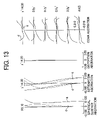
  • FIG. 13 is a view showing an aberration with respect to a long focus end, i.e., a telephoto, according to the third embodiment.
  • FIG. 14 is a view showing an aberration with respect to a short focus end, i.e., a wide angle, according to the fourth embodiment.
  • FIG. 15 is a view showing an aberration with respect to a middle focus length according to the fourth embodiment.
  • FIG. 16 is a view showing an aberration with respect to a long focus end, i.e., a telephoto, according to the fourth embodiment.
  • FIG. 17 A is a perspective view showing a front surface of a camera apparatus according to the first embodiment.
  • FIG. 17 B is a perspective view showing a back surface of the camera apparatus according to the first embodiment.
  • FIG. 18 is a view showing a system configuration of the camera apparatus.
  • a zoom lens that is shown in FIG. 1 relates to a zoom lens according to a first embodiment (to be described hereinafter).
  • a first lens group G 1 which includes a negative focal length
  • a second lens group G 2 which includes a positive focal length
  • a third lens group G 3 which includes a negative focal length
  • a fourth lens group G 4 which includes a positive focal length
  • a fifth lens group G 5 which includes a positive focal length
  • a fifth lens group G 5 which includes a positive focal length
  • a sixth lens group G 6 which includes a negative focal length, installed as a fixed lens group between the fifth lens group G 5 and an image side of, for example, a camera apparatus
  • the first lens group G 1 includes a reflective optical element, i.e., a prism
  • the third lens group G 3 comprises an aperture stop.
  • Reference numerals L 1 to L 14 denote a first lens to a fourteenth lens.
  • an interval between the first lens group G 1 and the second lens group G 2 is reduced, an interval between the second lens group G 2 and the third lens group G 3 is increased, an interval between the third lens group G 3 and the fourth lens group G 4 is reduced, an interval between the fourth lens group G 4 and the fifth lens group G 5 is increased, and the fifth lens group G 5 is moved toward the subject.
  • a zoom lens that is shown in FIG. 2 relates to a zoom lens according to a second embodiment (to be described hereinafter).
  • a first lens group G 1 which includes a negative focal length
  • a second lens group G 2 which includes a positive focal length
  • a third lens group G 3 which includes a negative focal length
  • a fourth lens group G 4 which includes a positive focal length
  • a fifth lens group G 5 which includes a positive focal length
  • a fifth lens group G 5 which includes a positive focal length
  • the first lens group G 1 comprises a reflective optical element, i.e., a prism
  • the third lens group G 3 includes an aperture stop.
  • Reference numerals L 1 to L 14 denote a first lens to a fourteenth lens.
  • an interval between the first lens group G 1 and the second lens group G 2 is reduced, an interval between the second lens group G 2 and the third lens group G 3 is increased, an interval between the third lens group G 3 and the fourth lens group G 4 is reduced, an interval between the fourth lens group G 4 and the fifth lens group G 5 is increased, and the fifth lens group G 5 moves toward the imaging site.
  • a zoom lens that is depicted in FIG. 3 relates to a zoom lens according to a third embodiment (to be described hereinafter).
  • a first lens group G 1 which includes a negative focal length
  • a second lens group G 2 which includes a positive focal length
  • a third lens group G 3 which includes a negative focal length
  • a fourth lens group G 4 which includes a positive focal length
  • a fifth lens group G 5 which includes a positive focal length
  • the first lens group G 1 comprises a reflective optical element, i.e., a prism
  • the third lens group G 3 includes an aperture stop.
  • Reference numerals L 1 to L 13 denote a first lens to a fourteenth lens.
  • an interval between the first lens group G 1 and the second lens group G 2 is reduced, an interval between the second lens group G 2 and the third lens group G 3 is increased, an interval between the third lens group G 3 and the fourth lens group G 4 is reduced, an interval between the fourth lens group G 4 and the fifth lens group G 5 is increased, and the fifth lens group G 5 is moved toward the subject.
  • a zoom lens that is depicted in FIG. 4 relates to a zoom lens according to a fourth embodiment (to be described hereinafter).
  • a first lens group G 1 which includes a negative focal length
  • a second lens group G 2 which includes a positive focal length
  • a third lens group G 3 which includes a negative focal length
  • a fourth lens group G 4 which includes a positive focal length
  • a fifth lens group G 5 which includes a positive focal length
  • the first lens group G 1 comprises a reflective optical element, i.e., a prism
  • the third lens group G 3 includes an aperture stop.
  • Reference numerals L 1 to L 13 denote a first lens to a fourteenth lens.
  • an interval between the first lens group G 1 and the second lens group G 2 is reduced, an interval between the second lens group G 2 and the third lens group G 3 is increased, an interval between the third lens group G 3 and the fourth lens group G 4 is reduced, an interval between the fourth lens group G 4 and the fifth lens group G 5 is increased, and the fifth lens group G 5 is moved toward the subject.
  • any of the present invention according to the first through the fourth embodiment satisfies a conditional expression 1 to 3.
  • a focusing is performed by the fifth lens group, the fifth lens group G 5 comprises a lens with a positive focal length and a lens with a negative focal length, and the lens with the positive focal length therein is cemented to the lens with the negative focal length therein.
  • FIG. 17 illustrates a camera apparatus according to the first embodiment.
  • FIG. 17 A illustrates a front face and an upper face
  • FIG. 17 B illustrates a rear face, of the camera apparatus according to the first embodiment.
  • the camera apparatus includes, as a photographic lens 1 , the zoom lens according to the present invention, i.e., the zoom lens that corresponds according to the first to the fourth embodiments (to be described hereinafter), as a photographic zoom lens of the camera apparatus.
  • Reference numeral 2 denotes a viewfinder
  • reference numeral 3 denotes a flash lamp
  • reference numeral 4 denotes a shutter button
  • reference numeral 5 denotes a casing for a camera body
  • reference numeral 6 denotes a power a switch
  • reference numeral 7 denotes an LCD monitor
  • reference numeral 8 denotes a function operation switch
  • reference numeral 9 denotes a memory card slot
  • reference numeral 10 denotes a zoom function control unit.
  • a zoom lens with a degree of change of interval between the fourth lens group and the fifth lens group when magnifying from the short focus end, i.e., the wide angle, to the long focus end, i.e., the telephoto, of m45, and a maximum image resolution of Y′, satisfies a conditional expression 1, as follows: 1.0 ⁇ m 45 /Y′ ⁇ 6.0 (1)
  • the focusing is performed by the fifth lens group.
  • the fifth lens group comprises the lens with the positive focal length and the lens with the negative focal length.
  • the zoom lens when magnifying from the short focus end, i.e., the wide angle, to the long focus end, i.e., the telephoto, the fifth lens group first moves toward the photographic subject, and then toward the imaging site.
  • conditional expression (1) If a lower bound value of the conditional expression (1) is exceeded, it becomes necessary to increase a power of the fifth lens group in order that the fifth lens group maintains the magnification function thereof, making it difficult in turn to correct a defect such as a coma aberration. In addition, if an upper bound value of the conditional expression (1) is exceeded, the degree of movement of the fifth lens group grows when magnifying from the short focus end, i.e., the wide angle, to the long focus end, i.e., the telephoto, and thus, the zoom lens increases in size.
  • the parameter m45/Y′ of the conditional expression (1) instead satisfy a conditional expression (1A), as follows: 2.0 ⁇ m 45 /Y′ ⁇ 6.0 (1A)
  • conditional expression (2) If an upper bound value of the conditional expression (2) is exceeded, a range of movement of the fifth lens group grows when magnifying from the short focus end, i.e., the wide angle, to the long focus end, i.e., the telephoto, and thus, the zoom lens increases in size. If a lower bound value of the conditional expression (2) is exceeded, it becomes difficult to correct the defect such as the coma aberration.
  • the range of movement of the fifth lens group grows when magnifying from the short focus end, i.e., the wide angle, to the long focus end, i.e., the telephoto, and thus, the zoom lens increases in size.
  • a lower bound value of the conditional expression (3) is exceeded, a magnification load upon the fifth lens group is reduced, and a large demand is made upon a magnification function of the second lens group, thus making it difficult to correct the aberration within the zoom region.
  • FIG. 18 illustrates a system configuration of the camera apparatus that is depicted in FIG. 17 .
  • the camera apparatus comprises a photographic lens 1 and a photosensitive element 13 , and is configured such that an image of a subject, for example, a photographic subject, which is formed by the photographic lens 1 , is read in by the photosensitive element 13 , and an output of the photosensitive element 13 is processed, and converted into a digital information, by a signal processing unit 14 , which receives a control from a central computation unit 11 .
  • the camera apparatus includes a function that converts a photographic image into digital information.
  • the camera apparatus includes a specification as a portable information terminal device.
  • FIG. 5 to FIG. 7 respectively illustrate a view showing an aberration with respect to a short focus end, i.e., a wide angle, a middle focus distance, and a long focus end, i.e., a telephoto, according to the first embodiment.
  • FIG. 8 to FIG. 10 respectively illustrate a view showing an aberration with respect to a short focus end, i.e., a wide angle, a middle focus distance, and a long focus end, i.e., a telephoto, according to the second embodiment.
  • FIG. 13 respectively illustrate a view showing an aberration with respect to a short focus end, i.e., a wide angle, a middle focus distance, and a long focus end, i.e., a telephoto, according to the third embodiment.
  • FIG. 14 to FIG. 16 respectively illustrate a view showing an aberration with respect to a short focus end, i.e., a wide angle, a middle focus distance, and a long focus end, i.e., a telephoto, according to the fourth embodiment.
  • “g” in the respective views showing the aberration denotes a “g line” therein
  • “d” in the respective views showing the aberration denotes a “d line” therein.
  • the aberration is adequately corrected, and the following objectives are achieved: a wide field angle with a half field angle of 38 degrees or more, an F number of 6.0 or less in the long focus end, i.e., the telephoto, and a magnification of 6.0 ⁇ or greater.
  • a good quality of image performance is maintained together with an adequate degree of miniaturization.
  • the zoom lens according thereto comprises a good quality of performance, i.e., a magnification of 6 ⁇ or more, and it is possible to miniaturize, as well as to reduce a weight of, a camera apparatus or a portable information terminal device, by employing a reflective photosensitive element of a first lens group to refract a light path therein.

Landscapes

  • Physics & Mathematics (AREA)
  • General Physics & Mathematics (AREA)
  • Optics & Photonics (AREA)
  • Nonlinear Science (AREA)
  • Lenses (AREA)
  • Studio Devices (AREA)

Abstract

A zoom lens comprises a first lens group G1, which includes a negative focal length, a second lens group G2, which includes a positive focal length, a third lens group G3, which includes a negative focal length, a fourth lens group G4, which includes a positive focal length, and a fifth lens group G5, which includes a positive focal length, in order from nearest to furthest from a photographic subject, or with a sixth lens group G6, which includes a negative focal length, installed as an anchored lens group between the fifth lens group and an image site of the camera apparatus. The first lens group comprises a reflective optical element, the third lens group G3 comprises an aperture stop, either on a side thereof in a direction of the photographic subject, on a side in a direction of the image site, or within the third lens group, and, when magnifying from a short focus end to a long focus end, an interval between the first lens group and the second lens group is reduced, an interval between the second lens group and the third lens group is increased, an interval between the third lens group and the fourth lens group is reduced, an interval between the fourth lens group and the fifth lens group is increased, and the fifth lens group moves toward the imaging site.

Description

CROSS-REFERENCE TO THE RELATED APPLICATION
This application is based on and claims priority from Japanese Patent Application No. 2007-235775, filed on Sep. 11, 2007, the disclosure of which is incorporated herein by reference in its entirety.
BACKGROUND OF THE INVENTION
1. Field of the Invention
The present invention relates to a zoom lens, a camera apparatus, and a portable information terminal device.
2. Description of the Related Art
Digital cameras are experiencing an increase in image quality, as well as greater miniaturization, an increasingly wide angle of photography, and a greater magnification of an image that is taken with such a device. A demand exists for a high performance, miniature, wide angle, large aperture digital camera that includes a zoom lens with a 6× or greater magnification as a photographic lens thereof, and that is capable of achieving a high image quality that supports a photosensitive element in excess of 10 megapixels.
Whereas Japanese Patent Application Publication No. 2004-271937 discloses a configuration of five lens groups, which are arranged negative focal length-positive focal length-negative focal length-positive focal length-positive focal length, in order from nearest to furthest from a photographic subject, and which closely approaches a 5× magnification, such as a zoom lens according to the present invention. Such a configuration is not capable, however, of fulfilling the extant demand for a magnification of 6× or greater.
In addition, a configuration is known that installs a reflective photosensitive element within the zoom lens, thereby refracting a light path therein, in order to respond to the increasing miniaturization of the digital camera. Japanese Patent Application Publication No. 2004-102219 and Japanese Patent Application Publication No. 2005-338143 disclose an invention thereof that comprises the reflective photosensitive element within the first lens group of the five lens groups of the negative focal length-positive focal length-negative focal length-positive focal length-positive focal length configuration that is described herein. The zoom lens that is disclosed herein, however, achieves a magnification that is only on the order of 3×, making such a configuration incapable of fulfilling the demand for a magnification of 6× or greater.
SUMMARY OF THE INVENTION
It is an object of the present invention to implement a high performance zoom lens that is compliant with a digital camera that is miniaturized and comprises a magnification of 6× or more, as well as 10 megapixels or more, while also supporting a half field angle of 38 degrees or more, and a long focus end F number of 6.0 or less.
To accomplish the above object, a zoom lens according to an embodiment of the present invention includes a first lens group having a negative focal length, a second lens group having a positive focal length, a third lens group having a negative focal length, a fourth lens group having a positive focal length, and a fifth lens group having a positive focal length, which are disposed in order from nearest to furthest from a subject.
The first lens group includes a reflective optical element. The third lens group includes an aperture stop which is disposed in a subject side or an image side of the third lens group or within the third lens group.
When magnifying from a abort focus end to a long focus end, an interval between the first lens group and the second lens group is configured to reduce, an interval between the second lens group and the third lens group is configured to increase, an interval between the third lens group and the fourth lens group is configured to reduce, an interval between the fourth lens group and the fifth lens group is configured to increase, and the fifth lens group is moved toward the subject.
Put another way, the present invention includes a configuration as a zoom lens comprising five lens groups, in order from the photographic subject, as negative focal length-positive focal length-negative focal length-positive focal length-positive focal length, or a zoom lens comprising six lens groups, in order from the photographic subject, as negative focal length-positive focal length-negative focal length-positive focal length-positive focal length-negative focal length. With the six lens group configuration, the sixth lens group, which includes a negative refraction, is positioned as an anchored lens group, and as such, is not displaced when magnifying an image.
When magnifying from a short focus end, i.e., from a wide angle, to the long focus end, i.e., to a telephoto angle, an interval between the first lens group and the second lens group is reduced, an interval between the second lens group and the third lens group is increased, an interval between the third lens group and the fourth lens group is reduced, an interval between the fourth lens group and the fifth lens group is increased, and the fifth lens group is moved toward the subject.
In the present circumstance, the expression “the fifth lens group moves toward the imaging site” refers to a site of the fifth lens group being located more in the direction of the imaging site with the long focus end, i.e., with the telephoto, than with the short focus end, i.e., with the wide angle. Accordingly, the fifth lens group need not necessarily be simply displaced toward the imaging site when the zoom lens magnifies from the short focus end, i.e., from the wide angle, to the long focus end, i.e., to the telephoto.
It is to be understood that it is preferable that the first lens group be anchored in place when performing the magnification operation.
A camera apparatus according to the present invention includes the zoom lens according to the present invention as a photographic zoom lens. The camera apparatus according to the present invention is capable of comprising a function that treats a photographic image as digital information. Put another way, it is possible for a camera apparatus according to the present invention to be implemented as a film camera, and for another camera apparatus according to the present invention to be implemented as a digital camera. It would further be possible for still another camera apparatus according to the present invention to be configured as a photography unit of a portable information terminal device.
When magnifying from the short focus end, i.e., from the wide angle, to the long focus end, i.e., to the telephoto, the zoom lens according to the present invention achieves the high magnification by setting a displacement from the first lens group to the fifth lens group such that a magnification function is borne not only by the second lens group, but by the fifth lens group as well, in order that the interval between the first lens group and the second lens group is reduced, the interval between the second lens group and the third lens group is increased, the interval between the third lens group and the fourth lens group is reduced, the interval between the fourth lens group and the fifth lens group is increased, and the fifth lens group moves toward the subject, as described herein.
Also as described herein, it is preferable that the first lens group be anchored in place with respect to an imaging surface of the camera when performing the magnification operation. Doing so avoids changing an external form of the camera apparatus as a result of a zoom operation when the zoom lens according to the present invention is included within the camera apparatus. As a result, a waterproofing process of the camera apparatus is simpler, and it is also possible to achieve a shorter activation time of the camera apparatus and the zoom lens when taking a photograph, than would be the case with a collapsed type of zoom lens.
BRIEF DESCRIPTION OF THE DRAWINGS
FIG. 1 is a schematic view showing a structure of a zoom lens according to a first embodiment of the present invention.
FIG. 2 is a schematic view showing a structure of a zoom lens according to a second embodiment of the present invention.
FIG. 3 is a schematic view showing a structure of a zoom lens according to a third embodiment of the present invention.
FIG. 4 is a schematic view showing a structure of a zoom lens according to a fourth embodiment of the present invention.
FIG. 5 is a view showing an aberration with respect to a short focus end, i.e., a wide angle, according to the first embodiment.
FIG. 6 is a view showing an aberration with respect to a middle focus length according to the first embodiment.
FIG. 7 is a view showing an aberration with respect to a long focus end, i.e., a telephoto, according to the first embodiment.
FIG. 8 is a view showing an aberration with respect to a short focus end, i.e., a wide angle, according to the second embodiment.
FIG. 9 is a view showing an aberration with respect to a middle focus length according to the second embodiment.
FIG. 10 is a view showing an aberration with respect to a long focus end, i.e., a telephoto, according to the second embodiment.
FIG. 11 is a view showing an aberration with respect to a short focus end, i.e., a wide angle, according to the third embodiment.
FIG. 12 is a view showing an aberration with respect to a middle focus length according to the third embodiment.
FIG. 13 is a view showing an aberration with respect to a long focus end, i.e., a telephoto, according to the third embodiment.
FIG. 14 is a view showing an aberration with respect to a short focus end, i.e., a wide angle, according to the fourth embodiment.
FIG. 15 is a view showing an aberration with respect to a middle focus length according to the fourth embodiment.
FIG. 16 is a view showing an aberration with respect to a long focus end, i.e., a telephoto, according to the fourth embodiment.
FIG. 17 A is a perspective view showing a front surface of a camera apparatus according to the first embodiment.
FIG. 17 B is a perspective view showing a back surface of the camera apparatus according to the first embodiment.
FIG. 18 is a view showing a system configuration of the camera apparatus.
DETAILED DESCRIPTION OF THE PREFERRED EMBODIMENTS
Preferred embodiments of the present invention will be explained in detail hereinafter with reference to the accompanying drawings.
A zoom lens that is shown in FIG. 1 relates to a zoom lens according to a first embodiment (to be described hereinafter). From left in FIG. 1, a first lens group G1, which includes a negative focal length, a second lens group G2, which includes a positive focal length, a third lens group G3, which includes a negative focal length, a fourth lens group G4, which includes a positive focal length, and a fifth lens group G5, which includes a positive focal length, is installed in order therein from nearest to furthest from a subject, or with a sixth lens group G6, which includes a negative focal length, installed as a fixed lens group between the fifth lens group G5 and an image side of, for example, a camera apparatus, wherein the first lens group G1 includes a reflective optical element, i.e., a prism, and the third lens group G3 comprises an aperture stop. Reference numerals L1 to L14 denote a first lens to a fourteenth lens.
When magnifying from a short focus end, i.e., from a wide angle, to a long focus end, i.e., to a telephoto, an interval between the first lens group G1 and the second lens group G2 is reduced, an interval between the second lens group G2 and the third lens group G3 is increased, an interval between the third lens group G3 and the fourth lens group G4 is reduced, an interval between the fourth lens group G4 and the fifth lens group G5 is increased, and the fifth lens group G5 is moved toward the subject.
A zoom lens that is shown in FIG. 2 relates to a zoom lens according to a second embodiment (to be described hereinafter). From left in FIG. 2, a first lens group G1, which includes a negative focal length, a second lens group G2, which includes a positive focal length, a third lens group G3, which includes a negative focal length, a fourth lens group G4, which includes a positive focal length, and a fifth lens group G5, which includes a positive focal length, is installed in order therein from nearest to furthest from a photographic subject, or with a sixth lens group G6, which includes a negative focal length, installed as an anchored lens group between the fifth lens group G5 and the image side of the camera apparatus, wherein the first lens group G1 comprises a reflective optical element, i.e., a prism, and the third lens group G3 includes an aperture stop. Reference numerals L1 to L14 denote a first lens to a fourteenth lens.
When magnifying from a short focus end, i.e., from a wide angle, to a long focus end, i.e., to a telephoto, an interval between the first lens group G1 and the second lens group G2 is reduced, an interval between the second lens group G2 and the third lens group G3 is increased, an interval between the third lens group G3 and the fourth lens group G4 is reduced, an interval between the fourth lens group G4 and the fifth lens group G5 is increased, and the fifth lens group G5 moves toward the imaging site.
A zoom lens that is depicted in FIG. 3 relates to a zoom lens according to a third embodiment (to be described hereinafter). From left in FIG. 3, a first lens group G1, which includes a negative focal length, a second lens group G2, which includes a positive focal length, a third lens group G3, which includes a negative focal length, a fourth lens group G4, which includes a positive focal length, and a fifth lens group G5, which includes a positive focal length, is installed in order therein from nearest to furthest from a photographic subject, wherein the first lens group G1 comprises a reflective optical element, i.e., a prism, and the third lens group G3 includes an aperture stop. Reference numerals L1 to L13 denote a first lens to a fourteenth lens.
When magnifying from a short focus end, i.e., from a wide angle, to a long focus end, i.e., to a telephoto, an interval between the first lens group G1 and the second lens group G2 is reduced, an interval between the second lens group G2 and the third lens group G3 is increased, an interval between the third lens group G3 and the fourth lens group G4 is reduced, an interval between the fourth lens group G4 and the fifth lens group G5 is increased, and the fifth lens group G5 is moved toward the subject.
A zoom lens that is depicted in FIG. 4 relates to a zoom lens according to a fourth embodiment (to be described hereinafter). From left in FIG. 4, a first lens group G1, which includes a negative focal length, a second lens group G2, which includes a positive focal length, a third lens group G3, which includes a negative focal length, a fourth lens group G4, which includes a positive focal length, and a fifth lens group G5, which includes a positive focal length, is installed in order therein from nearest to furthest from a photographic subject, wherein the first lens group G1 comprises a reflective optical element, i.e., a prism, and the third lens group G3 includes an aperture stop. Reference numerals L1 to L13 denote a first lens to a fourteenth lens.
When magnifying from a short focus end, i.e., from a wide angle, to a long focus end, i.e., to a telephoto, an interval between the first lens group G1 and the second lens group G2 is reduced, an interval between the second lens group G2 and the third lens group G3 is increased, an interval between the third lens group G3 and the fourth lens group G4 is reduced, an interval between the fourth lens group G4 and the fifth lens group G5 is increased, and the fifth lens group G5 is moved toward the subject.
According to the first through the fourth embodiment (to be described hereinafter), as shown in FIG. 1 to FIG. 4, any of the present invention according to the first through the fourth embodiment satisfies a conditional expression 1 to 3. In addition, a focusing is performed by the fifth lens group, the fifth lens group G5 comprises a lens with a positive focal length and a lens with a negative focal length, and the lens with the positive focal length therein is cemented to the lens with the negative focal length therein.
FIG. 17 illustrates a camera apparatus according to the first embodiment.
FIG. 17 A illustrates a front face and an upper face, and FIG. 17 B illustrates a rear face, of the camera apparatus according to the first embodiment. The camera apparatus includes, as a photographic lens 1, the zoom lens according to the present invention, i.e., the zoom lens that corresponds according to the first to the fourth embodiments (to be described hereinafter), as a photographic zoom lens of the camera apparatus.
Reference numeral 2 denotes a viewfinder, reference numeral 3 denotes a flash lamp, reference numeral 4 denotes a shutter button, reference numeral 5 denotes a casing for a camera body, reference numeral 6 denotes a power a switch, reference numeral 7 denotes an LCD monitor, reference numeral 8 denotes a function operation switch, reference numeral 9 denotes a memory card slot, and reference numeral 10 denotes a zoom function control unit.
In the present circumstance, a zoom lens, with a degree of change of interval between the fourth lens group and the fifth lens group when magnifying from the short focus end, i.e., the wide angle, to the long focus end, i.e., the telephoto, of m45, and a maximum image resolution of Y′, satisfies a conditional expression 1, as follows:
1.0<m45/Y′<6.0  (1)
In addition, with respect to the zoom lend, wherein the focal length of the fifth lens group is f5, and with the maximum image resolution of Y′, satisfies a conditional expression 2, as follows:
4<f5/Y′<15  (2)
In addition, with respect to the zoom lens, the focusing is performed by the fifth lens group.
In addition, with respect to the zoom lens, wherein a lateral magnification of the fifth lens group with respect to the short focus end, i.e., the wide angle, is b5w, and the lateral magnification of the fifth lens group with respect to the long focus end, i.e., the telephoto, is b5t, satisfies a conditional expression 3, as follows:
1.2<b5t/b5w<2.5  (3)
In addition, with respect to the zoom lens, the fifth lens group comprises the lens with the positive focal length and the lens with the negative focal length.
Furthermore, with respect to the zoom lens, when magnifying from the short focus end, i.e., the wide angle, to the long focus end, i.e., the telephoto, the fifth lens group first moves toward the photographic subject, and then toward the imaging site.
If a lower bound value of the conditional expression (1) is exceeded, it becomes necessary to increase a power of the fifth lens group in order that the fifth lens group maintains the magnification function thereof, making it difficult in turn to correct a defect such as a coma aberration. In addition, if an upper bound value of the conditional expression (1) is exceeded, the degree of movement of the fifth lens group grows when magnifying from the short focus end, i.e., the wide angle, to the long focus end, i.e., the telephoto, and thus, the zoom lens increases in size.
Thus, it is preferable that the parameter m45/Y′ of the conditional expression (1) instead satisfy a conditional expression (1A), as follows:
2.0<m45/Y′<6.0  (1A)
If an upper bound value of the conditional expression (2) is exceeded, a range of movement of the fifth lens group grows when magnifying from the short focus end, i.e., the wide angle, to the long focus end, i.e., the telephoto, and thus, the zoom lens increases in size. If a lower bound value of the conditional expression (2) is exceeded, it becomes difficult to correct the defect such as the coma aberration.
If an upper bound value of the conditional expression (3) is exceeded, the range of movement of the fifth lens group grows when magnifying from the short focus end, i.e., the wide angle, to the long focus end, i.e., the telephoto, and thus, the zoom lens increases in size. If a lower bound value of the conditional expression (3) is exceeded, a magnification load upon the fifth lens group is reduced, and a large demand is made upon a magnification function of the second lens group, thus making it difficult to correct the aberration within the zoom region.
FIG. 18 illustrates a system configuration of the camera apparatus that is depicted in FIG. 17.
As shown in FIG. 18, the camera apparatus comprises a photographic lens 1 and a photosensitive element 13, and is configured such that an image of a subject, for example, a photographic subject, which is formed by the photographic lens 1, is read in by the photosensitive element 13, and an output of the photosensitive element 13 is processed, and converted into a digital information, by a signal processing unit 14, which receives a control from a central computation unit 11. Put another way, the camera apparatus includes a function that converts a photographic image into digital information. In addition, it is possible to carry out a communication of data external to the camera apparatus by way of such as a telecommunications card 16. Accordingly, the camera apparatus includes a specification as a portable information terminal device.
Following is a detailed description according to four examples of the zoom lens.
A definition of a reference notation according to each respective example is as follows:
f: overall focal length
F: F number
ω: half field angle
R: Radius of Curvature
D: Lattice Spacing
Nd: Index of Refraction
νd: Abbe Number
K: Conical Constant of Aspherical Lens Surface
A4: Quartic Aspherical Lens Surface Coefficient
A6: Sextic Aspherical Lens Surface Coefficient
A8: Octic Aspherical Lens Surface Coefficient
A10: Dectic Aspherical Lens Surface Coefficient
An aspherical lens surface is represented by a known equation, as follows:
X=CH 2/{1+√(1−(1+K)C 2 H 2)}+A4−H 4 +A6·H 6 +A8·H 8 +A10·H 10
wherein C is a reciprocal of a paraxial radius of curvature, i.e., a paraxial curvature, H is a height from an optical axis, and the conical constant and each respective aspherical lens surface coefficient is employed therein.
FIRST EXAMPLE
f=5.20-34.99, F=3.54-4.23, so ω=40.27-6.64
A data according to the first embodiment is shown in Table 1, following:
TABLE 1
R D Nd νd
 1* 876.359 1.00 1.86400 40.58 1ST LENS
 2* 12.574 5.17
 3 6.60 1.92286 18.90 PRISM
 4 6.60 1.92286 18.90 PRISM
 5 0.10
 6 62.088 1.00 1.83400 37.16 2ND LENS
 7 14.600 1.88 1.80518 25.42 3RD LENS
 8 29.342 VARIABLE (A)
 9* 18.221 2.77 1.80610 40.88 4TH LENS
10 −55.564 0.10
11 37.802 1.00 1.84666 23.78 5TH LENS
12 15.727 3.84 1.49700 81.54 6TH LENS
13 −18.243 VARIABLE (B)
14 −17.979 1.00 1.80610 40.88 7TH LENS
15 6.859 0.17
16 7.697 1.55 1.80809 22.76 8TH LENS
17 −72.436 0.50
18 APERTURE 0.50
STOP
19 371.376 1.00 1.74320 49.29 9TH LENS
20* 11.440 VARIABLE (C)
21* 16.989 3.13 1.49700 81.54 10TH LENS
22 −8.024 1.00 1.80518 25.42 11TH LENS
23 −13.315 VARIABLE (D)
24 21.068 3.82 1.48749 70.24 12TH LENS
25 −8.624 2.00 1.74950 35.28 13TH LENS
26 −15.551 VARIABLE (E)
27 −8.000 2.00 1.51633 64.14 14TH LENS
28* −12.237 2.30
29 0.80 1.50000 64.00 EACH
RESPECTIVE
FILTER
30
Aspherical Lens Surface
First Surface: K = 0.0 A4 = 2.23E−04 A6 = −9.31E−07
A8 = 1.06E−09 A10 = 1.53E−12
Second K = 0.0 A4 = 2.00E−04 A6 = 4.28E−07
Surface: A8 = 1.38E−08 A10 = −1.76E−10
Ninth Surface: K = 0.0 A4 = −5.87E−05 A6 = 4.70E−08
A8 = −6.47E−10 A10 = 3.54E−12
Twentieth K = 0.0 A4 = −3.27E−04 A6 = 1.74E−06
Surface: A8 = −7.18E−07 A10 = 2.73E−08
Twenty-first K = 0.0 A4 = −4.60E−05 A6 = 1.97E−06
Surface: A8 = −6.33E−08 A10 = 1.57E−09
Twenty-eighth K = 0.0 A4 = −2.68E−04 A6 = 1.63E−05
Surface: A8 = −9.89E−07 A10 = 1.71E−08
Change of Interval
A data of a change of interval is shown in Table 2, following:
TABLE 2
Wide Mean Tele
FOCAL LENGTH f = 5.20 f = 13.49 f = 34.99
F NUMBER 3.54 4.77 5.23
A 15.2265 3.7898 0.5066
B 0.4999 4.2025 16.1505
C 8.0965 1.4275 0.4971
D 0.9994 9.3119 17.7030
E 10.7991 16.8947 0.7650
A value that is required for calculating the conditional expression is shown in Table 3, following:
TABLE 3
Y′ 4.2
m45 16.704
f5 24.879
b5t 0.759
b5w 0.355
A value of the parameter of the conditional expression is shown in Table 4 following:
TABLE 4
m45/Y′ 3.977
f5/Y′ 5.924
b5t/b5w 2.138
SECOND EXAMPLE
f=5.00-34.99, F=3.46-5.24, ω=40.22-6.64
A data according to the second example is shown in Table 5, following:
TABLE 5
R D Nd νd
 1* 381.594 1.00 1.86400 40.58 1ST LENS
 2* 12.229 5.10
 3 6.60 1.92286 18.90 PRISM
 4 6.60 1.92286 18.90 PRISM
 5 0.10
 6 62.037 1.00 1.83400 37.16 2ND LENS
 7 14.853 1.93 1.80518 25.42 3RD LENS
 8 27.423 VARIABLE (A)
 9* 18.418 3.14 1.80610 40.88 4TH LENS
10 −53.639 0.10
11 38.555 1.00 1.84666 23.78 5TH LENS
12 16.656 4.51 1.49700 81.54 6TH LENS
13 −17.895 VARIABLE (B)
14 −17.457 1.00 1.80610 40.88 7TH LENS
15 6.860 0.15
16 7.409 1.60 1.80809 22.76 8TH LENS
17 −77.979 0.50
18 APERTURE 0.50
STOP
19 100.949 1.00 1.74320 49.29 9TH LENS
20* 10.855 VARIABLE (C)
21* 14.650 3.27 1.49700 81.54 10TH LENS
22 −8.000 1.00 1.80518 25.42 11TH LENS
23 −12.868 VARIABLE (D)
24 22.121 3.83 1.48749 70.24 12TH LENS
25 −8.000 2.00 1.74950 35.28 13TH LENS
26 −14.562 VARIABLE (E)
27 −8.000 2.00 1.51633 64.14 14TH LENS
28* −12.389 3.20
29 0.80 1.50000 64.00 EACH
RESPECTIVE
FILTER
30
Aspherical Lens Surface
First Surface: K = 0.0 A4 = 2.07E−04 A6 = −1.09E−06
A8 = 4.07E−09 A10 = −7.68E−12
Second K = 0.0 A4 = 1.71E−04 A6 = 2.81E−07
Surface: A8 = 3.63E−09 A10 = −5.46E−12
Ninth Surface: K = 0.0 A4 = −5.88E−05 A6 = 4.39E−08
A8 = −5.92E−10 A10 = 2.95E−12
Twentieth K = 0.0 A4 = −3.29E−04 A6 = 6.75E−06
Surface: A8 = −1.50E−06 A10 = 7.97E−08
Twenty-first K = 0.0 A4 = −7.10E−05 A6 = 7.85E−07
Surface: A8 = 1.80E−08 A10 = 2.49E−10
Twenty-eighth K = 0.0 A4 = −1.97E−04 A6 = 4.671E−06
Surface: A8 = −2.14E−07 A10 = 7.10E−10
Change of Interval
A data of a change of interval is shown in Table 6, following:
TABLE 6
Wide Mean Tele
FOCAL LENGTH f = 5.20 f = 13.49 f = 34.98
F NUMBER 3.46 5.24 4.98
A 14.2127 3.6535 0.5000
B 0.5000 3.3628 17.4105
C 7.4701 1.1955 0.5000
D 1.0000 5.9723 14.0000
E 9.9115 18.9102 0.6837
A value that is required for calculating the conditional expression is shown in Table 7, following:
TABLE 7
Y′ 4.2
m45 13.000
f5 24.867
b5t 0.730
b5w 0.357
A value of the parameter of the conditional expression is shown in Table 8, following:
TABLE 8
m45/Y′ 3.095
f5/Y′ 5.921
b5t/b5w 2.044
THIRD EXAMPLE
f=5.20-34.99, F=3.82-5.92, ω=40.28-6.82
A data according to the third example is shown in Table 9, following:
TABLE 9
R D Nd νd
 1* 83.828 1.01 1.86400 40.58 1ST LENS
 2* 12.114 5.90
 3 7.00 1.92286 18.90 PRISM
 4 7.00 1.92286 18.90 PRISM
 5 0.10
 6 56.037 1.00 1.83400 37.16 2ND LENS
 7 15.676 1.69 1.80518 25.42 3RD LENS
 8 25.772 VARIABLE (A)
 9* 18.579 2.83 1.80610 40.88 4TH LENS
10 −67.128 0.42
11 49.021 1.00 1.84666 23.78 5TH LENS
12 19.459 3.91 1.49700 81.54 6TH LENS
13 −17.736 VARIABLE (B)
14* −13.836 1.54 1.80610 40.88 7TH LENS
15 9.306 0.10
16 8.652 2.30 1.80809 22.76 8TH LENS
17 −29.054 0.50
18 APERTURE 0.50
STOP
19 −18.647 1.00 1.74400 44.79 9TH LENS
20 12.168 VARIABLE (C)
21* 13.985 3.11 1.49700 81.54 10TH LENS
22 −6.500 1.00 1.80518 25.42 11TH LENS
23 −9.513 VARIABLE (D)
24* 138.772 2.88 1.48749 70.24 12TH LENS
25 −7.595 1.00 1.74950 35.28 13TH LENS
26 −14.566 VARIABLE (E)
27 0.80 1.50000 64.00 EACH
RESPECTIVE
FILTER
28
Aspherical Lens Surface
First Surface: K = 0.0 A4 = 2.33E−04 A6 = −1.75E−06
A8 = 9.16E−09 A10 = −1.91E−11
Second K = 0.0 A4 = 2.28E−04 A6 = 4.09E−08
Surface: A8 = −1.48E−08 A10 = 2.12E−10
Ninth Surface: K = 0.0 A4 = −4.95E−05 A6 = 1.07E−08
A8 = −5.92E−10 A10 = 3.06E−12
Fourteenth K = 0.0 A4 = 1.94E−04 A6 = −4.86E−06
Surface: A8 = 3.70E−07 A10 = −1.71E−08
Twenty-first K = 0.0 A4 = −3.21E−04 A6 = 1.03E−06
Surface: A8 = 2.34E−07 A10 = −7.55E−09
Twenty-fourth K = 0.0 A4 = 1.13E−04 A6 = 2.21E−06
Surface: A8 = −1.12E−07 A10 = 2.76E−09
A data of a change of interval is shown in Table 10, following:
TABLE 10
Wide Mean Tele
FOCAL LENGTH f = 5.20 f = 13.50 f = 34.99
F NUMBER 3.82 5.92 5.10
A 18.3932 7.6102 0.5000
B 0.5000 1.6541 17.5777
C 5.4170 0.5000 0.5000
D 1.0000 1.5933 20.1524
E 17.2136 31.1264 3.7874
A value that is required for calculating the conditional expression is shown in Table 11, following:
TABLE 11
Y′ 4.2
m45 19.152
f5 47.037
b5t 0.900
b5w 0.614
A value of the parameter of the conditional expression is shown in Table 12, following:
TABLE 12
m45/Y′ 4.560
f5/Y′ 11.199
b5t/b5w 1.465
FOURTH EXAMPLE
f=5.20-35.00, F=3.72-5.89 ω=40.09-6.76
A data according to the fourth example is shown in Table 13, following:
TABLE 13
R D Nd νd
 1* −8856.997 1.00 1.86400 40.58 1ST LENS
 2* 12.948 5.30
 3 6.60 1.92286 18.90 PRISM
 4 6.60 1.92286 18.90 PRISM
 5 0.10
 6 44.558 1.00 1.83400 37.16 2ND LENS
 7 13.687 1.88 1.80518 25.42 3RD LENS
 8 22.701 VARIABLE (A)
 9* 18.333 2.85 1.80610 40.88 4TH LENS
10 −84.847 0.10
11 38.401 1.00 1.84666 23.78 5TH LENS
12 18.002 4.43 1.49700 81.54 6TH LENS
13 −16.661 VARIABLE (B)
14 −13.135 1.00 1.80610 40.88 7TH LENS
15 20.059 0.10
16 12.944 1.53 1.80809 22.76 8TH LENS
17 −24.619 0.50
18 APERTURE 0.50
STOP
19 −45.768 1.00 1.74320 49.29 9TH LENS
20* 7.508 VARIABLE (C)
21* 13.038 3.17 1.49700 81.54 10TH LENS
22 −7.000 1.00 1.80518 25.42 11TH LENS
23 −10.526 VARIABLE (D)
24* 47.772 3.05 1.48749 70.24 12TH LENS
25 −7.939 1.00 1.74950 35.28 13TH LENS
26 −16.987 VARIABLE (E)
27 0.80 1.50000 64.00 EACH
RESPECTIVE
FILTER
28
Aspherical Lens Surface
First Surface: K = 0.0 A4 = 2.95E−04 A6 = −2.01E−06
A8 = 1.07E−08 A10 = −2.65E−11
Second K = 0.0 A4 = 2.88E−04 A6 = −2.25E−07
Surface: A8 = 1.29E−08 A10 = 2.44E−11
Ninth Surface: K = 0.0 A4 = −5.21E−05 A6 = 1.19E−08
A8 = −2.59E−10 A10 = 1.03E−12
Twentieth K = 0.0 A4 = −4.33E−04 A6 = −5.36E−06
Surface: A8 = 1.16E−06 A10 = −7.80E−08
Twenty-first K = 0.0 A4 = −2.87E−04 A6 = 7.10E−07
Surface: A8 = 1.49E−07 A10 = −2.46E−09
Twenty-fourth K = 0.0 A4 = 1.33E−04 A6 = 1.36E−06
Surface: A8 = −3.54E−08 A10 = 2.56E−10
A data of a change of interval is shown in Table 14, following:
TABLE 14
Wide Mean Tele
FOCAL LENGTH f = 5.20 f = 13.50 f = 35.00
F NUMBER 3.72 5.89 5.14
A 17.8647 7.3474 0.5000
B 0.5000 1.3217 17.6360
C 5.8449 0.5000 0.5000
D 1.0000 2.3403 21.4999
E 15.5014 29.1941 0.5663
A value that is required for calculating the conditional expression is shown in Table 15, following:
TABLE 15
Y′ 4.2
m45 20.500
f5 46.193
b5t 0.951
b5w 0.627
A value of the parameter of the conditional expression is depicted in Table 16, following:
TABLE 16
m45/Y′ 4.881
f5/Y′ 10.998
b5t/b5w 1.515
It is to be understood that a notation with respect to the aspherical lens surface is scientific notation; i.e., 2.56E-10 is the same as 2.56×10⁻¹⁰.
FIG. 5 to FIG. 7 respectively illustrate a view showing an aberration with respect to a short focus end, i.e., a wide angle, a middle focus distance, and a long focus end, i.e., a telephoto, according to the first embodiment. FIG. 8 to FIG. 10 respectively illustrate a view showing an aberration with respect to a short focus end, i.e., a wide angle, a middle focus distance, and a long focus end, i.e., a telephoto, according to the second embodiment. FIG. 11 to FIG. 13 respectively illustrate a view showing an aberration with respect to a short focus end, i.e., a wide angle, a middle focus distance, and a long focus end, i.e., a telephoto, according to the third embodiment. FIG. 14 to FIG. 16 respectively illustrate a view showing an aberration with respect to a short focus end, i.e., a wide angle, a middle focus distance, and a long focus end, i.e., a telephoto, according to the fourth embodiment. It is to be understood that “g” in the respective views showing the aberration denotes a “g line” therein, and that “d” in the respective views showing the aberration denotes a “d line” therein.
As is apparent from the respective views showing the aberration that are described herein, according to each respective embodiment, the aberration is adequately corrected, and the following objectives are achieved: a wide field angle with a half field angle of 38 degrees or more, an F number of 6.0 or less in the long focus end, i.e., the telephoto, and a magnification of 6.0× or greater. As a consequence, a good quality of image performance is maintained together with an adequate degree of miniaturization.
As is clear from the description provided herein, it is possible to implement a new type of zoom lens according to the present invention. According to the embodiment (to be described hereinafter), the zoom lens according thereto comprises a good quality of performance, i.e., a magnification of 6× or more, and it is possible to miniaturize, as well as to reduce a weight of, a camera apparatus or a portable information terminal device, by employing a reflective photosensitive element of a first lens group to refract a light path therein.
Although the preferred embodiments of the present invention have been described, it should be noted that the present invention is not limited to these embodiments, various modifications and changes can be made to the embodiments.

Claims (11)

1. A zoom lens, comprising:
a first lens group having a negative focal length, a second lens group having a positive focal length, a third lens group having a negative focal length, a fourth lens group having a positive focal length, and a fifth lens group having a positive focal length, which are disposed in order from nearest to furthest from a subject;
wherein:
the first lens group includes a reflective optical element;
the third lens group includes an aperture stop which is disposed in a subject side or an image side of the third lens group or within the third lens group; and
when magnifying from a short focus end to a long focus end, an interval between the first lens group and the second lens group is configured to reduce, an interval between the second lens group and the third lens group is configured to increase, an interval between the third lens group and the fourth lens group is configured to reduce, an interval between the fourth lens group and the fifth lens group is configured to increase, and the fifth lens group is moved toward the subject.
2. The zoom lens according to claim 1,
further comprising a sixth lens group having a negative focal length, which is installed in the image side of the fifth lens group as a fixed lens group.
3. The zoom lens according to claim 1, wherein:
with a degree of change of interval between the fourth lens group and the fifth lens group when magnifying from the short focus end to the long focus end of m45, and a maximum image resolution of Y′, a conditional expression 1 is satisfied, as follows:

1.0<m45/Y′<6.0.  (1)
4. The zoom lens according to claim 1, wherein:
the focal length of the fifth lens group is f5, and with the maximum image resolution of Y′, a conditional expression 2 is satisfied, as follows:

4<f5/Y′<15.  (2)
5. The zoom lens according to claim 1, wherein:
a focusing of the zoom lens is performed by the fifth lens group.
6. The zoom lens according to claim 1, wherein:
when a lateral magnification of the fifth lens group with respect to the short focus end is b5w, and the lateral magnification of the fifth lens group with respect to the long focus end is b5t, a conditional expression 3 is satisfied, as follows:

1.2<b5t/b5w<2.5.  (3)
7. The zoom lens according to claim 1, wherein:
the fifth lens group includes a lens with a positive focal length and a lens with a negative focal length.
8. The zoom lens according to claim 1, wherein:
when magnifying from the short focus end to the long focus end, the fifth lens group first moves toward the photographic subject, and then toward the imaging site.
9. A camera apparatus comprising:
the zoom lens according to claim 1, as a photographic lens thereof.
10. The camera apparatus according to claim 9, further comprising:
a function configured to treat a photographic image as a digital information.
11. A portable information terminal device, comprising:
the camera apparatus according to claim 9 as a photographic unit thereof.
US12/206,036 2007-09-11 2008-09-08 Zoom lens, camera apparatus, and portable information terminal apparatus Expired - Fee Related US7623298B2 (en)

Applications Claiming Priority (2)

Application Number Priority Date Filing Date Title
JP2007-235775 2007-09-11
JP2007235775A JP5151333B2 (en) 2007-09-11 2007-09-11 Zoom lens, camera device, and portable information terminal device

Publications (2)

Publication Number Publication Date
US20090067060A1 US20090067060A1 (en) 2009-03-12
US7623298B2 true US7623298B2 (en) 2009-11-24

Family

ID=40431561

Family Applications (1)

Application Number Title Priority Date Filing Date
US12/206,036 Expired - Fee Related US7623298B2 (en) 2007-09-11 2008-09-08 Zoom lens, camera apparatus, and portable information terminal apparatus

Country Status (2)

Country Link
US (1) US7623298B2 (en)
JP (1) JP5151333B2 (en)

Cited By (10)

* Cited by examiner, † Cited by third party
Publication number Priority date Publication date Assignee Title
US20100165480A1 (en) * 2008-12-25 2010-07-01 Panasonic Corporation Zoom lens system, imaging device and camera
US20110043927A1 (en) * 2008-08-22 2011-02-24 Yoshifumi Sudoh Optical imaging system, camera device, and hand-held data terminal device
US20110051260A1 (en) * 2009-08-25 2011-03-03 Takahiro Nakayama Imaging optical system, camera and personal digital assistant
US20110222169A1 (en) * 2010-03-12 2011-09-15 Yoshifumi Sudoh Zoom lens, imaging device and information device
US20110228159A1 (en) * 2010-03-19 2011-09-22 Panasonic Corporation Zoom lens system, interchangeable lens apparatus and camera system
CN102262290A (en) * 2010-05-24 2011-11-30 佳能株式会社 Zoom lens and image pickup apparatus having the zoom lens
US8369030B2 (en) 2009-05-25 2013-02-05 Ricoh Company, Limited Image forming lens, camera device, and handheld terminal
US8493665B2 (en) 2010-03-18 2013-07-23 Ricoh Company, Ltd. Zoom lens, imaging apparatus, and information device
US8553335B2 (en) 2010-11-19 2013-10-08 Ricoh Company, Ltd. Optical imaging system, camera device, and hand-held data terminal device
US9297988B2 (en) 2013-09-11 2016-03-29 Ricoh Company, Ltd. Zoom lens and device having zoom lens

Families Citing this family (25)

* Cited by examiner, † Cited by third party
Publication number Priority date Publication date Assignee Title
JP5050264B2 (en) * 2007-09-14 2012-10-17 株式会社リコー Zoom lens and imaging device
JP5168641B2 (en) * 2008-05-21 2013-03-21 株式会社ニコン Magnification optical system, optical apparatus having the same and magnifying method
JP5200694B2 (en) * 2008-06-25 2013-06-05 株式会社リコー Imaging optical system, camera device, and portable information terminal device
EP2149808B1 (en) * 2008-08-02 2015-11-25 Ricoh Company, Ltd. Retrofocus type of imaging lens
TWI420138B (en) * 2010-07-29 2013-12-21 Young Optics Inc Zoom lens
JP6111798B2 (en) 2013-03-29 2017-04-12 株式会社リコー Imaging lens and imaging system
US9195036B2 (en) 2013-08-09 2015-11-24 Ricoh Company, Ltd. Zoom lens, camera, and portable information device
JP6354196B2 (en) 2014-02-19 2018-07-11 株式会社リコー Zoom lens and imaging apparatus using the zoom lens
JP6252983B2 (en) 2014-02-25 2017-12-27 株式会社リコー Zoom lens, camera, and portable information terminal device
JP6308425B2 (en) 2014-03-12 2018-04-11 株式会社リコー Zoom lens and camera
US10139595B1 (en) 2014-03-16 2018-11-27 Navitar Industries, Llc Optical assembly for a compact wide field of view digital camera with low first lens diameter to image diagonal ratio
US9494772B1 (en) 2014-03-16 2016-11-15 Hyperion Development, LLC Optical assembly for a wide field of view point action camera with low field curvature
US9316808B1 (en) 2014-03-16 2016-04-19 Hyperion Development, LLC Optical assembly for a wide field of view point action camera with a low sag aspheric lens element
US9772469B2 (en) 2014-09-17 2017-09-26 Ricoh Company, Ltd. Image forming lens and image capturing device
US9864167B2 (en) 2014-09-17 2018-01-09 Ricoh Company, Ltd. Image forming lens and image capturing device
JP6375812B2 (en) 2014-09-17 2018-08-22 株式会社リコー Imaging lens and imaging device
US11320633B2 (en) 2014-11-04 2022-05-03 Navitar Industries, Llc Optical assembly for a compact wide field of view digital camera with low first lens diameter to image diagonal ratio
JP6367707B2 (en) * 2014-12-26 2018-08-01 株式会社タムロン Zoom lens
US9835835B1 (en) * 2015-04-10 2017-12-05 Navitar Industries, Llc Projection zoom lens and camera
JP6558954B2 (en) * 2015-05-28 2019-08-14 キヤノン株式会社 Zoom lens and optical apparatus having the same
JP2017054107A (en) * 2015-09-08 2017-03-16 Hoya株式会社 Variable power optical system and image capturing device including the same
JP6723796B2 (en) * 2016-04-05 2020-07-15 キヤノン株式会社 Zoom lens and imaging device having the same
US11061203B2 (en) 2018-01-09 2021-07-13 Canon Kabushiki Kaisha Zoom lens, and image pickup apparatus and image pickup system including the zoom lens
JP7551444B2 (en) * 2020-10-15 2024-09-17 キヤノン株式会社 Zoom lens and imaging device
JP2026008164A (en) * 2024-07-05 2026-01-19 キヤノン株式会社 Lens device and imaging device having the same

Citations (14)

* Cited by examiner, † Cited by third party
Publication number Priority date Publication date Assignee Title
JP2004102219A (en) 2002-07-16 2004-04-02 Olympus Corp Optical system and optical device using the same
JP2004271937A (en) 2003-03-10 2004-09-30 Ricoh Co Ltd Zoom lens, camera and portable information terminal using the same
JP2005338344A (en) 2004-05-26 2005-12-08 Konica Minolta Photo Imaging Inc Imaging lens device
JP2005338143A (en) 2004-05-24 2005-12-08 Konica Minolta Photo Imaging Inc Imaging lens device
JP2007093955A (en) 2005-09-28 2007-04-12 Fujinon Corp Zoom lens
JP2007108531A (en) 2005-10-14 2007-04-26 Ricoh Co Ltd Zoom lens, camera and portable information terminal
JP2007178846A (en) 2005-12-28 2007-07-12 Ricoh Co Ltd Zoom lens, camera device, and portable information terminal device
JP2007232918A (en) 2006-02-28 2007-09-13 Ricoh Co Ltd Zoom lens and imaging device
JP2007256325A (en) 2006-03-20 2007-10-04 Ricoh Co Ltd Imaging device having a zoom lens, camera device, and portable information terminal device
JP2008064777A (en) 2006-09-04 2008-03-21 Ricoh Co Ltd Zoom lens, camera device, and portable information terminal device
JP2008076513A (en) 2006-09-19 2008-04-03 Ricoh Co Ltd Zoom lens, camera device, and portable information terminal device
US7369322B2 (en) * 2006-01-13 2008-05-06 Konica Minolta Opto, Inc. Imaging optical system and image pickup apparatus
JP2008122492A (en) 2006-11-09 2008-05-29 Ricoh Co Ltd Zoom lens, camera device, and portable information terminal device
JP2008145501A (en) 2006-12-06 2008-06-26 Ricoh Co Ltd Zoom lens, camera device, and portable information terminal device

Family Cites Families (5)

* Cited by examiner, † Cited by third party
Publication number Priority date Publication date Assignee Title
JPH07333562A (en) * 1994-06-08 1995-12-22 Canon Inc Decentered optical system and manufacturing method thereof
JP4876510B2 (en) * 2005-09-28 2012-02-15 株式会社ニコン Zoom lens
JP4821237B2 (en) * 2005-09-29 2011-11-24 株式会社ニコン Zoom lens
JP5045266B2 (en) * 2007-06-27 2012-10-10 コニカミノルタアドバンストレイヤー株式会社 Zoom lens and imaging device
JP5045267B2 (en) * 2007-06-27 2012-10-10 コニカミノルタアドバンストレイヤー株式会社 Zoom lens and imaging device

Patent Citations (17)

* Cited by examiner, † Cited by third party
Publication number Priority date Publication date Assignee Title
JP2004102219A (en) 2002-07-16 2004-04-02 Olympus Corp Optical system and optical device using the same
JP2004271937A (en) 2003-03-10 2004-09-30 Ricoh Co Ltd Zoom lens, camera and portable information terminal using the same
JP2005338143A (en) 2004-05-24 2005-12-08 Konica Minolta Photo Imaging Inc Imaging lens device
US7227706B2 (en) 2004-05-24 2007-06-05 Konica Minolta Photo Imaging, Inc. Image-taking lens apparatus
JP2005338344A (en) 2004-05-26 2005-12-08 Konica Minolta Photo Imaging Inc Imaging lens device
JP2007093955A (en) 2005-09-28 2007-04-12 Fujinon Corp Zoom lens
JP2007108531A (en) 2005-10-14 2007-04-26 Ricoh Co Ltd Zoom lens, camera and portable information terminal
JP2007178846A (en) 2005-12-28 2007-07-12 Ricoh Co Ltd Zoom lens, camera device, and portable information terminal device
US7369322B2 (en) * 2006-01-13 2008-05-06 Konica Minolta Opto, Inc. Imaging optical system and image pickup apparatus
JP2007232918A (en) 2006-02-28 2007-09-13 Ricoh Co Ltd Zoom lens and imaging device
US7372636B2 (en) 2006-02-28 2008-05-13 Ricoh Company, Ltd. Zoom lens and image-taking device
US20070247726A1 (en) 2006-03-20 2007-10-25 Yoshifumi Sudoh Zoom lens, imaging device and camera device and mobile information terminal using the zoom lens
JP2007256325A (en) 2006-03-20 2007-10-04 Ricoh Co Ltd Imaging device having a zoom lens, camera device, and portable information terminal device
JP2008064777A (en) 2006-09-04 2008-03-21 Ricoh Co Ltd Zoom lens, camera device, and portable information terminal device
JP2008076513A (en) 2006-09-19 2008-04-03 Ricoh Co Ltd Zoom lens, camera device, and portable information terminal device
JP2008122492A (en) 2006-11-09 2008-05-29 Ricoh Co Ltd Zoom lens, camera device, and portable information terminal device
JP2008145501A (en) 2006-12-06 2008-06-26 Ricoh Co Ltd Zoom lens, camera device, and portable information terminal device

Cited By (18)

* Cited by examiner, † Cited by third party
Publication number Priority date Publication date Assignee Title
US20110043927A1 (en) * 2008-08-22 2011-02-24 Yoshifumi Sudoh Optical imaging system, camera device, and hand-held data terminal device
US8284501B2 (en) 2008-08-22 2012-10-09 Ricoh Company, Ltd. Optical imaging system, camera device, and hand-held data terminal device
US20100165480A1 (en) * 2008-12-25 2010-07-01 Panasonic Corporation Zoom lens system, imaging device and camera
US8279531B2 (en) * 2008-12-25 2012-10-02 Panasonic Corporation Zoom lens system, imaging device and camera
US8780462B2 (en) 2009-05-25 2014-07-15 Ricoh Company, Ltd. Image forming lens, camera device, and handheld terminal
US8369030B2 (en) 2009-05-25 2013-02-05 Ricoh Company, Limited Image forming lens, camera device, and handheld terminal
US20110051260A1 (en) * 2009-08-25 2011-03-03 Takahiro Nakayama Imaging optical system, camera and personal digital assistant
US8379329B2 (en) 2009-08-25 2013-02-19 Ricoh Company, Ltd. Imaging optical system, camera and personal digital assistant
US8405917B2 (en) 2010-03-12 2013-03-26 Ricoh Company, Ltd. Zoom lens, imaging device and information device
US20110222169A1 (en) * 2010-03-12 2011-09-15 Yoshifumi Sudoh Zoom lens, imaging device and information device
US8493665B2 (en) 2010-03-18 2013-07-23 Ricoh Company, Ltd. Zoom lens, imaging apparatus, and information device
US20110228159A1 (en) * 2010-03-19 2011-09-22 Panasonic Corporation Zoom lens system, interchangeable lens apparatus and camera system
US8837055B2 (en) * 2010-03-19 2014-09-16 Panasonic Corporation Zoom lens system, interchangeable lens apparatus and camera system
US8477428B2 (en) 2010-05-24 2013-07-02 Canon Kabushiki Kaisha Zoom lens and image pickup apparatus having the zoom lens
CN102262290A (en) * 2010-05-24 2011-11-30 佳能株式会社 Zoom lens and image pickup apparatus having the zoom lens
CN102262290B (en) * 2010-05-24 2014-11-12 佳能株式会社 Zoom lens and image pickup apparatus having the zoom lens
US8553335B2 (en) 2010-11-19 2013-10-08 Ricoh Company, Ltd. Optical imaging system, camera device, and hand-held data terminal device
US9297988B2 (en) 2013-09-11 2016-03-29 Ricoh Company, Ltd. Zoom lens and device having zoom lens

Also Published As

Publication number Publication date
JP2009069298A (en) 2009-04-02
JP5151333B2 (en) 2013-02-27
US20090067060A1 (en) 2009-03-12

Similar Documents

Publication Publication Date Title
US7623298B2 (en) Zoom lens, camera apparatus, and portable information terminal apparatus
US9442278B2 (en) Zoom lens and imaging apparatus
JP5399175B2 (en) Wide-angle lens, imaging optical device and digital equipment
US10191254B2 (en) Wide-angle lens and imaging unit
US9075222B2 (en) Imaging lens and imaging apparatus
US20060262421A1 (en) Optical unit and image capturing apparatus including the same
CN111344617B (en) Imaging lens, imaging optical device, and digital device
CN102681142A (en) Imaging optical system and imaging apparatus using the same
JP2015079229A (en) Zoom lens and imaging device
US20210356721A1 (en) Zoom lens and image pickup apparatus
US20070058268A1 (en) Variable-magnification optical system and image taking apparatus
CN109597190B (en) Variable power optical system and imaging apparatus having the same
US20160202458A1 (en) Zoom lens system, imaging device and camera
JP7535751B2 (en) Zoom lens system, and lens barrel, imaging device, and camera system equipped with the same
CN107407793A (en) Zoom lens and the camera device with the zoom lens
JP2009217167A (en) Zoom optical system and imaging apparatus
JP2019090949A (en) Image capturing lens, image capturing optical device, and digital equipment
US7529035B2 (en) Zoom lens system and image pickup device
CN114063269A (en) Optical system and imaging apparatus
JP4758134B2 (en) Compact zoom photographing optical system and electronic image pickup apparatus using the same
US7511899B2 (en) Image pickup optical system and digital apparatus using the same
JP5957990B2 (en) Wide angle lens, imaging lens unit, and imaging apparatus
JP2013242501A (en) Zoom lens and image capturing apparatus
US9261683B2 (en) Zoom lens, imaging optical apparatus, and digital device
JP2015114625A (en) Zoom lens and imaging device

Legal Events

Date Code Title Description
AS Assignment

Owner name: RICOH COMPANY, LTD., JAPAN

Free format text: ASSIGNMENT OF ASSIGNORS INTEREST;ASSIGNOR:SUDOH, YOSHIFUMI;REEL/FRAME:021493/0960

Effective date: 20080828

FEPP Fee payment procedure

Free format text: PAYOR NUMBER ASSIGNED (ORIGINAL EVENT CODE: ASPN); ENTITY STATUS OF PATENT OWNER: LARGE ENTITY

FPAY Fee payment

Year of fee payment: 4

REMI Maintenance fee reminder mailed
LAPS Lapse for failure to pay maintenance fees

Free format text: PATENT EXPIRED FOR FAILURE TO PAY MAINTENANCE FEES (ORIGINAL EVENT CODE: EXP.)

STCH Information on status: patent discontinuation

Free format text: PATENT EXPIRED DUE TO NONPAYMENT OF MAINTENANCE FEES UNDER 37 CFR 1.362

FP Lapsed due to failure to pay maintenance fee

Effective date: 20171124