US7473700B2 - 1,2,4-triazole derivatives, processes for the preparation thereof, and pharmaceutical compositions containing the same - Google Patents
1,2,4-triazole derivatives, processes for the preparation thereof, and pharmaceutical compositions containing the same Download PDFInfo
- Publication number
- US7473700B2 US7473700B2 US10/536,408 US53640805A US7473700B2 US 7473700 B2 US7473700 B2 US 7473700B2 US 53640805 A US53640805 A US 53640805A US 7473700 B2 US7473700 B2 US 7473700B2
- Authority
- US
- United States
- Prior art keywords
- triazole
- benzenesulfonamide
- phenyl
- methoxyphenyl
- fluorophenyl
- Prior art date
- Legal status (The legal status is an assumption and is not a legal conclusion. Google has not performed a legal analysis and makes no representation as to the accuracy of the status listed.)
- Expired - Fee Related, expires
Links
- 0 **C1=NN(C2=CC=C(S(C)(=O)=O)C=C2)C([Ar])=N1 Chemical compound **C1=NN(C2=CC=C(S(C)(=O)=O)C=C2)C([Ar])=N1 0.000 description 9
- SQZQEAXAAAFHGQ-UHFFFAOYSA-N CCOC1=NN(C2=CC=C(S(C)(=O)=O)C=C2)C(C2=CC=CC=C2)=N1 Chemical compound CCOC1=NN(C2=CC=C(S(C)(=O)=O)C=C2)C(C2=CC=CC=C2)=N1 SQZQEAXAAAFHGQ-UHFFFAOYSA-N 0.000 description 2
- QGHLFWOKCMCTSR-UHFFFAOYSA-N COC1=CC=C(C(=O)N=O)C=C1F Chemical compound COC1=CC=C(C(=O)N=O)C=C1F QGHLFWOKCMCTSR-UHFFFAOYSA-N 0.000 description 2
- NZSRMUWOOQETDA-UHFFFAOYSA-N COC1=CC=C(C(=O)NC(=O)NNC2=CC=C(S(N)(=O)=O)C=C2)C=C1 Chemical compound COC1=CC=C(C(=O)NC(=O)NNC2=CC=C(S(N)(=O)=O)C=C2)C=C1 NZSRMUWOOQETDA-UHFFFAOYSA-N 0.000 description 2
- WTIIUVMGCKFSPI-UHFFFAOYSA-N COC1=CC=C(C(=O)NC(=O)NNC2=CC=C(S(N)(=O)=O)C=C2)C=C1F Chemical compound COC1=CC=C(C(=O)NC(=O)NNC2=CC=C(S(N)(=O)=O)C=C2)C=C1F WTIIUVMGCKFSPI-UHFFFAOYSA-N 0.000 description 2
- UDLHVQXCNVKCMI-UHFFFAOYSA-N COc(cc1)ccc1-c1nc(OCC=C)n[n]1-c(cc1)ccc1S(N)(=O)=O Chemical compound COc(cc1)ccc1-c1nc(OCC=C)n[n]1-c(cc1)ccc1S(N)(=O)=O UDLHVQXCNVKCMI-UHFFFAOYSA-N 0.000 description 2
- YRYNVLUKSPUIEQ-UHFFFAOYSA-N NS(=O)(=O)C1=CC=C(NNC(=O)NC(=O)C2=CC=C(Br)C=C2)C=C1 Chemical compound NS(=O)(=O)C1=CC=C(NNC(=O)NC(=O)C2=CC=C(Br)C=C2)C=C1 YRYNVLUKSPUIEQ-UHFFFAOYSA-N 0.000 description 2
- MFMUHIMDUDCNST-UHFFFAOYSA-N C#CCOC1=NN(C2=CC=C(S(N)(=O)=O)C=C2)C(C2=CC=C(F)C=C2)=N1 Chemical compound C#CCOC1=NN(C2=CC=C(S(N)(=O)=O)C=C2)C(C2=CC=C(F)C=C2)=N1 MFMUHIMDUDCNST-UHFFFAOYSA-N 0.000 description 1
- BJKFQWJZCAHZKA-UHFFFAOYSA-N C#CCOC1=NN(C2=CC=C(S(N)(=O)=O)C=C2)C(C2=CC=C(OC)C=C2)=N1 Chemical compound C#CCOC1=NN(C2=CC=C(S(N)(=O)=O)C=C2)C(C2=CC=C(OC)C=C2)=N1 BJKFQWJZCAHZKA-UHFFFAOYSA-N 0.000 description 1
- XUOIDTDUXWTEIR-UHFFFAOYSA-N C#CCSC1=NN(C2=CC=C(S(N)(=O)=O)C=C2)C(C2=CC=CC=C2)=N1 Chemical compound C#CCSC1=NN(C2=CC=C(S(N)(=O)=O)C=C2)C(C2=CC=CC=C2)=N1 XUOIDTDUXWTEIR-UHFFFAOYSA-N 0.000 description 1
- BQHPXUDLEWCANM-UHFFFAOYSA-N C=CCOC1=NN(C2=CC=C(S(N)(=O)=O)C=C2)C(C2=CC=C(F)C=C2)=N1 Chemical compound C=CCOC1=NN(C2=CC=C(S(N)(=O)=O)C=C2)C(C2=CC=C(F)C=C2)=N1 BQHPXUDLEWCANM-UHFFFAOYSA-N 0.000 description 1
- YYUCRZLLCXZBDZ-UHFFFAOYSA-N C=CCOC1=NN(C2=CC=C(S(N)(=O)=O)C=C2)C(C2=CC=CC=C2)=N1 Chemical compound C=CCOC1=NN(C2=CC=C(S(N)(=O)=O)C=C2)C(C2=CC=CC=C2)=N1 YYUCRZLLCXZBDZ-UHFFFAOYSA-N 0.000 description 1
- WYZVYKNSFAMWCR-UHFFFAOYSA-N CC(C)OC1=NN(C2=CC=C(S(C)(=O)=O)C=C2)C(C2=CC=CC=C2)=N1 Chemical compound CC(C)OC1=NN(C2=CC=C(S(C)(=O)=O)C=C2)C(C2=CC=CC=C2)=N1 WYZVYKNSFAMWCR-UHFFFAOYSA-N 0.000 description 1
- UYUHUFYHTVFOMU-UHFFFAOYSA-N CC(C)OC1=NN(C2=CC=C(S(N)(=O)=O)C=C2)C(C2=CC=C(F)C=C2)=N1 Chemical compound CC(C)OC1=NN(C2=CC=C(S(N)(=O)=O)C=C2)C(C2=CC=C(F)C=C2)=N1 UYUHUFYHTVFOMU-UHFFFAOYSA-N 0.000 description 1
- BWDNLLPEFUZGIV-UHFFFAOYSA-N CC(C)OC1=NN(C2=CC=C(S(N)(=O)=O)C=C2)C(C2=CC=CC=C2)=N1 Chemical compound CC(C)OC1=NN(C2=CC=C(S(N)(=O)=O)C=C2)C(C2=CC=CC=C2)=N1 BWDNLLPEFUZGIV-UHFFFAOYSA-N 0.000 description 1
- DABFWIKYQVCBQJ-UHFFFAOYSA-N CC(C)SC1=NN(C2=CC=C(S(N)(=O)=O)C=C2)C(C2=CC=CC=C2)=N1 Chemical compound CC(C)SC1=NN(C2=CC=C(S(N)(=O)=O)C=C2)C(C2=CC=CC=C2)=N1 DABFWIKYQVCBQJ-UHFFFAOYSA-N 0.000 description 1
- LNPDTQAFDNKSHK-UHFFFAOYSA-N CC1=C(C2=CC=C(S(N)(=O)=O)C=C2)C(C2=CC=CC=C2)=NO1 Chemical compound CC1=C(C2=CC=C(S(N)(=O)=O)C=C2)C(C2=CC=CC=C2)=NO1 LNPDTQAFDNKSHK-UHFFFAOYSA-N 0.000 description 1
- RZEKVGVHFLEQIL-UHFFFAOYSA-N CC1=CC=C(C2=CC(C(F)(F)F)=NN2C2=CC=C(S(N)(=O)=O)C=C2)C=C1 Chemical compound CC1=CC=C(C2=CC(C(F)(F)F)=NN2C2=CC=C(S(N)(=O)=O)C=C2)C=C1 RZEKVGVHFLEQIL-UHFFFAOYSA-N 0.000 description 1
- BYWJSIMGRYUABB-UHFFFAOYSA-N CCCOC1=NN(C2=CC=C(S(N)(=O)=O)C=C2)C(C2=CC=C(F)C=C2)=N1 Chemical compound CCCOC1=NN(C2=CC=C(S(N)(=O)=O)C=C2)C(C2=CC=C(F)C=C2)=N1 BYWJSIMGRYUABB-UHFFFAOYSA-N 0.000 description 1
- WPIMWYCPHZMCQU-UHFFFAOYSA-N CCCOC1=NN(C2=CC=C(S(N)(=O)=O)C=C2)C(C2=CC=C(OC)C=C2)=N1 Chemical compound CCCOC1=NN(C2=CC=C(S(N)(=O)=O)C=C2)C(C2=CC=C(OC)C=C2)=N1 WPIMWYCPHZMCQU-UHFFFAOYSA-N 0.000 description 1
- BOXUHOVLBNXTJH-UHFFFAOYSA-N CCOC1=CC=C(C(=O)N=O)C=C1 Chemical compound CCOC1=CC=C(C(=O)N=O)C=C1 BOXUHOVLBNXTJH-UHFFFAOYSA-N 0.000 description 1
- LVXBTUFAQJRSSN-UHFFFAOYSA-N CCOC1=CC=C(C(=O)NC(=O)NNC2=CC=C(S(N)(=O)=O)C=C2)C=C1 Chemical compound CCOC1=CC=C(C(=O)NC(=O)NNC2=CC=C(S(N)(=O)=O)C=C2)C=C1 LVXBTUFAQJRSSN-UHFFFAOYSA-N 0.000 description 1
- LWODXYQAWBVPMH-UHFFFAOYSA-N CCOC1=CC=C(C2=NC(O)=NN2C2=CC=C(S(N)(=O)=O)C=C2)C=C1 Chemical compound CCOC1=CC=C(C2=NC(O)=NN2C2=CC=C(S(N)(=O)=O)C=C2)C=C1 LWODXYQAWBVPMH-UHFFFAOYSA-N 0.000 description 1
- KKVZHZZGABHRRJ-UHFFFAOYSA-N CCOC1=NN(C2=CC=C(S(C)(=O)=O)C=C2)C(C2=CC=C(OC)C=C2)=N1 Chemical compound CCOC1=NN(C2=CC=C(S(C)(=O)=O)C=C2)C(C2=CC=C(OC)C=C2)=N1 KKVZHZZGABHRRJ-UHFFFAOYSA-N 0.000 description 1
- KXJQNHAQTWABDU-UHFFFAOYSA-N CCOC1=NN(C2=CC=C(S(N)(=O)=O)C=C2)C(C2=CC=C(F)C=C2)=N1 Chemical compound CCOC1=NN(C2=CC=C(S(N)(=O)=O)C=C2)C(C2=CC=C(F)C=C2)=N1 KXJQNHAQTWABDU-UHFFFAOYSA-N 0.000 description 1
- LSPMADQONOXHNU-UHFFFAOYSA-N CCOC1=NN(C2=CC=C(S(N)(=O)=O)C=C2)C(C2=CC=C(OC)C(F)=C2)=N1 Chemical compound CCOC1=NN(C2=CC=C(S(N)(=O)=O)C=C2)C(C2=CC=C(OC)C(F)=C2)=N1 LSPMADQONOXHNU-UHFFFAOYSA-N 0.000 description 1
- RWJZOBCTOALBTD-UHFFFAOYSA-N CCOC1=NN(C2=CC=C(S(N)(=O)=O)C=C2)C(C2=CC=C(OC)C=C2)=N1 Chemical compound CCOC1=NN(C2=CC=C(S(N)(=O)=O)C=C2)C(C2=CC=C(OC)C=C2)=N1 RWJZOBCTOALBTD-UHFFFAOYSA-N 0.000 description 1
- FVGUSUQPZCMWKL-UHFFFAOYSA-N CCOC1=NN(C2=CC=C(S(N)(=O)=O)C=C2)C(C2=CC=CC=C2)=N1 Chemical compound CCOC1=NN(C2=CC=C(S(N)(=O)=O)C=C2)C(C2=CC=CC=C2)=N1 FVGUSUQPZCMWKL-UHFFFAOYSA-N 0.000 description 1
- JZUQRFWGEVGGTG-UHFFFAOYSA-N CCSC1=NN(C2=CC=C(S(N)(=O)=O)C=C2)C(C2=CC=CC=C2)=N1 Chemical compound CCSC1=NN(C2=CC=C(S(N)(=O)=O)C=C2)C(C2=CC=CC=C2)=N1 JZUQRFWGEVGGTG-UHFFFAOYSA-N 0.000 description 1
- DOQGLAKUBIUEIS-UHFFFAOYSA-N COC1=CC=C(C(=O)N=O)C=C1 Chemical compound COC1=CC=C(C(=O)N=O)C=C1 DOQGLAKUBIUEIS-UHFFFAOYSA-N 0.000 description 1
- VPZULLDLRFRHNY-UHFFFAOYSA-N COC1=CC=C(C(=O)NC(=O)NNC2=CC=C(S(C)(=O)=O)C=C2)C=C1 Chemical compound COC1=CC=C(C(=O)NC(=O)NNC2=CC=C(S(C)(=O)=O)C=C2)C=C1 VPZULLDLRFRHNY-UHFFFAOYSA-N 0.000 description 1
- OKZHXVYMIHJRPZ-UHFFFAOYSA-N COC1=CC=C(C2=NC(O)=NN2C2=CC=C(S(C)(=O)=O)C=C2)C=C1 Chemical compound COC1=CC=C(C2=NC(O)=NN2C2=CC=C(S(C)(=O)=O)C=C2)C=C1 OKZHXVYMIHJRPZ-UHFFFAOYSA-N 0.000 description 1
- ZSNTVSCEJFVWDH-UHFFFAOYSA-N COC1=CC=C(C2=NC(O)=NN2C2=CC=C(S(N)(=O)=O)C=C2)C=C1 Chemical compound COC1=CC=C(C2=NC(O)=NN2C2=CC=C(S(N)(=O)=O)C=C2)C=C1 ZSNTVSCEJFVWDH-UHFFFAOYSA-N 0.000 description 1
- NXCNCSSAKBKLCG-UHFFFAOYSA-N COC1=CC=C(C2=NC(O)=NN2C2=CC=C(S(N)(=O)=O)C=C2)C=C1F Chemical compound COC1=CC=C(C2=NC(O)=NN2C2=CC=C(S(N)(=O)=O)C=C2)C=C1F NXCNCSSAKBKLCG-UHFFFAOYSA-N 0.000 description 1
- ZRUBWUYEMDOWLC-UHFFFAOYSA-N COC1=CC=C(C2=NC(OC(C)C)=NN2C2=CC=C(S(N)(=O)=O)C=C2)C=C1 Chemical compound COC1=CC=C(C2=NC(OC(C)C)=NN2C2=CC=C(S(N)(=O)=O)C=C2)C=C1 ZRUBWUYEMDOWLC-UHFFFAOYSA-N 0.000 description 1
- RBRBRQDCCKZPKA-UHFFFAOYSA-N COC1=CC=C(C2=NC(OC)=NN2C2=CC=C(S(C)(=O)=O)C=C2)C=C1 Chemical compound COC1=CC=C(C2=NC(OC)=NN2C2=CC=C(S(C)(=O)=O)C=C2)C=C1 RBRBRQDCCKZPKA-UHFFFAOYSA-N 0.000 description 1
- LLZQGDQZFDIKSU-UHFFFAOYSA-N COC1=CC=C(C2=NC(OC)=NN2C2=CC=C(S(N)(=O)=O)C=C2)C=C1 Chemical compound COC1=CC=C(C2=NC(OC)=NN2C2=CC=C(S(N)(=O)=O)C=C2)C=C1 LLZQGDQZFDIKSU-UHFFFAOYSA-N 0.000 description 1
- QTKVLKZPTQLTCB-UHFFFAOYSA-N COC1=CC=C(C2=NC(OC)=NN2C2=CC=C(S(N)(=O)=O)C=C2)C=C1F Chemical compound COC1=CC=C(C2=NC(OC)=NN2C2=CC=C(S(N)(=O)=O)C=C2)C=C1F QTKVLKZPTQLTCB-UHFFFAOYSA-N 0.000 description 1
- DBAYCRLNUGSHNK-UHFFFAOYSA-N COC1=CC=C(C2=NC(OC3CCCC3)=NN2C2=CC=C(S(N)(=O)=O)C=C2)C=C1 Chemical compound COC1=CC=C(C2=NC(OC3CCCC3)=NN2C2=CC=C(S(N)(=O)=O)C=C2)C=C1 DBAYCRLNUGSHNK-UHFFFAOYSA-N 0.000 description 1
- USULAKRIPCRKDF-UHFFFAOYSA-N COC1=CC=C(C2=NC(OC3CCCCC3)=NN2C2=CC=C(S(N)(=O)=O)C=C2)C=C1 Chemical compound COC1=CC=C(C2=NC(OC3CCCCC3)=NN2C2=CC=C(S(N)(=O)=O)C=C2)C=C1 USULAKRIPCRKDF-UHFFFAOYSA-N 0.000 description 1
- UJNBIHKJBQTELP-UHFFFAOYSA-N COC1=CC=C(C2=NC(OCC#N)=NN2C2=CC=C(S(N)(=O)=O)C=C2)C=C1 Chemical compound COC1=CC=C(C2=NC(OCC#N)=NN2C2=CC=C(S(N)(=O)=O)C=C2)C=C1 UJNBIHKJBQTELP-UHFFFAOYSA-N 0.000 description 1
- GGZNYNVMHZNGFA-UHFFFAOYSA-N COC1=CC=C(C2=NC(OCC(F)(F)F)=NN2C2=CC=C(S(N)(=O)=O)C=C2)C=C1 Chemical compound COC1=CC=C(C2=NC(OCC(F)(F)F)=NN2C2=CC=C(S(N)(=O)=O)C=C2)C=C1 GGZNYNVMHZNGFA-UHFFFAOYSA-N 0.000 description 1
- AEHYXILUDYWFNF-UHFFFAOYSA-N COC1=CC=C(C2=NC(OCC3=CC=CC=C3)=NN2C2=CC=C(S(N)(=O)=O)C=C2)C=C1F Chemical compound COC1=CC=C(C2=NC(OCC3=CC=CC=C3)=NN2C2=CC=C(S(N)(=O)=O)C=C2)C=C1F AEHYXILUDYWFNF-UHFFFAOYSA-N 0.000 description 1
- JIMDODJGGZBTAO-UHFFFAOYSA-N COC1=NN(C2=CC=C(S(C)(=O)=O)C=C2)C(C2=CC=CC=C2)=N1 Chemical compound COC1=NN(C2=CC=C(S(C)(=O)=O)C=C2)C(C2=CC=CC=C2)=N1 JIMDODJGGZBTAO-UHFFFAOYSA-N 0.000 description 1
- AIHHUDODDJIGGW-UHFFFAOYSA-N COC1=NN(C2=CC=C(S(N)(=O)=O)C=C2)C(C2=CC=C(Br)C=C2)=N1 Chemical compound COC1=NN(C2=CC=C(S(N)(=O)=O)C=C2)C(C2=CC=C(Br)C=C2)=N1 AIHHUDODDJIGGW-UHFFFAOYSA-N 0.000 description 1
- RBIZAYDNKXBHHT-UHFFFAOYSA-N COC1=NN(C2=CC=C(S(N)(=O)=O)C=C2)C(C2=CC=C(F)C=C2)=N1 Chemical compound COC1=NN(C2=CC=C(S(N)(=O)=O)C=C2)C(C2=CC=C(F)C=C2)=N1 RBIZAYDNKXBHHT-UHFFFAOYSA-N 0.000 description 1
- RZJQGNCSTQAWON-UHFFFAOYSA-N CS(=O)(=O)C1=CC=C(C2=C(C3=CC=CC=C3)C(=O)OC2)C=C1 Chemical compound CS(=O)(=O)C1=CC=C(C2=C(C3=CC=CC=C3)C(=O)OC2)C=C1 RZJQGNCSTQAWON-UHFFFAOYSA-N 0.000 description 1
- OKFFRRCWTLJRNV-UHFFFAOYSA-N CS(=O)(=O)C1=CC=C(N2N=C(O)N=C2C2=CC=CC=C2)C=C1 Chemical compound CS(=O)(=O)C1=CC=C(N2N=C(O)N=C2C2=CC=CC=C2)C=C1 OKFFRRCWTLJRNV-UHFFFAOYSA-N 0.000 description 1
- ZHYAENSFCNMJQQ-UHFFFAOYSA-N CS(=O)(=O)C1=CC=C(NN)C=C1 Chemical compound CS(=O)(=O)C1=CC=C(NN)C=C1 ZHYAENSFCNMJQQ-UHFFFAOYSA-N 0.000 description 1
- ZGKNTMUPYBRRQX-UHFFFAOYSA-N CS(=O)(=O)C1=CC=C(NNC(=O)NC(=O)C2=CC=CC=C2)C=C1 Chemical compound CS(=O)(=O)C1=CC=C(NNC(=O)NC(=O)C2=CC=CC=C2)C=C1 ZGKNTMUPYBRRQX-UHFFFAOYSA-N 0.000 description 1
- JNQYFHADDKFILC-UHFFFAOYSA-N CSC1=NN(C2=CC=C(S(N)(=O)=O)C=C2)C(C2=CC=CC=C2)=N1 Chemical compound CSC1=NN(C2=CC=C(S(N)(=O)=O)C=C2)C(C2=CC=CC=C2)=N1 JNQYFHADDKFILC-UHFFFAOYSA-N 0.000 description 1
- LJYQTLOBRUPMAS-UHFFFAOYSA-N N#CCOC1=NN(C2=CC=C(S(N)(=O)=O)C=C2)C(C2=CC=C(F)C=C2)=N1 Chemical compound N#CCOC1=NN(C2=CC=C(S(N)(=O)=O)C=C2)C(C2=CC=C(F)C=C2)=N1 LJYQTLOBRUPMAS-UHFFFAOYSA-N 0.000 description 1
- SIMGWOAGEPLYEV-UHFFFAOYSA-N NS(=O)(=O)C1=CC=C(N2N=C(O)N=C2C2=CC=C(Br)C=C2)C=C1 Chemical compound NS(=O)(=O)C1=CC=C(N2N=C(O)N=C2C2=CC=C(Br)C=C2)C=C1 SIMGWOAGEPLYEV-UHFFFAOYSA-N 0.000 description 1
- HHLUPUWEVPRQBG-UHFFFAOYSA-N NS(=O)(=O)C1=CC=C(N2N=C(O)N=C2C2=CC=C(F)C=C2)C=C1 Chemical compound NS(=O)(=O)C1=CC=C(N2N=C(O)N=C2C2=CC=C(F)C=C2)C=C1 HHLUPUWEVPRQBG-UHFFFAOYSA-N 0.000 description 1
- CZORLIGCVUMCEY-UHFFFAOYSA-N NS(=O)(=O)C1=CC=C(N2N=C(O)N=C2C2=CC=CC=C2)C=C1 Chemical compound NS(=O)(=O)C1=CC=C(N2N=C(O)N=C2C2=CC=CC=C2)C=C1 CZORLIGCVUMCEY-UHFFFAOYSA-N 0.000 description 1
- OOPTVNXWPOVWFO-UHFFFAOYSA-N NS(=O)(=O)C1=CC=C(N2N=C(OC3CC3)N=C2C2=CC=CC=C2)C=C1 Chemical compound NS(=O)(=O)C1=CC=C(N2N=C(OC3CC3)N=C2C2=CC=CC=C2)C=C1 OOPTVNXWPOVWFO-UHFFFAOYSA-N 0.000 description 1
- OVHSFHHEPDIEHB-UHFFFAOYSA-N NS(=O)(=O)C1=CC=C(N2N=C(OC3CCCC3)N=C2C2=CC=C(F)C=C2)C=C1 Chemical compound NS(=O)(=O)C1=CC=C(N2N=C(OC3CCCC3)N=C2C2=CC=C(F)C=C2)C=C1 OVHSFHHEPDIEHB-UHFFFAOYSA-N 0.000 description 1
- QGOPTCSEUMQKLK-UHFFFAOYSA-N NS(=O)(=O)C1=CC=C(N2N=C(OC3CCCCC3)N=C2C2=CC=C(F)C=C2)C=C1 Chemical compound NS(=O)(=O)C1=CC=C(N2N=C(OC3CCCCC3)N=C2C2=CC=C(F)C=C2)C=C1 QGOPTCSEUMQKLK-UHFFFAOYSA-N 0.000 description 1
- MKAWIXXFDRMFDI-UHFFFAOYSA-N NS(=O)(=O)C1=CC=C(N2N=C(OCC(F)(F)F)N=C2C2=CC=C(F)C=C2)C=C1 Chemical compound NS(=O)(=O)C1=CC=C(N2N=C(OCC(F)(F)F)N=C2C2=CC=C(F)C=C2)C=C1 MKAWIXXFDRMFDI-UHFFFAOYSA-N 0.000 description 1
- VMHLIKBAHVFEPE-UHFFFAOYSA-N NS(=O)(=O)C1=CC=C(N2N=C(OCC3=CC=CC=C3)N=C2C2=CC=CC=C2)C=C1 Chemical compound NS(=O)(=O)C1=CC=C(N2N=C(OCC3=CC=CC=C3)N=C2C2=CC=CC=C2)C=C1 VMHLIKBAHVFEPE-UHFFFAOYSA-N 0.000 description 1
- NKWCZIFWHGSLCN-UHFFFAOYSA-N NS(=O)(=O)C1=CC=C(N2N=C(OCCCl)N=C2C2=CC=CC=C2)C=C1 Chemical compound NS(=O)(=O)C1=CC=C(N2N=C(OCCCl)N=C2C2=CC=CC=C2)C=C1 NKWCZIFWHGSLCN-UHFFFAOYSA-N 0.000 description 1
- LUBUCLSGOZEQDE-UHFFFAOYSA-N NS(=O)(=O)C1=CC=C(N2N=C(S)N=C2C2=CC=CC=C2)C=C1 Chemical compound NS(=O)(=O)C1=CC=C(N2N=C(S)N=C2C2=CC=CC=C2)C=C1 LUBUCLSGOZEQDE-UHFFFAOYSA-N 0.000 description 1
- JJYGCKDQPIZJMP-UHFFFAOYSA-N NS(=O)(=O)C1=CC=C(NNC(=O)NC(=O)C2=CC=C(F)C=C2)C=C1 Chemical compound NS(=O)(=O)C1=CC=C(NNC(=O)NC(=O)C2=CC=C(F)C=C2)C=C1 JJYGCKDQPIZJMP-UHFFFAOYSA-N 0.000 description 1
- QOTSXUSVNXZGTC-UHFFFAOYSA-N NS(=O)(=O)C1=CC=C(NNC(=O)NC(=O)C2=CC=CC=C2)C=C1 Chemical compound NS(=O)(=O)C1=CC=C(NNC(=O)NC(=O)C2=CC=CC=C2)C=C1 QOTSXUSVNXZGTC-UHFFFAOYSA-N 0.000 description 1
- BVASSYSVLAXHEI-UHFFFAOYSA-N NS(=O)(=O)C1=CC=C(NNC(=S)NC(=O)C2=CC=CC=C2)C=C1 Chemical compound NS(=O)(=O)C1=CC=C(NNC(=S)NC(=O)C2=CC=CC=C2)C=C1 BVASSYSVLAXHEI-UHFFFAOYSA-N 0.000 description 1
- SYPAMHUIPJTNNK-UHFFFAOYSA-N O=NC(=O)C1=CC=C(Br)C=C1 Chemical compound O=NC(=O)C1=CC=C(Br)C=C1 SYPAMHUIPJTNNK-UHFFFAOYSA-N 0.000 description 1
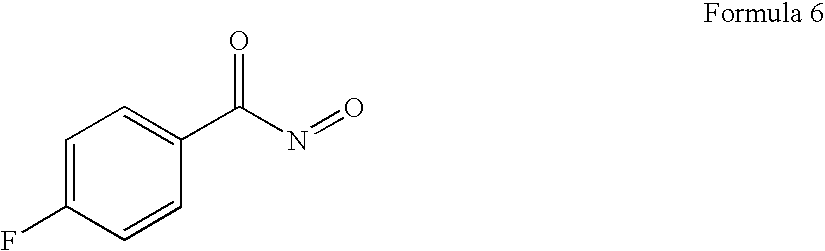
- NBVSIEYNIWEJMZ-UHFFFAOYSA-N O=NC(=O)C1=CC=C(F)C=C1 Chemical compound O=NC(=O)C1=CC=C(F)C=C1 NBVSIEYNIWEJMZ-UHFFFAOYSA-N 0.000 description 1
Classifications
-
- C—CHEMISTRY; METALLURGY
- C07—ORGANIC CHEMISTRY
- C07D—HETEROCYCLIC COMPOUNDS
- C07D249/00—Heterocyclic compounds containing five-membered rings having three nitrogen atoms as the only ring hetero atoms
- C07D249/02—Heterocyclic compounds containing five-membered rings having three nitrogen atoms as the only ring hetero atoms not condensed with other rings
- C07D249/08—1,2,4-Triazoles; Hydrogenated 1,2,4-triazoles
- C07D249/10—1,2,4-Triazoles; Hydrogenated 1,2,4-triazoles with hetero atoms or with carbon atoms having three bonds to hetero atoms with at the most one bond to halogen, e.g. ester or nitrile radicals, directly attached to ring carbon atoms
- C07D249/12—Oxygen or sulfur atoms
-
- A—HUMAN NECESSITIES
- A61—MEDICAL OR VETERINARY SCIENCE; HYGIENE
- A61P—SPECIFIC THERAPEUTIC ACTIVITY OF CHEMICAL COMPOUNDS OR MEDICINAL PREPARATIONS
- A61P29/00—Non-central analgesic, antipyretic or antiinflammatory agents, e.g. antirheumatic agents; Non-steroidal antiinflammatory drugs [NSAID]
-
- A—HUMAN NECESSITIES
- A61—MEDICAL OR VETERINARY SCIENCE; HYGIENE
- A61P—SPECIFIC THERAPEUTIC ACTIVITY OF CHEMICAL COMPOUNDS OR MEDICINAL PREPARATIONS
- A61P43/00—Drugs for specific purposes, not provided for in groups A61P1/00-A61P41/00
-
- C—CHEMISTRY; METALLURGY
- C07—ORGANIC CHEMISTRY
- C07D—HETEROCYCLIC COMPOUNDS
- C07D249/00—Heterocyclic compounds containing five-membered rings having three nitrogen atoms as the only ring hetero atoms
- C07D249/02—Heterocyclic compounds containing five-membered rings having three nitrogen atoms as the only ring hetero atoms not condensed with other rings
- C07D249/08—1,2,4-Triazoles; Hydrogenated 1,2,4-triazoles
- C07D249/10—1,2,4-Triazoles; Hydrogenated 1,2,4-triazoles with hetero atoms or with carbon atoms having three bonds to hetero atoms with at the most one bond to halogen, e.g. ester or nitrile radicals, directly attached to ring carbon atoms
Definitions
- the present invention relates to a 1,2,4-triazole derivative or a non-toxic salt thereof, a method for preparing the same, and a pharmaceutical composition containing the same as an active ingredient.
- Nonsteroidal anti-inflammatory agents are responsible for blocking enzyme, cyclooxygenase (COX) or prostaglandin G/H synthase, to reduce inflammation, pain, or fever. In addition, they inhibit uterus contraction caused by hormones and also inhibit growth of several cancers.
- Cyclooxygenase-1 (COX-1) was first discovered in bovine. The COX-1 is constitutively expressed in a variety of cell types. Unlike the COX-1, cyclooxygenase-2 (COX-2) is a recently discovered isoform of cyclooxygenase that can be easily induced by mitogen, endotoxin, hormone, growth factor, or cytokine.
- Prostaglandin is a potent mediator for various pathological and physiological processes.
- the COX-1 plays important physiological roles such as in the release of endogenous prostaglandin, the maintenance of the shape and the function of stomach, and the blood circulation in the kidney.
- the COX-2 is induced by an inflammatory factor, hormone, a growth factor, or cytokine. Therefore, the COX-2 is involved in pathological processes of prostaglandin, unlike the constitutive COX-1.
- selective inhibitors of the COX-2 produce fewer and less side effects in terms of action mechanism in comparison with conventional nonsteroidal anti-inflammatory agents. In addition, they reduce inflammation, pain, and fever and inhibit uterus contraction caused by hormones and growth of several cancers.
- a selective COX-2 inhibitor having a diaryl heterocyclic structure i.e. a tricyclic structure has been widely studied as a potent candidate.
- the diaryl heterocyclic structure has a central ring and a sulfonamide or methylsulfone group attached to one of the aryl rings.
- Celecoxib of formula 70 is disclosed in U.S. Pat. No. 5,466,823.
- the Celecoxib is a substituted pyrazolyl benzenesulfonamide derivative.
- Rofecoxib of formula 71 Another selective COX-2 inhibitor, Rofecoxib of formula 71 is disclosed in WO 95/00501.
- the Rofecoxib has a diary heterocyclic structure with a central furanone ring.
- Valdecoxib of formula 72 as another selective COX-2 inhibitor is disclosed in U.S. Pat. No. 5,633,272.
- the Valdecoxib has a phenylsulfonamide moiety with a central isoxazole ring.
- the selective COX-2 inhibitors of formulas 70 to 72 are effective inflammatory therapeutic agents with fewer and less side effects in comparison with conventional nonsteroidal anti-inflammatory agents.
- An aspect of the present invention provides a 1,2.4-triazole derivative of formula 1 or a non-toxic salt thereof.
- Another aspect of the present invention provides a method for preparing a 1,2.4-triazole derivative or a non-toxic salt thereof.
- Another aspect of the present invention provides a pharmaceutical composition
- a pharmaceutical composition comprising a 1,2.4-triazole derivative or a non-toxic salt thereof as an active ingredient for the treatment of fever, pain, and inflammation.
- the 1,2,4-triazole derivative of formula 1 may be present in a form of a non-toxic salt.
- non-toxic salt refers to a pharmaceutically acceptable toxin-free salt, including an organic salt and an inorganic salt.
- the 1,2,4-triazole derivative of formula 1 may be present in a form of an organic acid salt or an inorganic acid salt.
- Examples of the organic acid salt or the inorganic acid salt of the 1,2,4-triazole derivative of formula 1 include, but are not limited to, a salt of acetic acid, adipic acid, aspartic acid, 1,5-naphthalene disulfonic acid, benzene sulfonic acid, benzoic acid, camphor sulfonic acid, citric acid, 1,2-ethane disulfonic acid, ethane sulfonic acid, ethylenediaminetetraacetic acid, fumaric acid, glucoheptonic acid, gluconic acid, glutamic acid, hydroiodic acid, hydrobromic acid, hydrochloric acid, icethionic acid, lactic acid, maleic acid, malic acid, madelic acid, methane sulfonic acid, mucinic acid, 2-naphthalenedisulfonic acid, nitric acid, oxalic acid, pentothenic acid, phosphoric acid, pivalric acid, propionic acid,
- the 1,2,4-triazole derivative of the present invention preferably includes:
- a method for preparing a 1,2,4-triazole derivative of formula 1b comprising reacting compound of formula 1a with R′—Br or R′—I in the presence of a base:
- the said reaction is preferably carried out in a polar solvent, which includes, but is not limited to DMF, dioxane, DMSO, methylpyrrolidinone, or m-xylene.
- a polar solvent which includes, but is not limited to DMF, dioxane, DMSO, methylpyrrolidinone, or m-xylene.
- the reactions is preferably carried out at 0° C. to 110° C.
- the reaction time is 5 minutes to 36 hours, depending on the reactants.
- the base may be an organic base or an inorganic base.
- organic base preferably triethyl amine, trimethyl amine, tripropyl amine, pyridine, or imidazole is used.
- inorganic base preferably sodium acetate, sodium hydroxide, sodium hydride, potassium hydroxide, sodium carbonate, or potassium carbonate is used. More preferably, sodium hydride is used.
- a method for preparing a 1,2,4-triazole derivative of formula 1a comprising refluxing a compound of formula 2 in a basic solvent to form a 1,2,4-triazole:
- the basic solvent is preferably potassium hydroxide, sodium hydroxide, or lithium hydroxide. More preferably, potassium hydroxide is used.
- a method for preparing a compound of formula 2 comprising reacting a compound of formula 3 with a hydrazine derivative of formula 4 in the presence of a base:
- the said reaction is preferably carried out in a polar solvent, which includes, but is not limited to DMF, dioxane, DMSO, methylpyrrolidinone, or m-xylene.
- a polar solvent which includes, but is not limited to DMF, dioxane, DMSO, methylpyrrolidinone, or m-xylene.
- the reactions is preferably carried out at 0° C. to 110° C.
- the reaction time is 5 minutes to 36 hours depending on the reactants.
- reaction resultant is extracted with water and an organic solvent such as ethyl acetate, dichloromethane, tetrahydrofuran, or ether, to remove salts.
- organic solvent such as ethyl acetate, dichloromethane, tetrahydrofuran, or ether.
- the crude extract is purified by silica gel column chromatography to give the compound of formula 2.
- the base to be used herein is an organic base or an inorganic base.
- the organic base is triethyl amine, trimethyl amine, tripropyl amine, pyridine, or imidazole.
- the inorganic base is sodium acetate, sodium hydroxide, sodium hydride, potassium hydroxide, sodium carbonate, or potassium carbonate. More preferably, potassium carbonate is used.
- the above compound of formual 3 may be prepared by reacting a benzamide derivative with a oxalyl chloride.
- the reaction is preferably carried out in a solvent selected from the group consisting of dichloromethane, dichloroethane, and THF.
- the reactions is preferably carried out at an ambient temperature or by reflux.
- the reaction time is 1 hour to 24 hours depending on the reactants.
- the reaction product is preferably obtained by distilling the solvent under reduced pressure without purification processes.
- a method for preparing a compound of formula 1 may be expressed in order by the following scheme 1:
- reaction conditions such as types and amounts of solvent, base, and reactants are not limited to those as mentioned in the above. It is understood that a person of ordinary skill in the art can easily prepare compounds of the present invention through any combination of synthesis methods as described in the specification or as disclosed in known documents.
- a pharmaceutical composition comprising a therapeutically effective amount of a 1,2,4-triazole derivative of formula 1 or a non-toxic salt thereof as an active ingredient and a pharmaceutically acceptable carrier for treatment of fever, pain, and inflammation.
- the pharmaceutical composition comprises a compound of formula 1 or a non-toxic salt thereof when it is a selective inhibitor of cyclooxygenase-2. Therefore, the pharmaceutical composition can be used as an antipyretic, an analgesic, and an anti-inflammatory agent, with reduced side effects.
- a compound of formula 1 and a non-toxic salt thereof selectively inhibit cyclooxygenase-2. Therefore, the side effects of conventional nonsteroidal antipyretics, analgesics, and anti-inflammatory agents can be reduced.
- the pharmaceutical composition of the present invention comprises a compound of formula 1 and/or a non-toxic salt thereof and a pharmaceutically acceptable carrier or excipient. Therefore, the pharmaceutical composition may be used as a substitute for conventional nonsteroidal anti-inflammatory agents.
- the pharmaceutical composition of the present invention is useful in treating patients with peptic ulcer, gastritis, regional enteritis, ulcerative colitis, diverticullitis, gastrorrhagia, or hypoprothrombinemia.
- the pharmaceutical composition of the present invention can be used in all inflammatory diseases associated with pathological prostaglandin and is particularly useful in treating osteoarthritis and rheumatoid arthritis which require high dosage of nonsteroidal anti-inflammatory agents.
- the pharmaceutical composition of the present invention can be administered in the form of an adult dosage of 1 mg/day to 1000 mg/day of the compound of formula 1.
- An adequate dosage is determined depending on the degree of disease severity.
- a pharmaceutical composition comprising a therapeutically effective amount of a 1,2,4-triazole derivative of formula 1 or a non-toxic salt thereof and a pharmaceutically acceptable carrier for the treatment of cancers and dementia.
- nonsteroidal anti-inflammatory agents are effective in the treatment of large intestine cancer [ European Journal of Cancer , Vol 37, p2302, 2001], prostate cancer [ Urology , Vol 58, p127, 2001], and dementia [ Exp. Opin. Invest Drugs , Vol 9, p671, 2000]. Therefore, it is understood that the pharmaceutical composition of the present invention as a nonsteroidal anti-inflammatory agent can also be used for the treatment of these diseases.
- the pharmaceutical composition for the treatment of cancers and dementia of the present invention can be administered in the form of an adult dosage of 1 mg/day to 1000 mg/day of the compound of formula 1 or a non-toxic salt thereof.
- An adequate dosage is determined depending on the degree of disease severity.
- the pharmaceutical composition of the present invention may be administered in the form of tablet, foam tablet, capsule, granule, powder, sustained-release tablet, sustained-release capsule (a single unit formulation or a multiple unit formulation), intravenous and intramuscular injectable solution, infusion solution, suspension, or suppository, or in other suitable dosage forms.
- Sustained-release pharmaceutical dosage forms contain active ingredients with or without an initial loading dose. They are wholly or partially sustained-release pharmaceutical dosage forms to release active ingredients in a controlled manner.
- the pharmaceutical composition is orally administered.
- the pharmaceutical composition further comprises a pharmaceutically acceptable excipient and/or diluent and/or adjuvant in pharmaceutically effective amounts.
- excipient and adjuvant examples include gellatin, a natural sugar such as sucrose and lactose, lecitin, pectin, starch such as corn starch and amylose, cyclodextrin and cyclodextrin derivative, dextran, polyvinylpyrrolidone, polyvinyl acetate, Arabic gum, arginic acid, xylose, talc, salicylic acid, calcium hydrogen phosphate, cellulose, cellulose derivative such as methylcellulose, methoxypropyl cellulose, hydroxypropylmethyl cellulose, and hydroxypropylmethylcellulose phthalate, fatty acid having 12 to 22 carbon atoms, emulsifying agent, oil and fat, in particular, vegetable glycerol ester and polyglycerol ester of saturated fatty acids, monohydric alcohol, polyhydric alcohol, polyglycol such as polyethylene glycol, aliphatic alcohol having 1 to 20 carbon atoms, or aliphatic saturated or unsaturated fatty acids
- Suitable adjuvants include a disintegrating agent.
- the disintegrating agent include a cross-linked polyvinylpyrrolidone, sodium carboxymethyl starch, sodium carboxymethyl cellulose, and microcrystalline cellulose.
- a coating agent which is conventionally used in this field may also be used.
- the coating agent include acrylic acid and/or methacrylic acid and/or an ester polymer or copolymer thereof, zein, ethyl cellulose, ethyl cellulose succinate, and Shellac.
- a plasticizer suitable for the coating agent is citric ester and tartaric ester, glycerol and glycerol ester, or polyethylene glycol with different chain lengths.
- a liquid composition such as solution and suspension is formulated in water or a physiological acceptable organic solvent such as alcohol and aliphatic alcohol.
- the liquid pharmaceutical composition may further comprise a preservative such as potassium solvate, methyl 4-hydroxybenzoate, and propyl 4-hydroxybenzoate, an antioxidant such as ascorbic acid, and a fragrant such as peppermint oil.
- a preservative such as potassium solvate, methyl 4-hydroxybenzoate, and propyl 4-hydroxybenzoate
- an antioxidant such as ascorbic acid
- a fragrant such as peppermint oil.
- liquid pharmaceutical composition when the liquid pharmaceutical composition is formulated, a conventional solubilizer or emulsifier such as polyvinylpyrrolidone and polysolvate 80 may be used.
- the titled compound as a liquid was prepared in the same manner as in Example 1 except using 2.0 g of 4-methoxybenzamide instead of 4-fluorobenzamide.
- the titled compound as a liquid was prepared in the same manner as in Example 1 except using 2.0 g of 4-ethoxybenzamide instead of 4-fluorobenzamide.
- the titled compound as a liquid was prepared in the same manner as in Example 1 except using 2.0 g of 4-bromobenzamide instead of 4-fluorobenzamide.
- the titled compound as a liquid was prepared in the same manner as in Example 1 except using 2.0 g of 3-fluoro-4-methoxybenzamide instead of 4-fluorobenzamide.
- Example 24 240 mg (yield 67%) of the titled compound as a yellow solid was prepared in the same manner as in Example 24 except using 300 mg of 4-[3-hydroxy-5-(4-fluorophenyl)-1,2,4-triazole-1-yl]-benzenesulfonamide instead of 4-[3-hydroxy-5-(4-methoxyphenyl)-1,2,4-triazole-1-yl]-benzenesulfonamide.
- Example 24 160 mg (yield 78%) of the titled compound as a yellow solid was prepared in the same manner as in Example 24 except using 200 mg of 1-(4-methanesulfonylphenyl)-5-(4-methoxyphenyl)-1H-1,2,4-triazole-3-ol instead of 4-[3-hydroxy-5-(4-methoxyphenyl)-1,2,4-triazole-1-yl]-benzenesulfonamide.
- U-937 human lymphoma cells (Korean Cell Line Bank, Seoul, Korea, Accession Number: 21593) were cultured and centrifuged. The collected cells were diluted with HBSS ( ⁇ 1, Hank's balanced salt solution) to a concentration of 1 ⁇ 10 6 cells/ml. 1 ml of the dilute cell solution was placed into each well of 12-well plates. 5 ⁇ l of 1 ⁇ M solution of a test compound in DMSO and 5 ⁇ l of DMSO as a control were added to the wells. The wells were incubated in CO 2 incubator at 37° C. for 15 minutes.
- HBSS Hank's balanced salt solution
- the 1,2,4-triazole derivative according to the present invention is an alternative drug for conventional nonsteroidal anti-inflammatory agents and is expected to be useful for treating patients with peptic ulcer disease, gastritis, regional enteritis, ulcerative colitis, diverticullitis, gastrorrhagia, or hypoprothrombinemia.
Landscapes
- Chemical & Material Sciences (AREA)
- Organic Chemistry (AREA)
- Health & Medical Sciences (AREA)
- Chemical Kinetics & Catalysis (AREA)
- Life Sciences & Earth Sciences (AREA)
- General Chemical & Material Sciences (AREA)
- Medicinal Chemistry (AREA)
- Nuclear Medicine, Radiotherapy & Molecular Imaging (AREA)
- Veterinary Medicine (AREA)
- Pharmacology & Pharmacy (AREA)
- Public Health (AREA)
- Animal Behavior & Ethology (AREA)
- General Health & Medical Sciences (AREA)
- Engineering & Computer Science (AREA)
- Bioinformatics & Cheminformatics (AREA)
- Pain & Pain Management (AREA)
- Rheumatology (AREA)
- Pharmaceuticals Containing Other Organic And Inorganic Compounds (AREA)
Abstract
Description


-
- wherein:
- X represents methyl or amino;
- Ar represents phenyl or phenyl substituted with one or more radicals selected from C1-C6 alkoxy and halogen;
- A represents O or S; and
- R represents H, C1-C6 alkyl, trifluoro C1-C6 alkyl, C3-C6 cycloalkyl, C1-C6 alkyl substituted with cyano or halogen, propagyl, allyl, or benzyl;
- or a non-toxic salt thereof.
-
- 4-(3-mercapto-5-phenyl-1,2,4-triazole-1-yl)-benzenesulfonamide;
- 4-(3-hydroxy-5-phenyl-1,2,4-triazole-1-yl)-benzenesulfonamide;
- 4-[3-hydroxy-5-(4-methoxyphenyl)-1,2,4-triazole-1-yl]-benzenesulfonamide;
- 4-[3-hydroxy-5-(4-ethoxyphenyl)-1,2,4-triazole-1-yl]-benzenesulfonamide;
- 4-[3-hydroxy-5-(4-fluorophenyl)-1,2,4-triazole-1-yl]-benzenesulfonamide;
- 4-[3-hydroxy-5-(4-bromophenyl)-1,2,4-triazole-1-yl]-benzenesulfonamide;
- 4-[3-hydroxy-5-(3-fluoro-4-methoxyphenyl)-1,2,4-triazole-1-yl]-benzenesulfonamide;
- 1-(4-methanesulfonylphenyl)-5-phenyl-1H-1,2,4-triazole-3-ol;
- 1-(4-methanesulfonylphenyl)-5-(4-methoxyphenyl)-1H-1,2,4-triazole-3-ol;
- 4-(3-methoxy-5-phenyl-1,2,4-triazole-1-yl)-benzenesulfonamide;
- 4-[3-methoxy-5-(4-fluorophenyl)-1,2,4-triazole-1-yl]-benzenesulfonamide;
- 4-[3-methoxy-5-(4-methoxyphenyl)-1,2,4-triazole-1-yl]-benzenesulfonamide;
- 4-[3-methoxy-5-(4-bromophenyl)-1,2,4-triazole-1-yl]-benzenesulfonamide;
- 4-[3-methoxy-5-(3-fluoro-4-methoxyphenyl)-1,2,4-triazole-1-yl]-benzenesulfonamide;
- 4-(3-methylthio-5-phenyl-1,2,4-triazole-1-yl)-benzenesulfonamide;
- 4-(3-ethoxy-5-phenyl-1,2,4-triazole-1-yl)-benzenesulfonamide;
- 4-[3-ethoxy-5-(4-fluorophenyl)-1,2,4-triazole-1-yl]-benzenesulfonamide;
- 4-[3-ethoxy-5-(4-methoxyphenyl)-1,2,4-triazole-1-yl]-benzenesulfonamide;
- 4-[3-ethoxy-5-(3-fluoro-4-methoxyphenyl)-1,2,4-triazole-1-yl]-benzenesulfonamide;
- 4-(3-ethylthio-5-phenyl-1,2,4-triazole-1-yl)-benzenesulfonamide;
- 4-[3-propoxy-5-(4-methoxyphenyl)-1,2,4-triazole-1-yl]-benzenesulfonamide;
- 4-[3-propoxy-5-(4-fluorophenyl)-1,2,4-triazole-1-yl]-benzenesulfonamide;
- 4-[3-cyclopentyloxy-5-(4-fluorophenyl)-1,2,4-triazole-1-yl]-benzenesulfonamide;
- 4-[3-cyclopentyloxy-5-(4-methoxyphenyl)-1,2,4-triazole-1-yl]-benzenesulfonamide;
- 4-[3-cyclohexyloxy-5-(4-fluorophenyl)-1,2,4-triazole-1-yl]-benzenesulfonamide;
- 4-[3-cyclohexyloxy-5-(4-methoxyphenyl)-1,2,4-triazole-1-yl]-benzenesulfonamide;
- 4-(3-isopropoxy-5-phenyl-1,2,4-triazole-1-yl)-benzenesulfonamide;
- 4-[3-isopropoxy-5-(4-fluorophenyl)-1,2,4-triazole-1-yl]-benzenesulfonamide;
- 4-[3-isopropoxy-5-(-4-methoxyphenyl)-1,2,4-triazole-1-yl]-benzenesulfonamide;
- 4-(3-isopropylthio-5-phenyl-1,2,4-triazole-1-yl)-benzenesulfonamide;
- 4-(3-allyloxy-5-phenyl-1,2,4-triazole-1-yl)-benzenesulfonamide;
- 4-[3-allyloxy-5-(4-fluorophenyl)-1,2,4-triazole-1-yl]-benzenesulfonamide;
- 4-[3-allyloxy-5-(4-methoxyphenyl)-1,2,4-triazole-1-yl]-benzenesulfonamide;
- 4-[3-cyanomethoxy-5-(4-fluorophenyl)-1,2,4-triazole-1-yl]-benzenesulfonamide;
- 4-[3-cyanomethoxy-5-(4-methoxyphenyl)-1,2,4-triazole-1-yl]-benzenesulfonamide;
- 4-(3-benzyloxy-5-phenyl-1,2,4-triazole-1-yl)-benzenesulfonamide;
- 4-[3-benzyloxy-5-(3-fluoro-4-methoxyphenyl)-1,2,4-triazole-1-yl]-benzenesulfonamide;
- 4-[3-(2-chloroethoxy)-5-phenyl-1,2,4-triazole-1-yl]-benzenesulfonamide;
- 4-[3-(2,2,2-trifluoroethoxy)-5-(4-methoxyphenyl)-1,2,4-triazole-1-yl]-benzenesulfonamide;
- 4-[3-(2,2,2,-trifluoroethoxy)-5-(4-fluorophenyl)-1,2,4-triazole-1-yl]-benzenesulfonamide;
- 4-[3-cyclopropoxy-5-phenyl-1,2,4-triazole-1-yl]-benzenesulfonamide;
- 4-[3-prop-2-ynyloxy-5-(4-methoxyphenyl)-1,2,4-triazole-1-yl]-benzenesulfonamide;
- 4-[3-prop-2-ynyloxy-5-(4-fluorophenyl)-1,2,4-triazole-1-yl]-benzenesulfonamide;
- 4-(3-propy-2-nylthio-5-phenyl-1,2,4-triazole-1-yl)-benzenesulfonamide;
- 1-(4-methanesulfonylphenyl)-3-methoxy-5-phenyl-1H-1,2,4-triazole;
- 1-(4-methanesulfonylphenyl)-3-methoxy-5-(4-methoxyphenyl)-1H-1,2,4-triazole;
- 1-(4-methanesulfonylphenyl)-3-ethoxy-5-phenyl-1H-1,2,4-triazole;
- 1-(4-methanesulfonylphenyl)-3-ethoxy-5-(4-methoxyphenyl)-1H-1,2,4-triazole;
- 1-(4-methanesulfonylphenyl)-3-isopropoxy-5-phenyl-1H-1,2,4-triazole; and
- 1-(4-methanesulfonylphenyl)-3-isopropoxy-5-(4-methoxyphenyl)-1H-1,2,4-triazole.

-
- wherein, Ar, A, and X are as defined in formula 1.


-
- wherein:
- X, Ar, and A are as defined in formula 1;
- R′ represents C1-C6 alkyl, trifluoro C1-C6 alkyl, C3-C6 cycloalkyl, C1-C6 alkyl substituted with cyano or halogen, propagyl, allyl, or benzyl.

-
- wherein, X, Ar, and A are as defined in formula 1.


-
- wherein, X, Y, and A are as defined in formula 1.

-
- wherein, X, Y, A, and B are as defined in the above. A hydrazine derivative to be used in the scheme 1 may be purchased as is or in the form of their hydrochlorides


-
- 1. Evaluation of Selective COX-2 Inhibitory Activity
- 1) Method
% Inhibition=(concentration of PGE2 in test compound-untreated sample−concentration of PGE2 in test compound-treated sample)/(concentration of PGE2 in test compound-untreated sample)×100
| TABLE 1 |
| Cyclooxygenase (COX) Inhibition (%) |
| Samples | COX-1 (1 μM) | COX-2 (10 nM) | ||
| Reference (Valdecoxib) | 28.8 | 5.47 | ||
| Example 16 | 35.5 | 11.2 | ||
| Example 17 | 48.8 | 10.5 | ||
| Example 18 | 19.5 | 6.7 | ||
| Example 19 | 37.4 | 12.3 | ||
| Example 20 | 26.4 | 11.0 | ||
| Example 21 | 25.7 | 12.6 | ||
| Example 22 | 11.1 | 36.4 | ||
| Example 23 | 13.2 | 35.1 | ||
| Example 24 | 16.4 | 31.2 | ||
| Example 25 | 23.2 | 27.8 | ||
| Example 26 | 44.5 | 13.5 | ||
| Example 27 | 11.2 | 11.5 | ||
| Example 28 | 21.2 | 10.5 | ||
| Example 29 | 17.7 | 11.1 | ||
| Example 30 | 16.4 | 13.2 | ||
| Example 31 | 15.5 | 16.4 | ||
| Example 32 | 21.4 | 11.5 | ||
| Example 33 | 23.7 | 10.5 | ||
| Example 34 | 31.2 | 9.5 | ||
| Example 35 | 23.4 | 16.1 | ||
| Example 36 | 27.0 | 17.2 | ||
| Example 37 | 12.0 | 22.3 | ||
| Example 38 | 17.4 | 33.1 | ||
| Example 39 | 15.5 | 20.7 | ||
| Example 40 | 16.2 | 16.2 | ||
| Example 41 | 27.7 | 15.5 | ||
| Example 42 | 26.6 | 13.3 | ||
| Example 43 | 30.4 | 16.7 | ||
| Example 44 | 27.2 | 14.5 | ||
| Example 45 | 23.4 | 13.3 | ||
| Example 46 | 34.2 | 12.2 | ||
| Example 47 | 25.4 | 10.6 | ||
| Example 48 | 26.4 | 9.8 | ||
| Example 49 | 33.1 | 24.5 | ||
| Example 50 | 28.0 | 16.1 | ||
| Example 51 | 21.4 | 23.4 | ||
| Example 52 | 34.3 | 33.1 | ||
| Example 53 | 20.4 | 16.2 | ||
| Example 54 | 26.4 | 15.5 | ||
| Example 55 | 33.1 | 16.2 | ||
| Example 56 | 37.2 | 27.7 | ||
| Example 57 | 21.4 | 26.6 | ||
| Example 58 | 34.3 | 30.4 | ||
| Example 59 | 22.6 | 27.2 | ||
| Example 60 | 23.4 | 23.4 | ||
| Example 61 | 33.1 | 34.2 | ||
| Example 62 | 26.0 | 25.4 | ||
| Example 63 | 22.6 | 26.4 | ||
| Example 64 | 23.4 | 33.1 | ||
Claims (3)


Applications Claiming Priority (3)
| Application Number | Priority Date | Filing Date | Title |
|---|---|---|---|
| KR10-2002-0074348A KR100470076B1 (en) | 2002-11-27 | 2002-11-27 | 1,2,4-triazole derivatives, processes for the preparation thereof, and pharmaceutical compositions containing the same |
| KR10-2002-0074348 | 2002-11-27 | ||
| PCT/KR2003/002574 WO2004048347A1 (en) | 2002-11-27 | 2003-11-26 | 1,2,4-triazole derivatives, processes for the preparation thereof, and pharmaceutical compositions containing the same |
Publications (2)
| Publication Number | Publication Date |
|---|---|
| US20060074118A1 US20060074118A1 (en) | 2006-04-06 |
| US7473700B2 true US7473700B2 (en) | 2009-01-06 |
Family
ID=36126374
Family Applications (1)
| Application Number | Title | Priority Date | Filing Date |
|---|---|---|---|
| US10/536,408 Expired - Fee Related US7473700B2 (en) | 2002-11-27 | 2003-11-26 | 1,2,4-triazole derivatives, processes for the preparation thereof, and pharmaceutical compositions containing the same |
Country Status (7)
| Country | Link |
|---|---|
| US (1) | US7473700B2 (en) |
| EP (1) | EP1565447A4 (en) |
| JP (1) | JP4532283B2 (en) |
| KR (1) | KR100470076B1 (en) |
| CN (1) | CN1732160A (en) |
| AU (1) | AU2003284769A1 (en) |
| WO (1) | WO2004048347A1 (en) |
Families Citing this family (4)
| Publication number | Priority date | Publication date | Assignee | Title |
|---|---|---|---|---|
| KR100576343B1 (en) * | 2004-07-22 | 2006-05-03 | 씨제이 주식회사 | 1,2,4-triazole derivatives, preparation method thereof and pharmaceutical composition |
| RU2596185C2 (en) | 2010-09-29 | 2016-08-27 | Интервет Интернэшнл Б.В. | N-heteroaryl compounds |
| US8853248B2 (en) * | 2012-04-05 | 2014-10-07 | Hubert Maehr | (1,2,3-triazolyl)sulfonyl derivatives |
| CN107311948A (en) * | 2017-06-16 | 2017-11-03 | 福州大学 | A kind of key intermediates of MI 2 and preparation method thereof |
Citations (13)
| Publication number | Priority date | Publication date | Assignee | Title |
|---|---|---|---|---|
| JPS5649371A (en) | 1979-09-28 | 1981-05-02 | Nippon Nohyaku Co Ltd | Preparation of 1,2,4-triazole derivative |
| JPS5939880A (en) | 1982-08-26 | 1984-03-05 | Sumitomo Chem Co Ltd | Carbamolytriazole derivative, its preparation and herbicide containing said derivative as active component |
| EP0176444A1 (en) | 1984-09-24 | 1986-04-02 | Roussel-Uclaf | Process for the preparation of derivatives of 4H-1,2,4-triazole, triazoles so obtained, their use as medicaments, and pharmaceutical compositons containing them |
| WO1995000501A2 (en) | 1993-06-24 | 1995-01-05 | Merck Frosst Canada Inc. | Phenyl heterocycles as cyclooxygenase-2 inhibitors |
| US5466823A (en) | 1993-11-30 | 1995-11-14 | G.D. Searle & Co. | Substituted pyrazolyl benzenesulfonamides |
| JPH0892225A (en) | 1994-09-29 | 1996-04-09 | Nissan Chem Ind Ltd | Triazoleglycolic acid amide derivative |
| US5633272A (en) | 1995-02-13 | 1997-05-27 | Talley; John J. | Substituted isoxazoles for the treatment of inflammation |
| WO2003040110A1 (en) | 2001-11-09 | 2003-05-15 | Fujisawa Pharmaceutical Co., Ltd. | Triazole derivatives as cyclooxygenase (cox) inhibitors |
| US20030125368A1 (en) | 2001-07-05 | 2003-07-03 | Sakya Subas M. | Sulfonyl aryl triazoles as anti-inflammatory/analgesic agents |
| US6849652B1 (en) * | 2002-11-21 | 2005-02-01 | Cj Corp. | 1,2,4-triazole derivative, method for preparing the same, and pharmaceutical composition containing the same |
| US7019144B2 (en) * | 2002-08-07 | 2006-03-28 | Cj Corp. | 1,2,4-Triazole derivative, method for preparing the same, and pharmaceutical composition containing the same |
| US7135572B2 (en) * | 2001-12-28 | 2006-11-14 | Cj Corp | Diaryl 1,2,4-triazole derivatives as a highly selective cyclooxygenase-2 inhibitor |
| US7230010B2 (en) * | 2002-11-26 | 2007-06-12 | Cj Corp. | 1,2,4-triazole derivative, method for preparing the same, and pharmaceutical composition containing the same |
Family Cites Families (6)
| Publication number | Priority date | Publication date | Assignee | Title |
|---|---|---|---|---|
| US4075341A (en) * | 1974-05-24 | 1978-02-21 | Gruppo Lepetit S.P.A. | 2-Substituted phenyl-5-triazols [5,1-a] isoquinoline compounds |
| HU193891B (en) * | 1984-02-07 | 1987-12-28 | Gyogyszerkutato Intezet | Process for production of new derivatives of 1,2,4-triasole |
| US5434178A (en) * | 1993-11-30 | 1995-07-18 | G.D. Searle & Co. | 1,3,5 trisubstituted pyrazole compounds for treatment of inflammation |
| US5547975A (en) * | 1994-09-20 | 1996-08-20 | Talley; John J. | Benzopyranopyrazolyl derivatives for the treatment of inflammation |
| EP1099695A1 (en) * | 1999-11-09 | 2001-05-16 | Laboratoire Theramex S.A. | 5-aryl-1H-1,2,4-triazole compounds as inhibitors of cyclooxygenase-2 and pharmaceutical compositions containing them |
| DE60018792T2 (en) * | 1999-12-03 | 2006-01-26 | Pfizer Products Inc., Groton | HETEROCYCLO-ALKYLSULFONYLPYRAZOLE DERIVATIVES FOR USE AS ANTI-IMFLAMMATORY OR ANALGETIC COMPOUNDS |
-
2002
- 2002-11-27 KR KR10-2002-0074348A patent/KR100470076B1/en not_active Expired - Fee Related
-
2003
- 2003-11-26 US US10/536,408 patent/US7473700B2/en not_active Expired - Fee Related
- 2003-11-26 EP EP03774331A patent/EP1565447A4/en not_active Withdrawn
- 2003-11-26 JP JP2004555122A patent/JP4532283B2/en not_active Expired - Fee Related
- 2003-11-26 WO PCT/KR2003/002574 patent/WO2004048347A1/en not_active Ceased
- 2003-11-26 AU AU2003284769A patent/AU2003284769A1/en not_active Abandoned
- 2003-11-26 CN CNA2003801077195A patent/CN1732160A/en active Pending
Patent Citations (14)
| Publication number | Priority date | Publication date | Assignee | Title |
|---|---|---|---|---|
| JPS5649371A (en) | 1979-09-28 | 1981-05-02 | Nippon Nohyaku Co Ltd | Preparation of 1,2,4-triazole derivative |
| JPS5939880A (en) | 1982-08-26 | 1984-03-05 | Sumitomo Chem Co Ltd | Carbamolytriazole derivative, its preparation and herbicide containing said derivative as active component |
| EP0176444A1 (en) | 1984-09-24 | 1986-04-02 | Roussel-Uclaf | Process for the preparation of derivatives of 4H-1,2,4-triazole, triazoles so obtained, their use as medicaments, and pharmaceutical compositons containing them |
| WO1995000501A2 (en) | 1993-06-24 | 1995-01-05 | Merck Frosst Canada Inc. | Phenyl heterocycles as cyclooxygenase-2 inhibitors |
| US5466823A (en) | 1993-11-30 | 1995-11-14 | G.D. Searle & Co. | Substituted pyrazolyl benzenesulfonamides |
| JPH0892225A (en) | 1994-09-29 | 1996-04-09 | Nissan Chem Ind Ltd | Triazoleglycolic acid amide derivative |
| US5633272A (en) | 1995-02-13 | 1997-05-27 | Talley; John J. | Substituted isoxazoles for the treatment of inflammation |
| US20030125368A1 (en) | 2001-07-05 | 2003-07-03 | Sakya Subas M. | Sulfonyl aryl triazoles as anti-inflammatory/analgesic agents |
| WO2003040110A1 (en) | 2001-11-09 | 2003-05-15 | Fujisawa Pharmaceutical Co., Ltd. | Triazole derivatives as cyclooxygenase (cox) inhibitors |
| US7135572B2 (en) * | 2001-12-28 | 2006-11-14 | Cj Corp | Diaryl 1,2,4-triazole derivatives as a highly selective cyclooxygenase-2 inhibitor |
| US7169929B2 (en) * | 2001-12-28 | 2007-01-30 | Cj Corp. | Diaryl 1,2,4-triazole derivatives as a highly selective cyclooxygenase-2 inhibitor |
| US7019144B2 (en) * | 2002-08-07 | 2006-03-28 | Cj Corp. | 1,2,4-Triazole derivative, method for preparing the same, and pharmaceutical composition containing the same |
| US6849652B1 (en) * | 2002-11-21 | 2005-02-01 | Cj Corp. | 1,2,4-triazole derivative, method for preparing the same, and pharmaceutical composition containing the same |
| US7230010B2 (en) * | 2002-11-26 | 2007-06-12 | Cj Corp. | 1,2,4-triazole derivative, method for preparing the same, and pharmaceutical composition containing the same |
Non-Patent Citations (7)
| Title |
|---|
| Battistini B., et al., "Cox-1 and Cox-2:Toward the Development of More Selective NSAIDs", DN&P, Oct. 1994, pp. 501-512, vol. 7(8). |
| Hüll M., et al., "Anti-inflammatory drugs: a hope for Alzheimer's disease?", Exp. Opin. Invest. Drugs, 2000, pp. 671-683, vol. 9(4). |
| Kirschenbaum A., et al., "The Role of Cyclooxygenase-2 in Prostate Cancer", Urology, Aug. 2001, pp. 127-131, vol. 58(Supplemental 2A). |
| Reitz D., et al., "Selective Cyclooxygenase Inhibitors", Annual Report in Medicinal Chemistry, 1995, pp. 179-188, vol. 30. |
| Szilágyi G., et al., "Preparation and antiarthritic activity of new 1,5-diaryl-3-alkylthio-1H-1,2,4-triazoles and corresponding sulfoxides and sulfones", Eur. J. Med. Chem., 1990, pp. 95-101, vol. 25, XP002346280. |
| Van Cutsem E., et al., "Recent advances in the management of colorectal cancer", European Journal of Cancer, 2001, pp. 2302-2309, vol. 37. |
| Vane J., "Towards a better aspirin", Nature, Jan. 1994, pp. 215-216, vol. 367. |
Also Published As
| Publication number | Publication date |
|---|---|
| AU2003284769A1 (en) | 2004-06-18 |
| KR20040046420A (en) | 2004-06-05 |
| KR100470076B1 (en) | 2005-02-05 |
| EP1565447A1 (en) | 2005-08-24 |
| CN1732160A (en) | 2006-02-08 |
| JP4532283B2 (en) | 2010-08-25 |
| US20060074118A1 (en) | 2006-04-06 |
| WO2004048347A1 (en) | 2004-06-10 |
| JP2006509757A (en) | 2006-03-23 |
| EP1565447A4 (en) | 2005-11-16 |
Similar Documents
| Publication | Publication Date | Title |
|---|---|---|
| US7019144B2 (en) | 1,2,4-Triazole derivative, method for preparing the same, and pharmaceutical composition containing the same | |
| US7531560B2 (en) | Anti-cytokine heterocyclic compounds | |
| US20060074118A1 (en) | 1, 2, 4 - Triazole derivatives, processes for the preparation thereof, and pharmaceutical compositions containing the same | |
| US6849652B1 (en) | 1,2,4-triazole derivative, method for preparing the same, and pharmaceutical composition containing the same | |
| US6727268B2 (en) | 2-thioxothiazole derivative, method for preparing the same, and pharmaceutical composition containing the same | |
| US7230010B2 (en) | 1,2,4-triazole derivative, method for preparing the same, and pharmaceutical composition containing the same | |
| US6777434B2 (en) | Thiazolidine-4-one derivative, method for preparing the same, and pharmaceutical composition containing the same | |
| US6689805B2 (en) | Pyrazole-3-one derivative, method for preparing the same, and pharmaceutical composition containing the same | |
| US7781592B2 (en) | Thione derivative, method for the preparation thereof, and pharmaceutical composition containing the same | |
| JP7568241B2 (en) | New antitumor agents | |
| KR100484526B1 (en) | Thione derivatives, processes for the preparation thereof, and pharmaceutical compositions containing the same | |
| KR100641280B1 (en) | [1,2] dithiol-3-thione derivatives, preparation method thereof and pharmaceutical composition |
Legal Events
| Date | Code | Title | Description |
|---|---|---|---|
| AS | Assignment |
Owner name: CJ CORPORATION, KOREA, REPUBLIC OF Free format text: ASSIGNMENT OF ASSIGNORS INTEREST;ASSIGNORS:CHO, IL HWAN;KO, DONG HYUN;CHAE, MYEONG YUN;AND OTHERS;REEL/FRAME:017481/0643 Effective date: 20050523 |
|
| AS | Assignment |
Owner name: CJ CHEILJEDANG CORPORATION, KOREA, DEMOCRATIC PEOP Free format text: ASSIGNMENT OF ASSIGNORS INTEREST;ASSIGNOR:CJ CORPORATION;REEL/FRAME:021012/0117 Effective date: 20080424 Owner name: CJ CHEILJEDANG CORPORATION,KOREA, DEMOCRATIC PEOPL Free format text: ASSIGNMENT OF ASSIGNORS INTEREST;ASSIGNOR:CJ CORPORATION;REEL/FRAME:021012/0117 Effective date: 20080424 |
|
| FEPP | Fee payment procedure |
Free format text: PAYOR NUMBER ASSIGNED (ORIGINAL EVENT CODE: ASPN); ENTITY STATUS OF PATENT OWNER: LARGE ENTITY |
|
| AS | Assignment |
Owner name: CJ CHEILJEDANG CORPORATION, KOREA, REPUBLIC OF Free format text: CORRECTIVE ASSIGNMENT TO CORRECT THE COUNTRY LISTED IN THE ADDRESS OF THE ASSIGNEE PREVIOUSLY RECORDED ON REEL 021012 FRAME 0117;ASSIGNOR:CJ CORPORATION;REEL/FRAME:023180/0124 Effective date: 20080424 Owner name: CJ CHEILJEDANG CORPORATION,KOREA, REPUBLIC OF Free format text: CORRECTIVE ASSIGNMENT TO CORRECT THE COUNTRY LISTED IN THE ADDRESS OF THE ASSIGNEE PREVIOUSLY RECORDED ON REEL 021012 FRAME 0117. ASSIGNOR(S) HEREBY CONFIRMS THE ASSIGNMENT OF ASSIGNOR'S INTEREST;ASSIGNOR:CJ CORPORATION;REEL/FRAME:023180/0124 Effective date: 20080424 Owner name: CJ CHEILJEDANG CORPORATION, KOREA, REPUBLIC OF Free format text: CORRECTIVE ASSIGNMENT TO CORRECT THE COUNTRY LISTED IN THE ADDRESS OF THE ASSIGNEE PREVIOUSLY RECORDED ON REEL 021012 FRAME 0117. ASSIGNOR(S) HEREBY CONFIRMS THE ASSIGNMENT OF ASSIGNOR'S INTEREST;ASSIGNOR:CJ CORPORATION;REEL/FRAME:023180/0124 Effective date: 20080424 |
|
| FEPP | Fee payment procedure |
Free format text: PAYER NUMBER DE-ASSIGNED (ORIGINAL EVENT CODE: RMPN); ENTITY STATUS OF PATENT OWNER: LARGE ENTITY Free format text: PAYOR NUMBER ASSIGNED (ORIGINAL EVENT CODE: ASPN); ENTITY STATUS OF PATENT OWNER: LARGE ENTITY |
|
| FPAY | Fee payment |
Year of fee payment: 4 |
|
| REMI | Maintenance fee reminder mailed | ||
| LAPS | Lapse for failure to pay maintenance fees | ||
| STCH | Information on status: patent discontinuation |
Free format text: PATENT EXPIRED DUE TO NONPAYMENT OF MAINTENANCE FEES UNDER 37 CFR 1.362 |
|
| STCH | Information on status: patent discontinuation |
Free format text: PATENT EXPIRED DUE TO NONPAYMENT OF MAINTENANCE FEES UNDER 37 CFR 1.362 |
|
| FP | Lapsed due to failure to pay maintenance fee |
Effective date: 20170106 |