US7473694B2 - Pyrazolopyrimidine derivatives or pharmaceutically acceptable salts thereof - Google Patents
Pyrazolopyrimidine derivatives or pharmaceutically acceptable salts thereof Download PDFInfo
- Publication number
- US7473694B2 US7473694B2 US11/377,363 US37736306A US7473694B2 US 7473694 B2 US7473694 B2 US 7473694B2 US 37736306 A US37736306 A US 37736306A US 7473694 B2 US7473694 B2 US 7473694B2
- Authority
- US
- United States
- Prior art keywords
- group
- optionally substituted
- alkyl group
- hydrogen atom
- alkyl
- Prior art date
- Legal status (The legal status is an assumption and is not a legal conclusion. Google has not performed a legal analysis and makes no representation as to the accuracy of the status listed.)
- Expired - Fee Related, expires
Links
- OGEBRHQLRGFBNV-RZDIXWSQSA-N chembl2036808 Chemical class C12=NC(NCCCC)=NC=C2C(C=2C=CC(F)=CC=2)=NN1C[C@H]1CC[C@H](N)CC1 OGEBRHQLRGFBNV-RZDIXWSQSA-N 0.000 title claims abstract description 89
- 150000003839 salts Chemical class 0.000 title claims abstract description 69
- 239000004480 active ingredient Substances 0.000 claims abstract description 9
- 102100034069 MAP kinase-activated protein kinase 2 Human genes 0.000 claims abstract 3
- 101710141394 MAP kinase-activated protein kinase 2 Proteins 0.000 claims abstract 3
- 125000004435 hydrogen atom Chemical group [H]* 0.000 claims description 265
- 125000004178 (C1-C4) alkyl group Chemical group 0.000 claims description 219
- 125000004209 (C1-C8) alkyl group Chemical group 0.000 claims description 216
- 125000001424 substituent group Chemical group 0.000 claims description 207
- 229910052736 halogen Chemical group 0.000 claims description 160
- 125000006552 (C3-C8) cycloalkyl group Chemical group 0.000 claims description 144
- 125000001997 phenyl group Chemical group [H]C1=C([H])C([H])=C(*)C([H])=C1[H] 0.000 claims description 138
- 125000000623 heterocyclic group Chemical group 0.000 claims description 137
- 150000002367 halogens Chemical group 0.000 claims description 115
- -1 —(C═O)OH Chemical group 0.000 claims description 115
- 125000005915 C6-C14 aryl group Chemical group 0.000 claims description 114
- 229910052757 nitrogen Inorganic materials 0.000 claims description 95
- 125000001797 benzyl group Chemical group [H]C1=C([H])C([H])=C(C([H])=C1[H])C([H])([H])* 0.000 claims description 73
- 125000004433 nitrogen atom Chemical group N* 0.000 claims description 73
- 125000000229 (C1-C4)alkoxy group Chemical group 0.000 claims description 61
- 125000004093 cyano group Chemical group *C#N 0.000 claims description 49
- 125000005843 halogen group Chemical group 0.000 claims description 46
- 125000001072 heteroaryl group Chemical group 0.000 claims description 46
- 125000005931 tert-butyloxycarbonyl group Chemical group [H]C([H])([H])C(OC(*)=O)(C([H])([H])[H])C([H])([H])[H] 0.000 claims description 46
- 229910052717 sulfur Inorganic materials 0.000 claims description 45
- 125000002619 bicyclic group Chemical group 0.000 claims description 43
- 125000004432 carbon atom Chemical group C* 0.000 claims description 41
- 125000005842 heteroatom Chemical group 0.000 claims description 41
- 125000003545 alkoxy group Chemical group 0.000 claims description 38
- 125000002777 acetyl group Chemical group [H]C([H])([H])C(*)=O 0.000 claims description 36
- 125000001584 benzyloxycarbonyl group Chemical group C(=O)(OCC1=CC=CC=C1)* 0.000 claims description 36
- 125000003710 aryl alkyl group Chemical group 0.000 claims description 34
- 125000000217 alkyl group Chemical group 0.000 claims description 32
- 229920006395 saturated elastomer Polymers 0.000 claims description 30
- 125000004415 heterocyclylalkyl group Chemical group 0.000 claims description 28
- 125000002950 monocyclic group Chemical group 0.000 claims description 27
- 229910052760 oxygen Inorganic materials 0.000 claims description 26
- 125000003277 amino group Chemical group 0.000 claims description 25
- 125000004430 oxygen atom Chemical group O* 0.000 claims description 19
- 125000004434 sulfur atom Chemical group 0.000 claims description 19
- 125000004648 C2-C8 alkenyl group Chemical group 0.000 claims description 18
- 125000004649 C2-C8 alkynyl group Chemical group 0.000 claims description 18
- 125000002618 bicyclic heterocycle group Chemical group 0.000 claims description 18
- 229910052799 carbon Inorganic materials 0.000 claims description 13
- 125000002911 monocyclic heterocycle group Chemical group 0.000 claims description 13
- 239000003112 inhibitor Substances 0.000 claims description 10
- 125000000113 cyclohexyl group Chemical group [H]C1([H])C([H])([H])C([H])([H])C([H])(*)C([H])([H])C1([H])[H] 0.000 claims description 9
- 125000000951 phenoxy group Chemical group [H]C1=C([H])C([H])=C(O*)C([H])=C1[H] 0.000 claims description 9
- 125000005936 piperidyl group Chemical group 0.000 claims description 7
- 125000003808 silyl group Chemical group [H][Si]([H])([H])[*] 0.000 claims description 5
- 125000005330 8 membered heterocyclic group Chemical group 0.000 claims description 4
- 125000003178 carboxy group Chemical group [H]OC(*)=O 0.000 claims description 4
- 125000000719 pyrrolidinyl group Chemical group 0.000 claims description 4
- 125000000753 cycloalkyl group Chemical group 0.000 claims description 3
- 239000008194 pharmaceutical composition Substances 0.000 claims description 3
- 239000003937 drug carrier Substances 0.000 claims description 2
- 150000001875 compounds Chemical class 0.000 abstract description 186
- 208000023275 Autoimmune disease Diseases 0.000 abstract description 9
- 206010028980 Neoplasm Diseases 0.000 abstract description 9
- 201000011510 cancer Diseases 0.000 abstract description 9
- 208000020084 Bone disease Diseases 0.000 abstract description 7
- 230000001066 destructive effect Effects 0.000 abstract description 7
- 239000003814 drug Substances 0.000 abstract description 7
- 230000002401 inhibitory effect Effects 0.000 abstract description 5
- 201000010099 disease Diseases 0.000 abstract description 4
- 208000037265 diseases, disorders, signs and symptoms Diseases 0.000 abstract description 4
- 229940079593 drug Drugs 0.000 abstract description 2
- 208000027866 inflammatory disease Diseases 0.000 abstract description 2
- 230000005907 cancer growth Effects 0.000 abstract 1
- 230000001404 mediated effect Effects 0.000 abstract 1
- 230000004614 tumor growth Effects 0.000 abstract 1
- JEGMWWXJUXDNJN-LURJTMIESA-N C[C@H]1CCCNC1 Chemical compound C[C@H]1CCCNC1 JEGMWWXJUXDNJN-LURJTMIESA-N 0.000 description 373
- XEKOWRVHYACXOJ-UHFFFAOYSA-N Ethyl acetate Chemical compound CCOC(C)=O XEKOWRVHYACXOJ-UHFFFAOYSA-N 0.000 description 177
- RMSGBIDKBWPHMJ-UHFFFAOYSA-N CCOC1=CC=C(C(C)(C)C)C=C1 Chemical compound CCOC1=CC=C(C(C)(C)C)C=C1 RMSGBIDKBWPHMJ-UHFFFAOYSA-N 0.000 description 164
- KSMVBYPXNKCPAJ-LJGSYFOKSA-N C[C@H]1CC[C@H](N)CC1 Chemical compound C[C@H]1CC[C@H](N)CC1 KSMVBYPXNKCPAJ-LJGSYFOKSA-N 0.000 description 138
- 238000006243 chemical reaction Methods 0.000 description 83
- YMWUJEATGCHHMB-UHFFFAOYSA-N Dichloromethane Chemical compound ClCCl YMWUJEATGCHHMB-UHFFFAOYSA-N 0.000 description 82
- 239000000243 solution Substances 0.000 description 76
- 239000000203 mixture Substances 0.000 description 74
- PMZURENOXWZQFD-UHFFFAOYSA-L Sodium Sulfate Chemical compound [Na+].[Na+].[O-]S([O-])(=O)=O PMZURENOXWZQFD-UHFFFAOYSA-L 0.000 description 72
- 229910052938 sodium sulfate Inorganic materials 0.000 description 72
- 235000011152 sodium sulphate Nutrition 0.000 description 72
- 239000002904 solvent Substances 0.000 description 68
- WYURNTSHIVDZCO-UHFFFAOYSA-N Tetrahydrofuran Chemical compound C1CCOC1 WYURNTSHIVDZCO-UHFFFAOYSA-N 0.000 description 62
- 238000003786 synthesis reaction Methods 0.000 description 62
- 0 *B.[1*]C1=NN2C(N[4*])=CC(NC[3*])=NC2=C1[2*] Chemical compound *B.[1*]C1=NN2C(N[4*])=CC(NC[3*])=NC2=C1[2*] 0.000 description 57
- 230000015572 biosynthetic process Effects 0.000 description 57
- 238000004128 high performance liquid chromatography Methods 0.000 description 56
- ZMANZCXQSJIPKH-UHFFFAOYSA-N Triethylamine Chemical compound CCN(CC)CC ZMANZCXQSJIPKH-UHFFFAOYSA-N 0.000 description 54
- HEDRZPFGACZZDS-MICDWDOJSA-N Trichloro(2H)methane Chemical compound [2H]C(Cl)(Cl)Cl HEDRZPFGACZZDS-MICDWDOJSA-N 0.000 description 48
- LMVHALAYUBESJG-UHFFFAOYSA-N CC(C)(C)C1CCNC1 Chemical compound CC(C)(C)C1CCNC1 LMVHALAYUBESJG-UHFFFAOYSA-N 0.000 description 47
- 229910052739 hydrogen Inorganic materials 0.000 description 47
- 239000001257 hydrogen Substances 0.000 description 47
- ZMXDDKWLCZADIW-UHFFFAOYSA-N N,N-Dimethylformamide Chemical compound CN(C)C=O ZMXDDKWLCZADIW-UHFFFAOYSA-N 0.000 description 40
- UIIMBOGNXHQVGW-UHFFFAOYSA-M Sodium bicarbonate Chemical compound [Na+].OC([O-])=O UIIMBOGNXHQVGW-UHFFFAOYSA-M 0.000 description 34
- 239000010410 layer Substances 0.000 description 29
- DTQVDTLACAAQTR-UHFFFAOYSA-N Trifluoroacetic acid Chemical compound OC(=O)C(F)(F)F DTQVDTLACAAQTR-UHFFFAOYSA-N 0.000 description 28
- 230000014759 maintenance of location Effects 0.000 description 28
- 239000012267 brine Substances 0.000 description 26
- HPALAKNZSZLMCH-UHFFFAOYSA-M sodium;chloride;hydrate Chemical compound O.[Na+].[Cl-] HPALAKNZSZLMCH-UHFFFAOYSA-M 0.000 description 26
- 238000005160 1H NMR spectroscopy Methods 0.000 description 25
- XAURKWAORJDZLO-UHFFFAOYSA-N COCCOC1=CC=C(C(C)(C)C)C=C1 Chemical compound COCCOC1=CC=C(C(C)(C)C)C=C1 XAURKWAORJDZLO-UHFFFAOYSA-N 0.000 description 25
- OKKJLVBELUTLKV-UHFFFAOYSA-N Methanol Chemical compound OC OKKJLVBELUTLKV-UHFFFAOYSA-N 0.000 description 24
- 239000003960 organic solvent Substances 0.000 description 24
- YLQBMQCUIZJEEH-UHFFFAOYSA-N Furan Chemical compound C=1C=COC=1 YLQBMQCUIZJEEH-UHFFFAOYSA-N 0.000 description 22
- OAYLNYINCPYISS-UHFFFAOYSA-N ethyl acetate;hexane Chemical compound CCCCCC.CCOC(C)=O OAYLNYINCPYISS-UHFFFAOYSA-N 0.000 description 22
- WEVYAHXRMPXWCK-UHFFFAOYSA-N Acetonitrile Chemical compound CC#N WEVYAHXRMPXWCK-UHFFFAOYSA-N 0.000 description 21
- XLYOFNOQVPJJNP-UHFFFAOYSA-N water Chemical compound O XLYOFNOQVPJJNP-UHFFFAOYSA-N 0.000 description 21
- NLXLAEXVIDQMFP-UHFFFAOYSA-N Ammonia chloride Chemical compound [NH4+].[Cl-] NLXLAEXVIDQMFP-UHFFFAOYSA-N 0.000 description 20
- 238000004440 column chromatography Methods 0.000 description 18
- VQMAMHGIVQPZIY-UHFFFAOYSA-N CC(C)(C)C1CCCNC1 Chemical compound CC(C)(C)C1CCCNC1 VQMAMHGIVQPZIY-UHFFFAOYSA-N 0.000 description 17
- 238000000034 method Methods 0.000 description 17
- 235000017557 sodium bicarbonate Nutrition 0.000 description 17
- 229910000030 sodium bicarbonate Inorganic materials 0.000 description 17
- GPWHFPWZAPOYNO-UHFFFAOYSA-N CC(C)(C)CCN Chemical compound CC(C)(C)CCN GPWHFPWZAPOYNO-UHFFFAOYSA-N 0.000 description 16
- QXSHQAKXSYPOPQ-UHFFFAOYSA-N CC1=NC2=C(C=C(C(C)(C)C)C=C2)S1 Chemical compound CC1=NC2=C(C=C(C(C)(C)C)C=C2)S1 QXSHQAKXSYPOPQ-UHFFFAOYSA-N 0.000 description 16
- 238000001816 cooling Methods 0.000 description 16
- IAZDPXIOMUYVGZ-UHFFFAOYSA-N Dimethylsulphoxide Chemical compound CS(C)=O IAZDPXIOMUYVGZ-UHFFFAOYSA-N 0.000 description 15
- LFQSCWFLJHTTHZ-UHFFFAOYSA-N Ethanol Chemical compound CCO LFQSCWFLJHTTHZ-UHFFFAOYSA-N 0.000 description 15
- YTZKOQUCBOVLHL-UHFFFAOYSA-N CC(C)(C)C1=CC=CC=C1 Chemical compound CC(C)(C)C1=CC=CC=C1 YTZKOQUCBOVLHL-UHFFFAOYSA-N 0.000 description 14
- VEXZGXHMUGYJMC-UHFFFAOYSA-N Hydrochloric acid Chemical compound Cl VEXZGXHMUGYJMC-UHFFFAOYSA-N 0.000 description 14
- PTJXNVSDFPEFRJ-UHFFFAOYSA-N CC(C)(C)C1=CC(OCC2=CC=CC=C2)=CC=C1 Chemical compound CC(C)(C)C1=CC(OCC2=CC=CC=C2)=CC=C1 PTJXNVSDFPEFRJ-UHFFFAOYSA-N 0.000 description 13
- 239000002585 base Substances 0.000 description 13
- RWRDLPDLKQPQOW-UHFFFAOYSA-N Pyrrolidine Chemical compound C1CCNC1 RWRDLPDLKQPQOW-UHFFFAOYSA-N 0.000 description 12
- DKGAVHZHDRPRBM-UHFFFAOYSA-N Tert-Butanol Chemical compound CC(C)(C)O DKGAVHZHDRPRBM-UHFFFAOYSA-N 0.000 description 12
- JQWHASGSAFIOCM-UHFFFAOYSA-M sodium periodate Chemical compound [Na+].[O-]I(=O)(=O)=O JQWHASGSAFIOCM-UHFFFAOYSA-M 0.000 description 12
- NKLCNNUWBJBICK-UHFFFAOYSA-N dess–martin periodinane Chemical compound C1=CC=C2I(OC(=O)C)(OC(C)=O)(OC(C)=O)OC(=O)C2=C1 NKLCNNUWBJBICK-UHFFFAOYSA-N 0.000 description 11
- URTZOBIAMVKBTN-UHFFFAOYSA-N CN1CCCC(COC2=CC=C(C(C)(C)C)C=C2)C1 Chemical compound CN1CCCC(COC2=CC=C(C(C)(C)C)C=C2)C1 URTZOBIAMVKBTN-UHFFFAOYSA-N 0.000 description 10
- 235000019270 ammonium chloride Nutrition 0.000 description 10
- 239000000706 filtrate Substances 0.000 description 10
- 239000011259 mixed solution Substances 0.000 description 10
- GEHJYWRUCIMESM-UHFFFAOYSA-L sodium sulfite Chemical compound [Na+].[Na+].[O-]S([O-])=O GEHJYWRUCIMESM-UHFFFAOYSA-L 0.000 description 10
- DYHSDKLCOJIUFX-UHFFFAOYSA-N tert-butoxycarbonyl anhydride Chemical compound CC(C)(C)OC(=O)OC(=O)OC(C)(C)C DYHSDKLCOJIUFX-UHFFFAOYSA-N 0.000 description 10
- IXQUFQYNFFTNSW-UHFFFAOYSA-N CC(C)(C)C1=CC=C(C(=O)NC2CCCC2)C=C1 Chemical compound CC(C)(C)C1=CC=C(C(=O)NC2CCCC2)C=C1 IXQUFQYNFFTNSW-UHFFFAOYSA-N 0.000 description 9
- MPWSRGAWRAYBJK-UHFFFAOYSA-N CC(C)(C)C1=CC=C(CN)C=C1 Chemical compound CC(C)(C)C1=CC=C(CN)C=C1 MPWSRGAWRAYBJK-UHFFFAOYSA-N 0.000 description 9
- OXDMGSINDGYSSU-UHFFFAOYSA-N CC(C)(C)C1=CC=C(OCCN2CCCCC2)C=C1 Chemical compound CC(C)(C)C1=CC=C(OCCN2CCCCC2)C=C1 OXDMGSINDGYSSU-UHFFFAOYSA-N 0.000 description 9
- BFWVYBVSRYIDHI-UHFFFAOYSA-N CC(C)(C)C1CCCC1 Chemical compound CC(C)(C)C1CCCC1 BFWVYBVSRYIDHI-UHFFFAOYSA-N 0.000 description 9
- NKDJZTYRVIGJCG-UHFFFAOYSA-N CC(C)(C)CCC1=CC=CC=C1 Chemical compound CC(C)(C)CCC1=CC=CC=C1 NKDJZTYRVIGJCG-UHFFFAOYSA-N 0.000 description 9
- MCUPBIBNSTXCPQ-UHFFFAOYSA-N COC1=CC=C(C(C)(C)C)C=C1 Chemical compound COC1=CC=C(C(C)(C)C)C=C1 MCUPBIBNSTXCPQ-UHFFFAOYSA-N 0.000 description 9
- KFZMGEQAYNKOFK-UHFFFAOYSA-N Isopropanol Chemical compound CC(C)O KFZMGEQAYNKOFK-UHFFFAOYSA-N 0.000 description 9
- HEMHJVSKTPXQMS-UHFFFAOYSA-M Sodium hydroxide Chemical compound [OH-].[Na+] HEMHJVSKTPXQMS-UHFFFAOYSA-M 0.000 description 9
- 210000004027 cell Anatomy 0.000 description 9
- RAXXELZNTBOGNW-UHFFFAOYSA-N imidazole Natural products C1=CNC=N1 RAXXELZNTBOGNW-UHFFFAOYSA-N 0.000 description 9
- 239000012046 mixed solvent Substances 0.000 description 9
- 239000011541 reaction mixture Substances 0.000 description 9
- 125000000999 tert-butyl group Chemical group [H]C([H])([H])C(*)(C([H])([H])[H])C([H])([H])[H] 0.000 description 9
- DZOSRDFXDIXEEL-UHFFFAOYSA-N CC(C)(C)C1=CC(I)=CC=C1 Chemical compound CC(C)(C)C1=CC(I)=CC=C1 DZOSRDFXDIXEEL-UHFFFAOYSA-N 0.000 description 8
- QDHOBONUIOJKTI-UHFFFAOYSA-N CC(C)(C)C1=CC=C(N2CCOCC2)C=C1 Chemical compound CC(C)(C)C1=CC=C(N2CCOCC2)C=C1 QDHOBONUIOJKTI-UHFFFAOYSA-N 0.000 description 8
- DWCBTNOGVNDJLU-UHFFFAOYSA-N CC(C)(C)C1=CC=C(OC2CCOCC2)C=C1 Chemical compound CC(C)(C)C1=CC=C(OC2CCOCC2)C=C1 DWCBTNOGVNDJLU-UHFFFAOYSA-N 0.000 description 8
- JYHLASJCNNWPIC-UHFFFAOYSA-N CC(C)(C)C1=CC=C(OCC2=CN=CC=C2)C=C1 Chemical compound CC(C)(C)C1=CC=C(OCC2=CN=CC=C2)C=C1 JYHLASJCNNWPIC-UHFFFAOYSA-N 0.000 description 8
- OXANBSWPAMZBFF-UHFFFAOYSA-N CC(C)(C)C1=CC=C(OCCOCC2=CC=CC=C2)C=C1 Chemical compound CC(C)(C)C1=CC=C(OCCOCC2=CC=CC=C2)C=C1 OXANBSWPAMZBFF-UHFFFAOYSA-N 0.000 description 8
- XVHXKRXHTZYTDU-UHFFFAOYSA-N CC(C)(C)C1CCCCN1 Chemical compound CC(C)(C)C1CCCCN1 XVHXKRXHTZYTDU-UHFFFAOYSA-N 0.000 description 8
- GUMULFRCHLJNDY-UHFFFAOYSA-N CC(C)(C)CC(C)(C)C Chemical compound CC(C)(C)CC(C)(C)C GUMULFRCHLJNDY-UHFFFAOYSA-N 0.000 description 8
- CJGXJKVMUHXVHL-UHFFFAOYSA-N CC(C)(C)CC1=CC=CC=C1 Chemical compound CC(C)(C)CC1=CC=CC=C1 CJGXJKVMUHXVHL-UHFFFAOYSA-N 0.000 description 8
- VIIYUPAJIGSYBT-UHFFFAOYSA-N CCN1CCC(C(C)(C)C)C1 Chemical compound CCN1CCC(C(C)(C)C)C1 VIIYUPAJIGSYBT-UHFFFAOYSA-N 0.000 description 8
- OECILUPKKJOWJE-UHFFFAOYSA-N CNC(=O)C1=CC=C(C(C)(C)C)C=C1 Chemical compound CNC(=O)C1=CC=C(C(C)(C)C)C=C1 OECILUPKKJOWJE-UHFFFAOYSA-N 0.000 description 8
- ROWQVBICBCMONY-UHFFFAOYSA-N COC1=CC=C(NC(=O)C2=CC=C(C(C)(C)C)C=C2)C=C1 Chemical compound COC1=CC=C(NC(=O)C2=CC=C(C(C)(C)C)C=C2)C=C1 ROWQVBICBCMONY-UHFFFAOYSA-N 0.000 description 8
- FEUISMYEFPANSS-RQJHMYQMSA-N C[C@@H]1CCCC[C@@H]1N Chemical compound C[C@@H]1CCCC[C@@H]1N FEUISMYEFPANSS-RQJHMYQMSA-N 0.000 description 8
- MHAJPDPJQMAIIY-UHFFFAOYSA-N Hydrogen peroxide Chemical compound OO MHAJPDPJQMAIIY-UHFFFAOYSA-N 0.000 description 8
- PCLIMKBDDGJMGD-UHFFFAOYSA-N N-bromosuccinimide Chemical compound BrN1C(=O)CCC1=O PCLIMKBDDGJMGD-UHFFFAOYSA-N 0.000 description 8
- GLUUGHFHXGJENI-UHFFFAOYSA-N Piperazine Chemical compound C1CNCCN1 GLUUGHFHXGJENI-UHFFFAOYSA-N 0.000 description 8
- NQRYJNQNLNOLGT-UHFFFAOYSA-N Piperidine Chemical compound C1CCNCC1 NQRYJNQNLNOLGT-UHFFFAOYSA-N 0.000 description 8
- KEAYESYHFKHZAL-UHFFFAOYSA-N Sodium Chemical compound [Na] KEAYESYHFKHZAL-UHFFFAOYSA-N 0.000 description 8
- 206010012601 diabetes mellitus Diseases 0.000 description 8
- 238000010438 heat treatment Methods 0.000 description 8
- 239000012044 organic layer Substances 0.000 description 8
- 229910000489 osmium tetroxide Inorganic materials 0.000 description 8
- 238000010992 reflux Methods 0.000 description 8
- 239000012312 sodium hydride Substances 0.000 description 8
- 229910000104 sodium hydride Inorganic materials 0.000 description 8
- FPGGTKZVZWFYPV-UHFFFAOYSA-M tetrabutylammonium fluoride Chemical compound [F-].CCCC[N+](CCCC)(CCCC)CCCC FPGGTKZVZWFYPV-UHFFFAOYSA-M 0.000 description 8
- SNDCQCXHZQGRJO-UHFFFAOYSA-N CC(=O)C1=CC=C(C2=CC=C(C(C)(C)C)C=C2)S1 Chemical compound CC(=O)C1=CC=C(C2=CC=C(C(C)(C)C)C=C2)S1 SNDCQCXHZQGRJO-UHFFFAOYSA-N 0.000 description 7
- HMRNLPCZVBVKLZ-UHFFFAOYSA-N CC(C)(C)C1=C(Cl)C=CC=C1 Chemical compound CC(C)(C)C1=C(Cl)C=CC=C1 HMRNLPCZVBVKLZ-UHFFFAOYSA-N 0.000 description 7
- OBBCMVCKBXTOSQ-UHFFFAOYSA-N CC(C)(C)C1=C2C=CNC2=CC=C1 Chemical compound CC(C)(C)C1=C2C=CNC2=CC=C1 OBBCMVCKBXTOSQ-UHFFFAOYSA-N 0.000 description 7
- OQACSASKMDKOEA-UHFFFAOYSA-N CC(C)(C)C1=CC(Cl)=C(F)C=C1 Chemical compound CC(C)(C)C1=CC(Cl)=C(F)C=C1 OQACSASKMDKOEA-UHFFFAOYSA-N 0.000 description 7
- CYEKUDPFXBLGHH-UHFFFAOYSA-N CC(C)(C)C1=CC(O)=CC=C1 Chemical compound CC(C)(C)C1=CC(O)=CC=C1 CYEKUDPFXBLGHH-UHFFFAOYSA-N 0.000 description 7
- YLNSALQUYPIBSZ-UHFFFAOYSA-N CC(C)(C)C1=CC=C(C(=O)NCC(F)(F)F)C=C1 Chemical compound CC(C)(C)C1=CC=C(C(=O)NCC(F)(F)F)C=C1 YLNSALQUYPIBSZ-UHFFFAOYSA-N 0.000 description 7
- AAHQWGQDFWPRNY-UHFFFAOYSA-N CC(C)(C)C1=CC=C(C(F)(F)F)C=C1 Chemical compound CC(C)(C)C1=CC=C(C(F)(F)F)C=C1 AAHQWGQDFWPRNY-UHFFFAOYSA-N 0.000 description 7
- QWSQIALAIVRXNJ-UHFFFAOYSA-N CC(C)(C)C1=CC=C(C2=CC(N)=CC=C2)C=C1 Chemical compound CC(C)(C)C1=CC=C(C2=CC(N)=CC=C2)C=C1 QWSQIALAIVRXNJ-UHFFFAOYSA-N 0.000 description 7
- CDOYZTOFTGTGBC-UHFFFAOYSA-N CC(C)(C)C1=CC=C(C2=CC=CC=C2)C=C1 Chemical compound CC(C)(C)C1=CC=C(C2=CC=CC=C2)C=C1 CDOYZTOFTGTGBC-UHFFFAOYSA-N 0.000 description 7
- BCGBOFILICBKLF-UHFFFAOYSA-N CC(C)(C)C1=CC=C(C2=CN=CC=C2)C=C1 Chemical compound CC(C)(C)C1=CC=C(C2=CN=CC=C2)C=C1 BCGBOFILICBKLF-UHFFFAOYSA-N 0.000 description 7
- FVEINXLJOJPHLH-UHFFFAOYSA-N CC(C)(C)C1=CC=C(CO)C=C1 Chemical compound CC(C)(C)C1=CC=C(CO)C=C1 FVEINXLJOJPHLH-UHFFFAOYSA-N 0.000 description 7
- XRTANKYQJQXSFP-UHFFFAOYSA-N CC(C)(C)C1=CC=C(Cl)C=C1 Chemical compound CC(C)(C)C1=CC=C(Cl)C=C1 XRTANKYQJQXSFP-UHFFFAOYSA-N 0.000 description 7
- KFMNJSQRCCPUTK-UHFFFAOYSA-N CC(C)(C)C1=CC=C(N2CCCCC2)C=C1 Chemical compound CC(C)(C)C1=CC=C(N2CCCCC2)C=C1 KFMNJSQRCCPUTK-UHFFFAOYSA-N 0.000 description 7
- REZBJCUQELMZBL-UHFFFAOYSA-N CC(C)(C)C1=CC=C(OC2=CC=CC=C2)C=C1 Chemical compound CC(C)(C)C1=CC=C(OC2=CC=CC=C2)C=C1 REZBJCUQELMZBL-UHFFFAOYSA-N 0.000 description 7
- LJQHHQIJNRAIET-UHFFFAOYSA-N CC(C)(C)C1=CC=C(OCC2=CC=C(N)C=C2)C=C1 Chemical compound CC(C)(C)C1=CC=C(OCC2=CC=C(N)C=C2)C=C1 LJQHHQIJNRAIET-UHFFFAOYSA-N 0.000 description 7
- GPVWLDKCXAYVPK-UHFFFAOYSA-N CC(C)(C)C1=CC=C(OCC2=CC=CC(N)=C2)C=C1 Chemical compound CC(C)(C)C1=CC=C(OCC2=CC=CC(N)=C2)C=C1 GPVWLDKCXAYVPK-UHFFFAOYSA-N 0.000 description 7
- JQYGHQNCWNLXQA-UHFFFAOYSA-N CC(C)(C)C1=CC=C(OCCC2CCCCC2)C=C1 Chemical compound CC(C)(C)C1=CC=C(OCCC2CCCCC2)C=C1 JQYGHQNCWNLXQA-UHFFFAOYSA-N 0.000 description 7
- MHVLEPDJZPPRBQ-UHFFFAOYSA-N CC(C)(C)C1=CC=C(OCCCl)C=C1 Chemical compound CC(C)(C)C1=CC=C(OCCCl)C=C1 MHVLEPDJZPPRBQ-UHFFFAOYSA-N 0.000 description 7
- NFUZVKXDOKMQJV-UHFFFAOYSA-N CC(C)(C)C1=CC=C(OCCN2CCNCC2)C=C1 Chemical compound CC(C)(C)C1=CC=C(OCCN2CCNCC2)C=C1 NFUZVKXDOKMQJV-UHFFFAOYSA-N 0.000 description 7
- HSZHFQSJAXCZOM-UHFFFAOYSA-N CC(C)(C)C1=CC=C(OCCN2CCOCC2)C=C1 Chemical compound CC(C)(C)C1=CC=C(OCCN2CCOCC2)C=C1 HSZHFQSJAXCZOM-UHFFFAOYSA-N 0.000 description 7
- VNMQJWPTYZPZDM-UHFFFAOYSA-N CC(C)(C)C1=CC=C2C=CNC2=C1 Chemical compound CC(C)(C)C1=CC=C2C=CNC2=C1 VNMQJWPTYZPZDM-UHFFFAOYSA-N 0.000 description 7
- USDLOQNSGBTYCH-UHFFFAOYSA-N CC(C)(C)C1=CC=C2C=NNC2=C1 Chemical compound CC(C)(C)C1=CC=C2C=NNC2=C1 USDLOQNSGBTYCH-UHFFFAOYSA-N 0.000 description 7
- QXJXPMHKYYMECP-UHFFFAOYSA-N CC(C)(C)C1=CC=C2NC=CC2=C1 Chemical compound CC(C)(C)C1=CC=C2NC=CC2=C1 QXJXPMHKYYMECP-UHFFFAOYSA-N 0.000 description 7
- GNGKOZMWIOTRPN-UHFFFAOYSA-N CC(C)(C)C1=CC=C2NN=CC2=C1 Chemical compound CC(C)(C)C1=CC=C2NN=CC2=C1 GNGKOZMWIOTRPN-UHFFFAOYSA-N 0.000 description 7
- NRYTZIDIUVATMI-UHFFFAOYSA-N CC(C)(C)C1CCCC(N)C1 Chemical compound CC(C)(C)C1CCCC(N)C1 NRYTZIDIUVATMI-UHFFFAOYSA-N 0.000 description 7
- IQJZUYFOSMJZSV-UHFFFAOYSA-N CC(C)(C)C1CCCN1 Chemical compound CC(C)(C)C1CCCN1 IQJZUYFOSMJZSV-UHFFFAOYSA-N 0.000 description 7
- ZGTVUQGFDBWDTO-UHFFFAOYSA-N CC(C)(C)C1CCN(CC2=CC=CC=C2)C1 Chemical compound CC(C)(C)C1CCN(CC2=CC=CC=C2)C1 ZGTVUQGFDBWDTO-UHFFFAOYSA-N 0.000 description 7
- HAKKTZOUPCDMCN-UHFFFAOYSA-N CC(C)(C)C1CCNCC1 Chemical compound CC(C)(C)C1CCNCC1 HAKKTZOUPCDMCN-UHFFFAOYSA-N 0.000 description 7
- VYGCSTNMRUGBRM-UHFFFAOYSA-N CC(C)(C)CC(C)(C)CN Chemical compound CC(C)(C)CC(C)(C)CN VYGCSTNMRUGBRM-UHFFFAOYSA-N 0.000 description 7
- YRRMDWNTOXPPCU-UHFFFAOYSA-N CC(C)(C)CC1=CC=C(N)C=C1 Chemical compound CC(C)(C)CC1=CC=C(N)C=C1 YRRMDWNTOXPPCU-UHFFFAOYSA-N 0.000 description 7
- DMOSMWKXVCBXII-UHFFFAOYSA-N CC(C)(C)CC1=CC=CC=C1Cl Chemical compound CC(C)(C)CC1=CC=CC=C1Cl DMOSMWKXVCBXII-UHFFFAOYSA-N 0.000 description 7
- ZALCPRHJDXHMRT-UHFFFAOYSA-N CC(C)(C)CC1CCCCC1 Chemical compound CC(C)(C)CC1CCCCC1 ZALCPRHJDXHMRT-UHFFFAOYSA-N 0.000 description 7
- AXHVNJGQOJFMHT-UHFFFAOYSA-N CC1=C(C(C)(C)C)C=CC=C1 Chemical compound CC1=C(C(C)(C)C)C=CC=C1 AXHVNJGQOJFMHT-UHFFFAOYSA-N 0.000 description 7
- CZMGIXOZUYGLMA-UHFFFAOYSA-N CC1=CC2=CC(C(C)(C)C)=CC=C2N1 Chemical compound CC1=CC2=CC(C(C)(C)C)=CC=C2N1 CZMGIXOZUYGLMA-UHFFFAOYSA-N 0.000 description 7
- RKVRZPBTUPYILF-UHFFFAOYSA-N CC1=CC=C(OC2=CC=C(C(C)(C)C)C=C2)C=C1 Chemical compound CC1=CC=C(OC2=CC=C(C(C)(C)C)C=C2)C=C1 RKVRZPBTUPYILF-UHFFFAOYSA-N 0.000 description 7
- CRRIHETXFCQMDX-UHFFFAOYSA-N CC1=NC2=C(C=CC(C(C)(C)C)=C2)S1 Chemical compound CC1=NC2=C(C=CC(C(C)(C)C)=C2)S1 CRRIHETXFCQMDX-UHFFFAOYSA-N 0.000 description 7
- WWVDEPVDRCEJLD-UHFFFAOYSA-N CCCCOC1=CC=C(C(C)(C)C)C=C1 Chemical compound CCCCOC1=CC=C(C(C)(C)C)C=C1 WWVDEPVDRCEJLD-UHFFFAOYSA-N 0.000 description 7
- AFGIVSRHQUWKET-UHFFFAOYSA-N CCOC(=O)C1=C(Cl)C=C(C(C)(C)C)C=C1 Chemical compound CCOC(=O)C1=C(Cl)C=C(C(C)(C)C)C=C1 AFGIVSRHQUWKET-UHFFFAOYSA-N 0.000 description 7
- LIQWHXBLFOERRD-UHFFFAOYSA-N CCOC(=O)C1=CC=C(C(C)(C)C)C=C1 Chemical compound CCOC(=O)C1=CC=C(C(C)(C)C)C=C1 LIQWHXBLFOERRD-UHFFFAOYSA-N 0.000 description 7
- AKILBRMCVOYRGR-UHFFFAOYSA-N COC1=C(Cl)C=C(C(C)(C)C)C=C1 Chemical compound COC1=C(Cl)C=C(C(C)(C)C)C=C1 AKILBRMCVOYRGR-UHFFFAOYSA-N 0.000 description 7
- SISHTEPYUDMPTH-UHFFFAOYSA-N COC1=CC=C(COC2=CC=C(C(C)(C)C)C=C2)C=C1 Chemical compound COC1=CC=C(COC2=CC=C(C(C)(C)C)C=C2)C=C1 SISHTEPYUDMPTH-UHFFFAOYSA-N 0.000 description 7
- IPGSPXKLIPOGON-UHFFFAOYSA-N COC1=CC=CC(C(C)(C)C)=C1 Chemical compound COC1=CC=CC(C(C)(C)C)=C1 IPGSPXKLIPOGON-UHFFFAOYSA-N 0.000 description 7
- HMZTXWSPLKPHEF-UHFFFAOYSA-N COC1=CC=CC(C2=CC=C(C(C)(C)C)C=C2)=C1 Chemical compound COC1=CC=CC(C2=CC=C(C(C)(C)C)C=C2)=C1 HMZTXWSPLKPHEF-UHFFFAOYSA-N 0.000 description 7
- 239000003795 chemical substances by application Substances 0.000 description 7
- 230000000694 effects Effects 0.000 description 7
- 230000000302 ischemic effect Effects 0.000 description 7
- JWEMCPDNGDOMLA-QFIPXVFZSA-N tert-butyl (s)-3-{8-[tert-butoxycarbonyl-(4-ethoxyphenyl)amino]-6,7-dihydro-1,4,5,8a-tetraaza-s-indacen-5-yl}piperidine-1-carboxylate Chemical compound C1=CC(OCC)=CC=C1N(C(=O)OC(C)(C)C)C1=C(CCN2[C@@H]3CN(CCC3)C(=O)OC(C)(C)C)C2=NC2=CC=NN12 JWEMCPDNGDOMLA-QFIPXVFZSA-N 0.000 description 7
- RYHBNJHYFVUHQT-UHFFFAOYSA-N 1,4-Dioxane Chemical compound C1COCCO1 RYHBNJHYFVUHQT-UHFFFAOYSA-N 0.000 description 6
- WFDIJRYMOXRFFG-UHFFFAOYSA-N Acetic anhydride Chemical compound CC(=O)OC(C)=O WFDIJRYMOXRFFG-UHFFFAOYSA-N 0.000 description 6
- 208000004375 Angiodysplasia Diseases 0.000 description 6
- FDXXHPYFJDKWJS-UHFFFAOYSA-N CC(C)(C)C1=CC(Br)=CC=C1 Chemical compound CC(C)(C)C1=CC(Br)=CC=C1 FDXXHPYFJDKWJS-UHFFFAOYSA-N 0.000 description 6
- SMZWFDRXFKJJDV-UHFFFAOYSA-N CC(C)(C)C1=CC2=C(C=C1)N=CS2 Chemical compound CC(C)(C)C1=CC2=C(C=C1)N=CS2 SMZWFDRXFKJJDV-UHFFFAOYSA-N 0.000 description 6
- CMJWZPCWJTUGFX-UHFFFAOYSA-N CN1CCN(C2=CC=C(C(C)(C)C)C=C2)CC1 Chemical compound CN1CCN(C2=CC=C(C(C)(C)C)C=C2)CC1 CMJWZPCWJTUGFX-UHFFFAOYSA-N 0.000 description 6
- FEUISMYEFPANSS-BQBZGAKWSA-N C[C@H]1CCCC[C@@H]1N Chemical compound C[C@H]1CCCC[C@@H]1N FEUISMYEFPANSS-BQBZGAKWSA-N 0.000 description 6
- 206010006895 Cachexia Diseases 0.000 description 6
- 208000006545 Chronic Obstructive Pulmonary Disease Diseases 0.000 description 6
- 206010012289 Dementia Diseases 0.000 description 6
- YNAVUWVOSKDBBP-UHFFFAOYSA-N Morpholine Chemical compound C1COCCN1 YNAVUWVOSKDBBP-UHFFFAOYSA-N 0.000 description 6
- JRNVZBWKYDBUCA-UHFFFAOYSA-N N-chlorosuccinimide Chemical compound ClN1C(=O)CCC1=O JRNVZBWKYDBUCA-UHFFFAOYSA-N 0.000 description 6
- 208000012902 Nervous system disease Diseases 0.000 description 6
- 208000025966 Neurological disease Diseases 0.000 description 6
- 208000008589 Obesity Diseases 0.000 description 6
- NBIIXXVUZAFLBC-UHFFFAOYSA-N Phosphoric acid Chemical compound OP(O)(O)=O NBIIXXVUZAFLBC-UHFFFAOYSA-N 0.000 description 6
- JUJWROOIHBZHMG-UHFFFAOYSA-N Pyridine Chemical compound C1=CC=NC=C1 JUJWROOIHBZHMG-UHFFFAOYSA-N 0.000 description 6
- 206010063837 Reperfusion injury Diseases 0.000 description 6
- 206010040047 Sepsis Diseases 0.000 description 6
- YXFVVABEGXRONW-UHFFFAOYSA-N Toluene Chemical compound CC1=CC=CC=C1 YXFVVABEGXRONW-UHFFFAOYSA-N 0.000 description 6
- 238000004458 analytical method Methods 0.000 description 6
- 230000033115 angiogenesis Effects 0.000 description 6
- 125000003118 aryl group Chemical group 0.000 description 6
- 208000006673 asthma Diseases 0.000 description 6
- 208000015122 neurodegenerative disease Diseases 0.000 description 6
- 230000000626 neurodegenerative effect Effects 0.000 description 6
- 235000020824 obesity Nutrition 0.000 description 6
- 239000007800 oxidant agent Substances 0.000 description 6
- 102000002574 p38 Mitogen-Activated Protein Kinases Human genes 0.000 description 6
- XHXFXVLFKHQFAL-UHFFFAOYSA-N phosphoryl trichloride Chemical compound ClP(Cl)(Cl)=O XHXFXVLFKHQFAL-UHFFFAOYSA-N 0.000 description 6
- 125000006239 protecting group Chemical group 0.000 description 6
- 230000002829 reductive effect Effects 0.000 description 6
- ZAJXGEOGLDHONE-UHFFFAOYSA-N tert-butyl n-(5-chloro-6-prop-2-enylpyrazolo[1,5-a]pyrimidin-7-yl)-n-(4-ethoxyphenyl)carbamate Chemical compound C1=CC(OCC)=CC=C1N(C(=O)OC(C)(C)C)C1=C(CC=C)C(Cl)=NC2=CC=NN12 ZAJXGEOGLDHONE-UHFFFAOYSA-N 0.000 description 6
- FCEHBMOGCRZNNI-UHFFFAOYSA-N 1-benzothiophene Chemical compound C1=CC=C2SC=CC2=C1 FCEHBMOGCRZNNI-UHFFFAOYSA-N 0.000 description 5
- IGBMUABCHMECJL-UHFFFAOYSA-N 5,7-dichloro-6-prop-2-enylpyrazolo[1,5-a]pyrimidine Chemical compound ClC1=C(CC=C)C(Cl)=NC2=CC=NN21 IGBMUABCHMECJL-UHFFFAOYSA-N 0.000 description 5
- GKDWDNZOCKBXMO-UHFFFAOYSA-N CCOc1ccc(C(C)C)cc1 Chemical compound CCOc1ccc(C(C)C)cc1 GKDWDNZOCKBXMO-UHFFFAOYSA-N 0.000 description 5
- SIKJAQJRHWYJAI-UHFFFAOYSA-N Indole Chemical compound C1=CC=C2NC=CC2=C1 SIKJAQJRHWYJAI-UHFFFAOYSA-N 0.000 description 5
- 208000022559 Inflammatory bowel disease Diseases 0.000 description 5
- 201000004681 Psoriasis Diseases 0.000 description 5
- 125000003342 alkenyl group Chemical group 0.000 description 5
- 125000000304 alkynyl group Chemical group 0.000 description 5
- 239000003153 chemical reaction reagent Substances 0.000 description 5
- 230000037361 pathway Effects 0.000 description 5
- 125000002924 primary amino group Chemical group [H]N([H])* 0.000 description 5
- 239000011369 resultant mixture Substances 0.000 description 5
- 235000010265 sodium sulphite Nutrition 0.000 description 5
- 239000000758 substrate Substances 0.000 description 5
- KXRAVLLSYDFFRP-UHFFFAOYSA-N tert-butyl n-[5-chloro-6-(2-oxoethyl)pyrazolo[1,5-a]pyrimidin-7-yl]-n-(4-ethoxyphenyl)carbamate Chemical compound C1=CC(OCC)=CC=C1N(C(=O)OC(C)(C)C)C1=C(CC=O)C(Cl)=NC2=CC=NN12 KXRAVLLSYDFFRP-UHFFFAOYSA-N 0.000 description 5
- 238000012360 testing method Methods 0.000 description 5
- 229940124597 therapeutic agent Drugs 0.000 description 5
- 125000004169 (C1-C6) alkyl group Chemical group 0.000 description 4
- BKOOMYPCSUNDGP-UHFFFAOYSA-N 2-methylbut-2-ene Chemical compound CC=C(C)C BKOOMYPCSUNDGP-UHFFFAOYSA-N 0.000 description 4
- NBQHVMVUMYRFRZ-UHFFFAOYSA-N 3-[5-chloro-7-(4-ethoxyanilino)pyrazolo[1,5-a]pyrimidin-6-yl]propan-1-ol Chemical compound C1=CC(OCC)=CC=C1NC1=C(CCCO)C(Cl)=NC2=CC=NN12 NBQHVMVUMYRFRZ-UHFFFAOYSA-N 0.000 description 4
- KDCGOANMDULRCW-UHFFFAOYSA-N 7H-purine Chemical compound N1=CNC2=NC=NC2=C1 KDCGOANMDULRCW-UHFFFAOYSA-N 0.000 description 4
- 125000000041 C6-C10 aryl group Chemical group 0.000 description 4
- BSZHDQZZGBDVDI-UHFFFAOYSA-N CC(C)C1=CC=C(OC2CCN(C)CC2)C=C1 Chemical compound CC(C)C1=CC=C(OC2CCN(C)CC2)C=C1 BSZHDQZZGBDVDI-UHFFFAOYSA-N 0.000 description 4
- VGFKVWKETYHCTO-UHFFFAOYSA-N CN1CCC(OC2=CC=C(C(C)(C)C)C=C2)CC1 Chemical compound CN1CCC(OC2=CC=C(C(C)(C)C)C=C2)CC1 VGFKVWKETYHCTO-UHFFFAOYSA-N 0.000 description 4
- 108090000695 Cytokines Proteins 0.000 description 4
- 102000004127 Cytokines Human genes 0.000 description 4
- 102000004190 Enzymes Human genes 0.000 description 4
- 108090000790 Enzymes Proteins 0.000 description 4
- LQZMLBORDGWNPD-UHFFFAOYSA-N N-iodosuccinimide Chemical compound IN1C(=O)CCC1=O LQZMLBORDGWNPD-UHFFFAOYSA-N 0.000 description 4
- LFTLOKWAGJYHHR-UHFFFAOYSA-N N-methylmorpholine N-oxide Chemical compound CN1(=O)CCOCC1 LFTLOKWAGJYHHR-UHFFFAOYSA-N 0.000 description 4
- 102000001253 Protein Kinase Human genes 0.000 description 4
- KYQCOXFCLRTKLS-UHFFFAOYSA-N Pyrazine Chemical compound C1=CN=CC=N1 KYQCOXFCLRTKLS-UHFFFAOYSA-N 0.000 description 4
- KAESVJOAVNADME-UHFFFAOYSA-N Pyrrole Chemical compound C=1C=CNC=1 KAESVJOAVNADME-UHFFFAOYSA-N 0.000 description 4
- SMWDFEZZVXVKRB-UHFFFAOYSA-N Quinoline Chemical compound N1=CC=CC2=CC=CC=C21 SMWDFEZZVXVKRB-UHFFFAOYSA-N 0.000 description 4
- YTPLMLYBLZKORZ-UHFFFAOYSA-N Thiophene Chemical compound C=1C=CSC=1 YTPLMLYBLZKORZ-UHFFFAOYSA-N 0.000 description 4
- 239000007983 Tris buffer Substances 0.000 description 4
- DZBUGLKDJFMEHC-UHFFFAOYSA-N acridine Chemical compound C1=CC=CC2=CC3=CC=CC=C3N=C21 DZBUGLKDJFMEHC-UHFFFAOYSA-N 0.000 description 4
- IOJUPLGTWVMSFF-UHFFFAOYSA-N benzothiazole Chemical compound C1=CC=C2SC=NC2=C1 IOJUPLGTWVMSFF-UHFFFAOYSA-N 0.000 description 4
- 125000001495 ethyl group Chemical group [H]C([H])([H])C([H])([H])* 0.000 description 4
- 230000005764 inhibitory process Effects 0.000 description 4
- 125000001449 isopropyl group Chemical group [H]C([H])([H])C([H])(*)C([H])([H])[H] 0.000 description 4
- AWJUIBRHMBBTKR-UHFFFAOYSA-N isoquinoline Chemical compound C1=NC=CC2=CC=CC=C21 AWJUIBRHMBBTKR-UHFFFAOYSA-N 0.000 description 4
- 125000002496 methyl group Chemical group [H]C([H])([H])* 0.000 description 4
- CZFNISFYDPIDNM-UHFFFAOYSA-N n,n-dimethylformamide;oxolane Chemical compound CN(C)C=O.C1CCOC1 CZFNISFYDPIDNM-UHFFFAOYSA-N 0.000 description 4
- 108090000765 processed proteins & peptides Proteins 0.000 description 4
- 108060006633 protein kinase Proteins 0.000 description 4
- DCNPNHPLNVJYFA-QHCPKHFHSA-N tert-butyl (3S)-3-[2-[4-(2-methoxyethoxy)-N-[(2-methylpropan-2-yl)oxycarbonyl]anilino]-1,6,8,12-tetrazatricyclo[7.3.0.03,7]dodeca-2,7,9,11-tetraen-6-yl]piperidine-1-carboxylate Chemical compound C1=CC(OCCOC)=CC=C1N(C(=O)OC(C)(C)C)C1=C(CCN2[C@@H]3CN(CCC3)C(=O)OC(C)(C)C)C2=NC2=CC=NN12 DCNPNHPLNVJYFA-QHCPKHFHSA-N 0.000 description 4
- KMBMEMGLZJEDOA-DEOSSOPVSA-N tert-butyl (3s)-3-[10-[4-ethoxy-n-[(2-methylpropan-2-yl)oxycarbonyl]anilino]-6,9-dihydropyrazolo[1,2]pyrimido[2,4-b]azepin-5-yl]piperidine-1-carboxylate Chemical compound C1=CC(OCC)=CC=C1N(C(=O)OC(C)(C)C)C1=C(CC=CCN2[C@@H]3CN(CCC3)C(=O)OC(C)(C)C)C2=NC2=CC=NN12 KMBMEMGLZJEDOA-DEOSSOPVSA-N 0.000 description 4
- CNNQJWXRBGHMEC-QODXOHEASA-N tert-butyl (3s)-3-[[6-[3-[tert-butyl(dimethyl)silyl]oxy-2-hydroxypropyl]-7-[4-ethoxy-n-[(2-methylpropan-2-yl)oxycarbonyl]anilino]pyrazolo[1,5-a]pyrimidin-5-yl]amino]piperidine-1-carboxylate Chemical compound C1=CC(OCC)=CC=C1N(C(=O)OC(C)(C)C)C1=C(CC(O)CO[Si](C)(C)C(C)(C)C)C(N[C@@H]2CN(CCC2)C(=O)OC(C)(C)C)=NC2=CC=NN12 CNNQJWXRBGHMEC-QODXOHEASA-N 0.000 description 4
- KTVMEJCTTBVAKF-NRFANRHFSA-N tert-butyl (s)-3-[8-{tert-butoxycarbonyl-(2-methylbenzothiazol-6-yl)amino}-6,7-dihydro-1,4,5,8a-tetraaza-s-indacen-5-yl]piperidine-1-carboxylate Chemical compound C1=C2SC(C)=NC2=CC=C1N(C(=O)OC(C)(C)C)C(N1N=CC=C1N=C12)=C1CCN2[C@H]1CCCN(C(=O)OC(C)(C)C)C1 KTVMEJCTTBVAKF-NRFANRHFSA-N 0.000 description 4
- BCNZYOJHNLTNEZ-UHFFFAOYSA-N tert-butyldimethylsilyl chloride Chemical compound CC(C)(C)[Si](C)(C)Cl BCNZYOJHNLTNEZ-UHFFFAOYSA-N 0.000 description 4
- FQUYSHZXSKYCSY-UHFFFAOYSA-N 1,4-diazepane Chemical compound C1CNCCNC1 FQUYSHZXSKYCSY-UHFFFAOYSA-N 0.000 description 3
- LPZNQGQHTGJJCO-HNNXBMFYSA-N 10-chloro-N-(4-ethoxyphenyl)-6-[(3S)-piperidin-3-yl]-1,6,8,12-tetrazatricyclo[7.3.0.03,7]dodeca-2,7,9,11-tetraen-2-amine Chemical compound C1=CC(OCC)=CC=C1NC1=C(CCN2[C@@H]3CNCCC3)C2=NC2=C(Cl)C=NN12 LPZNQGQHTGJJCO-HNNXBMFYSA-N 0.000 description 3
- XCMYKLOZAPBLLD-UHFFFAOYSA-N 2-(5,7-dichloropyrazolo[1,5-a]pyrimidin-6-yl)ethanol Chemical compound ClC1=C(CCO)C(Cl)=NC2=CC=NN21 XCMYKLOZAPBLLD-UHFFFAOYSA-N 0.000 description 3
- UNTASXDPMUYTSF-UHFFFAOYSA-N 2-[5-chloro-7-[4-ethoxy-n-[(2-methylpropan-2-yl)oxycarbonyl]anilino]pyrazolo[1,5-a]pyrimidin-6-yl]acetic acid Chemical compound C1=CC(OCC)=CC=C1N(C(=O)OC(C)(C)C)C1=C(CC(O)=O)C(Cl)=NC2=CC=NN12 UNTASXDPMUYTSF-UHFFFAOYSA-N 0.000 description 3
- BUZXYOXOUAEEJX-UHFFFAOYSA-N 5-chloro-n-(4-ethoxyphenyl)-6-prop-2-enylpyrazolo[1,5-a]pyrimidin-7-amine Chemical compound C1=CC(OCC)=CC=C1NC1=C(CC=C)C(Cl)=NC2=CC=NN12 BUZXYOXOUAEEJX-UHFFFAOYSA-N 0.000 description 3
- QVTPXVDWUUXRRR-UHFFFAOYSA-N 6-[2-[tert-butyl(dimethyl)silyl]oxyethyl]-5-chloro-n-[4-(2-methoxyethoxy)phenyl]pyrazolo[1,5-a]pyrimidin-7-amine Chemical compound C1=CC(OCCOC)=CC=C1NC1=C(CCO[Si](C)(C)C(C)(C)C)C(Cl)=NC2=CC=NN12 QVTPXVDWUUXRRR-UHFFFAOYSA-N 0.000 description 3
- UHQURCUSYQDOIA-UHFFFAOYSA-N 6-[3-[tert-butyl(dimethyl)silyl]oxypropyl]-5-chloro-n-(4-ethoxyphenyl)pyrazolo[1,5-a]pyrimidin-7-amine Chemical compound C1=CC(OCC)=CC=C1NC1=C(CCCO[Si](C)(C)C(C)(C)C)C(Cl)=NC2=CC=NN12 UHQURCUSYQDOIA-UHFFFAOYSA-N 0.000 description 3
- VZAOURCLCXNNLP-UHFFFAOYSA-N 8-(4-ethoxyphenylamino)-6,7-dihydro-1,4,5,8a-tetraaza-s-indacen-5-ol Chemical compound C1=CC(OCC)=CC=C1NC1=C(CCN2O)C2=NC2=CC=NN12 VZAOURCLCXNNLP-UHFFFAOYSA-N 0.000 description 3
- QTBSBXVTEAMEQO-UHFFFAOYSA-N Acetic acid Chemical compound CC(O)=O QTBSBXVTEAMEQO-UHFFFAOYSA-N 0.000 description 3
- CSCPPACGZOOCGX-UHFFFAOYSA-N Acetone Chemical compound CC(C)=O CSCPPACGZOOCGX-UHFFFAOYSA-N 0.000 description 3
- LYCAIKOWRPUZTN-UHFFFAOYSA-N Ethylene glycol Chemical compound OCCO LYCAIKOWRPUZTN-UHFFFAOYSA-N 0.000 description 3
- WRYCSMQKUKOKBP-UHFFFAOYSA-N Imidazolidine Chemical compound C1CNCN1 WRYCSMQKUKOKBP-UHFFFAOYSA-N 0.000 description 3
- 239000012359 Methanesulfonyl chloride Substances 0.000 description 3
- MUBZPKHOEPUJKR-UHFFFAOYSA-N Oxalic acid Chemical compound OC(=O)C(O)=O MUBZPKHOEPUJKR-UHFFFAOYSA-N 0.000 description 3
- PCNDJXKNXGMECE-UHFFFAOYSA-N Phenazine Natural products C1=CC=CC2=NC3=CC=CC=C3N=C21 PCNDJXKNXGMECE-UHFFFAOYSA-N 0.000 description 3
- 239000002253 acid Substances 0.000 description 3
- 229910000147 aluminium phosphate Inorganic materials 0.000 description 3
- 239000007864 aqueous solution Substances 0.000 description 3
- 125000002029 aromatic hydrocarbon group Chemical group 0.000 description 3
- ZSIQJIWKELUFRJ-UHFFFAOYSA-N azepane Chemical compound C1CCCNCC1 ZSIQJIWKELUFRJ-UHFFFAOYSA-N 0.000 description 3
- MCQRPQCQMGVWIQ-UHFFFAOYSA-N boron;methylsulfanylmethane Chemical compound [B].CSC MCQRPQCQMGVWIQ-UHFFFAOYSA-N 0.000 description 3
- KRKNYBCHXYNGOX-UHFFFAOYSA-N citric acid Chemical compound OC(=O)CC(O)(C(O)=O)CC(O)=O KRKNYBCHXYNGOX-UHFFFAOYSA-N 0.000 description 3
- UAOMVDZJSHZZME-UHFFFAOYSA-N diisopropylamine Chemical compound CC(C)NC(C)C UAOMVDZJSHZZME-UHFFFAOYSA-N 0.000 description 3
- 230000002757 inflammatory effect Effects 0.000 description 3
- 230000028709 inflammatory response Effects 0.000 description 3
- UKVIEHSSVKSQBA-UHFFFAOYSA-N methane;palladium Chemical compound C.[Pd] UKVIEHSSVKSQBA-UHFFFAOYSA-N 0.000 description 3
- QARBMVPHQWIHKH-UHFFFAOYSA-N methanesulfonyl chloride Chemical compound CS(Cl)(=O)=O QARBMVPHQWIHKH-UHFFFAOYSA-N 0.000 description 3
- 239000002480 mineral oil Substances 0.000 description 3
- 235000010446 mineral oil Nutrition 0.000 description 3
- PSHKMPUSSFXUIA-UHFFFAOYSA-N n,n-dimethylpyridin-2-amine Chemical compound CN(C)C1=CC=CC=N1 PSHKMPUSSFXUIA-UHFFFAOYSA-N 0.000 description 3
- 238000002360 preparation method Methods 0.000 description 3
- 102000004169 proteins and genes Human genes 0.000 description 3
- 108090000623 proteins and genes Proteins 0.000 description 3
- USPWKWBDZOARPV-UHFFFAOYSA-N pyrazolidine Chemical compound C1CNNC1 USPWKWBDZOARPV-UHFFFAOYSA-N 0.000 description 3
- UMJSCPRVCHMLSP-UHFFFAOYSA-N pyridine Natural products COC1=CC=CN=C1 UMJSCPRVCHMLSP-UHFFFAOYSA-N 0.000 description 3
- XSCHRSMBECNVNS-UHFFFAOYSA-N quinoxaline Chemical compound N1=CC=NC2=CC=CC=C21 XSCHRSMBECNVNS-UHFFFAOYSA-N 0.000 description 3
- 239000012279 sodium borohydride Substances 0.000 description 3
- 229910000033 sodium borohydride Inorganic materials 0.000 description 3
- 125000000547 substituted alkyl group Chemical group 0.000 description 3
- 125000003107 substituted aryl group Chemical group 0.000 description 3
- XURLOXGOPQJNQE-MBMZGMDYSA-N tert-butyl (3S)-3-[5-[[tert-butyl(dimethyl)silyl]oxymethyl]-2-[4-ethoxy-N-[(2-methylpropan-2-yl)oxycarbonyl]anilino]-1,6,8,12-tetrazatricyclo[7.3.0.03,7]dodeca-2,7,9,11-tetraen-6-yl]piperidine-1-carboxylate Chemical compound C1=CC(OCC)=CC=C1N(C(=O)OC(C)(C)C)C1=C(CC(CO[Si](C)(C)C(C)(C)C)N2[C@@H]3CN(CCC3)C(=O)OC(C)(C)C)C2=NC2=CC=NN12 XURLOXGOPQJNQE-MBMZGMDYSA-N 0.000 description 3
- HBAVTJIYDSPABG-DEOSSOPVSA-N tert-butyl (3s)-3-[10-[4-ethoxy-n-[(2-methylpropan-2-yl)oxycarbonyl]anilino]-6,7,8,9-tetrahydropyrazolo[1,2]pyrimido[2,4-b]azepin-5-yl]piperidine-1-carboxylate Chemical compound C1=CC(OCC)=CC=C1N(C(=O)OC(C)(C)C)C1=C(CCCCN2[C@@H]3CN(CCC3)C(=O)OC(C)(C)C)C2=NC2=CC=NN12 HBAVTJIYDSPABG-DEOSSOPVSA-N 0.000 description 3
- WPLXWKRKHJRQFD-QFIPXVFZSA-N tert-butyl (3s)-3-[[6-(2-hydroxyethyl)-7-[4-(2-methoxyethoxy)-n-[(2-methylpropan-2-yl)oxycarbonyl]anilino]pyrazolo[1,5-a]pyrimidin-5-yl]amino]piperidine-1-carboxylate Chemical compound C1=CC(OCCOC)=CC=C1N(C(=O)OC(C)(C)C)C1=C(CCO)C(N[C@@H]2CN(CCC2)C(=O)OC(C)(C)C)=NC2=CC=NN12 WPLXWKRKHJRQFD-QFIPXVFZSA-N 0.000 description 3
- MHJCQEQEBMQTPP-MHZLTWQESA-N tert-butyl (3s)-3-[[6-[2-[tert-butyl(dimethyl)silyl]oxyethyl]-7-[4-(2-methoxyethoxy)-n-[(2-methylpropan-2-yl)oxycarbonyl]anilino]pyrazolo[1,5-a]pyrimidin-5-yl]amino]piperidine-1-carboxylate Chemical compound C1=CC(OCCOC)=CC=C1N(C(=O)OC(C)(C)C)C1=C(CCO[Si](C)(C)C(C)(C)C)C(N[C@@H]2CN(CCC2)C(=O)OC(C)(C)C)=NC2=CC=NN12 MHJCQEQEBMQTPP-MHZLTWQESA-N 0.000 description 3
- BTFINFZVNYHCJS-CEBUJLNPSA-N tert-butyl (3s)-3-[[6-[3-[tert-butyl(dimethyl)silyl]oxy-2-methylsulfonyloxypropyl]-7-[4-ethoxy-n-[(2-methylpropan-2-yl)oxycarbonyl]anilino]pyrazolo[1,5-a]pyrimidin-5-yl]amino]piperidine-1-carboxylate Chemical compound C1=CC(OCC)=CC=C1N(C(=O)OC(C)(C)C)C1=C(CC(CO[Si](C)(C)C(C)(C)C)OS(C)(=O)=O)C(N[C@@H]2CN(CCC2)C(=O)OC(C)(C)C)=NC2=CC=NN12 BTFINFZVNYHCJS-CEBUJLNPSA-N 0.000 description 3
- JMTVYTRMJRUTOE-NRFANRHFSA-N tert-butyl (3s)-3-[[7-[4-ethoxy-n-[(2-methylpropan-2-yl)oxycarbonyl]anilino]-6-(2-hydroxyethyl)pyrazolo[1,5-a]pyrimidin-5-yl]amino]piperidine-1-carboxylate Chemical compound C1=CC(OCC)=CC=C1N(C(=O)OC(C)(C)C)C1=C(CCO)C(N[C@@H]2CN(CCC2)C(=O)OC(C)(C)C)=NC2=CC=NN12 JMTVYTRMJRUTOE-NRFANRHFSA-N 0.000 description 3
- PKBFJKLYQAZUGH-QFIPXVFZSA-N tert-butyl (3s)-3-[[7-[4-ethoxy-n-[(2-methylpropan-2-yl)oxycarbonyl]anilino]-6-(2-methylsulfonyloxyethyl)pyrazolo[1,5-a]pyrimidin-5-yl]amino]piperidine-1-carboxylate Chemical compound C1=CC(OCC)=CC=C1N(C(=O)OC(C)(C)C)C1=C(CCOS(C)(=O)=O)C(N[C@@H]2CN(CCC2)C(=O)OC(C)(C)C)=NC2=CC=NN12 PKBFJKLYQAZUGH-QFIPXVFZSA-N 0.000 description 3
- IJXUFZSCIDCSDZ-SANMLTNESA-N tert-butyl (3s)-3-[[7-[4-ethoxy-n-[(2-methylpropan-2-yl)oxycarbonyl]anilino]-6-prop-2-enylpyrazolo[1,5-a]pyrimidin-5-yl]-prop-2-enylamino]piperidine-1-carboxylate Chemical compound C1=CC(OCC)=CC=C1N(C(=O)OC(C)(C)C)C1=C(CC=C)C(N(CC=C)[C@@H]2CN(CCC2)C(=O)OC(C)(C)C)=NC2=CC=NN12 IJXUFZSCIDCSDZ-SANMLTNESA-N 0.000 description 3
- LQKQEVFDGDHYAC-NRFANRHFSA-N tert-butyl (s)-3-{3-chloro-8-[tert-butoxycarbonyl-(4-ethoxyphenyl)amino]-6,7-dihydro-1,4,5,8a-tetraaza-s-indacen-5-yl}piperidine-1-carboxylate Chemical compound C1=CC(OCC)=CC=C1N(C(=O)OC(C)(C)C)C1=C(CCN2[C@@H]3CN(CCC3)C(=O)OC(C)(C)C)C2=NC2=C(Cl)C=NN12 LQKQEVFDGDHYAC-NRFANRHFSA-N 0.000 description 3
- UAMMCRUDGABZOX-QFIPXVFZSA-N tert-butyl (s)-3-{8-[tert-butoxycarbonyl-(4-ethoxyphenyl)amino]-1,4,5,8a-tetraaza-s-indacen-5-yl}piperidine-1-carboxylate Chemical compound C1=CC(OCC)=CC=C1N(C(=O)OC(C)(C)C)C1=C(C=CN2[C@@H]3CN(CCC3)C(=O)OC(C)(C)C)C2=NC2=CC=NN12 UAMMCRUDGABZOX-QFIPXVFZSA-N 0.000 description 3
- CYXBRCIBPJMTOR-UHFFFAOYSA-N tert-butyl n-[5-chloro-6-(2,3-dihydroxypropyl)pyrazolo[1,5-a]pyrimidin-7-yl]-n-(4-ethoxyphenyl)carbamate Chemical compound C1=CC(OCC)=CC=C1N(C(=O)OC(C)(C)C)C1=C(CC(O)CO)C(Cl)=NC2=CC=NN12 CYXBRCIBPJMTOR-UHFFFAOYSA-N 0.000 description 3
- DHGOWULTEJIBHC-UHFFFAOYSA-N tert-butyl n-[5-chloro-6-(2-hydroxyethyl)pyrazolo[1,5-a]pyrimidin-7-yl]-n-(4-ethoxyphenyl)carbamate Chemical compound C1=CC(OCC)=CC=C1N(C(=O)OC(C)(C)C)C1=C(CCO)C(Cl)=NC2=CC=NN12 DHGOWULTEJIBHC-UHFFFAOYSA-N 0.000 description 3
- TXKQNIXCQQECIH-UHFFFAOYSA-N tert-butyl n-[5-chloro-6-(3-hydroxypropyl)pyrazolo[1,5-a]pyrimidin-7-yl]-n-(4-ethoxyphenyl)carbamate Chemical compound C1=CC(OCC)=CC=C1N(C(=O)OC(C)(C)C)C1=C(CCCO)C(Cl)=NC2=CC=NN12 TXKQNIXCQQECIH-UHFFFAOYSA-N 0.000 description 3
- SKZBHPONQUTSFS-UHFFFAOYSA-N tert-butyl n-[6-[2-[tert-butyl(dimethyl)silyl]oxyethyl]-5-chloropyrazolo[1,5-a]pyrimidin-7-yl]-n-[4-(2-methoxyethoxy)phenyl]carbamate Chemical compound C1=CC(OCCOC)=CC=C1N(C(=O)OC(C)(C)C)C1=C(CCO[Si](C)(C)C(C)(C)C)C(Cl)=NC2=CC=NN12 SKZBHPONQUTSFS-UHFFFAOYSA-N 0.000 description 3
- VGJZLIYGFMWOSP-UHFFFAOYSA-N tert-butyl n-[6-[3-[tert-butyl(dimethyl)silyl]oxy-2-hydroxypropyl]-5-chloropyrazolo[1,5-a]pyrimidin-7-yl]-n-(4-ethoxyphenyl)carbamate Chemical compound C1=CC(OCC)=CC=C1N(C(=O)OC(C)(C)C)C1=C(CC(O)CO[Si](C)(C)C(C)(C)C)C(Cl)=NC2=CC=NN12 VGJZLIYGFMWOSP-UHFFFAOYSA-N 0.000 description 3
- QVHCHDDKNDLUSA-UHFFFAOYSA-N tert-butyl-[2-(5,7-dichloropyrazolo[1,5-a]pyrimidin-6-yl)ethoxy]-dimethylsilane Chemical compound ClC1=C(CCO[Si](C)(C)C(C)(C)C)C(Cl)=NC2=CC=NN21 QVHCHDDKNDLUSA-UHFFFAOYSA-N 0.000 description 3
- 125000001981 tert-butyldimethylsilyl group Chemical group [H]C([H])([H])[Si]([H])(C([H])([H])[H])[*]C(C([H])([H])[H])(C([H])([H])[H])C([H])([H])[H] 0.000 description 3
- BRNULMACUQOKMR-UHFFFAOYSA-N thiomorpholine Chemical compound C1CSCCN1 BRNULMACUQOKMR-UHFFFAOYSA-N 0.000 description 3
- NAWXUBYGYWOOIX-SFHVURJKSA-N (2s)-2-[[4-[2-(2,4-diaminoquinazolin-6-yl)ethyl]benzoyl]amino]-4-methylidenepentanedioic acid Chemical compound C1=CC2=NC(N)=NC(N)=C2C=C1CCC1=CC=C(C(=O)N[C@@H](CC(=C)C(O)=O)C(O)=O)C=C1 NAWXUBYGYWOOIX-SFHVURJKSA-N 0.000 description 2
- FIFJXFAUGLFKAY-INIZCTEOSA-N (s)-(4-ethoxyphenyl)(5-piperidin-3-yl-6,7-dihydro-5h-1,4,5,8a-tetraaza-s-indacen-8-yl)amine Chemical compound C1=CC(OCC)=CC=C1NC1=C(CCN2[C@@H]3CNCCC3)C2=NC2=CC=NN12 FIFJXFAUGLFKAY-INIZCTEOSA-N 0.000 description 2
- BCMCBBGGLRIHSE-UHFFFAOYSA-N 1,3-benzoxazole Chemical compound C1=CC=C2OC=NC2=C1 BCMCBBGGLRIHSE-UHFFFAOYSA-N 0.000 description 2
- 125000004973 1-butenyl group Chemical group C(=CCC)* 0.000 description 2
- 125000004972 1-butynyl group Chemical group [H]C([H])([H])C([H])([H])C#C* 0.000 description 2
- 125000006017 1-propenyl group Chemical group 0.000 description 2
- 125000000530 1-propynyl group Chemical group [H]C([H])([H])C#C* 0.000 description 2
- JPCQQLYGXQYPOD-HNNXBMFYSA-N 10-bromo-N-(4-ethoxyphenyl)-6-[(3S)-piperidin-3-yl]-1,6,8,12-tetrazatricyclo[7.3.0.03,7]dodeca-2,7,9,11-tetraen-2-amine Chemical compound C1=CC(OCC)=CC=C1NC1=C(CCN2[C@@H]3CNCCC3)C2=NC2=C(Br)C=NN12 JPCQQLYGXQYPOD-HNNXBMFYSA-N 0.000 description 2
- HYZJCKYKOHLVJF-UHFFFAOYSA-N 1H-benzimidazole Chemical compound C1=CC=C2NC=NC2=C1 HYZJCKYKOHLVJF-UHFFFAOYSA-N 0.000 description 2
- BAXOFTOLAUCFNW-UHFFFAOYSA-N 1H-indazole Chemical compound C1=CC=C2C=NNC2=C1 BAXOFTOLAUCFNW-UHFFFAOYSA-N 0.000 description 2
- ARGCQEVBJHPOGB-UHFFFAOYSA-N 2,5-dihydrofuran Chemical compound C1OCC=C1 ARGCQEVBJHPOGB-UHFFFAOYSA-N 0.000 description 2
- HZAXFHJVJLSVMW-UHFFFAOYSA-N 2-Aminoethan-1-ol Chemical compound NCCO HZAXFHJVJLSVMW-UHFFFAOYSA-N 0.000 description 2
- 125000004974 2-butenyl group Chemical group C(C=CC)* 0.000 description 2
- 125000006020 2-methyl-1-propenyl group Chemical group 0.000 description 2
- ARRYERAJLAKAKW-HNNXBMFYSA-N 2-methyl-N-[6-[(3S)-piperidin-3-yl]-1,6,8,12-tetrazatricyclo[7.3.0.03,7]dodeca-2,7,9,11-tetraen-2-yl]-1,3-benzothiazol-6-amine Chemical compound C1=C2SC(C)=NC2=CC=C1NC(N1N=CC=C1N=C12)=C1CCN2[C@H]1CCCNC1 ARRYERAJLAKAKW-HNNXBMFYSA-N 0.000 description 2
- 125000000094 2-phenylethyl group Chemical group [H]C1=C([H])C([H])=C(C([H])=C1[H])C([H])([H])C([H])([H])* 0.000 description 2
- 125000003903 2-propenyl group Chemical group [H]C([*])([H])C([H])=C([H])[H] 0.000 description 2
- 125000001494 2-propynyl group Chemical group [H]C#CC([H])([H])* 0.000 description 2
- HXYZGTCTMPOZKE-UHFFFAOYSA-N 3-(5,7-dichloropyrazolo[1,5-a]pyrimidin-6-yl)propan-1-ol Chemical compound ClC1=C(CCCO)C(Cl)=NC2=CC=NN21 HXYZGTCTMPOZKE-UHFFFAOYSA-N 0.000 description 2
- 125000006201 3-phenylpropyl group Chemical group [H]C1=C([H])C([H])=C(C([H])=C1[H])C([H])([H])C([H])([H])C([H])([H])* 0.000 description 2
- VHYFNPMBLIVWCW-UHFFFAOYSA-N 4-Dimethylaminopyridine Chemical compound CN(C)C1=CC=NC=C1 VHYFNPMBLIVWCW-UHFFFAOYSA-N 0.000 description 2
- IMPPGHMHELILKG-UHFFFAOYSA-N 4-ethoxyaniline Chemical compound CCOC1=CC=C(N)C=C1 IMPPGHMHELILKG-UHFFFAOYSA-N 0.000 description 2
- LJCOGIDFIDMCGZ-UHFFFAOYSA-N 8-(4-ethoxyphenylamino)-6,7-dihydro-1,4,5,8a-tetraaza-s-indacen-5-yl acetate Chemical compound C1=CC(OCC)=CC=C1NC1=C(CCN2OC(C)=O)C2=NC2=CC=NN12 LJCOGIDFIDMCGZ-UHFFFAOYSA-N 0.000 description 2
- UJOBWOGCFQCDNV-UHFFFAOYSA-N 9H-carbazole Chemical compound C1=CC=C2C3=CC=CC=C3NC2=C1 UJOBWOGCFQCDNV-UHFFFAOYSA-N 0.000 description 2
- QGZKDVFQNNGYKY-UHFFFAOYSA-N Ammonia Chemical compound N QGZKDVFQNNGYKY-UHFFFAOYSA-N 0.000 description 2
- 206010002556 Ankylosing Spondylitis Diseases 0.000 description 2
- UUIMDJFBHNDZOW-UHFFFAOYSA-N CC(C)(C)C1=NC=CC=C1 Chemical compound CC(C)(C)C1=NC=CC=C1 UUIMDJFBHNDZOW-UHFFFAOYSA-N 0.000 description 2
- KPSSIOMAKSHJJG-UHFFFAOYSA-N CC(C)(C)CO Chemical compound CC(C)(C)CO KPSSIOMAKSHJJG-UHFFFAOYSA-N 0.000 description 2
- TZGIRWVSWPFWBP-UHFFFAOYSA-N CC(C)(C)OCC1=CC=CC=C1 Chemical compound CC(C)(C)OCC1=CC=CC=C1 TZGIRWVSWPFWBP-UHFFFAOYSA-N 0.000 description 2
- AEJXDZMWIUEKBG-UHFFFAOYSA-N CN(C)CCC(C)(C)C Chemical compound CN(C)CCC(C)(C)C AEJXDZMWIUEKBG-UHFFFAOYSA-N 0.000 description 2
- VSKXJRZPVDLHFY-RQJHMYQMSA-N C[C@@H]1CCCC[C@@H]1C(=O)O Chemical compound C[C@@H]1CCCC[C@@H]1C(=O)O VSKXJRZPVDLHFY-RQJHMYQMSA-N 0.000 description 2
- KSMVBYPXNKCPAJ-KNVOCYPGSA-N C[C@H]1CC[C@@H](N)CC1 Chemical compound C[C@H]1CC[C@@H](N)CC1 KSMVBYPXNKCPAJ-KNVOCYPGSA-N 0.000 description 2
- 208000011231 Crohn disease Diseases 0.000 description 2
- 108020004414 DNA Proteins 0.000 description 2
- IAZDPXIOMUYVGZ-WFGJKAKNSA-N Dimethyl sulfoxide Chemical compound [2H]C([2H])([2H])S(=O)C([2H])([2H])[2H] IAZDPXIOMUYVGZ-WFGJKAKNSA-N 0.000 description 2
- VZCYOOQTPOCHFL-OWOJBTEDSA-N Fumaric acid Chemical compound OC(=O)\C=C\C(O)=O VZCYOOQTPOCHFL-OWOJBTEDSA-N 0.000 description 2
- 208000009329 Graft vs Host Disease Diseases 0.000 description 2
- UFHFLCQGNIYNRP-UHFFFAOYSA-N Hydrogen Chemical compound [H][H] UFHFLCQGNIYNRP-UHFFFAOYSA-N 0.000 description 2
- WTDHULULXKLSOZ-UHFFFAOYSA-N Hydroxylamine hydrochloride Chemical compound Cl.ON WTDHULULXKLSOZ-UHFFFAOYSA-N 0.000 description 2
- 208000003456 Juvenile Arthritis Diseases 0.000 description 2
- 206010059176 Juvenile idiopathic arthritis Diseases 0.000 description 2
- AFVFQIVMOAPDHO-UHFFFAOYSA-N Methanesulfonic acid Chemical compound CS(O)(=O)=O AFVFQIVMOAPDHO-UHFFFAOYSA-N 0.000 description 2
- IJNYYESJDYTSLJ-AWEZNQCLSA-N N-(4-ethoxyphenyl)-10,11-difluoro-6-[(3S)-piperidin-3-yl]-1,6,8,12-tetrazatricyclo[7.3.0.03,7]dodeca-2,7,9,11-tetraen-2-amine Chemical compound C1=CC(OCC)=CC=C1NC1=C(CCN2[C@@H]3CNCCC3)C2=NC2=C(F)C(F)=NN12 IJNYYESJDYTSLJ-AWEZNQCLSA-N 0.000 description 2
- QJKIFLFVRMHYNJ-HNNXBMFYSA-N N-(4-ethoxyphenyl)-10-fluoro-6-[(3S)-piperidin-3-yl]-1,6,8,12-tetrazatricyclo[7.3.0.03,7]dodeca-2,7,9,11-tetraen-2-amine Chemical compound C1=CC(OCC)=CC=C1NC1=C(CCN2[C@@H]3CNCCC3)C2=NC2=C(F)C=NN12 QJKIFLFVRMHYNJ-HNNXBMFYSA-N 0.000 description 2
- VKDDPWFDXITWIV-KRWDZBQOSA-N N-[4-(2-methoxyethoxy)phenyl]-6-[(3S)-piperidin-3-yl]-1,6,8,12-tetrazatricyclo[7.3.0.03,7]dodeca-2,7,9,11-tetraen-2-amine Chemical compound C1=CC(OCCOC)=CC=C1NC1=C(CCN2[C@@H]3CNCCC3)C2=NC2=CC=NN12 VKDDPWFDXITWIV-KRWDZBQOSA-N 0.000 description 2
- ZCQWOFVYLHDMMC-UHFFFAOYSA-N Oxazole Chemical compound C1=COC=N1 ZCQWOFVYLHDMMC-UHFFFAOYSA-N 0.000 description 2
- KDLHZDBZIXYQEI-UHFFFAOYSA-N Palladium Chemical compound [Pd] KDLHZDBZIXYQEI-UHFFFAOYSA-N 0.000 description 2
- 101710092489 Protein kinase 2 Proteins 0.000 description 2
- 201000001263 Psoriatic Arthritis Diseases 0.000 description 2
- 208000036824 Psoriatic arthropathy Diseases 0.000 description 2
- WTKZEGDFNFYCGP-UHFFFAOYSA-N Pyrazole Chemical compound C=1C=NNC=1 WTKZEGDFNFYCGP-UHFFFAOYSA-N 0.000 description 2
- CZPWVGJYEJSRLH-UHFFFAOYSA-N Pyrimidine Chemical compound C1=CN=CN=C1 CZPWVGJYEJSRLH-UHFFFAOYSA-N 0.000 description 2
- WQDUMFSSJAZKTM-UHFFFAOYSA-N Sodium methoxide Chemical compound [Na+].[O-]C WQDUMFSSJAZKTM-UHFFFAOYSA-N 0.000 description 2
- QAOWNCQODCNURD-UHFFFAOYSA-N Sulfuric acid Chemical compound OS(O)(=O)=O QAOWNCQODCNURD-UHFFFAOYSA-N 0.000 description 2
- FZWLAAWBMGSTSO-UHFFFAOYSA-N Thiazole Chemical compound C1=CSC=N1 FZWLAAWBMGSTSO-UHFFFAOYSA-N 0.000 description 2
- 108091023040 Transcription factor Proteins 0.000 description 2
- 102000040945 Transcription factor Human genes 0.000 description 2
- 230000003213 activating effect Effects 0.000 description 2
- BHELZAPQIKSEDF-UHFFFAOYSA-N allyl bromide Chemical compound BrCC=C BHELZAPQIKSEDF-UHFFFAOYSA-N 0.000 description 2
- HSFWRNGVRCDJHI-UHFFFAOYSA-N alpha-acetylene Natural products C#C HSFWRNGVRCDJHI-UHFFFAOYSA-N 0.000 description 2
- 150000001412 amines Chemical class 0.000 description 2
- 229940124599 anti-inflammatory drug Drugs 0.000 description 2
- RFRXIWQYSOIBDI-UHFFFAOYSA-N benzarone Chemical compound CCC=1OC2=CC=CC=C2C=1C(=O)C1=CC=C(O)C=C1 RFRXIWQYSOIBDI-UHFFFAOYSA-N 0.000 description 2
- PNPBGYBHLCEVMK-UHFFFAOYSA-L benzylidene(dichloro)ruthenium;tricyclohexylphosphane Chemical compound Cl[Ru](Cl)=CC1=CC=CC=C1.C1CCCCC1P(C1CCCCC1)C1CCCCC1.C1CCCCC1P(C1CCCCC1)C1CCCCC1 PNPBGYBHLCEVMK-UHFFFAOYSA-L 0.000 description 2
- PNPBGYBHLCEVMK-UHFFFAOYSA-N benzylidene(dichloro)ruthenium;tricyclohexylphosphanium Chemical compound Cl[Ru](Cl)=CC1=CC=CC=C1.C1CCCCC1[PH+](C1CCCCC1)C1CCCCC1.C1CCCCC1[PH+](C1CCCCC1)C1CCCCC1 PNPBGYBHLCEVMK-UHFFFAOYSA-N 0.000 description 2
- UORVGPXVDQYIDP-UHFFFAOYSA-N borane Chemical compound B UORVGPXVDQYIDP-UHFFFAOYSA-N 0.000 description 2
- 229910052794 bromium Inorganic materials 0.000 description 2
- 239000000969 carrier Substances 0.000 description 2
- 239000003054 catalyst Substances 0.000 description 2
- 239000003638 chemical reducing agent Substances 0.000 description 2
- 229910052801 chlorine Inorganic materials 0.000 description 2
- 208000019069 chronic childhood arthritis Diseases 0.000 description 2
- 125000004122 cyclic group Chemical group 0.000 description 2
- TXCDCPKCNAJMEE-UHFFFAOYSA-N dibenzofuran Chemical compound C1=CC=C2C3=CC=CC=C3OC2=C1 TXCDCPKCNAJMEE-UHFFFAOYSA-N 0.000 description 2
- JBKVHLHDHHXQEQ-UHFFFAOYSA-N epsilon-caprolactam Chemical compound O=C1CCCCCN1 JBKVHLHDHHXQEQ-UHFFFAOYSA-N 0.000 description 2
- DEFVIWRASFVYLL-UHFFFAOYSA-N ethylene glycol bis(2-aminoethyl)tetraacetic acid Chemical compound OC(=O)CN(CC(O)=O)CCOCCOCCN(CC(O)=O)CC(O)=O DEFVIWRASFVYLL-UHFFFAOYSA-N 0.000 description 2
- 125000002534 ethynyl group Chemical group [H]C#C* 0.000 description 2
- 229910052731 fluorine Inorganic materials 0.000 description 2
- 238000009472 formulation Methods 0.000 description 2
- 208000024908 graft versus host disease Diseases 0.000 description 2
- 239000011984 grubbs catalyst Substances 0.000 description 2
- PZOUSPYUWWUPPK-UHFFFAOYSA-N indole Natural products CC1=CC=CC2=C1C=CN2 PZOUSPYUWWUPPK-UHFFFAOYSA-N 0.000 description 2
- RKJUIXBNRJVNHR-UHFFFAOYSA-N indolenine Natural products C1=CC=C2CC=NC2=C1 RKJUIXBNRJVNHR-UHFFFAOYSA-N 0.000 description 2
- 125000000959 isobutyl group Chemical group [H]C([H])([H])C([H])(C([H])([H])[H])C([H])([H])* 0.000 description 2
- 125000000555 isopropenyl group Chemical group [H]\C([H])=C(\*)C([H])([H])[H] 0.000 description 2
- ZLTPDFXIESTBQG-UHFFFAOYSA-N isothiazole Chemical compound C=1C=NSC=1 ZLTPDFXIESTBQG-UHFFFAOYSA-N 0.000 description 2
- CTAPFRYPJLPFDF-UHFFFAOYSA-N isoxazole Chemical compound C=1C=NOC=1 CTAPFRYPJLPFDF-UHFFFAOYSA-N 0.000 description 2
- 201000002215 juvenile rheumatoid arthritis Diseases 0.000 description 2
- 238000011813 knockout mouse model Methods 0.000 description 2
- JVTAAEKCZFNVCJ-UHFFFAOYSA-N lactic acid Chemical compound CC(O)C(O)=O JVTAAEKCZFNVCJ-UHFFFAOYSA-N 0.000 description 2
- 231100000518 lethal Toxicity 0.000 description 2
- 230000001665 lethal effect Effects 0.000 description 2
- 239000007788 liquid Substances 0.000 description 2
- HQKMJHAJHXVSDF-UHFFFAOYSA-L magnesium stearate Chemical compound [Mg+2].CCCCCCCCCCCCCCCCCC([O-])=O.CCCCCCCCCCCCCCCCCC([O-])=O HQKMJHAJHXVSDF-UHFFFAOYSA-L 0.000 description 2
- 229910000403 monosodium phosphate Inorganic materials 0.000 description 2
- 235000019799 monosodium phosphate Nutrition 0.000 description 2
- WRFQQRUOLSCLIL-SFHVURJKSA-N n-(4-ethoxyphenyl)-5-[(3s)-piperidin-3-yl]-6,7,8,9-tetrahydropyrazolo[1,2]pyrimido[2,4-b]azepin-10-amine Chemical compound C1=CC(OCC)=CC=C1NC1=C(CCCCN2[C@@H]3CNCCC3)C2=NC2=CC=NN12 WRFQQRUOLSCLIL-SFHVURJKSA-N 0.000 description 2
- KMGGFIDXDDJWRF-SFHVURJKSA-N n-(4-ethoxyphenyl)-5-[(3s)-piperidin-3-yl]-6,9-dihydropyrazolo[1,2]pyrimido[2,4-b]azepin-10-amine Chemical compound C1=CC(OCC)=CC=C1NC1=C(CC=CCN2[C@@H]3CNCCC3)C2=NC2=CC=NN12 KMGGFIDXDDJWRF-SFHVURJKSA-N 0.000 description 2
- 125000004108 n-butyl group Chemical group [H]C([H])([H])C([H])([H])C([H])([H])C([H])([H])* 0.000 description 2
- 125000004123 n-propyl group Chemical group [H]C([H])([H])C([H])([H])C([H])([H])* 0.000 description 2
- 125000001624 naphthyl group Chemical group 0.000 description 2
- BSCHIACBONPEOB-UHFFFAOYSA-N oxolane;hydrate Chemical compound O.C1CCOC1 BSCHIACBONPEOB-UHFFFAOYSA-N 0.000 description 2
- 239000000546 pharmaceutical excipient Substances 0.000 description 2
- 230000026731 phosphorylation Effects 0.000 description 2
- 238000006366 phosphorylation reaction Methods 0.000 description 2
- XUWHAWMETYGRKB-UHFFFAOYSA-N piperidin-2-one Chemical compound O=C1CCCCN1 XUWHAWMETYGRKB-UHFFFAOYSA-N 0.000 description 2
- 238000002953 preparative HPLC Methods 0.000 description 2
- BDERNNFJNOPAEC-UHFFFAOYSA-N propan-1-ol Chemical compound CCCO BDERNNFJNOPAEC-UHFFFAOYSA-N 0.000 description 2
- 238000000746 purification Methods 0.000 description 2
- PBMFSQRYOILNGV-UHFFFAOYSA-N pyridazine Chemical compound C1=CC=NN=C1 PBMFSQRYOILNGV-UHFFFAOYSA-N 0.000 description 2
- JWVCLYRUEFBMGU-UHFFFAOYSA-N quinazoline Chemical compound N1=CN=CC2=CC=CC=C21 JWVCLYRUEFBMGU-UHFFFAOYSA-N 0.000 description 2
- 206010039073 rheumatoid arthritis Diseases 0.000 description 2
- 125000002914 sec-butyl group Chemical group [H]C([H])([H])C([H])([H])C([H])(*)C([H])([H])[H] 0.000 description 2
- UKLNMMHNWFDKNT-UHFFFAOYSA-M sodium chlorite Chemical compound [Na+].[O-]Cl=O UKLNMMHNWFDKNT-UHFFFAOYSA-M 0.000 description 2
- 229960002218 sodium chlorite Drugs 0.000 description 2
- BEOOHQFXGBMRKU-UHFFFAOYSA-N sodium cyanoborohydride Chemical compound [Na+].[B-]C#N BEOOHQFXGBMRKU-UHFFFAOYSA-N 0.000 description 2
- AJPJDKMHJJGVTQ-UHFFFAOYSA-M sodium dihydrogen phosphate Chemical compound [Na+].OP(O)([O-])=O AJPJDKMHJJGVTQ-UHFFFAOYSA-M 0.000 description 2
- QDRKDTQENPPHOJ-UHFFFAOYSA-N sodium ethoxide Chemical compound [Na+].CC[O-] QDRKDTQENPPHOJ-UHFFFAOYSA-N 0.000 description 2
- AKHNMLFCWUSKQB-UHFFFAOYSA-L sodium thiosulfate Chemical compound [Na+].[Na+].[O-]S([O-])(=O)=S AKHNMLFCWUSKQB-UHFFFAOYSA-L 0.000 description 2
- 235000019345 sodium thiosulphate Nutrition 0.000 description 2
- 239000000126 substance Substances 0.000 description 2
- FKHVFMXATGROHA-NRFANRHFSA-N tert-butyl (3S)-3-[10-bromo-2-[4-ethoxy-N-[(2-methylpropan-2-yl)oxycarbonyl]anilino]-1,6,8,12-tetrazatricyclo[7.3.0.03,7]dodeca-2,7,9,11-tetraen-6-yl]piperidine-1-carboxylate Chemical compound C1=CC(OCC)=CC=C1N(C(=O)OC(C)(C)C)C1=C(CCN2[C@@H]3CN(CCC3)C(=O)OC(C)(C)C)C2=NC2=C(Br)C=NN12 FKHVFMXATGROHA-NRFANRHFSA-N 0.000 description 2
- IVRQHBXYKCXUDL-MHZLTWQESA-N tert-butyl (3S)-3-[5-[[tert-butyl(dimethyl)silyl]oxymethyl]-2-[4-ethoxy-N-[(2-methylpropan-2-yl)oxycarbonyl]anilino]-1,6,8,12-tetrazatricyclo[7.3.0.03,7]dodeca-2,4,7,9,11-pentaen-6-yl]piperidine-1-carboxylate Chemical compound C1=CC(OCC)=CC=C1N(C(=O)OC(C)(C)C)C1=C(C=C(CO[Si](C)(C)C(C)(C)C)N2[C@@H]3CN(CCC3)C(=O)OC(C)(C)C)C2=NC2=CC=NN12 IVRQHBXYKCXUDL-MHZLTWQESA-N 0.000 description 2
- FJBCLCXJPWBHDB-FQEVSTJZSA-N tert-butyl (3s)-3-[[2-[5-chloro-7-[4-ethoxy-n-[(2-methylpropan-2-yl)oxycarbonyl]anilino]pyrazolo[1,5-a]pyrimidin-6-yl]acetyl]amino]piperidine-1-carboxylate Chemical compound C1=CC(OCC)=CC=C1N(C(=O)OC(C)(C)C)C(N1N=CC=C1N=C1Cl)=C1CC(=O)N[C@@H]1CN(C(=O)OC(C)(C)C)CCC1 FJBCLCXJPWBHDB-FQEVSTJZSA-N 0.000 description 2
- XMAWTHIDARACDW-QHCPKHFHSA-N tert-butyl (3s)-3-[[7-[4-(2-methoxyethoxy)-n-[(2-methylpropan-2-yl)oxycarbonyl]anilino]-6-(2-methylsulfonyloxyethyl)pyrazolo[1,5-a]pyrimidin-5-yl]amino]piperidine-1-carboxylate Chemical compound C1=CC(OCCOC)=CC=C1N(C(=O)OC(C)(C)C)C1=C(CCOS(C)(=O)=O)C(N[C@@H]2CN(CCC2)C(=O)OC(C)(C)C)=NC2=CC=NN12 XMAWTHIDARACDW-QHCPKHFHSA-N 0.000 description 2
- ROMBEAWIQCWZNZ-QFIPXVFZSA-N tert-butyl (3s)-3-[[7-[4-ethoxy-n-[(2-methylpropan-2-yl)oxycarbonyl]anilino]-6-(3-hydroxypropyl)pyrazolo[1,5-a]pyrimidin-5-yl]amino]piperidine-1-carboxylate Chemical compound C1=CC(OCC)=CC=C1N(C(=O)OC(C)(C)C)C1=C(CCCO)C(N[C@@H]2CN(CCC2)C(=O)OC(C)(C)C)=NC2=CC=NN12 ROMBEAWIQCWZNZ-QFIPXVFZSA-N 0.000 description 2
- AKQXKEBCONUWCL-QMMMGPOBSA-N tert-butyl (3s)-3-aminopiperidine-1-carboxylate Chemical compound CC(C)(C)OC(=O)N1CCC[C@H](N)C1 AKQXKEBCONUWCL-QMMMGPOBSA-N 0.000 description 2
- RCTPBGLGGOHINO-QFIPXVFZSA-N tert-butyl (s)-3-(3-iodo-8-[tert-butoxycarbonyl-{4-(2-methoxyethoxy)phenyl}amino]-6,7-dihydro-1,4,5,8a-tetraaza-s-indacen-5-yl)piperidine-1-carboxylate Chemical compound C1=CC(OCCOC)=CC=C1N(C(=O)OC(C)(C)C)C1=C(CCN2[C@@H]3CN(CCC3)C(=O)OC(C)(C)C)C2=NC2=C(I)C=NN12 RCTPBGLGGOHINO-QFIPXVFZSA-N 0.000 description 2
- HGYKKKXSYBHLRH-FQEVSTJZSA-N tert-butyl (s)-3-[3-iodo-8-{tert-butoxycarbonyl-(2-methylbenzothiazol-6-yl)amino}-6,7-dihydro-1,4,5,8a-tetraaza-s-indacen-5-yl]piperidine-1-carboxylate Chemical compound C1=C2SC(C)=NC2=CC=C1N(C(=O)OC(C)(C)C)C(N1N=CC(I)=C1N=C12)=C1CCN2[C@H]1CCCN(C(=O)OC(C)(C)C)C1 HGYKKKXSYBHLRH-FQEVSTJZSA-N 0.000 description 2
- FJNAUALJSYTDIR-NRFANRHFSA-N tert-butyl (s)-3-{8-[tert-butoxycarbonyl-(4-ethoxyphenyl)amino]-6-oxo-6,7-dihydro-1,4,5,8a-tetraaza-s-indacen-5-yl}piperidine-1-carboxylate Chemical compound C1=CC(OCC)=CC=C1N(C(=O)OC(C)(C)C)C1=C(CC(=O)N2[C@@H]3CN(CCC3)C(=O)OC(C)(C)C)C2=NC2=CC=NN12 FJNAUALJSYTDIR-NRFANRHFSA-N 0.000 description 2
- SDYHHQFLRPKBPG-UHFFFAOYSA-N tert-butyl N-(4,5-dichloro-6-hydroxy-1,6,8,12-tetrazatricyclo[7.3.0.03,7]dodeca-2,4,7,9,11-pentaen-2-yl)-N-(4-ethoxyphenyl)carbamate Chemical compound C1=CC(OCC)=CC=C1N(C(=O)OC(C)(C)C)C1=C(C(Cl)=C(Cl)N2O)C2=NC2=CC=NN12 SDYHHQFLRPKBPG-UHFFFAOYSA-N 0.000 description 2
- JPOJLKCETOPVAM-UHFFFAOYSA-N tert-butyl n-[5-chloro-6-(3-oxopropyl)pyrazolo[1,5-a]pyrimidin-7-yl]-n-(4-ethoxyphenyl)carbamate Chemical compound C1=CC(OCC)=CC=C1N(C(=O)OC(C)(C)C)C1=C(CCC=O)C(Cl)=NC2=CC=NN12 JPOJLKCETOPVAM-UHFFFAOYSA-N 0.000 description 2
- MVECEIQOSRRHFG-UHFFFAOYSA-N tert-butyl n-[6-[3-[tert-butyl(dimethyl)silyl]oxypropyl]-5-chloropyrazolo[1,5-a]pyrimidin-7-yl]-n-(4-ethoxyphenyl)carbamate Chemical compound C1=CC(OCC)=CC=C1N(C(=O)OC(C)(C)C)C1=C(CCCO[Si](C)(C)C(C)(C)C)C(Cl)=NC2=CC=NN12 MVECEIQOSRRHFG-UHFFFAOYSA-N 0.000 description 2
- 229930192474 thiophene Natural products 0.000 description 2
- VZCYOOQTPOCHFL-UHFFFAOYSA-N trans-butenedioic acid Natural products OC(=O)C=CC(O)=O VZCYOOQTPOCHFL-UHFFFAOYSA-N 0.000 description 2
- 125000006168 tricyclic group Chemical group 0.000 description 2
- LENZDBCJOHFCAS-UHFFFAOYSA-N tris Chemical compound OCC(N)(CO)CO LENZDBCJOHFCAS-UHFFFAOYSA-N 0.000 description 2
- 125000000391 vinyl group Chemical group [H]C([*])=C([H])[H] 0.000 description 2
- 229920002554 vinyl polymer Polymers 0.000 description 2
- DGVVWUTYPXICAM-UHFFFAOYSA-N β‐Mercaptoethanol Chemical compound OCCS DGVVWUTYPXICAM-UHFFFAOYSA-N 0.000 description 2
- 125000004191 (C1-C6) alkoxy group Chemical group 0.000 description 1
- BJEPYKJPYRNKOW-REOHCLBHSA-N (S)-malic acid Chemical compound OC(=O)[C@@H](O)CC(O)=O BJEPYKJPYRNKOW-REOHCLBHSA-N 0.000 description 1
- POTIYWUALSJREP-UHFFFAOYSA-N 1,2,3,4,4a,5,6,7,8,8a-decahydroquinoline Chemical compound N1CCCC2CCCCC21 POTIYWUALSJREP-UHFFFAOYSA-N 0.000 description 1
- JYEUMXHLPRZUAT-UHFFFAOYSA-N 1,2,3-triazine Chemical compound C1=CN=NN=C1 JYEUMXHLPRZUAT-UHFFFAOYSA-N 0.000 description 1
- BVOMRRWJQOJMPA-UHFFFAOYSA-N 1,2,3-trithiane Chemical compound C1CSSSC1 BVOMRRWJQOJMPA-UHFFFAOYSA-N 0.000 description 1
- CXWGKAYMVASWDQ-UHFFFAOYSA-N 1,2-dithiane Chemical compound C1CCSSC1 CXWGKAYMVASWDQ-UHFFFAOYSA-N 0.000 description 1
- CIISBYKBBMFLEZ-UHFFFAOYSA-N 1,2-oxazolidine Chemical compound C1CNOC1 CIISBYKBBMFLEZ-UHFFFAOYSA-N 0.000 description 1
- CZSRXHJVZUBEGW-UHFFFAOYSA-N 1,2-thiazolidine Chemical compound C1CNSC1 CZSRXHJVZUBEGW-UHFFFAOYSA-N 0.000 description 1
- NQPJDJVGBDHCAD-UHFFFAOYSA-N 1,3-diazinan-2-one Chemical compound OC1=NCCCN1 NQPJDJVGBDHCAD-UHFFFAOYSA-N 0.000 description 1
- VDFVNEFVBPFDSB-UHFFFAOYSA-N 1,3-dioxane Chemical compound C1COCOC1 VDFVNEFVBPFDSB-UHFFFAOYSA-N 0.000 description 1
- WNXJIVFYUVYPPR-UHFFFAOYSA-N 1,3-dioxolane Chemical compound C1COCO1 WNXJIVFYUVYPPR-UHFFFAOYSA-N 0.000 description 1
- IMLSAISZLJGWPP-UHFFFAOYSA-N 1,3-dithiolane Chemical compound C1CSCS1 IMLSAISZLJGWPP-UHFFFAOYSA-N 0.000 description 1
- OGYGFUAIIOPWQD-UHFFFAOYSA-N 1,3-thiazolidine Chemical compound C1CSCN1 OGYGFUAIIOPWQD-UHFFFAOYSA-N 0.000 description 1
- FLBAYUMRQUHISI-UHFFFAOYSA-N 1,8-naphthyridine Chemical compound N1=CC=CC2=CC=CN=C21 FLBAYUMRQUHISI-UHFFFAOYSA-N 0.000 description 1
- 125000006039 1-hexenyl group Chemical group 0.000 description 1
- 125000006023 1-pentenyl group Chemical group 0.000 description 1
- TZMSYXZUNZXBOL-UHFFFAOYSA-N 10H-phenoxazine Chemical compound C1=CC=C2NC3=CC=CC=C3OC2=C1 TZMSYXZUNZXBOL-UHFFFAOYSA-N 0.000 description 1
- YQPYJCFVDVIBAX-UHFFFAOYSA-N 13-(4-aminocyclohexyl)-N-(4-ethoxyphenyl)-2,6,7,13-tetrazatricyclo[7.4.0.03,7]trideca-1,3,5,8-tetraen-8-amine Chemical compound C1=CC(OCC)=CC=C1NC1=C(CCCN2C3CCC(N)CC3)C2=NC2=CC=NN12 YQPYJCFVDVIBAX-UHFFFAOYSA-N 0.000 description 1
- JVVRJMXHNUAPHW-UHFFFAOYSA-N 1h-pyrazol-5-amine Chemical compound NC=1C=CNN=1 JVVRJMXHNUAPHW-UHFFFAOYSA-N 0.000 description 1
- VEPOHXYIFQMVHW-XOZOLZJESA-N 2,3-dihydroxybutanedioic acid (2S,3S)-3,4-dimethyl-2-phenylmorpholine Chemical compound OC(C(O)C(O)=O)C(O)=O.C[C@H]1[C@@H](OCCN1C)c1ccccc1 VEPOHXYIFQMVHW-XOZOLZJESA-N 0.000 description 1
- UIJPWDSKPZLJAN-UHFFFAOYSA-N 2-(1,4-dioxan-2-yl)ethanol Chemical compound OCCC1COCCO1 UIJPWDSKPZLJAN-UHFFFAOYSA-N 0.000 description 1
- XNNJOWRJDXJWSY-UHFFFAOYSA-N 2-(5,7-dichloropyrazolo[1,5-a]pyrimidin-6-yl)acetaldehyde Chemical compound ClC1=C(CC=O)C(Cl)=NC2=CC=NN21 XNNJOWRJDXJWSY-UHFFFAOYSA-N 0.000 description 1
- IMSODMZESSGVBE-UHFFFAOYSA-N 2-Oxazoline Chemical compound C1CN=CO1 IMSODMZESSGVBE-UHFFFAOYSA-N 0.000 description 1
- MSWZFWKMSRAUBD-IVMDWMLBSA-N 2-amino-2-deoxy-D-glucopyranose Chemical compound N[C@H]1C(O)O[C@H](CO)[C@@H](O)[C@@H]1O MSWZFWKMSRAUBD-IVMDWMLBSA-N 0.000 description 1
- UXGVMFHEKMGWMA-UHFFFAOYSA-N 2-benzofuran Chemical compound C1=CC=CC2=COC=C21 UXGVMFHEKMGWMA-UHFFFAOYSA-N 0.000 description 1
- WNZQDUSMALZDQF-UHFFFAOYSA-N 2-benzofuran-1(3H)-one Chemical compound C1=CC=C2C(=O)OCC2=C1 WNZQDUSMALZDQF-UHFFFAOYSA-N 0.000 description 1
- 125000000069 2-butynyl group Chemical group [H]C([H])([H])C#CC([H])([H])* 0.000 description 1
- 125000006040 2-hexenyl group Chemical group 0.000 description 1
- 125000006053 2-methyl-3-pentenyl group Chemical group 0.000 description 1
- 125000003229 2-methylhexyl group Chemical group [H]C([H])([H])C([H])([H])C([H])([H])C([H])([H])C([H])(C([H])([H])[H])C([H])([H])* 0.000 description 1
- 125000005916 2-methylpentyl group Chemical group 0.000 description 1
- ZQXSFZAMFNRZOQ-UHFFFAOYSA-N 2-methylpropan-2-ol;hydrate Chemical compound O.CC(C)(C)O ZQXSFZAMFNRZOQ-UHFFFAOYSA-N 0.000 description 1
- 125000006024 2-pentenyl group Chemical group 0.000 description 1
- RSEBUVRVKCANEP-UHFFFAOYSA-N 2-pyrroline Chemical compound C1CC=CN1 RSEBUVRVKCANEP-UHFFFAOYSA-N 0.000 description 1
- VHMICKWLTGFITH-UHFFFAOYSA-N 2H-isoindole Chemical compound C1=CC=CC2=CNC=C21 VHMICKWLTGFITH-UHFFFAOYSA-N 0.000 description 1
- MGADZUXDNSDTHW-UHFFFAOYSA-N 2H-pyran Chemical compound C1OC=CC=C1 MGADZUXDNSDTHW-UHFFFAOYSA-N 0.000 description 1
- QMEQBOSUJUOXMX-UHFFFAOYSA-N 2h-oxadiazine Chemical compound N1OC=CC=N1 QMEQBOSUJUOXMX-UHFFFAOYSA-N 0.000 description 1
- BCHZICNRHXRCHY-UHFFFAOYSA-N 2h-oxazine Chemical compound N1OC=CC=C1 BCHZICNRHXRCHY-UHFFFAOYSA-N 0.000 description 1
- AGIJRRREJXSQJR-UHFFFAOYSA-N 2h-thiazine Chemical compound N1SC=CC=C1 AGIJRRREJXSQJR-UHFFFAOYSA-N 0.000 description 1
- ONJRTQUWKRDCTA-UHFFFAOYSA-N 2h-thiochromene Chemical compound C1=CC=C2C=CCSC2=C1 ONJRTQUWKRDCTA-UHFFFAOYSA-N 0.000 description 1
- GOLORTLGFDVFDW-UHFFFAOYSA-N 3-(1h-benzimidazol-2-yl)-7-(diethylamino)chromen-2-one Chemical compound C1=CC=C2NC(C3=CC4=CC=C(C=C4OC3=O)N(CC)CC)=NC2=C1 GOLORTLGFDVFDW-UHFFFAOYSA-N 0.000 description 1
- BMYNFMYTOJXKLE-UHFFFAOYSA-N 3-azaniumyl-2-hydroxypropanoate Chemical compound NCC(O)C(O)=O BMYNFMYTOJXKLE-UHFFFAOYSA-N 0.000 description 1
- UNTNRNUQVKDIPV-UHFFFAOYSA-N 3h-dithiazole Chemical compound N1SSC=C1 UNTNRNUQVKDIPV-UHFFFAOYSA-N 0.000 description 1
- KWIVRAVCZJXOQC-UHFFFAOYSA-N 3h-oxathiazole Chemical compound N1SOC=C1 KWIVRAVCZJXOQC-UHFFFAOYSA-N 0.000 description 1
- DIOBEQCFVVJJBU-UHFFFAOYSA-N 4-(2-methoxyethoxy)aniline Chemical compound COCCOC1=CC=C(N)C=C1 DIOBEQCFVVJJBU-UHFFFAOYSA-N 0.000 description 1
- 229960000549 4-dimethylaminophenol Drugs 0.000 description 1
- 125000006047 4-methyl-1-pentenyl group Chemical group 0.000 description 1
- GDRVFDDBLLKWRI-UHFFFAOYSA-N 4H-quinolizine Chemical compound C1=CC=CN2CC=CC=C21 GDRVFDDBLLKWRI-UHFFFAOYSA-N 0.000 description 1
- 125000004539 5-benzimidazolyl group Chemical group N1=CNC2=C1C=CC(=C2)* 0.000 description 1
- FIUUFVAPNYPRBN-VIFPVBQESA-N 6-[(3S)-piperidin-3-yl]-1,6,8,12-tetrazatricyclo[7.3.0.03,7]dodeca-2,7,9,11-tetraen-2-amine Chemical compound C12=NC3=CC=NN3C(N)=C2CCN1[C@H]1CCCNC1 FIUUFVAPNYPRBN-VIFPVBQESA-N 0.000 description 1
- 108020005176 AU Rich Elements Proteins 0.000 description 1
- 244000215068 Acacia senegal Species 0.000 description 1
- 229920001817 Agar Polymers 0.000 description 1
- GUBGYTABKSRVRQ-XLOQQCSPSA-N Alpha-Lactose Chemical compound O[C@@H]1[C@@H](O)[C@@H](O)[C@@H](CO)O[C@H]1O[C@@H]1[C@@H](CO)O[C@H](O)[C@H](O)[C@H]1O GUBGYTABKSRVRQ-XLOQQCSPSA-N 0.000 description 1
- QGZKDVFQNNGYKY-UHFFFAOYSA-O Ammonium Chemical compound [NH4+] QGZKDVFQNNGYKY-UHFFFAOYSA-O 0.000 description 1
- 102000001381 Arachidonate 5-Lipoxygenase Human genes 0.000 description 1
- 108010093579 Arachidonate 5-lipoxygenase Proteins 0.000 description 1
- YKYLVXSYAFYHGI-YSLLJANASA-N C1=COC(CNC2=C3CCN([C@H]4CCCNC4)C3=NC3=CC=NN32)=C1.NC1=C2CCN([C@H]3CCCNC3)C2=NC2=CC=NN21 Chemical compound C1=COC(CNC2=C3CCN([C@H]4CCCNC4)C3=NC3=CC=NN32)=C1.NC1=C2CCN([C@H]3CCCNC3)C2=NC2=CC=NN21 YKYLVXSYAFYHGI-YSLLJANASA-N 0.000 description 1
- WMOVHXAZOJBABW-UHFFFAOYSA-N CC(=O)OC(C)(C)C Chemical compound CC(=O)OC(C)(C)C WMOVHXAZOJBABW-UHFFFAOYSA-N 0.000 description 1
- JYMIUYXSNLCPAD-UHFFFAOYSA-N CC(C)(C)C1=CC2=C(C=C1)SC=N2 Chemical compound CC(C)(C)C1=CC2=C(C=C1)SC=N2 JYMIUYXSNLCPAD-UHFFFAOYSA-N 0.000 description 1
- QBMLBNAXJHSILE-UHFFFAOYSA-N CC(C)(C)C1=CC=C(OCC2=CC=CC=C2)C=C1 Chemical compound CC(C)(C)C1=CC=C(OCC2=CC=CC=C2)C=C1 QBMLBNAXJHSILE-UHFFFAOYSA-N 0.000 description 1
- AOWYBSYMYIAJEV-UHFFFAOYSA-N CC(C)(C)C1=CC=C2NC(C(F)(F)F)=NC2=C1 Chemical compound CC(C)(C)C1=CC=C2NC(C(F)(F)F)=NC2=C1 AOWYBSYMYIAJEV-UHFFFAOYSA-N 0.000 description 1
- PIEDRQBNWAWCDI-UHFFFAOYSA-N CC(C)(C)C1=CC=C2SC=CC2=C1 Chemical compound CC(C)(C)C1=CC=C2SC=CC2=C1 PIEDRQBNWAWCDI-UHFFFAOYSA-N 0.000 description 1
- YSHMQTRICHYLGF-UHFFFAOYSA-N CC(C)(C)C1=CC=NC=C1 Chemical compound CC(C)(C)C1=CC=NC=C1 YSHMQTRICHYLGF-UHFFFAOYSA-N 0.000 description 1
- FBUIIWHYTLCORM-UHFFFAOYSA-N CC(C)(C)C1=CN=CC=C1 Chemical compound CC(C)(C)C1=CN=CC=C1 FBUIIWHYTLCORM-UHFFFAOYSA-N 0.000 description 1
- CJKIVLPJDVFXJP-UHFFFAOYSA-N CC(C)(C)C1CC1 Chemical compound CC(C)(C)C1CC1 CJKIVLPJDVFXJP-UHFFFAOYSA-N 0.000 description 1
- WFGPPQBQYDPUBM-UHFFFAOYSA-N CC(C)(C)C1CCCCC1CO Chemical compound CC(C)(C)C1CCCCC1CO WFGPPQBQYDPUBM-UHFFFAOYSA-N 0.000 description 1
- ABHGJQPYTWNNLX-UHFFFAOYSA-N CC(C)(C)C1CNCCC1C(=O)O Chemical compound CC(C)(C)C1CNCCC1C(=O)O ABHGJQPYTWNNLX-UHFFFAOYSA-N 0.000 description 1
- XPTABSXBTQINJJ-UHFFFAOYSA-N CC(C)(C)C1CNCCC1CO Chemical compound CC(C)(C)C1CNCCC1CO XPTABSXBTQINJJ-UHFFFAOYSA-N 0.000 description 1
- FXKLMCZMQMLNFH-UHFFFAOYSA-N CC(C)(C)CC1=CC=CO1 Chemical compound CC(C)(C)CC1=CC=CO1 FXKLMCZMQMLNFH-UHFFFAOYSA-N 0.000 description 1
- SZCZOVFEZGIVPE-UHFFFAOYSA-N CC(C)(C)CC1CCCO1 Chemical compound CC(C)(C)CC1CCCO1 SZCZOVFEZGIVPE-UHFFFAOYSA-N 0.000 description 1
- GPPAEYGQBFBNPU-UHFFFAOYSA-N CC(C)C(CNCC1)C1C(O)=O Chemical compound CC(C)C(CNCC1)C1C(O)=O GPPAEYGQBFBNPU-UHFFFAOYSA-N 0.000 description 1
- NHTMVDHEPJAVLT-UHFFFAOYSA-N CC(C)CC(C)(C)C Chemical compound CC(C)CC(C)(C)C NHTMVDHEPJAVLT-UHFFFAOYSA-N 0.000 description 1
- OASMCKPMFLQLDU-UHFFFAOYSA-N CC(C)c(cc1)ccc1OCC1CN(C)CCC1 Chemical compound CC(C)c(cc1)ccc1OCC1CN(C)CCC1 OASMCKPMFLQLDU-UHFFFAOYSA-N 0.000 description 1
- RPQZZDWFWOIRAN-UHFFFAOYSA-N CC(C)c1ccc(C(F)(F)F)cc1 Chemical compound CC(C)c1ccc(C(F)(F)F)cc1 RPQZZDWFWOIRAN-UHFFFAOYSA-N 0.000 description 1
- VIYIYGNVHSOXKC-UHFFFAOYSA-N CC(C)c1ccc2nc(C)[s]c2c1 Chemical compound CC(C)c1ccc2nc(C)[s]c2c1 VIYIYGNVHSOXKC-UHFFFAOYSA-N 0.000 description 1
- SIZCAMBYKFGFAR-UHFFFAOYSA-N CC(C)c1ccc2nc[s]c2c1 Chemical compound CC(C)c1ccc2nc[s]c2c1 SIZCAMBYKFGFAR-UHFFFAOYSA-N 0.000 description 1
- DVCQPCXMSXSXCL-UHFFFAOYSA-N CCOC(=O)C1=CC=CC(C(C)(C)C)=C1 Chemical compound CCOC(=O)C1=CC=CC(C(C)(C)C)=C1 DVCQPCXMSXSXCL-UHFFFAOYSA-N 0.000 description 1
- FJBCLCXJPWBHDB-UHFFFAOYSA-N CCOC1=CC=C(N(C(=O)OC(C)(C)C)C2=C(CC(=O)NC3CCCN(C(=O)OC(C)(C)C)C3)C(Cl)=NC3=CC=NN32)C=C1 Chemical compound CCOC1=CC=C(N(C(=O)OC(C)(C)C)C2=C(CC(=O)NC3CCCN(C(=O)OC(C)(C)C)C3)C(Cl)=NC3=CC=NN32)C=C1 FJBCLCXJPWBHDB-UHFFFAOYSA-N 0.000 description 1
- OAUWIPGAIRHBBA-MCZWQBSQSA-N CCOC1=CC=C(N(C(=O)OC(C)(C)C)C2=C(CCO[Si](C)(C)C(C)(C)C)C(N[C@H]3CC[C@H](NC(=O)OC(C)(C)C)CC3)=NC3=CC=NN32)C=C1 Chemical compound CCOC1=CC=C(N(C(=O)OC(C)(C)C)C2=C(CCO[Si](C)(C)C(C)(C)C)C(N[C@H]3CC[C@H](NC(=O)OC(C)(C)C)CC3)=NC3=CC=NN32)C=C1 OAUWIPGAIRHBBA-MCZWQBSQSA-N 0.000 description 1
- DCFKGUJJGNCOBA-UHFFFAOYSA-N CCOC1=CC=C(N(C(=O)OC(C)(C)C)C2=C3CCN(O)C3=NC3=CC=NN32)C=C1 Chemical compound CCOC1=CC=C(N(C(=O)OC(C)(C)C)C2=C3CCN(O)C3=NC3=CC=NN32)C=C1 DCFKGUJJGNCOBA-UHFFFAOYSA-N 0.000 description 1
- INWVFLOEZFAQKQ-INIZCTEOSA-N CCOC1=CC=C(NC2=C3C=CN([C@H]4CCCNC4)C3=NC3=CC=NN32)C=C1 Chemical compound CCOC1=CC=C(NC2=C3C=CN([C@H]4CCCNC4)C3=NC3=CC=NN32)C=C1 INWVFLOEZFAQKQ-INIZCTEOSA-N 0.000 description 1
- DCODNYCRODFGNW-BHWOMJMDSA-N CCOC1=CC=C(NC2=C3CC(CO)N([C@H]4CCCNC4)C3=NC3=CC=NN32)C=C1 Chemical compound CCOC1=CC=C(NC2=C3CC(CO)N([C@H]4CCCNC4)C3=NC3=CC=NN32)C=C1 DCODNYCRODFGNW-BHWOMJMDSA-N 0.000 description 1
- YQPYJCFVDVIBAX-SAABIXHNSA-N CCOC1=CC=C(NC2=C3CCCN([C@H]4CC[C@H](N)CC4)C3=NC3=CC=NN32)C=C1 Chemical compound CCOC1=CC=C(NC2=C3CCCN([C@H]4CC[C@H](N)CC4)C3=NC3=CC=NN32)C=C1 YQPYJCFVDVIBAX-SAABIXHNSA-N 0.000 description 1
- VQPIQSDODDIHID-GMBRYWPFSA-N CCOC1=CC=C(NC2=C3CCN([C@H]4CCCNC4)C3=NC3=C(F)C(F)=NN32)C=C1.CCOC1=CC=C(NC2=C3CCN([C@H]4CCCNC4)C3=NC3=C(F)C=NN32)C=C1 Chemical compound CCOC1=CC=C(NC2=C3CCN([C@H]4CCCNC4)C3=NC3=C(F)C(F)=NN32)C=C1.CCOC1=CC=C(NC2=C3CCN([C@H]4CCCNC4)C3=NC3=C(F)C=NN32)C=C1 VQPIQSDODDIHID-GMBRYWPFSA-N 0.000 description 1
- SQNRAWDGGCHKFN-UHFFFAOYSA-N CCOCCC(C)(C)C Chemical compound CCOCCC(C)(C)C SQNRAWDGGCHKFN-UHFFFAOYSA-N 0.000 description 1
- FAEBUZRCBKFFTN-UHFFFAOYSA-N CN(C)c1cccc2c1cc[nH]2 Chemical compound CN(C)c1cccc2c1cc[nH]2 FAEBUZRCBKFFTN-UHFFFAOYSA-N 0.000 description 1
- UPIJOAFHOIWPLT-UHFFFAOYSA-N COC(=O)C1=CC=C(C(C)(C)C)C=C1 Chemical compound COC(=O)C1=CC=C(C(C)(C)C)C=C1 UPIJOAFHOIWPLT-UHFFFAOYSA-N 0.000 description 1
- AMFZAMPDFJKBON-UHFFFAOYSA-N COCCC(C)(C)C Chemical compound COCCC(C)(C)C AMFZAMPDFJKBON-UHFFFAOYSA-N 0.000 description 1
- PYVUXEULPSUTEE-HTQZYQBOSA-N C[C@@H]1CNCC[C@@H]1CCO Chemical compound C[C@@H]1CNCC[C@@H]1CCO PYVUXEULPSUTEE-HTQZYQBOSA-N 0.000 description 1
- UEJGVPVNAHDKNK-RNFRBKRXSA-N C[C@@H]1CNCC[C@@H]1CO Chemical compound C[C@@H]1CNCC[C@@H]1CO UEJGVPVNAHDKNK-RNFRBKRXSA-N 0.000 description 1
- JQOUNBKYYCAUFH-UHFFFAOYSA-N C[N-]1CCN(C2=CC=C(C(C)(C)C)C=C2)CC1 Chemical compound C[N-]1CCN(C2=CC=C(C(C)(C)C)C=C2)CC1 JQOUNBKYYCAUFH-UHFFFAOYSA-N 0.000 description 1
- BKXZNKKZLXRTMG-UHFFFAOYSA-N Cc(cc1)ccc1OCCN1CCOCC1 Chemical compound Cc(cc1)ccc1OCCN1CCOCC1 BKXZNKKZLXRTMG-UHFFFAOYSA-N 0.000 description 1
- FEWJPZIEWOKRBE-JCYAYHJZSA-N Dextrotartaric acid Chemical compound OC(=O)[C@H](O)[C@@H](O)C(O)=O FEWJPZIEWOKRBE-JCYAYHJZSA-N 0.000 description 1
- PIICEJLVQHRZGT-UHFFFAOYSA-N Ethylenediamine Chemical compound NCCN PIICEJLVQHRZGT-UHFFFAOYSA-N 0.000 description 1
- KRHYYFGTRYWZRS-UHFFFAOYSA-M Fluoride anion Chemical compound [F-] KRHYYFGTRYWZRS-UHFFFAOYSA-M 0.000 description 1
- 108010010803 Gelatin Proteins 0.000 description 1
- 229920000084 Gum arabic Polymers 0.000 description 1
- 239000007821 HATU Substances 0.000 description 1
- 102000002812 Heat-Shock Proteins Human genes 0.000 description 1
- 108010004889 Heat-Shock Proteins Proteins 0.000 description 1
- 101001016934 Homo sapiens MAP kinase-activated protein kinase 2 Proteins 0.000 description 1
- 101000578774 Homo sapiens MAP kinase-activated protein kinase 5 Proteins 0.000 description 1
- 101000945096 Homo sapiens Ribosomal protein S6 kinase alpha-5 Proteins 0.000 description 1
- 101001059454 Homo sapiens Serine/threonine-protein kinase MARK2 Proteins 0.000 description 1
- AVXURJPOCDRRFD-UHFFFAOYSA-N Hydroxylamine Chemical compound ON AVXURJPOCDRRFD-UHFFFAOYSA-N 0.000 description 1
- 206010061218 Inflammation Diseases 0.000 description 1
- KDXKERNSBIXSRK-YFKPBYRVSA-N L-lysine Chemical compound NCCCC[C@H](N)C(O)=O KDXKERNSBIXSRK-YFKPBYRVSA-N 0.000 description 1
- GUBGYTABKSRVRQ-QKKXKWKRSA-N Lactose Natural products OC[C@H]1O[C@@H](O[C@H]2[C@H](O)[C@@H](O)C(O)O[C@@H]2CO)[C@H](O)[C@@H](O)[C@H]1O GUBGYTABKSRVRQ-QKKXKWKRSA-N 0.000 description 1
- 239000004472 Lysine Substances 0.000 description 1
- KDXKERNSBIXSRK-UHFFFAOYSA-N Lysine Natural products NCCCCC(N)C(O)=O KDXKERNSBIXSRK-UHFFFAOYSA-N 0.000 description 1
- 102000043136 MAP kinase family Human genes 0.000 description 1
- 108091054455 MAP kinase family Proteins 0.000 description 1
- 102100028396 MAP kinase-activated protein kinase 5 Human genes 0.000 description 1
- 241001465754 Metazoa Species 0.000 description 1
- JGFZNNIVVJXRND-UHFFFAOYSA-N N,N-Diisopropylethylamine (DIPEA) Chemical compound CCN(C(C)C)C(C)C JGFZNNIVVJXRND-UHFFFAOYSA-N 0.000 description 1
- JLTDJTHDQAWBAV-UHFFFAOYSA-N N,N-dimethylaniline Chemical compound CN(C)C1=CC=CC=C1 JLTDJTHDQAWBAV-UHFFFAOYSA-N 0.000 description 1
- DWMDZYBXOKAKBS-LBPRGKRZSA-N N-(furan-2-yl)-6-[(3S)-piperidin-3-yl]-1,6,8,12-tetrazatricyclo[7.3.0.03,7]dodeca-2,7,9,11-tetraen-2-amine Chemical compound N1([C@@H]2CNCCC2)CCC=2C1=NC1=CC=NN1C=2NC1=CC=CO1 DWMDZYBXOKAKBS-LBPRGKRZSA-N 0.000 description 1
- UEEJHVSXFDXPFK-UHFFFAOYSA-N N-dimethylaminoethanol Chemical compound CN(C)CCO UEEJHVSXFDXPFK-UHFFFAOYSA-N 0.000 description 1
- MBBZMMPHUWSWHV-BDVNFPICSA-N N-methylglucamine Chemical compound CNC[C@H](O)[C@@H](O)[C@H](O)[C@H](O)CO MBBZMMPHUWSWHV-BDVNFPICSA-N 0.000 description 1
- WYNCHZVNFNFDNH-UHFFFAOYSA-N Oxazolidine Chemical compound C1COCN1 WYNCHZVNFNFDNH-UHFFFAOYSA-N 0.000 description 1
- 102000005877 Peptide Initiation Factors Human genes 0.000 description 1
- 108010044843 Peptide Initiation Factors Proteins 0.000 description 1
- 108091000080 Phosphotransferase Proteins 0.000 description 1
- OFOBLEOULBTSOW-UHFFFAOYSA-N Propanedioic acid Natural products OC(=O)CC(O)=O OFOBLEOULBTSOW-UHFFFAOYSA-N 0.000 description 1
- 102100033645 Ribosomal protein S6 kinase alpha-5 Human genes 0.000 description 1
- 229940124639 Selective inhibitor Drugs 0.000 description 1
- 102100028904 Serine/threonine-protein kinase MARK2 Human genes 0.000 description 1
- VYPSYNLAJGMNEJ-UHFFFAOYSA-N Silicium dioxide Chemical compound O=[Si]=O VYPSYNLAJGMNEJ-UHFFFAOYSA-N 0.000 description 1
- 229920002472 Starch Polymers 0.000 description 1
- FEWJPZIEWOKRBE-UHFFFAOYSA-N Tartaric acid Natural products [H+].[H+].[O-]C(=O)C(O)C(O)C([O-])=O FEWJPZIEWOKRBE-UHFFFAOYSA-N 0.000 description 1
- DHXVGJBLRPWPCS-UHFFFAOYSA-N Tetrahydropyran Chemical compound C1CCOCC1 DHXVGJBLRPWPCS-UHFFFAOYSA-N 0.000 description 1
- DPOPAJRDYZGTIR-UHFFFAOYSA-N Tetrazine Chemical compound C1=CN=NN=N1 DPOPAJRDYZGTIR-UHFFFAOYSA-N 0.000 description 1
- 244000299461 Theobroma cacao Species 0.000 description 1
- 235000005764 Theobroma cacao ssp. cacao Nutrition 0.000 description 1
- 235000005767 Theobroma cacao ssp. sphaerocarpum Nutrition 0.000 description 1
- JZFICWYCTCCINF-UHFFFAOYSA-N Thiadiazin Chemical compound S=C1SC(C)NC(C)N1CCN1C(=S)SC(C)NC1C JZFICWYCTCCINF-UHFFFAOYSA-N 0.000 description 1
- YPWFISCTZQNZAU-UHFFFAOYSA-N Thiane Chemical compound C1CCSCC1 YPWFISCTZQNZAU-UHFFFAOYSA-N 0.000 description 1
- 108091023045 Untranslated Region Proteins 0.000 description 1
- PTFCDOFLOPIGGS-UHFFFAOYSA-N Zinc dication Chemical compound [Zn+2] PTFCDOFLOPIGGS-UHFFFAOYSA-N 0.000 description 1
- WXIONIWNXBAHRU-UHFFFAOYSA-N [dimethylamino(triazolo[4,5-b]pyridin-3-yloxy)methylidene]-dimethylazanium Chemical compound C1=CN=C2N(OC(N(C)C)=[N+](C)C)N=NC2=C1 WXIONIWNXBAHRU-UHFFFAOYSA-N 0.000 description 1
- ZVQOOHYFBIDMTQ-UHFFFAOYSA-N [methyl(oxido){1-[6-(trifluoromethyl)pyridin-3-yl]ethyl}-lambda(6)-sulfanylidene]cyanamide Chemical compound N#CN=S(C)(=O)C(C)C1=CC=C(C(F)(F)F)N=C1 ZVQOOHYFBIDMTQ-UHFFFAOYSA-N 0.000 description 1
- 239000000205 acacia gum Substances 0.000 description 1
- 235000010489 acacia gum Nutrition 0.000 description 1
- 235000011054 acetic acid Nutrition 0.000 description 1
- 230000002378 acidificating effect Effects 0.000 description 1
- 150000007513 acids Chemical class 0.000 description 1
- 230000004913 activation Effects 0.000 description 1
- 239000000654 additive Substances 0.000 description 1
- 239000008272 agar Substances 0.000 description 1
- 235000010419 agar Nutrition 0.000 description 1
- 150000001299 aldehydes Chemical class 0.000 description 1
- 229910001413 alkali metal ion Inorganic materials 0.000 description 1
- 229910001420 alkaline earth metal ion Inorganic materials 0.000 description 1
- 238000005865 alkene metathesis reaction Methods 0.000 description 1
- BJEPYKJPYRNKOW-UHFFFAOYSA-N alpha-hydroxysuccinic acid Natural products OC(=O)C(O)CC(O)=O BJEPYKJPYRNKOW-UHFFFAOYSA-N 0.000 description 1
- 150000001413 amino acids Chemical group 0.000 description 1
- 229910021529 ammonia Inorganic materials 0.000 description 1
- 125000002178 anthracenyl group Chemical group C1(=CC=CC2=CC3=CC=CC=C3C=C12)* 0.000 description 1
- 230000006907 apoptotic process Effects 0.000 description 1
- 239000012298 atmosphere Substances 0.000 description 1
- HONIICLYMWZJFZ-UHFFFAOYSA-N azetidine Chemical compound C1CNC1 HONIICLYMWZJFZ-UHFFFAOYSA-N 0.000 description 1
- 230000001580 bacterial effect Effects 0.000 description 1
- 230000008901 benefit Effects 0.000 description 1
- MSWZFWKMSRAUBD-UHFFFAOYSA-N beta-D-galactosamine Natural products NC1C(O)OC(CO)C(O)C1O MSWZFWKMSRAUBD-UHFFFAOYSA-N 0.000 description 1
- 229910000085 borane Inorganic materials 0.000 description 1
- 208000029028 brain injury Diseases 0.000 description 1
- RHDGNLCLDBVESU-UHFFFAOYSA-N but-3-en-4-olide Chemical compound O=C1CC=CO1 RHDGNLCLDBVESU-UHFFFAOYSA-N 0.000 description 1
- 235000014121 butter Nutrition 0.000 description 1
- 235000001046 cacaotero Nutrition 0.000 description 1
- 239000002775 capsule Substances 0.000 description 1
- BVKZGUZCCUSVTD-UHFFFAOYSA-N carbonic acid Chemical compound OC(O)=O BVKZGUZCCUSVTD-UHFFFAOYSA-N 0.000 description 1
- 150000001768 cations Chemical class 0.000 description 1
- 230000024245 cell differentiation Effects 0.000 description 1
- 230000032823 cell division Effects 0.000 description 1
- 230000036755 cellular response Effects 0.000 description 1
- OEYIOHPDSNJKLS-UHFFFAOYSA-N choline Chemical compound C[N+](C)(C)CCO OEYIOHPDSNJKLS-UHFFFAOYSA-N 0.000 description 1
- 229960001231 choline Drugs 0.000 description 1
- VZWXIQHBIQLMPN-UHFFFAOYSA-N chromane Chemical compound C1=CC=C2CCCOC2=C1 VZWXIQHBIQLMPN-UHFFFAOYSA-N 0.000 description 1
- 208000037976 chronic inflammation Diseases 0.000 description 1
- 230000006020 chronic inflammation Effects 0.000 description 1
- WCZVZNOTHYJIEI-UHFFFAOYSA-N cinnoline Chemical compound N1=NC=CC2=CC=CC=C21 WCZVZNOTHYJIEI-UHFFFAOYSA-N 0.000 description 1
- 235000015165 citric acid Nutrition 0.000 description 1
- 230000008878 coupling Effects 0.000 description 1
- 238000010168 coupling process Methods 0.000 description 1
- 238000005859 coupling reaction Methods 0.000 description 1
- 125000006165 cyclic alkyl group Chemical group 0.000 description 1
- 125000001995 cyclobutyl group Chemical group [H]C1([H])C([H])([H])C([H])(*)C1([H])[H] 0.000 description 1
- 125000000582 cycloheptyl group Chemical group [H]C1([H])C([H])([H])C([H])([H])C([H])([H])C([H])(*)C([H])([H])C1([H])[H] 0.000 description 1
- 125000000640 cyclooctyl group Chemical group [H]C1([H])C([H])([H])C([H])([H])C([H])([H])C([H])(*)C([H])([H])C([H])([H])C1([H])[H] 0.000 description 1
- 125000001511 cyclopentyl group Chemical group [H]C1([H])C([H])([H])C([H])([H])C([H])(*)C1([H])[H] 0.000 description 1
- 125000001559 cyclopropyl group Chemical group [H]C1([H])C([H])([H])C1([H])* 0.000 description 1
- 210000000172 cytosol Anatomy 0.000 description 1
- 230000001086 cytosolic effect Effects 0.000 description 1
- 230000034994 death Effects 0.000 description 1
- 150000005690 diesters Chemical class 0.000 description 1
- GDWAYKGILJJNBB-UHFFFAOYSA-N diethyl 2-prop-2-enylpropanedioate Chemical compound CCOC(=O)C(CC=C)C(=O)OCC GDWAYKGILJJNBB-UHFFFAOYSA-N 0.000 description 1
- 229940043279 diisopropylamine Drugs 0.000 description 1
- 238000010790 dilution Methods 0.000 description 1
- 239000012895 dilution Substances 0.000 description 1
- LOZWAPSEEHRYPG-UHFFFAOYSA-N dithiane Natural products C1CSCCS1 LOZWAPSEEHRYPG-UHFFFAOYSA-N 0.000 description 1
- MNQDKWZEUULFPX-UHFFFAOYSA-M dithiazanine iodide Chemical compound [I-].S1C2=CC=CC=C2[N+](CC)=C1C=CC=CC=C1N(CC)C2=CC=CC=C2S1 MNQDKWZEUULFPX-UHFFFAOYSA-M 0.000 description 1
- 239000002158 endotoxin Substances 0.000 description 1
- 238000001914 filtration Methods 0.000 description 1
- 239000001530 fumaric acid Substances 0.000 description 1
- 239000008273 gelatin Substances 0.000 description 1
- 229920000159 gelatin Polymers 0.000 description 1
- 235000019322 gelatine Nutrition 0.000 description 1
- 235000011852 gelatine desserts Nutrition 0.000 description 1
- 229960002442 glucosamine Drugs 0.000 description 1
- 239000008187 granular material Substances 0.000 description 1
- 230000002140 halogenating effect Effects 0.000 description 1
- 125000001165 hydrophobic group Chemical group 0.000 description 1
- 125000002887 hydroxy group Chemical group [H]O* 0.000 description 1
- MTNDZQHUAFNZQY-UHFFFAOYSA-N imidazoline Chemical compound C1CN=CN1 MTNDZQHUAFNZQY-UHFFFAOYSA-N 0.000 description 1
- HOBCFUWDNJPFHB-UHFFFAOYSA-N indolizine Chemical compound C1=CC=CN2C=CC=C21 HOBCFUWDNJPFHB-UHFFFAOYSA-N 0.000 description 1
- 230000008595 infiltration Effects 0.000 description 1
- 238000001764 infiltration Methods 0.000 description 1
- 230000004054 inflammatory process Effects 0.000 description 1
- 238000002347 injection Methods 0.000 description 1
- 239000007924 injection Substances 0.000 description 1
- 238000010255 intramuscular injection Methods 0.000 description 1
- 239000007927 intramuscular injection Substances 0.000 description 1
- 238000010253 intravenous injection Methods 0.000 description 1
- 238000011835 investigation Methods 0.000 description 1
- 229910052740 iodine Inorganic materials 0.000 description 1
- HEBMCVBCEDMUOF-UHFFFAOYSA-N isochromane Chemical compound C1=CC=C2COCCC2=C1 HEBMCVBCEDMUOF-UHFFFAOYSA-N 0.000 description 1
- 125000004491 isohexyl group Chemical group C(CCC(C)C)* 0.000 description 1
- GWVMLCQWXVFZCN-UHFFFAOYSA-N isoindoline Chemical compound C1=CC=C2CNCC2=C1 GWVMLCQWXVFZCN-UHFFFAOYSA-N 0.000 description 1
- 125000001972 isopentyl group Chemical group [H]C([H])([H])C([H])(C([H])([H])[H])C([H])([H])C([H])([H])* 0.000 description 1
- 239000004310 lactic acid Substances 0.000 description 1
- 235000014655 lactic acid Nutrition 0.000 description 1
- 239000008101 lactose Substances 0.000 description 1
- 229920006008 lipopolysaccharide Polymers 0.000 description 1
- UEGPKNKPLBYCNK-UHFFFAOYSA-L magnesium acetate Chemical compound [Mg+2].CC([O-])=O.CC([O-])=O UEGPKNKPLBYCNK-UHFFFAOYSA-L 0.000 description 1
- 239000011654 magnesium acetate Substances 0.000 description 1
- 235000011285 magnesium acetate Nutrition 0.000 description 1
- 229940069446 magnesium acetate Drugs 0.000 description 1
- 235000019359 magnesium stearate Nutrition 0.000 description 1
- VZCYOOQTPOCHFL-UPHRSURJSA-N maleic acid Chemical compound OC(=O)\C=C/C(O)=O VZCYOOQTPOCHFL-UPHRSURJSA-N 0.000 description 1
- 239000011976 maleic acid Substances 0.000 description 1
- 239000001630 malic acid Substances 0.000 description 1
- 235000011090 malic acid Nutrition 0.000 description 1
- 210000001161 mammalian embryo Anatomy 0.000 description 1
- 238000005259 measurement Methods 0.000 description 1
- 238000000691 measurement method Methods 0.000 description 1
- 108020004999 messenger RNA Proteins 0.000 description 1
- 229910021645 metal ion Inorganic materials 0.000 description 1
- 229940098779 methanesulfonic acid Drugs 0.000 description 1
- 125000000956 methoxy group Chemical group [H]C([H])([H])O* 0.000 description 1
- 125000004170 methylsulfonyl group Chemical group [H]C([H])([H])S(*)(=O)=O 0.000 description 1
- 150000007522 mineralic acids Chemical class 0.000 description 1
- MXAJVDHGJCYEKL-UHFFFAOYSA-N morpholine-3,5-dione Chemical compound O=C1COCC(=O)N1 MXAJVDHGJCYEKL-UHFFFAOYSA-N 0.000 description 1
- 125000003136 n-heptyl group Chemical group [H]C([H])([H])C([H])([H])C([H])([H])C([H])([H])C([H])([H])C([H])([H])C([H])([H])* 0.000 description 1
- 125000001280 n-hexyl group Chemical group C(CCCCC)* 0.000 description 1
- 125000000740 n-pentyl group Chemical group [H]C([H])([H])C([H])([H])C([H])([H])C([H])([H])C([H])([H])* 0.000 description 1
- 125000001971 neopentyl group Chemical group [H]C([*])([H])C(C([H])([H])[H])(C([H])([H])[H])C([H])([H])[H] 0.000 description 1
- 210000002569 neuron Anatomy 0.000 description 1
- 231100000252 nontoxic Toxicity 0.000 description 1
- 230000003000 nontoxic effect Effects 0.000 description 1
- 230000000269 nucleophilic effect Effects 0.000 description 1
- 239000004006 olive oil Substances 0.000 description 1
- 235000008390 olive oil Nutrition 0.000 description 1
- 150000007524 organic acids Chemical class 0.000 description 1
- 235000005985 organic acids Nutrition 0.000 description 1
- 150000007530 organic bases Chemical class 0.000 description 1
- WCPAKWJPBJAGKN-UHFFFAOYSA-N oxadiazole Chemical compound C1=CON=N1 WCPAKWJPBJAGKN-UHFFFAOYSA-N 0.000 description 1
- 235000006408 oxalic acid Nutrition 0.000 description 1
- GMQOZFVOGGIFIX-UHFFFAOYSA-N oxathiazolidine Chemical compound C1COSN1 GMQOZFVOGGIFIX-UHFFFAOYSA-N 0.000 description 1
- 229910052763 palladium Inorganic materials 0.000 description 1
- 239000001814 pectin Substances 0.000 description 1
- 235000010987 pectin Nutrition 0.000 description 1
- 229920001277 pectin Polymers 0.000 description 1
- 102000020233 phosphotransferase Human genes 0.000 description 1
- LFSXCDWNBUNEEM-UHFFFAOYSA-N phthalazine Chemical compound C1=NN=CC2=CC=CC=C21 LFSXCDWNBUNEEM-UHFFFAOYSA-N 0.000 description 1
- 239000006187 pill Substances 0.000 description 1
- IWELDVXSEVIIGI-UHFFFAOYSA-N piperazin-2-one Chemical compound O=C1CNCCN1 IWELDVXSEVIIGI-UHFFFAOYSA-N 0.000 description 1
- HDOWRFHMPULYOA-UHFFFAOYSA-N piperidin-4-ol Chemical compound OC1CCNCC1 HDOWRFHMPULYOA-UHFFFAOYSA-N 0.000 description 1
- DNUTZBZXLPWRJG-UHFFFAOYSA-M piperidine-1-carboxylate Chemical compound [O-]C(=O)N1CCCCC1 DNUTZBZXLPWRJG-UHFFFAOYSA-M 0.000 description 1
- KNCYXPMJDCCGSJ-UHFFFAOYSA-N piperidine-2,6-dione Chemical compound O=C1CCCC(=O)N1 KNCYXPMJDCCGSJ-UHFFFAOYSA-N 0.000 description 1
- 239000000843 powder Substances 0.000 description 1
- 239000002244 precipitate Substances 0.000 description 1
- 238000012746 preparative thin layer chromatography Methods 0.000 description 1
- 239000000047 product Substances 0.000 description 1
- OVARTBFNCCXQKS-UHFFFAOYSA-N propan-2-one;hydrate Chemical compound O.CC(C)=O OVARTBFNCCXQKS-UHFFFAOYSA-N 0.000 description 1
- GGHDAUPFEBTORZ-UHFFFAOYSA-N propane-1,1-diamine Chemical compound CCC(N)N GGHDAUPFEBTORZ-UHFFFAOYSA-N 0.000 description 1
- 238000000425 proton nuclear magnetic resonance spectrum Methods 0.000 description 1
- CPNGPNLZQNNVQM-UHFFFAOYSA-N pteridine Chemical compound N1=CN=CC2=NC=CN=C21 CPNGPNLZQNNVQM-UHFFFAOYSA-N 0.000 description 1
- NDGRWYRVNANFNB-UHFFFAOYSA-N pyrazolidin-3-one Chemical compound O=C1CCNN1 NDGRWYRVNANFNB-UHFFFAOYSA-N 0.000 description 1
- DNXIASIHZYFFRO-UHFFFAOYSA-N pyrazoline Chemical compound C1CN=NC1 DNXIASIHZYFFRO-UHFFFAOYSA-N 0.000 description 1
- 125000004943 pyrimidin-6-yl group Chemical group N1=CN=CC=C1* 0.000 description 1
- HNJBEVLQSNELDL-UHFFFAOYSA-N pyrrolidin-2-one Chemical compound O=C1CCCN1 HNJBEVLQSNELDL-UHFFFAOYSA-N 0.000 description 1
- ZVJHJDDKYZXRJI-UHFFFAOYSA-N pyrroline Natural products C1CC=NC1 ZVJHJDDKYZXRJI-UHFFFAOYSA-N 0.000 description 1
- 238000010791 quenching Methods 0.000 description 1
- SBYHFKPVCBCYGV-UHFFFAOYSA-N quinuclidine Chemical compound C1CC2CCN1CC2 SBYHFKPVCBCYGV-UHFFFAOYSA-N 0.000 description 1
- 239000012363 selectfluor Substances 0.000 description 1
- 239000008159 sesame oil Substances 0.000 description 1
- 235000011803 sesame oil Nutrition 0.000 description 1
- 239000007787 solid Substances 0.000 description 1
- 230000006641 stabilisation Effects 0.000 description 1
- 238000011105 stabilization Methods 0.000 description 1
- 239000008107 starch Substances 0.000 description 1
- 235000019698 starch Nutrition 0.000 description 1
- 239000007858 starting material Substances 0.000 description 1
- 238000003756 stirring Methods 0.000 description 1
- 239000011550 stock solution Substances 0.000 description 1
- 125000005017 substituted alkenyl group Chemical group 0.000 description 1
- 125000005415 substituted alkoxy group Chemical group 0.000 description 1
- 125000004426 substituted alkynyl group Chemical group 0.000 description 1
- 125000005346 substituted cycloalkyl group Chemical group 0.000 description 1
- 239000000829 suppository Substances 0.000 description 1
- 239000000725 suspension Substances 0.000 description 1
- 239000003826 tablet Substances 0.000 description 1
- 239000000454 talc Substances 0.000 description 1
- 229910052623 talc Inorganic materials 0.000 description 1
- 235000012222 talc Nutrition 0.000 description 1
- 239000011975 tartaric acid Substances 0.000 description 1
- 235000002906 tartaric acid Nutrition 0.000 description 1
- 125000004213 tert-butoxy group Chemical group [H]C([H])([H])C(O*)(C([H])([H])[H])C([H])([H])[H] 0.000 description 1
- LMHUYGSHHJDGJB-IBGZPJMESA-N tert-butyl (3S)-3-[2-[furan-2-ylmethyl-[(2-methylpropan-2-yl)oxycarbonyl]amino]-1,6,8,12-tetrazatricyclo[7.3.0.03,7]dodeca-2,7,9,11-tetraen-6-yl]piperidine-1-carboxylate Chemical compound C=12CCN([C@@H]3CN(CCC3)C(=O)OC(C)(C)C)C2=NC2=CC=NN2C=1N(C(=O)OC(C)(C)C)CC1=CC=CO1 LMHUYGSHHJDGJB-IBGZPJMESA-N 0.000 description 1
- ZAUAKSTUJGDOCU-MHZLTWQESA-N tert-butyl (3s)-3-[[6-[3-[tert-butyl(dimethyl)silyl]oxypropyl]-7-[4-ethoxy-n-[(2-methylpropan-2-yl)oxycarbonyl]anilino]pyrazolo[1,5-a]pyrimidin-5-yl]amino]piperidine-1-carboxylate Chemical compound C1=CC(OCC)=CC=C1N(C(=O)OC(C)(C)C)C1=C(CCCO[Si](C)(C)C(C)(C)C)C(N[C@@H]2CN(CCC2)C(=O)OC(C)(C)C)=NC2=CC=NN12 ZAUAKSTUJGDOCU-MHZLTWQESA-N 0.000 description 1
- YIZURLLBVZTQFB-NRFANRHFSA-N tert-butyl (3s)-3-[[7-[(2-methyl-1,3-benzothiazol-6-yl)-[(2-methylpropan-2-yl)oxycarbonyl]amino]-6-(2-methylsulfonyloxyethyl)pyrazolo[1,5-a]pyrimidin-5-yl]amino]piperidine-1-carboxylate Chemical compound C1=C2SC(C)=NC2=CC=C1N(C(=O)OC(C)(C)C)C(N1N=CC=C1N=1)=C(CCOS(C)(=O)=O)C=1N[C@H]1CCCN(C(=O)OC(C)(C)C)C1 YIZURLLBVZTQFB-NRFANRHFSA-N 0.000 description 1
- YENJPKFRZIHOHL-UHFFFAOYSA-N tert-butyl N-(4-ethoxyphenyl)-N-[13-[4-[(2-methylpropan-2-yl)oxycarbonylamino]cyclohexyl]-2,6,7,13-tetrazatricyclo[7.4.0.03,7]trideca-1,3,5,8-tetraen-8-yl]carbamate Chemical compound C1=CC(OCC)=CC=C1N(C(=O)OC(C)(C)C)C1=C(CCCN2C3CCC(CC3)NC(=O)OC(C)(C)C)C2=NC2=CC=NN12 YENJPKFRZIHOHL-UHFFFAOYSA-N 0.000 description 1
- HMDBOQYOMGGPDH-UHFFFAOYSA-N tert-butyl n-[5-[(4-aminocyclohexyl)amino]-6-[2-[tert-butyl(dimethyl)silyl]oxyethyl]pyrazolo[1,5-a]pyrimidin-7-yl]-n-(4-ethoxyphenyl)carbamate Chemical compound C1=CC(OCC)=CC=C1N(C(=O)OC(C)(C)C)C1=C(CCO[Si](C)(C)C(C)(C)C)C(NC2CCC(N)CC2)=NC2=CC=NN12 HMDBOQYOMGGPDH-UHFFFAOYSA-N 0.000 description 1
- OAUWIPGAIRHBBA-UHFFFAOYSA-N tert-butyl n-[6-[2-[tert-butyl(dimethyl)silyl]oxyethyl]-5-[[4-[(2-methylpropan-2-yl)oxycarbonylamino]cyclohexyl]amino]pyrazolo[1,5-a]pyrimidin-7-yl]-n-(4-ethoxyphenyl)carbamate Chemical compound C1=CC(OCC)=CC=C1N(C(=O)OC(C)(C)C)C1=C(CCO[Si](C)(C)C(C)(C)C)C(NC2CCC(CC2)NC(=O)OC(C)(C)C)=NC2=CC=NN12 OAUWIPGAIRHBBA-UHFFFAOYSA-N 0.000 description 1
- 125000000037 tert-butyldiphenylsilyl group Chemical group [H]C1=C([H])C([H])=C([H])C([H])=C1[Si]([H])([*]C(C([H])([H])[H])(C([H])([H])[H])C([H])([H])[H])C1=C([H])C([H])=C([H])C([H])=C1[H] 0.000 description 1
- 125000001973 tert-pentyl group Chemical group [H]C([H])([H])C([H])([H])C(*)(C([H])([H])[H])C([H])([H])[H] 0.000 description 1
- 150000003536 tetrazoles Chemical class 0.000 description 1
- VLLMWSRANPNYQX-UHFFFAOYSA-N thiadiazole Chemical compound C1=CSN=N1.C1=CSN=N1 VLLMWSRANPNYQX-UHFFFAOYSA-N 0.000 description 1
- YGNGABUJMXJPIJ-UHFFFAOYSA-N thiatriazole Chemical compound C1=NN=NS1 YGNGABUJMXJPIJ-UHFFFAOYSA-N 0.000 description 1
- IBBLKSWSCDAPIF-UHFFFAOYSA-N thiopyran Chemical compound S1C=CC=C=C1 IBBLKSWSCDAPIF-UHFFFAOYSA-N 0.000 description 1
- 238000013518 transcription Methods 0.000 description 1
- 230000035897 transcription Effects 0.000 description 1
- 238000013519 translation Methods 0.000 description 1
- 150000003852 triazoles Chemical class 0.000 description 1
- 125000000169 tricyclic heterocycle group Chemical group 0.000 description 1
- 125000000026 trimethylsilyl group Chemical group [H]C([H])([H])[Si]([*])(C([H])([H])[H])C([H])([H])[H] 0.000 description 1
Images

Classifications
-
- C—CHEMISTRY; METALLURGY
- C07—ORGANIC CHEMISTRY
- C07D—HETEROCYCLIC COMPOUNDS
- C07D471/00—Heterocyclic compounds containing nitrogen atoms as the only ring hetero atoms in the condensed system, at least one ring being a six-membered ring with one nitrogen atom, not provided for by groups C07D451/00 - C07D463/00
- C07D471/12—Heterocyclic compounds containing nitrogen atoms as the only ring hetero atoms in the condensed system, at least one ring being a six-membered ring with one nitrogen atom, not provided for by groups C07D451/00 - C07D463/00 in which the condensed system contains three hetero rings
- C07D471/14—Ortho-condensed systems
-
- A—HUMAN NECESSITIES
- A61—MEDICAL OR VETERINARY SCIENCE; HYGIENE
- A61P—SPECIFIC THERAPEUTIC ACTIVITY OF CHEMICAL COMPOUNDS OR MEDICINAL PREPARATIONS
- A61P25/00—Drugs for disorders of the nervous system
-
- A—HUMAN NECESSITIES
- A61—MEDICAL OR VETERINARY SCIENCE; HYGIENE
- A61P—SPECIFIC THERAPEUTIC ACTIVITY OF CHEMICAL COMPOUNDS OR MEDICINAL PREPARATIONS
- A61P29/00—Non-central analgesic, antipyretic or antiinflammatory agents, e.g. antirheumatic agents; Non-steroidal antiinflammatory drugs [NSAID]
-
- A—HUMAN NECESSITIES
- A61—MEDICAL OR VETERINARY SCIENCE; HYGIENE
- A61P—SPECIFIC THERAPEUTIC ACTIVITY OF CHEMICAL COMPOUNDS OR MEDICINAL PREPARATIONS
- A61P3/00—Drugs for disorders of the metabolism
- A61P3/08—Drugs for disorders of the metabolism for glucose homeostasis
- A61P3/10—Drugs for disorders of the metabolism for glucose homeostasis for hyperglycaemia, e.g. antidiabetics
-
- A—HUMAN NECESSITIES
- A61—MEDICAL OR VETERINARY SCIENCE; HYGIENE
- A61P—SPECIFIC THERAPEUTIC ACTIVITY OF CHEMICAL COMPOUNDS OR MEDICINAL PREPARATIONS
- A61P35/00—Antineoplastic agents
-
- A—HUMAN NECESSITIES
- A61—MEDICAL OR VETERINARY SCIENCE; HYGIENE
- A61P—SPECIFIC THERAPEUTIC ACTIVITY OF CHEMICAL COMPOUNDS OR MEDICINAL PREPARATIONS
- A61P37/00—Drugs for immunological or allergic disorders
-
- C—CHEMISTRY; METALLURGY
- C07—ORGANIC CHEMISTRY
- C07D—HETEROCYCLIC COMPOUNDS
- C07D487/00—Heterocyclic compounds containing nitrogen atoms as the only ring hetero atoms in the condensed system, not provided for by groups C07D451/00 - C07D477/00
- C07D487/12—Heterocyclic compounds containing nitrogen atoms as the only ring hetero atoms in the condensed system, not provided for by groups C07D451/00 - C07D477/00 in which the condensed system contains three hetero rings
- C07D487/14—Ortho-condensed systems
Definitions
- the present invention relates to a novel pyrazolopyrimidine derivative or a medically acceptable salt thereof, a pharmaceutical composition comprising them as an active ingredient, a MAPKAP-K2 (mitogen-activating protein kinase activating protein kinase 2) inhibitor comprising them as an active ingredient and a novel intermediate thereof.
- the present invention also relates to a therapeutic agent comprising these compounds as an active ingredient for neurodegenerative/neurological disorders (including dementia), sepsis, autoimmune diseases, destructive osteopathy, inflammatory bowel disease, psoriasis, diabetes mellitus, cancer, ischemic reperfusion injury, angiodysplasia, cachexia, obesity, angiogenesis, asthma and/or chronic obstructive pulmonary disease (COPD).
- a novel pyrazolopyrimidine derivative or a medically acceptable salt thereof comprising them as an active ingredient, a MAPKAP-K2 (mitogen-activating protein kinase activating protein kinase 2) inhibitor compris
- MAPKAP-K2 mitogen-activating protein kinase activating protein kinase 2 is a serine/threonine kinase and operates at immediate downstream of p38 kinase in a stress-induced MAPK pathway ( FIG. 1 ).
- This p38 kinase pathway is activated by various stress-related extracellular stimuli such as heat, ultraviolet ray, bacterial lipopolysaccharide or inflammatory cytokines.
- the activation of this pathway causes phosphorylation of transcription and initiation factors and affects cell division, apoptosis, cell differentiation, inflammatory response and infiltration of cancer cells (Martin-Blanco, Bioessays 22, 637-645).
- p38 Kinase itself activates many protein kinases other than MAPKAP kinase, for example, Mnkl/2, PRAK and MSK1 ( FIG. 1 ). This pathway is particularly important for discovery of novel anti-inflammatory drugs.
- a p38 kinase-selective inhibitor is effective for suppressing inflammatory cytokines in both cell base model and model animals of chronic inflammation (Lee et al., Immunopharmacology 47, 185-201 (2000)).
- a p38 kinase-knockout mouse is embryonic lethal. Moreover, it has been proved that cells derived from such an embryo exhibit a lot of anomaly in fundamental cellular responses.
- MAPKAP-K2 exists in the nucleus in an unstimulated cell, and is transferred to cytosol when the cell is stimulated. It is known that this kinase phosphorylates many nuclear transcription factors and cytosolic proteins such as heat-shock protein involved in cell protection and 5-lipoxygenase involved in bioprotection and inflammation (Stokoe et al., FEBS Lett. 313, 307-313 (1992); Werz et al., Proc. Natl. Acad. Sci. USA 97, 5261-5266 (2000); Heindenreich et al., J. Biol. Chem.
- MAPKAP-K2 is the only substrate of p38 kinase whose special function is currently identified.
- the special roll of MAPKAP-K2 in mediation of inflammatory response is remarkably demonstrated in a phenotype of MAPKAP-K2 knockout mouse (MAPKAP-K2 ⁇ / ⁇ ) (Kotlyarov et al., Nature Cell Biol. 1, 94-97 (1999)).
- MAPKAP-K2 ⁇ / ⁇ MAPKAP-K2 knockout mouse
- This mouse is not lethal and normal except for particularly reduced inflammatory response.
- lack of MAPKAP-K2 causes particular protection of neurons from ischemic brain injury (Wang et al., J. Biol. Chem. 277, 43968-43972 (29002)).
- MAPKAP-K2 regulates translation and/or stabilization of mRNA of important inflammatory cytokines. This is likely because MAPKAP-K2 phosphorylates proteins which bind to AU-rich elements found in untranslated regions of these cytokines. Identification of these proteins is now under investigation.
- MAPKAP-K2 has activity of repairing anomaly in DNA induced by ultraviolet ray (Isaac A. Manke et al., Molecular Cell 17, 37-48 (2005)). Inhibition of MAPKAP-K2 activity may disable repairing damaged DNA and cause death in some types of cancer cell.
- a MAPKAP-K2 inhibitor is effective for neurodegenerative/neurological disorders (including dementia), sepsis, autoimmune diseases, destructive osteopathy, inflammatory bowel disease, psoriasis, diabetes mellitus, cancer, ischemic reperfusion injury, angiodysplasia, cachexia, obesity, angiogenesis, asthma and/or chronic obstructive pulmonary disease (COPD).
- neurodegenerative/neurological disorders including dementia
- sepsis autoimmune diseases, destructive osteopathy, inflammatory bowel disease, psoriasis, diabetes mellitus, cancer, ischemic reperfusion injury, angiodysplasia, cachexia, obesity, angiogenesis, asthma and/or chronic obstructive pulmonary disease (COPD).
- COPD chronic obstructive pulmonary disease
- MAPKAP-K2 inhibitors there have been disclosed in WO2004/054504, WO2004/054505, WO2004/055015, WO2004/055019, WO2004/058176, WO2004/058762, WO2004/099127, WO2005/009370, WO2005/007092, WO2004/076458 and WO2004/081013, but these compounds are different in the structure from the compound of the present invention.
- An object of the present invention is to provide a novel compound useful as a MAPKAP-K2 inhibitor.
- Another object of the present invention is to provide a novel MAPKAP-K2 inhibitor or a novel therapeutic agent for neurodegenerative and/or neurological disorders (including dementia), sepsis, autoimmune diseases, destructive osteopathy, inflammatory bowel disease, psoriasis, diabetes mellitus, cancer, ischemic reperfusion injury, angiodysplasia, cachexia, obesity, angiogenesis, asthma and/or chronic obstructive pulmonary disease (COPD).
- a still other object of the present invention is to provide a novel intermediate of the novel MAPKAP-K2 inhibitor.
- novel pyrazolopyrimidine derivatives and pharmaceutically acceptable salts thereof represented by the following formula (1) exhibit excellent MAPKAP-K2 inhibitory activity, and accomplished the present invention.
- the present invention is a liquid crystal display
- R 1 , R 2 , R 3 , R 4 , n and -A-B- are as defined in either claim 1 or 2 , and Boc represents tert-butoxycarbonyl].
- FIG. 1 is a FIGURE illustrating p38MAPK cascade.
- Alkyl group in the present specification represents either a linear or branched alkyl group. Preferably it is an alkyl group having 1 to 8 carbon atoms. For example, although not limited thereto, there may be mentioned methyl, ethyl, n-propyl, isopropyl, n-butyl, sec-butyl, isobutyl, tert-butyl, n-pentyl, isopentyl, neopentyl, tert-pentyl, 2-methylpentyl, 4-methylpentyl, 3-hexyl, n-hexyl, n-heptyl, 2-methylhexyl, 5-methylhexyl, 2-methyl-2-hexyl, 6-methylheptyl and n-octyl.
- it is an alkyl group having 1 to 6 carbon atoms, and still more preferably it is an alkyl group having 1 to 4 carbon atoms.
- alkyl group having 1 to 6 carbon atoms More preferably, it is an alkyl group having 1 to 4 carbon atoms.
- alkyl group having 1 to 4 carbon atoms For example, although not limited thereto, there may be mentioned methyl, ethyl, n-propyl, isopropyl, n-butyl, sec-butyl, isobutyl, and tert-butyl.
- Alkenyl group in the present specification represents a linear, branched or cyclic alkenyl group having one or more C—C double bonds. When the group exists as either trans or cis form, it includes both isomers. Preferably it is an alkenyl group having 2 to 8 carbon atoms.
- vinyl allyl, isopropenyl, 1-propenyl, 2-butenyl, 1-butenyl, 2-methyl-1-propenyl, 2-methyl-3-pentenyl, 1-pentenyl, 2-pentenyl, 4-methyl-1-pentenyl, 1-hexenyl, 2-hexenyl, 2-cyclopentenyl, 2-cyclohexenyl, 2-heptenyl, 2-octenyl, 3-cyclopentenyl, 1,3-butadienyl and 1,5-hexadienyl.
- it is an alkenyl group having 2 to 6 carbon atoms, and still more preferably it is an alkenyl group having 2 to 4 carbon atoms.
- alkenyl group having 2 to 6 carbon atoms More preferably, it is an alkenyl group having 2 to 4 carbon atoms.
- Alkynyl group in the present specification represents either a linear or a branched alkynyl group having one or more C—C triple bonds. Preferably it is an alkynyl group having 2 to 8 carbon atoms.
- alkynyl group having 2 to 8 carbon atoms.
- 2-propynyl 2-propynyl, 1-propynyl, 1-butynyl, 2-butynyl, 3-hexynyl, 3-methyl-1-butynyl, 3,3-dimethyl-1-butynyl, 3-pentynyl, 2-petynyl, 2-hexynyl, 3-hexynyl, 4-hexynyl, 1-methyl-3-pentynyl, 1-methyl-3-hexynyl, 2-heptynyl and 2-octynyl.
- it is an alkynyl group having 2 to 6 carbon atoms, and still more preferably it is an alkynyl group having 2 to 4 carbon atoms.
- alkynyl group having 2 to 6 carbon atoms More preferably, it is an alkynyl group having 2 to 4 carbon atoms.
- alkynyl group having 2 to 4 carbon atoms For example, although not limited thereto, there may be mentioned ethynyl, 2-propynyl, 1-propynyl and 1-butynyl.
- “Cycloalkyl group” in the present specification represents a cyclic alkyl group. Preferably it is a cycloalkyl group having 3 to 8 carbon atoms. For example, although not limited thereto, there may be mentioned cyclopropyl, cyclobutyl, cyclopentyl, cyclohexyl, cycloheptyl and cyclooctyl.
- Aryl group in the present specification represents a monocyclic, bicyclic or tricyclic aromatic hydrocarbon group having 6 or 14 carbon atoms; or an aromatic hydrocarbon group having totally 6 to 14 carbon atoms wherein such an aromatic hydrocarbon group is fused with one or more saturated or partially saturated carbocycles.
- phenyl, naphthyl, anthracenyl 5-indanyl and 5,6,7,8-tetrahydro-2-naphthyl.
- it is an aryl group having 6 to 10 carbon atoms.
- Heterocyclic group in the present specification means a monovalent group derived from a 3- to 14-membered monocyclic, bicyclic or tricyclic heterocycle containing 1 to 4 heteroatoms selected from the group consisting of N, O and S.
- the heterocyclic group may be completely saturated, partially saturated or aromatized.
- the heterocyclic group may contain one or two —C( ⁇ O) or —C( ⁇ S)—.
- heterocyclic group although not limited thereto, there may be mentioned a monovalent group derived from furan, thiophene, pyrrole, pyrroline, pyrrolidine, oxazole, oxazolidine, isoxazolidine, thiazole, thiazolidine, isothiazole, isothiazolidine, imidazole, imidazoline, imidazolidine, pyrazole, pyrazoline, pyrazolidine, triazole, thiadiazole, oxadiazole, tetrazole, pyran, tetrahydropyran, thiopyran, tetrahydrothiopyran, pyridine, pyrazine, pyrimidine, pyridazine, benzofuran, dibenzofuran, benzothiophene, indole, benzimidazole, benzothiazole, benzoxazole, chroman, isochroman,
- Heteroaryl group in the present specification means, among the above “heterocyclic group”, a monocyclic, bicyclic or tricyclic heterocyclic group wherein the ring forming a monovalent group is aromatized.
- rings other than the ring forming a monovalent group may be completely saturated, partially saturated or aromatized.
- the heteroaryl group may contain one or two —C( ⁇ O)— or —C( ⁇ S)—.
- it means a bicyclic heteroaryl group wherein a phenyl group is fused with a heterocycle containing 1 to 4 heteroatoms selected from the group consisting of N, O and S.
- a group although not limited thereto, there may be mentioned 4-benzothiazolyl, 5-benzothiazolyl, 6-benzothiazolyl, 7-benzothiazolyl, 5-benzoxazolyl, 6-benzoxazolyl, 5-benzothienyl, 6-benzofuranyl, 6-indazolyl, 5-quinolyl, 7-phthalazinyl, 6-quinoxalinyl, 6-quinazolinyl, 6-cinnolinyl, 7-chromanyl, 5-indolinyl and 6-isoindolinyl.
- it means a bicyclic heteroaryl group wherein a phenyl group is fused with a heteroaryl containing 1 or 2 heteroatoms selected from the group consisting of N, O and S.
- a group although not limited thereto, there may be mentioned 4-benzothiazolyl, 5-benzothiazolyl, 6-benzothiazolyl, 7-benzothiazolyl, 5-benzoxazolyl, 6-benzoxazolyl, 5-benzothienyl, 6-benzofuranyl, 6-indazolyl, 5-quinolyl, 7-phthalazinyl, 6-quinoxalinyl, 6-quinazolinyl and 6-cinnolinyl.
- “Saturated heterocyclic group” in the present specification represents, among the above “heterocyclic group”, a monocyclic, bicyclic or tricyclic heterocyclic group wherein the ring forming a monovalent group is completely or partially saturated.
- rings other than the ring forming a monovalent group may be completely saturated, partially saturated or aromatized.
- the saturated heterocyclic group may contain one or two —C( ⁇ O)— or —C( ⁇ S)—.
- a monovalent group derived from pyrrolidine, imidazolidine, pyrazolidine, morpholine, thiomorpholine, piperidine, homopiperidine, piperazine, homopiperazine or tetrahydrofuran, 3-chromanyl and 3-indolyl Preferably it represents a 5- to 8-membered monocyclic saturated heterocyclic group containing 1 or 2 heteroatoms selected from the group consisting of N, O and S.
- Heterocyclylalkyl group in the present specification represents a group composed of a heterocyclic group and an alkyl group.
- the heterocyclic group and the alkyl group correspond to “heterocyclic group” and “alkyl group” defined above, respectively.
- the heterocyclylalkyl group there may be mentioned a group composed of a group included in the above definition and one of the preferred groups or a combination of one of the referred groups for each moiety.
- it is a group composed of a 3- to 10-membered monocyclic or bicyclic “heterocyclic group” containing 1 to 4 heteroatoms selected from the group consisting of N, O and S and an “alkyl group” having 1 to 8 carbon atoms. More preferably, it is a group containing a combination of a 3- to 10-membered monocyclic or bicyclic “heterocyclic group” containing 1 to 4 heteroatoms selected from the group consisting of N, O and S and an “alkyl group” having 1 to 4 carbon atoms.
- (2-furyl)methyl 3-thienyl)methyl, (5-isobenzofuranyl)methyl, (5-benzothienyl)methyl, (6-benzoxazolyl)methyl, 2-(4-morpholyl)ethyl, 2-(3-thienyl)ethyl, 2-(1-pyrazinyl)ethyl, 3-(2-pyridyl)propyl and 3-(4-piperidyl)propyl.
- “Aralkyl group” in the present specification represents a group composed of an aryl group and an alkyl group.
- the aryl group and the alkyl group correspond to “aryl group” and “alkyl group” defined above, respectively.
- it is a group composed of an “aryl group” having 6 to 10 carbon atoms and an “alkyl group” having 1 to 8 carbon atoms.
- it is a group composed of a phenyl group and an alkyl group having 1 to 4 carbon atoms.
- a group although not limited thereto, there may be mentioned benzyl, phenethyl, (2-naphthyl)methyl, 3-phenylpropyl and 4-phenylbutyl.
- Alkoxy group in the present specification represents a linear, branched or cyclic alkoxy group. Preferably it is an alkoxy group having 1 to 8 carbon atoms. As examples, although not limited thereto, there may be mentioned methoxy, ethoxy, n-propoxy, isopropoxy, n-butoxy, tert-butoxy, n-pentyloxy, n-hexyloxy and n-heptyloxy. More preferably, it is an alkoxy group having 1 to 6 carbon atoms, and still more preferably it is an alkoxy group having 1 to 4 carbon atoms. As examples of such a group, although not limited thereto, there may be mentioned methoxy, ethoxy, n-propoxy, isopropoxy, n-butoxy and tert-butoxy.
- Halogen in the present specification represents F, Cl, Br or I. Preferably it is F, Cl or Br.
- each group different in number of carbon atoms means the same type of group having each number of carbon atoms.
- C1-C6 alkyl group means an alkyl group, which is defined for “C1-C8 alkyl group”, having 1 to 6 carbon atoms. Numbers of carbon atoms in other groups are interpreted in the same way.
- “Substituted silyl group” in the present specification represents a silyl group that can be used as a protecting group for a hydroxyl group. Preferably it is trimethylsilyl, tert-butyldimethylsilyl, tert-butyldiphenylsilyl or triethylsilyl, and more preferably it is tert-butyldimethylsilyl.
- the substituents in the “optionally substituted alkyl group” in the present invention are one or more substituent(s) selected from the group consisting of a halogen, —CN, —CHO, —(C ⁇ O)—R 50 , —NO 2 , —OH, —(C ⁇ O)OH, —(C ⁇ O)OR 51 , —(C ⁇ O)NR 52 R 53 , a C1-C8 alkyl group, a C1-C4 alkyl group substituted with 1 to 9 halogens, a C3-C8 cycloalkyl group, a C6-C14 aryl group, a C1-C8 alkoxy group, a C1-C4 alkoxy group substituted with 1 to 9 halogens and —NR 12 R 13 .
- substituents selected from the group consisting of a halogen, —OH, —(C ⁇ O)OH, a phenyl group, a C1-C4 alkoxy group, a C1-C4 alkoxy group substituted with 1 to 9 halogens and —NR 12 R 13 .
- the preferred number of substituents is 1 to 3.
- R 12 represents a hydrogen atom, a C1-C8 alkyl group, a phenyl group or a benzyl group, and preferably it is a hydrogen atom or a C1-C4 alkyl group.
- R 13 represents a hydrogen atom, a C1-C8 alkyl group, a benzyl group, an acetyl group, a tert-butoxycarbonyl group or a benzyloxycarbonyl group, and preferably it is a hydrogen atom or a C1-C4 alkyl group.
- R 12 and R 13 are alkyl groups, they may form a saturated or unsaturated 5- to 7-membered ring together with the nitrogen atom to which they bond. Further, this ring may contain 1 or 2 heteroatoms selected from the group consisting of an oxygen atom, a nitrogen atom and a sulfur atom besides the nitrogen atom to which R 12 and R 13 bond.
- R 50 represents a C1-C8 alkyl group, a C3-C8 cycloalkyl group or a C6-C14 aryl group, and preferably it is a C1-C4 alkyl group or a phenyl group.
- R 51 represents a C1-C8 alkyl group, a C3-C8 cycloalkyl group or a C6-C14 aryl group, and preferably it is a C1-C4 alkyl group.
- R 52 and R 53 may be identical or different and each represents a hydrogen atom, a C1-C8 alkyl group, a C3-C8 cycloalkyl group, a C6-C14 aryl group or an aralkyl group.
- R 52 and R 53 are alkyl groups, they may form a saturated or unsaturated 5- to 7-membered ring together with the nitrogen atom to which they bond. Further, this ring may contain 1 or 2 heteroatoms selected from the group consisting of an oxygen atom, a nitrogen atom and a sulfur atom besides the nitrogen atom to which R 52 and R 53 bond.
- each of R 52 and R 53 which may be identical or different, is a hydrogen atom or a C1-C4 alkyl group.
- substituents in “optionally substituted alkenyl” in the present invention are one or more substituents selected from the group consisting of a halogen, —CN, —CHO, —(C ⁇ O)—R 54 , —NO 2 , —OH, —(C ⁇ O)OH, —(C ⁇ O)OR 55 , —(C ⁇ O)NR 56 R 57 , a C1-C8 alkyl group, a C1-C4 alkyl group substituted with 1 to 9 halogens, a C3-C8 cycloalkyl group, a C6-C14 aryl group, a C1-C8 alkoxy group, a C1-C4 alkoxy group substituted with 1 to 9 halogens and —NR 44 R 45 .
- R 44 represents a hydrogen atom, a C1-C8 alkyl group or a benzyl group, and preferably it is a hydrogen atom or a C1-C4 alkyl group.
- R 45 represents a hydrogen atom, a C1-C8 alkyl group, a benzyl group, an acetyl group, a tert-butoxycarbonyl group or a benzyloxycarbonyl group, and preferably it is a hydrogen atom or a C1-C4 alkyl group.
- R 54 represents a C1-C8 alkyl group, a C3-C8 cycloalkyl group or a C6-C14 aryl group, and preferably it is a C1-C4 alkyl group or a phenyl group.
- R 55 represents a C1-C8 alkyl group, a C3-C8 cycloalkyl group or a C6-C14 aryl group, and preferably it is a C1-C4 alkyl group.
- R 56 and R 57 may be identical or different and each represents a hydrogen atom, a C1-C8 alkyl group, a C3-C8 cycloalkyl group, a C6-C14 aryl group or an aralkyl group. Preferably they are a hydrogen atom or a C1-C4 alkyl group.
- substituents in “optionally substituted alkynyl” in the present invention are one or more substituents selected from the group consisting of a halogen, —CN, —CHO, —(C ⁇ O)—R 58 , —NO 2 , —OH, —(C ⁇ O)OH, —(C ⁇ O)R 59 , —(C ⁇ O)NR 60 R 61 , a C1-C8 alkyl group, a C1-C4 alkyl group substituted with 1 to 9 halogens, a C3-C8 cycloalkyl group, a C6-C14 aryl group, a C1-C8 alkoxy group, a C1-C4 alkoxy group substituted with 1 to 9 halogens and —NR 46 R 47 .
- R 46 represents a hydrogen atom, a C1-C8 alkyl group or a benzyl group, and preferably it is a hydrogen atom or a C1-C4 alkyl group.
- R 47 represents a hydrogen atom, a C1-C8 alkyl group, a benzyl group, an acetyl group, a tert-butoxycarbonyl group or a benzyloxycarbonyl group, and preferably it is a hydrogen atom or a C1-C4 alkyl group.
- R 58 represents a C1-C8 alkyl group, a C3-C8 cycloalkyl group or a C6-C14 aryl group, and preferably it is a C1-C4 alkyl group or a phenyl group.
- R 59 represents a C1-C8 alkyl group, a C3-C8 cycloalkyl group or a C6-C14 aryl group, and preferably it is a C1-C4 alkyl group.
- R 60 and R 61 may be identical or different and each represents a hydrogen atom, a C1-C8 alkyl group, a C3-C8 cycloalkyl group, a C6-C14 aryl group or an aralkyl group, and preferably they are a hydrogen atom or a C1-C4 alkyl group.
- substituents in “optionally substituted cycloalkyl group” in the present invention are one or more substituents selected from the group consisting of a halogen, —CN, —CHO, —(C ⁇ O)—R 62 , —NO 2 , —OH, —(C ⁇ O)OH, —(C ⁇ O)OR 63 , —(C ⁇ O)NR 64 R 65 , a C1-C8 alkyl group, a C3-C8 cycloalkyl group or a C6-C14 aryl group, a C1-C8 alkoxy group and —NR 14 R 15 .
- substituents selected from the group consisting of a halogen, —OH, —(C ⁇ O)OH, a C1-C4 alkyl group, a phenyl group and —NR 14 R 15 . More preferably they are one or more substituents selected from the group consisting of —OH, a C1-C4 alkoxy group and —NR 14 R 15 . Preferably the number of substituents is 1 to 3.
- R 14 represents a hydrogen atom, a C1-C8 alkyl group, a phenyl group or a benzyl group, and preferably it is a hydrogen atom or a C1-C4 alkyl group.
- R 15 represents a hydrogen atom, a C1-C8 alkyl group, a benzyl group, an acetyl group, a tert-butoxycarbonyl group or a benzyloxycarbonyl group, and preferably it is a hydrogen atom or a C1-C4 alkyl group.
- R 62 represents a C1-C8 alkyl group, a C3-C8 cycloalkyl group or a C6-C14 aryl group, and preferably it is a C1-C4 alkyl group or a phenyl group.
- R 63 represents a C1-C8 alkyl group, a C3-C8 cycloalkyl group or a C6-C14 aryl group, and preferably it is a C1-C4 alkyl group.
- R 64 and R 65 may be identical or different and each represents a hydrogen atom, a C1-C8 alkyl group, a C3-C8 cycloalkyl group, a C6-C14 aryl group or an aralkyl group.
- R 64 and R 65 are alkyl groups, they may form a saturated or unsaturated 5- to 7-membered ring together with the nitrogen atom to which they bond.
- this ring may contain 1 or 2 heteroatoms selected from the group consisting of an oxygen atom, a nitrogen atom and a sulfur atom besides the nitrogen atom to which R 64 and R 65 bond.
- R 64 and R 65 which may be identical or different, are a hydrogen atom or a C1-C4 alkyl group.
- substituents in “optionally substituted aralkyl group” in the present invention are one or more substituents selected from the group consisting of a halogen, —CN, —CHO, —(C ⁇ O)—R 66 , —NO 2 , —OH, —(C ⁇ O)OH, —(C ⁇ O)OR 67 , —(C ⁇ O)NR 68 R 69 , a C1-C8 alkyl group, a C1-C4 alkyl group substituted with 1 to 9 halogens, a C3-C8 cycloalkyl group, a C6-C14 aryl group, a C1-C8 alkoxy group, a C1-C4 alkoxy group substituted with 1 to 9 halogen atoms and —NR 16 R 17 .
- R 16 represents a hydrogen atom, a C1-C8 alkyl group or a benzyl group, and preferably it is a hydrogen atom or a C1-C4 alkyl group.
- R 17 represents a hydrogen atom, a C1-C8 alkyl group, a benzyl group, an acetyl group, a tert-butoxycarbonyl group or a benzyloxycarbonyl group, and preferably it is a hydrogen atom or a C1-C4 alkyl group.
- R 66 represents a C1-C8 alkyl group, a C3-C8 cycloalkyl group or a C6-C14 aryl group, and preferably it is a C1-C4 alkyl group or a phenyl group.
- R 67 represents a C1-C8 alkyl group, a C3-C8 cycloalkyl group or a C6-C14 aryl group, and preferably it is a C1-C4 alkyl group.
- R 68 and R 69 may be identical or different and each represents a hydrogen atom, a C1-C8 alkyl group, a C3-C8 cycloalkyl group, a C6-C14 aryl group or an aralkyl group, and preferably they are a hydrogen atom or a C1-C4 alkyl group.
- substituents in “optionally substituted alkoxy group” in the present invention are one or more substituents selected from the group consisting of a halogen, —CN, —CHO, —(C ⁇ O)—R 70 , —NO 2 , —OH, —(C ⁇ O)OH, —(C ⁇ O)OR 71 , —(C ⁇ O)NR 72 R 73 , a C1-C8 alkyl group, a C3-C8 cycloalkyl group, a C6-C14 aryl group, a C1-C8 alkoxy group and —NR 18 R 19 .
- R 18 represents a hydrogen atom, a C1-C8 alkyl group or a benzyl group, and preferably it is a hydrogen atom or a C1-C4 alkyl group.
- R 19 represents a hydrogen atom, a C1-C8 alkyl group, a benzyl group, an acetyl group, a tert-butoxycarbonyl group or a benzyloxycarbonyl group, and preferably it is a hydrogen atom or a C1-C4 alkyl group.
- R 70 represents a C1-C8 alkyl group, a C3-C8 cycloalkyl group or a C6-C14 aryl group, and preferably it is a C1-C4 alkyl group or a phenyl group.
- R 71 represents a C1-C8 alkyl group, a C3-C8 cycloalkyl group or a C6-C14 aryl group, and preferably it is a C1-C4 alkyl group.
- R 72 and R 73 may be identical or different and each represents a hydrogen atom, a C1-C8 alkyl group, a C3-C8 cycloalkyl group, a C6-C14 aryl group or an aralkyl group, and preferably each of them is a hydrogen atom or a C1-C4 alkyl group.
- the substituents in “optionally substituted phenoxy group” in the present invention are one or more substituents selected from the group consisting of a halogen, —CN, —CHO, —(C ⁇ O)—R 74 , —NO 2 , —OH, —(C ⁇ O)OH, —(C ⁇ O)OR 75 , —(C ⁇ O)NR 76 R 77 , a C1-C8 alkyl group, a C3-C8 cycloalkyl group, a C6-C14 aryl group, a C1-C8 alkoxy group and —NR 20 R 21
- they are one or more substituents selected from the group consisting of a halogen, a C1-C4 alkyl group, a C1-C4 alkoxy group, a phenyl group and an amino group.
- R 20 represents a hydrogen atom, a C1-C8 alkyl group or a benzyl group, and preferably it is a hydrogen atom or a C1-C4 alkyl group.
- R 21 represents a hydrogen atom, a C1-C 8 alkyl group, a benzyl group, an acetyl group, a tert-butoxycarbonyl group or a benzyloxycarbonyl group, and preferably it is a hydrogen atom or a C1-C4 alkyl group.
- R 74 represents a C1-C8 alkyl group, a C3-C8 cycloalkyl group or a C6-C14 aryl group, and preferably it is a C1-C4 alkyl group or a phenyl group.
- R 75 represents a C1-C8 alkyl group, a C3-C8 cycloalkyl group or a C6-C14 aryl group, and preferably it is a C1-C4 alkyl group.
- R 76 and R 77 may be identical or different and each represents a hydrogen atom, a C1-C8 alkyl group, a C3-C8 cycloalkyl group, a C6-C14 aryl group or an aralkyl group, and preferably they are a hydrogen atom or a C1-C4 alkyl group.
- the substituents on carbon atom(s) in “optionally substituted heterocyclic group” in the present invention are one or more substituents selected from the group consisting of a halogen, —(C ⁇ O)—R 78 , —CN, —NO 2 , —OH, —(C ⁇ O)OH, —(C ⁇ O)OR 79 , —(C ⁇ O)NR 80 R 81 , a C1-C8 alkyl group, a C1-C4 alkyl group substituted with 1 to 9 halogens, a C2-C8 alkenyl, a C2-C8 alkynyl, a C3-C8 cycloalkyl group, a C6-C14 aryl group, a heterocyclic group, a C7-C16 aralkyl group, a C1-C8 alkoxy group, a C1-C4 alkoxy group substituted with 1 to 9 halogens and —NR 22 R 23
- substituents selected from the group consisting of a halogen, —CN, —NO 2 , —OH, —(C ⁇ O)OH, a C1-C8 alkyl group, a C1-C4 alkyl group substituted with 1 to 9 halogens, a C3-C8 cycloalkyl group, a C6-C14 aryl group, a C1-C8 alkoxy group, a C1-C4 alkoxy group substituted with 1 to 9 halogens and —NR 22 R 23 .
- substituents selected from the group consisting of a halogen, —CN, —NO 2 , —OH, —(C ⁇ O)OH, a C1-C8 alkyl group, a C1-C4 alkyl group substituted with 1 to 9 halogens, a C3-C8 cycloalkyl group, a C6-C14 aryl group, a C1-C8 alkoxy
- substituents selected from the group consisting of a halogen, —(C ⁇ O)OH, a C1-C4 alkyl group, a C1-C4 alkyl group substituted with 1 to 9 halogens, a phenyl group, a C1-C4 alkoxy group and an amino group.
- the number of substituents is 1 to 3.
- R 22 represents a hydrogen atom, a C1-C8 alkyl group, a phenyl group and a benzyl group, and preferably it is a hydrogen atom or a C1-C4 alkyl group.
- R 23 represents a hydrogen atom, a C1-C8 alkyl group, a benzyl group, an acetyl group, a tert-butoxycarbonyl group or a benzyloxycarbonyl group, and preferably it is a hydrogen atom or a C1-C4 alkyl group.
- R 78 represents a hydrogen atom, a C1-C8 alkyl group, a C3-C8 cycloalkyl group or a C6-C14 aryl group, and preferably it is a C1-C4 alkyl group or a phenyl group.
- R 79 represents a C1-C8 alkyl group, a C3-C8 cycloalkyl group or a C6-C14 aryl group, and preferably it is a C1-C4 alkyl group.
- R 80 and R 81 may be identical or different and each represents a hydrogen atom, a C1-C8 alkyl group, a C3-C8 cycloalkyl group, a C6-C14 aryl group or an aralkyl group, and preferably they are a hydrogen atom or a C1-C4 alkyl group.
- the substituents are one or more substituents selected from the group consisting of a C1-C4 alkyl group, a benzyl group, an acetyl group, a tert-butoxycarbonyl group and a benzyloxycarbonyl group.
- R 4 is an “optionally substituted aryl group” in the present invention
- the substituents are one or more substituents selected from the group consisting of a halogen, —CN, —NO 2 , —CHO, —OH, —COOH, an optionally substituted C1-C8 alkyl group, an optionally substituted C2-C8 alkenyl, an optionally substituted C2-C8 alkynyl, an optionally substituted C3-C8 cycloalkyl group, —O—(CH 2 ) m —W, an optionally substituted C6-C14 aryl group, an optionally substituted heterocyclic group, —C( ⁇ O)—R 133 , —O—C( ⁇ O)R 26 , —C( ⁇ O)OR 27 , —NR 28 C( ⁇ O)R 29 , —NR 30 R 31 , —C( ⁇ O)NR 32 R 33 , —NR 34 —C( ⁇ X)OR 35
- substituents selected from the group consisting of a halogen, —CN, —NO 2 , an optionally substituted C1-C8 alkyl group, —O—(CH 2 ) m —W, an optionally substituted phenyl group, an optionally substituted heterocyclic group, —(C ⁇ O)OR 7 , —NR 7 (C ⁇ O)R 8 , —NR 9 R 10 , —(C ⁇ O)NR 9 R 10 and —SO 2 NR 9 R 10 .
- substituents selected from the group consisting of a halogen, —CN, —NO 2 , an optionally substituted C1-C8 alkyl group, —O—(CH 2 ) m —W, an optionally substituted phenyl group, an optionally substituted heterocyclic group, —(C ⁇ O)OR 7 , —NR 7 (C ⁇ O)R 8 , —NR 9 R 10 , —(C ⁇ O)NR 9 R 10
- substituents selected from the group consisting of a halogen, an optionally substituted C1-C4 alkyl group, —O—(CH 2 ) m —W and —C( ⁇ O)OR 27 ; and —O—(CH 2 ) m —W is still more preferred.
- the number of substituents is 1 to 3, and preferably 1.
- W represents a hydrogen atom, an optionally substituted C1-C8 alkyl group, an optionally substituted C2-C8 alkenyl, an optionally substituted C2-C8 alkynyl, an optionally substituted C3-C8 cycloalkyl group, an optionally substituted C6-C14 aryl group or an optionally substituted heterocyclic group and m is 0 to 4; or W represents an optionally substituted C1-C8 alkoxy group or an optionally substituted phenoxy group and m is 1 to 4.
- W is a hydrogen atom, an optionally substituted C1-C4 alkyl group, an optionally substituted C3-C8 cycloalkyl group, an optionally substituted phenyl group or an optionally substituted monocyclic or bicyclic heterocyclic group and m is 0 to 4; or W is an optionally substituted C1-C4 alkoxy group and m is 1 to 4. More preferably, W is a hydrogen atom or an optionally substituted C1-C4 alkyl group and m is 0 to 4; or W is an optionally substituted C1-C4 alkoxy group and m is 1 to 4. Still more preferably, W is a C1-C4 alkyl group and m is 0; or W is a C1-C4 alkoxy group and m is 2.
- R 7 , R 8 , R 9 and R 10 may be identical or different and each represents a hydrogen atom, an optionally substituted C1-C8 alkyl group, an optionally substituted C3-C8 cycloalkyl group or an optionally substituted C6-C14 aryl group.
- R 9 and R 10 are alkyl groups, they may form a saturated or unsaturated 5- to 7-membered ring together with the nitrogen atom to which they bond. Further, this ring may contain 1 or 2 heteroatoms selected from the group consisting of an oxygen atom, a nitrogen atom and a sulfur atom besides the nitrogen atom to which R 9 and R 10 bond.
- R 7 , R 8 , R 9 and R 10 which may be identical or different, are a hydrogen atom or an optionally substituted C1-C4 alkyl group.
- R 26 -R 43 , R 133 , R 150 and R 151 may be identical or different and each represents is a hydrogen atom, an optionally substituted C1-C8 alkyl group, an optionally substituted C2-C8 alkenyl, an optionally substituted C2-C8 alkynyl, an optionally substituted C3-C8 cycloalkyl group, an optionally substituted C6-C14 aryl group, an optionally substituted heterocyclic group, an optionally substituted aralkyl group or an optionally substituted heterocyclylalkyl group.
- R 30 and R 31 , R 32 and R 33 , R 37 and R 38 , R 42 and R 43 , or R 150 and R 151 are alkyl groups
- the substituents in each combination may form a saturated or unsaturated 5- to 7-membered ring together with the nitrogen atom to which they bond. Further, this ring may contain 1 or 2 heteroatoms selected from the group consisting of an oxygen atom, a nitrogen atom and a sulfur atom besides the nitrogen atom to which the substituents bond.
- R 26 -R 43 , R 33 , R 150 and R 151 are a hydrogen atom, an optionally substituted C1-C8 alkyl group, an optionally substituted C3-C8 cycloalkyl group or an optionally substituted C6-C14 aryl group. More preferably they are a hydrogen atom or an optionally substituted C1-C4 alkyl group.
- Each of X 1 and X 2 represents O, S, N—CN or NH, and preferably O.
- r represents an integer ranging from 0 to 2, and preferably it is 0 or 2.
- substituents in “optionally substituted aryl group” other than “optionally substituted aryl group as R 4 ” in the present invention are one or more substituents selected from the group consisting of a halogen, —CN, —CHO, —(C ⁇ O)—R 82 , —NO 2 , —OH, —(C ⁇ O)OH, —(C ⁇ O)OR 83 , —(C ⁇ O)NR 84 R 85 , a C1-C8 alkyl group, a C1-C4 alkyl group substituted with 1 to 9 halogens, a C3-C8 cycloalkyl group, a C6-C14 aryl group, a C1-C8 alkoxy group, a C1-C4 alkoxy group substituted with 1 to 9 halogens and —NR 24 R 25 .
- substituents selected from the group consisting of a halogen, —CN, —OH, —(C ⁇ O)OH, a C1-C6 alkyl group, a C1-C4 alkyl group substituted with 1 to 9 halogens, a C1-C6 alkoxy group, a C1-C4 alkoxy group substituted with 1 to 9 halogens and —NR 24 R 25 .
- a halogen is further preferred.
- the number of substituents is 1 to 3 and preferably 1.
- R 24 represents a hydrogen atom, a C1-C8 alkyl group or a benzyl group, and preferably it is a hydrogen atom or a C1-C4 alkyl group.
- R 25 represents a hydrogen atom, a C1-C8 alkyl group or a benzyl group, an acetyl group, a tert-butoxycarbonyl group or a benzyloxycarbonyl group, and preferably it is a hydrogen atom or a C1-C4 alkyl group.
- R 82 represents a C1-C8 alkyl group, a C3-C8 cycloalkyl group or a C6-C14 aryl group, and preferably it is a C1-C4 alkyl group or a phenyl group.
- R 25 represents a C1-C8 alkyl group, a C3-C8 cycloalkyl group or a C6-C14 aryl group, and preferably it is a C1-C4 alkyl group.
- R 84 and R 85 may be identical or different and each represents is a hydrogen atom, a C1-C8 alkyl group, a C3-C8 cycloalkyl group, a C6-C14 aryl group or an aralkyl group. Preferably they are a hydrogen atom or a C1-C4 alkyl group.
- the substituents on carbon atom(s) in “optionally substituted heterocyclylalkyl group” in the present invention are one or more substituents selected from the group consisting of a halogen, —(C ⁇ O)—R 127 , —CN, —NO 2 , —OH, —(C ⁇ O)OH, —(C ⁇ O)OR 128 , —(C ⁇ O)NR 129 R 130 , a C1-C8 alkyl group, a C1-C4 alkyl group substituted with 1 to 9 halogens, a C6-C14 aryl group, a C1-C8 alkoxy group, a C1-C4 alkoxy group substituted with 1 to 9 halogens and —NR 131 R 132 .
- the alkyl moiety in the heterocyclylalkyl group is unsubstituted and substituents on carbon atom(s) in the heterocycle moiety are one or more substituents selected from the group consisting of a halogen, —(C ⁇ O)OH, a C1-C4 alkyl group, a C1-C4 alkyl group substituted with 1 to 9 halogens, a C1-C4 alkoxy group, a C1-C4 alkoxy group substituted with 1 to 9 halogens and —NR 131 R 132 , further preferably, one or more substituents selected from the group consisting of a halogen, a C1-C4 alkyl group and a C1-C4 alkyl group substituted with 1 to 9 halogens.
- substituents on carbon atom(s) in the heterocycle moiety are one or more substituents selected from the group consisting of a halogen, —(C ⁇ O)OH, a C
- R 131 represents a hydrogen atom, a C1-C8 alkyl group, a phenyl group or a benzyl group, and preferably it is a hydrogen atom or a C1-C4 alkyl group.
- R 132 represents a hydrogen atom, a C1-C8 alkyl group, a benzyl group, an acetyl group, a tert-butoxycarbonyl group or a benzyloxycarbonyl group, and preferably it is a hydrogen atom or a C1-C4 alkyl group.
- R 127 represents a hydrogen atom, a C1-C8 alkyl group, a C3-C8 cycloalkyl group or a C6-C14 aryl group, and preferably it is a C1-C4 alkyl group or a phenyl group.
- R 128 represents a C1-C8 alkyl group, a C3-C8 cycloalkyl group or a C6-C14 aryl group, and preferably it is a C1-C4 alkyl group.
- R 129 and R 130 may be identical or different and each represents a hydrogen atom, a C1-C8 alkyl group, a C3-C8 cycloalkyl group, a C6-C14 aryl group or an aralkyl group. Preferably they are a hydrogen atom or a C1-4 alkyl group.
- the substituents are one or more substituents selected from the group consisting of a C1-4 alkyl group, a benzyl group, an acetyl group, a tert-butoxycarbonyl group and a benzyloxycarbonyl group.
- R 1 is preferably hydrogen.
- R 2 is preferably hydrogen.
- R 3 is preferably an optionally substituted C1-8 alkyl group, an optionally substituted C3-8 cycloalkyl group or an optionally substituted heterocyclic group.
- the substituents are 1 to 3 substituents selected from the group consisting of a halogen, a phenyl group, a C1-C4 alkyl group substituted with 1 to 9 halogens, a C1-C4 alkoxy group, a C1-C4 alkoxy group substituted with 1 to 9 halogens, —CN, —CHO, —OH, —(C ⁇ O)OH, —(C ⁇ O)OR 86 , —(C ⁇ O)NR 87 R 88 and —NR 89 R 90 .
- R 86 represents a C1-C4 alkyl group, a C3-C8 cycloalkyl group or a phenyl group, and preferably it is a C1-C4 alkyl group.
- R 87 and R 88 may be identical or different, and each represents a hydrogen atom, a C1-C8 alkyl group, a C3-C8 cycloalkyl group, a phenyl group or an aralkyl group, and preferably they are a hydrogen atom or a C1-C4 alkyl group.
- R 89 represents a hydrogen atom, a C1-C4 alkyl group, a phenyl group or a benzyl group, and preferably it is a hydrogen atom or a C1-C4 alkyl group.
- R 90 represent a hydrogen atom, a C1-C4 alkyl group, a benzyl group, an acetyl group, a tert-butoxycarbonyl group or a benzyloxycarbonyl group, and preferably it is a hydrogen atom or a C1-C4 alkyl group.
- R 89 and R 90 are alkyl groups, they may form a saturated or unsaturated 5- to 7-membered ring together with the nitrogen atom to which they bond. Further, this ring may contain 1 or 2 heteroatoms selected from the group consisting of an oxygen atom, a nitrogen atom and a sulfur atom besides the nitrogen atom to which R 89 and R 90 bond.
- C3-C8 cycloalkyl groups which are preferred groups as R 3
- R 3 as more preferred examples, there may be mentioned unsubstituted C3-C8 cycloalkyl groups and substituted C3-C8 cycloalkyl groups.
- the substituents are 1 to 3 substituents selected from the group consisting of a halogen, —OH, —(C ⁇ O)OH, a C1-C4 alkyl group, a phenyl group, a C1-C4 alkoxy group and —NR 91 R 92 .
- R 91 represents a hydrogen atom, a C1-C8 alkyl group, a phenyl group or a benzyl group, and preferably it is a hydrogen atom or a C1-C4 alkyl group.
- R 92 represents a hydrogen atom, a C1-C8 alkyl group, a benzyl group, an acetyl group, a tert-butoxycarbonyl group or a benzyloxycarbonyl group, and preferably it is a hydrogen atom or a C1-C4 alkyl group.
- optionally substituted heterocyclic groups which are preferred groups as R 3 , as more preferred examples, there may be mentioned an unsubstituted monocyclic heterocyclic group, an unsubstituted bicyclic heterocyclic group, a substituted monocyclic heterocyclic group and a substituted bicyclic heterocyclic group, and more preferably there may be mentioned an unsubstituted monocyclic heterocyclic group and a substituted monocyclic heterocyclic group.
- the substituent(s) are 1 to 3 substituents selected from the group consisting of a halogen, —(C ⁇ O)OH, a C1-C4 alkyl group, a C1-C4 alkyl group substituted with 1 to 9 halogens, a phenyl group, a benzyl group, a C1-C4 alkoxy group, a C1-C4 alkoxy group substituted with 1 to 9 halogens and —NR 93 R 94 .
- R 93 represents a hydrogen atom, a C1-C8 alkyl group, a phenyl group or a benzyl group, and preferably it is a hydrogen atom or a C1-C4 alkyl group.
- R 94 represents a hydrogen atom, a C1-C8 alkyl group, a benzyl group, an acetyl group, a tert-butoxycarbonyl group or a benzyloxycarbonyl group, and preferably it is a hydrogen atom or a C1-C4 alkyl group.
- the substituents are one or more substituents selected from the group consisting of a C1-C4 alkyl group, a benzyl group, an acetyl group, a tert-butoxycarbonyl group and a benzyloxycarbonyl group.
- the substituent is a C1-C4 alkyl group, a benzyl group or a tert-butoxycarbonyl group and more preferably a C1-C4 alkyl group or a tert-butoxycarbonyl group.
- R 3 is an unsubstituted 5- to 8-membered monocyclic heterocyclic group containing 1 or 2 heteroatoms selected from the group consisting of N, O and S, a C1-C4 alkyl group substituted with one amino group or a C3-C8 cycloalkyl group substituted with one amino group.
- R 3 is an unsubstituted 5- to 8-membered monocyclic saturated heterocyclic group containing one nitrogen atom, a C1-C4 alkyl group substituted with one amino group or a C3-C8 cycloalkyl group substituted with one amino group.
- R 3 is a piperidyl group, a pyrrolidinyl group or a cyclohexyl group substituted with one amino group.
- R 3 is a piperidyl group or a pyrrolidinyl group.
- R 4 is a hydrogen atom, an optionally substituted C1-C8 alkyl group, an optionally substituted C3-C8 cycloalkyl group, an optionally substituted aralkyl group, an optionally substituted heterocyclylalkyl group, an optionally substituted C6-C14 aryl group or an optionally substituted heterocyclic group.
- C1-C8 alkyl groups which are preferred groups as R 4
- substituents are 1 to 3 substituents selected from the group consisting of a halogen, —(C ⁇ O)—R 95 , —OH, —(C ⁇ O)OH, —(C ⁇ O)OR 96 , —(C ⁇ O)NR 97 R 98 , a C1-C4 alkyl group, a C1-C4 alkyl group substituted with 1 to 9 halogens, a C3-C8 cycloalkyl group, a C6-C14 aryl group, a C1-C8 alkoxy group, a C1-C4 alkoxy group substituted with 1 to 9 halogens and —NR 99 R 100 .
- R 95 represents a C1-C8 alkyl group, a C3-C8 cycloalkyl group or a phenyl group, and preferably it is a C1-C4 alkyl group or a phenyl group.
- R 96 represents a C1-C8 alkyl group, a C3-C8 cycloalkyl group or a phenyl group, and preferably it is a C1-C4 alkyl group.
- R 97 and R 98 may be identical or different and each represents a hydrogen atom, a C1-C8 alkyl group, a C3-C8 cycloalkyl group, a phenyl group or an aralkyl group.
- R 97 and R 98 are alkyl groups, they may form a saturated or unsaturated 5- to 7-membered ring together with the nitrogen atom to which they bond.
- this ring may contain 1 or 2 heteroatoms selected from the group consisting of an oxygen atom, a nitrogen atom and a sulfur atom besides the nitrogen atom to which R 97 and R 98 bond.
- R 97 and R 98 which may be identical or different, are a hydrogen atom or a C1-C4 alkyl group.
- R 99 represents a hydrogen atom, a C1-C4 alkyl group, a phenyl group or a benzyl group, and preferably it is a hydrogen atom or a C1-C4 alkyl group.
- R 100 represents a hydrogen atom, a C1-C4 alkyl group, a benzyl group, an acetyl group, a tert-butoxycarbonyl group or a benzyloxycarbonyl group, and preferably it is a hydrogen atom or a C1-C4 alkyl group.
- optionally substituted C3-C8 cycloalkyl groups which are preferred groups as R 4
- R 4 as more preferred examples, there may be mentioned unsubstituted C3-C8 cycloalkyl groups and substituted C3-C8 cycloalkyl groups.
- the substituents are 1 to 3 substituents selected from the group consisting of a halogen, —(C ⁇ O)—R 101 , —OH, —(C ⁇ O)OH, —(C ⁇ O)OR 102 , —(C ⁇ O)NR 103 R 104 , a C1-C8 alkyl group, a C6-C14 aryl group, a C1-C8 alkoxy group and —NR 105 R 106 . More preferably they are 1 to 3 substituents selected from the group consisting of a halogen, a C1-C4 alkyl group, a C1-C4 alkoxy group and a phenyl group.
- R 105 represents a hydrogen atom, a C1-C8 alkyl group, a phenyl group or a benzyl group, and preferably it is a hydrogen atom or a C1-C4 alkyl group.
- R 106 represents a hydrogen atom, a C1-C8 alkyl group, a benzyl group, an acetyl group, a tert-butoxycarbonyl group or a benzyloxycarbonyl group, and preferably it is a hydrogen atom or a C1-C4 alkyl group.
- R 101 represents a C1-C8 alkyl group, a C3-C8 cycloalkyl group or a phenyl group, and preferably it is a C1-C4 alkyl group or a phenyl group.
- R 102 represents a C1-C8 alkyl group, a C3-C8 cycloalkyl group or a phenyl group, and preferably it is a C1-C4 alkyl group.
- R 103 and R 104 may be identical or different and each represents a hydrogen atom, a C1-C8 alkyl group, a C3-C8 cycloalkyl group, a phenyl group or a benzyl group.
- R 103 and R 104 are alkyl groups, they may form a saturated or unsaturated 5- to 7-membered ring together with the nitrogen atom to which they bond. Further this ring may contain 1 or 2 heteroatoms selected from the group consisting of an oxygen atom, a nitrogen atom and a sulfur atom besides the nitrogen atom to which R 103 and R 104 bond.
- each of R 103 and R 104 which may be identical or different, is a hydrogen atom or a C1-C4 alkyl group.
- aralkyl group composed of an unsubstituted C1-C4 alkyl group and an unsubstituted phenyl group or an aralkyl group composed of an unsubstituted C1-C4 alkyl group and a substituted phenyl group.
- the substituents in the substituted phenyl group are one or more substituents selected from the group consisting of a halogen, —CN, —CHO, —(C ⁇ O)—R 107 , —NO 2 , —OH, —(C ⁇ O)OH, —(C ⁇ O)OR 108 , —(C ⁇ O)NR 109 R 110 , a C1-C8 alkyl group, a C1-C4 alkyl group substituted with 1 to 9 halogens, a C3-C8 cycloalkyl group, a phenyl group, a C1-C8 alkoxy group, a C1-C4 alkoxy group substituted with 1 to 9 halogens and —NR 111 R 112 .
- R 111 represents a hydrogen atom, a C1-C8 alkyl group, a benzyl group, an acetyl group, a tert-butoxycarbonyl group or a benzyloxycarbonyl group, and preferably it is a hydrogen atom or a C1-C4 alkyl group.
- R 112 represents a C1-C8 alkyl group, a C3-C8 cycloalkyl group or a phenyl group, and preferably it is a C1-C4 alkyl group or a phenyl group.
- R 107 represents a C1-C8 alkyl group, a C3-C8 cycloalkyl group or a phenyl group, and preferably it is a C1-C4 alkyl group.
- R 108 represents a C1-C8 alkyl group, a C3-C8 cycloalkyl group or a phenyl group, and preferably it is a C1-C4 alkyl group.
- R 109 and R 110 may be identical or different and each represents a hydrogen atom, a C1-C8 alkyl group, a C3-C8 cycloalkyl group, a phenyl group or a benzyl group, and preferably they are a hydrogen atom or a C1-C4 alkyl group.
- heterocyclylalkyl groups which are preferred groups as R 4
- R 4 there may be mentioned unsubstituted heterocyclylalkyl groups and substituted heterocyclylalkyl groups. More preferably there may be mentioned a heterocyclylalkyl group composed of an unsubstituted C1-C4 alkyl group and an unsubstituted heteroaryl group and a heterocyclylalkyl group composed of an unsubstituted C1-C4 alkyl group and a substituted heteroaryl group.
- heterocyclylalkyl group composed of an unsubstituted C1-C4 alkyl group and an unsubstituted monocyclic or bicyclic heteroaryl group
- a heterocyclylalkyl group composed of an unsubstituted C1-C4 alkyl group and a substituted monocyclic or bicyclic heteroaryl group.
- the substituents on carbon atom(s) are one or more substituents selected from the group consisting of a halogen, —(C ⁇ O)OH, a C1-C4 alkyl group, a C1-C4 alkyl group substituted with 1 to 9 halogens, a C1-C4 alkoxy group and a C1-C4 alkoxy group substituted with 1 to 9 halogens.
- the alkyl moiety in the heterocyclylalkyl group is unsubstituted and the substituents on carbon atom(s) in the heterocyclic group are one or more substituents selected form the group consisting of a halogen, a C1-C4 alkyl group and a C1-C4 alkyl group substituted with 1 to 9 halogens.
- the number of the substituents is 1 to 3.
- the substituents are one or more substituents selected from the group consisting of a C1-C4 alkyl group, a benzyl group, an acetyl group, a tert-butoxycarbonyl group and a benzyloxycarbonyl group. More preferably, the substituent is a C1-C4 alkyl group or a tert-butoxycarbonyl group.
- optionally substituted C6-C14 aryl groups which are preferred groups as R 4
- R 4 there may be mentioned unsubstituted C6-C10 aryl groups and substituted C6-C10 aryl groups, and more preferably there may be mentioned an unsubstituted phenyl group and a substituted phenyl group.
- the substituents in the substituted C6-C10 aryl group or the substituted phenyl group are 1 to 3 substituents selected from the group consisting of a halogen, —CN, —NO 2 , an optionally substituted C1-C8 alkyl group, —O—(CH 2 ) m —W, an optionally substituted phenyl group, an optionally substituted heterocyclic group, —(C ⁇ O)OR 113 , —NR 114 (C—O)R 115 , —NR 116 R 117 , —(C ⁇ O)NR 118 R 119 and —SO 2 NR 120 R 121 .
- substituents selected from the group consisting of a halogen, an optionally substituted C1-C4 alkyl group, —O—(CH 2 ) m —W and —(C ⁇ O)OR 113 . Still more preferably the substituent is one —O—(CH 2 ) m —W. Preferably the number of the substituents is 1.
- W represents a hydrogen atom, an optionally substituted C1-C8 alkyl group, an optionally substituted C2-C8 alkenyl, an optionally substituted C2-C8 alkynyl, an optionally substituted C3-C8 cycloalkyl group, an optionally substituted C6-C10 aryl group or an optionally substituted heterocyclic group and in this case m is 0 to 4; or W represents an optionally substituted C1-C8 alkoxy group, —NR 150 R 151 or an optionally substituted phenoxy group and in this case m is 1 to 4.
- W is a hydrogen atom, an optionally substituted C1-C4 alkyl group, an optionally substituted C3-C8 cycloalkyl group, an optionally substituted phenyl group or an optionally substituted monocyclic or bicyclic heterocyclic group and m is 0 to 4; or W is an optionally substituted C1-C4 alkoxy group and m is 1 to 4. More preferably, W is a hydrogen atom or an optionally substituted C1-C4 alkyl group and m is 0 to 4; or W is an optionally substituted C1-C4 alkoxy group and m is 1 to 4. Furthermore preferably W is a C1-C4 alkyl group and m is 0; or W is a C1-C4 alkoxy group and m is 2.
- R 113 -R 121 may be identical or different and each represents a hydrogen atom, an optionally substituted C1-C8 alkyl group, an optionally substituted C2-C8 alkenyl, an optionally substituted C2-C8 alkynyl, an optionally substituted C3-C8 cycloalkyl group, an optionally substituted C6-C14 aryl group, an optionally substituted heterocyclic group, an optionally substituted aralkyl group or an optionally substituted heterocyclylalkyl group; or when R 116 and R 117 , R 118 and R 119 , or R 120 and R 121 are alkyl groups, they may form a saturated or unsaturated 5- to 7-membered ring together with the nitrogen atom to which they bond.
- this ring may contain 1 or 2 heteroatoms selected from the group consisting of an oxygen atom, a nitrogen atom and a sulfur atom besides the nitrogen atom to which these substituents bond.
- R 113 -R 121 which may be identical or different, are a hydrogen atom, an optionally substituted C1-C8 alkyl group, an optionally substituted C3-C8 cycloalkyl group or an optionally substituted C6-C14 aryl group.
- R 113 -R 121 which may be identical or different, are a hydrogen atom or an optionally substituted C1-C4 alkyl group, and still more preferably R 113 -R 121 , which may be identical or different, are a hydrogen atom or a C1-C4 alkyl group.
- optionally substituted heterocyclic groups which are preferred groups as R 4 , as more preferred examples, there may be mentioned unsubstituted monocyclic heterocyclic groups, unsubstituted bicyclic heterocyclic groups, substituted monocyclic heterocyclic groups and substituted bicyclic heterocyclic groups. Unsubstituted bicyclic heteroaryl groups and substituted bicyclic heteroaryl groups are more preferred.
- the substituent(s) are 1 to 3 substituents selected from the group consisting of a halogen, —CN, —NO 2 , a C1-C8 alkyl group, a C1-C4 alkyl group substituted with 1 to 9 halogens, a C1-C8 alkoxy group, a C1-C4 alkoxy group substituted with 1 to 9 halogens, a phenyl group, a monocyclic or bicyclic heterocyclic group, —(C ⁇ O)OR 122 , —NR 123 R 124 and —(C ⁇ O)NR 125 R 126 Preferably they are 1 to 3 substituents selected from the group consisting of a halogen, a C1-C4 alkyl group and a C1-C4 alkyl group substitute
- R 123 represents a hydrogen atom, a C1-C8 alkyl group, a phenyl group or a benzyl group, and preferably it is a hydrogen atom or a C1-C4 alkyl group.
- R 124 represents a hydrogen atom, a C1-C8 alkyl group, a benzyl group, an acetyl group, a tert-butoxycarbonyl group or a benzyloxycarbonyl group, and preferably it is a hydrogen atom or a C1-C4 alkyl group.
- R 122 represents a C1-C8 alkyl group, a C3-C8 cycloalkyl group or a phenyl group, and preferably it is a C1-C4 alkyl group.
- R 112 and R 126 may be identical or different and each represents a hydrogen atom, a C1-C8 alkyl group, a C3-C8 cycloalkyl group, a phenyl group or a benzyl group, and preferably they are a hydrogen atom or a C1-C4 alkyl group.
- the substituents are one or more substituents selected from the group consisting of a C1-C4 alkyl group, a benzyl group, an acetyl group, a tert-butoxycarbonyl group or a benzyloxycarbonyl group.
- the substituent is a C1-C4 alkyl group or a tert-butoxycarbonyl group.
- R 4 is an unsubstituted phenyl group, a phenyl group substituted with one —O—(CH 2 ) m —W, an unsubstituted bicyclic heteroaryl group, a bicyclic heteroaryl group substituted with C1-C4 alkyl group(s) or a bicyclic heteroaryl group substituted with C1-C4 alkyl group(s) substituted with 1 to 9 halogens.
- W represents a C1-C4 alkyl group (in this case m is 0) or a C1-C4 alkoxy group (in this case m is 2).
- the bicyclic heteroaryl group means a bicyclic heteroaryl group wherein a phenyl group is fused with a heterocycle containing 1 to 4 heteroatoms selected from the group consisting of N, O and S, and preferably it is a bicyclic heteroaryl group wherein a phenyl group is fused with a heterocycle containing 1 or 2 heteroatoms selected from the group consisting of N, O and S.).
- R 4 is an unsubstituted phenyl group, a phenyl group substituted with one —O—(CH 2 ) m —W, an unsubstituted bicyclic heteroaryl group, a bicyclic heteroaryl group substituted with one C1-C4 alkyl group or a bicyclic heteroaryl group substituted with one C1-C4 alkyl group substituted with 1 to 9 halogens (Here, W represents a C1-C4 alkyl group (in this case m is 0) or a C1-C4 alkoxy group (in this case m is 2).
- bicyclic heteroaryl group there may be mentioned 5-benzothiazolyl, 6-benzothiazolyl, 5-benzoxazolyl, 6-benzoxazolyl, 5-benzothienyl, 6-benzothienyl, 5-benzofuranyl, 6-benzofuranyl, 5-indazolyl, 6-indazolyl, 5-benzimidazolyl, 6-benzimidazolyl, 5-indolyl and 6-indolyl.
- R 4 is an unsubstituted phenyl group, a phenyl group substituted with one —O—(CH 2 ) m —W (Wherein W is an ethyl group (in this case m is 0) or a methoxy group (in this case m is 2)), 6-indazolyl, 2-methyl-6-benzothiazolyl, 5-benzothienyl or 2-trifluoromethyl-5-benzimidazolyl.
- n 0.
- -A-B- is —CH 2 —CH 2 —, —CH 2 —CH 2 —CH 2 —, —CH 2 —CH 2 —CH 2 —, —CH 2 —CH ⁇ CH—CH 2 — or —CH ⁇ CH—, and further preferably —CH 2 —CH 2 —.
- R 5 is a hydrogen atom or —(C ⁇ O)R 6 .
- R 6 is a methyl group.
- X 1 or X 2 is O.
- r is 0 or 2.
- each of Z 1 -Z 4 is a hydrogen atom.
- R 11 is a hydrogen atom.
- R 1 -R 4 , n and -A-B- in formula (2) in the present invention groups like the corresponding groups in formula (1) described above are preferred.
- R 1 -R 4 , n and -A-B- in formula (1) in the present invention in addition to combinations of group(s) included in the above definition for the individual group(s) and group(s) mentioned as preferred example for the individual group(s) and combinations of groups mentioned above as preferred example for the individual groups, there may be mentioned the following 1) to 23).
- R 1 -R 4 , n and -A-B- in formula (2) in the present invention in addition to combinations of group(s) included in the above definition for R 1 -R 4 , n and -A-B- in formula (1) and group(s) mentioned above as preferred example for the individual groups and combinations of groups mentioned as preferred example for the individual groups, there may be mentioned the above 1) to 23).
- the compound of the present invention may contain a basic group in the molecule. In this case it may be converted to a medically acceptable acid-addition salt if necessary.
- acids for example, there may be mentioned inorganic acids such as hydrochloric acid, hydrobromic acid, sulfuric acid, phosphoric acid and carbonic acid; and organic acids such as acetic acid, citric acid, malic acid, oxalic acid, tartaric acid, lactic acid, maleic acid, fumaric acid and methanesulfonic acid.
- the compound of the present invention may contain an acidic group in the molecule. In this case it may be converted to a medically acceptable salt if necessary.
- salts there may be mentioned salts with non-toxic cations. Specifically, there may be mentioned salts with alkali metal ions such as Na + and K + , alkaline earth metal ions such as Mg 2+ and Ca 2+ , metal ions such as Al 3+ and Zn 2+ , ammonium ion, and organic bases such as triethylamine, ethylenediamine, propanediamine, pyrrolidine, piperidine, piperazine, pyridine, lysine, choline, ethanolamine, N,N-dimethylethanolamine, 4-hydroxypiperidine, glucosamine and N-methylglucamine.
- alkali metal ions such as Na + and K +
- alkaline earth metal ions such as Mg 2+ and Ca 2+
- metal ions such as Al 3+ and Zn 2+
- the present invention when the compound of the present invention exists enantiomer, the present invention includes racemic and optically active forms. When the compound of the present invention contains two or more chiral carbon atoms, the present invention includes all diastereomers. When the compound of the present invention exists trans-cis geometrical isomer, the present invention includes either the trans form or the cis form.
- the pyrazolopyrimidine derivative represented by the above formula (1) exists in tautomeric forms exemplified by the following formula.
- R 1 , R 2 , R 3 , R 4 , n and -A-B- are as defined for formula (1)).
- R 1 -R 4 , -A-B- and n are as defined in the above formula (1).
- Reagents and solvents shown as conditions in chemical formulae are examples, as mentioned in the text.
- Each of abbreviations of substituents, reagents and solvents in the text and tables represent the following.
- a preparation comprising the compound of the present invention or a medically acceptable salt thereof as an active ingredient is prepared by using carriers, excipients or other additives usually used for formulation.
- carriers and excipients used for formulation either solid or liquid may be used, and for example, there may be mentioned lactose, magnesium stearate, starch, talc, gelatin, agar, pectin, gum arabic, olive oil, sesame oil, cacao butter, ethylene glycol and others conventionally used.
- the preparation may be administrated either orally as tablets, pills, capsules, granule, powder, liquid or the like or parenterally through injection such as an intravenous injection and an intramuscular injection, suppository, percutaneous administration or the like.
- neurodegenerative/neurological disorders including dementia
- sepsis autoimmune diseases
- destructive osteopathy inflammatory bowel disease
- psoriasis inflammatory bowel disease
- psoriasis pulmonary embosis
- diabetes mellitus cancer
- ischemic reperfusion injury angiodysplasia
- cachexia obesity
- angiogenesis asthma and/or chronic obstructive pulmonary disease (COPD).
- COPD chronic obstructive pulmonary disease
- autoimmune diseases specifically, there may be mentioned rheumatoid arthritis, ankylosing spondylitis, juvenile rheumatoid arthritis, psoriatic arthritis, graft-versus-host disease, diabetes mellitus or Crohn's disease.
- the dose of the compound of the present invention is, although it varies depending on the kind of disease, the administration route, the age and sex of patient and the degree of disease, usually 1-500 mg/day for one adult.
- This aqueous layer was acidified by adding 6 mol/L hydrochloric acid, and the resultant precipitate was collected by filtration and dried under reduced pressure to obtain 6-allyl-5,7-dihydroxypyrazolo[1,5-a]pyrimidine (9.3 g).
- the above dihydroxy compound was suspended in phosphoryl chloride (0.21 kg). After this suspension was stirred at 120° C. for 5 hr, the excessive phosphoryl chloride was distilled off. The residue was neutralized by adding aqueous sodium hydrogen carbonate, and the mixture was extracted with ethyl acetate. The combined ethyl acetate layer was washed with brine and dried over sodium sulfate. After the sodium sulfate was filtered off, the solvent was distilled off and the residue was purified with column chromatography (15% ethyl acetate-hexane) to obtain the title compound (5.2 g, yield 40% in two steps).
- the resultant mixture was extracted with ethyl acetate.
- the organic layer was washed with aqueous sodium hydrogen carbonate and then brine and dried over sodium sulfate. After the sodium sulfate was filtered off, the solvent was distilled off to obtain tert-butyl[5-chloro-6-(2-oxoethyl)pyrazolo[1,5-a]pyrimidin-7-yl](4-ethoxyphenyl)carbamate.
- tert-Butyl(S)-3- ⁇ 10-[tert-butoxycarbonyl-(4-ethoxyphenyl)amino]-6,9-dihydro-1,4,5,10a-tetraazacyclohepta[f]inden-5-yl ⁇ piperidine-1-carboxylate (12.5 mg) was hydrogenated in the presence of palladium-carbon (15 mg) in ethanol (1.2 mL) under a hydrogen atmosphere. After the reaction, the palladium-carbon was filtered off, and the filtrate was concentrated. The residue was used for the subsequent reaction without purification.
- HPLC retention time represents the retention time (unit: min) of compound in HPLC analysis under the above-mentioned analytical conditions.
- Consditions for HPLC represents the conditions for HPLC analysis on that occasion.
- Each compound was dissolved to DMSO to prepare a solution with a concentration of 20 mmol/L and this solution was stored at ⁇ 20° C.
- This stock solution was diluted with DMSO successively to prepare solutions with 200-fold concentrations of a necessary range. These solutions were further diluted with water at a ratio of 1:20 to prepare solutions with 10-fold concentrations of a necessary range.
- Each of these solutions (5 ⁇ L) was used for each reaction in 50 ⁇ L-scale. Through the dilution series of all compounds, the final DMSO concentration was kept at 0.5%. Conventional tests for the compounds were carried out at a final concentration ranging from 100 ⁇ mol/L to 0.03 ⁇ mol/L, but in some cases, tests were carried out at lower concentrations, depending on activity.
- a solution (25 ⁇ L) containing a peptide substrate [peptide substrate 60 mmol/L, ATP 20 ⁇ mol/L, Tris buffer 60 mmol/L (pH 7.5), EGTA 0.2 mmol/L, ⁇ -mercaptoethanol 0.2%, magnesium acetate 20 mmol/L, [ ⁇ -33P]ATP 0.1 ⁇ Ci (specific radioactivity ca. 110 TBq/mmol)] was added.
- the reaction was initiated by further adding a solution (20 ⁇ L) containing MAPKAP-K2 enzyme [recombinant human MAPKAP-K2 10 mU, Tris buffer 50 mmol/L (pH 7.5), EGTA 0.1 mmol/L, ⁇ -mercaptoethanol 0.1%, BSA 0.1%]. After the reaction was carried out at room temperature for 30 min, 200 mmol/L phosphoric acid (50 ⁇ L) was added to quench the reaction, and 90 ⁇ L of the reaction mixture was adsorbed on a multiscreen PH plate (Millipore). The plate was washed with 100 mmol/L phosphoric acid.
- MAPKAP-K2 enzyme Recombinant human MAPKAP-K2 10 mU, Tris buffer 50 mmol/L (pH 7.5), EGTA 0.1 mmol/L, ⁇ -mercaptoethanol 0.1%, BSA 0.1%.
- the peptide substrate was Lys-Lys-Leu-Asn-Arg-Thr-Leu-Ser-Val-Ala.
- the compounds of the present invention are useful as MAPKAP-K2 inhibitors. Further, by using the compounds of the present invention as active ingredients, there is provided a therapeutic agent for neurodegenerative and/or neurological disorders (including dementia), inflammatory disease, sepsis, autoimmune diseases, destructive osteopathy, diabetes mellitus, cancer, ischemic reperfusion injury, angiodysplasia, cachexia, obesity, angiogenesis, asthma and/or chronic obstructive pulmonary disease (COPD).
- a therapeutic agent for neurodegenerative and/or neurological disorders including dementia
- inflammatory disease including sepsis, autoimmune diseases, destructive osteopathy, diabetes mellitus, cancer, ischemic reperfusion injury, angiodysplasia, cachexia, obesity, angiogenesis, asthma and/or chronic obstructive pulmonary disease (COPD).
- COPD chronic obstructive pulmonary disease
Landscapes
- Organic Chemistry (AREA)
- Chemical & Material Sciences (AREA)
- Health & Medical Sciences (AREA)
- Nuclear Medicine, Radiotherapy & Molecular Imaging (AREA)
- General Health & Medical Sciences (AREA)
- Public Health (AREA)
- Veterinary Medicine (AREA)
- Chemical Kinetics & Catalysis (AREA)
- General Chemical & Material Sciences (AREA)
- Medicinal Chemistry (AREA)
- Animal Behavior & Ethology (AREA)
- Pharmacology & Pharmacy (AREA)
- Life Sciences & Earth Sciences (AREA)
- Engineering & Computer Science (AREA)
- Bioinformatics & Cheminformatics (AREA)
- Diabetes (AREA)
- Obesity (AREA)
- Hematology (AREA)
- Endocrinology (AREA)
- Emergency Medicine (AREA)
- Immunology (AREA)
- Biomedical Technology (AREA)
- Neurology (AREA)
- Neurosurgery (AREA)
- Pain & Pain Management (AREA)
- Rheumatology (AREA)
- Nitrogen Condensed Heterocyclic Rings (AREA)
- Pharmaceuticals Containing Other Organic And Inorganic Compounds (AREA)
Abstract
A pyrazolopyrimidine derivative represented by formula (1) and pharmaceutically acceptable salt thereof exhibit excellent inhibitory activity against MAPKAP-K2. Accordingly, medicines containing this compound as an active ingredient are expected to be effective for treating diseases mediated by MAPKAP-K2 such as, for example, inflammatory disorder, autoimmune diseases, destructive osteopathy, cancer and/or tumor growth.

Description
The present invention relates to a novel pyrazolopyrimidine derivative or a medically acceptable salt thereof, a pharmaceutical composition comprising them as an active ingredient, a MAPKAP-K2 (mitogen-activating protein kinase activating protein kinase 2) inhibitor comprising them as an active ingredient and a novel intermediate thereof. The present invention also relates to a therapeutic agent comprising these compounds as an active ingredient for neurodegenerative/neurological disorders (including dementia), sepsis, autoimmune diseases, destructive osteopathy, inflammatory bowel disease, psoriasis, diabetes mellitus, cancer, ischemic reperfusion injury, angiodysplasia, cachexia, obesity, angiogenesis, asthma and/or chronic obstructive pulmonary disease (COPD).
MAPKAP-K2 (mitogen-activating protein kinase activating protein kinase 2) is a serine/threonine kinase and operates at immediate downstream of p38 kinase in a stress-induced MAPK pathway (FIG. 1 ).
This p38 kinase pathway is activated by various stress-related extracellular stimuli such as heat, ultraviolet ray, bacterial lipopolysaccharide or inflammatory cytokines. The activation of this pathway causes phosphorylation of transcription and initiation factors and affects cell division, apoptosis, cell differentiation, inflammatory response and infiltration of cancer cells (Martin-Blanco, Bioessays 22, 637-645).
p38 Kinase itself activates many protein kinases other than MAPKAP kinase, for example, Mnkl/2, PRAK and MSK1 (FIG. 1 ). This pathway is particularly important for discovery of novel anti-inflammatory drugs. A p38 kinase-selective inhibitor is effective for suppressing inflammatory cytokines in both cell base model and model animals of chronic inflammation (Lee et al., Immunopharmacology 47, 185-201 (2000)). However, a p38 kinase-knockout mouse is embryonic lethal. Moreover, it has been proved that cells derived from such an embryo exhibit a lot of anomaly in fundamental cellular responses. As another strategy for developing anti-inflammatory drugs, there may be mentioned a drug inhibiting this pathway in the level of MAPKAP-K2. MAPKAP-K2 exists in the nucleus in an unstimulated cell, and is transferred to cytosol when the cell is stimulated. It is known that this kinase phosphorylates many nuclear transcription factors and cytosolic proteins such as heat-shock protein involved in cell protection and 5-lipoxygenase involved in bioprotection and inflammation (Stokoe et al., FEBS Lett. 313, 307-313 (1992); Werz et al., Proc. Natl. Acad. Sci. USA 97, 5261-5266 (2000); Heindenreich et al., J. Biol. Chem. 274, 14434-14443 (1999); Tan et al., EMBO J. 15, 4629-4642 (1996); Neufeld, J. Biol. Chem. 275, 20239-20242 (2000)). All of these substrates contain a unique amino acid motif (XX-Hyd-XRXXSXX where Hyd represents a bulky hydrophobic residue) which is required for effective phosphorylation by MAPKAP-K2 (Stokoe et al., Biochem. J. 296, 843-849 (1993)).
MAPKAP-K2 is the only substrate of p38 kinase whose special function is currently identified. The special roll of MAPKAP-K2 in mediation of inflammatory response is remarkably demonstrated in a phenotype of MAPKAP-K2 knockout mouse (MAPKAP-K2−/−) (Kotlyarov et al., Nature Cell Biol. 1, 94-97 (1999)). This mouse is not lethal and normal except for particularly reduced inflammatory response. Recently, it has been proved that lack of MAPKAP-K2 causes particular protection of neurons from ischemic brain injury (Wang et al., J. Biol. Chem. 277, 43968-43972 (29002)). It is considered that MAPKAP-K2 regulates translation and/or stabilization of mRNA of important inflammatory cytokines. This is likely because MAPKAP-K2 phosphorylates proteins which bind to AU-rich elements found in untranslated regions of these cytokines. Identification of these proteins is now under investigation.
Furthermore, it is reported that MAPKAP-K2 has activity of repairing anomaly in DNA induced by ultraviolet ray (Isaac A. Manke et al., Molecular Cell 17, 37-48 (2005)). Inhibition of MAPKAP-K2 activity may disable repairing damaged DNA and cause death in some types of cancer cell.
From the above, a MAPKAP-K2 inhibitor is effective for neurodegenerative/neurological disorders (including dementia), sepsis, autoimmune diseases, destructive osteopathy, inflammatory bowel disease, psoriasis, diabetes mellitus, cancer, ischemic reperfusion injury, angiodysplasia, cachexia, obesity, angiogenesis, asthma and/or chronic obstructive pulmonary disease (COPD).
As MAPKAP-K2 inhibitors there have been disclosed in WO2004/054504, WO2004/054505, WO2004/055015, WO2004/055019, WO2004/058176, WO2004/058762, WO2004/099127, WO2005/009370, WO2005/007092, WO2004/076458 and WO2004/081013, but these compounds are different in the structure from the compound of the present invention.
An object of the present invention is to provide a novel compound useful as a MAPKAP-K2 inhibitor.
Another object of the present invention is to provide a novel MAPKAP-K2 inhibitor or a novel therapeutic agent for neurodegenerative and/or neurological disorders (including dementia), sepsis, autoimmune diseases, destructive osteopathy, inflammatory bowel disease, psoriasis, diabetes mellitus, cancer, ischemic reperfusion injury, angiodysplasia, cachexia, obesity, angiogenesis, asthma and/or chronic obstructive pulmonary disease (COPD). A still other object of the present invention is to provide a novel intermediate of the novel MAPKAP-K2 inhibitor.
The present inventors pursued zealous study, found that novel pyrazolopyrimidine derivatives and pharmaceutically acceptable salts thereof represented by the following formula (1) exhibit excellent MAPKAP-K2 inhibitory activity, and accomplished the present invention.
Namely, the present invention is
- <1> A pyrazolopyrimidine derivative or medically acceptable salt thereof represented by formula (1):

[wherein,
- R1 represents a hydrogen atom or a halogen;
- R2 represents a hydrogen atom or a halogen;
- R3 represents a hydrogen atom, an optionally substituted C1-C8 alkyl group, an optionally substituted C3-C8 cycloalkyl group, an optionally substituted heterocyclic group, an optionally substituted C6-C14 aryl group or —OR5;
- R5 represents a hydrogen atom, an optionally substituted C1-C8 alkyl group or —(C═O)R6;
- R6 represents an optionally substituted C1-C8 alkyl group;
- n represents 0 or 1, or n represents 0 when R3 is —OR5;
- R4 represents a hydrogen atom, an optionally substituted C1-C8 alkyl group, an optionally substituted C2-C8 alkenyl, an optionally substituted C2-C8 alkynyl, an optionally substituted C3-C8 cycloalkyl group, an optionally substituted C6-C14 aryl group, an optionally substituted heterocyclic group, an optionally substituted heterocyclylalkyl group or an optionally substituted C7-C16 aralkyl group;
the substituents in the optionally substituted C6-C14 aryl group as R4 are one or more substituents selected from the group consisting of halogen, —CN, —NO2, —CHO, —OH, —COOH, optionally substituted C1-C8 alkyl group, optionally substituted C2-C8 alkenyl, optionally substituted C2-C8 alkynyl, optionally substituted C3-C8 cycloalkyl group, —O—(CH2)m—W, optionally substituted C6-C14 aryl group, optionally substituted heterocyclic group, —C(═O)—R133, —O—C(═O)R26, —C(═O)OR27, —NR28C(═O)R29, —NR30R31, —C(═O)NR32R33, —NR34C(═X1)OR35, —NR36C(═X2)NR37R38, —NR39—SO2R40, —S(O)r—R41 and —SO2NR42R43, wherein X1 or X2 represents O, S, N—CN or NH and r represents 0 to 2; - W represents a hydrogen atom, an optionally substituted C1-C8 alkyl group, an optionally substituted C2-C8 alkenyl, an optionally substituted C2-C8 alkynyl, an optionally substituted C3-C8 cycloalkyl group, an optionally substituted C6-C14 aryl group or an optionally substituted heterocyclic group, and in this case m represents 0 to 4; or W represents an optionally substituted C1-C8 alkoxy group, —NR150R151 or an optionally substituted phenoxy group and in this case m represents 1 to 4;
- R26 to R43, R133, R150 and R151 may be identical or different and each represents a hydrogen atom, an optionally substituted C1-C8 alkyl group, an optionally substituted C2-C8 alkenyl, an optionally substituted C2-C8 alkynyl, an optionally substituted C3-C8 cycloalkyl group, an optionally substituted C6-C14 aryl group, an optionally substituted heterocyclic group, an optionally substituted aralkyl group or an optionally substituted heterocyclylalkyl group, or, when R30 and R31, R32 and R33, R37 and R38, R42 and R43 or R150 and R151 are optionally substituted alkyl groups, the substituents in each combination may form a saturated or unsaturated 5- to 7-membered ring together with the nitrogen atom to which they bond, and this ring may contain 1 or 2 heteroatoms selected from the group consisting of oxygen atom, nitrogen atom and sulfur atom besides the nitrogen atom to which these substituents bond; -A-B- represents —CH2—CH(-Z1)-, —(CH2)p—, —CH2—CH═CH—CH2—, —CH═C(-Z2)- or —(CH2)q—C(═O)—;
- p represents 3 or 4 and q represents 1 or 2;
- Z1 and Z2 may be identical or different and each represents a hydrogen atom or —CH2—OR11; and
- R11 represents a hydrogen atom, an optionally substituted C1-C8 alkyl group or a substituted silyl group.]
- <2> A pyrazolopyrimidine derivative or medically acceptable salt thereof represented by formula (1):

[wherein,
- R1 represents a hydrogen atom or a halogen;
- R2 represents a hydrogen atom or a halogen;
- R3 represents a hydrogen atom, an optionally substituted C1-C8 alkyl group, an optionally substituted C3-C8 cycloalkyl group, an optionally substituted heterocyclic group, an optionally substituted C6-C14 aryl group or —OR5;
- R5 represents a hydrogen atom, an optionally substituted C1-C8 alkyl group or —(C═O)R6;
- R6 represents an optionally substituted C1-C8 alkyl group;
- n represents 0 or 1 or n represents 0 and when R3 is —OR5;
- R4 represents an optionally substituted C1-C8 alkyl group, an optionally substituted C3-C8 cycloalkyl group, an optionally substituted C6-C14 aryl group, an optionally substituted heterocyclic group or an optionally substituted C7-C16 aralkyl group; the substituents in the optionally substituted C6-C14 aryl group as R4 are one or more substituents selected from the group consisting of halogen, —CN, —NO2, optionally substituted C1-C8 alkyl group, —O—(CH2)m—W, optionally substituted C6-C14 aryl group, optionally substituted heterocyclic group, —C(═O)OR7, —NR8C(═O)R9, —NR10R127, —C(═O)NR128R129 and —SO2NR130R131;
- W represents a hydrogen atom, an optionally substituted C1-C8 alkyl group, an optionally substituted C3-C8 cycloalkyl group, an optionally substituted C6-C14 aryl group or an optionally substituted heterocyclic group and in this case m represents 0 to 4; or W represents an optionally substituted C1-C8 alkoxy group or an optionally substituted phenoxy group and in this case m represents 1 to 4;
- R7 to R10 and R127 to R131 may be identical or different and each represents a hydrogen atom, an optionally substituted C1-C8 alkyl group, an optionally substituted C3-C8 cycloalkyl group or an optionally substituted C6-C14 aryl group, or, when R10 and R127, R128 and R129 or R130 and R131 are optionally substituted alkyl groups, they may form a saturated or unsaturated 5- to 7-membered ring together with the nitrogen atom to which they bond, and this ring may contain 1 or 2 heteroatoms selected from the group consisting of oxygen atom, nitrogen atom and sulfur atom besides the nitrogen atom to which these substituents bond;
- -A-B- represents —CH2—CH(-Z3)-, —(CH2)p—, —CH2—CH═CH—CH2—, —CH═C(-Z4)- or —(CH2)q—C(═O)—;
- p represents 3 or 4 and q represents 1 or 2;
- Z3 and Z4 may be identical or different and each represents a hydrogen atom or —CH2—OR11; and
- R11 represents a hydrogen atom or an optionally substituted C1-C8 alkyl group.]
- <3> The pyrazolopyrimidine derivative or medically acceptable salt thereof according to either <1> or <2>, wherein R1 is a hydrogen atom.
- <4> The pyrazolopyrimidine derivative or medically acceptable salt thereof according to any of <1> to <3>, wherein R2 is a hydrogen atom.
- <5> The pyrazolopyrimidine derivative or medically acceptable salt thereof according to any of <1> to <3>, wherein R3 is a halogen.
- <6> The pyrazolopyrimidine derivative or medically acceptable salt thereof according to any of <1> to <5>, wherein R3 is an optionally substituted C1-C8 alkyl group, an optionally substituted C3-C8 cycloalkyl group or an optionally substituted heterocyclic group.
- <7> The pyrazolopyrimidine derivative or medically acceptable salt thereof according to any of <1> to <5>, wherein R3 is an unsubstituted C1-C4 alkyl group, a substituted C1-C4 alkyl group (wherein the substituents are 1 to 3 substituents selected from the group consisting of halogen, phenyl group, C1-C4 alkyl group substituted with 1 to 9 halogens, C1-C4 alkoxy group, C1-C4 alkoxy group substituted with 1 to 9 halogens, —CN, —CHO, —OH, —(C═O)OH, —(C═O)OR86, —(C═O)NR87R88 and —NR89R90; R86 represents a C1-C4 alkyl group, a C3-C8 cycloalkyl group or a phenyl group; R87 and R88 may be identical or different and each represents a hydrogen atom, a C1-C8 alkyl group, a C3-C8 cycloalkyl group, a phenyl group or an aralkyl group; R89 represents a hydrogen atom, a C1-C4 alkyl group, a phenyl group or a benzyl group, R90 represents a hydrogen atom, a C1-C4 alkyl group, a benzyl group, an acetyl group, a tert-butoxycarbonyl group or a benzyloxycarbonyl group, or, when R89 and R90 are alkyl groups, they may form a saturated or unsaturated 5- to 7-membered ring together with the nitrogen atom to which they bond; further this ring may contain 1 or 2 heteroatoms selected from the group consisting of oxygen atom, nitrogen atom and sulfur atom besides the nitrogen atom to which R89 and R90 bond), an unsubstituted C3-C8 cycloalkyl group, a substituted C3-C8 cycloalkyl group (wherein the substituents are 1 to 3 substituents selected from the group consisting of halogen, —OH, —(C═O)OH, C1-C4 alkyl group, C1-C4 alkoxy group and —NR91R92, wherein R91 represents a hydrogen atom, a C1-C8 alkyl group, a phenyl group or a benzyl group and R92 represents a hydrogen atom, a C1-C8 alkyl group, a benzyl group, an acetyl group, a tert-butoxycarbonyl group or a benzyloxycarbonyl group), an unsubstituted heterocyclic group or a substituted heterocyclic group (wherein, when carbon atom(s) in the substituted heterocyclic group are substituted, the substituent(s) are 1 to 3 substituents selected from the group consisting of halogen, —(C═O)OH, C1-C4 alkyl group, C1-C4 alkyl group substituted with 1 to 9 halogens, phenyl group, benzyl group, C1-C4 alkoxy group, C1-C4 alkoxy group substituted with 1 to 9 halogens and —NR93R94, wherein R93 represents a hydrogen atom, a C1-C8 alkyl group, a phenyl group or a benzyl group and R94 represents a hydrogen atom, a C1-C8 alkyl group, a benzyl group, an acetyl group, a tert-butoxycarbonyl group or a benzyloxycarbonyl group, wherein, when nitrogen atom(s) in the heterocycle are substituted, the substituents are one or more substituents selected from the group consisting of C1-C4 alkyl group, benzyl group, acetyl group, tert-butoxycarbonyl group and benzyloxycarbonyl group).
- <8> The pyrazolopyrimidine derivative or medically acceptable salt thereof according to any of <1> to <5>, wherein R3 is an unsubstituted heterocyclic group (wherein the heterocyclic group represents a monocyclic 5- to 8-membered heterocyclic group containing 1 or 2 heteroatoms selected from the group consisting of N, O and S), a substituted saturated heterocyclic group (wherein the heterocyclic group represents a monocyclic 5- to 8-membered heterocyclic group containing 1 or 2 heteroatoms selected from the group consisting of N, O and S, and the substituent bonds to a nitrogen atom in the heterocycle and the substituents represent one or more substituents selected from the group consisting of C1-C4 alkyl group, benzyl group and tert-butoxycarbonyl group), a C1-C4 alkyl group substituted with one amino group or a C3-C8 cycloalkyl group substituted with one amino group.
- <9> The pyrazolopyrimidine derivative or medically acceptable salt thereof according to any of <1> to <5>, wherein R3 is a piperidyl group, a pyrrolidinyl group or a cyclohexyl group substituted with an amino group.
- <10> The pyrazolopyrimidine derivative or medically acceptable salt thereof according to any of <1> to <9>, wherein n is 0.
- <11> The pyrazolopyrimidine derivative or medically acceptable salt thereof according to any of <1> to <10>, wherein R4 is an optionally substituted C6-C14 aryl group.
- <12> The pyrazolopyrimidine derivative or medically acceptable salt thereof according to any of <1> to <10>, wherein R4 is an optionally substituted C6-C14 aryl group and the substituents are one or more substituents selected from the group consisting of halogen, —CN, optionally substituted C1-C8 alkyl group, —O—(CH2)m—W, optionally substituted C6-C14 aryl group, optionally substituted heterocyclic group, —C(═O)OR7 and —C(═O)NR9R10.
- <13> The pyrazolopyrimidine derivative or medically acceptable salt thereof according to any of <1> to <10>, wherein R4 is an optionally substituted C6-C14 aryl group and the substituents are one or more substituents selected from the group consisting of halogen, —CN, optionally substituted C1-C8 alkyl group and —O—(CH2)m—W.
- <14> The pyrazolopyrimidine derivative or medically acceptable salt thereof according to any of <1> to <10>, wherein R4 is an optionally substituted C6-C14 aryl group and the substituents are one or more —O—(CH2)m—W, wherein W is a hydrogen atom, an optionally substituted C1-C8 alkyl group, an optionally substituted heterocyclic group or an optionally substituted C1-C8 alkoxy group.
- <15> The pyrazolopyrimidine derivative or medically acceptable salt thereof according to any of <1> to <8>, wherein R4 is an optionally substituted C6-C14 aryl group and the substituents are one or more substituents selected from the group consisting of halogen, —CN, optionally substituted C1-C8 alkyl group, optionally substituted C6-C14 aryl group and optionally substituted heterocyclic group.
- <16> The pyrazolopyrimidine derivative or medically acceptable salt thereof according to any of <1> to <10>, wherein R4 is an optionally substituted C6-C14 aryl group and the substituents are one or more substituents selected from the group consisting of halogen, —CN, optionally substituted C1-C8 alkyl group, —C(═O)OR7 and —C(═O)NR9R10.
- <17> The pyrazolopyrimidine derivative or medically acceptable salt thereof according to any of <1> to <10>, wherein R4 is an optionally substituted C6-C14 aryl group (wherein the substituents are 1 to 3 substituents selected from the group consisting of halogen, —CN, optionally substituted C1-C8 alkyl group, —O—(CH2)m—W and —C(═O)OR13, wherein W represents a hydrogen atom, an optionally substituted C1-C4 alkyl group, an optionally substituted C3-C8 cycloalkyl group, an optionally substituted phenyl group or an optionally substituted monocyclic or bicyclic heterocyclic group and m represents 0 to 4; or W represents an optionally substituted C1-C4 alkoxy group and m represents 1 to 4, and R113 represents an optionally substituted C1-C8 alkyl group, an optionally substituted C3-C8 cycloalkyl group or an optionally substituted phenyl group).
- <18> The pyrazolopyrimidine derivative or medically acceptable salt thereof according to any of <1> to <10>, wherein R4 is an optionally substituted phenyl group (wherein the substituent is one —O—(CH2)m—W, wherein W represents a hydrogen atom or an optionally substituted C1-C4 alkyl group and m represents 0 to 4; or W represents an optionally substituted C1-C4 alkoxy group and m represents 1 to 4).
- <19> The pyrazolopyrimidine derivative or medically acceptable salt thereof according to any of <1> to <10>, wherein R4 is an optionally substituted C6-C14 aryl group (wherein the substituents are one or more substituents selected from the group consisting of halogen, —CN, optionally substituted C1-C4 alkyl group, optionally substituted phenyl group and optionally substituted monocyclic or bicyclic heterocyclic group).
- <20> The pyrazolopyrimidine derivative or medically acceptable salt thereof according to any of <1> to <10>, wherein R4 is an optionally substituted C6-C14 aryl group (wherein the substituents are one or more substituents selected from the group consisting of halogen, —CN, optionally substituted C1-C4 alkyl group, —C(═O)OR13 and —C(═O)NR118R119, wherein R113, R18 and R119 may be identical or different and each represents a hydrogen atom, an optionally substituted C1-C8 alkyl group, an optionally substituted C3-C8 cycloalkyl group or an optionally substituted C6-C14 aryl group; and when R118 and R119 are alkyl groups, they may form a saturated or unsaturated 5- to 7-membered ring together with the nitrogen atom to which they bond, and this ring may contain 1 or 2 heteroatoms selected from the group consisting of oxygen atom, nitrogen atom and sulfur atom besides the nitrogen atom to which they bond).
- <21> The pyrazolopyrimidine derivative or medically acceptable salt thereof according to any of <1> to <10>, wherein R4 is an optionally substituted heterocyclic group.
- <22> The pyrazolopyrimidine derivative or medically acceptable salt thereof according to any of <1> to <10>, wherein R4 is an optionally substituted bicyclic heteroaryl group (wherein, when carbon atom(s) in the bicyclic heteroaryl group are substituted, the substituents are 1 to 3 substituents selected from the group consisting of halogen, —CN, C1-C8 alkyl group, C1-C4 alkyl group substituted with 1 to 9 halogens, C1-C8 alkoxy group, C1-C4 alkoxy group substituted with 1 to 9 halogens, phenyl group, monocyclic or bicyclic heterocyclic group, —C(═O)OR122, —NR123R124 and —C(═O)NR125R126, wherein R123 represents a hydrogen atom, a C1-C8 alkyl group, a phenyl group or a benzyl group, R124 represents a hydrogen atom, a C1-C8 alkyl group, a benzyl group, an acetyl group, a tert-butoxycarbonyl group or a benzyloxycarbonyl group, R122 represents a C1-C8 alkyl group, a C3-C8 cycloalkyl group or a phenyl group, and R125 and R126 may be identical or different and each represents a hydrogen atom, a C1-C8 alkyl group, a C3-C8 cycloalkyl group, a phenyl group or a benzyl group; when nitrogen atom(s) in the heterocycle are substituted, the substituents are one or more substituents selected from the group consisting of C1-C4 alkyl group, benzyl group, acetyl group, tert-butoxycarbonyl group and benzyloxycarbonyl group).
- <23> The pyrazolopyrimidine derivative or medically acceptable salt thereof according to any of <1> to <10>, wherein R4 is an optionally substituted bicyclic heteroaryl group (wherein the bicyclic heteroaryl group means a bicyclic heteroaryl group wherein a phenyl group is fused with an aromatic heterocycle containing 1 or 2 heteroatoms selected from the group consisting of N, O and S; when carbon atom(s) in the bicyclic heteroaryl group are substituted, the substituents are 1 to 3 substituents selected from the group consisting of halogen, C1-C4 alkyl group and C1-C4 alkyl group substituted with 1 to 9 halogens; when nitrogen atom(s) in the heterocycle are substituted, the substituent represents one or more C1-C4 alkyl group).
- <24> The pyrazolopyrimidine derivative or medically acceptable salt thereof according to any of <1> to <10>, wherein R4 is a hydrogen atom, an optionally substituted C1-C8 alkyl group, an optionally substituted C3-C8 cycloalkyl group, an optionally substituted C7-C16 aralkyl group or an optionally substituted heterocyclylalkyl group.
- <25> The pyrazolopyrimidine derivative or medically acceptable salt thereof according to any of <1> to <10>, wherein R4 is an optionally substituted heterocyclylalkyl group.
- <26> The pyrazolopyrimidine derivative or medically acceptable salt thereof according to any of <1> to <25>, wherein -A-B- is —CH2—CH2—, —(CH2)p—, —CH2—CH═CH—CH2— or —CH═CH—.
- <27> The pyrazolopyrimidine derivative or medically acceptable salt thereof according to any of <1> to <25>, wherein -A-B- is —CH2—CH2.
- <28> A pyrazolopyrimidine derivative represented by formula (2):

[wherein, R1, R2, R3, R4, n and -A-B- are as defined in either
- <29> The pyrazolopyrimidine derivative according to <28>, wherein R1 and R2 are a hydrogen atom.
- <30> The pyrazolopyrimidine derivative according to <28>, wherein R1 is a hydrogen atom and R2 is a halogen.
- <31> The pyrazolopyrimidine derivative according to any of <28> to <30>, wherein R3 is an optionally substituted C1-C8 alkyl group, an optionally substituted cyclohexyl group or an optionally substituted heterocyclic group (wherein the heterocyclic group means a 3- to 10-membered monocyclic or bicyclic heterocyclic group containing 1 to 4 heteroatoms selected from the group consisting of N, O and S).
- <32> The pyrazolopyrimidine derivative according to any of <28> to <30>, wherein R3 is an unsubstituted heterocyclic group (wherein the heterocyclic group means a 5- to 8-membered monocyclic heterocyclic group containing 1 or 2 heteroatoms selected from the group consisting of N, O and S), a substituted heterocyclic group (wherein the heterocyclic group means a 5- to 8-membered monocyclic heterocyclic group containing 1 or 2 heteroatoms selected from the group consisting of N, O and S, and the substituent bonds to a nitrogen atom in a saturated heterocyclic group and the substituents represent one or more substituents selected from the group consisting of C1-C4 alkyl group, benzyl group, acetyl group, tert-butoxycarbonyl group and benzyloxycarbonyl group), a C1-C4 alkyl group substituted with an amino group or a C3-C8 alkyl group substituted with an amino group.
- <33> The pyrazolopyrimidine derivative according to any of <28> to <32>, wherein R4 is an optionally substituted C1-C8 alkyl group, an optionally substituted C3-C8 cycloalkyl group, an optionally substituted C6-C14 aryl group, an optionally substituted heterocyclic group or an optionally substituted heterocyclylalkyl group.
- <34> The pyrazolopyrimidine derivative according to any of <28> to <32>, wherein R4 is an optionally substituted phenyl group or an optionally substituted bicyclic heteroaryl group.
- <35> The pyrazolopyrimidine derivative according to any of <28> to <32>, wherein R4 is an optionally substituted phenyl group (wherein the substituents are one or more —O—(CH2)m—W, wherein W represents a hydrogen atom or an optionally substituted C1-C4 alkyl group and m is 0 to 4, or W represents an optionally substituted C1-C4 alkoxy group and m is 2 to 4).
- <36> The pyrazolopyrimidine derivative according to any of <28> to <32>, wherein R4 is an optionally substituted bicyclic heteroaryl group (wherein the substituents are 1 to 3 substituents selected from the group consisting of halogen, C1-C4 alkyl group and C1-C4 alkyl group substituted with 1 to 9 halogens.).
- <37> The pyrazolopyrimidine derivative according to any of <28> to <36>, wherein -A-B- is —CH2—CH2—, —(CH2)p—, —CH2—CH═CH—CH2— or —CH═CH—.
- <38> The pyrazolopyrimidine derivative according to any of <28> to <36>, wherein -A-B- is —CH2—CH2.
- <39> The pyrazolopyrimidine derivative according to any of <28> to <38>, wherein n is 0.
- <40> A pharmaceutical composition comprising the pyrazolopyrimidine derivative or medically acceptable salt thereof according to any of <1> to <27> and a pharmaceutically acceptable carrier.
- <41> A MAPKAP-K2 inhibitor comprising the pyrazolopyrimidine derivative or medically acceptable salt thereof according to any of <1> to <27> as an active ingredient.
- <42> A therapeutic agent comprising the pyrazolopyrimidine derivative or medically acceptable salt thereof according to any of <1> to <27> as an active ingredient for neurodegenerative and/or neurological disorders (including dementia), sepsis, autoimmune diseases, destructive osteopathy, inflammatory bowel disease, psoriasis, diabetes mellitus, cancer, ischemic reperfusion injury, angiodysplasia, cachexia, obesity, angiogenesis, asthma or chronic obstructive pulmonary disease (COPD).
- <43> The therapeutic agent according to <42>, wherein the autoimmune disease is rheumatoid arthritis, ankylosing spondylitis, juvenile rheumatoid arthritis, psoriatic arthritis, graft-versus-host disease, diabetes mellitus or Crohn's disease.
The compounds represented by formula (1) in the present invention are defined as follows.
“Alkyl group” in the present specification represents either a linear or branched alkyl group. Preferably it is an alkyl group having 1 to 8 carbon atoms. For example, although not limited thereto, there may be mentioned methyl, ethyl, n-propyl, isopropyl, n-butyl, sec-butyl, isobutyl, tert-butyl, n-pentyl, isopentyl, neopentyl, tert-pentyl, 2-methylpentyl, 4-methylpentyl, 3-hexyl, n-hexyl, n-heptyl, 2-methylhexyl, 5-methylhexyl, 2-methyl-2-hexyl, 6-methylheptyl and n-octyl. More preferably, it is an alkyl group having 1 to 6 carbon atoms, and still more preferably it is an alkyl group having 1 to 4 carbon atoms. For example, although not limited thereto, there may be mentioned methyl, ethyl, n-propyl, isopropyl, n-butyl, sec-butyl, isobutyl, and tert-butyl.
“Alkenyl group” in the present specification represents a linear, branched or cyclic alkenyl group having one or more C—C double bonds. When the group exists as either trans or cis form, it includes both isomers. Preferably it is an alkenyl group having 2 to 8 carbon atoms. For example, although not limited thereto, there may be mentioned vinyl, allyl, isopropenyl, 1-propenyl, 2-butenyl, 1-butenyl, 2-methyl-1-propenyl, 2-methyl-3-pentenyl, 1-pentenyl, 2-pentenyl, 4-methyl-1-pentenyl, 1-hexenyl, 2-hexenyl, 2-cyclopentenyl, 2-cyclohexenyl, 2-heptenyl, 2-octenyl, 3-cyclopentenyl, 1,3-butadienyl and 1,5-hexadienyl. More preferably, it is an alkenyl group having 2 to 6 carbon atoms, and still more preferably it is an alkenyl group having 2 to 4 carbon atoms. For example, although not limited thereto, there may be mentioned vinyl, allyl, isopropenyl, 1-propenyl, 2-butenyl, 1-butenyl and 2-methyl-1-propenyl.
“Alkynyl group” in the present specification represents either a linear or a branched alkynyl group having one or more C—C triple bonds. Preferably it is an alkynyl group having 2 to 8 carbon atoms. For example, although not limited thereto, there may be mentioned ethynyl, 2-propynyl, 1-propynyl, 1-butynyl, 2-butynyl, 3-hexynyl, 3-methyl-1-butynyl, 3,3-dimethyl-1-butynyl, 3-pentynyl, 2-petynyl, 2-hexynyl, 3-hexynyl, 4-hexynyl, 1-methyl-3-pentynyl, 1-methyl-3-hexynyl, 2-heptynyl and 2-octynyl. More preferably, it is an alkynyl group having 2 to 6 carbon atoms, and still more preferably it is an alkynyl group having 2 to 4 carbon atoms. For example, although not limited thereto, there may be mentioned ethynyl, 2-propynyl, 1-propynyl and 1-butynyl.
“Cycloalkyl group” in the present specification represents a cyclic alkyl group. Preferably it is a cycloalkyl group having 3 to 8 carbon atoms. For example, although not limited thereto, there may be mentioned cyclopropyl, cyclobutyl, cyclopentyl, cyclohexyl, cycloheptyl and cyclooctyl.
“Aryl group” in the present specification represents a monocyclic, bicyclic or tricyclic aromatic hydrocarbon group having 6 or 14 carbon atoms; or an aromatic hydrocarbon group having totally 6 to 14 carbon atoms wherein such an aromatic hydrocarbon group is fused with one or more saturated or partially saturated carbocycles. For example, although not limited thereto, there may be mentioned phenyl, naphthyl, anthracenyl, 5-indanyl and 5,6,7,8-tetrahydro-2-naphthyl. Preferably it is an aryl group having 6 to 10 carbon atoms. For example, although not limited thereto, there may be mentioned phenyl, naphthyl, 5-indanyl and 5,6,7,8-tetrahydro-2-naphthyl. More preferably it is phenyl.
“Heterocyclic group” in the present specification means a monovalent group derived from a 3- to 14-membered monocyclic, bicyclic or tricyclic heterocycle containing 1 to 4 heteroatoms selected from the group consisting of N, O and S. The heterocyclic group may be completely saturated, partially saturated or aromatized. The heterocyclic group may contain one or two —C(═O) or —C(═S)—. As example of the heterocyclic group, although not limited thereto, there may be mentioned a monovalent group derived from furan, thiophene, pyrrole, pyrroline, pyrrolidine, oxazole, oxazolidine, isoxazolidine, thiazole, thiazolidine, isothiazole, isothiazolidine, imidazole, imidazoline, imidazolidine, pyrazole, pyrazoline, pyrazolidine, triazole, thiadiazole, oxadiazole, tetrazole, pyran, tetrahydropyran, thiopyran, tetrahydrothiopyran, pyridine, pyrazine, pyrimidine, pyridazine, benzofuran, dibenzofuran, benzothiophene, indole, benzimidazole, benzothiazole, benzoxazole, chroman, isochroman, quinoline, decahydroquinoline, isoquinoline, quinazoline, quinoxaline, purine, pteridine, azetidine, morpholine, thiomorpholine, piperidine, homopiperidine, piperazine, homopiperazine, indoline, isoindoline, phenoxazine, phenazine, phenothiazne, quinuclidine, acridine, carbazole, cinnoline, dioxane, dioxolane, dithiane, dithiazine, dithiazole, dithiolane, indolizine, indazole, isoindole, isoxazole, isobenzofuan, naphthyridine, oxathiazole, oxathiazolidine, oxazine, oxadiazine, phthalazine, quinolizine, tetrahydrofuran, tetrazine, thiadiazine, thiatriazole, thiazine, thianaphthalene, triazine, 1,3-dioxane, 2,5-dihydrofuran, oxazoline, trithiane, piperidin-2-one, 3H-isobenzofuran-1-one, ε-caprolactam, 2-furanone, 2-pyrrolidone, tetrahydro-3H-pyrazol-3-one, piperazin-2-one, coumarin, tetrahydro-2-pyrimidinone, glutarimide or morpholine-3,5-dione. Preferably it means a 3- to 10-membered monocyclic or bicyclic heterocyclic group containing 1 to 4 heteroatoms selected from the group consisting of N, O and S.
“Heteroaryl group” in the present specification means, among the above “heterocyclic group”, a monocyclic, bicyclic or tricyclic heterocyclic group wherein the ring forming a monovalent group is aromatized. In the case of a bicyclic or tricyclic group, rings other than the ring forming a monovalent group may be completely saturated, partially saturated or aromatized. The heteroaryl group may contain one or two —C(═O)— or —C(═S)—. For example, although not limited thereto, there may be mentioned a monovalent group derived from furan, thiophene, pyrrole, oxazole, thiazole, isothiazole, isoxazole, imidazole, pyrazole, pyridine, pyrazine, pyrimidine, pyridazine, benzofuran, benzothiophene, indole, benzimidazole, benzothiazole, benzoxazole, indazole, isobenzofuran, quinoline, isoquinoline, quinazoline, purine or acridine, 7-chromanyl, 6-isochromanyl and 5-indolinyl. Preferably it means a bicyclic heteroaryl group wherein a phenyl group is fused with a heterocycle containing 1 to 4 heteroatoms selected from the group consisting of N, O and S. As examples of such a group, although not limited thereto, there may be mentioned 4-benzothiazolyl, 5-benzothiazolyl, 6-benzothiazolyl, 7-benzothiazolyl, 5-benzoxazolyl, 6-benzoxazolyl, 5-benzothienyl, 6-benzofuranyl, 6-indazolyl, 5-quinolyl, 7-phthalazinyl, 6-quinoxalinyl, 6-quinazolinyl, 6-cinnolinyl, 7-chromanyl, 5-indolinyl and 6-isoindolinyl. More preferably, it means a bicyclic heteroaryl group wherein a phenyl group is fused with a heteroaryl containing 1 or 2 heteroatoms selected from the group consisting of N, O and S. As examples of such a group, although not limited thereto, there may be mentioned 4-benzothiazolyl, 5-benzothiazolyl, 6-benzothiazolyl, 7-benzothiazolyl, 5-benzoxazolyl, 6-benzoxazolyl, 5-benzothienyl, 6-benzofuranyl, 6-indazolyl, 5-quinolyl, 7-phthalazinyl, 6-quinoxalinyl, 6-quinazolinyl and 6-cinnolinyl.
“Saturated heterocyclic group” in the present specification represents, among the above “heterocyclic group”, a monocyclic, bicyclic or tricyclic heterocyclic group wherein the ring forming a monovalent group is completely or partially saturated. In the case of a bicyclic or tricyclic group, rings other than the ring forming a monovalent group may be completely saturated, partially saturated or aromatized. The saturated heterocyclic group may contain one or two —C(═O)— or —C(═S)—. For example, although not limited thereto, there may be mentioned a monovalent group derived from pyrrolidine, imidazolidine, pyrazolidine, morpholine, thiomorpholine, piperidine, homopiperidine, piperazine, homopiperazine or tetrahydrofuran, 3-chromanyl and 3-indolyl. Preferably it represents a 5- to 8-membered monocyclic saturated heterocyclic group containing 1 or 2 heteroatoms selected from the group consisting of N, O and S. For example, although not limited thereto, there may be mentioned a monovalent group derived from pyrrolidine, imidazolidine, pyrazolidine, morpholine, thiomorpholine, piperidine, homopiperidine, piperazine, homopiperazine or tetrahydrofuran.
“Heterocyclylalkyl group” in the present specification represents a group composed of a heterocyclic group and an alkyl group. Here, the heterocyclic group and the alkyl group correspond to “heterocyclic group” and “alkyl group” defined above, respectively. As preferred examples of the heterocyclylalkyl group, there may be mentioned a group composed of a group included in the above definition and one of the preferred groups or a combination of one of the referred groups for each moiety. Preferably, it is a group composed of a 3- to 10-membered monocyclic or bicyclic “heterocyclic group” containing 1 to 4 heteroatoms selected from the group consisting of N, O and S and an “alkyl group” having 1 to 8 carbon atoms. More preferably, it is a group containing a combination of a 3- to 10-membered monocyclic or bicyclic “heterocyclic group” containing 1 to 4 heteroatoms selected from the group consisting of N, O and S and an “alkyl group” having 1 to 4 carbon atoms. As examples, although not limited thereto, there may be mentioned (2-furyl)methyl, (3-thienyl)methyl, (5-isobenzofuranyl)methyl, (5-benzothienyl)methyl, (6-benzoxazolyl)methyl, 2-(4-morpholyl)ethyl, 2-(3-thienyl)ethyl, 2-(1-pyrazinyl)ethyl, 3-(2-pyridyl)propyl and 3-(4-piperidyl)propyl.
“Aralkyl group” in the present specification represents a group composed of an aryl group and an alkyl group. Here, the aryl group and the alkyl group correspond to “aryl group” and “alkyl group” defined above, respectively. Preferably it is a group composed of an “aryl group” having 6 to 10 carbon atoms and an “alkyl group” having 1 to 8 carbon atoms. As examples, although not limited thereto, there may be mentioned benzyl, phenethyl, (2-naphthyl)methyl, 3-phenylpropyl, 4-phenylbutyl and 5-(1-naphthyl)pentyl. More preferably, it is a group composed of a phenyl group and an alkyl group having 1 to 4 carbon atoms. As examples of such a group, although not limited thereto, there may be mentioned benzyl, phenethyl, (2-naphthyl)methyl, 3-phenylpropyl and 4-phenylbutyl.
“Alkoxy group” in the present specification represents a linear, branched or cyclic alkoxy group. Preferably it is an alkoxy group having 1 to 8 carbon atoms. As examples, although not limited thereto, there may be mentioned methoxy, ethoxy, n-propoxy, isopropoxy, n-butoxy, tert-butoxy, n-pentyloxy, n-hexyloxy and n-heptyloxy. More preferably, it is an alkoxy group having 1 to 6 carbon atoms, and still more preferably it is an alkoxy group having 1 to 4 carbon atoms. As examples of such a group, although not limited thereto, there may be mentioned methoxy, ethoxy, n-propoxy, isopropoxy, n-butoxy and tert-butoxy.
“Halogen” in the present specification represents F, Cl, Br or I. Preferably it is F, Cl or Br.
In the present specification, the figure following “C” in, for example, “C1” represents the number of carbon atoms, and “C1-C6” represents the range of number of carbon atoms of 1 to 6. Needless to say, in the present invention, each group different in number of carbon atoms means the same type of group having each number of carbon atoms. For example, “C1-C6 alkyl group” means an alkyl group, which is defined for “C1-C8 alkyl group”, having 1 to 6 carbon atoms. Numbers of carbon atoms in other groups are interpreted in the same way.
“Substituted silyl group” in the present specification represents a silyl group that can be used as a protecting group for a hydroxyl group. Preferably it is trimethylsilyl, tert-butyldimethylsilyl, tert-butyldiphenylsilyl or triethylsilyl, and more preferably it is tert-butyldimethylsilyl.
The substituents in the “optionally substituted alkyl group” in the present invention are one or more substituent(s) selected from the group consisting of a halogen, —CN, —CHO, —(C═O)—R50, —NO2, —OH, —(C═O)OH, —(C═O)OR51, —(C═O)NR52R53, a C1-C8 alkyl group, a C1-C4 alkyl group substituted with 1 to 9 halogens, a C3-C8 cycloalkyl group, a C6-C14 aryl group, a C1-C8 alkoxy group, a C1-C4 alkoxy group substituted with 1 to 9 halogens and —NR12R13. Preferably, they are one or more substituents selected from the group consisting of a halogen, —OH, —(C═O)OH, a phenyl group, a C1-C4 alkoxy group, a C1-C4 alkoxy group substituted with 1 to 9 halogens and —NR12R13. The preferred number of substituents is 1 to 3. Here, R12 represents a hydrogen atom, a C1-C8 alkyl group, a phenyl group or a benzyl group, and preferably it is a hydrogen atom or a C1-C4 alkyl group. R13 represents a hydrogen atom, a C1-C8 alkyl group, a benzyl group, an acetyl group, a tert-butoxycarbonyl group or a benzyloxycarbonyl group, and preferably it is a hydrogen atom or a C1-C4 alkyl group. When R12 and R13 are alkyl groups, they may form a saturated or unsaturated 5- to 7-membered ring together with the nitrogen atom to which they bond. Further, this ring may contain 1 or 2 heteroatoms selected from the group consisting of an oxygen atom, a nitrogen atom and a sulfur atom besides the nitrogen atom to which R12 and R13 bond. R50 represents a C1-C8 alkyl group, a C3-C8 cycloalkyl group or a C6-C14 aryl group, and preferably it is a C1-C4 alkyl group or a phenyl group. R51 represents a C1-C8 alkyl group, a C3-C8 cycloalkyl group or a C6-C14 aryl group, and preferably it is a C1-C4 alkyl group. R52 and R53 may be identical or different and each represents a hydrogen atom, a C1-C8 alkyl group, a C3-C8 cycloalkyl group, a C6-C14 aryl group or an aralkyl group. When R52 and R53 are alkyl groups, they may form a saturated or unsaturated 5- to 7-membered ring together with the nitrogen atom to which they bond. Further, this ring may contain 1 or 2 heteroatoms selected from the group consisting of an oxygen atom, a nitrogen atom and a sulfur atom besides the nitrogen atom to which R52 and R53 bond. Preferably each of R52 and R53, which may be identical or different, is a hydrogen atom or a C1-C4 alkyl group.
The substituents in “optionally substituted alkenyl” in the present invention are one or more substituents selected from the group consisting of a halogen, —CN, —CHO, —(C═O)—R54, —NO2, —OH, —(C═O)OH, —(C═O)OR55, —(C═O)NR56R57, a C1-C8 alkyl group, a C1-C4 alkyl group substituted with 1 to 9 halogens, a C3-C8 cycloalkyl group, a C6-C14 aryl group, a C1-C8 alkoxy group, a C1-C4 alkoxy group substituted with 1 to 9 halogens and —NR44R45. Preferably, they are one or more substituents selected from the group consisting of a halogen, a C1-C4 alkyl group, a phenyl group and an amino group. The preferred number of substituents is 1 to 3. Here, R44 represents a hydrogen atom, a C1-C8 alkyl group or a benzyl group, and preferably it is a hydrogen atom or a C1-C4 alkyl group. R45 represents a hydrogen atom, a C1-C8 alkyl group, a benzyl group, an acetyl group, a tert-butoxycarbonyl group or a benzyloxycarbonyl group, and preferably it is a hydrogen atom or a C1-C4 alkyl group. R54 represents a C1-C8 alkyl group, a C3-C8 cycloalkyl group or a C6-C14 aryl group, and preferably it is a C1-C4 alkyl group or a phenyl group. R55 represents a C1-C8 alkyl group, a C3-C8 cycloalkyl group or a C6-C14 aryl group, and preferably it is a C1-C4 alkyl group. R56 and R57 may be identical or different and each represents a hydrogen atom, a C1-C8 alkyl group, a C3-C8 cycloalkyl group, a C6-C14 aryl group or an aralkyl group. Preferably they are a hydrogen atom or a C1-C4 alkyl group.
The substituents in “optionally substituted alkynyl” in the present invention are one or more substituents selected from the group consisting of a halogen, —CN, —CHO, —(C═O)—R58, —NO2, —OH, —(C═O)OH, —(C═O)R59, —(C═O)NR60R61, a C1-C8 alkyl group, a C1-C4 alkyl group substituted with 1 to 9 halogens, a C3-C8 cycloalkyl group, a C6-C14 aryl group, a C1-C8 alkoxy group, a C1-C4 alkoxy group substituted with 1 to 9 halogens and —NR46R47. Preferably, they are one or more substituents selected from the group consisting of a halogen, a C1-C4 alkyl group, a phenyl group and an amino group. Preferably the number of substituents is 1 to 3. Here, R46 represents a hydrogen atom, a C1-C8 alkyl group or a benzyl group, and preferably it is a hydrogen atom or a C1-C4 alkyl group. R47 represents a hydrogen atom, a C1-C8 alkyl group, a benzyl group, an acetyl group, a tert-butoxycarbonyl group or a benzyloxycarbonyl group, and preferably it is a hydrogen atom or a C1-C4 alkyl group. R58 represents a C1-C8 alkyl group, a C3-C8 cycloalkyl group or a C6-C14 aryl group, and preferably it is a C1-C4 alkyl group or a phenyl group. R59 represents a C1-C8 alkyl group, a C3-C8 cycloalkyl group or a C6-C14 aryl group, and preferably it is a C1-C4 alkyl group. R60 and R61 may be identical or different and each represents a hydrogen atom, a C1-C8 alkyl group, a C3-C8 cycloalkyl group, a C6-C14 aryl group or an aralkyl group, and preferably they are a hydrogen atom or a C1-C4 alkyl group.
The substituents in “optionally substituted cycloalkyl group” in the present invention are one or more substituents selected from the group consisting of a halogen, —CN, —CHO, —(C═O)—R62, —NO2, —OH, —(C═O)OH, —(C═O)OR63, —(C═O)NR64R65, a C1-C8 alkyl group, a C3-C8 cycloalkyl group or a C6-C14 aryl group, a C1-C8 alkoxy group and —NR14R15. Preferably they are one or more substituents selected from the group consisting of a halogen, —OH, —(C═O)OH, a C1-C4 alkyl group, a phenyl group and —NR14R15. More preferably they are one or more substituents selected from the group consisting of —OH, a C1-C4 alkoxy group and —NR14R15. Preferably the number of substituents is 1 to 3. Here, R14 represents a hydrogen atom, a C1-C8 alkyl group, a phenyl group or a benzyl group, and preferably it is a hydrogen atom or a C1-C4 alkyl group. R15 represents a hydrogen atom, a C1-C8 alkyl group, a benzyl group, an acetyl group, a tert-butoxycarbonyl group or a benzyloxycarbonyl group, and preferably it is a hydrogen atom or a C1-C4 alkyl group. R62 represents a C1-C8 alkyl group, a C3-C8 cycloalkyl group or a C6-C14 aryl group, and preferably it is a C1-C4 alkyl group or a phenyl group. R63 represents a C1-C8 alkyl group, a C3-C8 cycloalkyl group or a C6-C14 aryl group, and preferably it is a C1-C4 alkyl group. R64 and R65 may be identical or different and each represents a hydrogen atom, a C1-C8 alkyl group, a C3-C8 cycloalkyl group, a C6-C14 aryl group or an aralkyl group. When R64 and R65 are alkyl groups, they may form a saturated or unsaturated 5- to 7-membered ring together with the nitrogen atom to which they bond. Further, this ring may contain 1 or 2 heteroatoms selected from the group consisting of an oxygen atom, a nitrogen atom and a sulfur atom besides the nitrogen atom to which R64 and R65 bond. Preferably, R64 and R65, which may be identical or different, are a hydrogen atom or a C1-C4 alkyl group.
The substituents in “optionally substituted aralkyl group” in the present invention are one or more substituents selected from the group consisting of a halogen, —CN, —CHO, —(C═O)—R66, —NO2, —OH, —(C═O)OH, —(C═O)OR67, —(C═O)NR68R69, a C1-C8 alkyl group, a C1-C4 alkyl group substituted with 1 to 9 halogens, a C3-C8 cycloalkyl group, a C6-C14 aryl group, a C1-C8 alkoxy group, a C1-C4 alkoxy group substituted with 1 to 9 halogen atoms and —NR16R17. Preferably, they are one or more substituents selected from the group consisting of a halogen, a C1-C4 alkyl group, a C1-C8 alkoxy group, a phenyl group and an amino group. Preferably the number of substituents is 1 to 3. Here, R16 represents a hydrogen atom, a C1-C8 alkyl group or a benzyl group, and preferably it is a hydrogen atom or a C1-C4 alkyl group. R17 represents a hydrogen atom, a C1-C8 alkyl group, a benzyl group, an acetyl group, a tert-butoxycarbonyl group or a benzyloxycarbonyl group, and preferably it is a hydrogen atom or a C1-C4 alkyl group. R66 represents a C1-C8 alkyl group, a C3-C8 cycloalkyl group or a C6-C14 aryl group, and preferably it is a C1-C4 alkyl group or a phenyl group. R67 represents a C1-C8 alkyl group, a C3-C8 cycloalkyl group or a C6-C14 aryl group, and preferably it is a C1-C4 alkyl group. R68 and R69 may be identical or different and each represents a hydrogen atom, a C1-C8 alkyl group, a C3-C8 cycloalkyl group, a C6-C14 aryl group or an aralkyl group, and preferably they are a hydrogen atom or a C1-C4 alkyl group.
The substituents in “optionally substituted alkoxy group” in the present invention are one or more substituents selected from the group consisting of a halogen, —CN, —CHO, —(C═O)—R70, —NO2, —OH, —(C═O)OH, —(C═O)OR71, —(C═O)NR72R73, a C1-C8 alkyl group, a C3-C8 cycloalkyl group, a C6-C14 aryl group, a C1-C8 alkoxy group and —NR18R19. Preferably they are one or more substituents selected from the group consisting of a halogen, a C1-C4 alkyl group, a phenyl group and an amino group. Preferably the number of substituents is 1 to 3. Here, R18 represents a hydrogen atom, a C1-C8 alkyl group or a benzyl group, and preferably it is a hydrogen atom or a C1-C4 alkyl group. R19 represents a hydrogen atom, a C1-C8 alkyl group, a benzyl group, an acetyl group, a tert-butoxycarbonyl group or a benzyloxycarbonyl group, and preferably it is a hydrogen atom or a C1-C4 alkyl group. R70 represents a C1-C8 alkyl group, a C3-C8 cycloalkyl group or a C6-C14 aryl group, and preferably it is a C1-C4 alkyl group or a phenyl group. R71 represents a C1-C8 alkyl group, a C3-C8 cycloalkyl group or a C6-C14 aryl group, and preferably it is a C1-C4 alkyl group. R72 and R73 may be identical or different and each represents a hydrogen atom, a C1-C8 alkyl group, a C3-C8 cycloalkyl group, a C6-C14 aryl group or an aralkyl group, and preferably each of them is a hydrogen atom or a C1-C4 alkyl group.
The substituents in “optionally substituted phenoxy group” in the present invention are one or more substituents selected from the group consisting of a halogen, —CN, —CHO, —(C═O)—R74, —NO2, —OH, —(C═O)OH, —(C═O)OR75, —(C═O)NR76R77, a C1-C8 alkyl group, a C3-C8 cycloalkyl group, a C6-C14 aryl group, a C1-C8 alkoxy group and —NR20R21 Preferably, they are one or more substituents selected from the group consisting of a halogen, a C1-C4 alkyl group, a C1-C4 alkoxy group, a phenyl group and an amino group. Preferably the number of substituents is 1 to 3. Here, R20 represents a hydrogen atom, a C1-C8 alkyl group or a benzyl group, and preferably it is a hydrogen atom or a C1-C4 alkyl group. R21 represents a hydrogen atom, a C1-C 8 alkyl group, a benzyl group, an acetyl group, a tert-butoxycarbonyl group or a benzyloxycarbonyl group, and preferably it is a hydrogen atom or a C1-C4 alkyl group. R74 represents a C1-C8 alkyl group, a C3-C8 cycloalkyl group or a C6-C14 aryl group, and preferably it is a C1-C4 alkyl group or a phenyl group. R75 represents a C1-C8 alkyl group, a C3-C8 cycloalkyl group or a C6-C14 aryl group, and preferably it is a C1-C4 alkyl group. R76 and R77 may be identical or different and each represents a hydrogen atom, a C1-C8 alkyl group, a C3-C8 cycloalkyl group, a C6-C14 aryl group or an aralkyl group, and preferably they are a hydrogen atom or a C1-C4 alkyl group.
The substituents on carbon atom(s) in “optionally substituted heterocyclic group” in the present invention are one or more substituents selected from the group consisting of a halogen, —(C═O)—R78, —CN, —NO2, —OH, —(C═O)OH, —(C═O)OR79, —(C═O)NR80R81, a C1-C8 alkyl group, a C1-C4 alkyl group substituted with 1 to 9 halogens, a C2-C8 alkenyl, a C2-C8 alkynyl, a C3-C8 cycloalkyl group, a C6-C14 aryl group, a heterocyclic group, a C7-C16 aralkyl group, a C1-C8 alkoxy group, a C1-C4 alkoxy group substituted with 1 to 9 halogens and —NR22R23. Preferably they are one or more substituents selected from the group consisting of a halogen, —CN, —NO2, —OH, —(C═O)OH, a C1-C8 alkyl group, a C1-C4 alkyl group substituted with 1 to 9 halogens, a C3-C8 cycloalkyl group, a C6-C14 aryl group, a C1-C8 alkoxy group, a C1-C4 alkoxy group substituted with 1 to 9 halogens and —NR22R23. Still more preferably they are one or more substituents selected from the group consisting of a halogen, —(C═O)OH, a C1-C4 alkyl group, a C1-C4 alkyl group substituted with 1 to 9 halogens, a phenyl group, a C1-C4 alkoxy group and an amino group. Preferably the number of substituents is 1 to 3. Here, R22 represents a hydrogen atom, a C1-C8 alkyl group, a phenyl group and a benzyl group, and preferably it is a hydrogen atom or a C1-C4 alkyl group. R23 represents a hydrogen atom, a C1-C8 alkyl group, a benzyl group, an acetyl group, a tert-butoxycarbonyl group or a benzyloxycarbonyl group, and preferably it is a hydrogen atom or a C1-C4 alkyl group. R78 represents a hydrogen atom, a C1-C8 alkyl group, a C3-C8 cycloalkyl group or a C6-C14 aryl group, and preferably it is a C1-C4 alkyl group or a phenyl group. R79 represents a C1-C8 alkyl group, a C3-C8 cycloalkyl group or a C6-C14 aryl group, and preferably it is a C1-C4 alkyl group. R80 and R81 may be identical or different and each represents a hydrogen atom, a C1-C8 alkyl group, a C3-C8 cycloalkyl group, a C6-C14 aryl group or an aralkyl group, and preferably they are a hydrogen atom or a C1-C4 alkyl group. When nitrogen atom(s) in the heterocyclic group are substituted, the substituents are one or more substituents selected from the group consisting of a C1-C4 alkyl group, a benzyl group, an acetyl group, a tert-butoxycarbonyl group and a benzyloxycarbonyl group.
When R4 is an “optionally substituted aryl group” in the present invention, the substituents are one or more substituents selected from the group consisting of a halogen, —CN, —NO2, —CHO, —OH, —COOH, an optionally substituted C1-C8 alkyl group, an optionally substituted C2-C8 alkenyl, an optionally substituted C2-C8 alkynyl, an optionally substituted C3-C8 cycloalkyl group, —O—(CH2)m—W, an optionally substituted C6-C14 aryl group, an optionally substituted heterocyclic group, —C(═O)—R133, —O—C(═O)R26, —C(═O)OR27, —NR28C(═O)R29, —NR30R31, —C(═O)NR32R33, —NR34—C(═X)OR35, —NR36—C(═X)NR37R38, —NR39—SO2R40, —S(O)r—R41 and —SO2NR42R43. Preferably they are one or more substituents selected from the group consisting of a halogen, —CN, —NO2, an optionally substituted C1-C8 alkyl group, —O—(CH2)m—W, an optionally substituted phenyl group, an optionally substituted heterocyclic group, —(C═O)OR7, —NR7(C═O)R8, —NR9R10, —(C═O)NR9R10 and —SO2NR9R10. More preferably they are one or more substituents selected from the group consisting of a halogen, an optionally substituted C1-C4 alkyl group, —O—(CH2)m—W and —C(═O)OR27; and —O—(CH2)m—W is still more preferred. The number of substituents is 1 to 3, and preferably 1.
W represents a hydrogen atom, an optionally substituted C1-C8 alkyl group, an optionally substituted C2-C8 alkenyl, an optionally substituted C2-C8 alkynyl, an optionally substituted C3-C8 cycloalkyl group, an optionally substituted C6-C14 aryl group or an optionally substituted heterocyclic group and m is 0 to 4; or W represents an optionally substituted C1-C8 alkoxy group or an optionally substituted phenoxy group and m is 1 to 4. Preferably, W is a hydrogen atom, an optionally substituted C1-C4 alkyl group, an optionally substituted C3-C8 cycloalkyl group, an optionally substituted phenyl group or an optionally substituted monocyclic or bicyclic heterocyclic group and m is 0 to 4; or W is an optionally substituted C1-C4 alkoxy group and m is 1 to 4. More preferably, W is a hydrogen atom or an optionally substituted C1-C4 alkyl group and m is 0 to 4; or W is an optionally substituted C1-C4 alkoxy group and m is 1 to 4. Still more preferably, W is a C1-C4 alkyl group and m is 0; or W is a C1-C4 alkoxy group and m is 2.
R7, R8, R9 and R10 may be identical or different and each represents a hydrogen atom, an optionally substituted C1-C8 alkyl group, an optionally substituted C3-C8 cycloalkyl group or an optionally substituted C6-C14 aryl group. When R9 and R10 are alkyl groups, they may form a saturated or unsaturated 5- to 7-membered ring together with the nitrogen atom to which they bond. Further, this ring may contain 1 or 2 heteroatoms selected from the group consisting of an oxygen atom, a nitrogen atom and a sulfur atom besides the nitrogen atom to which R9 and R10 bond. Preferably R7, R8, R9 and R10, which may be identical or different, are a hydrogen atom or an optionally substituted C1-C4 alkyl group.
R26-R43, R133, R150 and R151 may be identical or different and each represents is a hydrogen atom, an optionally substituted C1-C8 alkyl group, an optionally substituted C2-C8 alkenyl, an optionally substituted C2-C8 alkynyl, an optionally substituted C3-C8 cycloalkyl group, an optionally substituted C6-C14 aryl group, an optionally substituted heterocyclic group, an optionally substituted aralkyl group or an optionally substituted heterocyclylalkyl group. When R30 and R31, R32 and R33, R37 and R38, R42 and R43, or R150 and R151 are alkyl groups, the substituents in each combination may form a saturated or unsaturated 5- to 7-membered ring together with the nitrogen atom to which they bond. Further, this ring may contain 1 or 2 heteroatoms selected from the group consisting of an oxygen atom, a nitrogen atom and a sulfur atom besides the nitrogen atom to which the substituents bond. Preferably R26-R43, R33, R150 and R151, which may be identical or different, are a hydrogen atom, an optionally substituted C1-C8 alkyl group, an optionally substituted C3-C8 cycloalkyl group or an optionally substituted C6-C14 aryl group. More preferably they are a hydrogen atom or an optionally substituted C1-C4 alkyl group. Each of X1 and X2 represents O, S, N—CN or NH, and preferably O. r represents an integer ranging from 0 to 2, and preferably it is 0 or 2.
The substituents in “optionally substituted aryl group” other than “optionally substituted aryl group as R4” in the present invention are one or more substituents selected from the group consisting of a halogen, —CN, —CHO, —(C═O)—R82, —NO2, —OH, —(C═O)OH, —(C═O)OR83, —(C═O)NR84R85, a C1-C8 alkyl group, a C1-C4 alkyl group substituted with 1 to 9 halogens, a C3-C8 cycloalkyl group, a C6-C14 aryl group, a C1-C8 alkoxy group, a C1-C4 alkoxy group substituted with 1 to 9 halogens and —NR24R25. Preferably they are one or more substituents selected from the group consisting of a halogen, —CN, —OH, —(C═O)OH, a C1-C6 alkyl group, a C1-C4 alkyl group substituted with 1 to 9 halogens, a C1-C6 alkoxy group, a C1-C4 alkoxy group substituted with 1 to 9 halogens and —NR24R25. A halogen is further preferred. The number of substituents is 1 to 3 and preferably 1. Here, R24 represents a hydrogen atom, a C1-C8 alkyl group or a benzyl group, and preferably it is a hydrogen atom or a C1-C4 alkyl group. R25 represents a hydrogen atom, a C1-C8 alkyl group or a benzyl group, an acetyl group, a tert-butoxycarbonyl group or a benzyloxycarbonyl group, and preferably it is a hydrogen atom or a C1-C4 alkyl group. R82 represents a C1-C8 alkyl group, a C3-C8 cycloalkyl group or a C6-C14 aryl group, and preferably it is a C1-C4 alkyl group or a phenyl group. R25 represents a C1-C8 alkyl group, a C3-C8 cycloalkyl group or a C6-C14 aryl group, and preferably it is a C1-C4 alkyl group. R84 and R85 may be identical or different and each represents is a hydrogen atom, a C1-C8 alkyl group, a C3-C8 cycloalkyl group, a C6-C14 aryl group or an aralkyl group. Preferably they are a hydrogen atom or a C1-C4 alkyl group.
The substituents on carbon atom(s) in “optionally substituted heterocyclylalkyl group” in the present invention are one or more substituents selected from the group consisting of a halogen, —(C═O)—R127, —CN, —NO2, —OH, —(C═O)OH, —(C═O)OR128, —(C═O)NR129R130, a C1-C8 alkyl group, a C1-C4 alkyl group substituted with 1 to 9 halogens, a C6-C14 aryl group, a C1-C8 alkoxy group, a C1-C4 alkoxy group substituted with 1 to 9 halogens and —NR131R132. Preferably the alkyl moiety in the heterocyclylalkyl group is unsubstituted and substituents on carbon atom(s) in the heterocycle moiety are one or more substituents selected from the group consisting of a halogen, —(C═O)OH, a C1-C4 alkyl group, a C1-C4 alkyl group substituted with 1 to 9 halogens, a C1-C4 alkoxy group, a C1-C4 alkoxy group substituted with 1 to 9 halogens and —NR131R132, further preferably, one or more substituents selected from the group consisting of a halogen, a C1-C4 alkyl group and a C1-C4 alkyl group substituted with 1 to 9 halogens. Preferably the number of substituents is 1 to 3. Here, R131 represents a hydrogen atom, a C1-C8 alkyl group, a phenyl group or a benzyl group, and preferably it is a hydrogen atom or a C1-C4 alkyl group. R132 represents a hydrogen atom, a C1-C8 alkyl group, a benzyl group, an acetyl group, a tert-butoxycarbonyl group or a benzyloxycarbonyl group, and preferably it is a hydrogen atom or a C1-C4 alkyl group. R127 represents a hydrogen atom, a C1-C8 alkyl group, a C3-C8 cycloalkyl group or a C6-C14 aryl group, and preferably it is a C1-C4 alkyl group or a phenyl group. R128 represents a C1-C8 alkyl group, a C3-C8 cycloalkyl group or a C6-C14 aryl group, and preferably it is a C1-C4 alkyl group. R129 and R130 may be identical or different and each represents a hydrogen atom, a C1-C8 alkyl group, a C3-C8 cycloalkyl group, a C6-C14 aryl group or an aralkyl group. Preferably they are a hydrogen atom or a C1-4 alkyl group. When nitrogen atom(s) in the heterocycle are substituted, the substituents are one or more substituents selected from the group consisting of a C1-4 alkyl group, a benzyl group, an acetyl group, a tert-butoxycarbonyl group and a benzyloxycarbonyl group.
R1 is preferably hydrogen.
R2 is preferably hydrogen.
R3 is preferably an optionally substituted C1-8 alkyl group, an optionally substituted C3-8 cycloalkyl group or an optionally substituted heterocyclic group.
Among the optionally substituted C1-C8 alkyl groups, which are preferred groups as R3, as more preferred example, there may be mentioned unsubstituted C1-C6 alkyl groups and substituted C1-C6 alkyl groups. (Here, the substituents are 1 to 3 substituents selected from the group consisting of a halogen, a phenyl group, a C1-C4 alkyl group substituted with 1 to 9 halogens, a C1-C4 alkoxy group, a C1-C4 alkoxy group substituted with 1 to 9 halogens, —CN, —CHO, —OH, —(C═O)OH, —(C═O)OR86, —(C═O)NR87R88 and —NR89R90. Further preferably they are 1 to 3 substituents selected from the group consisting of a phenyl group, a C1-C4 alkoxy group, —CHO and —NR89R90. More preferably the substituent is one —NR89R90. Preferably the number of substituents is 1 to 3 for halogen or 1 for the others. R86 represents a C1-C4 alkyl group, a C3-C8 cycloalkyl group or a phenyl group, and preferably it is a C1-C4 alkyl group. R87 and R88 may be identical or different, and each represents a hydrogen atom, a C1-C8 alkyl group, a C3-C8 cycloalkyl group, a phenyl group or an aralkyl group, and preferably they are a hydrogen atom or a C1-C4 alkyl group. R89 represents a hydrogen atom, a C1-C4 alkyl group, a phenyl group or a benzyl group, and preferably it is a hydrogen atom or a C1-C4 alkyl group. R90 represent a hydrogen atom, a C1-C4 alkyl group, a benzyl group, an acetyl group, a tert-butoxycarbonyl group or a benzyloxycarbonyl group, and preferably it is a hydrogen atom or a C1-C4 alkyl group. When R89 and R90 are alkyl groups, they may form a saturated or unsaturated 5- to 7-membered ring together with the nitrogen atom to which they bond. Further, this ring may contain 1 or 2 heteroatoms selected from the group consisting of an oxygen atom, a nitrogen atom and a sulfur atom besides the nitrogen atom to which R89 and R90 bond.)
Among the optionally substituted C3-C8 cycloalkyl groups, which are preferred groups as R3, as more preferred examples, there may be mentioned unsubstituted C3-C8 cycloalkyl groups and substituted C3-C8 cycloalkyl groups. (Here, the substituents are 1 to 3 substituents selected from the group consisting of a halogen, —OH, —(C═O)OH, a C1-C4 alkyl group, a phenyl group, a C1-C4 alkoxy group and —NR91R92. Preferably they are 1 to 3 substituents selected from the group consisting of —OH, —(C═O)OH and —NR91R92. More preferably it is one —NR91R92. Preferably the number of substituents is 1 to 3 for halogens or 1 for the others. Here, R91 represents a hydrogen atom, a C1-C8 alkyl group, a phenyl group or a benzyl group, and preferably it is a hydrogen atom or a C1-C4 alkyl group. R92 represents a hydrogen atom, a C1-C8 alkyl group, a benzyl group, an acetyl group, a tert-butoxycarbonyl group or a benzyloxycarbonyl group, and preferably it is a hydrogen atom or a C1-C4 alkyl group.)
Among the optionally substituted heterocyclic groups, which are preferred groups as R3, as more preferred examples, there may be mentioned an unsubstituted monocyclic heterocyclic group, an unsubstituted bicyclic heterocyclic group, a substituted monocyclic heterocyclic group and a substituted bicyclic heterocyclic group, and more preferably there may be mentioned an unsubstituted monocyclic heterocyclic group and a substituted monocyclic heterocyclic group. Here, when carbon atom(s) in the substituted monocyclic heterocyclic group or substituted bicyclic heterocyclic group are substituted, the substituent(s) are 1 to 3 substituents selected from the group consisting of a halogen, —(C═O)OH, a C1-C4 alkyl group, a C1-C4 alkyl group substituted with 1 to 9 halogens, a phenyl group, a benzyl group, a C1-C4 alkoxy group, a C1-C4 alkoxy group substituted with 1 to 9 halogens and —NR93R94. Preferably they are 1 to 3 substituents selected from the group consisting of a C1-C4 alkyl group and an amino group. Preferably the number of substituents is 1 to 3 for halogens or 1 for the others. Here, R93 represents a hydrogen atom, a C1-C8 alkyl group, a phenyl group or a benzyl group, and preferably it is a hydrogen atom or a C1-C4 alkyl group. R94 represents a hydrogen atom, a C1-C8 alkyl group, a benzyl group, an acetyl group, a tert-butoxycarbonyl group or a benzyloxycarbonyl group, and preferably it is a hydrogen atom or a C1-C4 alkyl group. When nitrogen atom(s) in the heterocyclic group are substituted, the substituents are one or more substituents selected from the group consisting of a C1-C4 alkyl group, a benzyl group, an acetyl group, a tert-butoxycarbonyl group and a benzyloxycarbonyl group. Preferably the substituent is a C1-C4 alkyl group, a benzyl group or a tert-butoxycarbonyl group and more preferably a C1-C4 alkyl group or a tert-butoxycarbonyl group.
Preferably, R3 is an unsubstituted 5- to 8-membered monocyclic heterocyclic group containing 1 or 2 heteroatoms selected from the group consisting of N, O and S, a C1-C4 alkyl group substituted with one amino group or a C3-C8 cycloalkyl group substituted with one amino group.
More preferably, R3 is an unsubstituted 5- to 8-membered monocyclic saturated heterocyclic group containing one nitrogen atom, a C1-C4 alkyl group substituted with one amino group or a C3-C8 cycloalkyl group substituted with one amino group.
Still more preferably, R3 is a piperidyl group, a pyrrolidinyl group or a cyclohexyl group substituted with one amino group.
Furthermore preferably R3 is a piperidyl group or a pyrrolidinyl group.
Preferably R4 is a hydrogen atom, an optionally substituted C1-C8 alkyl group, an optionally substituted C3-C8 cycloalkyl group, an optionally substituted aralkyl group, an optionally substituted heterocyclylalkyl group, an optionally substituted C6-C14 aryl group or an optionally substituted heterocyclic group.
Among the optionally substituted C1-C8 alkyl groups, which are preferred groups as R4, as more preferred examples, there may be mentioned unsubstituted C1-C8 alkyl groups and substituted C1-C8 alkyl groups. (Here, the substituents are 1 to 3 substituents selected from the group consisting of a halogen, —(C═O)—R95, —OH, —(C═O)OH, —(C═O)OR96, —(C═O)NR97R98, a C1-C4 alkyl group, a C1-C4 alkyl group substituted with 1 to 9 halogens, a C3-C8 cycloalkyl group, a C6-C14 aryl group, a C1-C8 alkoxy group, a C1-C4 alkoxy group substituted with 1 to 9 halogens and —NR99R100. More preferably, they are 1 to 3 substituents selected from the group consisting of a halogen, a C3-C8 cycloalkyl group, a phenyl group, a C1-C8 alkoxy group and a C1-C4 alkoxy group substituted with 1 to 9 halogens. Preferably the number of the substituents is 1 to 3 for halogens or 1 for the others. R95 represents a C1-C8 alkyl group, a C3-C8 cycloalkyl group or a phenyl group, and preferably it is a C1-C4 alkyl group or a phenyl group. R96 represents a C1-C8 alkyl group, a C3-C8 cycloalkyl group or a phenyl group, and preferably it is a C1-C4 alkyl group. R97 and R98 may be identical or different and each represents a hydrogen atom, a C1-C8 alkyl group, a C3-C8 cycloalkyl group, a phenyl group or an aralkyl group. When R97 and R98 are alkyl groups, they may form a saturated or unsaturated 5- to 7-membered ring together with the nitrogen atom to which they bond. Further this ring may contain 1 or 2 heteroatoms selected from the group consisting of an oxygen atom, a nitrogen atom and a sulfur atom besides the nitrogen atom to which R97 and R98 bond. Preferably R97 and R98, which may be identical or different, are a hydrogen atom or a C1-C4 alkyl group. R99 represents a hydrogen atom, a C1-C4 alkyl group, a phenyl group or a benzyl group, and preferably it is a hydrogen atom or a C1-C4 alkyl group. R100 represents a hydrogen atom, a C1-C4 alkyl group, a benzyl group, an acetyl group, a tert-butoxycarbonyl group or a benzyloxycarbonyl group, and preferably it is a hydrogen atom or a C1-C4 alkyl group.)
Among the optionally substituted C3-C8 cycloalkyl groups, which are preferred groups as R4, as more preferred examples, there may be mentioned unsubstituted C3-C8 cycloalkyl groups and substituted C3-C8 cycloalkyl groups. (Here, the substituents are 1 to 3 substituents selected from the group consisting of a halogen, —(C═O)—R101, —OH, —(C═O)OH, —(C═O)OR102, —(C═O)NR103R104, a C1-C8 alkyl group, a C6-C14 aryl group, a C1-C8 alkoxy group and —NR105R106. More preferably they are 1 to 3 substituents selected from the group consisting of a halogen, a C1-C4 alkyl group, a C1-C4 alkoxy group and a phenyl group. Preferably the number of the substituents is 1 to 3 for halogens or 1 for the others. Here, R105 represents a hydrogen atom, a C1-C8 alkyl group, a phenyl group or a benzyl group, and preferably it is a hydrogen atom or a C1-C4 alkyl group. R106 represents a hydrogen atom, a C1-C8 alkyl group, a benzyl group, an acetyl group, a tert-butoxycarbonyl group or a benzyloxycarbonyl group, and preferably it is a hydrogen atom or a C1-C4 alkyl group. R101 represents a C1-C8 alkyl group, a C3-C8 cycloalkyl group or a phenyl group, and preferably it is a C1-C4 alkyl group or a phenyl group. R102 represents a C1-C8 alkyl group, a C3-C8 cycloalkyl group or a phenyl group, and preferably it is a C1-C4 alkyl group. R103 and R104 may be identical or different and each represents a hydrogen atom, a C1-C8 alkyl group, a C3-C8 cycloalkyl group, a phenyl group or a benzyl group. When R103 and R104 are alkyl groups, they may form a saturated or unsaturated 5- to 7-membered ring together with the nitrogen atom to which they bond. Further this ring may contain 1 or 2 heteroatoms selected from the group consisting of an oxygen atom, a nitrogen atom and a sulfur atom besides the nitrogen atom to which R103 and R104 bond. Preferably each of R103 and R104, which may be identical or different, is a hydrogen atom or a C1-C4 alkyl group.)
Among the optionally substituted aralkyl groups, which are preferred groups as R4, as more preferred examples, there may be mentioned an aralkyl group composed of an unsubstituted C1-C4 alkyl group and an unsubstituted phenyl group or an aralkyl group composed of an unsubstituted C1-C4 alkyl group and a substituted phenyl group. Here, the substituents in the substituted phenyl group are one or more substituents selected from the group consisting of a halogen, —CN, —CHO, —(C═O)—R107, —NO2, —OH, —(C═O)OH, —(C═O)OR108, —(C═O)NR109R110, a C1-C8 alkyl group, a C1-C4 alkyl group substituted with 1 to 9 halogens, a C3-C8 cycloalkyl group, a phenyl group, a C1-C8 alkoxy group, a C1-C4 alkoxy group substituted with 1 to 9 halogens and —NR111R112. Preferably they are 1 to 3 substituents selected from the group consisting of a halogen, a C1-C4 alkyl group, a C1-C8 alkoxy group, —(C═O)OR108 and —(C═O)NR109R110. Preferably the number of the substituents is 1 to 3 for halogens or 1 for the others. R111 represents a hydrogen atom, a C1-C8 alkyl group, a benzyl group, an acetyl group, a tert-butoxycarbonyl group or a benzyloxycarbonyl group, and preferably it is a hydrogen atom or a C1-C4 alkyl group. R112 represents a C1-C8 alkyl group, a C3-C8 cycloalkyl group or a phenyl group, and preferably it is a C1-C4 alkyl group or a phenyl group. R107 represents a C1-C8 alkyl group, a C3-C8 cycloalkyl group or a phenyl group, and preferably it is a C1-C4 alkyl group. R108 represents a C1-C8 alkyl group, a C3-C8 cycloalkyl group or a phenyl group, and preferably it is a C1-C4 alkyl group. R109 and R110 may be identical or different and each represents a hydrogen atom, a C1-C8 alkyl group, a C3-C8 cycloalkyl group, a phenyl group or a benzyl group, and preferably they are a hydrogen atom or a C1-C4 alkyl group.
Among the optionally substituted heterocyclylalkyl groups, which are preferred groups as R4, as more preferred examples, there may be mentioned unsubstituted heterocyclylalkyl groups and substituted heterocyclylalkyl groups. More preferably there may be mentioned a heterocyclylalkyl group composed of an unsubstituted C1-C4 alkyl group and an unsubstituted heteroaryl group and a heterocyclylalkyl group composed of an unsubstituted C1-C4 alkyl group and a substituted heteroaryl group. Furthermore preferably there may be mentioned a heterocyclylalkyl group composed of an unsubstituted C1-C4 alkyl group and an unsubstituted monocyclic or bicyclic heteroaryl group and a heterocyclylalkyl group composed of an unsubstituted C1-C4 alkyl group and a substituted monocyclic or bicyclic heteroaryl group. Here, in the substituted heterocyclic group, the heterocyclylalkyl group composed of an unsubstituted C1-C4 alkyl group and a substituted heteroaryl group or the heterocyclylalkyl group composed of an unsubstituted C1-C4 alkyl group and a substituted monocyclic or bicyclic heteroaryl group, the substituents on carbon atom(s) are one or more substituents selected from the group consisting of a halogen, —(C═O)OH, a C1-C4 alkyl group, a C1-C4 alkyl group substituted with 1 to 9 halogens, a C1-C4 alkoxy group and a C1-C4 alkoxy group substituted with 1 to 9 halogens. Preferably, the alkyl moiety in the heterocyclylalkyl group is unsubstituted and the substituents on carbon atom(s) in the heterocyclic group are one or more substituents selected form the group consisting of a halogen, a C1-C4 alkyl group and a C1-C4 alkyl group substituted with 1 to 9 halogens. Preferably the number of the substituents is 1 to 3. When nitrogen atom(s) in the heterocyclic group are substituted, the substituents are one or more substituents selected from the group consisting of a C1-C4 alkyl group, a benzyl group, an acetyl group, a tert-butoxycarbonyl group and a benzyloxycarbonyl group. More preferably, the substituent is a C1-C4 alkyl group or a tert-butoxycarbonyl group.
Among the optionally substituted C6-C14 aryl groups, which are preferred groups as R4, as more preferred examples, there may be mentioned unsubstituted C6-C10 aryl groups and substituted C6-C10 aryl groups, and more preferably there may be mentioned an unsubstituted phenyl group and a substituted phenyl group. Here, the substituents in the substituted C6-C10 aryl group or the substituted phenyl group are 1 to 3 substituents selected from the group consisting of a halogen, —CN, —NO2, an optionally substituted C1-C8 alkyl group, —O—(CH2)m—W, an optionally substituted phenyl group, an optionally substituted heterocyclic group, —(C═O)OR113, —NR114(C—O)R115, —NR116R117, —(C═O)NR118R119 and —SO2NR120R121. More preferably they are 1 to 3 substituents selected from the group consisting of a halogen, an optionally substituted C1-C4 alkyl group, —O—(CH2)m—W and —(C═O)OR113. Still more preferably the substituent is one —O—(CH2)m—W. Preferably the number of the substituents is 1.
W represents a hydrogen atom, an optionally substituted C1-C8 alkyl group, an optionally substituted C2-C8 alkenyl, an optionally substituted C2-C8 alkynyl, an optionally substituted C3-C8 cycloalkyl group, an optionally substituted C6-C10 aryl group or an optionally substituted heterocyclic group and in this case m is 0 to 4; or W represents an optionally substituted C1-C8 alkoxy group, —NR150R151 or an optionally substituted phenoxy group and in this case m is 1 to 4. Preferably W is a hydrogen atom, an optionally substituted C1-C4 alkyl group, an optionally substituted C3-C8 cycloalkyl group, an optionally substituted phenyl group or an optionally substituted monocyclic or bicyclic heterocyclic group and m is 0 to 4; or W is an optionally substituted C1-C4 alkoxy group and m is 1 to 4. More preferably, W is a hydrogen atom or an optionally substituted C1-C4 alkyl group and m is 0 to 4; or W is an optionally substituted C1-C4 alkoxy group and m is 1 to 4. Furthermore preferably W is a C1-C4 alkyl group and m is 0; or W is a C1-C4 alkoxy group and m is 2.
R113-R121 may be identical or different and each represents a hydrogen atom, an optionally substituted C1-C8 alkyl group, an optionally substituted C2-C8 alkenyl, an optionally substituted C2-C8 alkynyl, an optionally substituted C3-C8 cycloalkyl group, an optionally substituted C6-C14 aryl group, an optionally substituted heterocyclic group, an optionally substituted aralkyl group or an optionally substituted heterocyclylalkyl group; or when R116 and R117, R118 and R119, or R120 and R121 are alkyl groups, they may form a saturated or unsaturated 5- to 7-membered ring together with the nitrogen atom to which they bond. Further this ring may contain 1 or 2 heteroatoms selected from the group consisting of an oxygen atom, a nitrogen atom and a sulfur atom besides the nitrogen atom to which these substituents bond. Preferably R113-R121, which may be identical or different, are a hydrogen atom, an optionally substituted C1-C8 alkyl group, an optionally substituted C3-C8 cycloalkyl group or an optionally substituted C6-C14 aryl group. More preferably R113-R121, which may be identical or different, are a hydrogen atom or an optionally substituted C1-C4 alkyl group, and still more preferably R113-R121, which may be identical or different, are a hydrogen atom or a C1-C4 alkyl group.
Among the optionally substituted heterocyclic groups, which are preferred groups as R4, as more preferred examples, there may be mentioned unsubstituted monocyclic heterocyclic groups, unsubstituted bicyclic heterocyclic groups, substituted monocyclic heterocyclic groups and substituted bicyclic heterocyclic groups. Unsubstituted bicyclic heteroaryl groups and substituted bicyclic heteroaryl groups are more preferred. Here, in the substituted monocyclic heterocyclic group, the substituted bicyclic heterocyclic group or the substituted bicyclic heteroaryl group, when carbon atom(s) are substituted, the substituent(s) are 1 to 3 substituents selected from the group consisting of a halogen, —CN, —NO2, a C1-C8 alkyl group, a C1-C4 alkyl group substituted with 1 to 9 halogens, a C1-C8 alkoxy group, a C1-C4 alkoxy group substituted with 1 to 9 halogens, a phenyl group, a monocyclic or bicyclic heterocyclic group, —(C═O)OR122, —NR123R124 and —(C═O)NR125R126 Preferably they are 1 to 3 substituents selected from the group consisting of a halogen, a C1-C4 alkyl group and a C1-C4 alkyl group substituted with 1 to 9 halogens. More preferably the substituent is one C1-C4 alkyl group. Preferably the number of substituents is 1. Here, R123 represents a hydrogen atom, a C1-C8 alkyl group, a phenyl group or a benzyl group, and preferably it is a hydrogen atom or a C1-C4 alkyl group. R124 represents a hydrogen atom, a C1-C8 alkyl group, a benzyl group, an acetyl group, a tert-butoxycarbonyl group or a benzyloxycarbonyl group, and preferably it is a hydrogen atom or a C1-C4 alkyl group. R122 represents a C1-C8 alkyl group, a C3-C8 cycloalkyl group or a phenyl group, and preferably it is a C1-C4 alkyl group. R112 and R126 may be identical or different and each represents a hydrogen atom, a C1-C8 alkyl group, a C3-C8 cycloalkyl group, a phenyl group or a benzyl group, and preferably they are a hydrogen atom or a C1-C4 alkyl group. When nitrogen atom(s) in the heterocycle are substituted, the substituents are one or more substituents selected from the group consisting of a C1-C4 alkyl group, a benzyl group, an acetyl group, a tert-butoxycarbonyl group or a benzyloxycarbonyl group. Preferably the substituent is a C1-C4 alkyl group or a tert-butoxycarbonyl group.
More preferably R4 is an unsubstituted phenyl group, a phenyl group substituted with one —O—(CH2)m—W, an unsubstituted bicyclic heteroaryl group, a bicyclic heteroaryl group substituted with C1-C4 alkyl group(s) or a bicyclic heteroaryl group substituted with C1-C4 alkyl group(s) substituted with 1 to 9 halogens. (Here, W represents a C1-C4 alkyl group (in this case m is 0) or a C1-C4 alkoxy group (in this case m is 2). The bicyclic heteroaryl group means a bicyclic heteroaryl group wherein a phenyl group is fused with a heterocycle containing 1 to 4 heteroatoms selected from the group consisting of N, O and S, and preferably it is a bicyclic heteroaryl group wherein a phenyl group is fused with a heterocycle containing 1 or 2 heteroatoms selected from the group consisting of N, O and S.).
Still more preferably R4 is an unsubstituted phenyl group, a phenyl group substituted with one —O—(CH2)m—W, an unsubstituted bicyclic heteroaryl group, a bicyclic heteroaryl group substituted with one C1-C4 alkyl group or a bicyclic heteroaryl group substituted with one C1-C4 alkyl group substituted with 1 to 9 halogens (Here, W represents a C1-C4 alkyl group (in this case m is 0) or a C1-C4 alkoxy group (in this case m is 2). As the bicyclic heteroaryl group, there may be mentioned 5-benzothiazolyl, 6-benzothiazolyl, 5-benzoxazolyl, 6-benzoxazolyl, 5-benzothienyl, 6-benzothienyl, 5-benzofuranyl, 6-benzofuranyl, 5-indazolyl, 6-indazolyl, 5-benzimidazolyl, 6-benzimidazolyl, 5-indolyl and 6-indolyl.)
Furthermore preferably R4 is an unsubstituted phenyl group, a phenyl group substituted with one —O—(CH2)m—W (Wherein W is an ethyl group (in this case m is 0) or a methoxy group (in this case m is 2)), 6-indazolyl, 2-methyl-6-benzothiazolyl, 5-benzothienyl or 2-trifluoromethyl-5-benzimidazolyl.
Preferably n is 0.
Preferably -A-B- is —CH2—CH2—, —CH2—CH2—CH2—, —CH2—CH2—CH2—CH2—, —CH2—CH═CH—CH2— or —CH═CH—, and further preferably —CH2—CH2—.
Preferably R5 is a hydrogen atom or —(C═O)R6.
Preferably R6 is a methyl group.
Preferably X1 or X2 is O.
Preferably r is 0 or 2.
Preferably each of Z1-Z4 is a hydrogen atom.
Preferably R11 is a hydrogen atom.
For R1-R4, n and -A-B- in formula (2) in the present invention, groups like the corresponding groups in formula (1) described above are preferred.
As preferred combinations of R1-R4, n and -A-B- in formula (1) in the present invention, in addition to combinations of group(s) included in the above definition for the individual group(s) and group(s) mentioned as preferred example for the individual group(s) and combinations of groups mentioned above as preferred example for the individual groups, there may be mentioned the following 1) to 23).
- 1) In formula (1), R1 is hydrogen; R2 is hydrogen; R3 is an optionally substituted C1-C8 alkyl group, an optionally substituted C3-C8 cycloalkyl group or an optionally substituted heterocyclic group; R4 is an optionally substituted phenyl group (wherein the substituent in the optionally substituted phenyl group is a halogen, —CN, an optionally substituted C1-C8 alkyl group or —O—(CH2)m—W, wherein W represents a hydrogen atom, an optionally substituted C1-C8 alkyl group or an optionally substituted heterocyclic group and m is 0 to 4 or W represents an optionally substituted C1-C8 alkoxy group and m is 2 to 4); n is 0; and -A-B- is —CH2—CH2—.
- 2) In formula (1), R1 is hydrogen; R2 is hydrogen; R3 is an optionally substituted C1-C8 alkyl group, an optionally substituted C3-C8 cycloalkyl group or an optionally substituted heterocyclic group; R4 is an optionally substituted heterocyclic group; n is 0; and -A-B- is —CH2—CH2—.
- 3) In formula (1), R1 is hydrogen; R2 is hydrogen; R3 is an optionally substituted C1-C8 alkyl group, an optionally substituted C3-C8 cycloalkyl group or an optionally substituted heterocyclic group, R4 is an optionally substituted phenyl group (wherein, the substituent in the optionally substituted phenyl group is a halogen, —CN, an optionally substituted C1-C8 alkyl group or —O—(CH2)m—W, wherein W represents a hydrogen atom, an optionally substituted C1-C8 alkyl group or an optionally substituted heterocyclic group and m is 0 to 4 or W represents an optionally substituted C1-C8 alkoxy group and m is 2 to 4); n is 0; and -A-B- is —CH2—CH2—CH2— or —CH2—CH2—CH2—CH2—.
- 4) In formula (1), R1 is hydrogen; R2 is hydrogen; R3 is an optionally substituted C1-C8 alkyl group, an optionally substituted C3-C8 cycloalkyl group or an optionally substituted heterocyclic group; R4 is an optionally substituted heterocyclic group; n is 0; and -A-B- is —CH2—CH2—CH2— or —CH2—CH2—CH2—CH2—.
- 5) In formula (1), R1 is hydrogen; R2 is hydrogen; R3 is an optionally substituted C1-C8 alkyl group, an optionally substituted C3-C8 cycloalkyl group or an optionally substituted heterocyclic group; R4 is an optionally substituted phenyl group (wherein, the substituent in the optionally substituted phenyl group is a halogen, —CN, an optionally substituted C1-C8 alkyl group or —O—(CH2)m—W, wherein W represents a hydrogen atom, an optionally substituted C1-C8 alkyl group or an optionally substituted heterocyclic group and m is 0 to 4 or W represents an optionally substituted C1-C8 alkoxy group and m is 2 to 4); n is 0; and -A-B- is —CH2—CH═CH—CH2— or —CH═CH—.
- 6) In formula (1), R1 is hydrogen; R2 is hydrogen; R3 is an optionally substituted C1-C8 alkyl group, an optionally substituted C3-C8 cycloalkyl group or an optionally substituted heterocyclic group; R4 is an optionally substituted heterocyclic group; n is 0; and -A-B- is —CH2—CH═CH—CH2— or —CH═CH—.
- 7) In formula (1), R1 is hydrogen; R2 is hydrogen; R3 is an optionally substituted C1-C8 alkyl group, an optionally substituted C3-C8 cycloalkyl group or an optionally substituted heterocyclic group; R4 is a hydrogen atom, an optionally substituted C1-C8 alkyl group or an optionally substituted C3-C8 cycloalkyl group; n is 0; and -A-B- is —CH2—CH2—.
- 8) In formula (1), R1 is hydrogen; R2 is hydrogen; R3 is an optionally substituted C1-C8 alkyl group, an optionally substituted C3-C8 cycloalkyl group or an optionally substituted heterocyclic group; R4 is a hydrogen atom, an optionally substituted C1-C8 alkyl group or an optionally substituted C3-C8 cycloalkyl group; n is 0; and -A-B- is —CH2—CH2—CH2— or —CH2—CH2—CH2—CH2—.
- 9) In formula (1), R1 is hydrogen; R2 is hydrogen; R3 is an optionally substituted C1-C8 alkyl group, an optionally substituted C3-C8 cycloalkyl group or an optionally substituted heterocyclic group; R4 is a hydrogen atom, an optionally substituted C1-C8 alkyl group or an optionally substituted C3-C8 cycloalkyl group; n is 0; and -A-B- is —CH2—CH═CH—CH2— or —CH═CH—.
- 10) In formula (1), R1 is hydrogen; R2 is hydrogen; R3 is an optionally substituted C3-C8 cycloalkyl group; R4 is an optionally substituted phenyl group (wherein the substituent in the optionally substituted phenyl group is a halogen or an optionally substituted C1-C4 alkyl group); n is 0; and -A-B- is —CH2—CH2—.
- 11) In formula (1), R1 is hydrogen; R2 is hydrogen; R3 is an optionally substituted C3-C8 cycloalkyl group; R4 is an optionally substituted phenyl group (wherein the substituent of the optionally substituted phenyl group is —O—(CH2)m—W, wherein W represents a hydrogen atom or an optionally substituted C1-C4 alkyl group and m is 0 to 4 or W represents an optionally substituted C1-C4 alkoxy group and m is 2 to 4); n is 0; and -A-B- is —CH2—CH2—.
- 12) In formula (1), R1 is hydrogen; R2 is hydrogen; R3 is an optionally substituted C3-C8 cycloalkyl group; R4 is an optionally substituted heteroaryl group; n is 0; and -A-B- is —CH2—CH2—
- 13) In formula (1), R1 is hydrogen; R2 is hydrogen; R3 is an optionally substituted saturated heterocyclic group; R4 is an optionally substituted phenyl group (wherein the substituent in the optionally substituted phenyl group is a halogen or an optionally substituted C1-C4 alkyl group); n is 0; and -A-B- is —CH2—CH2—.
- 14) In formula (1), R1 is hydrogen; R2 is hydrogen; R3 is an optionally substituted saturated heterocyclic group; R4 is an optionally substituted phenyl group (wherein the substituent of the optionally substituted phenyl group is —O—(CH2)m—W, wherein W represents a hydrogen atom or an optionally substituted C1-C4 alkyl group and m is 0 to 4 or W represents an optionally substituted C1-C4 alkoxy group and m is 2 to 4); n is 0; and -A-B- is —CH2—CH2—.
- 15) In formula (1), R1 is hydrogen; R2 is hydrogen; R3 is an optionally substituted saturated heterocyclic group; R4 is an optionally substituted heteroaryl group; n is 0; and -A-B- is —CH2—CH2—.
- 16) In formula (1), R1 is hydrogen; R2 is halogen; R3 is an optionally substituted saturated heterocyclic group; R4 is an optionally substituted phenyl group (wherein the substituent in the optionally substituted phenyl group is a halogen or an optionally substituted C1-C4 alkyl group); n is 0; and -A-B- is —CH2—CH2—.
- 17) In formula (1), R1 is hydrogen; R2 is halogen; R3 is an optionally substituted saturated heterocyclic group; R4 is an optionally substituted phenyl group (wherein the substituent of the optionally substituted phenyl group is —O—(CH2)m—W, wherein W represents a hydrogen atom or an optionally substituted C1-C4 alkyl group and m is 0 to 4 or W represents an optionally substituted C1-C4 alkoxy group and m is 2 to 4); n is 0; and -A-B- is —CH2—CH2—.
- 18) In formula (1), R1 is hydrogen; R2 is halogen; R3 is an optionally substituted saturated heterocyclic group; R4 is an optionally substituted heteroaryl group; n is 0; and -A-B- is —CH2—CH2—.
- 19) In formula (1), R1 is hydrogen; R2 is hydrogen; R3 is an optionally substituted piperidyl group or a pyrrolidyl group; R4 is an optionally substituted phenyl group (wherein the substituent of the optionally substituted phenyl group is —O—(CH2)m—W, wherein W represents a hydrogen atom or an optionally substituted C1-C4 alkyl group and m is 0 to 4 or W represents an optionally substituted C1-C4 alkoxy group and m is 2 to 4.) or an optionally substituted bicyclic heteroaryl group; n is 0; and -A-B- is —CH2—CH2—.
- 20) In formula (1), R1 is hydrogen; R2 is hydrogen; R3 is an optionally substituted piperidyl group or a pyrrolidyl group; R4 is an optionally substituted heteroaryl group; n is 0; and -A-B- is —CH2—CH2—.
- 21) In formula (1), R1 is hydrogen; R2 is hydrogen; R3 is an unsubstituted piperidyl group or a pyrrolidyl group; R4 is an optionally substituted phenyl group (wherein the substituent of the optionally substituted phenyl group is —O—(CH2)m—W, wherein W represents a hydrogen atom or an optionally substituted C1-C4 alkyl group and m is 0 to 4 or W represents an optionally substituted C1-C4 alkoxy group and m is 2 to 4.); n is 0; and -A-B- is —CH2—CH2—.
- 22) In formula (1), R1 is hydrogen; R2 is hydrogen; R3 is a cyclohexyl group substituted with an amino group; R4 is an optionally substituted phenyl group (wherein the substituent of the optionally substituted phenyl group is —O—(CH2)m—W, wherein W represents a hydrogen atom or an optionally substituted C1-C4 alkyl group and m is 0 to 4 or W represents an optionally substituted C1-C4 alkoxy group and m is 2 to 4.); n is 0; and -A-B- is —CH2—CH2—.
- 23) In formula (1), R1 is hydrogen; R2 is hydrogen; R3 is a cyclohexyl group substituted with an amino group; R4 is an optionally substituted heteroaryl group; n is 0; and -A-B- is —CH2—CH2—.
As preferred combinations of R1-R4, n and -A-B- in formula (2) in the present invention, in addition to combinations of group(s) included in the above definition for R1-R4, n and -A-B- in formula (1) and group(s) mentioned above as preferred example for the individual groups and combinations of groups mentioned as preferred example for the individual groups, there may be mentioned the above 1) to 23).
The compound of the present invention may contain a basic group in the molecule. In this case it may be converted to a medically acceptable acid-addition salt if necessary. As such acids, for example, there may be mentioned inorganic acids such as hydrochloric acid, hydrobromic acid, sulfuric acid, phosphoric acid and carbonic acid; and organic acids such as acetic acid, citric acid, malic acid, oxalic acid, tartaric acid, lactic acid, maleic acid, fumaric acid and methanesulfonic acid.
The compound of the present invention may contain an acidic group in the molecule. In this case it may be converted to a medically acceptable salt if necessary. As such salts, there may be mentioned salts with non-toxic cations. Specifically, there may be mentioned salts with alkali metal ions such as Na+ and K+, alkaline earth metal ions such as Mg2+ and Ca2+, metal ions such as Al3+ and Zn2+, ammonium ion, and organic bases such as triethylamine, ethylenediamine, propanediamine, pyrrolidine, piperidine, piperazine, pyridine, lysine, choline, ethanolamine, N,N-dimethylethanolamine, 4-hydroxypiperidine, glucosamine and N-methylglucamine.
When the compound of the present invention exists enantiomer, the present invention includes racemic and optically active forms. When the compound of the present invention contains two or more chiral carbon atoms, the present invention includes all diastereomers. When the compound of the present invention exists trans-cis geometrical isomer, the present invention includes either the trans form or the cis form.
As examples of compound represented by formula (1) in the present invention, there may be mentioned compounds listed in Tables A to G.
| TABLE A |
 |
| Compound No. | R1 | R2 | R3 | R4 | n | Z |
| A-001 | H | H |
 |
 |
0 | H |
| A-002 | H | H |
 |
 |
0 | H |
| A-003 | H | H |
 |
 |
0 | H |
| A-004 | H | H |
 |
 |
0 | H |
| A-005 | H | H |
 |
 |
0 | H |
| A-006 | H | H |
 |
 |
1 | H |
| A-007 | H | H |
 |
 |
0 | H |
| A-008 | H | H |
 |
 |
0 | H |
| A-009 | H | H |
 |
 |
0 | H |
| A-010 | H | H |
 |
 |
0 | H |
| A-011 | H | H |
 |
 |
0 | H |
| A-012 | H | H |
 |
 |
0 | H |
| A-013 | H | H |
 |
 |
0 | H |
| A-014 | H | H |
 |
 |
1 | H |
| A-015 | H | H |
 |
 |
1 | H |
| A-016 | H | H |
 |
 |
1 | H |
| A-017 | H | H |
 |
 |
1 | H |
| A-018 | H | F |
 |
 |
0 | H |
| A-019 | F | F |
 |
 |
0 | H |
| A-020 | H | H | OH |
 |
0 | H |
| A-021 | H | H |
 |
 |
0 | H |
| A-022 | H | H |
 |
 |
0 | H |
| A-023 | H | H |
 |
 |
0 | H |
| A-024 | H | H |
 |
 |
0 |
 |
| A-025 | H | H |
 |
 |
0 | H |
| A-026 | H | H |
 |
 |
0 | H |
| A-027 | H | H |
 |
 |
0 | H |
| A-028 | H | H |
 |
 |
0 | H |
| A-029 | H | H |
 |
 |
0 | H |
| A-030 | H | H |
 |
 |
0 | H |
| A-031 | H | H |
 |
 |
0 | H |
| A-032 | H | H |
 |
 |
0 | H |
| A-033 | H | H |
 |
 |
0 | H |
| A-034 | H | H |
 |
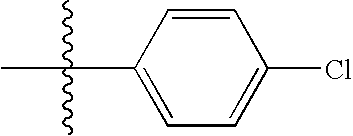 |
0 | H |
| A-035 | H | H |
 |
 |
0 | H |
| A-036 | H | H |
 |
 |
0 | H |
| A-037 | H | H |
 |
 |
0 | H |
| A-038 | H | H |
 |
 |
0 | H |
| A-039 | H | H |
 |
 |
0 | H |
| A-040 | H | H |
 |
 |
0 | H |
| A-041 | H | H |
 |
 |
0 | H |
| A-042 | H | H |
 |
 |
0 | H |
| A-043 | H | H |
 |
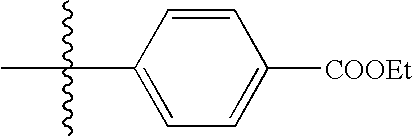 |
0 | H |
| A-044 | H | H |
 |
 |
0 | H |
| A-045 | H | H |
 |
 |
0 | H |
| A-046 | H | H |
 |
 |
0 | H |
| A-047 | H | H |
 |
 |
0 | H |
| A-048 | H | H |
 |
 |
0 | H |
| A-049 | H | H |
 |
 |
0 | H |
| A-050 | H | H |
 |
 |
0 | H |
| A-051 | H | H |
 |
 |
0 | H |
| A-052 | H | H |
 |
 |
0 | H |
| A-053 | H | H |
 |
 |
0 | H |
| A-054 | H | H |
 |
 |
0 | H |
| A-055 | H | H |
 |
 |
0 | H |
| A-056 | H | H |
 |
 |
0 | H |
| A-057 | H | H |
 |
 |
0 | H |
| A-058 | H | H |
 |
 |
0 | H |
| A-059 | H | H |
 |
 |
0 | H |
| A-060 | H | H |
 |
 |
0 | H |
| A-061 | H | H |
 |
 |
0 | H |
| A-062 | H | H |
 |
 |
0 | H |
| A-063 | H | H |
 |
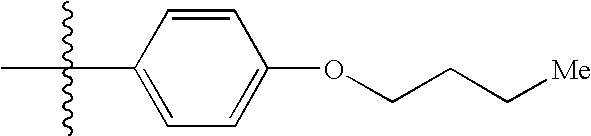 |
0 | H |
| A-064 | H | H |
 |
 |
0 | H |
| A-065 | H | H |
 |
 |
0 | H |
| A-066 | H | H |
 |
 |
0 | H |
| A-067 | H | H |
 |
 |
0 | H |
| A-068 | H | H |
 |
 |
0 | H |
| A-069 | H | H |
 |
 |
0 | H |
| A-070 | H | H |
 |
 |
0 | H |
| A-071 | H | H |
 |
 |
0 | H |
| A-072 | H | H |
 |
 |
0 | H |
| A-073 | H | H |
 |
 |
0 | H |
| A-074 | H | H |
 |
 |
0 | H |
| A-075 | H | H |
 |
 |
0 | H |
| A-076 | H | H |
 |
 |
0 | H |
| A-077 | H | H |
 |
 |
0 | H |
| A-078 | H | H |
 |
 |
0 | H |
| A-079 | H | H |
 |
 |
0 | H |
| A-080 | H | H |
 |
 |
0 | H |
| A-081 | H | H |
 |
 |
0 | H |
| A-082 | H | H |
 |
 |
0 | H |
| A-083 | H | H |
 |
 |
0 | H |
| A-084 | H | H |
 |
 |
0 | H |
| A-085 | H | H |
 |
 |
0 | H |
| A-086 | H | H |
 |
 |
0 | H |
| A-087 | H | H |
 |
 |
0 | H |
| A-088 | H | H |
 |
 |
0 | H |
| A-089 | H | H |
 |
 |
0 | H |
| A-090 | H | H |
 |
 |
0 | H |
| A-091 | H | H |
 |
 |
0 | H |
| A-092 | H | H |
 |
H | 0 | H |
| A-093 | H | H |
 |
H | 0 | H |
| A-094 | H | H |
 |
H | 0 | H |
| A-095 | H | H |
 |
 |
0 | H |
| A-096 | H | H |
 |
Me | 0 | H |
| A-97 | H | H |
 |
 |
0 | H |
| A-98 | H | H |
 |
 |
0 | H |
| A-99 | H | H |
 |
 |
0 | H |
| A-100 | H | H |
 |
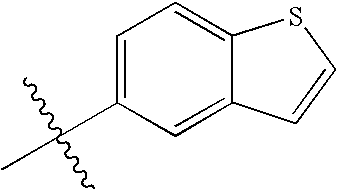 |
0 | H |
| A-101 | H | Cl |
 |
 |
0 | H |
| A-102 | H | Br |
 |
 |
0 | H |
| TABLE B |
 |
| Compound No. | R1 | R2 | R3 | R4 | n |
| B-001 | H | H |
 |
 |
0 |
| B-002 | H | H |
 |
 |
0 |
| B-003 | H | H |
 |
 |
0 |
| B-004 | H | H |
 |
 |
0 |
| B-005 | H | H |
 |
 |
0 |
| B-006 | H | H |
 |
 |
0 |
| B-007 | H | H |
 |
 |
0 |
| B-008 | H | H |
 |
 |
1 |
| B-009 | H | H |
 |
 |
0 |
| B-010 | H | H |
 |
 |
0 |
| B-011 | H | H |
 |
 |
0 |
| B-012 | H | H |
 |
 |
0 |
| B-013 | H | H |
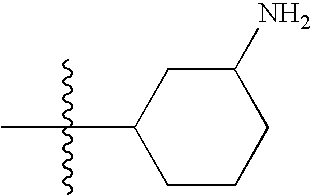 |
 |
0 |
| B-014 | H | H |
 |
 |
0 |
| B-015 | H | H |
 |
 |
1 |
| B-016 | H | H |
 |
 |
0 |
| B-017 | H | H |
 |
 |
0 |
| B-018 | H | H |
 |
 |
1 |
| B-019 | F | H |
 |
 |
1 |
| B-020 | H | H |
 |
 |
1 |
| B-021 | H | H |
 |
 |
0 |
| B-022 | H | H |
 |
 |
0 |
| B-023 | H | H |
 |
 |
0 |
| B-024 | H | H |
 |
 |
0 |
| B-025 | H | H |
 |
 |
0 |
| B-026 | H | H |
 |
 |
1 |
| B-027 | H | H |
 |
 |
1 |
| B-028 | H | H |
 |
 |
1 |
| B-029 | H | H |
 |
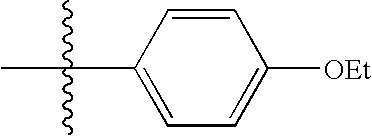 |
0 |
| B-030 | H | H |
 |
 |
0 |
| B-031 | H | H |
 |
 |
0 |
| B-032 | H | H |
 |
 |
0 |
| B-033 | H | H |
 |
 |
0 |
| B-034 | H | H |
 |
 |
0 |
| B-035 | H | H |
 |
 |
0 |
| B-036 | H | H |
 |
 |
0 |
| B-037 | H | H |
 |
 |
0 |
| B-038 | H | H |
 |
 |
0 |
| B-039 | H | H |
 |
 |
0 |
| B-040 | H | H |
 |
 |
0 |
| B-041 | H | H |
 |
 |
0 |
| B-042 | H | H |
 |
 |
0 |
| B-043 | H | H |
 |
 |
0 |
| B-044 | H | H |
 |
 |
0 |
| B-045 | H | H |
 |
 |
0 |
| B-046 | H | H |
 |
 |
0 |
| B-047 | H | H |
 |
 |
0 |
| B-048 | H | H |
 |
 |
0 |
| B-049 | H | H |
 |
 |
0 |
| B-050 | H | H |
 |
 |
0 |
| B-051 | H | H |
 |
 |
0 |
| B-052 | H | H |
 |
 |
0 |
| B-053 | H | H |
 |
 |
0 |
| B-054 | H | H |
 |
 |
0 |
| B-055 | H | H |
 |
 |
0 |
| B-056 | H | H |
 |
 |
0 |
| B-057 | H | H |
 |
 |
0 |
| B-058 | H | H |
 |
 |
0 |
| B-059 | H | H |
 |
 |
0 |
| B-060 | H | H |
 |
 |
0 |
| B-061 | H | H |
 |
 |
0 |
| B-062 | H | H |
 |
 |
0 |
| B-063 | H | H |
 |
 |
0 |
| B-064 | H | H |
 |
 |
0 |
| B-065 | H | H |
 |
 |
0 |
| B-066 | H | H |
 |
 |
0 |
| B-067 | H | H |
 |
 |
0 |
| B-068 | H | H |
 |
 |
0 |
| B-069 | H | H |
 |
 |
0 |
| B-070 | H | H |
 |
 |
0 |
| B-071 | H | H |
 |
 |
0 |
| B-072 | H | H |
 |
 |
0 |
| B-073 | H | H |
 |
 |
0 |
| B-074 | H | H |
 |
 |
0 |
| B-075 | H | H |
 |
 |
0 |
| B-076 | H | H |
 |
 |
0 |
| B-077 | H | H |
 |
 |
0 |
| B-078 | H | H |
 |
 |
0 |
| B-079 | H | H |
 |
 |
0 |
| B-080 | H | H |
 |
 |
0 |
| B-081 | H | H |
 |
 |
0 |
| B-082 | H | H |
 |
 |
0 |
| B-083 | H | H |
 |
 |
0 |
| B-084 | H | H |
 |
 |
0 |
| B-085 | H | H |
 |
 |
0 |
| B-086 | H | H |
 |
 |
0 |
| B-087 | H | H |
 |
 |
0 |
| B-088 | H | H |
 |
 |
0 |
| B-089 | H | H |
 |
 |
0 |
| B-090 | H | H |
 |
 |
0 |
| B-091 | H | H |
 |
 |
0 |
| B-092 | H | H |
 |
 |
0 |
| B-093 | H | H |
 |
 |
0 |
| B-094 | H | H |
 |
 |
0 |
| B-095 | H | H |
 |
 |
0 |
| B-096 | H | H |
 |
 |
0 |
| B-97 | H | H |
 |
 |
0 |
| B-98 | H | H |
 |
H | 0 |
| B-99 | H | H |
 |
H | 0 |
| B-100 | H | H |
 |
H | 0 |
| TABLE C |
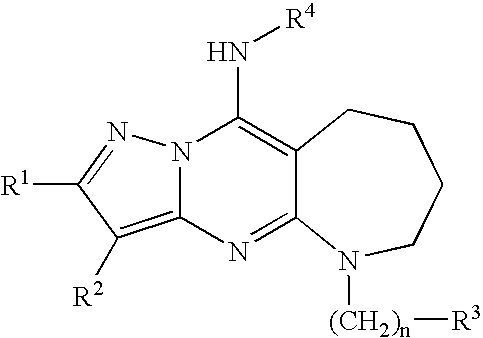 |
| Compound No. | R1 | R2 | R3 | R4 | n |
| C-001 | H | H |
 |
 |
0 |
| C-002 | H | H |
 |
 |
0 |
| C-003 | H | H |
 |
 |
0 |
| C-004 | H | H |
 |
 |
0 |
| C-005 | H | H |
 |
 |
0 |
| C-006 | H | H |
 |
 |
1 |
| C-007 | H | H |
 |
 |
0 |
| C-008 | H | H |
 |
 |
0 |
| C-009 | H | H |
 |
 |
0 |
| C-010 | H | H |
 |
 |
0 |
| C-011 | H | H |
 |
 |
0 |
| C-012 | H | H |
 |
 |
0 |
| C-013 | H | H |
 |
 |
0 |
| C-014 | H | H |
 |
 |
1 |
| C-015 | H | H |
 |
 |
1 |
| C-016 | H | H |
 |
 |
1 |
| C-017 | H | H |
 |
 |
1 |
| C-018 | H | F |
 |
 |
0 |
| C-019 | F | F |
 |
 |
0 |
| C-020 | H | H |
 |
 |
0 |
| C-021 | H | H |
 |
 |
0 |
| C-022 | H | H |
 |
 |
0 |
| C-023 | H | H |
 |
 |
0 |
| C-024 | H | H |
 |
 |
0 |
| C-025 | H | H |
 |
 |
0 |
| C-026 | H | H |
 |
 |
0 |
| C-027 | H | H |
 |
 |
0 |
| C-028 | H | H |
 |
 |
0 |
| C-029 | H | H |
 |
 |
0 |
| C-030 | H | H |
 |
 |
0 |
| C-031 | H | H |
 |
 |
0 |
| C-032 | H | H |
 |
 |
0 |
| C-033 | H | H |
 |
 |
0 |
| C-034 | H | H |
 |
 |
0 |
| C-035 | H | H |
 |
 |
0 |
| C-036 | H | H |
 |
 |
0 |
| C-037 | H | H |
 |
 |
0 |
| C-038 | H | H |
 |
 |
0 |
| C-039 | H | H |
 |
 |
0 |
| C-040 | H | H |
 |
 |
0 |
| C-041 | H | H |
 |
 |
0 |
| C-042 | H | H |
 |
 |
0 |
| C-043 | H | H |
 |
 |
0 |
| C-044 | H | H |
 |
 |
0 |
| C-045 | H | H |
 |
 |
0 |
| C-046 | H | H |
 |
 |
0 |
| C-047 | H | H |
 |
 |
0 |
| C-048 | H | H |
 |
 |
0 |
| C-049 | H | H |
 |
 |
0 |
| C-050 | H | H |
 |
 |
0 |
| C-051 | H | H |
 |
 |
0 |
| C-052 | H | H |
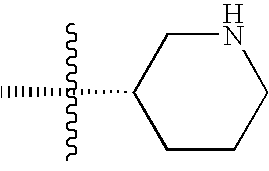 |
 |
0 |
| C-053 | H | H |
 |
 |
0 |
| C-054 | H | H |
 |
 |
0 |
| C-055 | H | H |
 |
 |
0 |
| C-056 | H | H |
 |
 |
0 |
| C-057 | H | H |
 |
 |
0 |
| C-058 | H | H |
 |
 |
0 |
| C-059 | H | H |
 |
 |
0 |
| C-060 | H | H |
 |
 |
0 |
| C-061 | H | H |
 |
 |
0 |
| C-062 | H | H |
 |
 |
0 |
| C-063 | H | H |
 |
 |
0 |
| C-064 | H | H |
 |
 |
0 |
| C-065 | H | H |
 |
 |
0 |
| C-066 | H | H |
 |
 |
0 |
| C-067 | H | H |
 |
 |
0 |
| C-068 | H | H |
 |
 |
0 |
| C-069 | H | H |
 |
 |
0 |
| C-070 | H | H |
 |
 |
0 |
| C-071 | H | H |
 |
 |
0 |
| C-072 | H | H |
 |
 |
0 |
| C-073 | H | H |
 |
 |
0 |
| C-074 | H | H |
 |
 |
0 |
| C-075 | H | H |
 |
 |
0 |
| C-076 | H | H |
 |
 |
0 |
| C-077 | H | H |
 |
 |
0 |
| C-078 | H | H |
 |
 |
0 |
| C-079 | H | H |
 |
 |
0 |
| C-080 | H | H |
 |
 |
0 |
| C-081 | H | H |
 |
 |
0 |
| C-082 | H | H |
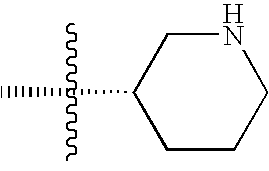 |
 |
0 |
| C-083 | H | H |
 |
 |
0 |
| C-084 | H | H |
 |
 |
0 |
| C-085 | H | H |
 |
 |
0 |
| C-086 | H | H | OH |
 |
0 |
| TABLE D |
 |
| Compound No. | R1 | R2 | R3 | R4 | n |
| D-001 | H | H |
 |
 |
0 |
| D-002 | H | H |
 |
 |
1 |
| D-003 | H | H |
 |
 |
0 |
| D-004 | H | H |
 |
 |
0 |
| D-005 | H | H |
 |
 |
1 |
| D-006 | H | H |
 |
 |
0 |
| D-007 | H | H |
 |
 |
0 |
| D-008 | H | H |
 |
 |
0 |
| D-009 | H | H |
 |
 |
0 |
| D-010 | H | H |
 |
 |
1 |
| D-011 | H | H |
 |
 |
0 |
| D-012 | H | H |
 |
 |
0 |
| D-013 | H | H |
 |
 |
0 |
| D-014 | H | H |
 |
 |
0 |
| D-015 | H | H |
 |
 |
0 |
| D-016 | H | H |
 |
 |
1 |
| D-017 | H | H |
 |
 |
1 |
| D-018 | H | F |
 |
 |
0 |
| D-019 | F | F |
 |
 |
0 |
| D-020 | H | H |
 |
 |
0 |
| D-021 | H | H |
 |
 |
0 |
| D-022 | H | H |
 |
 |
0 |
| D-023 | H | H |
 |
 |
0 |
| D-024 | H | H |
 |
 |
0 |
| D-025 | H | H |
 |
 |
0 |
| D-026 | H | H |
 |
 |
0 |
| D-027 | H | H |
 |
 |
0 |
| D-028 | H | H |
 |
 |
0 |
| D-029 | H | H |
 |
 |
0 |
| D-030 | H | H |
 |
 |
0 |
| D-031 | H | H |
 |
 |
0 |
| D-032 | H | H |
 |
 |
0 |
| D-033 | H | H |
 |
 |
0 |
| D-034 | H | H |
 |
 |
0 |
| D-035 | H | H |
 |
 |
0 |
| D-036 | H | H |
 |
 |
0 |
| D-037 | H | H |
 |
 |
0 |
| D-038 | H | H |
 |
 |
0 |
| D-039 | H | H |
 |
 |
0 |
| D-040 | H | H |
 |
 |
0 |
| D-041 | H | H |
 |
 |
0 |
| D-042 | H | H |
 |
 |
0 |
| D-043 | H | H |
 |
 |
0 |
| D-044 | H | H |
 |
 |
0 |
| D-045 | H | H |
 |
 |
0 |
| D-046 | H | H |
 |
 |
0 |
| D-047 | H | H |
 |
 |
0 |
| D-048 | H | H |
 |
 |
0 |
| D-049 | H | H |
 |
 |
0 |
| D-050 | H | H |
 |
 |
0 |
| D-051 | H | H |
 |
 |
0 |
| D-052 | H | H |
 |
 |
0 |
| D-053 | H | H |
 |
 |
0 |
| D-054 | H | H |
 |
 |
0 |
| D-055 | H | H |
 |
 |
0 |
| D-056 | H | H |
 |
 |
0 |
| D-057 | H | H |
 |
 |
0 |
| D-058 | H | H |
 |
 |
0 |
| D-059 | H | H |
 |
 |
0 |
| D-060 | H | H |
 |
 |
0 |
| D-061 | H | H |
 |
 |
0 |
| D-062 | H | H |
 |
 |
0 |
| D-063 | H | H |
 |
 |
0 |
| D-064 | H | H |
 |
 |
0 |
| D-065 | H | H |
 |
 |
0 |
| D-066 | H | H |
 |
 |
0 |
| D-067 | H | H |
 |
 |
0 |
| D-068 | H | H |
 |
 |
0 |
| D-069 | H | H |
 |
 |
0 |
| D-070 | H | H |
 |
 |
0 |
| D-071 | H | H |
 |
 |
0 |
| D-072 | H | H |
 |
 |
0 |
| D-073 | H | H |
 |
 |
0 |
| D-074 | H | H |
 |
 |
0 |
| D-075 | H | H |
 |
 |
0 |
| D-076 | H | H |
 |
 |
0 |
| D-077 | H | H |
 |
 |
0 |
| D-078 | H | H |
 |
 |
0 |
| D-079 | H | H |
 |
 |
0 |
| D-080 | H | H |
 |
 |
0 |
| D-081 | H | H |
 |
 |
0 |
| D-082 | H | H |
 |
 |
0 |
| D-083 | H | H |
 |
 |
0 |
| D-084 | H | H |
 |
 |
0 |
| D-085 | H | H |
 |
 |
0 |
| TABLE E |
 |
| Compound | |||||
| No. | R1 | R2 | R3 | R4 | n |
| E-001 | H | H |
 |
 |
0 |
| E-002 | H | H |
 |
 |
0 |
| E-003 | H | H |
 |
 |
0 |
| E-004 | H | H |
 |
 |
0 |
| E-005 | H | H |
 |
 |
0 |
| E-006 | H | H |
 |
 |
1 |
| E-007 | H | H |
 |
 |
0 |
| E-008 | H | H |
 |
 |
0 |
| E-009 | H | H |
 |
 |
0 |
| E-010 | H | H |
 |
 |
0 |
| E-011 | H | H |
 |
 |
0 |
| E-012 | H | H |
 |
 |
0 |
| E-013 | H | H |
 |
 |
0 |
| E-014 | H | H |
 |
 |
1 |
| E-015 | H | H |
 |
 |
1 |
| E-016 | H | H |
 |
 |
1 |
| E-017 | H | H |
 |
 |
1 |
| E-018 | H | F |
 |
 |
0 |
| E-019 | F | F |
 |
 |
0 |
| E-020 | H | H |
 |
 |
0 |
| E-021 | H | H |
 |
 |
0 |
| E-022 | H | H |
 |
 |
0 |
| E-023 | H | H |
 |
 |
0 |
| E-024 | H | H |
 |
 |
0 |
| E-025 | H | H |
 |
 |
0 |
| E-026 | H | H |
 |
 |
0 |
| E-027 | H | H |
 |
 |
0 |
| E-028 | H | H |
 |
 |
0 |
| E-029 | H | H |
 |
 |
0 |
| E-030 | H | H |
 |
 |
0 |
| E-031 | H | H |
 |
 |
0 |
| E-032 | H | H |
 |
 |
0 |
| E-033 | H | H |
 |
 |
0 |
| E-034 | H | H |
 |
 |
0 |
| E-035 | H | H |
 |
 |
0 |
| E-036 | H | H |
 |
 |
0 |
| E-037 | H | H |
 |
 |
0 |
| E-038 | H | H |
 |
 |
0 |
| E-039 | H | H |
 |
 |
0 |
| E-040 | H | H |
 |
 |
0 |
| E-041 | H | H |
 |
 |
0 |
| E-042 | H | H |
 |
 |
0 |
| E-043 | H | H |
 |
 |
0 |
| E-044 | H | H |
 |
 |
0 |
| E-045 | H | H |
 |
 |
0 |
| E-046 | H | H |
 |
 |
0 |
| E-047 | H | H |
 |
 |
0 |
| E-048 | H | H |
 |
 |
0 |
| E-049 | H | H |
 |
 |
0 |
| E-050 | H | H |
 |
 |
0 |
| E-051 | H | H |
 |
 |
0 |
| E-052 | H | H |
 |
 |
0 |
| E-053 | H | H |
 |
 |
0 |
| E-054 | H | H |
 |
 |
0 |
| E-055 | H | H |
 |
 |
0 |
| E-056 | H | H |
 |
 |
0 |
| E-057 | H | H |
 |
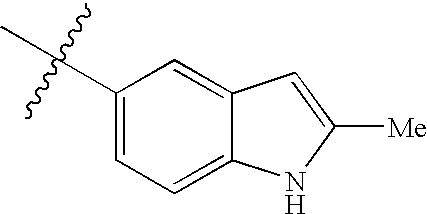 |
0 |
| E-058 | H | H |
 |
 |
0 |
| E-059 | H | H |
 |
 |
0 |
| E-060 | H | H |
 |
 |
0 |
| E-061 | H | H |
 |
 |
0 |
| E-062 | H | H |
 |
 |
0 |
| E-063 | H | H |
 |
 |
0 |
| E-064 | H | H |
 |
 |
0 |
| E-065 | H | H |
 |
 |
0 |
| E-066 | H | H |
 |
 |
0 |
| E-067 | H | H |
 |
 |
0 |
| E-068 | H | H |
 |
 |
0 |
| E-069 | H | H |
 |
 |
0 |
| E-070 | H | H |
 |
 |
0 |
| E-071 | H | H |
 |
 |
0 |
| E-072 | H | H |
 |
 |
0 |
| E-073 | H | H |
 |
 |
0 |
| E-074 | H | H |
 |
 |
0 |
| E-075 | H | H |
 |
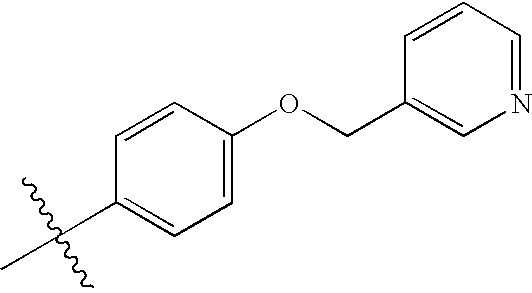 |
0 |
| E-076 | H | H |
 |
 |
0 |
| E-077 | H | H |
 |
 |
0 |
| E-078 | H | H |
 |
 |
0 |
| E-079 | H | H |
 |
 |
0 |
| E-080 | H | H |
 |
 |
0 |
| E-081 | H | H |
 |
 |
0 |
| E-082 | H | H |
 |
 |
0 |
| E-083 | H | H |
 |
 |
0 |
| E-084 | H | H |
 |
 |
0 |
| E-085 | H | H |
 |
 |
0 |
| TABLE F |
 |
| Compound | ||||||
| No. | R1 | R2 | R3 | R4 | n | Z |
| F-001 | H | H |
 |
 |
0 | H |
| F-002 | H | H |
 |
 |
0 |
 |
| F-003 | H | H |
 |
 |
0 | H |
| F-004 | H | H |
 |
 |
0 | H |
| F-005 | H | H |
 |
 |
0 | H |
| F-006 | H | H |
 |
 |
0 | H |
| F-007 | H | H |
 |
 |
1 | H |
| F-008 | H | H |
 |
 |
0 | H |
| F-009 | H | H |
 |
 |
0 | H |
| F-010 | H | H |
 |
 |
0 | H |
| F-011 | H | H |
 |
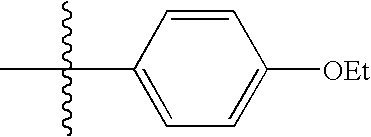 |
0 | H |
| F-012 | H | H |
 |
 |
0 | H |
| F-013 | H | H |
 |
 |
0 | H |
| F-014 | H | H |
 |
 |
0 | H |
| F-015 | H | H |
 |
 |
1 | H |
| F-016 | H | H |
 |
 |
1 | H |
| F-017 | H | H |
 |
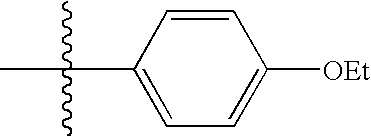 |
1 | H |
| F-018 | H | H |
 |
 |
1 | H |
| F-019 | H | F |
 |
 |
0 | H |
| F-020 | F | F |
 |
 |
0 | H |
| F-021 | H | H |
 |
 |
0 | H |
| F-022 | H | H |
 |
 |
0 | H |
| F-023 | H | H |
 |
 |
0 | H |
| F-024 | H | H |
 |
 |
0 | H |
| F-025 | H | H |
 |
 |
0 | H |
| F-026 | H | H |
 |
 |
0 | H |
| F-027 | H | H |
 |
 |
0 | H |
| F-028 | H | H |
 |
 |
0 | H |
| F-029 | H | H |
 |
 |
0 | H |
| F-030 | H | H |
 |
 |
0 | H |
| F-031 | H | H |
 |
 |
0 | H |
| F-032 | H | H |
 |
 |
0 | H |
| F-033 | H | H |
 |
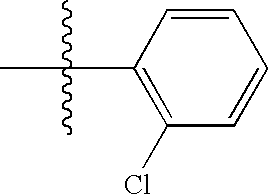 |
0 | H |
| F-034 | H | H |
 |
 |
0 | H |
| F-035 | H | H |
 |
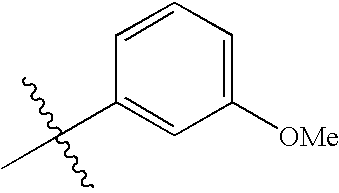 |
0 | H |
| F-036 | H | H |
 |
 |
0 | H |
| F-037 | H | H |
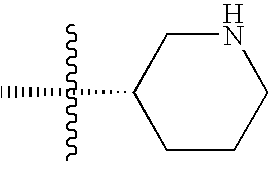 |
 |
0 | H |
| F-038 | H | H |
 |
 |
0 | H |
| F-039 | H | H |
 |
 |
0 | H |
| F-040 | H | H |
 |
 |
0 | H |
| F-041 | H | H |
 |
 |
0 | H |
| F-042 | H | H |
 |
 |
0 | H |
| F-043 | H | H |
 |
 |
0 | H |
| F-044 | H | H |
 |
 |
0 | H |
| F-045 | H | H |
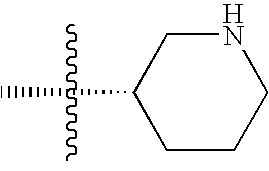 |
 |
0 | H |
| F-046 | H | H |
 |
 |
0 | H |
| F-047 | H | H |
 |
 |
0 | H |
| F-048 | H | H |
 |
 |
0 | H |
| F-049 | H | H |
 |
 |
0 | H |
| F-050 | H | H |
 |
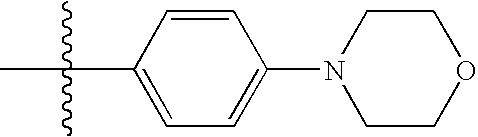 |
0 | H |
| F-051 | H | H |
 |
 |
0 | H |
| F-052 | H | H |
 |
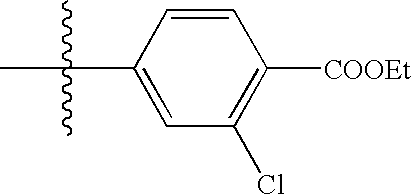 |
0 | H |
| F-053 | H | H |
 |
 |
0 | H |
| F-054 | H | H |
 |
 |
0 | H |
| F-055 | H | H |
 |
 |
0 | H |
| F-056 | H | H |
 |
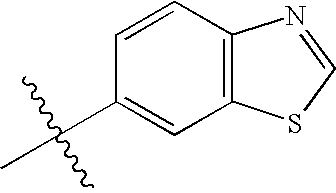 |
0 | H |
| F-057 | H | H |
 |
 |
0 | H |
| F-058 | H | H |
 |
 |
0 | H |
| F-059 | H | H |
 |
 |
0 | H |
| F-060 | H | H |
 |
 |
0 | H |
| F-061 | H | H |
 |
 |
0 | H |
| F-062 | H | H |
 |
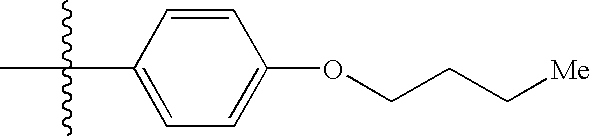 |
0 | H |
| F-063 | H | H |
 |
 |
0 | H |
| F-064 | H | H |
 |
 |
0 | H |
| F-065 | H | H |
 |
 |
0 | H |
| F-066 | H | H |
 |
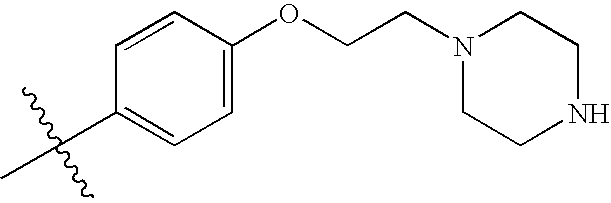 |
0 | H |
| F-067 | H | H |
 |
 |
0 | H |
| F-068 | H | H |
 |
 |
0 | H |
| F-069 | H | H |
 |
 |
0 | H |
| F-070 | H | H |
 |
 |
0 | H |
| F-071 | H | H |
 |
 |
0 | H |
| F-072 | H | H |
 |
 |
0 | H |
| F-073 | H | H |
 |
 |
0 | H |
| F-074 | H | H |
 |
 |
0 | H |
| F-075 | H | H |
 |
 |
0 | H |
| F-076 | H | H |
 |
 |
0 | H |
| F-077 | H | H |
 |
 |
0 | H |
| F-078 | H | H |
 |
 |
0 | H |
| F-079 | H | H |
 |
 |
0 | H |
| F-080 | H | H |
 |
 |
0 | H |
| F-081 | H | H |
 |
 |
0 | H |
| F-082 | H | H |
 |
 |
0 | H |
| F-083 | H | H |
 |
 |
0 | H |
| F-084 | H | H |
 |
 |
0 | H |
| F-085 | H | H |
 |
 |
0 | H |
| F-086 | H | H |
 |
 |
0 | H |
| F-87 | H | H |
 |
 |
0 | H |
| F-88 | H | H |
 |
 |
0 | H |
| F-89 | H | H |
 |
 |
0 | H |
| F-90 | H | H |
 |
 |
0 | H |
| TABLE G |
 |
| Compound | |||||
| No. | R1 | R2 | R3 | R4 | n |
| G-001 | H | H |
 |
 |
0 |
| G-002 | H | H |
 |
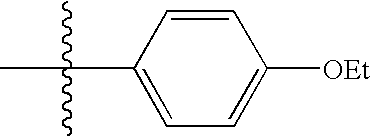 |
0 |
| G-003 | H | H |
 |
 |
0 |
| G-004 | H | H |
 |
 |
0 |
| G-005 | H | H |
 |
 |
0 |
| G-006 | H | H |
 |
 |
1 |
| G-007 | H | H |
 |
 |
0 |
| G-008 | H | H |
 |
 |
0 |
| G-009 | H | H |
 |
 |
0 |
| G-010 | H | H |
 |
 |
0 |
| G-011 | H | H |
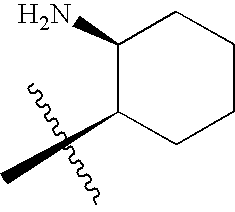 |
 |
0 |
| G-012 | H | H |
 |
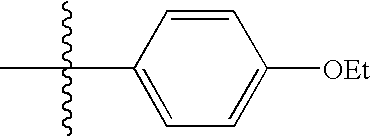 |
0 |
| G-013 | H | H |
 |
 |
0 |
| G-014 | H | H |
 |
 |
1 |
| G-015 | H | H |
 |
 |
1 |
| G-016 | H | H |
 |
 |
1 |
| G-017 | H | H |
 |
 |
1 |
| G-018 | H | F |
 |
 |
0 |
| G-019 | F | F |
 |
 |
0 |
| G-020 | H | H |
 |
 |
0 |
| G-021 | H | H |
 |
 |
0 |
| G-022 | H | H |
 |
 |
0 |
| G-023 | H | H |
 |
 |
0 |
| G-024 | H | H |
 |
 |
0 |
| G-025 | H | H |
 |
 |
0 |
| G-026 | H | H |
 |
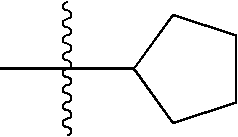 |
0 |
| G-027 | H | H |
 |
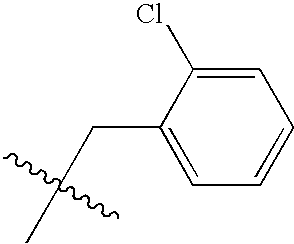 |
0 |
| G-028 | H | H |
 |
 |
0 |
| G-029 | H | H |
 |
 |
0 |
| G-030 | H | H |
 |
 |
0 |
| G-031 | H | H |
 |
 |
0 |
| G-032 | H | H |
 |
 |
0 |
| G-033 | H | H |
 |
 |
0 |
| G-034 | H | H |
 |
 |
0 |
| G-035 | H | H |
 |
 |
0 |
| G-036 | H | H |
 |
 |
0 |
| G-037 | H | H |
 |
 |
0 |
| G-038 | H | H |
 |
 |
0 |
| G-039 | H | H |
 |
 |
0 |
| G-040 | H | H |
 |
 |
0 |
| G-041 | H | H |
 |
 |
0 |
| G-042 | H | H |
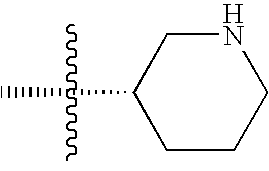 |
 |
0 |
| G-043 | H | H |
 |
 |
0 |
| G-044 | H | H |
 |
 |
0 |
| G-045 | H | H |
 |
 |
0 |
| G-046 | H | H |
 |
 |
0 |
| G-047 | H | H |
 |
 |
0 |
| G-048 | H | H |
 |
 |
0 |
| G-049 | H | H |
 |
 |
0 |
| G-050 | H | H |
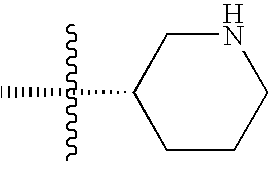 |
 |
0 |
| G-051 | H | H |
 |
 |
0 |
| G-052 | H | H |
 |
 |
0 |
| G-053 | H | H |
 |
 |
0 |
| G-054 | H | H |
 |
 |
0 |
| G-055 | H | H |
 |
 |
0 |
| G-056 | H | H |
 |
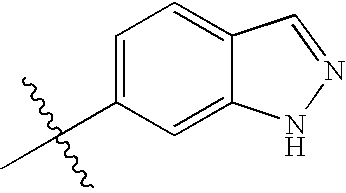 |
0 |
| G-057 | H | H |
 |
 |
0 |
| G-058 | H | H |
 |
 |
0 |
| G-059 | H | H |
 |
 |
0 |
| G-060 | H | H |
 |
 |
0 |
| G-061 | H | H |
 |
 |
0 |
| G-062 | H | H |
 |
 |
0 |
| G-063 | H | H |
 |
 |
0 |
| G-064 | H | H |
 |
 |
0 |
| G-065 | H | H |
 |
 |
0 |
| G-066 | H | H |
 |
 |
0 |
| G-067 | H | H |
 |
 |
0 |
| G-068 | H | H |
 |
 |
0 |
| G-069 | H | H |
 |
 |
0 |
| G-070 | H | H |
 |
 |
0 |
| G-071 | H | H |
 |
 |
0 |
| G-072 | H | H |
 |
 |
0 |
| G-073 | H | H |
 |
 |
0 |
| G-074 | H | H |
 |
 |
0 |
| G-075 | H | H |
 |
 |
0 |
| G-076 | H | H |
 |
 |
0 |
| G-077 | H | H |
 |
 |
0 |
| G-078 | H | H |
 |
 |
0 |
| G-079 | H | H |
 |
 |
0 |
| G-080 | H | H |
 |
 |
0 |
| G-081 | H | H |
 |
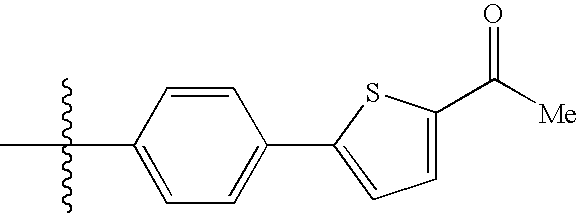 |
0 |
| G-082 | H | H |
 |
 |
0 |
| G-083 | H | H |
 |
 |
0 |
| G-084 | H | H |
 |
 |
0 |
| G-085 | H | H |
 |
 |
0 |
| G-086 | H | H |
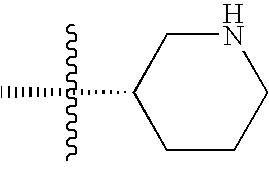 |
H | 0 |
| G-087 | H | H |
 |
Me | 0 |
| G-88 | H | H |
 |
H | 0 |
| G-089 | H | H |
 |
H | 0 |
The pyrazolopyrimidine derivative represented by the above formula (1) exists in tautomeric forms exemplified by the following formula.

(In the formula, R1, R2, R3, R4, n and -A-B- are as defined for formula (1)).
These tautomers are also included in the scope of the present invention.
As examples of compound represented by formula (2) in the present invention, there may be mentioned compounds having R1, R2, R3, R4, n and -A-B- listed in Tables A to G.
The compounds of the present invention can be synthesized by the following method. In each formula, R1-R4, -A-B- and n are as defined in the above formula (1). Reagents and solvents shown as conditions in chemical formulae are examples, as mentioned in the text. Each of abbreviations of substituents, reagents and solvents in the text and tables represent the following.
- Me: methyl
- Et: ethyl
- iPr: isopropyl
- tBu: tert-butyl
- Cy: cyclohexyl
- Ms: methanesulfonyl
- Boc: tert-butoxycarbonyl
- TBS: tert-butyldimethylsilyl
- TBAF: tetrabutylammonium fluoride
- TFA: trifluoroacetic acid
- HATU: O-(7-azabenzotriazol-1-yl)-N,N,N′,N′-tetramethyluronium hexafluorophosphate
- Dess-Martin periodinane: 1,1,1-tris(acetoxy)-1,1-dihydro-1,2-benziodoxol-3(1H)-one
- DMAP: 4-N,N-dimethylaminopyridine
- NMO: N-methylmorpholine-N-oxide
- DMF: N,N-dimethylformamide
- THF: tetrahydrofuran
- PTLC: preparative thin layer chromatography
- Grubbs reagent: benzylidene-bis(tricyclohexylphosphine)dichlororuthenium
- NBS: N-bromosuccinimide
- NCS: N-chlorosuccinimide

- 1) The compound represented by formula (4) can be obtained by reaction of the compound represented by formula (3) and allylmalonic diester in an appropriate organic solvent (for example, ethanol or methanol) under a condition from room temperature to heating under reflux in the presence of a base (for example, sodium ethoxide or sodium methoxide). (References: J. Med. Chem., 1976, 19, 296 and J. Med. Chem., 1977, 20, 296)
- 2) The compound represented by formula (5) can be obtained by reaction of the compound represented by formula (4) and a halogenating agent (for example, phosphoryl chloride) either in an appropriate organic solvent (for example, acetonitrile) or without solvent under a condition from room temperature to heating under reflux in the presence or absence of an appropriate base (for example, dimethylaniline).

- 3) The compound represented by formula (6) or (15) can be obtained by reaction of the compound represented by formula (5) or (14), respectively, with an oxidizing agent (for example, sodium periodate and osmium tetraoxide) in an appropriate solvent (for example, THF-water mixed solvent) at a temperature ranging from 0° C. to room temperature.
- 4) The compound represented by formula (7) or (16) can be obtained by reaction of the compound represented by formula (6) or (15), respectively, with a reducing agent (for example, sodium borohydride) in an appropriate organic solvent (for example, ethanol or methanol) at a temperature ranging from 0° C. to 40° C.
- 5) The compound represented by formula (8) or (18) can be obtained by reaction of the compound represented by formula (5) or (14), respectively, with a borane agent (for example, borane-dimethylsulfide complex) in an appropriate organic solvent (for example, THF) at a temperature ranging from 0° C. to room temperature followed by reaction with aqueous hydrogen peroxide in aqueous sodium hydroxide solution.
- 6) The compound represented by formula (10), (17), (19) or (42) can be obtained by reaction of the compound represented by formula (9), (16), (18) or (41), respectively, with tert-butylchlorodimethylsilane in an appropriate organic solvent (for example, methylene chloride or DMF) at a temperature ranging from 0° C. to 40° C. in the presence of a base (for example, triethylamine or imidazole). (Reference: Protective Groups in Organic Synthesis, 3rd edition, John Wiley & Sons Inc.)


- 7) The compound represented by formula (11) or (13) can be obtained by reaction of the compound represented by formula (10) or (5), respectively, with an amine compound represented as R4NH2 in an appropriate organic solvent (for example, 2-propanol, DMF, THF or DMF-THF mixed solvent) under a condition from room temperature to heating under reflux in the presence of a base (for example triethylamine or sodium hydride).
- 8) The compound represented by formula (41) can be obtained by reaction of the compound represented by formula (14) with an oxidizing agent (for example, osmium tetraoxide and N-methylmorpholine-N-oxide) in an appropriate solvent (for example, acetone-water mixed solvent) at a temperature ranging from 0° C. to room temperature. (References: Tetrahedron Lett., 1973 (1976) and Org. Synth.
Collective volume 6, 342) - 9) The compound represented by formula (12) or (14) can be obtained by reaction of the compound represented by formula (11) or (13), respectively, with di-tert-butyl dicarbonate in an appropriate organic solvent (for example, 1,4-dioxane) under a condition from room temperature to heating under reflux in the presence of a base (for example triethylamine or 4-N,N-dimethylaminopyridine). (Reference: Protective Groups in Organic Synthesis, 3rd edition, John Wiley & Sons Inc.)
- 10) The compound represented by formula (25) or (27) can be obtained by reaction of the compound represented by formula (15) or (26), respectively, with an oxidizing agent (for example, sodium chlorite in the presence of 2-methyl-2-butene and sodium dihydrogenphosphate) in an appropriate solvent (for example, tert-butanol-water mixed solvent) at a temperature ranging from 0° C. to room temperature.

- 11) The compound represented by formula (26) can be obtained by reaction of the compound represented by formula (18) with an oxidizing agent [for example, Dess-Martin periodinane, i.e., 1,1,1-tris(acetoxy)-1,1-dihydro-1,2-benziodoxol-3(1H)-one] in an appropriate organic solvent (for example, methylene chloride) at a temperature ranging from 0° C. to room temperature. (References: J. Org. Chem., 48, 4155 (1983); J. Am. Chem. Soc., 113, 7277 (1991))
- 12) The compound represented by formula (20), (32) or (43) can be obtained by reaction of the compound represented by formula (12), (14) or (42), respectively, with an amine represented by formula R3—(CH2)n—NH2 in an appropriate organic solvent (for example, acetonitrile) or without solvent under a condition from room temperature to heating under reflux. (When R3 in the compound represented by formula R3—(CH2)n—NH2 contains an unprotected primary amino group, the compound represented by formula (12), (14) or (42) is reacted with R3—(CH2)n—NH2 by the above-mentioned method and then the amino group in R3 moiety is protected by treatment with di-tert-butyl dicarbonate in an appropriate organic solvent (for example, 1,4-dioxane or methylene chloride) under a condition from room temperature to heating under reflux in the presence of bases (for example, triethylamine and 4-N,N-dimethylaminopyridine) to obtain the corresponding tert-butoxycarbonyl-protected compound, which is defined as the compound represented by formula (20), (32) or (43), respectively.)


- 13) The compound represented by formula (21) can be obtained by reaction of the compound represented by formula (20) with a fluoride ion agent (for example, n-tetrabutylammonium fluoride) in an appropriate organic solvent (for example, THF) at a temperature ranging from 0° C. to room temperature. (Reference: Protective Groups in Organic Synthesis, 3rd edition, John Wiley & Sons Inc.)
- 14) The compound represented by formula (22) or (46) can be obtained by reaction of the compound represented by formula (21) or (43), respectively, with a mesylating agent (for example, methanesulfonyl chloride) in an appropriate organic solvent (for example, methylene chloride) at a temperature ranging from 0° C. to room temperature in the presence of a base (for example, triethylamine). (Reference: Protective Groups in Organic Synthesis, 3rd edition, John Wiley & Sons Inc.)

- 15) The compound represented by formula (23) or (47) can be obtained by reaction of the compound represented by formula (22) or (46), respectively, with a base (for example, sodium hydride) in an appropriate organic solvent (for example, DMF, THF or DMF-THF mixed solvent) at a temperature ranging from 0° C. to 60° C.
- 16) The compound represented by formula (29) can be obtained by reaction of the compound represented by formula (28) with an amine compound represented by formula R3—(CH2)n—NH2 in an appropriate organic solvent (for example, DMF) at a temperature ranging from 0° C. to 40° C. in the presence of a peptide condensing agent [for example, O-(7-azabenzotriazol-1-yl)-N,N,N′,N′-tetramethyluronium hexafluorophosphate] and a base (for example, diisopropyethylamine).

- 17) The compound represented by formula (30) can be obtained by reaction of the compound represented by formula (29) with a base (for example, sodium hydride) in an appropriate organic solvent (for example, DMF, THF or DMF-THF mixed solvent) at a temperature ranging from 0° C. to 60° C.
- 18) The compound represented by formula (38) can be obtained by reaction of the compound represented by formula (15) with hydroxylamine in the presence of a reducing agent (for example, sodium cyanoborohydride) in an appropriate organic solvent (for example, methanol or ethanol) under a condition from 0° C. to heating under reflux.

- 19) The compound represented by formula (40) can be obtained by reaction of the compound represented by formula (39) with an appropriate reagent (for example, acetic anhydride) in the presence of a base (for example, triethylamine) in an appropriate organic solvent (for example, methylene chloride) at a temperature ranging from 0° C. to 40° C.
- 20) The compound represented by formula (33) can be obtained by reaction of the compound represented by formula (32) with an allylating agent (for example, allyl bromide) in the presence of a base (for example, sodium hydride) in an appropriate organic solvent (for example, DMF, THF or DMF-THF mixed solvent) at a temperature ranging from 0° C. to 70° C.
- 21) The compound represented by formula (34) can be obtained by reaction of the compound represented by formula (33) with an olefin metathesis catalyst [for example, Grubbs catalyst, i.e., benzylidenebis(tricyclohexylphosphine)dichlororuthenium] in an appropriate organic solvent (for example, toluene) at a temperature ranging from 0° C. to 40° C. (Reference: Angew. Chem. Int. Ed., 2002, 41, 176)
- 22) The compound represented by formula (36) can be obtained by reaction of the compound represented by formula (34) with hydrogen in the presence of a palladium catalyst (for example, palladium-carbon) in an appropriate organic solvent (for example, methanol, ethanol or 1,4-dioxane-ethanol mixed solvent) at room temperature.

- 23) The compound represented by formula (44) can be obtained by reaction of the compound represented by formula (43) with an oxidizing agent [for example, Dess-Martin periodinane, i.e., 1,1,1-tris(acetyloxy)-1,1-dihydro-1,2-benziodoxol-3(1H)-one] in an appropriate organic solvent (for example, methylene chloride) at a temperature ranging from 0° C. to 40° C.

- 24) Each compound represented by formula (49) can be obtained by reaction of the corresponding compound represented by formula (32) with an oxidizing agent (for example, sodium periodate and osmium tetraoxide) in an appropriate solvent (for example, THF-water mixed solvent) at a temperature ranging from 0° C. to 40° C.
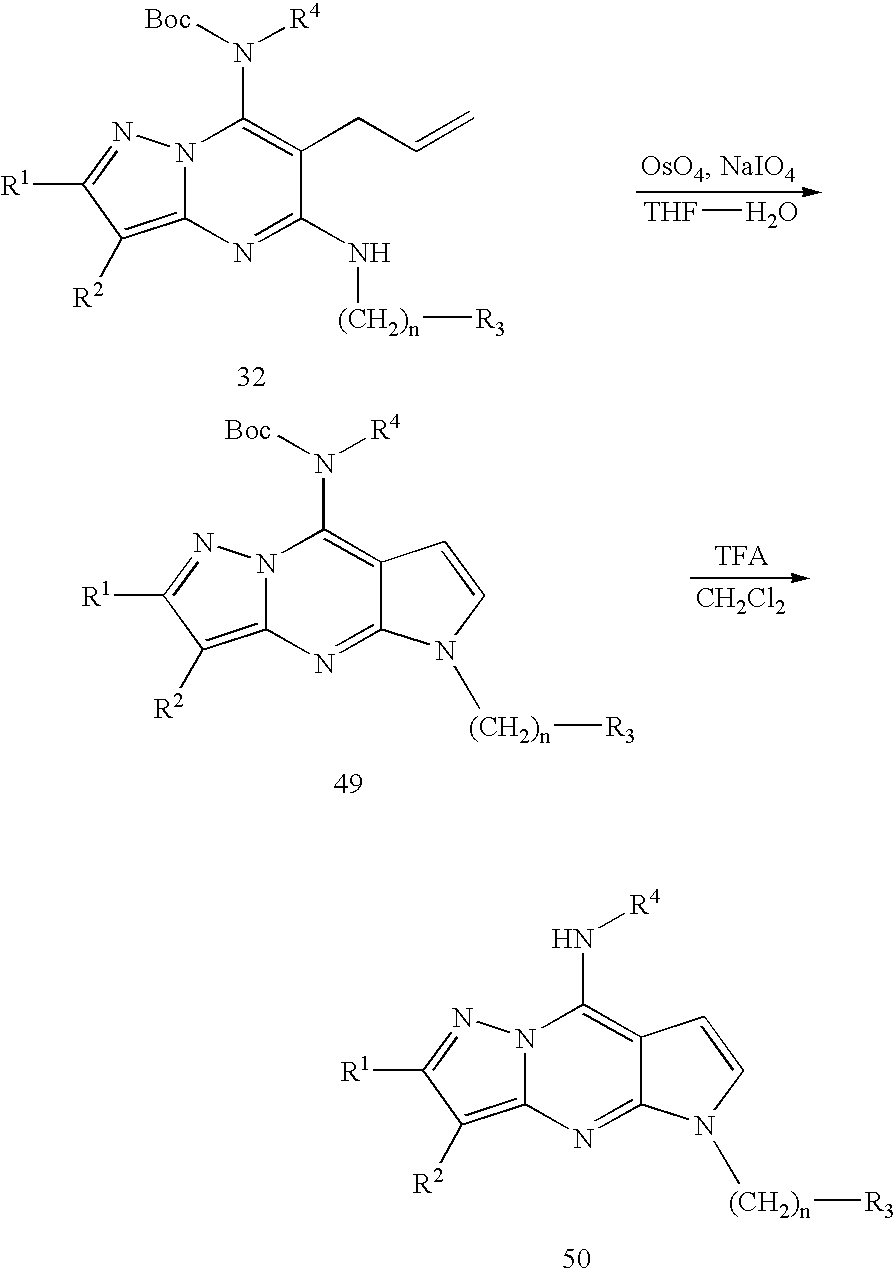
- 25) The compound represented by formula (52) or (53) can be obtained by reaction of the compound represented by formula (51) with a nucleophilic halogenatigen agent (for example, 1-chloromethyl-4-fluoro-1,4-diazobicyclo[2.2.2]octane bis(tetrafluoroborate), N-bromosuccinimide, or N-chlorosucciminde) in an appropriate organic solvent (for example, DMF, methylene chloride, or THF) at a temperature ranging from 0° C. to 40° C. (Reference: J. Chem. Soc.
Perkin 1, 1996, 2069.)

- 26) The compound represented by formula (1) can be obtained by reaction of the compound represented by formula (2) with an acid (for example, trifluroacetic acid) in an appropriate organic solvent (for example, methylene chloride) at a temperature ranging from 0° C. to room temperature. (Reference: Protective Groups in Organic Synthesis, 3rd edition, John Wiley & Sons Inc.)

- 27) The compound represented by formula (45) or (48) can be obtained by reaction of the compound represented by formula (44) or (47), respectively, with an acid (for example, trifluroacetic acid) in an appropriate organic solvent (for example, methylene chloride) at a temperature ranging from 0° C. to room temperature.
A preparation comprising the compound of the present invention or a medically acceptable salt thereof as an active ingredient is prepared by using carriers, excipients or other additives usually used for formulation. As carriers and excipients used for formulation, either solid or liquid may be used, and for example, there may be mentioned lactose, magnesium stearate, starch, talc, gelatin, agar, pectin, gum arabic, olive oil, sesame oil, cacao butter, ethylene glycol and others conventionally used. The preparation may be administrated either orally as tablets, pills, capsules, granule, powder, liquid or the like or parenterally through injection such as an intravenous injection and an intramuscular injection, suppository, percutaneous administration or the like.
As diseases for which the MAPKAP-K2 inhibitor of the present invention is effective, there may be mentioned neurodegenerative/neurological disorders (including dementia), sepsis, autoimmune diseases, destructive osteopathy, inflammatory bowel disease, psoriasis, diabetes mellitus, cancer, ischemic reperfusion injury, angiodysplasia, cachexia, obesity, angiogenesis, asthma and/or chronic obstructive pulmonary disease (COPD).
As autoimmune diseases, specifically, there may be mentioned rheumatoid arthritis, ankylosing spondylitis, juvenile rheumatoid arthritis, psoriatic arthritis, graft-versus-host disease, diabetes mellitus or Crohn's disease.
The dose of the compound of the present invention is, although it varies depending on the kind of disease, the administration route, the age and sex of patient and the degree of disease, usually 1-500 mg/day for one adult.
The present invention will be explained with specific examples, although the present invention is not limited to these examples.
The compound number of each compound in the following examples corresponds to the compound number given to the compound mentioned as preferred example in Tables A to G. The structures of novel compounds isolated were confirmed by 1H NMR and/or mass analysis measured on a single quadrupole instrumentation equipped with an electrospray source or other appropriate analytical methods.
For 1H NMR spectra (400 MHz, DMSO-d6 or CDCl3), chemical shifts (δ: ppm) and coupling constants (J: Hz) are shown. For results of mass analysis, M+H, that is, the measured value observed as the molecular mass of compound (M) with one proton (H) added, is shown. “HPLC retention time” represents the retention time (unit: min) of compound in HPLC analysis under the following analytical conditions.
Conditions for HPLC (High Performance Liquid Chromatography)
Instrumental system: Hewlett-Packard 1100HPLC
Column: Cadenza CD-C18 (Intact) 100 mm×4.6 mm (i.d.)
Column Temperature: 40° C.
[HPLC Condition A]
Solvent: A: H2O/acetonitrile=95/5, 0.05% TFA (trifluoroacetic acid)
B: H2O/acetonitrile=5/95, 0.05% TFA (trifluoroacetic acid)
Flow rate: 1.0 mL/min
Gradient:
- 0 to 1 min; Solvent B: 10%, Solvent A: 90%
- 1 to 13 min; Solvent B: 10% to 70%, Solvent A: 90% to 30%
- 13 to 14 min; Solvent B: 70% to 100%, Solvent A: 30% to 0%
- 14 to 16 min; Solvent B: 100%, Solvent A: 0%
- 16 to 19 min; Solvent B: 100% to 10%, Solvent A: 0% to 90%
[HPLC Condition B]
Solvent: A: H2O/acetonitrile=95/5, 0.05% TFA (trifluoroacetic acid)
B: H2O/acetonitrile=5/95, 0.05% TFA (trifluoroacetic acid)
Flow rate: 1.0 mL/min
Gradient:
- 0 to 1 min; Solvent B: 1%, Solvent A: 99%
- 1 to 13 min; Solvent B: 1% to 55%, Solvent A: 99% to 45%
- 13 to 14 min; Solvent B: 55% to 100%, Solvent A: 45% to 0%
- 14 to 16 min; Solvent B: 100%, Solvent A: 0%
- 16 to 19 min; Solvent B: 100% to 1%, Solvent A: 0% to 99%

To an ethanolic solution (0.2 L) containing sodium ethoxide (7.8 g, 0.11 mol), 3-aminopyrazole (5.0 g, 0.6 mol) and diethyl allylmalonate (12 mL, 0.61 mol) were added at room temperature. The resultant mixture was heated under reflux for 24 hr. After the mixture was cooled down to room temperature, the solvent was distilled off. The residue was dissolved in water (150 mL) and the aqueous solution was washed with ethyl acetate. This aqueous layer was acidified by adding 6 mol/L hydrochloric acid, and the resultant precipitate was collected by filtration and dried under reduced pressure to obtain 6-allyl-5,7-dihydroxypyrazolo[1,5-a]pyrimidine (9.3 g).
The above dihydroxy compound was suspended in phosphoryl chloride (0.21 kg). After this suspension was stirred at 120° C. for 5 hr, the excessive phosphoryl chloride was distilled off. The residue was neutralized by adding aqueous sodium hydrogen carbonate, and the mixture was extracted with ethyl acetate. The combined ethyl acetate layer was washed with brine and dried over sodium sulfate. After the sodium sulfate was filtered off, the solvent was distilled off and the residue was purified with column chromatography (15% ethyl acetate-hexane) to obtain the title compound (5.2 g, yield 40% in two steps).
1H NMR (CDCl3, 400 MHz) δ(ppm): 8.19 (d, J=2.2 Hz, 1H), 6.72 (d, J=2.2 Hz, 1H), 5.98-5.88 (m, 1H), 5.20-5.13 (m, 2H), 3.72 (dt, J=6.1 and 1.6 Hz, 2H).

To a mixed solution of THF (24 mL) and water (6 mL) containing 6-allyl-5,7-dichloropyrazolo[1,5-a]pyrimidine (1.82 g, 7.89 mmol), sodium periodate (5.12 g, 23.9 mmol) and osmium tetraoxide (2.5w/v % in tert-butanol, 3 mL, 0.23 mmol) were added with ice-cooling. After this mixture was stirred at room temperature for 3 hr, aqueous sodium sulfite was added here. The resultant mixture was extracted with ethyl acetate and the organic layer was washed with aqueous sodium hydrogen carbonate and then brine and dried over sodium sulfate. After the sodium sulfate was filtered off, the solvent was distilled off to obtain 5,7-dichloro-6-(2-oxoethyl)pyrazolo[1,5-a]pyrimidine.
The above aldehyde (1.82 mmol) was dissolved in methanol (27 mL), and sodium borohydride (302 mg, 7.98 mmol) was added to this solution with ice-cooling. After this mixture was stirred for 30 min, aqueous ammonium chloride was added here. The resultant mixture was extracted with ethyl acetate, and the organic layer was washed with brine and dried over sodium sulfate. After the sodium sulfate was filtered off, the solvent was distilled off, and the residue was purified with column chromatography (15% ethyl acetate-hexane) to obtain the title compound (617 mg).
1H NMR (CDCl3, 400 MHz) δ(ppm): 8.17 (d, J=2.2 Hz, 1H), 6.70 (d, J=1.9 Hz, 1H), 3.90 (t, 2H), 3.21 (t, 2H).

To a methylene chloride (50 mL) solution containing 2-(5,7-dichloropyrazolo[1,5-a]pyrimidin-6-yl)ethanol (640 mg, 2.77 mmol), triethylamine (3.86 mL, 27.7 mmol) and tert-butylchlorodimethylsilane (1.25 g, 8.31 mmol) were added, and this mixture was stirred at room temperature for 16 hr. After the reaction, aqueous ammonium chloride was added to the reaction solution, and the mixture was extracted with ethyl acetate. The combined ethyl acetate layer was washed with saturated aqueous sodium hydrogen carbonate and then brine and dried over sodium sulfate. After the sodium sulfate was filtered off, the solvent was distilled off and the residue was purified with column chromatography (15% ethyl acetate-hexane) to obtain the title compound (1.04 g).
1H NMR (CDCl3, 400 MHz) δ(ppm): 8.17 (s, J=2.4 Hz, 1H), 6.70 (d, J=2.2 Hz, 1H), 3.91 (dd, J=13.2 and 6.3 Hz, 2H), 3.24-3.19 (m, 2H), 0.84 (s, 9H), 0.00 (s, 6H).

To a tetrahydrofuran (85 mL) solution containing 6-allyl-5,7-dichloropyrazolo[1,5-a]pyrimidine (5.8 g, 25 mmol), borane-dimethyl sulfide complex (2 mol/L tetrahydrofuran solution, 20 mL, 41 mmol) was added with ice-cooling over 30 min. This mixture was stirred at room temperature for 1 hr and again cooled on ice. Here, aqueous sodium hydroxide (1 mol/L, 40 mL) was added over 20 min, and hydrogen peroxide (30% aqueous solution, 3 mL) was further added, and the mixture was stirred for 1 hr. After the reaction, the mixture was extracted with ethyl acetate. The ethyl acetate layer was washed with brine and dried over sodium sulfate. After the sodium sulfate was filtered off, the solvent was distilled off and the residue was purified with column chromatography (25 to 50% ethyl acetate-hexane) to obtain the title compound (3.4 g, yield 31%).

To an isopropanol (3.0 mL) solution containing 6-[2-(tert-butyldimethylsilanyloxy)ethyl]-5,7-dichloropyrazolo[1,5-a]pyrimidine (512 mg, 1.49 mmol), triethylamine (836 μL, 5.96 mmol) and 4-(2-methoxyethoxy)phenylamine (299 mg, 1.79 mmol) were added, and this mixture was heated at 85° C. with stirring. After the reaction, the solvent was concentrated, sodium hydrogen carbonate was added here, and the mixture was extracted with ethyl acetate. The combined ethyl acetate layer was dried over sodium sulfate. After the sodium sulfate was filtered off, the solvent was distilled off to obtain the title compound.

To a 1,4-dioxane (7.0 mL) solution containing {6-[2-(tert-butyldimethylsilanyloxy)ethyl]-5-chloropyrazolo[1,5-a]pyrimidin-7-yl}[4-(2-methoxyethoxy)phenyl]amine (570 mg, 1.20 mmol), di-tert-butyl dicarbonate (515 μL, 2.24 mmol) and N,N-dimethylaminopyridine (35.2 mg, 0.29 mmol) were added, and this mixture was stirred with heating at 40° C. After the reaction, the solvent was concentrated, sodium hydrogen carbonate was added here, and the mixture was extracted with methylene chloride. The combined methylene chloride layer was washed with brine and dried over sodium sulfate. After the sodium sulfate was filtered off, the filtrate was concentrated to obtain the residue, which was used for the subsequent reaction without purification.

To an acetonitrile (5 mL) solution containing tert-butyl {6-[2-(tert-butyldimethylsilanyloxy)ethyl]-5-chloropyrazolo[1,5-a]pyrimidin-7-yl}[4-(2-methoxyethoxy)phenyl]carbamate (570 mg, 1.20 mmol), (S)-3-amino-1-tert-butoxycarbonylpiperidine (1.51 g) was added, and this mixture was stirred at 85° C. for 48 hr. The reaction solution was concentrated, and the residue was purified with column chromatography (35% ethyl acetate-hexane) to obtain the title compound (204 mg).

To a tetrahydrofuran (5 mL) solution containing tert-butyl (S)-3-{7-{tert-butoxycarbonyl-[4-(2-methoxyethoxy)phenyl]amino}-6-[2-(tert-butyldimethylsilanyloxy)ethyl]pyrazolo[1,5-a]pyrimidin-5-ylamino}piperidine-1-carboxylate (193 mg, 0.261 mmol), tetrabutylammonium fluoride (474 μL, 0.474 mmol) was added, and this mixture was stirred at room temperature for 1.5 hr. After the reaction, aqueous ammonium chloride was added to the reaction solution, and the mixture was extracted with ethyl acetate. The combined ethyl acetate layer was dried over sodium sulfate. After the sodium sulfate was filtered off, the filtrate was concentrated to obtain the title compound (233 mg).

To a methylene chloride (5 mL) solution containing tert-butyl (S)-3-[7-{tert-butoxycarbonyl-[4-(2-methoxyethoxy)phenyl]amino}-6-(2-hydroxyethyl)pyrazolo[1,5-a]pyrimidin-5-ylamino]piperidine-1-carboxylate (216 mg, 0.345 mmol), triethylamine (480 μL, 3.45 mmol) and methanesulfonyl chloride (80 μL, 1.04 mmol) were added, and this mixture was stirred at room temperature for 30 min. After the reaction, aqueous ammonium chloride was added to the reaction solution, and the mixture was extracted with methylene chloride. The combined methylene chloride layer was dried over sodium sulfate. After the sodium sulfate was filtered off, the filtrate was concentrated to obtain the title compound (258 mg).

To a methylene chloride solution (0.5 mL) of tert-butyl {5-(4-aminocyclohexylamino)-6-[2-(tert-butyldimethylsilanyloxy)ethyl]pyrazolo[1,5-a]pyrimidin-7-yl}-(4-ethoxyphenyl)carbamate (50 mg, 0.08 mmol), triethylamine (33 μL, 0.24 mmol), di-tert-butyl dicarbonate (32 mg, 0.16 mmol) and 4-N,N-dimethylaminopyridine (2 mg, 0.02 mmol) were added and the mixture was stirred at room temperature. After the reaction, aqueous ammonium chloride solution was added to the reaction solution and the mixture was extracted with ethyl acetate. The combined ethyl acetate layer was washed with brine and dried over sodium sulfate. The sodium sulfate was filtered off and the filtrate was concentrated to obtain the title compound.

To a mixed solution of tetrahydrofuran (5 mL) and N,N-dimethylformamide (1.8 mL) containing tert-butyl (S)-3-[7-f{tert-butoxycarbonyl-[4-(2-methoxyethoxy)phenyl]amino}-6-(2-methanesulfonyloxyethyl)pyrazolo[1,5-a]pyrimidin-5-ylamino]piperidine-1-carboxylate (162 mg, 0.231 mmol), sodium hydride (with 40% mineral oil added) (22 mg, 0.55 mmol) was added, and this mixture was stirred at room temperature for 30 min. After the reaction, aqueous ammonium chloride was added to the reaction solution, and the mixture was extracted with methylene chloride. The combined methylene chloride layer was dried over sodium sulfate. After the sodium sulfate was filtered off, the filtrate was concentrated to obtain the title compound.
HPLC retention time (HPLC condition A): 15.42 min
ESI/MS: 610.15 (M+H, C32H44N6O8)

The title compound was synthesized using tert-butyl (S)-3-[7-{tert-butoxycarbonyl-(2-methylbenzothiazol-6-yl)amino}-6-(2-methanesulfonyloxyethyl)pyrazolo[1,5-a]pyrimidin-5-ylamino]piperidine-1-carboxylate by the same method as Example 1.
HPLC retention time (HPLC condition A): 15.55 min
ESI/MS: 606.10 (M+H, C31H39N7O4S1)

To an isopropanol (52 mL) solution containing 6-allyl-5,7-dichloropyrazolo[1,5-a]pyrimidine (5.98 g), triethylamine (12.7 mL) and phenethidine (4.30 g) were added, and this mixture was stirred at 40° C. for 5 hr. After the reaction, the solvent was distilled off. Saturated aqueous sodium hydrogen carbonate was added to the residue, and the mixture was extracted with ethyl acetate. The combined ethyl acetate layer was dried over sodium sulfate. After the sodium sulfate was filtered off, the filtrate was concentrated to obtain the title compound (8.62 g).

To an isopropanol (3 mL) solution containing 3-(5,7-dichloropyrazolo[1,5-a]pyrimidin-6-yl)propan-1-ol (224 mg, 0.910 mmol), triethylamine (253 μL, 1.82 mmol) and phenethidine (128 μL, 1.00 mmol) were added, and this mixture was stirred at 40° C. for 5 hr. After the reaction, the solvent was distilled off, aqueous sodium hydrogen carbonate was added to the residue, and the mixture was extracted with ethyl acetate. The combined ethyl acetate layer was dried over sodium sulfate. After the sodium sulfate was filtered off, the filtrate was concentrated and the residue was purified with column chromatography (30% ethyl acetate-hexane) to obtain the title compound (212 mg).
1H NMR (CDCl3, 400 MHz) δ(ppm): 8.17 (s, 1H), 7.98 (d, J=2.2 Hz, 2H), 7.17(d, J=8.3 Hz, 2H), 6.91 (d, J=8.8 Hz, 2H), 6.48 (d, J=2.2 Hz, 1H), 4.05 (q, J=7.1 Hz, 2H), 3.33 (t, J=6.3 Hz, 2H), 2.49 (m, 2H), 1.59 (m, 2H), 1.44 (t, J=7.1 Hz, 2H).

To a methylene chloride (14 mL) solution containing [6-(3-hydroxypropyl)-5-chloropyrazolo[1,5-a]pyrimidin-7-yl](4-ethoxyphenyl)amine (1.43 g, 4.12 mmol), triethylamine (861 μL, 6.18 mmol) and tert-butylchlorodimethylsilane (808 mg, 5.36 mmol) were added with ice-cooling, and this mixture was stirred at room temperature for 16 hr. After the reaction, 1 mol/L hydrochloric acid was added to the reaction solution, and the mixture was extracted with ethyl acetate. The ethyl acetate layer was washed with aqueous sodium hydrogen carbonate and then brine and dried over sodium sulfate. After the sodium sulfate was filtered off, the filtrate was concentrated and the residue was purified with column chromatography (10 to 15% ethyl acetate-hexane) to obtain the title compound (2.03 g, yield 100%).
1H NMR (CDCl3, 400 MHz) δ(ppm): 8.08 (s, 1H), 7.98 (d, J=2.2 Hz, 1H), 7.16 (d, J=8.8 Hz, 2H), 6.90 (d, J=8.8 Hz, 2H), 6.47 (d, J=2.4 Hz, 1H), 4.04 (q, J=7.1 Hz, 2H), 3.30 (t, J=6.3 Hz, 2H), 2.45 (m, 2H), 1.56 (s, 9H), 1.55 (m, 2H), 1.44 (t, J=7.1 Hz, 3H), 0.84 (s, 9H), −0.03 (s, 9H).

To a 1,4-dioxane (130 mL) solution containing (6-allyl-5-chloropyrazolo[1,5-a]pyrimidin-7-yl)(4-ethoxyphenyl)amine (8.62 g), di-tert-butoxycarboxylate (11.4 g) and N,N-dimethylaminopyridine (0.80 g) were added, and this mixture was stirred at room temperature for 2 hr. After the reaction, the solvent was distilled off, and the residue was purified with column chromatography (10% ethyl acetate-hexane) to obtain the title compound (10.49 g, yield 93%).
1H NMR (CDCl3, 400 MHz) δ(ppm): 8.16 (s, 1H), 7.18 (d, J=9.0 Hz, 2H), 6.83 (d, J=8.9 Hz, 2H), 6.69 (d, J=2.2 Hz, 1H), 5.64 (s, 1H), 5.00 (td, J=15.4 and 4.2 Hz, 2H), 3.99 (q, J=7.1 Hz, 2H), 3.44 (m, 2H), 1.39 (t, J=7.1 Hz, 3H), 1.26 (s, 9H).

To a mixed solution of tetrahydrofuran (12 mL) and water (3 mL) containing tert-butyl (6-allyl-5-chloropyrazolo[1,5-a]pyrimidin-7-yl)(4-ethoxyphenyl)carbamate (1.5 g, 3.5 mmol), sodium periodate (2.3 g, 10.5 mmol) and osmium tetraoxide (2.5w/v % in tert-butanol, 1.8 mL, 0.15 mmol) were added with ice-cooling. After the reaction mixture was stirred at room temperature for 5 hr, aqueous sodium sulfite was added here, and the mixture was extracted with ethyl acetate. The organic layer was washed with aqueous sodium hydrogen carbonate and then brine, and dried over sodium sulfate. After the sodium sulfate was filtered off, the solvent was distilled off, and the residue was purified with column chromatography (20% ethyl acetate-hexane) to obtain the title compound (895 mg, 2.08 mmol, yield 59%). 1H NMR (CDCl3, 400 MHz) δ(ppm): 9.44 (s, 1H), 8.19 (s, 1H), 7.14 (dt, J=9.8 and 2.9 Hz, 2H), 6.81 (d, J=6.8 Hz, 2H), 6.73 (d, J=2.2 Hz, 1H), 3.98 (q, J=7.1 Hz, 2H), 3.84 (d, J=37.3 Hz, 1H), 1.56 (s, 2H), 1.38 (t, J=7.1 Hz, 3H).

To a mixed solution of water (0.5 mL) and tert-butanol (5 mL) containing tert-butyl [5-chloro-6-(2-oxoethyl)pyrazolo[1,5-a]pyrimidin-7-yl](4-ethoxyphenyl)carbamate (431 mg, 1.0 mmol), sodium dihydrogen phosphate (1.56 g, 10 mmol), 2-methyl-2-butene (1.1 mL, 10 mmol) and sodium chlorite (181 mg, 2.0 mmol) were added, and this mixture was stirred at room temperature for 4 hr. After the reaction, water was added to the reaction solution, and the mixture was extracted with ethyl acetate. The organic layer was dried over sodium sulfate. After the sodium sulfate was filtered off, the solvent was distilled off to obtain the title compound (468 mg).

To a methylene chloride (1.7 mL) solution containing tert-butyl[5-chloro-6-(3-hydroxypropyl)pyrazolo[1,5-a]pyrimidin-7-yl](4-ethoxyphenyl)carbamate (155 mg, 0.346 mmol), Dess-Martin periodinane (152 mg, 0.381 mmol) was added with ice-cooling, and this mixture was stirred at room temperature for 16 hr. The reaction mixture was filtered through celite and the filtrate was concentrated. The residue was purified with column chromatography (10 to 20% ethyl acetate-hexane) to obtain the title compound (117 mg, yield 76%).
1H NMR (CDCl3, 400 MHz) δ(ppm): 9.68 (s, 1H), 8.16 (s, 1H), 7.15 (d, J=9.0 Hz, 2H), 6.81 (d, J=9.0 Hz, 2H), 6.69 (d, J=1.9 Hz, 1H), 3.98 (q, J=6.8 Hz, 2H), 3.03 (m, 2H), 2.69 (m, 1H), 1.97 (m, 1H), 1.39 (t, 3H), 1.26 (s, 9H).

To a 1,4-dioxane (13 mL) solution containing {6-[3-(tert-butyldimethylsilanyloxy)propyl]-5-chloropyrazolo[1,5-a]pyrimidin-7-yl}(4-ethoxyphenyl)amine (1.89 g, 4.12 mmol), were added triethylamine (861 μL, 6.18 mmol), di-tert-butyl dicarbonate (1.08 g, 4.84 mmol) and N,N-dimethylaminopyridine (50.3 mg, 0.412 mmol), and this mixture was stirred at room temperature for 2 hr. After the reaction, aqueous ammonium chloride was added to the reaction solution, and the mixture was extracted with ethyl acetate. The combined ethyl acetate layer was washed with aqueous sodium hydrogen carbonate and then brine and dried over sodium sulfate. After the sodium sulfate was filtered off, the solvent was distilled off and the residue was purified with column chromatography (10% ethyl acetate-hexane) to obtain the title compound (2.03 g).
1H NMR (CDCl3, 400 MHz) δ(ppm): 8.13 (d, J=2.0 Hz, 1H), 7.20 (d, J=9.0 Hz, 2H), 6.80 (d, J=8.8 Hz, 2H), 6.66 (d, J=2.2 Hz, 1H), 3.98 (q, J=7.1 Hz, 2H), 3.62 (m, 2H), 2.77 (m, 2H), 1.74 (m, 1H), 1.48 (m, 1H), 1.38 (t, J=7.1 Hz, 3H), 1.26 (s, 9H), 0.91 (s, 9H), 0.064 (s, 6H).

To a tetrahydrofuran (23 mL) solution containing tert-butyl (6-allyl-5-chloropyrazolo[1,5-a]pyrimidin-7-yl)(4-ethoxyphenyl)carbamate (3.0 g, 7.0 mmol), borane-dimethyl sulfide complex (2 mol/L tetrahydrofuran solution, 5.6 mL, 23 mmol) was added over 30 min with ice-cooling. This mixture was stirred at room temperature for 2 hr and then again cooled on ice. Here, 1 mol/L aqueous sodium hydroxide (11.2 mL, 11.2 mmol) was added over 20 min, and hydrogen peroxide (30% aqueous solution, 0.81 mL, 8.4 mmol) was added. The resultant mixture was stirred for 1 hr. After the reaction, the reaction mixture was extracted with ethyl acetate. The combined ethyl acetate layer was washed with brine and dried over sodium sulfate. After the sodium sulfate was filtered off, the solvent was distilled off and the residue was purified with column chromatography (20% ethyl acetate-hexane) to obtain the title compound (2.02 g, yield 65%).
1H NMR (CDCl3, 400 MHz) δ(ppm): 8.15 (s, 1H), 7.19 (d, J=8.3 Hz, 2H), 6.82 (d, J=8.3 Hz, 2H), 6.68 (d, J=2.2 Hz, 1H), 3.99 (q, J=7.0 Hz, 2H), 3.64 (J=6.0 Hz, 2H), 2.79 (s, 2H), 1.39 (t, J=7.0 Hz, 3H), 1.26 (s, 9H).

To a mixed solution of tetrahydrofuran (12 mL) and water (3 mL) containing tert-butyl (6-allyl-5-chloropyrazolo[1,5-a]pyrimidin-7-yl)(4-ethoxyphenyl)carbamate (1.5 g, 3.5 mmol), sodium periodate (2.3 g, 10.5 mmol) and osmium tetraoxide (2.5w/v % in tert-butanol, 1.8 mL, 0.15 mmol) were added with ice-cooling. After this mixture was stirred at room temperature for 5 hr, aqueous sodium sulfite was added here. The resultant mixture was extracted with ethyl acetate. The organic layer was washed with aqueous sodium hydrogen carbonate and then brine and dried over sodium sulfate. After the sodium sulfate was filtered off, the solvent was distilled off to obtain tert-butyl[5-chloro-6-(2-oxoethyl)pyrazolo[1,5-a]pyrimidin-7-yl](4-ethoxyphenyl)carbamate.
The above product was dissolved in methanol (6 mL) and sodium borohydride (0.14 g, 3.5 mmol) was added to this solution with ice-cooling. After the reaction mixture was stirred for 30 min, aqueous ammonium chloride was added here. The mixture was extracted with ethyl acetate, and the organic layer was washed with brine and dried over sodium sulfate. After the sodium sulfate was filtered off, the solvent was distilled off and the residue was purified with column chromatography (15% ethyl acetate-hexane) to obtain the title compound (1.0 g).
1H NMR (CDCl3, 400 MHz) δ(ppm): 8.17 (s, 1H), 7.20 (d, J=8.8 Hz, 2H), 6.83 (d, J=8.0 Hz, 2H), 6.70 (d, J=2.2 Hz, 1H), 3.99 (q, J=7.0 Hz, 2H), 3.80 (br, 1H), 3.58 (br, 1H), 3.00 (br, 2H), 1.61 (s, 9H), 1.39 (t, J=6.8 Hz, 3H).

To a mixed solution of acetone (11 mL) and water (22 mL) containing tert-butyl (6-allyl-5-chloropyrazolo[1,5-a]pyrimidin-7-yl)(4-ethoxyphenyl)carbamate (1.0 g, 2.33 mmol), N-methylmorpholine-N-oxide (327 mg, 2.79 mmol) and osmium tetraoxide (2.5w/v % in tert-butanol, 1.46 mL, 0.116 mmol) were added with ice-cooling. The mixture was allowed to warm to room temperature and stirred for 16 hr. After the reaction, aqueous sodium sulfite was added here, and the mixture was extracted with ethyl acetate. The combined ethyl acetate layer was washed with brine and dried over sodium sulfate. After the sodium sulfate was filtered off, the solvent was distilled off and the residue was purified with column chromatography (50% ethyl acetate-hexane) to obtain the title compound (947 mg).

To a methylene chloride (3.6 mL) solution containing tert-butyl[5-chloro-6-(2,3-dihydroxypropyl)pyrazolo[1,5-a]pyrimidin-7-yl](4-ethoxyphenyl)carbamate (500 mg, 1.08 mmol), triethylamine (300 μL, 2.16 mmol), tert-butylchlorodimethylsilane (195 mg, 1.30 mmol) and N,N-dimethylpyridine (13 mg, 0.108 mmol) were added. After the reaction mixture was stirred at room temperature for 5 hr, 1 mol/L hydrochloric acid was added here, and the mixture was extracted with ethyl acetate. The combined ethyl acetate layer was washed with aqueous sodium hydrogen carbonate and then brine and dried over sodium sulfate. After the sodium sulfate was filtered off, the solvent was distilled off and the residue was purified with column chromatography to obtain the title compound (503 mg).

A mixture of tert-butyl[5-chloro-6-(2-hydroxyethyl)pyrazolo[1,5-a]pyrimidin-7-yl](4-ethoxyphenyl)carbamate (300 mg) and (S)-3-amino-1-tert-butoxycarbonylpiperidine (900 mg) was stirred at 90° C. for 16 hr. To the reaction solution, 1 mol/L hydrochloric acid was added, and the mixture was extracted with ethyl acetate. The ethyl acetate layer was washed with aqueous sodium hydrogen carbonate and then brine and dried over sodium sulfate. After the sodium sulfate was filtered off, the solvent was distilled off to obtain the title compound.

To a tetrahydrofuran (1.3 mL) solution containing tert-butyl (S)-3-[7-[tert-butoxycarbonyl-(4-ethoxyphenyl)amino]-6-(3-tert-butyldimethylsiloxypropyl)pyrazolo[1,5-a]pyrimidin-5-ylamino]piperidine-1-carboxylate (13.3 mg), was added tetrabutylammonium fluoride (1 mol/L tetrahydrofuran solution, 26 μL), and the mixture was stirred at room temperature for 3 hr. After the reaction, the mixture was purified with PTLC (50% ethyl acetate-hexane) to obtain the title compound (7.7 mg).

To a methylene chloride (2 mL) solution containing tert-butyl (S)-3-[7-[tert-butoxycarbonyl-(4-ethoxyphenyl)amino]-6-(2-hydroxyethyl)pyrazolo[1,5-a]pyrimidin-5-ylamino]piperidine-1-carboxylate (0.693 mmol), triethylamine (290 μL, 2.08 mmol) and methanesulfonyl chloride (80 μL, 1.04 mmol) were added with ice-cooling, and the mixture was stirred for 30 min. After the reaction, 1 mol/L hydrochloric acid was added to the reaction solution, and the mixture was extracted with ethyl acetate. The organic layer was washed with aqueous sodium hydrogen carbonate and then brine and dried over sodium sulfate. After the sodium sulfate was filtered off, the solvent was distilled off to obtain the title compound.

To a mixed solution of tetrahydrofuran (3 mL) and N,N-dimethylformamide (1 mL) containing tert-butyl (S)-3-[7-[tert-butoxycarbonyl-(4-ethoxyphenyl)amino]-6-(2-methanesulfonyloxyethyl)pyrazolo[1,5-a]pyrimidin-5-ylamino]piperidine-1-carboxylate (0.693 mmol), sodium hydride (with 40% mineral oil added) (55 mg) was added with ice-cooling, and the mixture was stirred for 2 hr. After the reaction, water was added to the reaction solution, and the mixture was extracted with ethyl acetate. The ethyl acetate layer was washed with brine and dried over sodium sulfate. After the sodium sulfate was filtered off, the solvent was distilled off to obtain the title compound.
HPLC retention time (HPLC condition A): 15.92 min
ESI/MS: 579.20 (M+H, C31H42N6O5)

To an N,N-dimethylformamide (0.5 mL) solution containing {7-[tert-butoxycarbonyl-(4-ethoxyphenyl)amino]-5-chloropyrazolo[1,5-a]pyrimidin-6-yl} acetic acid (10.3 mg, 0.023 mmol) and (S)-3-amino-1-tert-butoxycarbonylpipridine (9.2 mg, 0.046 mmol), diisopropylamine (50 μL) and O-(7-benzotriazol-1-yl)-N,N,N′,N′-tetramethyluronium hexafluorophosphate (13.1 mg, 0.0345 mmol) were added, and the mixture was stirred at room temperature for 16 hr. To the reaction solution, aqueous ammonium chloride was added, and the mixture was extracted with ethyl acetate. The organic layer was dried over sodium sulfate. After the sodium sulfate was filtered off, the solvent was distilled off, and the residue was purified with PTLC (50% ethyl acetate-hexane) to obtain the title compound (10.8 mg). 1H NMR (CDCl3, 400 MHz) δ(ppm): 8.16 (s, 1H), 7.22 (t, J=6.3 Hz, 2H), 6.92 (d, J=7.8 Hz, 2H), 6.69 (d, J=2.0 Hz, 1H), 3.97 (q, J=5.5 Hz, 2H), 3.92 (m, 1H), 3.57-3.07 (m, 6H), 2.47-2.31 (m, 1H), 1.81 (m, 1H), 1.62 (s, 9H), 1.47 (s, 9H), 1.26 (t, J=6.2 Hz, 3H).

To a mixed solution of tetrahydrofuran (0.3 mL) and N,N-dimethylformamide (0.1 mL) containing tert-butyl (S)-3-(2-{7-[tert-butoxycarbonyl-(4-ethoxyphenyl)amino]-5-chloropyrazolo[1,5-a]pyrimidin-6-yl}acetylamino)piperidine-1-carboxylate (4.3 mg), sodium hydride (with 40% mineral oil added) (10 mg) was added, and the mixture was stirred at room temperature for 1 hr. To the reaction solution, aqueous ammonium chloride was added, and the mixture was extracted with ethyl acetate. The ethyl acetate layer was dried over sodium sulfate. After the sodium sulfate was filtered off, the solvent was distilled off to obtain the title compound.

To a mixed solution of tetrahydrofuran (0.6 mL) and N,N-dimethylformamide containing tert-butyl (S)-3-{6-allyl-7-[tert-butoxycarbonyl-(4-ethoxyphenyl)amino]pyrazolo[1,5-a]pyrimidin-5-ylamino}piperidine-1-carboxylate (100 mg, 0.168 mmol), sodium hydride and allyl bromide were added at 0° C., and the mixture was stirred at 70° C. for 5 hr. To the reaction solution, water was added, and the mixture was extracted with ethyl acetate. The combined ethyl acetate layer was dried over sodium sulfate. After the sodium sulfate was filtered off, the solvent was distilled off to obtain the title compound (102 mg).

To a toluene (0.7 mL) solution containing tert-butyl (S)-3-(allyl-{6-allyl-7-[tert-butoxycarbonyl-(4-ethoxyphenyl)amino]pyrazolo[1,5-a]pyrimidin-5-yl}amino)piperidine-1-carboxylate (28.5 mg, 0.035 mmol), Grubbs catalyst (8.4 mg, 0.0103 mmol) was added. After the mixture was stirred at 40° C. for 16 hr, the solvent was distilled off, and the residue was purified with PTLC (30% ethyl acetate-hexane) to obtain the title compound (10 mg).

tert-Butyl(S)-3-{10-[tert-butoxycarbonyl-(4-ethoxyphenyl)amino]-6,9-dihydro-1,4,5,10a-tetraazacyclohepta[f]inden-5-yl}piperidine-1-carboxylate (12.5 mg) was hydrogenated in the presence of palladium-carbon (15 mg) in ethanol (1.2 mL) under a hydrogen atmosphere. After the reaction, the palladium-carbon was filtered off, and the filtrate was concentrated. The residue was used for the subsequent reaction without purification.

To a methanol (30 mL) solution containing tert-butyl[5-chloro-6-(2-oxoethyl)pyrazolo[1,5-a]pyrimidin-7-yl](4-ethoxyphenyl)carbamate (1.0 g, 2.3 mmol) and hydroxylamine hydrochloride (0.81 g, 11.6 mmol), sodium cyanoborohydride (0.73 g, 11.6 mmol) was added, and the mixture was heated at 50° C. for 16 hr. To the reaction solution, aqueous sodium hydrogen carbonate was added, and the mixture was extracted with ethyl acetate. The combined ethyl acetate layer was washed with brine and dried over sodium sulfate. After the sodium sulfate was filtered off, and the solvent was distilled off to obtain the title compound.
1H NMR (CDCl3, 400 MHz) δ(ppm): 7.85 (d, J=2.0 Hz, 1H), 7.19 (dd, J=2.2 and 6.8 Hz, 2H), 6.80 (dd, J=2.2 and 6.6 Hz, 2H), 6.26 (d, 1H), 3.97 (q, J=7.1 Hz, 2H), 3.79 (t, J=7.6 Hz, 2H), 2.71 (br, 2H), 1.37 (s, 9H), 1.26 (t, J=7.1 Hz, 3H).

To a mixed solution of tetrahydrofuran (3.2 mL) and water (0.8 mL) containing tert-butyl (S)-3-{6-allyl-7-[tert-butoxycarbonyl-(4-ethoxyphenyl)amino]pyrazolo[1,5-a]pyrimidin-5-ylamino}piperidine-1-carboxylate (375 mg, 0.632 mmol), sodium periodate (405 mg, 1.89 mmol) and osmium tetraoxide (2.5w/v % tert-butanol solution, 793 μL, 0.063 mmol) were added, and the mixture was stirred. After the reaction, aqueous sodium sulfite was added to the solution, and the mixture was extracted with ethyl acetate. The combined ethyl acetate layer was washed with brine and dried over sodium sulfate. After the sodium sulfate was filtered off, and the solvent was distilled off to obtain the title compound.

To a methylene chloride (1 mL) solution containing tert-butyl (S)-3-{7-[tert-butoxycarbonyl-(4-ethoxyphenyl)amino]-6-[3-(tert-butyldimethylsilanyloxy)-2-hydroxypropyl]pyrazolo[1,5-a]pyrimidin-5-ylamino}piperidine-1-carboxylate (28.6 mg, 0.0495 mmol), Dess-Martin periodinane (25.2 mg, 0.0594 mmol) was added at 0° C., and the mixture was allowed to warm to room temperature and stirred for 3 hr. After the reaction, the reaction solution was concentrated, and the residue was purified with PTLC (30% ethyl acetate-hexane) to obtain the title compound (14.5 mg).
1H NMR (CDCl3, 400 MHz) δ(ppm): 8.05 (d, J=2.2 Hz, 1H), 7.26 (dt, J=9.8 and 2.8 Hz, 2H), 6.74 (dt, J=9.8 and 2.8 Hz, 2H), 6.40 (d, J=2.2 Hz, 1H), 6.04 (s, 1H), 4.66 (d, J=12.9 Hz, 1H), 4.58 (d, J=13.4 Hz, 1H), 4.19-4.02 (m, 2H), 3.90 (q, J=7.0 Hz, 2H), 2.84 (br, 2H), 1.91 (m, 1H), 1.80 (m, 1H), 1.38 (s, 9H), 1.30 (t, J=7.1 Hz, 3H), 1.28 (s, 9H), 0.83 (s, J=13.0 Hz, 9H), 0.02 (d, J=16.8 Hz, 6H).

By using tert-butyl {6-[3-(tert-butyldimethylsilanyloxy)-2-hydroxypropyl]-5-chloropyrazolo[1,5-a]pyrimidin-7-yl}(4-ethoxyphenyl)carbamate, the title compound was synthesized by the same method as Reference example 7.

By using tert-butyl (S)-3-[7-{tert-butoxycarbonyl-(4-ethoxyphenyl)amino}-6-{3-(tert-butyldimethylsilanyloxy)-2-hydroxypropyl}pyrazolo[1,5-a]pyrimidin-5-ylamino]piperidine-1-carboxylate, the title compound was synthesized by the same method as Reference example 25.

By using tert-butyl (S)-3-[7-{tert-butoxycarbonyl-(4-ethoxyphenyl)amino}-6-{3-(tert-butyldimethylsilanyloxy)-2-methanesulfonyloxypropyl}pyrazolo[1,5-a]pyrimidin-5-ylamino]piperidine-1-carboxylate, the title compound was synthesized by the same method as Example 1.

To a methylene chloride (4 mL) solution containing tert-butyl (S)-3-{8-[tert-butoxycarbonyl-(4-ethoxyphenyl)amino]-6,7-dihydro-1,4,5,8a-tetraaza-s-indacen-5-yl}piperidine-1-carboxylate (0.693 mmol), trifluoroacetic acid (2 mL) was added with ice-cooling, and the mixture was allowed to warm to room temperature and stirred for 16 hr. After the reaction, the reaction solution was poured into aqueous sodium hydrogen carbonate, and the mixture was extracted with ethyl acetate. The ethyl acetate layer was washed with brine and dried over sodium sulfate. After the sodium sulfate was filtered off, the solvent was distilled off and the residue was purified with PTLC {10% (2 mol/L ammonia/methanol)-methylene chloride} to obtain the title compound (97.0 mg).
1H NMR (CDCl3, 400 MHz) δ(ppm): 7.74 (d, J=2.2 Hz, 1H), 7.55 (s, 1H), 7.17 (d, J=8.8 Hz, 2H), 6.99 (d, J=8.8 Hz, 2H), 6.06 (d, J=2.2 Hz, 1H), 4.05 (t, J=7.1 Hz, 2H), 3.43 (m, 2H), 3.13 (m, 1H), 3.03 (m, 1H), 2.67 (t, 1H), 2.54 (m, 1H), 2.30 (t, 2H), 1.79 (m, 3H), 1.60 (m, 1H), 1.44 (t, 3H).
HPLC retention time (HPLC condition A): 7.30 min
ESI/MS: 379.15 (M+H, C21H26N6O)

By using tert-butyl (S)-3-{8-[tert-butoxycarbonyl-(4-ethoxyphenyl)amino]-1,4,5,8a-tetraaza-s-indacen-5-yl}piperidine-1-carboxylate, the title compound was synthesized by the same method as Example 11.
1H NMR (CDCl3, 400 MHz) δ(ppm): 8.30 (br, 1H), 8.04 (d, J=2.4 Hz, 1H), 7.35 (dd, J=2.2 and 6.6 Hz, 2H), 6.99 (dd, J=2.2 and 6.6 Hz, 2H), 6.82 (d, J=3.9 Hz, 1H), 6.31 (d, J=2.2 Hz, 1H), 5.42 (d, J=3.9 Hz, 1H), 4.70 (m, 1H), 4.10 (q, J=7.1 Hz, 2H), 3.33 (m, 1H), 3.10 (m, 1H), 2.80 (m, 1H), 2.68 (m, 1H), 2.13-1.67 (m, 4H), 1.47 (t, J=7.1 Hz, 3H).
HPLC retention time: 7.91 min
ESI/MS: 377.14 (M+H, C21H24N6O)

By using tert-butyl (S)-3-{10-[tert-butoxycarbonyl-(4-ethoxyphenyl)amino]-6,9-dihydro-1,4,5,10a-tetraazacyclohepta[f]inden-5-yl}piperidine-1-carboxylate, the title compound was synthesized by the same method as Example 11.
1H NMR (CDCl3, 400 MHz) δ(ppm): 7.81 (d, J=2.2 Hz, 1H), 7.54 (s, 1H), 7.02 (d, J=8.8 Hz, 2H), 6.85 (d, J=8.8 Hz, 2H), 6.16 (d, J=2.2 Hz, 1H), 5.71 (m, 2H), 4.47 (m, 1H), 4.02 (q, J=6.8 Hz, 2H), 3.82 (m, 2H), 3.31 (m, 1H), 3.05 (m, 1H), 2.98 (d, J=5.6 Hz, 2H), 2.74 (t, J=11.2 Hz, 1H), 2.55 (m, 1H), 2.02 (m, 1H), 1.96 (m, 2H), 1.67 (m, 2H), 1.42 (t, J=6.8 Hz, 3H).
HPLC retention time (HPLC condition A): 9.17 min
ESI/MS: 405.04 (M+H, C23H28N6O1)

By using tert-butyl (S)-3-{10-[tert-butoxycarbonyl-(4-ethoxyphenyl)amino]-6,7,8,9-tetrahydro-1,4,5,10a-tetraazacyclohepta[f]inden-5-yl}piperidine-1-carboxylate, the title compound was synthesized by the same method as Example 11.
1H NMR (CDCl3, 400 MHz) δ(ppm): 7.76 (d, J=2.2 Hz, 1H), 7.50 (s,1H), 7.03 (d, J=8.8 Hz, 2H), 6.85 (d, J=9.0 Hz, 2H), 6.06 (d, J=2.2 Hz, 1H), 4.59 (m, 1H), 4.03 (q, J=7.1 Hz, 2H), 3.38 (m, 2H), 3.26 (m, 1H), 3.10 (m, 1H), 2.82 (m, 1H), 2.66 (t, J=11.0 Hz, 1H), 2.56 (m, 1H), 2.17 (m, 3H), 2.00 (m, 1H), 1.82-1.66 (m, 5H), 1.42 (t, J=7.1 Hz, 3H).
HPLC retention time: 8.59 min
ESI/MS: 407.12 (M+H, C23H30N6O1)

By using tert-butyl (4-ethoxyphenyl)(5-hydroxy-6,7-dichloro-5H-1,4,5,8a-tetraaza-s-indacen-8-yl)carbamate, the title compound was synthesized by the same method as Example 11.
1H NMR (CDCl3, 400 MHz) δ(ppm): 7.84 (d, J=2.2 Hz, 1H), 7.82 (s, 1H), 7.16 (dd, J=2.2 and 6.6 Hz, 2H), 6.90 (dd, J=2.2 and 6.6 Hz), 6.26 (d, J=2.2 Hz, 1H), 4.05 (q, J=7.1 Hz, 2H), 3.53 (t, J=7.6 Hz, 2H), 2.23 (t, J=7.6 Hz, 2H), 1.44 (t, J=7.1 Hz, 3H).
HPLC retention time (HPLC condition A): 7.74 min
ESI/MS: 312.15 (M+H, C16H17N5O2)

To a methylene chloride (0.5 mL) solution containing 8-(4-ethoxyphenylamino)-6,7-dihydro-1,4,5,8a-tetraaza-s-indacen-5-ol (2.8 mg), triethylamine (50 μL) and acetic anhydride (50 μL) were added. After this solution was stirred at room temperature for 30 min, the solvent was concentrated, and the residue was purified with PTLC (70% ethyl acetate-hexane) to obtain the title compound (2.3 mg).
1H NMR (CDCl3, 400 MHz) δ(ppm): 7.93 (s, 1H), 7.90 (d, 2H), 7.19 (dd, J=2.2 and 6.6 Hz, 2H), 6.91 (dd, J=2.2 and 6.6 Hz, 2H), 6.35 (d, 1H), 4.06 (q, J=6.8 Hz, 2H), 3.58 (t, J=7.6 Hz, 2H), 2.36 (t, J=7.3 Hz, 2H), 2.57 (s, 3H), 1.45 (t, J=7.1 Hz, 3H).
HPLC retention time (HPLC condition A): 10.8 min
ESI/MS: 354.06 (M+H, C18H19N5O3)

By using tert-butyl[5-(4-tert-butoxycarbonylaminocyclohexyl)-5,6,7,8-tetrahydro-1,4,5,9a-tetraazacyclopenta[b]naphthalen-9-yl](4-ethoxyphenyl)carbamate, the title compound was synthesized by the same method as Example 11.
1H NMR (CDCl3, 400 MHz) δ(ppm): 7.75 (d, J=2.2 Hz,1H), 7.46 (s, 1H), 7.01 (d, J=8.8 Hz, 2H), 6.85 (d, J=8.8 Hz, 2H), 6.03 (d, J=2.2 Hz, 1H), 4.95 (m, 1H), 4.02 (q, J=7.1 Hz, 2H), 3.21 (t, J=5.6 Hz, 2H), 2.76 (m, 1H), 2.10 (t, J=6.1 Hz, 2H), 2.00 (m, 2H), 1.78 (m, 4H), 1.53 (m, 2H), 1.42 (t, J=6.8 Hz, 3H).
HPLC retention time (HPLC condition A): 7.2 min
ESI/MS: 407.34 (M+H, C23H30N6O)

By using tert-butyl (S)-3-(8-{tert-butoxycarbonyl-[4-(2-methylbenzothiazol-6-yl)]-6,7-dihydro-1,4,5,8a-tetraaza-s-indacen-5-yl}piperidine-1-carboxylate, the title compound was synthesized by the same method as Example 11.
1H NMR (CDCl3, 400 MHz) δ(ppm): 10.63 (s, 2H), 9.71 (s, 1H), 8.49 (s, 1H), 8.04 (d, J=8.5 Hz, 1H), 7.89 (d, J=2.2 Hz, 2H), 7.82 (d, J=2.2 Hz, 2H), 7.41 (dd, J=8.5 and 2.2 Hz, 1H), 6.42 (d, J=2.0 Hz, 1H), 4.68 (t, J=11.3 Hz, 1H), 3.72 (dq, J=31.1 and 9.0 Hz, 2H), 3.48-3.34 (m, 3H), 3.01 (m, 1H), 2.99 (s, 3H), 2.39 (t, J=8.5 Hz, 2H), 2.08-1.79 (m, 4H).
HPLC retention time (HPLC condition A): 6.19 min
ESI/MS: 406.10 (M+H, C21H23N7S)

By using tert-butyl (S)-3-(8-{tert-butoxycarbonyl-[4-(2-methoxyethoxy)phenyl]amino}-6,7-dihydro-1,4,5,8a-tetraaza-s-indacen-5-yl)piperidine-1-carboxylate, the title compound was synthesized by the same method as Example 11.
1H NMR (CDCl3, 400 MHz) δ(ppm): 10.93 (s, 1H), 9.65 (s, 1H), 8.29 (s, 1H), 7.86 (d, J=2.2 Hz, 1H), 7.26 (d, J=7.8 Hz, 2H), 7.00 (dd, J=9.6 and 2.8 Hz, 2H), 6.39 (d, J=2.0 Hz, 1H), 4.67 (t, J=11.8 Hz, 1H), 4.17 (t, J=4.5 Hz, 2H), 3.80 (dd, J=5.4 and 3.7 Hz, 2H), 3.71 (dq, J=28.4 and 6.8 Hz, 2H), 3.48 (s, 3H), 3.48-3.30 (m, 3H), 3.04 (m, 1H), 2.37 (t, 2H, J=8.5 Hz), 2.08-1.79 (m, 4H).
HPLC retention time (HPLC condition A): 6.19 min
ESI/MS: 409.15 (M+H, C22H28N6O2)
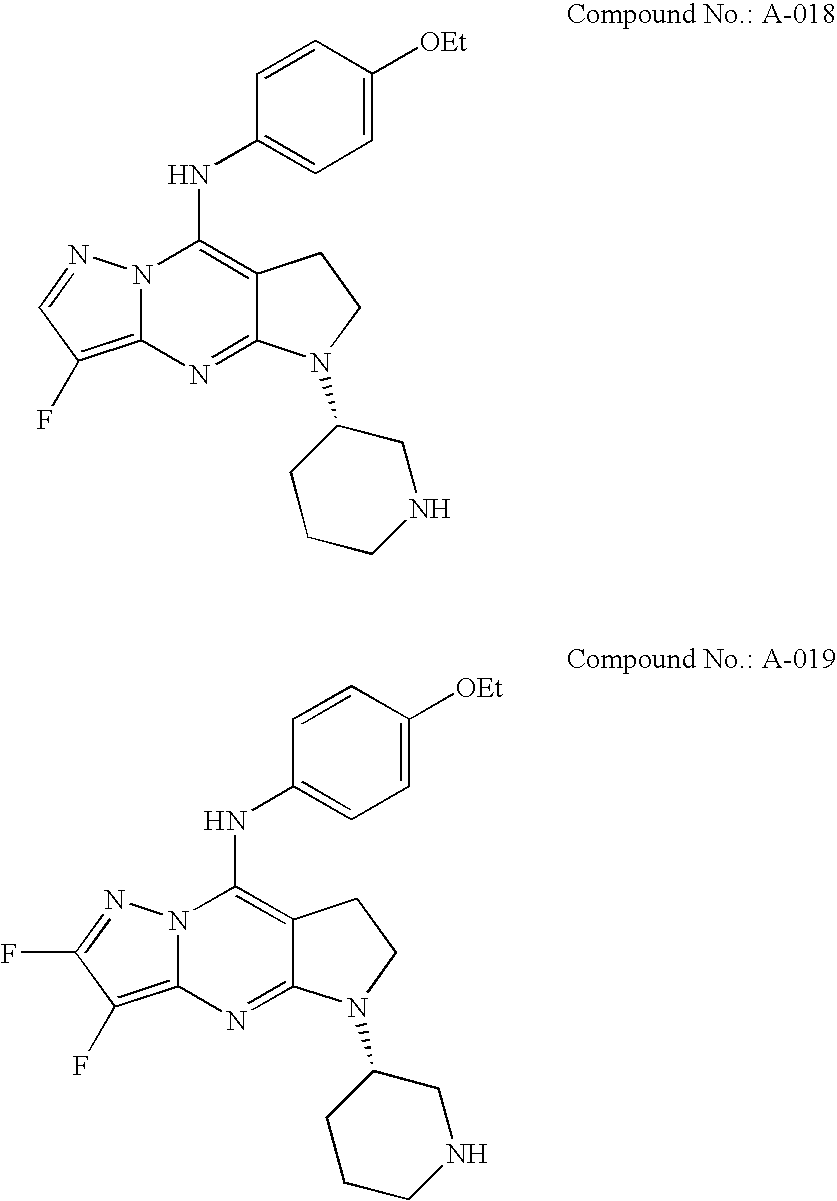
To an N,N-dimethylformamide (1.3 mL) solution containing tert-butyl (S)-3-{8-[tert-butoxycarbonyl-(4-ethoxyphenyl)amino]-6,7-dihydro-1,4,5,8a-tetraaza-s-indacen-5-yl}piperidine-1-carboxylate (78 mg, 0.14 mmol), an N,N-dimethylformamide (1.4 mL) solution containing 1-chloromethyl-4-fluoro-1,4-diazoniabicyclo[2.2.2]octane bis(tetrafluoroborate) (38.3 mg, 0.108 mmol) was added with ice-cooling, and this mixture was stirred at room temperature for 4 days. After the reaction, 0.2 mol/L hydrochloric acid was added to the reaction solution, and the mixture was extracted with ethyl acetate. The ethyl acetate layer was washed with aqueous sodium hydrogen carbonate and then brine and dried over sodium sulfate. After the sodium sulfate was filtered off, the solvent was distilled off. To the residue, methylene chloride (3.0 mL) and trifluoroacetic acid (0.3 mL) were added, and this solution was stirred at room temperature. The solvent was distilled off under reduced pressure, and the residue was purified with preparative HPLC to obtain the title compounds.
Yield: 7.6 mg
HPLC retention time (HPLC condition A): 8.50 min
ESI/MS: 397.08 (M+H, C21H25FN6O)
Yield: 14.9 mg
HPLC retention time (HPLC condition A): 10.23 min
ESI/MS: 415.07 (M+H, C21H24F2N6O1)

By using tert-butyl (S)-3-[8-{tert-butoxycarbonyl-(4-ethoxyphenyl)amino}-6-(tert-butyldimethylsilanyloxymethyl)-6,7-dihydro-1,4,5,8a-tetraaza-s-indacen-5-yl]piperidine-1-carboxylate, the title compound was synthesized by the same method as Example 11.
HPLC retention time (HPLC condition A): 6.41 min
ESI/MS: 409.10 (M+H, C22H28N6O2)

To a THF solution (2.0 mL) of tert-butyl (S)-3-{8-[tert-butoxycarbonyl-(4-ethoxyphenyl)amino]-6,7-dihydro-1,4,5,8a-tetraaza-s-indacen-5-yl}piperidine-1-carboxylate (12.5 mg, 0.0216 mmol), N-chlorosuccinimide (15.3 mg, 0.114 mmol) was added at room temperature and the mixture was stirred at room temperature for 1 hr. After the reaction, aqueous sodium thiosulfate solution was added to the reaction solution, and the mixture was extracted with ethyl acetate. The ethyl acetate layer was washed with water and then brine and dried over sodium sulfate. After the sodium sulfate was filtered off, the solvent was evaporated to obtain the title compound.
HPLC retention time (HPLC condition A): 16.69 min
ESI/MS: 613.10 (M+H, C31H41ClN6O5)

To a THF solution (2.0 mL) of tert-butyl (S)-3-{8-[tert-butoxycarbonyl-(4-ethoxyphenyl)amino]-6,7-dihydro-1,4,5,8a-tetraaza-s-indacen-5-yl}piperidine-1-carboxylate (20.0 mg, 0.0346 mmol), N-bromosuccinimide (31.4 mg, 0.176 mmol) was added on ice-bath cooling and the mixture was stirred for 10 min. After the reaction, aqueous sodium thiosulfate solution was added to the reaction solution, and the mixture was extracted with ethyl acetate. The ethyl acetate layer was washed with water and then brine and dried over sodium sulfate. After the sodium sulfate was filtered off, the solvent was evaporated and the residue was purified with column chromatography (30% ethyl acetate-hexane) to obtain the title compound (16.8 mg).
HPLC retention time (HPLC condition A): 16.79 min
ESI/MS: 657.05, 659.10 (M+H, C31H41BrN6O5)

The title compound was synthesized using tert-butyl (S)-3-{3-chloro-8-[tert-butoxycarbonyl-(4-ethoxyphenyl)amino]-6,7-dihydro-1,4,5,8a-tetraaza-s-indacen-5-yl}piperidine-1-carboxylate by the same method as Example 11.
HPLC retention time (HPLC condition A): 9.82 min
ESI/MS: 413.05 (M+H, C21H25ClN6O1)

The title compound was synthesized using tert-butyl (S)-3-{3-bromo-8-[tert-butoxycarbonyl-(4-ethoxyphenyl)amino]-6,7-dihydro-1,4,5,8a-tetraaza-s-indacen-5-yl}piperidine-1-carboxylate by the same method as Example 11.
HPLC retention time (HPLC condition A): 10.04 min
ESI/MS: 456.95, 459.00 (M+H, C21H25BrN6O1)

To a methylene chloride solution (2.0 mL) of tert-butyl (S)-3-{8-[tert-butoxycarbonyl-furan-2-ylmethylamino]-6,7-dihydro-1,4,5,8a-tetraaza-s-indacen-5-yl}piperidine-1-carboxylate (60.0 mg, 0.111 mmol), trifluoroacetic acid (1.0 mL) was added on ice-bath cooling and the mixture was allowed to warm up to room temperature and stirred for 4 hr. The reaction mixture was concentrated under reduced pressure and the residue was purified with preparative HPLC to obtain the two title compounds.
(Compound No.: A-095)
Yield: 18.0 mg
HPLC retention time (HPLC condition A): 5.40 min
ESI/MS: 338.95 (M+H, C18H22N6O1)
(Compound No.: A-092)
Yield: 13.4 mg
HPLC retention time (HPLC condition B): 2.51 min
ESI/MS: 259.00 (M+H, C13H18N6O1)

To a THF solution (1.5 mL) of tert-butyl (S)-3-(8-[tert-butoxycarbonyl-{4-(2-methoxyethoxy)phenyl}amino]-6,7-dihydro-1,4,5,8a-tetraaza-s-indacen-5-yl}piperidine-1-carboxylate (110.6 mg, 0.182 mmol), N-iodosuccinimide (49.1 mg, 0.218 mmol) was added at room temperature and the mixture was stirred for 3 hr. After the reaction, the reaction mixture was extracted with ethyl acetate. The ethyl acetate layer was washed with water and then brine and dried over sodium sulfate. After the sodium sulfate was filtered off, the solvent was removed under reduced pressure and the residue was purified with column chromatography (30% ethyl acetate-hexane) to obtain the title compound (118.9 mg).
HPLC retention time (HPLC condition A): 16.48 min
ESI/MS: 735.24 (M+H, C32H43IN6O6)

To a THF solution (1.5 mL) of tert-butyl (S)-3-[8-{tert-butoxycarbonyl-(2-methylbenzothiazol-6-yl)amino}-6,7-dihydro-1,4,5,8a-tetraaza-s-indacen-5-yl]piperidine-1-carboxylate (97.6 mg, 0.161 mmol), N-iodosuccinimide (43.5 mg, 0.193 mmol) was added at room temperature and the mixture was stirred for 3 hr. After the reaction, the reaction mixture was extracted with ethyl acetate. The ethyl acetate layer was washed with water and then brine and dried over sodium sulfate. After the sodium sulfate was filtered off, the solvent was removed under reduced pressure and the residue was purified with column chromatography (30% ethyl acetate-hexane) to obtain the title compound (109.7 mg).
HPLC retention time (HPLC condition A): 16.68 min
ESI/MS: 732.18 (M+H, C31H38IN7O4S)
The compounds listed in the following Table H were synthesized from the corresponding starting material and reagent according to each method described in Examples 11 to 21, and 24 to 26. The compound number assigned to each compound in Table H corresponds to the compound number of the example listed in the above Tables A to G. The structures of novel compounds isolated were confirmed by 1H NMR and/or mass analysis on a single quadrupole instrumentation equipped with an electrospray source or other appropriate analytical methods.
For results of mass analysis, M+H, that is, the measured value observed as the molecular mass of compound (M) with one proton (H) added, is shown. “HPLC retention time” represents the retention time (unit: min) of compound in HPLC analysis under the above-mentioned analytical conditions. “Conditions for HPLC” represents the conditions for HPLC analysis on that occasion.
| TABLE H | |||||
| ESI/MS | HPLC Retention | Conditions | |||
| Compound NO. | M + H | Time (min) | for HPLC | ||
| A-001 | 379.30 | 7.22 | A | ||
| A-002 | 393.18 | 6.75 | A | ||
| A-003 | 393.18 | 6.78 | A | ||
| A-004 | 393.18 | 7.20 | A | ||
| A-005 | 339.16 | 6.44 | A | ||
| A-006 | 353.18 | 6.25 | A | ||
| A-007 | 381.17 | 8.60 | A | ||
| A-009 | 379.22 | 6.42 | A | ||
| A-010 | 455.22 | 8.27 | A | ||
| A-011 | 393.25 | 7.82 | A | ||
| A-012 | 393.20 | 7.95 | A | ||
| A-013 | 365.20 | 6.87 | A | ||
| A-014 | 393.12 | 6.74 | A | ||
| A-015 | 393.12 | 7.84 | A | ||
| A-016 | 379.09 | 7.78 | A | ||
| A-017 | 386.10 | 11.25 | A | ||
| A-025 | 349.15 | 6.13 | A | ||
| A-026 | 329.20 | 6.89 | A | ||
| A-027 | 327.20 | 5.69 | B | ||
| A-032 | 335.05 | 6.03 | A | ||
| A-058 | 375.10 | 5.02 | A | ||
| A-091 | 443.10 | 5.84 | A | ||
| A-096 | 273.10 | 1.55 | B | ||
| A-099 | 393.05 | 6.65 | A | ||
| A-100 | 391.00 | 9.28 | A | ||
| B-001 | 393.12 | 8.81 | A | ||
| B-003 | 407.28 | 9.12 | A | ||
| B-004 | 366.30 | 11.14 | A | ||
| B-005 | 380.32 | 11.74 | A | ||
| B-006 | 394.29 | 10.24 | A | ||
| B-007 | 381.30 | 8.56 | A | ||
| B-009 | 368.31 | 9.66 | A | ||
| B-010 | 382.27 | 10.18 | A | ||
| B-011 | 350.32 | 9.72 | A | ||
| B-012 | 378.31 | 11.13 | A | ||
| B-013 | 407.28 | 7.72 | A | ||
| B-014 | 393.31 | 7.84 | A | ||
| B-015 | 367.27 | 6.77 | A | ||
| B-016 | 469.32 | 11.31 | A | ||
| B-017 | 393.31 | 6.91 | A | ||
| B-018 | 401.30 | 8.77 | A | ||
| B-019 | 401.24 | 7.86 | A | ||
| B-020 | 401.17 | 8.64 | A | ||
| B-021 | 379.00 | 7.88 | A | ||
| B-022 | 407.06 | 9.10 | A | ||
| D-001 | 393.15 | 6.94 | A | ||
| D-002 | 407.08 | 7.78 | A | ||
| D-003 | 353.11 | 7.22 | A | ||
| D-004 | 393.12 | 7.97 | A | ||
| D-005 | 407.15 | 8.16 | A | ||
| D-006 | 407.08 | 8.36 | A | ||
| D-007 | 469.06 | 10.19 | A | ||
| E-001 | 407.12 | 8.84 | A | ||
| F-002 | 407.25 | 8.08 | A | ||
(Preparation of Solutions of Compounds)
Each compound was dissolved to DMSO to prepare a solution with a concentration of 20 mmol/L and this solution was stored at −20° C. This stock solution was diluted with DMSO successively to prepare solutions with 200-fold concentrations of a necessary range. These solutions were further diluted with water at a ratio of 1:20 to prepare solutions with 10-fold concentrations of a necessary range. Each of these solutions (5 μL) was used for each reaction in 50 μL-scale. Through the dilution series of all compounds, the final DMSO concentration was kept at 0.5%. Conventional tests for the compounds were carried out at a final concentration ranging from 100 μmol/L to 0.03 μmol/L, but in some cases, tests were carried out at lower concentrations, depending on activity.
(Measurements of MAPKAP-K2 Enzyme Activity)
To a DMSO solution (5 μL) containing a test compound at 5%, a solution (25 μL) containing a peptide substrate [peptide substrate 60 mmol/L, ATP 20 μmol/L, Tris buffer 60 mmol/L (pH 7.5), EGTA 0.2 mmol/L, β-mercaptoethanol 0.2%, magnesium acetate 20 mmol/L, [γ-33P]ATP 0.1 μCi (specific radioactivity ca. 110 TBq/mmol)] was added. The reaction was initiated by further adding a solution (20 μL) containing MAPKAP-K2 enzyme [recombinant human MAPKAP-K2 10 mU, Tris buffer 50 mmol/L (pH 7.5), EGTA 0.1 mmol/L, β-mercaptoethanol 0.1%, BSA 0.1%]. After the reaction was carried out at room temperature for 30 min, 200 mmol/L phosphoric acid (50 μL) was added to quench the reaction, and 90 μL of the reaction mixture was adsorbed on a multiscreen PH plate (Millipore). The plate was washed with 100 mmol/L phosphoric acid. After the plate was dried, 30 μL of MicroScint™-O (Perkin-Elmer) was added here, and the radioactivity (cpm) was measured on a scintillation counter to determine the inhibitory activity. The peptide substrate was Lys-Lys-Leu-Asn-Arg-Thr-Leu-Ser-Val-Ala.
(Note)
% Reference=(X−B)/(Tot−B)×100
% Inhibition=100%−% Reference
% Reference=(X−B)/(Tot−B)×100
% Inhibition=100%−% Reference
- X=count per minute of the well with a test compound
- B=count per minute of the well without the enzyme
- Tot=count per minute of the well with only DMSO solvent and without a test compound
(Calculation of MAPKAP-K2 Inhibitory Activity) - IC50 value=a concentration of compound at which 50% inhibition is observed
- The efficacy of each compound in Tables A to G against MAPKAP-K2 is listed in the following Table J.
| TABLE J | |||
| Compound No. | Activity strength | ||
| A-001 | +++ | ||
| A-002 | +++ | ||
| A-003 | ++ | ||
| A-004 | + | ||
| A-005 | +++ | ||
| A-006 | +++ | ||
| A-007 | + | ||
| A-008 | +++ | ||
| A-009 | +++ | ||
| A-010 | ++ | ||
| A-012 | ++ | ||
| A-013 | +++ | ||
| A-014 | + | ||
| A-018 | +++ | ||
| A-019 | ++ | ||
| A-020 | +++ | ||
| A-022 | +++ | ||
| A-023 | +++ | ||
| A-024 | +++ | ||
| A-025 | +++ | ||
| A-026 | +++ | ||
| A-027 | +++ | ||
| A-032 | +++ | ||
| A-058 | +++ | ||
| A-091 | +++ | ||
| A-092 | +++ | ||
| A-095 | +++ | ||
| A-096 | +++ | ||
| A-099 | +++ | ||
| A-100 | +++ | ||
| B-001 | +++ | ||
| B-002 | +++ | ||
| B-003 | ++ | ||
| B-007 | + | ||
| B-013 | + | ||
| B-014 | +++ | ||
| B-015 | ++ | ||
| B-016 | ++ | ||
| B-017 | +++ | ||
| B-018 | + | ||
| B-021 | +++ | ||
| B-022 | ++ | ||
| C-001 | +++ | ||
| D-001 | ++ | ||
| D-002 | + | ||
| D-003 | + | ||
| D-006 | ++ | ||
| F-001 | +++ | ||
| F-002 | ++ | ||
| G-001 | +++ | ||
| (For activity strength in the table, +++ represents IC50 value < 10 μmol/L, ++ represents 10 μmol/L ≦ IC50 value < 50 μmol/L and + represents 50 μmol/L ≦ IC50 value < 100 μmol/L.) | |||
The compounds of the present invention are useful as MAPKAP-K2 inhibitors. Further, by using the compounds of the present invention as active ingredients, there is provided a therapeutic agent for neurodegenerative and/or neurological disorders (including dementia), inflammatory disease, sepsis, autoimmune diseases, destructive osteopathy, diabetes mellitus, cancer, ischemic reperfusion injury, angiodysplasia, cachexia, obesity, angiogenesis, asthma and/or chronic obstructive pulmonary disease (COPD).
Claims (42)
1. A pyrazolopyrimidine derivative or medically acceptable salt thereof represented by formula (1):

wherein,
R1 represents a hydrogen atom or a halogen;
R2 represents a hydrogen atom or a halogen;
R3 represents a hydrogen atom, an optionally substituted C1-C8 alkyl group, an optionally substituted C3-C8 cycloalkyl group, an optionally substituted heterocyclic group, an optionally substituted C6-C14 aryl group or —OR5;
R5 represents a hydrogen atom, an optionally substituted C1-C8 alkyl group or —(C═O)R6;
R6 represents an optionally substituted C1-C8 alkyl group;
n represents 0 or 1, or n represents 0 when R3 is —OR5;
R4 represents a hydrogen atom, an optionally substituted C1-C8 alkyl group, an optionally substituted C2-C8 alkenyl, an optionally substituted C2-C8 alkynyl, an optionally substituted C3-C8 cycloalkyl group, an optionally substituted C6-C14 aryl group, an optionally substituted heterocyclic group, an optionally substituted heterocyclylalkyl group or an optionally substituted C7-C16 aralkyl group; the substituents in the optionally substituted C6-C14 aryl group as are one or more substituents selected from the group consisting of halogen, —CN, —NO2, —CHO, —OH, —COOH, optionally substituted C1-C8 alkyl group, optionally substituted C2-C8 alkenyl, optionally substituted C2-C8 alkynyl, optionally substituted C3-C8 cycloalkyl group, —O—(CH2)m—W, optionally substituted C6-C14 aryl group, optionally substituted heterocyclic group, —C(═O)—R133, —O—C(═O)R26, —C(═O)OR27, —NR28C(═O)R29, —NR30R31, —C(═O)NR32R33, —NR34C(═X1)OR35, —NR36C(═X2)NR37R38, —NR39—SO2R40, —S(O)r—R41 and —SO2NR42R43, wherein X1 or X2 represents O, S, N—CN or NH and r represents 0 to 2;
W represents a hydrogen atom, an optionally substituted C1-C8 alkyl group, an optionally substituted C2-C8 alkenyl, an optionally substituted C2-C8 alkynyl, an optionally substituted C3-C8 cycloalkyl group, an optionally substituted C6-C14 aryl group or an optionally substituted heterocyclic group, and in this case m represents 0 to 4; or W represents an optionally substituted C1-C8 alkoxy group, —NR150R151 or an optionally substituted phenoxy group and in this case m represents 1 to 4;
R26 to R43, R133, R150 and R151 may be identical or different and each represents a hydrogen atom, an optionally substituted C1-C8 alkyl group, an optionally substituted C2-C8 alkenyl, an optionally substituted C2-C8 alkynyl, an optionally substituted C3-C8 cycloalkyl group, an optionally substituted C6-C14 aryl group, an optionally substituted heterocyclic group, an optionally substituted aralkyl group or an optionally substituted heterocyclylalkyl group, or, when R30 and R31, R32 and R33, R37 and R38, R42 and R43 or R150 and R151 are optionally substituted C1-C8 alkyl groups, the substituents in each combination may form a saturated or unsaturated 5- to 7-membered ring together with the nitrogen atom to which they bond, and this ring may contain 1 or 2 heteroatoms selected from the group consisting of oxygen atom, nitrogen atom and sulfur atom besides the nitrogen atom to which these substituents bond;
-A-B- represents —CH2—CH(-Z1)-, —(CH2)p—, —CH═C(-Z2)- or —(CH2)q—C(═O)—;
p represents 3 and q represents 1 or 2;
Z1 and Z2 may be identical or different and each represents a hydrogen atom or —CH2—OR11; and
R11 represents a hydrogen atom, an optionally substituted C1-C8 alkyl group or a substituted silyl group.
2. A pyrazolopyrimidine derivative or medically acceptable salt thereof represented by formula (1):

wherein
R1 represents a hydrogen atom or a halogen;
R2 represents a hydrogen atom or a halogen;
R3 represents a hydrogen atom, an optionally substituted C1-C8 alkyl group, an optionally substituted C3-C8 cycloalkyl group, an optionally substituted heterocyclic group, an optionally substituted C6-C14 aryl group or —OR5;
R5 represents a hydrogen atom, an optionally substituted C1-C8 alkyl group or —(C═O)R6;
R6 represents an optionally substituted C1-C8 alkyl group;
n represents 0 or 1 or n represents 0 and when R3 is —OR5;
R4 represents an optionally substituted C1-C8 alkyl group, an optionally substituted C3-C8 cycloalkyl group, an optionally substituted C6-C14 aryl group, an optionally substituted heterocyclic group or an optionally substituted C7-C16 aralkyl group; the substituents in the optionally substituted C6-C14 aryl group as R4 are one or more substituents selected from the group consisting of halogen, —CN, —NO2, optionally substituted C1-C8 alkyl group, —O—(CH2)m—W, optionally substituted C6-C14 aryl group, optionally substituted heterocyclic group, —C(═O)OR7, —NR8C(═O)R9, —NR10R127, —C(═O)NR128R129 and —SO2NR130R131;
W represents a hydrogen atom, an optionally substituted C1-C8 alkyl group, an optionally substituted C3-C8 cycloalkyl group, an optionally substituted C6-C14 aryl group or an optionally substituted heterocyclic group and in this case m represents 0 to 4; or W represents an optionally substituted C1-C8 alkoxy group or an optionally substituted phenoxy group and in this case m represents 1 to 4;
R7 to R10 and R127 to R131 may be identical or different and each represents a hydrogen atom, an optionally substituted C1-C8 alkyl group, an optionally substituted C3-C8 cycloalkyl group or an optionally substituted C6-C14 aryl group, or, when R10 and R127, R128 and R129 or R130 and R131 are optionally substituted C1-C8 alkyl groups, they may form a saturated or unsaturated 5- to 7-membered ring together with the nitrogen atom to which they bond, and this ring may contain 1 or 2 heteroatoms selected from the group consisting of oxygen atom, nitrogen atom and sulfur atom besides the nitrogen atom to which these substituents bond;
-A-B- represents —CH2—CH(-Z3)-, —(CH2)p—, —CH═C(-Z4)- or —(CH2)q—C(═O)—;
p represents 3 and q represents 1 or 2;
Z3 and Z4 may be identical or different and each represents a hydrogen atom or —CH20R11; and
R11 represents a hydrogen atom or an optionally substituted C1-C8 alkyl group.
3. The pyrazolopyrimidine derivative or medically acceptable salt thereof according to claim 1 or 2 , wherein R1 is hydrogen atom.
4. The pyrazolopyrimidine derivative or medically acceptable salt thereof according to claim 1 or 2 , wherein R2 is a hydrogen atom.
5. The pyrazolopyrimidine derivative or medically acceptable salt thereof according to claim 1 or 2 , wherein R2 is a halogen.
6. The pyrazolopyrimidine derivative or medically acceptable salt thereof according to claim 1 or 2 , wherein R3 is an optionally substituted C1-C8 alkyl group, an optionally substituted C3-C8 cycloalkyl group or an optionally substituted heterocyclic group.
7. The pyrazolopyrimidine derivative or medically acceptable salt thereof according to claim 1 or 2 , wherein R3 is an unsubstituted C1-C4 alkyl group, a substituted C1-C4 alkyl group wherein the substituents are 1 to 3 substituents selected from the group consisting of halogen, phenyl group, C1-C4 alkyl group substituted with 1 to 9 halogens, C1-C4 alkoxy group, C1-C4 alkoxy group substituted with 1 to 9 halogens, —CN, —CHO, —OH, —(C═O)OH, —(C═O)OR86, —(C═O)NR87R88 and —NR89R90; R86 represents a C1-C4 alkyl group, a 0308 cycloalkyl group or a phenyl group; R87 and R88 may be identical or different and each represents a hydrogen atom, a C1-C8 alkyl group, a C3-C8 cycloalkyl group, a phenyl group or an aralkyl group; R89 represents a hydrogen atom, a C1-C4 alkyl group, a phenyl group or a benzyl group; R90 represents a hydrogen atom, a C1-C4 alkyl group, a benzyl group, an acetyl group, a tert-butoxycarbonyl group or a benzyloxycarbonyl group, or, when R89 and R90 are alkyl groups, they may form a saturated or unsaturated 5- to 7-membered ring together with the nitrogen atom to which they bond; further this ring may contain 1 or 2 heteroatoms selected from the group consisting of oxygen atom, nitrogen atom and sulfur atom besides the nitrogen atom to which R89 and R90 bond, an unsubstituted C3-C8 cycloalkyl group, a substituted C3-C8 cycloalkyl group wherein the substituents are 1 to 3 substituents selected from the group consisting of halogen, —OH, —(C═O)OH, C1-4 alkyl group, C1-C4 alkoxy group and —NR91R92, wherein R91 represents a hydrogen atom, a C1-C8 alkyl group, a phenyl group or a benzyl group and R92 represents a hydrogen atom, a C1-C8 alkyl group, a benzyl group, an acetyl group, a tert-butoxycarbonyl group or a benzyloxycarbonyl group, an unsubstituted heterocyclic group or a substituted heterocyclic group wherein, when carbon atom(s) in the substituted heterocyclic group are substituted, the substituent(s) are 1 to 3 substituents selected from the group consisting of halogen, —(C═O)OH, C1-C4 alkyl group, C1-C4 alkyl group substituted with 1 to 9 halogens, phenyl group, benzyl group, C1-C4 alkoxy group, C1-C4 alkoxy group substituted with 1 to 9 halogens and NR93R94, wherein R93 represents a hydrogen atom, a C1-C8 alkyl group, a phenyl group or a benzyl group and R94 represents a hydrogen atom, a C1-C8 alkyl group, a benzyl group, an acetyl group, a tert-butoxycarbonyl group or a benzyloxycarbonyl group, wherein, when nitrogen atom(s) in the heterocycle are substituted, the substituents are one or more substituents selected from the group consisting of C1-C4 alkyl group, benzyl group, acetyl group, tert-butoxycarbonyl group and benzyloxycarbonyl group.
8. The pyrazolopyrimidine derivative or medically acceptable salt thereof according to claim 1 or 2 , wherein R3 is an unsubstituted heterocyclic group wherein the heterocyclic group represents a monocyclic 5- to 8-membered heterocyclic group containing 1 or 2 heteroatoms selected from the group consisting of N, O and S, a substituted saturated heterocyclic group wherein the heterocyclic group represents a monocyclic 5- to 8-membered heterocyclic group containing 1 or 2 heteroatoms selected from the group consisting of N, O and S, and the substituent bonds to a nitrogen atom in the heterocycle and the substituents represent one or more substituents selected from the group consisting of C1-C4 alkyl group, benzyl group and tert-butoxycarbonyl group, a C1-C4 alkyl group substituted with one amino group or a C3-C8 cycloalkyl group substituted with one amino group.
9. The pyrazolopyrimidine derivative or medically acceptable salt thereof according to claim 1 or 2 , wherein R3 is a piperidyl group, a pyrrolidinyl group or a cyclohexyl group substituted with an amino group.
10. The pyrazolopyrimidine derivative or medically acceptable salt thereof according to claim 1 or 2 , wherein n is 0.
11. The pyrazolopyrimidine derivative or medically acceptable salt thereof according to claim 1 or 2 , wherein R4 san optionally substituted C6-C14 aryl group.
12. The pyrazolopyrimidine derivative or medically acceptable salt thereof according to claim 1 or 2 , wherein R4 is an optionally substituted C6-C14 aryl group and the substituents are one or more substituents selected from the group consisting of halogen, —CN, optionally substituted C1-C8 alkyl group, —O—(CH2)m—W, optionally substituted C6-C14 aryl group, optionally substituted heterocyclic group, —C(═O)OR7 and —C(═O)NR9R10.
13. The pyrazolopyrimidine derivative or medically acceptable salt thereof according to claim 1 or 2 , wherein R4 is an optionally substituted C6-C14 aryl group and the substituents are one or more substituents selected from the group consisting of halogen, —CN, optionally substituted C1-C8 alkyl group and —O—(CH2)m—W.
14. The pyrazolopyrimidine derivative or medically acceptable salt thereof according to claim 1 or 2 , wherein R4 is an optionally substituted C6-C14 aryl group and the substituents are one or more —O—(CH2)m—W, wherein W is a hydrogen atom, an optionally substituted C1-C8 alkyl group, an optionally substituted heterocyclic group or an optionally substituted C1-C8 alkoxy group.
15. The pyrazolopyrimidine derivative or medically acceptable salt thereof according to claim 1 or 2 , wherein R4 is an optionally substituted C6-C14 aryl group and the substituents are one or more substituents selected from the group consisting of halogen, —CN, optionally substituted C1-C8 alkyl group, optionally substituted C6-C14 aryl group and optionally substituted heterocyclic group.
16. The pyrazolopyrimidine derivative or medically acceptable salt thereof according to claim 1 or 2 , wherein R4 is an optionally substituted C6-C14 aryl group and the substituents are one or more substituents selected from the group consisting of halogen, —CN, optionally substituted C1-C8 alkyl group, —C(═O)OR7 and —C(═O)NR9R10.
17. The pyrazolopyrimidine derivative or medically acceptable salt thereof according to claim 1 or 2 , wherein R4 is an optionally substituted C6-C14 aryl group wherein the substituents are 1 to 3 substituents selected from the group consisting of halogen, —CN, optionally substituted C1-C8 alkyl group, —O—(CH2)m—W and —C(═O)OR113, wherein W represents a hydrogen atom, an optionally substituted C1-C4 alkyl group, an optionally substituted C3-C8 cycloalkyl group, an optionally substituted phenyl group or an optionally substituted monocyclic or bicyclic heterocyclic group and m represents 0 to 4; or W represents an optionally substituted C1-C4 alkoxy group and m represents 1 to 4, and R113 represents an optionally substituted 0108 alkyl group, an optionally substituted C3-C8 cycloalkyl group or an optionally substituted phenyl group.
18. The pyrazolopyrimidine derivative or medically acceptable salt thereof according to claim 1 or 2 , wherein R4 is an optionally substituted phenyl group wherein the substituent is one —O—(CH2)m—W, wherein W represents a hydrogen atom or an optionally substituted C1-C4 alkyl group and m represents 0 to 4; or W represents an optionally substituted C1-C4 alkoxy group and m represents 1 to 4.
19. The pyrazolopyrimidine derivative or medically acceptable salt thereof according to claim 1 or 2 , wherein R4 is an optionally substituted C6-C14 aryl group wherein the substituents are one or more substituents selected from the group consisting of halogen, —CN, optionally substituted C1-C4 alkyl group, optionally substituted phenyl group and optionally substituted monocyclic or bicyclic heterocyclic group.
20. The pyrazolopyrimidine derivative or medically acceptable salt thereof according to claim 1 or 2 , wherein R4 is an optionally substituted C6-C14 aryl group wherein the substituents are one or more substituents selected from the group consisting of halogen, —CN, optionally substituted C1-C4 alkyl group, —C(═O)OR113 and —C(═O)NR118R119, wherein R113, R118 and R119 may be identical or different and each represents a hydrogen atom, an optionally substituted C1-C8 alkyl group, an optionally substituted C3-C8 cycloalkyl group or an optionally substituted C6-C14 aryl group; and when R118 and R119 are alkyl groups, they may form a saturated or unsaturated 5- to 7-membered ring together with the nitrogen atom to which they bond, and this ring may contain 1 or 2 heteroatoms selected from the group consisting of oxygen atom, nitrogen atom and sulfur atom besides the nitrogen atom to which they bond.
21. The pyrazolopyrimidine derivative or medically acceptable salt thereof according to claim 1 or 2 , wherein R4 is an optionally substituted heterocyclic group.
22. The pyrazolopyrimidine derivative or medically acceptable salt thereof according to claim 1 or 2 , wherein R4 is an optionally substituted bicyclic heteroaryl group wherein, when carbon atom(s) in the bicyclic heteroaryl group are substituted, the substituents are 1 to 3 substituents selected from the group consisting of halogen, —CN, C1-C8 alkyl group, C1-C4 alkyl group substituted with 1 to 9 halogens, C1-C8 alkoxy group, C1-C4 alkoxy group substituted with 1 to 9 halogens, phenyl group, monocyclic or bicyclic heterocyclic group, —C(═O)OR122, —NR123R124 and —C(═O)NR125R126, wherein R123 represents a hydrogen atom, a C1-C8 alkyl group, a phenyl group or a benzyl group, R124 represents a hydrogen atom, a C1-C8 alkyl group, a benzyl group, an acetyl group, a tert-butoxycarbonyl group or a benzyloxycarbonyl group, R122 represents a C1-C8 alkyl group, a C3-C8 cycloalkyl group or a phenyl group, and R125 and R126 may be identical or different and each represents a hydrogen atom, a C1-C8 alkyl group, a C3-C8 cycloalkyl group, a phenyl group or a benzyl group; when nitrogen atom(s) in the heterocycle are substituted, the substituents are one or more substituents selected from the group consisting of C1-C4 alkyl group, benzyl group, acetyl group, tert-butoxycarbonyl group and benzyloxycarbonyl group.
23. The pyrazolopyrimidine derivative or medically acceptable salt thereof according to claim 1 or 2 , wherein R4 is an optionally substituted bicyclic heteroaryl group wherein the bicyclic heteroaryl group means a bicyclic heteroaryl group wherein a phenyl group is fused with an aromatic heterocycle containing 1 or 2 heteroatoms selected from the group consisting of N, O and S; when carbon atom(s) in the bicyclic heteroaryl group are substituted, the substituents are 1 to 3 substituents selected from the group consisting of halogen, C1-C4 alkyl group and C1-C4 alkyl group substituted with 1 to 9 halogens; when nitrogen atom(s) in the heterocycle are substituted, the substituent represents one or more C1-C4 alkyl group.
24. The pyrazolopyrimidine derivative or medically acceptable salt thereof according to claim 1 or 2 , wherein R4 is a hydrogen atom, an optionally substituted C1-C8 alkyl group, an optionally substituted C3-C8 cycloalkyl group, an optionally substituted C7-C16 aralkyl group or an optionally substituted heterocyclylalkyl group.
25. The pyrazolopyrimidine derivative or medically acceptable salt thereof according to claim 1 or 2 , wherein R4 is an optionally substituted heterocyclylalkyl group.
26. The pyrazolopyrimidine derivative or medically acceptable salt thereof according to claim 1 or 2 , wherein -A-B- is —CH2—CH2—, —(CH2)p—, or —CH═CH—.
27. The pyrazolopyrimidine derivative or medically acceptable salt thereof according to claim 1 or 2 , wherein -A-B- is —CH2—CH2.
28. A pyrazolopyrimidine derivative represented by formula (2):

wherein,
R1 represents a hydrogen atom or a halogen;
R2 represents a hydrogen atom or a halogen;
R3 represents a hydrogen atom, an optionally substituted C1-C8 alkyl group, an optionally substituted C3-C8 cycloalkyl group, an optionally susbstituted heterocyclic group, an optionally substituted C6-C14 aryl group ot —OR5 ;
R5 represents a hydrogen atom, an optionally substituted C1-C8 alkyl group or —(C═O)R6;
R5 represents an optionally substituted C1-C8 alkyl group;
n represents 0 or 1 , or n represents 0 when R3 is —OR5;
R4 represents a hydrogen atom, an optionally substituted C1-C8 alkyl group, an optionally substituted C2-C8 alkenyl, an optionally substituted C2-C8 alkynyl, an optionally substituted C3-C8 cycloalkyl group, an optionally substituted C6-C14 aryl group, an optionally substituted heterocyclic group, an optionally substituted heterocyclylalkyl group or an optionally substituted C7-C16 aralkyl group; the substituents in the optionally substituted C6-C14 aryl group as R4 are one or more substituents selected from the group consisting of halogen, —CN, –NO2, —CHO, —OH, —COOH, optionally substituted C1-C8 alkyl group, optionally substituted C2-C8 alkenyl, optionally substituted C2-C8 alkynyl, optionally substituted C3-C8 cycloalkyl group, —O—(CH2)m—W, optionally substituted C6-C14 aryl group, optionally substituted heterocyclic group, —(═O)—R133, —O—C(═O)R26, —C(═O)OR27, —NR28C(═O)R29, —NR30R31, —C(═O)NR32R33, —NR34C(═X1)OR35, —NR36C(═C2)NR37R38, —NR39SO2R40, —S(O)r—R41 and —SO2NR42R43, wherein X1 or X2 represents O, S, N—CN or NH and r represents 0 to 2;
W represents a hydrogen atom, optionally substituted C1-C8 alkyl group, an optionally substituted C2-C8 alkenyl, an optionally substituted C2-C8 alkynyl, an optionally substituted C3-C8 cycloalkyl group, an optionally substituted C6-C14 aryl group or an optionally substituted heterocyclic group, and in this case m represents 0 to 4; or W represents an optionally substituted C1-C8 alkoxy group, —NR150R151 or an optionally substituted phenoxy group an in this case m represents 1 to 4;
R26 to R43, R133, R150 and R151 may be identical or different and each represents a hydrogen atom, an optionally substituted C1-C8 alkyl group, an optionally substituted C2-C8 alkenyl, an optionally substituted C2-C8 alkynyl, an optionally substituted C3-C8 cycloalkyl group, an optionally substituted C6-C14 aryl group, an optionally substituted heterocyclic group, an optionally substituted aralkyl group or an optionally substituted hereocyclylalkyl group, or, when R30 and R31, R32 and R33, R37 and R38, R42 and R43 or R150 and R151 are optionally substituted C1-C8 alkyl groups, the substituents in each combination may form a saturated or unsaturated 5- to 7-membered ring together with the nitrogen atom to which they bond, and this ring may contain 1 or 2 heteroatoms selected from the group consisting of oxygen atom, nitrogen atom and sulfur atom besides the nitrogen atom to which these substituents bond;
-A-B- represents —CH2—CH(-Z1)-, —(CH2)p—, —CH═C(-Z2)- or —(CH2)q—C(═O)—;
p represents 3 and q represents 1 or 2;
Z1 and Z2 may be identical or different and each represents a hydrogen atom or —CH2—OR11; and
R11 represents a hydrogen atom, an optionally substituted C1-C8 alkyl group or a substituted silyl group,
and Boc represents tert-butoxycarbonyl.
29. A pyrazolopyrimidine derivative represented by formula (2):
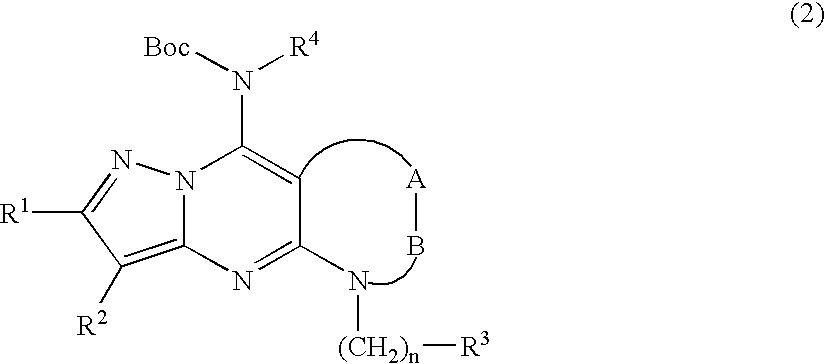
wherein,
R1 represents a hydrogen atom or a halogen;
R2 represents a hydrogen atom or a halogen;
R3 represents a hydrogen atom, an optionally substituted C1-C8 alkyl group, an optionally substituted C3-C8 cycloalkyl group, an optionally substituted heterocyclic group, an optionally substituted C6-C14 aryl group or —OR5;
R5 represents a hydrogen atom, an optionally substituted C1-C8 alkyl group or —(C═O)R6;
R6 represents an optionally substituted C1-C8 alkyl group;
n represents 0 or 1 or n represents 0 and when R3 is —OR5;
R4 represents an optionally substituted C1-C8 alkyl group, an optionally substituted C3-C8 cycloalkyl group, an optionally substituted C6-C14 aryl group, an optionally substituted heterocyclic group or an optionally substituted C7-C16 aralkyl group; the substituents in the optionally substituted C6-C14 aryl group as R4 are one or more substituents selected from the group consisting of halogen, —CN, —NO2, optionally substituted C1-C8 alkyl group, —O—(CH2)m—W, optionally substituted C6-C14 aryl group, optionally substituted heterocyclic group, —C(═O)OR7, —NR8C(═O)R9, —NR10R127, —C(═O)NR128R129 and —SO2NR130R131;
W represents a hydrogen atom, an optionally substituted C1-C8 alkyl group, an optionally substituted C3-C8 cycloalkyl group, an optionally substituted C6-C14 aryl group or an optionally substituted heterocyclic group and in this case m represents 0 to 4; or W represents an optionally substituted C1-C8 alkoxy group or an optionally substituted phenoxy group and in this case m represents 1 to 4;
R7 to R10 and R127 to R131 may be identical or different and each represents a hydrogen atom, an optionally substituted C1-C8 alkyl group, an optionally substituted C3-C8 cycloalkyl group or an optionally substituted C6-C14 aryl group, or, when R10 and R127, R128 and R129 or R130 and R131 are optionally substituted C1-C8 alkyl groups, they may form a saturated or unsaturated 5- to 7-membered ring together with the nitrogen atom to which they bond, and this ring may contain 1 or 2 heteroatoms selected from the group consisting of oxygen atom, nitrogen atom and sulfur atom besides the nitrogen atom to which these substituents bond;
-A-B- represents —CH2—CH(-Z3)-, —(CH2)p—, —CH═C(-Z4)- or —(CH2)q—C(═O);
p represents 3 and q represents 1 or 2;
Z3 and Z4 may be identical or different and each represents a hydrogen atom or —CH2OR11; and
R11 represents a hydrogen atom or an optionally substituted C1-C8 alkyl group, and Boc represents tert-butoxycarbonyl.
30. The pyrazolopyrimidine derivative according to claim 28 or 29 , wherein R1 and R2 are a hydrogen atom.
31. The pyrazolopyrimidine derivative according to claim 28 or 29 , wherein R1 is a hydrogen atom and R2 is a halogen.
32. The pyrazolopyrimidine derivative according to claim 28 or 29 , wherein R3 is an optionally substituted C1-C8 alkyl group, an optionally substituted cyclohexyl group or an optionally substituted heterocyclic group wherein the heterocyclic group means a 3- to 10-membered monocyclic or bicyclic heterocyclic group containing 1 to 4 heteroatoms selected from the group consisting of N, O and S.
33. The pyrazolopyrimidine derivative according to claim 28 or 29 , wherein R3 is an unsubstituted heterocyclic group wherein the heterocyclic group means a 5- to 8-membered monocyclic heterocyclic group containing 1 or 2 heteroatoms selected from the group consisting of N, O and S, a substituted heterocyclic group wherein the heterocyclic group means a 5- to 8-membered monocyclic heterocyclic group containing 1 or 2 heteroatoms selected from the group consisting of N, O and S, and the substituent bonds to a nitrogen atom in a saturated heterocyclic group and the substituents represent one or more substituents selected from the group consisting of C1-C4 alkyl group, benzyl group, acetyl group, tert butoxycarbonyl group and benzyloxycarbonyl group, a C1-C4 alkyl group substituted with an amino group or a C3-C8 alkyl group substituted with an amino group.
34. The pyrazolopyrimidine derivative according to claim 28 or 29 , wherein R4 is an optionally substituted C1-C8 alkyl group, an optionally substituted C3-C8 cycloalkyl group, an optionally substituted C6-C14 aryl group, an optionally substituted heterocyclic group or an optionally substituted heterocyclylalkyl group.
35. The pyrazolopyrimidine derivative according to claim 28 or 29 , wherein R4 is an optionally substituted phenyl group or an optionally substituted bicyclic heteroaryl group.
36. The pyrazolopyrimidine derivative according to claim 28 or 29 , wherein R4 is an optionally substituted phenyl group wherein the substituents are one or more —O—(CH2)m—W, wherein W represents a hydrogen atom or an optionally substituted C1-C4 alkyl group and m is 0 to 4, or W represents an optionally substituted C1-C4 alkoxy group and m is 2 to 4.
37. The pyrazolopyrimidine derivative according to claim 28 or 29 , wherein R4 is an optionally substituted bicyclic heteroaryl group wherein the substituents are 1 to 3 substituents selected from the group consisting of halogen, C1-C4 alkyl group and C1-C4 alkyl group substituted with 1 to 9 halogens.
38. The pyrazolopyrimidine derivative according to any of claim 28 or 29 , wherein -A-B- is —CH2—CH2—, —(CH2)p—, or —CH═CH—.
39. The pyrazolopyrimidine derivative according to claim 28 or 29 , wherein -A-B- is —CH2—CH2.
40. The pyrazolopyrimidine derivative according to claim 28 or 29 , wherein n is 0.
41. A pharmaceutical composition comprising the pyrazolopyrimidine derivative or medically acceptable salt thereof according to claim 1 or 2 , and a pharmaceutically acceptable carrier.
42. A MAPKAP-K2 inhibitor comprising the pyrazolopyrimidine derivative or medically acceptable salt thereof according to claims 1 or 2 , as an active ingredient.
Priority Applications (2)
| Application Number | Priority Date | Filing Date | Title |
|---|---|---|---|
| US11/377,363 US7473694B2 (en) | 2005-03-17 | 2006-03-17 | Pyrazolopyrimidine derivatives or pharmaceutically acceptable salts thereof |
| US12/240,004 US20090054472A1 (en) | 2005-03-17 | 2008-09-29 | Pyrazolopyrimidine Derivatives or Pharmaceutically Acceptable Salts Thereof |
Applications Claiming Priority (4)
| Application Number | Priority Date | Filing Date | Title |
|---|---|---|---|
| JP2005-077509 | 2005-03-17 | ||
| JP2005077509 | 2005-03-17 | ||
| US66320505P | 2005-03-21 | 2005-03-21 | |
| US11/377,363 US7473694B2 (en) | 2005-03-17 | 2006-03-17 | Pyrazolopyrimidine derivatives or pharmaceutically acceptable salts thereof |
Related Child Applications (1)
| Application Number | Title | Priority Date | Filing Date |
|---|---|---|---|
| US12/240,004 Division US20090054472A1 (en) | 2005-03-17 | 2008-09-29 | Pyrazolopyrimidine Derivatives or Pharmaceutically Acceptable Salts Thereof |
Publications (2)
| Publication Number | Publication Date |
|---|---|
| US20070173519A1 US20070173519A1 (en) | 2007-07-26 |
| US7473694B2 true US7473694B2 (en) | 2009-01-06 |
Family
ID=38286331
Family Applications (2)
| Application Number | Title | Priority Date | Filing Date |
|---|---|---|---|
| US11/377,363 Expired - Fee Related US7473694B2 (en) | 2005-03-17 | 2006-03-17 | Pyrazolopyrimidine derivatives or pharmaceutically acceptable salts thereof |
| US12/240,004 Abandoned US20090054472A1 (en) | 2005-03-17 | 2008-09-29 | Pyrazolopyrimidine Derivatives or Pharmaceutically Acceptable Salts Thereof |
Family Applications After (1)
| Application Number | Title | Priority Date | Filing Date |
|---|---|---|---|
| US12/240,004 Abandoned US20090054472A1 (en) | 2005-03-17 | 2008-09-29 | Pyrazolopyrimidine Derivatives or Pharmaceutically Acceptable Salts Thereof |
Country Status (1)
| Country | Link |
|---|---|
| US (2) | US7473694B2 (en) |
Cited By (3)
| Publication number | Priority date | Publication date | Assignee | Title |
|---|---|---|---|---|
| US20090054472A1 (en) * | 2005-03-17 | 2009-02-26 | Teijin Pharma Limited | Pyrazolopyrimidine Derivatives or Pharmaceutically Acceptable Salts Thereof |
| US8969363B2 (en) | 2011-07-19 | 2015-03-03 | Infinity Pharmaceuticals, Inc. | Heterocyclic compounds and uses thereof |
| US12486274B2 (en) | 2020-01-13 | 2025-12-02 | Verge Analytics, Inc. | Substituted pyrazolo-pyrimidines and uses thereof |
Families Citing this family (3)
| Publication number | Priority date | Publication date | Assignee | Title |
|---|---|---|---|---|
| US20120035105A1 (en) * | 2009-01-09 | 2012-02-09 | Sdg, Inc. | Insulin Therapies for the Treatment of Diabetes, Diabetes Related Ailments, and/or Diseases or Conditions Other Than Diabetes or Diabetes Related Ailments |
| WO2012047569A1 (en) * | 2010-09-28 | 2012-04-12 | Schering Corporation | Fused tricyclic inhibitors of mammalian target of rapamycin |
| US8927562B2 (en) | 2010-09-28 | 2015-01-06 | Merck Sharp & Dohme Corp. | Fused tricyclic inhibitors of mammalian target of rapamycin |
Citations (10)
| Publication number | Priority date | Publication date | Assignee | Title |
|---|---|---|---|---|
| WO2004055015A1 (en) | 2002-12-12 | 2004-07-01 | Pharmacia Corporation | Aminocyanopyridine inhibitors of mitogen activated protein kinase-activated protein kinase-2 |
| WO2004054505A2 (en) | 2002-12-12 | 2004-07-01 | Pharmacia Corporation | Method of using aminocyanopyridine compounds as mitogen activated protein kinase-activated protein kinase-2 inhibitors |
| WO2004055019A1 (en) | 2002-12-12 | 2004-07-01 | Pharmacia Corporation | Method of making tricyclic aminocyanopyridine compounds |
| WO2004054504A2 (en) | 2002-12-12 | 2004-07-01 | Pharmacia Corporation | Tricyclic aminocyanopyridine inhibitors of mitogen activated protein kinase-activated protein kinase-2 |
| WO2004058176A2 (en) | 2002-12-20 | 2004-07-15 | Pharmacia Corporation | Acyclic pyrazole compounds |
| WO2004076458A1 (en) | 2003-02-28 | 2004-09-10 | Teijin Pharma Limited | Pyrazolo[1,5-a]pyrimidine derivatives |
| WO2004081013A1 (en) | 2003-03-11 | 2004-09-23 | Teijin Pharma Limited | Protein kinase inhibitors |
| WO2004099127A1 (en) | 2003-05-07 | 2004-11-18 | Novo Nordisk A/S | Novel compounds as kinase inhibitors |
| WO2005007092A2 (en) | 2003-07-08 | 2005-01-27 | Smithkline Beecham Corporation | Novel chemical compounds |
| WO2005009370A2 (en) | 2003-07-23 | 2005-02-03 | Pharmacia Corporation | Beta-carboline compounds and analogues thereof and their use as mitogen-activated protein kinase-activated protein kinase-2 inhibitors |
Family Cites Families (1)
| Publication number | Priority date | Publication date | Assignee | Title |
|---|---|---|---|---|
| US7473694B2 (en) * | 2005-03-17 | 2009-01-06 | Teijin Pharma Limited | Pyrazolopyrimidine derivatives or pharmaceutically acceptable salts thereof |
-
2006
- 2006-03-17 US US11/377,363 patent/US7473694B2/en not_active Expired - Fee Related
-
2008
- 2008-09-29 US US12/240,004 patent/US20090054472A1/en not_active Abandoned
Patent Citations (11)
| Publication number | Priority date | Publication date | Assignee | Title |
|---|---|---|---|---|
| WO2004055015A1 (en) | 2002-12-12 | 2004-07-01 | Pharmacia Corporation | Aminocyanopyridine inhibitors of mitogen activated protein kinase-activated protein kinase-2 |
| WO2004054505A2 (en) | 2002-12-12 | 2004-07-01 | Pharmacia Corporation | Method of using aminocyanopyridine compounds as mitogen activated protein kinase-activated protein kinase-2 inhibitors |
| WO2004055019A1 (en) | 2002-12-12 | 2004-07-01 | Pharmacia Corporation | Method of making tricyclic aminocyanopyridine compounds |
| WO2004054504A2 (en) | 2002-12-12 | 2004-07-01 | Pharmacia Corporation | Tricyclic aminocyanopyridine inhibitors of mitogen activated protein kinase-activated protein kinase-2 |
| WO2004058176A2 (en) | 2002-12-20 | 2004-07-15 | Pharmacia Corporation | Acyclic pyrazole compounds |
| WO2004058762A1 (en) | 2002-12-20 | 2004-07-15 | Pharmacia Corporation | Mitogen activated protein kinase-activated protein kinase-2 inhibiting compounds |
| WO2004076458A1 (en) | 2003-02-28 | 2004-09-10 | Teijin Pharma Limited | Pyrazolo[1,5-a]pyrimidine derivatives |
| WO2004081013A1 (en) | 2003-03-11 | 2004-09-23 | Teijin Pharma Limited | Protein kinase inhibitors |
| WO2004099127A1 (en) | 2003-05-07 | 2004-11-18 | Novo Nordisk A/S | Novel compounds as kinase inhibitors |
| WO2005007092A2 (en) | 2003-07-08 | 2005-01-27 | Smithkline Beecham Corporation | Novel chemical compounds |
| WO2005009370A2 (en) | 2003-07-23 | 2005-02-03 | Pharmacia Corporation | Beta-carboline compounds and analogues thereof and their use as mitogen-activated protein kinase-activated protein kinase-2 inhibitors |
Non-Patent Citations (11)
Cited By (4)
| Publication number | Priority date | Publication date | Assignee | Title |
|---|---|---|---|---|
| US20090054472A1 (en) * | 2005-03-17 | 2009-02-26 | Teijin Pharma Limited | Pyrazolopyrimidine Derivatives or Pharmaceutically Acceptable Salts Thereof |
| US8969363B2 (en) | 2011-07-19 | 2015-03-03 | Infinity Pharmaceuticals, Inc. | Heterocyclic compounds and uses thereof |
| US9718815B2 (en) | 2011-07-19 | 2017-08-01 | Infinity Pharmaceuticals, Inc. | Heterocyclic compounds and uses thereof |
| US12486274B2 (en) | 2020-01-13 | 2025-12-02 | Verge Analytics, Inc. | Substituted pyrazolo-pyrimidines and uses thereof |
Also Published As
| Publication number | Publication date |
|---|---|
| US20070173519A1 (en) | 2007-07-26 |
| US20090054472A1 (en) | 2009-02-26 |
Similar Documents
| Publication | Publication Date | Title |
|---|---|---|
| CN115956075B (en) | Allosteric ketene inhibitors of phosphoinositide 3-kinases (PI 3 ks) for the treatment of diseases related to PI3K modulation | |
| US20240228490A1 (en) | Heterocyclic derivative inhibitor and preparation method therefor and application thereof | |
| US10875864B2 (en) | Substituted imidazo[1,2-B]pyridazines as protein kinase inhibitors | |
| EP3356345B1 (en) | Heteroaryl derivatives as sepiapterin reductase inhibitors | |
| US8569296B2 (en) | PI3K (delta) selective inhibitors | |
| US10703748B2 (en) | Diazanaphthalen-3-yl carboxamides and preparation and use thereof | |
| US10723742B2 (en) | Biphenyl compound or salt thereof | |
| US20130296352A1 (en) | Pyrazoloquinoline derivatives | |
| US20120040951A1 (en) | Heteroaryl compounds useful as raf kinase inhibitors | |
| US20140206683A1 (en) | Macrocyclic lrrk2 kinase inhibitors | |
| US9150577B2 (en) | Heterocyclic compounds containing an indole core | |
| CN102459242B (en) | Phenoxymethyl heterocyclic compounds | |
| US20210317140A1 (en) | Heterocyclic Compounds and Methods of Use | |
| US12091412B2 (en) | Heterocyclic inhibitors of ENPP1 | |
| US7109229B2 (en) | Methods and compounds for treating proliferative diseases | |
| US20060166992A1 (en) | Heterocyclically substituted imidazotriazines | |
| US20090054472A1 (en) | Pyrazolopyrimidine Derivatives or Pharmaceutically Acceptable Salts Thereof | |
| US20250129104A1 (en) | 7h-pyrrolo[2,3-d]pyrimidines and preparation and uses thereof | |
| US10538528B2 (en) | 5H-pyrrolo[2,3-D]pyrimidin-6(7H)-one derivative | |
| US20250066349A1 (en) | Cyclic compounds and their use for the treatment of neurological disorders | |
| TW201004959A (en) | Substituted tricyclic derivatives | |
| US20230192686A1 (en) | 1h-pyrrolo[2,3-b]pyridines and preparation and uses thereof | |
| US10918645B2 (en) | Substituted tricyclic heterocyclic compounds and use thereof | |
| EP1885725B1 (en) | Tricyclic azole derivatives, their manufacture and use as pharmaceutical agents | |
| CN116888126A (en) | Compound of casein kinase inhibitor |
Legal Events
| Date | Code | Title | Description |
|---|---|---|---|
| AS | Assignment |
Owner name: TEIJIN PHARMA LIMITED, JAPAN Free format text: ASSIGNMENT OF ASSIGNORS INTEREST;ASSIGNORS:TAKAKUWA, MIKA;KOSUGI, TOMOMI;MAKINO, HIROAKI;AND OTHERS;REEL/FRAME:018289/0887 Effective date: 20060331 |
|
| FEPP | Fee payment procedure |
Free format text: PAYOR NUMBER ASSIGNED (ORIGINAL EVENT CODE: ASPN); ENTITY STATUS OF PATENT OWNER: LARGE ENTITY |
|
| REMI | Maintenance fee reminder mailed | ||
| LAPS | Lapse for failure to pay maintenance fees | ||
| STCH | Information on status: patent discontinuation |
Free format text: PATENT EXPIRED DUE TO NONPAYMENT OF MAINTENANCE FEES UNDER 37 CFR 1.362 |
|
| FP | Lapsed due to failure to pay maintenance fee |
Effective date: 20130106 |