US7462612B2 - Pyridine inhibitors of ERK2 and uses thereof - Google Patents
Pyridine inhibitors of ERK2 and uses thereof Download PDFInfo
- Publication number
- US7462612B2 US7462612B2 US11/089,701 US8970105A US7462612B2 US 7462612 B2 US7462612 B2 US 7462612B2 US 8970105 A US8970105 A US 8970105A US 7462612 B2 US7462612 B2 US 7462612B2
- Authority
- US
- United States
- Prior art keywords
- independently selected
- compound
- optionally substituted
- compound according
- nitrogen
- Prior art date
- Legal status (The legal status is an assumption and is not a legal conclusion. Google has not performed a legal analysis and makes no representation as to the accuracy of the status listed.)
- Expired - Fee Related, expires
Links
- 0 CC.[5*]C(CO)NC(=O)C1=CC(C2=CC=NC(Cl)=C2)=CN1C Chemical compound CC.[5*]C(CO)NC(=O)C1=CC(C2=CC=NC(Cl)=C2)=CN1C 0.000 description 4
- JWQFAMDPOGECFR-UHFFFAOYSA-N CC.CC1=CC(C2=CC=NC(Cl)=C2)=CN1C Chemical compound CC.CC1=CC(C2=CC=NC(Cl)=C2)=CN1C JWQFAMDPOGECFR-UHFFFAOYSA-N 0.000 description 2
- MZVSTDHRRYQFGI-UHFFFAOYSA-N CC1=CC=NC(Cl)=C1 Chemical compound CC1=CC=NC(Cl)=C1 MZVSTDHRRYQFGI-UHFFFAOYSA-N 0.000 description 2
- KPRFGIWZMADDIL-UHFFFAOYSA-N CC(C)C1=CC=C2OCCOC2=C1 Chemical compound CC(C)C1=CC=C2OCCOC2=C1 KPRFGIWZMADDIL-UHFFFAOYSA-N 0.000 description 1
- WVLIYNLEMQXXPV-SMUGVWQTSA-N CC1=C(Br)C=C(Cl)N=C1.CC1=C(C2=CNC(C(=O)N[C@H](CO)C3=CC=CC(Cl)=C3)=C2)C=C(Cl)N=C1.CC1=C(C2=CNC(C(=O)O)=C2)C=C(Cl)N=C1.CC1=C(N)C=C(Cl)N=C1.CC1=C([N+](=O)[O-])C=C(Cl)[N+]([O-])=C1.CC1=CC=C(Cl)N=C1.CC1=CC=C(Cl)[N+]([O-])=C1.COC(=O)C1=CC(C2=C(C)C=NC(Cl)=C2)=CN1C.[I-20] Chemical compound CC1=C(Br)C=C(Cl)N=C1.CC1=C(C2=CNC(C(=O)N[C@H](CO)C3=CC=CC(Cl)=C3)=C2)C=C(Cl)N=C1.CC1=C(C2=CNC(C(=O)O)=C2)C=C(Cl)N=C1.CC1=C(N)C=C(Cl)N=C1.CC1=C([N+](=O)[O-])C=C(Cl)[N+]([O-])=C1.CC1=CC=C(Cl)N=C1.CC1=CC=C(Cl)[N+]([O-])=C1.COC(=O)C1=CC(C2=C(C)C=NC(Cl)=C2)=CN1C.[I-20] WVLIYNLEMQXXPV-SMUGVWQTSA-N 0.000 description 1
- MOKHOGIFKDBVMG-ZVWHDUDQSA-N CC1=C(C(=O)NC(O)C(O)C2=CC=CC=C2)NC=C1C1=C(C#N)C=NC(Cl)=C1.CC[C@@H](NC(=O)C1=C(CN(C)C)C(C2=C(C#N)C=NC(Cl)=C2)=CN1)C1=CC(Cl)=CC=C1.COC1=C(C(=O)N[C@H](CO)C2=CC(Cl)=CC=C2)NC(C)=C1C1=C(CO)C=NC(Cl)=C1.COCC1=C(C2=C(C)NC(C(=O)N[C@H](CO)C3=CC(Cl)=CC=C3)=C2C)C=C(Cl)N=C1 Chemical compound CC1=C(C(=O)NC(O)C(O)C2=CC=CC=C2)NC=C1C1=C(C#N)C=NC(Cl)=C1.CC[C@@H](NC(=O)C1=C(CN(C)C)C(C2=C(C#N)C=NC(Cl)=C2)=CN1)C1=CC(Cl)=CC=C1.COC1=C(C(=O)N[C@H](CO)C2=CC(Cl)=CC=C2)NC(C)=C1C1=C(CO)C=NC(Cl)=C1.COCC1=C(C2=C(C)NC(C(=O)N[C@H](CO)C3=CC(Cl)=CC=C3)=C2C)C=C(Cl)N=C1 MOKHOGIFKDBVMG-ZVWHDUDQSA-N 0.000 description 1
- QXWQAWWJEYUKQP-UHFFFAOYSA-N CC1=C(C(=O)NC(O)C(O)C2=CC=CC=C2)NC=C1C1=C(C#N)C=NC(Cl)=C1.[I-50] Chemical compound CC1=C(C(=O)NC(O)C(O)C2=CC=CC=C2)NC=C1C1=C(C#N)C=NC(Cl)=C1.[I-50] QXWQAWWJEYUKQP-UHFFFAOYSA-N 0.000 description 1
- KZDYXLNUOYOION-UHFFFAOYSA-N CC1=C(C(=O)NC(O)C(O)C2=CN=CC=C2)NC=C1C1=NC=NC(Cl)=C1.[I-49] Chemical compound CC1=C(C(=O)NC(O)C(O)C2=CN=CC=C2)NC=C1C1=NC=NC(Cl)=C1.[I-49] KZDYXLNUOYOION-UHFFFAOYSA-N 0.000 description 1
- MDGPCYAQBCBQKS-UHFFFAOYSA-N CC1=C(C(=O)NCC2=CC=C(F)C=C2)NC=C1C1=NC=NC(Cl)=C1.[I-23] Chemical compound CC1=C(C(=O)NCC2=CC=C(F)C=C2)NC=C1C1=NC=NC(Cl)=C1.[I-23] MDGPCYAQBCBQKS-UHFFFAOYSA-N 0.000 description 1
- IAPCWOQSFAZHJK-UHFFFAOYSA-N CC1=C(C(=O)NCC2=CC=C(F)C=C2)NC=C1C1=NC=NC(Cl)=C1.[I-24] Chemical compound CC1=C(C(=O)NCC2=CC=C(F)C=C2)NC=C1C1=NC=NC(Cl)=C1.[I-24] IAPCWOQSFAZHJK-UHFFFAOYSA-N 0.000 description 1
- BFWBVJLPKFPSRH-PFEQFJNWSA-N CC1=C(C(=O)N[C@H](CO)C2=CC(Cl)=CC=C2)NC(CO)=C1C1=NC=NC(Cl)=C1.[I-44] Chemical compound CC1=C(C(=O)N[C@H](CO)C2=CC(Cl)=CC=C2)NC(CO)=C1C1=NC=NC(Cl)=C1.[I-44] BFWBVJLPKFPSRH-PFEQFJNWSA-N 0.000 description 1
- ZPFLKZZMCVRNCA-BTZFVDPXSA-N CC1=C(C(=O)N[C@H](CO)C2=CC(Cl)=CC=C2)NC=C1C1=C(C2=CC=CC=C2)C=NC(Cl)=C1.CC1=C(C2=C(CO)C=NC(Cl)=C2)C(C)=C(C(=O)N[C@H](CO)C2=CC(Cl)=CC=C2)N1.CCCNC(=O)C1=C(C)C(C2=CC=NC(Cl)=C2)=CN1.O=C(N[C@H]1CC[C@@H](O)CC1)C1=CC(C2=CC=NC(Cl)=C2)=CN1 Chemical compound CC1=C(C(=O)N[C@H](CO)C2=CC(Cl)=CC=C2)NC=C1C1=C(C2=CC=CC=C2)C=NC(Cl)=C1.CC1=C(C2=C(CO)C=NC(Cl)=C2)C(C)=C(C(=O)N[C@H](CO)C2=CC(Cl)=CC=C2)N1.CCCNC(=O)C1=C(C)C(C2=CC=NC(Cl)=C2)=CN1.O=C(N[C@H]1CC[C@@H](O)CC1)C1=CC(C2=CC=NC(Cl)=C2)=CN1 ZPFLKZZMCVRNCA-BTZFVDPXSA-N 0.000 description 1
- SOIFWCSWUAZOIV-VZYDHVRKSA-N CC1=C(C(=O)N[C@H](CO)C2=CC(Cl)=CC=C2)NC=C1C1=C(C2=CC=CC=C2)C=NC(Cl)=C1.[I-27] Chemical compound CC1=C(C(=O)N[C@H](CO)C2=CC(Cl)=CC=C2)NC=C1C1=C(C2=CC=CC=C2)C=NC(Cl)=C1.[I-27] SOIFWCSWUAZOIV-VZYDHVRKSA-N 0.000 description 1
- UIUDRIPPDPPWRR-UHFFFAOYSA-N CC1=C(C)C=C(Cl)N=C1 Chemical compound CC1=C(C)C=C(Cl)N=C1 UIUDRIPPDPPWRR-UHFFFAOYSA-N 0.000 description 1
- QIVHTLXWTBWHKJ-SBAMEYLGSA-N CC1=C(C2=C(C#N)C=NC(Cl)=C2)C(C)=C(C(=O)N[C@H](CO)C2=CC(Cl)=CC=C2)N1.CC1=C(C2=C(F)C=NC(Cl)=C2)C(CN(C)C)=C(C(=O)NCC2=CC=C(F)C=C2)N1.CC1=C(C2=C(F)C=NC(Cl)=C2)C(N)=C(C(=O)N[C@H](CO)C2=CC(Cl)=CC=C2)N1.CC1=C(C2=C(O)C=NC(Cl)=C2)C(CC(F)(F)F)=C(C(=O)NCC2=CC=C(F)C=C2)N1 Chemical compound CC1=C(C2=C(C#N)C=NC(Cl)=C2)C(C)=C(C(=O)N[C@H](CO)C2=CC(Cl)=CC=C2)N1.CC1=C(C2=C(F)C=NC(Cl)=C2)C(CN(C)C)=C(C(=O)NCC2=CC=C(F)C=C2)N1.CC1=C(C2=C(F)C=NC(Cl)=C2)C(N)=C(C(=O)N[C@H](CO)C2=CC(Cl)=CC=C2)N1.CC1=C(C2=C(O)C=NC(Cl)=C2)C(CC(F)(F)F)=C(C(=O)NCC2=CC=C(F)C=C2)N1 QIVHTLXWTBWHKJ-SBAMEYLGSA-N 0.000 description 1
- HYZSUGWIVCTATP-UNTBIKODSA-N CC1=C(C2=C(C#N)C=NC(Cl)=C2)C(C)=C(C(=O)N[C@H](CO)C2=CC(Cl)=CC=C2)N1.[I-43] Chemical compound CC1=C(C2=C(C#N)C=NC(Cl)=C2)C(C)=C(C(=O)N[C@H](CO)C2=CC(Cl)=CC=C2)N1.[I-43] HYZSUGWIVCTATP-UNTBIKODSA-N 0.000 description 1
- GTUXWCDBWDLXPO-UNTBIKODSA-N CC1=C(C2=C(CO)C=NC(Cl)=C2)C(C)=C(C(=O)N[C@H](CO)C2=CC(Cl)=CC=C2)N1.[I-26] Chemical compound CC1=C(C2=C(CO)C=NC(Cl)=C2)C(C)=C(C(=O)N[C@H](CO)C2=CC(Cl)=CC=C2)N1.[I-26] GTUXWCDBWDLXPO-UNTBIKODSA-N 0.000 description 1
- QUXVPEYKECXDQU-UHFFFAOYSA-N CC1=C(C2=C(F)C=NC(Cl)=C2)C(C)=C(C(=O)NC(CO)C2=CC=C(F)C=C2)N1.CC1=C(C2=C(O)C=NC(Cl)=C2)C(C)=C(C(=O)NCC2=CC=C(F)C=C2)N1.CC1=C(C2=CC=NC(Cl)=C2)C=C(C(=O)NCC2=CN=CC=C2)N1.O=S(=O)(C1=CC(C2=CC=NC(Cl)=C2)=CN1)N1CCCCC1 Chemical compound CC1=C(C2=C(F)C=NC(Cl)=C2)C(C)=C(C(=O)NC(CO)C2=CC=C(F)C=C2)N1.CC1=C(C2=C(O)C=NC(Cl)=C2)C(C)=C(C(=O)NCC2=CC=C(F)C=C2)N1.CC1=C(C2=CC=NC(Cl)=C2)C=C(C(=O)NCC2=CN=CC=C2)N1.O=S(=O)(C1=CC(C2=CC=NC(Cl)=C2)=CN1)N1CCCCC1 QUXVPEYKECXDQU-UHFFFAOYSA-N 0.000 description 1
- DPIYINWSFGIIPQ-UHFFFAOYSA-N CC1=C(C2=C(F)C=NC(Cl)=C2)C(C)=C(C(=O)NC(CO)C2=CC=C(F)C=C2)N1.[I-17] Chemical compound CC1=C(C2=C(F)C=NC(Cl)=C2)C(C)=C(C(=O)NC(CO)C2=CC=C(F)C=C2)N1.[I-17] DPIYINWSFGIIPQ-UHFFFAOYSA-N 0.000 description 1
- VOTSGEPOBMQUAL-UHFFFAOYSA-N CC1=C(C2=C(F)C=NC(Cl)=C2)C(CN(C)C)=C(C(=O)NCC2=CC=C(F)C=C2)N1.[I-41] Chemical compound CC1=C(C2=C(F)C=NC(Cl)=C2)C(CN(C)C)=C(C(=O)NCC2=CC=C(F)C=C2)N1.[I-41] VOTSGEPOBMQUAL-UHFFFAOYSA-N 0.000 description 1
- JPWFWERRDBZBBG-PFEQFJNWSA-N CC1=C(C2=C(F)C=NC(Cl)=C2)C(N)=C(C(=O)N[C@H](CO)C2=CC(Cl)=CC=C2)N1.[I-45] Chemical compound CC1=C(C2=C(F)C=NC(Cl)=C2)C(N)=C(C(=O)N[C@H](CO)C2=CC(Cl)=CC=C2)N1.[I-45] JPWFWERRDBZBBG-PFEQFJNWSA-N 0.000 description 1
- GVDMMDYJAPKRIZ-UHFFFAOYSA-N CC1=C(C2=C(O)C=NC(Cl)=C2)C(C)=C(C(=O)NCC2=CC=C(F)C=C2)N1.[I-18] Chemical compound CC1=C(C2=C(O)C=NC(Cl)=C2)C(C)=C(C(=O)NCC2=CC=C(F)C=C2)N1.[I-18] GVDMMDYJAPKRIZ-UHFFFAOYSA-N 0.000 description 1
- KWULBTNPTZPGSD-UHFFFAOYSA-N CC1=C(C2=C(O)C=NC(Cl)=C2)C(CC(F)(F)F)=C(C(=O)NCC2=CC=C(F)C=C2)N1.[I-42] Chemical compound CC1=C(C2=C(O)C=NC(Cl)=C2)C(CC(F)(F)F)=C(C(=O)NCC2=CC=C(F)C=C2)N1.[I-42] KWULBTNPTZPGSD-UHFFFAOYSA-N 0.000 description 1
- PNNNFDSBIUSELP-UHFFFAOYSA-N CC1=C(C2=CC=NC(Cl)=C2)C(C2=CC=CC=C2)=C(C(=O)NCN2CCOCC2)N1.CC1=C(C2=CNC(C(=O)N3CCOCC3)=C2)C=C(Cl)N=C1.O=C(C1=CC(C2=CC=NC(Cl)=C2)=CN1)N1CCNCC1.O=C(NC1=CC=NC=C1)C1=CC(C2=CC=NC(Cl)=C2)=CN1.O=C(NC1=CN=CC=C1)C1=CC(C2=C(F)C=NC(Cl)=C2)=CN1 Chemical compound CC1=C(C2=CC=NC(Cl)=C2)C(C2=CC=CC=C2)=C(C(=O)NCN2CCOCC2)N1.CC1=C(C2=CNC(C(=O)N3CCOCC3)=C2)C=C(Cl)N=C1.O=C(C1=CC(C2=CC=NC(Cl)=C2)=CN1)N1CCNCC1.O=C(NC1=CC=NC=C1)C1=CC(C2=CC=NC(Cl)=C2)=CN1.O=C(NC1=CN=CC=C1)C1=CC(C2=C(F)C=NC(Cl)=C2)=CN1 PNNNFDSBIUSELP-UHFFFAOYSA-N 0.000 description 1
- IKZXAPYRVGWZGD-UHFFFAOYSA-N CC1=C(C2=CC=NC(Cl)=C2)C(C2=CC=CC=C2)=C(C(=O)NCN2CCOCC2)N1.[I-11] Chemical compound CC1=C(C2=CC=NC(Cl)=C2)C(C2=CC=CC=C2)=C(C(=O)NCN2CCOCC2)N1.[I-11] IKZXAPYRVGWZGD-UHFFFAOYSA-N 0.000 description 1
- FIAHEGYJEKNNGJ-UFRNLTNDSA-N CC1=C(C2=CC=NC(Cl)=C2)C(CO)=C(C(=O)N[C@H](CO)C2=CC(Cl)=CC=C2)N1.CC1=C(C2=CNC(C(=O)NC(O)C(O)C3=CC=CC=C3)=C2)C=C(Cl)N=C1.O=C(NC(O)C(O)C1=CC(Cl)=CC=C1)C1=CC(C2=CC=NC(Cl)=C2)=CN1.O=C(NCC(O)C1=CC=CC=C1)C1=CC(C2=CC=NC(Cl)=C2)=CN1 Chemical compound CC1=C(C2=CC=NC(Cl)=C2)C(CO)=C(C(=O)N[C@H](CO)C2=CC(Cl)=CC=C2)N1.CC1=C(C2=CNC(C(=O)NC(O)C(O)C3=CC=CC=C3)=C2)C=C(Cl)N=C1.O=C(NC(O)C(O)C1=CC(Cl)=CC=C1)C1=CC(C2=CC=NC(Cl)=C2)=CN1.O=C(NCC(O)C1=CC=CC=C1)C1=CC(C2=CC=NC(Cl)=C2)=CN1 FIAHEGYJEKNNGJ-UFRNLTNDSA-N 0.000 description 1
- RKKBXJPADVCDAM-PKLMIRHRSA-N CC1=C(C2=CC=NC(Cl)=C2)C(CO)=C(C(=O)N[C@H](CO)C2=CC(Cl)=CC=C2)N1.[I-40] Chemical compound CC1=C(C2=CC=NC(Cl)=C2)C(CO)=C(C(=O)N[C@H](CO)C2=CC(Cl)=CC=C2)N1.[I-40] RKKBXJPADVCDAM-PKLMIRHRSA-N 0.000 description 1
- DLOQWGRJQBGHEF-UHFFFAOYSA-N CC1=C(C2=CC=NC(Cl)=C2)C=C(C(=O)NCC2=CN=CC=C2)N1.[I-12] Chemical compound CC1=C(C2=CC=NC(Cl)=C2)C=C(C(=O)NCC2=CN=CC=C2)N1.[I-12] DLOQWGRJQBGHEF-UHFFFAOYSA-N 0.000 description 1
- UTLSHTXRDNGGJS-UHFFFAOYSA-N CC1=C(C2=CNC(C(=O)N3CCOCC3)=C2)C=C(Cl)N=C1.[I-5] Chemical compound CC1=C(C2=CNC(C(=O)N3CCOCC3)=C2)C=C(Cl)N=C1.[I-5] UTLSHTXRDNGGJS-UHFFFAOYSA-N 0.000 description 1
- NSFHQVFPGGDAMO-UHFFFAOYSA-N CC1=C(C2=CNC(C(=O)NC(O)C(O)C3=CC=CC=C3)=C2)C=C(Cl)N=C1.[I-38] Chemical compound CC1=C(C2=CNC(C(=O)NC(O)C(O)C3=CC=CC=C3)=C2)C=C(Cl)N=C1.[I-38] NSFHQVFPGGDAMO-UHFFFAOYSA-N 0.000 description 1
- CCOUIHFENOCBSI-ZCOPAWDASA-N CC1=C(C2=CNC(C(=O)N[C@H](CO)C3=CC(Cl)=CC=C3)=C2)C=C(Cl)N=C1.CC1=C(S(=O)(=O)N[C@H](CO)C2=CC(Cl)=CC=C2)NC=C1C1=CC=NC(Cl)=C1.CCOC(=O)C1=C(C)C(C2=C(C#N)C=NC(Cl)=C2)=C(C)N1.N#CC1=C(C2=CNC(C(=O)N[C@H](CO)C3=CC(Cl)=CC=C3)=C2C2=CC=CC=C2)C=C(Cl)N=C1 Chemical compound CC1=C(C2=CNC(C(=O)N[C@H](CO)C3=CC(Cl)=CC=C3)=C2)C=C(Cl)N=C1.CC1=C(S(=O)(=O)N[C@H](CO)C2=CC(Cl)=CC=C2)NC=C1C1=CC=NC(Cl)=C1.CCOC(=O)C1=C(C)C(C2=C(C#N)C=NC(Cl)=C2)=C(C)N1.N#CC1=C(C2=CNC(C(=O)N[C@H](CO)C3=CC(Cl)=CC=C3)=C2C2=CC=CC=C2)C=C(Cl)N=C1 CCOUIHFENOCBSI-ZCOPAWDASA-N 0.000 description 1
- FESJMNUJKIMBJZ-UNTBIKODSA-N CC1=C(C2=CNC(C(=O)N[C@H](CO)C3=CC(Cl)=CC=C3)=C2)C=C(Cl)N=C1.[I-20] Chemical compound CC1=C(C2=CNC(C(=O)N[C@H](CO)C3=CC(Cl)=CC=C3)=C2)C=C(Cl)N=C1.[I-20] FESJMNUJKIMBJZ-UNTBIKODSA-N 0.000 description 1
- MHDOYBLDUATNIO-UHFFFAOYSA-N CC1=C(C2=NC=NC(Cl)=C2)C(C)=C(C(=O)NC2CC2)N1.[I-30] Chemical compound CC1=C(C2=NC=NC(Cl)=C2)C(C)=C(C(=O)NC2CC2)N1.[I-30] MHDOYBLDUATNIO-UHFFFAOYSA-N 0.000 description 1
- PCIVULVCIVGRNO-UHFFFAOYSA-N CC1=C(C2=NC=NC(Cl)=C2)C(C)=C(C(=O)NC2CC3=CC=CC=C3C2)N1.[I-29] Chemical compound CC1=C(C2=NC=NC(Cl)=C2)C(C)=C(C(=O)NC2CC3=CC=CC=C3C2)N1.[I-29] PCIVULVCIVGRNO-UHFFFAOYSA-N 0.000 description 1
- ORAKXZBWBWNQCE-XFULWGLBSA-N CC1=C(C2=NC=NC(Cl)=C2)C(C)=C(C(=O)N[C@H](CN)C2=CC(Cl)=CC=C2)N1.[I-16] Chemical compound CC1=C(C2=NC=NC(Cl)=C2)C(C)=C(C(=O)N[C@H](CN)C2=CC(Cl)=CC=C2)N1.[I-16] ORAKXZBWBWNQCE-XFULWGLBSA-N 0.000 description 1
- IVQJBRHOMBRJND-XFULWGLBSA-N CC1=C(C2=NC=NC(Cl)=C2)C(CO)=C(C(=O)N[C@H](CO)C2=CC(Cl)=CC=C2)N1.[I-48] Chemical compound CC1=C(C2=NC=NC(Cl)=C2)C(CO)=C(C(=O)N[C@H](CO)C2=CC(Cl)=CC=C2)N1.[I-48] IVQJBRHOMBRJND-XFULWGLBSA-N 0.000 description 1
- TYINAHDGDKVQDX-UHFFFAOYSA-N CC1=C(C2=NC=NC(Cl)=C2)C=C(C(=O)NC(O)C(O)C2=CC=CC=C2)N1.[I-39] Chemical compound CC1=C(C2=NC=NC(Cl)=C2)C=C(C(=O)NC(O)C(O)C2=CC=CC=C2)N1.[I-39] TYINAHDGDKVQDX-UHFFFAOYSA-N 0.000 description 1
- LXAGUMADQOZBQT-PKLMIRHRSA-N CC1=C(S(=O)(=O)N[C@H](CO)C2=CC(Cl)=CC=C2)NC=C1C1=CC=NC(Cl)=C1.[I-19] Chemical compound CC1=C(S(=O)(=O)N[C@H](CO)C2=CC(Cl)=CC=C2)NC=C1C1=CC=NC(Cl)=C1.[I-19] LXAGUMADQOZBQT-PKLMIRHRSA-N 0.000 description 1
- MGMSKQZIAGFMRU-UHFFFAOYSA-N CC1=CC=C(C(C)C)C=C1C Chemical compound CC1=CC=C(C(C)C)C=C1C MGMSKQZIAGFMRU-UHFFFAOYSA-N 0.000 description 1
- MVAXKFAQKTWRAH-UHFFFAOYSA-N CC1=NC=NC(Cl)=C1 Chemical compound CC1=NC=NC(Cl)=C1 MVAXKFAQKTWRAH-UHFFFAOYSA-N 0.000 description 1
- NCZNJRNUMRIRSQ-UHFFFAOYSA-N CCCNC(=O)C1=C(C)C(C2=CC=NC(Cl)=C2)=CN1.[I-28] Chemical compound CCCNC(=O)C1=C(C)C(C2=CC=NC(Cl)=C2)=CN1.[I-28] NCZNJRNUMRIRSQ-UHFFFAOYSA-N 0.000 description 1
- HGKXYVSZQZZGGE-UHFFFAOYSA-N CCOC(=O)C1=C(C)C(C2=C(C#N)C=NC(Cl)=C2)=C(C)N1.[I-21] Chemical compound CCOC(=O)C1=C(C)C(C2=C(C#N)C=NC(Cl)=C2)=C(C)N1.[I-21] HGKXYVSZQZZGGE-UHFFFAOYSA-N 0.000 description 1
- YGEIHZDVTBXMFJ-UHFFFAOYSA-N CCOC(=O)C1=C(C)C(C2=C(O)C=NC(Cl)=C2)=CN1.[IH-2] Chemical compound CCOC(=O)C1=C(C)C(C2=C(O)C=NC(Cl)=C2)=CN1.[IH-2] YGEIHZDVTBXMFJ-UHFFFAOYSA-N 0.000 description 1
- QQBSSVKUBPPGSP-UHFFFAOYSA-N CCOC(=O)C1=C(C)C(C2=NC=NC(Cl)=C2)=C(C)N1.[I-3] Chemical compound CCOC(=O)C1=C(C)C(C2=NC=NC(Cl)=C2)=C(C)N1.[I-3] QQBSSVKUBPPGSP-UHFFFAOYSA-N 0.000 description 1
- GZSAXALIUPBGGG-UHFFFAOYSA-N CCOC(=O)C1=CC(C2=CC=NC(Cl)=C2)=CN1.[I-] Chemical compound CCOC(=O)C1=CC(C2=CC=NC(Cl)=C2)=CN1.[I-] GZSAXALIUPBGGG-UHFFFAOYSA-N 0.000 description 1
- IFOJHAICNDPUDC-FSRHSHDFSA-N CN(C)CC1=C(C(=O)N[C@H](CO)C2=CC(Cl)=CC=C2)NC=C1C1=C(C#N)C=NC(Cl)=C1.[I-51] Chemical compound CN(C)CC1=C(C(=O)N[C@H](CO)C2=CC(Cl)=CC=C2)NC=C1C1=C(C#N)C=NC(Cl)=C1.[I-51] IFOJHAICNDPUDC-FSRHSHDFSA-N 0.000 description 1
- NLBPMTLCTGJSCS-PKLMIRHRSA-N COC1=C(C(=O)N[C@H](CO)C2=CC(Cl)=CC=C2)NC(C)=C1C1=C(CO)C=NC(Cl)=C1.[I-47] Chemical compound COC1=C(C(=O)N[C@H](CO)C2=CC(Cl)=CC=C2)NC(C)=C1C1=C(CO)C=NC(Cl)=C1.[I-47] NLBPMTLCTGJSCS-PKLMIRHRSA-N 0.000 description 1
- FKUUTDMDHFYYIM-GMUIIQOCSA-N COCC1=C(C2=C(C)NC(C(=O)N[C@H](CO)C3=CC(Cl)=CC=C3)=C2C)C=C(Cl)N=C1.[I-46] Chemical compound COCC1=C(C2=C(C)NC(C(=O)N[C@H](CO)C3=CC(Cl)=CC=C3)=C2C)C=C(Cl)N=C1.[I-46] FKUUTDMDHFYYIM-GMUIIQOCSA-N 0.000 description 1
- NGMKLMCQXMDGGG-CQSZACIVSA-N Cc([nH]c(C(N[C@H](CO)c1cc(Cl)ccc1)=O)c1N)c1-c(cc(nc1)Cl)c1F Chemical compound Cc([nH]c(C(N[C@H](CO)c1cc(Cl)ccc1)=O)c1N)c1-c(cc(nc1)Cl)c1F NGMKLMCQXMDGGG-CQSZACIVSA-N 0.000 description 1
- SBFIDGCVBUYPOH-QGZVFWFLSA-N Cc(cnc(Cl)c1)c1-c1c[nH]c(C(N[C@H](CO)c2cc(Cl)ccc2)=O)c1 Chemical compound Cc(cnc(Cl)c1)c1-c1c[nH]c(C(N[C@H](CO)c2cc(Cl)ccc2)=O)c1 SBFIDGCVBUYPOH-QGZVFWFLSA-N 0.000 description 1
- DOVMCTMAVWWMGS-ZMBIFBSDSA-N N#CC1=C(C2=CNC(C(=O)N[C@H](CO)C3=CC(Cl)=CC=C3)=C2C2=CC=CC=C2)C=C(Cl)N=C1.[I-25] Chemical compound N#CC1=C(C2=CNC(C(=O)N[C@H](CO)C3=CC(Cl)=CC=C3)=C2C2=CC=CC=C2)C=C(Cl)N=C1.[I-25] DOVMCTMAVWWMGS-ZMBIFBSDSA-N 0.000 description 1
- FCNPEDXWZCBYFN-OAQYLSRUSA-N N#Cc(cnc(Cl)c1)c1-c1c[nH]c(C(N[C@H](CO)c2cc(Cl)ccc2)=O)c1-c1ccccc1 Chemical compound N#Cc(cnc(Cl)c1)c1-c1c[nH]c(C(N[C@H](CO)c2cc(Cl)ccc2)=O)c1-c1ccccc1 FCNPEDXWZCBYFN-OAQYLSRUSA-N 0.000 description 1
- JHFANAJSRFRZOV-UHFFFAOYSA-N O=C(C1=CC(C2=CC=NC(Cl)=C2)=CN1)N1CCNCC1.[IH-4] Chemical compound O=C(C1=CC(C2=CC=NC(Cl)=C2)=CN1)N1CCNCC1.[IH-4] JHFANAJSRFRZOV-UHFFFAOYSA-N 0.000 description 1
- BUNWGQYWFHMVQW-UHFFFAOYSA-N O=C(C1=CC(C2=NC=NC(Cl)=C2)=CN1)N1CCCCC1.[I-6] Chemical compound O=C(C1=CC(C2=NC=NC(Cl)=C2)=CN1)N1CCCCC1.[I-6] BUNWGQYWFHMVQW-UHFFFAOYSA-N 0.000 description 1
- PFINGXIDVDDUNL-UHFFFAOYSA-N O=C(NC(O)C(O)C1=CC(Cl)=CC=C1)C1=CC(C2=CC=NC(Cl)=C2)=CN1.[I-37] Chemical compound O=C(NC(O)C(O)C1=CC(Cl)=CC=C1)C1=CC(C2=CC=NC(Cl)=C2)=CN1.[I-37] PFINGXIDVDDUNL-UHFFFAOYSA-N 0.000 description 1
- GZTDZLSSZYXLIH-UHFFFAOYSA-N O=C(NC1(CO)CCCC1)C1=CC(C2=NC=NC(Cl)=C2)=CN1.[I-34] Chemical compound O=C(NC1(CO)CCCC1)C1=CC(C2=NC=NC(Cl)=C2)=CN1.[I-34] GZTDZLSSZYXLIH-UHFFFAOYSA-N 0.000 description 1
- FMLSLSHFWXCNSF-UHFFFAOYSA-N O=C(NC1=CC=CC=C1)C1=CC(C2=NC=NC(Cl)=C2)=CN1.[I-7] Chemical compound O=C(NC1=CC=CC=C1)C1=CC(C2=NC=NC(Cl)=C2)=CN1.[I-7] FMLSLSHFWXCNSF-UHFFFAOYSA-N 0.000 description 1
- QZRAHSAYFFJCEB-UHFFFAOYSA-N O=C(NC1=CC=NC=C1)C1=CC(C2=CC=NC(Cl)=C2)=CN1.[I-9] Chemical compound O=C(NC1=CC=NC=C1)C1=CC(C2=CC=NC(Cl)=C2)=CN1.[I-9] QZRAHSAYFFJCEB-UHFFFAOYSA-N 0.000 description 1
- ZFRXCTSUBSWFDF-UHFFFAOYSA-N O=C(NC1=CN=CC=C1)C1=CC(C2=C(F)C=NC(Cl)=C2)=CN1.[I-8] Chemical compound O=C(NC1=CN=CC=C1)C1=CC(C2=C(F)C=NC(Cl)=C2)=CN1.[I-8] ZFRXCTSUBSWFDF-UHFFFAOYSA-N 0.000 description 1
- OSWROXXIRJZILP-UHFFFAOYSA-N O=C(NCC(O)C1=CC=CC=C1)C1=CC(C2=CC=NC(Cl)=C2)=CN1.[I-33] Chemical compound O=C(NCC(O)C1=CC=CC=C1)C1=CC(C2=CC=NC(Cl)=C2)=CN1.[I-33] OSWROXXIRJZILP-UHFFFAOYSA-N 0.000 description 1
- AZNUUVLIFRHXMX-UHFFFAOYSA-N O=C(NCC1=CC=CC=C1)C1=C(C2=CC=CC=C2)C(C2=NC=NC(Cl)=C2)=CN1.[I-36] Chemical compound O=C(NCC1=CC=CC=C1)C1=C(C2=CC=CC=C2)C(C2=NC=NC(Cl)=C2)=CN1.[I-36] AZNUUVLIFRHXMX-UHFFFAOYSA-N 0.000 description 1
- KGJNTCPQKIYLSJ-UHFFFAOYSA-N O=C(NCC1=CC=CC=C1)C1=CC(C2=NC=NC(Cl)=C2)=CN1.[I-10] Chemical compound O=C(NCC1=CC=CC=C1)C1=CC(C2=NC=NC(Cl)=C2)=CN1.[I-10] KGJNTCPQKIYLSJ-UHFFFAOYSA-N 0.000 description 1
- SFXXPDYWPKEGLO-UHFFFAOYSA-N O=C(NCC1CCCO1)C1=CC(C2=NC=NC(Cl)=C2)=CN1.[I-35] Chemical compound O=C(NCC1CCCO1)C1=CC(C2=NC=NC(Cl)=C2)=CN1.[I-35] SFXXPDYWPKEGLO-UHFFFAOYSA-N 0.000 description 1
- SDXQKCJSCCHOKU-XFULWGLBSA-N O=C(N[C@H](CO)C1=CC(Cl)=CC=C1)C1=CC(C2=NC=NC(Cl)=C2)=CN1.[I-22] Chemical compound O=C(N[C@H](CO)C1=CC(Cl)=CC=C1)C1=CC(C2=NC=NC(Cl)=C2)=CN1.[I-22] SDXQKCJSCCHOKU-XFULWGLBSA-N 0.000 description 1
- DAUPDNNTACIFCK-SMDQHNSPSA-N O=C(N[C@H]1CCCC[C@H]1O)C1=CC(C2=NC=NC(Cl)=C2)=CN1.[I-31] Chemical compound O=C(N[C@H]1CCCC[C@H]1O)C1=CC(C2=NC=NC(Cl)=C2)=CN1.[I-31] DAUPDNNTACIFCK-SMDQHNSPSA-N 0.000 description 1
- YFOCNRBZFNEVTP-OEEJBDNKSA-N O=C(N[C@H]1CC[C@@H](O)CC1)C1=CC(C2=CC=NC(Cl)=C2)=CN1.[I-32] Chemical compound O=C(N[C@H]1CC[C@@H](O)CC1)C1=CC(C2=CC=NC(Cl)=C2)=CN1.[I-32] YFOCNRBZFNEVTP-OEEJBDNKSA-N 0.000 description 1
- STRGUXUHXNALLU-UHFFFAOYSA-N O=C(c1cc(-c2ncnc(Cl)c2)c[nH]1)NCc1ccccc1 Chemical compound O=C(c1cc(-c2ncnc(Cl)c2)c[nH]1)NCc1ccccc1 STRGUXUHXNALLU-UHFFFAOYSA-N 0.000 description 1
- YLPOVNGMIOIIDE-UHFFFAOYSA-N O=S(=O)(C1=CC(C2=CC=NC(Cl)=C2)=CN1)N1CCCCC1.[I-14] Chemical compound O=S(=O)(C1=CC(C2=CC=NC(Cl)=C2)=CN1)N1CCCCC1.[I-14] YLPOVNGMIOIIDE-UHFFFAOYSA-N 0.000 description 1
- CKRVCBBREQLWIJ-UHFFFAOYSA-N O=S(=O)(C1=CC(C2=NC=NC(Cl)=C2)=CN1)N1CCNCC1.[I-15] Chemical compound O=S(=O)(C1=CC(C2=NC=NC(Cl)=C2)=CN1)N1CCNCC1.[I-15] CKRVCBBREQLWIJ-UHFFFAOYSA-N 0.000 description 1
- JKYLCSFICWRZRU-UHFFFAOYSA-N O=S(=O)(NC1=CC=CC=C1)C1=CC(C2=NC=NC(Cl)=C2)=CN1.[I-13] Chemical compound O=S(=O)(NC1=CC=CC=C1)C1=CC(C2=NC=NC(Cl)=C2)=CN1.[I-13] JKYLCSFICWRZRU-UHFFFAOYSA-N 0.000 description 1
Classifications
-
- C—CHEMISTRY; METALLURGY
- C07—ORGANIC CHEMISTRY
- C07D—HETEROCYCLIC COMPOUNDS
- C07D401/00—Heterocyclic compounds containing two or more hetero rings, having nitrogen atoms as the only ring hetero atoms, at least one ring being a six-membered ring with only one nitrogen atom
- C07D401/02—Heterocyclic compounds containing two or more hetero rings, having nitrogen atoms as the only ring hetero atoms, at least one ring being a six-membered ring with only one nitrogen atom containing two hetero rings
- C07D401/04—Heterocyclic compounds containing two or more hetero rings, having nitrogen atoms as the only ring hetero atoms, at least one ring being a six-membered ring with only one nitrogen atom containing two hetero rings directly linked by a ring-member-to-ring-member bond
-
- A—HUMAN NECESSITIES
- A61—MEDICAL OR VETERINARY SCIENCE; HYGIENE
- A61P—SPECIFIC THERAPEUTIC ACTIVITY OF CHEMICAL COMPOUNDS OR MEDICINAL PREPARATIONS
- A61P1/00—Drugs for disorders of the alimentary tract or the digestive system
- A61P1/04—Drugs for disorders of the alimentary tract or the digestive system for ulcers, gastritis or reflux esophagitis, e.g. antacids, inhibitors of acid secretion, mucosal protectants
-
- A—HUMAN NECESSITIES
- A61—MEDICAL OR VETERINARY SCIENCE; HYGIENE
- A61P—SPECIFIC THERAPEUTIC ACTIVITY OF CHEMICAL COMPOUNDS OR MEDICINAL PREPARATIONS
- A61P1/00—Drugs for disorders of the alimentary tract or the digestive system
- A61P1/16—Drugs for disorders of the alimentary tract or the digestive system for liver or gallbladder disorders, e.g. hepatoprotective agents, cholagogues, litholytics
-
- A—HUMAN NECESSITIES
- A61—MEDICAL OR VETERINARY SCIENCE; HYGIENE
- A61P—SPECIFIC THERAPEUTIC ACTIVITY OF CHEMICAL COMPOUNDS OR MEDICINAL PREPARATIONS
- A61P1/00—Drugs for disorders of the alimentary tract or the digestive system
- A61P1/18—Drugs for disorders of the alimentary tract or the digestive system for pancreatic disorders, e.g. pancreatic enzymes
-
- A—HUMAN NECESSITIES
- A61—MEDICAL OR VETERINARY SCIENCE; HYGIENE
- A61P—SPECIFIC THERAPEUTIC ACTIVITY OF CHEMICAL COMPOUNDS OR MEDICINAL PREPARATIONS
- A61P11/00—Drugs for disorders of the respiratory system
-
- A—HUMAN NECESSITIES
- A61—MEDICAL OR VETERINARY SCIENCE; HYGIENE
- A61P—SPECIFIC THERAPEUTIC ACTIVITY OF CHEMICAL COMPOUNDS OR MEDICINAL PREPARATIONS
- A61P13/00—Drugs for disorders of the urinary system
- A61P13/08—Drugs for disorders of the urinary system of the prostate
-
- A—HUMAN NECESSITIES
- A61—MEDICAL OR VETERINARY SCIENCE; HYGIENE
- A61P—SPECIFIC THERAPEUTIC ACTIVITY OF CHEMICAL COMPOUNDS OR MEDICINAL PREPARATIONS
- A61P15/00—Drugs for genital or sexual disorders; Contraceptives
-
- A—HUMAN NECESSITIES
- A61—MEDICAL OR VETERINARY SCIENCE; HYGIENE
- A61P—SPECIFIC THERAPEUTIC ACTIVITY OF CHEMICAL COMPOUNDS OR MEDICINAL PREPARATIONS
- A61P17/00—Drugs for dermatological disorders
-
- A—HUMAN NECESSITIES
- A61—MEDICAL OR VETERINARY SCIENCE; HYGIENE
- A61P—SPECIFIC THERAPEUTIC ACTIVITY OF CHEMICAL COMPOUNDS OR MEDICINAL PREPARATIONS
- A61P17/00—Drugs for dermatological disorders
- A61P17/06—Antipsoriatics
-
- A—HUMAN NECESSITIES
- A61—MEDICAL OR VETERINARY SCIENCE; HYGIENE
- A61P—SPECIFIC THERAPEUTIC ACTIVITY OF CHEMICAL COMPOUNDS OR MEDICINAL PREPARATIONS
- A61P19/00—Drugs for skeletal disorders
-
- A—HUMAN NECESSITIES
- A61—MEDICAL OR VETERINARY SCIENCE; HYGIENE
- A61P—SPECIFIC THERAPEUTIC ACTIVITY OF CHEMICAL COMPOUNDS OR MEDICINAL PREPARATIONS
- A61P19/00—Drugs for skeletal disorders
- A61P19/08—Drugs for skeletal disorders for bone diseases, e.g. rachitism, Paget's disease
-
- A—HUMAN NECESSITIES
- A61—MEDICAL OR VETERINARY SCIENCE; HYGIENE
- A61P—SPECIFIC THERAPEUTIC ACTIVITY OF CHEMICAL COMPOUNDS OR MEDICINAL PREPARATIONS
- A61P21/00—Drugs for disorders of the muscular or neuromuscular system
-
- A—HUMAN NECESSITIES
- A61—MEDICAL OR VETERINARY SCIENCE; HYGIENE
- A61P—SPECIFIC THERAPEUTIC ACTIVITY OF CHEMICAL COMPOUNDS OR MEDICINAL PREPARATIONS
- A61P25/00—Drugs for disorders of the nervous system
-
- A—HUMAN NECESSITIES
- A61—MEDICAL OR VETERINARY SCIENCE; HYGIENE
- A61P—SPECIFIC THERAPEUTIC ACTIVITY OF CHEMICAL COMPOUNDS OR MEDICINAL PREPARATIONS
- A61P25/00—Drugs for disorders of the nervous system
- A61P25/14—Drugs for disorders of the nervous system for treating abnormal movements, e.g. chorea, dyskinesia
-
- A—HUMAN NECESSITIES
- A61—MEDICAL OR VETERINARY SCIENCE; HYGIENE
- A61P—SPECIFIC THERAPEUTIC ACTIVITY OF CHEMICAL COMPOUNDS OR MEDICINAL PREPARATIONS
- A61P25/00—Drugs for disorders of the nervous system
- A61P25/14—Drugs for disorders of the nervous system for treating abnormal movements, e.g. chorea, dyskinesia
- A61P25/16—Anti-Parkinson drugs
-
- A—HUMAN NECESSITIES
- A61—MEDICAL OR VETERINARY SCIENCE; HYGIENE
- A61P—SPECIFIC THERAPEUTIC ACTIVITY OF CHEMICAL COMPOUNDS OR MEDICINAL PREPARATIONS
- A61P25/00—Drugs for disorders of the nervous system
- A61P25/28—Drugs for disorders of the nervous system for treating neurodegenerative disorders of the central nervous system, e.g. nootropic agents, cognition enhancers, drugs for treating Alzheimer's disease or other forms of dementia
-
- A—HUMAN NECESSITIES
- A61—MEDICAL OR VETERINARY SCIENCE; HYGIENE
- A61P—SPECIFIC THERAPEUTIC ACTIVITY OF CHEMICAL COMPOUNDS OR MEDICINAL PREPARATIONS
- A61P29/00—Non-central analgesic, antipyretic or antiinflammatory agents, e.g. antirheumatic agents; Non-steroidal antiinflammatory drugs [NSAID]
-
- A—HUMAN NECESSITIES
- A61—MEDICAL OR VETERINARY SCIENCE; HYGIENE
- A61P—SPECIFIC THERAPEUTIC ACTIVITY OF CHEMICAL COMPOUNDS OR MEDICINAL PREPARATIONS
- A61P3/00—Drugs for disorders of the metabolism
- A61P3/08—Drugs for disorders of the metabolism for glucose homeostasis
- A61P3/10—Drugs for disorders of the metabolism for glucose homeostasis for hyperglycaemia, e.g. antidiabetics
-
- A—HUMAN NECESSITIES
- A61—MEDICAL OR VETERINARY SCIENCE; HYGIENE
- A61P—SPECIFIC THERAPEUTIC ACTIVITY OF CHEMICAL COMPOUNDS OR MEDICINAL PREPARATIONS
- A61P31/00—Antiinfectives, i.e. antibiotics, antiseptics, chemotherapeutics
- A61P31/04—Antibacterial agents
-
- A—HUMAN NECESSITIES
- A61—MEDICAL OR VETERINARY SCIENCE; HYGIENE
- A61P—SPECIFIC THERAPEUTIC ACTIVITY OF CHEMICAL COMPOUNDS OR MEDICINAL PREPARATIONS
- A61P31/00—Antiinfectives, i.e. antibiotics, antiseptics, chemotherapeutics
- A61P31/12—Antivirals
-
- A—HUMAN NECESSITIES
- A61—MEDICAL OR VETERINARY SCIENCE; HYGIENE
- A61P—SPECIFIC THERAPEUTIC ACTIVITY OF CHEMICAL COMPOUNDS OR MEDICINAL PREPARATIONS
- A61P35/00—Antineoplastic agents
-
- A—HUMAN NECESSITIES
- A61—MEDICAL OR VETERINARY SCIENCE; HYGIENE
- A61P—SPECIFIC THERAPEUTIC ACTIVITY OF CHEMICAL COMPOUNDS OR MEDICINAL PREPARATIONS
- A61P35/00—Antineoplastic agents
- A61P35/02—Antineoplastic agents specific for leukemia
-
- A—HUMAN NECESSITIES
- A61—MEDICAL OR VETERINARY SCIENCE; HYGIENE
- A61P—SPECIFIC THERAPEUTIC ACTIVITY OF CHEMICAL COMPOUNDS OR MEDICINAL PREPARATIONS
- A61P37/00—Drugs for immunological or allergic disorders
- A61P37/02—Immunomodulators
- A61P37/06—Immunosuppressants, e.g. drugs for graft rejection
-
- A—HUMAN NECESSITIES
- A61—MEDICAL OR VETERINARY SCIENCE; HYGIENE
- A61P—SPECIFIC THERAPEUTIC ACTIVITY OF CHEMICAL COMPOUNDS OR MEDICINAL PREPARATIONS
- A61P37/00—Drugs for immunological or allergic disorders
- A61P37/08—Antiallergic agents
-
- A—HUMAN NECESSITIES
- A61—MEDICAL OR VETERINARY SCIENCE; HYGIENE
- A61P—SPECIFIC THERAPEUTIC ACTIVITY OF CHEMICAL COMPOUNDS OR MEDICINAL PREPARATIONS
- A61P43/00—Drugs for specific purposes, not provided for in groups A61P1/00-A61P41/00
-
- A—HUMAN NECESSITIES
- A61—MEDICAL OR VETERINARY SCIENCE; HYGIENE
- A61P—SPECIFIC THERAPEUTIC ACTIVITY OF CHEMICAL COMPOUNDS OR MEDICINAL PREPARATIONS
- A61P5/00—Drugs for disorders of the endocrine system
-
- A—HUMAN NECESSITIES
- A61—MEDICAL OR VETERINARY SCIENCE; HYGIENE
- A61P—SPECIFIC THERAPEUTIC ACTIVITY OF CHEMICAL COMPOUNDS OR MEDICINAL PREPARATIONS
- A61P5/00—Drugs for disorders of the endocrine system
- A61P5/14—Drugs for disorders of the endocrine system of the thyroid hormones, e.g. T3, T4
-
- A—HUMAN NECESSITIES
- A61—MEDICAL OR VETERINARY SCIENCE; HYGIENE
- A61P—SPECIFIC THERAPEUTIC ACTIVITY OF CHEMICAL COMPOUNDS OR MEDICINAL PREPARATIONS
- A61P7/00—Drugs for disorders of the blood or the extracellular fluid
-
- A—HUMAN NECESSITIES
- A61—MEDICAL OR VETERINARY SCIENCE; HYGIENE
- A61P—SPECIFIC THERAPEUTIC ACTIVITY OF CHEMICAL COMPOUNDS OR MEDICINAL PREPARATIONS
- A61P7/00—Drugs for disorders of the blood or the extracellular fluid
- A61P7/02—Antithrombotic agents; Anticoagulants; Platelet aggregation inhibitors
-
- A—HUMAN NECESSITIES
- A61—MEDICAL OR VETERINARY SCIENCE; HYGIENE
- A61P—SPECIFIC THERAPEUTIC ACTIVITY OF CHEMICAL COMPOUNDS OR MEDICINAL PREPARATIONS
- A61P9/00—Drugs for disorders of the cardiovascular system
-
- A—HUMAN NECESSITIES
- A61—MEDICAL OR VETERINARY SCIENCE; HYGIENE
- A61P—SPECIFIC THERAPEUTIC ACTIVITY OF CHEMICAL COMPOUNDS OR MEDICINAL PREPARATIONS
- A61P9/00—Drugs for disorders of the cardiovascular system
- A61P9/04—Inotropic agents, i.e. stimulants of cardiac contraction; Drugs for heart failure
-
- A—HUMAN NECESSITIES
- A61—MEDICAL OR VETERINARY SCIENCE; HYGIENE
- A61P—SPECIFIC THERAPEUTIC ACTIVITY OF CHEMICAL COMPOUNDS OR MEDICINAL PREPARATIONS
- A61P9/00—Drugs for disorders of the cardiovascular system
- A61P9/10—Drugs for disorders of the cardiovascular system for treating ischaemic or atherosclerotic diseases, e.g. antianginal drugs, coronary vasodilators, drugs for myocardial infarction, retinopathy, cerebrovascula insufficiency, renal arteriosclerosis
-
- C—CHEMISTRY; METALLURGY
- C07—ORGANIC CHEMISTRY
- C07D—HETEROCYCLIC COMPOUNDS
- C07D401/00—Heterocyclic compounds containing two or more hetero rings, having nitrogen atoms as the only ring hetero atoms, at least one ring being a six-membered ring with only one nitrogen atom
- C07D401/14—Heterocyclic compounds containing two or more hetero rings, having nitrogen atoms as the only ring hetero atoms, at least one ring being a six-membered ring with only one nitrogen atom containing three or more hetero rings
-
- C—CHEMISTRY; METALLURGY
- C07—ORGANIC CHEMISTRY
- C07D—HETEROCYCLIC COMPOUNDS
- C07D403/00—Heterocyclic compounds containing two or more hetero rings, having nitrogen atoms as the only ring hetero atoms, not provided for by group C07D401/00
- C07D403/02—Heterocyclic compounds containing two or more hetero rings, having nitrogen atoms as the only ring hetero atoms, not provided for by group C07D401/00 containing two hetero rings
- C07D403/04—Heterocyclic compounds containing two or more hetero rings, having nitrogen atoms as the only ring hetero atoms, not provided for by group C07D401/00 containing two hetero rings directly linked by a ring-member-to-ring-member bond
-
- C—CHEMISTRY; METALLURGY
- C07—ORGANIC CHEMISTRY
- C07D—HETEROCYCLIC COMPOUNDS
- C07D405/00—Heterocyclic compounds containing both one or more hetero rings having oxygen atoms as the only ring hetero atoms, and one or more rings having nitrogen as the only ring hetero atom
- C07D405/14—Heterocyclic compounds containing both one or more hetero rings having oxygen atoms as the only ring hetero atoms, and one or more rings having nitrogen as the only ring hetero atom containing three or more hetero rings
Definitions
- the present invention relates to compounds useful as inhibitors of protein kinases.
- the invention also provides pharmaceutically acceptable compositions comprising compounds of the present invention and methods of using said compositions in the treatment of various disorders.
- Protein kinases constitute a large family of structurally related enzymes that are responsible for the control of a variety of signal transduction processes within the cell. (See, Hardie, G. and Hanks, S. The Protein Kinase Facts Book, I and II , Academic Press, San Diego, Calif.: 1995). Protein kinases are thought to have evolved from a common ancestral gene due to the conservation of their structure and catalytic function. Almost all kinases contain a similar 250-300 amino acid catalytic domain. The kinases may be categorized into families by the substrates they phosphorylate (e.g., protein-tyrosine, protein-serine/threonine, lipids, etc.).
- phosphorylate e.g., protein-tyrosine, protein-serine/threonine, lipids, etc.
- protein kinases mediate intracellular signaling by effecting a phosphoryl transfer from a nucleoside triphosphate to a protein acceptor that is involved in a signaling pathway. These phosphorylation events act as molecular on/off switches that can modulate or regulate the target protein biological function. These phosphorylation events are ultimately triggered in response to a variety of extracellular and other stimuli.
- Examples of such stimuli include environmental and chemical stress signals (e.g., osmotic shock, heat shock, ultraviolet radiation, bacterial endotoxin, and H 2 O 2 ), cytokines (e.g., interleukin-1 (IL-1) and tumor necrosis factor ⁇ (TNF- ⁇ )), and growth factors (e.g., granulocyte macrophage-colony-stimulating factor (GM-CSF), and fibroblast growth factor (FGF)).
- IL-1 interleukin-1
- TNF- ⁇ tumor necrosis factor ⁇
- growth factors e.g., granulocyte macrophage-colony-stimulating factor (GM-CSF), and fibroblast growth factor (FGF)
- An extracellular stimulus may affect one or more cellular responses related to cell growth, migration, differentiation, secretion of hormones, activation of transcription factors, muscle contraction, glucose metabolism, control of protein synthesis, and regulation of the cell cycle.
- diseases are associated with abnormal cellular responses triggered by protein kinase-mediated events as described above. These diseases include, but are not limited to, autoimmune diseases, inflammatory diseases, bone diseases, metabolic diseases, neurological and neurodegenerative diseases, cancer, cardiovascular diseases, allergies and asthma, Alzheimer's disease, and hormone-related diseases. Accordingly, there has been a substantial effort in medicinal chemistry to find protein kinase inhibitors useful as therapeutic agents.
- ERK2 is a widely distributed protein kinase that achieves maximum activity when both Thr183 and Tyr185 are phosphorylated by the upstream MAP kinase kinase, MEK1 (Anderson et al., 1990, Nature 343, 651; Crews et al., 1992, Science 258, 478).
- MEK1 upstream MAP kinase kinase
- ERK2 phosphorylates many regulatory proteins, including the protein kinases Rsk90 (Bjorbaek et al., 1995, J. Biol. Chem. 270, 18848) and MAPKAP2 (Rouse et al., 1994, Cell 78, 1027), and transcription factors such as ATF2 (Raingeaud et al., 1996, Mol.
- ERK2 is also a downstream target of the Ras/Raf dependent pathways (Moodie et al., 1993, Science 260, 1658) and relays the signals from these potentially oncogenic proteins. ERK2 has been shown to play a role in the negative growth control of breast cancer cells (Frey and Mulder, 1997, Cancer Res.
- ERK2 ERK2 Activated ERK2 has also been implicated in the proliferation of endothelin-stimulated airway smooth muscle cells, suggesting a role for this kinase in asthma (Whelchel et al., 1997, Am. J. Respir. Cell Mol. Biol. 16, 589).
- Activated ERK is a central signaling molecule that is associated with the control of proliferation, differentiation, anchorage-independent cell survival, and angiogenesis, contributing to a number of processes that are important for the formation and progression of malignant tumors.
- Ras mutations of Ras are found in ⁇ 30% of all cancers, with some, such as pancreatic (90%) and colon (50%) cancer, harboring particularly high mutation rates. Ras mutations have also been identified in 9-15% of melanomas, but B-Raf somatic missense mutations conferring constitutive activation are more frequent and are found in 60-66% malignant melanomas.
- Activating mutations of Ras, Raf and MEK are able to oncogenically transform fibroblasts in vitro, and Ras or Raf mutations in conjunction with the loss of a tumor suppressor gene (e.g.
- p16INK4A can cause spontaneous tumor development in vivo. Increased ERK activity has been demonstrated in these models and has also been widely reported in appropriate human tumors. In melanoma, high basal ERK activity resulting from either B-Raf or N-Ras mutations or autocrine growth factor activation is well documented and is associated with rapid tumor growth, increased cell survival and resistance to apoptosis. Additionally, ERK activation is considered a major driving force behind the highly metastatic behavior of melanoma associated with increased expression of both extracellular matrix degrading proteases and invasion-promoting integrins as well as the downregulation of E-cadherin adhesion molecules that normally mediate keratinocyte interactions to control melanocyte growth. These data taken together, indicate ERK as a promising therapeutic target for the treatment of melanoma, a currently untreatable disease.
- ROCK Rho-associated coiled-coil forming protein serine/threonine kinase
- the ROCK family includes p160ROCK (ROCK-1) (Ishizaki et al., EMBO J. 1996, 15, 1885-1893) and ROK ⁇ /Rho-kinase/ROCK-II (Leung et al., J. Biol. Chem. 1995, 270, 29051-29054; Matsui et al., EMBO J. 1996, 15, 2208-2216; Nakagawa et al., FEBS Lett.
- Ring A and Z 1 are as described herein.
- compositions thereof are useful for treating or preventing a variety of diseases, disorders or conditions, including, but not limited to, heart disease, diabetes, Alzheimer's disease, immunodeficiency disorders, inflammatory diseases, allergic diseases, autoimmune diseases, destructive bone disorders such as osteoporosis, proliferative disorders, infectious diseases, immunologically-mediated diseases, neurodegenerative or neurological disorders, or viral diseases.
- the compositions are also useful in methods for preventing cell death and hyperplasia and therefore may be used to treat or prevent reperfusion/ischemia in stroke, heart attacks, and organ hypoxia.
- the compositions are also useful in methods for preventing thrombin-induced platelet aggregation.
- the compounds provided by this invention are also useful for the study of kinases in biological and pathological phenomena; the study of intracellular signal transduction pathways mediated by such kinases; and the comparative evaluation of new kinase inhibitors.
- the present invention relates to a compound of formula I:
- compounds of the invention may optionally be substituted with one or more substituents, such as are illustrated generally above, or as exemplified by particular classes, subclasses, and species of the invention. It will be appreciated that the phrase “optionally substituted” is used interchangeably with the phrase “substituted or unsubstituted.” In general, the term “substituted”, whether preceded by the term “optionally” or not, refers to the replacement of hydrogen radicals in a given structure with the radical of a specified substituent.
- an optionally substituted group may have a substituent at each substitutable position of the group, and when more than one position in any given structure may be substituted with more than one substituent selected from a specified group, the substituent may be either the same or different at every position.
- Combinations of substituents envisioned by this invention are preferably those that result in the formation of stable or chemically feasible compounds.
- stable refers to compounds that are not substantially altered when subjected to conditions to allow for their production, detection, and preferably their recovery, purification, and use for one or more of the purposes disclosed herein.
- a stable compound or chemically feasible compound is one that is not substantially altered when kept at a temperature of 40° C. or less, in the absence of moisture or other chemically reactive conditions, for at least a week.
- aliphatic or “aliphatic group”, as used herein, means a straight-chain (i.e., unbranched) or branched, substituted or unsubstituted hydrocarbon chain that is completely saturated or that contains one or more units of unsaturation, or a monocyclic hydrocarbon or bicyclic hydrocarbon that is completely saturated or that contains one or more units of unsaturation, but which is not aromatic (also referred to herein as “carbocycle” “cycloaliphatic” or “cycloalkyl”), that has a single point of attachment to the rest of the molecule. Unless otherwise specified, aliphatic groups contain 1-20 aliphatic carbon atoms.
- aliphatic groups contain 1-10 aliphatic carbon atoms. In other embodiments, aliphatic groups contain 1-8 aliphatic carbon atoms. In still other embodiments, aliphatic groups contain 1-6 aliphatic carbon atoms, and in yet other embodiments aliphatic groups contain 1-4 aliphatic carbon atoms.
- cycloaliphatic refers to a monocyclic C 3 -C 8 hydrocarbon or bicyclic C 8 -C 12 hydrocarbon that is completely saturated or that contains one or more units of unsaturation, but which is not aromatic, that has a single point of attachment to the rest of the molecule wherein any individual ring in said bicyclic ring system has 3-7 members.
- Suitable aliphatic groups include, but are not limited to, linear or branched, substituted or unsubstituted alkyl, alkenyl, alkynyl groups and hybrids thereof such as (cycloalkyl)alkyl, (cycloalkenyl)alkyl or (cycloalkyl)alkenyl.
- heteroaliphatic means aliphatic groups wherein one or two carbon atoms are independently replaced by one or more of oxygen, sulfur, nitrogen, phosphorus, or silicon. Heteroaliphatic groups may be substituted or unsubstituted, branched or unbranched, cyclic or acyclic, and include “heterocycle”, “heterocyclyl”, “heterocycloaliphatic”, or “heterocyclic” groups.
- heterocycle means non-aromatic, monocyclic, bicyclic, or tricyclic ring systems in which one or more ring members is an independently selected heteroatom.
- the “heterocycle”, “heterocyclyl”, “heterocycloaliphatic”, or “heterocyclic” group has three to fourteen ring members in which one or more ring members is a heteroatom independently selected from oxygen, sulfur, nitrogen, or phosphorus, and each ring in the system contains 3 to 7 ring members.
- heteroatom means one or more of oxygen, sulfur, nitrogen, phosphorus, or silicon (including, any oxidized form of nitrogen, sulfur, phosphorus, or silicon; the quaternized form of any basic nitrogen or; a substitutable nitrogen of a heterocyclic ring, for example N (as in 3,4-dihydro-2H-pyrrolyl), NH (as in pyrrolidinyl) or NR + (as in N-substituted pyrrolidinyl)).
- alkoxy refers to an alkyl group, as previously defined, attached to the principal carbon chain through an oxygen (“alkoxy”) or sulfur (“thioalkyl”) atom.
- haloalkyl means alkyl, alkenyl or alkoxy, as the case may be, substituted with one or more halogen atoms.
- halogen means F, Cl, Br, or I.
- aryl used alone or as part of a larger moiety as in “aralkyl”, “aralkoxy”, or “aryloxyalkyl”, refers to monocyclic, bicyclic, and tricyclic ring systems having a total of five to fourteen ring members, wherein at least one ring in the system is aromatic and wherein each ring in the system contains 3 to 7 ring members.
- aryl may be used interchangeably with the term “aryl ring”.
- aryl also refers to heteroaryl ring systems as defined hereinbelow.
- heteroaryl used alone or as part of a larger moiety as in “heteroaralkyl” or “heteroarylalkoxy”, refers to monocyclic, bicyclic, and tricyclic ring systems having a total of five to fourteen ring members, wherein at least one ring in the system is aromatic, at least one ring in the system contains one or more heteroatoms, and wherein each ring in the system contains 3 to 7 ring members.
- heteroaryl may be used interchangeably with the term “heteroaryl ring” or the term “heteroaromatic”.
- An aryl (including aralkyl, aralkoxy, aryloxyalkyl and the like) or heteroaryl (including heteroaralkyl and heteroarylalkoxy and the like) group may contain one or more substituents. Suitable substituents on the unsaturated carbon atom of an aryl or heteroaryl group are selected from halogen; R o ; OR o ; SR o ; 1,2-methylene-dioxy; 1,2-ethylenedioxy; phenyl (Ph) optionally substituted with R o ; —O(Ph) optionally substituted with R o ; (CH 2 ) 1-2 (Ph), optionally substituted with R o ; CH ⁇ CH(Ph), optionally substituted with R o ; NO 2 ; CN; N(R o ) 2 ; NR o C(O)R o ; NR o C(O)N(R o ) 2 ; NR o CO 2 R o
- Optional substituents on the aliphatic group of R o are selected from NH 2 , NH(C 1-4 aliphatic), N(C 1-4 aliphatic) 2 , halogen, C 1-4 aliphatic, OH, O(C 1-4 aliphatic), NO 2 , CN, CO 2 H, CO 2 (C 1-4 aliphatic), O(haloC 1-4 aliphatic), or haloC 1-4 aliphatic, wherein each of the foregoing C 1-4 aliphatic groups of R o is unsubstituted.
- An aliphatic or heteroaliphatic group or a non-aromatic heterocyclic ring may contain one or more substituents. Suitable substituents on the saturated carbon of an aliphatic or heteroaliphatic group, or of a non-aromatic heterocyclic ring are selected from those listed above for the unsaturated carbon of an aryl or heteroaryl group and additionally include the following: ⁇ O, ⁇ S, ⁇ NNHR*, ⁇ NN(R*) 2 , ⁇ NNHC(O)R*, ⁇ NNHCO 2 (alkyl), ⁇ NNHSO 2 (alkyl), or ⁇ NR*, where each R* is independently selected from hydrogen or an optionally substituted C 1-6 aliphatic.
- Optional substituents on the aliphatic group of R* are selected from NH 2 , NH(C 1-4 aliphatic), N(C 1-4 aliphatic) 2 , halogen, C 1-4 aliphatic, OH, O(C 1-4 aliphatic), NO 2 , CN, CO 2 H, CO 2 (C 1-4 aliphatic), O(halo C 1-4 aliphatic), or halo(C 1-4 aliphatic), wherein each of the foregoing C 1-4 aliphatic groups of R* is unsubstituted.
- Optional substituents on the nitrogen of a non-aromatic heterocyclic ring are selected from R + , N(R + ) 2 , C(O)R + , CO 2 R + , C(O)C(O)R + , C(O)CH 2 C(O)R + , SO 2 R + , SO 2 N(R + ) 2 , C( ⁇ S)N(R + ) 2 , C( ⁇ NH)—N(R + ) 2 , or NR + SO 2 R + ; wherein R + is hydrogen, an optionally substituted C 1-6 aliphatic, optionally substituted phenyl, optionally substituted O(Ph), optionally substituted CH 2 (Ph), optionally substituted (CH 2 ) 1-2 (Ph); optionally substituted CH ⁇ CH(Ph); or an unsubstituted 5-6 membered heteroaryl or heterocyclic ring having one to four heteroatoms independently selected from oxygen, nitrogen, or sulfur, or, notwithstanding the definition above
- Optional substituents on the aliphatic group or the phenyl ring of R + are selected from NH 2 , NH(C 1-4 aliphatic), N(C 1-4 aliphatic) 2 , halogen, C 1-4 aliphatic, OH, O(C 1-4 aliphatic), NO 2 , CN, CO 2 H, CO 2 (C 1-4 aliphatic), O(halo C 1-4 aliphatic), or halo(C 1-4 aliphatic), wherein each of the foregoing C 1-4 aliphatic groups of R + is unsubstituted.
- alkylidene chain refers to a straight or branched carbon chain that may be fully saturated or have one or more units of unsaturation and has two points of attachment to the rest of the molecule.
- two independent occurrences of R o are taken together together with the atom(s) to which each variable is bound to form a 3-8-membered cycloalkyl, heterocyclyl, aryl, or heteroaryl ring having 0-3 heteroatoms independently selected from nitrogen, oxygen, or sulfur.
- Exemplary rings that are formed when two independent occurrences of R o (or R + , or any other variable similarly defined herein) are taken together with the atom(s) to which each variable is bound include, but are not limited to the following: a) two independent occurrences of R o (or R + , or any other variable similarly defined herein) that are bound to the same atom and are taken together with that atom to form a ring, for example, N(R o ) 2 , where both occurrences of R o are taken together with the nitrogen atom to form a piperidin-1-yl, piperazin-1-yl, or morpholin-4-yl group; and b) two independent occurrences of R o (or R + , or any other variable similarly defined herein) that are bound to different atoms and are taken together with both of those atoms to form a ring, for example where a phenyl group is substituted with two occurrences of OR o
- structures depicted herein are also meant to include all isomeric (e.g., enantiomeric, diastereomeric, and geometric (or conformational)) forms of the structure; for example, the R and S configurations for each asymmetric center, (Z) and (E) double bond isomers, and (Z) and (E) conformational isomers. Therefore, single stereochemical isomers as well as enantiomeric, diastereomeric, and geometric (or conformational) mixtures of the present compounds are within the scope of the invention. Unless otherwise stated, all tautomeric forms of the compounds of the invention are within the scope of the invention.
- structures depicted herein are also meant to include compounds that differ only in the presence of one or more isotopically enriched atoms.
- compounds having the present structures except for the replacement of hydrogen by deuterium or tritium, or the replacement of a carbon by a 13 C- or 14 C-enriched carbon are within the scope of this invention.
- Such compounds are useful, for example, as analytical tools or probes in biological assays.
- the present invention relates to a compound of formula I wherein Z 1 is C-T (m) R 1 , thus forming a pyridine ring. Accordingly, the present invention relates to a compound of formula I-a:
- Ring A, T, m, and R 1 are as defined above.
- the present invention relates to a compound of formula I wherein Z 1 is N, thus forming a pyrimidine ring. Accordingly, the present invention relates to a compound of formula I-b:
- Ring A is as defined above.
- the R 1 group of either of formula I or I-a is selected from hydrogen, N(R)R 3 , OR 3 , 3-6 membered carbocyclyl, or an optionally substituted group selected from C 1-6 aliphatic or a 5-6 membered aryl ring having 0-4 heteroatoms independently selected from nitrogen, oxygen, or sulfur.
- R 1 is an optionally substituted phenyl or C 1-6 aliphatic group
- exemplary substituents on the phenyl or C 1-6 aliphatic group include R o , halo, nitro, OR o , and amino.
- Another embodiment of the present invention relates to a compound of either of formula I or I-a, wherein R 1 is hydrogen, methyl, ethyl, propyl, cyclopropyl, cyclohexyl, phenyl, pyridyl, CH 2 OCH 3 , CH 2 OH, NH 2 , NHCH 3 , NHAc, NHC(O)NHCH 3 , or CH 2 NHCH 3 .
- the T moiety of either of formula I or I-a is a valence bond.
- the T moiety of either of formula I or I-a is —CH 2 —.
- R 2 is selected from (CH 2 ) y R 5 , (CH 2 ) y CH(R 5 ) 2 , (CH 2 ) y CH(R 6 )CH(R 5 ) 2 , or (CH 2 ) y N(R 4 ) 2 .
- the R 2 group of of any of formulae I, I-a, or I-b is (CH 2 ) y R 5 , (CH 2 ) y CH(R 5 ) 2 , or (CH 2 ) y CH(R 6 )CH(R 5 ) 2 .
- R 5 groups include an optionally substituted 5-6 membered saturated, partially unsaturated, or fully unsaturated ring having 0-4 heteroatoms independently selected from nitrogen, oxygen, or sulfur, or an optionally substituted 9-10 membered saturated, partially unsaturated, or fully unsaturated ring having 0-4 heteroatoms independently selected from nitrogen, oxygen, or sulfur.
- groups are pyrrolidin-1-yl, morpholin-4-yl, piperidin-1-yl, and piperazin-1-yl, 4-methyl[1,4]diazepan-1-yl, 4-phenyl-piperazine-1-yl, wherein each group is optionally substituted.
- R 5 groups are further selected from pyridin-3-yl, pyridin-4-yl, imidazolyl, furan-2-yl, 1,2,3,4-tetrahydroisoquinoline, tetrahydrofuran-2-yl, cyclohexyl, phenyl, benzyl, CH 2 OH, (CH 2 ) 2 OH, and isopropyl, wherein each group is optionally substituted.
- substituents on R 5 include OH, pyridyl, piperidinyl, and optionally substituted phenyl.
- R 5 groups are selected from R 3 , OR 3 , CO 2 R 3 , (CH 2 )N(R 4 ) 2 , or CN.
- the R 5 group of the R 2 moiety of any of formulae I, I-a, or 1-b are also independently selected from R 3 , OR 3 , CO 2 R 3 , (CH 2 )N(R 4 ) 2 , CN, an optionally substituted 5-6 membered saturated, partially unsaturated, or fully unsaturated ring having 0-4 heteroatoms independently selected from nitrogen, oxygen, or sulfur, or an optionally substituted 9-10 membered saturated, partially unsaturated, or fully unsaturated ring having 0-4 heteroatoms independently selected from nitrogen, oxygen, or sulfur.
- R 5 groups include optionally substituted groups selected from phenyl, pyridyl, morpholin-4-yl, imidazolyl, OH, and CH 2 OH.
- R 6 groups are selected from R 3 , (CH 2 ) w OR 3 , or (CH 2 ) w N(R 4 ) 2 .
- the R 6 group of the R 2 moiety of any of formulae I, I-a, or I-b is selected from R 3 or (CH 2 ) w OR 3 .
- the R 6 group of the R 2 moiety of any of formulae I, I-a, or I-b is selected from OH, CH 2 OH, (CH 2 ) 2 OH.
- R 5 groups of the (CH 2 ) y CH(R 6 )CH(R 5 ) 2 moiety are independently selected from R 3 , OR 3 , Ar, CO 2 R 3 , (CH 2 ) y N(R 4 ) 2 , or CN.
- said R 5 groups are independently selected from R 3 , OR 3 , CO 2 R 3 , (CH 2 ) y N(R 3 ) 2 , CN, an optionally substituted 5-6 membered saturated, partially unsaturated, or fully unsaturated ring having 0-4 heteroatoms independently selected from nitrogen, oxygen, or sulfur, or an optionally substituted 9-10 membered saturated, partially unsaturated, or fully unsaturated ring having 0-4 heteroatoms independently selected from nitrogen, oxygen, or sulfur.
- R 5 groups include optionally substituted groups selected from phenyl, pyridyl, morpholin-4-yl, imidazolyl, OH, and CH 2 OH.
- the R y groups of any of formulae I, I-a, or I-b, when present, are independently selected from C 1-4 aliphatic or Ar, wherein Ar is an optionally substituted 3-6 membered saturated, partially unsaturated, or fully unsaturated monocyclic ring having 0-4 heteroatoms independently selected from nitrogen, oxygen, or sulfur, or an optionally substituted 9-10 membered saturated, partially unsaturated, or fully unsaturated bicyclic ring having 0-4 heteroatoms independently selected from nitrogen, oxygen, or sulfur.
- R y groups are selected from C 1-4 aliphatic or Ar, wherein Ar is an optionally substituted 5-6 membered saturated, partially unsaturated, or fully unsaturated monocyclic ring having 0-4 heteroatoms independently selected from nitrogen, oxygen, or sulfur.
- R y groups are selected from C 1-4 aliphatic or Ar, wherein Ar is an optionally substituted 5-6 membered saturated, partially unsaturated, or fully unsaturated monocyclic ring having 0-4 heteroatoms independently selected from nitrogen, oxygen, or sulfur.
- examples of such groups include phenyl, pyridyl, methyl, cyclohexyl, cyclopentyl, or ethyl.
- R z includes hydrogen, optionally substituted C 1-4 aliphatic, C(O)R, and C(O)OR.
- R z is hydrogen, methyl, ethyl, C(O)Me, C(O)OCH 2 phenyl, and CH 2 phenyl.
- the R z group of any of formulae I, I-a, or I-b is hydrogen.
- the Q group of of any of formulae I, I-a, or I-b is selected from —C(O)N(R)— and —C(O)O—. According to another embodiment, Q group of any of formulae I, I-a, or I-b is selected from —C(O)N(H)— and —C(O)O—.
- the present invention relates to a compound of of any of formulae I, I-a, or I-b wherein Q is —C(O)N(H)—.
- the present invention relates to a compound of any of formulae I, I-a, or I-b wherein Q is —C(O)O—.
- the present invention relates to a compound of either of formulae I or I-b wherein T (m) R 1 is other than hydrogen.
- the present invention relates to a compound of formula II:
- Embodiments, and sub-embodiments thereof, relating to the Z 1 , Q, R y , R z , and R 2 groups of formula II are those set forth above for compounds of formulae I, I-a, and I-b.
- the present invention relates to a compound of formula III:
- Embodiments, and sub-embodiments thereof, relating to the Z 1 , R y , R z , and R 5 groups of formula III are those described above for compounds of formulae I, I-a, and I-b.
- the present invention relates to a compound of formula IV:
- Embodiments, and sub-embodiments thereof, relating to the Z 1 , R y , R z , R 5 , and R 6 groups of formula IV are those described above for compounds of formulae I, I-a, and I-b.
- the compounds of this invention may be prepared or isolated in general by synthetic and/or pseudo-synthetic methods known to those skilled in the art for analogous compounds and as illustrated by the general Schemes I and II below and the preparative examples that follow.
- Scheme I above depicts a general method for preparing compounds of formula I wherein Q is —C(O)NH—.
- step (a) the pyridine/pyrimidine compound 1 is oxidized to form intermediate compound 2 which is then treated with nitric acid to form the nitro compound 3.
- step (c) the-nitro group is reduced.
- step (d) the resulting amino moiety is displaced by bromine to form compound 5.
- This bromo intermediate is then coupled to an appropriately protected pyrrole moiety to form compound 6.
- protecting groups are suitable for the above reaction.
- Amino protecting groups are well known in the art and are described in detail in Protecting Groups in Organic Synthesis , Theodora W. Greene and Peter G. M. Wuts, 1991, published by John Wiley and Sons, the entirety of which is hereby incorporated by reference.
- step (f) the pyrrolyl protecting group is removed and the ester saponified to form compound 7.
- the carboxyl moiety of compound 7 may then be coupled to a variety of amines to form compounds of the present invention where Q is —C(O)NH—.
- Q is —C(O)NH—.
- compound 7 is coupled with a variety of amines to prepare the amide compounds depicted or, alternatively, with a variety of alcohols to prepare compounds of the present invention wherein Q is —C(O)O—.
- Scheme II depicts a representative synthesis for the preparation of compounds of the present invention and is in no way to be considered as limiting the scope of said invention. Details of the reactions set forth in Scheme II are provided in the Examples below.
- the present invention provides compounds that are inhibitors of protein kinases, and thus the present compounds are useful for the treatment of diseases, disorders, and conditions including, but not limited to cancer, autoimmune disorders, neurodegenerative and neurological disorders, schizophrenia, bone-related disorders, liver disease, and cardiac disorders.
- pharmaceutically acceptable compositions are provided, wherein these compositions comprise any of the compounds as described herein, and optionally comprise a pharmaceutically acceptable carrier, adjuvant, or vehicle. In certain embodiments, these compositions optionally further comprise one or more additional therapeutic agents.
- a pharmaceutically acceptable derivative includes, but is not limited to, pharmaceutically acceptable salts, esters, salts of such esters, or any other adduct or derivative which upon administration to a patient in need is capable of providing, directly or indirectly, a compound as otherwise described herein, or a metabolite or residue thereof.
- the term “pharmaceutically acceptable salt” refers to those salts which are, within the scope of sound medical judgement, suitable for use in contact with the tissues of humans and lower animals without undue toxicity, irritation, allergic response and the like, and are commensurate with a reasonable benefit/risk ratio.
- a “pharmaceutically acceptable salt” means any non-toxic salt or salt of an ester of a compound of this invention that, upon administration to a recipient, is capable of providing, either directly or indirectly, a compound of this invention or an inhibitorily active metabolite or residue thereof.
- the term “inhibitorily active metabolite or residue thereof” means that a metabolite or residue thereof is also an inhibitor of ERK2 or ROCK protein kinase.
- Pharmaceutically acceptable salts are well known in the art. For example, S. M. Berge et al., describe pharmaceutically acceptable salts in detail in J. Pharmaceutical Sciences, 1977, 66, 1-19, incorporated herein by reference.
- Pharmaceutically acceptable salts of the compounds of this invention include those derived from suitable inorganic and organic acids and bases.
- Examples of pharmaceutically acceptable, nontoxic acid addition salts are salts of an amino group formed with inorganic acids such as hydrochloric acid, hydrobromic acid, phosphoric acid, sulfuric acid and perchloric acid or with organic acids such as acetic acid, oxalic acid, maleic acid, tartaric acid, citric acid, succinic acid or malonic acid or by using other methods used in the art such as ion exchange.
- salts include adipate, alginate, ascorbate, aspartate, benzenesulfonate, benzoate, bisulfate, borate, butyrate, camphorate, camphorsulfonate, citrate, cyclopentanepropionate, digluconate, dodecylsulfate, ethanesulfonate, formate, fumarate, glucoheptonate, glycerophosphate, gluconate, hemisulfate, heptanoate, hexanoate, hydroiodide, 2-hydroxy-ethanesulfonate, lactobionate, lactate, laurate, lauryl sulfate, malate, maleate, malonate, methanesulfonate, 2-naphthalenesulfonate, nicotinate, nitrate, oleate, oxalate, palmitate, pamoate, pectinate,
- Salts derived from appropriate bases include alkali metal, alkaline earth metal, ammonium and N + (C 1-4 alkyl) 4 salts.
- This invention also envisions the quaternization of any basic nitrogen-containing groups of the compounds disclosed herein. Water or oil-soluble or dispersable products may be obtained by such quaternization.
- Representative alkali or alkaline earth metal salts include sodium, lithium, potassium, calcium, magnesium, and the like.
- Further pharmaceutically acceptable salts include, when appropriate, nontoxic ammonium, quaternary ammonium, and amine cations formed using counterions such as halide, hydroxide, carboxylate, sulfate, phosphate, nitrate, loweralkyl sulfonate, and aryl sulfonate.
- the pharmaceutically acceptable compositions of the present invention additionally comprise a pharmaceutically acceptable carrier, adjuvant, or vehicle, which, as used herein, includes any and all solvents, diluents, or other liquid vehicle, dispersion or suspension aids, surface active agents, isotonic agents, thickening or emulsifying agents, preservatives, solid binders, lubricants and the like, as suited to the particular dosage form desired.
- a pharmaceutically acceptable carrier, adjuvant, or vehicle which, as used herein, includes any and all solvents, diluents, or other liquid vehicle, dispersion or suspension aids, surface active agents, isotonic agents, thickening or emulsifying agents, preservatives, solid binders, lubricants and the like, as suited to the particular dosage form desired.
- Remington's Pharmaceutical Sciences, Sixteenth Edition, E. W. Martin (Mack Publishing Co., Easton, Pa., 1980) discloses various carriers used in formulating pharmaceutically acceptable compositions
- any conventional carrier medium is incompatible with the compounds of the invention, such as by producing any undesirable biological effect or otherwise interacting in a deleterious manner with any other component(s) of the pharmaceutically acceptable composition, its use is contemplated to be within the scope of this invention.
- materials which can serve as pharmaceutically acceptable carriers include, but are not limited to, ion exchangers, alumina, aluminum stearate, lecithin, serum proteins, such as human serum albumin, buffer substances such as phosphates, glycine, sorbic acid, or potassium sorbate, partial glyceride mixtures of saturated vegetable fatty acids, water, salts or electrolytes, such as protamine sulfate, disodium hydrogen phosphate, potassium hydrogen phosphate, sodium chloride, zinc salts, colloidal silica, magnesium trisilicate, polyvinyl pyrrolidone, polyacrylates, waxes, polyethylene-polyoxypropylene-block polymers, wool fat, sugars such as lactose, glucose and sucrose; starches such as corn starch and potato starch; cellulose and its derivatives such as sodium carboxymethyl cellulose, ethyl cellulose and cellulose acetate; powdered tragacanth; malt; gelatin; talc
- a method for the treatment or lessening the severity of cancer, an autoimmune disorder, a neurodegenerative or neurological disorder, schizophrenia, a bone-related disorder, liver disease, or a cardiac disorder comprising administering an effective amount of a compound of the present invention, or a pharmaceutically acceptable composition comprising a compound of the present invention, to a subject in need thereof.
- an “effective amount” of the compound or pharmaceutically acceptable composition is that amount effective for treating or lessening the severity of a disease, condition, or disorder selected from cancer, an autoimmune disorder, a neurodegenerative or neurological disorder, schizophrenia, a bone-related disorder, liver disease, or a cardiac disorder.
- the compounds and compositions, according to the method of the present invention may be administered using any amount and any route of administration effective for treating or lessening the severity of cancer, an autoimmune disorder, a neurodegenerative or neurological disorder, schizophrenia, a bone-related disorder, liver disease, or a cardiac disorder.
- the exact amount required will vary from subject to subject, depending on the species, age, and general condition of the subject, the severity of the infection, the particular agent, its mode of administration, and the like.
- the compounds of the invention are preferably formulated in dosage unit form for ease of administration and uniformity of dosage.
- dosage unit form refers to a physically discrete unit of agent appropriate for the patient to be treated.
- the specific effective dose level for any particular patient or organism will depend upon a variety of factors including the disorder being treated and the severity of the disorder; the activity of the specific compound employed; the specific composition employed; the age, body weight, general health, sex and diet of the patient; the time of administration, route of administration, and rate of excretion of the specific compound employed; the duration of the treatment; drugs used in combination or coincidental with the specific compound employed, and like factors well known in the medical arts.
- patient means an animal, preferably a mammal, and most preferably a human.
- compositions of this invention can be administered to humans and other animals orally, rectally, parenterally, intracisternally, intravaginally, intraperitoneally, topically (as by powders, ointments, or drops), bucally, as an oral or nasal spray, or the like, depending on the severity of the infection being treated.
- the compounds of the invention may be administered orally or parenterally at dosage levels of about 0.01 mg/kg to about 50 mg/kg and preferably from about 1 mg/kg to about 25 mg/kg, of subject body weight per day, one or more times a day, to obtain the desired therapeutic effect.
- Liquid dosage forms for oral administration include, but are not limited to, pharmaceutically acceptable emulsions, microemulsions, solutions, suspensions, syrups and elixirs.
- the liquid dosage forms may contain inert diluents commonly used in the art such as, for example, water or other solvents, solubilizing agents and emulsifiers such as ethyl alcohol, isopropyl alcohol, ethyl carbonate, ethyl acetate, benzyl alcohol, benzyl benzoate, propylene glycol, 1,3-butylene glycol, dimethylformamide, oils (in particular, cottonseed, groundnut, corn, germ, olive, castor, and sesame oils), glycerol, tetrahydrofurfuryl alcohol, polyethylene glycols and fatty acid esters of sorbitan, and mixtures thereof.
- the oral compositions can also include adjuvants such as, for example, water or other solvents, solubil
- sterile injectable aqueous or oleaginous suspensions may be formulated according to the known art using suitable dispersing or wetting agents and suspending agents.
- the sterile injectable preparation may also be a sterile injectable solution, suspension or emulsion in a nontoxic parenterally acceptable diluent or solvent, for example, as a solution in 1,3-butanediol.
- acceptable vehicles and solvents that may be employed are water, Ringer's solution, U.S.P. and isotonic sodium chloride solution.
- sterile, fixed oils are conventionally employed as a solvent or suspending medium.
- any bland fixed oil can be employed including synthetic mono- or diglycerides.
- fatty acids such as oleic acid are used in the preparation of injectables.
- the injectable formulations can be sterilized, for example, by filtration through a bacterial-retaining filter, or by incorporating sterilizing agents in the form of sterile solid compositions which can be dissolved or dispersed in sterile water or other sterile injectable medium prior to use.
- the rate of compound release can be controlled.
- biodegradable polymers include poly(orthoesters) and poly(anhydrides).
- Depot injectable formulations are also prepared by entrapping the compound in liposomes or microemulsions that are compatible with body tissues.
- compositions for rectal or vaginal administration are preferably suppositories which can be prepared by mixing the compounds of this invention with suitable non-irritating excipients or carriers such as cocoa butter, polyethylene glycol or a suppository wax which are solid at ambient temperature but liquid at body temperature and therefore melt in the rectum or vaginal cavity and release the active compound.
- suitable non-irritating excipients or carriers such as cocoa butter, polyethylene glycol or a suppository wax which are solid at ambient temperature but liquid at body temperature and therefore melt in the rectum or vaginal cavity and release the active compound.
- Solid dosage forms for oral administration include capsules, tablets, pills, powders, and granules.
- the active compound is mixed with at least one inert, pharmaceutically acceptable excipient or carrier such as sodium citrate or dicalcium phosphate and/or a) fillers or extenders such as starches, lactose, sucrose, glucose, mannitol, and silicic acid, b) binders such as, for example, carboxymethylcellulose, alginates, gelatin, polyvinylpyrrolidinone, sucrose, and acacia, c) humectants such as glycerol, d) disintegrating agents such as agar—agar, calcium carbonate, potato or tapioca starch, alginic acid, certain silicates, and sodium carbonate, e) solution retarding agents such as paraffin, f) absorption accelerators such as quaternary ammonium compounds, g) wetting agents such as, for example, cetyl alcohol and gly
- Solid compositions of a similar type may also be employed as fillers in soft and hard-filled gelatin capsules using such excipients as lactose or milk sugar as well as high molecular weight polyethylene glycols and the like.
- the solid dosage forms of tablets, dragees, capsules, pills, and granules can be prepared with coatings and shells such as enteric coatings and other coatings well known in the pharmaceutical formulating art. They may optionally contain opacifying agents and can also be of a composition that they release the active ingredient(s) only, or preferentially, in a certain part of the intestinal tract, optionally, in a delayed manner. Examples of embedding compositions that can be used include polymeric substances and waxes. Solid compositions of a similar type may also be employed as fillers in soft and hard-filled gelatin capsules using such excipients as lactose or milk sugar as well as high molecular weight polethylene glycols and the like.
- the active compounds can also be in micro-encapsulated form with one or more excipients as noted above.
- the solid dosage forms of tablets, dragees, capsules, pills, and granules can be prepared with coatings and shells such as enteric coatings, release controlling coatings and other coatings well known in the pharmaceutical formulating art.
- the active compound may be admixed with at least one inert diluent such as sucrose, lactose, or starch.
- Such dosage forms may also comprise, as is normal practice, additional substances other than inert diluents, e.g., tableting lubricants and other tableting aids such a magnesium stearate and microcrystalline cellulose.
- the dosage forms may also comprise buffering agents. They may optionally contain opacifying agents and can also be of a composition that they release the active ingredient(s) only, or preferentially, in a certain part of the intestinal tract, optionally, in a delayed manner.
- buffering agents include polymeric substances and waxes.
- Dosage forms for topical or transdermal administration of a compound of this invention include ointments, pastes, creams, lotions, gels, powders, solutions, sprays, inhalants or patches.
- the active component is admixed under sterile conditions with a pharmaceutically acceptable carrier and any needed preservatives or buffers as may be required.
- Ophthalmic formulation, ear drops, and eye drops are also contemplated as being within the scope of this invention.
- the present invention contemplates the use of transdermal patches, which have the added advantage of providing controlled delivery of a compound to the body.
- Such dosage forms can be made by dissolving or dispensing the compound in the proper medium.
- Absorption enhancers can also be used to increase the flux of the compound across the skin. The rate can be controlled by either providing a rate controlling membrane or by dispersing the compound in a polymer matrix or gel.
- the compounds of the invention are useful as inhibitors of protein kinases.
- the compounds and compositions of the invention are inhibitors of one or more of ERK2 or ROCK protein kinases and thus, without wishing to be bound by any particular theory, the compounds and compositions are particularly useful for treating or lessening the severity of a disease, condition, or disorder where activation of one or more of ERK2 or ROCK protein kinases is implicated in the disease, condition, or disorder.
- the disease, condition, or disorder may also be referred to as “ERK2- or ROCK-mediated disease”, condition, or disease symptom.
- the present invention provides a method for treating or lessening the severity of a disease, condition, or disorder where activation or one or more of ERK2 or ROCK protein kinases is implicated in said disease, condition, or disorder.
- the activity of a compound utilized in this invention as an inhibitor of ERK2 or ROCK protein kinases may be assayed in vitro, in vivo or in a cell line.
- In vitro assays include assays that determine inhibition of either the phosphorylation activity or ATPase activity of activated ERK2 or ROCK protein kinases. Alternate in vitro assays quantitate the ability of the inhibitor to bind to ERK2 or ROCK protein kinases.
- Inhibitor binding may be measured by radiolabelling the inhibitor prior to binding, isolating the inhibitor/ERK2 or inhibitor/ROCK complex and determining the amount of radiolabel bound. Alternatively, inhibitor binding may be determined by running a competition experiment where new inhibitors are incubated with ERK2 or ROCK protein kinases bound to known radioligands.
- the term “measurably inhibit”, as used herein means a measurable change in ERK2 or ROCK protein kinase activity between a sample comprising said composition and a ERK2 or ROCK protein kinase and an equivalent sample comprising ERK2 or ROCK protein kinase in the absence of said composition.
- Such measurements of protein kinase activity are known to one of ordinary skill in the art and include those methods set forth herein below.
- the invention relates to a method of inhibiting ERK2 or ROCK protein kinase activity in a patient comprising the step of administering to said patient a compound of the present invention, or a composition comprising said compound.
- ERK-mediated condition or “disease”, as used herein, means any disease or other deleterious condition in which ERK is known to play a role.
- ERK-mediated condition or “disease” also means those diseases or conditions that are alleviated by treatment with an ERK inhibitor. Such conditions include, without limitation, cancer, stroke, diabetes, hepatomegaly, cardiovascular disease including cardiomegaly, Alzheimer's disease, cystic fibrosis, viral disease, autoimmune diseases, atherosclerosis, restenosis, psoriasis, allergic disorders including asthma, inflammation, neurological disorders, and hormone-related diseases.
- cancer includes, but is not limited to the following cancers: breast, ovary, cervix, prostate, testis, genitourinary tract, esophagus, larynx, glioblastoma, neuroblastoma, stomach, skin, keratoacanthoma, lung, epidermoid carcinoma, large cell carcinoma, small cell carcinoma, lung adenocarcinoma, bone, colon, adenoma, pancreas, adenocarcinoma, thyroid, follicular carcinoma, undifferentiated carcinoma, papillary carcinoma, seminoma, melanoma, sarcoma, bladder carcinoma, liver carcinoma and biliary passages, kidney carcinoma, myeloid disorders, lymphoid disorders, Hodgkin's, hairy cells, buccal cavity and pharynx (oral), lip, tongue, mouth, pharynx, small intestine, colon-rectum, large intestine, rectum, brain and central nervous system, and
- another embodiment of the present invention relates to treating or lessening the severity of one or more diseases in which ERK is known to play a role.
- the present invention relates to a method of treating or lessening the severity of a disease or condition selected from cancer, stroke, diabetes, hepatomegaly, cardiovascular disease including cardiomegaly, Alzheimer's disease, cystic fibrosis, viral disease, autoimmune diseases, atherosclerosis, restenosis, psoriasis, allergic disorders including asthma, inflammation, neurological disorders and hormone-related diseases, wherein said method comprises administering to a patient in need thereof a composition according to the present invention.
- the present invention relates to a method of treating a cancer selected from breast, ovary, cervix, prostate, testis, genitourinary tract, esophagus, larynx, glioblastoma, neuroblastoma, stomach, skin, keratoacanthoma, lung, epidermoid carcinoma, large cell carcinoma, small cell carcinoma, lung adenocarcinoma, bone, colon, adenoma, pancreas, adenocarcinoma, thyroid, follicular carcinoma, undifferentiated carcinoma, papillary carcinoma, seminoma, melanoma, sarcoma, bladder carcinoma, liver carcinoma and biliary passages, kidney carcinoma, myeloid disorders, lymphoid disorders, Hodgkin's, hairy cells, buccal cavity and pharynx (oral), lip, tongue, mouth, pharynx, small intestine, colon-rectum, large intestine, rectum, brain and central nervous
- Another embodiment relates to a method of treating melanoma, breast cancer, colon cancer, or pancreatic cancer in a patient in need thereof.
- ROCK-mediated condition or “disease”, as used herein, means any disease or other deleterious condition in which ROCK is known to play a role.
- ROCK-mediated condition or “disease” also means those diseases or conditions that are alleviated by treatment with a ROCK inhibitor.
- Such conditions include, without limitation, hypertension, angina pectoris, cerebrovascular contraction, asthma, peripheral circulation disorder, premature birth, cancer, erectile dysfunction, arteriosclerosis, spasm (cerebral vasospasm and coronary vasospasm), retinopathy (e.g., glaucoma), inflammatory disorders, autoimmune disorders, AIDS, osteoporosis, myocardial hypertrophy, ischemia/reperfusion-induced injury, and endothelial dysfunction.
- hypertension angina pectoris, cerebrovascular contraction, asthma, peripheral circulation disorder, premature birth, cancer, erectile dysfunction, arteriosclerosis, spasm (cerebral vasospasm and coronary vasospasm), retinopathy (e.g., glaucoma), inflammatory disorders, autoimmune disorders, AIDS, osteoporosis, myocardial hypertrophy, ischemia/reperfusion-induced injury, and endothelial dysfunction.
- another embodiment of the present invention relates to treating or lessening the severity of one or more diseases in which ROCK is known to play a role.
- the present invention relates to a method of treating or lessening the severity of a disease or condition selected from hypertension, angina pectoris, cerebrovascular contraction, asthma, peripheral circulation disorder, premature birth, cancer, erectile dysfunction, arteriosclerosis, spasm (cerebral vasospasm and coronary vasospasm), retinopathy (e.g., glaucoma), inflammatory disorders, autoimmune disorders, AIDS, osteoporosis, myocardial hypertrophy, ischemia/reperfusion-induced injury, and endothelial dysfunction, wherein said method comprises administering to a patient in need thereof a composition according to the present invention.
- a disease or condition selected from hypertension, angina pectoris, cerebrovascular contraction, asthma, peripheral circulation disorder, premature birth, cancer, erectile dysfunction, arteriosclerosis, spasm (cere
- the compounds and pharmaceutically acceptable compositions of the present invention can be employed in combination therapies, that is, the compounds and pharmaceutically acceptable compositions can be administered concurrently with, prior to, or subsequent to, one or more other desired therapeutics or medical procedures.
- the particular combination of therapies (therapeutics or procedures) to employ in a combination regimen will take into account compatibility of the desired therapeutics and/or procedures and the desired therapeutic effect to be achieved.
- the therapies employed may achieve a desired effect for the same disorder (for example, an inventive compound may be administered concurrently with another agent used to treat the same disorder), or they may achieve different effects (e.g., control of any adverse effects).
- additional therapeutic agents that are normally administered to treat or prevent a particular disease, or condition are known as “appropriate for the disease, or condition, being treated”.
- chemotherapeutic agents or other anti-proliferative agents may be combined with the compounds of this invention to treat proliferative diseases and cancer.
- known chemotherapeutic agents include, but are not limited to,
- other therapies or anticancer agents that may be used in combination with the inventive anticancer agents of the present invention include surgery, radiotherapy (in but a few examples, gamma.-radiation, neutron beam radiotherapy, electron beam radiotherapy, proton therapy, brachytherapy, and systemic radioactive isotopes, to name a few), endocrine therapy, biologic response modifiers (interferons, interleukins, and tumor necrosis factor (TNF) to name a few), hyperthermia and cryotherapy, agents to attenuate any adverse effects (e.g., antiemetics), and other approved chemotherapeutic drugs, including, but not limited to, alkylating drugs (mechlorethamine, chlorambucil, Cyclophosphamide, Melphalan, If
- agents the inhibitors of this invention may also be combined with include, without limitation: treatments for Alzheimer's Disease such as Aricept® and Excelon®; treatments for Parkinson's Disease such as L-DOPA/carbidopa, entacapone, ropinrole, pramipexole, bromocriptine, pergolide, trihexephendyl, and amantadine; agents for treating Multiple Sclerosis (MS) such as beta interferon (e.g., Avonex® and Rebif®), Copaxone®, and mitoxantrone; treatments for asthma such as albuterol and Singulair®; agents for treating schizophrenia such as zyprexa, risperdal, seroquel, and haloperidol; anti-inflammatory agents such as corticosteroids, TNF blockers, IL-1 RA, azathioprine, cyclophosphamide, and sulfasalazine; immunomodulatory and immunosuppressive agents such as cyclosporin
- the amount of additional therapeutic agent present in the compositions of this invention will be no more than the amount that would normally be administered in a composition comprising that therapeutic agent as the only active agent.
- the amount of additional therapeutic agent in the presently disclosed compositions will range from about 50% to 100% of the amount normally present in a composition comprising that agent as the only therapeutically active agent.
- the methods of this invention that utilize compositions that do not contain an additional therapeutic agent comprise the additional step of separately administering to said patient an additional therapeutic agent.
- additional therapeutic agents When these additional therapeutic agents are administered separately they may be administered to the patient prior to, sequentially with or following administration of the compositions of this invention.
- the present invention in another aspect, includes a composition for coating an implantable device comprising a compound of the present invention as described generally above, and in classes and subclasses herein, and a carrier suitable for coating said implantable device.
- the present invention includes an implantable device coated with a composition comprising a compound of the present invention as described generally above, and in classes and subclasses herein, and a carrier suitable for coating said implantable device.
- Vascular stents for example, have been used to overcome restenosis (re-narrowing of the vessel wall after injury).
- patients using stents or other implantable devices risk clot formation or platelet activation.
- These unwanted effects may be prevented or mitigated by pre-coating the device with a pharmaceutically acceptable composition comprising a kinase inhibitor.
- Suitable coatings and the general preparation of coated implantable devices are described in U.S. Pat. Nos. 6,099,562; 5,886,026; and 5,304,121.
- the coatings are typically biocompatible polymeric materials such as a hydrogel polymer, polymethyldisiloxane, polycaprolactone, polyethylene glycol, polylactic acid, ethylene vinyl acetate, and mixtures thereof.
- the coatings may optionally be further covered by a suitable topcoat of fluorosilicone, polysaccarides, polyethylene glycol, phospholipids, or combinations thereof to impart controlled release characteristics in the composition.
- Another aspect of the invention relates to inhibiting ERK2 or ROCK protein kinase activity in a biological sample or a patient, which method comprises administering to the patient, or contacting said biological sample with a compound of the present invention or a composition comprising said compound.
- biological sample includes, without limitation, cell cultures or extracts thereof; biopsied material obtained from a mammal or extracts thereof, and blood, saliva, urine, feces, semen, tears, or other body fluids or extracts thereof.
- Inhibition of ERK2 or ROCK protein kinase activity in a biological sample is useful for a variety of purposes that are known to one of skill in the art. Examples of such purposes include, but are not limited to, blood transfusion, organ-transplantation, biological specimen storage, and biological assays.
- R t refers to the retention time, in minutes, associated with the compound using the following HPLC method:
- the reaction mixture was neutralized with aqueous 1 M HCl and extracted with ethyl acetate. After drying the organic layer over Na 2 SO 4 , the solvent was removed under reduced pressure. The crude material was then dissolved in DMF (3 mL) and EDCI (103 mg, 0.54 mmol, 1.2 equiv.), HOBt (73 mg, 0.54 mmol, 1.2 equiv) and DIEA (0.22 mL, 1.3 mmol, 3 equiv.) were added. The reaction mixture was stirred for 30 minutes at room temperature.
- the activity of the present compounds as protein kinase inhibitors may be assayed in vitro, in vivo or in a cell line.
- In vitro assays include assays that determine inhibition of either the phosphorylation activity or ATPase activity of the activated protein kinase. Alternate in vitro assays quantitate the ability of the inhibitor to bind to the protein kinase. Inhibitor binding may be measured by radiolabelling the inhibitor prior to binding, isolating the inhibitor/protein kinase complex and determining the amount of radiolabel bound. Alternatively, inhibitor binding may be determined by running a competition experiment where new inhibitors are incubated with the protein kinase bound to known radioligands. The details of the conditions used for performing these assays are set forth in Examples 6-9.
- Compounds may be assayed for the inhibition of ERK2 by a cell proliferation assay.
- a complete media is prepared by adding 10% fetal bovine serum and penicillin/streptomycin solution to RPMI 1640 medium (JRH Biosciences).
- Colon cancer cells (HT-29 cell line) are added to each of 84 wells of a 96 well plate at a seeding density of 10,000 cells/well/150 ⁇ L. The cells are allowed to attach to the plate by incubating at 37° C. for 2 hours.
- test compound is prepared in complete media by serial dilution to obtain the following concentrations: 20 ⁇ M, 6.7 ⁇ M, 2.2 ⁇ M, 0.74 ⁇ M, 0.25 ⁇ M, and 0.08 ⁇ M.
- the test compound solution 50 ⁇ L is added to each of 72 cell-containing wells.
- complete media is added to form a vehicle control group in order to measure background. The plates are incubated at 37° C. for 3 days.
- a stock solution of 3 H-thymidine (1 mCi/mL, New England Nuclear, Boston, Mass.) is diluted to 20 ⁇ Ci/mL in RPMI medium then 20 ⁇ L of this solution is added to each well.
- the plates are further incubated at 37° C. for 8 hours then harvested and analyzed for 3 H-thymidine uptake using a liquid scintillation counter.
- Compounds may be assayed for the inhibition of ERK1 by a spectrophotometric coupled-enzyme assay (Fox et al (1998) Protein Sci 7, 2249).
- a fixed concentration of activated ERK1 (20 nM) is incubated with various concentrations of the compound in DMSO (2.0%) for 10 min. at 30° C. in 0.1 M HEPES buffer, pH 7.6, containing 10 mM MgCl 2 , 2.5 mM phosphoenolpyruvate, 200 ⁇ M NADH, 30 ⁇ g/mL pyruvate kinase, 10 ⁇ g/mL lactate dehydrogenase, and 150 ⁇ M erktide peptide.
- the reaction is initiated by the addition of 140 ⁇ M ATP (20 ⁇ L).
- the rate of decrease of absorbance at 340 nM is monitored.
- the K i is evaluated from the rate data as a function of inhibitor concentration.
- Compounds may be screened for their ability to inhibit ROCK using a standard coupled enzyme assay (Fox et al., Protein Sci. 1998, 7, 2249). Reactions are carried out in 100 mM HEPES pH 7.5, 10 mM MgCl2, 25 mM NaCl, 1 mM DTT and 1.5% DMSO. Final substrate concentrations in the assay are 13 ⁇ M ATP (Sigma chemicals) and 200 ⁇ M peptide (American Peptide, Sunnyvale, Calif.). Assays are carried out at 30° C. and 200 nM ROCK.
- Final concentrations of the components of the coupled enzyme system are 2.5 mM phosphoenolpyruvate, 400 ⁇ M NADH, 30 ⁇ g/mL pyruvate kinase and 10 ⁇ g/mL lactate dehydrogenase.
- An assay stock buffer solution is prepared containing all of the reagents listed above, with the exception of ROCK, DTT, and the test compound of interest.
- 56 ⁇ L of the test reaction is placed in a 384 well plate followed by addition of ⁇ L of 2 mM DMSO stock containing the test compound (final compound concentration 30 ⁇ M).
- the plate is preincubated for about 10 minutes at 30° C. and the reaction initiated by addition of 10 ⁇ L of enzyme (final concentration 100 nM). Rates of reaction are obtained using a BioRad Ultramark plate reader (Hercules, Calif.) over a 5 minute read time at 30° C.
Landscapes
- Health & Medical Sciences (AREA)
- Organic Chemistry (AREA)
- Chemical & Material Sciences (AREA)
- Life Sciences & Earth Sciences (AREA)
- General Health & Medical Sciences (AREA)
- Animal Behavior & Ethology (AREA)
- Medicinal Chemistry (AREA)
- Nuclear Medicine, Radiotherapy & Molecular Imaging (AREA)
- Chemical Kinetics & Catalysis (AREA)
- Pharmacology & Pharmacy (AREA)
- Bioinformatics & Cheminformatics (AREA)
- Engineering & Computer Science (AREA)
- General Chemical & Material Sciences (AREA)
- Public Health (AREA)
- Veterinary Medicine (AREA)
- Neurology (AREA)
- Diabetes (AREA)
- Biomedical Technology (AREA)
- Neurosurgery (AREA)
- Cardiology (AREA)
- Physical Education & Sports Medicine (AREA)
- Immunology (AREA)
- Endocrinology (AREA)
- Hematology (AREA)
- Oncology (AREA)
- Heart & Thoracic Surgery (AREA)
- Urology & Nephrology (AREA)
- Rheumatology (AREA)
- Dermatology (AREA)
- Hospice & Palliative Care (AREA)
- Pulmonology (AREA)
- Psychology (AREA)
- Orthopedic Medicine & Surgery (AREA)
- Communicable Diseases (AREA)
- Pain & Pain Management (AREA)
- Obesity (AREA)
- Vascular Medicine (AREA)
- Psychiatry (AREA)
- Reproductive Health (AREA)
- Gastroenterology & Hepatology (AREA)
Abstract
Description

or a pharmaceutically acceptable salt thereof, wherein Ring A and Z1 are as described herein.

or a pharmaceutically acceptable salt thereof, wherein:
- Ring A is a pyrrole ring optionally substituted at the 1-position with Rz and substituted with:
- (i) zero, one, or two Ry groups, and
- (ii) QR2;
- each Ry is independently selected from an optionally substituted C1-6 aliphatic group, Ar, CN, NO2, halogen, N(R)2, SR, or OR, provided that two Ry groups are not simultaneously Ar;
- Rz is R, C(O)R, C(O)OR, or SO2R;
- Z1 is N or C-T(m)R1;
- T is a valence bond or a C1-6 alkylidene chain;
- m is zero or one;
- R1 is selected from CN, halogen, OR3, SR3, N(R)R3, or R4;
- Q is selected from a valence bond, —C(O)N(R)—, —SO2N(R)—, —SO2—, —N(R)C(O)N(R)—, —N(R)C(O)—, —N(R)SO2—, —N(R)SO2N(R)—, —N(R)C(O)O—, —C(O)—, or —C(O)O—;
- R2 is selected from halogen, CN, (CH2)yR5, (CH2)yCH(R5)2, (CH2)yCH(R6)CH(R5)2, (CH2)yN(R4)2, or N(R4)(CH2)yN(R4)2;
- each R3 is independently selected from R or Ar;
- each y is independently 0-6;
- each Ar is independently selected from an optionally substituted 3-7 membered saturated, partially unsaturated, or fully unsaturated monocyclic ring having 0-4 heteroatoms independently selected from nitrogen, oxygen, or sulfur, or an optionally substituted 8-10 membered saturated, partially unsaturated, or fully unsaturated bicyclic ring having 0-4 heteroatoms independently selected from nitrogen, oxygen, or sulfur;
- each R is independently selected from hydrogen or an optionally substituted C1-6 aliphatic group, or:
- two R on the same nitrogen atom are taken together with the nitrogen atom attached thereto to form a 4-8 membered saturated, partially unsaturated, or fully unsaturated ring having 1-4 heteroatoms independently selected from nitrogen, oxygen, or sulfur;
- each R4 is independently selected from R3, C(O)R3, CO2R3, CON(R3)2, SO2R3;
- each R5 is independently selected from R3, OR3, CO2R3, (CH2)yN(R4)2, N(R4)2, N(R)C(O)R3, N(R)CON(R3)2, CON(R3)2, SO2R3, N(R)SO2R3, C(O)R3, CN, or SO2N(R3)2;
- R6 is selected from R3, (CH2)wOR3, (CH2)wN(R4)2, or (CH2)wSR3; and
- each w is independently selected from 0-4.
2. Compounds and Definitions:
-
- The term “unsaturated”, as used herein, means that a moiety has one or more units of unsaturation.

these two occurrences of Ro are taken together with the oxygen atoms to which they are bound to form a fused 6-membered oxygen containing ring:

It will be appreciated that a variety of other rings can be formed when two independent occurrences of Ro (or R+, or any other variable similarly defined herein) are taken together with the atom(s) to which each variable is bound and that the examples detailed above are not intended to be limiting.

or a pharmaceutically acceptable salt thereof, wherein Ring A, T, m, and R1 are as defined above.

or a pharmaceutically acceptable salt thereof, wherein Ring A is as defined above.
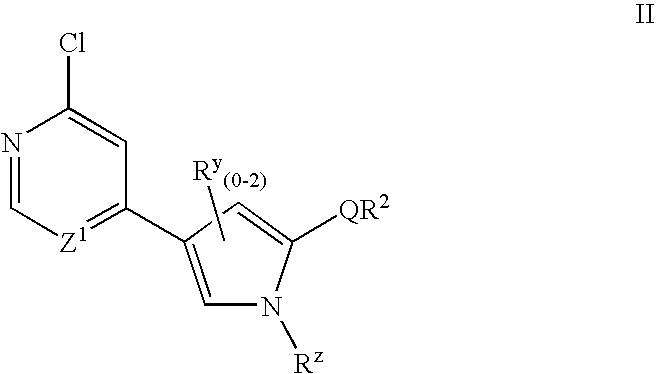
or a pharmaceutically acceptable salt thereof, wherein Z1, Q, Ry, Rz, and R2 are as defined above.

or a pharmaceutically acceptable salt thereof, wherein Z1, Ry, Rz, and R5 are as defined above.

or a pharmaceutically acceptable salt thereof, wherein Z1, Ry, Rz, R5, and R6 are as defined above.
| TABLE 1 |
 |
 |
 |
 |
 |
 |
 |
 |
 |
 |
 |
 |
 |
 |
 |
 |
 |
 |
 |
 |
 |
 |
 |
 |
 |
 |
 |
 |
 |
 |
 |
 |
 |
 |
 |
 |
 |
 |
 |
 |
 |
 |
 |
 |
 |
 |
 |
 |
 |
 |
 |
4. General Methods of Providing the Present Compounds:


-
- Column: YMC ODS-AQ 55 120A column with a size of 3.0×150 mm
- Gradient: water:MeCN, 0.1% TFA (90:10→0:100) over 8 minutes
- Flow rate: 1 mL/min
- Wavelength: 214 nm.
Claims (15)


Priority Applications (4)
| Application Number | Priority Date | Filing Date | Title |
|---|---|---|---|
| PCT/US2005/010204 WO2005100342A1 (en) | 2004-03-26 | 2005-03-25 | Pyridine inhibitors of erk2 and uses thereof |
| US11/089,701 US7462612B2 (en) | 2004-03-26 | 2005-03-25 | Pyridine inhibitors of ERK2 and uses thereof |
| EP05733207A EP1730134A1 (en) | 2004-03-26 | 2005-03-25 | Pyridine inhibitors of erk2 and uses thereof |
| JP2007505245A JP2007530595A (en) | 2004-03-26 | 2005-03-25 | Pyridine inhibitors of ERK2 and their use |
Applications Claiming Priority (2)
| Application Number | Priority Date | Filing Date | Title |
|---|---|---|---|
| US55676604P | 2004-03-26 | 2004-03-26 | |
| US11/089,701 US7462612B2 (en) | 2004-03-26 | 2005-03-25 | Pyridine inhibitors of ERK2 and uses thereof |
Publications (2)
| Publication Number | Publication Date |
|---|---|
| US20060019953A1 US20060019953A1 (en) | 2006-01-26 |
| US7462612B2 true US7462612B2 (en) | 2008-12-09 |
Family
ID=34964893
Family Applications (1)
| Application Number | Title | Priority Date | Filing Date |
|---|---|---|---|
| US11/089,701 Expired - Fee Related US7462612B2 (en) | 2004-03-26 | 2005-03-25 | Pyridine inhibitors of ERK2 and uses thereof |
Country Status (4)
| Country | Link |
|---|---|
| US (1) | US7462612B2 (en) |
| EP (1) | EP1730134A1 (en) |
| JP (1) | JP2007530595A (en) |
| WO (1) | WO2005100342A1 (en) |
Cited By (4)
| Publication number | Priority date | Publication date | Assignee | Title |
|---|---|---|---|---|
| US20060235028A1 (en) * | 2005-04-14 | 2006-10-19 | Li James J | Inhibitors of 11-beta hydroxysteroid dehydrogenase type I |
| US20080161306A1 (en) * | 2005-02-18 | 2008-07-03 | Brian Sherer | Pyrrole Derivatives as Dna Gyrase and Topoisomerase Inhibitors |
| US7829572B2 (en) | 2006-10-04 | 2010-11-09 | Pfizer Inc | Pyrido[4,3-d]pyrimidin-4(3H)-one derivatives as calcium receptor antagonists |
| US20160264536A1 (en) * | 2013-10-23 | 2016-09-15 | Takeda Pharmaceutical Company Limited | Heterocyclic compound |
Families Citing this family (24)
| Publication number | Priority date | Publication date | Assignee | Title |
|---|---|---|---|---|
| US8093401B2 (en) | 2005-08-04 | 2012-01-10 | Sirtris Pharmaceuticals, Inc. | Sirtuin modulating compounds |
| US7855289B2 (en) | 2005-08-04 | 2010-12-21 | Sirtris Pharmaceuticals, Inc. | Sirtuin modulating compounds |
| US8088928B2 (en) | 2005-08-04 | 2012-01-03 | Sirtris Pharmaceuticals, Inc. | Sirtuin modulating compounds |
| US8211919B2 (en) | 2005-09-02 | 2012-07-03 | Astellas Pharma Inc. | Amide derivatives as rock inhibitors |
| US8546404B2 (en) | 2005-12-13 | 2013-10-01 | Merck Sharp & Dohme | Compounds that are ERK inhibitors |
| JP2009528280A (en) * | 2006-02-16 | 2009-08-06 | シェーリング コーポレイション | Pyrrolidine derivatives as ERK inhibitors |
| RU2008148962A (en) | 2006-05-12 | 2010-06-20 | Вертекс Фармасьютикалз Инкорпорейтед (Us) | SELECTively ACTIVE ROSKIN PROTEINKINASE INHIBITORS AND THEIR APPLICATION |
| AU2007275221A1 (en) * | 2006-07-20 | 2008-01-24 | Allen J. Borchardt | Benzothiophene inhibitors of RHO kinase |
| CN101611007A (en) * | 2006-12-20 | 2009-12-23 | 先灵公司 | Novel JNK Inhibitors |
| CL2008001822A1 (en) * | 2007-06-20 | 2009-03-13 | Sirtris Pharmaceuticals Inc | Compounds derived from thiazolo [5,4-b] pyridine; pharmaceutical composition comprising said compounds; and use of the compound in the treatment of insulin resistance, metabolic syndrome, diabetes, among others. |
| EP2192838A4 (en) * | 2007-08-15 | 2011-07-27 | Harvard College | HETEROCYCLIC INHIBITORS OF NECROPTOSIS |
| US8716483B2 (en) | 2008-02-21 | 2014-05-06 | Merck Sharp & Dohme Corp. | Compounds that are ERK inhibitors |
| BRPI0922435A2 (en) | 2008-12-19 | 2018-09-11 | Sirtris Pharmaceuticals Inc | "sirtuine modulatory thiazolopyridine compound, pharmaceutical composition comprising the same and its use." |
| JP5502397B2 (en) * | 2009-08-25 | 2014-05-28 | 公益財団法人微生物化学研究会 | Novel compound amicorose derivative, its production method and its use |
| CN103420902A (en) * | 2012-05-18 | 2013-12-04 | 苏州爱斯鹏药物研发有限责任公司 | Preparation method of 2-chloro-4-iodo-5-methylpyridine |
| US20160024098A1 (en) | 2013-03-15 | 2016-01-28 | President And Fellows Of Harvard College | Hybrid necroptosis inhibitors |
| CN103193704B (en) * | 2013-04-12 | 2016-03-09 | 四川铂瑞生物医药有限公司 | 2-hydroxyl-4-amino-5-picoline heterogeneous ring compound |
| EP4088719A1 (en) | 2015-10-13 | 2022-11-16 | Institut National de la Santé et de la Recherche Médicale (INSERM) | Methods and pharmaceutical compositions for the treatment of retinal capillary non-perfusion |
| US12048761B2 (en) | 2015-10-13 | 2024-07-30 | Inserm (Institut National De La Santé Et De La Recherche Medicale) | Methods and pharmaceutical compositions for the treatment of retinal capillary non-perfusion |
| US20190073895A1 (en) * | 2017-09-07 | 2019-03-07 | Timetec Holding Sdn Bhd | Alarm system |
| CN113474332B (en) | 2019-03-05 | 2025-03-04 | 拜耳公司 | Method for synthesizing 4-amino-5-methyl-1H-pyridin-2-one |
| CN113929591A (en) * | 2021-10-09 | 2022-01-14 | 中国科学技术大学 | Inhibitors with antiproliferative activity |
| CN117024335A (en) * | 2023-07-10 | 2023-11-10 | 杭州小蓓医药科技有限公司 | Synthesis process of non-nefardone intermediate 4-amino-5-methyl-1H-pyridine-2 (I) -ketone |
| WO2025224050A1 (en) | 2024-04-22 | 2025-10-30 | Institut National de la Santé et de la Recherche Médicale | Methods of treatment of patients suffering from hypomelanosis of ito |
Citations (7)
| Publication number | Priority date | Publication date | Assignee | Title |
|---|---|---|---|---|
| WO1995018122A2 (en) | 1993-12-30 | 1995-07-06 | Ciba-Geigy Ag | Heteroarylpyrroles |
| US5776954A (en) * | 1996-10-30 | 1998-07-07 | Merck & Co., Inc. | Substituted pyridyl pyrroles, compositions containing such compounds and methods of use |
| WO2001057022A2 (en) | 2000-02-05 | 2001-08-09 | Vertex Pharmaceuticals Incorporated | Pyrazole compositions useful as inhibitors of erk |
| WO2003091246A1 (en) | 2002-04-26 | 2003-11-06 | Vertex Pharmaceuticals Incorporated | Pyrrole derivatives as inhibitors of erk2 and uses thereof |
| WO2004058762A1 (en) | 2002-12-20 | 2004-07-15 | Pharmacia Corporation | Mitogen activated protein kinase-activated protein kinase-2 inhibiting compounds |
| WO2004072063A1 (en) | 2003-02-07 | 2004-08-26 | Vertex Pharmaceuticals Incorporated | Heteroaryl substituted pyrolls useful as inhibitors of protein kinases |
| US7354939B2 (en) * | 2004-05-14 | 2008-04-08 | Vertex Pharmaceuticals Incorporated | Pyrrole inhibitors of ERK protein kinase, synthesis thereof and intermediates thereto |
-
2005
- 2005-03-25 US US11/089,701 patent/US7462612B2/en not_active Expired - Fee Related
- 2005-03-25 WO PCT/US2005/010204 patent/WO2005100342A1/en not_active Ceased
- 2005-03-25 JP JP2007505245A patent/JP2007530595A/en active Pending
- 2005-03-25 EP EP05733207A patent/EP1730134A1/en not_active Withdrawn
Patent Citations (7)
| Publication number | Priority date | Publication date | Assignee | Title |
|---|---|---|---|---|
| WO1995018122A2 (en) | 1993-12-30 | 1995-07-06 | Ciba-Geigy Ag | Heteroarylpyrroles |
| US5776954A (en) * | 1996-10-30 | 1998-07-07 | Merck & Co., Inc. | Substituted pyridyl pyrroles, compositions containing such compounds and methods of use |
| WO2001057022A2 (en) | 2000-02-05 | 2001-08-09 | Vertex Pharmaceuticals Incorporated | Pyrazole compositions useful as inhibitors of erk |
| WO2003091246A1 (en) | 2002-04-26 | 2003-11-06 | Vertex Pharmaceuticals Incorporated | Pyrrole derivatives as inhibitors of erk2 and uses thereof |
| WO2004058762A1 (en) | 2002-12-20 | 2004-07-15 | Pharmacia Corporation | Mitogen activated protein kinase-activated protein kinase-2 inhibiting compounds |
| WO2004072063A1 (en) | 2003-02-07 | 2004-08-26 | Vertex Pharmaceuticals Incorporated | Heteroaryl substituted pyrolls useful as inhibitors of protein kinases |
| US7354939B2 (en) * | 2004-05-14 | 2008-04-08 | Vertex Pharmaceuticals Incorporated | Pyrrole inhibitors of ERK protein kinase, synthesis thereof and intermediates thereto |
Non-Patent Citations (4)
| Title |
|---|
| International Search Report issued for corresponding PCT application PCT/US2005/010204. |
| Lutzen, et al., "Synthesis of Differently Disubstituted 2, 2'-Bipyridines by a Modified Negishi Cross-Coupling Reaction" Eur. J. Org. Chem. 3948-3957, 2003. |
| Martineau, et al., "New Ruthenium Complexes with 4-(1H-Pyrrol-1-yl)-Substituted Polypyridine Ligands-Electrochemical and Spectroscopic Properties" Eur. J. Org. Chem. 3984-3986, 2004. |
| Simone, Oncology: Introduction, Cecil Textbook of Medicine, 20th Edition, vol. 1, pp. 1004-1010, 1996. * |
Cited By (4)
| Publication number | Priority date | Publication date | Assignee | Title |
|---|---|---|---|---|
| US20080161306A1 (en) * | 2005-02-18 | 2008-07-03 | Brian Sherer | Pyrrole Derivatives as Dna Gyrase and Topoisomerase Inhibitors |
| US20060235028A1 (en) * | 2005-04-14 | 2006-10-19 | Li James J | Inhibitors of 11-beta hydroxysteroid dehydrogenase type I |
| US7829572B2 (en) | 2006-10-04 | 2010-11-09 | Pfizer Inc | Pyrido[4,3-d]pyrimidin-4(3H)-one derivatives as calcium receptor antagonists |
| US20160264536A1 (en) * | 2013-10-23 | 2016-09-15 | Takeda Pharmaceutical Company Limited | Heterocyclic compound |
Also Published As
| Publication number | Publication date |
|---|---|
| WO2005100342A1 (en) | 2005-10-27 |
| JP2007530595A (en) | 2007-11-01 |
| EP1730134A1 (en) | 2006-12-13 |
| US20060019953A1 (en) | 2006-01-26 |
Similar Documents
| Publication | Publication Date | Title |
|---|---|---|
| US7462612B2 (en) | Pyridine inhibitors of ERK2 and uses thereof | |
| USRE49500E1 (en) | Pyrrole inhibitors of ERK protein kinase, synthesis thereof and intermediates thereto | |
| US7304061B2 (en) | Heterocyclic inhibitors of ERK2 and uses thereof | |
| US7456190B2 (en) | Compositions useful as protein kinase inhibitors | |
| EP1751133A2 (en) | Compositions useful as inhibitors of rock and other protein kinases | |
| US7314885B2 (en) | Pyrrole compounds useful as kinase inhibitors | |
| EP1697375A2 (en) | Heterocyclic protein kinase inhibitors and uses thereof | |
| WO2005113546A1 (en) | Prodrugs of pyrrolylpyrimidine erk protein kinase inhibitors | |
| HK40064501A (en) | Pyrrole inhibitors of erk protein kinase, synthesis thereof and intermediates thereto | |
| HK40021464B (en) | Pyrrole compounds as inhibitors of erk protein kinases and pharmaceutical compositions containing these compounds | |
| HK40021464A (en) | Pyrrole compounds as inhibitors of erk protein kinases and pharmaceutical compositions containing these compounds | |
| HK1247910B (en) | Pyrrole compounds as inhibitors of erk protein kinases and pharmaceutical compositions containing these compounds | |
| HK1203505B (en) | Pyrrole compounds as inhibitors of erk protein kinases and pharmaceutical compositions containing these compounds |
Legal Events
| Date | Code | Title | Description |
|---|---|---|---|
| AS | Assignment |
Owner name: VERTEX PHARMACEUTICALS INCORPORATED, MASSACHUSETTS Free format text: ASSIGNMENT OF ASSIGNORS INTEREST;ASSIGNORS:HALE, MICHAEL;MARTINEZ-BOTELLA, GABRIEL;TANG, QING;REEL/FRAME:016897/0431;SIGNING DATES FROM 20050712 TO 20050909 |
|
| FPAY | Fee payment |
Year of fee payment: 4 |
|
| AS | Assignment |
Owner name: MACQUARIE US TRADING LLC, NEW YORK Free format text: SECURITY INTEREST;ASSIGNORS:VERTEX PHARMACEUTICALS INCORPORATED;VERTEX PHARMACEUTICALS (SAN DIEGO) LLC;REEL/FRAME:033292/0311 Effective date: 20140709 |
|
| REMI | Maintenance fee reminder mailed | ||
| AS | Assignment |
Owner name: VERTEX PHARMACEUTICALS INCORPORATED, MASSACHUSETTS Free format text: RELEASE BY SECURED PARTY;ASSIGNOR:MACQUARIE US TRADING LLC;REEL/FRAME:040357/0001 Effective date: 20161013 Owner name: VERTEX PHARMACEUTICALS (SAN DIEGO) LLC, CALIFORNIA Free format text: RELEASE BY SECURED PARTY;ASSIGNOR:MACQUARIE US TRADING LLC;REEL/FRAME:040357/0001 Effective date: 20161013 |
|
| LAPS | Lapse for failure to pay maintenance fees | ||
| STCH | Information on status: patent discontinuation |
Free format text: PATENT EXPIRED DUE TO NONPAYMENT OF MAINTENANCE FEES UNDER 37 CFR 1.362 |
|
| STCH | Information on status: patent discontinuation |
Free format text: PATENT EXPIRED DUE TO NONPAYMENT OF MAINTENANCE FEES UNDER 37 CFR 1.362 |
|
| FP | Lapsed due to failure to pay maintenance fee |
Effective date: 20161209 |