US7461556B2 - Test system for dynamically analyzing a vehicle under simulated road conditions - Google Patents

Test system for dynamically analyzing a vehicle under simulated road conditions Download PDF

Info

Publication number
US7461556B2
US7461556B2 US11/555,735 US55573506A US7461556B2 US 7461556 B2 US7461556 B2 US 7461556B2 US 55573506 A US55573506 A US 55573506A US 7461556 B2 US7461556 B2 US 7461556B2
Authority
US
United States
Prior art keywords
vehicle
actuator
pivot arm
stand assembly
coupling device
Prior art date
Legal status (The legal status is an assumption and is not a legal conclusion. Google has not performed a legal analysis and makes no representation as to the accuracy of the status listed.)
Active, expires
Application number
US11/555,735
Other versions
US20070261499A1 (en
Inventor
James Hamilton
Current Assignee (The listed assignees may be inaccurate. Google has not performed a legal analysis and makes no representation or warranty as to the accuracy of the list.)
Chip Ganassi Racing Teams Inc
Original Assignee
Chip Ganassi Racing Teams Inc
Priority date (The priority date is an assumption and is not a legal conclusion. Google has not performed a legal analysis and makes no representation as to the accuracy of the date listed.)
Filing date
Publication date
Application filed by Chip Ganassi Racing Teams Inc filed Critical Chip Ganassi Racing Teams Inc
Priority to US11/555,735 priority Critical patent/US7461556B2/en
Publication of US20070261499A1 publication Critical patent/US20070261499A1/en
Application granted granted Critical
Publication of US7461556B2 publication Critical patent/US7461556B2/en
Assigned to CHIP GANASSI RACING TEAMS, INC. reassignment CHIP GANASSI RACING TEAMS, INC. ASSIGNMENT OF ASSIGNORS INTEREST (SEE DOCUMENT FOR DETAILS). Assignors: HAMILTON, JAMES
Active legal-status Critical Current
Adjusted expiration legal-status Critical

Links

Images

Classifications

    • GPHYSICS
    • G01MEASURING; TESTING
    • G01MTESTING STATIC OR DYNAMIC BALANCE OF MACHINES OR STRUCTURES; TESTING OF STRUCTURES OR APPARATUS, NOT OTHERWISE PROVIDED FOR
    • G01M17/00Testing of vehicles
    • G01M17/007Wheeled or endless-tracked vehicles
    • GPHYSICS
    • G01MEASURING; TESTING
    • G01MTESTING STATIC OR DYNAMIC BALANCE OF MACHINES OR STRUCTURES; TESTING OF STRUCTURES OR APPARATUS, NOT OTHERWISE PROVIDED FOR
    • G01M7/00Vibration-testing of structures; Shock-testing of structures

Definitions

  • the present teachings relate to a vehicle testing system and more particularly to a system for testing a vehicle with a spring stand apparatus.
  • Vehicle testing systems such as four-post and seven-post vehicle dynamic simulators and/or shaker rig assemblies are often used by those in the automobile racing industry to measure and test a vehicle's response to simulated road and/or track conditions.
  • a four-post rig test can move each of a vehicle's four tires/wheels up and down via hydraulic actuators to simulate the bumps of a racetrack.
  • a seven-post rig test utilizes three additional actuators to pull and push on a vehicle's frame to simulate banking, aerodynamics, turning, braking and accelerating loads.
  • the present teachings provide an apparatus for testing a vehicle.
  • the apparatus includes an actuator and a stand assembly supported by the actuator.
  • the stand assembly includes a coupling device configured to attach to a vehicle, and the actuator is configured to move the vehicle in response to a computer-generated signal.
  • a vehicle testing apparatus having a base, a pivot arm, a biasing member and a coupling device.
  • the pivot arm is pivotably coupled to the base and is configured to move from a first position to a second position relative to a pivot axis of the base. When located in the first position, the pivot arm is substantially parallel to a transverse axis of the base.
  • the biasing member is releasably coupled to the pivot arm and is configured to support the pivot arm when in the first position.
  • the coupling device is configured to attach to a vehicle and is suspended from the pivot arm in such a manner that movement of the vehicle is allowed.
  • a vehicle testing apparatus having an actuator, a stand assembly and a controller coupled to the actuator.
  • the stand assembly is supported by the actuator and comprises a coupling device that is configured to attach to the vehicle.
  • the controller includes an output and is configured to generate a signal to the actuator to cause the vehicle to move in response thereto.
  • a method for testing a vehicle comprises providing an actuator, generating a signal to the actuator to cause the vehicle to move through a displacement pattern, and evaluating the movement of the vehicle.
  • the actuator is configured to support a stand assembly attached to the vehicle, and the movement of the vehicle is evaluated by analyzing the displacement of the actuator.
  • FIG. 1 is a perspective view of an exemplary spring stand assembly in accordance with the present teachings
  • FIG. 2 is a side view of the exemplary spring stand assembly of FIG. 1 ;
  • FIG. 3 is a front view of the exemplary spring stand assembly of FIG. 1 ;
  • FIG. 4 is another side view of the exemplary spring stand assembly of FIG. 1 ;
  • FIG. 5 is a perspective view of an alternative exemplary spring stand assembly depicting a pivot arm in an open configuration in accordance with the present invention
  • FIG. 6 is another perspective view of the exemplary spring stand assembly of FIG. 5 shown in a use configuration and attached to a vehicle frame in accordance with the present invention.
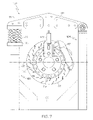
  • FIG. 7 is a front view of the exemplary spring stand assembly of FIG. 5 shown in a use configuration in accordance with the present invention.
  • shaker rig assemblies include a plurality of hydraulic actuators that are able to provide road-simulating effects to vehicles being analyzed, as well as to simulate banking, cornering and aerodynamic loads typically felt by a vehicle when operating on a racetrack.
  • Such rig assemblies are usually tested under controlled conditions and are driven by computer systems configured to actuate hydraulic plungers and rams connected to the vehicle.
  • the vehicle undergoing analysis rests on four or more actuators.
  • These actuators are designed to simulate a variety of road inputs, as well as simulate aerodynamic down-forces produced by the vehicle's wings and/or by ground effects.
  • the actuators are also designed to simulate suspension loads produced by the vehicle when banking, as well as provide a means to roll the vehicle to evaluate cornering performance.
  • the present teachings enhance the above-described testing processes by using a spring stand assembly to dynamically analyze a vehicle.
  • the present teachings allow the testing process to be conducted by connecting the vehicle frame directly to the spring stand assembly. Because the vehicle is attached directly to the testing assembly, the use of wheels and/or tires is not required like many conventional procedures. More particularly, conventional shaker rig assemblies utilize a vehicle's wheels and/or tires to perform the vehicle analysis. However, tires behave somewhat like vertical springs when rolling and have different damping values than non-rolling (static) tires. As such, it is difficult to accurately analyze a vehicle's true behavior in response to these simulated conditions, particularly as static and non-static tires exhibit differing damping values. As these teachings do not require the use of such wheels or tires, the problems associated with the damping inconsistencies are reduced and better test results can be achieved.
  • FIGS. 1-4 illustrate an exemplary spring stand assembly 10 in accordance with the present teachings.
  • Spring stand assembly 10 is supported by the top surface of a ram actuator or wheel pan 35 .
  • wheel pan 35 is configured to move spring stand assembly 10 vertically upward or downward in a manner that simulates the surface of a road, and particularly the various contours typically found within a road's surface.
  • Spring stand assembly 10 comprises frame 30 having a base 32 and first and second arm members 34 , 36 , which are spaced apart from one another in a parallel fashion by a distance defined by the width of the base 32 .
  • First arm member 34 comprises a series of support arms 34 a , 34 b and 34 c , which couple to base 32 , as well as spring platform 40 .
  • Second arm member 36 also comprises a series of support arms 42 a , 42 b , 42 c and 42 d .
  • Support arms 42 a and 42 b are vertically arranged and couple to base 32 and pivot posts 45 a , 45 b at opposing ends.
  • Support arms 42 c and 42 d horizontally intersect support arms 42 a and 42 b and provide further stability to stand frame 30 during its operation. It should be appreciated that other arm member and/or support member arrangements can be employed by those skilled in the art without departing from the teachings of the present invention. As such, the present teachings are not intended to be limiting herein.
  • spring stand assembly 10 is attached to the frame of a vehicle, such as vehicle frame 20 in FIG. 1 for instance.
  • spring stand assembly 10 is attached to vehicle frame 20 by affixing a wheel hanger (vehicle hub device) 50 to the chassis suspension hub of a vehicle by means of a tapered nut or nuts.
  • wheel hanger vehicle hub device
  • Such nuts are known within the art and are typically used to clamp wheels to vehicles.
  • Spring stand assembly 10 further comprises a pivot arm member 60 , which is pivotably attached to frame 30 via pivot posts 45 a and 45 b and pivot pin 62 , which together form a pivot member.
  • the pivot arm member 60 can be moved between a use position and an open position.
  • pivot arm member 60 When in the use position (or operating position), as illustrated in FIGS. 1-4 , pivot arm member 60 is positioned substantially parallel to the transverse axis 65 (see FIG. 3 ) of spring stand assembly 10 .
  • pivot arm member 60 When in the open position, illustrated by exemplary spring stand assembly 100 in FIG. 5 , pivot arm member 60 is configured to extend upwardly or away from the spring platform 40 , such that the pivot arm member is no longer substantially parallel to the transverse axis 65 (as shown in FIG. 3 ).
  • pivot pin 62 extends through pivot posts 45 a and 45 b , such that pivot arm member 60 can be pivoted along pivot axis 47 , as shown in FIGS. 2 and 4 .
  • FIG. 3 depicts a front view of an exemplary spring stand assembly adapted to be used for vehicles having a single large nut 90 for affixing wheels to the vehicle.
  • disc brake rotor 88 and brake caliper 89 are standard parts of a vehicle and are shown here to depict the position of spring stand assembly 10 relative to the vehicle.
  • Vehicle hub device 50 is flexibly suspended from pivot arm member 60 so that the vehicle can move vertically or bounce relative to frame 30 by compression of biasing device 92 , which acts through pivot arm member 60 .
  • pivot arm member 60 is adapted to move between a use position and an open position.
  • biasing device 92 is utilized.
  • biasing device 92 is a compression spring.
  • biasing device 92 is confined between spring platform 40 and pivot arm platform 94 and is adapted to exert a force on pivot arm member 60 , such that pivot arm member 60 may be urged away from spring platform 40 along substantially vertical axis 95 , as shown in FIG. 3 . It should be understood that when the actuators of the test rig are stationary, the vehicle hangs quietly from the four spring stand assemblies and the static weight of the vehicle is balanced by proportional compression of each spring.
  • biasing device 92 compresses according to the inertial loads caused by the acceleration of the vehicle up and down, in relative motion.
  • This relative motion is very similar to the relative compression of equivalent tires, as in a conventional dynamic rig test.
  • vertical damping is lower with the present spring stand assemblies, particularly as the tires are not rotating.
  • the damping found with the present spring stand assemblies is very similar to that of rotating tires.
  • the function of the spring stands is more consistent than that of non-rotating tires, and changes less with temperature and use. Therefore, the results of the dynamic test are both more realistic and more repeatable than is the case when static tires are used.
  • biasing device 92 utilizes a compression spring arrangement as the biasing device, it should be understood that any other such biasing device could also be employed herein without straying from the scope of the present teachings. More particularly, any compliance device able to provide the flexible restoring function of biasing device 92 may be used. In certain exemplary embodiments, the rate of biasing device 92 is selected to provide a net spring rate (including the motion ratio of pivot arm member 60 ) that is identical to the vertical spring rate of the tire that is replaced by the spring stand assembly.
  • Spring platform 40 and pivot arm platform 94 each include a cylindrical inner portion (not shown) which is adapted to house and locate the compression spring 92 .
  • the cylindrical parts of platforms 40 and 94 reliably locate compression spring 92 , especially such that its distance from pivot arm member 60 remains the same, and thus the effective motion ratio remains the same.
  • the hanging weight is removed, and the pivot arm member or pivot beam can be raised to change the springs to represent a different tire spring rate.
  • hub device 50 is coupled to pivot arm member 60 by way of a bearing shaft 75 (see FIG. 3 ).
  • connection of hub device 50 to pivot arm member 60 can be accomplished by any connection means known within the art such as, but not limited to, bolting, press fitting, welding, or the like.
  • Hub device 50 includes one or more mounting plates 91 coupled to top horizontal plate 93 by a series of bolts 97 .
  • attachment means 90 such as with standard wheel nut(s).
  • the present exemplary spring stand assemblies substitute the hub device for the wheel/tire assembly.
  • Mounting plate(s) 91 are fixed to hub device 50 , for instance by weldments, to form a clevis for a spherical joint between adjustable bearing shaft or turnbuckle 75 and hub device 50 , such that a bolt aligned horizontally and orthogonally to support mounting plates 91 can secure the attachment of bearing shaft 75 to hub device 50 .
  • attachment may be flexible in all degrees of motion except to the vertical. As such, vertical compliance of the spring stand assembly is restricted, except for movement allowed by biasing device 92 .
  • hub device 50 is flexibly attached or coupled to pivot arm member 60 by way of a spherical joint associated with bearing shaft 75 and affixed by a horizontal bolt (not shown) that is parallel to pivot axis 47 about which pivot arm member 60 pivots.
  • a depression is cut into the lower surface of pivot arm member 60 .
  • FIGS. 5-7 illustrate an alternative exemplary spring stand assembly adapted for use with a passenger vehicle or other such vehicle having a multiple lug/nut arrangement.
  • Spring stand assembly 100 is supported by the top surface of ram actuator or wheel pan 105 and comprises frame 104 , which has a base 106 and first and second arm members 108 , 110 .
  • First arm member 108 comprises a series of support arms and couples to base 106 , as well as spring platform 113 .
  • Second arm member 110 also comprises a series of support arms and couples to base 106 , as well as pivot posts 114 a , 114 b , through the assistance of pivot pin 115 .
  • hub device 116 is coupled to pivot arm member 118 by way of a bearing shaft 120 .
  • Hub device 116 includes mounting plate 122 and two support brackets 124 , 126 , which are positioned parallel to one another.
  • hub device 116 is clamped or connected to the vehicle hub by an attachment means, such as with standard wheel nut(s).
  • Support brackets or plates 124 , 126 are fixably attached to hub device 116 by weldments and form a clevis for a spherical joint between adjustable bearing shaft or turnbuckle 120 and hub device 116 , such that a bolt aligned horizontally and orthogonally to support brackets 124 , 126 can secure the attachment of bearing shaft 120 to hub device 116 .
  • attachment may be flexible in all degrees of motion except to the vertical. As such, vertical compliance of the spring stand assembly is restricted, except for the movement allowed by biasing device 128 .
  • hub device 116 is flexibly attached or coupled to pivot arm member 118 by way of a spherical joint associated with bearing shaft 120 and affixed by a horizontal bolt (not shown) that is parallel to pivot axis 130 about which pivot arm member 118 pivots. According to this embodiment, a depression is cut into the lower surface of pivot arm member 118 .
  • a vehicle undergoing dynamic testing may be flexibly suspended from four spring stand assemblies which are attached to the car frame.
  • the two flexible spherical joints between pivot arm member 118 and hub device 116 allow accommodation of wheel geometries such as camber change, wheelbase change, toe change and track change as the suspensions move vertically through their travel.
  • a computer system can be implemented to conduct the dynamic vehicle analysis procedure.
  • Such computer systems are known within the field of dynamic vehicle testing.
  • Exemplary computer systems useful in conjunction with the present teachings comprise at least one user interface and utilize computer programming logic (or other such software-based program(s)) to operate the actuators connected to the vehicle frame.
  • the computer system may have conventional input devices, such as a keyboard, and a mouse, a conventional electronic display screen (such as a monitor, LCD screen, or other suitable display), and optionally a conventional hard copy output device (e.g., a laser printer).
  • a keyboard such as a keyboard, and a mouse
  • a conventional electronic display screen such as a monitor, LCD screen, or other suitable display
  • optionally a conventional hard copy output device e.g., a laser printer
  • the computer system inputs energy to the vehicle frame to cause it to move by activating one or more actuator rams attached to the vehicle frame (not shown).
  • the one or more actuator rams can move the vehicle frame with a predetermined force.
  • the actuator rams move the vehicle frame through a predetermined displacement over a period-of-time, which can then be graphed as displacement vs. time in speed. While this illustrated embodiment discloses the input of a predetermined energy to the vehicle frame, it should also be understood and appreciated herein that the computer system may also be operated randomly, such that the rams are actuating with randomized forces to be analyzed by the computer system.
  • the computer system inputs energy to the vehicle frame by a transfer function evaluation of data generated from the “Heave Mode Constant Peak Velocity Sine Sweep” excitation process.
  • all four wheel pans of the vehicle are driven, in phase, with a common signal.
  • the signal comprises a sine wave signal having an amplitude that, when differentiated, produces a constant peak vertical velocity of each wheel pan, for example 2 inches per second, as the sine wave frequency varies from, for instance, 1 Hertz to 20 Hertz.
  • Such an excitation wave has an amplitude that decreases as the inverse of frequency.
  • a typical transfer function will relate wheel pan load to wheel pan displacement or velocity.
  • Peak amplitudes occur at vehicle heave and pitch modes, which thereby give valuable information to optimize chassis springs and dampers.
  • simulated road profile data can be used to drive the wheel pans individually.
  • standard statistical means known within the art can be used to evaluate wheel pan load variations.
  • actuators move the spring stand assemblies up and down to precisely replicate desired, pre-defined vertical displacement-versus-time patterns.
  • Software and mechanisms typically proprietary to the test rig manufacturer or the laboratory that conducts the tests, ensure by efficient closed-loop control that the desired motions are achieved regardless of load variations.
  • Actuators typically three attached to the vehicle chassis (or body) operate somewhat differently. Typically, they do not enforce displacement or position over time, since it is the vehicle response, not the actuator response, that is of interest. Rather, then, these actuators generate precise forces, not displacements, and otherwise follow the motion of the vehicle. The vehicle suspension and tire vertical motion only permit relative vertical motion of the vehicle.
  • the parameters examined, and the criteria for good performance vary according to the goals of the test. If a smooth ride for passengers is the goal, then typically, vertical motion of the chassis is evaluated through analysis of the displacements of the chassis-mounted ram actuators. If maximum traction over rough roads or race tracks is the goal, then typically the variation of vertical loads transmitted by the spring stands are measured by load cells in the ram actuator top surfaces that represent the load, and are then evaluated as described above.
  • the spring stand parts move as described above, and the motion is completely accounted for by compression and extension of the spring, although typically at a different motion ratio from the vehicle suspension to the ram actuator “ground”.
  • the spring stand simply replaces the non-rolling tire in nearly all aspects, but does so with more realistic damping than real tires, and with better consistency and repeatability.

Landscapes

  • Physics & Mathematics (AREA)
  • General Physics & Mathematics (AREA)
  • Vehicle Body Suspensions (AREA)

Abstract

An apparatus for testing a vehicle. The apparatus includes an actuator and a stand assembly supported by the actuator. The stand assembly includes a coupling device configured to attach to a vehicle, and the actuator is configured to move the vehicle in response to a computer-generated signal.

Description

RELATED APPLICATIONS
This application claims priority to U.S. Provisional Patent Application Ser. No. 60/733,103, filed Nov. 3, 2005, the disclosure of which is expressly incorporated by reference herein.
BACKGROUND
The present teachings relate to a vehicle testing system and more particularly to a system for testing a vehicle with a spring stand apparatus.
Vehicle testing systems, such as four-post and seven-post vehicle dynamic simulators and/or shaker rig assemblies are often used by those in the automobile racing industry to measure and test a vehicle's response to simulated road and/or track conditions. For instance, a four-post rig test can move each of a vehicle's four tires/wheels up and down via hydraulic actuators to simulate the bumps of a racetrack. Moreover, a seven-post rig test utilizes three additional actuators to pull and push on a vehicle's frame to simulate banking, aerodynamics, turning, braking and accelerating loads.
When undergoing such conventional testing procedures, tires behave somewhat like vertical springs and exhibit very little damping effect as they roll. When not rolling, however, tires have higher damping values. This inconsistent behavior makes it difficult to measure and accurately analyze a vehicle's true performance during a dynamic testing procedure. Moreover, the vertical stiffness and damping of the tires changes unfavorably with use and with temperature. Accordingly, it would be desirable to overcome these and other shortcomings of the prior art.
SUMMARY OF THE INVENTION
In one exemplary embodiment, the present teachings provide an apparatus for testing a vehicle. According to this exemplary embodiment, the apparatus includes an actuator and a stand assembly supported by the actuator. The stand assembly includes a coupling device configured to attach to a vehicle, and the actuator is configured to move the vehicle in response to a computer-generated signal.
According to another exemplary embodiment, a vehicle testing apparatus having a base, a pivot arm, a biasing member and a coupling device is provided. The pivot arm is pivotably coupled to the base and is configured to move from a first position to a second position relative to a pivot axis of the base. When located in the first position, the pivot arm is substantially parallel to a transverse axis of the base. The biasing member is releasably coupled to the pivot arm and is configured to support the pivot arm when in the first position. The coupling device is configured to attach to a vehicle and is suspended from the pivot arm in such a manner that movement of the vehicle is allowed.
According to yet another exemplary embodiment, a vehicle testing apparatus having an actuator, a stand assembly and a controller coupled to the actuator is provided. The stand assembly is supported by the actuator and comprises a coupling device that is configured to attach to the vehicle. The controller includes an output and is configured to generate a signal to the actuator to cause the vehicle to move in response thereto.
In yet another exemplary embodiment, a method for testing a vehicle is provided. The method comprises providing an actuator, generating a signal to the actuator to cause the vehicle to move through a displacement pattern, and evaluating the movement of the vehicle. According to this exemplary embodiment, the actuator is configured to support a stand assembly attached to the vehicle, and the movement of the vehicle is evaluated by analyzing the displacement of the actuator.
BRIEF DESCRIPTION OF THE DRAWINGS
The above-mentioned aspects of the present teachings and the manner of obtaining them will become more apparent and the invention itself will be better understood by reference to the following description of the embodiments of the invention taken in conjunction with the accompanying drawings, wherein:
FIG. 1 is a perspective view of an exemplary spring stand assembly in accordance with the present teachings;
FIG. 2 is a side view of the exemplary spring stand assembly of FIG. 1;
FIG. 3 is a front view of the exemplary spring stand assembly of FIG. 1;
FIG. 4 is another side view of the exemplary spring stand assembly of FIG. 1;
FIG. 5 is a perspective view of an alternative exemplary spring stand assembly depicting a pivot arm in an open configuration in accordance with the present invention;
FIG. 6 is another perspective view of the exemplary spring stand assembly of FIG. 5 shown in a use configuration and attached to a vehicle frame in accordance with the present invention; and
FIG. 7 is a front view of the exemplary spring stand assembly of FIG. 5 shown in a use configuration in accordance with the present invention.
Corresponding reference characters indicate corresponding parts throughout the several views.
DETAILED DESCRIPTION
The embodiments of the present teachings described below are not intended to be exhaustive or to limit the teachings to the precise forms disclosed in the following detailed description. Rather, the embodiments are chosen and described so that others skilled in the art may appreciate and understand the principles and practices of the present teachings.
The present teachings are directed to dynamic vehicle simulators, and particularly shaker rig assemblies for testing vehicle performance. As is known within the art, shaker rig assemblies include a plurality of hydraulic actuators that are able to provide road-simulating effects to vehicles being analyzed, as well as to simulate banking, cornering and aerodynamic loads typically felt by a vehicle when operating on a racetrack. Such rig assemblies are usually tested under controlled conditions and are driven by computer systems configured to actuate hydraulic plungers and rams connected to the vehicle. Typically, the vehicle undergoing analysis rests on four or more actuators. These actuators are designed to simulate a variety of road inputs, as well as simulate aerodynamic down-forces produced by the vehicle's wings and/or by ground effects. Moreover, the actuators are also designed to simulate suspension loads produced by the vehicle when banking, as well as provide a means to roll the vehicle to evaluate cornering performance.
The present teachings enhance the above-described testing processes by using a spring stand assembly to dynamically analyze a vehicle. The present teachings allow the testing process to be conducted by connecting the vehicle frame directly to the spring stand assembly. Because the vehicle is attached directly to the testing assembly, the use of wheels and/or tires is not required like many conventional procedures. More particularly, conventional shaker rig assemblies utilize a vehicle's wheels and/or tires to perform the vehicle analysis. However, tires behave somewhat like vertical springs when rolling and have different damping values than non-rolling (static) tires. As such, it is difficult to accurately analyze a vehicle's true behavior in response to these simulated conditions, particularly as static and non-static tires exhibit differing damping values. As these teachings do not require the use of such wheels or tires, the problems associated with the damping inconsistencies are reduced and better test results can be achieved.
FIGS. 1-4 illustrate an exemplary spring stand assembly 10 in accordance with the present teachings. Spring stand assembly 10 is supported by the top surface of a ram actuator or wheel pan 35. During a testing procedure, wheel pan 35 is configured to move spring stand assembly 10 vertically upward or downward in a manner that simulates the surface of a road, and particularly the various contours typically found within a road's surface. Spring stand assembly 10 comprises frame 30 having a base 32 and first and second arm members 34, 36, which are spaced apart from one another in a parallel fashion by a distance defined by the width of the base 32. First arm member 34 comprises a series of support arms 34 a, 34 b and 34 c, which couple to base 32, as well as spring platform 40. Second arm member 36, as best shown in FIG. 4, also comprises a series of support arms 42 a, 42 b, 42 c and 42 d. Support arms 42 a and 42 b are vertically arranged and couple to base 32 and pivot posts 45 a, 45 b at opposing ends. Support arms 42 c and 42 d horizontally intersect support arms 42 a and 42 b and provide further stability to stand frame 30 during its operation. It should be appreciated that other arm member and/or support member arrangements can be employed by those skilled in the art without departing from the teachings of the present invention. As such, the present teachings are not intended to be limiting herein.
During operation (i.e., when a vehicle is being dynamically analyzed as described herein), spring stand assembly 10 is attached to the frame of a vehicle, such as vehicle frame 20 in FIG. 1 for instance. In one exemplary embodiment, spring stand assembly 10 is attached to vehicle frame 20 by affixing a wheel hanger (vehicle hub device) 50 to the chassis suspension hub of a vehicle by means of a tapered nut or nuts. Such nuts are known within the art and are typically used to clamp wheels to vehicles.
Spring stand assembly 10 further comprises a pivot arm member 60, which is pivotably attached to frame 30 via pivot posts 45 a and 45 b and pivot pin 62, which together form a pivot member. As will be described in detail herein, the pivot arm member 60 can be moved between a use position and an open position. When in the use position (or operating position), as illustrated in FIGS. 1-4, pivot arm member 60 is positioned substantially parallel to the transverse axis 65 (see FIG. 3) of spring stand assembly 10. When in the open position, illustrated by exemplary spring stand assembly 100 in FIG. 5, pivot arm member 60 is configured to extend upwardly or away from the spring platform 40, such that the pivot arm member is no longer substantially parallel to the transverse axis 65 (as shown in FIG. 3). To assist this pivotal motion, pivot pin 62 extends through pivot posts 45 a and 45 b, such that pivot arm member 60 can be pivoted along pivot axis 47, as shown in FIGS. 2 and 4.
FIG. 3 depicts a front view of an exemplary spring stand assembly adapted to be used for vehicles having a single large nut 90 for affixing wheels to the vehicle. According to this exemplary embodiment, it should be understood and appreciated herein that disc brake rotor 88 and brake caliper 89 are standard parts of a vehicle and are shown here to depict the position of spring stand assembly 10 relative to the vehicle. Vehicle hub device 50 is flexibly suspended from pivot arm member 60 so that the vehicle can move vertically or bounce relative to frame 30 by compression of biasing device 92, which acts through pivot arm member 60.
As mentioned above, pivot arm member 60 is adapted to move between a use position and an open position. To advance and/or compress the pivot arm member 60 between these positions, biasing device 92 is utilized. In one exemplary embodiment, biasing device 92 is a compression spring. According to this embodiment, biasing device 92 is confined between spring platform 40 and pivot arm platform 94 and is adapted to exert a force on pivot arm member 60, such that pivot arm member 60 may be urged away from spring platform 40 along substantially vertical axis 95, as shown in FIG. 3. It should be understood that when the actuators of the test rig are stationary, the vehicle hangs quietly from the four spring stand assemblies and the static weight of the vehicle is balanced by proportional compression of each spring. When the actuators move vertically in simulation of actual road perturbations or according to test cycles described above, biasing device 92 compresses according to the inertial loads caused by the acceleration of the vehicle up and down, in relative motion. This relative motion is very similar to the relative compression of equivalent tires, as in a conventional dynamic rig test. Unlike conventional test rigs, however, vertical damping is lower with the present spring stand assemblies, particularly as the tires are not rotating. Nevertheless, the damping found with the present spring stand assemblies is very similar to that of rotating tires. As such, the function of the spring stands is more consistent than that of non-rotating tires, and changes less with temperature and use. Therefore, the results of the dynamic test are both more realistic and more repeatable than is the case when static tires are used.
Although the illustrated embodiments described herein utilize a compression spring arrangement as the biasing device, it should be understood that any other such biasing device could also be employed herein without straying from the scope of the present teachings. More particularly, any compliance device able to provide the flexible restoring function of biasing device 92 may be used. In certain exemplary embodiments, the rate of biasing device 92 is selected to provide a net spring rate (including the motion ratio of pivot arm member 60) that is identical to the vertical spring rate of the tire that is replaced by the spring stand assembly.
Spring platform 40 and pivot arm platform 94 each include a cylindrical inner portion (not shown) which is adapted to house and locate the compression spring 92. The weight of pivot arm member 60, the other moving parts of the spring stand assembly and the portion of the vehicle itself that is suspended by the stands, each contribute to holding the compression spring 92 in place. The cylindrical parts of platforms 40 and 94 reliably locate compression spring 92, especially such that its distance from pivot arm member 60 remains the same, and thus the effective motion ratio remains the same. When the vehicle is supported by other means (such as blocks under the chassis for instance), the hanging weight is removed, and the pivot arm member or pivot beam can be raised to change the springs to represent a different tire spring rate.
To attach spring stand assembly 10 to vehicle frame 20, hub device 50 is coupled to pivot arm member 60 by way of a bearing shaft 75 (see FIG. 3). As should be understood herein, the connection of hub device 50 to pivot arm member 60 can be accomplished by any connection means known within the art such as, but not limited to, bolting, press fitting, welding, or the like. Hub device 50 includes one or more mounting plates 91 coupled to top horizontal plate 93 by a series of bolts 97. To attach spring stand assembly 10 to vehicle frame 20, hub device 50 is clamped or connected to the vehicle hub by attachment means 90, such as with standard wheel nut(s). Unlike conventional dynamic testing arrangements, which require a vehicle's wheels and tires to be utilized, the present exemplary spring stand assemblies substitute the hub device for the wheel/tire assembly.
Mounting plate(s) 91 are fixed to hub device 50, for instance by weldments, to form a clevis for a spherical joint between adjustable bearing shaft or turnbuckle 75 and hub device 50, such that a bolt aligned horizontally and orthogonally to support mounting plates 91 can secure the attachment of bearing shaft 75 to hub device 50. It should be appreciated and understood herein that such attachment may be flexible in all degrees of motion except to the vertical. As such, vertical compliance of the spring stand assembly is restricted, except for movement allowed by biasing device 92.
In one exemplary embodiment, hub device 50 is flexibly attached or coupled to pivot arm member 60 by way of a spherical joint associated with bearing shaft 75 and affixed by a horizontal bolt (not shown) that is parallel to pivot axis 47 about which pivot arm member 60 pivots. According to this embodiment, a depression is cut into the lower surface of pivot arm member 60. Through this arrangement, it should be understood that a vehicle undergoing dynamic testing may be flexibly suspended from four spring stand assemblies which are attached to the car frame. As such, the two flexible spherical joints between pivot arm member 60 and hub device 50 allow accommodation of wheel geometries such as camber change, wheelbase change, toe change and track change as the suspensions move vertically through their travel.
FIGS. 5-7 illustrate an alternative exemplary spring stand assembly adapted for use with a passenger vehicle or other such vehicle having a multiple lug/nut arrangement. Spring stand assembly 100 is supported by the top surface of ram actuator or wheel pan 105 and comprises frame 104, which has a base 106 and first and second arm members 108, 110. First arm member 108 comprises a series of support arms and couples to base 106, as well as spring platform 113. Second arm member 110 also comprises a series of support arms and couples to base 106, as well as pivot posts 114 a, 114 b, through the assistance of pivot pin 115.
To attach spring stand assembly 100 to vehicle frame 20, hub device 116 is coupled to pivot arm member 118 by way of a bearing shaft 120. Hub device 116 includes mounting plate 122 and two support brackets 124, 126, which are positioned parallel to one another. To attach spring stand assembly 100 to a vehicle frame, hub device 116 is clamped or connected to the vehicle hub by an attachment means, such as with standard wheel nut(s).
Support brackets or plates 124, 126 are fixably attached to hub device 116 by weldments and form a clevis for a spherical joint between adjustable bearing shaft or turnbuckle 120 and hub device 116, such that a bolt aligned horizontally and orthogonally to support brackets 124, 126 can secure the attachment of bearing shaft 120 to hub device 116. It should be appreciated and understood herein that such attachment may be flexible in all degrees of motion except to the vertical. As such, vertical compliance of the spring stand assembly is restricted, except for the movement allowed by biasing device 128.
In one exemplary embodiment, hub device 116 is flexibly attached or coupled to pivot arm member 118 by way of a spherical joint associated with bearing shaft 120 and affixed by a horizontal bolt (not shown) that is parallel to pivot axis 130 about which pivot arm member 118 pivots. According to this embodiment, a depression is cut into the lower surface of pivot arm member 118. Through this arrangement, it should be understood that a vehicle undergoing dynamic testing may be flexibly suspended from four spring stand assemblies which are attached to the car frame. As such, the two flexible spherical joints between pivot arm member 118 and hub device 116 allow accommodation of wheel geometries such as camber change, wheelbase change, toe change and track change as the suspensions move vertically through their travel.
Once the spring stand assembly (10 or 110) is coupled or attached to a vehicle frame, a computer system can be implemented to conduct the dynamic vehicle analysis procedure. Such computer systems are known within the field of dynamic vehicle testing. Exemplary computer systems useful in conjunction with the present teachings comprise at least one user interface and utilize computer programming logic (or other such software-based program(s)) to operate the actuators connected to the vehicle frame. To activate such actuators, the computer system may have conventional input devices, such as a keyboard, and a mouse, a conventional electronic display screen (such as a monitor, LCD screen, or other suitable display), and optionally a conventional hard copy output device (e.g., a laser printer). Those skilled in the art will appreciate that other suitable input devices may also be utilized according to this embodiment without straying from the present teachings.
According to one exemplary embodiment, the computer system inputs energy to the vehicle frame to cause it to move by activating one or more actuator rams attached to the vehicle frame (not shown). In one exemplary embodiment, the one or more actuator rams can move the vehicle frame with a predetermined force. According to this embodiment, the actuator rams move the vehicle frame through a predetermined displacement over a period-of-time, which can then be graphed as displacement vs. time in speed. While this illustrated embodiment discloses the input of a predetermined energy to the vehicle frame, it should also be understood and appreciated herein that the computer system may also be operated randomly, such that the rams are actuating with randomized forces to be analyzed by the computer system.
In another exemplary embodiment, the computer system inputs energy to the vehicle frame by a transfer function evaluation of data generated from the “Heave Mode Constant Peak Velocity Sine Sweep” excitation process. According to this exemplary embodiment, all four wheel pans of the vehicle are driven, in phase, with a common signal. The signal comprises a sine wave signal having an amplitude that, when differentiated, produces a constant peak vertical velocity of each wheel pan, for example 2 inches per second, as the sine wave frequency varies from, for instance, 1 Hertz to 20 Hertz. Such an excitation wave has an amplitude that decreases as the inverse of frequency. A typical transfer function will relate wheel pan load to wheel pan displacement or velocity. Peak amplitudes occur at vehicle heave and pitch modes, which thereby give valuable information to optimize chassis springs and dampers. In alternative embodiments, simulated road profile data can be used to drive the wheel pans individually. According to this exemplary embodiment, standard statistical means known within the art can be used to evaluate wheel pan load variations.
In certain exemplary embodiments in response to computer-generated signals, actuators move the spring stand assemblies up and down to precisely replicate desired, pre-defined vertical displacement-versus-time patterns. Software and mechanisms, typically proprietary to the test rig manufacturer or the laboratory that conducts the tests, ensure by efficient closed-loop control that the desired motions are achieved regardless of load variations. Actuators (typically three) attached to the vehicle chassis (or body) operate somewhat differently. Typically, they do not enforce displacement or position over time, since it is the vehicle response, not the actuator response, that is of interest. Rather, then, these actuators generate precise forces, not displacements, and otherwise follow the motion of the vehicle. The vehicle suspension and tire vertical motion only permit relative vertical motion of the vehicle. The parameters examined, and the criteria for good performance, vary according to the goals of the test. If a smooth ride for passengers is the goal, then typically, vertical motion of the chassis is evaluated through analysis of the displacements of the chassis-mounted ram actuators. If maximum traction over rough roads or race tracks is the goal, then typically the variation of vertical loads transmitted by the spring stands are measured by load cells in the ram actuator top surfaces that represent the load, and are then evaluated as described above. The spring stand parts move as described above, and the motion is completely accounted for by compression and extension of the spring, although typically at a different motion ratio from the vehicle suspension to the ram actuator “ground”. Thus, the spring stand simply replaces the non-rolling tire in nearly all aspects, but does so with more realistic damping than real tires, and with better consistency and repeatability.
While exemplary embodiments incorporating the principles of the present teachings have been disclosed hereinabove, the present teachings are not limited to the disclosed embodiments. Instead, this application is intended to cover any variations, uses, or adaptations of the present teachings and use its general principles. Further, this application is intended to cover such departures from the present disclosure as come within known or customary practice in the art to which these teachings pertain and which fall within the limits of the appended claims.

Claims (50)

1. An apparatus for testing a vehicle, comprising:
an actuator configured to move the vehicle in response to a comutper-generated signal;
a biasing member configured to extend and compress along a vertical axis in response to the movement of the vehicle by the actuator; and
a stand assembly supported by the actuator, the stand assembly including a coupling device configured to attach to the vehicle.
2. The apparatus of claim 1, wherein the stand assembly further comprises a pivot arm configured to move from a first position to a second position relative to a pivot axis of the stand assembly.
3. The apparatus of claim 2, wherein the pivot arm is substantially parallel to a transverse axis of the stand assembly when located at the first position.
4. The apparatus of claim 2, wherein the biasing member is releasably coupled to the pivot arm and configured to support the pivot arm when located at the first position.
5. The apparatus of claim 2, wherein the coupling device is suspended from the pivot arm and configured to allow movement of the vehicle.
6. The apparatus of claim 5, wherein the stand assembly further comprises a spherical joint coupled to the pivot arm and the coupling device, the spherical joint to provide for a wheel geometry as the vehicle is moved.
7. The apparatus of claim 6, wherein the wheel geometry includes at least one of a camber change, a wheelbase change, a toe change and a track change.
8. The apparatus of claim 2, wherein the coupling device includes an attachment device, the attachment device being attachable to a hub of the vehicle.
9. The apparatus of claim 8, wherein the attachment device comprises a bolt.
10. The apparatus of claim 1, wherein the coupling device includes at least one mounting plate fixably attached thereto and configured to form a clevis for a spherical joint between a bearing shaft and the coupling device.
11. The apparatus of claim 10, further comprising a bolt aligned horizontally and orthogonally to the at least one mounting plate, the bolt being configured to secure the bearing shaft to the coupling device in a manner such that the stand assembly is flexible in all degrees of motion except the vertical.
12. The apparatus of claim 1, wherein the biasing member comprises a spring.
13. The apparatus of claim 1, wherein the actuator comprises a ram actuator.
14. An apparatus for testing a vehicle, comprising:
a base;
a pivot arm pivotably coupled to the base and configured to move from a first position to a second position relative to a pivot axis of the base, the pivot arm being substantially parallel to a transverse axis of the base when in the first position;
a biasing member releasably coupled to the pivot arm, the biasing member being configured to support the pivot arm when in the first position and to extend and compress along a vertical axis in response to movement of the vehicle; and
a coupling device configured to attach to a vehicle, the coupling device being suspended from the pivot arm and configured to allow the movement of the vehicle.
15. The apparatus of claim 14, wherein the base further comprises a spherical joint coupled to the pivot arm and the coupling device, the spherical joint to provide for a wheel geometry as the vehicle is moved.
16. The apparatus of claim 15, wherein the wheel geometry includes at least one of a camber change, a wheelbase change, a toe change and a track change.
17. The apparatus of claim 14, wherein the coupling device includes an attachment device, the attachment device being attachable to a hub of the vehicle.
18. The apparatus of claim 17, wherein the attachment device comprises a bolt.
19. The apparatus of claim 14, wherein the coupling device includes at least one mounting plate fixably attached thereto and configured to form a clevis for a spherical joint between a bearing shaft and the coupling device.
20. The apparatus of claim 14, wherein the biasing member comprises a spring.
21. An apparatus for testing a vehicle, comprising:
an actuator configured to move the vehicle in response to a computer-generated signal;
a stand assembly supported by the actuator, the stand assembly comprising a coupling device configured to attach to the vehicle;
a biasing member configured to extend and compress along a vertical axis in response to the movement of the vehicle by the actuator; and
a controller coupled to the actuator, the controller including an output and being configured to generate the computer-generated signal to the actuator to cause the vehicle to move in response thereto.
22. The apparatus of claim 21, wherein the stand assembly further comprises a pivot arm configured to move from a first position to a second position relative to a pivot axis of the stand assembly.
23. The apparatus of claim 22, wherein the pivot arm is substantially parallel to a transverse axis of the stand assembly when located at the first position.
24. The apparatus of claim 22, wherein the biasing member is releasably coupled to the pivot arm and configured to support the pivot arm when located at the first position.
25. The apparatus of claim 24, wherein the coupling device is suspended from the pivot arm and configured to allow movement of the vehicle.
26. The apparatus of claim 25, wherein the stand assembly further comprises a spherical joint coupled to the pivot arm and the coupling device, the spherical joint to provide for a wheel geometry as the vehicle is moved.
27. The apparatus of claim 26, wherein the wheel geometry includes at least one of a camber change, a wheelbase change, a toe change and a track change.
28. The apparatus of claim 21, wherein the coupling device includes an attachment device, the attachment device being attachable to a hub of the vehicle.
29. The apparatus of claim 28, wherein the attachment device comprises a bolt.
30. The apparatus of claim 21, wherein the coupling device includes at least one mounting plate fixably attached thereto and configured to form a clevis for a spherical joint between a bearing shaft and the coupling device.
31. The apparatus of claim 30, farther comprising a bolt aligned horizontally and orthogonally to the at least one mounting plate, the bolt being configured to secure the bearing shaft to the coupling device in a manner such that the stand assembly is flexible in all degrees of motion except the vertical.
32. The apparatus of claim 21, wherein the actuator is configured to move the vehicle through a displacement pattern in response to the signal from the controller.
33. The apparatus of claim 21, wherein the signal comprises a sine wave signal that produces a constant peak vertical velocity to the actuator.
34. The apparatus of claim 33, wherein the constant peak vertical velocity is about 2 inches per second as the sine wave varies from about 1 Hertz to about 20 Hertz.
35. A method for testing a vehicle, the method comprising the steps of:
providing a vehicle testing apparatus comprising an actuator configured to move the vehicle, a biasing member configured to extend and compress along a vertical axis ins response to the movement of the vehicle and a stand assembly supported by the actuator and including a coupling device configured to attached to the vehicle;
generating a signal to the actuator to cause the vehicle to move through a displacement pattern; and
evaluating the movement of the vehicle by analyzing the displacement of the actuator.
36. The method of claim 35, wherein the step of generating a signal to the actuator comprises causing a computer to produce a sine wave signal to move the actuator, the sine wave including an amplitude being configured to produce a constant peak vertical velocity.
37. The method of claim 36, wherein the step of moving the vehicle comprises causing the signal to force the actuator to move the stand assembly up and down in a manner that replicates the displacement pattern.
38. The method of claim 36, wherein the constant peak vertical velocity is about 2 inches per second as the sine wave varies from about 1 Hertz to about 20 Hertz.
39. The method of claim 37, wherein the step of analyzing the displacement of the actuator comprises measuring vertical load variations transmitted by the stand assembly to the vehicle in response to the actuator's movement.
40. The method of claim 39, wherein the step of measuring vertical load variations comprises measuring load cells in the actuator.
41. An apparatus for testing a vehicle, comprising:
an actuator configured to move the vehicle in response to a computer-generated signal;
a stand assembly supported by the actuator, the stand assembly including a coupling device configured to attach to the vehicle and a pivot arm configured to move from a first position to a second position relative to a pivot axis of the stand assembly; and
a spring releasably coupled to the pivot arm and configured to support the pivot arm when located at the first position.
42. An apparatus for testing a vehicle, comprising:
a base;
a pivot arm pivotably coupled to the base and configured to move from a first position to a second position relative to a pivot axis of the base, the pivot arm being substantially parallel to a transverse axis of the base when in the first position;
a spring releasably coupled to the pivot arm and configured to support the pivot arm when in the first position; and
a coupling device configured to attach to a vehicle, the coupling device being suspended from the pivot arm and configured to allow movement of the vehicle.
43. An apparatus for testing a vehicle, comprising:
an actuator;
a stand assembly supported by the actuator, the stand assembly comprising a coupling device configured to attach to the vehicle; and
a controller coupled to the actuator, the controller including an output and being configured to generate a sine wave signal that produces a constant peak vertical velocity to the actuator to cause the vehicle to move in response thereto.
44. The apparatus of claim 43, wherein the constant peak vertical velocity is about 2 inches per second as the sine wave varies from about 1 Hertz to about 20 Hertz.
45. A method for testing a vehicle, the method comprising the steps of: providing an actuator, the actuator configured to support a stand assembly attached to the vehicle;
causing a computer to generate a sine wave signal to the actuator to cause the vehicle to move through a displacement pattern, the sine wave signal including an amplitude configured to produce a constant peak vertical velocity; and
evaluating the movement of the vehicle by analyzing the displacement of the actuator.
46. The method of claim 45, wherein the step of generating a signal to the actuator comprises causing a computer to produce a sine wave signal to move the actuator, the sine wave including an amplitude being configured to produce a constant peak vertical velocity.
47. The method of claim 46, wherein the step of moving the vehicle comprises causing the signal to force the actuator to move the stand assembly up and down in a manner that replicates the displacement pattern.
48. The method of claim 46, wherein the constant peak vertical velocity is about 2 inches per second as the sine wave varies from about 1 Hertz to about 20 Hertz.
49. The method of claim 47, wherein the step of analyzing the displacement of the actuator comprises measuring vertical load variations transmitted by the stand assembly to the vehicle in response to the actuator's movement.
50. The method of claim 49, wherein the step of measuring vertical load variations comprises measuring load cells in the actuator.
US11/555,735 2005-11-03 2006-11-02 Test system for dynamically analyzing a vehicle under simulated road conditions Active 2027-01-16 US7461556B2 (en)

Priority Applications (1)

Application Number Priority Date Filing Date Title
US11/555,735 US7461556B2 (en) 2005-11-03 2006-11-02 Test system for dynamically analyzing a vehicle under simulated road conditions

Applications Claiming Priority (2)

Application Number Priority Date Filing Date Title
US73310305P 2005-11-03 2005-11-03
US11/555,735 US7461556B2 (en) 2005-11-03 2006-11-02 Test system for dynamically analyzing a vehicle under simulated road conditions

Publications (2)

Publication Number Publication Date
US20070261499A1 US20070261499A1 (en) 2007-11-15
US7461556B2 true US7461556B2 (en) 2008-12-09

Family

ID=38683870

Family Applications (1)

Application Number Title Priority Date Filing Date
US11/555,735 Active 2027-01-16 US7461556B2 (en) 2005-11-03 2006-11-02 Test system for dynamically analyzing a vehicle under simulated road conditions

Country Status (1)

Country Link
US (1) US7461556B2 (en)

Cited By (12)

* Cited by examiner, † Cited by third party
Publication number Priority date Publication date Assignee Title
US20080229836A1 (en) * 2005-05-12 2008-09-25 Tobias Melz Apparatus and Method For the Vibroacoustic Inspection of a Motor Vehicles
US20100122574A1 (en) * 2008-11-18 2010-05-20 Independent Administrative Institution National Traffic Safety And Environment Laboratory Simulation wheel and vehicle testing apparatus
US20110153298A1 (en) * 2009-12-23 2011-06-23 Stein Douglas J Vehicle rollover simulation
CN102556214A (en) * 2010-12-08 2012-07-11 现代自动车株式会社 Hanger apparatus for vehicle and changer comprising the same
US20130312507A1 (en) * 2012-05-25 2013-11-28 Dr. Ing. H.C.F. Porsche Aktiengesellschaft Device for dynamically exciting a component and test stand with same
US8844345B1 (en) 2010-10-25 2014-09-30 Roehrig Engineering, Inc. Imparting motion to a test object such as a motor vehicle in a controlled fashion
US8904653B1 (en) * 2011-04-13 2014-12-09 Richard Miaskiewicz Portable wheel alignment device and system
US20160273990A1 (en) * 2015-03-18 2016-09-22 Michigan Scientific Corporation Transducer Calibration Apparatus
RU2670214C1 (en) * 2017-12-14 2018-10-19 Публичное акционерное общество "АВТОВАЗ" (ПАО "АВТОВАЗ") Method of vehicle vibroacoustic analysis with automated transmission gearbox and imitator for implementation thereof
US11313766B2 (en) * 2018-05-10 2022-04-26 Toyo Denki Seizo Kabushiki Kaisha Pedestal for chassis dynamometer
US20230135131A1 (en) * 2020-03-30 2023-05-04 Brembo S.P.A. Wheel load assembly for a dynamometer test bench and dynamometer test bench
US20250093142A1 (en) * 2021-07-30 2025-03-20 Alfing Kessler Sondermaschinen Gmbh Support device for adjusting and/or measuring a wheel suspension arm assembly

Families Citing this family (11)

* Cited by examiner, † Cited by third party
Publication number Priority date Publication date Assignee Title
US7748256B2 (en) * 2007-07-03 2010-07-06 Caterpillar Inc. Nondestructive testing of torsional vibration dampers
JP5678680B2 (en) * 2011-01-19 2015-03-04 株式会社ジェイテクト Hub unit flaw detection equipment
US10928278B2 (en) 2013-12-11 2021-02-23 Meidensha Corporation Vehicle restraining device
EP3562731A4 (en) * 2016-12-30 2020-11-25 Axel Michael Sigmar DYNAMIC CHAMBER ADJUSTMENT
CN108844748A (en) * 2018-06-01 2018-11-20 武汉过控科技有限公司 A kind of broken tire method
LU101181B1 (en) * 2019-04-12 2020-10-12 Compredict Gmbh Method for determining a load forecast for a component of a motor vehicle
US11884526B1 (en) * 2021-04-19 2024-01-30 Earnest Sanders Vehicle jack
DE102021124018A1 (en) * 2021-09-16 2023-03-16 Alfing Keßler Sondermaschinen GmbH Setting station for setting and/or measuring a check arm arrangement
CN114323675A (en) * 2021-12-08 2022-04-12 东风汽车集团股份有限公司 Auxiliary frame endurance bench test device and method
CN116878795B (en) * 2023-09-04 2023-11-21 徐州德高电动车科技有限公司 Electric motor car frame vibrations test device
CN117705443B (en) * 2024-02-05 2024-04-19 四川众能传动科技有限公司 New energy locomotive main drive system test platform

Citations (21)

* Cited by examiner, † Cited by third party
Publication number Priority date Publication date Assignee Title
US3827289A (en) * 1972-12-05 1974-08-06 Us Army Vehicle test fixture
US4263809A (en) * 1979-07-02 1981-04-28 Mts Systems Corporation Tetraxial vehicle test fixture
US4658656A (en) * 1985-08-28 1987-04-21 Mts Systems Corporation Multiple axis test machine reproducing road excited vehicle vibration
US4689998A (en) * 1986-09-15 1987-09-01 Jackson Gerald W Wheeled vehicle test fixture connector
US4733558A (en) * 1986-11-20 1988-03-29 Mts Systems Corporation Brake torque loading linkage fixture
US4768374A (en) * 1987-10-26 1988-09-06 Chrysler Motor Corporation Torsion bar adjustment system
US4981034A (en) * 1990-05-01 1991-01-01 Mts Systems Corporation Tire emulator for road simulators
US5465615A (en) * 1994-04-28 1995-11-14 Mts Systems Corporation Loading assembly for a vehicle spindle test fixture
US5487301A (en) 1992-02-05 1996-01-30 Fraunhofer-Gesellschaft Zur Foerderung Der Angewandten Forschung Test rig and process for testing motor vehicle assemblies, in particular independent wheel suspension
US5533403A (en) * 1994-11-10 1996-07-09 Mts Systems Corporation Loading assembly for a vehicle spindle test fixture
US5610330A (en) * 1996-01-16 1997-03-11 Ford Motor Company Effective road profile control method for a spindle-coupled road simulator
US5777243A (en) 1997-03-31 1998-07-07 Ford Global Technologies, Inc. Adjustable vehicle simulator rig for chassis dynamometer testing
US6257055B1 (en) * 1999-05-04 2001-07-10 Mts Systems Corporation Loading assembly for a vehicle spindle test fixture
US20020083762A1 (en) 2000-10-23 2002-07-04 Coe Scott J. Tire testing machine
US6640638B1 (en) * 1999-09-03 2003-11-04 Mts Systems Corporation Loading assembly for a vehicle spindle test fixture
US20040060350A1 (en) * 2001-02-21 2004-04-01 Siemens Aktiengesellschaft Test stand with tipping device for motor vehicles
US6779391B2 (en) 2000-04-20 2004-08-24 Zf Friedrichshafen Ag Device for measuring the uniformity of a vehicle tire
US20050022587A1 (en) 2003-06-25 2005-02-03 Schenck Final Assembly Products Gmbh Vehicle test stand
US20060059993A1 (en) * 2004-09-22 2006-03-23 Mikhail Temkin Methodology for vehicle box component durability test development
US7058488B2 (en) * 2002-05-03 2006-06-06 Burke E. Porter Machinery Company Vehicle testing apparatus for measuring a propensity of a vehicle to roll over
US7146859B2 (en) * 2004-09-28 2006-12-12 Daimlerchrysler Ag Method for simulation of the life of a vehicle

Patent Citations (22)

* Cited by examiner, † Cited by third party
Publication number Priority date Publication date Assignee Title
US3827289A (en) * 1972-12-05 1974-08-06 Us Army Vehicle test fixture
US4263809A (en) * 1979-07-02 1981-04-28 Mts Systems Corporation Tetraxial vehicle test fixture
US4658656A (en) * 1985-08-28 1987-04-21 Mts Systems Corporation Multiple axis test machine reproducing road excited vehicle vibration
US4689998A (en) * 1986-09-15 1987-09-01 Jackson Gerald W Wheeled vehicle test fixture connector
US4733558A (en) * 1986-11-20 1988-03-29 Mts Systems Corporation Brake torque loading linkage fixture
US4768374A (en) * 1987-10-26 1988-09-06 Chrysler Motor Corporation Torsion bar adjustment system
US4981034A (en) * 1990-05-01 1991-01-01 Mts Systems Corporation Tire emulator for road simulators
US5487301A (en) 1992-02-05 1996-01-30 Fraunhofer-Gesellschaft Zur Foerderung Der Angewandten Forschung Test rig and process for testing motor vehicle assemblies, in particular independent wheel suspension
US5465615A (en) * 1994-04-28 1995-11-14 Mts Systems Corporation Loading assembly for a vehicle spindle test fixture
US5633464A (en) * 1994-11-10 1997-05-27 Mts Systems Corporation Loading assembly for a vehicle spindle test fixture
US5533403A (en) * 1994-11-10 1996-07-09 Mts Systems Corporation Loading assembly for a vehicle spindle test fixture
US5610330A (en) * 1996-01-16 1997-03-11 Ford Motor Company Effective road profile control method for a spindle-coupled road simulator
US5777243A (en) 1997-03-31 1998-07-07 Ford Global Technologies, Inc. Adjustable vehicle simulator rig for chassis dynamometer testing
US6257055B1 (en) * 1999-05-04 2001-07-10 Mts Systems Corporation Loading assembly for a vehicle spindle test fixture
US6640638B1 (en) * 1999-09-03 2003-11-04 Mts Systems Corporation Loading assembly for a vehicle spindle test fixture
US6779391B2 (en) 2000-04-20 2004-08-24 Zf Friedrichshafen Ag Device for measuring the uniformity of a vehicle tire
US20020083762A1 (en) 2000-10-23 2002-07-04 Coe Scott J. Tire testing machine
US20040060350A1 (en) * 2001-02-21 2004-04-01 Siemens Aktiengesellschaft Test stand with tipping device for motor vehicles
US7058488B2 (en) * 2002-05-03 2006-06-06 Burke E. Porter Machinery Company Vehicle testing apparatus for measuring a propensity of a vehicle to roll over
US20050022587A1 (en) 2003-06-25 2005-02-03 Schenck Final Assembly Products Gmbh Vehicle test stand
US20060059993A1 (en) * 2004-09-22 2006-03-23 Mikhail Temkin Methodology for vehicle box component durability test development
US7146859B2 (en) * 2004-09-28 2006-12-12 Daimlerchrysler Ag Method for simulation of the life of a vehicle

Non-Patent Citations (11)

* Cited by examiner, † Cited by third party
Title
"Chevy Shakes Up IRL Chassis Development," Richmond Va., Jun. 26, 2002, from website http://www.theautochannel.com/news/2002/06/27/142751.html, 2 pages.
Haney, Paul: "A Test Using the Shaker Rig," Inside Racing Technology online publication-http://www.insideracingtechnology.com/oshkrtest.htm, Jun. 25, 2001, 4 pages.
Haney, Paul: "Ohlins 7-Post Shaker," Inside Racing Technology online Publication-http://www.insideracingtechnology.com/o7postshkr.htm, Jun. 15, 2001, 4 pages.
Haney, Paul: "Shaker Rig Q & A," Inside Racing Technology online publication-http://www.insideracingtechnology.com/oshkrq&a.htm, Jul. 30, 2001, 3 pages.
Haney, Paul: "Shaker Test Data," Inside Racing Technology online publication-http://www.insideracingtechnology.com/oshkrdata.htm, Jul. 4, 2001, 6 pages.
Higgins, Amy: "One step ahead: The quest for an edge is a constant part of NASCAR's ultracompetitive Winston Cup circuit," Machine Design, vol. 75; Part 3, pp. 36-40, Feb. 6, 2003.
Kren, Lawrence: "Going into Shocks: They have been called the "last frontier" in the increasingly regulated sport of NASCAR racing. What's all the fuss about? Shock absorbers," Machine Design, vol. 77; Part 3, pp. 49-52, Feb. 3, 2005.
Miller, Andrew: "Testing a Formula SAE Racecar on a Seven-Poster Vehicle Dynamics Simulator," Proceedings of the 2002 SAE Motorsports Engineering Conference and Exhibition, Dec. 2002, Issue 382, 8 pages.
Model 320 Tire Coupled Road Simulator Brochure available from MTS Systems Corporation, Eden Prairie, MN, dated 2002, 20 pages.
Satchell, Terry: "Shaken, Not Stirred," Circle Track, available at http://www.circletrack.com/techarticles/seven-post-shaker-rig-suspension-dynamics/, Dec. 1, 2001, 2 pages.
Wright, Peter: "Movers and Shakers," GrandPrix.com website-available at http://www.grandprix.com/ft/ftpw006.html, Oct. 19, 2000, 5 pages.

Cited By (19)

* Cited by examiner, † Cited by third party
Publication number Priority date Publication date Assignee Title
US20080229836A1 (en) * 2005-05-12 2008-09-25 Tobias Melz Apparatus and Method For the Vibroacoustic Inspection of a Motor Vehicles
US7971486B2 (en) * 2005-05-12 2011-07-05 Fraunhofer-Gesellschaft zur Förderung der angewandten Forschung e.V. Apparatus and method for the vibroacoustic inspection of a motor vehicles
US20100122574A1 (en) * 2008-11-18 2010-05-20 Independent Administrative Institution National Traffic Safety And Environment Laboratory Simulation wheel and vehicle testing apparatus
US8056406B2 (en) * 2008-11-18 2011-11-15 Independent Administrative Institution National Traffic Safety And Environment Laboratory Simulation wheel and vehicle testing apparatus
US20110153298A1 (en) * 2009-12-23 2011-06-23 Stein Douglas J Vehicle rollover simulation
US9645035B1 (en) 2010-10-25 2017-05-09 Roehrig Engineering, Inc. Imparting motion to a test object such as a motor vehicle in a controlled fashion with improved accuracy
US8844345B1 (en) 2010-10-25 2014-09-30 Roehrig Engineering, Inc. Imparting motion to a test object such as a motor vehicle in a controlled fashion
CN102556214B (en) * 2010-12-08 2016-06-08 现代自动车株式会社 For motor vehicle hanger device and there is the converting means of this device
CN102556214A (en) * 2010-12-08 2012-07-11 现代自动车株式会社 Hanger apparatus for vehicle and changer comprising the same
US8904653B1 (en) * 2011-04-13 2014-12-09 Richard Miaskiewicz Portable wheel alignment device and system
US9128003B2 (en) * 2012-05-25 2015-09-08 Dr. Ing. H.C. F. Porsche Aktiengesellschaft Device for dynamically exciting a component and test stand with same
US20130312507A1 (en) * 2012-05-25 2013-11-28 Dr. Ing. H.C.F. Porsche Aktiengesellschaft Device for dynamically exciting a component and test stand with same
US20160273990A1 (en) * 2015-03-18 2016-09-22 Michigan Scientific Corporation Transducer Calibration Apparatus
US9880066B2 (en) * 2015-03-18 2018-01-30 Michigan Scientific Corporation Transducer calibration apparatus
RU2670214C1 (en) * 2017-12-14 2018-10-19 Публичное акционерное общество "АВТОВАЗ" (ПАО "АВТОВАЗ") Method of vehicle vibroacoustic analysis with automated transmission gearbox and imitator for implementation thereof
US11313766B2 (en) * 2018-05-10 2022-04-26 Toyo Denki Seizo Kabushiki Kaisha Pedestal for chassis dynamometer
US20230135131A1 (en) * 2020-03-30 2023-05-04 Brembo S.P.A. Wheel load assembly for a dynamometer test bench and dynamometer test bench
US12140502B2 (en) * 2020-03-30 2024-11-12 Brembo S.P.A. Wheel load assembly for a dynamometer test bench and dynamometer test bench
US20250093142A1 (en) * 2021-07-30 2025-03-20 Alfing Kessler Sondermaschinen Gmbh Support device for adjusting and/or measuring a wheel suspension arm assembly

Also Published As

Publication number Publication date
US20070261499A1 (en) 2007-11-15

Similar Documents

Publication Publication Date Title
US7461556B2 (en) Test system for dynamically analyzing a vehicle under simulated road conditions
CN210269198U (en) A multi-channel bench test device for a suspension system
CN109187056B (en) A wheel suspension test bench with real road surface characteristics
CN113465950B (en) Vehicle suspension rack
Dodds et al. Laboratory road simulation for full vehicle testing: a review
US7677094B1 (en) Method and system for testing road load durability of truck rear bed
US7921713B2 (en) Test fixture
KR101300363B1 (en) Method of obtaining the required load on the wheel rim and test device for wheel rim testing
CN112611579B (en) A two-channel bench durability test method
JPWO2003010505A1 (en) Tire testing machine for real-time evaluation of steering stability
CN101441135B (en) Test device and test method of automobile steering knuckle
Prastiyo et al. Multibody simulation and statistical comparison of the linear and progressive rate double wishbone suspension dynamical behavior
CN106996873A (en) A kind of heavy vehicle frame road imitation tester
CN108871796A (en) A kind of axle case assy fatigue durability testing method and device of simulated roadway
CN107356426B (en) Vertical side fatigue experiment device and method for longitudinally-arranged plate spring
CN104849067A (en) Body test vehicle and debugging method
CN115096613A (en) Road simulation test method and system for finished automobile suspension assembly
US4359896A (en) Dynamic tire testing apparatus
DE102021111947A1 (en) MODULE TESTING MACHINE
CN110057603A (en) A kind of railway bogie testing stand
CN214793818U (en) Automotive suspension test device
CN113049265B (en) Brake condition testing device and method in whole vehicle bench road simulation test
CN207215439U (en) For vehicle suspension leaf spring three-dimensional Dynamic performance examination equipment
CN112014125A (en) Power assembly suspension virtual load endurance test device and test method
CN115406668B (en) Virtual six-channel suspension dynamic test bed and vehicle working condition simulation control method

Legal Events

Date Code Title Description
STCF Information on status: patent grant

Free format text: PATENTED CASE

CC Certificate of correction
FPAY Fee payment

Year of fee payment: 4

FPAY Fee payment

Year of fee payment: 8

AS Assignment

Owner name: CHIP GANASSI RACING TEAMS, INC., INDIANA

Free format text: ASSIGNMENT OF ASSIGNORS INTEREST;ASSIGNOR:HAMILTON, JAMES;REEL/FRAME:052174/0960

Effective date: 20060119

FEPP Fee payment procedure

Free format text: ENTITY STATUS SET TO SMALL (ORIGINAL EVENT CODE: SMAL); ENTITY STATUS OF PATENT OWNER: SMALL ENTITY

MAFP Maintenance fee payment

Free format text: PAYMENT OF MAINTENANCE FEE, 12TH YR, SMALL ENTITY (ORIGINAL EVENT CODE: M2553); ENTITY STATUS OF PATENT OWNER: SMALL ENTITY

Year of fee payment: 12