US7459298B2 - Purification, cloning and biochemical characterization of XendoU, endoribonucleasic activity involved in small nuclear RNA splicing-independent biosynthesis in Xenopus laevis - Google Patents
Purification, cloning and biochemical characterization of XendoU, endoribonucleasic activity involved in small nuclear RNA splicing-independent biosynthesis in Xenopus laevis Download PDFInfo
- Publication number
- US7459298B2 US7459298B2 US10/520,401 US52040105A US7459298B2 US 7459298 B2 US7459298 B2 US 7459298B2 US 52040105 A US52040105 A US 52040105A US 7459298 B2 US7459298 B2 US 7459298B2
- Authority
- US
- United States
- Prior art keywords
- xendou
- rna
- protein
- cleavage
- activity
- Prior art date
- Legal status (The legal status is an assumption and is not a legal conclusion. Google has not performed a legal analysis and makes no representation as to the accuracy of the status listed.)
- Expired - Fee Related
Links
Images




Classifications
-
- C—CHEMISTRY; METALLURGY
- C12—BIOCHEMISTRY; BEER; SPIRITS; WINE; VINEGAR; MICROBIOLOGY; ENZYMOLOGY; MUTATION OR GENETIC ENGINEERING
- C12N—MICROORGANISMS OR ENZYMES; COMPOSITIONS THEREOF; PROPAGATING, PRESERVING, OR MAINTAINING MICROORGANISMS; MUTATION OR GENETIC ENGINEERING; CULTURE MEDIA
- C12N9/00—Enzymes; Proenzymes; Compositions thereof; Processes for preparing, activating, inhibiting, separating or purifying enzymes
- C12N9/14—Hydrolases (3)
- C12N9/16—Hydrolases (3) acting on ester bonds (3.1)
- C12N9/22—Ribonucleases [RNase]; Deoxyribonucleases [DNase]
Definitions
- Endoribonucleases play essential role in RNA metabolism participating both in “degradative” pathways, such as mRNA decay (Schoenberg and Chemokaiskaya, 1997), and in “maturative” pathways, to generate functional RNA molecules from primary transcripts. Only a few endoribonucleases have been isolated in eukaryotes, most of them being involved in biosynthesis of translation apparatus components.
- ribonucleoprotein enzymes such as RNase P and RNase MRP, which act as site-specific endoribonucleases; RNase P is involved in generation of the 5′ end of tRNAs (Nashimoto, 1995), whereas RNase MRP is implicated in processing of pre-rRNA (Lygerou et al., 1996).
- RNase P is involved in generation of the 5′ end of tRNAs
- RNase MRP is implicated in processing of pre-rRNA (Lygerou et al., 1996).
- Other endonucleolytic activities as 3′-tRNase, tRNA splicing endonuclease and members of RNase III family (Trotta et al., 1997; Bujnicki and Rychlewski, 2000; Zamore, 2001) are protein enzymes.
- the protein represents an useful biotechnological tool showing additional advantages in comparison to known RNases like, for example, selective but non stringent substrate specificity and opportunity to obtain amounts of the recombinant protein.
- XendoU protein with endoribonucleasic activity in pharmaceutical kits containing other RNases already known for molecular analysis of nucleic acids, particularly RNA, or for the preparation of biological macromolecules, like, for example, c-DNA, genomic DNA, plasmids, recombinant proteins, allows to remedy to the limited number of commercially available Rnases and to increase selectivity and efficiency of said kits.
- nucleic acid encoding for a protein with endoribonucleasic activity which is poliU sequences and single filament specific, Mn ++ -dependent and releases as cleavage products molecules having 2′-3′ cyclic phosphate and 5′OH ends.
- nucleic acid includes substantially SEQ ID NO: 1 nucleotide sequence, functional homologs thereof or complementary sequence thereto.
- a protein with endoribonucleasic activity which is poly-U sequences and single filament specific, Mn ++ -dependent and releases RNA molecules bearing 2′,3′ cyclic phosphate and 5′OH ends as cleavage products, or functional portions thereof.
- the protein is encoded by inventive SEQ ID NO: 1 nucleic acid, more preferably protein substantially has SEQ ID NO: 2 amino acid sequence.
- the protein is produced by synthetic or recombinant route using methods known by those skilled in the art.
- the use of the protein with endoribonucleasic activity in analytical or synthetic applications. Particularly analytical applications can be selected from the group including RNA sequencing, point mutation detection, RNA molecular digital fingerprinting determination, RNA structural analysis, Rnase protection assays.
- RNA degradation for the preparation of biological molecules and particularly c-DNA, plasmid DNA, genomic DNA and recombinant proteins.
- a further object of the present invention is the use of the protein with endoribonucleasic activity for the preparation of pharmaceutical kits for molecular analysis of nucleic acids, particularly RNA and synthesis of biological macromolecules, particularly c-DNA, plasmid DNA, genomic DNA and recombinant proteins.
- kits including the protein with endoribonucleasic activity according to the present invention, suitable for the molecular analysis of nucleic acids, particularly RNA and synthesis of biological macromolecules, particularly c-DNA, plasmid DNA, genomic DNA and recombinant proteins are object of the present invention.
- FIG. 1 shows activity assay and purification of XendoU.
- A schematic representation of U16 snoRNA processing.
- P indicates U16-containing precursor (003 RNA);
- I-1a and I-1b represent the products generated by cleavage upstream from U16 while I-2a and I-2b represent their 3′ complementary molecules thereto;
- 1-3 depicts the product originated from cleavage downstream from U16 while 1-4 represent its 3′ respective complementary molecule;
- pre-U16 represents U16 precursor with additional 5′ and 3′ flanking sequences.
- Cap structure is shown as a black dot, exons as boxes, the intron as a continuous line and U16 snoRNA coding region as a thicker line.
- FIG. 2 shows XendoU cleavage which requires Mn ++ cations.
- 32 P-labelled 003 RNA was incubated in oocyte nuclear extract (ONE) or with purified XendoU (XendoU, GeneBank TM/EBI Data Bank AJ507315) in the presence of different metal ions at a concentration of 6 mM. After 30 min, the reaction was stopped and the processing products analysed on 6% polyacrilamide-7M urea gel. In the lane—the RNA substrate was incubated with XendoU in the absence of ions. The specific cleavage products are schematised on the left side.
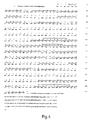
- FIG. 4 shows cDNA (SEQ ID NO: 1) and amino acid sequence (SEQ ID NO: 2) of XendoU. Nucleotides of the 5′ and 3′ untranslated regions are shown in small letters, nucleotides of the ORF in capital letters. Above each codon the corresponding amino acid is shown. The sequence portions determined by automated Edman degradation and mass mapping experiments (see “Experimental Procedures”) are indicated by numbers 1, 2 and 3. The stop codon is identified by an asterisk. Numbers on the right side of diagram correspond to the amino acid residues. Underlined are the amino acid sequences identified by MALDI-mapping experiments.
- FIG. 5 shows the functional analysis of in vitro translated XendoU A, SDS-PAGE analysis of [ 35 S] Methionine-labelled XendoU (lane 2) and of control luciferase (lane 1) produced by in vitro transcription and translation.
- the arrow points to XendoU protein.
- B 003 RNA was incubated, in the presence of Mn ++ ions, in ONE (ONE), with XendoU produced by reticulocyte lysate (ret-XendoU/+Mn), or with reticulocyte lysate as such (lane ret/+Mn).
- RNA was incubated, in the absence of Mn ++ ions, with XendoU produced by reticulocyte lysate (lanes ret-XendoU/ ⁇ Mn).
- the numbers below indicate incubation times: 0 min (lane 1), 45 min (lanes 2).
- U86-containing precursor was incubated, in the presence of Mn ++ ions, in ONE (ONE), with XendoU produced by reticulocyte lysate (ret-XendoU/+Mn), or with reticulocyte lysate as such (lanes ret/+Mn).
- pre-mRNA was incubated with XendoU produced by reticulocyte lysate in the absence of Mn ++ ions (ret-XendoU/ ⁇ Mn ⁇
- the numbers below indicate incubation times: 0 min (lane 1), 45 min (lanes 2).
- X. laevis germinal vesicles were isolated following the procedure by Gandini-Attardi et al. (Gandini-Attardi et al., 1990) and the nuclear extracts were prepared as already described (Caffarelli et al., 1994).
- Protein bands from SDS-PAGE analysis (5 ⁇ g) stained with Coomassie Blue R250 were excised, reduced with dithiothreitol and carboxamidomethylated. Gel pieces were equilibrated in 25 mM NH 4 HCO 3 , pH 8 and finally digested in situ with trypsin at 37° C. for 18 h. Peptides were extracted by sonication with 100 ⁇ l of 25 mM NH 4 HCO 3 /acetonitrile 1:1 v/v, pH 8 (twice).
- Peptide mixture was fractionated by reverse-phase HPLC on a VYDACTM C 18 column 218TP52 (250 ⁇ 1 mm), 5 ⁇ m, 300 ⁇ pore size (The Separation Group, USA) by using a linear gradient from 5% to 60% of acetonitrile in 0.1% TFA over 60 min, at flow rate of 90 ⁇ L/min. Individual components were manually collected and lyophilised.
- Sequence analysis was performed using a PROCISETM 491 protein sequencer (Applied Biosystems, USA) equipped with a 140C microgradient apparatus and a 785A UV detector (Applied Biosystems, USA) for the automated identification of PTH-amino acids.
- Matrix assisted laser desorption ionization mass spectra were recorded using a Voyager DE-PRO mass spectrometer (Applied Biosystems, USA); an analytical mixture containing ⁇ -cyano-4-hydroxy-cinnamic acid was applied to the sample plate and allowed to be dried. Mass calibration was performed using the molecular ions from peptides produced by tryptic auto-proteolysis and the matrix as internal standards.
- P3 (5′-GGAAACGUAUCCUCUGGGAG-3′), SEQ ID NO: 5;
- P4 (5′-GGAAACGUAUCCUGUGGGAG-3′), SEQ ID NO: 6;
- I-1a and I-1b generated by cleavages at the major sites a and b upstream from U16, see scheme of FIG. 1A ), obtained in vitro after incubation of 003 RNA with ONE or XendoU, or in vivo after oocyte microinjection, were incubated in 10 ⁇ l of 10 mM HCl at 25° C. for 2 hours to open the cyclic phosphate as described by Forster (Forster et al., 1990).
- degenerated oligonucleotides MAHs 5′-ATGGCICAYGAYTAYYTIGT-3′, SEQ ID NO: 7 and IGTa 5′-ACIGGRTAIGCIGTICCIAT-3′, SEQ ID NO: 8
- XendoU Open Reading Frame ORF was cloned into BLUE SCRIPTTM vector and 35 (S)Methionine-labelled protein was produced by in vitro transcription and translation using the TnT-coupled Reticulocyte Lysate System Kit (PROMEGATM) according to the manufacturer's instructions. Translational products were analysed on 10% SDS-PAGE.
- In vitro transcribed U86-containing precursor was obtained from a standard T7 reaction, but in the presence of 500 ⁇ M unlabelled UTP.
- the transcript was injected into X. laevis oocytes or incubated in ONE or with purified XendoU.
- the processing product I-4 RNA was gel-purified and reverse transcribed (SS pre-amplification system—GIBCO) with the 5′ terminally labeled oligonucleotide UHindIII (5′-AAGCTTCTTCATGGCGGCTCGGCCAAT-3′, SEQ ID NO: 9) complementary to 19 nucleotides at the 3′ end of the downstream exon.
- the elongated products were run in parallel with the sequence obtained with the same primer on U86-containing precursor.
- FIG. 1C The procedure of biochemical characterization is indicated in FIG. 1C , while the protein content of the fractions displaying XendoU activity is shown in FIG. 1D .
- FIG. 1D After several chromatographic steps, a single protein of 37 kDa molecular mass was obtained as showed in FIG. 1D , lane 6.
- the elution of XendoU activity during the last purification step on gel filtration column is consistent with a monomeric protein of 37 kDa.
- the assay for testing the presence of XendoU activity was performed by incubating 32 P-labelled U16-containing precursor with aliquots of the different fractionation steps.
- the substrate selectivity of XendoU was further addressed by incubating the purified enzyme with synthetic oligoribonucleotide (P1, SEQ ID NO: 3), containing the distal XendoU cleavage site (site d, FIG. 1A ), localised upstream from U16, and with mutated derivatives thereof (P2, SEQ ID NO: 4 and P3, SEQ ID NO: 5).
- P1, SEQ ID NO: 3 synthetic oligoribonucleotide
- site d site containing the distal XendoU cleavage site (site d, FIG. 1A )
- P2, SEQ ID NO: 4 and P3, SEQ ID NO: 5 mutated derivatives thereof
- FIG. 3B shows that also in this case a slight delay in migration is obtained (lane 3), demonstrating that the products of the in vivo reaction display 2′-3′ cyclic phosphates as well.
- XendoU ORF 876 bp
- the protein was produced by in vitro transcription and translation using reticulocyte lysate.
- the translational product was analysed on SDS-PAGE revealing a protein of 37 kDa molecular mass ( FIG. 5 A).
- enzymatic activity was assayed by incubating the 32 P-labelled RNA substrate in reticulocyte lysate expressing XendoU ORF. The activity assay was carried out in parallel with the unfractionated extract: FIG.
- U86 a snoRNA, named U86, encoded by an intron of Nop56 gene of X. laevis . It was also shown that U86 has homologs both in human, where it displays the same genomic organization, and in yeast where it is embedded in the ORF of Rib1 gene (Filippini et al., 2001). As U16 snoRNA, also U86 is contained in a very poorly spliceable intron and its biosynthesis appears to be alternative to that of the co-transcribed mRNA. The injection of 32 P-labelled U86-containing precursor into X.
- Yeast Rntip is required for cleavage of the pre-ribosomal RNA in the 3′ ETS but not the 5′ ETS. RNA 5, 909-917
- Yeast tRNA-splicing endonuclease is a heterotrimeric enzyme. J. Biol. Chem. 265, 18180-18184.
- yeast tRNA splicing endonuclease a tetrameric enzyme with two active site subunits homologous to the archaeal tRNA endonucleases.
Landscapes
- Life Sciences & Earth Sciences (AREA)
- Health & Medical Sciences (AREA)
- Chemical & Material Sciences (AREA)
- Wood Science & Technology (AREA)
- Molecular Biology (AREA)
- Engineering & Computer Science (AREA)
- Bioinformatics & Cheminformatics (AREA)
- Organic Chemistry (AREA)
- Zoology (AREA)
- Genetics & Genomics (AREA)
- Medicinal Chemistry (AREA)
- Microbiology (AREA)
- Biotechnology (AREA)
- Biochemistry (AREA)
- General Engineering & Computer Science (AREA)
- General Health & Medical Sciences (AREA)
- Biomedical Technology (AREA)
- Enzymes And Modification Thereof (AREA)
- Micro-Organisms Or Cultivation Processes Thereof (AREA)
Abstract
Description
| P1 (5′-GGAAACGUAUCCUUUGGGAG-3′), | SEQ ID NO: 3; |
| P2 (5′-GGAAACGUAUCCUUGGGAGG-3′), | SEQ ID NO: 4; |
| P3 (5′-GGAAACGUAUCCUCUGGGAG-3′), | SEQ ID NO: 5; |
| P4 (5′-GGAAACGUAUCCUGUGGGAG-3′), | SEQ ID NO: 6; |
Claims (4)
Applications Claiming Priority (3)
| Application Number | Priority Date | Filing Date | Title |
|---|---|---|---|
| ITRM2002A000365 | 2002-07-08 | ||
| IT2002RM000365A ITRM20020365A1 (en) | 2002-07-08 | 2002-07-08 | PURIFICATION, CLONATION AND BIOCHEMISTRY CHARACTERIZATION OF XENDOU, THE ENDORIBONUCLEOLITHIC ACTIVITY INVOLVED IN BIOSYNTHESIS, SPLICING-IN |
| PCT/IT2003/000424 WO2004005518A1 (en) | 2002-07-08 | 2003-07-04 | PURIFICATION, CLONING AND BIOCHEMICAL CHARACTERIZATION OF XendoU, ENDORIBONUCLEASIC ACTIVITY INVOLVED IN SMALL NUCLEAR RNA SPLICING-INDEPENDENT BIOSYNTHESIS IN XENOPUS LAEVIS |
Publications (2)
| Publication Number | Publication Date |
|---|---|
| US20060084062A1 US20060084062A1 (en) | 2006-04-20 |
| US7459298B2 true US7459298B2 (en) | 2008-12-02 |
Family
ID=11456396
Family Applications (1)
| Application Number | Title | Priority Date | Filing Date |
|---|---|---|---|
| US10/520,401 Expired - Fee Related US7459298B2 (en) | 2002-07-08 | 2003-07-04 | Purification, cloning and biochemical characterization of XendoU, endoribonucleasic activity involved in small nuclear RNA splicing-independent biosynthesis in Xenopus laevis |
Country Status (5)
| Country | Link |
|---|---|
| US (1) | US7459298B2 (en) |
| EP (1) | EP1520027A1 (en) |
| AU (1) | AU2003281302A1 (en) |
| IT (1) | ITRM20020365A1 (en) |
| WO (1) | WO2004005518A1 (en) |
Families Citing this family (1)
| Publication number | Priority date | Publication date | Assignee | Title |
|---|---|---|---|---|
| CN105297144A (en) * | 2015-10-27 | 2016-02-03 | 北京百迈客生物科技有限公司 | High throughput library construction method for small RNA of prokaryote |
-
2002
- 2002-07-08 IT IT2002RM000365A patent/ITRM20020365A1/en unknown
-
2003
- 2003-07-04 US US10/520,401 patent/US7459298B2/en not_active Expired - Fee Related
- 2003-07-04 WO PCT/IT2003/000424 patent/WO2004005518A1/en not_active Ceased
- 2003-07-04 AU AU2003281302A patent/AU2003281302A1/en not_active Abandoned
- 2003-07-04 EP EP03741098A patent/EP1520027A1/en not_active Withdrawn
Non-Patent Citations (8)
| Title |
|---|
| Branden et al., Introduction to Protein Structure, Garland Publishing Inc., New York, p. 247, 1991. * |
| Caffarelli E. et al.: "A novel Mn++-dependent Ribonuclease that functions in U16 SnoRNA processing in X. laevis" Biochemical and Biophysical Research Communications, vol. 233, 1997, pp. 514-517. |
| Caffarelli, E. EMBL accession No. AJ507315, Sep. 5, 2002. |
| Database EMBL Jan. 27, 2001 Clifton S. et al.: "daa55d05.x1 Wellcome CRC pCS2+ st19-26 Xenopus laevis cDNA clone Image: 4059704 3'similar to SW: PP11<SUB>-</SUB>Human P21128 Placental Protein 11 Precursor; mRNA sequence" Database accession No. BG038970. |
| Laneve P. et al.: "Purification, cloning, and characterization of XendoU, a novel Endoribonuclease involved in processing of intron-encoded small nucleolar RNAs in Xenopus laevis" The Journal of Biological Chemistry, vol. 278, No. 15, Apr. 11, 2003, pp. 13026-13032. |
| Laneve P.; "Purificazione e caratterizzazione di una nuova attivita endoribonucleolitica coinvolta nella biosisntesi dei piccoli RNA nucleolari in X. laevis"; Thesis (2001), Department of Genetics and Molecular Biology, University of Rome, Rome, Italy. |
| Seffernick et al., J. Bacteriol. 183(8):2405-2410, 2001. * |
| Witkowski et al., Biochemistry 38:11643-11650, 1999. * |
Also Published As
| Publication number | Publication date |
|---|---|
| EP1520027A1 (en) | 2005-04-06 |
| ITRM20020365A0 (en) | 2002-07-08 |
| AU2003281302A8 (en) | 2004-01-23 |
| AU2003281302A1 (en) | 2004-01-23 |
| ITRM20020365A1 (en) | 2004-01-08 |
| US20060084062A1 (en) | 2006-04-20 |
| WO2004005518A1 (en) | 2004-01-15 |
Similar Documents
| Publication | Publication Date | Title |
|---|---|---|
| JP7053706B2 (en) | Increased specificity of RNA-induced genome editing with shortened guide RNA (tru-gRNA) | |
| US11427818B2 (en) | S. pyogenes CAS9 mutant genes and polypeptides encoded by same | |
| Wu et al. | Human RNase III is a 160-kDa protein involved in preribosomal RNA processing | |
| Sardana et al. | The DEAH-box helicase Dhr1 dissociates U3 from the pre-rRNA to promote formation of the central pseudoknot | |
| Höss et al. | A human DNA editing enzyme homologous to the Escherichia coli DnaQ/MutD protein | |
| Gallinari et al. | A new class of uracil-DNA glycosylases related to human thymine-DNA glycosylase | |
| Nam et al. | Yeast lariat debranching enzyme. Substrate and sequence specificity. | |
| Tomecki et al. | Novel endoribonucleases as central players in various pathways of eukaryotic RNA metabolism | |
| Pellegrini et al. | Endonucleolytic processing of CCA‐less tRNA precursors by RNase Z in Bacillus subtilis | |
| Fousteri et al. | A novel SMC protein complex in Schizosaccharomyces pombe contains the Rad18 DNA repair protein | |
| Minczuk et al. | Localisation of the human hSuv3p helicase in the mitochondrial matrix and its preferential unwinding of dsDNA | |
| Laneve et al. | Purification, cloning, and characterization of XendoU, a novel endoribonuclease involved in processing of intron-encoded small nucleolar RNAs in Xenopus laevis | |
| Ohtsubo et al. | Molecular cloning of AtMMH, an Arabidopsis thaliana ortholog of the Escherichia coli mutM gene, and analysis of functional domains of its product | |
| Suhasini et al. | Transfer RNA cleavages by onconase reveal unusual cleavage sites | |
| EP3630966A1 (en) | Production of cyclic adenylates and their use as allosteric regulators | |
| Garland et al. | Rrp47 functions in RNA surveillance and stable RNA processing when divorced from the exoribonuclease and exosome-binding domains of Rrp6 | |
| JP5990171B2 (en) | Use of HSPC117 molecule as RNA ligase | |
| US7459298B2 (en) | Purification, cloning and biochemical characterization of XendoU, endoribonucleasic activity involved in small nuclear RNA splicing-independent biosynthesis in Xenopus laevis | |
| Saito et al. | RNase MRP cleaves pre-tRNASer-Met in the tRNA maturation pathway | |
| Singh et al. | Molecular characterization of a nuclear topoisomerase II from Nicotiana tabacum that functionally complements a temperature-sensitive topoisomerase II yeast mutant | |
| Valcárcel et al. | Functional analysis of splicing factors and regulators | |
| Sawasaki et al. | Liver perchloric acid-soluble ribonuclease | |
| Bryan | Investigating the formation and repair of DNA adducts arising from abasic sites | |
| Hama Soor | Mutational and Biochemical Analysis of the Yeast Ribonuclease Rex1 | |
| Caffarelli | Purification, Cloning, and Characterization of XendoU, a Novel Endoribonuclease Involved in Processing of Intron-encoded Small Nucleolar RNAs in Xenopus laevis |
Legal Events
| Date | Code | Title | Description |
|---|---|---|---|
| AS | Assignment |
Owner name: UNIVERSITA' DEGLI STUDI DI ROMA "LA SAPIENZA", ITA Free format text: ASSIGNMENT OF ASSIGNORS INTEREST;ASSIGNORS:BOZZONI, IRENE;CAFFARELLI, ELISA;LANEVE, PIETRO;REEL/FRAME:016842/0099 Effective date: 20041228 Owner name: CONSIGLIO NAZIONALE DELLE RICHERCHE, ITALY Free format text: ASSIGNMENT OF ASSIGNORS INTEREST;ASSIGNORS:BOZZONI, IRENE;CAFFARELLI, ELISA;LANEVE, PIETRO;REEL/FRAME:016842/0099 Effective date: 20041228 |
|
| FPAY | Fee payment |
Year of fee payment: 4 |
|
| REMI | Maintenance fee reminder mailed | ||
| LAPS | Lapse for failure to pay maintenance fees | ||
| STCH | Information on status: patent discontinuation |
Free format text: PATENT EXPIRED DUE TO NONPAYMENT OF MAINTENANCE FEES UNDER 37 CFR 1.362 |
|
| STCH | Information on status: patent discontinuation |
Free format text: PATENT EXPIRED DUE TO NONPAYMENT OF MAINTENANCE FEES UNDER 37 CFR 1.362 |
|
| FP | Lapsed due to failure to pay maintenance fee |
Effective date: 20161202 |