US7429616B2 - Synthesis and complete stereochemical assignment of psymberin/irciniastatin for use as antitumor compounds - Google Patents
Synthesis and complete stereochemical assignment of psymberin/irciniastatin for use as antitumor compounds Download PDFInfo
- Publication number
- US7429616B2 US7429616B2 US11/182,069 US18206905A US7429616B2 US 7429616 B2 US7429616 B2 US 7429616B2 US 18206905 A US18206905 A US 18206905A US 7429616 B2 US7429616 B2 US 7429616B2
- Authority
- US
- United States
- Prior art keywords
- compound
- formula
- nmr
- pharmaceutically acceptable
- mmol
- Prior art date
- Legal status (The legal status is an assumption and is not a legal conclusion. Google has not performed a legal analysis and makes no representation as to the accuracy of the status listed.)
- Expired - Fee Related, expires
Links
- 0 *C.*C.*C1=CC(C)=C2C(=O)OC([C@H](C)C(C)CC3O[C@H](C(N)=O)C[C@@H](C)C3(C)C)CC2=C1C.*CC1O[C@H](C(=N)OC)C[C@@H](OC(C)=O)C1(C)C.C.C=C(C)C[C@@H](OC)[C@H](O)C(=O)NC(OC)[C@@H]1C[C@@H](O)C(C)(C)C(CC(O)[C@@H](C)C2CC3=C(C)C(O)=CC(O)=C3C(=O)O2)O1.C=C(C)C[C@H](OC)[C@H](O)C(=O)NC(OC)[C@@H]1C[C@@H](O)C(C)(C)C(CC(O)[C@@H](C)C2CC3=C(C)C(O)=CC(O)=C3C(=O)O2)O1.C=C(C)C[C@H](OC)[C@H](OC(=O)C1=CC=CC=C1)C(=O)Cl.CC.CS.[C-]#[N+][C@@H]1C[C@@H](C)C(C)(C)C(CC(O)[C@@H](C)C2CC3=C(C)C(OCC4=CC=C(OC)C=C4)=CC(OCC4=CC=C(OC)C=C4)=C3C(=O)O2)O1.[C-]#[N+][C@@H]1C[C@@H](O[Si](C)(C)C(C)(C)C)C(C)(C)C(CC(=O)[C@@H](C)C(O)CC2=C(C)C(OCC3=CC=C(OC)C=C3)=CC(OCC3=CC=C(OC)C=C3)=C2C(=O)OC)O1 Chemical compound *C.*C.*C1=CC(C)=C2C(=O)OC([C@H](C)C(C)CC3O[C@H](C(N)=O)C[C@@H](C)C3(C)C)CC2=C1C.*CC1O[C@H](C(=N)OC)C[C@@H](OC(C)=O)C1(C)C.C.C=C(C)C[C@@H](OC)[C@H](O)C(=O)NC(OC)[C@@H]1C[C@@H](O)C(C)(C)C(CC(O)[C@@H](C)C2CC3=C(C)C(O)=CC(O)=C3C(=O)O2)O1.C=C(C)C[C@H](OC)[C@H](O)C(=O)NC(OC)[C@@H]1C[C@@H](O)C(C)(C)C(CC(O)[C@@H](C)C2CC3=C(C)C(O)=CC(O)=C3C(=O)O2)O1.C=C(C)C[C@H](OC)[C@H](OC(=O)C1=CC=CC=C1)C(=O)Cl.CC.CS.[C-]#[N+][C@@H]1C[C@@H](C)C(C)(C)C(CC(O)[C@@H](C)C2CC3=C(C)C(OCC4=CC=C(OC)C=C4)=CC(OCC4=CC=C(OC)C=C4)=C3C(=O)O2)O1.[C-]#[N+][C@@H]1C[C@@H](O[Si](C)(C)C(C)(C)C)C(C)(C)C(CC(=O)[C@@H](C)C(O)CC2=C(C)C(OCC3=CC=C(OC)C=C3)=CC(OCC3=CC=C(OC)C=C3)=C2C(=O)OC)O1 0.000 description 8
- BNNIEBYABSNREN-KFJAPNERSA-N C=C(C)CC(OC)[C@H](O)C(=O)N[C@@H](OC)[C@@H]1C[C@@H](O)C(C)(C)[C@@H](C[C@H](O)C(C)C2CC3=C(C)C(O)=CC(O)=C3C(=O)O2)O1 Chemical compound C=C(C)CC(OC)[C@H](O)C(=O)N[C@@H](OC)[C@@H]1C[C@@H](O)C(C)(C)[C@@H](C[C@H](O)C(C)C2CC3=C(C)C(O)=CC(O)=C3C(=O)O2)O1 BNNIEBYABSNREN-KFJAPNERSA-N 0.000 description 4
- ICUGKFDMNJHLLR-TYUXKRBOSA-N CC(=O)OC1=CC(OC(C)=O)=C2C(=O)OC([C@H](C)[C@H](CC3O[C@H](C(N)=O)C[C@@H](OC(C)=O)C3(C)C)OC(C)=O)CC2=C1C Chemical compound CC(=O)OC1=CC(OC(C)=O)=C2C(=O)OC([C@H](C)[C@H](CC3O[C@H](C(N)=O)C[C@@H](OC(C)=O)C3(C)C)OC(C)=O)CC2=C1C ICUGKFDMNJHLLR-TYUXKRBOSA-N 0.000 description 2
- RXLOPMGEUTVYBI-DGHCKJRHSA-N [C-]#[N+][C@@H]1C[C@@H](C)C(C)(C)C(CC(=O)CC)O1 Chemical compound [C-]#[N+][C@@H]1C[C@@H](C)C(C)(C)C(CC(=O)CC)O1 RXLOPMGEUTVYBI-DGHCKJRHSA-N 0.000 description 2
- TXTMMURIWIJPHE-NVHVCUPZSA-N C.[C-]#[N+][C@@H]1C[C@@H](C)C(C)(C)C(CC(O)CC)O1 Chemical compound C.[C-]#[N+][C@@H]1C[C@@H](C)C(C)(C)C(CC(O)CC)O1 TXTMMURIWIJPHE-NVHVCUPZSA-N 0.000 description 1
- TXTMMURIWIJPHE-UCWLBSISSA-N C.[C-]#[N+][C@@H]1C[C@@H](C)C(C)(C)[C@@H](CC(O)CC)O1 Chemical compound C.[C-]#[N+][C@@H]1C[C@@H](C)C(C)(C)[C@@H](CC(O)CC)O1 TXTMMURIWIJPHE-UCWLBSISSA-N 0.000 description 1
- MVDMJPJDGOFTPA-VHKXTIKDSA-N C=C(C)CC(OC)C(O)C(=O)N[C@H](OC)[C@@H]1C[C@@H](O)C(C)(C)[C@@H](CC(O)[C@@H](C)C2CC3=C(C)C(O)=CC(O)=C3C(=O)O2)O1.C=C(C)CC(OC)[C@H](O)C(=O)N[C@@H](OC)[C@@H]1C[C@@H](O)C(C)(C)[C@@H](C[C@H](O)[C@@H](C)C2CC3=C(C)C(O)=CC(O)=C3C(=O)O2)O1 Chemical compound C=C(C)CC(OC)C(O)C(=O)N[C@H](OC)[C@@H]1C[C@@H](O)C(C)(C)[C@@H](CC(O)[C@@H](C)C2CC3=C(C)C(O)=CC(O)=C3C(=O)O2)O1.C=C(C)CC(OC)[C@H](O)C(=O)N[C@@H](OC)[C@@H]1C[C@@H](O)C(C)(C)[C@@H](C[C@H](O)[C@@H](C)C2CC3=C(C)C(O)=CC(O)=C3C(=O)O2)O1 MVDMJPJDGOFTPA-VHKXTIKDSA-N 0.000 description 1
- LLTBDIJYKLKMHN-TVIRNJNESA-N C=C(C)CC(OC)[C@H](C)C(=O)O.COC(=O)C1=C(OCC2=CC=C(OC)C=C2)C=C(OCC2=CC=C(OC)C=C2)C(C)=C1CC=O.[C-]#[N+][C@@H]1C[C@@H](O[Si](C)(C)C(C)(C)C)C(C)(C)[C@@H](CC(=O)CC)O1 Chemical compound C=C(C)CC(OC)[C@H](C)C(=O)O.COC(=O)C1=C(OCC2=CC=C(OC)C=C2)C=C(OCC2=CC=C(OC)C=C2)C(C)=C1CC=O.[C-]#[N+][C@@H]1C[C@@H](O[Si](C)(C)C(C)(C)C)C(C)(C)[C@@H](CC(=O)CC)O1 LLTBDIJYKLKMHN-TVIRNJNESA-N 0.000 description 1
- BNNIEBYABSNREN-UBWJPOHASA-N C=C(C)CC(OC)[C@H](O)C(=O)N[C@@H](OC)[C@@H]1C[C@@H](O)C(C)(C)[C@@H](C[C@H](O)C(C)[C@H]2CC3=C(C)C(O)=CC(O)=C3C(=O)O2)O1 Chemical compound C=C(C)CC(OC)[C@H](O)C(=O)N[C@@H](OC)[C@@H]1C[C@@H](O)C(C)(C)[C@@H](C[C@H](O)C(C)[C@H]2CC3=C(C)C(O)=CC(O)=C3C(=O)O2)O1 BNNIEBYABSNREN-UBWJPOHASA-N 0.000 description 1
- MVDMJPJDGOFTPA-YESCOQKCSA-N C=C(C)C[C@@H](OC)[C@H](O)C(=O)N[C@@H](OC)[C@@H]1C[C@@H](O)C(C)(C)C(CC(O)[C@@H](C)C2CC3=C(C)C(O)=CC(O)=C3C(=O)O2)O1.C=C(C)C[C@@H](OC)[C@H](O)C(=O)N[C@H](OC)[C@@H]1C[C@@H](O)C(C)(C)C(CC(O)[C@@H](C)C2CC3=C(C)C(O)=CC(O)=C3C(=O)O2)O1 Chemical compound C=C(C)C[C@@H](OC)[C@H](O)C(=O)N[C@@H](OC)[C@@H]1C[C@@H](O)C(C)(C)C(CC(O)[C@@H](C)C2CC3=C(C)C(O)=CC(O)=C3C(=O)O2)O1.C=C(C)C[C@@H](OC)[C@H](O)C(=O)N[C@H](OC)[C@@H]1C[C@@H](O)C(C)(C)C(CC(O)[C@@H](C)C2CC3=C(C)C(O)=CC(O)=C3C(=O)O2)O1 MVDMJPJDGOFTPA-YESCOQKCSA-N 0.000 description 1
- KRTGBOCHSHYANV-OLZOCXBDSA-N C=C(C)C[C@@H](OC)[C@H](OC(=O)C1=CC=CC=C1)C(=O)O Chemical compound C=C(C)C[C@@H](OC)[C@H](OC(=O)C1=CC=CC=C1)C(=O)O KRTGBOCHSHYANV-OLZOCXBDSA-N 0.000 description 1
- NLRAAJVQXIKKDJ-NUQVXHFFSA-N C=C(C)C[C@H](O)[C@H]1COC(C)(C)O1.C=C(C)C[C@H](OC)[C@H]1COC(C)(C)O1 Chemical compound C=C(C)C[C@H](O)[C@H]1COC(C)(C)O1.C=C(C)C[C@H](OC)[C@H]1COC(C)(C)O1 NLRAAJVQXIKKDJ-NUQVXHFFSA-N 0.000 description 1
- DKNWBTCNSDWWNB-NGVKTOAGSA-N C=C(C)C[C@H](O)[C@H]1COC(C)(C)O1.CC1(C)OC[C@H](C=O)O1 Chemical compound C=C(C)C[C@H](O)[C@H]1COC(C)(C)O1.CC1(C)OC[C@H](C=O)O1 DKNWBTCNSDWWNB-NGVKTOAGSA-N 0.000 description 1
- GLAMKGIDINZWIB-DVBRCBAGSA-N C=C(C)C[C@H](OC)[C@@H](CO)OC(=O)C1=CC=CC=C1.C=C(C)C[C@H](OC)[C@H](O)CO[Si](C)(C)C(C)(C)C Chemical compound C=C(C)C[C@H](OC)[C@@H](CO)OC(=O)C1=CC=CC=C1.C=C(C)C[C@H](OC)[C@H](O)CO[Si](C)(C)C(C)(C)C GLAMKGIDINZWIB-DVBRCBAGSA-N 0.000 description 1
- HWFPQXZKHKXBBQ-QNRODFOTSA-N C=C(C)C[C@H](OC)[C@@H](CO)OC(=O)C1=CC=CC=C1.C=C(C)C[C@H](OC)[C@H](OC(=O)C1=CC=CC=C1)C(=O)O Chemical compound C=C(C)C[C@H](OC)[C@@H](CO)OC(=O)C1=CC=CC=C1.C=C(C)C[C@H](OC)[C@H](OC(=O)C1=CC=CC=C1)C(=O)O HWFPQXZKHKXBBQ-QNRODFOTSA-N 0.000 description 1
- OVPJLHGAZZJXKW-WWIPEBIPSA-N C=C(C)C[C@H](OC)[C@@H](CO)OC(=O)C1=CC=CC=C1.COC1CC(C)(OC)OCC1OC(=O)C1=CC=CC=C1 Chemical compound C=C(C)C[C@H](OC)[C@@H](CO)OC(=O)C1=CC=CC=C1.COC1CC(C)(OC)OCC1OC(=O)C1=CC=CC=C1 OVPJLHGAZZJXKW-WWIPEBIPSA-N 0.000 description 1
- MVDMJPJDGOFTPA-NUMDFOABSA-N C=C(C)C[C@H](OC)[C@H](O)C(=O)N[C@@H](OC)[C@@H]1C[C@@H](O)C(C)(C)C(CC(O)[C@@H](C)C2CC3=C(C)C(O)=CC(O)=C3C(=O)O2)O1.C=C(C)C[C@H](OC)[C@H](O)C(=O)N[C@H](OC)[C@@H]1C[C@@H](O)C(C)(C)C(CC(O)[C@@H](C)C2CC3=C(C)C(O)=CC(O)=C3C(=O)O2)O1 Chemical compound C=C(C)C[C@H](OC)[C@H](O)C(=O)N[C@@H](OC)[C@@H]1C[C@@H](O)C(C)(C)C(CC(O)[C@@H](C)C2CC3=C(C)C(O)=CC(O)=C3C(=O)O2)O1.C=C(C)C[C@H](OC)[C@H](O)C(=O)N[C@H](OC)[C@@H]1C[C@@H](O)C(C)(C)C(CC(O)[C@@H](C)C2CC3=C(C)C(O)=CC(O)=C3C(=O)O2)O1 MVDMJPJDGOFTPA-NUMDFOABSA-N 0.000 description 1
- BNOAWVVKBQMKTN-KPYSKOJTSA-N C=C(C)C[C@H](OC)[C@H](O)CO.C=C(C)C[C@H](OC)[C@H](O)CO[Si](C)(C)C(C)(C)C Chemical compound C=C(C)C[C@H](OC)[C@H](O)CO.C=C(C)C[C@H](OC)[C@H](O)CO[Si](C)(C)C(C)(C)C BNOAWVVKBQMKTN-KPYSKOJTSA-N 0.000 description 1
- HZJLMTDGGNRXOU-ULUQYPRVSA-N C=C(C)C[C@H](OC)[C@H](O)CO.C=C(C)C[C@H](OC)[C@H]1COC(C)(C)O1 Chemical compound C=C(C)C[C@H](OC)[C@H](O)CO.C=C(C)C[C@H](OC)[C@H]1COC(C)(C)O1 HZJLMTDGGNRXOU-ULUQYPRVSA-N 0.000 description 1
- BGMQANFHNSZFHL-XNYAQGSASA-N C=CCC(O)C(C)(C)[C@H](O)CC=C.C=CC[C@@H](O)C(C)(C)[C@@H](CC=C)O[Si](C)(C)C(C)(C)C Chemical compound C=CCC(O)C(C)(C)[C@H](O)CC=C.C=CC[C@@H](O)C(C)(C)[C@@H](CC=C)O[Si](C)(C)C(C)(C)C BGMQANFHNSZFHL-XNYAQGSASA-N 0.000 description 1
- VKJVHSCHGQXBGY-UHFFFAOYSA-N C=CCC1=C(C)C(C)=CC(OC)=C1C(=O)N(CC)CC.C=CCC1=C(C)C(O)=CC(O)=C1C(=O)N(CC)CC Chemical compound C=CCC1=C(C)C(C)=CC(OC)=C1C(=O)N(CC)CC.C=CCC1=C(C)C(O)=CC(O)=C1C(=O)N(CC)CC VKJVHSCHGQXBGY-UHFFFAOYSA-N 0.000 description 1
- DSZPLWIADUOUMX-UHFFFAOYSA-N C=CCC1=C(C)C(O)=CC(O)=C1C(=O)N(CC)CC.C=CCC1=C(C)C(O)=CC(O)=C1C(=O)OC Chemical compound C=CCC1=C(C)C(O)=CC(O)=C1C(=O)N(CC)CC.C=CCC1=C(C)C(O)=CC(O)=C1C(=O)OC DSZPLWIADUOUMX-UHFFFAOYSA-N 0.000 description 1
- UYFBTEGDTISODJ-UHFFFAOYSA-N C=CCC1=C(C)C(O)=CC(O)=C1C(=O)OC.C=CCC1=C(C)C(OCC2=CC=C(OC)C=C2)=CC(OCC2=CC=C(OC)C=C2)=C1C(=O)OC Chemical compound C=CCC1=C(C)C(O)=CC(O)=C1C(=O)OC.C=CCC1=C(C)C(OCC2=CC=C(OC)C=C2)=CC(OCC2=CC=C(OC)C=C2)=C1C(=O)OC UYFBTEGDTISODJ-UHFFFAOYSA-N 0.000 description 1
- VFJPRAFBLSEEBC-UHFFFAOYSA-N C=CCC1=C(C)C(OC)=CC(OC)=C1C(=O)N(CC)CC.CCN(CC)C(=O)C1=C(OC)C=C(OC)C(C)=C1 Chemical compound C=CCC1=C(C)C(OC)=CC(OC)=C1C(=O)N(CC)CC.CCN(CC)C(=O)C1=C(OC)C=C(OC)C(C)=C1 VFJPRAFBLSEEBC-UHFFFAOYSA-N 0.000 description 1
- MDTNVIMKPQWQKR-UHFFFAOYSA-N C=CCC1=C(C)C(OC)=CC(OC)=C1C(=O)N(CC)CC.COC(=O)C1=C(OCC2=CC=C(OC)C=C2)C=C(OCC2=CC=C(OC)C=C2)C(C)=C1CC=O.COC1=CC(OC)=C(C=O)C=C1C Chemical compound C=CCC1=C(C)C(OC)=CC(OC)=C1C(=O)N(CC)CC.COC(=O)C1=C(OCC2=CC=C(OC)C=C2)C=C(OCC2=CC=C(OC)C=C2)C(C)=C1CC=O.COC1=CC(OC)=C(C=O)C=C1C MDTNVIMKPQWQKR-UHFFFAOYSA-N 0.000 description 1
- WOLMDJRXOGTFMB-UHFFFAOYSA-N C=CCC1=C(C)C(OCC2=CC=C(OC)C=C2)=CC(OCC2=CC=C(OC)C=C2)=C1C(=O)OC.COC(=O)C1=C(OCC2=CC=C(OC)C=C2)C=C(OCC2=CC=C(OC)C=C2)C(C)=C1CC=O Chemical compound C=CCC1=C(C)C(OCC2=CC=C(OC)C=C2)=CC(OCC2=CC=C(OC)C=C2)=C1C(=O)OC.COC(=O)C1=C(OCC2=CC=C(OC)C=C2)C=C(OCC2=CC=C(OC)C=C2)C(C)=C1CC=O WOLMDJRXOGTFMB-UHFFFAOYSA-N 0.000 description 1
- HKSLWTYGDJKETD-XASDVMRVSA-N C=CC[C@@H](C)C(C)(C)[C@H](O)CC=C.C=CC[C@@H](O)C(C)(C)C=O.C=CC[Si]1(Cl)N[C@H](C)[C@@H](C2=CC=CC=C2)O1.CC(=O)OC1C[C@@H](O[Si](C)(C)C(C)(C)C)C(C)(C)[C@@H](CC=O)O1.COC(OC)C(C)(C)C=O.[C-]#[N+][C@@H]1C[C@@H](O[Si](C)(C)C(C)(C)C)C(C)(C)[C@@H](CC(=O)CC)O1 Chemical compound C=CC[C@@H](C)C(C)(C)[C@H](O)CC=C.C=CC[C@@H](O)C(C)(C)C=O.C=CC[Si]1(Cl)N[C@H](C)[C@@H](C2=CC=CC=C2)O1.CC(=O)OC1C[C@@H](O[Si](C)(C)C(C)(C)C)C(C)(C)[C@@H](CC=O)O1.COC(OC)C(C)(C)C=O.[C-]#[N+][C@@H]1C[C@@H](O[Si](C)(C)C(C)(C)C)C(C)(C)[C@@H](CC(=O)CC)O1 HKSLWTYGDJKETD-XASDVMRVSA-N 0.000 description 1
- SKOORVQLORGLHZ-PGOOVJGGSA-N C=CC[C@@H](O)C(C)(C)C=O.C=CC[C@@H](O)C(C)(C)[C@H](O)CC=C Chemical compound C=CC[C@@H](O)C(C)(C)C=O.C=CC[C@@H](O)C(C)(C)[C@H](O)CC=C SKOORVQLORGLHZ-PGOOVJGGSA-N 0.000 description 1
- QVPOACFVFQYAKE-OGFXRTJISA-N C=CC[C@@H](O)C(C)(C)C=O.COC(OC)C(C)(C)C=O Chemical compound C=CC[C@@H](O)C(C)(C)C=O.COC(OC)C(C)(C)C=O QVPOACFVFQYAKE-OGFXRTJISA-N 0.000 description 1
- VOVCJMPXEWEOET-LNULXPRASA-N C=CC[C@@H](O)C(C)(C)[C@@H](CC=C)O[Si](C)(C)C(C)(C)C.CC1C[C@@H](O[Si](C)(C)C(C)(C)C)C(C)(C)[C@@H](CC=O)O1 Chemical compound C=CC[C@@H](O)C(C)(C)[C@@H](CC=C)O[Si](C)(C)C(C)(C)C.CC1C[C@@H](O[Si](C)(C)C(C)(C)C)C(C)(C)[C@@H](CC=O)O1 VOVCJMPXEWEOET-LNULXPRASA-N 0.000 description 1
- ICUGKFDMNJHLLR-PRCOMIIHSA-N CC(=O)OC1=CC(OC(C)=O)=C2C(=O)OC([C@H](C)[C@H](C[C@H]3O[C@H](C(N)=O)C[C@@H](OC(C)=O)C3(C)C)OC(C)=O)CC2=C1C Chemical compound CC(=O)OC1=CC(OC(C)=O)=C2C(=O)OC([C@H](C)[C@H](C[C@H]3O[C@H](C(N)=O)C[C@@H](OC(C)=O)C3(C)C)OC(C)=O)CC2=C1C ICUGKFDMNJHLLR-PRCOMIIHSA-N 0.000 description 1
- ZWTWYYVVMRTFOK-USDDSGOMSA-N CC(C)(C(C[C@@H]([C@H]([C@@H](Cc1c2c(O)cc(O)c1C)OC2=O)N)O)O[C@@H](C1)[C@@H](NC(C([C@H](CC(C)=C)OC)O)=O)OC)[C@@H]1O Chemical compound CC(C)(C(C[C@@H]([C@H]([C@@H](Cc1c2c(O)cc(O)c1C)OC2=O)N)O)O[C@@H](C1)[C@@H](NC(C([C@H](CC(C)=C)OC)O)=O)OC)[C@@H]1O ZWTWYYVVMRTFOK-USDDSGOMSA-N 0.000 description 1
- RRJRDAHIRCTMLJ-UHFFFAOYSA-N CC(CC1OC)(OC)OCC1OC(c1ccccc1)=O Chemical compound CC(CC1OC)(OC)OCC1OC(c1ccccc1)=O RRJRDAHIRCTMLJ-UHFFFAOYSA-N 0.000 description 1
- CSIGAYFNGGTGQE-UONOGXRCSA-N CC(C[C@@H]([C@@H](CO)OC(c1ccccc1)=O)OC)=C Chemical compound CC(C[C@@H]([C@@H](CO)OC(c1ccccc1)=O)OC)=C CSIGAYFNGGTGQE-UONOGXRCSA-N 0.000 description 1
- QFHNVDXMRTWCRM-VMOVINICSA-N CC1=C2CC([C@H](C)C(O)CC3O[C@H](C(N)=O)C[C@@H](O)C3(C)C)OC(=O)C2=C(O)C=C1O Chemical compound CC1=C2CC([C@H](C)C(O)CC3O[C@H](C(N)=O)C[C@@H](O)C3(C)C)OC(=O)C2=C(O)C=C1O QFHNVDXMRTWCRM-VMOVINICSA-N 0.000 description 1
- CNKAXJQBRDQBKP-UHEGKEBESA-N CCC(=O)CC1OC(OC(C)=O)C[C@@H](C)C1(C)C Chemical compound CCC(=O)CC1OC(OC(C)=O)C[C@@H](C)C1(C)C CNKAXJQBRDQBKP-UHEGKEBESA-N 0.000 description 1
- UCAZFZOCZKVLHH-GJZUFXHJSA-N CCC(O)C[C@H]1OC(OC(C)=O)C[C@@H](C)C1(C)C Chemical compound CCC(O)C[C@H]1OC(OC(C)=O)C[C@@H](C)C1(C)C UCAZFZOCZKVLHH-GJZUFXHJSA-N 0.000 description 1
- JBXPMCXZTJOAKG-UHFFFAOYSA-N CCN(CC)C(=O)C1=C(OC)C=C(OC)C(C)=C1.COC1=CC(OC)=C(C(=O)O)C=C1C Chemical compound CCN(CC)C(=O)C1=C(OC)C=C(OC)C(C)=C1.COC1=CC(OC)=C(C(=O)O)C=C1C JBXPMCXZTJOAKG-UHFFFAOYSA-N 0.000 description 1
- UKPLRVYAHZEXHL-UHFFFAOYSA-N COC(=O)C1=C(OCC2=CC=C(OC)C=C2)C=C(C)C(C)=C1CC=O Chemical compound COC(=O)C1=C(OCC2=CC=C(OC)C=C2)C=C(C)C(C)=C1CC=O UKPLRVYAHZEXHL-UHFFFAOYSA-N 0.000 description 1
- ZTTQGCKTYCWTLF-UHFFFAOYSA-N COC(=O)C1=C(OCC2=CC=C(OC)C=C2)C=C(OCC2=CC=C(OC)C=C2)C(C)=C1CC=O Chemical compound COC(=O)C1=C(OCC2=CC=C(OC)C=C2)C=C(OCC2=CC=C(OC)C=C2)C(C)=C1CC=O ZTTQGCKTYCWTLF-UHFFFAOYSA-N 0.000 description 1
- ZZVQYPBKQKSDTI-UHFFFAOYSA-N COC1=CC(OC)=C(C(=O)O)C=C1C.COC1=CC(OC)=C(C=O)C=C1C Chemical compound COC1=CC(OC)=C(C(=O)O)C=C1C.COC1=CC(OC)=C(C=O)C=C1C ZZVQYPBKQKSDTI-UHFFFAOYSA-N 0.000 description 1
- WUJZRXRNJSXWKE-IZBRVFSNSA-N COC1=CC=C(COC2=CC(OCC3=CC=C(OC)C=C3)=C3C(=O)O[C@@H]([C@H](C)[C@@H](O)C[C@H]4O[C@H](C(N)=O)CC(O)C4(C)C)CC3=C2C)C=C1 Chemical compound COC1=CC=C(COC2=CC(OCC3=CC=C(OC)C=C3)=C3C(=O)O[C@@H]([C@H](C)[C@@H](O)C[C@H]4O[C@H](C(N)=O)CC(O)C4(C)C)CC3=C2C)C=C1 WUJZRXRNJSXWKE-IZBRVFSNSA-N 0.000 description 1
- WVNSBPKSHUSOBS-AFVSRTSWSA-N [C-]#[N+][C@@H]1CC(O)C(C)(C)[C@@H](C[C@H](O)[C@@H](C)[C@H]2CC3=C(C)C(OCC4=CC=C(OC)C=C4)=CC(OCC4=CC=C(OC)C=C4)=C3C(=O)O2)O1 Chemical compound [C-]#[N+][C@@H]1CC(O)C(C)(C)[C@@H](C[C@H](O)[C@@H](C)[C@H]2CC3=C(C)C(OCC4=CC=C(OC)C=C4)=CC(OCC4=CC=C(OC)C=C4)=C3C(=O)O2)O1 WVNSBPKSHUSOBS-AFVSRTSWSA-N 0.000 description 1
- OAGRJIKCYPURES-ANMKMKKFSA-N [C-]#[N+][C@@H]1C[C@@H](C)C(C)(C)[C@@H](CC(=O)C(C)[C@H](O)CC2=C(C)C(OCC3=CC=C(OC)C=C3)=CC(OCC3=CC=C(OC)C=C3)=C2C(=O)OC)O1 Chemical compound [C-]#[N+][C@@H]1C[C@@H](C)C(C)(C)[C@@H](CC(=O)C(C)[C@H](O)CC2=C(C)C(OCC3=CC=C(OC)C=C3)=CC(OCC3=CC=C(OC)C=C3)=C2C(=O)OC)O1 OAGRJIKCYPURES-ANMKMKKFSA-N 0.000 description 1
- RXLOPMGEUTVYBI-JLLWLGSASA-N [C-]#[N+][C@@H]1C[C@@H](C)C(C)(C)[C@@H](CC(=O)CC)O1 Chemical compound [C-]#[N+][C@@H]1C[C@@H](C)C(C)(C)[C@@H](CC(=O)CC)O1 RXLOPMGEUTVYBI-JLLWLGSASA-N 0.000 description 1
- BWPBLGJELVQVTC-TWHDUXDWSA-N [C-]#[N+][C@@H]1C[C@@H](OCC2=CC=CC=C2)C(C)(C)[C@@H](C[C@H](O)[C@@H](C)[C@H]2CC3=C(C)C(OCC4=CC=C(OC)C=C4)=CC(OCC4=CC=C(OC)C=C4)=C3C(=O)O2)O1 Chemical compound [C-]#[N+][C@@H]1C[C@@H](OCC2=CC=CC=C2)C(C)(C)[C@@H](C[C@H](O)[C@@H](C)[C@H]2CC3=C(C)C(OCC4=CC=C(OC)C=C4)=CC(OCC4=CC=C(OC)C=C4)=C3C(=O)O2)O1 BWPBLGJELVQVTC-TWHDUXDWSA-N 0.000 description 1
- ILQBSEWJQIJCDP-WIPFLZAQSA-N [C-]#[N+][C@@H]1C[C@@H](O[Si](C)(C)C(C)(C)C)C(C)(C)[C@@H](CC(=O)C(C)[C@H](O)CC2=C(C)C(OCC3=CC=C(OC)C=C3)=CC(OCC3=CC=C(OC)C=C3)=C2C(=O)OC)O1 Chemical compound [C-]#[N+][C@@H]1C[C@@H](O[Si](C)(C)C(C)(C)C)C(C)(C)[C@@H](CC(=O)C(C)[C@H](O)CC2=C(C)C(OCC3=CC=C(OC)C=C3)=CC(OCC3=CC=C(OC)C=C3)=C2C(=O)OC)O1 ILQBSEWJQIJCDP-WIPFLZAQSA-N 0.000 description 1
- KQDLINLKBXJZQE-RPLWUKRJSA-N [C-]#[N+][C@@H]1C[C@@H](O[Si](C)(C)C(C)(C)C)C(C)(C)[C@@H](CC(=O)CC)O1.[C-]#[N+][C@@H]1C[C@@H](O[Si](C)(C)C(C)(C)C)C(C)(C)[C@@H](CC(O)CC)O1 Chemical compound [C-]#[N+][C@@H]1C[C@@H](O[Si](C)(C)C(C)(C)C)C(C)(C)[C@@H](CC(=O)CC)O1.[C-]#[N+][C@@H]1C[C@@H](O[Si](C)(C)C(C)(C)C)C(C)(C)[C@@H](CC(O)CC)O1 KQDLINLKBXJZQE-RPLWUKRJSA-N 0.000 description 1
- ILQBSEWJQIJCDP-AJIHLYEWSA-N [C-]#[N+][C@@H]1C[C@@H](O[Si](C)(C)C(C)(C)C)C(C)(C)[C@@H](CC(=O)[C@@H](C)[C@H](O)CC2=C(C)C(OCC3=CC=C(OC)C=C3)=CC(OCC3=CC=C(OC)C=C3)=C2C(=O)OC)O1 Chemical compound [C-]#[N+][C@@H]1C[C@@H](O[Si](C)(C)C(C)(C)C)C(C)(C)[C@@H](CC(=O)[C@@H](C)[C@H](O)CC2=C(C)C(OCC3=CC=C(OC)C=C3)=CC(OCC3=CC=C(OC)C=C3)=C2C(=O)OC)O1 ILQBSEWJQIJCDP-AJIHLYEWSA-N 0.000 description 1
- HKGPADSXLPIYSF-ASFWEVSDSA-N [C-]#[N+][C@@H]1C[C@@H](O[Si](C)(C)C(C)(C)C)C(C)(C)[C@@H](C[C@@H]2OC(C)(C)O[C@H](CC3=C(C)C(OCC4=CC=C(OC)C=C4)=CC(OCC4=CC=C(OC)C=C4)=C3C(=O)OC)[C@@H]2C)O1 Chemical compound [C-]#[N+][C@@H]1C[C@@H](O[Si](C)(C)C(C)(C)C)C(C)(C)[C@@H](C[C@@H]2OC(C)(C)O[C@H](CC3=C(C)C(OCC4=CC=C(OC)C=C4)=CC(OCC4=CC=C(OC)C=C4)=C3C(=O)OC)[C@@H]2C)O1 HKGPADSXLPIYSF-ASFWEVSDSA-N 0.000 description 1
- WDJUTFCKYUIMIF-VLDBZJTPSA-N [C-]#[N+][C@@H]1C[C@@H](O[Si](C)(C)C(C)(C)C)C(C)(C)[C@@H](C[C@H](O)[C@@H](C)[C@H]2CC3=C(C)C(OCC4=CC=C(OC)C=C4)=CC(OCC4=CC=C(OC)C=C4)=C3C(=O)O2)O1 Chemical compound [C-]#[N+][C@@H]1C[C@@H](O[Si](C)(C)C(C)(C)C)C(C)(C)[C@@H](C[C@H](O)[C@@H](C)[C@H]2CC3=C(C)C(OCC4=CC=C(OC)C=C4)=CC(OCC4=CC=C(OC)C=C4)=C3C(=O)O2)O1 WDJUTFCKYUIMIF-VLDBZJTPSA-N 0.000 description 1
Images




Classifications
-
- C—CHEMISTRY; METALLURGY
- C07—ORGANIC CHEMISTRY
- C07D—HETEROCYCLIC COMPOUNDS
- C07D407/00—Heterocyclic compounds containing two or more hetero rings, at least one ring having oxygen atoms as the only ring hetero atoms, not provided for by group C07D405/00
- C07D407/02—Heterocyclic compounds containing two or more hetero rings, at least one ring having oxygen atoms as the only ring hetero atoms, not provided for by group C07D405/00 containing two hetero rings
- C07D407/06—Heterocyclic compounds containing two or more hetero rings, at least one ring having oxygen atoms as the only ring hetero atoms, not provided for by group C07D405/00 containing two hetero rings linked by a carbon chain containing only aliphatic carbon atoms
-
- A—HUMAN NECESSITIES
- A61—MEDICAL OR VETERINARY SCIENCE; HYGIENE
- A61P—SPECIFIC THERAPEUTIC ACTIVITY OF CHEMICAL COMPOUNDS OR MEDICINAL PREPARATIONS
- A61P35/00—Antineoplastic agents
-
- A—HUMAN NECESSITIES
- A61—MEDICAL OR VETERINARY SCIENCE; HYGIENE
- A61P—SPECIFIC THERAPEUTIC ACTIVITY OF CHEMICAL COMPOUNDS OR MEDICINAL PREPARATIONS
- A61P35/00—Antineoplastic agents
- A61P35/02—Antineoplastic agents specific for leukemia
-
- A—HUMAN NECESSITIES
- A61—MEDICAL OR VETERINARY SCIENCE; HYGIENE
- A61P—SPECIFIC THERAPEUTIC ACTIVITY OF CHEMICAL COMPOUNDS OR MEDICINAL PREPARATIONS
- A61P43/00—Drugs for specific purposes, not provided for in groups A61P1/00-A61P41/00
-
- C—CHEMISTRY; METALLURGY
- C07—ORGANIC CHEMISTRY
- C07D—HETEROCYCLIC COMPOUNDS
- C07D309/00—Heterocyclic compounds containing six-membered rings having one oxygen atom as the only ring hetero atom, not condensed with other rings
- C07D309/02—Heterocyclic compounds containing six-membered rings having one oxygen atom as the only ring hetero atom, not condensed with other rings having no double bonds between ring members or between ring members and non-ring members
- C07D309/08—Heterocyclic compounds containing six-membered rings having one oxygen atom as the only ring hetero atom, not condensed with other rings having no double bonds between ring members or between ring members and non-ring members with hetero atoms or with carbon atoms having three bonds to hetero atoms with at the most one bond to halogen, e.g. ester or nitrile radicals, directly attached to ring carbon atoms
- C07D309/10—Oxygen atoms
Definitions
- the present invention relates generally to the field of organic synthesis and stereochemical assignments of compounds exhibiting efficacy against neoplastic diseases.
- Natural products that elicit a specific and unique biological response in mammalian cells represent valuable tools for new pharmaceuticals for the treatment for various disease states.
- irciniastatin and psymberin have potent inhibitory activity in human tumor cell assays. They also have partial structural resemblance to the pederin family of natural products and therefore could share the latter's well-documented pharmacological role as potent eukaryotic protein synthesis inhibitors.
- the total synthesis of these natural products, analogs thereof, and probe-reagents for mode-of-action studies should provide a solid foundation for lead identification and preclinical studies in the area of human cancer.
- the invention provides a compound having one of the following formulae:
- compositions comprising a compound of the invention and a pharmaceutically acceptable carrier.
- Still another embodiment of the invention is a method for treating a subject suffering from a neoplastic disease.
- the method comprises administering to the subject a therapeutically effective amount of a compound according to formula 28-a, 28-b, 29-a, or 29-b.
- the invention also provides, in other embodiments, processes for preparing the compound of formula 28-a and certain synthetic intermediate compounds. In that regard, other embodiments relate to those synthetic intermediate compounds.
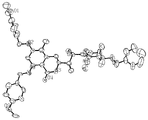
- FIG. 1 is an ORTEP of compound 22a (hydrogen atoms are not shown for the sake of clarity).
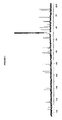
- FIG. 2 is the 1 H-NMR spectrum of compound 28-a in CD 3 OD.
- FIG. 3 is the 13 C-NMR spectrum of compound 28-a in CD 3 OD.
- FIG. 4 is the 1 H-NMR spectrum of compound 28-b in CD 3 OD.
- FIG. 5 is the 13 C-NMR spectrum of compound 28-b in CD 3 OD.
- FIG. 6 is the 1 H-NMR spectrum of compound 29-a in CD 3 OD.
- FIG. 7 is the 1 H-NMR spectrum of a mixture of compounds 29-a and 29-b in CD 3 OD.
- the inventors discovered highly convergent syntheses of the cytotoxic compounds according to the invention. Spectrochemical analyses of the compounds led, for the first time, to correct stereochemical assignments for all chiral centers. Those compounds, pharmaceutically acceptable salts, and prodrugs thereof are useful for treating neoplastic diseases in a subject.
- the invention provides for compounds of formulae 28-a, 28-b, 29-a, and 29-b. These compounds can also exist as pharmaceutically acceptable salts, solvates, or prodrugs as more fully described below.
- salt refers to a salt form of a free base compound of the present invention, as appreciated by persons of ordinary skill in the art. Salts can be prepared by conventional means known to those who are skilled in the art.
- pharmaceutically-acceptable when used in reference to a salt, refers to salt forms of a given compound, which are within governmental regulatory safety guidelines for ingestion and/or administration to a subject.
- pharmaceutically-acceptable salts embraces salts commonly used to form alkali metal salts and to form addition salts of free acids or free bases. The nature of the salt is not critical, provided that it is pharmaceutically-acceptable.
- suitable pharmaceutically-acceptable base addition salts of compounds of formulae 28-a, 28-b, 29-a, and 29-b encompasses metallic salts, such as salts made from aluminum, calcium, lithium, magnesium, potassium, sodium and zinc, as well as salts made from organic bases, including primary, secondary and tertiary amines, and substituted amines including cyclic amines, such as caffeine, arginine, diethylamine, N-ethyl piperidine, aistidine, glucamine, isopropylamine, lysine, morpholine, N-ethyl morpholine, piperazine, piperidine, triethylamine, and trimethylamine.
- the pharmaceutically acceptable salt is the lithium, sodium, or potassium salt.
- a “prodrug” is a compound that, when administered to the body of a subject, such as a mammal, undergoes a conversion in situ that yields an active agent of formula 28-a, 28-b, 29-a, or 29-b. More specifically, a prodrug is an active or inactive, “masked” compound that is modified chemically through in vivo physiological action, such as hydrolysis, metabolism and the like, into a compound of this invention following administration of the prodrug to a subject or patient.
- the suitability and techniques of making and using prodrugs are well known.
- the invention provides for an ester prodrug.
- a discussion of prodrugs involving esters appears in Svensson and Tunek, Drug Metabolism Reviews 165 (1988), and in Bundgaard, D ESIGN OF P RODRUGS (Elsevier 1985).
- hydroxy groups can be masked as esters and ethers, respectively.
- EP 039,051 (Sloan and Little, Apr. 11, 1981) discloses Mannich-base hydroxamic acid prodrugs, along with their preparation and use.
- one or more hydroxy substituents in the compounds of formulae 28-a, 28-b, 29-a, and 29-b can be masked as esters.
- the hydroxyl groups can be masked as phosphate or phosphonate esters.
- the hydroxy groups include aliphatic hydroxyl groups, such as those bound to carbons C5, C11, and C15, and phenolic hydroxy groups in the compounds of the invention.
- the invention contemplates solvates of compounds of formulae 28-a, 28-b, 29-a, and 29-b.
- solvate when used with reference to a compound, connotes a compound that is associated with one or more molecules of a solvent, such as an organic solvent, inorganic solvent, aqueous solvent or mixtures thereof.
- the compounds of formulae 28-a, 28-b, 29-a, and 29-b exist as hydrates. Hydration can occur during manufacturing of the compounds or compositions comprising the compounds, or the hydration can occur over time, due to the hygroscopic nature of the compounds.
- the synthetic approach to making compounds of the invention focused on the coupling of fragments 6-7 via carbon bond-formation to control stereochemistry of the C 15 -C 17 stereotriad, followed by appending carboxylic acid 5.
- Scheme 1B depicts how the aryl fragment 6 was obtained in 7 steps (41% overall yield) from known aldehyde 12. See Lambooy, J. P., J. Am. Chem. Soc. 1956, 78, 771.
- compound 12 was subjected to: (1) oxidation/amidation (CHO ⁇ CONEt 2 ); (2) ortho-metallation/allylation to give compound 13 (see Kamila, S. et al., Tetrahedron 2003, 59, 1339; Casas, R.; et al., Tetrahedron Lett. 1995, 36, 1039); (3) BBr 3 -mediated methyl ether deprotection; (4) methyl ester formation, using a protocol described by Keck, G. E. et al. Tetrahedron 2000, 56, 9875; (5) phenol protection; and (6) oxidative double bond cleavage, to give compound 6.
- Scheme 2 depicts below a double convergent coupling strategy that was employed to prepare final compounds 28-a, 28-b, 29-a, and 29-b.
- treating the (Z)-chlorophenylboryl enolate derived from 7 with aldehyde 6 yielded one major syn-aldol product 20 that was predicted from an enolate facial bias imposed by the ⁇ -alkoxy substituent (Evans. et al., supra).
- Imidate 26 was generated by a convenient and beneficial procedure by adding polyvinylpyridine during the imidate formation with Me 3 OBF 4 . After TLC-analysis indicated complete conversion, the reaction mixture was filtered and concentrated, followed by dissolving the crude imidate 26 in toluene, and addition of Hunigs' base and acid chloride 27 (from 5 with (COCl) 2 ). The mixture was heated to 40° C. for 2 h, cooled to 0° C. and treated with an ethanolic sodium borohydride solution.
- the invention further contemplates processes for making a compound of formula 28-a and certain of its synthetic intermediate compounds, as described above. Still other embodiments provide for those intermediate compounds, as such.
- one embodiment relates a process for preparing a compound of formula 28-a:
- the process comprises the step of reacting a compound of formula 25:
- the reaction mixture resulting from the process described above may include one or more stereoisomers of a compound of formula 28-a.
- the process further comprises the step of isolating the compound of formula 28-a.
- the isolation can entail any procedure that is well known to the person who is skilled in the art. Without limitation, exemplary procedures include various kinds of chromatography, such as flash chromatography.
- the invention provides for an intermediate compound having the formula 20:
- the invention provide a process for preparing the compound of formula 20.
- the process comprises the step of reacting a compound having the formula 6:
- one embodiment is the intermediate compound, which another embodiment is a process for making the intermediate compound of formula 7.
- the process comprises the steps of:
- TBS in above-described process denotes tert-butyldimethylsilyl.
- the process can be modified readily to employ other well-known alcohol protecting groups, such as those described in the examples below.
- the invention provides a pharmaceutical composition comprising a compound of formula 28-a, 28-b, 29-a, or 29-b and a pharmaceutically acceptable carrier.
- a pharmaceutical composition of the invention may comprise an effective amount of a compound of the invention or an effective dosage amount of a compound of the invention.
- An effective dosage amount of a compound of the invention includes an amount less than, equal to, or greater than an effective amount of the compound.
- a pharmaceutical composition in which two or more unit dosages, such as in tablets, capsules and the like, are required to administer an effective amount of the compound or alternatively, a multi-dose pharmaceutical composition, such as powders, liquids and the like, in which an effective amount of the compound may be administered by administering a portion of the composition.
- compositions may generally be prepared by a compound of formula 28-a, 28-b, 29-a, or 29-b, including the tautomers, solvates, pharmaceutically acceptable salts, derivatives or prodrugs thereof, with pharmaceutically acceptable carriers, excipients, binders, adjuvants, diluents and the like, to form a desired administrable formulation to treat or ameliorate a neoplastic disease, such as cancer.
- compositions can be manufactured by methods well known in the art such as conventional granulating, mixing, dissolving, encapsulating, lyophilizing, emulsifying or levigating processes, among others.
- the compositions can be in the form of, for example, granules, powders, tablets, capsules, syrup, suppositories, injections, emulsions, elixirs, suspensions or solutions.
- compositions can be formulated for various routes of administration, for example, by oral administration, by transmucosal administration, by rectal administration, or subcutaneous administration as well as intrathecal, intravenous, intramuscular, intraperitoneal, intranasal, intraocular or intraventricular injection.
- the compound or compounds of the instant invention can also be administered in a local rather than a systemic fashion, such as injection as a sustained release formulation.
- One embodiment provides for intravenous administration.
- excipients and carriers are generally known to those skilled in the art and are thus included in the instant invention.
- excipients and carriers are described, for example, in R EMINGTONS P HARMACEUTICAL S CIENCES (Mack Publ. Co. 2000) and in P HARMACEUTICS : T HE S CIENCE OF D OSAGE F ORM D ESIGN , 2 nd ed. (Churchill Livingstone 2002).
- the following dosage forms are given by way of illustration and should not be construed as limiting the invention.
- powders, suspensions, granules, tablets, pills, capsules, gelcaps, and caplets can be used as solid dosage forms. These can be prepared, for example, by mixing one or more compounds of the instant invention, or solvates, prodrugs, pharmaceutically acceptable salts or tautomers thereof, with at least one additive or excipient such as a starch or other additive and tableted, encapsulated or made into other desirable forms for conventional administration.
- Suitable additives or excipients are sucrose, lactose, cellulose sugar, mannitol, maltitol, dextran, sorbitol, starch, agar, alginates, chitins, chitosans, pectins, tragacanth gum, gum arabic, gelatins, collagens, casein, albumin, synthetic or semi-synthetic polymers or glycerides, methyl cellulose, hydroxypropylmethyl-cellulose, and/or polyvinylpyrrolidone.
- oral dosage forms can contain other ingredients to aid in administration, such as an inactive diluent, or lubricants such as magnesium stearate, or preservatives such as paraben or sorbic acid, or anti-oxidants such as ascorbic acid, tocopherol or cysteine, a disintegrating agent, binders, thickeners, buffers, sweeteners, flavoring agents or perfuming agents. Additionally, dyestuffs or pigments may be added for identification. Tablets and pills may be further treated with suitable coating materials known in the art.
- Liquid dosage forms for oral administration may be in the form of pharmaceutically acceptable emulsions, syrups, elixirs, suspensions, slurries and solutions, which may contain an inactive diluent, such as water.
- Pharmaceutical formulations may be prepared as liquid suspensions or solutions using a sterile liquid including but not limited to an oil, water, an alcohol, and combinations of these.
- Pharmaceutically suitable surfactants, suspending agents, emulsifying agents, and the like may be added for oral or parenteral administration.
- the pharmaceutical compositions may be a spray or aerosol containing an appropriate solvent and optionally other compounds such as, but not limited to, stabilizers, antimicrobial agents, antioxidants, pH modifiers, surfactants, bioavailability modifiers and combinations of these.
- a propellant for an aerosol formulation may include compressed air, nitrogen, carbon dioxide, or a hydrocarbon based low boiling solvent.
- the compound or compounds of the instant invention are conveniently delivered in the form of an aerosol spray presentation from a nebulizer or the like.
- Injectable dosage forms for parenteral administration generally include aqueous suspensions or oil suspensions, which may be prepared using a suitable dispersant or wetting agent and a suspending agent. Injectable forms may be in solution phase or a powder suitable for reconstitution as a solution. Both are prepared with a solvent or diluent.
- aqueous suspensions or oil suspensions which may be prepared using a suitable dispersant or wetting agent and a suspending agent. Injectable forms may be in solution phase or a powder suitable for reconstitution as a solution. Both are prepared with a solvent or diluent.
- One embodiment of the invention provides for a lyophilized powder of the pharmaceutical composition.
- Acceptable solvents or vehicles include sterilized water, Ringer's solution, or an isotonic aqueous saline solution.
- sterile oils may be employed as solvents or suspending agents.
- the oil or fatty acid is non-volatile, including natural or synthetic oils, fatty acids, mono-, di
- the formulations may optionally contain stabilizers, pH modifiers, surfactants, bioavailability modifiers and combinations of these.
- the compounds may be formulated for parenteral administration by injection such as by bolus injection or continuous infusion.
- a unit dosage form for injection may be in ampoules or in multi-dose containers.
- the pharmaceutical formulations may be in the form of a suppository, an ointment, an enema, a tablet or a cream for release of compound in the intestines, sigmoid flexure and/or rectum.
- Rectal suppositories are prepared by mixing one or more compounds of the instant invention, or pharmaceutically acceptable salts or tautomers of the compound, with acceptable vehicles, for example, cocoa butter or polyethylene glycol, which is solid phase at room temperature but liquid phase at those temperatures suitable to release a drug inside the body, such as in the rectum.
- acceptable vehicles for example, cocoa butter or polyethylene glycol, which is solid phase at room temperature but liquid phase at those temperatures suitable to release a drug inside the body, such as in the rectum.
- acceptable vehicles for example, cocoa butter or polyethylene glycol, which is solid phase at room temperature but liquid phase at those temperatures suitable to release a drug inside the body, such as in the rectum.
- Various other agents and additives may be used in
- the formulations of the invention may be designed to be short-acting, fast-releasing, long-acting, and sustained-releasing as described below.
- the pharmaceutical formulations may also be formulated for controlled release or for slow release.
- the instant compositions may also comprise, for example, micelles or liposomes, or some other encapsulated form, or may be administered in an extended release form to provide a prolonged storage and/or delivery effect. Therefore, the pharmaceutical formulations may be compressed into pellets or cylinders and implanted intramuscularly or subcutaneously as depot injections or as implants such as stents. Such implants may employ known inert materials such as silicones and biodegradable polymers.
- Specific dosages may be adjusted depending on conditions of disease, the age, body weight, general health conditions, sex, and diet of the subject, dose intervals, administration routes, excretion rate, and combinations of drugs. Any of the above dosage forms containing effective amounts are well within the bounds of routine experimentation and therefore, well within the scope of the instant invention.
- a therapeutically effective dose may vary depending upon the route of administration and dosage form.
- the compound or compounds of the instant invention are selected to provide a formulation that exhibits a high therapeutic index.
- the therapeutic index is the dose ratio between toxic and therapeutic effects which can be expressed as the ratio between LD 50 and ED 50 .
- the LD 50 is the dose lethal to 50% of the population and the ED 50 is the dose therapeutically effective in 50% of the population.
- the LD 50 and ED 50 are determined by standard pharmaceutical procedures in animal cell cultures or experimental animals.
- the dosage regimen for neoplastic diseases as described more fully below with the compounds of this invention and/or compositions of this invention is based on a variety of factors, including the type of disease, the age, weight, sex, medical condition of the patient, the severity of the condition, the route of administration, and the particular compound employed.
- the dosage regimen may vary widely, but can be determined routinely using standard methods.
- dosage levels of the order from about 0.01 mg to 30 mg per kilogram of body weight per day, for example from about 0.1 mg to 10 mg/kg, or from about 0.25 mg to 1 mg/kg are useful for all methods of use disclosed herein.
- the dosage is about 0.1 to about 2.0 mg/kg.
- compound 28-a can be administered at dosages within this range.
- the dosage is about 0.1 to about 30 mg/kg, which is illustrative of dosages for compounds 28-b, 29-a, and 29-b.
- the pharmaceutical composition may be in the form of, for example, a capsule, a tablet, a suspension, or liquid.
- the pharmaceutical composition can be made in the form of a dosage unit containing a given amount of the active ingredient.
- these may contain an amount of active ingredient from about 1 to 2000 mg, for example from about 1 to 500 mg, or from about 5 to 150 mg.
- a suitable daily dose for a human or other mammal may vary widely depending on the condition of the patient and other factors, but, once again, can be determined using routine methods.
- the compounds, pharmaceutically acceptable salts, tautomer, solvates, and prodrugs of this invention may also be administered by injection as a composition with suitable carriers including saline, dextrose, or water.
- suitable carriers including saline, dextrose, or water.
- the daily parenteral dosage regimen can range from about 0.1 to about 30 mg/kg of total body weight, such as from about 0.1 to about 10 mg/kg, or from about 0.25 mg to 1 mg/kg.
- Formulations suitable for topical administration include liquid or semi-liquid preparations suitable for penetration through the skin (e.g., liniments, lotions, ointments, creams, or pastes) and drops suitable for administration to the eye, ear, or nose.
- liquid or semi-liquid preparations suitable for penetration through the skin e.g., liniments, lotions, ointments, creams, or pastes
- drops suitable for administration to the eye, ear, or nose e.g., liniments, lotions, ointments, creams, or pastes
- Topical doses of a compound of the invention can be from 0.1 mg to 150 mg administered from one to four, for example one or two times daily.
- the active ingredient can comprise from 0.001% to 10% w/w, e.g., from 1% to 2% by weight of the formulation, although it can comprise as much as 10% w/w, but typically not more than 5% w/w.
- the concentration is from 0.1% to 1% of the formulation.
- compositions can be subjected to conventional pharmaceutical operations such as sterilization and/or may contain adjuvants, such as preservatives, stabilizers, wetting agents, emulsifiers, buffers, etc.
- adjuvants such as preservatives, stabilizers, wetting agents, emulsifiers, buffers, etc.
- the pharmaceutically active compounds of this invention can be processed in accordance with conventional methods of pharmacy to produce medicinal agents for administration to patients, including humans and other mammals.
- the invention also provides, as another embodiment, a method for treating a neoplastic disease in a subject.
- the compounds of the present invention can be administered in therapeutically effective amounts by several different modes, including without limitation, oral, parental, by spray inhalation, rectal, or topical, as discussed above.
- parenteral is used here to encompass subcutaneous, intravenous, intramuscular, and intrasternal administration, as well as infusion techniques and intraperitoneal administration.
- Treatment of diseases and disorders herein is intended to also include therapeutic administration of a compound of the invention (or a pharmaceutical salt, solvate or prodrug thereof) or a pharmaceutical composition containing the compound to a subject believed to be in need of preventative treatment, e.g., for pain, inflammation, and the like.
- a subject can include but is not limited to an animal, such as a mammal, including a human.
- Treatment also encompasses administration of the compound or pharmaceutical composition to subjects not having been diagnosed as having a need thereof, i.e., prophylactic administration to the subject.
- the subject is initially diagnosed by a licensed physician and/or authorized medical practitioner, and a regimen for prophylactic and/or therapeutic treatment via administration of the compound(s) or compositions of the invention is suggested, recommended or prescribed.
- Treating” or “treatment of” within the context of the instant invention denotes an alleviation, in whole or in part, of symptoms associated with a disorder or disease, or halt of further progression or worsening of those symptoms, or prevention or prophylaxis of the disease or disorder.
- an “effective amount” or “therapeutically effective amount” of a compound of the invention refers to an amount of the compound that alleviates, in whole or in part, symptoms associated with a disorder or disease, or halts of further progression or worsening of those symptoms, or prevents or provides prophylaxis for the disease or disorder.
- successful treatment can include a reduction in tumor adhesion and anchorage; an alleviation of symptoms related to a cancerous growth or tumor, or proliferation of diseased tissue; a halting in the progression of a disease such as cancer or in the growth of cancerous cells.
- exemplary neoplastic diseases that can be treated by the compounds or pharmaceutical compositions of this invention include but are not limited to pancreatic cancer, bladder cancer, breast cancer, lung cancer, colon cancer, prostate cancer, brain cancer, ovarian cancer, cervical cancer, gastrointestinal cancer, head cancer, neck cancer, and leukemia.
- the compound administered is generally present as an active ingredient in a desired dosage unit formulation, such as pharmaceutically acceptable composition containing conventional pharmaceutically acceptable carriers as described above.
- NMR Nuclear magnetic resonance
- spectra were recorded on a Varian Inova-400 or Mercury-300 spectrometer at operating frequencies of 400/300 MHz ( 1 H NMR) or 100/75 MHz ( 13 C NMR).
- Chemical shifts ( ⁇ ) are given in ppm relative to residual solvent (usually chloroform ⁇ 7.26 for 1 H NMR or ⁇ 77.23 for proton decoupled 13 C NMR), and coupling constants (J) in Hz.
- Multiplicity is tabulated as s for singlet, d for doublet, t for triplet, q for quadruplet, and m for multiplet, whereby the prefix app is applied in cases where the true multiplicity is unresolved, and br when the signal in question is broadened.
- Infrared spectra were recorded on a Perkin-ElmerI 1000 series FTIR with wavenumbers expressed in cm ⁇ 1 using samples prepared as thin films between salt plates.
- Electrospray ionization mass spectra were recorded on a Shimadzu 2010-LCMS. Optical rotations were measured at 20° C. on a Rudolph Research Analytical Autopole® IV polarimeter.
- TMSCN (0.81 mL, 6.09 mmol) was added to x (569 mg, 1.53 mmol) and stirred at room temperature for 15 min. After cooled to 0° C., MeCN (20 mL), TMSCN (0.41 mL, 3.08 mmol) and ZnI 2 (114 mg, 0.36 mmol) were added successively and stirred for 40 min. Sat. NaHCO 3 solution (20 mL) was added and the reaction was extracted with EtOAc. The combined organic extracts were shaken with 1N HCl for 20 min and washed with aq. NaHCO 3 and water and dried over MgSO 4 .
- Crystals of 22a for single crystal X-ray analysis were obtained by the slow evaporation from acetone (colorless needles, m.p.:197° C.).
- X-ray data were collected using a Bruker Kappa CCD (charge couple device) based diffractometer.
- a suitable crystal (0.2 mm ⁇ 0.2 mm ⁇ 0.8 mm) was mounted on a glass fiber.
- Data were measured using phi scans of 2° per frame for 60 seconds using “collect” data collection software, Nonius 1999. The data were processed using HKL2000 (Z.
- FIG. 1 drawing depicts an ORTEP (Michael N. Burnett et al., ORTEP-III: Oak Ridge Thermal Ellipsoid Plot Program for Crystal Structure Illustrations, Oak Ridge National Laboratory Report ORNL-6895, 1996).
- 29-b was obtained as a mixture with 29-a.
- cytotoxicities of compounds 28-a, 28-b, and 29-a were evaluated against the human cancer cell lines HeLa, SK-MEL-5, and SK-MEL-28.
- the cytotoxicity evaluations were performed, over a concentration range of 0.2 nM to 20 ⁇ M, using the CellTiter-GloTM Luminescent Cell Viability Assay, a product of Promega Corporation (Madison, Wis. USA), according to the protocol detailed in Promega's Technical Bulletin No. 288. Table 1 presents the results of these assays. Each value is the average value obtained from three experiments.
- GI 50 is the concentration that inhibits 50% growth
- TGI is the concentration that inhibits 100% growth
- LC 50 is the concentration that kills 50% of the cells.
Landscapes
- Chemical & Material Sciences (AREA)
- Organic Chemistry (AREA)
- Health & Medical Sciences (AREA)
- Life Sciences & Earth Sciences (AREA)
- Public Health (AREA)
- General Chemical & Material Sciences (AREA)
- Medicinal Chemistry (AREA)
- Nuclear Medicine, Radiotherapy & Molecular Imaging (AREA)
- Chemical Kinetics & Catalysis (AREA)
- Pharmacology & Pharmacy (AREA)
- Veterinary Medicine (AREA)
- Animal Behavior & Ethology (AREA)
- General Health & Medical Sciences (AREA)
- Oncology (AREA)
- Hematology (AREA)
- Engineering & Computer Science (AREA)
- Bioinformatics & Cheminformatics (AREA)
- Pharmaceuticals Containing Other Organic And Inorganic Compounds (AREA)
- Nitrogen And Oxygen Or Sulfur-Condensed Heterocyclic Ring Systems (AREA)
- Plural Heterocyclic Compounds (AREA)
- Medicinal Preparation (AREA)
- Organic Low-Molecular-Weight Compounds And Preparation Thereof (AREA)
Abstract

The invention further provides processes for making the compounds, their synthetic intermediates, and for methods of using the compounds and their pharmaceutical compositions for the treatment of neoplastic diseases.
Description


or a pharmaceutically acceptable salt, solvate, or prodrug thereof. Other embodiments contemplate pharmaceutical compositions comprising a compound of the invention and a pharmaceutically acceptable carrier.


with a compound of formula anti-27:

and then deprotecting, to give the compound having formula 28-a.


with a compound having the formula 7:

-
- (a) ethylating a compound of formula 19:

-
- to give a compound of formula x:

-
- (b) reacting the compound of formula x with TMSCN to give, and then isolating, a compound of formula xi:

-
- (c) oxidizing the compound of formula xi to give the compound of
formula 7.
- (c) oxidizing the compound of formula xi to give the compound of


| TABLE 1 |
| Cytotoxicity of Compounds of the Invention |
| HeLa | SK-MEL-5 | SK-MEL-28 | ||
| Concentration | Concentration | Concentration | ||
| Compound | (nM) | (nM) | (nM) | |
| 28-a | GI50 | 0.23 | 0.3 | 0.23 | |
| TGI | 0.90 | 0.7 | 0.7 | ||
| LC50 | 1.6 | 1.3 | 1.2 | ||
| 29-a | |
60 | 300 | 200 | |
| TGI | 200 | 800 | 550 | ||
| LC50 | 900 | 1700 | 1100 | ||
| 28- | GI | 50 | 80 | 300 | 110 |
| TGI | 200 | 700 | 400 | ||
| LC50 | 900 | 1100 | 900 | ||
Claims (20)


Priority Applications (6)
| Application Number | Priority Date | Filing Date | Title |
|---|---|---|---|
| US11/182,069 US7429616B2 (en) | 2005-07-15 | 2005-07-15 | Synthesis and complete stereochemical assignment of psymberin/irciniastatin for use as antitumor compounds |
| CA002615112A CA2615112A1 (en) | 2005-07-15 | 2006-07-13 | Synthesis and complete stereochemical assignment of psymberin/irciniastatin for anti-tumor use |
| AU2006270325A AU2006270325A1 (en) | 2005-07-15 | 2006-07-13 | Synthesis and complete stereochemical assignment of psymberin/irciniastatin for anti-tumor use |
| EP06774649A EP1904485A2 (en) | 2005-07-15 | 2006-07-13 | Synthesis and complete stereochemical assignment of psymberin/irciniastatin for anti-tumor use |
| JP2008521587A JP2009502748A (en) | 2005-07-15 | 2006-07-13 | Synthesis and complete stereochemical analysis of psimbeline / ilsinostatin used for anti-tumor |
| PCT/US2006/027127 WO2007011629A2 (en) | 2005-07-15 | 2006-07-13 | Synthesis and complete stereochemical assignment of psymberin/irciniastatin for anti-tumor use |
Applications Claiming Priority (1)
| Application Number | Priority Date | Filing Date | Title |
|---|---|---|---|
| US11/182,069 US7429616B2 (en) | 2005-07-15 | 2005-07-15 | Synthesis and complete stereochemical assignment of psymberin/irciniastatin for use as antitumor compounds |
Publications (2)
| Publication Number | Publication Date |
|---|---|
| US20070015821A1 US20070015821A1 (en) | 2007-01-18 |
| US7429616B2 true US7429616B2 (en) | 2008-09-30 |
Family
ID=37057159
Family Applications (1)
| Application Number | Title | Priority Date | Filing Date |
|---|---|---|---|
| US11/182,069 Expired - Fee Related US7429616B2 (en) | 2005-07-15 | 2005-07-15 | Synthesis and complete stereochemical assignment of psymberin/irciniastatin for use as antitumor compounds |
Country Status (6)
| Country | Link |
|---|---|
| US (1) | US7429616B2 (en) |
| EP (1) | EP1904485A2 (en) |
| JP (1) | JP2009502748A (en) |
| AU (1) | AU2006270325A1 (en) |
| CA (1) | CA2615112A1 (en) |
| WO (1) | WO2007011629A2 (en) |
Families Citing this family (4)
| Publication number | Priority date | Publication date | Assignee | Title |
|---|---|---|---|---|
| WO2005054809A2 (en) * | 2003-11-25 | 2005-06-16 | Arizona Board Of Regents, A Body Corporate Of The State Of Arizona, Acting For And On Behalf Of Arizona State University | Irciniastatins a and b |
| WO2010022148A1 (en) * | 2008-08-19 | 2010-02-25 | The Trustees Of The University Of Pennsylvania | Methods for the preparation of irciniastatin and analogs thereof |
| US9540355B2 (en) | 2013-01-15 | 2017-01-10 | The Trustees Of The University Of Pennsylvania | Irciniastatin analogues |
| CN109956936B (en) * | 2019-03-28 | 2021-01-05 | 北京大学深圳研究生院 | Preparation method of Psymberin |
Citations (2)
| Publication number | Priority date | Publication date | Assignee | Title |
|---|---|---|---|---|
| EP0039051B1 (en) | 1980-04-24 | 1985-07-24 | Merck & Co. Inc. | Mannich-base hydroxamic acid prodrugs for the improved bioavailability of non-steroidal anti-inflammatory agents, a process for preparing and a pharmaceutical composition containing them |
| WO2005054809A2 (en) | 2003-11-25 | 2005-06-16 | Arizona Board Of Regents, A Body Corporate Of The State Of Arizona, Acting For And On Behalf Of Arizona State University | Irciniastatins a and b |
-
2005
- 2005-07-15 US US11/182,069 patent/US7429616B2/en not_active Expired - Fee Related
-
2006
- 2006-07-13 CA CA002615112A patent/CA2615112A1/en not_active Abandoned
- 2006-07-13 EP EP06774649A patent/EP1904485A2/en not_active Withdrawn
- 2006-07-13 JP JP2008521587A patent/JP2009502748A/en active Pending
- 2006-07-13 AU AU2006270325A patent/AU2006270325A1/en not_active Abandoned
- 2006-07-13 WO PCT/US2006/027127 patent/WO2007011629A2/en not_active Ceased
Patent Citations (2)
| Publication number | Priority date | Publication date | Assignee | Title |
|---|---|---|---|---|
| EP0039051B1 (en) | 1980-04-24 | 1985-07-24 | Merck & Co. Inc. | Mannich-base hydroxamic acid prodrugs for the improved bioavailability of non-steroidal anti-inflammatory agents, a process for preparing and a pharmaceutical composition containing them |
| WO2005054809A2 (en) | 2003-11-25 | 2005-06-16 | Arizona Board Of Regents, A Body Corporate Of The State Of Arizona, Acting For And On Behalf Of Arizona State University | Irciniastatins a and b |
Non-Patent Citations (21)
Also Published As
| Publication number | Publication date |
|---|---|
| AU2006270325A1 (en) | 2007-01-25 |
| WO2007011629A3 (en) | 2007-04-19 |
| EP1904485A2 (en) | 2008-04-02 |
| US20070015821A1 (en) | 2007-01-18 |
| WO2007011629A2 (en) | 2007-01-25 |
| JP2009502748A (en) | 2009-01-29 |
| CA2615112A1 (en) | 2007-01-25 |
Similar Documents
| Publication | Publication Date | Title |
|---|---|---|
| JP4229701B2 (en) | β-lactam compound, process for producing the same, and serum cholesterol-lowering agent containing the same | |
| US9517989B2 (en) | 2-cycloalkyl resorcinol cannabinergic ligands | |
| US10988433B2 (en) | Cyclohexyl GPR40 agonists for the treatment of type II diabetes | |
| US7696177B2 (en) | Anti-hypercholesterolemic compounds | |
| CS273314B2 (en) | Method of polycyclic aromatic alkanol derivatives preparation | |
| US20120270934A1 (en) | Prostacyclin derivatives | |
| US20150175530A1 (en) | Antibacterial agents | |
| JP2021536492A (en) | Illudin analogs, their use, and how to synthesize them | |
| US20240317701A1 (en) | Synthesis of cannabidiol and analogs thereof, and related compounds, formulations, and methods of use | |
| CZ12999A3 (en) | Illudin analogs and pharmaceutical composition | |
| JP2022510425A (en) | Decarboxylase inhibitor for the treatment of Parkinson's disease | |
| US7964605B2 (en) | Phenyl piperazine compounds, pharmaceutical composition comprising the same, and use thereof | |
| US7429616B2 (en) | Synthesis and complete stereochemical assignment of psymberin/irciniastatin for use as antitumor compounds | |
| US9598393B2 (en) | Structural variants of mycolactones for use in modulating inflammation, immunity and pain | |
| WO1992021647A1 (en) | Carbocyclic and heterocyclic hiv protease inhibitors | |
| US9428493B2 (en) | Schweinfurthin analogues | |
| US10112918B2 (en) | 15-oxospiramilactone derivatives, preparation method and uses thereof | |
| US20180334447A1 (en) | 2,3,4,5-tetrahydropyridin-6-amine derivatives | |
| US9771377B2 (en) | Synthesis of FR901464 and analogs with antitumor activity | |
| US7777071B2 (en) | Production of carnitine conjugate intermediates | |
| US20080221330A1 (en) | Mutilin-Derivative Substituted at Position 12 | |
| US10392360B2 (en) | Synthetic route to anhydroryanodol, ryanodol and structural analogues | |
| US7179937B2 (en) | Cyclopentenone derivatives for cancer therapy | |
| US9346781B2 (en) | Therapeutic compounds | |
| AU2004241224A1 (en) | Carboxylic compound and medicine comprising the same |
Legal Events
| Date | Code | Title | Description |
|---|---|---|---|
| AS | Assignment |
Owner name: BOARD OF REGENTS, UNIVERSITY OF TEXAS SYSTEM, TEXA Free format text: ASSIGNMENT OF ASSIGNORS INTEREST;ASSIGNORS:BRABANDER, JEF DE;JIANG, XIN;REEL/FRAME:017042/0588 Effective date: 20050816 |
|
| AS | Assignment |
Owner name: NATIONAL INSTITUTES OF HEALTH (NIH), U.S. DEPT. OF Free format text: CONFIRMATORY LICENSE;ASSIGNOR:UNIVERSITY OF TEXAS SW MEDICAL CENTER AT DALLAS;REEL/FRAME:021700/0116 Effective date: 20051004 |
|
| FPAY | Fee payment |
Year of fee payment: 4 |
|
| REMI | Maintenance fee reminder mailed | ||
| LAPS | Lapse for failure to pay maintenance fees | ||
| STCH | Information on status: patent discontinuation |
Free format text: PATENT EXPIRED DUE TO NONPAYMENT OF MAINTENANCE FEES UNDER 37 CFR 1.362 |
|
| STCH | Information on status: patent discontinuation |
Free format text: PATENT EXPIRED DUE TO NONPAYMENT OF MAINTENANCE FEES UNDER 37 CFR 1.362 |
|
| FP | Lapsed due to failure to pay maintenance fee |
Effective date: 20160930 |
|
| AS | Assignment |
Owner name: NATIONAL INSTITUTES OF HEALTH - DIRECTOR DEITR, MARYLAND Free format text: CONFIRMATORY LICENSE;ASSIGNOR:UNIVERSITY OF TEXAS SOUTHWESTERN MEDICAL CENTER;REEL/FRAME:051567/0583 Effective date: 20200112 |
|
| AS | Assignment |
Owner name: NATIONAL INSTITUTES OF HEALTH - DIRECTOR DEITR, MA Free format text: CONFIRMATORY LICENSE;ASSIGNOR:UT SOUTHWESTERN MEDICAL CENTER;REEL/FRAME:051536/0415 Effective date: 20200116 |