US7421019B2 - Hierarchical adaptive equalizer and design method thereof - Google Patents
Hierarchical adaptive equalizer and design method thereof Download PDFInfo
- Publication number
- US7421019B2 US7421019B2 US10/871,129 US87112904A US7421019B2 US 7421019 B2 US7421019 B2 US 7421019B2 US 87112904 A US87112904 A US 87112904A US 7421019 B2 US7421019 B2 US 7421019B2
- Authority
- US
- United States
- Prior art keywords
- hierarchical
- adaptive
- algorithm
- equalizer
- level
- Prior art date
- Legal status (The legal status is an assumption and is not a legal conclusion. Google has not performed a legal analysis and makes no representation as to the accuracy of the status listed.)
- Expired - Lifetime, expires
Links
Images




Classifications
-
- H—ELECTRICITY
- H04—ELECTRIC COMMUNICATION TECHNIQUE
- H04L—TRANSMISSION OF DIGITAL INFORMATION, e.g. TELEGRAPHIC COMMUNICATION
- H04L25/00—Baseband systems
- H04L25/02—Details ; arrangements for supplying electrical power along data transmission lines
- H04L25/03—Shaping networks in transmitter or receiver, e.g. adaptive shaping networks
- H04L25/03006—Arrangements for removing intersymbol interference
- H04L25/03012—Arrangements for removing intersymbol interference operating in the time domain
- H04L25/03019—Arrangements for removing intersymbol interference operating in the time domain adaptive, i.e. capable of adjustment during data reception
- H04L25/03038—Arrangements for removing intersymbol interference operating in the time domain adaptive, i.e. capable of adjustment during data reception with a non-recursive structure
-
- H—ELECTRICITY
- H03—ELECTRONIC CIRCUITRY
- H03H—IMPEDANCE NETWORKS, e.g. RESONANT CIRCUITS; RESONATORS
- H03H21/00—Adaptive networks
- H03H21/0012—Digital adaptive filters
- H03H21/0043—Adaptive algorithms
-
- H—ELECTRICITY
- H04—ELECTRIC COMMUNICATION TECHNIQUE
- H04L—TRANSMISSION OF DIGITAL INFORMATION, e.g. TELEGRAPHIC COMMUNICATION
- H04L25/00—Baseband systems
- H04L25/02—Details ; arrangements for supplying electrical power along data transmission lines
- H04L25/03—Shaping networks in transmitter or receiver, e.g. adaptive shaping networks
- H04L25/03006—Arrangements for removing intersymbol interference
- H04L25/03012—Arrangements for removing intersymbol interference operating in the time domain
- H04L25/03019—Arrangements for removing intersymbol interference operating in the time domain adaptive, i.e. capable of adjustment during data reception
- H04L25/03057—Arrangements for removing intersymbol interference operating in the time domain adaptive, i.e. capable of adjustment during data reception with a recursive structure
-
- H—ELECTRICITY
- H03—ELECTRONIC CIRCUITRY
- H03H—IMPEDANCE NETWORKS, e.g. RESONANT CIRCUITS; RESONATORS
- H03H21/00—Adaptive networks
- H03H21/0012—Digital adaptive filters
- H03H21/0043—Adaptive algorithms
- H03H2021/0049—Recursive least squares algorithm
-
- H—ELECTRICITY
- H03—ELECTRONIC CIRCUITRY
- H03H—IMPEDANCE NETWORKS, e.g. RESONANT CIRCUITS; RESONATORS
- H03H21/00—Adaptive networks
- H03H21/0012—Digital adaptive filters
- H03H2021/007—Computation saving measures; Accelerating measures
- H03H2021/0076—Measures relating to the convergence time
-
- H—ELECTRICITY
- H04—ELECTRIC COMMUNICATION TECHNIQUE
- H04L—TRANSMISSION OF DIGITAL INFORMATION, e.g. TELEGRAPHIC COMMUNICATION
- H04L25/00—Baseband systems
- H04L25/02—Details ; arrangements for supplying electrical power along data transmission lines
- H04L25/03—Shaping networks in transmitter or receiver, e.g. adaptive shaping networks
- H04L25/03006—Arrangements for removing intersymbol interference
- H04L2025/03433—Arrangements for removing intersymbol interference characterised by equaliser structure
- H04L2025/03439—Fixed structures
- H04L2025/03445—Time domain
- H04L2025/03471—Tapped delay lines
- H04L2025/03477—Tapped delay lines not time-recursive
-
- H—ELECTRICITY
- H04—ELECTRIC COMMUNICATION TECHNIQUE
- H04L—TRANSMISSION OF DIGITAL INFORMATION, e.g. TELEGRAPHIC COMMUNICATION
- H04L25/00—Baseband systems
- H04L25/02—Details ; arrangements for supplying electrical power along data transmission lines
- H04L25/03—Shaping networks in transmitter or receiver, e.g. adaptive shaping networks
- H04L25/03006—Arrangements for removing intersymbol interference
- H04L2025/03433—Arrangements for removing intersymbol interference characterised by equaliser structure
- H04L2025/03439—Fixed structures
- H04L2025/03445—Time domain
- H04L2025/03471—Tapped delay lines
- H04L2025/03484—Tapped delay lines time-recursive
- H04L2025/0349—Tapped delay lines time-recursive as a feedback filter
-
- H—ELECTRICITY
- H04—ELECTRIC COMMUNICATION TECHNIQUE
- H04L—TRANSMISSION OF DIGITAL INFORMATION, e.g. TELEGRAPHIC COMMUNICATION
- H04L25/00—Baseband systems
- H04L25/02—Details ; arrangements for supplying electrical power along data transmission lines
- H04L25/03—Shaping networks in transmitter or receiver, e.g. adaptive shaping networks
- H04L25/03006—Arrangements for removing intersymbol interference
- H04L2025/03592—Adaptation methods
- H04L2025/03598—Algorithms
- H04L2025/03611—Iterative algorithms
- H04L2025/03617—Time recursive algorithms
-
- H—ELECTRICITY
- H04—ELECTRIC COMMUNICATION TECHNIQUE
- H04L—TRANSMISSION OF DIGITAL INFORMATION, e.g. TELEGRAPHIC COMMUNICATION
- H04L25/00—Baseband systems
- H04L25/02—Details ; arrangements for supplying electrical power along data transmission lines
- H04L25/03—Shaping networks in transmitter or receiver, e.g. adaptive shaping networks
- H04L25/03006—Arrangements for removing intersymbol interference
- H04L2025/03592—Adaptation methods
- H04L2025/03598—Algorithms
- H04L2025/03611—Iterative algorithms
- H04L2025/03617—Time recursive algorithms
- H04L2025/0363—Feature restoration, e.g. constant modulus
Definitions
- the present invention relates to an adaptive equalizer, and more particularly to a hierarchical adaptive equalizer.
- Equalizers Due to advance of communication technology and development of market, the population of use of mobile communication has skyrocketed. Because of limitations in bandwidth or topography, some adaptive and advance communication technology and systems keep on evolving. In such technology, algorithm and structure of Adaptive Equalizer Technique affect the performance of communication system. It has been essential in this industry. According to design of equalizers, equalizers can be classified based on type, structure and algorithm.
- equalizers include linear equalizers or nonlinear equalizers.
- equalizers mainly include transversal equalizers regardless of the type of equalizers.
- Linear equalizers usually include finite impulse response (FIR) transversal equalizers; nonlinear equalizers usually include decision feedback equalizer (DFE) transversal equalizers.
- FIR finite impulse response
- DFE decision feedback equalizer
- algorithm equalizers include, for example, least mean square (LMS), recursive least square (RLS), constant modulus algorithm (CMA) equalizers, etc.
- FIG. 12 is a drawing showing a prior art FIR transversal adaptive equalizer.
- the adaptive equalizer is a dynamically adjustable equalizer.
- the dynamically adjustable equalizer comprises a set of input signal vectors, a set of weighting vectors, and an adjusting mechanism, i.e. an adaptive control algorithm.
- the adaptive control algorithm is the core of the adaptive equalizer.
- FIG. 13 is a drawing showing a prior art DFE transversal adaptive equalizer.
- the DFE transversal adaptive equalizer comprises a feed-forward filter 1206 and a feedback filter 1208 .
- the operations of the filters are in accordance with the theory of the linear equalizer. Different in updated weightings, DFE algorithm uses errors to e(k) adjust the weighting of each filter which is generated by reducing the final output, i.e. Data Out, of DFE algorithm from the desired response d(k), instead of by reducing errors generated from each filter from the desired response d(k).
- the length of the feedback filter 1208 is shorter than that of the feed-forward filter 1206 .
- the feed-forward filter 1206 outputs signals to the feedback filter 1208 for further decision.
- the feedback filter 1208 processes the signals outputted from the feed-forward filter 1206 to remove the remaining signal of the last signal caused by transmitting through multiple routes. Accordingly, DFE equalizer is not easy to be affected even when communication environment becomes worse.
- the algorithm For adaptive control algorithm, most linear and nonlinear adaptive control algorithms are classified in two types according to whether training sequence is applied.
- the algorithm is called non-blind adaptive algorithm. Both transmitter and receiver recognizes the training sequence d(t). During training, the transmitter sends signals to the receiver. After receiving the training sequence d(t), the receiver applies the training sequence d(t) to calculate weighting vectors w opt . After such training is finished, the transmitter sends out data. The receiver applies the weighting vectors to process the received data.
- the algorithm When training sequence is not applied, the algorithm is called blind adaptive algorithm. Blind equalizers, such as DFE-CMA, do not apply training sequence to evaluate. Accordingly, desired responses d(k) should be corrected. But most structures of blind equalizers are similar to those of non-blind equalizers.
- FIG. 14 is a schematic drawing showing a prior art LMS algorithm.
- the prior art LMS algorithm comprises two basic processes: filtering process 1410 and adaptive process 1412 .
- the filtering process 1410 generates the output of the filter by processing a set of input signals.
- the output of the filter is compared with the desired response for generating evaluated errors.
- the adaptive process 1412 dynamically adjusts the weighting vectors by using the evaluated errors. Such two processes cooperate.
- LMS algorithm is one of Stochastic Gradient algorithms. According to input data vector r(k), LMS algorithm stochastically evaluating gradient vectors. During iteration of LMS algorithm, 2N+1 times of complex multiplications are required, wherein N represents the number of elements. The calculation complexity of LMS algorithm is O(N). The output response of LMS algorithm depends on three factors: step size ⁇ , number of weightings, and Eigen-values of input data vectors.
- FIG. 15 is a schematic drawing showing a prior art RLS algorithm.
- RLS algorithm is an exception of Kalman Filter. Different from LMS algorithm which updates weighting vectors by applying the steepest-descent method, RLS algorithm adjusts weighting vectors by applying the least square method. RLS algorithm is characterized in applying data carried by input signals. As a result, RLS algorithm converges fast than LMS algorithm. But it also increases the calculation complexity of RLS algorithm. Due to its high convergent rate and no Eigenvalue spread, RLS algorithm has been applied in this field. For RLS algorithm with exponential weighting factor, cost function
- 2 is minimized by selecting the kth weighting vector.
- e(i) represents errors between desired response d(i) and output y(i);
- ⁇ is a positive constant close to, but less than, 1. Under static environment, ⁇ is equal to 1 because all presented data have proper weightings.
- RLS algorithm can be executed from the cost function formulas via expansion of square and reverse matrix. Referring to FIG. 15 , following are basic formulas of RLS algorithm:
- ⁇ represents weighting factors, adapted to modify performance of equalizers. If channel is fixed regardless of time, ⁇ can be set to 1. If channel varies with time, ⁇ can be set between 0.8 and 1. ⁇ does not change convergent rate, but affects tracking ability of RLS algorithm. The smaller the ⁇ , the better the tracking ability of the filer. If ⁇ is too small, the filter becomes unstable.
- RLS algorithm requires 4N 2 +4N+2 times of complex multiplications, wherein N represents the number of elements. Accordingly, the calculation complexity of RLS algorithm is O(N 2 ).
- CMA minimizes output variance of the equalizer by applying constant modulus (CM).
- CM applies a specific minimized CM cost function. It is shown as below:
- J CM E ⁇ ⁇ (
- y(k) represents the evaluated output of the equalizer; ⁇ is a dispersion constant.
- a blind CMA adaptive algorithm does not require training sequence because it calculates the evaluated errors by applying known characters of received signals.
- Digital communication signals usually, have some characters, such as constant modulus property or spectral self-conference. Due to interference, noise and variation of channels with time, the characters of signals received by the receiver are vulnerable to such issues. Accordingly, some techniques are applied to rebuild the characters of signals and output rebuilt signals.
- Signals usually have a constant envelope, such as PSK or FM. When signals are transmitted via channels, distortion of signals may occur. CMA reduces distortion by adjusting adaptive weighting vectors.
- the prior art LMS algorithm uses the last mean square error to adjust the weighting vectors, so it has low calculation complexity. But due to its high Eigen-value spread, LMS algorithm has low convergent rate. Moreover, when the number of taps of the equalizer increases, the convergent rate also becomes worse.
- RLS algorithm is characterized in using input signals for carrying data. It has high convergent rate than that of LMS algorithm. The advantage also increases the calculation complexity of RLS algorithm.
- CMA minimizes the output errors by applying CM.
- CMA has two demerits. One is low convergent rate. The other is local minimum. The local minimum results from non-convexity of constant CM. As a result, the weighting vector of the equalizer converges to a local minimum, instead of global minimum, and intersymbol interference (ISI) cannot be completely removed.
- ISI intersymbol interference
- the present invention is directed to a design method of a hierarchical adaptive equalizer.
- the design method is applied to develop a new adaptive equalizer algorithmic model or structure with a hierarchical structure.
- the design method randomly divides N basic elements of a filter into several adaptive algorithms and logically structures the adaptive algorithms as a hierarchical tress.
- the present invention is also directed to a hierarchical adaptive equalizer.
- the hierarchical adaptive equalizer executes algorithmic operations for different levels and for individual adaptive algorithms.
- the adaptive algorithms in different levels process the input signals. Accordingly, the output of the hierarchical adaptive equalizer is more precise and the convergent rate is higher.
- the mean square error (MSE) from the operation of the hierarchical adaptive equalizer is minimized when the hierarchical adaptive equalizer is in static status.
- MSE mean square error
- the operation of the hierarchical adaptive equalizer also generates less complex data.
- the present invention discloses a design method of a hierarchical adaptive equalizer.
- the design method first provides N delay elements. Then, the design method divides N delay elements into a plurality of adaptive algorithms, each of the adaptive algorithms having ⁇ delay elements.
- the design method logically structures a hierarchical tree with the adaptive algorithms.
- the hierarchical tree comprises ⁇ levels.
- a top first level of the hierarchical tree comprises ⁇ ⁇ 1 adaptive algorithms.
- a top second level of the hierarchical tree comprises ⁇ ⁇ 2 adaptive algorithms.
- a bottom level of the hierarchical tree comprises an adaptive algorithm.
- N, ⁇ and ⁇ are integers not less than 1, and N is not less than ⁇ .
- an output of the top first level of the hierarchical tree is an input of the top second level of the hierarchical tree.
- an output from the bottom level of the hierarchical tree is equivalent to an output from the hierarchical adaptive equalizer.
- the present invention also discloses a hierarchical adaptive equalizer.
- the hierarchical adaptive equalizer is characterized in comprising a hierarchical tree.
- the hierarchical tree comprises ⁇ levels.
- a top first level of the hierarchical tree comprises ⁇ ⁇ 1 adaptive algorithms.
- a top second level comprises ⁇ ⁇ 2 adaptive algorithms.
- a bottom level comprises an adaptive algorithm.
- ⁇ represents a number of delay elements for each of the adaptive algorithms, and ⁇ and ⁇ are integers not less than 1.
- the hierarchical adaptive equalizer comprises N delay elements, N is equal to ⁇ ⁇ , and N is an integer not less than ⁇ .
- an output of the top first level of the hierarchical tree is an input of the top second level of the hierarchical tree.
- an output from the bottom level of the hierarchical tree is equivalent to an output from the hierarchical adaptive equalizer.
- the adaptive algorithms adopt an algorithmic method to execute a minimum algorithmic process and to individually update weightings of the adaptive algorithms.
- the present invention adopts a hierarchical equalizer and a design method thereof.
- the present invention enhances convergent rate and reduce the complexity of the execution of algorithmic method. Such reduction of complexity makes the tracing of data feasible.
- the hierarchical structure of the present invention substantially still outperforms and reduces the complexity of the execution of algorithmic method.
- the design method of the hierarchical adaptive equalizer can be applied to a multiple-level structure, and not limited to a linear equalizer. Accordingly, the design method of the hierarchical adaptive equalizer can be applied to a non-linear equalizer.
- FIGS. 1A and 1B are a schematic structure drawing and a design flowchart of a hierarchical adaptive equalizer according to an embodiment of the present invention.
- FIG. 2 is a design structure of a two-level hierarchical adaptive equalizer according to an embodiment of the present invention.
- FIG. 3 is a design structure of a three-level hierarchical adaptive equalizer according to an embodiment of the present invention.
- FIG. 4 is a detail structure of a hierarchical adaptive equalizer according to an embodiment of the present invention.
- FIGS. 5A-5C are simulations of mean square error and convergent rate for HLMS algorithm according to the present invention.
- FIGS. 6A-6C are simulations of mean square error and convergent rate for HRLS algorithm according to the present invention.
- FIGS. 7A-7D are simulations of CM cost function and convergent rate according to the present invention.
- FIG. 7E is a contour of CM after a standard CMA is in stable convergence according to the present invention.
- FIG. 8 is a detail structure of a DFE-HLMS adaptive equalizer according to an embodiment of the present invention.
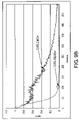
- FIGS. 9A-9C are simulations of MSE and convergent rate of DFE-HLMS algorithm according to the present invention.
- FIG. 10 is a detail structure of a DFE-HCMA adaptive equalizer according to an embodiment of the present invention.
- FIGS. 11A-11C are simulations of CM cost surface formula and convergent rate for according to the present invention.
- FIG. 12 is a drawing showing a prior art FIR transversal adaptive equalizer.
- FIG. 13 is a drawing showing a prior art DFE transversal adaptive equalizer.
- FIG. 14 is a schematic drawing showing a prior art LMS algorithm.
- FIG. 15 is a schematic drawing showing a prior art RLS algorithm.
- FIGS. 1A and 1B are a schematic structure drawing and a design flowchart of a hierarchical adaptive equalizer according to an embodiment of the present invention.
- the design method first provides N delay elements 102 in step S 122 .
- the delay elements can be, for example, filters or equalizers, but not limited thereto.
- the delay elements 102 are divided into several adaptive algorithms 104 .
- Each of the adaptive algorithms 104 comprises ⁇ delay elements in step S 124 .
- the dividing of the delay elements 102 is in accordance with , wherein ⁇ represents the number of levels, and N represents the number of the total delay elements.
- the delay elements ⁇ in each of the adaptive algorithm is equal to .
- the design method then logically structures a hierarchical tree with the adaptive algorithms in step S 126 .
- the hierarchical tree comprises ⁇ levels.
- a top first level of the hierarchical tree comprises ⁇ ⁇ 1 adaptive algorithms.
- a top second level comprises ⁇ ⁇ 2 adaptive algorithms.
- a bottom level comprises an adaptive algorithm.
- the total number of the adaptive algorithms in the hierarchical tree is in accordance with the following equation:
- each adaptive algorithm performs a minimized calculation, executes an adaptive control algorithmic method, and updates weightings of the adaptive algorithms.
- Multiplying input signals for the adaptive algorithms of the top first level with the updated weights generates outputs thereof.
- the outputs from the adaptive algorithms of the top first level are the inputs for the adaptive algorithms of the top second level.
- the outputs from the adaptive algorithms of the top second level is the real output of the filters.
- the hierarchical adaptive equalizer is adapted for linear or non-linear adaptive equalizer algorithms, such as Least-Mean-Square (LMS) algorithm, Recursive-Least-Square (RLS) algorithm, constant modulus algorithm (CMA), Decision-Feedback-Equalizer-Least-Mean-Square (DFE-LMS) algorithm, Decision-Feedback-Equalizer-Recursive-Least-Square (DFE-RLS) algorithm, Decision-Feedback-Constant-Modulus algorithm (DFE-CMA), and a hybrid algorithm of two or more of the LMS, RLS, CMA, DFE-LMS, DFE-RLS, and DFE-CMA algorithms.
- LMS Least-Mean-Square
- RLS constant modulus algorithm
- CMA constant modulus algorithm
- DFE-LMS Decision-Feedback-Equalizer-Least-Mean-Square
- DFE-RLS Decision-Feedback-Con
- ⁇ k 1 ⁇ ⁇ ⁇ w 1 ⁇ ⁇ k ⁇ ⁇ r 1 ⁇ ⁇ k ⁇ , wherein w 1k ⁇ represents the kth weighting of the bottom level adaptive algorithm, and r 1k ⁇ represents the kth input signal for the bottom level adaptive algorithm.
- FIG. 2 is a design structure of a two-level hierarchical adaptive equalizer according to an embodiment of the present invention.
- the first level comprises four adaptive algorithms
- the second level comprises one adaptive algorithm.
- r ij l and w ij l represent the input signal and the weighting of the jth element of the ith adaptive algorithm of the lth layer.
- FIG. 3 also uses the same representation.
- the input signals for the adaptive algorithms are: (r 11 1 ,r 12 1 ,r 13 1 ,r 14 1 ), (r 21 1 ,r 22 1 ,r 23 1 ,r 24 1 ), (r 31 1 ,r 32 1 ,r 33 1 ,r 34 1 ) and (r 41 1 ,r 42 1 ,r 43 1 ,r 44 1 ).
- the input signals for the adaptive algorithm are: (r 11 2 ,r 12 2 ,r 13 2 ,r 14 2 ).
- r 11 2 w 11 1 r 11 1 +w 12 1 r 12 1 +w 13 1 r 13 1 +w 14 1 r 14 1 ;
- r 14 2 w 41 1 r 41 1 +w 42 1 r 42 1 +w 43 1 r 43 1 +w 44 1 r 44 1
- the real output of the equalizer is the output of the bottom level.
- the real output of the equalizer is equivalent to the output of the second level.
- the output of the equalizer can be represented as
- ⁇ k 1 4 ⁇ ⁇ w 1 ⁇ ⁇ k 2 ⁇ r 1 ⁇ ⁇ k 2 .
- FIG. 3 is a design structure of a three-level hierarchical adaptive equalizer according to an embodiment of the present invention.
- r ij l and w ij l are similar to those in FIG. 2 .
- the input signals for the adaptive algorithms are: (r 11 1 ,r 12 1 ,r 13 1 ), (r 21 1 ,r 22 1 ,r 23 1 ), (r 31 1 ,r 32 1 ,r 33 1 ), (r 41 1 ,r 42 1 ,r 43 1 ), (r 51 1 ,r 52 1 ,r 53 1 ), (r 61 1 ,r 62 1 ,r 63 1 ), (r 71 1 ,r 72 1 ,r 73 1 ), (r 81 1 ,r 82 1 ,r 83 1 ), and (r 91 1 ,r 92 1 ,r 93 1 ).
- the input signals for the adaptive algorithms are: (r 11 2 ,r 12 2 ,r 13 2 ), (r 21 2 ,r 22 2 ,r 23 2 ), and (r 31 2 ,r 32 2 ,r 32 2 ).
- the input signals for the adaptive algorithm are: (r 11 3 ,r 12 3 ,r 13 3 ).
- the real output of the equalizer is the output of the bottom level.
- the real output of the equalizer is equivalent to the output of the third level.
- the output of the equalizer can be represented as
- ⁇ k 1 3 ⁇ ⁇ w 1 ⁇ ⁇ k 3 ⁇ r 1 ⁇ ⁇ k 3 .
- FIG. 4 is a detail structure of a hierarchical adaptive equalizer according to an embodiment of the present invention.
- the adaptive algorithms are adapted for hierarchical least mean-square (HLMS) algorithm.
- HLMS hierarchical least mean-square
- the HLMS algorithm allocates input signals to the hierarchical adaptive algorithms.
- Each of the adaptive algorithms executes least mean-square (LMS) calculation.
- LMS least mean-square
- the purpose of such allocation is to execute a minimized calculation in each of the adaptive algorithms.
- the bottom level adaptive algorithm can generates a better output and a smaller mean square error.
- the calculation complexity is O(N).
- the whole calculation complexity is equal to the number of the adaptive algorithms multiplying the calculation complexity of one adaptive algorithm.
- the calculation complexity of one adaptive algorithm is 2 ⁇ +1.
- the number of whole adaptive algorithms is
- FIGS. 5A-5C are simulations of mean square error and convergent rate for HLMS algorithm according to the present invention.
- the equalizer comprises N input signals.
- the frequency response is represented by the following equation:
- HLMS algorithm has a higher convergent rate than those of LMS and NLMS algorithms.
- HLMS algorithm has a smaller mean square error that those of LMS and NLMS algorithms shown in Table 1.
- the convergent rate of HLMS algorithm is higher than that of NLMS algorithm which is higher than that of LMS algorithm.
- the difference among HLMS, NLMS and LMS are more obvious as shown in FIGS. 5B and 5C .
- HRLS algorithm is a hierarchical calculation of RLS by hierarchical adaptive algorithms.
- the HRLS algorithm allocates input signals to the hierarchical adaptive algorithms.
- Each of the adaptive algorithms executes RLS calculation.
- the purpose of such allocation is to execute a minimized calculation in each of the adaptive algorithms.
- the bottom level adaptive algorithm can generates a better output and a smaller mean square error.
- the calculation complexity is O(N ⁇ ).
- the whole calculation complexity is equal to the number of the adaptive algorithms multiplying the calculation complexity of one adaptive algorithm.
- the calculation complexity of one adaptive algorithm is ⁇ 2 .
- the number of whole adaptive algorithms is
- FIGS. 6A-6C are simulations of mean square error and convergent rate for HRLS algorithm according to the present invention.
- the equalizer comprises N input signals.
- the frequency response is represented by the following equation:
- N 16
- SNR 30 dB.
- HRLS algorithm has a higher convergent rate that that of LRS algorithm.
- HRLS algorithm has a smaller mean square error that that of LRS shown in Table 2.
- FIG. 6A HRLS algorithm has the highest convergent rate.
- the difference among HRLS and RLS are more obvious as shown in FIGS. 6B and 6C .
- HCMA Hierarchical Constant Modulus Algorithm
- CM cost surfaces of simulation CMA are used to calculate the difference of variations of three-dimension contours. The equation is shown as below:
- J CM E ⁇ ⁇ (
- 2 ⁇ - ⁇ ) 2 ⁇ E ⁇ ⁇
- 2 ⁇ + ⁇ 2 E ⁇ ⁇
- 2 ⁇ + ⁇ s 4 ⁇ ⁇ s 2 ⁇ s represents kurtosis of input signals ⁇ s(k) ⁇ ; ⁇ represents dispersion constant of the input signals ⁇ s(k) ⁇ , wherein
- ⁇ s E ⁇ ⁇
- ⁇ s E ⁇ ⁇
- ⁇ s 2 ⁇ ⁇ s ;
- the present invention uses an equalizer with four input taps to perform the simulation.
- w HCMA ( k ) ( w 11 1 ( k ) w 11 2 ( k ), w 12 1 ( k ) w 11 2 ( k ), w 21 1 ( k ) w 12 2 ( k ), w 22 1 ( k ) w 12 2 ( k )).
- channel coefficient vector C [c 0 ,c 1 ,c 2 , . . . ,c 2M ⁇ 1 ] T is applied thereto, and the cost surface formula becomes as below:
- FIGS. 7A-7D are simulations of CM cost surface formula and convergent rate for according to the present invention.
- HCMA simulation Fractionally-Spaced Model is applied.
- Channel pulse response factors are 0.2, 0.5, 1.0, and ⁇ 0.1.
- the length of the equalizer is 64.
- SNR is equal to 50 dB.
- the convergent rate of cost function of HCMA is higher than that of the CMA. After 500-time iterations, the cost function of HCMA is converged.
- FIG. 7E is a contour of CM of CMA with two taps after convergence according to the present invention.
- CMA is characterized in comprising a plurality of local minimums.
- standard CMA comprises four local minimums, wherein the number of 0.061404 represents the core contour lines.
- the symbols * and + in this figure represent the local minimums. Since the four local minimums have the same value, they are also called Global Minimum. Due to the good channel environment for the simulation, the four local areas are converged to the same preferred values.
- FIG. 8 is a detail structure of a DFE-HLMS adaptive equalizer according to an embodiment of the present invention.
- DFE algorithm comprises the operations of two linear filters 106 and 108 .
- Hierarchical DFE algorithm comprises the operations of two hierarchical linear filters 106 and 108 .
- Data Out is applied to update the second level weightings because the output of the second level is the real output of the two-level hierarchical equalizer.
- a non-blind equalizer is an equalizer requiring training sequences. It is LMS and RLS algorithms that are related to such a non-blind equalizer.
- the DFE-HLMS adaptive equalizer comprises two hierarchical filter sets, a feed-forward filter set 106 and a feedback filter set 108 .
- Each of the filter sets is similar to the HLMS structure.
- one filter set allocates input signals to several adaptive algorithms.
- Each of the adaptive algorithms is deemed as a sub-filter.
- These sub-filters constitute the hierarchical filter set. Every first-level sub-filter of the two-level filter set has its own updated weighting.
- the second-level weighting of the second-level sub-filter is generated from errors e(k) by d(k) minus Data Out.
- the length of the feedback filter set 108 is shorter than that of the feed-forward filter set 106 .
- the length of the feedback filter set 108 is shorter than that of the feed-forward filter set 106 by 1. But both filter sets 106 and 108 have the same number of adaptive algorithms 104 .
- the updated weighting mechanism of DFE-HLMS is described as below:
- Data Out is the output of the DFE-HCMA equalizer, wherein Data Out is equal to y 1 2 .
- e fi 1 (k) and e bi 1 (k) represent the MSE of the ith adaptive algorithms of the first levels of the feed-forward filter set 106 and feedback filter set 108 , respectively.
- ⁇ f and ⁇ b represent step sizes thereof.
- Data Out is the output of the DFE-HCMA equalizer.
- e 1 2 (k) represents the MSE of the second level and is the real MSE of the DFE-HCMA equalizer.
- w 1 2 (k) and b 1 2 (k) represent the second-level weighting vectors of the feed-forward filter set 106 and feedback filter set 108 , respectively.
- the frequency response is represented by the following equation:
- the length N of the DFE equalizer is equal to 64, 100 and 121.
- SNR is equal to 30 dB.
- FIGS. 9A-9C are simulations of MSE and convergent rate of DFE-HLMS algorithm according to the present invention.
- DFE-HLMS algorithm has higher convergent rate.
- DFE-HLMS algorithm has a smaller mean square error than that of DFE-LMS algorithm shown in Table 3.
- the hierarchical structure does enhance the convergent rate of DFE-LMS algorithm.
- the updated weighting mechanism of the feed-forward filter set 106 and the feedback filter set 108 of DFE-CMA algorithm is described as below:
- FIG. 10 is a detail structure of a DFE-HCMA adaptive equalizer according to an embodiment of the present invention.
- the design of DFE-HCMA adaptive equalizer is similar to that of DFE-HLMS adaptive equalizer. Different between the two adaptive equalizers is the weighting of algorithm. Detailed descriptions are not repeated. Following are the descriptions of the updated weighting mechanism of DFE-HCMA adaptive equalizer.
- Data Out is the output of the DFE-HCMA equalizer, wherein Data Out is equal to y 1 2 .
- e fi 1 (k) and e bi 1 (k) represent the MSE of the ith adaptive algorithms of the first levels of the feed-forward filter set 106 and feedback filter set 108 , respectively.
- ⁇ f and ⁇ b represent step sizes thereof.
- Data Out is the output of the DFE-HCMA equalizer.
- e 1 2 (k) represents the MSE of the second level and is the real MSE of the DFE-HCMA equalizer.
- w 1 2 (k) and b 1 2 (k) represent the second-level weighting vectors of the feed-forward filter set 106 and feedback filter set 108 , respectively.
- FIGS. 11A-11C are simulations of CM cost surface formula and convergent rate for according to the present invention.
- the frequency response is represented by the following equation:
- the length N of the DFE equalizer is equal to 81, 100 and 121.
- SNR is equal to 30 dB.
- DFE-HCMA algorithm has higher convergent rate than that of DFE-CMA.
- DFE-HCMA algorithm has a smaller cost function than that of DFE-CMA algorithm shown in Table 4.
- the hierarchical structure does enhance the convergent rate of DFE-CMA algorithm.
- the transmitted data are not correlated.
- the assumption is reasonable. If the data, such as animation, are highly correlated, a de-correlation process should be performed.
- the ratio of number of multiple routes to the number of equalizer taps should not be too high, or the performance of the hierarchical equalizer would be affected.
- the step size ⁇ is also applied to HCMA algorithm.
- the hierarchical equalizer is adapted to be applied to a single carrier system, such as DSL, WLAN, Cellular, TDMA, or CDMA. If it is CDMA, the structure should be a RAKE structure.
- the hierarchical adaptive equalizer and the design method thereof of the present invention comprises following advantages:
Landscapes
- Engineering & Computer Science (AREA)
- Power Engineering (AREA)
- Computer Networks & Wireless Communication (AREA)
- Signal Processing (AREA)
- Cable Transmission Systems, Equalization Of Radio And Reduction Of Echo (AREA)
Abstract
Description
-
- Output of the transversal filter process 1410: y(k)=ŵH(k)r(k)
- Evaluated errors: e(k)=d(k)−y(k)
- Updated weightings of the adaptive process 1412:
ŵ(k+1)=ŵ(k)+μr(k)e*(k) - wherein k represents the sequence of iteration; step size μ controls convergent rate; d(k) represents desired response; e(k) represents evaluated errors.
is minimized by selecting the kth weighting vector. e(i) represents errors between desired response d(i) and output y(i); λ is a positive constant close to, but less than, 1. Under static environment, λ is equal to 1 because all presented data have proper weightings. RLS algorithm can be executed from the cost function formulas via expansion of square and reverse matrix. Referring to
-
- Prior evaluated errors: ξ(k)=d(k)−ŵH(k−1)r(k), wherein ŵH(k−1)r(k) is the output of transversal filter 1510.
ŵ(k)=ŵ(k−1)+k(k)ξ*(k);
R −1(k)=λ−1 R −1(k−1)−λ−1 k(k)r H(k)R −1(k−1)
-
- Output of the filter: y(k)=wH(k)r(k)
- Evaluated errors: e(k)=y(k)(1−|y(k)|2)
- Updated weightings: w(k+1)=w(k)+μr(k)e*(k)

-
- N, α and β are integers not less than 1; N is not less than β; and N equates to βα.
wherein w1k α represents the kth weighting of the bottom level adaptive algorithm, and r1k α represents the kth input signal for the bottom level adaptive algorithm.
r 11 2 =w 11 1 r 11 1 +w 12 1 r 12 1 +w 13 1 r 13 1 +w 14 1 r 14 1 ; r 12 2 =w 21 1 r 21 1 +w 22 1 r 22 1 +w 23 1 r 23 1 +w 24 1 r 24 1
r 13 2 =w 31 1 r 31 1 +w 32 1 r 32 1 +w 33 1 r 33 1 +w 34 1 r 34 1 ; r 14 2 =w 41 1 r 41 1 +w 42 1 r 42 1 +w 43 1 r 43 1 +w 44 1 r 44 1
(r11 1,r12 1,r13 1), (r21 1,r22 1,r23 1), (r31 1,r32 1,r33 1), (r41 1,r42 1,r43 1), (r51 1,r52 1,r53 1), (r61 1,r62 1,r63 1),
(r71 1,r72 1,r73 1), (r81 1,r82 1,r83 1), and (r91 1,r92 1,r93 1).
r 11 2 =w 11 1 r 11 1 +w 12 1 r 12 1 +w 13 1 r 13 1 ; r 12 2 =w 21 1 r 21 1 +w 22 1 r 22 1 +w 23 1 r 23 1;
r 13 2 =w 31 1 r 31 1 +w 32 1 r 32 1 +w 33 1 r 33 1 ; r 21 2 =w 41 1 r 41 1 +w 42 1 r 42 1 +w 43 1 r 43 1;
r 22 2 =w 51 1 r 51 1 +w 52 1 r 52 1 +w 53 1 r 53 1 ; r 23 2 =w 61 1 r 61 1 +w 62 1 r 62 1 +w 63 1 r 63 1;
r 31 2 =w 71 1 r 71 1 +w 72 1 r 72 1 +w 73 1 r 73 1 ; r 32 2 =w 81 1 r 81 1 +w 82 1 r 82 1 +w 83 1 r 83 1;
r 33 2 =w 91 1 r 91 1 +w 92 1 r 92 1 +w 93 1 r 93 1
The relationship between the input signals of the second and third levels is shown as below:
r 11 3 =w 11 2 r 11 2 +w 12 2 r 12 2 +w 13 2 r 13 2 ; r 12 3 =w 21 2 r 21 2 +w 22 2 r 22 2 +w 23 2 r 23 2;
r 13 3 =w 31 2 r 31 2 +w 32 2 r 32 2 +w 33 2 r 33 2
The whole calculation complexity, according to the LMS algorithm, is equal to
Accordingly, the whole calculation complexity is O(N) which is similar to that of LMS algorithm.
k=1,2,3,4 (it represents four multiple-route signals), W=3.1
N=49, 100 and 196 (1)
SNR=30 dB (2)
| TABLE 1 | ||||
| LMS | NLMS | HLMS | ||
| N = 49 | 0.006869 | 0.00706 | 0.003276 | ||
| N = 100 | 0.045146 | 0.018263 | 0.000992 | ||
| N = 196 | 0.20651 | 0.049288 | 0.00118 | ||
The whole calculation complexity, according to the LMS algorithm, is equal to
Because of N is not less than β, the whole calculation complexity is O(Nβ) which is similar to that of RLS algorithm.
k=1,2,3,4 (it represents four multiple-route signals), W=2.9
| TABLE 2 | |||
| RLS | HRLS | ||
| N = 16 | 0.001292 | 0.001055 | ||
| N = 36 | 0.001951 | 0.000836 | ||
| N = 49 | 0.002446 | 0.001103 | ||
κs represents kurtosis of input signals {s(k)}; γ represents dispersion constant of the input signals {s(k)}, wherein
w CMA(k)=[w 1(k), w 2(k), w 3(k), w 4(k)]. The weighting vector of HCMA is:
w HCMA(k)=(w 1 1(k)+w 2 1(k))w 1 2(k), wherein w 1 1(k)=[w 11 1(k), w 12 1(k)];
w 2 1(k)=[w 21 1(k), w 22 1(k)]; w 1 2(k)=[w 11 2(k), w 12 2(k)].
w HCMA(k)=(w 11 1(k)w 11 2(k), w 12 1(k)w 11 2(k), w 21 1(k)w 12 2(k), w 22 1(k)w 12 2(k)).
-
- Data Out: wH(k)r(k)−bH(k)x(k)
- MSE: e(k)=d(k)−Data Out
- Updated weighting: w(k+1)=w(k)+μfr(k)e*(k);
b(k+1)=b(k)+μb x(k)e*(k) - w(k) and b(k) represent the weighting vectors of the feed-
forward filter 106 and thefeedback filter 108, respectively; r(k) and x(k) represent input signals thereof, respectively; μf and μb represent step sizes thereof, respectively.
-
- (1) the updated weightings for each of first-level sub-filters of the feed-forward filter set 106:
- MSE: efi 1(k)=d(k)−wi 1
H (k)ri 1(k)∘ - Updated weighting: wi 1(k+1)=wi 1(k)+μfri 1(k)efi 1*(k) for the feedback filter set 108:
- MSE: ebi 1(k)=d(k)−bi 1
H (k)xi 1(k)∘ - Updated weighting: bi 1(k+1)=bi 1(k)+μbxi 1(k)ebi 1*(k)
- (2) Because the real output of the hierarchical structure is the output of the bottom level, the output of the DFE-HLMS equalizer is:
- Data Out: y1 2(k)=w1 2
H (k)r1 2(k)−b1 2H (k)x1 2(k) - MSE: e1 2(k)=d(k)−Data Out
- Updated weighting for the feed-forward filter set 106:
w 1 2(k+1)=w 1 2(k)+μf r 1 2(k)e 1 2*(k) - Updated weighting for the feedback filter set 108:
b 1 2(k+1)=b 1 2(k)+μb x 1 2(k)e 1 2*(k) - wi 1(k) and ri 1(k) represent the weighting and input signal vectors of the ith adaptive algorithm of the first level after the kth iteration of the feed-forward filter set 106, respectively. bi 1(k) and xi 1(k) represent weighting and input signal vectors of the ith adaptive algorithm of the first level after the kth iteration of the feedback filter set 108, respectively. w1 2
H (k)r1 2(k) represents the output of the second level of the feed-forward filter set 106. b1 2H (k)x1 2(k) represents the output of the second level of the feedback filter set 108. r1 2(k) and x1 2(k) represent the input signal vectors for the second level, i.e. the output signal of the first level, of the two filter sets 106 and 108, respectively, wherein r1 2(k)=└r11 2(k),r12 2(k), . . . ,r1√{square root over (N)} 2(k)┘; x1 2(k)=└x11 2(k),r12 2(k), . . . ,r1√{square root over (N)} 2(k)┘. The input signal vectors of the second level result from multiplying the input signal vectors with the updated weighting vectors.
r 1i 2(k)=w i 1H (k+1)r i 1(k), (w i 1(k+1)=└w i1 1(k+1), w i2 1(k+1), . . . , w i√{square root over (N)} 1(k+1)┘, r i 1(k)=└r i1 1(k), r i2 1(k), . . . , r i√{square root over (N)} 1(k)┘);
x 1i 2(k)=b i 1H (k+1)x i 1(k), (b i 1(k+1)=└b i1 1(k+1), b i2 1(k+1), . . . , b i√{square root over (N)} 1(k+1)┘, x i 1(k)=└x i1 1(k), x i2 1(k), . . . , x i√{square root over (N)}−1 1(k)┘)
k=1,2,3,4 (it represents four multiple-route signals), W=3.1
| TABLE 3 | |||
| DFE-LMS | DFE-HLMS | ||
| N = 64 | 0.01228 | 0.003761 | ||
| N = 100 | 0.044886 | 0.003215 | ||
| N = 121 | 0.082037 | 0.004316 | ||
-
- Data Out: y(k)=wH(k)r(k)−bH(k)x(k)
- Cost function: e(k)=y*(k)(1−|y(k)|2)
- Updated weighting:
- For feed-forward filter set: w(k+1)=w(k)+μfr(k)e(k)
- For feedback filter set: b(k+1)=b(k)+μbx(k)e(k)
- w(k) and b(k) represent the weighting vectors of the feed-forward filter set 106 and the feedback filter set 108, respectively; r(k) and x(k) represent input signals thereof, respectively; μf and μb represent step sizes thereof, respectively.
-
- Output of the sub-filter: yfi 1(k)=wi 1
H (k)ri 1(k) - Cost function: efi 1(k)=yfi 1(k)(1−|yfi 1(k)|2)
- Updated weighting: wi 1(k+1)=wi 1(k)+μfri 1(k)efi 1(k)
- Output of the sub-filter: yfi 1(k)=wi 1
-
- Output of the sub-filter: ybi 1(k)=bi 1
H (k)xi 1(k) - Cost function: ebi 1(k)=ybi 1(k)(1−|ybi 1(k)|2)
- Updated weighting: bi 1(k+1)=bi 1(k)+μb x i 1(k)efi 1(k)
- Output of the sub-filter: ybi 1(k)=bi 1
y 1 2(k)=w 1 2
-
- For the feed-forward filter set 106:
- Cost function: e1 2(k)=yf1 2(k)(1−|yf1 2(k)|2)
- Updated weighting: w1 2(k+1)=w1 2(k)+μfr1 2(k)e1 2(k)
- For the feedback filter set 108:
- Cost function: e1 2(k)=yb1 2(k)(1−|yb1 2(k)|2)
- Updated weighting: b1 2(k+1)=b1 2(k)+μbx1 2(k)e1 2(k)
- wi 1(k) and ri 1(k) represent the weighting and input signal vectors of the ith adaptive algorithm of the first level after the kth iteration of the feed-forward filter set 106, respectively. bi 1(k) and xi 1(k) represent weighting and input signal vectors of the ith adaptive algorithm of the first level after the kth iteration of the feedback filter set 108, respectively. w1 2
H (k)r1 2(k) represents the output of the second level of the feed-forward filter set 106. b1 2H (k)x1 2(k) represents the output of the second level of the feedback filter set 108. r1 2(k) and x1 2(k) represent the input signal vectors for the second level, i.e. the output signal of the first level, of the two filter sets 106 and 108, respectively, wherein r1 2(k)=└r11 2(k), r12 2(k), . . . , r1√{square root over (N)} 2(k)┘; x1 2(k)=└x11 2(k), r12 2 2(k), . . . , r1√{square root over (N)} 2(k)┘. The input signal vectors of the second level result from multiplying the input signal vectors with the updated weighting vectors.
r 1i 2(k)=w i 1H (k+1)r i 1(k), (w i 1(k+1)=└w i1 1(k+1),w i2 1(k+1), . . . , w i√{square root over (N)} 1(k+1)┘, r i 1(k)=└r i1 1(k), r i2 1(k), . . . , r i√{square root over (N)} 1(k)┘);
x 1i 2(k)=b i 1H (k+1)x i 1(k), (b i 1(k+1)=└b i1 1(k+1), b i2 1(k+1), . . . , b i√{square root over (N)} 1(k+1)┘, x i 1(k)=└x i1 1(k), x i2 1(k), . . . , x i√{square root over (N)}−1 1(k)┘)
- For the feed-forward filter set 106:
k=1,2,3,4 (it represents four multiple-route signals), W=3.1
| TABLE 4 | |||
| DFE-HCMA | DFE-CMA | ||
| N = 64 | 0.020173 | 0.076936 | ||
| N = 100 | 0.017423 | 0.118227 | ||
| N = 121 | 0.019013 | 0.140263 | ||
μ(HLMS)=μ(LMS)×N/β
-
- (1) According to the hierarchical adaptive equalizer and the design method thereof of the present invention, the hierarchical adaptive HLMS and DFE-HLMS equalizers do enhance convergent rate of algorithm and reduce MSE thereof.
- (2) The hierarchical adaptive equalizer and the design method thereof of the present invention allocate the execution of algorithm to every level and every adaptive algorithm. The present invention allocates input signals to hierarchical adaptive algorithms. RLS calculation is then performed. Due to the hierarchical processing, the output of the hierarchical adaptive equalizer has more precise output, higher convergent rate, minimum MSE in static status, and low calculation complexity. The calculation complexity according to the hierarchical adaptive equalizer of the present invention is O(Nβ), which is lower than that of RLS, O(N2), because N is not less than β.
- (3) According to the hierarchical adaptive equalizer and the design method thereof of the present invention, the present invention finds out the shortest distance during convergence. Such finding enhances the convergent rate of cost function of CMA algorithm. In addition, HCMA algorithm has the minimum error and is converged to the preferred value with minimum error. After stable convergence, local minimums reach the global minimum and do not fall in some worse local minimum. Accordingly, intersymbol interference can be substantially reduced.
- (4) The hierarchical adaptive equalizer and the design method thereof of the present invention can be applied to nonlinear equalizers, such as DFE equalizer.
Claims (23)
Priority Applications (1)
| Application Number | Priority Date | Filing Date | Title |
|---|---|---|---|
| US10/871,129 US7421019B2 (en) | 2004-06-18 | 2004-06-18 | Hierarchical adaptive equalizer and design method thereof |
Applications Claiming Priority (1)
| Application Number | Priority Date | Filing Date | Title |
|---|---|---|---|
| US10/871,129 US7421019B2 (en) | 2004-06-18 | 2004-06-18 | Hierarchical adaptive equalizer and design method thereof |
Publications (2)
| Publication Number | Publication Date |
|---|---|
| US20050281327A1 US20050281327A1 (en) | 2005-12-22 |
| US7421019B2 true US7421019B2 (en) | 2008-09-02 |
Family
ID=35480540
Family Applications (1)
| Application Number | Title | Priority Date | Filing Date |
|---|---|---|---|
| US10/871,129 Expired - Lifetime US7421019B2 (en) | 2004-06-18 | 2004-06-18 | Hierarchical adaptive equalizer and design method thereof |
Country Status (1)
| Country | Link |
|---|---|
| US (1) | US7421019B2 (en) |
Cited By (1)
| Publication number | Priority date | Publication date | Assignee | Title |
|---|---|---|---|---|
| US8711919B2 (en) * | 2012-03-29 | 2014-04-29 | Rajendra Kumar | Systems and methods for adaptive blind mode equalization |
Families Citing this family (4)
| Publication number | Priority date | Publication date | Assignee | Title |
|---|---|---|---|---|
| US8064542B1 (en) * | 2006-03-16 | 2011-11-22 | Marvell International Ltd. | Systems and methods for I/Q imbalance correction and calibration of variable modulus signals |
| US8831082B2 (en) * | 2013-02-07 | 2014-09-09 | Rajendra Kumar | Systems and methods for blind mode adaptive equalization with multiple algorithms |
| CN110190909B (en) * | 2019-06-06 | 2020-09-29 | 北京邮电大学 | Signal equalization method and device for optical communication |
| CN114268525B (en) * | 2021-12-30 | 2024-12-03 | 重庆两江卫星移动通信有限公司 | An adaptive blind equalization method and system based on WDTB burst signal |
Citations (2)
| Publication number | Priority date | Publication date | Assignee | Title |
|---|---|---|---|---|
| US5233633A (en) * | 1991-06-28 | 1993-08-03 | Motorola, Inc. | Automatic frequency control by an adaptive filter |
| US6529495B1 (en) * | 1999-05-24 | 2003-03-04 | Nokia Telecommunications, Oy | Method and apparatus for providing differencing multistage detection in the reverse link of a code division multiple access communication system |
-
2004
- 2004-06-18 US US10/871,129 patent/US7421019B2/en not_active Expired - Lifetime
Patent Citations (2)
| Publication number | Priority date | Publication date | Assignee | Title |
|---|---|---|---|---|
| US5233633A (en) * | 1991-06-28 | 1993-08-03 | Motorola, Inc. | Automatic frequency control by an adaptive filter |
| US6529495B1 (en) * | 1999-05-24 | 2003-03-04 | Nokia Telecommunications, Oy | Method and apparatus for providing differencing multistage detection in the reverse link of a code division multiple access communication system |
Cited By (3)
| Publication number | Priority date | Publication date | Assignee | Title |
|---|---|---|---|---|
| US8711919B2 (en) * | 2012-03-29 | 2014-04-29 | Rajendra Kumar | Systems and methods for adaptive blind mode equalization |
| US20140140387A1 (en) * | 2012-03-29 | 2014-05-22 | Rajendra Kumar | Systems and methods for adaptive blind mode equalization |
| US9094253B2 (en) * | 2012-03-29 | 2015-07-28 | Rajendra Kumar | Systems and methods for adaptive blind mode equalization |
Also Published As
| Publication number | Publication date |
|---|---|
| US20050281327A1 (en) | 2005-12-22 |
Similar Documents
| Publication | Publication Date | Title |
|---|---|---|
| US7433402B2 (en) | Finite-length equalization over multi-input multi-output (MIMO) channels | |
| EP0426026B1 (en) | Equalizer | |
| EP1430672B1 (en) | Fast computation of decision feedback equalizer coefficients | |
| Pandey et al. | Comparative study of LMS and NLMS algorithms in adaptive equalizer | |
| CN113162665B (en) | Pre-coding method based on deep learning channel prediction | |
| US20030063664A1 (en) | Adaptive thresholding for adaptive equalization | |
| US7382827B2 (en) | Computation of decision feedback equalizer coefficients with constrained feedback tap energy | |
| US20050281327A1 (en) | Hierarchical adaptive equalizer and design method thereof | |
| Diniz | Fundamentals of adaptive filtering | |
| Gomaa et al. | A new design framework for sparse FIR MIMO equalizers | |
| CN117061285A (en) | PSO decision feedback equalizer optimization method based on Pearson correlation coefficient | |
| Lee et al. | Modified back-propagation algorithm applied to decision-feedback equalisation | |
| US7787535B2 (en) | Method for calculating filter coefficients for an equaliser in a communication receiver using hermitian optimisation | |
| EP1610513A1 (en) | Adaptive frequency domain equalization of a CDMA signal | |
| North et al. | The performance of adaptive equalization for digital communication systems corrupted by interference | |
| CN100553311C (en) | Equalization method | |
| KR20060010006A (en) | Adaptive Equalizer with Hierarchical Structure and Its Design Method | |
| Careem et al. | Spatio-temporal recommender for V2X channels | |
| Mathurasai et al. | Decision feedback equalization using an Euclidean direction based adaptive algorithm | |
| Chen et al. | Parallel Blind Adaptive Equalization of Improved Block Constant Modulus Algorithm With Decision-Directed Mode | |
| Fiori et al. | Weighted least-squares blind deconvolution of non-minimum phase systems | |
| Kar et al. | Adaptive channel equalization using variable step-size least mean fourth algorithm | |
| Bouguerra et al. | MLP and RBF symbol tracking with 16 QAM modulation over multipath distorted channel | |
| Mitra | NLMS-based algorithm for decision feedback equalisation | |
| De et al. | Subspace based decision feedback equalization |
Legal Events
| Date | Code | Title | Description |
|---|---|---|---|
| AS | Assignment |
Owner name: CHUNG-SHAN INSTITUTE OF SCIENCE AND TECHNOLOGY, AR Free format text: ASSIGNMENT OF ASSIGNORS INTEREST;ASSIGNORS:LIAO, CHIEN-HSING;CHANG, WEI-MIN;WOO, TAI-KUO;AND OTHERS;REEL/FRAME:015501/0406 Effective date: 20040615 |
|
| STCF | Information on status: patent grant |
Free format text: PATENTED CASE |
|
| FPAY | Fee payment |
Year of fee payment: 4 |
|
| AS | Assignment |
Owner name: NATIONAL CHUNG SHAN INSTITUTE OF SCIENCE AND TECHN Free format text: CHANGE OF NAME;ASSIGNOR:CHUNG-SHAN INSTITUTE OF SCIENCE AND TECHNOLOGY, ARMAMENTS BUREAU, M.N.D.;REEL/FRAME:035453/0341 Effective date: 20140129 |
|
| FPAY | Fee payment |
Year of fee payment: 8 |
|
| MAFP | Maintenance fee payment |
Free format text: PAYMENT OF MAINTENANCE FEE, 12TH YEAR, LARGE ENTITY (ORIGINAL EVENT CODE: M1553); ENTITY STATUS OF PATENT OWNER: LARGE ENTITY Year of fee payment: 12 |