US7318209B2 - Pulse-width limited chip clock design - Google Patents
Pulse-width limited chip clock design Download PDFInfo
- Publication number
- US7318209B2 US7318209B2 US10/616,881 US61688103A US7318209B2 US 7318209 B2 US7318209 B2 US 7318209B2 US 61688103 A US61688103 A US 61688103A US 7318209 B2 US7318209 B2 US 7318209B2
- Authority
- US
- United States
- Prior art keywords
- digital switch
- gated
- clock signal
- logical state
- response
- Prior art date
- Legal status (The legal status is an assumption and is not a legal conclusion. Google has not performed a legal analysis and makes no representation as to the accuracy of the status listed.)
- Expired - Fee Related, expires
Links
Images




Classifications
-
- H—ELECTRICITY
- H03—ELECTRONIC CIRCUITRY
- H03K—PULSE TECHNIQUE
- H03K5/00—Manipulating of pulses not covered by one of the other main groups of this subclass
- H03K5/156—Arrangements in which a continuous pulse train is transformed into a train having a desired pattern
- H03K5/1565—Arrangements in which a continuous pulse train is transformed into a train having a desired pattern the output pulses having a constant duty cycle
-
- H—ELECTRICITY
- H03—ELECTRONIC CIRCUITRY
- H03L—AUTOMATIC CONTROL, STARTING, SYNCHRONISATION OR STABILISATION OF GENERATORS OF ELECTRONIC OSCILLATIONS OR PULSES
- H03L7/00—Automatic control of frequency or phase; Synchronisation
- H03L7/06—Automatic control of frequency or phase; Synchronisation using a reference signal applied to a frequency- or phase-locked loop
Definitions
- the invention relates generally to electrical and electronic circuit designs and, more particularly, to a chip clock design that accommodates low frequency or testing environments without sacrificing performance for the normal design environments.
- T OX i.e., thickness of the oxide layer
- threshold voltage i.e., threshold voltage
- T OX and threshold voltages reduce, there is an increase in leakage currents.
- the transistors are exposed to testing temperatures and voltages. This exposure causes the leakage currents to increase dramatically.
- these tests are performed at low frequencies. Low frequency tests, under extreme leakage conditions, make it very difficult to design dynamic logic circuits, because the dynamic logic circuits must be in the evaluation or testing phase for an extended period of time.
- the present invention provides a method and an apparatus for limiting a pulse width in a chip clock design of a circuit.
- the circuit receives a clock signal having a clock pulse width.
- the clock pulse width of the clock signal is detected. It is determined whether the clock pulse width is larger than a maximum clock pulse width. Upon a determination that the clock pulse width is larger than a maximum clock pulse width, the clock pulse width of the clock signal is limited.
- FIG. 1 illustrates clock pulses at various frequencies designed to accommodate low frequency or testing environments without sacrificing performance for a normal design environment
- FIG. 2 illustrates a block diagram showing a general clocking scheme used to accomplish the clock pulses of FIG. 1 ;
- FIG. 3 illustrates a schematic diagram showing a preferred embodiment of a pulse-limiting circuit of FIG. 2 ;
- FIG. 3A illustrates a timing diagram showing various signals of the preferred embodiment of FIG. 3 ;
- FIG. 4 illustrates a schematic diagram showing an alternative embodiment of a pulse-limiting circuit of FIG. 2 ;
- FIG. 5 illustrates a timing diagram showing various signals of the alternative embodiment of FIG. 4 when there is an 8FO4 delay in the input signal
- FIG. 6 illustrates a timing diagram showing various signals of the alternative embodiment of FIG. 4 when there is a 10FO4 delay in the input signal
- FIG. 7 illustrates a timing diagram showing various signals of the alternative embodiment of FIG. 4 when there is an 11FO4 delay in the input signal
- FIG. 8 illustrates a timing diagram showing various signals of the alternative embodiment of FIG. 4 when there is a 15FO4 delay in the input signal
- FIG. 9 illustrates a timing diagram showing various signals of the alternative embodiment of FIG. 4 when there is a 16FO4 delay in the input signal
- FIG. 10 illustrates a timing diagram showing various signals of the alternative embodiment of FIG. 4 when there is a 30FO4 delay in the input signal
- FIG. 11 illustrates a timing diagram showing various signals of the alternative embodiment of FIG. 4 when there is a 31FO4 delay in the input signal
- FIG. 12 illustrates a timing diagram showing various signals of the alternative embodiment of FIG. 4 when there is a 40FO4 delay in the input signal.
- a processing unit may be a sole processor of computations in a device.
- the PU is typically referred to as an MPU (main processing unit).
- the processing unit may also be one of many processing units that share the computational load according to some methodology or algorithm developed for a given computational device.
- all references to processors shall use the term MPU whether the MPU is the sole computational element in the device or whether the MPU is sharing the computational element with other MPUs, unless indicated otherwise.
- the reference numeral 100 generally designates clock pulses at various frequencies designed to accommodate low frequency or testing environments without sacrificing performance for a normal design environment. Shown are three example clock pulses 102 , 104 , and 106 .
- the clock pulses 102 represent clock pulses at normal speed. At normal speed, the clock is unaffected.
- the clock pulses 104 represent clock pulses at reduced speed but before a maximum pulse width (not shown) is reached. As the clock frequency is slowed but before the maximum pulse width is reached, the duty factor stays the same as the duty factor provided by a phase-locked loop (PLL) (not shown).
- PLL phase-locked loop
- the maximum pulse width varies for different circuits under test. Preferably, the maximum pulse width is determined by the leakage current characteristics of a particular circuit under test and is quantifiable with the number of standard inverter delays. For example, certain circuits under test may have a maximum pulse width equivalent to a pulse width of 15 to 20 standard inverter delays.
- the clock pulses 106 represent clock pulses at further reduced speed such that the pulse width reached the maximum pulse width and was further increased. As the frequency is further reduced from the point where the maximum pulse width is reached, the pulse width of the leading clock edge is limited by the present invention. In other words, the clock pulses 106 show that the duty cycle of the clock pulses 106 is altered.
- the present invention enables a chip clock design to have one design point for both high frequency and low frequency applications.
- FIG. 2 a block diagram shows a general clocking scheme 200 used to accomplish the clock pulses of FIG. 1 .
- the general clocking scheme 200 includes a phase-locked loop (PLL) 202 , a pulse-limiting circuit 204 , and optionally an override circuit 206 .
- the PLL 202 is coupled to the pulse-limiting circuit 204 and the optional override circuit 206 .
- the pulse-limiting circuit 204 is coupled to the override circuit 206 and receives a pulse width setting signal.
- the pulse width setting signal determines the maximum pulse width discussed above in reference to FIG. 1 and is preferably adjustable.
- the override circuit 206 receives an override signal to select an output signal from the PLL 202 and the pulse-limiting circuit 204 .
- the pulse-limiting circuit 300 generally comprises a first p-channel metal-oxide-silicon (PMOS) transistor 302 , a second PMOS 304 , a first n-channel metal-oxide-silicon (NMOS) transistor 306 , a third PMOS 308 , a fourth PMOS 310 , a second NMOS 312 , a third NMOS 314 , a first inverter 316 , a second inverter 318 , a first delay block 320 , a second delay block 322 , a third delay block 324 , a fourth delay block 326 , a third inverter 328 , and a fourth inverter 330 .
- PMOS metal-oxide-silicon
- NMOS n-channel metal-oxide-silicon
- the delay block 320 includes four NAND gates 332 , 334 , 336 , and 338 coupled in series.
- the delay block 322 includes four NAND gates 340 , 342 , 344 , and 346 coupled in series.
- the delay block 324 includes four NAND gates 348 , 350 , 352 , and 354 coupled in series.
- the delay block 326 includes four NAND gates 356 , 358 , 360 , and 362 coupled in series.
- the pulse-limiting circuit 300 may generally have a plurality of delay blocks to perform the intended function of the present invention.
- the pulse-limiting circuit 300 may have the first delay block 320 and only one of the remaining three delay blocks.
- these four delay blocks 320 , 322 , 324 , and 326 are collectively referenced herein as delay blocks 320 - 326 .
- the first PMOS 302 is coupled to the supply voltage Vdd and the second PMOS 304 to pull up the source of the second PMOS 304 to Vdd when the output of the third inverter 328 is low.
- the second PMOS 304 is also coupled to the first NMOS 306 and is configured to be gated by an Nclk_in signal.
- the first NMOS 306 is coupled to ground and is configured to be gated by the Nclk_in signal.
- the output of the first inverter 316 is coupled to the input of the second inverter 318 , the output of which is also coupled to the input of the first inverter 316 . Node nfb is shown as the output of the first inverter 316 , whereas node fb is shown as the output of the second inverter 318 .
- the third PMOS 308 is coupled between Vdd and the source terminal of the fourth PMOS 310 and is gated by node fb. Thus, when node fb is low, the third PMOS 308 pulls up the source of the fourth PMOS 310 to Vdd.
- the fourth PMOS 310 is also coupled to both the drain terminals of the second NMOS 312 and the third NMOS 314 and is gated by Nclk_in.
- the second NMOS 312 and the third NMOS 314 are coupled in parallel between the drain terminal of the fourth PMOS 310 and ground.
- the second PMOS 304 , the first NMOS 306 , the fourth PMOS 310 , and the second NMOS 312 are all gated by Nclk_in. Both the third PMOS 308 and the third NMOS 314 are gated by node fb.
- the first delay block 320 is coupled to Vdd and the drains of the second NMOS 312 and the third NMOS 314 .
- Node a 0 is shown to indicate one input to the first delay block 320 .
- the NAND gate 332 is coupled to both Vdd and node a 0 . Therefore, the NAND gate 332 functions as an inverter.
- the output of the first delay block 320 is shown as node a 5 .
- the NAND gate 340 is coupled to both nodes a 0 and a 5 .
- the output of the second delay block 322 is shown as node a 10 .
- the NAND gate 348 is coupled to both nodes a 0 and a 10 .
- the output of the third delay block 324 is shown as node a 15 .
- the NAND gate 356 is coupled to both nodes a 0 and a 15 .
- the output of the fourth delay block 326 is shown as node a 20 , which is coupled to the input of the third inverter 328 .
- the fourth inverter 330 is coupled to node a 0 and generates an inverted signal of node a 0 as Nclk_out.
- the pulse-limiting circuit 300 assumes the down pulse is the one that is to be limited.
- a similar pulse-limiting circuit for limiting the up pulse may be apparently derived from the pulse-limiting circuit 300 .
- the “nclk_in” signal is high. Nodes a 0 -a 20 are low, and the feedback signal “fb” is low.
- nclk_in goes to low, node a 0 goes to high.
- node a 5 goes to high.
- nodes a 10 , a 15 , and a 20 go to high sequentially.
- node na 20 goes low, turning on the first PMOS 302 . This in turn drives node fb high.
- node fb When node fb goes high, node a 0 returns low again, forcing the output “nclk_out” to go high.
- the down pulse of the “nclk_out” signal is limited to the loop delay of the circuit. Since node a 0 is passed to multiple points in the delay chain consisting of the delay blocks, the chain resets very quickly, causing node a 20 to go low again, to get ready for the next input clock cycle.
- the node fb is designed to reset the nclk_out high but not low. Only the input clock “nclk_in” can reset the nclk_out low.
- the nclk_in In the case where the input clock “nclk_in” has a pulse width shorter than the loop delay, the nclk_in is passed directly to nclk_out via the input devices, since node fb never goes high. This is because the loop resets much faster than its sets, and thus the transition of node a 20 is blocked.
- PMOS and NMOS stand for p-channel and n-channel metal-oxide-silicon transistors, respectively.
- MOS transistors are field effect transistors (FETs) and generally have gate, source, and drain terminals.
- FETs field effect transistors
- Detailed explanation of orientations and/or connections of PMOS and NMOS transistors with respect to these terminals are well known in the art from the symbols used to represent these transistors and thus may be omitted herein in order not to unnecessarily complicate the description.
- PMOS and NMOS transistors described herein primarily function as digital switches, the present invention should be considered to cover different implementations using such switches in place of the PMOS and NMOS transistors without departing from the true spirit of the present invention.
- the reference numeral 370 generally refers to a timing diagram showing various signals of the embodiment as illustrated in FIG. 3 .
- the timing diagram describes the logic states of various signals over an operational time period.
- a mental timing diagram can be derived that tracks the timing diagram offered in FIG. 3A .
- the timing diagram illustrated in FIG. 3A is offered as a visual aid to understanding, saving time for one skilled in the art seeking to understand the embodiment depicted in FIG. 3 .
- the “delay time” as depicted in FIG. 3A refers to the time it takes for a high-to-low transition at node a 0 to propagate through the delay blocks 320 - 326 , through node a 20 and inverter 328 , to node na 20 .
- delay times can also be selected, as described in more detail below.
- the particular signals shown have been somewhat simplified and depicted as perfectly formed square waves, as one skilled in the art will understand. As described above, FIG. 3A is offered in an effort to simplify and aid understanding of the preferred embodiment and the claims thereto.
- FIG. 3A illustrates an input clock 372 .
- Input clock 372 is a square wave with a pulse width of (t 2 -t 1 ). As illustrated, input clock 372 goes high at time t 1 , and low at time t 2 . At time t 1 , when input clock goes high, PMOS 304 and PMOS 310 are turned “on” and NMOS 306 and 310 are turned “off.”
- PMOS 304 and PMOS 310 are turned “on” and NMOS 306 and 310 are turned “off.”
- turning “on” or “off” a particular PMOS or NMOS refers to applying the enabling (for “on”) or disabling (for “off”) gate voltage to the PMOS/NMOS.
- the PMOSes shown are turned “on” when a logic low voltage is applied to their gates, and the NMOSes shown are turned “on” when a logic high voltage is applied to their gates.
- output clock 373 is also driven high.
- Output clock 373 is the output signal, “Nckl_out” of inverter 330 of FIG. 3 .
- NMOS 312 is on, and PMOS 310 is off, the input to inverter 330 , and node a 0 376 , is low.
- PMOS 304 is off, and the input to inverter 316 is low.
- the output of inverter 316 , node nfb is high and the output of inverter 318 , node fb 374 , is low.
- node a 0 376 is low.
- the signal at node a 0 propagates through to node na 20 , on the output side of inverter 328 .
- node na 20 378 is high.
- input clock 372 goes low.
- NMOS 306 and 312 are off and PMOS 304 and 310 are on.
- PMOS 308 is also on.
- node a 0 376 goes high (Vdd) and output clock 373 goes low.
- node na 20 378 goes low.
- PMOS 302 is on, and node fb 374 goes high, causing NMOS 314 to turn on and PMOS 308 to turn off.
- node fb 374 goes high, node a 0 376 goes low and output clock 373 goes high.
- Time t 3 is also time d 3 , in that the transition from high to low at node a 0 has propagated to node na 20 , so node na 20 378 goes high. As such, PMOS 302 turns off, and node fb 374 goes low.
- input clock 372 goes low.
- NMOS 306 and 312 are off and PMOS 304 and 310 are on.
- PMOS 308 is also on, and node a 0 376 goes high and output clock 373 goes low.
- node na 20 378 goes low.
- PMOS 302 is on, and node fb 374 goes high, causing NMOS 314 to turn on and PMOS 308 to turn off.
- node fb 374 goes high, node a 0 376 goes low and output clock 373 goes high.
- Time t 5 is also time d 5 , in that the transition from high to low at node a 0 has propagated to node na 20 , so node na 20 378 goes high. As such, PMOS 302 turns off, and node fb 374 goes low.
- input clock 372 goes low.
- NMOS 306 and 312 are off and PMOS 304 and 310 are on.
- PMOS 308 is also on, and node a 0 376 goes high and output clock 373 goes low.
- node na 20 378 goes low.
- PMOS 302 is on, and node fb 374 goes high, causing NMOS 314 to turn on and PMOS 308 to turn off.
- node fb 374 goes high, node a 0 376 goes low and output clock 373 goes high.
- Time t 7 is also time d 7 , in that the transition from high to low at node a 0 has propagated to node na 20 , so node na 20 378 goes high. As such, PMOS 302 turns off, and node fb 374 goes low.
- input clock 372 goes low.
- NMOS 306 and 312 are off and PMOS 304 and 310 are on.
- PMOS 308 is also on, and node a 0 376 goes high and output clock 373 goes low.
- node na 20 378 goes low.
- PMOS 302 is on, and node fb 374 goes high, causing NMOS 314 to turn on and PMOS 308 to turn off.
- node fb 374 goes high, node a 0 376 goes low and output clock 373 goes high.
- Time t 9 is also time d 9 , in that the transition from high to low at node a 0 has propagated to node na 20 , so node na 20 378 goes high. As such, PMOS 302 turns off, and node fb 374 goes low.
- FIG. 4 a schematic diagram shows an alternative embodiment 400 of the pulse-limiting circuit of FIG. 2 .
- the pulse-limiting circuit 400 receives an input clock signal 402 , and includes a first transport delay 404 , a second transport delay 406 , a first NOT logic 408 , a first one-shot logic 410 , a second one-shot logic 412 , a third one-shot logic 414 , a first D flip-flop (DFF) 416 , a second D flip-flop (DFF) 418 , a fourth one-shot logic 420 , a first AND logic 422 , a second AND logic 424 , a third AND logic 426 , a first OR logic 428 , a second NOT logic 430 , a second OR logic 432 , a third NOT logic 434 , a first NAND logic 436 , and a second NAND logic 438 .
- DFF D flip-flop
- DFF D flip-flop
- the input clock 402 is coupled to the first transport delay 404 , a first NOT logic 408 , a first DFF 416 , a second DFF 418 , and a fourth one-shot logic 420 to provide the input clock pulse of the input clock 402 .
- the first transport delay 404 generates a Cd 1 signal, which is a delayed signal of the input clock pulse by a delay amount of 7.5FO4.
- This delay amount refers to the delay of 7.5 inverters with four inverters like itself as output loads.
- 1FO4 represents the delay of one inverter with fan-out of four.
- FO is a relative unit of delay, independent of technology and may be replaced with other measures of delay.
- the first transport delay 404 is coupled to the second transport delay 406 and the first one-shot logic 410 to provide the Cd 1 signal.
- the first one-shot logic 410 generates a Cdp signal by creating a pulse from a single edge of the Cd 1 signal.
- the second transport delay 406 is coupled to the second one-shot logic 412 to provide the Cd 1 signal.
- the second one-shot logic 412 generates a same Cd 1 p signal.
- the first NOT logic 408 is coupled to the third one-shot logic 414 to provide a Cb signal.
- the third one-shot logic 414 also generates a Cbp signal.
- the first DFF 416 is coupled to the first one-shot 410 for receiving the Cdp signal from the first one-shot logic 410 as a clock input.
- the first DFF 416 is also coupled to the input clock 402 for receiving the input signal as a data input.
- the second DFF 418 is coupled to the second one-shot logic 412 for receiving the Cd 1 p signal as a clock input and is also coupled to the input clock 402 for receiving the input signal as a data input.
- the first DFF 416 generates an S 1 signal as a data output and an S 1 b signal as an inverted data output.
- the second DFF 418 generates an S 2 signal as a data output and an S 2 b signal as an inverted data output.
- the fourth one-shot logic 420 generates a SET signal.
- the first AND logic 422 is coupled to the first DFF 416 , the second DFF 418 , and the second one-shot logic 412 for receiving the S 1 , S 2 , and Cd 1 p signals.
- the first AND logic 422 generates a LIMIT signal.
- the second AND logic 424 is coupled to the first DFF 416 for receiving the S 1 b signal and is also coupled to the third one-shot logic 414 for receiving the Cbp signal.
- the third AND logic 426 is coupled to the second DFF 418 for receiving the S 2 b signal and is coupled to the third one-shot logic 414 for receiving the Cbp signal.
- the second NOT logic 430 is coupled to the fourth one-shot logic 420 for receiving the SET signal and generates a SETB signal.
- the first OR logic 428 is coupled to the second AND logic 424 and to the third AND logic 426 for receiving a NOLIMIT 1 signal and a NOLIMIT 2 signal, respectively.
- the first OR logic 428 generates a NOLIMIT signal.
- the second OR logic 432 is coupled to the first AND logic 422 for receiving the LIMIT signal and is coupled to the first OR logic 428 for receiving the NOLIMIT signal.
- the second OR logic 432 generates a RESET signal.
- the third NOT logic 434 is coupled to the second OR logic 432 for receiving the RESET signal and generates a RESETB signal.
- the first NAND logic 436 is coupled to the second NOT logic 430 for receiving the SETB signal.
- the second NAND logic 438 is coupled to the third NOT logic 434 for receiving the RESETB signal.
- the first NAND logic 436 and the second NAND logic 438 are coupled to each other such that the output of one logic is fed back to the input of the other logic.
- the first NAND logic 436 and the second NAND logic 438 generate outputs Q and Qb, respectively. Note that the output Q of FIG. 4 corresponds to the output of the pulse-limiting circuit 204 of FIG. 2 .
- Pulsed-latches latch the value of the clock at these two delays. If they are both high, pulse-width limiting should be used. This corresponds to 30FO4 and longer cycle times. There is duty cycle sensitivity at 7.5FO4, 15FO4, and 30FO4, which exact cycle times should be avoided.
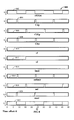
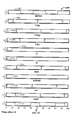
- timing diagrams 500 , 600 , 700 , 800 , 900 , 1000 , 1100 , and 1200 are various signals of the alternative embodiment of FIG. 4 when there are various delays in the input signal.
- the delays in the input signal for FIGS. 5 through 12 are 8FO4, 10FO4, 11FO4, 15FO4, 16FO4, 30FO4, 31FO4, and 40FO4, respectively. Since the pulse-limiting circuit 400 is supposed to affect only signals with 30FO4 and longer cycle times, the output Q is shown to be limited only in FIGS. 11 and 12 .
Landscapes
- Physics & Mathematics (AREA)
- Nonlinear Science (AREA)
- Pulse Circuits (AREA)
Abstract
Description
Claims (24)
Priority Applications (1)
| Application Number | Priority Date | Filing Date | Title |
|---|---|---|---|
| US10/616,881 US7318209B2 (en) | 2003-07-10 | 2003-07-10 | Pulse-width limited chip clock design |
Applications Claiming Priority (1)
| Application Number | Priority Date | Filing Date | Title |
|---|---|---|---|
| US10/616,881 US7318209B2 (en) | 2003-07-10 | 2003-07-10 | Pulse-width limited chip clock design |
Publications (2)
| Publication Number | Publication Date |
|---|---|
| US20050010885A1 US20050010885A1 (en) | 2005-01-13 |
| US7318209B2 true US7318209B2 (en) | 2008-01-08 |
Family
ID=33564870
Family Applications (1)
| Application Number | Title | Priority Date | Filing Date |
|---|---|---|---|
| US10/616,881 Expired - Fee Related US7318209B2 (en) | 2003-07-10 | 2003-07-10 | Pulse-width limited chip clock design |
Country Status (1)
| Country | Link |
|---|---|
| US (1) | US7318209B2 (en) |
Cited By (1)
| Publication number | Priority date | Publication date | Assignee | Title |
|---|---|---|---|---|
| US10938526B2 (en) * | 2017-08-11 | 2021-03-02 | Huawei Technologies Co., Ltd. | Signal sending method, signal receiving method, terminal device, and network device |
Families Citing this family (4)
| Publication number | Priority date | Publication date | Assignee | Title |
|---|---|---|---|---|
| US7242233B2 (en) * | 2003-10-23 | 2007-07-10 | International Business Machines Corporation | Simplified method for limiting clock pulse width |
| US8054119B2 (en) * | 2005-04-19 | 2011-11-08 | International Business Machines Corporation | System and method for on/off-chip characterization of pulse-width limiter outputs |
| US7358785B2 (en) * | 2006-04-06 | 2008-04-15 | International Business Machines Corporation | Apparatus and method for extracting a maximum pulse width of a pulse width limiter |
| KR101061341B1 (en) * | 2009-05-29 | 2011-08-31 | 주식회사 하이닉스반도체 | Cam Cell Read Control Circuit and Read Method of Semiconductor Memory Devices |
Citations (2)
| Publication number | Priority date | Publication date | Assignee | Title |
|---|---|---|---|---|
| US5535337A (en) * | 1992-12-22 | 1996-07-09 | 3Com Corporation | Port circuit for a token ring concentrator having phase lock loop timing recovery with additional circuitry to verify appropriate signals |
| US6704908B1 (en) * | 1999-11-17 | 2004-03-09 | Amadala Limited | Method and apparatus for automatically generating a phase lock loop (PLL) |
-
2003
- 2003-07-10 US US10/616,881 patent/US7318209B2/en not_active Expired - Fee Related
Patent Citations (2)
| Publication number | Priority date | Publication date | Assignee | Title |
|---|---|---|---|---|
| US5535337A (en) * | 1992-12-22 | 1996-07-09 | 3Com Corporation | Port circuit for a token ring concentrator having phase lock loop timing recovery with additional circuitry to verify appropriate signals |
| US6704908B1 (en) * | 1999-11-17 | 2004-03-09 | Amadala Limited | Method and apparatus for automatically generating a phase lock loop (PLL) |
Cited By (1)
| Publication number | Priority date | Publication date | Assignee | Title |
|---|---|---|---|---|
| US10938526B2 (en) * | 2017-08-11 | 2021-03-02 | Huawei Technologies Co., Ltd. | Signal sending method, signal receiving method, terminal device, and network device |
Also Published As
| Publication number | Publication date |
|---|---|
| US20050010885A1 (en) | 2005-01-13 |
Similar Documents
| Publication | Publication Date | Title |
|---|---|---|
| US7779372B2 (en) | Clock gater with test features and low setup time | |
| US9602092B2 (en) | Dynamic margin tuning for controlling custom circuits and memories | |
| US7511535B2 (en) | Fine-grained power management of synchronous and asynchronous datapath circuits | |
| JP3980431B2 (en) | Buffer circuit, buffer tree, and semiconductor device | |
| US8575965B2 (en) | Internal clock gating apparatus | |
| US12072365B2 (en) | Jitter noise detector | |
| US20180123568A1 (en) | Semi-data gated flop with low clock power/low internal power with minimal area overhead | |
| US20180167058A1 (en) | Clock gating cell for low setup time for high frequency designs | |
| US10924098B2 (en) | Sequential circuit with timing event detection and a method of detecting timing events | |
| US20140253201A1 (en) | Pulse generation in dual supply systems | |
| US8786307B2 (en) | Bias temperature instability-resistant circuits | |
| US5642061A (en) | Short circuit current free dynamic logic clock timing | |
| US5821775A (en) | Method and apparatus to interface monotonic and non-monotonic domino logic | |
| US20040178838A1 (en) | Variable pulse width and pulse separation clock generator | |
| US6744282B1 (en) | Latching dynamic logic structure, and integrated circuit including same | |
| US7318209B2 (en) | Pulse-width limited chip clock design | |
| US6373290B1 (en) | Clock-delayed pseudo-NMOS domino logic | |
| US7414449B2 (en) | Dynamic scannable latch and method of operation | |
| US10181848B2 (en) | Digital forward body biasing in CMOS circuits | |
| KR20000069742A (en) | Single-phase domino time borrowing logic with clocks at first and last stages and latch at last stage | |
| JP2006140928A (en) | Semiconductor device | |
| US5864251A (en) | Method and apparatus for self-resetting logic circuitry | |
| US10706916B1 (en) | Method and apparatus for integrated level-shifter and memory clock | |
| JPH05206791A (en) | D type flip-flop | |
| KR200236494Y1 (en) | I / O buffer |
Legal Events
| Date | Code | Title | Description |
|---|---|---|---|
| AS | Assignment |
Owner name: INTERNATIONAL BUSINESS MACHINES CORPORATION, NEW Y Free format text: ASSIGNMENT OF ASSIGNORS INTEREST;ASSIGNORS:AIPPERSPACH, ANTHONY GUS;BOERSTLER, DAVID WILLIAM;WENDEL, DIETER;REEL/FRAME:014291/0680;SIGNING DATES FROM 20030623 TO 20030709 |
|
| FEPP | Fee payment procedure |
Free format text: PAYOR NUMBER ASSIGNED (ORIGINAL EVENT CODE: ASPN); ENTITY STATUS OF PATENT OWNER: LARGE ENTITY |
|
| FPAY | Fee payment |
Year of fee payment: 4 |
|
| AS | Assignment |
Owner name: GOOGLE INC., CALIFORNIA Free format text: ASSIGNMENT OF ASSIGNORS INTEREST;ASSIGNOR:INTERNATIONAL BUSINESS MACHINES CORPORATION;REEL/FRAME:026664/0866 Effective date: 20110503 |
|
| REMI | Maintenance fee reminder mailed | ||
| LAPS | Lapse for failure to pay maintenance fees | ||
| STCH | Information on status: patent discontinuation |
Free format text: PATENT EXPIRED DUE TO NONPAYMENT OF MAINTENANCE FEES UNDER 37 CFR 1.362 |
|
| STCH | Information on status: patent discontinuation |
Free format text: PATENT EXPIRED DUE TO NONPAYMENT OF MAINTENANCE FEES UNDER 37 CFR 1.362 |
|
| FP | Lapsed due to failure to pay maintenance fee |
Effective date: 20160108 |
|
| AS | Assignment |
Owner name: GOOGLE LLC, CALIFORNIA Free format text: CHANGE OF NAME;ASSIGNOR:GOOGLE INC.;REEL/FRAME:044142/0357 Effective date: 20170929 |