US7288523B2 - Peptide binding the KLVFF-sequence of amyloid-β - Google Patents
Peptide binding the KLVFF-sequence of amyloid-β Download PDFInfo
- Publication number
- US7288523B2 US7288523B2 US10/721,774 US72177403A US7288523B2 US 7288523 B2 US7288523 B2 US 7288523B2 US 72177403 A US72177403 A US 72177403A US 7288523 B2 US7288523 B2 US 7288523B2
- Authority
- US
- United States
- Prior art keywords
- val
- phe
- leu
- lys
- gln
- Prior art date
- Legal status (The legal status is an assumption and is not a legal conclusion. Google has not performed a legal analysis and makes no representation as to the accuracy of the status listed.)
- Expired - Fee Related, expires
Links
- 108010090849 Amyloid beta-Peptides Proteins 0.000 title claims abstract description 22
- 102000013455 Amyloid beta-Peptides Human genes 0.000 title claims abstract description 20
- 108090000765 processed proteins & peptides Proteins 0.000 title claims description 38
- 230000027455 binding Effects 0.000 title description 21
- 150000001875 compounds Chemical class 0.000 claims abstract description 30
- 150000001413 amino acids Chemical class 0.000 claims abstract description 29
- 238000006116 polymerization reaction Methods 0.000 claims abstract description 23
- 230000015572 biosynthetic process Effects 0.000 claims abstract description 13
- 125000004432 carbon atom Chemical group C* 0.000 claims abstract description 12
- OKTJSMMVPCPJKN-UHFFFAOYSA-N Carbon Chemical group [C] OKTJSMMVPCPJKN-UHFFFAOYSA-N 0.000 claims abstract description 10
- 125000000217 alkyl group Chemical group 0.000 claims abstract description 7
- 125000003118 aryl group Chemical group 0.000 claims abstract description 7
- 125000000623 heterocyclic group Chemical group 0.000 claims abstract description 6
- 125000001183 hydrocarbyl group Chemical group 0.000 claims abstract description 6
- 125000003107 substituted aryl group Chemical group 0.000 claims abstract description 5
- 125000003275 alpha amino acid group Chemical group 0.000 claims abstract 8
- 238000000034 method Methods 0.000 claims description 17
- 208000024827 Alzheimer disease Diseases 0.000 claims description 14
- 206010002022 amyloidosis Diseases 0.000 claims description 8
- 230000002401 inhibitory effect Effects 0.000 claims description 6
- 125000000753 cycloalkyl group Chemical group 0.000 claims description 4
- 201000010099 disease Diseases 0.000 claims 2
- 208000037265 diseases, disorders, signs and symptoms Diseases 0.000 claims 2
- 230000001225 therapeutic effect Effects 0.000 claims 2
- 125000000218 acetic acid group Chemical group C(C)(=O)* 0.000 claims 1
- 235000001014 amino acid Nutrition 0.000 abstract description 23
- 239000003446 ligand Substances 0.000 abstract description 13
- 235000008206 alpha-amino acids Nutrition 0.000 abstract description 12
- 229910052757 nitrogen Inorganic materials 0.000 abstract description 8
- 239000000126 substance Substances 0.000 abstract description 7
- 125000003178 carboxy group Chemical group [H]OC(*)=O 0.000 abstract description 6
- IJGRMHOSHXDMSA-UHFFFAOYSA-N nitrogen Substances N#N IJGRMHOSHXDMSA-UHFFFAOYSA-N 0.000 abstract description 6
- 230000005764 inhibitory process Effects 0.000 abstract description 5
- 230000002378 acidificating effect Effects 0.000 abstract description 4
- 208000037259 Amyloid Plaque Diseases 0.000 abstract description 3
- ONIBWKKTOPOVIA-UHFFFAOYSA-N Proline Natural products OC(=O)C1CCCN1 ONIBWKKTOPOVIA-UHFFFAOYSA-N 0.000 abstract description 3
- 150000001371 alpha-amino acids Chemical class 0.000 abstract description 3
- -1 cycloalyl Chemical group 0.000 abstract description 3
- 238000003786 synthesis reaction Methods 0.000 abstract description 3
- 238000001514 detection method Methods 0.000 abstract description 2
- 150000002894 organic compounds Chemical class 0.000 abstract description 2
- 238000002600 positron emission tomography Methods 0.000 abstract description 2
- 108010075875 amyloid beta-protein (16-20) Proteins 0.000 description 20
- 102000004196 processed proteins & peptides Human genes 0.000 description 13
- 230000003941 amyloidogenesis Effects 0.000 description 11
- 239000003814 drug Substances 0.000 description 11
- 229940079593 drug Drugs 0.000 description 7
- 230000002265 prevention Effects 0.000 description 7
- 102000001049 Amyloid Human genes 0.000 description 6
- 108010094108 Amyloid Proteins 0.000 description 6
- 150000001370 alpha-amino acid derivatives Chemical group 0.000 description 6
- 125000000539 amino acid group Chemical group 0.000 description 6
- 238000001727 in vivo Methods 0.000 description 6
- SICITCLFXRGKJW-IIZANFQQSA-N (2s)-2-[[(2s)-2-[[(2s)-2-[[(2s)-2-[[(2s)-2,6-diaminohexanoyl]amino]-4-methylpentanoyl]amino]-3-methylbutanoyl]amino]-3-phenylpropanoyl]amino]-3-phenylpropanoic acid Chemical compound C([C@H](NC(=O)[C@H](C(C)C)NC(=O)[C@@H](NC(=O)[C@@H](N)CCCCN)CC(C)C)C(=O)N[C@@H](CC=1C=CC=CC=1)C(O)=O)C1=CC=CC=C1 SICITCLFXRGKJW-IIZANFQQSA-N 0.000 description 5
- COLNVLDHVKWLRT-QMMMGPOBSA-N L-phenylalanine Chemical compound OC(=O)[C@@H](N)CC1=CC=CC=C1 COLNVLDHVKWLRT-QMMMGPOBSA-N 0.000 description 5
- 239000012634 fragment Substances 0.000 description 5
- 239000003656 tris buffered saline Substances 0.000 description 5
- 101710137189 Amyloid-beta A4 protein Proteins 0.000 description 4
- 101710151993 Amyloid-beta precursor protein Proteins 0.000 description 4
- 102100022704 Amyloid-beta precursor protein Human genes 0.000 description 4
- KDXKERNSBIXSRK-UHFFFAOYSA-N Lysine Natural products NCCCCC(N)C(O)=O KDXKERNSBIXSRK-UHFFFAOYSA-N 0.000 description 4
- FAPWRFPIFSIZLT-UHFFFAOYSA-M Sodium chloride Chemical compound [Na+].[Cl-] FAPWRFPIFSIZLT-UHFFFAOYSA-M 0.000 description 4
- UCMIRNVEIXFBKS-UHFFFAOYSA-N beta-alanine Chemical compound NCCC(O)=O UCMIRNVEIXFBKS-UHFFFAOYSA-N 0.000 description 4
- 230000000903 blocking effect Effects 0.000 description 4
- 125000000484 butyl group Chemical group [H]C([*])([H])C([H])([H])C([H])([H])C([H])([H])[H] 0.000 description 4
- 230000008878 coupling Effects 0.000 description 4
- 238000010168 coupling process Methods 0.000 description 4
- 238000005859 coupling reaction Methods 0.000 description 4
- 230000008021 deposition Effects 0.000 description 4
- 238000011161 development Methods 0.000 description 4
- 125000001495 ethyl group Chemical group [H]C([H])([H])C([H])([H])* 0.000 description 4
- 238000011534 incubation Methods 0.000 description 4
- 230000003993 interaction Effects 0.000 description 4
- 239000012528 membrane Substances 0.000 description 4
- 125000002496 methyl group Chemical group [H]C([H])([H])* 0.000 description 4
- 125000001436 propyl group Chemical group [H]C([*])([H])C([H])([H])C([H])([H])[H] 0.000 description 4
- 238000012216 screening Methods 0.000 description 4
- XLYOFNOQVPJJNP-UHFFFAOYSA-N water Substances O XLYOFNOQVPJJNP-UHFFFAOYSA-N 0.000 description 4
- 150000008574 D-amino acids Chemical class 0.000 description 3
- ROHFNLRQFUQHCH-YFKPBYRVSA-N L-leucine Chemical compound CC(C)C[C@H](N)C(O)=O ROHFNLRQFUQHCH-YFKPBYRVSA-N 0.000 description 3
- DZHSAHHDTRWUTF-SIQRNXPUSA-N amyloid-beta polypeptide 42 Chemical compound C([C@@H](C(=O)N[C@@H](C)C(=O)N[C@@H](CCC(O)=O)C(=O)N[C@@H](CC(O)=O)C(=O)N[C@H](C(=O)NCC(=O)N[C@@H](CO)C(=O)N[C@@H](CC(N)=O)C(=O)N[C@@H](CCCCN)C(=O)NCC(=O)N[C@@H](C)C(=O)N[C@H](C(=O)N[C@@H]([C@@H](C)CC)C(=O)NCC(=O)N[C@@H](CC(C)C)C(=O)N[C@@H](CCSC)C(=O)N[C@@H](C(C)C)C(=O)NCC(=O)NCC(=O)N[C@@H](C(C)C)C(=O)N[C@@H](C(C)C)C(=O)N[C@@H]([C@@H](C)CC)C(=O)N[C@@H](C)C(O)=O)[C@@H](C)CC)C(C)C)NC(=O)[C@H](CC=1C=CC=CC=1)NC(=O)[C@@H](NC(=O)[C@H](CC(C)C)NC(=O)[C@H](CCCCN)NC(=O)[C@H](CCC(N)=O)NC(=O)[C@H](CC=1N=CNC=1)NC(=O)[C@H](CC=1N=CNC=1)NC(=O)[C@@H](NC(=O)[C@H](CCC(O)=O)NC(=O)[C@H](CC=1C=CC(O)=CC=1)NC(=O)CNC(=O)[C@H](CO)NC(=O)[C@H](CC(O)=O)NC(=O)[C@H](CC=1N=CNC=1)NC(=O)[C@H](CCCNC(N)=N)NC(=O)[C@H](CC=1C=CC=CC=1)NC(=O)[C@H](CCC(O)=O)NC(=O)[C@H](C)NC(=O)[C@@H](N)CC(O)=O)C(C)C)C(C)C)C1=CC=CC=C1 DZHSAHHDTRWUTF-SIQRNXPUSA-N 0.000 description 3
- 238000000376 autoradiography Methods 0.000 description 3
- 210000004899 c-terminal region Anatomy 0.000 description 3
- 238000000338 in vitro Methods 0.000 description 3
- 238000002198 surface plasmon resonance spectroscopy Methods 0.000 description 3
- 125000003088 (fluoren-9-ylmethoxy)carbonyl group Chemical group 0.000 description 2
- 208000017667 Chronic Disease Diseases 0.000 description 2
- 229920000858 Cyclodextrin Polymers 0.000 description 2
- WHUUTDBJXJRKMK-UHFFFAOYSA-N Glutamic acid Natural products OC(=O)C(N)CCC(O)=O WHUUTDBJXJRKMK-UHFFFAOYSA-N 0.000 description 2
- QNAYBMKLOCPYGJ-REOHCLBHSA-N L-alanine Chemical compound C[C@H](N)C(O)=O QNAYBMKLOCPYGJ-REOHCLBHSA-N 0.000 description 2
- ROHFNLRQFUQHCH-UHFFFAOYSA-N Leucine Natural products CC(C)CC(N)C(O)=O ROHFNLRQFUQHCH-UHFFFAOYSA-N 0.000 description 2
- SECXISVLQFMRJM-UHFFFAOYSA-N N-Methylpyrrolidone Chemical compound CN1CCCC1=O SECXISVLQFMRJM-UHFFFAOYSA-N 0.000 description 2
- COQLPRJCUIATTQ-UHFFFAOYSA-N Uranyl acetate Chemical compound O.O.O=[U]=O.CC(O)=O.CC(O)=O COQLPRJCUIATTQ-UHFFFAOYSA-N 0.000 description 2
- KRNYOVHEKOBTEF-YUMQZZPRSA-N Val-Val Chemical group CC(C)[C@H](N)C(=O)N[C@@H](C(C)C)C(O)=O KRNYOVHEKOBTEF-YUMQZZPRSA-N 0.000 description 2
- KZSNJWFQEVHDMF-UHFFFAOYSA-N Valine Natural products CC(C)C(N)C(O)=O KZSNJWFQEVHDMF-UHFFFAOYSA-N 0.000 description 2
- 125000002777 acetyl group Chemical group [H]C([H])([H])C(*)=O 0.000 description 2
- 235000004279 alanine Nutrition 0.000 description 2
- 125000004429 atom Chemical group 0.000 description 2
- 229940000635 beta-alanine Drugs 0.000 description 2
- UDSAIICHUKSCKT-UHFFFAOYSA-N bromophenol blue Chemical compound C1=C(Br)C(O)=C(Br)C=C1C1(C=2C=C(Br)C(O)=C(Br)C=2)C2=CC=CC=C2S(=O)(=O)O1 UDSAIICHUKSCKT-UHFFFAOYSA-N 0.000 description 2
- 239000000872 buffer Substances 0.000 description 2
- 125000004106 butoxy group Chemical group [*]OC([H])([H])C([H])([H])C(C([H])([H])[H])([H])[H] 0.000 description 2
- 229910052799 carbon Inorganic materials 0.000 description 2
- 210000004027 cell Anatomy 0.000 description 2
- 239000001913 cellulose Substances 0.000 description 2
- 229920002678 cellulose Polymers 0.000 description 2
- 239000003795 chemical substances by application Substances 0.000 description 2
- IQFVPQOLBLOTPF-HKXUKFGYSA-L congo red Chemical compound [Na+].[Na+].C1=CC=CC2=C(N)C(/N=N/C3=CC=C(C=C3)C3=CC=C(C=C3)/N=N/C3=C(C4=CC=CC=C4C(=C3)S([O-])(=O)=O)N)=CC(S([O-])(=O)=O)=C21 IQFVPQOLBLOTPF-HKXUKFGYSA-L 0.000 description 2
- 229940097362 cyclodextrins Drugs 0.000 description 2
- 238000000326 densiometry Methods 0.000 description 2
- 238000011065 in-situ storage Methods 0.000 description 2
- 238000002347 injection Methods 0.000 description 2
- 239000007924 injection Substances 0.000 description 2
- 239000000203 mixture Substances 0.000 description 2
- 210000002569 neuron Anatomy 0.000 description 2
- 230000002981 neuropathic effect Effects 0.000 description 2
- 230000008506 pathogenesis Effects 0.000 description 2
- 125000000538 pentafluorophenyl group Chemical group FC1=C(F)C(F)=C(*)C(F)=C1F 0.000 description 2
- 230000000144 pharmacologic effect Effects 0.000 description 2
- 125000001997 phenyl group Chemical group [H]C1=C([H])C([H])=C(*)C([H])=C1[H] 0.000 description 2
- COLNVLDHVKWLRT-UHFFFAOYSA-N phenylalanine Natural products OC(=O)C(N)CC1=CC=CC=C1 COLNVLDHVKWLRT-UHFFFAOYSA-N 0.000 description 2
- 229920000642 polymer Polymers 0.000 description 2
- 125000002924 primary amino group Chemical group [H]N([H])* 0.000 description 2
- 230000008569 process Effects 0.000 description 2
- 235000018102 proteins Nutrition 0.000 description 2
- 102000004169 proteins and genes Human genes 0.000 description 2
- 108090000623 proteins and genes Proteins 0.000 description 2
- 230000002797 proteolythic effect Effects 0.000 description 2
- 230000002285 radioactive effect Effects 0.000 description 2
- 239000012146 running buffer Substances 0.000 description 2
- 239000011780 sodium chloride Substances 0.000 description 2
- 125000006850 spacer group Chemical group 0.000 description 2
- 239000006228 supernatant Substances 0.000 description 2
- 108010021889 valylvaline Proteins 0.000 description 2
- 239000002023 wood Substances 0.000 description 2
- JKMHFZQWWAIEOD-UHFFFAOYSA-N 2-[4-(2-hydroxyethyl)piperazin-1-yl]ethanesulfonic acid Chemical compound OCC[NH+]1CCN(CCS([O-])(=O)=O)CC1 JKMHFZQWWAIEOD-UHFFFAOYSA-N 0.000 description 1
- 208000018282 ACys amyloidosis Diseases 0.000 description 1
- 208000000044 Amnesia Diseases 0.000 description 1
- 208000031091 Amnestic disease Diseases 0.000 description 1
- 102000009091 Amyloidogenic Proteins Human genes 0.000 description 1
- 108010048112 Amyloidogenic Proteins Proteins 0.000 description 1
- 206010002023 Amyloidoses Diseases 0.000 description 1
- 108091003079 Bovine Serum Albumin Proteins 0.000 description 1
- 208000024806 Brain atrophy Diseases 0.000 description 1
- 208000005145 Cerebral amyloid angiopathy Diseases 0.000 description 1
- 201000010374 Down Syndrome Diseases 0.000 description 1
- KCXVZYZYPLLWCC-UHFFFAOYSA-N EDTA Chemical compound OC(=O)CN(CC(O)=O)CCN(CC(O)=O)CC(O)=O KCXVZYZYPLLWCC-UHFFFAOYSA-N 0.000 description 1
- 208000007487 Familial Cerebral Amyloid Angiopathy Diseases 0.000 description 1
- 239000007995 HEPES buffer Substances 0.000 description 1
- 208000032849 Hereditary cerebral hemorrhage with amyloidosis Diseases 0.000 description 1
- 239000004472 Lysine Substances 0.000 description 1
- 241001465754 Metazoa Species 0.000 description 1
- 206010031252 Osteomyelitis Diseases 0.000 description 1
- 229920001213 Polysorbate 20 Polymers 0.000 description 1
- 206010044688 Trisomy 21 Diseases 0.000 description 1
- 230000006986 amnesia Effects 0.000 description 1
- 230000003943 amyloidogenic processing Effects 0.000 description 1
- 230000007131 anti Alzheimer effect Effects 0.000 description 1
- 238000013459 approach Methods 0.000 description 1
- 230000009286 beneficial effect Effects 0.000 description 1
- 230000008901 benefit Effects 0.000 description 1
- 229940098773 bovine serum albumin Drugs 0.000 description 1
- 210000004556 brain Anatomy 0.000 description 1
- 210000004900 c-terminal fragment Anatomy 0.000 description 1
- 239000002775 capsule Substances 0.000 description 1
- 239000000969 carrier Substances 0.000 description 1
- 230000003196 chaotropic effect Effects 0.000 description 1
- 238000005352 clarification Methods 0.000 description 1
- 230000001010 compromised effect Effects 0.000 description 1
- 235000018417 cysteine Nutrition 0.000 description 1
- XUJNEKJLAYXESH-UHFFFAOYSA-N cysteine Natural products SCC(N)C(O)=O XUJNEKJLAYXESH-UHFFFAOYSA-N 0.000 description 1
- 238000004090 dissolution Methods 0.000 description 1
- 230000000694 effects Effects 0.000 description 1
- 238000001493 electron microscopy Methods 0.000 description 1
- 238000002474 experimental method Methods 0.000 description 1
- 230000006870 function Effects 0.000 description 1
- 230000002068 genetic effect Effects 0.000 description 1
- 235000013922 glutamic acid Nutrition 0.000 description 1
- 239000004220 glutamic acid Substances 0.000 description 1
- 125000000291 glutamic acid group Chemical group N[C@@H](CCC(O)=O)C(=O)* 0.000 description 1
- 238000004128 high performance liquid chromatography Methods 0.000 description 1
- 239000012145 high-salt buffer Substances 0.000 description 1
- 230000002209 hydrophobic effect Effects 0.000 description 1
- 239000003112 inhibitor Substances 0.000 description 1
- 239000007788 liquid Substances 0.000 description 1
- 125000003588 lysine group Chemical group [H]N([H])C([H])([H])C([H])([H])C([H])([H])C([H])([H])C([H])(N([H])[H])C(*)=O 0.000 description 1
- 238000004519 manufacturing process Methods 0.000 description 1
- 239000000463 material Substances 0.000 description 1
- 239000011159 matrix material Substances 0.000 description 1
- 230000006883 memory enhancing effect Effects 0.000 description 1
- 230000037353 metabolic pathway Effects 0.000 description 1
- 230000004770 neurodegeneration Effects 0.000 description 1
- 230000009871 nonspecific binding Effects 0.000 description 1
- 210000000056 organ Anatomy 0.000 description 1
- 239000003960 organic solvent Substances 0.000 description 1
- 230000001991 pathophysiological effect Effects 0.000 description 1
- 239000008188 pellet Substances 0.000 description 1
- 230000004962 physiological condition Effects 0.000 description 1
- 239000000256 polyoxyethylene sorbitan monolaurate Substances 0.000 description 1
- 235000010486 polyoxyethylene sorbitan monolaurate Nutrition 0.000 description 1
- 230000003389 potentiating effect Effects 0.000 description 1
- 239000002243 precursor Substances 0.000 description 1
- 208000037920 primary disease Diseases 0.000 description 1
- 238000012545 processing Methods 0.000 description 1
- 230000017854 proteolysis Effects 0.000 description 1
- 238000004366 reverse phase liquid chromatography Methods 0.000 description 1
- 230000002441 reversible effect Effects 0.000 description 1
- 239000000243 solution Substances 0.000 description 1
- 238000001179 sorption measurement Methods 0.000 description 1
- 238000010186 staining Methods 0.000 description 1
- 238000006467 substitution reaction Methods 0.000 description 1
- 229910052717 sulfur Inorganic materials 0.000 description 1
- 239000004094 surface-active agent Substances 0.000 description 1
- 208000024891 symptom Diseases 0.000 description 1
- 150000003573 thiols Chemical class 0.000 description 1
- 231100000331 toxic Toxicity 0.000 description 1
- 230000002588 toxic effect Effects 0.000 description 1
- 201000008827 tuberculosis Diseases 0.000 description 1
- 239000004474 valine Substances 0.000 description 1
- 125000002987 valine group Chemical group [H]N([H])C([H])(C(*)=O)C([H])(C([H])([H])[H])C([H])([H])[H] 0.000 description 1
- 238000005406 washing Methods 0.000 description 1
Images




Classifications
-
- C—CHEMISTRY; METALLURGY
- C07—ORGANIC CHEMISTRY
- C07K—PEPTIDES
- C07K5/00—Peptides containing up to four amino acids in a fully defined sequence; Derivatives thereof
- C07K5/04—Peptides containing up to four amino acids in a fully defined sequence; Derivatives thereof containing only normal peptide links
- C07K5/08—Tripeptides
- C07K5/0821—Tripeptides with the first amino acid being heterocyclic, e.g. His, Pro, Trp
-
- C—CHEMISTRY; METALLURGY
- C07—ORGANIC CHEMISTRY
- C07K—PEPTIDES
- C07K14/00—Peptides having more than 20 amino acids; Gastrins; Somatostatins; Melanotropins; Derivatives thereof
- C07K14/435—Peptides having more than 20 amino acids; Gastrins; Somatostatins; Melanotropins; Derivatives thereof from animals; from humans
- C07K14/46—Peptides having more than 20 amino acids; Gastrins; Somatostatins; Melanotropins; Derivatives thereof from animals; from humans from vertebrates
- C07K14/47—Peptides having more than 20 amino acids; Gastrins; Somatostatins; Melanotropins; Derivatives thereof from animals; from humans from vertebrates from mammals
- C07K14/4701—Peptides having more than 20 amino acids; Gastrins; Somatostatins; Melanotropins; Derivatives thereof from animals; from humans from vertebrates from mammals not used
- C07K14/4711—Alzheimer's disease; Amyloid plaque core protein
-
- C—CHEMISTRY; METALLURGY
- C07—ORGANIC CHEMISTRY
- C07K—PEPTIDES
- C07K5/00—Peptides containing up to four amino acids in a fully defined sequence; Derivatives thereof
- C07K5/04—Peptides containing up to four amino acids in a fully defined sequence; Derivatives thereof containing only normal peptide links
- C07K5/08—Tripeptides
- C07K5/0802—Tripeptides with the first amino acid being neutral
- C07K5/0804—Tripeptides with the first amino acid being neutral and aliphatic
- C07K5/0808—Tripeptides with the first amino acid being neutral and aliphatic the side chain containing 2 to 4 carbon atoms, e.g. Val, Ile, Leu
-
- C—CHEMISTRY; METALLURGY
- C07—ORGANIC CHEMISTRY
- C07K—PEPTIDES
- C07K5/00—Peptides containing up to four amino acids in a fully defined sequence; Derivatives thereof
- C07K5/04—Peptides containing up to four amino acids in a fully defined sequence; Derivatives thereof containing only normal peptide links
- C07K5/08—Tripeptides
- C07K5/0815—Tripeptides with the first amino acid being basic
-
- C—CHEMISTRY; METALLURGY
- C07—ORGANIC CHEMISTRY
- C07K—PEPTIDES
- C07K5/00—Peptides containing up to four amino acids in a fully defined sequence; Derivatives thereof
- C07K5/04—Peptides containing up to four amino acids in a fully defined sequence; Derivatives thereof containing only normal peptide links
- C07K5/08—Tripeptides
- C07K5/0819—Tripeptides with the first amino acid being acidic
-
- C—CHEMISTRY; METALLURGY
- C07—ORGANIC CHEMISTRY
- C07K—PEPTIDES
- C07K5/00—Peptides containing up to four amino acids in a fully defined sequence; Derivatives thereof
- C07K5/04—Peptides containing up to four amino acids in a fully defined sequence; Derivatives thereof containing only normal peptide links
- C07K5/10—Tetrapeptides
- C07K5/1002—Tetrapeptides with the first amino acid being neutral
- C07K5/1005—Tetrapeptides with the first amino acid being neutral and aliphatic
- C07K5/101—Tetrapeptides with the first amino acid being neutral and aliphatic the side chain containing 2 to 4 carbon atoms, e.g. Val, Ile, Leu
-
- C—CHEMISTRY; METALLURGY
- C07—ORGANIC CHEMISTRY
- C07K—PEPTIDES
- C07K5/00—Peptides containing up to four amino acids in a fully defined sequence; Derivatives thereof
- C07K5/04—Peptides containing up to four amino acids in a fully defined sequence; Derivatives thereof containing only normal peptide links
- C07K5/10—Tetrapeptides
- C07K5/1019—Tetrapeptides with the first amino acid being basic
-
- C—CHEMISTRY; METALLURGY
- C07—ORGANIC CHEMISTRY
- C07K—PEPTIDES
- C07K5/00—Peptides containing up to four amino acids in a fully defined sequence; Derivatives thereof
- C07K5/04—Peptides containing up to four amino acids in a fully defined sequence; Derivatives thereof containing only normal peptide links
- C07K5/10—Tetrapeptides
- C07K5/1021—Tetrapeptides with the first amino acid being acidic
-
- C—CHEMISTRY; METALLURGY
- C07—ORGANIC CHEMISTRY
- C07K—PEPTIDES
- C07K5/00—Peptides containing up to four amino acids in a fully defined sequence; Derivatives thereof
- C07K5/04—Peptides containing up to four amino acids in a fully defined sequence; Derivatives thereof containing only normal peptide links
- C07K5/10—Tetrapeptides
- C07K5/1024—Tetrapeptides with the first amino acid being heterocyclic
-
- G—PHYSICS
- G01—MEASURING; TESTING
- G01N—INVESTIGATING OR ANALYSING MATERIALS BY DETERMINING THEIR CHEMICAL OR PHYSICAL PROPERTIES
- G01N33/00—Investigating or analysing materials by specific methods not covered by groups G01N1/00 - G01N31/00
- G01N33/48—Biological material, e.g. blood, urine; Haemocytometers
- G01N33/50—Chemical analysis of biological material, e.g. blood, urine; Testing involving biospecific ligand binding methods; Immunological testing
- G01N33/68—Chemical analysis of biological material, e.g. blood, urine; Testing involving biospecific ligand binding methods; Immunological testing involving proteins, peptides or amino acids
- G01N33/6893—Chemical analysis of biological material, e.g. blood, urine; Testing involving biospecific ligand binding methods; Immunological testing involving proteins, peptides or amino acids related to diseases not provided for elsewhere
- G01N33/6896—Neurological disorders, e.g. Alzheimer's disease
-
- A—HUMAN NECESSITIES
- A61—MEDICAL OR VETERINARY SCIENCE; HYGIENE
- A61K—PREPARATIONS FOR MEDICAL, DENTAL OR TOILETRY PURPOSES
- A61K38/00—Medicinal preparations containing peptides
-
- G—PHYSICS
- G01—MEASURING; TESTING
- G01N—INVESTIGATING OR ANALYSING MATERIALS BY DETERMINING THEIR CHEMICAL OR PHYSICAL PROPERTIES
- G01N2800/00—Detection or diagnosis of diseases
- G01N2800/28—Neurological disorders
- G01N2800/2814—Dementia; Cognitive disorders
- G01N2800/2821—Alzheimer
Definitions
- the present invention relates to compounds, which are of special interest by their ability to bind to the KLVFF-sequence in the peptide amyloid ⁇ and to inhibit polymerization of the amyloid ⁇ peptide.
- the compounds according to the invention are e.g. useful as medicaments and as tools for identification of substances to be used in the treatment or prevention of amyloidosis.
- Amyloidosis is a condition which is characterized by the deposition of amyloid in organs or tissues of the human or animal body, either as a primary disease of unknown cause or secondary to chronic disease, such as tuberculosis or osteomyelitis.
- AD Alzheimer's disease
- the pre-eminent neuropathological feature of Alzheimer's disease (AD) is the deposition of amyloid in the brain parenchyma and cerebrovasculature (D. J. Selkoe, Neuron 6, 487-498 (1991); D. J. Selkoe, Annu. Rev. Cell Biol. 10, 373-403 (1994)).
- amyloid ⁇ The basic component of such amyloid is a peptide termed amyloid ⁇ , or A ⁇ (G. C. Glenner, C. W. Wong, Biochem, Biophys. Res. Commun. 120, 885-890 (1984)). It is a 40 to 42 amino acids long proteolytic fragment of the Alzheimer amyloid precursor protein (APP), a protein expressed in most tissues (J. Kang, et al., Nature 325, 733-736 (1987)). Genetic and neuropathological studies provide strong evidence for a central role of A ⁇ in the pathogenesis of AD, but the pathophysiological consequences of the amyloid deposition are still unclear.
- APP Alzheimer amyloid precursor protein
- a ⁇ polymers and amyloid are toxic to neurons, either directly or indirectly, and hence cause neurodegeneration (C. Behl, J. B. Davis, R. Lesley, D. Schubert, Cell 77, 817-827 (1994); D. T. Loo, et al., ibid 90, 7951-7955 (1995)).
- amyloid associated with Alzheimer's disease consists of thin fibrils of polymerized A ⁇ .
- a rational pharmacological approach for the prevention of amyloidogenesis would therefore be to use drugs that specifically interfere with A ⁇ -A ⁇ interaction and polymerization.
- Previous studies showed that A ⁇ polymerization in vivo and in vitro is a highly specific process, which probably involves an interaction between binding sequences in the A ⁇ peptide (J. Näslund, et al., Proc. Natl. Acad. Sci. USA 91, 8378-8382 (1994); J. Näslund, et al., Biochem. Biophys. Res. Commun. 204, 790-787 (1994)).
- Wood et al (S. J. Wood, R. Wetzel, J. D. Martin, M. R. Hurle, Biochemistry 34, 724-730 (1995)) suggest that amino acid residues within or close to A ⁇ -16-20 are important for the adoption of the correct ⁇ -pleated sheet structure of A ⁇ and show that amino acids 17-23 in the amyloid ⁇ peptide (A ⁇ ) are essential for fibril formation and probably make up the ⁇ -sheet core of the fibrils.
- Wood et al. have investigated the ability of their peptides to form amyloid fibrils in a solution containing solely the mutated or the wild-type peptide. However, no method or principle which makes it possible to inhibit A ⁇ of wild type from forming amyloid fibrils is devised and no use of the peptides as medicaments is suggested.
- WO 95/08999 relates to amelioration of amnesia in Alzheimer's disease caused by deposition of amyloid ⁇ protein.
- Three peptides are disclosed, which overcome the amnestic effects of ⁇ -12-28, a peptide homologous to A ⁇ .
- WO 95/08999 describes the screening of several other peptides, which were neither significantly amnestic nor memory enhancing, of which one is KLVFF, SEQ. NO. 15 of the sequence listing therein.
- amyloid ⁇ peptide (A ⁇ ) into amyloid fibrils is a critical step in the pathogenesis of Alzheimer's disease.
- a ⁇ molecules interact with a high degree of specificity during polymerization and fibril formation. It was assumed that ligands which bind to recognition sequences would be capable of inhibiting A ⁇ polymerization and possibly also dissolve preformed A ⁇ polymers in situ. The strategy in finding such A ⁇ ligands was to identify critical binding regions in A ⁇ and, based on their sequences, develop a compound capable of blocking the A ⁇ -A ⁇ binding.
- Lys-Leu-Val-Phe-Phe [SEQ ID NO.: 1] in A ⁇ is necessary for polymerization to occur. Peptides incorporating this sequence bind to A ⁇ and are capable of blocking the fibril formation of A ⁇ -1-40 and are therefore potentially useful as drugs.
- Lys-Leu-Val-Phe-Phe (16-20) motif serves as a structural basis for the development of peptide and non-peptide agents aimed at inhibiting amyloidogenesis in-vivo. This is a novel finding and the compounds are of utmost interest as being useful as drugs for Alzheimer's disease.
- the present invention relates to compounds which are able to bind to the Lys-Leu-Val-Phe-Phe-sequence, or KLVFF-sequence, in the peptide amyloid ⁇ . More specifically, the compounds according to the invention are defined by their formula (I): R 1 -A′-Y′-Leu-X′-Z′-B′—R 2 (I) in which
- alkyl is preferably meant a chain of 4 or less carbon atoms, e.g. methyl, ethyl, propyl or butyl.
- cykloalkyl is preferably meant a ring of 3, 4, 5 or 6 carbon atoms.
- Aryl preferably means a phenyl group, which can be substituted, preferably by a methyl, ethyl, propyl or butyl group, an amino or a methoxy, ethoxy, propoxy or butoxy group.
- the compound exhibits an ability to inhibit polymerization of amyloid ⁇ peptide.
- all the amino acids of the compound are D-isomers.
- Y′ is Lys
- Z′ is Phe, resulting in a compound of the following formula: R 1 -A′-NH—CH[—(CH 2 ) 4 —NH 2 ]—CO-Leu-X′-NH—CH[—CH 2 —Ph]—CO—B′—R 2 .
- Y′ is Phe.
- R 1 is acetyl
- R 1 is H.
- R 2 is H.
- R 1 and R 2 are both H.
- a second aspect of the present invention is the use of a compound of formula: R 1 -A′-Y′-Leu-X′-Z′-B′—R 2 (II) in which
- alkyl is preferably meant a chain of 4 or less carbon atoms, e.g. methyl, ethyl, propyl or butyl.
- cykloalkyl is preferably meant a ring of 3, 4, 5 or 6 carbon atoms.
- Aryl preferably means a phenyl group, which can be substituted, preferably by a methyl, ethyl, propyl or butyl group, an amino or a methoxy, ethoxy, propoxy or butoxy group.
- a compound is used, wherein all the amino acids are D-isomers.
- Y′ is Lys.
- Z′ is Phe, resulting in a compound of the following formula: R 1 -A′-NH—CH[(CH 2 ) 4 —NH 2 ]—CO-Leu-X′-NH—CH[—CH 2 —Ph]-CO-B′R 2 .
- a compound is used, wherein Y′ is Phe while Z′ is any non-acidic amino acid.
- a compound is used, wherein X′ is Val-Val.
- R 1 is acetyl.
- R 1 and/or R 2 are H.
- Yet another aspect of the present invention is a compound according to the invention for use as a medicament.
- a compound preferably of the formula (I) or (I), which is able to bind to the KLVFF-sequence in amyloid ⁇ peptide and which has the ability to inhibit polymerization of amyloid ⁇ peptide, for the manufacture of a medicament for the treatment or prevention of amyloidosis, especially in the treatment or prevention of Alzheimer's disease associated with amyloidosis, for the treatment or prevention of demens in patients with Down's syndrome, for the treatment or prevention of hereditary cerebral hemorrhage with amyloidosis (Dutch type) or for the prevention of fibril formation of human amyloid protein.
- a last aspect of the present invention is a composition comprising a compound according to formula II and optionally a ligand capable of binding or interacting with the compound according to formula II and a carrier.
- Said composition can e.g. be adapted for injection in a liquid carrier or for oral administration in a tablet or capsule.
- any group giving the compound according to formula (I) the ability to bind to the KLVFF-sequence in the amyloid ⁇ peptide means that this group gives the compound a structure, which can fulfill the requirements given in claim 1 .
- the hydrocarbon ring or heterocyclic ring has preferably 4-6 atoms, preferably C, N and S.
- FIGS. 1A and B A ⁇ -amyloid polymerization.
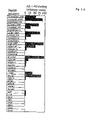
- FIG. 2A Ten-mers corresponding to consecutive sequences of A ⁇ -1-40. Radioactivity bound to the filter was detected by autoradiography and quantified by densitometry.
- FIG. 2B [SEQ ID NOS.: 1, 2 and 5-38] EVHHQKLVFF and N and C-terminal truncated fragments were synthesized and analyzed for affinity to 125 I-labeled A ⁇ -1-40.
- FIG. 2C [SEQ ID NOS.: 39-43] Each amino acid residue in KLVFF was systematically replaced with Ala and analyzed for affinity to 125 I-labeled A ⁇ -1-40.
- FIG. 2D [SEQ ID NO.: 44] Sensorgram from surface plasmon resonance spectroscopy (BIAcore 2000).
- FIGS. 3A and B Content of non-aggregated peptide in the supernatants from incubations of wild-type and Ala-substituted A ⁇ -1-28 as analyzed by HPLC.
- Peptide no. 1 corresponds to amino acids 1-10, peptide no. 2 to amino acids 2-11 etc.
- the filter-bound peptides were incubated with radioactive A ⁇ -1-40. Following washing of the filter in high-salt buffer, bound radioactivity was estimated by autoradiography and densitometry. Following blocking with 0.05% Tween-20 in Tris-buffered saline (TBS), the filter was incubated in the presence of 20 ⁇ M 125 I-labelled A ⁇ -1-40 at 20° C. for 12 h in TBS, pH 7.3, supplemented with 1% bovine serum albumin. The filter was then washed repeatedly in the same buffer containing 0.5 M NaCl and dried. Radioactivity bound to the filter was visualized by autoradiography and quantitated using a densitometer.
- TBS Tris-buffered saline
- the measured binding should be interpreted as semiquantative, since the coupling efficiency and therefore tha amount of peptide per spot may vary.
- a region located in the central part of A ⁇ displayed prominent binding of radioactive A ⁇ -1-40.
- Another binding region was the hydrophobic C-terminus of the molecule (D. Burdick, et al, J. Biol. Chem. 267, 546-554 (1992)) but binding here was considerably weaker ( FIG. 2A ).
- peptide no. 11 Being located in the centre of the binding region, peptide no. 11 (corresponding to A ⁇ -11-20) was selected for further studies. This peptide, as well as N- and C-terminal-fragments thereof, were synthesized using the same technique as described previously. The shortest peptide still displaying high A ⁇ binding capacity had the sequence KLVFF, corresponding to amino acids 16-20 of A ⁇ ( FIG. 2B ). By systematically substituting the amino acid residues in the KLVFF sequence with alanine, we found that the first, second and fifth residues (i.e. KLXXF) were critical for binding ( FIG. 2C ).
- AA served as linker between the active peptide and the chip (upper trace) and cysteine alone, indicating non-specific binding, (C) as control (lower trace). Arrows indicate start and stop of injection ( FIG. 2D ).
- FIG. 3A A ⁇ -1-28 ( FIG. 3A ) and AP-1-28 AAVFA ( FIG. 3B ) were incubated at 200 ⁇ M in TBS for 24 h at 37° C. in a shaking water bath. After incubation, the tubes were centrifuged at 20,000 g for 20 min and the content of non-aggregated peptide in the supernatants ( FIG. 3A , B) was analyzed using an established C4 RPLC system (12) whereas the aggregated peptides in the pellets were analyzed by electron microscopy after adsorption to formvar-coated grids and negative staining with 2% uranyl acetate in water.
- FIG. 3A Following incubation at a concentration of 200 ⁇ M for 24 h at 37° C., A ⁇ -1-28 aggregated ( FIG. 3A ) and formed large fibril bundles, whereas A ⁇ -1-28 AAVFA almost completely failed to aggregate ( FIG. 3B ) and only formed a few dispersed fibrils.
- a ⁇ -1-40 was incubated at 100 ⁇ M in TBS for 48 h at 37° C. in a shaking water bath, either alone or together with 100 ⁇ M AcKLVFFNH 2 .
- the polymerized material was adsorbed to formvar-coated grids and negatively stained with 2% uranyl acetate in water.
- the peptides were synthesized essentially as described by Frank (Frank R, 1992, Tetrahedron 42:9217-9232). Briefly, a spacer corresponding to 2 molecules of ⁇ -alanine was coupled to cellulose membranes (Whatman XX). The peptides were synthesized on these derivatized membranes using Fmoc protected and pentafluorophenyl-activated amino acids (AMS biotechnology) dissolved in N-methylpyrrolidone. Coupling efficiency was monitored using bromphenol blue.
- the KLXXF motif in the A ⁇ molecule is not only critical for polymerization and fibril-formation.
- the molecule is cleaved between amino acid residues K 16 and L 17 (F. S. Esch, et al., Science 248, 1122-1124 (1990)), leading to the formation of a fragment of A ⁇ termed p3 and corresponding to A ⁇ -17-40 or A ⁇ -17-42 (C. Haass, A. Y. Hung, M. G. Schlossmacher, D. B. Teplow, D. J. Selkoc, J. Biol. Chem. 260, 3021-3024 (1993)).
- the present binding sequence is disrupted.
- KLVFF binds stereo specifically to the homologous sequence in A ⁇ (i.e. A ⁇ -16-20).
- a ⁇ -16-20 By screening combinatorial pentapeptide libraries exclusively composed of D-amino acids (lowercase) with labelled KLVFF, several ligands with a motif containing phenylalanine (f) in the second and leucine (l) in the third position were identified (e.g. lflrr).
- a short peptide in the screening known to bind to a region in A ⁇ critical for its polymerization (i.e.
- KLVFF KLVFF
- the risk of identifying D-pentapeptides that interact with nonrelevant regions in A ⁇ was eliminated.
- the D-amino acid ligands were found not only to bind to A ⁇ but also to inhibit amyloid fibril formation. Since peptides built up of D-amino acids are resistant to proteolytic degradation, these ligands may be beneficial for inhibition of amyloidogenesis in vivo.
- KLVFF will be useful in the identification of small organic molecules (e.g. by screening of substance libraries) with the ability to bind to A ⁇ in this relevant region and inhibit amyloid fibril formation (candidate drugs for the treatment of Alzheimer disease and other related amyloidoses).
- Cyclodextrins have primarily been used to increase the solubility of a wide range of lipophilic drugs and it is unlikely that they would display any specificity for A ⁇ in vivo.
- Congo red which is used in histochemistry to detect amyloid, binds to a wide array of non-A ⁇ amyloids as well as to other proteins with a high content of ⁇ -pleated sheet structures (W. G. Turnell, J. T. Finch, J. Mol. Biol. 227, 1205-1223 (1992)).
- KLVFF amyloid fibril formation.
- the KLVFF peptide may serve as a model substance for the synthesis of non-peptide A ⁇ -ligands, that interfere with the polymerization of A ⁇ molecules.
- this region harbors at least one binding sequence required for the polymerization of A ⁇ into amyloid fibrils. It was also demonstrated that short peptides incorporating A ⁇ -16-20 can function as ligands that bind to A ⁇ and inhibit the formation of amyloid fibrils. Since these peptide ligands are relatively small, they are amenable for identification of other organic molecules with similar functional properties. Non-peptide homologues of KLVFF should be useful as pharmacological drugs for the treatment, of Alzheimer's disease in the future.
Landscapes
- Chemical & Material Sciences (AREA)
- Organic Chemistry (AREA)
- Health & Medical Sciences (AREA)
- Life Sciences & Earth Sciences (AREA)
- Molecular Biology (AREA)
- Proteomics, Peptides & Aminoacids (AREA)
- Biochemistry (AREA)
- General Health & Medical Sciences (AREA)
- Medicinal Chemistry (AREA)
- Biophysics (AREA)
- Genetics & Genomics (AREA)
- Engineering & Computer Science (AREA)
- Biomedical Technology (AREA)
- Neurology (AREA)
- Hematology (AREA)
- Urology & Nephrology (AREA)
- Immunology (AREA)
- Neurosurgery (AREA)
- Cell Biology (AREA)
- Microbiology (AREA)
- Biotechnology (AREA)
- Food Science & Technology (AREA)
- Physics & Mathematics (AREA)
- Analytical Chemistry (AREA)
- General Physics & Mathematics (AREA)
- Pathology (AREA)
- Toxicology (AREA)
- Zoology (AREA)
- Gastroenterology & Hepatology (AREA)
- Peptides Or Proteins (AREA)
- Medicines That Contain Protein Lipid Enzymes And Other Medicines (AREA)
Abstract
The invention relates to compounds of formula (I) or (II), which are of interest especially for inhibition of polymerization of amyloid β peptide, as model substances for synthesis of amyloid β peptide-ligands, as tools for the identification of other organic compounds with similar functional properties and/or as ligands for detection of amyloid deposits using e.g., positron emission tomography (PET). Formula (II) is: R1-A′-Y′-Leu-X′-Z′-B′-R2 in which X′ means any group or amino acid imparting to the compound according to formula (I) the ability to bind to the KLVFF-sequence in amyloid β peptide, or two amino acids imparting the same ability, but with the proviso that one is not proline; Y′ means any amino acid; Z′ means any non-acidic amino acid; A′ means a direct bond or an α-amino acid bonded at the carboxyl terminal of the α-carboxy group or a di-, tri-, tetra- or pentapeptide bonded at the carboxyl terminal of the α-carboxy group; B′ means a direct bond or an α-amino acid bonded at the α-nitrogen or a di-, tri, tetra- or pentapeptide bonded at the α-nitrogen of the N-terminal α-amino acid; R1 is H or —CO—R3 bonded at the α-amino group of A′; R2 is H, —OR4 or NR5R6, all bonded to the α-carboxyl group of the α-carboxyterminal of B′; R3 and R4 are straight or branched carbon chain of 1-4 carbon atoms; R5 and R6 are independently H, alkyl, cycloalyl, aryl or substituted aryl or together are —(CH2)n— where n is 4-5; and R1 and R2 together can form a hydrocarbon ring or heterocyclic ring; all α-amino acids being either D- or L-isomers.
Description
This application is a continuation of U.S. application Ser. No. 09/850,061, filed on May 8, 2001, now abandoned which is a divisional of U.S. application Ser. No. 09/095,106, filed on Jun. 10, 1998 now U.S. Pat. No. 6,331,440 which is a continuation of International Application No. PCT/SE96/01621, filed Dec. 9, 1996, which International Application was published by the International Bureau in English on Jun. 19, 1997, that designates the United States and which claims benefit of Swedish Application No. 9504467-3, filed Dec. 12, 1995, and U.S. Provisional Application No. 60/009,386, filed Dec. 29, 1995, which are herein incorporated by reference.
The present invention relates to compounds, which are of special interest by their ability to bind to the KLVFF-sequence in the peptide amyloid β and to inhibit polymerization of the amyloid β peptide. The compounds according to the invention are e.g. useful as medicaments and as tools for identification of substances to be used in the treatment or prevention of amyloidosis.
Amyloidosis is a condition which is characterized by the deposition of amyloid in organs or tissues of the human or animal body, either as a primary disease of unknown cause or secondary to chronic disease, such as tuberculosis or osteomyelitis. In addition, it has also been found that the pre-eminent neuropathological feature of Alzheimer's disease (AD), a chronic condition of brain atrophy, is the deposition of amyloid in the brain parenchyma and cerebrovasculature (D. J. Selkoe, Neuron 6, 487-498 (1991); D. J. Selkoe, Annu. Rev. Cell Biol. 10, 373-403 (1994)).
The basic component of such amyloid is a peptide termed amyloid β, or Aβ (G. C. Glenner, C. W. Wong, Biochem, Biophys. Res. Commun. 120, 885-890 (1984)). It is a 40 to 42 amino acids long proteolytic fragment of the Alzheimer amyloid precursor protein (APP), a protein expressed in most tissues (J. Kang, et al., Nature 325, 733-736 (1987)). Genetic and neuropathological studies provide strong evidence for a central role of Aβ in the pathogenesis of AD, but the pathophysiological consequences of the amyloid deposition are still unclear. However, it has been suggested that Aβ polymers and amyloid are toxic to neurons, either directly or indirectly, and hence cause neurodegeneration (C. Behl, J. B. Davis, R. Lesley, D. Schubert, Cell 77, 817-827 (1994); D. T. Loo, et al., ibid 90, 7951-7955 (1995)).
The amyloid associated with Alzheimer's disease (AD) consists of thin fibrils of polymerized Aβ. A rational pharmacological approach for the prevention of amyloidogenesis would therefore be to use drugs that specifically interfere with Aβ-Aβ interaction and polymerization. Previous studies showed that Aβ polymerization in vivo and in vitro is a highly specific process, which probably involves an interaction between binding sequences in the Aβ peptide (J. Näslund, et al., Proc. Natl. Acad. Sci. USA 91, 8378-8382 (1994); J. Näslund, et al., Biochem. Biophys. Res. Commun. 204, 790-787 (1994)).
Wood et al (S. J. Wood, R. Wetzel, J. D. Martin, M. R. Hurle, Biochemistry 34, 724-730 (1995)) suggest that amino acid residues within or close to Aβ-16-20 are important for the adoption of the correct β-pleated sheet structure of Aβ and show that amino acids 17-23 in the amyloid β peptide (Aβ) are essential for fibril formation and probably make up the β-sheet core of the fibrils. In addition, Wood et al. have investigated the ability of their peptides to form amyloid fibrils in a solution containing solely the mutated or the wild-type peptide. However, no method or principle which makes it possible to inhibit Aβ of wild type from forming amyloid fibrils is devised and no use of the peptides as medicaments is suggested.
WO 95/08999 relates to amelioration of amnesia in Alzheimer's disease caused by deposition of amyloid β protein. Three peptides are disclosed, which overcome the amnestic effects of β-12-28, a peptide homologous to Aβ. In addition, WO 95/08999 describes the screening of several other peptides, which were neither significantly amnestic nor memory enhancing, of which one is KLVFF, SEQ. NO. 15 of the sequence listing therein.
In EP 0 584 452, novel amyloid precursor proteins and the sequences thereof are disclosed. Peptide sequences that comprise KLVFF are revealed, However, neither binding to amyloid β peptide nor any inhibition of the polymerization thereof is suggested.
Thus, the polymerization of the amyloid β peptide (Aβ) into amyloid fibrils is a critical step in the pathogenesis of Alzheimer's disease.
In vitro and in vivo studies of Aβ have shown that the Aβ molecules interact with a high degree of specificity during polymerization and fibril formation. It was assumed that ligands which bind to recognition sequences would be capable of inhibiting Aβ polymerization and possibly also dissolve preformed Aβ polymers in situ. The strategy in finding such Aβ ligands was to identify critical binding regions in Aβ and, based on their sequences, develop a compound capable of blocking the Aβ-Aβ binding.
According to the invention, it was hypothesized that compounds capable of binding to regions in the Aβ-molecule critical for its polymerization might inhibit amyloid fibril formation, as described in more detail below.
According to the invention, it has now been found that the Lys-Leu-Val-Phe-Phe (KLVFF) sequence [SEQ ID NO.: 1] in Aβ is necessary for polymerization to occur. Peptides incorporating this sequence bind to Aβ and are capable of blocking the fibril formation of Aβ-1-40 and are therefore potentially useful as drugs.
In addition, compounds have been found, which
- 1) are capable of binding to full-length Aβ,
- 2) are capable of blocking Aβ fibril formation and
- 3) do not form fibrils by themselves.
In addition, it has also been found that alanine-substituted Aβ-1-28 (Ala at position 16, 17, 20), in contrast to wild-type Aβ-1-28, does not form fibrils.
Thus, it was concluded that the Lys-Leu-Val-Phe-Phe (16-20) motif serves as a structural basis for the development of peptide and non-peptide agents aimed at inhibiting amyloidogenesis in-vivo. This is a novel finding and the compounds are of utmost interest as being useful as drugs for Alzheimer's disease.
Further, the findings according to the invention are even more surprising on the basis of what was concluded from WO 95/08999 mentioned above. In WO 95/08999, it was concluded that KLVFF is not a potential candidate for the development of substances that can antagonize binding of Aβ and thus attenuate symptoms and progression of AD. Even though the teaching of said WO publication indicates the opposite, according to the present invention, it has now been found that KLVFF on the contrary is most useful for the development of new compounds defined by Formula (I) and (II) below.
The present invention relates to compounds which are able to bind to the Lys-Leu-Val-Phe-Phe-sequence, or KLVFF-sequence, in the peptide amyloid β. More specifically, the compounds according to the invention are defined by their formula (I):
R1-A′-Y′-Leu-X′-Z′-B′—R2 (I)
in which
R1-A′-Y′-Leu-X′-Z′-B′—R2 (I)
in which
- X′ means any group or amino acid imparting to the compound of formula (I) the ability to bind to the KLVFF-sequence in amyloid β peptide, or two amino acids imparting the same ability, but with the proviso that one is not proline;
- Y′ means any amino acids
- Z′ means any non-acidic amino acid:
- A′ means a direct bond or an α-amino acid bonded at the carboxyl terminal of the α-carboxy group or a di-, tri-, tetra- or pentapeptide bonded at the carboxyl terminal of the α-carboxy group;
- B′ means a direct bond or an α-amino acid bonded at the α-nitrogen or a di-, tri-, tetra- or pentapeptide bonded at the α-nitrogen of the N-terminal α-amino acid;
- R1 is H or —CO—R3 bonded at the α-amino group of A′;
- R2 is H, —OR4 or NR5R6 all bonded to the α-carboxyl group of the α-carboxyterminal of B′;
- R3 is a straight or branched carbon chain of 1-4 carbon atoms;
- R4 is a straight or branched carbon chain of 1-4 carbon atoms;
- R5 and R6 independently are H, alkyl, cycloalkyl, aryl or substituted aryl or together are —(CH2)n—, where n is 4-5;
- R1 and R2 together can form a hydrocarbon ring or heterocyclic ring; and
- all the α-amino acids can be either D- or L-isomers;
with the proviso that (I) is not Lys-Leu-Val-Phe-Phe.
With alkyl is preferably meant a chain of 4 or less carbon atoms, e.g. methyl, ethyl, propyl or butyl.
With cykloalkyl is preferably meant a ring of 3, 4, 5 or 6 carbon atoms.
Aryl preferably means a phenyl group, which can be substituted, preferably by a methyl, ethyl, propyl or butyl group, an amino or a methoxy, ethoxy, propoxy or butoxy group.
In a preferred embodiment of the present invention, the compound exhibits an ability to inhibit polymerization of amyloid β peptide.
In one embodiment of the invention, all the amino acids of the compound are D-isomers.
In one embodiment of the invention, Y′ is Lys, and in a particular embodiment of the invention, Z′ is Phe, resulting in a compound of the following formula:
R1-A′-NH—CH[—(CH2)4—NH2]—CO-Leu-X′-NH—CH[—CH2—Ph]—CO—B′—R2.
R1-A′-NH—CH[—(CH2)4—NH2]—CO-Leu-X′-NH—CH[—CH2—Ph]—CO—B′—R2.
In an alternative embodiment of the invention, Y′ is Phe.
Preferred are compounds, wherein X′ is Val-Val.
In one embodiment of the present aspect of the invention, R1 is acetyl.
In an alternative embodiment of the invention, R1 is H. According to another embodiment, R2 is H. Alternatively, R1 and R2 are both H.
A second aspect of the present invention is the use of a compound of formula:
R1-A′-Y′-Leu-X′-Z′-B′—R2 (II)
in which
R1-A′-Y′-Leu-X′-Z′-B′—R2 (II)
in which
- X′ means any group or amino acid imparting to the compound of formula (II) the ability to bind to the KLVFF-sequence in amyloid β peptide, or two amino acids imparting the same ability, but with the proviso that one is not proline;
- Y′ means any amino acid;
- Z′ means any non-acidic amino acid;
- A′ means a direct bond or an α-amino acid bonded at the carboxyl terminal of the α-carboxy group or a di-, tri-, tetra- or pentapeptide bonded at the carboxyl terminal of the α-carboxy group;
- B′ means a direct bond or an α-amino acid bonded at the α-nitrogen or a di-, tri-, tetra- or pentapeptide bonded at the α-nitrogen of the N-terminal α-amino acid;
- R1 is H or —CO—R3 bonded at the β-amino group of A′;
- R2 is H, —OR4 or NR5R6 all bonded to the α-carboxylgroup of the α-carboxyterminal of B′;
- R3 is a straight or branched carbon chain of 0.1-4 carbon, atoms;
- R4 is a straight or branched carbon chain of 1-4 carbon atoms;
- R5 and R6 independently are H, alkyl, cycloalkyl, aryl or substituted aryl or together are —(CH2)n— where n is 4-5;
- R1 and R2 can together form a hydrocarbon ring or heterocyclic ring; and
all the α-amino acids can be either D- or L-isomers;- for inhibition of polymerization of amyloid β peptide, as a model substance for synthesis of amyloid β peptide-ligands for inhibition of polymerization of amyloid β peptide, as a tool for the identification of other organic compounds with similar functional properties or as ligand for detection of amyloid deposits using e.g. positron emission tomography (PET).
With alkyl is preferably meant a chain of 4 or less carbon atoms, e.g. methyl, ethyl, propyl or butyl.
With cykloalkyl is preferably meant a ring of 3, 4, 5 or 6 carbon atoms.
Aryl preferably means a phenyl group, which can be substituted, preferably by a methyl, ethyl, propyl or butyl group, an amino or a methoxy, ethoxy, propoxy or butoxy group.
In one embodiment of this second aspect of the invention, a compound is used, wherein all the amino acids are D-isomers.
In a particular embodiment of this aspect of the invention, Y′ is Lys. A particular embodiment is when Z′ is Phe, resulting in a compound of the following formula:
R1-A′-NH—CH[(CH2)4—NH2]—CO-Leu-X′-NH—CH[—CH2—Ph]-CO-B′R2.
R1-A′-NH—CH[(CH2)4—NH2]—CO-Leu-X′-NH—CH[—CH2—Ph]-CO-B′R2.
In an alternative embodiment, a compound is used, wherein Y′ is Phe while Z′ is any non-acidic amino acid.
In a preferred embodiment of this aspect of the invention, a compound is used, wherein X′ is Val-Val.
In one embodiment of the use according to the invention, R1 is acetyl. Alternatively, R1 and/or R2 are H.
Yet another aspect of the present invention is a compound according to the invention for use as a medicament.
Also claimed is the use of a compound, preferably of the formula (I) or (I), which is able to bind to the KLVFF-sequence in amyloid β peptide and which has the ability to inhibit polymerization of amyloid β peptide, for the manufacture of a medicament for the treatment or prevention of amyloidosis, especially in the treatment or prevention of Alzheimer's disease associated with amyloidosis, for the treatment or prevention of demens in patients with Down's syndrome, for the treatment or prevention of hereditary cerebral hemorrhage with amyloidosis (Dutch type) or for the prevention of fibril formation of human amyloid protein.
Further, a last aspect of the present invention is a composition comprising a compound according to formula II and optionally a ligand capable of binding or interacting with the compound according to formula II and a carrier.
Said composition can e.g. be adapted for injection in a liquid carrier or for oral administration in a tablet or capsule.
Carriers are known for persons skilled in the art.
For clarification the following definitions are given:
- K is lysine (Lys), L is leucine (Leu), V is valine (Val), F is phenylalanine (Phe), A is alanine (Ala) and E is glutamic acid (Glu).
As used herein, “any group giving the compound according to formula (I) the ability to bind to the KLVFF-sequence in the amyloid β peptide” means that this group gives the compound a structure, which can fulfill the requirements given in claim 1.
The hydrocarbon ring or heterocyclic ring has preferably 4-6 atoms, preferably C, N and S.
a) Ten-mers corresponding to consecutive sequences of Aβ-1-40 were synthesized on a filter matrix using the SPOT-technique (the peptides were synthesized essentially as described by Frank [R. Frank, Tetrahedron 42, 9217-9232 (1992)]. Briefly, a spacer corresponding to 2 molecules of β-alanine was coupled to cellulose membranes (Whatman lChr). The peptides were synthesized on these derivatized membranes using Fmoc protected and pentafluorophenyl-activated amino acids (AMS Biotechnology) dissolved in N-methylpyrrolidone. Coupling efficiency was monitored using bromphenol blue.). We synthesized the thirty-one possible 10-mers of the Aβ-1-40. Peptide no. 1 corresponds to amino acids 1-10, peptide no. 2 to amino acids 2-11 etc. The filter-bound peptides were incubated with radioactive Aβ-1-40. Following washing of the filter in high-salt buffer, bound radioactivity was estimated by autoradiography and densitometry. Following blocking with 0.05% Tween-20 in Tris-buffered saline (TBS), the filter was incubated in the presence of 20 μM 125I-labelled Aβ-1-40 at 20° C. for 12 h in TBS, pH 7.3, supplemented with 1% bovine serum albumin. The filter was then washed repeatedly in the same buffer containing 0.5 M NaCl and dried. Radioactivity bound to the filter was visualized by autoradiography and quantitated using a densitometer.
b) Peptide no. 11 (EVHHQKLVFF) and indicated N- and C-terminal truncated fragments were synthesized using the same technique as described above and analyzed for affinity to 125I-labelled Aβ-1-40.
c) Sensorgram from BIAcore 2000. Aβ-1-40, at three different concentrations in running buffer, pH 7.4. Aβ-1-40 was injected during 10 minutes over a sensor-chip derivatized with the peptide KLVFF-βA-βA-C.
d) Each amino acid residue in KLVFF was systematically replaced with A and analyzed for affinity to 125I-labelled Aβ-1-40. Non-specific interactions have been compensated for by subtracting the signal from a surface derivatized with C alone.
Results
a) The measured binding should be interpreted as semiquantative, since the coupling efficiency and therefore tha amount of peptide per spot may vary. A region located in the central part of Aβ (Aβ-9-18 to Aβ-13-22) displayed prominent binding of radioactive Aβ-1-40. Another binding region was the hydrophobic C-terminus of the molecule (D. Burdick, et al, J. Biol. Chem. 267, 546-554 (1992)) but binding here was considerably weaker (FIG. 2A ).
b) Being located in the centre of the binding region, peptide no. 11 (corresponding to Aβ-11-20) was selected for further studies. This peptide, as well as N- and C-terminal-fragments thereof, were synthesized using the same technique as described previously. The shortest peptide still displaying high Aβ binding capacity had the sequence KLVFF, corresponding to amino acids 16-20 of Aβ (FIG. 2B ). By systematically substituting the amino acid residues in the KLVFF sequence with alanine, we found that the first, second and fifth residues (i.e. KLXXF) were critical for binding (FIG. 2C ).
c) The interaction between soluble Aβ-1-40 and immobilized KLVFF was monitored in real-time (FIG. 2D ) using surface plasmon resonance spectroscopy (BIAcore, Pharmacia) (BIAcore 2000 (Pharmacia Biosensor AB, Sweden) was used for real-time studies based on surface plasmon resonance spectroscopy. The peptide was immobilized using thiol coupling. The running buffer consisted of 10 mM HEPES, 0.15 M NaCl, 3.4 mM EDTA and 0.05% surfactant P20 as described. [U. Jansson, M. Malmqvist, Adv. Biosens. 2, 291-336 (1992)]). The binding was not saturable, indicating that Aβ-1-40 bound to immobilized KLVFF could interact with other Aβ-1-40 molecules in a polymerization reaction.
d) AA served as linker between the active peptide and the chip (upper trace) and cysteine alone, indicating non-specific binding, (C) as control (lower trace). Arrows indicate start and stop of injection (FIG. 2D ).
To investigate if the KLXXF [SEQ ID NO.: 3] motif was required for Aβ polymerization, we synthesized Aβ-1-28, a well-studied Aβ fragment that readily forms amyloid fibrils (D.A. Kirschner, et al., Proc. Nati. Acad. Sci. USA 84, 6953-6957 (1987); C.J. Barrow, M.G. Zagorski, Science 253, 179-82 (1997); C. Nordstedt, et al., J. Biol. Chem. 269, 30773-30776 (1994))) and mutated Aβ-1-28 where the KLVFF sequence was substituted with AAVFA [SEQ ID NO. 4] (Aβ-1-28AAVFA).
Aβ-1-28 (FIG. 3A ) and AP-1-28AAVFA (FIG. 3B ) were incubated at 200 μM in TBS for 24 h at 37° C. in a shaking water bath. After incubation, the tubes were centrifuged at 20,000 g for 20 min and the content of non-aggregated peptide in the supernatants (FIG. 3A , B) was analyzed using an established C4 RPLC system (12) whereas the aggregated peptides in the pellets were analyzed by electron microscopy after adsorption to formvar-coated grids and negative staining with 2% uranyl acetate in water.
Results
Following incubation at a concentration of 200 μM for 24 h at 37° C., Aβ-1-28 aggregated (FIG. 3A ) and formed large fibril bundles, whereas Aβ-1-28AAVFA almost completely failed to aggregate (FIG. 3B ) and only formed a few dispersed fibrils.
Aβ-1-40 was incubated at 100 μM in TBS for 48 h at 37° C. in a shaking water bath, either alone or together with 100 μM AcKLVFFNH2. The polymerized material was adsorbed to formvar-coated grids and negatively stained with 2% uranyl acetate in water.
Results
Incubation of synthetic Aβ-1-40 at 100 μM for 48 h at 37° C. in a physiological buffer led to polymerization and formation of amyloid fibrils arranged in parallel in densely packed bundles, as previously shown (C. Nordstedt, et al., J. Biol. Chem. 269, 30773-30776 (1994)). When Aβ-1-40 was coincubated with AcQKLVFFNH2 at equimolar concentrations, this type of fibrils did not form. Instead, only a few occasional fibrils embedded in a diffuse background of small rod-like aggregates, similar to those formed by AcQKLVTFNH2 itself, could be detected.
The peptides were synthesized essentially as described by Frank (Frank R, 1992, Tetrahedron 42:9217-9232). Briefly, a spacer corresponding to 2 molecules of β-alanine was coupled to cellulose membranes (Whatman XX). The peptides were synthesized on these derivatized membranes using Fmoc protected and pentafluorophenyl-activated amino acids (AMS biotechnology) dissolved in N-methylpyrrolidone. Coupling efficiency was monitored using bromphenol blue.
Results
The KLXXF motif in the Aβ molecule is not only critical for polymerization and fibril-formation. During non-amyloidogenic processing of APP, the molecule is cleaved between amino acid residues K16 and L17 (F. S. Esch, et al., Science 248, 1122-1124 (1990)), leading to the formation of a fragment of Aβ termed p3 and corresponding to Aβ-17-40 or Aβ-17-42 (C. Haass, A. Y. Hung, M. G. Schlossmacher, D. B. Teplow, D. J. Selkoc, J. Biol. Chem. 260, 3021-3024 (1993)). Through this metabolic pathway the present binding sequence is disrupted. This may explain why p3 is not capable of forming amyloid in vitro or in vivo (J. Näslund, et al., Proc. Natl. Acad. Sci. USA 91, 8378-8382 (1994); J. Näslund, et al., Biochem. Biophys. Res. Commun. 204, 780-787 (1994)). The KLXXF motif is highly sequence specific. The most apparent example of this is the finding that substitution of a single amino acid leads to virtually complete loss of Aβ binding capacity.
In an additional series of experiments, it was demonstrated that KLVFF binds stereo specifically to the homologous sequence in Aβ (i.e. Aβ-16-20). By screening combinatorial pentapeptide libraries exclusively composed of D-amino acids (lowercase) with labelled KLVFF, several ligands with a motif containing phenylalanine (f) in the second and leucine (l) in the third position were identified (e.g. lflrr). By using a short peptide in the screening, known to bind to a region in Aβ critical for its polymerization (i.e. KLVFF), the risk of identifying D-pentapeptides that interact with nonrelevant regions in Aβ (N- or C-terminal to Aβ-16-20) was eliminated. Like KLVFF, the D-amino acid ligands were found not only to bind to Aβ but also to inhibit amyloid fibril formation. Since peptides built up of D-amino acids are resistant to proteolytic degradation, these ligands may be beneficial for inhibition of amyloidogenesis in vivo. The results further indicate that KLVFF will be useful in the identification of small organic molecules (e.g. by screening of substance libraries) with the ability to bind to Aβ in this relevant region and inhibit amyloid fibril formation (candidate drugs for the treatment of Alzheimer disease and other related amyloidoses).
Discussion and Conclusion
Previous studies of putative inhibitors of amyloid fibril formation showed that cyclodextrins (P. Camilleri, N. J. Haskind, D. R. Howlett, FEBS Lett. 341, 256-258 (1994)) and Congo red (A. Lorenzo, S. Yankner, Proc. Natl. Acad. Sci. USA 91, 12243-12247. (1994)) may have such properties. The usefulness of these molecules as lead or model substances in development of anti-Alzheimer amyloid drugs is, however, compromised by their relative lack of specificity. Cyclodextrins have primarily been used to increase the solubility of a wide range of lipophilic drugs and it is unlikely that they would display any specificity for Aβ in vivo. Congo red, which is used in histochemistry to detect amyloid, binds to a wide array of non-Aβ amyloids as well as to other proteins with a high content of β-pleated sheet structures (W. G. Turnell, J. T. Finch, J. Mol. Biol. 227, 1205-1223 (1992)).
Due to the extreme insolubility of amyloid, strong chaotropic agents or potent organic solvents are required for its dissolution (C. L. Masters, et al., Proc. Natl. Acad. Sci. USA 82, 4245-4249 (1985)), the concept of dissolving amyloid deposits in situ under physiological conditions may seem futile. However, the bulk of the individual molecules in amyloid are probably not joined by covalent bonds and the deposition of Aβ into amyloid is, at least at some stages, a dynamic and reversible process (J. E. Maggio, et al., ibid., 89, 5462-5466 (1992)). Hence, a molecule capable of binding to a site in the Aβ molecule that is critical for fibril formation with an affinity higher than native Aβ should have reasonable chances to inhibit amyloid growth and maybe also specifically dissolve amyloid fibrils.
In conclusion, we have identified an Aβ sequence, KLVFF, which is required for amyloid fibril formation. The KLVFF peptide may serve as a model substance for the synthesis of non-peptide Aβ-ligands, that interfere with the polymerization of Aβ molecules.
Previous studies suggested that amino acid residues within or close to Aβ-16-20 are important for the adoption of the correct β-pleated sheet structure of Aβ (18) and the proteolytic processing of its precursor (14).
We have now shown that this region harbors at least one binding sequence required for the polymerization of Aβ into amyloid fibrils. It was also demonstrated that short peptides incorporating Aβ-16-20 can function as ligands that bind to Aβ and inhibit the formation of amyloid fibrils. Since these peptide ligands are relatively small, they are amenable for identification of other organic molecules with similar functional properties. Non-peptide homologues of KLVFF should be useful as pharmacological drugs for the treatment, of Alzheimer's disease in the future.
Claims (11)
1. A method for inhibiting Aβ fibril formation in a patient in need thereof, comprising administering to said patient a therapeutic effective amount of a compound defined by the Formula:
R1-AA-R2
R1-AA-R2
wherein AA in said Formula corresponds to an amino acid sequence selected from the group consisting of:
His-Gln-Lys-Leu-Val-Phe;
His-His-Gln-Lys-Leu-Val-Phe-Phe-Ala-Glu;
His-His-Gln-Lys-Leu-Val-Phe;
Val-His-His-Gln-Lys-Leu-Val-Phe-Phe-Ala;
Val-His-His-Gln-Lys-Leu-Val-Phe;
Tyr-Glu-Val-His-His-Gln-Lys-Leu-Val-Phe; and
Gly-Tyr-Glu-Val-His-His-Gln-Lys-Leu-Val;
and wherein
R1 is H or —CO—R3 bonded at the α-amino group of the N-terminal of AA;
R2 is H or —OR4 or NR5R6 all bound to the α-carboxyl group of the α-carboxyterminal of AA;
R3 is a straight or branched carbon chain of 1-4 carbon atoms;
R4 is a straight or branched carbon chain of 1-4 carbon atoms;
R5 and R6 independently are H, alkyl, cycloalkyl, aryl or substituted aryl or together are -(CH2)n-, where n is 4-5;
R1 and R2 together can form a hydrocarbon ring or heterocyclic ring; and
said amino acids can be either D- or L-isomers.
2. A method for inhibiting Aβ fibril formation, comprising contacting an amyloid β containing environment with a polymerization inhibiting effective amount of a compound defined by the Formula:
R1-AA-R2
R1-AA-R2
wherein AA in said Formula corresponds to an amino acid sequence selected from the group consisting of:
His-Gln-Lys-Leu-Val-Phe;
His-His-GIn-Lys-Leu-Val-Phe-Phe-Ala-Glu
His-His-Gin-Lys-Leu-Val-Phe;
Val-His-His-Gln-Lys-Leu-Val-Phe-Phe-Ala;
Val-His-His-Gln-Lys-Leu-Val-Phe;
Tyr-Glu-Val-His-His-Gln-Lys-Leu-Val-Phe; and
Gly-Tyr-Glu-Val-His-His-Gln-Lys-Leu-Val;
and wherein
R1 is H or —CO—R3 bonded at the α-amino group of the N-terminal of AA;
R2 is H or —OR4 or NR5R6 all bound to the α-carboxyl group of the α-carboxyterminal of AA;
R3 is a straight or branched carbon chain of 1-4 carbon atoms;
R4 is a straight or branched carbon chain of 1-4 carbon atoms;
R5 and R6 independently are H, alkyl, cycloalkyl, aryl or substituted aryl or together are -(CH2)n-, where n is 4-5;
R1 and R2 together can form a hydrocarbon ring or heterocyclic ring; and
said amino acids can be either D- or L-isomers.
3. The method of claim 1 or 2 , wherein all the amino acids of said amino acid sequence are D-isomers.
4. The method of claim 1 or 2 , wherein R1 is acetyl.
5. The method of claim 1 or 2 , wherein R1 is H or R2 is H.
6. The method of claim 1 , wherein the patient has Alzheimer's disease or another disease characterized by amyloidosis.
7. A method for inhibiting Aβ fibril formation in a patient in need thereof, comprising administering to said patient a therapeutic effective amount of a peptide consisting of an amino acid sequence selected from the group consisting of:
His-Gln-Lys-Leu-Val-Phe;
His-His-Gln-Lys-Leu-Val-Phe-Phe-Ala-Glu;
His-His-Gln-Lys-Leu-Val-Phe;
Val-His-His-Gln-Lys-Leu-Val-Phe-Phe-Ala;
Val-His-His-Gln-Lys-Leu-Val-Phe;
Tyr-Glu-Val-His-His-Gln-Lys-Leu-Val-Phe; and
Gly-Tyr-Glu-Val-His-His-Gln-Lys-Leu-Val.
8. The method of claim 7 , wherein said amino acid sequence comprises amino acids in the D-configuration.
9. The method of claim 8 , wherein all of said amino acids are amino acids in the D-configuration.
10. The method of claim 7 , wherein said peptide is conjugated to a carrier.
11. The method of claim 7 , wherein the patient has Alzheimer's disease or another disease characterized by amyloidosis.
Priority Applications (1)
| Application Number | Priority Date | Filing Date | Title |
|---|---|---|---|
| US10/721,774 US7288523B2 (en) | 1995-12-12 | 2003-11-26 | Peptide binding the KLVFF-sequence of amyloid-β |
Applications Claiming Priority (7)
| Application Number | Priority Date | Filing Date | Title |
|---|---|---|---|
| SE9504467-3 | 1995-12-12 | ||
| SE9504467A SE9504467D0 (en) | 1995-12-12 | 1995-12-12 | Peptide |
| US938695P | 1995-12-29 | 1995-12-29 | |
| PCT/SE1996/001621 WO1997021728A1 (en) | 1995-12-12 | 1996-12-09 | PEPTIDE BINDING THE KLVFF-SEQUENCE OF AMYLOID $g(b) |
| US09/095,106 US6331440B1 (en) | 1995-12-12 | 1998-06-10 | Peptide binding the KLVFF-sequence of amyloid-β |
| US09/850,061 US20020094957A1 (en) | 1995-12-12 | 2001-05-08 | Peptide binding the KLVFF-sequence of amyloid-beta |
| US10/721,774 US7288523B2 (en) | 1995-12-12 | 2003-11-26 | Peptide binding the KLVFF-sequence of amyloid-β |
Related Parent Applications (1)
| Application Number | Title | Priority Date | Filing Date |
|---|---|---|---|
| US09/850,061 Continuation US20020094957A1 (en) | 1995-12-12 | 2001-05-08 | Peptide binding the KLVFF-sequence of amyloid-beta |
Publications (2)
| Publication Number | Publication Date |
|---|---|
| US20040157781A1 US20040157781A1 (en) | 2004-08-12 |
| US7288523B2 true US7288523B2 (en) | 2007-10-30 |
Family
ID=26662451
Family Applications (3)
| Application Number | Title | Priority Date | Filing Date |
|---|---|---|---|
| US09/095,106 Expired - Fee Related US6331440B1 (en) | 1995-12-12 | 1998-06-10 | Peptide binding the KLVFF-sequence of amyloid-β |
| US09/850,061 Abandoned US20020094957A1 (en) | 1995-12-12 | 2001-05-08 | Peptide binding the KLVFF-sequence of amyloid-beta |
| US10/721,774 Expired - Fee Related US7288523B2 (en) | 1995-12-12 | 2003-11-26 | Peptide binding the KLVFF-sequence of amyloid-β |
Family Applications Before (2)
| Application Number | Title | Priority Date | Filing Date |
|---|---|---|---|
| US09/095,106 Expired - Fee Related US6331440B1 (en) | 1995-12-12 | 1998-06-10 | Peptide binding the KLVFF-sequence of amyloid-β |
| US09/850,061 Abandoned US20020094957A1 (en) | 1995-12-12 | 2001-05-08 | Peptide binding the KLVFF-sequence of amyloid-beta |
Country Status (4)
| Country | Link |
|---|---|
| US (3) | US6331440B1 (en) |
| EP (1) | EP0866805A1 (en) |
| AU (1) | AU1072897A (en) |
| WO (1) | WO1997021728A1 (en) |
Cited By (7)
| Publication number | Priority date | Publication date | Assignee | Title |
|---|---|---|---|---|
| US9504759B2 (en) | 2011-08-11 | 2016-11-29 | Bar-Ilan University | Surface modified proteinaceous spherical particles and uses thereof |
| WO2017079835A1 (en) * | 2015-11-09 | 2017-05-18 | The University Of British Columbia | Amyloid beta epitopes and antibodies thereto |
| US10751382B2 (en) | 2016-11-09 | 2020-08-25 | The University Of British Columbia | Anti-amyloid beta antibodies binding to a cyclic amyloid beta peptide |
| US10772969B2 (en) | 2015-11-09 | 2020-09-15 | The University Of British Columbia | N-terminal epitopes in amyloid beta and conformationally-selective antibodies thereto |
| US10774120B2 (en) | 2015-11-09 | 2020-09-15 | The University Of British Columbia | Anti-amyloid beta antibodies binding to a cyclic amyloid beta peptide |
| US12071472B2 (en) | 2016-07-18 | 2024-08-27 | The University Of British Columbia | Methods of reducing toxicity induced by Amyloid beta (A-beta) oligomers using antibodies specific to A-beta oligomers |
| US12286469B2 (en) | 2017-07-18 | 2025-04-29 | The University Of British Columbia | Humanized antibodies binding to amyloid-beta (A-beta) |
Families Citing this family (70)
| Publication number | Priority date | Publication date | Assignee | Title |
|---|---|---|---|---|
| US5948763A (en) | 1995-06-07 | 1999-09-07 | New York University | Peptides and pharmaceutical compositions thereof for treatment of disorders or diseases associated with abnormal protein folding into amyloid or amyloid-like deposits |
| US6277826B1 (en) | 1996-08-27 | 2001-08-21 | Praecis Pharmaceuticals, Inc. | Modulators of β-amyloid peptide aggregation comprising D-amino acids |
| US5985242A (en) * | 1995-10-27 | 1999-11-16 | Praecis Pharmaceuticals, Inc. | Modulators of β-amyloid peptide aggregation comprising D-amino acids |
| WO1997021728A1 (en) | 1995-12-12 | 1997-06-19 | Karolinska Innovations Ab | PEPTIDE BINDING THE KLVFF-SEQUENCE OF AMYLOID $g(b) |
| JP2001500852A (en) * | 1996-08-27 | 2001-01-23 | プレーシス ファーマスーティカルズ インコーポレイテッド | Modulator of aggregation of β-amyloid peptide containing D-amino acids |
| DK0915088T3 (en) | 1997-10-31 | 2003-01-27 | Hoffmann La Roche | D-proline derivatives |
| US7588766B1 (en) | 2000-05-26 | 2009-09-15 | Elan Pharma International Limited | Treatment of amyloidogenic disease |
| US6905686B1 (en) | 1997-12-02 | 2005-06-14 | Neuralab Limited | Active immunization for treatment of alzheimer's disease |
| US6761888B1 (en) | 2000-05-26 | 2004-07-13 | Neuralab Limited | Passive immunization treatment of Alzheimer's disease |
| US7964192B1 (en) | 1997-12-02 | 2011-06-21 | Janssen Alzheimer Immunotherapy | Prevention and treatment of amyloidgenic disease |
| US6787523B1 (en) | 1997-12-02 | 2004-09-07 | Neuralab Limited | Prevention and treatment of amyloidogenic disease |
| US6750324B1 (en) | 1997-12-02 | 2004-06-15 | Neuralab Limited | Humanized and chimeric N-terminal amyloid beta-antibodies |
| US7790856B2 (en) | 1998-04-07 | 2010-09-07 | Janssen Alzheimer Immunotherapy | Humanized antibodies that recognize beta amyloid peptide |
| TWI239847B (en) | 1997-12-02 | 2005-09-21 | Elan Pharm Inc | N-terminal fragment of Abeta peptide and an adjuvant for preventing and treating amyloidogenic disease |
| US7179892B2 (en) | 2000-12-06 | 2007-02-20 | Neuralab Limited | Humanized antibodies that recognize beta amyloid peptide |
| US20080050367A1 (en) | 1998-04-07 | 2008-02-28 | Guriq Basi | Humanized antibodies that recognize beta amyloid peptide |
| US6923964B1 (en) | 1997-12-02 | 2005-08-02 | Neuralab Limited | Active immunization of AScr for prion disorders |
| US6913745B1 (en) | 1997-12-02 | 2005-07-05 | Neuralab Limited | Passive immunization of Alzheimer's disease |
| US20030147882A1 (en) | 1998-05-21 | 2003-08-07 | Alan Solomon | Methods for amyloid removal using anti-amyloid antibodies |
| ATE366259T1 (en) | 1999-03-04 | 2007-07-15 | Praecis Pharm Inc | BETA-AMYLOID PEPTIDE AGGREGATION REGULATING PEPTIDES WITH D-AMINO ACIDS |
| EP1870419A3 (en) * | 1999-03-04 | 2008-01-02 | Praecis Pharmaceuticals Incorporated | Modulators of beta-amyloid peptide aggregation comprising d-amino acids |
| ATE384077T1 (en) * | 1999-05-05 | 2008-02-15 | Neurochem Int Ltd | STEREOSELECTIVE ANTIFIBRILOGENIC PEPTIDES |
| US7060670B1 (en) * | 1999-05-05 | 2006-06-13 | Neurochem (International) Limited | Stereoselective antifibrillogenic peptides and peptidomimetics thereof |
| US6787637B1 (en) | 1999-05-28 | 2004-09-07 | Neuralab Limited | N-Terminal amyloid-β antibodies |
| UA81216C2 (en) | 1999-06-01 | 2007-12-25 | Prevention and treatment of amyloid disease | |
| GB9917724D0 (en) * | 1999-07-28 | 1999-09-29 | Medical Res Council | Peptides |
| US6689753B1 (en) * | 1999-11-05 | 2004-02-10 | Axonyx, Inc. | β sheet breaker peptide analogs that inhibit β pleated sheet formation in amyloid β-peptide |
| US20070135337A2 (en) * | 1999-11-29 | 2007-06-14 | Neurochem (International) Limited | Vaccine for the Prevention and Treatment of Alzheimer's and Amyloid Related Diseases |
| US20020094335A1 (en) * | 1999-11-29 | 2002-07-18 | Robert Chalifour | Vaccine for the prevention and treatment of alzheimer's and amyloid related diseases |
| US20070020662A1 (en) * | 2000-01-07 | 2007-01-25 | Transform Pharmaceuticals, Inc. | Computerized control of high-throughput experimental processing and digital analysis of comparative samples for a compound of interest |
| US20040252299A9 (en) * | 2000-01-07 | 2004-12-16 | Lemmo Anthony V. | Apparatus and method for high-throughput preparation and spectroscopic classification and characterization of compositions |
| US20070021929A1 (en) * | 2000-01-07 | 2007-01-25 | Transform Pharmaceuticals, Inc. | Computing methods for control of high-throughput experimental processing, digital analysis, and re-arraying comparative samples in computer-designed arrays |
| US7108970B2 (en) | 2000-01-07 | 2006-09-19 | Transform Pharmaceuticals, Inc. | Rapid identification of conditions, compounds, or compositions that inhibit, prevent, induce, modify, or reverse transitions of physical state |
| CN1312264A (en) * | 2000-03-07 | 2001-09-12 | 上海博德基因开发有限公司 | Human amyloid glycoprotein 11 as one new polypeptide and polynucleotides encoding this polypeptide |
| AU2002217953A1 (en) * | 2000-11-28 | 2002-06-11 | Transform Pharmaceuticals, Inc. | Rapid identification of conditions, compounds, or compositions that inhibit, prevent, induce, modify, or reverse transitions of physical state |
| US7700751B2 (en) | 2000-12-06 | 2010-04-20 | Janssen Alzheimer Immunotherapy | Humanized antibodies that recognize β-amyloid peptide |
| PE20020574A1 (en) | 2000-12-06 | 2002-07-02 | Wyeth Corp | HUMANIZED ANTIBODIES THAT RECOGNIZE THE AMYLOID PEPTIDE BETA |
| US20020132758A1 (en) * | 2001-01-18 | 2002-09-19 | Shell John W. | Method for identifying compounds to treat medical pathologies associated with molecular crystallization |
| US6875744B2 (en) * | 2001-03-28 | 2005-04-05 | Helix Biomedix, Inc. | Short bioactive peptides |
| US20050209157A1 (en) * | 2001-03-28 | 2005-09-22 | Owen Donald R | Short bioactive peptides and methods for their use |
| CA2441562C (en) * | 2001-03-28 | 2013-05-14 | Helix Biomedix, Inc. | Short bioactive peptides and methods for their use |
| AUPR976401A0 (en) * | 2001-12-27 | 2002-01-31 | Alzhyme Pty Ltd | Agents for the treatment of alzheimer's disease and screening methods for the same |
| MY139983A (en) | 2002-03-12 | 2009-11-30 | Janssen Alzheimer Immunotherap | Humanized antibodies that recognize beta amyloid peptide |
| DE10230141B4 (en) * | 2002-07-04 | 2004-07-15 | Priontype Gmbh | Method and kit for the enrichment and detection of modified prion proteins (PrPSc) |
| ATE506072T1 (en) * | 2002-09-12 | 2011-05-15 | Univ California | IMMUNOGENIC AND CORRESPONDING ANTIBODIES SPECIFIC TO COMMON HIGH MOLECULAR AGGREGATION INTERMEDIATE PRODUCTS OF AMYLOIDS FROM PROTEINS OF DIFFERENT SEQUENCE |
| AU2003292936A1 (en) * | 2002-12-24 | 2004-07-22 | Neurochem (International) Limited | Therapeutic formulations for the treatment of beta-amyloid related diseases |
| US20040223912A1 (en) * | 2003-05-07 | 2004-11-11 | Montalto Michael Christopher | Compositions and methods for non-invasive imaging of soluble beta-amyloid |
| WO2004100998A2 (en) | 2003-05-07 | 2004-11-25 | General Electric Company | Compositions and methods for non-invasive imaging of soluble beta-amyloid |
| TWI306458B (en) | 2003-05-30 | 2009-02-21 | Elan Pharma Int Ltd | Humanized antibodies that recognize beta amyloid peptide |
| US20060069010A1 (en) * | 2003-10-17 | 2006-03-30 | Senicure Llc | Detoxification depot for Alzheimer's disease |
| EP1838348B1 (en) | 2004-12-15 | 2013-06-26 | Janssen Alzheimer Immunotherapy | Humanized amyloid beta antibodies for use in improving cognition |
| US7625560B2 (en) | 2004-12-15 | 2009-12-01 | Janssen Alzheimer Immunotherapy | Humanized antibodies that recognize beta amyloid peptide |
| AU2006212922B2 (en) * | 2005-02-09 | 2011-04-21 | Helix Biomedix Inc. | Antimicrobial hexapeptides |
| ES2259270B1 (en) * | 2005-03-09 | 2007-11-01 | Consejo Superior De Investigaciones Cientificas | IN VITRO DIAGNOSTIC METHOD OF ALZHEIMER'S DISEASE BY A MONOCLONAL ANTIBODY. |
| JP2009516654A (en) | 2005-11-10 | 2009-04-23 | ロスキャンプ リサーチ, エルエルシー | Regulation of angiogenesis by A-beta peptide |
| US20100130416A1 (en) * | 2005-11-10 | 2010-05-27 | Archer Pharmaceuticals, Inc. | Modulation of angiogenesis by a-beta peptide fragments |
| US8784810B2 (en) | 2006-04-18 | 2014-07-22 | Janssen Alzheimer Immunotherapy | Treatment of amyloidogenic diseases |
| US8003097B2 (en) | 2007-04-18 | 2011-08-23 | Janssen Alzheimer Immunotherapy | Treatment of cerebral amyloid angiopathy |
| US8048420B2 (en) | 2007-06-12 | 2011-11-01 | Ac Immune S.A. | Monoclonal antibody |
| US8613923B2 (en) | 2007-06-12 | 2013-12-24 | Ac Immune S.A. | Monoclonal antibody |
| DK2182983T3 (en) | 2007-07-27 | 2014-07-14 | Janssen Alzheimer Immunotherap | TREATMENT OF AMYLOIDOGENIC DISEASES WITH HUMANIZED ANTI-ABETA ANTIBODIES |
| AU2008311367B2 (en) | 2007-10-05 | 2014-11-13 | Ac Immune S.A. | Use of anti-amyloid beta antibody in ocular diseases |
| JO3076B1 (en) | 2007-10-17 | 2017-03-15 | Janssen Alzheimer Immunotherap | Immunotherapy regimes dependent on apoe status |
| US9067981B1 (en) | 2008-10-30 | 2015-06-30 | Janssen Sciences Ireland Uc | Hybrid amyloid-beta antibodies |
| EP2598882B1 (en) | 2010-07-30 | 2017-07-26 | AC Immune S.A. | Safe and functional humanized antibodies for use in treating an amyloidosis |
| JP5804463B2 (en) | 2012-12-27 | 2015-11-04 | 国立研究開発法人科学技術振興機構 | Cyclic peptide and pharmaceutical containing the same |
| CN116284392A (en) * | 2016-03-10 | 2023-06-23 | 艾科赛扬制药股份有限公司 | Activin type 2 receptor binding proteins and uses thereof |
| WO2019134039A1 (en) * | 2018-01-04 | 2019-07-11 | Septa Therapeutics, Inc. | Septapeptides associated with neurodegeneracy |
| CN110780076B (en) * | 2019-10-24 | 2023-02-17 | 南开大学 | Preparation method and application of sensitive beta-amyloid protein nano fluorescent probe |
| WO2026006506A1 (en) * | 2024-06-28 | 2026-01-02 | The Regents Of The University Of California | Two-step drug delivery system |
Citations (65)
| Publication number | Priority date | Publication date | Assignee | Title |
|---|---|---|---|---|
| US4116768A (en) | 1975-04-29 | 1978-09-26 | (Zaidanhojin) Sagami Chemical Research Center | Process for producing a peptide |
| US5002872A (en) | 1989-05-10 | 1991-03-26 | W. R. Grace & Co.-Conn. | Enzyme mediated coupling reactions |
| EP0584452A1 (en) | 1992-05-01 | 1994-03-02 | American Cyanamid Company | Novel amyloid precursor proteins and methods of using same |
| WO1994005311A1 (en) | 1992-08-27 | 1994-03-17 | Deakin Research Limited | Retro-, inverso-, and retro-inverso synthetic peptide analogues |
| WO1994014836A1 (en) | 1992-12-18 | 1994-07-07 | Centocor, Inc. | Peptide inhibitors of selectin binding |
| WO1994019692A1 (en) | 1993-02-18 | 1994-09-01 | The General Hospital Corporation | Alzheimer's disease therapeutics |
| WO1995005393A2 (en) | 1993-08-18 | 1995-02-23 | Morphosys Gesellschaft Für Proteinoptimierung Mbh | Lipopolysaccharide-binding and neutralizing peptides |
| WO1995005849A1 (en) | 1993-08-26 | 1995-03-02 | Mouritsen & Elsner A/S | Inducing antibody response against self-proteins with the aid of foreign t-cell epitopes |
| WO1995008999A1 (en) | 1993-09-29 | 1995-04-06 | City Of Hope | AMELIORATION OF AMNESIA IN ALZHEIMER'S DISEASE CAUSED BY DEPOSITION OF AMYLOID β PROTEIN |
| WO1995012815A1 (en) | 1993-11-04 | 1995-05-11 | The Research Foundation Of State University Of New York | METHOD OF PREVENTING AGGREGATION OF AMYLOID β-PROTEIN |
| WO1995023166A1 (en) | 1994-02-25 | 1995-08-31 | Deakin Research Limited | Synthetic inverso or retro-inverso t-cell epitopes |
| WO1995031966A1 (en) | 1994-05-20 | 1995-11-30 | Novavax, Inc. | Antimicrobial oil-in-water emulsions |
| US5514548A (en) | 1993-02-17 | 1996-05-07 | Morphosys Gesellschaft Fur Proteinoptimerung Mbh | Method for in vivo selection of ligand-binding proteins |
| WO1996013583A2 (en) | 1994-10-20 | 1996-05-09 | Morphosys Gesellschaft Für Proteinoptimierung Mbh | Targeted hetero-association of recombinant proteins to multi-functional complexes |
| WO1996028471A1 (en) | 1995-03-14 | 1996-09-19 | Praecis Pharmaceuticals Incorporated | Modulators of amyloid aggregation |
| WO1996034887A2 (en) | 1995-05-05 | 1996-11-07 | Imperial College Of Science, Technology & Medicine | Antisense peptides |
| WO1996037621A2 (en) | 1995-05-23 | 1996-11-28 | Morphosys Gesellschaft Für Proteinoptimierung Mbh | Multimeric proteins |
| WO1996039834A1 (en) | 1995-06-07 | 1996-12-19 | New York University | Peptides and pharmaceutical compositions thereof for treatment of disorders or diseases associated with abnormal protein folding into amyloid or amyloid-like deposits |
| US5593846A (en) | 1992-07-10 | 1997-01-14 | Athena Neurosciences | Methods for the detection of soluble β-amyloid peptide |
| WO1997008320A1 (en) | 1995-08-18 | 1997-03-06 | Morphosys Gesellschaft Für Proteinoptimierung Mbh | Protein/(poly)peptide libraries |
| WO1997021728A1 (en) | 1995-12-12 | 1997-06-19 | Karolinska Innovations Ab | PEPTIDE BINDING THE KLVFF-SEQUENCE OF AMYLOID $g(b) |
| US5652334A (en) | 1993-09-08 | 1997-07-29 | City Of Hope | Method for design of substances that enhance memory and improve the quality of life |
| WO1997032017A1 (en) | 1996-02-26 | 1997-09-04 | Morphosys Gesellschaft Für Proteinoptimierung Mbh | Novel method for the identification of nucleic acid sequences encoding two or more interacting (poly)peptides |
| US5688651A (en) | 1994-12-16 | 1997-11-18 | Ramot University Authority For Applied Research And Development Ltd. | Prevention of protein aggregation |
| WO1998002462A1 (en) | 1996-07-16 | 1998-01-22 | Morphosys Gesellschaft Für Proteinoptimierung Mbh | Immunoglobulin superfamily domains and fragments with increased solubility |
| WO1998005350A1 (en) | 1996-08-08 | 1998-02-12 | Milkhaus Laboratory, Inc. | Materials and methods for treatment of plaquing diseases |
| US5721130A (en) | 1992-04-15 | 1998-02-24 | Athena Neurosciences, Inc. | Antibodies and fragments thereof which bind the carboxyl-terminus of an amino-terminal fragment of βAPP |
| WO1998008868A1 (en) | 1996-08-27 | 1998-03-05 | Praecis Pharmaceuticals Incorporated | MODULATORS OF β-AMYLOID PEPTIDE AGGREGATION COMPRISING D-AMINO ACIDS |
| WO1998022120A1 (en) | 1996-11-19 | 1998-05-28 | The Wistar Institute Of Anatomy & Biology | Diagnostic and therapeutic reagents for alzheimer's disease |
| US5780587A (en) | 1990-08-24 | 1998-07-14 | President And Fellows Of Harvard College | Compounds and methods for inhibiting β-protein filament formation and neurotoxicity |
| AU7009198A (en) | 1993-08-26 | 1998-07-30 | Bavarian Nordic Inc. | Inducing antibody response against self-proteins with the aid of foreign T-cell epitopes |
| US5817626A (en) | 1995-03-14 | 1998-10-06 | Praecis Pharmaceuticals Incorporated | Modulators of beta-amyloid peptide aggregation |
| US5837672A (en) | 1992-07-10 | 1998-11-17 | Athena Neurosciences, Inc. | Methods and compositions for the detection of soluble β-amyloid peptide |
| US5854215A (en) | 1995-03-14 | 1998-12-29 | Praecis Pharmaceuticals Incorporated | Modulators of β-amyloid peptide aggregation |
| US5869093A (en) | 1987-06-24 | 1999-02-09 | Autoimmune Inc. | Treatment of immune diseases by oral administration of autoantigens |
| WO1999006587A2 (en) | 1997-08-01 | 1999-02-11 | Morphosys Ag | Novel method and phage for the identification of nucleic acid sequences encoding members of a multimeric (poly)peptide complex |
| US5891991A (en) | 1992-04-20 | 1999-04-06 | The General Hospital Corporation | Amyloid precursor-like protein and uses thereof |
| WO1999027944A1 (en) | 1997-12-02 | 1999-06-10 | Neuralab Limited | Prevention and treatment of amyloidogenic disease |
| WO1999027949A1 (en) | 1997-12-03 | 1999-06-10 | Brigham And Women's Hospital | METHOD OF SUPPRESSING β-AMYLOID-RELATED CHANGES IN ALZHEIMER'S DISEASE |
| US5985242A (en) | 1995-10-27 | 1999-11-16 | Praecis Pharmaceuticals, Inc. | Modulators of β-amyloid peptide aggregation comprising D-amino acids |
| WO1999058564A1 (en) | 1998-05-08 | 1999-11-18 | Norsk Hydro Asa | Frameshift mutants of beta-amyloid precursor protein and ubiquitin-b and their use |
| WO1999060024A1 (en) | 1998-05-21 | 1999-11-25 | The University Of Tennessee Research Corporation | Methods for amyloid removal using anti-amyloid antibodies |
| WO1999060021A2 (en) | 1998-05-19 | 1999-11-25 | Yeda Research And Development Co. Ltd. | Use of activated t cells, nervous system-specific antigens for treating disorders of the nevrous system |
| US6022859A (en) | 1996-11-15 | 2000-02-08 | Wisconsin Alumni Research Foundation | Inhibitors of β-amyloid toxicity |
| WO2000020027A2 (en) | 1998-10-05 | 2000-04-13 | M & E Biotech A/S | Methods for therapeutic vaccination |
| WO2000026238A2 (en) | 1998-11-04 | 2000-05-11 | D-Gen Limited | Biological materials and methods useful in the diagnosis and treatment of prion diseases |
| WO2000043039A1 (en) | 1999-01-22 | 2000-07-27 | Matthew John During | Vaccine-mediated treatment of neurological disorders |
| US6114133A (en) | 1994-11-14 | 2000-09-05 | Elan Pharmaceuticals, Inc. | Methods for aiding in the diagnosis of Alzheimer's disease by measuring amyloid-β peptide (x-≧41) |
| WO2000052048A1 (en) | 1999-03-04 | 2000-09-08 | Praecis Pharmaceuticals Incorporated | Modulators of beta-amyloid peptide aggregation comprising d-amino acids |
| WO2000068263A2 (en) | 1999-05-05 | 2000-11-16 | Neurochem, Inc. | Stereoselective antifibrillogenic peptides and peptidomimetics thereof |
| WO2000072880A2 (en) | 1999-05-28 | 2000-12-07 | Neuralab Limited | Prevention and treatment of amyloidogenic disease |
| WO2001039796A2 (en) | 1999-11-29 | 2001-06-07 | Neurochem Inc. | Vaccine for the prevention and treatment of alzheimer's and amyloid related diseases |
| US6277826B1 (en) | 1996-08-27 | 2001-08-21 | Praecis Pharmaceuticals, Inc. | Modulators of β-amyloid peptide aggregation comprising D-amino acids |
| US6303567B1 (en) | 1995-03-14 | 2001-10-16 | Praecis Pharmaceuticals, Inc . | Modulators of β-amyloid peptide aggregation comprising D-amino acids |
| US6436903B1 (en) | 1996-05-22 | 2002-08-20 | Stanford University (Board Of Trustees Of The Leland Standford Junior University) | Immunomodulating compounds comprising d-isomers of amino acids |
| US6670399B2 (en) | 1999-12-23 | 2003-12-30 | Neurochem (International) Limited | Compounds and methods for modulating cerebral amyloid angiopathy |
| US6710226B1 (en) | 1997-12-02 | 2004-03-23 | Neuralab Limited | Transgenic mouse assay to determine the effect of Aβ antibodies and Aβ Fragments on alzheimer's disease characteristics |
| US6743427B1 (en) | 1997-12-02 | 2004-06-01 | Neuralab Limited | Prevention and treatment of amyloidogenic disease |
| US6750324B1 (en) | 1997-12-02 | 2004-06-15 | Neuralab Limited | Humanized and chimeric N-terminal amyloid beta-antibodies |
| US6761888B1 (en) | 2000-05-26 | 2004-07-13 | Neuralab Limited | Passive immunization treatment of Alzheimer's disease |
| US6787139B1 (en) | 1997-12-02 | 2004-09-07 | Neuralab Limited | Prevention and treatment of amyloidogenic disease |
| US6787637B1 (en) | 1999-05-28 | 2004-09-07 | Neuralab Limited | N-Terminal amyloid-β antibodies |
| US6875434B1 (en) | 1997-12-02 | 2005-04-05 | Neuralab Limited | Methods of treatment of Alzheimer's disease |
| US20050090439A1 (en) | 1999-11-29 | 2005-04-28 | Robert Chalifour | Vaccine for the prevention and treatment of Alzheimer's and amyloid related diseases |
| US7060670B1 (en) | 1999-05-05 | 2006-06-13 | Neurochem (International) Limited | Stereoselective antifibrillogenic peptides and peptidomimetics thereof |
Family Cites Families (1)
| Publication number | Priority date | Publication date | Assignee | Title |
|---|---|---|---|---|
| FR2761058B1 (en) * | 1997-03-19 | 1999-05-21 | Goemar Lab Sa | COMPOSITION AND METHOD FOR STIMULATING THE GERMINATION OF POLLEN GRAINS |
-
1996
- 1996-12-09 WO PCT/SE1996/001621 patent/WO1997021728A1/en not_active Ceased
- 1996-12-09 EP EP96940740A patent/EP0866805A1/en not_active Withdrawn
- 1996-12-09 AU AU10728/97A patent/AU1072897A/en not_active Abandoned
-
1998
- 1998-06-10 US US09/095,106 patent/US6331440B1/en not_active Expired - Fee Related
-
2001
- 2001-05-08 US US09/850,061 patent/US20020094957A1/en not_active Abandoned
-
2003
- 2003-11-26 US US10/721,774 patent/US7288523B2/en not_active Expired - Fee Related
Patent Citations (89)
| Publication number | Priority date | Publication date | Assignee | Title |
|---|---|---|---|---|
| US4116768A (en) | 1975-04-29 | 1978-09-26 | (Zaidanhojin) Sagami Chemical Research Center | Process for producing a peptide |
| US5869093A (en) | 1987-06-24 | 1999-02-09 | Autoimmune Inc. | Treatment of immune diseases by oral administration of autoantigens |
| US5002872A (en) | 1989-05-10 | 1991-03-26 | W. R. Grace & Co.-Conn. | Enzyme mediated coupling reactions |
| US5753624A (en) | 1990-04-27 | 1998-05-19 | Milkhaus Laboratory, Inc. | Materials and methods for treatment of plaquing disease |
| US5851996A (en) | 1990-04-27 | 1998-12-22 | Milkhaus Laboratory, Inc. | Materials and methods for treatment of plaquing diseases |
| US5780587A (en) | 1990-08-24 | 1998-07-14 | President And Fellows Of Harvard College | Compounds and methods for inhibiting β-protein filament formation and neurotoxicity |
| US5721130A (en) | 1992-04-15 | 1998-02-24 | Athena Neurosciences, Inc. | Antibodies and fragments thereof which bind the carboxyl-terminus of an amino-terminal fragment of βAPP |
| US5891991A (en) | 1992-04-20 | 1999-04-06 | The General Hospital Corporation | Amyloid precursor-like protein and uses thereof |
| EP0584452B1 (en) | 1992-05-01 | 2002-07-31 | American Cyanamid Company | Novel amyloid precursor proteins and methods of using same |
| EP0584452A1 (en) | 1992-05-01 | 1994-03-02 | American Cyanamid Company | Novel amyloid precursor proteins and methods of using same |
| US5837672A (en) | 1992-07-10 | 1998-11-17 | Athena Neurosciences, Inc. | Methods and compositions for the detection of soluble β-amyloid peptide |
| US5593846A (en) | 1992-07-10 | 1997-01-14 | Athena Neurosciences | Methods for the detection of soluble β-amyloid peptide |
| US6261569B1 (en) | 1992-08-27 | 2001-07-17 | Deakin Research Limited | Retro-, inverso- and retro-inverso synthetic peptide analogues |
| WO1994005311A1 (en) | 1992-08-27 | 1994-03-17 | Deakin Research Limited | Retro-, inverso-, and retro-inverso synthetic peptide analogues |
| WO1994014836A1 (en) | 1992-12-18 | 1994-07-07 | Centocor, Inc. | Peptide inhibitors of selectin binding |
| US5514548A (en) | 1993-02-17 | 1996-05-07 | Morphosys Gesellschaft Fur Proteinoptimerung Mbh | Method for in vivo selection of ligand-binding proteins |
| WO1994019692A1 (en) | 1993-02-18 | 1994-09-01 | The General Hospital Corporation | Alzheimer's disease therapeutics |
| US5578451A (en) | 1993-02-18 | 1996-11-26 | The General Hospital Corporation | Methods and systems for screening potential alzheimer's disease therapeutics |
| WO1995005393A2 (en) | 1993-08-18 | 1995-02-23 | Morphosys Gesellschaft Für Proteinoptimierung Mbh | Lipopolysaccharide-binding and neutralizing peptides |
| WO1995005849A1 (en) | 1993-08-26 | 1995-03-02 | Mouritsen & Elsner A/S | Inducing antibody response against self-proteins with the aid of foreign t-cell epitopes |
| AU7009198A (en) | 1993-08-26 | 1998-07-30 | Bavarian Nordic Inc. | Inducing antibody response against self-proteins with the aid of foreign T-cell epitopes |
| EP0752886B1 (en) | 1993-08-26 | 1998-01-28 | M&E BIOTECH A/S | Inducing antibody response against self-proteins with the aid of foreign t-cell epitopes |
| US5652334A (en) | 1993-09-08 | 1997-07-29 | City Of Hope | Method for design of substances that enhance memory and improve the quality of life |
| US5470951A (en) | 1993-09-29 | 1995-11-28 | City Of Hope | Peptides for antagonizing the effects of amyloid βprotein |
| WO1995008999A1 (en) | 1993-09-29 | 1995-04-06 | City Of Hope | AMELIORATION OF AMNESIA IN ALZHEIMER'S DISEASE CAUSED BY DEPOSITION OF AMYLOID β PROTEIN |
| WO1995012815A1 (en) | 1993-11-04 | 1995-05-11 | The Research Foundation Of State University Of New York | METHOD OF PREVENTING AGGREGATION OF AMYLOID β-PROTEIN |
| WO1995023166A1 (en) | 1994-02-25 | 1995-08-31 | Deakin Research Limited | Synthetic inverso or retro-inverso t-cell epitopes |
| WO1995031966A1 (en) | 1994-05-20 | 1995-11-30 | Novavax, Inc. | Antimicrobial oil-in-water emulsions |
| WO1996013583A2 (en) | 1994-10-20 | 1996-05-09 | Morphosys Gesellschaft Für Proteinoptimierung Mbh | Targeted hetero-association of recombinant proteins to multi-functional complexes |
| US6114133A (en) | 1994-11-14 | 2000-09-05 | Elan Pharmaceuticals, Inc. | Methods for aiding in the diagnosis of Alzheimer's disease by measuring amyloid-β peptide (x-≧41) |
| US5688651A (en) | 1994-12-16 | 1997-11-18 | Ramot University Authority For Applied Research And Development Ltd. | Prevention of protein aggregation |
| WO1996028471A1 (en) | 1995-03-14 | 1996-09-19 | Praecis Pharmaceuticals Incorporated | Modulators of amyloid aggregation |
| US6303567B1 (en) | 1995-03-14 | 2001-10-16 | Praecis Pharmaceuticals, Inc . | Modulators of β-amyloid peptide aggregation comprising D-amino acids |
| US6319498B1 (en) | 1995-03-14 | 2001-11-20 | Praecis Pharmaceuticals Incorporated | Modulators of amyloid aggregation |
| US5817626A (en) | 1995-03-14 | 1998-10-06 | Praecis Pharmaceuticals Incorporated | Modulators of beta-amyloid peptide aggregation |
| US5854215A (en) | 1995-03-14 | 1998-12-29 | Praecis Pharmaceuticals Incorporated | Modulators of β-amyloid peptide aggregation |
| US5854204A (en) | 1995-03-14 | 1998-12-29 | Praecis Pharmaceuticals, Inc. | Aβ peptides that modulate β-amyloid aggregation |
| WO1996034887A2 (en) | 1995-05-05 | 1996-11-07 | Imperial College Of Science, Technology & Medicine | Antisense peptides |
| WO1996037621A2 (en) | 1995-05-23 | 1996-11-28 | Morphosys Gesellschaft Für Proteinoptimierung Mbh | Multimeric proteins |
| WO1996039834A1 (en) | 1995-06-07 | 1996-12-19 | New York University | Peptides and pharmaceutical compositions thereof for treatment of disorders or diseases associated with abnormal protein folding into amyloid or amyloid-like deposits |
| WO1997008320A1 (en) | 1995-08-18 | 1997-03-06 | Morphosys Gesellschaft Für Proteinoptimierung Mbh | Protein/(poly)peptide libraries |
| US6689752B2 (en) | 1995-10-27 | 2004-02-10 | Praecis Pharmaceuticals, Incorporated | Modulators of β-amyloid peptide aggregation comprising D-amino acids |
| US5985242A (en) | 1995-10-27 | 1999-11-16 | Praecis Pharmaceuticals, Inc. | Modulators of β-amyloid peptide aggregation comprising D-amino acids |
| WO1997021728A1 (en) | 1995-12-12 | 1997-06-19 | Karolinska Innovations Ab | PEPTIDE BINDING THE KLVFF-SEQUENCE OF AMYLOID $g(b) |
| US20040157781A1 (en) | 1995-12-12 | 2004-08-12 | Karolinska Innovations Ab | Peptide binding the KLVFF-sequence of amyloid-beta |
| US6331440B1 (en) | 1995-12-12 | 2001-12-18 | Karolinska Innovations Ab | Peptide binding the KLVFF-sequence of amyloid-β |
| WO1997032017A1 (en) | 1996-02-26 | 1997-09-04 | Morphosys Gesellschaft Für Proteinoptimierung Mbh | Novel method for the identification of nucleic acid sequences encoding two or more interacting (poly)peptides |
| US6436903B1 (en) | 1996-05-22 | 2002-08-20 | Stanford University (Board Of Trustees Of The Leland Standford Junior University) | Immunomodulating compounds comprising d-isomers of amino acids |
| WO1998002462A1 (en) | 1996-07-16 | 1998-01-22 | Morphosys Gesellschaft Für Proteinoptimierung Mbh | Immunoglobulin superfamily domains and fragments with increased solubility |
| WO1998005350A1 (en) | 1996-08-08 | 1998-02-12 | Milkhaus Laboratory, Inc. | Materials and methods for treatment of plaquing diseases |
| WO1998008868A1 (en) | 1996-08-27 | 1998-03-05 | Praecis Pharmaceuticals Incorporated | MODULATORS OF β-AMYLOID PEPTIDE AGGREGATION COMPRISING D-AMINO ACIDS |
| US6277826B1 (en) | 1996-08-27 | 2001-08-21 | Praecis Pharmaceuticals, Inc. | Modulators of β-amyloid peptide aggregation comprising D-amino acids |
| US6022859A (en) | 1996-11-15 | 2000-02-08 | Wisconsin Alumni Research Foundation | Inhibitors of β-amyloid toxicity |
| WO1998022120A1 (en) | 1996-11-19 | 1998-05-28 | The Wistar Institute Of Anatomy & Biology | Diagnostic and therapeutic reagents for alzheimer's disease |
| WO1999006587A2 (en) | 1997-08-01 | 1999-02-11 | Morphosys Ag | Novel method and phage for the identification of nucleic acid sequences encoding members of a multimeric (poly)peptide complex |
| WO1999027944A1 (en) | 1997-12-02 | 1999-06-10 | Neuralab Limited | Prevention and treatment of amyloidogenic disease |
| US6750324B1 (en) | 1997-12-02 | 2004-06-15 | Neuralab Limited | Humanized and chimeric N-terminal amyloid beta-antibodies |
| US6875434B1 (en) | 1997-12-02 | 2005-04-05 | Neuralab Limited | Methods of treatment of Alzheimer's disease |
| US6866849B2 (en) | 1997-12-02 | 2005-03-15 | Neuralab Limited | Prevention and treatment of amyloidogenic disease |
| US6866850B2 (en) | 1997-12-02 | 2005-03-15 | Neuralab Limited | Prevention and treatment of amyloidogenic disease |
| US6818218B2 (en) | 1997-12-02 | 2004-11-16 | Neuralab Limited | Prevention and treatment of amyloidogenic disease |
| US6808712B2 (en) | 1997-12-02 | 2004-10-26 | Neuralab Limited | Prevention and treatment of amyloidogenic disease |
| US6787144B1 (en) | 1997-12-02 | 2004-09-07 | Neuralab Limited | Prevention and treatment of amyloidogenic disease |
| US6787138B1 (en) | 1997-12-02 | 2004-09-07 | Neuralab Limited | Prevention and treatment of amyloidogenic disease |
| US6787523B1 (en) | 1997-12-02 | 2004-09-07 | Neuralab Limited | Prevention and treatment of amyloidogenic disease |
| US6787143B1 (en) | 1997-12-02 | 2004-09-07 | Neuralab Limited | Prevention and treatment of amyloidogenic disease |
| US6787140B1 (en) | 1997-12-02 | 2004-09-07 | Neuralab Limited | Prevention and treatment of amyloidogenic disease |
| US6787139B1 (en) | 1997-12-02 | 2004-09-07 | Neuralab Limited | Prevention and treatment of amyloidogenic disease |
| US6710226B1 (en) | 1997-12-02 | 2004-03-23 | Neuralab Limited | Transgenic mouse assay to determine the effect of Aβ antibodies and Aβ Fragments on alzheimer's disease characteristics |
| US6743427B1 (en) | 1997-12-02 | 2004-06-01 | Neuralab Limited | Prevention and treatment of amyloidogenic disease |
| WO1999027949A1 (en) | 1997-12-03 | 1999-06-10 | Brigham And Women's Hospital | METHOD OF SUPPRESSING β-AMYLOID-RELATED CHANGES IN ALZHEIMER'S DISEASE |
| WO1999058564A1 (en) | 1998-05-08 | 1999-11-18 | Norsk Hydro Asa | Frameshift mutants of beta-amyloid precursor protein and ubiquitin-b and their use |
| WO1999060021A2 (en) | 1998-05-19 | 1999-11-25 | Yeda Research And Development Co. Ltd. | Use of activated t cells, nervous system-specific antigens for treating disorders of the nevrous system |
| WO1999060024A1 (en) | 1998-05-21 | 1999-11-25 | The University Of Tennessee Research Corporation | Methods for amyloid removal using anti-amyloid antibodies |
| WO2000020027A2 (en) | 1998-10-05 | 2000-04-13 | M & E Biotech A/S | Methods for therapeutic vaccination |
| WO2000026238A2 (en) | 1998-11-04 | 2000-05-11 | D-Gen Limited | Biological materials and methods useful in the diagnosis and treatment of prion diseases |
| WO2000043039A1 (en) | 1999-01-22 | 2000-07-27 | Matthew John During | Vaccine-mediated treatment of neurological disorders |
| US6610658B1 (en) | 1999-03-04 | 2003-08-26 | Praecis Pharmaceuticals Inc. | Modulators of μ-amyloid peptide aggregation |
| US6831066B2 (en) | 1999-03-04 | 2004-12-14 | Praecis Pharmaceuticals Incorporated | Modulators of β-amyloid peptide aggregation |
| WO2000052048A1 (en) | 1999-03-04 | 2000-09-08 | Praecis Pharmaceuticals Incorporated | Modulators of beta-amyloid peptide aggregation comprising d-amino acids |
| WO2000068263A2 (en) | 1999-05-05 | 2000-11-16 | Neurochem, Inc. | Stereoselective antifibrillogenic peptides and peptidomimetics thereof |
| US7060670B1 (en) | 1999-05-05 | 2006-06-13 | Neurochem (International) Limited | Stereoselective antifibrillogenic peptides and peptidomimetics thereof |
| US20060199771A1 (en) | 1999-05-05 | 2006-09-07 | Neurochem (International) Limited | Stereoselective antifibrillogenic peptides and peptidomimetics thereof |
| US6787637B1 (en) | 1999-05-28 | 2004-09-07 | Neuralab Limited | N-Terminal amyloid-β antibodies |
| WO2000072880A2 (en) | 1999-05-28 | 2000-12-07 | Neuralab Limited | Prevention and treatment of amyloidogenic disease |
| WO2001039796A2 (en) | 1999-11-29 | 2001-06-07 | Neurochem Inc. | Vaccine for the prevention and treatment of alzheimer's and amyloid related diseases |
| US20050090439A1 (en) | 1999-11-29 | 2005-04-28 | Robert Chalifour | Vaccine for the prevention and treatment of Alzheimer's and amyloid related diseases |
| US6670399B2 (en) | 1999-12-23 | 2003-12-30 | Neurochem (International) Limited | Compounds and methods for modulating cerebral amyloid angiopathy |
| US6761888B1 (en) | 2000-05-26 | 2004-07-13 | Neuralab Limited | Passive immunization treatment of Alzheimer's disease |
Non-Patent Citations (40)
Cited By (15)
| Publication number | Priority date | Publication date | Assignee | Title |
|---|---|---|---|---|
| US9504759B2 (en) | 2011-08-11 | 2016-11-29 | Bar-Ilan University | Surface modified proteinaceous spherical particles and uses thereof |
| WO2017079835A1 (en) * | 2015-11-09 | 2017-05-18 | The University Of British Columbia | Amyloid beta epitopes and antibodies thereto |
| CN108350053A (en) * | 2015-11-09 | 2018-07-31 | 英属哥伦比亚大学 | Amyloid β epitope and its antibody |
| US10759837B2 (en) | 2015-11-09 | 2020-09-01 | The University Of British Columbia | Anti-amyloid beta antibodies binding to a cyclic amyloid beta peptide |
| US10772969B2 (en) | 2015-11-09 | 2020-09-15 | The University Of British Columbia | N-terminal epitopes in amyloid beta and conformationally-selective antibodies thereto |
| US10774120B2 (en) | 2015-11-09 | 2020-09-15 | The University Of British Columbia | Anti-amyloid beta antibodies binding to a cyclic amyloid beta peptide |
| US20210087244A1 (en) * | 2015-11-09 | 2021-03-25 | The University Of British Columbia | Epitopes in amyloid beta mid-region and conformationally-selective antibodies thereto |
| AU2016353553B2 (en) * | 2015-11-09 | 2022-01-20 | The University Of British Columbia | Amyloid beta epitopes and antibodies thereto |
| US12173055B2 (en) | 2015-11-09 | 2024-12-24 | The University Of British Columbia | N-terminal epitopes in amyloid beta and conformationally-selective antibodies thereto |
| US11905318B2 (en) * | 2015-11-09 | 2024-02-20 | The University Of British Columbia | Cyclic compound/peptide comprising an A-beta13-16 peptide and a linker that is covalently coupled to the n-terminus residue and the c-terminus residue of the A-beta13-16 peptide |
| US11970522B2 (en) | 2015-11-09 | 2024-04-30 | The University Of British Columbia | Cyclic compound/peptide comprising an A-beta15-18 peptide and a linker that is covalently coupled to the n-terminus residue and the c-terminus residue of the A-BETA15-18 peptide |
| US12071472B2 (en) | 2016-07-18 | 2024-08-27 | The University Of British Columbia | Methods of reducing toxicity induced by Amyloid beta (A-beta) oligomers using antibodies specific to A-beta oligomers |
| US10751382B2 (en) | 2016-11-09 | 2020-08-25 | The University Of British Columbia | Anti-amyloid beta antibodies binding to a cyclic amyloid beta peptide |
| US11779629B2 (en) * | 2016-11-09 | 2023-10-10 | The University Of British Columbia | Compositions comprising cyclic peptides derived from an A-beta peptide |
| US12286469B2 (en) | 2017-07-18 | 2025-04-29 | The University Of British Columbia | Humanized antibodies binding to amyloid-beta (A-beta) |
Also Published As
| Publication number | Publication date |
|---|---|
| EP0866805A1 (en) | 1998-09-30 |
| US20040157781A1 (en) | 2004-08-12 |
| US20020094957A1 (en) | 2002-07-18 |
| US6331440B1 (en) | 2001-12-18 |
| AU1072897A (en) | 1997-07-03 |
| WO1997021728A1 (en) | 1997-06-19 |
Similar Documents
| Publication | Publication Date | Title |
|---|---|---|
| US7288523B2 (en) | Peptide binding the KLVFF-sequence of amyloid-β | |
| Tjernberg et al. | Controlling amyloid β-peptide fibril formation with protease-stable ligands | |
| RU2260599C2 (en) | MODULATING AGENT FOR AGGREGATION OF β-AMYLOID FOR AGGREGATION INHIBITION OF NATURAL β-AMYLOID OR FOR TREATMENT OF SUBJECT WITH DISORDER ASSOCIATED WITH β-AMYLOIDOSIS, PHARMACEUTICAL COMPOSITION AND METHOD FOR DETECTION OF NATURAL β-AMYLOID PEPTIDE IN BIOLOGICAL SAMPLE | |
| JP2003530554A (en) | Prion binding peptide ligands and methods of using the same | |
| US5985242A (en) | Modulators of β-amyloid peptide aggregation comprising D-amino acids | |
| JP5947801B2 (en) | Peptide compounds useful for inhibition of amyloid plaque formation | |
| US5721106A (en) | In Vitro method for screening β-amyloid deposition | |
| CA2697361C (en) | Alpha-synuclein binding diagnostic agent | |
| WO1996039834A1 (en) | Peptides and pharmaceutical compositions thereof for treatment of disorders or diseases associated with abnormal protein folding into amyloid or amyloid-like deposits | |
| Liu et al. | Study on the efficiency and interaction mechanism of a decapeptide inhibitor of β-amyloid aggregation | |
| CA2262453A1 (en) | Modulators of .beta.-amyloid peptide aggregation comprising d-amino acids | |
| Matharu et al. | Development of retro-inverso peptides as anti-aggregation drugs for β-amyloid in Alzheimer's disease | |
| Tillett et al. | N-Amino peptide scanning reveals inhibitors of Aβ 42 aggregation | |
| JP2003505470A (en) | Peptides containing N-substituted D amino acids for preventing β-chain association | |
| Olma et al. | The biological consequences of replacing hydrophobic amino acids in deltorphin I with amphiphilic α‐hydroxymethylamino acids | |
| Potempska et al. | Interaction between the β-amyloid peptide precursor and histones | |
| US8476240B2 (en) | Histidine related compounds for identifying and blocking amyloid beta ion channels | |
| Fülöp | Aggregation studies, design and synthesis of amyloid aggregation inhibitors for the treatment of Alzheimer's disease | |
| Lívia | Aggregation Studies, Design and Synthesis of Amyloid Aggregation Inhibitors for the Treatment of Alzheimer's Disease | |
| EP2090664A1 (en) | Neuroprotective peptides | |
| AU2004202014B2 (en) | Modulators of beta-amyloid peptide aggregation comprising D-amino acids | |
| EP2024389A2 (en) | Imaging agent | |
| Vyas | Stabilization of secondary structure of synthetic Alzheimer beta-amyloid protein analogs in the presence of aluminum (III) ions | |
| AU1553902A (en) | Modulators of beta-amyloid peptide aggregation comprising D-amino acids | |
| HK1021741B (en) | Modulators of beta-amyloid peptide aggregation comprising d-amino acids |
Legal Events
| Date | Code | Title | Description |
|---|---|---|---|
| AS | Assignment |
Owner name: NEUROCHEM (INTERNATIONAL) LIMITED, SWITZERLAND Free format text: ASSIGNMENT OF ASSIGNORS INTEREST;ASSIGNOR:KAROLINSKA INNOVATIONS AB;REEL/FRAME:016871/0367 Effective date: 20040830 |
|
| FEPP | Fee payment procedure |
Free format text: PAYOR NUMBER ASSIGNED (ORIGINAL EVENT CODE: ASPN); ENTITY STATUS OF PATENT OWNER: SMALL ENTITY |
|
| CC | Certificate of correction | ||
| REMI | Maintenance fee reminder mailed | ||
| LAPS | Lapse for failure to pay maintenance fees | ||
| STCH | Information on status: patent discontinuation |
Free format text: PATENT EXPIRED DUE TO NONPAYMENT OF MAINTENANCE FEES UNDER 37 CFR 1.362 |
|
| FP | Lapsed due to failure to pay maintenance fee |
Effective date: 20111030 |