US7230110B2 - Pyrithione compound and microcapsule using the same - Google Patents
Pyrithione compound and microcapsule using the same Download PDFInfo
- Publication number
- US7230110B2 US7230110B2 US11/139,617 US13961705A US7230110B2 US 7230110 B2 US7230110 B2 US 7230110B2 US 13961705 A US13961705 A US 13961705A US 7230110 B2 US7230110 B2 US 7230110B2
- Authority
- US
- United States
- Prior art keywords
- group
- formula
- compound
- pyrithione
- mixture
- Prior art date
- Legal status (The legal status is an assumption and is not a legal conclusion. Google has not performed a legal analysis and makes no representation as to the accuracy of the status listed.)
- Expired - Lifetime
Links
- 0 CC.[2*]ON1C=CC=CC1=S Chemical compound CC.[2*]ON1C=CC=CC1=S 0.000 description 7
- MBUAERRGVAHGKU-QJTUHARGSA-K B.C.C.C.C.CC#N.CC(C)(C)C(=O)OCCCCCCBr.CC(C)(C)C(=O)OCCCCCCOC1=CC=CN(O)=C1Br.CC(C)(C)C(=O)OCCCCCCOC1=CC=CN(O)C1=S.CC(C)(C)C(=O)OCCCCCCOC1=CC=CN(OCCCCCCOC(=O)C(C)(C)C)C1=S.CC(C)(C)C(=O)OCCCCCCOC1=CC=CN=C1Br.CC1=CC=C(S(=O)(=O)OCCCCCCOC(=O)C(C)(C)C)C=C1.CO.ClCCl.F.O=COO[K].OC1=CC=CN=C1Br.OCCCCCCOC1=CC=CN(OCCCCCCO)C1=S.[2HH].[I-].[KH].[NaH].[Na]S Chemical compound B.C.C.C.C.CC#N.CC(C)(C)C(=O)OCCCCCCBr.CC(C)(C)C(=O)OCCCCCCOC1=CC=CN(O)=C1Br.CC(C)(C)C(=O)OCCCCCCOC1=CC=CN(O)C1=S.CC(C)(C)C(=O)OCCCCCCOC1=CC=CN(OCCCCCCOC(=O)C(C)(C)C)C1=S.CC(C)(C)C(=O)OCCCCCCOC1=CC=CN=C1Br.CC1=CC=C(S(=O)(=O)OCCCCCCOC(=O)C(C)(C)C)C=C1.CO.ClCCl.F.O=COO[K].OC1=CC=CN=C1Br.OCCCCCCOC1=CC=CN(OCCCCCCO)C1=S.[2HH].[I-].[KH].[NaH].[Na]S MBUAERRGVAHGKU-QJTUHARGSA-K 0.000 description 1
- CBJUROKSCDGJRT-UHFFFAOYSA-N B.CC(C)(C)C(=O)OCCCCCCBr.ClCCl.OCCCCCCBr Chemical compound B.CC(C)(C)C(=O)OCCCCCCBr.ClCCl.OCCCCCCBr CBJUROKSCDGJRT-UHFFFAOYSA-N 0.000 description 1
- LLCMGCVDCCOEHX-WTANUHSRSA-L C.C.CC(=O)OCCBr.CC(=O)OCCOC1=CC=CN(O)=C1Cl.CC(=O)OCCOC1=CC=CN(O)C1=S.CC(=O)OCCOC1=CC=CN=C1Cl.CO.ClCCl.O=COO[K].OC1=CC=CN=C1Cl.OCCOC1=CC=CN(O)C1=S.P.S.[3HH].[I-14].[KH].[NaH].[Na]S Chemical compound C.C.CC(=O)OCCBr.CC(=O)OCCOC1=CC=CN(O)=C1Cl.CC(=O)OCCOC1=CC=CN(O)C1=S.CC(=O)OCCOC1=CC=CN=C1Cl.CO.ClCCl.O=COO[K].OC1=CC=CN=C1Cl.OCCOC1=CC=CN(O)C1=S.P.S.[3HH].[I-14].[KH].[NaH].[Na]S LLCMGCVDCCOEHX-WTANUHSRSA-L 0.000 description 1
- SLWKLLBYNSRKFW-UHFFFAOYSA-N CC#N.CC1=CC=C(S(=O)(=O)OCCCCCCO)C=C1.CC1=CC=C(S(=O)(=O)OCCCCCCOC(=O)C(C)(C)C)C=C1.ClCCl.F.N.OCCCCCCO Chemical compound CC#N.CC1=CC=C(S(=O)(=O)OCCCCCCO)C=C1.CC1=CC=C(S(=O)(=O)OCCCCCCOC(=O)C(C)(C)C)C=C1.ClCCl.F.N.OCCCCCCO SLWKLLBYNSRKFW-UHFFFAOYSA-N 0.000 description 1
- YLYKJKSLIDJJGY-UHFFFAOYSA-N CC(C)(C)C(OCCCCCCBr)=O Chemical compound CC(C)(C)C(OCCCCCCBr)=O YLYKJKSLIDJJGY-UHFFFAOYSA-N 0.000 description 1
- XVARANCGECAPSB-UHFFFAOYSA-N CC(CO)COC1=CC=CN(O)C1=S.NCCCCCCOC1=CC=CN(OCCCCCCO)C1=S.O=C(O)CCCOC1=CC=CN(OCCCCO)C1=S.O=C(ON1C=CC=C(OCCCCO)C1=S)N1CCC(O)CC1.OCCCCCCOC1=CC=CN(OCCCCCCO)C1=S.OCCCCOC1=CC=CN(O)C1=S.OCCCCOC1=CC=CN(OCCCCO)C1=S Chemical compound CC(CO)COC1=CC=CN(O)C1=S.NCCCCCCOC1=CC=CN(OCCCCCCO)C1=S.O=C(O)CCCOC1=CC=CN(OCCCCO)C1=S.O=C(ON1C=CC=C(OCCCCO)C1=S)N1CCC(O)CC1.OCCCCCCOC1=CC=CN(OCCCCCCO)C1=S.OCCCCOC1=CC=CN(O)C1=S.OCCCCOC1=CC=CN(OCCCCO)C1=S XVARANCGECAPSB-UHFFFAOYSA-N 0.000 description 1
- AFLNANMIBXUDFN-UHFFFAOYSA-N CC1=CC(O)=C(C2CCCCC2)C=C1C(C1=CC(O)=C(O)C=C1)C1=C(C)C=C(O)C(C2CCCCC2)=C1.CCCCCCCCN1C(C)=C(C2(C3=CC=C(N(CCC)CCC)C=C3NC(C)=O)OC(=O)C3=C2N=CC=C3)C2=C1C=CC=C2 Chemical compound CC1=CC(O)=C(C2CCCCC2)C=C1C(C1=CC(O)=C(O)C=C1)C1=C(C)C=C(O)C(C2CCCCC2)=C1.CCCCCCCCN1C(C)=C(C2(C3=CC=C(N(CCC)CCC)C=C3NC(C)=O)OC(=O)C3=C2N=CC=C3)C2=C1C=CC=C2 AFLNANMIBXUDFN-UHFFFAOYSA-N 0.000 description 1
- KVMFOPFDDWEJJX-UHFFFAOYSA-N CCCCN(CCCCO)C(=O)C1=CC=CN(O)C1=S.CCCCN(CCCCO)C(=O)C1=CC=CN=C1Cl.CCCCNCCCCO.ClCCl.O=C(Cl)C1OCl1.OCC1=CC=CN=C1Cl.[I-15].[U].[V] Chemical compound CCCCN(CCCCO)C(=O)C1=CC=CN(O)C1=S.CCCCN(CCCCO)C(=O)C1=CC=CN=C1Cl.CCCCNCCCCO.ClCCl.O=C(Cl)C1OCl1.OCC1=CC=CN=C1Cl.[I-15].[U].[V] KVMFOPFDDWEJJX-UHFFFAOYSA-N 0.000 description 1
- PJTVXQFKZUEOLS-UHFFFAOYSA-N CCCCN(CCCCO)C(=O)C1=CC=CN(O)C1=S.CN(C(=O)CCCCO)C1=CC(=S)N(OCCCCCCO)C=C1.CN(CCO)C(=O)C1=CC=CC(=S)N1OCCCCO.O=C(ON1C=C(OCCCCO)C=C(OCCCCO)C1=S)N1CCC(O)CC1.OC1CCC(OC2=CC=CN(OC3CCC(O)CC3)C2=S)CC1.OCCCCOC1=CC=CN(OCCO)C1=S Chemical compound CCCCN(CCCCO)C(=O)C1=CC=CN(O)C1=S.CN(C(=O)CCCCO)C1=CC(=S)N(OCCCCCCO)C=C1.CN(CCO)C(=O)C1=CC=CC(=S)N1OCCCCO.O=C(ON1C=C(OCCCCO)C=C(OCCCCO)C1=S)N1CCC(O)CC1.OC1CCC(OC2=CC=CN(OC3CCC(O)CC3)C2=S)CC1.OCCCCOC1=CC=CN(OCCO)C1=S PJTVXQFKZUEOLS-UHFFFAOYSA-N 0.000 description 1
- CRAUTVKSZKNEPM-UHFFFAOYSA-N NC(=O)CCCOC1=CC=CN(OCCCCCCO)C1=S.O=C(NCCCCO)ON1C=CC=C(OCCCCO)C1=S.O=C(NCCCO)C1=CC=CN(O)C1=S.O=C(ON1C=CC=C(OCCCCO)C1=S)N(CCO)CCO.OCCCCCCON1C=CC=C(OC2CCC(O)CC2)C1=S.OCCOC1=CC=CN(O)C1=S.ON1C=CC=C(OCCCCS)C1=S Chemical compound NC(=O)CCCOC1=CC=CN(OCCCCCCO)C1=S.O=C(NCCCCO)ON1C=CC=C(OCCCCO)C1=S.O=C(NCCCO)C1=CC=CN(O)C1=S.O=C(ON1C=CC=C(OCCCCO)C1=S)N(CCO)CCO.OCCCCCCON1C=CC=C(OC2CCC(O)CC2)C1=S.OCCOC1=CC=CN(O)C1=S.ON1C=CC=C(OCCCCS)C1=S CRAUTVKSZKNEPM-UHFFFAOYSA-N 0.000 description 1
- CYMANSVWGYRGAP-UHFFFAOYSA-N O=C(O)ON1C=CC=C(OCCCCO)C1=S.O=C(ON1C=CC=C(C(=O)N(CCO)CCO)C1=S)N(CCO)CCO.O=C(ON1C=CC=C(OCCCCO)C1=S)C1=CC=CC=C1O.OCCCCON1C=CC=C(OCCN(CCO)CCO)C1=S.OCCCCON1C=CC=C(OCCOCCO)C1=S.OCCCCON1C=CC=C(OCCSCCO)C1=S Chemical compound O=C(O)ON1C=CC=C(OCCCCO)C1=S.O=C(ON1C=CC=C(C(=O)N(CCO)CCO)C1=S)N(CCO)CCO.O=C(ON1C=CC=C(OCCCCO)C1=S)C1=CC=CC=C1O.OCCCCON1C=CC=C(OCCN(CCO)CCO)C1=S.OCCCCON1C=CC=C(OCCOCCO)C1=S.OCCCCON1C=CC=C(OCCSCCO)C1=S CYMANSVWGYRGAP-UHFFFAOYSA-N 0.000 description 1
- GDDWLVSPHCBSSK-UHFFFAOYSA-N O=C=NCC1=CC(CNC(=O)OCCCCCCOC2=CC=CN(OCCCCCCOC(=O)NCC3=CC=CC(CN=C=O)=C3)C2=S)=CC=C1 Chemical compound O=C=NCC1=CC(CNC(=O)OCCCCCCOC2=CC=CN(OCCCCCCOC(=O)NCC3=CC=CC(CN=C=O)=C3)C2=S)=CC=C1 GDDWLVSPHCBSSK-UHFFFAOYSA-N 0.000 description 1
- FCMCSZXRVWDVAW-UHFFFAOYSA-N OCCCCCCBr Chemical compound OCCCCCCBr FCMCSZXRVWDVAW-UHFFFAOYSA-N 0.000 description 1
Classifications
-
- A—HUMAN NECESSITIES
- A61—MEDICAL OR VETERINARY SCIENCE; HYGIENE
- A61Q—SPECIFIC USE OF COSMETICS OR SIMILAR TOILETRY PREPARATIONS
- A61Q17/00—Barrier preparations; Preparations brought into direct contact with the skin for affording protection against external influences, e.g. sunlight, X-rays or other harmful rays, corrosive materials, bacteria or insect stings
- A61Q17/005—Antimicrobial preparations
-
- A—HUMAN NECESSITIES
- A61—MEDICAL OR VETERINARY SCIENCE; HYGIENE
- A61K—PREPARATIONS FOR MEDICAL, DENTAL OR TOILETRY PURPOSES
- A61K8/00—Cosmetics or similar toiletry preparations
- A61K8/02—Cosmetics or similar toiletry preparations characterised by special physical form
- A61K8/11—Encapsulated compositions
-
- A—HUMAN NECESSITIES
- A61—MEDICAL OR VETERINARY SCIENCE; HYGIENE
- A61K—PREPARATIONS FOR MEDICAL, DENTAL OR TOILETRY PURPOSES
- A61K8/00—Cosmetics or similar toiletry preparations
- A61K8/18—Cosmetics or similar toiletry preparations characterised by the composition
- A61K8/30—Cosmetics or similar toiletry preparations characterised by the composition containing organic compounds
- A61K8/49—Cosmetics or similar toiletry preparations characterised by the composition containing organic compounds containing heterocyclic compounds
- A61K8/4906—Cosmetics or similar toiletry preparations characterised by the composition containing organic compounds containing heterocyclic compounds with one nitrogen as the only hetero atom
- A61K8/4933—Cosmetics or similar toiletry preparations characterised by the composition containing organic compounds containing heterocyclic compounds with one nitrogen as the only hetero atom having sulfur as an exocyclic substituent, e.g. pyridinethione
-
- B—PERFORMING OPERATIONS; TRANSPORTING
- B01—PHYSICAL OR CHEMICAL PROCESSES OR APPARATUS IN GENERAL
- B01J—CHEMICAL OR PHYSICAL PROCESSES, e.g. CATALYSIS OR COLLOID CHEMISTRY; THEIR RELEVANT APPARATUS
- B01J13/00—Colloid chemistry, e.g. the production of colloidal materials or their solutions, not otherwise provided for; Making microcapsules or microballoons
- B01J13/02—Making microcapsules or microballoons
- B01J13/06—Making microcapsules or microballoons by phase separation
- B01J13/14—Polymerisation; cross-linking
- B01J13/16—Interfacial polymerisation
-
- C—CHEMISTRY; METALLURGY
- C07—ORGANIC CHEMISTRY
- C07D—HETEROCYCLIC COMPOUNDS
- C07D213/00—Heterocyclic compounds containing six-membered rings, not condensed with other rings, with one nitrogen atom as the only ring hetero atom and three or more double bonds between ring members or between ring members and non-ring members
- C07D213/02—Heterocyclic compounds containing six-membered rings, not condensed with other rings, with one nitrogen atom as the only ring hetero atom and three or more double bonds between ring members or between ring members and non-ring members having three double bonds between ring members or between ring members and non-ring members
- C07D213/89—Heterocyclic compounds containing six-membered rings, not condensed with other rings, with one nitrogen atom as the only ring hetero atom and three or more double bonds between ring members or between ring members and non-ring members having three double bonds between ring members or between ring members and non-ring members with hetero atoms directly attached to the ring nitrogen atom
-
- C—CHEMISTRY; METALLURGY
- C08—ORGANIC MACROMOLECULAR COMPOUNDS; THEIR PREPARATION OR CHEMICAL WORKING-UP; COMPOSITIONS BASED THEREON
- C08G—MACROMOLECULAR COMPOUNDS OBTAINED OTHERWISE THAN BY REACTIONS ONLY INVOLVING UNSATURATED CARBON-TO-CARBON BONDS
- C08G18/00—Polymeric products of isocyanates or isothiocyanates
- C08G18/06—Polymeric products of isocyanates or isothiocyanates with compounds having active hydrogen
- C08G18/28—Polymeric products of isocyanates or isothiocyanates with compounds having active hydrogen characterised by the compounds used containing active hydrogen
- C08G18/30—Low-molecular-weight compounds
- C08G18/38—Low-molecular-weight compounds having heteroatoms other than oxygen
- C08G18/3855—Low-molecular-weight compounds having heteroatoms other than oxygen having sulfur
- C08G18/3857—Low-molecular-weight compounds having heteroatoms other than oxygen having sulfur having nitrogen in addition to sulfur
- C08G18/3859—Low-molecular-weight compounds having heteroatoms other than oxygen having sulfur having nitrogen in addition to sulfur containing -N-C=S groups
-
- C—CHEMISTRY; METALLURGY
- C08—ORGANIC MACROMOLECULAR COMPOUNDS; THEIR PREPARATION OR CHEMICAL WORKING-UP; COMPOSITIONS BASED THEREON
- C08G—MACROMOLECULAR COMPOUNDS OBTAINED OTHERWISE THAN BY REACTIONS ONLY INVOLVING UNSATURATED CARBON-TO-CARBON BONDS
- C08G18/00—Polymeric products of isocyanates or isothiocyanates
- C08G18/06—Polymeric products of isocyanates or isothiocyanates with compounds having active hydrogen
- C08G18/70—Polymeric products of isocyanates or isothiocyanates with compounds having active hydrogen characterised by the isocyanates or isothiocyanates used
- C08G18/72—Polyisocyanates or polyisothiocyanates
- C08G18/74—Polyisocyanates or polyisothiocyanates cyclic
- C08G18/76—Polyisocyanates or polyisothiocyanates cyclic aromatic
- C08G18/7614—Polyisocyanates or polyisothiocyanates cyclic aromatic containing only one aromatic ring
- C08G18/7628—Polyisocyanates or polyisothiocyanates cyclic aromatic containing only one aromatic ring containing at least one isocyanate or isothiocyanate group linked to the aromatic ring by means of an aliphatic group
- C08G18/7642—Polyisocyanates or polyisothiocyanates cyclic aromatic containing only one aromatic ring containing at least one isocyanate or isothiocyanate group linked to the aromatic ring by means of an aliphatic group containing at least two isocyanate or isothiocyanate groups linked to the aromatic ring by means of an aliphatic group having a primary carbon atom next to the isocyanate or isothiocyanate groups, e.g. xylylene diisocyanate or homologues substituted on the aromatic ring
-
- A—HUMAN NECESSITIES
- A61—MEDICAL OR VETERINARY SCIENCE; HYGIENE
- A61K—PREPARATIONS FOR MEDICAL, DENTAL OR TOILETRY PURPOSES
- A61K2800/00—Properties of cosmetic compositions or active ingredients thereof or formulation aids used therein and process related aspects
- A61K2800/40—Chemical, physico-chemical or functional or structural properties of particular ingredients
- A61K2800/41—Particular ingredients further characterized by their size
- A61K2800/412—Microsized, i.e. having sizes between 0.1 and 100 microns
Definitions
- the present invention relates to a pyrithione compound (2-mercaptopyridine-N-oxide skeleton) having a property of decomposing upon exposure to light.
- the invention also relates to an adduct formed by treating the pyrithione compound with a polyvalent isocyanate compound, and it further relates to a microcapsule comprising, as capsule walls, a polymer obtained by polymerization of such an adduct.
- Pyrithione compounds are typical compounds used in anti-Malassezia-furfur agents, anti-fouling agents for fishing nets, or antiseptics.
- pyrithione (2-mercaptopyridine-N-oxide) is a highly irritating compound, and further, it is not stable chemically, and gradually converts into a disulfide body. Therefore, there are few actual cases in which pyrithion itself is used in industrial bactericides.
- pyrithione antimicrobial agents are generally known as sodium pyrithione, zinc pyrithione, and copper pyrithione. These metal pyrithiones exhibit very high antimicrobial activities, but they have respective drawbacks.
- Sodium pyrithione for example, is unstable in a dried state, and it is difficult to handle.
- Zinc pyrithione and copper pyrithione are poor in solvent solubility, such that even mixtures of them with other industrial bactericides were unsuccessful in attempts to enhance antimicrobial power.
- all these pyrithione compounds have a simple structure with no substituents on their respective rings.
- chlorohexidin-2-mercaptopyridine-N-oxide is disclosed in JP-A-2004-43421 (“JP-A” means unexamined published Japanese patent application).
- JP-A means unexamined published Japanese patent application.
- this agent obtained by combining chlorohexidin as a bactericidal disinfectant with 2-mercaptopyridine-N-oxide is improved in bactericidal strength, it still has the simple structure with no substituent on the pyrithione ring.
- Pyrithione compounds having such a photo-decomposing property, have potential as photo-functional materials.
- To develop such materials it is necessary to introduce various substituents into the foregoing simple structure, which can lead to various derivatives, and to impart thereto not only the photo-decomposing property but also a variety of desired properties.
- To create photo-functional materials in particular it is necessary to obtain pyrithione derivatives having various substituents. Further, introduction of reactive sections enabling reaction with other compounds, in addition to mere substituents, becomes important for obtaining novel pyrithione derivatives.
- microcapsules capable of changing their permeability to some substances by various stimuli have been studied.
- microcapsules for encapsulating functional materials such as medicines, agricultural chemicals, insect repellents, or perfumes
- medicine-encapsulated microcapsules drug delivery systems have been proposed.
- slow-release agricultural chemicals have been proposed as agricultural chemical-encapsulated microcapsules.
- microcapsules making the most of thermal changes in their permeability to certain substances have been studied for heat-sensitive recording materials.
- color-forming materials e.g. diazonium salts or leuco dyes
- microcapsules making the most of changes caused in their permeability to certain substances by application of pressure thereto have also been studied, for pressure-sensitive recording materials.
- color-forming materials e.g. diazonium salts or leuco dyes
- microcapsules changing their permeability to certain substances by exposure to light microcapsules for light- and heat-sensitive recording materials have been proposed. For instance, a description of such microcapsules can be found in JP-A-2000-296675.
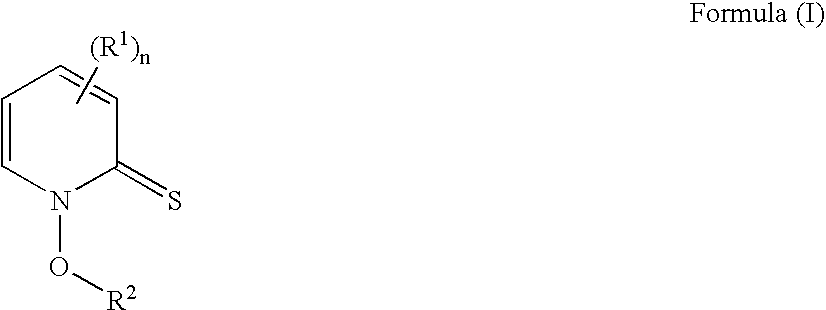
- the present invention resides in a compound represented by formula (I):
- R 1 represents -L 1 -X 1 or X 1 ;
- R 2 represents a hydrogen atom or -L 2 -X 2 ;
- L 1 and L 2 each independently represent a divalent linking group;
- X 1 and X 2 each independently represent a group selected from the group consisting a hydroxyl group, an amino group and a mercapto group;
- n represents an integer of 1 to 4; and when n is 2 or more, R 1 s may be the same or different.
- the present invention resides in a multifunctional isocyanate composition, comprising an adduct formed by treating the compound represented by formula (I) described above with a compound represented by formula (II): R 3 —(NCO) m Formula (II)
- R 3 represents an arbitrary m-valent linking group; and m represents an integer of 2 or above.
- the present invention resides in a microcapsule using the above-described multifunctional isocyanate composition.
- R 1 represents -L 1 -X 1 or X 1 ;
- R 2 represents a hydrogen atom or -L 2 -X 2 ;
- L 1 and L 2 each independently represent a divalent linking group;
- X 1 and X 2 each independently represent a group selected from the group consisting a hydroxyl group, an amino group and a mercapto group;
- n represents an integer of 1 to 4; and when n is 2 or more, R 1 s may be the same or different.
- R 3 represents an arbitrary m-valent linking group; and m represents an integer of 2 or above.
- photo-decomposability means that the bond formed between the nitrogen atom in the pyrithione nucleus (ring) and the oxygen atom attached thereto is cleaved by light.
- R 1 represents -L 1 -X 1 or X 1
- R 2 represents a hydrogen atom or -L 2 -X 2
- L 1 and L 2 each independently represent a divalent linking group
- X 1 and X 2 each independently represent a nucleophilic substituent selected from a hydroxyl group, an amino group or a mercapto group.
- n represents an integer of 1 to 4, and when n is 2 or more, R 1 s may be the same or different.
- X 1 and X 2 each are a hydroxyl group.
- n is preferably 1.
- L 1 and L 2 each independently represent a divalent linking group by which the pyrithione ring is connected to X 1 or X 2 .
- Examples thereof include an alkylene group, an alkenylene group, an alkynylene group, an arylene group, —O—, —S—, —NR—, —CO—, —COO—, —NRCO—, —SO 2 —, and combinations of two or more of these divalent groups.
- R represents a hydrogen atom or a substituent.
- L 1 or L 2 is the combination of an alkylene group and —NR—, R may bond to the alkylene group to form a ring.
- Examples of the substituent represented by R include an alkyl group (e.g. a methyl group and an ethyl group), an aralkyl group (e.g. a phenylmethyl group), an alkenyl group (e.g. an allyl group), an alkynyl group, a hydroxyalkyl group (e.g. a hydroxyethyl group), an aryl group (e.g. a phenyl group and a p-methoxyphenyl group), a carbonyl group, an acyl group (e.g. an acetyl group and a benzoyl group), an alkoxycarbonyl group (e.g.
- an alkyl group e.g. a methyl group and an ethyl group
- an aralkyl group e.g. a phenylmethyl group
- an alkenyl group e.g. an allyl group
- an alkynyl group
- a methoxycarbonyl group a methoxycarbonyl group
- an acyloxy group e.g. an acetoxy group
- an alkyl group and a hydroxyalkyl group are preferred over the others.
- the number of the carbon atoms is preferably from 1 to 20, and more preferably from 1 to 10.
- the alkylene group represented by L 1 or L 2 may be a straight-chain, branched or cyclic alkylene group, and it is preferably an alkylene group having 1 to 20 carbon atoms, more preferably an alkylene group having 2 to 10 carbon atoms. Examples thereof include a methylene group, an ethylene group, a trimethylene group, a propylene group, a butylene group, a hexylene group and a cyclohexylene group.
- the alkylene group as mentioned above may further have a substituent. Examples of the substituent which the alkylene group may have include an alkyl group (e.g.
- a methyl group, an ethyl group), an aralkyl group e.g. a phenylmethyl group
- an alkenyl group e.g. an allyl group
- an alkynyl group e.g. an alkoxy group (e.g. a methoxy group, an ethoxy group)
- a hydroxyalkyl group e.g. a hydroxyethyl group
- an aryl group e.g. a phenyl group, a p-methylphenyl group
- an amino group e.g. a unsubstituted amino group, a dimethylamino group
- an acylamino group e.g.
- an acetylamino group a sulfonylamino group (e.g. a methanesulfonylamino group), a ureido group, a urethane group, an aryloxy group (e.g. a phenyloxy group), a sulfamoyl group (e.g. a methylsulfamoyl group), a carbamoyl group (e.g. a unsubstituted carbamoyl group, a methylcarbamoyl group), an alkylthio group (e.g. a methylthio group), an arylthio group (e.g.
- a phenylthio group a sufonyl group (e.g. a methanesulfonyl group), a sulfinyl group (e.g. a methanesulfinyl group), a hydroxy group, a halogen atom (e.g. a chlorine atom, a bromine atom, a fluorine atom), a cyano group, a sulfo group, a carbonyl group, a phosphono group, an aryloxycarbonyl group (e.g. a phenyloxycarbonyl group), an acyl group (e.g.
- an acetyl group, a benzoyl group an alkoxycarbonyl group (e.g. a methoxycarbonyl group), an acyloxy group (e.g. an acetoxy group), a carbonamido group, a sulfonamido group, a nitro group, a hydroxamic acid group, and a heterocyclic group.
- an alkyl group, a hydroxy group and a hydroxyalkyl group are preferred over the others.
- the number of the carbon atoms is preferably from 1 to 30, more preferably from 1 to 10.
- the alkenylene group and the alkynylene group may be in straight-chain, branched or cyclic form, and those each contain preferably 2 to 10 carbon atoms. These alkenylene and alkynylene groups each may further have a substituent. Examples and the preferable range of the substituent are the same as those regarding the alkylene group.
- the arylene group is preferably a monocyclic or condensed cyclic arylene group having 6 to 30 carbon atoms, more preferably a monocyclic or condensed cyclic arylene group having 6 to 20 carbon atoms. Examples thereof include a phenylene group and a naphtylene group. The phenylene group is particularly preferable. Such an arylene group may further have a substituent. Examples and the preferable range of such a substituent are the same as those regarding the alkylene group. The substituent may further be substituted with themselves.
- L 1 is more preferably an alkylene group, an arylene group, —O—, —S—, —NR—, —COO—, —NRCO— (in which R is a hydrogen atom or a substituent), a combination of any two or more of groups recited above, or a combination of an alkylene group and —NR— whose R bonds to the alkylene group to form a ring.
- R is a hydrogen atom or a substituent
- the combination of an alkylene group with —O—, —NRCO— or —COO—, especially —O-alkylene-(in which the alkylene is attached to the pyrithione ring via the oxygen atom) is preferred over the others.
- L 2 is more preferably an alkylene group, an arylene group, —COO—, —CONR— (in which R is a hydrogen atom or a substituent), or a combination of any two or more of the groups recited above.
- R is a hydrogen atom or a substituent
- L 2 is more preferably an alkylene group, an arylene group, —COO—, —CONR— (in which R is a hydrogen atom or a substituent), or a combination of any two or more of the groups recited above.
- R is a hydrogen atom or a substituent
- R 1 are 6-hydroxyhexyloxy group (—O—(CH 2 ) 6 —OH) and 4-hydroxybutyloxy (—O—(CH 2 ) 4 —OH) group, and those of R 2 are 6-hydroxyhexyl group and 4-hydroxybutyl group. Further, it preferable that R 1 is attached to the 3-position of the pyrithione ring. In the introducing method of R 1 and R 2 into the pyrithione ring, it is preferable that R 1 be introduced first, and then R 2 be introduced.
- a pyridine compound that has, on the carbon atom adjacent to the nitrogen atom (on the 2-position), a substituent capable of being replaced by another substituent later on, such as a halogen atom, and that has, on the other carbon atom (e.g. on the 3-, 4- or 5-position, preferably on the 3-position), a substituent (e.g. as a hydroxyl group and a carboxyl group).
- R 1 Introduction of R 1 into such a starting material is described below.
- a starting material having, for example, a hydroxyl group at the 3-, 4- or 5-position the hydroxyl group can be modified by reaction with an electrophilic agent, such as a tosylate or halogen compound, in the presence of a base (such as potassium carbonate or sodium carbonate).
- an electrophilic agent such as a tosylate or halogen compound
- R 1 can be introduced by converting the carboxyl group into acid chloride and then allowing the acid chloride to react with an appropriate nucleophilic acid (such as a compound having an amino or hydroxyl group).
- the foregoing electrophilic or nucleophilic agent may contain a linking group (corresponding to L 1 ), such as an alkylene group or —O—, in its molecule, and it is preferable that the agent has a nucleophilic moiety (corresponding to X 1 ), such as a hydroxyl group, in its molecule.
- a nucleophilic moiety is preferably protected with an appropriate protective group.
- the protective group include a pivaloyl group, an acetyl group and a 1-butyldimethylsilyl group.
- R 2 is carried out after the pyridine derivative prepared in the aforementioned manner is converted into the pyrithione skeleton.
- the conversion into the pyrithione skeleton can be performed by deriving a pyridine oxide from the above-described pyridine derivative under the action of an appropriate oxidant (e.g. 3-chloroperbenzoic acid and hydrogen peroxide), and then by allowing sodium hydrosulfide to act thereon.
- the R 2 's introduction subsequent thereto can be performed by reaction with an electrophilic agent, such as a tosylate and halogen compound, in the presence of a base (e.g., potassium carbonate and sodium carbonate).
- an electrophilic agent such as a tosylate and halogen compound
- the electrophilic agent as mentioned above may contain a linking group (corresponding to L 2 ), such as an alkylene group or —O—, in its molecule, and it is preferable that the agent has a nucleophilic moiety (corresponding to X 2 ), such as a hydroxyl group, in its molecule.
- a nucleophilic moiety is preferably protected with an appropriate protective group.
- the protective group include a pivaloyl group, an acetyl group and a t-butyldimethylsilyl group.
- the compound of the present invention can be derived from such a compound via a de-protection process.
- the multifunctional isocyanate composition that can be used in the present invention is described below.
- the multifunctional isocyanate composition that can be used in the present invention is a multifunctional isocyanate composition comprising an adduct formed by treating the above-described compound represented by formula (I) with a compound represented by formula (II).
- R 3 —(NCO) m Formula (II)
- R 3 represents an arbitrary m-valent linking group, and m represents an integer of 2 or above.
- any of arbitrary compounds can be used. Such compounds are difunctional, trictional and higher-order multifunctional isocyanate compounds.
- the compound represented by formula (II) has no particular restriction so far as the compound is a multifunctional isocyanate compound.
- R 3 has no particular restriction.
- m is preferably from 2 to 5, particularly preferably 2 or 3.
- the compound represented by formula (II) can be synthesized in accordance with an ordinary method. Examples of the compound represented by formula (II) include an aromatic isocyanate compound and an aliphatic isocyante compound.
- difunctional isocyanates represented by formula (II) include an aromatic difunctional isocyanate, such as 2,4-tolylene diisocyanate, 2,6-tolylene diisocyanate, m-phenylene diisocyanate, p-phenylene diisocyanate, m-xylylene diisocyanate, p-xylylene diisocyanate, 4-chloroxylylene-1,3-diisocyanate, 2-methylxylylene diisocyanate, 4,4′-diphenylmethane diisocyanate, 4, 4′-diphenylpropane diisocyanate, 4,4′-diphenylhexafluoropropane diisocyanate, 1,4-naphthalene diisocyanate, 3,3′-dimethoxybiphenyl diisocyanate and 3,3′-dimethyldiphenylmethane-4,4′-diisocyanate; an aliphatic difunctional isocyan
- Examples of the trifunctional or higher-order multifunctional isocyanate represented by formula (II) include a trimers prepared by using the above-described isocyanate as a main starting material (e.g., biuret and isocyanuric acid esters); an addition product derived mainly from the difunctional isocyanates as recited above with a trifunctional alcohol (e.g., trimethylolpropane) or a trifunctional phenol (e.g., phloroglucin); a formaldehyde condensate of a benzene isocyanate (e.g.
- polymethylenepolyphenylene polyisocyanate a polymer of an isocyanate compound containing a polymerizing group (e.g., methacryloyloxyethyl isocyanate); and a lysine triisocyanate.
- Particularly preferred examples of the compound represented by formula (II) include 2,4-tolylene diisocyanate, 2,6-tolylene diisocyanate, m-xylylene diisocyanate, 1,6-hexamethylene diisocyanate, 2, 5-di(isocyanatomethyl)norbornane, 4,4′-diphenylmethane diisocyanate, hydrogenated m-xylylene diisocyanate, hydrogenated 4,4′-diphenylmethane diisocyanate, and a mixture of two or more of the diisocyanates recited above.
- the multifunctional isocyanate composition that can be used in the present invention can be prepared by nucleophhilic addition reaction between the hydroxyl, amino or mercapto group in the compound represented by formula (I) and the isocyanate group in the compound represented by formula (II).
- the molar ratio between the compound represented by formula (I) and the compound represented by formula (II) is preferably more than 1 but 10 or less, and more preferably 2 or more but 5 or less, expressed in terms of m/(n+1) (wherein m is the number of isocyanate groups in formula (II) and (n+1) is the total number of X 1 and X 2 in formula (I).
- the multifunctional isocyanate composition of the present invention is made into a polymer by undergoing addition polymerization, and this polymer can be used as a material for microcapsule walls, to prepare a microcapsule.
- the microcapsule of the present invention can encapsulate an organic or inorganic compound, such as a color-forming material, and can be applied suitably to the fields of a photosensitive recording material encapsulating the color-forming material, a drug delivery system encapsulating a drug, and a slow-release agricultural chemical encapsulating an agricultural chemical.
- the microcapsule of the present invention can be produced in accordance with an interfacial polymerization method. For instance, it can be produced by dissolving a material to be encapsulated in the microcapsule and the multifunctional isocyanate compound of the present invention into a hydrophobic solvent (an oil phase), adding the resulting oil phase to an aqueous solution of a water-soluble polymer (a water phase), and then emulsifying and dispersing the resultant mixture by means of a homogenizer or the like, and thereby forming a polymer film to make a microcapsule wall at the interface between the oil phase and the water phase. More specifically, the microcapsule can be produced using the methods described, for example, in U.S. Pat. Nos.
- a pyrithione derivative having a reactive site it is possible to provide a microcapsule making the most of the photo-decomposability of the pyrithione.
- the pyrithione compound of the present invention has photo-decomposability (photo-disintegrating property), and it further has a reactive (nucleophilic) site. Therefore, it is possible to use the pyrithione compound as a wall material of a microcapsule, and provide a photo-responsive material.
- microcapsule of the present invention changes its permeability to certain substances when exposed to light, and therefore it is useful as a microcapsule for a photosensitive recording material.
- the exemplified compound (I-1) was synthesized in accordance with the following scheme:
- 6-Bromo-1-hexanol (L) 99.2 g, 548 mmol, produced by Aldrich Co.
- methylene chloride 250 mL
- pyridine 48.7 mL, 603 mmol
- pivaloyl chloride 70.9 mL, 575 mmol
- the reaction solution obtained was washed with diluted hydrochloric acid and saturated brine for once each.
- the washed solution was dried over anhydrous magnesium sulfate and then concentrated to yield a crude product.
- 1,6-Hexanediol (M) 200 g, 1.69 mol was mixed with acetonitrile (400 mL) and triethylamine (236 ml, 1.69 mol) at room temperature, and thereto an acetonitrile solution (400 mL) of tosyl chloride (161 g, 846 nmol) was added dropwise while keeping the solution at a temperature of 10C or below.
- the reaction solution thus prepared was stirred for 6 hours at room temperature, and then the solvent was distilled away.
- the reaction mixture obtained was admixed with water, and extracted twice with ethyl acetate.
- the exemplified compound (I-1) synthesized in the foregoing process was dissolved into ethyl acetate so that it had a concentration of 5.0 ⁇ 10 ⁇ 5 mol/L, and poured in a 1-cm quartz cell.
- the absorbance thereof was measured with an absorption photometer (Multichannel Detector PMA 11, trade name, manufactured by Hamamatsu Photonics K.K.).
- the absorbance of this solution at 370 nm was found to be 0.64.
- the exemplified compound (I-2) was synthesized (in oily form) in the same manner as the exemplified compound (I-1), except that 4-bromobutyl pivalate was used in place of Intermediate (B) and 4-tosyloxybutyl pivalate was used in place of Intermediate (F).
- the exemplified compound (I-3) was synthesized (in oily form) in the same manner as the exemplified compound (I-14), except that 3-bromo-2-methylpropyl acetate was used in place of the compound (Q).
- the exemplified compound (I-4) was synthesized (in white-crystal form) in the same manner as the exemplified compound (I-14), except that 4-chlorobutyl acetate prepared from 4-chlorobutanol in an ordinary method was used in place of 2-bromoethyl acetate (Q).
- Phthaloylated Gelatin (#801 gelatin, trade name, manufactured by Nitta Gelatin Inc.) in an amount of 32 g was mixed with 0.9143 g of 1,2-benzothiazoline-3-one (3.5% methanol solution) and 367.1 g of ion-exchanged water, and heated at 40° C. to prepare an aqueous solution of phthaloylated gelatin.
- Phthaloylated gelatin #801 gelatin, trade name, manufactured by Nitta Gelatin Inc.
- 1,2-benzothiazoline-3-one 3.5% methanol solution
- 367.1 g ion-exchanged water
- An adduct formed from xylylene diisocyanate and trimethylolpropane (Takenate D110N (75 weight % ethyl acetate solution), trade name, manufactured by Mitsui Takeda Chemicals, Inc.) in an amount of 6.39 g, a phenylisocyanate-formaldehyde condensate (Millionate MR-200, trade name, manufactured by NIPPON POLYURETHANE INDUSTRY CO., LTD.) in an amount of 4.77 g and an adduct formed from xylylene diisocyanate and Compound (K) illustrated below (50% ethyl acetate solution) in an amount of 3.32 g were mixed and homogenized by stirring to prepare a soluiton referred to as Mixture-2.
- Takenate D110N 75 weight % ethyl acetate solution
- Mitsui Takeda Chemicals, Inc. a phenylisocyanate-form
- Mixture-3 To the Mixture-2 was added 2.5 parts of the wall material solution prepared in Example 7 (the acetonitrile solution containing Compound (H) as a main component (solids content: 50%)), thereby preparing a capsule wall material solution referred to as Mixture-3. Further, the Mixture-1 was mixed with the Mixture-3 to prepare Mixture-4.
- the Mixture-4 was added to the Mixture-5, and the resulting mixture was emulsified and dispersed at 40° C. by means of a homogenizer (manufactured by Nippon Seiki Co., Ltd.). To the thus obtained emulsion were added 21.2 g of water and 0.12 parts of tetraethylenepentamine. The resulting admixture was homogenized, and underwent encapsulation reaction for 3 hours as it was stirred at 65° C. and the ethyl acetate was removed therefrom. And concentration adjustment was made so that the capsule suspension prepared had a solid concentration of 33%.
- the diameters of microcapsules in the thus prepared capsule suspension were examined by means of a particle size distribution analyzer (LA-700, trade name, manufactured by HORIBA, LTD.). As a result of the measurement, the median diameter of the microcapsules was found to be 1.10 ⁇ m.
- Me means a methyl group.
- the leuco dye-encapsulated microcapsule suspension prepared in the foregoing process was coated on a TAC (triacetyl cellulose) support in a coating amount of 7.1 g/m 2 on a solid basis.
- the thus formed coating film was examined for absorbance at 365 nm by means of an absorption photometer (UV3100, trade name, manufactured by Shimadzu Corporation), and its absorbance at 365 mm was found to be 0.8.
- This coating film was exposed for 20 seconds by means of a fluorescent lamp of 23 watts having the central wavelength of light emission at 365 nm, which was placed at a distance of 8 mm. Thereafter, in the absorbance measurement carried out in the same manner as the above, it was found that the absorbance at 365 nm was lowered to 0.65. This result proves that the microcapsule of the present invention is photo-decomposable.
Landscapes
- Chemical & Material Sciences (AREA)
- Health & Medical Sciences (AREA)
- Organic Chemistry (AREA)
- Life Sciences & Earth Sciences (AREA)
- Chemical Kinetics & Catalysis (AREA)
- Animal Behavior & Ethology (AREA)
- General Health & Medical Sciences (AREA)
- Public Health (AREA)
- Veterinary Medicine (AREA)
- Polymers & Plastics (AREA)
- Medicinal Chemistry (AREA)
- Epidemiology (AREA)
- Birds (AREA)
- Dispersion Chemistry (AREA)
- Dermatology (AREA)
- Organic Low-Molecular-Weight Compounds And Preparation Thereof (AREA)
- Plural Heterocyclic Compounds (AREA)
- Polyurethanes Or Polyureas (AREA)
- Pyridine Compounds (AREA)
Abstract

-
- wherein, in formula (I), R1 represents -L1-X1 or X1; R2 represents a hydrogen atom or -L2-X2; L1 and L2 each independently represent a divalent linking group; X1 and X2 each independently represent a nucleophilic substituent; n represents an integer of 1 to 4; and when n is 2 or more, R1s may be the same or different; and
R3—(NCO)m Formula (II) - wherein, in formula (II), R3 represents an arbitrary m-valent linking group; and m represents an integer of 2 or above.
- wherein, in formula (I), R1 represents -L1-X1 or X1; R2 represents a hydrogen atom or -L2-X2; L1 and L2 each independently represent a divalent linking group; X1 and X2 each independently represent a nucleophilic substituent; n represents an integer of 1 to 4; and when n is 2 or more, R1s may be the same or different; and
Description

R3—(NCO)m Formula (II)
- (1) A compound represented by formula (I):

- (2) The compound according to the above item (1), wherein, in formula (I), n is 1.
- (3) A multifunctional isocyanate composition, comprising an adduct formed by treating the compound represented by formula (I) according to the above item (1) with a compound represented by formula (II):
R3—(NCO)m Formula (II)
- (4) The multifunctional isocyanate composition according to the above item (3), wherein the compound represented by formula (II) is 2,4-tolylene diisocyanate, 2,6-tolylene diisocyanate, m-xylylene diisocyanate, 1,6-hexamethylene diisocyanate, 2,5-di(isocyanatomethyl)norbornane, 4,4′-diphenylmethane diisocyanate, hydrogenated m-xylylene diisocyanate, hydrogenated 4,4′-diphenylmethane diisocyanate, or a mixture thereof.
- (5) A microcapsule for encapsulating an organic or inorganic compound, wherein capsule walls of the microcapsule comprises at least a polymer of the multifunctional isocyanate composition according to the above item (3) or (4).


R3—(NCO)m Formula (II)

(1) Synthesis of Intermediate (B)

(2) Synthesis of Intermediate (D)

(5) Synthesis of Intermediate (G)

(1) Synthesis of Intermediate (R)

(1) Synthesis of Intermediate (V)

(2) Preparation of Leuco Dye-encapsulated Micorcapsule Suspension

Me means a methyl group.
<Measurement of Photo-Decomposability>
Claims (4)

Applications Claiming Priority (2)
| Application Number | Priority Date | Filing Date | Title |
|---|---|---|---|
| JP2004165060A JP4688438B2 (en) | 2004-06-02 | 2004-06-02 | Pyrithione compound and microcapsule using the same |
| JP2004-165060 | 2004-06-02 |
Publications (2)
| Publication Number | Publication Date |
|---|---|
| US20050271736A1 US20050271736A1 (en) | 2005-12-08 |
| US7230110B2 true US7230110B2 (en) | 2007-06-12 |
Family
ID=35449241
Family Applications (1)
| Application Number | Title | Priority Date | Filing Date |
|---|---|---|---|
| US11/139,617 Expired - Lifetime US7230110B2 (en) | 2004-06-02 | 2005-05-31 | Pyrithione compound and microcapsule using the same |
Country Status (2)
| Country | Link |
|---|---|
| US (1) | US7230110B2 (en) |
| JP (1) | JP4688438B2 (en) |
Families Citing this family (1)
| Publication number | Priority date | Publication date | Assignee | Title |
|---|---|---|---|---|
| WO2019083147A1 (en) * | 2017-10-26 | 2019-05-02 | 롯데첨단소재(주) | Thermoplastic resin composition and molded product manufactured therefrom |
Citations (2)
| Publication number | Priority date | Publication date | Assignee | Title |
|---|---|---|---|---|
| JP2000296675A (en) | 1999-04-16 | 2000-10-24 | Mitsubishi Electric Corp | Color recording medium and recording method thereof |
| JP2004043421A (en) | 2002-07-15 | 2004-02-12 | Api Corporation | 2-mercaptopyridine-N-oxide derivative and antibacterial and fungicide containing the same |
Family Cites Families (2)
| Publication number | Priority date | Publication date | Assignee | Title |
|---|---|---|---|---|
| US4401770A (en) * | 1982-04-01 | 1983-08-30 | Olin Corporation | Shoe insole having antibacterial and antifungal properties |
| US4818271A (en) * | 1985-10-31 | 1989-04-04 | Fmc Corporation | Pyridinylurea compounds and agricultural uses |
-
2004
- 2004-06-02 JP JP2004165060A patent/JP4688438B2/en not_active Expired - Fee Related
-
2005
- 2005-05-31 US US11/139,617 patent/US7230110B2/en not_active Expired - Lifetime
Patent Citations (2)
| Publication number | Priority date | Publication date | Assignee | Title |
|---|---|---|---|---|
| JP2000296675A (en) | 1999-04-16 | 2000-10-24 | Mitsubishi Electric Corp | Color recording medium and recording method thereof |
| JP2004043421A (en) | 2002-07-15 | 2004-02-12 | Api Corporation | 2-mercaptopyridine-N-oxide derivative and antibacterial and fungicide containing the same |
Non-Patent Citations (3)
| Title |
|---|
| Abu-Dari et al, Inorganic Chemistry, vol. 3, No. 3, pp. 519-524, 1991. * |
| Doug Burdi et al., Journal of the American Chemical Society, vol. 119, No. 28 Jul. 16, 1997, pp. 6457-6460. |
| Jens Hartung et al., J. Org. Chem, 1995, 60, pp. 6706-6716. |
Also Published As
| Publication number | Publication date |
|---|---|
| JP4688438B2 (en) | 2011-05-25 |
| JP2005343821A (en) | 2005-12-15 |
| US20050271736A1 (en) | 2005-12-08 |
Similar Documents
| Publication | Publication Date | Title |
|---|---|---|
| CN103201295B (en) | Novel polymeric photoinitiators | |
| Krutak et al. | Chemistry of ethenesulfonyl fluoride. Fluorosulfonylethylation of organic compounds | |
| EP3653615B1 (en) | Chromene compound, curable composition comprising same, and optical article comprising cured product formed of curable composition | |
| EP3541793B1 (en) | Process for the manufacturing of triaryl-alkyl borates | |
| JPH0414113B2 (en) | ||
| WO1999020630A1 (en) | Photochromic compounds | |
| JPH07330860A (en) | Polyisocyanate composition | |
| JP2002521541A (en) | Mixed block (poly) isocyanate | |
| US20050271736A1 (en) | Pyrithione compound and microcapsule using the same | |
| US5929082A (en) | Potassium ion channel blockers | |
| JPH05155840A (en) | Hydroxybenzoic acid derivative and its production | |
| FR2558832A1 (en) | DERIVATIVES OF CARBAMIC ACID AND PROCESS FOR OBTAINING THEM | |
| EP3538534B1 (en) | Process for the manufacturing of triaryl-alkyl borates | |
| JPS62289554A (en) | Novel hydroxyphenylurethanes, manufacture and use | |
| EP1265947B1 (en) | Quick-setting mixtures and kits with polyfunctional cyanates and amines, the thermosets produced therefrom and methods for the production thereof | |
| EP0414640A2 (en) | Iminosilanes | |
| JPS6027664B2 (en) | Isocyanate | |
| DK162890B (en) | N-BENZOYL-N'-PYRIMIDINYLOXYPHENYLURINE INGREDIENTS, PROCEDURES FOR THE PRODUCTION OF THESE, AND ANTITUMOR PREPARATIONS CONTAINING THE COMPOUNDS | |
| CN116137864A (en) | Synthesis of linear polyoxazolidinones using uretdione as diisocyanate component | |
| JP7731573B2 (en) | Diaminobenzene compounds containing sulfinyl or sulfonyl groups or salts thereof, and organic fluorescent materials containing them | |
| RU2034467C1 (en) | Method of herbicide composition preparing | |
| JPH0213664B2 (en) | ||
| JP4577723B2 (en) | Synthesis of benzotriazole-based UV absorbers having carbanic acid ester structure, dicabamic acid diester structure and sulfonic acid ester structure, and their use | |
| JPH01268670A (en) | 2-nitrobenzoylurea compound, production thereof and anti-cancer drug containing said compound | |
| WO2025228991A1 (en) | Recyclable poly(urea-urethane) system |
Legal Events
| Date | Code | Title | Description |
|---|---|---|---|
| AS | Assignment |
Owner name: FUJI PHOTO FILM CO., LTD., JAPAN Free format text: ASSIGNMENT OF ASSIGNORS INTEREST;ASSIGNORS:SUGAI, MASAHARA;NAKAMURA, KOKI;JIMBO, YOSHIHIRO;AND OTHERS;REEL/FRAME:016817/0546 Effective date: 20050707 |
|
| AS | Assignment |
Owner name: FUJIFILM HOLDINGS CORPORATION, JAPAN Free format text: CHANGE OF NAME;ASSIGNOR:FUJI PHOTO FILM CO., LTD.;REEL/FRAME:018898/0872 Effective date: 20061001 Owner name: FUJIFILM HOLDINGS CORPORATION,JAPAN Free format text: CHANGE OF NAME;ASSIGNOR:FUJI PHOTO FILM CO., LTD.;REEL/FRAME:018898/0872 Effective date: 20061001 |
|
| AS | Assignment |
Owner name: FUJIFILM CORPORATION, JAPAN Free format text: ASSIGNMENT OF ASSIGNORS INTEREST;ASSIGNOR:FUJIFILM HOLDINGS CORPORATION;REEL/FRAME:018934/0001 Effective date: 20070130 Owner name: FUJIFILM CORPORATION,JAPAN Free format text: ASSIGNMENT OF ASSIGNORS INTEREST;ASSIGNOR:FUJIFILM HOLDINGS CORPORATION;REEL/FRAME:018934/0001 Effective date: 20070130 |
|
| STCF | Information on status: patent grant |
Free format text: PATENTED CASE |
|
| STCF | Information on status: patent grant |
Free format text: PATENTED CASE |
|
| FEPP | Fee payment procedure |
Free format text: PAYOR NUMBER ASSIGNED (ORIGINAL EVENT CODE: ASPN); ENTITY STATUS OF PATENT OWNER: LARGE ENTITY |
|
| FPAY | Fee payment |
Year of fee payment: 4 |
|
| FPAY | Fee payment |
Year of fee payment: 8 |
|
| MAFP | Maintenance fee payment |
Free format text: PAYMENT OF MAINTENANCE FEE, 12TH YEAR, LARGE ENTITY (ORIGINAL EVENT CODE: M1553); ENTITY STATUS OF PATENT OWNER: LARGE ENTITY Year of fee payment: 12 |