US7122547B1 - Anthranilic acid amides and the use thereof as medicaments - Google Patents
Anthranilic acid amides and the use thereof as medicaments Download PDFInfo
- Publication number
- US7122547B1 US7122547B1 US09/831,506 US83150601A US7122547B1 US 7122547 B1 US7122547 B1 US 7122547B1 US 83150601 A US83150601 A US 83150601A US 7122547 B1 US7122547 B1 US 7122547B1
- Authority
- US
- United States
- Prior art keywords
- stands
- group
- hydrogen
- halogen
- stand
- Prior art date
- Legal status (The legal status is an assumption and is not a legal conclusion. Google has not performed a legal analysis and makes no representation as to the accuracy of the status listed.)
- Expired - Fee Related
Links
- FVVXWRGARUACNW-UHFFFAOYSA-N CC1=NC=C2C=CC=CC2=C1 Chemical compound CC1=NC=C2C=CC=CC2=C1 FVVXWRGARUACNW-UHFFFAOYSA-N 0.000 description 27
- VJXRKZJMGVSXPX-UHFFFAOYSA-N CCC1=CC=NC=C1 Chemical compound CCC1=CC=NC=C1 VJXRKZJMGVSXPX-UHFFFAOYSA-N 0.000 description 22
- 0 [1*]C*C(=[W])C1=C([4*])C([5*])=C([6*])C([7*])=C1C[Y][3*] Chemical compound [1*]C*C(=[W])C1=C([4*])C([5*])=C([6*])C([7*])=C1C[Y][3*] 0.000 description 18
- VINRWNTVYGQAKC-UHFFFAOYSA-N CC([Rb])([RaH])C(C)(C)C(C)([Re])[Rf] Chemical compound CC([Rb])([RaH])C(C)(C)C(C)([Re])[Rf] VINRWNTVYGQAKC-UHFFFAOYSA-N 0.000 description 13
- DCUNRLLJHAWKRZ-UHFFFAOYSA-N CC1=CC2=C(C=C1)NN=C2 Chemical compound CC1=CC2=C(C=C1)NN=C2 DCUNRLLJHAWKRZ-UHFFFAOYSA-N 0.000 description 8
- SOHMZGMHXUQHGE-UHFFFAOYSA-N CC1=CN=C(O)C=C1 Chemical compound CC1=CN=C(O)C=C1 SOHMZGMHXUQHGE-UHFFFAOYSA-N 0.000 description 7
- XQUPHGPUHANWIO-UHFFFAOYSA-N CC1=CC(=O)N(C)C=C1.CC1=CC=NC(Cl)=N1.CC1=CC=NC(O)=N1.CC1=CC=NC=N1.CC1=CN(C)C(=O)C=C1.CC1=CN(C)C(=O)C=C1.CC1=CN=C(Cl)N=C1.CC1=CN=C(O)N=C1.CC1=CNC(=O)C=C1.COC1=NC(C)=CC=N1.COC1=NC=C(C)C=N1 Chemical compound CC1=CC(=O)N(C)C=C1.CC1=CC=NC(Cl)=N1.CC1=CC=NC(O)=N1.CC1=CC=NC=N1.CC1=CN(C)C(=O)C=C1.CC1=CN(C)C(=O)C=C1.CC1=CN=C(Cl)N=C1.CC1=CN=C(O)N=C1.CC1=CNC(=O)C=C1.COC1=NC(C)=CC=N1.COC1=NC=C(C)C=N1 XQUPHGPUHANWIO-UHFFFAOYSA-N 0.000 description 6
- SMUQFGGVLNAIOZ-UHFFFAOYSA-N CC1=CC=C2C=CC=CC2=N1 Chemical compound CC1=CC=C2C=CC=CC2=N1 SMUQFGGVLNAIOZ-UHFFFAOYSA-N 0.000 description 6
- YBDRFJXGJQULGH-UHFFFAOYSA-N CC1=CC(O)=NC=C1 Chemical compound CC1=CC(O)=NC=C1 YBDRFJXGJQULGH-UHFFFAOYSA-N 0.000 description 5
- HQPIILKGTFWSDJ-UHFFFAOYSA-N CC1=CN(C)C(=O)C=C1 Chemical compound CC1=CN(C)C(=O)C=C1 HQPIILKGTFWSDJ-UHFFFAOYSA-N 0.000 description 5
- DXYYSGDWQCSKKO-UHFFFAOYSA-N CC1=NC2=C(C=CC=C2)S1 Chemical compound CC1=NC2=C(C=CC=C2)S1 DXYYSGDWQCSKKO-UHFFFAOYSA-N 0.000 description 5
- UISREOKYJBBYSC-UHFFFAOYSA-N CC1=NC=C(Cl)C=N1 Chemical compound CC1=NC=C(Cl)C=N1 UISREOKYJBBYSC-UHFFFAOYSA-N 0.000 description 5
- LVILGAOSPDLNRM-UHFFFAOYSA-N CC1=NC=NC=C1 Chemical compound CC1=NC=NC=C1 LVILGAOSPDLNRM-UHFFFAOYSA-N 0.000 description 5
- NFQGQMBFMIIIOR-UHFFFAOYSA-N COC1=NC=C(C)C=C1 Chemical compound COC1=NC=C(C)C=C1 NFQGQMBFMIIIOR-UHFFFAOYSA-N 0.000 description 5
- PUMBSRREANYFKL-UHFFFAOYSA-N BrC1=NC(NC2=NC=CC3=CC=CC=C32)=CC2=CC=CC=C21.C1=CC2=CC=NC=C2C=C1.C1=CC2=NON=C2C=C1.C1=CC2=NSN=C2C=C1.C1=CC=C(C2=CC=NN2)C=C1.C1=CC=C(C2CCCCC2)C=C1.C1=CC=C2C=NC=CC2=C1.C1=CC=C2N=CC=CC2=C1.C1=CC=C2NC=NC2=C1.C1=CC=C2NCCCC2=C1.C1=CC=C2NN=CC2=C1.C1=CC=C2NN=NC2=C1.C1=CN=C2C=CC=CC2=C1.CC.CC.CC.CC.CC.CC.CC.CC.CC.CC.CC.CC.CC.CC.CC1=NC2=C(C=C(Cl)C=C2)S1.CC1=NC2=C(C=C(F)C=C2)S1.CC1=NC2=C(C=C(OC(F)(F)F)C=C2)S1.CC1=NC2=C(C=CC=C2)N1.CC1=NC2=C(C=CC=C2)S1.CC1=NC2=C(Cl)C=CC=C2S1.CC1=NN=C(C(F)(F)F)S1.ClC1=CN=CN=C1 Chemical compound BrC1=NC(NC2=NC=CC3=CC=CC=C32)=CC2=CC=CC=C21.C1=CC2=CC=NC=C2C=C1.C1=CC2=NON=C2C=C1.C1=CC2=NSN=C2C=C1.C1=CC=C(C2=CC=NN2)C=C1.C1=CC=C(C2CCCCC2)C=C1.C1=CC=C2C=NC=CC2=C1.C1=CC=C2N=CC=CC2=C1.C1=CC=C2NC=NC2=C1.C1=CC=C2NCCCC2=C1.C1=CC=C2NN=CC2=C1.C1=CC=C2NN=NC2=C1.C1=CN=C2C=CC=CC2=C1.CC.CC.CC.CC.CC.CC.CC.CC.CC.CC.CC.CC.CC.CC.CC1=NC2=C(C=C(Cl)C=C2)S1.CC1=NC2=C(C=C(F)C=C2)S1.CC1=NC2=C(C=C(OC(F)(F)F)C=C2)S1.CC1=NC2=C(C=CC=C2)N1.CC1=NC2=C(C=CC=C2)S1.CC1=NC2=C(Cl)C=CC=C2S1.CC1=NN=C(C(F)(F)F)S1.ClC1=CN=CN=C1 PUMBSRREANYFKL-UHFFFAOYSA-N 0.000 description 4
- RXGUZZLETCXNGH-UHFFFAOYSA-N C1=CC2=C(C=C1)SC=N2.C1=CC=C2C=NC=CC2=C1.C1=CC=C2N=CC=CC2=C1.C1=CC=C2NCC=CC2=C1.C1=CC=C2OCCOC2=C1.CC.CC.CC.CC.CC.CC.CC1=CC2=C(C=C1C)NC(C)=N2.CC1=CN=C2C=CC=CC2=C1.CC1=CN=C2C=CC=CC2=C1.CC1=NC2=C(C=CC=C2)N1C.CF.COCl Chemical compound C1=CC2=C(C=C1)SC=N2.C1=CC=C2C=NC=CC2=C1.C1=CC=C2N=CC=CC2=C1.C1=CC=C2NCC=CC2=C1.C1=CC=C2OCCOC2=C1.CC.CC.CC.CC.CC.CC.CC1=CC2=C(C=C1C)NC(C)=N2.CC1=CN=C2C=CC=CC2=C1.CC1=CN=C2C=CC=CC2=C1.CC1=NC2=C(C=CC=C2)N1C.CF.COCl RXGUZZLETCXNGH-UHFFFAOYSA-N 0.000 description 4
- QHRSESMSOJZMCO-UHFFFAOYSA-N CC1=NNC(C2=CC=CC=C2)=C1 Chemical compound CC1=NNC(C2=CC=CC=C2)=C1 QHRSESMSOJZMCO-UHFFFAOYSA-N 0.000 description 4
- HDNRAPAFJLXKBV-UHFFFAOYSA-N CCC1=CC=C(OC)C=C1 Chemical compound CCC1=CC=C(OC)C=C1 HDNRAPAFJLXKBV-UHFFFAOYSA-N 0.000 description 4
- RQPMOFNKCNTFRR-UHFFFAOYSA-N C1=CN=CN=C1.CC.CC.CC.CC.CC.CC.CC.CN1C=CC=CC1=O.CN1C=CC=CC1=O.COC1=NC=CC=N1.ClC1=NC=CC=N1.O=C1C=CC=CN1.OC1=NC=CC=N1 Chemical compound C1=CN=CN=C1.CC.CC.CC.CC.CC.CC.CC.CN1C=CC=CC1=O.CN1C=CC=CC1=O.COC1=NC=CC=N1.ClC1=NC=CC=N1.O=C1C=CC=CN1.OC1=NC=CC=N1 RQPMOFNKCNTFRR-UHFFFAOYSA-N 0.000 description 3
- PBYMYAJONQZORL-UHFFFAOYSA-N CC1=C2C=CC=CC2=CC=N1 Chemical compound CC1=C2C=CC=CC2=CC=N1 PBYMYAJONQZORL-UHFFFAOYSA-N 0.000 description 3
- IUHPZLHUCOTVJJ-UHFFFAOYSA-N CC1=CC(=O)N(C)C=C1 Chemical compound CC1=CC(=O)N(C)C=C1 IUHPZLHUCOTVJJ-UHFFFAOYSA-N 0.000 description 3
- HMMPHXCOTBASBC-UHFFFAOYSA-N CC1=CC2=C(C=C1)C=NN2 Chemical compound CC1=CC2=C(C=C1)C=NN2 HMMPHXCOTBASBC-UHFFFAOYSA-N 0.000 description 3
- IVKILQAPNDCUNJ-UHFFFAOYSA-N CC1=CC=C2N=CSC2=C1 Chemical compound CC1=CC=C2N=CSC2=C1 IVKILQAPNDCUNJ-UHFFFAOYSA-N 0.000 description 3
- GPOFSFLJOIAMSA-UHFFFAOYSA-N CCC1=CC=C(Cl)C=C1 Chemical compound CCC1=CC=C(Cl)C=C1 GPOFSFLJOIAMSA-UHFFFAOYSA-N 0.000 description 3
- NKDDWNXOKDWJAK-UHFFFAOYSA-N COCOC Chemical compound COCOC NKDDWNXOKDWJAK-UHFFFAOYSA-N 0.000 description 3
- DTBDAFLSBDGPEA-UHFFFAOYSA-N Cc1cnc(cccc2)c2c1 Chemical compound Cc1cnc(cccc2)c2c1 DTBDAFLSBDGPEA-UHFFFAOYSA-N 0.000 description 3
- DSVWBEIQAVPCFR-UHFFFAOYSA-N CC1=C(C)N=C2C=CC=CC2=C1.CC1=C(C)N=C2C=CC=CC2=C1.CC1=C2C=CN=CC2=CC=C1.CC1=CC2=C(C=C1)N=CS2.CC1=CC2=C(C=C1C)NC(C)=N2.CC1=CC=C2C=NNC2=C1.CC1=CC=C2N=CC=CC2=C1.CC1=CC=C2NCC=CC2=C1.CC1=CC=C2NN=CC2=C1.CC1=CC=C2NN=NC2=C1.CC1=CC=C2OCCOC2=C1.CC1=NC2=C(C=C(OC(F)(F)F)C=C2)S1.CC1=NC2=C(C=CC=C2)N1.CC1=NC2=C(C=CC=C2)N1C.CC1=NC2=C(C=CC=C2)S1.CC1=NC2=C(Cl)C=CC=C2S1.CC1=NC2=CC=CC=C2S1.CC1CCC(C2=CC=CC=C2)CC1.CF.COCl Chemical compound CC1=C(C)N=C2C=CC=CC2=C1.CC1=C(C)N=C2C=CC=CC2=C1.CC1=C2C=CN=CC2=CC=C1.CC1=CC2=C(C=C1)N=CS2.CC1=CC2=C(C=C1C)NC(C)=N2.CC1=CC=C2C=NNC2=C1.CC1=CC=C2N=CC=CC2=C1.CC1=CC=C2NCC=CC2=C1.CC1=CC=C2NN=CC2=C1.CC1=CC=C2NN=NC2=C1.CC1=CC=C2OCCOC2=C1.CC1=NC2=C(C=C(OC(F)(F)F)C=C2)S1.CC1=NC2=C(C=CC=C2)N1.CC1=NC2=C(C=CC=C2)N1C.CC1=NC2=C(C=CC=C2)S1.CC1=NC2=C(Cl)C=CC=C2S1.CC1=NC2=CC=CC=C2S1.CC1CCC(C2=CC=CC=C2)CC1.CF.COCl DSVWBEIQAVPCFR-UHFFFAOYSA-N 0.000 description 2
- RUSLKQGSLMOVNN-UHFFFAOYSA-N CC1=C(C)N=C2C=CC=CC2=C1.CC1=C(C)N=C2C=CC=CC2=C1.CC1=C2C=CN=CC2=CC=C1.CC1=CC=C2N=CC=CC2=C1.CC1=CC=C2NCC=CC2=C1.CC1=NC2=CC=CC=C2S1.CF.COCl Chemical compound CC1=C(C)N=C2C=CC=CC2=C1.CC1=C(C)N=C2C=CC=CC2=C1.CC1=C2C=CN=CC2=CC=C1.CC1=CC=C2N=CC=CC2=C1.CC1=CC=C2NCC=CC2=C1.CC1=NC2=CC=CC=C2S1.CF.COCl RUSLKQGSLMOVNN-UHFFFAOYSA-N 0.000 description 2
- HNFZLHIYZZSOCC-UHFFFAOYSA-N CC1=C2C=CC=CC2=CC=N1.CC1=C2C=CC=NC2=CC=C1.CC1=C2N=CC=CC2=CC=C1.CC1=CC2=CC=CC=C2C(NC2=CC3=CC=CC=C3C(Br)=N2)=N1.CC1=CC2=CC=CC=C2C=N1.CC1=CC2=NON=C2C=C1.CC1=CC2=NSN=C2C=C1.CC1=CC=C2C=CC=CC2=N1.CC1=CC=C2CCCNC2=C1.CC1=CN=C2C=CC=CC2=C1.CC1=CN=C2C=CC=CC2=C1.CC1=NC2=C(C=C(Cl)C=C2)S1.CC1=NC=C(Cl)C=N1.CC1=NN=C(C(F)(F)F)S1.CC1=NNC(C2=CC=CC=C2)=C1.CC1CCC(C2=CC=CC=C2)CC1 Chemical compound CC1=C2C=CC=CC2=CC=N1.CC1=C2C=CC=NC2=CC=C1.CC1=C2N=CC=CC2=CC=C1.CC1=CC2=CC=CC=C2C(NC2=CC3=CC=CC=C3C(Br)=N2)=N1.CC1=CC2=CC=CC=C2C=N1.CC1=CC2=NON=C2C=C1.CC1=CC2=NSN=C2C=C1.CC1=CC=C2C=CC=CC2=N1.CC1=CC=C2CCCNC2=C1.CC1=CN=C2C=CC=CC2=C1.CC1=CN=C2C=CC=CC2=C1.CC1=NC2=C(C=C(Cl)C=C2)S1.CC1=NC=C(Cl)C=N1.CC1=NN=C(C(F)(F)F)S1.CC1=NNC(C2=CC=CC=C2)=C1.CC1CCC(C2=CC=CC=C2)CC1 HNFZLHIYZZSOCC-UHFFFAOYSA-N 0.000 description 2
- PPRMEKHWFOXSAH-UHFFFAOYSA-N CC1=CC2=C(C=C1)N=CS2.CC1=CC2=C(C=C1C)NC(C)=N2.CC1=CC=C2C=NNC2=C1.CC1=CC=C2N=CNC2=C1.CC1=CC=C2NN=CC2=C1.CC1=CC=C2NN=NC2=C1.CC1=CC=C2OCCOC2=C1.CC1=NC2=C(C=C(F)C=C2)S1.CC1=NC2=C(C=C(OC(F)(F)F)C=C2)S1.CC1=NC2=C(C=CC=C2)N1.CC1=NC2=C(C=CC=C2)N1C.CC1=NC2=C(C=CC=C2)S1.CC1=NC2=C(Cl)C=CC=C2S1.CC1CCC(C2=CC=CC=C2)CC1 Chemical compound CC1=CC2=C(C=C1)N=CS2.CC1=CC2=C(C=C1C)NC(C)=N2.CC1=CC=C2C=NNC2=C1.CC1=CC=C2N=CNC2=C1.CC1=CC=C2NN=CC2=C1.CC1=CC=C2NN=NC2=C1.CC1=CC=C2OCCOC2=C1.CC1=NC2=C(C=C(F)C=C2)S1.CC1=NC2=C(C=C(OC(F)(F)F)C=C2)S1.CC1=NC2=C(C=CC=C2)N1.CC1=NC2=C(C=CC=C2)N1C.CC1=NC2=C(C=CC=C2)S1.CC1=NC2=C(Cl)C=CC=C2S1.CC1CCC(C2=CC=CC=C2)CC1 PPRMEKHWFOXSAH-UHFFFAOYSA-N 0.000 description 2
- DEMKNLXJQNYAFY-UHFFFAOYSA-N CC1=CC=C(Cl)C=N1 Chemical compound CC1=CC=C(Cl)C=N1 DEMKNLXJQNYAFY-UHFFFAOYSA-N 0.000 description 2
- FKNQCJSGGFJEIZ-UHFFFAOYSA-N CC1=CC=NC=C1 Chemical compound CC1=CC=NC=C1 FKNQCJSGGFJEIZ-UHFFFAOYSA-N 0.000 description 2
- LDZYRENCLPUXAX-UHFFFAOYSA-N CC1=NC2=CC=CC=C2N1 Chemical compound CC1=NC2=CC=CC=C2N1 LDZYRENCLPUXAX-UHFFFAOYSA-N 0.000 description 2
- AMOWZMFGYUOXOU-UHFFFAOYSA-N CC1=NN=C(C(F)(F)F)S1 Chemical compound CC1=NN=C(C(F)(F)F)S1 AMOWZMFGYUOXOU-UHFFFAOYSA-N 0.000 description 2
- MWGYLUXMIMSOTM-UHFFFAOYSA-N CC1CC2=C(C=CC=C2)C1 Chemical compound CC1CC2=C(C=CC=C2)C1 MWGYLUXMIMSOTM-UHFFFAOYSA-N 0.000 description 2
- ZRCRAZUEBCFETN-UHFFFAOYSA-N CC1OCO1 Chemical compound CC1OCO1 ZRCRAZUEBCFETN-UHFFFAOYSA-N 0.000 description 2
- ZMXIYERNXPIYFR-UHFFFAOYSA-N CCC1=C2C=CC=CC2=CC=C1 Chemical compound CCC1=C2C=CC=CC2=CC=C1 ZMXIYERNXPIYFR-UHFFFAOYSA-N 0.000 description 2
- QXQAPNSHUJORMC-UHFFFAOYSA-N CCCC1=CC=C(Cl)C=C1 Chemical compound CCCC1=CC=C(Cl)C=C1 QXQAPNSHUJORMC-UHFFFAOYSA-N 0.000 description 2
- KLSLBUSXWBJMEC-UHFFFAOYSA-N CCCC1=CC=C(O)C=C1 Chemical compound CCCC1=CC=C(O)C=C1 KLSLBUSXWBJMEC-UHFFFAOYSA-N 0.000 description 2
- ODLMAHJVESYWTB-UHFFFAOYSA-N CCCC1=CC=CC=C1 Chemical compound CCCC1=CC=CC=C1 ODLMAHJVESYWTB-UHFFFAOYSA-N 0.000 description 2
- JAWZAONCXMJLFT-UHFFFAOYSA-N CCCC1=CC=NC=C1 Chemical compound CCCC1=CC=NC=C1 JAWZAONCXMJLFT-UHFFFAOYSA-N 0.000 description 2
- HGRXBKDKSYDWLD-UHFFFAOYSA-N COC1=NC=CC(C)=C1 Chemical compound COC1=NC=CC(C)=C1 HGRXBKDKSYDWLD-UHFFFAOYSA-N 0.000 description 2
- CDKZAIGAEMFLEO-UHFFFAOYSA-N COC1=NC=CC(C)=N1 Chemical compound COC1=NC=CC(C)=N1 CDKZAIGAEMFLEO-UHFFFAOYSA-N 0.000 description 2
- MVYHKHJBSLFJPC-UHFFFAOYSA-N BrC1=CC(NC2=NC=CC3=CC=CC=C32)=CC2=CC=CC=C12.C1=CC2=CC=NC=C2C=C1.C1=CC2=NON=C2C=C1.C1=CC2=NSN=C2C=C1.C1=CC=C(C2=NN=CC2)C=C1.C1=CC=C(C2CCCCC2)C=C1.C1=CC=C2C=NC=CC2=C1.C1=CC=C2N=CC=CC2=C1.C1=CC=C2NC=NC2=C1.C1=CC=C2NCCCC2=C1.C1=CC=C2NN=CC2=C1.C1=CC=C2NN=NC2=C1.C1=CC=C2OCCOC2=C1.C1=CN=C2C=CC=CC2=C1.CC.CC.CC.CC.CC.CC.CC.CC.CC.CC.CC.CC.CC.CC.CC.CC.CC1=CC2=C(C=C1C)NC(C)=N2.CC1=NC2=C(C=C(Cl)C=C2)S1.CC1=NC2=C(C=C(F)C=C2)S1.CC1=NC2=C(C=C(OC(F)(F)F)C=C2)S1.CC1=NC2=C(C=CC=C2)N1.CC1=NC2=C(C=CC=C2)N1C.CC1=NC2=C(C=CC=C2)S1.CC1=NC2=C(C=CC=C2)S1.CC1=NC2=C(C=CC=C2Cl)S1.CC1=NN=C(C(F)(F)F)S1.ClC1=CN=CN=C1 Chemical compound BrC1=CC(NC2=NC=CC3=CC=CC=C32)=CC2=CC=CC=C12.C1=CC2=CC=NC=C2C=C1.C1=CC2=NON=C2C=C1.C1=CC2=NSN=C2C=C1.C1=CC=C(C2=NN=CC2)C=C1.C1=CC=C(C2CCCCC2)C=C1.C1=CC=C2C=NC=CC2=C1.C1=CC=C2N=CC=CC2=C1.C1=CC=C2NC=NC2=C1.C1=CC=C2NCCCC2=C1.C1=CC=C2NN=CC2=C1.C1=CC=C2NN=NC2=C1.C1=CC=C2OCCOC2=C1.C1=CN=C2C=CC=CC2=C1.CC.CC.CC.CC.CC.CC.CC.CC.CC.CC.CC.CC.CC.CC.CC.CC.CC1=CC2=C(C=C1C)NC(C)=N2.CC1=NC2=C(C=C(Cl)C=C2)S1.CC1=NC2=C(C=C(F)C=C2)S1.CC1=NC2=C(C=C(OC(F)(F)F)C=C2)S1.CC1=NC2=C(C=CC=C2)N1.CC1=NC2=C(C=CC=C2)N1C.CC1=NC2=C(C=CC=C2)S1.CC1=NC2=C(C=CC=C2)S1.CC1=NC2=C(C=CC=C2Cl)S1.CC1=NN=C(C(F)(F)F)S1.ClC1=CN=CN=C1 MVYHKHJBSLFJPC-UHFFFAOYSA-N 0.000 description 1
- ZUGDIQRCRBZJCC-UHFFFAOYSA-N BrC1=NC(NC2=NC=CC3=CC=CC=C32)=CC2=CC=CC=C21.C1=CC2=C(C=C1)SC=N2.C1=CC2=CC=NC=C2C=C1.C1=CC2=NON=C2C=C1.C1=CC2=NSN=C2C=C1.C1=CC=C(C2=NN=CC2)C=C1.C1=CC=C(C2CCCCC2)C=C1.C1=CC=C2C=NC=CC2=C1.C1=CC=C2N=CC=CC2=C1.C1=CC=C2NC=NC2=C1.C1=CC=C2NCCCC2=C1.C1=CC=C2NN=CC2=C1.C1=CC=C2NN=NC2=C1.C1=CC=C2OCCOC2=C1.C1=CN=C2C=CC=CC2=C1.CC.CC.CC.CC.CC.CC.CC.CC.CC.CC.CC.CC.CC.CC.CC.CC.CC1=CC2=C(C=C1C)NC(C)=N2.CC1=NC2=C(C=C(Cl)C=C2)S1.CC1=NC2=C(C=C(F)C=C2)S1.CC1=NC2=C(C=C(OC(F)(F)F)C=C2)S1.CC1=NC2=C(C=CC=C2)N1.CC1=NC2=C(C=CC=C2)N1C.CC1=NC2=C(C=CC=C2)S1.CC1=NC2=C(C=CC=C2Cl)S1.CC1=NN=C(C(F)(F)F)S1.ClC1=CN=CN=C1 Chemical compound BrC1=NC(NC2=NC=CC3=CC=CC=C32)=CC2=CC=CC=C21.C1=CC2=C(C=C1)SC=N2.C1=CC2=CC=NC=C2C=C1.C1=CC2=NON=C2C=C1.C1=CC2=NSN=C2C=C1.C1=CC=C(C2=NN=CC2)C=C1.C1=CC=C(C2CCCCC2)C=C1.C1=CC=C2C=NC=CC2=C1.C1=CC=C2N=CC=CC2=C1.C1=CC=C2NC=NC2=C1.C1=CC=C2NCCCC2=C1.C1=CC=C2NN=CC2=C1.C1=CC=C2NN=NC2=C1.C1=CC=C2OCCOC2=C1.C1=CN=C2C=CC=CC2=C1.CC.CC.CC.CC.CC.CC.CC.CC.CC.CC.CC.CC.CC.CC.CC.CC.CC1=CC2=C(C=C1C)NC(C)=N2.CC1=NC2=C(C=C(Cl)C=C2)S1.CC1=NC2=C(C=C(F)C=C2)S1.CC1=NC2=C(C=C(OC(F)(F)F)C=C2)S1.CC1=NC2=C(C=CC=C2)N1.CC1=NC2=C(C=CC=C2)N1C.CC1=NC2=C(C=CC=C2)S1.CC1=NC2=C(C=CC=C2Cl)S1.CC1=NN=C(C(F)(F)F)S1.ClC1=CN=CN=C1 ZUGDIQRCRBZJCC-UHFFFAOYSA-N 0.000 description 1
- HAZZRKZNTNNBJW-NSCUHMNNSA-N C/C=C/C1=CC=C(Cl)C=C1 Chemical compound C/C=C/C1=CC=C(Cl)C=C1 HAZZRKZNTNNBJW-NSCUHMNNSA-N 0.000 description 1
- ISDOJNDBUGMOFF-NSCUHMNNSA-N C/C=C/CC1=CC=C(Cl)C=C1 Chemical compound C/C=C/CC1=CC=C(Cl)C=C1 ISDOJNDBUGMOFF-NSCUHMNNSA-N 0.000 description 1
- HXTGGPKOEKKUQO-VQHVLOKHSA-N C/N=C/C1=CC=CC=C1 Chemical compound C/N=C/C1=CC=CC=C1 HXTGGPKOEKKUQO-VQHVLOKHSA-N 0.000 description 1
- IRFSXVIRXMYULF-UHFFFAOYSA-N C1Nc(cccc2)c2C=C1 Chemical compound C1Nc(cccc2)c2C=C1 IRFSXVIRXMYULF-UHFFFAOYSA-N 0.000 description 1
- PMPBFICDXLLSRM-UHFFFAOYSA-N CC(C)C1=C2C=CC=CC2=CC=C1 Chemical compound CC(C)C1=C2C=CC=CC2=CC=C1 PMPBFICDXLLSRM-UHFFFAOYSA-N 0.000 description 1
- KXUHSQYYJYAXGZ-UHFFFAOYSA-N CC(C)CC1=CC=CC=C1 Chemical compound CC(C)CC1=CC=CC=C1 KXUHSQYYJYAXGZ-UHFFFAOYSA-N 0.000 description 1
- XNXIYYFOYIUJIW-UHFFFAOYSA-N CC(C)CCC1=CC=CC=C1 Chemical compound CC(C)CCC1=CC=CC=C1 XNXIYYFOYIUJIW-UHFFFAOYSA-N 0.000 description 1
- WPQLIWZJXJWKHL-ONEGZZNKSA-N CC/C=C/C1=CC=C(Cl)C=C1 Chemical compound CC/C=C/C1=CC=C(Cl)C=C1 WPQLIWZJXJWKHL-ONEGZZNKSA-N 0.000 description 1
- MPMBRWOOISTHJV-XVNBXDOJSA-N CC/C=C/C1=CC=CC=C1 Chemical compound CC/C=C/C1=CC=CC=C1 MPMBRWOOISTHJV-XVNBXDOJSA-N 0.000 description 1
- NEJBBRGZAJCDCL-UHFFFAOYSA-N CC1=C(C)N=C2C=CC=CC2=C1.CC1=C(C)N=C2C=CC=CC2=C1.CC1=C2C=CN=CC2=CC=C1.CC1=CC=C2N=CC=CC2=C1.CC1=CC=C2N=CC=CC2=C1.CC1=NC2=CC=CC=C2S1.CF.COCl Chemical compound CC1=C(C)N=C2C=CC=CC2=C1.CC1=C(C)N=C2C=CC=CC2=C1.CC1=C2C=CN=CC2=CC=C1.CC1=CC=C2N=CC=CC2=C1.CC1=CC=C2N=CC=CC2=C1.CC1=NC2=CC=CC=C2S1.CF.COCl NEJBBRGZAJCDCL-UHFFFAOYSA-N 0.000 description 1
- VWODFNLTMNYKNW-UHFFFAOYSA-N CC1=C2C=CC=CC2=CC=N1.CC1=C2C=CC=NC2=CC=C1.CC1=C2N=CC=CC2=CC=C1.CC1=CC2=CC=CC=C2C(NC2=CC3=CC=CC=C3C(Br)=N2)=N1.CC1=CC2=CC=CC=C2C=N1.CC1=CC2=NON=C2C=C1.CC1=CC2=NSN=C2C=C1.CC1=CC=C2C=CC=CC2=N1.CC1=CC=C2CCCNC2=C1.CC1=CC=C2N=CNC2=C1.CC1=CC=C2NN=CC2=C1.CC1=CC=C2NN=NC2=C1.CC1=CN=C2C=CC=CC2=C1.CC1=CN=C2C=CC=CC2=C1.CC1=NC2=C(C=C(Cl)C=C2)S1.CC1=NC2=C(C=C(F)C=C2)S1.CC1=NC2=C(C=CC=C2)S1.CC1=NC2=C(C=CC=C2Cl)S1.CC1=NC=C(Cl)C=N1.CC1=NN=C(C(F)(F)F)S1.CC1=NNC(C2=CC=CC=C2)=C1.CC1CCC(C2=CC=CC=C2)CC1 Chemical compound CC1=C2C=CC=CC2=CC=N1.CC1=C2C=CC=NC2=CC=C1.CC1=C2N=CC=CC2=CC=C1.CC1=CC2=CC=CC=C2C(NC2=CC3=CC=CC=C3C(Br)=N2)=N1.CC1=CC2=CC=CC=C2C=N1.CC1=CC2=NON=C2C=C1.CC1=CC2=NSN=C2C=C1.CC1=CC=C2C=CC=CC2=N1.CC1=CC=C2CCCNC2=C1.CC1=CC=C2N=CNC2=C1.CC1=CC=C2NN=CC2=C1.CC1=CC=C2NN=NC2=C1.CC1=CN=C2C=CC=CC2=C1.CC1=CN=C2C=CC=CC2=C1.CC1=NC2=C(C=C(Cl)C=C2)S1.CC1=NC2=C(C=C(F)C=C2)S1.CC1=NC2=C(C=CC=C2)S1.CC1=NC2=C(C=CC=C2Cl)S1.CC1=NC=C(Cl)C=N1.CC1=NN=C(C(F)(F)F)S1.CC1=NNC(C2=CC=CC=C2)=C1.CC1CCC(C2=CC=CC=C2)CC1 VWODFNLTMNYKNW-UHFFFAOYSA-N 0.000 description 1
- ONTIJFNIAAKNGS-UHFFFAOYSA-N CC1=C2C=CC=CC2=CC=N1.CC1=C2C=CC=NC2=CC=C1.CC1=C2N=CC=CC2=CC=C1.CC1=CC2=CC=CC=C2C(NC2=CC3=CC=CC=C3C(Br)=N2)=N1.CC1=CC2=CC=CC=C2C=N1.CC1=CC2=NON=C2C=C1.CC1=CC2=NSN=C2C=C1.CC1=CC=C2C=CC=CC2=N1.CC1=CC=C2CCCNC2=C1.CC1=CC=C2N=CNC2=C1.CC1=CN=C2C=CC=CC2=C1.CC1=CN=C2C=CC=CC2=C1.CC1=NC2=C(C=C(Cl)C=C2)S1.CC1=NC2=C(C=C(F)C=C2)S1.CC1=NC=C(Cl)C=N1.CC1=NN=C(C(F)(F)F)S1.CC1=NN=C(C2=CCCC=C2)C1.CC1CCC(C2=CC=CC=C2)CC1 Chemical compound CC1=C2C=CC=CC2=CC=N1.CC1=C2C=CC=NC2=CC=C1.CC1=C2N=CC=CC2=CC=C1.CC1=CC2=CC=CC=C2C(NC2=CC3=CC=CC=C3C(Br)=N2)=N1.CC1=CC2=CC=CC=C2C=N1.CC1=CC2=NON=C2C=C1.CC1=CC2=NSN=C2C=C1.CC1=CC=C2C=CC=CC2=N1.CC1=CC=C2CCCNC2=C1.CC1=CC=C2N=CNC2=C1.CC1=CN=C2C=CC=CC2=C1.CC1=CN=C2C=CC=CC2=C1.CC1=NC2=C(C=C(Cl)C=C2)S1.CC1=NC2=C(C=C(F)C=C2)S1.CC1=NC=C(Cl)C=N1.CC1=NN=C(C(F)(F)F)S1.CC1=NN=C(C2=CCCC=C2)C1.CC1CCC(C2=CC=CC=C2)CC1 ONTIJFNIAAKNGS-UHFFFAOYSA-N 0.000 description 1
- MZOSDMYKKVBPSH-UHFFFAOYSA-N CC1=C2C=CC=CC2=CC=N1.CC1=C2C=CC=NC2=CC=C1.CC1=C2N=CC=CC2=CC=C1.CC1=CC2=CC=CC=C2C(NC2=CC3=CC=CC=C3C(Br)=N2)=N1.CC1=CC2=NON=C2C=C1.CC1=CC2=NSN=C2C=C1.CC1=CC=C2C=CC=CC2=N1.CC1=CN=C2C=CC=CC2=C1.CC1=NC=C(Cl)C=N1.CC1=NN=C(C(F)(F)F)S1.CC1=NN=C(C2=CCCC=C2)C1.CC1CCC(C2=CC=CC=C2)CC1 Chemical compound CC1=C2C=CC=CC2=CC=N1.CC1=C2C=CC=NC2=CC=C1.CC1=C2N=CC=CC2=CC=C1.CC1=CC2=CC=CC=C2C(NC2=CC3=CC=CC=C3C(Br)=N2)=N1.CC1=CC2=NON=C2C=C1.CC1=CC2=NSN=C2C=C1.CC1=CC=C2C=CC=CC2=N1.CC1=CN=C2C=CC=CC2=C1.CC1=NC=C(Cl)C=N1.CC1=NN=C(C(F)(F)F)S1.CC1=NN=C(C2=CCCC=C2)C1.CC1CCC(C2=CC=CC=C2)CC1 MZOSDMYKKVBPSH-UHFFFAOYSA-N 0.000 description 1
- WUUJAZPUVFKAJR-UHFFFAOYSA-N CC1=C2C=CC=CC2=CC=N1.CC1=C2C=CC=NC2=CC=C1.CC1=C2N=CC=CC2=CC=C1.CC1=CC2=CC=CC=C2C(NC2=CC3=CCCC=C3C(Br)=N2)=N1.CC1=CC2=CC=CC=C2C=N1.CC1=CC2=NON=C2C=C1.CC1=CC2=NSN=C2C=C1.CC1=CC=C2C=CC=CC2=N1.CC1=CC=C2CCCNC2=C1.CC1=CC=C2N=CNC2=C1.CC1=CN=C2C=CC=CC2=C1.CC1=CN=C2C=CC=CC2=C1.CC1=NC2=C(C=C(Cl)C=C2)S1.CC1=NC2=C(C=C(F)C=C2)S1.CC1=NC=C(Cl)C=N1.CC1=NN=C(C(F)(F)F)S1.CC1=NN=C(C2=CCCC=C2)C1.CC1CCC(C2=CC=CC=C2)CC1 Chemical compound CC1=C2C=CC=CC2=CC=N1.CC1=C2C=CC=NC2=CC=C1.CC1=C2N=CC=CC2=CC=C1.CC1=CC2=CC=CC=C2C(NC2=CC3=CCCC=C3C(Br)=N2)=N1.CC1=CC2=CC=CC=C2C=N1.CC1=CC2=NON=C2C=C1.CC1=CC2=NSN=C2C=C1.CC1=CC=C2C=CC=CC2=N1.CC1=CC=C2CCCNC2=C1.CC1=CC=C2N=CNC2=C1.CC1=CN=C2C=CC=CC2=C1.CC1=CN=C2C=CC=CC2=C1.CC1=NC2=C(C=C(Cl)C=C2)S1.CC1=NC2=C(C=C(F)C=C2)S1.CC1=NC=C(Cl)C=N1.CC1=NN=C(C(F)(F)F)S1.CC1=NN=C(C2=CCCC=C2)C1.CC1CCC(C2=CC=CC=C2)CC1 WUUJAZPUVFKAJR-UHFFFAOYSA-N 0.000 description 1
- LMYVCXSKCQSIEQ-UHFFFAOYSA-N CC1=C2C=CC=NC2=CC=C1 Chemical compound CC1=C2C=CC=NC2=CC=C1 LMYVCXSKCQSIEQ-UHFFFAOYSA-N 0.000 description 1
- QHRZMGDJNNDMGZ-UHFFFAOYSA-N CC1=C2C=CN=CC2=CC=C1 Chemical compound CC1=C2C=CN=CC2=CC=C1 QHRZMGDJNNDMGZ-UHFFFAOYSA-N 0.000 description 1
- JRLTTZUODKEYDH-UHFFFAOYSA-N CC1=C2N=CC=CC2=CC=C1 Chemical compound CC1=C2N=CC=CC2=CC=C1 JRLTTZUODKEYDH-UHFFFAOYSA-N 0.000 description 1
- VBAJBWMYLWCYPH-UHFFFAOYSA-N CC1=CC(=O)N(C)C=C1.CC1=CC=NC(Cl)=N1.CC1=CC=NC(O)=N1.CC1=CC=NC=N1.CC1=CN(C)C(=O)C=C1.CC1=CN=C(Cl)N=C1.CC1=CN=C(O)N=C1.CC1=CNC(=O)C=C1.CN1C=CC=CC1=O.COC1=NC(C)=CC=N1.COC1=NC=C(C)C=N1 Chemical compound CC1=CC(=O)N(C)C=C1.CC1=CC=NC(Cl)=N1.CC1=CC=NC(O)=N1.CC1=CC=NC=N1.CC1=CN(C)C(=O)C=C1.CC1=CN=C(Cl)N=C1.CC1=CN=C(O)N=C1.CC1=CNC(=O)C=C1.CN1C=CC=CC1=O.COC1=NC(C)=CC=N1.COC1=NC=C(C)C=N1 VBAJBWMYLWCYPH-UHFFFAOYSA-N 0.000 description 1
- MZVSTDHRRYQFGI-UHFFFAOYSA-N CC1=CC(Cl)=NC=C1 Chemical compound CC1=CC(Cl)=NC=C1 MZVSTDHRRYQFGI-UHFFFAOYSA-N 0.000 description 1
- UNCSRDLUCGITAB-UHFFFAOYSA-N CC1=CC2=C(C=C(Cl)C=C2)N=C1C Chemical compound CC1=CC2=C(C=C(Cl)C=C2)N=C1C UNCSRDLUCGITAB-UHFFFAOYSA-N 0.000 description 1
- YURWRFIHDUVMPS-UHFFFAOYSA-N CC1=CC2=C(C=C(F)C=C2)N=C1C Chemical compound CC1=CC2=C(C=C(F)C=C2)N=C1C YURWRFIHDUVMPS-UHFFFAOYSA-N 0.000 description 1
- CDOGIQKBJXPOBB-UHFFFAOYSA-N CC1=CC2=C(C=C1)N=CS2.CC1=CC2=C(C=C1C)NC(C)=N2.CC1=CC2=CC=CC=C2C=N1.CC1=CC=C2C=NNC2=C1.CC1=CC=C2CCCNC2=C1.CC1=CC=C2N=CNC2=C1.CC1=CC=C2NN=CC2=C1.CC1=CC=C2NN=NC2=C1.CC1=CC=C2OCCOC2=C1.CC1=CN=C2C=CC=CC2=C1.CC1=NC2=C(C=C(Cl)C=C2)S1.CC1=NC2=C(C=C(F)C=C2)S1.CC1=NC2=C(C=C(OC(F)(F)F)C=C2)S1.CC1=NC2=C(C=CC=C2)N1.CC1=NC2=C(C=CC=C2)N1C.CC1=NC2=C(C=CC=C2)S1.CC1=NC2=C(Cl)C=CC=C2S1.CC1CCC(C2=CC=CC=C2)CC1 Chemical compound CC1=CC2=C(C=C1)N=CS2.CC1=CC2=C(C=C1C)NC(C)=N2.CC1=CC2=CC=CC=C2C=N1.CC1=CC=C2C=NNC2=C1.CC1=CC=C2CCCNC2=C1.CC1=CC=C2N=CNC2=C1.CC1=CC=C2NN=CC2=C1.CC1=CC=C2NN=NC2=C1.CC1=CC=C2OCCOC2=C1.CC1=CN=C2C=CC=CC2=C1.CC1=NC2=C(C=C(Cl)C=C2)S1.CC1=NC2=C(C=C(F)C=C2)S1.CC1=NC2=C(C=C(OC(F)(F)F)C=C2)S1.CC1=NC2=C(C=CC=C2)N1.CC1=NC2=C(C=CC=C2)N1C.CC1=NC2=C(C=CC=C2)S1.CC1=NC2=C(Cl)C=CC=C2S1.CC1CCC(C2=CC=CC=C2)CC1 CDOGIQKBJXPOBB-UHFFFAOYSA-N 0.000 description 1
- FXFYOPQLGGEACP-UHFFFAOYSA-N CC1=CC2=C(C=C1)OC(=O)C=C2 Chemical compound CC1=CC2=C(C=C1)OC(=O)C=C2 FXFYOPQLGGEACP-UHFFFAOYSA-N 0.000 description 1
- AFNRMRFWCAJQGP-UHFFFAOYSA-N CC1=CC2=C(C=C1C)NC(C)=N2 Chemical compound CC1=CC2=C(C=C1C)NC(C)=N2 AFNRMRFWCAJQGP-UHFFFAOYSA-N 0.000 description 1
- DFECZSOVQYAMGB-UHFFFAOYSA-N CC1=CC2=C(C=CC(Cl)=C2)N=C1C Chemical compound CC1=CC2=C(C=CC(Cl)=C2)N=C1C DFECZSOVQYAMGB-UHFFFAOYSA-N 0.000 description 1
- DHYICNMSXAQBKD-UHFFFAOYSA-N CC1=CC2=C(C=CC(F)=C2)N=C1C Chemical compound CC1=CC2=C(C=CC(F)=C2)N=C1C DHYICNMSXAQBKD-UHFFFAOYSA-N 0.000 description 1
- FBOFHVFMPNNIKN-UHFFFAOYSA-N CC1=CC2=C(C=CC=C2)N=C1C Chemical compound CC1=CC2=C(C=CC=C2)N=C1C FBOFHVFMPNNIKN-UHFFFAOYSA-N 0.000 description 1
- RARIGIOGCOAZJZ-UHFFFAOYSA-N CC1=CC2=CC=CC=C2C(NC2=CC3=CC=CC=C3C(Br)=N2)=N1 Chemical compound CC1=CC2=CC=CC=C2C(NC2=CC3=CC=CC=C3C(Br)=N2)=N1 RARIGIOGCOAZJZ-UHFFFAOYSA-N 0.000 description 1
- RRZFDFYIDRCBCQ-UHFFFAOYSA-N CC1=CC2=NON=C2C=C1 Chemical compound CC1=CC2=NON=C2C=C1 RRZFDFYIDRCBCQ-UHFFFAOYSA-N 0.000 description 1
- XDQJAYFCPRWDOL-UHFFFAOYSA-N CC1=CC2=NSN=C2C=C1 Chemical compound CC1=CC2=NSN=C2C=C1 XDQJAYFCPRWDOL-UHFFFAOYSA-N 0.000 description 1
- SYFXGQYGECZNFQ-UHFFFAOYSA-N CC1=CC=C2CCCNC2=C1 Chemical compound CC1=CC=C2CCCNC2=C1 SYFXGQYGECZNFQ-UHFFFAOYSA-N 0.000 description 1
- LUYISICIYVKBTA-UHFFFAOYSA-N CC1=CC=C2N=CC=CC2=C1 Chemical compound CC1=CC=C2N=CC=CC2=C1 LUYISICIYVKBTA-UHFFFAOYSA-N 0.000 description 1
- RWXZXCZBMQPOBF-UHFFFAOYSA-N CC1=CC=C2N=CNC2=C1 Chemical compound CC1=CC=C2N=CNC2=C1 RWXZXCZBMQPOBF-UHFFFAOYSA-N 0.000 description 1
- YPKBCLZFIYBSHK-UHFFFAOYSA-N CC1=CC=C2NC=CC2=C1 Chemical compound CC1=CC=C2NC=CC2=C1 YPKBCLZFIYBSHK-UHFFFAOYSA-N 0.000 description 1
- LRUDIIUSNGCQKF-UHFFFAOYSA-N CC1=CC=C2NN=NC2=C1 Chemical compound CC1=CC=C2NN=NC2=C1 LRUDIIUSNGCQKF-UHFFFAOYSA-N 0.000 description 1
- AYTGARGOCPEHGL-UHFFFAOYSA-N CC1=CC=C2OCCOC2=C1 Chemical compound CC1=CC=C2OCCOC2=C1 AYTGARGOCPEHGL-UHFFFAOYSA-N 0.000 description 1
- BSKHPKMHTQYZBB-UHFFFAOYSA-N CC1=CC=CC=N1 Chemical compound CC1=CC=CC=N1 BSKHPKMHTQYZBB-UHFFFAOYSA-N 0.000 description 1
- ITQTTZVARXURQS-UHFFFAOYSA-N CC1=CC=CN=C1 Chemical compound CC1=CC=CN=C1 ITQTTZVARXURQS-UHFFFAOYSA-N 0.000 description 1
- DGMXMWBHUAEUQK-UHFFFAOYSA-N CC1=NC2=C(C=C(Cl)C=C2)S1 Chemical compound CC1=NC2=C(C=C(Cl)C=C2)S1 DGMXMWBHUAEUQK-UHFFFAOYSA-N 0.000 description 1
- HIMUIMWWDJJAJC-UHFFFAOYSA-N CC1=NC2=C(C=C(F)C=C2)S1 Chemical compound CC1=NC2=C(C=C(F)C=C2)S1 HIMUIMWWDJJAJC-UHFFFAOYSA-N 0.000 description 1
- PQEOUPSBRXCIJX-UHFFFAOYSA-N CC1=NC2=C(C=C(OC(F)(F)F)C=C2)S1 Chemical compound CC1=NC2=C(C=C(OC(F)(F)F)C=C2)S1 PQEOUPSBRXCIJX-UHFFFAOYSA-N 0.000 description 1
- PJQIBTFOXWGAEN-UHFFFAOYSA-N CC1=NC2=C(C=CC=C2)N1C Chemical compound CC1=NC2=C(C=CC=C2)N1C PJQIBTFOXWGAEN-UHFFFAOYSA-N 0.000 description 1
- WVODSIBUYCZFCU-UHFFFAOYSA-N CC1=NC2=C(C=CC=C2Cl)S1 Chemical compound CC1=NC2=C(C=CC=C2Cl)S1 WVODSIBUYCZFCU-UHFFFAOYSA-N 0.000 description 1
- UXEIQCJRAARPMP-UHFFFAOYSA-N CC1=NC2=C(C=N1)C(Cl)=CC=C2 Chemical compound CC1=NC2=C(C=N1)C(Cl)=CC=C2 UXEIQCJRAARPMP-UHFFFAOYSA-N 0.000 description 1
- NZIYCOOLMANTHT-UHFFFAOYSA-N CC1CCC(C2=CC=CC=C2)CC1 Chemical compound CC1CCC(C2=CC=CC=C2)CC1 NZIYCOOLMANTHT-UHFFFAOYSA-N 0.000 description 1
- NGRZZQQIOQYDLB-UHFFFAOYSA-N CC1CCC2=C1C=CC(Cl)=C2 Chemical compound CC1CCC2=C1C=CC(Cl)=C2 NGRZZQQIOQYDLB-UHFFFAOYSA-N 0.000 description 1
- APBBTKKLSNPFDP-UHFFFAOYSA-N CC1CCCC2=C1C=CC=C2 Chemical compound CC1CCCC2=C1C=CC=C2 APBBTKKLSNPFDP-UHFFFAOYSA-N 0.000 description 1
- UBDYMAZEEMMDCG-UHFFFAOYSA-N CCC1=C2C=CC=CC2=CC=N1 Chemical compound CCC1=C2C=CC=CC2=CC=N1 UBDYMAZEEMMDCG-UHFFFAOYSA-N 0.000 description 1
- URFPRAHGGBYNPW-UHFFFAOYSA-N CCC1=CC=C(Br)C=C1 Chemical compound CCC1=CC=C(Br)C=C1 URFPRAHGGBYNPW-UHFFFAOYSA-N 0.000 description 1
- IHHXYTIKYUHTQU-UHFFFAOYSA-N CCC1=CC=C(C(F)(F)F)C=C1 Chemical compound CCC1=CC=C(C(F)(F)F)C=C1 IHHXYTIKYUHTQU-UHFFFAOYSA-N 0.000 description 1
- JRLPEMVDPFPYPJ-UHFFFAOYSA-N CCC1=CC=C(C)C=C1 Chemical compound CCC1=CC=C(C)C=C1 JRLPEMVDPFPYPJ-UHFFFAOYSA-N 0.000 description 1
- XCIZVKSCLVSDHN-UHFFFAOYSA-N CCC1=CC=C2C=CC=CC2=N1 Chemical compound CCC1=CC=C2C=CC=CC2=N1 XCIZVKSCLVSDHN-UHFFFAOYSA-N 0.000 description 1
- JCCCMAAJYSNBPR-UHFFFAOYSA-N CCC1=CC=CS1 Chemical compound CCC1=CC=CS1 JCCCMAAJYSNBPR-UHFFFAOYSA-N 0.000 description 1
- MFEIKQPHQINPRI-UHFFFAOYSA-N CCC1=CN=CC=C1 Chemical compound CCC1=CN=CC=C1 MFEIKQPHQINPRI-UHFFFAOYSA-N 0.000 description 1
- YXLFQKUIZVSIEP-UHFFFAOYSA-N CCCC1=CC=C(OC)C(OC)=C1 Chemical compound CCCC1=CC=C(OC)C(OC)=C1 YXLFQKUIZVSIEP-UHFFFAOYSA-N 0.000 description 1
- KBHWKXNXTURZCD-UHFFFAOYSA-N CCCC1=CC=C(OC)C=C1 Chemical compound CCCC1=CC=C(OC)C=C1 KBHWKXNXTURZCD-UHFFFAOYSA-N 0.000 description 1
- MLAXEZHEGARMPE-UHFFFAOYSA-N CCCC1=CC=CN=C1 Chemical compound CCCC1=CC=CN=C1 MLAXEZHEGARMPE-UHFFFAOYSA-N 0.000 description 1
- SSSMCFXKSGVNJB-UHFFFAOYSA-N CCCC1=CNC2=C1C=CC(F)=C2 Chemical compound CCCC1=CNC2=C1C=CC(F)=C2 SSSMCFXKSGVNJB-UHFFFAOYSA-N 0.000 description 1
- SKNUPXIXICTRJE-UHFFFAOYSA-N CCCCC1=CC=C(Cl)C=C1 Chemical compound CCCCC1=CC=C(Cl)C=C1 SKNUPXIXICTRJE-UHFFFAOYSA-N 0.000 description 1
- OCKPCBLVNKHBMX-UHFFFAOYSA-N CCCCC1=CC=CC=C1 Chemical compound CCCCC1=CC=CC=C1 OCKPCBLVNKHBMX-UHFFFAOYSA-N 0.000 description 1
- PWATWSYOIIXYMA-UHFFFAOYSA-N CCCCCC1=CC=CC=C1 Chemical compound CCCCCC1=CC=CC=C1 PWATWSYOIIXYMA-UHFFFAOYSA-N 0.000 description 1
- VHVCBKQJCOKLTD-UHFFFAOYSA-N CN(C1=CC2=CC=CC=C2C(Br)=N1)C1=NC(N)=CC2=CC=CC=C21 Chemical compound CN(C1=CC2=CC=CC=C2C(Br)=N1)C1=NC(N)=CC2=CC=CC=C21 VHVCBKQJCOKLTD-UHFFFAOYSA-N 0.000 description 1
- QYOZFDYBPWKMMJ-UHFFFAOYSA-N CN(CCCC1=CC=C(Cl)C=C1)CCCC1=CC=C(Cl)C=C1 Chemical compound CN(CCCC1=CC=C(Cl)C=C1)CCCC1=CC=C(Cl)C=C1 QYOZFDYBPWKMMJ-UHFFFAOYSA-N 0.000 description 1
- UAUJZFNYIBXEDG-UHFFFAOYSA-N CN1C=CC2=C1C=CC(Cl)=C2 Chemical compound CN1C=CC2=C1C=CC(Cl)=C2 UAUJZFNYIBXEDG-UHFFFAOYSA-N 0.000 description 1
- NEPOYLVMRQRLAT-UHFFFAOYSA-N CN1CC=C(C2=CC=C(Cl)C=C2)CC1 Chemical compound CN1CC=C(C2=CC=C(Cl)C=C2)CC1 NEPOYLVMRQRLAT-UHFFFAOYSA-N 0.000 description 1
- KYXSVGVQGFPNRQ-UHFFFAOYSA-N CN1CCC2=C(C=CC=C2)C1 Chemical compound CN1CCC2=C(C=CC=C2)C1 KYXSVGVQGFPNRQ-UHFFFAOYSA-N 0.000 description 1
- CSUGQXMRKOKBFI-UHFFFAOYSA-N CN1N=CC2=C1C=CC=C2 Chemical compound CN1N=CC2=C1C=CC=C2 CSUGQXMRKOKBFI-UHFFFAOYSA-N 0.000 description 1
- XCEYKKJMLOFDSS-UHFFFAOYSA-N CNC1=CC=C(Cl)C=C1 Chemical compound CNC1=CC=C(Cl)C=C1 XCEYKKJMLOFDSS-UHFFFAOYSA-N 0.000 description 1
- RIWRFSMVIUAEBX-UHFFFAOYSA-N CNCC1=CC=CC=C1 Chemical compound CNCC1=CC=CC=C1 RIWRFSMVIUAEBX-UHFFFAOYSA-N 0.000 description 1
- UQSIDNNGBUIAFO-UHFFFAOYSA-N COC1=CC2=C(C=C1)C=C(C)C(C)=N2 Chemical compound COC1=CC2=C(C=C1)C=C(C)C(C)=N2 UQSIDNNGBUIAFO-UHFFFAOYSA-N 0.000 description 1
- WKQRDSRMPLQMPP-UHFFFAOYSA-N COC1=CC2=C(C=C1)N=C(C)C(C)=C2 Chemical compound COC1=CC2=C(C=C1)N=C(C)C(C)=C2 WKQRDSRMPLQMPP-UHFFFAOYSA-N 0.000 description 1
- IOWYAJQFONCZDJ-UHFFFAOYSA-N COC1=CC2=C(C=C1OC)CC(C)CC2 Chemical compound COC1=CC2=C(C=C1OC)CC(C)CC2 IOWYAJQFONCZDJ-UHFFFAOYSA-N 0.000 description 1
- APBBTKKLSNPFDP-SECBINFHSA-N C[C@@H]1CCCC2=C1C=CC=C2 Chemical compound C[C@@H]1CCCC2=C1C=CC=C2 APBBTKKLSNPFDP-SECBINFHSA-N 0.000 description 1
- YFVAFSNSJVCBTE-YPMHNXCESA-N C[C@@H]1CCCC[C@@H]1C1=CC=CC=C1 Chemical compound C[C@@H]1CCCC[C@@H]1C1=CC=CC=C1 YFVAFSNSJVCBTE-YPMHNXCESA-N 0.000 description 1
- APBBTKKLSNPFDP-VIFPVBQESA-N C[C@H]1CCCC2=C1C=CC=C2 Chemical compound C[C@H]1CCCC2=C1C=CC=C2 APBBTKKLSNPFDP-VIFPVBQESA-N 0.000 description 1
- AWJUIBRHMBBTKR-UHFFFAOYSA-N c(cc1)cc2c1cncc2 Chemical compound c(cc1)cc2c1cncc2 AWJUIBRHMBBTKR-UHFFFAOYSA-N 0.000 description 1
- SMWDFEZZVXVKRB-UHFFFAOYSA-N c(cc1)cc2c1nccc2 Chemical compound c(cc1)cc2c1nccc2 SMWDFEZZVXVKRB-UHFFFAOYSA-N 0.000 description 1
Classifications
-
- C—CHEMISTRY; METALLURGY
- C07—ORGANIC CHEMISTRY
- C07C—ACYCLIC OR CARBOCYCLIC COMPOUNDS
- C07C237/00—Carboxylic acid amides, the carbon skeleton of the acid part being further substituted by amino groups
- C07C237/28—Carboxylic acid amides, the carbon skeleton of the acid part being further substituted by amino groups having the carbon atom of at least one of the carboxamide groups bound to a carbon atom of a non-condensed six-membered aromatic ring of the carbon skeleton
- C07C237/32—Carboxylic acid amides, the carbon skeleton of the acid part being further substituted by amino groups having the carbon atom of at least one of the carboxamide groups bound to a carbon atom of a non-condensed six-membered aromatic ring of the carbon skeleton having the nitrogen atom of the carboxamide group bound to an acyclic carbon atom of a hydrocarbon radical substituted by oxygen atoms
-
- C—CHEMISTRY; METALLURGY
- C07—ORGANIC CHEMISTRY
- C07D—HETEROCYCLIC COMPOUNDS
- C07D401/00—Heterocyclic compounds containing two or more hetero rings, having nitrogen atoms as the only ring hetero atoms, at least one ring being a six-membered ring with only one nitrogen atom
- C07D401/14—Heterocyclic compounds containing two or more hetero rings, having nitrogen atoms as the only ring hetero atoms, at least one ring being a six-membered ring with only one nitrogen atom containing three or more hetero rings
-
- A—HUMAN NECESSITIES
- A61—MEDICAL OR VETERINARY SCIENCE; HYGIENE
- A61K—PREPARATIONS FOR MEDICAL, DENTAL OR TOILETRY PURPOSES
- A61K31/00—Medicinal preparations containing organic active ingredients
- A61K31/33—Heterocyclic compounds
- A61K31/395—Heterocyclic compounds having nitrogen as a ring hetero atom, e.g. guanethidine or rifamycins
- A61K31/435—Heterocyclic compounds having nitrogen as a ring hetero atom, e.g. guanethidine or rifamycins having six-membered rings with one nitrogen as the only ring hetero atom
- A61K31/44—Non condensed pyridines; Hydrogenated derivatives thereof
-
- A—HUMAN NECESSITIES
- A61—MEDICAL OR VETERINARY SCIENCE; HYGIENE
- A61P—SPECIFIC THERAPEUTIC ACTIVITY OF CHEMICAL COMPOUNDS OR MEDICINAL PREPARATIONS
- A61P1/00—Drugs for disorders of the alimentary tract or the digestive system
- A61P1/16—Drugs for disorders of the alimentary tract or the digestive system for liver or gallbladder disorders, e.g. hepatoprotective agents, cholagogues, litholytics
-
- A—HUMAN NECESSITIES
- A61—MEDICAL OR VETERINARY SCIENCE; HYGIENE
- A61P—SPECIFIC THERAPEUTIC ACTIVITY OF CHEMICAL COMPOUNDS OR MEDICINAL PREPARATIONS
- A61P13/00—Drugs for disorders of the urinary system
- A61P13/12—Drugs for disorders of the urinary system of the kidneys
-
- A—HUMAN NECESSITIES
- A61—MEDICAL OR VETERINARY SCIENCE; HYGIENE
- A61P—SPECIFIC THERAPEUTIC ACTIVITY OF CHEMICAL COMPOUNDS OR MEDICINAL PREPARATIONS
- A61P17/00—Drugs for dermatological disorders
-
- A—HUMAN NECESSITIES
- A61—MEDICAL OR VETERINARY SCIENCE; HYGIENE
- A61P—SPECIFIC THERAPEUTIC ACTIVITY OF CHEMICAL COMPOUNDS OR MEDICINAL PREPARATIONS
- A61P17/00—Drugs for dermatological disorders
- A61P17/06—Antipsoriatics
-
- A—HUMAN NECESSITIES
- A61—MEDICAL OR VETERINARY SCIENCE; HYGIENE
- A61P—SPECIFIC THERAPEUTIC ACTIVITY OF CHEMICAL COMPOUNDS OR MEDICINAL PREPARATIONS
- A61P19/00—Drugs for skeletal disorders
- A61P19/02—Drugs for skeletal disorders for joint disorders, e.g. arthritis, arthrosis
-
- A—HUMAN NECESSITIES
- A61—MEDICAL OR VETERINARY SCIENCE; HYGIENE
- A61P—SPECIFIC THERAPEUTIC ACTIVITY OF CHEMICAL COMPOUNDS OR MEDICINAL PREPARATIONS
- A61P27/00—Drugs for disorders of the senses
- A61P27/02—Ophthalmic agents
-
- A—HUMAN NECESSITIES
- A61—MEDICAL OR VETERINARY SCIENCE; HYGIENE
- A61P—SPECIFIC THERAPEUTIC ACTIVITY OF CHEMICAL COMPOUNDS OR MEDICINAL PREPARATIONS
- A61P27/00—Drugs for disorders of the senses
- A61P27/02—Ophthalmic agents
- A61P27/06—Antiglaucoma agents or miotics
-
- A—HUMAN NECESSITIES
- A61—MEDICAL OR VETERINARY SCIENCE; HYGIENE
- A61P—SPECIFIC THERAPEUTIC ACTIVITY OF CHEMICAL COMPOUNDS OR MEDICINAL PREPARATIONS
- A61P3/00—Drugs for disorders of the metabolism
- A61P3/08—Drugs for disorders of the metabolism for glucose homeostasis
- A61P3/10—Drugs for disorders of the metabolism for glucose homeostasis for hyperglycaemia, e.g. antidiabetics
-
- A—HUMAN NECESSITIES
- A61—MEDICAL OR VETERINARY SCIENCE; HYGIENE
- A61P—SPECIFIC THERAPEUTIC ACTIVITY OF CHEMICAL COMPOUNDS OR MEDICINAL PREPARATIONS
- A61P35/00—Antineoplastic agents
-
- A—HUMAN NECESSITIES
- A61—MEDICAL OR VETERINARY SCIENCE; HYGIENE
- A61P—SPECIFIC THERAPEUTIC ACTIVITY OF CHEMICAL COMPOUNDS OR MEDICINAL PREPARATIONS
- A61P43/00—Drugs for specific purposes, not provided for in groups A61P1/00-A61P41/00
-
- A—HUMAN NECESSITIES
- A61—MEDICAL OR VETERINARY SCIENCE; HYGIENE
- A61P—SPECIFIC THERAPEUTIC ACTIVITY OF CHEMICAL COMPOUNDS OR MEDICINAL PREPARATIONS
- A61P9/00—Drugs for disorders of the cardiovascular system
- A61P9/10—Drugs for disorders of the cardiovascular system for treating ischaemic or atherosclerotic diseases, e.g. antianginal drugs, coronary vasodilators, drugs for myocardial infarction, retinopathy, cerebrovascula insufficiency, renal arteriosclerosis
-
- A—HUMAN NECESSITIES
- A61—MEDICAL OR VETERINARY SCIENCE; HYGIENE
- A61P—SPECIFIC THERAPEUTIC ACTIVITY OF CHEMICAL COMPOUNDS OR MEDICINAL PREPARATIONS
- A61P9/00—Drugs for disorders of the cardiovascular system
- A61P9/14—Vasoprotectives; Antihaemorrhoidals; Drugs for varicose therapy; Capillary stabilisers
-
- C—CHEMISTRY; METALLURGY
- C07—ORGANIC CHEMISTRY
- C07D—HETEROCYCLIC COMPOUNDS
- C07D213/00—Heterocyclic compounds containing six-membered rings, not condensed with other rings, with one nitrogen atom as the only ring hetero atom and three or more double bonds between ring members or between ring members and non-ring members
- C07D213/02—Heterocyclic compounds containing six-membered rings, not condensed with other rings, with one nitrogen atom as the only ring hetero atom and three or more double bonds between ring members or between ring members and non-ring members having three double bonds between ring members or between ring members and non-ring members
- C07D213/04—Heterocyclic compounds containing six-membered rings, not condensed with other rings, with one nitrogen atom as the only ring hetero atom and three or more double bonds between ring members or between ring members and non-ring members having three double bonds between ring members or between ring members and non-ring members having no bond between the ring nitrogen atom and a non-ring member or having only hydrogen or carbon atoms directly attached to the ring nitrogen atom
- C07D213/24—Heterocyclic compounds containing six-membered rings, not condensed with other rings, with one nitrogen atom as the only ring hetero atom and three or more double bonds between ring members or between ring members and non-ring members having three double bonds between ring members or between ring members and non-ring members having no bond between the ring nitrogen atom and a non-ring member or having only hydrogen or carbon atoms directly attached to the ring nitrogen atom with substituted hydrocarbon radicals attached to ring carbon atoms
- C07D213/36—Radicals substituted by singly-bound nitrogen atoms
- C07D213/38—Radicals substituted by singly-bound nitrogen atoms having only hydrogen or hydrocarbon radicals attached to the substituent nitrogen atom
-
- C—CHEMISTRY; METALLURGY
- C07—ORGANIC CHEMISTRY
- C07D—HETEROCYCLIC COMPOUNDS
- C07D405/00—Heterocyclic compounds containing both one or more hetero rings having oxygen atoms as the only ring hetero atoms, and one or more rings having nitrogen as the only ring hetero atom
- C07D405/02—Heterocyclic compounds containing both one or more hetero rings having oxygen atoms as the only ring hetero atoms, and one or more rings having nitrogen as the only ring hetero atom containing two hetero rings
- C07D405/12—Heterocyclic compounds containing both one or more hetero rings having oxygen atoms as the only ring hetero atoms, and one or more rings having nitrogen as the only ring hetero atom containing two hetero rings linked by a chain containing hetero atoms as chain links
-
- C—CHEMISTRY; METALLURGY
- C07—ORGANIC CHEMISTRY
- C07D—HETEROCYCLIC COMPOUNDS
- C07D409/00—Heterocyclic compounds containing two or more hetero rings, at least one ring having sulfur atoms as the only ring hetero atoms
- C07D409/02—Heterocyclic compounds containing two or more hetero rings, at least one ring having sulfur atoms as the only ring hetero atoms containing two hetero rings
- C07D409/12—Heterocyclic compounds containing two or more hetero rings, at least one ring having sulfur atoms as the only ring hetero atoms containing two hetero rings linked by a chain containing hetero atoms as chain links
-
- C—CHEMISTRY; METALLURGY
- C07—ORGANIC CHEMISTRY
- C07D—HETEROCYCLIC COMPOUNDS
- C07D413/00—Heterocyclic compounds containing two or more hetero rings, at least one ring having nitrogen and oxygen atoms as the only ring hetero atoms
- C07D413/02—Heterocyclic compounds containing two or more hetero rings, at least one ring having nitrogen and oxygen atoms as the only ring hetero atoms containing two hetero rings
- C07D413/12—Heterocyclic compounds containing two or more hetero rings, at least one ring having nitrogen and oxygen atoms as the only ring hetero atoms containing two hetero rings linked by a chain containing hetero atoms as chain links
Definitions
- the invention relates to anthranilic acid amides and their use as pharmaceutical agents for treatment of diseases that are triggered by persistent angiogenesis as well as their intermediate products for the production of anthranilic acid amides.
- Persistent angiogenesis can be the cause of various diseases such as psoriasis, arthritis, such as rheumatoid arthritis, hemangioma, angiofibroma, eye diseases, such as diabetic retinopathy, neovascular glaucoma, renal diseases, such as glomerulonephritis diabetic nephropathy, malignant nephrosclerosis, thrombic microangiopathic syndrome, transplant rejections and glomerulopathy, fibrotic diseases, such as cirrhosis of the liver, mesangial-cell-proliferative diseases, and arteriosclerosis or can result in a progression of these diseases.
- arthritis such as rheumatoid arthritis
- hemangioma angiofibroma
- eye diseases such as diabetic retinopathy, neovascular glaucoma
- renal diseases such as glomerulonephritis diabetic nephropathy, malignant nephrosclerosis, thrombic
- a direct or indirect inhibition of the VEGF receptor can be used for the treatment of such diseases and other VEGF-induced pathological angiogenesis and vascular permeable conditions, such as tumor vascularization.
- VEGF-induced pathological angiogenesis and vascular permeable conditions such as tumor vascularization.
- soluble receptors and antibodies against VEGF the growth of tumors can be inhibited.
- Persistent angiogenesis is induced by the VEGF factor via its receptor. So that VEFG can exert this action, it is necessary that VEGF bonds to the receptor and a tyrosine phosphorylation is brought about.
- Phenyl-anthranilamide derivatives are already known that are used as angiotensin II-antagonists (EP 564 356) and as antiinflammatory agents and anti-ulcera compounds (U.S. Pat. No. 3,409,668).
- R 2 forms a bridge to R 1 , heterocycles are produced to which R 1 is fused.
- R 1 is fused.
- R a , R b , R c , R d , R e , R f independently of one another, represent hydrogen or C 1-4 alkyl, Z forms an alkyl chain.
- R a and/or R b form a bond with R c and/or R d or R c and/or R d form a bond with R e and/or R f
- Z stands for an alkenyl or alkinyl chain.
- Z represents a cycloalkyl or cycloalkenyl group.
- R 1 is a benzo- or hetaryl-condensed (Ar) cycloalkyl.
- Alkyl is defined in each case as a straight-chain or branched alkyl radical, such as, for example, methyl, ethyl, propyl, isopropyl, butyl, isobutyl, sec-butyl, pentyl, isopentyl or hexyl, whereby C 1-4 alkyl radicals are preferred cycloalkyl is defined respectively as cyclopropyl, cyclobutyl, cyclopentyl, cyclohexyl or cycloheptyl.
- Cycloalkenyl is defined respectively as cyclobutenyl, cyclopentenyl, cyclohexenyl, cycloheptenyl, whereby the linkage can take place both to the double bond and to the single bonds.
- Halogen is defined respectively as fluorine, chlorine, bromine or iodine.
- alkenyl and alkinyl substituents are in each case straight-chain or branched and contain 2–6 C atoms, preferably 2–4 C atoms.
- the following radicals can be mentioned: vinyl, propen-1-yl, propen-2-yl, but-1-en-1-yl, but-1-en-2-yl, but-2-en-1-yl, but-2-en-2-yl, 2-methyl-prop-2-en-1-yl, 2-methylprop-1-en-1-yl, but-1-en-3-yl, ethinyl, prop-1-in-1-yl, but-1-in-1-yl, but-2-in-1-yl, but-3-en-1-yl, allyl.
- the aryl radical has 6–12 carbon atoms, such as, for example, naphthyl, biphenyl and especially phenyl.
- the hetetoaryl radical can be benzocondensed.
- 5-ring heteroaromatic compounds thiophene, furan, oxazole, thiazole, imidazole, pyrazole and benzo derivatives thereof
- 6-ring-heteroaromatic compounds pyridine, pyrimidine, triazine, quinoline, isoquinoline and benzo derivatives, whereby in the case of benzocondensed heteroaryl radicals, the binding can be both to the heterocycle and to the benzo ring.
- the aryl radical and the heteroaryl radical can be substituted by the same or a different component in 1, 2 or 3 places with halogen, C 1-4 alkoxy, nitro, trifluoromethyl, trifluoromethoxy, cyano, SO q R 5 or C 1-4 alkyl, whereby q stands for 0–2.
- the physiologically compatible salts of organic and inorganic bases are suitable as salts, such as, for example, the readily soluble alkali and alkaline-earth salts as well as N-methyl-glucamine, dimethyl glucamine, ethyl glucamine, lysine, 1,6-hexadiamine, ethanolamine, glucosamine, sarcosine, serinol, tris-hydroxy-methyl-amino-methane, aminopropanediol, Sovak base, 1-amino-2,3,4-butanetriol.
- the readily soluble alkali and alkaline-earth salts as well as N-methyl-glucamine, dimethyl glucamine, ethyl glucamine, lysine, 1,6-hexadiamine, ethanolamine, glucosamine, sarcosine, serinol, tris-hydroxy-methyl-amino-methane, aminopropanediol,
- physiologically compatible salts of organic and inorganic acids are suitable, such as hydrochloric acid, sulfuric acid, phosphoric acid, citric acid, tartaric acid, i.a.
- the compounds according to the invention prevent a phosphorylation, i.e., certain tyrosine kinases can be inhibited selectively, whereby the persistent angiogenesis can be stopped.
- a phosphorylation i.e., certain tyrosine kinases
- the persistent angiogenesis can be stopped.
- the growth and the propagation of tumors is suppressed.
- the compounds of general formula I according to the invention also include the possible tautomeric forms and comprise the E- or Z-isomers, or, if a chiral center is present, also the racemates and enantiomers.
- the compounds of formula I and their physiologically compatible salts can be used based on their inhibitory activity relative to the phosphorylation of the VEGF receptor as a pharmaceutical agent. Based on their profile of action, the compounds according to the invention are suitable for the treatment of diseases that are caused by persistent angiogenesis.
- the compounds of formula I are identified as inhibitors of the tyrosine kinases KDR and FLT, they are suitable in particular for treatment of those diseases that are caused by the persistent angiogenesis that is triggered by the VEGF receptor or an increase of vascular permeability.
- the subject of this invention is also the use of compounds according to the invention as inhibitors of the tyrosine kinases KDR and FLT.
- the subjects of this invention are thus also pharmaceutical agents for the treatment of tumors.
- the compounds according to the invention can be used either alone or in a formulation as pharmaceutical agents for the treatment of psoriasis, arthritis, such as rheumatoid arthritis, hemangioma, angiofibroma, eye diseases, such as diabetic retinopathy, neovascular glaucoma, renal diseases, such as glomerulonephritis, diabetic nephropathy, malignant nephrosclerosis, thrombic microangiopathic syndrome, transplant rejections and glomerulopathy, fibrotic diseases, such as cirrhosis of the liver, mesangial-cell-proliferative diseases, arteriosclerosis and injuries to the nerve tissue.
- arthritis such as rheumatoid arthritis, hemangioma, angiofibroma
- eye diseases such as diabetic retinopathy, neovascular glaucoma
- renal diseases such as glomerulonephritis, diabetic nephropathy, malignant nephrosclerosis,
- the compounds according to the invention can also be used in inhibiting the reocclusion of vessels after balloon catheter treatment, in vascular prosthetics or after mechanical devices are used to keep vessels open, such as, e.g., stents.
- a quick scar formation at the injury sites can be prevented with the compounds according to the invention, i.e., scars are prevented from forming before the axons are reconnected to one another. Reconstruction of the nerve connections thus would be facilitated.
- the ascites formation in patients also can be suppressed with the compounds according to the invention.
- the VEGF-induced edemas can also be suppressed.
- the invention also relates to the use of the compounds of general formula I, for the production of a pharmaceutical agent for treatment of tumors, psoriasis, arthritis, such as rheumatoid arthritis, hemangioma, angiofibroma, eye diseases, such as diabetic retinopathy, neovascular glaucoma, renal diseases, such as glomerulonephritis, diabetic nephropathy, malignant nephrosclerosis, thrombic microangiopathic syndrome, transplant rejections and glomerulopathy, fibrotic diseases, such as cirrhosis of the liver, mesangial-cell-proliferative diseases, arteriosclerosis, injuries to the nerve tissue, inhibition of the reocclusion of vessels after balloon catheter treatment, in vascular prosthetics or after mechanical devices are used to keep vessels open, such as, e.g., stents.
- arthritis such as rheumatoid arthritis, hemangioma, angiofibroma
- a pharmaceutical preparation which in addition to the active ingredient for enteral or parenteral administration contains suitable pharmaceutical, organic or inorganic inert support media, such as, for example, water, gelatin, gum arabic, lactose, starch, magnesium stearate, talc, vegetable oils, polyalkylene glycols, etc.
- suitable pharmaceutical, organic or inorganic inert support media such as, for example, water, gelatin, gum arabic, lactose, starch, magnesium stearate, talc, vegetable oils, polyalkylene glycols, etc.
- the pharmaceutical preparations can be present in solid form, for example as tablets, coated tablets, suppositories, capsules or in liquid form, for example as solutions, suspensions or emulsions.
- adjuvants such as preservatives, stabilizers, wetting agents or emulsifiers, salts for changing osmotic pressure or buffers.
- injection solutions or suspensions especially aqueous solutions of the active compounds in polyhydroxyethoxylated castor oil, are suitable.
- surface-active adjuvants such as salts of bile acids or animal or plant phospholipids, but also mixtures thereof as well as liposomes or components thereof can also be used.
- tablets coated tablets or capsules with talc and/or hydrocarbon vehicles or binders, such as, for example, lactose, corn or potato starch, are suitable.
- the application can also be carried out in liquid form, such as, for example, as juice, to which optionally a sweetener is added.
- the dosage of the active ingredients can vary depending on the method of administration, age and weight of the patient, type and severity of the disease that is to be treated, and similar factors.
- the daily dose is 0.5–1000 mg, preferably 50–200 mg, whereby the dose can be given as a single dose to be administered once or subdivided into 2 or more daily doses.
- R 4 to R 7 have the above meaning and T is H or a protective group and A is halogen or OR 13 , whereby R 13 means a hydrogen atom, C 1-4 alkyl or C 1-4 acyl, or a ring connects with T, first alkylates N and then converts COA into an amide and then optionally protective groups are cleaved or first converted into the amide and then N-alkylated, or
- the amide formation is carried out according to methods that are known in the literature.
- amide formation a start can be made from a corresponding ester.
- the ester is reacted according to J. Org. Chem. 1995, 8414 with aluminum trimethyl and the corresponding amine in solvents, such as toluene, at temperatures of 0° C. up to the boiling point of the solvent.
- solvents such as toluene
- This method can also be used in unprotected anthranilic acid esters. If the molecule contains two ester groups, both are converted into the same amide.
- amidines are obtained under analogous conditions.
- amide formation all processes that are known from peptide chemistry are also available.
- the corresponding acid can be reacted in aprotic polar solvents, such as, for example, dimethylformamide on an activated acid derivative, that can be obtained, for example, with hydroxybenzotriazole and a carbodiimide such as, for example, diisopropylcarbodiimide or else with preformed reagents, such as, for example, HATU (Chem. Comm. 1994, 201) or BTU, at temperatures of between 0° C. and the boiling point of the solvent, preferably at 80° C. with the amine at HATU preferably at room temperature.
- aprotic polar solvents such as, for example, dimethylformamide on an activated acid derivative, that can be obtained, for example, with hydroxybenzotriazole and a carbodiimide such as, for example, diisopropylcarbodiimide or else with preformed reagents, such as, for example,
- the ortho-position can be metallated by reaction with organometallic compounds, such as, for example, n-butyllithium, and then caught with isocyanates or isothiocyanates to form the anthranilamides or anthranilthioamides.
- organometallic compounds such as, for example, n-butyllithium
- isocyanates or isothiocyanates to form the anthranilamides or anthranilthioamides.
- a bromine or iodine substituent in this ortho-position facilitates the ortho-metallation by halogen-metal exchange.
- solvents ethers such as diethyl ether or tetrahydrofuran or hydrocarbon such as hexane, but also mixtures thereof, are suitable.
- complexing agents such as tetramethylethylenediamine (TMEDA) is advantageous.
- the temperatures vary between ⁇ 78° C. and room temperature.
- the cleavage of the BOC-amides is carried out by treatment with acids, such as trifluoroacetic acid without solvent, or in solvents, such as methylene chloride, at temperatures of 0° C. up to the boiling point of the solvent or with aqueous hydrochloric acid, preferably 1N hydrochloric acid, in solvents such as ethanol or dioxane at temperatures from room temperature up to the boiling point of the solvent.
- the amide group can also be introduced by carbonylation, however.
- a start is made from the corresponding compounds of formula IV (o-iodine, o-bromine or o-triflyloxyanilines), which are reacted with carbon monoxide at normal pressure or else increased pressure and an amine in the presence of transition metal catalysts, such as, for example, palladium(II) chloride or palladium(II) acetate or else palladium tetrakis triphenylphosphine in solvents such as dimethylformamide.
- transition metal catalysts such as, for example, palladium(II) chloride or palladium(II) acetate or else palladium tetrakis triphenylphosphine in solvents such as dimethylformamide.
- the addition of a ligand such as triphenylphosphine and the addition of a base such as tributylamine can be advantageous-(see, for example, J. Org. Chem.
- the second ester group must be introduced into the molecule, for example, after the production of the first amide group, and then must be amidated, or there is a molecule in which one group is present as ester and the other as acid, and the two groups are amidated in succession according to various methods.
- Thioamides can be obtained from the anthranilamides by reaction with diphosphadithianes according to Bull Soc. Chim. Belg. 87, 229, 1978 or by reaction with phosphorus pentasulfide in solvents such as pyridine or else without solvent at temperatures of 0° C. to 200° C.
- the products can also be subjected to electrophilic aromatic substitutions.
- the substitution is then carried out in the ortho- or para-position to form the amino group or one of the amino groups.
- It can thus be acylated by Friedel-Crafts acylation with acid chlorides in the presence of Friedel-Crafts catalysts, such as, for example, aluminum trichloride in solvents such as nitromethane, carbon disulfide, methylene chloride or nitrobenzene at temperatures of between 0° C. and the boiling point of the solvent, preferably at room temperature.
- One or more nitro groups can be introduced according to processes that are known in the literature, for example, by nitrating acid, various concentrated nitric acids without solvent or by metal nitrates, such as, for example, copper(II) nitrate or iron(III) nitrate in polar solvents, such as ethanol or glacial acetic acid or else in acetic anhydride.
- metal nitrates such as, for example, copper(II) nitrate or iron(III) nitrate in polar solvents, such as ethanol or glacial acetic acid or else in acetic anhydride.
- halogens are carried out according to processes that are known in the literature, e.g., by reaction with bromine, N-bromine, or N-iodosuccinimide or urotropin hydrotribromide in polar solvents, such as tetrahydrofuran, acetonitrile, methylene chloride, glacial acetic acid or dimethylformamide.
- polar solvents such as tetrahydrofuran, acetonitrile, methylene chloride, glacial acetic acid or dimethylformamide.
- the reduction of the nitro group is performed in polar solvents at room temperature or elevated temperature.
- metals such as Raney nickel or noble metal catalysts such as palladium or platinum or else palladium hydroxide optionally on vehicles are suitable.
- metals such as Raney nickel or noble metal catalysts such as palladium or platinum or else palladium hydroxide optionally on vehicles are suitable.
- hydrogen for example, ammonium formate, cyclohexene or hydrazine can also be used in a known way.
- Reducing agents such as tin(II) chloride or titanium(III) chloride can also be used, such as complex metal hydrides, optionally in the presence of heavy metal salts. Iron can also be used as a reducing agent.
- reaction is then performed in the presence of an acid, such as, e.g., acetic acid or ammonium chloride, optionally with the addition of a solvent, such as, for example, water, methanol, etc.
- an acid such as, e.g., acetic acid or ammonium chloride
- a solvent such as, for example, water, methanol, etc.
- acylation of the amino group can occur in this variant.
- alkylation can be done according to commonly used methods—for example with alkyl halides—or according to the Mitsunobu variant by reaction with an alcohol in the presence of, for example, triphenylphosphine and azodicarboxylic acid ester.
- the amine can also be subjected to reductive alkylation with aldehydes or ketones, whereby it is reacted in the presence of a reducing agent, such as, for example, sodium cyanoborohydride in a suitable inert solvent, such as, for example, ethanol, at temperatures of 0° C. up to the boiling point of the solvent.
- a reducing agent such as, for example, sodium cyanoborohydride
- suitable inert solvent such as, for example, ethanol
- a reaction can be carried out optionally in succession with two different carbonyl compounds, whereby mixed derivatives are obtained [literature, e.g., Verardo et al. Synthesis (1993), 121; Synthesis (1991), 447; Kawaguchi, Synthesis (1985), 701; Micovic et al. Synthesis (1991), 1043].
- the Schiff base first by reaction of the aldehyde with the amine in solvents such as ethanol or methanol, optionally with the addition of adjuvants such as glacial acetic acid, and then to add only reducing agent, such as, e.g., sodium cyanoborohydride.
- solvents such as ethanol or methanol
- adjuvants such as glacial acetic acid
- the hydrogenation of alkene or alkine groups in the molecule is carried out in the usual way by, for example, catalytically activated hydrogen.
- catalysts heavy metals such as palladium or platinum, optionally on a vehicle or Raney nickel, can be used.
- solvents alcohols, such as, e.g., ethanol, are suitable. The procedure is performed at temperatures of 0° C. up to the boiling point of the solvent and at pressures of up to 20 bar, but preferably at room temperature and normal pressure.
- catalysts such as, for example, a Lindlar catalyst, triple bonds can be partially hydrogenated into double bonds, whereby preferably the Z-form is produced.
- acylation of an amino group is carried out in the usual way with, for example, an acid halide or acid anhydride, optionally in the presence of a base such as dimethylaminopyridine in solvents such as methylene chloride, tetrahydrofuran or pyridine, according to the Schotten-Baumann variant in aqueous solution at weakly alkaline pH or by reaction with an anhydride in glacial acetic acid.
- a base such as dimethylaminopyridine
- solvents such as methylene chloride, tetrahydrofuran or pyridine
- the introduction of the halogens chlorine, bromine, iodine or the azido group via an amino group can also be carried out, for example, according to Sandmeyer, by the diazonium salts that are formed as intermediate products with nitrites being reacted with copper(I) chloride or copper(I) bromide in the presence of the corresponding acid such as hydrochloric acid or hydrobromic acid or with potassium iodide.
- the halogens can be introduced into a solvent, such as, for example, dimethylformamide, e.g., by addition of methylene iodide or tetrabromomethane.
- a solvent such as, for example, dimethylformamide
- the removal of the amino group can be achieved either by reaction with an organic nitrite in tetrahydrofuran or by diazotization and reductive boiling down of the diazonium salt with, for example, phosphorous acid optionally with the addition of copper(I) oxide.
- the introduction of fluorine can be carried out by, for example, Balz-Schiemann reaction of the diazonium tetrafluoroborate or according to J. Fluor. Chem. 76, 1996, 59–62 by diazotization in the presence of HFxpyridine and subsequent boiling-down optionally in the presence of a fluoride ion source, such as, e.g., tetrabutylammonium fluoride.
- a fluoride ion source such as, e.g., tetrabutylammonium fluoride.
- the introduction of the azido group can be carried out after diazotization by reaction with sodium azide at room temperature.
- Ether cleavages are performed according to processes that are common in the literature. In this case, a selective cleavage can be achieved also in several groups that are present in the molecule.
- the ether is treated with, for example, boron tribromide in solvents such as dichloromethane at temperatures of between ⁇ 100° C. up to the boiling point of the solvent, preferably at ⁇ 78° C. It is also possible, however, to cleave the ether by sodium thiomethylate in solvents such as dimethylformamide. The temperature can lie between room temperature and the boiling point of the solvent, preferably at 150° C.
- N- or O-alkylation of amides such as the pyrid-2-one or 2-hydroxypyridine can be carried out according to methods that are known in the literature.
- An N-alkylation thus can be achieved with bases such as sodium hydride or potassium carbonate in solvents such as dimethylformamide and alkylation with alkyl halides such as methyl iodide.
- An O-alkylation with bases such as silver carbonate in solvents such as tetrahydrofuran or toluene or preferably mixtures thereof with alkyl halides, such as methyl iodide.
- An O-alkylation is also obtained during conversion with trialkyloxonium tetrafluoroborate in inert solvents such as methylene chloride.
- N- and o-alkyl derivatives are obtained in the reaction with diazomethane or trimethylsilyldiazomethane in solvents such as methanol or toluene, preferably in mixtures thereof at temperatures up to the boiling point of the solvent, but preferably at room temperature.
- solvents such as methanol or toluene, preferably in mixtures thereof at temperatures up to the boiling point of the solvent, but preferably at room temperature.
- the isomer mixtures can be separated into enantiomers or E/Z-isomers.
- the production of the salts is carried out in the usual way, by a solution of the compound of formula I being mixed with the equivalent amount or an excess of a base or acid, which optionally is in solution, and the precipitate being separated or the solution being worked up in the usual way.
- a and W stand for oxygen, Z and R′ together form a ⁇ C ⁇ O group that is bonded to X, X stands for the group ⁇ NR 9 or ⁇ N—, Y stands for the group —CH 2 —, R 3 stands for pyridyl or phenyl or 1, 2, 3, 4- tetrahydronaphthyl that is substituted by hydroxy, bromine, methyl or methoxy, R 5 and R 6 stand for hydrogen, chlorine, methyl, methoxy or trifluoromethyl, R 4 and R 7 stand for hydrogen, R 9 stands for hydrogen, as well as their isomers and salts.
- the intermediate products are partially active on their own and can thus also be used for the production of a pharmaceutical agent for the treatment of tumors, psoriasis, arthritis, such as rheumatoid arthritis, hemangioma, angiofibroma, eye diseases, such as diabetic retinopathy, neovascular glaucoma, renal diseases, such as glomerulonephritis, diabetic nephropathy, malignant nephrosclerosis, thrombic microangiopathic syndrome, transplant rejections and glomerulopathy, fibrotic diseases, such as cirrhosis of the liver, mesangial-cell-proliferative diseases, arteriosclerosis, injuries to the nerve tissue, inhibition of the reocclusion of vessels after balloon catheter treatment, in vascular prosthetics or after mechanical devices are used to keep vessels open, such as, e.g., stents.
- arthritis such as rheumatoid arthritis, hemangioma, angiofibroma
- N-(4-pyridylmethyl)-anthranilic acid is introduced into 10 ml of dimethylformamide under argon and in a moisture-free environment.
- 266 mg of 5-aminoindazole, 0.27 ml of methylmorpholine and 456 mg of O-(7-azabenzotriazol-1-yl)-N,N,N′,N′-tetramethyluronium hexafluorophosphate (HATU) are added.
- the mixture is then stirred for 4 hours at room temperature. It is then mixed with dilute sodium bicarbonate solution and extracted three times with ethyl acetate.
- the combined organic phases are washed with water, dried, filtered and concentrated by evaporation in a vacuum.
- the residue is chromatographed on silica gel with ethyl acetate as an eluant.
- N-(4-pyridylmethyl)-anthranilic acid methyl ester 2 g is dissolved in 15 ml of methanol, mixed with 16 ml of 1N sodium hydroxide solution and refluxed for 1 hour. After cooling, the methanol is distilled off under vacuum, and the residue is mixed with 20 ml of water and 20 ml of 1N citric acid solution. The crystals are suctioned off, washed with water and dried.
- the IC50 values are determined from the inhibitor concentration, which is necessary to inhibit the phosphate incorporation to 50% of the uninhibited incorporation after removal of the blank reading (EDTA-stopped reaction).
Landscapes
- Health & Medical Sciences (AREA)
- Chemical & Material Sciences (AREA)
- Organic Chemistry (AREA)
- Pharmacology & Pharmacy (AREA)
- Animal Behavior & Ethology (AREA)
- Bioinformatics & Cheminformatics (AREA)
- Veterinary Medicine (AREA)
- Public Health (AREA)
- Medicinal Chemistry (AREA)
- General Health & Medical Sciences (AREA)
- Engineering & Computer Science (AREA)
- Life Sciences & Earth Sciences (AREA)
- Nuclear Medicine, Radiotherapy & Molecular Imaging (AREA)
- General Chemical & Material Sciences (AREA)
- Chemical Kinetics & Catalysis (AREA)
- Ophthalmology & Optometry (AREA)
- Diabetes (AREA)
- Urology & Nephrology (AREA)
- Dermatology (AREA)
- Heart & Thoracic Surgery (AREA)
- Cardiology (AREA)
- Vascular Medicine (AREA)
- Immunology (AREA)
- Epidemiology (AREA)
- Emergency Medicine (AREA)
- Endocrinology (AREA)
- Hematology (AREA)
- Obesity (AREA)
- Rheumatology (AREA)
- Orthopedic Medicine & Surgery (AREA)
- Gastroenterology & Hepatology (AREA)
- Physical Education & Sports Medicine (AREA)
- Pharmaceuticals Containing Other Organic And Inorganic Compounds (AREA)
- Acyclic And Carbocyclic Compounds In Medicinal Compositions (AREA)
- Organic Low-Molecular-Weight Compounds And Preparation Thereof (AREA)
- Plural Heterocyclic Compounds (AREA)
- Heterocyclic Carbon Compounds Containing A Hetero Ring Having Nitrogen And Oxygen As The Only Ring Hetero Atoms (AREA)
- Pyridine Compounds (AREA)
- Indole Compounds (AREA)
Abstract
Description

in which
-
- A stands for the group =NR2,
- W stands for oxygen, sulfur, two hydrogen atoms or the group =NR8,
- Z stands for the group =NR10 or =N—,
- —N(R10)-(CH2)q—, branched or unbranched C1-6 alkyl or the group

-
-
- or A, Z and R1 together form the group
-

-
- m, n and o stand for 0–3,
- q stands for 1–6,
- Ra, Rb, Rc, Rd, Re, Rf, independently of one another, stand for hydrogen, C1-4 alkyl or the group =NR10, and/or Ra and/or Rb can form a bond with Rc and/or Rd or Rc can form a bond with Re and/or Rf or up to two of radicals Ra–Rf can close a bridge with up to 3 C-atoms each to form R1 or R2,
- X stands for the group =NR9 or =N—,
- Y stands for the group —(CH2)p,
- p stands for 1–4,
- R1 stands for aryl or heteroaryl which is unsubstituted or, optionally substituted, one or more times with halogen, with C1-6 alkyl, or with halogen substituted C1-6 alkyl or C1-6 alkoxy, with the exception of compounds in which aryl is bonded directly to the =NR2 group in the meaning of A,
- R2 stands for hydrogen or C1-6 alkyl or forms a bridge with up to 3 ring members with Ra–Rf from Z or to form R1,
- R3 stands for monocyclic or bicyclic aryl or heteroaryl that is unsubstituted or optionally substituted in one or more places with halogen, C1-6 alkyl, C1-6 alkoxy or hydroxy,
- R4, R5, R6, and R7, independently of one another, stand for hydrogen, halogen, or C1-6 alkoxy, C1-6 alkyl or C1-6 carboxylalkyl that is unsubstituted or optionally substituted in one or more places with halogen, or R5 and R6 together form the group

-
- R8, R9, and R10, independently of one another, stand for hydrogen or C1-6 alkyl, as well as their isomers and salts, stop a tyrosine phosphorylation or persistent angiogenesis and thus prevent the growth and propagation of tumors.


-
- A stands for the group =NR2,
- W stands for oxygen, sulfur, two hydrogen atoms or the group =NR8,
- Z stands for the group =NR10, =N— or —N(R10)—(CH2)q—, branched or unbranched C1-6 alkyl or the group

-
- or A, Z and R1 together form the group

-
- m, n, and o stand for 0–3,
- q stands for 1–6,
- Ra, Rb, Rc, Rd, Re and Rf, independently of one another, stand for hydrogen, C1-4 alkyl or the group =NR10,
- X stands for the group =NR9 or =N—,
- Y stands for the group —(CH2)p,
- p stands for 1–4,
- R1 stands for phenyl, pyridyl, 5-chloro-2,3-dihydroindenyl, 2,3-dihydroindenyl, thienyl, 6-fluoro-1H-indol-3-yl, naphthyl, 1,2,3,4-tetrahydronaphthyl, benzo-1,2,5-oxadiazole, 6,7-dimethoxy-1,2,3,4-tetrahydro-2-naphthyl or for phenyl or pyridyl that is substituted in one or more places with C1–C4 alkyl, C1–C4 alkoxy, hydroxy, halogen, or trifluoromethyl, or for the group


-
-
- whereby phenyl, substituted phenyl or naphthyl is not right in the =NR2 group in the meaning of A,
- R2 stands for hydrogen or C1-6 alkyl or forms a bridge with up to 3 ring members with Ra–Rf from Z or to form R1,
- R3 stands for monocyclic or bicyclic aryl or monocyclic or bicyclic heteroaryl that is unsubstituted or optionally substituted in one or more places with halogen, C1-6 alkyl, C1-6 alkoxy or hydroxy,
- R4, R5, R6 and R7, independently of one another, stand for hydrogen, halogen or C1-6 alkoxy or C1-6 alkyl that is unsubstituted or optionally substituted in one or more places with halogen,
- or R5 and R6 together form the group
-

-
- R8, R9 and R10, independently of one another, stand for hydrogen or C1-6 alkyl,
as well as their isomers and salts, have proven especially effective.
- R8, R9 and R10, independently of one another, stand for hydrogen or C1-6 alkyl,

in which
-
- A stands for the group =NR2,
- W stands for oxygen, sulfur or two hydrogen atoms,
- Z stands for the group =NR10, =N—, —N(R10)—(CH2)q— or the group

-
-
- or A, Z and R1 together form the group
-

-
- m, n and o stand for 0–3,
- q stands for 1–6,
- Ra, Rb, Rc, Rd, Re, Rf, independently of one another, stand for hydrogen or methyl or the group =NR10,
- X stands for the group =NR9 or =N—,
- Y stands for the group —CH2—,
- R1 stands for phenyl, pyridyl, 5-chloro-2,3-dihydroindenyl, 2,3-dihydroindenyl, thienyl, 6-fluoro-1H-indol-3-yl, naphthyl, 1,2,3,4-tetrahydronaphthyl, benzo-1,2,5-oxadiazole, 6,7-dimethoxy-1,2,3,4-tetrahydro-2-naphthyl, or for phenyl or pyridyl that is substituted in one or more places with C1–C4 alkyl, C1–C4 alkoxy, hydroxy, halogen, trifluoromethyl, or for the group


-
-
- whereby phenyl, or substituted phenyl or naphthyl is not right in the =NR2 group in the meaning of A,
- R2 stands for hydrogen or methyl,
- R3 stands for pyridyl or phenyl, pyridyl or 1,2,3,4-tetrahydronaphthyl that is substituted with hydroxy, halogen, methyl or methoxy, or the group
-

-
- R5 and R6, independently of one another, stand for hydrogen, halogen, methyl, methoxy or trifluoromethyl,
- R4 and R7, independently of one another, stand for hydrogen or halogen,
- R9 stands for hydrogen,
- R10 stands for hydrogen or methyl, as well as their isomers and salts.
-
- A stands for the group =NR2,
- W stands for oxygen,
- Z stands for the group =NR10, =N—, —N(R10)(CH2) (CH2)q— or the group

-
-
- or A, Z and R1 together form the group
-

-
- m, n and o stand for 0–3,
- q stands for 1–6,
- Ra, Rb, Rc, Rd, Re, Rf, independently of one another, stand for hydrogen or methyl or the group =NR10,
- X stands for the group =NR9 or =N—,
- Y stands for the group —CH2—,
- R1 stands for phenyl, pyridyl, 5-chloro-2,3-dihydroindenyl, 2,3-dihydroindenyl, thienyl, 6-fluoro-1H-indol-3-yl, naphthyl, 1,2,3,4-tetrahydronaphthyl, benzo-1,2,5-oxadiazole or 6,7-dimethoxy-1,2,3,4-tetrahydro-2-naphthyl or for a phenyl or pyridyl that is substituted in one more places with C1–C4 alkyl, C1–C4 alkoxy, hydroxy, halogen, trifluoromethyl, or for the group


-
-
- whereby phenyl, or substituted phenyl or naphthyl is not directly bonded to right in the =NR2 group in the meaning of A,
- R2 stands for hydrogen or methyl,
- R3 stands for pyridyl or for phenyl, pyridyl or 1,2,3,4-tetrahydronaphthyl that is substituted in one or more places with hydroxy, halogen, methyl or methoxy, or for the group
-

-
- R5 and R6, independently of one another, stand for hydrogen, halogen, methyl, methoxy, or trifluoromethyl,
- R4 and R7, independently of one another, stand for hydrogen and halogen,
- R9 stands for hydrogen,
- R10 stands for hydrogen or methyl,
as well as their isomers and salts, have proven quite especially effective.
-
- A stands for the group =NR2,
- W stands for sulfur,
- Z stands for the group =NR10, =N—, —N(R10)—(CH2)q— or the group

-
-
- or A, Z and R1 together form the group
-

-
- m, n and o stand for 0–3,
- q stands for 1–6,
- Ra, Rb, Rc, Rd, Re, Rf, independently of one another, stand for hydrogen or methyl or the group =NR10,
- X stands for the group =NR9 or =N—,
- Y stands for the group —CH2—,
- R1 stands for phenyl, pyridyl, 5-chloro-2,3-dihydroindenyl, 2,3-dihydroindenyl, thienyl, 6-fluoro-1H-indol-3-yl, naphthyl, 1,2,3,4-tetrahydronaphthyl, benzo-1,2,5-oxadiazole or 6,7-dimethoxy-1,2,3,4-tetrahydro-2-naphthyl or for phenyl or pyridyl that is substituted in one or more places with C1–C4 alkyl, C1–C4 alkoxy, hydroxy, halogen, trifluoromethyl, or for the group


-
-
- whereby phenyl, or substituted phenyl or naphthyl is not directly bonded to the =NR2 group in the meaning of A,
- R2 stands for hydrogen or methyl,
- R3 stands for pyridyl or for phenyl, pyridyl or 1,2,3,4-tetrahydronaphthyl that is substituted in one or more places with hydroxy, halogen, methyl or methoxy, or for the group
-

-
- R5 and R6, independently of one another, stand for hydrogen, halogen, methyl, methoxy or trifluoromethyl,
- R4 and R7, independently of one another, stand for hydrogen and halogen,
- R9 stands for hydrogen,
- R10 stands for hydrogen or methyl, as well as their isomers and salts, have also proven quite especially effective.
-
- A stands for the group =NR2,
- W stands for two hydrogen atoms,
- Z stands for the group =NR10, =N—, —N(R10)(CH2)q— or the group

-
-
- or A, Z, and R1 together form the group
-

-
- m, n and o stand for 0–3,
- q stands for 1–6,
- Ra, Rb, Rc, Rd, Re, Rf, independently of one another, stand for hydrogen or methyl or the group =NR10,
- X stands for the group =NR9 or =N—,
- Y stands for the group —CH2—,
- R1 stands for phenyl, pyridyl, 5-chloro-2,3-dihydroindenyl, 2,3-dihydroindenyl, thienyl, 6-fluoro-1H-indol-3-yl, naphthyl, 1,2,3,4-tetrahydronaphthyl, benzo-1,2,5-oxadiazole or 6,7-dimethoxy-1,2,3,4-tetrahydro-2-naphthyl or for a phenyl or pyridyl that is substituted in one or more places with C1–C4 alkyl, C1–C4 alkoxy, hydroxy, halogen, or trifluoromethyl, or for the group


-
-
- whereby phenyl, or substituted phenyl or naphthyl is not directly bonded to the =NR2 group in the meaning of A,
- R2 stands for hydrogen or methyl,
- R3 stands for pyridyl or for phenyl, pyridyl or 1,2,3,4-tetrahydronaphthyl that is substituted in one or more places with hydroxy, halogen, methyl or methoxy, or for the group
-

-
- R4 and R7, independently of one another, stand for hydrogen, halogen, methyl, methoxy or trifluoromethyl,
- R5 and R6, independently of one another, stand for hydrogen and halogen,
- R9 stands for hydrogen,
- R10 stands for hydrogen or methyl,
as well as their isomers and salts, have also proven quite especially effective.
-
- a) A compound of formula II

in which R4 to R7 have the above meaning and T is H or a protective group and A is halogen or OR13, whereby R13 means a hydrogen atom, C1-4 alkyl or C1-4 acyl, or a ring connects with T, first alkylates N and then converts COA into an amide and then optionally protective groups are cleaved or first converted into the amide and then N-alkylated, or
-
- b) A compound of formula III
in which R4 to R7 have the above meaning and T means H or a protective group, is in orthometallated form, and then is converted into an amide by being caught with an electrophile, then the protective group is cleaved, and the amino group is alkylated, or - c) A compound of formula IV
in which R4 to R7 have the above meaning, and T means H or a protective group and B means halogen or O-filtrate, O-tosylate or O-mesylate, is converted into an amide, then the protective group is cleaved off, and the amino group is alkylated.
- b) A compound of formula III

in which R3–R7, X, Y and W have the meanings that are described in general formula I and in which A stands for the group =NR2 or oxygen, and Z and R1 together form a =C═O group that is bonded to X, as well as their isomers and salts, as valuable intermediate products for the production of the compounds of general formula I according to the invention.
| A and W | stand for oxygen, | ||
| Z and R′ | together form a ═C═O group that is | ||
| bonded to X, | |||
| X | stands for the group ═NR9 or ═N—, | ||
| Y | stands for the group —CH2—, | ||
| R3 | stands for pyridyl or phenyl or 1, 2, 3, 4- | ||
| tetrahydronaphthyl that is substituted | |||
| by hydroxy, bromine, methyl or methoxy, | |||
| R5 and R6 | stand for hydrogen, chlorine, methyl, | ||
| methoxy or trifluoromethyl, | |||
| R4 and R7 | stand for hydrogen, | ||
| R9 | stands for hydrogen, | ||
as well as their isomers and salts.
 |
| Schmelzpunkt | ||
| Beispiel | R1 | ° C. |
| 2.1 |
 |
133.4 |
| 2.2 |
 |
152.8 |
| 2.3 |
 |
107.7 |
| 2.4 |
 |
ÖI |
| 2.5 |
 |
123–124 |
| 2.6 |
 |
88.1 |
| 2.7 |
 |
114.5 |
| 2.8 |
 |
170.5 |
| 2.9 |
 |
65.5 |
| 2.10 |
 |
ÖI |
| 2.11 |
 |
119 |
| 2.12 |
 |
156.2 |
| 2.13 |
 |
121.7 |
| 2.14 |
 |
ÖI |
| 2.15 |
 |
166.4 |
| 2.16 |
 |
ÖI |
| 2.17 |
 |
132.9 |
| 2.18 |
 |
ÖI |
| 2.19 |
 |
133.8 |
| 2.20 |
 |
ÖI |
| 2.21 |
 |
ÖI |
| 2.22 |
 |
ÖI |
| 2.23 |
 |
ÖI |
| 2.24 |
 |
ÖI |
| 2.25 |
 |
ÖI |
| 2.26 |
 |
129.7 |
| 2.27 |
 |
182.4 |
| 2.28 |
 |
105–106 |
| 2.29 |
 |
94–95 |
| 2.30 |
 |
ÖI |
| 2.31 |
 |
152.3 |
| 2.32 |
 |
173–175 |
| 2.33 |
 |
190–192 |
| 2.34 |
 |
176.4 |
| 2.35 |
 |
110–111 |
| 2.36 |
 |
157–159 |
| 2.37 |
 |
118–120 |
| 2.38 |
 |
119–121 |
| 2.39 |
 |
130–132 |
| 2.40 |
 |
128–129 |
| 2.41 |
 |
172–174 |
| 2.42 |
 |
155–156 |
| 2.43 |
 |
167 |
| 2.44 |
 |
178.8 |
| 2.45 |
 |
ÖI |
| 2.46 |
 |
ÖI |
| 2.47 |
 |
140–142 |
| 2.48 |
 |
116–118 |
| 2.49 |
 |
96–99 |
| 2.50 |
 |
169.4 |
| 2.51 |
 |
145–147 |
| 2.52 |
 |
141.1 |
| 2.53 |
 |
160.6 |
| 2.54 |
 |
134.3 |
| 2.55 |
 |
ÖI |
| 2.56 |
 |
157.5 |
| 2.76 |
 |
195 |
| 2.77 |
 |
198 |
| 2.78 |
 |
192 |
| 2.79 |
 |
215 |
| 2.80 |
 |
161 |
| 2.81 |
 |
169 |
| 2.82 |
 |
132 |
| 2.83 |
 |
194 |
 |
| Schmelzpunkt | ||
| Beispiel | R1 | ° C. |
| 2.57 |
 |
ÖI |
 |
| Schmelzpunkt | ||||||
| Beispiel | R6 | R5 | R4 | R3 | R1 | ° C. |
| 2.58 | H | Cl | H |
 |
 |
ÖI |
| 2.59 | H | H | Cl |
 |
 |
135–136 |
| 2.60 | H | Cl | H |
 |
 |
ÖI |
| 2.61 | H | H | Cl |
 |
 |
193–195 |
| 2.62 | H | Cl | H |
 |
 |
186.8 |
| 2.63 | H | F | H |
 |
 |
ÖI |
| 2.64 | H | Cl | H |
 |
 |
ÖI |
| 2.65 | F | H | H |
 |
 |
168.6 |
| 2.66 | H | Cl | H |
 |
 |
ÖI |
| 2.67 | H | F | H |
 |
 |
ÖI |
| 2.68 | H | Cl | H |
 |
 |
ÖI |
| 2.69 | H | F | H |
 |
 |
ÖI |
| 2.84 | Cl | H | H |
 |
 |
165.6 |
| 2.85 | H | H | F |
 |
 |
Harz |
| 2.86 | F | F | H |
 |
 |
206.0 |
 |
| Schmelzpunkt | ||||
| Beispiel | R9 | R3 | B | ° C. |
| 2.70 | H |
 |
 |
ÖI |
| 2.71 | H |
 |
 |
136.8 |
| 2.72 | H |
 |
 |
ÖI |
| 2.73 | H |
 |
 |
ÖI |
| 2.74 | H |
 |
 |
ÖI |
| 2.75 | H |
 |
 |
ÖI |
| [Key:] | ||||
| Beispiel = Example; Schmelzpunkt = Melting Point | ||||
 |
| Schmelzpunkt | |||
| Beispiel | R3 | R1 | ° C. |
| 3.1 |
 |
 |
100.7 |
| 3.2 |
 |
 |
110.5 |
| [Key:] | |||
| Beispiel = Example; Schmelzpunkt = Melting Point | |||
 |
| Schmelzpunkt | |||||
| Beispiel | R1 | R3 | R6 | R5 | ° C. |
| 5.1 |
 |
 |
H | H | ÖI |
| 5.2 |
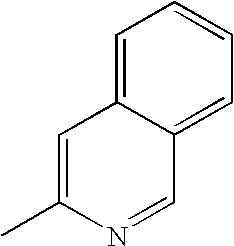 |
 |
H | H | 238.3 |
| 5.3 |
 |
 |
F | H | ÖI |
| 5.4 |
 |
 |
H | F | ÖI |
| 5.5 |
 |
 |
Cl | H | ÖI |
| 5.6 |
 |
 |
H | H | 171.8 |
| 5.7 |
 |
 |
H | H | ÖI |
| 5.8 |
 |
 |
F | H | ÖI |
| 5.9 |
 |
 |
H | H | ÖI |
| 5.10 |
 |
 |
H | F | ÖI |
| 5.11 |
 |
 |
H | H | ÖI |
| 5.12 |
 |
 |
F | H | ÖI |
| 5.13 |
 |
 |
H | F | 156.1 |
| 5.14 |
 |
 |
H | F | ÖI |
| 5.15 |
 |
 |
F | H | ÖI |
| 5.16 |
 |
 |
F | H | 238.6 |
| 5.17 |
 |
 |
H | H | ÖI |
| 5.18 |
 |
 |
H | H | ÖI |
| [Key:] | |||||
| Beispiel = Example; Schmelzpunkt = Melting Point | |||||
 |
| Schmelzpunkt | |||||
| Beispiel | R1 | R3 | R6 | R5 | ° C. |
| 6.1 |
 |
 |
H | H | ÖI |
| 6.2 |
 |
 |
H | H | ÖI |
| 6.3 |
 |
 |
F | H | ÖI |
| 6.4 |
 |
 |
H | F | ÖI |
| 6.5 |
 |
 |
Cl | H | ÖI |
| 6.6 |
 |
 |
H | H | ÖI |
| 6.7 |
 |
 |
H | H | ÖI |
| [Key:] | |||||
| Beispiel = Example; Schmelzpunkt = Melting Point | |||||
 |
| Schmelzpunkt | |||||
| Beispiel | R1 | R3 | R6 | R5 | ° C. |
| 7.1 |
 |
 |
H | H | ÖI |
| 7.2 |
 |
 |
H | H | ÖI |
| 7.3 |
 |
 |
F | H | ÖI |
| 7.4 |
 |
 |
H | F | ÖI |
| 7.5 |
 |
 |
Cl | H | ÖI |
| 7.6 |
 |
 |
H | H | ÖI |
| 7.7 |
 |
 |
H | H | ÖI |
| [Key:] | |||||
| Beispiel = Example; Schmelzpunkt = Melting Point | |||||
 |
| Schmelzpunkt | ||||
| Beispiel | R1 | R6 | R5 | ° C. |
| 8.1 |
 |
Cl | H | ÖI |
| 8.2 |
 |
H | H | 206 |
| 8.3 |
 |
F | H | ÖI |
| 8.4 |
 |
H | F | 58.7 |
| 8.5 |
 |
Cl | H | ÖI |
| 8.6 |
 |
F | H | ÖI |
| 8.7 |
 |
H | H | 211.7 |
| 8.8 |
 |
H | H | 140.4 |
| 8.9 |
 |
H | H | 188.5 |
| 8.10 |
 |
H | H | 258.2 |
| 8.11 |
 |
H | H | 152.6 |
| 8.12 |
 |
H | H | 199.7 |
| 8.13 |
 |
H | H | 178.3 |
| 8.14 |
 |
H | H | 243 |
| 8.15 |
 |
H | H | ÖI |
| 8.16 |
 |
H | H | 230.4 |
| 8.17 |
 |
H | H | ÖI |
| 8.18 |
 |
H | Cl | 235–236 |
| 8.19 |
 |
H | F | 236 |
| 8.20 |
 |
H | Cl | 228.1 |
| 8.21 |
 |
H | H | ÖI |
| 8.22 |
 |
H | F | 197.6 |
| 8.23 |
 |
H | Cl | 59.1 |
| [Key:] | ||||
| Beispiel = Example; Schmelzpunkt = Melting Point | ||||
 |
| Schmelzpunkt | ||
| Beispiel | R3 | ° C. |
| 9.1 |
 |
ÖI |
| 9.2 |
 |
ÖI |
| [Key:] | ||
| Beispiel = Example; Schmelzpunkt = Melting Point | ||
- Stock solutions
- Stock solution A: 3 mmol of ATP in water, pH 7.0 (−70° C.)
- Stock solution B: g-0.33P-ATP 1 mCi/100 μl
- Stock solution C: poly-(Glu4Tyr) 10 mg/ml in water
Solution for Dilutions - Substrate solvent: 10 mmol of DTT, 10 mmol of manganese chloride, 100 mmol of magnesium chloride
- Enzyme solution: 120 mmol of tris/HCl, pH 7.5, 10 μm of sodium vanadium oxide
Sample Application 1
| VEGFR I | VEGFR II | |
| Beispiel-Nr. | (FLT) | (KDR) |
| 2.0 | 0.05 | 0.05 |
| 2.1 | 0.01 | 0.3 |
| 2.2 | 0.1 | 0.5 |
| 2.3 | 0.02 | 0.02 |
| 2.4 | 0.02 | 0.1 |
| 2.5 | 1 | 10 |
| 2.6 | 0.2 | 2 |
| 2.8 | 0.5 | 0.1 |
| 2.9 | 5 | 1 |
| 2.10 | 3 | 10 |
| 2.11 | 0.02 | 0.2 |
| 2.12 | 0.7 | 3 |
| 2.13 | 0.7 | 3 |
| 2.14 | 0.5 | 0.3 |
| 2.15 | 1.0 | KH |
| 2.16 | 0.1 | 0.2 |
| 2.17 | 0.4 | 0.5 |
| 2.18 | 0.3 | 0.5 |
| 2.19 | >10 | >10 |
| 2.20 | 4 | KH |
| 2.21 | 2 | 0.3 |
| 2.23 | 0.02 | 0.67 |
| 2.24 | 0.5 | >1 |
| 2.25 | 0.3 | 0.2 |
| 2.26 | 0.2 | 0.2 |
| 2.27 | 0.02 | 0.02 |
| 2.28 | 1 | 2 |
| 2.29 | 2 | 3 |
| 2.30 | 0.005 | 0.02 |
| 2.31 | 0.1 | 0.27 |
| 2.32 | 0.02 | 0.02 |
| 2.33 | 1 | 2 |
| 2.34 | 2 | 0.1 |
| 2.35 | 0.098 | 0.02 |
| 2.36 | 0.05 | 0.2 |
| 2.37 | 0.2 | |
| 2.38 | 7 | 0.2 |
| 2.39 | 0.05 | 0.03 |
| 2.40 | 0.5 | |
| 2.41 | 1 | 0.3 |
| 2.42 | 0.5 | 0.1 |
| 2.43 | 0.02 | 0.05 |
| 2.44 | 0.3 | 0.2 |
| 2.45 | 0.1 | 1 |
| 2.46 | 0.04 | 0.05 |
| 2.47 | 0.02 | 1 |
| 2.48 | 0.1 | 0.5 |
| 2.49 | 0.08 | 0.05 |
| 2.50 | KH | KH |
| 2.51 | ||
| 2.52 | 0.05 | |
| 2.53 | 0.02 | 0.02 |
| 2.54 | 0.02 | 0.005 |
| 2.55 | 0.3 | 0.2 |
| 2.56 | 0.04 | 0.02 |
| 2.57 | KH | KH |
| 2.58 | 0.5 | 5 |
| 2.59 | 50 | KH |
| 2.60 | 0.5 | 0.7 |
| 2.61 | 10 | 10 |
| 2.63 | 0.0003 | |
| 2.64 | 0.04 | 0.04 |
| 2.65 | 0.0002 | |
| 2.74 | 1 | KH |
| 2.75 | 0.3 | 5 |
| 3.0 | KH | 3.0 |
| 3.2 | 2.0 | 2.0 |
| 4.0 | 0.5 | 0.2 |
| 8.0 | 0.04 | 0.04 |
| 8.2 | 0.2 | 0.2 |
| 8.3 | 0.05 | 0.04 |
| 8.8 | 0.05 | 0.02 |
| 8.9 | 0.5 | 0.5 |
| 8.10 | 0.02 | 0.02 |
| 8.11 | 0.2 | 1 |
| 8.12 | 0.2 | 0.1 |
| 8.13 | 0.5 | 0.5 |
| 8.14 | 0.5 | 0.2 |
| 8.15 | 0.2 | 0.2 |
| 8.16 | 0.2 | 0.3 |
| 8.17 | 0.05 | |
| 8.18 | 0.05 | |
| [Key:] | ||
| Beispiel-Nr. = Example No. | ||
| KH = keine Hemmung = No inhibition | ||
Claims (14)


Applications Claiming Priority (5)
| Application Number | Priority Date | Filing Date | Title |
|---|---|---|---|
| GBGB9824579.8A GB9824579D0 (en) | 1998-11-10 | 1998-11-10 | Organic compounds |
| GB9824579 | 1998-11-10 | ||
| DE19910396 | 1999-03-03 | ||
| DE1999110396 DE19910396C2 (en) | 1999-03-03 | 1999-03-03 | Anthranilic acid amides and their use as medicines |
| PCT/EP1999/008478 WO2000027819A2 (en) | 1998-11-10 | 1999-11-09 | Antrhranilic acid amides and the use thereof as medicaments |
Publications (1)
| Publication Number | Publication Date |
|---|---|
| US7122547B1 true US7122547B1 (en) | 2006-10-17 |
Family
ID=26052266
Family Applications (1)
| Application Number | Title | Priority Date | Filing Date |
|---|---|---|---|
| US09/831,506 Expired - Fee Related US7122547B1 (en) | 1998-11-10 | 1999-11-09 | Anthranilic acid amides and the use thereof as medicaments |
Country Status (22)
| Country | Link |
|---|---|
| US (1) | US7122547B1 (en) |
| EP (1) | EP1129074A2 (en) |
| JP (1) | JP2002529452A (en) |
| KR (2) | KR100777476B1 (en) |
| CN (1) | CN1151133C (en) |
| AU (1) | AU771180B2 (en) |
| BG (1) | BG65371B1 (en) |
| BR (1) | BR9915553A (en) |
| CA (1) | CA2350208A1 (en) |
| CZ (1) | CZ20011631A3 (en) |
| EA (1) | EA004701B1 (en) |
| EE (1) | EE200100258A (en) |
| HR (1) | HRP20010402A2 (en) |
| HU (1) | HUP0104425A3 (en) |
| NO (1) | NO320647B1 (en) |
| NZ (1) | NZ511413A (en) |
| PL (1) | PL348349A1 (en) |
| SK (1) | SK6072001A3 (en) |
| TR (1) | TR200101307T2 (en) |
| UA (1) | UA71587C2 (en) |
| WO (1) | WO2000027819A2 (en) |
| YU (1) | YU31801A (en) |
Cited By (30)
| Publication number | Priority date | Publication date | Assignee | Title |
|---|---|---|---|---|
| US20040266770A1 (en) * | 2001-05-08 | 2004-12-30 | Alexander Ernst | Cyanoanthranilamide derivatives and the use thereof as medicaments |
| US20050207972A1 (en) * | 2004-03-10 | 2005-09-22 | Matthias Friebe | Radiohalogenated benzamide derivatives and their use in tumor diagnosis and tumor therapy |
| US20050261343A1 (en) * | 2000-05-09 | 2005-11-24 | Martin Krueger | Anthranilamides and their use as pharmaceutical agents |
| US20060116380A1 (en) * | 2004-11-03 | 2006-06-01 | Rolf Bohlmann | Novel anthranilamide pyridinureas as vascular endothelial growth factor (VEGF) receptor kinase inhibitors |
| US20060160861A1 (en) * | 2004-11-03 | 2006-07-20 | Rolf Bohlmann | Novel nicotinamide pyridinureas as vascular endothelial growth factor (VEGF) receptor kinase inhibitors |
| US20060264425A1 (en) * | 2004-03-11 | 2006-11-23 | Rolf Bohlmann | Novel anthranilamide pyridinureas as vascular endothelial growth factor (VEGF) receptor kinase inhibitors |
| US20070015794A1 (en) * | 2002-07-31 | 2007-01-18 | Andreas Huth | VEGFR-2 and VEGFR-3 inhibitory anthranilamide pyridines |
| US20070135489A1 (en) * | 2003-06-13 | 2007-06-14 | Andreas Huth | Vegfr-2 and vegfr-3 inhibitory anthranilamide pyridones |
| US20070185171A1 (en) * | 2005-10-21 | 2007-08-09 | Julie Germain | Compounds and methods of use |
| US20080021064A1 (en) * | 2005-03-03 | 2008-01-24 | Santen Pharmaceutical Co., Ltd. | Novel cyclic compound having quinolylalkylthio group |
| US20080039472A1 (en) * | 2004-09-22 | 2008-02-14 | Janssen Pharmaceutica N.V. | Inhibitors of the Interaction Between Mdm2 and P53 |
| US20080154043A1 (en) * | 2006-12-22 | 2008-06-26 | Paul Spurr | Process for the manufacture of 7-oxa-bicyclo derivatives |
| US20080242866A1 (en) * | 2007-03-30 | 2008-10-02 | Norbert Schmees | Synthesis of anthranilamides |
| US20080293696A1 (en) * | 2004-06-23 | 2008-11-27 | Bayer Pharmaceuticals Corporation | 2-Aminoarylcarboxamides Useful as Cancer Chemotherapeutic Agents |
| US20080300236A1 (en) * | 2003-02-03 | 2008-12-04 | Ellen Codd | Quinoline-derived amide modulators of vanilloid vr1 receptor |
| US20100168163A1 (en) * | 2006-03-22 | 2010-07-01 | Jean Fernand Armand Lacrampe | Cyclic-alkylamine derivatives as inhibitors of the interaction between mdm2 and p53 |
| US20110027179A1 (en) * | 2004-03-10 | 2011-02-03 | Matthias Friebe | Radiohalogenated Benzamide Derivatives And Their Use In Tumor Diagnosis And Tumor Therapy |
| US20110130418A1 (en) * | 2007-08-06 | 2011-06-02 | Alain Philippe Poncelet | Substituted phenylenediamines as inhibitors of the interaction between mdm2 and p53 |
| US8232298B2 (en) | 2006-03-22 | 2012-07-31 | Janssen Pharmaceutica N.V. | Inhibitors of the interaction between MDM2 and P53 |
| US8410088B2 (en) | 2011-04-13 | 2013-04-02 | Epizyme, Inc. | Aryl- or heteroaryl-substituted benzene compounds |
| US8598167B1 (en) | 2011-02-28 | 2013-12-03 | Epizyme, Inc. | Substituted 6,5-fused bicyclic heteroaryl compounds |
| US8642624B2 (en) | 2001-01-12 | 2014-02-04 | Amgen Inc. | Substituted alkylamine derivatives and methods of use |
| US8691507B2 (en) | 2010-09-10 | 2014-04-08 | Epizyme, Inc. | Inhibitors of human EZH2 and methods of use thereof |
| US9006242B2 (en) | 2012-10-15 | 2015-04-14 | Epizyme, Inc. | Substituted benzene compounds |
| US9175331B2 (en) | 2010-09-10 | 2015-11-03 | Epizyme, Inc. | Inhibitors of human EZH2, and methods of use thereof |
| US9376422B2 (en) | 2011-04-13 | 2016-06-28 | Epizyme, Inc. | Dihidropyridin-2-one benzamine compounds |
| US9394283B2 (en) | 2012-04-13 | 2016-07-19 | Epizyme, Inc. | Salt form of a human histone methyltransferase EZH2 inhibitor |
| US10040782B2 (en) | 2013-10-16 | 2018-08-07 | Epizyme, Inc. | Hydrochloride salt form for EZH2 inhibition |
| US11091447B2 (en) | 2020-01-03 | 2021-08-17 | Berg Llc | UBE2K modulators and methods for their use |
| US11326212B2 (en) | 2010-06-23 | 2022-05-10 | British Columbia Cancer Agency Branch | Biomarkers for non-hodgkin lymphomas and uses thereof |
Families Citing this family (124)
| Publication number | Priority date | Publication date | Assignee | Title |
|---|---|---|---|---|
| AU2055500A (en) * | 1998-12-23 | 2000-07-31 | Eli Lilly And Company | Aromatic amides |
| DE10023485A1 (en) * | 2000-05-09 | 2001-11-22 | Schering Ag | New 2-((heteroaralkyl)-amino)-benzamide derivatives, are vascular endothelial growth factor (VEGF) receptors, KDR kinase and FLT kinase inhibitors useful for e.g. treating tumors, psoriasis, arthritis or renal diseases |
| DE10023486C1 (en) | 2000-05-09 | 2002-03-14 | Schering Ag | Ortho substituted anthranilic acid amides and their use as medicines |
| AU2001281817B2 (en) * | 2000-06-21 | 2005-11-24 | F. Hoffmann-La Roche Ag | Benzothiazole derivatives |
| CN1486302A (en) * | 2000-12-07 | 2004-03-31 | CV���ƹ�˾ | Substituted 1,3, 5-triazines and pyrimidines as ABCA-1 potentiating compounds against coronary artery disease or arteriosclerosis |
| US20030134836A1 (en) | 2001-01-12 | 2003-07-17 | Amgen Inc. | Substituted arylamine derivatives and methods of use |
| US7102009B2 (en) | 2001-01-12 | 2006-09-05 | Amgen Inc. | Substituted amine derivatives and methods of use |
| US20020147198A1 (en) * | 2001-01-12 | 2002-10-10 | Guoqing Chen | Substituted arylamine derivatives and methods of use |
| US6878714B2 (en) | 2001-01-12 | 2005-04-12 | Amgen Inc. | Substituted alkylamine derivatives and methods of use |
| US7105682B2 (en) * | 2001-01-12 | 2006-09-12 | Amgen Inc. | Substituted amine derivatives and methods of use |
| MX368013B (en) | 2001-02-19 | 2019-09-13 | Novartis Ag | Cancer treatment. |
| US6864255B2 (en) | 2001-04-11 | 2005-03-08 | Amgen Inc. | Substituted triazinyl amide derivatives and methods of use |
| WO2002090352A2 (en) * | 2001-05-08 | 2002-11-14 | Schering Aktiengesellschaft | Selective anthranilamide pyridine amides as inhibitors of vegfr-2 and vegfr-3 |
| DE10123587B4 (en) * | 2001-05-08 | 2005-04-07 | Schering Ag | Cyanoanthranylamide derivatives and their use as pharmaceuticals |
| DE10123573B4 (en) * | 2001-05-08 | 2005-06-02 | Schering Ag | N-Oxidanthranylamide derivatives and their use as pharmaceuticals |
| WO2002090349A1 (en) * | 2001-05-08 | 2002-11-14 | Schering Aktiengesellschaft | N-oxide anthranylamide derivatives and their use as medicaments |
| CA2444867C (en) | 2001-05-16 | 2010-08-17 | Novartis Ag | Combination comprising n-{5-[4-(4-methyl-piperazino-methyl)-benzoylamido]-2-methylphenyl}-4-(3-pyridyl)-2pyrimidine-amine and a chemotherapeutic agent |
| WO2002100833A1 (en) * | 2001-06-12 | 2002-12-19 | Sumitomo Pharmaceuticals Company, Limited | Rho KINASE INHIBITORS |
| TWI315982B (en) | 2001-07-19 | 2009-10-21 | Novartis Ag | Combinations comprising epothilones and pharmaceutical uses thereof |
| US7132438B2 (en) | 2001-10-09 | 2006-11-07 | Amgen Inc. | Benzimidazole derivatives |
| GB0126902D0 (en) * | 2001-11-08 | 2002-01-02 | Novartis Ag | Organic compounds |
| GB0206215D0 (en) | 2002-03-15 | 2002-05-01 | Novartis Ag | Organic compounds |
| PT1505959E (en) | 2002-05-16 | 2009-02-05 | Novartis Ag | Use of edg receptor binding agents in cancer |
| US7307088B2 (en) * | 2002-07-09 | 2007-12-11 | Amgen Inc. | Substituted anthranilic amide derivatives and methods of use |
| US7094789B2 (en) | 2002-07-22 | 2006-08-22 | Asahi Kasei Pharma Corporation | 5-substituted isoquinoline derivatives |
| DE10235690A1 (en) * | 2002-07-31 | 2004-02-19 | Schering Ag | New N-benzyl-anthranilic acid (hetero)arylamide derivatives and analogs, are tyrosine kinase KDR and FLT inhibitors and angiogenesis inhibitors, useful e.g. for treating tumors, psoriasis or restenosis |
| US7338956B2 (en) | 2002-08-07 | 2008-03-04 | Sanofi-Aventis Deutschland Gmbh | Acylamino-substituted heteroaromatic compounds and their use as pharmaceuticals |
| EP1388341A1 (en) * | 2002-08-07 | 2004-02-11 | Aventis Pharma Deutschland GmbH | Acylamino-substituted heteroaromatic compounds and their use as pharmaceuticals |
| US7365070B2 (en) | 2002-12-04 | 2008-04-29 | Ore Pharmaceuticals Inc. | Modulators of melanocortin receptor |
| TWI299664B (en) | 2003-01-06 | 2008-08-11 | Osi Pharm Inc | (2-carboxamido)(3-amino)thiophene compounds |
| US7696225B2 (en) | 2003-01-06 | 2010-04-13 | Osi Pharmaceuticals, Inc. | (2-carboxamido)(3-Amino) thiophene compounds |
| US7087761B2 (en) | 2003-01-07 | 2006-08-08 | Hoffmann-La Roche Inc. | Cyclization process for substituted benzothiazole derivatives |
| EP1606289B1 (en) | 2003-02-14 | 2009-12-02 | Glaxo Group Limited | Carboxamide derivatives |
| TWI422583B (en) | 2003-03-07 | 2014-01-11 | 參天製藥股份有限公司 | Novel compound having 4-pyridylalkylthio group as substituent |
| CL2004001120A1 (en) | 2003-05-19 | 2005-04-15 | Irm Llc | COMPOUNDS DERIVED FROM AMINA REPLACED WITH HETEROCICLES, IMMUNOSUPPRESSORS; PHARMACEUTICAL COMPOSITION; AND USE TO TREAT DISEASES MEDIATED BY LYMPHOCYTE INTERACTIONS, SUCH AS AUTOIMMUNE, INFLAMMATORY, INFECTIOUS, CANCER DISEASES. |
| MY150088A (en) | 2003-05-19 | 2013-11-29 | Irm Llc | Immunosuppressant compounds and compositions |
| EP1628661A2 (en) * | 2003-06-05 | 2006-03-01 | Vertex Pharmaceuticals Incorporated | Modulators of vr1 receptor |
| DE10327719A1 (en) * | 2003-06-13 | 2005-01-20 | Schering Ag | VEGFR-2 and VEGFR-3 Inhibitory anthranylamide pyridones |
| WO2006074147A2 (en) | 2005-01-03 | 2006-07-13 | Myriad Genetics, Inc. | Nitrogen containing bicyclic compounds and therapeutical use thereof |
| AU2004253967B2 (en) | 2003-07-03 | 2010-02-18 | Cytovia, Inc. | 4-arylamino-quinazolines as activators of caspases and inducers of apoptosis |
| US8309562B2 (en) | 2003-07-03 | 2012-11-13 | Myrexis, Inc. | Compounds and therapeutical use thereof |
| EP1653951B1 (en) | 2003-07-11 | 2011-12-28 | Merck Patent GmbH | Benzimidazole derivatives as raf kinase inhibitors |
| GB0326601D0 (en) * | 2003-11-14 | 2003-12-17 | Novartis Ag | Organic compounds |
| UA89035C2 (en) | 2003-12-03 | 2009-12-25 | Лео Фарма А/С | Hydroxamic acid esters and pharmaceutical use thereof |
| BRPI0507757A (en) | 2004-02-17 | 2007-07-10 | Santen Pharmaceutical Co Ltd | compound, pharmaceutical composition, and therapeutic agent for a disease in which angiogenesis or vascular hypermeability is involved. |
| DE102004009238A1 (en) * | 2004-02-26 | 2005-09-08 | Merck Patent Gmbh | New aryl amide compounds are kinase inhibitors useful for the treatment and/or prophylaxis of e.g. tumors, psoriasis, rheumatoid arthritis, contact dermatitis, inflammations, endometriosis, scar and benign prostatic hyperplasia |
| EP1568368A1 (en) * | 2004-02-26 | 2005-08-31 | Schering Aktiengesellschaft | Pharmaceutical combination comprising a CDK inhibitor and a VEGF receptor inhibitor |
| WO2005085188A2 (en) * | 2004-03-02 | 2005-09-15 | Compass Pharmaceuticals Llc | Compounds and methods for anti-tumor therapy |
| RS50574B (en) | 2004-05-24 | 2010-05-07 | F. Hoffmann-La Roche Ag. | (4-METHOXY-7-MORPHOLIN-4-IL-BENZOTIAZOL-2-IL) -AMIDE 4-HYDROXY-4-METHYL-PIPERIDINE-1-CARBOXYLIC ACIDS |
| GB0512324D0 (en) | 2005-06-16 | 2005-07-27 | Novartis Ag | Organic compounds |
| EP1655297A1 (en) * | 2004-11-03 | 2006-05-10 | Schering Aktiengesellschaft | Nicotinamide pyridinureas as vascular endothelial growth factor (VEGF) receptor kinase inhibitors |
| ES2309814T3 (en) | 2004-11-05 | 2008-12-16 | F. Hoffmann-La Roche Ag | PROCESS FOR OBTAINING DERIVATIVES OF ISONICOTINIC ACID. |
| US8258145B2 (en) | 2005-01-03 | 2012-09-04 | Myrexis, Inc. | Method of treating brain cancer |
| WO2006099972A1 (en) | 2005-03-23 | 2006-09-28 | F. Hoffmann-La Roche Ag | Acetylenyl-pyrazolo-pvrimidine derivatives as mglur2 antagonists |
| EP1864977B1 (en) | 2005-03-31 | 2015-07-29 | Santen Pharmaceutical Co., Ltd. | Novel cyclic compound having pyrimidinylalkylthio group |
| GB0510390D0 (en) | 2005-05-20 | 2005-06-29 | Novartis Ag | Organic compounds |
| US20080255149A1 (en) | 2005-09-27 | 2008-10-16 | Novartis Ag | Carboxyamine Compounds and Methods of Use Thereof |
| JP5048675B2 (en) | 2005-09-27 | 2012-10-17 | エフ.ホフマン−ラ ロシュ アーゲー | Oxadiazolyl pyrazolo-pyrimidines as mGluR2 antagonists |
| NO20220050A1 (en) | 2005-11-21 | 2008-08-12 | Novartis Ag | Neuroendocrine tumor treatment |
| CA2629964A1 (en) * | 2005-11-30 | 2007-06-07 | Astellas Pharma Inc. | 2-aminobenzamide derivative |
| US20090098137A1 (en) | 2006-04-05 | 2009-04-16 | Novartis Ag | Combinations of therapeutic agents for treating cancer |
| NZ572299A (en) | 2006-05-09 | 2010-07-30 | Novartis Ag | Combination comprising a substituted 3,5-diphenyl-1,2,4-triazole and a platinum compound and use thereof |
| GB0612721D0 (en) | 2006-06-27 | 2006-08-09 | Novartis Ag | Organic compounds |
| WO2008037477A1 (en) | 2006-09-29 | 2008-04-03 | Novartis Ag | Pyrazolopyrimidines as p13k lipid kinase inhibitors |
| WO2008093677A1 (en) | 2007-01-29 | 2008-08-07 | Santen Pharmaceutical Co., Ltd. | Novel oxadiazole derivatives and thiadiazole derivatives having neovascularization inhibiting activity |
| US20100069458A1 (en) | 2007-02-15 | 2010-03-18 | Peter Wisdom Atadja | Combination of lbh589 with other therapeutic agents for treating cancer |
| GEP20125708B (en) | 2008-03-26 | 2012-12-10 | Novartis Ag | Hydroxamate-based inhibitors of deacetylases b |
| RU2522444C2 (en) | 2008-08-27 | 2014-07-10 | Лео Фарма А/С | Pyridine derivatives as inhibitors of vascular endothelium growth factor receptors 2 (vegfr-2) and protein tyrosine kinase |
| ES2704986T3 (en) | 2008-10-16 | 2019-03-21 | Celator Pharmaceuticals Inc | Combinations of a water-soluble liposomal camptothecin with cetuximab or bevacizumab |
| US20120115840A1 (en) | 2008-12-18 | 2012-05-10 | Lech Ciszewski | Hemifumarate salt of 1-[4-[1-(4-cyclohexyl-3-trifluoromethyl-benzyloxyimino)-ethyl]-2-ethyl-benzyl]-azetidine-3-carboxylic acid |
| JP2012512884A (en) | 2008-12-18 | 2012-06-07 | ノバルティス アーゲー | Novel polymorphic form of 1- (4- {1-[(E) -4-cyclohexyl-3-trifluoromethyl-benzyloxyimino] -ethyl} -2-ethyl-benzyl) -azetidine-3-carboxylic acid |
| KR20110101159A (en) | 2008-12-18 | 2011-09-15 | 노파르티스 아게 | New salt |
| PL2391366T3 (en) | 2009-01-29 | 2013-04-30 | Novartis Ag | Substituted benzimidazoles for the treatment of astrocytomas |
| TWI476189B (en) | 2009-02-04 | 2015-03-11 | Janssen Pharmaceutica Nv | Indole derivatives as anticancer agents |
| WO2010149755A1 (en) | 2009-06-26 | 2010-12-29 | Novartis Ag | 1, 3-disubstituted imidazolidin-2-one derivatives as inhibitors of cyp 17 |
| US8389526B2 (en) | 2009-08-07 | 2013-03-05 | Novartis Ag | 3-heteroarylmethyl-imidazo[1,2-b]pyridazin-6-yl derivatives |
| EA201200260A1 (en) | 2009-08-12 | 2012-09-28 | Новартис Аг | HETEROCYCLIC HYDRAZONES AND THEIR APPLICATION FOR THE TREATMENT OF CANCER AND INFLAMMATION |
| NZ598220A (en) | 2009-08-17 | 2014-02-28 | Intellikine Llc | Heterocyclic compounds and uses thereof |
| CA2771432A1 (en) | 2009-08-20 | 2011-02-24 | Novartis Ag | Heterocyclic oxime compounds |
| IN2012DN01693A (en) | 2009-08-26 | 2015-06-05 | Novartis Ag | |
| CN102596963A (en) | 2009-09-10 | 2012-07-18 | 诺瓦提斯公司 | Ether derivatives of bicyclic heteroaryls |
| AU2010317167B2 (en) | 2009-11-04 | 2012-11-29 | Novartis Ag | Heterocyclic sulfonamide derivatives useful as MEK inhibitors |
| WO2011064211A1 (en) | 2009-11-25 | 2011-06-03 | Novartis Ag | Benzene-fused 6-membered oxygen-containing heterocyclic derivatives of bicyclic heteroaryls |
| EA201200823A1 (en) | 2009-12-08 | 2013-02-28 | Новартис Аг | HETEROCYCLIC DERIVATIVES OF SULPHONAMIDES |
| US8440693B2 (en) | 2009-12-22 | 2013-05-14 | Novartis Ag | Substituted isoquinolinones and quinazolinones |
| CU24130B1 (en) | 2009-12-22 | 2015-09-29 | Novartis Ag | ISOQUINOLINONES AND REPLACED QUINAZOLINONES |
| JP2013528635A (en) | 2010-06-17 | 2013-07-11 | ノバルティス アーゲー | Biphenyl-substituted 1,3-dihydro-benzimidazol-2-ylideneamine derivatives |
| WO2011157793A1 (en) | 2010-06-17 | 2011-12-22 | Novartis Ag | Piperidinyl substituted 1,3-dihydro-benzoimidazol-2-ylideneamine derivatives |
| JP2013537210A (en) | 2010-09-16 | 2013-09-30 | ノバルティス アーゲー | 17α-hydroxylase / C17,20-lyase inhibitor |
| EP2673277A1 (en) | 2011-02-10 | 2013-12-18 | Novartis AG | [1, 2, 4]triazolo [4, 3 -b]pyridazine compounds as inhibitors of the c-met tyrosine kinase |
| WO2012116237A2 (en) | 2011-02-23 | 2012-08-30 | Intellikine, Llc | Heterocyclic compounds and uses thereof |
| JP2014507465A (en) | 2011-03-08 | 2014-03-27 | ノバルティス アーゲー | Fluorophenyl bicyclic heteroaryl compounds |
| US9029399B2 (en) | 2011-04-28 | 2015-05-12 | Novartis Ag | 17α-hydroxylase/C17,20-lyase inhibitors |
| EA201391820A1 (en) | 2011-06-09 | 2014-12-30 | Новартис Аг | HETEROCYCLIC SULPHONAMIDE DERIVATIVES |
| WO2012175520A1 (en) | 2011-06-20 | 2012-12-27 | Novartis Ag | Hydroxy substituted isoquinolinone derivatives |
| US8859586B2 (en) | 2011-06-20 | 2014-10-14 | Novartis Ag | Cyclohexyl isoquinolinone compounds |
| CA2848809A1 (en) | 2011-09-15 | 2013-03-21 | Novartis Ag | 6-substituted 3-(quinolin-6-ylthio)-[1,2,4]triazolo[4,3-a]pyradines as c-met tyrosine kinase |
| WO2013080141A1 (en) | 2011-11-29 | 2013-06-06 | Novartis Ag | Pyrazolopyrrolidine compounds |
| WO2013096051A1 (en) | 2011-12-23 | 2013-06-27 | Novartis Ag | Compounds for inhibiting the interaction of bcl2 with binding partners |
| EP2794591A1 (en) | 2011-12-23 | 2014-10-29 | Novartis AG | Compounds for inhibiting the interaction of bcl2 with binding partners |
| US9126980B2 (en) | 2011-12-23 | 2015-09-08 | Novartis Ag | Compounds for inhibiting the interaction of BCL2 with binding partners |
| BR112014015308A8 (en) | 2011-12-23 | 2017-06-13 | Novartis Ag | compounds for inhibiting bcl2 interaction with binding counterparts |
| EP2794592A1 (en) | 2011-12-23 | 2014-10-29 | Novartis AG | Compounds for inhibiting the interaction of bcl2 with binding partners |
| CN102603729A (en) * | 2012-01-12 | 2012-07-25 | 贵州大学 | N-(2-(substituted benzothiazole-2-formamyl)-substituted phenyl) pyridine carboxamide derivative |
| UY34591A (en) | 2012-01-26 | 2013-09-02 | Novartis Ag | IMIDAZOPIRROLIDINONA COMPOUNDS |
| US9725427B2 (en) | 2012-03-16 | 2017-08-08 | Biohaven Pharmaceutical Holding Company Limited | Prodrugs of riluzole and their method of use |
| AU2013243097A1 (en) | 2012-04-03 | 2014-10-09 | Novartis Ag | Combination products with tyrosine kinase inhibitors and their use |
| EP2855483B1 (en) | 2012-05-24 | 2017-10-25 | Novartis AG | Pyrrolopyrrolidinone compounds |
| US9556180B2 (en) | 2013-01-22 | 2017-01-31 | Novartis Ag | Pyrazolo[3,4-d]pyrimidinone compounds as inhibitors of the P53/MDM2 interaction |
| WO2014115077A1 (en) | 2013-01-22 | 2014-07-31 | Novartis Ag | Substituted purinone compounds |
| EP2968340A4 (en) | 2013-03-15 | 2016-08-10 | Intellikine Llc | Combination of kinase inhibitors and uses thereof |
| CN103130696B (en) * | 2013-03-21 | 2014-06-11 | 山东大学 | Anthranilamide compound as well as preparation method and application thereof |
| WO2014155268A2 (en) | 2013-03-25 | 2014-10-02 | Novartis Ag | Fgf-r tyrosine kinase activity inhibitors - use in diseases associated with lack of or reduced snf5 activity |
| WO2015022664A1 (en) | 2013-08-14 | 2015-02-19 | Novartis Ag | Compounds and compositions as inhibitors of mek |
| US9227969B2 (en) | 2013-08-14 | 2016-01-05 | Novartis Ag | Compounds and compositions as inhibitors of MEK |
| WO2015022663A1 (en) | 2013-08-14 | 2015-02-19 | Novartis Ag | Compounds and compositions as inhibitors of mek |
| CN103405434A (en) * | 2013-08-22 | 2013-11-27 | 中国药科大学 | VEGFR-2 (Vascular Endothelial Growth Factor Receptor-2) inhibitor and application thereof |
| CN104163794A (en) * | 2013-10-17 | 2014-11-26 | 中国药科大学 | 2-amino aromatic ring vascular endothelial growth factor receptor (VEGFR) inhibitor, preparation method and use thereof |
| TW201605450A (en) | 2013-12-03 | 2016-02-16 | 諾華公司 | Combination of Mdm2 inhibitor and BRAF inhibitor and their use |
| CA2954862A1 (en) | 2014-07-31 | 2016-02-04 | Novartis Ag | Combination therapy |
| US12023353B2 (en) | 2017-10-18 | 2024-07-02 | Chemotherapeutisches Forschungsinstitut Georg-Speyer-Haus | Methods and compounds for improved immune cell therapy |
| US11602534B2 (en) | 2017-12-21 | 2023-03-14 | Hefei Institutes Of Physical Science, Chinese Academy Of Sciences | Pyrimidine derivative kinase inhibitors |
| WO2021097256A1 (en) | 2019-11-14 | 2021-05-20 | Cohbar, Inc. | Cxcr4 antagonist peptides |
| WO2022222890A1 (en) * | 2021-04-19 | 2022-10-27 | Shanghai Yao Yuan Biotechnology Co., Ltd. | Benzothiazole and quinoline derivatives for use in treating kawasaki disease |
Citations (8)
| Publication number | Priority date | Publication date | Assignee | Title |
|---|---|---|---|---|
| US3226394A (en) * | 1964-06-16 | 1965-12-28 | Shulton Inc | Pyridylethylated anthranilamides and derivatives thereof |
| US3409668A (en) | 1964-11-07 | 1968-11-05 | Palazzo Giuseppe | Substituted anthranilamides and process for the preparation thereof |
| JPS50157383A (en) | 1974-05-24 | 1975-12-19 | ||
| DE2652144A1 (en) | 1976-11-16 | 1978-05-18 | Merck Patent Gmbh | Quinazoline:di:one derivs. - useful as analgesics, antiinflammatory agents and sedatives |
| DE3406416A1 (en) | 1983-02-28 | 1984-08-30 | American Cyanamid Co., Wayne, N.J. | N - ((OMEGA) - (1H-IMIDAZOLE-L-YL) -ALKYL) -ARYLAMIDE |
| US4568687A (en) | 1983-02-28 | 1986-02-04 | American Cyanamid Company | N-[2-4-(1H-Imidazol-1-yl)alkyl]-arylamides and pharmaceutical compositions |
| EP0564356A1 (en) | 1992-04-01 | 1993-10-06 | Fournier Industrie Et Sante | 4-phenylaminomethylimidazole derivatives, process for their preparation, angiotensin II receptor antagonists and their application in therapy |
| US5716993A (en) * | 1993-12-27 | 1998-02-10 | Eisai Co., Ltd. | Anthranilic acid derivatives |
Family Cites Families (1)
| Publication number | Priority date | Publication date | Assignee | Title |
|---|---|---|---|---|
| WO1997034895A1 (en) * | 1996-03-15 | 1997-09-25 | Novartis Ag | Novel n-7-heterocyclyl pyrrolo[2,3-d]pyridines and their use |
-
1999
- 1999-09-11 UA UA2001063917A patent/UA71587C2/en unknown
- 1999-11-09 KR KR1020017005800A patent/KR100777476B1/en not_active Expired - Fee Related
- 1999-11-09 HU HU0104425A patent/HUP0104425A3/en unknown
- 1999-11-09 CN CNB998130788A patent/CN1151133C/en not_active Expired - Fee Related
- 1999-11-09 HR HR20010402A patent/HRP20010402A2/en not_active Application Discontinuation
- 1999-11-09 AU AU10454/00A patent/AU771180B2/en not_active Ceased
- 1999-11-09 PL PL99348349A patent/PL348349A1/en not_active Application Discontinuation
- 1999-11-09 KR KR1020077015852A patent/KR100855396B1/en not_active Expired - Fee Related
- 1999-11-09 WO PCT/EP1999/008478 patent/WO2000027819A2/en not_active Ceased
- 1999-11-09 NZ NZ511413A patent/NZ511413A/en unknown
- 1999-11-09 EA EA200100524A patent/EA004701B1/en not_active IP Right Cessation
- 1999-11-09 EP EP99953967A patent/EP1129074A2/en not_active Withdrawn
- 1999-11-09 CZ CZ20011631A patent/CZ20011631A3/en unknown
- 1999-11-09 JP JP2000580999A patent/JP2002529452A/en not_active Withdrawn
- 1999-11-09 TR TR2001/01307T patent/TR200101307T2/en unknown
- 1999-11-09 SK SK607-2001A patent/SK6072001A3/en unknown
- 1999-11-09 CA CA002350208A patent/CA2350208A1/en not_active Abandoned
- 1999-11-09 US US09/831,506 patent/US7122547B1/en not_active Expired - Fee Related
- 1999-11-09 BR BR9915553-2A patent/BR9915553A/en not_active Application Discontinuation
- 1999-11-09 YU YU31801A patent/YU31801A/en unknown
- 1999-11-09 EE EEP200100258A patent/EE200100258A/en unknown
-
2001
- 2001-05-07 NO NO20012245A patent/NO320647B1/en unknown
- 2001-06-11 BG BG105588A patent/BG65371B1/en unknown
Patent Citations (8)
| Publication number | Priority date | Publication date | Assignee | Title |
|---|---|---|---|---|
| US3226394A (en) * | 1964-06-16 | 1965-12-28 | Shulton Inc | Pyridylethylated anthranilamides and derivatives thereof |
| US3409668A (en) | 1964-11-07 | 1968-11-05 | Palazzo Giuseppe | Substituted anthranilamides and process for the preparation thereof |
| JPS50157383A (en) | 1974-05-24 | 1975-12-19 | ||
| DE2652144A1 (en) | 1976-11-16 | 1978-05-18 | Merck Patent Gmbh | Quinazoline:di:one derivs. - useful as analgesics, antiinflammatory agents and sedatives |
| DE3406416A1 (en) | 1983-02-28 | 1984-08-30 | American Cyanamid Co., Wayne, N.J. | N - ((OMEGA) - (1H-IMIDAZOLE-L-YL) -ALKYL) -ARYLAMIDE |
| US4568687A (en) | 1983-02-28 | 1986-02-04 | American Cyanamid Company | N-[2-4-(1H-Imidazol-1-yl)alkyl]-arylamides and pharmaceutical compositions |
| EP0564356A1 (en) | 1992-04-01 | 1993-10-06 | Fournier Industrie Et Sante | 4-phenylaminomethylimidazole derivatives, process for their preparation, angiotensin II receptor antagonists and their application in therapy |
| US5716993A (en) * | 1993-12-27 | 1998-02-10 | Eisai Co., Ltd. | Anthranilic acid derivatives |
Non-Patent Citations (13)
| Title |
|---|
| Carmellet and Jain, Angiogenesis in cancer and other diseases, Nature 407:249-257 (2000). * |
| CAS printout for Kovac et al. Chem Abs. 100: 34516 (1984). * |
| CAS printout for Wright et al. Chem. Abs. 102: 78876. (1985). * |
| Chemical Abstracts, vol. 85, No. 3, Jul. 19, 1976 (Jul. 19, 1976) Columbus, Ohio, US: abstract No. 21433p, Noda, Kanji et al: "Quinazoline compounds" Seite 701: XP002135867 & JP 50 157383 A (Hisamitsu Pharmaceutical Co., Ltd., Japan) Dec. 19, 1975 (Dec. 19, 1975). |
| Database Chemabs \377Online\377 Chemical Abstracts Service, Columbus, Ohio, US Montginoul, C. et al: "Analgesic anticonvulsant and anti-inflammatory activities of IH,3H-quinazoline-2,4-diones" retrieved from STN Database accession No. 110:165551h XP002135868 & Ann. Pharm. Fr. (1989), 46(4), 223-32. |
| English Abstract of DE 2652144 A. |
| English Abstract of EP 0564356 A1. |
| English Abstract of EP0564356A1: 4-phenylaminomethylimidazole derivatives, process for their preparation, angiotensin II receptor antagonists and their application in therapy [German][French], Dodey, Pierre et al. Jan. 4, 1992. |
| English Abstract of Hardtmann, Goetz E. et al: "Chemistry of 2H-3,1-benzoxazine-2,4(1H)-dione (isatoic anhydrides). 1. Synthesis of N-substituted 2H-3,1-benzoxazine-2,4(1H)-diones" Journal of Heterocyclic Chemistry., Bd. 12, Nr. 3, 1975, Seiten 565-572, XP002135866 Heterocorporation. Provo., US ISSN: 0022-152X. |
| English Abstract of JP 50157383 A. |
| English Abstract of Pastor, G. et al: "Synthesis of new 1H,3H-quinazoline-2,4-diones" Bulletin de la Societe Chimique de France., Bd. 5-6, Nr. 2, 1975, Seiten 1331-1338, XP002135865 Societe Francaise de Chimie. Paris., FR ISSN: 0037-8968. |
| Hardtmann, Goetz E. et al: "Chemistry of 2H-3, 1-benzoxazine-2,4(1H)-dione (isatoic anhydrides). 1. Synthesis of N-substituted 2H-3,1-benzoxazine-2,4(1H)-diones" Journal of Heterocyclic Chemistry., Bd. 12, Nr. 3, 1975, Seiten 565-572, XP002135866 Heterocorporation. Provo., US ISSN: 0022-152X. |
| Pastor, G. et al: "Synthesis of new 1H,3H-quinazoline-2,4-diones" Bulletin de la Societe Chimique de France., Bd. 5-6, Nr. 2, 1975, Seiten 1331-1338, XP002135865 Societe Francaise de Chimie. Paris., Fr ISSN: 0037-8968. |
Cited By (79)
| Publication number | Priority date | Publication date | Assignee | Title |
|---|---|---|---|---|
| US20050261343A1 (en) * | 2000-05-09 | 2005-11-24 | Martin Krueger | Anthranilamides and their use as pharmaceutical agents |
| US8642624B2 (en) | 2001-01-12 | 2014-02-04 | Amgen Inc. | Substituted alkylamine derivatives and methods of use |
| US7429592B2 (en) | 2001-05-08 | 2008-09-30 | Schering Aktienegesellschaft | Cyanoanthranilamide derivatives and the use thereof as medicaments |
| US20040266770A1 (en) * | 2001-05-08 | 2004-12-30 | Alexander Ernst | Cyanoanthranilamide derivatives and the use thereof as medicaments |
| US7615565B2 (en) | 2002-07-31 | 2009-11-10 | Bayer Schering Pharma Aktiengesellschaft | VEGFR-2 and VEGFR-3 inhibitory anthranilamide pyridines |
| US20070015794A1 (en) * | 2002-07-31 | 2007-01-18 | Andreas Huth | VEGFR-2 and VEGFR-3 inhibitory anthranilamide pyridines |
| US8394828B2 (en) * | 2003-02-03 | 2013-03-12 | Janssen Pharmaceutica, Nv | Quinoline-derived amide modulators of vanilloid VR1 receptor |
| US20080300236A1 (en) * | 2003-02-03 | 2008-12-04 | Ellen Codd | Quinoline-derived amide modulators of vanilloid vr1 receptor |
| US20070135489A1 (en) * | 2003-06-13 | 2007-06-14 | Andreas Huth | Vegfr-2 and vegfr-3 inhibitory anthranilamide pyridones |
| US20110027179A1 (en) * | 2004-03-10 | 2011-02-03 | Matthias Friebe | Radiohalogenated Benzamide Derivatives And Their Use In Tumor Diagnosis And Tumor Therapy |
| US7850948B2 (en) | 2004-03-10 | 2010-12-14 | Bayer Schering Pharma Ag | Radiohalogenated benzamide derivatives and their use in tumor diagnosis and tumor therapy |
| US7427390B2 (en) * | 2004-03-10 | 2008-09-23 | Schering Ag | Radiohalogenated benzamide derivatives and their use in tumor diagnosis and tumor therapy |
| US20090012090A1 (en) * | 2004-03-10 | 2009-01-08 | Matthias Friebe | Radiohalogenated Benzamide Derivatives And Their Use In Tumor Diagnosis And Tumor Therapy |
| US20110052492A1 (en) * | 2004-03-10 | 2011-03-03 | Matthias Friebe | Radiohalogenated Benzamide Derivatives And Their Use In Tumor Diagnosis And Tumor Therapy |
| US20050207972A1 (en) * | 2004-03-10 | 2005-09-22 | Matthias Friebe | Radiohalogenated benzamide derivatives and their use in tumor diagnosis and tumor therapy |
| US20060264425A1 (en) * | 2004-03-11 | 2006-11-23 | Rolf Bohlmann | Novel anthranilamide pyridinureas as vascular endothelial growth factor (VEGF) receptor kinase inhibitors |
| US20080293696A1 (en) * | 2004-06-23 | 2008-11-27 | Bayer Pharmaceuticals Corporation | 2-Aminoarylcarboxamides Useful as Cancer Chemotherapeutic Agents |
| US8404683B2 (en) | 2004-09-22 | 2013-03-26 | Janssen Pharmaceutical N.V. | Inhibitors of the interaction between MDM2 and P53 |
| US20080039472A1 (en) * | 2004-09-22 | 2008-02-14 | Janssen Pharmaceutica N.V. | Inhibitors of the Interaction Between Mdm2 and P53 |
| US7834016B2 (en) | 2004-09-22 | 2010-11-16 | Janssen Pharmaceutica Nv | Inhibitors of the interaction between MDM2 and p53 |
| US20110053937A1 (en) * | 2004-09-22 | 2011-03-03 | Jean Fernand Armand Lacrampe | Inhibitors of the Interaction Between MDM2 and P53 |
| US7572794B2 (en) | 2004-11-03 | 2009-08-11 | Bayer Schering Pharma Ag | Anthranilamide pyridinureas as vascular endothelial growth factor (VEGF) receptor kinase inhibitors |
| US20110124680A1 (en) * | 2004-11-03 | 2011-05-26 | Rolf Bohlmann | Novel anthranilamide pyridinureas as vascular endothelial growth factor (vegf) receptor kinase inhibitors |
| US20060160861A1 (en) * | 2004-11-03 | 2006-07-20 | Rolf Bohlmann | Novel nicotinamide pyridinureas as vascular endothelial growth factor (VEGF) receptor kinase inhibitors |
| US20060116380A1 (en) * | 2004-11-03 | 2006-06-01 | Rolf Bohlmann | Novel anthranilamide pyridinureas as vascular endothelial growth factor (VEGF) receptor kinase inhibitors |
| US7902229B2 (en) | 2004-11-03 | 2011-03-08 | Bayer Schering Pharma Ag | Anthranilamide pyridinureas as vascular endothelial growth factor (VEGF) receptor kinase inhibitors |
| US7906533B2 (en) | 2004-11-03 | 2011-03-15 | Bayer Schering Pharma Ag | Nicotinamide pyridinureas as vascular endothelial growth factor (VEGF) receptor kinase inhibitors |
| US20080021064A1 (en) * | 2005-03-03 | 2008-01-24 | Santen Pharmaceutical Co., Ltd. | Novel cyclic compound having quinolylalkylthio group |
| US7897774B2 (en) | 2005-03-03 | 2011-03-01 | Santen Pharmaceutical Co., Ltd. | Cyclic compound having quinolylalkylthio group |
| US8247556B2 (en) | 2005-10-21 | 2012-08-21 | Amgen Inc. | Method for preparing 6-substituted-7-aza-indoles |
| US20070185171A1 (en) * | 2005-10-21 | 2007-08-09 | Julie Germain | Compounds and methods of use |
| US20100168163A1 (en) * | 2006-03-22 | 2010-07-01 | Jean Fernand Armand Lacrampe | Cyclic-alkylamine derivatives as inhibitors of the interaction between mdm2 and p53 |
| US8088795B2 (en) | 2006-03-22 | 2012-01-03 | Janssen Pharmaceutica N.V. | Cyclic-alkylamine derivatives as inhibitors of the interaction between MDM2 and p53 |
| US8232298B2 (en) | 2006-03-22 | 2012-07-31 | Janssen Pharmaceutica N.V. | Inhibitors of the interaction between MDM2 and P53 |
| US8377961B2 (en) | 2006-03-22 | 2013-02-19 | Janssen Pharmaceutica N.V. | Cyclic-alkylamine derivatives as inhibitors of the interaction between MDM2 and P53 |
| US20080154043A1 (en) * | 2006-12-22 | 2008-06-26 | Paul Spurr | Process for the manufacture of 7-oxa-bicyclo derivatives |
| US20080242866A1 (en) * | 2007-03-30 | 2008-10-02 | Norbert Schmees | Synthesis of anthranilamides |
| US20110130418A1 (en) * | 2007-08-06 | 2011-06-02 | Alain Philippe Poncelet | Substituted phenylenediamines as inhibitors of the interaction between mdm2 and p53 |
| US8853406B2 (en) | 2007-08-06 | 2014-10-07 | Janssen Pharmaceutica Nv | Substituted phenylenediamines as inhibitors of the interaction between MDM2 and P53 |
| US11326212B2 (en) | 2010-06-23 | 2022-05-10 | British Columbia Cancer Agency Branch | Biomarkers for non-hodgkin lymphomas and uses thereof |
| US9175331B2 (en) | 2010-09-10 | 2015-11-03 | Epizyme, Inc. | Inhibitors of human EZH2, and methods of use thereof |
| US8691507B2 (en) | 2010-09-10 | 2014-04-08 | Epizyme, Inc. | Inhibitors of human EZH2 and methods of use thereof |
| US9949999B2 (en) | 2010-09-10 | 2018-04-24 | Epizyme, Inc. | Inhibitors of human EZH2, and methods of use thereof |
| US8895245B2 (en) | 2010-09-10 | 2014-11-25 | Epizyme, Inc. | Inhibitors of human EZH2 and methods of use thereof |
| US9333217B2 (en) | 2010-09-10 | 2016-05-10 | Epizyme, Inc. | Inhibitors of human EZH2, and methods of use thereof |
| US9334527B2 (en) | 2010-09-10 | 2016-05-10 | Epizyme, Inc. | Inhibitors of human EZH2, and methods of use thereof |
| US8598167B1 (en) | 2011-02-28 | 2013-12-03 | Epizyme, Inc. | Substituted 6,5-fused bicyclic heteroaryl compounds |
| US8962620B2 (en) | 2011-02-28 | 2015-02-24 | Epizyme, Inc. | Substituted 6,5-fused bicyclic heteroaryl compounds |
| US10273223B2 (en) | 2011-02-28 | 2019-04-30 | Epizyme, Inc. | Substituted 6,5-fused bicyclic heteroaryl compounds |
| US9206157B2 (en) | 2011-02-28 | 2015-12-08 | Epizyme, Inc. | Substituted 6,5-fused bicyclic heteroaryl compounds |
| US9637472B2 (en) | 2011-02-28 | 2017-05-02 | Epizyme, Inc. | Substituted 6,5-fused bicyclic heteroaryl compounds |
| US9376422B2 (en) | 2011-04-13 | 2016-06-28 | Epizyme, Inc. | Dihidropyridin-2-one benzamine compounds |
| US8765732B2 (en) | 2011-04-13 | 2014-07-01 | Epizyme, Inc. | Aryl- or heteroaryl-substituted benzene compounds |
| US8410088B2 (en) | 2011-04-13 | 2013-04-02 | Epizyme, Inc. | Aryl- or heteroaryl-substituted benzene compounds |
| US9522152B2 (en) | 2011-04-13 | 2016-12-20 | Epizyme, Inc. | Aryl- or heteroaryl-substituted benzene compounds |
| US12168015B2 (en) | 2011-04-13 | 2024-12-17 | Epizyme, Inc. | Aryl-or heteroaryl-substituted benzene compounds |
| US9549931B2 (en) | 2011-04-13 | 2017-01-24 | Epizyme, Inc. | Aryl- or heteroaryl-substituted benzene compounds |
| US12168016B2 (en) | 2011-04-13 | 2024-12-17 | Epizyme, Inc. | Aryl-OR heteroaryl-substituted benzene compounds |
| US9855275B2 (en) | 2011-04-13 | 2018-01-02 | Epizyme, Inc. | Aryl-or heteroaryl-substituted benzene compounds |
| US10420775B2 (en) | 2011-04-13 | 2019-09-24 | Epizyme, Inc. | Aryl-or heteroaryl-substituted benzene compounds |
| US11052093B2 (en) | 2011-04-13 | 2021-07-06 | Epizyme, Inc. | Aryl-or heteroaryl-substituted benzene compounds |
| US12161645B2 (en) | 2011-04-13 | 2024-12-10 | Epizyme, Inc. | Aryl-or heteroaryl-substituted benzene compounds |
| US10155002B2 (en) | 2011-04-13 | 2018-12-18 | Epizyme, Inc. | Aryl- or heteroaryl-substituted benzene compounds |
| US9090562B2 (en) | 2011-04-13 | 2015-07-28 | Epizyme, Inc. | Aryl- or heteroaryl-substituted benzene compounds |
| US11491163B2 (en) | 2012-04-13 | 2022-11-08 | Epizyme, Inc. | Salt form of a human histone methyltransferase EZH2 inhibitor |
| US10245269B2 (en) | 2012-04-13 | 2019-04-02 | Epizyme, Inc. | Salt form of a human histone methyltransferase EZH2 inhibitor |
| US12251386B2 (en) | 2012-04-13 | 2025-03-18 | Epizyme, Inc. | Salt form of a human histone methyltransferase EZH2 inhibitor |
| US9872862B2 (en) | 2012-04-13 | 2018-01-23 | Epizyme, Inc. | Salt form of a human histone methyltransferase EZH2 inhibitor |
| US9394283B2 (en) | 2012-04-13 | 2016-07-19 | Epizyme, Inc. | Salt form of a human histone methyltransferase EZH2 inhibitor |
| US10821113B2 (en) | 2012-04-13 | 2020-11-03 | Epizyme, Inc. | Salt form of a human histone methyltransferase EZH2 inhibitor |
| US10098888B2 (en) | 2012-10-15 | 2018-10-16 | Epizyme, Inc. | Substituted benzene compounds |
| US10092572B2 (en) | 2012-10-15 | 2018-10-09 | Epizyme, Inc. | Substituted benzene compounds |
| US11642348B2 (en) | 2012-10-15 | 2023-05-09 | Epizyme, Inc. | Substituted benzene compounds |
| US9532992B2 (en) | 2012-10-15 | 2017-01-03 | Epizyme, Inc. | Substituted benzene compounds |
| US9006242B2 (en) | 2012-10-15 | 2015-04-14 | Epizyme, Inc. | Substituted benzene compounds |
| US9089575B2 (en) | 2012-10-15 | 2015-07-28 | Epizyme, Inc. | Substituted benzene compounds |
| US10710987B2 (en) | 2013-10-16 | 2020-07-14 | Epizyme, Inc. | Hydrochloride salt form for EZH2 inhibition |
| US10040782B2 (en) | 2013-10-16 | 2018-08-07 | Epizyme, Inc. | Hydrochloride salt form for EZH2 inhibition |
| US11091447B2 (en) | 2020-01-03 | 2021-08-17 | Berg Llc | UBE2K modulators and methods for their use |
Also Published As
| Publication number | Publication date |
|---|---|
| HUP0104425A2 (en) | 2002-03-28 |
| WO2000027819A2 (en) | 2000-05-18 |
| YU31801A (en) | 2003-12-31 |
| EA200100524A1 (en) | 2002-02-28 |
| KR20010075689A (en) | 2001-08-09 |
| NO20012245L (en) | 2001-07-10 |
| BG105588A (en) | 2002-04-30 |
| AU771180B2 (en) | 2004-03-18 |
| CN1325384A (en) | 2001-12-05 |
| BR9915553A (en) | 2001-08-14 |
| HUP0104425A3 (en) | 2003-05-28 |
| CZ20011631A3 (en) | 2001-10-17 |
| BG65371B1 (en) | 2008-04-30 |
| EP1129074A2 (en) | 2001-09-05 |
| KR20070087027A (en) | 2007-08-27 |
| SK6072001A3 (en) | 2002-01-07 |
| UA71587C2 (en) | 2004-12-15 |
| NO320647B1 (en) | 2006-01-09 |
| CA2350208A1 (en) | 2000-05-18 |
| EA004701B1 (en) | 2004-06-24 |
| HRP20010402A2 (en) | 2003-10-31 |
| NO20012245D0 (en) | 2001-05-07 |
| WO2000027819A3 (en) | 2000-08-17 |
| PL348349A1 (en) | 2002-05-20 |
| NZ511413A (en) | 2004-01-30 |
| JP2002529452A (en) | 2002-09-10 |
| KR100855396B1 (en) | 2008-08-29 |
| HK1041882A1 (en) | 2002-07-26 |
| CN1151133C (en) | 2004-05-26 |
| KR100777476B1 (en) | 2007-11-16 |
| TR200101307T2 (en) | 2002-05-21 |
| AU1045400A (en) | 2000-05-29 |
| EE200100258A (en) | 2002-12-16 |
Similar Documents
| Publication | Publication Date | Title |
|---|---|---|
| US7122547B1 (en) | Anthranilic acid amides and the use thereof as medicaments | |
| JP2002529452A5 (en) | ||
| US7081468B2 (en) | Ortho-substituted anthranilic acid amides and their use as medicaments | |
| US20110009447A1 (en) | Substituted Benzoic Acid Amides and Use thereof for the Inhibition of Angiogenesis | |
| US20110071165A1 (en) | Aza- and polyazanthranyl amides and their use as medicaments | |
| ZA200104673B (en) | Antrhranilic acid amides and the use thereof as medicaments. | |
| US7479491B2 (en) | Azanthranylalkyl and -cycloalkyl amides and their use as VEGF receptor inhibitors | |
| US7459470B2 (en) | N-oxide anthranylamide derivatives and their use as medicaments | |
| US7429592B2 (en) | Cyanoanthranilamide derivatives and the use thereof as medicaments | |
| US7517894B2 (en) | VEGFR-2 and VEGFR-3 inhibitory anthranilamide pyridines | |
| US7148357B2 (en) | VEGFR-2 and VEGFR-3 inhibitory anthranilamide pyridines | |
| US7615565B2 (en) | VEGFR-2 and VEGFR-3 inhibitory anthranilamide pyridines | |
| MXPA01004692A (en) | Antrhranilic acid amides and the use thereof as medicaments |
Legal Events
| Date | Code | Title | Description |
|---|---|---|---|
| AS | Assignment |
Owner name: SCHERING AG, GERMANY Free format text: ASSIGNMENT OF ASSIGNORS INTEREST;ASSIGNORS:HUTH, ANDREAS;SEIDELMANN, DIETER;THIERAUCH, KARL-HEINZ;AND OTHERS;REEL/FRAME:012266/0329;SIGNING DATES FROM 20010615 TO 20010831 |
|
| AS | Assignment |
Owner name: NOVARTIS AG, SWITZERLAND Free format text: ASSIGNMENT OF ASSIGNORS INTEREST;ASSIGNOR:SCHERING AG;REEL/FRAME:016361/0047 Effective date: 20050307 |
|
| CC | Certificate of correction | ||
| REMI | Maintenance fee reminder mailed | ||
| LAPS | Lapse for failure to pay maintenance fees | ||
| STCH | Information on status: patent discontinuation |
Free format text: PATENT EXPIRED DUE TO NONPAYMENT OF MAINTENANCE FEES UNDER 37 CFR 1.362 |
|
| FP | Lapsed due to failure to pay maintenance fee |
Effective date: 20101017 |