US7094909B2 - HIV protease inhibitors, compositions containing the same, their pharmaceutical uses and materials for their synthesis - Google Patents
HIV protease inhibitors, compositions containing the same, their pharmaceutical uses and materials for their synthesis Download PDFInfo
- Publication number
- US7094909B2 US7094909B2 US10/729,645 US72964503A US7094909B2 US 7094909 B2 US7094909 B2 US 7094909B2 US 72964503 A US72964503 A US 72964503A US 7094909 B2 US7094909 B2 US 7094909B2
- Authority
- US
- United States
- Prior art keywords
- formula
- compounds
- group
- alkyl
- compound
- Prior art date
- Legal status (The legal status is an assumption and is not a legal conclusion. Google has not performed a legal analysis and makes no representation as to the accuracy of the status listed.)
- Expired - Fee Related, expires
Links
- 0 *C1([7*])C(C(=O)N[2*])N(C(=O)C(O)C(CC2=CC=CC=C2)NC([1*])=O)C([4*])([5*])C1(F)F Chemical compound *C1([7*])C(C(=O)N[2*])N(C(=O)C(O)C(CC2=CC=CC=C2)NC([1*])=O)C([4*])([5*])C1(F)F 0.000 description 53
- OFVHUALAYNDQRX-UHFFFAOYSA-N CC.CC(C)(C)C1=CC=CC=C1 Chemical compound CC.CC(C)(C)C1=CC=CC=C1 OFVHUALAYNDQRX-UHFFFAOYSA-N 0.000 description 18
- AIGHOXLRNGZPPU-UHFFFAOYSA-N CC.CC.CC.CC.CC(C)(C)C1=CC=CC=C1.CC(C)(C)OC1=CC=CC=C1.CC(C)(C)SC1=CC=CC=C1.CCC1=CC=CC=C1 Chemical compound CC.CC.CC.CC.CC(C)(C)C1=CC=CC=C1.CC(C)(C)OC1=CC=CC=C1.CC(C)(C)SC1=CC=CC=C1.CCC1=CC=CC=C1 AIGHOXLRNGZPPU-UHFFFAOYSA-N 0.000 description 8
- ARNOIHZLEYPOHQ-HQMHSLGTSA-N C#CC(C)OC(=O)N[C@@H](CC1=CC=CC=C1)[C@H](O)C(=O)N1CSC(C)(C)[C@H]1C(=O)NCC1=C(C)C=CC=C1 Chemical compound C#CC(C)OC(=O)N[C@@H](CC1=CC=CC=C1)[C@H](O)C(=O)N1CSC(C)(C)[C@H]1C(=O)NCC1=C(C)C=CC=C1 ARNOIHZLEYPOHQ-HQMHSLGTSA-N 0.000 description 3
- XDZFGLPQWYAFFO-KMDXXIMOSA-N C=CCNC(=O)N[C@@H](CC1=CC=CC=C1)[C@H](O)C(=O)N1CSC(C)(C)[C@H]1C(=O)NCC1=CC=CC=C1C Chemical compound C=CCNC(=O)N[C@@H](CC1=CC=CC=C1)[C@H](O)C(=O)N1CSC(C)(C)[C@H]1C(=O)NCC1=CC=CC=C1C XDZFGLPQWYAFFO-KMDXXIMOSA-N 0.000 description 3
- VEUCZKAZCRSEMP-UHFFFAOYSA-N CC(C)(C)Sc1ccccc1 Chemical compound CC(C)(C)Sc1ccccc1 VEUCZKAZCRSEMP-UHFFFAOYSA-N 0.000 description 3
- NTHCYLRUMBMVCM-AYRHNUGRSA-N CC(C)=CC(=O)N[C@@H](CC1=CC=CC=C1)[C@H](O)C(=O)N1CSC(C)(C)[C@H]1C(=O)NCC1=C(C)C=CC=C1 Chemical compound CC(C)=CC(=O)N[C@@H](CC1=CC=CC=C1)[C@H](O)C(=O)N1CSC(C)(C)[C@H]1C(=O)NCC1=C(C)C=CC=C1 NTHCYLRUMBMVCM-AYRHNUGRSA-N 0.000 description 3
- RNHKISQLBXXGHK-WZENJKSDSA-N CC1=C(C(=O)N[C@@H](CC2=CC=CC=C2)[C@H](O)C(=O)N2CC(F)(F)C(C)(C)C2C(=O)NCC(F)(F)F)C=CC=C1O Chemical compound CC1=C(C(=O)N[C@@H](CC2=CC=CC=C2)[C@H](O)C(=O)N2CC(F)(F)C(C)(C)C2C(=O)NCC(F)(F)F)C=CC=C1O RNHKISQLBXXGHK-WZENJKSDSA-N 0.000 description 3
- RYFPDZUUQSCKTP-JPHFWNGBSA-N CC1=C(CNC(=O)[C@H]2N(C(=O)[C@@H](O)[C@H](CC3=CC=CC=C3)NC(=O)C3=C(C)C(O)=CC=C3)CSC2(C)C)OC2=C1C=CC=C2 Chemical compound CC1=C(CNC(=O)[C@H]2N(C(=O)[C@@H](O)[C@H](CC3=CC=CC=C3)NC(=O)C3=C(C)C(O)=CC=C3)CSC2(C)C)OC2=C1C=CC=C2 RYFPDZUUQSCKTP-JPHFWNGBSA-N 0.000 description 3
- APZBPJUFPISNSO-RJGXRXQPSA-N CC1=C(CNC(=O)[C@H]2N(C(=O)[C@@H](O)[C@H](CC3=CC=CC=C3)NC(=O)OCCCl)CSC2(C)C)C=CC=C1 Chemical compound CC1=C(CNC(=O)[C@H]2N(C(=O)[C@@H](O)[C@H](CC3=CC=CC=C3)NC(=O)OCCCl)CSC2(C)C)C=CC=C1 APZBPJUFPISNSO-RJGXRXQPSA-N 0.000 description 3
- JJJXZGZPMFMLDE-CBYROYASSA-N CC1=CC=CC=C1CNC(=O)C1N(C(=O)[C@@H](O)[C@H](CSC2=CC=CC=C2)NC(=O)C2=C(C)C(O)=CC=C2)CSC1(C)C Chemical compound CC1=CC=CC=C1CNC(=O)C1N(C(=O)[C@@H](O)[C@H](CSC2=CC=CC=C2)NC(=O)C2=C(C)C(O)=CC=C2)CSC1(C)C JJJXZGZPMFMLDE-CBYROYASSA-N 0.000 description 3
- SLGRQZNHBMCPDI-KMDXXIMOSA-N CCCOC(=O)N[C@@H](CC1=CC=CC=C1)[C@H](O)C(=O)N1CSC(C)(C)[C@H]1C(=O)NCC1=C(C)C=CC=C1 Chemical compound CCCOC(=O)N[C@@H](CC1=CC=CC=C1)[C@H](O)C(=O)N1CSC(C)(C)[C@H]1C(=O)NCC1=C(C)C=CC=C1 SLGRQZNHBMCPDI-KMDXXIMOSA-N 0.000 description 3
- YQZVRCAZAAAFSM-ZOBUZTSGSA-N C#CCNC(=O)[C@@H]1CC(F)(F)CN1C(=O)[C@@H](O)[C@H](CC1=CC=CC=C1)NC(=O)CC(F)(F)F Chemical compound C#CCNC(=O)[C@@H]1CC(F)(F)CN1C(=O)[C@@H](O)[C@H](CC1=CC=CC=C1)NC(=O)CC(F)(F)F YQZVRCAZAAAFSM-ZOBUZTSGSA-N 0.000 description 2
- IXHTZACLKRFGSJ-ACIOBRDBSA-N C#CCNC(=O)[C@H]1N(C(=O)[C@@H](O)[C@H](CC2=CC=CC=C2)NC(=O)C2=C(C)C(O)=CC=C2)CC(F)(F)C1(C)C Chemical compound C#CCNC(=O)[C@H]1N(C(=O)[C@@H](O)[C@H](CC2=CC=CC=C2)NC(=O)C2=C(C)C(O)=CC=C2)CC(F)(F)C1(C)C IXHTZACLKRFGSJ-ACIOBRDBSA-N 0.000 description 2
- UVSVRUVPLJGXSX-GHMBPFNYSA-N C=CC(CC)OC(=O)N[C@@H](CC1=CC=CC=C1)[C@H](O)C(=O)N1CSC(C)(C)[C@H]1C(=O)NCC1=C(C)C=CC=C1 Chemical compound C=CC(CC)OC(=O)N[C@@H](CC1=CC=CC=C1)[C@H](O)C(=O)N1CSC(C)(C)[C@H]1C(=O)NCC1=C(C)C=CC=C1 UVSVRUVPLJGXSX-GHMBPFNYSA-N 0.000 description 2
- YQOLNKRPQMMZQS-CCDWMCETSA-N C=CCCOC(=O)N[C@@H](CC1=CC=CC=C1)[C@H](O)C(=O)N1CSC(C)(C)[C@H]1C(=O)NCC1=CC=CC=C1C Chemical compound C=CCCOC(=O)N[C@@H](CC1=CC=CC=C1)[C@H](O)C(=O)N1CSC(C)(C)[C@H]1C(=O)NCC1=CC=CC=C1C YQOLNKRPQMMZQS-CCDWMCETSA-N 0.000 description 2
- FPHUWBPVUJCXGG-WNHJNPCNSA-N C=CCNC(=O)[C@@H]1CC(F)(F)CN1C(=O)[C@@H](O)[C@H](CC1=CC=CC=C1)NC(=O)[C@@H](C)CC Chemical compound C=CCNC(=O)[C@@H]1CC(F)(F)CN1C(=O)[C@@H](O)[C@H](CC1=CC=CC=C1)NC(=O)[C@@H](C)CC FPHUWBPVUJCXGG-WNHJNPCNSA-N 0.000 description 2
- MNIZNYYIWBEQBX-PCCBWWKXSA-N C=CCNC(=O)[C@H]1N(C(=O)[C@@H](O)[C@H](CC2=CC=CC=C2)NC(=O)C2=NC=CC=C2)CSC1(C)C Chemical compound C=CCNC(=O)[C@H]1N(C(=O)[C@@H](O)[C@H](CC2=CC=CC=C2)NC(=O)C2=NC=CC=C2)CSC1(C)C MNIZNYYIWBEQBX-PCCBWWKXSA-N 0.000 description 2
- SYMPSPDQUGVHNY-KMDXXIMOSA-N C=CCOC(=O)N[C@@H](CC1=CC=CC=C1)[C@H](O)C(=O)N1CSC(C)(C)[C@H]1C(=O)NCC1=CC=CC=C1C Chemical compound C=CCOC(=O)N[C@@H](CC1=CC=CC=C1)[C@H](O)C(=O)N1CSC(C)(C)[C@H]1C(=O)NCC1=CC=CC=C1C SYMPSPDQUGVHNY-KMDXXIMOSA-N 0.000 description 2
- LGCHNUIGWCVLPE-PNOBFKRHSA-N CC(=O)NC(C(=O)N[C@@H](CC1=CC=CC=C1)[C@H](O)C(=O)N1CSC(C)(C)[C@H]1C(=O)NCC1=C(C)C=CC=C1)C1=CC=CC=C1 Chemical compound CC(=O)NC(C(=O)N[C@@H](CC1=CC=CC=C1)[C@H](O)C(=O)N1CSC(C)(C)[C@H]1C(=O)NCC1=C(C)C=CC=C1)C1=CC=CC=C1 LGCHNUIGWCVLPE-PNOBFKRHSA-N 0.000 description 2
- USAJUNSZKNTGRW-HGEYRBAWSA-N CC(=O)OC1=CC=CC(C(=O)Cl)=C1C.CC(=O)OC1=CC=CC(C(=O)N[C@@H](CC2=CC=CC=C2)[C@H](O)C(=O)O)=C1C.N[C@@H](CC1=CC=CC=C1)[C@H](O)C(=O)O Chemical compound CC(=O)OC1=CC=CC(C(=O)Cl)=C1C.CC(=O)OC1=CC=CC(C(=O)N[C@@H](CC2=CC=CC=C2)[C@H](O)C(=O)O)=C1C.N[C@@H](CC1=CC=CC=C1)[C@H](O)C(=O)O USAJUNSZKNTGRW-HGEYRBAWSA-N 0.000 description 2
- JSFJUMBLEPSOOD-XWQVQCDNSA-N CC(=O)OC1=CC=CC(C(=O)N[C@@H](CC2=CC=CC=C2)[C@H](O)C(=O)N2CC(F)(F)C(C)(C)C2C(=O)NCC(F)(F)F)=C1C Chemical compound CC(=O)OC1=CC=CC(C(=O)N[C@@H](CC2=CC=CC=C2)[C@H](O)C(=O)N2CC(F)(F)C(C)(C)C2C(=O)NCC(F)(F)F)=C1C JSFJUMBLEPSOOD-XWQVQCDNSA-N 0.000 description 2
- GWRLPGHMVLPFEF-GMAPKLGHSA-N CC(C)(C)OC(=O)N1CC(F)(F)C(C)(C)[C@H]1C(=O)O.CC(C)(C)OC(=O)N1CC(F)(F)C[C@H]1C(=O)O.CC(C)(C)OC(=O)N1COC(C)(C)[C@H]1C(=O)O.CC(C)(C)OC(=O)N1COC[C@H]1C(=O)O.CC(C)(C)OC(=O)N1C[C@@H](F)C[C@H]1C(=O)O.CC(C)(C)OC(=O)N1C[C@H](F)C[C@H]1C(=O)O.C[C@@H]1OCN(C(=O)OC(C)(C)C)[C@@H]1C(=O)O.C[C@H]1OCN(C(=O)OC(C)(C)C)[C@@H]1C(=O)O Chemical compound CC(C)(C)OC(=O)N1CC(F)(F)C(C)(C)[C@H]1C(=O)O.CC(C)(C)OC(=O)N1CC(F)(F)C[C@H]1C(=O)O.CC(C)(C)OC(=O)N1COC(C)(C)[C@H]1C(=O)O.CC(C)(C)OC(=O)N1COC[C@H]1C(=O)O.CC(C)(C)OC(=O)N1C[C@@H](F)C[C@H]1C(=O)O.CC(C)(C)OC(=O)N1C[C@H](F)C[C@H]1C(=O)O.C[C@@H]1OCN(C(=O)OC(C)(C)C)[C@@H]1C(=O)O.C[C@H]1OCN(C(=O)OC(C)(C)C)[C@@H]1C(=O)O GWRLPGHMVLPFEF-GMAPKLGHSA-N 0.000 description 2
- PGIWJPXLDSGDHR-UHFFFAOYSA-N CC.CC.CC.CC.CC(C)(C)C1=CC=CC=C1.CC(C)(C)CC1=CC=CC=C1.CC(C)(C)OC1=CC=CC=C1.CC(C)(C)SC1=CC=CC=C1 Chemical compound CC.CC.CC.CC.CC(C)(C)C1=CC=CC=C1.CC(C)(C)CC1=CC=CC=C1.CC(C)(C)OC1=CC=CC=C1.CC(C)(C)SC1=CC=CC=C1 PGIWJPXLDSGDHR-UHFFFAOYSA-N 0.000 description 2
- ULSOFARPMDHPKT-MXSCXNJPSA-N CC1=C(C(=O)N[C@@H](CC2=CC=CC=C2)[C@H](O)C(=O)N2CC(F)(F)C(C)(C)[C@H]2C(=O)NCC2=CC3=C(C=C2)OCO3)C=CC=C1O Chemical compound CC1=C(C(=O)N[C@@H](CC2=CC=CC=C2)[C@H](O)C(=O)N2CC(F)(F)C(C)(C)[C@H]2C(=O)NCC2=CC3=C(C=C2)OCO3)C=CC=C1O ULSOFARPMDHPKT-MXSCXNJPSA-N 0.000 description 2
- XDWSBSFHIFCFLF-PIZZNKLWSA-N CC1=C(C(=O)N[C@@H](CC2=CC=CC=C2)[C@H](O)C(=O)N2CC(F)(F)C(C)(C)[C@H]2C(=O)NCC2=CC=C(N(C)C)C=C2)C=CC=C1O Chemical compound CC1=C(C(=O)N[C@@H](CC2=CC=CC=C2)[C@H](O)C(=O)N2CC(F)(F)C(C)(C)[C@H]2C(=O)NCC2=CC=C(N(C)C)C=C2)C=CC=C1O XDWSBSFHIFCFLF-PIZZNKLWSA-N 0.000 description 2
- XHCPPZNDJWVRNR-ZKMPZPQNSA-N CC1=C(C(=O)N[C@@H](CC2=CC=CC=C2)[C@H](O)C(=O)N2CC(F)(F)C(C)(C)[C@H]2C(=O)NCC2=CC=CO2)C=CC=C1O Chemical compound CC1=C(C(=O)N[C@@H](CC2=CC=CC=C2)[C@H](O)C(=O)N2CC(F)(F)C(C)(C)[C@H]2C(=O)NCC2=CC=CO2)C=CC=C1O XHCPPZNDJWVRNR-ZKMPZPQNSA-N 0.000 description 2
- RBHGXTYZCQHWDO-ZKMPZPQNSA-N CC1=C(C(=O)N[C@@H](CC2=CC=CC=C2)[C@H](O)C(=O)N2CC(F)(F)C(C)(C)[C@H]2C(=O)NCC2=CC=CS2)C=CC=C1O Chemical compound CC1=C(C(=O)N[C@@H](CC2=CC=CC=C2)[C@H](O)C(=O)N2CC(F)(F)C(C)(C)[C@H]2C(=O)NCC2=CC=CS2)C=CC=C1O RBHGXTYZCQHWDO-ZKMPZPQNSA-N 0.000 description 2
- YLAVBHRCKXNVOZ-AYRHNUGRSA-N CC1=C(C(=O)N[C@@H](CC2=CC=CC=C2)[C@H](O)C(=O)N2CC(F)(F)C(C)(C)[C@H]2C(=O)NCCN2CCCC2)C=CC=C1O Chemical compound CC1=C(C(=O)N[C@@H](CC2=CC=CC=C2)[C@H](O)C(=O)N2CC(F)(F)C(C)(C)[C@H]2C(=O)NCCN2CCCC2)C=CC=C1O YLAVBHRCKXNVOZ-AYRHNUGRSA-N 0.000 description 2
- KQQNZDFGOLAOGJ-WCYRKSIYSA-N CC1=C(C(=O)N[C@@H](CC2=CC=CC=C2)[C@H](O)C(=O)N2CC(F)(F)C[C@H]2C(=O)NCC2=CC=C3OCOC3=C2)C=CC=C1O Chemical compound CC1=C(C(=O)N[C@@H](CC2=CC=CC=C2)[C@H](O)C(=O)N2CC(F)(F)C[C@H]2C(=O)NCC2=CC=C3OCOC3=C2)C=CC=C1O KQQNZDFGOLAOGJ-WCYRKSIYSA-N 0.000 description 2
- RIXAPFNBAQRLDH-GNKBHMEESA-N CC1=C(C(=O)N[C@@H](CC2=CC=CC=C2)[C@H](O)C(=O)N2CC(F)(F)C[C@H]2C(=O)NCC2=CC=CC=C2Cl)C=CC=C1O Chemical compound CC1=C(C(=O)N[C@@H](CC2=CC=CC=C2)[C@H](O)C(=O)N2CC(F)(F)C[C@H]2C(=O)NCC2=CC=CC=C2Cl)C=CC=C1O RIXAPFNBAQRLDH-GNKBHMEESA-N 0.000 description 2
- PLEFPSZNNLIFQC-GIQJJWITSA-N CC1=C(C(=O)N[C@@H](CC2=CC=CC=C2)[C@H](O)C(=O)N2CC(F)(F)C[C@H]2C(=O)N[C@@H]2C=CCCC2)C=CC=C1O Chemical compound CC1=C(C(=O)N[C@@H](CC2=CC=CC=C2)[C@H](O)C(=O)N2CC(F)(F)C[C@H]2C(=O)N[C@@H]2C=CCCC2)C=CC=C1O PLEFPSZNNLIFQC-GIQJJWITSA-N 0.000 description 2
- FOQUKHBWWMJDEY-OBXRUURASA-N CC1=C(C(=O)N[C@@H](CC2=CC=CC=C2)[C@H](O)C(=O)N2CC(F)(F)C[C@H]2C(=O)N[C@H]2CCC3=C2C=CC=C3)C=CC=C1O Chemical compound CC1=C(C(=O)N[C@@H](CC2=CC=CC=C2)[C@H](O)C(=O)N2CC(F)(F)C[C@H]2C(=O)N[C@H]2CCC3=C2C=CC=C3)C=CC=C1O FOQUKHBWWMJDEY-OBXRUURASA-N 0.000 description 2
- LGLXMIHMMFWJAA-ZSLRCHCDSA-N CC1=C(C(=O)N[C@@H](CC2=CC=CC=C2)[C@H](O)C(=O)N2COC(C)(C)[C@H]2C(=O)N[C@H]2CCC3=C2C=CC=C3)C=CC=C1O Chemical compound CC1=C(C(=O)N[C@@H](CC2=CC=CC=C2)[C@H](O)C(=O)N2COC(C)(C)[C@H]2C(=O)N[C@H]2CCC3=C2C=CC=C3)C=CC=C1O LGLXMIHMMFWJAA-ZSLRCHCDSA-N 0.000 description 2
- HKHRYGCUCDYLSP-ACIOBRDBSA-N CC1=C(C(=O)N[C@@H](CC2=CC=CC=C2)[C@H](O)C(=O)N2CSC(C)(C)[C@H]2C(=O)NC2(C#N)CC2)C=CC=C1O Chemical compound CC1=C(C(=O)N[C@@H](CC2=CC=CC=C2)[C@H](O)C(=O)N2CSC(C)(C)[C@H]2C(=O)NC2(C#N)CC2)C=CC=C1O HKHRYGCUCDYLSP-ACIOBRDBSA-N 0.000 description 2
- BASRWATUZJOIPU-NQPYUKKHSA-N CC1=C(C(=O)N[C@@H](CC2=CC=CC=C2)[C@H](O)C(=O)N2CSC(C)(C)[C@H]2C(=O)N[C@H]2CCCC3=C2C=CS3)C=CC=C1O Chemical compound CC1=C(C(=O)N[C@@H](CC2=CC=CC=C2)[C@H](O)C(=O)N2CSC(C)(C)[C@H]2C(=O)N[C@H]2CCCC3=C2C=CS3)C=CC=C1O BASRWATUZJOIPU-NQPYUKKHSA-N 0.000 description 2
- NMGRTPHONORKGP-BQXMOOCUSA-N CC1=C(C(=O)N[C@@H](CC2=CC=CC=C2)[C@H](O)C(=O)N2C[C@H](N)C[C@H]2C(=O)NCC2=CC=C(Cl)C=C2Cl)C=CC=C1O Chemical compound CC1=C(C(=O)N[C@@H](CC2=CC=CC=C2)[C@H](O)C(=O)N2C[C@H](N)C[C@H]2C(=O)NCC2=CC=C(Cl)C=C2Cl)C=CC=C1O NMGRTPHONORKGP-BQXMOOCUSA-N 0.000 description 2
- IMZDOQHZTRBOAB-QYBBCTCVSA-N CC1=C(C(=O)N[C@@H](CC2=CC=CC=C2)[C@H](O)C(=O)N2C[C@H](O)C[C@H]2C(=O)N[C@H]2CCC3=C2C=CC=C3)C=CC=C1O Chemical compound CC1=C(C(=O)N[C@@H](CC2=CC=CC=C2)[C@H](O)C(=O)N2C[C@H](O)C[C@H]2C(=O)N[C@H]2CCC3=C2C=CC=C3)C=CC=C1O IMZDOQHZTRBOAB-QYBBCTCVSA-N 0.000 description 2
- QXXULKWBHJWNDF-UYYAODIZSA-N CC1=C(CCC(=O)C2N(C(=O)[C@@H](O)C(CC3=CC=CC=C3)NC(=O)C3CCC3)CSC2(C)C)C=CC=C1 Chemical compound CC1=C(CCC(=O)C2N(C(=O)[C@@H](O)C(CC3=CC=CC=C3)NC(=O)C3CCC3)CSC2(C)C)C=CC=C1 QXXULKWBHJWNDF-UYYAODIZSA-N 0.000 description 2
- JVAPXQFQUTZASL-GBYJYRDPSA-N CC1=C(CNC(=O)C2N(C(=O)[C@@H](O)C(CC3=CC=CC=C3)NC(=O)C3=CC4=CC=CC=C4N=C3)CSC2(C)C)C=CC=C1 Chemical compound CC1=C(CNC(=O)C2N(C(=O)[C@@H](O)C(CC3=CC=CC=C3)NC(=O)C3=CC4=CC=CC=C4N=C3)CSC2(C)C)C=CC=C1 JVAPXQFQUTZASL-GBYJYRDPSA-N 0.000 description 2
- ZOKGODWVMZQINU-KLJDGLGGSA-N CC1=C(CNC(=O)[C@@H]2CC(F)(F)CN2C(=O)[C@@H](O)[C@H](CC2=CC=CC=C2)NC(=O)C2=C(C)C(O)=CC=C2)C(Cl)=CC=C1 Chemical compound CC1=C(CNC(=O)[C@@H]2CC(F)(F)CN2C(=O)[C@@H](O)[C@H](CC2=CC=CC=C2)NC(=O)C2=C(C)C(O)=CC=C2)C(Cl)=CC=C1 ZOKGODWVMZQINU-KLJDGLGGSA-N 0.000 description 2
- UPMHFSVSRFCPHY-BNPBUAOXSA-N CC1=C(CNC(=O)[C@H]2N(C(=O)[C@@H](O)[C@H](CC3=CC=CC=C3)NC(=O)/C(C)=C\C3=CC=CC=C3)CSC2(C)C)C=CC=C1 Chemical compound CC1=C(CNC(=O)[C@H]2N(C(=O)[C@@H](O)[C@H](CC3=CC=CC=C3)NC(=O)/C(C)=C\C3=CC=CC=C3)CSC2(C)C)C=CC=C1 UPMHFSVSRFCPHY-BNPBUAOXSA-N 0.000 description 2
- QPAUKVZBGLWCMO-PCYNRASCSA-N CC1=C(CNC(=O)[C@H]2N(C(=O)[C@@H](O)[C@H](CC3=CC=CC=C3)NC(=O)C(C)OC3=CC=CC=C3)CSC2(C)C)C=CC=C1 Chemical compound CC1=C(CNC(=O)[C@H]2N(C(=O)[C@@H](O)[C@H](CC3=CC=CC=C3)NC(=O)C(C)OC3=CC=CC=C3)CSC2(C)C)C=CC=C1 QPAUKVZBGLWCMO-PCYNRASCSA-N 0.000 description 2
- RIHKTMKFUDBBPQ-SAAIGDAKSA-N CC1=C(CNC(=O)[C@H]2N(C(=O)[C@@H](O)[C@H](CC3=CC=CC=C3)NC(=O)C3=CC4=C(C=C3)OCO4)CSC2(C)C)C=CC=C1 Chemical compound CC1=C(CNC(=O)[C@H]2N(C(=O)[C@@H](O)[C@H](CC3=CC=CC=C3)NC(=O)C3=CC4=C(C=C3)OCO4)CSC2(C)C)C=CC=C1 RIHKTMKFUDBBPQ-SAAIGDAKSA-N 0.000 description 2
- IZUYLLRTTDLYHV-GMQQYTKMSA-N CC1=C(CNC(=O)[C@H]2N(C(=O)[C@@H](O)[C@H](CC3=CC=CC=C3)NC(=O)C3=CCCCC3)CSC2(C)C)C=CC=C1 Chemical compound CC1=C(CNC(=O)[C@H]2N(C(=O)[C@@H](O)[C@H](CC3=CC=CC=C3)NC(=O)C3=CCCCC3)CSC2(C)C)C=CC=C1 IZUYLLRTTDLYHV-GMQQYTKMSA-N 0.000 description 2
- SJOSRDWCZKXSSB-OIFRRMEBSA-N CC1=C(CNC(=O)[C@H]2N(C(=O)[C@@H](O)[C@H](CC3=CC=CC=C3)NC(=O)C3=CN=CC4=CC=CC=C43)CSC2(C)C)C=CC=C1 Chemical compound CC1=C(CNC(=O)[C@H]2N(C(=O)[C@@H](O)[C@H](CC3=CC=CC=C3)NC(=O)C3=CN=CC4=CC=CC=C43)CSC2(C)C)C=CC=C1 SJOSRDWCZKXSSB-OIFRRMEBSA-N 0.000 description 2
- ZSCOAGNKKVKNLM-LOAGWBBBSA-N CC1=C(CNC(=O)[C@H]2N(C(=O)[C@@H](O)[C@H](CC3=CC=CC=C3)NC(=O)CCNC(=O)C3=CC=CC=C3)CSC2(C)C)C=CC=C1 Chemical compound CC1=C(CNC(=O)[C@H]2N(C(=O)[C@@H](O)[C@H](CC3=CC=CC=C3)NC(=O)CCNC(=O)C3=CC=CC=C3)CSC2(C)C)C=CC=C1 ZSCOAGNKKVKNLM-LOAGWBBBSA-N 0.000 description 2
- QXBAPRQJMRYRSD-DOEKTCAHSA-N CC1=C(CNC(=O)[C@H]2N(C(=O)[C@@H](O)[C@H](CC3=CC=CC=C3)NC(=O)CCNC(=O)OC(C)(C)C)CSC2(C)C)C=CC=C1 Chemical compound CC1=C(CNC(=O)[C@H]2N(C(=O)[C@@H](O)[C@H](CC3=CC=CC=C3)NC(=O)CCNC(=O)OC(C)(C)C)CSC2(C)C)C=CC=C1 QXBAPRQJMRYRSD-DOEKTCAHSA-N 0.000 description 2
- NYFVHPOLAACEHQ-LTFXWJHMSA-N CC1=C(CNC(=O)[C@H]2N(C(=O)[C@@H](O)[C@H](CC3=CC=CC=C3)NC(=O)OC(C)C3=CC=CC(C(F)(F)F)=C3)CSC2(C)C)C=CC=C1 Chemical compound CC1=C(CNC(=O)[C@H]2N(C(=O)[C@@H](O)[C@H](CC3=CC=CC=C3)NC(=O)OC(C)C3=CC=CC(C(F)(F)F)=C3)CSC2(C)C)C=CC=C1 NYFVHPOLAACEHQ-LTFXWJHMSA-N 0.000 description 2
- SZTMTYQOIBOOTC-GMQQYTKMSA-N CC1=C(CNC(=O)[C@H]2N(C(=O)[C@@H](O)[C@H](CC3=CC=CC=C3)NC(=O)OC3=CC=CC=C3)CSC2(C)C)C=CC=C1 Chemical compound CC1=C(CNC(=O)[C@H]2N(C(=O)[C@@H](O)[C@H](CC3=CC=CC=C3)NC(=O)OC3=CC=CC=C3)CSC2(C)C)C=CC=C1 SZTMTYQOIBOOTC-GMQQYTKMSA-N 0.000 description 2
- PHHLUWYNUSQDHZ-SMVXFUJKSA-N CC1=C(CNC(=O)[C@H]2N(C(=O)[C@@H](O)[C@H](CC3=CC=CC=C3)NC(=O)OC3CCC4CCCC4C3)CSC2(C)C)C=CC=C1 Chemical compound CC1=C(CNC(=O)[C@H]2N(C(=O)[C@@H](O)[C@H](CC3=CC=CC=C3)NC(=O)OC3CCC4CCCC4C3)CSC2(C)C)C=CC=C1 PHHLUWYNUSQDHZ-SMVXFUJKSA-N 0.000 description 2
- IBAGABNMWAZSRV-LHGWWSMPSA-N CC1=C(CNC(=O)[C@H]2N(C(=O)[C@@H](O)[C@H](CC3=CC=CC=C3)NS(=O)(=O)C3=C4C=CC=CC4=CC=C3)CSC2(C)C)C=CC=C1 Chemical compound CC1=C(CNC(=O)[C@H]2N(C(=O)[C@@H](O)[C@H](CC3=CC=CC=C3)NS(=O)(=O)C3=C4C=CC=CC4=CC=C3)CSC2(C)C)C=CC=C1 IBAGABNMWAZSRV-LHGWWSMPSA-N 0.000 description 2
- TVXWFDFZJQCLQH-GMQQYTKMSA-N CC1=C(CNC(=O)[C@H]2N(C(=O)[C@@H](O)[C@H](CC3=CC=CC=C3)NS(=O)(=O)C3=CC=CC=C3)CSC2(C)C)C=CC=C1 Chemical compound CC1=C(CNC(=O)[C@H]2N(C(=O)[C@@H](O)[C@H](CC3=CC=CC=C3)NS(=O)(=O)C3=CC=CC=C3)CSC2(C)C)C=CC=C1 TVXWFDFZJQCLQH-GMQQYTKMSA-N 0.000 description 2
- IKVQPSJFJICFPX-AWCRTANDSA-N CC1=CC=CC=C1CNC(=O)[C@@H]1CC(F)(F)CN1C(=O)[C@@H](O)[C@H](CC1=CC=CC=C1)NC(=O)C1=CC2=C(C=C1)N=CC=C2 Chemical compound CC1=CC=CC=C1CNC(=O)[C@@H]1CC(F)(F)CN1C(=O)[C@@H](O)[C@H](CC1=CC=CC=C1)NC(=O)C1=CC2=C(C=C1)N=CC=C2 IKVQPSJFJICFPX-AWCRTANDSA-N 0.000 description 2
- PFLZDKNNYCCCGR-KMDXXIMOSA-N CC1=CC=CC=C1CNC(=O)[C@H]1N(C(=O)[C@@H](O)[C@H](CC2=CC=CC=C2)NC(=O)NC(C)C)CSC1(C)C Chemical compound CC1=CC=CC=C1CNC(=O)[C@H]1N(C(=O)[C@@H](O)[C@H](CC2=CC=CC=C2)NC(=O)NC(C)C)CSC1(C)C PFLZDKNNYCCCGR-KMDXXIMOSA-N 0.000 description 2
- LVCGHTZFXPENGC-LHGWWSMPSA-N CC1=CC=CC=C1CNC(=O)[C@H]1N(C(=O)[C@@H](O)[C@H](CC2=CC=CC=C2)NC(=O)NC2=C(C(C)(C)C)C=CC=C2C)CSC1(C)C Chemical compound CC1=CC=CC=C1CNC(=O)[C@H]1N(C(=O)[C@@H](O)[C@H](CC2=CC=CC=C2)NC(=O)NC2=C(C(C)(C)C)C=CC=C2C)CSC1(C)C LVCGHTZFXPENGC-LHGWWSMPSA-N 0.000 description 2
- QHOJVURGRWWIQO-GMQQYTKMSA-N CC1=CC=CC=C1CNC(=O)[C@H]1N(C(=O)[C@@H](O)[C@H](CC2=CC=CC=C2)NC(=O)NC2=CC(C(F)(F)F)=CC=C2)CSC1(C)C Chemical compound CC1=CC=CC=C1CNC(=O)[C@H]1N(C(=O)[C@@H](O)[C@H](CC2=CC=CC=C2)NC(=O)NC2=CC(C(F)(F)F)=CC=C2)CSC1(C)C QHOJVURGRWWIQO-GMQQYTKMSA-N 0.000 description 2
- NSVZBERZCPDCKW-GMQQYTKMSA-N CC1=CC=CC=C1CNC(=O)[C@H]1N(C(=O)[C@@H](O)[C@H](CC2=CC=CC=C2)NC(=O)NC2=CC=C(Br)C=C2)CSC1(C)C Chemical compound CC1=CC=CC=C1CNC(=O)[C@H]1N(C(=O)[C@@H](O)[C@H](CC2=CC=CC=C2)NC(=O)NC2=CC=C(Br)C=C2)CSC1(C)C NSVZBERZCPDCKW-GMQQYTKMSA-N 0.000 description 2
- CELMXMIMMWUTBV-YTCPBCGMSA-N CC1=CC=CC=C1CNC(=O)[C@H]1N(C(=O)[C@@H](O)[C@H](CC2=CC=CC=C2)NC(=O)NCCC2=CC=CC=C2)CSC1(C)C Chemical compound CC1=CC=CC=C1CNC(=O)[C@H]1N(C(=O)[C@@H](O)[C@H](CC2=CC=CC=C2)NC(=O)NCCC2=CC=CC=C2)CSC1(C)C CELMXMIMMWUTBV-YTCPBCGMSA-N 0.000 description 2
- UHSYVKXZPXRQTK-KFBIRFHVSA-N CC1=CC=CC=C1CNC(=O)[C@H]1N(C(=O)[C@@H](O)[C@H](CC2=CC=CC=C2)NC(=O)OC2CC3CCC2C3)CSC1(C)C Chemical compound CC1=CC=CC=C1CNC(=O)[C@H]1N(C(=O)[C@@H](O)[C@H](CC2=CC=CC=C2)NC(=O)OC2CC3CCC2C3)CSC1(C)C UHSYVKXZPXRQTK-KFBIRFHVSA-N 0.000 description 2
- HUPLMJXKPOERNL-DYZJZLFBSA-N CCC(C)C(=O)N[C@@H](CC1=CC=CC=C1)[C@H](O)C(=O)N1CSC(C)(C)[C@H]1C(=O)NCC1=CC=C(OC)C=C1 Chemical compound CCC(C)C(=O)N[C@@H](CC1=CC=CC=C1)[C@H](O)C(=O)N1CSC(C)(C)[C@H]1C(=O)NCC1=CC=C(OC)C=C1 HUPLMJXKPOERNL-DYZJZLFBSA-N 0.000 description 2
- ARXLDUZMOQSKGH-DYZJZLFBSA-N CCC(C)C(=O)N[C@@H](CC1=CC=CC=C1)[C@H](O)C(=O)N1CSC(C)(C)[C@H]1C(=O)NCC1=CC=CC=C1C Chemical compound CCC(C)C(=O)N[C@@H](CC1=CC=CC=C1)[C@H](O)C(=O)N1CSC(C)(C)[C@H]1C(=O)NCC1=CC=CC=C1C ARXLDUZMOQSKGH-DYZJZLFBSA-N 0.000 description 2
- OFJXVPJMABBXCH-OIFRRMEBSA-N CCCC1=CC=C(S(=O)(=O)N[C@@H](CC2=CC=CC=C2)[C@H](O)C(=O)N2CSC(C)(C)[C@H]2C(=O)NCC2=C(C)C=CC=C2)C=C1 Chemical compound CCCC1=CC=C(S(=O)(=O)N[C@@H](CC2=CC=CC=C2)[C@H](O)C(=O)N2CSC(C)(C)[C@H]2C(=O)NCC2=C(C)C=CC=C2)C=C1 OFJXVPJMABBXCH-OIFRRMEBSA-N 0.000 description 2
- JHBUKWOFXZSZSN-LTYHASHMSA-N CCCCNC(=O)[C@@H]1C[C@@H](O)CN1C(=O)[C@@H](O)[C@H](CC1=CC=CC=C1)NC(=O)C1=C(C)C(O)=CC=C1 Chemical compound CCCCNC(=O)[C@@H]1C[C@@H](O)CN1C(=O)[C@@H](O)[C@H](CC1=CC=CC=C1)NC(=O)C1=C(C)C(O)=CC=C1 JHBUKWOFXZSZSN-LTYHASHMSA-N 0.000 description 2
- YJJWSPLIOVTWIF-ONTIZHBOSA-N CCCNC(=O)[C@@H]1CC(F)(F)CN1C(=O)[C@@H](O)[C@H](CC1=CC=CC=C1)NC(=O)C1=C(C)C(O)=CC=C1 Chemical compound CCCNC(=O)[C@@H]1CC(F)(F)CN1C(=O)[C@@H](O)[C@H](CC1=CC=CC=C1)NC(=O)C1=C(C)C(O)=CC=C1 YJJWSPLIOVTWIF-ONTIZHBOSA-N 0.000 description 2
- BMAIHNDIOMGBFZ-FIXSFTCYSA-N CCCNC(=O)[C@@H]1CC(F)(F)CN1C(=O)[C@@H](O)[C@H](CC1=CC=CC=C1)NC(=O)COC1=C(C)C=CC=C1C Chemical compound CCCNC(=O)[C@@H]1CC(F)(F)CN1C(=O)[C@@H](O)[C@H](CC1=CC=CC=C1)NC(=O)COC1=C(C)C=CC=C1C BMAIHNDIOMGBFZ-FIXSFTCYSA-N 0.000 description 2
- LLVSYHOFCHCKMJ-GBESFXJTSA-N CCCNC(=O)[C@H]1N(C(=O)[C@@H](O)[C@H](CC2=CC=CC=C2)NC(=O)OCCC)CSC1(C)C Chemical compound CCCNC(=O)[C@H]1N(C(=O)[C@@H](O)[C@H](CC2=CC=CC=C2)NC(=O)OCCC)CSC1(C)C LLVSYHOFCHCKMJ-GBESFXJTSA-N 0.000 description 2
- FCOVTEVANJLRFF-UHFFFAOYSA-N CCNC(=O)C1N(C(=O)C(O)C(CC2=CC=CC=C2)NC(=O)C2=C(C)C(O)=CC=C2)CC(F)(F)C1(C)C Chemical compound CCNC(=O)C1N(C(=O)C(O)C(CC2=CC=CC=C2)NC(=O)C2=C(C)C(O)=CC=C2)CC(F)(F)C1(C)C FCOVTEVANJLRFF-UHFFFAOYSA-N 0.000 description 2
- NKRROUQAFUJTSE-UHFFFAOYSA-N CCNC(=O)C1N(C(=O)C(O)C(CC2=CC=CC=C2)NC(=O)C2=C(C)C(OC(C)=O)=CC=C2)CC(F)(F)C1(C)C Chemical compound CCNC(=O)C1N(C(=O)C(O)C(CC2=CC=CC=C2)NC(=O)C2=C(C)C(OC(C)=O)=CC=C2)CC(F)(F)C1(C)C NKRROUQAFUJTSE-UHFFFAOYSA-N 0.000 description 2
- FAAUEWZGWVXCMY-RJGXRXQPSA-N CCOC(=O)N[C@@H](CC1=CC=CC=C1)[C@H](O)C(=O)N1CSC(C)(C)[C@H]1C(=O)NCC1=C(C)C=CC=C1 Chemical compound CCOC(=O)N[C@@H](CC1=CC=CC=C1)[C@H](O)C(=O)N1CSC(C)(C)[C@H]1C(=O)NCC1=C(C)C=CC=C1 FAAUEWZGWVXCMY-RJGXRXQPSA-N 0.000 description 2
- HUPLMJXKPOERNL-LJYZBVLISA-N CC[C@@H](C)C(=O)N[C@@H](CC1=CC=CC=C1)[C@H](O)C(=O)N1CSC(C)(C)[C@H]1C(=O)NCC1=CC=C(OC)C=C1 Chemical compound CC[C@@H](C)C(=O)N[C@@H](CC1=CC=CC=C1)[C@H](O)C(=O)N1CSC(C)(C)[C@H]1C(=O)NCC1=CC=C(OC)C=C1 HUPLMJXKPOERNL-LJYZBVLISA-N 0.000 description 2
- JGAYERONLFAEJJ-PCWWUVHHSA-N CC[C@H](C)COC(=O)N[C@@H](CC1=CC=CC=C1)[C@H](O)C(=O)N1CSC(C)(C)[C@H]1C(=O)NCC1=C(C)C=CC=C1 Chemical compound CC[C@H](C)COC(=O)N[C@@H](CC1=CC=CC=C1)[C@H](O)C(=O)N1CSC(C)(C)[C@H]1C(=O)NCC1=C(C)C=CC=C1 JGAYERONLFAEJJ-PCWWUVHHSA-N 0.000 description 2
- YNQLUTRBYVCPMQ-UHFFFAOYSA-N CCc1ccccc1 Chemical compound CCc1ccccc1 YNQLUTRBYVCPMQ-UHFFFAOYSA-N 0.000 description 2
- OOWCKSMVZDWYER-XWGVYQGASA-N CN1C=CC=C1C(=O)N[C@@H](CC1=CC=CC=C1)[C@H](O)C(=O)N1CC(F)(F)C[C@H]1C(=O)NCC1=C(F)C=CC=C1F Chemical compound CN1C=CC=C1C(=O)N[C@@H](CC1=CC=CC=C1)[C@H](O)C(=O)N1CC(F)(F)C[C@H]1C(=O)NCC1=C(F)C=CC=C1F OOWCKSMVZDWYER-XWGVYQGASA-N 0.000 description 2
- YMWQUYQBTXWNAH-UHFFFAOYSA-N CNCC1=CC=CC=C1C Chemical compound CNCC1=CC=CC=C1C YMWQUYQBTXWNAH-UHFFFAOYSA-N 0.000 description 2
- KVUPLVMXAZOTPO-NGXSIQFZSA-N COC1=CC(CNC(=O)[C@@H]2C[C@@H](N)CN2C(=O)[C@@H](O)[C@H](CC2=CC=CC=C2)NC(=O)C2=C(C)C(O)=CC=C2)=CC=C1 Chemical compound COC1=CC(CNC(=O)[C@@H]2C[C@@H](N)CN2C(=O)[C@@H](O)[C@H](CC2=CC=CC=C2)NC(=O)C2=C(C)C(O)=CC=C2)=CC=C1 KVUPLVMXAZOTPO-NGXSIQFZSA-N 0.000 description 2
- GADMTMSRZBPMIB-KLJDGLGGSA-N COC1=CC=C(CNC(=O)[C@@H]2CC(F)(F)CN2C(=O)[C@@H](O)[C@H](CC2=CC=CC=C2)NC(=O)C2=C(C)C(O)=CC=C2)C=C1 Chemical compound COC1=CC=C(CNC(=O)[C@@H]2CC(F)(F)CN2C(=O)[C@@H](O)[C@H](CC2=CC=CC=C2)NC(=O)C2=C(C)C(O)=CC=C2)C=C1 GADMTMSRZBPMIB-KLJDGLGGSA-N 0.000 description 2
- NMCQYWDGCXVNFO-LSQMVHIFSA-N COC1=CC=C(CNC(=O)[C@@H]2CC(F)(F)CN2C(=O)[C@@H](O)[C@H](CC2=CC=CC=C2)NC(=O)C2=C(C)ON=C2C)C=C1 Chemical compound COC1=CC=C(CNC(=O)[C@@H]2CC(F)(F)CN2C(=O)[C@@H](O)[C@H](CC2=CC=CC=C2)NC(=O)C2=C(C)ON=C2C)C=C1 NMCQYWDGCXVNFO-LSQMVHIFSA-N 0.000 description 2
- HWWJWCQAPZSARI-RZDMPUFOSA-N COC1=CC=C(CNC(=O)[C@H]2N(C(=O)[C@@H](O)[C@H](CC3=CC=CC=C3)NC(=O)C3=C(C)C(O)=CC=C3)CC(F)(F)C2(C)C)C=C1 Chemical compound COC1=CC=C(CNC(=O)[C@H]2N(C(=O)[C@@H](O)[C@H](CC3=CC=CC=C3)NC(=O)C3=C(C)C(O)=CC=C3)CC(F)(F)C2(C)C)C=C1 HWWJWCQAPZSARI-RZDMPUFOSA-N 0.000 description 2
- HBVSWJYPSYUWNN-PCLDUBMHSA-N COC1CCC(OC(=O)N[C@@H](CC2=CC=CC=C2)[C@H](O)C(=O)N2CSC(C)(C)[C@H]2C(=O)NCC2=C(C)C=CC=C2)CC1 Chemical compound COC1CCC(OC(=O)N[C@@H](CC2=CC=CC=C2)[C@H](O)C(=O)N2CSC(C)(C)[C@H]2C(=O)NCC2=C(C)C=CC=C2)CC1 HBVSWJYPSYUWNN-PCLDUBMHSA-N 0.000 description 2
- JNZYADHPGVZMQK-UHFFFAOYSA-N NCC1=CC=CC(O)=C1 Chemical compound NCC1=CC=CC(O)=C1 JNZYADHPGVZMQK-UHFFFAOYSA-N 0.000 description 2
- WXRLOLFZXJDXRL-AVKOPXEWSA-N BC(=O)N1CSC(C)(C)[C@H]1C(=O)NCCO.BC(=O)N1CSC(C)(C)[C@H]1C(=O)O.CC1(C)SCN[C@@H]1C(=O)NCCCl.NCCCl Chemical compound BC(=O)N1CSC(C)(C)[C@H]1C(=O)NCCO.BC(=O)N1CSC(C)(C)[C@H]1C(=O)O.CC1(C)SCN[C@@H]1C(=O)NCCCl.NCCCl WXRLOLFZXJDXRL-AVKOPXEWSA-N 0.000 description 1
- GDXOSVUKVNJHQR-UHFFFAOYSA-N BI(I)[IH-].CC(C)(C)OC(=O)N1CC(F)(F)C(C)(C)C1C(=O)O.CC1(C)C(C(=O)NCC(F)(F)F)NCC1(F)F.NCC(F)(F)F Chemical compound BI(I)[IH-].CC(C)(C)OC(=O)N1CC(F)(F)C(C)(C)C1C(=O)O.CC1(C)C(C(=O)NCC(F)(F)F)NCC1(F)F.NCC(F)(F)F GDXOSVUKVNJHQR-UHFFFAOYSA-N 0.000 description 1
- LXDYMNCCZSZDLY-BJLQDIEVSA-N C#CCCC(=O)N[C@@H](CC1=CC=CC=C1)[C@H](O)C(=O)N1CC(F)(F)C[C@H]1C(=O)NCC#C Chemical compound C#CCCC(=O)N[C@@H](CC1=CC=CC=C1)[C@H](O)C(=O)N1CC(F)(F)C[C@H]1C(=O)NCC#C LXDYMNCCZSZDLY-BJLQDIEVSA-N 0.000 description 1
- AQNUFTIXXMDZGX-FIXSFTCYSA-N C#CCCC(=O)N[C@@H](CC1=CC=CC=C1)[C@H](O)C(=O)N1CC(F)(F)C[C@H]1C(=O)NCC1=C(F)C=CC=C1F Chemical compound C#CCCC(=O)N[C@@H](CC1=CC=CC=C1)[C@H](O)C(=O)N1CC(F)(F)C[C@H]1C(=O)NCC1=C(F)C=CC=C1F AQNUFTIXXMDZGX-FIXSFTCYSA-N 0.000 description 1
- DXQDUYVEEDSCEP-GNKBHMEESA-N C#CCCC(=O)N[C@@H](CC1=CC=CC=C1)[C@H](O)C(=O)N1CC(F)(F)C[C@H]1C(=O)NCC1=CC=C(N(C)C)C=C1 Chemical compound C#CCCC(=O)N[C@@H](CC1=CC=CC=C1)[C@H](O)C(=O)N1CC(F)(F)C[C@H]1C(=O)NCC1=CC=C(N(C)C)C=C1 DXQDUYVEEDSCEP-GNKBHMEESA-N 0.000 description 1
- JPQNFCYZYOBWHX-LSQMVHIFSA-N C#CCCC(=O)N[C@@H](CC1=CC=CC=C1)[C@H](O)C(=O)N1CC(F)(F)C[C@H]1C(=O)NCC1=CC=C(OC)C=C1 Chemical compound C#CCCC(=O)N[C@@H](CC1=CC=CC=C1)[C@H](O)C(=O)N1CC(F)(F)C[C@H]1C(=O)NCC1=CC=C(OC)C=C1 JPQNFCYZYOBWHX-LSQMVHIFSA-N 0.000 description 1
- KVJMTGGLUTUMNK-WATLYSKOSA-N C#CCCC(=O)N[C@@H](CC1=CC=CC=C1)[C@H](O)C(=O)N1CC(F)(F)C[C@H]1C(=O)NCC1=CC=C2OCOC2=C1 Chemical compound C#CCCC(=O)N[C@@H](CC1=CC=CC=C1)[C@H](O)C(=O)N1CC(F)(F)C[C@H]1C(=O)NCC1=CC=C2OCOC2=C1 KVJMTGGLUTUMNK-WATLYSKOSA-N 0.000 description 1
- RJUSDDSUOOUOIF-LSQMVHIFSA-N C#CCCC(=O)N[C@@H](CC1=CC=CC=C1)[C@H](O)C(=O)N1CC(F)(F)C[C@H]1C(=O)NCC1=CC=CC(OC)=C1 Chemical compound C#CCCC(=O)N[C@@H](CC1=CC=CC=C1)[C@H](O)C(=O)N1CC(F)(F)C[C@H]1C(=O)NCC1=CC=CC(OC)=C1 RJUSDDSUOOUOIF-LSQMVHIFSA-N 0.000 description 1
- CMVSOGUISJGNND-LSQMVHIFSA-N C#CCCC(=O)N[C@@H](CC1=CC=CC=C1)[C@H](O)C(=O)N1CC(F)(F)C[C@H]1C(=O)NCC1=CC=CC=C1C Chemical compound C#CCCC(=O)N[C@@H](CC1=CC=CC=C1)[C@H](O)C(=O)N1CC(F)(F)C[C@H]1C(=O)NCC1=CC=CC=C1C CMVSOGUISJGNND-LSQMVHIFSA-N 0.000 description 1
- HJFCJLYOJYXDQJ-FIXSFTCYSA-N C#CCCC(=O)N[C@@H](CC1=CC=CC=C1)[C@H](O)C(=O)N1CC(F)(F)C[C@H]1C(=O)NCC1=CC=CC=C1Cl Chemical compound C#CCCC(=O)N[C@@H](CC1=CC=CC=C1)[C@H](O)C(=O)N1CC(F)(F)C[C@H]1C(=O)NCC1=CC=CC=C1Cl HJFCJLYOJYXDQJ-FIXSFTCYSA-N 0.000 description 1
- NKISBOWDMOCIMO-ONTIZHBOSA-N C#CCCC(=O)N[C@@H](CC1=CC=CC=C1)[C@H](O)C(=O)N1CC(F)(F)C[C@H]1C(=O)NCC1=CC=CS1 Chemical compound C#CCCC(=O)N[C@@H](CC1=CC=CC=C1)[C@H](O)C(=O)N1CC(F)(F)C[C@H]1C(=O)NCC1=CC=CS1 NKISBOWDMOCIMO-ONTIZHBOSA-N 0.000 description 1
- XXDGKBYKINIZSJ-FUDKSRODSA-N C#CCCC(=O)N[C@@H](CC1=CC=CC=C1)[C@H](O)C(=O)N1CC(F)(F)C[C@H]1C(=O)NCC1=CN=CC=C1 Chemical compound C#CCCC(=O)N[C@@H](CC1=CC=CC=C1)[C@H](O)C(=O)N1CC(F)(F)C[C@H]1C(=O)NCC1=CN=CC=C1 XXDGKBYKINIZSJ-FUDKSRODSA-N 0.000 description 1
- DRLSDMJJBMVRAV-BJLQDIEVSA-N C#CCCC(=O)N[C@@H](CC1=CC=CC=C1)[C@H](O)C(=O)N1CC(F)(F)C[C@H]1C(=O)NCC=C Chemical compound C#CCCC(=O)N[C@@H](CC1=CC=CC=C1)[C@H](O)C(=O)N1CC(F)(F)C[C@H]1C(=O)NCC=C DRLSDMJJBMVRAV-BJLQDIEVSA-N 0.000 description 1
- DFCDHWQMUHLVGF-BJLQDIEVSA-N C#CCCC(=O)N[C@@H](CC1=CC=CC=C1)[C@H](O)C(=O)N1CC(F)(F)C[C@H]1C(=O)NCCC Chemical compound C#CCCC(=O)N[C@@H](CC1=CC=CC=C1)[C@H](O)C(=O)N1CC(F)(F)C[C@H]1C(=O)NCCC DFCDHWQMUHLVGF-BJLQDIEVSA-N 0.000 description 1
- CFKUANWGOWCIJL-AYRHNUGRSA-N C#CCCC(=O)N[C@@H](CC1=CC=CC=C1)[C@H](O)C(=O)N1CSC(C)(C)[C@H]1C(=O)NCC1=CC=CC=C1C Chemical compound C#CCCC(=O)N[C@@H](CC1=CC=CC=C1)[C@H](O)C(=O)N1CSC(C)(C)[C@H]1C(=O)NCC1=CC=CC=C1C CFKUANWGOWCIJL-AYRHNUGRSA-N 0.000 description 1
- AAUVNVCWHXLCDK-LARAJORNSA-N C#CCCC(=O)N[C@@H](CC1=CC=CC=C1)[C@H](O)C(=O)N1CSC(C)(C)[C@H]1C(=O)NCC1=CC=CC=C1C.C=CCNC(=O)[C@H]1N(C(=O)[C@@H](O)[C@H](CC2=CC=CC=C2)NC(=O)C2=C3CCNC3=CC=C2)CSC1(C)C.C=CCNC(=O)[C@H]1N(C(=O)[C@@H](O)[C@H](CC2=CC=CC=C2)NC(=O)COC2=C(C)C=CC=C2C)CSC1(C)C.CC1=CC=CC=C1CNC(=O)[C@H]1N(C(=O)[C@@H](O)[C@H](CC2=CC=CC=C2)NC(=O)CC(F)(F)F)CSC1(C)C.CC1=CC=CC=C1CNC(=O)[C@H]1N(C(=O)[C@@H](O)[C@H](CC2=CC=CC=C2)NC(=O)NC(C)C)CSC1(C)C.CC1=CC=CC=C1CNC(=O)[C@H]1N(C(=O)[C@@H](O)[C@H](CC2=CC=CC=C2)NC(=O)OC(C)C)CSC1(C)C.CCCC(=O)N[C@@H](CC1=CC=CC=C1)[C@H](O)C(=O)N1CSC(C)(C)[C@H]1C(=O)NCC1=CC=CC=C1C Chemical compound C#CCCC(=O)N[C@@H](CC1=CC=CC=C1)[C@H](O)C(=O)N1CSC(C)(C)[C@H]1C(=O)NCC1=CC=CC=C1C.C=CCNC(=O)[C@H]1N(C(=O)[C@@H](O)[C@H](CC2=CC=CC=C2)NC(=O)C2=C3CCNC3=CC=C2)CSC1(C)C.C=CCNC(=O)[C@H]1N(C(=O)[C@@H](O)[C@H](CC2=CC=CC=C2)NC(=O)COC2=C(C)C=CC=C2C)CSC1(C)C.CC1=CC=CC=C1CNC(=O)[C@H]1N(C(=O)[C@@H](O)[C@H](CC2=CC=CC=C2)NC(=O)CC(F)(F)F)CSC1(C)C.CC1=CC=CC=C1CNC(=O)[C@H]1N(C(=O)[C@@H](O)[C@H](CC2=CC=CC=C2)NC(=O)NC(C)C)CSC1(C)C.CC1=CC=CC=C1CNC(=O)[C@H]1N(C(=O)[C@@H](O)[C@H](CC2=CC=CC=C2)NC(=O)OC(C)C)CSC1(C)C.CCCC(=O)N[C@@H](CC1=CC=CC=C1)[C@H](O)C(=O)N1CSC(C)(C)[C@H]1C(=O)NCC1=CC=CC=C1C AAUVNVCWHXLCDK-LARAJORNSA-N 0.000 description 1
- COWJGSRMLKGEDN-KKUQBAQOSA-N C#CCCCOC(=O)N[C@@H](CC1=CC=CC=C1)[C@H](O)C(=O)N1CSC(C)(C)[C@H]1C(=O)NCC1=C(C)C=CC=C1 Chemical compound C#CCCCOC(=O)N[C@@H](CC1=CC=CC=C1)[C@H](O)C(=O)N1CSC(C)(C)[C@H]1C(=O)NCC1=C(C)C=CC=C1 COWJGSRMLKGEDN-KKUQBAQOSA-N 0.000 description 1
- MCMGQQAJZYHTIG-FHWLQOOXSA-N C#CCNC(=O)[C@@H]1CC(F)(F)CN1C(=O)[C@@H](O)[C@H](CC1=CC=CC=C1)NC(=O)C1=C(C)N=C(C)S1 Chemical compound C#CCNC(=O)[C@@H]1CC(F)(F)CN1C(=O)[C@@H](O)[C@H](CC1=CC=CC=C1)NC(=O)C1=C(C)N=C(C)S1 MCMGQQAJZYHTIG-FHWLQOOXSA-N 0.000 description 1
- VWAPTSHJHGGFIU-BJLQDIEVSA-N C#CCNC(=O)[C@@H]1CC(F)(F)CN1C(=O)[C@@H](O)[C@H](CC1=CC=CC=C1)NC(=O)C1=C(C)ON=C1C Chemical compound C#CCNC(=O)[C@@H]1CC(F)(F)CN1C(=O)[C@@H](O)[C@H](CC1=CC=CC=C1)NC(=O)C1=C(C)ON=C1C VWAPTSHJHGGFIU-BJLQDIEVSA-N 0.000 description 1
- UEJPVPUYRIZYII-HJOGWXRNSA-N C#CCNC(=O)[C@@H]1CC(F)(F)CN1C(=O)[C@@H](O)[C@H](CC1=CC=CC=C1)NC(=O)C1=CC2=C(C=C1)N=CC=C2 Chemical compound C#CCNC(=O)[C@@H]1CC(F)(F)CN1C(=O)[C@@H](O)[C@H](CC1=CC=CC=C1)NC(=O)C1=CC2=C(C=C1)N=CC=C2 UEJPVPUYRIZYII-HJOGWXRNSA-N 0.000 description 1
- FLAHMSBYGWNLHB-LNLFQRSKSA-N C#CCNC(=O)[C@@H]1CC(F)(F)CN1C(=O)[C@@H](O)[C@H](CC1=CC=CC=C1)NC(=O)C1=NNC(=O)CC1 Chemical compound C#CCNC(=O)[C@@H]1CC(F)(F)CN1C(=O)[C@@H](O)[C@H](CC1=CC=CC=C1)NC(=O)C1=NNC(=O)CC1 FLAHMSBYGWNLHB-LNLFQRSKSA-N 0.000 description 1
- PERWTQSNOGARDE-FIXSFTCYSA-N C#CCNC(=O)[C@@H]1CC(F)(F)CN1C(=O)[C@@H](O)[C@H](CC1=CC=CC=C1)NC(=O)COC1=C(C)C=C(Cl)C=C1C Chemical compound C#CCNC(=O)[C@@H]1CC(F)(F)CN1C(=O)[C@@H](O)[C@H](CC1=CC=CC=C1)NC(=O)COC1=C(C)C=C(Cl)C=C1C PERWTQSNOGARDE-FIXSFTCYSA-N 0.000 description 1
- HGAKICNGTCJMDJ-HFMPRLQTSA-N C#CCNC(=O)[C@@H]1CC(F)(F)CN1C(=O)[C@@H](O)[C@H](CC1=CC=CC=C1)NC(=O)COC1=C(C)C=CC=C1 Chemical compound C#CCNC(=O)[C@@H]1CC(F)(F)CN1C(=O)[C@@H](O)[C@H](CC1=CC=CC=C1)NC(=O)COC1=C(C)C=CC=C1 HGAKICNGTCJMDJ-HFMPRLQTSA-N 0.000 description 1
- OCWAXLMTZGFKKL-FIXSFTCYSA-N C#CCNC(=O)[C@@H]1CC(F)(F)CN1C(=O)[C@@H](O)[C@H](CC1=CC=CC=C1)NC(=O)COC1=C(C)C=CC=C1C Chemical compound C#CCNC(=O)[C@@H]1CC(F)(F)CN1C(=O)[C@@H](O)[C@H](CC1=CC=CC=C1)NC(=O)COC1=C(C)C=CC=C1C OCWAXLMTZGFKKL-FIXSFTCYSA-N 0.000 description 1
- OYNYDWTVIAXTCZ-BZSNNMDCSA-N C#CCNC(=O)[C@@H]1CC(F)(F)CN1C(=O)[C@@H](O)[C@H](CC1=CC=CC=C1)NC(=O)OCC#C Chemical compound C#CCNC(=O)[C@@H]1CC(F)(F)CN1C(=O)[C@@H](O)[C@H](CC1=CC=CC=C1)NC(=O)OCC#C OYNYDWTVIAXTCZ-BZSNNMDCSA-N 0.000 description 1
- ZTZLOAHSEYQHFP-HRCADAONSA-N C#CCNC(=O)[C@H]1N(C(=O)[C@@H](O)[C@@H](N)CC2=CC=CC=C2)CSC1(C)C Chemical compound C#CCNC(=O)[C@H]1N(C(=O)[C@@H](O)[C@@H](N)CC2=CC=CC=C2)CSC1(C)C ZTZLOAHSEYQHFP-HRCADAONSA-N 0.000 description 1
- MITGOSDUGBMLLU-OJYPDFCZSA-N C#CCNC(=O)[C@H]1N(C(=O)[C@@H](O)[C@H](CC2=CC=CC=C2)NC(=O)C2=C(C)C(O)=CC=C2)CC(F)(F)C1(C)C.CC1=C(C(=O)N[C@@H](CC2=CC=CC=C2)[C@H](O)C(=O)N2CC(F)(F)C(C)(C)[C@H]2C(=O)NCC(C)C)C=CC=C1O.CC1=C(C(=O)N[C@@H](CC2=CC=CC=C2)[C@H](O)C(=O)N2CC(F)(F)C(C)(C)[C@H]2C(=O)NCC2=CC=C(F)C=C2Cl)C=CC=C1O.CC1=C(C(=O)N[C@@H](CC2=CC=CC=C2)[C@H](O)C(=O)N2CC(F)(F)C(C)(C)[C@H]2C(=O)NCC2=CC=CO2)C=CC=C1O.CC1=C(C(=O)N[C@@H](CC2=CC=CC=C2)[C@H](O)C(=O)N2CC(F)(F)C(C)(C)[C@H]2C(=O)N[C@H]2CCC3=C2C=CC=C3)C=CC=C1O.CCCNC(=O)[C@H]1N(C(=O)[C@@H](O)[C@H](CC2=CC=CC=C2)NC(=O)C2=C(C)C(O)=CC=C2)CC(F)(F)C1(C)C Chemical compound C#CCNC(=O)[C@H]1N(C(=O)[C@@H](O)[C@H](CC2=CC=CC=C2)NC(=O)C2=C(C)C(O)=CC=C2)CC(F)(F)C1(C)C.CC1=C(C(=O)N[C@@H](CC2=CC=CC=C2)[C@H](O)C(=O)N2CC(F)(F)C(C)(C)[C@H]2C(=O)NCC(C)C)C=CC=C1O.CC1=C(C(=O)N[C@@H](CC2=CC=CC=C2)[C@H](O)C(=O)N2CC(F)(F)C(C)(C)[C@H]2C(=O)NCC2=CC=C(F)C=C2Cl)C=CC=C1O.CC1=C(C(=O)N[C@@H](CC2=CC=CC=C2)[C@H](O)C(=O)N2CC(F)(F)C(C)(C)[C@H]2C(=O)NCC2=CC=CO2)C=CC=C1O.CC1=C(C(=O)N[C@@H](CC2=CC=CC=C2)[C@H](O)C(=O)N2CC(F)(F)C(C)(C)[C@H]2C(=O)N[C@H]2CCC3=C2C=CC=C3)C=CC=C1O.CCCNC(=O)[C@H]1N(C(=O)[C@@H](O)[C@H](CC2=CC=CC=C2)NC(=O)C2=C(C)C(O)=CC=C2)CC(F)(F)C1(C)C MITGOSDUGBMLLU-OJYPDFCZSA-N 0.000 description 1
- GBVPCMFSRPIEGB-RJGXRXQPSA-N C#CCNC(=O)[C@H]1N(C(=O)[C@@H](O)[C@H](CC2=CC=CC=C2)NC(=O)C2=C3C=NNC3=CC=C2)CSC1(C)C Chemical compound C#CCNC(=O)[C@H]1N(C(=O)[C@@H](O)[C@H](CC2=CC=CC=C2)NC(=O)C2=C3C=NNC3=CC=C2)CSC1(C)C GBVPCMFSRPIEGB-RJGXRXQPSA-N 0.000 description 1
- PVHPCBFLMLSNNJ-KONXCCLASA-N C#CCNC(=O)[C@H]1N(C(=O)[C@@H](O)[C@H](CC2=CC=CC=C2)NC(=O)C2=C3C=NNC3=CC=C2)CSC1(C)C.C#CCNC(=O)[C@H]1N(C(=O)[C@@H](O)[C@H](CC2=CC=CC=C2)NC(=O)C2=C3CCNC3=CC=C2)CSC1(C)C.C#CCNC(=O)[C@H]1N(C(=O)[C@@H](O)[C@H](CC2=CC=CC=C2)NC(=O)COC2=C(C)C=CC=C2C)CSC1(C)C.CC1(C)SCN(C(=O)[C@@H](O)[C@H](CC2=CC=CC=C2)NC(=O)C2=C3C=NNC3=CC=C2)[C@@H]1C(=O)NCC1=CC=CO1.CC1(C)SCN(C(=O)[C@@H](O)[C@H](CC2=CC=CC=C2)NC(=O)O[C@H]2CCOC2)[C@@H]1C(=O)N[C@H]1CCCC2=CC=CC=C21.CC1(C)SCN(C(=O)[C@@H](O)[C@H](CC2=CC=CC=C2)NC(=O)[C@@H]2CCCO2)[C@@H]1C(=O)NCC1=CC=CO1.CC1=CC=CC(C)=C1OCC(=O)N[C@@H](CC1=CC=CC=C1)[C@H](O)C(=O)N1CSC(C)(C)[C@H]1C(=O)N[C@H]1CCCC2=C1C=CC=C2 Chemical compound C#CCNC(=O)[C@H]1N(C(=O)[C@@H](O)[C@H](CC2=CC=CC=C2)NC(=O)C2=C3C=NNC3=CC=C2)CSC1(C)C.C#CCNC(=O)[C@H]1N(C(=O)[C@@H](O)[C@H](CC2=CC=CC=C2)NC(=O)C2=C3CCNC3=CC=C2)CSC1(C)C.C#CCNC(=O)[C@H]1N(C(=O)[C@@H](O)[C@H](CC2=CC=CC=C2)NC(=O)COC2=C(C)C=CC=C2C)CSC1(C)C.CC1(C)SCN(C(=O)[C@@H](O)[C@H](CC2=CC=CC=C2)NC(=O)C2=C3C=NNC3=CC=C2)[C@@H]1C(=O)NCC1=CC=CO1.CC1(C)SCN(C(=O)[C@@H](O)[C@H](CC2=CC=CC=C2)NC(=O)O[C@H]2CCOC2)[C@@H]1C(=O)N[C@H]1CCCC2=CC=CC=C21.CC1(C)SCN(C(=O)[C@@H](O)[C@H](CC2=CC=CC=C2)NC(=O)[C@@H]2CCCO2)[C@@H]1C(=O)NCC1=CC=CO1.CC1=CC=CC(C)=C1OCC(=O)N[C@@H](CC1=CC=CC=C1)[C@H](O)C(=O)N1CSC(C)(C)[C@H]1C(=O)N[C@H]1CCCC2=C1C=CC=C2 PVHPCBFLMLSNNJ-KONXCCLASA-N 0.000 description 1
- OPIHLOHLVGOKKC-KMDXXIMOSA-N C#CCNC(=O)[C@H]1N(C(=O)[C@@H](O)[C@H](CC2=CC=CC=C2)NC(=O)C2=C3CCNC3=CC=C2)CSC1(C)C Chemical compound C#CCNC(=O)[C@H]1N(C(=O)[C@@H](O)[C@H](CC2=CC=CC=C2)NC(=O)C2=C3CCNC3=CC=C2)CSC1(C)C OPIHLOHLVGOKKC-KMDXXIMOSA-N 0.000 description 1
- NBHFFWWYFBSQFZ-CCDWMCETSA-N C#CCNC(=O)[C@H]1N(C(=O)[C@@H](O)[C@H](CC2=CC=CC=C2)NC(=O)C2=CC3=C(C=C2)N=CC=C3)CSC1(C)C Chemical compound C#CCNC(=O)[C@H]1N(C(=O)[C@@H](O)[C@H](CC2=CC=CC=C2)NC(=O)C2=CC3=C(C=C2)N=CC=C3)CSC1(C)C NBHFFWWYFBSQFZ-CCDWMCETSA-N 0.000 description 1
- OTFFPKQYFBBADI-LLZJGCNPSA-N C#CCNC(=O)[C@H]1N(C(=O)[C@@H](O)[C@H](CC2=CC=CC=C2)NC(=O)COC2=C(C)C=CC=C2C)CSC1(C)C Chemical compound C#CCNC(=O)[C@H]1N(C(=O)[C@@H](O)[C@H](CC2=CC=CC=C2)NC(=O)COC2=C(C)C=CC=C2C)CSC1(C)C OTFFPKQYFBBADI-LLZJGCNPSA-N 0.000 description 1
- VQBBWCYURJZQOG-KXTRFFEISA-N C#CCOC(=O)NC(CC1=CC=CC=C1)C(O)C(=O)N1CSC(C)(C)[C@H]1C(=O)NCC1=CC=C(OC)C=C1 Chemical compound C#CCOC(=O)NC(CC1=CC=CC=C1)C(O)C(=O)N1CSC(C)(C)[C@H]1C(=O)NCC1=CC=C(OC)C=C1 VQBBWCYURJZQOG-KXTRFFEISA-N 0.000 description 1
- HXUZPBUDLKMBBV-NRSOACKESA-N C#CCOC(=O)NC(CC1=CC=CC=C1)C(O)C(=O)N1CSC(C)(C)[C@H]1C(=O)NCC1=CC=C(OC)C=C1.C#CCOC(=O)NC(CC1=CC=CC=C1)C(O)C(=O)N1CSC(C)(C)[C@H]1C(=O)NCC1=CC=NC=C1.CC1(C)SCN(C(=O)C(O)C(CC2=CC=CC=C2)NC(=O)NCC2=CC=CC=C2)[C@@H]1C(=O)NCC1=CC=CC=C1.CC1=C(CNC(=O)NC(CC2=CC=CC=C2)C(O)C(=O)N2CSC(C)(C)[C@H]2C(=O)NCC2=CC=NC=C2)C=CC=C1.CC1=CC=CC=C1CNC(=O)[C@H]1N(C(=O)C(O)C(CC2=CC=CC=C2)NC(=O)NCC2=C(C)C=CC=C2)CSC1(C)C.CC1=CC=CC=C1CNC(=O)[C@H]1N(C(=O)C(O)C(CC2=CC=CC=C2)NC(=O)NCC2=CC=CC=C2)CSC1(C)C.CCC(C)C(=O)NC(CC1=CC=CC=C1)C(O)CN1CSC(C)(C)[C@H]1C(=O)NCC1=CC=CC=C1C.COC1=CC=C(CNC(=O)NC(CC2=CC=CC=C2)C(O)C(=O)N2CSC(C)(C)[C@H]2C(=O)NCC2=CC=C(OC)C=C2)C=C1.COC1=CC=C(CNC(=O)NC(CC2=CC=CC=C2)C(O)C(=O)N2CSC(C)(C)[C@H]2C(=O)NCC2=CC=CC=C2C)C=C1.[C-]#[N+]C1=CC=C(S(=O)(=O)NC(CC2=CC=CC=C2)C(O)C(=O)N2CSC(C)(C)[C@H]2C(=O)NCC2=CC=CC=C2C)C=C1 Chemical compound C#CCOC(=O)NC(CC1=CC=CC=C1)C(O)C(=O)N1CSC(C)(C)[C@H]1C(=O)NCC1=CC=C(OC)C=C1.C#CCOC(=O)NC(CC1=CC=CC=C1)C(O)C(=O)N1CSC(C)(C)[C@H]1C(=O)NCC1=CC=NC=C1.CC1(C)SCN(C(=O)C(O)C(CC2=CC=CC=C2)NC(=O)NCC2=CC=CC=C2)[C@@H]1C(=O)NCC1=CC=CC=C1.CC1=C(CNC(=O)NC(CC2=CC=CC=C2)C(O)C(=O)N2CSC(C)(C)[C@H]2C(=O)NCC2=CC=NC=C2)C=CC=C1.CC1=CC=CC=C1CNC(=O)[C@H]1N(C(=O)C(O)C(CC2=CC=CC=C2)NC(=O)NCC2=C(C)C=CC=C2)CSC1(C)C.CC1=CC=CC=C1CNC(=O)[C@H]1N(C(=O)C(O)C(CC2=CC=CC=C2)NC(=O)NCC2=CC=CC=C2)CSC1(C)C.CCC(C)C(=O)NC(CC1=CC=CC=C1)C(O)CN1CSC(C)(C)[C@H]1C(=O)NCC1=CC=CC=C1C.COC1=CC=C(CNC(=O)NC(CC2=CC=CC=C2)C(O)C(=O)N2CSC(C)(C)[C@H]2C(=O)NCC2=CC=C(OC)C=C2)C=C1.COC1=CC=C(CNC(=O)NC(CC2=CC=CC=C2)C(O)C(=O)N2CSC(C)(C)[C@H]2C(=O)NCC2=CC=CC=C2C)C=C1.[C-]#[N+]C1=CC=C(S(=O)(=O)NC(CC2=CC=CC=C2)C(O)C(=O)N2CSC(C)(C)[C@H]2C(=O)NCC2=CC=CC=C2C)C=C1 HXUZPBUDLKMBBV-NRSOACKESA-N 0.000 description 1
- WTMPCYRZDSICQN-LZBANZJXSA-N C#CCOC(=O)NC(CC1=CC=CC=C1)C(O)C(=O)N1CSC(C)(C)[C@H]1C(=O)NCC1=CC=NC=C1 Chemical compound C#CCOC(=O)NC(CC1=CC=CC=C1)C(O)C(=O)N1CSC(C)(C)[C@H]1C(=O)NCC1=CC=NC=C1 WTMPCYRZDSICQN-LZBANZJXSA-N 0.000 description 1
- FQRGYKVZVUWSTM-FKBYEOEOSA-N C#CCOC(=O)N[C@@H](CC1=CC=CC=C1)[C@H](O)C(=O)N1CC(F)(F)C[C@H]1C(=O)NCC1=C(F)C=CC=C1F Chemical compound C#CCOC(=O)N[C@@H](CC1=CC=CC=C1)[C@H](O)C(=O)N1CC(F)(F)C[C@H]1C(=O)NCC1=C(F)C=CC=C1F FQRGYKVZVUWSTM-FKBYEOEOSA-N 0.000 description 1
- RKQYIWXUEXUFPZ-VABKMULXSA-N C#CCOC(=O)N[C@@H](CC1=CC=CC=C1)[C@H](O)C(=O)N1CC(F)(F)C[C@H]1C(=O)NCC1=CC=C(OC)C=C1 Chemical compound C#CCOC(=O)N[C@@H](CC1=CC=CC=C1)[C@H](O)C(=O)N1CC(F)(F)C[C@H]1C(=O)NCC1=CC=C(OC)C=C1 RKQYIWXUEXUFPZ-VABKMULXSA-N 0.000 description 1
- TULLXECYPSZIKI-JTAQYXEDSA-N C#CCOC(=O)N[C@@H](CC1=CC=CC=C1)[C@H](O)C(=O)N1CC(F)(F)C[C@H]1C(=O)NCC1=CC=C2OCOC2=C1 Chemical compound C#CCOC(=O)N[C@@H](CC1=CC=CC=C1)[C@H](O)C(=O)N1CC(F)(F)C[C@H]1C(=O)NCC1=CC=C2OCOC2=C1 TULLXECYPSZIKI-JTAQYXEDSA-N 0.000 description 1
- JEPWLKNWPGRKQF-FKBYEOEOSA-N C#CCOC(=O)N[C@@H](CC1=CC=CC=C1)[C@H](O)C(=O)N1CC(F)(F)C[C@H]1C(=O)NCC1=CC=CC(F)=C1 Chemical compound C#CCOC(=O)N[C@@H](CC1=CC=CC=C1)[C@H](O)C(=O)N1CC(F)(F)C[C@H]1C(=O)NCC1=CC=CC(F)=C1 JEPWLKNWPGRKQF-FKBYEOEOSA-N 0.000 description 1
- AWWJEKONDSHXQO-VABKMULXSA-N C#CCOC(=O)N[C@@H](CC1=CC=CC=C1)[C@H](O)C(=O)N1CC(F)(F)C[C@H]1C(=O)NCC1=CC=CC(OC)=C1 Chemical compound C#CCOC(=O)N[C@@H](CC1=CC=CC=C1)[C@H](O)C(=O)N1CC(F)(F)C[C@H]1C(=O)NCC1=CC=CC(OC)=C1 AWWJEKONDSHXQO-VABKMULXSA-N 0.000 description 1
- NNGPVNOVEAZDIV-VABKMULXSA-N C#CCOC(=O)N[C@@H](CC1=CC=CC=C1)[C@H](O)C(=O)N1CC(F)(F)C[C@H]1C(=O)NCC1=CC=CC=C1C Chemical compound C#CCOC(=O)N[C@@H](CC1=CC=CC=C1)[C@H](O)C(=O)N1CC(F)(F)C[C@H]1C(=O)NCC1=CC=CC=C1C NNGPVNOVEAZDIV-VABKMULXSA-N 0.000 description 1
- HHYUYAPWXZYCQL-STNUUNQGSA-N C#CCOC(=O)N[C@@H](CC1=CC=CC=C1)[C@H](O)C(=O)N1CC(F)(F)C[C@H]1C(=O)NCC1=CC=CC=C1C.CC1=CC=CC=C1CNC(=O)[C@@H]1CC(F)(F)CN1C(=O)[C@@H](O)[C@H](CC1=CC=CC=C1)NC(=O)C1=C(C)ON=C1C.CC1=CC=CC=C1CNC(=O)[C@H]1N(C(=O)[C@@H](O)[C@H](CC2=CC=CC=C2)NC(=O)C2=C(C)C(O)=CC=C2)CC(=O)C1(C)C.CC1=CC=CC=C1CNC(=O)[C@H]1N(C(=O)[C@@H](O)[C@H](CC2=CC=CC=C2)NC(=O)COC2=C(C)C=CC=C2C)CC(F)(F)C1(C)C.CCCNC(=O)[C@@H]1CC(F)(F)CN1C(=O)[C@@H](O)[C@H](CC1=CC=CC=C1)NC(=O)COC1=C(C)C=CC=C1C.[H][C@@]12CCCC[C@]1([H])CN(C(=O)[C@@H](O)[C@H](CC1=CC=CC=C1)NC(=O)C1=C(C)C(O)=CC=C1)[C@H](C(=O)NCC1=CC=CC=C1C)C2 Chemical compound C#CCOC(=O)N[C@@H](CC1=CC=CC=C1)[C@H](O)C(=O)N1CC(F)(F)C[C@H]1C(=O)NCC1=CC=CC=C1C.CC1=CC=CC=C1CNC(=O)[C@@H]1CC(F)(F)CN1C(=O)[C@@H](O)[C@H](CC1=CC=CC=C1)NC(=O)C1=C(C)ON=C1C.CC1=CC=CC=C1CNC(=O)[C@H]1N(C(=O)[C@@H](O)[C@H](CC2=CC=CC=C2)NC(=O)C2=C(C)C(O)=CC=C2)CC(=O)C1(C)C.CC1=CC=CC=C1CNC(=O)[C@H]1N(C(=O)[C@@H](O)[C@H](CC2=CC=CC=C2)NC(=O)COC2=C(C)C=CC=C2C)CC(F)(F)C1(C)C.CCCNC(=O)[C@@H]1CC(F)(F)CN1C(=O)[C@@H](O)[C@H](CC1=CC=CC=C1)NC(=O)COC1=C(C)C=CC=C1C.[H][C@@]12CCCC[C@]1([H])CN(C(=O)[C@@H](O)[C@H](CC1=CC=CC=C1)NC(=O)C1=C(C)C(O)=CC=C1)[C@H](C(=O)NCC1=CC=CC=C1C)C2 HHYUYAPWXZYCQL-STNUUNQGSA-N 0.000 description 1
- LYPMSCQHBHNBTK-FKBYEOEOSA-N C#CCOC(=O)N[C@@H](CC1=CC=CC=C1)[C@H](O)C(=O)N1CC(F)(F)C[C@H]1C(=O)NCC1=CC=CC=C1Cl Chemical compound C#CCOC(=O)N[C@@H](CC1=CC=CC=C1)[C@H](O)C(=O)N1CC(F)(F)C[C@H]1C(=O)NCC1=CC=CC=C1Cl LYPMSCQHBHNBTK-FKBYEOEOSA-N 0.000 description 1
- RTANXGVSCROSOS-UFYCRDLUSA-N C#CCOC(=O)N[C@@H](CC1=CC=CC=C1)[C@H](O)C(=O)N1CC(F)(F)C[C@H]1C(=O)NCC1=CC=CS1 Chemical compound C#CCOC(=O)N[C@@H](CC1=CC=CC=C1)[C@H](O)C(=O)N1CC(F)(F)C[C@H]1C(=O)NCC1=CC=CS1 RTANXGVSCROSOS-UFYCRDLUSA-N 0.000 description 1
- PXQXGUCDAKACHO-BZSNNMDCSA-N C#CCOC(=O)N[C@@H](CC1=CC=CC=C1)[C@H](O)C(=O)N1CC(F)(F)C[C@H]1C(=O)NCC=C Chemical compound C#CCOC(=O)N[C@@H](CC1=CC=CC=C1)[C@H](O)C(=O)N1CC(F)(F)C[C@H]1C(=O)NCC=C PXQXGUCDAKACHO-BZSNNMDCSA-N 0.000 description 1
- RVJTWVNPMLTWTC-BZSNNMDCSA-N C#CCOC(=O)N[C@@H](CC1=CC=CC=C1)[C@H](O)C(=O)N1CC(F)(F)C[C@H]1C(=O)NCCC Chemical compound C#CCOC(=O)N[C@@H](CC1=CC=CC=C1)[C@H](O)C(=O)N1CC(F)(F)C[C@H]1C(=O)NCCC RVJTWVNPMLTWTC-BZSNNMDCSA-N 0.000 description 1
- QNGBQDWEKOMZDE-PKEVDGPUSA-N C#CCOC(=O)N[C@@H](CC1=CC=CC=C1)[C@H](O)C(=O)N1CSC(C)(C)C1C(=O)NCC1=C(C(F)(F)F)C=CC=C1.C#CCOC(=O)N[C@@H](CC1=CC=CC=C1)[C@H](O)C(=O)N1CSC(C)(C)[C@H]1C(=O)NCC1=C(F)C=CC=C1F.C=CCNC(=O)[C@H]1N(C(=O)[C@@H](O)[C@H](CC2=CC=CC=C2)NC(=O)C2=NC=CC=C2)CSC1(C)C.C=CCOC(=O)NC(=O)N[C@@H](CC1=CC=CC=C1)[C@H](O)C(=O)N1CSC(C)(C)[C@H]1C(=O)NCC1=C(F)C=CC=C1F.C=CCOC(=O)N[C@@H](CC1=CC=CC=C1)[C@H](O)C(=O)N1CSC(C)(C)C1C(=O)NCC1=C(C(F)(F)F)C=CC=C1.CC1(C)SCN(C(=O)[C@@H](O)[C@H](CC2=CC=CC=C2)NC(=O)NCC2=C(C(F)(F)F)C=CC=C2)[C@@H]1C(=O)NCC1=C(C(F)(F)F)C=CC=C1.CC1=CC=CC=C1CNC(=O)[C@H]1N(C(=O)C(O)C(CC2=CC=CC=C2)NC(=O)NC2=CC=CC(F)=C2)CSC1(C)C.CC1=CC=CC=C1CNC(=O)[C@H]1N(C(=O)C(O)C(CC2=CC=CC=C2)NS(=O)(=O)C2=CC=C(Br)C2)CSC1(C)C Chemical compound C#CCOC(=O)N[C@@H](CC1=CC=CC=C1)[C@H](O)C(=O)N1CSC(C)(C)C1C(=O)NCC1=C(C(F)(F)F)C=CC=C1.C#CCOC(=O)N[C@@H](CC1=CC=CC=C1)[C@H](O)C(=O)N1CSC(C)(C)[C@H]1C(=O)NCC1=C(F)C=CC=C1F.C=CCNC(=O)[C@H]1N(C(=O)[C@@H](O)[C@H](CC2=CC=CC=C2)NC(=O)C2=NC=CC=C2)CSC1(C)C.C=CCOC(=O)NC(=O)N[C@@H](CC1=CC=CC=C1)[C@H](O)C(=O)N1CSC(C)(C)[C@H]1C(=O)NCC1=C(F)C=CC=C1F.C=CCOC(=O)N[C@@H](CC1=CC=CC=C1)[C@H](O)C(=O)N1CSC(C)(C)C1C(=O)NCC1=C(C(F)(F)F)C=CC=C1.CC1(C)SCN(C(=O)[C@@H](O)[C@H](CC2=CC=CC=C2)NC(=O)NCC2=C(C(F)(F)F)C=CC=C2)[C@@H]1C(=O)NCC1=C(C(F)(F)F)C=CC=C1.CC1=CC=CC=C1CNC(=O)[C@H]1N(C(=O)C(O)C(CC2=CC=CC=C2)NC(=O)NC2=CC=CC(F)=C2)CSC1(C)C.CC1=CC=CC=C1CNC(=O)[C@H]1N(C(=O)C(O)C(CC2=CC=CC=C2)NS(=O)(=O)C2=CC=C(Br)C2)CSC1(C)C QNGBQDWEKOMZDE-PKEVDGPUSA-N 0.000 description 1
- IZXWCHDZEFVULY-RJGXRXQPSA-N C#CCOC(=O)N[C@@H](CC1=CC=CC=C1)[C@H](O)C(=O)N1CSC(C)(C)[C@H]1C(=O)NCC1=C(C(F)(F)F)C=CC=C1 Chemical compound C#CCOC(=O)N[C@@H](CC1=CC=CC=C1)[C@H](O)C(=O)N1CSC(C)(C)[C@H]1C(=O)NCC1=C(C(F)(F)F)C=CC=C1 IZXWCHDZEFVULY-RJGXRXQPSA-N 0.000 description 1
- HYIVFMBFFHCXBQ-KMDXXIMOSA-N C#CCOC(=O)N[C@@H](CC1=CC=CC=C1)[C@H](O)C(=O)N1CSC(C)(C)[C@H]1C(=O)NCC1=C(C)C=CC=C1 Chemical compound C#CCOC(=O)N[C@@H](CC1=CC=CC=C1)[C@H](O)C(=O)N1CSC(C)(C)[C@H]1C(=O)NCC1=C(C)C=CC=C1 HYIVFMBFFHCXBQ-KMDXXIMOSA-N 0.000 description 1
- HHSRXGAWRQZJED-RJGXRXQPSA-N C#CCOC(=O)N[C@@H](CC1=CC=CC=C1)[C@H](O)C(=O)N1CSC(C)(C)[C@H]1C(=O)NCC1=C(Cl)C=CC=C1 Chemical compound C#CCOC(=O)N[C@@H](CC1=CC=CC=C1)[C@H](O)C(=O)N1CSC(C)(C)[C@H]1C(=O)NCC1=C(Cl)C=CC=C1 HHSRXGAWRQZJED-RJGXRXQPSA-N 0.000 description 1
- FMMCHGSQKPMZFL-BMUBXXAPSA-N C#CCOC(=O)N[C@@H](CC1=CC=CC=C1)[C@H](O)C(=O)N1CSC(C)(C)[C@H]1C(=O)NCC1=C(Cl)C=CC=C1.CC1(C)SCN(C(=O)[C@@H](O)[C@H](CC2=CC=CC=C2)NC(=O)C2=C3CCNC3=CC=C2)[C@@H]1C(=O)NC[C@H]1CCCO1.CC1(C)SCN(C(=O)[C@@H](O)[C@H](CC2=CC=CC=C2)NC(=O)C2=C3CCNC3=CC=C2)[C@@H]1C(=O)N[C@@H]1C=CCCC1.CC1(C)SCN(C(=O)[C@@H](O)[C@H](CC2=CC=CC=C2)NC(=O)C2=C3CCNC3=CC=C2)[C@@H]1C(=O)N[C@H]1CCC2=C1C=CC=C2.CC1(C)SCN(C(=O)[C@@H](O)[C@H](CC2=CC=CC=C2)NC(=O)NCC2=C(F)C=CC=C2F)[C@@H]1C(=O)NCC1=C(F)C=CC=C1F.CC1=C(O)C(C)=C(C(=O)N[C@@H](CC2=CC=CC=C2)[C@H](O)C(=O)N2CSC(C)(C)[C@H]2C(=O)N[C@H]2CCC3=C2C=CC=C3)C=C1.CCCNC(=O)[C@H]1N(C(=O)[C@@H](O)[C@H](CC2=CC=CC=C2)NC(=O)C2=C3CCNC3=CC=C2)CSC1(C)C Chemical compound C#CCOC(=O)N[C@@H](CC1=CC=CC=C1)[C@H](O)C(=O)N1CSC(C)(C)[C@H]1C(=O)NCC1=C(Cl)C=CC=C1.CC1(C)SCN(C(=O)[C@@H](O)[C@H](CC2=CC=CC=C2)NC(=O)C2=C3CCNC3=CC=C2)[C@@H]1C(=O)NC[C@H]1CCCO1.CC1(C)SCN(C(=O)[C@@H](O)[C@H](CC2=CC=CC=C2)NC(=O)C2=C3CCNC3=CC=C2)[C@@H]1C(=O)N[C@@H]1C=CCCC1.CC1(C)SCN(C(=O)[C@@H](O)[C@H](CC2=CC=CC=C2)NC(=O)C2=C3CCNC3=CC=C2)[C@@H]1C(=O)N[C@H]1CCC2=C1C=CC=C2.CC1(C)SCN(C(=O)[C@@H](O)[C@H](CC2=CC=CC=C2)NC(=O)NCC2=C(F)C=CC=C2F)[C@@H]1C(=O)NCC1=C(F)C=CC=C1F.CC1=C(O)C(C)=C(C(=O)N[C@@H](CC2=CC=CC=C2)[C@H](O)C(=O)N2CSC(C)(C)[C@H]2C(=O)N[C@H]2CCC3=C2C=CC=C3)C=C1.CCCNC(=O)[C@H]1N(C(=O)[C@@H](O)[C@H](CC2=CC=CC=C2)NC(=O)C2=C3CCNC3=CC=C2)CSC1(C)C FMMCHGSQKPMZFL-BMUBXXAPSA-N 0.000 description 1
- MNQNSCTYYMKZJW-RJGXRXQPSA-N C#CCOC(=O)N[C@@H](CC1=CC=CC=C1)[C@H](O)C(=O)N1CSC(C)(C)[C@H]1C(=O)NCC1=C(F)C=CC=C1F Chemical compound C#CCOC(=O)N[C@@H](CC1=CC=CC=C1)[C@H](O)C(=O)N1CSC(C)(C)[C@H]1C(=O)NCC1=C(F)C=CC=C1F MNQNSCTYYMKZJW-RJGXRXQPSA-N 0.000 description 1
- QFKDCICDJKPNFB-CCDWMCETSA-N C#CCOC(=O)N[C@@H](CC1=CC=CC=C1)[C@H](O)C(=O)N1CSC(C)(C)[C@H]1C(=O)NCC1=CC=CC(CC)=C1 Chemical compound C#CCOC(=O)N[C@@H](CC1=CC=CC=C1)[C@H](O)C(=O)N1CSC(C)(C)[C@H]1C(=O)NCC1=CC=CC(CC)=C1 QFKDCICDJKPNFB-CCDWMCETSA-N 0.000 description 1
- YRXXMXRUCRWUIJ-QVFYQJKJSA-N C#CCOC(=O)N[C@@H](CC1=CC=CC=C1)[C@H](O)C(=O)N1CSC(C)(C)[C@H]1C(=O)NCC1=CC=CC=C1C.C=CCNC(=O)N[C@@H](CC1=CC=CC=C1)[C@H](O)C(=O)N1CSC(C)(C)[C@H]1C(=O)NCC1=CC=CC=C1C.C=CCOC(=O)N[C@@H](CC1=CC=CC=C1)[C@H](O)C(=O)N1CSC(C)(C)[C@H]1C(=O)NCC1=CC=CC=C1C.CC1=CC=CC=C1CNC(=O)[C@H]1N(C(=O)[C@@H](O)[C@H](CC2=CC=CC=C2)NC(=O)C2=C3/C=C\NC3=CC=C2)CSC1(C)C.CC1=CC=CC=C1CNC(=O)[C@H]1N(C(=O)[C@@H](O)[C@H](CC2=CC=CC=C2)NC(=O)C2=C3/C=N\NC3=CC=C2)CSC1(C)C.CC1=CC=CC=C1CNC(=O)[C@H]1N(C(=O)[C@@H](O)[C@H](CC2=CC=CC=C2)NC(=O)COC2=C(C)C=CC=C2C)CSC1(C)C.CCC(C)C(=O)N[C@@H](CC1=CC=CC=C1)[C@H](O)C(=O)N1CSC(C)(C)[C@H]1C(=O)NCC1=CC=CC=C1C Chemical compound C#CCOC(=O)N[C@@H](CC1=CC=CC=C1)[C@H](O)C(=O)N1CSC(C)(C)[C@H]1C(=O)NCC1=CC=CC=C1C.C=CCNC(=O)N[C@@H](CC1=CC=CC=C1)[C@H](O)C(=O)N1CSC(C)(C)[C@H]1C(=O)NCC1=CC=CC=C1C.C=CCOC(=O)N[C@@H](CC1=CC=CC=C1)[C@H](O)C(=O)N1CSC(C)(C)[C@H]1C(=O)NCC1=CC=CC=C1C.CC1=CC=CC=C1CNC(=O)[C@H]1N(C(=O)[C@@H](O)[C@H](CC2=CC=CC=C2)NC(=O)C2=C3/C=C\NC3=CC=C2)CSC1(C)C.CC1=CC=CC=C1CNC(=O)[C@H]1N(C(=O)[C@@H](O)[C@H](CC2=CC=CC=C2)NC(=O)C2=C3/C=N\NC3=CC=C2)CSC1(C)C.CC1=CC=CC=C1CNC(=O)[C@H]1N(C(=O)[C@@H](O)[C@H](CC2=CC=CC=C2)NC(=O)COC2=C(C)C=CC=C2C)CSC1(C)C.CCC(C)C(=O)N[C@@H](CC1=CC=CC=C1)[C@H](O)C(=O)N1CSC(C)(C)[C@H]1C(=O)NCC1=CC=CC=C1C YRXXMXRUCRWUIJ-QVFYQJKJSA-N 0.000 description 1
- PWRZHZZYDHYSQE-GBESFXJTSA-N C#CCOC(=O)N[C@@H](CC1=CC=CC=C1)[C@H](O)C(=O)N1CSC(C)(C)[C@H]1C(=O)NCCC Chemical compound C#CCOC(=O)N[C@@H](CC1=CC=CC=C1)[C@H](O)C(=O)N1CSC(C)(C)[C@H]1C(=O)NCCC PWRZHZZYDHYSQE-GBESFXJTSA-N 0.000 description 1
- YCVAGNVTZICLNM-UHFFFAOYSA-N C(CC1)Cc2c1[o]cc2 Chemical compound C(CC1)Cc2c1[o]cc2 YCVAGNVTZICLNM-UHFFFAOYSA-N 0.000 description 1
- UOCSWOJLHDOHMF-RGRVRPFLSA-N C.C#CCOC(=O)N[C@@H](CC1=CC=CC=C1)[C@H](O)C(=O)N1CC(F)(F)C[C@H]1C(=O)NCC1=CC=CC=C1C Chemical compound C.C#CCOC(=O)N[C@@H](CC1=CC=CC=C1)[C@H](O)C(=O)N1CC(F)(F)C[C@H]1C(=O)NCC1=CC=CC=C1C UOCSWOJLHDOHMF-RGRVRPFLSA-N 0.000 description 1
- XZJXPGFCCGYZEN-LIBFECIDSA-N C.C#CCOC(=O)N[C@@H](CC1=CC=CC=C1)[C@H](O)C(=O)N1CSC(C)(C)[C@H]1C(=O)NCC1=CC=CC=C1C Chemical compound C.C#CCOC(=O)N[C@@H](CC1=CC=CC=C1)[C@H](O)C(=O)N1CSC(C)(C)[C@H]1C(=O)NCC1=CC=CC=C1C XZJXPGFCCGYZEN-LIBFECIDSA-N 0.000 description 1
- VWWOOYXVLVJCSK-UHFFFAOYSA-N C.C.C.C.C.C1CC2CCC1CC2.C1CC2CCC1O2.C1CCC2CCCC2C1.C1CCC2CCCCC2C1.C1CCCC1.C1CCCC1.C1CCCCC1.C1CCCCC1.C1CCN2CCCC2C1.C1CCN2CCCCC2C1.C1CCOC1.C1CCOC1.C1CCOCC1.C1CCSC1.C1CN2CCN1CC2.C1CO1.CN1CC2CCC1C2.O=C1CCCCC1.O=C1CCCO1.O=S1(=O)CCCCCC1 Chemical compound C.C.C.C.C.C1CC2CCC1CC2.C1CC2CCC1O2.C1CCC2CCCC2C1.C1CCC2CCCCC2C1.C1CCCC1.C1CCCC1.C1CCCCC1.C1CCCCC1.C1CCN2CCCC2C1.C1CCN2CCCCC2C1.C1CCOC1.C1CCOC1.C1CCOCC1.C1CCSC1.C1CN2CCN1CC2.C1CO1.CN1CC2CCC1C2.O=C1CCCCC1.O=C1CCCO1.O=S1(=O)CCCCCC1 VWWOOYXVLVJCSK-UHFFFAOYSA-N 0.000 description 1
- WMIRAARIBDSACQ-VVNBVREYSA-N C.C.C.C.CC(=O)OC1=CC=CC(C(=O)N[C@@H](CC2=CC=CC=C2)[C@H](O)C(=O)N2CC(F)(F)C(C)(C)C2C(=O)NCC(F)(F)F)=C1C.CC(=O)OC1=CC=CC(C(=O)N[C@@H](CC2=CC=CC=C2)[C@H](O)C(=O)O)=C1C.CC1(C)C(C(=O)NCC(F)(F)F)NCC1(F)F Chemical compound C.C.C.C.CC(=O)OC1=CC=CC(C(=O)N[C@@H](CC2=CC=CC=C2)[C@H](O)C(=O)N2CC(F)(F)C(C)(C)C2C(=O)NCC(F)(F)F)=C1C.CC(=O)OC1=CC=CC(C(=O)N[C@@H](CC2=CC=CC=C2)[C@H](O)C(=O)O)=C1C.CC1(C)C(C(=O)NCC(F)(F)F)NCC1(F)F WMIRAARIBDSACQ-VVNBVREYSA-N 0.000 description 1
- FSGCFPYMAYAKFO-AEVMJQLESA-N C.C.C.CC(=O)OC1=CC=CC(C(=O)N[C@@H](CC2=CC=CC=C2)[C@H](O)C(=O)N2CC(F)(F)C(C)(C)C2C(=O)NCC(F)(F)F)=C1C.CC(=O)OC1=CC=CC(C(=O)N[C@@H](CC2=CC=CC=C2)[C@H](O)C(=O)O)=C1C.CC1(C)C(C(=O)NCC(F)(F)F)NCC1(F)F Chemical compound C.C.C.CC(=O)OC1=CC=CC(C(=O)N[C@@H](CC2=CC=CC=C2)[C@H](O)C(=O)N2CC(F)(F)C(C)(C)C2C(=O)NCC(F)(F)F)=C1C.CC(=O)OC1=CC=CC(C(=O)N[C@@H](CC2=CC=CC=C2)[C@H](O)C(=O)O)=C1C.CC1(C)C(C(=O)NCC(F)(F)F)NCC1(F)F FSGCFPYMAYAKFO-AEVMJQLESA-N 0.000 description 1
- VZBNPIZLFUPWKB-UXQWTKADSA-N C.C.C.CC(=O)OC1=CC=CC(C(=O)N[C@@H](CC2=CC=CC=C2)[C@H](O)C(=O)O)=C1C.CCNC(=O)C1NCC(F)(F)C1(C)C Chemical compound C.C.C.CC(=O)OC1=CC=CC(C(=O)N[C@@H](CC2=CC=CC=C2)[C@H](O)C(=O)O)=C1C.CCNC(=O)C1NCC(F)(F)C1(C)C VZBNPIZLFUPWKB-UXQWTKADSA-N 0.000 description 1
- KNEAJWVVCGJGGM-MDJLOOFSSA-N C.C.CC(=O)OC1=CC=CC(C(=O)N[C@@H](CC2=CC=CC=C2)[C@H](O)C(=O)N2CC(F)(F)C(C)(C)C2C(=O)NCC(F)(F)F)=C1C.CC(=O)OC1=CC=CC(C(=O)N[C@@H](CC2=CC=CC=C2)[C@H](O)C(=O)O)=C1C.CC1(C)C(C(=O)NCC(F)(F)F)NCC1(F)F Chemical compound C.C.CC(=O)OC1=CC=CC(C(=O)N[C@@H](CC2=CC=CC=C2)[C@H](O)C(=O)N2CC(F)(F)C(C)(C)C2C(=O)NCC(F)(F)F)=C1C.CC(=O)OC1=CC=CC(C(=O)N[C@@H](CC2=CC=CC=C2)[C@H](O)C(=O)O)=C1C.CC1(C)C(C(=O)NCC(F)(F)F)NCC1(F)F KNEAJWVVCGJGGM-MDJLOOFSSA-N 0.000 description 1
- PHMODEZEYYPAHU-ACYYMXRXSA-N C.C.CC(=O)OC1=CC=CC(C(=O)N[C@@H](CC2=CC=CC=C2)[C@H](O)C(=O)O)=C1C.CC1(C)C(C(=O)NC(F)(F)F)NCC1(F)F Chemical compound C.C.CC(=O)OC1=CC=CC(C(=O)N[C@@H](CC2=CC=CC=C2)[C@H](O)C(=O)O)=C1C.CC1(C)C(C(=O)NC(F)(F)F)NCC1(F)F PHMODEZEYYPAHU-ACYYMXRXSA-N 0.000 description 1
- FNMUMCRWFLTKFQ-UHFFFAOYSA-N C.CC#N.CC(=O)C(C)CC1=CC=CC=C1.CC(CC1=CC=CC=C1)C(=O)O.CC(CC1=CC=CC=C1)C(O)C(=O)O.CC[N+](=O)[O-].[H]C(=O)C(C)CC1=CC=CC=C1 Chemical compound C.CC#N.CC(=O)C(C)CC1=CC=CC=C1.CC(CC1=CC=CC=C1)C(=O)O.CC(CC1=CC=CC=C1)C(O)C(=O)O.CC[N+](=O)[O-].[H]C(=O)C(C)CC1=CC=CC=C1 FNMUMCRWFLTKFQ-UHFFFAOYSA-N 0.000 description 1
- OPXSJMCGSJOSNI-SVBATZSSSA-N C.CC(=O)OC1=CC=CC(C(=O)NC(CC2=CC=CC=C2)[C@H](OC(C)=O)C(=O)O)=C1C.CC(=O)OC1=CC=CC(C(=O)N[C@@H](CC2=CC=CC=C2)[C@H](OC(C)=O)C(=O)N2CC(F)(F)C(C)(C)C2C(=O)NCC(F)(F)F)=C1C.CC1(C)C(C(=O)NCC(F)(F)F)NCC1(F)F.CC1=C(C(=O)N[C@@H](CC2=CC=CC=C2)[C@H](O)C(=O)N2CC(F)(F)C(C)(C)C2C(=O)NCC(F)(F)F)C=CC=C1O.Cl.O=S(Cl)Cl Chemical compound C.CC(=O)OC1=CC=CC(C(=O)NC(CC2=CC=CC=C2)[C@H](OC(C)=O)C(=O)O)=C1C.CC(=O)OC1=CC=CC(C(=O)N[C@@H](CC2=CC=CC=C2)[C@H](OC(C)=O)C(=O)N2CC(F)(F)C(C)(C)C2C(=O)NCC(F)(F)F)=C1C.CC1(C)C(C(=O)NCC(F)(F)F)NCC1(F)F.CC1=C(C(=O)N[C@@H](CC2=CC=CC=C2)[C@H](O)C(=O)N2CC(F)(F)C(C)(C)C2C(=O)NCC(F)(F)F)C=CC=C1O.Cl.O=S(Cl)Cl OPXSJMCGSJOSNI-SVBATZSSSA-N 0.000 description 1
- GUDOCBDOHOQVFW-NSQVQESDSA-N C.CC(C)(C)OC(=O)N1CC(F)(F)C(C)(C)[C@H]1C(=O)O.COC(=O)[C@@H]1CC(=O)CN1C.COC(=O)[C@H]1N(C(=O)OC(C)(C)C)CC(=O)C1(C)C.COC(=O)[C@H]1N(C(=O)OC(C)(C)C)CC(F)(F)C1(C)C.COC(=O)[C@H]1N(C)CC(=O)C1(C)C.F.F.FF.FF.FF.FF Chemical compound C.CC(C)(C)OC(=O)N1CC(F)(F)C(C)(C)[C@H]1C(=O)O.COC(=O)[C@@H]1CC(=O)CN1C.COC(=O)[C@H]1N(C(=O)OC(C)(C)C)CC(=O)C1(C)C.COC(=O)[C@H]1N(C(=O)OC(C)(C)C)CC(F)(F)C1(C)C.COC(=O)[C@H]1N(C)CC(=O)C1(C)C.F.F.FF.FF.FF.FF GUDOCBDOHOQVFW-NSQVQESDSA-N 0.000 description 1
- IMUNOTFANSOGCY-ATPGKCCVSA-N C.CC1=C(C(=O)N[C@@H](CC2=CC=CC=C2)[C@H](O)C(=O)N2CSC(C)(C)[C@H]2C(=O)N[C@@H]2CCCC3=C2C=CC=N3)C=CC=C1O Chemical compound C.CC1=C(C(=O)N[C@@H](CC2=CC=CC=C2)[C@H](O)C(=O)N2CSC(C)(C)[C@H]2C(=O)N[C@@H]2CCCC3=C2C=CC=N3)C=CC=C1O IMUNOTFANSOGCY-ATPGKCCVSA-N 0.000 description 1
- IMUNOTFANSOGCY-UQMHFGRISA-N C.CC1=C(C(=O)N[C@@H](CC2=CC=CC=C2)[C@H](O)C(=O)N2CSC(C)(C)[C@H]2C(=O)N[C@H]2CCCC3=C2C=CC=N3)C=CC=C1O Chemical compound C.CC1=C(C(=O)N[C@@H](CC2=CC=CC=C2)[C@H](O)C(=O)N2CSC(C)(C)[C@H]2C(=O)N[C@H]2CCCC3=C2C=CC=N3)C=CC=C1O IMUNOTFANSOGCY-UQMHFGRISA-N 0.000 description 1
- GLLSTDCJARMZMA-PBQYMGKRSA-N C.CC1=CC=CC=C1CNC(=O)[C@@H]1CC(F)(F)CN1C(=O)[C@@H](O)[C@H](CC1=CC=CC=C1)NC(=O)C1=C(C)C(O)=CC=C1 Chemical compound C.CC1=CC=CC=C1CNC(=O)[C@@H]1CC(F)(F)CN1C(=O)[C@@H](O)[C@H](CC1=CC=CC=C1)NC(=O)C1=C(C)C(O)=CC=C1 GLLSTDCJARMZMA-PBQYMGKRSA-N 0.000 description 1
- VWUDIMTWLGTMAN-LTWAPREQSA-N C.CC1=CC=CC=C1CNC(=O)[C@@H]1CC(F)(F)CN1C(=O)[C@@H](O)[C@H](CC1=CC=CC=C1)NC(=O)C1=C(C)ON=C1C Chemical compound C.CC1=CC=CC=C1CNC(=O)[C@@H]1CC(F)(F)CN1C(=O)[C@@H](O)[C@H](CC1=CC=CC=C1)NC(=O)C1=C(C)ON=C1C VWUDIMTWLGTMAN-LTWAPREQSA-N 0.000 description 1
- FPNUDBUBZWRMRW-IUXZIFGMSA-N C.CC1=CC=CC=C1CNC(=O)[C@@H]1CC(F)(F)CN1C(=O)[C@@H](O)[C@H](CC1=CC=CC=C1)NC(=O)C1=CC=CN1C Chemical compound C.CC1=CC=CC=C1CNC(=O)[C@@H]1CC(F)(F)CN1C(=O)[C@@H](O)[C@H](CC1=CC=CC=C1)NC(=O)C1=CC=CN1C FPNUDBUBZWRMRW-IUXZIFGMSA-N 0.000 description 1
- MAOMIUNAAPJZMS-VFGMFICWSA-N C.CC1=CC=CC=C1CNC(=O)[C@@H]1CC(F)(F)CN1C(=O)[C@@H](O)[C@H](CC1=CC=CC=C1)NC(=O)COC1=C(C)C=CC=C1C Chemical compound C.CC1=CC=CC=C1CNC(=O)[C@@H]1CC(F)(F)CN1C(=O)[C@@H](O)[C@H](CC1=CC=CC=C1)NC(=O)COC1=C(C)C=CC=C1C MAOMIUNAAPJZMS-VFGMFICWSA-N 0.000 description 1
- JMTHJNBDGBNHLD-ZFSDDRKQSA-N C/C=C(/C)C(=O)N[C@@H](CC1=CC=CC=C1)[C@H](O)C(=O)N1CSC(C)(C)[C@H]1C(=O)NCC1=C(C)C=CC=C1 Chemical compound C/C=C(/C)C(=O)N[C@@H](CC1=CC=CC=C1)[C@H](O)C(=O)N1CSC(C)(C)[C@H]1C(=O)NCC1=C(C)C=CC=C1 JMTHJNBDGBNHLD-ZFSDDRKQSA-N 0.000 description 1
- PDLOGTOXFRBJKR-HYXAFXHYSA-N C/C=C(/C)CN Chemical compound C/C=C(/C)CN PDLOGTOXFRBJKR-HYXAFXHYSA-N 0.000 description 1
- KJJOKPOMHCQVLY-PCEVLHIESA-N C/C=C(\C)C(=O)O.C/C=C(\C)CO Chemical compound C/C=C(\C)C(=O)O.C/C=C(\C)CO KJJOKPOMHCQVLY-PCEVLHIESA-N 0.000 description 1
- DVUDQWDXQZCSBG-GAMBPLKNSA-N C/C=C(\C)C/N=C1/OB1C1BO1.C/C=C(\C)CBr.C/C=C(\C)CNC(=O)C(F)(F)F Chemical compound C/C=C(\C)C/N=C1/OB1C1BO1.C/C=C(\C)CBr.C/C=C(\C)CNC(=O)C(F)(F)F DVUDQWDXQZCSBG-GAMBPLKNSA-N 0.000 description 1
- GOLYZJWUBYQIEH-GWDXERMASA-N C/C=C(\C)CN.NCC1=CCCC1 Chemical compound C/C=C(\C)CN.NCC1=CCCC1 GOLYZJWUBYQIEH-GWDXERMASA-N 0.000 description 1
- RCMMKGCWJWIQKE-XTZRZZCUSA-N C/C=C(\C)CNC(=O)[C@@H]1CC(F)(F)CN1C(=O)[C@@H](O)[C@H](CC1=CC=CC=C1)NC(=O)C1=C(C)C(O)=CC=C1 Chemical compound C/C=C(\C)CNC(=O)[C@@H]1CC(F)(F)CN1C(=O)[C@@H](O)[C@H](CC1=CC=CC=C1)NC(=O)C1=C(C)C(O)=CC=C1 RCMMKGCWJWIQKE-XTZRZZCUSA-N 0.000 description 1
- BUQOPOXIENKXPL-NLGYALSJSA-N C/C=C(\C)CNC(=O)[C@@H]1CC(F)(F)CN1C(=O)[C@@H](O)[C@H](CC1=CC=CC=C1)NC(=O)C1=C(C)C(O)=CC=C1.CC1=C(C(=O)N[C@@H](CC2=CC=CC=C2)[C@H](O)C(=O)N2CC(F)(F)C[C@H]2C(=O)N[C@@H]2C=CCCC2)C=CC=C1O.CC1=C(C(=O)N[C@@H](CC2=CC=CC=C2)[C@H](O)C(=O)N2CC(F)(F)C[C@H]2C(=O)N[C@H]2CCC3=C2C=CC=C3)C=CC=C1O.CC1=C(F)C=CC=C1CNC(=O)[C@@H]1CC(F)(F)CN1C(=O)[C@@H](O)[C@H](CC1=CC=CC=C1)NC(=O)C1=C(C)C(O)=CC=C1.CC1=CC=C(F)C=C1CNC(=O)[C@@H]1CC(F)(F)CN1C(=O)[C@@H](O)[C@H](CC1=CC=CC=C1)NC(=O)C1=C(C)C(O)=CC=C1.CCCNC(=O)[C@@H]1CC(F)(F)CN1C(=O)[C@@H](O)[C@H](CC1=CC=CC=C1)NC(=O)C1=C(C)C(O)=CC=C1 Chemical compound C/C=C(\C)CNC(=O)[C@@H]1CC(F)(F)CN1C(=O)[C@@H](O)[C@H](CC1=CC=CC=C1)NC(=O)C1=C(C)C(O)=CC=C1.CC1=C(C(=O)N[C@@H](CC2=CC=CC=C2)[C@H](O)C(=O)N2CC(F)(F)C[C@H]2C(=O)N[C@@H]2C=CCCC2)C=CC=C1O.CC1=C(C(=O)N[C@@H](CC2=CC=CC=C2)[C@H](O)C(=O)N2CC(F)(F)C[C@H]2C(=O)N[C@H]2CCC3=C2C=CC=C3)C=CC=C1O.CC1=C(F)C=CC=C1CNC(=O)[C@@H]1CC(F)(F)CN1C(=O)[C@@H](O)[C@H](CC1=CC=CC=C1)NC(=O)C1=C(C)C(O)=CC=C1.CC1=CC=C(F)C=C1CNC(=O)[C@@H]1CC(F)(F)CN1C(=O)[C@@H](O)[C@H](CC1=CC=CC=C1)NC(=O)C1=C(C)C(O)=CC=C1.CCCNC(=O)[C@@H]1CC(F)(F)CN1C(=O)[C@@H](O)[C@H](CC1=CC=CC=C1)NC(=O)C1=C(C)C(O)=CC=C1 BUQOPOXIENKXPL-NLGYALSJSA-N 0.000 description 1
- CNTPJEQAZXDPPM-SMGBIZPGSA-N C/C=C(\C)CNC(=O)[C@H]1N(C(=O)[C@@H](O)[C@H](CC2=CC=CC=C2)NC(=O)C2=C(C)C(O)=CC=C2)CSC12CCCC2 Chemical compound C/C=C(\C)CNC(=O)[C@H]1N(C(=O)[C@@H](O)[C@H](CC2=CC=CC=C2)NC(=O)C2=C(C)C(O)=CC=C2)CSC12CCCC2 CNTPJEQAZXDPPM-SMGBIZPGSA-N 0.000 description 1
- ARYVORFOGCERMZ-MSWXZKBOSA-N C/C=C(\C)CNC(=O)[C@H]1N(C(=O)[C@@H](O)[C@H](CC2=CC=CC=C2)NC(=O)C2=C(C)C(O)=CC=C2)CSC12CCCC2.CC1=C(C(=O)N[C@@H](CC2=CC=CC=C2)[C@H](O)C(=O)N2CSC3(CCCC3)[C@H]2C(=O)N[C@@H]2C=CCCC2)C=CC=C1O.CC1=CC=C(F)C=C1CNC(=O)[C@H]1N(C(=O)[C@@H](O)[C@H](CC2=CC=CC=C2)NC(=O)C2=C(C)C(O)=CC=C2)CSC12CCCC2.CC1=CC=CC=C1CNC(=O)[C@H]1N(C(=O)[C@@H](O)[C@H](CC2=CC=CC=C2)NC(=O)C2=C(C)C(O)=CC=C2)CSC12CCC2.CC1=CC=CC=C1CNC(=O)[C@H]1N(C(=O)[C@@H](O)[C@H](CC2=CC=CC=C2)NC(=O)C2=C(C)C(O)=CC=C2)CSC12CCCC2.CC1=CC=CC=C1CNC(=O)[C@H]1N(C(=O)[C@@H](O)[C@H](CC2=CC=CC=C2)NC(=O)C2=C(C)C(O)=CC=C2)CSC12CCCCC2.CCCNC(=O)[C@H]1N(C(=O)[C@@H](O)[C@H](CC2=CC=CC=C2)NC(=O)C2=C(C)C(O)=CC=C2)CSC12CCCC2 Chemical compound C/C=C(\C)CNC(=O)[C@H]1N(C(=O)[C@@H](O)[C@H](CC2=CC=CC=C2)NC(=O)C2=C(C)C(O)=CC=C2)CSC12CCCC2.CC1=C(C(=O)N[C@@H](CC2=CC=CC=C2)[C@H](O)C(=O)N2CSC3(CCCC3)[C@H]2C(=O)N[C@@H]2C=CCCC2)C=CC=C1O.CC1=CC=C(F)C=C1CNC(=O)[C@H]1N(C(=O)[C@@H](O)[C@H](CC2=CC=CC=C2)NC(=O)C2=C(C)C(O)=CC=C2)CSC12CCCC2.CC1=CC=CC=C1CNC(=O)[C@H]1N(C(=O)[C@@H](O)[C@H](CC2=CC=CC=C2)NC(=O)C2=C(C)C(O)=CC=C2)CSC12CCC2.CC1=CC=CC=C1CNC(=O)[C@H]1N(C(=O)[C@@H](O)[C@H](CC2=CC=CC=C2)NC(=O)C2=C(C)C(O)=CC=C2)CSC12CCCC2.CC1=CC=CC=C1CNC(=O)[C@H]1N(C(=O)[C@@H](O)[C@H](CC2=CC=CC=C2)NC(=O)C2=C(C)C(O)=CC=C2)CSC12CCCCC2.CCCNC(=O)[C@H]1N(C(=O)[C@@H](O)[C@H](CC2=CC=CC=C2)NC(=O)C2=C(C)C(O)=CC=C2)CSC12CCCC2 ARYVORFOGCERMZ-MSWXZKBOSA-N 0.000 description 1
- LWOZLCBLLDLNCR-TXFGMYIWSA-N C/C=C/C(=O)N[C@@H](CC1=CC=CC=C1)[C@H](O)C(=O)N1CSC(C)(C)[C@H]1C(=O)NCC1=C(C)C=CC=C1 Chemical compound C/C=C/C(=O)N[C@@H](CC1=CC=CC=C1)[C@H](O)C(=O)N1CSC(C)(C)[C@H]1C(=O)NCC1=C(C)C=CC=C1 LWOZLCBLLDLNCR-TXFGMYIWSA-N 0.000 description 1
- BLKXACOZUUDANV-VHMCZHJXSA-N C/C=C/CN.C/C=C\CN.CC(C)=CCN Chemical compound C/C=C/CN.C/C=C\CN.CC(C)=CCN BLKXACOZUUDANV-VHMCZHJXSA-N 0.000 description 1
- SITLLONNPOYETQ-UHFFFAOYSA-N C1=CC2=C(C1)CCCC2.C1=CC2=C(C1)CCCC2.C1=CC2=C(CC1)CCC2.C1=CC2=C(CC=C2)CC1.C1=CC2=C(CCC2)N=C1.C1=CC2=C(CCCC2)S1.C1=CC=C2CCCC2=C1.C1=CC=C2CCCCC2=C1.O=C1C=CC=C2CCCN12.O=C1CC=CC2=C1CC=C2.O=C1CC=CC2=C1CCC2.O=C1CCCC2=C1CC=C2 Chemical compound C1=CC2=C(C1)CCCC2.C1=CC2=C(C1)CCCC2.C1=CC2=C(CC1)CCC2.C1=CC2=C(CC=C2)CC1.C1=CC2=C(CCC2)N=C1.C1=CC2=C(CCCC2)S1.C1=CC=C2CCCC2=C1.C1=CC=C2CCCCC2=C1.O=C1C=CC=C2CCCN12.O=C1CC=CC2=C1CC=C2.O=C1CC=CC2=C1CCC2.O=C1CCCC2=C1CC=C2 SITLLONNPOYETQ-UHFFFAOYSA-N 0.000 description 1
- DPKHQSPNDINQBH-UHFFFAOYSA-N C1=CC2=C(C1)CCCC2.C1=CC2=C(C=C1)C1=C(/C=C\C=C/1)C2.C1=CC2=C(C=C1)CC=C2.C1=CC2=C(C=C1)CCC2.C1=CC2CC3C=CC=CC3CC2C=C1 Chemical compound C1=CC2=C(C1)CCCC2.C1=CC2=C(C=C1)C1=C(/C=C\C=C/1)C2.C1=CC2=C(C=C1)CC=C2.C1=CC2=C(C=C1)CCC2.C1=CC2CC3C=CC=CC3CC2C=C1 DPKHQSPNDINQBH-UHFFFAOYSA-N 0.000 description 1
- BJSOJNBPOOLTQL-UHFFFAOYSA-N C1=CC2=C(C=C1)C1=C(/C=C\C=C/1)C2.C1=CC2=C(C=C1)C1=C(/C=C\C=C/1)C2.C1=CC2=C(C=C1)C1=C(/C=C\C=C/1)N2.C1=CC2=C(C=C1)CC=C2.C1=CC2=C(CCC2)N=C1.C1=CC2=C(CCC2)N=C1.C1=CC2=C(CCCC2)S1.C1=CC2=S(C1)CCCC2.C1=CC=C2CC=CC2=C1.CC.CC.CC(C)(C)C.CC(C)(C)C.CC(C)(C)C.CC(C)(C)C.CC(C)(C)C.CC(C)(C)C.CC(C)(C)C.CC(C)(C)C.CC(C)(C)N1C=CC2=C1C=CC=C2.CC(C)C Chemical compound C1=CC2=C(C=C1)C1=C(/C=C\C=C/1)C2.C1=CC2=C(C=C1)C1=C(/C=C\C=C/1)C2.C1=CC2=C(C=C1)C1=C(/C=C\C=C/1)N2.C1=CC2=C(C=C1)CC=C2.C1=CC2=C(CCC2)N=C1.C1=CC2=C(CCC2)N=C1.C1=CC2=C(CCCC2)S1.C1=CC2=S(C1)CCCC2.C1=CC=C2CC=CC2=C1.CC.CC.CC(C)(C)C.CC(C)(C)C.CC(C)(C)C.CC(C)(C)C.CC(C)(C)C.CC(C)(C)C.CC(C)(C)C.CC(C)(C)C.CC(C)(C)N1C=CC2=C1C=CC=C2.CC(C)C BJSOJNBPOOLTQL-UHFFFAOYSA-N 0.000 description 1
- HCWLWULVIPVXJN-UHFFFAOYSA-N C1=CC2=C(C=C1)C1=C(C=CC=C1)C=C2.C1=CC2=C(C=C1)C=CC=C2.C1=CC2=CC3=C(C=CC=C3)C=C2C=C1.C1=CC=CC=C1 Chemical compound C1=CC2=C(C=C1)C1=C(C=CC=C1)C=C2.C1=CC2=C(C=C1)C=CC=C2.C1=CC2=CC3=C(C=CC=C3)C=C2C=C1.C1=CC=CC=C1 HCWLWULVIPVXJN-UHFFFAOYSA-N 0.000 description 1
- ILUMPMSRIMPEBS-UHFFFAOYSA-N C1=CC2C=CC1C2.C1=CC2CCC1C2.C1=CCC1.C1=CCC=C1.C1=CCCC1.C1=CCCCC1 Chemical compound C1=CC2C=CC1C2.C1=CC2CCC1C2.C1=CCC1.C1=CCC=C1.C1=CCCC1.C1=CCCCC1 ILUMPMSRIMPEBS-UHFFFAOYSA-N 0.000 description 1
- DMAFIBWBIKNBSY-UHFFFAOYSA-N C1C2CC3CC1CC(C2)C3.C1CC1.C1CC2CCC1C2.C1CCC1.C1CCC2CCCC2C1.C1CCC2CCCCC2C1.C1CCCC1.C1CCCCC1.C1CCCCCC1 Chemical compound C1C2CC3CC1CC(C2)C3.C1CC1.C1CC2CCC1C2.C1CCC1.C1CCC2CCCC2C1.C1CCC2CCCCC2C1.C1CCCC1.C1CCCCC1.C1CCCCCC1 DMAFIBWBIKNBSY-UHFFFAOYSA-N 0.000 description 1
- BJOYCQDKECQGJS-KKUQBAQOSA-N C=C(C)CCOC(=O)N[C@@H](CC1=CC=CC=C1)[C@H](O)C(=O)N1CSC(C)(C)[C@H]1C(=O)NCC1=C(C)C=CC=C1 Chemical compound C=C(C)CCOC(=O)N[C@@H](CC1=CC=CC=C1)[C@H](O)C(=O)N1CSC(C)(C)[C@H]1C(=O)NCC1=C(C)C=CC=C1 BJOYCQDKECQGJS-KKUQBAQOSA-N 0.000 description 1
- LMHOHFYSUXVGEN-UHFFFAOYSA-N C=CC(C)(C)C(NC(=O)OC(C)(C)C)C(=O)O.CC(C)(C)OC(=O)N1CC(O)C(C)(C)C1C(=O)O.CC(C)(C)OC(=O)NC1C(=O)OC(CI)C1(C)C.CC(C)(C)OC(=O)NCC(=O)O.CC(C)=CCO.CC(C)=CCOC(=O)CNC(=O)OC(C)(C)C.CC1(C)C(CI)OC(=O)C1NC(=O)C(F)(F)F.CI.COC(=O)C1N(C(=O)OC(C)(C)C)CC(=O)C1(C)C.COC(=O)C1N(C(=O)OC(C)(C)C)CC(O)C1(C)C.ClCCl.O=CC(F)(F)F.SN=[IH] Chemical compound C=CC(C)(C)C(NC(=O)OC(C)(C)C)C(=O)O.CC(C)(C)OC(=O)N1CC(O)C(C)(C)C1C(=O)O.CC(C)(C)OC(=O)NC1C(=O)OC(CI)C1(C)C.CC(C)(C)OC(=O)NCC(=O)O.CC(C)=CCO.CC(C)=CCOC(=O)CNC(=O)OC(C)(C)C.CC1(C)C(CI)OC(=O)C1NC(=O)C(F)(F)F.CI.COC(=O)C1N(C(=O)OC(C)(C)C)CC(=O)C1(C)C.COC(=O)C1N(C(=O)OC(C)(C)C)CC(O)C1(C)C.ClCCl.O=CC(F)(F)F.SN=[IH] LMHOHFYSUXVGEN-UHFFFAOYSA-N 0.000 description 1
- PXMBKOODDZXZCZ-VXJPFDLHSA-N C=CC(C)COC(=O)NC(CC1=CC=CC=C1)[C@H](O)C(=O)N1CSC(C)(C)C1C(=O)NCC1=C(C)C=CC=C1 Chemical compound C=CC(C)COC(=O)NC(CC1=CC=CC=C1)[C@H](O)C(=O)N1CSC(C)(C)C1C(=O)NCC1=C(C)C=CC=C1 PXMBKOODDZXZCZ-VXJPFDLHSA-N 0.000 description 1
- XDXDWJYOKSCMMF-HQMHSLGTSA-N C=CC(C)OC(=O)N[C@@H](CC1=CC=CC=C1)[C@H](O)C(=O)N1CSC(C)(C)[C@H]1C(=O)NCC1=C(C)C=CC=C1 Chemical compound C=CC(C)OC(=O)N[C@@H](CC1=CC=CC=C1)[C@H](O)C(=O)N1CSC(C)(C)[C@H]1C(=O)NCC1=C(C)C=CC=C1 XDXDWJYOKSCMMF-HQMHSLGTSA-N 0.000 description 1
- NNZULKFQXQUMRP-GVXSCFBNSA-N C=CCCC(=O)[C@H]1N(C(=O)[C@@H](O)[C@H](CC2=CC=CC=C2)NC(=O)C2=C(C)C(O)=CC=C2)CSC1(C)C Chemical compound C=CCCC(=O)[C@H]1N(C(=O)[C@@H](O)[C@H](CC2=CC=CC=C2)NC(=O)C2=C(C)C(O)=CC=C2)CSC1(C)C NNZULKFQXQUMRP-GVXSCFBNSA-N 0.000 description 1
- RWZUIYUDIGXFOT-KKUQBAQOSA-N C=CCCCOC(=O)N[C@@H](CC1=CC=CC=C1)[C@H](O)C(=O)N1CSC(C)(C)[C@H]1C(=O)NCC1=C(C)C=CC=C1 Chemical compound C=CCCCOC(=O)N[C@@H](CC1=CC=CC=C1)[C@H](O)C(=O)N1CSC(C)(C)[C@H]1C(=O)NCC1=C(C)C=CC=C1 RWZUIYUDIGXFOT-KKUQBAQOSA-N 0.000 description 1
- PWNKNSYSUAQDNL-SOMDJLLISA-N C=CCCOC(=O)N[C@@H](CC1=CC=CC=C1)[C@H](O)C(=O)N1CSC(C)(C)[C@H]1C(=O)NCC1=CC=CC=C1C.C=CCNC(=O)C1N(C(=O)[C@@H](O)[C@H](CC2=CC=CC=C2)NC(=O)O[C@H]2CCOC2)CSC1(C)C.CC1(C)SCN(C(=O)[C@@H](O)[C@H](CC2=CC=CC=C2)NC(=O)O[C@H]2CCOC2)[C@@H]1C(=O)NCC1CC1.CC1=C(C(=O)N[C@@H](CC2=CC=CC=C2)[C@H](O)C(=O)N2CC(F)(F)C[C@H]2C(=O)N[C@H]2CCCC3=C2C=CC=C3)C=CC=C1O.CC1=C(C(=O)N[C@@H](CC2=CC=CC=C2)[C@H](O)C(=O)N2CO[C@@H](C)[C@H]2C(=O)N[C@@H]2C=CCCC2)C=CC=C1O.CC1=CC=CC=C1CNC(=O)[C@H]1N(C(=O)[C@@H](O)[C@H](CC2=CC=CC=C2)NC(=O)O[C@H]2CCOC2)COC1(C)C Chemical compound C=CCCOC(=O)N[C@@H](CC1=CC=CC=C1)[C@H](O)C(=O)N1CSC(C)(C)[C@H]1C(=O)NCC1=CC=CC=C1C.C=CCNC(=O)C1N(C(=O)[C@@H](O)[C@H](CC2=CC=CC=C2)NC(=O)O[C@H]2CCOC2)CSC1(C)C.CC1(C)SCN(C(=O)[C@@H](O)[C@H](CC2=CC=CC=C2)NC(=O)O[C@H]2CCOC2)[C@@H]1C(=O)NCC1CC1.CC1=C(C(=O)N[C@@H](CC2=CC=CC=C2)[C@H](O)C(=O)N2CC(F)(F)C[C@H]2C(=O)N[C@H]2CCCC3=C2C=CC=C3)C=CC=C1O.CC1=C(C(=O)N[C@@H](CC2=CC=CC=C2)[C@H](O)C(=O)N2CO[C@@H](C)[C@H]2C(=O)N[C@@H]2C=CCCC2)C=CC=C1O.CC1=CC=CC=C1CNC(=O)[C@H]1N(C(=O)[C@@H](O)[C@H](CC2=CC=CC=C2)NC(=O)O[C@H]2CCOC2)COC1(C)C PWNKNSYSUAQDNL-SOMDJLLISA-N 0.000 description 1
- FLKVMMLKZLDPGI-XWQVQCDNSA-N C=CCNC(=O)C1N(C(=O)[C@@H](O)[C@H](CC2=CC=CC(F)=C2)NC(=O)C2=C(C)C(O)=CC=C2)CC(F)(F)C1(C)C Chemical compound C=CCNC(=O)C1N(C(=O)[C@@H](O)[C@H](CC2=CC=CC(F)=C2)NC(=O)C2=C(C)C(O)=CC=C2)CC(F)(F)C1(C)C FLKVMMLKZLDPGI-XWQVQCDNSA-N 0.000 description 1
- CSUAXQDBVZVFGO-ONTIZHBOSA-N C=CCNC(=O)[C@@H]1CC(F)(F)CN1C(=O)[C@@H](O)[C@H](CC1=CC=CC=C1)NC(=O)C1=C(C)C(O)=CC=C1 Chemical compound C=CCNC(=O)[C@@H]1CC(F)(F)CN1C(=O)[C@@H](O)[C@H](CC1=CC=CC=C1)NC(=O)C1=C(C)C(O)=CC=C1 CSUAXQDBVZVFGO-ONTIZHBOSA-N 0.000 description 1
- MWSDISSUKIUREH-FHWLQOOXSA-N C=CCNC(=O)[C@@H]1CC(F)(F)CN1C(=O)[C@@H](O)[C@H](CC1=CC=CC=C1)NC(=O)C1=C(C)N=C(C)S1 Chemical compound C=CCNC(=O)[C@@H]1CC(F)(F)CN1C(=O)[C@@H](O)[C@H](CC1=CC=CC=C1)NC(=O)C1=C(C)N=C(C)S1 MWSDISSUKIUREH-FHWLQOOXSA-N 0.000 description 1
- IGHFROJKVRTMMJ-BJLQDIEVSA-N C=CCNC(=O)[C@@H]1CC(F)(F)CN1C(=O)[C@@H](O)[C@H](CC1=CC=CC=C1)NC(=O)C1=C(C)ON=C1C Chemical compound C=CCNC(=O)[C@@H]1CC(F)(F)CN1C(=O)[C@@H](O)[C@H](CC1=CC=CC=C1)NC(=O)C1=C(C)ON=C1C IGHFROJKVRTMMJ-BJLQDIEVSA-N 0.000 description 1
- OMBQIDDPJQRYCK-IHPCNDPISA-N C=CCNC(=O)[C@@H]1CC(F)(F)CN1C(=O)[C@@H](O)[C@H](CC1=CC=CC=C1)NC(=O)C1=CC=CN1C Chemical compound C=CCNC(=O)[C@@H]1CC(F)(F)CN1C(=O)[C@@H](O)[C@H](CC1=CC=CC=C1)NC(=O)C1=CC=CN1C OMBQIDDPJQRYCK-IHPCNDPISA-N 0.000 description 1
- PYWHGWFHHSSYOC-FIXSFTCYSA-N C=CCNC(=O)[C@@H]1CC(F)(F)CN1C(=O)[C@@H](O)[C@H](CC1=CC=CC=C1)NC(=O)COC1=C(C)C=CC=C1C Chemical compound C=CCNC(=O)[C@@H]1CC(F)(F)CN1C(=O)[C@@H](O)[C@H](CC1=CC=CC=C1)NC(=O)COC1=C(C)C=CC=C1C PYWHGWFHHSSYOC-FIXSFTCYSA-N 0.000 description 1
- MJDNTFMIKRWZBU-ANZJIFDASA-N C=CCNC(=O)[C@@H]1C[C@@H](N)CN1C(=O)[C@@H](O)[C@H](CC1=CC=CC=C1)NC(=O)C1=C(C)C(O)=CC=C1 Chemical compound C=CCNC(=O)[C@@H]1C[C@@H](N)CN1C(=O)[C@@H](O)[C@H](CC1=CC=CC=C1)NC(=O)C1=C(C)C(O)=CC=C1 MJDNTFMIKRWZBU-ANZJIFDASA-N 0.000 description 1
- HBAIAFYXDPDXCP-ANZJIFDASA-N C=CCNC(=O)[C@@H]1C[C@@H](O)CN1C(=O)[C@@H](O)[C@H](CC1=CC=CC=C1)NC(=O)C1=C(C)C(O)=CC=C1 Chemical compound C=CCNC(=O)[C@@H]1C[C@@H](O)CN1C(=O)[C@@H](O)[C@H](CC1=CC=CC=C1)NC(=O)C1=C(C)C(O)=CC=C1 HBAIAFYXDPDXCP-ANZJIFDASA-N 0.000 description 1
- VXPUNUAQQZUJFQ-HRCADAONSA-N C=CCNC(=O)[C@H]1N(C(=O)[C@@H](O)[C@@H](N)CC2=CC=CC=C2)CSC1(C)C Chemical compound C=CCNC(=O)[C@H]1N(C(=O)[C@@H](O)[C@@H](N)CC2=CC=CC=C2)CSC1(C)C VXPUNUAQQZUJFQ-HRCADAONSA-N 0.000 description 1
- FVQPMNAIQZMSPM-ACIOBRDBSA-N C=CCNC(=O)[C@H]1N(C(=O)[C@@H](O)[C@H](CC2=CC=CC=C2)NC(=O)C2=C(C)C(O)=CC=C2)CC(F)(F)C1(C)C Chemical compound C=CCNC(=O)[C@H]1N(C(=O)[C@@H](O)[C@H](CC2=CC=CC=C2)NC(=O)C2=C(C)C(O)=CC=C2)CC(F)(F)C1(C)C FVQPMNAIQZMSPM-ACIOBRDBSA-N 0.000 description 1
- PKSFRRSCDHHAQQ-MAELDECOSA-N C=CCNC(=O)[C@H]1N(C(=O)[C@@H](O)[C@H](CC2=CC=CC=C2)NC(=O)C2=C(C)C(OC(=O)C3=CC=CN=C3)=CC=C2)CSC1(C)C.CCCNC(=O)C1CC(F)(F)CN1C(=O)[C@@H](O)[C@H](CC1=CC=CC=C1)NC(=O)C1=C(C)C(OC(C)=O)=CC=C1 Chemical compound C=CCNC(=O)[C@H]1N(C(=O)[C@@H](O)[C@H](CC2=CC=CC=C2)NC(=O)C2=C(C)C(OC(=O)C3=CC=CN=C3)=CC=C2)CSC1(C)C.CCCNC(=O)C1CC(F)(F)CN1C(=O)[C@@H](O)[C@H](CC1=CC=CC=C1)NC(=O)C1=C(C)C(OC(C)=O)=CC=C1 PKSFRRSCDHHAQQ-MAELDECOSA-N 0.000 description 1
- RBMCIAGBGQMORW-RJGXRXQPSA-N C=CCNC(=O)[C@H]1N(C(=O)[C@@H](O)[C@H](CC2=CC=CC=C2)NC(=O)C2=C3C=NNC3=CC=C2)CSC1(C)C Chemical compound C=CCNC(=O)[C@H]1N(C(=O)[C@@H](O)[C@H](CC2=CC=CC=C2)NC(=O)C2=C3C=NNC3=CC=C2)CSC1(C)C RBMCIAGBGQMORW-RJGXRXQPSA-N 0.000 description 1
- XNVOZQKHZBQCEM-CIXZVURXSA-N C=CCNC(=O)[C@H]1N(C(=O)[C@@H](O)[C@H](CC2=CC=CC=C2)NC(=O)C2=C3C=NNC3=CC=C2)CSC1(C)C.CC1(C)SCN(C(=O)[C@@H](O)[C@H](CC2=CC=CC=C2)NC(=O)C2=C3CCNC3=CC=C2)[C@@H]1C(=O)NCC1CC1.CC1(C)SCN(C(=O)[C@@H](O)[C@H](CC2=CC=CC=C2)NC(=O)C2=C3CCNC3=CC=C2)[C@@H]1C(=O)N[C@H]1CCOC2=C1C=CC=C2.CC1(C)SCN(C(=O)[C@@H](O)[C@H](CC2=CC=CC=C2)NC(=O)CSC2=NNC=N2)[C@@H]1C(=O)N[C@H]1CCOC2=C1C=CC=C2.CC1=CC=CC(C)=C1OCC(=O)N[C@@H](CC1=CC=CC=C1)[C@H](O)C(=O)N1CSC(C)(C)[C@H]1C(=O)NCC1CC1.CC1=CC=CC(C)=C1OCC(=O)N[C@@H](CC1=CC=CC=C1)[C@H](O)C(=O)N1CSC(C)(C)[C@H]1C(=O)N[C@H]1CCOC2=C1C=CC=C2.CC1=CC=CC=C1CNC(=O)[C@H]1N(C(=O)[C@@H](O)[C@H](CC2=CC=CC=C2)NC(=O)C2CC2)CSC1(C)C Chemical compound C=CCNC(=O)[C@H]1N(C(=O)[C@@H](O)[C@H](CC2=CC=CC=C2)NC(=O)C2=C3C=NNC3=CC=C2)CSC1(C)C.CC1(C)SCN(C(=O)[C@@H](O)[C@H](CC2=CC=CC=C2)NC(=O)C2=C3CCNC3=CC=C2)[C@@H]1C(=O)NCC1CC1.CC1(C)SCN(C(=O)[C@@H](O)[C@H](CC2=CC=CC=C2)NC(=O)C2=C3CCNC3=CC=C2)[C@@H]1C(=O)N[C@H]1CCOC2=C1C=CC=C2.CC1(C)SCN(C(=O)[C@@H](O)[C@H](CC2=CC=CC=C2)NC(=O)CSC2=NNC=N2)[C@@H]1C(=O)N[C@H]1CCOC2=C1C=CC=C2.CC1=CC=CC(C)=C1OCC(=O)N[C@@H](CC1=CC=CC=C1)[C@H](O)C(=O)N1CSC(C)(C)[C@H]1C(=O)NCC1CC1.CC1=CC=CC(C)=C1OCC(=O)N[C@@H](CC1=CC=CC=C1)[C@H](O)C(=O)N1CSC(C)(C)[C@H]1C(=O)N[C@H]1CCOC2=C1C=CC=C2.CC1=CC=CC=C1CNC(=O)[C@H]1N(C(=O)[C@@H](O)[C@H](CC2=CC=CC=C2)NC(=O)C2CC2)CSC1(C)C XNVOZQKHZBQCEM-CIXZVURXSA-N 0.000 description 1
- KKWMLQHYYGTKKU-KMDXXIMOSA-N C=CCNC(=O)[C@H]1N(C(=O)[C@@H](O)[C@H](CC2=CC=CC=C2)NC(=O)C2=C3CCNC3=CC=C2)CSC1(C)C Chemical compound C=CCNC(=O)[C@H]1N(C(=O)[C@@H](O)[C@H](CC2=CC=CC=C2)NC(=O)C2=C3CCNC3=CC=C2)CSC1(C)C KKWMLQHYYGTKKU-KMDXXIMOSA-N 0.000 description 1
- HNQXKJKTIJHYSS-LLZJGCNPSA-N C=CCNC(=O)[C@H]1N(C(=O)[C@@H](O)[C@H](CC2=CC=CC=C2)NC(=O)COC2=C(C)C=CC=C2C)CSC1(C)C Chemical compound C=CCNC(=O)[C@H]1N(C(=O)[C@@H](O)[C@H](CC2=CC=CC=C2)NC(=O)COC2=C(C)C=CC=C2C)CSC1(C)C HNQXKJKTIJHYSS-LLZJGCNPSA-N 0.000 description 1
- FYZQVXZWZCURAS-YTQUADARSA-N C=CCNC(=O)[C@H]1N(C(=O)[C@@H](O)[C@H](CC2=CC=CC=C2)NC(=O)CSC2=NNC=N2)CSC1(C)C Chemical compound C=CCNC(=O)[C@H]1N(C(=O)[C@@H](O)[C@H](CC2=CC=CC=C2)NC(=O)CSC2=NNC=N2)CSC1(C)C FYZQVXZWZCURAS-YTQUADARSA-N 0.000 description 1
- AMOZBAREYZVUQQ-NOBQDBCHSA-N C=CCNC(=O)[C@H]1N(C(=O)[C@@H](O)[C@H](CC2=CC=CC=C2)NC(=O)CSC2=NNC=N2)CSC1(C)C.C=CCOC(=O)N[C@@H](CC1=CC=CC=C1)[C@H](O)C(=O)N1CSC(C)(C)[C@H]1C(=O)NCC1=C(Cl)C=CC=C1.CC1(C)SCN(C(=O)[C@@H](O)[C@H](CC2=CC=CC=C2)NC(=O)C2=C3CCNC3=CC=C2)[C@@H]1C(=O)NCC1=CC=CO1.CC1=C(C(=O)N[C@@H](CC2=CC=CC=C2)[C@H](O)C(=O)N2CSC(C)(C)[C@H]2C(=O)N[C@@H]2C=CCCC2)C=CC=C1F.CC1=CC=CC(C)=C1OCC(=O)N[C@@H](CC1=CC=CC=C1)[C@H](O)C(=O)N1CSC(C)(C)[C@H]1C(=O)NCC1=CC=CO1 Chemical compound C=CCNC(=O)[C@H]1N(C(=O)[C@@H](O)[C@H](CC2=CC=CC=C2)NC(=O)CSC2=NNC=N2)CSC1(C)C.C=CCOC(=O)N[C@@H](CC1=CC=CC=C1)[C@H](O)C(=O)N1CSC(C)(C)[C@H]1C(=O)NCC1=C(Cl)C=CC=C1.CC1(C)SCN(C(=O)[C@@H](O)[C@H](CC2=CC=CC=C2)NC(=O)C2=C3CCNC3=CC=C2)[C@@H]1C(=O)NCC1=CC=CO1.CC1=C(C(=O)N[C@@H](CC2=CC=CC=C2)[C@H](O)C(=O)N2CSC(C)(C)[C@H]2C(=O)N[C@@H]2C=CCCC2)C=CC=C1F.CC1=CC=CC(C)=C1OCC(=O)N[C@@H](CC1=CC=CC=C1)[C@H](O)C(=O)N1CSC(C)(C)[C@H]1C(=O)NCC1=CC=CO1 AMOZBAREYZVUQQ-NOBQDBCHSA-N 0.000 description 1
- JXLLESSGRODBEO-LWYYNNOASA-N C=CCNC(=O)[C@H]1N(C(=O)[C@@H](O)[C@H](CC2=CC=CC=C2)NC(=O)O[C@H]2CCOC2)CSC1(C)C Chemical compound C=CCNC(=O)[C@H]1N(C(=O)[C@@H](O)[C@H](CC2=CC=CC=C2)NC(=O)O[C@H]2CCOC2)CSC1(C)C JXLLESSGRODBEO-LWYYNNOASA-N 0.000 description 1
- GSHVZUJHDFXQQG-XFTNXAEASA-N C=CCNC(=O)[C@H]1N(C(=O)[C@@H](O)[C@H](CC2=CC=CC=C2)NC(=O)[C@@H](NC(=O)C2=NC3=CC=CC=C3C=C2)C(C)C)CSC1(C)C Chemical compound C=CCNC(=O)[C@H]1N(C(=O)[C@@H](O)[C@H](CC2=CC=CC=C2)NC(=O)[C@@H](NC(=O)C2=NC3=CC=CC=C3C=C2)C(C)C)CSC1(C)C GSHVZUJHDFXQQG-XFTNXAEASA-N 0.000 description 1
- DVWZXYGFQQKARA-UISOJELHSA-N C=CCOC(=O)C1N(C(=O)OC(C)(C)C)CSC1(C)C.C=CCOC(=O)C1N(C(=O)[C@@H](O)[C@H](CC2=CC=CC=C2)NC(=O)C2=C(C)C(O)=CC=C2)CSC1(C)C.C=CCOC(=O)C1N(C(=O)[C@@H](O)[C@H](CC2=CC=CC=C2)NC(=O)C2=C(C)C(OC(C)=O)=CC=C2)CSC1(C)C.C=CCOC(=O)C1N(C(=O)[C@@H](O)[C@H](CC2=CC=CC=C2)NC(=O)C2=C(C)C(OC)=CC=C2)CSC1(C)C.C=CCOC(=O)C1NCSC1(C)C.CC(=O)OC1=CC=CC(C(=O)N[C@@H](CC2=CC=CC=C2)[C@H](O)C(=O)O)=C1C.CC(C)(C)OC(=O)N1CSC(C)(C)C1C(=O)O.CCl Chemical compound C=CCOC(=O)C1N(C(=O)OC(C)(C)C)CSC1(C)C.C=CCOC(=O)C1N(C(=O)[C@@H](O)[C@H](CC2=CC=CC=C2)NC(=O)C2=C(C)C(O)=CC=C2)CSC1(C)C.C=CCOC(=O)C1N(C(=O)[C@@H](O)[C@H](CC2=CC=CC=C2)NC(=O)C2=C(C)C(OC(C)=O)=CC=C2)CSC1(C)C.C=CCOC(=O)C1N(C(=O)[C@@H](O)[C@H](CC2=CC=CC=C2)NC(=O)C2=C(C)C(OC)=CC=C2)CSC1(C)C.C=CCOC(=O)C1NCSC1(C)C.CC(=O)OC1=CC=CC(C(=O)N[C@@H](CC2=CC=CC=C2)[C@H](O)C(=O)O)=C1C.CC(C)(C)OC(=O)N1CSC(C)(C)C1C(=O)O.CCl DVWZXYGFQQKARA-UISOJELHSA-N 0.000 description 1
- GUUWZPIVNDQRKH-OJSMNCEXSA-N C=CCOC(=O)N[C@@H](CC1=CC=CC=C1)[C@H](O)C(=O)N1CSC(C)(C)C1C(=O)NCC1=C(C(F)(F)F)C=CC=C1 Chemical compound C=CCOC(=O)N[C@@H](CC1=CC=CC=C1)[C@H](O)C(=O)N1CSC(C)(C)C1C(=O)NCC1=C(C(F)(F)F)C=CC=C1 GUUWZPIVNDQRKH-OJSMNCEXSA-N 0.000 description 1
- JFCRSNCZSSCMBG-RJGXRXQPSA-N C=CCOC(=O)N[C@@H](CC1=CC=CC=C1)[C@H](O)C(=O)N1CSC(C)(C)[C@H]1C(=O)NCC1=C(Cl)C=CC=C1 Chemical compound C=CCOC(=O)N[C@@H](CC1=CC=CC=C1)[C@H](O)C(=O)N1CSC(C)(C)[C@H]1C(=O)NCC1=C(Cl)C=CC=C1 JFCRSNCZSSCMBG-RJGXRXQPSA-N 0.000 description 1
- CRNKSTWYEVJQSH-RJGXRXQPSA-N C=CCOC(=O)N[C@@H](CC1=CC=CC=C1)[C@H](O)C(=O)N1CSC(C)(C)[C@H]1C(=O)NCC1=C(F)C=CC=C1F Chemical compound C=CCOC(=O)N[C@@H](CC1=CC=CC=C1)[C@H](O)C(=O)N1CSC(C)(C)[C@H]1C(=O)NCC1=C(F)C=CC=C1F CRNKSTWYEVJQSH-RJGXRXQPSA-N 0.000 description 1
- BPSGHCYONCVJLF-KKUQBAQOSA-N C=CCOCCOC(=O)N[C@@H](CC1=CC=CC=C1)[C@H](O)C(=O)N1CSC(C)(C)[C@H]1C(=O)NCC1=C(C)C=CC=C1 Chemical compound C=CCOCCOC(=O)N[C@@H](CC1=CC=CC=C1)[C@H](O)C(=O)N1CSC(C)(C)[C@H]1C(=O)NCC1=C(C)C=CC=C1 BPSGHCYONCVJLF-KKUQBAQOSA-N 0.000 description 1
- GPOVLPVZEOPQHF-RJGXRXQPSA-N C=COC(=O)N[C@@H](CC1=CC=CC=C1)[C@H](O)C(=O)N1CSC(C)(C)[C@H]1C(=O)NCC1=C(C)C=CC=C1 Chemical compound C=COC(=O)N[C@@H](CC1=CC=CC=C1)[C@H](O)C(=O)N1CSC(C)(C)[C@H]1C(=O)NCC1=C(C)C=CC=C1 GPOVLPVZEOPQHF-RJGXRXQPSA-N 0.000 description 1
- OTMSDBZUPAUEDD-UHFFFAOYSA-N CC Chemical compound CC OTMSDBZUPAUEDD-UHFFFAOYSA-N 0.000 description 1
- CYPDTRNNWCZEQB-JRXXQQOISA-N CC#CC(C)OC(=O)NC(CC1=CC=CC=C1)[C@H](O)C(=O)N1CSC(C)(C)[C@H]1C(=O)NCC1=C(C)C=CC=C1 Chemical compound CC#CC(C)OC(=O)NC(CC1=CC=CC=C1)[C@H](O)C(=O)N1CSC(C)(C)[C@H]1C(=O)NCC1=C(C)C=CC=C1 CYPDTRNNWCZEQB-JRXXQQOISA-N 0.000 description 1
- AORKVHPPZKISFQ-RJGXRXQPSA-N CC(=O)C(=O)N[C@@H](CC1=CC=CC=C1)[C@H](O)C(=O)N1CSC(C)(C)[C@H]1C(=O)NCC1=CC=CC=C1C Chemical compound CC(=O)C(=O)N[C@@H](CC1=CC=CC=C1)[C@H](O)C(=O)N1CSC(C)(C)[C@H]1C(=O)NCC1=CC=CC=C1C AORKVHPPZKISFQ-RJGXRXQPSA-N 0.000 description 1
- NFQBJWLTIQMWED-UHFFFAOYSA-N CC(=O)C(C)C(N)CC1=CC=CC=C1 Chemical compound CC(=O)C(C)C(N)CC1=CC=CC=C1 NFQBJWLTIQMWED-UHFFFAOYSA-N 0.000 description 1
- YZLJBIQXUYFAQX-YTCPBCGMSA-N CC(=O)C1=CC=CC(NC(=O)N[C@@H](CC2=CC=CC=C2)[C@H](O)C(=O)N2CSC(C)(C)[C@H]2C(=O)NCC2=CC=CC=C2C)=C1 Chemical compound CC(=O)C1=CC=CC(NC(=O)N[C@@H](CC2=CC=CC=C2)[C@H](O)C(=O)N2CSC(C)(C)[C@H]2C(=O)NCC2=CC=CC=C2C)=C1 YZLJBIQXUYFAQX-YTCPBCGMSA-N 0.000 description 1
- KCIFPUJUWJAEIG-OIFRRMEBSA-N CC(=O)COC1=CC=C(C(=O)N[C@@H](CC2=CC=CC=C2)[C@H](O)C(=O)N2CSC(C)(C)[C@H]2C(=O)NCC2=C(C)C=CC=C2)C=C1 Chemical compound CC(=O)COC1=CC=C(C(=O)N[C@@H](CC2=CC=CC=C2)[C@H](O)C(=O)N2CSC(C)(C)[C@H]2C(=O)NCC2=C(C)C=CC=C2)C=C1 KCIFPUJUWJAEIG-OIFRRMEBSA-N 0.000 description 1
- ASFKSDKCLCNGSW-KNIXAHSRSA-N CC(=O)NC1=CC(C/N=C2/OB2C2BO2)=CC=C1.NC1=CC(C/N=C2/OB2C2BO2)=CC=C1 Chemical compound CC(=O)NC1=CC(C/N=C2/OB2C2BO2)=CC=C1.NC1=CC(C/N=C2/OB2C2BO2)=CC=C1 ASFKSDKCLCNGSW-KNIXAHSRSA-N 0.000 description 1
- JLFWORHZSACMOG-UHFFFAOYSA-N CC(=O)NC1=CC(CN)=CC=C1 Chemical compound CC(=O)NC1=CC(CN)=CC=C1 JLFWORHZSACMOG-UHFFFAOYSA-N 0.000 description 1
- QFXBGNQDNXKLSN-YTCPBCGMSA-N CC(=O)NC1=CC=C(S(=O)(=O)N[C@@H](CC2=CC=CC=C2)[C@H](O)C(=O)N2CSC(C)(C)[C@H]2C(=O)NCC2=C(C)C=CC=C2)C=C1Cl Chemical compound CC(=O)NC1=CC=C(S(=O)(=O)N[C@@H](CC2=CC=CC=C2)[C@H](O)C(=O)N2CSC(C)(C)[C@H]2C(=O)NCC2=C(C)C=CC=C2)C=C1Cl QFXBGNQDNXKLSN-YTCPBCGMSA-N 0.000 description 1
- XFTNHIVAJBLYCI-DOEKTCAHSA-N CC(=O)NCCCC(=O)N[C@@H](CC1=CC=CC=C1)[C@H](O)C(=O)N1CSC(C)(C)[C@H]1C(=O)NCC1=C(C)C=CC=C1 Chemical compound CC(=O)NCCCC(=O)N[C@@H](CC1=CC=CC=C1)[C@H](O)C(=O)N1CSC(C)(C)[C@H]1C(=O)NCC1=C(C)C=CC=C1 XFTNHIVAJBLYCI-DOEKTCAHSA-N 0.000 description 1
- WJPNJQJECIBYKK-RJGXRXQPSA-N CC(=O)N[C@@H](CC1=CC=CC=C1)[C@H](O)C(=O)N1CSC(C)(C)[C@H]1C(=O)NCC1=CC=CC=C1C Chemical compound CC(=O)N[C@@H](CC1=CC=CC=C1)[C@H](O)C(=O)N1CSC(C)(C)[C@H]1C(=O)NCC1=CC=CC=C1C WJPNJQJECIBYKK-RJGXRXQPSA-N 0.000 description 1
- FVIRGNSUALUNPP-OHGZIYGOSA-N CC(=O)OC1=CC=CC(C(=O)Cl)=C1C.CC(=O)OC1=CC=CC(C(=O)N[C@@H](CC2=CC=CC=C2)[C@H](O)C(=O)O)=C1C.CC(=O)OC1=CC=CC(C(=O)N[C@@H](CC2=CC=CC=C2)[C@H](OC(C)=O)C(=O)O)=C1C.N[C@@H](CC1=CC=CC=C1)[C@H](O)C(=O)O Chemical compound CC(=O)OC1=CC=CC(C(=O)Cl)=C1C.CC(=O)OC1=CC=CC(C(=O)N[C@@H](CC2=CC=CC=C2)[C@H](O)C(=O)O)=C1C.CC(=O)OC1=CC=CC(C(=O)N[C@@H](CC2=CC=CC=C2)[C@H](OC(C)=O)C(=O)O)=C1C.N[C@@H](CC1=CC=CC=C1)[C@H](O)C(=O)O FVIRGNSUALUNPP-OHGZIYGOSA-N 0.000 description 1
- RRCZLGHCODEGFK-XROVUMTPSA-N CC(=O)OC1=CC=CC(C(=O)N[C@@H](CC2=CC=CC=C2)[C@H](O)C(=O)N2CSC(C)(C)[C@H]2C(=O)N[C@H]2CCCC3=C2C=CC=C3)=C1C.CC1=C(C(=O)N[C@@H](CC2=CC=CC=C2)[C@H](O)C(=O)N2CSC(C)(C)[C@H]2C(=O)N[C@H]2CCCC3=C2C=CC=C3)C=CC=C1O Chemical compound CC(=O)OC1=CC=CC(C(=O)N[C@@H](CC2=CC=CC=C2)[C@H](O)C(=O)N2CSC(C)(C)[C@H]2C(=O)N[C@H]2CCCC3=C2C=CC=C3)=C1C.CC1=C(C(=O)N[C@@H](CC2=CC=CC=C2)[C@H](O)C(=O)N2CSC(C)(C)[C@H]2C(=O)N[C@H]2CCCC3=C2C=CC=C3)C=CC=C1O RRCZLGHCODEGFK-XROVUMTPSA-N 0.000 description 1
- QDSNLNQEUVHCFP-ZZCFIYSFSA-N CC(=O)OC1=CC=CC(C(=O)N[C@@H](CC2=CC=CC=C2)[C@H](O)C(=O)O)=C1C.CC(=O)OC1=CC=CC(C(=O)N[C@@H](CC2=CC=CC=C2)[C@H](OC(C)=O)C(=O)O)=C1C Chemical compound CC(=O)OC1=CC=CC(C(=O)N[C@@H](CC2=CC=CC=C2)[C@H](O)C(=O)O)=C1C.CC(=O)OC1=CC=CC(C(=O)N[C@@H](CC2=CC=CC=C2)[C@H](OC(C)=O)C(=O)O)=C1C QDSNLNQEUVHCFP-ZZCFIYSFSA-N 0.000 description 1
- CRSOQBOWXPBRES-UHFFFAOYSA-N CC(C)(C)C Chemical compound CC(C)(C)C CRSOQBOWXPBRES-UHFFFAOYSA-N 0.000 description 1
- GPWHFPWZAPOYNO-UHFFFAOYSA-N CC(C)(C)CCN Chemical compound CC(C)(C)CCN GPWHFPWZAPOYNO-UHFFFAOYSA-N 0.000 description 1
- XDIAMRVROCPPBK-UHFFFAOYSA-N CC(C)(C)CN Chemical compound CC(C)(C)CN XDIAMRVROCPPBK-UHFFFAOYSA-N 0.000 description 1
- YNYXRGYTUHUHOA-YMRWOFEZSA-N CC(C)(C)OC(=O)N1C2CCC(C2)[C@H]1C(=O)O.CC(C)(C)OC(=O)N1CC(=O)C(C)(C)[C@H]1C(=O)O.CC(C)(C)OC(=O)N1CSC2(CCC2)[C@H]1C(=O)O Chemical compound CC(C)(C)OC(=O)N1C2CCC(C2)[C@H]1C(=O)O.CC(C)(C)OC(=O)N1CC(=O)C(C)(C)[C@H]1C(=O)O.CC(C)(C)OC(=O)N1CSC2(CCC2)[C@H]1C(=O)O YNYXRGYTUHUHOA-YMRWOFEZSA-N 0.000 description 1
- STBKDIZLYLBOPP-BFYYRBJFSA-N CC(C)(C)OC(=O)N1C2CCC(CC2)[C@H]1C(=O)O.CC(C)(C)OC(=O)N1CC(=O)C(C)(C)[C@H]1C(=O)O.CC(C)(C)OC(=O)N1CSC2(CCC2)[C@H]1C(=O)O Chemical compound CC(C)(C)OC(=O)N1C2CCC(CC2)[C@H]1C(=O)O.CC(C)(C)OC(=O)N1CC(=O)C(C)(C)[C@H]1C(=O)O.CC(C)(C)OC(=O)N1CSC2(CCC2)[C@H]1C(=O)O STBKDIZLYLBOPP-BFYYRBJFSA-N 0.000 description 1
- RRPRFRQEWBOQOJ-UHFFFAOYSA-N CC(C)(C)OC(=O)N1CC(F)(F)C(C)(C)C1C(=O)NCC(F)(F)F.CC(C)(C)OC(=O)N1CC(F)(F)C(C)(C)C1C(=O)O.CC1(C)C(C(=O)NCC(F)(F)F)NCC1(F)F.CCOC(C)=O.Cl.Cl.NCC(F)(F)F Chemical compound CC(C)(C)OC(=O)N1CC(F)(F)C(C)(C)C1C(=O)NCC(F)(F)F.CC(C)(C)OC(=O)N1CC(F)(F)C(C)(C)C1C(=O)O.CC1(C)C(C(=O)NCC(F)(F)F)NCC1(F)F.CCOC(C)=O.Cl.Cl.NCC(F)(F)F RRPRFRQEWBOQOJ-UHFFFAOYSA-N 0.000 description 1
- BFXIOOBNKFUNNR-JPOJNHGISA-N CC(C)(C)OC(=O)N1CSC2(CCC2)[C@H]1C(=O)O.N[C@H](C(=O)O)C1(S)CCC1 Chemical compound CC(C)(C)OC(=O)N1CSC2(CCC2)[C@H]1C(=O)O.N[C@H](C(=O)O)C1(S)CCC1 BFXIOOBNKFUNNR-JPOJNHGISA-N 0.000 description 1
- YHRAOSYXMZFURA-OJSMNCEXSA-N CC(C)(C)OC(=O)N[C@@H](CC1=CC=CC=C1)[C@H](O)C(=O)N1CSC(C)(C)C1C(=O)NCC1=C(Cl)C=CC=C1 Chemical compound CC(C)(C)OC(=O)N[C@@H](CC1=CC=CC=C1)[C@H](O)C(=O)N1CSC(C)(C)C1C(=O)NCC1=C(Cl)C=CC=C1 YHRAOSYXMZFURA-OJSMNCEXSA-N 0.000 description 1
- YUOYEYYZTCOPSP-OJSMNCEXSA-N CC(C)(C)OC(=O)N[C@@H](CC1=CC=CC=C1)[C@H](O)C(=O)N1CSC(C)(C)C1C(=O)NCC1=C(F)C=CC=C1F Chemical compound CC(C)(C)OC(=O)N[C@@H](CC1=CC=CC=C1)[C@H](O)C(=O)N1CSC(C)(C)C1C(=O)NCC1=C(F)C=CC=C1F YUOYEYYZTCOPSP-OJSMNCEXSA-N 0.000 description 1
- CWVQSZCJNQNOFN-RJGXRXQPSA-N CC(C)(C)OC(=O)N[C@@H](CC1=CC=CC=C1)[C@H](O)C(=O)N1CSC(C)(C)[C@H]1C(=O)NCC1=CC=CC=C1 Chemical compound CC(C)(C)OC(=O)N[C@@H](CC1=CC=CC=C1)[C@H](O)C(=O)N1CSC(C)(C)[C@H]1C(=O)NCC1=CC=CC=C1 CWVQSZCJNQNOFN-RJGXRXQPSA-N 0.000 description 1
- OEHUUOIIUTWQHP-HZFUHODCSA-N CC(C)(C)[C@@H](C(=O)NCC1=CC=CC=C1Cl)N(CS)C(=O)[C@@H](O)[C@H](CC1=CC=CC=C1)NC(=O)NCC1=C(Cl)C=CC=C1 Chemical compound CC(C)(C)[C@@H](C(=O)NCC1=CC=CC=C1Cl)N(CS)C(=O)[C@@H](O)[C@H](CC1=CC=CC=C1)NC(=O)NCC1=C(Cl)C=CC=C1 OEHUUOIIUTWQHP-HZFUHODCSA-N 0.000 description 1
- OEHUUOIIUTWQHP-GUQXXGRISA-N CC(C)(C)[C@@H](C(NCc(cccc1)c1Cl)=O)N(CS)C([C@H](C(Cc1ccccc1)NC(NCc(cccc1)c1Cl)=O)O)=O Chemical compound CC(C)(C)[C@@H](C(NCc(cccc1)c1Cl)=O)N(CS)C([C@H](C(Cc1ccccc1)NC(NCc(cccc1)c1Cl)=O)O)=O OEHUUOIIUTWQHP-GUQXXGRISA-N 0.000 description 1
- PICJIGSFLXCJMT-KBWCOIMZSA-N CC(C)(C1C(NCc2ccccc2C)=O)SCN1C([C@H](C(Cc1ccccc1)N)O)=O Chemical compound CC(C)(C1C(NCc2ccccc2C)=O)SCN1C([C@H](C(Cc1ccccc1)N)O)=O PICJIGSFLXCJMT-KBWCOIMZSA-N 0.000 description 1
- IPNNFYLIELYENN-GPJFCIFZSA-N CC(C)(C1C(NCc2ccccc2Cl)=O)SCN1C([C@H](C(Cc1ccccc1)N)O)=O Chemical compound CC(C)(C1C(NCc2ccccc2Cl)=O)SCN1C([C@H](C(Cc1ccccc1)N)O)=O IPNNFYLIELYENN-GPJFCIFZSA-N 0.000 description 1
- WHZVCJSPULNVTA-BRVRNLPISA-N CC(C)(C1C(NCc2ccccn2)=O)SCN1C([C@H]([C@H](Cc1ccccc1)NC(c1c(C)c(O)ccc1)=O)O)=O Chemical compound CC(C)(C1C(NCc2ccccn2)=O)SCN1C([C@H]([C@H](Cc1ccccc1)NC(c1c(C)c(O)ccc1)=O)O)=O WHZVCJSPULNVTA-BRVRNLPISA-N 0.000 description 1
- TWEPLXAVBOSENH-ZNKZVOTMSA-N CC(C)(C1C(N[C@@H]2C=CCCC2)=O)SCN1C([C@H]([C@H](Cc1ccccc1)NC(c1c(C)c(O)ccc1)=O)O)=O Chemical compound CC(C)(C1C(N[C@@H]2C=CCCC2)=O)SCN1C([C@H]([C@H](Cc1ccccc1)NC(c1c(C)c(O)ccc1)=O)O)=O TWEPLXAVBOSENH-ZNKZVOTMSA-N 0.000 description 1
- DCPSBLFBAZIEMK-NULCOVKLSA-N CC(C)(C1C(N[C@@H]2c3ccccc3CCC2)=O)SCN1C([C@H](C(Cc1ccccc1)N)O)=O Chemical compound CC(C)(C1C(N[C@@H]2c3ccccc3CCC2)=O)SCN1C([C@H](C(Cc1ccccc1)N)O)=O DCPSBLFBAZIEMK-NULCOVKLSA-N 0.000 description 1
- UDZKGRKCULOVSJ-DZUIKGQPSA-N CC(C)(C1C(N[C@@H]2c3cccnc3CCC2)=O)SCN1C([C@H](C(Cc1ccccc1)NC(c1c(C)c(O)ccc1)=O)O)=O Chemical compound CC(C)(C1C(N[C@@H]2c3cccnc3CCC2)=O)SCN1C([C@H](C(Cc1ccccc1)NC(c1c(C)c(O)ccc1)=O)O)=O UDZKGRKCULOVSJ-DZUIKGQPSA-N 0.000 description 1
- JQULXIOYDDCNGR-UHFFFAOYSA-N CC(C)(N)C#N Chemical compound CC(C)(N)C#N JQULXIOYDDCNGR-UHFFFAOYSA-N 0.000 description 1
- QZOCLAOWHPWTTJ-KMDXXIMOSA-N CC(C)([C@H]1C(NCc(c(F)ccc2)c2F)=O)SCN1C([C@H]([C@H](CCc1ccccc1)NC(OCC=C)=O)O)=O Chemical compound CC(C)([C@H]1C(NCc(c(F)ccc2)c2F)=O)SCN1C([C@H]([C@H](CCc1ccccc1)NC(OCC=C)=O)O)=O QZOCLAOWHPWTTJ-KMDXXIMOSA-N 0.000 description 1
- GJRYJFFNTSCWPV-KMDXXIMOSA-N CC(C)([C@H]1C(NCc(cccc2)c2Cl)=O)SCN1C([C@H]([C@H](CCc1ccccc1)NC(OCC#C)=O)O)=O Chemical compound CC(C)([C@H]1C(NCc(cccc2)c2Cl)=O)SCN1C([C@H]([C@H](CCc1ccccc1)NC(OCC#C)=O)O)=O GJRYJFFNTSCWPV-KMDXXIMOSA-N 0.000 description 1
- LVSMSDMJBAZYHC-UZOINWKUSA-N CC(C)([C@H]1C(NCc2c(C)cccc2)=O)SCN1C([C@H](C(Cc1ccccc1)NC(COc1c(C)cccc1)=O)O)=O Chemical compound CC(C)([C@H]1C(NCc2c(C)cccc2)=O)SCN1C([C@H](C(Cc1ccccc1)NC(COc1c(C)cccc1)=O)O)=O LVSMSDMJBAZYHC-UZOINWKUSA-N 0.000 description 1
- VEMOPBQILKDPJP-MFWJYYTKSA-N CC(C)([C@H]1C(NCc2c(C)cccc2)=O)SCN1C([C@H](C(Cc1ccccc1)NC(NCCc(cc1OC)ccc1OC)=S)O)=O Chemical compound CC(C)([C@H]1C(NCc2c(C)cccc2)=O)SCN1C([C@H](C(Cc1ccccc1)NC(NCCc(cc1OC)ccc1OC)=S)O)=O VEMOPBQILKDPJP-MFWJYYTKSA-N 0.000 description 1
- OTIGRSKZZMXXHP-FULJZNEXSA-N CC(C)([C@H]1C(NCc2ccccc2C)=O)OCN1C([C@H](C(Cc1ccccc1)NC(O[C@@H]1COCC1)=O)O)=O Chemical compound CC(C)([C@H]1C(NCc2ccccc2C)=O)OCN1C([C@H](C(Cc1ccccc1)NC(O[C@@H]1COCC1)=O)O)=O OTIGRSKZZMXXHP-FULJZNEXSA-N 0.000 description 1
- BQOZZGUDLCBFME-OELIULCZSA-N CC(C)([C@H]1C(NCc2ccccc2C)=O)SCN1C([C@H](C(Cc1ccccc1)NS(c1ccc[s]1)(=O)=O)O)=O Chemical compound CC(C)([C@H]1C(NCc2ccccc2C)=O)SCN1C([C@H](C(Cc1ccccc1)NS(c1ccc[s]1)(=O)=O)O)=O BQOZZGUDLCBFME-OELIULCZSA-N 0.000 description 1
- VPBHRWWZSKYZLO-KOMNGSPISA-N CC(C)([C@H]1C(N[C@@H](C2)C2c2ccccc2)=O)SCN1C([C@H](C(Cc1ccccc1)NC(c1c(C)c(O)ccc1)=O)O)=O Chemical compound CC(C)([C@H]1C(N[C@@H](C2)C2c2ccccc2)=O)SCN1C([C@H](C(Cc1ccccc1)NC(c1c(C)c(O)ccc1)=O)O)=O VPBHRWWZSKYZLO-KOMNGSPISA-N 0.000 description 1
- IOYFZIOHSACQJX-NXWOHDESSA-N CC(C)([C@H]1C(N[C@@H]2C=CCCC2)=O)SCN1C([C@H](C(Cc1ccccc1)NC(c(cc1)c(C)c(O)c1F)=O)O)=O Chemical compound CC(C)([C@H]1C(N[C@@H]2C=CCCC2)=O)SCN1C([C@H](C(Cc1ccccc1)NC(c(cc1)c(C)c(O)c1F)=O)O)=O IOYFZIOHSACQJX-NXWOHDESSA-N 0.000 description 1
- YPXVFVIKKXIBHU-FIXSFTCYSA-N CC(C)=CCNC(=O)[C@@H]1CC(F)(F)CN1C(=O)[C@@H](O)[C@H](CC1=CC=CC=C1)NC(=O)C1=C(C)C(O)=CC=C1 Chemical compound CC(C)=CCNC(=O)[C@@H]1CC(F)(F)CN1C(=O)[C@@H](O)[C@H](CC1=CC=CC=C1)NC(=O)C1=C(C)C(O)=CC=C1 YPXVFVIKKXIBHU-FIXSFTCYSA-N 0.000 description 1
- POGPXHPSMRUYFY-OMGWSILOSA-N CC(C)=CCNC(=O)[C@@H]1CC(F)(F)CN1C(=O)[C@@H](O)[C@H](CC1=CC=CC=C1)NC(=O)C1=C(C)C(O)=CC=C1.CC1=C(C(=O)N[C@@H](CC2=CC=CC=C2)[C@H](O)C(=O)N2CC(F)(F)C[C@H]2C(=O)NCC2=C(Cl)C=CC=C2F)C=CC=C1O.CC1=C(C(=O)N[C@@H](CC2=CC=CC=C2)[C@H](O)C(=O)N2CC(F)(F)C[C@H]2C(=O)NCC2=CC=C3OCOC3=C2)C=CC=C1O.CC1=C(C(=O)N[C@@H](CC2=CC=CC=C2)[C@H](O)C(=O)N2CC(F)(F)C[C@H]2C(=O)NCC2=CC=CC=C2Cl)C=CC=C1O.CC1=CC=CC=C1CNC(=O)[C@H]1N(C(=O)[C@@H](O)[C@H](CC2=CC=CC=C2)NC(=O)C2=C(C)C(O)=CC=C2)CC(F)(F)C1(C)C.COC1=CC(CNC(=O)[C@@H]2CC(F)(F)CN2C(=O)[C@@H](O)[C@H](CC2=CC=CC=C2)NC(=O)C2=C(C)C(O)=CC=C2)=CC=C1.COC1=CC=C(CNC(=O)[C@@H]2CC(F)(F)CN2C(=O)[C@@H](O)[C@H](CC2=CC=CC=C2)NC(=O)C2=C(C)C(O)=CC=C2)C=C1 Chemical compound CC(C)=CCNC(=O)[C@@H]1CC(F)(F)CN1C(=O)[C@@H](O)[C@H](CC1=CC=CC=C1)NC(=O)C1=C(C)C(O)=CC=C1.CC1=C(C(=O)N[C@@H](CC2=CC=CC=C2)[C@H](O)C(=O)N2CC(F)(F)C[C@H]2C(=O)NCC2=C(Cl)C=CC=C2F)C=CC=C1O.CC1=C(C(=O)N[C@@H](CC2=CC=CC=C2)[C@H](O)C(=O)N2CC(F)(F)C[C@H]2C(=O)NCC2=CC=C3OCOC3=C2)C=CC=C1O.CC1=C(C(=O)N[C@@H](CC2=CC=CC=C2)[C@H](O)C(=O)N2CC(F)(F)C[C@H]2C(=O)NCC2=CC=CC=C2Cl)C=CC=C1O.CC1=CC=CC=C1CNC(=O)[C@H]1N(C(=O)[C@@H](O)[C@H](CC2=CC=CC=C2)NC(=O)C2=C(C)C(O)=CC=C2)CC(F)(F)C1(C)C.COC1=CC(CNC(=O)[C@@H]2CC(F)(F)CN2C(=O)[C@@H](O)[C@H](CC2=CC=CC=C2)NC(=O)C2=C(C)C(O)=CC=C2)=CC=C1.COC1=CC=C(CNC(=O)[C@@H]2CC(F)(F)CN2C(=O)[C@@H](O)[C@H](CC2=CC=CC=C2)NC(=O)C2=C(C)C(O)=CC=C2)C=C1 POGPXHPSMRUYFY-OMGWSILOSA-N 0.000 description 1
- SZHQSVHYVQHSQG-NCPLZGKYSA-N CC(C)CNC(NC(Cc1ccccc1)[C@@H](C(N(CSC1(C)C)[C@@H]1C(NCc1c(C)cccc1)=O)=O)O)=S Chemical compound CC(C)CNC(NC(Cc1ccccc1)[C@@H](C(N(CSC1(C)C)[C@@H]1C(NCc1c(C)cccc1)=O)=O)O)=S SZHQSVHYVQHSQG-NCPLZGKYSA-N 0.000 description 1
- ZYGCNGANPAXOHR-FAKATPIYSA-N CC(C)[C@H](CC[C@@H](C)C1)[C@@H]1OC(NC(Cc1ccccc1)[C@@H](C(N(CSC1(C)C)[C@@H]1C(NCc1c(C)cccc1)=O)=O)O)=O Chemical compound CC(C)[C@H](CC[C@@H](C)C1)[C@@H]1OC(NC(Cc1ccccc1)[C@@H](C(N(CSC1(C)C)[C@@H]1C(NCc1c(C)cccc1)=O)=O)O)=O ZYGCNGANPAXOHR-FAKATPIYSA-N 0.000 description 1
- RWGFKTVRMDUZSP-UHFFFAOYSA-N CC(C)c1ccccc1 Chemical compound CC(C)c1ccccc1 RWGFKTVRMDUZSP-UHFFFAOYSA-N 0.000 description 1
- HXKKHQJGJAFBHI-UHFFFAOYSA-N CC(O)CN Chemical compound CC(O)CN HXKKHQJGJAFBHI-UHFFFAOYSA-N 0.000 description 1
- AAUXDPMCMSWFIF-UHFFFAOYSA-N CC.CC.CC(C)(C)C1=CC=CC=C1.CC(C)(C)SC1=CC=CC=C1 Chemical compound CC.CC.CC(C)(C)C1=CC=CC=C1.CC(C)(C)SC1=CC=CC=C1 AAUXDPMCMSWFIF-UHFFFAOYSA-N 0.000 description 1
- QODMGJAKRJXWQR-NULUTRQYSA-N CC/C=C/CN.CC/C=C\CN.NC/C=C/C(F)(F)F Chemical compound CC/C=C/CN.CC/C=C\CN.NC/C=C/C(F)(F)F QODMGJAKRJXWQR-NULUTRQYSA-N 0.000 description 1
- VNBZHYQSSDHXKS-WWLNCXJHSA-N CC/C=C/COC(=O)N[C@@H](CC1=CC=CC=C1)[C@H](O)C(=O)N1CSC(C)(C)[C@H]1C(=O)NCC1=C(C)C=CC=C1 Chemical compound CC/C=C/COC(=O)N[C@@H](CC1=CC=CC=C1)[C@H](O)C(=O)N1CSC(C)(C)[C@H]1C(=O)NCC1=C(C)C=CC=C1 VNBZHYQSSDHXKS-WWLNCXJHSA-N 0.000 description 1
- RTTPOGXNEGOMNY-CHNJZELVSA-N CC/C=C\CBr.CC/C=C\CO Chemical compound CC/C=C\CBr.CC/C=C\CO RTTPOGXNEGOMNY-CHNJZELVSA-N 0.000 description 1
- PXKJRORINHDHOR-WZDPVOGJSA-N CC1(C)SCN(C(=O)C(O)C(CC2=CC=CC=C2)NC(=O)NCC2=CC=CC=C2)[C@@H]1C(=O)NCC1=CC=CC=C1 Chemical compound CC1(C)SCN(C(=O)C(O)C(CC2=CC=CC=C2)NC(=O)NCC2=CC=CC=C2)[C@@H]1C(=O)NCC1=CC=CC=C1 PXKJRORINHDHOR-WZDPVOGJSA-N 0.000 description 1
- BABMLORTDCZZBD-SLFFLAALSA-N CC1(C)SCN(C(=O)[C@@H](O)[C@@H](N)CC2=CC=CC=C2)[C@@H]1C(=O)NCC1=C(F)C=CC=C1F Chemical compound CC1(C)SCN(C(=O)[C@@H](O)[C@@H](N)CC2=CC=CC=C2)[C@@H]1C(=O)NCC1=C(F)C=CC=C1F BABMLORTDCZZBD-SLFFLAALSA-N 0.000 description 1
- WJAJFLFPURXLQJ-SLFFLAALSA-N CC1(C)SCN(C(=O)[C@@H](O)[C@@H](N)CC2=CC=CC=C2)[C@@H]1C(=O)NCC1=CC=CC=C1C(F)(F)F Chemical compound CC1(C)SCN(C(=O)[C@@H](O)[C@@H](N)CC2=CC=CC=C2)[C@@H]1C(=O)NCC1=CC=CC=C1C(F)(F)F WJAJFLFPURXLQJ-SLFFLAALSA-N 0.000 description 1
- IPNNFYLIELYENN-SLFFLAALSA-N CC1(C)SCN(C(=O)[C@@H](O)[C@@H](N)CC2=CC=CC=C2)[C@@H]1C(=O)NCC1=CC=CC=C1Cl Chemical compound CC1(C)SCN(C(=O)[C@@H](O)[C@@H](N)CC2=CC=CC=C2)[C@@H]1C(=O)NCC1=CC=CC=C1Cl IPNNFYLIELYENN-SLFFLAALSA-N 0.000 description 1
- KIRIPJKLWZTHOE-OKZBNKHCSA-N CC1(C)SCN(C(=O)[C@@H](O)[C@@H](N)CC2=CC=CC=C2)[C@@H]1C(=O)NCC1=CC=CO1 Chemical compound CC1(C)SCN(C(=O)[C@@H](O)[C@@H](N)CC2=CC=CC=C2)[C@@H]1C(=O)NCC1=CC=CO1 KIRIPJKLWZTHOE-OKZBNKHCSA-N 0.000 description 1
- BJPLAPJQHCRTSX-GBESFXJTSA-N CC1(C)SCN(C(=O)[C@@H](O)[C@@H](N)CC2=CC=CC=C2)[C@@H]1C(=O)NCC1=CC=NC=C1 Chemical compound CC1(C)SCN(C(=O)[C@@H](O)[C@@H](N)CC2=CC=CC=C2)[C@@H]1C(=O)NCC1=CC=NC=C1 BJPLAPJQHCRTSX-GBESFXJTSA-N 0.000 description 1
- MTHOHRSIXDTSBH-YESZJQIVSA-N CC1(C)SCN(C(=O)[C@@H](O)[C@@H](N)CC2=CC=CC=C2)[C@@H]1C(=O)NCC1CC1 Chemical compound CC1(C)SCN(C(=O)[C@@H](O)[C@@H](N)CC2=CC=CC=C2)[C@@H]1C(=O)NCC1CC1 MTHOHRSIXDTSBH-YESZJQIVSA-N 0.000 description 1
- NFEVCGDYKBUOFI-XFYFCPPXSA-N CC1(C)SCN(C(=O)[C@@H](O)[C@@H](N)CC2=CC=CC=C2)[C@@H]1C(=O)NCC1CCCO1 Chemical compound CC1(C)SCN(C(=O)[C@@H](O)[C@@H](N)CC2=CC=CC=C2)[C@@H]1C(=O)NCC1CCCO1 NFEVCGDYKBUOFI-XFYFCPPXSA-N 0.000 description 1
- BSIDKYPOYQVFGH-YDZRNGNQSA-N CC1(C)SCN(C(=O)[C@@H](O)[C@@H](N)CC2=CC=CC=C2)[C@@H]1C(=O)N[C@@H]1C=CCCC1 Chemical compound CC1(C)SCN(C(=O)[C@@H](O)[C@@H](N)CC2=CC=CC=C2)[C@@H]1C(=O)N[C@@H]1C=CCCC1 BSIDKYPOYQVFGH-YDZRNGNQSA-N 0.000 description 1
- UUCQYWBRKPLGHO-MYGLTJDJSA-N CC1(C)SCN(C(=O)[C@@H](O)[C@@H](N)CC2=CC=CC=C2)[C@@H]1C(=O)N[C@H]1CCC2=C1C=CC=C2 Chemical compound CC1(C)SCN(C(=O)[C@@H](O)[C@@H](N)CC2=CC=CC=C2)[C@@H]1C(=O)N[C@H]1CCC2=C1C=CC=C2 UUCQYWBRKPLGHO-MYGLTJDJSA-N 0.000 description 1
- DCPSBLFBAZIEMK-CWBXHPNXSA-N CC1(C)SCN(C(=O)[C@@H](O)[C@@H](N)CC2=CC=CC=C2)[C@@H]1C(=O)N[C@H]1CCCC2=CC=CC=C21 Chemical compound CC1(C)SCN(C(=O)[C@@H](O)[C@@H](N)CC2=CC=CC=C2)[C@@H]1C(=O)N[C@H]1CCCC2=CC=CC=C21 DCPSBLFBAZIEMK-CWBXHPNXSA-N 0.000 description 1
- SHZBZBJJROVHLC-BLKABHOGSA-N CC1(C)SCN(C(=O)[C@@H](O)[C@@H](N)CC2=CC=CC=C2)[C@@H]1C(=O)N[C@H]1CCOC2=CC=CC=C21 Chemical compound CC1(C)SCN(C(=O)[C@@H](O)[C@@H](N)CC2=CC=CC=C2)[C@@H]1C(=O)N[C@H]1CCOC2=CC=CC=C21 SHZBZBJJROVHLC-BLKABHOGSA-N 0.000 description 1
- KMUBKEPYOMDAFD-CCDWMCETSA-N CC1(C)SCN(C(=O)[C@@H](O)[C@H](CC2=CC=CC=C2)NC(=O)C2=C3C=NNC3=CC=C2)[C@@H]1C(=O)NCC1=CC=CO1 Chemical compound CC1(C)SCN(C(=O)[C@@H](O)[C@H](CC2=CC=CC=C2)NC(=O)C2=C3C=NNC3=CC=C2)[C@@H]1C(=O)NCC1=CC=CO1 KMUBKEPYOMDAFD-CCDWMCETSA-N 0.000 description 1
- IBGHHCSVEOMXNW-KKUQBAQOSA-N CC1(C)SCN(C(=O)[C@@H](O)[C@H](CC2=CC=CC=C2)NC(=O)C2=C3CCNC3=CC=C2)[C@@H]1C(=O)NCC1=CC=CO1 Chemical compound CC1(C)SCN(C(=O)[C@@H](O)[C@H](CC2=CC=CC=C2)NC(=O)C2=C3CCNC3=CC=C2)[C@@H]1C(=O)NCC1=CC=CO1 IBGHHCSVEOMXNW-KKUQBAQOSA-N 0.000 description 1
- LAOLVFLAWNQWDR-KKUQBAQOSA-N CC1(C)SCN(C(=O)[C@@H](O)[C@H](CC2=CC=CC=C2)NC(=O)C2=C3CCNC3=CC=C2)[C@@H]1C(=O)NCC1=CC=CS1 Chemical compound CC1(C)SCN(C(=O)[C@@H](O)[C@H](CC2=CC=CC=C2)NC(=O)C2=C3CCNC3=CC=C2)[C@@H]1C(=O)NCC1=CC=CS1 LAOLVFLAWNQWDR-KKUQBAQOSA-N 0.000 description 1
- APVVSDPBCWXZRT-CCDWMCETSA-N CC1(C)SCN(C(=O)[C@@H](O)[C@H](CC2=CC=CC=C2)NC(=O)C2=C3CCNC3=CC=C2)[C@@H]1C(=O)NCC1CC1 Chemical compound CC1(C)SCN(C(=O)[C@@H](O)[C@H](CC2=CC=CC=C2)NC(=O)C2=C3CCNC3=CC=C2)[C@@H]1C(=O)NCC1CC1 APVVSDPBCWXZRT-CCDWMCETSA-N 0.000 description 1
- FPIRPFQMFPKUSL-IFKAHUTRSA-N CC1(C)SCN(C(=O)[C@@H](O)[C@H](CC2=CC=CC=C2)NC(=O)C2=C3CCNC3=CC=C2)[C@@H]1C(=O)NC[C@H]1CCCO1 Chemical compound CC1(C)SCN(C(=O)[C@@H](O)[C@H](CC2=CC=CC=C2)NC(=O)C2=C3CCNC3=CC=C2)[C@@H]1C(=O)NC[C@H]1CCCO1 FPIRPFQMFPKUSL-IFKAHUTRSA-N 0.000 description 1
- YXLROKZYLOYZNS-NVSKSXHLSA-N CC1(C)SCN(C(=O)[C@@H](O)[C@H](CC2=CC=CC=C2)NC(=O)C2=C3CCNC3=CC=C2)[C@@H]1C(=O)N[C@@H]1C=CCCC1 Chemical compound CC1(C)SCN(C(=O)[C@@H](O)[C@H](CC2=CC=CC=C2)NC(=O)C2=C3CCNC3=CC=C2)[C@@H]1C(=O)N[C@@H]1C=CCCC1 YXLROKZYLOYZNS-NVSKSXHLSA-N 0.000 description 1
- UKASMZVJKFXKIJ-IICWPQHPSA-N CC1(C)SCN(C(=O)[C@@H](O)[C@H](CC2=CC=CC=C2)NC(=O)C2=C3CCNC3=CC=C2)[C@@H]1C(=O)N[C@@H]1CCOC2=CC=CC=C21 Chemical compound CC1(C)SCN(C(=O)[C@@H](O)[C@H](CC2=CC=CC=C2)NC(=O)C2=C3CCNC3=CC=C2)[C@@H]1C(=O)N[C@@H]1CCOC2=CC=CC=C21 UKASMZVJKFXKIJ-IICWPQHPSA-N 0.000 description 1
- QLLCRWVFRRFEJV-GCXHJFECSA-N CC1(C)SCN(C(=O)[C@@H](O)[C@H](CC2=CC=CC=C2)NC(=O)C2=C3CCNC3=CC=C2)[C@@H]1C(=O)N[C@H]1CCC2=C1C=CC=C2 Chemical compound CC1(C)SCN(C(=O)[C@@H](O)[C@H](CC2=CC=CC=C2)NC(=O)C2=C3CCNC3=CC=C2)[C@@H]1C(=O)N[C@H]1CCC2=C1C=CC=C2 QLLCRWVFRRFEJV-GCXHJFECSA-N 0.000 description 1
- UKASMZVJKFXKIJ-ZSEJKAPFSA-N CC1(C)SCN(C(=O)[C@@H](O)[C@H](CC2=CC=CC=C2)NC(=O)C2=C3CCNC3=CC=C2)[C@@H]1C(=O)N[C@H]1CCOC2=C1C=CC=C2 Chemical compound CC1(C)SCN(C(=O)[C@@H](O)[C@H](CC2=CC=CC=C2)NC(=O)C2=C3CCNC3=CC=C2)[C@@H]1C(=O)N[C@H]1CCOC2=C1C=CC=C2 UKASMZVJKFXKIJ-ZSEJKAPFSA-N 0.000 description 1
- RDLXKSVRQIHNDH-RYQLBKOJSA-N CC1(C)SCN(C(=O)[C@@H](O)[C@H](CC2=CC=CC=C2)NC(=O)CSC2=NNC=N2)[C@@H]1C(=O)NCC#N Chemical compound CC1(C)SCN(C(=O)[C@@H](O)[C@H](CC2=CC=CC=C2)NC(=O)CSC2=NNC=N2)[C@@H]1C(=O)NCC#N RDLXKSVRQIHNDH-RYQLBKOJSA-N 0.000 description 1
- SEUJLCCNFWKAFG-SESVDKBCSA-N CC1(C)SCN(C(=O)[C@@H](O)[C@H](CC2=CC=CC=C2)NC(=O)CSC2=NNC=N2)[C@@H]1C(=O)NCC1=CC=CS1 Chemical compound CC1(C)SCN(C(=O)[C@@H](O)[C@H](CC2=CC=CC=C2)NC(=O)CSC2=NNC=N2)[C@@H]1C(=O)NCC1=CC=CS1 SEUJLCCNFWKAFG-SESVDKBCSA-N 0.000 description 1
- SJIONEWHOYJZIU-XMGTWHOFSA-N CC1(C)SCN(C(=O)[C@@H](O)[C@H](CC2=CC=CC=C2)NC(=O)CSC2=NNC=N2)[C@@H]1C(=O)N[C@@H]1C=CCCC1 Chemical compound CC1(C)SCN(C(=O)[C@@H](O)[C@H](CC2=CC=CC=C2)NC(=O)CSC2=NNC=N2)[C@@H]1C(=O)N[C@@H]1C=CCCC1 SJIONEWHOYJZIU-XMGTWHOFSA-N 0.000 description 1
- HXNGVGDTDWPCRE-OPBMBUAESA-N CC1(C)SCN(C(=O)[C@@H](O)[C@H](CC2=CC=CC=C2)NC(=O)CSC2=NNC=N2)[C@@H]1C(=O)N[C@H]1CCC2=C1C=CC=C2 Chemical compound CC1(C)SCN(C(=O)[C@@H](O)[C@H](CC2=CC=CC=C2)NC(=O)CSC2=NNC=N2)[C@@H]1C(=O)N[C@H]1CCC2=C1C=CC=C2 HXNGVGDTDWPCRE-OPBMBUAESA-N 0.000 description 1
- OHZNAOCAJUBYHD-WIHVIGOGSA-N CC1(C)SCN(C(=O)[C@@H](O)[C@H](CC2=CC=CC=C2)NC(=O)CSC2=NNC=N2)[C@@H]1C(=O)N[C@H]1CCOC2=C1C=CC=C2 Chemical compound CC1(C)SCN(C(=O)[C@@H](O)[C@H](CC2=CC=CC=C2)NC(=O)CSC2=NNC=N2)[C@@H]1C(=O)N[C@H]1CCOC2=C1C=CC=C2 OHZNAOCAJUBYHD-WIHVIGOGSA-N 0.000 description 1
- ZAUKRDWAKHWAQS-GMQQYTKMSA-N CC1(C)SCN(C(=O)[C@@H](O)[C@H](CC2=CC=CC=C2)NC(=O)NCC2=C(C(F)(F)F)C=CC=C2)[C@@H]1C(=O)NCC1=C(C(F)(F)F)C=CC=C1 Chemical compound CC1(C)SCN(C(=O)[C@@H](O)[C@H](CC2=CC=CC=C2)NC(=O)NCC2=C(C(F)(F)F)C=CC=C2)[C@@H]1C(=O)NCC1=C(C(F)(F)F)C=CC=C1 ZAUKRDWAKHWAQS-GMQQYTKMSA-N 0.000 description 1
- BPCHRBNYJRUIDP-TXIPYEPDSA-N CC1(C)SCN(C(=O)[C@@H](O)[C@H](CC2=CC=CC=C2)NC(=O)NCC2=C(Cl)C=CC=C2)C1C(=O)NCC1=CC=CC=C1Cl Chemical compound CC1(C)SCN(C(=O)[C@@H](O)[C@H](CC2=CC=CC=C2)NC(=O)NCC2=C(Cl)C=CC=C2)C1C(=O)NCC1=CC=CC=C1Cl BPCHRBNYJRUIDP-TXIPYEPDSA-N 0.000 description 1
- DGRISFXFKYJSLL-GMQQYTKMSA-N CC1(C)SCN(C(=O)[C@@H](O)[C@H](CC2=CC=CC=C2)NC(=O)NCC2=C(F)C=CC=C2F)[C@@H]1C(=O)NCC1=C(F)C=CC=C1F Chemical compound CC1(C)SCN(C(=O)[C@@H](O)[C@H](CC2=CC=CC=C2)NC(=O)NCC2=C(F)C=CC=C2F)[C@@H]1C(=O)NCC1=C(F)C=CC=C1F DGRISFXFKYJSLL-GMQQYTKMSA-N 0.000 description 1
- LLMHPMUWODSSKM-XSDIEEQYSA-N CC1(C)SCN(C(=O)[C@@H](O)[C@H](CC2=CC=CC=C2)NC(=O)O[C@H]2CCOC2)[C@@H]1C(=O)NCC1CC1 Chemical compound CC1(C)SCN(C(=O)[C@@H](O)[C@H](CC2=CC=CC=C2)NC(=O)O[C@H]2CCOC2)[C@@H]1C(=O)NCC1CC1 LLMHPMUWODSSKM-XSDIEEQYSA-N 0.000 description 1
- PYGQDGSUUFESGG-BEZVEXFWSA-N CC1(C)SCN(C(=O)[C@@H](O)[C@H](CC2=CC=CC=C2)NC(=O)O[C@H]2CCOC2)[C@@H]1C(=O)N[C@@H]1CCOC2=CC=CC=C21 Chemical compound CC1(C)SCN(C(=O)[C@@H](O)[C@H](CC2=CC=CC=C2)NC(=O)O[C@H]2CCOC2)[C@@H]1C(=O)N[C@@H]1CCOC2=CC=CC=C21 PYGQDGSUUFESGG-BEZVEXFWSA-N 0.000 description 1
- GEAQSERSMBCANE-NPHOHLEASA-N CC1(C)SCN(C(=O)[C@@H](O)[C@H](CC2=CC=CC=C2)NC(=O)O[C@H]2CCOC2)[C@@H]1C(=O)N[C@H]1CCCC2=CC=CC=C21 Chemical compound CC1(C)SCN(C(=O)[C@@H](O)[C@H](CC2=CC=CC=C2)NC(=O)O[C@H]2CCOC2)[C@@H]1C(=O)N[C@H]1CCCC2=CC=CC=C21 GEAQSERSMBCANE-NPHOHLEASA-N 0.000 description 1
- WJKAWRQPMPGDTO-MYGLTJDJSA-N CC1(C)SCN(C(=O)[C@@H](O)[C@H](CC2=CC=CC=C2)NC(=O)[C@@H]2CCCO2)[C@@H]1C(=O)NCC1=CC=CO1 Chemical compound CC1(C)SCN(C(=O)[C@@H](O)[C@H](CC2=CC=CC=C2)NC(=O)[C@@H]2CCCO2)[C@@H]1C(=O)NCC1=CC=CO1 WJKAWRQPMPGDTO-MYGLTJDJSA-N 0.000 description 1
- QJPVYNNQROSAEX-LLVBAIKDSA-N CC1(C)SCN(C(=O)[C@@H](O)[C@H](CC2=CC=CC=C2)NC(=O)[C@@H]2CCCO2)[C@@H]1C(=O)NC[C@H]1CCCO1 Chemical compound CC1(C)SCN(C(=O)[C@@H](O)[C@H](CC2=CC=CC=C2)NC(=O)[C@@H]2CCCO2)[C@@H]1C(=O)NC[C@H]1CCCO1 QJPVYNNQROSAEX-LLVBAIKDSA-N 0.000 description 1
- BZBZGTPLEZDUMB-JSLVBRCRSA-N CC1(C)SCN(C(=O)[C@@H](O)[C@H](CC2=CC=CC=C2)NC(=O)[C@@H]2CCCO2)[C@@H]1C(=O)N[C@H]1CCCC2=C1C=CC=C2 Chemical compound CC1(C)SCN(C(=O)[C@@H](O)[C@H](CC2=CC=CC=C2)NC(=O)[C@@H]2CCCO2)[C@@H]1C(=O)N[C@H]1CCCC2=C1C=CC=C2 BZBZGTPLEZDUMB-JSLVBRCRSA-N 0.000 description 1
- DPCBSJZWZDKDRC-SDIXAGHWSA-N CC1(C)SCN(C(=O)[C@@H](O)[C@H](CC2=CC=CC=C2)NC(=O)[C@@H]2CCCO2)[C@@H]1C(=O)N[C@H]1CCOC2=C1C=CC=C2 Chemical compound CC1(C)SCN(C(=O)[C@@H](O)[C@H](CC2=CC=CC=C2)NC(=O)[C@@H]2CCCO2)[C@@H]1C(=O)N[C@H]1CCOC2=C1C=CC=C2 DPCBSJZWZDKDRC-SDIXAGHWSA-N 0.000 description 1
- HDWYQSIMWJRXBD-OEMFJLHTSA-N CC1=C(C(=O)N[C@@H](CC2=CC=CC(F)=C2)[C@H](O)C(=O)N2CC(F)(F)C(C)(C)[C@H]2C(=O)NCC(C)C)C=CC=C1O Chemical compound CC1=C(C(=O)N[C@@H](CC2=CC=CC(F)=C2)[C@H](O)C(=O)N2CC(F)(F)C(C)(C)[C@H]2C(=O)NCC(C)C)C=CC=C1O HDWYQSIMWJRXBD-OEMFJLHTSA-N 0.000 description 1
- NAIGEHREEGQPRF-PEVQPHCFSA-N CC1=C(C(=O)N[C@@H](CC2=CC=CC=C2)[C@H](O)C(=O)C2CCC3(CCCC3)[C@@H]2C(=O)NC2=CCCCC2)C=CC=C1O Chemical compound CC1=C(C(=O)N[C@@H](CC2=CC=CC=C2)[C@H](O)C(=O)C2CCC3(CCCC3)[C@@H]2C(=O)NC2=CCCCC2)C=CC=C1O NAIGEHREEGQPRF-PEVQPHCFSA-N 0.000 description 1
- DEIBQAGSEAIXBW-OEMFJLHTSA-N CC1=C(C(=O)N[C@@H](CC2=CC=CC=C2)[C@H](O)C(=O)N2CC(F)(F)C(C)(C)[C@H]2C(=O)NCC(C)C)C=CC=C1O Chemical compound CC1=C(C(=O)N[C@@H](CC2=CC=CC=C2)[C@H](O)C(=O)N2CC(F)(F)C(C)(C)[C@H]2C(=O)NCC(C)C)C=CC=C1O DEIBQAGSEAIXBW-OEMFJLHTSA-N 0.000 description 1
- RNHKISQLBXXGHK-SESVDKBCSA-N CC1=C(C(=O)N[C@@H](CC2=CC=CC=C2)[C@H](O)C(=O)N2CC(F)(F)C(C)(C)[C@H]2C(=O)NCC(F)(F)F)C=CC=C1O Chemical compound CC1=C(C(=O)N[C@@H](CC2=CC=CC=C2)[C@H](O)C(=O)N2CC(F)(F)C(C)(C)[C@H]2C(=O)NCC(F)(F)F)C=CC=C1O RNHKISQLBXXGHK-SESVDKBCSA-N 0.000 description 1
- OBSDJQULRYZHRO-VSJGDRLWSA-N CC1=C(C(=O)N[C@@H](CC2=CC=CC=C2)[C@H](O)C(=O)N2CC(F)(F)C(C)(C)[C@H]2C(=O)NCC(F)(F)F)C=CC=C1O.CC1=C(C(=O)N[C@@H](CC2=CC=CC=C2)[C@H](O)C(=O)N2CC(F)(F)C(C)(C)[C@H]2C(=O)NCC2=CC3=C(C=C2)OCO3)C=CC=C1O.CC1=C(C(=O)N[C@@H](CC2=CC=CC=C2)[C@H](O)C(=O)N2CC(F)(F)C(C)(C)[C@H]2C(=O)NCC2=CC=CS2)C=CC=C1O.CC1=C(C(=O)N[C@@H](CC2=CC=CC=C2)[C@H](O)C(=O)N2CC(F)(F)C(C)(C)[C@H]2C(=O)N[C@H]2CCOC3=C2C=CC=C3)C=CC=C1O.CC1=C(C(=O)N[C@@H](CC2=CC=CC=C2)[C@H](O)C(=O)N2COC(C)(C)[C@H]2C(=O)N[C@@H]2C=CCCC2)C=CC=C1O.CC1=C(C(=O)N[C@@H](CC2=CC=CC=C2)[C@H](O)C(=O)N2COC(C)(C)[C@H]2C(=O)N[C@H]2CCC3=C2C=CC=C3)C=CC=C1O.COC1=CC=C(CNC(=O)[C@H]2N(C(=O)[C@@H](O)[C@H](CC3=CC=CC=C3)NC(=O)C3=C(C)C(O)=CC=C3)CC(F)(F)C2(C)C)C=C1 Chemical compound CC1=C(C(=O)N[C@@H](CC2=CC=CC=C2)[C@H](O)C(=O)N2CC(F)(F)C(C)(C)[C@H]2C(=O)NCC(F)(F)F)C=CC=C1O.CC1=C(C(=O)N[C@@H](CC2=CC=CC=C2)[C@H](O)C(=O)N2CC(F)(F)C(C)(C)[C@H]2C(=O)NCC2=CC3=C(C=C2)OCO3)C=CC=C1O.CC1=C(C(=O)N[C@@H](CC2=CC=CC=C2)[C@H](O)C(=O)N2CC(F)(F)C(C)(C)[C@H]2C(=O)NCC2=CC=CS2)C=CC=C1O.CC1=C(C(=O)N[C@@H](CC2=CC=CC=C2)[C@H](O)C(=O)N2CC(F)(F)C(C)(C)[C@H]2C(=O)N[C@H]2CCOC3=C2C=CC=C3)C=CC=C1O.CC1=C(C(=O)N[C@@H](CC2=CC=CC=C2)[C@H](O)C(=O)N2COC(C)(C)[C@H]2C(=O)N[C@@H]2C=CCCC2)C=CC=C1O.CC1=C(C(=O)N[C@@H](CC2=CC=CC=C2)[C@H](O)C(=O)N2COC(C)(C)[C@H]2C(=O)N[C@H]2CCC3=C2C=CC=C3)C=CC=C1O.COC1=CC=C(CNC(=O)[C@H]2N(C(=O)[C@@H](O)[C@H](CC3=CC=CC=C3)NC(=O)C3=C(C)C(O)=CC=C3)CC(F)(F)C2(C)C)C=C1 OBSDJQULRYZHRO-VSJGDRLWSA-N 0.000 description 1
- NHYJFMQAIZNDHL-DOEKTCAHSA-N CC1=C(C(=O)N[C@@H](CC2=CC=CC=C2)[C@H](O)C(=O)N2CC(F)(F)C(C)(C)[C@H]2C(=O)NCC2=CC=C(F)C=C2Cl)C=CC=C1O Chemical compound CC1=C(C(=O)N[C@@H](CC2=CC=CC=C2)[C@H](O)C(=O)N2CC(F)(F)C(C)(C)[C@H]2C(=O)NCC2=CC=C(F)C=C2Cl)C=CC=C1O NHYJFMQAIZNDHL-DOEKTCAHSA-N 0.000 description 1
- CKSMNVDBVYDPMI-OEMFJLHTSA-N CC1=C(C(=O)N[C@@H](CC2=CC=CC=C2)[C@H](O)C(=O)N2CC(F)(F)C(C)(C)[C@H]2C(=O)NCC2CC2)C=CC=C1O Chemical compound CC1=C(C(=O)N[C@@H](CC2=CC=CC=C2)[C@H](O)C(=O)N2CC(F)(F)C(C)(C)[C@H]2C(=O)NCC2CC2)C=CC=C1O CKSMNVDBVYDPMI-OEMFJLHTSA-N 0.000 description 1
- PIURGJLTXKUVOO-ZKMPZPQNSA-N CC1=C(C(=O)N[C@@H](CC2=CC=CC=C2)[C@H](O)C(=O)N2CC(F)(F)C(C)(C)[C@H]2C(=O)NCCC(C)C)C=CC=C1O Chemical compound CC1=C(C(=O)N[C@@H](CC2=CC=CC=C2)[C@H](O)C(=O)N2CC(F)(F)C(C)(C)[C@H]2C(=O)NCCC(C)C)C=CC=C1O PIURGJLTXKUVOO-ZKMPZPQNSA-N 0.000 description 1
- DLNYKCONIVODRA-AYRHNUGRSA-N CC1=C(C(=O)N[C@@H](CC2=CC=CC=C2)[C@H](O)C(=O)N2CC(F)(F)C(C)(C)[C@H]2C(=O)NCCC2=CC=CS2)C=CC=C1O Chemical compound CC1=C(C(=O)N[C@@H](CC2=CC=CC=C2)[C@H](O)C(=O)N2CC(F)(F)C(C)(C)[C@H]2C(=O)NCCC2=CC=CS2)C=CC=C1O DLNYKCONIVODRA-AYRHNUGRSA-N 0.000 description 1
- PAELKSQIODUNHR-DOEKTCAHSA-N CC1=C(C(=O)N[C@@H](CC2=CC=CC=C2)[C@H](O)C(=O)N2CC(F)(F)C(C)(C)[C@H]2C(=O)NCCCN2CCOCC2)C=CC=C1O Chemical compound CC1=C(C(=O)N[C@@H](CC2=CC=CC=C2)[C@H](O)C(=O)N2CC(F)(F)C(C)(C)[C@H]2C(=O)NCCCN2CCOCC2)C=CC=C1O PAELKSQIODUNHR-DOEKTCAHSA-N 0.000 description 1
- QCEIKTLZEFEVBG-OEMFJLHTSA-N CC1=C(C(=O)N[C@@H](CC2=CC=CC=C2)[C@H](O)C(=O)N2CC(F)(F)C(C)(C)[C@H]2C(=O)NCCN(C)C)C=CC=C1O Chemical compound CC1=C(C(=O)N[C@@H](CC2=CC=CC=C2)[C@H](O)C(=O)N2CC(F)(F)C(C)(C)[C@H]2C(=O)NCCN(C)C)C=CC=C1O QCEIKTLZEFEVBG-OEMFJLHTSA-N 0.000 description 1
- QIGDZAMCSCDMMP-DOEKTCAHSA-N CC1=C(C(=O)N[C@@H](CC2=CC=CC=C2)[C@H](O)C(=O)N2CC(F)(F)C(C)(C)[C@H]2C(=O)NCCN2CCCCC2)C=CC=C1O Chemical compound CC1=C(C(=O)N[C@@H](CC2=CC=CC=C2)[C@H](O)C(=O)N2CC(F)(F)C(C)(C)[C@H]2C(=O)NCCN2CCCCC2)C=CC=C1O QIGDZAMCSCDMMP-DOEKTCAHSA-N 0.000 description 1
- FZIMXIGNPCTTAI-AYRHNUGRSA-N CC1=C(C(=O)N[C@@H](CC2=CC=CC=C2)[C@H](O)C(=O)N2CC(F)(F)C(C)(C)[C@H]2C(=O)NCCN2CCOCC2)C=CC=C1O Chemical compound CC1=C(C(=O)N[C@@H](CC2=CC=CC=C2)[C@H](O)C(=O)N2CC(F)(F)C(C)(C)[C@H]2C(=O)NCCN2CCOCC2)C=CC=C1O FZIMXIGNPCTTAI-AYRHNUGRSA-N 0.000 description 1
- NVWCYSSXJKYWHM-ZSLRCHCDSA-N CC1=C(C(=O)N[C@@H](CC2=CC=CC=C2)[C@H](O)C(=O)N2CC(F)(F)C(C)(C)[C@H]2C(=O)N[C@H]2CCC3=C2C=CC=C3)C=CC=C1O Chemical compound CC1=C(C(=O)N[C@@H](CC2=CC=CC=C2)[C@H](O)C(=O)N2CC(F)(F)C(C)(C)[C@H]2C(=O)N[C@H]2CCC3=C2C=CC=C3)C=CC=C1O NVWCYSSXJKYWHM-ZSLRCHCDSA-N 0.000 description 1
- NZQCNNAFFQIDQD-YFVZOPNBSA-N CC1=C(C(=O)N[C@@H](CC2=CC=CC=C2)[C@H](O)C(=O)N2CC(F)(F)C(C)(C)[C@H]2C(=O)N[C@H]2CCOC3=C2C=CC=C3)C=CC=C1O Chemical compound CC1=C(C(=O)N[C@@H](CC2=CC=CC=C2)[C@H](O)C(=O)N2CC(F)(F)C(C)(C)[C@H]2C(=O)N[C@H]2CCOC3=C2C=CC=C3)C=CC=C1O NZQCNNAFFQIDQD-YFVZOPNBSA-N 0.000 description 1
- MQUOYVUDKBEJHW-FKBYEOEOSA-N CC1=C(C(=O)N[C@@H](CC2=CC=CC=C2)[C@H](O)C(=O)N2CC(F)(F)C[C@H]2C(=O)NCC#CN)C=CC=C1 Chemical compound CC1=C(C(=O)N[C@@H](CC2=CC=CC=C2)[C@H](O)C(=O)N2CC(F)(F)C[C@H]2C(=O)NCC#CN)C=CC=C1 MQUOYVUDKBEJHW-FKBYEOEOSA-N 0.000 description 1
- VGEHMLBMJHWUBJ-FUDKSRODSA-N CC1=C(C(=O)N[C@@H](CC2=CC=CC=C2)[C@H](O)C(=O)N2CC(F)(F)C[C@H]2C(=O)NCC(C)C)C=CC=C1O Chemical compound CC1=C(C(=O)N[C@@H](CC2=CC=CC=C2)[C@H](O)C(=O)N2CC(F)(F)C[C@H]2C(=O)NCC(C)C)C=CC=C1O VGEHMLBMJHWUBJ-FUDKSRODSA-N 0.000 description 1
- LHQXHGGKCLYCFN-GNKBHMEESA-N CC1=C(C(=O)N[C@@H](CC2=CC=CC=C2)[C@H](O)C(=O)N2CC(F)(F)C[C@H]2C(=O)NCC2=C(Cl)C=CC=C2F)C=CC=C1O Chemical compound CC1=C(C(=O)N[C@@H](CC2=CC=CC=C2)[C@H](O)C(=O)N2CC(F)(F)C[C@H]2C(=O)NCC2=C(Cl)C=CC=C2F)C=CC=C1O LHQXHGGKCLYCFN-GNKBHMEESA-N 0.000 description 1
- OKPVTZRXBNZZNF-GNKBHMEESA-N CC1=C(C(=O)N[C@@H](CC2=CC=CC=C2)[C@H](O)C(=O)N2CC(F)(F)C[C@H]2C(=O)NCC2=CC(F)=CC=C2F)C=CC=C1O Chemical compound CC1=C(C(=O)N[C@@H](CC2=CC=CC=C2)[C@H](O)C(=O)N2CC(F)(F)C[C@H]2C(=O)NCC2=CC(F)=CC=C2F)C=CC=C1O OKPVTZRXBNZZNF-GNKBHMEESA-N 0.000 description 1
- LAOWLEDJTQVOEG-GNKBHMEESA-N CC1=C(C(=O)N[C@@H](CC2=CC=CC=C2)[C@H](O)C(=O)N2CC(F)(F)C[C@H]2C(=O)NCC2=CC=C(Cl)C=C2Cl)C=CC=C1O Chemical compound CC1=C(C(=O)N[C@@H](CC2=CC=CC=C2)[C@H](O)C(=O)N2CC(F)(F)C[C@H]2C(=O)NCC2=CC=C(Cl)C=C2Cl)C=CC=C1O LAOWLEDJTQVOEG-GNKBHMEESA-N 0.000 description 1
- JYCHJYBKMIDXFA-GNKBHMEESA-N CC1=C(C(=O)N[C@@H](CC2=CC=CC=C2)[C@H](O)C(=O)N2CC(F)(F)C[C@H]2C(=O)NCC2=CC=C(F)C=C2C(F)(F)F)C=CC=C1O Chemical compound CC1=C(C(=O)N[C@@H](CC2=CC=CC=C2)[C@H](O)C(=O)N2CC(F)(F)C[C@H]2C(=O)NCC2=CC=C(F)C=C2C(F)(F)F)C=CC=C1O JYCHJYBKMIDXFA-GNKBHMEESA-N 0.000 description 1
- YPOAQHMBNDWSNM-GNKBHMEESA-N CC1=C(C(=O)N[C@@H](CC2=CC=CC=C2)[C@H](O)C(=O)N2CC(F)(F)C[C@H]2C(=O)NCC2=CC=C(F)C=C2F)C=CC=C1O Chemical compound CC1=C(C(=O)N[C@@H](CC2=CC=CC=C2)[C@H](O)C(=O)N2CC(F)(F)C[C@H]2C(=O)NCC2=CC=C(F)C=C2F)C=CC=C1O YPOAQHMBNDWSNM-GNKBHMEESA-N 0.000 description 1
- KUTNHFVBSLPGTD-KCHLEUMXSA-N CC1=C(C(=O)N[C@@H](CC2=CC=CC=C2)[C@H](O)C(=O)N2CC(F)(F)C[C@H]2C(=O)NCC2=CC=C(N(C)C)C=C2)C=CC=C1 Chemical compound CC1=C(C(=O)N[C@@H](CC2=CC=CC=C2)[C@H](O)C(=O)N2CC(F)(F)C[C@H]2C(=O)NCC2=CC=C(N(C)C)C=C2)C=CC=C1 KUTNHFVBSLPGTD-KCHLEUMXSA-N 0.000 description 1
- NGXNLZFWZKOYDR-NSVAZKTRSA-N CC1=C(C(=O)N[C@@H](CC2=CC=CC=C2)[C@H](O)C(=O)N2CC(F)(F)C[C@H]2C(=O)NCC2=CC=C(N(C)C)C=C2)C=CC=C1O Chemical compound CC1=C(C(=O)N[C@@H](CC2=CC=CC=C2)[C@H](O)C(=O)N2CC(F)(F)C[C@H]2C(=O)NCC2=CC=C(N(C)C)C=C2)C=CC=C1O NGXNLZFWZKOYDR-NSVAZKTRSA-N 0.000 description 1
- RHGQZVWTLCJPFC-FXSPECFOSA-N CC1=C(C(=O)N[C@@H](CC2=CC=CC=C2)[C@H](O)C(=O)N2CC(F)(F)C[C@H]2C(=O)NCC2=CC=CC(Cl)=C2Cl)C=CC=C1O Chemical compound CC1=C(C(=O)N[C@@H](CC2=CC=CC=C2)[C@H](O)C(=O)N2CC(F)(F)C[C@H]2C(=O)NCC2=CC=CC(Cl)=C2Cl)C=CC=C1O RHGQZVWTLCJPFC-FXSPECFOSA-N 0.000 description 1
- NEWXQRYDGKZGCF-GNKBHMEESA-N CC1=C(C(=O)N[C@@H](CC2=CC=CC=C2)[C@H](O)C(=O)N2CC(F)(F)C[C@H]2C(=O)NCC2=CC=CC=C2Br)C=CC=C1O Chemical compound CC1=C(C(=O)N[C@@H](CC2=CC=CC=C2)[C@H](O)C(=O)N2CC(F)(F)C[C@H]2C(=O)NCC2=CC=CC=C2Br)C=CC=C1O NEWXQRYDGKZGCF-GNKBHMEESA-N 0.000 description 1
- TVOWASYVHWGQIS-GNKBHMEESA-N CC1=C(C(=O)N[C@@H](CC2=CC=CC=C2)[C@H](O)C(=O)N2CC(F)(F)C[C@H]2C(=O)NCC2=CC=CC=C2C(F)(F)F)C=CC=C1O Chemical compound CC1=C(C(=O)N[C@@H](CC2=CC=CC=C2)[C@H](O)C(=O)N2CC(F)(F)C[C@H]2C(=O)NCC2=CC=CC=C2C(F)(F)F)C=CC=C1O TVOWASYVHWGQIS-GNKBHMEESA-N 0.000 description 1
- BWWSVZZCRCTIPQ-LSQMVHIFSA-N CC1=C(C(=O)N[C@@H](CC2=CC=CC=C2)[C@H](O)C(=O)N2CC(F)(F)C[C@H]2C(=O)NCC2=CC=CC=N2)C=CC=C1O Chemical compound CC1=C(C(=O)N[C@@H](CC2=CC=CC=C2)[C@H](O)C(=O)N2CC(F)(F)C[C@H]2C(=O)NCC2=CC=CC=N2)C=CC=C1O BWWSVZZCRCTIPQ-LSQMVHIFSA-N 0.000 description 1
- ATAKBPUATXCGHJ-FIXSFTCYSA-N CC1=C(C(=O)N[C@@H](CC2=CC=CC=C2)[C@H](O)C(=O)N2CC(F)(F)C[C@H]2C(=O)NCC2=CC=CS2)C=CC=C1O Chemical compound CC1=C(C(=O)N[C@@H](CC2=CC=CC=C2)[C@H](O)C(=O)N2CC(F)(F)C[C@H]2C(=O)NCC2=CC=CS2)C=CC=C1O ATAKBPUATXCGHJ-FIXSFTCYSA-N 0.000 description 1
- SKTSBADDIXIXOT-SDHOMARFSA-N CC1=C(C(=O)N[C@@H](CC2=CC=CC=C2)[C@H](O)C(=O)N2CC(F)(F)C[C@H]2C(=O)NCC2=CN=CC=C2)C=CC=C1 Chemical compound CC1=C(C(=O)N[C@@H](CC2=CC=CC=C2)[C@H](O)C(=O)N2CC(F)(F)C[C@H]2C(=O)NCC2=CN=CC=C2)C=CC=C1 SKTSBADDIXIXOT-SDHOMARFSA-N 0.000 description 1
- FIEDLVSMTMYIBS-LSQMVHIFSA-N CC1=C(C(=O)N[C@@H](CC2=CC=CC=C2)[C@H](O)C(=O)N2CC(F)(F)C[C@H]2C(=O)NCC2=CN=CC=C2)C=CC=C1O Chemical compound CC1=C(C(=O)N[C@@H](CC2=CC=CC=C2)[C@H](O)C(=O)N2CC(F)(F)C[C@H]2C(=O)NCC2=CN=CC=C2)C=CC=C1O FIEDLVSMTMYIBS-LSQMVHIFSA-N 0.000 description 1
- HHARUJJMTUAONO-FUDKSRODSA-N CC1=C(C(=O)N[C@@H](CC2=CC=CC=C2)[C@H](O)C(=O)N2CC(F)(F)C[C@H]2C(=O)NCC2CC2)C=CC=C1O Chemical compound CC1=C(C(=O)N[C@@H](CC2=CC=CC=C2)[C@H](O)C(=O)N2CC(F)(F)C[C@H]2C(=O)NCC2CC2)C=CC=C1O HHARUJJMTUAONO-FUDKSRODSA-N 0.000 description 1
- QPPOJUODHSWERH-FIXSFTCYSA-N CC1=C(C(=O)N[C@@H](CC2=CC=CC=C2)[C@H](O)C(=O)N2CC(F)(F)C[C@H]2C(=O)NCCC(C)C)C=CC=C1O Chemical compound CC1=C(C(=O)N[C@@H](CC2=CC=CC=C2)[C@H](O)C(=O)N2CC(F)(F)C[C@H]2C(=O)NCCC(C)C)C=CC=C1O QPPOJUODHSWERH-FIXSFTCYSA-N 0.000 description 1
- ALFSKRJBLFFFTM-GNKBHMEESA-N CC1=C(C(=O)N[C@@H](CC2=CC=CC=C2)[C@H](O)C(=O)N2CC(F)(F)C[C@H]2C(=O)NCCCN2CCOCC2)C=CC=C1O Chemical compound CC1=C(C(=O)N[C@@H](CC2=CC=CC=C2)[C@H](O)C(=O)N2CC(F)(F)C[C@H]2C(=O)NCCCN2CCOCC2)C=CC=C1O ALFSKRJBLFFFTM-GNKBHMEESA-N 0.000 description 1
- PDEJVGFLZFXVIJ-GNKBHMEESA-N CC1=C(C(=O)N[C@@H](CC2=CC=CC=C2)[C@H](O)C(=O)N2CC(F)(F)C[C@H]2C(=O)NCCN2CCCCC2)C=CC=C1O Chemical compound CC1=C(C(=O)N[C@@H](CC2=CC=CC=C2)[C@H](O)C(=O)N2CC(F)(F)C[C@H]2C(=O)NCCN2CCCCC2)C=CC=C1O PDEJVGFLZFXVIJ-GNKBHMEESA-N 0.000 description 1
- PWVFODHEXPJIAA-LSQMVHIFSA-N CC1=C(C(=O)N[C@@H](CC2=CC=CC=C2)[C@H](O)C(=O)N2CC(F)(F)C[C@H]2C(=O)NCCN2CCOCC2)C=CC=C1O Chemical compound CC1=C(C(=O)N[C@@H](CC2=CC=CC=C2)[C@H](O)C(=O)N2CC(F)(F)C[C@H]2C(=O)NCCN2CCOCC2)C=CC=C1O PWVFODHEXPJIAA-LSQMVHIFSA-N 0.000 description 1
- CPPALJBLPOJMCP-QFVIIZQESA-N CC1=C(C(=O)N[C@@H](CC2=CC=CC=C2)[C@H](O)C(=O)N2CC(F)(F)C[C@H]2C(=O)N[C@H]2CCCC3=C2C=CC=C3)C=CC=C1O Chemical compound CC1=C(C(=O)N[C@@H](CC2=CC=CC=C2)[C@H](O)C(=O)N2CC(F)(F)C[C@H]2C(=O)N[C@H]2CCCC3=C2C=CC=C3)C=CC=C1O CPPALJBLPOJMCP-QFVIIZQESA-N 0.000 description 1
- DYRPUKOTJYCQGH-PLKPRKFZSA-N CC1=C(C(=O)N[C@@H](CC2=CC=CC=C2)[C@H](O)C(=O)N2COC(C)(C)[C@H]2C(=O)N[C@@H]2C=CCCC2)C=CC=C1O Chemical compound CC1=C(C(=O)N[C@@H](CC2=CC=CC=C2)[C@H](O)C(=O)N2COC(C)(C)[C@H]2C(=O)N[C@@H]2C=CCCC2)C=CC=C1O DYRPUKOTJYCQGH-PLKPRKFZSA-N 0.000 description 1
- BCBKTIGDXCWUDM-IBMAILGSSA-N CC1=C(C(=O)N[C@@H](CC2=CC=CC=C2)[C@H](O)C(=O)N2CO[C@@H](C)[C@H]2C(=O)N[C@@H]2C=CCCC2)C=CC=C1O Chemical compound CC1=C(C(=O)N[C@@H](CC2=CC=CC=C2)[C@H](O)C(=O)N2CO[C@@H](C)[C@H]2C(=O)N[C@@H]2C=CCCC2)C=CC=C1O BCBKTIGDXCWUDM-IBMAILGSSA-N 0.000 description 1
- QWSCHYNTUKYRAN-OGUPFJCYSA-N CC1=C(C(=O)N[C@@H](CC2=CC=CC=C2)[C@H](O)C(=O)N2CSC(C)(C)C2C(=O)NCCC2=CC=CC=N2)C=CC=C1O Chemical compound CC1=C(C(=O)N[C@@H](CC2=CC=CC=C2)[C@H](O)C(=O)N2CSC(C)(C)C2C(=O)NCCC2=CC=CC=N2)C=CC=C1O QWSCHYNTUKYRAN-OGUPFJCYSA-N 0.000 description 1
- ZSDIXXLOIOVSQP-GHCMBKCUSA-N CC1=C(C(=O)N[C@@H](CC2=CC=CC=C2)[C@H](O)C(=O)N2CSC(C)(C)[C@H]2C(=O)CC(C)C)C=CC=C1O.CC1=C(C(=O)N[C@@H](CC2=CC=CC=C2)[C@H](O)C(=O)N2CSC(C)(C)[C@H]2C(=O)CCC(F)(F)F)C=CC=C1O.CCCCC(=O)[C@H]1N(C(=O)[C@@H](O)[C@H](CC2=CC=CC=C2)NC(=O)C2=C(C)C(O)=CC=C2)CSC1(C)C.CCCCCC(=O)[C@H]1N(C(=O)[C@@H](O)[C@H](CC2=CC=CC=C2)NC(=O)C2=C(C)C(O)=CC=C2)CSC1(C)C.COCCCC(=O)[C@H]1N(C(=O)[C@@H](O)[C@H](CC2=CC=CC=C2)NC(=O)C2=C(C)C(O)=CC=C2)CSC1(C)C.[H][C@@]1(C(=O)NCC2=CC=CC=C2C)C2CCC(CC2)N1C(=O)[C@@H](O)[C@H](CC1=CC=CC=C1)NC(=O)C1=C(C)C(O)=CC=C1 Chemical compound CC1=C(C(=O)N[C@@H](CC2=CC=CC=C2)[C@H](O)C(=O)N2CSC(C)(C)[C@H]2C(=O)CC(C)C)C=CC=C1O.CC1=C(C(=O)N[C@@H](CC2=CC=CC=C2)[C@H](O)C(=O)N2CSC(C)(C)[C@H]2C(=O)CCC(F)(F)F)C=CC=C1O.CCCCC(=O)[C@H]1N(C(=O)[C@@H](O)[C@H](CC2=CC=CC=C2)NC(=O)C2=C(C)C(O)=CC=C2)CSC1(C)C.CCCCCC(=O)[C@H]1N(C(=O)[C@@H](O)[C@H](CC2=CC=CC=C2)NC(=O)C2=C(C)C(O)=CC=C2)CSC1(C)C.COCCCC(=O)[C@H]1N(C(=O)[C@@H](O)[C@H](CC2=CC=CC=C2)NC(=O)C2=C(C)C(O)=CC=C2)CSC1(C)C.[H][C@@]1(C(=O)NCC2=CC=CC=C2C)C2CCC(CC2)N1C(=O)[C@@H](O)[C@H](CC1=CC=CC=C1)NC(=O)C1=C(C)C(O)=CC=C1 ZSDIXXLOIOVSQP-GHCMBKCUSA-N 0.000 description 1
- QRVGXHSOPWEIHB-PIZZNKLWSA-N CC1=C(C(=O)N[C@@H](CC2=CC=CC=C2)[C@H](O)C(=O)N2CSC(C)(C)[C@H]2C(=O)N2CCC3=C(C=CC=C3)C2)C=CC=C1O Chemical compound CC1=C(C(=O)N[C@@H](CC2=CC=CC=C2)[C@H](O)C(=O)N2CSC(C)(C)[C@H]2C(=O)N2CCC3=C(C=CC=C3)C2)C=CC=C1O QRVGXHSOPWEIHB-PIZZNKLWSA-N 0.000 description 1
- OPZAQDGCCASTNZ-ZKMPZPQNSA-N CC1=C(C(=O)N[C@@H](CC2=CC=CC=C2)[C@H](O)C(=O)N2CSC(C)(C)[C@H]2C(=O)N2CCCCC2)C=CC=C1O Chemical compound CC1=C(C(=O)N[C@@H](CC2=CC=CC=C2)[C@H](O)C(=O)N2CSC(C)(C)[C@H]2C(=O)N2CCCCC2)C=CC=C1O OPZAQDGCCASTNZ-ZKMPZPQNSA-N 0.000 description 1
- DNWWFSXORMJVMO-LTHKLVGESA-N CC1=C(C(=O)N[C@@H](CC2=CC=CC=C2)[C@H](O)C(=O)N2CSC(C)(C)[C@H]2C(=O)N2CCCCC2)C=CC=C1O.CC1=C(C(=O)N[C@@H](CC2=CC=CC=C2)[C@H](O)C(=O)N2CSC(C)(C)[C@H]2C(=O)N2CCSCC2)C=CC=C1O.CC1=C(C(=O)N[C@@H](CC2=CC=CC=C2)[C@H](O)C(=O)N2CSC(C)(C)[C@H]2C(=O)NC2CCC(C)CC2)C=CC=C1O.CC1=C(C(=O)N[C@@H](CC2=CC=CC=C2)[C@H](O)C(=O)N2CSC(C)(C)[C@H]2C(=O)NC2CCCCCC2)C=CC=C1O.CC1=C(C(=O)N[C@@H](CC2=CC=CC=C2)[C@H](O)C(=O)N2CSC(C)(C)[C@H]2C(=O)NC[C@@H]2CCCO2)C=CC=C1O.CC1=C(C(=O)N[C@@H](CC2=CC=CC=C2)[C@H](O)C(=O)N2CSC(C)(C)[C@H]2C(=O)N[C@@H]2C=CCCC2)C=CC=C1O.CC1=C(C(=O)N[C@@H](CC2=CC=CC=C2)[C@H](O)C(=O)N2CSC(C)(C)[C@H]2C(=O)N[C@H]2CCC3=C2C=CC=C3)C=CC=C1O Chemical compound CC1=C(C(=O)N[C@@H](CC2=CC=CC=C2)[C@H](O)C(=O)N2CSC(C)(C)[C@H]2C(=O)N2CCCCC2)C=CC=C1O.CC1=C(C(=O)N[C@@H](CC2=CC=CC=C2)[C@H](O)C(=O)N2CSC(C)(C)[C@H]2C(=O)N2CCSCC2)C=CC=C1O.CC1=C(C(=O)N[C@@H](CC2=CC=CC=C2)[C@H](O)C(=O)N2CSC(C)(C)[C@H]2C(=O)NC2CCC(C)CC2)C=CC=C1O.CC1=C(C(=O)N[C@@H](CC2=CC=CC=C2)[C@H](O)C(=O)N2CSC(C)(C)[C@H]2C(=O)NC2CCCCCC2)C=CC=C1O.CC1=C(C(=O)N[C@@H](CC2=CC=CC=C2)[C@H](O)C(=O)N2CSC(C)(C)[C@H]2C(=O)NC[C@@H]2CCCO2)C=CC=C1O.CC1=C(C(=O)N[C@@H](CC2=CC=CC=C2)[C@H](O)C(=O)N2CSC(C)(C)[C@H]2C(=O)N[C@@H]2C=CCCC2)C=CC=C1O.CC1=C(C(=O)N[C@@H](CC2=CC=CC=C2)[C@H](O)C(=O)N2CSC(C)(C)[C@H]2C(=O)N[C@H]2CCC3=C2C=CC=C3)C=CC=C1O DNWWFSXORMJVMO-LTHKLVGESA-N 0.000 description 1
- ULOCXYHZJDSHEM-OEMFJLHTSA-N CC1=C(C(=O)N[C@@H](CC2=CC=CC=C2)[C@H](O)C(=O)N2CSC(C)(C)[C@H]2C(=O)N2CCOCC2)C=CC=C1O Chemical compound CC1=C(C(=O)N[C@@H](CC2=CC=CC=C2)[C@H](O)C(=O)N2CSC(C)(C)[C@H]2C(=O)N2CCOCC2)C=CC=C1O ULOCXYHZJDSHEM-OEMFJLHTSA-N 0.000 description 1
- LMHCHVPAWNZRLD-WGCAUYHLSA-N CC1=C(C(=O)N[C@@H](CC2=CC=CC=C2)[C@H](O)C(=O)N2CSC(C)(C)[C@H]2C(=O)N2CCOCC2)C=CC=C1O.CC1=C(C(=O)N[C@@H](CC2=CC=CC=C2)[C@H](O)C(=O)N2CSC(C)(C)[C@H]2C(=O)NC2CC2)C=CC=C1O.CC1=C(C(=O)N[C@@H](CC2=CC=CC=C2)[C@H](O)C(=O)N2CSC(C)(C)[C@H]2C(=O)NC2CCC2)C=CC=C1O.CC1=C(C(=O)N[C@@H](CC2=CC=CC=C2)[C@H](O)C(=O)N2CSC(C)(C)[C@H]2C(=O)NC2CCCC2)C=CC=C1O.CC1=C(C(=O)N[C@@H](CC2=CC=CC=C2)[C@H](O)C(=O)N2CSC(C)(C)[C@H]2C(=O)NCC2=CSC3=C2C=C(Cl)C=C3)C=CC=C1O.CC1=C(C(=O)N[C@@H](CC2=CC=CC=C2)[C@H](O)C(=O)N2CSC(C)(C)[C@H]2C(=O)N[C@@H]2CCC3=C2C=CC=C3)C=CC=C1O.CC1=C(C(=O)N[C@@H](CC2=CC=CC=C2)[C@H](O)C(=O)N2CSC(C)(C)[C@H]2C(=O)N[C@@H]2C[C@H]2C2=CC=CC=C2)C=CC=C1O Chemical compound CC1=C(C(=O)N[C@@H](CC2=CC=CC=C2)[C@H](O)C(=O)N2CSC(C)(C)[C@H]2C(=O)N2CCOCC2)C=CC=C1O.CC1=C(C(=O)N[C@@H](CC2=CC=CC=C2)[C@H](O)C(=O)N2CSC(C)(C)[C@H]2C(=O)NC2CC2)C=CC=C1O.CC1=C(C(=O)N[C@@H](CC2=CC=CC=C2)[C@H](O)C(=O)N2CSC(C)(C)[C@H]2C(=O)NC2CCC2)C=CC=C1O.CC1=C(C(=O)N[C@@H](CC2=CC=CC=C2)[C@H](O)C(=O)N2CSC(C)(C)[C@H]2C(=O)NC2CCCC2)C=CC=C1O.CC1=C(C(=O)N[C@@H](CC2=CC=CC=C2)[C@H](O)C(=O)N2CSC(C)(C)[C@H]2C(=O)NCC2=CSC3=C2C=C(Cl)C=C3)C=CC=C1O.CC1=C(C(=O)N[C@@H](CC2=CC=CC=C2)[C@H](O)C(=O)N2CSC(C)(C)[C@H]2C(=O)N[C@@H]2CCC3=C2C=CC=C3)C=CC=C1O.CC1=C(C(=O)N[C@@H](CC2=CC=CC=C2)[C@H](O)C(=O)N2CSC(C)(C)[C@H]2C(=O)N[C@@H]2C[C@H]2C2=CC=CC=C2)C=CC=C1O LMHCHVPAWNZRLD-WGCAUYHLSA-N 0.000 description 1
- ALKYNNXOIMWJRT-OEMFJLHTSA-N CC1=C(C(=O)N[C@@H](CC2=CC=CC=C2)[C@H](O)C(=O)N2CSC(C)(C)[C@H]2C(=O)N2CCSCC2)C=CC=C1O Chemical compound CC1=C(C(=O)N[C@@H](CC2=CC=CC=C2)[C@H](O)C(=O)N2CSC(C)(C)[C@H]2C(=O)N2CCSCC2)C=CC=C1O ALKYNNXOIMWJRT-OEMFJLHTSA-N 0.000 description 1
- VIABSFZCEDTSJG-ACIOBRDBSA-N CC1=C(C(=O)N[C@@H](CC2=CC=CC=C2)[C@H](O)C(=O)N2CSC(C)(C)[C@H]2C(=O)NC2CC2)C=CC=C1O Chemical compound CC1=C(C(=O)N[C@@H](CC2=CC=CC=C2)[C@H](O)C(=O)N2CSC(C)(C)[C@H]2C(=O)NC2CC2)C=CC=C1O VIABSFZCEDTSJG-ACIOBRDBSA-N 0.000 description 1
- DBTSOHLNASDRTQ-JPPAFOFTSA-N CC1=C(C(=O)N[C@@H](CC2=CC=CC=C2)[C@H](O)C(=O)N2CSC(C)(C)[C@H]2C(=O)NC2CCC(C(C)(C)C)CC2)C=CC=C1O Chemical compound CC1=C(C(=O)N[C@@H](CC2=CC=CC=C2)[C@H](O)C(=O)N2CSC(C)(C)[C@H]2C(=O)NC2CCC(C(C)(C)C)CC2)C=CC=C1O DBTSOHLNASDRTQ-JPPAFOFTSA-N 0.000 description 1
- RIMCVTOFOZRWBT-VEYQVQCHSA-N CC1=C(C(=O)N[C@@H](CC2=CC=CC=C2)[C@H](O)C(=O)N2CSC(C)(C)[C@H]2C(=O)NC2CCC(C)CC2)C=CC=C1O Chemical compound CC1=C(C(=O)N[C@@H](CC2=CC=CC=C2)[C@H](O)C(=O)N2CSC(C)(C)[C@H]2C(=O)NC2CCC(C)CC2)C=CC=C1O RIMCVTOFOZRWBT-VEYQVQCHSA-N 0.000 description 1
- TUTFUPFZIGAZMB-OEMFJLHTSA-N CC1=C(C(=O)N[C@@H](CC2=CC=CC=C2)[C@H](O)C(=O)N2CSC(C)(C)[C@H]2C(=O)NC2CCC2)C=CC=C1O Chemical compound CC1=C(C(=O)N[C@@H](CC2=CC=CC=C2)[C@H](O)C(=O)N2CSC(C)(C)[C@H]2C(=O)NC2CCC2)C=CC=C1O TUTFUPFZIGAZMB-OEMFJLHTSA-N 0.000 description 1
- CDYFXMJJSYAPFL-FYEWJRPZSA-N CC1=C(C(=O)N[C@@H](CC2=CC=CC=C2)[C@H](O)C(=O)N2CSC(C)(C)[C@H]2C(=O)NC2CCC3=C2C=CC=C3)C=CC=C1O Chemical compound CC1=C(C(=O)N[C@@H](CC2=CC=CC=C2)[C@H](O)C(=O)N2CSC(C)(C)[C@H]2C(=O)NC2CCC3=C2C=CC=C3)C=CC=C1O CDYFXMJJSYAPFL-FYEWJRPZSA-N 0.000 description 1
- SQRHLBFIYCCTAD-ZKMPZPQNSA-N CC1=C(C(=O)N[C@@H](CC2=CC=CC=C2)[C@H](O)C(=O)N2CSC(C)(C)[C@H]2C(=O)NC2CCCC2)C=CC=C1O Chemical compound CC1=C(C(=O)N[C@@H](CC2=CC=CC=C2)[C@H](O)C(=O)N2CSC(C)(C)[C@H]2C(=O)NC2CCCC2)C=CC=C1O SQRHLBFIYCCTAD-ZKMPZPQNSA-N 0.000 description 1
- FYTAGYBVINQZIR-AYRHNUGRSA-N CC1=C(C(=O)N[C@@H](CC2=CC=CC=C2)[C@H](O)C(=O)N2CSC(C)(C)[C@H]2C(=O)NC2CCCCC2)C=CC=C1O Chemical compound CC1=C(C(=O)N[C@@H](CC2=CC=CC=C2)[C@H](O)C(=O)N2CSC(C)(C)[C@H]2C(=O)NC2CCCCC2)C=CC=C1O FYTAGYBVINQZIR-AYRHNUGRSA-N 0.000 description 1
- CAQMVQADJBMMAW-UQGFBTLESA-N CC1=C(C(=O)N[C@@H](CC2=CC=CC=C2)[C@H](O)C(=O)N2CSC(C)(C)[C@H]2C(=O)NC2CCCCC2)C=CC=C1O.CC1=C(C(=O)N[C@@H](CC2=CC=CC=C2)[C@H](O)C(=O)N2CSC(C)(C)[C@H]2C(=O)NCC2=CC=CS2)C=CC=C1O.CC1=C(C(=O)N[C@@H](CC2=CC=CC=C2)[C@H](O)C(=O)N2CSC(C)(C)[C@H]2C(=O)NCC2CC2)C=CC=C1O.CC1=C(C(=O)N[C@@H](CC2=CC=CC=C2)[C@H](O)C(=O)N2CSC(C)(C)[C@H]2C(=O)N[C@@H]2CCSC3=C2C=CC=C3)C=CC=C1O.CC1=C(C(=O)N[C@@H](CC2=CC=CC=C2)[C@H](O)C(=O)N2CSC(C)(C)[C@H]2C(=O)N[C@H]2CCOC3=C2C=CC=C3)C=CC=C1O.CC1=C(C(=O)N[C@@H](CC2=CC=CC=C2)[C@H](O)C(=O)N2CSC(C)(C)[C@H]2C(=O)N[C@H]2CCSC3=C2C=CC=C3)C=CC=C1O.CC1=CC=NC=C1CNC(=O)[C@H]1N(C(=O)[C@@H](O)[C@H](CC2=CC=CC=C2)NC(=O)C2=C(C)C(O)=CC=C2)CSC1(C)C Chemical compound CC1=C(C(=O)N[C@@H](CC2=CC=CC=C2)[C@H](O)C(=O)N2CSC(C)(C)[C@H]2C(=O)NC2CCCCC2)C=CC=C1O.CC1=C(C(=O)N[C@@H](CC2=CC=CC=C2)[C@H](O)C(=O)N2CSC(C)(C)[C@H]2C(=O)NCC2=CC=CS2)C=CC=C1O.CC1=C(C(=O)N[C@@H](CC2=CC=CC=C2)[C@H](O)C(=O)N2CSC(C)(C)[C@H]2C(=O)NCC2CC2)C=CC=C1O.CC1=C(C(=O)N[C@@H](CC2=CC=CC=C2)[C@H](O)C(=O)N2CSC(C)(C)[C@H]2C(=O)N[C@@H]2CCSC3=C2C=CC=C3)C=CC=C1O.CC1=C(C(=O)N[C@@H](CC2=CC=CC=C2)[C@H](O)C(=O)N2CSC(C)(C)[C@H]2C(=O)N[C@H]2CCOC3=C2C=CC=C3)C=CC=C1O.CC1=C(C(=O)N[C@@H](CC2=CC=CC=C2)[C@H](O)C(=O)N2CSC(C)(C)[C@H]2C(=O)N[C@H]2CCSC3=C2C=CC=C3)C=CC=C1O.CC1=CC=NC=C1CNC(=O)[C@H]1N(C(=O)[C@@H](O)[C@H](CC2=CC=CC=C2)NC(=O)C2=C(C)C(O)=CC=C2)CSC1(C)C CAQMVQADJBMMAW-UQGFBTLESA-N 0.000 description 1
- YFAYLGOIDXTMAK-DOEKTCAHSA-N CC1=C(C(=O)N[C@@H](CC2=CC=CC=C2)[C@H](O)C(=O)N2CSC(C)(C)[C@H]2C(=O)NC2CCCCCC2)C=CC=C1O Chemical compound CC1=C(C(=O)N[C@@H](CC2=CC=CC=C2)[C@H](O)C(=O)N2CSC(C)(C)[C@H]2C(=O)NC2CCCCCC2)C=CC=C1O YFAYLGOIDXTMAK-DOEKTCAHSA-N 0.000 description 1
- IRAIXZAJVHNNKW-OUIFVKKZSA-N CC1=C(C(=O)N[C@@H](CC2=CC=CC=C2)[C@H](O)C(=O)N2CSC(C)(C)[C@H]2C(=O)NCC2=CC(Cl)=NC(Cl)=C2)C=CC=C1O Chemical compound CC1=C(C(=O)N[C@@H](CC2=CC=CC=C2)[C@H](O)C(=O)N2CSC(C)(C)[C@H]2C(=O)NCC2=CC(Cl)=NC(Cl)=C2)C=CC=C1O IRAIXZAJVHNNKW-OUIFVKKZSA-N 0.000 description 1
- CASABZRUERDTOJ-OWPQXHQJSA-N CC1=C(C(=O)N[C@@H](CC2=CC=CC=C2)[C@H](O)C(=O)N2CSC(C)(C)[C@H]2C(=O)NCC2=CC=C3OCCC3=C2)C=CC=C1O Chemical compound CC1=C(C(=O)N[C@@H](CC2=CC=CC=C2)[C@H](O)C(=O)N2CSC(C)(C)[C@H]2C(=O)NCC2=CC=C3OCCC3=C2)C=CC=C1O CASABZRUERDTOJ-OWPQXHQJSA-N 0.000 description 1
- ZQMWISJGMQRMGD-DUVKDUCFSA-N CC1=C(C(=O)N[C@@H](CC2=CC=CC=C2)[C@H](O)C(=O)N2CSC(C)(C)[C@H]2C(=O)NCC2=CC=C3OCCC3=C2)C=CC=C1O.CC1=C(C(=O)N[C@@H](CC2=CC=CC=C2)[C@H](O)C(=O)N2CSC(C)(C)[C@H]2C(=O)NCC2=CC=CC3=C2C=CC=C3)C=CC=C1O.CC1=C(C(=O)N[C@@H](CC2=CC=CC=C2)[C@H](O)C(=O)N2CSC(C)(C)[C@H]2C(=O)NCC2=CC=CO2)C=CC=C1O.CC1=C(C(=O)N[C@@H](CC2=CC=CC=C2)[C@H](O)C(=O)N2CSC(C)(C)[C@H]2C(=O)NCC2CCCCC2)C=CC=C1O.CC1=C(C(=O)N[C@@H](CC2=CC=CC=C2)[C@H](O)C(=O)N2CSC(C)(C)[C@H]2C(=O)NC[C@H]2CCCO2)C=CC=C1O.CC1=C(C(=O)N[C@@H](CC2=CC=CC=C2)[C@H](O)C(=O)N2CSC(C)(C)[C@H]2C(=O)N[C@@H]2CCOC3=C2C=CC=C3)C=CC=C1O.CC1=CN=CC=C1CNC(=O)[C@H]1N(C(=O)[C@@H](O)[C@H](CC2=CC=CC=C2)NC(=O)C2=C(C)C(O)=CC=C2)CSC1(C)C Chemical compound CC1=C(C(=O)N[C@@H](CC2=CC=CC=C2)[C@H](O)C(=O)N2CSC(C)(C)[C@H]2C(=O)NCC2=CC=C3OCCC3=C2)C=CC=C1O.CC1=C(C(=O)N[C@@H](CC2=CC=CC=C2)[C@H](O)C(=O)N2CSC(C)(C)[C@H]2C(=O)NCC2=CC=CC3=C2C=CC=C3)C=CC=C1O.CC1=C(C(=O)N[C@@H](CC2=CC=CC=C2)[C@H](O)C(=O)N2CSC(C)(C)[C@H]2C(=O)NCC2=CC=CO2)C=CC=C1O.CC1=C(C(=O)N[C@@H](CC2=CC=CC=C2)[C@H](O)C(=O)N2CSC(C)(C)[C@H]2C(=O)NCC2CCCCC2)C=CC=C1O.CC1=C(C(=O)N[C@@H](CC2=CC=CC=C2)[C@H](O)C(=O)N2CSC(C)(C)[C@H]2C(=O)NC[C@H]2CCCO2)C=CC=C1O.CC1=C(C(=O)N[C@@H](CC2=CC=CC=C2)[C@H](O)C(=O)N2CSC(C)(C)[C@H]2C(=O)N[C@@H]2CCOC3=C2C=CC=C3)C=CC=C1O.CC1=CN=CC=C1CNC(=O)[C@H]1N(C(=O)[C@@H](O)[C@H](CC2=CC=CC=C2)NC(=O)C2=C(C)C(O)=CC=C2)CSC1(C)C ZQMWISJGMQRMGD-DUVKDUCFSA-N 0.000 description 1
- KRKNFBZVXLXQHO-MXSCXNJPSA-N CC1=C(C(=O)N[C@@H](CC2=CC=CC=C2)[C@H](O)C(=O)N2CSC(C)(C)[C@H]2C(=O)NCC2=CC=C3OCOC3=C2)C=CC=C1O Chemical compound CC1=C(C(=O)N[C@@H](CC2=CC=CC=C2)[C@H](O)C(=O)N2CSC(C)(C)[C@H]2C(=O)NCC2=CC=C3OCOC3=C2)C=CC=C1O KRKNFBZVXLXQHO-MXSCXNJPSA-N 0.000 description 1
- ZECJIAQPJIMDDR-LHGWWSMPSA-N CC1=C(C(=O)N[C@@H](CC2=CC=CC=C2)[C@H](O)C(=O)N2CSC(C)(C)[C@H]2C(=O)NCC2=CC=CC3=C2C=CC=C3)C=CC=C1O Chemical compound CC1=C(C(=O)N[C@@H](CC2=CC=CC=C2)[C@H](O)C(=O)N2CSC(C)(C)[C@H]2C(=O)NCC2=CC=CC3=C2C=CC=C3)C=CC=C1O ZECJIAQPJIMDDR-LHGWWSMPSA-N 0.000 description 1
- WHZVCJSPULNVTA-AYRHNUGRSA-N CC1=C(C(=O)N[C@@H](CC2=CC=CC=C2)[C@H](O)C(=O)N2CSC(C)(C)[C@H]2C(=O)NCC2=CC=CC=N2)C=CC=C1O Chemical compound CC1=C(C(=O)N[C@@H](CC2=CC=CC=C2)[C@H](O)C(=O)N2CSC(C)(C)[C@H]2C(=O)NCC2=CC=CC=N2)C=CC=C1O WHZVCJSPULNVTA-AYRHNUGRSA-N 0.000 description 1
- NVXFAPZUXAEGFF-ZXFXLKQESA-N CC1=C(C(=O)N[C@@H](CC2=CC=CC=C2)[C@H](O)C(=O)N2CSC(C)(C)[C@H]2C(=O)NCC2=CC=CC=N2)C=CC=C1O.CC1=C(C(=O)N[C@@H](CC2=CC=CC=C2)[C@H](O)C(=O)N2CSC(C)(C)[C@H]2C(=O)NCC2=CC=CN=C2)C=CC=C1O.CC1=C(C(=O)N[C@@H](CC2=CC=CC=C2)[C@H](O)C(=O)N2CSC(C)(C)[C@H]2C(=O)NCC2=CC=NC=C2)C=CC=C1O.CC1=C(C(=O)N[C@@H](CC2=CC=CC=C2)[C@H](O)C(=O)N2CSC(C)(C)[C@H]2C(=O)NCC2=CSC3=C2C=CC=C3)C=CC=C1O.CC1=C(C(=O)N[C@@H](CC2=CC=CC=C2)[C@H](O)C(=O)N2CSC(C)(C)[C@H]2C(=O)N[C@@H]2CCCC3=C2C=CC=C3)C=CC=C1O.CC1=C(C(=O)N[C@@H](CC2=CC=CC=C2)[C@H](O)C(=O)N2CSC(C)(C)[C@H]2C(=O)N[C@H]2CCCC3=C2C=CC=C3)C=CC=C1O.CC1=C(CNC(=O)[C@H]2N(C(=O)[C@@H](O)[C@H](CC3=CC=CC=C3)NC(=O)C3=C(C)C(O)=CC=C3)CSC2(C)C)SC=C1 Chemical compound CC1=C(C(=O)N[C@@H](CC2=CC=CC=C2)[C@H](O)C(=O)N2CSC(C)(C)[C@H]2C(=O)NCC2=CC=CC=N2)C=CC=C1O.CC1=C(C(=O)N[C@@H](CC2=CC=CC=C2)[C@H](O)C(=O)N2CSC(C)(C)[C@H]2C(=O)NCC2=CC=CN=C2)C=CC=C1O.CC1=C(C(=O)N[C@@H](CC2=CC=CC=C2)[C@H](O)C(=O)N2CSC(C)(C)[C@H]2C(=O)NCC2=CC=NC=C2)C=CC=C1O.CC1=C(C(=O)N[C@@H](CC2=CC=CC=C2)[C@H](O)C(=O)N2CSC(C)(C)[C@H]2C(=O)NCC2=CSC3=C2C=CC=C3)C=CC=C1O.CC1=C(C(=O)N[C@@H](CC2=CC=CC=C2)[C@H](O)C(=O)N2CSC(C)(C)[C@H]2C(=O)N[C@@H]2CCCC3=C2C=CC=C3)C=CC=C1O.CC1=C(C(=O)N[C@@H](CC2=CC=CC=C2)[C@H](O)C(=O)N2CSC(C)(C)[C@H]2C(=O)N[C@H]2CCCC3=C2C=CC=C3)C=CC=C1O.CC1=C(CNC(=O)[C@H]2N(C(=O)[C@@H](O)[C@H](CC3=CC=CC=C3)NC(=O)C3=C(C)C(O)=CC=C3)CSC2(C)C)SC=C1 NVXFAPZUXAEGFF-ZXFXLKQESA-N 0.000 description 1
- KQZIPJUQCKWWFA-AYRHNUGRSA-N CC1=C(C(=O)N[C@@H](CC2=CC=CC=C2)[C@H](O)C(=O)N2CSC(C)(C)[C@H]2C(=O)NCC2=CC=CN=C2)C=CC=C1O Chemical compound CC1=C(C(=O)N[C@@H](CC2=CC=CC=C2)[C@H](O)C(=O)N2CSC(C)(C)[C@H]2C(=O)NCC2=CC=CN=C2)C=CC=C1O KQZIPJUQCKWWFA-AYRHNUGRSA-N 0.000 description 1
- DQDAYLMIEVJXHP-ZKMPZPQNSA-N CC1=C(C(=O)N[C@@H](CC2=CC=CC=C2)[C@H](O)C(=O)N2CSC(C)(C)[C@H]2C(=O)NCC2=CC=CO2)C=CC=C1O Chemical compound CC1=C(C(=O)N[C@@H](CC2=CC=CC=C2)[C@H](O)C(=O)N2CSC(C)(C)[C@H]2C(=O)NCC2=CC=CO2)C=CC=C1O DQDAYLMIEVJXHP-ZKMPZPQNSA-N 0.000 description 1
- OJBWFASVKRKOPI-CCDWMCETSA-N CC1=C(C(=O)N[C@@H](CC2=CC=CC=C2)[C@H](O)C(=O)N2CSC(C)(C)[C@H]2C(=O)NCC2=CC=CS2)C=CC=C1 Chemical compound CC1=C(C(=O)N[C@@H](CC2=CC=CC=C2)[C@H](O)C(=O)N2CSC(C)(C)[C@H]2C(=O)NCC2=CC=CS2)C=CC=C1 OJBWFASVKRKOPI-CCDWMCETSA-N 0.000 description 1
- KNBQTNZXXYPYST-XRMQGWEJSA-N CC1=C(C(=O)N[C@@H](CC2=CC=CC=C2)[C@H](O)C(=O)N2CSC(C)(C)[C@H]2C(=O)NCC2=CC=CS2)C=CC=C1.CC1=C(C(=O)N[C@@H](CC2=CC=CC=C2)[C@H](O)C(=O)N2CSC(C)(C)[C@H]2C(=O)N[C@@H]2C=CCCC2)C=CC=C1.CC1=C(C(=O)N[C@@H](CC2=CC=CC=C2)[C@H](O)C(=O)N2CSC(C)(C)[C@H]2C(=O)N[C@H]2CCC3=C2C=CC=C3)C=CC=C1.CC1=C(C(=O)N[C@@H](CC2=CC=CC=C2)[C@H](O)C(=O)N2CSC(C)(C)[C@H]2C(=O)N[C@H]2CCC3=C2C=CC=C3)C=CC=C1F.CC1=C(C(=O)N[C@@H](CC2=CC=CC=C2)[C@H](O)C(=O)N2CSC3(CCCC3)[C@H]2C(=O)N[C@H]2CCC3=C2C=CC=C3)C=CC=C1O.CC1=C(C(=O)N[C@@H](CC2=CC=CC=C2)[C@H](O)C(=O)N2CSC3(CCCCC3)[C@H]2C(=O)NC2C=CCCC2)C=CC=C1O.COC1=CC(C)=C(C(=O)NC(CC2=CC=CC=C2)C(O)C(=O)N2CSC(C)(C)[C@H]2C(=O)NCC2=CC=CC=C2C)C=C1 Chemical compound CC1=C(C(=O)N[C@@H](CC2=CC=CC=C2)[C@H](O)C(=O)N2CSC(C)(C)[C@H]2C(=O)NCC2=CC=CS2)C=CC=C1.CC1=C(C(=O)N[C@@H](CC2=CC=CC=C2)[C@H](O)C(=O)N2CSC(C)(C)[C@H]2C(=O)N[C@@H]2C=CCCC2)C=CC=C1.CC1=C(C(=O)N[C@@H](CC2=CC=CC=C2)[C@H](O)C(=O)N2CSC(C)(C)[C@H]2C(=O)N[C@H]2CCC3=C2C=CC=C3)C=CC=C1.CC1=C(C(=O)N[C@@H](CC2=CC=CC=C2)[C@H](O)C(=O)N2CSC(C)(C)[C@H]2C(=O)N[C@H]2CCC3=C2C=CC=C3)C=CC=C1F.CC1=C(C(=O)N[C@@H](CC2=CC=CC=C2)[C@H](O)C(=O)N2CSC3(CCCC3)[C@H]2C(=O)N[C@H]2CCC3=C2C=CC=C3)C=CC=C1O.CC1=C(C(=O)N[C@@H](CC2=CC=CC=C2)[C@H](O)C(=O)N2CSC3(CCCCC3)[C@H]2C(=O)NC2C=CCCC2)C=CC=C1O.COC1=CC(C)=C(C(=O)NC(CC2=CC=CC=C2)C(O)C(=O)N2CSC(C)(C)[C@H]2C(=O)NCC2=CC=CC=C2C)C=C1 KNBQTNZXXYPYST-XRMQGWEJSA-N 0.000 description 1
- AKSULORRYZCGIL-ZKMPZPQNSA-N CC1=C(C(=O)N[C@@H](CC2=CC=CC=C2)[C@H](O)C(=O)N2CSC(C)(C)[C@H]2C(=O)NCC2=CC=CS2)C=CC=C1O Chemical compound CC1=C(C(=O)N[C@@H](CC2=CC=CC=C2)[C@H](O)C(=O)N2CSC(C)(C)[C@H]2C(=O)NCC2=CC=CS2)C=CC=C1O AKSULORRYZCGIL-ZKMPZPQNSA-N 0.000 description 1
- CRUAXTFXVVGZGS-AYRHNUGRSA-N CC1=C(C(=O)N[C@@H](CC2=CC=CC=C2)[C@H](O)C(=O)N2CSC(C)(C)[C@H]2C(=O)NCC2=CC=NC=C2)C=CC=C1O Chemical compound CC1=C(C(=O)N[C@@H](CC2=CC=CC=C2)[C@H](O)C(=O)N2CSC(C)(C)[C@H]2C(=O)NCC2=CC=NC=C2)C=CC=C1O CRUAXTFXVVGZGS-AYRHNUGRSA-N 0.000 description 1
- NDHHCCPWVYQZEL-AYRHNUGRSA-N CC1=C(C(=O)N[C@@H](CC2=CC=CC=C2)[C@H](O)C(=O)N2CSC(C)(C)[C@H]2C(=O)NCC2=CCCC2)C=CC=C1O Chemical compound CC1=C(C(=O)N[C@@H](CC2=CC=CC=C2)[C@H](O)C(=O)N2CSC(C)(C)[C@H]2C(=O)NCC2=CCCC2)C=CC=C1O NDHHCCPWVYQZEL-AYRHNUGRSA-N 0.000 description 1
- CWEDRTPTARVQHZ-MABMQGRCSA-N CC1=C(C(=O)N[C@@H](CC2=CC=CC=C2)[C@H](O)C(=O)N2CSC(C)(C)[C@H]2C(=O)NCC2=CCCC2)C=CC=C1O.CC1=C(C(=O)N[C@@H](CC2=CC=CC=C2)[C@H](O)C(=O)N2CSC(C)(C)[C@H]2C(=O)NCC2=CSC=C2)C=CC=C1O.CC1=C(C(=O)N[C@@H](CC2=CC=CC=C2)[C@H](O)C(=O)N2CSC(C)(C)[C@H]2C(=O)NCC2=NC=CS2)C=CC=C1O.CC1=C(C(=O)N[C@@H](CC2=CC=CC=C2)[C@H](O)C(=O)N2CSC(C)(C)[C@H]2C(=O)NCC2=NNC3=C2C=CC=C3)C=CC=C1O.CC1=C(C(=O)N[C@@H](CC2=CC=CC=C2)[C@H](O)C(=O)N2CSC(C)(C)[C@H]2C(=O)N[C@@H]2CCCC3=C2C=CC=N3)C=CC=C1O.CC1=C(C(=O)N[C@@H](CC2=CC=CC=C2)[C@H](O)C(=O)N2CSC(C)(C)[C@H]2C(=O)N[C@H]2C=CCCC2)C=CC=C1O.CC1=C(C(=O)N[C@@H](CC2=CC=CC=C2)[C@H](O)C(=O)N2CSC(C)(C)[C@H]2C(=O)N[C@H]2CCCC3=C2C=CC=N3)C=CC=C1O Chemical compound CC1=C(C(=O)N[C@@H](CC2=CC=CC=C2)[C@H](O)C(=O)N2CSC(C)(C)[C@H]2C(=O)NCC2=CCCC2)C=CC=C1O.CC1=C(C(=O)N[C@@H](CC2=CC=CC=C2)[C@H](O)C(=O)N2CSC(C)(C)[C@H]2C(=O)NCC2=CSC=C2)C=CC=C1O.CC1=C(C(=O)N[C@@H](CC2=CC=CC=C2)[C@H](O)C(=O)N2CSC(C)(C)[C@H]2C(=O)NCC2=NC=CS2)C=CC=C1O.CC1=C(C(=O)N[C@@H](CC2=CC=CC=C2)[C@H](O)C(=O)N2CSC(C)(C)[C@H]2C(=O)NCC2=NNC3=C2C=CC=C3)C=CC=C1O.CC1=C(C(=O)N[C@@H](CC2=CC=CC=C2)[C@H](O)C(=O)N2CSC(C)(C)[C@H]2C(=O)N[C@@H]2CCCC3=C2C=CC=N3)C=CC=C1O.CC1=C(C(=O)N[C@@H](CC2=CC=CC=C2)[C@H](O)C(=O)N2CSC(C)(C)[C@H]2C(=O)N[C@H]2C=CCCC2)C=CC=C1O.CC1=C(C(=O)N[C@@H](CC2=CC=CC=C2)[C@H](O)C(=O)N2CSC(C)(C)[C@H]2C(=O)N[C@H]2CCCC3=C2C=CC=N3)C=CC=C1O CWEDRTPTARVQHZ-MABMQGRCSA-N 0.000 description 1
- ZXEPUXPXSBQUJR-ZKMPZPQNSA-N CC1=C(C(=O)N[C@@H](CC2=CC=CC=C2)[C@H](O)C(=O)N2CSC(C)(C)[C@H]2C(=O)NCC2=COC=C2)C=CC=C1O Chemical compound CC1=C(C(=O)N[C@@H](CC2=CC=CC=C2)[C@H](O)C(=O)N2CSC(C)(C)[C@H]2C(=O)NCC2=COC=C2)C=CC=C1O ZXEPUXPXSBQUJR-ZKMPZPQNSA-N 0.000 description 1
- DYOYWNAKQKAGEK-QYRSQPMFSA-N CC1=C(C(=O)N[C@@H](CC2=CC=CC=C2)[C@H](O)C(=O)N2CSC(C)(C)[C@H]2C(=O)NCC2=COC=C2)C=CC=C1O.CC1=C(C(=O)N[C@@H](CC2=CC=CC=C2)[C@H](O)C(=O)N2CSC(C)(C)[C@H]2C(=O)NCC2CCOC2)C=CC=C1O.CC1=C(C(=O)N[C@@H](CC2=CC=CC=C2)[C@H](O)C(=O)N2CSC(C)(C)[C@H]2C(=O)N[C@@H]2CCCC3=C2C=CO3)C=CC=C1O.CC1=C(C(=O)N[C@@H](CC2=CC=CC=C2)[C@H](O)C(=O)N2CSC(C)(C)[C@H]2C(=O)N[C@@H]2CCCC3=C2C=CS3)C=CC=C1O.CC1=C(C(=O)N[C@@H](CC2=CC=CC=C2)[C@H](O)C(=O)N2CSC(C)(C)[C@H]2C(=O)N[C@H]2CCC3=C2C=CC=N3)C=CC=C1O.CC1=C(C(=O)N[C@@H](CC2=CC=CC=C2)[C@H](O)C(=O)N2CSC(C)(C)[C@H]2C(=O)N[C@H]2CCCC3=C2C=CO3)C=CC=C1O.CC1=C(C(=O)N[C@@H](CC2=CC=CC=C2)[C@H](O)C(=O)N2CSC(C)(C)[C@H]2C(=O)N[C@H]2CCCC3=C2C=CS3)C=CC=C1O Chemical compound CC1=C(C(=O)N[C@@H](CC2=CC=CC=C2)[C@H](O)C(=O)N2CSC(C)(C)[C@H]2C(=O)NCC2=COC=C2)C=CC=C1O.CC1=C(C(=O)N[C@@H](CC2=CC=CC=C2)[C@H](O)C(=O)N2CSC(C)(C)[C@H]2C(=O)NCC2CCOC2)C=CC=C1O.CC1=C(C(=O)N[C@@H](CC2=CC=CC=C2)[C@H](O)C(=O)N2CSC(C)(C)[C@H]2C(=O)N[C@@H]2CCCC3=C2C=CO3)C=CC=C1O.CC1=C(C(=O)N[C@@H](CC2=CC=CC=C2)[C@H](O)C(=O)N2CSC(C)(C)[C@H]2C(=O)N[C@@H]2CCCC3=C2C=CS3)C=CC=C1O.CC1=C(C(=O)N[C@@H](CC2=CC=CC=C2)[C@H](O)C(=O)N2CSC(C)(C)[C@H]2C(=O)N[C@H]2CCC3=C2C=CC=N3)C=CC=C1O.CC1=C(C(=O)N[C@@H](CC2=CC=CC=C2)[C@H](O)C(=O)N2CSC(C)(C)[C@H]2C(=O)N[C@H]2CCCC3=C2C=CO3)C=CC=C1O.CC1=C(C(=O)N[C@@H](CC2=CC=CC=C2)[C@H](O)C(=O)N2CSC(C)(C)[C@H]2C(=O)N[C@H]2CCCC3=C2C=CS3)C=CC=C1O DYOYWNAKQKAGEK-QYRSQPMFSA-N 0.000 description 1
- YPLVLHGSAAKMGF-OWPQXHQJSA-N CC1=C(C(=O)N[C@@H](CC2=CC=CC=C2)[C@H](O)C(=O)N2CSC(C)(C)[C@H]2C(=O)NCC2=CSC3=C2C=C(Cl)C=C3)C=CC=C1O Chemical compound CC1=C(C(=O)N[C@@H](CC2=CC=CC=C2)[C@H](O)C(=O)N2CSC(C)(C)[C@H]2C(=O)NCC2=CSC3=C2C=C(Cl)C=C3)C=CC=C1O YPLVLHGSAAKMGF-OWPQXHQJSA-N 0.000 description 1
- POWPABXTJLLWIL-ZKMPZPQNSA-N CC1=C(C(=O)N[C@@H](CC2=CC=CC=C2)[C@H](O)C(=O)N2CSC(C)(C)[C@H]2C(=O)NCC2=CSC=C2)C=CC=C1O Chemical compound CC1=C(C(=O)N[C@@H](CC2=CC=CC=C2)[C@H](O)C(=O)N2CSC(C)(C)[C@H]2C(=O)NCC2=CSC=C2)C=CC=C1O POWPABXTJLLWIL-ZKMPZPQNSA-N 0.000 description 1
- QUQLYFYMFVBADA-NKKJXINNSA-N CC1=C(C(=O)N[C@@H](CC2=CC=CC=C2)[C@H](O)C(=O)N2CSC(C)(C)[C@H]2C(=O)NCC2=NC=CS2)C=CC=C1O Chemical compound CC1=C(C(=O)N[C@@H](CC2=CC=CC=C2)[C@H](O)C(=O)N2CSC(C)(C)[C@H]2C(=O)NCC2=NC=CS2)C=CC=C1O QUQLYFYMFVBADA-NKKJXINNSA-N 0.000 description 1
- DCOZJYIXDMDZBS-SAAIGDAKSA-N CC1=C(C(=O)N[C@@H](CC2=CC=CC=C2)[C@H](O)C(=O)N2CSC(C)(C)[C@H]2C(=O)NCC2=NNC3=C2C=CC=C3)C=CC=C1O Chemical compound CC1=C(C(=O)N[C@@H](CC2=CC=CC=C2)[C@H](O)C(=O)N2CSC(C)(C)[C@H]2C(=O)NCC2=NNC3=C2C=CC=C3)C=CC=C1O DCOZJYIXDMDZBS-SAAIGDAKSA-N 0.000 description 1
- HPFVTXQTLHBJDC-OEMFJLHTSA-N CC1=C(C(=O)N[C@@H](CC2=CC=CC=C2)[C@H](O)C(=O)N2CSC(C)(C)[C@H]2C(=O)NCC2CC2)C=CC=C1O Chemical compound CC1=C(C(=O)N[C@@H](CC2=CC=CC=C2)[C@H](O)C(=O)N2CSC(C)(C)[C@H]2C(=O)NCC2CC2)C=CC=C1O HPFVTXQTLHBJDC-OEMFJLHTSA-N 0.000 description 1
- ARZKPOUJPPQJPQ-DOEKTCAHSA-N CC1=C(C(=O)N[C@@H](CC2=CC=CC=C2)[C@H](O)C(=O)N2CSC(C)(C)[C@H]2C(=O)NCC2CCCCC2)C=CC=C1O Chemical compound CC1=C(C(=O)N[C@@H](CC2=CC=CC=C2)[C@H](O)C(=O)N2CSC(C)(C)[C@H]2C(=O)NCC2CCCCC2)C=CC=C1O ARZKPOUJPPQJPQ-DOEKTCAHSA-N 0.000 description 1
- UIACBBPOCMXUNB-GFAULFFDSA-N CC1=C(C(=O)N[C@@H](CC2=CC=CC=C2)[C@H](O)C(=O)N2CSC(C)(C)[C@H]2C(=O)NCC2CCOC2)C=CC=C1O Chemical compound CC1=C(C(=O)N[C@@H](CC2=CC=CC=C2)[C@H](O)C(=O)N2CSC(C)(C)[C@H]2C(=O)NCC2CCOC2)C=CC=C1O UIACBBPOCMXUNB-GFAULFFDSA-N 0.000 description 1
- XOAWRBYCHZDIJS-DOEKTCAHSA-N CC1=C(C(=O)N[C@@H](CC2=CC=CC=C2)[C@H](O)C(=O)N2CSC(C)(C)[C@H]2C(=O)NCCCN2CCOCC2)C=CC=C1O Chemical compound CC1=C(C(=O)N[C@@H](CC2=CC=CC=C2)[C@H](O)C(=O)N2CSC(C)(C)[C@H]2C(=O)NCCCN2CCOCC2)C=CC=C1O XOAWRBYCHZDIJS-DOEKTCAHSA-N 0.000 description 1
- ROXOHVYERXQVAA-XVZZZAJMSA-N CC1=C(C(=O)N[C@@H](CC2=CC=CC=C2)[C@H](O)C(=O)N2CSC(C)(C)[C@H]2C(=O)NCCCN2CCOCC2)C=CC=C1O.CC1=C(O)C=CC=C1C(=O)N[C@@H](CC1=CC=CC=C1)[C@H](O)C(=O)N1CSC(C)(C)[C@H]1C(=O)NCC1=CC2=C(C=CC=C2)N1.CC1=C(O)C=CC=C1C(=O)N[C@@H](CC1=CC=CC=C1)[C@H](O)C(=O)N1CSC(C)(C)[C@H]1C(=O)NCC1=CC2=C(C=CC=C2)N1C.CC1=C(O)C=CC=C1C(=O)N[C@@H](CC1=CC=CC=C1)[C@H](O)C(=O)N1CSC(C)(C)[C@H]1C(=O)NCC1=CC2=C(C=CC=C2)O1.CC1=C(O)C=CC=C1C(=O)N[C@@H](CC1=CC=CC=C1)[C@H](O)C(=O)N1CSC(C)(C)[C@H]1C(=O)NCC1=NC2=C(C=CC=C2)N1.CC1=C(O)C=CC=C1C(=O)N[C@@H](CC1=CC=CC=C1)[C@H](O)C(=O)N1CSC(C)(C)[C@H]1C(=O)NCC1=NC2=C(C=CC=C2)N1 Chemical compound CC1=C(C(=O)N[C@@H](CC2=CC=CC=C2)[C@H](O)C(=O)N2CSC(C)(C)[C@H]2C(=O)NCCCN2CCOCC2)C=CC=C1O.CC1=C(O)C=CC=C1C(=O)N[C@@H](CC1=CC=CC=C1)[C@H](O)C(=O)N1CSC(C)(C)[C@H]1C(=O)NCC1=CC2=C(C=CC=C2)N1.CC1=C(O)C=CC=C1C(=O)N[C@@H](CC1=CC=CC=C1)[C@H](O)C(=O)N1CSC(C)(C)[C@H]1C(=O)NCC1=CC2=C(C=CC=C2)N1C.CC1=C(O)C=CC=C1C(=O)N[C@@H](CC1=CC=CC=C1)[C@H](O)C(=O)N1CSC(C)(C)[C@H]1C(=O)NCC1=CC2=C(C=CC=C2)O1.CC1=C(O)C=CC=C1C(=O)N[C@@H](CC1=CC=CC=C1)[C@H](O)C(=O)N1CSC(C)(C)[C@H]1C(=O)NCC1=NC2=C(C=CC=C2)N1.CC1=C(O)C=CC=C1C(=O)N[C@@H](CC1=CC=CC=C1)[C@H](O)C(=O)N1CSC(C)(C)[C@H]1C(=O)NCC1=NC2=C(C=CC=C2)N1 ROXOHVYERXQVAA-XVZZZAJMSA-N 0.000 description 1
- KRZWYYCUZFHGJP-AYRHNUGRSA-N CC1=C(C(=O)N[C@@H](CC2=CC=CC=C2)[C@H](O)C(=O)N2CSC(C)(C)[C@H]2C(=O)NCCN2CCOCC2)C=CC=C1O Chemical compound CC1=C(C(=O)N[C@@H](CC2=CC=CC=C2)[C@H](O)C(=O)N2CSC(C)(C)[C@H]2C(=O)NCCN2CCOCC2)C=CC=C1O KRZWYYCUZFHGJP-AYRHNUGRSA-N 0.000 description 1
- DVGHGVXZRVPOIJ-KHLACAOZSA-N CC1=C(C(=O)N[C@@H](CC2=CC=CC=C2)[C@H](O)C(=O)N2CSC(C)(C)[C@H]2C(=O)NCCN2CCOCC2)C=CC=C1O.CC1=CC=CC=C1CNC(=O)[C@H]1N(C(=O)[C@@H](O)[C@H](CC2=CC=CC=C2)NC(=O)C2=C3CCCNC3=CC=C2)CSC1(C)C.CC1=CC=CC=C1CNC(=O)[C@H]1N(C(=O)[C@@H](O)[C@H](CC2=CC=CC=C2)NC(=O)C2=C3CCNC3=CC=C2)CSC1(C)C.CC1=CC=CC=C1CNC(=O)[C@H]1N(C(=O)[C@@H](O)[C@H](CC2=CC=CC=C2)NC(=O)CSC2=NNC=N2)CSC1(C)C.CC1=CC=CC=C1CNC(=O)[C@H]1N(C(=O)[C@@H](O)[C@H](CC2=CC=CC=C2)NC(=O)N2CC[C@@H](O)C2)CSC1(C)C.CC1=CC=CC=C1CNC(=O)[C@H]1N(C(=O)[C@@H](O)[C@H](CC2=CC=CC=C2)NC(=O)O[C@@H]2CCS[C@@H]2C(C)C)CSC1(C)C.CC1=CC=CC=C1CNC(=O)[C@H]1N(C(=O)[C@@H](O)[C@H](CC2=CC=CC=C2)NC(=O)O[C@H]2CCOC2)CSC1(C)C Chemical compound CC1=C(C(=O)N[C@@H](CC2=CC=CC=C2)[C@H](O)C(=O)N2CSC(C)(C)[C@H]2C(=O)NCCN2CCOCC2)C=CC=C1O.CC1=CC=CC=C1CNC(=O)[C@H]1N(C(=O)[C@@H](O)[C@H](CC2=CC=CC=C2)NC(=O)C2=C3CCCNC3=CC=C2)CSC1(C)C.CC1=CC=CC=C1CNC(=O)[C@H]1N(C(=O)[C@@H](O)[C@H](CC2=CC=CC=C2)NC(=O)C2=C3CCNC3=CC=C2)CSC1(C)C.CC1=CC=CC=C1CNC(=O)[C@H]1N(C(=O)[C@@H](O)[C@H](CC2=CC=CC=C2)NC(=O)CSC2=NNC=N2)CSC1(C)C.CC1=CC=CC=C1CNC(=O)[C@H]1N(C(=O)[C@@H](O)[C@H](CC2=CC=CC=C2)NC(=O)N2CC[C@@H](O)C2)CSC1(C)C.CC1=CC=CC=C1CNC(=O)[C@H]1N(C(=O)[C@@H](O)[C@H](CC2=CC=CC=C2)NC(=O)O[C@@H]2CCS[C@@H]2C(C)C)CSC1(C)C.CC1=CC=CC=C1CNC(=O)[C@H]1N(C(=O)[C@@H](O)[C@H](CC2=CC=CC=C2)NC(=O)O[C@H]2CCOC2)CSC1(C)C DVGHGVXZRVPOIJ-KHLACAOZSA-N 0.000 description 1
- KJNFRIRAJOLIRT-GIALRWNJSA-N CC1=C(C(=O)N[C@@H](CC2=CC=CC=C2)[C@H](O)C(=O)N2CSC(C)(C)[C@H]2C(=O)NC[C@@H]2CCCO2)C=CC=C1O Chemical compound CC1=C(C(=O)N[C@@H](CC2=CC=CC=C2)[C@H](O)C(=O)N2CSC(C)(C)[C@H]2C(=O)NC[C@@H]2CCCO2)C=CC=C1O KJNFRIRAJOLIRT-GIALRWNJSA-N 0.000 description 1
- KJNFRIRAJOLIRT-BESOESOGSA-N CC1=C(C(=O)N[C@@H](CC2=CC=CC=C2)[C@H](O)C(=O)N2CSC(C)(C)[C@H]2C(=O)NC[C@H]2CCCO2)C=CC=C1O Chemical compound CC1=C(C(=O)N[C@@H](CC2=CC=CC=C2)[C@H](O)C(=O)N2CSC(C)(C)[C@H]2C(=O)NC[C@H]2CCCO2)C=CC=C1O KJNFRIRAJOLIRT-BESOESOGSA-N 0.000 description 1
- ZIBBROPWTQSXCB-DOEKTCAHSA-N CC1=C(C(=O)N[C@@H](CC2=CC=CC=C2)[C@H](O)C(=O)N2CSC(C)(C)[C@H]2C(=O)NN(C)C2=CC=CC=C2)C=CC=C1O Chemical compound CC1=C(C(=O)N[C@@H](CC2=CC=CC=C2)[C@H](O)C(=O)N2CSC(C)(C)[C@H]2C(=O)NN(C)C2=CC=CC=C2)C=CC=C1O ZIBBROPWTQSXCB-DOEKTCAHSA-N 0.000 description 1
- HSTAKYJFOQYCJB-XLAVBKOOSA-N CC1=C(C(=O)N[C@@H](CC2=CC=CC=C2)[C@H](O)C(=O)N2CSC(C)(C)[C@H]2C(=O)NN(C)C2=CC=CC=C2)C=CC=C1O.CC1=C(C(=O)N[C@@H](CC2=CC=CC=C2)[C@H](O)C(=O)N2CSC(C)(C)[C@H]2C(=O)N[C@@H]2CCC3=C2C=CC=N3)C=CC=C1O.CC1=C(C(=O)N[C@@H](CC2=CC=CC=C2)[C@H](O)C(=O)N2CSC(C)(C)[C@H]2C(=O)N[C@H]2CCC3=C2C=CC(F)=C3)C=CC=C1O.CC1=C(C(=O)N[C@@H](CC2=CC=CC=C2)[C@H](O)C(=O)N2CSC(C)(C)[C@H]2C(=O)N[C@H]2CCOC3=C2C=C(F)C=C3F)C=CC=C1O.CC1=C(CNC(=O)[C@H]2N(C(=O)[C@@H](O)[C@H](CC3=CC=CC=C3)NC(=O)C3=C(C)C(O)=CC=C3)CSC2(C)C)C=CO1.CC1=C(O)C=CC=C1C(=O)N[C@@H](CC1=CC=CC=C1)[C@H](O)C(=O)N1CSC(C)(C)[C@H]1C(=O)NCC1=C(C)C2=C(C=CC=C2)O1 Chemical compound CC1=C(C(=O)N[C@@H](CC2=CC=CC=C2)[C@H](O)C(=O)N2CSC(C)(C)[C@H]2C(=O)NN(C)C2=CC=CC=C2)C=CC=C1O.CC1=C(C(=O)N[C@@H](CC2=CC=CC=C2)[C@H](O)C(=O)N2CSC(C)(C)[C@H]2C(=O)N[C@@H]2CCC3=C2C=CC=N3)C=CC=C1O.CC1=C(C(=O)N[C@@H](CC2=CC=CC=C2)[C@H](O)C(=O)N2CSC(C)(C)[C@H]2C(=O)N[C@H]2CCC3=C2C=CC(F)=C3)C=CC=C1O.CC1=C(C(=O)N[C@@H](CC2=CC=CC=C2)[C@H](O)C(=O)N2CSC(C)(C)[C@H]2C(=O)N[C@H]2CCOC3=C2C=C(F)C=C3F)C=CC=C1O.CC1=C(CNC(=O)[C@H]2N(C(=O)[C@@H](O)[C@H](CC3=CC=CC=C3)NC(=O)C3=C(C)C(O)=CC=C3)CSC2(C)C)C=CO1.CC1=C(O)C=CC=C1C(=O)N[C@@H](CC1=CC=CC=C1)[C@H](O)C(=O)N1CSC(C)(C)[C@H]1C(=O)NCC1=C(C)C2=C(C=CC=C2)O1 HSTAKYJFOQYCJB-XLAVBKOOSA-N 0.000 description 1
- IOYFZIOHSACQJX-RTOPKKFASA-N CC1=C(C(=O)N[C@@H](CC2=CC=CC=C2)[C@H](O)C(=O)N2CSC(C)(C)[C@H]2C(=O)N[C@@H]2C=CCCC2)C=CC(F)=C1O Chemical compound CC1=C(C(=O)N[C@@H](CC2=CC=CC=C2)[C@H](O)C(=O)N2CSC(C)(C)[C@H]2C(=O)N[C@@H]2C=CCCC2)C=CC(F)=C1O IOYFZIOHSACQJX-RTOPKKFASA-N 0.000 description 1
- JKVSMIGXWTUOCT-HMNRDNJPSA-N CC1=C(C(=O)N[C@@H](CC2=CC=CC=C2)[C@H](O)C(=O)N2CSC(C)(C)[C@H]2C(=O)N[C@@H]2C=CCCC2)C=CC=C1 Chemical compound CC1=C(C(=O)N[C@@H](CC2=CC=CC=C2)[C@H](O)C(=O)N2CSC(C)(C)[C@H]2C(=O)N[C@@H]2C=CCCC2)C=CC=C1 JKVSMIGXWTUOCT-HMNRDNJPSA-N 0.000 description 1
- KUXGKHIQUCJJDP-CBRSEMLDSA-N CC1=C(C(=O)N[C@@H](CC2=CC=CC=C2)[C@H](O)C(=O)N2CSC(C)(C)[C@H]2C(=O)N[C@@H]2C=CCCC2)C=CC=C1F Chemical compound CC1=C(C(=O)N[C@@H](CC2=CC=CC=C2)[C@H](O)C(=O)N2CSC(C)(C)[C@H]2C(=O)N[C@@H]2C=CCCC2)C=CC=C1F KUXGKHIQUCJJDP-CBRSEMLDSA-N 0.000 description 1
- TWEPLXAVBOSENH-PLKPRKFZSA-N CC1=C(C(=O)N[C@@H](CC2=CC=CC=C2)[C@H](O)C(=O)N2CSC(C)(C)[C@H]2C(=O)N[C@@H]2C=CCCC2)C=CC=C1O Chemical compound CC1=C(C(=O)N[C@@H](CC2=CC=CC=C2)[C@H](O)C(=O)N2CSC(C)(C)[C@H]2C(=O)N[C@@H]2C=CCCC2)C=CC=C1O TWEPLXAVBOSENH-PLKPRKFZSA-N 0.000 description 1
- BMQHQXDUYUAPRU-JWNHKAHSSA-N CC1=C(C(=O)N[C@@H](CC2=CC=CC=C2)[C@H](O)C(=O)N2CSC(C)(C)[C@H]2C(=O)N[C@@H]2CCC3=C2C=CC=N3)C=CC=C1O Chemical compound CC1=C(C(=O)N[C@@H](CC2=CC=CC=C2)[C@H](O)C(=O)N2CSC(C)(C)[C@H]2C(=O)N[C@@H]2CCC3=C2C=CC=N3)C=CC=C1O BMQHQXDUYUAPRU-JWNHKAHSSA-N 0.000 description 1
- XTQBNLZYRBLVDN-IICWPQHPSA-N CC1=C(C(=O)N[C@@H](CC2=CC=CC=C2)[C@H](O)C(=O)N2CSC(C)(C)[C@H]2C(=O)N[C@@H]2CCCC3=C2C=CC=C3)C=CC=C1O Chemical compound CC1=C(C(=O)N[C@@H](CC2=CC=CC=C2)[C@H](O)C(=O)N2CSC(C)(C)[C@H]2C(=O)N[C@@H]2CCCC3=C2C=CC=C3)C=CC=C1O XTQBNLZYRBLVDN-IICWPQHPSA-N 0.000 description 1
- CIDGPHHRAQKBQB-YFQNEARWSA-N CC1=C(C(=O)N[C@@H](CC2=CC=CC=C2)[C@H](O)C(=O)N2CSC(C)(C)[C@H]2C(=O)N[C@@H]2CCCC3=C2C=CO3)C=CC=C1O Chemical compound CC1=C(C(=O)N[C@@H](CC2=CC=CC=C2)[C@H](O)C(=O)N2CSC(C)(C)[C@H]2C(=O)N[C@@H]2CCCC3=C2C=CO3)C=CC=C1O CIDGPHHRAQKBQB-YFQNEARWSA-N 0.000 description 1
- BASRWATUZJOIPU-YFQNEARWSA-N CC1=C(C(=O)N[C@@H](CC2=CC=CC=C2)[C@H](O)C(=O)N2CSC(C)(C)[C@H]2C(=O)N[C@@H]2CCCC3=C2C=CS3)C=CC=C1O Chemical compound CC1=C(C(=O)N[C@@H](CC2=CC=CC=C2)[C@H](O)C(=O)N2CSC(C)(C)[C@H]2C(=O)N[C@@H]2CCCC3=C2C=CS3)C=CC=C1O BASRWATUZJOIPU-YFQNEARWSA-N 0.000 description 1
- YMXPIVNQVCSXTA-OAHLSOMRSA-N CC1=C(C(=O)N[C@@H](CC2=CC=CC=C2)[C@H](O)C(=O)N2CSC(C)(C)[C@H]2C(=O)N[C@@H]2CCOC3=C2C=CC=C3)C=CC=C1O Chemical compound CC1=C(C(=O)N[C@@H](CC2=CC=CC=C2)[C@H](O)C(=O)N2CSC(C)(C)[C@H]2C(=O)N[C@@H]2CCOC3=C2C=CC=C3)C=CC=C1O YMXPIVNQVCSXTA-OAHLSOMRSA-N 0.000 description 1
- BVSAXPYAODQNRY-OAHLSOMRSA-N CC1=C(C(=O)N[C@@H](CC2=CC=CC=C2)[C@H](O)C(=O)N2CSC(C)(C)[C@H]2C(=O)N[C@@H]2CCSC3=C2C=CC=C3)C=CC=C1O Chemical compound CC1=C(C(=O)N[C@@H](CC2=CC=CC=C2)[C@H](O)C(=O)N2CSC(C)(C)[C@H]2C(=O)N[C@@H]2CCSC3=C2C=CC=C3)C=CC=C1O BVSAXPYAODQNRY-OAHLSOMRSA-N 0.000 description 1
- VPBHRWWZSKYZLO-QYQUYBGJSA-N CC1=C(C(=O)N[C@@H](CC2=CC=CC=C2)[C@H](O)C(=O)N2CSC(C)(C)[C@H]2C(=O)N[C@@H]2C[C@H]2C2=CC=CC=C2)C=CC=C1O Chemical compound CC1=C(C(=O)N[C@@H](CC2=CC=CC=C2)[C@H](O)C(=O)N2CSC(C)(C)[C@H]2C(=O)N[C@@H]2C[C@H]2C2=CC=CC=C2)C=CC=C1O VPBHRWWZSKYZLO-QYQUYBGJSA-N 0.000 description 1
- TWEPLXAVBOSENH-BJTUFNSYSA-N CC1=C(C(=O)N[C@@H](CC2=CC=CC=C2)[C@H](O)C(=O)N2CSC(C)(C)[C@H]2C(=O)N[C@H]2C=CCCC2)C=CC=C1O Chemical compound CC1=C(C(=O)N[C@@H](CC2=CC=CC=C2)[C@H](O)C(=O)N2CSC(C)(C)[C@H]2C(=O)N[C@H]2C=CCCC2)C=CC=C1O TWEPLXAVBOSENH-BJTUFNSYSA-N 0.000 description 1
- VPBHRWWZSKYZLO-YGQYFRCFSA-N CC1=C(C(=O)N[C@@H](CC2=CC=CC=C2)[C@H](O)C(=O)N2CSC(C)(C)[C@H]2C(=O)N[C@H]2CC2C2=CC=CC=C2)C=CC=C1O Chemical compound CC1=C(C(=O)N[C@@H](CC2=CC=CC=C2)[C@H](O)C(=O)N2CSC(C)(C)[C@H]2C(=O)N[C@H]2CC2C2=CC=CC=C2)C=CC=C1O VPBHRWWZSKYZLO-YGQYFRCFSA-N 0.000 description 1
- WNKXAPLLMBOLQL-ZSLRCHCDSA-N CC1=C(C(=O)N[C@@H](CC2=CC=CC=C2)[C@H](O)C(=O)N2CSC(C)(C)[C@H]2C(=O)N[C@H]2CCC3=C2C=CC(F)=C3)C=CC=C1O Chemical compound CC1=C(C(=O)N[C@@H](CC2=CC=CC=C2)[C@H](O)C(=O)N2CSC(C)(C)[C@H]2C(=O)N[C@H]2CCC3=C2C=CC(F)=C3)C=CC=C1O WNKXAPLLMBOLQL-ZSLRCHCDSA-N 0.000 description 1
- IHIPAJLSEYDUOL-XFTNXAEASA-N CC1=C(C(=O)N[C@@H](CC2=CC=CC=C2)[C@H](O)C(=O)N2CSC(C)(C)[C@H]2C(=O)N[C@H]2CCC3=C2C=CC=C3)C=CC=C1 Chemical compound CC1=C(C(=O)N[C@@H](CC2=CC=CC=C2)[C@H](O)C(=O)N2CSC(C)(C)[C@H]2C(=O)N[C@H]2CCC3=C2C=CC=C3)C=CC=C1 IHIPAJLSEYDUOL-XFTNXAEASA-N 0.000 description 1
- QATKQQSRJDENNH-XFTNXAEASA-N CC1=C(C(=O)N[C@@H](CC2=CC=CC=C2)[C@H](O)C(=O)N2CSC(C)(C)[C@H]2C(=O)N[C@H]2CCC3=C2C=CC=C3)C=CC=C1F Chemical compound CC1=C(C(=O)N[C@@H](CC2=CC=CC=C2)[C@H](O)C(=O)N2CSC(C)(C)[C@H]2C(=O)N[C@H]2CCC3=C2C=CC=C3)C=CC=C1F QATKQQSRJDENNH-XFTNXAEASA-N 0.000 description 1
- CDYFXMJJSYAPFL-ZSLRCHCDSA-N CC1=C(C(=O)N[C@@H](CC2=CC=CC=C2)[C@H](O)C(=O)N2CSC(C)(C)[C@H]2C(=O)N[C@H]2CCC3=C2C=CC=C3)C=CC=C1O Chemical compound CC1=C(C(=O)N[C@@H](CC2=CC=CC=C2)[C@H](O)C(=O)N2CSC(C)(C)[C@H]2C(=O)N[C@H]2CCC3=C2C=CC=C3)C=CC=C1O CDYFXMJJSYAPFL-ZSLRCHCDSA-N 0.000 description 1
- BMQHQXDUYUAPRU-DNZWLJDLSA-N CC1=C(C(=O)N[C@@H](CC2=CC=CC=C2)[C@H](O)C(=O)N2CSC(C)(C)[C@H]2C(=O)N[C@H]2CCC3=C2C=CC=N3)C=CC=C1O Chemical compound CC1=C(C(=O)N[C@@H](CC2=CC=CC=C2)[C@H](O)C(=O)N2CSC(C)(C)[C@H]2C(=O)N[C@H]2CCC3=C2C=CC=N3)C=CC=C1O BMQHQXDUYUAPRU-DNZWLJDLSA-N 0.000 description 1
- XTQBNLZYRBLVDN-ZSEJKAPFSA-N CC1=C(C(=O)N[C@@H](CC2=CC=CC=C2)[C@H](O)C(=O)N2CSC(C)(C)[C@H]2C(=O)N[C@H]2CCCC3=C2C=CC=C3)C=CC=C1O Chemical compound CC1=C(C(=O)N[C@@H](CC2=CC=CC=C2)[C@H](O)C(=O)N2CSC(C)(C)[C@H]2C(=O)N[C@H]2CCCC3=C2C=CC=C3)C=CC=C1O XTQBNLZYRBLVDN-ZSEJKAPFSA-N 0.000 description 1
- CIDGPHHRAQKBQB-NQPYUKKHSA-N CC1=C(C(=O)N[C@@H](CC2=CC=CC=C2)[C@H](O)C(=O)N2CSC(C)(C)[C@H]2C(=O)N[C@H]2CCCC3=C2C=CO3)C=CC=C1O Chemical compound CC1=C(C(=O)N[C@@H](CC2=CC=CC=C2)[C@H](O)C(=O)N2CSC(C)(C)[C@H]2C(=O)N[C@H]2CCCC3=C2C=CO3)C=CC=C1O CIDGPHHRAQKBQB-NQPYUKKHSA-N 0.000 description 1
- CNBZHRNURZTSOS-SEGPTPNXSA-N CC1=C(C(=O)N[C@@H](CC2=CC=CC=C2)[C@H](O)C(=O)N2CSC(C)(C)[C@H]2C(=O)N[C@H]2CCOC3=C2C=C(F)C=C3F)C=CC=C1O Chemical compound CC1=C(C(=O)N[C@@H](CC2=CC=CC=C2)[C@H](O)C(=O)N2CSC(C)(C)[C@H]2C(=O)N[C@H]2CCOC3=C2C=C(F)C=C3F)C=CC=C1O CNBZHRNURZTSOS-SEGPTPNXSA-N 0.000 description 1
- YMXPIVNQVCSXTA-YFVZOPNBSA-N CC1=C(C(=O)N[C@@H](CC2=CC=CC=C2)[C@H](O)C(=O)N2CSC(C)(C)[C@H]2C(=O)N[C@H]2CCOC3=C2C=CC=C3)C=CC=C1O Chemical compound CC1=C(C(=O)N[C@@H](CC2=CC=CC=C2)[C@H](O)C(=O)N2CSC(C)(C)[C@H]2C(=O)N[C@H]2CCOC3=C2C=CC=C3)C=CC=C1O YMXPIVNQVCSXTA-YFVZOPNBSA-N 0.000 description 1
- BVSAXPYAODQNRY-YFVZOPNBSA-N CC1=C(C(=O)N[C@@H](CC2=CC=CC=C2)[C@H](O)C(=O)N2CSC(C)(C)[C@H]2C(=O)N[C@H]2CCSC3=C2C=CC=C3)C=CC=C1O Chemical compound CC1=C(C(=O)N[C@@H](CC2=CC=CC=C2)[C@H](O)C(=O)N2CSC(C)(C)[C@H]2C(=O)N[C@H]2CCSC3=C2C=CC=C3)C=CC=C1O BVSAXPYAODQNRY-YFVZOPNBSA-N 0.000 description 1
- JJCPHWDOLKFABR-LWGQKRLESA-N CC1=C(C(=O)N[C@@H](CC2=CC=CC=C2)[C@H](O)C(=O)N2CSC3(CCC3)[C@@H]2C(=O)N[C@@H]2C=CCCC2)C=CC=C1O Chemical compound CC1=C(C(=O)N[C@@H](CC2=CC=CC=C2)[C@H](O)C(=O)N2CSC3(CCC3)[C@@H]2C(=O)N[C@@H]2C=CCCC2)C=CC=C1O JJCPHWDOLKFABR-LWGQKRLESA-N 0.000 description 1
- JJCPHWDOLKFABR-PPKJMBTNSA-N CC1=C(C(=O)N[C@@H](CC2=CC=CC=C2)[C@H](O)C(=O)N2CSC3(CCC3)[C@H]2C(=O)N[C@@H]2C=CCCC2)C=CC=C1O Chemical compound CC1=C(C(=O)N[C@@H](CC2=CC=CC=C2)[C@H](O)C(=O)N2CSC3(CCC3)[C@H]2C(=O)N[C@@H]2C=CCCC2)C=CC=C1O JJCPHWDOLKFABR-PPKJMBTNSA-N 0.000 description 1
- KIOKUFXJCVZSSK-FQYBICOYSA-N CC1=C(C(=O)N[C@@H](CC2=CC=CC=C2)[C@H](O)C(=O)N2CSC3(CCC3)[C@H]2C(=O)N[C@@H]2C=CCCC2)C=CC=C1O.CC1=C(C(=O)N[C@@H](CC2=CC=CC=C2)[C@H](O)C(=O)N2CSC3(CCCC3)[C@H]2C(=O)N[C@H]2CCCC3=C2C=CC=C3)C=CC=C1O.CC1=CC=CC=C1CNC(=O)[C@@H]1CC(F)(F)CN1C(=O)[C@@H](O)[C@H](CC1=CC=CC=C1)NC(=O)C1=C(C)C(O)=C(C)C=C1.CC1=CC=CC=C1CNC(=O)[C@@H]1CC(F)(F)CN1C(=O)[C@@H](O)[C@H](CC1=CC=CC=C1)NC(=O)COC1=C(C)C=CC=C1C.CC1=CC=CC=C1CNC(=O)[C@@H]1CC(F)(F)CN1C(=O)[C@@H](O)[C@H](CC1=CC=CC=C1)NC(=O)O[C@H]1CCOC1.CCCNC(=O)[C@H]1N(C(=O)[C@@H](O)[C@H](CC2=CC=CC=C2)NC(=O)C2=C(C)C(O)=CC=C2)CSC12CCC2 Chemical compound CC1=C(C(=O)N[C@@H](CC2=CC=CC=C2)[C@H](O)C(=O)N2CSC3(CCC3)[C@H]2C(=O)N[C@@H]2C=CCCC2)C=CC=C1O.CC1=C(C(=O)N[C@@H](CC2=CC=CC=C2)[C@H](O)C(=O)N2CSC3(CCCC3)[C@H]2C(=O)N[C@H]2CCCC3=C2C=CC=C3)C=CC=C1O.CC1=CC=CC=C1CNC(=O)[C@@H]1CC(F)(F)CN1C(=O)[C@@H](O)[C@H](CC1=CC=CC=C1)NC(=O)C1=C(C)C(O)=C(C)C=C1.CC1=CC=CC=C1CNC(=O)[C@@H]1CC(F)(F)CN1C(=O)[C@@H](O)[C@H](CC1=CC=CC=C1)NC(=O)COC1=C(C)C=CC=C1C.CC1=CC=CC=C1CNC(=O)[C@@H]1CC(F)(F)CN1C(=O)[C@@H](O)[C@H](CC1=CC=CC=C1)NC(=O)O[C@H]1CCOC1.CCCNC(=O)[C@H]1N(C(=O)[C@@H](O)[C@H](CC2=CC=CC=C2)NC(=O)C2=C(C)C(O)=CC=C2)CSC12CCC2 KIOKUFXJCVZSSK-FQYBICOYSA-N 0.000 description 1
- ACVBIBMOFIWSAY-CJLVWDJLSA-N CC1=C(C(=O)N[C@@H](CC2=CC=CC=C2)[C@H](O)C(=O)N2CSC3(CCCC3)[C@H]2C(=O)N[C@@H]2C=CCCC2)C=CC=C1O Chemical compound CC1=C(C(=O)N[C@@H](CC2=CC=CC=C2)[C@H](O)C(=O)N2CSC3(CCCC3)[C@H]2C(=O)N[C@@H]2C=CCCC2)C=CC=C1O ACVBIBMOFIWSAY-CJLVWDJLSA-N 0.000 description 1
- WZUOZKSJISRMIT-UOPKXQBNSA-N CC1=C(C(=O)N[C@@H](CC2=CC=CC=C2)[C@H](O)C(=O)N2CSC3(CCCC3)[C@H]2C(=O)N[C@H]2CCC3=C2C=CC=C3)C=CC=C1O Chemical compound CC1=C(C(=O)N[C@@H](CC2=CC=CC=C2)[C@H](O)C(=O)N2CSC3(CCCC3)[C@H]2C(=O)N[C@H]2CCC3=C2C=CC=C3)C=CC=C1O WZUOZKSJISRMIT-UOPKXQBNSA-N 0.000 description 1
- BOSOZZJQWGFNAH-QAVJZVLGSA-N CC1=C(C(=O)N[C@@H](CC2=CC=CC=C2)[C@H](O)C(=O)N2CSC3(CCCC3)[C@H]2C(=O)N[C@H]2CCCC3=C2C=CC=C3)C=CC=C1O Chemical compound CC1=C(C(=O)N[C@@H](CC2=CC=CC=C2)[C@H](O)C(=O)N2CSC3(CCCC3)[C@H]2C(=O)N[C@H]2CCCC3=C2C=CC=C3)C=CC=C1O BOSOZZJQWGFNAH-QAVJZVLGSA-N 0.000 description 1
- IIMHPATUFJKZIZ-CMXGKJGFSA-N CC1=C(C(=O)N[C@@H](CC2=CC=CC=C2)[C@H](O)C(=O)N2CSC3(CCCCC3)[C@H]2C(=O)NC2C=CCCC2)C=CC=C1O Chemical compound CC1=C(C(=O)N[C@@H](CC2=CC=CC=C2)[C@H](O)C(=O)N2CSC3(CCCCC3)[C@H]2C(=O)NC2C=CCCC2)C=CC=C1O IIMHPATUFJKZIZ-CMXGKJGFSA-N 0.000 description 1
- CMZSLSAVBDUROC-GLIKCIFVSA-N CC1=C(C(=O)N[C@@H](CC2=CC=CC=C2)[C@H](O)C(=O)N2C[C@@H](F)C[C@H]2C(=O)NCC2=CC=C3OCOC3=C2)C=CC=C1O Chemical compound CC1=C(C(=O)N[C@@H](CC2=CC=CC=C2)[C@H](O)C(=O)N2C[C@@H](F)C[C@H]2C(=O)NCC2=CC=C3OCOC3=C2)C=CC=C1O CMZSLSAVBDUROC-GLIKCIFVSA-N 0.000 description 1
- RNPUKZSVUHPOTD-VIRINCGLSA-N CC1=C(C(=O)N[C@@H](CC2=CC=CC=C2)[C@H](O)C(=O)N2C[C@@H](F)C[C@H]2C(=O)NCC2=CC=CC=N2)C=CC=C1O Chemical compound CC1=C(C(=O)N[C@@H](CC2=CC=CC=C2)[C@H](O)C(=O)N2C[C@@H](F)C[C@H]2C(=O)NCC2=CC=CC=N2)C=CC=C1O RNPUKZSVUHPOTD-VIRINCGLSA-N 0.000 description 1
- HZOXEDXFYLAZOX-KYFHRZRWSA-N CC1=C(C(=O)N[C@@H](CC2=CC=CC=C2)[C@H](O)C(=O)N2C[C@@H](F)C[C@H]2C(=O)NCC2=CC=CN=C2)C=CC=C1O Chemical compound CC1=C(C(=O)N[C@@H](CC2=CC=CC=C2)[C@H](O)C(=O)N2C[C@@H](F)C[C@H]2C(=O)NCC2=CC=CN=C2)C=CC=C1O HZOXEDXFYLAZOX-KYFHRZRWSA-N 0.000 description 1
- IYDZUOXAYYXWEL-KNKUVARMSA-N CC1=C(C(=O)N[C@@H](CC2=CC=CC=C2)[C@H](O)C(=O)N2C[C@@H](F)C[C@H]2C(=O)NCC2=CC=CO2)C=CC=C1O Chemical compound CC1=C(C(=O)N[C@@H](CC2=CC=CC=C2)[C@H](O)C(=O)N2C[C@@H](F)C[C@H]2C(=O)NCC2=CC=CO2)C=CC=C1O IYDZUOXAYYXWEL-KNKUVARMSA-N 0.000 description 1
- WVHIGGULYNRXQE-KNKUVARMSA-N CC1=C(C(=O)N[C@@H](CC2=CC=CC=C2)[C@H](O)C(=O)N2C[C@@H](F)C[C@H]2C(=O)NCC2=CC=CS2)C=CC=C1O Chemical compound CC1=C(C(=O)N[C@@H](CC2=CC=CC=C2)[C@H](O)C(=O)N2C[C@@H](F)C[C@H]2C(=O)NCC2=CC=CS2)C=CC=C1O WVHIGGULYNRXQE-KNKUVARMSA-N 0.000 description 1
- DRNAVCOKXFUWEB-CHLMOITFSA-N CC1=C(C(=O)N[C@@H](CC2=CC=CC=C2)[C@H](O)C(=O)N2C[C@@H](F)C[C@H]2C(=O)NCC2CC2)C=CC=C1O Chemical compound CC1=C(C(=O)N[C@@H](CC2=CC=CC=C2)[C@H](O)C(=O)N2C[C@@H](F)C[C@H]2C(=O)NCC2CC2)C=CC=C1O DRNAVCOKXFUWEB-CHLMOITFSA-N 0.000 description 1
- XPZYBQFEYLPZGO-VIRINCGLSA-N CC1=C(C(=O)N[C@@H](CC2=CC=CC=C2)[C@H](O)C(=O)N2C[C@@H](F)C[C@H]2C(=O)NCCC2=CC=CS2)C=CC=C1O Chemical compound CC1=C(C(=O)N[C@@H](CC2=CC=CC=C2)[C@H](O)C(=O)N2C[C@@H](F)C[C@H]2C(=O)NCCC2=CC=CS2)C=CC=C1O XPZYBQFEYLPZGO-VIRINCGLSA-N 0.000 description 1
- YMTOYCMQKBCGEM-IXPOFIJOSA-N CC1=C(C(=O)N[C@@H](CC2=CC=CC=C2)[C@H](O)C(=O)N2C[C@@H](F)C[C@H]2C(=O)NCCCN2CCOCC2)C=CC=C1O Chemical compound CC1=C(C(=O)N[C@@H](CC2=CC=CC=C2)[C@H](O)C(=O)N2C[C@@H](F)C[C@H]2C(=O)NCCCN2CCOCC2)C=CC=C1O YMTOYCMQKBCGEM-IXPOFIJOSA-N 0.000 description 1
- DLDWXYXQQIKAGN-KYFHRZRWSA-N CC1=C(C(=O)N[C@@H](CC2=CC=CC=C2)[C@H](O)C(=O)N2C[C@@H](F)C[C@H]2C(=O)NCCN2CCCC2)C=CC=C1O Chemical compound CC1=C(C(=O)N[C@@H](CC2=CC=CC=C2)[C@H](O)C(=O)N2C[C@@H](F)C[C@H]2C(=O)NCCN2CCCC2)C=CC=C1O DLDWXYXQQIKAGN-KYFHRZRWSA-N 0.000 description 1
- YITKHAMEIUKCKK-IXPOFIJOSA-N CC1=C(C(=O)N[C@@H](CC2=CC=CC=C2)[C@H](O)C(=O)N2C[C@@H](F)C[C@H]2C(=O)NCCN2CCCCC2)C=CC=C1O Chemical compound CC1=C(C(=O)N[C@@H](CC2=CC=CC=C2)[C@H](O)C(=O)N2C[C@@H](F)C[C@H]2C(=O)NCCN2CCCCC2)C=CC=C1O YITKHAMEIUKCKK-IXPOFIJOSA-N 0.000 description 1
- TZNSWESTNWCMLJ-KYFHRZRWSA-N CC1=C(C(=O)N[C@@H](CC2=CC=CC=C2)[C@H](O)C(=O)N2C[C@@H](F)C[C@H]2C(=O)NCCN2CCOCC2)C=CC=C1O Chemical compound CC1=C(C(=O)N[C@@H](CC2=CC=CC=C2)[C@H](O)C(=O)N2C[C@@H](F)C[C@H]2C(=O)NCCN2CCOCC2)C=CC=C1O TZNSWESTNWCMLJ-KYFHRZRWSA-N 0.000 description 1
- ZLURLIJCPZJUAP-OXHJWIHTSA-N CC1=C(C(=O)N[C@@H](CC2=CC=CC=C2)[C@H](O)C(=O)N2C[C@@H](F)C[C@H]2C(=O)N[C@H]2CCC3=C2C=CC=C3)C=CC=C1O Chemical compound CC1=C(C(=O)N[C@@H](CC2=CC=CC=C2)[C@H](O)C(=O)N2C[C@@H](F)C[C@H]2C(=O)N[C@H]2CCC3=C2C=CC=C3)C=CC=C1O ZLURLIJCPZJUAP-OXHJWIHTSA-N 0.000 description 1
- RNPUKZSVUHPOTD-QUFVRLGFSA-N CC1=C(C(=O)N[C@@H](CC2=CC=CC=C2)[C@H](O)C(=O)N2C[C@H](F)C[C@H]2C(=O)NCC2=CC=CC=N2)C=CC=C1O Chemical compound CC1=C(C(=O)N[C@@H](CC2=CC=CC=C2)[C@H](O)C(=O)N2C[C@H](F)C[C@H]2C(=O)NCC2=CC=CC=N2)C=CC=C1O RNPUKZSVUHPOTD-QUFVRLGFSA-N 0.000 description 1
- HZOXEDXFYLAZOX-DJOPODEESA-N CC1=C(C(=O)N[C@@H](CC2=CC=CC=C2)[C@H](O)C(=O)N2C[C@H](F)C[C@H]2C(=O)NCC2=CC=CN=C2)C=CC=C1O Chemical compound CC1=C(C(=O)N[C@@H](CC2=CC=CC=C2)[C@H](O)C(=O)N2C[C@H](F)C[C@H]2C(=O)NCC2=CC=CN=C2)C=CC=C1O HZOXEDXFYLAZOX-DJOPODEESA-N 0.000 description 1
- IYDZUOXAYYXWEL-SXPAWZJZSA-N CC1=C(C(=O)N[C@@H](CC2=CC=CC=C2)[C@H](O)C(=O)N2C[C@H](F)C[C@H]2C(=O)NCC2=CC=CO2)C=CC=C1O Chemical compound CC1=C(C(=O)N[C@@H](CC2=CC=CC=C2)[C@H](O)C(=O)N2C[C@H](F)C[C@H]2C(=O)NCC2=CC=CO2)C=CC=C1O IYDZUOXAYYXWEL-SXPAWZJZSA-N 0.000 description 1
- DRNAVCOKXFUWEB-LTYHASHMSA-N CC1=C(C(=O)N[C@@H](CC2=CC=CC=C2)[C@H](O)C(=O)N2C[C@H](F)C[C@H]2C(=O)NCC2CC2)C=CC=C1O Chemical compound CC1=C(C(=O)N[C@@H](CC2=CC=CC=C2)[C@H](O)C(=O)N2C[C@H](F)C[C@H]2C(=O)NCC2CC2)C=CC=C1O DRNAVCOKXFUWEB-LTYHASHMSA-N 0.000 description 1
- YMTOYCMQKBCGEM-TXKDVJNZSA-N CC1=C(C(=O)N[C@@H](CC2=CC=CC=C2)[C@H](O)C(=O)N2C[C@H](F)C[C@H]2C(=O)NCCCN2CCOCC2)C=CC=C1O Chemical compound CC1=C(C(=O)N[C@@H](CC2=CC=CC=C2)[C@H](O)C(=O)N2C[C@H](F)C[C@H]2C(=O)NCCCN2CCOCC2)C=CC=C1O YMTOYCMQKBCGEM-TXKDVJNZSA-N 0.000 description 1
- ZLURLIJCPZJUAP-QYBBCTCVSA-N CC1=C(C(=O)N[C@@H](CC2=CC=CC=C2)[C@H](O)C(=O)N2C[C@H](F)C[C@H]2C(=O)N[C@H]2CCC3=C2C=CC=C3)C=CC=C1O Chemical compound CC1=C(C(=O)N[C@@H](CC2=CC=CC=C2)[C@H](O)C(=O)N2C[C@H](F)C[C@H]2C(=O)N[C@H]2CCC3=C2C=CC=C3)C=CC=C1O ZLURLIJCPZJUAP-QYBBCTCVSA-N 0.000 description 1
- RCIIKESBZFEFAJ-ZHNHNGCZSA-N CC1=C(C(=O)N[C@@H](CC2=CC=CC=C2)[C@H](O)C(=O)N2C[C@H](N)C[C@H]2C(=O)NCC2=C(F)C=CC=C2F)C=CC=C1O Chemical compound CC1=C(C(=O)N[C@@H](CC2=CC=CC=C2)[C@H](O)C(=O)N2C[C@H](N)C[C@H]2C(=O)NCC2=C(F)C=CC=C2F)C=CC=C1O RCIIKESBZFEFAJ-ZHNHNGCZSA-N 0.000 description 1
- FVTNZBMKNVVBPY-CDDNLWLVSA-N CC1=C(C(=O)N[C@@H](CC2=CC=CC=C2)[C@H](O)C(=O)N2C[C@H](N)C[C@H]2C(=O)NCC2=CC=C(N(C)C)C=C2)C=CC=C1O Chemical compound CC1=C(C(=O)N[C@@H](CC2=CC=CC=C2)[C@H](O)C(=O)N2C[C@H](N)C[C@H]2C(=O)NCC2=CC=C(N(C)C)C=C2)C=CC=C1O FVTNZBMKNVVBPY-CDDNLWLVSA-N 0.000 description 1
- SGVRIVZCZXSNRT-LXWWHYRRSA-N CC1=C(C(=O)N[C@@H](CC2=CC=CC=C2)[C@H](O)C(=O)N2C[C@H](N)C[C@H]2C(=O)NCC2=CC=C3OCOC3=C2)C=CC=C1O Chemical compound CC1=C(C(=O)N[C@@H](CC2=CC=CC=C2)[C@H](O)C(=O)N2C[C@H](N)C[C@H]2C(=O)NCC2=CC=C3OCOC3=C2)C=CC=C1O SGVRIVZCZXSNRT-LXWWHYRRSA-N 0.000 description 1
- WSPGMYRYLIJQQJ-TXKDVJNZSA-N CC1=C(C(=O)N[C@@H](CC2=CC=CC=C2)[C@H](O)C(=O)N2C[C@H](N)C[C@H]2C(=O)NCC2=CC=CC(F)=C2)C=CC=C1O Chemical compound CC1=C(C(=O)N[C@@H](CC2=CC=CC=C2)[C@H](O)C(=O)N2C[C@H](N)C[C@H]2C(=O)NCC2=CC=CC(F)=C2)C=CC=C1O WSPGMYRYLIJQQJ-TXKDVJNZSA-N 0.000 description 1
- VVZIMVRORLXJAS-QUFVRLGFSA-N CC1=C(C(=O)N[C@@H](CC2=CC=CC=C2)[C@H](O)C(=O)N2C[C@H](N)C[C@H]2C(=O)NCC2=CC=CC=N2)C=CC=C1O Chemical compound CC1=C(C(=O)N[C@@H](CC2=CC=CC=C2)[C@H](O)C(=O)N2C[C@H](N)C[C@H]2C(=O)NCC2=CC=CC=N2)C=CC=C1O VVZIMVRORLXJAS-QUFVRLGFSA-N 0.000 description 1
- LMBODWRTEJFVJF-DJOPODEESA-N CC1=C(C(=O)N[C@@H](CC2=CC=CC=C2)[C@H](O)C(=O)N2C[C@H](N)C[C@H]2C(=O)NCC2=CC=CN=C2)C=CC=C1O Chemical compound CC1=C(C(=O)N[C@@H](CC2=CC=CC=C2)[C@H](O)C(=O)N2C[C@H](N)C[C@H]2C(=O)NCC2=CC=CN=C2)C=CC=C1O LMBODWRTEJFVJF-DJOPODEESA-N 0.000 description 1
- LEVMQKKCDPCJQG-SXPAWZJZSA-N CC1=C(C(=O)N[C@@H](CC2=CC=CC=C2)[C@H](O)C(=O)N2C[C@H](N)C[C@H]2C(=O)NCC2=CC=CS2)C=CC=C1O Chemical compound CC1=C(C(=O)N[C@@H](CC2=CC=CC=C2)[C@H](O)C(=O)N2C[C@H](N)C[C@H]2C(=O)NCC2=CC=CS2)C=CC=C1O LEVMQKKCDPCJQG-SXPAWZJZSA-N 0.000 description 1
- JQYDPEXRDIEYHX-LTYHASHMSA-N CC1=C(C(=O)N[C@@H](CC2=CC=CC=C2)[C@H](O)C(=O)N2C[C@H](N)C[C@H]2C(=O)NCC2CC2)C=CC=C1O Chemical compound CC1=C(C(=O)N[C@@H](CC2=CC=CC=C2)[C@H](O)C(=O)N2C[C@H](N)C[C@H]2C(=O)NCC2CC2)C=CC=C1O JQYDPEXRDIEYHX-LTYHASHMSA-N 0.000 description 1
- CNNTVNWQWHKOCG-QUFVRLGFSA-N CC1=C(C(=O)N[C@@H](CC2=CC=CC=C2)[C@H](O)C(=O)N2C[C@H](N)C[C@H]2C(=O)NCCC2=CC=CS2)C=CC=C1O Chemical compound CC1=C(C(=O)N[C@@H](CC2=CC=CC=C2)[C@H](O)C(=O)N2C[C@H](N)C[C@H]2C(=O)NCCC2=CC=CS2)C=CC=C1O CNNTVNWQWHKOCG-QUFVRLGFSA-N 0.000 description 1
- NAAZPSNBPMHOJT-BQXMOOCUSA-N CC1=C(C(=O)N[C@@H](CC2=CC=CC=C2)[C@H](O)C(=O)N2C[C@H](O)C[C@H]2C(=O)NCC2=CC(F)=CC=C2F)C=CC=C1O Chemical compound CC1=C(C(=O)N[C@@H](CC2=CC=CC=C2)[C@H](O)C(=O)N2C[C@H](O)C[C@H]2C(=O)NCC2=CC(F)=CC=C2F)C=CC=C1O NAAZPSNBPMHOJT-BQXMOOCUSA-N 0.000 description 1
- GRLHUEOIMSXYRH-BQXMOOCUSA-N CC1=C(C(=O)N[C@@H](CC2=CC=CC=C2)[C@H](O)C(=O)N2C[C@H](O)C[C@H]2C(=O)NCC2=CC=C(Cl)C=C2Cl)C=CC=C1O Chemical compound CC1=C(C(=O)N[C@@H](CC2=CC=CC=C2)[C@H](O)C(=O)N2C[C@H](O)C[C@H]2C(=O)NCC2=CC=C(Cl)C=C2Cl)C=CC=C1O GRLHUEOIMSXYRH-BQXMOOCUSA-N 0.000 description 1
- PGFNVJVFVKEWCJ-GIPULPQISA-N CC1=C(C(=O)N[C@@H](CC2=CC=CC=C2)[C@H](O)C(=O)N2C[C@H](O)C[C@H]2C(=O)NCC2=CC=C(F)C(F)=C2)C=CC=C1O Chemical compound CC1=C(C(=O)N[C@@H](CC2=CC=CC=C2)[C@H](O)C(=O)N2C[C@H](O)C[C@H]2C(=O)NCC2=CC=C(F)C(F)=C2)C=CC=C1O PGFNVJVFVKEWCJ-GIPULPQISA-N 0.000 description 1
- QMMXUCDZDIOLPY-BQXMOOCUSA-N CC1=C(C(=O)N[C@@H](CC2=CC=CC=C2)[C@H](O)C(=O)N2C[C@H](O)C[C@H]2C(=O)NCC2=CC=C(F)C=C2C(F)(F)F)C=CC=C1O Chemical compound CC1=C(C(=O)N[C@@H](CC2=CC=CC=C2)[C@H](O)C(=O)N2C[C@H](O)C[C@H]2C(=O)NCC2=CC=C(F)C=C2C(F)(F)F)C=CC=C1O QMMXUCDZDIOLPY-BQXMOOCUSA-N 0.000 description 1
- LWJXLALTJIMJSI-BQXMOOCUSA-N CC1=C(C(=O)N[C@@H](CC2=CC=CC=C2)[C@H](O)C(=O)N2C[C@H](O)C[C@H]2C(=O)NCC2=CC=C(F)C=C2F)C=CC=C1O Chemical compound CC1=C(C(=O)N[C@@H](CC2=CC=CC=C2)[C@H](O)C(=O)N2C[C@H](O)C[C@H]2C(=O)NCC2=CC=C(F)C=C2F)C=CC=C1O LWJXLALTJIMJSI-BQXMOOCUSA-N 0.000 description 1
- PLZMTUTWPVEFAD-BZTWYALFSA-N CC1=C(C(=O)N[C@@H](CC2=CC=CC=C2)[C@H](O)C(=O)N2C[C@H](O)C[C@H]2C(=O)NCC2=CC=C(N(C)C)C=C2)C=CC=C1O Chemical compound CC1=C(C(=O)N[C@@H](CC2=CC=CC=C2)[C@H](O)C(=O)N2C[C@H](O)C[C@H]2C(=O)NCC2=CC=C(N(C)C)C=C2)C=CC=C1O PLZMTUTWPVEFAD-BZTWYALFSA-N 0.000 description 1
- WROVVXVHVVAWJX-LXWWHYRRSA-N CC1=C(C(=O)N[C@@H](CC2=CC=CC=C2)[C@H](O)C(=O)N2C[C@H](O)C[C@H]2C(=O)NCC2=CC=C3OCOC3=C2)C=CC=C1O Chemical compound CC1=C(C(=O)N[C@@H](CC2=CC=CC=C2)[C@H](O)C(=O)N2C[C@H](O)C[C@H]2C(=O)NCC2=CC=C3OCOC3=C2)C=CC=C1O WROVVXVHVVAWJX-LXWWHYRRSA-N 0.000 description 1
- UQCWRTRVVVKUCU-PHYRLJMMSA-N CC1=C(C(=O)N[C@@H](CC2=CC=CC=C2)[C@H](O)C(=O)N2C[C@H](O)C[C@H]2C(=O)NCC2=CC=CC(Cl)=C2Cl)C=CC=C1O Chemical compound CC1=C(C(=O)N[C@@H](CC2=CC=CC=C2)[C@H](O)C(=O)N2C[C@H](O)C[C@H]2C(=O)NCC2=CC=CC(Cl)=C2Cl)C=CC=C1O UQCWRTRVVVKUCU-PHYRLJMMSA-N 0.000 description 1
- ZVQBHENUBRCMBD-TXKDVJNZSA-N CC1=C(C(=O)N[C@@H](CC2=CC=CC=C2)[C@H](O)C(=O)N2C[C@H](O)C[C@H]2C(=O)NCC2=CC=CC(F)=C2)C=CC=C1O Chemical compound CC1=C(C(=O)N[C@@H](CC2=CC=CC=C2)[C@H](O)C(=O)N2C[C@H](O)C[C@H]2C(=O)NCC2=CC=CC(F)=C2)C=CC=C1O ZVQBHENUBRCMBD-TXKDVJNZSA-N 0.000 description 1
- HFRALKTXQLQTHN-TXKDVJNZSA-N CC1=C(C(=O)N[C@@H](CC2=CC=CC=C2)[C@H](O)C(=O)N2C[C@H](O)C[C@H]2C(=O)NCC2=CC=CC=C2)C=CC=C1O Chemical compound CC1=C(C(=O)N[C@@H](CC2=CC=CC=C2)[C@H](O)C(=O)N2C[C@H](O)C[C@H]2C(=O)NCC2=CC=CC=C2)C=CC=C1O HFRALKTXQLQTHN-TXKDVJNZSA-N 0.000 description 1
- GKSXNNJOFBBMTJ-BQXMOOCUSA-N CC1=C(C(=O)N[C@@H](CC2=CC=CC=C2)[C@H](O)C(=O)N2C[C@H](O)C[C@H]2C(=O)NCC2=CC=CC=C2Br)C=CC=C1O Chemical compound CC1=C(C(=O)N[C@@H](CC2=CC=CC=C2)[C@H](O)C(=O)N2C[C@H](O)C[C@H]2C(=O)NCC2=CC=CC=C2Br)C=CC=C1O GKSXNNJOFBBMTJ-BQXMOOCUSA-N 0.000 description 1
- HRNAKRZHFRHCMF-BQXMOOCUSA-N CC1=C(C(=O)N[C@@H](CC2=CC=CC=C2)[C@H](O)C(=O)N2C[C@H](O)C[C@H]2C(=O)NCC2=CC=CC=C2C(F)(F)F)C=CC=C1O Chemical compound CC1=C(C(=O)N[C@@H](CC2=CC=CC=C2)[C@H](O)C(=O)N2C[C@H](O)C[C@H]2C(=O)NCC2=CC=CC=C2C(F)(F)F)C=CC=C1O HRNAKRZHFRHCMF-BQXMOOCUSA-N 0.000 description 1
- YVYMANZZFURXGE-BQXMOOCUSA-N CC1=C(C(=O)N[C@@H](CC2=CC=CC=C2)[C@H](O)C(=O)N2C[C@H](O)C[C@H]2C(=O)NCC2=CC=CC=C2Cl)C=CC=C1O Chemical compound CC1=C(C(=O)N[C@@H](CC2=CC=CC=C2)[C@H](O)C(=O)N2C[C@H](O)C[C@H]2C(=O)NCC2=CC=CC=C2Cl)C=CC=C1O YVYMANZZFURXGE-BQXMOOCUSA-N 0.000 description 1
- OSWWHOBKDORNGO-DJOPODEESA-N CC1=C(C(=O)N[C@@H](CC2=CC=CC=C2)[C@H](O)C(=O)N2C[C@H](O)C[C@H]2C(=O)NCC2=CC=CC=N2)C=CC=C1O Chemical compound CC1=C(C(=O)N[C@@H](CC2=CC=CC=C2)[C@H](O)C(=O)N2C[C@H](O)C[C@H]2C(=O)NCC2=CC=CC=N2)C=CC=C1O OSWWHOBKDORNGO-DJOPODEESA-N 0.000 description 1
- AAUSIIGZNQPKSB-DJOPODEESA-N CC1=C(C(=O)N[C@@H](CC2=CC=CC=C2)[C@H](O)C(=O)N2C[C@H](O)C[C@H]2C(=O)NCC2=CC=CN=C2)C=CC=C1O Chemical compound CC1=C(C(=O)N[C@@H](CC2=CC=CC=C2)[C@H](O)C(=O)N2C[C@H](O)C[C@H]2C(=O)NCC2=CC=CN=C2)C=CC=C1O AAUSIIGZNQPKSB-DJOPODEESA-N 0.000 description 1
- JDUYUUMZYDLFOQ-GIQJJWITSA-N CC1=C(C(=O)N[C@@H](CC2=CC=CC=C2)[C@H](O)C(=O)N2C[C@H](O)C[C@H]2C(=O)NCCC(C)C)C=CC=C1O Chemical compound CC1=C(C(=O)N[C@@H](CC2=CC=CC=C2)[C@H](O)C(=O)N2C[C@H](O)C[C@H]2C(=O)NCCC(C)C)C=CC=C1O JDUYUUMZYDLFOQ-GIQJJWITSA-N 0.000 description 1
- XBGXMINECJXXTB-QUFVRLGFSA-N CC1=C(C(=O)N[C@@H](CC2=CC=CC=C2)[C@H](O)C(=O)N2C[C@H](O)C[C@H]2C(=O)NCCC2=CC=CS2)C=CC=C1O Chemical compound CC1=C(C(=O)N[C@@H](CC2=CC=CC=C2)[C@H](O)C(=O)N2C[C@H](O)C[C@H]2C(=O)NCCC2=CC=CS2)C=CC=C1O XBGXMINECJXXTB-QUFVRLGFSA-N 0.000 description 1
- INYDBHDXQJLYDR-TXKDVJNZSA-N CC1=C(C(=O)N[C@@H](CC2=CC=CC=C2)[C@H](O)C(=O)N2C[C@H](O)C[C@H]2C(=O)NCCCN2CCOCC2)C=CC=C1O Chemical compound CC1=C(C(=O)N[C@@H](CC2=CC=CC=C2)[C@H](O)C(=O)N2C[C@H](O)C[C@H]2C(=O)NCCCN2CCOCC2)C=CC=C1O INYDBHDXQJLYDR-TXKDVJNZSA-N 0.000 description 1
- AWXJVQFXBVNOFU-LTYHASHMSA-N CC1=C(C(=O)N[C@@H](CC2=CC=CC=C2)[C@H](O)C(=O)N2C[C@H](O)C[C@H]2C(=O)NCCN(C)C)C=CC=C1O Chemical compound CC1=C(C(=O)N[C@@H](CC2=CC=CC=C2)[C@H](O)C(=O)N2C[C@H](O)C[C@H]2C(=O)NCCN(C)C)C=CC=C1O AWXJVQFXBVNOFU-LTYHASHMSA-N 0.000 description 1
- FUFCURCGIQILFM-DJOPODEESA-N CC1=C(C(=O)N[C@@H](CC2=CC=CC=C2)[C@H](O)C(=O)N2C[C@H](O)C[C@H]2C(=O)NCCN2CCCC2)C=CC=C1O Chemical compound CC1=C(C(=O)N[C@@H](CC2=CC=CC=C2)[C@H](O)C(=O)N2C[C@H](O)C[C@H]2C(=O)NCCN2CCCC2)C=CC=C1O FUFCURCGIQILFM-DJOPODEESA-N 0.000 description 1
- RYEYSNMWAPMBPI-TXKDVJNZSA-N CC1=C(C(=O)N[C@@H](CC2=CC=CC=C2)[C@H](O)C(=O)N2C[C@H](O)C[C@H]2C(=O)NCCN2CCCCC2)C=CC=C1O Chemical compound CC1=C(C(=O)N[C@@H](CC2=CC=CC=C2)[C@H](O)C(=O)N2C[C@H](O)C[C@H]2C(=O)NCCN2CCCCC2)C=CC=C1O RYEYSNMWAPMBPI-TXKDVJNZSA-N 0.000 description 1
- VCHUTNIZZWVVBR-DFQUZENCSA-N CC1=C(CCC(=O)C2N(C(=O)[C@@H](O)C(CC3=CC=CC=C3)NC(=O)NCC3=CC=C(Cl)C=C3)CSC2(C)C)C=CC=C1 Chemical compound CC1=C(CCC(=O)C2N(C(=O)[C@@H](O)C(CC3=CC=CC=C3)NC(=O)NCC3=CC=C(Cl)C=C3)CSC2(C)C)C=CC=C1 VCHUTNIZZWVVBR-DFQUZENCSA-N 0.000 description 1
- BYGCQGLHPCERCH-UHFFFAOYSA-N CC1=C(CCCN)C=NN1 Chemical compound CC1=C(CCCN)C=NN1 BYGCQGLHPCERCH-UHFFFAOYSA-N 0.000 description 1
- CJAAPVQEZPAQNI-UHFFFAOYSA-N CC1=C(CN)C=CC=C1 Chemical compound CC1=C(CN)C=CC=C1 CJAAPVQEZPAQNI-UHFFFAOYSA-N 0.000 description 1
- JBJAKJOQAZHEJQ-UHFFFAOYSA-N CC1=C(CN)C=CO1 Chemical compound CC1=C(CN)C=CO1 JBJAKJOQAZHEJQ-UHFFFAOYSA-N 0.000 description 1
- QQMUWCXVZZJHIP-UHFFFAOYSA-N CC1=C(CN)OC2=C1C=CC=C2.NCC1=CC2=C(C=CC=C2)O1 Chemical compound CC1=C(CN)OC2=C1C=CC=C2.NCC1=CC2=C(C=CC=C2)O1 QQMUWCXVZZJHIP-UHFFFAOYSA-N 0.000 description 1
- WWWSAYCDRYKDFB-DOFFOLNSSA-N CC1=C(CNC(=O)C2N(C(=O)[C@@H](O)C(CC3=CC=CC=C3)NC(=O)/C=C/C3=C(Cl)C=CC=C3Cl)CSC2(C)C)C=CC=C1 Chemical compound CC1=C(CNC(=O)C2N(C(=O)[C@@H](O)C(CC3=CC=CC=C3)NC(=O)/C=C/C3=C(Cl)C=CC=C3Cl)CSC2(C)C)C=CC=C1 WWWSAYCDRYKDFB-DOFFOLNSSA-N 0.000 description 1
- OWVGIYKRWIXMQZ-WLXPTCNVSA-N CC1=C(CNC(=O)C2N(C(=O)[C@@H](O)C(CC3=CC=CC=C3)NC(=O)C(C)(C)C)CSC2(C)C)C=CC=C1 Chemical compound CC1=C(CNC(=O)C2N(C(=O)[C@@H](O)C(CC3=CC=CC=C3)NC(=O)C(C)(C)C)CSC2(C)C)C=CC=C1 OWVGIYKRWIXMQZ-WLXPTCNVSA-N 0.000 description 1
- NNLRWQBHPBKVQV-QLLQDVQFSA-N CC1=C(CNC(=O)C2N(C(=O)[C@@H](O)C(CC3=CC=CC=C3)NC(=O)OCC3=CN=CC=C3)CSC2(C)C)C=CC=C1 Chemical compound CC1=C(CNC(=O)C2N(C(=O)[C@@H](O)C(CC3=CC=CC=C3)NC(=O)OCC3=CN=CC=C3)CSC2(C)C)C=CC=C1 NNLRWQBHPBKVQV-QLLQDVQFSA-N 0.000 description 1
- YEDHDMGPMJCPSY-ZTURCVLQSA-N CC1=C(CNC(=O)C2N(C(=O)[C@@H](O)[C@H](CC3=CC=CC=C3)NC(=O)C3=CC4=CN=CC=C4C=C3)CSC2(C)C)C=CC=C1 Chemical compound CC1=C(CNC(=O)C2N(C(=O)[C@@H](O)[C@H](CC3=CC=CC=C3)NC(=O)C3=CC4=CN=CC=C4C=C3)CSC2(C)C)C=CC=C1 YEDHDMGPMJCPSY-ZTURCVLQSA-N 0.000 description 1
- GRQBUUFHFZQZRC-WZDPVOGJSA-N CC1=C(CNC(=O)NC(CC2=CC=CC=C2)C(O)C(=O)N2CSC(C)(C)[C@H]2C(=O)NCC2=CC=NC=C2)C=CC=C1 Chemical compound CC1=C(CNC(=O)NC(CC2=CC=CC=C2)C(O)C(=O)N2CSC(C)(C)[C@H]2C(=O)NCC2=CC=NC=C2)C=CC=C1 GRQBUUFHFZQZRC-WZDPVOGJSA-N 0.000 description 1
- TYCPFUGPBRTQDO-KLJDGLGGSA-N CC1=C(CNC(=O)[C@@H]2CC(F)(F)CN2C(=O)[C@@H](O)[C@H](CC2=CC=CC=C2)NC(=O)C2=C(C)C(O)=CC=C2)C(Cl)=CC(Cl)=C1 Chemical compound CC1=C(CNC(=O)[C@@H]2CC(F)(F)CN2C(=O)[C@@H](O)[C@H](CC2=CC=CC=C2)NC(=O)C2=C(C)C(O)=CC=C2)C(Cl)=CC(Cl)=C1 TYCPFUGPBRTQDO-KLJDGLGGSA-N 0.000 description 1
- RHEPDKUMOWYZLZ-BPUHYSRSSA-N CC1=C(CNC(=O)[C@@H]2CC(F)(F)CN2C(=O)[C@@H](O)[C@H](CC2=CC=CC=C2)NC(=O)C2C(C)C(=O)ON2C)C=CC=C1 Chemical compound CC1=C(CNC(=O)[C@@H]2CC(F)(F)CN2C(=O)[C@@H](O)[C@H](CC2=CC=CC=C2)NC(=O)C2C(C)C(=O)ON2C)C=CC=C1 RHEPDKUMOWYZLZ-BPUHYSRSSA-N 0.000 description 1
- JKUYYWFFGJZEHO-NABNVEFZSA-N CC1=C(CNC(=O)[C@@H]2C[C@@H](N)CN2C(=O)[C@@H](O)[C@H](CC2=CC=CC=C2)NC(=O)C2=C(C)C(O)=CC=C2)C(Cl)=CC(Cl)=C1 Chemical compound CC1=C(CNC(=O)[C@@H]2C[C@@H](N)CN2C(=O)[C@@H](O)[C@H](CC2=CC=CC=C2)NC(=O)C2=C(C)C(O)=CC=C2)C(Cl)=CC(Cl)=C1 JKUYYWFFGJZEHO-NABNVEFZSA-N 0.000 description 1
- RRDARSVTMCICOR-NABNVEFZSA-N CC1=C(CNC(=O)[C@@H]2C[C@@H](N)CN2C(=O)[C@@H](O)[C@H](CC2=CC=CC=C2)NC(=O)C2=C(C)C(O)=CC=C2)C(Cl)=CC=C1 Chemical compound CC1=C(CNC(=O)[C@@H]2C[C@@H](N)CN2C(=O)[C@@H](O)[C@H](CC2=CC=CC=C2)NC(=O)C2=C(C)C(O)=CC=C2)C(Cl)=CC=C1 RRDARSVTMCICOR-NABNVEFZSA-N 0.000 description 1
- IZUGOYIPSHWAIV-NABNVEFZSA-N CC1=C(CNC(=O)[C@@H]2C[C@@H](O)CN2C(=O)[C@@H](O)[C@H](CC2=CC=CC=C2)NC(=O)C2=C(C)C(O)=CC=C2)C(Cl)=CC(Cl)=C1 Chemical compound CC1=C(CNC(=O)[C@@H]2C[C@@H](O)CN2C(=O)[C@@H](O)[C@H](CC2=CC=CC=C2)NC(=O)C2=C(C)C(O)=CC=C2)C(Cl)=CC(Cl)=C1 IZUGOYIPSHWAIV-NABNVEFZSA-N 0.000 description 1
- ZRBQJLXCEVWDHT-NABNVEFZSA-N CC1=C(CNC(=O)[C@@H]2C[C@@H](O)CN2C(=O)[C@@H](O)[C@H](CC2=CC=CC=C2)NC(=O)C2=C(C)C(O)=CC=C2)C(Cl)=CC=C1 Chemical compound CC1=C(CNC(=O)[C@@H]2C[C@@H](O)CN2C(=O)[C@@H](O)[C@H](CC2=CC=CC=C2)NC(=O)C2=C(C)C(O)=CC=C2)C(Cl)=CC=C1 ZRBQJLXCEVWDHT-NABNVEFZSA-N 0.000 description 1
- XIFNHXYJIVIEBA-GUQXXGRISA-N CC1=C(CNC(=O)[C@H]2N(C(=O)[C@@H](O)C(CC3=CC=CC=C3)NC(=O)OCC3=CC=CC=C3)CSC2(C)C)C=CC=C1 Chemical compound CC1=C(CNC(=O)[C@H]2N(C(=O)[C@@H](O)C(CC3=CC=CC=C3)NC(=O)OCC3=CC=CC=C3)CSC2(C)C)C=CC=C1 XIFNHXYJIVIEBA-GUQXXGRISA-N 0.000 description 1
- TXRWWWZACJSYHC-OWPQXHQJSA-N CC1=C(CNC(=O)[C@H]2N(C(=O)[C@@H](O)[C@H](CC3=CC=CC=C3)NC(=O)/C3=C/C4=C(C=CC=C4)O3)CSC2(C)C)C=CC=C1 Chemical compound CC1=C(CNC(=O)[C@H]2N(C(=O)[C@@H](O)[C@H](CC3=CC=CC=C3)NC(=O)/C3=C/C4=C(C=CC=C4)O3)CSC2(C)C)C=CC=C1 TXRWWWZACJSYHC-OWPQXHQJSA-N 0.000 description 1
- ZQUPYMQBNUHEGY-XQZYWETPSA-N CC1=C(CNC(=O)[C@H]2N(C(=O)[C@@H](O)[C@H](CC3=CC=CC=C3)NC(=O)/C=C/C(=O)NC3=CC=CC=C3)CSC2(C)C)C=CC=C1 Chemical compound CC1=C(CNC(=O)[C@H]2N(C(=O)[C@@H](O)[C@H](CC3=CC=CC=C3)NC(=O)/C=C/C(=O)NC3=CC=CC=C3)CSC2(C)C)C=CC=C1 ZQUPYMQBNUHEGY-XQZYWETPSA-N 0.000 description 1
- QPFDXZWARQDFOZ-FORYGGGOSA-N CC1=C(CNC(=O)[C@H]2N(C(=O)[C@@H](O)[C@H](CC3=CC=CC=C3)NC(=O)/C=C/C3=CC=CO3)CSC2(C)C)C=CC=C1 Chemical compound CC1=C(CNC(=O)[C@H]2N(C(=O)[C@@H](O)[C@H](CC3=CC=CC=C3)NC(=O)/C=C/C3=CC=CO3)CSC2(C)C)C=CC=C1 QPFDXZWARQDFOZ-FORYGGGOSA-N 0.000 description 1
- CPIDQRBUZBKIFP-YRRUBBEISA-N CC1=C(CNC(=O)[C@H]2N(C(=O)[C@@H](O)[C@H](CC3=CC=CC=C3)NC(=O)/C=C/C3=CN=CC=C3)CSC2(C)C)C=CC=C1 Chemical compound CC1=C(CNC(=O)[C@H]2N(C(=O)[C@@H](O)[C@H](CC3=CC=CC=C3)NC(=O)/C=C/C3=CN=CC=C3)CSC2(C)C)C=CC=C1 CPIDQRBUZBKIFP-YRRUBBEISA-N 0.000 description 1
- JNDBQBABMRDBHQ-KMDXXIMOSA-N CC1=C(CNC(=O)[C@H]2N(C(=O)[C@@H](O)[C@H](CC3=CC=CC=C3)NC(=O)C(C)(C)CN)CSC2(C)C)C=CC=C1 Chemical compound CC1=C(CNC(=O)[C@H]2N(C(=O)[C@@H](O)[C@H](CC3=CC=CC=C3)NC(=O)C(C)(C)CN)CSC2(C)C)C=CC=C1 JNDBQBABMRDBHQ-KMDXXIMOSA-N 0.000 description 1
- QMYJRPUPFPCYGC-KMDXXIMOSA-N CC1=C(CNC(=O)[C@H]2N(C(=O)[C@@H](O)[C@H](CC3=CC=CC=C3)NC(=O)C(C)C)CSC2(C)C)C=CC=C1 Chemical compound CC1=C(CNC(=O)[C@H]2N(C(=O)[C@@H](O)[C@H](CC3=CC=CC=C3)NC(=O)C(C)C)CSC2(C)C)C=CC=C1 QMYJRPUPFPCYGC-KMDXXIMOSA-N 0.000 description 1
- PIPMICVHBDZHGP-VYZQHFTRSA-N CC1=C(CNC(=O)[C@H]2N(C(=O)[C@@H](O)[C@H](CC3=CC=CC=C3)NC(=O)C(C)CC(=O)C3=CC=CC=C3)CSC2(C)C)C=CC=C1 Chemical compound CC1=C(CNC(=O)[C@H]2N(C(=O)[C@@H](O)[C@H](CC3=CC=CC=C3)NC(=O)C(C)CC(=O)C3=CC=CC=C3)CSC2(C)C)C=CC=C1 PIPMICVHBDZHGP-VYZQHFTRSA-N 0.000 description 1
- XEVVNQICPPKEHZ-UOUIHQBBSA-N CC1=C(CNC(=O)[C@H]2N(C(=O)[C@@H](O)[C@H](CC3=CC=CC=C3)NC(=O)C(C)CN)CSC2(C)C)C=CC=C1 Chemical compound CC1=C(CNC(=O)[C@H]2N(C(=O)[C@@H](O)[C@H](CC3=CC=CC=C3)NC(=O)C(C)CN)CSC2(C)C)C=CC=C1 XEVVNQICPPKEHZ-UOUIHQBBSA-N 0.000 description 1
- ZHNGALDFZCJQSR-QFFDTCNLSA-N CC1=C(CNC(=O)[C@H]2N(C(=O)[C@@H](O)[C@H](CC3=CC=CC=C3)NC(=O)C(C)CNC(=O)OC(C)(C)C)CSC2(C)C)C=CC=C1 Chemical compound CC1=C(CNC(=O)[C@H]2N(C(=O)[C@@H](O)[C@H](CC3=CC=CC=C3)NC(=O)C(C)CNC(=O)OC(C)(C)C)CSC2(C)C)C=CC=C1 ZHNGALDFZCJQSR-QFFDTCNLSA-N 0.000 description 1
- HHJFHRDZQOPEJE-ILWGZMRPSA-N CC1=C(CNC(=O)[C@H]2N(C(=O)[C@@H](O)[C@H](CC3=CC=CC=C3)NC(=O)C(Cl)=C(Cl)Cl)CSC2(C)C)C=CC=C1 Chemical compound CC1=C(CNC(=O)[C@H]2N(C(=O)[C@@H](O)[C@H](CC3=CC=CC=C3)NC(=O)C(Cl)=C(Cl)Cl)CSC2(C)C)C=CC=C1 HHJFHRDZQOPEJE-ILWGZMRPSA-N 0.000 description 1
- YCYIGOJATBUCMB-YTCPBCGMSA-N CC1=C(CNC(=O)[C@H]2N(C(=O)[C@@H](O)[C@H](CC3=CC=CC=C3)NC(=O)C3(C4=CC=CC=C4)CC3)CSC2(C)C)C=CC=C1 Chemical compound CC1=C(CNC(=O)[C@H]2N(C(=O)[C@@H](O)[C@H](CC3=CC=CC=C3)NC(=O)C3(C4=CC=CC=C4)CC3)CSC2(C)C)C=CC=C1 YCYIGOJATBUCMB-YTCPBCGMSA-N 0.000 description 1
- RXQPCNQVDKMPMQ-AYRHNUGRSA-N CC1=C(CNC(=O)[C@H]2N(C(=O)[C@@H](O)[C@H](CC3=CC=CC=C3)NC(=O)C3=C(C)C(O)=CC=C3)CSC2(C)C)C=CO1 Chemical compound CC1=C(CNC(=O)[C@H]2N(C(=O)[C@@H](O)[C@H](CC3=CC=CC=C3)NC(=O)C3=C(C)C(O)=CC=C3)CSC2(C)C)C=CO1 RXQPCNQVDKMPMQ-AYRHNUGRSA-N 0.000 description 1
- LEFUNANAQXQYHR-RWSKJCERSA-N CC1=C(CNC(=O)[C@H]2N(C(=O)[C@@H](O)[C@H](CC3=CC=CC=C3)NC(=O)C3=C4C=CC=CC4=CC=C3)CSC2(C)C)C=CC=C1 Chemical compound CC1=C(CNC(=O)[C@H]2N(C(=O)[C@@H](O)[C@H](CC3=CC=CC=C3)NC(=O)C3=C4C=CC=CC4=CC=C3)CSC2(C)C)C=CC=C1 LEFUNANAQXQYHR-RWSKJCERSA-N 0.000 description 1
- QEZVVTMBXFKDPR-KKUQBAQOSA-N CC1=C(CNC(=O)[C@H]2N(C(=O)[C@@H](O)[C@H](CC3=CC=CC=C3)NC(=O)C3=CC(C)(C)C3)CSC2(C)C)C=CC=C1 Chemical compound CC1=C(CNC(=O)[C@H]2N(C(=O)[C@@H](O)[C@H](CC3=CC=CC=C3)NC(=O)C3=CC(C)(C)C3)CSC2(C)C)C=CC=C1 QEZVVTMBXFKDPR-KKUQBAQOSA-N 0.000 description 1
- ILHSLBOWIDDEMY-GMQQYTKMSA-N CC1=C(CNC(=O)[C@H]2N(C(=O)[C@@H](O)[C@H](CC3=CC=CC=C3)NC(=O)C3=CC(F)=CC(F)=C3)CSC2(C)C)C=CC=C1 Chemical compound CC1=C(CNC(=O)[C@H]2N(C(=O)[C@@H](O)[C@H](CC3=CC=CC=C3)NC(=O)C3=CC(F)=CC(F)=C3)CSC2(C)C)C=CC=C1 ILHSLBOWIDDEMY-GMQQYTKMSA-N 0.000 description 1
- MCNCMAKKMUSEND-YTCPBCGMSA-N CC1=C(CNC(=O)[C@H]2N(C(=O)[C@@H](O)[C@H](CC3=CC=CC=C3)NC(=O)C3=CC4=C(C=C3)NC=C4)CSC2(C)C)C=CC=C1 Chemical compound CC1=C(CNC(=O)[C@H]2N(C(=O)[C@@H](O)[C@H](CC3=CC=CC=C3)NC(=O)C3=CC4=C(C=C3)NC=C4)CSC2(C)C)C=CC=C1 MCNCMAKKMUSEND-YTCPBCGMSA-N 0.000 description 1
- WTQMVDKNVOXASR-OIFRRMEBSA-N CC1=C(CNC(=O)[C@H]2N(C(=O)[C@@H](O)[C@H](CC3=CC=CC=C3)NC(=O)C3=CC4=CC=CN=C4C=C3)CSC2(C)C)C=CC=C1 Chemical compound CC1=C(CNC(=O)[C@H]2N(C(=O)[C@@H](O)[C@H](CC3=CC=CC=C3)NC(=O)C3=CC4=CC=CN=C4C=C3)CSC2(C)C)C=CC=C1 WTQMVDKNVOXASR-OIFRRMEBSA-N 0.000 description 1
- JVAPXQFQUTZASL-OIFRRMEBSA-N CC1=C(CNC(=O)[C@H]2N(C(=O)[C@@H](O)[C@H](CC3=CC=CC=C3)NC(=O)C3=CN=C4C=CC=CC4=C3)CSC2(C)C)C=CC=C1 Chemical compound CC1=C(CNC(=O)[C@H]2N(C(=O)[C@@H](O)[C@H](CC3=CC=CC=C3)NC(=O)C3=CN=C4C=CC=CC4=C3)CSC2(C)C)C=CC=C1 JVAPXQFQUTZASL-OIFRRMEBSA-N 0.000 description 1
- HHZQVJCWWXNEKD-CCDWMCETSA-N CC1=C(CNC(=O)[C@H]2N(C(=O)[C@@H](O)[C@H](CC3=CC=CC=C3)NC(=O)C3CCC3)CSC2(C)C)C=CC=C1 Chemical compound CC1=C(CNC(=O)[C@H]2N(C(=O)[C@@H](O)[C@H](CC3=CC=CC=C3)NC(=O)C3CCC3)CSC2(C)C)C=CC=C1 HHZQVJCWWXNEKD-CCDWMCETSA-N 0.000 description 1
- CHHUNWBNYWIUBV-XYRQFGDDSA-N CC1=C(CNC(=O)[C@H]2N(C(=O)[C@@H](O)[C@H](CC3=CC=CC=C3)NC(=O)C3CCCN(C(=O)OC(C)(C)C)C3)CSC2(C)C)C=CC=C1 Chemical compound CC1=C(CNC(=O)[C@H]2N(C(=O)[C@@H](O)[C@H](CC3=CC=CC=C3)NC(=O)C3CCCN(C(=O)OC(C)(C)C)C3)CSC2(C)C)C=CC=C1 CHHUNWBNYWIUBV-XYRQFGDDSA-N 0.000 description 1
- CHGVRDONPDRSGN-GHMBPFNYSA-N CC1=C(CNC(=O)[C@H]2N(C(=O)[C@@H](O)[C@H](CC3=CC=CC=C3)NC(=O)C3CCCNC3)CSC2(C)C)C=CC=C1 Chemical compound CC1=C(CNC(=O)[C@H]2N(C(=O)[C@@H](O)[C@H](CC3=CC=CC=C3)NC(=O)C3CCCNC3)CSC2(C)C)C=CC=C1 CHGVRDONPDRSGN-GHMBPFNYSA-N 0.000 description 1
- HIDRLQOITVZFHG-KKUQBAQOSA-N CC1=C(CNC(=O)[C@H]2N(C(=O)[C@@H](O)[C@H](CC3=CC=CC=C3)NC(=O)C3CCNCC3)CSC2(C)C)C=CC=C1 Chemical compound CC1=C(CNC(=O)[C@H]2N(C(=O)[C@@H](O)[C@H](CC3=CC=CC=C3)NC(=O)C3CCNCC3)CSC2(C)C)C=CC=C1 HIDRLQOITVZFHG-KKUQBAQOSA-N 0.000 description 1
- AEWXXDMCOAVNLV-AYRHNUGRSA-N CC1=C(CNC(=O)[C@H]2N(C(=O)[C@@H](O)[C@H](CC3=CC=CC=C3)NC(=O)CC(C)(C)C)CSC2(C)C)C=CC=C1 Chemical compound CC1=C(CNC(=O)[C@H]2N(C(=O)[C@@H](O)[C@H](CC3=CC=CC=C3)NC(=O)CC(C)(C)C)CSC2(C)C)C=CC=C1 AEWXXDMCOAVNLV-AYRHNUGRSA-N 0.000 description 1
- BJXSTUAOWIXCBR-NBCILYKKSA-N CC1=C(CNC(=O)[C@H]2N(C(=O)[C@@H](O)[C@H](CC3=CC=CC=C3)NC(=O)CC(C)N)CSC2(C)C)C=CC=C1 Chemical compound CC1=C(CNC(=O)[C@H]2N(C(=O)[C@@H](O)[C@H](CC3=CC=CC=C3)NC(=O)CC(C)N)CSC2(C)C)C=CC=C1 BJXSTUAOWIXCBR-NBCILYKKSA-N 0.000 description 1
- CHRIHBPHXDVNLY-KYKUXLEUSA-N CC1=C(CNC(=O)[C@H]2N(C(=O)[C@@H](O)[C@H](CC3=CC=CC=C3)NC(=O)CC(C)NC(=O)OC(C)(C)C)CSC2(C)C)C=CC=C1 Chemical compound CC1=C(CNC(=O)[C@H]2N(C(=O)[C@@H](O)[C@H](CC3=CC=CC=C3)NC(=O)CC(C)NC(=O)OC(C)(C)C)CSC2(C)C)C=CC=C1 CHRIHBPHXDVNLY-KYKUXLEUSA-N 0.000 description 1
- KWYPQBQNOXIWQB-PIZZNKLWSA-N CC1=C(CNC(=O)[C@H]2N(C(=O)[C@@H](O)[C@H](CC3=CC=CC=C3)NC(=O)CC3=C(F)C=CC(F)=C3)CSC2(C)C)C=CC=C1 Chemical compound CC1=C(CNC(=O)[C@H]2N(C(=O)[C@@H](O)[C@H](CC3=CC=CC=C3)NC(=O)CC3=C(F)C=CC(F)=C3)CSC2(C)C)C=CC=C1 KWYPQBQNOXIWQB-PIZZNKLWSA-N 0.000 description 1
- QDTLCTBFCTZVLL-PIZZNKLWSA-N CC1=C(CNC(=O)[C@H]2N(C(=O)[C@@H](O)[C@H](CC3=CC=CC=C3)NC(=O)CC3=C(F)C=CC=C3F)CSC2(C)C)C=CC=C1 Chemical compound CC1=C(CNC(=O)[C@H]2N(C(=O)[C@@H](O)[C@H](CC3=CC=CC=C3)NC(=O)CC3=C(F)C=CC=C3F)CSC2(C)C)C=CC=C1 QDTLCTBFCTZVLL-PIZZNKLWSA-N 0.000 description 1
- UYIUKLSNSRIXLT-PIZZNKLWSA-N CC1=C(CNC(=O)[C@H]2N(C(=O)[C@@H](O)[C@H](CC3=CC=CC=C3)NC(=O)CC3=CC(F)=C(F)C=C3)CSC2(C)C)C=CC=C1 Chemical compound CC1=C(CNC(=O)[C@H]2N(C(=O)[C@@H](O)[C@H](CC3=CC=CC=C3)NC(=O)CC3=CC(F)=C(F)C=C3)CSC2(C)C)C=CC=C1 UYIUKLSNSRIXLT-PIZZNKLWSA-N 0.000 description 1
- PIBFMQAFUNDVOD-PIZZNKLWSA-N CC1=C(CNC(=O)[C@H]2N(C(=O)[C@@H](O)[C@H](CC3=CC=CC=C3)NC(=O)CC3=CC=C(F)C=C3)CSC2(C)C)C=CC=C1 Chemical compound CC1=C(CNC(=O)[C@H]2N(C(=O)[C@@H](O)[C@H](CC3=CC=CC=C3)NC(=O)CC3=CC=C(F)C=C3)CSC2(C)C)C=CC=C1 PIBFMQAFUNDVOD-PIZZNKLWSA-N 0.000 description 1
- HHVDVKBVSMCVTL-PIZZNKLWSA-N CC1=C(CNC(=O)[C@H]2N(C(=O)[C@@H](O)[C@H](CC3=CC=CC=C3)NC(=O)CC3=CC=CC=C3)CSC2(C)C)C=CC=C1 Chemical compound CC1=C(CNC(=O)[C@H]2N(C(=O)[C@@H](O)[C@H](CC3=CC=CC=C3)NC(=O)CC3=CC=CC=C3)CSC2(C)C)C=CC=C1 HHVDVKBVSMCVTL-PIZZNKLWSA-N 0.000 description 1
- PNODIPSWFCMWOF-LOAGWBBBSA-N CC1=C(CNC(=O)[C@H]2N(C(=O)[C@@H](O)[C@H](CC3=CC=CC=C3)NC(=O)CCC3=CC=CC=C3)CSC2(C)C)C=CC=C1 Chemical compound CC1=C(CNC(=O)[C@H]2N(C(=O)[C@@H](O)[C@H](CC3=CC=CC=C3)NC(=O)CCC3=CC=CC=C3)CSC2(C)C)C=CC=C1 PNODIPSWFCMWOF-LOAGWBBBSA-N 0.000 description 1
- DVCZQXMCVCPUGG-PIZZNKLWSA-N CC1=C(CNC(=O)[C@H]2N(C(=O)[C@@H](O)[C@H](CC3=CC=CC=C3)NC(=O)CCC3CCCC3)CSC2(C)C)C=CC=C1 Chemical compound CC1=C(CNC(=O)[C@H]2N(C(=O)[C@@H](O)[C@H](CC3=CC=CC=C3)NC(=O)CCC3CCCC3)CSC2(C)C)C=CC=C1 DVCZQXMCVCPUGG-PIZZNKLWSA-N 0.000 description 1
- CBQCPVUVWLLGKA-JWBZKWLISA-N CC1=C(CNC(=O)[C@H]2N(C(=O)[C@@H](O)[C@H](CC3=CC=CC=C3)NC(=O)CCCC(=O)C3=CC=CC=C3)CSC2(C)C)C=CC=C1 Chemical compound CC1=C(CNC(=O)[C@H]2N(C(=O)[C@@H](O)[C@H](CC3=CC=CC=C3)NC(=O)CCCC(=O)C3=CC=CC=C3)CSC2(C)C)C=CC=C1 CBQCPVUVWLLGKA-JWBZKWLISA-N 0.000 description 1
- XLHLDSUMHZUYGS-ZKMPZPQNSA-N CC1=C(CNC(=O)[C@H]2N(C(=O)[C@@H](O)[C@H](CC3=CC=CC=C3)NC(=O)CCCN)CSC2(C)C)C=CC=C1 Chemical compound CC1=C(CNC(=O)[C@H]2N(C(=O)[C@@H](O)[C@H](CC3=CC=CC=C3)NC(=O)CCCN)CSC2(C)C)C=CC=C1 XLHLDSUMHZUYGS-ZKMPZPQNSA-N 0.000 description 1
- DKEIOAOLISEFMJ-LHGWWSMPSA-N CC1=C(CNC(=O)[C@H]2N(C(=O)[C@@H](O)[C@H](CC3=CC=CC=C3)NC(=O)CCCOC3=CC=CC=C3)CSC2(C)C)C=CC=C1 Chemical compound CC1=C(CNC(=O)[C@H]2N(C(=O)[C@@H](O)[C@H](CC3=CC=CC=C3)NC(=O)CCCOC3=CC=CC=C3)CSC2(C)C)C=CC=C1 DKEIOAOLISEFMJ-LHGWWSMPSA-N 0.000 description 1
- SVMPEOYKSPUCTL-OEMFJLHTSA-N CC1=C(CNC(=O)[C@H]2N(C(=O)[C@@H](O)[C@H](CC3=CC=CC=C3)NC(=O)CCN)CSC2(C)C)C=CC=C1 Chemical compound CC1=C(CNC(=O)[C@H]2N(C(=O)[C@@H](O)[C@H](CC3=CC=CC=C3)NC(=O)CCN)CSC2(C)C)C=CC=C1 SVMPEOYKSPUCTL-OEMFJLHTSA-N 0.000 description 1
- IKPKIVCWPVLZEH-ACIOBRDBSA-N CC1=C(CNC(=O)[C@H]2N(C(=O)[C@@H](O)[C@H](CC3=CC=CC=C3)NC(=O)CN)CSC2(C)C)C=CC=C1 Chemical compound CC1=C(CNC(=O)[C@H]2N(C(=O)[C@@H](O)[C@H](CC3=CC=CC=C3)NC(=O)CN)CSC2(C)C)C=CC=C1 IKPKIVCWPVLZEH-ACIOBRDBSA-N 0.000 description 1
- DRGVOEVFEDYDKL-MSLLRLGPSA-N CC1=C(CNC(=O)[C@H]2N(C(=O)[C@@H](O)[C@H](CC3=CC=CC=C3)NC(=O)CN3N=CC=CC3=O)CSC2(C)C)C=CC=C1 Chemical compound CC1=C(CNC(=O)[C@H]2N(C(=O)[C@@H](O)[C@H](CC3=CC=CC=C3)NC(=O)CN3N=CC=CC3=O)CSC2(C)C)C=CC=C1 DRGVOEVFEDYDKL-MSLLRLGPSA-N 0.000 description 1
- KOMORRQAMAHNHT-PIZZNKLWSA-N CC1=C(CNC(=O)[C@H]2N(C(=O)[C@@H](O)[C@H](CC3=CC=CC=C3)NC(=O)CNC(=O)C3=CC=CC=C3)CSC2(C)C)C=CC=C1 Chemical compound CC1=C(CNC(=O)[C@H]2N(C(=O)[C@@H](O)[C@H](CC3=CC=CC=C3)NC(=O)CNC(=O)C3=CC=CC=C3)CSC2(C)C)C=CC=C1 KOMORRQAMAHNHT-PIZZNKLWSA-N 0.000 description 1
- IQZIDYGCFGEPNJ-RZDMPUFOSA-N CC1=C(CNC(=O)[C@H]2N(C(=O)[C@@H](O)[C@H](CC3=CC=CC=C3)NC(=O)CNC(=O)C3=CC=NC=C3)CSC2(C)C)C=CC=C1 Chemical compound CC1=C(CNC(=O)[C@H]2N(C(=O)[C@@H](O)[C@H](CC3=CC=CC=C3)NC(=O)CNC(=O)C3=CC=NC=C3)CSC2(C)C)C=CC=C1 IQZIDYGCFGEPNJ-RZDMPUFOSA-N 0.000 description 1
- HZNMKDZKJMFKRG-AYRHNUGRSA-N CC1=C(CNC(=O)[C@H]2N(C(=O)[C@@H](O)[C@H](CC3=CC=CC=C3)NC(=O)CNC(=O)OC(C)(C)C)CSC2(C)C)C=CC=C1 Chemical compound CC1=C(CNC(=O)[C@H]2N(C(=O)[C@@H](O)[C@H](CC3=CC=CC=C3)NC(=O)CNC(=O)OC(C)(C)C)CSC2(C)C)C=CC=C1 HZNMKDZKJMFKRG-AYRHNUGRSA-N 0.000 description 1
- OZMUNIWGXQKVGP-PIZZNKLWSA-N CC1=C(CNC(=O)[C@H]2N(C(=O)[C@@H](O)[C@H](CC3=CC=CC=C3)NC(=O)COC3=CC=CC=C3)CSC2(C)C)C=CC=C1 Chemical compound CC1=C(CNC(=O)[C@H]2N(C(=O)[C@@H](O)[C@H](CC3=CC=CC=C3)NC(=O)COC3=CC=CC=C3)CSC2(C)C)C=CC=C1 OZMUNIWGXQKVGP-PIZZNKLWSA-N 0.000 description 1
- LNISJPNIIJQSDJ-RZDMPUFOSA-O CC1=C(CNC(=O)[C@H]2N(C(=O)[C@@H](O)[C@H](CC3=CC=CC=C3)NC(=O)C[N+]3=CC=CC=C3)CSC2(C)C)C=CC=C1 Chemical compound CC1=C(CNC(=O)[C@H]2N(C(=O)[C@@H](O)[C@H](CC3=CC=CC=C3)NC(=O)C[N+]3=CC=CC=C3)CSC2(C)C)C=CC=C1 LNISJPNIIJQSDJ-RZDMPUFOSA-O 0.000 description 1
- LBFJPCFACTXEJH-KMDXXIMOSA-N CC1=C(CNC(=O)[C@H]2N(C(=O)[C@@H](O)[C@H](CC3=CC=CC=C3)NC(=O)NC(C)(C)C)CSC2(C)C)C=CC=C1 Chemical compound CC1=C(CNC(=O)[C@H]2N(C(=O)[C@@H](O)[C@H](CC3=CC=CC=C3)NC(=O)NC(C)(C)C)CSC2(C)C)C=CC=C1 LBFJPCFACTXEJH-KMDXXIMOSA-N 0.000 description 1
- RYNAYUBBKQHPSO-HZFUHODCSA-N CC1=C(CNC(=O)[C@H]2N(C(=O)[C@@H](O)[C@H](CC3=CC=CC=C3)NC(=O)NC3=C(C)C=CC=C3)CSC2(C)C)C=CC=C1 Chemical compound CC1=C(CNC(=O)[C@H]2N(C(=O)[C@@H](O)[C@H](CC3=CC=CC=C3)NC(=O)NC3=C(C)C=CC=C3)CSC2(C)C)C=CC=C1 RYNAYUBBKQHPSO-HZFUHODCSA-N 0.000 description 1
- VCMDONQOUNTBNP-GMQQYTKMSA-N CC1=C(CNC(=O)[C@H]2N(C(=O)[C@@H](O)[C@H](CC3=CC=CC=C3)NC(=O)NC3=CC=CC=C3)CSC2(C)C)C=CC=C1 Chemical compound CC1=C(CNC(=O)[C@H]2N(C(=O)[C@@H](O)[C@H](CC3=CC=CC=C3)NC(=O)NC3=CC=CC=C3)CSC2(C)C)C=CC=C1 VCMDONQOUNTBNP-GMQQYTKMSA-N 0.000 description 1
- QCQGJBPOULKXLQ-GMQQYTKMSA-N CC1=C(CNC(=O)[C@H]2N(C(=O)[C@@H](O)[C@H](CC3=CC=CC=C3)NC(=O)NC3CCCCC3)CSC2(C)C)C=CC=C1 Chemical compound CC1=C(CNC(=O)[C@H]2N(C(=O)[C@@H](O)[C@H](CC3=CC=CC=C3)NC(=O)NC3CCCCC3)CSC2(C)C)C=CC=C1 QCQGJBPOULKXLQ-GMQQYTKMSA-N 0.000 description 1
- LSXDRTCGQYYTKA-RJGXRXQPSA-N CC1=C(CNC(=O)[C@H]2N(C(=O)[C@@H](O)[C@H](CC3=CC=CC=C3)NC(=O)OC(C)(C)C(Cl)(Cl)Cl)CSC2(C)C)C=CC=C1 Chemical compound CC1=C(CNC(=O)[C@H]2N(C(=O)[C@@H](O)[C@H](CC3=CC=CC=C3)NC(=O)OC(C)(C)C(Cl)(Cl)Cl)CSC2(C)C)C=CC=C1 LSXDRTCGQYYTKA-RJGXRXQPSA-N 0.000 description 1
- HEYSYUCGLYXPGG-QFFDTCNLSA-N CC1=C(CNC(=O)[C@H]2N(C(=O)[C@@H](O)[C@H](CC3=CC=CC=C3)NC(=O)OC(C)COC(C)(C)C)CSC2(C)C)C=CC=C1 Chemical compound CC1=C(CNC(=O)[C@H]2N(C(=O)[C@@H](O)[C@H](CC3=CC=CC=C3)NC(=O)OC(C)COC(C)(C)C)CSC2(C)C)C=CC=C1 HEYSYUCGLYXPGG-QFFDTCNLSA-N 0.000 description 1
- MJBBSJRGLKFBHF-JWHBBQGKSA-N CC1=C(CNC(=O)[C@H]2N(C(=O)[C@@H](O)[C@H](CC3=CC=CC=C3)NC(=O)OC(Cl)C3=CC=CC=C3)CSC2(C)C)C=CC=C1 Chemical compound CC1=C(CNC(=O)[C@H]2N(C(=O)[C@@H](O)[C@H](CC3=CC=CC=C3)NC(=O)OC(Cl)C3=CC=CC=C3)CSC2(C)C)C=CC=C1 MJBBSJRGLKFBHF-JWHBBQGKSA-N 0.000 description 1
- URHMARNQKUODTM-GMQQYTKMSA-N CC1=C(CNC(=O)[C@H]2N(C(=O)[C@@H](O)[C@H](CC3=CC=CC=C3)NC(=O)OC3=CC=C(F)C=C3)CSC2(C)C)C=CC=C1 Chemical compound CC1=C(CNC(=O)[C@H]2N(C(=O)[C@@H](O)[C@H](CC3=CC=CC=C3)NC(=O)OC3=CC=C(F)C=C3)CSC2(C)C)C=CC=C1 URHMARNQKUODTM-GMQQYTKMSA-N 0.000 description 1
- WXQBKPAJAMOOEY-CCDWMCETSA-N CC1=C(CNC(=O)[C@H]2N(C(=O)[C@@H](O)[C@H](CC3=CC=CC=C3)NC(=O)OC3CCC3)CSC2(C)C)C=CC=C1 Chemical compound CC1=C(CNC(=O)[C@H]2N(C(=O)[C@@H](O)[C@H](CC3=CC=CC=C3)NC(=O)OC3CCC3)CSC2(C)C)C=CC=C1 WXQBKPAJAMOOEY-CCDWMCETSA-N 0.000 description 1
- QGDRAFOSPSFLSF-DNWTWSCESA-N CC1=C(CNC(=O)[C@H]2N(C(=O)[C@@H](O)[C@H](CC3=CC=CC=C3)NC(=O)OC3CCOC3)CSC2(C)C)C=CC=C1 Chemical compound CC1=C(CNC(=O)[C@H]2N(C(=O)[C@@H](O)[C@H](CC3=CC=CC=C3)NC(=O)OC3CCOC3)CSC2(C)C)C=CC=C1 QGDRAFOSPSFLSF-DNWTWSCESA-N 0.000 description 1
- HGYCLNOYGRLFFA-CCDWMCETSA-N CC1=C(CNC(=O)[C@H]2N(C(=O)[C@@H](O)[C@H](CC3=CC=CC=C3)NC(=O)OCC(C)(C)C)CSC2(C)C)C=CC=C1 Chemical compound CC1=C(CNC(=O)[C@H]2N(C(=O)[C@@H](O)[C@H](CC3=CC=CC=C3)NC(=O)OCC(C)(C)C)CSC2(C)C)C=CC=C1 HGYCLNOYGRLFFA-CCDWMCETSA-N 0.000 description 1
- QQXOIDWBCFJAMA-CCDWMCETSA-N CC1=C(CNC(=O)[C@H]2N(C(=O)[C@@H](O)[C@H](CC3=CC=CC=C3)NC(=O)OCC(C)C)CSC2(C)C)C=CC=C1 Chemical compound CC1=C(CNC(=O)[C@H]2N(C(=O)[C@@H](O)[C@H](CC3=CC=CC=C3)NC(=O)OCC(C)C)CSC2(C)C)C=CC=C1 QQXOIDWBCFJAMA-CCDWMCETSA-N 0.000 description 1
- GZORZZRLANROEC-CCDWMCETSA-N CC1=C(CNC(=O)[C@H]2N(C(=O)[C@@H](O)[C@H](CC3=CC=CC=C3)NC(=O)OCC3(C)CC3)CSC2(C)C)C=CC=C1 Chemical compound CC1=C(CNC(=O)[C@H]2N(C(=O)[C@@H](O)[C@H](CC3=CC=CC=C3)NC(=O)OCC3(C)CC3)CSC2(C)C)C=CC=C1 GZORZZRLANROEC-CCDWMCETSA-N 0.000 description 1
- FWNIMKDIOYBQBS-YTCPBCGMSA-N CC1=C(CNC(=O)[C@H]2N(C(=O)[C@@H](O)[C@H](CC3=CC=CC=C3)NC(=O)OCC3=C(C)C=CC=C3)CSC2(C)C)C=CC=C1 Chemical compound CC1=C(CNC(=O)[C@H]2N(C(=O)[C@@H](O)[C@H](CC3=CC=CC=C3)NC(=O)OCC3=C(C)C=CC=C3)CSC2(C)C)C=CC=C1 FWNIMKDIOYBQBS-YTCPBCGMSA-N 0.000 description 1
- KNLWYOZBUGHFIC-DHWXLLNHSA-N CC1=C(CNC(=O)[C@H]2N(C(=O)[C@@H](O)[C@H](CC3=CC=CC=C3)NC(=O)OCC3=C(C4=CC=CC=C4)C=CC=C3)CSC2(C)C)C=CC=C1 Chemical compound CC1=C(CNC(=O)[C@H]2N(C(=O)[C@@H](O)[C@H](CC3=CC=CC=C3)NC(=O)OCC3=C(C4=CC=CC=C4)C=CC=C3)CSC2(C)C)C=CC=C1 KNLWYOZBUGHFIC-DHWXLLNHSA-N 0.000 description 1
- CKZJDSXWQQDDBN-HZFUHODCSA-N CC1=C(CNC(=O)[C@H]2N(C(=O)[C@@H](O)[C@H](CC3=CC=CC=C3)NC(=O)OCC3=CC(Cl)=CC=C3)CSC2(C)C)C=CC=C1 Chemical compound CC1=C(CNC(=O)[C@H]2N(C(=O)[C@@H](O)[C@H](CC3=CC=CC=C3)NC(=O)OCC3=CC(Cl)=CC=C3)CSC2(C)C)C=CC=C1 CKZJDSXWQQDDBN-HZFUHODCSA-N 0.000 description 1
- KBCDTZWPUSHFHV-DHWXLLNHSA-N CC1=C(CNC(=O)[C@H]2N(C(=O)[C@@H](O)[C@H](CC3=CC=CC=C3)NC(=O)OCC3=CC(OC4=CC=CC=C4)=CC=C3)CSC2(C)C)C=CC=C1 Chemical compound CC1=C(CNC(=O)[C@H]2N(C(=O)[C@@H](O)[C@H](CC3=CC=CC=C3)NC(=O)OCC3=CC(OC4=CC=CC=C4)=CC=C3)CSC2(C)C)C=CC=C1 KBCDTZWPUSHFHV-DHWXLLNHSA-N 0.000 description 1
- AXDGUZZRZNKTFJ-RWSKJCERSA-N CC1=C(CNC(=O)[C@H]2N(C(=O)[C@@H](O)[C@H](CC3=CC=CC=C3)NC(=O)OCC3=CC=C(C(C)(C)C)C=C3)CSC2(C)C)C=CC=C1 Chemical compound CC1=C(CNC(=O)[C@H]2N(C(=O)[C@@H](O)[C@H](CC3=CC=CC=C3)NC(=O)OCC3=CC=C(C(C)(C)C)C=C3)CSC2(C)C)C=CC=C1 AXDGUZZRZNKTFJ-RWSKJCERSA-N 0.000 description 1
- JYHWSEZRFHLJCD-DHWXLLNHSA-N CC1=C(CNC(=O)[C@H]2N(C(=O)[C@@H](O)[C@H](CC3=CC=CC=C3)NC(=O)OCC3=CC=C(C4=CC=CC=C4)C=C3)CSC2(C)C)C=CC=C1 Chemical compound CC1=C(CNC(=O)[C@H]2N(C(=O)[C@@H](O)[C@H](CC3=CC=CC=C3)NC(=O)OCC3=CC=C(C4=CC=CC=C4)C=C3)CSC2(C)C)C=CC=C1 JYHWSEZRFHLJCD-DHWXLLNHSA-N 0.000 description 1
- XHRCFQWJIFNSEX-AOAHCQAQSA-N CC1=C(CNC(=O)[C@H]2N(C(=O)[C@@H](O)[C@H](CC3=CC=CC=C3)NC(=O)OCC3=CC=C4C(=O)C5=C(C=CC=C5)C(=O)C4=C3)CSC2(C)C)C=CC=C1 Chemical compound CC1=C(CNC(=O)[C@H]2N(C(=O)[C@@H](O)[C@H](CC3=CC=CC=C3)NC(=O)OCC3=CC=C4C(=O)C5=C(C=CC=C5)C(=O)C4=C3)CSC2(C)C)C=CC=C1 XHRCFQWJIFNSEX-AOAHCQAQSA-N 0.000 description 1
- HSHXFJJYFDJFHZ-QGBCWPEESA-N CC1=C(CNC(=O)[C@H]2N(C(=O)[C@@H](O)[C@H](CC3=CC=CC=C3)NC(=O)OCC3=CC=CC=C3CCC3=CC=CC=C3)CSC2(C)C)C=CC=C1 Chemical compound CC1=C(CNC(=O)[C@H]2N(C(=O)[C@@H](O)[C@H](CC3=CC=CC=C3)NC(=O)OCC3=CC=CC=C3CCC3=CC=CC=C3)CSC2(C)C)C=CC=C1 HSHXFJJYFDJFHZ-QGBCWPEESA-N 0.000 description 1
- QHYCNRUZVMCKFL-HZFUHODCSA-N CC1=C(CNC(=O)[C@H]2N(C(=O)[C@@H](O)[C@H](CC3=CC=CC=C3)NC(=O)OCC3=CC=CC=C3Cl)CSC2(C)C)C=CC=C1 Chemical compound CC1=C(CNC(=O)[C@H]2N(C(=O)[C@@H](O)[C@H](CC3=CC=CC=C3)NC(=O)OCC3=CC=CC=C3Cl)CSC2(C)C)C=CC=C1 QHYCNRUZVMCKFL-HZFUHODCSA-N 0.000 description 1
- UVDJTPKNTFIQMZ-PUPDPRJKSA-N CC1=C(CNC(=O)[C@H]2N(C(=O)[C@@H](O)[C@H](CC3=CC=CC=C3)NC(=O)OCC3C4=CC=CC=C4C4=C3C=CC=C4)CSC2(C)C)C=CC=C1 Chemical compound CC1=C(CNC(=O)[C@H]2N(C(=O)[C@@H](O)[C@H](CC3=CC=CC=C3)NC(=O)OCC3C4=CC=CC=C4C4=C3C=CC=C4)CSC2(C)C)C=CC=C1 UVDJTPKNTFIQMZ-PUPDPRJKSA-N 0.000 description 1
- SUNQJGARCZYFOH-JAYGVADXSA-N CC1=C(CNC(=O)[C@H]2N(C(=O)[C@@H](O)[C@H](CC3=CC=CC=C3)NC(=O)OCC3CC3C)CSC2(C)C)C=CC=C1 Chemical compound CC1=C(CNC(=O)[C@H]2N(C(=O)[C@@H](O)[C@H](CC3=CC=CC=C3)NC(=O)OCC3CC3C)CSC2(C)C)C=CC=C1 SUNQJGARCZYFOH-JAYGVADXSA-N 0.000 description 1
- JKUVHHJWNCRUQY-PZUGKWDRSA-N CC1=C(CNC(=O)[C@H]2N(C(=O)[C@@H](O)[C@H](CC3=CC=CC=C3)NC(=O)OCC3CCCCO3)CSC2(C)C)C=CC=C1 Chemical compound CC1=C(CNC(=O)[C@H]2N(C(=O)[C@@H](O)[C@H](CC3=CC=CC=C3)NC(=O)OCC3CCCCO3)CSC2(C)C)C=CC=C1 JKUVHHJWNCRUQY-PZUGKWDRSA-N 0.000 description 1
- SJAICAXMPCRUJE-JIXZYJIUSA-N CC1=C(CNC(=O)[C@H]2N(C(=O)[C@@H](O)[C@H](CC3=CC=CC=C3)NC(=O)OCC3CCOC3)CSC2(C)C)C=CC=C1 Chemical compound CC1=C(CNC(=O)[C@H]2N(C(=O)[C@@H](O)[C@H](CC3=CC=CC=C3)NC(=O)OCC3CCOC3)CSC2(C)C)C=CC=C1 SJAICAXMPCRUJE-JIXZYJIUSA-N 0.000 description 1
- HGSQPSGZLGDZKA-CCDWMCETSA-N CC1=C(CNC(=O)[C@H]2N(C(=O)[C@@H](O)[C@H](CC3=CC=CC=C3)NC(=O)OCCCCCl)CSC2(C)C)C=CC=C1 Chemical compound CC1=C(CNC(=O)[C@H]2N(C(=O)[C@@H](O)[C@H](CC3=CC=CC=C3)NC(=O)OCCCCCl)CSC2(C)C)C=CC=C1 HGSQPSGZLGDZKA-CCDWMCETSA-N 0.000 description 1
- HHDXEMJXIYRHBW-KKUQBAQOSA-N CC1=C(CNC(=O)[C@H]2N(C(=O)[C@@H](O)[C@H](CC3=CC=CC=C3)NC(=O)OCCOC(C)(C)C)CSC2(C)C)C=CC=C1 Chemical compound CC1=C(CNC(=O)[C@H]2N(C(=O)[C@@H](O)[C@H](CC3=CC=CC=C3)NC(=O)OCCOC(C)(C)C)CSC2(C)C)C=CC=C1 HHDXEMJXIYRHBW-KKUQBAQOSA-N 0.000 description 1
- MHSLEDXRRHZUKT-GMQQYTKMSA-N CC1=C(CNC(=O)[C@H]2N(C(=O)[C@@H](O)[C@H](CC3=CC=CC=C3)NC(=O)OCCOCC(C)C)CSC2(C)C)C=CC=C1 Chemical compound CC1=C(CNC(=O)[C@H]2N(C(=O)[C@@H](O)[C@H](CC3=CC=CC=C3)NC(=O)OCCOCC(C)C)CSC2(C)C)C=CC=C1 MHSLEDXRRHZUKT-GMQQYTKMSA-N 0.000 description 1
- LNGZLAAQRCFMOV-KEVKATSASA-N CC1=C(CNC(=O)[C@H]2N(C(=O)[C@@H](O)[C@H](CC3=CC=CC=C3)NC(=O)OC[C@@H]3COC(C)(C)O3)CSC2(C)C)C=CC=C1 Chemical compound CC1=C(CNC(=O)[C@H]2N(C(=O)[C@@H](O)[C@H](CC3=CC=CC=C3)NC(=O)OC[C@@H]3COC(C)(C)O3)CSC2(C)C)C=CC=C1 LNGZLAAQRCFMOV-KEVKATSASA-N 0.000 description 1
- LNGZLAAQRCFMOV-ASDGIDEWSA-N CC1=C(CNC(=O)[C@H]2N(C(=O)[C@@H](O)[C@H](CC3=CC=CC=C3)NC(=O)OC[C@H]3COC(C)(C)O3)CSC2(C)C)C=CC=C1 Chemical compound CC1=C(CNC(=O)[C@H]2N(C(=O)[C@@H](O)[C@H](CC3=CC=CC=C3)NC(=O)OC[C@H]3COC(C)(C)O3)CSC2(C)C)C=CC=C1 LNGZLAAQRCFMOV-ASDGIDEWSA-N 0.000 description 1
- ZYGCNGANPAXOHR-LTWYXXNRSA-N CC1=C(CNC(=O)[C@H]2N(C(=O)[C@@H](O)[C@H](CC3=CC=CC=C3)NC(=O)O[C@@H]3C[C@H](C)CC[C@H]3C(C)C)CSC2(C)C)C=CC=C1 Chemical compound CC1=C(CNC(=O)[C@H]2N(C(=O)[C@@H](O)[C@H](CC3=CC=CC=C3)NC(=O)O[C@@H]3C[C@H](C)CC[C@H]3C(C)C)CSC2(C)C)C=CC=C1 ZYGCNGANPAXOHR-LTWYXXNRSA-N 0.000 description 1
- ZYGCNGANPAXOHR-SCBVCXGESA-N CC1=C(CNC(=O)[C@H]2N(C(=O)[C@@H](O)[C@H](CC3=CC=CC=C3)NC(=O)O[C@H]3C[C@@H](C)CC[C@@H]3C(C)C)CSC2(C)C)C=CC=C1 Chemical compound CC1=C(CNC(=O)[C@H]2N(C(=O)[C@@H](O)[C@H](CC3=CC=CC=C3)NC(=O)O[C@H]3C[C@@H](C)CC[C@@H]3C(C)C)CSC2(C)C)C=CC=C1 ZYGCNGANPAXOHR-SCBVCXGESA-N 0.000 description 1
- OAQAAHMJCPYRQD-GMQQYTKMSA-N CC1=C(CNC(=O)[C@H]2N(C(=O)[C@@H](O)[C@H](CC3=CC=CC=C3)NC(=S)NC3=CC(C(F)(F)F)=CC=C3)CSC2(C)C)C=CC=C1 Chemical compound CC1=C(CNC(=O)[C@H]2N(C(=O)[C@@H](O)[C@H](CC3=CC=CC=C3)NC(=S)NC3=CC(C(F)(F)F)=CC=C3)CSC2(C)C)C=CC=C1 OAQAAHMJCPYRQD-GMQQYTKMSA-N 0.000 description 1
- JXDAJXBTJMGMCF-GMQQYTKMSA-N CC1=C(CNC(=O)[C@H]2N(C(=O)[C@@H](O)[C@H](CC3=CC=CC=C3)NC(=S)NC3=CC=C(Cl)C=C3)CSC2(C)C)C=CC=C1 Chemical compound CC1=C(CNC(=O)[C@H]2N(C(=O)[C@@H](O)[C@H](CC3=CC=CC=C3)NC(=S)NC3=CC=C(Cl)C=C3)CSC2(C)C)C=CC=C1 JXDAJXBTJMGMCF-GMQQYTKMSA-N 0.000 description 1
- UMXSOTINQYMFQA-YTCPBCGMSA-N CC1=C(CNC(=O)[C@H]2N(C(=O)[C@@H](O)[C@H](CC3=CC=CC=C3)NC(=S)NC3=CC=C(N(C)C)C=C3)CSC2(C)C)C=CC=C1 Chemical compound CC1=C(CNC(=O)[C@H]2N(C(=O)[C@@H](O)[C@H](CC3=CC=CC=C3)NC(=S)NC3=CC=C(N(C)C)C=C3)CSC2(C)C)C=CC=C1 UMXSOTINQYMFQA-YTCPBCGMSA-N 0.000 description 1
- WERAFDJEKGCNCN-GMQQYTKMSA-N CC1=C(CNC(=O)[C@H]2N(C(=O)[C@@H](O)[C@H](CC3=CC=CC=C3)NC(=S)NC3=CC=C([N+](=O)[O-])C=C3)CSC2(C)C)C=CC=C1 Chemical compound CC1=C(CNC(=O)[C@H]2N(C(=O)[C@@H](O)[C@H](CC3=CC=CC=C3)NC(=S)NC3=CC=C([N+](=O)[O-])C=C3)CSC2(C)C)C=CC=C1 WERAFDJEKGCNCN-GMQQYTKMSA-N 0.000 description 1
- OHELLDGMTUFNKI-GMQQYTKMSA-N CC1=C(CNC(=O)[C@H]2N(C(=O)[C@@H](O)[C@H](CC3=CC=CC=C3)NC(=S)NC3=CC=CC=C3)CSC2(C)C)C=CC=C1 Chemical compound CC1=C(CNC(=O)[C@H]2N(C(=O)[C@@H](O)[C@H](CC3=CC=CC=C3)NC(=S)NC3=CC=CC=C3)CSC2(C)C)C=CC=C1 OHELLDGMTUFNKI-GMQQYTKMSA-N 0.000 description 1
- JVKRLOAYVGJZKU-KKUQBAQOSA-N CC1=C(CNC(=O)[C@H]2N(C(=O)[C@@H](O)[C@H](CC3=CC=CC=C3)NC(=S)NC3CCCC3)CSC2(C)C)C=CC=C1 Chemical compound CC1=C(CNC(=O)[C@H]2N(C(=O)[C@@H](O)[C@H](CC3=CC=CC=C3)NC(=S)NC3CCCC3)CSC2(C)C)C=CC=C1 JVKRLOAYVGJZKU-KKUQBAQOSA-N 0.000 description 1
- VECRKQQTVGBLLJ-GMQQYTKMSA-N CC1=C(CNC(=O)[C@H]2N(C(=O)[C@@H](O)[C@H](CC3=CC=CC=C3)NC(=S)NC3CCCCC3)CSC2(C)C)C=CC=C1 Chemical compound CC1=C(CNC(=O)[C@H]2N(C(=O)[C@@H](O)[C@H](CC3=CC=CC=C3)NC(=S)NC3CCCCC3)CSC2(C)C)C=CC=C1 VECRKQQTVGBLLJ-GMQQYTKMSA-N 0.000 description 1
- SZHQSVHYVQHSQG-CCDWMCETSA-N CC1=C(CNC(=O)[C@H]2N(C(=O)[C@@H](O)[C@H](CC3=CC=CC=C3)NC(=S)NCC(C)C)CSC2(C)C)C=CC=C1 Chemical compound CC1=C(CNC(=O)[C@H]2N(C(=O)[C@@H](O)[C@H](CC3=CC=CC=C3)NC(=S)NCC(C)C)CSC2(C)C)C=CC=C1 SZHQSVHYVQHSQG-CCDWMCETSA-N 0.000 description 1
- XXCBYNCWXUWDNL-KKUQBAQOSA-N CC1=C(CNC(=O)[C@H]2N(C(=O)[C@@H](O)[C@H](CC3=CC=CC=C3)NC(=S)NCC3=CC=CO3)CSC2(C)C)C=CC=C1 Chemical compound CC1=C(CNC(=O)[C@H]2N(C(=O)[C@@H](O)[C@H](CC3=CC=CC=C3)NC(=S)NCC3=CC=CO3)CSC2(C)C)C=CC=C1 XXCBYNCWXUWDNL-KKUQBAQOSA-N 0.000 description 1
- QXFVDKQQFUAECH-DOEKTCAHSA-N CC1=C(CNC(=O)[C@H]2N(C(=O)[C@@H](O)[C@H](CC3=CC=CC=C3)NS(=O)(=O)C3=C(Br)C=CC=C3)CSC2(C)C)C=CC=C1 Chemical compound CC1=C(CNC(=O)[C@H]2N(C(=O)[C@@H](O)[C@H](CC3=CC=CC=C3)NS(=O)(=O)C3=C(Br)C=CC=C3)CSC2(C)C)C=CC=C1 QXFVDKQQFUAECH-DOEKTCAHSA-N 0.000 description 1
- JSNPWMNXTRQCAD-DOEKTCAHSA-N CC1=C(CNC(=O)[C@H]2N(C(=O)[C@@H](O)[C@H](CC3=CC=CC=C3)NS(=O)(=O)C3=C(Cl)C=C(Cl)C(Cl)=C3)CSC2(C)C)C=CC=C1 Chemical compound CC1=C(CNC(=O)[C@H]2N(C(=O)[C@@H](O)[C@H](CC3=CC=CC=C3)NS(=O)(=O)C3=C(Cl)C=C(Cl)C(Cl)=C3)CSC2(C)C)C=CC=C1 JSNPWMNXTRQCAD-DOEKTCAHSA-N 0.000 description 1
- ALHMJORNCVURBA-IEIRFRATSA-N CC1=C(CNC(=O)[C@H]2N(C(=O)[C@@H](O)[C@H](CC3=CC=CC=C3)NS(=O)(=O)C3=C(Cl)SC(Cl)=C3Br)CSC2(C)C)C=CC=C1 Chemical compound CC1=C(CNC(=O)[C@H]2N(C(=O)[C@@H](O)[C@H](CC3=CC=CC=C3)NS(=O)(=O)C3=C(Cl)SC(Cl)=C3Br)CSC2(C)C)C=CC=C1 ALHMJORNCVURBA-IEIRFRATSA-N 0.000 description 1
- VCBXTQLNUYZJFR-WDDWZANVSA-N CC1=C(CNC(=O)[C@H]2N(C(=O)[C@@H](O)[C@H](CC3=CC=CC=C3)NS(=O)(=O)C3=C(F)C(F)=C(F)C=C3)CSC2(C)C)C=CC=C1 Chemical compound CC1=C(CNC(=O)[C@H]2N(C(=O)[C@@H](O)[C@H](CC3=CC=CC=C3)NS(=O)(=O)C3=C(F)C(F)=C(F)C=C3)CSC2(C)C)C=CC=C1 VCBXTQLNUYZJFR-WDDWZANVSA-N 0.000 description 1
- KJLJTNMOAFVYQJ-QPWONNCLSA-N CC1=C(CNC(=O)[C@H]2N(C(=O)[C@@H](O)[C@H](CC3=CC=CC=C3)NS(=O)(=O)C3=C4C=CC=C(N(C)C)C4=CC=C3)CSC2(C)C)C=CC=C1 Chemical compound CC1=C(CNC(=O)[C@H]2N(C(=O)[C@@H](O)[C@H](CC3=CC=CC=C3)NS(=O)(=O)C3=C4C=CC=C(N(C)C)C4=CC=C3)CSC2(C)C)C=CC=C1 KJLJTNMOAFVYQJ-QPWONNCLSA-N 0.000 description 1
- ICOFYXXDARPHGC-GMQQYTKMSA-N CC1=C(CNC(=O)[C@H]2N(C(=O)[C@@H](O)[C@H](CC3=CC=CC=C3)NS(=O)(=O)C3=CC(Br)=CC=C3)CSC2(C)C)C=CC=C1 Chemical compound CC1=C(CNC(=O)[C@H]2N(C(=O)[C@@H](O)[C@H](CC3=CC=CC=C3)NS(=O)(=O)C3=CC(Br)=CC=C3)CSC2(C)C)C=CC=C1 ICOFYXXDARPHGC-GMQQYTKMSA-N 0.000 description 1
- RMCOISMIXTXGAO-HZFUHODCSA-N CC1=C(CNC(=O)[C@H]2N(C(=O)[C@@H](O)[C@H](CC3=CC=CC=C3)NS(=O)(=O)C3=CC(C#N)=CC=C3)CSC2(C)C)C=CC=C1 Chemical compound CC1=C(CNC(=O)[C@H]2N(C(=O)[C@@H](O)[C@H](CC3=CC=CC=C3)NS(=O)(=O)C3=CC(C#N)=CC=C3)CSC2(C)C)C=CC=C1 RMCOISMIXTXGAO-HZFUHODCSA-N 0.000 description 1
- CUIWRFVZWDXMAZ-GMQQYTKMSA-N CC1=C(CNC(=O)[C@H]2N(C(=O)[C@@H](O)[C@H](CC3=CC=CC=C3)NS(=O)(=O)C3=CC(Cl)=C(Cl)C=C3)CSC2(C)C)C=CC=C1 Chemical compound CC1=C(CNC(=O)[C@H]2N(C(=O)[C@@H](O)[C@H](CC3=CC=CC=C3)NS(=O)(=O)C3=CC(Cl)=C(Cl)C=C3)CSC2(C)C)C=CC=C1 CUIWRFVZWDXMAZ-GMQQYTKMSA-N 0.000 description 1
- LORIWLVDMGPJJW-OEMFJLHTSA-N CC1=C(CNC(=O)[C@H]2N(C(=O)[C@@H](O)[C@H](CC3=CC=CC=C3)NS(=O)(=O)C3=CC(Cl)=C(Cl)S3)CSC2(C)C)C=CC=C1 Chemical compound CC1=C(CNC(=O)[C@H]2N(C(=O)[C@@H](O)[C@H](CC3=CC=CC=C3)NS(=O)(=O)C3=CC(Cl)=C(Cl)S3)CSC2(C)C)C=CC=C1 LORIWLVDMGPJJW-OEMFJLHTSA-N 0.000 description 1
- MDJFRVNOBOBTNG-GMQQYTKMSA-N CC1=C(CNC(=O)[C@H]2N(C(=O)[C@@H](O)[C@H](CC3=CC=CC=C3)NS(=O)(=O)C3=CC(Cl)=CC=C3)CSC2(C)C)C=CC=C1 Chemical compound CC1=C(CNC(=O)[C@H]2N(C(=O)[C@@H](O)[C@H](CC3=CC=CC=C3)NS(=O)(=O)C3=CC(Cl)=CC=C3)CSC2(C)C)C=CC=C1 MDJFRVNOBOBTNG-GMQQYTKMSA-N 0.000 description 1
- RQCQPUHQTJPCGG-GMQQYTKMSA-N CC1=C(CNC(=O)[C@H]2N(C(=O)[C@@H](O)[C@H](CC3=CC=CC=C3)NS(=O)(=O)C3=CC(F)=CC=C3)CSC2(C)C)C=CC=C1 Chemical compound CC1=C(CNC(=O)[C@H]2N(C(=O)[C@@H](O)[C@H](CC3=CC=CC=C3)NS(=O)(=O)C3=CC(F)=CC=C3)CSC2(C)C)C=CC=C1 RQCQPUHQTJPCGG-GMQQYTKMSA-N 0.000 description 1
- DIPRJXVUYZMURK-GMQQYTKMSA-N CC1=C(CNC(=O)[C@H]2N(C(=O)[C@@H](O)[C@H](CC3=CC=CC=C3)NS(=O)(=O)C3=CC([N+](=O)[O-])=CC=C3)CSC2(C)C)C=CC=C1 Chemical compound CC1=C(CNC(=O)[C@H]2N(C(=O)[C@@H](O)[C@H](CC3=CC=CC=C3)NS(=O)(=O)C3=CC([N+](=O)[O-])=CC=C3)CSC2(C)C)C=CC=C1 DIPRJXVUYZMURK-GMQQYTKMSA-N 0.000 description 1
- ZEUUDRCRLBFLGW-OIFRRMEBSA-N CC1=C(CNC(=O)[C@H]2N(C(=O)[C@@H](O)[C@H](CC3=CC=CC=C3)NS(=O)(=O)C3=CC4=C(C=C3)CCN(C(=O)C(F)(F)F)C4)CSC2(C)C)C=CC=C1 Chemical compound CC1=C(CNC(=O)[C@H]2N(C(=O)[C@@H](O)[C@H](CC3=CC=CC=C3)NS(=O)(=O)C3=CC4=C(C=C3)CCN(C(=O)C(F)(F)F)C4)CSC2(C)C)C=CC=C1 ZEUUDRCRLBFLGW-OIFRRMEBSA-N 0.000 description 1
- OSAHUIAEYAODSU-GMQQYTKMSA-N CC1=C(CNC(=O)[C@H]2N(C(=O)[C@@H](O)[C@H](CC3=CC=CC=C3)NS(=O)(=O)C3=CC=C(Br)C=C3)CSC2(C)C)C=CC=C1 Chemical compound CC1=C(CNC(=O)[C@H]2N(C(=O)[C@@H](O)[C@H](CC3=CC=CC=C3)NS(=O)(=O)C3=CC=C(Br)C=C3)CSC2(C)C)C=CC=C1 OSAHUIAEYAODSU-GMQQYTKMSA-N 0.000 description 1
- FOFOCSQXARYSLE-XFCANUNOSA-N CC1=C(CNC(=O)[C@H]2N(C(=O)[C@@H](O)[C@H](CC3=CC=CC=C3)NS(=O)(=O)C3=CC=C(C4=CC=CC=C4)C=C3)CSC2(C)C)C=CC=C1 Chemical compound CC1=C(CNC(=O)[C@H]2N(C(=O)[C@@H](O)[C@H](CC3=CC=CC=C3)NS(=O)(=O)C3=CC=C(C4=CC=CC=C4)C=C3)CSC2(C)C)C=CC=C1 FOFOCSQXARYSLE-XFCANUNOSA-N 0.000 description 1
- NVTWWDXAFZQVQI-GMQQYTKMSA-N CC1=C(CNC(=O)[C@H]2N(C(=O)[C@@H](O)[C@H](CC3=CC=CC=C3)NS(=O)(=O)C3=CC=C(Cl)C=C3)CSC2(C)C)C=CC=C1 Chemical compound CC1=C(CNC(=O)[C@H]2N(C(=O)[C@@H](O)[C@H](CC3=CC=CC=C3)NS(=O)(=O)C3=CC=C(Cl)C=C3)CSC2(C)C)C=CC=C1 NVTWWDXAFZQVQI-GMQQYTKMSA-N 0.000 description 1
- LUFGMJKTYSCVTN-GVXSCFBNSA-N CC1=C(CNC(=O)[C@H]2N(C(=O)[C@@H](O)[C@H](CC3=CC=CC=C3)NS(=O)(=O)C3=CC=C(Cl)S3)CSC2(C)C)C=CC=C1 Chemical compound CC1=C(CNC(=O)[C@H]2N(C(=O)[C@@H](O)[C@H](CC3=CC=CC=C3)NS(=O)(=O)C3=CC=C(Cl)S3)CSC2(C)C)C=CC=C1 LUFGMJKTYSCVTN-GVXSCFBNSA-N 0.000 description 1
- XMMLMVFNVZNQCS-DOEKTCAHSA-N CC1=C(CNC(=O)[C@H]2N(C(=O)[C@@H](O)[C@H](CC3=CC=CC=C3)NS(=O)(=O)C3=CC=C(F)C=C3Cl)CSC2(C)C)C=CC=C1 Chemical compound CC1=C(CNC(=O)[C@H]2N(C(=O)[C@@H](O)[C@H](CC3=CC=CC=C3)NS(=O)(=O)C3=CC=C(F)C=C3Cl)CSC2(C)C)C=CC=C1 XMMLMVFNVZNQCS-DOEKTCAHSA-N 0.000 description 1
- IKDQYCKKPJARKF-RZDMPUFOSA-N CC1=C(CNC(=O)[C@H]2N(C(=O)[C@@H](O)[C@H](CC3=CC=CC=C3)NS(=O)(=O)C3=CC=CC(Cl)=C3C)CSC2(C)C)C=CC=C1 Chemical compound CC1=C(CNC(=O)[C@H]2N(C(=O)[C@@H](O)[C@H](CC3=CC=CC=C3)NS(=O)(=O)C3=CC=CC(Cl)=C3C)CSC2(C)C)C=CC=C1 IKDQYCKKPJARKF-RZDMPUFOSA-N 0.000 description 1
- NKXLSNPSVQNRIU-MSLLRLGPSA-N CC1=C(CNC(=O)[C@H]2N(C(=O)[C@@H](O)[C@H](CC3=CC=CC=C3)NS(=O)(=O)C3=CC=CC4=NSN=C34)CSC2(C)C)C=CC=C1 Chemical compound CC1=C(CNC(=O)[C@H]2N(C(=O)[C@@H](O)[C@H](CC3=CC=CC=C3)NS(=O)(=O)C3=CC=CC4=NSN=C34)CSC2(C)C)C=CC=C1 NKXLSNPSVQNRIU-MSLLRLGPSA-N 0.000 description 1
- BQOZZGUDLCBFME-ZKMPZPQNSA-N CC1=C(CNC(=O)[C@H]2N(C(=O)[C@@H](O)[C@H](CC3=CC=CC=C3)NS(=O)(=O)C3=CC=CS3)CSC2(C)C)C=CC=C1 Chemical compound CC1=C(CNC(=O)[C@H]2N(C(=O)[C@@H](O)[C@H](CC3=CC=CC=C3)NS(=O)(=O)C3=CC=CS3)CSC2(C)C)C=CC=C1 BQOZZGUDLCBFME-ZKMPZPQNSA-N 0.000 description 1
- RMPXFNUGUCHQGM-XFCANUNOSA-N CC1=C(CNC(=O)[C@H]2N(C(=O)[C@@H](O)[C@H](CC3=CC=CC=C3)NS(=O)(=O)CCC3=CC=CC4=C3C=CC=C4)CSC2(C)C)C=CC=C1 Chemical compound CC1=C(CNC(=O)[C@H]2N(C(=O)[C@@H](O)[C@H](CC3=CC=CC=C3)NS(=O)(=O)CCC3=CC=CC4=C3C=CC=C4)CSC2(C)C)C=CC=C1 RMPXFNUGUCHQGM-XFCANUNOSA-N 0.000 description 1
- QKQMVGFYSXXTLN-KLJDGLGGSA-N CC1=C(F)C=CC=C1CNC(=O)[C@@H]1CC(F)(F)CN1C(=O)[C@@H](O)[C@H](CC1=CC=CC=C1)NC(=O)C1=C(C)C(O)=CC=C1 Chemical compound CC1=C(F)C=CC=C1CNC(=O)[C@@H]1CC(F)(F)CN1C(=O)[C@@H](O)[C@H](CC1=CC=CC=C1)NC(=O)C1=C(C)C(O)=CC=C1 QKQMVGFYSXXTLN-KLJDGLGGSA-N 0.000 description 1
- AGTHCNLWBGDXCN-QXXDYXCYSA-N CC1=C(O)C(C)=C(C(=O)N[C@@H](CC2=CC=CC=C2)[C@H](O)C(=O)N2CSC(C)(C)C2C(=O)NCC2=CC=C3OCOC3=C2)C=C1 Chemical compound CC1=C(O)C(C)=C(C(=O)N[C@@H](CC2=CC=CC=C2)[C@H](O)C(=O)N2CSC(C)(C)C2C(=O)NCC2=CC=C3OCOC3=C2)C=C1 AGTHCNLWBGDXCN-QXXDYXCYSA-N 0.000 description 1
- BPDRMPNLKROEJT-SZBQNSSFSA-N CC1=C(O)C(C)=C(C(=O)N[C@@H](CC2=CC=CC=C2)[C@H](O)C(=O)N2CSC(C)(C)C2C(=O)N[C@@H]2C=CCCC2)C=C1 Chemical compound CC1=C(O)C(C)=C(C(=O)N[C@@H](CC2=CC=CC=C2)[C@H](O)C(=O)N2CSC(C)(C)C2C(=O)N[C@@H]2C=CCCC2)C=C1 BPDRMPNLKROEJT-SZBQNSSFSA-N 0.000 description 1
- WJNRQGRRPQJEHR-AYRHNUGRSA-N CC1=C(O)C(C)=C(C(=O)N[C@@H](CC2=CC=CC=C2)[C@H](O)C(=O)N2CSC(C)(C)[C@H]2C(=O)NCC2=CC=CO2)C=C1 Chemical compound CC1=C(O)C(C)=C(C(=O)N[C@@H](CC2=CC=CC=C2)[C@H](O)C(=O)N2CSC(C)(C)[C@H]2C(=O)NCC2=CC=CO2)C=C1 WJNRQGRRPQJEHR-AYRHNUGRSA-N 0.000 description 1
- XMRJOWWDJZSBMV-AYRHNUGRSA-N CC1=C(O)C(C)=C(C(=O)N[C@@H](CC2=CC=CC=C2)[C@H](O)C(=O)N2CSC(C)(C)[C@H]2C(=O)NCC2=CC=CS2)C=C1 Chemical compound CC1=C(O)C(C)=C(C(=O)N[C@@H](CC2=CC=CC=C2)[C@H](O)C(=O)N2CSC(C)(C)[C@H]2C(=O)NCC2=CC=CS2)C=C1 XMRJOWWDJZSBMV-AYRHNUGRSA-N 0.000 description 1
- BDOZKAAAAYJNAA-ZSEJKAPFSA-N CC1=C(O)C(C)=C(C(=O)N[C@@H](CC2=CC=CC=C2)[C@H](O)C(=O)N2CSC(C)(C)[C@H]2C(=O)N[C@H]2CCC3=C2C=CC=C3)C=C1 Chemical compound CC1=C(O)C(C)=C(C(=O)N[C@@H](CC2=CC=CC=C2)[C@H](O)C(=O)N2CSC(C)(C)[C@H]2C(=O)N[C@H]2CCC3=C2C=CC=C3)C=C1 BDOZKAAAAYJNAA-ZSEJKAPFSA-N 0.000 description 1
- GRXCVOYQPQOMMK-SAAIGDAKSA-N CC1=C(O)C=CC=C1C(=O)N[C@@H](CC1=CC=CC=C1)[C@H](O)C(=O)N1CSC(C)(C)[C@H]1C(=O)NC/C1=N/C2=C(C=CC=C2)N1 Chemical compound CC1=C(O)C=CC=C1C(=O)N[C@@H](CC1=CC=CC=C1)[C@H](O)C(=O)N1CSC(C)(C)[C@H]1C(=O)NC/C1=N/C2=C(C=CC=C2)N1 GRXCVOYQPQOMMK-SAAIGDAKSA-N 0.000 description 1
- YFBVBGQDJOVXPT-PIZZNKLWSA-N CC1=C(O)C=CC=C1C(=O)N[C@@H](CC1=CC=CC=C1)[C@H](O)C(=O)N1CSC(C)(C)[C@H]1C(=O)NCC1=CC2=C(C=CC=C2)N1 Chemical compound CC1=C(O)C=CC=C1C(=O)N[C@@H](CC1=CC=CC=C1)[C@H](O)C(=O)N1CSC(C)(C)[C@H]1C(=O)NCC1=CC2=C(C=CC=C2)N1 YFBVBGQDJOVXPT-PIZZNKLWSA-N 0.000 description 1
- YCLFLQKXQZPZLT-BHBSRLOASA-N CC1=C(O)C=CC=C1C(=O)N[C@@H](CC1=CC=CC=C1)[C@H](O)C(=O)N1CSC(C)(C)[C@H]1C(=O)NCC1=CC2=C(C=CC=C2)N1C Chemical compound CC1=C(O)C=CC=C1C(=O)N[C@@H](CC1=CC=CC=C1)[C@H](O)C(=O)N1CSC(C)(C)[C@H]1C(=O)NCC1=CC2=C(C=CC=C2)N1C YCLFLQKXQZPZLT-BHBSRLOASA-N 0.000 description 1
- ZRDROKLLDCFCFX-OWPQXHQJSA-N CC1=C(O)C=CC=C1C(=O)N[C@@H](CC1=CC=CC=C1)[C@H](O)C(=O)N1CSC(C)(C)[C@H]1C(=O)NCC1=CC2=C(C=CC=C2)O1 Chemical compound CC1=C(O)C=CC=C1C(=O)N[C@@H](CC1=CC=CC=C1)[C@H](O)C(=O)N1CSC(C)(C)[C@H]1C(=O)NCC1=CC2=C(C=CC=C2)O1 ZRDROKLLDCFCFX-OWPQXHQJSA-N 0.000 description 1
- NNANQHWNNVAHCK-WDDWZANVSA-N CC1=C(O)C=CC=C1C(=O)N[C@@H](CC1=CC=CC=C1)[C@H](O)C(=O)N1CSC(C)(C)[C@H]1C(=O)NCC1=CC=C2OC(F)(F)OC2=C1 Chemical compound CC1=C(O)C=CC=C1C(=O)N[C@@H](CC1=CC=CC=C1)[C@H](O)C(=O)N1CSC(C)(C)[C@H]1C(=O)NCC1=CC=C2OC(F)(F)OC2=C1 NNANQHWNNVAHCK-WDDWZANVSA-N 0.000 description 1
- PNXQOFBKCTXKDS-YCVJPRETSA-N CC1=C(OCC(=O)N[C@@H](CC2=CC=CC=C2)[C@H](O)C(=O)N2CC(F)(F)C[C@H]2C(=O)NCC2=CC=C(N(C)C)C=C2)C(Cl)=CC=C1 Chemical compound CC1=C(OCC(=O)N[C@@H](CC2=CC=CC=C2)[C@H](O)C(=O)N2CC(F)(F)C[C@H]2C(=O)NCC2=CC=C(N(C)C)C=C2)C(Cl)=CC=C1 PNXQOFBKCTXKDS-YCVJPRETSA-N 0.000 description 1
- HOECKWHWSZGMGR-VWYPKUQYSA-N CC1=C(OCC(=O)N[C@@H](CC2=CC=CC=C2)[C@H](O)C(=O)N2CC(F)(F)C[C@H]2C(=O)NCC2=CC=C(N(C)C)C=C2)C=CC=C1 Chemical compound CC1=C(OCC(=O)N[C@@H](CC2=CC=CC=C2)[C@H](O)C(=O)N2CC(F)(F)C[C@H]2C(=O)NCC2=CC=C(N(C)C)C=C2)C=CC=C1 HOECKWHWSZGMGR-VWYPKUQYSA-N 0.000 description 1
- ZVNFTRHYEFYLAR-GNKBHMEESA-N CC1=C(OCC(=O)N[C@@H](CC2=CC=CC=C2)[C@H](O)C(=O)N2CC(F)(F)C[C@H]2C(=O)NCC2=CN=CC=C2)C(Cl)=CC=C1 Chemical compound CC1=C(OCC(=O)N[C@@H](CC2=CC=CC=C2)[C@H](O)C(=O)N2CC(F)(F)C[C@H]2C(=O)NCC2=CN=CC=C2)C(Cl)=CC=C1 ZVNFTRHYEFYLAR-GNKBHMEESA-N 0.000 description 1
- CNIVUFWIZSCDLR-DPZBCOQUSA-N CC1=C(OCC(=O)N[C@@H](CC2=CC=CC=C2)[C@H](O)C(=O)N2CC(F)(F)C[C@H]2C(=O)NCC2=CN=CC=C2)C=CC=C1 Chemical compound CC1=C(OCC(=O)N[C@@H](CC2=CC=CC=C2)[C@H](O)C(=O)N2CC(F)(F)C[C@H]2C(=O)NCC2=CN=CC=C2)C=CC=C1 CNIVUFWIZSCDLR-DPZBCOQUSA-N 0.000 description 1
- OJTLOAMVGNDFAN-ZKMPZPQNSA-N CC1=CC(C(=O)N[C@@H](CC2=CC=CC=C2)[C@H](O)C(=O)N2CC(F)(F)C(C)(C)[C@H]2C(=O)NCC(C)C)=C(C)C(O)=C1 Chemical compound CC1=CC(C(=O)N[C@@H](CC2=CC=CC=C2)[C@H](O)C(=O)N2CC(F)(F)C(C)(C)[C@H]2C(=O)NCC(C)C)=C(C)C(O)=C1 OJTLOAMVGNDFAN-ZKMPZPQNSA-N 0.000 description 1
- NZCMCVFSYABLQW-ILWGZMRPSA-N CC1=CC(C(=O)N[C@@H](CC2=CC=CC=C2)[C@H](O)C(=O)N2CC(F)(F)C(C)(C)[C@H]2C(=O)NCC(F)(F)F)=C(C)C(O)=C1 Chemical compound CC1=CC(C(=O)N[C@@H](CC2=CC=CC=C2)[C@H](O)C(=O)N2CC(F)(F)C(C)(C)[C@H]2C(=O)NCC(F)(F)F)=C(C)C(O)=C1 NZCMCVFSYABLQW-ILWGZMRPSA-N 0.000 description 1
- ZTWMCKXXENOLMM-UHFFFAOYSA-N CC1=CC(C(=O)O)=C(C)C(O)=C1.CC1=CC(C(=O)O)=C(C)C=C1 Chemical compound CC1=CC(C(=O)O)=C(C)C(O)=C1.CC1=CC(C(=O)O)=C(C)C=C1 ZTWMCKXXENOLMM-UHFFFAOYSA-N 0.000 description 1
- NRNOPXNYWINKKV-QGVFFIPKSA-N CC1=CC(C)=C(CNC(=O)NC(CC2=CC=CC=C2)C(O)C(=O)N2CSC(C)(C)[C@H]2C(=O)NCC2=CC=CC=C2C)C=C1 Chemical compound CC1=CC(C)=C(CNC(=O)NC(CC2=CC=CC=C2)C(O)C(=O)N2CSC(C)(C)[C@H]2C(=O)NCC2=CC=CC=C2C)C=C1 NRNOPXNYWINKKV-QGVFFIPKSA-N 0.000 description 1
- KSFYOMVEPOHXKA-SYEHJPMISA-N CC1=CC(C)=C(CNC(=O)NC(CC2=CC=CC=C2)C(O)C(=O)N2CSC(C)(C)[C@H]2C(=O)NCC2=CC=CC=C2C)C=C1.CC1=CC=CC=C1CNC(=O)[C@H]1N(C(=O)C(O)C(CC2=CC=CC=C2)NC(=O)COC2=C(Cl)C=CC=C2Cl)CSC1(C)C.CC1=CC=CC=C1CNC(=O)[C@H]1N(C(=O)C(O)C(CC2=CC=CC=C2)NC(=O)NCC2=C(Br)C=CC=C2)CSC1(C)C.CC1=CC=CC=C1CNC(=O)[C@H]1N(C(=O)C(O)C(CC2=CC=CC=C2)NC(=O)NCC2=C(F)C=C(F)C=C2)CSC1(C)C.CC1=CC=CC=C1CNC(=O)[C@H]1N(C(=O)C(O)C(CC2=CC=CC=C2)NC(=O)NCC2=CC(C(F)(F)F)=CC=C2)CSC1(C)C.CC1=CC=CC=C1CNC(=O)[C@H]1N(C(=O)C(O)C(CC2=CC=CC=C2)NC(=O)NCC2=CC=C(Br)C=C2)CSC1(C)C.CN1C=CC=C1C(=O)NC(CC1=CC=CC=C1)C(O)C(=O)N1CSC(C)(C)[C@H]1C(=O)NCC1=CC=NC=C1.COC1=C(CNC(=O)NC(CC2=CC=CC=C2)C(O)C(=O)N2CSC(C)(C)[C@H]2C(=O)NCC2=CC=CC=C2C)C=CC=C1.COC1=C(OC)C=C(CNC(=O)NC(CC2=CC=CC=C2)C(O)C(=O)N2CSC(C)(C)[C@H]2C(=O)NCC2=CC=CC=C2C)C=C1.COC1=CC=CC(CNC(=O)NC(CC2=CC=CC=C2)C(O)C(=O)N2CSC(C)(C)[C@H]2C(=O)NCC2=CC=CC=C2C)=C1 Chemical compound CC1=CC(C)=C(CNC(=O)NC(CC2=CC=CC=C2)C(O)C(=O)N2CSC(C)(C)[C@H]2C(=O)NCC2=CC=CC=C2C)C=C1.CC1=CC=CC=C1CNC(=O)[C@H]1N(C(=O)C(O)C(CC2=CC=CC=C2)NC(=O)COC2=C(Cl)C=CC=C2Cl)CSC1(C)C.CC1=CC=CC=C1CNC(=O)[C@H]1N(C(=O)C(O)C(CC2=CC=CC=C2)NC(=O)NCC2=C(Br)C=CC=C2)CSC1(C)C.CC1=CC=CC=C1CNC(=O)[C@H]1N(C(=O)C(O)C(CC2=CC=CC=C2)NC(=O)NCC2=C(F)C=C(F)C=C2)CSC1(C)C.CC1=CC=CC=C1CNC(=O)[C@H]1N(C(=O)C(O)C(CC2=CC=CC=C2)NC(=O)NCC2=CC(C(F)(F)F)=CC=C2)CSC1(C)C.CC1=CC=CC=C1CNC(=O)[C@H]1N(C(=O)C(O)C(CC2=CC=CC=C2)NC(=O)NCC2=CC=C(Br)C=C2)CSC1(C)C.CN1C=CC=C1C(=O)NC(CC1=CC=CC=C1)C(O)C(=O)N1CSC(C)(C)[C@H]1C(=O)NCC1=CC=NC=C1.COC1=C(CNC(=O)NC(CC2=CC=CC=C2)C(O)C(=O)N2CSC(C)(C)[C@H]2C(=O)NCC2=CC=CC=C2C)C=CC=C1.COC1=C(OC)C=C(CNC(=O)NC(CC2=CC=CC=C2)C(O)C(=O)N2CSC(C)(C)[C@H]2C(=O)NCC2=CC=CC=C2C)C=C1.COC1=CC=CC(CNC(=O)NC(CC2=CC=CC=C2)C(O)C(=O)N2CSC(C)(C)[C@H]2C(=O)NCC2=CC=CC=C2C)=C1 KSFYOMVEPOHXKA-SYEHJPMISA-N 0.000 description 1
- QNURIOSUCYFNBN-LOAGWBBBSA-N CC1=CC(C)=C(NC(=O)N[C@@H](CC2=CC=CC=C2)[C@H](O)C(=O)N2CSC(C)(C)[C@H]2C(=O)NCC2=CC=CC=C2C)C(C)=C1 Chemical compound CC1=CC(C)=C(NC(=O)N[C@@H](CC2=CC=CC=C2)[C@H](O)C(=O)N2CSC(C)(C)[C@H]2C(=O)NCC2=CC=CC=C2C)C(C)=C1 QNURIOSUCYFNBN-LOAGWBBBSA-N 0.000 description 1
- UVHZSHNVRZPGIA-OIFRRMEBSA-N CC1=CC(C)=C(NC(=O)N[C@@H](CC2=CC=CC=C2)[C@H](O)C(=O)N2CSC(C)(C)[C@H]2C(=O)NCC2=CC=CC=C2C)C=C1C Chemical compound CC1=CC(C)=C(NC(=O)N[C@@H](CC2=CC=CC=C2)[C@H](O)C(=O)N2CSC(C)(C)[C@H]2C(=O)NCC2=CC=CC=C2C)C=C1C UVHZSHNVRZPGIA-OIFRRMEBSA-N 0.000 description 1
- WQGZLZCCWAOTNG-OIFRRMEBSA-N CC1=CC(C)=CC(COC(=O)N[C@@H](CC2=CC=CC=C2)[C@H](O)C(=O)N2CSC(C)(C)[C@H]2C(=O)NCC2=C(C)C=CC=C2)=C1 Chemical compound CC1=CC(C)=CC(COC(=O)N[C@@H](CC2=CC=CC=C2)[C@H](O)C(=O)N2CSC(C)(C)[C@H]2C(=O)NCC2=C(C)C=CC=C2)=C1 WQGZLZCCWAOTNG-OIFRRMEBSA-N 0.000 description 1
- RQTARPZAHDXQIT-YTCPBCGMSA-N CC1=CC(C)=CC(NC(=O)N[C@@H](CC2=CC=CC=C2)[C@H](O)C(=O)N2CSC(C)(C)[C@H]2C(=O)NCC2=CC=CC=C2C)=C1 Chemical compound CC1=CC(C)=CC(NC(=O)N[C@@H](CC2=CC=CC=C2)[C@H](O)C(=O)N2CSC(C)(C)[C@H]2C(=O)NCC2=CC=CC=C2C)=C1 RQTARPZAHDXQIT-YTCPBCGMSA-N 0.000 description 1
- BNCSSUSDRUNGCT-RZDMPUFOSA-N CC1=CC(C)=NC(SCC(=O)N[C@@H](CC2=CC=CC=C2)[C@H](O)C(=O)N2CSC(C)(C)[C@H]2C(=O)NCC2=C(C)C=CC=C2)=N1 Chemical compound CC1=CC(C)=NC(SCC(=O)N[C@@H](CC2=CC=CC=C2)[C@H](O)C(=O)N2CSC(C)(C)[C@H]2C(=O)NCC2=C(C)C=CC=C2)=N1 BNCSSUSDRUNGCT-RZDMPUFOSA-N 0.000 description 1
- YWMYRGZBDYJKBE-YTCPBCGMSA-N CC1=CC(CNC(=O)N[C@@H](CC2=CC=CC=C2)[C@H](O)C(=O)N2CSC(C)(C)[C@H]2C(=O)NCC2=CC=CC=C2C)=CC=C1 Chemical compound CC1=CC(CNC(=O)N[C@@H](CC2=CC=CC=C2)[C@H](O)C(=O)N2CSC(C)(C)[C@H]2C(=O)NCC2=CC=CC=C2C)=CC=C1 YWMYRGZBDYJKBE-YTCPBCGMSA-N 0.000 description 1
- ZNIFKLRAOCNVCI-OIFRRMEBSA-N CC1=CC(COC(=O)N[C@@H](CC2=CC=CC=C2)[C@H](O)C(=O)N2CSC(C)(C)[C@H]2C(=O)NCC2=C(C)C=CC=C2)=C(C)C=C1 Chemical compound CC1=CC(COC(=O)N[C@@H](CC2=CC=CC=C2)[C@H](O)C(=O)N2CSC(C)(C)[C@H]2C(=O)NCC2=C(C)C=CC=C2)=C(C)C=C1 ZNIFKLRAOCNVCI-OIFRRMEBSA-N 0.000 description 1
- OSLPMLSAAAZLNN-XEVVZDEMSA-N CC1=CC(Cl)=CC(C)=C1OCC(=O)N[C@@H](CC1=CC=CC=C1)[C@H](O)C(=O)N1CC(F)(F)C[C@H]1C(=O)NCC1=CC=C(N(C)C)C=C1 Chemical compound CC1=CC(Cl)=CC(C)=C1OCC(=O)N[C@@H](CC1=CC=CC=C1)[C@H](O)C(=O)N1CC(F)(F)C[C@H]1C(=O)NCC1=CC=C(N(C)C)C=C1 OSLPMLSAAAZLNN-XEVVZDEMSA-N 0.000 description 1
- PTYPQRJQUKOWNR-KLJDGLGGSA-N CC1=CC(Cl)=CC(C)=C1OCC(=O)N[C@@H](CC1=CC=CC=C1)[C@H](O)C(=O)N1CC(F)(F)C[C@H]1C(=O)NCC1=CN=CC=C1 Chemical compound CC1=CC(Cl)=CC(C)=C1OCC(=O)N[C@@H](CC1=CC=CC=C1)[C@H](O)C(=O)N1CC(F)(F)C[C@H]1C(=O)NCC1=CN=CC=C1 PTYPQRJQUKOWNR-KLJDGLGGSA-N 0.000 description 1
- XMLKVKSMOPDOAH-RZDMPUFOSA-N CC1=CC(S(=O)(=O)N[C@@H](CC2=CC=CC=C2)[C@H](O)C(=O)N2CSC(C)(C)[C@H]2C(=O)NCC2=C(C)C=CC=C2)=C(Cl)C=C1Cl Chemical compound CC1=CC(S(=O)(=O)N[C@@H](CC2=CC=CC=C2)[C@H](O)C(=O)N2CSC(C)(C)[C@H]2C(=O)NCC2=C(C)C=CC=C2)=C(Cl)C=C1Cl XMLKVKSMOPDOAH-RZDMPUFOSA-N 0.000 description 1
- YSEAGSCGERFGBL-UHFFFAOYSA-N CC1=CC=C(CN)O1 Chemical compound CC1=CC=C(CN)O1 YSEAGSCGERFGBL-UHFFFAOYSA-N 0.000 description 1
- UXMVURWHPIUQOZ-YTCPBCGMSA-N CC1=CC=C(CNC(=O)N[C@@H](CC2=CC=CC=C2)[C@H](O)C(=O)N2CSC(C)(C)[C@H]2C(=O)NCC2=CC=CC=C2C)C=C1 Chemical compound CC1=CC=C(CNC(=O)N[C@@H](CC2=CC=CC=C2)[C@H](O)C(=O)N2CSC(C)(C)[C@H]2C(=O)NCC2=CC=CC=C2C)C=C1 UXMVURWHPIUQOZ-YTCPBCGMSA-N 0.000 description 1
- BKZDHOUGDMRQLW-KLJDGLGGSA-N CC1=CC=C(F)C=C1CNC(=O)[C@@H]1CC(F)(F)CN1C(=O)[C@@H](O)[C@H](CC1=CC=CC=C1)NC(=O)C1=C(C)C(O)=CC=C1 Chemical compound CC1=CC=C(F)C=C1CNC(=O)[C@@H]1CC(F)(F)CN1C(=O)[C@@H](O)[C@H](CC1=CC=CC=C1)NC(=O)C1=C(C)C(O)=CC=C1 BKZDHOUGDMRQLW-KLJDGLGGSA-N 0.000 description 1
- NRTOKYDUMOJYGV-LOAGWBBBSA-N CC1=CC=C(F)C=C1CNC(=O)[C@H]1N(C(=O)[C@@H](O)[C@H](CC2=CC=CC=C2)NC(=O)C2=C(C)C(O)=CC=C2)CSC12CCCC2 Chemical compound CC1=CC=C(F)C=C1CNC(=O)[C@H]1N(C(=O)[C@@H](O)[C@H](CC2=CC=CC=C2)NC(=O)C2=C(C)C(O)=CC=C2)CSC12CCCC2 NRTOKYDUMOJYGV-LOAGWBBBSA-N 0.000 description 1
- QJZODUJIHXKDKY-RZDMPUFOSA-N CC1=CC=C(F)C=C1S(=O)(=O)N[C@@H](CC1=CC=CC=C1)[C@H](O)C(=O)N1CSC(C)(C)[C@H]1C(=O)NCC1=C(C)C=CC=C1 Chemical compound CC1=CC=C(F)C=C1S(=O)(=O)N[C@@H](CC1=CC=CC=C1)[C@H](O)C(=O)N1CSC(C)(C)[C@H]1C(=O)NCC1=C(C)C=CC=C1 QJZODUJIHXKDKY-RZDMPUFOSA-N 0.000 description 1
- SOLQFOJHEAZASV-HZFUHODCSA-N CC1=CC=C(NC(=O)N[C@@H](CC2=CC=CC=C2)[C@H](O)C(=O)N2CSC(C)(C)[C@H]2C(=O)NCC2=C(C)C=CC=C2)C=C1 Chemical compound CC1=CC=C(NC(=O)N[C@@H](CC2=CC=CC=C2)[C@H](O)C(=O)N2CSC(C)(C)[C@H]2C(=O)NCC2=C(C)C=CC=C2)C=C1 SOLQFOJHEAZASV-HZFUHODCSA-N 0.000 description 1
- KNGSASKEMFGXAO-HZFUHODCSA-N CC1=CC=C(OC(=O)N[C@@H](CC2=CC=CC=C2)[C@H](O)C(=O)N2CSC(C)(C)[C@H]2C(=O)NCC2=C(C)C=CC=C2)C=C1 Chemical compound CC1=CC=C(OC(=O)N[C@@H](CC2=CC=CC=C2)[C@H](O)C(=O)N2CSC(C)(C)[C@H]2C(=O)NCC2=C(C)C=CC=C2)C=C1 KNGSASKEMFGXAO-HZFUHODCSA-N 0.000 description 1
- WWBIEIQXBQRXIZ-HZFUHODCSA-N CC1=CC=C(S(=O)(=O)N[C@@H](CC2=CC=CC=C2)[C@H](O)C(=O)N2CSC(C)(C)[C@H]2C(=O)NCC2=C(C)C=CC=C2)C=C1 Chemical compound CC1=CC=C(S(=O)(=O)N[C@@H](CC2=CC=CC=C2)[C@H](O)C(=O)N2CSC(C)(C)[C@H]2C(=O)NCC2=C(C)C=CC=C2)C=C1 WWBIEIQXBQRXIZ-HZFUHODCSA-N 0.000 description 1
- WTFFRMDMQGVJTN-BRPAQMRKSA-N CC1=CC=CC(C)=C1/C=C/C(=O)N[C@@H](CC1=CC=CC=C1)[C@H](O)C(=O)N1CSC(C)(C)[C@H]1C(=O)NCC1=C(C)C=CC=C1 Chemical compound CC1=CC=CC(C)=C1/C=C/C(=O)N[C@@H](CC1=CC=CC=C1)[C@H](O)C(=O)N1CSC(C)(C)[C@H]1C(=O)NCC1=C(C)C=CC=C1 WTFFRMDMQGVJTN-BRPAQMRKSA-N 0.000 description 1
- FYIQBSIAMBGDQD-QMOZSOIISA-N CC1=CC=CC(C)=C1CCC(=O)N[C@@H](CC1=CC=CC=C1)[C@H](O)C(=O)N1CSC[C@H]1C(=O)NCC1=C(C)C=CC=C1 Chemical compound CC1=CC=CC(C)=C1CCC(=O)N[C@@H](CC1=CC=CC=C1)[C@H](O)C(=O)N1CSC[C@H]1C(=O)NCC1=C(C)C=CC=C1 FYIQBSIAMBGDQD-QMOZSOIISA-N 0.000 description 1
- WJBAYJUMZUQLHY-PIZZNKLWSA-N CC1=CC=CC(C)=C1NC(=O)N[C@@H](CC1=CC=CC=C1)[C@H](O)C(=O)N1CSC(C)(C)[C@H]1C(=O)NCC1=C(C)C=CC=C1 Chemical compound CC1=CC=CC(C)=C1NC(=O)N[C@@H](CC1=CC=CC=C1)[C@H](O)C(=O)N1CSC(C)(C)[C@H]1C(=O)NCC1=C(C)C=CC=C1 WJBAYJUMZUQLHY-PIZZNKLWSA-N 0.000 description 1
- YHZSFYVXDMCOSO-XEVVZDEMSA-N CC1=CC=CC(C)=C1OCC(=O)N[C@@H](CC1=CC=CC=C1)[C@H](O)C(=O)N1CC(F)(F)C[C@H]1C(=O)NCC1=CC=C(N(C)C)C=C1 Chemical compound CC1=CC=CC(C)=C1OCC(=O)N[C@@H](CC1=CC=CC=C1)[C@H](O)C(=O)N1CC(F)(F)C[C@H]1C(=O)NCC1=CC=C(N(C)C)C=C1 YHZSFYVXDMCOSO-XEVVZDEMSA-N 0.000 description 1
- IYNIPAGPIBJSFV-QEMZJVQQSA-N CC1=CC=CC(C)=C1OCC(=O)N[C@@H](CC1=CC=CC=C1)[C@H](O)C(=O)N1CC(F)(F)C[C@H]1C(=O)NCC1=CC=C2OCOC2=C1 Chemical compound CC1=CC=CC(C)=C1OCC(=O)N[C@@H](CC1=CC=CC=C1)[C@H](O)C(=O)N1CC(F)(F)C[C@H]1C(=O)NCC1=CC=C2OCOC2=C1 IYNIPAGPIBJSFV-QEMZJVQQSA-N 0.000 description 1
- ROXFHQKIPKMKMQ-NSVAZKTRSA-N CC1=CC=CC(C)=C1OCC(=O)N[C@@H](CC1=CC=CC=C1)[C@H](O)C(=O)N1CC(F)(F)C[C@H]1C(=O)NCC1=CC=CC(F)=C1 Chemical compound CC1=CC=CC(C)=C1OCC(=O)N[C@@H](CC1=CC=CC=C1)[C@H](O)C(=O)N1CC(F)(F)C[C@H]1C(=O)NCC1=CC=CC(F)=C1 ROXFHQKIPKMKMQ-NSVAZKTRSA-N 0.000 description 1
- RROATBFGAFYVQN-NSVAZKTRSA-N CC1=CC=CC(C)=C1OCC(=O)N[C@@H](CC1=CC=CC=C1)[C@H](O)C(=O)N1CC(F)(F)C[C@H]1C(=O)NCC1=CC=CC=C1Cl Chemical compound CC1=CC=CC(C)=C1OCC(=O)N[C@@H](CC1=CC=CC=C1)[C@H](O)C(=O)N1CC(F)(F)C[C@H]1C(=O)NCC1=CC=CC=C1Cl RROATBFGAFYVQN-NSVAZKTRSA-N 0.000 description 1
- RSDQQVPZTGTRNC-GNKBHMEESA-N CC1=CC=CC(C)=C1OCC(=O)N[C@@H](CC1=CC=CC=C1)[C@H](O)C(=O)N1CC(F)(F)C[C@H]1C(=O)NCC1=CC=CS1 Chemical compound CC1=CC=CC(C)=C1OCC(=O)N[C@@H](CC1=CC=CC=C1)[C@H](O)C(=O)N1CC(F)(F)C[C@H]1C(=O)NCC1=CC=CS1 RSDQQVPZTGTRNC-GNKBHMEESA-N 0.000 description 1
- LELZOGZMQQBNTG-KLJDGLGGSA-N CC1=CC=CC(C)=C1OCC(=O)N[C@@H](CC1=CC=CC=C1)[C@H](O)C(=O)N1CC(F)(F)C[C@H]1C(=O)NCC1=CN=CC=C1 Chemical compound CC1=CC=CC(C)=C1OCC(=O)N[C@@H](CC1=CC=CC=C1)[C@H](O)C(=O)N1CC(F)(F)C[C@H]1C(=O)NCC1=CN=CC=C1 LELZOGZMQQBNTG-KLJDGLGGSA-N 0.000 description 1
- QESDQGNPBDJCFX-BTIIJPOSSA-N CC1=CC=CC(C)=C1OCC(=O)N[C@@H](CC1=CC=CC=C1)[C@H](O)C(=O)N1CSC(C)(C)[C@H]1C(=O)NCC1=C(C(F)(F)F)C=CC=C1 Chemical compound CC1=CC=CC(C)=C1OCC(=O)N[C@@H](CC1=CC=CC=C1)[C@H](O)C(=O)N1CSC(C)(C)[C@H]1C(=O)NCC1=C(C(F)(F)F)C=CC=C1 QESDQGNPBDJCFX-BTIIJPOSSA-N 0.000 description 1
- CZWBPMHERUVEGK-BTIIJPOSSA-N CC1=CC=CC(C)=C1OCC(=O)N[C@@H](CC1=CC=CC=C1)[C@H](O)C(=O)N1CSC(C)(C)[C@H]1C(=O)NCC1=C(Cl)C=CC=C1 Chemical compound CC1=CC=CC(C)=C1OCC(=O)N[C@@H](CC1=CC=CC=C1)[C@H](O)C(=O)N1CSC(C)(C)[C@H]1C(=O)NCC1=C(Cl)C=CC=C1 CZWBPMHERUVEGK-BTIIJPOSSA-N 0.000 description 1
- UFHBAALKLKKNGF-BTIIJPOSSA-N CC1=CC=CC(C)=C1OCC(=O)N[C@@H](CC1=CC=CC=C1)[C@H](O)C(=O)N1CSC(C)(C)[C@H]1C(=O)NCC1=C(F)C=CC=C1F Chemical compound CC1=CC=CC(C)=C1OCC(=O)N[C@@H](CC1=CC=CC=C1)[C@H](O)C(=O)N1CSC(C)(C)[C@H]1C(=O)NCC1=C(F)C=CC=C1F UFHBAALKLKKNGF-BTIIJPOSSA-N 0.000 description 1
- IYOZYZWYQQKOHT-GYGTVUFYSA-N CC1=CC=CC(C)=C1OCC(=O)N[C@@H](CC1=CC=CC=C1)[C@H](O)C(=O)N1CSC(C)(C)[C@H]1C(=O)NCC1=CC=CO1 Chemical compound CC1=CC=CC(C)=C1OCC(=O)N[C@@H](CC1=CC=CC=C1)[C@H](O)C(=O)N1CSC(C)(C)[C@H]1C(=O)NCC1=CC=CO1 IYOZYZWYQQKOHT-GYGTVUFYSA-N 0.000 description 1
- FDRZGMOXXXBKSE-SCTDOJESSA-N CC1=CC=CC(C)=C1OCC(=O)N[C@@H](CC1=CC=CC=C1)[C@H](O)C(=O)N1CSC(C)(C)[C@H]1C(=O)NCC1CC1 Chemical compound CC1=CC=CC(C)=C1OCC(=O)N[C@@H](CC1=CC=CC=C1)[C@H](O)C(=O)N1CSC(C)(C)[C@H]1C(=O)NCC1CC1 FDRZGMOXXXBKSE-SCTDOJESSA-N 0.000 description 1
- QZMOMQSBBZTDQU-LARAJFFGSA-N CC1=CC=CC(C)=C1OCC(=O)N[C@@H](CC1=CC=CC=C1)[C@H](O)C(=O)N1CSC(C)(C)[C@H]1C(=O)NC[C@H]1CCCO1 Chemical compound CC1=CC=CC(C)=C1OCC(=O)N[C@@H](CC1=CC=CC=C1)[C@H](O)C(=O)N1CSC(C)(C)[C@H]1C(=O)NC[C@H]1CCCO1 QZMOMQSBBZTDQU-LARAJFFGSA-N 0.000 description 1
- DRWUCTPBYJWHMW-PBJXXVJYSA-N CC1=CC=CC(C)=C1OCC(=O)N[C@@H](CC1=CC=CC=C1)[C@H](O)C(=O)N1CSC(C)(C)[C@H]1C(=O)N[C@H]1CCCC2=C1C=CC=C2 Chemical compound CC1=CC=CC(C)=C1OCC(=O)N[C@@H](CC1=CC=CC=C1)[C@H](O)C(=O)N1CSC(C)(C)[C@H]1C(=O)N[C@H]1CCCC2=C1C=CC=C2 DRWUCTPBYJWHMW-PBJXXVJYSA-N 0.000 description 1
- HZYRHPQSNBRSLS-LAGBJPIOSA-N CC1=CC=CC(C)=C1OCC(=O)N[C@@H](CC1=CC=CC=C1)[C@H](O)C(=O)N1CSC(C)(C)[C@H]1C(=O)N[C@H]1CCOC2=C1C=CC=C2 Chemical compound CC1=CC=CC(C)=C1OCC(=O)N[C@@H](CC1=CC=CC=C1)[C@H](O)C(=O)N1CSC(C)(C)[C@H]1C(=O)N[C@H]1CCOC2=C1C=CC=C2 HZYRHPQSNBRSLS-LAGBJPIOSA-N 0.000 description 1
- CUYWHZLNJSJQTQ-NSVAZKTRSA-N CC1=CC=CC(C)=C1OCC(=O)N[C@@H](CC1=CC=CC=C1)[C@H](O)C(=O)N1CSC[C@H]1C(=O)NCC1=C(F)C=CC=C1F Chemical compound CC1=CC=CC(C)=C1OCC(=O)N[C@@H](CC1=CC=CC=C1)[C@H](O)C(=O)N1CSC[C@H]1C(=O)NCC1=C(F)C=CC=C1F CUYWHZLNJSJQTQ-NSVAZKTRSA-N 0.000 description 1
- SBYYBKMEQFMDFL-RZDMPUFOSA-N CC1=CC=CC(Cl)=C1NC(=O)N[C@@H](CC1=CC=CC=C1)[C@H](O)C(=O)N1CSC(C)(C)[C@H]1C(=O)NCC1=C(C)C=CC=C1 Chemical compound CC1=CC=CC(Cl)=C1NC(=O)N[C@@H](CC1=CC=CC=C1)[C@H](O)C(=O)N1CSC(C)(C)[C@H]1C(=O)NCC1=C(C)C=CC=C1 SBYYBKMEQFMDFL-RZDMPUFOSA-N 0.000 description 1
- GCYSUTGYLSHYJP-UNCTUWKVSA-N CC1=CC=CC(Cl)=C1S(=O)(=O)N[C@@H](CC1=CC=CC=C1)[C@H](O)C(=O)N1CSC(C)(C)[C@H]1C(=O)NCC1=C(C)C=CC=C1 Chemical compound CC1=CC=CC(Cl)=C1S(=O)(=O)N[C@@H](CC1=CC=CC=C1)[C@H](O)C(=O)N1CSC(C)(C)[C@H]1C(=O)NCC1=C(C)C=CC=C1 GCYSUTGYLSHYJP-UNCTUWKVSA-N 0.000 description 1
- JRUCEPQLSGUPBW-HZFUHODCSA-N CC1=CC=CC(NC(=O)N[C@@H](CC2=CC=CC=C2)[C@H](O)C(=O)N2CSC(C)(C)[C@H]2C(=O)NCC2=CC=CC=C2C)=C1 Chemical compound CC1=CC=CC(NC(=O)N[C@@H](CC2=CC=CC=C2)[C@H](O)C(=O)N2CSC(C)(C)[C@H]2C(=O)NCC2=CC=CC=C2C)=C1 JRUCEPQLSGUPBW-HZFUHODCSA-N 0.000 description 1
- CNKFTKUEHZPDNU-LOAGWBBBSA-N CC1=CC=CC=C1C(=O)NCC(=O)N[C@@H](CC1=CC=CC=C1)[C@H](O)C(=O)N1CSC(C)(C)[C@H]1C(=O)NCC1=C(C)C=CC=C1 Chemical compound CC1=CC=CC=C1C(=O)NCC(=O)N[C@@H](CC1=CC=CC=C1)[C@H](O)C(=O)N1CSC(C)(C)[C@H]1C(=O)NCC1=C(C)C=CC=C1 CNKFTKUEHZPDNU-LOAGWBBBSA-N 0.000 description 1
- UBRCAKBDOWXBDX-LTMODKEVSA-N CC1=CC=CC=C1CCC(=O)[C@H]1N(C(=O)[C@@H](O)[C@H](CC2=CC=CC=C2)NC(=O)O[C@H]2CCOC2)CSC1(C)C Chemical compound CC1=CC=CC=C1CCC(=O)[C@H]1N(C(=O)[C@@H](O)[C@H](CC2=CC=CC=C2)NC(=O)O[C@H]2CCOC2)CSC1(C)C UBRCAKBDOWXBDX-LTMODKEVSA-N 0.000 description 1
- NNPJCLUQSDIQIV-KCRBBIKOSA-N CC1=CC=CC=C1CNC(=O)C1N(C(=O)[C@@H](O)[C@H](CC2=CC=CC=C2)NC(=O)CSC2=NC3=C(C=CC=C3)N2)CSC1(C)C Chemical compound CC1=CC=CC=C1CNC(=O)C1N(C(=O)[C@@H](O)[C@H](CC2=CC=CC=C2)NC(=O)CSC2=NC3=C(C=CC=C3)N2)CSC1(C)C NNPJCLUQSDIQIV-KCRBBIKOSA-N 0.000 description 1
- OVFKEPMEQMZAQI-VZXIVJASSA-N CC1=CC=CC=C1CNC(=O)C1N(C(=O)[C@@H](O)[C@H](CC2=CC=CC=C2)NC(=O)CSC2=NC=CS2)CSC1(C)C Chemical compound CC1=CC=CC=C1CNC(=O)C1N(C(=O)[C@@H](O)[C@H](CC2=CC=CC=C2)NC(=O)CSC2=NC=CS2)CSC1(C)C OVFKEPMEQMZAQI-VZXIVJASSA-N 0.000 description 1
- PFBTZSGBTIFPCB-VZXIVJASSA-N CC1=CC=CC=C1CNC(=O)C1N(C(=O)[C@@H](O)[C@H](CC2=CC=CC=C2)NC(=O)CSC2=NN=CN2C)CSC1(C)C Chemical compound CC1=CC=CC=C1CNC(=O)C1N(C(=O)[C@@H](O)[C@H](CC2=CC=CC=C2)NC(=O)CSC2=NN=CN2C)CSC1(C)C PFBTZSGBTIFPCB-VZXIVJASSA-N 0.000 description 1
- RUDHBEBGGMBBKO-TZJBNTBHSA-N CC1=CC=CC=C1CNC(=O)[C@@H]1C2CCC(CC2)N1C(=O)[C@@H](O)[C@H](CC1=CC=CC=C1)NC(=O)C1=C(C)C(O)=CC=C1 Chemical compound CC1=CC=CC=C1CNC(=O)[C@@H]1C2CCC(CC2)N1C(=O)[C@@H](O)[C@H](CC1=CC=CC=C1)NC(=O)C1=C(C)C(O)=CC=C1 RUDHBEBGGMBBKO-TZJBNTBHSA-N 0.000 description 1
- XJGQRDFBQQZBRQ-NSVAZKTRSA-N CC1=CC=CC=C1CNC(=O)[C@@H]1CC(F)(F)CN1C(=O)[C@@H](O)[C@H](CC1=CC=CC=C1)NC(=O)C1=C(C)C(O)=C(C)C=C1 Chemical compound CC1=CC=CC=C1CNC(=O)[C@@H]1CC(F)(F)CN1C(=O)[C@@H](O)[C@H](CC1=CC=CC=C1)NC(=O)C1=C(C)C(O)=C(C)C=C1 XJGQRDFBQQZBRQ-NSVAZKTRSA-N 0.000 description 1
- VZSOHLBWCSQCON-KLJDGLGGSA-N CC1=CC=CC=C1CNC(=O)[C@@H]1CC(F)(F)CN1C(=O)[C@@H](O)[C@H](CC1=CC=CC=C1)NC(=O)C1=C(C)C(O)=CC=C1 Chemical compound CC1=CC=CC=C1CNC(=O)[C@@H]1CC(F)(F)CN1C(=O)[C@@H](O)[C@H](CC1=CC=CC=C1)NC(=O)C1=C(C)C(O)=CC=C1 VZSOHLBWCSQCON-KLJDGLGGSA-N 0.000 description 1
- NSVXBJRFPBDEGV-QKDODKLFSA-N CC1=CC=CC=C1CNC(=O)[C@@H]1CC(F)(F)CN1C(=O)[C@@H](O)[C@H](CC1=CC=CC=C1)NC(=O)C1=C(C)C=CC=C1 Chemical compound CC1=CC=CC=C1CNC(=O)[C@@H]1CC(F)(F)CN1C(=O)[C@@H](O)[C@H](CC1=CC=CC=C1)NC(=O)C1=C(C)C=CC=C1 NSVXBJRFPBDEGV-QKDODKLFSA-N 0.000 description 1
- ZALQEXCSMLKNLC-HJOGWXRNSA-N CC1=CC=CC=C1CNC(=O)[C@@H]1CC(F)(F)CN1C(=O)[C@@H](O)[C@H](CC1=CC=CC=C1)NC(=O)C1=C(C)N=C(C)S1 Chemical compound CC1=CC=CC=C1CNC(=O)[C@@H]1CC(F)(F)CN1C(=O)[C@@H](O)[C@H](CC1=CC=CC=C1)NC(=O)C1=C(C)N=C(C)S1 ZALQEXCSMLKNLC-HJOGWXRNSA-N 0.000 description 1
- XQLLXPAENKONHZ-LSQMVHIFSA-N CC1=CC=CC=C1CNC(=O)[C@@H]1CC(F)(F)CN1C(=O)[C@@H](O)[C@H](CC1=CC=CC=C1)NC(=O)C1=C(C)ON=C1C Chemical compound CC1=CC=CC=C1CNC(=O)[C@@H]1CC(F)(F)CN1C(=O)[C@@H](O)[C@H](CC1=CC=CC=C1)NC(=O)C1=C(C)ON=C1C XQLLXPAENKONHZ-LSQMVHIFSA-N 0.000 description 1
- VCNPFMYBYDJSCF-HVCNVCAESA-N CC1=CC=CC=C1CNC(=O)[C@@H]1CC(F)(F)CN1C(=O)[C@@H](O)[C@H](CC1=CC=CC=C1)NC(=O)C1=CC=CN1C Chemical compound CC1=CC=CC=C1CNC(=O)[C@@H]1CC(F)(F)CN1C(=O)[C@@H](O)[C@H](CC1=CC=CC=C1)NC(=O)C1=CC=CN1C VCNPFMYBYDJSCF-HVCNVCAESA-N 0.000 description 1
- XLDSPRQZWJTRRS-FIXSFTCYSA-N CC1=CC=CC=C1CNC(=O)[C@@H]1CC(F)(F)CN1C(=O)[C@@H](O)[C@H](CC1=CC=CC=C1)NC(=O)C1=NNC(=O)CC1 Chemical compound CC1=CC=CC=C1CNC(=O)[C@@H]1CC(F)(F)CN1C(=O)[C@@H](O)[C@H](CC1=CC=CC=C1)NC(=O)C1=NNC(=O)CC1 XLDSPRQZWJTRRS-FIXSFTCYSA-N 0.000 description 1
- ONIJLCFBBNECGU-YCVJPRETSA-N CC1=CC=CC=C1CNC(=O)[C@@H]1CC(F)(F)CN1C(=O)[C@@H](O)[C@H](CC1=CC=CC=C1)NC(=O)COC1=C(C)C=C(Cl)C=C1C Chemical compound CC1=CC=CC=C1CNC(=O)[C@@H]1CC(F)(F)CN1C(=O)[C@@H](O)[C@H](CC1=CC=CC=C1)NC(=O)COC1=C(C)C=C(Cl)C=C1C ONIJLCFBBNECGU-YCVJPRETSA-N 0.000 description 1
- CCBYXFATQCTDTE-ZEZDXWPOSA-N CC1=CC=CC=C1CNC(=O)[C@@H]1CC(F)(F)CN1C(=O)[C@@H](O)[C@H](CC1=CC=CC=C1)NC(=O)COC1=C(C)C=CC=C1 Chemical compound CC1=CC=CC=C1CNC(=O)[C@@H]1CC(F)(F)CN1C(=O)[C@@H](O)[C@H](CC1=CC=CC=C1)NC(=O)COC1=C(C)C=CC=C1 CCBYXFATQCTDTE-ZEZDXWPOSA-N 0.000 description 1
- HGCRTNDCDLFFSL-YCVJPRETSA-N CC1=CC=CC=C1CNC(=O)[C@@H]1CC(F)(F)CN1C(=O)[C@@H](O)[C@H](CC1=CC=CC=C1)NC(=O)COC1=C(C)C=CC=C1C Chemical compound CC1=CC=CC=C1CNC(=O)[C@@H]1CC(F)(F)CN1C(=O)[C@@H](O)[C@H](CC1=CC=CC=C1)NC(=O)COC1=C(C)C=CC=C1C HGCRTNDCDLFFSL-YCVJPRETSA-N 0.000 description 1
- SDRZMGGUBPQFGS-NSVAZKTRSA-N CC1=CC=CC=C1CNC(=O)[C@@H]1CC(F)(F)CN1C(=O)[C@@H](O)[C@H](CC1=CC=CC=C1)NC(=O)COC1=C(C)C=CC=C1Cl Chemical compound CC1=CC=CC=C1CNC(=O)[C@@H]1CC(F)(F)CN1C(=O)[C@@H](O)[C@H](CC1=CC=CC=C1)NC(=O)COC1=C(C)C=CC=C1Cl SDRZMGGUBPQFGS-NSVAZKTRSA-N 0.000 description 1
- AGKZCTWBJWYOCT-ZJZGAYNASA-N CC1=CC=CC=C1CNC(=O)[C@@H]1CC(F)(F)CN1C(=O)[C@@H](O)[C@H](CC1=CC=CC=C1)NC(=O)O[C@H]1CCOC1 Chemical compound CC1=CC=CC=C1CNC(=O)[C@@H]1CC(F)(F)CN1C(=O)[C@@H](O)[C@H](CC1=CC=CC=C1)NC(=O)O[C@H]1CCOC1 AGKZCTWBJWYOCT-ZJZGAYNASA-N 0.000 description 1
- WQAXYAJJVQSPMO-YCVJPRETSA-N CC1=CC=CC=C1CNC(=O)[C@@H]1CCCCN1C(=O)[C@@H](O)[C@H](CC1=CC=CC=C1)NC(=O)C1=C(C)C(O)=CC=C1 Chemical compound CC1=CC=CC=C1CNC(=O)[C@@H]1CCCCN1C(=O)[C@@H](O)[C@H](CC1=CC=CC=C1)NC(=O)C1=C(C)C(O)=CC=C1 WQAXYAJJVQSPMO-YCVJPRETSA-N 0.000 description 1
- JBFDJUUCEWAZDG-XAUNCYBDSA-N CC1=CC=CC=C1CNC(=O)[C@@H]1C[C@@H](N)CN1C(=O)[C@@H](O)[C@H](CC1=CC=CC=C1)NC(=O)C1=C(C)C(O)=CC=C1 Chemical compound CC1=CC=CC=C1CNC(=O)[C@@H]1C[C@@H](N)CN1C(=O)[C@@H](O)[C@H](CC1=CC=CC=C1)NC(=O)C1=C(C)C(O)=CC=C1 JBFDJUUCEWAZDG-XAUNCYBDSA-N 0.000 description 1
- CSEJPGDAJHAKRU-XAUNCYBDSA-N CC1=CC=CC=C1CNC(=O)[C@@H]1C[C@@H](O)CN1C(=O)[C@@H](O)[C@H](CC1=CC=CC=C1)NC(=O)C1=C(C)C(O)=CC=C1 Chemical compound CC1=CC=CC=C1CNC(=O)[C@@H]1C[C@@H](O)CN1C(=O)[C@@H](O)[C@H](CC1=CC=CC=C1)NC(=O)C1=C(C)C(O)=CC=C1 CSEJPGDAJHAKRU-XAUNCYBDSA-N 0.000 description 1
- YTNCQRPJGVUANQ-ZXRKZBAXSA-N CC1=CC=CC=C1CNC(=O)[C@@H]1N(C(=O)[C@@H](O)[C@H](CC2=CC=CC=C2)NC(=O)C2=C(C)C(O)=CC=C2)CSC12CCC2 Chemical compound CC1=CC=CC=C1CNC(=O)[C@@H]1N(C(=O)[C@@H](O)[C@H](CC2=CC=CC=C2)NC(=O)C2=C(C)C(O)=CC=C2)CSC12CCC2 YTNCQRPJGVUANQ-ZXRKZBAXSA-N 0.000 description 1
- YTWYRNUERMTJCJ-BKHJTQGXSA-N CC1=CC=CC=C1CNC(=O)[C@@H]1N(C(=O)[C@@H](O)[C@H](CC2=CC=CC=C2)NC(=O)C2=C(C)C(O)=CC=C2)CSC12CCCC2 Chemical compound CC1=CC=CC=C1CNC(=O)[C@@H]1N(C(=O)[C@@H](O)[C@H](CC2=CC=CC=C2)NC(=O)C2=C(C)C(O)=CC=C2)CSC12CCCC2 YTWYRNUERMTJCJ-BKHJTQGXSA-N 0.000 description 1
- MATQKZAHEJBUQQ-ASVWTAOFSA-N CC1=CC=CC=C1CNC(=O)[C@@H]1N(C(=O)[C@@H](O)[C@H](CC2=CC=CC=C2)NC(=O)C2=C(C)C(O)=CC=C2)CSC12CCCCC2 Chemical compound CC1=CC=CC=C1CNC(=O)[C@@H]1N(C(=O)[C@@H](O)[C@H](CC2=CC=CC=C2)NC(=O)C2=C(C)C(O)=CC=C2)CSC12CCCCC2 MATQKZAHEJBUQQ-ASVWTAOFSA-N 0.000 description 1
- FFPBVWRGWIHTFT-JLHXZSQLSA-N CC1=CC=CC=C1CNC(=O)[C@@H]1N(C(=O)[C@@H](O)[C@H](CC2=CC=CC=C2)NC(=O)CSC2=C(C)C=CC=C2C)CSC1(C)C Chemical compound CC1=CC=CC=C1CNC(=O)[C@@H]1N(C(=O)[C@@H](O)[C@H](CC2=CC=CC=C2)NC(=O)CSC2=C(C)C=CC=C2C)CSC1(C)C FFPBVWRGWIHTFT-JLHXZSQLSA-N 0.000 description 1
- NHYVNIJMKJSDNR-YRVDSCRLSA-N CC1=CC=CC=C1CNC(=O)[C@H]1C(C(=O)[C@@H](O)[C@H](CC2=CC=CC=C2)NC(=O)C2=C(C)C(O)=CC=C2)[C@@H]2CC[C@@H]1C2 Chemical compound CC1=CC=CC=C1CNC(=O)[C@H]1C(C(=O)[C@@H](O)[C@H](CC2=CC=CC=C2)NC(=O)C2=C(C)C(O)=CC=C2)[C@@H]2CC[C@@H]1C2 NHYVNIJMKJSDNR-YRVDSCRLSA-N 0.000 description 1
- SQYXMBBIJUUFRS-JLAWEPINSA-N CC1=CC=CC=C1CNC(=O)[C@H]1N(C(=O)C(O)C(Br)NS(=O)(=O)C2=CC=C(Br)C2)CSC1(C)C Chemical compound CC1=CC=CC=C1CNC(=O)[C@H]1N(C(=O)C(O)C(Br)NS(=O)(=O)C2=CC=C(Br)C2)CSC1(C)C SQYXMBBIJUUFRS-JLAWEPINSA-N 0.000 description 1
- BECVUMFCIZUQNW-CICLSPSMSA-N CC1=CC=CC=C1CNC(=O)[C@H]1N(C(=O)C(O)C(CC2=CC=CC=C2)NC(=O)COC2=C(Cl)C=CC=C2Cl)CSC1(C)C Chemical compound CC1=CC=CC=C1CNC(=O)[C@H]1N(C(=O)C(O)C(CC2=CC=CC=C2)NC(=O)COC2=C(Cl)C=CC=C2Cl)CSC1(C)C BECVUMFCIZUQNW-CICLSPSMSA-N 0.000 description 1
- LSLNDSSIVIROEQ-WZDPVOGJSA-N CC1=CC=CC=C1CNC(=O)[C@H]1N(C(=O)C(O)C(CC2=CC=CC=C2)NC(=O)NC2=CC=CC(F)=C2)CSC1(C)C Chemical compound CC1=CC=CC=C1CNC(=O)[C@H]1N(C(=O)C(O)C(CC2=CC=CC=C2)NC(=O)NC2=CC=CC(F)=C2)CSC1(C)C LSLNDSSIVIROEQ-WZDPVOGJSA-N 0.000 description 1
- PAZARRRHYHIRML-KGRUDDIFSA-N CC1=CC=CC=C1CNC(=O)[C@H]1N(C(=O)C(O)C(CC2=CC=CC=C2)NC(=O)NCC2=C(Br)C=CC=C2)CSC1(C)C Chemical compound CC1=CC=CC=C1CNC(=O)[C@H]1N(C(=O)C(O)C(CC2=CC=CC=C2)NC(=O)NCC2=C(Br)C=CC=C2)CSC1(C)C PAZARRRHYHIRML-KGRUDDIFSA-N 0.000 description 1
- QTZGMIIQBSZXHB-BVDFDZHASA-N CC1=CC=CC=C1CNC(=O)[C@H]1N(C(=O)C(O)C(CC2=CC=CC=C2)NC(=O)NCC2=C(C)C=CC=C2)CSC1(C)C Chemical compound CC1=CC=CC=C1CNC(=O)[C@H]1N(C(=O)C(O)C(CC2=CC=CC=C2)NC(=O)NCC2=C(C)C=CC=C2)CSC1(C)C QTZGMIIQBSZXHB-BVDFDZHASA-N 0.000 description 1
- UFMZDYCYWYEHQZ-KGRUDDIFSA-N CC1=CC=CC=C1CNC(=O)[C@H]1N(C(=O)C(O)C(CC2=CC=CC=C2)NC(=O)NCC2=C(F)C=C(F)C=C2)CSC1(C)C Chemical compound CC1=CC=CC=C1CNC(=O)[C@H]1N(C(=O)C(O)C(CC2=CC=CC=C2)NC(=O)NCC2=C(F)C=C(F)C=C2)CSC1(C)C UFMZDYCYWYEHQZ-KGRUDDIFSA-N 0.000 description 1
- ZCJTZZMIZAWQAE-KGRUDDIFSA-N CC1=CC=CC=C1CNC(=O)[C@H]1N(C(=O)C(O)C(CC2=CC=CC=C2)NC(=O)NCC2=CC(C(F)(F)F)=CC=C2)CSC1(C)C Chemical compound CC1=CC=CC=C1CNC(=O)[C@H]1N(C(=O)C(O)C(CC2=CC=CC=C2)NC(=O)NCC2=CC(C(F)(F)F)=CC=C2)CSC1(C)C ZCJTZZMIZAWQAE-KGRUDDIFSA-N 0.000 description 1
- AKKBWOVCXSQNIA-KGRUDDIFSA-N CC1=CC=CC=C1CNC(=O)[C@H]1N(C(=O)C(O)C(CC2=CC=CC=C2)NC(=O)NCC2=CC=C(Br)C=C2)CSC1(C)C Chemical compound CC1=CC=CC=C1CNC(=O)[C@H]1N(C(=O)C(O)C(CC2=CC=CC=C2)NC(=O)NCC2=CC=C(Br)C=C2)CSC1(C)C AKKBWOVCXSQNIA-KGRUDDIFSA-N 0.000 description 1
- UJZDEZPZODTIOG-KGRUDDIFSA-N CC1=CC=CC=C1CNC(=O)[C@H]1N(C(=O)C(O)C(CC2=CC=CC=C2)NC(=O)NCC2=CC=CC=C2)CSC1(C)C Chemical compound CC1=CC=CC=C1CNC(=O)[C@H]1N(C(=O)C(O)C(CC2=CC=CC=C2)NC(=O)NCC2=CC=CC=C2)CSC1(C)C UJZDEZPZODTIOG-KGRUDDIFSA-N 0.000 description 1
- WESJEXSMEPQFPO-MFWJYYTKSA-N CC1=CC=CC=C1CNC(=O)[C@H]1N(C(=O)[C@@H](O)C(CC2=CC=CC=C2)NC(=O)CNC2=C(C)C=CC=C2C)CSC1(C)C Chemical compound CC1=CC=CC=C1CNC(=O)[C@H]1N(C(=O)[C@@H](O)C(CC2=CC=CC=C2)NC(=O)CNC2=C(C)C=CC=C2C)CSC1(C)C WESJEXSMEPQFPO-MFWJYYTKSA-N 0.000 description 1
- WLGJVQWLHUSGOL-GXRAEGJDSA-N CC1=CC=CC=C1CNC(=O)[C@H]1N(C(=O)[C@@H](O)C(CC2=CC=CC=C2)NC(=O)CNC2=CC=C(F)C=C2)CSC1(C)C Chemical compound CC1=CC=CC=C1CNC(=O)[C@H]1N(C(=O)[C@@H](O)C(CC2=CC=CC=C2)NC(=O)CNC2=CC=C(F)C=C2)CSC1(C)C WLGJVQWLHUSGOL-GXRAEGJDSA-N 0.000 description 1
- PICJIGSFLXCJMT-PCCBWWKXSA-N CC1=CC=CC=C1CNC(=O)[C@H]1N(C(=O)[C@@H](O)[C@@H](N)CC2=CC=CC=C2)CSC1(C)C Chemical compound CC1=CC=CC=C1CNC(=O)[C@H]1N(C(=O)[C@@H](O)[C@@H](N)CC2=CC=CC=C2)CSC1(C)C PICJIGSFLXCJMT-PCCBWWKXSA-N 0.000 description 1
- HINIVCIXYTYZAB-PCCBWWKXSA-N CC1=CC=CC=C1CNC(=O)[C@H]1N(C(=O)[C@@H](O)[C@H](CC2=CC=CC=C2)NC(=O)C(F)(F)F)CSC1(C)C Chemical compound CC1=CC=CC=C1CNC(=O)[C@H]1N(C(=O)[C@@H](O)[C@H](CC2=CC=CC=C2)NC(=O)C(F)(F)F)CSC1(C)C HINIVCIXYTYZAB-PCCBWWKXSA-N 0.000 description 1
- FLPGJWYEKGAKPL-OWPQXHQJSA-N CC1=CC=CC=C1CNC(=O)[C@H]1N(C(=O)[C@@H](O)[C@H](CC2=CC=CC=C2)NC(=O)C2=C(C)C(O)=CC=C2)CC(=O)C1(C)C Chemical compound CC1=CC=CC=C1CNC(=O)[C@H]1N(C(=O)[C@@H](O)[C@H](CC2=CC=CC=C2)NC(=O)C2=C(C)C(O)=CC=C2)CC(=O)C1(C)C FLPGJWYEKGAKPL-OWPQXHQJSA-N 0.000 description 1
- VTQPFXQQCSGFGV-RZDMPUFOSA-N CC1=CC=CC=C1CNC(=O)[C@H]1N(C(=O)[C@@H](O)[C@H](CC2=CC=CC=C2)NC(=O)C2=C(C)C(O)=CC=C2)CC(F)(F)C1(C)C Chemical compound CC1=CC=CC=C1CNC(=O)[C@H]1N(C(=O)[C@@H](O)[C@H](CC2=CC=CC=C2)NC(=O)C2=C(C)C(O)=CC=C2)CC(F)(F)C1(C)C VTQPFXQQCSGFGV-RZDMPUFOSA-N 0.000 description 1
- YTNCQRPJGVUANQ-PIZZNKLWSA-N CC1=CC=CC=C1CNC(=O)[C@H]1N(C(=O)[C@@H](O)[C@H](CC2=CC=CC=C2)NC(=O)C2=C(C)C(O)=CC=C2)CSC12CCC2 Chemical compound CC1=CC=CC=C1CNC(=O)[C@H]1N(C(=O)[C@@H](O)[C@H](CC2=CC=CC=C2)NC(=O)C2=C(C)C(O)=CC=C2)CSC12CCC2 YTNCQRPJGVUANQ-PIZZNKLWSA-N 0.000 description 1
- YTWYRNUERMTJCJ-LOAGWBBBSA-N CC1=CC=CC=C1CNC(=O)[C@H]1N(C(=O)[C@@H](O)[C@H](CC2=CC=CC=C2)NC(=O)C2=C(C)C(O)=CC=C2)CSC12CCCC2 Chemical compound CC1=CC=CC=C1CNC(=O)[C@H]1N(C(=O)[C@@H](O)[C@H](CC2=CC=CC=C2)NC(=O)C2=C(C)C(O)=CC=C2)CSC12CCCC2 YTWYRNUERMTJCJ-LOAGWBBBSA-N 0.000 description 1
- MATQKZAHEJBUQQ-LHGWWSMPSA-N CC1=CC=CC=C1CNC(=O)[C@H]1N(C(=O)[C@@H](O)[C@H](CC2=CC=CC=C2)NC(=O)C2=C(C)C(O)=CC=C2)CSC12CCCCC2 Chemical compound CC1=CC=CC=C1CNC(=O)[C@H]1N(C(=O)[C@@H](O)[C@H](CC2=CC=CC=C2)NC(=O)C2=C(C)C(O)=CC=C2)CSC12CCCCC2 MATQKZAHEJBUQQ-LHGWWSMPSA-N 0.000 description 1
- WCECCKBYIFABJL-YTCPBCGMSA-N CC1=CC=CC=C1CNC(=O)[C@H]1N(C(=O)[C@@H](O)[C@H](CC2=CC=CC=C2)NC(=O)C2=C3C=CNC3=CC=C2)CSC1(C)C Chemical compound CC1=CC=CC=C1CNC(=O)[C@H]1N(C(=O)[C@@H](O)[C@H](CC2=CC=CC=C2)NC(=O)C2=C3C=CNC3=CC=C2)CSC1(C)C WCECCKBYIFABJL-YTCPBCGMSA-N 0.000 description 1
- LDCXJMRFODQPIF-HZFUHODCSA-N CC1=CC=CC=C1CNC(=O)[C@H]1N(C(=O)[C@@H](O)[C@H](CC2=CC=CC=C2)NC(=O)C2=C3C=NNC3=CC=C2)CSC1(C)C Chemical compound CC1=CC=CC=C1CNC(=O)[C@H]1N(C(=O)[C@@H](O)[C@H](CC2=CC=CC=C2)NC(=O)C2=C3C=NNC3=CC=C2)CSC1(C)C LDCXJMRFODQPIF-HZFUHODCSA-N 0.000 description 1
- QBOKVGKNDSXXQM-OIFRRMEBSA-N CC1=CC=CC=C1CNC(=O)[C@H]1N(C(=O)[C@@H](O)[C@H](CC2=CC=CC=C2)NC(=O)C2=C3CCCNC3=CC=C2)CSC1(C)C Chemical compound CC1=CC=CC=C1CNC(=O)[C@H]1N(C(=O)[C@@H](O)[C@H](CC2=CC=CC=C2)NC(=O)C2=C3CCCNC3=CC=C2)CSC1(C)C QBOKVGKNDSXXQM-OIFRRMEBSA-N 0.000 description 1
- JNSLGIBLMYLCIG-YTCPBCGMSA-N CC1=CC=CC=C1CNC(=O)[C@H]1N(C(=O)[C@@H](O)[C@H](CC2=CC=CC=C2)NC(=O)C2=C3CCNC3=CC=C2)CSC1(C)C Chemical compound CC1=CC=CC=C1CNC(=O)[C@H]1N(C(=O)[C@@H](O)[C@H](CC2=CC=CC=C2)NC(=O)C2=C3CCNC3=CC=C2)CSC1(C)C JNSLGIBLMYLCIG-YTCPBCGMSA-N 0.000 description 1
- ZBIHZVRFMGXPGW-KMDXXIMOSA-N CC1=CC=CC=C1CNC(=O)[C@H]1N(C(=O)[C@@H](O)[C@H](CC2=CC=CC=C2)NC(=O)C2CC2)CSC1(C)C Chemical compound CC1=CC=CC=C1CNC(=O)[C@H]1N(C(=O)[C@@H](O)[C@H](CC2=CC=CC=C2)NC(=O)C2CC2)CSC1(C)C ZBIHZVRFMGXPGW-KMDXXIMOSA-N 0.000 description 1
- DSWOMLUFWNBRTM-ACIOBRDBSA-N CC1=CC=CC=C1CNC(=O)[C@H]1N(C(=O)[C@@H](O)[C@H](CC2=CC=CC=C2)NC(=O)CBr)CSC1(C)C Chemical compound CC1=CC=CC=C1CNC(=O)[C@H]1N(C(=O)[C@@H](O)[C@H](CC2=CC=CC=C2)NC(=O)CBr)CSC1(C)C DSWOMLUFWNBRTM-ACIOBRDBSA-N 0.000 description 1
- DXSNPJCVKWCSKU-ACIOBRDBSA-N CC1=CC=CC=C1CNC(=O)[C@H]1N(C(=O)[C@@H](O)[C@H](CC2=CC=CC=C2)NC(=O)CC(F)(F)F)CSC1(C)C Chemical compound CC1=CC=CC=C1CNC(=O)[C@H]1N(C(=O)[C@@H](O)[C@H](CC2=CC=CC=C2)NC(=O)CC(F)(F)F)CSC1(C)C DXSNPJCVKWCSKU-ACIOBRDBSA-N 0.000 description 1
- FDWNZDJORRKRGE-ZKMPZPQNSA-N CC1=CC=CC=C1CNC(=O)[C@H]1N(C(=O)[C@@H](O)[C@H](CC2=CC=CC=C2)NC(=O)CCCO)CSC1(C)C Chemical compound CC1=CC=CC=C1CNC(=O)[C@H]1N(C(=O)[C@@H](O)[C@H](CC2=CC=CC=C2)NC(=O)CCCO)CSC1(C)C FDWNZDJORRKRGE-ZKMPZPQNSA-N 0.000 description 1
- IADOSOKPDNRQMR-DEDOGFMKSA-N CC1=CC=CC=C1CNC(=O)[C@H]1N(C(=O)[C@@H](O)[C@H](CC2=CC=CC=C2)NC(=O)COC2=C(C)C=C(Cl)C=C2C)CSC1(C)C Chemical compound CC1=CC=CC=C1CNC(=O)[C@H]1N(C(=O)[C@@H](O)[C@H](CC2=CC=CC=C2)NC(=O)COC2=C(C)C=C(Cl)C=C2C)CSC1(C)C IADOSOKPDNRQMR-DEDOGFMKSA-N 0.000 description 1
- KFXDGKQOAGUAKV-JWBZKWLISA-N CC1=CC=CC=C1CNC(=O)[C@H]1N(C(=O)[C@@H](O)[C@H](CC2=CC=CC=C2)NC(=O)COC2=C(C)C=CC(N(C)C)=C2)CSC1(C)C Chemical compound CC1=CC=CC=C1CNC(=O)[C@H]1N(C(=O)[C@@H](O)[C@H](CC2=CC=CC=C2)NC(=O)COC2=C(C)C=CC(N(C)C)=C2)CSC1(C)C KFXDGKQOAGUAKV-JWBZKWLISA-N 0.000 description 1
- LVSMSDMJBAZYHC-BHBSRLOASA-N CC1=CC=CC=C1CNC(=O)[C@H]1N(C(=O)[C@@H](O)[C@H](CC2=CC=CC=C2)NC(=O)COC2=C(C)C=CC=C2)CSC1(C)C Chemical compound CC1=CC=CC=C1CNC(=O)[C@H]1N(C(=O)[C@@H](O)[C@H](CC2=CC=CC=C2)NC(=O)COC2=C(C)C=CC=C2)CSC1(C)C LVSMSDMJBAZYHC-BHBSRLOASA-N 0.000 description 1
- RBWFVSIRHHRSDK-DEDOGFMKSA-N CC1=CC=CC=C1CNC(=O)[C@H]1N(C(=O)[C@@H](O)[C@H](CC2=CC=CC=C2)NC(=O)COC2=C(C)C=CC=C2C)CC(F)(F)C1(C)C Chemical compound CC1=CC=CC=C1CNC(=O)[C@H]1N(C(=O)[C@@H](O)[C@H](CC2=CC=CC=C2)NC(=O)COC2=C(C)C=CC=C2C)CC(F)(F)C1(C)C RBWFVSIRHHRSDK-DEDOGFMKSA-N 0.000 description 1
- JXBKSJFOHYUWPQ-DEDOGFMKSA-N CC1=CC=CC=C1CNC(=O)[C@H]1N(C(=O)[C@@H](O)[C@H](CC2=CC=CC=C2)NC(=O)COC2=C(C)C=CC=C2C)CSC1(C)C Chemical compound CC1=CC=CC=C1CNC(=O)[C@H]1N(C(=O)[C@@H](O)[C@H](CC2=CC=CC=C2)NC(=O)COC2=C(C)C=CC=C2C)CSC1(C)C JXBKSJFOHYUWPQ-DEDOGFMKSA-N 0.000 description 1
- PMQKTKBSZBARPR-FLPLPDKSSA-N CC1=CC=CC=C1CNC(=O)[C@H]1N(C(=O)[C@@H](O)[C@H](CC2=CC=CC=C2)NC(=O)COC2=CC=CC(N3CCOCC3)=C2)CSC1(C)C Chemical compound CC1=CC=CC=C1CNC(=O)[C@H]1N(C(=O)[C@@H](O)[C@H](CC2=CC=CC=C2)NC(=O)COC2=CC=CC(N3CCOCC3)=C2)CSC1(C)C PMQKTKBSZBARPR-FLPLPDKSSA-N 0.000 description 1
- UREQEPLDIWMNIJ-QPWONNCLSA-N CC1=CC=CC=C1CNC(=O)[C@H]1N(C(=O)[C@@H](O)[C@H](CC2=CC=CC=C2)NC(=O)COC2=CC=CC3=CC=CC=C32)CSC1(C)C Chemical compound CC1=CC=CC=C1CNC(=O)[C@H]1N(C(=O)[C@@H](O)[C@H](CC2=CC=CC=C2)NC(=O)COC2=CC=CC3=CC=CC=C32)CSC1(C)C UREQEPLDIWMNIJ-QPWONNCLSA-N 0.000 description 1
- DVZOOZPONKCHKZ-JWBZKWLISA-N CC1=CC=CC=C1CNC(=O)[C@H]1N(C(=O)[C@@H](O)[C@H](CC2=CC=CC=C2)NC(=O)COC2=CC=CC3=CN=CC=C32)CSC1(C)C Chemical compound CC1=CC=CC=C1CNC(=O)[C@H]1N(C(=O)[C@@H](O)[C@H](CC2=CC=CC=C2)NC(=O)COC2=CC=CC3=CN=CC=C32)CSC1(C)C DVZOOZPONKCHKZ-JWBZKWLISA-N 0.000 description 1
- HUTOMHVRIASONW-JWBZKWLISA-N CC1=CC=CC=C1CNC(=O)[C@H]1N(C(=O)[C@@H](O)[C@H](CC2=CC=CC=C2)NC(=O)COC2=CC=CC3=NC=CC=C23)CSC1(C)C Chemical compound CC1=CC=CC=C1CNC(=O)[C@H]1N(C(=O)[C@@H](O)[C@H](CC2=CC=CC=C2)NC(=O)COC2=CC=CC3=NC=CC=C23)CSC1(C)C HUTOMHVRIASONW-JWBZKWLISA-N 0.000 description 1
- RMOKBFOWBDOLIG-OWPQXHQJSA-N CC1=CC=CC=C1CNC(=O)[C@H]1N(C(=O)[C@@H](O)[C@H](CC2=CC=CC=C2)NC(=O)COC2=CC=CN=C2C)CSC1(C)C Chemical compound CC1=CC=CC=C1CNC(=O)[C@H]1N(C(=O)[C@@H](O)[C@H](CC2=CC=CC=C2)NC(=O)COC2=CC=CN=C2C)CSC1(C)C RMOKBFOWBDOLIG-OWPQXHQJSA-N 0.000 description 1
- FNPBMAHQJURIEP-MSLLRLGPSA-N CC1=CC=CC=C1CNC(=O)[C@H]1N(C(=O)[C@@H](O)[C@H](CC2=CC=CC=C2)NC(=O)COC2=CC=CN=C2Cl)CSC1(C)C Chemical compound CC1=CC=CC=C1CNC(=O)[C@H]1N(C(=O)[C@@H](O)[C@H](CC2=CC=CC=C2)NC(=O)COC2=CC=CN=C2Cl)CSC1(C)C FNPBMAHQJURIEP-MSLLRLGPSA-N 0.000 description 1
- XNXVYLMFYHYZMV-OEMFJLHTSA-N CC1=CC=CC=C1CNC(=O)[C@H]1N(C(=O)[C@@H](O)[C@H](CC2=CC=CC=C2)NC(=O)CSC2=NNC=N2)CSC1(C)C Chemical compound CC1=CC=CC=C1CNC(=O)[C@H]1N(C(=O)[C@@H](O)[C@H](CC2=CC=CC=C2)NC(=O)CSC2=NNC=N2)CSC1(C)C XNXVYLMFYHYZMV-OEMFJLHTSA-N 0.000 description 1
- LQUZTARKPMSDQU-WSOYEBOPSA-N CC1=CC=CC=C1CNC(=O)[C@H]1N(C(=O)[C@@H](O)[C@H](CC2=CC=CC=C2)NC(=O)N2CC[C@@H](O)C2)CSC1(C)C Chemical compound CC1=CC=CC=C1CNC(=O)[C@H]1N(C(=O)[C@@H](O)[C@H](CC2=CC=CC=C2)NC(=O)N2CC[C@@H](O)C2)CSC1(C)C LQUZTARKPMSDQU-WSOYEBOPSA-N 0.000 description 1
- QXIGJGFBRUUYHI-GMQQYTKMSA-N CC1=CC=CC=C1CNC(=O)[C@H]1N(C(=O)[C@@H](O)[C@H](CC2=CC=CC=C2)NC(=O)NC(=O)C2=CC=CC=C2)CSC1(C)C Chemical compound CC1=CC=CC=C1CNC(=O)[C@H]1N(C(=O)[C@@H](O)[C@H](CC2=CC=CC=C2)NC(=O)NC(=O)C2=CC=CC=C2)CSC1(C)C QXIGJGFBRUUYHI-GMQQYTKMSA-N 0.000 description 1
- JYBUQSCPFXTOER-GMQQYTKMSA-N CC1=CC=CC=C1CNC(=O)[C@H]1N(C(=O)[C@@H](O)[C@H](CC2=CC=CC=C2)NC(=O)NC(C)(C)CC(C)(C)C)CSC1(C)C Chemical compound CC1=CC=CC=C1CNC(=O)[C@H]1N(C(=O)[C@@H](O)[C@H](CC2=CC=CC=C2)NC(=O)NC(C)(C)CC(C)(C)C)CSC1(C)C JYBUQSCPFXTOER-GMQQYTKMSA-N 0.000 description 1
- CEGHBOAIKSGGCU-LOAGWBBBSA-N CC1=CC=CC=C1CNC(=O)[C@H]1N(C(=O)[C@@H](O)[C@H](CC2=CC=CC=C2)NC(=O)NC2=C(Br)C=C(C(C)C)C=C2Br)CSC1(C)C Chemical compound CC1=CC=CC=C1CNC(=O)[C@H]1N(C(=O)[C@@H](O)[C@H](CC2=CC=CC=C2)NC(=O)NC2=C(Br)C=C(C(C)C)C=C2Br)CSC1(C)C CEGHBOAIKSGGCU-LOAGWBBBSA-N 0.000 description 1
- GVEDWJLQBGIRMY-OIFRRMEBSA-N CC1=CC=CC=C1CNC(=O)[C@H]1N(C(=O)[C@@H](O)[C@H](CC2=CC=CC=C2)NC(=O)NC2=C(C(C)(C)C)C=CC=C2)CSC1(C)C Chemical compound CC1=CC=CC=C1CNC(=O)[C@H]1N(C(=O)[C@@H](O)[C@H](CC2=CC=CC=C2)NC(=O)NC2=C(C(C)(C)C)C=CC=C2)CSC1(C)C GVEDWJLQBGIRMY-OIFRRMEBSA-N 0.000 description 1
- SKNBUJBOQBQFJC-GMQQYTKMSA-N CC1=CC=CC=C1CNC(=O)[C@H]1N(C(=O)[C@@H](O)[C@H](CC2=CC=CC=C2)NC(=O)NC2=C(C(F)(F)F)C=CC=C2)CSC1(C)C Chemical compound CC1=CC=CC=C1CNC(=O)[C@H]1N(C(=O)[C@@H](O)[C@H](CC2=CC=CC=C2)NC(=O)NC2=C(C(F)(F)F)C=CC=C2)CSC1(C)C SKNBUJBOQBQFJC-GMQQYTKMSA-N 0.000 description 1
- TVQBJUDUJBDZFT-DOEKTCAHSA-N CC1=CC=CC=C1CNC(=O)[C@H]1N(C(=O)[C@@H](O)[C@H](CC2=CC=CC=C2)NC(=O)NC2=C(C(F)(F)F)C=CC=C2F)CSC1(C)C Chemical compound CC1=CC=CC=C1CNC(=O)[C@H]1N(C(=O)[C@@H](O)[C@H](CC2=CC=CC=C2)NC(=O)NC2=C(C(F)(F)F)C=CC=C2F)CSC1(C)C TVQBJUDUJBDZFT-DOEKTCAHSA-N 0.000 description 1
- MKDKPNPWJLYLAU-HZFUHODCSA-N CC1=CC=CC=C1CNC(=O)[C@H]1N(C(=O)[C@@H](O)[C@H](CC2=CC=CC=C2)NC(=O)NC2=C(C)C(Cl)=CC=C2)CSC1(C)C Chemical compound CC1=CC=CC=C1CNC(=O)[C@H]1N(C(=O)[C@@H](O)[C@H](CC2=CC=CC=C2)NC(=O)NC2=C(C)C(Cl)=CC=C2)CSC1(C)C MKDKPNPWJLYLAU-HZFUHODCSA-N 0.000 description 1
- JTGHRUFDOXBBLQ-HZFUHODCSA-N CC1=CC=CC=C1CNC(=O)[C@H]1N(C(=O)[C@@H](O)[C@H](CC2=CC=CC=C2)NC(=O)NC2=C(C)C=C(Br)C=C2)CSC1(C)C Chemical compound CC1=CC=CC=C1CNC(=O)[C@H]1N(C(=O)[C@@H](O)[C@H](CC2=CC=CC=C2)NC(=O)NC2=C(C)C=C(Br)C=C2)CSC1(C)C JTGHRUFDOXBBLQ-HZFUHODCSA-N 0.000 description 1
- JNSNKFXYPHYIIT-PIZZNKLWSA-N CC1=CC=CC=C1CNC(=O)[C@H]1N(C(=O)[C@@H](O)[C@H](CC2=CC=CC=C2)NC(=O)NC2=C(C)C=C(Br)C=C2C)CSC1(C)C Chemical compound CC1=CC=CC=C1CNC(=O)[C@H]1N(C(=O)[C@@H](O)[C@H](CC2=CC=CC=C2)NC(=O)NC2=C(C)C=C(Br)C=C2C)CSC1(C)C JNSNKFXYPHYIIT-PIZZNKLWSA-N 0.000 description 1
- SRYDFJDUYQRXAL-HZFUHODCSA-N CC1=CC=CC=C1CNC(=O)[C@H]1N(C(=O)[C@@H](O)[C@H](CC2=CC=CC=C2)NC(=O)NC2=C(C)C=CC(Cl)=C2)CSC1(C)C Chemical compound CC1=CC=CC=C1CNC(=O)[C@H]1N(C(=O)[C@@H](O)[C@H](CC2=CC=CC=C2)NC(=O)NC2=C(C)C=CC(Cl)=C2)CSC1(C)C SRYDFJDUYQRXAL-HZFUHODCSA-N 0.000 description 1
- DILVDCOPSUKAGK-HZFUHODCSA-N CC1=CC=CC=C1CNC(=O)[C@H]1N(C(=O)[C@@H](O)[C@H](CC2=CC=CC=C2)NC(=O)NC2=C(C)C=CC(F)=C2)CSC1(C)C Chemical compound CC1=CC=CC=C1CNC(=O)[C@H]1N(C(=O)[C@@H](O)[C@H](CC2=CC=CC=C2)NC(=O)NC2=C(C)C=CC(F)=C2)CSC1(C)C DILVDCOPSUKAGK-HZFUHODCSA-N 0.000 description 1
- ZMMSNNQJHNESCB-GMQQYTKMSA-N CC1=CC=CC=C1CNC(=O)[C@H]1N(C(=O)[C@@H](O)[C@H](CC2=CC=CC=C2)NC(=O)NC2=C(Cl)C=CC(Cl)=C2)CSC1(C)C Chemical compound CC1=CC=CC=C1CNC(=O)[C@H]1N(C(=O)[C@@H](O)[C@H](CC2=CC=CC=C2)NC(=O)NC2=C(Cl)C=CC(Cl)=C2)CSC1(C)C ZMMSNNQJHNESCB-GMQQYTKMSA-N 0.000 description 1
- UHMNDDDDHLHIRG-GMQQYTKMSA-N CC1=CC=CC=C1CNC(=O)[C@H]1N(C(=O)[C@@H](O)[C@H](CC2=CC=CC=C2)NC(=O)NC2=C(Cl)C=CC=C2)CSC1(C)C Chemical compound CC1=CC=CC=C1CNC(=O)[C@H]1N(C(=O)[C@@H](O)[C@H](CC2=CC=CC=C2)NC(=O)NC2=C(Cl)C=CC=C2)CSC1(C)C UHMNDDDDHLHIRG-GMQQYTKMSA-N 0.000 description 1
- BOCDQUBAPMKYGF-DOEKTCAHSA-N CC1=CC=CC=C1CNC(=O)[C@H]1N(C(=O)[C@@H](O)[C@H](CC2=CC=CC=C2)NC(=O)NC2=C(Cl)C=CC=C2Cl)CSC1(C)C Chemical compound CC1=CC=CC=C1CNC(=O)[C@H]1N(C(=O)[C@@H](O)[C@H](CC2=CC=CC=C2)NC(=O)NC2=C(Cl)C=CC=C2Cl)CSC1(C)C BOCDQUBAPMKYGF-DOEKTCAHSA-N 0.000 description 1
- AKLDSPOFXSTEGR-GMQQYTKMSA-N CC1=CC=CC=C1CNC(=O)[C@H]1N(C(=O)[C@@H](O)[C@H](CC2=CC=CC=C2)NC(=O)NC2=C(F)C=C(Br)C=C2)CSC1(C)C Chemical compound CC1=CC=CC=C1CNC(=O)[C@H]1N(C(=O)[C@@H](O)[C@H](CC2=CC=CC=C2)NC(=O)NC2=C(F)C=C(Br)C=C2)CSC1(C)C AKLDSPOFXSTEGR-GMQQYTKMSA-N 0.000 description 1
- BNNZGAGKFOXEHZ-GMQQYTKMSA-N CC1=CC=CC=C1CNC(=O)[C@H]1N(C(=O)[C@@H](O)[C@H](CC2=CC=CC=C2)NC(=O)NC2=C(F)C=C(F)C=C2)CSC1(C)C Chemical compound CC1=CC=CC=C1CNC(=O)[C@H]1N(C(=O)[C@@H](O)[C@H](CC2=CC=CC=C2)NC(=O)NC2=C(F)C=C(F)C=C2)CSC1(C)C BNNZGAGKFOXEHZ-GMQQYTKMSA-N 0.000 description 1
- NGNUHWWURXHHTL-DOEKTCAHSA-N CC1=CC=CC=C1CNC(=O)[C@H]1N(C(=O)[C@@H](O)[C@H](CC2=CC=CC=C2)NC(=O)NC2=C(F)C=C(F)C=C2Br)CSC1(C)C Chemical compound CC1=CC=CC=C1CNC(=O)[C@H]1N(C(=O)[C@@H](O)[C@H](CC2=CC=CC=C2)NC(=O)NC2=C(F)C=C(F)C=C2Br)CSC1(C)C NGNUHWWURXHHTL-DOEKTCAHSA-N 0.000 description 1
- UXWQRZOTDDCNBP-GMQQYTKMSA-N CC1=CC=CC=C1CNC(=O)[C@H]1N(C(=O)[C@@H](O)[C@H](CC2=CC=CC=C2)NC(=O)NC2=C(F)C=CC=C2)CSC1(C)C Chemical compound CC1=CC=CC=C1CNC(=O)[C@H]1N(C(=O)[C@@H](O)[C@H](CC2=CC=CC=C2)NC(=O)NC2=C(F)C=CC=C2)CSC1(C)C UXWQRZOTDDCNBP-GMQQYTKMSA-N 0.000 description 1
- HZIXCZMPOQIWQJ-DOEKTCAHSA-N CC1=CC=CC=C1CNC(=O)[C@H]1N(C(=O)[C@@H](O)[C@H](CC2=CC=CC=C2)NC(=O)NC2=C(F)C=CC=C2F)CSC1(C)C Chemical compound CC1=CC=CC=C1CNC(=O)[C@H]1N(C(=O)[C@@H](O)[C@H](CC2=CC=CC=C2)NC(=O)NC2=C(F)C=CC=C2F)CSC1(C)C HZIXCZMPOQIWQJ-DOEKTCAHSA-N 0.000 description 1
- RZTNHKZSJUGLNM-GMQQYTKMSA-N CC1=CC=CC=C1CNC(=O)[C@H]1N(C(=O)[C@@H](O)[C@H](CC2=CC=CC=C2)NC(=O)NC2=C(I)C=CC=C2)CSC1(C)C Chemical compound CC1=CC=CC=C1CNC(=O)[C@H]1N(C(=O)[C@@H](O)[C@H](CC2=CC=CC=C2)NC(=O)NC2=C(I)C=CC=C2)CSC1(C)C RZTNHKZSJUGLNM-GMQQYTKMSA-N 0.000 description 1
- LVQLSIZFCCXQBO-DOEKTCAHSA-N CC1=CC=CC=C1CNC(=O)[C@H]1N(C(=O)[C@@H](O)[C@H](CC2=CC=CC=C2)NC(=O)NC2=C(OC(F)(F)F)C=CC=C2)CSC1(C)C Chemical compound CC1=CC=CC=C1CNC(=O)[C@H]1N(C(=O)[C@@H](O)[C@H](CC2=CC=CC=C2)NC(=O)NC2=C(OC(F)(F)F)C=CC=C2)CSC1(C)C LVQLSIZFCCXQBO-DOEKTCAHSA-N 0.000 description 1
- KCTCAQICAFUZHS-DOEKTCAHSA-N CC1=CC=CC=C1CNC(=O)[C@H]1N(C(=O)[C@@H](O)[C@H](CC2=CC=CC=C2)NC(=O)NC2=C(OC(F)F)C=CC=C2)CSC1(C)C Chemical compound CC1=CC=CC=C1CNC(=O)[C@H]1N(C(=O)[C@@H](O)[C@H](CC2=CC=CC=C2)NC(=O)NC2=C(OC(F)F)C=CC=C2)CSC1(C)C KCTCAQICAFUZHS-DOEKTCAHSA-N 0.000 description 1
- VHYJNFQMYRZLHD-GMQQYTKMSA-N CC1=CC=CC=C1CNC(=O)[C@H]1N(C(=O)[C@@H](O)[C@H](CC2=CC=CC=C2)NC(=O)NC2=CC(Br)=CC=C2)CSC1(C)C Chemical compound CC1=CC=CC=C1CNC(=O)[C@H]1N(C(=O)[C@@H](O)[C@H](CC2=CC=CC=C2)NC(=O)NC2=CC(Br)=CC=C2)CSC1(C)C VHYJNFQMYRZLHD-GMQQYTKMSA-N 0.000 description 1
- UZGWXBRZRQHYFD-GMQQYTKMSA-N CC1=CC=CC=C1CNC(=O)[C@H]1N(C(=O)[C@@H](O)[C@H](CC2=CC=CC=C2)NC(=O)NC2=CC(C(F)(F)F)=C(Cl)C=C2)CSC1(C)C Chemical compound CC1=CC=CC=C1CNC(=O)[C@H]1N(C(=O)[C@@H](O)[C@H](CC2=CC=CC=C2)NC(=O)NC2=CC(C(F)(F)F)=C(Cl)C=C2)CSC1(C)C UZGWXBRZRQHYFD-GMQQYTKMSA-N 0.000 description 1
- QVWNIYSCCUFOAS-GMQQYTKMSA-N CC1=CC=CC=C1CNC(=O)[C@H]1N(C(=O)[C@@H](O)[C@H](CC2=CC=CC=C2)NC(=O)NC2=CC(C(F)(F)F)=CC=C2F)CSC1(C)C Chemical compound CC1=CC=CC=C1CNC(=O)[C@H]1N(C(=O)[C@@H](O)[C@H](CC2=CC=CC=C2)NC(=O)NC2=CC(C(F)(F)F)=CC=C2F)CSC1(C)C QVWNIYSCCUFOAS-GMQQYTKMSA-N 0.000 description 1
- GHBAJGCZIGGMNM-YTCPBCGMSA-N CC1=CC=CC=C1CNC(=O)[C@H]1N(C(=O)[C@@H](O)[C@H](CC2=CC=CC=C2)NC(=O)NC2=CC(C)=C(C)C=C2)CSC1(C)C Chemical compound CC1=CC=CC=C1CNC(=O)[C@H]1N(C(=O)[C@@H](O)[C@H](CC2=CC=CC=C2)NC(=O)NC2=CC(C)=C(C)C=C2)CSC1(C)C GHBAJGCZIGGMNM-YTCPBCGMSA-N 0.000 description 1
- OHWSYGZWFKUYSP-GMQQYTKMSA-N CC1=CC=CC=C1CNC(=O)[C@H]1N(C(=O)[C@@H](O)[C@H](CC2=CC=CC=C2)NC(=O)NC2=CC(Cl)=C(Cl)C=C2)CSC1(C)C Chemical compound CC1=CC=CC=C1CNC(=O)[C@H]1N(C(=O)[C@@H](O)[C@H](CC2=CC=CC=C2)NC(=O)NC2=CC(Cl)=C(Cl)C=C2)CSC1(C)C OHWSYGZWFKUYSP-GMQQYTKMSA-N 0.000 description 1
- MDTBYFNAHPFRKD-GMQQYTKMSA-N CC1=CC=CC=C1CNC(=O)[C@H]1N(C(=O)[C@@H](O)[C@H](CC2=CC=CC=C2)NC(=O)NC2=CC(Cl)=C(F)C=C2)CSC1(C)C Chemical compound CC1=CC=CC=C1CNC(=O)[C@H]1N(C(=O)[C@@H](O)[C@H](CC2=CC=CC=C2)NC(=O)NC2=CC(Cl)=C(F)C=C2)CSC1(C)C MDTBYFNAHPFRKD-GMQQYTKMSA-N 0.000 description 1
- GVHKFHIQKCTYQT-HZFUHODCSA-N CC1=CC=CC=C1CNC(=O)[C@H]1N(C(=O)[C@@H](O)[C@H](CC2=CC=CC=C2)NC(=O)NC2=CC=C(C#N)C=C2)CSC1(C)C Chemical compound CC1=CC=CC=C1CNC(=O)[C@H]1N(C(=O)[C@@H](O)[C@H](CC2=CC=CC=C2)NC(=O)NC2=CC=C(C#N)C=C2)CSC1(C)C GVHKFHIQKCTYQT-HZFUHODCSA-N 0.000 description 1
- YJXQFXURDDOPHY-OIFRRMEBSA-N CC1=CC=CC=C1CNC(=O)[C@H]1N(C(=O)[C@@H](O)[C@H](CC2=CC=CC=C2)NC(=O)NC2=CC=C(C(C)C)C=C2)CSC1(C)C Chemical compound CC1=CC=CC=C1CNC(=O)[C@H]1N(C(=O)[C@@H](O)[C@H](CC2=CC=CC=C2)NC(=O)NC2=CC=C(C(C)C)C=C2)CSC1(C)C YJXQFXURDDOPHY-OIFRRMEBSA-N 0.000 description 1
- CJJKAJPJLQYDQS-XFCANUNOSA-N CC1=CC=CC=C1CNC(=O)[C@H]1N(C(=O)[C@@H](O)[C@H](CC2=CC=CC=C2)NC(=O)NC2=CC=C(C3=CC=CC=C3)C=C2)CSC1(C)C Chemical compound CC1=CC=CC=C1CNC(=O)[C@H]1N(C(=O)[C@@H](O)[C@H](CC2=CC=CC=C2)NC(=O)NC2=CC=C(C3=CC=CC=C3)C=C2)CSC1(C)C CJJKAJPJLQYDQS-XFCANUNOSA-N 0.000 description 1
- FRFWNGROUPXFBW-GMQQYTKMSA-N CC1=CC=CC=C1CNC(=O)[C@H]1N(C(=O)[C@@H](O)[C@H](CC2=CC=CC=C2)NC(=O)NC2=CC=C(Cl)C=C2)CSC1(C)C Chemical compound CC1=CC=CC=C1CNC(=O)[C@H]1N(C(=O)[C@@H](O)[C@H](CC2=CC=CC=C2)NC(=O)NC2=CC=C(Cl)C=C2)CSC1(C)C FRFWNGROUPXFBW-GMQQYTKMSA-N 0.000 description 1
- XLYJHXNUKFDUNM-GMQQYTKMSA-N CC1=CC=CC=C1CNC(=O)[C@H]1N(C(=O)[C@@H](O)[C@H](CC2=CC=CC=C2)NC(=O)NC2=CC=C(F)C(C(F)(F)F)=C2)CSC1(C)C Chemical compound CC1=CC=CC=C1CNC(=O)[C@H]1N(C(=O)[C@@H](O)[C@H](CC2=CC=CC=C2)NC(=O)NC2=CC=C(F)C(C(F)(F)F)=C2)CSC1(C)C XLYJHXNUKFDUNM-GMQQYTKMSA-N 0.000 description 1
- BZECDQKVVDSFKH-MSLLRLGPSA-N CC1=CC=CC=C1CNC(=O)[C@H]1N(C(=O)[C@@H](O)[C@H](CC2=CC=CC=C2)NC(=O)NC2=CC=C(F)C(F)=C2F)CSC1(C)C Chemical compound CC1=CC=CC=C1CNC(=O)[C@H]1N(C(=O)[C@@H](O)[C@H](CC2=CC=CC=C2)NC(=O)NC2=CC=C(F)C(F)=C2F)CSC1(C)C BZECDQKVVDSFKH-MSLLRLGPSA-N 0.000 description 1
- IMIHBRYRYQVHOU-GMQQYTKMSA-N CC1=CC=CC=C1CNC(=O)[C@H]1N(C(=O)[C@@H](O)[C@H](CC2=CC=CC=C2)NC(=O)NC2=CC=C(F)C=C2)CSC1(C)C Chemical compound CC1=CC=CC=C1CNC(=O)[C@H]1N(C(=O)[C@@H](O)[C@H](CC2=CC=CC=C2)NC(=O)NC2=CC=C(F)C=C2)CSC1(C)C IMIHBRYRYQVHOU-GMQQYTKMSA-N 0.000 description 1
- AWXGZLMXIJWECF-GMQQYTKMSA-N CC1=CC=CC=C1CNC(=O)[C@H]1N(C(=O)[C@@H](O)[C@H](CC2=CC=CC=C2)NC(=O)NC2=CC=C(I)C=C2)CSC1(C)C Chemical compound CC1=CC=CC=C1CNC(=O)[C@H]1N(C(=O)[C@@H](O)[C@H](CC2=CC=CC=C2)NC(=O)NC2=CC=C(I)C=C2)CSC1(C)C AWXGZLMXIJWECF-GMQQYTKMSA-N 0.000 description 1
- ZVZQBQWKIMACGD-YTCPBCGMSA-N CC1=CC=CC=C1CNC(=O)[C@H]1N(C(=O)[C@@H](O)[C@H](CC2=CC=CC=C2)NC(=O)NC2=CC=C(N(C)C)C=C2)CSC1(C)C Chemical compound CC1=CC=CC=C1CNC(=O)[C@H]1N(C(=O)[C@@H](O)[C@H](CC2=CC=CC=C2)NC(=O)NC2=CC=C(N(C)C)C=C2)CSC1(C)C ZVZQBQWKIMACGD-YTCPBCGMSA-N 0.000 description 1
- IZENPCBSDBMWEO-GMQQYTKMSA-N CC1=CC=CC=C1CNC(=O)[C@H]1N(C(=O)[C@@H](O)[C@H](CC2=CC=CC=C2)NC(=O)NC2=CC=C(OC(F)F)C=C2)CSC1(C)C Chemical compound CC1=CC=CC=C1CNC(=O)[C@H]1N(C(=O)[C@@H](O)[C@H](CC2=CC=CC=C2)NC(=O)NC2=CC=C(OC(F)F)C=C2)CSC1(C)C IZENPCBSDBMWEO-GMQQYTKMSA-N 0.000 description 1
- ZIAKTNVSRBWSJA-XFCANUNOSA-N CC1=CC=CC=C1CNC(=O)[C@H]1N(C(=O)[C@@H](O)[C@H](CC2=CC=CC=C2)NC(=O)NC2=CC=C(OC3=CC=CC=C3)C=C2)CSC1(C)C Chemical compound CC1=CC=CC=C1CNC(=O)[C@H]1N(C(=O)[C@@H](O)[C@H](CC2=CC=CC=C2)NC(=O)NC2=CC=C(OC3=CC=CC=C3)C=C2)CSC1(C)C ZIAKTNVSRBWSJA-XFCANUNOSA-N 0.000 description 1
- ZMVDXKAPYYJFHZ-GMQQYTKMSA-N CC1=CC=CC=C1CNC(=O)[C@H]1N(C(=O)[C@@H](O)[C@H](CC2=CC=CC=C2)NC(=O)NC2=CC=C(SC(F)(F)F)C=C2)CSC1(C)C Chemical compound CC1=CC=CC=C1CNC(=O)[C@H]1N(C(=O)[C@@H](O)[C@H](CC2=CC=CC=C2)NC(=O)NC2=CC=C(SC(F)(F)F)C=C2)CSC1(C)C ZMVDXKAPYYJFHZ-GMQQYTKMSA-N 0.000 description 1
- QDROMZFDINBKSF-RWSKJCERSA-N CC1=CC=CC=C1CNC(=O)[C@H]1N(C(=O)[C@@H](O)[C@H](CC2=CC=CC=C2)NC(=O)NC2=CC=C3C=CC=CC3=C2)CSC1(C)C Chemical compound CC1=CC=CC=C1CNC(=O)[C@H]1N(C(=O)[C@@H](O)[C@H](CC2=CC=CC=C2)NC(=O)NC2=CC=C3C=CC=CC3=C2)CSC1(C)C QDROMZFDINBKSF-RWSKJCERSA-N 0.000 description 1
- XHTKBRRJNSTZGK-DOEKTCAHSA-N CC1=CC=CC=C1CNC(=O)[C@H]1N(C(=O)[C@@H](O)[C@H](CC2=CC=CC=C2)NC(=O)NC2=CC=CC(C(F)(F)F)=C2F)CSC1(C)C Chemical compound CC1=CC=CC=C1CNC(=O)[C@H]1N(C(=O)[C@@H](O)[C@H](CC2=CC=CC=C2)NC(=O)NC2=CC=CC(C(F)(F)F)=C2F)CSC1(C)C XHTKBRRJNSTZGK-DOEKTCAHSA-N 0.000 description 1
- LSLNDSSIVIROEQ-GMQQYTKMSA-N CC1=CC=CC=C1CNC(=O)[C@H]1N(C(=O)[C@@H](O)[C@H](CC2=CC=CC=C2)NC(=O)NC2=CC=CC(F)=C2)CSC1(C)C Chemical compound CC1=CC=CC=C1CNC(=O)[C@H]1N(C(=O)[C@@H](O)[C@H](CC2=CC=CC=C2)NC(=O)NC2=CC=CC(F)=C2)CSC1(C)C LSLNDSSIVIROEQ-GMQQYTKMSA-N 0.000 description 1
- XRVDFNBEJFMBGY-GMQQYTKMSA-N CC1=CC=CC=C1CNC(=O)[C@H]1N(C(=O)[C@@H](O)[C@H](CC2=CC=CC=C2)NC(=O)NC2=CC=CC(I)=C2)CSC1(C)C Chemical compound CC1=CC=CC=C1CNC(=O)[C@H]1N(C(=O)[C@@H](O)[C@H](CC2=CC=CC=C2)NC(=O)NC2=CC=CC(I)=C2)CSC1(C)C XRVDFNBEJFMBGY-GMQQYTKMSA-N 0.000 description 1
- QGCGGLFIFPLEFF-GMQQYTKMSA-N CC1=CC=CC=C1CNC(=O)[C@H]1N(C(=O)[C@@H](O)[C@H](CC2=CC=CC=C2)NC(=O)NC2=CC=CC(SC(F)(F)F)=C2)CSC1(C)C Chemical compound CC1=CC=CC=C1CNC(=O)[C@H]1N(C(=O)[C@@H](O)[C@H](CC2=CC=CC=C2)NC(=O)NC2=CC=CC(SC(F)(F)F)=C2)CSC1(C)C QGCGGLFIFPLEFF-GMQQYTKMSA-N 0.000 description 1
- COTMTYJZUQQYAL-XFCANUNOSA-N CC1=CC=CC=C1CNC(=O)[C@H]1N(C(=O)[C@@H](O)[C@H](CC2=CC=CC=C2)NC(=O)NC2=CC=CC=C2C2=CC=CC=C2)CSC1(C)C Chemical compound CC1=CC=CC=C1CNC(=O)[C@H]1N(C(=O)[C@@H](O)[C@H](CC2=CC=CC=C2)NC(=O)NC2=CC=CC=C2C2=CC=CC=C2)CSC1(C)C COTMTYJZUQQYAL-XFCANUNOSA-N 0.000 description 1
- NNMGVOPTAGUSID-HZFUHODCSA-N CC1=CC=CC=C1CNC(=O)[C@H]1N(C(=O)[C@@H](O)[C@H](CC2=CC=CC=C2)NC(=O)NCC2=C(Cl)C=C(Cl)C=C2)CSC1(C)C Chemical compound CC1=CC=CC=C1CNC(=O)[C@H]1N(C(=O)[C@@H](O)[C@H](CC2=CC=CC=C2)NC(=O)NCC2=C(Cl)C=C(Cl)C=C2)CSC1(C)C NNMGVOPTAGUSID-HZFUHODCSA-N 0.000 description 1
- MRKDDHXVNXSNIM-HZFUHODCSA-N CC1=CC=CC=C1CNC(=O)[C@H]1N(C(=O)[C@@H](O)[C@H](CC2=CC=CC=C2)NC(=O)NCC2=CC=C(Cl)C(Cl)=C2)CSC1(C)C Chemical compound CC1=CC=CC=C1CNC(=O)[C@H]1N(C(=O)[C@@H](O)[C@H](CC2=CC=CC=C2)NC(=O)NCC2=CC=C(Cl)C(Cl)=C2)CSC1(C)C MRKDDHXVNXSNIM-HZFUHODCSA-N 0.000 description 1
- DXNMYGDSCQLODZ-HZFUHODCSA-N CC1=CC=CC=C1CNC(=O)[C@H]1N(C(=O)[C@@H](O)[C@H](CC2=CC=CC=C2)NC(=O)NCC2=CC=CC=C2Cl)CSC1(C)C Chemical compound CC1=CC=CC=C1CNC(=O)[C@H]1N(C(=O)[C@@H](O)[C@H](CC2=CC=CC=C2)NC(=O)NCC2=CC=CC=C2Cl)CSC1(C)C DXNMYGDSCQLODZ-HZFUHODCSA-N 0.000 description 1
- LAQIZTBYGNJYLX-GMQQYTKMSA-N CC1=CC=CC=C1CNC(=O)[C@H]1N(C(=O)[C@@H](O)[C@H](CC2=CC=CC=C2)NC(=O)NCCC2=CC=CS2)CSC1(C)C Chemical compound CC1=CC=CC=C1CNC(=O)[C@H]1N(C(=O)[C@@H](O)[C@H](CC2=CC=CC=C2)NC(=O)NCCC2=CC=CS2)CSC1(C)C LAQIZTBYGNJYLX-GMQQYTKMSA-N 0.000 description 1
- SVORDAWSTRIZOS-KMDXXIMOSA-N CC1=CC=CC=C1CNC(=O)[C@H]1N(C(=O)[C@@H](O)[C@H](CC2=CC=CC=C2)NC(=O)OC(C)(C)C)CSC1(C)C Chemical compound CC1=CC=CC=C1CNC(=O)[C@H]1N(C(=O)[C@@H](O)[C@H](CC2=CC=CC=C2)NC(=O)OC(C)(C)C)CSC1(C)C SVORDAWSTRIZOS-KMDXXIMOSA-N 0.000 description 1
- WEDCNGSNGHVQAG-KMDXXIMOSA-N CC1=CC=CC=C1CNC(=O)[C@H]1N(C(=O)[C@@H](O)[C@H](CC2=CC=CC=C2)NC(=O)OC(C)C)CSC1(C)C Chemical compound CC1=CC=CC=C1CNC(=O)[C@H]1N(C(=O)[C@@H](O)[C@H](CC2=CC=CC=C2)NC(=O)OC(C)C)CSC1(C)C WEDCNGSNGHVQAG-KMDXXIMOSA-N 0.000 description 1
- NWSRUDIFTOWCRA-GMQQYTKMSA-N CC1=CC=CC=C1CNC(=O)[C@H]1N(C(=O)[C@@H](O)[C@H](CC2=CC=CC=C2)NC(=O)OC2=CC=C(Cl)C=C2)CSC1(C)C Chemical compound CC1=CC=CC=C1CNC(=O)[C@H]1N(C(=O)[C@@H](O)[C@H](CC2=CC=CC=C2)NC(=O)OC2=CC=C(Cl)C=C2)CSC1(C)C NWSRUDIFTOWCRA-GMQQYTKMSA-N 0.000 description 1
- XIFNHXYJIVIEBA-HZFUHODCSA-N CC1=CC=CC=C1CNC(=O)[C@H]1N(C(=O)[C@@H](O)[C@H](CC2=CC=CC=C2)NC(=O)OCC2=CC=CC=C2)CSC1(C)C Chemical compound CC1=CC=CC=C1CNC(=O)[C@H]1N(C(=O)[C@@H](O)[C@H](CC2=CC=CC=C2)NC(=O)OCC2=CC=CC=C2)CSC1(C)C XIFNHXYJIVIEBA-HZFUHODCSA-N 0.000 description 1
- DNPMYINBKXMICG-UZINISAASA-N CC1=CC=CC=C1CNC(=O)[C@H]1N(C(=O)[C@@H](O)[C@H](CC2=CC=CC=C2)NC(=O)O[C@@H]2CCS[C@@H]2C(C)C)CSC1(C)C Chemical compound CC1=CC=CC=C1CNC(=O)[C@H]1N(C(=O)[C@@H](O)[C@H](CC2=CC=CC=C2)NC(=O)O[C@@H]2CCS[C@@H]2C(C)C)CSC1(C)C DNPMYINBKXMICG-UZINISAASA-N 0.000 description 1
- OTIGRSKZZMXXHP-OJJQZRKESA-N CC1=CC=CC=C1CNC(=O)[C@H]1N(C(=O)[C@@H](O)[C@H](CC2=CC=CC=C2)NC(=O)O[C@H]2CCOC2)COC1(C)C Chemical compound CC1=CC=CC=C1CNC(=O)[C@H]1N(C(=O)[C@@H](O)[C@H](CC2=CC=CC=C2)NC(=O)O[C@H]2CCOC2)COC1(C)C OTIGRSKZZMXXHP-OJJQZRKESA-N 0.000 description 1
- QGDRAFOSPSFLSF-OJJQZRKESA-N CC1=CC=CC=C1CNC(=O)[C@H]1N(C(=O)[C@@H](O)[C@H](CC2=CC=CC=C2)NC(=O)O[C@H]2CCOC2)CSC1(C)C Chemical compound CC1=CC=CC=C1CNC(=O)[C@H]1N(C(=O)[C@@H](O)[C@H](CC2=CC=CC=C2)NC(=O)O[C@H]2CCOC2)CSC1(C)C QGDRAFOSPSFLSF-OJJQZRKESA-N 0.000 description 1
- CWEIWRDHFZJQQK-GCXHJFECSA-N CC1=CC=CC=C1CNC(=O)[C@H]1N(C(=O)[C@@H](O)[C@H](CC2=CC=CC=C2)NC(=O)[C@@H](NC(=O)C2=NC=CC=C2)C(C)C)CSC1(C)C Chemical compound CC1=CC=CC=C1CNC(=O)[C@H]1N(C(=O)[C@@H](O)[C@H](CC2=CC=CC=C2)NC(=O)[C@@H](NC(=O)C2=NC=CC=C2)C(C)C)CSC1(C)C CWEIWRDHFZJQQK-GCXHJFECSA-N 0.000 description 1
- RPICWAIXNFFYST-HPSGNIKNSA-N CC1=CC=CC=C1CNC(=O)[C@H]1N(C(=O)[C@@H](O)[C@H](CC2=CC=CC=C2)NC(=O)[C@@H](NC(=O)COC2=CC(N(C)C)=CC=C2)C(C)C)CSC1(C)C Chemical compound CC1=CC=CC=C1CNC(=O)[C@H]1N(C(=O)[C@@H](O)[C@H](CC2=CC=CC=C2)NC(=O)[C@@H](NC(=O)COC2=CC(N(C)C)=CC=C2)C(C)C)CSC1(C)C RPICWAIXNFFYST-HPSGNIKNSA-N 0.000 description 1
- RMILXCMZOMROKB-UHFFFAOYSA-N CC1=CC=CC=C1CNCCO Chemical compound CC1=CC=CC=C1CNCCO RMILXCMZOMROKB-UHFFFAOYSA-N 0.000 description 1
- VLIQJGACTLGWCQ-UHFFFAOYSA-N CC1=CC=NC=C1CN Chemical compound CC1=CC=NC=C1CN VLIQJGACTLGWCQ-UHFFFAOYSA-N 0.000 description 1
- QXRRHWKLADNUQI-DOEKTCAHSA-N CC1=CC=NC=C1CNC(=O)[C@H]1N(C(=O)[C@@H](O)[C@H](CC2=CC=CC=C2)NC(=O)C2=C(C)C(O)=CC=C2)CSC1(C)C Chemical compound CC1=CC=NC=C1CNC(=O)[C@H]1N(C(=O)[C@@H](O)[C@H](CC2=CC=CC=C2)NC(=O)C2=C(C)C(O)=CC=C2)CSC1(C)C QXRRHWKLADNUQI-DOEKTCAHSA-N 0.000 description 1
- GBBAGIYNKMPVCV-DOEKTCAHSA-N CC1=CN=CC=C1CNC(=O)[C@H]1N(C(=O)[C@@H](O)[C@H](CC2=CC=CC=C2)NC(=O)C2=C(C)C(O)=CC=C2)CSC1(C)C Chemical compound CC1=CN=CC=C1CNC(=O)[C@H]1N(C(=O)[C@@H](O)[C@H](CC2=CC=CC=C2)NC(=O)C2=C(C)C(O)=CC=C2)CSC1(C)C GBBAGIYNKMPVCV-DOEKTCAHSA-N 0.000 description 1
- UCZZZCIQSCSKJP-VABKMULXSA-N CC1=NC(C)=C(C(=O)N[C@@H](CC2=CC=CC=C2)[C@H](O)C(=O)N2CC(F)(F)C[C@H]2C(=O)NCC2=C(F)C=CC=C2F)S1 Chemical compound CC1=NC(C)=C(C(=O)N[C@@H](CC2=CC=CC=C2)[C@H](O)C(=O)N2CC(F)(F)C[C@H]2C(=O)NCC2=C(F)C=CC=C2F)S1 UCZZZCIQSCSKJP-VABKMULXSA-N 0.000 description 1
- FRJXOYZSFQFZLJ-HFMPRLQTSA-N CC1=NC(C)=C(C(=O)N[C@@H](CC2=CC=CC=C2)[C@H](O)C(=O)N2CC(F)(F)C[C@H]2C(=O)NCC2=CC=C3OCOC3=C2)S1 Chemical compound CC1=NC(C)=C(C(=O)N[C@@H](CC2=CC=CC=C2)[C@H](O)C(=O)N2CC(F)(F)C[C@H]2C(=O)NCC2=CC=C3OCOC3=C2)S1 FRJXOYZSFQFZLJ-HFMPRLQTSA-N 0.000 description 1
- BNJZLZKKVKGFAU-VABKMULXSA-N CC1=NC(C)=C(C(=O)N[C@@H](CC2=CC=CC=C2)[C@H](O)C(=O)N2CC(F)(F)C[C@H]2C(=O)NCC2=CC=CC(F)=C2)S1 Chemical compound CC1=NC(C)=C(C(=O)N[C@@H](CC2=CC=CC=C2)[C@H](O)C(=O)N2CC(F)(F)C[C@H]2C(=O)NCC2=CC=CC(F)=C2)S1 BNJZLZKKVKGFAU-VABKMULXSA-N 0.000 description 1
- WWOFTEPDPSWLDU-VABKMULXSA-N CC1=NC(C)=C(C(=O)N[C@@H](CC2=CC=CC=C2)[C@H](O)C(=O)N2CC(F)(F)C[C@H]2C(=O)NCC2=CC=CC=C2Cl)S1 Chemical compound CC1=NC(C)=C(C(=O)N[C@@H](CC2=CC=CC=C2)[C@H](O)C(=O)N2CC(F)(F)C[C@H]2C(=O)NCC2=CC=CC=C2Cl)S1 WWOFTEPDPSWLDU-VABKMULXSA-N 0.000 description 1
- IJTXCVOUJMEZOI-ACRUOGEOSA-N CC1=NC(C)=C(C(=O)N[C@@H](CC2=CC=CC=C2)[C@H](O)C(=O)N2CC(F)(F)C[C@H]2C(=O)NCC2=CC=CO2)S1 Chemical compound CC1=NC(C)=C(C(=O)N[C@@H](CC2=CC=CC=C2)[C@H](O)C(=O)N2CC(F)(F)C[C@H]2C(=O)NCC2=CC=CO2)S1 IJTXCVOUJMEZOI-ACRUOGEOSA-N 0.000 description 1
- CDAUCOJBEYDRFW-ACRUOGEOSA-N CC1=NC(C)=C(C(=O)N[C@@H](CC2=CC=CC=C2)[C@H](O)C(=O)N2CC(F)(F)C[C@H]2C(=O)NCC2=CC=CS2)S1 Chemical compound CC1=NC(C)=C(C(=O)N[C@@H](CC2=CC=CC=C2)[C@H](O)C(=O)N2CC(F)(F)C[C@H]2C(=O)NCC2=CC=CS2)S1 CDAUCOJBEYDRFW-ACRUOGEOSA-N 0.000 description 1
- ZHXJZQDQXKNFBP-SONWIMMPSA-N CC1=NN(C)C(Cl)=C1S(=O)(=O)N[C@@H](CC1=CC=CC=C1)[C@H](O)C(=O)N1CSC(C)(C)[C@H]1C(=O)NCC1=C(C)C=CC=C1 Chemical compound CC1=NN(C)C(Cl)=C1S(=O)(=O)N[C@@H](CC1=CC=CC=C1)[C@H](O)C(=O)N1CSC(C)(C)[C@H]1C(=O)NCC1=C(C)C=CC=C1 ZHXJZQDQXKNFBP-SONWIMMPSA-N 0.000 description 1
- NXPXSCHGIWELPI-FIXSFTCYSA-N CC1=NOC(C)=C1C(=O)N[C@@H](CC1=CC=CC=C1)[C@H](O)C(=O)N1CC(F)(F)C[C@H]1C(=O)NCC1=C(F)C=CC=C1F Chemical compound CC1=NOC(C)=C1C(=O)N[C@@H](CC1=CC=CC=C1)[C@H](O)C(=O)N1CC(F)(F)C[C@H]1C(=O)NCC1=C(F)C=CC=C1F NXPXSCHGIWELPI-FIXSFTCYSA-N 0.000 description 1
- FSBOTQJQEJZHMN-GNKBHMEESA-N CC1=NOC(C)=C1C(=O)N[C@@H](CC1=CC=CC=C1)[C@H](O)C(=O)N1CC(F)(F)C[C@H]1C(=O)NCC1=CC=C(N(C)C)C=C1 Chemical compound CC1=NOC(C)=C1C(=O)N[C@@H](CC1=CC=CC=C1)[C@H](O)C(=O)N1CC(F)(F)C[C@H]1C(=O)NCC1=CC=C(N(C)C)C=C1 FSBOTQJQEJZHMN-GNKBHMEESA-N 0.000 description 1
- WHWIABNHPPGOJY-WATLYSKOSA-N CC1=NOC(C)=C1C(=O)N[C@@H](CC1=CC=CC=C1)[C@H](O)C(=O)N1CC(F)(F)C[C@H]1C(=O)NCC1=CC=C2OCOC2=C1 Chemical compound CC1=NOC(C)=C1C(=O)N[C@@H](CC1=CC=CC=C1)[C@H](O)C(=O)N1CC(F)(F)C[C@H]1C(=O)NCC1=CC=C2OCOC2=C1 WHWIABNHPPGOJY-WATLYSKOSA-N 0.000 description 1
- NQYCGUFFONETEH-FIXSFTCYSA-N CC1=NOC(C)=C1C(=O)N[C@@H](CC1=CC=CC=C1)[C@H](O)C(=O)N1CC(F)(F)C[C@H]1C(=O)NCC1=CC=CC(F)=C1 Chemical compound CC1=NOC(C)=C1C(=O)N[C@@H](CC1=CC=CC=C1)[C@H](O)C(=O)N1CC(F)(F)C[C@H]1C(=O)NCC1=CC=CC(F)=C1 NQYCGUFFONETEH-FIXSFTCYSA-N 0.000 description 1
- JHZLYGYMFWPQAH-FIXSFTCYSA-N CC1=NOC(C)=C1C(=O)N[C@@H](CC1=CC=CC=C1)[C@H](O)C(=O)N1CC(F)(F)C[C@H]1C(=O)NCC1=CC=CC=C1Cl Chemical compound CC1=NOC(C)=C1C(=O)N[C@@H](CC1=CC=CC=C1)[C@H](O)C(=O)N1CC(F)(F)C[C@H]1C(=O)NCC1=CC=CC=C1Cl JHZLYGYMFWPQAH-FIXSFTCYSA-N 0.000 description 1
- BKEIDAPXBSXETJ-ONTIZHBOSA-N CC1=NOC(C)=C1C(=O)N[C@@H](CC1=CC=CC=C1)[C@H](O)C(=O)N1CC(F)(F)C[C@H]1C(=O)NCC1=CC=CS1 Chemical compound CC1=NOC(C)=C1C(=O)N[C@@H](CC1=CC=CC=C1)[C@H](O)C(=O)N1CC(F)(F)C[C@H]1C(=O)NCC1=CC=CS1 BKEIDAPXBSXETJ-ONTIZHBOSA-N 0.000 description 1
- AXLNOWMVWVXPFS-FUDKSRODSA-N CC1=NOC(C)=C1C(=O)N[C@@H](CC1=CC=CC=C1)[C@H](O)C(=O)N1CC(F)(F)C[C@H]1C(=O)NCC1=CN=CC=C1 Chemical compound CC1=NOC(C)=C1C(=O)N[C@@H](CC1=CC=CC=C1)[C@H](O)C(=O)N1CC(F)(F)C[C@H]1C(=O)NCC1=CN=CC=C1 AXLNOWMVWVXPFS-FUDKSRODSA-N 0.000 description 1
- JHCAEMUVJOCUFI-SDHOMARFSA-N CC1=[SH]C(C(=O)N[C@@H](CC2=CC=CC=C2)[C@H](O)C(=O)N2CC(F)(F)C[C@H]2C(=O)NCC2=CC=C(N(C)C)C=C2)=C(C)N1 Chemical compound CC1=[SH]C(C(=O)N[C@@H](CC2=CC=CC=C2)[C@H](O)C(=O)N2CC(F)(F)C[C@H]2C(=O)NCC2=CC=C(N(C)C)C=C2)=C(C)N1 JHCAEMUVJOCUFI-SDHOMARFSA-N 0.000 description 1
- SBCPXRDIQKATAX-FKBYEOEOSA-N CC1=[SH]C(C(=O)N[C@@H](CC2=CC=CC=C2)[C@H](O)C(=O)N2CC(F)(F)C[C@H]2C(=O)NCC2=CN=CC=C2)=C(C)N1 Chemical compound CC1=[SH]C(C(=O)N[C@@H](CC2=CC=CC=C2)[C@H](O)C(=O)N2CC(F)(F)C[C@H]2C(=O)NCC2=CN=CC=C2)=C(C)N1 SBCPXRDIQKATAX-FKBYEOEOSA-N 0.000 description 1
- OHAVUEHEQWGNAI-GMQQYTKMSA-N CCC#CCCOC(=O)N[C@@H](CC1=CC=CC=C1)[C@H](O)C(=O)N1CSC(C)(C)[C@H]1C(=O)NCC1=C(C)C=CC=C1 Chemical compound CCC#CCCOC(=O)N[C@@H](CC1=CC=CC=C1)[C@H](O)C(=O)N1CSC(C)(C)[C@H]1C(=O)NCC1=C(C)C=CC=C1 OHAVUEHEQWGNAI-GMQQYTKMSA-N 0.000 description 1
- XDUNFIBYSHXHRO-KKUQBAQOSA-N CCC#CCOC(=O)N[C@@H](CC1=CC=CC=C1)[C@H](O)C(=O)N1CSC(C)(C)[C@H]1C(=O)NCC1=C(C)C=CC=C1 Chemical compound CCC#CCOC(=O)N[C@@H](CC1=CC=CC=C1)[C@H](O)C(=O)N1CSC(C)(C)[C@H]1C(=O)NCC1=C(C)C=CC=C1 XDUNFIBYSHXHRO-KKUQBAQOSA-N 0.000 description 1
- OXOFVTNPJLJZTL-RZMWZJFBSA-N CCC(=O)NC(CC1=CC=CC=C1)[C@H](O)C(=O)N1CSC(C)(C)C1C(=O)NCC1=C(C)C=CC=C1 Chemical compound CCC(=O)NC(CC1=CC=CC=C1)[C@H](O)C(=O)N1CSC(C)(C)C1C(=O)NCC1=C(C)C=CC=C1 OXOFVTNPJLJZTL-RZMWZJFBSA-N 0.000 description 1
- OXOFVTNPJLJZTL-OEMFJLHTSA-N CCC(=O)N[C@@H](CC1=CC=CC=C1)[C@H](O)C(=O)N1CSC(C)(C)[C@H]1C(=O)NCC1=C(C)C=CC=C1 Chemical compound CCC(=O)N[C@@H](CC1=CC=CC=C1)[C@H](O)C(=O)N1CSC(C)(C)[C@H]1C(=O)NCC1=C(C)C=CC=C1 OXOFVTNPJLJZTL-OEMFJLHTSA-N 0.000 description 1
- ARXLDUZMOQSKGH-PGDDWDSGSA-N CCC(C)C(=O)NC(CC1=CC=CC=C1)C(O)C(=O)N1CSC(C)(C)[C@H]1C(=O)NCC1=CC=CC=C1C Chemical compound CCC(C)C(=O)NC(CC1=CC=CC=C1)C(O)C(=O)N1CSC(C)(C)[C@H]1C(=O)NCC1=CC=CC=C1C ARXLDUZMOQSKGH-PGDDWDSGSA-N 0.000 description 1
- JGAYERONLFAEJJ-OOGIKFLQSA-N CCC(C)COC(=O)N[C@@H](CC1=CC=CC=C1)[C@H](O)C(=O)N1CSC(C)(C)[C@H]1C(=O)NCC1=C(C)C=CC=C1 Chemical compound CCC(C)COC(=O)N[C@@H](CC1=CC=CC=C1)[C@H](O)C(=O)N1CSC(C)(C)[C@H]1C(=O)NCC1=C(C)C=CC=C1 JGAYERONLFAEJJ-OOGIKFLQSA-N 0.000 description 1
- BDQISMKNSFPWGM-KKUQBAQOSA-N CCC(CC)C(=O)N[C@@H](CC1=CC=CC=C1)[C@H](O)C(=O)N1CSC(C)(C)[C@H]1C(=O)NCC1=C(C)C=CC=C1 Chemical compound CCC(CC)C(=O)N[C@@H](CC1=CC=CC=C1)[C@H](O)C(=O)N1CSC(C)(C)[C@H]1C(=O)NCC1=C(C)C=CC=C1 BDQISMKNSFPWGM-KKUQBAQOSA-N 0.000 description 1
- SJFLTRHOGMTYKX-GHMBPFNYSA-N CCC(COC)OC(=O)N[C@@H](CC1=CC=CC=C1)[C@H](O)C(=O)N1CSC(C)(C)[C@H]1C(=O)NCC1=C(C)C=CC=C1 Chemical compound CCC(COC)OC(=O)N[C@@H](CC1=CC=CC=C1)[C@H](O)C(=O)N1CSC(C)(C)[C@H]1C(=O)NCC1=C(C)C=CC=C1 SJFLTRHOGMTYKX-GHMBPFNYSA-N 0.000 description 1
- MWJQECDDWXXHGX-PNOBFKRHSA-N CCC(OC1=CC=CC=C1)C(=O)N[C@@H](CC1=CC=CC=C1)[C@H](O)C(=O)N1CSC(C)(C)[C@H]1C(=O)NCC1=C(C)C=CC=C1 Chemical compound CCC(OC1=CC=CC=C1)C(=O)N[C@@H](CC1=CC=CC=C1)[C@H](O)C(=O)N1CSC(C)(C)[C@H]1C(=O)NCC1=C(C)C=CC=C1 MWJQECDDWXXHGX-PNOBFKRHSA-N 0.000 description 1
- AITKRDSUZUSHNE-KKUQBAQOSA-N CCC1(COC(=O)N[C@@H](CC2=CC=CC=C2)[C@H](O)C(=O)N2CSC(C)(C)[C@H]2C(=O)NCC2=C(C)C=CC=C2)COC1 Chemical compound CCC1(COC(=O)N[C@@H](CC2=CC=CC=C2)[C@H](O)C(=O)N2CSC(C)(C)[C@H]2C(=O)NCC2=C(C)C=CC=C2)COC1 AITKRDSUZUSHNE-KKUQBAQOSA-N 0.000 description 1
- IDBDYIWKXMAUHJ-OIFRRMEBSA-N CCC1=CC(CNC(=O)[C@H]2N(C(=O)[C@@H](O)[C@H](CC3=CC=CC=C3)NC(=O)NCC3=CC=C(OC)C=C3)CSC2(C)C)=CC=C1 Chemical compound CCC1=CC(CNC(=O)[C@H]2N(C(=O)[C@@H](O)[C@H](CC3=CC=CC=C3)NC(=O)NCC3=CC=C(OC)C=C3)CSC2(C)C)=CC=C1 IDBDYIWKXMAUHJ-OIFRRMEBSA-N 0.000 description 1
- BWXSQTXSCIYFGT-YTCPBCGMSA-N CCC1=CC=C(NC(=O)N[C@@H](CC2=CC=CC=C2)[C@H](O)C(=O)N2CSC(C)(C)[C@H]2C(=O)NCC2=CC=CC=C2C)C=C1 Chemical compound CCC1=CC=C(NC(=O)N[C@@H](CC2=CC=CC=C2)[C@H](O)C(=O)N2CSC(C)(C)[C@H]2C(=O)NCC2=CC=CC=C2C)C=C1 BWXSQTXSCIYFGT-YTCPBCGMSA-N 0.000 description 1
- NBLRHSPCWJBHBW-YTCPBCGMSA-N CCC1=CC=C(S(=O)(=O)N[C@@H](CC2=CC=CC=C2)[C@H](O)C(=O)N2CSC(C)(C)[C@H]2C(=O)NCC2=C(C)C=CC=C2)C=C1 Chemical compound CCC1=CC=C(S(=O)(=O)N[C@@H](CC2=CC=CC=C2)[C@H](O)C(=O)N2CSC(C)(C)[C@H]2C(=O)NCC2=C(C)C=CC=C2)C=C1 NBLRHSPCWJBHBW-YTCPBCGMSA-N 0.000 description 1
- SYIPSQFHRPVJGQ-YTCPBCGMSA-N CCC1=CC=CC(NC(=O)N[C@@H](CC2=CC=CC=C2)[C@H](O)C(=O)N2CSC(C)(C)[C@H]2C(=O)NCC2=CC=CC=C2C)=C1 Chemical compound CCC1=CC=CC(NC(=O)N[C@@H](CC2=CC=CC=C2)[C@H](O)C(=O)N2CSC(C)(C)[C@H]2C(=O)NCC2=CC=CC=C2C)=C1 SYIPSQFHRPVJGQ-YTCPBCGMSA-N 0.000 description 1
- LZHVUHMAGPOCPG-ZKMPZPQNSA-N CCCC(=O)N[C@@H](CC1=CC=CC=C1)[C@H](O)C(=O)N1CSC(C)(C)[C@H]1C(=O)NCC1=CC=CC=C1C Chemical compound CCCC(=O)N[C@@H](CC1=CC=CC=C1)[C@H](O)C(=O)N1CSC(C)(C)[C@H]1C(=O)NCC1=CC=CC=C1C LZHVUHMAGPOCPG-ZKMPZPQNSA-N 0.000 description 1
- XHARRKPVFZUBLT-LJWXGCJOSA-N CCCC(C)C(=O)NC(CC1=CC=CC=C1)[C@H](O)C(=O)N1CSC(C)(C)C1C(=O)NCC1=C(C)C=CC=C1 Chemical compound CCCC(C)C(=O)NC(CC1=CC=CC=C1)[C@H](O)C(=O)N1CSC(C)(C)C1C(=O)NCC1=C(C)C=CC=C1 XHARRKPVFZUBLT-LJWXGCJOSA-N 0.000 description 1
- IKOWHLYPZOBZJH-QVUUIZLDSA-N CCCC(C)OC(=O)N[C@@H](CC1=CC=CC=C1)[C@H](O)C(=O)N1CSC(C)(C)[C@H]1C(=O)NCC1=C(C)C=CC=C1 Chemical compound CCCC(C)OC(=O)N[C@@H](CC1=CC=CC=C1)[C@H](O)C(=O)N1CSC(C)(C)[C@H]1C(=O)NCC1=C(C)C=CC=C1 IKOWHLYPZOBZJH-QVUUIZLDSA-N 0.000 description 1
- KHEXDTDVGBVTSY-OIFRRMEBSA-N CCCC1=C(NC(=O)N[C@@H](CC2=CC=CC=C2)[C@H](O)C(=O)N2CSC(C)(C)[C@H]2C(=O)NCC2=CC=CC=C2C)C=CC=C1 Chemical compound CCCC1=C(NC(=O)N[C@@H](CC2=CC=CC=C2)[C@H](O)C(=O)N2CSC(C)(C)[C@H]2C(=O)NCC2=CC=CC=C2C)C=CC=C1 KHEXDTDVGBVTSY-OIFRRMEBSA-N 0.000 description 1
- AIMCCBLMFCLXHO-AYRHNUGRSA-N CCCCC(=O)N[C@@H](CC1=CC=CC=C1)[C@H](O)C(=O)N1CSC(C)(C)[C@H]1C(=O)NCC1=C(C)C=CC=C1 Chemical compound CCCCC(=O)N[C@@H](CC1=CC=CC=C1)[C@H](O)C(=O)N1CSC(C)(C)[C@H]1C(=O)NCC1=C(C)C=CC=C1 AIMCCBLMFCLXHO-AYRHNUGRSA-N 0.000 description 1
- VLVKRGWHFLJSSK-XRKBAFAMSA-N CCCCC(CC)COC(=O)N[C@@H](CC1=CC=CC=C1)[C@H](O)C(=O)N1CSC(C)(C)[C@H]1C(=O)NCC1=C(C)C=CC=C1 Chemical compound CCCCC(CC)COC(=O)N[C@@H](CC1=CC=CC=C1)[C@H](O)C(=O)N1CSC(C)(C)[C@H]1C(=O)NCC1=C(C)C=CC=C1 VLVKRGWHFLJSSK-XRKBAFAMSA-N 0.000 description 1
- DFIPXLJQAKPCJK-OWHBQTKESA-N CCCCC1=CC=C(NC(=O)N[C@@H](CC2=CC=CC=C2)[C@H](O)C(=O)N2CSC(C)(C)[C@H]2C(=O)NCC2=CC=CC=C2C)C(C)=C1 Chemical compound CCCCC1=CC=C(NC(=O)N[C@@H](CC2=CC=CC=C2)[C@H](O)C(=O)N2CSC(C)(C)[C@H]2C(=O)NCC2=CC=CC=C2C)C(C)=C1 DFIPXLJQAKPCJK-OWHBQTKESA-N 0.000 description 1
- FBUWOQNYAJRAJJ-RWSKJCERSA-N CCCCC1=CC=C(NC(=O)N[C@@H](CC2=CC=CC=C2)[C@H](O)C(=O)N2CSC(C)(C)[C@H]2C(=O)NCC2=CC=CC=C2C)C=C1 Chemical compound CCCCC1=CC=C(NC(=O)N[C@@H](CC2=CC=CC=C2)[C@H](O)C(=O)N2CSC(C)(C)[C@H]2C(=O)NCC2=CC=CC=C2C)C=C1 FBUWOQNYAJRAJJ-RWSKJCERSA-N 0.000 description 1
- VSBRHWVWRMRMHK-GMQQYTKMSA-N CCCCCCNC(=O)N[C@@H](CC1=CC=CC=C1)[C@H](O)C(=O)N1CSC(C)(C)[C@H]1C(=O)NCC1=CC=CC=C1C Chemical compound CCCCCCNC(=O)N[C@@H](CC1=CC=CC=C1)[C@H](O)C(=O)N1CSC(C)(C)[C@H]1C(=O)NCC1=CC=CC=C1C VSBRHWVWRMRMHK-GMQQYTKMSA-N 0.000 description 1
- XCPKXJDJIHVCGA-GMQQYTKMSA-N CCCCCCOC(=O)N[C@@H](CC1=CC=CC=C1)[C@H](O)C(=O)N1CSC(C)(C)[C@H]1C(=O)NCC1=C(C)C=CC=C1 Chemical compound CCCCCCOC(=O)N[C@@H](CC1=CC=CC=C1)[C@H](O)C(=O)N1CSC(C)(C)[C@H]1C(=O)NCC1=C(C)C=CC=C1 XCPKXJDJIHVCGA-GMQQYTKMSA-N 0.000 description 1
- GGCXWFDZLSMPDC-KKUQBAQOSA-N CCCCCNC(=O)N[C@@H](CC1=CC=CC=C1)[C@H](O)C(=O)N1CSC(C)(C)[C@H]1C(=O)NCC1=CC=CC=C1C Chemical compound CCCCCNC(=O)N[C@@H](CC1=CC=CC=C1)[C@H](O)C(=O)N1CSC(C)(C)[C@H]1C(=O)NCC1=CC=CC=C1C GGCXWFDZLSMPDC-KKUQBAQOSA-N 0.000 description 1
- IGVOZXHPKUXHEL-FIXSFTCYSA-N CCCCCNC(=O)[C@@H]1CC(F)(F)CN1C(=O)[C@@H](O)[C@H](CC1=CC=CC=C1)NC(=O)C1=C(C)C(O)=CC=C1 Chemical compound CCCCCNC(=O)[C@@H]1CC(F)(F)CN1C(=O)[C@@H](O)[C@H](CC1=CC=CC=C1)NC(=O)C1=C(C)C(O)=CC=C1 IGVOZXHPKUXHEL-FIXSFTCYSA-N 0.000 description 1
- KKGRQZFLDFVKFI-IVIIFCHOSA-N CCCCCNC(=O)[C@@H]1C[C@H](F)CN1C(=O)[C@@H](O)[C@H](CC1=CC=CC=C1)NC(=O)C1=C(C)C(O)=CC=C1 Chemical compound CCCCCNC(=O)[C@@H]1C[C@H](F)CN1C(=O)[C@@H](O)[C@H](CC1=CC=CC=C1)NC(=O)C1=C(C)C(O)=CC=C1 KKGRQZFLDFVKFI-IVIIFCHOSA-N 0.000 description 1
- NAMLZVWSLHVCMX-ZKMPZPQNSA-N CCCCCNC(=O)[C@H]1N(C(=O)[C@@H](O)[C@H](CC2=CC=CC=C2)NC(=O)C2=C(C)C(O)=CC=C2)CC(F)(F)C1(C)C Chemical compound CCCCCNC(=O)[C@H]1N(C(=O)[C@@H](O)[C@H](CC2=CC=CC=C2)NC(=O)C2=C(C)C(O)=CC=C2)CC(F)(F)C1(C)C NAMLZVWSLHVCMX-ZKMPZPQNSA-N 0.000 description 1
- MZOSSKMQPGZPSA-FUDKSRODSA-N CCCCNC(=O)[C@@H]1CC(F)(F)CN1C(=O)[C@@H](O)[C@H](CC1=CC=CC=C1)NC(=O)C1=C(C)C(O)=CC=C1 Chemical compound CCCCNC(=O)[C@@H]1CC(F)(F)CN1C(=O)[C@@H](O)[C@H](CC1=CC=CC=C1)NC(=O)C1=C(C)C(O)=CC=C1 MZOSSKMQPGZPSA-FUDKSRODSA-N 0.000 description 1
- FQUBMUQYINJJNP-NCPLZGKYSA-N CCCCOC(=O)NC(CC1=CC=CC=C1)[C@H](O)C(=O)N1CSC(C)(C)[C@H]1C(=O)NCC1=C(C)C=CC=C1 Chemical compound CCCCOC(=O)NC(CC1=CC=CC=C1)[C@H](O)C(=O)N1CSC(C)(C)[C@H]1C(=O)NCC1=C(C)C=CC=C1 FQUBMUQYINJJNP-NCPLZGKYSA-N 0.000 description 1
- FQUBMUQYINJJNP-JWDFLIAJSA-N CCCCOC(=O)N[C@@H](CC1=CC=CC=C1)[C@H](O)C(=O)N1CSC(C)(C)C1C(=O)NCC1=CC=CC=C1C Chemical compound CCCCOC(=O)N[C@@H](CC1=CC=CC=C1)[C@H](O)C(=O)N1CSC(C)(C)C1C(=O)NCC1=CC=CC=C1C FQUBMUQYINJJNP-JWDFLIAJSA-N 0.000 description 1
- GSCLKEKWIVDBFL-RWSKJCERSA-N CCCCOC1=CC=C(NC(=O)N[C@@H](CC2=CC=CC=C2)[C@H](O)C(=O)N2CSC(C)(C)[C@H]2C(=O)NCC2=CC=CC=C2C)C=C1 Chemical compound CCCCOC1=CC=C(NC(=O)N[C@@H](CC2=CC=CC=C2)[C@H](O)C(=O)N2CSC(C)(C)[C@H]2C(=O)NCC2=CC=CC=C2C)C=C1 GSCLKEKWIVDBFL-RWSKJCERSA-N 0.000 description 1
- NAZUZDIDJWWMSN-WKJLPXBYSA-N CCCNC(=O)C1CC(F)(F)CN1C(=O)[C@@H](O)[C@H](CC1=CC=CC=C1)NC(=O)C1=C(C)C(OC(C)=O)=CC=C1 Chemical compound CCCNC(=O)C1CC(F)(F)CN1C(=O)[C@@H](O)[C@H](CC1=CC=CC=C1)NC(=O)C1=C(C)C(OC(C)=O)=CC=C1 NAZUZDIDJWWMSN-WKJLPXBYSA-N 0.000 description 1
- SLBUCBJGFMTWQQ-FUDKSRODSA-N CCCNC(=O)[C@@H]1CC(F)(F)CN1C(=O)[C@@H](O)[C@H](CC1=CC=CC=C1)NC(=O)C1=C(C)C(O)=C(C)C=C1 Chemical compound CCCNC(=O)[C@@H]1CC(F)(F)CN1C(=O)[C@@H](O)[C@H](CC1=CC=CC=C1)NC(=O)C1=C(C)C(O)=C(C)C=C1 SLBUCBJGFMTWQQ-FUDKSRODSA-N 0.000 description 1
- BMVRXBCMMUGADO-FHWLQOOXSA-N CCCNC(=O)[C@@H]1CC(F)(F)CN1C(=O)[C@@H](O)[C@H](CC1=CC=CC=C1)NC(=O)C1=C(C)N=C(C)S1 Chemical compound CCCNC(=O)[C@@H]1CC(F)(F)CN1C(=O)[C@@H](O)[C@H](CC1=CC=CC=C1)NC(=O)C1=C(C)N=C(C)S1 BMVRXBCMMUGADO-FHWLQOOXSA-N 0.000 description 1
- XHMCWWAXHGYJOC-BJLQDIEVSA-N CCCNC(=O)[C@@H]1CC(F)(F)CN1C(=O)[C@@H](O)[C@H](CC1=CC=CC=C1)NC(=O)C1=C(C)ON=C1C Chemical compound CCCNC(=O)[C@@H]1CC(F)(F)CN1C(=O)[C@@H](O)[C@H](CC1=CC=CC=C1)NC(=O)C1=C(C)ON=C1C XHMCWWAXHGYJOC-BJLQDIEVSA-N 0.000 description 1
- GGGKOUNAEVSSOJ-IHPCNDPISA-N CCCNC(=O)[C@@H]1CC(F)(F)CN1C(=O)[C@@H](O)[C@H](CC1=CC=CC=C1)NC(=O)C1=CC=CN1C Chemical compound CCCNC(=O)[C@@H]1CC(F)(F)CN1C(=O)[C@@H](O)[C@H](CC1=CC=CC=C1)NC(=O)C1=CC=CN1C GGGKOUNAEVSSOJ-IHPCNDPISA-N 0.000 description 1
- GKPXRKIIHKMTAT-VJANTYMQSA-N CCCNC(=O)[C@@H]1CC(F)(F)CN1C(=O)[C@@H](O)[C@H](CC1=CC=CC=C1)NC(=O)O[C@H]1CCOC1 Chemical compound CCCNC(=O)[C@@H]1CC(F)(F)CN1C(=O)[C@@H](O)[C@H](CC1=CC=CC=C1)NC(=O)O[C@H]1CCOC1 GKPXRKIIHKMTAT-VJANTYMQSA-N 0.000 description 1
- IBJGURYSBYORKF-WNHJNPCNSA-N CCCNC(=O)[C@@H]1CC(F)(F)CN1C(=O)[C@@H](O)[C@H](CC1=CC=CC=C1)NC(=O)[C@@H](C)CC Chemical compound CCCNC(=O)[C@@H]1CC(F)(F)CN1C(=O)[C@@H](O)[C@H](CC1=CC=CC=C1)NC(=O)[C@@H](C)CC IBJGURYSBYORKF-WNHJNPCNSA-N 0.000 description 1
- JLERLODZKLMHDH-ANZJIFDASA-N CCCNC(=O)[C@@H]1C[C@@H](N)CN1C(=O)[C@@H](O)[C@H](CC1=CC=CC=C1)NC(=O)C1=C(C)C(O)=CC=C1 Chemical compound CCCNC(=O)[C@@H]1C[C@@H](N)CN1C(=O)[C@@H](O)[C@H](CC1=CC=CC=C1)NC(=O)C1=C(C)C(O)=CC=C1 JLERLODZKLMHDH-ANZJIFDASA-N 0.000 description 1
- DPSRLAVSESJKLI-ANZJIFDASA-N CCCNC(=O)[C@@H]1C[C@@H](O)CN1C(=O)[C@@H](O)[C@H](CC1=CC=CC=C1)NC(=O)C1=C(C)C(O)=CC=C1 Chemical compound CCCNC(=O)[C@@H]1C[C@@H](O)CN1C(=O)[C@@H](O)[C@H](CC1=CC=CC=C1)NC(=O)C1=C(C)C(O)=CC=C1 DPSRLAVSESJKLI-ANZJIFDASA-N 0.000 description 1
- PFXNFRZVGRFZRL-LTYHASHMSA-N CCCNC(=O)[C@@H]1C[C@@H](OC)CN1C(=O)[C@@H](O)[C@H](CC1=CC=CC=C1)NC(=O)C1=C(C)C(O)=CC=C1 Chemical compound CCCNC(=O)[C@@H]1C[C@@H](OC)CN1C(=O)[C@@H](O)[C@H](CC1=CC=CC=C1)NC(=O)C1=C(C)C(O)=CC=C1 PFXNFRZVGRFZRL-LTYHASHMSA-N 0.000 description 1
- PFXNFRZVGRFZRL-CHLMOITFSA-N CCCNC(=O)[C@@H]1C[C@H](OC)CN1C(=O)[C@@H](O)[C@H](CC1=CC=CC=C1)NC(=O)C1=C(C)C(O)=CC=C1 Chemical compound CCCNC(=O)[C@@H]1C[C@H](OC)CN1C(=O)[C@@H](O)[C@H](CC1=CC=CC=C1)NC(=O)C1=C(C)C(O)=CC=C1 PFXNFRZVGRFZRL-CHLMOITFSA-N 0.000 description 1
- QMAOEXZXFZCAEM-HRCADAONSA-N CCCNC(=O)[C@H]1N(C(=O)[C@@H](O)[C@@H](N)CC2=CC=CC=C2)CSC1(C)C Chemical compound CCCNC(=O)[C@H]1N(C(=O)[C@@H](O)[C@@H](N)CC2=CC=CC=C2)CSC1(C)C QMAOEXZXFZCAEM-HRCADAONSA-N 0.000 description 1
- KONLBJJVAYEXHQ-OEMFJLHTSA-N CCCNC(=O)[C@H]1N(C(=O)[C@@H](O)[C@H](CC2=CC=CC=C2)NC(=O)C2=C(C)C(O)=CC(C)=C2)CC(F)(F)C1(C)C Chemical compound CCCNC(=O)[C@H]1N(C(=O)[C@@H](O)[C@H](CC2=CC=CC=C2)NC(=O)C2=C(C)C(O)=CC(C)=C2)CC(F)(F)C1(C)C KONLBJJVAYEXHQ-OEMFJLHTSA-N 0.000 description 1
- RQTPAGZPNJFWCC-ACIOBRDBSA-N CCCNC(=O)[C@H]1N(C(=O)[C@@H](O)[C@H](CC2=CC=CC=C2)NC(=O)C2=C(C)C(O)=CC=C2)CC(F)(F)C1(C)C Chemical compound CCCNC(=O)[C@H]1N(C(=O)[C@@H](O)[C@H](CC2=CC=CC=C2)NC(=O)C2=C(C)C(O)=CC=C2)CC(F)(F)C1(C)C RQTPAGZPNJFWCC-ACIOBRDBSA-N 0.000 description 1
- KCYMHGXUBPXWPC-OEMFJLHTSA-N CCCNC(=O)[C@H]1N(C(=O)[C@@H](O)[C@H](CC2=CC=CC=C2)NC(=O)C2=C(C)C(O)=CC=C2)CSC12CCC2 Chemical compound CCCNC(=O)[C@H]1N(C(=O)[C@@H](O)[C@H](CC2=CC=CC=C2)NC(=O)C2=C(C)C(O)=CC=C2)CSC12CCC2 KCYMHGXUBPXWPC-OEMFJLHTSA-N 0.000 description 1
- PDMMBUTXICNQHR-ZKMPZPQNSA-N CCCNC(=O)[C@H]1N(C(=O)[C@@H](O)[C@H](CC2=CC=CC=C2)NC(=O)C2=C(C)C(O)=CC=C2)CSC12CCCC2 Chemical compound CCCNC(=O)[C@H]1N(C(=O)[C@@H](O)[C@H](CC2=CC=CC=C2)NC(=O)C2=C(C)C(O)=CC=C2)CSC12CCCC2 PDMMBUTXICNQHR-ZKMPZPQNSA-N 0.000 description 1
- SWMPTUTXZNLICH-KMDXXIMOSA-N CCCNC(=O)[C@H]1N(C(=O)[C@@H](O)[C@H](CC2=CC=CC=C2)NC(=O)C2=C3CCNC3=CC=C2)CSC1(C)C Chemical compound CCCNC(=O)[C@H]1N(C(=O)[C@@H](O)[C@H](CC2=CC=CC=C2)NC(=O)C2=C3CCNC3=CC=C2)CSC1(C)C SWMPTUTXZNLICH-KMDXXIMOSA-N 0.000 description 1
- QMAOEXZXFZCAEM-KSCSMHSMSA-N CCCNC(C(C(C)(C)SC1)N1C([C@H]([C@H](Cc1ccccc1)N)O)=O)=O Chemical compound CCCNC(C(C(C)(C)SC1)N1C([C@H]([C@H](Cc1ccccc1)N)O)=O)=O QMAOEXZXFZCAEM-KSCSMHSMSA-N 0.000 description 1
- PDMMBUTXICNQHR-OELIULCZSA-N CCCNC([C@H](C1(CCCC1)SC1)N1C([C@H](C(Cc1ccccc1)NC(c1c(C)c(O)ccc1)=O)O)=O)=O Chemical compound CCCNC([C@H](C1(CCCC1)SC1)N1C([C@H](C(Cc1ccccc1)NC(c1c(C)c(O)ccc1)=O)O)=O)=O PDMMBUTXICNQHR-OELIULCZSA-N 0.000 description 1
- FZZHOOAJILNNEV-UHFFFAOYSA-N CCCOC1=CC(CN)=CC=C1 Chemical compound CCCOC1=CC(CN)=CC=C1 FZZHOOAJILNNEV-UHFFFAOYSA-N 0.000 description 1
- HZDCTLJZUFKOGY-QFFDTCNLSA-N CCCOCC(C)OC(=O)N[C@@H](CC1=CC=CC=C1)[C@H](O)C(=O)N1CSC(C)(C)[C@H]1C(=O)NCC1=C(C)C=CC=C1 Chemical compound CCCOCC(C)OC(=O)N[C@@H](CC1=CC=CC=C1)[C@H](O)C(=O)N1CSC(C)(C)[C@H]1C(=O)NCC1=C(C)C=CC=C1 HZDCTLJZUFKOGY-QFFDTCNLSA-N 0.000 description 1
- MUYAQOBVRKTXRI-LHGWWSMPSA-N CCN1CCC2=C(C(=O)N[C@@H](CC3=CC=CC=C3)[C@H](O)C(=O)N3CSC(C)(C)[C@H]3C(=O)NCC3=CC=CC=C3C)C=CC=C21 Chemical compound CCN1CCC2=C(C(=O)N[C@@H](CC3=CC=CC=C3)[C@H](O)C(=O)N3CSC(C)(C)[C@H]3C(=O)NCC3=CC=CC=C3C)C=CC=C21 MUYAQOBVRKTXRI-LHGWWSMPSA-N 0.000 description 1
- QJWDFUJRXSDDCC-LMOFDZDWSA-N CCNC(=O)C1C2=C(C=CC=C2)CN1C(=O)[C@@H](O)[C@H](CC1=CC=CC=C1)NC(=O)C1=C(C)ON=C1C Chemical compound CCNC(=O)C1C2=C(C=CC=C2)CN1C(=O)[C@@H](O)[C@H](CC1=CC=CC=C1)NC(=O)C1=C(C)ON=C1C QJWDFUJRXSDDCC-LMOFDZDWSA-N 0.000 description 1
- KBRKKWDXNOKTMA-RJGXRXQPSA-N CCNC(=O)N[C@@H](CC1=CC=CC=C1)[C@H](O)C(=O)N1CSC(C)(C)[C@H]1C(=O)NCC1=CC=CC=C1C Chemical compound CCNC(=O)N[C@@H](CC1=CC=CC=C1)[C@H](O)C(=O)N1CSC(C)(C)[C@H]1C(=O)NCC1=CC=CC=C1C KBRKKWDXNOKTMA-RJGXRXQPSA-N 0.000 description 1
- SFVWSILZNTWHON-RJGXRXQPSA-N CCNC(=S)N[C@@H](CC1=CC=CC=C1)[C@H](O)C(=O)N1CSC(C)(C)[C@H]1C(=O)NCC1=C(C)C=CC=C1 Chemical compound CCNC(=S)N[C@@H](CC1=CC=CC=C1)[C@H](O)C(=O)N1CSC(C)(C)[C@H]1C(=O)NCC1=C(C)C=CC=C1 SFVWSILZNTWHON-RJGXRXQPSA-N 0.000 description 1
- HCRGPTGVKTVKFT-YTCPBCGMSA-N CCOC(=O)C1=CC=C(NC(=O)N[C@@H](CC2=CC=CC=C2)[C@H](O)C(=O)N2CSC(C)(C)[C@H]2C(=O)NCC2=CC=CC=C2C)C=C1 Chemical compound CCOC(=O)C1=CC=C(NC(=O)N[C@@H](CC2=CC=CC=C2)[C@H](O)C(=O)N2CSC(C)(C)[C@H]2C(=O)NCC2=CC=CC=C2C)C=C1 HCRGPTGVKTVKFT-YTCPBCGMSA-N 0.000 description 1
- NICSNDJYQLXLME-YTCPBCGMSA-N CCOC(=O)C1=CC=CC(NC(=O)N[C@@H](CC2=CC=CC=C2)[C@H](O)C(=O)N2CSC(C)(C)[C@H]2C(=O)NCC2=CC=CC=C2C)=C1 Chemical compound CCOC(=O)C1=CC=CC(NC(=O)N[C@@H](CC2=CC=CC=C2)[C@H](O)C(=O)N2CSC(C)(C)[C@H]2C(=O)NCC2=CC=CC=C2C)=C1 NICSNDJYQLXLME-YTCPBCGMSA-N 0.000 description 1
- VQUAFALBBZIYSX-ZKMPZPQNSA-N CCOC(=O)CNC(=O)N[C@@H](CC1=CC=CC=C1)[C@H](O)C(=O)N1CSC(C)(C)[C@H]1C(=O)NCC1=CC=CC=C1C Chemical compound CCOC(=O)CNC(=O)N[C@@H](CC1=CC=CC=C1)[C@H](O)C(=O)N1CSC(C)(C)[C@H]1C(=O)NCC1=CC=CC=C1C VQUAFALBBZIYSX-ZKMPZPQNSA-N 0.000 description 1
- XUTCVEQHKFZTMW-RJGXRXQPSA-N CCOC(=O)NC(=O)N[C@@H](CC1=CC=CC=C1)[C@H](O)C(=O)N1CSC(C)(C)[C@H]1C(=O)NCC1=CC=CC=C1C Chemical compound CCOC(=O)NC(=O)N[C@@H](CC1=CC=CC=C1)[C@H](O)C(=O)N1CSC(C)(C)[C@H]1C(=O)NCC1=CC=CC=C1C XUTCVEQHKFZTMW-RJGXRXQPSA-N 0.000 description 1
- PWMNJJNZYRGRBV-PIZZNKLWSA-N CCOC1=C(NC(=O)N[C@@H](CC2=CC=CC=C2)[C@H](O)C(=O)N2CSC(C)(C)[C@H]2C(=O)NCC2=CC=CC=C2C)C=CC=C1 Chemical compound CCOC1=C(NC(=O)N[C@@H](CC2=CC=CC=C2)[C@H](O)C(=O)N2CSC(C)(C)[C@H]2C(=O)NCC2=CC=CC=C2C)C=CC=C1 PWMNJJNZYRGRBV-PIZZNKLWSA-N 0.000 description 1
- ORFDOJUUDDVASP-UHFFFAOYSA-N CCOC1=CC(CN)=CC=C1 Chemical compound CCOC1=CC(CN)=CC=C1 ORFDOJUUDDVASP-UHFFFAOYSA-N 0.000 description 1
- PQHQOELJYALVQD-UHFFFAOYSA-N CCOC1=CC(CN)=CC=C1.CCOC1=CC(CN=[N+]=[N-])=CC=C1.CCOC1=CC(CO)=CC=C1 Chemical compound CCOC1=CC(CN)=CC=C1.CCOC1=CC(CN=[N+]=[N-])=CC=C1.CCOC1=CC(CO)=CC=C1 PQHQOELJYALVQD-UHFFFAOYSA-N 0.000 description 1
- XJXSBQRHMQIVLD-CDDNLWLVSA-N CCOC1=CC(CNC(=O)[C@@H]2C[C@@H](O)CN2C(=O)[C@@H](O)[C@H](CC2=CC=CC=C2)NC(=O)C2=C(C)C(O)=CC=C2)=CC=C1 Chemical compound CCOC1=CC(CNC(=O)[C@@H]2C[C@@H](O)CN2C(=O)[C@@H](O)[C@H](CC2=CC=CC=C2)NC(=O)C2=C(C)C(O)=CC=C2)=CC=C1 XJXSBQRHMQIVLD-CDDNLWLVSA-N 0.000 description 1
- GFXAJKZOLHBWEQ-PIZZNKLWSA-N CCOC1=CC(CNC(=O)[C@H]2N(C(=O)[C@@H](O)[C@H](CC3=CC=CC=C3)NC(=O)C3=C(C)C(O)=CC=C3)CC(F)(F)C2(C)C)=CC=C1 Chemical compound CCOC1=CC(CNC(=O)[C@H]2N(C(=O)[C@@H](O)[C@H](CC3=CC=CC=C3)NC(=O)C3=C(C)C(O)=CC=C3)CC(F)(F)C2(C)C)=CC=C1 GFXAJKZOLHBWEQ-PIZZNKLWSA-N 0.000 description 1
- ZXMRNCBEOFCPSZ-UHFFFAOYSA-N CCOC1=CC(CO)=CC=C1.OCC1=CC=CC(O)=C1 Chemical compound CCOC1=CC(CO)=CC=C1.OCC1=CC=CC(O)=C1 ZXMRNCBEOFCPSZ-UHFFFAOYSA-N 0.000 description 1
- OIWFQHMYJRIKDV-YTCPBCGMSA-N CCOC1=CC=C(NC(=O)N[C@@H](CC2=CC=CC=C2)[C@H](O)C(=O)N2CSC(C)(C)[C@H]2C(=O)NCC2=CC=CC=C2C)C=C1 Chemical compound CCOC1=CC=C(NC(=O)N[C@@H](CC2=CC=CC=C2)[C@H](O)C(=O)N2CSC(C)(C)[C@H]2C(=O)NCC2=CC=CC=C2C)C=C1 OIWFQHMYJRIKDV-YTCPBCGMSA-N 0.000 description 1
- UVHRKSDEZFCDKS-HOSFBAFGSA-N CCOC1=CC=CC=C1OCC(=O)N[C@@H](CC1=CC=CC=C1)[C@H](O)C(=O)N1CSC(C)(C)[C@H]1C(=O)NCC1=C(C)C=CC=C1 Chemical compound CCOC1=CC=CC=C1OCC(=O)N[C@@H](CC1=CC=CC=C1)[C@H](O)C(=O)N1CSC(C)(C)[C@H]1C(=O)NCC1=C(C)C=CC=C1 UVHRKSDEZFCDKS-HOSFBAFGSA-N 0.000 description 1
- ACYVOXSKZMNMSE-QVUUIZLDSA-N CCOCC(C)OC(=O)N[C@@H](CC1=CC=CC=C1)[C@H](O)C(=O)N1CSC(C)(C)[C@H]1C(=O)NCC1=C(C)C=CC=C1 Chemical compound CCOCC(C)OC(=O)N[C@@H](CC1=CC=CC=C1)[C@H](O)C(=O)N1CSC(C)(C)[C@H]1C(=O)NCC1=C(C)C=CC=C1 ACYVOXSKZMNMSE-QVUUIZLDSA-N 0.000 description 1
- IOLVINAZKBVOFG-KKUQBAQOSA-N CCOCCCOC(=O)N[C@@H](CC1=CC=CC=C1)[C@H](O)C(=O)N1CSC(C)(C)[C@H]1C(=O)NCC1=C(C)C=CC=C1 Chemical compound CCOCCCOC(=O)N[C@@H](CC1=CC=CC=C1)[C@H](O)C(=O)N1CSC(C)(C)[C@H]1C(=O)NCC1=C(C)C=CC=C1 IOLVINAZKBVOFG-KKUQBAQOSA-N 0.000 description 1
- GJUTXXTYLQNFKE-KKUQBAQOSA-N CCSCCCOC(=O)N[C@@H](CC1=CC=CC=C1)[C@H](O)C(=O)N1CSC(C)(C)[C@H]1C(=O)NCC1=C(C)C=CC=C1 Chemical compound CCSCCCOC(=O)N[C@@H](CC1=CC=CC=C1)[C@H](O)C(=O)N1CSC(C)(C)[C@H]1C(=O)NCC1=C(C)C=CC=C1 GJUTXXTYLQNFKE-KKUQBAQOSA-N 0.000 description 1
- OZTBBCQMALCEQP-IMNFJDCFSA-N CC[C@H](C)C(=O)N[C@@H](CC1=CC=CC=C1)[C@H](O)C(=O)N1CC(F)(F)C[C@H]1C(=O)NCC1=CC=C(OC)C=C1 Chemical compound CC[C@H](C)C(=O)N[C@@H](CC1=CC=CC=C1)[C@H](O)C(=O)N1CC(F)(F)C[C@H]1C(=O)NCC1=CC=C(OC)C=C1 OZTBBCQMALCEQP-IMNFJDCFSA-N 0.000 description 1
- BRVWVXSGOTVERI-QBVRBKIRSA-N CC[C@H](C)C(=O)N[C@@H](CC1=CC=CC=C1)[C@H](O)C(=O)N1CC(F)(F)C[C@H]1C(=O)NCC1=CC=C2OCOC2=C1 Chemical compound CC[C@H](C)C(=O)N[C@@H](CC1=CC=CC=C1)[C@H](O)C(=O)N1CC(F)(F)C[C@H]1C(=O)NCC1=CC=C2OCOC2=C1 BRVWVXSGOTVERI-QBVRBKIRSA-N 0.000 description 1
- BGJIDJMMMXCQQH-ZMVGRULKSA-N CC[C@H](C)C(=O)N[C@@H](CC1=CC=CC=C1)[C@H](O)C(=O)N1CC(F)(F)C[C@H]1C(=O)NCC1=CC=CC(F)=C1 Chemical compound CC[C@H](C)C(=O)N[C@@H](CC1=CC=CC=C1)[C@H](O)C(=O)N1CC(F)(F)C[C@H]1C(=O)NCC1=CC=CC(F)=C1 BGJIDJMMMXCQQH-ZMVGRULKSA-N 0.000 description 1
- RVJOXXFWRJOJLD-IMNFJDCFSA-N CC[C@H](C)C(=O)N[C@@H](CC1=CC=CC=C1)[C@H](O)C(=O)N1CC(F)(F)C[C@H]1C(=O)NCC1=CC=CC(OC)=C1 Chemical compound CC[C@H](C)C(=O)N[C@@H](CC1=CC=CC=C1)[C@H](O)C(=O)N1CC(F)(F)C[C@H]1C(=O)NCC1=CC=CC(OC)=C1 RVJOXXFWRJOJLD-IMNFJDCFSA-N 0.000 description 1
- YPPIEXLBNKOSNM-IMNFJDCFSA-N CC[C@H](C)C(=O)N[C@@H](CC1=CC=CC=C1)[C@H](O)C(=O)N1CC(F)(F)C[C@H]1C(=O)NCC1=CC=CC=C1C Chemical compound CC[C@H](C)C(=O)N[C@@H](CC1=CC=CC=C1)[C@H](O)C(=O)N1CC(F)(F)C[C@H]1C(=O)NCC1=CC=CC=C1C YPPIEXLBNKOSNM-IMNFJDCFSA-N 0.000 description 1
- VBUVIQNYFRJWGM-ZMVGRULKSA-N CC[C@H](C)C(=O)N[C@@H](CC1=CC=CC=C1)[C@H](O)C(=O)N1CC(F)(F)C[C@H]1C(=O)NCC1=CC=CC=C1Cl Chemical compound CC[C@H](C)C(=O)N[C@@H](CC1=CC=CC=C1)[C@H](O)C(=O)N1CC(F)(F)C[C@H]1C(=O)NCC1=CC=CC=C1Cl VBUVIQNYFRJWGM-ZMVGRULKSA-N 0.000 description 1
- DQODMHZMEVISTC-FIRPJDEBSA-N CC[C@H](C)C(=O)N[C@@H](CC1=CC=CC=C1)[C@H](O)C(=O)N1CC(F)(F)C[C@H]1C(=O)NCC1=CC=CS1 Chemical compound CC[C@H](C)C(=O)N[C@@H](CC1=CC=CC=C1)[C@H](O)C(=O)N1CC(F)(F)C[C@H]1C(=O)NCC1=CC=CS1 DQODMHZMEVISTC-FIRPJDEBSA-N 0.000 description 1
- SJIFOHPZHHKGLQ-UHFFFAOYSA-N CN(C)C1=CC(CN)=CC=C1 Chemical compound CN(C)C1=CC(CN)=CC=C1 SJIFOHPZHHKGLQ-UHFFFAOYSA-N 0.000 description 1
- IHFAFJSSZBBYLL-DTXPUJKBSA-N CN(C)C1=CC=C(CNC(=O)[C@@H]2CC(F)(F)CN2C(=O)[C@@H](O)[C@H](CC2=CC=CC=C2)NC(=O)C2=CC3=C(C=C2)N=CC=C3)C=C1 Chemical compound CN(C)C1=CC=C(CNC(=O)[C@@H]2CC(F)(F)CN2C(=O)[C@@H](O)[C@H](CC2=CC=CC=C2)NC(=O)C2=CC3=C(C=C2)N=CC=C3)C=C1 IHFAFJSSZBBYLL-DTXPUJKBSA-N 0.000 description 1
- CCVLSSOFYMNOAD-LSQMVHIFSA-N CN(C)C1=CC=C(CNC(=O)[C@@H]2CC(F)(F)CN2C(=O)[C@@H](O)[C@H](CC2=CC=CC=C2)NC(=O)C2=NNC(=O)CC2)C=C1 Chemical compound CN(C)C1=CC=C(CNC(=O)[C@@H]2CC(F)(F)CN2C(=O)[C@@H](O)[C@H](CC2=CC=CC=C2)NC(=O)C2=NNC(=O)CC2)C=C1 CCVLSSOFYMNOAD-LSQMVHIFSA-N 0.000 description 1
- BJLPAXGOFMVSJE-UHFFFAOYSA-N CN1C(CN)=CC2=C1C=CC=C2 Chemical compound CN1C(CN)=CC2=C1C=CC=C2 BJLPAXGOFMVSJE-UHFFFAOYSA-N 0.000 description 1
- MWVPKVGULHTNFP-FOJYNEPKSA-N CN1C=CC=C1C(=O)NC(CC1=CC=CC=C1)C(O)C(=O)N1CSC(C)(C)[C@H]1C(=O)NCC1=CC=NC=C1 Chemical compound CN1C=CC=C1C(=O)NC(CC1=CC=CC=C1)C(O)C(=O)N1CSC(C)(C)[C@H]1C(=O)NCC1=CC=NC=C1 MWVPKVGULHTNFP-FOJYNEPKSA-N 0.000 description 1
- VDKGEHBMALSIRZ-XTJBDQBJSA-N CN1C=CC=C1C(=O)N[C@@H](CC1=CC=CC=C1)[C@H](O)C(=O)N1CC(F)(F)C[C@H]1C(=O)NCC1=CC=C2OCOC2=C1 Chemical compound CN1C=CC=C1C(=O)N[C@@H](CC1=CC=CC=C1)[C@H](O)C(=O)N1CC(F)(F)C[C@H]1C(=O)NCC1=CC=C2OCOC2=C1 VDKGEHBMALSIRZ-XTJBDQBJSA-N 0.000 description 1
- QQVMFGUZRGZNQB-XWGVYQGASA-N CN1C=CC=C1C(=O)N[C@@H](CC1=CC=CC=C1)[C@H](O)C(=O)N1CC(F)(F)C[C@H]1C(=O)NCC1=CC=CC(F)=C1 Chemical compound CN1C=CC=C1C(=O)N[C@@H](CC1=CC=CC=C1)[C@H](O)C(=O)N1CC(F)(F)C[C@H]1C(=O)NCC1=CC=CC(F)=C1 QQVMFGUZRGZNQB-XWGVYQGASA-N 0.000 description 1
- HJCNVDQEADOPOT-XWGVYQGASA-N CN1C=CC=C1C(=O)N[C@@H](CC1=CC=CC=C1)[C@H](O)C(=O)N1CC(F)(F)C[C@H]1C(=O)NCC1=CC=CC=C1Cl Chemical compound CN1C=CC=C1C(=O)N[C@@H](CC1=CC=CC=C1)[C@H](O)C(=O)N1CC(F)(F)C[C@H]1C(=O)NCC1=CC=CC=C1Cl HJCNVDQEADOPOT-XWGVYQGASA-N 0.000 description 1
- HCZBPXRAHLMGKW-BVSLBCMMSA-N CN1C=CC=C1C(=O)N[C@@H](CC1=CC=CC=C1)[C@H](O)C(=O)N1CC(F)(F)C[C@H]1C(=O)NCC1=CC=CO1 Chemical compound CN1C=CC=C1C(=O)N[C@@H](CC1=CC=CC=C1)[C@H](O)C(=O)N1CC(F)(F)C[C@H]1C(=O)NCC1=CC=CO1 HCZBPXRAHLMGKW-BVSLBCMMSA-N 0.000 description 1
- HMNNJDWYVJCLIM-BVSLBCMMSA-N CN1C=CC=C1C(=O)N[C@@H](CC1=CC=CC=C1)[C@H](O)C(=O)N1CC(F)(F)C[C@H]1C(=O)NCC1=CC=CS1 Chemical compound CN1C=CC=C1C(=O)N[C@@H](CC1=CC=CC=C1)[C@H](O)C(=O)N1CC(F)(F)C[C@H]1C(=O)NCC1=CC=CS1 HMNNJDWYVJCLIM-BVSLBCMMSA-N 0.000 description 1
- PNHGJPJOMCXSKN-UHFFFAOYSA-N CN1CCCC1CCN Chemical compound CN1CCCC1CCN PNHGJPJOMCXSKN-UHFFFAOYSA-N 0.000 description 1
- RGUABPVONIGVAT-UHFFFAOYSA-N CN1CCN(CCCN)CC1 Chemical compound CN1CCN(CCCN)CC1 RGUABPVONIGVAT-UHFFFAOYSA-N 0.000 description 1
- MDLMFBNQTHYECA-UHFFFAOYSA-N CNC(CC1=CC=CC=C1)C(C)C(C)=O Chemical compound CNC(CC1=CC=CC=C1)C(C)C(C)=O MDLMFBNQTHYECA-UHFFFAOYSA-N 0.000 description 1
- KFIGICHILYTCJF-UHFFFAOYSA-N CNCCN Chemical compound CNCCN KFIGICHILYTCJF-UHFFFAOYSA-N 0.000 description 1
- RNHJTTZGQYRBNN-PNOBFKRHSA-N COC(=O)C(CC1=CC=CC=C1)NC(=O)N[C@@H](CC1=CC=CC=C1)[C@H](O)C(=O)N1CSC(C)(C)[C@H]1C(=O)NCC1=CC=CC=C1C Chemical compound COC(=O)C(CC1=CC=CC=C1)NC(=O)N[C@@H](CC1=CC=CC=C1)[C@H](O)C(=O)N1CSC(C)(C)[C@H]1C(=O)NCC1=CC=CC=C1C RNHJTTZGQYRBNN-PNOBFKRHSA-N 0.000 description 1
- QNEXCZONDJLFFE-QYIJMHBESA-N COC(=O)C(NC(=O)N[C@@H](CC1=CC=CC=C1)[C@H](O)C(=O)N1CSC(C)(C)[C@H]1C(=O)NCC1=CC=CC=C1C)C(C)C Chemical compound COC(=O)C(NC(=O)N[C@@H](CC1=CC=CC=C1)[C@H](O)C(=O)N1CSC(C)(C)[C@H]1C(=O)NCC1=CC=CC=C1C)C(C)C QNEXCZONDJLFFE-QYIJMHBESA-N 0.000 description 1
- GRTXBXKLBGAHCR-KKUQBAQOSA-N COC(C)(C)CCOC(=O)N[C@@H](CC1=CC=CC=C1)[C@H](O)C(=O)N1CSC(C)(C)[C@H]1C(=O)NCC1=C(C)C=CC=C1 Chemical compound COC(C)(C)CCOC(=O)N[C@@H](CC1=CC=CC=C1)[C@H](O)C(=O)N1CSC(C)(C)[C@H]1C(=O)NCC1=C(C)C=CC=C1 GRTXBXKLBGAHCR-KKUQBAQOSA-N 0.000 description 1
- PJSDAHOFOFFCRH-QVUUIZLDSA-N COC(C)CCOC(=O)N[C@@H](CC1=CC=CC=C1)[C@H](O)C(=O)N1CSC(C)(C)[C@H]1C(=O)NCC1=C(C)C=CC=C1 Chemical compound COC(C)CCOC(=O)N[C@@H](CC1=CC=CC=C1)[C@H](O)C(=O)N1CSC(C)(C)[C@H]1C(=O)NCC1=C(C)C=CC=C1 PJSDAHOFOFFCRH-QVUUIZLDSA-N 0.000 description 1
- GLZFXVKXLWEGLQ-XQZYWETPSA-N COC1=C(/C=C/C(=O)N[C@@H](CC2=CC=CC=C2)[C@H](O)C(=O)N2CSC(C)(C)[C@H]2C(=O)NCC2=C(C)C=CC=C2)C=CC=C1 Chemical compound COC1=C(/C=C/C(=O)N[C@@H](CC2=CC=CC=C2)[C@H](O)C(=O)N2CSC(C)(C)[C@H]2C(=O)NCC2=C(C)C=CC=C2)C=CC=C1 GLZFXVKXLWEGLQ-XQZYWETPSA-N 0.000 description 1
- MBONOJBPXOPRPL-DEDOGFMKSA-N COC1=C(C)C(C)=C(S(=O)(=O)N[C@@H](CC2=CC=CC=C2)[C@H](O)C(=O)N2CSC(C)(C)[C@H]2C(=O)NCC2=C(C)C=CC=C2)C(C)=C1 Chemical compound COC1=C(C)C(C)=C(S(=O)(=O)N[C@@H](CC2=CC=CC=C2)[C@H](O)C(=O)N2CSC(C)(C)[C@H]2C(=O)NCC2=C(C)C=CC=C2)C(C)=C1 MBONOJBPXOPRPL-DEDOGFMKSA-N 0.000 description 1
- CTFGYTVEJRZSTH-BHBSRLOASA-N COC1=C(CC(=O)N[C@@H](CC2=CC=CC=C2)[C@H](O)C(=O)N2CSC(C)(C)[C@H]2C(=O)NCC2=C(C)C=CC=C2)C=CC=C1 Chemical compound COC1=C(CC(=O)N[C@@H](CC2=CC=CC=C2)[C@H](O)C(=O)N2CSC(C)(C)[C@H]2C(=O)NCC2=C(C)C=CC=C2)C=CC=C1 CTFGYTVEJRZSTH-BHBSRLOASA-N 0.000 description 1
- JGOKEHSPJAVOPP-UYTNTSMZSA-N COC1=C(CNC(=O)NC(CC2=CC=CC=C2)C(O)C(=O)N2CSC(C)(C)[C@H]2C(=O)NCC2=CC=CC=C2C)C=CC=C1 Chemical compound COC1=C(CNC(=O)NC(CC2=CC=CC=C2)C(O)C(=O)N2CSC(C)(C)[C@H]2C(=O)NCC2=CC=CC=C2C)C=CC=C1 JGOKEHSPJAVOPP-UYTNTSMZSA-N 0.000 description 1
- VHWPSMCLDOHVSW-QLADNINMSA-N COC1=C(NC(=O)NC(CC2=CC=CC=C2)[C@H](O)C(=O)N2CSC(C)(C)C2C(=O)NCC2=CC=CC=C2C)C=CC=C1 Chemical compound COC1=C(NC(=O)NC(CC2=CC=CC=C2)[C@H](O)C(=O)N2CSC(C)(C)C2C(=O)NCC2=CC=CC=C2C)C=CC=C1 VHWPSMCLDOHVSW-QLADNINMSA-N 0.000 description 1
- VHWPSMCLDOHVSW-RZDMPUFOSA-N COC1=C(NC(=O)N[C@@H](CC2=CC=CC=C2)[C@H](O)C(=O)N2CSC(C)(C)[C@H]2C(=O)NCC2=C(C)C=CC=C2)C=CC=C1 Chemical compound COC1=C(NC(=O)N[C@@H](CC2=CC=CC=C2)[C@H](O)C(=O)N2CSC(C)(C)[C@H]2C(=O)NCC2=C(C)C=CC=C2)C=CC=C1 VHWPSMCLDOHVSW-RZDMPUFOSA-N 0.000 description 1
- ANOUKFYBOAKOIR-UHFFFAOYSA-N COC1=C(OC)C=C(CCN)C=C1 Chemical compound COC1=C(OC)C=C(CCN)C=C1 ANOUKFYBOAKOIR-UHFFFAOYSA-N 0.000 description 1
- VEMOPBQILKDPJP-FKCXQASGSA-N COC1=C(OC)C=C(CCNC(=S)N[C@@H](CC2=CC=CC=C2)[C@H](O)C(=O)N2CSC(C)(C)[C@H]2C(=O)NCC2=C(C)C=CC=C2)C=C1 Chemical compound COC1=C(OC)C=C(CCNC(=S)N[C@@H](CC2=CC=CC=C2)[C@H](O)C(=O)N2CSC(C)(C)[C@H]2C(=O)NCC2=C(C)C=CC=C2)C=C1 VEMOPBQILKDPJP-FKCXQASGSA-N 0.000 description 1
- MSBINLQOBMEZEE-WCWQYMDXSA-N COC1=C(OC)C=C(CNC(=O)NC(CC2=CC=CC=C2)C(O)C(=O)N2CSC(C)(C)[C@H]2C(=O)NCC2=CC=CC=C2C)C=C1 Chemical compound COC1=C(OC)C=C(CNC(=O)NC(CC2=CC=CC=C2)C(O)C(=O)N2CSC(C)(C)[C@H]2C(=O)NCC2=CC=CC=C2C)C=C1 MSBINLQOBMEZEE-WCWQYMDXSA-N 0.000 description 1
- NEVWBRLZBYRBSC-OWPQXHQJSA-N COC1=C(OC)C=C(S(=O)(=O)N[C@@H](CC2=CC=CC=C2)[C@H](O)C(=O)N2CSC(C)(C)[C@H]2C(=O)NCC2=C(C)C=CC=C2)C=C1 Chemical compound COC1=C(OC)C=C(S(=O)(=O)N[C@@H](CC2=CC=CC=C2)[C@H](O)C(=O)N2CSC(C)(C)[C@H]2C(=O)NCC2=C(C)C=CC=C2)C=C1 NEVWBRLZBYRBSC-OWPQXHQJSA-N 0.000 description 1
- GIFLQDQYWVFMRK-JPHFWNGBSA-N COC1=C(OCC(=O)N[C@@H](CC2=CC=CC=C2)[C@H](O)C(=O)N2CSC(C)(C)[C@H]2C(=O)NCC2=C(C)C=CC=C2)C=CC=C1 Chemical compound COC1=C(OCC(=O)N[C@@H](CC2=CC=CC=C2)[C@H](O)C(=O)N2CSC(C)(C)[C@H]2C(=O)NCC2=C(C)C=CC=C2)C=CC=C1 GIFLQDQYWVFMRK-JPHFWNGBSA-N 0.000 description 1
- GTTDTJYOWTVYNP-LOAGWBBBSA-N COC1=CC(CC(=O)N[C@@H](CC2=CC=CC=C2)[C@H](O)C(=O)N2CSC(C)(C)[C@H]2C(=O)NCC2=C(C)C=CC=C2)=CC=C1 Chemical compound COC1=CC(CC(=O)N[C@@H](CC2=CC=CC=C2)[C@H](O)C(=O)N2CSC(C)(C)[C@H]2C(=O)NCC2=C(C)C=CC=C2)=CC=C1 GTTDTJYOWTVYNP-LOAGWBBBSA-N 0.000 description 1
- IYDVKUJIWPSARX-KLJDGLGGSA-N COC1=CC(CNC(=O)[C@@H]2CC(F)(F)CN2C(=O)[C@@H](O)[C@H](CC2=CC=CC=C2)NC(=O)C2=C(C)C(O)=CC=C2)=CC=C1 Chemical compound COC1=CC(CNC(=O)[C@@H]2CC(F)(F)CN2C(=O)[C@@H](O)[C@H](CC2=CC=CC=C2)NC(=O)C2=C(C)C(O)=CC=C2)=CC=C1 IYDVKUJIWPSARX-KLJDGLGGSA-N 0.000 description 1
- WRYGVLQCKUCLPL-HJOGWXRNSA-N COC1=CC(CNC(=O)[C@@H]2CC(F)(F)CN2C(=O)[C@@H](O)[C@H](CC2=CC=CC=C2)NC(=O)C2=C(C)N=C(C)S2)=CC=C1 Chemical compound COC1=CC(CNC(=O)[C@@H]2CC(F)(F)CN2C(=O)[C@@H](O)[C@H](CC2=CC=CC=C2)NC(=O)C2=C(C)N=C(C)S2)=CC=C1 WRYGVLQCKUCLPL-HJOGWXRNSA-N 0.000 description 1
- ZIYIFGNITVTDOI-LSQMVHIFSA-N COC1=CC(CNC(=O)[C@@H]2CC(F)(F)CN2C(=O)[C@@H](O)[C@H](CC2=CC=CC=C2)NC(=O)C2=C(C)ON=C2C)=CC=C1 Chemical compound COC1=CC(CNC(=O)[C@@H]2CC(F)(F)CN2C(=O)[C@@H](O)[C@H](CC2=CC=CC=C2)NC(=O)C2=C(C)ON=C2C)=CC=C1 ZIYIFGNITVTDOI-LSQMVHIFSA-N 0.000 description 1
- LTVQXRBFTWPYNH-HVCNVCAESA-N COC1=CC(CNC(=O)[C@@H]2CC(F)(F)CN2C(=O)[C@@H](O)[C@H](CC2=CC=CC=C2)NC(=O)C2=CC=CN2C)=CC=C1 Chemical compound COC1=CC(CNC(=O)[C@@H]2CC(F)(F)CN2C(=O)[C@@H](O)[C@H](CC2=CC=CC=C2)NC(=O)C2=CC=CN2C)=CC=C1 LTVQXRBFTWPYNH-HVCNVCAESA-N 0.000 description 1
- YUUBYULASZKNKU-YCVJPRETSA-N COC1=CC(CNC(=O)[C@@H]2CC(F)(F)CN2C(=O)[C@@H](O)[C@H](CC2=CC=CC=C2)NC(=O)COC2=C(C)C=CC=C2C)=CC=C1 Chemical compound COC1=CC(CNC(=O)[C@@H]2CC(F)(F)CN2C(=O)[C@@H](O)[C@H](CC2=CC=CC=C2)NC(=O)COC2=C(C)C=CC=C2C)=CC=C1 YUUBYULASZKNKU-YCVJPRETSA-N 0.000 description 1
- CUGXMUUBZWVNQX-NGXSIQFZSA-N COC1=CC(CNC(=O)[C@@H]2C[C@@H](O)CN2C(=O)[C@@H](O)[C@H](CC2=CC=CC=C2)NC(=O)C2=C(C)C(O)=CC=C2)=CC=C1 Chemical compound COC1=CC(CNC(=O)[C@@H]2C[C@@H](O)CN2C(=O)[C@@H](O)[C@H](CC2=CC=CC=C2)NC(=O)C2=C(C)C(O)=CC=C2)=CC=C1 CUGXMUUBZWVNQX-NGXSIQFZSA-N 0.000 description 1
- MHUUJYHUHBJUPA-RZDMPUFOSA-N COC1=CC(CNC(=O)[C@H]2N(C(=O)[C@@H](O)[C@H](CC3=CC=CC=C3)NC(=O)C3=C(C)C(O)=CC=C3)CC(F)(F)C2(C)C)=CC=C1 Chemical compound COC1=CC(CNC(=O)[C@H]2N(C(=O)[C@@H](O)[C@H](CC3=CC=CC=C3)NC(=O)C3=C(C)C(O)=CC=C3)CC(F)(F)C2(C)C)=CC=C1 MHUUJYHUHBJUPA-RZDMPUFOSA-N 0.000 description 1
- WGTDLBQOXWFTJS-RZDMPUFOSA-N COC1=CC(CNC(=O)[C@H]2N(C(=O)[C@@H](O)[C@H](CC3=CC=CC=C3)NC(=O)C3=C(C)C(O)=CC=C3)CSC2(C)C)=CC=C1 Chemical compound COC1=CC(CNC(=O)[C@H]2N(C(=O)[C@@H](O)[C@H](CC3=CC=CC=C3)NC(=O)C3=C(C)C(O)=CC=C3)CSC2(C)C)=CC=C1 WGTDLBQOXWFTJS-RZDMPUFOSA-N 0.000 description 1
- ROAAECAXWYEKDK-KMDXXIMOSA-N COC1=CC(CNC(=O)[C@H]2N(C(=O)[C@@H](O)[C@H](CC3=CC=CC=C3)NC(=O)OC(C)(C)C)CSC2(C)C)=CC=C1 Chemical compound COC1=CC(CNC(=O)[C@H]2N(C(=O)[C@@H](O)[C@H](CC3=CC=CC=C3)NC(=O)OC(C)(C)C)CSC2(C)C)=CC=C1 ROAAECAXWYEKDK-KMDXXIMOSA-N 0.000 description 1
- SNVONOHUAHLOBE-PIZZNKLWSA-N COC1=CC(NC(=O)N[C@@H](CC2=CC=CC=C2)[C@H](O)C(=O)N2CSC(C)(C)[C@H]2C(=O)NCC2=CC=CC=C2C)=C(OC)C=C1 Chemical compound COC1=CC(NC(=O)N[C@@H](CC2=CC=CC=C2)[C@H](O)C(=O)N2CSC(C)(C)[C@H]2C(=O)NCC2=CC=CC=C2C)=C(OC)C=C1 SNVONOHUAHLOBE-PIZZNKLWSA-N 0.000 description 1
- QRMSCHQHPQNAQH-YTCPBCGMSA-N COC1=CC(NC(=O)N[C@@H](CC2=CC=CC=C2)[C@H](O)C(=O)N2CSC(C)(C)[C@H]2C(=O)NCC2=CC=CC=C2C)=CC(OC)=C1 Chemical compound COC1=CC(NC(=O)N[C@@H](CC2=CC=CC=C2)[C@H](O)C(=O)N2CSC(C)(C)[C@H]2C(=O)NCC2=CC=CC=C2C)=CC(OC)=C1 QRMSCHQHPQNAQH-YTCPBCGMSA-N 0.000 description 1
- QTSCINCSLPQVNV-PIZZNKLWSA-N COC1=CC(OC)=C(NC(=O)N[C@@H](CC2=CC=CC=C2)[C@H](O)C(=O)N2CSC(C)(C)[C@H]2C(=O)NCC2=CC=CC=C2C)C=C1 Chemical compound COC1=CC(OC)=C(NC(=O)N[C@@H](CC2=CC=CC=C2)[C@H](O)C(=O)N2CSC(C)(C)[C@H]2C(=O)NCC2=CC=CC=C2C)C=C1 QTSCINCSLPQVNV-PIZZNKLWSA-N 0.000 description 1
- OZLWCBNJBBOGBN-HOSFBAFGSA-N COC1=CC2=C(C=C1OC)CN(C(=O)[C@H]1N(C(=O)[C@@H](O)[C@H](CC3=CC=CC=C3)NC(=O)C3=C(C)C(O)=CC=C3)CSC1(C)C)CC2 Chemical compound COC1=CC2=C(C=C1OC)CN(C(=O)[C@H]1N(C(=O)[C@@H](O)[C@H](CC3=CC=CC=C3)NC(=O)C3=C(C)C(O)=CC=C3)CSC1(C)C)CC2 OZLWCBNJBBOGBN-HOSFBAFGSA-N 0.000 description 1
- IKWPEQWQMFKWML-PIZZNKLWSA-N COC1=CC=C(C)C=C1NC(=O)N[C@@H](CC1=CC=CC=C1)[C@H](O)C(=O)N1CSC(C)(C)[C@H]1C(=O)NCC1=CC=CC=C1C Chemical compound COC1=CC=C(C)C=C1NC(=O)N[C@@H](CC1=CC=CC=C1)[C@H](O)C(=O)N1CSC(C)(C)[C@H]1C(=O)NCC1=CC=CC=C1C IKWPEQWQMFKWML-PIZZNKLWSA-N 0.000 description 1
- KSXYSPOSXRVZQL-NTZARQNWSA-N COC1=CC=C(CNC(=O)C2N(C(=O)[C@@H](O)[C@H](CC3=CC=CC=C3)NC(=O)OC(C)(C)C)CSC2(C)C)C=C1 Chemical compound COC1=CC=C(CNC(=O)C2N(C(=O)[C@@H](O)[C@H](CC3=CC=CC=C3)NC(=O)OC(C)(C)C)CSC2(C)C)C=C1 KSXYSPOSXRVZQL-NTZARQNWSA-N 0.000 description 1
- WQEMLDKTRBDENE-BVDFDZHASA-N COC1=CC=C(CNC(=O)NC(CC2=CC=CC=C2)C(O)C(=O)N2CSC(C)(C)[C@H]2C(=O)NCC2=CC=C(OC)C=C2)C=C1 Chemical compound COC1=CC=C(CNC(=O)NC(CC2=CC=CC=C2)C(O)C(=O)N2CSC(C)(C)[C@H]2C(=O)NCC2=CC=C(OC)C=C2)C=C1 WQEMLDKTRBDENE-BVDFDZHASA-N 0.000 description 1
- XDZVYKDJNWWJIN-BVDFDZHASA-N COC1=CC=C(CNC(=O)NC(CC2=CC=CC=C2)C(O)C(=O)N2CSC(C)(C)[C@H]2C(=O)NCC2=CC=CC=C2C)C=C1 Chemical compound COC1=CC=C(CNC(=O)NC(CC2=CC=CC=C2)C(O)C(=O)N2CSC(C)(C)[C@H]2C(=O)NCC2=CC=CC=C2C)C=C1 XDZVYKDJNWWJIN-BVDFDZHASA-N 0.000 description 1
- WQEMLDKTRBDENE-ASYYUYISSA-N COC1=CC=C(CNC(=O)N[C@@H](CC2=CC=CC=C2)[C@H](O)C(=O)N2CSC(C)(C)C2C(=O)NCC2=CC=C(OC)C=C2)C=C1 Chemical compound COC1=CC=C(CNC(=O)N[C@@H](CC2=CC=CC=C2)[C@H](O)C(=O)N2CSC(C)(C)C2C(=O)NCC2=CC=C(OC)C=C2)C=C1 WQEMLDKTRBDENE-ASYYUYISSA-N 0.000 description 1
- XDZVYKDJNWWJIN-YTCPBCGMSA-N COC1=CC=C(CNC(=O)N[C@@H](CC2=CC=CC=C2)[C@H](O)C(=O)N2CSC(C)(C)[C@H]2C(=O)NCC2=CC=CC=C2C)C=C1 Chemical compound COC1=CC=C(CNC(=O)N[C@@H](CC2=CC=CC=C2)[C@H](O)C(=O)N2CSC(C)(C)[C@H]2C(=O)NCC2=CC=CC=C2C)C=C1 XDZVYKDJNWWJIN-YTCPBCGMSA-N 0.000 description 1
- HQGKCKRCXZQSRL-HJOGWXRNSA-N COC1=CC=C(CNC(=O)[C@@H]2CC(F)(F)CN2C(=O)[C@@H](O)[C@H](CC2=CC=CC=C2)NC(=O)C2=C(C)N=C(C)S2)C=C1 Chemical compound COC1=CC=C(CNC(=O)[C@@H]2CC(F)(F)CN2C(=O)[C@@H](O)[C@H](CC2=CC=CC=C2)NC(=O)C2=C(C)N=C(C)S2)C=C1 HQGKCKRCXZQSRL-HJOGWXRNSA-N 0.000 description 1
- KLZOQMUTOJVRNX-HVCNVCAESA-N COC1=CC=C(CNC(=O)[C@@H]2CC(F)(F)CN2C(=O)[C@@H](O)[C@H](CC2=CC=CC=C2)NC(=O)C2=CC=CN2C)C=C1 Chemical compound COC1=CC=C(CNC(=O)[C@@H]2CC(F)(F)CN2C(=O)[C@@H](O)[C@H](CC2=CC=CC=C2)NC(=O)C2=CC=CN2C)C=C1 KLZOQMUTOJVRNX-HVCNVCAESA-N 0.000 description 1
- FEJRDBGCFTUBEM-YCVJPRETSA-N COC1=CC=C(CNC(=O)[C@@H]2CC(F)(F)CN2C(=O)[C@@H](O)[C@H](CC2=CC=CC=C2)NC(=O)COC2=C(C)C=CC=C2C)C=C1 Chemical compound COC1=CC=C(CNC(=O)[C@@H]2CC(F)(F)CN2C(=O)[C@@H](O)[C@H](CC2=CC=CC=C2)NC(=O)COC2=C(C)C=CC=C2C)C=C1 FEJRDBGCFTUBEM-YCVJPRETSA-N 0.000 description 1
- QWLSIRDUYNRUMB-NGXSIQFZSA-N COC1=CC=C(CNC(=O)[C@@H]2C[C@@H](N)CN2C(=O)[C@@H](O)[C@H](CC2=CC=CC=C2)NC(=O)C2=C(C)C(O)=CC=C2)C=C1 Chemical compound COC1=CC=C(CNC(=O)[C@@H]2C[C@@H](N)CN2C(=O)[C@@H](O)[C@H](CC2=CC=CC=C2)NC(=O)C2=C(C)C(O)=CC=C2)C=C1 QWLSIRDUYNRUMB-NGXSIQFZSA-N 0.000 description 1
- LIQNMNXPSROACS-NGXSIQFZSA-N COC1=CC=C(CNC(=O)[C@@H]2C[C@@H](O)CN2C(=O)[C@@H](O)[C@H](CC2=CC=CC=C2)NC(=O)C2=C(C)C(O)=CC=C2)C=C1 Chemical compound COC1=CC=C(CNC(=O)[C@@H]2C[C@@H](O)CN2C(=O)[C@@H](O)[C@H](CC2=CC=CC=C2)NC(=O)C2=C(C)C(O)=CC=C2)C=C1 LIQNMNXPSROACS-NGXSIQFZSA-N 0.000 description 1
- WKXHSBGBMFJYAV-PCCBWWKXSA-N COC1=CC=C(CNC(=O)[C@H]2N(C(=O)[C@@H](O)[C@@H](N)CC3=CC=CC=C3)CSC2(C)C)C=C1 Chemical compound COC1=CC=C(CNC(=O)[C@H]2N(C(=O)[C@@H](O)[C@@H](N)CC3=CC=CC=C3)CSC2(C)C)C=C1 WKXHSBGBMFJYAV-PCCBWWKXSA-N 0.000 description 1
- LVEMURXFGNHUBG-HZFUHODCSA-N COC1=CC=C(NC(=O)N[C@@H](CC2=CC=CC=C2)[C@H](O)C(=O)N2CSC(C)(C)[C@H]2C(=O)NCC2=CC=CC=C2C)C=C1 Chemical compound COC1=CC=C(NC(=O)N[C@@H](CC2=CC=CC=C2)[C@H](O)C(=O)N2CSC(C)(C)[C@H]2C(=O)NCC2=CC=CC=C2C)C=C1 LVEMURXFGNHUBG-HZFUHODCSA-N 0.000 description 1
- RNPARJAWDDQENH-HZFUHODCSA-N COC1=CC=C(OC(=O)N[C@@H](CC2=CC=CC=C2)[C@H](O)C(=O)N2CSC(C)(C)[C@H]2C(=O)NCC2=C(C)C=CC=C2)C=C1 Chemical compound COC1=CC=C(OC(=O)N[C@@H](CC2=CC=CC=C2)[C@H](O)C(=O)N2CSC(C)(C)[C@H]2C(=O)NCC2=C(C)C=CC=C2)C=C1 RNPARJAWDDQENH-HZFUHODCSA-N 0.000 description 1
- OHQXHCCPDKMVGG-LOAGWBBBSA-N COC1=CC=C(SCC(=O)N[C@@H](CC2=CC=CC=C2)[C@H](O)C(=O)N2CSC(C)(C)[C@H]2C(=O)NCC2=C(C)C=CC=C2)C=C1 Chemical compound COC1=CC=C(SCC(=O)N[C@@H](CC2=CC=CC=C2)[C@H](O)C(=O)N2CSC(C)(C)[C@H]2C(=O)NCC2=C(C)C=CC=C2)C=C1 OHQXHCCPDKMVGG-LOAGWBBBSA-N 0.000 description 1
- ACQMVYHIFFRLDM-JETDOIIWSA-N COC1=CC=CC(/C=C/C(=O)N[C@@H](CC2=CC=CC=C2)[C@H](O)C(=O)N2CSC(C)(C)[C@H]2C(=O)NCC2=C(C)C=CC=C2)=C1 Chemical compound COC1=CC=CC(/C=C/C(=O)N[C@@H](CC2=CC=CC=C2)[C@H](O)C(=O)N2CSC(C)(C)[C@H]2C(=O)NCC2=C(C)C=CC=C2)=C1 ACQMVYHIFFRLDM-JETDOIIWSA-N 0.000 description 1
- VCZUJTRLYPIDRE-BVDFDZHASA-N COC1=CC=CC(CNC(=O)NC(CC2=CC=CC=C2)C(O)C(=O)N2CSC(C)(C)[C@H]2C(=O)NCC2=CC=CC=C2C)=C1 Chemical compound COC1=CC=CC(CNC(=O)NC(CC2=CC=CC=C2)C(O)C(=O)N2CSC(C)(C)[C@H]2C(=O)NCC2=CC=CC=C2C)=C1 VCZUJTRLYPIDRE-BVDFDZHASA-N 0.000 description 1
- SUPAHQHLJSGYSJ-AYRHNUGRSA-N COC1=CC=CC(CNC(=O)[C@H]2N(C(=O)[C@@H](O)[C@H](CC3=CC=CC=C3)NC(=O)C=C(C)C)CSC2(C)C)=C1 Chemical compound COC1=CC=CC(CNC(=O)[C@H]2N(C(=O)[C@@H](O)[C@H](CC3=CC=CC=C3)NC(=O)C=C(C)C)CSC2(C)C)=C1 SUPAHQHLJSGYSJ-AYRHNUGRSA-N 0.000 description 1
- IAHJFQZKKRXWDW-HZFUHODCSA-N COC1=CC=CC(NC(=O)N[C@@H](CC2=CC=CC=C2)[C@H](O)C(=O)N2CSC(C)(C)[C@H]2C(=O)NCC2=C(C)C=CC=C2)=C1 Chemical compound COC1=CC=CC(NC(=O)N[C@@H](CC2=CC=CC=C2)[C@H](O)C(=O)N2CSC(C)(C)[C@H]2C(=O)NCC2=C(C)C=CC=C2)=C1 IAHJFQZKKRXWDW-HZFUHODCSA-N 0.000 description 1
- PTDAJSDRITVBGW-OEMFJLHTSA-N COCCCNC(=O)[C@H]1N(C(=O)[C@@H](O)[C@H](CC2=CC=CC=C2)NC(=O)C2=C(C)C(O)=CC=C2)CC(F)(F)C1(C)C Chemical compound COCCCNC(=O)[C@H]1N(C(=O)[C@@H](O)[C@H](CC2=CC=CC=C2)NC(=O)C2=C(C)C(O)=CC=C2)CC(F)(F)C1(C)C PTDAJSDRITVBGW-OEMFJLHTSA-N 0.000 description 1
- MPPLROFPHKTACO-HZFUHODCSA-N COCCCOCCCOC(=O)N[C@@H](CC1=CC=CC=C1)[C@H](O)C(=O)N1CSC(C)(C)[C@H]1C(=O)NCC1=C(C)C=CC=C1 Chemical compound COCCCOCCCOC(=O)N[C@@H](CC1=CC=CC=C1)[C@H](O)C(=O)N1CSC(C)(C)[C@H]1C(=O)NCC1=C(C)C=CC=C1 MPPLROFPHKTACO-HZFUHODCSA-N 0.000 description 1
- XNBQBYJRRVPYOZ-ACIOBRDBSA-N COCCNC(=O)[C@H]1N(C(=O)[C@@H](O)[C@H](CC2=CC=CC=C2)NC(=O)C2=C(C)C(O)=CC=C2)CC(F)(F)C1(C)C Chemical compound COCCNC(=O)[C@H]1N(C(=O)[C@@H](O)[C@H](CC2=CC=CC=C2)NC(=O)C2=C(C)C(O)=CC=C2)CC(F)(F)C1(C)C XNBQBYJRRVPYOZ-ACIOBRDBSA-N 0.000 description 1
- MKUXLEQYZIGLON-NLALRGLNSA-N CO[C@@H]1C[C@@H](C(=O)NCC2=C(C)C=C(Cl)C=C2Cl)N(C(=O)[C@@H](O)[C@H](CC2=CC=CC=C2)NC(=O)C2=C(C)C(O)=CC=C2)C1 Chemical compound CO[C@@H]1C[C@@H](C(=O)NCC2=C(C)C=C(Cl)C=C2Cl)N(C(=O)[C@@H](O)[C@H](CC2=CC=CC=C2)NC(=O)C2=C(C)C(O)=CC=C2)C1 MKUXLEQYZIGLON-NLALRGLNSA-N 0.000 description 1
- DNMRCWFNOLPKIG-NLALRGLNSA-N CO[C@@H]1C[C@@H](C(=O)NCC2=C(C)C=CC=C2Cl)N(C(=O)[C@@H](O)[C@H](CC2=CC=CC=C2)NC(=O)C2=C(C)C(O)=CC=C2)C1 Chemical compound CO[C@@H]1C[C@@H](C(=O)NCC2=C(C)C=CC=C2Cl)N(C(=O)[C@@H](O)[C@H](CC2=CC=CC=C2)NC(=O)C2=C(C)C(O)=CC=C2)C1 DNMRCWFNOLPKIG-NLALRGLNSA-N 0.000 description 1
- QBBUCERDFDQQJQ-DSSYMDFGSA-N CO[C@@H]1C[C@@H](C(=O)NCC2=CC=C(N(C)C)C=C2)N(C(=O)[C@@H](O)[C@H](CC2=CC=CC=C2)NC(=O)C2=C(C)C(O)=CC=C2)C1 Chemical compound CO[C@@H]1C[C@@H](C(=O)NCC2=CC=C(N(C)C)C=C2)N(C(=O)[C@@H](O)[C@H](CC2=CC=CC=C2)NC(=O)C2=C(C)C(O)=CC=C2)C1 QBBUCERDFDQQJQ-DSSYMDFGSA-N 0.000 description 1
- PWLTYUMINMXYBR-LBCJCTBSSA-N CO[C@@H]1C[C@@H](C(=O)NCC2=CC=C3OCOC3=C2)N(C(=O)[C@@H](O)[C@H](CC2=CC=CC=C2)NC(=O)C2=C(C)C(O)=CC=C2)C1 Chemical compound CO[C@@H]1C[C@@H](C(=O)NCC2=CC=C3OCOC3=C2)N(C(=O)[C@@H](O)[C@H](CC2=CC=CC=C2)NC(=O)C2=C(C)C(O)=CC=C2)C1 PWLTYUMINMXYBR-LBCJCTBSSA-N 0.000 description 1
- PQBAUPVBFHNKGY-TXKDVJNZSA-N CO[C@@H]1C[C@@H](C(=O)NCC2=CC=CC=N2)N(C(=O)[C@@H](O)[C@H](CC2=CC=CC=C2)NC(=O)C2=C(C)C(O)=CC=C2)C1 Chemical compound CO[C@@H]1C[C@@H](C(=O)NCC2=CC=CC=N2)N(C(=O)[C@@H](O)[C@H](CC2=CC=CC=C2)NC(=O)C2=C(C)C(O)=CC=C2)C1 PQBAUPVBFHNKGY-TXKDVJNZSA-N 0.000 description 1
- ZDRIVCZOFFIIKK-TXKDVJNZSA-N CO[C@@H]1C[C@@H](C(=O)NCC2=CC=CN=C2)N(C(=O)[C@@H](O)[C@H](CC2=CC=CC=C2)NC(=O)C2=C(C)C(O)=CC=C2)C1 Chemical compound CO[C@@H]1C[C@@H](C(=O)NCC2=CC=CN=C2)N(C(=O)[C@@H](O)[C@H](CC2=CC=CC=C2)NC(=O)C2=C(C)C(O)=CC=C2)C1 ZDRIVCZOFFIIKK-TXKDVJNZSA-N 0.000 description 1
- VOVOUIDLRDRPNS-GIQJJWITSA-N CO[C@@H]1C[C@@H](C(=O)NCC2CC2)N(C(=O)[C@@H](O)[C@H](CC2=CC=CC=C2)NC(=O)C2=C(C)C(O)=CC=C2)C1 Chemical compound CO[C@@H]1C[C@@H](C(=O)NCC2CC2)N(C(=O)[C@@H](O)[C@H](CC2=CC=CC=C2)NC(=O)C2=C(C)C(O)=CC=C2)C1 VOVOUIDLRDRPNS-GIQJJWITSA-N 0.000 description 1
- ZNZATHUSMKTNEX-RTZVOMQCSA-N CO[C@@H]1C[C@@H](C(=O)N[C@H]2CCC3=C2C=CC=C3)N(C(=O)[C@@H](O)[C@H](CC2=CC=CC=C2)NC(=O)C2=C(C)C(O)=CC=C2)C1 Chemical compound CO[C@@H]1C[C@@H](C(=O)N[C@H]2CCC3=C2C=CC=C3)N(C(=O)[C@@H](O)[C@H](CC2=CC=CC=C2)NC(=O)C2=C(C)C(O)=CC=C2)C1 ZNZATHUSMKTNEX-RTZVOMQCSA-N 0.000 description 1
- MKUXLEQYZIGLON-NGSUXZSRSA-N CO[C@H]1C[C@@H](C(=O)NCC2=C(C)C=C(Cl)C=C2Cl)N(C(=O)[C@@H](O)[C@H](CC2=CC=CC=C2)NC(=O)C2=C(C)C(O)=CC=C2)C1 Chemical compound CO[C@H]1C[C@@H](C(=O)NCC2=C(C)C=C(Cl)C=C2Cl)N(C(=O)[C@@H](O)[C@H](CC2=CC=CC=C2)NC(=O)C2=C(C)C(O)=CC=C2)C1 MKUXLEQYZIGLON-NGSUXZSRSA-N 0.000 description 1
- OBTKFCNOAURIBP-CXXWFMJBSA-N CO[C@H]1C[C@@H](C(=O)NCC2=C(C)C=CC=C2)N(C(=O)[C@@H](O)[C@H](CC2=CC=CC=C2)NC(=O)C2=C(C)C(O)=CC=C2)C1 Chemical compound CO[C@H]1C[C@@H](C(=O)NCC2=C(C)C=CC=C2)N(C(=O)[C@@H](O)[C@H](CC2=CC=CC=C2)NC(=O)C2=C(C)C(O)=CC=C2)C1 OBTKFCNOAURIBP-CXXWFMJBSA-N 0.000 description 1
- BRTUGERJSPXMQX-RZDMPUFOSA-N CSC1=C(NC(=O)N[C@@H](CC2=CC=CC=C2)[C@H](O)C(=O)N2CSC(C)(C)[C@H]2C(=O)NCC2=CC=CC=C2C)C=CC=C1 Chemical compound CSC1=C(NC(=O)N[C@@H](CC2=CC=CC=C2)[C@H](O)C(=O)N2CSC(C)(C)[C@H]2C(=O)NCC2=CC=CC=C2C)C=CC=C1 BRTUGERJSPXMQX-RZDMPUFOSA-N 0.000 description 1
- HEKMCKVRHHGFNP-HZFUHODCSA-N CSC1=CC=CC(NC(=O)N[C@@H](CC2=CC=CC=C2)[C@H](O)C(=O)N2CSC(C)(C)[C@H]2C(=O)NCC2=CC=CC=C2C)=C1 Chemical compound CSC1=CC=CC(NC(=O)N[C@@H](CC2=CC=CC=C2)[C@H](O)C(=O)N2CSC(C)(C)[C@H]2C(=O)NCC2=CC=CC=C2C)=C1 HEKMCKVRHHGFNP-HZFUHODCSA-N 0.000 description 1
- MNXZFVMMBJHNEF-OWPQXHQJSA-N CSC1=NC(C2=CC=C(S(=O)(=O)N[C@@H](CC3=CC=CC=C3)[C@H](O)C(=O)N3CSC(C)(C)[C@H]3C(=O)NCC3=C(C)C=CC=C3)S2)=CC=N1 Chemical compound CSC1=NC(C2=CC=C(S(=O)(=O)N[C@@H](CC3=CC=CC=C3)[C@H](O)C(=O)N3CSC(C)(C)[C@H]3C(=O)NCC3=C(C)C=CC=C3)S2)=CC=N1 MNXZFVMMBJHNEF-OWPQXHQJSA-N 0.000 description 1
- SKQSNOGVNDOQMM-KKUQBAQOSA-N CSCCCCOC(=O)N[C@@H](CC1=CC=CC=C1)[C@H](O)C(=O)N1CSC(C)(C)[C@H]1C(=O)NCC1=C(C)C=CC=C1 Chemical compound CSCCCCOC(=O)N[C@@H](CC1=CC=CC=C1)[C@H](O)C(=O)N1CSC(C)(C)[C@H]1C(=O)NCC1=C(C)C=CC=C1 SKQSNOGVNDOQMM-KKUQBAQOSA-N 0.000 description 1
- FBXZBHAZEFKFRM-CCDWMCETSA-N CSCCCOC(=O)N[C@@H](CC1=CC=CC=C1)[C@H](O)C(=O)N1CSC(C)(C)[C@H]1C(=O)NCC1=C(C)C=CC=C1 Chemical compound CSCCCOC(=O)N[C@@H](CC1=CC=CC=C1)[C@H](O)C(=O)N1CSC(C)(C)[C@H]1C(=O)NCC1=C(C)C=CC=C1 FBXZBHAZEFKFRM-CCDWMCETSA-N 0.000 description 1
- RIXAPFNBAQRLDH-RSMFLLDRSA-N Cc(c(O)ccc1)c1C(NC(Cc1ccccc1)[C@@H](C(N(CC(C1)(F)F)C1C(NCc1ccccc1Cl)=O)=O)O)=O Chemical compound Cc(c(O)ccc1)c1C(NC(Cc1ccccc1)[C@@H](C(N(CC(C1)(F)F)C1C(NCc1ccccc1Cl)=O)=O)O)=O RIXAPFNBAQRLDH-RSMFLLDRSA-N 0.000 description 1
- XZRHNAFEYMSXRG-UHFFFAOYSA-N Cc1ccc(C)c(C(O)=O)c1 Chemical compound Cc1ccc(C)c(C(O)=O)c1 XZRHNAFEYMSXRG-UHFFFAOYSA-N 0.000 description 1
- RVXSUKTXVXSGKJ-AMRKAFMBSA-N NC1=CC(C/N=C2/OB2C2BO2)=CC=C1.O=[N+]([O-])C1=CC(C/N=C2/OB2C2BO2)=CC=C1 Chemical compound NC1=CC(C/N=C2/OB2C2BO2)=CC=C1.O=[N+]([O-])C1=CC(C/N=C2/OB2C2BO2)=CC=C1 RVXSUKTXVXSGKJ-AMRKAFMBSA-N 0.000 description 1
- XJEVHMGJSYVQBQ-UHFFFAOYSA-N NC1CCC2=C1/C=C\C=C/2 Chemical compound NC1CCC2=C1/C=C\C=C/2 XJEVHMGJSYVQBQ-UHFFFAOYSA-N 0.000 description 1
- GPHZBJCHTHXDDI-UHFFFAOYSA-N NCC1=CC2=C(C=C1)OC(F)(F)O2 Chemical compound NCC1=CC2=C(C=C1)OC(F)(F)O2 GPHZBJCHTHXDDI-UHFFFAOYSA-N 0.000 description 1
- KMUARIKALWJTQD-LTTFOTGMSA-N NCC1=CC2=C(C=C1)OC(F)(F)O2.[H]/C(=N/O)C1=CC2=C(C=C1)OC(F)(F)O2.[H]C(=O)C1=CC2=C(C=C1)OC(F)(F)O2 Chemical compound NCC1=CC2=C(C=C1)OC(F)(F)O2.[H]/C(=N/O)C1=CC2=C(C=C1)OC(F)(F)O2.[H]C(=O)C1=CC2=C(C=C1)OC(F)(F)O2 KMUARIKALWJTQD-LTTFOTGMSA-N 0.000 description 1
- RNAODKZCUVVPEN-UHFFFAOYSA-N NCC1=CC2=C(C=CC=C2)N1 Chemical compound NCC1=CC2=C(C=CC=C2)N1 RNAODKZCUVVPEN-UHFFFAOYSA-N 0.000 description 1
- CBZFMIPVPAXOBF-UHFFFAOYSA-N NCC1=CC=CC(OCC2CC2)=C1 Chemical compound NCC1=CC=CC(OCC2CC2)=C1 CBZFMIPVPAXOBF-UHFFFAOYSA-N 0.000 description 1
- KPRZOPQOBJRYSW-UHFFFAOYSA-N NCC1=CC=CC=C1O Chemical compound NCC1=CC=CC=C1O KPRZOPQOBJRYSW-UHFFFAOYSA-N 0.000 description 1
- MALILSCUFFEFLD-UHFFFAOYSA-N NCC1=COC=C1.NCC1CCOC1 Chemical compound NCC1=COC=C1.NCC1CCOC1 MALILSCUFFEFLD-UHFFFAOYSA-N 0.000 description 1
- VRNXLYAXYIHHHH-UHFFFAOYSA-N NCC1=CSC2=C1/C=C(Cl)\C=C/2 Chemical compound NCC1=CSC2=C1/C=C(Cl)\C=C/2 VRNXLYAXYIHHHH-UHFFFAOYSA-N 0.000 description 1
- DUDAKCCDHRNMDJ-UHFFFAOYSA-N NCC1=CSC=C1 Chemical compound NCC1=CSC=C1 DUDAKCCDHRNMDJ-UHFFFAOYSA-N 0.000 description 1
- JOZSYOPADROCMP-UHFFFAOYSA-N NCC1=NC=CS1 Chemical compound NCC1=NC=CS1 JOZSYOPADROCMP-UHFFFAOYSA-N 0.000 description 1
- GMIODCDIPHWWQY-UHFFFAOYSA-N NCC1=NNC2=C1C=CC=C2 Chemical compound NCC1=NNC2=C1C=CC=C2 GMIODCDIPHWWQY-UHFFFAOYSA-N 0.000 description 1
- IGSKHXTUVXSOMB-UHFFFAOYSA-N NCC1CC1 Chemical compound NCC1CC1 IGSKHXTUVXSOMB-UHFFFAOYSA-N 0.000 description 1
- DZGWFCGJZKJUFP-UHFFFAOYSA-N NCCC1=CC=C(O)C=C1 Chemical compound NCCC1=CC=C(O)C=C1 DZGWFCGJZKJUFP-UHFFFAOYSA-N 0.000 description 1
- IOXOZOPLBFXYLM-UHFFFAOYSA-N NCCC1=CC=C([N+](=O)[O-])C=C1.O Chemical compound NCCC1=CC=C([N+](=O)[O-])C=C1.O IOXOZOPLBFXYLM-UHFFFAOYSA-N 0.000 description 1
- XPQIPUZPSLAZDV-UHFFFAOYSA-N NCCC1=NC=CC=C1 Chemical compound NCCC1=NC=CC=C1 XPQIPUZPSLAZDV-UHFFFAOYSA-N 0.000 description 1
- WUGQZFFCHPXWKQ-UHFFFAOYSA-N NCCCO Chemical compound NCCCO WUGQZFFCHPXWKQ-UHFFFAOYSA-N 0.000 description 1
- CJNRGSHEMCMUOE-UHFFFAOYSA-N NCCN1CCCCC1 Chemical compound NCCN1CCCCC1 CJNRGSHEMCMUOE-UHFFFAOYSA-N 0.000 description 1
- ZJYLWKGEVOWXQQ-UNLCMTKJSA-N N[C@@H]1CCC2=C1C=CC=N2.N[C@H]1CCC2=C1C=CC=N2 Chemical compound N[C@@H]1CCC2=C1C=CC=N2.N[C@H]1CCC2=C1C=CC=N2 ZJYLWKGEVOWXQQ-UNLCMTKJSA-N 0.000 description 1
- BLPRWTBOJVVZBL-RMTNWKGQSA-N N[C@@H]1CCCC2=C1C=CC=N2.N[C@H]1CCCC2=C1C=CC=N2 Chemical compound N[C@@H]1CCCC2=C1C=CC=N2.N[C@H]1CCCC2=C1C=CC=N2 BLPRWTBOJVVZBL-RMTNWKGQSA-N 0.000 description 1
- VNHQXUUGSPURRR-UNLCMTKJSA-N N[C@@H]1CCCC2=C1C=CO2.N[C@H]1CCCC2=C1C=CO2 Chemical compound N[C@@H]1CCCC2=C1C=CO2.N[C@H]1CCCC2=C1C=CO2 VNHQXUUGSPURRR-UNLCMTKJSA-N 0.000 description 1
- UVZQXCWGGRSZPI-UNLCMTKJSA-N N[C@@H]1CCCC2=C1C=CS2.N[C@H]1CCCC2=C1C=CS2 Chemical compound N[C@@H]1CCCC2=C1C=CS2.N[C@H]1CCCC2=C1C=CS2 UVZQXCWGGRSZPI-UNLCMTKJSA-N 0.000 description 1
- ZNHFOVRYBOSVSX-RMTNWKGQSA-N N[C@@H]1CCOC2=C1C=CC=C2.N[C@H]1CCOC2=C1C=CC=C2 Chemical compound N[C@@H]1CCOC2=C1C=CC=C2.N[C@H]1CCOC2=C1C=CC=C2 ZNHFOVRYBOSVSX-RMTNWKGQSA-N 0.000 description 1
- JAVSLEZGCNULMK-RMTNWKGQSA-N N[C@@H]1CCSC2=C1C=CC=C2.N[C@H]1CCSC2=C1C=CC=C2 Chemical compound N[C@@H]1CCSC2=C1C=CC=C2.N[C@H]1CCSC2=C1C=CC=C2 JAVSLEZGCNULMK-RMTNWKGQSA-N 0.000 description 1
- AIWXZBYYIUJACU-BJLQDIEVSA-N O=C(CC(F)(F)F)N[C@@H](CC1=CC=CC=C1)[C@H](O)C(=O)N1CC(F)(F)C[C@H]1C(=O)NCC1=CN=CC=C1 Chemical compound O=C(CC(F)(F)F)N[C@@H](CC1=CC=CC=C1)[C@H](O)C(=O)N1CC(F)(F)C[C@H]1C(=O)NCC1=CN=CC=C1 AIWXZBYYIUJACU-BJLQDIEVSA-N 0.000 description 1
- DXWQOYPYNPSVRL-UHFFFAOYSA-N O=C(CCC1)c2c1[o]cc2 Chemical compound O=C(CCC1)c2c1[o]cc2 DXWQOYPYNPSVRL-UHFFFAOYSA-N 0.000 description 1
- JGHGVIJBKCKGFX-QKDODKLFSA-N O=C(N[C@@H](CC1=CC=CC=C1)[C@H](O)C(=O)N1CC(F)(F)C[C@H]1C(=O)NCC1=CN=CC=C1)C1=CC2=C(C=C1)N=CC=C2 Chemical compound O=C(N[C@@H](CC1=CC=CC=C1)[C@H](O)C(=O)N1CC(F)(F)C[C@H]1C(=O)NCC1=CN=CC=C1)C1=CC2=C(C=C1)N=CC=C2 JGHGVIJBKCKGFX-QKDODKLFSA-N 0.000 description 1
- HBQZQXJFPJPPGO-ONTIZHBOSA-N O=C1CCC(C(=O)N[C@@H](CC2=CC=CC=C2)[C@H](O)C(=O)N2CC(F)(F)C[C@H]2C(=O)NCC2=CN=CC=C2)=NN1 Chemical compound O=C1CCC(C(=O)N[C@@H](CC2=CC=CC=C2)[C@H](O)C(=O)N2CC(F)(F)C[C@H]2C(=O)NCC2=CN=CC=C2)=NN1 HBQZQXJFPJPPGO-ONTIZHBOSA-N 0.000 description 1
- PEQMLGMZIKKGTO-UHFFFAOYSA-N O=C1CCCC2=C1C=CO2.OC1CCCC2=C1C=CO2 Chemical compound O=C1CCCC2=C1C=CO2.OC1CCCC2=C1C=CO2 PEQMLGMZIKKGTO-UHFFFAOYSA-N 0.000 description 1
- BVGNFGVGRAQSCT-KGRUDDIFSA-N [C-]#[N+]C1=CC=C(S(=O)(=O)NC(CC2=CC=CC=C2)C(O)C(=O)N2CSC(C)(C)[C@H]2C(=O)NCC2=CC=CC=C2C)C=C1 Chemical compound [C-]#[N+]C1=CC=C(S(=O)(=O)NC(CC2=CC=CC=C2)C(O)C(=O)N2CSC(C)(C)[C@H]2C(=O)NCC2=CC=CC=C2C)C=C1 BVGNFGVGRAQSCT-KGRUDDIFSA-N 0.000 description 1
- NHYVNIJMKJSDNR-CCUHLMHTSA-N [H][C@@]1(C(=O)NCC2=CC=CC=C2C)C(C(=O)[C@@H](O)[C@H](CC2=CC=CC=C2)NC(=O)C2=C(C)C(O)=CC=C2)[C@@H]2CC[C@@H]1C2 Chemical compound [H][C@@]1(C(=O)NCC2=CC=CC=C2C)C(C(=O)[C@@H](O)[C@H](CC2=CC=CC=C2)NC(=O)C2=C(C)C(O)=CC=C2)[C@@H]2CC[C@@H]1C2 NHYVNIJMKJSDNR-CCUHLMHTSA-N 0.000 description 1
- UXOVMBHQJZJMOO-YCVMUNTESA-N [H][C@@]1(C(=O)NCC2=CC=CC=C2C)C2CCC(C2)N1C(=O)[C@@H](O)[C@H](CC1=CC=CC=C1)NC(=O)C1=C(C)C(O)=CC=C1 Chemical compound [H][C@@]1(C(=O)NCC2=CC=CC=C2C)C2CCC(C2)N1C(=O)[C@@H](O)[C@H](CC1=CC=CC=C1)NC(=O)C1=C(C)C(O)=CC=C1 UXOVMBHQJZJMOO-YCVMUNTESA-N 0.000 description 1
- JKMIDMYAZGIXNX-HDSQVBRMSA-N [H][C@@]12CCCC[C@]1([H])CC(C(=O)[C@@H](O)[C@H](CC1=CC=CC=C1)NC(=O)C1=C(C)C(O)=CC=C1)[C@H](C(=O)NCC1=C(C)C=CC=C1C)C2 Chemical compound [H][C@@]12CCCC[C@]1([H])CC(C(=O)[C@@H](O)[C@H](CC1=CC=CC=C1)NC(=O)C1=C(C)C(O)=CC=C1)[C@H](C(=O)NCC1=C(C)C=CC=C1C)C2 JKMIDMYAZGIXNX-HDSQVBRMSA-N 0.000 description 1
- HJPZQKYCYHHKCI-PBXXGURBSA-N [H][C@@]12CCCC[C@]1([H])CN(C(=O)[C@@H](O)[C@H](CC1=CC=CC=C1)NC(=O)C1=C(C)C(O)=CC=C1)[C@H](C(=O)NCC1=CC=CC=C1C)C2 Chemical compound [H][C@@]12CCCC[C@]1([H])CN(C(=O)[C@@H](O)[C@H](CC1=CC=CC=C1)NC(=O)C1=C(C)C(O)=CC=C1)[C@H](C(=O)NCC1=CC=CC=C1C)C2 HJPZQKYCYHHKCI-PBXXGURBSA-N 0.000 description 1
- YROPBDLSNAJMTI-SQGTYXPZSA-N [H][C@@]12CCCC[C@]1([H])CN(C[C@@H](O)[C@H](CSC1=CC=CC=C1)NC(=O)C1=C(C)C(O)=CC=C1)[C@H](C(=O)NCC1=C(C)C=CC=C1)C2 Chemical compound [H][C@@]12CCCC[C@]1([H])CN(C[C@@H](O)[C@H](CSC1=CC=CC=C1)NC(=O)C1=C(C)C(O)=CC=C1)[C@H](C(=O)NCC1=C(C)C=CC=C1)C2 YROPBDLSNAJMTI-SQGTYXPZSA-N 0.000 description 1
- SIEUMINXWMGQNN-YVPJGPODSA-N [H][C@@]12CCCC[C@]1([H])CN(C[C@@H](O)[C@H](CSC1=CC=CC=C1)NC(=O)C1=C(C)C(OC(C)=O)=CC=C1)[C@H](C(=O)NCC1=C(C)C=CC=C1)C2 Chemical compound [H][C@@]12CCCC[C@]1([H])CN(C[C@@H](O)[C@H](CSC1=CC=CC=C1)NC(=O)C1=C(C)C(OC(C)=O)=CC=C1)[C@H](C(=O)NCC1=C(C)C=CC=C1)C2 SIEUMINXWMGQNN-YVPJGPODSA-N 0.000 description 1
- UXOVMBHQJZJMOO-FDNVSFAYSA-N [H][C@]1(C(=O)NCC2=CC=CC=C2C)C2CCC(C2)N1C(=O)[C@@H](O)[C@H](CC1=CC=CC=C1)NC(=O)C1=C(C)C(O)=CC=C1 Chemical compound [H][C@]1(C(=O)NCC2=CC=CC=C2C)C2CCC(C2)N1C(=O)[C@@H](O)[C@H](CC1=CC=CC=C1)NC(=O)C1=C(C)C(O)=CC=C1 UXOVMBHQJZJMOO-FDNVSFAYSA-N 0.000 description 1
Classifications
-
- A—HUMAN NECESSITIES
- A61—MEDICAL OR VETERINARY SCIENCE; HYGIENE
- A61K—PREPARATIONS FOR MEDICAL, DENTAL OR TOILETRY PURPOSES
- A61K31/00—Medicinal preparations containing organic active ingredients
- A61K31/33—Heterocyclic compounds
- A61K31/395—Heterocyclic compounds having nitrogen as a ring hetero atom, e.g. guanethidine or rifamycins
- A61K31/41—Heterocyclic compounds having nitrogen as a ring hetero atom, e.g. guanethidine or rifamycins having five-membered rings with two or more ring hetero atoms, at least one of which being nitrogen, e.g. tetrazole
- A61K31/425—Thiazoles
- A61K31/426—1,3-Thiazoles
-
- A—HUMAN NECESSITIES
- A61—MEDICAL OR VETERINARY SCIENCE; HYGIENE
- A61K—PREPARATIONS FOR MEDICAL, DENTAL OR TOILETRY PURPOSES
- A61K31/00—Medicinal preparations containing organic active ingredients
- A61K31/33—Heterocyclic compounds
- A61K31/395—Heterocyclic compounds having nitrogen as a ring hetero atom, e.g. guanethidine or rifamycins
- A61K31/41—Heterocyclic compounds having nitrogen as a ring hetero atom, e.g. guanethidine or rifamycins having five-membered rings with two or more ring hetero atoms, at least one of which being nitrogen, e.g. tetrazole
- A61K31/425—Thiazoles
- A61K31/427—Thiazoles not condensed and containing further heterocyclic rings
-
- C—CHEMISTRY; METALLURGY
- C07—ORGANIC CHEMISTRY
- C07D—HETEROCYCLIC COMPOUNDS
- C07D207/00—Heterocyclic compounds containing five-membered rings not condensed with other rings, with one nitrogen atom as the only ring hetero atom
- C07D207/02—Heterocyclic compounds containing five-membered rings not condensed with other rings, with one nitrogen atom as the only ring hetero atom with only hydrogen or carbon atoms directly attached to the ring nitrogen atom
- C07D207/04—Heterocyclic compounds containing five-membered rings not condensed with other rings, with one nitrogen atom as the only ring hetero atom with only hydrogen or carbon atoms directly attached to the ring nitrogen atom having no double bonds between ring members or between ring members and non-ring members
- C07D207/08—Heterocyclic compounds containing five-membered rings not condensed with other rings, with one nitrogen atom as the only ring hetero atom with only hydrogen or carbon atoms directly attached to the ring nitrogen atom having no double bonds between ring members or between ring members and non-ring members with hydrocarbon radicals, substituted by hetero atoms, attached to ring carbon atoms
- C07D207/09—Radicals substituted by nitrogen atoms, not forming part of a nitro radical
-
- C—CHEMISTRY; METALLURGY
- C07—ORGANIC CHEMISTRY
- C07D—HETEROCYCLIC COMPOUNDS
- C07D207/00—Heterocyclic compounds containing five-membered rings not condensed with other rings, with one nitrogen atom as the only ring hetero atom
- C07D207/02—Heterocyclic compounds containing five-membered rings not condensed with other rings, with one nitrogen atom as the only ring hetero atom with only hydrogen or carbon atoms directly attached to the ring nitrogen atom
- C07D207/04—Heterocyclic compounds containing five-membered rings not condensed with other rings, with one nitrogen atom as the only ring hetero atom with only hydrogen or carbon atoms directly attached to the ring nitrogen atom having no double bonds between ring members or between ring members and non-ring members
- C07D207/10—Heterocyclic compounds containing five-membered rings not condensed with other rings, with one nitrogen atom as the only ring hetero atom with only hydrogen or carbon atoms directly attached to the ring nitrogen atom having no double bonds between ring members or between ring members and non-ring members with hetero atoms or with carbon atoms having three bonds to hetero atoms with at the most one bond to halogen, e.g. ester or nitrile radicals, directly attached to ring carbon atoms
- C07D207/16—Carbon atoms having three bonds to hetero atoms with at the most one bond to halogen, e.g. ester or nitrile radicals
-
- C—CHEMISTRY; METALLURGY
- C07—ORGANIC CHEMISTRY
- C07D—HETEROCYCLIC COMPOUNDS
- C07D213/00—Heterocyclic compounds containing six-membered rings, not condensed with other rings, with one nitrogen atom as the only ring hetero atom and three or more double bonds between ring members or between ring members and non-ring members
- C07D213/02—Heterocyclic compounds containing six-membered rings, not condensed with other rings, with one nitrogen atom as the only ring hetero atom and three or more double bonds between ring members or between ring members and non-ring members having three double bonds between ring members or between ring members and non-ring members
- C07D213/04—Heterocyclic compounds containing six-membered rings, not condensed with other rings, with one nitrogen atom as the only ring hetero atom and three or more double bonds between ring members or between ring members and non-ring members having three double bonds between ring members or between ring members and non-ring members having no bond between the ring nitrogen atom and a non-ring member or having only hydrogen or carbon atoms directly attached to the ring nitrogen atom
- C07D213/24—Heterocyclic compounds containing six-membered rings, not condensed with other rings, with one nitrogen atom as the only ring hetero atom and three or more double bonds between ring members or between ring members and non-ring members having three double bonds between ring members or between ring members and non-ring members having no bond between the ring nitrogen atom and a non-ring member or having only hydrogen or carbon atoms directly attached to the ring nitrogen atom with substituted hydrocarbon radicals attached to ring carbon atoms
- C07D213/36—Radicals substituted by singly-bound nitrogen atoms
- C07D213/38—Radicals substituted by singly-bound nitrogen atoms having only hydrogen or hydrocarbon radicals attached to the substituent nitrogen atom
-
- C—CHEMISTRY; METALLURGY
- C07—ORGANIC CHEMISTRY
- C07D—HETEROCYCLIC COMPOUNDS
- C07D217/00—Heterocyclic compounds containing isoquinoline or hydrogenated isoquinoline ring systems
- C07D217/22—Heterocyclic compounds containing isoquinoline or hydrogenated isoquinoline ring systems with hetero atoms or with carbon atoms having three bonds to hetero atoms with at the most one bond to halogen, e.g. ester or nitrile radicals, directly attached to carbon atoms of the nitrogen-containing ring
- C07D217/26—Carbon atoms having three bonds to hetero atoms with at the most one bond to halogen
-
- C—CHEMISTRY; METALLURGY
- C07—ORGANIC CHEMISTRY
- C07D—HETEROCYCLIC COMPOUNDS
- C07D231/00—Heterocyclic compounds containing 1,2-diazole or hydrogenated 1,2-diazole rings
- C07D231/02—Heterocyclic compounds containing 1,2-diazole or hydrogenated 1,2-diazole rings not condensed with other rings
- C07D231/10—Heterocyclic compounds containing 1,2-diazole or hydrogenated 1,2-diazole rings not condensed with other rings having two or three double bonds between ring members or between ring members and non-ring members
- C07D231/12—Heterocyclic compounds containing 1,2-diazole or hydrogenated 1,2-diazole rings not condensed with other rings having two or three double bonds between ring members or between ring members and non-ring members with only hydrogen atoms, hydrocarbon or substituted hydrocarbon radicals, directly attached to ring carbon atoms
-
- C—CHEMISTRY; METALLURGY
- C07—ORGANIC CHEMISTRY
- C07D—HETEROCYCLIC COMPOUNDS
- C07D277/00—Heterocyclic compounds containing 1,3-thiazole or hydrogenated 1,3-thiazole rings
- C07D277/02—Heterocyclic compounds containing 1,3-thiazole or hydrogenated 1,3-thiazole rings not condensed with other rings
- C07D277/04—Heterocyclic compounds containing 1,3-thiazole or hydrogenated 1,3-thiazole rings not condensed with other rings having no double bonds between ring members or between ring members and non-ring members
- C07D277/06—Heterocyclic compounds containing 1,3-thiazole or hydrogenated 1,3-thiazole rings not condensed with other rings having no double bonds between ring members or between ring members and non-ring members with carbon atoms having three bonds to hetero atoms with at the most one bond to halogen, e.g. ester or nitrile radicals, directly attached to ring carbon atoms
-
- C—CHEMISTRY; METALLURGY
- C07—ORGANIC CHEMISTRY
- C07D—HETEROCYCLIC COMPOUNDS
- C07D277/00—Heterocyclic compounds containing 1,3-thiazole or hydrogenated 1,3-thiazole rings
- C07D277/60—Heterocyclic compounds containing 1,3-thiazole or hydrogenated 1,3-thiazole rings condensed with carbocyclic rings or ring systems
-
- C—CHEMISTRY; METALLURGY
- C07—ORGANIC CHEMISTRY
- C07D—HETEROCYCLIC COMPOUNDS
- C07D295/00—Heterocyclic compounds containing polymethylene-imine rings with at least five ring members, 3-azabicyclo [3.2.2] nonane, piperazine, morpholine or thiomorpholine rings, having only hydrogen atoms directly attached to the ring carbon atoms
- C07D295/04—Heterocyclic compounds containing polymethylene-imine rings with at least five ring members, 3-azabicyclo [3.2.2] nonane, piperazine, morpholine or thiomorpholine rings, having only hydrogen atoms directly attached to the ring carbon atoms with substituted hydrocarbon radicals attached to ring nitrogen atoms
- C07D295/12—Heterocyclic compounds containing polymethylene-imine rings with at least five ring members, 3-azabicyclo [3.2.2] nonane, piperazine, morpholine or thiomorpholine rings, having only hydrogen atoms directly attached to the ring carbon atoms with substituted hydrocarbon radicals attached to ring nitrogen atoms substituted by singly or doubly bound nitrogen atoms
- C07D295/125—Heterocyclic compounds containing polymethylene-imine rings with at least five ring members, 3-azabicyclo [3.2.2] nonane, piperazine, morpholine or thiomorpholine rings, having only hydrogen atoms directly attached to the ring carbon atoms with substituted hydrocarbon radicals attached to ring nitrogen atoms substituted by singly or doubly bound nitrogen atoms with the ring nitrogen atoms and the substituent nitrogen atoms attached to the same carbon chain, which is not interrupted by carbocyclic rings
- C07D295/13—Heterocyclic compounds containing polymethylene-imine rings with at least five ring members, 3-azabicyclo [3.2.2] nonane, piperazine, morpholine or thiomorpholine rings, having only hydrogen atoms directly attached to the ring carbon atoms with substituted hydrocarbon radicals attached to ring nitrogen atoms substituted by singly or doubly bound nitrogen atoms with the ring nitrogen atoms and the substituent nitrogen atoms attached to the same carbon chain, which is not interrupted by carbocyclic rings to an acyclic saturated chain
-
- C—CHEMISTRY; METALLURGY
- C07—ORGANIC CHEMISTRY
- C07D—HETEROCYCLIC COMPOUNDS
- C07D307/00—Heterocyclic compounds containing five-membered rings having one oxygen atom as the only ring hetero atom
- C07D307/02—Heterocyclic compounds containing five-membered rings having one oxygen atom as the only ring hetero atom not condensed with other rings
- C07D307/34—Heterocyclic compounds containing five-membered rings having one oxygen atom as the only ring hetero atom not condensed with other rings having two or three double bonds between ring members or between ring members and non-ring members
- C07D307/38—Heterocyclic compounds containing five-membered rings having one oxygen atom as the only ring hetero atom not condensed with other rings having two or three double bonds between ring members or between ring members and non-ring members with substituted hydrocarbon radicals attached to ring carbon atoms
- C07D307/52—Radicals substituted by nitrogen atoms not forming part of a nitro radical
-
- C—CHEMISTRY; METALLURGY
- C07—ORGANIC CHEMISTRY
- C07D—HETEROCYCLIC COMPOUNDS
- C07D405/00—Heterocyclic compounds containing both one or more hetero rings having oxygen atoms as the only ring hetero atoms, and one or more rings having nitrogen as the only ring hetero atom
- C07D405/02—Heterocyclic compounds containing both one or more hetero rings having oxygen atoms as the only ring hetero atoms, and one or more rings having nitrogen as the only ring hetero atom containing two hetero rings
- C07D405/12—Heterocyclic compounds containing both one or more hetero rings having oxygen atoms as the only ring hetero atoms, and one or more rings having nitrogen as the only ring hetero atom containing two hetero rings linked by a chain containing hetero atoms as chain links
-
- C—CHEMISTRY; METALLURGY
- C07—ORGANIC CHEMISTRY
- C07D—HETEROCYCLIC COMPOUNDS
- C07D409/00—Heterocyclic compounds containing two or more hetero rings, at least one ring having sulfur atoms as the only ring hetero atoms
- C07D409/02—Heterocyclic compounds containing two or more hetero rings, at least one ring having sulfur atoms as the only ring hetero atoms containing two hetero rings
- C07D409/12—Heterocyclic compounds containing two or more hetero rings, at least one ring having sulfur atoms as the only ring hetero atoms containing two hetero rings linked by a chain containing hetero atoms as chain links
-
- C—CHEMISTRY; METALLURGY
- C07—ORGANIC CHEMISTRY
- C07D—HETEROCYCLIC COMPOUNDS
- C07D413/00—Heterocyclic compounds containing two or more hetero rings, at least one ring having nitrogen and oxygen atoms as the only ring hetero atoms
- C07D413/02—Heterocyclic compounds containing two or more hetero rings, at least one ring having nitrogen and oxygen atoms as the only ring hetero atoms containing two hetero rings
- C07D413/12—Heterocyclic compounds containing two or more hetero rings, at least one ring having nitrogen and oxygen atoms as the only ring hetero atoms containing two hetero rings linked by a chain containing hetero atoms as chain links
-
- C—CHEMISTRY; METALLURGY
- C07—ORGANIC CHEMISTRY
- C07D—HETEROCYCLIC COMPOUNDS
- C07D417/00—Heterocyclic compounds containing two or more hetero rings, at least one ring having nitrogen and sulfur atoms as the only ring hetero atoms, not provided for by group C07D415/00
- C07D417/02—Heterocyclic compounds containing two or more hetero rings, at least one ring having nitrogen and sulfur atoms as the only ring hetero atoms, not provided for by group C07D415/00 containing two hetero rings
- C07D417/12—Heterocyclic compounds containing two or more hetero rings, at least one ring having nitrogen and sulfur atoms as the only ring hetero atoms, not provided for by group C07D415/00 containing two hetero rings linked by a chain containing hetero atoms as chain links
-
- C—CHEMISTRY; METALLURGY
- C07—ORGANIC CHEMISTRY
- C07D—HETEROCYCLIC COMPOUNDS
- C07D417/00—Heterocyclic compounds containing two or more hetero rings, at least one ring having nitrogen and sulfur atoms as the only ring hetero atoms, not provided for by group C07D415/00
- C07D417/14—Heterocyclic compounds containing two or more hetero rings, at least one ring having nitrogen and sulfur atoms as the only ring hetero atoms, not provided for by group C07D415/00 containing three or more hetero rings
-
- C—CHEMISTRY; METALLURGY
- C07—ORGANIC CHEMISTRY
- C07D—HETEROCYCLIC COMPOUNDS
- C07D471/00—Heterocyclic compounds containing nitrogen atoms as the only ring hetero atoms in the condensed system, at least one ring being a six-membered ring with one nitrogen atom, not provided for by groups C07D451/00 - C07D463/00
- C07D471/02—Heterocyclic compounds containing nitrogen atoms as the only ring hetero atoms in the condensed system, at least one ring being a six-membered ring with one nitrogen atom, not provided for by groups C07D451/00 - C07D463/00 in which the condensed system contains two hetero rings
- C07D471/08—Bridged systems
Definitions
- This invention relates to novel compounds useful as HIV protease inhibitors and to the use of such compounds as antiviral agents for treatment of HIV infected individuals.
- This invention also relates to methods of preparation of these compounds and to intermediates that are useful in the preparation thereof.
- AIDS Acquired Immune Deficiency Syndrome
- HTLV-III human T-lymphotropic retrovirus III
- HIV is a member of the class of viruses known as retroviruses.
- the retroviral genome is composed of RNA which is converted to DNA by reverse transcription.
- This retroviral DNA is then stably integrated into a host cell's chromosome and, employing the replicative processes of the host cells, produces new retroviral particles and advances the infection to other cells.
- HIV appears to have a particular affinity for the human T-4 lymphocyte cell which plays a vital role in the body's immune system. HIV infection of these white blood cells depletes this white cell population.
- the immune system is rendered inoperative and ineffective against various opportunistic diseases such as, among others, pneumocystic carini pneumonia, Kaposi's sarcoma, and cancer of the lymph system.
- the drug azidothymidine has been found effective for inhibiting the reverse transcription of the retroviral genome of the HIV virus, thus giving a measure of control, though not a cure, for patients afflicted with AIDS.
- the search continues for drugs that can cure or at least provide an improved measure of control of the deadly HIV virus.
- Retroviral replication routinely features post-translational processing of polyproteins. This processing is accomplished by virally encoded HIV protease enzyme. This yields mature polypeptides that will subsequently aid in the formation and function of infectious virus. If this molecular processing is stifled, then the normal production of HIV is terminated. Therefore, inhibitors of HIV protease may function as anti-HIV viral agents.
- HIV protease is one of the translated products from the HIV structural protein pol gene. This retroviral protease specifically cleaves other structural polypeptides at discrete sites to release these newly activated structural proteins and enzymes, thereby rendering the virion replication-competent. As such, inhibition of the HIV protease by potent compounds may prevent proviral integration of infected T-lymphocytes during the early phase of the HIV-1 life cycle, as well as inhibit viral proteolytic processing during its late stage. Additionally, the protease inhibitors may have the advantages of being more readily available, longer lived in virus, and less toxic than currently available drugs, possibly due to their specificity for the retroviral protease.
- HIV proteases Related inhibitors of HIV proteases have been described in, e.g., U.S. Pat. Nos. 5,962,640, 5,932,550, Australian Patent No. 705193, Canadian Patent Application No.2,179,935, European Patent Application No. 0 751 145, and Japanese Patent Application No.100867489.
- Other related HIV protease inhibitors have been described in K. Yoshimura, et al., Proct Natl. Acad. Sci. USA, 96, 8675–8680 (1999) and T. Mimoto, et al., J. Med. Chem., 42, 1789–1802 (1999).
- This invention relates to compounds useful for inhibiting the activity of HIV-protease of Formula I:
- R 1 is an aliphatic, carbocyclic or heterocyclic group, or a group having the formula: OR 1′ , SR 1′ , NHR 1′ , N(R 1′ )R 1′′ or C(O)R 1′ , wherein R 1′ is an aliphatic, carbocyclic or heterocyclic group, and R 1′′ is H or a C 1 –C 6 aliphatic group or R 1′ and R 1′′ together with the atom to which they are attached form a substituted or unsubstituted heterocyclic ring;
- V is C ⁇ O, C ⁇ S or SO 2 ;
- R 2 is an aliphatic group, a carbocyclic group, a carbocyclic-aliphatic group, a heterocyclic group, a heterocyclic-aliphatic group or N(R 2a )R 2b , wherein R 2a is an aliphatic, carbocyclic or heterocyclic group, and R 2b is H or a C 1 –C 6 aliphatic group;
- W is N, O, C or CH
- R 2 is H or a C 1 –C 6 aliphatic group or R 2 and R 2′ taken together with the atom W to which they are attached form an unsubstituted or substituted carbocyclic or heterocyclic ring;
- Y′ and Y′′ are independently selected from H, halo, or a C 1 –C 6 aliphatic group
- n 0, 1 or 2;
- R X is H or one or more substituents independently selected from C 1 –C 6 alkyl, nitro, amino, cyano, halogen, C 1 –C 6 haloalkyl, hydroxyl, C 1 –C 6 alkoxy, alkylenedioxy, C 1 –C 6 alkylcarbonyl, C 1 –C 6 alkyloxycarbonyl, C 1 –C6 alkylcarbonyloxy, carboxyl, carbamoyl, formyl, C 1 –C 6 alkylamino, dialkylamino, alkylaminocarbonyl, dialkylaminocarbonyl, alkylaminothiocarbonyl, di-C 1 –C 6 -alkylaminothiocarbonyl, C 1 –C 6 alkylsulfonyl, C 1 –C 6 alkylsulfenyl, C 1 –C 6 alkylcarbonylamino, C 1 –C 6 alkylthiocarbon
- R 8 and R 8′ are each independently H, halo or a C 1 –C 4 aliphatic group
- R Z is S, O, SO, SO 2 , CH 2 , CHF, CF 2 , CH(OH), CH(O—R Z ), CH(N—R Z R Z′ ), CH(S—R Z ), C( ⁇ O), or CH(R Z ), where R Z is a C 1 –C 6 aliphatic group or a carbocyclic or heterocyclic group and R Z′ is H or a C 1 –C 6 aliphatic group;
- R A and R Z taken together with A and Z form an unsubstituted or substituted 5 or 6 membered carbocyclic or heterocyclic ring;
- R 3 is H or a C 1 –C 6 aliphatic group
- R 4 and R 5 are independently selected from H, halo, a C 1 –C 6 aliphatic group or a group having the formula C(O)R 4′ , wherein R 4′ is an aliphatic, carbocyclic or heterocyclic group;
- R 6 and R 7 are independently selected from H, halo or a C 1 –C 6 aliphatic group
- any of said aliphatic groups are saturated, partially unsaturated or fully unsaturated and unsubstituted or substituted by one or more suitable substituents;
- any of said carbocyclic or heterocyclic groups are unsubstituted or substituted by one or more suitable substituents; saturated, partially unsaturated or fully unsaturated; or mono-, bi- or tri-cyclic;
- R 2 is not an aliphatic group, a phenyl group or a phenyl-substituted aliphatic group when A is absent;
- Z is S, SO, SO 2 , CHF, O or CH 2 ;
- V is C ⁇ O;W is N;
- R 2′ , R 3 , R 8 and R 8′ are H;
- R 4 , R 5 , R 6 and R 7 are H or a C 1 –C 6 alkyl groups.
- R X is H; and R 1 is a substituted or unsubstituted 5 or 6-membered mono-cyclic carbocyclic or heterocyclic group;
- R 2 is not t-butyl when R 1 is substituted or unsubstituted phenyloxymethylene, or quinolylmethyenecarbonylaminomethylene;
- A is absent;
- Z is S;
- R 2 , R 3 , R 4 , R 5 , R 8 and R 8′ are H;
- R 6 and R 7 are H, methyl, ethyl or propyl; and
- R X is H or methoxy
- the present invention relates to compounds of Formula I below, and prodrugs, pharmaceutically active metabolites, and pharmaceutically acceptable salts and solvates thereof that inhibit the protease encoded by human immunodeficiency virus (HIV) type 1 (HIV-1) or type 2 (HIV-2), as well as mutant strains thereof.
- HIV human immunodeficiency virus
- the compounds, their pharmaceutically acceptable salts, and the pharmaceutical compositions of the present invention can be used alone or in combination with other antivirals, immunomodulators, antibiotics or vaccines.
- Compounds of the present invention can also be converted to prodrugs, by derivatization, according to conventional techniques. Methods of treating AIDS, methods of treating HIV infection and methods of inhibiting HIV protease are disclosed.
- the present invention also relates to methods of preparing the compounds of formula (I).
- the aliphatic groups are optionally substituted by one or more suitable substituents selected from aryl, cycloalkyl, heterocycloalkyl, heteroaryl, nitro, amino, cyano, halogen, hydroxyl, alkoxy, alkylenedioxy, aryloxy, cycloalkoxy, heterocycloalkoxy, heteroaryloxy, alkylcarbonyl, alkyloxycarbonyl, alkylcarbonyloxy, arylcarbonyl, arylcarbonyloxy, aryloxycarbonyl, cycloalkylcarbonyl, cycloalkylcarbonyloxy, cycloalkyoxycarbonyl, heteroarylcarbonyl, heteroarylcarbonyloxy, heteroaryloxycarbonyl, heterocycloalkylcarbonyl, heterocycloalkylcarbonyloxy, heterocycloalkyoxycarbonyl, carboxyl, carbamoyl, formyl, keto (oxo), thi
- alkyl, alkylene, cycloalkyl, heterocycloalkyl, aryl, and heteroaryl moieties of any of the above substituents may be optionally substituted by one or more of alkyl (except for alkyl), haloalkyl, aryl, nitro, amino, alkylamino, dialkylamino, halogen, hydroxyl, alkoxy, haloalkoxy, aryloxy, mercapto, alkylthio or arylthio groups.
- reacting refers to a chemical process or processes in which two or more reactants are allowed to come into contact with each other to effect a chemical change or transformation. For example, when reactant A and reactant B are allowed to come into contact with each other to afford a new chemical compound(s) C, A is said to have “reacted” with B to produce C.
- protecting refers to a process in which a functional group in a chemical compound is selectively masked by a non-reactive functional group in order to allow a selective reaction(s) to occur elsewhere on said chemical compound.
- non-reactive functional groups are herein termed “protecting groups.”
- hydroxyl protecting group refers to those groups that are capable of selectively masking the reactivity of a hydroxyl (—OH) group.
- suitable protecting group refers to those protecting groups that are useful in the preparation of the compounds of the present invention. Such groups are generally able to be selectively introduced and removed using mild reaction conditions that do not interfere with other portions of the subject compounds.
- Protecting groups that are suitable for use in the processes and methods of the present invention are known to those of ordinary skill in the art.
- the chemical properties of such protecting groups, methods for their introduction and their removal can be found, for example, in T. Greene and P. Wuts, Protective Groups in Organic Synthesis (3 rd ed.), John Wiley & Sons, NY (1999).
- the terms “deprotecting,” “deprotected,” or “deprotect,” as used herein, are meant to refer to the process of removing a protecting group from a compound.
- leaving group refers to a chemical functional group that generally allows a nucleophilic substitution reaction to take place at the atom to which it is attached.
- the —Cl group is generally referred to as a leaving group because it allows nucleophilic substitution reactions to take place at the carbonyl carbon.
- Suitable leaving groups are known to those of ordinary skill in the art and can include halides, aromatic heterocycles, cyano, amino groups (generally under acidic conditions), ammonium groups, alkoxide groups, carbonate groups, formates, and hydroxy groups that have been activated by reaction with compounds such as carbodiimides.
- suitable leaving groups can include, but are not limited to, chloride, bromide, iodide, cyano, imidazole, and hydroxy groups that have been allowed to react with a carbodiimide such as dicyclohexylcarbodiimide (optionally in the presence of an additive such as hydroxybenzotriazole) or a carbodiimide derivative.
- C 1-6 alkylcarbonyloxy refers to groups of the formula —OC(O)R, wherein R is an alkyl group comprising from 1 to 6 carbon atoms.
- C 6-10 arylcarbonyloxy refers to a group of the formula —OC(O)R, wherein R is an aryl group comprising from 6 to 10 carbons.
- heteroarylcarbonyloxy refers to a group of the formula —OC(O)R, wherein R is a heteroaromatic group as defined above.
- aliphatic represents a saturated or unsaturated, straight- or branched-chain hydrocarbon, containing 1 to 10 carbon atoms which may be unsubstituted or substituted by one or more of the substituents described below.
- the term “aliphatic” is intended to encompass alkyl, alkenyl and alkynyl groups.
- alkyl represents a straight- or branched-chain saturated or unsaturated hydrocarbon, containing 1 to 10 carbon atoms which may be unsubstituted or substituted by one or more of the substituents described below.
- exemplary alkyl substituents include, but are not limited to methyl (Me), ethyl (Et), propyl, isopropyl, butyl, isobutyl, t-butyl, and the like.
- lower alkyl refers to an alkyl group containing from 1 to 6 carbon atoms
- alkenyl represents a straight- or branched-chain hydrocarbon, containing one or more carbon-carbon double bonds and having 2 to 10 carbon atoms which may be unsubstituted or substituted by one or more of the substituents described below.
- alkenyl substituents include, but are not limited to ethenyl, propenyl, butenyl, allyl, pentenyl and the like.
- alkynyl represents a straight- or branched-chain hydrocarbon, containing one or more carbon-carbon triple bonds and having 2 to 10 carbon atoms which may be unsubstituted or substituted by one or more of the substituents described below.
- An alkynyl moiety may also contain one or more carbon-carbon double bonds.
- Exemplary alkynyl substituents include, but are not limited to ethynyl, butynyl, propynyl (propargyl) isopropynyl, pentynyl, hexynyl and the like.
- carrier represents a saturated, partially saturated, or fully unsaturated (aromatic) cyclic hydrocarbon group containing from 3 to 14 carbon atoms which may be unsubstituted or substituted by one or more of the substituents described herein below.
- the term “carbocyclic” is intended to encompass mono-, bi- and tri-cyclic saturated, partially saturated, or fully unsaturated hydrocarbon groups; for example, cycloalkyl, cycloalkenyl and aryl groups.
- carrier is also intended to encompass bi- and tri-cyclic hydrocarbon groups which contain any combination of ring moieties that are saturated, partially saturated, or fully unsaturated (aromatic).
- Partially saturated carbocycles include, for example, dihydroarenes (e.g., indanyl) or tetra-hydro-arenes (e.g. tetrahydronaphthalene), wherein any one or more points of saturation may occur in any ring moiety of the carbocycle.
- dihydroarenes e.g., indanyl
- tetra-hydro-arenes e.g. tetrahydronaphthalene
- bonding between any bi- or tri-cyclic carbocyclic group and any other substituent or variable group may be made at any suitable position of the carbocycle.
- carbocyclic-aliphatic group is intended to encompass aliphatic groups having a carbocyclic substituent (e.g., phenylmethyl- (benzyl), phenylethyl-, cyclopropylmethyl-, etc.), wherein the carbocyclic moiety and the aliphatic moiety thereof may be independently substituted by one or more suitable substituents.
- a carbocyclic substituent e.g., phenylmethyl- (benzyl), phenylethyl-, cyclopropylmethyl-, etc.
- cycloalkyl represents a group comprising a non-aromatic monocyclic, bicyclic, or tricyclic hydrocarbon containing from 3 to 14 carbon atoms which may be unsubstituted or substituted by one or more of the substituents described below.
- exemplary cycloalkyls include monocyclic rings having from 3–8 carbon atoms, such as cyclopropyl, cyclobutyl, cyclopentyl, cyclohexyl, cycloheptyl and the like.
- Illustrative examples of cycloalkyl groups include the following:
- cycloalkenyl represents a group comprising a non-aromatic monocyclic, bicyclic, or tricyclic hydrocarbon containing from 4 to 14 carbon atoms which may be unsubstituted or substituted by one or more of the substituents described below and contains at least one carbon-carbon double bond.
- exemplary monocyclic cycloalkenyls include groups having from 4–8, preferably 5–6, carbon atoms, such as cyclopentenyl, cyclopentadienyl, cyclohexenyl, cycloheptenyl and the like.
- Illustrative examples of cycloalkenyl groups include the following:
- aryl represents a group comprising an aromatic, monovalent monocyclic, bicyclic, or tricyclic radical containing from 6 to 18 carbon ring atoms, which may be unsubstituted or substituted by one or more of the substituents described below.
- aryl groups include the following:
- Carbocyclic also to encompasses mixed bi- and tri-cyclic cycloalkyl/cycloalkenyl/aryl groups, which may be unsubstituted or substituted by one or more of the substituents described below.
- Mixed bi-and tri-cyclic groups include the following:
- bonding or substitution of any bi-cyclic or tri-cyclic carbocyclic or heterocyclic group described herein may be at any suitable position on any ring.
- Illustrative examples of such bonding in mixed bi-and tri-cyclic carbocyclic groups include the following:
- heterocyclic represents a saturated, partially saturated, or fully unsaturated (aromatic) cyclic group containing from 3 to 18 ring atoms, which includes 1 to 5 heteroatoms selected from nitrogen, oxygen and sulfur, and which may be unsubstituted or substituted by one or more of the substituents described herein below.
- heterocyclic is intended to encompass mono-, bi- and tri-cyclic saturated, partially saturated, or fully unsaturated heteroatom-containing cyclic groups; for example, heterocycloalkyl, heterocycloalkenyl and heteroaryl groups.
- heterocyclic is also intended to encompass bi- and tri-cyclic groups which contain any combination of ring moieties that are saturated, partially saturated, or fully unsaturated (aromatic).
- Partially saturated heterocycles include, for example, dihydroheteroarenes (e.g., dihydroindole) or tetrahydro-heteroarenes (e.g. tetrahydroquinoline), wherein any one or more points of saturation may occur in any ring moiety of the heterocycle.
- heterocycloalkyl groups include, but are not limited to, azetidinyl, pyrrolidyl, piperidyl, piperazinyl, morpholinyl, tetrahydro-2H-1,4-thiazinyl, tetrahydrofuryl, tetrahydropyranyl, 1,3-dioxolanyl, 1,3-dioxanyl, 1,4-dioxanyl, 1,3-oxathiolanyl, 1,3-oxathianyl, 1,3-dithianyl, azabicylo[3.2.1]octyl, azabicylo[3.3.1]nonyl, azabicylo[4.3.0]nonyl, oxabicylo[2.2.1]heptyl, 1,5,9-triazacyclododecyl, and the like.
- heterocycloalkyl groups include the following:
- R is H, alkyl, hydroxyl or represents a compound according to Formula I, and the bond depicted as
- heterocycloalkenyl is used herein to represent a non-aromatic, monovalent monocyclic, bicyclic, or tricyclic radical, containing 4 to 18 ring atoms, which may include from 1 to 5 heteroatoms selected from nitrogen, oxygen and sulfur, and which may be unsubstituted or substituted by one or more of the substituents described below and which contains at least one carbon-carbon or carbon-heteroatom double bond.
- exemplary monocyclic heterocycloalkenyls include groups having from 4–8, preferably 5–6, ring atoms.
- heterocycloalkenyl groups include, but are not limited to, dihydrofuryl, dihydropyranyl, isoxazolinyl, dihydropyridyl, tetrahydropyridyl, and the like.
- heterocycloalkenyl groups include the following:
- heteroaryl represents a group comprising an aromatic monovalent monocyclic, bicyclic, or tricyclic radical, containing 5 to 18 ring atoms, including 1 to 5 heteroatoms selected from nitrogen, oxygen and sulfur, which may be unsubstituted or substituted by one or more of the substituents described below.
- heteroaryl is also intended to encompass the N-oxide derivative (or N-oxide derivatives, if the heteroaryl group contains more than one nitrogen such that more than one N-oxide derivative may be formed) of the nitrogen-containing heteroaryl groups described herein.
- heteroaryl groups include, but are not limited to, thienyl, pyrrolyl, imidazolyl, pyrazolyl, furyl, isothiazolyl, furazanyl, isoxazolyl, thiazolyl, pyridyl, pyrazinyl, pyrimidinyl, pyridazinyl, triazinyl, benzo[b]thienyl, naphtho[2,3-b]thianthrenyl, isobenzofuranyl, chromenyl, xanthenyl, phenoxathienyl, indolizinyl, isoindolyl, indolyl, indazolyl, purinyl, isoquinolyl, quinolyl, phthalazinyl, naphthyridinyl, quinoxyalinyl, quinzolinyl, benzothiazolyl, benzimidazolyl, te
- N-oxide derivatives of heteroaryl groups include, but are not limited to, pyridyl N-oxide, pyrazinyl N-oxide, pyrimidinyl N-oxide, pyridazinyl N-oxide, triazinyl N-oxide, isoquinolyl N-oxide, and quinolyl N-oxide.
- heteroaryl groups include the following moieties:
- R is H, alkyl, hydroxyl or represents a compound according to Formula I.
- heterocyclic also to encompasses mixed bi- and tri-cyclic heterocycloalkyl/heterocycloalkenyl/heteroaryl groups, which may be unsubstituted or substituted by one or more of the substituents described below.
- Illustrative examples of such mixed bi-and tri-cyclic heterocyclic groups include the following:
- R′ is any suitable substituent.
- exemplary “suitable substituents” that may be present on any of the above aliphatic, carbocyclic, heterocyclic, alkyl, alkenyl, alkynyl, aryl, cycloalkyl, cycloalkenyl, heterocycloalkyl, heterocycloalkenyl or heteroaryl groups, described herein, include alkyl (except for alkyl), aryl, cycloalkyl, heterocycloalkyl, heteroaryl, nitro, amino, cyano, halogen, hydroxyl, alkoxy, alkylenedioxy, aryloxy, cycloalkoxy, heterocycloalkoxy, heteroaryloxy, alkylcarbonyl, alkyloxycarbonyl, alkylcarbonyloxy, arylcarbonyl, arylcarbonyloxy, aryloxycarbonyl, cycloalkylcarbonyl, cycloalkylcarbonyloxy, cycloalkyoxycarbony
- alkyl, alkylene, cycloalkyl, heterocycloalkyl, aryl, and heteroaryl moieties of any of the above substituents may be optionally substituted by one or more of alkyl (except for alkyl), haloalkyl, aryl, nitro, amino, alkylamino, dialkylamino, halogen, hydroxyl, alkoxy, haloalkoxy, aryloxy, mercapto, alkylthio or arylthio groups.
- the substituent may be protected with a suitable protecting group that is stable to the reaction conditions used in these methods.
- the protecting group may be removed at a suitable point in the reaction sequence of the method to provide a desired intermediate or target compound.
- suitable protecting groups and the methods for protecting and de-protecting different substituents using such suitable protecting groups are well known to those skilled in the art; examples of which may be found in T. Greene and P. Wuts, Protective Groups in Organic Synthesis (3 rd ed.), John Wiley & Sons, New York (1999), which is incorporated herein by reference in its entirety.
- a substituent may be specifically selected to be reactive under the reaction conditions used in the methods of this invention. Under these circumstances, the reaction conditions convert the selected substituent into another substituent that is either useful in an intermediate compound in the methods of this invention or is a desired substituent in a target compound.
- R 2 and R 2′ may be a suitable nitrogen protecting group.
- nitrogen protecting groups are well known in the art and any nitrogen protecting group that is useful in the methods of preparing the compounds of this invention or may be useful in the HIV protease inhibitory compounds of this invention may be used.
- Exemplary nitrogen protecting groups include alkyl, substituted alkyl, carbamate, urea, amide, imide, enamine, sulfenyl, sulfonyl, nitro, nitroso, oxide, phosphinyl, phosphoryl, silyl, organometallic, borinic acid and boronic acid groups.
- halogen and halo represent chloro, fluoro, bromo or iodo substituents.
- Heterocycle is intended to mean a heteroaryl or heterocycloalkyl group.
- Acy is intended to mean a —C(O)—R radical, where R is a substituted or unsubstituted alkyl, cycloalkyl, aryl, heterocycloalkyl or heteroaryl group.
- Acyloxy is intended to mean an —OC(O)—R radical, where R is a substituted or unsubstituted alkyl, cycloalkyl, aryl, heterocycloalkyl or heteroaryl group.
- Alkylamino is intended to mean the radical —NHR a , where R a is an alkyl group.
- Dialkylamino is intended to mean the radical —NR a R b , where R a and R b are each independently an alkyl group, and is intended to include heterocycloalkyl groups, wherein R a and R b , taken together, form a heterocyclic ring that includes the amine nitrogen.
- Alkoxy is intended to mean the radical —OR a , where R a is an alkyl group. Exemplary alkoxy groups include methoxy, ethoxy, propoxy, and the like.
- “Lower alkoxy” groups have alkyl moieties having from 1 to 4 carbons.
- “Alkoxycarbonyl” is intended to mean the radical —C(O)OR a , where R a is an alkyl group.
- “Alkylsulfonyl” is intended to mean the radical —SO 2 R a , where R a is an alkyl group.
- “Alkylenedioxy” is intended to mean the divalent radical —OR a O— which is bonded to adjacent atoms (e.g., adjacent atoms on a phenyl or naphthyl ring), wherein R a is a lower alkyl group.
- Alkylaminocarbonyl is intended to mean the radical —C(O)NHR a , where R a is an alkyl group.
- Dialkylaminocarbonyl is intended to mean the radical —C(O)NR a R b , where R a and R b are each independently an alkyl group.
- Mercapto is intended to mean the radical —SH.
- Alkylthio is intended to mean the radical —SR a , where R a is an alkyl group.
- Carboxy is intended to mean the radical —C(O)OH.
- Keto or “oxo” is intended to mean the diradical ⁇ O.
- “Thioketo” is intended to mean the diradical ⁇ S.
- Carbamoyl is intended to mean the radical —C(O)NH 2 .
- Cycloalkylalkyl is intended to mean the radical Balkyl-cycloalkyl, wherein alkyl and cycloalkyl are defined as above, and is represented by the bonding arrangement present in the groups —CH 2 -cyclohexane or —CH 2 -cyclohexene.
- “Arylalkyl” is intended to mean the radical Balkylaryl, wherein alkyl and aryl are defined as above, and is represented by the bonding arrangement present in a benzyl group.
- “Aminocarbonylalkyl” is intended to mean the radical BalkylC(O) NH 2 and is represented by the bonding arrangement present in the group —CH 2 CH 2 C(O)NH 2 .
- “Alkylaminocarbonylalkyl” is intended to mean the radical BalkylC(O)NHR a , where R a is an alkyl group and is represented by the bonding arrangement present in the group —CH 2 CH 2 C(O)NHCH 3 .
- “Alkylcarbonylaminoalkyl” is intended to mean the radical BalkylNHC(O)-alkyl and is represented by the bonding arrangement present in the group —CH 2 NHC(O)CH 3 .
- Dialkylaminocarbonylalkyl is intended to mean the radical BalkylC(O)NR a R b , where R a and R b are each independently an alkyl group.
- Aryloxy is intended to mean the radical —OR c , where R c is an aryl group.
- Heteroaryloxy is intended to mean the radical —OR d , where R d is a heteroaryl group.
- Arylthio is intended to mean the radical —SR c , where R c is an aryl group.
- Heteroarylthio is intended to mean the radical —SR d , where R d is a heteroaryl group.
- R 1 is an aliphatic group, a bi- or tri- cyclic carbocyclic or heterocyclic group or a group having the formula: OR 1′ , SR 1′ , NHR 1′ , N(R 1′ )R 1′ or C(O)R 1′ , wherein R 1′ is an aliphatic, carbocyclic or heterocyclic group, and R 1′′ is H or a C 1 –C 6 aliphatic group or R 1 and R 1′′ together with the atom to which they are attached form a substituted or unsubstituted heterocyclic ring;
- R 2 is an aliphatic group, a carbocyclic group, a carbocyclic-aliphatic group, a heterocyclic group, or a heterocyclic-aliphatic group;
- R 2 is H or a C 1 –C 6 alkyl group
- R 2 and R 2 taken together with the nitrogen atom to which they are attached form an unsubstituted or substituted carbocyclic or heterocyclic ring;
- Y′ and Y′′ are independently selected from H, halo, or a C 1 –C 6 aliphatic group, wherein R X is H or one or more substituents independently selected from alkyl, nitro, amino, cyano, halogen, haloalkyl, hydroxyl, alkoxy, alkylenedioxy, alkylcarbonyl, alkyloxycarbonyl, alkylcarbonyloxy, carboxyl, carbamoyl, formyl, alkylamino, dialkylamino, alkylaminocarbonyl, dialkylaminocarbonyl, alkylaminothiocarbonyl, dialkylaminothiocarbonyl, alkylsulfonyl, alkylsulfenyl, alkylcarbonylamino, alkylthiocarbonylamino, alkylsulfonyloxy, alkylsulfonylamino, mercapto, and alkylthio;
- n 1 or 2;
- R 8 and R 8′ are each independently H, halo or a C 1 –C 4 aliphatic group
- R Z is S, O, SO, SO 2 , CH 2 , CHF, CF 2 , CH(OH), CH(O—R Z ), CH(N—R Z R Z′ ), CH(S—R Z ), C( ⁇ O), or CH(R Z ), where R Z is a C 1 –C 6 aliphatic group or a carbocyclic or heterocyclic group and R Z is H or a C 1 –C 6 aliphatic group;
- R 3 is H or a C 1 –C6 aliphatic group
- R 4 and R 5 are independently selected from H, halo, a C 1 –C 6 aliphatic group or a group having the formula C(O)R 4′ , wherein R 4′ is an aliphatic, carbocyclic or heterocyclic group;
- R 6 and R 7 are independently selected from H, halo or a C 1 –C 6 aliphatic group
- any of said aliphatic groups are unsubstituted or substituted by one or more suitable substituents and saturated, partially unsaturated or fully unsaturated;
- any of said carbocyclic or heterocyclic groups are mono-, bi- or tri-cyclic; saturated, partially unsaturated or fully unsaturated; or unsubstituted or substituted by one or more suitable substituents.
- R 2 is not an aliphatic group, a phenyl group or a phenyl-substituted aliphatic group, when A is absent;
- Z is S, SO, SO 2 , CHF, O, or CH 2 ;
- R 2′ , R 3 , R 8 and R 8′ are H or a C 1 –C 4 alkyl group;
- R 4 , R 5 , R 6 and R 7 are H or a C 1 –C6 alkyl group;
- X is
- R 1 is a substituted or unsubstituted 5 or 6-membered mono-cyclic carbocyclic or heterocyclic group
- Another embodiment of this invention comprises the compounds depicted by Formula I-A, wherein:
- R 1 is a 3-, 4-, or 7-membered mono-cyclic carbocyclic or heterocyclic group.
- R 1 is a 5- or 6-membered monocyclic carbocyclic or heterocyclic group
- R 2 is cycloalkyl, cycloalkylalkyl, cycloalkenyl, cycloalkenylalkyl, a bi- or tri-cyclic carbocyclic group, a bi- or tri-cyclic carbocyclic-alkyl group, a bi- or tri-cyclic carbocyclic-alkenyl group, a bi- or tri-cyclic carbocyclic-alkynyl group, a heterocyclic group, a heterocyclic-alkyl group, a heterocyclic-alkenyl group or a heterocyclic-alkynyl group;
- Another embodiment of this invention relates to compounds useful for inhibiting the activity of HIV-protease having Formula I-A, wherein:
- R 1 is an aliphatic, carbocyclic or heterocyclic group, or a group having the formula: OR 1′ , SR 1′ , NHR 1′ , N(R 1′ )R 1′′ or C(O)R 1′ , wherein R 1′ is an aliphatic, carbocyclic or heterocyclic group, and R 1′′ is H or a C 1 –C 6 aliphatic group or R 1′ and R 1′′ together with the atom to which they are attached form a substituted or unsubstituted heterocyclic ring;
- Y′ and Y′′ are independently selected from H, halo, or a C 1 –C 6 aliphatic group
- n is 0, 1 or 2
- R X is H or one or more suitable substituents independently selected from C 1 –C 6 alkyl, nitro, amino, cyano, halogen, C 1 –C 6 haloalkyl, hydroxyl, C 1 –C 6 alkoxy, alkylenedioxy, C 1 –C 6 alkylcarbonyl, C 1 –C 6 alkyloxycarbonyl, C 1 –C 6 alkylcarbonyloxy, carboxyl, carbamoyl, formyl, C 1 –C 6 alkylamino, di-C 1 –C 6 alkylamino, C 1 –C 6 alkylaminocarbonyl, di-C 1 –C4 alkylaminocarbonyl, C 1 –C 6 alkylaminothiocarbonyl, di-C 1 –C 6
- R 8 and R 8′ are each independently H, halo or a C 1 –C 4 aliphatic group provided that R 8 and R 8 are not both H when X is
- R 1 is a bi- or tri-cyclic carbocyclic or heterocyclic group, wherein said carbocyclic or heterocyclic group is saturated, partially unsaturated or fully unsaturated; and unsubstituted or substituted by one or more suitable substituents.
- a specific embodiment of a compound of Formula I-A of this invention, wherein Z is S and R 2′ , R 8 and R 8′ are each H, may be represented as follows:
- R 1 is an aliphatic, carbocyclic or heterocyclic group, or a group having the formula: OR 1′ , SR 1′ , NHR 1′ , N(R 1′ )R 1′′ or C(O)R 1′ , wherein R 1′ is an aliphatic, carbocyclic or heterocyclic group, and R 1′′ is H or a C 1 –C 6 aliphatic group or R 1′ and R 1′′ together with the atom to which they are attached form a substituted or unsubstituted heterocyclic ring;
- R 2 is an aliphatic group, a carbocyclic group, a carbocyclic-aliphatic group, a heterocyclic group, or a heterocyclic-aliphatic group;
- R 2′ is H or a C 1 –C 6 aliphatic group
- Y′ and Y′′ are independently selected from H, halo, or a C 1 –C 6 aliphatic group; n is 1 or 2; and R X is H or one or more suitable substituents independently selected from alkyl, nitro, amino, cyano, halogen, haloalkyl, hydroxyl, alkoxy, alkylenedioxy, alkylcarbonyl, alkyloxycarbonyl, alkylcarbonyloxy, carboxyl, carbamoyl, formyl, alkylamino, dialkylamino, alkylaminocarbonyl, dialkylaminocarbonyl, alkylaminothiocarbonyl, dialkylaminothiocarbonyl, alkylsulfonyl, alkylsulfenyl, alkylcarbonylamino, alkylthiocarbonylamino, alkylsulfonyloxy, alkylsulfonylamino, mercapto, and
- R 8 and R 8′ are each independently H, halo or a C 1 –C 4 aliphatic group
- R Z is S, O, SO, SO 2 , CH 2 , CHF, CF 2 , CH(OH), CH(O—R Z ), CH(N—R Z R Z′ ), CH(S—R Z ), C( ⁇ O), or CH(R Z ), where R Z is a C 1 –C 6 aliphatic group or a carbocyclic or heterocyclic group and R Z′ is H or a C 1 –C 6 aliphatic group;
- R 3 is H or a C 1 –C 6 aliphatic group
- R 4 and R 5 are independently selected from H, halo, a C 1 –C 6 aliphatic group or a group having the formula C(O)R 4′ , wherein R 4′ is an aliphatic, carbocyclic or heterocyclic group;
- R 6 and R 7 are independently selected from H, halo or a C 1 –C 6 aliphatic group
- any of said aliphatic groups are saturated, partially unsaturated or fully unsaturated and unsubstituted or substituted by one or more suitable substituents;
- carbocyclic or heterocyclic groups are optionally unsubstituted, substituted by one or more suitable substituents; saturated, partially unsaturated or fully unsaturated; or mono-, bi- or tri-cyclic.
- a specific embodiment of a compound of Formula I-B of this invention, wherein Z is S and R 2′ , R 8 and R 8′ are each H, may be represented as follows:
- the compounds of this invention useful for inhibiting the activity of HIV-protease have the Formula I-C:
- R 1 is an aliphatic, carbocyclic or heterocyclic group, or a group having the formula: OR 1′ , SR 1′ , NHR 1′ , N(R 1′ )R 1′′ or C(O)R 1′ , wherein R 1′ is an aliphatic, carbocyclic or heterocyclic group, and R 1′′ is H or a C 1 –C 6 aliphatic group or R 1′ and R 1′′ together with the atom to which they are attached form a substituted or unsubstituted heterocyclic ring;
- R 2 is an aliphatic group, a carbocyclic group, a carbocyclic-aliphatic group, a heterocyclic group, or a heterocyclic-aliphatic group;
- W is N, O or C
- R 2′ is H or a C 1 –C 6 alkyl group or R 2 and R 2′ taken together with the atom W to which they are attached form an unsubstituted or substituted carbocyclic or heterocyclic ring;
- Y′ and Y′′ are independently selected from H, halo, or a C 1 –C 6 aliphatic group; n is 1 or 2; and R X is H or one or more substituents independently selected from alkyl, nitro, amino, cyano, halogen, haloalkyl, hydroxyl, alkoxy, alkylenedioxy, alkylcarbonyl, alkyloxycarbonyl, alkylcarbonyloxy, carboxyl, carbamoyl, formyl, alkylamino, dialkylamino, alkylaminocarbonyl, dialkylaminocarbonyl, alkylaminothiocarbonyl, dialkylaminothiocarbonyl, alkylsulfonyl, alkylsulfenyl, alkylcarbonylamino, alkylthiocarbonylamino, alkylsulfonyloxy, alkylsulfonylamino, mercapto, and alky
- R 8 and R 8′ are each independently H, halo or a C 1 –C 4 aliphatic group
- R Z is CF 2 , CH(OH), CH(O—R Z ) or CH(R Z ), where R Z is a C 1 –C 6 aliphatic group or a carbocyclic or heterocyclic group;
- R 3 is H or a C 1 –C 6 aliphatic group
- R 4 and R 5 are independently selected from H, halo, a C 1 –C 6 aliphatic group or a group having the formula C(O)R 4′ , wherein R 4′ is an aliphatic, carbocyclic or heterocyclic group;
- R 6 and R 7 are independently selected from H, halo or a C 1 –C 6 aliphatic group
- any of said aliphatic groups are saturated, partially unsaturated or fully unsaturated and unsubstituted or substituted by one or more suitable substituents;
- carbocyclic or heterocyclic groups are unsubstituted or substituted by one or more suitable substituents; saturated, partially unsaturated or fully unsaturated; or mono-, bi- or tri-cyclic.
- a specific embodiment of a compound of Formula I-C of this invention, wherein Z is CF 2 and R 8 and R 8′ are each H, may be represented as follows:
- Another embodiment of this invention comprises the compounds depicted by the Formula I-D, as follows:
- R 1 is an aliphatic, carbocyclic or heterocyclic group, or a group having the formula: OR 1′ , SR 1′ , NHR 1′ , N(R 1′ )R 1′′ or C(O)R 1′ , wherein R 1′ is an aliphatic, carbocyclic or heterocyclic group, and R 1′′ is H or a C 1 –C 6 aliphatic group or R 1 and R 1′′ together with the atom to which they are attached form a substituted or unsubstituted heterocyclic ring;
- R 2 is an aliphatic group, a carbocyclic group, a carbocyclic-aliphatic group, a heterocyclic group, or a heterocyclic-aliphatic group;
- W is N, O or C
- R 2 is H or a C 1 –C 6 alkyl group or R 2 and R 2 taken together with the atom W to which they are attached form an unsubstituted or substituted carbocyclic or heterocyclic ring;
- Y′ and Y′′ are independently selected from H, halo, or a C 1 –C 6 aliphatic group; n is 1 or 2; and R X is H or one or more suitable substituents independently selected from alkyl, nitro, amino, cyano, halogen, haloalkyl, hydroxyl, alkoxy, alkylenedioxy, alkylcarbonyl, alkyloxycarbonyl, alkylcarbonyloxy, carboxyl, carbamoyl, formyl, alkylamino, dialkylamino, alkylaminocarbonyl, dialkylaminocarbonyl, alkylaminothiocarbonyl, dialkylaminothiocarbonyl, alkylsulfonyl, alkylsulfenyl, alkylcarbonylamino, alkylthiocarbonylamino, alkylsulfonyloxy, alkylsulfonylamino, mercapto, and
- R 8 and R 8′ are each independently H, halo or a C 1 –C 4 aliphatic group
- R Z is S, O, SO, SO 2 , CHF, CH 2 , CF 2 , CH(OH), CH(O—R Z ), CH(N—R Z R Z′ ), CH(S—R Z ), C( ⁇ O), or CH(R Z ), where R Z is a C 1 –C 6 aliphatic group or a carbocyclic or heterocyclic group and R Z′ is H or a C 1 –C 6 aliphatic group;
- R 3 is H or a C 1 –C 6 aliphatic group
- R 4 and R 5 are independently selected from H, halo, a C 1 –C 6 aliphatic group or a group having the formula C(O)R 4′ , wherein R 4′ is an aliphatic, carbocyclic or heterocyclic group;
- R 6 and R 7 are independently selected from H, halo or a C 1 –C 6 aliphatic group
- any of said aliphatic groups are saturated, partially unsaturated or fully unsaturated and unsubstituted or substituted by one or more suitable substituents;
- carbocyclic or heterocyclic groups are unsubstituted or substituted by one or more suitable substituents; saturated, partially unsaturated or fully unsaturated; or mono-, bi- or tri-cyclic.
- Another embodiment of this invention comprises the compounds depicted by the Formula I-E, as follows:
- R 1 is an aliphatic, carbocyclic or heterocyclic group, or a group having the formula: OR 1′ , SR 1′ , NHR 1′ , N(R 1′ )R 1′′ or C(O)R 1′ , wherein R 1′ is an aliphatic, carbocyclic or heterocyclic group, and R 1′′ is H or a C 1 –C 6 aliphatic group or R 1 and R 1′ together with the atom to which they are attached form a substituted or unsubstituted heterocyclic ring;
- R 2 is an aliphatic group, a carbocyclic group, a carbocyclic-aliphatic group, a heterocyclic group, or a heterocyclic-aliphatic group;
- W is N, O or C
- R 2 is H or a C 1 –C 6 alkyl group or R 2 and R 2 taken together with the atom W to which they are attached form an unsubstituted or substituted carbocyclic or heterocyclic ring;
- Y′ and Y′′ are independently selected from H, halo, or a C 1 –C 6 aliphatic group, wherein R X is H or one or more suitable substituents independently selected from alkyl, nitro, amino, cyano, halogen, haloalkyl, hydroxyl, alkoxy, alkylenedioxy, alkylcarbonyl, alkyloxycarbonyl, alkylcarbonyloxy, carboxyl, carbamoyl, formyl, alkylamino, dialkylamino, alkylaminocarbonyl, dialkylaminocarbonyl, alkylaminothiocarbonyl, dialkylaminothiocarbonyl, alkylsulfonyl, alkylsulfenyl, alkylcarbonylamino, alkylthiocarbonylamino, alkylsulfonyloxy, alkylsulfonylamino, mercapto, alkylthio;
- R 8 and R 8′ are each independently H, halo or a C 1 –C 4 aliphatic group
- R Z is S, O, SO, SO 2 , CH 2 , CHF, CF 2 , CH(OH), CH(O—R Z ), CH(N—R Z R Z′ ), CH(S—R Z ), C( ⁇ O), or CH(R Z ), where R Z is a C 1 –C 6 aliphatic group or a carbocyclic or heterocyclic group and R Z′ is H or a C 1 –C 6 aliphatic group;
- n 1 or 2;
- R 3 is H or a C 1 –C 6 aliphatic group
- R 4 is selected from H, halo, a C 1 –C 6 aliphatic group or a group having the formula C(O)R 4′ , wherein R 4′ is an aliphatic, carbocyclic or heterocyclic group;
- R 7 is H, halo or a C 1 –C 6 aliphatic group
- any of said aliphatic groups are saturated, partially unsaturated or fully unsaturated and unsubstituted or substituted by one or more suitable substituents;
- carbocyclic or heterocyclic groups are unsubstituted, substituted by one or more suitable substituents; saturated, partially unsaturated or fully unsaturated; or mono-, bi- or tri-cyclic.
- a specific embodiment of s compound of Formula I-E, wherein n is 2 and R 8 and R 8′ are each H, may be represented as follows:
- Another embodiment of this invention comprises the compounds of Formula I, wherein A is CH(R A ), Z is CH(R Z ) and R A and R Z taken together form a 5 or 6-membered carbocyclic ring, depicted by the Formula I-F, as follows:
- R 1 is an aliphatic, carbocyclic or heterocyclic group, or a group having the formula: OR 1′ , SR 1′ , NHR 1′ , N(R 1′ )R 1′′ or C(O)R 1′ , wherein R 1′ is an aliphatic, carbocyclic or heterocyclic group, and R 1′′ is H or a C 1 –C 6 aliphatic group or R 1 and R 1′′ together with the atom to which they are attached form a substituted or unsubstituted heterocyclic ring;
- R 2 is an aliphatic group, a carbocyclic group, a carbocyclic-aliphatic group, a heterocyclic group, or a heterocyclic-aliphatic group;
- W is N, O or C
- R 2 is H or a C 1 –C 6 alkyl group or R 2 and R 2 taken together with the atom W to which they are attached form an unsubstituted or substituted carbocyclic or heterocyclic ring;
- Y′ and Y′′ are independently selected from H, halo, or a C 1 –C 6 aliphatic group, wherein R X is H or one or more substituents independently selected from alkyl, nitro, amino, cyano, halogen, haloalkyl, hydroxyl, alkoxy, alkylenedioxy, alkylcarbonyl, alkyloxycarbonyl, alkylcarbonyloxy, carboxyl, carbamoyl, formyl, alkylamino, dialkylamino, alkylaminocarbonyl, dialkylaminocarbonyl, alkylaminothiocarbonyl, dialkylaminothiocarbonyl, alkylsulfonyl, alkylsulfenyl, alkylcarbonylamino, alkylthiocarbonylamino, alkylsulfonyloxy, alkylsulfonylamino, mercapto, and alkylthio;
- n 1 or 2;
- R 3 is H or a C 1 –C 6 aliphatic group
- R 4 and R 5 are independently selected from H, halo, a C 1 –C 6 aliphatic group or a group having the formula C(O)R 4′ , wherein R 4′ is an aliphatic, carbocyclic or heterocyclic group;
- R 6 and R 7 are independently selected from H, halo or a C 1 –C 6 aliphatic group
- R 8 and R 8′ are each independently H, halo or a C 1 –C 4 aliphatic group
- any of said aliphatic groups are saturated, partially unsaturated or fully unsaturated and unsubstituted or substituted by one or more suitable substituents;
- carbocyclic or heterocyclic groups are unsubstituted or substituted by one or more suitable substituents; saturated, partially unsaturated or fully unsaturated; or mono-, bi- or tri-cyclic.
- a specific embodiment of a compound of Formula I-F, wherein n is 2 and R 8 and R 8′ are each H, may be represented as follows:
- the compounds of Formula I-A of this invention wherein R 6 and R 7 , taken together with the atom to which they are bound, form a carbocyclic group, comprise spiro-fused bi-cyclic compounds having the Formula I-G:
- R 1 is an aliphatic, carbocyclic or heterocyclic group, or a group having the formula: OR 1′ , SR 1′ , NHR 1′ , N(R 1′ )R 1′′ or C(O)R 1′ , wherein R 1′ is an aliphatic, carbocyclic or heterocyclic group, and R 1′′ is H or a C 1 –C 6 aliphatic group or R 1 and R 1′′ together with the atom to which they are attached form a substituted or unsubstituted heterocyclic ring;
- R 2 is an aliphatic group, a carbocyclic group, a carbocyclic-aliphatic group, a heterocyclic group, or a heterocyclic-aliphatic group;
- W is N, O or C
- R 2 is H or a C 1 –C 6 alkyl group or R 2 and R 2 taken together with the atom W to which they are attached form an unsubstituted or substituted carbocyclic or heterocyclic ring.
- Y′ and Y′′ are independently selected from H, halo, or a C 1 –C 6 aliphatic group, wherein R X is H or one or more substituents independently selected from alkyl, nitro, amino, cyano, halogen, haloalkyl, hydroxyl, alkoxy, alkylenedioxy, alkylcarbonyl, alkyloxycarbonyl, alkylcarbonyloxy, carboxyl, carbamoyl, formyl, alkylamino, dialkylamino, alkylaminocarbonyl, dialkylaminocarbonyl, alkylaminothiocarbonyl, dialkylaminothiocarbonyl, alkylsulfonyl, alkylsulfenyl, alkylcarbonylamino, alkylthiocarbonylamino, alkylsulfonyloxy, alkylsulfonylamino, mercapto, alkylthio;
- R 8 and R 8′ are each independently H, halo or a C 1 –C 4 aliphatic group
- R Z is S, O, SO, SO 2 , CHF, CH 2 , CF 2 , CH(OH), CH(O—R Z ), CH(N—R Z R Z′ ), CH(S—R Z ), C( ⁇ O), or CH(R Z ), where R Z is a C 1 –C 6 aliphatic group or a carbocyclic or heterocyclic group and R Z′ is H or a C 1 –C 6 aliphatic group;
- n 1, 2, 3 or 4;
- R 3 is H or a C 1 –C 6 aliphatic group
- R 4 and R 5 are independently selected from H, halo, a C 1 –C 6 aliphatic group or a group having the formula C(O)R 4′ , wherein R 4′ is an aliphatic, carbocyclic or heterocyclic group;
- any of said aliphatic groups are saturated, partially unsaturated or fully unsaturated and unsubstituted or substituted by one or more suitable substituents;
- carbocyclic or heterocyclic groups are unsubstituted, substituted by one or more suitable substituents; saturated, partially unsaturated or fully unsaturated; or mono-, bi- or tri-cyclic.
- R 2 may consist of a substituted aliphatic group; wherein R 2 may be represented as —CH 2 -B, —CH 2 CH 2 -B, —CH(CH 3 )B, and the like, wherein B is a carbocyclic or heterocyclic group as described herein, and wherein the B group may be unsubstituted or substituted with one or more substituents selected from C 1 –C 4 alkyl, halo, haloalkyl, hydroxy, alkoxy, halo alkoxy, alkylthio, haloalkylthio, amino, dialkylamino, alkyl-SO 2 , cyano, alkylcarbonylamino and cycloalkylalkyloxy.
- R 1 is an alkyl, alkenyl, or alkynyl group, a bi- or tri-cyclic cycloalkyl, cycloalkenyl, aryl, heterocycloalkyl, heterocycloalkenyl or heteroaryl group or a group having the formula: OR 1′ , SR 1′ , NHR 1′ , N(R 1′ )R 1′′ or C(O)R 1′ , wherein R 1′ is an alkyl, alkenyl, or alkynyl group, a bi- or tri-cyclic cycloalkyl, cycloalkenyl, aryl, heterocycloalkyl, heterocycloalkenyl or heteroaryl group, or a cycloalkylalkyl, cycloalkenylalkyl, arylalkyl, heterocycloalkylalkyl, heterocycloalkenylalkyl, heteroarylalkyl, cycloalkylalkenyl
- R 2 is a cycloalkyl, cycloalkylalkyl, cycloalkenyl, or cycloalkenylalkyl group, a bi- or tri-cyclic aryl group, a bi- or tri-cyclic arylalkyl group, a bi- or tri-cyclic arylalkenyl group, a bi- or tri-cyclic arylalkynyl group, or a heterocycloalkyl, heterocycloalkylalkyl, heterocycloalkenyl, heterocycloalkenylalkyl, heteroaryl or heteroarylalkyl group;
- R 2 is H or a C 1 –C 6 alkyl group
- R 2 and R 2 taken together with the nitrogen atom to which they are attached form a heterocycloalkyl or heterocycloalkenyl ring;
- Y′ and Y′′ are independently selected from H, halo, or a C 1 –C 6 aliphatic group, wherein R X is H or one or more substituents independently selected from alkyl, nitro, amino, cyano, halogen, haloalkyl, hydroxyl, alkoxy, alkylenedioxy, alkylcarbonyl, alkyloxycarbonyl, alkylcarbonyloxy, carboxyl, carbamoyl, formyl, alkylamino, dialkylamino, alkylaminocarbonyl, dialkylaminocarbonyl, alkylaminothiocarbonyl, dialkylaminothiocarbonyl, alkylsulfonyl, alkylsulfenyl, alkylcarbonylamino, alkylthiocarbonylamino, alkylsulfonyloxy, alkylsulfonylamino, mercapto, and alkylthio;
- R Z is S, O, SO, SO 2 , CH 2 , CHF, CF 2 , CH(OH), CH(O—R Z ), CH(N—R Z R Z′ ), CH(S—R Z ), C( ⁇ O), or CH(R Z ), where R Z is a C 1 –C 6 aliphatic group or a carbocyclic or heterocyclic group and R Z′ is H or a C 1 –C 6 aliphatic group;
- R 3 is H or a C 1 –C 6 aliphatic group
- R 4 and R 5 are independently selected from H, halo, and a C 1 –C 6 aliphatic group
- R 6 and R 7 are independently selected from H, halo and a C 1 –C 6 aliphatic group
- carbocyclic or heterocyclic groups are optionally mono-, bi- or tri-cyclic; saturated, partially unsaturated or fully unsaturated; and unsubstituted or substituted by one or more suitable substituents.
- R 2 is not an aliphatic group, a phenyl group or a phenyl-substituted aliphatic group, when Z is S, SO, SO 2 , CHF, O, or CH 2 ;
- R 2′ , R 3 , R 8 and R 8′ are H or a C 1 –C 4 alkyl group;
- R 4 , R 5 , R 6 and R 7 are H or a C 1 –C 6 alkyl group;
- X is
- R 1 is a substituted or unsubstituted 5 or 6-membered mono-cyclic carbocyclic or heterocyclic group
- R 2 is not t-butyl when R 1 is substituted or unsubstituted phenyloxymethylene, or quinolylmethylenecarbonylaminomethylene;
- A is absent;
- Z is S;
- R 2′ , R 3 , R 4 , and R 5 are H;
- R 6 and R 7 are H, methyl, ethyl or propyl; and
- X is
- R X is H or methoxy
- R Z is CF 2 , CH(OH), CH (O-R Z ), CH(NR Z R Z′ ), CH(S-R Z ), C ⁇ O or CH(R Z ), where R Z is a C 1 –C 6 aliphatic group or a carbocyclic or heterocyclic group and R Z′ is H or a C 1 –C 6 aliphatic group.
- R 1 is an aliphatic, carbocyclic or heterocyclic group
- R 2 is an aliphatic group, a carbocyclic-aliphatic group, or a heterocyclic-aliphatic group
- R 2′ is H or a C 1 –C 6 alkyl group
- R X is H or one or more substituents independently selected from alkyl, nitro, amino, cyano, halogen, haloalkyl, hydroxyl, alkoxy, alkylenedioxy, alkylcarbonyl, alkyloxycarbonyl, alkylcarbonyloxy, carboxyl, carbamoyl, formyl, alkylamino, dialkylamino, alkylaminocarbonyl, dialkylaminocarbonyl, alkylaminothiocarbonyl, dialkylaminothiocarbonyl, alkylsulfonyl, alkylsulfenyl, alkylcarbonylamino, alkylthiocarbonylamino, alkylsulfonyloxy, alkylsulfonylamino, mercapto, and alkylthio;
- R Z is S, O, SO, SO 2 , CHF, CH 2 , CF 2 , C( ⁇ O), or CH(R Z ), where R Z is a C 1 –C 6 aliphatic group or a carbocyclic or heterocyclic group;
- R 3 is H or a C 1 –C 6 aliphatic group
- R 4 and R 5 are independently selected from H, halo, or a C 1 –C 6 aliphatic group
- R 6 and R 7 are independently selected from H, halo or a C 1 –C 6 aliphatic group
- any of said aliphatic groups are saturated, partially saturated or fully unsaturated and unsubstituted or substituted by one or more suitable substituents;
- any of said carbocyclic or heterocyclic groups are unsubstituted or substituted by one or more suitable substituents; saturated, partially unsaturated or fully unsaturated; or mono-, bi- or tri-cyclic.
- R 1 is a carbocyclic group
- R 2 is a C 1 –C 6 aliphatic group or a carbocyclic-C 1 –C 6 -aliphatic group
- Z is S, O, CH 2 , CF 2 ;
- R 3 , R 4 and R 5 are each H;
- R 6 and R 7 are each a C 1 –C 6 aliphatic group
- any of said aliphatic groups are saturated, partially unsaturated or fully unsaturated and unsubstituted or substituted by one or more suitable substituents;
- carbocyclic or heterocyclic groups are unsubstituted or substituted by one or more suitable substituents; saturated, partially unsaturated or fully unsaturated; or mono-, bi- or tri-cyclic.
- R 1 is a phenyl group, unsubstituted or substituted with one or more substituents selected from alkyl, hydroxyl, halo, halo alkyl, haloalkoxy, methylene dioxy, and di-fluoromethylene dioxy;
- R 2 is an alkenyl group, an aralkyl group or a straight or branched chain saturated alkyl
- R X is H
- R 3 , R 4 and R 5 are each H;
- R 6 and R 7 are each methyl
- any of said alkenyl, aralkyl, or alkyl groups are unsubstituted or substituted with one or more substituents, independently selected from methyl, halo, trifluoromethyl or methoxy.
- R 1 is a phenyl group, unsubstituted or substituted with one or more substituents selected from alkyl, hydroxyl, halo, halo alkyl, haloalkoxy, methylene dioxy, and di-fluoromethylene dioxy;
- R 2 is an alkenyl group, an aralkyl group or a straight or branched chain saturated alkyl
- R X is H
- Z is CF 2 ;
- R 3 , R 4 and R 5 are each H;
- R 6 and R 7 are each methyl
- any of said alkenyl, aralkyl,,or alkyl groups are unsbstituted or substituted with one or more substitutents, independently selected from methyl, halo, trifluoromethyl or methoxy.
- R 1 is an aliphatic, carbocyclic or heterocyclic group, or a group having the formula: OR 1′ , wherein R 1′ is a carbocyclic or heterocyclic group;
- R 2 is an aliphatic group, a carbocyclic group, a carbocyclic-aliphatic group, a heterocyclic group, or a heterocyclic-aliphatic group;
- W is N
- R 2′ is H or a C 1 –C 6 alkyl group
- R X is H; dialkylaminocarbonyl, alkylaminothiocarbonyl, dialkylaminothiocarbonyl, alkylsulfonyl, alkylsulfenyl, alkylcarbonylamino, alkylthiocarbonylamino, alkylsulfonyloxy, alkylsulfonylamino, mercapto, or alkylthio;
- Z is CF 2 , CH(OH) or C( ⁇ O);
- R 3 , R 4 and R 5 are each H;
- R 6 and R 7 are each methyl.
- R 1 is an aryl group, an aryloxyalkyl group, an alkynyloxy group, a heterocycloalkyloxy group or heteroaryl group;
- R 2 is an alkyl, alkenyl, or alkynyl group, an arylalkyl group; a heteroarylalkyl group, an indanyl group, a chromanyl group, a tetrahydronaphthalene group, an aliphatic group, a carbocyclic group, a carbocyclic-aliphatic group, a heterocyclic group, or a heterocyclic-aliphatic group; and
- R 2′ is H
- alkyl, alkenyl, alkynyl, arylalkyl; heteroarylalkyl, indanyl, chromanyl or tetrahydronaphthalene group is optionaaly unsubstituted or substitutee with one or more substituents independently selected from alkyl, hydroxy, halo, haloalkyl, cyano, alkoxy or methylenedioxy.
- R 1 is a phenyl group, a phenyoxymethyl group, a tetrahydrofuranyloxy group, a C 1 –C 4 alkynyloxy group, or a isoxazolyl group, where the phenyl group, phenyoxymethyl group or isoxazolyl group is unsubstituted or substituted by hydroxyl or methyl;
- R 2 is an C 1 –C 5 alkyl, C 1 –C 6 alkenyl, or C 1 –C 4 alkynyl group, a benzyl group; a furanylmethyl group, a thienylmehtyl group, an indanyl group, a chromanyl group, a tetrahydronaphthalene group, or a cyclohexenyl group, where the alkyl groups is unsubstituted or substituted with one or more halogen; and the phenyl group is unsubstituted or substituted with halogen, hydroxyl, methoxy, methylenedioxy or methyl;
- R 2′ is H
- R X is H
- Z is CF 2 ;
- R 1 is a carbocyclic or heterocyclic group
- R 2 is an aliphatic group, a carbocyclic group, a carbocyclic-aliphatic group, a heterocyclic group, or a heterocyclic-aliphatic group;
- W is N
- R 2 is H or a C 1 –C 6 alkyl group
- R X is H or one or more substituents independently selected from alkyl, nitro, amino, cyano, halogen, haloalkyl, hydroxyl, alkoxy, alkylenedioxy, alkylcarbonyl, alkyloxycarbonyl, alkylcarbonyloxy, carboxyl, carbamoyl, formyl, alkylamino, dialkylamino, alkylaminocarbonyl, dialkylaminocarbonyl, alkylaminothiocarbonyl, dialkylaminothiocarbonyl, alkylsulfonyl, alkylsulfenyl, alkylcarbonylamino, alkylthiocarbonylamino, alkylsulfonyloxy, alkylsulfonylamino, mercapto, and alkylthio;
- R Z is O, CH 2 , CHF, CF 2 , or CH(R Z ), where R Z is a C 1 –C 6 aliphatic group;
- R 3 , R 4 , R 5 , R 6 and R 7 are each H;
- any of said aliphatic groups are saturated, partially unsaturated or fully unsaturated and unsubstituted or substituted by one or more suitable substituents;
- any of said carbocyclic or heterocyclic groups are unsubstituted or substituted by one or more suitable substituents; saturated, partially unsaturated or fully unsaturated; or mono-, bi- or tri-cyclic.
- embodiments of this invention comprise compounds according to Formula I-D′ or I-E′ wherein
- R 1 is a carbocyclic group
- R 2 is an arylalkyl group
- R 2 is H
- R X is H
- Z is CH 2 ;
- carbocyclic group and arylalkyl group are unsubstituted or substituted with one or more substituents selected from methyl, halo, or hydroxy.
- Another specific embodiment of this invention comprises compounds of Formula I-F′, as follows:
- R 1 is a carbocyclic or heterocyclic group
- R 2 is an aliphatic group, a carbocyclic group, a carbocyclic-aliphatic group, a heterocyclic group, or a heterocyclic-aliphatic group;
- W is N
- R 2 is H or a C 1 –C 6 alkyl group
- R X is H or one or more substituents independently selected from alkyl, nitro, amino, cyano, halogen, haloalkyl, hydroxyl, alkoxy, alkylenedioxy, alkylcarbonyl, alkyloxycarbonyl, alkylcarbonyloxy, carboxyl, carbamoyl, formyl, alkylamino, dialkylamino, alkylaminocarbonyl, dialkylaminocarbonyl, alkylaminothiocarbonyl, dialkylaminothiocarbonyl, alkylsulfonyl, alkylsulfenyl, alkylcarbonylamino, alkylthiocarbonylamino, alkylsulfonyloxy, alkylsulfonylamino, mercapto, and alkylthio;
- n 1 or 2;
- R 3 , R 4 and R 5 are each H;
- R 7 is H
- any of said aliphatic groups are saturated, partially unsaturated or fully unsaturated and unsubstituted or substituted by one or more suitable substituents;
- any of said carbocyclic or heterocyclic groups are unsubstituted or substituted by one or more suitable substituents; saturated, partially unsaturated or fully unsaturated; or mono-, bi- or tri-cyclic.
- embodiments of this invention comprise compounds according to Formula I-F′, wherein
- R 1 is a carbocyclic group
- R 2 is an arylalkyl group
- R 2 is H
- R X is H
- the compounds of Formula I-A of this invention wherein R 6 and R 7 , taken together with the atom to which they are bound, form a carbocyclic group, comprise spiro-fused bi-cyclic compounds having the Formula I-G′:
- R 1 is a carbocyclic or heterocyclic group
- R 2 is an aliphatic group, a carbocyclic group, a carbocyclic-aliphatic group, a heterocyclic group, or a heterocyclic-aliphatic group;
- W is N, C or CH
- R 2 is H
- R X is H or one or more suitable substituents independently selected from alkyl, nitro, amino, cyano, halogen, haloalkyl, hydroxyl, alkoxy, alkylenedioxy, alkylcarbonyl, alkyloxycarbonyl, alkylcarbonyloxy, carboxyl, carbamoyl, formyl, alkylamino, dialkylamino, alkylaminocarbonyl, dialkylaminocarbonyl, alkylaminothiocarbonyl, dialkylaminothiocarbonyl, alkylsulfonyl, alkylsulfenyl, alkylcarbonylamino, alkylthiocarbonylamino, alkylsulfonyloxy, alkylsulfonylamino, mercapto, and alkylthio;
- R Z is S, O, CH 2 , CHF, CF 2 , or CH(R Z ), where R Z is a C 1 –C 6 aliphatic group;
- n 2, 3 or 4;
- R 3 , R 4 and R 5 are each H;
- any of said aliphatic groups are saturated, partially unsaturated or fully unsaturated and unsubstituted or substituted by one or more suitable substituents;
- any of said carbocyclic or heterocyclic groups are unsubstituted or substituted by one or more suitable substituents; saturated, partially unsaturated or fully unsaturated; or mono-, bi- or tri-cyclic.
- R 1 is a carbocyclic group
- R 2 is an arylalkyl group
- W is N
- R 2 is H
- R X is H
- Z is CH 2 ;
- R 3 , R 4 , R 5 and R 7 are each H;
- More specific embodiments comprise the compounds of Formula I-G′ wherein:
- R 1 is a carbocyclic group
- R 2 is an arylalkyl group
- W is N
- R 2 is H
- R X is H
- Z is CF 2 ;
- R 3 , R 4 , R 5 and R 7 are each H;
- More specific embodiments comprise the compounds of Formula I-G′ wherein:
- R 1 is a carbocyclic group
- R 2 is an arylalkyl group
- W is N
- R 2 is H
- R X is H
- R 3 , R 4 , R 5 and R 7 are each H;
- a desired salt may be prepared by any suitable method known in the art, including treatment of the free base with an inorganic acid, such as hydrochloric acid, hydrobromic acid, sulfuric acid, nitric acid, phosphoric acid, and the like, or with an organic acid, such as acetic acid, maleic acid, succinic acid, mandelic acid, fumaric acid, malonic acid, pyruvic acid, oxalic acid, glycolic acid, salicylic acid, pyranosidyl acid, such as glucuronic acid or galacturonic acid, alpha-hydroxy acid, such as citric acid or tartaric acid, amino acid, such as aspartic acid or glutamic acid, aromatic acid, such as benzoic acid or cinnamic acid, sulfonic acid, such as p-toluenesulfonic acid or ethanesulfonic acid, or the like.
- an inorganic acid such as hydrochloric acid, hydrobromic acid, sulfuric acid,
- a desired salt may be prepared by any suitable method known to the art, including treatment of the free acid with an inorganic or organic base, such as an amine (primary, secondary, or tertiary); an alkali metal or alkaline earth metal hydroxide; or the like.
- suitable salts include organic salts derived from amino acids such as glycine and arginine; ammonia; primary, secondary, and tertiary amines; and cyclic amines, such as piperidine, morpholine, and piperazine; as well as inorganic salts derived from sodium, calcium, potassium, magnesium, manganese, iron, copper, zinc, aluminum, and lithium.
- All compounds of this invention contain at least one chiral center and may exist as single stereoisomers (e.g., single enantiomers or single diastereomers), any mixture of stereosisomers (e.g., any mixture of enantiomers or diastereomers) or racemic mixtures thereof. All such single stereoisomers, mixtures and racemates are intended to be encompassed within the broad scope of the present invention.
- Compounds identified herein as single stereoisomers are meant to describe compounds that are present in a form that contains at least 90% of a single stereoisomer of each chiral center present in the compounds.
- the chemical structure is intended to encompass compounds containing either stereoisomer of each chiral center present in the compound.
- the inventive compounds are used in optically pure, that is, stereoisomerically pure, form or substantially optically pure (substantially stereoisomerically pure) form.
- stereoisomeric purity refers to the “enantiomeric” purity and/or “diastereomeric” purity of a compound.
- Compounds that are substantially enantiomerically pure contain at least 90% of a single isomer and preferably contain at least 95% of a single isomer of each chiral center present in the enantiomer.
- Compounds that are substantially diastereomerically pure contain at least 90% of a single isomer of each chiral center present in the diastereomer, and preferably contain at least 95% of a single isomer of each chiral center. More preferably, the substantially enantiomerically and diasteriomerically pure compounds in this invention contain at least 97.5% of a single isomer and most preferably contain at least 99% of a single isomer of each chiral center in the compound.
- racemic or “racemic mixture” refers to a mixture of equal amounts of enantiomeric compounds, which encompasses mixtures of enantiomers and mixtures of enantiomeric diastereomers.
- the compounds of this invention may be obtained in stereoisomerically pure (i.e., enantiomerically and/or diastereomerically pure) or substantially stereoisomerically pure (i.e., substantially enantiomerically and/or diastereomerically pure) form.
- Such compounds may be obtained synthetically, according to the procedures described herein using optically pure or substantially optically pure materials. Alternatively, these compounds may be obtained by resolution/separation of a mixture of stereoisomers, including racemic mixtures, using conventional procedures.
- Exemplary methods that may be useful for the resolution/separation of stereoisomeric mixtures include chromatography and crystallization/re-crystallization. Other useful methods may be found in “ Enantiomers, Racemates, and Resolutions, ” J. Jacques et al., 1981, John Wiley and Sons, New York, N.Y., the disclosure of which is incorporated herein by reference. Preferred stereoisomers of the compounds of this invention are described herein.
- Especially preferred embodiments of this invention comprise compounds, wherein the stereogenic centers (chiral carbons) have the following designated stereochemistry:
- stereogenic centers More preferably, at least two of the stereogenic centers have the following designated stereochemistry:
- stereogenic centers Even more preferably, at least three of the stereogenic centers have the following designated stereochemistry:
- Exemplary compounds of this invention include the following.
- the abbreviation “Bn” in some of the following structures indicates a “benzyl” substituent.
- the invention is also directed to the intermediates of Formula II, which are useful in the synthesis of certain compounds of Formula I:
- the present invention also provides processes for preparing a compound of formula (I-H), or a prodrug, pharmaceutically active metabolite, or pharmaceutically active salt or solvate thereof,
- R 1 is a 5- or 6-membered mono-cyclic carbocyclic or heterocyclic group, wherein said carbocyclic or heterocyclic group is saturated, partially unsaturated or fully unsaturated and is optionally substituted by at least one substituent chosen from C 1-6 alkyl, hydroxyl, C 1-6 alkylcarbonyloxy, C 6-10 arylcarbonyloxy, and heteroarylcarbonyloxy;
- R 2 is C 1-6 alkyl substituted with at least one halogen
- R 2′ is H
- Z is CF 2 ;
- R 3 is H
- R 4 , R 5 , R 6 and R 7 are independently chosen from H and C 1 –C 6 alkyl; comprising:
- the present invention also relates to a process of preparing compounds of formula (I-H), wherein in the compounds of formula (II), Y 1 is hydroxyl.
- R 1 is phenyl optionally substituted by at least one substituent chosen from C 1-6 alkyl, hydroxyl, C 1-6 alkylcarbonyloxy, C 6-10 arylcarbonyloxy, and heteroarylcarbonyloxy;
- R 2 is C 1-6 alkyl substituted with at least one halogen
- R 2′ is H
- Z is CF 2 ;
- R 3 is H
- R 1 is phenyl optionally substituted by at least one substituent chosen from C 1-6 alkyl, hydroxyl, C 1-6 alkylcarbonyloxy, C 6-10 arylcarbonyloxy, and heteroarylcarbonyloxy;
- R 2 is C 1-6 alkyl substituted with at least one halogen
- R 2′ is H
- Z is CF 2 ;
- R 3 is H
- R 4 and R 5 are H;
- R 6 and R 7 are independently chosen from H or C 1 –C 6 alkyl.
- R 1 is phenyl optionally substituted by at least one substituent chosen from C 1-6 alkyl, hydroxyl, C 1-6 alkylcarbonyloxy, C 6-10 arylcarbonyloxy, and heteroarylcarbonyloxy;
- R 2 is C 1-6 alkyl substituted with at least one halogen
- Z is CF 2 ;
- R 3 is H
- R 4 and R 5 are H;
- R 6 and R 7 are C 1 –C 6 alkyl.
- Still another aspect of the present invention are provided processes of preparing compounds of formula (I-H) wherein, R 1 is phenyl substituted by at least one substituent chosen from C 1-6 alkyl, hydroxyl, C 1-6 alkylcarbonyloxy, C 6-10 arylcarbonyloxy, and heteroarylcarbonyloxy;
- R 2 is C 1-6 alkyl substituted with at least one halogen
- R 2′ is H
- Z is CF 2 ;
- R 3 is H
- R 4 and R 5 are H;
- R 6 and R 7 are methyl.
- Yet another aspect of the present invention provides processes of preparing compounds of formula (I-H) wherein, R 1 is phenyl substituted by at least one substituent chosen from C 1-6 alkyl, hydroxyl, C 1-6 alkylcarbonyloxy, C 6-10 arylcarbonyloxy, and heteroarylcarbonyloxy;
- R 2 is C 1-6 alkyl substituted with at least one fluorine
- R 2′ is H
- Z is CF 2 ;
- R 3 is H
- R 4 and R 5 are H;
- R 6 and R 7 are methyl.
- R 1 is phenyl substituted by at least one substituent chosen from C 1-6 alkyl, hydroxyl, and C 1-6 alkylcarbonyloxy;
- R 2 is C 1-6 alkyl substituted with at least one fluorine
- R 2′ is H
- Z is CF 2 ;
- R 3 is H
- R 4 and R 5 are H;
- R 6 and R 7 are methyl.
- R 2 is C 1-6 alkyl substituted with at least one fluorine
- R 2′ is H
- Z is CF 2 ;
- R 3 is H
- R 4 and R 5 are H;
- R 6 and R 7 are methyl.
- Yet another aspect of the present invention provides processes of preparing compounds of formula (I-H) wherein, R 1 is phenyl substituted by at least one substituent chosen from methyl, hydroxyl, and methycarbonyloxy;
- R 2 is —CH 2 CF 3 ;
- R 2′ is H
- Z is CF 2 ;
- R 3 is H
- R 4 and R 5 are H;
- R 6 and R 7 are methyl.
- Still another aspect of the present invention provides processes of preparing compounds of formula (I-H) wherein, R 1 is phenyl substituted by methyl and methylcarbonyloxy;
- R 2 is —CH 2 CF 3 ;
- R 2′ is H
- Z is CF 2 ;
- R 3 is H
- R 4 and R 5 are H;
- R 6 and R 7 are methyl.
- Another aspect of the present invention provides processes of preparing compounds of formula (I-H) wherein the compound of formula (I-H) is:
- the present invention also provides processes of preparing compounds of formula (I-H) wherein, R 1 is phenyl substituted by methyl and hydroxyl;
- R 2 is —CH 2 CF 3 ;
- R 2′ is H
- Z is CF 2 ;
- R 3 is H
- R 4 and R 5 are H;
- R 6 and R 7 are methyl.
- the present invention also provides a process for preparing a compound of formula (I-J),
- Another aspect of the present invention provides processes for the preparation of compounds of formula (I-K),
- the HIV protease inhibitor compounds of this invention include prodrugs, the pharmaceutically active metabolites, and the pharmaceutically acceptable salts and solvates thereof.
- the compounds of Formula I, prodrugs, pharmaceutically acceptable salts, and pharmaceutically active metabolites and solvates thereof demonstrate an HIV-protease inhibitory activity, corresponding to K i of at least 100 nM, an EC 50 of at least 10 mM or an IC 50 of at least 10 mM.
- the compounds of this invention demonstrate an HIV-protease inhibitory activity, corresponding to a K i of at least 10 nM, an EC 50 of at least 1 mM or an IC 50 of at least 1 mM.
- the compounds of this invention demonstrate an HIV-protease inhibitory activity against mutant strains of HIV, corresponding to a K i of at least 100 nM, an EC 50 of at least 10 mM or an IC 50 of at least 10 mM. Even more preferably, the compounds of this invention demonstrate protease inhibitory activity against mutant strains corresponding to a K i of at least 10 nM, an EC 50 of at least 1 mM or an IC 50 of at least 1 mM.
- a “prodrug” is intended to mean a compound that is converted under physiological conditions or by solvolysis or metabolically to a specified compound that is pharmaceutically active.
- a prodrug may be a derivative of one of the compounds of this invention that contains a moiety, such as for example —CO 2 R, —PO(OR) 2 or —C ⁇ NR, that may be cleaved under physiological conditions or by solvolysis. Any suitable R substituent may be used that provides a pharmaceutically acceptable solvolysis or cleavage product.
- a prodrug containing such a moiety may be prepared according to conventional procedures by treatment of a compound of this invention containing, for example, an amido, carboxylic acid, or hydroxyl moiety with a suitable reagent.
- a “pharmaceutically active metabolite” is intended to mean a pharmacologically active compound produced through metabolism in the body of a specified compound.
- Prodrugs and active metabolites of compounds of this invention of the above-described Formulas may be determined using techniques known in the art, for example, through metabolic studies. See, e.g., “Design of Prodrugs,” (Bundgaard, ed.), 1985, Elsevier Publishers B.V., Amsterdam, The Netherlands. The following are examples of prodrugs that can be converted to the compounds of this invention under physiological conditions, by solvolysis or metabolically:
- a “pharmaceutically acceptable salt” is intended to mean a salt that retains the biological effectiveness of the free acids and bases of a specified compound and that is not biologically or otherwise undesirable.
- pharmaceutically acceptable salts include sulfates, pyrosulfates, bisulfates, sulfites, bisulfites, phosphates, monohydrogenphosphates, dihydrogenphosphates, metaphosphates, pyrophosphates, chlorides, bromides, iodides, acetates, propionates, decanoates, caprylates, acrylates, formates, isobutyrates, caproates, heptanoates, propiolates, oxalates, malonates, succinates, suberates, sebacates, fumarates, maleates, butyne-1,4-dioates, hexyne-1,6-dioates, benzoates, chlorobenzoates, methylbenzoates, dinitrobenzoates,
- a “solvate” is intended to mean a pharmaceutically acceptable solvate form of a specified compound that retains the biological effectiveness of such compound.
- solvates include compounds of the invention in combination with water, isopropanol, ethanol, methanol, DMSO, ethyl acetate, acetic acid, or ethanolamine.
- inventive compounds, salts, and solvates may exist in different crystal forms, all of which are intended to be within the scope of the present invention and specified formulas.
- the present invention is also directed to a method of inhibiting HIV protease activity, comprising contacting the protease with an effective amount of a compound of Formula I, or a pharmaceutically acceptable salt, prodrug, pharmaceutically active metabolite, or solvate thereof.
- HIV protease activity may be inhibited in mammalian tissue by administering a compound of Formula I or a pharmaceutically acceptable salt, prodrug, pharmaceutically active metabolite, or solvate thereof. More preferably, the present method is directed at inhibiting HIV-protease activity.
- Treating” or “treatment” is intended to mean at least the mitigation of a disease condition in a mammal, such as a human, that is alleviated by the inhibition of the activity of HIV proteases.
- the methods of treatment for mitigation of a disease condition include the use of the compounds in this invention in any conventionally acceptable manner, for example, as a prophylactic.
- the activity of the inventive compounds as inhibitors of HIV protease activity may be measured by any of the suitable methods known to those skilled in the art, including in vivo and in vitro assays. Examples of suitable assays for activity measurements are described herein.
- Administration of the compounds of the Formula I and their pharmaceutically acceptable prodrugs, salts, active metabolites, and solvates may be performed according to any of the generally accepted modes of administration available to those skilled in the art.
- suitable modes of administration include oral, nasal, parenteral, topical, transdermal, and rectal.
- An inventive compound of Formula I or a pharmaceutically acceptable salt, prodrug, active metabolite, or solvate thereof may be administered as a pharmaceutical composition in any pharmaceutical form recognizable to the skilled artisan as being suitable.
- Suitable pharmaceutical forms include solid, semisolid, liquid, or lyophilized formulations, such as tablets, powders, capsules, suppositories, suspensions, liposomes, and aerosols.
- Pharmaceutical compositions of the invention may also include suitable excipients, diluents, vehicles, and carriers, as well as other pharmaceutically active agents, depending upon the intended use or mode of administration. Acceptable methods of preparing suitable pharmaceutical forms of the pharmaceutical compositions may be routinely determined by those skilled in the art.
- pharmaceutical preparations may be prepared following conventional techniques of the pharmaceutical chemist involving steps such as mixing, granulating, and compressing when necessary for tablet forms, or mixing, filling, and dissolving the ingredients as appropriate, to give the desired products for oral, parenteral, topical, intravaginal, intranasal, intrabronchial, intraocular, intraaural, and/or rectal administration.
- the present invention includes pharmaceutical compositions useful for inhibiting HIV protease, comprising an effective amount of a compound of this invention, and a pharmaceutically acceptable carrier.
- Pharmaceutical compositions useful for treating infection by HIV, or for treating AIDS or ARC are also encompassed by the present invention, as well as a method of inhibiting HIV protease, and a method of treating infection by HIV, or of treating AIDS or ARC.
- the present invention is directed to a pharmaceutical composition
- a pharmaceutical composition comprising a therapeutically effective amount of a compound of the present invention in combination with a therapeutically effective amount of an HIV infection/AIDS treatment agent selected from:
- the compounds of the present invention may be administered in combination with an additional agent or agents for the treatment of a mammal, such as a human, that is suffering from an infection with the HIV virus, AIDS, AIDS-related complex (ARC), or any other disease or condition which is related to infection with the HIV virus.
- a mammal such as a human
- AIDS AIDS-related complex
- ARC AIDS-related complex
- agents that may be used in combination with the compounds of the present invention include, but are not limited to, those useful as HIV protease inhibitors, HIV reverse transcriptase inhibitors, non-nucleoside HIV reverse transcriptase inhibitors, inhibitors of HIV integrase, CCR5 inhibitors, HIV fusion inhibitors, compounds useful as immunomodulators, compounds that inhibit the HIV virus by an unknown mechanism, compounds useful for the treatment of herpes viruses, compounds useful as anti-infectives, and others as described below.
- Compounds useful as HIV protease inhibitors that may be used in combination with the compounds of the present invention include, but are not limited to, 141 W94 (amprenavir), CGP-73547, CGP-61755, DMP-450, nelfinavir, ritonavir, saquinavir (invirase), lopinavir, TMC-126, BMS-232632 (atazanavir), palinavir, GS-3333, KN I-413, KNI-272, LG-71350, CGP-61755, PD 173606, PD 177298, PD 178390, PD 178392, U-140690, ABT-378, DMP-450, AG-1776, MK-944, VX-478, indinavir, tipranavir, TMC-114, DPC-681, DPC-684, fosamprenavir calcium (Lexiva), benzenesulfonamide derivatives disclosed in WO 03053435, R-944,
- Compounds useful as inhibitors of the HIV reverse transcriptase enzyme that may be used in combination with the compounds of the present invention include, but are not limited to, abacavir (1592U89), FTC, GS-840, lamivudine (3TC), adefovir dipivoxil, beta-fluoro-ddA, ddC (dideoxycytidine, zalcitabine), ddl (dideoxyinsine, didanosine), stavudine (d4T), zidovudine (AZT), tenofovir, amdoxovir, SPD-754, SPD-756, racivir, reverset (DPC-817), MIV-210 (FLG), beta-L-Fd4C (ACH-126443), MIV-310 (alovudine, FLT), dOTC, DAPD, and emtricitabine.
- abacavir 1592U89
- FTC GS-840
- Non-nucleoside inhibitors of the HIV reverse transcriptase enzyme include, but are not limited to, efavirenz, HBY-097, nevirapine, TMC-120 (dapivirine), TMC-125, delaviradine, DPC-083, DPC-961, TMC-120, capravirine, and tricyclic pyrimidinone derivatives as disclosed in WO 03062238.
- Compounds useful as CCR5 inhibitors that may be used in combination with the compounds of the present invention include, but are not limited to, TAK-779, SC-351125, SCH-D, UK-427857, PRO-140, and GW-873140 (Ono-4128, AK-602).
- Compounds useful as inhibitors of HIV integrase enzyme that may be used in combination with the compounds of the present invention include, but are not limited to, 1,5-naphthyridine-3-carboxamide derivatives disclosed in WO 03062204, compounds disclosed in WO 03047564, compounds disclosed in WO 03049690, and 5-hydroxypyrimidine-4-carboxamide derivatives disclosed in WO 03035076.
- Fusion inhibitors for the treatment of HIV include, but are not limited to, T20, T-1249, AMD-3100, and fused tricyclic compounds disclosed in JP 2003171381.
- compositions of the present invention include, but are not limited to, Soluble CD4, TNX-355, PRO-542, BMS-806, tenofovir disoproxil fumarate, and compounds disclosed in JP 2003119137.
- Compounds useful in the treatment or management of infection from viruses other than HIV that may be used in combination with the compounds of the present invention include, but are not limited to, acyclovir, penciclovir, HPMPC, oxetanocin G, AL-721, cidofovir, cytomegalovirus immune globin, cytovene, ganciclovir, famciclovir, Isis 2922, KNI-272, valaciclovir, and virazole ribavirin.
- Compounds that act as immunomodulators and may be used in combination with the compounds of the present invention include, but are not limited to, AD-439, AD-519, Alpha Interferon, AS-101, bropirimine, acemannan, CL246,738, EL10, FP-21399, gamma interferon, granulocyte macrophage colony stimulating factor, IL-2, immune globulin intravenous, IMREG-1, IMREG-2, imuthiol diethyl dithio carbamate, alpha-2 interferon, methionine-enkephalin, MTP-PE, granulocyte colony stimulating sactor, remune, rCD4, recombinant soluble human CD4, interferon alfa-2, SK&F106528, soluble T4 yhymopentin, tumor necrosis factor (TNF), tucaresol, recombinant human interferon beta, and interferon alfa n-3.
- Anti-infectives that may be used in combination with the compounds of the present invention include, but are not limited to, clindamycin with primaquine, fluconazole, pastill, ornidyl, eflornithine pentamidine, spiramycin, intraconazole-R51211, trimetrexate, daunorubicin, recombinant human erythropoietin, recombinant human growth hormone, megestrol acetate, testerone, and total enteral nutrition.
- Other compounds that may be used in combination with the compounds of the present invention include, but are not limited to, acmannan, ansamycin, LM 427, AR177, BMS-232623, BMS-234475, CI-1012, curdlan sulfate, dextran sulfate, STOCRINE EL10, hypericin, lobucavir, novapren, peptide T octabpeptide sequence, trisodium phosphonoformate, probucol, and RBC-CD4.
- the compounds of the present invention may be used in combination with compounds that act as inhibitors of metallo-matrix proteases, so-called MMP inhibitors.
- an additional agent or agents will depend on a number of factors that include, but are not limited to, the condition of the mammal being treated, the particular condition or conditions being treated, the identity of the compound or compounds of the present invention and the additional agent or agents, and the identity of any additional compounds that are being used to treat the mammal.
- the particular choice of the compound or compounds of the invention and the additional agent or agents is within the knowledge of one of ordinary skill in the art.
- the compounds of the present invention may be administered in combination with any of the above additional agents for the treatment of a mammal, such as a human, that is suffering from an infection with the HIV virus, AIDS, AIDS-related complex (ARC), or any other disease or condition which is related to infection with the HIV virus.
- a mammal such as a human
- Such a combination may be administered to a mammal such that a compound or compounds of the present invention are present in the same formulation as the additional agents described above.
- such a combination may be administered to a mammal suffering from infection with the HIV virus such that the compound or compounds of the present invention are present in a formulation that is separate from the formulation in which the additional agent is found.
- the compound or compounds of the present invention are administered separately from the additional agent, such administration may take place concomitantly or sequentially with an appropriate period of time in between.
- the choice of whether to include the compound or compounds of the present invention in the same formulation as the additional agent or agents is within the knowledge of one of ordinary skill in the art.
- the compounds of the present invention may be administered to a mammal, such as a human, in combination with an additional agent that has the effect of increasing the exposure of the mammal to a compound of the invention.
- exposure refers to the concentration of a compound of the invention in the plasma of a mammal as measured over a period of time.
- the exposure of a mammal to a particular compound can be measured by administering a compound of the invention to a mammal in an appropriate form, withdrawing plasma samples at predetermined times, and measuring the amount of a compound of the invention in the plasma using an appropriate analytical technique, such as liquid chromatography or liquid chromatography/mass spectroscopy.
- the amount of a compound of the invention present in the plasma at a certain time is determined and the concentration and time data from all the samples are plotted to afford a curve.
- the area under this curve is calculated and affords the exposure of the mammal to the compound.
- exposure area under the curve
- area under the concentration/time curve are intended to have the same meaning and may be used interchangeably throughout.
- agents that may be used to increase the exposure of a mammal to a compound of the present invention are those that can as inhibitors of at least one isoform of the cytochrome P450 (CYP450)enzymes.
- the isoforms of CYP450 that may be beneficially inhibited include, but are not limited to, CYP1A2, CYP2D6, CYP2C9, CYP2C19 and CYP3A4.
- Suitable agents that may be used to inhibit CYP 3A4 include, but are not limited to, ritonavir.
- Such a combination may be administered to a mammal such that a compound or compounds of the present invention are present in the same formulation as the additional agents described above.
- a combination may be administered such that the compound or compounds of the present invention are present in a formulation that is separate from the formulation in which the additional agent is found. If the compound or compounds of the present invention are administered separately from the additional agent, such administration may take place concomitantly or sequentially with an appropriate period of time in between.
- the choice of whether to include the compound or compounds of the present invention in the same formulation as the additional agent or agents is within the knowledge of one of ordinary skill in the art.
- the present invention also includes the use of a compound of the present invention as described above in the preparation of a medicament for (a) inhibiting HIV protease, (b) preventing or treating infection by HIV, or (c) treating AIDS or ARC.
- the present invention further includes the use of any of the HIV protease inhibiting compounds of the present invention as described above in combination with one or more HIV infection/AIDS treatment agents selected from an HIV/AIDS antiviral agent, an anti-infective agent, and an immunomodulator for the manufacture of a medicament for (a) inhibiting HIV protease, (b) preventing or treating infection by HIV, or (c) treating AIDS or ARC, said medicament comprising an effective amount of the HIV protease inhibitor compound and an effective amount of the one or more treatment agents.
- HIV infection/AIDS treatment agents selected from an HIV/AIDS antiviral agent, an anti-infective agent, and an immunomodulator for the manufacture of a medicament for (a) inhibiting HIV protease, (b) preventing or treating infection by HIV, or (c) treating AIDS or ARC, said medicament comprising an effective amount of the HIV protease inhibitor compound and an effective amount of the one or more treatment agents.
- Solid or liquid pharmaceutically acceptable carriers, diluents, vehicles, or excipients may be employed in the pharmaceutical compositions.
- Illustrative solid carriers include starch, lactose, calcium sulfate dihydrate, terra alba, sucrose, talc, gelatin, pectin, acacia, magnesium stearate, and stearic acid.
- Illustrative liquid carriers include syrup, peanut oil, olive oil, saline solution, and water.
- the carrier or diluent may include a suitable prolonged-release material, such as glyceryl monostearate or glyceryl distearate, alone or with a wax.
- the preparation may be in the form of a syrup, elixir, emulsion, soft gelatin capsule, sterile injectable liquid (e.g., solution), or a nonaqueous or aqueous liquid suspension.
- a dose of the pharmaceutical composition contains at least a therapeutically effective amount of the active compound (i.e., a compound of Formula I or a pharmaceutically acceptable salt, prodrug, active metabolite, or solvate thereof), and preferably is made up of one or more pharmaceutical dosage units.
- the selected dose may be administered to a mammal, for example, a human patient, in need of treatment mediated by inhibition of HIV protease activity, by any known or suitable method of administering the dose, including: topically, for example, as an ointment or cream; orally; rectally, for example, as a suppository; parenterally by injection; or continuously by intravaginal, intranasal, intrabronchial, intraaural, or intraocular infusion.
- a “therapeutically effective amount” is intended to mean the amount of an inventive agent that, when administered to a mammal in need thereof, is sufficient to effect treatment for disease conditions alleviated by the inhibition of the activity of one or more variant of the HIV protease.
- the amount of a given compound of the invention that will be therapeutically effective will vary depending upon factors such as the particular compound, the disease condition and the severity thereof, the identity of the mammal in need thereof, which amount may be routinely determined by artisans.
- the compounds of this invention are also useful in the preparation and execution of screening assays for antiviral compounds.
- the compounds of this invention are useful for isolating enzyme mutants that are excellent screening tools for more powerful antiviral compounds.
- the compounds of this invention are useful in establishing or determining the binding site of other antivirals to HIV protease, e.g., by competitive inhibition.
- the compounds of this invention are commercial products to be sold for these purposes.
- R 1 is a 5- or 6-membered mono-cyclic carbocyclic or heterocyclic group, wherein said carbocyclic or heterocyclic group is saturated, partially unsaturated or fully unsaturated and is substituted by at least one hydroxyl
- Z, R 2 , R 2′ , R 3 , R 4 , R 5 , R 6 , and R 7 are as hereinbefore defined, may be prepared from compounds of formula (I-H) wherein R 1 is a 5- or 6-membered mono-cyclic carbocyclic or heterocyclic group, wherein said carbocyclic or heterocyclic group is saturated, partially unsaturated or fully unsaturated and is substituted by at least one substituent chosen from C 1-6 alkylcarbonyloxy, C 6-10 arylcarbonyloxy, and heteroarylcarbonyloxy.
- the C 1-6 alkylcarbonyloxy, C 6-10 arylcarbonyloxy, and heteroarylcarbonyloxy groups may be cleaved under conditions that directly provide the desired hydroxy substituted compounds of the invention.
- the C 1-6 alkylcarbonyloxy, C 6-10 arylcarbonyloxy, and heteroarylcarbonyloxy groups may be cleaved under basic conditions, in a solvent that will not interfere with the desired transformation, and at a temperature that is compatible with the other reaction parameters, all of which are known to those of ordinary skill in the art.
- appropriate bases include, but are not limited to, sodium bicarbonate, potassium bicarbonate, sodium carbonate, potassium carbonate, sodium hydroxide, potassium hydroxide, a sodium alkoxide such as sodium methoxide or sodium ethoxide, a potassium alkoxide such as potassium methoxide or potassium ethoxide, or a base formed in situ using an appropriate combination of reagents, such as a combination of a trialkyl or aryl amine in combination with an alkanol such as methanol. Or such a transformation may be accomplished using an acid that is known to those of skill in the art to be appropriate to cleave such a group without interfering with the desired transformation.
- Such acids include, but are not limited to, hydrogen halides such as hydrochloric acid or hydroiodic acid, an alkyl sulfonic acid such as methanesulfonic acid, an aryl sulfonic acid such as benzenesulfonic acid, nitric acid, sulfuric acid, perchloric acid, or chloric acid.
- hydrogen halides such as hydrochloric acid or hydroiodic acid
- an alkyl sulfonic acid such as methanesulfonic acid
- an aryl sulfonic acid such as benzenesulfonic acid
- nitric acid such as sulfuric acid, perchloric acid, or chloric acid.
- appropriate solvents include those that are known to those of skill in the art to be compatible with the reaction conditions and include alkyl esters and aryl esters, alkyl, heterocyclic, and aryl ethers, hydrocarbons, alkyl and aryl alcohols, alkyl and aryl halogenated compounds, alkyl or aryl nitriles, alkyl and aryl ketones, and non-protic heterocyclic solvents.
- suitable solvents include, but are not limited to, ethyl acetate, isobutyl acetate, isopropyl acetate, n-butyl acetate, methyl isobutyl ketone, dimethoxyethane, diisopropyl ether, chlorobenzene, dimethyl formamide, dimethyl acetamide, propionitrile, butyronitrile, t-amyl alcohol, acetic acid, diethyl ether, methyl-t-butyl ether, diphenyl ether, methylphenyl ether, tetrahydrofuran, 2-methyltetrahydrofuran, 1,4-dioxane, pentane, hexane, heptane, methanol, ethanol, 1-propanol, 2-propanol, t-butanol, n-butanol, 2-butanol, dichloromethane, chloroform, 1,2-dichloro
- Example A1 the compound of Example A1 was prepared by cleaving an acetate protecting group using 4N hydrochloric acid in a mixture of methanol and 1,4-dioxane at room temperature.
- Suitable hydroxyl protecting groups that are useful in the present invention include, but are not limited to, alkyl or aryl esters, alkyl silanes, aryl silanes or alkylaryl silanes, alkyl or aryl carbonates, benzyl groups, substituted benzyl groups, ethers, or substituted ethers.
- the various hydroxy protecting groups can be suitably cleaved utilizing a number of reaction conditions known to those of ordinary skill in the art. The particular conditions used will depend on the particular protecting group as well as the other functional groups contained in the subject compound. Choice of suitable conditions is within the knowledge of those of ordinary skill in the art.
- cleavage of the protecting group may be accomplished using a suitable base, such as a carbonate, a bicarbonate, a hydroxide, an alkoxide, or a base formed in situ from an appropriate combination of agents.
- a suitable base such as a carbonate, a bicarbonate, a hydroxide, an alkoxide, or a base formed in situ from an appropriate combination of agents.
- such reactions may be performed in a solvent that is compatible with the reaction conditions and will not interfere with the desired transformation.
- suitable solvents may include alkyl esters, alkylaryl esters, aryl esters, alkyl ethers, aryl ethers, alkylaryl esters, cyclic ethers, hydrocarbons, alcohols, halogenated solvents, alkyl nitriles, aryl nitriles, alkyl ketones, aryl ketones, alkylaryl ketones, or non-protic heterocyclic compounds.
- suitable solvents include, but are not limited to, ethyl acetate, isobutyl acetate, isopropyl acetate, n-butyl acetate, methyl isobutyl ketone, dimethoxyethane, diisopropyl ether, chlorobenzene, dimethyl formamide, dimethyl acetamide, propionitrile, butyronitrile, t-amyl alcohol, acetic acid, diethyl ether, methyl-t-butyl ether, diphenyl ether, methylphenyl ether, tetrahydrofuran, 2-methyltetrahydrofuran, 1,4-dioxane, pentane, hexane, heptane, methanol, ethanol, 1-propanol, 2-propanol, t-butanol, n-butanol, 2-butanol, dichloromethane, chloroform, 1,2-dichloro
- R 3 is an alkyl silane, aryl silane or alkylaryl silane
- such groups may be cleaved under conditions known to those of ordinary skill in the art.
- silane protecting groups may be cleaved by exposure of the subject compound to a source of fluoride ions, such as the use of an organic fluoride salt such as a tetraalkylammonium fluoride salt, or an inorganic fluoride salt.
- Suitable fluoride ion sources include, but are not limited to, tetramethylammonium fluoride, tetraethylammonium fluoride, tetrapropylammonium fluoride, tetrabutylammonium fluoride, sodium fluoride, and potassium fluoride.
- silane protecting groups may be cleaved under acidic conditions using organic or mineral acids, with or without the use of a buffering agent.
- suitable acids include, but are not limited to, hydrofluoric acid, hydrochloric acid, sulfuric acid, nitric acid, acetic acid, citric acid, and methanesulfonic acid.
- Such silane protecting groups may also be cleaved using appropriate Lewis acids.
- suitable Lewis acids include, but are not limited to, dimethylbromo borane, triphenylmethyl tetrafluoroborate, and certain Pd (II) salts.
- silane protecting groups can also be cleaved under basic conditions that employ appropriate organic or inorganic basic compounds.
- such basic compounds include, but are not limited to, sodium carbonate, potassium carbonate, sodium bicarbonate, potassium bicarbonate, sodium hydroxide, and potassium hydroxide.
- the cleavage of a silane protecting group may be conducted in an appropriate solvent that is compatible with the specific reaction conditions chosen and will not interfere with the desired transformation.
- suitable solvents are, for example, alkyl esters, alkylaryl esters, aryl esters, alkyl ethers, aryl ethers, alkylaryl esters, cyclic ethers, hydrocarbons, alcohols, halogenated solvents, alkyl nitriles, aryl nitriles, alkyl ketones, aryl ketones, alkylaryl ketones, or non-protic heterocyclic compounds.
- suitable solvents include, but are not limited to, ethyl acetate, isobutyl acetate, isopropyl acetate, n-butyl acetate, methyl isobutyl ketone, dimethoxyethane, diisopropyl ether, chlorobenzene, dimethyl formamide, dimethyl acetamide, propionitrile, butyronitrile, t-amyl alcohol, acetic acid, diethyl ether, methyl-t-butyl ether, diphenyl ether, methylphenyl ether, tetrahydrofuran, 2-methyltetrahydrofuran, 1,4-dioxane, pentane, hexane, heptane, methanol, ethanol, 1-propanol, 2-propanol, t-butanol, n-butanol, 2-butanol, dichloromethane, chloroform, 1,2-dichloro
- R 3 is a benzyl or substituted benzyl ether
- cleavage of the protecting group may be accomplished by treating the subject compound with hydrogen in the presence of a suitable catalyst, oxidation with suitable compounds, exposure to light of particular wavelengths, electrolysis, treatment with protic acids, or treatment with Lewis acids.
- a suitable catalyst include, but are not limited to, 5% palladium on carbon, 10% palladium on carbon, 5% platinum on carbon, or 10% platinum on carbon.
- benzyl and substituted benzyl ethers may be cleaved under oxidative conditions in which a suitable amount of an oxidizer is used.
- suitable oxidizers include, but are not limited to, dichlorodicyanoquinone (DDQ), ceric ammonium nitrate (CAN), ruthenium oxide in combination with sodium periodate, iron (III) chloride, or ozone.
- ethers may be cleaved using an appropriate Lewis acid.
- Such suitable Lewis acids include, but are not limited to, dimethylbromo borane, triphenylmethyl tetrafluoroborate, sodium iodide in combination with trifluoroborane-etherate, trichloroborane, or tin (IV) chloride.
- the cleavage of a benzyl or substituted benzyl ether protecting group may be conducted in an appropriate solvent that is compatible with the specific reaction conditions chosen and will not interfere with the desired transformation.
- suitable solvents are, for example, alkyl esters, alkylaryl esters, aryl esters, alkyl ethers, aryl ethers, alkylaryl esters, cyclic ethers, hydrocarbons, alcohols, halogenated solvents, alkyl nitriles, aryl nitriles, alkyl ketones, aryl ketones, alkylaryl ketones, or non-protic heterocyclic compounds.
- suitable solvents include, but are not limited to, ethyl acetate, isobutyl acetate, isopropyl acetate, n-butyl acetate, methyl isobutyl ketone, dimethoxyethane, diisopropyl ether, chlorobenzene, dimethyl formamide, dimethyl acetamide, propionitrile, butyronitrile, t-amyl alcohol, acetic acid, diethyl ether, methyl-t-butyl ether, diphenyl ether, methylphenyl ether, tetrahydrofuran, 2-methyltetrahydrofuran, 1,4-dioxane, pentane, hexane, heptane, methanol, ethanol, 1-propanol, 2-propanol, t-butanol, n-butanol, 2-butanol, dichloromethane, chloroform, 1,2-dichloro
- cleavage of the protecting group may be accomplished by treating the subject compound with organic or inorganic acids or Lewis acids.
- organic or inorganic acids or Lewis acids The choice of a particular reagent will depend upon the type of methyl ether present as well as the other reaction conditions.
- suitable reagents include, but are not limited to, hydrochloric acid, sulfuric acid, nitric acid, para-toluenesulfonic acid, or Lewis acids such as boron trifluoride etherate. These reactions may be conducted in solvents that are compatible with the specific reaction conditions chosen and will not interfere with the desired transformation.
- suitable solvents are, for example, alkyl esters, alkylaryl esters, aryl esters, alkyl ethers, aryl ethers, alkylaryl esters, cyclic ethers, hydrocarbons, alcohols, halogenated solvents, alkyl nitriles, aryl nitriles, alkyl ketones, aryl ketones, alkylaryl ketones, or non-protic heterocyclic compounds.
- suitable solvents include, but are not limited to, ethyl acetate, isobutyl acetate, isopropyl acetate, n-butyl acetate, methyl isobutyl ketone, dimethoxyethane, diisopropyl ether, chlorobenzene, dimethyl formamide, dimethyl acetamide, propionitrile, butyronitrile, t-amyl alcohol, acetic acid, diethyl ether, methyl-t-butyl ether, diphenyl ether, methylphenyl ether, tetrahydrofuran, 2-methyltetrahydrofuran, 1,4-dioxane, pentane, hexane, heptane, methanol, ethanol, 1-propanol, 2-propanol, t-butanol, n-butanol, 2-butanol, dichloromethane, chloroform, 1,2-dichloro
- R 3 is a carbonate
- cleavage of the protecting group may be accomplished by treating the subject compound with suitable basic compounds
- suitable basic compounds may include, but are not limited to, sodium carbonate, sodium bicarbonate, potassium carbonate, potassium bicarbonate, sodium hydroxide, or potassium hydroxide.
- the choice of a particular reagent will depend upon the type of carbonate present as well as the other reaction conditions. These reactions may be conducted in solvents that are compatible with the specific reaction conditions chosen and will not interfere with the desired transformation.
- suitable solvents are, for example, alkyl esters, alkylaryl esters, aryl esters, alkyl ethers, aryl ethers, alkylaryl esters, cyclic ethers, hydrocarbons, alcohols, halogenated solvents, alkyl nitriles, aryl nitriles, alkyl ketones, aryl ketones, alkylaryl ketones, or non-protic heterocyclic compounds.
- suitable solvents include, but are not limited to, ethyl acetate, isobutyl acetate, isopropyl acetate, n-butyl acetate, methyl isobutyl ketone, dimethoxyethane, diisopropyl ether, chlorobenzene, dimethyl formamide, dimethyl acetamide, propionitrile, butyronitrile, t-amyl alcohol, acetic acid, diethyl ether, methyl-t-butyl ether, diphenyl ether, methylphenyl ether, tetrahydrofuran, 2-methyltetrahydrofuran, 1,4-dioxane, pentane, hexane, heptane, methanol, ethanol, 1-propanol, 2-propanol, t-butanol, n-butanol, 2-butanol, dichloromethane, chloroform, 1,2-dichloro
- compounds of formula I wherein R 1 is phenyl substituted by at least one group selected from hydroxy, and R 3 is hydrogen may be prepared from compounds of formula I wherein R 1 is phenyl optionally substituted by at least one substituent independently chosen from C 1-6 alkylcarbonyloxy, C 6-10 arylcarbonyloxy, and heteroarylcarbonyloxy; and R 3 is a hydroxyl protecting group.
- R 1 C 1-6 alkylcarbonyloxy, C 6-10 arylcarbonyloxy, and heteroarylcarbonyloxy group and the R 3 hydroxyl protecting group may be removed using reactions conditions in which both groups are removed concomitantly or they may be removed in step-wise fashion.
- both groups may be cleaved by reacting the subject compound with a base in an appropriate solvent and at an appropriate temperature.
- a suitable base, solvent, and temperature will depend on the particular subject compound and the particular protecting groups being utilized. These choices are within the skill of one of ordinary skill in the art.
- R 3 hydroxyl protecting group may be cleaved first by treatment of the subject compound with a fluoride source such as tetrabutylammonium fluoride in acetonitrile at room temperature, followed by cleavage of the C 1-6 alkylcarbonyloxy group in R 1 by treatment with a base such as potassium hydroxide in a mixture of methanol and acetonitrile at room temperature.
- a fluoride source such as tetrabutylammonium fluoride in acetonitrile at room temperature
- a base such as potassium hydroxide in a mixture of methanol and acetonitrile at room temperature.
- these reactions may be performed in a solvent that does not interfere with the reaction, for example alkyl or aryl ethers, alkyl or aryl esters, aromatic and aliphatic hydrocarbons, non-competitive alcohols, halogenated solvents, alkyl or aryl nitriles, alkyl or aryl ketones, aromatic hydrocarbons, or heteroaromatic hydrocarbons.
- a solvent that does not interfere with the reaction for example alkyl or aryl ethers, alkyl or aryl esters, aromatic and aliphatic hydrocarbons, non-competitive alcohols, halogenated solvents, alkyl or aryl nitriles, alkyl or aryl ketones, aromatic hydrocarbons, or heteroaromatic hydrocarbons.
- suitable solvents include, but are not limited to, ethyl acetate, isobutyl acetate, isopropyl acetate, n-butyl acetate, methyl isobutyl ketone, dimethoxyethane, diisopropyl ether, chlorobenzene, dimethyl formamide, dimethyl acetamide, propionitrile, butyronitrile, t-amyl alcohol, acetic acid, diethyl ether, methyl-t-butyl ether, diphenyl ether, methylphenyl ether, tetrahydrofuran, 2-methyltetrahydrofuran, 1,4-dioxane, pentane, hexane, heptane, methanol, ethanol, 1-propanol, 2-propanol, t-butanol, n-butanol, 2-butanol, dichloromethane, chloroform, 1,2-dichloro
- water may be used as a co-solvent in this transformation if necessary.
- reactions may be performed at temperatures from ⁇ 20° C. to 100° C., depending on the specific reactants, solvents, and other optional additives used.
- Such reactions may also be promoted by the addition of optional additives.
- additives include, but are not limited to, hydroxybenztriazole (HOBt), hydroxyazabenzotriazole (HOAt), N-hydroxysuccinimide (HOSu), N-hydroxy-5-norbornene-endo-2,3-dicarboximide (HONB), 4-dimethylaminopyridine (DMAP). Whether these additives are necessary depends on the identity of the reactants, the solvent, and the temperature, and such a choice is within the knowledge of one of ordinary skill in the art.
- the leaving group Y 1 in the compounds of formula (II) should be such that it provides sufficient reactivity of the compounds of formula (II) with the compounds of formula (III).
- Compounds of formula (II) that contain such suitable leaving groups may be prepared, isolated and/or purified, and subsequently reacted with the compounds of formula (III).
- compounds of formula (II) with suitable leaving groups may be prepared and further reacted without isolation or further purification with the compounds of formula (III) to afford compounds of formula (I).
- Y 1 are halides, aromatic heterocycles, sulfonic acid esters, anhydrides, or groups derived from the reaction of compounds of formula (II) wherein Y 1 is hydroxy with reagents such as carbodiimides or carbodiimide species.
- Suitable leaving groups include, but are not limited to, chloride, iodide, imidazole, —OC(O)alkyl, —OC(O)aryl, —OC(O)Oalkyl, —OC(O)Oaryl, —OS(O 2 )alkyl, —OS(O 2 )aryl, —OPO(Oaryl) 2 , —OPO(Oalkyl) 2 , and those derived from the reaction of the compounds of formula (II) wherein Y 1 is —OH with carbodiimides.
- Other suitable leaving groups are known to those of ordinary skill in the art and may be found, for example, in Humphrey, J. M.; Chamberlin, A. R. Chem.
- Compounds of formula (II) where in Y 1 is a halogen can be prepared from compounds of formula (II) wherein Y 1 is hydroxy by reaction with a suitable agent.
- a suitable agent such as sodium carbonate, sodium bicarbonate, potassium carbonate, potassium bicarbonate, sodium hydroxide, potassium hydroxide, a trialkylamine, triethylamine for example, or a heteroaromatic base, pyridine for example.
- the resulting compounds may be isolated and then further reacted with the compounds of formula (III) or they may be formed in situ and reacted with the compounds of formula (III) without isolation or further purification. These reactions may be performed in a solvent that does not interfere with the desired transformation.
- suitable solvents are alkyl or aryl ethers, alkyl or aryl esters, aromatic and aliphatic hydrocarbons, halogenated solvents, alkyl or aryl nitriles, alkyl or aryl ketones, aromatic hydrocarbons, or heteroaromatic hydrocarbons.
- suitable solvents include, but are not limited to, ethyl acetate, isobutyl acetate, isopropyl acetate, n-butyl acetate, methyl isobutyl ketone, dimethoxyethane, diisopropyl ether, chlorobenzene, dimethyl formamide, dimethyl acetamide, propionitrile, butyronitrile, t-amyl alcohol, acetic acid, diethyl ether, methyl-t-butyl ether, diphenyl ether, methylphenyl ether, tetrahydrofuran, 2-methyltetrahydrofuran, 1,4-dioxane, pentane, hexane, heptane, methanol, ethanol, 1-propanol, 2-propanol, t-butanol, n-butanol, 2-butanol, dichloromethane, chloroform, 1,2-dichloro
- the compounds of formula (I-H) may be prepared by reacting compounds of formula (III) with compounds of formula (II), wherein R 3 is hydrogen, an optionally substituted C 1-4 alkyl group, or a suitable protecting group, such as a C 1-6 alkylcarbonyl, C 6-10 arylcarbonyl, or heteroarylcarbonyl group.
- R 3 in the compounds of formula (II) is hydrogen, an optionally substituted C 1-4 alkyl group, or a suitable protecting group is dependent on the specific product compounds desired and/or the specific reaction conditions used. Such choices are within the knowledge of one of ordinary skill in the art.
- Compounds of formula (II) where in Y 1 is an aromatic heterocycle can be prepared from compounds of formula (II) wherein Y 1 is hydroxy by reaction with a suitable agent such as carbonyl diimidazole. These compounds may be isolated and then further reacted with the compounds of formula (III) or they may be formed in situ and reacted with the compounds of formula (III) without isolation or further purification. These reactions may be performed in a solvent that does not interfere with the desired transformation.
- suitable solvents are alkyl or aryl ethers, alkyl or aryl esters, aromatic and aliphatic hydrocarbons, halogenated solvents, alkyl or aryl nitriles, alkyl or aryl ketones, aromatic hydrocarbons, or heteroaromatic hydrocarbons.
- suitable solvents include, but are not limited to, ethyl acetate, isobutyl acetate, isopropyl acetate, n-butyl acetate, methyl isobutyl ketone, dimethoxyethane, diisopropyl ether, chlorobenzene, dimethyl formamide, dimethyl acetamide, propionitrile, butyronitrile, t-amyl alcohol, acetic acid, diethyl ether, methyl-t-butyl ether, diphenyl ether, methylphenyl ether, tetrahydrofuran, 2-methyltetrahydrofuran, 1,4-dioxane, pentane, hexane, heptane, methanol, ethanol, 1-propanol, 2-propanol, t-butanol, n-butanol, 2-butanol, dichloromethane, chloroform, 1,2-dichloro
- Compounds of formula (II) wherein Y 1 is —OC(O)alkyl or —OC(O)aryl may be prepared from compounds of formula (II) wherein Y 1 is hydroxy by reaction with suitable reagents such acyl halides, acyl imidazoles, or carboxylic acid under dehydrating conditions.
- suitable reagents may include, but are not limited to, acetyl chloride, acetyl iodide formed in situ from acetyl chloride and sodium iodide, acetyl imidazole, or acetic acid under dehydrating conditions.
- reaction may be performed in the presence of a suitable base such as sodium carbonate, sodium bicarbonate, potassium carbonate, potassium bicarbonate, sodium hydroxide, potassium hydroxide, a trialkylamine, triethylamine for example, or a heteroaromatic base, pyridine for example.
- a suitable base such as sodium carbonate, sodium bicarbonate, potassium carbonate, potassium bicarbonate, sodium hydroxide, potassium hydroxide, a trialkylamine, triethylamine for example, or a heteroaromatic base, pyridine for example.
- a suitable base such as sodium carbonate, sodium bicarbonate, potassium carbonate, potassium bicarbonate, sodium hydroxide, potassium hydroxide, a trialkylamine, triethylamine for example, or a heteroaromatic base, pyridine for example.
- the resulting compounds may be isolated and then further reacted with the compounds of formula (III) or they may be formed in situ and reacted with the compounds of formula (III) without isolation or further pur
- suitable solvents are alkyl or aryl ethers, alkyl or aryl esters, aromatic and aliphatic hydrocarbons, halogenated solvents, alkyl or aryl nitriles, alkyl or aryl ketones, aromatic hydrocarbons, or heteroaromatic hydrocarbons.
- suitable solvents include, but are not limited to, ethyl acetate, isobutyl acetate, isopropyl acetate, n-butyl acetate, methyl isobutyl ketone, dimethoxyethane, diisopropyl ether, chlorobenzene, dimethyl formamide, dimethyl acetamide, propionitrile, butyronitrile, t-amyl alcohol, acetic acid, diethyl ether, methyl-t-butyl ether, diphenyl ether, methylphenyl ether, tetrahydrofuran, 2-methyltetrahydrofuran, 1,4-dioxane, pentane, hexane, heptane, methanol, ethanol, 1-propanol, 2-propanol, t-butanol, n-butanol, 2-butanol, dichloromethane, chloroform, 1,2-dichloro
- Compounds of formula (II) wherein Y 1 is —OC(O)Oalkyl, —OC(O)Oaryl can be prepared from compounds of formula (II) wherein Y 1 is hydroxy by reaction with a suitable agents such as chloroformates of the formula ClC(O)Oalkyl or ClC(O)Oaryl. These reactions may be performed in the presence of a suitable base such as sodium carbonate, sodium bicarbonate, potassium carbonate, potassium bicarbonate, sodium hydroxide, potassium hydroxide, a trialkylamine, triethylamine for example, or a heteroaromatic base, pyridine for example.
- a suitable base such as sodium carbonate, sodium bicarbonate, potassium carbonate, potassium bicarbonate, sodium hydroxide, potassium hydroxide, a trialkylamine, triethylamine for example, or a heteroaromatic base, pyridine for example.
- the resulting compounds may be isolated and then further reacted with the compounds of formula (III) or they may be formed in situ and reacted with the compounds of formula (III) without isolation or further purification. These reactions may be performed in a solvent that does not interfere with the desired transformation.
- suitable solvents are alkyl or aryl ethers, alkyl or aryl esters, aromatic and aliphatic hydrocarbons, halogenated solvents, alkyl or aryl nitriles, alkyl or aryl ketones, aromatic hydrocarbons, or heteroaromatic hydrocarbons.
- suitable solvents include, but are not limited to, ethyl acetate, isobutyl acetate, isopropyl acetate, n-butyl acetate, methyl isobutyl ketone, dimethoxyethane, diisopropyl ether, chlorobenzene, dimethyl formamide, dimethyl acetamide, propionitrile, butyronitrile, t-amyl alcohol, acetic acid, diethyl ether, methyl-t-butyl ether, diphenyl ether, methylphenyl ether, tetrahydrofuran, 2-methyltetrahydrofuran, 1,4-dioxane, pentane, hexane, heptane, methanol, ethanol, 1-propanol, 2-propanol, t-butanol, n-butanol, 2-butanol, dichloromethane, chloroform, 1,2-dichloro
- Compounds of formula (II) wherein Y 1 is —OS(O 2 )alkyl or —OS(O 2 )aryl can be prepared from compounds of formula (II) wherein Y 1 is hydroxy by reaction with a suitable agent such as an alkyl or aryl sulfonyl chloride. These reactions may be performed in the presence of a suitable base such as sodium carbonate, sodium bicarbonate, potassium carbonate, potassium bicarbonate, sodium hydroxide, potassium hydroxide, a trialkylamine, triethylamine for example, or a heteroaromatic base, pyridine for example.
- a suitable base such as sodium carbonate, sodium bicarbonate, potassium carbonate, potassium bicarbonate, sodium hydroxide, potassium hydroxide, a trialkylamine, triethylamine for example, or a heteroaromatic base, pyridine for example.
- the resulting compounds may be isolated and then further reacted with the compounds of formula (III) or they may be formed in situ and reacted with the compounds of formula (III) without isolation or further purification. These reactions may be performed in a solvent that does not interfere with the desired transformation.
- suitable solvents are alkyl or aryl ethers, alkyl or aryl esters, aromatic and aliphatic hydrocarbons, halogenated solvents, alkyl or aryl nitriles, alkyl or aryl ketones, aromatic hydrocarbons, or heteroaromatic hydrocarbons.
- suitable solvents include, but are not limited to, ethyl acetate, isobutyl acetate, isopropyl acetate, n-butyl acetate, methyl isobutyl ketone, dimethoxyethane, diisopropyl ether, chlorobenzene, dimethyl formamide, dimethyl acetamide, propionitrile, butyronitrile, t-amyl alcohol, acetic acid, diethyl ether, methyl-t-butyl ether, diphenyl ether, methylphenyl ether, tetrahydrofuran, 2-methyltetrahydrofuran, 1,4-dioxane, pentane, hexane, heptane, methanol, ethanol, 1-propanol, 2-propanol, t-butanol, n-butanol, 2-butanol, dichloromethane, chloroform, 1,2-dichloro
- compounds of formula (I) may be prepared by reaction of compounds of formula (II), wherein Y 1 is —OH, with compounds of formula (III) under dehydrating conditions, utilizing agents such as carbodiimides or carbodiimide derived species.
- Such suitable agents include, but are not limited to, dicyclohexylcarbodiimide, diisopropylcarbodiimide, 1-[3-(dimethylamino)propyl]-3-ethylcarbodiimide hydrochloride (EDC), 2-chloro-4,6-dimethoxy-1,3,5-triazine (CDMT), cyanuric chloride, 4-(4,6-dimethoxy-1,3,5-triazin-2-yl)-4-methylmorpholinium chloride, O-(7-azabenzotriazol-1-yl)-N,N,N′,N′-tetramethyluronium hexafluorophosphate (HATU), carbonyldiimidazole (CDI), benzotriazole-1-yl-oxy-tris-(dimethylamino)-phosphoniumhexafluorophosphate (BOP), 2-ethoxy-1-ethoxycarbonyl-1,2-dihydroquinoline
- Suitable additives include, but are not limited to, hydroxybenztriazole (HOBt), hydroxyazabenzotriazole (HOAt), N-hydroxysuccinimide (HOSu), N-hydroxy-5-norbornene-endo-2,3-dicarboximide (HONB), and 4-dimethylaminopyridine (DMAP). Whether these additives are necessary depends on the identity of the reactants, the solvent, and the temperature, and such choices are within the knowledge of one of ordinary skill in the art.
- R 3 is a suitable protecting group and Y 1 and R 1 are as hereinbefore defined, may be prepared from compounds of formula (II) wherein R 3 is hydrogen.
- R 3 in the compounds of formula II can be chosen from alkyl or aryl esters, alkyl silanes, aryl silanes, alkylaryl silanes, carbonates, optionally substituted benzyl ethers, or other substituted ethers.
- Such protecting groups can be introduced into the compounds of formula (II) wherein R 3 is hydrogen using methods known to those of ordinary skill in the art and as found in, for example, T. Greene and P. Wuts, Protective Groups in Organic Synthesis (3 rd ed.), John Wiley & Sons, NY (1999).
- compound (2) was allowed to react with acetic anhydride in ethyl acetate and methanesulfonic acid at about 70° C. to afford compound (5).
- these reactions may be performed in a solvent that does not interfere with the reaction, for example alkyl or aryl ethers, alkyl or aryl esters, aromatic and aliphatic hydrocarbons, non-competitive alcohols, halogenated solvents, alkyl or aryl nitriles, alkyl or aryl ketones, aromatic hydrocarbons, or heteroaromatic hydrocarbons.
- a solvent that does not interfere with the reaction for example alkyl or aryl ethers, alkyl or aryl esters, aromatic and aliphatic hydrocarbons, non-competitive alcohols, halogenated solvents, alkyl or aryl nitriles, alkyl or aryl ketones, aromatic hydrocarbons, or heteroaromatic hydrocarbons.
- suitable solvents include, but are not limited to, ethyl acetate, isobutyl acetate, isopropyl acetate, n-butyl acetate, methyl isobutyl ketone, dimethoxyethane, diisopropyl ether, chlorobenzene, dimethyl formamide, dimethyl acetamide, propionitrile, butyronitrile, t-amyl alcohol, acetic acid, diethyl ether, methyl-t-butyl ether, diphenyl ether, methylphenyl ether, tetrahydrofuran, 2-methyltetrahydrofuran, 1,4-dioxane, pentane, hexane, heptane, methanol, ethanol, 1-propanol, 2-propanol, t-butanol, n-butanol, 2-butanol, dichloromethane, chloroform, 1,2-dichloro
- water may be used as a co-solvent in this transformation if necessary.
- reactions may be performed at temperatures from ⁇ 20° C. to 100° C., depending on the specific reactants, solvents, and other optional additives used.
- Such reactions may also be promoted by the addition of optional additives.
- additives include, but are not limited to, hydroxybenztriazole (HOBt), hydroxyazabenzotriazole (HOAt), N-hydroxysuccinimide (HOSu), N-hydroxy-5-norbornene-endo-2,3-dicarboximide (HONB), and 4-dimethylaminopyridine (DMAP). Whether these additives are necessary depends on the identity of the reactants, the solvent, and the temperature. Such choices are within the knowledge of one of ordinary skill in the art.
- the leaving group Y 2 in the compounds of formula (V) should be such that it provides sufficient reactivity with the amine in the compounds of formula (IV).
- Compounds of formula (V) that contain such suitable leaving groups may be prepared, isolated and/or purified, and subsequently reacted with the compounds of formula (IV).
- compounds of formula (V) with suitable leaving groups may be prepared and further reacted without isolation or further purification with the compounds of formula (IV) to afford compounds of formula (II).
- Suitable leaving groups in the compounds of formula (V) are halides, aromatic heterocycles, sulfonic acid esters, anhydrides, or groups derived from the reaction of compounds of formula (V) wherein Y 2 is hydroxy with reagents such as carbodiimides or carbodiimide species.
- Suitable leaving groups include, but are not limited to, chloride, iodide, imidazole, —OC(O)alkyl, —OC(O)aryl, —OC(O)Oalkyl, —OC(O)Oaryl, —OS(O 2 )alkyl, —OS(O 2 )aryl, —OPO(Oaryl) 2 , OPO(Oalkyl) 2 , and those derived from the reaction of the compounds of formula V wherein Y 2 is —OH with carbodiimides.
- Other suitable leaving groups are known to those of ordinary skill in the art and may be found, for example, in Humphrey, J. M.; Chamberlin, A. R. Chem. Rev.
- Compounds of formula (V) where in Y 2 is a halogen can be prepared from compounds of formula (V) wherein Y 2 is hydroxy by reaction with a suitable agent.
- a suitable agent such as sodium carbonate, sodium bicarbonate, potassium carbonate, potassium bicarbonate, sodium hydroxide, potassium hydroxide, a trialkylamine, triethylamine for example, or a heteroaromatic base, pyridine for example.
- the resulting compounds may be isolated and then further reacted with the compounds of formula (IV) or they may be formed in situ and reacted with the compounds of formula (IV) without isolation or further purification. These reactions may be performed in a solvent that does not interfere with the desired transformation.
- suitable solvents are alkyl or aryl ethers, alkyl or aryl esters, aromatic and aliphatic hydrocarbons, halogenated solvents, alkyl or aryl nitriles, alkyl or aryl ketones, aromatic hydrocarbons, or heteroaromatic hydrocarbons.
- suitable solvents include, but are not limited to, ethyl acetate, isobutyl acetate, isopropyl acetate, n-butyl acetate, methyl isobutyl ketone, dimethoxyethane, diisopropyl ether, chlorobenzene, dimethyl formamide, dimethyl acetamide, propionitrile, butyronitrile, t-amyl alcohol, acetic acid, diethyl ether, methyl-t-butyl ether, diphenyl ether, methylphenyl ether, tetrahydrofuran, 2-methyltetrahydrofuran, 1,4-dioxane, pentane, hexane, heptane, methanol, ethanol, 1-propanol, 2-propanol, t-butanol, n-butanol, 2-butanol, dichloromethane, chloroform, 1,2-dichloro
- the compounds of formula (IV) can be prepared as shown in the scheme below.
- an N-protected amino acid derivative is reduced to an aldehyde using reducing agents that are suitable for such a transformation.
- suitable reducing agents are dialkyl aluminum hydride agents, such as diisobutyl aluminum hydride for example.
- Another method of preparing the compounds of formula (IV) is to reduce an appropriate carboxylic acid to an alcohol with a suitable reducing agent such as LiAlH 4 or BH 3 or NaBH 4 for example, followed by oxidation of the alcohol to the corresponding aldehyde with PCC, under Swern conditions or using pyr.SO 3 /DMSO/NEt 3 for example
- Another method of preparing the compounds of formula (IV) is to reduce an appropriate carboxylic acid derivative, such as a Weinreb amide or an acyl imidazole, using a suitable reducing agent such as LiAlH 4 or diisobutyl aluminum hydride for example.
- the compounds of formula (IV) can be prepared by the preparation of an appropriate aldehyde by reduction of the corresponding acid chloride. Next, a compound is added to the aldehyde that is the equivalent of adding a carboxylate CO 2 anion.
- cyanide can be added to the aldehyde to afford a cyanohydrin that can then be hydrolyzed under either acidic or basic conditions to afford the desired compound, (d).
- nitromethane may be added to the aldehyde under basic conditions to afford an intermediate that is then converted into the desired compound.
- These compounds can be prepared according to the following procedures. In those compounds where Y 3 is —CN, R. Pedrosa et al., Tetrahedron Asymm. 2001, 12, 347. For those compounds in which Y 3 is —CH 2 NO 2 , M. Shibasaki et al., Tetrahedron Lett 1994, 35, 6123.
- Compounds of formula (V), wherein Y 2 is hydroxy and R 1 is as hereinbefore defined, are either commercially available or can be prepared by methods known to those of skill in the art.
- such compounds can be prepared from the corresponding alcohols by oxidation with suitable reagents.
- suitable reagents include, but are not limited to, KMnO 4 , pyridinium dichromate (PDC), H 2 Cr 2 O 7 (Jones's reagent), and 2,2,6,6-tetramethylpiperidinyl-2-oxyl (TEMPO)/NaClO 2 .
- the compounds of formula (III), wherein Z is CF 2 , R 4 and R 5 are hydrogen, R 6 , and R 7 are methyl, and R 2 and R 2′ are as hereinbefore defined, can be prepared according to the scheme below.
- the racemic material can be resolved according to methods known to those skilled in the art to provide compounds of formula (III) with an enantiomeric excess in the range of from 95% to 100%
- the compounds of formula (I-H), wherein R 1 is phenyl optionally substituted by at least one substituent independently chosen from C 1-6 alkyl, hydroxyl, C 1-6 alkylcarbonyloxy, C 6-10 arylcarbonyloxy, and heteroarylcarbonyloxy, and Z, R 2 , R 2′ , R 3 , R 4 , R 5 , R 6 , and R 7 are as hereinbefore defined, may be prepared by reaction of compounds of formula (VI),
- these reactions may be performed in a solvent that does not interfere with the reaction, for example alkyl or aryl ethers, alkyl or aryl esters, aromatic and aliphatic hydrocarbons, non-competitive alcohols, halogenated solvents, alkyl or aryl nitriles, alkyl or aryl ketones, aromatic hydrocarbons, or heteroaromatic hydrocarbons.
- a solvent that does not interfere with the reaction for example alkyl or aryl ethers, alkyl or aryl esters, aromatic and aliphatic hydrocarbons, non-competitive alcohols, halogenated solvents, alkyl or aryl nitriles, alkyl or aryl ketones, aromatic hydrocarbons, or heteroaromatic hydrocarbons.
- suitable solvents include, but are not limited to, ethyl acetate, isobutyl acetate, isopropyl acetate, n-butyl acetate, methyl isobutyl ketone, dimethoxyethane, diisopropyl ether, chlorobenzene, dimethyl formamide, dimethyl acetamide, propionitrile, butyronitrile, t-amyl alcohol, acetic acid, diethyl ether, methyl-t-butyl ether, diphenyl ether, methylphenyl ether, tetrahydrofuran, 2-methyltetrahydrofuran, 1,4-dioxane, pentane, hexane, heptane, methanol, ethanol, 1-propanol, 2-propanol, t-butanol, n-butanol, 2-butanol, dichloromethane, chloroform, 1,2-dichloro
- water may be used as a co-solvent in this transformation if necessary.
- reactions may be performed at temperatures from ⁇ 20° C. to 100° C., depending on the specific reactants, solvents, and other optional additives used.
- Such reactions may also be promoted by the addition of optional additives.
- additives include, but are not limited to, hydroxybenztriazole (HOBt), hydroxyazabenzotriazole (HOAt), N-hydroxysuccinimide (HOSu), N-hydroxy-5-norbornene-endo-2,3-dicarboximide (HONB), and 4-dimethylaminopyridine (DMAP).
- HABt hydroxybenztriazole
- HOAt hydroxyazabenzotriazole
- HOSu N-hydroxysuccinimide
- HONB N-hydroxy-5-norbornene-endo-2,3-dicarboximide
- DMAP 4-dimethylaminopyridine
- the leaving group Y 2 in the compounds of formula (V) should be such that it provides sufficient reactivity with the amino group in the compounds of formula (VI).
- Compounds of formula (V) that contain such suitable leaving groups may be prepared, isolated and/or purified, and subsequently reacted with the compounds of formula (VI).
- compounds of formula (V) with suitable leaving groups may be prepared and further reacted without isolation or further purification with the compounds of formula (VI) to afford compounds of formula (I).
- Suitable leaving groups in the compounds of formula (V) are halides, aromatic heterocycles, sulfonic acid esters, anhydrides, or groups derived from the reaction of compounds of formula (V) wherein Y 2 is hydroxy with reagents such as carbodiimides or carbodiimide species.
- Suitable leaving groups include, but are not limited to, chloride, iodide, imidazole, —OC(O)alkyl, —OC(O)aryl, —OC(O)Oalkyl, —OC(O)Oaryl, —OS(O 2 )alkyl, —OS(O 2 )aryl, —OPO(Oaryl) 2 , —OPO(Oalkyl) 2 , and those derived from the reaction of the compounds of formula (V), wherein Y 2 is —OH, with carbodiimides.
- Compounds of formula (V) where in Y 2 is a halogen can be prepared from compounds of formula (V) wherein Y 2 is hydroxy by reaction with a suitable agent.
- a suitable agent such as sodium carbonate, sodium bicarbonate, potassium carbonate, potassium bicarbonate, sodium hydroxide, potassium hydroxide, a trialkylamine, triethylamine for example, or a heteroaromatic base, pyridine for example.
- the resulting compounds may be isolated and then further reacted with the compounds of formula (VI) or they may be formed in situ and reacted with the compounds of formula (VI) without isolation or further purification. These reactions may be performed in a solvent that does not interfere with the desired transformation.
- suitable solvents are alkyl or aryl ethers, alkyl or aryl esters, aromatic and aliphatic hydrocarbons, halogenated solvents, alkyl or aryl nitriles, alkyl or aryl ketones, aromatic hydrocarbons, or heteroaromatic hydrocarbons.
- suitable solvents include, but are not limited to, ethyl acetate, isobutyl acetate, isopropyl acetate, n-butyl acetate, methyl isobutyl ketone, dimethoxyethane, diisopropyl ether, chlorobenzene, dimethyl formamide, dimethyl acetamide, propionitrile, butyronitrile, t-amyl alcohol, acetic acid, diethyl ether, methyl-t-butyl ether, diphenyl ether, methylphenyl ether, tetrahydrofuran, 2-methyltetrahydrofuran, 1,4-dioxane, pentane, hexane, heptane, methanol, ethanol, 1-propanol, 2-propanol, t-butanol, n-butanol, 2-butanol, dichloromethane, chloroform, 1,2-dichloro
- Pg 1 is a suitable nitrogen protecting group
- Y 4 is hydroxy or a suitable leaving group
- R 3 is as hereinbefore defined, with a compound of formula (III), wherein Z, R 2 , R 2′ , R 4 , R 5 , R 6 , and R 7 are as hereinbefore defined, or a salt or solvate thereof.
- a suitable protecting group Pg 1 in the compounds of formula (VII) is one that is stable to subsequent reaction conditions in which the compounds of formula (VII) are allowed to react with the compounds of formula (III). Furthermore, such a protecting group should be chosen such that it can be removed after the compounds of formula (VII) have been allowed to react with the compounds of formula (III) to afford an intermediate compound that is subsequently deprotected to afford a compound of formula (VI).
- Suitable protecting groups include, but are not limited to, carbamates such as t-butyloxycarbonyl and benzyloxycarbonyl, imides such as phthaloyl, or suitable benzyl groups.
- Such protecting groups can be introduced into the compounds of formula (VII) and subsequently removed to provide compounds of formula (VI) according to methods known to those of ordinary skill in the art and as found in, for example, T. Greene and P. Wuts, Protective Groups in Organic Synthesis (3 rd ed.), John Wiley & Sons, NY (1999).
- the leaving group Y 4 in the compounds of formula (VII) should be such that it provides sufficient reactivity with the amino group in the compounds of formula (III).
- Compounds of formula (VII) that contain such suitable leaving groups may be prepared, isolated and/or purified, and subsequently reacted with the compounds of formula (III).
- compounds of formula (VII) with suitable leaving groups may be prepared and further reacted without isolation or further purification with the compounds of formula (III) to afford compounds of formula (VI).
- Suitable leaving groups in the compounds of formula (VII) are halides, aromatic heterocycles, sulfonic acid esters, anhydrides, or groups derived from the reaction of compounds of formula (VII) wherein Y 4 is hydroxy with reagents such as carbodiimides or carbodiimide species.
- Suitable leaving groups include, but are not limited to, chloride, iodide, imidazole, —OC(O)alkyl, —OC(O)aryl, —OC(O)Oalkyl, —OC(O)Oaryl, —OS(O 2 )alkyl, —OS(O 2 )aryl, —OPO(Oaryl) 2 , —OPO(Oalkyl) 2 , and those derived from the reaction of the compounds of formula (VII), wherein Y 4 is —OH, with carbodiimides.
- Compounds of formula (VII) where in Y 4 is a halogen can be prepared from compounds of formula (VII) wherein Y 4 is hydroxy by reaction with a suitable agent.
- a suitable agent such as sodium carbonate, sodium bicarbonate, potassium carbonate, potassium bicarbonate, sodium hydroxide, potassium hydroxide, a trialkylamine, triethylamine for example, or a heteroaromatic base, pyridine for example.
- the resulting compounds may be isolated and then further reacted with the compounds of formula (III) or they may be formed in situ and reacted with the compounds of formula (III) without isolation or further purification. These reactions may be performed in a solvent that does not interfere with the desired transformation.
- suitable solvents are alkyl or aryl ethers, alkyl or aryl esters, aromatic and aliphatic hydrocarbons, halogenated solvents, alkyl or aryl nitriles, alkyl or aryl ketones, aromatic hydrocarbons, or heteroaromatic hydrocarbons.
- suitable solvents include, but are not limited to, ethyl acetate, isobutyl acetate, isopropyl acetate, n-butyl acetate, methyl isobutyl ketone, dimethoxyethane, diisopropyl ether, chlorobenzene, dimethyl formamide, dimethyl acetamide, propionitrile, butyronitrile, t-amyl alcohol, acetic acid, diethyl ether, methyl-t-butyl ether, diphenyl ether, methylphenyl ether, tetrahydrofuran, 2-methyltetrahydrofuran, 1,4-dioxane, pentane, hexane, heptane, methanol, ethanol, 1-propanol, 2-propanol, t-butanol, n-butanol, 2-butanol, dichloromethane, chloroform, 1,2-dichloro
- Compounds of formula (VII) where in Y 4 is an aromatic heterocycle can be prepared from compounds of formula (VII) wherein Y 4 is hydroxy by reaction with a suitable agent such as carbonyl diimidazole. These compounds may be isolated and then further reacted with the compounds of formula (III) or they may be formed in situ and reacted with the compounds of formula (III) without isolation or further purification. These reactions may be performed in a solvent that does not interfere with the desired transformation.
- suitable solvents are alkyl or aryl ethers, alkyl or aryl esters, aromatic and aliphatic hydrocarbons, halogenated solvents, alkyl or aryl nitriles, alkyl or aryl ketones, aromatic hydrocarbons, or heteroaromatic hydrocarbons.
- suitable solvents include, but are not limited to, ethyl acetate, isobutyl acetate, isopropyl acetate, n-butyl acetate, methyl isobutyl ketone, dimethoxyethane, diisopropyl ether, chlorobenzene, dimethyl formamide, dimethyl acetamide, propionitrile, butyronitrile, t-amyl alcohol, acetic acid, diethyl ether, methyl-t-butyl ether, diphenyl ether, methylphenyl ether, tetrahydrofuran, 2-methyltetrahydrofuran, 1,4-dioxane, pentane, hexane, heptane, methanol, ethanol, 1-propanol, 2-propanol, t-butanol, n-butanol, 2-butanol, dichloromethane, chloroform, 1,2-dichloro
- Compounds of formula (VII) wherein Y 4 is —OC(O)alkyl or —OC(O)aryl may be prepared from compounds of formula (VII) wherein Y 4 is hydroxy by reaction with suitable reagents such acyl halides, acyl imidazoles, or carboxylic acid under dehydrating conditions.
- suitable reagents may include, but are not limited to, pivaloyl chloride, acetyl chloride, acetyl iodide formed in situ from acetyl chloride and sodium iodide, acetyl imidazole, or acetic acid under dehydrating conditions.
- reaction may be performed in the presence of a suitable base such as sodium carbonate, sodium bicarbonate, potassium carbonate, potassium bicarbonate, sodium hydroxide, potassium hydroxide, a trialkylamine, triethylamine for example, or a heteroaromatic base, pyridine for example.
- a suitable base such as sodium carbonate, sodium bicarbonate, potassium carbonate, potassium bicarbonate, sodium hydroxide, potassium hydroxide, a trialkylamine, triethylamine for example, or a heteroaromatic base, pyridine for example.
- a suitable base such as sodium carbonate, sodium bicarbonate, potassium carbonate, potassium bicarbonate, sodium hydroxide, potassium hydroxide, a trialkylamine, triethylamine for example, or a heteroaromatic base, pyridine for example.
- the resulting compounds may be isolated and then further reacted with the compounds of formula (III) or they may be formed in situ and reacted with the compounds of formula (III) without isolation or further pur
- suitable solvents are alkyl or aryl ethers, alkyl or aryl esters, aromatic and aliphatic hydrocarbons, halogenated solvents, alkyl or aryl nitriles, alkyl or aryl ketones, aromatic hydrocarbons, or heteroaromatic hydrocarbons.
- suitable solvents include, but are not limited to, ethyl acetate, isobutyl acetate, isopropyl acetate, n-butyl acetate, methyl isobutyl ketone, dimethoxyethane, diisopropyl ether, chlorobenzene, dimethyl formamide, dimethyl acetamide, propionitrile, butyronitrile, t-amyl alcohol, acetic acid, diethyl ether, methyl-t-butyl ether, diphenyl ether, methylphenyl ether, tetrahydrofuran, 2-methyltetrahydrofuran, 1,4-dioxane, pentane, hexane, heptane, methanol, ethanol, 1-propanol, 2-propanol, t-butanol, n-butanol, 2-butanol, dichloromethane, chloroform, 1,2-dichloro
- Compounds of formula (VII) wherein Y 4 is —OC(O)Oalkyl, —OC(O)Oaryl can be prepared from compounds of formula (VII) wherein Y 4 is hydroxy by reaction with a suitable agents such as chloroformates of the formula Cl—C(O)Oalkyl or Cl—C(O)Oaryl. These reactions may be performed in the presence of a suitable base such as sodium carbonate, sodium bicarbonate, potassium carbonate, potassium bicarbonate, sodium hydroxide, potassium hydroxide, a trialkylamine, triethylamine for example, or a heteroaromatic base, pyridine for example.
- a suitable base such as sodium carbonate, sodium bicarbonate, potassium carbonate, potassium bicarbonate, sodium hydroxide, potassium hydroxide, a trialkylamine, triethylamine for example, or a heteroaromatic base, pyridine for example.
- the resulting compounds may be isolated and then further reacted with the compounds of formula (III) or they may be formed in situ and reacted with the compounds of formula (III) without isolation or further purification. These reactions may be performed in a solvent that does not interfere with the desired transformation.
- suitable solvents are alkyl or aryl ethers, alkyl or aryl esters, aromatic and aliphatic hydrocarbons, halogenated solvents, alkyl or aryl nitriles, alkyl or aryl ketones, aromatic hydrocarbons, or heteroaromatic hydrocarbons.
- suitable solvents include, but are not limited to, ethyl acetate, isobutyl acetate, isopropyl acetate, n-butyl acetate, methyl isobutyl ketone, dimethoxyethane, diisopropyl ether, chlorobenzene, dimethyl formamide, dimethyl acetamide, propionitrile, butyronitrile, t-amyl alcohol, acetic acid, diethyl ether, methyl-t-butyl ether, diphenyl ether, methylphenyl ether, tetrahydrofuran, 2-methyltetrahydrofuran, 1,4-dioxane, pentane, hexane, heptane, methanol, ethanol, 1-propanol, 2-propanol, t-butanol, n-butanol, 2-butanol, dichloromethane, chloroform, 1,2-dichloro
- Compounds of formula (VII) wherein Y 4 is —OS(O 2 )alkyl or —OS(O 2 )aryl can be prepared from compounds of formula (VII) wherein Y 4 is hydroxy by reaction with a suitable agent such as an alkyl or aryl sulfonyl chloride. These reactions may be performed in the presence of a suitable base such as sodium carbonate, sodium bicarbonate, potassium carbonate, potassium bicarbonate, sodium hydroxide, potassium hydroxide, a trialkylamine, triethylamine for example, or a heteroaromatic base, pyridine for example.
- a suitable base such as sodium carbonate, sodium bicarbonate, potassium carbonate, potassium bicarbonate, sodium hydroxide, potassium hydroxide, a trialkylamine, triethylamine for example, or a heteroaromatic base, pyridine for example.
- the resulting compounds may be isolated and then further reacted with the compounds of formula (III) or they may be formed in situ and reacted with the compounds of formula (III) without isolation or further purification. These reactions may be performed in a solvent that does not interfere with the desired transformation.
- suitable solvents are alkyl or aryl ethers, alkyl or aryl esters, aromatic and aliphatic hydrocarbons, halogenated solvents, alkyl or aryl nitriles, alkyl or aryl ketones, aromatic hydrocarbons, or heteroaromatic hydrocarbons.
- suitable solvents include, but are not limited to, ethyl acetate, isobutyl acetate, isopropyl acetate, n-butyl acetate, methyl isobutyl ketone, dimethoxyethane, diisopropyl ether, chlorobenzene, dimethyl formamide, dimethyl acetamide, propionitrile, butyronitrile, t-amyl alcohol, acetic acid, diethyl ether, methyl-t-butyl ether, diphenyl ether, methylphenyl ether, tetrahydrofuran, 2-methyltetrahydrofuran, 1,4-dioxane, pentane, hexane, heptane, methanol, ethanol, 1-propanol, 2-propanol, t-butanol, n-butanol, 2-butanol, dichloromethane, chloroform, 1,2-dichloro
- compounds of formula (VI) may be prepared by reaction of compounds of formula (VII), wherein Y 4 is —OH, with compounds of formula (III) under dehydrating conditions using agents such as carbodiimides or carbodiimide derived species.
- agents include, but are not limited to, dicyclohexylcarbodiimide, diisopropylcarbodiimide, 1-[3-(dimethylamino)propyl]-3-ethylcarbodiimide hydrochloride (EDC), 2-chloro-4,6-dimethoxy-1,3,5-triazine (CDMT), cyanuric chloride, 4-(4,6-dimethoxy-1 3,5-triazin-2-yl)-4-methylmorpholinium chloride, O-(7-azabenzotriazol-1-yl)-N,N,N′,N′-tetramethyluronium hexafluorophosphate (HATU), carbonyldiimidazole (CDl),
- Suitable additives include, but are not limited to, hydroxybenztriazole (HOBt), hydroxyazabenzotriazole (HOAt), N-hydroxysuccinimide (HOSu), N-hydroxy-5-norbornene-endo-2,3-dicarboximide (HONB), and 4-dimethylaminopyridine (DMAP). Whether these additives are necessary depends on the identity of the reactants, the solvent, and the temperature. Such choices are within the knowledge of one of ordinary skill in the art.
- the compounds of formula (I) may be prepared by reaction of a compound of formula (VII),
- R 2 and R 2′ are hereinbefore defined, or a salt or solvate thereof.
- the leaving group Y 5 in the compounds of formula (VIII) should be such that it provides sufficient reactivity with the amino group in the compounds of formula (IX).
- Compounds of formula (VIII) that contain such suitable leaving groups may be prepared, isolated and/or purified, and subsequently reacted with the compounds of formula (IX).
- compounds of formula (VII) with suitable leaving groups may be prepared and further reacted without isolation or further purification with the compounds of formula (IX) to afford compounds of formula (I-H).
- Suitable leaving groups in the compounds of formula (VIII) are halides, aromatic heterocycles, sulfonic acid esters, anhydrides, or groups derived from the reaction of compounds of formula (VIII) wherein Y 5 is hydroxy with reagents such as carbodiimides or carbodiimide species.
- Suitable leaving groups include, but are not limited to, chloride, iodide, imidazole, —OC(O)alkyl, —OC(O)aryl, —OC(O)Oalkyl, —OC(O)Oaryl, —OS(O 2 )alkyl, —OS(O 2 )aryl, and those derived from the reaction of the compounds of formula (VIII), wherein Y 5 is —OH, with carbodiimides.
- Compounds of formula (VIII) where in Y 5 is a halogen can be prepared from compounds of formula (VIII) wherein Y 5 is hydroxy by reaction with a suitable agent.
- a suitable agent such as sodium carbonate, sodium bicarbonate, potassium carbonate, potassium bicarbonate, sodium hydroxide, potassium hydroxide, a trialkylamine, triethylamine for example, or a heteroaromatic base, pyridine for example.
- the resulting compounds may be isolated and then further reacted with the compounds of formula (IX) or they may be formed in situ and reacted with the compounds of formula (IX) without isolation or further purification. These reactions may be performed in a solvent that does not interfere with the desired transformation.
- suitable solvents are alkyl or aryl ethers, alkyl or aryl esters, aromatic and aliphatic hydrocarbons, halogenated solvents, alkyl or aryl nitriles, alkyl or aryl ketones, aromatic hydrocarbons, or heteroaromatic hydrocarbons.
- suitable solvents include, but are not limited to, ethyl acetate, isobutyl acetate, isopropyl acetate, n-butyl acetate, methyl isobutyl ketone, dimethoxyethane, diisopropyl ether, chlorobenzene, dimethyl formamide, dimethyl acetamide, propionitrile, butyronitrile, t-amyl alcohol, acetic acid, diethyl ether, methyl-t-butyl ether, diphenyl ether, methylphenyl ether, tetrahydrofuran, 2-methyltetrahydrofuran, 1,4-dioxane, pentane, hexane, heptane, methanol, ethanol, 1-propanol, 2-propanol, t-butanol, n-butanol, 2-butanol, dichloromethane, chloroform, 1,2-dichloro
- Compounds of formula (VIII) where in Y 5 is an aromatic heterocycle can be prepared from compounds of formula (VII) wherein Y 5 is hydroxy by reaction with a suitable agent such as carbonyl diimidazole. These compounds may be isolated and then further reacted with the compounds of formula (IX) or they may be formed in situ and reacted with the compounds of formula (IX) without isolation or further purification. These reactions may be performed in a solvent that does not interfere with the desired transformation.
- suitable solvents are alkyl or aryl ethers, alkyl or aryl esters, aromatic and aliphatic hydrocarbons, halogenated solvents, alkyl or aryl nitriles, alkyl or aryl ketones, aromatic hydrocarbons, or heteroaromatic hydrocarbons.
- suitable solvents include, but are not limited to, ethyl acetate, isobutyl acetate, isopropyl acetate, n-butyl acetate, methyl isobutyl ketone, dimethoxyethane, diisopropyl ether, chlorobenzene, dimethyl formamide, dimethyl acetamide, propionitrile, butyronitrile, t-amyl alcohol, acetic acid, diethyl ether, methyl-t-butyl ether, diphenyl ether, methylphenyl ether, methylphenyl ether,.tetrahydrofuran, 2-methyltetrahydrofuran, 1,4-dioxane, pentane, hexane, heptane, methanol, ethanol, 1-propanol, 2-propanol, t-butanol, n-butanol, 2-butanol, dichloromethane, chloro
- Compounds of formula (VII) wherein Y 5 is —OC(O)alkyl or —OC(O)aryl may be prepared from compounds of formula (VIII) wherein Y 5 is hydroxy by reaction with suitable reagents such acyl halides, acyl imidazoles, or carboxylic acid under dehydrating conditions.
- suitable reagents may include, but are not limited to, pivaloyl chloride, acetyl chloride, acetyl iodide formed in situ from acetyl chloride and sodium iodide, acetyl imidazole, or acetic acid under dehydrating conditions.
- These reactions may be performed in the presence of a suitable base such as sodium carbonate, sodium bicarbonate, potassium carbonate, potassium bicarbonate, sodium hydroxide, potassium hydroxide, a trialkylamine, triethylamine for example, or a heteroaromatic base, pyridine for example.
- a suitable base such as sodium carbonate, sodium bicarbonate, potassium carbonate, potassium bicarbonate, sodium hydroxide, potassium hydroxide, a trialkylamine, triethylamine for example, or a heteroaromatic base, pyridine for example.
- the resulting compounds may be isolated and then further reacted with the compounds of formula (IX) or they may be formed in situ and reacted with the compounds of formula (IX) without isolation or further purification.
- These reactions may be performed in a solvent that does not interfere with the desired transformation.
- suitable solvents are alkyl or aryl ethers, alkyl or aryl esters, aromatic and aliphatic hydrocarbons, halogenated solvents, alkyl or aryl nitriles, alkyl or aryl ketones, aromatic hydrocarbons, or heteroaromatic hydrocarbons.
- suitable solvents include, but are not limited to, ethyl acetate, isobutyl acetate, isopropyl acetate, n-butyl acetate, methyl isobutyl ketone, dimethoxyethane, diisopropyl ether, chlorobenzene, dimethyl formamide, dimethyl acetamide, propionitrile, butyronitrile, t-amyl alcohol, acetic acid, diethyl ether, methyl-t-butyl ether, diphenyl ether, methylphenyl ether, tetrahydrofuran, 2-methyltetrahydrofuran, 1,4-dioxane, pentane, hexane, heptane, methanol, ethanol, 1-propanol, 2-propanol, t-butanol, n-butanol, 2-butanol, dichloromethane, chloroform, 1,2-dichloro
- Compounds of formula (VIII) wherein Y 5 is —OC(O)Oalkyl, —OC(O)Oaryl can be prepared from compounds of formula (VIII) wherein Y 5 is hydroxy by reaction with a suitable agents such as chloroformates of the formula Cl—C(O)Oalkyl or Cl—C(O)Oaryl. These reactions may be performed in the presence of a suitable base such as sodium carbonate, sodium bicarbonate, potassium carbonate, potassium bicarbonate, sodium hydroxide, potassium hydroxide, a trialkylamine, triethylamine for example, or a heteroaromatic base, pyridine for example.
- a suitable base such as sodium carbonate, sodium bicarbonate, potassium carbonate, potassium bicarbonate, sodium hydroxide, potassium hydroxide, a trialkylamine, triethylamine for example, or a heteroaromatic base, pyridine for example.
- the resulting compounds may be isolated and then further reacted with the compounds of formula (IX) or they may be formed in situ and reacted with the compounds of formula (IX) without isolation or further purification. These reactions may be performed in a solvent that does not interfere with the desired transformation.
- suitable solvents are alkyl or aryl ethers, alkyl or aryl esters, aromatic and aliphatic hydrocarbons, halogenated solvents, alkyl or aryl nitriles, alkyl or aryl ketones, aromatic hydrocarbons, or heteroaromatic hydrocarbons.
- suitable solvents include, but are not limited to, ethyl acetate, isobutyl acetate, isopropyl acetate, n-butyl acetate, methyl isobutyl ketone, dimethoxyethane, diisopropyl ether, chlorobenzene, dimethyl formamide, dimethyl acetamide, propionitrile, butyronitrile, t-amyl alcohol, acetic acid, diethyl ether, methyl-t-butyl ether, diphenyl ether, methylphenyl ether, tetrahydrofuran, 2-methyltetrahydrofuran, 1,4-dioxane, pentane, hexane, heptane, methanol, ethanol, 1-propanol, 2-propanol, t-butanol, n-butanol, 2-butanol, dichloromethane, chloroform, 1,2-dichloro
- the resulting compounds may be isolated and then further reacted with the compounds of formula (IX) or they may be formed in situ and reacted with the compounds of formula (IX) without isolation or further purification. These reactions may be performed in a solvent that does not interfere with the desired transformation.
- suitable solvents are alkyl or aryl ethers, alkyl or aryl esters, aromatic and aliphatic hydrocarbons, halogenated solvents, alkyl or aryl nitriles, alkyl or aryl ketones, aromatic hydrocarbons, or heteroaromatic hydrocarbons.
- suitable solvents include, but are not limited to, ethyl acetate, isobutyl acetate, isopropyl acetate, n-butyl acetate, methyl isobutyl ketone, dimethoxyethane, diisopropyl ether, chlorobenzene, dimethyl formamide, dimethyl acetamide, propionitrile, butyronitrile, t-amyl alcohol, acetic acid, diethyl ether, methyl-t-butyl ether, diphenyl ether, methylphenyl ether, tetrahydrofuran, 2-methyltetrahydrofuran, 1,4-dioxane, pentane, hexane, heptane, methanol, ethanol, 1-propanol, 2-propanol, t-butanol, n-butanol, 2-butanol, dichloromethane, chloroform, 1,2-dichloro
- compounds of formula I may be prepared by reaction of compounds of formula (VIII), wherein Y 5 is —OH, with compounds of formula (IX) under dehydrating conditions using agents such as carbodiimides or carbodiimide derived species
- agents such as carbodiimides or carbodiimide derived species
- suitable agents include, but are not limited to, dicyclohexylcarbodiimide, diisopropylcarbodiimide, 1-[3-(dimethylamino)propyl]-3-ethylcarbodiimide hydrochloride (EDC), 2-chloro-4,6-dimethoxy-1,3,5-triazine (CDMT), cyanuric chloride, 4-(4,6-dimethoxy-1,3,5-triazin-2-yl)-4-methylmorpholinium chloride, O-(7-azabenzotriazol-1-yl)-N,N,N′,N′-tetramethyluronium hexafluorophosphat
- Suitable additives include, but are not limited to, hydroxybenztriazole (HOBt), hydroxyazabenzotriazole (HOAt), N-hydroxysuccinimide (HOSu), N-hydroxy-5-norbornene-endo-2,3-dicarboximide (HONB), and 4-dimethylaminopyridine (DMAP). Whether these additives are necessary depends on the identity of the reactants, the solvent, and the temperature. Such choices are within the knowledge of one of ordinary skill in the art.
- the inventive compounds are prepared by the methods of the present invention, including the General Methods shown below.
- stereochemistry is not specified in chemical structures, either stereocenter may be utilized.
- the following abbreviations also apply: Boc (tert-butoxycarbonyl), Ac (acetyl), Cbz (benzyloxycarbonyl), DMB (2,4-dimethoxybenzyl), TBS (tert-butyldimethylsilyl), TBDPS (tert-butyldiphenylsilyl), Ms (methanesulfonate), Ts (toluenesulfonate), Bn (benzyl), and Tr (triphenylmethyl)
- Method A Representative Procedure for Reduction of Ketones to Alcohols.
- Method B Representative Procedure for Reduction of Acids to Alcohols.
- Method C Representative Procedure for Alkylation of Phenols Alcohols.
- 3-Hydroxybenzylalcohol (1) (0.500 g 4.03 mmol) was dissolved in DMF (2 mL) at ambient temperature.
- Ethyl bromide (0.900 mL, 12.1 mmol) and finely crushed K 2 CO 3 (2.78 g, 20.1 mmol) were added and the reaction mixture was stirred for 5 h.
- the DMF was then removed in vacuo and the residue was partitioned between EtOAc and H 2 O, and extracted with EtOAc (3 ⁇ 10 mL). The organic layers were washed with brine (10 mL) and passed over a short plug of Na 2 SO 4 .
- Method D Representative Procedure for Conversion of Alcohols to Amines.
- Method E Representative Procedure for Conversion of Alcohols to Bromides.
- Cis-2-penten-1-ol (1) (1.00 g, 11.6 mmol) and carbon tetrabromide (3.85 g, 13.9 mmol) were dissolved in CH 2 Cl 2 (75 mL). The mixture was cooled to 0° C. and triphenylphosphine (3.65 mL, 13.9 mmol) dissolved in CH 2 Cl 2 (50 mL) was added dropwise. The mixture was allowed to warm to room temperature and was stirred overnight. The CH 2 Cl 2 was removed in vacuo and the crude residue was loaded directly onto a flash silica gel column and eluted quickly with 20% EtOAc/hexanes. The solvents were removed in vacuo to give bromide 2 (1.53 g, 88%) as a colorless volatile oil. Rf (30% EtOAC/hexanes): 0.89.
- Method F Representative Procedure for Conversion of Bromides to Amines.
- Method G Representative Procedure for Reduction of Aromatic Nitro Groups by Hydrogenation.
- Method H Representative Procedure for Acetylation of Anilines.
- Method I Representative Procedure for Reduction of Aldehydes to Amines.
- 2,5-dimethyl-benzoic acid (1) (20 g, 133 mmol) was dissolved in concentrated H 2 SO 4 (30 mL) and fuming H 2 SO 4 (20% SO 3 , 70 mL). The reaction mixture was heated to 110° C. for 2 hours. After cooling, the solution was poured carefully into a beaker of ice H 2 O (400 mL) and was then neutralized with 20% aqueous NaOH (400 mL). The H 2 O was partially removed in vacuo until a white salt mixture started to form. The solid was collected on a sintered-glass funnel and was then dried in a vacuum oven.
- the dried salt mixture was placed in a ceramic crucible with KOH (160 g) and was melted together using a butane torch for 0.5 h. After cooling, the fused solid was dissolved in H 2 O (300 mL) and acidified with concentrated HCl (300 mL). The product was extracted from the aqueous solution with EtOAc (3 ⁇ 200 mL). The combined organic layers were washed with brine (100 mL) and dried over MgSO 4 . The solvents were removed in vacuo and the solid residue was recrystallized with 20% EtOAc/CHCl 3 four times to afford 3-hydroxy-2, 5-dimethyl-benzoic acid (2) as a light brown solid (9.8 g, 44%).
- Amines were generated from reducing the corresponding ketone as described in method A above followed by conversion to the azide and reduction as described in method D above.
- the mixture of isomers was coupled to the chiral thiazolidine core and separated.
- Amines were generated as described for Examples A35 and A36, separating the diastereomers at the thiazolidine stage.
- Amines were generated as described for Examples A35 and A36, separating the diastereomers at the thiazolidine stage.
- Amine was generated by alkylation of 3-hydroxybenzyl alcohol with ethyl bromide as describe in method C above followed by conversion of the alcohol to the amine as described in method D above provided desired amine.
- Amine was generated from displacement of bromide in 3-nitrobenzylbromide with di BOC amine as described in method F above. Reduction of the nitro moiety to the aniline (method G above) followed by acetylation (method H above) and BOC removal (method F above) provided desired amine.
- Amines were generated from conversion of the corresponding primary alcohols as described in method E above. Displacement of the bromide with di BOC amine and deprotection with TFA (method F above) provided the desired amines.
- Amine was generated from 3-dimethylaminobenzyl alcohol as described in method D above.
- Amines were generated from the corresponding carboxylic acids. Reduction of the acid as described in method B above followed by bromide displacement as described in method E above gave the primary bromide. Conversion of the bromide to the primary amine followed the procedure described in method F above.
- Amine was generated from the primary alcohol as described in method D above.
- Amine was generated by first reduction of the corresponding aldehyde with sodium borohydride to the primary alcohol (Dondoni, J. Org. Chem. 1995, 60, 4749–54.). The alcohol was then converted to the amine as described in method D above.
- Amine was generated from the corresponding carboxylic acid. Reduction of the acid as described in method B above gave the primary alcohol. The alcohol was then converted to the amine using the procedure described in method D above.
- Amine was generated from 3-benzyloxybenzyl alcohol. Conversion to the azide and reduction of both the azide and benzyl protecting group were accomplished using method D as described above with longer hydrogenation time.
- Amine was generated by LiAlH 4 reduction of 2-cyanophenol (Ludeman, S. M., et. al. J. Med. Chem. 1975, 18, 1252–3).
- Amines were generated from the corresponding achiral ketone prepared by the method of Haunz (Huanz, et. al. Synth. Commun. 1998, 28, 1197–1200.).
- the ketone was reduced to the alcohol as a mixture of isomers using method A as described above.
- the mixture was converted to a mixture of amines by the procedure described in method D above.
- the amines were coupled to the thiazolidine core as a mixture and were then separated to provide Examples A88 and A89.
- Amines were generated from the corresponding achiral ketone prepared by the method of Bell (Bell, et. al. J. Med. Chem. 1998, 41, 2146–63.).
- the ketone was reduced to the alcohol as a mixture of isomers using method A as described above.
- the mixture was converted to a mixture of amines by the procedure described in method D above.
- the amines were coupled to the thiazolidine core as a mixture and were then separated to provide Examples A78 and A 79.
- Amine was generated from the condensation of o-tolualdehyde with 2-aminoethanol followed by reduction with sodium borohydride ( Tetrahedron Assym. 1997, 8, 2367–74).
- Amine was generated from the corresponding aldehyde by the reductive amination procedure described in method I above.
- Amine was generated from reduction of the corresponding carboxylic acid to the primary alcohol as described in method A above.
- the alcohol was converted to the amine using the procedure described in method D above.
- Amines were generated by the borane reduction of the corresponding carboxylic acids to the primary alcohols.
- the alcohols were converted to the amines using the procedure described in method D above.
- Amine was generated by a reductive amination with the corresponding aldehyde ( Arch. Pharm. 1987, 320, 647–54).
- the synthesis of compounds with the general structure 5 is as follows.
- the boc-protected thiazolidine carboxylic acid 1 is coupled to the requisite amines 2 to yield amino amides 3 using a two step process.
- the process includes treatment of 1 with 2 in the presence of either diphenylchlorophosphate or HATU, followed by exposure to methane sulfonic acid.
- Final compounds 5 are obtained by a DCC-mediated coupling of 3 and 4 followed by deprotection of the P2 phenol.
- Final compounds were purified either by flash chromatography or preparative HPLC.
Landscapes
- Chemical & Material Sciences (AREA)
- Organic Chemistry (AREA)
- Health & Medical Sciences (AREA)
- Medicinal Chemistry (AREA)
- Pharmacology & Pharmacy (AREA)
- Epidemiology (AREA)
- Life Sciences & Earth Sciences (AREA)
- Animal Behavior & Ethology (AREA)
- General Health & Medical Sciences (AREA)
- Public Health (AREA)
- Veterinary Medicine (AREA)
- Pharmaceuticals Containing Other Organic And Inorganic Compounds (AREA)
Abstract

which are useful as inhibitors of the HIV protease enzyme.
Description

-
- (I)


wherein RX is H; and R1 is a substituted or unsubstituted 5 or 6-membered mono-cyclic carbocyclic or heterocyclic group;

wherein RX is H or methoxy.

is used in structural formulas herein to depict the bond that is the point of attachment of the moiety or substituent to the core or backbone structure. When the phrase, “substituted with at least one substituent” is used herein, it is meant to indicate that the group in question may be substituted by at least one of the substituents chosen. The number of substituents a group in the compounds of the invention may have depends on the number of positions available for substitution. For example, an aryl ring in the compounds of the invention may contain from 1 to 5 additional substituents, depending on the degree of substitution present on the ring. The maximum number of substituents that a group in the compounds of the invention may have can be determined by those of ordinary skill in the art.


wherein R′ is any suitable substituent.


represents bonding to either face of the bi-cyclic moiety (i.e., endo or exo).

-
- wherein R is H, alkyl, hydroxyl or represents a compound according to Formula I.

wherein R is H, alkyl, hydroxyl or represents a compound according to Formula I.


wherein R′ is any suitable substituent.


wherein Y′ and Y″ are independently selected from H, halo, or a C1–C6 aliphatic group, wherein RX is H or one or more substituents independently selected from alkyl, nitro, amino, cyano, halogen, haloalkyl, hydroxyl, alkoxy, alkylenedioxy, alkylcarbonyl, alkyloxycarbonyl, alkylcarbonyloxy, carboxyl, carbamoyl, formyl, alkylamino, dialkylamino, alkylaminocarbonyl, dialkylaminocarbonyl, alkylaminothiocarbonyl, dialkylaminothiocarbonyl, alkylsulfonyl, alkylsulfenyl, alkylcarbonylamino, alkylthiocarbonylamino, alkylsulfonyloxy, alkylsulfonylamino, mercapto, and alkylthio;

R1 is a substituted or unsubstituted 5 or 6-membered mono-cyclic carbocyclic or heterocyclic group;


wherein Y′ and Y″ are independently selected from H, halo, or a C1–C6 aliphatic group; n is 1 or 2; and RX is H or one or more suitable substituents independently selected from alkyl, nitro, amino, cyano, halogen, haloalkyl, hydroxyl, alkoxy, alkylenedioxy, alkylcarbonyl, alkyloxycarbonyl, alkylcarbonyloxy, carboxyl, carbamoyl, formyl, alkylamino, dialkylamino, alkylaminocarbonyl, dialkylaminocarbonyl, alkylaminothiocarbonyl, dialkylaminothiocarbonyl, alkylsulfonyl, alkylsulfenyl, alkylcarbonylamino, alkylthiocarbonylamino, alkylsulfonyloxy, alkylsulfonylamino, mercapto, and alkylthio;


wherein Y′ and Y″ are independently selected from H, halo, or a C1–C6 aliphatic group; n is 1 or 2; and RX is H or one or more substituents independently selected from alkyl, nitro, amino, cyano, halogen, haloalkyl, hydroxyl, alkoxy, alkylenedioxy, alkylcarbonyl, alkyloxycarbonyl, alkylcarbonyloxy, carboxyl, carbamoyl, formyl, alkylamino, dialkylamino, alkylaminocarbonyl, dialkylaminocarbonyl, alkylaminothiocarbonyl, dialkylaminothiocarbonyl, alkylsulfonyl, alkylsulfenyl, alkylcarbonylamino, alkylthiocarbonylamino, alkylsulfonyloxy, alkylsulfonylamino, mercapto, and alkylthio;


wherein Y′ and Y″ are independently selected from H, halo, or a C1–C6 aliphatic group; n is 1 or 2; and RX is H or one or more suitable substituents independently selected from alkyl, nitro, amino, cyano, halogen, haloalkyl, hydroxyl, alkoxy, alkylenedioxy, alkylcarbonyl, alkyloxycarbonyl, alkylcarbonyloxy, carboxyl, carbamoyl, formyl, alkylamino, dialkylamino, alkylaminocarbonyl, dialkylaminocarbonyl, alkylaminothiocarbonyl, dialkylaminothiocarbonyl, alkylsulfonyl, alkylsulfenyl, alkylcarbonylamino, alkylthiocarbonylamino, alkylsulfonyloxy, alkylsulfonylamino, mercapto, and alkylthio;


wherein Y′ and Y″ are independently selected from H, halo, or a C1–C6 aliphatic group, wherein RX is H or one or more suitable substituents independently selected from alkyl, nitro, amino, cyano, halogen, haloalkyl, hydroxyl, alkoxy, alkylenedioxy, alkylcarbonyl, alkyloxycarbonyl, alkylcarbonyloxy, carboxyl, carbamoyl, formyl, alkylamino, dialkylamino, alkylaminocarbonyl, dialkylaminocarbonyl, alkylaminothiocarbonyl, dialkylaminothiocarbonyl, alkylsulfonyl, alkylsulfenyl, alkylcarbonylamino, alkylthiocarbonylamino, alkylsulfonyloxy, alkylsulfonylamino, mercapto, alkylthio;


wherein Y′ and Y″ are independently selected from H, halo, or a C1–C6 aliphatic group, wherein RX is H or one or more substituents independently selected from alkyl, nitro, amino, cyano, halogen, haloalkyl, hydroxyl, alkoxy, alkylenedioxy, alkylcarbonyl, alkyloxycarbonyl, alkylcarbonyloxy, carboxyl, carbamoyl, formyl, alkylamino, dialkylamino, alkylaminocarbonyl, dialkylaminocarbonyl, alkylaminothiocarbonyl, dialkylaminothiocarbonyl, alkylsulfonyl, alkylsulfenyl, alkylcarbonylamino, alkylthiocarbonylamino, alkylsulfonyloxy, alkylsulfonylamino, mercapto, and alkylthio;


wherein Y′ and Y″ are independently selected from H, halo, or a C1–C6 aliphatic group, wherein RX is H or one or more substituents independently selected from alkyl, nitro, amino, cyano, halogen, haloalkyl, hydroxyl, alkoxy, alkylenedioxy, alkylcarbonyl, alkyloxycarbonyl, alkylcarbonyloxy, carboxyl, carbamoyl, formyl, alkylamino, dialkylamino, alkylaminocarbonyl, dialkylaminocarbonyl, alkylaminothiocarbonyl, dialkylaminothiocarbonyl, alkylsulfonyl, alkylsulfenyl, alkylcarbonylamino, alkylthiocarbonylamino, alkylsulfonyloxy, alkylsulfonylamino, mercapto, alkylthio;


wherein Y′ and Y″ are independently selected from H, halo, or a C1–C6 aliphatic group, wherein RX is H or one or more substituents independently selected from alkyl, nitro, amino, cyano, halogen, haloalkyl, hydroxyl, alkoxy, alkylenedioxy, alkylcarbonyl, alkyloxycarbonyl, alkylcarbonyloxy, carboxyl, carbamoyl, formyl, alkylamino, dialkylamino, alkylaminocarbonyl, dialkylaminocarbonyl, alkylaminothiocarbonyl, dialkylaminothiocarbonyl, alkylsulfonyl, alkylsulfenyl, alkylcarbonylamino, alkylthiocarbonylamino, alkylsulfonyloxy, alkylsulfonylamino, mercapto, and alkylthio;

R1 is a substituted or unsubstituted 5 or 6-membered mono-cyclic carbocyclic or heterocyclic group;

wherein RX is H or methoxy,


wherein RX is H or one or more substituents independently selected from alkyl, nitro, amino, cyano, halogen, haloalkyl, hydroxyl, alkoxy, alkylenedioxy, alkylcarbonyl, alkyloxycarbonyl, alkylcarbonyloxy, carboxyl, carbamoyl, formyl, alkylamino, dialkylamino, alkylaminocarbonyl, dialkylaminocarbonyl, alkylaminothiocarbonyl, dialkylaminothiocarbonyl, alkylsulfonyl, alkylsulfenyl, alkylcarbonylamino, alkylthiocarbonylamino, alkylsulfonyloxy, alkylsulfonylamino, mercapto, and alkylthio;

where RX is H;

where RX is H;


wherein RX is H; dialkylaminocarbonyl, alkylaminothiocarbonyl, dialkylaminothiocarbonyl, alkylsulfonyl, alkylsulfenyl, alkylcarbonylamino, alkylthiocarbonylamino, alkylsulfonyloxy, alkylsulfonylamino, mercapto, or alkylthio;

wherein RX is H; and


wherein RX is H or one or more substituents independently selected from alkyl, nitro, amino, cyano, halogen, haloalkyl, hydroxyl, alkoxy, alkylenedioxy, alkylcarbonyl, alkyloxycarbonyl, alkylcarbonyloxy, carboxyl, carbamoyl, formyl, alkylamino, dialkylamino, alkylaminocarbonyl, dialkylaminocarbonyl, alkylaminothiocarbonyl, dialkylaminothiocarbonyl, alkylsulfonyl, alkylsulfenyl, alkylcarbonylamino, alkylthiocarbonylamino, alkylsulfonyloxy, alkylsulfonylamino, mercapto, and alkylthio;

wherein RX is H; and


wherein RX is H or one or more substituents independently selected from alkyl, nitro, amino, cyano, halogen, haloalkyl, hydroxyl, alkoxy, alkylenedioxy, alkylcarbonyl, alkyloxycarbonyl, alkylcarbonyloxy, carboxyl, carbamoyl, formyl, alkylamino, dialkylamino, alkylaminocarbonyl, dialkylaminocarbonyl, alkylaminothiocarbonyl, dialkylaminothiocarbonyl, alkylsulfonyl, alkylsulfenyl, alkylcarbonylamino, alkylthiocarbonylamino, alkylsulfonyloxy, alkylsulfonylamino, mercapto, and alkylthio;

wherein RX is H;


wherein RX is H or one or more suitable substituents independently selected from alkyl, nitro, amino, cyano, halogen, haloalkyl, hydroxyl, alkoxy, alkylenedioxy, alkylcarbonyl, alkyloxycarbonyl, alkylcarbonyloxy, carboxyl, carbamoyl, formyl, alkylamino, dialkylamino, alkylaminocarbonyl, dialkylaminocarbonyl, alkylaminothiocarbonyl, dialkylaminothiocarbonyl, alkylsulfonyl, alkylsulfenyl, alkylcarbonylamino, alkylthiocarbonylamino, alkylsulfonyloxy, alkylsulfonylamino, mercapto, and alkylthio;

wherein RX is H; and

wherein RX is H; and

wherein RX is H; and


and the prodrugs, pharmaceutically active metabolites, and pharmaceutically acceptable salts and solvates thereof.


wherein:


comprising:


comprising:

to afford a compound of formula (I-J); and

comprising:

to afford a compound of formula (III-A);

to afford a compound of formula (I-J); and

-
- 1) an HIV/AIDS antiviral agent,
- 2) an anti-infective agent, and
- 3) an immunomodulator.

wherein R1 is a 5- or 6-membered mono-cyclic carbocyclic or heterocyclic group, wherein said carbocyclic or heterocyclic group is saturated, partially unsaturated or fully unsaturated and is substituted by at least one hydroxyl, and Z, R2, R2′, R3, R4, R5, R6, and R7 are as hereinbefore defined, may be prepared from compounds of formula (I-H) wherein R1 is a 5- or 6-membered mono-cyclic carbocyclic or heterocyclic group, wherein said carbocyclic or heterocyclic group is saturated, partially unsaturated or fully unsaturated and is substituted by at least one substituent chosen from C1-6 alkylcarbonyloxy, C6-10 arylcarbonyloxy, and heteroarylcarbonyloxy. The C1-6 alkylcarbonyloxy, C6-10 arylcarbonyloxy, and heteroarylcarbonyloxy groups may be cleaved under conditions that directly provide the desired hydroxy substituted compounds of the invention. In general, the C1-6 alkylcarbonyloxy, C6-10 arylcarbonyloxy, and heteroarylcarbonyloxy groups may be cleaved under basic conditions, in a solvent that will not interfere with the desired transformation, and at a temperature that is compatible with the other reaction parameters, all of which are known to those of ordinary skill in the art. For example, appropriate bases include, but are not limited to, sodium bicarbonate, potassium bicarbonate, sodium carbonate, potassium carbonate, sodium hydroxide, potassium hydroxide, a sodium alkoxide such as sodium methoxide or sodium ethoxide, a potassium alkoxide such as potassium methoxide or potassium ethoxide, or a base formed in situ using an appropriate combination of reagents, such as a combination of a trialkyl or aryl amine in combination with an alkanol such as methanol. Or such a transformation may be accomplished using an acid that is known to those of skill in the art to be appropriate to cleave such a group without interfering with the desired transformation. Such acids include, but are not limited to, hydrogen halides such as hydrochloric acid or hydroiodic acid, an alkyl sulfonic acid such as methanesulfonic acid, an aryl sulfonic acid such as benzenesulfonic acid, nitric acid, sulfuric acid, perchloric acid, or chloric acid. Furthermore, appropriate solvents include those that are known to those of skill in the art to be compatible with the reaction conditions and include alkyl esters and aryl esters, alkyl, heterocyclic, and aryl ethers, hydrocarbons, alkyl and aryl alcohols, alkyl and aryl halogenated compounds, alkyl or aryl nitriles, alkyl and aryl ketones, and non-protic heterocyclic solvents. For example, suitable solvents include, but are not limited to, ethyl acetate, isobutyl acetate, isopropyl acetate, n-butyl acetate, methyl isobutyl ketone, dimethoxyethane, diisopropyl ether, chlorobenzene, dimethyl formamide, dimethyl acetamide, propionitrile, butyronitrile, t-amyl alcohol, acetic acid, diethyl ether, methyl-t-butyl ether, diphenyl ether, methylphenyl ether, tetrahydrofuran, 2-methyltetrahydrofuran, 1,4-dioxane, pentane, hexane, heptane, methanol, ethanol, 1-propanol, 2-propanol, t-butanol, n-butanol, 2-butanol, dichloromethane, chloroform, 1,2-dichloroethane, acetonitrile, benzonitrile, acetone, 2-butanone, benzene, toluene, anisole, xylenes, and pyridine, or any mixture of the above solvents. Additionally, water may be used as a co-solvent in this transformation if necessary. Finally, these transformations may be conducted at temperatures from −20° C. to 100° C., depending on the specific reactants and solvents and is within the skill of one of ordinary skill in the art. Further suitable reaction conditions may be found in T. Greene and P. Wuts, Protective Groups in Organic Synthesis (3rd ed.), John Wiley & Sons, NY (1999).


with a compound of formula (III),

wherein Z, R2, R2′, R4, R5, R6 and R7 are as hereinbefore defined, or a salt or solvate thereof, to afford a compound of formula (I-H).


For example, the compounds of formula (IV) can be prepared as shown in the scheme below. In general, an N-protected amino acid derivative is reduced to an aldehyde using reducing agents that are suitable for such a transformation. For example, suitable reducing agents are dialkyl aluminum hydride agents, such as diisobutyl aluminum hydride for example. Another method of preparing the compounds of formula (IV) is to reduce an appropriate carboxylic acid to an alcohol with a suitable reducing agent such as LiAlH4 or BH3 or NaBH4 for example, followed by oxidation of the alcohol to the corresponding aldehyde with PCC, under Swern conditions or using pyr.SO3/DMSO/NEt3 for example Another method of preparing the compounds of formula (IV) is to reduce an appropriate carboxylic acid derivative, such as a Weinreb amide or an acyl imidazole, using a suitable reducing agent such as LiAlH4 or diisobutyl aluminum hydride for example. Alternatively, the compounds of formula (IV) can be prepared by the preparation of an appropriate aldehyde by reduction of the corresponding acid chloride. Next, a compound is added to the aldehyde that is the equivalent of adding a carboxylate CO2 anion. For example, cyanide can be added to the aldehyde to afford a cyanohydrin that can then be hydrolyzed under either acidic or basic conditions to afford the desired compound, (d). Alternatively, nitromethane may be added to the aldehyde under basic conditions to afford an intermediate that is then converted into the desired compound. These compounds can be prepared according to the following procedures. In those compounds where Y3 is —CN, R. Pedrosa et al., Tetrahedron Asymm. 2001, 12, 347. For those compounds in which Y3 is —CH2NO2, M. Shibasaki et al., Tetrahedron Lett 1994, 35, 6123.


wherein Z, R2, R2′, R3, R4, R5, R6, and R7 are as hereinbefore defined with compounds of formula (V), wherein R1 and Y2 are as hereinbefore defined.

wherein Z, R2, R2′, R3, R4, R5, R6, and R7 are as hereinbefore defined, may be prepared from reaction of compounds of formula (VII),

wherein Pg1 is a suitable nitrogen protecting group, Y4 is hydroxy or a suitable leaving group, and R3 is as hereinbefore defined, with a compound of formula (III), wherein Z, R2, R2′, R4, R5, R6, and R7 are as hereinbefore defined, or a salt or solvate thereof.

wherein Y5 is hydroxy or a suitable leaving group, and Z, R1, R3, R4, R5, R6, and R7are as hereinbefore defined, with a compound of formula (IX),

wherein R2 and R2′ are hereinbefore defined, or a salt or solvate thereof.


Amine was generated from displacement of bromide in 3-nitrobenzylbromide with di BOC amine as described in method F above. Reduction of the nitro moiety to the aniline (method G above) followed by acetylation (method H above) and BOC removal (method F above) provided desired amine.


The synthesis of compounds with the general structure 5 is as follows. The boc-protected thiazolidine carboxylic acid 1 is coupled to the requisite amines 2 to yield amino amides 3 using a two step process. The process includes treatment of 1 with 2 in the presence of either diphenylchlorophosphate or HATU, followed by exposure to methane sulfonic acid. Final compounds 5 are obtained by a DCC-mediated coupling of 3 and 4 followed by deprotection of the P2 phenol. Final compounds were purified either by flash chromatography or preparative HPLC.

An alternative approach to the general structure 5 is as follows. The thiazolidine ester 6 is coupled to acid 7 under carbodiimide reaction conditions, resulting in product 8 which is converted to acid 9 by mild base hydrolysis. Acid 9 is combined with various amines, using diphenylphosphoryl azide, followed by cleavage of the P2 acetate to yield final compounds 5. The products were purified by either flash chromatography or preparative HPLC.
Specific Method A.

The title compound was prepared as follows. (R)-5,5-Dimethyl-thiazolidine-3,4-dicarboxylic acid 3-tert-butyl ester 1 (0.3 g, 1.15 mmol) was dissolved in EtOAc (3 mL) and cooled to 0° C. Diphenyl chlorophosphate (0.26 mL, 1.26 mmol) was added followed by TEA (0.18 mL, 1.26 mmol). The reaction was stirred at 0° C. for 1 h, and treated with (S)-1,2,3,4-Tetrahydro-1-naphthylamine (0.19 g, 1.26 mmol). The reaction mixture was stirred at room temperature overnight, then partitioned between 1N HCl (5 mL) and EtOAc (10 mL). The organic layer was washed with saturated NaHCO3, brine, dried over Na2SO4 and concentrated to a light yellow oil. The resulting crude oil was dissolved in EtOAc (5 mL) and the cooled to 0° C. Methanesulfonic acid (0.36 mL, 5.32 mmol) was added and the solution was stirred at 0° C. for 15 minutes, then at room temperature for 1 h. The mixture was re-cooled to 0° C. and quenched with 5% Na2CO3 (5 mL) then extracted with EtOAc (10 mL). The organic layer was washed with brine, dried over Na2SO4 and concentrated in vacuo to give 3 as a yellow oil. The yellow oil 3 (0.34 g, 1.15 mmol) was dissolved in EtOAc, (12 mL). AMB-AHPBA 4 (0.40 g, 1.09 mmol) was added followed by HOBt (0.15 g, 1.09 mmol). The mixture was stirred at room temperature 1 h, then cooled to 0° C. DCC (0.24 g, 1.15 mmol) was slowly added as solution in EtOAc (6 mL). The mixture was warmed to room temperature and stirred overnight. The mixture was filtered and the filtrate was washed with 1N HCl (10 mL), saturated NaHCO3 (10 mL), brine (10 mL), dried over Na2SO4 and concentrated to give a crude white solid (contaminated with DCU). The DCU was removed by flash chromatography (30% to 50% EtOAc in hexanes) to provide a white solid, which was dissolved in MeOH (2 mL) and treated with 4N HCl in 1,4-dioxane (0.26 mL, 1.1 mmol). The reaction was stirred at room temperature overnight then partitioned between 1N HCl (10 mL) and EtOAc (10 mL). The organic layer was washed with saturated NaHCO3, dried over Na2SO4 and concentrated to a residue which was purified by flash chromatography (60% EtOAc in hexanes) to provide the title compound as a white solid: mp =125–126° C.; IR (cm−1) 3320, 2932, 1704, 1644, 1530, 1454, 1361, 1284; 1H NMR (DMSO-d6) □ 9.36 (s, 1H), 8.28 (d, J=8.6, 1H), 8.21 (d, J=8.8, 1H), 7.35–6.91 (m, 10H), 6.76 (d, J=8.0, 1H), 6.54 (d, J=7.5, 1H), 5.34 (d, J=6.0, 1H), 5.13 (d, J=9.0, 1H), 5.02 (d, J=9.0, 1H), 4.60–4.30 (m, 4H), 2.81–2.68 (m, 4H), 1.81 (s, 3H), 1.78–1.60 (m, 4H), 1.48 (s, 3H), 1.45 (s, 3 H); Anal. Calcd for C34H39N3O5S.1.5 H2O: C, 64.95; H, 6.73; N, 6.68. Found: C, 64.88; H, 6.31; N, 6.18.


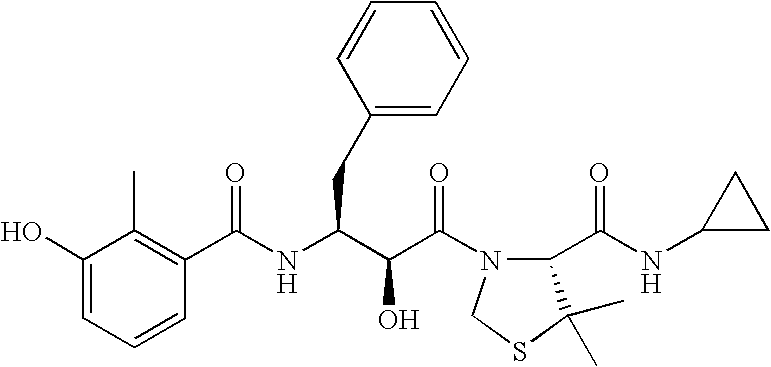


Amides of the general structure 3 (synthesized in the same manor as in the Methods A section) are coupled to boc-protected acid 15, and exposed to methane sulfonic acid to yield amines 16. Subjecting amines 16 to the reaction conditions depicted yielded a series of amides 17, carbamates 18, and ureas 19.
Synthesis of Amines of the General Type 16.


- Carbamate formation #1—The corresponding amine, of general structure 16, triethylamine (2 eq.) and chloroformate (1.1–1.2 eq.) were taken in dichloromethane and stirred at room temperature under nitrogen. (1.5 hr to overnight). The solvent was then removed in vacuo and the resulting residue subjected to flash silica gel chromatography or preparative HPLC to afford the desired product.
- Carbamate formation #2—The corresponding alcohol was treated with phosgene (1.7 eq.) in toluene followed by diisopropylethylamine (1.1 eq.) and the amine of general structure 16. The solvent was then removed in vacuo and the resulting residue subjected to flash silica gel chromatography or preparative HPLC to afford the desired product.
- Amide formation—To a solution of acid, amine 16 and HOBT in CH2Cl2 was added EDC and the solution stirred overnight at room temperature. The solution was concentrated in vacuo and the residue dissolved in ethyl acetate and a small portion of water. The solution was washed with saturated NH4Cl or 0.5N HCl (2×), saturated NaHCO3 (2×), brine (1×), dried with MgSO4 and concentrated in vacuo. The resulting residue subjected to flash silica gel chromatography or preparative HPLC to afford the desired product.
- Urea formation #1—The corresponding amine and isocyanate (1.1–1.2 eq.) were taken in dichloromethane and stirred at room temperature under nitrogen. (1.5 hr to overnight). The solvent was then removed in vacuo and the resulting residue subjected to flash silica gel chromatography or preparative HPLC to afford the desired product.
- Urea formation #2—The corresponding amine was dissolved in CH2Cl2 and treated with diisopropylethylamine (1.5 eq.) and phosgene (1 eq., 20% soln. in toluene) at −78° C. The resulting solution was warmed to room temperature and treated with the amine of general structure 16. The resulting residue subjected to flash silica gel chromatography or preparative HPLC to afford the desired product.

(S)-(+)-3-Hydroxytetrahydrofuran (0.11 mL, 1.37 mmol) was dissolved in toluene (1 mL) and cooled to 0° C. with magnetic stirring. To this was added Phosgene as a 20% solution in toluene (1.2 mL, 2.34 mmol). The resulting solution was stirred for 24 h at 23° C. then concentrated. The residue was dissolved in dry THF (3 mL) and treated with Diisopropylethylamine (0.25 mL, 1.40 mmol). 16c was added as a slurry in THF (0.3 g, 0.73 mmol) and resulting amber solution was stirred at 23° C. for 3 h. The solution was diluted with EtOAc (10 mL) and washed with 10% citric acid (25 mL) dried over Na2SO4, filtered, and concentrated to a white solid.

The amine 16c (0.21 g, 0.48 mmol) and 1,2,3,4-Tetrahydroquinoline-5-carboxylic acid (0.085 g, 0.48 mmol) were dissolved in dry CH2Cl2 (5 mL) at 23° C. with magnetic stirring. The solution was treated sequentially with EDC (0.18 g, 0.96 mmol), HOBt (0.13 g, 0.96 mmol), HOBt (0.13 g, 0.96 mmol), and Triethylamine (0.14 mL, 0.96 mmol). The result was stirred for 24 h and then poured into H2O (25 mL). The mixture was extracted with EtOAc (2×25 mL). The combined organics were washed sequentially with saturated NaHCO3 (1×50 mL), 0.5N HCl (1×50 mL), and H2O (1×50 mL). The result was dried over Na2SO4, filtered, and concentrated. The residue was purified by flash column chromatography ( 40%–60% EtOAc in hexanes) to yield the title compound as a pale yellow solid (0.21 g, 72%).

(R)-Pyrrolidin-3-ol (0.21 g, 2.40 mmol) was dissolved in dry CH2Cl2 (15 mL) and cooled to −78° C. under argon with magnetic stirring. To this solution was added Diisopropylethylamine (0.63 mL, 3.63 mmol) followed by Phosgene as a 20% solution in toluene (1.2 mL, 2.40 mmol). The resulting yellow solution was stirred for 20 min at −78° C. then allowed to warm to room temperature. The solution was concentrated and re-dissolved in dry CH2Cl2 (5 mL) and THF (5 mL). To this was added Diisopropylethylamine (0.31 mL, 1.81 mmol) followed by 16c. The result was stirred for 16 h at 23° C. then diluted with EtOAc (50 mL). The mixture was washed sequentially with 10% citric acid (1×50 mL), saturated NaHCO3 (1×50 mL), H2O (1×50 mL). The organics were dried over Na2SO4, filtered and concentrated. The residue was purified by flash column chromatography (5% MeOH in EtOAc) to yield the title compound (0.12 g, 18%) as a white foam.


(s, 3H); MS-APCI (m/z+): 315, 579 (M+H).


The synthesis of compounds with the general structure 24 is as follows. The boc-protected carboxylic acids 20a–j are coupled to the requisite amines 2 to yield amino amides 23 using a two step process. The process includes treatment of 20 with 2 in the presence of either diphenyl chlorophosphate or EDCl, followed by exposure to HCl or methane sulfonic acid. Final compounds 24 are obtained by a DCC-mediated coupling of 23 and 4 followed by deprotection of the P2 phenol. Final compounds were purified either by flash chromatography or preparative HPLC.
Additional General Method C


Source of Boc-Carboxylic Acids 20a–j

(2S)-3,3-Dimethyl-4-oxo-N-(9-phenylfluorenyl)proline methyl ester (F2):

Example for n=2:

The title compound was prepared according to general methods using carboxylic acid 20a (0.96 g, 3.8 mmol), o-methylbenzyl amine (0.57 mL, 4.6 mmol), HOBT (0.62 g, 4.6 mmol), EDCI (0.88 g, 4.6 mmol), CH2Cl2 (50 mL). To give the crude Boc-amide (MS-APCI (m/z+): 355, 255) (1.35 g, 3.8 mmol). The Boc was removed using the general 4N HCl Boc deprotection. 4N HCl in 1,4-dioxane (5 mL), 1,4-dioxane (5 mL). The result was amino amide of general structure 23. Isolated yield: 0.79 g (71%, 2 steps). 1H NMR (400 MHz, DMSO-d6): □ 9.02 (t, 1H), 7.24–7.14 (m, 4H), 4.55 (t, 1H), 4.35 (dd, 1H), 4.30 (dd, 1H), 3.73 (m, 2H), 2.94 (m, 2H), 2.52 (m, 1H), 2.27 (s, 3H); 19F NMR (376 MHz, DMSO-d6): □ −95.3 (dq, J=235, 15 Hz, 1F), −96.5 (dq, J=235, 12 Hz, 1F); MS-APCI (m/z+): 255.


Isolated material was subjected to flash silica gel chromatography, eluting with 30% EtOAc/hexanes then with EtOAc/hexanes (4:1) to afford the title compound. Isolated yield: 89%. 1H NMR (400 MHz, DMSO-d6): □ 9.36 (s, 1H), 8.45 (t, 1 H), 8.13 (d, 1H), 7.29 (d, 2H), 7.24–7.19 (m, 3H), 7.17–7.14 (m, 2H), 6.92 (t, 1H), 6.82–6.80 (m, 2H), 6.76–6.73 (m, 1H), 6.54 (d, 1H), 5.60–5.50 (m, 1H), 4.64 (dd, 1H), 4.37–4.13 (m, 6H), 3.69 (s, 3H), 2.88–2.67 (m, 3H), 2.41 (dd, 1H), 1.79 (s, 3H); MS-APCI (m/z+): 582. Anal. C31H33N3O6F2.0.2 H2O calcd: 63.62, 5.75, 7.18; found: 63.62, 5.93, 6.92.

Isolated material was subjected to flash silica gel chromatography, eluting with EtOAc/hexanes (1:1) then with EtOAc/hexanes (4:1) to afford the title compound. Isolated yield: 91%. 1H NMR (400 MHz, DMSO-d6): □ 9.36 (s, 1H), 8.40 (t, 1H), 8.14 (d, 1H), 7.30 (d, 2H), 7.21 (d, 2H), 7.17–7.14 (m, 3H), 6.92 (t, 1H), 6.82–6.80 (m, 2H), 6.76–6.73 (m, 1H), 6.54 (d, 1H), 5.60–5.50 (m, 1H), 4.64 (dd, 1H), 4.37–4.13 (m, 6H), 3.69 (s, 3H), 2.88–2.67 (m, 3H), 2.41 (dd, 1H), 1.79 (s, 3H); MS-APCI (m/z+): 582. HPLC: Rf(min.) 18.53; Purity: 100%.

Isolated material was subjected to flash silica gel chromatography, eluting with EtOAc/hexanes gradient then with 2% MeOH/CH2Cl2 to afford the title compound. Isolated yield: 49%. 1H NMR (400 MHz, DMSO-d6): □ 9.38 (s, 1H), 8.38 (t, 1H), 8.36 (d, 1H), 7.38–7.29 (m, 3H), 7.25–7.13 (m, 5H), 6.93 (t, 1H), 6.75 (d, 1H), 6.53 (d, 1H), 5.37 (d, 1H), 4.62 (dd, 1H), 4.47–4.18 (m, 6H), 2.90–2.64 (m, 3H), 2.35–2.26 (m, 1H), 1.78 (s, 3H); MS-APCI (m/z+): 312, 604. HPLC: Rf(min.) 19.02; Purity: 94%; Anal. C30H29N3O5F2Cl1.0.2H2O calcd: 59.30, 4.88, 6.92, found: 59.27, 4.74, 6.69.


The title compound was purified by flash chromatography eluting with 0 to 5% MeOH/CH2Cl2, another column was run which was eluted with 50 to 100% ethyl acetate/hexanes. 1H NMR (400 MHz, DMSO-d6): □ 9.35 (s, 1H), 8.40 (t, 1H), 8.13 (d, 1H), 7.32 (d, 2H), 7.24 (t, 2H), 7.15 (t, 1H), 6.93 (t, 1H), 6.75 (d, 1H), 6.51 (d, 1H), 5.54 (d, 1H), 4.43 (dd, 1H), 4.36–4.22 (m, 3H), 4.20 (s, 1H), 3.86 (m, 2H), 3.11 (s, 1H), 2.85 (d, 1H), 2.67 (t, 1H), 1.77 (s, 3H), 1.18 (s, 3H), 1.02 (s, 3H); 19F NMR (376 MHz, DMSO-d6): □ −108.0 (d, 1F), −114.5 (d, 1F); MS-APCI (m/z+): 528, 312; HPLC: Rf(min.) 18.00; Purity: 97%. Anal. C28H31N3O5F2 C, H, N calcd: C, 63.75; H, 5.92; N, 7.96; found: C, 63.67; H, 6.21; N, 7.85.

Isolated material was subjected preparative HPLC purification, eluting with EtOAc/hexanes to afford the title compound. 1H NMR (400 MHz, DMSO-d6): □ 9.36 (s, 1H), 8.52 (t, 1 H), 8.16 (d, 1H), 7.49 (dd, 1H), 7.40 (d, 1H), 7.28 (d, 2H), 7.24–7.19 (m, 3H), 7.15–7.10 (m, 2H), 6.92 (t, 1H), 6.75 (d, 1H), 6.52 (d, 1H), 5.55 (d, 1H), 4.46 (dd, 1H), 4.39–4.24 (m, 5H), 2.84 (d, 1H), 2.69–2.64 (m, 1H), 1.78 (s, 3H), 1.19 (s, 3H), 1.00 (s, 3H); MS-APCI (m/z+): 312, 632. HPLC: Rf(min.) 16.83; Purity: 93%.


Isolated material was subjected to flash silica gel chromatography, eluting with 45% EtOAc/hexanes to afford the title compound. 1H NMR (400 MHz, DMSO-d6): □ 9.35 (s, 1H), 8.47 (d, 1 H), 8.20 (d, 1H), 7.33 (d, 2H), 7.23 (t, 2H), 7.17–7.12 (m, 3H), 6.93 (t, 1H), 6.87 (t, 1H), 6.79 (t, 2H), 6.53 (d, 1H), 5.40 (d, 1H), 4.96 (dd, 1H), 4.47 (dd, 1H), 4.34–4.14 (m, 6H), 2.82 (d, 1H), 2.67 (t, 1H), 2.03–1.98 (m, 1H), 1.93–1.89 (m, 1H), 1.79 (s, 3H), 1.17 (s, 3H), 1.12 (s, 3H); MS-APCI (m/z+): 622. HPLC: Rf(min.) 19.65; Purity: 94%; C34H37N3O6F2.0.5 H2O calcd: 64.75, 6.07, 6.66, found: 64.77, 6.24, 6.54

Isolated material was subjected to flash silica gel chromatography, eluting with 45% EtOAc/hexanes to afford the title compound. 1H NMR (400 MHz, DMSO-d6): □ 9.36 (s, 1H), 8.34 (t, 1H), 8.13 (d, 1H), 7.31 (d, 2H), 7.25–7.13 (m, 5H), 6.93 (t, 1H), 6.83 (d, 2H), 6.76 (d, 1H), 6.53 (d, 1H), 5.54 (d, 1H), 4.43 (dd, 1H), 4.34–4.25 (m, 5H), 4.13 (dd, 1H), 3.68 (s, 3H), 2.88 (d, 1H), 2.68 (dd, 1H), 1.79 (s, 3H), 1.17 (s, 3H), 0.99 (s, 3H); MS-APCI (m/z+): 610; C33H37N3O6F2.0.4 H2O calcd: 64.25, 6.18, 6.81, found: 64.19, 6.13, 6.73.

Isolated material was subjected to flash silica gel chromatography, eluting with 45% EtOAc/hexanes to afford the title compound. 1H NMR (400 MHz, DMSO-d6): □ 9.33 (s, 1H), 8.35 (t, 1H), 8.12 (d, 1H), 7.29 (d, 2H), 7.21 (t, 2H), 7.12 (t, 1H), 6.91 (t, 1H), 6.81–6.71 (m, 4H), 6.51 (d, 1H), 5.91 (d, 2H), 5.53 (d, 1H), 4.43 (dd, 1H), 4.30–4.23 (m, 5H), 4.07 (dd, 1H), 2.86 (d, 1H), 2.66 (t, 1H), 1.77 (s, 3H), 1.16 (s, 3H), 0.98 (s, 3H); MS-APCI (m/z+): 135, 312, 624. HPLC: Rf (min.) 19.00; Purity: 97%; C33H35N3O7F2.0.6 H2O calcd: 62.47, 5.75, 6.62, found, 62.41, 5.65, 6.36.


The crude was purified by chromatography eluted with 10% and 20% acetone in CH2Cl2. 1H NMR (400 MHz, DMSO-d6): □ 8.41 (t, 1H), 8.13 (d, 1H), 7.29 (d, 2H), 7.24–7.09 (m, 7H), 5.54 (d, 1H), 4.66 (dd, 1H), 4.40 (dd, 1H), 4.34–4.28 (m, 3H), 4.25–4.18 (m, 2H), 2.87–2.68 (m, 3H), 2.43–2.36 (m, 1H), 2.25 (s, 3H), 2.22 (s, 3H), 2.07 (s, 3H); 19F NMR (376 MHz, DMSO-d6); □ −98.0 (dq, 1F), −99.9 (dq, 1F); MS-APCI (m/z+): 555; HPLC Purity: 100%, Rf(min.) 19.63; Anal. C29H32N4O5F2.0.3 H2O calcd: C, 62.20; H, 5.87; N, 10.00; found: C, 62.25; H, 6.00; N, 9.65.

The crude was purified by chromatography eluted with 10% acetone in CH2Cl2. 1H NMR (400 MHz, DMSO-d6): □ 8.37 (t, 1H), 7.53 (d, 1H), 7.28 (d, 2H), 7.24–7.10 (m, 7H), 5.36 (d, 1H), 4.65 (dd, 1H), 4.54–4.42 (m, 2H), 4.35–4.18 (m, 4H), 4.11 (dd, 1H), 3.8 (m, 1H), 3.43 (t, 1H), 2.79–2.69 (m, 2H), 2.59 (dd, 1H), 2.42–2.34 (m, 1H); 19F NMR (376 MHz, DMSO-d6): □ −98.2 (dq, 1F), −99.7 (dq, 1F); MS-APCI (m/z+): 514; HPLC Purity: 92%, Rf(min.) 19.80; Anal. C27H29N3O5F2 calcd: C, 63.15; H, 5.69; N, 8.18; found: C, 63.00; H, 6.02; N, 8.02.


The product was recrystallized from ethyl acetate, ethyl ether and hexanes. 1H NMR (400 MHz, DMSO-d6): □ 9.34 (s, 1H), 8.73 (t, 1H), 8.18 (d, 1H), 7.26–7.05 (m, 9H), 6.92 (t, 1H), 6.75 (d, 1H), 6.51 (d, 1H), 5.56 (d, 1H), 4.75 (s, 1H), 4.55 (d, 1H), 4.40–4.32 (m, 4H), 4.14 (dd, 1H), 2.85 (d, 1H), 2.66 (dd, 1H), 2.23 (s, 3H), 1.75 (s, 3H), 1.11 (s, 3H), 0.94 (s, 3H); MS-APCI (m/z+): 572; HPLC Purity: 100%, Rf(min.) 19.31.


The synthesis of compounds with the general structure 27 is as follows. The boc-protected thiazolidine carboxylic acid 1 is converted to amino-ketones 26 with requisite grignard reagents 25 in the presence of oxalyl chloride. Final compounds 27 are obtained by a DCC-mediated coupling of 26 and 4 followed by deprotection of the P2 phenol. Final compounds were purified either by flash chromatography or preparative HPLC.
Specific Method D

The title compound was prepared as follows. (R)-5,5-Dimethyl-thiazolidine-3,4-dicarboxylic acid 3-tert-butyl ester 1 (1.0 g, 3.80 mmol) was dissolved in benzene (10 mL) and cooled to 0° C. with magnetic stirring. Two drops of DMF were added followed by a drop wise addition of oxalyl chloride (0.33 mL, 3.80 mmol). When gas evolution ceased, the solution was concentrated to a yellow/red residue. The material was dissolved in dry THF (10 mL) and cooled to −78° C. with magnetic stirring. The grignard reagent, 3-butenylmagnesium bromide (7.7 mL, 3.80 mmol) was added dropwise over 10 min. The result was stirred at −78° C. for 1 h then at −55° C. for 30 min. The reaction was quenched at −55° C. with sat NH4Cl soln. (3 mL) and then poured into H2O (50 mL). The mixture was extracted with EtOAc (2×50 mL). The combined organics were washed with brine (1×100 mL), dried over Na2SO4, filtered, and concentrated. The result was the amino ketone 26 that was sufficiently pure to use in the subsequent step. The clear oil 26 (0.24 g, 1.15 mmol) was dissolved in EtOAc (10 mL). AMB-AHPBA 4 (0.40 g, 1.09 mmol) was added followed by HOBt (0.15 g, 1.09 mmol). The mixture was stirred at room temperature 1 h, then cooled to 0° C. DCC (0.24 g, 1.15 mmol) was slowly added as solution in EtOAc (6 mL). The mixture was warmed to room temperature and stirred overnight. The mixture was filtered and the filtrate was washed with 1N HCl (10 mL), saturated NaHCO3 (10 mL), brine (10 mL), dried over Na2SO4 and concentrated to give a crude white solid (contaminated with DCU). The DCU was removed by flash chromatography (30% to 50% EtOAc in hexanes) to provide a white solid, which was dissolved in MeOH (2 mL) and treated with 4N HCl in 1,4-dioxane (0.26 mL, 1.1 mmol). The reaction was stirred at room temperature overnight then partitioned between 1N HCl (10 mL) and EtOAc (10 mL). The organic layer was washed with saturated sat. NaHCO3 (1×25 mL) dried over Na2SO4, filtered, and concentrated to a residue which was purified by flash chromatography (60% EtOAc in hexanes) to provide the title compound as a white amorphous solid: 1H NMR (DMSO-d6) □ 9.36 (s, 1H), 8.23 (d, J=8.1, 1H), 7.35–7.14 (m, 5H), 6.96 (t, J=7.5, 1H), 6.78 (d, J=8.2, 1H), 6.52 (d, J=7.5, 1H), 5.81–5.69 (m. 2H), 5.32 (d, J=9.7, 1H), 5.11–5.91 (m, 3H), 4.40 (m, 3H), 2.89–2.61 (m, 4H), 2.37–2.14 (m, 2H), 1.81 (s, 3H), 1.55 (s, 3H), 1.30 (s, 3H); Anal. Calcd for C28H34N2O5S: C, 65.86; H, 6.71; N, 5.49. Found: C, 65.52; H, 6.55; N, 5.81.
The following examples were synthesized using the specific method outlined above using the appropriate grignard reagent for the desired compound.

The following represents synthesis of key intermediates for the synthesis of the title compound.
L-2-tert-Butoxycarbonylamino-3-(3-fluoro-phenyl)-propionic acid.
A mixture of L-2-amino-3-(3-fluoro-phenyl)-propionic acid ( 20.0 g, 110 mmol, 1 eq) in H2O (100 mL) was treated with Na2CO3 (16.2 g, 153 mmol, 1.4 eq) in H2O (40 mL) followed by 1,4-dioxane (100 mL) and cooled to 0° C. The BOC2O was added and the reaction mixture was stirred at ambient temperature for 5 h after which the dioxane was evaporated. H2O (125 mL) was then added and the mixture then washed with Et2O (2×100 mL). The aqueous phase was acidified with 10% citric acid followed by extraction with EtOAc (2×300 mL). The combined EtOAc layers were washed with H2O (2×150 mL), brine (150 mL), dried (Na2SO4) and concentrated to give the acid as a colorless, viscous oil which slowly solidified upon standing (31 g, quant). 1H NMR (CDCl3) 7.33–7.26 (m,1H), 7.00–6.91 (m,3H), 4.96 (s, 1H), 4.62 (bs, 1H), 3.23 (dd, J=14,5.3, 2H), 1.44 (s, 9H); Anal Calcd for C14H18NO4F: C, 59.36; H, 6.40; N, 4.94. Found: C, 59.29; H, 6.34; N, 4.90.
L-[2-(3-Fluoro-phenyl)-1-(methoxy-methyl-carbamoyl)-ethyl]-carbamic acid-tert-butyl ester.
To a solution of L-2-tert-butoxycarbonylamino-3-(3-fluoro-phenyl)-propionic acid (30.9 g, 109 mmol) in THF (180 mL) was added carbonyldiimidazole (21.2 g, 131 mmol, 1.2 eq). After stirring the solution at ambient temperature for 45 min was added DMF (64 mL), N,O-dimethylhydroxylamine hydrochloride (11.7 g, 120 mmol, 1.1 eq) and diisopropylethylamine (20 mL, 113 mmol, 1.04 eq). After stirring for a total time of 2 h, the solvents were evaporated in vacuo and the oily residue dissolved in EtOAc (300 mL). The organic phase was washed with H2O (500 mL), 10% citric acid (2×150 mL), H2O (500 mL), sat'd Na2CO3 (200 mL), brine (200 mL), dried (Na2SO4) and concentrated to give the product suitable for further use (31.6 g, 89%). 1H NMR (CDCl3) 7.29–7.22 (m, 1H), 6.98–6.89 (m,3H), 5.20 (bs, 1H), 4.96 (bs, 1H), 3.72 (s, 3H), 3.19 (s, 3H), 3.07 (dd, J=13.6,5.9, 2H), 1.41 (s, 9H). Anal Calcd for C16H23N2O4F: C, 58.88; H, 7.10; N, 8.58. Found: C, 58.89; H, 7.19; N, 8.71.
L-[1-(3-Fluoro-benzyl)-2-oxo-ethyl]-carbamic acid tert-butyl ester.
To a 3-neck flask which purged with argon was added a 1 M solution of LAH in Et2O (106 mL, 1.1 eq) and cooled to 0 ° C. A solution of L-[2-(3-fluoro-phenyl)-1-(methoxy-methyl-carbamoyl)-ethyl]-carbamic acid-tert-butyl ester(31.6 g, 97 mmol, 1 eq) in THF (150 mL) was added over a period of 1 h such that the temperature remained below 5° C. After stirring for an additional 30 min the reaction was quenched with EtOAc (60 mL) followed by 5% KHSO4 (100 mL). EtOAc (500 mL) was added and the organic phase was washed with 1N HCl (3×100 mL), H2O (500 mL), brine (200 mL), dried (Na2SO4) and concentrated to a white solid which was filtered and washed with heptane (200 mL). The aldehyde was suitable for further use (17.6 g, 68%). 1H NMR (CDCl3) 9.65 (s, 1H), 7.33–7.26 (m, 1H), 7.01–6.89 (m, 3H), 5.06 (bs, 1H), 4.43 (broad m, 2H), 1.45 (s, 9H). Anal Calcd for C14H18NO3F: C, 62.91; H, 6.79; N, 5.24; Found: C, 62.73; H, 6.66; N, 5.21.
3-tert-Butoxycarbonylamino-4-(3-fluoro-phenyl)-2-hydroxy-butyric acid (diastereomeric).
A solution of L-[1-(3-fluoro-benzyl)-2-oxo-ethyl]-carbamic acid tert-butyl ester(17.6 g, 66 mmol, 1 eq) in MeOH (104 mL) was cooled to 0 C. A solution of sodium bisulfite in H2O (104 mL) was added and the mixture stirred for 5 h at 0 C after which it was placed in a freezer for 7 h. The reaction mixture was then charged with a solution of NaCN (3.87 g, 79 mmol, 1.2 eq) in H2O (104 mL) followed by EtOAc (280 mL) and stirred at room temperature for 11 h after which the organic layer was separated, dried (Na2SO4) and concentrated to give the crude cyanohydrin as a waxy solid. This material was dissolved in 1.4 dioxane (265 mL), charged with anisole (11 mL) and cooled to 0 C. Concentrated HCl (265 mL) was added, with vigorous stirring, to the reaction mixture followed by heating at reflux for 1 h. The dioxane plus most of the water was evaporated in vacuo. The remaining residue was basified with 2N NaOH and washed with Et2O (3×200 mL). The aqueous phase was then charged with 1,4 dioxane (120 mL) followed by BOC2O (15.8 g, 1.1 eq). After stirring at ambient temperature for 3 h the dioxane was removed in vacuo and the remaining mixture acidified with 10% citric acid followed by extraction with EtOAc (2×300 ml). The combined organic layers were washed with H2O (300 mL), brine (200 mL), dried (Na2SO4) and concentrated to give the acid as diastereomeric mixture (ca 1:1) and orange solid (10.56 g, 51%) 1H NMR (DMSO) 7.35–7.25 (m, 2H), 7.06–6.96 (m, 6H), 6.76 (d, J=9.0, 1H), 6.43 (d, J=9.6, 1H), 4.02–3.89 (m, 4H), 3.57 (m, 2H), 2.83 (dd, J=13.4, 6.1, 2H), 1.28 (s, 9H), 1.26 (s, 9H).
(2S,3R)-3-tert-Butoxycarbonylamino-4-(3-fluoro-phenyl)-2-hydroxy-butyric acid methyl ester.
To a solution of 3-tert-butoxycarbonylamino-4-(3-fluoro-phenyl)-2-hydroxy-butyric acid (diastereomeric) (10.56 g, 33.8 mmol., 1 eq) in DMF (130 mL) was suspended K2CO3 (6.07 g, 43 mmol, 1.3 eq) followed by CH3I (4.2 mL, 68 mmol, 2 eq). After stirring for 2 h at ambient temperature the DMF was evaporated in vacuo. The remaining residue was dissolved in EtOAc (300 mL) and washed with H2O (2×100 mL), sodium thiosulfate solution (100 mL), brine (200 mL) dried (Na2SO4) and concentrated to give a crude orange solid (9.55 g). Purification by column chromatography (1:1 EtOAc/hexanes) afforded 6.96 g total (63%); of which 3.28 g being the desired diastereomer (2S,3R)-3-tert-Butoxycarbonylamino-4-(3-fluoro-phenyl)-2-hydroxy-butyric acid methyl ester (cream colored solid), and 3.68 g being the undesired product (2R,3R)-3-tert-butoxycarbonylamino-4-(3-fluoro-phenyl)-2-hydroxy-butyric acid methyl ester. (2S,3R) product: 1H NMR (CDCl3) 7.30–7.22 (m, 1H), 7.01–6.90 (m, 3H), 4.88 (d, J=8.2, 1H), 4.32 (m, 2H), 3.67 (s, 3H), 2.79 (t, J=6.9, 2H), 1.40 (s, 9H). (2R,3R) product: 1H NMR (CDCl3) 7.32–7.25 (m, 1H), 7.09–6.91 (m, 3H), 4.82 (d, J=9.8, 1H), 4.27 (dd, J=16.9, 7.6, 1H), 4.08 (d, J=3.2, 1H), 3.78 (s, 3H), 3.17 (d, J=4.5, 1H), 2.93 (d, J=4.5, 1H), 1.40 (s, 9H).
(2S,3R)-3-tert-Butoxycarbonylamino-4-(3-fluoro-phenyl)-2-hydroxy-butyric acid.
A mixture of (2S,3R)-3-tert-Butoxycarbonylamino-4-(3-fluoro-phenyl)-2-hydroxy-butyric acid methyl ester (3.28 g, 10.05 mmol, 1 eq), 4N NaOH (4 mL, 16 mmol, 1.6 eq), MeOH (42 mL) and 1,4-dioxane (63 mL) was stirred at ambient temperature for 1.5 h after which the solvents were evaporated. To the residue was added 10% citric acid (100 mL) followed by extraction with EtOAc (100 mL). The organic layer was washed with H2O (100 mL), brine (50 mL), dried (Na2SO4) and concentrated to give the desired product as a cream colored solid (3.06 g, 97%). 1H NMR (DMSO) 7.33–7.26 (m, 1H), 7.02–6.97 (m, 3H), 6.78 (d, J=5.2, 1H), 3.98 (d, J=5.5, 1H), 3.99–3.86 (m, 2H), 2.77–2.82 (m, 2H), 1.27 (s, 9H).
Conversion of undesired (2R,3R) diastereomer-methylester to (2S,3R)-3-tert-butoxycarbonylamino-4-(3-fluoro-phenyl)-2-hydroxy-butyric acid.
(2S,3R)-3-tert-Butoxycarbonylamino-2-(2-chloro-acetoxy)-4-(3-fluoro-phenyl)-butyric acid methyl ester.
A solution of of the (2R,3R)-3-tert-butoxycarbonylamino-4-(3-fluoro-phenyl)-2-hydroxy-butyric acid methyl ester (8 g, 24.5 mmol, 1 eq), chloroacetic acid (5.79 g, 61.3 mmol, 2.5 eq), and PPh3 (16 g, 61.3 mmol, 2.5 eq) in benzene (340 mL) was cooled to 0 C followed by the addition of diethylazodicarboxylate (9.7 mL, 61.3 mmol, 2.5 eq) over a 20 min period. After the addition, the reaction mixture was stirred at ambient temperature for 2 h after which the reaction mixture was concentrated and the residue purified by column chromatography with 30% EtOAc/hexanes as eluant. Appropriate fractions were combined and concentrated to give a yellow solid which was shaken with heptane and filtered to remove the yellow DEAD residues. The product was thus obtained as a white solid (4.25 g, 43%) 1H NMR (CDCl3) 7.32 (m, 1H), 7.03–6.96 (m, 3H), 5.34 (d, J=3.5, 1H), 4.26 (s, 2H), 4.75–4.5 (series of m, 2H), 3.77 (s, 3H), 2.92 (bd, J=7, 2H), 1.43 (s, 9H).
(2S,3R)-3-tert-butoxycarbonylamino-4-(3-fluoro-phenyl)-2-hydroxy-butyric acid.
A mixture of (2S,3R)-3-tert-butoxycarbonylamino-2-(2-chloro-acetoxy)-4-(3-fluoro-phenyl)-butyric acid methyl ester (4.56 g, 11.3 mmol, 1 eq), 4N NaOH (6.5 mL, 25.9 mmol, 2.3 eq), MeOH (48 mL) and 1,4-dioxane (72 mL) was stirred at ambient temperature for 4 h after which the solvents were removed in vacuo and the residue was charged with H2O (50 mL) and washed with Et2O (100 mL). The aqueous layer was made acidic with 10% citric acid and extracted with EtOAc (2×75 mL). The combined EtOAc layers were washed with H2O (3×50 mL) brine (50 mL), dried (Na2SO4), concentrated, shaken with heptane and filtered to give the desired acid as a white solid (3.3 g, 94%).


(S)-4,4-Difluoro-1-[(2S,3S)-2-hydroxy-3-(3-hydroxy-2,5-dimethyl-benzoylamino)-4-phenyl-butyryl]-3,3-dimethyl-pyrrolidine-2-carboxylic acid (2,2,2-trifluoro-ethyl)-amide


| TABLE 1 | |||
| Expected | % | ||
| Mass | Observed | Inhi- | |
| P2′ | (LCMS) | Mass | bition |
 |
582 | 583 (MH+) | 5 |
 |
582 | 583 (MH+) | 5 |
 |
529 | 552 (Na+) | 38 |
 |
528 | 529 (MH+) | 4 |
 |
591 | 614 (Na+) | 18 |
 |
555 | 578 (Na+) | 19 |
 |
611 | 612 (MH+) | 1 |
 |
593 | 594 (MH+) | 6 |
 |
576 | 577 (MH+) | 6 |
 |
635 | 658 (Na+) | 5 |
 |
656 | 656 (MH+) | 8 |
 |
575 | 598 (Na+) | 86 |
 |
525 | 548 (Na+) | 56 |
 |
541 | 564 (Na+) | 63 |
 |
529 | 552 (Na+) | 49 |
 |
565 | 588 (Na+) | 42 |
 |
587 | 610 (Na+) | 54 |

| TABLE 2 |
 |
 |
 |
 |
 |
 |
 |
 |
 |
 |
 |
 |
 |
 |
 |
 |
 |
 |
 |
 |
 |
 |
 |
 |
 |
 |
 |
 |
 |
 |
 |
 |
 |
 |
 |
 |
 |
 |
 |
 |
 |
 |
 |
 |
 |
 |
 |
 |
 |
 |
 |
 |
 |
 |
 |
 |
 |
 |
 |
 |
 |
 |
 |
 |
 |
 |
 |
 |
 |
 |
 |
 |
 |
 |
 |
 |
 |
 |
 |
 |
 |
 |
 |
 |
 |
 |
 |
 |
 |
 |
 |
 |
 |
 |
 |
 |
 |
 |
 |
 |
 |
 |
 |
 |
 |
 |
 |
 |
 |
 |
 |
 |
 |
 |
 |
 |
 |
 |
 |
 |
 |
 |
 |
 |
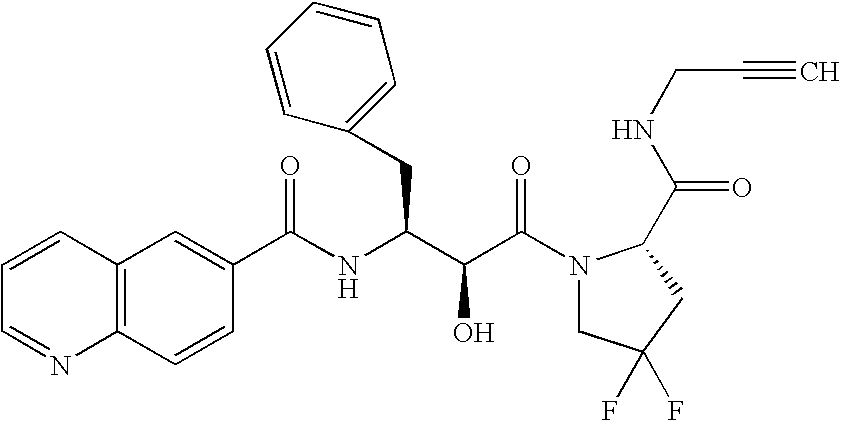 |
 |
 |
 |
 |
 |
 |
 |
 |
 |
 |
 |
 |
 |
 |
 |
 |
 |
 |
 |
 |
 |
 |
 |
 |
 |
 |
 |
 |
 |
 |
 |
 |
 |
 |
 |
 |
 |
 |
 |
 |
 |
 |
 |
 |
 |
 |
 |
 |
 |
 |
 |
 |
 |
 |
 |
 |
 |
 |
 |
 |
 |
 |
 |
 |
 |
 |
 |
 |
 |
 |
 |
 |
 |
 |
 |
 |
 |
 |
 |
 |
 |
 |
 |
 |
 |
 |
 |
 |
 |
 |
 |
 |
 |
 |
 |
 |
 |
 |
 |
 |
 |
 |
 |
 |
 |
 |
 |
 |
 |
 |
 |
 |
 |
 |
 |

Scheme 3 Experimental
| TABLE 3 |
 |
 |
 |
 |
 |
 |
 |
 |
 |
 |
 |
 |
 |
 |
 |
 |
 |
 |
 |
 |
 |
 |
 |
 |
 |
 |
 |
 |
 |
 |
 |
 |
 |
 |
 |
 |
 |
 |
 |
 |
 |
 |
 |
 |
 |
 |
 |
 |
 |
 |
 |
 |
 |
 |
 |
 |
 |
 |
 |
 |
 |
 |
 |
 |
 |
 |
 |
 |
 |
 |
 |
 |
 |
 |
 |
 |
 |
 |
 |
 |
 |
 |
 |
 |
 |
 |
 |
 |
 |
 |
 |
 |
 |
 |
 |
 |
 |
 |
 |
 |
 |
 |
 |
 |
 |
 |
 |
 |
 |
 |
 |
 |
 |
 |
 |
 |
 |
 |
 |
 |
 |
 |
 |
 |
 |
 |
 |
 |
 |
 |
 |
 |
 |
 |
 |
 |
 |
 |
 |
 |
 |
 |
 |
 |
 |
 |
 |
 |
 |
 |
 |
 |
 |
 |
 |
 |
 |
 |
 |
 |
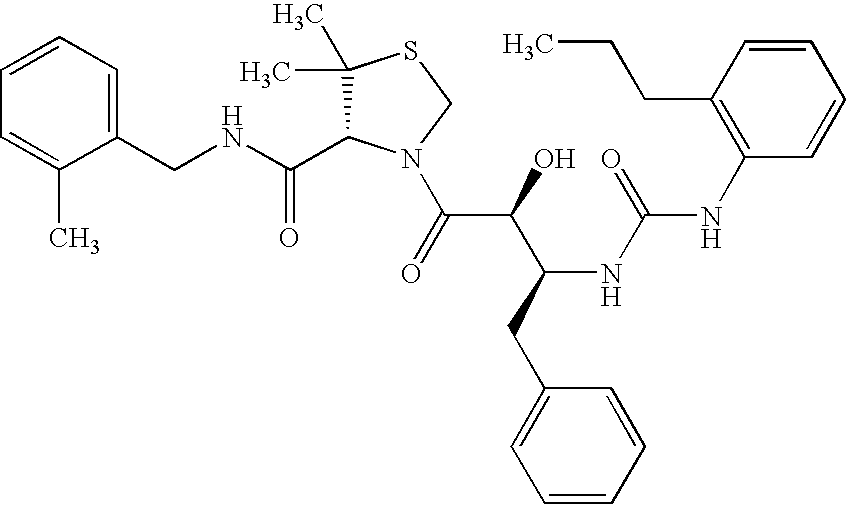 |
 |
 |
 |
 |
 |
 |
 |
 |
 |
 |
 |
 |
 |
 |
 |
 |
 |
 |
 |
 |
 |
 |
 |
 |
 |
 |
 |
 |
 |
 |
 |
 |
 |
 |
 |
 |
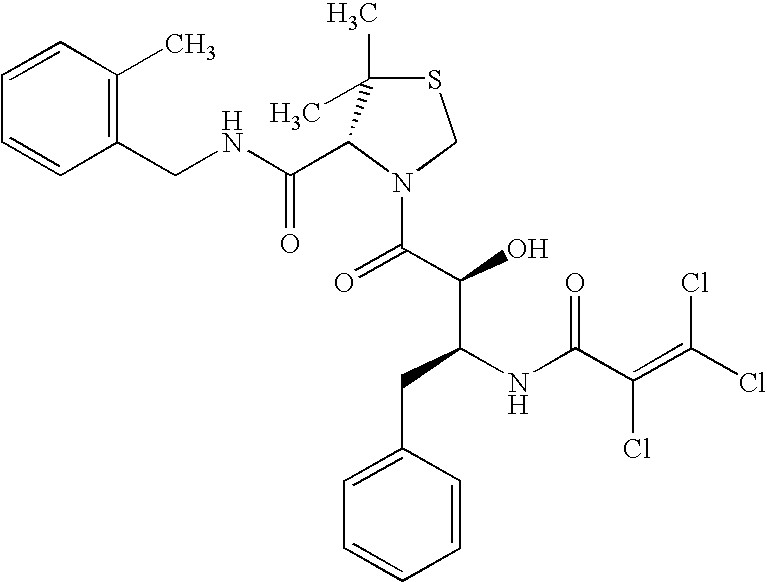 |
 |
 |
 |
 |
 |
 |
 |
 |
 |
 |
 |
 |
 |
 |
 |
 |
 |
 |
 |
 |
 |
 |
 |
 |
 |
 |
 |
 |
 |
 |
 |
 |
 |
 |
 |
 |
 |
 |
 |
 |
 |
 |
 |
 |
 |
 |
 |
 |
 |
 |
 |
 |
 |
 |
 |
 |
 |
 |
 |
 |
 |
 |
 |
 |
 |
 |
 |
 |
 |
 |
 |


| Example | |||
| No. | Ave. Ki (nM) | Ave CPE EC50 (mM) | EC50 or IC50 (mM) |
| A1 | 0.21 | 0.029 | |
| A3 | 0.51 | 0.156 | |
| A4 | 2.2 | 0.27 | |
| A5 | 0.2 | 0.148 | |
| A6 | 0.23 | 0.036 | |
| A7 | 1.7 | 0.113 | |
| A8 | 1.4 | 0.451 | |
| A9 | 0.49 | 0.138 | 1.081 |
| A10 | <0.1 | 0.104 | 0.118* |
| A11 | 0.5 | 0.144 | |
| A12 | 5.5 | 0.127 | |
| A13 | 3.4 | 0.495 | 0.921* |
| A14 | 0.32 | 0.061 | 0.226* |
| A15 | <0.1 | 0.055 | 0.057* |
| A16 | 0.43 | 0.254 | |
| A17 | <0.1 | 0.024 | 0.049* |
| A18 | 0.3 | 0.027 | |
| A19 | 0.21 | 0.015 | |
| A20 | 0.16 | 0.035 | 0.219* |
| A21 | <0.1 | 0.049 | 0.655* |
| A22 | <0.1 | 0.138 | 0.318 |
| A23 | 2.6 | 0.017 | 0.048* |
| A24 | 0.52 | 0.466 | |
| A25 | 0.97 | 0.125 | |
| A26 | 0.6 | 0.168 | |
| A27 | <0.1 | 0.11 | |
| A28 | 3.4 | 0.327 | |
| A29 | 0.31 | 0.118 | |
| A30 | 10.9 | 0.586 | |
| A31 | 0.44 | 0.062 | |
| A32 | <0.1 | 0.012 | 0.055* |
| A33 | 5.1 | 0.749 | |
| A34 | 1.4 | 0.386 | |
| A35 | <0.1 | 0.016 | 0.041* |
| A36 | 0.78 | 0.343 | |
| A37 | 3.7 | 0.416 | |
| A38 | <0.1 | 0.038 | |
| A39 | <0.1 | 0.123 | 0.213 |
| A40 | <0.1 | 0.04 | 0.109 |
| A41 | 0.17 | 0.145 | 0.242 |
| A42 | <0.1 | 0.065 | 0.098 |
| A43 | 2.6 | 0.534 | |
| A44 | 1.4 | 0.478 | |
| A45 | <0.1 | 0.034 | 0.048 |
| A46 | 1.1 | 0.469 | |
| A47 | 0.27 | 0.196 | |
| A48 | <0.1 | 0.037 | 0.092 |
| A49 | 0.49 | 0.161 | |
| A50 | <0.1 | 0.024 | 0.125 |
| A51 | <0.1 | 0.159 | 0.05 |
| A52 | 0.51 | 0.456 | |
| A53 | <0.1 | 0.028 | 0.07 |
| A54 | 4.5 | 1.231 | |
| A55 | 0.21 | 0.054 | 0.798 |
| A56 | 0.27 | 0.042 | 0.378 |
| A57 | 5.6 | 1.531 | |
| A58 | 13% @ 64nM | ||
| A59 | 0.19 | 0.417 | |
| A60 | 66.6 | ||
| A61 | 0.99 | 1.061 | |
| A62 | 9.6 | 2.261 | |
| A63 | 4.5 | 1.189 | |
| A65 | 0% @ 64 nM | ||
| B1 | 0.27 | 0.049 | 0.236* |
| B2 | 0.35 | 0.087 | |
| B3 | 2.5 | 0.905 | |
| B4 | 3 | 0.707 | |
| B5 | 1.2 | 0.314 | |
| B6 | 0.31 | 0.095 | 0.405* |
| B7 | <0.1 | 0.265 | 0.333* |
| B8 | 0.63 | 0.474 | |
| B9 | 1.1 | 0.452 | |
| B10 | 0.57 | 0.386 | |
| B11 | 0.86 | 0.567 | 2.015 |
| B12 | 9.9 | >1 | |
| B13 | 2 | 1.458 | |
| B14 | 2.7 | 1.661 | |
| B15 | 1.3 | 2.305 | |
| B16 | 2.6 | 1.566 | |
| B17 | 4.8 | ||
| B18 | 0.56 | 1.25 | |
| B19 | 1.4 | 1.595 | 1.298 |
| B20 | 2.1 | 1.563 | 2.084* |
| B21 | 0.91 | 0.109 | 0.547* |
| B22 | 12 | 0.246 | |
| B23 | 0.15 | 0.294 | |
| B24 | 8.3 | 0.512 | |
| B25 | 21 | >1 | |
| B26 | 2.1 | 0.348 | |
| B27 | 0.5 | 0.506 | |
| B28 | 4.2 | 0.731 | |
| B29 | 0.82 | 0.063 | |
| B30 | 0.21 | 0.443 | |
| B31 | 4.7 | >1 | |
| B32 | 0.48 | 0.433 | |
| B33 | <0.1 | 0.045 | 0.604* |
| B34 | 1.2 | 0.389 | |
| B35 | 11 | 0.564 | |
| B36 | <0.1 | 0.519 | |
| B37 | 7.4 | 0.529 | |
| B38 | 0.16 | 0.6 | |
| B39 | 1.9 | 0.372 | |
| B40 | 15.1 | >1 | |
| B41 | 0.11 | 0.268 | |
| B42 | 0.13 | 0.155 | |
| B43 | <0.1 | 0.375 | |
| B44 | 4.8 | 0.66 | |
| B45 | 1.1 | 0.572 | |
| B46 | 93 | ||
| B47 | 1.9 | 1.477 | |
| B48 | 0.83 | 1.478 | |
| B49 | 120 | ||
| B50 | 7.4 | ||
| B51 | 0.99 | >3.2 | |
| B52 | 120 | ||
| B54 | 2.3 | 1.659 | |
| B55 | 679 | ||
| B56 | 153 | ||
| B57 | 16% @ 64 nM | ||
| B58 | 240 | ||
| B59 | 2.1 | 1.815 | |
| B60 | 1.1 | >3.2 | |
| B61 | 16.9 | ||
| B62 | 4.2 | ||
| B63 | 7.8 | ||
| B64 | 0.53 | 1.603 | |
| B65 | 4.9 | 1.636 | |
| B66 | 5.2 | ||
| B67 | 11.4 | >3.2 | |
| B68 | 36 | ||
| B69 | 7.7 | ||
| B70 | 21 | ||
| B71 | 6.4 | ||
| B72 | 6.6 | ||
| B73 | 13 | ||
| B74 | 39 | ||
| B75 | 81 | ||
| B76 | 11.2 | ||
| B77 | <0.1 | 0.143 | 1.633 |
| B78 | 0.18 | 0.557 | |
| B79 | 0.78 | 0.53 | |
| B80 | 0.15 | 0.419 | 1.383 |
| B81 | 0.35 | 0.878 | |
| B82 | 0.19 | 1.286 | |
| B83 | <0.1 | 0.009 | 0.202 |
| B84 | <0.1 | 0.009 | 0.686 |
| B85 | 1.3 | 0.363 | |
| C1 | 0.38 | 0.627 | 0.427 |
| C3 | 0.16 | 0.486 | |
| C4 | 0.17 | 0.236 | 1.903 |
| C5 | 0.6 | 0.669 | 1.608 |
| C6 | 2.4 | 0.744 | 1.944 |
| C7 | 3 | 0.347 | |
| C8 | 1.5 | 0.152 | 1.419 |
| C9 | 6.3 | ||
| C10 | 1.5 | 1.289 | |
| C11 | 2.8 | 1.308 | |
| C12 | 2.7 | 1.768 | |
| C13 | 0.59 | 1.184 | |
| C14 | 2.5 | ||
| C15 | <0.1 | 0.025 | 0.057 |
| C16 | <0.1 | 0.019 | 0.201 |
| C17 | <0.1 | 0.115 | 0.186 |
| C18 | <0.1 | 0.148 | 0.618 |
| C19 | <0.1 | 0.055 | 0.084 |
| C20 | <0.1 | 0.035 | |
| C21 | <0.1 | 0.015 | 0.081 |
| C22 | <0.1 | 0.015 | 0.062 |
| C23 | <0.1 | 0.037 | 0.109 |
| C24 | <0.1 | 0.019 | 0.074 |
| C25 | <0.1 | 0.031 | 0.068 |
| C26 | <0.1 | 0.076 | 0.131 |
| C27 | 0.13 | 0.115 | 0.189 |
| C28 | 8.4 | ||
| C29 | 0.18 | 0.142 | 1.359 |
| C30 | <0.1 | 0.018 | 0.273 |
| C31 | 0.17 | 0.031 | 1.067 |
| C32 | <0.1 | 0.009 | 0.19 |
| C33 | 0.13 | 0.045 | 1.27 |
| C34 | <0.1 | 0.022 | 0.627 |
| C35 | <0.1 | 0.003 | 0.289 |
| C36 | <0.1 | 0.05 | 0.666 |
| C37 | 0.61 | 0.027 | 1.293 |
| C38 | <0.1 | 0.042 | 1.313 |
| C39 | <0.1 | 0.013 | 0.404 |
| C40 | 1.8 | 1.599 | |
| C40 | 0.82 | 0.174 | 1.796 |
| C41 | 1.3 | 1.433 | |
| C42 | 4 | 3.2 | |
| C43 | 21 | ||
| C44 | 14.8 | ||
| C45 | 3.6 | 1.575 | |
| C46 | <0.1 | 0.407 | |
| C47 | 1.4 | 1.382 | |
| C48 | <0.1 | 0.128 | |
| C49 | 150 | ||
| C50 | 7.9 | 0.997 | |
| D1 | <0.1 | 0.052 | 0.601 |
| D2 | <0.1 | 0.016 | |
| D3 | <.01 | 0.013 | |
| D4 | <0.1 | 0.009 | |
| D5 | <0.1 | 0.011 | |
| D6 | <0.1 | 0.018 | |
| *IC50 (mM) Data was determined at Virologic Inc against the 461, 84V, 90M virus | |||
| MOLSTRUCTURE | Ki | EC50 | MOLSTRUCTURE | Ki | EC50 |
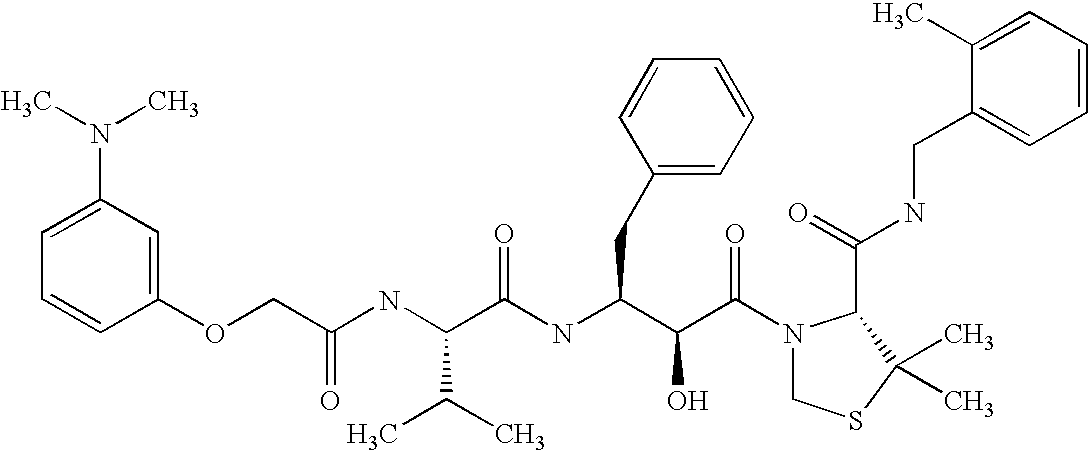 |
0.1 | 0.014 |
 |
0.1 | 0.027 |
 |
10 |
 |
10 | ||
 |
0.34 | 0.04 |
 |
0.1 | 0.041 |
 |
422 |
 |
148 | ||
 |
468 |
 |
368 | ||
 |
152 |
 |
30 | ||
 |
6.8 |
 |
13.9 | ||
 |
0.1 | 0.126 |
 |
21 | |
 |
14.2 |
 |
21 | ||
 |
20 |
 |
54 | ||
 |
74 |
 |
25 | ||
 |
7.6 |
 |
17 | ||
 |
0.39 | 0.332 |
 |
7.8 | |
 |
125 |
 |
2 | 0.488 | |
 |
6.1 |
 |
59 | ||
 |
0.76 | 0.573 |
 |
3.8 | |
 |
68 |
 |
109 | 0.672 | |
 |
8.1 |
 |
47 | ||
 |
0.25 | 0.879 |
 |
5 | |
 |
6.4 | 0.901 |
 |
11.9 | |
 |
4.7 | 1 |
 |
0.78 | 1 |
 |
3.4 |
 |
18.1 | ||
 |
4.2 | 1 |
 |
6.7 | 1.008 |
 |
4.4 |
 |
6 | ||
 |
8.2 |
 |
0.38 | 1.109 | |
 |
0.13 | 1.16 |
 |
5.4 | |
 |
9 | 1.176 |
 |
4.3 | 1.188 |
 |
27 |
 |
92 | ||
 |
2.3 | 1.215 |
 |
29 | |
 |
47 |
 |
26 | 1.23 | |
 |
3.9 | 1.232 |
 |
99 | |
 |
7.5 | 1.252 |
 |
45 | |
 |
6.1 | 1.281 |
 |
108 | |
 |
3 | 1.293 |
 |
122 | |
 |
4.7 |
 |
7.6 | ||
 |
17.2 | 1.328 |
 |
72 | |
 |
4.8 | 1.35 |
 |
11.5 | |
 |
117 |
 |
20 | ||
 |
59 |
 |
6.2 | ||
 |
0.44 | 1.431 |
 |
83 | |
 |
0.1 | 1.536 |
 |
11 | |
 |
6.9 | 1.551 |
 |
42 | |
 |
1.1 | 1.552 |
 |
108 | |
 |
3.7 | 1.553 |
 |
0.89 | 1.564 |
 |
84 | ||||
 |
156 |
 |
51 | ||
 |
0.88 | 1.641 |
 |
110 | |
 |
7.6 | 1.756 |
 |
18.7 | |
 |
0.32 | 1.884 |
 |
158 | |
 |
1.4 | 1.947 |
 |
60 | |
 |
7.4 | 1.957 |
 |
85 | |
 |
17.1 | 2.199 |
 |
94 | |
 |
88 |
 |
9.4 | 2.881 | |
 |
48 |
 |
9.9 | ||
 |
28 | 3.2 |
 |
17.4 | 3.2 |
 |
52 |
 |
82 | 3.2 | |
 |
30 |
 |
5.8 | 3.2 | |
 |
17.3 |
 |
4.4 | 3.2 | |
 |
53 |
 |
9.8 | 3.2 | |
 |
3.2 |
 |
12.7 | 3.2 | |
 |
12.6 | 3.2 |
 |
8.4 | 3.2 |
 |
15.1 | 3.2 |
 |
3.6 | 3.2 |
 |
12.9 |
 |
134 | ||
| 185 | 3.916 |
 |
18.4 | 3.995 | |
 |
1.4 | 4.224 |
 |
51.7 | 5.873 |
 |
46 | 10 | |||
Claims (16)


Priority Applications (1)
| Application Number | Priority Date | Filing Date | Title |
|---|---|---|---|
| US10/729,645 US7094909B2 (en) | 2001-06-11 | 2003-12-04 | HIV protease inhibitors, compositions containing the same, their pharmaceutical uses and materials for their synthesis |
Applications Claiming Priority (4)
| Application Number | Priority Date | Filing Date | Title |
|---|---|---|---|
| US29746001P | 2001-06-11 | 2001-06-11 | |
| US29772901P | 2001-06-12 | 2001-06-12 | |
| US10/166,979 US7179918B2 (en) | 2001-06-11 | 2002-06-11 | HIV protease inhibitors, compositions containing the same, their pharmaceutical uses and materials for their synthesis |
| US10/729,645 US7094909B2 (en) | 2001-06-11 | 2003-12-04 | HIV protease inhibitors, compositions containing the same, their pharmaceutical uses and materials for their synthesis |
Related Parent Applications (1)
| Application Number | Title | Priority Date | Filing Date |
|---|---|---|---|
| US10/166,979 Continuation-In-Part US7179918B2 (en) | 2001-06-11 | 2002-06-11 | HIV protease inhibitors, compositions containing the same, their pharmaceutical uses and materials for their synthesis |
Publications (2)
| Publication Number | Publication Date |
|---|---|
| US20040204591A1 US20040204591A1 (en) | 2004-10-14 |
| US7094909B2 true US7094909B2 (en) | 2006-08-22 |
Family
ID=46150375
Family Applications (1)
| Application Number | Title | Priority Date | Filing Date |
|---|---|---|---|
| US10/729,645 Expired - Fee Related US7094909B2 (en) | 2001-06-11 | 2003-12-04 | HIV protease inhibitors, compositions containing the same, their pharmaceutical uses and materials for their synthesis |
Country Status (1)
| Country | Link |
|---|---|
| US (1) | US7094909B2 (en) |
Cited By (5)
| Publication number | Priority date | Publication date | Assignee | Title |
|---|---|---|---|---|
| US20070066664A1 (en) * | 2001-06-11 | 2007-03-22 | Pfizer Inc | Hiv protease inhibitors, compositions containing the same, their pharmaceutical uses, materials for their synthesis |
| US20110269767A1 (en) * | 2009-01-08 | 2011-11-03 | Merck Patent Gesellschaft Mit Beschrankter Haftung | Novel Polymorphic Forms of 3-(1--6-oxo-1,6-dihydro-pyridazin-3-yl)-benzonitrile Hydrochloride Salt and Processes of Manufacturing Thereof |
| US8580294B2 (en) | 2010-10-19 | 2013-11-12 | International Partnership For Microbicides | Platinum-catalyzed intravaginal rings |
| US10137031B2 (en) | 2013-11-14 | 2018-11-27 | International Partnership For Microbicides, Inc. | Combination therapy intravaginal rings |
| WO2021093426A1 (en) * | 2019-11-13 | 2021-05-20 | 台州市创源工业技术有限公司 | Method for synthesizing hydroxybenzylamine |
Families Citing this family (6)
| Publication number | Priority date | Publication date | Assignee | Title |
|---|---|---|---|---|
| EP1692104A1 (en) * | 2003-12-04 | 2006-08-23 | Pfizer Inc. | Methods of preparing compounds useful as protease inhibitors |
| JP2007513142A (en) * | 2003-12-04 | 2007-05-24 | ファイザー インコーポレイテッド | Process for producing compounds useful as protease inhibitors |
| CA2555173A1 (en) * | 2004-01-30 | 2005-09-09 | Pfizer Inc. | Compositions comprising hiv protease inhibitor and cytochrome p450 enzyme activity inhibitor |
| GB201511382D0 (en) | 2015-06-29 | 2015-08-12 | Imp Innovations Ltd | Novel compounds and their use in therapy |
| CN107118184B (en) * | 2017-06-27 | 2020-08-11 | 成都化润药业有限公司 | A kind of novel synthesis technique of tetrahydrofuran-3-methylamine |
| WO2024052685A1 (en) | 2022-09-09 | 2024-03-14 | MyricX Pharma Limited | Cytotoxic imidazo[1,2-a]pyridine compounds and their use in therapy |
Citations (23)
| Publication number | Priority date | Publication date | Assignee | Title |
|---|---|---|---|---|
| EP0490667A2 (en) | 1990-12-11 | 1992-06-17 | Japan Energy Corporation | HIV protease inhibitors |
| EP0498680A1 (en) | 1991-02-08 | 1992-08-12 | Sankyo Company Limited | New beta-amino-alpha-hydroxycarboxylic acids and their use |
| WO1993013066A1 (en) | 1991-12-20 | 1993-07-08 | Syntex (U.S.A.) Inc. | Cyclic amides of 3-amino-2-hydroxy-carboxylic acids as hiv-protease inhibitors |
| EP0574135A1 (en) | 1992-05-13 | 1993-12-15 | Japan Energy Corporation | Process for producing peptide derivatives and salts thereof |
| EP0587311A1 (en) * | 1992-08-07 | 1994-03-16 | Sankyo Company Limited | Peptides capable of inhibiting the activity of HIV protease, their preparation and their therapeutic use |
| JPH075193A (en) | 1993-06-08 | 1995-01-10 | Masaki Esashi | Multiaxial acceleration detector |
| EP0706794A1 (en) | 1994-10-14 | 1996-04-17 | Japan Energy Corporation | Anti-aids pharmaceutical preparations and processes for the production thereof |
| JPH08259532A (en) | 1995-03-24 | 1996-10-08 | Japan Energy Corp | Peptide-like compound or pharmaceutically acceptable salt thereof |
| CA2179935A1 (en) | 1995-06-30 | 1996-12-31 | Ryohei Kato | Novel dipeptide compound or pharmaceutically acceptable salt thereof and medical use thereof |
| US5644028A (en) | 1992-05-13 | 1997-07-01 | Japan Energy Corporation | Process for producing peptide derivatives and salts therefor |
| JPH1087489A (en) | 1996-09-13 | 1998-04-07 | Sankyo Co Ltd | Medicine containing ahpba structure-containing dipeptide compound as active ingredient |
| JPH10101654A (en) | 1996-10-02 | 1998-04-21 | Japan Energy Corp | Novel dipeptide compound or pharmacologically acceptable salt thereof and pharmaceutical use thereof |
| US6222043B1 (en) | 1995-06-30 | 2001-04-24 | Japan Energy Corporation | Methods of preparing novel dipeptide compounds or pharmaceutically acceptable salts thereof |
| US6313094B1 (en) | 1990-12-11 | 2001-11-06 | Japan Energy Corporation | β-amino-α-hydroxycarboxylic acid derivatives and HIV protease inhibitors |
| US20020049165A1 (en) | 1999-01-14 | 2002-04-25 | Tsutomu Mimoto | Novel dipeptide compounds and their use as medicines |
| WO2002100844A2 (en) | 2001-06-11 | 2002-12-19 | Agouron Pharmaceuticals, Inc. | Hiv protease inhibitors, compositions containing the same, their pharmaceutical uses and materials for their synthesis |
| JP2003119137A (en) | 2001-10-10 | 2003-04-23 | Japan Tobacco Inc | Hiv inhibitor |
| WO2003035076A1 (en) | 2001-10-26 | 2003-05-01 | Istituto Di Ricerche Di Biologia Molecolare P. Angeletti Spa | Dihydroxypyrimidine carboxamide inhibitors of hiv integrase |
| WO2003035650A1 (en) | 2001-09-25 | 2003-05-01 | Takeda Chemical Industries, Ltd. | Entry inhibitor |
| WO2003047564A1 (en) | 2001-12-05 | 2003-06-12 | Shionogi & Co., Ltd. | Derivative having hiv integrase inhibitory activity |
| WO2003049690A2 (en) | 2001-12-12 | 2003-06-19 | Bristol-Myers Squibb Company | Hiv integrase inhibitors |
| WO2003062238A1 (en) | 2002-01-18 | 2003-07-31 | Bristol-Myers Squibb Company | Tricyclic 2-pyrimidone compounds useful as hiv reverse transcriptase inhibitors |
| WO2003062204A1 (en) | 2002-01-17 | 2003-07-31 | Merck & Co., Inc. | Hydroxynaphthyridinone carboxamides useful as hiv integrase inhibitors |
-
2003
- 2003-12-04 US US10/729,645 patent/US7094909B2/en not_active Expired - Fee Related
Patent Citations (29)
| Publication number | Priority date | Publication date | Assignee | Title |
|---|---|---|---|---|
| EP0490667A2 (en) | 1990-12-11 | 1992-06-17 | Japan Energy Corporation | HIV protease inhibitors |
| US6329502B1 (en) | 1990-12-11 | 2001-12-11 | Japan Energy Corporation | β-amino-α-hydroxycarboxylic acid derivatives and HIV protease inhibitors |
| US6313094B1 (en) | 1990-12-11 | 2001-11-06 | Japan Energy Corporation | β-amino-α-hydroxycarboxylic acid derivatives and HIV protease inhibitors |
| EP0498680A1 (en) | 1991-02-08 | 1992-08-12 | Sankyo Company Limited | New beta-amino-alpha-hydroxycarboxylic acids and their use |
| WO1993013066A1 (en) | 1991-12-20 | 1993-07-08 | Syntex (U.S.A.) Inc. | Cyclic amides of 3-amino-2-hydroxy-carboxylic acids as hiv-protease inhibitors |
| EP0574135A1 (en) | 1992-05-13 | 1993-12-15 | Japan Energy Corporation | Process for producing peptide derivatives and salts thereof |
| US5644028A (en) | 1992-05-13 | 1997-07-01 | Japan Energy Corporation | Process for producing peptide derivatives and salts therefor |
| EP0587311A1 (en) * | 1992-08-07 | 1994-03-16 | Sankyo Company Limited | Peptides capable of inhibiting the activity of HIV protease, their preparation and their therapeutic use |
| US5629406A (en) | 1992-08-07 | 1997-05-13 | Sankyo Company, Limited | Inhibitors of HIV protease |
| JPH075193A (en) | 1993-06-08 | 1995-01-10 | Masaki Esashi | Multiaxial acceleration detector |
| EP0706794A1 (en) | 1994-10-14 | 1996-04-17 | Japan Energy Corporation | Anti-aids pharmaceutical preparations and processes for the production thereof |
| JPH08259532A (en) | 1995-03-24 | 1996-10-08 | Japan Energy Corp | Peptide-like compound or pharmaceutically acceptable salt thereof |
| US5932550A (en) | 1995-06-30 | 1999-08-03 | Japan Energy Corporation | Dipeptide compound or pharmaceutically acceptable salt thereof and medical use thereof |
| US5962640A (en) | 1995-06-30 | 1999-10-05 | Japan Energy Corporation | Methods for preparing novel dipeptide compounds or pharmacuetically acceptable salts thereof |
| US6222043B1 (en) | 1995-06-30 | 2001-04-24 | Japan Energy Corporation | Methods of preparing novel dipeptide compounds or pharmaceutically acceptable salts thereof |
| EP0751145A2 (en) | 1995-06-30 | 1997-01-02 | Japan Energy Corporation | HIV-protease inhibitors |
| CA2179935A1 (en) | 1995-06-30 | 1996-12-31 | Ryohei Kato | Novel dipeptide compound or pharmaceutically acceptable salt thereof and medical use thereof |
| JPH1087489A (en) | 1996-09-13 | 1998-04-07 | Sankyo Co Ltd | Medicine containing ahpba structure-containing dipeptide compound as active ingredient |
| JPH10101654A (en) | 1996-10-02 | 1998-04-21 | Japan Energy Corp | Novel dipeptide compound or pharmacologically acceptable salt thereof and pharmaceutical use thereof |
| US20020049165A1 (en) | 1999-01-14 | 2002-04-25 | Tsutomu Mimoto | Novel dipeptide compounds and their use as medicines |
| WO2002100845A1 (en) | 2001-06-11 | 2002-12-19 | Agouron Pharmaceuticals, Inc. | Hv protease inhibitors, compositions containing the same, their pharmaceutical uses and materials for their synthesis |
| WO2002100844A2 (en) | 2001-06-11 | 2002-12-19 | Agouron Pharmaceuticals, Inc. | Hiv protease inhibitors, compositions containing the same, their pharmaceutical uses and materials for their synthesis |
| WO2003035650A1 (en) | 2001-09-25 | 2003-05-01 | Takeda Chemical Industries, Ltd. | Entry inhibitor |
| JP2003119137A (en) | 2001-10-10 | 2003-04-23 | Japan Tobacco Inc | Hiv inhibitor |
| WO2003035076A1 (en) | 2001-10-26 | 2003-05-01 | Istituto Di Ricerche Di Biologia Molecolare P. Angeletti Spa | Dihydroxypyrimidine carboxamide inhibitors of hiv integrase |
| WO2003047564A1 (en) | 2001-12-05 | 2003-06-12 | Shionogi & Co., Ltd. | Derivative having hiv integrase inhibitory activity |
| WO2003049690A2 (en) | 2001-12-12 | 2003-06-19 | Bristol-Myers Squibb Company | Hiv integrase inhibitors |
| WO2003062204A1 (en) | 2002-01-17 | 2003-07-31 | Merck & Co., Inc. | Hydroxynaphthyridinone carboxamides useful as hiv integrase inhibitors |
| WO2003062238A1 (en) | 2002-01-18 | 2003-07-31 | Bristol-Myers Squibb Company | Tricyclic 2-pyrimidone compounds useful as hiv reverse transcriptase inhibitors |
Non-Patent Citations (49)
Cited By (12)
| Publication number | Priority date | Publication date | Assignee | Title |
|---|---|---|---|---|
| US20070066664A1 (en) * | 2001-06-11 | 2007-03-22 | Pfizer Inc | Hiv protease inhibitors, compositions containing the same, their pharmaceutical uses, materials for their synthesis |
| US20110269767A1 (en) * | 2009-01-08 | 2011-11-03 | Merck Patent Gesellschaft Mit Beschrankter Haftung | Novel Polymorphic Forms of 3-(1--6-oxo-1,6-dihydro-pyridazin-3-yl)-benzonitrile Hydrochloride Salt and Processes of Manufacturing Thereof |
| US8710058B2 (en) * | 2009-01-08 | 2014-04-29 | Merck Patent Gmbh | Polymorphic forms of 3-(1-{3-[5-(1-methyl-piperidin-4-ylmethoxy)-pyrimidin-2-yl]-benzyl}-6-oxo-1,6-dihydro-pyridazin-3-yl)-benzonitrile hydrochloride salt and processes of manufacturing thereof |
| US9289427B2 (en) | 2009-01-08 | 2016-03-22 | Merck Patent Gmbh | Polymorphic forms of 3-(1-{3-[5-(1-methyl-piperidin-4-ylmethoxy)-pyrimidin-2-yl]-benzyl}-6-oxo-1,6-dihydro-pyridazin-3-hydrochloride salt and processes of manufacturing thereof |
| US9308205B2 (en) | 2009-01-08 | 2016-04-12 | Merck Patent Gmbh | Polymorphic forms of 3-(1-{3-[5-(1-methyl-piperidin-4-ylmethoxy)-pyrimidin-2-yl]-benzyl}-6-oxo-1,6-dihydro-pyrdazin-3-yl)-benzonitrile hydrochloride salt and processes of manufacturing thereof |
| US8580294B2 (en) | 2010-10-19 | 2013-11-12 | International Partnership For Microbicides | Platinum-catalyzed intravaginal rings |
| US9427400B2 (en) | 2010-10-19 | 2016-08-30 | International Partnership For Microbicides | Platinum-catalyzed intravaginal rings |
| US10137031B2 (en) | 2013-11-14 | 2018-11-27 | International Partnership For Microbicides, Inc. | Combination therapy intravaginal rings |
| US11259956B2 (en) | 2013-11-14 | 2022-03-01 | International Partnership For Microbicides, Inc. | Combination therapy intravaginal rings |
| US11793669B2 (en) | 2013-11-14 | 2023-10-24 | The Population Council, Inc. | Combination therapy intravaginal rings |
| WO2021093426A1 (en) * | 2019-11-13 | 2021-05-20 | 台州市创源工业技术有限公司 | Method for synthesizing hydroxybenzylamine |
| US12024483B2 (en) | 2019-11-13 | 2024-07-02 | Taizhou Chuangyuan Industrial Technology Co., Ltd | Synthesis method of hydroxybenzylamine |
Also Published As
| Publication number | Publication date |
|---|---|
| US20040204591A1 (en) | 2004-10-14 |
Similar Documents
| Publication | Publication Date | Title |
|---|---|---|
| US7179918B2 (en) | HIV protease inhibitors, compositions containing the same, their pharmaceutical uses and materials for their synthesis | |
| JP7355741B2 (en) | benzamide compound | |
| KR102084109B1 (en) | A medicament for the treatment of influenza characterized by a combination of a cap-dependent endonuclease inhibitor and an anti-influenza drug | |
| RU2436779C2 (en) | Azole and thiazole derivatives and use thereof | |
| JP4853965B2 (en) | Adamantane derivatives and azabicyclooctane derivatives and azabicyclononane derivatives and methods for their preparation and their use as DPP-IV inhibitors | |
| AU2002345644A1 (en) | HV protease inhibitors, compositions containing the same, their pharmaceutical uses and materials for their synthesis | |
| US8759334B2 (en) | Compounds useful for the treatment of metabolic and inflammatory diseases | |
| US7094909B2 (en) | HIV protease inhibitors, compositions containing the same, their pharmaceutical uses and materials for their synthesis | |
| JP2010501533A (en) | Nitrogen-containing heterocyclic compounds useful as M3 receptor modulators | |
| KR20090110353A (en) | Heterocyclic derivatives as m3 muscarinic receptors | |
| US7169932B2 (en) | HIV protease inhibitors, compositions containing the same, their pharmaceutical uses, material for their synthesis | |
| CN101300226B (en) | Alkylcarbamoyl naphthoxyoctenoylhydroxyamide derivatives having inhibitory activity against histone deacetylase and process for preparing the same | |
| US20050085461A1 (en) | Benzenesulfonamide derivatives | |
| US20080146536A1 (en) | 2-Aminoimidazopyridines for treating neurodegenerative diseases | |
| KR102514476B1 (en) | Macrocyclic inhibitor of myeloperoxidase | |
| WO2005026114A1 (en) | Hiv protease inhibitors, compositions containing the same and their pharmaceutical uses | |
| HK1097544A (en) | Hiv protease inhibitors, compositions containing the same, their pharmaceutical uses and materials for their synthesis |
Legal Events
| Date | Code | Title | Description |
|---|---|---|---|
| AS | Assignment |
Owner name: PFIZER INC., NEW YORK Free format text: ASSIGNMENT OF ASSIGNORS INTEREST;ASSIGNORS:KUCERA, DAVID JOHN;SCOTT, ROBERT WILLIAM;REEL/FRAME:015664/0452 Effective date: 20040106 Owner name: AGOURON PHARMACEUTICALS, INC., CALIFORNIA Free format text: ASSIGNMENT OF ASSIGNORS INTEREST;ASSIGNORS:KUCERA, DAVID JOHN;SCOTT, ROBERT WILLIAM;REEL/FRAME:015664/0452 Effective date: 20040106 |
|
| REMI | Maintenance fee reminder mailed | ||
| LAPS | Lapse for failure to pay maintenance fees | ||
| STCH | Information on status: patent discontinuation |
Free format text: PATENT EXPIRED DUE TO NONPAYMENT OF MAINTENANCE FEES UNDER 37 CFR 1.362 |
|
| FP | Lapsed due to failure to pay maintenance fee |
Effective date: 20100822 |