US7084167B2 - Calcium receptor active molecules and method for preparing same - Google Patents

Calcium receptor active molecules and method for preparing same Download PDF

Info

Publication number
US7084167B2
US7084167B2 US10/296,288 US29628803A US7084167B2 US 7084167 B2 US7084167 B2 US 7084167B2 US 29628803 A US29628803 A US 29628803A US 7084167 B2 US7084167 B2 US 7084167B2
Authority
US
United States
Prior art keywords
group
alkyl
aryl
hydrogen atom
compound
Prior art date
Legal status (The legal status is an assumption and is not a legal conclusion. Google has not performed a legal analysis and makes no representation as to the accuracy of the status listed.)
Expired - Fee Related, expires
Application number
US10/296,288
Other versions
US20030199497A1 (en
Inventor
Martial Ruat
Robert Dodd
Hélène Véronique Faure
Philippe Marcel Dauban
Albane Kessler
Pierre Jean-Paul Potier
Current Assignee (The listed assignees may be inaccurate. Google has not performed a legal analysis and makes no representation or warranty as to the accuracy of the list.)
Centre National de la Recherche Scientifique CNRS
Original Assignee
Centre National de la Recherche Scientifique CNRS
Priority date (The priority date is an assumption and is not a legal conclusion. Google has not performed a legal analysis and makes no representation as to the accuracy of the date listed.)
Filing date
Publication date
Application filed by Centre National de la Recherche Scientifique CNRS filed Critical Centre National de la Recherche Scientifique CNRS
Assigned to CENTRE NATIONAL DE LA RECHERCHE SCIENTIFIQUE (CNRS) reassignment CENTRE NATIONAL DE LA RECHERCHE SCIENTIFIQUE (CNRS) ASSIGNMENT OF ASSIGNORS INTEREST (SEE DOCUMENT FOR DETAILS). Assignors: DAUBAN, PHILIPPE MARCEL, DODD, ROBERT, FAURE, HELENE VERONIQUE, KESSLER, ALBANE, POTIER, PIERRE JEAN-PAUL, RUAT, MARTIAL
Publication of US20030199497A1 publication Critical patent/US20030199497A1/en
Application granted granted Critical
Publication of US7084167B2 publication Critical patent/US7084167B2/en
Adjusted expiration legal-status Critical
Expired - Fee Related legal-status Critical Current

Links

Classifications

    • CCHEMISTRY; METALLURGY
    • C07ORGANIC CHEMISTRY
    • C07DHETEROCYCLIC COMPOUNDS
    • C07D209/00Heterocyclic compounds containing five-membered rings, condensed with other rings, with one nitrogen atom as the only ring hetero atom
    • C07D209/02Heterocyclic compounds containing five-membered rings, condensed with other rings, with one nitrogen atom as the only ring hetero atom condensed with one carbocyclic ring
    • C07D209/04Indoles; Hydrogenated indoles
    • C07D209/30Indoles; Hydrogenated indoles with hetero atoms or with carbon atoms having three bonds to hetero atoms with at the most one bond to halogen, directly attached to carbon atoms of the hetero ring
    • C07D209/42Carbon atoms having three bonds to hetero atoms with at the most one bond to halogen, e.g. ester or nitrile radicals
    • AHUMAN NECESSITIES
    • A61MEDICAL OR VETERINARY SCIENCE; HYGIENE
    • A61PSPECIFIC THERAPEUTIC ACTIVITY OF CHEMICAL COMPOUNDS OR MEDICINAL PREPARATIONS
    • A61P1/00Drugs for disorders of the alimentary tract or the digestive system
    • AHUMAN NECESSITIES
    • A61MEDICAL OR VETERINARY SCIENCE; HYGIENE
    • A61PSPECIFIC THERAPEUTIC ACTIVITY OF CHEMICAL COMPOUNDS OR MEDICINAL PREPARATIONS
    • A61P1/00Drugs for disorders of the alimentary tract or the digestive system
    • A61P1/04Drugs for disorders of the alimentary tract or the digestive system for ulcers, gastritis or reflux esophagitis, e.g. antacids, inhibitors of acid secretion, mucosal protectants
    • AHUMAN NECESSITIES
    • A61MEDICAL OR VETERINARY SCIENCE; HYGIENE
    • A61PSPECIFIC THERAPEUTIC ACTIVITY OF CHEMICAL COMPOUNDS OR MEDICINAL PREPARATIONS
    • A61P13/00Drugs for disorders of the urinary system
    • A61P13/12Drugs for disorders of the urinary system of the kidneys
    • AHUMAN NECESSITIES
    • A61MEDICAL OR VETERINARY SCIENCE; HYGIENE
    • A61PSPECIFIC THERAPEUTIC ACTIVITY OF CHEMICAL COMPOUNDS OR MEDICINAL PREPARATIONS
    • A61P19/00Drugs for skeletal disorders
    • A61P19/08Drugs for skeletal disorders for bone diseases, e.g. rachitism, Paget's disease
    • A61P19/10Drugs for skeletal disorders for bone diseases, e.g. rachitism, Paget's disease for osteoporosis
    • AHUMAN NECESSITIES
    • A61MEDICAL OR VETERINARY SCIENCE; HYGIENE
    • A61PSPECIFIC THERAPEUTIC ACTIVITY OF CHEMICAL COMPOUNDS OR MEDICINAL PREPARATIONS
    • A61P25/00Drugs for disorders of the nervous system
    • AHUMAN NECESSITIES
    • A61MEDICAL OR VETERINARY SCIENCE; HYGIENE
    • A61PSPECIFIC THERAPEUTIC ACTIVITY OF CHEMICAL COMPOUNDS OR MEDICINAL PREPARATIONS
    • A61P25/00Drugs for disorders of the nervous system
    • A61P25/28Drugs for disorders of the nervous system for treating neurodegenerative disorders of the central nervous system, e.g. nootropic agents, cognition enhancers, drugs for treating Alzheimer's disease or other forms of dementia
    • AHUMAN NECESSITIES
    • A61MEDICAL OR VETERINARY SCIENCE; HYGIENE
    • A61PSPECIFIC THERAPEUTIC ACTIVITY OF CHEMICAL COMPOUNDS OR MEDICINAL PREPARATIONS
    • A61P35/00Antineoplastic agents
    • AHUMAN NECESSITIES
    • A61MEDICAL OR VETERINARY SCIENCE; HYGIENE
    • A61PSPECIFIC THERAPEUTIC ACTIVITY OF CHEMICAL COMPOUNDS OR MEDICINAL PREPARATIONS
    • A61P43/00Drugs for specific purposes, not provided for in groups A61P1/00-A61P41/00
    • AHUMAN NECESSITIES
    • A61MEDICAL OR VETERINARY SCIENCE; HYGIENE
    • A61PSPECIFIC THERAPEUTIC ACTIVITY OF CHEMICAL COMPOUNDS OR MEDICINAL PREPARATIONS
    • A61P5/00Drugs for disorders of the endocrine system
    • AHUMAN NECESSITIES
    • A61MEDICAL OR VETERINARY SCIENCE; HYGIENE
    • A61PSPECIFIC THERAPEUTIC ACTIVITY OF CHEMICAL COMPOUNDS OR MEDICINAL PREPARATIONS
    • A61P5/00Drugs for disorders of the endocrine system
    • A61P5/18Drugs for disorders of the endocrine system of the parathyroid hormones
    • AHUMAN NECESSITIES
    • A61MEDICAL OR VETERINARY SCIENCE; HYGIENE
    • A61PSPECIFIC THERAPEUTIC ACTIVITY OF CHEMICAL COMPOUNDS OR MEDICINAL PREPARATIONS
    • A61P5/00Drugs for disorders of the endocrine system
    • A61P5/18Drugs for disorders of the endocrine system of the parathyroid hormones
    • A61P5/20Drugs for disorders of the endocrine system of the parathyroid hormones for decreasing, blocking or antagonising the activity of PTH
    • AHUMAN NECESSITIES
    • A61MEDICAL OR VETERINARY SCIENCE; HYGIENE
    • A61PSPECIFIC THERAPEUTIC ACTIVITY OF CHEMICAL COMPOUNDS OR MEDICINAL PREPARATIONS
    • A61P9/00Drugs for disorders of the cardiovascular system
    • CCHEMISTRY; METALLURGY
    • C07ORGANIC CHEMISTRY
    • C07DHETEROCYCLIC COMPOUNDS
    • C07D209/00Heterocyclic compounds containing five-membered rings, condensed with other rings, with one nitrogen atom as the only ring hetero atom
    • C07D209/02Heterocyclic compounds containing five-membered rings, condensed with other rings, with one nitrogen atom as the only ring hetero atom condensed with one carbocyclic ring
    • C07D209/04Indoles; Hydrogenated indoles
    • C07D209/10Indoles; Hydrogenated indoles with substituted hydrocarbon radicals attached to carbon atoms of the hetero ring
    • C07D209/14Radicals substituted by nitrogen atoms, not forming part of a nitro radical

Definitions

  • the present invention relates to compounds having calcimimetic activity. It in particular relates to a novel class of amino compounds, to the preparation thereof, to the pharmaceutical compositions comprising them and to the use thereof as a modulator of the activity of (Ca 2+ ) e and (Mg 2+ ) e ion receptors or CaSR, for Calcium Sensing Receptor, and as a medicinal product preferably intended for the treatment of physiological disorders or diseases involving modulation of CaSR activity.
  • the calcimimetic activity corresponds to the ability to produce or induce biological responses observed through variations in the concentration of extracellular calcium ions (Ca 2+ ) e and extracellular magnesium ions (Mg 2+ ) e .
  • (Ca 2+ ) e and (Mg 2+ ) e ions play a major role in the body since they regulate calcium homeostasis on which the vital functions of the body depend.
  • hypercalcemia that is to say conditions in which (Ca 2+ ) e ions are below the mean threshold, have a major effect on many functions, such as cardiac, renal or intestinal functions. They deeply affect the central nervous system (Chattopadhyay et al. Endocr. Review, 1998).
  • CaSRs are proteins which are sensitive to (Ca 2+ ) e and (Mg 2+ ) e ions, and are present in the parathyroid and thyroid glands, the kidney, the intestine, the lungs, bone cells, the brain, the spinal cord, the pituitary gland, the stomach and keratinocytes (Brown et al, Nature, 1993; Ruat et al, Proc. Natl. Acad. Sci ., USA, 1995; Brown et al, Ann. Rev. Med., 1998). These proteins are encoded by a single gene isolated from various animal species.
  • G protein-coupled receptors with seven transmembrane domains, and exhibit structural homologies with metabotropic glutamate receptors, GABA R receptors, and hypothetical pheromone and taste receptors.
  • Activating or inhibitory mutations of the genes in humans are responsible for extremely serious genetic diseases which cause hypocalcemia or hypercalcemia (Pollack et al, Cell, 1993; Pollack et al, Nature Genetic, 1994; Brown et al, Ann. Rev. Med., 1998).
  • the CaSRs modulate the secretion of parathyroid hormone (PTH), which is the main regulator of calcium homeostasis: an increase in (Ca 2+ ) e ions in the serum will activate the CaSRs present on the cells of the parathyroid gland and decrease secretion of the PTH hormone.
  • PTH parathyroid hormone
  • rat CaSR The complementary DNA encoding rat CaSR has been isolated from a rat striatum cDNA library (Ruat et al, Proc. Natl. Acad. Sci., 1995). This receptor is identical, in terms of its amino acid sequence, to that expressed in the other tissues. Transfected Chinese hamster ovary (CHO) cells expressing rat CaSR (CHO(CaSR)) have been characterized and the chemical signals (second messengers) induced by activation of this receptor have been analyzed. Thus, a biochemical test for measuring the accumulation of tritiated inositol phosphates, [ 3 H]IPs, in response to activation of the receptor has been developed (Ruat et al, J. Biol. Chem., 1996; Ferry et al, Biochem. Biophys. Res. Common., 1997).
  • Activation of CaSRs might be induced in the brain by ⁇ -amyloid peptides, which are involved in neurodegenerative diseases such as Alzheimer's disease (Ye et al, J. Neurosci. Res., 1997).
  • Disturbance of CaSR activity is associated with biological disorders such as primary and secondary hyperparathyroidism, osteoporosis, cardiovascular, gastrointestinal, endocrine and neurodegenerative diseases, or certain cancers in which (Ca 2+ ) e ions are abnormally high.
  • Osteoporosis is a multifactor disease which depends in particular on age and sex. While menopausal women are very greatly affected, osteoporosis is increasingly proving to be a problem in elderly men, and, for the moment, no really satisfactory treatments exist. Its social cost may become even heavier in the years to come, particularly in our European society where life expectancy is becoming longer. Osteoporosis is currently treated with estrogens, calcitonin or biphosphonates which prevent bone resorption without stimulating bone growth. More recent data demonstrate that intermittent increases in PTH or in derivatives thereof are effective in the treatment of osteoporosis and make it possible to remodel bone by stimulating bone formation (Whitfield et al., 1999).
  • NPS selective ligands for CaSRs
  • polyamines such as NPS 019 (3)
  • arylalkylamines the most well known representative of which, to date, is NPS-R-568 (2).
  • the compound NPS-R-568 (2) an allosteric ligand of the CaSR, belongs to the first family of small size (M ⁇ 600) organic molecules which interact with this receptor.
  • This arylalkylamine has developed from the structure of Fendilin (1), a potent activator of the CaSR of the parathyroid gland.
  • the agent NPS-R-568 reduces or eliminates osteitis fibrosa in rats (Wada et al, Kidney International, 1998) and reduces PTH concentrations in patients (men) suffering from chronic renal failure (Antansen et al, Kidney International, 1998).
  • This compound has been successfully used orally to lower concentrations of PTH and of free serum Ca 2+ ions in menopausal women suffering from primary hyperparathyroidism (Silverborg et al, New Engl. J. Med., 1997).
  • the compound NPS-R-568 made it possible to reduce by between 20–50% the cell proliferation observed in the parathyroid gland in a rat model reproducing chronic renal failure (Wada et al, J. Clin. Invest., 1997).
  • the company NPS Pharmaceutical observed a low bioavailability of the compound NPS-R-568 and also varying clinical effects, depending on the individuals, which might result from polymorphism of the gene encoding the CaSR in humans (Nemeth et al, Trends Endoc. Metab, 1999).
  • the compound NPS R-467 a compound with a structure similar to NPS-R-568, proved to be more selective with respect to the receptors of the parathyroid compared with those of the thyroid gland. This selectivity can be explained by tissue-related differences, which suggest that calcimimetic molecules specific for a tissue may be synthesized and may be of considerable clinical importance.
  • the molecules synthesized have advantages compared with the compound NPS-R-568 and with the compound NPS 019 since their structure reveals several sites of interaction with the CaSR or with its transduction system.
  • the present invention therefore relates to the compounds of the following general formula I:
  • the group X represents a group —NR4, —CH ⁇ N— or —CHR5-NR4-,
  • the group R represents a hydrogen atom or an alkyl, aryl or aralkyl group
  • R1, R5 and R6, which may be identical or different, each represents a hydrogen or halogen atom or an alkyl or alkoxy group
  • the group R2 represents a hydrogen atom or an alkyl group
  • the group R3 represents an aryl group
  • R4 represents a hydrogen atom, or an alkyl, aryl, aralkyl, alkylsulfonamide, arylsulfonamide or aralkylsulfonamide group,
  • the groups R1 and R5 which may be identical or different, each represent a hydrogen or halogen atom or an alkyl or alkoxy group
  • the group R2 represents a hydrogen atom or an alkyl group
  • the group R3 represents an aryl group
  • R4 represents a hydrogen atom or an alkyl, aryl, aralkyl, alkylsulfonamide, arylsulfonamide or aralkylsulfonamide group.
  • the group R3 represents a phenyl or naphthyl group which may or may not be substituted.
  • the term “pharmaceutically acceptable acid” is intended to mean any nontoxic acid, including organic and inorganic acids.
  • Such acids include acetic, benzenesulfonic, benzoic, citric, ethanesulfonic, fumaric, gluconic, glutamic, hydrobromic, hydrochloric, lactic, maleic, malic, mandelic, methanesulfonic, mucic, nitric, pamoic, pantothenic, phosphoric, succinic, sulfuric, tartaric and para-toluenesulfonic acid.
  • Hydrochloric acid is particularly preferred.
  • alkyl group is intended to mean any linear or branched, substituted or unsubstituted, C 1 –C 6 alkyl group, in particular a methyl group.
  • alkoxy group is intended to mean any alkoxy group having 1 to 6 linear or branched, substituted or unsubstituted, carbon atoms, in particular the group OCH 3 .
  • aryl group is intended to mean one or more aromatic rings having 5 to 8 carbon atoms, which may be joined or fused, and substituted or unsubstituted.
  • the aryl groups may be phenyl or naphthyl groups and the substituents may be halogen atoms, alkoxy groups as defined above, alkyl groups as defined above or a nitro group.
  • aralkyl group is intended to mean any aryl group as defined above, linked via an alkyl group as defined above.
  • an aralkyl group is a benzyl group.
  • alkylsulfonamide group is intended to mean any alkyl group as defined above, linked via a sulfonamide group.
  • arylsulfonamide group is intended to mean any aryl group as defined above, linked via a sulfonamide group.
  • an arylsulfonamide group is the group;
  • aralkylsulfonamide group is intended to mean any aralkyl group as defined above, linked via a sulfonamide group.
  • the compounds according to the invention all possess an asymmetric center and can therefore exist in the form of optical isomers.
  • the present invention also comprises these isomers, either separately or as a mixture.
  • the present invention also relates to the method of preparing these compounds.
  • This method in particular comprises the steps of:
  • the group X represents a group —NR4, —CH ⁇ N— or —CHR5-NR4-,
  • the group R represents a hydrogen atom or an alkyl, aryl or aralkyl group
  • R1, R5 and R6, which may be identical or different, each represent a hydrogen or halogen atom or an alkyl or alkoxy group
  • R4 represents a hydrogen atom or an alkyl, aryl, aralkyl, alkylsulfonamide, arylsulfonamide or aralkylsultonamide group,
  • the group X represents a group —NR4, —CH ⁇ N— or —CHR5-NR4-,
  • the group R represents a hydrogen atom or an alkyl, aryl or aralkyl group
  • R1, R5 and R6, which may be identical or different, each represent a hydrogen or halogen atom or an alkyl or alkoxy group
  • R4 represents a hydrogen atom or an alkyl, aryl, aralkyl, alkylsulfonamide, arylsulfonamide or aralkylsulfonamide group, advantageously by reaction with a thionyl chloride.
  • the group R2 represents a hydrogen atom or an alkyl group
  • the group X represents a group —NR4, —CH ⁇ N— or —CHR5-NR4-,
  • the group R represents a hydrogen atom or an alkyl, aryl or aralkyl group
  • R1, R5 and R6, which may be identical or different, each represent a hydrogen or halogen atom or an alkyl or alkoxy group
  • the group R2 represents a hydrogen atom or an alkyl group
  • the group R3 represents an aryl group
  • R4 represents a hydrogen atom or an alkyl, aryl, aralkyl, alkylsaufonamide, arylsulfonamide or aralkylsulfonamide group.
  • the present invention also relates to the amides of the following general formula V:
  • the group X represents a group —NR4, —CH ⁇ N— or —CHR5-NR4-,
  • the group R represents a hydrogen atom or an alkyl, aryl or aralkyl group
  • R1, R5 and R6, which may be identical or different, each represent a hydrogen or halogen atom or an alkyl or alkoxy group
  • the group R2 represents a hydrogen atom or an alkyl group
  • the group R3 represents an aryl group
  • R4 represents a hydrogen atom or an alkyl, aryl, aralkyl, alkylsulfonamide, arylsulfonamide or aralkylsulfonamide group,
  • the amides according to the invention all have an asymmetric center and may therefore exist in the form of optical isomers.
  • the present invention also comprises the isomers, either separately or as a mixture.
  • the present invention also relates to the pharmaceutical compositions comprising, as active principle, one of the compounds defined above, and a suitable excipient.
  • These compositions can be formulated for administration to mammals, including humans. The dosage varies depending on the treatment and depending on the condition in question. These compositions are prepared so as to be administrable by the digestive or parenteral route.
  • the active ingredient can be administered in unit forms for administration, mixed with conventional pharmaceutical carriers, to animals or to humans.
  • Suitable unit forms for administration comprise the forms for oral administration, such as tablets, gelatin capsules, powders, granules and oral solutions or suspensions, the forms for sublingual and buccal administration, the forms for subcutaneous, intramuscular, intravenous, intranasal or intraoccular administration and the forms for rectal administration.
  • the main active ingredient is mixed with a pharmaceutical vehicle such as gelatin, starch, lactose, magnesium stearate, talc, gum arabic and the like.
  • a pharmaceutical vehicle such as gelatin, starch, lactose, magnesium stearate, talc, gum arabic and the like.
  • the tablets may be coated with sucrose or with other suitable materials, or they may be treated in such a way that they have a prolonged or delayed activity and they continuously release a predetermined amount of active principle.
  • a preparation in gelatin capsules is obtained by mixing the active ingredient with a diluent and pouring the mixture obtained into soft or hard gelatin capsules.
  • a preparation in the form of a syrup or an elixir may contain the active ingredient together with a sweetener, an antiseptic, and also a taste enhancer and a suitable coloring agent.
  • the water-dispersible powders or granules may contain the active ingredient mixed with dispersing agents or wetting agents, or suspending agents, and with flavor correctors or sweeteners.
  • suppositories are used which are prepared with binders which melt at rectal temperature, for example cocoa butter or polyethylene glycols.
  • aqueous suspensions for parenteral, intranasal or intraoccular administration, aqueous suspensions, isotonic saline solutions or sterile and injectable solutions which contain pharmacologically compatible dispersing agents and/or wetting agents are used.
  • the active principle may also be formulated in the form of microcapsules, optionally with one or more carrier additives.
  • the present invention also relates to the use of these compounds, and of the pharmaceutical compositions comprising them, as a modulator of CaSR activity.
  • the CaSR can be found in the parathyroid gland, the thyroid, bone cells, the stomach, the lung, the kidney, pituitary gland, the brain, the hypothalamus, the olfactory areas or the hippocampus.
  • the compounds according to the present invention are preferably more selective, in their use, with respect to the receptors of the parathyroid compared with those of the thyroid gland.
  • the compounds according to the invention, and the pharmaceutical compositions comprising them may be used as a medicinal product, in particular for the treatment of physiological disorders or diseases associated with disturbances of CaSR activity.
  • these physiological disorders or diseases of the type including primary or secondary hyperparathyroidism, osteoporosis, cardiovascular, gastrointestinal, endocrine or neurodegenerative diseases or certain cancers in which (Ca 2+ ) e ions are abnormally high.
  • the secondary hyperparathyroidism is more particularly observed in chronic renal failure.
  • a solution of aluminum chloride, AlCl 3 (213 mg; 1.6 mmol), in 4 ml of distilled tetrahydrofuran (THF) is added, at ambient temperature, under argon, to a solution of lithium aluminum hydride, LiAlH 4 (60 mg; 1.6 mmol), in 2 ml of distilled THF.
  • the solution is stirred for 45 minutes at ambient temperature before introducing the amide (252 mg; 0.80 mmol) in steps.
  • the reaction medium is then heated to 60° C. After 6 hours of reaction, a further two equivalents of LiAlH 4 (60 mg; 1.6 mmol) are added. The reaction is left overnight at 60° C.
  • the medium is hydrolyzed by slowly adding aqueous 10% THF.
  • the mixture is then treated with a molar sodium hydroxide solution before being extracted 3 times with ethyl ether.
  • the organic phase is dried over sodium sulfate, evaporated and purified on a silica column (eluant: heptane/ethyl acetate: 60/10). 200 mg (0.66 mmol; 83%) of a yellow oil are isolated.
  • the free amine is then transformed into its hydrochloride by treatment in chloroform with a saturated solution of hydrochloric acid in methanol.
  • the calcimimetic activity of the compounds was estimated by measuring the accumulation of tritiated inositol phosphates, induced by 10 ⁇ M of each of the compounds in the presence of 2 mM of Ca 2+ , in CHO(CaSR) cells (Ferry et al, Biochem Biophys Res Commun, 1997).
  • the calcimimetic activity of the PHD/AK compounds is compared with that of a reference compound, NPS-R-568, used at the same concentration and under the same experimental conditions. This activity is expressed as a percentage of the activity of 10 mM of Ca 2+ . The means ⁇ standard errors of the means of 2 to 5 independent manipulations are indicated. The experiments were carried out in the presence of 2 mM of Ca 2+ .
  • the PHD molecules used at a concentration of 10 ⁇ M, produce little or no accumulation of [ 3 H]IP in control CHO(WT + ) cells, which suggests their specificity of action with respect to the CaSR (Table 3).
  • the CHO(WT + ) cells were transfected with the plasmid alone and do not express the CaSR.
  • the accumulation of tritiated inositol phosphates is expressed as a percentage of the basal level observed in the presence of 2 mM Ca 2+ (100%) in CHO (WT + ) or CHO(CaSR) cells.

Landscapes

  • Health & Medical Sciences (AREA)
  • Chemical & Material Sciences (AREA)
  • Organic Chemistry (AREA)
  • Veterinary Medicine (AREA)
  • Public Health (AREA)
  • Engineering & Computer Science (AREA)
  • Chemical Kinetics & Catalysis (AREA)
  • General Chemical & Material Sciences (AREA)
  • Medicinal Chemistry (AREA)
  • Nuclear Medicine, Radiotherapy & Molecular Imaging (AREA)
  • Bioinformatics & Cheminformatics (AREA)
  • Pharmacology & Pharmacy (AREA)
  • Life Sciences & Earth Sciences (AREA)
  • Animal Behavior & Ethology (AREA)
  • General Health & Medical Sciences (AREA)
  • Biomedical Technology (AREA)
  • Diabetes (AREA)
  • Endocrinology (AREA)
  • Physical Education & Sports Medicine (AREA)
  • Neurology (AREA)
  • Neurosurgery (AREA)
  • Rheumatology (AREA)
  • Orthopedic Medicine & Surgery (AREA)
  • Urology & Nephrology (AREA)
  • Heart & Thoracic Surgery (AREA)
  • Cardiology (AREA)
  • Hospice & Palliative Care (AREA)
  • Psychiatry (AREA)
  • Pharmaceuticals Containing Other Organic And Inorganic Compounds (AREA)
  • Organic Low-Molecular-Weight Compounds And Preparation Thereof (AREA)
  • Compounds Of Unknown Constitution (AREA)
  • Medicines That Contain Protein Lipid Enzymes And Other Medicines (AREA)
  • Indole Compounds (AREA)

Abstract

The invention concerns compounds of general formula (I) wherein: the group X represents a —NR4, —CH═N or —CHR5-NR4-group; the group Y represents an oxygen or sulphur atom or a NR, —CR5, —CHR5-, —CR5=CR6- or —CHR5-CHR6 group provided that when group X represents the —CH═N— or —CHR5-NR4-group, group Y represents an oxygen or a sulphur atom or a Nr, —CR5 or —CHR group; the group R represents a hydrogen atom or an alkyl, aryl or aralkyl group; the groups R1, R5 and R6, identical or different, represent each a hydrogen or halogen atom or an alkyl or alkoxy group; the group R2 represents a hydrogen atom or an alkyl group; the group R3 represents an aryl group; and the group R4 represents a hydrogen atom, an alkyl, aryl, aralkyl, alkylsulphonamide, arylsulphonamide or aralkylsulphonamide group; and their salt with a pharmaceutically acceptable acid, in the form of a racemic mixture and their optically pure isomer. The invention also concerns their preparation, pharmaceutical compositions containing them and their use as CaSR activity modulator and as medicine for preferably treating diseases or physiological disorders involving the intervention of CaSR activity modulation.
Figure US07084167-20060801-C00001

Description

This application is a 371 of PCT/FR01/01599, filed May 23, 2001 and claims priority to French Patent Application No. 00/06619, filed May 24, 2000.
The present invention relates to compounds having calcimimetic activity. It in particular relates to a novel class of amino compounds, to the preparation thereof, to the pharmaceutical compositions comprising them and to the use thereof as a modulator of the activity of (Ca2+)e and (Mg2+)e ion receptors or CaSR, for Calcium Sensing Receptor, and as a medicinal product preferably intended for the treatment of physiological disorders or diseases involving modulation of CaSR activity.
The calcimimetic activity corresponds to the ability to produce or induce biological responses observed through variations in the concentration of extracellular calcium ions (Ca2+)e and extracellular magnesium ions (Mg2+)e.
(Ca2+)e and (Mg2+)e ions play a major role in the body since they regulate calcium homeostasis on which the vital functions of the body depend. Thus, hypercalcemia, that is to say conditions in which (Ca2+)e ions are below the mean threshold, have a major effect on many functions, such as cardiac, renal or intestinal functions. They deeply affect the central nervous system (Chattopadhyay et al. Endocr. Review, 1998).
CaSRs are proteins which are sensitive to (Ca2+)e and (Mg2+)e ions, and are present in the parathyroid and thyroid glands, the kidney, the intestine, the lungs, bone cells, the brain, the spinal cord, the pituitary gland, the stomach and keratinocytes (Brown et al, Nature, 1993; Ruat et al, Proc. Natl. Acad. Sci., USA, 1995; Brown et al, Ann. Rev. Med., 1998). These proteins are encoded by a single gene isolated from various animal species. They belong to the family of G protein-coupled receptors with seven transmembrane domains, and exhibit structural homologies with metabotropic glutamate receptors, GABAR receptors, and hypothetical pheromone and taste receptors. Activating or inhibitory mutations of the genes in humans are responsible for extremely serious genetic diseases which cause hypocalcemia or hypercalcemia (Pollack et al, Cell, 1993; Pollack et al, Nature Genetic, 1994; Brown et al, Ann. Rev. Med., 1998). The functions associated with the expression of these proteins in tissues are not yet all known and are the subject of a very great deal of research activity, particularly with regard to the CaSRs present in the parathyroid and thyroid glands, the kidney, the intestine, the spinal cord, the brain and bone cells.
In the parathyroid gland, the CaSRs modulate the secretion of parathyroid hormone (PTH), which is the main regulator of calcium homeostasis: an increase in (Ca2+)e ions in the serum will activate the CaSRs present on the cells of the parathyroid gland and decrease secretion of the PTH hormone.
The complementary DNA encoding rat CaSR has been isolated from a rat striatum cDNA library (Ruat et al, Proc. Natl. Acad. Sci., 1995). This receptor is identical, in terms of its amino acid sequence, to that expressed in the other tissues. Transfected Chinese hamster ovary (CHO) cells expressing rat CaSR (CHO(CaSR)) have been characterized and the chemical signals (second messengers) induced by activation of this receptor have been analyzed. Thus, a biochemical test for measuring the accumulation of tritiated inositol phosphates, [3H]IPs, in response to activation of the receptor has been developed (Ruat et al, J. Biol. Chem., 1996; Ferry et al, Biochem. Biophys. Res. Common., 1997).
It has been shown that Ca2+ and Mg2+ ions, but also Ba2+ ions, within millimolar concentration ranges, stimulate CaSRs. Activation of CaSRs might be induced in the brain by β-amyloid peptides, which are involved in neurodegenerative diseases such as Alzheimer's disease (Ye et al, J. Neurosci. Res., 1997).
Disturbance of CaSR activity is associated with biological disorders such as primary and secondary hyperparathyroidism, osteoporosis, cardiovascular, gastrointestinal, endocrine and neurodegenerative diseases, or certain cancers in which (Ca2+)e ions are abnormally high.
Secondary hyperparathyroidism is observed in chronic renal failure and is characterized by hyperplasia of the parathyroid glands and an increase in circulating PTH. The renal failure is also accompanied by renal osteodystrophy, which is characterized by bone disorders with a very considerable or poor renewal of the bone mass (osteitis fibrosa, osteomalacia).
Osteoporosis is a multifactor disease which depends in particular on age and sex. While menopausal women are very greatly affected, osteoporosis is increasingly proving to be a problem in elderly men, and, for the moment, no really satisfactory treatments exist. Its social cost may become even heavier in the years to come, particularly in our European society where life expectancy is becoming longer. Osteoporosis is currently treated with estrogens, calcitonin or biphosphonates which prevent bone resorption without stimulating bone growth. More recent data demonstrate that intermittent increases in PTH or in derivatives thereof are effective in the treatment of osteoporosis and make it possible to remodel bone by stimulating bone formation (Whitfield et al., 1999). This new therapeutic approach for treatment of osteoporosis appears to be very advantageous, although major problems are associated with the use of PTH hormone, such as the route of injection, but also the appearance of tumors, observed recently during clinical trials in humans. Intermittent secretion of endogenous PTH can be obtained by blocking the calcium receptor. The blocking of PTH secretion with CaSR agonists may be followed by a rapid increase in PTH (rebound effect), which is then beneficial in the treatment of osteoporosis.
The search for selective ligands for CaSRs has led the company NPS to develop two main types of family of organic compounds, namely polyamines such as NPS 019 (3), and arylalkylamines, the most well known representative of which, to date, is NPS-R-568 (2).
The compound NPS-R-568 (2), an allosteric ligand of the CaSR, belongs to the first family of small size (M<600) organic molecules which interact with this receptor. This arylalkylamine has developed from the structure of Fendilin (1), a potent activator of the CaSR of the parathyroid gland.
Figure US07084167-20060801-C00002
The agent NPS-R-568 reduces or eliminates osteitis fibrosa in rats (Wada et al, Kidney International, 1998) and reduces PTH concentrations in patients (men) suffering from chronic renal failure (Antansen et al, Kidney International, 1998). This compound has been successfully used orally to lower concentrations of PTH and of free serum Ca2+ ions in menopausal women suffering from primary hyperparathyroidism (Silverborg et al, New Engl. J. Med., 1997). In another study, the compound NPS-R-568 made it possible to reduce by between 20–50% the cell proliferation observed in the parathyroid gland in a rat model reproducing chronic renal failure (Wada et al, J. Clin. Invest., 1997). These studies demonstrate that a calcimimetic compound which is active with respect to the calcium receptor present on the parathyroid gland may be considered to be an advantageous therapeutic tool for treating certain forms of primary and secondary hyperparathyroidism.
During clinical trials (phase I–II), the company NPS Pharmaceutical observed a low bioavailability of the compound NPS-R-568 and also varying clinical effects, depending on the individuals, which might result from polymorphism of the gene encoding the CaSR in humans (Nemeth et al, Trends Endoc. Metab, 1999). In addition, during experimental trials in rats, the compound NPS R-467, a compound with a structure similar to NPS-R-568, proved to be more selective with respect to the receptors of the parathyroid compared with those of the thyroid gland. This selectivity can be explained by tissue-related differences, which suggest that calcimimetic molecules specific for a tissue may be synthesized and may be of considerable clinical importance.
In parallel, the preparation and the calcimimetic activity of arylalkyl-1,2-diamines having the general structure described below (4), and among which the compound PHD 321 (5) constitutes one of the most active products, have been reported.
Figure US07084167-20060801-C00003
The complete lack of clinically available calcimimetic molecules, and the problems encountered in phase I–II for the first generation calcimimetics underline the need to find novel calcimimetic molecules.
In this invention, the molecules synthesized have advantages compared with the compound NPS-R-568 and with the compound NPS 019 since their structure reveals several sites of interaction with the CaSR or with its transduction system.
The present invention therefore relates to the compounds of the following general formula I:
Figure US07084167-20060801-C00004

in which:
the group X represents a group —NR4, —CH═N— or —CHR5-NR4-,
the group Y represents an oxygen or sulfur atom or a group —CR5, —CHR5, —CR5=CR6-, —CHR5-CHR6- or NR, on the condition that, when the group X represents the group —CH═N— or —CHR5-NR4-, the group Y represents an oxygen or sulfur atom or the group NR, —CR5 or —CHR5,
the group R represents a hydrogen atom or an alkyl, aryl or aralkyl group,
the groups R1, R5 and R6, which may be identical or different, each represents a hydrogen or halogen atom or an alkyl or alkoxy group,
the group R2 represents a hydrogen atom or an alkyl group,
the group R3 represents an aryl group,
and the group R4 represents a hydrogen atom, or an alkyl, aryl, aralkyl, alkylsulfonamide, arylsulfonamide or aralkylsulfonamide group,
and their salt with a pharmaceutically acceptable acid.
Advantageously, the compounds according to the invention are represented by the following general formula II:
Figure US07084167-20060801-C00005

in which:
the groups R1 and R5, which may be identical or different, each represent a hydrogen or halogen atom or an alkyl or alkoxy group,
the group R2 represents a hydrogen atom or an alkyl group,
the group R3 represents an aryl group,
and the group R4 represents a hydrogen atom or an alkyl, aryl, aralkyl, alkylsulfonamide, arylsulfonamide or aralkylsulfonamide group.
Even more advantageously, the group R3 represents a phenyl or naphthyl group which may or may not be substituted.
Examples of advantageous compounds according to the invention are those having the formula III:
Figure US07084167-20060801-C00006
For the purpose of the invention, the term “pharmaceutically acceptable acid” is intended to mean any nontoxic acid, including organic and inorganic acids. Such acids include acetic, benzenesulfonic, benzoic, citric, ethanesulfonic, fumaric, gluconic, glutamic, hydrobromic, hydrochloric, lactic, maleic, malic, mandelic, methanesulfonic, mucic, nitric, pamoic, pantothenic, phosphoric, succinic, sulfuric, tartaric and para-toluenesulfonic acid. Hydrochloric acid is particularly preferred.
For the purpose of the present invention, the term “alkyl group” is intended to mean any linear or branched, substituted or unsubstituted, C1–C6 alkyl group, in particular a methyl group.
For the purpose of the present invention, the term “alkoxy group” is intended to mean any alkoxy group having 1 to 6 linear or branched, substituted or unsubstituted, carbon atoms, in particular the group OCH3.
For the purpose of the present invention, the term “aryl group” is intended to mean one or more aromatic rings having 5 to 8 carbon atoms, which may be joined or fused, and substituted or unsubstituted. In particular, the aryl groups may be phenyl or naphthyl groups and the substituents may be halogen atoms, alkoxy groups as defined above, alkyl groups as defined above or a nitro group.
For the purpose of the present invention, the term “aralkyl group” is intended to mean any aryl group as defined above, linked via an alkyl group as defined above. In particular, an aralkyl group is a benzyl group.
For the purpose of the present invention, the term “alkylsulfonamide group” is intended to mean any alkyl group as defined above, linked via a sulfonamide group.
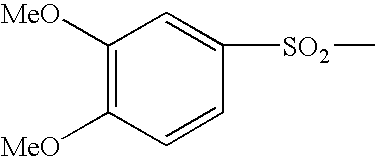
For the purpose of the present invention, the term “arylsulfonamide group” is intended to mean any aryl group as defined above, linked via a sulfonamide group. In particular, an arylsulfonamide group is the group;
Figure US07084167-20060801-C00007
For the purpose of the present invention, the term “aralkylsulfonamide group” is intended to mean any aralkyl group as defined above, linked via a sulfonamide group.
The compounds according to the invention all possess an asymmetric center and can therefore exist in the form of optical isomers. The present invention also comprises these isomers, either separately or as a mixture.
The present invention also relates to the method of preparing these compounds.
This method in particular comprises the steps of:
a) transformation of the carboxylic acid of the following general formula VIII:
Figure US07084167-20060801-C00008

in which:
the group X represents a group —NR4, —CH═N— or —CHR5-NR4-,
the group Y represents an oxygen or sulfur atom or a group NR, —CR5, —CHR5, —CR5=CR6- or —CHR5-CHR6-, on the condition that, when the group X represents the group —CH═N— or —CHR5-NR4-, the group Y represents an oxygen or sulfur atom or a group NR, —CR5 or —CHR5,
the group R represents a hydrogen atom or an alkyl, aryl or aralkyl group,
the groups R1, R5 and R6, which may be identical or different, each represent a hydrogen or halogen atom or an alkyl or alkoxy group,
and the group R4 represents a hydrogen atom or an alkyl, aryl, aralkyl, alkylsulfonamide, arylsulfonamide or aralkylsultonamide group,
into acyl chloride of the following general formula VI:
Figure US07084167-20060801-C00009

in which:
the group X represents a group —NR4, —CH═N— or —CHR5-NR4-,
the group Y represents an oxygen or sulfur atom or a group NR, —CR5, —CHR5, —CR5=CR6- or —CHR5-CHR6-, on the condition that, when the group X represents the group —CH═N— or —CHR5-NR4-, the group Y represents an oxygen or sulfur atom or a group NR, —CR5 or —CHR5,
the group R represents a hydrogen atom or an alkyl, aryl or aralkyl group,
the groups R1, R5 and R6, which may be identical or different, each represent a hydrogen or halogen atom or an alkyl or alkoxy group,
and the group R4 represents a hydrogen atom or an alkyl, aryl, aralkyl, alkylsulfonamide, arylsulfonamide or aralkylsulfonamide group, advantageously by reaction with a thionyl chloride.
b) reaction between the acyl chloride of general formula VI and an amine of the following general formula VII:
Figure US07084167-20060801-C00010

in which:
the group R2 represents a hydrogen atom or an alkyl group,
and the group R3 represents an aryl group,
so as to obtain the amide of the following general formula V:
Figure US07084167-20060801-C00011

in which:
the group X represents a group —NR4, —CH═N— or —CHR5-NR4-,
the group Y represents an oxygen or sulfur atom or a group NR, —CR5, —CHR5, —CR5=CR6- or —CHR5-CHR6-, on the condition that, when the group X represents the group —CH═N— or —CHR5-NR4-, the group Y represents an oxygen or sulfur atom or a group NR, —CR5 or —CHR5,
the group R represents a hydrogen atom or an alkyl, aryl or aralkyl group,
the groups R1, R5 and R6, which may be identical or different, each represent a hydrogen or halogen atom or an alkyl or alkoxy group,
the group R2 represents a hydrogen atom or an alkyl group,
the group R3 represents an aryl group,
and the group R4 represents a hydrogen atom or an alkyl, aryl, aralkyl, alkylsaufonamide, arylsulfonamide or aralkylsulfonamide group.
c) Reduction of the amide of general formula V, advantageously with LiAlH4, in a compound of general formula I.
The carboxylic acids of general formula VIII and the amines of general formula VII are readily available commercially.
The simplicity of this synthesis and its very good yield make it possible to introduce a large variety of substituents R, R1, R2, R3, R4, R5 and R6 onto the compound of general formula I.
The use, in the method of synthesis, of an optically pure isomer of the amine of general formula VII allows the synthesis of an optically pure compound of general formula I.
The present invention also relates to the amides of the following general formula V:
Figure US07084167-20060801-C00012

in which:
the group X represents a group —NR4, —CH═N— or —CHR5-NR4-,
the group Y represents an oxygen or sulfur atom or a group NR, —CR5, —CHR5, —CR5=CR6- or —CHR5-CHR6-, on the condition that, when the group X represents the group —CH═N— or —CHR5-NR4-, the group Y represents an oxygen or sulfur atom or a group NR, —CR5 or —CHR5,
the group R represents a hydrogen atom or an alkyl, aryl or aralkyl group,
the groups R1, R5 and R6, which may be identical or different, each represent a hydrogen or halogen atom or an alkyl or alkoxy group,
the group R2 represents a hydrogen atom or an alkyl group,
the group R3 represents an aryl group,
and the group R4 represents a hydrogen atom or an alkyl, aryl, aralkyl, alkylsulfonamide, arylsulfonamide or aralkylsulfonamide group,
and their salts with a pharmaceutically acceptable acid.
These amides are a reaction intermediate of the synthesis of the compound of general formula I.
The amides according to the invention all have an asymmetric center and may therefore exist in the form of optical isomers. The present invention also comprises the isomers, either separately or as a mixture.
The present invention also relates to the pharmaceutical compositions comprising, as active principle, one of the compounds defined above, and a suitable excipient. These compositions can be formulated for administration to mammals, including humans. The dosage varies depending on the treatment and depending on the condition in question. These compositions are prepared so as to be administrable by the digestive or parenteral route.
In the pharmaceutical compositions of the present invention for oral, sublingual, subcutaneous, intramuscular, intravenous, transdermal, local or rectal administration, the active ingredient can be administered in unit forms for administration, mixed with conventional pharmaceutical carriers, to animals or to humans. Suitable unit forms for administration comprise the forms for oral administration, such as tablets, gelatin capsules, powders, granules and oral solutions or suspensions, the forms for sublingual and buccal administration, the forms for subcutaneous, intramuscular, intravenous, intranasal or intraoccular administration and the forms for rectal administration.
When a solid composition is prepared in the form of tablets, the main active ingredient is mixed with a pharmaceutical vehicle such as gelatin, starch, lactose, magnesium stearate, talc, gum arabic and the like. The tablets may be coated with sucrose or with other suitable materials, or they may be treated in such a way that they have a prolonged or delayed activity and they continuously release a predetermined amount of active principle.
A preparation in gelatin capsules is obtained by mixing the active ingredient with a diluent and pouring the mixture obtained into soft or hard gelatin capsules.
A preparation in the form of a syrup or an elixir may contain the active ingredient together with a sweetener, an antiseptic, and also a taste enhancer and a suitable coloring agent.
The water-dispersible powders or granules may contain the active ingredient mixed with dispersing agents or wetting agents, or suspending agents, and with flavor correctors or sweeteners.
For rectal administration, suppositories are used which are prepared with binders which melt at rectal temperature, for example cocoa butter or polyethylene glycols.
For parenteral, intranasal or intraoccular administration, aqueous suspensions, isotonic saline solutions or sterile and injectable solutions which contain pharmacologically compatible dispersing agents and/or wetting agents are used.
The active principle may also be formulated in the form of microcapsules, optionally with one or more carrier additives.
The present invention also relates to the use of these compounds, and of the pharmaceutical compositions comprising them, as a modulator of CaSR activity.
The CaSR can be found in the parathyroid gland, the thyroid, bone cells, the stomach, the lung, the kidney, pituitary gland, the brain, the hypothalamus, the olfactory areas or the hippocampus.
The compounds according to the present invention are preferably more selective, in their use, with respect to the receptors of the parathyroid compared with those of the thyroid gland.
The compounds according to the invention, and the pharmaceutical compositions comprising them, may be used as a medicinal product, in particular for the treatment of physiological disorders or diseases associated with disturbances of CaSR activity. Even more particularly, these physiological disorders or diseases of the type including primary or secondary hyperparathyroidism, osteoporosis, cardiovascular, gastrointestinal, endocrine or neurodegenerative diseases or certain cancers in which (Ca2+)e ions are abnormally high. The secondary hyperparathyroidism is more particularly observed in chronic renal failure.
The following example of synthesis of compounds according to the invention is given by way of nonlimiting illustration of the invention.
Synthesis of (R)-N-[1-(1-naphthyl)ethyl]indole-2-carboxamide
7 equivalents of thionyl chloride (0.760 ml; 10.5 mmol) and 0.020 ml of N,N-dimethylformamide (DMF) are successively added, at ambient temperature, under argon, to a solution of indole-2-carboxylic acid (242 mg; 1.5 mmol) in 10 ml of chloroform. After stirring overnight at 30° C., the mixture is evaporated to dryness to give a corresponding acid chloride in the form of an oily yellow residue. The latter is dissolved in 10 ml of chloroform and then 1.5 equivalents of triethylamine (0.315 ml; 2.25 mmol) and 1.5 equivalents of (R)-1-(1-naphthyl)ethylamine (0.360 ml; 2.25 mmol) are added. The solution is stirred for 2 hours at ambient temperature before being concentrated and then purified on a silica column (eluant: heptane/ethyl acetate: 4/1). 340 mg (1.08 mmol; 72%) of the amide are isolated in the form of a yellow solid.
Mass spectrometry (ES): m/z: 315 [M+H]+
Synthesis of (R)-N-[(indole-2-yl)methyl]-N-[1-(1-naphthyl)ethyl]amine.HCl (PHD 337-R)
A solution of aluminum chloride, AlCl3 (213 mg; 1.6 mmol), in 4 ml of distilled tetrahydrofuran (THF) is added, at ambient temperature, under argon, to a solution of lithium aluminum hydride, LiAlH4 (60 mg; 1.6 mmol), in 2 ml of distilled THF. The solution is stirred for 45 minutes at ambient temperature before introducing the amide (252 mg; 0.80 mmol) in steps. The reaction medium is then heated to 60° C. After 6 hours of reaction, a further two equivalents of LiAlH4 (60 mg; 1.6 mmol) are added. The reaction is left overnight at 60° C. and then, after cooling, the medium is hydrolyzed by slowly adding aqueous 10% THF. The mixture is then treated with a molar sodium hydroxide solution before being extracted 3 times with ethyl ether. The organic phase is dried over sodium sulfate, evaporated and purified on a silica column (eluant: heptane/ethyl acetate: 60/10). 200 mg (0.66 mmol; 83%) of a yellow oil are isolated. The free amine is then transformed into its hydrochloride by treatment in chloroform with a saturated solution of hydrochloric acid in methanol.
Melting point: 204° C.
Mass spectrometry (ES): m/z: 301 [M+H]+
Optical rotation: [α]20 D=+25.0° (c 0.4, CHCl3)
Activity on Transfected Cells Expressing the [Ca2+]e Ion Sensing Receptor
The calcimimetic activity of the compounds was estimated by measuring the accumulation of tritiated inositol phosphates, induced by 10 μM of each of the compounds in the presence of 2 mM of Ca2+, in CHO(CaSR) cells (Ferry et al, Biochem Biophys Res Commun, 1997).
This activation was compared with that induced by the compound NPS-R-568, a reference calcimimetic used at a concentration of 10 μM (Table 1) (Ferry et al, Biochem Biophys Res Commun, 1997; Nemeth et al, Proc Natl Acad Sci USA, 1997).
The compounds PHD 337, PHD 337R and PHD 356, used at a concentration of 10 μM, exhibit an activity ranging from 90 to 100% of that obtained with 10 mM of Ca2+, comparable to that of the compound NPS-R-568 at the same concentration (Table 1). It should be noted (Table 2) that the compounds PHD 337 and PHD 337R or the compound PHD 356 at 1 μM exhibit an activity which is 50% greater than that of calcium (10 mM), whereas the compound PHD 363 is less active at this same concentration, suggesting that the group R1 on the phenyl ring has an important role.
TABLE 1
Accumulation of tritiated inositol phosphates
in CHO (CaSR) cells, induced by the PHD/AK compounds and
by the calcimimetic compound NPS-R-568
Empirical Accumulation of
formula- (3H)-IP % of
Molar mass the 10 mM Ca2+
Compound- (melting response ±
(10 μM) point) Structure S.E.
NPS R-568 C18H22ClNO.HCl340,29
Figure US07084167-20060801-C00013
106 ± 15
PHD 337 C21H20N2.2HCl373,32
Figure US07084167-20060801-C00014
103 ± 6
PHD 337-R C21H20N2.2HCl373,32
Figure US07084167-20060801-C00015
117 ± 5
PHD 337-S C21H20N2.2HCl373,32
Figure US07084167-20060801-C00016
 32 ± 5
PHD 356 C29H20N2O.2HCl353,29
Figure US07084167-20060801-C00017
105 ± 15
PHD 359 C22H22N2O.2HCl403,34
Figure US07084167-20060801-C00018
 55 ± 5
PHD 361 C21H19FN2.2HCl391,32
Figure US07084167-20060801-C00019
 87 ± 7
PHD 363 C21H19CN2.2HCl407,77
Figure US07084167-20060801-C00020
 60 ± 1
PHD 368 C21H22N2.2HCl375,34
Figure US07084167-20060801-C00021
 77 ± 1
PHD 338 C29H28N2O4S.2HCl537,08
Figure US07084167-20060801-C00022
 54 ± 5
AK 43 C22H22N2.2HCl350,89
Figure US07084167-20060801-C00023
 79 ± 13
The calcimimetic activity of the PHD/AK compounds is compared with that of a reference compound, NPS-R-568, used at the same concentration and under the same experimental conditions. This activity is expressed as a percentage of the activity of 10 mM of Ca2+. The means±standard errors of the means of 2 to 5 independent manipulations are indicated. The experiments were carried out in the presence of 2 mM of Ca2+.
TABLE 2
Accumulation of tritiated inositol phosphates
in CHO (CaSR) cells, induced by the PHD compounds at
1 μM
Empirical Accumulation of
formula- (3H)-IP % of
Molar mass the 10 mM Ca2+
Compound- (melting response ±
(10 μM) point) Structure S.E.
PHD 337 C21H20N2.2HCl373,32
Figure US07084167-20060801-C00024
69 ± 9
PHD 337-R C21H20N2.2HCl373,32
Figure US07084167-20060801-C00025
73 ± 10
PHD 337-S C31H20N2.2HCl373,32
Figure US07084167-20060801-C00026
 3 ± 2
PHD 356 C29H20N2O.2HCl353,29
Figure US07084167-20060801-C00027
76 ± 1
PHD 363 C21H19ClN2.2HCl407,77
Figure US07084167-20060801-C00028
 6 ± 3

4.2 Specificity of the Activity of These Molecules
The PHD molecules, used at a concentration of 10 μM, produce little or no accumulation of [3H]IP in control CHO(WT+) cells, which suggests their specificity of action with respect to the CaSR (Table 3). The CHO(WT+) cells were transfected with the plasmid alone and do not express the CaSR.
The accumulation of tritiated inositol phosphates is expressed as a percentage of the basal level observed in the presence of 2 mM Ca2+ (100%) in CHO (WT+) or CHO(CaSR) cells.
TABLE 3
Accumulation of tritiated inisotol phosphates
in the CHO (CaSR) and CHO (WT*) cells, induced by the
PHD/AK compounds and the calcimimetic compound
NPS-R-568
Accumulation of
(1H)-IP % of
Compound- basal level
(10 μM) Structure CHO (WT*) CHO (CaSR)
NPS R-568
Figure US07084167-20060801-C00029
110 ± 9 454 ± 33
PHD 337
Figure US07084167-20060801-C00030
147 ± 14 444 ± 101
PHD 337-R
Figure US07084167-20060801-C00031
130 ± 9 588 ± 129
PHD 337-S
Figure US07084167-20060801-C00032
132 ± 1 225 ± 7
PHD 356
Figure US07084167-20060801-C00033
151 ± 7 482 ± 58
PHD 359
Figure US07084167-20060801-C00034
117 ± 8 303 ± 42
PHD 361
Figure US07084167-20060801-C00035
133 ± 3 420 ± 70
PHD 363
Figure US07084167-20060801-C00036
125 ± 12 325 ± 67
PHD 368
Figure US07084167-20060801-C00037
126 ± 6 388 ± 85
PHD 338
Figure US07084167-20060801-C00038
111 ± 10 202 ± 9
AK 43
Figure US07084167-20060801-C00039
109 ± 2 401 ± 16

Claims (9)

1. A compound of the following formula I:
Figure US07084167-20060801-C00040
in which:
the group X represents a group
Figure US07084167-20060801-C00041
the group Y represents a group
Figure US07084167-20060801-C00042
the groups R1 and R5, which may be identical or different, each represent a hydrogen or halogen atom or an alkyl or alkoxy group,
the group R2 represents a hydrogen atom or an alkyl group,
the group R3 represents an aryl group,
and the group R4 represents a hydrogen atom or an alkyl, aryl, aralkyl, alkylsulfonamide, arylsulfonamide or aralkylsulfonamide group,
and its salt with a pharmaceutically acceptable acid, in the form of a racemic mixture or of its optically pure isomer,
and with the exception of compounds, which have the following formulae:
Figure US07084167-20060801-C00043
2. The compound of claim 1, wherein the compound is represented by the following formula III:
Figure US07084167-20060801-C00044
and its salt with a pharmaceutically acceptable acid, in the form of a racemic mixture or of its optically pure isomer.
3. The compound of claim 1, wherein the compound is represented by the following formula IV:
Figure US07084167-20060801-C00045
and its salt with a pharmaceutically acceptable acid.
4. A method for preparing the compound of claim 1, comprising reducing an amide of the following formula V:
Figure US07084167-20060801-C00046
in which:
the group X represents a group
Figure US07084167-20060801-C00047
the group Y represents a group
Figure US07084167-20060801-C00048
the groups R1 and R5, which may be identical or different, each represent a hydrogen or halogen atom or an alkyl or alkoxy group,
the group R2 represents a hydrogen atom or an alkyl group,
the group R3 represents an aryl group,
and the group R4 represents a hydrogen atom or an alkyl, aryl, aralkyl, alkylsulfonamide, arylsulfonamide or aralkylsulfonamide group,
and with the exception of the compounds, which have the following formula:
Figure US07084167-20060801-C00049
5. The method of claim 4, wherein the method further comprises reacting:
(A) an acyl chloride of the following formula VI:
Figure US07084167-20060801-C00050
in which:
the group X represents a group
Figure US07084167-20060801-C00051
the group Y represents a group
Figure US07084167-20060801-C00052
the groups R1 and R5, which may be identical or different, each represent a hydrogen or halogen atom or an alkyl or alkoxy group,
and the group R4 represents a hydrogen atom or an alkyl, aryl, aralkyl, alkylsulfonamide, arylsulfonamide or aralkylsulfonamide group,
with
(B) an amine of the following formula VII:
Figure US07084167-20060801-C00053
in which:
the group R2 represents a hydrogen atom or an alkyl group,
and the group R3 represents an aryl group;
so as to obtain the amide of general formula V, wherein the following groups are substituted or unsubstituted: alkyl, alkoxy, aryl, aralkyl, alkylsulfonamide, arylsulfonamide, and aralkylsulfonamide.
6. The method of claim 5, wherein the method further comprises reacting a carboxylic acid of the following formula VIII:
Figure US07084167-20060801-C00054
in which:
the group X represents a group
Figure US07084167-20060801-C00055
the group Y represents a group
Figure US07084167-20060801-C00056
the groups R1 and R5, which may be identical or different, each represent a hydrogen or halogen atom or an alkyl or alkoxy group,
and the group R4 represents a hydrogen atom or an alkyl, aryl, aralkyl, alkylsulfonamide, arylsulfonamide or aralkylsulfonamide group;
with a thionyl chloride;
so as to obtain acyl chloride of the formula VI, wherein the following groups are substituted or unsubstituted: alkyl, alkoxy, aryl, aralkyl, alkylsulfonamide, arylsulfonamide, and aralkylsulfonamide.
7. A pharmaceutical composition comprising: (A) a compound of the following formula I:
Figure US07084167-20060801-C00057
in which:
the group X represents a group
Figure US07084167-20060801-C00058
the group Y represents a group
Figure US07084167-20060801-C00059
the groups R1 and R5, which may be identical or different, each represent a hydrogen or halogen atom or an alkyl or alkoxy group,
the group R2 represents a hydrogen atom or an alkyl group,
the group R3 represents an aryl group;
and the group R4represents a hydrogen atom or an alkyl, aryl, aralkyl, alkylsulfonamide, arylsulfonamide or aralkylsulfonamide group, wherein the following groups are substituted or unsubstituted: alkyl, alkoxy, aryl, aralkyl, alkylsulfonamide, arylsulfonamide, and aralkylsulfonamide; and
(B) a suitable pharmaceutical carrier.
8. A pharmaceutical composition comprising the compound of claim 2 and a suitable pharmaceutical carrier.
9. A pharmaceutical composition comprising the compound of claim 3 and a suitable pharmaceutical carrier.
US10/296,288 2000-05-24 2001-05-23 Calcium receptor active molecules and method for preparing same Expired - Fee Related US7084167B2 (en)

Applications Claiming Priority (3)

Application Number Priority Date Filing Date Title
FR00/06619 2000-05-24
FR0006619A FR2809396B1 (en) 2000-05-24 2000-05-24 NOVEL MOLECULES HAVING CALCIMIMETIC ACTIVITY AND THEIR METHOD OF PREPARATION
PCT/FR2001/001599 WO2001090069A1 (en) 2000-05-24 2001-05-23 Novel calcium receptor active molecules and method for preparing same

Publications (2)

Publication Number Publication Date
US20030199497A1 US20030199497A1 (en) 2003-10-23
US7084167B2 true US7084167B2 (en) 2006-08-01

Family

ID=8850558

Family Applications (1)

Application Number Title Priority Date Filing Date
US10/296,288 Expired - Fee Related US7084167B2 (en) 2000-05-24 2001-05-23 Calcium receptor active molecules and method for preparing same

Country Status (7)

Country Link
US (1) US7084167B2 (en)
EP (1) EP1284963B1 (en)
JP (1) JP2003534324A (en)
AT (1) ATE557002T1 (en)
AU (1) AU2001264012A1 (en)
FR (1) FR2809396B1 (en)
WO (1) WO2001090069A1 (en)

Cited By (8)

* Cited by examiner, † Cited by third party
Publication number Priority date Publication date Assignee Title
US20070179134A1 (en) * 2005-11-25 2007-08-02 Proskelia Sas. Urea derivatives, processes for their preparation, their use as medicaments, and pharmaceutical compositions containing them
US20070225296A1 (en) * 2004-05-28 2007-09-27 Hiroshi Miyazaki Arylalkylamine Compound and Process for Preparing the Same
US20080221101A1 (en) * 2006-10-26 2008-09-11 Amgen Inc. Calcium receptor modulating agents
US20100240889A1 (en) * 2005-04-29 2010-09-23 Proskelia Sas Urea Derivatives Methods For Their Manufacture And Uses Thereof
US20110178133A1 (en) * 2007-10-15 2011-07-21 Coulter Thomas S Calcium receptor modulating agents
US20110230517A1 (en) * 2008-10-08 2011-09-22 Amgen Inc. Calcium receptor modulating agents
US9493396B2 (en) 2013-08-28 2016-11-15 Lupin Atlantis Holdings Sa Substituted naphthalene compounds as calcium sensing receptor modulators
US9861606B2 (en) 2012-09-28 2018-01-09 King's College London Therapeutic for treating inflammatory lung disorders

Families Citing this family (32)

* Cited by examiner, † Cited by third party
Publication number Priority date Publication date Assignee Title
US7176322B2 (en) 2002-05-23 2007-02-13 Amgen Inc. Calcium receptor modulating agents
US6908935B2 (en) 2002-05-23 2005-06-21 Amgen Inc. Calcium receptor modulating agents
PT2821067T (en) 2003-09-12 2017-12-01 Amgen Inc Rapid dissolution formulation of cinacalcet
WO2005065050A2 (en) * 2003-12-25 2005-07-21 Asahi Kasei Pharma Corporation Bicyclic compound
US7361789B1 (en) 2004-07-28 2008-04-22 Amgen Inc. Dihydronaphthalene compounds, compositions, uses thereof, and methods for synthesis
BRPI0710814A2 (en) * 2006-04-20 2011-08-16 Amgen Inc stable emulsion formulations
CA2681582C (en) 2007-03-30 2015-07-14 Amgen Inc. Methods of treating bowel disorders
EP2345636B1 (en) * 2008-10-03 2016-03-30 Ajinomoto Co., Inc. Casr agonist
WO2010104882A1 (en) 2009-03-10 2010-09-16 Amgen Inc. Methods of modulating sperm motility
EP2435400A2 (en) 2009-05-27 2012-04-04 Leo Pharma A/S Novel calcium sensing receptor modulating compounds and pharmaceutical use thereof
JP2012528086A (en) 2009-05-27 2012-11-12 レオ ファーマ アクティーゼルスカブ Novel calcium-sensing receptor modulatory compound and pharmaceutical use thereof
EP2588445A1 (en) 2010-06-30 2013-05-08 Leo Pharma A/S New polymorphic form of a calcimimetic compound
EP2588444A1 (en) 2010-06-30 2013-05-08 Leo Pharma A/S New polymorphic form of a calcimimetic compound
US20130245084A1 (en) 2010-11-26 2013-09-19 Leo Pharma A/S Calcium-sensing receptor-active compounds
US20130267516A1 (en) 2010-11-26 2013-10-10 Leo Pharma A/S Substituted cyclopentyl-azines as casr-active compounds
WO2012069420A2 (en) 2010-11-26 2012-05-31 Leo Pharma A/S Calcium-sensing receptor-active compounds
RU2013128968A (en) 2010-11-26 2015-01-10 Лео Фарма А/С COMPOUNDS ACTIVE AGAINST THE CALCIUM-SENSITIVE RECEPTOR
FR2969150B1 (en) 2010-12-20 2013-07-26 Centre Nat Rech Scient NOVEL INDOLIC MOLECULES DEMONSTRATING ANTIBACTERIAL ACTIVITIES IN A VARIETY OF GRAM-NEGATIVE AND POSITIVE BACTERIA INCLUDING MULTI-DRUG-RESISTANT BACTERIA
CA2828415A1 (en) 2011-03-10 2012-09-13 Lupin Limited Substituted morpholines as modulators for the calcium sensing receptor
WO2012127385A1 (en) * 2011-03-18 2012-09-27 Lupin Limited Benzo [b] [1, 4] oxazin derivatives as calcium sensing receptor modulators
KR102041154B1 (en) 2012-02-24 2019-11-07 루핀 리미티드 Substituted chroman compounds as calcium sensing receptor modulators
WO2013136288A1 (en) * 2012-03-16 2013-09-19 Lupin Limited Substituted 3,4-dihydro-2h-benzo[b] [1,4]oxazine compounds as calcium sensing receptor modulators
CN104583177B (en) * 2012-08-27 2016-09-07 卢平亚特兰蒂斯控股有限公司 Aryl alkyl amines as calcium-sensing receptor regulator
TW201602062A (en) 2013-08-12 2016-01-16 魯賓有限公司 Substituted biphenyl compounds as calcium sensing receptor modulators
WO2015162538A1 (en) 2014-04-21 2015-10-29 Lupin Limited Heterocyclic compounds as calcium sensing receptor modulators for the treatment of hyperparathyroidism, chronic renal failure and chronic kidney disease
WO2017037616A1 (en) 2015-08-31 2017-03-09 Lupin Limited Arylalkylamine compounds as calcium sensing receptor modulators
EP4081210A1 (en) 2019-12-27 2022-11-02 Lupin Limited Pharmaceutical composition of casr modulators and methods and uses thereof
JP7798770B2 (en) * 2020-01-17 2026-01-14 ルピン・リミテッド Methods, processes and intermediates for preparing chroman compounds
JP2024520832A (en) 2021-06-08 2024-05-24 エンセオジェニックス バイオサイエンシズ, インコーポレイテッド Dimethoxyphenylalkylamine activators of serotonin receptors.
AU2022425198A1 (en) 2021-12-27 2024-07-18 Atai Therapeutics, Inc. Aminotetraline activators of serotonin receptors
WO2024192150A2 (en) * 2023-03-16 2024-09-19 Atai Therapeutics Inc. 3-alkylamine indole activators of serotonin receptors
US12343319B2 (en) 2023-05-01 2025-07-01 Atai Therapeutics, Inc. Compositions and methods for treatment of diseases and disorders

Citations (9)

* Cited by examiner, † Cited by third party
Publication number Priority date Publication date Assignee Title
US3906099A (en) 1972-06-08 1975-09-16 Warner Lambert Co 1,2,3,4-Tetra hydro-3-aminomethylisoquinolines in the treatment of mental depression
ES2010406A6 (en) 1989-02-16 1989-11-01 Consejo Superior Investigacion Acetylenic and alenic derivs. of amino-methyl methyl indole prepn.
WO1993004373A1 (en) 1991-08-23 1993-03-04 Nps Pharmaceuticals, Inc. Calcium receptor active molecules
WO1996012697A2 (en) 1994-10-21 1996-05-02 Nps Pharmaceuticals, Inc. Calcium receptor-active compounds
WO1996023789A1 (en) 1995-02-03 1996-08-08 Sankyo Company, Limited Hexahydropyrazinoquinoline derivatives
WO2000021910A2 (en) 1998-10-14 2000-04-20 Ortho-Mcneil Pharmaceutical, Inc. 1,2-disubstituted cyclopropanes
WO2000032578A1 (en) 1998-11-30 2000-06-08 Schering Corporation Benzimidazole compounds that are vitronectin receptor antagonists
WO2000035864A1 (en) 1998-12-16 2000-06-22 Bayer Aktiengesellschaft New biphenyl and biphenyl-analogous compounds as integrin antagonists
WO2001034562A1 (en) 1999-11-09 2001-05-17 Centre National De La Recherche Scientifique (Cnrs) Aralkyl-1,2-diamines having calcimimetic activity and preparation mode

Family Cites Families (3)

* Cited by examiner, † Cited by third party
Publication number Priority date Publication date Assignee Title
ES2002416A6 (en) * 1986-10-14 1988-08-01 Consejo Superior Investigacion Prepn. of acetylenic and allenic derivs. of amino:methyl methyl indole
AU7435596A (en) * 1995-10-16 1997-05-07 Procter & Gamble Company, The Conditioning shampoo compositions
FR2798845B1 (en) * 1999-09-29 2001-11-23 Oreal COMPOSITION FOR WASHING KERATIN MATERIALS, BASED ON A DETERGENT SURFACTANT, A POLYORGANOSILOXANE AND AN ACRYLIC TERPOLYMER

Patent Citations (9)

* Cited by examiner, † Cited by third party
Publication number Priority date Publication date Assignee Title
US3906099A (en) 1972-06-08 1975-09-16 Warner Lambert Co 1,2,3,4-Tetra hydro-3-aminomethylisoquinolines in the treatment of mental depression
ES2010406A6 (en) 1989-02-16 1989-11-01 Consejo Superior Investigacion Acetylenic and alenic derivs. of amino-methyl methyl indole prepn.
WO1993004373A1 (en) 1991-08-23 1993-03-04 Nps Pharmaceuticals, Inc. Calcium receptor active molecules
WO1996012697A2 (en) 1994-10-21 1996-05-02 Nps Pharmaceuticals, Inc. Calcium receptor-active compounds
WO1996023789A1 (en) 1995-02-03 1996-08-08 Sankyo Company, Limited Hexahydropyrazinoquinoline derivatives
WO2000021910A2 (en) 1998-10-14 2000-04-20 Ortho-Mcneil Pharmaceutical, Inc. 1,2-disubstituted cyclopropanes
WO2000032578A1 (en) 1998-11-30 2000-06-08 Schering Corporation Benzimidazole compounds that are vitronectin receptor antagonists
WO2000035864A1 (en) 1998-12-16 2000-06-22 Bayer Aktiengesellschaft New biphenyl and biphenyl-analogous compounds as integrin antagonists
WO2001034562A1 (en) 1999-11-09 2001-05-17 Centre National De La Recherche Scientifique (Cnrs) Aralkyl-1,2-diamines having calcimimetic activity and preparation mode

Non-Patent Citations (33)

* Cited by examiner, † Cited by third party
Title
6001 Chemical Abstracts, Columbus, Ohio; XP-002161408 (1996).
6001 Chemical Abstracts, Columbus, Ohio; XP-002161448 (1998).
6001 Chemical Abstracts, Columbus, Ohio; XP-002161449 (1986).
6001 Chemical Abstracts, Columbus, Ohio; XP-002161450 (1987).
6001 Chemical Abstracts, Columbus, Ohio; XP-002161451 (1958).
6001 Chemical Abstracts, Columbus, Ohio; XP-002161452 (1978).
6001 Chemical Abstracts, Columbus, Ohio; XP-002161453 (1996).
6001 Chemical Abstracts, Columbus, Ohio; XP-002161454 (1998).
6001 Chemical Abstracts, Columbus, Ohio; XP-002161455 (1986).
6001 Chemical Abstracts, Columbus, Ohio; XP-002161456 (1985).
6001 Chemical Abstracts, Columbus, Ohio; XP-002161457 (1958).
6001 Chemical Abstracts, Columbus, Ohio; XP-002161458 (1978).
6001 Chemical Abstracts, Columbus, Ohio; XP-002161464 (1989).
6001 Chemical Abstracts, Columbus, Ohio; XP-002161465 (1989).
Antonsen et al.; A cacimimetic agent acutely suppresses parathyroid hormone levels in patients with chronic renal failure; Kidney International, 53:223-227 (1998).
Brown et al.; Cloning and characterization of an extracellular CA2+ sensing receptor from bovine parathyroid; Nature 366:575-580 (1993).
Brown et al.; The extracellular calcium-sensing receptor: Its role in health and disease; Annu. Rev. Med. 49:15-29 (1998).
Chattopadhyay et al.; The calcium-sension receptor: A window into the physiology and pathophysiology of mineral ion metabolism; Endocrine 17(4):289-307 (1996).
Cherqaoui et al.; Structure-selectivity relationship of MAO inhibitors using neural networks; Models in Chemistry 135 (1-2), pp. 79-91 (1998).
Cruces, et al., "Acetylenic and Allenic Derivatives of 2-(1-methylindolyl)methylamine As Selective Inhibitors of the Monoamine Oxidases A and B," Farmaco, Edizione Scientifica, vol. 43, Iss. 7-8, p. 567-73 (1988). *
Ferry et al.; Effects of divalent cations and of a calcimimetic on adrenocorticotropic hormone release in pituitary cells, Biochem. and Biophys. Res. Comm. 238, pp. 866-873 (1997).
Gavela et al.; Preparacion de derivados acetilenicos y alenicos de 2-indolilmetilaminas y resultdos preliminaries de su estudio como inhibidores selectivos para las monoaminooxidasaas AYB; 82:129-120 (1986).
Nemeth et al.; Calcimimetic compounds: a direct approach to controlling plasma levels of parathyroid hormone in hyperparathyroidism, TEM, vol. 10, No. 9, pp. 66-71 (1999).
Nemeth et al.; Calcimimetics with potent and selective activity on the parathyroid calcium receptor, PNAS 95:4040-4045 (1998).
Nogradi, Thomas; Untersuchungen uber rauwolfia-alkaloid-modelle II; 2-substituierte indole, tetrahydrocarbolin und hexadehydro-yohimban-derivate; Monatshefte fur Chemie. Bd. 88(6) 1088-1094 (1957).
Pollak et al.; Autosomal dominant hypocalcaemia caused by a CA2+ sensing receptor gene mutation, Nature Genetics, 8:303-307 (1994).
Pollak et al.; Mutations in the human CA2+ sensing receptor gene cause familial hypocalciuric hypercalcemia and neonatal severe hyperparathyroidism, Cell, 75:1297-1303 (1993).
Ruat et al.; Calcium sensing receptor: Molecular cloning in rat and localization to nerve terminals; PNAS 92:3161-3165 (1995).
Ruat et al.;Cloned and expressed rat CA2+ sensing receptor; J. Biol. Chem., 271:5972-5975 (1996).
Silverberg et al.; Short-term inhibition of parathyroid hormone secretion by a calcium receptor agonist in patients with primary hyperparathyroidism, New England Journal of Medicine, 1506-1510 (1997).
Wada et al.; NPS R-568 halts or reverses osteitis fibrosa I uremic rats; Kidney International 53:448-453 (1998).
Wada et al.; The calcimimetic compound NPS R-568 suppresses parathyroid cell proliferation in rats with renal insufficiency; INIST CNRS 2977-2983 (2002).
Ye et al.; Amyloid-62 proteins activate CA<SUP>2+ </SUP>permeable channels through calcium-sensing receptors, J. Neuroscience Res. 47:547-554 (1997).

Cited By (20)

* Cited by examiner, † Cited by third party
Publication number Priority date Publication date Assignee Title
US8362274B2 (en) 2004-05-28 2013-01-29 Mitsubishi Tanabe Pharma Corporation Arylalkylamine compound and process for preparing the same
US20070225296A1 (en) * 2004-05-28 2007-09-27 Hiroshi Miyazaki Arylalkylamine Compound and Process for Preparing the Same
US8778628B2 (en) 2004-05-28 2014-07-15 Mitsubishi Tanabe Pharma Corporation Arylalkylamine compound and process for preparing the same
US20100249049A1 (en) * 2004-05-28 2010-09-30 Hiroshi Miyazaki Arylalkylamine compound and process for preparing the same
US8759387B2 (en) 2004-05-28 2014-06-24 Mitsubishi Tanabe Pharma Corporation Arylalkylamine compound and process for preparing the same
US8703721B2 (en) 2004-05-28 2014-04-22 Mitsubishi Tanabe Pharma Corporation Arylalkylamine compound and process for preparing the same
US20110218160A1 (en) * 2004-05-28 2011-09-08 Hiroshi Miyazaki Arylalkylamine compound and process for preparing the same
US8492111B2 (en) 2004-05-28 2013-07-23 Mitsubishi Tanabe Pharma Corporation Arylalkylamine compound and process for preparing the same
US20100240889A1 (en) * 2005-04-29 2010-09-23 Proskelia Sas Urea Derivatives Methods For Their Manufacture And Uses Thereof
US8247412B2 (en) 2005-04-29 2012-08-21 Galapagos Sasu Urea derivatives methods for their manufacture and uses thereof
US7875609B2 (en) 2005-11-25 2011-01-25 Galapagos Sasu Urea derivatives, processes for their preparation, their use as medicaments, and pharmaceutical compositions containing them
US20070179134A1 (en) * 2005-11-25 2007-08-02 Proskelia Sas. Urea derivatives, processes for their preparation, their use as medicaments, and pharmaceutical compositions containing them
US8349831B2 (en) 2006-10-26 2013-01-08 Amgen Inc. Calcium receptor modulating agents
US20080221101A1 (en) * 2006-10-26 2008-09-11 Amgen Inc. Calcium receptor modulating agents
US8334317B2 (en) 2007-10-15 2012-12-18 Amgen Inc. Calcium receptor modulating agents
US20110178133A1 (en) * 2007-10-15 2011-07-21 Coulter Thomas S Calcium receptor modulating agents
US20110230517A1 (en) * 2008-10-08 2011-09-22 Amgen Inc. Calcium receptor modulating agents
US8791147B2 (en) 2008-10-08 2014-07-29 Amgen Inc. Calcium receptor modulating agents
US9861606B2 (en) 2012-09-28 2018-01-09 King's College London Therapeutic for treating inflammatory lung disorders
US9493396B2 (en) 2013-08-28 2016-11-15 Lupin Atlantis Holdings Sa Substituted naphthalene compounds as calcium sensing receptor modulators

Also Published As

Publication number Publication date
FR2809396A1 (en) 2001-11-30
US20030199497A1 (en) 2003-10-23
AU2001264012A1 (en) 2001-12-03
WO2001090069B1 (en) 2002-04-11
WO2001090069A1 (en) 2001-11-29
EP1284963B1 (en) 2012-05-09
EP1284963A1 (en) 2003-02-26
FR2809396B1 (en) 2005-10-14
JP2003534324A (en) 2003-11-18
ATE557002T1 (en) 2012-05-15

Similar Documents

Publication Publication Date Title
US7084167B2 (en) Calcium receptor active molecules and method for preparing same
JP4896350B2 (en) Novel diamine having CASR regulating activity
US7829597B2 (en) Benzylether and benzylamino beta-secretase inhibitors for the treatment of alzheimer&#39;s disease
US7109217B2 (en) Phenylcarboxamide beta-secretase inhibitors for the treatment of Alzheimer&#39;s disease
US7348448B2 (en) Phenylcarboxylate beta-secretase inhibitors for the treatment of alzheimer&#39;s disease
EP1235797B1 (en) Aralkyl-1,2-diamines having calcimimetic activity and preparation mode
CN1298386A (en) N-substituted aminotetralins as ligands for the neuropeptide YY5 receptor useful in the treatment of obesity and other disorders
US7449599B2 (en) Phenyl carboxamide compounds useful as beta-secretase inhibitors for the treatment of alzheimer&#39;s disease
CN103391920A (en) Calcium-sensing receptor-active compounds
KR20090045351A (en) Substituted Acetylene Compounds Useful for Disease Treatment
JP2014508103A (en) Calcium-sensing receptor active compound
IL203956A (en) Indol-2-one derivatives disubstituted in the 3-position, preparation thereof and use thereof for preparation of medicaments
EP0998283A1 (en) Calcilytic compounds
KR20010043546A (en) Phenylsulfonamide-Phenylethylamines Useful as Dopamine Receptors
US9889130B2 (en) Substituted 3-benzofuranyl-indol-2-one-3-acetamididopiperazine derivatives, preparation thereof, and therapeutic use thereof
US6472545B2 (en) Protein tyrosine phosphatase inhibitors
US5250564A (en) Aromatic peptidomimetics
JP2007522148A (en) Calcium receptor antagonist compound
US7928264B2 (en) Aminoalcohol derivatives
JP2007523076A (en) Calcium receptor antagonist compound
EP1292572A1 (en) Propanolaminotetralines, preparation thereof and compositions containing same
AU2005285812B2 (en) Aminoalcohol derivatives
US20130244995A1 (en) Calcium-sensing receptor-active compounds

Legal Events

Date Code Title Description
AS Assignment

Owner name: CENTRE NATIONAL DE LA RECHERCHE SCIENTIFIQUE (CNRS

Free format text: ASSIGNMENT OF ASSIGNORS INTEREST;ASSIGNORS:RUAT, MARTIAL;DODD, ROBERT;FAURE, HELENE VERONIQUE;AND OTHERS;REEL/FRAME:013982/0522

Effective date: 20030121

CC Certificate of correction
FEPP Fee payment procedure

Free format text: PAYOR NUMBER ASSIGNED (ORIGINAL EVENT CODE: ASPN); ENTITY STATUS OF PATENT OWNER: LARGE ENTITY

FPAY Fee payment

Year of fee payment: 4

REMI Maintenance fee reminder mailed
LAPS Lapse for failure to pay maintenance fees
STCH Information on status: patent discontinuation

Free format text: PATENT EXPIRED DUE TO NONPAYMENT OF MAINTENANCE FEES UNDER 37 CFR 1.362

STCH Information on status: patent discontinuation

Free format text: PATENT EXPIRED DUE TO NONPAYMENT OF MAINTENANCE FEES UNDER 37 CFR 1.362

FP Lapsed due to failure to pay maintenance fee

Effective date: 20140801