US7067541B2 - 2-amino-pyridine derivatives useful for the treatment of diseases - Google Patents
2-amino-pyridine derivatives useful for the treatment of diseases Download PDFInfo
- Publication number
- US7067541B2 US7067541B2 US10/860,771 US86077104A US7067541B2 US 7067541 B2 US7067541 B2 US 7067541B2 US 86077104 A US86077104 A US 86077104A US 7067541 B2 US7067541 B2 US 7067541B2
- Authority
- US
- United States
- Prior art keywords
- phenyl
- hydroxy
- methyl
- propyl
- pyridin
- Prior art date
- Legal status (The legal status is an assumption and is not a legal conclusion. Google has not performed a legal analysis and makes no representation as to the accuracy of the status listed.)
- Expired - Fee Related, expires
Links
- 0 CC(=O)NCC1=CC=CC=C1.CCC.CCCCC.[1*]C([2*])(CC1=CC=CC=C1)NCC(O)C1=CC=C(N)N=C1 Chemical compound CC(=O)NCC1=CC=CC=C1.CCC.CCCCC.[1*]C([2*])(CC1=CC=CC=C1)NCC(O)C1=CC=C(N)N=C1 0.000 description 20
- PLPFNFUMBJDJKF-UHFFFAOYSA-N CCC1=CC=C(OCC2=CC=CC=C2)C=C1 Chemical compound CCC1=CC=C(OCC2=CC=CC=C2)C=C1 PLPFNFUMBJDJKF-UHFFFAOYSA-N 0.000 description 3
- RFRRIIHYYVXYAG-JBDARALQSA-N CC(CC1=CC=CC(CC(=O)NCC2=CC=C(C(=O)N[C@@H](C)[C@H](O)C3=CC=CC=C3)C=C2)=C1)NC[C@H](O)C1=CC=C(N)N=C1 Chemical compound CC(CC1=CC=CC(CC(=O)NCC2=CC=C(C(=O)N[C@@H](C)[C@H](O)C3=CC=CC=C3)C=C2)=C1)NC[C@H](O)C1=CC=C(N)N=C1 RFRRIIHYYVXYAG-JBDARALQSA-N 0.000 description 2
- LKGNAVZFUZDIMS-LBPRGKRZSA-N CC1=CC=C(C)N1C1=CC=C([C@@H](O)CN)C=N1 Chemical compound CC1=CC=C(C)N1C1=CC=C([C@@H](O)CN)C=N1 LKGNAVZFUZDIMS-LBPRGKRZSA-N 0.000 description 2
- CQJVGPODMLZEKK-INZWUILMSA-N CC1=CC=C(C)N1C1=CC=C([C@@H](O)CNC(C)CC2=CC=C(CC(=O)NCC3=CC=C(C(=O)N[C@@H](CO)CC4=CC=CC=C4)C=C3)C=C2)C=N1 Chemical compound CC1=CC=C(C)N1C1=CC=C([C@@H](O)CNC(C)CC2=CC=C(CC(=O)NCC3=CC=C(C(=O)N[C@@H](CO)CC4=CC=CC=C4)C=C3)C=C2)C=N1 CQJVGPODMLZEKK-INZWUILMSA-N 0.000 description 2
- XGHBKRKXZTUREB-LBPRGKRZSA-N CC1=CC=C(C)N1C1=CC=C([C@@H]2CO2)C=N1 Chemical compound CC1=CC=C(C)N1C1=CC=C([C@@H]2CO2)C=N1 XGHBKRKXZTUREB-LBPRGKRZSA-N 0.000 description 2
- PCGJOHNMUZPXAG-UHFFFAOYSA-N CCCCC.NCC1=CC=CC=C1 Chemical compound CCCCC.NCC1=CC=CC=C1 PCGJOHNMUZPXAG-UHFFFAOYSA-N 0.000 description 2
- UXZDUBJVCLRIMS-VXLWULRPSA-N COC(=O)CC1=CC(CC(C)NC[C@H](O)C2=CC=C(N3C(C)=CC=C3C)N=C2)=CC=C1 Chemical compound COC(=O)CC1=CC(CC(C)NC[C@H](O)C2=CC=C(N3C(C)=CC=C3C)N=C2)=CC=C1 UXZDUBJVCLRIMS-VXLWULRPSA-N 0.000 description 2
- SIIJVHSEISZQEY-MJVKXCJRSA-N COC1=CC(CNC(=O)C2=CC=C(CNC(=O)CC3=CC(C[C@@H](C)NC[C@H](O)C4=CC=C(N5C(C)=CC=C5C)N=C4)=CC=C3)C=C2)=CC=C1O Chemical compound COC1=CC(CNC(=O)C2=CC=C(CNC(=O)CC3=CC(C[C@@H](C)NC[C@H](O)C4=CC=C(N5C(C)=CC=C5C)N=C4)=CC=C3)C=C2)=CC=C1O SIIJVHSEISZQEY-MJVKXCJRSA-N 0.000 description 2
- HNWGNLQJXMHBEE-TWAVRPEISA-N COC1=CC=CC(CCNC(=O)C2=CC=C(CNC(=O)CC3=CC(CC(C)NC[C@H](O)C4=CC=C(N)N=C4)=CC=C3)C=C2)=C1 Chemical compound COC1=CC=CC(CCNC(=O)C2=CC=C(CNC(=O)CC3=CC(CC(C)NC[C@H](O)C4=CC=C(N)N=C4)=CC=C3)C=C2)=C1 HNWGNLQJXMHBEE-TWAVRPEISA-N 0.000 description 2
- WXOHYWLUGMTLRV-YJNPBZNESA-N C[C@H](CC1=CC=CC(CC(=O)NCC2=CC=C(C(=O)NCCOCCCC3=CC=CC=C3)C=C2)=C1)NC[C@H](O)C1=CC=C(N)N=C1 Chemical compound C[C@H](CC1=CC=CC(CC(=O)NCC2=CC=C(C(=O)NCCOCCCC3=CC=CC=C3)C=C2)=C1)NC[C@H](O)C1=CC=C(N)N=C1 WXOHYWLUGMTLRV-YJNPBZNESA-N 0.000 description 2
- ORFWTUNFQZKTQG-OCKRADGESA-N C[C@H](CC1=CC=CC(CC(=O)NCC2=CC=C(CNC(C3=CC=CC=C3)C3=CC=CC=C3)C=C2)=C1)NC[C@H](O)C1=CC=C(N)N=C1 Chemical compound C[C@H](CC1=CC=CC(CC(=O)NCC2=CC=C(CNC(C3=CC=CC=C3)C3=CC=CC=C3)C=C2)=C1)NC[C@H](O)C1=CC=C(N)N=C1 ORFWTUNFQZKTQG-OCKRADGESA-N 0.000 description 2
- KXPQCVXKKWBRIM-DJUQAAIZSA-N C[C@H](CC1=CC=CC(CC(=O)NCC2=CC=CC(S(=O)(=O)NCC3=CC=CC=C3)=C2)=C1)NC[C@H](O)C1=CC=C(N)N=C1 Chemical compound C[C@H](CC1=CC=CC(CC(=O)NCC2=CC=CC(S(=O)(=O)NCC3=CC=CC=C3)=C2)=C1)NC[C@H](O)C1=CC=C(N)N=C1 KXPQCVXKKWBRIM-DJUQAAIZSA-N 0.000 description 2
- GQXLGZVRYUGVHI-JBDARALQSA-N CC(CC1=CC=C(CC(=O)NCC2=CC=C(C(=O)N[C@@H](C)[C@H](O)C3=CC=CC=C3)C=C2)C=C1)NC[C@H](O)C1=CC=C(N)N=C1 Chemical compound CC(CC1=CC=C(CC(=O)NCC2=CC=C(C(=O)N[C@@H](C)[C@H](O)C3=CC=CC=C3)C=C2)C=C1)NC[C@H](O)C1=CC=C(N)N=C1 GQXLGZVRYUGVHI-JBDARALQSA-N 0.000 description 1
- WYMQFHYYHHXZJE-WTCLWBKUSA-N CC(CC1=CC=C(CC(=O)NCC2=CC=C(C(=O)N[C@@H](CO)CC3=CC=CC=C3)C=C2)C=C1)NC[C@H](O)C1=CC=C(N)N=C1 Chemical compound CC(CC1=CC=C(CC(=O)NCC2=CC=C(C(=O)N[C@@H](CO)CC3=CC=CC=C3)C=C2)C=C1)NC[C@H](O)C1=CC=C(N)N=C1 WYMQFHYYHHXZJE-WTCLWBKUSA-N 0.000 description 1
- GQXLGZVRYUGVHI-OMGJUMEVSA-N CC(CC1=CC=C(CC(=O)NCC2=CC=C(C(=O)N[C@H](C)[C@@H](O)C3=CC=CC=C3)C=C2)C=C1)NC[C@H](O)C1=CC=C(N)N=C1 Chemical compound CC(CC1=CC=C(CC(=O)NCC2=CC=C(C(=O)N[C@H](C)[C@@H](O)C3=CC=CC=C3)C=C2)C=C1)NC[C@H](O)C1=CC=C(N)N=C1 GQXLGZVRYUGVHI-OMGJUMEVSA-N 0.000 description 1
- ZUYDFNIUGUJEQA-YBJSGSKQSA-N CC(CC1=CC=CC(CC(=O)NCC2=CC=C(C(=O)NCC3=CC=C(S(N)(=O)=O)C=C3)C=C2)=C1)NC[C@H](O)C1=CC=C(N)N=C1 Chemical compound CC(CC1=CC=CC(CC(=O)NCC2=CC=C(C(=O)NCC3=CC=C(S(N)(=O)=O)C=C3)C=C2)=C1)NC[C@H](O)C1=CC=C(N)N=C1 ZUYDFNIUGUJEQA-YBJSGSKQSA-N 0.000 description 1
- IBNZDECALAADSR-WTCLWBKUSA-N CC(CC1=CC=CC(CC(=O)NCC2=CC=C(C(=O)N[C@@H](CO)CC3=CC=CC=C3)C=C2)=C1)NC[C@H](O)C1=CC=C(N)N=C1 Chemical compound CC(CC1=CC=CC(CC(=O)NCC2=CC=C(C(=O)N[C@@H](CO)CC3=CC=CC=C3)C=C2)=C1)NC[C@H](O)C1=CC=C(N)N=C1 IBNZDECALAADSR-WTCLWBKUSA-N 0.000 description 1
- RFRRIIHYYVXYAG-OMGJUMEVSA-N CC(CC1=CC=CC(CC(=O)NCC2=CC=C(C(=O)N[C@H](C)[C@@H](O)C3=CC=CC=C3)C=C2)=C1)NC[C@H](O)C1=CC=C(N)N=C1 Chemical compound CC(CC1=CC=CC(CC(=O)NCC2=CC=C(C(=O)N[C@H](C)[C@@H](O)C3=CC=CC=C3)C=C2)=C1)NC[C@H](O)C1=CC=C(N)N=C1 RFRRIIHYYVXYAG-OMGJUMEVSA-N 0.000 description 1
- SHQHRDPILKDALG-UHFFFAOYSA-N CC.CC(C)C1=CC=CC=C1 Chemical compound CC.CC(C)C1=CC=CC=C1 SHQHRDPILKDALG-UHFFFAOYSA-N 0.000 description 1
- QWMFKVNJIYNWII-UHFFFAOYSA-N CC1=CC=C(C)N1C1=CC=C(Br)C=N1 Chemical compound CC1=CC=C(C)N1C1=CC=C(Br)C=N1 QWMFKVNJIYNWII-UHFFFAOYSA-N 0.000 description 1
- LUYDCKABOZKBMK-UHFFFAOYSA-N CC1=CC=C(C)N1C1=CC=C(C(=O)CCl)C=N1 Chemical compound CC1=CC=C(C)N1C1=CC=C(C(=O)CCl)C=N1 LUYDCKABOZKBMK-UHFFFAOYSA-N 0.000 description 1
- QJPCGQFEWBIKAU-SFHVURJKSA-N CC1=CC=C(C)N1C1=CC=C([C@@H](O)CN2C(=O)C3=C(C=CC=C3)C2=O)C=N1 Chemical compound CC1=CC=C(C)N1C1=CC=C([C@@H](O)CN2C(=O)C3=C(C=CC=C3)C2=O)C=N1 QJPCGQFEWBIKAU-SFHVURJKSA-N 0.000 description 1
- XNDKFMFLUWVMOH-RMEVPHIGSA-N CC1=CC=C(C)N1C1=CC=C([C@@H](O)CNC(C)CC2=CC=C(CC(=O)NCC3=CC=C(C(=O)N[C@@H](C)[C@H](O)C4=CC=CC=C4)C=C3)C=C2)C=N1 Chemical compound CC1=CC=C(C)N1C1=CC=C([C@@H](O)CNC(C)CC2=CC=C(CC(=O)NCC3=CC=C(C(=O)N[C@@H](C)[C@H](O)C4=CC=CC=C4)C=C3)C=C2)C=N1 XNDKFMFLUWVMOH-RMEVPHIGSA-N 0.000 description 1
- XNDKFMFLUWVMOH-CFJPHKTHSA-N CC1=CC=C(C)N1C1=CC=C([C@@H](O)CNC(C)CC2=CC=C(CC(=O)NCC3=CC=C(C(=O)N[C@H](C)[C@@H](O)C4=CC=CC=C4)C=C3)C=C2)C=N1 Chemical compound CC1=CC=C(C)N1C1=CC=C([C@@H](O)CNC(C)CC2=CC=C(CC(=O)NCC3=CC=C(C(=O)N[C@H](C)[C@@H](O)C4=CC=CC=C4)C=C3)C=C2)C=N1 XNDKFMFLUWVMOH-CFJPHKTHSA-N 0.000 description 1
- VRSOUKVCUIFMJQ-TXMUIZFDSA-N CC1=CC=C(C)N1C1=CC=C([C@@H](O)CNC(C)CC2=CC=C(CC(=O)NCC3=CC=C(C(=O)O)C=C3)C=C2)C=N1 Chemical compound CC1=CC=C(C)N1C1=CC=C([C@@H](O)CNC(C)CC2=CC=C(CC(=O)NCC3=CC=C(C(=O)O)C=C3)C=C2)C=N1 VRSOUKVCUIFMJQ-TXMUIZFDSA-N 0.000 description 1
- WQBLATJNFQDEIS-XLDIYJRPSA-N CC1=CC=C(C)N1C1=CC=C([C@@H](O)CNC(C)CC2=CC=C(CC(=O)O)C=C2)C=N1 Chemical compound CC1=CC=C(C)N1C1=CC=C([C@@H](O)CNC(C)CC2=CC=C(CC(=O)O)C=C2)C=N1 WQBLATJNFQDEIS-XLDIYJRPSA-N 0.000 description 1
- WQHVTUJZOFYTQV-CXRNNAKRSA-N CC1=CC=C(C)N1C1=CC=C([C@@H](O)CNC(C)CC2=CC=CC(CC(=O)NCC3=CC=C(C(=O)NCC4=CC=C(S(N)(=O)=O)C=C4)C=C3)=C2)C=N1 Chemical compound CC1=CC=C(C)N1C1=CC=C([C@@H](O)CNC(C)CC2=CC=CC(CC(=O)NCC3=CC=C(C(=O)NCC4=CC=C(S(N)(=O)=O)C=C4)C=C3)=C2)C=N1 WQHVTUJZOFYTQV-CXRNNAKRSA-N 0.000 description 1
- INUVVCMLZONJPX-RMEVPHIGSA-N CC1=CC=C(C)N1C1=CC=C([C@@H](O)CNC(C)CC2=CC=CC(CC(=O)NCC3=CC=C(C(=O)N[C@@H](C)[C@H](O)C4=CC=CC=C4)C=C3)=C2)C=N1 Chemical compound CC1=CC=C(C)N1C1=CC=C([C@@H](O)CNC(C)CC2=CC=CC(CC(=O)NCC3=CC=C(C(=O)N[C@@H](C)[C@H](O)C4=CC=CC=C4)C=C3)=C2)C=N1 INUVVCMLZONJPX-RMEVPHIGSA-N 0.000 description 1
- GNZRTELRKZFZAA-INZWUILMSA-N CC1=CC=C(C)N1C1=CC=C([C@@H](O)CNC(C)CC2=CC=CC(CC(=O)NCC3=CC=C(C(=O)N[C@@H](CO)CC4=CC=CC=C4)C=C3)=C2)C=N1 Chemical compound CC1=CC=C(C)N1C1=CC=C([C@@H](O)CNC(C)CC2=CC=CC(CC(=O)NCC3=CC=C(C(=O)N[C@@H](CO)CC4=CC=CC=C4)C=C3)=C2)C=N1 GNZRTELRKZFZAA-INZWUILMSA-N 0.000 description 1
- INUVVCMLZONJPX-CFJPHKTHSA-N CC1=CC=C(C)N1C1=CC=C([C@@H](O)CNC(C)CC2=CC=CC(CC(=O)NCC3=CC=C(C(=O)N[C@H](C)[C@@H](O)C4=CC=CC=C4)C=C3)=C2)C=N1 Chemical compound CC1=CC=C(C)N1C1=CC=C([C@@H](O)CNC(C)CC2=CC=CC(CC(=O)NCC3=CC=C(C(=O)N[C@H](C)[C@@H](O)C4=CC=CC=C4)C=C3)=C2)C=N1 INUVVCMLZONJPX-CFJPHKTHSA-N 0.000 description 1
- NUVYBWQEZVOFMK-TXMUIZFDSA-N CC1=CC=C(C)N1C1=CC=C([C@@H](O)CNC(C)CC2=CC=CC(CC(=O)NCC3=CC=C(C(=O)O)C=C3)=C2)C=N1 Chemical compound CC1=CC=C(C)N1C1=CC=C([C@@H](O)CNC(C)CC2=CC=CC(CC(=O)NCC3=CC=C(C(=O)O)C=C3)=C2)C=N1 NUVYBWQEZVOFMK-TXMUIZFDSA-N 0.000 description 1
- RRPZLLRACDYRDD-XLDIYJRPSA-N CC1=CC=C(C)N1C1=CC=C([C@@H](O)CNC(C)CC2=CC=CC(CC(=O)O)=C2)C=N1 Chemical compound CC1=CC=C(C)N1C1=CC=C([C@@H](O)CNC(C)CC2=CC=CC(CC(=O)O)=C2)C=N1 RRPZLLRACDYRDD-XLDIYJRPSA-N 0.000 description 1
- MDEMJZXHRMNRTO-ONONTNLGSA-N CC1=CC=C(C)N1C1=CC=C([C@@H](O)CN[C@H](C)CC2=CC=CC(CC(=O)NCC3=CC=C(C(=O)NCC4=CC=C(S(=O)(=O)NCC5=CC=CC=C5)C=C4)C=C3)=C2)C=N1 Chemical compound CC1=CC=C(C)N1C1=CC=C([C@@H](O)CN[C@H](C)CC2=CC=CC(CC(=O)NCC3=CC=C(C(=O)NCC4=CC=C(S(=O)(=O)NCC5=CC=CC=C5)C=C4)C=C3)=C2)C=N1 MDEMJZXHRMNRTO-ONONTNLGSA-N 0.000 description 1
- WQHVTUJZOFYTQV-MJVKXCJRSA-N CC1=CC=C(C)N1C1=CC=C([C@@H](O)CN[C@H](C)CC2=CC=CC(CC(=O)NCC3=CC=C(C(=O)NCC4=CC=C(S(N)(=O)=O)C=C4)C=C3)=C2)C=N1 Chemical compound CC1=CC=C(C)N1C1=CC=C([C@@H](O)CN[C@H](C)CC2=CC=CC(CC(=O)NCC3=CC=C(C(=O)NCC4=CC=C(S(N)(=O)=O)C=C4)C=C3)=C2)C=N1 WQHVTUJZOFYTQV-MJVKXCJRSA-N 0.000 description 1
- ZDDPTQCBQSYQJS-ONONTNLGSA-N CC1=CC=C(C)N1C1=CC=C([C@@H](O)CN[C@H](C)CC2=CC=CC(CC(=O)NCC3=CC=C(C(=O)NCC4=CC=CC(S(=O)(=O)NCC5=CC=CC=C5)=C4)C=C3)=C2)C=N1 Chemical compound CC1=CC=C(C)N1C1=CC=C([C@@H](O)CN[C@H](C)CC2=CC=CC(CC(=O)NCC3=CC=C(C(=O)NCC4=CC=CC(S(=O)(=O)NCC5=CC=CC=C5)=C4)C=C3)=C2)C=N1 ZDDPTQCBQSYQJS-ONONTNLGSA-N 0.000 description 1
- QTMOEGQFCJTANN-QWQZQCCPSA-N CC1=CC=C(C)N1C1=CC=C([C@@H](O)CN[C@H](C)CC2=CC=CC(CC(=O)NCC3=CC=C(C(=O)NCCOCC4=CC=CC5=CC=CC=C54)C=C3)=C2)C=N1 Chemical compound CC1=CC=C(C)N1C1=CC=C([C@@H](O)CN[C@H](C)CC2=CC=CC(CC(=O)NCC3=CC=C(C(=O)NCCOCC4=CC=CC5=CC=CC=C54)C=C3)=C2)C=N1 QTMOEGQFCJTANN-QWQZQCCPSA-N 0.000 description 1
- HFSJFVQHARUGNC-SBVPHTNJSA-N CC1=CC=C(C)N1C1=CC=C([C@@H](O)CN[C@H](C)CC2=CC=CC(CC(=O)NCC3=CC=C(C(=O)NCCOCC4=CC=CC=C4)C=C3)=C2)C=N1 Chemical compound CC1=CC=C(C)N1C1=CC=C([C@@H](O)CN[C@H](C)CC2=CC=CC(CC(=O)NCC3=CC=C(C(=O)NCCOCC4=CC=CC=C4)C=C3)=C2)C=N1 HFSJFVQHARUGNC-SBVPHTNJSA-N 0.000 description 1
- OCOKJVOZKLENHB-UHXGMAGISA-N CC1=CC=C(C)N1C1=CC=C([C@@H](O)CN[C@H](C)CC2=CC=CC(CC(=O)NCC3=CC=C(C(=O)NCCOCCCC4=CC=CC=C4)C=C3)=C2)C=N1 Chemical compound CC1=CC=C(C)N1C1=CC=C([C@@H](O)CN[C@H](C)CC2=CC=CC(CC(=O)NCC3=CC=C(C(=O)NCCOCCCC4=CC=CC=C4)C=C3)=C2)C=N1 OCOKJVOZKLENHB-UHXGMAGISA-N 0.000 description 1
- INUVVCMLZONJPX-MEZMCBMQSA-N CC1=CC=C(C)N1C1=CC=C([C@@H](O)CN[C@H](C)CC2=CC=CC(CC(=O)NCC3=CC=C(C(=O)N[C@H](C)[C@@H](O)C4=CC=CC=C4)C=C3)=C2)C=N1 Chemical compound CC1=CC=C(C)N1C1=CC=C([C@@H](O)CN[C@H](C)CC2=CC=CC(CC(=O)NCC3=CC=C(C(=O)N[C@H](C)[C@@H](O)C4=CC=CC=C4)C=C3)=C2)C=N1 INUVVCMLZONJPX-MEZMCBMQSA-N 0.000 description 1
- NUVYBWQEZVOFMK-PBBNMVCDSA-N CC1=CC=C(C)N1C1=CC=C([C@@H](O)CN[C@H](C)CC2=CC=CC(CC(=O)NCC3=CC=C(C(=O)O)C=C3)=C2)C=N1 Chemical compound CC1=CC=C(C)N1C1=CC=C([C@@H](O)CN[C@H](C)CC2=CC=CC(CC(=O)NCC3=CC=C(C(=O)O)C=C3)=C2)C=N1 NUVYBWQEZVOFMK-PBBNMVCDSA-N 0.000 description 1
- NCVWGMJFPNZGJE-JQFVALKYSA-N CC1=CC=C(C)N1C1=CC=C([C@@H](O)CN[C@H](C)CC2=CC=CC(CC(=O)NCC3=CC=C(CNC(=O)C(C4=CC=CC=C4)C4=CC=CC=C4)C=C3)=C2)C=N1 Chemical compound CC1=CC=C(C)N1C1=CC=C([C@@H](O)CN[C@H](C)CC2=CC=CC(CC(=O)NCC3=CC=C(CNC(=O)C(C4=CC=CC=C4)C4=CC=CC=C4)C=C3)=C2)C=N1 NCVWGMJFPNZGJE-JQFVALKYSA-N 0.000 description 1
- AMIJIYHSRBEYCA-JQFVALKYSA-N CC1=CC=C(C)N1C1=CC=C([C@@H](O)CN[C@H](C)CC2=CC=CC(CC(=O)NCC3=CC=C(CNC(C4=CC=CC=C4)C4=CC=CC=C4)C=C3)=C2)C=N1 Chemical compound CC1=CC=C(C)N1C1=CC=C([C@@H](O)CN[C@H](C)CC2=CC=CC(CC(=O)NCC3=CC=C(CNC(C4=CC=CC=C4)C4=CC=CC=C4)C=C3)=C2)C=N1 AMIJIYHSRBEYCA-JQFVALKYSA-N 0.000 description 1
- OIPFUMWVAUFRJG-YHZWMNSLSA-N CC1=CC=C(C)N1C1=CC=C([C@@H](O)CN[C@H](C)CC2=CC=CC(CC(=O)NCC3=CC=C(S(=O)(=O)NCC4=CC=CC=C4)C=C3)=C2)C=N1 Chemical compound CC1=CC=C(C)N1C1=CC=C([C@@H](O)CN[C@H](C)CC2=CC=CC(CC(=O)NCC3=CC=C(S(=O)(=O)NCC4=CC=CC=C4)C=C3)=C2)C=N1 OIPFUMWVAUFRJG-YHZWMNSLSA-N 0.000 description 1
- XXNCNKPWNZZPJU-YHZWMNSLSA-N CC1=CC=C(C)N1C1=CC=C([C@@H](O)CN[C@H](C)CC2=CC=CC(CC(=O)NCC3=CC=CC(S(=O)(=O)NCC4=CC=CC=C4)=C3)=C2)C=N1 Chemical compound CC1=CC=C(C)N1C1=CC=C([C@@H](O)CN[C@H](C)CC2=CC=CC(CC(=O)NCC3=CC=CC(S(=O)(=O)NCC4=CC=CC=C4)=C3)=C2)C=N1 XXNCNKPWNZZPJU-YHZWMNSLSA-N 0.000 description 1
- RRPZLLRACDYRDD-ZHRRBRCNSA-N CC1=CC=C(C)N1C1=CC=C([C@@H](O)CN[C@H](C)CC2=CC=CC(CC(=O)O)=C2)C=N1 Chemical compound CC1=CC=C(C)N1C1=CC=C([C@@H](O)CN[C@H](C)CC2=CC=CC(CC(=O)O)=C2)C=N1 RRPZLLRACDYRDD-ZHRRBRCNSA-N 0.000 description 1
- UXSZWPCJYFEYRW-UHFFFAOYSA-N CC1=CC=CC=C1.CCC(=O)O Chemical compound CC1=CC=CC=C1.CCC(=O)O UXSZWPCJYFEYRW-UHFFFAOYSA-N 0.000 description 1
- PPXLKFNBMKDHBH-UHFFFAOYSA-M CC1=CC=CC=C1.CCC(=O)O[RaH] Chemical compound CC1=CC=CC=C1.CCC(=O)O[RaH] PPXLKFNBMKDHBH-UHFFFAOYSA-M 0.000 description 1
- BGIGUOVWAMPHPX-KJWOGLQMSA-N CCC(=O)NCC1=CC=CC=C1.CCCCC.C[C@H](CC1=CC=CC=C1)NC[C@H](O)C1=CC=C(N)N=C1 Chemical compound CCC(=O)NCC1=CC=CC=C1.CCCCC.C[C@H](CC1=CC=CC=C1)NC[C@H](O)C1=CC=C(N)N=C1 BGIGUOVWAMPHPX-KJWOGLQMSA-N 0.000 description 1
- NINLMFKGROQXGV-UHFFFAOYSA-M CCC(=O)O[RaH].NCC1=CC=CC=C1 Chemical compound CCC(=O)O[RaH].NCC1=CC=CC=C1 NINLMFKGROQXGV-UHFFFAOYSA-M 0.000 description 1
- CTEVGKCGQHFCTE-UHFFFAOYSA-N CCNS(=O)(=O)C1=CC(C#N)=CC=C1 Chemical compound CCNS(=O)(=O)C1=CC(C#N)=CC=C1 CTEVGKCGQHFCTE-UHFFFAOYSA-N 0.000 description 1
- AMCVADKBFBXXFL-UHFFFAOYSA-N CCNS(=O)(=O)C1=CC(CN)=CC=C1 Chemical compound CCNS(=O)(=O)C1=CC(CN)=CC=C1 AMCVADKBFBXXFL-UHFFFAOYSA-N 0.000 description 1
- LVQYKWVLVGOCMD-QNLPTKCRSA-N CCNS(=O)(=O)C1=CC(CNC(=O)C2=CC=C(CNC(=O)CC3=CC(C[C@@H](C)NC[C@H](O)C4=CC=C(N)N=C4)=CC=C3)C=C2)=CC=C1 Chemical compound CCNS(=O)(=O)C1=CC(CNC(=O)C2=CC=C(CNC(=O)CC3=CC(C[C@@H](C)NC[C@H](O)C4=CC=C(N)N=C4)=CC=C3)C=C2)=CC=C1 LVQYKWVLVGOCMD-QNLPTKCRSA-N 0.000 description 1
- LRDUKVOCTINDBK-OIVXELCOSA-N CCNS(=O)(=O)C1=CC(CNC(=O)C2=CC=C(CNC(=O)CC3=CC(C[C@@H](C)NC[C@H](O)C4=CC=C(N5C(C)=CC=C5C)N=C4)=CC=C3)C=C2)=CC=C1 Chemical compound CCNS(=O)(=O)C1=CC(CNC(=O)C2=CC=C(CNC(=O)CC3=CC(C[C@@H](C)NC[C@H](O)C4=CC=C(N5C(C)=CC=C5C)N=C4)=CC=C3)C=C2)=CC=C1 LRDUKVOCTINDBK-OIVXELCOSA-N 0.000 description 1
- CBGXSOAPJLPXIB-UHFFFAOYSA-N CCNS(=O)(=O)C1=CC=C(C#N)C=C1 Chemical compound CCNS(=O)(=O)C1=CC=C(C#N)C=C1 CBGXSOAPJLPXIB-UHFFFAOYSA-N 0.000 description 1
- PQFVNVSVSXPKPY-UHFFFAOYSA-N CCNS(=O)(=O)C1=CC=C(CN)C=C1 Chemical compound CCNS(=O)(=O)C1=CC=C(CN)C=C1 PQFVNVSVSXPKPY-UHFFFAOYSA-N 0.000 description 1
- VWJIISBVAKIYKC-QNLPTKCRSA-N CCNS(=O)(=O)C1=CC=C(CNC(=O)C2=CC=C(CNC(=O)CC3=CC(C[C@@H](C)NC[C@H](O)C4=CC=C(N)N=C4)=CC=C3)C=C2)C=C1 Chemical compound CCNS(=O)(=O)C1=CC=C(CNC(=O)C2=CC=C(CNC(=O)CC3=CC(C[C@@H](C)NC[C@H](O)C4=CC=C(N)N=C4)=CC=C3)C=C2)C=C1 VWJIISBVAKIYKC-QNLPTKCRSA-N 0.000 description 1
- HEDFBEAXNWFOEE-OIVXELCOSA-N CCNS(=O)(=O)C1=CC=C(CNC(=O)C2=CC=C(CNC(=O)CC3=CC(C[C@@H](C)NC[C@H](O)C4=CC=C(N5C(C)=CC=C5C)N=C4)=CC=C3)C=C2)C=C1 Chemical compound CCNS(=O)(=O)C1=CC=C(CNC(=O)C2=CC=C(CNC(=O)CC3=CC(C[C@@H](C)NC[C@H](O)C4=CC=C(N5C(C)=CC=C5C)N=C4)=CC=C3)C=C2)C=C1 HEDFBEAXNWFOEE-OIVXELCOSA-N 0.000 description 1
- TYUHIYLNLZSAON-OQZLJYPESA-N CCOC1=C(CNC(=O)C2=CC=C(CNC(=O)CC3=CC(CC(C)NC[C@H](O)C4=CC=C(N5C(C)=CC=C5C)N=C4)=CC=C3)C=C2)C=CC=C1 Chemical compound CCOC1=C(CNC(=O)C2=CC=C(CNC(=O)CC3=CC(CC(C)NC[C@H](O)C4=CC=C(N5C(C)=CC=C5C)N=C4)=CC=C3)C=C2)C=CC=C1 TYUHIYLNLZSAON-OQZLJYPESA-N 0.000 description 1
- BYMIKJGJYRXNNR-KEASEGHRSA-N CCOC1=C(CNC(=O)C2=CC=C(CNC(=O)CC3=CC=C(CC(C)NC[C@H](O)C4=CC=C(N)N=C4)C=C3)C=C2)C=CC=C1 Chemical compound CCOC1=C(CNC(=O)C2=CC=C(CNC(=O)CC3=CC=C(CC(C)NC[C@H](O)C4=CC=C(N)N=C4)C=C3)C=C2)C=CC=C1 BYMIKJGJYRXNNR-KEASEGHRSA-N 0.000 description 1
- VPXREKHNBITGOG-OQZLJYPESA-N CCOC1=C(CNC(=O)C2=CC=C(CNC(=O)CC3=CC=C(CC(C)NC[C@H](O)C4=CC=C(N5C(C)=CC=C5C)N=C4)C=C3)C=C2)C=CC=C1 Chemical compound CCOC1=C(CNC(=O)C2=CC=C(CNC(=O)CC3=CC=C(CC(C)NC[C@H](O)C4=CC=C(N5C(C)=CC=C5C)N=C4)C=C3)C=C2)C=CC=C1 VPXREKHNBITGOG-OQZLJYPESA-N 0.000 description 1
- WAHSLEPUTQLJHC-KEASEGHRSA-N CCOC1=CC=CC=C1CNC(=O)C1=CC=C(CNC(=O)CC2=CC(CC(C)NC[C@H](O)C3=CC=C(N)N=C3)=CC=C2)C=C1 Chemical compound CCOC1=CC=CC=C1CNC(=O)C1=CC=C(CNC(=O)CC2=CC(CC(C)NC[C@H](O)C3=CC=C(N)N=C3)=CC=C2)C=C1 WAHSLEPUTQLJHC-KEASEGHRSA-N 0.000 description 1
- WAHSLEPUTQLJHC-XJFCNFDWSA-N CCOC1=CC=CC=C1CNC(=O)C1=CC=C(CNC(=O)CC2=CC(C[C@@H](C)NC[C@H](O)C3=CC=C(N)N=C3)=CC=C2)C=C1 Chemical compound CCOC1=CC=CC=C1CNC(=O)C1=CC=C(CNC(=O)CC2=CC(C[C@@H](C)NC[C@H](O)C3=CC=C(N)N=C3)=CC=C2)C=C1 WAHSLEPUTQLJHC-XJFCNFDWSA-N 0.000 description 1
- TYUHIYLNLZSAON-XOAACPPSSA-N CCOC1=CC=CC=C1CNC(=O)C1=CC=C(CNC(=O)CC2=CC(C[C@@H](C)NC[C@H](O)C3=CC=C(N4C(C)=CC=C4C)N=C3)=CC=C2)C=C1 Chemical compound CCOC1=CC=CC=C1CNC(=O)C1=CC=C(CNC(=O)CC2=CC(C[C@@H](C)NC[C@H](O)C3=CC=C(N4C(C)=CC=C4C)N=C3)=CC=C2)C=C1 TYUHIYLNLZSAON-XOAACPPSSA-N 0.000 description 1
- CFRPQZUAYRJJSW-ZETCQYMHSA-N CNC1=CC=C([C@@H](O)CN)C=N1 Chemical compound CNC1=CC=C([C@@H](O)CN)C=N1 CFRPQZUAYRJJSW-ZETCQYMHSA-N 0.000 description 1
- ZFSSELQTDZWFDQ-UHFFFAOYSA-N CNS(=O)(=O)C1=CC(C#N)=CC=C1 Chemical compound CNS(=O)(=O)C1=CC(C#N)=CC=C1 ZFSSELQTDZWFDQ-UHFFFAOYSA-N 0.000 description 1
- FMVLDCBNRZZNPH-UHFFFAOYSA-N CNS(=O)(=O)C1=CC(CN)=CC=C1 Chemical compound CNS(=O)(=O)C1=CC(CN)=CC=C1 FMVLDCBNRZZNPH-UHFFFAOYSA-N 0.000 description 1
- LQSISKKPPWJHIZ-IPBJYNAHSA-N CNS(=O)(=O)C1=CC(CNC(=O)C2=CC=C(CNC(=O)CC3=CC(C[C@@H](C)NC[C@H](O)C4=CC=C(N)N=C4)=CC=C3)C=C2)=CC=C1 Chemical compound CNS(=O)(=O)C1=CC(CNC(=O)C2=CC=C(CNC(=O)CC3=CC(C[C@@H](C)NC[C@H](O)C4=CC=C(N)N=C4)=CC=C3)C=C2)=CC=C1 LQSISKKPPWJHIZ-IPBJYNAHSA-N 0.000 description 1
- KSRQRCJWFGUABE-AYAMJOBCSA-N CNS(=O)(=O)C1=CC(CNC(=O)C2=CC=C(CNC(=O)CC3=CC(C[C@@H](C)NC[C@H](O)C4=CC=C(N5C(C)=CC=C5C)N=C4)=CC=C3)C=C2)=CC=C1 Chemical compound CNS(=O)(=O)C1=CC(CNC(=O)C2=CC=C(CNC(=O)CC3=CC(C[C@@H](C)NC[C@H](O)C4=CC=C(N5C(C)=CC=C5C)N=C4)=CC=C3)C=C2)=CC=C1 KSRQRCJWFGUABE-AYAMJOBCSA-N 0.000 description 1
- MLRQHFCCAKIMIK-UHFFFAOYSA-N CNS(=O)(=O)C1=CC=C(C#N)C=C1 Chemical compound CNS(=O)(=O)C1=CC=C(C#N)C=C1 MLRQHFCCAKIMIK-UHFFFAOYSA-N 0.000 description 1
- DXALCZRZTHZBIB-UHFFFAOYSA-N CNS(=O)(=O)C1=CC=C(CN)C=C1 Chemical compound CNS(=O)(=O)C1=CC=C(CN)C=C1 DXALCZRZTHZBIB-UHFFFAOYSA-N 0.000 description 1
- JRPNZPULLFCXDK-IPBJYNAHSA-N CNS(=O)(=O)C1=CC=C(CNC(=O)C2=CC=C(CNC(=O)CC3=CC(C[C@@H](C)NC[C@H](O)C4=CC=C(N)N=C4)=CC=C3)C=C2)C=C1 Chemical compound CNS(=O)(=O)C1=CC=C(CNC(=O)C2=CC=C(CNC(=O)CC3=CC(C[C@@H](C)NC[C@H](O)C4=CC=C(N)N=C4)=CC=C3)C=C2)C=C1 JRPNZPULLFCXDK-IPBJYNAHSA-N 0.000 description 1
- RFTCJVAUVCAMHZ-AYAMJOBCSA-N CNS(=O)(=O)C1=CC=C(CNC(=O)C2=CC=C(CNC(=O)CC3=CC(C[C@@H](C)NC[C@H](O)C4=CC=C(N5C(C)=CC=C5C)N=C4)=CC=C3)C=C2)C=C1 Chemical compound CNS(=O)(=O)C1=CC=C(CNC(=O)C2=CC=C(CNC(=O)CC3=CC(C[C@@H](C)NC[C@H](O)C4=CC=C(N5C(C)=CC=C5C)N=C4)=CC=C3)C=C2)C=C1 RFTCJVAUVCAMHZ-AYAMJOBCSA-N 0.000 description 1
- VLFFUYWNRNIKEF-YBJSGSKQSA-N COC(=O)C1=CC=C(CNC(=O)CC2=CC(CC(C)NC[C@H](O)C3=CC=C(N4C(C)=CC=C4C)N=C3)=CC=C2)C=C1 Chemical compound COC(=O)C1=CC=C(CNC(=O)CC2=CC(CC(C)NC[C@H](O)C3=CC=C(N4C(C)=CC=C4C)N=C3)=CC=C2)C=C1 VLFFUYWNRNIKEF-YBJSGSKQSA-N 0.000 description 1
- VLFFUYWNRNIKEF-RCRUUEGKSA-N COC(=O)C1=CC=C(CNC(=O)CC2=CC(C[C@@H](C)NC[C@H](O)C3=CC=C(N4C(C)=CC=C4C)N=C3)=CC=C2)C=C1 Chemical compound COC(=O)C1=CC=C(CNC(=O)CC2=CC(C[C@@H](C)NC[C@H](O)C3=CC=C(N4C(C)=CC=C4C)N=C3)=CC=C2)C=C1 VLFFUYWNRNIKEF-RCRUUEGKSA-N 0.000 description 1
- QVSKXAGWBHHHQF-YBJSGSKQSA-N COC(=O)C1=CC=C(CNC(=O)CC2=CC=C(CC(C)NC[C@H](O)C3=CC=C(N4C(C)=CC=C4C)N=C3)C=C2)C=C1 Chemical compound COC(=O)C1=CC=C(CNC(=O)CC2=CC=C(CC(C)NC[C@H](O)C3=CC=C(N4C(C)=CC=C4C)N=C3)C=C2)C=C1 QVSKXAGWBHHHQF-YBJSGSKQSA-N 0.000 description 1
- ULSSGHADTSRELG-UHFFFAOYSA-N COC(=O)CC1=CC(Br)=CC=C1 Chemical compound COC(=O)CC1=CC(Br)=CC=C1 ULSSGHADTSRELG-UHFFFAOYSA-N 0.000 description 1
- CCUFJSRTMDUHLG-UHFFFAOYSA-N COC(=O)CC1=CC(CC(C)=O)=CC=C1 Chemical compound COC(=O)CC1=CC(CC(C)=O)=CC=C1 CCUFJSRTMDUHLG-UHFFFAOYSA-N 0.000 description 1
- HJPHWPILRQHHBR-SECBINFHSA-N COC(=O)CC1=CC(C[C@@H](C)N)=CC=C1 Chemical compound COC(=O)CC1=CC(C[C@@H](C)N)=CC=C1 HJPHWPILRQHHBR-SECBINFHSA-N 0.000 description 1
- UXZDUBJVCLRIMS-HXOBKFHXSA-N COC(=O)CC1=CC(C[C@@H](C)NC[C@H](O)C2=CC=C(N3C(C)=CC=C3C)N=C2)=CC=C1 Chemical compound COC(=O)CC1=CC(C[C@@H](C)NC[C@H](O)C2=CC=C(N3C(C)=CC=C3C)N=C2)=CC=C1 UXZDUBJVCLRIMS-HXOBKFHXSA-N 0.000 description 1
- BPGREBLIYAFVNF-HZPDHXFCSA-N COC(=O)CC1=CC(C[C@@H](C)N[C@H](C)C2=CC=CC=C2)=CC=C1 Chemical compound COC(=O)CC1=CC(C[C@@H](C)N[C@H](C)C2=CC=CC=C2)=CC=C1 BPGREBLIYAFVNF-HZPDHXFCSA-N 0.000 description 1
- QHJOWSXZDCTNQX-UHFFFAOYSA-N COC(=O)CC1=CC=C(Br)C=C1 Chemical compound COC(=O)CC1=CC=C(Br)C=C1 QHJOWSXZDCTNQX-UHFFFAOYSA-N 0.000 description 1
- NHDJXQMPAGRCRZ-UHFFFAOYSA-N COC(=O)CC1=CC=C(CC(C)=O)C=C1 Chemical compound COC(=O)CC1=CC=C(CC(C)=O)C=C1 NHDJXQMPAGRCRZ-UHFFFAOYSA-N 0.000 description 1
- DAHOPCCUZQOQGT-VXLWULRPSA-N COC(=O)CC1=CC=C(CC(C)NC[C@H](O)C2=CC=C(N3C(C)=CC=C3C)N=C2)C=C1 Chemical compound COC(=O)CC1=CC=C(CC(C)NC[C@H](O)C2=CC=C(N3C(C)=CC=C3C)N=C2)C=C1 DAHOPCCUZQOQGT-VXLWULRPSA-N 0.000 description 1
- AYFCYBPCQFIBLY-RCRUUEGKSA-N COC1=C(O)C=CC(CNC(=O)C2=CC=C(CNC(=O)CC3=CC(C[C@@H](C)NC[C@H](O)C4=CC=C(N)N=C4)=CC=C3)C=C2)=C1 Chemical compound COC1=C(O)C=CC(CNC(=O)C2=CC=C(CNC(=O)CC3=CC(C[C@@H](C)NC[C@H](O)C4=CC=C(N)N=C4)=CC=C3)C=C2)=C1 AYFCYBPCQFIBLY-RCRUUEGKSA-N 0.000 description 1
- RQEOGCWBKGCVSO-POYPGSECSA-N COC1=C(OC)C=C(CNC(=O)C2=CC=C(CNC(=O)CC3=CC(CC(C)NC[C@H](O)C4=CC=C(N)N=C4)=CC=C3)C=C2)C=C1 Chemical compound COC1=C(OC)C=C(CNC(=O)C2=CC=C(CNC(=O)CC3=CC(CC(C)NC[C@H](O)C4=CC=C(N)N=C4)=CC=C3)C=C2)C=C1 RQEOGCWBKGCVSO-POYPGSECSA-N 0.000 description 1
- RQEOGCWBKGCVSO-DJUQAAIZSA-N COC1=C(OC)C=C(CNC(=O)C2=CC=C(CNC(=O)CC3=CC(C[C@@H](C)NC[C@H](O)C4=CC=C(N)N=C4)=CC=C3)C=C2)C=C1 Chemical compound COC1=C(OC)C=C(CNC(=O)C2=CC=C(CNC(=O)CC3=CC(C[C@@H](C)NC[C@H](O)C4=CC=C(N)N=C4)=CC=C3)C=C2)C=C1 RQEOGCWBKGCVSO-DJUQAAIZSA-N 0.000 description 1
- MDVMZVUJJDAJST-POYPGSECSA-N COC1=C(OC)C=C(CNC(=O)C2=CC=C(CNC(=O)CC3=CC=C(CC(C)NC[C@H](O)C4=CC=C(N)N=C4)C=C3)C=C2)C=C1 Chemical compound COC1=C(OC)C=C(CNC(=O)C2=CC=C(CNC(=O)CC3=CC=C(CC(C)NC[C@H](O)C4=CC=C(N)N=C4)C=C3)C=C2)C=C1 MDVMZVUJJDAJST-POYPGSECSA-N 0.000 description 1
- YTOXJKZPTBRGBX-OQEBKJQMSA-N COC1=C(OC)C=C(CNC(=O)C2=CC=C(CNC(=O)CC3=CC=C(CC(C)NC[C@H](O)C4=CC=C(N5C(C)=CC=C5C)N=C4)C=C3)C=C2)C=C1 Chemical compound COC1=C(OC)C=C(CNC(=O)C2=CC=C(CNC(=O)CC3=CC=C(CC(C)NC[C@H](O)C4=CC=C(N5C(C)=CC=C5C)N=C4)C=C3)C=C2)C=C1 YTOXJKZPTBRGBX-OQEBKJQMSA-N 0.000 description 1
- VTLKPADDQADUED-TWAVRPEISA-N COC1=CC(CCNC(=O)C2=CC=C(CNC(=O)CC3=CC=C(CC(C)NC[C@H](O)C4=CC=C(N)N=C4)C=C3)C=C2)=CC=C1 Chemical compound COC1=CC(CCNC(=O)C2=CC=C(CNC(=O)CC3=CC=C(CC(C)NC[C@H](O)C4=CC=C(N)N=C4)C=C3)C=C2)=CC=C1 VTLKPADDQADUED-TWAVRPEISA-N 0.000 description 1
- SVNOCJDPNOCNTE-VNMXNHGVSA-N COC1=CC(CCNC(=O)C2=CC=C(CNC(=O)CC3=CC=C(CC(C)NC[C@H](O)C4=CC=C(N5C(C)=CC=C5C)N=C4)C=C3)C=C2)=CC=C1 Chemical compound COC1=CC(CCNC(=O)C2=CC=C(CNC(=O)CC3=CC=C(CC(C)NC[C@H](O)C4=CC=C(N5C(C)=CC=C5C)N=C4)C=C3)C=C2)=CC=C1 SVNOCJDPNOCNTE-VNMXNHGVSA-N 0.000 description 1
- NEONZXSKXDCWAM-OQEBKJQMSA-N COC1=CC=C(CNC(=O)C2=CC=C(CNC(=O)CC3=CC(CC(C)NC[C@H](O)C4=CC=C(N5C(C)=CC=C5C)N=C4)=CC=C3)C=C2)C=C1OC Chemical compound COC1=CC=C(CNC(=O)C2=CC=C(CNC(=O)CC3=CC(CC(C)NC[C@H](O)C4=CC=C(N5C(C)=CC=C5C)N=C4)=CC=C3)C=C2)C=C1OC NEONZXSKXDCWAM-OQEBKJQMSA-N 0.000 description 1
- NEONZXSKXDCWAM-YHZWMNSLSA-N COC1=CC=C(CNC(=O)C2=CC=C(CNC(=O)CC3=CC(C[C@@H](C)NC[C@H](O)C4=CC=C(N5C(C)=CC=C5C)N=C4)=CC=C3)C=C2)C=C1OC Chemical compound COC1=CC=C(CNC(=O)C2=CC=C(CNC(=O)CC3=CC(C[C@@H](C)NC[C@H](O)C4=CC=C(N5C(C)=CC=C5C)N=C4)=CC=C3)C=C2)C=C1OC NEONZXSKXDCWAM-YHZWMNSLSA-N 0.000 description 1
- WNJDWAAHMPVRPR-OXSLDPBKSA-N COC1=CC=C([C@@H](C)NC(=O)C2=CC=C(CNC(=O)CC3=CC(CC(C)NC[C@H](O)C4=CC=C(N)N=C4)=CC=C3)C=C2)C=C1 Chemical compound COC1=CC=C([C@@H](C)NC(=O)C2=CC=C(CNC(=O)CC3=CC(CC(C)NC[C@H](O)C4=CC=C(N)N=C4)=CC=C3)C=C2)C=C1 WNJDWAAHMPVRPR-OXSLDPBKSA-N 0.000 description 1
- LKAGBEMKCAMDSW-KEAJMDEISA-N COC1=CC=C([C@@H](C)NC(=O)C2=CC=C(CNC(=O)CC3=CC(CC(C)NC[C@H](O)C4=CC=C(N5C(C)=CC=C5C)N=C4)=CC=C3)C=C2)C=C1 Chemical compound COC1=CC=C([C@@H](C)NC(=O)C2=CC=C(CNC(=O)CC3=CC(CC(C)NC[C@H](O)C4=CC=C(N5C(C)=CC=C5C)N=C4)=CC=C3)C=C2)C=C1 LKAGBEMKCAMDSW-KEAJMDEISA-N 0.000 description 1
- GZVRQESXQHUTKW-OXSLDPBKSA-N COC1=CC=C([C@@H](C)NC(=O)C2=CC=C(CNC(=O)CC3=CC=C(CC(C)NC[C@H](O)C4=CC=C(N)N=C4)C=C3)C=C2)C=C1 Chemical compound COC1=CC=C([C@@H](C)NC(=O)C2=CC=C(CNC(=O)CC3=CC=C(CC(C)NC[C@H](O)C4=CC=C(N)N=C4)C=C3)C=C2)C=C1 GZVRQESXQHUTKW-OXSLDPBKSA-N 0.000 description 1
- KCFOLXMJIZNHIG-KEAJMDEISA-N COC1=CC=C([C@@H](C)NC(=O)C2=CC=C(CNC(=O)CC3=CC=C(CC(C)NC[C@H](O)C4=CC=C(N5C(C)=CC=C5C)N=C4)C=C3)C=C2)C=C1 Chemical compound COC1=CC=C([C@@H](C)NC(=O)C2=CC=C(CNC(=O)CC3=CC=C(CC(C)NC[C@H](O)C4=CC=C(N5C(C)=CC=C5C)N=C4)C=C3)C=C2)C=C1 KCFOLXMJIZNHIG-KEAJMDEISA-N 0.000 description 1
- LFLYCLGUQNKXCB-VNMXNHGVSA-N COC1=CC=CC(CCNC(=O)C2=CC=C(CNC(=O)CC3=CC(CC(C)NC[C@H](O)C4=CC=C(N5C(C)=CC=C5C)N=C4)=CC=C3)C=C2)=C1 Chemical compound COC1=CC=CC(CCNC(=O)C2=CC=C(CNC(=O)CC3=CC(CC(C)NC[C@H](O)C4=CC=C(N5C(C)=CC=C5C)N=C4)=CC=C3)C=C2)=C1 LFLYCLGUQNKXCB-VNMXNHGVSA-N 0.000 description 1
- DSKWHAJQQAFJOG-XOAACPPSSA-N C[C@H](CC1=CC=CC(CC(=O)NCC2=CC=C(C(=O)NCC3=CC=C(S(=O)(=O)NCC4=CC=CC=C4)C=C3)C=C2)=C1)NC[C@H](O)C1=CC=C(N)N=C1 Chemical compound C[C@H](CC1=CC=CC(CC(=O)NCC2=CC=C(C(=O)NCC3=CC=C(S(=O)(=O)NCC4=CC=CC=C4)C=C3)C=C2)=C1)NC[C@H](O)C1=CC=C(N)N=C1 DSKWHAJQQAFJOG-XOAACPPSSA-N 0.000 description 1
- ZUYDFNIUGUJEQA-RCRUUEGKSA-N C[C@H](CC1=CC=CC(CC(=O)NCC2=CC=C(C(=O)NCC3=CC=C(S(N)(=O)=O)C=C3)C=C2)=C1)NC[C@H](O)C1=CC=C(N)N=C1 Chemical compound C[C@H](CC1=CC=CC(CC(=O)NCC2=CC=C(C(=O)NCC3=CC=C(S(N)(=O)=O)C=C3)C=C2)=C1)NC[C@H](O)C1=CC=C(N)N=C1 ZUYDFNIUGUJEQA-RCRUUEGKSA-N 0.000 description 1
- RMQBVDQXSLSLGE-XOAACPPSSA-N C[C@H](CC1=CC=CC(CC(=O)NCC2=CC=C(C(=O)NCC3=CC=CC(S(=O)(=O)NCC4=CC=CC=C4)=C3)C=C2)=C1)NC[C@H](O)C1=CC=C(N)N=C1 Chemical compound C[C@H](CC1=CC=CC(CC(=O)NCC2=CC=C(C(=O)NCC3=CC=CC(S(=O)(=O)NCC4=CC=CC=C4)=C3)C=C2)=C1)NC[C@H](O)C1=CC=C(N)N=C1 RMQBVDQXSLSLGE-XOAACPPSSA-N 0.000 description 1
- SYWNMBGQEHYBON-YHZWMNSLSA-N C[C@H](CC1=CC=CC(CC(=O)NCC2=CC=C(C(=O)NCCOCC3=CC=CC4=CC=CC=C43)C=C2)=C1)NC[C@H](O)C1=CC=C(N)N=C1 Chemical compound C[C@H](CC1=CC=CC(CC(=O)NCC2=CC=C(C(=O)NCCOCC3=CC=CC4=CC=CC=C43)C=C2)=C1)NC[C@H](O)C1=CC=C(N)N=C1 SYWNMBGQEHYBON-YHZWMNSLSA-N 0.000 description 1
- BIKNLCROSVQILQ-GOXGLGGOSA-N C[C@H](CC1=CC=CC(CC(=O)NCC2=CC=C(C(=O)NCCOCC3=CC=CC=C3)C=C2)=C1)NC[C@H](O)C1=CC=C(N)N=C1 Chemical compound C[C@H](CC1=CC=CC(CC(=O)NCC2=CC=C(C(=O)NCCOCC3=CC=CC=C3)C=C2)=C1)NC[C@H](O)C1=CC=C(N)N=C1 BIKNLCROSVQILQ-GOXGLGGOSA-N 0.000 description 1
- RFRRIIHYYVXYAG-MPBUUKMESA-N C[C@H](CC1=CC=CC(CC(=O)NCC2=CC=C(C(=O)N[C@H](C)[C@@H](O)C3=CC=CC=C3)C=C2)=C1)NC[C@H](O)C1=CC=C(N)N=C1 Chemical compound C[C@H](CC1=CC=CC(CC(=O)NCC2=CC=C(C(=O)N[C@H](C)[C@@H](O)C3=CC=CC=C3)C=C2)=C1)NC[C@H](O)C1=CC=C(N)N=C1 RFRRIIHYYVXYAG-MPBUUKMESA-N 0.000 description 1
- UEHPFFIUXLDNKR-OCKRADGESA-N C[C@H](CC1=CC=CC(CC(=O)NCC2=CC=C(CNC(=O)C(C3=CC=CC=C3)C3=CC=CC=C3)C=C2)=C1)NC[C@H](O)C1=CC=C(N)N=C1 Chemical compound C[C@H](CC1=CC=CC(CC(=O)NCC2=CC=C(CNC(=O)C(C3=CC=CC=C3)C3=CC=CC=C3)C=C2)=C1)NC[C@H](O)C1=CC=C(N)N=C1 UEHPFFIUXLDNKR-OCKRADGESA-N 0.000 description 1
- VAQSZVIZVRBBHH-DJUQAAIZSA-N C[C@H](CC1=CC=CC(CC(=O)NCC2=CC=C(S(=O)(=O)NCC3=CC=CC=C3)C=C2)=C1)NC[C@H](O)C1=CC=C(N)N=C1 Chemical compound C[C@H](CC1=CC=CC(CC(=O)NCC2=CC=C(S(=O)(=O)NCC3=CC=CC=C3)C=C2)=C1)NC[C@H](O)C1=CC=C(N)N=C1 VAQSZVIZVRBBHH-DJUQAAIZSA-N 0.000 description 1
- BOMDGVCEHXHSTD-UHFFFAOYSA-N N#CC1=CC=C(CNC(C2=CC=CC=C2)C2=CC=CC=C2)C=C1 Chemical compound N#CC1=CC=C(CNC(C2=CC=CC=C2)C2=CC=CC=C2)C=C1 BOMDGVCEHXHSTD-UHFFFAOYSA-N 0.000 description 1
- BXPHUDHQIDMXCJ-UHFFFAOYSA-N N#CC1=CC=C(S(=O)(=O)NCC2=CC=CC=C2)C=C1 Chemical compound N#CC1=CC=C(S(=O)(=O)NCC2=CC=CC=C2)C=C1 BXPHUDHQIDMXCJ-UHFFFAOYSA-N 0.000 description 1
- NKKNFGXJEKBOOI-UHFFFAOYSA-N N#CC1=CC=CC(S(=O)(=O)NCC2=CC=CC=C2)=C1 Chemical compound N#CC1=CC=CC(S(=O)(=O)NCC2=CC=CC=C2)=C1 NKKNFGXJEKBOOI-UHFFFAOYSA-N 0.000 description 1
- YZLJRGCIFBXLBU-UHFFFAOYSA-N NCC1=CC=C(CNC(=O)C(C2=CC=CC=C2)C2=CC=CC=C2)C=C1 Chemical compound NCC1=CC=C(CNC(=O)C(C2=CC=CC=C2)C2=CC=CC=C2)C=C1 YZLJRGCIFBXLBU-UHFFFAOYSA-N 0.000 description 1
- KXVJWKVRQBQQEH-UHFFFAOYSA-N NCC1=CC=C(CNC(=O)OCC2=CC=CC=C2)C=C1 Chemical compound NCC1=CC=C(CNC(=O)OCC2=CC=CC=C2)C=C1 KXVJWKVRQBQQEH-UHFFFAOYSA-N 0.000 description 1
- CXWXNSPDLQAGRL-UHFFFAOYSA-N NCC1=CC=C(CNC(C2=CC=CC=C2)C2=CC=CC=C2)C=C1 Chemical compound NCC1=CC=C(CNC(C2=CC=CC=C2)C2=CC=CC=C2)C=C1 CXWXNSPDLQAGRL-UHFFFAOYSA-N 0.000 description 1
- AICCFAPIMZLJOE-UHFFFAOYSA-N NCC1=CC=C(S(=O)(=O)NCC2=CC=CC=C2)C=C1 Chemical compound NCC1=CC=C(S(=O)(=O)NCC2=CC=CC=C2)C=C1 AICCFAPIMZLJOE-UHFFFAOYSA-N 0.000 description 1
- GFJSJRZMSGCPFD-UHFFFAOYSA-N NCC1=CC=CC(S(=O)(=O)NCC2=CC=CC=C2)=C1 Chemical compound NCC1=CC=CC(S(=O)(=O)NCC2=CC=CC=C2)=C1 GFJSJRZMSGCPFD-UHFFFAOYSA-N 0.000 description 1
- DIBWTBPASUFKNN-UHFFFAOYSA-N NCCOC/C1=C/C=C\C2=CC=CC=C21 Chemical compound NCCOC/C1=C/C=C\C2=CC=CC=C21 DIBWTBPASUFKNN-UHFFFAOYSA-N 0.000 description 1
- XJGVVOAKITWCAB-UHFFFAOYSA-N NCCOCC1=CC=CC=C1 Chemical compound NCCOCC1=CC=CC=C1 XJGVVOAKITWCAB-UHFFFAOYSA-N 0.000 description 1
- VQYWSVGWIVSVRT-UHFFFAOYSA-N NCCOCCCC1=CC=CC=C1 Chemical compound NCCOCCCC1=CC=CC=C1 VQYWSVGWIVSVRT-UHFFFAOYSA-N 0.000 description 1
- XCQAJXKGXJOIDH-UHFFFAOYSA-N O=C(NCC1=CC=C(CNC(=O)C(C2=CC=CC=C2)C2=CC=CC=C2)C=C1)OCC1=CC=CC=C1 Chemical compound O=C(NCC1=CC=C(CNC(=O)C(C2=CC=CC=C2)C2=CC=CC=C2)C=C1)OCC1=CC=CC=C1 XCQAJXKGXJOIDH-UHFFFAOYSA-N 0.000 description 1
Classifications
-
- C—CHEMISTRY; METALLURGY
- C07—ORGANIC CHEMISTRY
- C07D—HETEROCYCLIC COMPOUNDS
- C07D213/00—Heterocyclic compounds containing six-membered rings, not condensed with other rings, with one nitrogen atom as the only ring hetero atom and three or more double bonds between ring members or between ring members and non-ring members
- C07D213/02—Heterocyclic compounds containing six-membered rings, not condensed with other rings, with one nitrogen atom as the only ring hetero atom and three or more double bonds between ring members or between ring members and non-ring members having three double bonds between ring members or between ring members and non-ring members
- C07D213/04—Heterocyclic compounds containing six-membered rings, not condensed with other rings, with one nitrogen atom as the only ring hetero atom and three or more double bonds between ring members or between ring members and non-ring members having three double bonds between ring members or between ring members and non-ring members having no bond between the ring nitrogen atom and a non-ring member or having only hydrogen or carbon atoms directly attached to the ring nitrogen atom
- C07D213/60—Heterocyclic compounds containing six-membered rings, not condensed with other rings, with one nitrogen atom as the only ring hetero atom and three or more double bonds between ring members or between ring members and non-ring members having three double bonds between ring members or between ring members and non-ring members having no bond between the ring nitrogen atom and a non-ring member or having only hydrogen or carbon atoms directly attached to the ring nitrogen atom with hetero atoms or with carbon atoms having three bonds to hetero atoms with at the most one bond to halogen, e.g. ester or nitrile radicals, directly attached to ring carbon atoms
- C07D213/72—Nitrogen atoms
- C07D213/73—Unsubstituted amino or imino radicals
Definitions
- This invention relates to ⁇ 2 agonists of general formula (1):
- R 1 , R 2 , Q 1 , Q 2 , Q 3 and Q 4 have the meanings indicated below, and to processes for the preparation of, intermediates used in the preparation of, compositions containing and the uses of, such derivatives.
- Adrenoceptors are members of the large G-protein coupled receptor super-family.
- the adrenoceptor subfamily is itself divided into the ⁇ and ⁇ subfamilies with the ⁇ sub-family being composed of at least 3 receptor sub-types: ⁇ 1, ⁇ 2 and ⁇ 3. These receptors exhibit differential expression patterns in tissues of various systems and organs of mammals.
- ⁇ 2 adrenergic ( ⁇ 2) receptors are mainly expressed in smooth muscle cells (e.g.
- ⁇ 3 adrenergic receptors are mainly expressed in fat tissues (therefore ⁇ 3 agonists could potentially be useful in the treatment of obesity and diabetes) and ⁇ 1 adrenergic receptors are mainly expressed in cardiac tissues (therefore ⁇ 1 agonists are mainly used as cardiac stimulants).
- Glucocorticosteroids, anti-leukotrienes, theophylline, cromones, anti-cholinergics and ⁇ 2 agonists constitute drug classes that are currently used to treat allergic and non-allergic airways diseases such as asthma and chronic obstructive airways disease (COPD). Treatment guidelines for these diseases include both short and long acting inhaled ⁇ 2 agonists. Short acting, rapid onset ⁇ 2 agonists are used for “rescue” bronchodilation, whereas, long-acting forms provide sustained relief and are used as maintenance therapy.
- Bronchodilation is mediated via agonism of the ⁇ 2 adrenoceptor expressed on airway smooth muscle cells, which results in relaxation and hence bronchodilation.
- ⁇ 2 agonists can prevent and reverse the effects of all bronchoconstrictor substances, including leukotriene D4 (LTD4), acetylcholine, bradykinin, prostaglandins, histamine and endothelins.
- LTD4 leukotriene D4
- acetylcholine acetylcholine
- bradykinin prostaglandins
- histamine and endothelins histamine and endothelins.
- ⁇ 2 receptors are so widely distributed in the airway, ⁇ 2 agonists may also affect other types of cells that play a role in asthma. For example, it has been reported that ⁇ 2 agonists may stabilize mast cells.
- the inhibition of the release of bronchoconstrictor substances may be how ⁇ 2 agonists block the bronchoconstriction induced by allergens, exercise and cold air. Furthermore, ⁇ 2 agonists inhibit cholinergic neurotransmission in the human airway, which can result in reduced cholinergic-reflex bronchoconstriction.
- ⁇ 2 adrenoceptors are also expressed in other organs and tissues and thus ⁇ 2 agonists, such as those described in the present invention, may have application in the treatment of other diseases such as, but not limited to those of the nervous system, premature labor, congestive heart failure, depression, inflammatory and allergic skin diseases, psoriasis, proliferative skin diseases, glaucoma and in conditions where there is an advantage in lowering gastric acidity, particularly in gastric and peptic ulceration.
- diseases such as, but not limited to those of the nervous system, premature labor, congestive heart failure, depression, inflammatory and allergic skin diseases, psoriasis, proliferative skin diseases, glaucoma and in conditions where there is an advantage in lowering gastric acidity, particularly in gastric and peptic ulceration.
- ⁇ 2 agonists are limited in their use due to their low selectivity or adverse side-effects driven by high systemic exposure and mainly mediated through action at ⁇ 2 adrenoreceptors expressed outside the airways (muscle tremor, tachycardia, palpitations, restlessness). Therefore there is a need for improved agents in this class.
- novel ⁇ 2 agonists that would have an appropriate pharmacological profile, for example in terms of potency, selectivity and/or pharmacodynamic properties.
- the present invention relates to novel ⁇ 2 agonists.
- R 4 and R 5 are independently selected from H and (C 1 –C 3 )alkyl; Y may namely be a methylene group, R 6 is selected from H, OH, alkoxy, methylenedioxy, halo or alkyl; and n is equal to 1 or 2.
- A may be a 6-membered heterocyclic ring with from 1 to 4 heteroatoms selected from O, S and N;
- R 1 may be amino and n may be equal to 1;
- R 2 , R 3 may be independently H or (C 1 –C 10 )alkyl;
- m is 0 or 1
- X may be a methylene group;
- R 4 , R 5 may be H;
- R 6 is H or (C 1 –C 10 )alkyl;
- r is 0 to 3 and R 7 may be a phenyl 0 to 5 times substituted by numerous substituents (OH, oxo, Hal, CN etc. . . . ).
- R 1 may be amino;
- R 2 is H or (C 1 –C 6 )alkyl;
- R 3 and R 4 may be independently H or (C 1 –C 12 )alkyl;
- X may be a —(CH 2 ) n — group with n selected from 1, 2 and 3;
- R 5a and R 5b may be chosen from —CONR 2 R 2 , —O—CH 2 —CONR 2 R 2 , aryl, —CH 2 -alkoxy, —CH 2 —CONR 2 R 2 wherein R 2 is H or (C 1 –C 6 )alkyl.
- the invention relates to the compounds of general formula (1):
- CH 2 —C( ⁇ O)NH-benzyl-Q 1 -Q 2 -Q 3 -Q 4 group is in the meta or para position, and R 1 and R 2 are independently selected from H and C 1 –C 4 alkyl;
- Q 1 is (CH 2 ) n wherein n is an integer selected from 0 and 1;
- Q 2 is a group selected from —C( ⁇ O)NH—, —NHC( ⁇ O)—, and —SO 2 NH—;
- Q 3 is a single bond, a C 1 –C 4 alkylene optionally substituted with OH or a group (CH 2 ) m —O—(CH 2 ) p wherein m and p are integers independently selected from 1, 2 or 3;
- Q 4 is selected from
- R 3 , R 4 , R 5 , R 6 and R 7 are independently selected from H, C 1 –C 4 alkyl, OR 8 , SR 8 , halo, CF 3 , OCF 3 , COOR 9 , SO 2 NR 8 R 9 , CONR 8 R 9 , NHR 8 R 9 , NHCOR 9 , CH 2 —NHC( ⁇ O)NH—R 9 provided at least 2 of R 3 to R 7 are equal to H; wherein R 8 is selected from H or C 1 –C 4 alkyl and R 9 is selected from H, C 1 –C 4 alkyl, benzyl optionally substituted with 1, 2, 3 or 4 C 1 –C 4 alkoxy, and a group
- q is an integer selected from 0, 1, 2 and 3; or, if appropriate, their pharmaceutically acceptable salts and/or isomers, tautomers, solvates or isotopic variations thereof.
- the compounds of formula (1) are agonists of the ⁇ 2 receptors, that are particularly useful for the treatment of ⁇ 2-mediated diseases and/or conditions, and show good potency, in particular when administered via the inhalation route.
- the term “selective” means that the compounds of formula (1) show an agonist potency for the ⁇ 2 receptor, which is at least about 100-fold higher as for the ⁇ 3 receptor and at least about 500-fold higher as for the ⁇ 1 receptor.
- the compounds of formula (1) show an agonist potency for the ⁇ 2 receptor, which is less than 10 nM as measured by the cell-based assay described herein.
- C 1 –C 4 alkyl and C 1 –C 4 alkylene denote a straight-chain or branched group containing 1, 2, 3 or 4 carbon atoms. This also applies if they carry substituents or occur as substituents of other radicals, for example in O—(C 1 –C 4 )alkyl radicals, S—(C 1 –C 4 )alkyl radicals etc . . . .
- suitable (C 1 –C 4 )alkyl radicals are methyl, ethyl, n-propyl, iso-propyl, n-butyl, iso-butyl, sec-butyl, tert-butyl. . . .
- Examples of suitable (C 1 –C 4 )alkoxy radicals are methoxy, ethoxy, n-propyloxy, iso-propyloxy, n-butyloxy, iso-butyloxy, sec-butyloxy and tert-butyloxy. . . .
- halo denotes a halogen atom selected from the group consisting of fluoro, chloro, bromo and iodo in particular fluoro or chloro.
- the 2-amino-pyridine derivatives of the formula (1) can be prepared using conventional procedures such as by the following illustrative methods in which R 1 , R 2 , Q 1 , Q 2 , Q 3 and Q 4 are as previously defined for the 2-amino-pyridine derivatives of the formula (1) unless otherwise stated.
- the 2-amino-pyridine derivatives of the formula (1) may be prepared by removal of the protecting group(s) “Prot” from the compound of formula (2):
- R 1 , R 2 , Q 1 , Q 2 , Q 3 and Q 4 are as previously described for the 2-amino-pyridine derivatives of formula (1) and Prot is a suitable protecting group (or 2 suitable protecting groups) for the amino-pyridine, which include but is not limited to tert-butoxycarbonyl, acyl or 2,5-dimethyl pyrrole, by methods well known to those skilled in the art such as standard methodology for cleaving nitrogen protecting groups as found in textbooks (e.g. T. W. GREENE, Protective Groups in Organic Synthesis , A. Wiley-Interscience Publication, 1981).
- the compound of formula (2) may be prepared by coupling an acid of formula (3):
- the coupling of the acid (3) to the amine (4) is generally carried out in an excess of said amine, with a conventional coupling agent (e.g. 1-(3-dimethylaminopropyl)-3-ethylcarbodiimide hydrochloride or N,N′-dicyclohexylcarbodiimide), optionally in the presence of a catalyst (e.g. 1-hydroxybenzotriazole hydrate or 1-hydroxy-7-azabenzotriazole), and optionally in the presence of a tertiary amine base (e.g. N-methylmorpholine, triethylamine or N,N-diisopropylethylamine).
- a conventional coupling agent e.g. 1-(3-dimethylaminopropyl)-3-ethylcarbodiimide hydrochloride or N,N′-dicyclohexylcarbodiimide
- a catalyst e.g. 1-hydroxybenzotriazole hydrate or 1-hydroxy
- the reaction may be undertaken in a suitable solvent such as pyridine, N,N-dimethylformamide, tetrahydrofuran, dimethylsulfoxide, dichloromethane or ethyl acetate, and at temperature comprised between 10° C. and 40° C. (room temperature).
- a suitable solvent such as pyridine, N,N-dimethylformamide, tetrahydrofuran, dimethylsulfoxide, dichloromethane or ethyl acetate
- the compound of formula (2) may be prepared by coupling the acid (3) with an amine of formula (5):
- Ra is a suitable acid protecting group, preferably a (C 1 –C 4 )alkyl group, which includes, but is not limited to, methyl and ethyl.
- the resulting ester is hydrolysed to give the acid, which is then subjected to further coupling with an amine of formula HNQ 3 Q 4 (selected from a range of commercially available amines, or prepared according to standard methodology well known to the man skilled in the art), to give the compound of formula (2) where Q 2 represents the group of formula —C( ⁇ O)NH—.
- the hydrolysis of the ester to give an acid is undertaken according to any method well known to the man skilled in the art to prepare an acid from an ester, without modifying the rest of the molecule.
- the ester may be hydrolysed by treatment with aqueous acid or base (e.g. hydrochloric acid, potassium hydroxide, sodium hydroxide or lithium hydroxide), optionally in the presence of a co-solvent (e.g. tetrahydrofuran/1,4-dioxan), at a temperature comprised between 20° C. and 100° C., for a period of 1 to 40 hours.
- aqueous acid or base e.g. hydrochloric acid, potassium hydroxide, sodium hydroxide or lithium hydroxide
- a co-solvent e.g. tetrahydrofuran/1,4-dioxan
- Said amine (4) is either commercially available or may be prepared by conventional methods well-known to the one skilled in the art (e.g. acylation, sulfonylation, reduction, oxidation, alkylation, protection, deprotection etc. . . . ) from commercially available materials.
- the acid of formula (3) may be prepared from the corresponding ester of formula (6):
- the ester of formula (6) may be prepared according to different routes depending on the choice of R 1 and R 2 .
- R 1 is hydrogen and R 2 is (C 1 –C 4 )alkyl
- ester of formula (6) may be prepared by reaction of an amine of formula (7):
- Prot, R 2 and Ra are as previously defined, to form an intermediate compound, which is reduced by a suitable reducing agent (e.g. sodium cyanoborohydride of formula NaCN(BH) 3 or sodium triacetoxyborohydride of formula Na(OAc) 3 BH), optionally in the presence of sodium acetate or acetic acid.
- a suitable reducing agent e.g. sodium cyanoborohydride of formula NaCN(BH) 3 or sodium triacetoxyborohydride of formula Na(OAc) 3 BH
- the reaction is generally done in a suitable solvent such as tetrahydrofuran or dichloromethane, at temperature comprised between 20° C. and 80° C. for 3 to 72 hours, giving the compound of formula (6) as a mixture of diastereomers.
- the reduction may be carried out in the presence of a drying agent such as molecular sieves or magnesium sulfate.
- the amine of formula (7) may be prepared starting from a 2-amino-5-bromo-pyridine as described in EP 1 078 924 or WO 99/32475.
- Ra and Prot are as previously defined, and Rb and Rc represent any suitable substituents so that HNRbRc is a chiral amine (for example, Rb may be hydrogen and Rc may be a ⁇ -methylbenzyl group) and the bonds between N and Rb and N and Rc can be easily cleaved to give the free amine of formula (10).
- the ketone of formula (8) is reacted with a suitable chiral non-racemic amine HNRbRc (e.g. ⁇ -methylbenzylamine or any other commercially available chiral non-racemic amine) to form a chiral intermediate, which is reduced by a suitable reducing agent (e.g. sodium cyanoborohydride of formula NaCN(BH) 3 or sodium triacetatoxyborohydride of formula Na(OAc) 3 BH) optionally in the presence of acetic acid, and also optionally in the presence of a drying agent (e.g. molecular sieves, magnesium sulfate) as previously described.
- a suitable reducing agent e.g. sodium cyanoborohydride of formula NaCN(BH) 3 or sodium triacetatoxyborohydride of formula Na(OAc) 3 BH
- a drying agent e.g. molecular sieves, magnesium sulfate
- the resulting product is then converted to the hydrochloride salt and selectively crystallised from a suitable solvent or mixture of solvents (e.g. isopropanol, ethanol, methanol, diisopropyl ether or diisopropyl ether/methanol) to give the diastereomerically pure product of formula (9), or its enantiomer, if the opposite enantiomer of the amine HNRbRc is used.
- a suitable solvent or mixture of solvents e.g. isopropanol, ethanol, methanol, diisopropyl ether or diisopropyl ether/methanol
- the protected amine of formula (9) is then cleaved to give the corresponding free amine of formula (10) using standard methodology for cleaving nitrogen protecting groups, such as that found in the text book (see for example T. W. Greene, Protective Groups in Organic Synthesis , A. Wiley-Interscience Publication, 1981).
- nitrogen protecting groups such as that found in the text book (see for example T. W. Greene, Protective Groups in Organic Synthesis , A. Wiley-Interscience Publication, 1981).
- the cleavage may be done using ammonium formate and palladium hydroxide on carbon of formula Pd(OH) 2 /C as catalyst.
- Said amine of formula (10) is then reacted with an epoxide of formula (11) in a suitable solvent or mixture of solvents (e.g. dimethyl sulfoxide/toluene), at a temperature comprised between 20° C. and 80° C. and optionally in the presence of a catalyst for 8 to 40 hours, to give the ester of formula (6).
- a suitable solvent or mixture of solvents e.g. dimethyl sulfoxide/toluene
- the epoxide of formula (11) may be prepared starting from starting from a 2-amino-5-bromo-pyridine as described in EP 1 078 924 or WO 99/32475.
- the ketone of formula (8) described above may be prepared by enolate arylation of an aryl halide of formula (12):
- Ra is as previously defined and halo represents an halogen atom, which includes, but is not limited to, fluoro, chloro and bromo.
- the aryl halide of formula (12) is reacted with a tin enolate generated in situ by treatment of a vinyl acetate (e.g. isoprenyl acetate with tri-n-butyltin methoxide of formula Bu 3 SnOMe) in the presence of a suitable palladium catalyst (palladium acetate/tri-ortho-tolylphosphine of formula Pd(OAc) 2 /P(o-Tol) 3 ) in a non-polar solvent (e.g. toluene, benzene, hexane).
- a non-polar solvent e.g. toluene, benzene, hexane.
- the reaction is carried out at a temperature comprised between 80° C. and 110° C. for 6 to 16 hours.
- the aryl halide of formula (12) may be prepared by esterification of the corresponding acid of formula (13):
- halo is as previously defined, according to any method well-known to the one skilled in the art to prepare an ester from an acid, without modifying the rest of the molecule.
- the acid of formula (13) is reacted with an alcoholic solvent of formula RaOH, wherein Ra is as previously defined, in the presence of an acid, such as hydrochloric acid, at a temperature between 10° C. and 40° C. (room temperature) for 8 to 16 hours.
- an acid such as hydrochloric acid
- the acid of formula (13) is reacted with a bromoalkyl of formula RaBr in the presence of a suitable base such as cesium carbonate, in a suitable organic solvent (e.g. N,N-dimethylformamide, tetrahydrofuran) at a temperature and for a time as mentioned above.
- a suitable base such as cesium carbonate
- a suitable organic solvent e.g. N,N-dimethylformamide, tetrahydrofuran
- the acid of formula (13) is either a commercial product or it may be prepared by conventional procedures well-known to the man skilled in the art.
- ester of formula (6) may be prepared according to scheme 2 as follows:
- R 1 , R 2 , Ra and Prot′ are as previously defined.
- the halo ketone of formula (15) is reacted with an “activated” alkyl (organometallic alkyl such as R 2 MgBr, R 2 MgCl or R 2 Li) to give the corresponding tertiary alcohol of formula (16).
- organometallic alkyl such as R 2 MgBr, R 2 MgCl or R 2 Li
- This organometallic addition is generally undertaken in a suitable solvent such as tetrahydrofuran, ether, cyclohexane or 1,4-dioxane, at a temperature comprised between 10° C. and 40° C. (room temperature) for 1 to 24 hours
- Said tertiary alcohol of formula (16) is then treated with an alkyl nitrile (e.g. acetonitrile, chloroacetonitrile) in the presence of an acid (e.g. sulfuric acid, acetic acid) to give a protected intermediate which in turn is cleaved using standard methodology for cleaving nitrogen protecting group such as those mentioned in textbooks, to give the amine of formula (17).
- an alkyl nitrile e.g. acetonitrile, chloroacetonitrile
- an acid e.g. sulfuric acid, acetic acid
- the amine of formula (17) is then converted to the boronic acid ester by treatment with a suitable boron source (e.g. pinacolborane, bis(pinacolato)diboron) in the presence of a suitable palladium catalyst (e.g. palladium(II)acetate/tri-ortho-tolylphosphine of formula Pd(OAc) 2 /P(o-tol) 3 or (diphenylphosphino)ferrocenyl palladium(II)chloride of formula dppfPdCl 2 ).
- a suitable solvent such as dimethyl sulfoxide or toluene, optionally in the presence of a base (e.g.
- the intermediate boronic acid ester is then coupled with ethyl bromoacetate in the presence of a suitable palladium catalyst (e.g. tetrakis(triphenylphosphine)palladium(0) of formula Pd(PPh 3 ) 4 , palladium acetate/tri-ortho-tolylphosphine of formula Pd(OAc) 2 /P(o-tol) 3 or (diphenylphosphino)ferrocenyl palladium chloride of formula dppfPdCl 2 ) to give the compound of formula (18).
- a suitable palladium catalyst e.g. tetrakis(triphenylphosphine)palladium(0) of formula Pd(PPh 3 ) 4 , palladium acetate/tri-ortho-tolylphosphine of formula Pd(OAc) 2 /P(o-tol) 3 or (diphenylphosphino)ferrocenyl
- the compound of formula (6) is finally obtained by reaction of the compound of formula (18) with the epoxide of formula (11) as previously described.
- the compound of formula (15) is either commercial or it may be easily prepared from commercial compounds by conventional procedures well known to the one skilled in the art.
- any compatible protecting radical can be used.
- methods of protection and deprotection such as those described by T. W. GREENE ( Protective Groups in Organic Synthesis , A. Wiley-Interscience Publication, 1981) or by McOMIE ( Protective Groups in Organic Chemistry , Plenum Press, 1973), can be used.
- 2-amino-pyridine derivatives of formula (1) as well as intermediate for the preparation thereof can be purified according to various well-known methods, such as for example crystallization or chromatography.
- R 3 , R 4 , R 5 , R 6 and R 7 are independently selected from H,
- q is an integer selected from 0, 1, 2 and 3.
- the group -Q 1 -Q 3 -Q 3 -Q 4 is in meta or para position.
- Compound of particular interest with respect to the present invention are those wherein n is 0 and Q 2 is —C( ⁇ O)NH—.
- the compounds of formula (1) may also be optionally transformed into pharmaceutically acceptable salts.
- these pharmaceutically acceptable salts of the compounds of the formula (1) include the acid addition and the base salts (including disalts) thereof.
- Suitable acid addition salts are formed from acids which form non-toxic salts. Examples include the acetate, aspartate, benzoate, besylate, bicarbonate/carbonate, bisulphate, camsylate, citrate, edisylate, esylate, fumarate, gluceptate, gluconate, glucuronate, hibenzate, hydrochloride/chloride, hydrobromide/bromide, hydroiodide/iodide, hydrogen phosphate, isethionate, D- and L-lactate, malate, maleate, malonate, mesylate, methylsulphate, 2-napsylate, nicotinate, nitrate, orotate, palmoate, phosphate, saccharate, stearate, succinate sulphate, D- and L-tartrate, 1-hydroxy-2-naphthoate and tosylate salts.
- Suitable base salts are formed from bases which form non-toxic salts. Examples include the aluminium, arginine, benzathine, calcium, choline, diethylamine, diolamine, glycine, lysine, magnesium, meglumine, olamine, potassium, sodium, tromethamine and zinc salts.
- a pharmaceutically acceptable salt of a compound of formula (1) may be readily prepared by mixing together solutions of the compound of formula (1) and the desired acid or base, as appropriate.
- the salt may precipitate from solution and be collected by filtration or may be recovered by evaporation of the solvent.
- solvates in accordance with the invention include hydrates and solvates wherein the solvent of crystallization may be isotopically substituted, e.g. D 2 O, d 6 -acetone, d 6 -DMSO.
- references to compounds of formula (1) include references to salts thereof and to solvates and clathrates of compounds of formula (1) and salts thereof.
- the invention includes all polymorphs of the compounds of formula (1) as hereinbefore defined.
- prodrugs of the compounds of formula (1).
- certain derivatives of compounds of formula (1) which have little or no pharmacological activity themselves can, when metabolised upon administration into or onto the body, give rise to compounds of formula (1) having the desired activity.
- Such derivatives are referred to as “prodrugs”.
- Prodrugs in accordance with the invention can, for example, be produced by replacing appropriate functionalities present in the compounds of formula (1) with certain moieties known to those skilled in the art as “pro-moieties” as described, for example, in “Design of Prodrugs” by H Bundgaard (Elsevier, 1985).
- the present invention also includes all pharmaceutically acceptable isotopic variations of a compound of formula (1).
- An isotopic variation is defined as one in which at least one atom is replaced by an atom having the same atomic number, but an atomic mass different from the atomic mass usually found in nature.
- isotopes suitable for inclusion in the compounds of the invention include isotopes of hydrogen, such as 2 H and 3 H, carbon, such as 13 C and 14 C, nitrogen, such as 15 N, oxygen, such as 17 O and 18 O, phosphorus, such as 32 P, sulphur, such as 35 S, fluorine, such as 18 F, and chlorine, such as 36 Cl.
- substitution of the compounds of the invention with isotopes such as deuterium, i.e. 2 H, may afford certain therapeutic advantages resulting from greater metabolic stability, for example, increased in vivo half-life or reduced dosage requirements, and hence may be preferred in some circumstances.
- Radioactive isotopes tritium, i.e. 3 H, and carbon-14, i.e. 14 C, are particularly useful for this purpose in view of their ease of incorporation and ready means of detection.
- Isotopic variations of the compounds of formula (1) can generally be prepared by conventional techniques known to those skilled in the art or by processes analogous to those described in the accompanying Examples and Preparations using appropriate isotopic variations of suitable reagents.
- the compounds of the formula (1) can also be present in stereoisomeric forms. If the compounds of the formula (1) contain one or more centres of asymmetry, these can independently of one another have the (S) configuration or the (R) configuration.
- the invention includes all possible stereoisomers of the compounds of the formula (1), for example enantiomers and diastereomers, and mixtures of two or more stereoisomeric forms, for example mixtures of enantiomers and/or diastereomers, in all ratios.
- the invention thus relates to enantiomers in enantiomerically pure form, both as levorotatory and dextrorotatory antipodes, in the form of racemates and in the form of mixtures of the two enantiomers in all ratios.
- the invention likewise relates to diastereomers in diastereomerically pure form and in the form of mixtures in all ratios.
- the invention relates to both the cis form and the trans form and mixtures of these forms in all ratios.
- Individual stereoisomers can be prepared, if desired, by use of stereochemically homogeneous starting substances in the synthesis, by stereoselective synthesis or by separation of a mixture according to customary methods, for example by chromatography, crystallization or by chromatography on chiral phases. If appropriate, derivatization can be carried out before separation of stereoisomers.
- a stereoisomer mixture can be separated at the stage of the compounds of the formula (1) or at the stage of a starting substance or of an intermediate in the course of the synthesis.
- the (R,R)-stereoisomer of the formula below, wherein Q 1 , Q 2 , Q 3 and Q 4 are as defined above, is generally preferred:
- the compounds of the formula (1) according to the invention can moreover contain mobile hydrogen atoms, i.e. be present in various tautomeric forms.
- the present invention also relates to all tautomers of the compounds of the formula (1).
- the present invention concerns mixtures of compounds of the formula (1), as well as mixtures with or of their pharmaceutically acceptable salts, solvates, isomeric forms and/or isotope forms.
- the compounds of formula (1) are valuable pharmaceutically active compounds, which are suitable for the therapy and prophylaxis of numerous disorders in which the ⁇ 2 receptor is involved or in which agonism of this receptor may induce benefit, in particular the allergic and non-allergic airways diseases but also in the treatment of other diseases such as, but not limited to those of the nervous system, premature labor, congestive heart failure, depression, inflammatory and allergic skin diseases, psoriasis, proliferative skin diseases, glaucoma and in conditions where there is an advantage in lowering gastric acidity, particularly in gastric and peptic ulceration.
- the compounds of formula (1) and their pharmaceutically acceptable salts and derived forms as mentioned above can be administered according to the invention to animals, preferably to mammals, and in particular to humans, as pharmaceuticals for therapy and/or prophylaxis. They can be administered per se, in mixtures with one another or in the form of pharmaceutical preparations which as active constituent contain an efficacious dose of at least one compounds of formula (1), its pharmaceutically acceptable salts and/or derived forms, in addition to customary pharmaceutically innocuous excipients and/or additives.
- the compounds of formula (1), their pharmaceutically acceptable salts and/or derived forms may be freeze-dried, spray-dried, or evaporatively dried to provide a solid plug, powder, or film of crystalline or amorphous material. Microwave or radio frequency drying may be used for this purpose.
- the compounds of formula (1), their pharmaceutically acceptable salts and/or derived forms may be administered alone or in combination with other drugs and will generally be administered as a formulation in association with one or more pharmaceutically acceptable excipients.
- excipient is used herein to describe any ingredient other than the compound of the invention. The choice of excipient will to a large extent depend on the particular mode of administration.
- the compounds of formula (1), their pharmaceutically acceptable salts and/or derived forms may be administered orally.
- Oral administration may involve swallowing, so that the compound enters the gastrointestinal tract, or buccal or sublingual administration may be employed by which the compound enters the blood stream directly from the mouth.
- Formulations suitable for oral administration include solid formulations such as tablets, capsules containing particulates, liquids, or powders, lozenges (including liquid-filled), chews, multi- and nano-particulates, gels, films (including muco-adhesive), ovules, sprays and liquid formulations.
- Liquid formulations include suspensions, solutions, syrups and elixirs. Such formulations may be employed as fillers in soft or hard capsules and typically comprise a carrier, for example, water, ethanol, propylene glycol, methylcellulose, or a suitable oil, and one or more emulsifying agents and/or suspending agents. Liquid formulations may also be prepared by the reconstitution of a solid, for example, from a sachet.
- the compounds of formula (1), their pharmaceutically acceptable salts and/or derived forms may also be used in fast-dissolving, fast-disintegrating dosage forms such as those described in Expert Opinion in Therapeutic Patents, 11 (6), 981–986 by Liang and Chen (2001).
- composition of a typical tablet in accordance with the invention may comprise:
- a typical tablet may be prepared using standard processes known to a formulation chemist, for example, by direct compression, granulation (dry, wet, or melt), melt congealing, or extrusion.
- the tablet formulation may comprise one or more layers and may be coated or uncoated.
- excipients suitable for oral administration include carriers, for example, cellulose, calcium carbonate, dibasic calcium phosphate, mannitol and sodium citrate, granulation binders, for example, polyvinylpyrrolidine, hydroxypropylcellulose, hydroxypropylmethylcellulose and gelatin, disintegrants, for example, sodium starch glycolate and silicates, lubricating agents, for example, magnesium stearate and stearic acid, wetting agents, for example, sodium lauryl sulphate, preservatives, anti-oxidants, flavours and colourants.
- carriers for example, cellulose, calcium carbonate, dibasic calcium phosphate, mannitol and sodium citrate
- granulation binders for example, polyvinylpyrrolidine, hydroxypropylcellulose, hydroxypropylmethylcellulose and gelatin
- disintegrants for example, sodium starch glycolate and silicates
- lubricating agents for example, magnesium stearate and stearic acid
- wetting agents
- Solid formulations for oral administration may be formulated to be immediate and/or modified release.
- Modified release formulations include delayed-, sustained-, pulsed-, controlled dual-, targeted and programmed release. Details of suitable modified release technologies such as high energy dispersions, osmotic and coated particles are to be found in Verma et al, Pharmaceutical Technology On-line, 25(2), 1–14 (2001). Other modified release formulations are described in U.S. Pat. No. 6,106,864.
- the compounds of formula (1), their pharmaceutically acceptable salts and/or derived forms may also be administered directly into the blood stream, into muscle, or into an internal organ.
- Suitable means for parenteral administration include intravenous, intraarterial, intraperitoneal, intrathecal, intraventricular, intraurethral, intrasternal, intracranial, intramuscular and subcutaneous.
- Suitable devices for parenteral administration include needle (including microneedle) injectors, needle-free injectors and infusion techniques.
- Parenteral formulations are typically aqueous solutions which may contain excipients such as salts, carbohydrates and buffering agents (preferably to a pH of from 3 to 9), but, for some applications, they may be more suitably formulated as a sterile non-aqueous solution or as a dried form to be used in conjunction with a suitable vehicle such as sterile, pyrogen-free water.
- excipients such as salts, carbohydrates and buffering agents (preferably to a pH of from 3 to 9)
- a suitable vehicle such as sterile, pyrogen-free water.
- parenteral formulations under sterile conditions may readily be accomplished using standard pharmaceutical techniques well known to those skilled in the art.
- solubility of compounds of formula (1), their pharmaceutically acceptable salts and/or derived forms used in the preparation of parenteral solutions may be increased by suitable processing, for example, the use of high energy spray-dried dispersions (see WO 01/47495) and/or by the use of appropriate formulation techniques, such as the use of solubility-enhancing agents.
- Formulations for parenteral administration may be formulated to be immediate and/or modified release.
- Modified release formulations include delayed-, sustained-, pulsed-, controlled dual-, targeted and programmed release.
- the compounds of formula (1), their pharmaceutically acceptable salts and/or derived forms may also be administered topically to the skin or mucosa, either dermally or transdermally.
- Typical formulations for this purpose include gels, hydrogels, lotions, solutions, creams, ointments, dusting powders, dressings, foams, films, skin patches, wafers, implants, sponges, fibres, bandages and microemulsions. Liposomes may also be used.
- Typical carriers include alcohol, water, mineral oil, liquid petrolatum, white petrolatum, glycerin and propylene glycol. Penetration enhancers may be incorporated—see, for example, J Pharm Sci, 88 (10), 955–958 by Finnin and Morgan (October 1999).
- topical administration include delivery by iontophoresis, electroporation, phonophoresis, sonophoresis and needle-free or microneedle injection.
- Formulations for topical administration may be formulated to be immediate and/or modified release.
- Modified release formulations include delayed-, sustained-, pulsed-, controlled dual-, targeted and programmed release.
- compounds of the invention may be formulated in a more solid form for administration as an implanted depot providing long-term release of the active compound.
- the compounds of formula (1), their pharmaceutically acceptable salts and/or derived forms can also be administered intranasally or by inhalation, typically in the form of a dry powder (either alone, as a mixture, for example, in a dry blend with lactose in anhydrous or monohydrate form, preferably monohydate, mannitol, dextran, glucose, maltose, sorbitol, xylitol, fructose, sucrose or trehalose, or as a mixed component particle, for example, mixed with phospholipids) from a dry powder inhaler or as an aerosol spray from a pressurised container, pump, spray, atomiser (preferably an atomiser using electrohydrodynamics to produce a fine mist), or nebuliser, with or without the use of a suitable propellant, such as dichlorofluoromethane.
- a dry powder either alone, as a mixture, for example, in a dry blend with lactose in anhydrous or mono
- the pressurised container, pump, spray, atomizer, or nebuliser contains a solution or suspension of the active compound comprising, for example, ethanol (optionally, aqueous ethanol) or a suitable alternative agent for dispersing, solubilising, or extending release of the active, the propellant(s) as solvent and an optional surfactant, such as sorbitan trioleate or an oligolactic acid.
- the active compound comprising, for example, ethanol (optionally, aqueous ethanol) or a suitable alternative agent for dispersing, solubilising, or extending release of the active, the propellant(s) as solvent and an optional surfactant, such as sorbitan trioleate or an oligolactic acid.
- the drug product Prior to use in a dry powder or suspension formulation, the drug product is micronised to a size suitable for delivery by inhalation (typically less than 5 microns). This may be achieved by any appropriate comminuting method, such as spiral jet milling, fluid bed jet milling, supercritical fluid processing to form nanoparticles, high pressure homogenisation, or spray drying.
- comminuting method such as spiral jet milling, fluid bed jet milling, supercritical fluid processing to form nanoparticles, high pressure homogenisation, or spray drying.
- a suitable solution formulation for use in an atomiser using electrohydrodynamics to produce a fine mist may contain from 1 ⁇ g to 20 mg of the compound of the invention per actuation and the actuation volume may vary from 1 ⁇ l to 100 ⁇ l.
- a typical formulation may comprise a compound of formula (1), propylene glycol, sterile water, ethanol and sodium chloride.
- Alternative solvents which may be used instead of propylene glycol include glycerol and polyethylene glycol.
- Capsules, blisters and cartridges for use in an inhaler or insufflator may be formulated to contain a powder mix of the compound of the invention, a suitable powder base such as lactose or starch and a performance modifier such as l-leucine, mannitol, or magnesium stearate.
- the dosage unit is determined by means of a valve which delivers a metered amount.
- Units in accordance with the invention are typically arranged to administer a metered dose or “puff” containing from 0.001 mg to 10 mg of the compound of formula (1).
- the overall daily dose will typically be in the range 0.001 mg to 40 mg which may be administered in a single dose or, more usually, as divided doses throughout the day.
- Formulations for inhaled/intranasal administration may be formulated to be immediate and/or modified release.
- Modified release formulations include delayed-, sustained-, pulsed-, controlled, dual-, targeted and programmed release.
- Flavouring agent such as menthol or levomenthol and/or sweeteners such as saccharin or saccharin sodium can be added to the formulation
- the compounds of formula (1), their pharmaceutically acceptable salts and/or derived forms may be administered rectally or vaginally, for example, in the form of a suppository, pessary, or enema. Cocoa butter is a traditional suppository base, but various alternatives may be used as appropriate.
- Formulations for rectal/vaginal administration may be formulated to be immediate and/or modified release.
- Modified release formulations include delayed-, sustained-, pulsed-, controlled dual-, targeted and programmed release.
- the compounds of formula (1), their pharmaceutically acceptable salts and/or derived forms may also be administered directly to the eye or ear, typically in the form of drops of a micronised suspension or solution in isotonic, pH-adjusted, sterile saline.
- Other formulations suitable for ocular and andial administration include ointments, biodegradable (e.g. absorbable gel sponges, collagen) and non-biodegradable (e.g. silicone) implants, wafers, lenses and particulate or vesicular systems, such as niosomes or liposomes.
- a polymer such as crossed-linked polyacrylic acid, polyvinylalcohol, hyaluronic acid, a cellulosic polymer, for example, hydroxypropylmethylcellulose, hydroxyethylcellulose, or methyl cellulose, or a heteropolysaccharide polymer, for example, gelan gum, may be incorporated together with a preservative, such as benzalkonium chloride.
- a preservative such as benzalkonium chloride.
- Such formulations may also be delivered by iontophoresis.
- Formulations for ocular/andial administration may be formulated to be immediate and/or modified release.
- Modified release formulations include delayed-, sustained-, pulsed-, controlled dual-, targeted, or programmed release.
- the compounds of formula (1), their pharmaceutically acceptable salts and/or derived forms may be combined with soluble macromolecular entities such as cyclodextrin or polyethylene glycol-containing polymers to improve their solubility, dissolution rate, taste-masking, bioavailability and/or stability.
- soluble macromolecular entities such as cyclodextrin or polyethylene glycol-containing polymers
- Drug-cyclodextrin complexes are found to be generally useful for most dosage forms and administration routes. Both inclusion and non-inclusion complexes may be used.
- the cyclodextrin may be used as an auxiliary additive, i.e. as a carrier, diluent, or solubiliser. Most commonly used for these purposes are alpha-, beta- and gamma-cyclodextrins, examples of which may be found in International Patent Applications Nos. WO 91/11172, WO 94/02518 and WO 98/55148.
- the total daily dose of the compounds of the invention is typically in the range 0.001 mg to 5000 mg depending, of course, on the mode of administration.
- oral administration may require a total daily dose of from 1 mg to 5000 mg, while an inhaled dose may only require from 0.001 mg to 40 mg.
- the total daily dose may be administered in single or divided doses.
- These dosages are based on an average human subject having a weight of about 65 to 70 kg. The physician will readily be able to determine doses for subjects whose weight falls outside this range, such as infants and the elderly.
- the compounds of the formula (1), or pharmaceutically acceptable salts, derived forms or compositions thereof can also be used as a combination with one or more additional therapeutic agents to be co-administered to a patient to obtain some particularly desired therapeutic end result such as the treatment of pathophysiologically-relevant disease processes including, but not limited to (i) bronchoconstriction, (ii) inflammation, (iii) allergy, (iv) tissue destruction, (v) signs and symptoms such as breathlessness, cough.
- the second and more additional therapeutic agents may also be a compound of the formula (1), or a pharmaceutically acceptable salt, derived forms or compositions thereof, or one or more ⁇ 2 agonists known in the art. More typically, the second and more therapeutic agents will be selected from a different class of therapeutic agents.
- co-administration As used herein, the terms “co-administration”, “co-administered” and “in combination with”, referring to the compounds of formula (1) and one or more other therapeutic agents, is intended to mean, and does refer to and include the following:
- Suitable examples of other therapeutic agents which may be used in combination with the compound(s) of formula (1), or pharmaceutically acceptable salts, derived forms or compositions thereof, include, but are by no means limited to:
- the compounds of formula (1) have the ability to interact with the ⁇ 2 receptor and thereby have a wide range of therapeutic applications, as described further below, because of the essential role which the ⁇ 2 receptor plays in the physiology of all mammals.
- a further aspect of the present invention relates to the compounds of formula (1), or pharmaceutically acceptable salts, derived forms or compositions thereof, for use in the treatment of diseases, disorders, and conditions in which the ⁇ 2 receptor is involved. More specifically, the present invention also concerns the compounds of formula (1), or pharmaceutically acceptable salts, derived forms or compositions thereof, for use in the treatment of diseases, disorders, and conditions selected from the group consisting of:
- a still further aspect of the present invention also relates to the use of the compounds of formula (1), or pharmaceutically acceptable salts, derived forms or compositions thereof, for the manufacture of a drug having a ⁇ 2 agonist activity.
- the present inventions concerns the use of the compounds of formula (1), or pharmaceutically acceptable salts, derived forms or compositions thereof, for the manufacture of a drug for the treatment of ⁇ 2-mediated diseases and/or conditions, in particular the diseases and/or conditions listed above.
- the present invention provides a particularly interesting method of treatment of a mammal, including a human being, including treating said mammal with an effective amount of a compound of formula (1), or a pharmaceutically acceptable salt, derived form or composition thereof. More precisely, the present invention provides a particularly interesting method of treatment of a mammal, including a human being, to treat a ⁇ 2-mediated diseases and/or conditions, in particular the diseases and/or conditions listed above, including treating said mammal with an effective amount of a compound of formula (1), its pharmaceutically acceptable salts and/or derived forms.
- reaction mixture was cooled, passed through a Strong Cation Exchange column eluting with methanol and then 2N ammonia in methanol to elute the product. Further purification by flash column chromatography eluting with dichloromethane:methanol:880 ammonia (97:3:0.5 changing to 90:10:1 by volume) gave the title compound (28 mg) as a pale yellow foam.
- a solution of the acid from preparation 34 (105 mg, 0.19 mmol), 1-hydroxybenzotriazole hydrate (41 mg, 0.3 mmol), 1-(3-dimethylaminopropyl)-3-ethylcarbodiimide hydrochloride (50 mg, 0.26 mmol), triethylamine (80 ⁇ l, 0.58 mmol) and 3,4-dimethoxybenzylamine (37 ⁇ l, 0.24 mmol) in N,N-dimethylformamide (1 ml) was left to stir at room temperature for 40 hours. The solvent was removed in vacuo and the residue partitioned between water (2 ml) and dichloromethane (2 ml). The organic phase was separated and reduced in vacuo.
- the reaction was stirred at room temperature for 18 hours, treated with 2M aqueous sodium hydroxide (190 ml) and stirred for a further 6 hours.
- the organic phase was separated and the aqueous phase extracted with further tert-butyl methylether (50 ml).
- the combined organic extracts were washed with 1M aqueous sodium hydroxide (50 ml), saturated aqueous sodium chloride (50 ml), dried (sodium sulfate) and concentrated in vacuo.
- 2,5-hexanedione (46.2 g, 0.41 mol) was added to a suspension of 2-amino-5-bromopyridine (50.0 g, 0.29 mol) and the reaction heated to reflux for 24 hours under Dean and Stark conditions.
- para-Toluene sulfonic acid (100 mg) was added and the reaction was refluxed for a further 18 hours. 8 ml of water were removed, so the reaction was cooled to room temperature, washed with water (100 ml) and passed through a plug of silica gel, eluting with toluene.
- the eluent was concentrated in vacuo and the residue dissolved in pentane:dichloromethane (1:1 by volume) and passed through a plug of silica gel, eluting with pentane:dichloromethane (1:1 by volume).
- the eluent was concentrated in vacuo to give a red liquid, which solidified on standing.
- the solid was recrystallised from isopropanol to give the title compound as a pale yellow solid (54.4 g).
- Acetyl chloride (0.7 ml, 9.3 mmol) was slowly added to a solution of (3-bromo-phenyl)-acetic acid (20.0 g, 93 mmol) in methanol (500 ml) at 0° C. under nitrogen and the reaction was allowed to warm gradually to room temperature over a period of 5 hours. The solvent was removed in vacuo and the residue dissolved in dichloromethane, dried (sodium sulfate) and concentrated in vacuo to give the title compound as a colourless oil (20.6 g).
- Methylamine hydrochloride (736 mg, 10.9 mmol) was added to a solution of 3-cyano benzene sulfonyl chloride (2.0 g, 9.9 mmol) and triethylamine (3.45 ml, 24.7 mmol) in tetrahydrofuran (30 ml) and the resulting mixture left to stir at room temperature under a nitrogen atmosphere for 16 h hours.
- the reaction mixture was diluted with water (30 ml) and ethyl acetate (50 ml). The organic phase was separated and dried (sodium sulfate) and reduced in vacuo to give the title compound as a colourless solid (1.68 g, 86%).
- the ability of the compounds of the formula (1) to act as potent ⁇ 2 agonists therefore mediating smooth muscle relaxation may be determined by the measure of the effect of beta-2 adrenergic receptor stimulation on electrical field stimulated-contraction of guinea pig trachea strips.
- the strips are equilibrated, un-tensioned, for 20 minutes in a modified Krebs Ringer buffer (Sigma K0507) containing 3 ⁇ M Indomethacin (Sigma 17378), 10 ⁇ M Guanethidine (Sigma G8520) and 10 ⁇ M Atenolol (Sigma A7655), heated at 37° C. and gassed with 95% O 2 /5% CO 2 , before applying an initial tension of 1 g.
- the preparations are allowed to equilibrate for a further 30–45 minutes, during which time they are re-tensioned (to 1 g) twice at 15-minute intervals.
- the organ baths are constantly perfused with the above-described Krebs Ringer buffer by means of a peristaltic pump system (pump flow rate 7.5 ml/minute) throughout the experiment, with the exception of when a beta-2 agonist according to the present invention is added, the pump is then stopped for the time of the cumulative dosing to the bath and started again after maximal response is reached for the wash-out period.
- a peristaltic pump system pump flow rate 7.5 ml/minute
- isoprenaline (Sigma I5627) to establish a maximal response in terms of inhibition of the contractile EFS response.
- the isoprenaline is then washed out over a period of 40 minutes.
- a standard curve to isoprenaline is carried out on all tissues (Isoprenaline Curve 1) by means of cumulative, bolus addition to the bath using half log increments in concentration. The concentration range used is 1 e-9 to 1 e /3 e-6 M.
- Beta-2 agonist responses are expressed as percentage inhibition of the EFS response.
- Data for beta-2 agonist are normalised by expressing inhibition as a percentage of the maximal inhibition induced by isoprenaline in Curve 1.
- the EC 50 value for beta-2 agonist according to the present invention refers to the concentration of compound required to produce half maximal effect.
- Data for beta-2 agonists according to the present invention are then expressed as relative potency to isoprenaline defined by the ratio (EC 50 beta-2 agonist)/(EC 50 Isoprenaline).
- Beta-2 agonist activity of test compounds is confirmed using the protocol above, however, prior to constructing the curve to beta-2 agonist according to the present invention, the preparations are pre-incubated (for a minimum of 45 minutes) with 300 nM ICI 118551 (a selective ⁇ 2 antagonist) which results in the case of a beta-2 mediated effect in a rightward-shift of the test compound dose response curve.
- the agonist potency for the ⁇ 2 receptor of the compounds of the formula (1) may also be determined by the measure of the concentration of compound according to the present invention required to produce half maximal effect (EC 50 ) for the ⁇ 2 receptor.
- CHO Choinese Hamster Ovary cells recombinantly expressing the human ⁇ 2 adrenergic receptor (from Kobilka et al., PNAS 84: 46–50, 1987 and Bouvier et al., Mol Pharmacol 33: 133–139 1988 CHOh ⁇ 2) were grown in Dulbeccos MEM/NUT MIX F12 (Gibco, 21331-020) supplemented with 10% foetal bovine serum (Sigma, F4135, Lot 90K8404 Exp 09/04), 2 mM glutamine (Sigma, G7513), 500 ⁇ g/ml geneticin (Sigma, G7034) and 10 ⁇ g/ml puromycin (Sigma, P8833). Cells were seeded to give about 90% confluency for testing.
Landscapes
- Chemical & Material Sciences (AREA)
- Organic Chemistry (AREA)
- Pyridine Compounds (AREA)
- Pharmaceuticals Containing Other Organic And Inorganic Compounds (AREA)
Abstract

and to processes for the preparation of, intermediates used in the preparation of, compositions containing and the uses of, such derivatives. The compounds according to the present invention are useful in numerous diseases, disorders and conditions, in particular inflammatory, allergic and respiratory diseases, disorders and conditions.
Description

in which R1, R2, Q1, Q2, Q3 and Q4 have the meanings indicated below,
and to processes for the preparation of, intermediates used in the preparation of, compositions containing and the uses of, such derivatives.

wherein R4 and R5 are independently selected from H and (C1–C3)alkyl; Y may namely be a methylene group, R6 is selected from H, OH, alkoxy, methylenedioxy, halo or alkyl; and n is equal to 1 or 2.

wherein A may be a 6-membered heterocyclic ring with from 1 to 4 heteroatoms selected from O, S and N; R1 may be amino and n may be equal to 1; R2, R3 may be independently H or (C1–C10)alkyl; m is 0 or 1, and X may be a methylene group; R4, R5 may be H; R6 is H or (C1–C10)alkyl; r is 0 to 3 and R7 may be a phenyl 0 to 5 times substituted by numerous substituents (OH, oxo, Hal, CN etc. . . . ).

wherein R1 may be amino; R2 is H or (C1–C6)alkyl; R3 and R4 may be independently H or (C1–C12)alkyl; X may be a —(CH2)n— group with n selected from 1, 2 and 3; and R5a and R5b may be chosen from —CONR2R2, —O—CH2—CONR2R2, aryl, —CH2-alkoxy, —CH2—CONR2R2 wherein R2 is H or (C1–C6)alkyl.

wherein the CH2—C(═O)NH-benzyl-Q1-Q2-Q3-Q4 group is in the meta or para position, and
R1 and R2 are independently selected from H and C1–C4 alkyl;
Q1 is (CH2)n wherein n is an integer selected from 0 and 1;
Q2 is a group selected from —C(═O)NH—, —NHC(═O)—, and —SO2NH—;
Q3 is a single bond, a C1–C4 alkylene optionally substituted with OH or a group (CH2)m—O—(CH2)p wherein m and p are integers independently selected from 1, 2 or 3;
Q4 is selected from

wherein * represents the attachment point to Q3 and R3, R4, R5, R6 and R7 are independently selected from H, C1–C4 alkyl, OR8, SR8, halo, CF3, OCF3, COOR9, SO2NR8R9, CONR8R9, NHR8R9, NHCOR9, CH2—NHC(═O)NH—R9 provided at least 2 of R3 to R7 are equal to H;
wherein R8 is selected from H or C1–C4 alkyl and R9 is selected from H, C1–C4 alkyl, benzyl optionally substituted with 1, 2, 3 or 4 C1–C4 alkoxy, and a group

wherein q is an integer selected from 0, 1, 2 and 3;
or, if appropriate, their pharmaceutically acceptable salts and/or isomers, tautomers, solvates or isotopic variations thereof.

means that the phenyl can be substituted in the meta or para position.

wherein R1, R2, Q1, Q2, Q3 and Q4 are as previously described for the 2-amino-pyridine derivatives of formula (1) and Prot is a suitable protecting group (or 2 suitable protecting groups) for the amino-pyridine, which include but is not limited to tert-butoxycarbonyl, acyl or 2,5-dimethyl pyrrole, by methods well known to those skilled in the art such as standard methodology for cleaving nitrogen protecting groups as found in textbooks (e.g. T. W. GREENE, Protective Groups in Organic Synthesis, A. Wiley-Interscience Publication, 1981).

wherein Prot, R1 and R2 are as previously defined, with an amine of formula (4):

wherein Q1, Q2, Q3 and Q4 are as previously defined.

wherein Q1 is as previously defined and Ra is a suitable acid protecting group, preferably a (C1–C4)alkyl group, which includes, but is not limited to, methyl and ethyl. The resulting ester is hydrolysed to give the acid, which is then subjected to further coupling with an amine of formula HNQ3Q4 (selected from a range of commercially available amines, or prepared according to standard methodology well known to the man skilled in the art), to give the compound of formula (2) where Q2 represents the group of formula —C(═O)NH—.

wherein Prot, R1, R2 and Ra are as previously defined according to any method well-known to the one skilled in the art to prepare an acid from an ester, without modifying the rest of the molecule, as previously described.

with an excess of a ketone of formula (8):

wherein Prot, R2 and Ra are as previously defined, to form an intermediate compound, which is reduced by a suitable reducing agent (e.g. sodium cyanoborohydride of formula NaCN(BH)3 or sodium triacetoxyborohydride of formula Na(OAc)3BH), optionally in the presence of sodium acetate or acetic acid. The reaction is generally done in a suitable solvent such as tetrahydrofuran or dichloromethane, at temperature comprised between 20° C. and 80° C. for 3 to 72 hours, giving the compound of formula (6) as a mixture of diastereomers. According to another alternative, the reduction may be carried out in the presence of a drying agent such as molecular sieves or magnesium sulfate.

wherein Ra and Prot are as previously defined, and Rb and Rc represent any suitable substituents so that HNRbRc is a chiral amine (for example, Rb may be hydrogen and Rc may be a α-methylbenzyl group) and the bonds between N and Rb and N and Rc can be easily cleaved to give the free amine of formula (10).

wherein Ra is as previously defined and halo represents an halogen atom, which includes, but is not limited to, fluoro, chloro and bromo.

wherein halo is as previously defined, according to any method well-known to the one skilled in the art to prepare an ester from an acid, without modifying the rest of the molecule.

wherein R1, R2, Ra and Prot′ are as previously defined.
- R1 is H and R2 is C1–C4 alkyl, more preferably CH3, or R1 and R2 are the same or different and are selected from C1–C4 alkyl, more preferably R1 and R2 are both CH3 and/or,
- n is 0 and Q2 is —C(═O)NH— or SO2NH—, or n is 1 and Q2 is —NH—C(═O)—, and/or,
- Q3 is selected from single bond, CH2, CH(—CH3)CH2OH—, CH(CH3)—, —CH(CH2OH)CH2—, —(CH2)2—, —(CH2)2—OCH2— and —(CH2)2—O—(CH2)3— and/or,
- Q4 is selected from

wherein * represents the attachment point to Q3 and R3, R4, R5, R6 and R7 are independently selected from H,
-
- OR8, provided at least 2 of R3 to R7 are equal to H, or
- SO2NR8R9 or CH2—NHC(═O)NH—R9 provided at least 4 of R3 to R7 are equal to H,
wherein R8 is selected from H or C1–C4 alkyl and R9 is selected from H, C1–C4 alkyl, benzyl optionally substituted with 1, 2, 3 or 4 C1–C4 alkoxy, and a group

wherein q is an integer selected from 0, 1, 2 and 3.
Preferably, the group -Q1-Q3-Q3-Q4 is in meta or para position.
Compound of particular interest with respect to the present invention are those wherein n is 0 and Q2 is —C(═O)NH—.
- 4-{[2-(3-{2-[(2R)-2-(6-Amino-pyridin-3-yl)-2-hydroxy-ethylamino]-propyl}-phenyl)-acetylamino]-methyl}-N-(3,4-dimethoxy-benzyl)-benzamide,
- 4-{[2-(3-{2-[(2R)-2-(6-Amino-pyridin-3-yl)-2-hydroxy-ethylamino]-propyl}-phenyl)-acetylamino ]-methyl}-N-(4-sulfamoyl-benzyl)-benzamide,
- 4-{[2-(3-{2-[(2R)-2-(6-Amino-pyridin-3-yl)-2-hydroxy-ethylamino]-propyl}-phenyl)-acetylamino]methyl}-N-(2-ethoxy-benzyl)-benzamide,
- 4-{[2-(3-{2-[(2R)-2-(6-Amino-pyridin-3-yl)-2-hydroxy-ethylamino]-propyl}-phenyl)-acetylamino]-methyl}-N-[(1R)-1-(4-methoxy-phenyl)-ethyl]-benzamide,
- 4-{[2-(3-{2-[(2R)-2-(6-Amino-pyridin-3-yl)-2-hydroxy-ethylamino]-propyl}-phenyl)-acetylamino]-methyl}-N-((1R)-1-hydroxymethyl-2-phenyl-ethyl)-benzamide,
- 4-{[2-(3-{2-[(2R)-2-(6-Amino-pyridin-3-yl)-2-hydroxy-ethylamino]-propyl}-phenyl)-acetylamino]-methyl}-N-((1R, 2S)-2-hydroxy-1-methyl-2-phenyl-ethyl)-benzamide,
- 4-{[2-(3-{2-[(2R)-2-(6-Amino-pyridin-3-yl)-2-hydroxy-ethylamino]-propyl}-phenyl)-acetylamino]-methyl}-N-((1S, 2R)-2-hydroxy-1-methyl-2-phenyl-ethyl)-benzamide,
- 4-{[2-(3-{2-[(2R)-2-(6-Amino-pyridin-3-yl)-2-hydroxy-ethylamino]-propyl}-phenyl)-acetylamino]-methyl}-N-[2-(3-methoxy-phenyl)-ethyl]-benzamide,
- 4-{[2-(3-{(2R)-2-[(2R)-2-(6-Amino-pyridin-3-yl)-2-hydroxy-ethylamino]-propyl}-phenyl)-acetylamino]-methyl}-N-(3,4-dimethoxy-benzyl)-benzamide,
- 4-{[2-(3-{(2R)-2-[(2R)-2-(6-Amino-pyridin-3-yl)-2-hydroxy-ethylamino]-propyl}-phenyl)-acetylamino]-methyl}-N-(2-ethoxy-benzyl)-benzamide,
- 4-{[2-(3-{(2R)-2-[(2R)-2-(6-Amino-pyridin-3-yl)-2-hydroxy-ethylamino]-propyl}-phenyl)-acetylamino]-methyl}-N-(4-hydroxy-3-methoxy-benzyl)-benzamide,
- 4-{[2-(3-{(2R)-2-[(2R)-2-(6-Amino-pyridin-3-yl)-2-hydroxy-ethylamino]-propyl}-phenyl)-acetylamino]-methyl}-N-(4-sulfamoyl-benzyl)-benzamide,
- 4-{[2-(3-{(2R)-2-[(2R)-2-(6-Amino-pyridin-3-yl)-2-hydroxy-ethylamino]-propyl}-phenyl)-acetylamino]-methyl}-N-((1R, 2S)-2-hydroxy-1-methyl-2-phenyl-ethyl)-benzamide,
- N-(4-{[2-(3-{(2R)-2-[(2R)-2-(6-Amino-pyridin-3-yl)-2-hydroxy-ethylamino]-propyl}-phenyl)-acetylamino]-methyl}-benzyl)-2,2-diphenyl-acetamide,
- 2-(3-{(2R)-2-[(2R)-2-(6-Amino-pyridin-3-yl)-2-hydroxy-ethylamino]-propyl}-phenyl)-N-{4-[(benzhydryl-amino)-methyl]-benzyl}-acetamide,
- 4-{[2-(3-{(2R)-2-[(2R)-2-(6-Amino-pyridin-3-yl)-2-hydroxy-ethylamino]-propyl}-phenyl)-acetylamino]-methyl}-N-(2-benzyloxy-ethyl)-benzamide,
- 4-{[2-(3-{(2R)-2-[(2R)-2-(6-Amino-pyridin-3-yl)-2-hydroxy-ethylamino]-propyl}-phenyl)-acetylamino]-methyl}-N-[2-(3-phenyl-propoxy)-ethyl]-benzamide,
- 4-{[2-(3-{(2R)-2-[(2R)-2-(6-Amino-pyridin-3-yl)-2-hydroxy-ethylamino]-propyl}-phenyl)-acetylamino]-methyl}-N-[2-(naphthalen-1-ylmethoxy)-ethyl]-benzamide,
- 4-{[2-(3-{(2R)-2-[(2R)-2-(6-Amino-pyridin-3-yl)-2-hydroxy-ethylamino]-propyl}-phenyl)-acetylamino]-methyl}-N-(3-benzylsulfamoyl-benzyl)-benzamide,
- 4-{[2-(3-{(2R)-2-[(2R)-2-(6-Amino-pyridin-3-yl)-2-hydroxy-ethylamino]-propyl}-phenyl)-acetylamino]-methyl}-N-(4-methylsulfamoyl-benzyl)-benzamide,
- 4-{[2-(3-{(2R)-2-[(2R)-2-(6-Amino-pyridin-3-yl)-2-hydroxy-ethylamino]-propyl}-phenyl)-acetylamino]-methyl}-N-(4-ethylsulfamoyl-benzyl)-benzamide,
- 4-{[2-(3-{(2R)-2-[(2R)-2-(6-Amino-pyridin-3-yl)-2-hydroxy-ethylamino]-propyl}-phenyl)-acetylamino]-methyl}-N-(3-benzylsulfamoyl-benzyl)-benzamide,
- 4-{[2-(3-{(2R)-2-[(2R)-2-(6-Amino-pyridin-3-yl)-2-hydroxy-ethylamino]-propyl}-phenyl)-acetylamino]-methyl}-N-(3-methylsulfamoyl-benzyl)-benzamide,
- 4-{[2-(3-{(2R)-2-[(2R)-2-(6-Amino-pyridin-3-yl)-2-hydroxy-ethylamino]-propyl}-phenyl)-acetylamino]-methyl}-N-(3-ethylsulfamoyl-benzyl)-benzamide,
- 2-(3-{(2R)-2-[(2R)-2-(6-Amino-pyridin-3-yl)-2-hydroxy-ethylamino]-propyl}-phenyl)-N-(4-benzylsulfamoyl-benzyl)-acetamide hydrochloride.
- 4-{[2-(3-{(2R)-2-[(2R)-2-(6-Amino-pyridin-3-yl)-2-hydroxy-ethylamino]-propyl}-phenyl)-acetylamino]-methyl}-N-[4-(3-benzyl-ureidomethyl)-benzyl]-benzamide
- 4-{[2-(3-{(2R)-2-[(2R)-2-(6-Amino-pyridin-3-yl)-2-hydroxy-ethylamino]-propyl}-phenyl)-acetylamino]-methyl}-N-{4-[3-(3,4-dimethoxy-benzyl)-ureidomethyl]-benzyl}-benzamide
- 4-{[2-(3-{(2R)-2-[(2R)-2-(6-Amino-pyridin-3-yl)-2-hydroxy-ethylamino]-propyl}-phenyl)-acetylamino]-methyl}-N-{4-[3-(4-phenoxy-benzyl)-ureidomethyl]-benzyl}-benzamide, and,
- 4-{[2-(3-{(2R)-2-[(2R)-2-(6-Amino-pyridin-3-yl)-2-hydroxy-ethylamino]-propyl}-phenyl)-acetylamino]-methyl}-N-{4-[3-(4-benzyloxy-benzyl)-ureidomethyl]-benzyl}-benzamide.
According to one aspect of the present invention, the compounds of formula (1) wherein the CH2—C(═O)NH-benzyl-Q1-Q2-Q3-Q4 group is in position meta are generally preferred.

| Ingredient | % w/w | ||
| Compound of formula (1) | 10.00* | ||
| Microcrystalline cellulose | 64.12 | ||
| Lactose | 21.38 | ||
| Croscarmellose sodium | 3.00 | ||
| Magnesium stearate | 1.50 | ||
| *Quantity adjusted in accordance with drug activity. | |||
-
- simultaneous administration of such combination of compound(s) of formula (1) and therapeutic agent(s) to a patient in need of treatment, when such components are formulated together into a single dosage form which releases said components at substantially the same time to said patient,
- substantially simultaneous administration of such combination of compound(s) of formula (1) and therapeutic agent(s) to a patient in need of treatment, when such components are formulated apart from each other into separate dosage forms which are taken at substantially the same time by said patient, whereupon said components are released at substantially the same time to said patient,
- sequential administration of such combination compound(s) of formula (1) and therapeutic agent(s) to a patient in need of treatment, when such components are formulated apart from each other into separate dosage forms which are taken at consecutive times by said patient with a significant time interval between each administration, whereupon said components are released at substantially different times to said patient; and
- sequential administration of such combination of compound(s) of formula (1) and therapeutic agent(s) to a patient in need of treatment, when such components are formulated together into a single dosage form which releases said components in a controlled manner whereupon they are concurrently, consecutively, and/or overlapingly administered at the same and/or different times by said patient,
where each part may be administered by either the same or different route.
- (a) 5-Lipoxygenase (5-LO) inhibitors or 5-lipoxygenase activating protein (FLAP) antagonists,
- (b) Leukotriene antagonists (LTRAs) including antagonists of LTB4, LTC4, LTD4, and LTE4,
- (c) Histamine receptor antagonists including H1 and H3 antagonists,
- (d) α1- and α2-adrenoceptor agonist vasoconstrictor sympathomimetic agents for decongestant use,
- (e) muscarinic M3 receptor antagonists or anticholinergic agents,
- (f) PDE inhibitors, e.g. PDE3, PDE4 and PDE5 inhibitors,
- (g) Theophylline,
- (h) Sodium cromoglycate,
- (i) COX inhibitors both non-selective and selective COX-1 or COX-2 inhibitors (NSAIDs),
- (j) Oral and inhaled glucocorticosteroids,
- (k) Monoclonal antibodies active against endogenous inflammatory entities,
- (l) Anti-tumor necrosis factor (anti-TNF-α) agents,
- (m) Adhesion molecule inhibitors including VLA-4 antagonists,
- (n) Kinin-B1- and B2-receptor antagonists,
- (o) Immunosuppressive agents,
- (p) Inhibitors of matrix metalloproteases (MMPs),
- (q) Tachykinin NK1, NK2 and NK3 receptor antagonists,
- (r) Elastase inhibitors,
- (s) Adenosine A2a receptor agonists,
- (t) Inhibitors of urokinase,
- (u) Compounds that act on dopamine receptors, e.g. D2 agonists,
- (v) Modulators of the NFκβ pathway, e.g. IKK inhibitors,
- (w) Agents that can be classed as mucolytics or anti-tussive, and
- (x) Antibiotics.
-
- glucocorticosteroids, in particular inhaled glucocorticosteroids with reduced systemic side effects, including prednisone, prednisolone, flunisolide, triamcinolone acetonide, beclomethasone dipropionate, budesonide, fluticasone propionate, ciclesonide, and mometasone furoate, or
- muscarinic M3 receptor antagonists or anticholinergic agents including in particular ipratropium salts, namely bromide, tiotropium salts, namely bromide, oxitropium salts, namely bromide, perenzepine, and telenzepine,
are preferred.
-
- asthma of whatever type, etiology, or pathogenesis, in particular asthma that is a member selected from the group consisting of atopic asthma, non-atopic asthma, allergic asthma, atopic bronchial IgE-mediated asthma, bronchial asthma, essential asthma, true asthma, intrinsic asthma caused by pathophysiologic disturbances, extrinsic asthma caused by environmental factors, essential asthma of unknown or inapparent cause, non-atopic asthma, bronchitic asthma, emphysematous asthma, exercise-induced asthma, allergen induced asthma, cold air induced asthma, occupational asthma, infective asthma caused by bacterial, fungal, protozoal, or viral infection, non-allergic asthma, incipient asthma, wheezy infant syndrome and bronchiolytis,
- chronic or acute bronchoconstriction, chronic bronchitis, small airways obstruction, and emphysema,
- obstructive or inflammatory airways diseases of whatever type, etiology, or pathogenesis, in particular an obstructive or inflammatory airways disease that is a member selected from the group consisting of chronic eosinophilic pneumonia, chronic obstructive pulmonary disease (COPD), COPD that includes chronic bronchitis, pulmonary emphysema or dyspnea associated or not associated with COPD, COPD that is characterized by irreversible, progressive airways obstruction, adult respiratory distress syndrome (ARDS), exacerbation of airways hyper-reactivity consequent to other drug therapy and airways disease that is associated with pulmonary hypertension,
- bronchitis of whatever type, etiology, or pathogenesis, in particular bronchitis that is a member selected from the group consisting of acute bronchitis, acute laryngotracheal bronchitis, arachidic bronchitis, catarrhal bronchitis, croupus bronchitis, dry bronchitis, infectious asthmatic bronchitis, productive bronchitis, staphylococcus or streptococcal bronchitis and vesicular bronchitis,
- bronchiectasis of whatever type, etiology, or pathogenesis, in particular bronchiectasis that is a member selected from the group consisting of cylindric bronchiectasis, sacculated bronchiectasis, fusiform bronchiectasis, capillary bronchiectasis, cystic bronchiectasis, dry bronchiectasis and follicular bronchiectasis.


2,5-hexanedione (46.2 g, 0.41 mol) was added to a suspension of 2-amino-5-bromopyridine (50.0 g, 0.29 mol) and the reaction heated to reflux for 24 hours under Dean and Stark conditions. para-Toluene sulfonic acid (100 mg) was added and the reaction was refluxed for a further 18 hours. 8 ml of water were removed, so the reaction was cooled to room temperature, washed with water (100 ml) and passed through a plug of silica gel, eluting with toluene. The eluent was concentrated in vacuo and the residue dissolved in pentane:dichloromethane (1:1 by volume) and passed through a plug of silica gel, eluting with pentane:dichloromethane (1:1 by volume). The eluent was concentrated in vacuo to give a red liquid, which solidified on standing. The solid was recrystallised from isopropanol to give the title compound as a pale yellow solid (54.4 g).

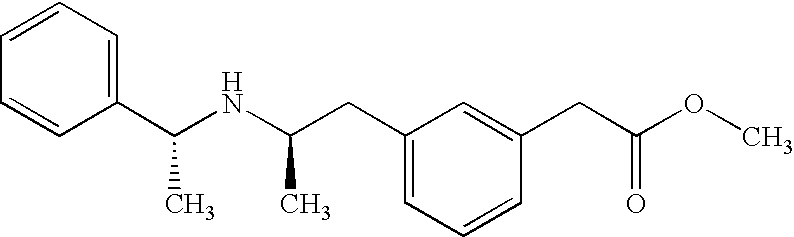


Claims (19)


Priority Applications (1)
| Application Number | Priority Date | Filing Date | Title |
|---|---|---|---|
| US10/860,771 US7067541B2 (en) | 2003-06-04 | 2004-06-03 | 2-amino-pyridine derivatives useful for the treatment of diseases |
Applications Claiming Priority (7)
| Application Number | Priority Date | Filing Date | Title |
|---|---|---|---|
| GB0312840A GB0312840D0 (en) | 2003-06-04 | 2003-06-04 | 2-amino-pyridine derivatives useful for the treatment of diseases |
| GB0312840.2 | 2003-06-04 | ||
| GB0312842.8 | 2003-06-04 | ||
| GB0312842A GB0312842D0 (en) | 2003-06-04 | 2003-06-04 | 2-amino-pyridine derivatives useful for the treatment of diseases |
| US52742103P | 2003-12-05 | 2003-12-05 | |
| US52760003P | 2003-12-05 | 2003-12-05 | |
| US10/860,771 US7067541B2 (en) | 2003-06-04 | 2004-06-03 | 2-amino-pyridine derivatives useful for the treatment of diseases |
Publications (2)
| Publication Number | Publication Date |
|---|---|
| US20050004182A1 US20050004182A1 (en) | 2005-01-06 |
| US7067541B2 true US7067541B2 (en) | 2006-06-27 |
Family
ID=33556688
Family Applications (1)
| Application Number | Title | Priority Date | Filing Date |
|---|---|---|---|
| US10/860,771 Expired - Fee Related US7067541B2 (en) | 2003-06-04 | 2004-06-03 | 2-amino-pyridine derivatives useful for the treatment of diseases |
Country Status (1)
| Country | Link |
|---|---|
| US (1) | US7067541B2 (en) |
Cited By (1)
| Publication number | Priority date | Publication date | Assignee | Title |
|---|---|---|---|---|
| US20050014763A1 (en) * | 2003-06-04 | 2005-01-20 | Pfizer Inc | 2-Amino-pyridine derivatives useful for the treatment of diseases |
Families Citing this family (3)
| Publication number | Priority date | Publication date | Assignee | Title |
|---|---|---|---|---|
| PE20060272A1 (en) * | 2004-05-24 | 2006-05-22 | Glaxo Group Ltd | (2R, 3R, 4S, 5R, 2'R, 3'R, 4'S, 5'S) -2.2 '- {TRANS-1,4-CYCLOHEXANODIYLBIS- [IMINO (2 - {[2- (1-METHYL- 1H-IMIDAZOL-4-IL) ETHYL] AMINO} -9H-PURIN-6,9-DIYL)]} BIS [5- (2-ETHYL-2H-TETRAZOLE-5-IL) TETRAHYDRO-3,4-FURANODIOL] AS AN A2A AGONIST |
| GB0514809D0 (en) | 2005-07-19 | 2005-08-24 | Glaxo Group Ltd | Compounds |
| FR2953720B1 (en) * | 2009-12-11 | 2012-05-11 | Oreal | USE OF BENZYLOXY ETHYLAMINE DERIVATIVES AS A CONSERVATIVE, |
Citations (7)
| Publication number | Priority date | Publication date | Assignee | Title |
|---|---|---|---|---|
| US4358455A (en) | 1980-12-23 | 1982-11-09 | Merck & Co., Inc. | Aralkylamindethanol heterocyclic compounds |
| US4863939A (en) | 1986-08-14 | 1989-09-05 | Bayer Aktiengesellschaft | Heteroarylethylamine as production promoters in livestock |
| WO1995029259A1 (en) | 1994-04-22 | 1995-11-02 | Stichting Centraal Laboratorium Van De Bloedtransfusiedienst Van Het Nederlandse Rode Kruis | Method and means for detecting and treating disorders in the blood coagulation cascade |
| US5714506A (en) | 1995-10-24 | 1998-02-03 | Merck & Co., Inc. | Selective β3 agonists for the treatment of diabetes and obesity |
| WO2001042193A1 (en) | 1999-12-08 | 2001-06-14 | Theravance, Inc. | β2-ADRENERGIC RECEPTOR AGONISTS |
| WO2003024439A1 (en) | 2001-09-14 | 2003-03-27 | Glaxo Group Limited | Phenethanolamine derivatives for treatment of respiratory diseases |
| US6844362B2 (en) * | 2002-10-11 | 2005-01-18 | Pfizer Inc | Indole derivatives useful for the treatment of diseases |
-
2004
- 2004-06-03 US US10/860,771 patent/US7067541B2/en not_active Expired - Fee Related
Patent Citations (7)
| Publication number | Priority date | Publication date | Assignee | Title |
|---|---|---|---|---|
| US4358455A (en) | 1980-12-23 | 1982-11-09 | Merck & Co., Inc. | Aralkylamindethanol heterocyclic compounds |
| US4863939A (en) | 1986-08-14 | 1989-09-05 | Bayer Aktiengesellschaft | Heteroarylethylamine as production promoters in livestock |
| WO1995029259A1 (en) | 1994-04-22 | 1995-11-02 | Stichting Centraal Laboratorium Van De Bloedtransfusiedienst Van Het Nederlandse Rode Kruis | Method and means for detecting and treating disorders in the blood coagulation cascade |
| US5714506A (en) | 1995-10-24 | 1998-02-03 | Merck & Co., Inc. | Selective β3 agonists for the treatment of diabetes and obesity |
| WO2001042193A1 (en) | 1999-12-08 | 2001-06-14 | Theravance, Inc. | β2-ADRENERGIC RECEPTOR AGONISTS |
| WO2003024439A1 (en) | 2001-09-14 | 2003-03-27 | Glaxo Group Limited | Phenethanolamine derivatives for treatment of respiratory diseases |
| US6844362B2 (en) * | 2002-10-11 | 2005-01-18 | Pfizer Inc | Indole derivatives useful for the treatment of diseases |
Non-Patent Citations (2)
| Title |
|---|
| Barnes, P. J. Chest, 1997, 111:2, pp. 17S-26S. |
| Bryan, S.A. et al., Expert Opinion on Investigational Drugs, 2000, 9:1, p. 25-42. |
Cited By (2)
| Publication number | Priority date | Publication date | Assignee | Title |
|---|---|---|---|---|
| US20050014763A1 (en) * | 2003-06-04 | 2005-01-20 | Pfizer Inc | 2-Amino-pyridine derivatives useful for the treatment of diseases |
| US7375100B2 (en) * | 2003-06-04 | 2008-05-20 | Pfizer Inc | 2-amino-pyridine derivatives useful for the treatment of diseases |
Also Published As
| Publication number | Publication date |
|---|---|
| US20050004182A1 (en) | 2005-01-06 |
Similar Documents
| Publication | Publication Date | Title |
|---|---|---|
| US7241810B2 (en) | Formamide derivatives for the treatment of diseases | |
| US7268147B2 (en) | Compounds useful for the treatment of diseases | |
| EP1633715B1 (en) | 2-(6-amino-pyridin-3-yl)-2-hydroxyethylamine derivatives as beta 2-adrenoceptors agonists | |
| US7767715B2 (en) | Sulfonamide derivatives for the treatment of diseases | |
| EP1633714B1 (en) | 2-amino-pyridine derivatives as beta-2 adrenoreceptor agonists | |
| US7351742B2 (en) | Sulfonamide derivatives for the treatment of diseases | |
| US7482487B2 (en) | Phenylaminoethanol derivatives as β2 receptor agonists | |
| WO2005092861A1 (en) | Quinolinone derivatives pharmaceutical compositions containing them and their use | |
| EP1624868B9 (en) | "(2-hydroxy-2-(4-hydroxy-3-hydoxymethylphenyl)-ethylamino)- propyl]phenyl derivatives as beta2 agonists | |
| EP1730141B1 (en) | Compounds for the treatment of diseases | |
| NL1028599C2 (en) | Compounds for the treatment of diseases. | |
| US7375100B2 (en) | 2-amino-pyridine derivatives useful for the treatment of diseases | |
| JP4054366B2 (en) | Compounds useful for the treatment of diseases | |
| US7538141B2 (en) | Compounds for the treatment of diseases | |
| EP1577291A1 (en) | Phenylethanolamine derivatives as beta-2 agonists | |
| US20050215542A1 (en) | Compounds for the treatment of diseases | |
| US20050004182A1 (en) | 2-Amino-pyridine derivatives useful for the treatment of diseases | |
| EP1574501A1 (en) | Quinolinone derivatives, pharmaceutical compositions containing them and their use | |
| US7629358B2 (en) | Compounds useful for the treatment of diseases | |
| MXPA06010629A (en) | Phenylaminoethanol derivates as beta2 receptor agonists | |
| NZ549839A (en) | Formamide derivatives useful as adrenoceptor |
Legal Events
| Date | Code | Title | Description |
|---|---|---|---|
| AS | Assignment |
Owner name: PFIZER INC., NEW YORK Free format text: ASSIGNMENT OF ASSIGNORS INTEREST;ASSIGNORS:BROWN, ALAN DANIEL;BRYANS, JUSTIN STEPHEN;LANE, CHARLOTTE ALICE LOUISE;AND OTHERS;REEL/FRAME:015087/0480 Effective date: 20040816 Owner name: PFIZER INC., NEW YORK Free format text: CONSENT;ASSIGNOR:PFIZER LIMITED;REEL/FRAME:015087/0541 Effective date: 20040823 |
|
| REMI | Maintenance fee reminder mailed | ||
| LAPS | Lapse for failure to pay maintenance fees | ||
| STCH | Information on status: patent discontinuation |
Free format text: PATENT EXPIRED DUE TO NONPAYMENT OF MAINTENANCE FEES UNDER 37 CFR 1.362 |
|
| FP | Lapsed due to failure to pay maintenance fee |
Effective date: 20100627 |