US6927217B2 - HIV protease inhibitors - Google Patents
HIV protease inhibitors Download PDFInfo
- Publication number
- US6927217B2 US6927217B2 US10/271,467 US27146702A US6927217B2 US 6927217 B2 US6927217 B2 US 6927217B2 US 27146702 A US27146702 A US 27146702A US 6927217 B2 US6927217 B2 US 6927217B2
- Authority
- US
- United States
- Prior art keywords
- carbons
- straight
- branched alkyl
- independently
- cor
- Prior art date
- Legal status (The legal status is an assumption and is not a legal conclusion. Google has not performed a legal analysis and makes no representation as to the accuracy of the status listed.)
- Expired - Fee Related, expires
Links
- QHPQWRBYOIRBIT-UHFFFAOYSA-N CC(C)(C)C1=CC=C(O)C=C1 Chemical compound CC(C)(C)C1=CC=C(O)C=C1 QHPQWRBYOIRBIT-UHFFFAOYSA-N 0.000 description 44
- YTZKOQUCBOVLHL-UHFFFAOYSA-N CC(C)(C)C1=CC=CC=C1 Chemical compound CC(C)(C)C1=CC=CC=C1 YTZKOQUCBOVLHL-UHFFFAOYSA-N 0.000 description 40
- 0 [1*]C.[10*]C.[10*]C.[2*]C.[3*]C.[4*]C.[5*]C.[6*]C.[7*]C1(CC)CC(O)=C(CC)C(=O)O1.[Ar].[Ar].[Ar] Chemical compound [1*]C.[10*]C.[10*]C.[2*]C.[3*]C.[4*]C.[5*]C.[6*]C.[7*]C1(CC)CC(O)=C(CC)C(=O)O1.[Ar].[Ar].[Ar] 0.000 description 18
- ADBRIOPXVVYPIQ-UHFFFAOYSA-N CC(C)(C)C1=CC=CC(NS(=O)(=O)C2=CC=C(C(F)(F)F)C=N2)=C1 Chemical compound CC(C)(C)C1=CC=CC(NS(=O)(=O)C2=CC=C(C(F)(F)F)C=N2)=C1 ADBRIOPXVVYPIQ-UHFFFAOYSA-N 0.000 description 9
- CYEKUDPFXBLGHH-UHFFFAOYSA-N CC(C)(C)C1=CC(O)=CC=C1 Chemical compound CC(C)(C)C1=CC(O)=CC=C1 CYEKUDPFXBLGHH-UHFFFAOYSA-N 0.000 description 5
- PRSQKRXQZWPPBQ-UHFFFAOYSA-N CC(C)(C)C1=CC=CC(NS(=O)(=O)C2=CC=CC=N2)=C1 Chemical compound CC(C)(C)C1=CC=CC(NS(=O)(=O)C2=CC=CC=N2)=C1 PRSQKRXQZWPPBQ-UHFFFAOYSA-N 0.000 description 4
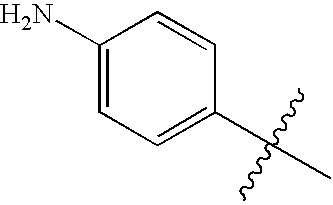
- WRDWWAVNELMWAM-UHFFFAOYSA-N CC(C)(C)C1=CC=C(N)C=C1 Chemical compound CC(C)(C)C1=CC=C(N)C=C1 WRDWWAVNELMWAM-UHFFFAOYSA-N 0.000 description 3
- RIKYKLGLLTYYPM-UHFFFAOYSA-N CC(C)(C)C1=CC(CO)=CC=C1 Chemical compound CC(C)(C)C1=CC(CO)=CC=C1 RIKYKLGLLTYYPM-UHFFFAOYSA-N 0.000 description 2
- QYUGGQFEZYGJPG-UHFFFAOYSA-N CC(C)(C)C1=C(CO)C=CC=C1 Chemical compound CC(C)(C)C1=C(CO)C=CC=C1 QYUGGQFEZYGJPG-UHFFFAOYSA-N 0.000 description 1
- DUKMRRVCCBLQGZ-UHFFFAOYSA-N CC(C)(C)C1=C2C=CC=C(O)C2=CC=C1 Chemical compound CC(C)(C)C1=C2C=CC=C(O)C2=CC=C1 DUKMRRVCCBLQGZ-UHFFFAOYSA-N 0.000 description 1
- SPLGZANLVHBDCC-UHFFFAOYSA-N CC(C)(C)C1=C2C=CC=CC2=CC=C1 Chemical compound CC(C)(C)C1=C2C=CC=CC2=CC=C1 SPLGZANLVHBDCC-UHFFFAOYSA-N 0.000 description 1
- ATUOYXFVUMWRHF-UHFFFAOYSA-N CC(C)(C)C1=CC(Cl)=C(Cl)C=C1 Chemical compound CC(C)(C)C1=CC(Cl)=C(Cl)C=C1 ATUOYXFVUMWRHF-UHFFFAOYSA-N 0.000 description 1
- ZFHLUUHAMWNEJI-UHFFFAOYSA-N CC(C)(C)C1=CC(Cl)=CC(Cl)=C1 Chemical compound CC(C)(C)C1=CC(Cl)=CC(Cl)=C1 ZFHLUUHAMWNEJI-UHFFFAOYSA-N 0.000 description 1
- KYXNATZCTBFSTH-UHFFFAOYSA-N CC(C)(C)C1=CC(Cl)=CC=C1 Chemical compound CC(C)(C)C1=CC(Cl)=CC=C1 KYXNATZCTBFSTH-UHFFFAOYSA-N 0.000 description 1
- DPKTVUKEPNBABS-UHFFFAOYSA-N CC(C)(C)C1=CC(N)=CC=C1 Chemical compound CC(C)(C)C1=CC(N)=CC=C1 DPKTVUKEPNBABS-UHFFFAOYSA-N 0.000 description 1
- GKIMVZDPIWPNIU-UHFFFAOYSA-N CC(C)(C)C1=CC2=C(C=C1)OCO2 Chemical compound CC(C)(C)C1=CC2=C(C=C1)OCO2 GKIMVZDPIWPNIU-UHFFFAOYSA-N 0.000 description 1
- ISXPXFQBHNIYCU-UHFFFAOYSA-N CC(C)(C)C1=CC=C(F)C=C1 Chemical compound CC(C)(C)C1=CC=C(F)C=C1 ISXPXFQBHNIYCU-UHFFFAOYSA-N 0.000 description 1
- MCEORGGPAKTORV-UHFFFAOYSA-N CC(C)(C)C1=CC=C2C=CC=CC2=C1 Chemical compound CC(C)(C)C1=CC=C2C=CC=CC2=C1 MCEORGGPAKTORV-UHFFFAOYSA-N 0.000 description 1
- WBILOGHDYYOELJ-UHFFFAOYSA-N CC(C)(C)C1=CC=CC(NS(=O)(=O)C2=CC=C(C#N)C=C2)=C1 Chemical compound CC(C)(C)C1=CC=CC(NS(=O)(=O)C2=CC=C(C#N)C=C2)=C1 WBILOGHDYYOELJ-UHFFFAOYSA-N 0.000 description 1
- KBZJOTHUVJAWPU-UHFFFAOYSA-N CC(C)(C)C1=CC=CC(NS(=O)(=O)C2=CC=CS2)=C1 Chemical compound CC(C)(C)C1=CC=CC(NS(=O)(=O)C2=CC=CS2)=C1 KBZJOTHUVJAWPU-UHFFFAOYSA-N 0.000 description 1
- LZDPZKBVRTYUMQ-UHFFFAOYSA-N CC(C)(C)C1=CSC=C1 Chemical compound CC(C)(C)C1=CSC=C1 LZDPZKBVRTYUMQ-UHFFFAOYSA-N 0.000 description 1
- YIDCITOHTLPMMZ-UHFFFAOYSA-N CC(C)(C)C1=NNC=C1 Chemical compound CC(C)(C)C1=NNC=C1 YIDCITOHTLPMMZ-UHFFFAOYSA-N 0.000 description 1
- CJGXJKVMUHXVHL-UHFFFAOYSA-N CC(C)(C)CC1=CC=CC=C1 Chemical compound CC(C)(C)CC1=CC=CC=C1 CJGXJKVMUHXVHL-UHFFFAOYSA-N 0.000 description 1
- NGDBJEWPXRZRMF-UHFFFAOYSA-N CC(C)(C)CCNC1=CC=CC=C1C(C)(C)C Chemical compound CC(C)(C)CCNC1=CC=CC=C1C(C)(C)C NGDBJEWPXRZRMF-UHFFFAOYSA-N 0.000 description 1
- KNCZPLRYWQLPQT-UHFFFAOYSA-N CC(C)C1=CC=CC=C1C(C)(C)C Chemical compound CC(C)C1=CC=CC=C1C(C)(C)C KNCZPLRYWQLPQT-UHFFFAOYSA-N 0.000 description 1
- AXHVNJGQOJFMHT-UHFFFAOYSA-N CC1=C(C(C)(C)C)C=CC=C1 Chemical compound CC1=C(C(C)(C)C)C=CC=C1 AXHVNJGQOJFMHT-UHFFFAOYSA-N 0.000 description 1
- HJBANDVMYMEQPF-UHFFFAOYSA-N CC1=CC(SC2=C(O)C=C(C3=CC=CC=C3)OC2=O)=C(C(C)(C)C)C=C1 Chemical compound CC1=CC(SC2=C(O)C=C(C3=CC=CC=C3)OC2=O)=C(C(C)(C)C)C=C1 HJBANDVMYMEQPF-UHFFFAOYSA-N 0.000 description 1
- BSOWYJGYVNURDM-UHFFFAOYSA-N CC1=CC(SC2=C(O)CC(CCC3=CC=CC=C3)(C3=CC=CC=C3)OC2=O)=C(C(C)(C)C)C=C1 Chemical compound CC1=CC(SC2=C(O)CC(CCC3=CC=CC=C3)(C3=CC=CC=C3)OC2=O)=C(C(C)(C)C)C=C1 BSOWYJGYVNURDM-UHFFFAOYSA-N 0.000 description 1
- NFVRFNJUNZNKTA-UHFFFAOYSA-N CC1=CC=C(C(C)(C)C)C(C(C)(C)C)=C1 Chemical compound CC1=CC=C(C(C)(C)C)C(C(C)(C)C)=C1 NFVRFNJUNZNKTA-UHFFFAOYSA-N 0.000 description 1
- JTIAYWZZZOZUTK-UHFFFAOYSA-N CC1=CC=CC(C(C)(C)C)=C1 Chemical compound CC1=CC=CC(C(C)(C)C)=C1 JTIAYWZZZOZUTK-UHFFFAOYSA-N 0.000 description 1
- ALKCUKFXCZFCLQ-UHFFFAOYSA-N CCCN(C1=CC=CC=C1)C1=C(O)CC(CCC2=CC=CC=C2)(C(C)C)OC1=O Chemical compound CCCN(C1=CC=CC=C1)C1=C(O)CC(CCC2=CC=CC=C2)(C(C)C)OC1=O ALKCUKFXCZFCLQ-UHFFFAOYSA-N 0.000 description 1
- ZMKFTVWAUSRLQT-NUMMOFEQSA-N CCC[C@@]1(CCC2=CC=CC=C2)CC(O)=C([C@H](CC)C2=CC(NS(=O)(=O)C3=CC=C(C(F)(F)F)C=N3)=CC=C2)C(=O)O1.CCN(C1=CC(NS(=O)(=O)C2=CC=C(C(F)(F)F)C=N2)=CC=C1)C1=C(O)C[C@](CCC2=CC=C(O)C=C2)(C(C)C)OC1=O.S.S.S=S.S=S.S=S=S.S=S=S Chemical compound CCC[C@@]1(CCC2=CC=CC=C2)CC(O)=C([C@H](CC)C2=CC(NS(=O)(=O)C3=CC=C(C(F)(F)F)C=N3)=CC=C2)C(=O)O1.CCN(C1=CC(NS(=O)(=O)C2=CC=C(C(F)(F)F)C=N2)=CC=C1)C1=C(O)C[C@](CCC2=CC=C(O)C=C2)(C(C)C)OC1=O.S.S.S=S.S=S.S=S=S.S=S=S ZMKFTVWAUSRLQT-NUMMOFEQSA-N 0.000 description 1
- JGMGLKQQUVXLGZ-UHFFFAOYSA-N CN(C)S(=O)(=O)OC1=CC(C(C)(C)C)=CC=C1 Chemical compound CN(C)S(=O)(=O)OC1=CC(C(C)(C)C)=CC=C1 JGMGLKQQUVXLGZ-UHFFFAOYSA-N 0.000 description 1
- PFHPNOMDCLWABR-UHFFFAOYSA-N CN1C=NC=C1S(=O)(=O)NC1=CC(C(C)(C)C)=CC=C1 Chemical compound CN1C=NC=C1S(=O)(=O)NC1=CC(C(C)(C)C)=CC=C1 PFHPNOMDCLWABR-UHFFFAOYSA-N 0.000 description 1
- LPGQRCJRGVXWDV-UHFFFAOYSA-N COC(=O)C1=CC=CC(C(C)(C)C)=C1 Chemical compound COC(=O)C1=CC=CC(C(C)(C)C)=C1 LPGQRCJRGVXWDV-UHFFFAOYSA-N 0.000 description 1
- MCUPBIBNSTXCPQ-UHFFFAOYSA-N COC1=CC=C(C(C)(C)C)C=C1 Chemical compound COC1=CC=C(C(C)(C)C)C=C1 MCUPBIBNSTXCPQ-UHFFFAOYSA-N 0.000 description 1
Classifications
-
- C—CHEMISTRY; METALLURGY
- C07—ORGANIC CHEMISTRY
- C07D—HETEROCYCLIC COMPOUNDS
- C07D309/00—Heterocyclic compounds containing six-membered rings having one oxygen atom as the only ring hetero atom, not condensed with other rings
- C07D309/32—Heterocyclic compounds containing six-membered rings having one oxygen atom as the only ring hetero atom, not condensed with other rings having two double bonds between ring members or between ring members and non-ring members
-
- A—HUMAN NECESSITIES
- A61—MEDICAL OR VETERINARY SCIENCE; HYGIENE
- A61P—SPECIFIC THERAPEUTIC ACTIVITY OF CHEMICAL COMPOUNDS OR MEDICINAL PREPARATIONS
- A61P31/00—Antiinfectives, i.e. antibiotics, antiseptics, chemotherapeutics
- A61P31/12—Antivirals
-
- A—HUMAN NECESSITIES
- A61—MEDICAL OR VETERINARY SCIENCE; HYGIENE
- A61P—SPECIFIC THERAPEUTIC ACTIVITY OF CHEMICAL COMPOUNDS OR MEDICINAL PREPARATIONS
- A61P31/00—Antiinfectives, i.e. antibiotics, antiseptics, chemotherapeutics
- A61P31/12—Antivirals
- A61P31/14—Antivirals for RNA viruses
- A61P31/18—Antivirals for RNA viruses for HIV
Definitions
- the invention pertains to HIV (human immuno virus) protease inhibitors or antagonists that are dihydropyrone derivatives.
- the HIV-protease enzyme is absolutely essential for the replication and dissemination of HIV throughout the body (Navia M A and McKeever B M, Ann. New York Acad. Sci., 1990; 616:73-85) and has become an extremely important target for the design and development of anti-HIV therapeutic agents (von der Helm K, Biol. Chem. 1996; 377:756-774).
- HIV protease inhibitors have been successfully developed (such as indinavir, saquinavir, ritonavir, and nelfinavir), which demonstrate significant clinical success in lowering plasma viral load, reducing the onset to AIDS, and decreasing the frequency of opportunistic infections (Deeks S G, Smith M, Holodniy M, Kahn J O, JAMA, 1997; 277:145-153).
- U.S. Pat. No. 5,789,440 recites nonpeptidic HIV protease inhibitors of formula A.
- the present invention relates to compounds or pharmaceutically acceptable salts thereof of Formula I, shown below: wherein:
- Het is a heterocycle of from 5 to 6 atoms having from 1 to 4 heteroatoms or a fused heterocycle of from 9 to 10 atoms having 1 to 3 heteroatoms
- heteroatoms are independently N, O or S,
- a compound which upon administering to mammals such as a human being converts into a compound according to Formula I, is within the scope of this invention.
- the present invention is based in great part on the discovery of the inventors that novel 3-position Nitrogen substituted 6,6-disubstituted-5,6-dihydropyrones and related compounds possess antiviral properties.
- the HIV protease activities of these compounds are not dependent on the pH of the environment in which they act.
- the binding affinities to HIV protease measured in vitro, at different pH mediums namely 4.7 and 6.2 were the same.
- the compounds possessing 3-position sulfur substituted 6,6-disubstituted-5,6-dihydropyrones exhibited higher binding affnities at lower pH (namely 4.7) compared to higher pH (namely 6.2) of the assay medium (Tummino P J, Vara Prasad J V N, Ferguson D, et al, BioOrganic and Medicinal Chemistry 1996;4(9);1401-1410; Tait B D, Hagen S, Domagala J M, et al., J. Med. Chem., 1997;40: 3781) (Table 1).
- the compounds of the present invention lack chiral center at the 3-position of the 6,6-disubstituted-5,6-dihydropyrones, unlike 3-position carbon containing 6,6-disubstituted-5,6-dihydropyrones.
- the substituents at 6-position of the 6,6-disubstituted-3-nitrogen substituted-5,6-dihydropyrones occupy different binding pockets of the HIV protease as revealed by X-ray crystal structure of compound 1 binding to HIV protease when compared to the similar substitutents present in 3-carbon substituted-6,6-disubstituted-5,6-dihydropyrones (for example PNU-140690; Thaisrivongs S, Skulnick H I, Turner S R, et al., J. Med. Chem., 1996;39:5349).
- PNU-140690 contains n-propyl and phenethyl groups at the 6-position of the 5,6-dihydropyran-2-one ring, somewhat similar to Example 1.
- n-propyl and phenethyl groups in PNU-140690 occupy S 2 and S 1 pocket of the enzyme, respectively.
- This orientation contrasts with Example 1, wherein the small alkyl group (isopropyl) occupies the S 1 pocket of the enzyme, and 4-substituted phenethyl group occupies S 2 pocket.
- This result clearly demonstrates that different enantiomers are most active in these 2 series of HIV PR inhibitor, despite the common core. The differences in these 2 series is shown in a schematic diagram below:
- Preferred compounds of Formula I are those wherein:
- Still other preferred compounds of Formula I are those wherein:
- Still other preferred compounds of Formula I are those wherein:
- More preferred compounds of Formula I are those wherein:
- Still other more preferred compounds of Formula I are those wherein:
- Still other more preferred compounds of Formula I are those wherein;
- Still other more preferred compounds of Formula I are those wherein:
- Still other preferred compounds of Formula I are those wherein:
- Especially preferred compounds of the invention are:
- alkyl means a straight or branched hydrocarbon radical having from 1 to 12 carbon atoms unless otherwise specified and includes, for example, methyl, ethyl, n-propyl, isopropyl, n-butyl, sec-butyl, isobutyl, tert-butyl, n-pentyl, n-hexyl, n-heptyl, n-octyl, n-nonyl, n-decyl, undecyl, and dodecyl.
- the alkylene or alkyne groups may contain one or more sites of unsaturation such as double or triple carbon-carbon bonds.
- the alkyl group is unsubstituted or substituted by from 1 to 3 substituents selected from F, Cl, Br, OH, NH 2 , CN, NO 2 , OCH 3 , OCH 2 CH 2 OH, NHCH 3 , or N(CH 3 ) 2 .
- cycloalkyl means a hydrocarbon ring, which contains from 3 to 12 carbon atoms unless otherwise specified, for example, cyclopropyl, cyclobutyl, cyclopentyl, cyclohexyl, and adamantyl. Where possible, the cycloalkyl group may contain double bonds.
- the cycloalkyl ring may be unsubstituted or substituted by from 1 to 3 substituents selected from alkyl, alkoxy, thioalkoxy all as defined herein, hydroxy, thiol, nitro, halogen, amino, formyl, carboxyl, nitrile, —NH—CO—R, —CO—NHR—, —CO 2 R, —COR, aryl, or heteroaryl wherein alkyl (R), aryl, and heteroaryl are defined as herein.
- heteroatoms means a nitrogen, sulfur, or oxygen.
- heterocycle means a heterocyclic radical which are 5 to 6 atoms having 1 to 4 heteroatoms and selected from 1 to 4 heteroatoms or a fused heterocycle of from 9 to 10 atoms having 1 to 3 heteroatoms selected from: furan, pyrrole, thiophene, oxazole, isoxazole, thiazole, pyrazole, 1,2,3-triazole, 1,2,4-triazole, tetrazole, pyridine, pyridazine, pyrimidine, pyrazine, tetrahydrofuran, tetrahydrothiophene, pyrrolidine, piperazine, piperidine, morpholine, thiomorpholine, oxolane, dioxane, sulfolane, unsubstituted or substituted by 1 to 2 substituents selected from alkyl as defined above.
- heterocycles containing sulfur the oxidized sulfur heterocycles containing SO or
- fused heterocycle refers to a heterocycle that is adjoined as 2 consecutive positions with a phenyl ring or another heterocycle.
- Such rings may include 2-, 3-, 4-, 5-, 6-, 7-, or 8-quinolinyl; 1-, 3-, 4-, 5-, 6-, 7-, or 8-isoquinolinyl; 2-, 3-, 4-, 5-, 6-, or 7-indolyl; 2-, 3-, 4-, 5-, 6-, or 7-benzo[b]thienyl; 2-, 4-, 5-, 6-, or 7-benzoxazolyl; 2-, 4-, 5-, 6-, or 7-benzimidazolyl; or 2-, 4-, 5-, 6, or 7-benzothiazolyl.
- reactive functional groups present in starting materials, reaction intermediates, or reaction products may be protected during chemical reactions using protecting groups which render the reactive functional groups substantially inert to the reaction conditions (see for example, “Protective Groups in Organic Synthesis”, 2 nd ed., Green T W, Wuts P G, John Wiley & Sons, New York, N.Y., 1991).
- protecting groups such as the following may be utilized to protect suitable amino, hydroxyl, and other groups of related reactivity: carboxylic acyl groups, such as formyl, acetyl, trifluoroacetyl; alkoxycarbonyl groups, such as ethoxycarbonyl, t-butoxycarbonyl (BOC), ( ⁇ , ⁇ , ⁇ -trichloroethoxycarbonyl (TCEC), ( ⁇ -iodoethoxycarbonyl; aryloxycarbonyl groups, such as benzyloxycarbonyl, p-methoxybenzyloxycarbonyl, phenoxycarbonyl; trialkyl silyl groups, such as trimethylsilyl and t-butyldimethylsilyl (TBDMS); and groups such as trityl, tetrahydropyranyl, vinyloxycarbonyl, o-nitrophenylsulfenyl, diphenylphosphinyl, p-tol
- the protecting group may be removed, after completion of the synthetic reaction of interest, by procedures known to those skilled in the art.
- a BOC group may be removed by acidolysis, a trityl group by hydrogenolysis, TBDMS by treatment with fluoride ions, and TCEC by treatment with zinc.
- Pharmaceutically acceptable acid addition salts of the compounds of Formula I include salts derived from nontoxic inorganic acids such as hydrochloric, nitric, phosphoric, sulfuric, hydrobromic, hydriodic, hydrofluoric, phosphorous, and the like, as well as the salts derived from nontoxic organic acids, such as aliphatic mono- and dicarboxylic acids, phenyl-substituted alkanoic acids, hydroxy alkanoic acids, alkanedioic acids, aromatic acids, aliphatic and aromatic sulfonic acids, etc.
- nontoxic inorganic acids such as hydrochloric, nitric, phosphoric, sulfuric, hydrobromic, hydriodic, hydrofluoric, phosphorous, and the like
- nontoxic organic acids such as aliphatic mono- and dicarboxylic acids, phenyl-substituted alkanoic acids, hydroxy alkanoic acids, alkanedioic acids, aromatic acids
- Such salts thus include sulfate, pyrosulfate, bisulfate, sulfite, bisulfite, nitrate, phosphate, monohydrogenphosphate, dihyrogenphosphate, metaphosphate, pyrophosphate, chloride, bromide, iodide, acetate, trifluoroacetate, propionate, caprylate, isobutyrate, oxalate, malonate, succinates suberate, sebacate, fumarate, maleate, mandelate, benzoate, chlorobenzoate, methylbenzoate, dinitrobenzoate, phthalate, benzenesulfonate, toluenesulfonate, phenylacetate, citrate, lactate, maleate, tartrate, methanesulfonate, and the like.
- salts of amino acids such as arginate and the like and gluconate, galacturonate (see, for example, Berge S M, et al, “Pharmaceutical Salts”, J Pharmaceutical Science, 1977;66:1-19.
- the acid addition salt of said basic compounds are prepared by contacting the free base form with a sufficient amount of the desired acid to produce the salt in the conventional manner.
- Pharmaceutically acceptable base addition salts are formed with metals or amines, such as alkali and alkaline earth metals or organic amines.
- metals used as cations are sodium, potassium, magnesium, calcium, and the like.
- suitable amines are N,N-dibenzylethylenediamine, chloroprocaine, choline, diethanolamine, dicyclohexylamine, ethylenediamine, N-methylglucamine, and procaine (see, for example, Berge, supra., 1977).
- the base addition salts of said acidic compounds are prepared by contacting the free acid form with a sufficient amount of the desired base to produce the salt in the conventional manner.
- Certain of the compounds of the present invention can exist in unsolvated forms as well as solvated forms, including hydrated forms.
- the solvated forms, including hydrated forms are equivalent to unsolvated forms and are intended to be encompassed within the scope of the present invention.
- Certain of the compounds of the present invention possess one or more chiral centers, and each center may exist in the R(D) or S(L) configuration.
- the present invention includes all enantiomeric and epimeric forms as well as the appropriate mixtures thereof. Configuration drawn is most preferred.
- the compounds of the present invention can be prepared and administered in a wide variety of oral and parenteral dosage forms.
- the compounds of the present invention can be administered by injection, that is, intravenously, intramuscularly, intracutaneously, subcutaneously, intraduodenally, or intraperitoneally.
- the compounds of the present invention can be administered by inhalation, for example, intranasally.
- the compounds of the present invention can be administered transdermally. It will be obvious to those skilled in the art that the following dosage forms may comprise as the active component, either a compound of Formula I or a corresponding pharmaceutically acceptable salt of a compound of Formula I.
- pharmaceutically acceptable carriers can be either solid or liquid.
- Solid form preparations include powders, tablets, pills, capsules, cachets, suppositories, and dispersible granules.
- a solid carrier can be one or more substances, which may also act as diluents, flavoring agents, binders, preservatives, tablet disintegrating agents, or an encapsulating material.
- the carrier is a finely divided solid, which is in a mixture with the finely divided active component.
- the active component is mixed with the carrier having the necessary binding properties in suitable proportions and compacted in the shape and size desired.
- the powders and tablets preferably contain from 5% or 10% to about 70% of the active compound.
- Suitable carriers are magnesium carbonate, magnesium stearate, talc, sugar, lactose, pectin, dextrin, starch, gelatin, tragacanth, methylcellulose, sodium carboxymethylcellulose, a low melting wax, cocoa butter, and the like.
- the term “preparation” is intended to include the formulation of the active compound with encapsulating material as a carrier providing a capsule in which the active component with or without other carriers, is surrounded by a carrier, which is thus in association with it.
- cachets and lozenges are included. Tablets, powders, capsules, pills, cachets, and lozenges can be used as solid dosage forms suitable for oral administration.
- a low melting wax such as a mixture of fatty acid glycerides or cocoa butter
- the active component is dispersed homogeneously therein, as by stirring.
- the molten homogenous mixture is then poured into convenient sized molds, allowed to cool, and thereby to solidify.
- Liquid form preparations include solutions, suspensions, and emulsions, for example, water or water propylene glycol solutions.
- liquid preparations can be formulated in solution in aqueous polyethylene glycol solution.
- Aqueous solutions suitable for oral use can be prepared by dissolving the active component in water and adding suitable colorants, flavors, stabilizing, and thickening agents as desired.
- Aqueous suspensions suitable for oral use can be made by dispersing the finely divided active component in water with viscous material, such as natural or synthetic gums, resins, methylcellulose, sodium carboxymethylcellulose, and other well-known suspending agents.
- viscous material such as natural or synthetic gums, resins, methylcellulose, sodium carboxymethylcellulose, and other well-known suspending agents.
- solid form preparations which are intended to be converted, shortly before use, to liquid form preparations for oral administration.
- liquid forms include solutions, suspensions, and emulsions.
- These preparations may contain, in addition to the active component, colorants, flavors, stabilizers, buffers, artificial and natural sweeteners, dispersants, thickeners, solubilizing agents, and the like.
- the pharmaceutical preparation is preferably in unit dosage form.
- the preparation is divided into unit doses containing appropriate quantities of the active component.
- the unit dosage form can be a packaged preparation, the package containing discrete quantities of preparation, such as packeted tablets, capsules, and powders in vials or ampoules.
- the unit dosage form can be a capsule, tablet, cachet, or lozenge itself, or it can be the appropriate number of any of these in packaged form.
- the quantity of active component in a unit dose preparation may be varied or adjusted from 0.1 to 100 mg, preferably 0.5 to 100 mg according to the particular application and the potency of the active component.
- the composition can, if desired, also contain other compatible therapeutic agents.
- the compounds utilized in the pharmaceutical method of this invention are administered at the initial dosage of about 0.01 to about 100 mg/kg daily.
- a daily dose range of about 0.01 to about 10 mg/kg is preferred.
- the dosages may be varied depending upon the requirements of the patient, the severity of the condition being treated and the compound being employed. Determination of the proper dosage for a particular situation is within the skill of the art. Generally, treatment is initiated with smaller dosages, which are less than the optimum dose of the compound. Thereafter, the dosage is increased by small increments until the optimum effect under the circumstances is reached. For convenience, the total daily dosage may be divided and administered in portions during the day, if desired.
- the compounds of the present invention can be prepared according to the various synthetic schemes that follow.
- Protecting groups may be used when appropriate throughout many of the schemes. Although specifically noted in certain schemes, the appropriate use and choice of protecting groups is well known by one skilled in the art, and is not limited to the specific examples below. It is also understood that such groups not only serve to protect chemically reactive sites, but also to enhance solubility or otherwise change physical properties.
- a good general reference for protecting group preparation and deprotection is “Protective Groups in Organic Synthesis” by Theodora Green, supra.
- a number of general reactions such as oxidations and reductions are not shown in detail but can be done by methods understood by one skilled in the art. General transformations are well reviewed in “Comprehensive Organic Transformation” by Richard Larock, and the series “Compendium of Organic Synthetic Methods”, 1989, published by Wiley-Interscience. In general, the starting materials were obtained from commercial sources unless otherwise indicated.
- the 3-diazo-6,6-disubstituted-5,6-dihydropyrone (1 eq.) was dissolved in an aromatic hydrocarbon solvent like benzene or toluene.
- an aromatic hydrocarbon solvent like benzene or toluene.
- the amine (3-10 eq.) was added followed by rhodium (III) acetate dimer (0.01-0.2 eq.).
- the reaction was kept at 80° C. for 2 to 6 hours.
- the reaction mixture was cooled and diluted with ethyl acetate.
- the organic layer was washed with dilute hydrochloric acid, brine, and dried over MgSO 4 .
- Organic layer was concentrated, and the crude product was purified by flash silica gel chromatography to afford the final product.
- the amines which can be used in Scheme 1, Step 2, are prepared by reductive amination of the corresponding appropriately substituted anilines with aldehydes by a number of methods.
- One of the methods involved the use of reducing agents like sodium cyanoborohydride; whereas the other method involved the use of a heterogeneous catalyst like Raney nickel or Palladium on carbon under hydrogen atmosphere.
- Organic layer was concentrated, and the crude product was purified by flash silica gel chromatography to afford the final product.
- the compounds of the present invention were evaluated for their in vitro inhibition of HIV protease and for their antiviral efficacy in HIV-infected lymphocytes and the results shown in Table 2.
- HIV-1 protease >96% purity
- HIV protease substrate III the undecapeptide H-His-Lys-Ala-Arg-Val-Leu-Nph-Glu-Ala-Nle-Ser-NH 2 , 97% purity
- Ki values HIV-1 protease, 6.0 nM final concentration, was added to a solution containing inhibitor, 40 ⁇ M substrate III and 1.0% Me 2 SO in assay buffer: 80 mM MES [2-(N-morpholine)ethane sufonic acid] hydrate, 160 mM NaCl, 1.0 ⁇ M EDTA (ethylenediaminetetraacetic acid) 0.1% polyethylene glycol (MW 8000) pH 6.2 at 37° C. (total volume, 100 & 1).
- Polyethylene glycol was used in the assay in place of glycerol since the former was reported to be a more effective stabilizing agent in the protease (Jordan, et al., J. Biol. Chem., 1992;267:20028).
- the final inhibitor concentrations used were 0 (0.1, 0.2, in some experiments), 0.5, 1, 2, 5, 10, 20, 50, and 100 ⁇ M.
- the solution was mixed, incubated for 5 minutes and the reaction quenched by addition of trifluoracetic acid, 2% final.
- Compounds were tested in lymphocyte-derived CEM cells using the XTT cytopathic procedures and were performed at Southern Research Institute (Buckheit, et al., Antiviral Res., 1993;21:247; see also Weislow, et al., J Nat. Cancer Inst., 1989;81:577). Compound concentrations were 0.32, 1, 3.2, 10, 32, and 100 ⁇ M.
- the EC 50 represents the concentration of agent, which reduces HIV cytopathic effects 50% relative to untreated control. Cellular toxicity of the agents are estimated from the TC 50 which represents the concentration of the agent which inhibits 50% of the viability of uninfected cells.
- Table 2 contains the results of the HIV protease assay Ki and the antiviral efficacy (EC 50 , TC 50 , TI) screening, where TI is the therapeutic index (TC 50 /EC 50 ).
- EC 50 indicates the concentration of the drug which provide 50% protection against HIV.
- TC 50 indicates the concentration of the drug which elicits cytotoxicity in 50% of uninfected cells.
- Ki means inhibitory constant; it approximately the equilibrium binding constant for the binding of the inhibitor to the free enzyme.
- Table 2 indicates that the compounds of the present invention have good to excellent activity toward inhibiting the HIV protease enzyme (Ki's) as well as activity in HIV infected cells, protecting the cells from HIV pathogenicity at ⁇ M and sub- ⁇ M concentrations.
- Ki's HIV protease enzyme
Landscapes
- Organic Chemistry (AREA)
- Health & Medical Sciences (AREA)
- Chemical & Material Sciences (AREA)
- Life Sciences & Earth Sciences (AREA)
- Virology (AREA)
- Chemical Kinetics & Catalysis (AREA)
- Medicinal Chemistry (AREA)
- Veterinary Medicine (AREA)
- Communicable Diseases (AREA)
- Oncology (AREA)
- Public Health (AREA)
- General Chemical & Material Sciences (AREA)
- General Health & Medical Sciences (AREA)
- Nuclear Medicine, Radiotherapy & Molecular Imaging (AREA)
- Pharmacology & Pharmacy (AREA)
- Animal Behavior & Ethology (AREA)
- Molecular Biology (AREA)
- AIDS & HIV (AREA)
- Tropical Medicine & Parasitology (AREA)
- Pharmaceuticals Containing Other Organic And Inorganic Compounds (AREA)
Abstract
The present invention relates to novel dihydropyrones of Formula I

wherein X is NH or NR8, which inhibit the HIV aspartyl protease blocking HIV infectivity. The dihydropyrones are useful in the development of therapies for the treatment of viral infections and diseases, including AIDS.
wherein X is NH or NR8, which inhibit the HIV aspartyl protease blocking HIV infectivity. The dihydropyrones are useful in the development of therapies for the treatment of viral infections and diseases, including AIDS.
Description
This application is a division of Ser. No. 09/641,260, filed Aug. 17, 2000 U.S. Pat. No. 6,521,006 which claims benefit of U.S. Provisional Application No. 60/169,754, filed Dec. 9, 1999.
The invention pertains to HIV (human immuno virus) protease inhibitors or antagonists that are dihydropyrone derivatives.
The HIV-protease enzyme is absolutely essential for the replication and dissemination of HIV throughout the body (Navia M A and McKeever B M, Ann. New York Acad. Sci., 1990; 616:73-85) and has become an extremely important target for the design and development of anti-HIV therapeutic agents (von der Helm K, Biol. Chem. 1996; 377:756-774). Several peptidomimetic HIV protease inhibitors have been successfully developed (such as indinavir, saquinavir, ritonavir, and nelfinavir), which demonstrate significant clinical success in lowering plasma viral load, reducing the onset to AIDS, and decreasing the frequency of opportunistic infections (Deeks S G, Smith M, Holodniy M, Kahn J O, JAMA, 1997; 277:145-153).
Yet the current HIV protease inhibitors by their peptidomimetic nature have relatively poor solubility, high biliary excretion, limited bioavailabilities and significant liver metabolism. These drawbacks in turn increase the need for high doses of a drug, which increases the frequency of various side effects and multiple drug interactions (Barry M, Gibbons S, Back D, Mulcahy F, Clin. Pharmacokinet., 1997;32:194-209). More importantly, resistance to the current HIV protease inhibitors has emerged (Shock H B, Garsky V M, Kuo L, J. Biol. Chem., 1996;271:31957-31963) resulting in treatment failures (Fatkenheuer G, Theisen A, Rockstroh J. Grabow T, et al., AIDS, 1997; 11:F, 113-F 116). From this discussion, it is apparent that while HIV protease is an excellent antiviral target for the treatment of HIV infection and AIDS, there is a need to identify non-peptide inhibitors with improved pharmacological properties and which are not cross resistant with the current drugs (Wallace R W, DDT, 1997;2:83-84).
U.S. Pat. No. 5,789,440 recites nonpeptidic HIV protease inhibitors of formula A.

The patent is hereby incorporated by reference. Excellent HIV protease inhibition was achieved, but the antiviral activity at the cellular level was in some cases less than desired for an ideal therapeutic agent due to poor overall pharmacological properties (Tummino P J, Vara Prasad J V N, Ferguson D, Nauhan C, et al., BioOrganic and Med Chem., 1996;4:1401-1410). These efforts, however, led to a core structure B where R1 and R2 were alkyl groups filling the

S1′ and S2′ pockets, respectively, and the phenyl of the phenethyl group at C6 filled the S2 pocket very efficiently. This core structure was recognized as a valuable platform for additional study (Tait B D, Hagen S, Domagala J M, Ellsworth E L, et al., J. Med. Chem., 1997;40:3781-3792).
S1′ and S2′ pockets, respectively, and the phenyl of the phenethyl group at C6 filled the S2 pocket very efficiently. This core structure was recognized as a valuable platform for additional study (Tait B D, Hagen S, Domagala J M, Ellsworth E L, et al., J. Med. Chem., 1997;40:3781-3792).
Additional dihydropyrones C were reported when it was unexpectedly discovered that certain groups which reduced lipophilicity judiciously placed at R1-R5 led to greatly

improved antiviral cellular activity (see U.S. Pat. No. 5,834,506). The patent is hereby incorporated by reference. Among the preferred compounds were those where R1 and R5 were OH, NH2, or CH2OH. In such cases, the preferred R4 included a small alkyl chain or ring, and R6 was methyl. In addition to improved cellular antiviral activity, the compounds also showed good pharmacokinetics in animals relative to the less polar-substituted compounds. These compounds were also not cross resistant with current HIV Protease inhibitors (Hagen S E, Vara Prasad J V N, Boyer F E, Domagala J M, et al., J. Med., 1997;40:3707-3711; Vander Roest S, Wold S, Saunders J, 37th Interscience Conference on Antimicrobial Agents and Chemotherapy, Sep. 28-Oct. 1, 1997, Toronto, Canada. Abstract I-84; Domagala J. M, Boyer F, Ellsworth E, Gajda C, et al., 5th Conference on Retroviruses and Opportunistic Infections, Feb. 1-5, 1998, Chicago, Ill., Abstract 638).
improved antiviral cellular activity (see U.S. Pat. No. 5,834,506). The patent is hereby incorporated by reference. Among the preferred compounds were those where R1 and R5 were OH, NH2, or CH2OH. In such cases, the preferred R4 included a small alkyl chain or ring, and R6 was methyl. In addition to improved cellular antiviral activity, the compounds also showed good pharmacokinetics in animals relative to the less polar-substituted compounds. These compounds were also not cross resistant with current HIV Protease inhibitors (Hagen S E, Vara Prasad J V N, Boyer F E, Domagala J M, et al., J. Med., 1997;40:3707-3711; Vander Roest S, Wold S, Saunders J, 37th Interscience Conference on Antimicrobial Agents and Chemotherapy, Sep. 28-Oct. 1, 1997, Toronto, Canada. Abstract I-84; Domagala J. M, Boyer F, Ellsworth E, Gajda C, et al., 5th Conference on Retroviruses and Opportunistic Infections, Feb. 1-5, 1998, Chicago, Ill., Abstract 638).
While the compounds C were notable for their improved pharmacological properties relative to the nonpolar-substituted core molecules B, these highly favorable properties were conferred directly by the use of OH, NH2 and NR2 groups placed on the lipophilic rings. The rings themselves were important for binding to the enzyme “pockets” and for holding the t-butyl group and the groups R1-R3 and R5 in their proper places within the enzyme's active site.
This hereby incorporates by reference 5888L1-01-TMC filed on even date herewith entitled “A Method of Making Dihydropyrone HIV Protease Inhibitors” by Victor Fedij, et al.
The present invention relates to compounds or pharmaceutically acceptable salts thereof of Formula I, shown below:

wherein:
wherein:
- R1 is H, a straight or branched alkyl of 1 to 6 carbons or a carbocycle of 3 to 6 carbons;
- R2 is H, a straight or branched alkyl of 1 to 5 carbons or a carbocycle of 3 to 6 carbons;
- R3 is H, [C(R9)2]nOR, [C(R9)2]nN(R)2, [C(R9)2]nN(R9)COR, [C(R9)2]nCO2R, [C(R9)2]n(O)COR, [C(R9)2]nCON(R)2, [C(R9)2]nOC(O)N(R)2, [C(R9)2R], [C(R9)2]nN(R9)CON(R)2, [C(R9)2]nN(R9)CO2R, [C(R9)2]nOSO2N(R)2, [C(R9)2]nN(R9)SO2OR, [C(R9)2]nN(R9)SO2N(R)2, [C(R9)2]nOSO2R, [C(R9)2]nN(R9)SO2R, [C(R9)2]nSOpR, [C(R9)2]nN(R9)CSN(R)2, [C(R9)2]nN(R9)C(═NR9)N(R)2, [C(R9)2]nSO2N(R)2, [C(R9)2]nC(NR9)N(R)2, [C(R9)2]nCOR, O[C(R9)2]mOR, N(R)[C(R9)2]mOR, F, Cl, Br, CF3, CN, or ═O when Ar is Het;
- R4, R5, and R6 are independently H, a straight or branched alkyl of 1 to 6 carbons, a cycloalkyl of 3 to 6 carbons, [C(R9)2]nOR, [C(R9)2]nN(R)2, F, Cl, Br, CN, CF3, ═O when Ar is Het; [C(R9)2]nN(R9)COR, [C(R9)2]nSOpR, [C(R9)2]nR, [C(R9)2]n(O)COR, O[C(R9)2]mOR, N(R)[C(R9)2]mOR, [C(R9)2]nN(R9)CON(R)2, [C(R9)2]n(O)CON(R)2, [C(R9)2]nNR9CO2R, [C(R9)2]nCOR, [C(R9)2]nCO2R, [C(R9)2]nCON(R)2, [C(R9)2]nN(R9)SO2R, [C(R9)2]nSO2N(R)2, [C(R9)2]nN(R9)SO2OR, [C(R9)2]nOSO2N(R)2, [C(R9)2]nN(R9)SO2N(R)2, [C(R9)2]nC(═NR9)N(R)2, [C(R9)2)nN(R9)C(═NR9)N(R)2, [C(R9)2]nHet;
- any 2 of R1 to R3 or R4 to R6 may together form a ring of 5 to 6 total atoms which may contain 0 to 3 heteroatoms;
- X is NH, NR8;
- f is an integer of from 0 to 3;
- n is an integer of from 0 to 3;
- m is an integer of from 2 to 4;
- p is an integer from 1 to 2;
- R7 is a straight or branched alkyl of 1 to 6 carbons or a carbocycle of 3 to 6 carbons;
- R8 is a straight or branched alkyl of 1 to 6 carbons, a carbocycle of 3 to 6 carbons, (CH2)nPh, or a (CH2)nheterocycle of 5 to 6 atoms containing 1 to 4 heteroatoms and wherein the (R)2 in N(R)2 optionally forms a heterocycle containing the nitrogen, all optionally substituted by F, Cl, Br, OR9, CN, CO2R9, N(R9)2, NR9COR9, CF3, or ═O; or an alkyl group bearing polar functionalities, optionally including OH, NH2, CN;
- R1 and R8 may together form a ring of 5 to 6 atoms;
- R is independently H, a straight or branched alkyl of 1 to 6 carbons, (CH2)nPh, or a (CH2)nheterocycle of 5 to 6 atoms containing 1 to 4 heteroatoms and wherein the (R)2 in N(R)2 optionally forms a heterocycle containing the nitrogen, all optionally substituted by F, Cl, Br, OR9, CN, CO2R9, N(R9)2, NR9COR9, CF3, or ═O;
- R9 is independently H, a straight or branched alkyl of 1 to 4 carbons, or phenyl;
- R10 is independently H, a straight or branched alkyl of 1 to 4 carbons, F, Cl, Br, OR9 or N(R9)2;
- R1, R2, R3, R4, R5, R6, R7, R8, R9 and R10 may be alkene or alkyne of 6 carbon atoms;
- Ar1 and Ar2 are independently phenyl or Het;
Het is a heterocycle of from 5 to 6 atoms having from 1 to 4 heteroatoms or a fused heterocycle of from 9 to 10 atoms having 1 to 3 heteroatoms
wherein the heteroatoms are independently N, O or S,
A compound, which upon administering to mammals such as a human being converts into a compound according to Formula I, is within the scope of this invention.
The present invention is based in great part on the discovery of the inventors that novel 3-position Nitrogen substituted 6,6-disubstituted-5,6-dihydropyrones and related compounds possess antiviral properties. The HIV protease activities of these compounds are not dependent on the pH of the environment in which they act. The binding affinities to HIV protease measured in vitro, at different pH mediums namely 4.7 and 6.2 were the same. The compounds possessing 3-position sulfur substituted 6,6-disubstituted-5,6-dihydropyrones exhibited higher binding affnities at lower pH (namely 4.7) compared to higher pH (namely 6.2) of the assay medium (Tummino P J, Vara Prasad J V N, Ferguson D, et al, BioOrganic and Medicinal Chemistry 1996;4(9);1401-1410; Tait B D, Hagen S, Domagala J M, et al., J. Med. Chem., 1997;40: 3781) (Table 1).
| TABLE 1 | ||
| IC50S (μM) | ||
| Measured in Vitro | ||
| Against HIV Protease | ||
| Compound | pH (4.7) | pH (6.2) |
 |
0.028 | 0.28 |
 |
0.010 | 0.035 |
 |
0.004 | 0.004 |
| IC50 indicates the concentration of the inhibitor at 50% inhibition. | ||
The compounds of the present invention lack chiral center at the 3-position of the 6,6-disubstituted-5,6-dihydropyrones, unlike 3-position carbon containing 6,6-disubstituted-5,6-dihydropyrones. (Upjohn's patents: Thaisrivongs S, Skulnick H I, Turner S R, Strobach J W, Tommasi R A, Johnson P D, Aristoff P A, Judge T M, Gammill R B, Morris J K, Romines K R, Chrusciel R A, Hinshaw R R, Chong K-T, Tarpley W G, Poppe S M, Slade D E, Lynn J C, Horng M-M, Tomich P K, Seest E P, Dolak L A, Howe W J, Howard G M, Schwende F J, Toth L N, Padbury G E, Wilson K F, Rush B D, Ruwart M J, Koeplinger K A, Zhao Z, Cole S, Zaya R M, Kakuk T J, Janakiraman M N, Watenpaugh K D, J. Med. Chem., 1996;39:5349).
The lack of chiral centers at 3-position offers an obvious synthetic advantage. Thus these compounds are easy to synthesize compared to 3-position carbon containing 6,6-disubstituted-5,6-dihydropyrones.
Moreover, the substituents at 6-position of the 6,6-disubstituted-3-nitrogen substituted-5,6-dihydropyrones occupy different binding pockets of the HIV protease as revealed by X-ray crystal structure of compound 1 binding to HIV protease when compared to the similar substitutents present in 3-carbon substituted-6,6-disubstituted-5,6-dihydropyrones (for example PNU-140690; Thaisrivongs S, Skulnick H I, Turner S R, et al., J. Med. Chem., 1996;39:5349). It is interesting to note that PNU-140690 contains n-propyl and phenethyl groups at the 6-position of the 5,6-dihydropyran-2-one ring, somewhat similar to Example 1. However, n-propyl and phenethyl groups in PNU-140690 occupy S2 and S1 pocket of the enzyme, respectively. This orientation contrasts with Example 1, wherein the small alkyl group (isopropyl) occupies the S1 pocket of the enzyme, and 4-substituted phenethyl group occupies S2 pocket. This result clearly demonstrates that different enantiomers are most active in these 2 series of HIV PR inhibitor, despite the common core. The differences in these 2 series is shown in a schematic diagram below:

These 3-position nitrogen substituted 5,6-dihydropyrones are expected to be extremely useful in the development of treatments for infections caused by viruses, especially by retroviruses that rely on aspartyl protease activities for replication and infectivity. One such retrovirus is HIV. For this reason, the antiviral 5,6-dihydropyrones are also expected to be very useful in the treatment of diseases and syndromes associated with viral pathogens. One such syndrome is AIDS.
Preferred compounds of Formula I are those wherein:
- R1 is isopropyl, iso-butyl, cyclopentyl, cyclohexyl or t-butyl;
- R2 is H, methyl, or ethyl;
- R is H, a straight or branched alkyl of 1 to 4 carbons, (CH2)nPh, or a (CH2)nheterocycle of 5 to 6 atoms containing 1 to 2 heteroatoms and wherein the (R)2 in N(R)2 may form a heterocycle containing the nitrogen, all optionally substituted by F, Cl, Br, OR9, N(R9)2, N(R9)COR9, CF3, or ═O;
- wherein Het is a heterocycle of from 5 to 6 atoms having 1 to 4 heteroatoms selected from: furan, pyrrole, thiophene, oxazole, isoxazole, thiazole, pyrazole, 1,2,3-triazole, 1,2,4-triazole, tetrazole, pyridine, pyridazine, pyrimidine, pyrazine, tetrahydrofuran, tetrahydrothiophene, pyrrolidine, piperazine, piperidine, morpholine, thiomorpholine, oxolane, dioxane, sulfolane; or a fused heterocycle of from 9 to 10 atoms having from 1 to 3 heteroatoms selected from: benzofuran, indole, benzothiophene, benzimidazole, benzthiazole, benzoxazole, quinoline, isoquinoline, cinnoline, quinazoline and quinoxaline.
- X is NH.
Other preferred compounds of Formula I are those wherein:
- R1 is isopropyl or t-butyl;
- R2 is H, methyl or ethyl;
- R3 is H, (CH2)nOR, (CH2)nN(R)2, (CH2)nN(R9)COR, (CH2)nCON(R)2, (CH2)nOC(O)N(R)2, (CH2)nN(R9)CON(R)2, (CH2)nN(R9)CO2R, (CH2)nOSO2N(R)2, (CH2)nN(R9)SO2OR, (CH2)nN(R9)SO2N(R)2, (CH2)nOSO2R, (CH2)nN(R9)SO2R, (CH2)nSO2R, (CH2)nN(R9)C(S)N(R)2, (CH2)nCOR, O(CH2)mO(R9), N(R)(CH2)mO(R9), or C(CH3)2OR9;
- R4, R5, and R6 are independently H, a straight or branched alkyl of 1 to 6 carbons, a cycloalkyl of 3 to 6 carbons, (CH2)nOR, (CH2)nN(R)2, F, Cl, Br, CN, CF3, ═O, (CH2)nN(R9)COR, (CH2)nN(R9)CON(R)2, (CH2)nOC(O)N(R)2, (CH2)nN(R9)CO2R, (CH2)nCOR, (CH2)nCON(R)2, (CH2)nN(R9)SO2R, (CH2)nN(R9)SO2OR, (CH2)nOSO2N(R)2, or R4 and R5 may together form a ring of 5 to 6 total atoms which may contain 0 to 2 heteroatoms;
- R is H, a straight or branched alkyl of 1 to 4 carbons, (CH2)nPh, or a (CH2)nheterocycle of 5 to 6 atoms containing 1 to 2 heteroatoms and wherein the (R)2 in N(R)2 may be a heterocycle containing the nitrogen, all optionally substituted by F, Cl, Br, OR9, N(R9)2, N(R9)COR9, or ═O;
- R8 is an alkyl group of 1 to 5 carbons or a carbocycle of 3 to 6 atoms;
- Ar1 is a phenyl; and
- Ar2 is phenyl or a heterocycle of 5 to 6 atoms having from 1 to 4 heteroatoms.
Still other preferred compounds of Formula I are those wherein:
- R3 is H, (CH2)nOR, (CH2)nN(R)2, (CH2)nNR9COR, (CH2)nCON(R)2, (CH2)nOCON(R)2, (CH2)nNR9CON(R)2 (CH2)nNR9CO2R, (CH2)nOSO2N(R)2, (CH2)nNR9SO2OR, (CH2)nNR9SO2N(R)2, (CH2)nOSO2R, (CH2)nNR9SO2R, (CH2)nSO2R, (CH2)nCOR, O(CH2)mOR, NR(CH2)mOR, C(CH3)2OR9, F, Cl, Br, CF3, or ═O when Ar is Het;
- R4, R5, and R6 are independently H, a straight or branched alkyl of 1 to 6 carbons, a cycloalkyl of 3 to 6 carbons, (CH2)nOR, (CH2)nN(R)2, F, Cl, Br, ═O when Ar is Het, (CH2)pN(R9)COR, (CH2)nN(R9)CON(R)2, (CH2)nOC(O)N(R)2, (CH2)nN(R9)CO2R, (CH2)nCOR, (CH2)nC(O)N(R)2, (CH2)nN(R9)SO2R, (CH2)nN(R9)SO2OR, (CH2)nOSO2N(R)2;
- R1 and R2 or R4 and R5 may together form a ring of 5 to 6 total atoms, which may contain 0 to 2 heteroatoms;
- R7 is methyl, ethyl, isopropyl, cyclopropyl, cyclobutyl, cyclopentyl or cyclohexyl;
- R8 is a straight or branched alkyl of 1 to 5 carbons;
- R is H, a straight or branched alkyl of 1 to 4 carbons, (CH2)nPh, or a (CH2)nheterocycle of 5 to 6 atoms containing 1 to 2 heteroatoms and wherein the (R)2 in N(R)2 may be a heterocycle containing the nitrogen, all optionally substituted by F, Cl, Br, OR9, N(R9)2, N(R9)COR9, or ═O;
Still other preferred compounds of Formula I are those wherein:
- R3 is H, (CH2)nOR, (CH2)nN(R)2, (CH2)nN(R9)COR, (CH2)nC(O)N(R)2, (CH2)nOCON(R)2, (CH2)nN(R9)CON(R)2, (CH2)nN(R9)CO2R, (CH2)nOSO2N(R)2, (CH2)nN(R9)SO2OR, (CH2)nN(R9)SO2N(R)2, (CH2)nOSO2R, (CH2)nN(R9)SO2R, (CH2)nSO2R, (CH2)nCOR, O(CH2)mOR9, N(R)(CH2)mOR9, C(CH3)2OR9, F, Cl, Br, CF3, or ═O when Ar is Het;
- Any 2 of R1 to R3 may together form a ring of 5 to 6 total atoms, which may contain 0 to 2 heteroatoms;
- R1 and R8 may together form a ring to 5 to 6 atoms;
- R4, R5, and R6 are independently H, a straight or branched alkyl of 1 to 6 carbons, a cycloalkyl of 3 to 6 carbons, (CH2)nOR, (CH2)nN(R)2, F, Cl, Br, CF3, (CH2)nN(R9)COR, (CH2)nNR9CON(R)2, (CH2)nOC(O)N(R)2, (CH2)nN(R9)CO2R, (CH2)nC(O)R, (CH2)nC(O)N(R)2, (CH2)nN(R9)SO2R, (CH2)nNR9SO2OR, (CH2)nOSO2N(R)2, (CH2)nHet;
- any 2 of R4 to R6 may together form a ring of 5 to 6 total atoms, which may contain 0 to 2 heteroatoms;
- R8 is a straight or branched alkyl of 1 to 5 carbons or a carbocycle of 3 to 6 atoms.
More preferred compounds of Formula I are those wherein:
- R1 is H;
- R2 is H;
- R3 is H, (CH2)nOR, (CH2)nN(R)2, (CH2)nOCON(R)2, (CH2)nN(R9)CON(R)2, (CH2)nN(R9)CO2R, (CH2)nOSO2N(R)2, (CH2)nN(R9)SO2OR, (CH2)nN(R9)SO2N(R)2, (CH2)nN(R9)SO2R, (CH2)nSO2R, O(CH2)mOR9, N(R)(CH2)mOR9, or C(CH3)2OR9;
- R4, R5, and R6 are independently H, a straight or branched alkyl of 1 to 6 carbons, a cycloalkyl of 3 to 6 carbons, (CH2)nOR, (CH2)nN(R)2, F, Cl, Br, ═O when Ar is Het, (CH2)nN(R9)COR, (CH2)nN(R9)C(O)N(R)2, (CH2)nOC(O)N(R)2, (CH2)nNR9CO2R, (CH2)nC(O)R, (CH2)nC(O)N(R)2, (CH2)nN(R9)SO2R, (CH2)pN(R9)SO2OR, (CH2)pOSO2N(R)2;
- R4 and R5 may together form a ring of 5 to 6 total atoms, which may contain 0 to 2 heteroatoms;
- R8 is a straight or branched alkyl of 1 to 5 atoms or a carbocycle of 3 to 6 atoms;
- R is H, a straight or branched alkyl of 1 to 4 carbons, (CH2)nPh, or a (CH2)nheterocycle of 5 to 6 atoms having from 1 to 2 heteroatoms and wherein the (R)2 in N(R)2 may be a heterocycle containing the nitrogen, all optionally substituted by F, Cl, Br, OR9, N(R9)2, N(R9)C(O)R9, or ═O;
- R1 and R8 may together form a ring of 5 to 6 atoms.
- Ar1 is phenyl; and
- Ar2 is phenyl, furan, pyrrole, thiophene, oxazole, isoxazole, thiazole, pyrazole, tetrazole, or pyridine.
Other more preferred compounds of Formula I are those wherein:
- R2 is H;
- R3 is H, (CH2)nOR, (CH2)nN(R)2, (CH2)nN(R)COR, (CH2)nCON(R)2, (CH2)nOC(O)N(R)2, (CH2)nN(R9)C(O)N(R)2, (CH2)nN(R9)CO2R, (CH2)nOSO2N(R)2, (CH2)nN(R9)SO2OR, (CH2)nN(R9)SO2N(R)2, (CH2)nOSO2R, (CH2)nN(R9)SO2R, (CH2)nSO2R, O(CH2)mOR, NR(CH2)mOR9, C(CH3)2OR9, or ═O when Ar is Het;
- R4, R5, and R6 are independently H, a straight or branched alkyl of 1 to 6 carbons, a cycloalkyl of 1 to 6 carbons, (CH2)nOR, (CH2)nN(R)2, F, Cl, Br, ═O when Ar is Het, (CH2)pN(R9)COR, (CH2)pN(R9)C(O)N(R)2, (CH2)nOC(O)N(R)2, (CH2)nN(R9)CO2R, (CH2)nCOR, (CH2)nCON(R)2, (CH2)nN(R9)SO2R, (CH2)nN(R9)SO2OR, (CH2)nOSO2N(R)2;
- R4 and R5 may together form a ring of 5 to 6 total atoms, which may contain 0 to 2 heteroatoms;
- R8 is ethyl, propyl, butyl;
- R is H, a straight or branched alkyl of 1 to 4 carbons, (CH2)nPh, or a (CH2)nheterocycle of 5 to 6 atoms containing 1 to 2 heteroatoms and wherein the (R)2 in N(R)2 may be a heterocycle having nitrogen, all optionally substituted by F, Cl, Br, OR9, N(R9)2, NR9CO(R9), or ═O;
- Ar1 is phenyl, thiophene, thiazole, pyridine, benzothiophene, benzthiazole, benzoxazole, quinoline or isoquinoline.
Still other more preferred compounds of Formula I are those wherein:
- R2 is H;
- R3 is CH2OH, NH2, OCH2CH2OH, NHCOR, OSO2N(R)2, N(R9)SO2OR, N(R9)SO2R, or OSO2R;
- R4, R5, and R6 are independently H, a straight or branched alkyl of 1 to 6 carbons, a cycloalkyl of 1 to 6 carbons, (CH2)nOR, (CH2)nN(R)2, F, Cl, Br, ═O when Ar is Het, (CH2)nNR9COR, (CH2)nNR9CON(R)2, (CH2)nOCON(R)2, (CH2)nNR9CO2R, (CH2)nCOR, (CH2)nCON(R)2, (CH2)nNR9SO2R, (CH2)nNR9SO2OR, (CH2)nOSO2N(R)2;
- R4 and R5 may together form a ring of 5 to 6 total atoms, which may contain 0 to 2 heteroatoms;
- R is H, a straight or branched alkyl of 1 to 4 carbons, (CH2)nPh, or a (CH2)nheterocycle of 5 to 6 atoms having from 1 to 2 heteroatoms and wherein the (R)2 in N(R)2 may be a heterocycle having nitrogen, all optionally substituted by F, Cl, Br, OR9, N(R9)2, NR9COR9, or ═O;
- R10 is H, a straight or branched alkyl of from 1 to 4 carbons, F, Cl, Br, OR9, or N(R9)2;
- Ar1 is phenyl; and
- Ar2 is a heterocycle of 5 to 6 atoms having from 1 to 4 heteroatoms;
Still other more preferred compounds of Formula I are those wherein;
- R1 is H;
- R2 is H;
- R3 is H, (CH2)nOR, (CH2)nN(R)2, (CH2)nN(R9)COR, (CH2)nC(O)N(R)2, (CH2)nOC(O)N(R)2, (CH2)nN(R9)C(O)N(R), (CH2)nN(R9)CO2R, (CH2)nOSO2N(R)2, (CH2)nN(R9)SO2OR, (CH2)nN(R9)SO2N(R)2, (CH2)nOSO2R, (CH2)nN(R9)SO2R, (CH2)nSO2R, (CH2)nN(R9)C(S)N(R)2, (CH2)nCOR, O(CH2)mOR, NR(CH2)mOR9, C(CH3)2OR9, F, Cl, Br, or ═O when Ar is Het;
- R4, R5, and R6 are independently H, methyl, ethyl, OH, CH2OH, CH2CH2OH, F, Cl, NH2;
- any 2 of R4 to R6 may form a ring of 5 to 6 atoms having from 1 to 2 heteroatoms;
- R8 is ethyl, propyl, butyl;
- R is H, a straight or branched alkyl of 1 to 4 carbons, (CH2)nPh, or a (CH2)nheterocycle of 5 to 6 atoms having from 1 to 2 heteroatoms or a heterocycle having a nitrogen, all optionally substituted by F, Cl, Br, OR9, N(R9)2, NR9OR9 or ═O;
- Ar1 is phenyl, furan, thiophene, thiazole, pyridine, imidazole, benzofuran, benzothiophene, benzimidazole, benzthiazole, quinoline, or isoquinoline; and
- Ar2 is phenyl.
Still other more preferred compounds of Formula I are those wherein:
- R1 is H or methyl;
- R2 is H or methyl;
- R3 is H, (CH2)nOR, (CH2)nN(R)2, or ═O;
- R4, R5, and R6 are independently H, methyl, OH, CH2OH, CH2CH2OH, NH2, or F;
- R7 is H, isopropyl, butyl, sec-butyl, cyclobutyl, cyclopentyl, or cyclohexyl;
- R8 is ethyl, propyl, butyl;
- R is H, methyl, ethyl, phenyl, or CH2Ph and wherein the (R)2 of N(R)2 may be a heterocycle having a nitrogen;
- R10 is H, F, or CH3;
- Ar1 is phenyl, furan, thiophene, thiazole, pyridine, imidazole, indole, benzofuran, benzothiophene, benzimidazole, benzthiazole, quinoline, or isoquinoline; and
- Ar2 is phenyl, furan, thiophene, thiazole, pyridine, imidazole, indole, benzofuran, benzothiophene, benzimidazole, benzthiazole, quinoline, or isoquinoline.
Other preferred compounds of Formula I are those wherein:
- R1 is H or methyl;
- R2 is H or methyl;
- R3 is H, NH2, OH, CH2OR, CH2N(R)2, CH2CON(R)2, CH2OSO2N(R)2, CH2NHSO2OR, CH2NHSO2R, CH2OSO2R, Cl, Br, or OCH2CH2OH;
- R4, R5, and R6 are independently H, methyl, ethyl, isopropyl, OH, NH2, CH2OR, CH2N(R)2, ═O, F, Cl, Br, or CH2NRCOR;
- R7 is methyl, ethyl, isopropyl, cyclopropyl, cyclobutyl, or cyclopentyl;
- R8 is ethyl, propyl, butyl;
- R is H, methyl, ethyl, Ph, CH2Ph, and wherein the (R)2 in N(R)2 may be a heterocycle having a nitrogen;
- R1 and R8 may together form a ring of 5 to 6 total atoms;
- R10 is H, F, or CH3;
- Ar1 is phenyl, thiophene, thiazole, furan, pyridine, benzothiophene, benzofuran, benzthiazole, benzoxazole, indole, quinoline, or isoquinoline; and
- Ar2 is phenyl, furan, thiophene, oxazole, isoxazole, imidazole, thiazole, pyrazole, pyridine, benzofuran, benzothiophene, benzimidazole, benzthiazole, indole, quinoline, or isoquinoline; and
- f is an integer of 2.
Other preferred compounds of Formula I are those wherein:
- R1 is H;
- R2 is H;
- R3 is H, NH2, OH, CH2OR, CH2N(R)2, CH2CON(R)2, OSO2N(R)2, NHSO2OR, NHSO2R, OSO2R, or OCH2CH2OH;
- R4, R5, and R6 are independently H, methyl, ethyl, isopropyl, OH, NH2, CH2OR, CH2N(R)2, ═O when Ar is Het, F, Cl, Br, or CH2NRCOR;
- R7 is methyl, ethyl, n-propyl, isopropyl, cyclopropyl, cyclobutyl, or cyclopentyl;
- R8 is ethyl, propyl, butyl;
- R is H, methyl, ethyl, Ph, CH2Ph, and wherein the (R)2 in N(R)2 may be a heterocycle containing the nitrogen;
- R10 is H, F, or CH3;
- R1 and R8 may together form a ring of 5 to 6 total atoms;
- Ar1 is phenyl, furan, thiophene, oxazole, isoxazole, imidazole, thiazole, pyrazole, pyridine, benzofuran, benzothiophene, benzimidazole, benzthiazole, indole, quinoline, or isoquinoline; and
- Ar2 is phenyl, furan, thiophene, oxazole, isoxazole, imidazole, thiazole, pyrazole, pyridine, benzofuran, benzothiophene, benzimidazole, benzthiazole, indole, quinoline, or isoquinoline.
Still other preferred compounds of Formula I are those wherein:
- R1 is H;
- R2 is H;
- R3 is NH2, CH2OH, OCH2CH2OH, CH2CH2OH, or NHSO2Ar1;
- R4, R5, and R6 are independently H, NH2, CH2OH, ═O when Ar is Het, methyl, ethyl, or isopropyl;
- R7 is n-propyl, isopropyl or tert-butyl;
- R8 is ethyl, propyl or n-butyl;
- R10 is H, F, or CH3;
- Ar1 is phenyl; and
- Ar2 is phenyl, furan, thiophene, imidazole, thiazole, indole, pyrazole, or pyridine;
- f is an integer of value 2.
Especially preferred compounds of the invention are:
5-Trifluoromethyl-pyridine-2-sulfonic acid {3-[(4-hydroxy-6-isopropyl-2-oxo-6-phenethyl-5,6-dihydro-2H-pyran-3-yl)-propyl-amino]-phenyl)-amide;
5-Trifluoromethyl-pyridine-2-sulfonic acid [3-({4-hydroxy-6-[2-(4-hydroxy-phenyl)-ethyl]-6-isopropyl-2-oxo-5,6-dihydro-2H-pyran-3-yl}-propyl-amino)-phenyl]-amide;
5-Trifluoromethyl-pyridine-2-sulfonic acid {3-[ethyl-(4-hydroxy-6-isopropyl-2-oxo-6-phenethyl-5,6-dihydro-2H-pyran-3-yl)-amino]-phenyl}-amide;
5-Trifluoromethyl-pyridine-2-sulfonic acid [3-({4-hydroxy-6-[2-(4-hydroxy-phenyl)-ethyl]-6-isopropyl-2-oxo-5,6-dihydro-2H-pyran-3-yl}-propyl-amino)-phenyl]-amide;
5-Trifluoromethyl-pyridine-2-sulfonic acid [3-(ethyl-{4-hydroxy-6-[2-(4-hydroxy-phenyl)-ethyl]-2-oxo-6-propyl-5,6-dihydro-2H-pyran-3-yl}-amino)-phenyl]-amide;
5-Trifluoromethyl-pyridine-2-sulfonic acid [3-(ethyl-{4-hydroxy-6-[2-(4-hydroxy-phenyl)-ethyl]-6-isopropyl-2-oxo-5,6-dihydro-2H-pyran-3-yl}-amino)-phenyl]-amide;
4-Hydroxy-6-[2-(4-hydroxy-phenyl)-ethyl]-6-isopropyl-3-(phenyl-propyl-amino)-5,6-dihydro-pyran-2-one;
6-Cyclopentyl-4-hydroxy-6-[2-(3-hydroxy-phenyl)-ethyl]-3-(phenyl-propyl-amino)-5,6-dihydro-pyran-2-one;
4-Hydroxy-6-[2-(2-hydroxymethyl-phenyl)-ethyl]-6-isopropyl-3-(phenyl-propyl-amino)-5,6-dihydro-pyran-2-one;
Thiophene-2-sulfonic acid [3-({4-hydroxy-6-[2-(4-hydroxy-phenyl)-ethyl]-6-isopropyl-2-oxo-5,6-dihydro-2H-pyran-3-yl}-propyl-amino)-phenyl]-amide;
5-Trifluoromethyl-pyridine-2-sulfonic acid [3-({4-hydroxy-6-(2-phenyethyl)-6-(n-propyl)-2-oxo-5,6-dihydro-2H-pyran-3-yl}-propyl-amino)-phenyl]-amide;
5-Trifluoromethyl-pyridine-2-sulfonic acid [3-({6-cyclopentyl-4-hydroxy-6-[2-(4-hydroxy-phenyl)-ethyl]-2-oxo-5,6-dihydro-2H-pyran-3-yl}-propyl-amino)-phenyl]-amide;
3-(Butyl-phenyl-amino)-4-hydroxy-6-[2-(4-hydroxy-phenyl)-ethyl]-6-isopropyl-5,6-dihydro-pyran-2-one;
Pyridine-2-sulfonic acid [3-({4-hydroxy-6-[2-(4-hydroxy-phenyl)-ethyl]-6-isopropyl-2-oxo-5,6-dihydro-2H-pyran-3-yl)-propyl-amino)-phenyl]-amide;
3-(Butyl-phenyl-amino)-4-hydroxy-6-[2-(4-hydroxy-phenyl)-ethyl]-6-isopropyl-5,6-dihydro-pyran-2-one;
3-(Butyl-phenyl-amino)-6-cyclopentyl-4-hydroxy-6-[2-(3-hydroxy-phenyl)-ethyl]-5,6-dihydro-pyran-2-one;
5-Trifluoromethyl-pyridine-2-sulfonic acid [3-({6-[2-(4-amino-phenyl)-ethyl]-4-hydroxy-6-isopropyl-2-oxo-5,6-dihydro-2H-pyran-3-yl}-propyl-amino)-phenyl]-amide;
3-[(3,4-Dichloro-phenyl)-propyl-amino]-4-hydroxy-6-[2-(4-hydroxy-phenyl)-ethyl]-6-isopropyl-5,6 dihydro-pyran-2-one;
4-Hydroxy-3-[(3-hydroxymethyl-phenyl)-propyl-amino]-6-[2-(4-hydroxy-phenyl)-ethyl]-6-isopropyl-5,6-dihydro-pyran-2-one;
3-({4-Hydroxy-6-[2-(4-hydroxy-phenyl)-ethyl]-6-isopropyl-2-oxo-5,6-dihydro-2H-pyran-3-yl}-phenyl-amino)-propionitrile;
3-Diphenylamino-4-hydroxy-6-[2-(4-hydroxy-phenyl)-ethyl]-6-isopropyl-5,6-dihydro-pyran-2-one; and
Pyridine-2-sulfonic acid {3-[ethyl-(4-hydroxy-6-isopropyl-2-oxo-6-phenethyl-5,6-dihydro-2H-pyran-3-yl)-amino]-phenyl}-amide.
The term “alkyl” means a straight or branched hydrocarbon radical having from 1 to 12 carbon atoms unless otherwise specified and includes, for example, methyl, ethyl, n-propyl, isopropyl, n-butyl, sec-butyl, isobutyl, tert-butyl, n-pentyl, n-hexyl, n-heptyl, n-octyl, n-nonyl, n-decyl, undecyl, and dodecyl. The alkylene or alkyne groups may contain one or more sites of unsaturation such as double or triple carbon-carbon bonds. The alkyl group is unsubstituted or substituted by from 1 to 3 substituents selected from F, Cl, Br, OH, NH2, CN, NO2, OCH3, OCH2CH2OH, NHCH3, or N(CH3)2.
The term “cycloalkyl” means a hydrocarbon ring, which contains from 3 to 12 carbon atoms unless otherwise specified, for example, cyclopropyl, cyclobutyl, cyclopentyl, cyclohexyl, and adamantyl. Where possible, the cycloalkyl group may contain double bonds. The cycloalkyl ring may be unsubstituted or substituted by from 1 to 3 substituents selected from alkyl, alkoxy, thioalkoxy all as defined herein, hydroxy, thiol, nitro, halogen, amino, formyl, carboxyl, nitrile, —NH—CO—R, —CO—NHR—, —CO2R, —COR, aryl, or heteroaryl wherein alkyl (R), aryl, and heteroaryl are defined as herein.
The term “carbocycle” means cycloalkyl as defined above.
The term “heteroatoms” means a nitrogen, sulfur, or oxygen.
The term “heterocycle” means a heterocyclic radical which are 5 to 6 atoms having 1 to 4 heteroatoms and selected from 1 to 4 heteroatoms or a fused heterocycle of from 9 to 10 atoms having 1 to 3 heteroatoms selected from: furan, pyrrole, thiophene, oxazole, isoxazole, thiazole, pyrazole, 1,2,3-triazole, 1,2,4-triazole, tetrazole, pyridine, pyridazine, pyrimidine, pyrazine, tetrahydrofuran, tetrahydrothiophene, pyrrolidine, piperazine, piperidine, morpholine, thiomorpholine, oxolane, dioxane, sulfolane, unsubstituted or substituted by 1 to 2 substituents selected from alkyl as defined above. For heterocycles containing sulfur, the oxidized sulfur heterocycles containing SO or SO2 groups are also included.
The term “fused heterocycle” refers to a heterocycle that is adjoined as 2 consecutive positions with a phenyl ring or another heterocycle. Such rings may include 2-, 3-, 4-, 5-, 6-, 7-, or 8-quinolinyl; 1-, 3-, 4-, 5-, 6-, 7-, or 8-isoquinolinyl; 2-, 3-, 4-, 5-, 6-, or 7-indolyl; 2-, 3-, 4-, 5-, 6-, or 7-benzo[b]thienyl; 2-, 4-, 5-, 6-, or 7-benzoxazolyl; 2-, 4-, 5-, 6-, or 7-benzimidazolyl; or 2-, 4-, 5-, 6, or 7-benzothiazolyl.
For purposes of the syntheses of the compounds of the present invention, reactive functional groups present in starting materials, reaction intermediates, or reaction products may be protected during chemical reactions using protecting groups which render the reactive functional groups substantially inert to the reaction conditions (see for example, “Protective Groups in Organic Synthesis”, 2nd ed., Green T W, Wuts P G, John Wiley & Sons, New York, N.Y., 1991). Thus, for example, protecting groups such as the following may be utilized to protect suitable amino, hydroxyl, and other groups of related reactivity: carboxylic acyl groups, such as formyl, acetyl, trifluoroacetyl; alkoxycarbonyl groups, such as ethoxycarbonyl, t-butoxycarbonyl (BOC), (β,β,β-trichloroethoxycarbonyl (TCEC), (β-iodoethoxycarbonyl; aryloxycarbonyl groups, such as benzyloxycarbonyl, p-methoxybenzyloxycarbonyl, phenoxycarbonyl; trialkyl silyl groups, such as trimethylsilyl and t-butyldimethylsilyl (TBDMS); and groups such as trityl, tetrahydropyranyl, vinyloxycarbonyl, o-nitrophenylsulfenyl, diphenylphosphinyl, p-toluenesulfonyl, and benzyl may all be utilized. The protecting group may be removed, after completion of the synthetic reaction of interest, by procedures known to those skilled in the art. For example, a BOC group may be removed by acidolysis, a trityl group by hydrogenolysis, TBDMS by treatment with fluoride ions, and TCEC by treatment with zinc.
Some of the compounds of Formula I are capable of further forming pharmaceutically acceptable acid-addition and/or base salts. All of these forms are within the scope of the present invention.
Pharmaceutically acceptable acid addition salts of the compounds of Formula I include salts derived from nontoxic inorganic acids such as hydrochloric, nitric, phosphoric, sulfuric, hydrobromic, hydriodic, hydrofluoric, phosphorous, and the like, as well as the salts derived from nontoxic organic acids, such as aliphatic mono- and dicarboxylic acids, phenyl-substituted alkanoic acids, hydroxy alkanoic acids, alkanedioic acids, aromatic acids, aliphatic and aromatic sulfonic acids, etc. Such salts thus include sulfate, pyrosulfate, bisulfate, sulfite, bisulfite, nitrate, phosphate, monohydrogenphosphate, dihyrogenphosphate, metaphosphate, pyrophosphate, chloride, bromide, iodide, acetate, trifluoroacetate, propionate, caprylate, isobutyrate, oxalate, malonate, succinates suberate, sebacate, fumarate, maleate, mandelate, benzoate, chlorobenzoate, methylbenzoate, dinitrobenzoate, phthalate, benzenesulfonate, toluenesulfonate, phenylacetate, citrate, lactate, maleate, tartrate, methanesulfonate, and the like. Also contemplated are salts of amino acids such as arginate and the like and gluconate, galacturonate (see, for example, Berge S M, et al, “Pharmaceutical Salts”, J Pharmaceutical Science, 1977;66:1-19.
The acid addition salt of said basic compounds are prepared by contacting the free base form with a sufficient amount of the desired acid to produce the salt in the conventional manner.
Pharmaceutically acceptable base addition salts are formed with metals or amines, such as alkali and alkaline earth metals or organic amines. Examples of metals used as cations are sodium, potassium, magnesium, calcium, and the like. Examples of suitable amines are N,N-dibenzylethylenediamine, chloroprocaine, choline, diethanolamine, dicyclohexylamine, ethylenediamine, N-methylglucamine, and procaine (see, for example, Berge, supra., 1977).
The base addition salts of said acidic compounds are prepared by contacting the free acid form with a sufficient amount of the desired base to produce the salt in the conventional manner.
Certain of the compounds of the present invention can exist in unsolvated forms as well as solvated forms, including hydrated forms. In general, the solvated forms, including hydrated forms, are equivalent to unsolvated forms and are intended to be encompassed within the scope of the present invention.
Certain of the compounds of the present invention possess one or more chiral centers, and each center may exist in the R(D) or S(L) configuration. The present invention includes all enantiomeric and epimeric forms as well as the appropriate mixtures thereof. Configuration drawn is most preferred.
The compounds of the present invention can be prepared and administered in a wide variety of oral and parenteral dosage forms. Thus, the compounds of the present invention can be administered by injection, that is, intravenously, intramuscularly, intracutaneously, subcutaneously, intraduodenally, or intraperitoneally. Also, the compounds of the present invention can be administered by inhalation, for example, intranasally. Additionally, the compounds of the present invention can be administered transdermally. It will be obvious to those skilled in the art that the following dosage forms may comprise as the active component, either a compound of Formula I or a corresponding pharmaceutically acceptable salt of a compound of Formula I.
For preparing pharmaceutical compositions from the compounds of the present invention, pharmaceutically acceptable carriers can be either solid or liquid. Solid form preparations include powders, tablets, pills, capsules, cachets, suppositories, and dispersible granules. A solid carrier can be one or more substances, which may also act as diluents, flavoring agents, binders, preservatives, tablet disintegrating agents, or an encapsulating material.
In powders, the carrier is a finely divided solid, which is in a mixture with the finely divided active component.
In tablets, the active component is mixed with the carrier having the necessary binding properties in suitable proportions and compacted in the shape and size desired.
The powders and tablets preferably contain from 5% or 10% to about 70% of the active compound. Suitable carriers are magnesium carbonate, magnesium stearate, talc, sugar, lactose, pectin, dextrin, starch, gelatin, tragacanth, methylcellulose, sodium carboxymethylcellulose, a low melting wax, cocoa butter, and the like. The term “preparation” is intended to include the formulation of the active compound with encapsulating material as a carrier providing a capsule in which the active component with or without other carriers, is surrounded by a carrier, which is thus in association with it. Similarly, cachets and lozenges are included. Tablets, powders, capsules, pills, cachets, and lozenges can be used as solid dosage forms suitable for oral administration.
For preparing suppositories, a low melting wax, such as a mixture of fatty acid glycerides or cocoa butter, is first melted, and the active component is dispersed homogeneously therein, as by stirring. The molten homogenous mixture is then poured into convenient sized molds, allowed to cool, and thereby to solidify.
Liquid form preparations include solutions, suspensions, and emulsions, for example, water or water propylene glycol solutions. For parenteral injection, liquid preparations can be formulated in solution in aqueous polyethylene glycol solution.
Aqueous solutions suitable for oral use can be prepared by dissolving the active component in water and adding suitable colorants, flavors, stabilizing, and thickening agents as desired.
Aqueous suspensions suitable for oral use can be made by dispersing the finely divided active component in water with viscous material, such as natural or synthetic gums, resins, methylcellulose, sodium carboxymethylcellulose, and other well-known suspending agents.
Also included are solid form preparations, which are intended to be converted, shortly before use, to liquid form preparations for oral administration. Such liquid forms include solutions, suspensions, and emulsions. These preparations may contain, in addition to the active component, colorants, flavors, stabilizers, buffers, artificial and natural sweeteners, dispersants, thickeners, solubilizing agents, and the like.
The pharmaceutical preparation is preferably in unit dosage form. In such form the preparation is divided into unit doses containing appropriate quantities of the active component. The unit dosage form can be a packaged preparation, the package containing discrete quantities of preparation, such as packeted tablets, capsules, and powders in vials or ampoules. Also, the unit dosage form can be a capsule, tablet, cachet, or lozenge itself, or it can be the appropriate number of any of these in packaged form.
The quantity of active component in a unit dose preparation may be varied or adjusted from 0.1 to 100 mg, preferably 0.5 to 100 mg according to the particular application and the potency of the active component. The composition can, if desired, also contain other compatible therapeutic agents.
In therapeutic use as antagonists of a retroviral protease, as agents for the treatment of infections caused by a retrovirus including HIV, or as agents for the treatment of diseases due to AIDS, the compounds utilized in the pharmaceutical method of this invention are administered at the initial dosage of about 0.01 to about 100 mg/kg daily. A daily dose range of about 0.01 to about 10 mg/kg is preferred. The dosages, however, may be varied depending upon the requirements of the patient, the severity of the condition being treated and the compound being employed. Determination of the proper dosage for a particular situation is within the skill of the art. Generally, treatment is initiated with smaller dosages, which are less than the optimum dose of the compound. Thereafter, the dosage is increased by small increments until the optimum effect under the circumstances is reached. For convenience, the total daily dosage may be divided and administered in portions during the day, if desired.
The compounds of the present invention can be prepared according to the various synthetic schemes that follow. Protecting groups may be used when appropriate throughout many of the schemes. Although specifically noted in certain schemes, the appropriate use and choice of protecting groups is well known by one skilled in the art, and is not limited to the specific examples below. It is also understood that such groups not only serve to protect chemically reactive sites, but also to enhance solubility or otherwise change physical properties. A good general reference for protecting group preparation and deprotection is “Protective Groups in Organic Synthesis” by Theodora Green, supra. A number of general reactions such as oxidations and reductions are not shown in detail but can be done by methods understood by one skilled in the art. General transformations are well reviewed in “Comprehensive Organic Transformation” by Richard Larock, and the series “Compendium of Organic Synthetic Methods”, 1989, published by Wiley-Interscience. In general, the starting materials were obtained from commercial sources unless otherwise indicated.
Synthesis of Compounds
There are 2 steps of the synthesis of desired products: 1) the preparation of diazocompounds from 6,6-disubstituted-5,6-dihydropyrones; 2) coupling of amines to diazo derivatives of 6,6-disubstituted-5,6-dihydropyrones to complete the preparation of the compounds of the invention (Scheme 1).

Preparation of 6,6-disubstituted-5,6-dihydropyrones
Preparation of 6,6-disubstituted-5,6-dihydropyrones
Racemic as well as enantiomerically pure 5,6-dihydropyrones were synthesized as described in US patents referred to above.
Preparation of 3-diazo-6,6-disubstituted-5,6-dihydropyrones (Step 1)
To the 6,6-disubstituted-5,6-dihydropyrone (1 eq.) taken in a solvent like DMF, was added sodium hydrogen phosphate (monobasic) (1-2 eq.), followed by (p-acetylamino)-phenylsulfonylazide (1-1.5 eq.). After stirring, the reaction was cooled?? at room temperature for 3 to 16 hours. The reaction was quenched by adding a saturated aqueous solution of sodium hydrogen phosphate (dibasic) and diluted with ethyl acetate. Organic layer was separated and aqueous layer was extracted with ethyl acetate (3-4 times). Combined organic layer was dried over MgSO4 and concentrated. The crude product was purified by flash silica gel chromatography to afford pure 3-diazo-6,6-disubstituted-5,6-dihydropyrones.
Coupling of Amines to 3-diazo-6,6-disubstituted-5,6-dihydropyrones (Step 2)
The 3-diazo-6,6-disubstituted-5,6-dihydropyrone (1 eq.) was dissolved in an aromatic hydrocarbon solvent like benzene or toluene. To this solution the amine (3-10 eq.) was added followed by rhodium (III) acetate dimer (0.01-0.2 eq.). The reaction was kept at 80° C. for 2 to 6 hours. The reaction mixture was cooled and diluted with ethyl acetate. The organic layer was washed with dilute hydrochloric acid, brine, and dried over MgSO4. Organic layer was concentrated, and the crude product was purified by flash silica gel chromatography to afford the final product.
The amines used in the Step 2 were either commercially available or prepared as described below:
Preparation of Amines 
Preparation of Amines
The amines, which can be used in Scheme 1, Step 2, are prepared by reductive amination of the corresponding appropriately substituted anilines with aldehydes by a number of methods. One of the methods involved the use of reducing agents like sodium cyanoborohydride; whereas the other method involved the use of a heterogeneous catalyst like Raney nickel or Palladium on carbon under hydrogen atmosphere. Organic layer was concentrated, and the crude product was purified by flash silica gel chromatography to afford the final product.
Preparation of Sulfonamides
Sulfonamides were prepared from the corresponding amines as follows:

6,6-disubstituted-5,6-dihydropyrone (1 eq.) was taken in a halogenated solvent like dichlorometane. To this solution pyridine, followed by sulfonyl chloride, was added. The reaction was kept under stirring at room temperature for 6 to 18 hours. The reaction was quenched with dilute hydrochloric acid (1N) and diluted with ethyl acetate. The organic layer was separated, concentrated, and the crude product was purified by flash silica gel chromatography to afford the final product.
| TABLE A |
| Final Dihydropyrones |
 |
| Ex- | Chi- | ||||||
| am- | ral- | Melting | Mass | ||||
| ple | ity at | Point | Spe | ||||
| No. | Ar2 | C-6 | Ar1 | R7 | X | (° C.) | (APCI) |
| 1 |
 |
S |
 |
Iso-propyl | N-(n-propyl) | 618 (M + H) | |
| 2 |
 |
S |
 |
Iso-propyl | N-(n-propyl) | 107-110 | 634 (M + H) |
| 3 |
 |
RS |
 |
Iso-propyl | N-(Ethyl) | 604 (M + H) | |
| 4 |
 |
RS |
 |
Iso-propyl | N-(n-propyl) | 634 (M + H) | |
| 5 |
 |
RS |
 |
n-propyl | N-(Ethyl) | 620 (M + H) | |
| 6 |
 |
RS |
 |
Iso-propyl | N-(Ethyl) | 620 (M + H) | |
| 7 |
 |
S |
 |
Iso-propyl | N-(n-propyl) | 171-173 | 410 (M + H) |
| 8 |
 |
S |
 |
Cyclo-pentyl | N-(n-propyl) | 74-76 | 436 (M + H) |
| 9 |
 |
RS |
 |
Iso-propyl | N-(n-propyl) | 58-60 | 425 (M + H) |
| 10 |
 |
S |
 |
Iso-propyl | N-(n-propyl) | 85-87 | 571 (M + H) |
| 11 |
 |
RS |
 |
n-propyl | N-(Ethyl) | 608 (M + H) | |
| 12 |
 |
RS |
 |
Cyclo-pentyl | N-(n-propyl) | 104-106 | 660 (M + H) |
| 13 |
 |
S |
 |
Iso-propyl | N-(n-butyl) | 196-198 | 424 (M + H) |
| 14 |
 |
RS |
 |
Iso-propyl | N-(n-propyl) | >122 | 575 (M + H) |
| 15 |
 |
RS |
 |
Iso-propyl | N-(n-butyl) | 69-71 | 424 (M + H) |
| 16 |
 |
S |
 |
Cyclo-pentyl | N-(n-butyl) | 64-66 | 450 (M + H) |
| 17 |
 |
RS |
 |
Iso-propyl | N-(n-propyl) | 170-172 | 633 (M + H) |
| 18 |
 |
S |
 |
Iso-propyl | N-(n-propyl) | 188-191 | 479 (M + H) |
| 19 |
 |
RS |
 |
Iso-propyl | N-(n-propyl) | 61-63 | 440 (M + H) |
| 20 |
 |
RS |
 |
Iso-propyl | N-(Phenyl) | 138-140 | 443 (M + H) |
| 21 |
 |
RS |
 |
Iso-propyl | N-(2- cyanoethyl) | 119-121 | 421 (M + H) |
| 22 |
 |
RS |
 |
Iso-propyl | N-(Phenyl) | 83-85 | 444 (M + H) |
| 23 |
 |
RS |
 |
Iso-propyl | N-(Ethyl) | 536 (M + H) | |
| 24 |
 |
S |
 |
Iso-propyl | N-(n-propyl) | 147-149 | 395 (M + H) |
| 25 |
 |
S |
 |
Iso-propyl | N-(n-propyl) | 96-98 | 468 (M + H) |
| 26 |
 |
RS |
 |
Iso-propyl | N-(n-propyl) | 86-88 | 478, 480 (M + H) |
| 27 |
 |
RS |
 |
Iso-propyl | N-(n-propyl) | 91-96 | 417 (M + H) |
| 28 |
 |
RS |
 |
Iso-propyl | N-(n-propyl) | 160-162 | 394 (M + H) |
| 29 |
 |
RS |
 |
Iso-propyl | N-(n-propyl) | 186-188 | 411 (M + H) |
| 30 |
 |
RS |
 |
Iso-propyl | N-(n-propyl) | 53-55 | 400 (M + H) |
| 31 |
 |
RS |
 |
Cyclo-pentyl | N-(n-propyl) | 95 | 436 (M + H) |
| 32 |
 |
S |
 |
Iso-propyl | N-(n-propyl) | 71-73 | 440 (M + H) |
| 33 |
 |
RS |
 |
Iso-propyl | N-(Ethyl) | 63-65 | 396 (M + H) |
| 34 |
 |
S |
 |
Cyclo-pentyl | N-(Phenyl) | 90-92 | 470 (M + H) |
| 35 |
 |
RS |
 |
Iso-propyl | N-(Cyclo- hexyl) | 104-106 | 450 (M + H) |
| 36 |
 |
RS |
 |
Iso-propyl | N- (Cyclopetnyl) | 83-85 | 436 (M + H) |
| 37 |
 |
S |
 |
Iso-propyl | N-(n-propyl) | 555 (M + H) | |
| 38 |
 |
RS |
 |
Iso-propyl | N-(Phenyl) | 95-96 | 474 (M + H) |
| 39 |
 |
RS |
 |
Methyl | N-(n-propyl) | 179-181 | 382 (M + H) |
| 40 |
 |
RS |
 |
Iso-propyl | N-(Phenyl) | 95-97 | 460 (M + H) |
| 41 |
 |
RS |
 |
n-butyl | N-(n-propyl) | 58-60 | 424 (M + H) |
| 42 |
 |
RS |
 |
Cyclo-propyl | N-(n-propyl) | 74-75 | 408 (M + H) |
| 43 |
 |
RS |
 |
Iso-propyl | N-(Iso- propyl) | 75-77 | 410 (M + H) |
| 44 |
 |
RS |
 |
n-propyl | N-(Ethyl) | 539 (M + H) | |
| 45 |
 |
S |
 |
Iso-propyl | N-(Ethyl) | 166-169 | 411 (M + H) |
| 46 |
 |
RS |
 |
methyl | N-(n-propyl) | 125-128 | 591 (M + H) |
| 47 |
 |
RS |
 |
Iso-propyl | N-(2- hydroxyethyl) | 85-86 | 412 (M + H) |
| 48 |
 |
RS |
 |
Iso-propyl | N-(n-propyl) | 85-89 | 418 (M + H) |
| 49 |
 |
RS |
 |
Iso-propyl | N-(n-propyl) | 93-95 | 438 (M + H) |
| 50 |
 |
RS |
 |
methyl | N-(n-propyl) | 144-146 | 397 (M + H) |
| 51 |
 |
RS |
 |
n-propyl | N-(Ethyl) | 555 (M + H) | |
| 52 |
 |
RS |
 |
Iso-propyl | N-(Iso-pentyl) | 70-72 | 438 (M + H) |
| 53 |
 |
RS |
 |
Iso-propyl | N- (Cyclopropyl) | 102-104 | 408 (M + H) |
| 54 |
 |
RS |
 |
Iso-propyl | N-(Tert-butyl) | 425 (M + H) | |
| 55 |
 |
S |
 |
Iso-propyl | N-(Iso- propyl) | 428 (M + H) | |
| 56 |
 |
RS |
 |
Iso-propyl | N-(Ethyl) | 395 (M + H) | |
| 57 |
 |
RS |
 |
Iso-propyl | N-(n-propyl) | 93-96 | 476 (M + H) |
| 58 |
 |
S |
 |
Iso-propyl | N-(Ethyl) | 410 (M + H) | |
| 59 |
 |
RS |
 |
Iso-propyl | N-(Ethyl) | 97-99 | 446 (M + H) |
| 60 |
 |
RS |
 |
Iso-propyl | N-(Ethyl) | 86-88 | 446 (M + H) |
| 61 |
 |
RS |
 |
Iso-propyl | N-(Phenyl) | 75-77 | 458 (M + H) |
| 62 |
 |
RS |
 |
Methyl | N-(n-propyl) | 58-60 | 506 (M + H) |
| 63 |
 |
RS |
 |
methyl | — | 188-190 | 400 (M + H) |
| 64 |
 |
RS |
 |
Phenyl | NH | 69-73 | 429 (M + H) |
| 65 |
 |
RS |
 |
Phenyl | NH | 99-101 | 462 (M + H) |
The Table above shows the compounds of the invention as racemic; however, the R and S forms are within the scope of the invention. The S form is the preferred.
The compound names corresponding to Example 1 to 65 in the Table above are:
- 5-Trifluoromethyl-pyridine-2-sulfonic acid {3-[(4-hydroxy-6-isopropyl-2-oxo-6-phenethyl-5,6-dihydro-2H-pyran-3-yl)-propyl-amino]-phenyl}-amide;
- 5-Trifluoromethyl-pyridine-2-sulfonic acid [3-({4-hydroxy-6-[2-(4-hydroxy-phenyl)-ethyl]-6-isopropyl-2-oxo-5,6-dihydro-2H-pyran-3-yl)-propyl-amino)-phenyl]-amide;
- 5-Trifluoromethyl-pyridine-2-sulfonic acid {3-[ethyl-(4-hydroxy-6-isopropyl-2-oxo-6-phenethyl-5,6-dihydro-2H-pyran-3-yl)-amino]-phenyl}-amide;
- 5-Trifluoromethyl-pyridine-2-sulfonic acid [3-({4-hydroxy-6-[2-(4-hydroxy-phenyl)-ethyl]-6-isopropyl-2-oxo-5,6-dihydro-2H-pyran-3-yl}-propyl-amino)-phenyl]-amide;
- 5-Trifluoromethyl-pyridine-2-sulfonic acid [3-(ethyl-{4-hydroxy-6-[2-(4-hydroxy-phenyl)-ethyl]-2-oxo-6-propyl-5,6-dihydro-2H-pyran-3-yl}-amino)-phenyl]-amide;
- 5-Trifluoromethyl-pyridine-2-sulfonic acid [3-(ethyl-{4-hydroxy-6-[2-(4-hydroxy-phenyl)-ethyl]-6-isopropyl-2-oxo-5,6-dihydro-2H-pyran-3-yl}-amino)-phenyl]-amide;
- 4-Hydroxy-6-[2-(4-hydroxy-phenyl)-ethyl]-6-isopropyl-3-(phenyl-propyl-amino)-5,6-dihydro-pyran-2-one;
- 6-Cyclopentyl-4-hydroxy-6-[2-(3-hydroxy-phenyl)-ethyl]-3-(phenyl-propyl-amino)-5,6-dihydro-pyran-2-one;
- 4-Hydroxy-6-[2-(2-hydroxymethyl-phenyl)-ethyl]-6-isopropyl-3-(phenyl-propyl-amino)-5,6-dihydro-pyran-2-one;
- Thiophene-2-sulfonic acid [3-({4-hydroxy-6-[2-(4-hydroxy-phenyl)-ethyl]-6-isopropyl-2-oxo-5,6-dihydro-2H-pyran-3-yl}-propyl-amino)-phenyl]-amide;
- 5-Trifluoromethyl-pyridine-2-sulfonic acid [3-({4-hydroxy-6-[2-(phenethyl)-6-(n-propyl)-2-oxo-5,6-dihydro-2H-pyran-3-yl}-propyl-amino)-phenyl]-amide;
- 5-Trifluoromethyl-pyridine-2-sulfonic acid [3-({6-cyclopentyl-4-hydroxy-6-[2-(4-hydroxy-phenyl)-ethyl]-2-oxo-5,6-dihydro-2H-pyran-3-yl}-propyl-amino)-phenyl]-amide;
- 3-(Butyl-phenyl-amino)-4-hydroxy-6-[2-(4-hydroxy-phenyl)-ethyl]-6-isopropyl-5,6-dihydro-pyran-2-one;
- Pyridine-2-sulfonic acid [3-({4-hydroxy-6-[2-(4-hydroxy-phenyl)-ethyl]-6-isopropyl-2-oxo-5,6-dihydro-2H-pyran-3-yl}-propyl-amino)-phenyl]-amide;
- 3-(Butyl-phenyl-amino)-4-hydroxy-6-[2-(4-hydroxy-phenyl)-ethyl]-6-isopropyl-5,6-dihydro-pyran-2-one;
- 3-(Butyl-phenyl-amino)-6-cyclopentyl-4-hydroxy-6-[2-(3-hydroxy-phenyl)-ethyl]-5,6-dihydro-pyran-2-one;
- 5-Trifluoromethyl-pyridine-2-sulfonic acid [3-({6-[2-(4-amino-phenyl)-ethyl]-4-hydroxy-6-isopropyl-2-oxo-5,6-dihydro-2H-pyran-3-yl}-propyl-amino)-phenyl]-amide;
- 3-[(3,4-Dichloro-phenyl)-propyl-amino]-4-hydroxy-6-[2-(4-hydroxy-phenyl)-ethyl]-6-isopropyl-5,6-dihydro-pyran-2-one;
- 4-Hydroxy-3-[(3-hydroxymethyl-phenyl)-propyl-amino]-6-[2-(4-hydroxy-phenyl)-ethyl]-6-isopropyl-5,6-dihydro-pyran-2-one;
- [2-(4-Amino-phenyl)-ethyl]-dihenylamino-hydroxy-isopropyl-5,6-dihydro-pyran-2-one;
- 3-({4-Hydroxy-6-[2-(4-hydroxy-phenyl)-ethyl]-6-isopropyl-2-oxo-5,6-dihydro-2H-pryan-3-yl}-phenyl-amino)-propionitrile;
- 3-Diphenylamino-4-hydroxy-6-[2-(4-hydroxy-phenyl)-ethyl]-6-isopropyl-5,6-dihydro-pyran-2-one;
- Pyridine-2-sulfonic acid {3-[ethyl-(4-hydroxy-6-isopropyl-2-oxo-6-phenethyl-5,6-dihydro-2H-pyran-3-yl)-amino]-phenyl}-amide;
- 4-Hydroxy-6-isopropyl-6-phenethyl-3-(phenyl-propyl-amino)-5,6-dihydro-pyran-2-one;
- 3-({4-Hydroxy-6-[2-(4-hydroxy-phenyl)-ethyl]-6-isopropyl-2-oxo-5,6-dihydro-2H-pryan-3-yl}-propyl-amino)-benzoic acid methyl ester;
- 3-[(3,5-Dichloro-phenyl)-propyl-amino]-4-hydroxy-6-[2-(4-hydroxy-phenyl)-ethyl]-6-isopropyl-5,6-dihydro-pyran-2-one;
- 6-[2-(4-Amino-phenyl)-ethyl]-4-hydroxy-6-isopropyl-3-(phenyl-propyl-amino)-5,6-dihydro-pyran-2-one;
- 4-Hydroxy-6-isopropyl-6-phenethyl-3-(phenyl-propyl-amino)-5,6-dihydro-pyran-2-one;
- 4-Hydroxy-6-[2-(4-hydroxy-phenyl)-ethyl]-6-isopropyl-3-(phenyl-propyl-amino)-5,6-dihydro-pyran-2-one;
- 4-Hydroxy-6-isopropyl-3-(phenyl-propyl-amino)-6-(2-thiophen-3-yl-ethyl)-5,6-dihydro-pyran-2-one;
- 6-Cyclopentyl-4-hydroxy-6-[2-(4-hydroxy-phenyl)-ethyl]-3-(phenyl-propyl-amino)-5,6-dihydro-pyran-2-one;
- 4-Hydroxy-3-[(3-hydroxymethyl-phenyl)-propyl-amino]-6-[2-(4-hydroxy-phenyl)-ethyl]-6-isopropyl-5,6-dihydro-pyran-2-one;
- 3-(Ethyl-phenyl-amino)-4-hydroxy-6-[2-(4-hydroxy-phenyl)-ethyl]-6-isopropyl-5,6-dihydro-pyran-2-one;
- 6-Cyclopentyl-3-diphenylamino-4-hydroxy-6-[2-(3-hydroxy-phenyl)-ethyl]-5,6-dihydro-pyran-2-one;
- 3-(Cyclohexyl-phenyl-amino)-4-hydroxy-6-[2-(4-hydroxy-phenyl)-ethyl]-6-isopropyl-5,6-dihydro-pyran-2-one;
- 3-(Cyclopentyl-phenyl-amino)-4-hydroxy-6-[2-(4-hydroxy-phenyl)-ethyl]-6-isopropyl-5,6-dihydro-pyran-2-one;
- Thiophene-2-sulfonic acid {3-[(4-hydroxy-6-isopropyl-2-oxo-6-phenethyl-5,6-dihydro-2H-pyran-3-yl)-propyl-amino]-phenyl}-amide;
- 4-Hydroxy-6-[2-(4-hydroxy-phenyl)-ethyl]-6-isopropyl-3-[(4-methoxy-phenyl)-phenyl-amino]-5,6-dihydro-pyran-2-one;
- 4-Hydroxy-6-[2-(4-hydroxy-phenyl)-ethyl]-6-methyl-3-(phenyl-propyl-amino)-5,6-dihydro-pyran-2-one;
- 4-Hydroxy-6-[2-(4-hydroxy-phenyl)-ethyl]-3-[(3-hydroxy-phenyl)-phenyl-amino]-6-isopropyl-5,6-dihydro-pyran-2-one;
- 6-Butyl-4-hydroxy-6-[2-(4-hydroxy-phenyl)-ethyl]-3-(phenyl-propyl-amino)-5,6-dihydro-pyran-2-one;
- 6-Cyclopropyl-4-hydroxy-6-[2-(4-hydroxy-phenyl)-ethyl]-3-(phenyl-propyl-amino)-5,6-dihydro-pyran-2-one;
- 4-Hydroxy-6-[2-(4-hydroxy-phenyl)-ethyl]-6-isopropyl-3-(isopropyl-phenyl-amino)-5,6-dihydro-pyran-2-one;
- 1-Methyl-1H-imidazole-4-sulfonic acid {3-[ethyl-(4-hydroxy-2-oxo-6-phenethyl-6-propyl-5,6-dihydro-2H-pyran-3-yl)-amino]-phenyl)-amide;
- 3-(Ethyl-p-tolyl-amino)-4-hydroxy-6-[2-(4-hydroxy-phenyl)-ethyl]-6-isopropyl-5,6-dihydro-pyran-2-one;
- 4-Cyano-N-[3-({4-hydroxy-6-[2-(4-hydroxy-phenyl)-ethyl]-6-methyl-2-oxo-5,6-dihydro-2H-pyran-3-yl}-propyl-amino)-phenyl]-benzenesulfonamide;
- 4-Hydroxy-3-[(2-hydroxy-ethyl)-phenyl-amino]-6-[2-(4-hydroxy-phenyl)-ethyl]-6-isopropyl-5,6-dihydro-pyran-2-one;
- 4-Hydroxy-6-isopropyl-3-(phenyl-propyl-amino)-6-[2-(1H-pyrazol-3-yl)-ethyl]-5,6-dihydro-pyran-2-one;
- 6-(2-Benzo[1,3]dioxol-5-yl-ethyl)-4-hydroxy-6-isopropyl-3-(phenyl-propyl-amino)-5,6-dihydro-pyran-2-one;
- 4-Hydroxy-6-[2-(4-hydroxy-phenyl)-ethyl]-6-methyl-3-(propyl-m-tolyl-amino)-5,6-dihydro-pyran-2-one;
- 1-Methyl-1H-imidazole-4-sulfonic acid [3-(ethyl-{4-hydroxy-6-[2-(4-hydroxy-phenyl)-ethyl]-2-oxo-6-propyl-5,6-dihydro-2H-pyran-3-yl}-amino)-phenyl]-amide;
- 4-Hydroxy-6-[2-(4-hydroxy-phenyl)-ethyl]-6-isopropyl-3-[(3-methyl-butyl)-phenyl-amino]-5,6-dihydro-pyran-2-one;
- 3-(Cyclopropyl-phenyl-amino)-4-hydroxy-6-[2-(4-hydroxy-phenyl)-ethyl]-6-isopropyl-5,6-dihydro-pyran-2-one;
- 3-(tert-Butyl-phenyl-amino)-4-hydroxy-6-[2-(4-hydroxy-phenyl)-ethyl]-6-isopropyl-5,6-dihydro-pyran-2-one;
- (S)-3-[(4-Fluoro-phenyl)-isopropyl-amino]-4-hydroxy-6-[2-(4-hydroxy-phenyl)-ethyl]-6-isopropyl-5,6-dihydro-pyran-2-one;
- 3-[(3-Amino-phenyl)-ethyl-amino]-4-hydroxy-6-isopropyl-6-phenethyl-5,6-dihydro-pyran-2-one;
- 4-Hydroxy-3-[(5-hydroxy-naphthalen-1-yl)-propyl-amino]-6-[2-(4-hydroxy-phenyl)-ethyl]-6-isopropyl-5,6-dihydro-pyran-2-one;
- 3-(Ethyl-o-tolyl-amino)-4-hydroxy-6-[2-(4-hydroxy-phenyl)-ethyl]-6-isopropyl-5,6-dihydro-pyran-2-one;
- 3-(Ethyl-naphthalen-2-yl-amino)-4-hydroxy-6-[2-(4-hydroxy-phenyl)-ethyl]-6-isopropyl-5,6-dihydro-pyran-2-one;
- 3-(Ethyl-naphthalen-1-yl-amino)-4-hydroxy-6-[2-(4-hydroxy-phenyl)-ethyl]-6-isopropyl-5,6-dihydro-pyran-2-one;
- 3-(Benzyl-phenyl-amino)-4-hydroxy-6-[2-(4-hydroxy-phenyl)-ethyl]-6-isopropyl-5,6-dihydro-pyran-2-one;
- Dimethyl-sulfamic acid 3-({4-hydroxy-6-[2-(4-hydroxy-phenyl)-ethyl]-6-methyl-2-oxo-5,6-dihydro-2H-pyran-3-yl}-propyl-amino)-phenyl ester;
- 3-(3,4-Dihydro-2H-quinoxalin-1-yl)-4-hydroxy-6-[2-(4-hydroxy-phenyl)-ethyl]-6-methyl-5,6-dihydro-pyran-2-one;
- 4-Hydroxy-3-(2-isopropylphenylamino)-6-phenethyl-6-phenyl-5,6-dihydropyran-2-one;
- 3-(2-tert-Butyl-5-methyl)-phenylamino)-4-hydroxy-6-phenethyl-6-phenyl-5,6-dihydro-pyran-2-one;
The following sections provide the experimental methodology for the in vitro and in vivo assays employed to demonstrate the efficacy and advantages of the compounds of the current invention.
The compounds of the present invention were evaluated for their in vitro inhibition of HIV protease and for their antiviral efficacy in HIV-infected lymphocytes and the results shown in Table 2.
HIV Protease Assay:
Materials
Recombinant HIV-1 protease (>96% purity) and HIV protease substrate III (the undecapeptide H-His-Lys-Ala-Arg-Val-Leu-Nph-Glu-Ala-Nle-Ser-NH2, 97% purity) were purchased from Bachem Bioscience, Inc (King of Prussia, Pa.).
Method
The methods employed follow the procedures of Tummino, et al., Archives of Biochemistry and Biophysics, 1995;316:523). For determination of Ki values, HIV-1 protease, 6.0 nM final concentration, was added to a solution containing inhibitor, 40 μM substrate III and 1.0% Me2SO in assay buffer: 80 mM MES [2-(N-morpholine)ethane sufonic acid] hydrate, 160 mM NaCl, 1.0 μM EDTA (ethylenediaminetetraacetic acid) 0.1% polyethylene glycol (MW 8000) pH 6.2 at 37° C. (total volume, 100 & 1). Polyethylene glycol was used in the assay in place of glycerol since the former was reported to be a more effective stabilizing agent in the protease (Jordan, et al., J. Biol. Chem., 1992;267:20028). The final inhibitor concentrations used were 0 (0.1, 0.2, in some experiments), 0.5, 1, 2, 5, 10, 20, 50, and 100 μM. The solution was mixed, incubated for 5 minutes and the reaction quenched by addition of trifluoracetic acid, 2% final. The (leu p-nitro-phe) bond of the substrate is cleaved by the enzyme and substrate and products separated by reverse-phase HPLC (high pressure liquid chromatography). Absorbance was measured at 220 nm, peak areas determined, and percentage conversion to product used to calculate percentage control (=[% conversion (+inhibitor)/% conversion (−inhibitor)]×100).
Cellular Infection Assay
Compounds were tested in lymphocyte-derived CEM cells using the XTT cytopathic procedures and were performed at Southern Research Institute (Buckheit, et al., Antiviral Res., 1993;21:247; see also Weislow, et al., J Nat. Cancer Inst., 1989;81:577). Compound concentrations were 0.32, 1, 3.2, 10, 32, and 100 μM. The EC50 represents the concentration of agent, which reduces HIV cytopathic effects 50% relative to untreated control. Cellular toxicity of the agents are estimated from the TC50 which represents the concentration of the agent which inhibits 50% of the viability of uninfected cells.
Table 2 contains the results of the HIV protease assay Ki and the antiviral efficacy (EC50, TC50, TI) screening, where TI is the therapeutic index (TC50/EC50).
EC50 indicates the concentration of the drug which provide 50% protection against HIV.
TC50 indicates the concentration of the drug which elicits cytotoxicity in 50% of uninfected cells.
Ki means inhibitory constant; it approximately the equilibrium binding constant for the binding of the inhibitor to the free enzyme.
| TABLE 2 |
| Inhibition of HIV-Protease and Antiviral Efficacy in a |
| CEM Cell Infection Assay |
| Inhibition of HIV | Antiviral Activity |
| Example | Protease Ki(nM) | EC50 (μM) | TC50 (μM) | TI |
| 1 | 0.029 | 0.7 | 63 | 90 |
| 2 | 0.083 | 1 | 71 | 71 |
| 3 | 0.96 | 1.1 | 66 | 60 |
| 4 | 0.01 | 1.1 | 84 | 76.4 |
| 5 | 0.17 | 1.3 | 113 | 86.9 |
| 6 | 0.44 | 1.3 | 133 | 102.3 |
| 7 | 0.13 | 1.3 | 200 | 153.8 |
| 8 | 0.35 | 1.3 | 67 | 51.5 |
| 9 | 2 | 1.4 | 101 | 72.1 |
| 13 | 0.2 | 1.5 | 156 | 104 |
| 14 | 0.54 | 1.6 | 210 | 131 |
| 21 | 1.6 | 2.7 | 320 | 118.5 |
Table 2 indicates that the compounds of the present invention have good to excellent activity toward inhibiting the HIV protease enzyme (Ki's) as well as activity in HIV infected cells, protecting the cells from HIV pathogenicity at μM and sub-μM concentrations.
While the forms of the invention herein disclosed constitute presently preferred embodiments, many others are possible. It is not intended herein to mention all of the possible equivalent forms or ramifications of the invention. It is understood that the terms used herein are merely descriptive, rather than limiting, and that various changes may be made without departing from the spirit or scope of the invention.
Claims (12)
1. A compound of Formula I or its pharmaceutically acceptable salts

wherein:
R1 is H, a straight or branched alkyl of 1 to 6 carbons or a carbocycle of 3 to 6 carbons;
R2 is H, a straight or branched alkyl of 1 to 5 carbons or a carbocycle of 3 to 6 carbons;
R3 is H, [C(R9)2]nOR, [C(R9)2]nN(R)2, [C(R9)2]nN(R9)COR, [C(R9)2]nCO2R, [C(R9)2]n(O)COR, [C(R9)2]nCON(R)2, [C(R9)2]nOC(O)N(R)2, [C(R9)2R], [C(R9)2]nN(R9)CON(R)2, [C(R9)2]nN(R9)CO2R, [C(R9)2]nOSO2N(R)2, [C(R9)2]nN(R9)SO2OR, [C(R9)2]nN(R9)SO2N(R)2, [C(R9)2]nOSO2R, [C(R9)2]nN(R9)SO2R, [C(R9)2]nSOpR, [C(R9)2]nN(R9)CSN(R)2, [C(R9)2]nN(R9)C(═NR9)N(R)2, [C(R9)2]nSO2N(R)2, [C(R9)2]nC(NR9)N(R)2, [C(R9)2]nCOR, O[C(R9)2]mOR, N(R)[C(R9)2]mOR, F, Cl, Br, CF3, CN, or ═O when Ar is Het;
R4, R5, and R6 are independently H, a straight or branched alkyl of 1 to 6 carbons, a cycloalkyl of 3 to 6 carbons, [C(R9)2]nOR, [C(R9)2]nN(R)2, F, Cl, Br, CN, CF3, ═O when Ar is Het; [C(R9)2]nN(R9)COR, [C(R9)2]nSOpR, [C(R9)2]nR, [C(R9)2]n(O)COR, O[C(R9)2]mOR, N(R)[C(R9)2]mOR, [C(R9)2]nN(R9)CON(R)2, [C(R9)2]n(O)CON(R)2, [C(R9)2]nNR9CO2R, [C(R9)2]nCOR [C(R9)2]nCO2R, [C(R9)2]nCON(R)2, [C(R9)2]nN(R9)SO2R, [C(R9)2]nSO2N(R)2, [C(R9)2]nN(R9)SO2OR, [C(R9)2]nOSO2N(R)2, [C(R9)2]nN(R9)SO2N(R)2, [C(R9)2]nC(═NR9)N(R)2, [C(R9)2]nN(R9)C(═NR9)N(R)2, [C(R9)2]nHet;
any 2 of R1 to R3 or R4 to R6 may together form a ring of 5 to 6 total atoms which may contain 0 to 3 heteroatoms;
X is NH or NR8;
f is an integer from 0 to 3;
n is an integer from 0 to 3;
m is an integer from 2 to 4;
p is an integer from 1 to 2;
R7 is a straight or branched alkyl of 1 to 6 carbons or a carbocycle of 3 to 6 carbons;
R8 is a straight or branched alkyl of 1 to 6 carbons, a carbocycle of 3 to 6 carbons, (CH2)nPh, or a (CH2)nheterocycle of 5 to 6 atoms containing 1 to 4 heteroatoms and wherein the (R)2 in N(R)2 optionally forms a heterocycle containing the nitrogen, all optionally substituted by F, Cl, Br, OR9, CN, CO2R9, N(R9)2, NR9COR9, CF3, or ═O;
R1 and R8 may together form a ring of 5 to 6 atoms;
R is independently H, a straight or branched alkyl of 1 to 6 carbons, (CH2)nPh, or a (CH2)nheterocycle of 5 to 6 atoms containing 1 to 4 heteroatoms and wherein the (R)2 in N(R)2 optionally forms a heterocycle containing the nitrogen, all optionally substituted by F, Cl, Br, OR9, CN, CO2R9, N(R9)2, NR9COR9, CF3, or ═O;
R9 is independently H, a straight or branched alkyl of 1 to 4 carbons, or phenyl;
R10 is independently H, a straight or branched alkyl of 1 to 4 carbons, F, Cl, Br, OR9 or N(R9)2;
R1, R2, R3, R4, R5, R6, R7, R8, R9 and R10 may be alkene or alkyne from 2 to 6 carbon atoms;
Ar1 is phenyl; and
Ar2 is Het, wherein Het is a heterocycle from 5 to 6 atoms having from 1 to 4 heteroatoms or a fused heterocycle from 9 to 10 atoms having 1 to 3 heteroatoms, wherein said heteroatoms are independently N, O and S.
2. A compound according to claim 1 wherein:
R1 is H or a straight or branched alkyl from 1 to 4 carbons or a carbocycle from 3 to 5 carbons;
R2 is H or a straight or branched alkyl from 1 to 3 carbons; and
R8 is H or straight or branched alkyl from 1 to 6 carbon.
3. A compound according to claim 1 wherein:
R1 is H or a straight or branched alkyl from 1 to 4 carbons or a carbocycle of 3 to 5 carbons;
R2 is H or a straight or branched alkyl from 1 to 4 carbons or a carbocycle of 3 to 5 carbons;
R3 is H, [C(R9)2]nOR, [C(R9)2]nN(R)2, [C(R9)2]nN(R9)COR, [C(R9)2]nCO2R, [C(R9)]n(O)C(O)R, [C(R9)]nCON(R)2, [C(R9)]nOC(O)N(R)2, [C(R9)2]nN(R9)CON(R)2, [C(R9)2]nN(R9)CO2R, [C(R9)2]nOSO2N(R)2, [C(R9)2]nN(R9)SO2OR, [C(R9)2nN(R9)SO2N(R)2, [C(R9)2]nOSO2R, [C(R9)2]nN(R9)SO2R, [C(R9)2]nSOpR, [C(R9)2]nN(R9)C(S)N(R)2, [C(R9)2]nCOR, O[C(R9)2]mOR, N(R)[C(R9)2]mOR, F, Cl, Br, CF3, CN, or ═O when Ar is Het;
R4, R5, and R6 are independently H, a straight or branched alkyl of 1 to 6 carbons, a cycloalkyl of 3 to 6 carbons, [C(R9)2]nOR, [C(H2)2]nN(R)2, F, Cl, Br, CN, CF3, ═O when Ar is Het; [C(R9)2]nN(R9)COR, [C(R9)2]nSOnR, [C(R9)2]nN(R9)C(O)N(R)2, [C(R9)2]nOCON(R)2, [C(R9)2]nNR9CO2R, [C(R9)2]nCOR, [C(R9)2]nCO2R, [C(R9)2]nCON(R)2, [C(R9)2]nN(R9)SO2R, [C(R9)2]nOSO2N(R)2, [C(R9)2]nN(R9)SO2OR, [C(R9)2]nOSO2NR2, [C(R9)2]n Het;
any 2 of R1 to R3 or R4 to R6 may together form a ring of 5 to 6 total atoms which may contain 0 to 2 heteroatoms;
Ar1 is phenyl; and
Ar2 is Het wherein Het is a heterocycle selected from the group consisting of 5 to 6 atoms having 1 to 4 heteroatoms selected from furan, pyrrole, thiophene, oxazole, isoxazole, thiazole, pyrazole, 1,2,3-triazole, 1,2,4-triazole, tetrazole, pyridine, pyridazine, pyrimidine, pyrazine, tetrahydrofuran, tetrahydrothiophene, pyrrolidine, piperazine, piperidine, morpholine, thiomorpholine, oxolane, dioxane, sulfolane; or a fused heterocycle of 9 to 10 atoms having from 1 to 3 heteroatoms selected from: benzofuran, indole, benzothiophene, benzimidazole, benzthiazole, benzoxazole, quinoline, isoquinoline, cinnoline, quinazoline, and quinoxaline.
4. A compound according to claim 1 wherein:
R1 is independently H or a straight or branched alkyl from 1 to 4 carbons or a carbocycle of 3 to 5 carbon atoms;
R2 is independently H or a straight or branched alkyl from 1 to 4 carbons or a carbocycle of 3 to 5 carbon atoms;
R3 is independently H, (CH2)nOR, (CH2)nN(R)2, (CH2)nN(R9)COR, (CH2)nC(O)N(R)2, (CH2)nOCON(R)2, (CH2)nN(R9)C(O)N(R)2, (CH2)nN(R9)CO2R, (CH2)nOSO2N(R)2, (CH2)nNR9SO2OR, (CH2)nN(R9)SO2N(R)2, (CH2)nOSO2R, (CH2)nN(R9)SO2R, (CH2)nSO2R, (CH2)nN(R9)C(S)N(R)2, (CH2)nCOR, O(CH2)mOR9, NR(CH2)mO(R9), or C(CH3)2OR9;
R4, R5, and R6 are independently H, a straight or branched alkyl of 1 to 6 carbons, a cycloalkyl of 3 to 6 carbons, (CH2)nOR, (CH2)nN(R)2, F, Cl, Br, CN, CF3, or ═O, when Ar is Het; [C(R9)2]nOR, [C(H2)2]nN(R)2, F, Cl, Br, CN, CF3, or ═O, when Ar is Het; (CH2)nN(R9)COR, (CH2)n(R9)C(O)N(R)2, (CH2)nOC(O)N(R)2, (CH2)nN(R9)CO2R, (CH2)nCOR, (CH2)pC(O)N(R)2, (CH2)nN(R9)SO2R, (CH2)nN(R9)SO2OR, (CH2)nOSO2N(R)2, wherein n is 0 to 2, or R4 and R5 may together form a ring of 5 to 6 total atoms which may contain 0 to 2 heteroatoms;
R is H, a straight or branched alkyl of 1 to 4 carbons, (CH2)nPh, or a (CH2)nheterocycle of 5 to 6 atoms containing 1 to 2 heteroatoms and wherein the (R)2 in N(R)2 may be a heterocycle containing the nitrogen, all optionally substituted by F, Cl, Br, OR9, N(R9)2, NR9COR9, or ═O;
Ar1 is phenyl; and
Ar2 is a heterocycle of 5 to 6 atoms having from 1 to 4 heteroatoms selected from: furan, pyrrole, thiophene, oxazole, isoxazole, thiazole, pyrazole, 1,2,3-triazole, 1,2,4-triazole, tetrazole, pyridine, pyridazine, pyrimidine, pyrazine, tetrahydrofuran, tetrahydrothiophene, pyrrolidine, piperazine, piperidine, morpholine, thiomorpholine, oxolane, dioxane, sulfolane; or a fused heterocycle of 9 to 10 atoms having from 1 to 3 heteroatoms selected from: benzofuran, indole, benzothiophene, benzimidazole, benzthiazole, benzoxazole, quinoline, isoquinoline, cinnoline, quinazoline and quinoxaline.
5. A compound according to claim 1 wherein:
R3 is H, (CH2)nOR, (CH2)nN(R)2, (CH2)nN(R9)COR, (CH2)nC(O)N(R)2, (CH2)nOC(O)N(R)2, (CH2)nN(R9)C(O)N(R)2, (CH2)nN(R9)CO2R, (CH2)nOSO2N(R)2, (CH2)nN(R9)SO2OR, (CH2)nN(R9)SO2N(R)2, (CH2)nOSO2R, (CH2)nN(R9)SO2R, (CH2)nSO2R, (CH2)nCOR, O(CH2)mOR, NR(CH2)mOR, C(CH3)2OR9, F, Cl, Br, CF3, or ═O;
R4, R5, and R6 are independently H, a straight or branched alkyl of 1 to 6 carbons, a cycloalkyl of 3 to 6 carbons, (CH2)nOR, (CH2)nN(R)2, F, Cl, Br, ═O, (CH2)nN(R9)COR, (CH2)nN(R9)C(O)N(R)2, (CH2)nOC(O)N(R)2, (CH2)nN(R)9CO2R, (CH2)nCOR, (CH2)nC(O)N(R)2, (CH2)nN(R9)SO2R, (CH2)nN(R9)SO2OR, (CH2)nOSO2N(R)2, wherein n is 0 to 2;
R4 and R5 may together form a ring of 5 to 6 total atoms, wherein said ring may contain 0 to 2 heteroatoms;
R7 is independently methyl, ethyl, isopropyl, cyclopropyl, cyclobutyl, cyclopentyl or cyclohexyl;
R8 is independently H or a straight or branched alkyl of 1 to 6 carbons or a carbocycle of 3 to 6 carbons;
R is independently H, a straight or branched alkyl of 1-4 carbons, (CH2)nPh, or a (CH2)nheterocycle of 5 to 6 atoms containing 1 to 2 heteroatoms and wherein the (R)2 in N(R)2 may be a heterocycle having nitrogen, all optionally substituted by F, Cl, Br, OR9, N(R9)2, NR9COR9, or ═O;
Ar1 is phenyl; and
Ar2 is Het wherein Het is a heterocycle of from 5 to 6 atoms having from 1 to 4 heteroatoms selected from furan, pyrrole, thiophene, oxazole, isoxazole, thiazole, pyrazole, 1,2,3-triazole, 1,2,4-triazole, tetrazole, pyridine, pyridazine, pyrimidine, pyrazine, tetrahydrofuran, tetrahydrothiophene, pyrrolidine, piperazine, piperidine, morpholine, thiomorpholine, oxolane, dioxane, sulfolane; or a fused heterocycle from 9 to 10 atoms having from 1 to 3 heteroatoms selected from: benzofuran, indole, benzothiophene, benzimidazole, benzthiazole, benzoxazole, quinoline, isoquinoline, cinnoline, quinazoline, and quinoxaline.
6. A compound according to claim 1 wherein:
R1 is H, or straight or branched alkyl of 1 to 4 carbons or a carbocycle of 3 to 5 carbons;
R2 is H or a straight or branched alkyl of 1 to 4 carbons or a carbocycle of 3 to 5 carbons;
R3 is H, (CH2)nOR, (CH2)nN(R)2, (CH2)nOC(O)N(R)2, (CH2)nN(R9)C(O)N(R)2, (CH2)nN(R9)CO2R, (CH2)nOSO2N(R)2, (CH2)nN(R9)SO2OR, (CH2)nN(R9)SO2N(R)2, (CH2)nN(R9)SO2R, (CH2)nSO2R, O(CH2)mOR9, NR(CH2)mOR9, or C(CH3)2OR9;
R4, R5, and R6 are independently H, a straight or branched alkyl of 1 to 6 carbons, a cycloalkyl of 3 to 6 carbons, (CH2)nOR, (CH2)nN(R)2, F, Cl, Br, ═O, (CH2)nN(R9)C(O)R, (CH2)nN(R9)C(O)N(R)2, (CH2)nOC(O)N(R)2, (CH2)nN(R9)CO2R, (CH2)nCOR, (CH2)nC(O)N(R)2, (CH2)nN(R9)SO2R, (CH2)nN(R9)SO2OR, (CH2)nOSO2N(R)2, wherein n is 0 to 2;
R4 and R5 may together form a ring of 5 to 6 total atoms, wherein said ring may contain 0 to 2 heteroatoms;
R is H, a straight or branched alkyl of 1 to 4 carbons, (CH2)nPh, or a (CH2)nheterocycle of 5 to 6 atoms having from 1 to 2 heteroatoms and wherein the (R)2 in N(R)2 may be a heterocycle containing the nitrogen, all optionally substituted by F, Cl, Br, OR9, N(R9)2, N(R9)COR9, or ═O;
Ar1 is phenyl; and
Ar2 is furan, pyrrole, thiophene, oxazole, isoxazole, thiazole, pyrazole, tetrazole, or pyridine.
7. A compound according to claim 1 wherein:
R1 is independently H, a straight or branched alkyl of 1 to 6 carbons or a carbocycle of 3 to 6 carbons;
R2 is independently H, a straight or branched alkyl of 1 to 6 carbons or a carbocycle of 3 to 6 carbons;
R3 is independently H, (CH2)nOR, (CH2)nN(R)2, (CH2)nN(R)C(O)R, (CH2)nC(O)N(R)2, (CH2)nOCON(R)2, (CH2)nN(R9)C(O)N(R)2, (CH2)nN(R9)CO2R, (CH2)nOSO2N(R)2, (CH2)nN(R9)SO2OR, (CH2)nN(R9)SO2N(R)2, (CH2)nOSO2R, (CH2)nN(R9)SO2R, (CH2)nSO2R, O(CH2)mOR, NR(CH2)mOR, C(CH3)2OR9, or ═O when Ar is Het;
R4, R5, and R6 are independently H, a straight or branched alkyl of 1 to 6 carbons, a cycloalkyl of 3 to 6 carbons, (CH2)nOR, (CH2)nN(R)2, F, Cl, Br, ═O when Ar is Het, (CH2)pN(R9)COR, (CH2)pN(R9)CON(R)2, (CH2)pOC(O)N(R)2, (CH2)nN(R9)CO2R, (CH2)nCOR, (CH2)nCON(R)2, (CH2)nN(R9)SO2R, (CH2)nN(R9)SO2OR, (CH2)nOSO2N(R)2, wherein n is 0 to 2;
R4 and R5 may together form a ring of 5 to 6 total atoms, wherein said ring may contain 0 to 2 heteroatoms;
R is H, a straight or branched alkyl of 1 to 4 carbons, (CH2)nPh, or a (CH2)nheterocycle of 5 to 6 atoms containing 1 to 2 heteroatoms and wherein the (R)2 in N(R)2 may be a heterocycle having nitrogen, all optionally substituted by F, Cl, Br, O(R9), N(R9)2, NR9COR9, or ═O;
Ar1 is phenyl; and
Ar2 is a heterocycle of 5 to 6 atoms having from 1 to 4 heteroatoms selected from: furan, pyrrole, thiophene, oxazole, isoxazole, thiazole, pyrazole, 1,2,3-triazole, 1,2,4-triazole, tetrazole, pyridine, pyridazine, pyrimidine, pyrazine, tetrahydrofuran, tetrahydrothiophene, pyrrolidine, piperazine, piperidine, morpholine, thiomorpholine, oxolane, dioxane, sulfolane; or a fused heterocycle of 9 to 10 atoms having 1 to 3 heteroatoms selected from: benzofuran, indole, benzothiophene, benzimidazole, benzthiazole, benzoxazole, quinoline, isoquinoline, cinnoline, quinazoline, and quinoxaline.
8. A compound according to claim 1 wherein:
R1 is independently H or straight or branched alkyl of 1 to 4 carbons or a carbocycle of 3 to 5 carbons;
R2 is independently H or straight or branched alkyl of 1 to 4 carbons or a carbocycle of 3 to 5 carbons;
R3 is independently CH2OH, NH2, OCH2CH2OH, NHCOR, OSO2N(R)2, N(R9)SO2OR, NR9SO2R, or OSO2R;
R4, R5, and R6 are independently H, a straight or branched alkyl of 1 to 6 carbons, a cycloalkyl of 1 to 6 carbons, (CH2)nOR, (CH2)nN(R)2, F, Cl, Br, ═O, (CH2)nN(R9)C(O)R, (CH2)nN(R9)C(O)N(R)2, (CH2)nOC(O)N(R)2, (CH2)pN(R9)CO2R, (CH2)nCOR, (CH2)nC(O)N(R)2, (CH2)nN(R9)SO2R, (CH2)nN(R9)SO2OR, (CH2)nOSO2N(R)2, wherein n is 0 to 2;
R4 and R5 may together form a ring of 5 to 6 total atoms, wherein said ring may contain 0 to 2 heteroatoms;
R7 is independently a straight or branched alkyl of 1 to 6 carbons or a carbocycle of 3-6 carbons;
R8 is H;
R is independently H, a straight or branched alkyl of 1-4 carbons, (CH2)nPh, or a (CH2)n heterocycle of 5 to 6 atoms having from 1 to 2 heteroatoms and wherein the (R)2 in N(R)2 may be a heterocycle having nitrogen, all optionally substituted by F, Cl, Br, OR9, N(R9)2, N(R9)C(O)R9, or ═O;
Ar1 is phenyl; and
Ar2 is a heterocycle of 5 to 6 atoms having from 1 to 4 heteroatoms selected from:
furan, pyrrole, thiophene, oxazole, isoxazole, thiazole, pyrazole, 1,2,3-triazole, 1,2,4-triazole, tetrazole, pyridine, pyridazine, pyrimidine, pyrazine, tetrahydrofuran, tetrahydrothiophene, pyrrolidine, piperazine, piperidine, morpholine, thiomorpholine, oxolane, dioxane, sulfolane; or a fused heterocycle of 9 to 10 atoms having from 1 to 3 heteroatoms selected from: benzofuran, indole, benzothiophene, benzimidazole, benzthiazole, benzoxazole, quinoline, isoquinoline, cinnoline, quinazoline and quinoxaline.
9. A compound according to claim 1 wherein:
R1 is independently H or straight or branched alkyl of 1 to 4 carbons or a carbocycle of 3 to 5 carbons;
R2 is independently H or straight or branched alkyl of 1 to 4 carbons or a carbocycle of 3 to 5 carbons;
R3 is independently H, NH2, OH, CH2OR, CH2N(R)2, CH2C(O)N(R)2, CH2OSO2N(R)2, CH2NHSO2OR, CH2NHSO2R, CH2OSO2R, Cl, Br, or OCH2CH2OH;
R4, R5, and R6 are independently H, methyl, ethyl, isopropyl, OH, NH2, CH2OR, CH2N(R)2, ═O when Ar is Het, F, Cl, Br, or CH2N(R)C(O)R;
R7 is independently methyl, ethyl, isopropyl, cyclopropyl, cyclobutyl, or cyclopentyl;
X is NR8;
R8 is independently H, ethyl, n-propyl or n-butyl;
R is independently H, methyl, ethyl, Ph or CH2Ph, wherein the (R)2 in N(R)2 may be a heterocycle having a nitrogen;
R10 is independently H, F, or CH3;
Ar1 is independently phenyl, thiophene, thiazole, furan, pyridine, benzothiophene, benzofuran, benzthiazole, benzoxazole, quinoline, or isoquinoline; and
Ar2 is independently furan, thiophene, oxazole, isoxazole, imidazole, thiazole, pyrazole, pyridine, benzofuran, benzothiophene, benzimidazole, benzothiazole, quinoline, or isoquinoline.
10. A pharmaceutical composition for the treatment of infection or disease caused by HIV, which comprises an amount of the compound of claim 1 sufficient to provide an antivirally effective dosage of the compound of Formula I and a pharmaceutically effective carrier.
11. A pharmaceutical composition for the treatment of infection or disease caused by HIV, which comprises an amount of the compound of claim 1 in the range of about 1 to about 50 mg/kg-day or up to 3 g per day and a pharmaceutically effective carrier.
12. A method of treatment of infection or disease caused by HIV, which comprises administering to a subject in need of such treatment a composition of claim 1 .
Priority Applications (1)
| Application Number | Priority Date | Filing Date | Title |
|---|---|---|---|
| US10/271,467 US6927217B2 (en) | 1999-12-09 | 2002-10-16 | HIV protease inhibitors |
Applications Claiming Priority (3)
| Application Number | Priority Date | Filing Date | Title |
|---|---|---|---|
| US16975499P | 1999-12-09 | 1999-12-09 | |
| US09/641,260 US6512006B1 (en) | 1999-12-09 | 2000-08-17 | HIV protease inhibitors |
| US10/271,467 US6927217B2 (en) | 1999-12-09 | 2002-10-16 | HIV protease inhibitors |
Related Parent Applications (1)
| Application Number | Title | Priority Date | Filing Date |
|---|---|---|---|
| US09/641,260 Division US6512006B1 (en) | 1999-12-09 | 2000-08-17 | HIV protease inhibitors |
Publications (2)
| Publication Number | Publication Date |
|---|---|
| US20030171425A1 US20030171425A1 (en) | 2003-09-11 |
| US6927217B2 true US6927217B2 (en) | 2005-08-09 |
Family
ID=26865346
Family Applications (2)
| Application Number | Title | Priority Date | Filing Date |
|---|---|---|---|
| US09/641,260 Expired - Fee Related US6512006B1 (en) | 1999-12-09 | 2000-08-17 | HIV protease inhibitors |
| US10/271,467 Expired - Fee Related US6927217B2 (en) | 1999-12-09 | 2002-10-16 | HIV protease inhibitors |
Family Applications Before (1)
| Application Number | Title | Priority Date | Filing Date |
|---|---|---|---|
| US09/641,260 Expired - Fee Related US6512006B1 (en) | 1999-12-09 | 2000-08-17 | HIV protease inhibitors |
Country Status (1)
| Country | Link |
|---|---|
| US (2) | US6512006B1 (en) |
Cited By (1)
| Publication number | Priority date | Publication date | Assignee | Title |
|---|---|---|---|---|
| US20050203029A1 (en) * | 2002-04-05 | 2005-09-15 | Ulrich Schubert | Agents for treating <I>flaviviridae</I>infections |
Families Citing this family (3)
| Publication number | Priority date | Publication date | Assignee | Title |
|---|---|---|---|---|
| DOP2003000641A (en) * | 2002-05-10 | 2003-11-15 | Pfizer | INHIBITORS OF RNA-DEPENDENT RNA POLYMERASE OF HEPATITIS C VIRUSES AND COMPOSITIONS AND TREATMENT USED |
| US7148226B2 (en) * | 2003-02-21 | 2006-12-12 | Agouron Pharmaceuticals, Inc. | Inhibitors of hepatitis C virus RNA-dependent RNA polymerase, and compositions and treatments using the same |
| ES2361845T3 (en) * | 2004-08-18 | 2011-06-22 | Pfizer, Inc. | RNA POLYMERASE INHIBITORS DEPENDING ON HEPATITIS C VIRUS RNA AND COMPOSITIONS AND TREATMENTS USING THE SAME. |
Citations (3)
| Publication number | Priority date | Publication date | Assignee | Title |
|---|---|---|---|---|
| US5789440A (en) * | 1993-11-19 | 1998-08-04 | Warner-Lambert Company | 5,6-dihydropyrone derivatives as protease inhibitors and antiviral agents |
| US5834506A (en) | 1996-11-01 | 1998-11-10 | Warner-Lambert Company | Dihydropyrones with improved antiviral activity |
| WO2000015625A2 (en) | 1998-09-11 | 2000-03-23 | Warner-Lambert Company | Methods of making dihydropyrone hiv protease inhibitors |
-
2000
- 2000-08-17 US US09/641,260 patent/US6512006B1/en not_active Expired - Fee Related
-
2002
- 2002-10-16 US US10/271,467 patent/US6927217B2/en not_active Expired - Fee Related
Patent Citations (3)
| Publication number | Priority date | Publication date | Assignee | Title |
|---|---|---|---|---|
| US5789440A (en) * | 1993-11-19 | 1998-08-04 | Warner-Lambert Company | 5,6-dihydropyrone derivatives as protease inhibitors and antiviral agents |
| US5834506A (en) | 1996-11-01 | 1998-11-10 | Warner-Lambert Company | Dihydropyrones with improved antiviral activity |
| WO2000015625A2 (en) | 1998-09-11 | 2000-03-23 | Warner-Lambert Company | Methods of making dihydropyrone hiv protease inhibitors |
Non-Patent Citations (14)
Cited By (1)
| Publication number | Priority date | Publication date | Assignee | Title |
|---|---|---|---|---|
| US20050203029A1 (en) * | 2002-04-05 | 2005-09-15 | Ulrich Schubert | Agents for treating <I>flaviviridae</I>infections |
Also Published As
| Publication number | Publication date |
|---|---|
| US20030171425A1 (en) | 2003-09-11 |
| US6512006B1 (en) | 2003-01-28 |
Similar Documents
| Publication | Publication Date | Title |
|---|---|---|
| EP0747368B1 (en) | Derivatives of monocyclic polyamines, their preparation, and their use as antiviral agents | |
| EP1437346B9 (en) | Benzamide derivatives useful as cell differentiation inducers | |
| US7897635B2 (en) | HIV protease inhibitors | |
| US20210198261A1 (en) | Aurora kinase inhibitors and uses thereof | |
| US11098071B2 (en) | GPR84 receptor antagonist and use thereof | |
| WO2010023946A1 (en) | Novel uracil compound having nitrogenated heterocyclic ring or salt thereof | |
| US12415797B2 (en) | Heterocyclic compound as CDK-HDAC double-channel inhibitor | |
| US5510375A (en) | Coumarin derivatives as protease inhibitors and antiviral agents | |
| US7125997B2 (en) | Differential tumor cytotoxicity compounds and compositions | |
| WO2015025962A1 (en) | Amidine compound or salt thereof | |
| CN106892878B (en) | Thiazole derivative and application thereof in inhibiting dihydroorotate dehydrogenase | |
| US11964987B2 (en) | Isoidide derivatives and methods of making and using same | |
| US6512006B1 (en) | HIV protease inhibitors | |
| KR20200060772A (en) | Broad antiviral compositions and methods | |
| EP0453960B1 (en) | Sulfonylamino substituted bicyclyl hydroxamic acid derivatives | |
| JP3049095B2 (en) | Novel antiviral substituted pyrimidinedione monocyclic carbocyclic nucleoside derivative, method for producing the same and composition containing the same as active ingredient | |
| ZA200100806B (en) | HIV protease inhibitors. | |
| CN108794517B (en) | Arginase inhibitor and preparation method and application thereof | |
| ES2198778T3 (en) | NAFTALENE DERIVATIVES | |
| US11505551B2 (en) | Methods for preparing substituted pyridinone-containing tricyclic compounds | |
| KR100755625B1 (en) | Acyl derivatives of 5-2-4-1,2 benzisothiazole-3-yl-1-piperazinylethyl-6-chloro-1,3-dihydro-2h-indol-2-one having neuroleptic activity | |
| PH12015500527B1 (en) | Macrolide derivatives, preparation and therapeutic use thereof | |
| WO2003074508A1 (en) | Compounds and methods of treating cell proliferative diseases | |
| US20220348549A1 (en) | Quinazoline compounds for the treatment and prophylaxis of hepatitis b virus disease | |
| CN112592343A (en) | Polycyclic compound and application thereof as antiviral drug |
Legal Events
| Date | Code | Title | Description |
|---|---|---|---|
| FPAY | Fee payment |
Year of fee payment: 4 |
|
| REMI | Maintenance fee reminder mailed | ||
| LAPS | Lapse for failure to pay maintenance fees | ||
| STCH | Information on status: patent discontinuation |
Free format text: PATENT EXPIRED DUE TO NONPAYMENT OF MAINTENANCE FEES UNDER 37 CFR 1.362 |
|
| STCH | Information on status: patent discontinuation |
Free format text: PATENT EXPIRED DUE TO NONPAYMENT OF MAINTENANCE FEES UNDER 37 CFR 1.362 |
|
| FP | Lapsed due to failure to pay maintenance fee |
Effective date: 20130809 |