US6723866B2 - Liquid-crystalline compounds - Google Patents
Liquid-crystalline compounds Download PDFInfo
- Publication number
- US6723866B2 US6723866B2 US10/202,633 US20263302A US6723866B2 US 6723866 B2 US6723866 B2 US 6723866B2 US 20263302 A US20263302 A US 20263302A US 6723866 B2 US6723866 B2 US 6723866B2
- Authority
- US
- United States
- Prior art keywords
- liquid
- compounds
- crystalline
- fluorine
- radical
- Prior art date
- Legal status (The legal status is an assumption and is not a legal conclusion. Google has not performed a legal analysis and makes no representation as to the accuracy of the status listed.)
- Expired - Fee Related
Links
- 150000001875 compounds Chemical class 0.000 title claims abstract description 78
- -1 piperidine-1,4-diyl Chemical group 0.000 claims description 78
- 125000004432 carbon atom Chemical group C* 0.000 claims description 21
- 239000004973 liquid crystal related substance Substances 0.000 claims description 21
- 229910052731 fluorine Inorganic materials 0.000 claims description 18
- 125000001495 ethyl group Chemical group [H]C([H])([H])C([H])([H])* 0.000 claims description 15
- 239000011737 fluorine Substances 0.000 claims description 11
- PXGOKWXKJXAPGV-UHFFFAOYSA-N Fluorine Chemical compound FF PXGOKWXKJXAPGV-UHFFFAOYSA-N 0.000 claims description 9
- 229910052739 hydrogen Inorganic materials 0.000 claims description 9
- UFHFLCQGNIYNRP-UHFFFAOYSA-N Hydrogen Chemical compound [H][H] UFHFLCQGNIYNRP-UHFFFAOYSA-N 0.000 claims description 5
- 229910052801 chlorine Inorganic materials 0.000 claims description 5
- 229910052736 halogen Inorganic materials 0.000 claims description 5
- 239000001257 hydrogen Substances 0.000 claims description 5
- 125000001153 fluoro group Chemical group F* 0.000 claims description 4
- 125000005843 halogen group Chemical group 0.000 claims description 4
- 125000001436 propyl group Chemical group [H]C([*])([H])C([H])([H])C([H])([H])[H] 0.000 claims description 4
- 150000002367 halogens Chemical group 0.000 claims description 3
- KWKAKUADMBZCLK-UHFFFAOYSA-N 1-octene Chemical group CCCCCCC=C KWKAKUADMBZCLK-UHFFFAOYSA-N 0.000 claims description 2
- 125000004430 oxygen atom Chemical group O* 0.000 claims description 2
- 0 [1*]CCCCc1cc(C)c(N=C=S)c(C)c1C Chemical compound [1*]CCCCc1cc(C)c(N=C=S)c(C)c1C 0.000 description 65
- RPMUDXVQHUECRE-UHFFFAOYSA-N CC1COC(C)OC1 Chemical compound CC1COC(C)OC1 RPMUDXVQHUECRE-UHFFFAOYSA-N 0.000 description 64
- JIJQNFIGHQMVOK-UHFFFAOYSA-N CCCC1CCC(C)CC1.[HH] Chemical compound CCCC1CCC(C)CC1.[HH] JIJQNFIGHQMVOK-UHFFFAOYSA-N 0.000 description 54
- CYFXMOSILZLUQZ-UHFFFAOYSA-N CC1CCC(C)CC1.[HH] Chemical compound CC1CCC(C)CC1.[HH] CYFXMOSILZLUQZ-UHFFFAOYSA-N 0.000 description 53
- 239000000203 mixture Substances 0.000 description 39
- YMWUJEATGCHHMB-UHFFFAOYSA-N Dichloromethane Chemical compound ClCCl YMWUJEATGCHHMB-UHFFFAOYSA-N 0.000 description 29
- 239000012071 phase Substances 0.000 description 21
- IMNFDUFMRHMDMM-UHFFFAOYSA-N N-Heptane Chemical compound CCCCCCC IMNFDUFMRHMDMM-UHFFFAOYSA-N 0.000 description 20
- 239000000243 solution Substances 0.000 description 17
- 125000000217 alkyl group Chemical group 0.000 description 14
- 125000003342 alkenyl group Chemical group 0.000 description 13
- 125000002496 methyl group Chemical group [H]C([H])([H])* 0.000 description 12
- 150000003254 radicals Chemical class 0.000 description 12
- QOOQLKSEGVNYLA-UHFFFAOYSA-N 1-$l^{1}-oxidanylbutane Chemical compound CCCC[O] QOOQLKSEGVNYLA-UHFFFAOYSA-N 0.000 description 11
- JAVBBFXUGDCHLZ-UHFFFAOYSA-N 1-$l^{1}-oxidanylpropane Chemical compound CCC[O] JAVBBFXUGDCHLZ-UHFFFAOYSA-N 0.000 description 11
- WPWHSFAFEBZWBB-UHFFFAOYSA-N 1-butyl radical Chemical compound [CH2]CCC WPWHSFAFEBZWBB-UHFFFAOYSA-N 0.000 description 11
- 125000004066 1-hydroxyethyl group Chemical group [H]OC([H])([*])C([H])([H])[H] 0.000 description 11
- UUFQTNFCRMXOAE-UHFFFAOYSA-N 1-methylmethylene Chemical compound C[CH] UUFQTNFCRMXOAE-UHFFFAOYSA-N 0.000 description 11
- RTZKZFJDLAIYFH-UHFFFAOYSA-N Diethyl ether Chemical compound CCOCC RTZKZFJDLAIYFH-UHFFFAOYSA-N 0.000 description 11
- GRVDJDISBSALJP-UHFFFAOYSA-N methyloxidanyl Chemical compound [O]C GRVDJDISBSALJP-UHFFFAOYSA-N 0.000 description 11
- 125000003136 n-heptyl group Chemical group [H]C([H])([H])C([H])([H])C([H])([H])C([H])([H])C([H])([H])C([H])([H])C([H])([H])* 0.000 description 11
- 125000001280 n-hexyl group Chemical group C(CCCCC)* 0.000 description 11
- 125000000740 n-pentyl group Chemical group [H]C([H])([H])C([H])([H])C([H])([H])C([H])([H])C([H])([H])* 0.000 description 11
- OCBFFGCSTGGPSQ-UHFFFAOYSA-N [CH2]CC Chemical compound [CH2]CC OCBFFGCSTGGPSQ-UHFFFAOYSA-N 0.000 description 10
- 239000000463 material Substances 0.000 description 10
- HEMHJVSKTPXQMS-UHFFFAOYSA-M Sodium hydroxide Chemical compound [OH-].[Na+] HEMHJVSKTPXQMS-UHFFFAOYSA-M 0.000 description 9
- 239000011159 matrix material Substances 0.000 description 9
- 230000003287 optical effect Effects 0.000 description 7
- 239000004990 Smectic liquid crystal Substances 0.000 description 6
- YXFVVABEGXRONW-UHFFFAOYSA-N Toluene Chemical compound CC1=CC=CC=C1 YXFVVABEGXRONW-UHFFFAOYSA-N 0.000 description 6
- ZMANZCXQSJIPKH-UHFFFAOYSA-N Triethylamine Chemical compound CCN(CC)CC ZMANZCXQSJIPKH-UHFFFAOYSA-N 0.000 description 6
- 230000005540 biological transmission Effects 0.000 description 6
- 238000006243 chemical reaction Methods 0.000 description 6
- VYPSYNLAJGMNEJ-UHFFFAOYSA-N Silicium dioxide Chemical compound O=[Si]=O VYPSYNLAJGMNEJ-UHFFFAOYSA-N 0.000 description 5
- 125000003302 alkenyloxy group Chemical group 0.000 description 5
- 239000000460 chlorine Substances 0.000 description 5
- 230000000694 effects Effects 0.000 description 5
- VLKZOEOYAKHREP-UHFFFAOYSA-N n-Hexane Chemical compound CCCCCC VLKZOEOYAKHREP-UHFFFAOYSA-N 0.000 description 5
- 239000012074 organic phase Substances 0.000 description 5
- 239000000047 product Substances 0.000 description 5
- 239000000741 silica gel Substances 0.000 description 5
- 229910002027 silica gel Inorganic materials 0.000 description 5
- 125000002023 trifluoromethyl group Chemical group FC(F)(F)* 0.000 description 5
- QOSSAOTZNIDXMA-UHFFFAOYSA-N Dicylcohexylcarbodiimide Chemical compound C1CCCCC1N=C=NC1CCCCC1 QOSSAOTZNIDXMA-UHFFFAOYSA-N 0.000 description 4
- BZLVMXJERCGZMT-UHFFFAOYSA-N Methyl tert-butyl ether Chemical compound COC(C)(C)C BZLVMXJERCGZMT-UHFFFAOYSA-N 0.000 description 4
- 238000010276 construction Methods 0.000 description 4
- VRLDVERQJMEPIF-UHFFFAOYSA-N dbdmh Chemical compound CC1(C)N(Br)C(=O)N(Br)C1=O VRLDVERQJMEPIF-UHFFFAOYSA-N 0.000 description 4
- 125000003709 fluoroalkyl group Chemical group 0.000 description 4
- MZRVEZGGRBJDDB-UHFFFAOYSA-N n-Butyllithium Substances [Li]CCCC MZRVEZGGRBJDDB-UHFFFAOYSA-N 0.000 description 4
- 239000000725 suspension Substances 0.000 description 4
- XLYOFNOQVPJJNP-UHFFFAOYSA-N water Substances O XLYOFNOQVPJJNP-UHFFFAOYSA-N 0.000 description 4
- 125000001140 1,4-phenylene group Chemical group [H]C1=C([H])C([*:2])=C([H])C([H])=C1[*:1] 0.000 description 3
- OKKJLVBELUTLKV-UHFFFAOYSA-N Methanol Chemical compound OC OKKJLVBELUTLKV-UHFFFAOYSA-N 0.000 description 3
- UIIMBOGNXHQVGW-UHFFFAOYSA-M Sodium bicarbonate Chemical compound [Na+].OC([O-])=O UIIMBOGNXHQVGW-UHFFFAOYSA-M 0.000 description 3
- 125000000484 butyl group Chemical group [H]C([*])([H])C([H])([H])C([H])([H])C([H])([H])[H] 0.000 description 3
- 125000004786 difluoromethoxy group Chemical group [H]C(F)(F)O* 0.000 description 3
- 239000002019 doping agent Substances 0.000 description 3
- 238000005516 engineering process Methods 0.000 description 3
- 239000011521 glass Substances 0.000 description 3
- 125000003187 heptyl group Chemical group [H]C([*])([H])C([H])([H])C([H])([H])C([H])([H])C([H])([H])C([H])([H])C([H])([H])[H] 0.000 description 3
- 125000004051 hexyl group Chemical group [H]C([H])([H])C([H])([H])C([H])([H])C([H])([H])C([H])([H])C([H])([H])* 0.000 description 3
- 238000000034 method Methods 0.000 description 3
- 238000002156 mixing Methods 0.000 description 3
- 125000001147 pentyl group Chemical group C(CCCC)* 0.000 description 3
- 230000004044 response Effects 0.000 description 3
- 239000000126 substance Substances 0.000 description 3
- 239000000758 substrate Substances 0.000 description 3
- 230000007704 transition Effects 0.000 description 3
- 125000000876 trifluoromethoxy group Chemical group FC(F)(F)O* 0.000 description 3
- QTBSBXVTEAMEQO-UHFFFAOYSA-N Acetic acid Chemical compound CC(O)=O QTBSBXVTEAMEQO-UHFFFAOYSA-N 0.000 description 2
- CSCPPACGZOOCGX-UHFFFAOYSA-N Acetone Chemical compound CC(C)=O CSCPPACGZOOCGX-UHFFFAOYSA-N 0.000 description 2
- SVXRQVVJYYSTIE-UHFFFAOYSA-N CC1CCC(c2ccc(-c3ccc(C4CCC(C)CC4)cc3F)cc2)CC1.[HH].[HH] Chemical compound CC1CCC(c2ccc(-c3ccc(C4CCC(C)CC4)cc3F)cc2)CC1.[HH].[HH] SVXRQVVJYYSTIE-UHFFFAOYSA-N 0.000 description 2
- MESNYYPRNFJXFJ-UHFFFAOYSA-N CCCC1CCC(C2CCC(C(F)(F)Oc3cc(F)c(C(=O)O)c(F)c3)CC2)CC1.[HH].[HH] Chemical compound CCCC1CCC(C2CCC(C(F)(F)Oc3cc(F)c(C(=O)O)c(F)c3)CC2)CC1.[HH].[HH] MESNYYPRNFJXFJ-UHFFFAOYSA-N 0.000 description 2
- SITYOOWCYAYOKL-UHFFFAOYSA-N CCCCCCCCCCCCOCC(O)COC1=CC(O)=C(C2=NC(C3=CC=C(C)C=C3C)=NC(C3=CC=C(C)C=C3C)=N2)C=C1 Chemical compound CCCCCCCCCCCCOCC(O)COC1=CC(O)=C(C2=NC(C3=CC=C(C)C=C3C)=NC(C3=CC=C(C)C=C3C)=N2)C=C1 SITYOOWCYAYOKL-UHFFFAOYSA-N 0.000 description 2
- NLZUEZXRPGMBCV-UHFFFAOYSA-N Cc1cc(C(C)(C)C)c(O)c(C(C)(C)C)c1 Chemical compound Cc1cc(C(C)(C)C)c(O)c(C(C)(C)C)c1 NLZUEZXRPGMBCV-UHFFFAOYSA-N 0.000 description 2
- HEDRZPFGACZZDS-UHFFFAOYSA-N Chloroform Chemical compound ClC(Cl)Cl HEDRZPFGACZZDS-UHFFFAOYSA-N 0.000 description 2
- CSNNHWWHGAXBCP-UHFFFAOYSA-L Magnesium sulfate Chemical compound [Mg+2].[O-][S+2]([O-])([O-])[O-] CSNNHWWHGAXBCP-UHFFFAOYSA-L 0.000 description 2
- YNPNZTXNASCQKK-UHFFFAOYSA-N Phenanthrene Natural products C1=CC=C2C3=CC=CC=C3C=CC2=C1 YNPNZTXNASCQKK-UHFFFAOYSA-N 0.000 description 2
- DKGAVHZHDRPRBM-UHFFFAOYSA-N Tert-Butanol Chemical compound CC(C)(C)O DKGAVHZHDRPRBM-UHFFFAOYSA-N 0.000 description 2
- DTQVDTLACAAQTR-UHFFFAOYSA-N Trifluoroacetic acid Chemical compound OC(=O)C(F)(F)F DTQVDTLACAAQTR-UHFFFAOYSA-N 0.000 description 2
- WCLNGBQPTVENHV-MKQVXYPISA-N [H][C@@]12CC=C3C[C@@H](OC(=O)CCCCCCCC)CC[C@]3(C)[C@@]1([H])CC[C@]1(C)[C@@H]([C@H](C)CCCC(C)C)CC[C@@]21[H] Chemical compound [H][C@@]12CC=C3C[C@@H](OC(=O)CCCCCCCC)CC[C@]3(C)[C@@]1([H])CC[C@]1(C)[C@@H]([C@H](C)CCCC(C)C)CC[C@@]21[H] WCLNGBQPTVENHV-MKQVXYPISA-N 0.000 description 2
- SORGEQQSQGNZFI-UHFFFAOYSA-N [azido(phenoxy)phosphoryl]oxybenzene Chemical compound C=1C=CC=CC=1OP(=O)(N=[N+]=[N-])OC1=CC=CC=C1 SORGEQQSQGNZFI-UHFFFAOYSA-N 0.000 description 2
- 125000003545 alkoxy group Chemical group 0.000 description 2
- 239000012043 crude product Substances 0.000 description 2
- 238000002425 crystallisation Methods 0.000 description 2
- RAFNCPHFRHZCPS-UHFFFAOYSA-N di(imidazol-1-yl)methanethione Chemical compound C1=CN=CN1C(=S)N1C=CN=C1 RAFNCPHFRHZCPS-UHFFFAOYSA-N 0.000 description 2
- 239000003989 dielectric material Substances 0.000 description 2
- 238000004821 distillation Methods 0.000 description 2
- 230000002349 favourable effect Effects 0.000 description 2
- IKGLACJFEHSFNN-UHFFFAOYSA-N hydron;triethylazanium;trifluoride Chemical compound F.F.F.CCN(CC)CC IKGLACJFEHSFNN-UHFFFAOYSA-N 0.000 description 2
- 125000000959 isobutyl group Chemical group [H]C([H])([H])C([H])(C([H])([H])[H])C([H])([H])* 0.000 description 2
- 125000001972 isopentyl group Chemical group [H]C([H])([H])C([H])(C([H])([H])[H])C([H])([H])C([H])([H])* 0.000 description 2
- DLEDOFVPSDKWEF-UHFFFAOYSA-N lithium butane Chemical compound [Li+].CCC[CH2-] DLEDOFVPSDKWEF-UHFFFAOYSA-N 0.000 description 2
- 230000008018 melting Effects 0.000 description 2
- 238000002844 melting Methods 0.000 description 2
- 238000012986 modification Methods 0.000 description 2
- 230000004048 modification Effects 0.000 description 2
- 229910021420 polycrystalline silicon Inorganic materials 0.000 description 2
- 125000002914 sec-butyl group Chemical group [H]C([H])([H])C([H])([H])C([H])(*)C([H])([H])[H] 0.000 description 2
- 239000004065 semiconductor Substances 0.000 description 2
- 239000003381 stabilizer Substances 0.000 description 2
- 125000001424 substituent group Chemical group 0.000 description 2
- WYURNTSHIVDZCO-UHFFFAOYSA-N tetrahydrofuran Substances C1CCOC1 WYURNTSHIVDZCO-UHFFFAOYSA-N 0.000 description 2
- 239000010409 thin film Substances 0.000 description 2
- 125000000391 vinyl group Chemical group [H]C([*])=C([H])[H] 0.000 description 2
- 229920002554 vinyl polymer Polymers 0.000 description 2
- 238000010626 work up procedure Methods 0.000 description 2
- FDDVJGJEKNQQIV-UHFFFAOYSA-M *.B.CCCC1CCC(C2CCC(C(=O)O)CC2)CC1.CCCC1CCC(C2CCC(C(F)(F)Oc3ccc(N=C=S)cc3)CC2)CC1.CCCC1CCC(C2CCC(C3=[S+]CCCS3)CC2)CC1.O=S(=O)([O-])C(F)(F)F.[HH].[HH].[HH].[HH].[HH].[HH] Chemical compound *.B.CCCC1CCC(C2CCC(C(=O)O)CC2)CC1.CCCC1CCC(C2CCC(C(F)(F)Oc3ccc(N=C=S)cc3)CC2)CC1.CCCC1CCC(C2CCC(C3=[S+]CCCS3)CC2)CC1.O=S(=O)([O-])C(F)(F)F.[HH].[HH].[HH].[HH].[HH].[HH] FDDVJGJEKNQQIV-UHFFFAOYSA-M 0.000 description 1
- HNEGJTWNOOWEMH-UHFFFAOYSA-N 1-fluoropropane Chemical group [CH2]CCF HNEGJTWNOOWEMH-UHFFFAOYSA-N 0.000 description 1
- AUXIEQKHXAYAHG-UHFFFAOYSA-N 1-phenylcyclohexane-1-carbonitrile Chemical class C=1C=CC=CC=1C1(C#N)CCCCC1 AUXIEQKHXAYAHG-UHFFFAOYSA-N 0.000 description 1
- 125000005732 2,6-difluoro-1,4-phenylene group Chemical group [H]C1=C(F)C([*:1])=C(F)C([H])=C1[*:2] 0.000 description 1
- 125000005449 2-fluoro-1,4-phenylene group Chemical group [H]C1=C([*:2])C([H])=C(F)C([*:1])=C1[H] 0.000 description 1
- 125000004777 2-fluoroethyl group Chemical group [H]C([H])(F)C([H])([H])* 0.000 description 1
- 125000004200 2-methoxyethyl group Chemical group [H]C([H])([H])OC([H])([H])C([H])([H])* 0.000 description 1
- 125000004493 2-methylbut-1-yl group Chemical group CC(C*)CC 0.000 description 1
- 125000005916 2-methylpentyl group Chemical group 0.000 description 1
- HJSSBIMVTMYKPD-UHFFFAOYSA-N 3,5-difluorophenol Chemical compound OC1=CC(F)=CC(F)=C1 HJSSBIMVTMYKPD-UHFFFAOYSA-N 0.000 description 1
- 125000004975 3-butenyl group Chemical group C(CC=C)* 0.000 description 1
- 125000005917 3-methylpentyl group Chemical group 0.000 description 1
- BTJIUGUIPKRLHP-UHFFFAOYSA-N 4-nitrophenol Chemical compound OC1=CC=C([N+]([O-])=O)C=C1 BTJIUGUIPKRLHP-UHFFFAOYSA-N 0.000 description 1
- 125000006043 5-hexenyl group Chemical group 0.000 description 1
- IKQVLYBXHYQWKV-UHFFFAOYSA-M B.CCCC1CCC(C2CCC(C(F)(F)Oc3cc(F)c(N=C=S)c(F)c3)CC2)CC1.CCCC1CCC(C2CCC(C(F)(F)Oc3cc(F)cc(F)c3)CC2)CC1.CCCC1CCC(C2CCC(C3=[S+]CCCS3)CC2)CC1.F.O=S(=O)([O-])C(F)(F)F.[HH].[HH].[HH].[HH].[HH].[HH] Chemical compound B.CCCC1CCC(C2CCC(C(F)(F)Oc3cc(F)c(N=C=S)c(F)c3)CC2)CC1.CCCC1CCC(C2CCC(C(F)(F)Oc3cc(F)cc(F)c3)CC2)CC1.CCCC1CCC(C2CCC(C3=[S+]CCCS3)CC2)CC1.F.O=S(=O)([O-])C(F)(F)F.[HH].[HH].[HH].[HH].[HH].[HH] IKQVLYBXHYQWKV-UHFFFAOYSA-M 0.000 description 1
- PCPBEWWDOXULKA-UHFFFAOYSA-N C#CC#CC#CC#CSC1=NC(SCCCCCCCC)=NC(NC2=CC(C(C)(C)C)=C(O)C(C(C)(C)C)=C2)=N1.[HH].[HH].[HH].[HH].[HH].[HH].[HH].[HH] Chemical compound C#CC#CC#CC#CSC1=NC(SCCCCCCCC)=NC(NC2=CC(C(C)(C)C)=C(O)C(C(C)(C)C)=C2)=N1.[HH].[HH].[HH].[HH].[HH].[HH].[HH].[HH] PCPBEWWDOXULKA-UHFFFAOYSA-N 0.000 description 1
- UOXMZTILKTYUMM-UHFFFAOYSA-N C.CCCC1CCC(C2CCC(C(F)(F)Oc3ccc([N+](=O)[O-])cc3)CC2)CC1.[HH].[HH] Chemical compound C.CCCC1CCC(C2CCC(C(F)(F)Oc3ccc([N+](=O)[O-])cc3)CC2)CC1.[HH].[HH] UOXMZTILKTYUMM-UHFFFAOYSA-N 0.000 description 1
- JKFUIFAYXGORLR-SVSBCOQESA-N C/C=C/C1CCC(C2CCC(/C=C/C)CC2)CC1.C/C=C/C1CCC(C2CCC(C)CC2)CC1.C=CC1CCC(C2CCC(/C=C/C)CC2)CC1.C=CC1CCC(C2CCC(C)CC2)CC1.C=CC1CCC(C2CCC(C=C)CC2)CC1.CC1CCC(C2CCC(C(F)(F)F)CC2)CC1.CC1CCC(C2CCC(C)CC2)CC1.COC1CCC(C2CCC(C)CC2)CC1.[HH].[HH].[HH].[HH].[HH].[HH].[HH].[HH].[HH].[HH].[HH].[HH].[HH].[HH].[HH].[HH] Chemical compound C/C=C/C1CCC(C2CCC(/C=C/C)CC2)CC1.C/C=C/C1CCC(C2CCC(C)CC2)CC1.C=CC1CCC(C2CCC(/C=C/C)CC2)CC1.C=CC1CCC(C2CCC(C)CC2)CC1.C=CC1CCC(C2CCC(C=C)CC2)CC1.CC1CCC(C2CCC(C(F)(F)F)CC2)CC1.CC1CCC(C2CCC(C)CC2)CC1.COC1CCC(C2CCC(C)CC2)CC1.[HH].[HH].[HH].[HH].[HH].[HH].[HH].[HH].[HH].[HH].[HH].[HH].[HH].[HH].[HH].[HH] JKFUIFAYXGORLR-SVSBCOQESA-N 0.000 description 1
- OGAODYYAIYYJJA-CZEFNJPISA-N C/C=C/C1CCC(C2CCC(C)CC2)CC1.[HH].[HH] Chemical compound C/C=C/C1CCC(C2CCC(C)CC2)CC1.[HH].[HH] OGAODYYAIYYJJA-CZEFNJPISA-N 0.000 description 1
- PVERYGMNOCBCQG-SQQVDAMQSA-N C/C=C/C1CCC(c2ccc(-c3cc(F)c(F)c(F)c3)c(F)c2)CC1.[HH] Chemical compound C/C=C/C1CCC(c2ccc(-c3cc(F)c(F)c(F)c3)c(F)c2)CC1.[HH] PVERYGMNOCBCQG-SQQVDAMQSA-N 0.000 description 1
- DMPKCNGDQKGIQT-UHFFFAOYSA-N C=CC1CCC(C2CCC(C)CC2)CC1.[HH].[HH] Chemical compound C=CC1CCC(C2CCC(C)CC2)CC1.[HH].[HH] DMPKCNGDQKGIQT-UHFFFAOYSA-N 0.000 description 1
- KQSOTCUATIDGPG-UHFFFAOYSA-N C=CC1CCC(C2CCC(c3ccc(F)c(F)c3)CC2)CC1.[HH].[HH] Chemical compound C=CC1CCC(C2CCC(c3ccc(F)c(F)c3)CC2)CC1.[HH].[HH] KQSOTCUATIDGPG-UHFFFAOYSA-N 0.000 description 1
- UWSMKYBKUPAEJQ-UHFFFAOYSA-N CC(C)(C)C1=CC(C(C)(C)C)=C(O)C(N2N=C3C=CC(Cl)=CC3=N2)=C1 Chemical compound CC(C)(C)C1=CC(C(C)(C)C)=C(O)C(N2N=C3C=CC(Cl)=CC3=N2)=C1 UWSMKYBKUPAEJQ-UHFFFAOYSA-N 0.000 description 1
- OKOBUGCCXMIKDM-UHFFFAOYSA-N CC(C)(C)C1=CC(CCC(=O)NCCCCCCNC(=O)CCC2=CC(C(C)(C)C)=C(O)C(C(C)(C)C)=C2)=CC(C(C)(C)C)=C1O Chemical compound CC(C)(C)C1=CC(CCC(=O)NCCCCCCNC(=O)CCC2=CC(C(C)(C)C)=C(O)C(C(C)(C)C)=C2)=CC(C(C)(C)C)=C1O OKOBUGCCXMIKDM-UHFFFAOYSA-N 0.000 description 1
- HCILJBJJZALOAL-UHFFFAOYSA-N CC(C)(C)C1=CC(CCC(=O)NNC(=O)CCC2=CC(C(C)(C)C)=C(O)C(C(C)(C)C)=C2)=CC(C(C)(C)C)=C1O Chemical compound CC(C)(C)C1=CC(CCC(=O)NNC(=O)CCC2=CC(C(C)(C)C)=C(O)C(C(C)(C)C)=C2)=CC(C(C)(C)C)=C1O HCILJBJJZALOAL-UHFFFAOYSA-N 0.000 description 1
- BGYHLZZASRKEJE-UHFFFAOYSA-N CC(C)(C)C1=CC(CCC(=O)OCC(COC(=O)CCC2=CC(C(C)(C)C)=C(O)C(C(C)(C)C)=C2)(COC(=O)CCC2=CC(C(C)(C)C)=C(O)C(C(C)(C)C)=C2)COC(=O)CCC2=CC(C(C)(C)C)=C(O)C(C(C)(C)C)=C2)=CC(C(C)(C)C)=C1O Chemical compound CC(C)(C)C1=CC(CCC(=O)OCC(COC(=O)CCC2=CC(C(C)(C)C)=C(O)C(C(C)(C)C)=C2)(COC(=O)CCC2=CC(C(C)(C)C)=C(O)C(C(C)(C)C)=C2)COC(=O)CCC2=CC(C(C)(C)C)=C(O)C(C(C)(C)C)=C2)=CC(C(C)(C)C)=C1O BGYHLZZASRKEJE-UHFFFAOYSA-N 0.000 description 1
- ZVVFVKJZNVSANF-UHFFFAOYSA-N CC(C)(C)C1=CC(CCC(=O)OCCCCCCOC(=O)CCC2=CC(C(C)(C)C)=C(O)C(C(C)(C)C)=C2)=CC(C(C)(C)C)=C1O Chemical compound CC(C)(C)C1=CC(CCC(=O)OCCCCCCOC(=O)CCC2=CC(C(C)(C)C)=C(O)C(C(C)(C)C)=C2)=CC(C(C)(C)C)=C1O ZVVFVKJZNVSANF-UHFFFAOYSA-N 0.000 description 1
- VFBJXXJYHWLXRM-UHFFFAOYSA-N CC(C)(C)C1=CC(CCC(=O)OCCSCCOC(=O)CCC2=CC(C(C)(C)C)=C(O)C(C(C)(C)C)=C2)=CC(C(C)(C)C)=C1O Chemical compound CC(C)(C)C1=CC(CCC(=O)OCCSCCOC(=O)CCC2=CC(C(C)(C)C)=C(O)C(C(C)(C)C)=C2)=CC(C(C)(C)C)=C1O VFBJXXJYHWLXRM-UHFFFAOYSA-N 0.000 description 1
- VNQNXQYZMPJLQX-UHFFFAOYSA-N CC(C)(C)C1=CC(CN2C(=O)N(CC3=CC(C(C)(C)C)=C(O)C(C(C)(C)C)=C3)C(=O)N(CC3=CC(C(C)(C)C)=C(O)C(C(C)(C)C)=C3)C2=O)=CC(C(C)(C)C)=C1O Chemical compound CC(C)(C)C1=CC(CN2C(=O)N(CC3=CC(C(C)(C)C)=C(O)C(C(C)(C)C)=C3)C(=O)N(CC3=CC(C(C)(C)C)=C(O)C(C(C)(C)C)=C3)C2=O)=CC(C(C)(C)C)=C1O VNQNXQYZMPJLQX-UHFFFAOYSA-N 0.000 description 1
- LHPPDQUVECZQSW-UHFFFAOYSA-N CC(C)(C)C1=CC(N2N=C3C=CC=CC3=N2)=C(O)C(C(C)(C)C)=C1 Chemical compound CC(C)(C)C1=CC(N2N=C3C=CC=CC3=N2)=C(O)C(C(C)(C)C)=C1 LHPPDQUVECZQSW-UHFFFAOYSA-N 0.000 description 1
- AGYNNTXLCRPTJS-UHFFFAOYSA-N CC(C)(C)CC(C)(C)C1=CC=C(O)C(CN2N=C3/C=C\C=C/C3=N2)=C1 Chemical compound CC(C)(C)CC(C)(C)C1=CC=C(O)C(CN2N=C3/C=C\C=C/C3=N2)=C1 AGYNNTXLCRPTJS-UHFFFAOYSA-N 0.000 description 1
- GSOYMOAPJZYXTB-UHFFFAOYSA-N CC(C)(C)c1cc(-c2cc(C(C)(C)C)c(O)c(C(C)(C)C)c2)cc(C(C)(C)C)c1O Chemical compound CC(C)(C)c1cc(-c2cc(C(C)(C)C)c(O)c(C(C)(C)C)c2)cc(C(C)(C)C)c1O GSOYMOAPJZYXTB-UHFFFAOYSA-N 0.000 description 1
- PFEFOYRSMXVNEL-UHFFFAOYSA-N CC(C)(C)c1cc(C(C)(C)C)c(O)c(C(C)(C)C)c1 Chemical compound CC(C)(C)c1cc(C(C)(C)C)c(O)c(C(C)(C)C)c1 PFEFOYRSMXVNEL-UHFFFAOYSA-N 0.000 description 1
- MDWVSAYEQPLWMX-UHFFFAOYSA-N CC(C)(C)c1cc(Cc2cc(C(C)(C)C)c(O)c(C(C)(C)C)c2)cc(C(C)(C)C)c1O Chemical compound CC(C)(C)c1cc(Cc2cc(C(C)(C)C)c(O)c(C(C)(C)C)c2)cc(C(C)(C)C)c1O MDWVSAYEQPLWMX-UHFFFAOYSA-N 0.000 description 1
- OLFNXLXEGXRUOI-UHFFFAOYSA-N CC(C)(C1=CC=CC=C1)C1=CC(N2N=C3C=CC=CC3=N2)=C(O)C(C(C)(C)C2=CC=CC=C2)=C1 Chemical compound CC(C)(C1=CC=CC=C1)C1=CC(N2N=C3C=CC=CC3=N2)=C(O)C(C(C)(C)C2=CC=CC=C2)=C1 OLFNXLXEGXRUOI-UHFFFAOYSA-N 0.000 description 1
- XITRBUPOXXBIJN-UHFFFAOYSA-N CC1(C)CC(OC(=O)CCCCCCCCC(=O)OC2CC(C)(C)NC(C)(C)C2)CC(C)(C)N1 Chemical compound CC1(C)CC(OC(=O)CCCCCCCCC(=O)OC2CC(C)(C)NC(C)(C)C2)CC(C)(C)N1 XITRBUPOXXBIJN-UHFFFAOYSA-N 0.000 description 1
- OCWYEMOEOGEQAN-UHFFFAOYSA-N CC1=CC(N2N=C3C=CC(Cl)=CC3=N2)=C(O)C(C(C)(C)C)=C1 Chemical compound CC1=CC(N2N=C3C=CC(Cl)=CC3=N2)=C(O)C(C(C)(C)C)=C1 OCWYEMOEOGEQAN-UHFFFAOYSA-N 0.000 description 1
- MCPKSFINULVDNX-UHFFFAOYSA-N CC1=CC(N2N=C3C=CC=CC3=N2)=C(O)C=C1 Chemical compound CC1=CC(N2N=C3C=CC=CC3=N2)=C(O)C=C1 MCPKSFINULVDNX-UHFFFAOYSA-N 0.000 description 1
- HTWQWACPEJVVQJ-UHFFFAOYSA-N CC1CCC(C(F)(F)Oc2cc(F)c(F)c(F)c2)CC1.CC1CCC(C2CCC(C(=O)Oc3cc(F)c(F)c(F)c3)CC2)CC1.CC1CCC(C2CCC(C(=O)Oc3ccc(F)cc3)CC2)CC1.CC1CCC(C2CCC(c3cc(F)c(OC(F)(F)F)c(F)c3)CC2)CC1.CC1CCC(c2cc(F)c(F)c(F)c2)CC1.CC1CCC(c2ccc(C(=O)Oc3cc(F)c(F)c(F)c3)cc2)CC1.CC1CCC(c2ccc(Cl)cc2)CC1.CC1CCC(c2ccc(F)c(F)c2)CC1.[HH].[HH].[HH].[HH].[HH].[HH].[HH].[HH].[HH].[HH].[HH] Chemical compound CC1CCC(C(F)(F)Oc2cc(F)c(F)c(F)c2)CC1.CC1CCC(C2CCC(C(=O)Oc3cc(F)c(F)c(F)c3)CC2)CC1.CC1CCC(C2CCC(C(=O)Oc3ccc(F)cc3)CC2)CC1.CC1CCC(C2CCC(c3cc(F)c(OC(F)(F)F)c(F)c3)CC2)CC1.CC1CCC(c2cc(F)c(F)c(F)c2)CC1.CC1CCC(c2ccc(C(=O)Oc3cc(F)c(F)c(F)c3)cc2)CC1.CC1CCC(c2ccc(Cl)cc2)CC1.CC1CCC(c2ccc(F)c(F)c2)CC1.[HH].[HH].[HH].[HH].[HH].[HH].[HH].[HH].[HH].[HH].[HH] HTWQWACPEJVVQJ-UHFFFAOYSA-N 0.000 description 1
- QDPZUGMBHRLESA-UHFFFAOYSA-N CC1CCC(C2CCC(C(=O)Oc3cc(F)c(F)c(F)c3)CC2)CC1.[HH].[HH] Chemical compound CC1CCC(C2CCC(C(=O)Oc3cc(F)c(F)c(F)c3)CC2)CC1.[HH].[HH] QDPZUGMBHRLESA-UHFFFAOYSA-N 0.000 description 1
- AYCWUOPALQDFHI-UHFFFAOYSA-N CC1CCC(C2CCC(C(=O)Oc3ccc(OC(F)(F)F)cc3)CC2)CC1.[HH].[HH] Chemical compound CC1CCC(C2CCC(C(=O)Oc3ccc(OC(F)(F)F)cc3)CC2)CC1.[HH].[HH] AYCWUOPALQDFHI-UHFFFAOYSA-N 0.000 description 1
- IJNXXXFGFRYFRD-UHFFFAOYSA-N CC1CCC(C2CCC(C(F)(F)Oc3cc(F)c(F)c(F)c3)CC2)CC1.[HH].[HH] Chemical compound CC1CCC(C2CCC(C(F)(F)Oc3cc(F)c(F)c(F)c3)CC2)CC1.[HH].[HH] IJNXXXFGFRYFRD-UHFFFAOYSA-N 0.000 description 1
- CSXRDFSEGRTMGY-UHFFFAOYSA-N CC1CCC(C2CCC(C(F)(F)Oc3cc(F)c(N=C=S)c(F)c3)CC2)CC1.[HH].[HH] Chemical compound CC1CCC(C2CCC(C(F)(F)Oc3cc(F)c(N=C=S)c(F)c3)CC2)CC1.[HH].[HH] CSXRDFSEGRTMGY-UHFFFAOYSA-N 0.000 description 1
- PXNWQFMQMBZMQV-UHFFFAOYSA-N CC1CCC(C2CCC(C(F)(F)Oc3ccc(N=C=S)cc3)CC2)CC1.[HH].[HH] Chemical compound CC1CCC(C2CCC(C(F)(F)Oc3ccc(N=C=S)cc3)CC2)CC1.[HH].[HH] PXNWQFMQMBZMQV-UHFFFAOYSA-N 0.000 description 1
- PNOIYRAYBDEAHV-UHFFFAOYSA-N CC1CCC(C2CCC(C)CC2)CC1.[HH].[HH] Chemical compound CC1CCC(C2CCC(C)CC2)CC1.[HH].[HH] PNOIYRAYBDEAHV-UHFFFAOYSA-N 0.000 description 1
- NJHJUODFYYKDPX-UHFFFAOYSA-N CC1CCC(C2CCC(CCCCc3cc(F)c(F)c(F)c3)CC2)CC1.[HH].[HH] Chemical compound CC1CCC(C2CCC(CCCCc3cc(F)c(F)c(F)c3)CC2)CC1.[HH].[HH] NJHJUODFYYKDPX-UHFFFAOYSA-N 0.000 description 1
- IMMDDOLZMIZDIM-UHFFFAOYSA-N CC1CCC(C2CCC(CCc3cc(F)c(F)c(F)c3)CC2)CC1.CC1CCC(C2CCC(c3cc(F)c(F)c(F)c3)CC2)CC1.CC1CCC(C2CCC(c3ccc(-c4cc(F)c(F)c(F)c4)cc3)CC2)CC1.CC1CCC(C2CCC(c3ccc(F)c(F)c3)CC2)CC1.CC1CCC(C2CCC(c3ccc(OC(F)(F)F)cc3)CC2)CC1.CC1CCC(CCC2CCC(c3cc(F)c(F)c(F)c3)CC2)CC1.CC1CCC(c2ccc(-c3cc(F)c(F)c(F)c3)cc2)CC1.CC1CCC(c2ccc(-c3ccc(F)c(F)c3)cc2)CC1.[HH].[HH].[HH].[HH].[HH].[HH].[HH].[HH].[HH].[HH].[HH].[HH].[HH].[HH] Chemical compound CC1CCC(C2CCC(CCc3cc(F)c(F)c(F)c3)CC2)CC1.CC1CCC(C2CCC(c3cc(F)c(F)c(F)c3)CC2)CC1.CC1CCC(C2CCC(c3ccc(-c4cc(F)c(F)c(F)c4)cc3)CC2)CC1.CC1CCC(C2CCC(c3ccc(F)c(F)c3)CC2)CC1.CC1CCC(C2CCC(c3ccc(OC(F)(F)F)cc3)CC2)CC1.CC1CCC(CCC2CCC(c3cc(F)c(F)c(F)c3)CC2)CC1.CC1CCC(c2ccc(-c3cc(F)c(F)c(F)c3)cc2)CC1.CC1CCC(c2ccc(-c3ccc(F)c(F)c3)cc2)CC1.[HH].[HH].[HH].[HH].[HH].[HH].[HH].[HH].[HH].[HH].[HH].[HH].[HH].[HH] IMMDDOLZMIZDIM-UHFFFAOYSA-N 0.000 description 1
- ULKSMWNZUPORNE-UHFFFAOYSA-N CC1CCC(C2CCC(c3cc(F)c(F)c(F)c3)CC2)CC1.[HH].[HH] Chemical compound CC1CCC(C2CCC(c3cc(F)c(F)c(F)c3)CC2)CC1.[HH].[HH] ULKSMWNZUPORNE-UHFFFAOYSA-N 0.000 description 1
- FNSAQEWPJKPYSR-UHFFFAOYSA-N CC1CCC(C2CCC(c3cc(F)c(OC(F)F)c(F)c3)CC2)CC1.[HH].[HH] Chemical compound CC1CCC(C2CCC(c3cc(F)c(OC(F)F)c(F)c3)CC2)CC1.[HH].[HH] FNSAQEWPJKPYSR-UHFFFAOYSA-N 0.000 description 1
- IOSAGAFPUTWZNN-UHFFFAOYSA-N CC1CCC(C2CCC(c3ccc(OC(F)(F)F)c(F)c3)CC2)CC1.[HH].[HH] Chemical compound CC1CCC(C2CCC(c3ccc(OC(F)(F)F)c(F)c3)CC2)CC1.[HH].[HH] IOSAGAFPUTWZNN-UHFFFAOYSA-N 0.000 description 1
- ZSXKHHSCOXYVDB-UHFFFAOYSA-N CC1CCC(C2CCC(c3ccc(OC(F)(F)F)cc3)CC2)CC1.[HH].[HH] Chemical compound CC1CCC(C2CCC(c3ccc(OC(F)(F)F)cc3)CC2)CC1.[HH].[HH] ZSXKHHSCOXYVDB-UHFFFAOYSA-N 0.000 description 1
- WHQHUKKJSVTCER-UHFFFAOYSA-N CC1CCC(CCC2CCC(C(=O)Oc3cc(F)c(F)c(F)c3)CC2)CC1.[HH].[HH] Chemical compound CC1CCC(CCC2CCC(C(=O)Oc3cc(F)c(F)c(F)c3)CC2)CC1.[HH].[HH] WHQHUKKJSVTCER-UHFFFAOYSA-N 0.000 description 1
- LGRYEIVDWBFRAZ-UHFFFAOYSA-N CC1CCC(CCCCC2CCC(c3cc(F)c(F)c(F)c3)CC2)CC1.[HH].[HH] Chemical compound CC1CCC(CCCCC2CCC(c3cc(F)c(F)c(F)c3)CC2)CC1.[HH].[HH] LGRYEIVDWBFRAZ-UHFFFAOYSA-N 0.000 description 1
- SANJGYKSWPEUEY-UHFFFAOYSA-N CC1CCC(Cc2ccc(C(=O)Oc3ccc(F)cc3)c(F)c2)CC1.[HH] Chemical compound CC1CCC(Cc2ccc(C(=O)Oc3ccc(F)cc3)c(F)c2)CC1.[HH] SANJGYKSWPEUEY-UHFFFAOYSA-N 0.000 description 1
- WOPGCKHHPDGLBD-UHFFFAOYSA-N CC1CCC(c2cc(C(C)(C)C)c(O)c(C(C)(C)C)c2)CC1.[HH] Chemical compound CC1CCC(c2cc(C(C)(C)C)c(O)c(C(C)(C)C)c2)CC1.[HH] WOPGCKHHPDGLBD-UHFFFAOYSA-N 0.000 description 1
- KHSWAVXPQPFFOD-UHFFFAOYSA-N CC1CCC(c2cc(F)c(C(=O)Oc3cc(F)c(F)c(F)c3)c(F)c2)CC1.[HH] Chemical compound CC1CCC(c2cc(F)c(C(=O)Oc3cc(F)c(F)c(F)c3)c(F)c2)CC1.[HH] KHSWAVXPQPFFOD-UHFFFAOYSA-N 0.000 description 1
- SOOWLZUTJSLUHT-UHFFFAOYSA-N CC1CCC(c2cc(F)c(C(=O)Oc3ccc(F)cc3)c(F)c2)CC1.[HH] Chemical compound CC1CCC(c2cc(F)c(C(=O)Oc3ccc(F)cc3)c(F)c2)CC1.[HH] SOOWLZUTJSLUHT-UHFFFAOYSA-N 0.000 description 1
- HHOOLXZBEDZNLJ-UHFFFAOYSA-N CC1CCC(c2cc(F)c(C(=O)Oc3ccc(OC(F)(F)F)cc3)c(F)c2)CC1.[HH] Chemical compound CC1CCC(c2cc(F)c(C(=O)Oc3ccc(OC(F)(F)F)cc3)c(F)c2)CC1.[HH] HHOOLXZBEDZNLJ-UHFFFAOYSA-N 0.000 description 1
- HEODTGDVBKSCRW-UHFFFAOYSA-N CC1CCC(c2ccc(-c3cc(F)c(C(F)(F)Oc4cc(F)c(F)c(F)c4)c(F)c3)cc2)CC1.[HH] Chemical compound CC1CCC(c2ccc(-c3cc(F)c(C(F)(F)Oc4cc(F)c(F)c(F)c4)c(F)c3)cc2)CC1.[HH] HEODTGDVBKSCRW-UHFFFAOYSA-N 0.000 description 1
- NSRCWQLMAWIUQX-UHFFFAOYSA-N CC1CCC(c2ccc(-c3cc(F)c(F)c(F)c3)c(F)c2)CC1.[HH] Chemical compound CC1CCC(c2ccc(-c3cc(F)c(F)c(F)c3)c(F)c2)CC1.[HH] NSRCWQLMAWIUQX-UHFFFAOYSA-N 0.000 description 1
- VDCHGZLRDCDLQH-UHFFFAOYSA-N CC1CCC(c2ccc(-c3cc(F)c(F)c(F)c3)cc2)CC1.[HH] Chemical compound CC1CCC(c2ccc(-c3cc(F)c(F)c(F)c3)cc2)CC1.[HH] VDCHGZLRDCDLQH-UHFFFAOYSA-N 0.000 description 1
- NMTMPEKLKLXOAL-UHFFFAOYSA-N CC1CCC(c2ccc(-c3cc(F)c(OCC(F)(F)C(F)(F)F)c(F)c3)c(F)c2)CC1.[HH] Chemical compound CC1CCC(c2ccc(-c3cc(F)c(OCC(F)(F)C(F)(F)F)c(F)c3)c(F)c2)CC1.[HH] NMTMPEKLKLXOAL-UHFFFAOYSA-N 0.000 description 1
- DZCNGOJNYJZOID-UHFFFAOYSA-N CC1CCC(c2ccc(-c3ccc(F)c(F)c3)c(F)c2)CC1.[HH] Chemical compound CC1CCC(c2ccc(-c3ccc(F)c(F)c3)c(F)c2)CC1.[HH] DZCNGOJNYJZOID-UHFFFAOYSA-N 0.000 description 1
- RLSPDADMHFRQIA-UHFFFAOYSA-N CC1CCC(c2ccc(C(=O)Oc3cc(F)c(F)c(F)c3)c(F)c2)CC1.[HH] Chemical compound CC1CCC(c2ccc(C(=O)Oc3cc(F)c(F)c(F)c3)c(F)c2)CC1.[HH] RLSPDADMHFRQIA-UHFFFAOYSA-N 0.000 description 1
- MLUIGWRIIYYVBY-UHFFFAOYSA-N CC1CCC(c2ccc(C(=O)Oc3ccc(F)cc3)c(F)c2)CC1.[HH] Chemical compound CC1CCC(c2ccc(C(=O)Oc3ccc(F)cc3)c(F)c2)CC1.[HH] MLUIGWRIIYYVBY-UHFFFAOYSA-N 0.000 description 1
- SXMBMEBMZPDXNY-UHFFFAOYSA-N CC1CCC(c2ccc(C(=O)Oc3ccc(OC(F)(F)F)cc3)c(F)c2)CC1.[HH] Chemical compound CC1CCC(c2ccc(C(=O)Oc3ccc(OC(F)(F)F)cc3)c(F)c2)CC1.[HH] SXMBMEBMZPDXNY-UHFFFAOYSA-N 0.000 description 1
- YJXXYDOWRWUZNM-UHFFFAOYSA-N CC1CCC2CC(c3cc(F)c(F)c(F)c3)CCC2C1 Chemical compound CC1CCC2CC(c3cc(F)c(F)c(F)c3)CCC2C1 YJXXYDOWRWUZNM-UHFFFAOYSA-N 0.000 description 1
- WBUQBWQWNDKJJR-UHFFFAOYSA-N CCC(C)COc1ccc(-c2ccc(C#N)cc2)cc1 Chemical compound CCC(C)COc1ccc(-c2ccc(C#N)cc2)cc1 WBUQBWQWNDKJJR-UHFFFAOYSA-N 0.000 description 1
- DNJQGRFZQMOYGM-UHFFFAOYSA-N CCC(C)Cc1ccc(-c2ccc(C#N)cc2)cc1 Chemical compound CCC(C)Cc1ccc(-c2ccc(C#N)cc2)cc1 DNJQGRFZQMOYGM-UHFFFAOYSA-N 0.000 description 1
- CHVMXQJIWBVVCN-UHFFFAOYSA-N CCCC1CCC(C2CCC(C(F)(F)Oc3cc(F)c(C(=O)O)c(F)c3)CC2)CC1.[HH].[HH].[HH] Chemical compound CCCC1CCC(C2CCC(C(F)(F)Oc3cc(F)c(C(=O)O)c(F)c3)CC2)CC1.[HH].[HH].[HH] CHVMXQJIWBVVCN-UHFFFAOYSA-N 0.000 description 1
- URPIMLMRHNGUNS-SCJWDMGJSA-N CCCC1CCC(C2CCC(C(F)(F)Oc3ccc(N)cc3)CC2)CC1.[2HH].[HH].[HH] Chemical compound CCCC1CCC(C2CCC(C(F)(F)Oc3ccc(N)cc3)CC2)CC1.[2HH].[HH].[HH] URPIMLMRHNGUNS-SCJWDMGJSA-N 0.000 description 1
- VSDUWYDZPBFJIW-UHFFFAOYSA-N CCCC1CCC(C2CCC(C(F)(F)Oc3ccc(N=C=S)cc3)CC2)CC1.[HH].[HH] Chemical compound CCCC1CCC(C2CCC(C(F)(F)Oc3ccc(N=C=S)cc3)CC2)CC1.[HH].[HH] VSDUWYDZPBFJIW-UHFFFAOYSA-N 0.000 description 1
- FFNFRBSHFMMIOG-UHFFFAOYSA-N CCCC1CCC(C2CCC(c3ccc(CC(C)CC)cc3)CC2)CC1 Chemical compound CCCC1CCC(C2CCC(c3ccc(CC(C)CC)cc3)CC2)CC1 FFNFRBSHFMMIOG-UHFFFAOYSA-N 0.000 description 1
- FPLMCQOYXVSLRU-UHFFFAOYSA-N CCCCC(C1=CC(C(C)(C)C)=C(O)C(C(C)(C)C)=C1)C(C(=O)OC1CC(C)(C)N(C)C(C)(C)C1)C(=O)OC1CC(C)(C)N(C)C(C)(C)C1 Chemical compound CCCCC(C1=CC(C(C)(C)C)=C(O)C(C(C)(C)C)=C1)C(C(=O)OC1CC(C)(C)N(C)C(C)(C)C1)C(=O)OC1CC(C)(C)N(C)C(C)(C)C1 FPLMCQOYXVSLRU-UHFFFAOYSA-N 0.000 description 1
- QQPMUQQIBYFTHT-UHFFFAOYSA-N CCCCCCC(C)OC(=O)c1ccc(OC(=O)c2ccc(C)cc2)cc1 Chemical compound CCCCCCC(C)OC(=O)c1ccc(OC(=O)c2ccc(C)cc2)cc1 QQPMUQQIBYFTHT-UHFFFAOYSA-N 0.000 description 1
- HGGNQGYPVWIEQZ-UHFFFAOYSA-N CCCCCCC(C)Oc1ccc(C(=O)Oc2ccc(CCCCC)cc2)cc1 Chemical compound CCCCCCC(C)Oc1ccc(C(=O)Oc2ccc(CCCCC)cc2)cc1 HGGNQGYPVWIEQZ-UHFFFAOYSA-N 0.000 description 1
- PSMYELRXRQIDAX-UHFFFAOYSA-N CCCCCCCCCCCCCOCC(O)COC1=CC(O)=C(C2=NC(C3=CC=C(C)C=C3C)=NC(C3=CC=C(C)C=C3C)=N2)C=C1 Chemical compound CCCCCCCCCCCCCOCC(O)COC1=CC(O)=C(C2=NC(C3=CC=C(C)C=C3C)=NC(C3=CC=C(C)C=C3C)=N2)C=C1 PSMYELRXRQIDAX-UHFFFAOYSA-N 0.000 description 1
- XQAABEDPVQWFPN-UHFFFAOYSA-N CCCCCCCCOC(=O)CCC1=CC(C(C)(C)C)=C(O)C(N2N=C3C=CC=CC3=N2)=C1 Chemical compound CCCCCCCCOC(=O)CCC1=CC(C(C)(C)C)=C(O)C(N2N=C3C=CC=CC3=N2)=C1 XQAABEDPVQWFPN-UHFFFAOYSA-N 0.000 description 1
- VULCHAFQQMMURQ-UHFFFAOYSA-N CCCCCCCCOc1ccc(-c2ccc(C(=O)OC(CC)c3ccccc3)cc2)cc1 Chemical compound CCCCCCCCOc1ccc(-c2ccc(C(=O)OC(CC)c3ccccc3)cc2)cc1 VULCHAFQQMMURQ-UHFFFAOYSA-N 0.000 description 1
- QRLSTWVLSWCGBT-UHFFFAOYSA-N CCCCCCCCSc1nc(SCCCCCCCC)nc(Nc(cc2C(C)(C)C)cc(C(C)(C)C)c2O)n1 Chemical compound CCCCCCCCSc1nc(SCCCCCCCC)nc(Nc(cc2C(C)(C)C)cc(C(C)(C)C)c2O)n1 QRLSTWVLSWCGBT-UHFFFAOYSA-N 0.000 description 1
- ZNLGWMIACVJVBD-UHFFFAOYSA-N CCCCCc1ccc(-c2ccc(C(=O)OC(CC)c3ccccc3)cc2)cc1 Chemical compound CCCCCc1ccc(-c2ccc(C(=O)OC(CC)c3ccccc3)cc2)cc1 ZNLGWMIACVJVBD-UHFFFAOYSA-N 0.000 description 1
- ZCWSUZJGZZFSHM-UHFFFAOYSA-N CCOC(=O)CCc1cc(C(C)(C)C)c(O)c(C(C)(C)C)c1 Chemical compound CCOC(=O)CCc1cc(C(C)(C)C)c(O)c(C(C)(C)C)c1 ZCWSUZJGZZFSHM-UHFFFAOYSA-N 0.000 description 1
- RSOILICUEWXSLA-UHFFFAOYSA-N CN1C(C)(C)CC(OC(=O)CCCCCCCCC(=O)OC2CC(C)(C)N(C)C(C)(C)C2)CC1(C)C Chemical compound CN1C(C)(C)CC(OC(=O)CCCCCCCCC(=O)OC2CC(C)(C)N(C)C(C)(C)C2)CC1(C)C RSOILICUEWXSLA-UHFFFAOYSA-N 0.000 description 1
- UJRDRFZCRQNLJM-UHFFFAOYSA-N COC(=O)CCC1=CC(N2N=C3C=CC=CC3=N2)=C(O)C(C(C)(C)C)=C1 Chemical compound COC(=O)CCC1=CC(N2N=C3C=CC=CC3=N2)=C(O)C(C(C)(C)C)=C1 UJRDRFZCRQNLJM-UHFFFAOYSA-N 0.000 description 1
- PXMJCECEFTYEKE-UHFFFAOYSA-N COC(=O)CCc1cc(C(C)(C)C)c(O)c(C(C)(C)C)c1 Chemical compound COC(=O)CCc1cc(C(C)(C)C)c(O)c(C(C)(C)C)c1 PXMJCECEFTYEKE-UHFFFAOYSA-N 0.000 description 1
- UPVYFJALDJUSOV-UHFFFAOYSA-N COC(=O)c1cc(C(C)(C)C)c(O)c(C(C)(C)C)c1 Chemical compound COC(=O)c1cc(C(C)(C)C)c(O)c(C(C)(C)C)c1 UPVYFJALDJUSOV-UHFFFAOYSA-N 0.000 description 1
- BINHZDGEYDGQAE-UHFFFAOYSA-N COCC1CCC(C2CCC(C)CC2)CC1.[HH].[HH] Chemical compound COCC1CCC(C2CCC(C)CC2)CC1.[HH].[HH] BINHZDGEYDGQAE-UHFFFAOYSA-N 0.000 description 1
- OKTJSMMVPCPJKN-UHFFFAOYSA-N Carbon Chemical compound [C] OKTJSMMVPCPJKN-UHFFFAOYSA-N 0.000 description 1
- BEZDDPMMPIDMGJ-UHFFFAOYSA-N Cc1cc(C)c(C)c(C)c1C Chemical compound Cc1cc(C)c(C)c(C)c1C BEZDDPMMPIDMGJ-UHFFFAOYSA-N 0.000 description 1
- BEELVKHMEFKEAO-UHFFFAOYSA-N Cc1cc(F)c(C(=O)Oc2ccc(C#N)cc2)c(F)c1 Chemical compound Cc1cc(F)c(C(=O)Oc2ccc(C#N)cc2)c(F)c1 BEELVKHMEFKEAO-UHFFFAOYSA-N 0.000 description 1
- CSOQDRZGMGKOGN-UHFFFAOYSA-N Cc1cc(O)c(C(C)(C)C)cc1C(c1cc(C(C)(C)C)c(O)cc1C)C(C)C Chemical compound Cc1cc(O)c(C(C)(C)C)cc1C(c1cc(C(C)(C)C)c(O)cc1C)C(C)C CSOQDRZGMGKOGN-UHFFFAOYSA-N 0.000 description 1
- CBPMAFPTGJZUSN-UHFFFAOYSA-N Cc1cc(O)c(C(C)(C)C)cc1Cc1cc(C(C)(C)C)c(O)cc1C Chemical compound Cc1cc(O)c(C(C)(C)C)cc1Cc1cc(C(C)(C)C)c(O)cc1C CBPMAFPTGJZUSN-UHFFFAOYSA-N 0.000 description 1
- HXIQYSLFEXIOAV-UHFFFAOYSA-N Cc1cc(O)c(C(C)(C)C)cc1Sc1cc(C(C)(C)C)c(O)cc1C Chemical compound Cc1cc(O)c(C(C)(C)C)cc1Sc1cc(C(C)(C)C)c(O)cc1C HXIQYSLFEXIOAV-UHFFFAOYSA-N 0.000 description 1
- DBLHOBLHKVAQSR-UHFFFAOYSA-N Cc1ccc(-c2ccc(-c3ccc(C)cc3)c(F)c2)cc1 Chemical compound Cc1ccc(-c2ccc(-c3ccc(C)cc3)c(F)c2)cc1 DBLHOBLHKVAQSR-UHFFFAOYSA-N 0.000 description 1
- BBIGGEHUAVOLKD-UHFFFAOYSA-N Cc1ccc(-c2ccc(C3CCC(C)CC3)cc2F)cc1.[HH] Chemical compound Cc1ccc(-c2ccc(C3CCC(C)CC3)cc2F)cc1.[HH] BBIGGEHUAVOLKD-UHFFFAOYSA-N 0.000 description 1
- UPNXPFYCAREXKJ-UHFFFAOYSA-N Cc1ccc(-c2ccc(CCC3CCC(C)CC3)cc2)c(F)c1.[HH] Chemical compound Cc1ccc(-c2ccc(CCC3CCC(C)CC3)cc2)c(F)c1.[HH] UPNXPFYCAREXKJ-UHFFFAOYSA-N 0.000 description 1
- VENTVDXAIDWIBX-UHFFFAOYSA-N Cc1ccc(-c2ccc(CCc3ccc(Cl)cc3)cc2)c(F)c1 Chemical compound Cc1ccc(-c2ccc(CCc3ccc(Cl)cc3)cc2)c(F)c1 VENTVDXAIDWIBX-UHFFFAOYSA-N 0.000 description 1
- CPFPBKOFZHRGRY-UHFFFAOYSA-N Cc1ccc(C2CCC(C)CC2)cc1.[HH] Chemical compound Cc1ccc(C2CCC(C)CC2)cc1.[HH] CPFPBKOFZHRGRY-UHFFFAOYSA-N 0.000 description 1
- GCJVFWUOYOMOMU-UHFFFAOYSA-N Cc1ccc(CCC2CCC(C)CC2)cc1.[HH] Chemical compound Cc1ccc(CCC2CCC(C)CC2)cc1.[HH] GCJVFWUOYOMOMU-UHFFFAOYSA-N 0.000 description 1
- UEFCDAHBUARAOI-UHFFFAOYSA-N Cc1ccc(OCC2CCC(C3CCC(C)CC3)CC2)cc1.[HH].[HH] Chemical compound Cc1ccc(OCC2CCC(C3CCC(C)CC3)CC2)cc1.[HH].[HH] UEFCDAHBUARAOI-UHFFFAOYSA-N 0.000 description 1
- WUYCWLDDVTWCEH-UHFFFAOYSA-N Cc1ccc2cc(-c3cc(F)c(F)c(F)c3)ccc2c1 Chemical compound Cc1ccc2cc(-c3cc(F)c(F)c(F)c3)ccc2c1 WUYCWLDDVTWCEH-UHFFFAOYSA-N 0.000 description 1
- 102100024873 Ceramide-1-phosphate transfer protein Human genes 0.000 description 1
- 101710189399 Ceramide-1-phosphate transfer protein Proteins 0.000 description 1
- SNRUBQQJIBEYMU-UHFFFAOYSA-N Dodecane Natural products CCCCCCCCCCCC SNRUBQQJIBEYMU-UHFFFAOYSA-N 0.000 description 1
- NHTMVDHEPJAVLT-UHFFFAOYSA-N Isooctane Chemical compound CC(C)CC(C)(C)C NHTMVDHEPJAVLT-UHFFFAOYSA-N 0.000 description 1
- 239000004988 Nematic liquid crystal Substances 0.000 description 1
- XUIMIQQOPSSXEZ-UHFFFAOYSA-N Silicon Chemical compound [Si] XUIMIQQOPSSXEZ-UHFFFAOYSA-N 0.000 description 1
- 241000620457 Telestes souffia Species 0.000 description 1
- 206010047571 Visual impairment Diseases 0.000 description 1
- DGEZNRSVGBDHLK-UHFFFAOYSA-N [1,10]phenanthroline Chemical compound C1=CN=C2C3=NC=CC=C3C=CC2=C1 DGEZNRSVGBDHLK-UHFFFAOYSA-N 0.000 description 1
- 229960000583 acetic acid Drugs 0.000 description 1
- 239000000654 additive Substances 0.000 description 1
- 229910021417 amorphous silicon Inorganic materials 0.000 description 1
- 239000003963 antioxidant agent Substances 0.000 description 1
- 239000007864 aqueous solution Substances 0.000 description 1
- 125000002619 bicyclic group Chemical group 0.000 description 1
- 125000004744 butyloxycarbonyl group Chemical group 0.000 description 1
- UHYPYGJEEGLRJD-UHFFFAOYSA-N cadmium(2+);selenium(2-) Chemical compound [Se-2].[Cd+2] UHYPYGJEEGLRJD-UHFFFAOYSA-N 0.000 description 1
- 229910052799 carbon Inorganic materials 0.000 description 1
- 239000003054 catalyst Substances 0.000 description 1
- 125000001309 chloro group Chemical group Cl* 0.000 description 1
- 230000003098 cholesteric effect Effects 0.000 description 1
- 238000004587 chromatography analysis Methods 0.000 description 1
- 238000004883 computer application Methods 0.000 description 1
- 239000000470 constituent Substances 0.000 description 1
- 229920001577 copolymer Chemical group 0.000 description 1
- 239000013078 crystal Substances 0.000 description 1
- 239000002178 crystalline material Substances 0.000 description 1
- 125000004093 cyano group Chemical group *C#N 0.000 description 1
- 230000003247 decreasing effect Effects 0.000 description 1
- 125000002704 decyl group Chemical group [H]C([H])([H])C([H])([H])C([H])([H])C([H])([H])C([H])([H])C([H])([H])C([H])([H])C([H])([H])C([H])([H])C([H])([H])* 0.000 description 1
- AQEFLFZSWDEAIP-UHFFFAOYSA-N di-tert-butyl ether Chemical compound CC(C)(C)OC(C)(C)C AQEFLFZSWDEAIP-UHFFFAOYSA-N 0.000 description 1
- 125000001028 difluoromethyl group Chemical group [H]C(F)(F)* 0.000 description 1
- JVSWJIKNEAIKJW-UHFFFAOYSA-N dimethyl-hexane Natural products CCCCCC(C)C JVSWJIKNEAIKJW-UHFFFAOYSA-N 0.000 description 1
- 125000003438 dodecyl group Chemical group [H]C([H])([H])C([H])([H])C([H])([H])C([H])([H])C([H])([H])C([H])([H])C([H])([H])C([H])([H])C([H])([H])C([H])([H])C([H])([H])C([H])([H])* 0.000 description 1
- 239000000975 dye Substances 0.000 description 1
- 230000005684 electric field Effects 0.000 description 1
- 230000005670 electromagnetic radiation Effects 0.000 description 1
- 230000008030 elimination Effects 0.000 description 1
- 238000003379 elimination reaction Methods 0.000 description 1
- 150000002148 esters Chemical class 0.000 description 1
- 125000003754 ethoxycarbonyl group Chemical group C(=O)(OCC)* 0.000 description 1
- 125000005745 ethoxymethyl group Chemical group [H]C([H])([H])C([H])([H])OC([H])([H])* 0.000 description 1
- CUICPJOPYVMUPK-UHFFFAOYSA-N ethyl n-tert-butylcarbamate Chemical compound CCOC(=O)NC(C)(C)C CUICPJOPYVMUPK-UHFFFAOYSA-N 0.000 description 1
- 239000000706 filtrate Substances 0.000 description 1
- 125000004216 fluoromethyl group Chemical group [H]C([H])(F)* 0.000 description 1
- 239000012362 glacial acetic acid Substances 0.000 description 1
- 238000010438 heat treatment Methods 0.000 description 1
- 125000005446 heptyloxy group Chemical group [H]C([H])([H])C([H])([H])C([H])([H])C([H])([H])C([H])([H])C([H])([H])C([H])([H])O* 0.000 description 1
- 230000003993 interaction Effects 0.000 description 1
- 229910052740 iodine Inorganic materials 0.000 description 1
- 125000001449 isopropyl group Chemical group [H]C([H])([H])C([H])(*)C([H])([H])[H] 0.000 description 1
- YDGSUPBDGKOGQT-UHFFFAOYSA-N lithium;dimethylazanide Chemical compound [Li+].C[N-]C YDGSUPBDGKOGQT-UHFFFAOYSA-N 0.000 description 1
- 229910052943 magnesium sulfate Inorganic materials 0.000 description 1
- 230000014759 maintenance of location Effects 0.000 description 1
- 238000005259 measurement Methods 0.000 description 1
- 229910052751 metal Inorganic materials 0.000 description 1
- 239000002184 metal Substances 0.000 description 1
- 229910044991 metal oxide Inorganic materials 0.000 description 1
- 150000004706 metal oxides Chemical class 0.000 description 1
- 125000001160 methoxycarbonyl group Chemical group [H]C([H])([H])OC(*)=O 0.000 description 1
- 125000004184 methoxymethyl group Chemical group [H]C([H])([H])OC([H])([H])* 0.000 description 1
- 229910021421 monocrystalline silicon Inorganic materials 0.000 description 1
- 125000001421 myristyl group Chemical group [H]C([*])([H])C([H])([H])C([H])([H])C([H])([H])C([H])([H])C([H])([H])C([H])([H])C([H])([H])C([H])([H])C([H])([H])C([H])([H])C([H])([H])C([H])([H])C([H])([H])[H] 0.000 description 1
- PEECTLLHENGOKU-UHFFFAOYSA-N n,n-dimethylpyridin-4-amine Chemical compound CN(C)C1=CC=NC=C1.CN(C)C1=CC=NC=C1 PEECTLLHENGOKU-UHFFFAOYSA-N 0.000 description 1
- UFWIBTONFRDIAS-UHFFFAOYSA-N naphthalene-acid Natural products C1=CC=CC2=CC=CC=C21 UFWIBTONFRDIAS-UHFFFAOYSA-N 0.000 description 1
- 231100000989 no adverse effect Toxicity 0.000 description 1
- 125000001400 nonyl group Chemical group [H]C([*])([H])C([H])([H])C([H])([H])C([H])([H])C([H])([H])C([H])([H])C([H])([H])C([H])([H])C([H])([H])[H] 0.000 description 1
- 125000002347 octyl group Chemical group [H]C([*])([H])C([H])([H])C([H])([H])C([H])([H])C([H])([H])C([H])([H])C([H])([H])C([H])([H])[H] 0.000 description 1
- 230000005693 optoelectronics Effects 0.000 description 1
- 239000003960 organic solvent Substances 0.000 description 1
- 125000005740 oxycarbonyl group Chemical group [*:1]OC([*:2])=O 0.000 description 1
- 125000002958 pentadecyl group Chemical group [H]C([*])([H])C([H])([H])C([H])([H])C([H])([H])C([H])([H])C([H])([H])C([H])([H])C([H])([H])C([H])([H])C([H])([H])C([H])([H])C([H])([H])C([H])([H])C([H])([H])C([H])([H])[H] 0.000 description 1
- 125000001148 pentyloxycarbonyl group Chemical group 0.000 description 1
- 230000008092 positive effect Effects 0.000 description 1
- ZJLMKPKYJBQJNH-UHFFFAOYSA-N propane-1,3-dithiol Chemical compound SCCCS ZJLMKPKYJBQJNH-UHFFFAOYSA-N 0.000 description 1
- 125000004742 propyloxycarbonyl group Chemical group 0.000 description 1
- 230000005855 radiation Effects 0.000 description 1
- 239000000376 reactant Substances 0.000 description 1
- 239000011541 reaction mixture Substances 0.000 description 1
- 229910052710 silicon Inorganic materials 0.000 description 1
- 239000010703 silicon Substances 0.000 description 1
- 229910000030 sodium bicarbonate Inorganic materials 0.000 description 1
- 239000002904 solvent Substances 0.000 description 1
- 238000006467 substitution reaction Methods 0.000 description 1
- 230000002195 synergetic effect Effects 0.000 description 1
- WHRNULOCNSKMGB-UHFFFAOYSA-N tetrahydrofuran thf Chemical compound C1CCOC1.C1CCOC1 WHRNULOCNSKMGB-UHFFFAOYSA-N 0.000 description 1
- NNBZCPXTIHJBJL-UHFFFAOYSA-N trans-decahydronaphthalene Natural products C1CCCC2CCCCC21 NNBZCPXTIHJBJL-UHFFFAOYSA-N 0.000 description 1
- 230000009466 transformation Effects 0.000 description 1
- 125000002889 tridecyl group Chemical group [H]C([*])([H])C([H])([H])C([H])([H])C([H])([H])C([H])([H])C([H])([H])C([H])([H])C([H])([H])C([H])([H])C([H])([H])C([H])([H])C([H])([H])C([H])([H])[H] 0.000 description 1
- ITMCEJHCFYSIIV-UHFFFAOYSA-N triflic acid Chemical compound OS(=O)(=O)C(F)(F)F ITMCEJHCFYSIIV-UHFFFAOYSA-N 0.000 description 1
- 125000002948 undecyl group Chemical group [H]C([*])([H])C([H])([H])C([H])([H])C([H])([H])C([H])([H])C([H])([H])C([H])([H])C([H])([H])C([H])([H])C([H])([H])C([H])([H])[H] 0.000 description 1
Classifications
-
- C—CHEMISTRY; METALLURGY
- C09—DYES; PAINTS; POLISHES; NATURAL RESINS; ADHESIVES; COMPOSITIONS NOT OTHERWISE PROVIDED FOR; APPLICATIONS OF MATERIALS NOT OTHERWISE PROVIDED FOR
- C09K—MATERIALS FOR MISCELLANEOUS APPLICATIONS, NOT PROVIDED FOR ELSEWHERE
- C09K19/00—Liquid crystal materials
- C09K19/04—Liquid crystal materials characterised by the chemical structure of the liquid crystal components, e.g. by a specific unit
-
- C—CHEMISTRY; METALLURGY
- C09—DYES; PAINTS; POLISHES; NATURAL RESINS; ADHESIVES; COMPOSITIONS NOT OTHERWISE PROVIDED FOR; APPLICATIONS OF MATERIALS NOT OTHERWISE PROVIDED FOR
- C09K—MATERIALS FOR MISCELLANEOUS APPLICATIONS, NOT PROVIDED FOR ELSEWHERE
- C09K19/00—Liquid crystal materials
- C09K19/04—Liquid crystal materials characterised by the chemical structure of the liquid crystal components, e.g. by a specific unit
- C09K19/0403—Liquid crystal materials characterised by the chemical structure of the liquid crystal components, e.g. by a specific unit the structure containing one or more specific, optionally substituted ring or ring systems
-
- C—CHEMISTRY; METALLURGY
- C07—ORGANIC CHEMISTRY
- C07D—HETEROCYCLIC COMPOUNDS
- C07D319/00—Heterocyclic compounds containing six-membered rings having two oxygen atoms as the only ring hetero atoms
- C07D319/04—1,3-Dioxanes; Hydrogenated 1,3-dioxanes
- C07D319/06—1,3-Dioxanes; Hydrogenated 1,3-dioxanes not condensed with other rings
-
- C—CHEMISTRY; METALLURGY
- C09—DYES; PAINTS; POLISHES; NATURAL RESINS; ADHESIVES; COMPOSITIONS NOT OTHERWISE PROVIDED FOR; APPLICATIONS OF MATERIALS NOT OTHERWISE PROVIDED FOR
- C09K—MATERIALS FOR MISCELLANEOUS APPLICATIONS, NOT PROVIDED FOR ELSEWHERE
- C09K19/00—Liquid crystal materials
- C09K19/04—Liquid crystal materials characterised by the chemical structure of the liquid crystal components, e.g. by a specific unit
- C09K19/06—Non-steroidal liquid crystal compounds
- C09K19/08—Non-steroidal liquid crystal compounds containing at least two non-condensed rings
- C09K19/10—Non-steroidal liquid crystal compounds containing at least two non-condensed rings containing at least two benzene rings
- C09K19/20—Non-steroidal liquid crystal compounds containing at least two non-condensed rings containing at least two benzene rings linked by a chain containing carbon and oxygen atoms as chain links, e.g. esters or ethers
-
- C—CHEMISTRY; METALLURGY
- C09—DYES; PAINTS; POLISHES; NATURAL RESINS; ADHESIVES; COMPOSITIONS NOT OTHERWISE PROVIDED FOR; APPLICATIONS OF MATERIALS NOT OTHERWISE PROVIDED FOR
- C09K—MATERIALS FOR MISCELLANEOUS APPLICATIONS, NOT PROVIDED FOR ELSEWHERE
- C09K19/00—Liquid crystal materials
- C09K19/04—Liquid crystal materials characterised by the chemical structure of the liquid crystal components, e.g. by a specific unit
- C09K19/06—Non-steroidal liquid crystal compounds
- C09K19/08—Non-steroidal liquid crystal compounds containing at least two non-condensed rings
- C09K19/30—Non-steroidal liquid crystal compounds containing at least two non-condensed rings containing saturated or unsaturated non-aromatic rings, e.g. cyclohexane rings
- C09K19/3001—Cyclohexane rings
- C09K19/3066—Cyclohexane rings in which the rings are linked by a chain containing carbon and oxygen atoms, e.g. esters or ethers
-
- C—CHEMISTRY; METALLURGY
- C09—DYES; PAINTS; POLISHES; NATURAL RESINS; ADHESIVES; COMPOSITIONS NOT OTHERWISE PROVIDED FOR; APPLICATIONS OF MATERIALS NOT OTHERWISE PROVIDED FOR
- C09K—MATERIALS FOR MISCELLANEOUS APPLICATIONS, NOT PROVIDED FOR ELSEWHERE
- C09K19/00—Liquid crystal materials
- C09K19/04—Liquid crystal materials characterised by the chemical structure of the liquid crystal components, e.g. by a specific unit
- C09K19/06—Non-steroidal liquid crystal compounds
- C09K19/32—Non-steroidal liquid crystal compounds containing condensed ring systems, i.e. fused, bridged or spiro ring systems
-
- C—CHEMISTRY; METALLURGY
- C09—DYES; PAINTS; POLISHES; NATURAL RESINS; ADHESIVES; COMPOSITIONS NOT OTHERWISE PROVIDED FOR; APPLICATIONS OF MATERIALS NOT OTHERWISE PROVIDED FOR
- C09K—MATERIALS FOR MISCELLANEOUS APPLICATIONS, NOT PROVIDED FOR ELSEWHERE
- C09K19/00—Liquid crystal materials
- C09K19/04—Liquid crystal materials characterised by the chemical structure of the liquid crystal components, e.g. by a specific unit
- C09K19/06—Non-steroidal liquid crystal compounds
- C09K19/32—Non-steroidal liquid crystal compounds containing condensed ring systems, i.e. fused, bridged or spiro ring systems
- C09K19/322—Compounds containing a naphthalene ring or a completely or partially hydrogenated naphthalene ring
-
- C—CHEMISTRY; METALLURGY
- C09—DYES; PAINTS; POLISHES; NATURAL RESINS; ADHESIVES; COMPOSITIONS NOT OTHERWISE PROVIDED FOR; APPLICATIONS OF MATERIALS NOT OTHERWISE PROVIDED FOR
- C09K—MATERIALS FOR MISCELLANEOUS APPLICATIONS, NOT PROVIDED FOR ELSEWHERE
- C09K19/00—Liquid crystal materials
- C09K19/04—Liquid crystal materials characterised by the chemical structure of the liquid crystal components, e.g. by a specific unit
- C09K19/06—Non-steroidal liquid crystal compounds
- C09K19/34—Non-steroidal liquid crystal compounds containing at least one heterocyclic ring
- C09K19/3402—Non-steroidal liquid crystal compounds containing at least one heterocyclic ring having oxygen as hetero atom
-
- C—CHEMISTRY; METALLURGY
- C09—DYES; PAINTS; POLISHES; NATURAL RESINS; ADHESIVES; COMPOSITIONS NOT OTHERWISE PROVIDED FOR; APPLICATIONS OF MATERIALS NOT OTHERWISE PROVIDED FOR
- C09K—MATERIALS FOR MISCELLANEOUS APPLICATIONS, NOT PROVIDED FOR ELSEWHERE
- C09K19/00—Liquid crystal materials
- C09K19/04—Liquid crystal materials characterised by the chemical structure of the liquid crystal components, e.g. by a specific unit
- C09K2019/0444—Liquid crystal materials characterised by the chemical structure of the liquid crystal components, e.g. by a specific unit characterized by a linking chain between rings or ring systems, a bridging chain between extensive mesogenic moieties or an end chain group
-
- C—CHEMISTRY; METALLURGY
- C09—DYES; PAINTS; POLISHES; NATURAL RESINS; ADHESIVES; COMPOSITIONS NOT OTHERWISE PROVIDED FOR; APPLICATIONS OF MATERIALS NOT OTHERWISE PROVIDED FOR
- C09K—MATERIALS FOR MISCELLANEOUS APPLICATIONS, NOT PROVIDED FOR ELSEWHERE
- C09K19/00—Liquid crystal materials
- C09K19/04—Liquid crystal materials characterised by the chemical structure of the liquid crystal components, e.g. by a specific unit
- C09K2019/0444—Liquid crystal materials characterised by the chemical structure of the liquid crystal components, e.g. by a specific unit characterized by a linking chain between rings or ring systems, a bridging chain between extensive mesogenic moieties or an end chain group
- C09K2019/0466—Liquid crystal materials characterised by the chemical structure of the liquid crystal components, e.g. by a specific unit characterized by a linking chain between rings or ring systems, a bridging chain between extensive mesogenic moieties or an end chain group the linking chain being a -CF2O- chain
-
- C—CHEMISTRY; METALLURGY
- C09—DYES; PAINTS; POLISHES; NATURAL RESINS; ADHESIVES; COMPOSITIONS NOT OTHERWISE PROVIDED FOR; APPLICATIONS OF MATERIALS NOT OTHERWISE PROVIDED FOR
- C09K—MATERIALS FOR MISCELLANEOUS APPLICATIONS, NOT PROVIDED FOR ELSEWHERE
- C09K19/00—Liquid crystal materials
- C09K19/04—Liquid crystal materials characterised by the chemical structure of the liquid crystal components, e.g. by a specific unit
- C09K19/06—Non-steroidal liquid crystal compounds
- C09K19/32—Non-steroidal liquid crystal compounds containing condensed ring systems, i.e. fused, bridged or spiro ring systems
- C09K19/322—Compounds containing a naphthalene ring or a completely or partially hydrogenated naphthalene ring
- C09K2019/326—Compounds containing a naphthalene ring or a completely or partially hydrogenated naphthalene ring containing a decahydronaphthalene, e.g. -2,6-diyl (decalin)
-
- C—CHEMISTRY; METALLURGY
- C09—DYES; PAINTS; POLISHES; NATURAL RESINS; ADHESIVES; COMPOSITIONS NOT OTHERWISE PROVIDED FOR; APPLICATIONS OF MATERIALS NOT OTHERWISE PROVIDED FOR
- C09K—MATERIALS FOR MISCELLANEOUS APPLICATIONS, NOT PROVIDED FOR ELSEWHERE
- C09K19/00—Liquid crystal materials
- C09K19/04—Liquid crystal materials characterised by the chemical structure of the liquid crystal components, e.g. by a specific unit
- C09K19/06—Non-steroidal liquid crystal compounds
- C09K19/34—Non-steroidal liquid crystal compounds containing at least one heterocyclic ring
- C09K19/3402—Non-steroidal liquid crystal compounds containing at least one heterocyclic ring having oxygen as hetero atom
- C09K2019/3422—Non-steroidal liquid crystal compounds containing at least one heterocyclic ring having oxygen as hetero atom the heterocyclic ring being a six-membered ring
Definitions
- the present invention relates to liquid-crystalline compounds and to a liquid-crystalline medium, to the use thereof for electro-optical purposes, and to displays containing this medium.
- Liquid-crystals are used principally as dielectrics in display devices, since the optical properties of such substances can be modified by an applied voltage.
- Electro-optical devices based on liquid crystals are extremely well known to the person skilled in the art and can be based on various effects. Examples of such devices are cells having dynamic scattering, DAP (deformation of aligned phases) cells, guest/host cells, TN cells having a twisted nematic structure, STN (supertwisted nematic) cells, SBE (super-birefringence effect) cells and OMI (optical mode interference) cells.
- DAP deformation of aligned phases
- guest/host cells guest/host cells
- TN cells having a twisted nematic structure STN (supertwisted nematic) cells
- SBE super-birefringence effect
- OMI optical mode interference
- the liquid-crystal materials must have good chemical and thermal stability and good stability to electric fields and electromagnetic radiation. Furthermore, the liquid-crystal materials should have low viscosity and produce short addressing times, low threshold voltages and high contrast in the cells.
- a suitable mesophase for example a nematic or cholesteric mesophase for the above-mentioned cells, at the usual operating temperatures, i.e. in the broadest possible range above and below room temperature.
- liquid crystals are generally used as mixtures of a plurality of components, it is important that the components are readily miscible with one another.
- Further properties, such as the electrical conductivity, the dielectric anisotropy and the optical anisotropy have to satisfy various requirements depending on the cell type and area of application. For example, materials for cells having a twisted nematic structure should have positive dielectric anisotropy and low electrical conductivity.
- Matrix liquid-crystal displays of this type are known.
- Non-linear elements which can be used for individual switching of the individual pixels are, for example, active elements (i.e. transistors).
- active matrix is then used, where a distinction can be made between two types:
- MOS metal oxide semiconductor
- TFTs Thin-film transistors
- the electro-optical effect used is usually the TN effect.
- TFTs comprising compound semiconductors, such as, for example, CdSe, or TFTs based on polycrystalline or amorphous silicon. Intensive work is being carried out world-wide on the latter technology.
- the TFT matrix is applied to the inside of one glass plate of the display, while the other glass plate carries the transparent counterelectrode on its inside. Compared with the size of the pixel electrode, the TFT is very small and has virtually no adverse effect on the image.
- This technology can also be extended to fully color-capable displays, in which a mosaic of red, green and blue filters is arranged in such a way that a filter element is opposite each switchable pixel.
- MLC displays of this type are particularly suitable for TV applications (for example pocket TVs) or for high-information displays for computer applications (laptops) and in automobile or aircraft construction.
- TV applications for example pocket TVs
- high-information displays for computer applications (laptops) and in automobile or aircraft construction.
- difficulties also arise in MLC displays due to insufficiently high specific resistance of the liquid-crystal mixtures [TOGASHI, S., SEKIGUCHI, K., TANABE, H., YAMAMOTO, E., SORIMACHI, K., TAJIMA, E., WATANABE, H., SHIMIZU, H., Proc. Eurodisplay 84, Sept. 1984: A 210-288 Matrix LCD Controlled by Double Stage Diode Rings, p.
- the specific resistance exhibits the smallest possible increase with increasing temperature and after heating and/or UV exposure.
- the low-temperature properties of the mixtures from the prior art are also particularly disadvantageous. It is demanded that no crystallisation and/or smectic phases occur, even at low temperatures, and the temperature dependence of the viscosity is as low as possible.
- the MLC displays from the prior art thus do not meet today's requirements.
- the invention has an object of providing media, in particular for MLC, IPS, TN or STN displays of this type, which do not have the above-mentioned disadvantages or only do so to a reduced extent, and preferably simultaneously have very high specific resistances and low threshold voltages.
- This object requires liquid-crystalline compounds which have a high clearing point and low rotational viscosity.
- the invention thus relates to liquid-crystalline compounds of the formula I
- R 1 is an alkyl radical having from 1 to 15 carbon atoms which is unsubstituted, monosubstituted by CN or CF 3 or at least monosubstituted by halogen, where, in addition, one or more CH 2 groups in these radicals may be replaced by —O—, —S—, —CH ⁇ CH—, —C ⁇ C—, —OC—O— or —O—CO— in such a way that O atoms are not linked directly to one another,
- a 1 and A 2 are each, independently of one another,
- radicals a), b) and c) may be monosubstituted or polysubstituted by halogen atoms
- Z 1 and Z 2 are each, independently of one another, —CO—O—, —O—CO—, —CF 2 O—, —OCF 2 —, —CH 2 O—, —OCH 2 —, —CH 2 CH 2 —, —(CH 2 ) 4 —, —C 2 F 4 —, —CH 2 CF 2 —, —CF 2 CH 2 —, —CF ⁇ CF—, —CH ⁇ CH—, —C ⁇ C— or a single bond, with the proviso that at least one of the bridges Z 1 and Z 2 is —CF 2 O— or —OCF 2 —,
- a 0, 1 or 2
- b 1 or 2
- L 1 , L 2 and L 3 are each, independently of one another, H, F or Cl.
- the invention furthermore relates to the use of the compounds of the formula I in liquid-crystalline media.
- the compounds of the formula I have a broad range of applications. Depending on the choice of substituents, these compounds can serve as base materials of which liquid-crystalline media are predominantly composed; however, it is also possible to add compounds of the formula I to liquid-crystalline base materials from other classes of compound in order, for example, to modify the dielectric and/or optical anisotropy of a dielectric of this type and/or in order to optimise its threshold voltage and/or its viscosity.
- the compounds of the formula I are colorless and form liquid-crystalline mesophases in a temperature range which is favorably located for electro-optical use.
- the compounds according to the invention are distinguished by their high clearing point, their broad nematic phase range, their high dielectric anisotropy and their low rotational viscosity values. They are stable chemically, thermally and to light.
- the invention relates in particular to the compounds of the formula I in which R 1 is alkyl having from 1 to 10 carbon atoms or an alkenyl radical having from 2 to 10 carbon atoms.
- Z 1 and Z 2 are preferably a single bond, furthermore —CF 2 O—, —OCF 2 —, —C 2 F 4 —, —CH 2 O—, —OCH 2 — or —COO—, a is preferably 0.
- R 1 is an alkyl radical and/or an alkoxy radical, this may be straight-chain or branched. It is preferably straight-chain, has 2, 3, 4, 5, 6 or 7 carbon atoms and accordingly is preferably ethyl, propyl, butyl, pentyl, hexyl, heptyl, ethoxy, propoxy, butoxy, pentoxy, hexyloxy or heptyloxy, furthermore methyl, octyl, nonyl, decyl, undecyl, dodecyl, tridecyl, tetradecyl, pentadecyl, methoxy, octyloxy, nonyloxy, decyloxy, undecyloxy, dodecyloxy, tridecyloxy or tetradecyloxy.
- R 1 is an alkenyl radical, this may be straight-chain or branched. It is preferably straight-chain and has from 2 to 10 carbon atoms. Accordingly, it is in particular vinyl, prop-1- or -2-enyl, but-1-, -2- or -3-enyl, pent-1-, -2-, -3- or -4-enyl, hex-1-, -2-, -3-, 4- or -5-enyl, hept-1-, -2-, -3-, -4-, -5- or -6-enyl, oct-1-, -2-, -3-, -4-, -5-, -6- or -7-enyl, non-1-, -2-, -3-, -4-, -5-, -6-, -7- or -8-enyl, or dec-1-, -2-, -3-, -4-, -5-, -6-, -7-, -8- or -9-eny
- R 1 is an alkyl radical in which one CH 2 group has been replaced by —O— and one has been replaced by —CO—, these are preferably adjacent. These thus contain an acyloxy group —CO—O— or an oxycarbonyl group —O—CO. These are preferably straight-chain and have from 2 to 6 carbon atoms.
- R 1 is an alkyl or alkenyl radical which is monosubstituted by CN or CF 3 , this radical is preferably straight-chain. The substitution by CN or CF 3 is in any desired position.
- R 1 is an alkyl or alkenyl radical which is at least monosubstituted by halogen
- this radical is preferably straight-chain, and halogen is preferably F or Cl.
- halogen is preferably F.
- the resultant radicals also include perfluorinated radicals.
- the fluorine or chlorine substituent may be in any desired position, but is preferably in the ⁇ -position.
- Branched groups of this type generally contain not more than one chain branch.
- Cyc below denotes a 1,4-cyclohexylene radical
- Che denotes a 1,4-cyclohexenylene radical
- Dio denotes a 1,3-dioxane-2,5-diyl radical
- Dit denotes a 1,3-dithiane-2,5-diyl radical
- Phe denotes a 1,4-phenylene radical
- Pyd denotes a pyridine-2,5-diyl radical
- Pyr denotes a pyrimidine-2,5-diyl radical
- Bi denotes a bicyclo[2.2.2]octylene radical
- PheF denotes a 2- or 3-fluoro-1,4-phenylene radical
- PheFF denotes a 2,3-difluoro- or 2,6-difluoro-1,4-phenylene radical
- Nap denotes a substituted or unsubstituted naphthalene radical
- the compounds of the formula I accordingly include the preferred bicyclic compounds of the sub-formulae Ia to Ij:
- R 1 -Cyc-Z 2 -A 3 -NCS Ia R 1 -Phe-Z 2 -A 3 -NCS Ib
- R 1 -Pyr-Z 2 -A 3 -NCS Ic R 1 -Dio-Z 2 -A 3 -NCS Id
- R 1 -Dec-Z 2 -A 3 -NCS Ii R 1 -Phen-Z 2 -A 3 -NCS Ij
- the compounds of the formula I accordingly include the preferred tricyclic compounds of the sub-formulae ik to iv:
- R 1 -Cyc-Z 1 -Cyc-Z 2 -A 3 -NCS Ik R 1 -Cyc-Z 1 -Phe-Z 2 -A 3 -NCS Il R 1 -Cyc-Z 1 -PheF-Z 2 -A 3 -NCS Im R 1 -Cyc-Z 1 -PheFF-Z 2 -A 3 -NCS In R 1 -Phe-Z 1 -Phe-Z 2 -A 3 -NCS Io R 1 -Cyc-Z 1 -Dio-Z 2 -A 3 -NCS Ip R 1 -Dio-Z 1 -Cyc-Z 2 -A 3 -NCS Iq R 1 -Dec-Z 1 -Cyc-Z 2 -A 3 -NCS Ir R 1 -Phe-Z 1 -PheF-Z 2 -A 3 -NCS Is R 1 -Phe-Z 1
- R 1 in the formula I and in all sub-formulae is preferably straight-chain unsubstituted alkyl, alkoxy, alkenyloxy or alkenyl having 1 to 10 carbon atoms.
- a 2 is preferably Phe, PheF, PheFF, Cyc or Che, furthermore Pyr or Dio, Dec or Nap.
- the compounds of the formula I preferably contain not more than one of the radicals Bi, Pyd, Pyr, Dio, Dit, Nap or Dec.
- Preferred smaller groups of compounds of the formula I are those of the sub-formulae I1 to I94:
- the compounds of the formula I are prepared by methods known per se, as described in the literature (for example in the standard works, such as Houben-Weyl, Methoden der organischen Chemie [Methods of Organic Chemistry], Georg-Thieme-Verlag, Stuttgart), to be precise under reaction conditions which are known and suitable for the said reactions. Use can also be made here of variants which are known per se, but are not mentioned here in greater detail.
- the compounds according to the invention can be prepared, for example, as follows:
- the invention also relates to electro-optical displays (in particular STN or MLC displays having two plane-parallel outer plates, which, together with a frame, form a cell, integrated non-linear elements for switching individual pixels on the outer plates, and a nematic liquid-crystal mixture of positive dielectric anisotropy and high specific resistance which is located in the cell) which contain media of this type, and to the use of these media for electro-optical purposes.
- electro-optical displays in particular STN or MLC displays having two plane-parallel outer plates, which, together with a frame, form a cell, integrated non-linear elements for switching individual pixels on the outer plates, and a nematic liquid-crystal mixture of positive dielectric anisotropy and high specific resistance which is located in the cell
- liquid-crystal mixtures according to the invention enable a significant widening of the available parameter latitude.
- liquid-crystal mixtures such as, for example, MLC-6476 and MLC-6625 (Merck KgaA, Darmstadt, German) have comparable clearing points and low-temperature stabilities, they have, however, relatively low ⁇ n values and also higher threshold voltages of about ⁇ 1.7 V.
- the liquid-crystal mixtures according to the invention while retaining the nematic phase down to ⁇ 20° C. and preferably down to ⁇ 30° C., particularly preferably down to ⁇ 40° C., enable clearing points above 80° C., preferably above 90° C., particularly preferably above 100° C., simultaneously dielectric anisotropy values ⁇ of ⁇ 4, preferably ⁇ 6, and a high value for the specific resistance to be achieved, enabling excellent STN and MLC displays to be obtained.
- the mixtures are characterised by low operating voltages.
- the TN thresholds are below 1.5 V, preferably below 1.3 V.
- the MLC displays according to the invention preferably operate at the first Gooch and Tarry transmission minimum [C. H. Gooch and H. A. Tarry, Electron. Lett. 10, 2-4, 1974; C. H. Gooch and H. A. Tarry, Appl. Phys., Vol.
- the flow viscosity ⁇ 20 at 20° C. is preferably ⁇ 60 mm 2 ⁇ s ⁇ 1 , particularly preferably ⁇ 50 mm 2 ⁇ s ⁇ 1 .
- the nematic phase range is preferably at least 90°, in particular at least 100°. This range preferably extends at least from ⁇ 30° to +80°.
- the UV stability of the mixtures according to the invention is also considerably better, i.e. they exhibit a significantly smaller decrease in the HR on exposure to UV.
- the media according to the invention are preferably based on a plurality of (preferably two, three or more) compounds of the formula 1, i.e. the proportion of these compounds is 5-95%, preferably 10-60% and particularly preferably in the range 15-40%.
- the individual compounds of the formulae I to IX and their sub-formulae which can be used in the media according to the invention are either known or they can be prepared analogously to the known compounds.
- the medium preferably comprises one, two or three homologous compounds of the formula I, where each homologue is present in the mixture in a maximum proportion of 10%.
- the medium comprises compounds of the formula I in which R 1 is preferably ethyl and/or propyl, furthermore butyl, pentyl, hexyl and heptyl.
- R 1 is preferably ethyl and/or propyl, furthermore butyl, pentyl, hexyl and heptyl.
- Compounds of the formula I having short side chains R 1 have a positive effect on the elastic constants, in particular K 1 , and result in mixtures having particularly low threshold voltages.
- Medium additionally comprises one or more compounds selected from the group consisting of the general formulae II to IX:
- R 0 is n-alkyl, oxaalkyl, fluoroalkyl, alkenyloxy or alkenyl, each having 1 to 9 carbon atoms,
- X 0 is F, Cl, halogenated alkyl, halogenated alkenyl, halogenated alkenyloxy or halogenated alkoxy having 1 to 7 carbon atoms,
- Z 0 is —CH ⁇ CH—, —C 2 H 4 —, —(CH 2 ) 4 —, —C 2 F 4 —, —CF ⁇ CF—, —CF 2 O—, —OCF 2 — or —COO—,
- Y 3 and Y 4 are each, independently of one another, H or F, and
- r is 0 or 1.
- the compound of the formula IV is preferably
- Medium additionally comprises one or more compounds of the formulae
- R 0 and Y 2 are as defined above.
- the medium additionally comprises one or more compounds selected from the group consisting of the general formulae X to XV:
- R 0 , X 0 , Y 1 , Y 2 , Y 3 and Y 4 are each, independently of one another, as defined above, X 0 is preferably F, Cl , CF 3 , OCF 3 or OCHF 2 .
- R 0 is preferably alkyl, oxaalkyl, fluoroalkyl, alkenyl or alkenyloxy.
- the proportion of compounds of the formulae I to IX together in the mixture as a whole is at least 50% by weight.
- the proportion of compounds of the formula I in the mixture as a whole is from 5 to 50% by weight.
- the proportion of compounds of the formulae II to IX in the mixture as a whole is from 30 to 70% by weight.
- the medium comprises compounds of the formulae II, III, IV, V, VI, VII, VIII and/or IX.
- R 0 is straight-chain alkyl or alkenyl having from 2 to 7 carbon atoms.
- the medium essentially consists of compounds of the formulae I to XV.
- the medium comprises further compounds, preferably selected from the following group consisting of the general formulae XVI to XX:
- R 0 and X 0 are as defined above, and the 1,4-phenylene rings may be substituted by CN, chorine or fluorine.
- the 1,4-phenylene rings are preferably monosubstituted or polysubstituted by fluorine atoms.
- the medium comprises further compounds, preferably selected from the following group consisting of the formulae RI to RVIII:
- R 0 is n-alkyl, oxaalkyl, fluoroalkyl, alkenyloxy or alkenyl, each having 1 to 9 carbon atoms,
- d 0, 1 or 2
- Y 1 is H or F
- alkyl* are each, independently of one another, a straight-chain or branched alkyl radical having 1-9 carbon atoms,
- alkenyl* are each, independently of one another, a straight-chain or branched alkenyl radical having 2 to 9 carbon atoms.
- the medium preferably comprises one or more compounds of the formulae
- n and m are each an integer from 1-9.
- the I: (II+III+IV+V+VI+VII+VIII+IX) weight ratio is preferably from 1:10 to 10:1.
- the medium essentially consists of compounds selected from the group consisting of the general formulae I to XV.
- alkyl or “alkyl*” covers straight-chain and branched alkyl groups having 1-9 carbon atoms, in particular the straight-chain groups methyl, ethyl, propyl, butyl, pentyl, hexyl and heptyl. Groups having 2-5 carbon atoms are generally preferred.
- alkenyl or “alkenyl*” covers straight-chain and branched alkenyl groups having 2 to 9 carbon atoms, in particular the straight-chain groups.
- Preferred alkenyl groups are C 2 -C 7 -1E-alkenyl, C 4 -C 7 -3E-alkenyl, C 5 -C 7 -4-alkenyl, C 6 -C 7 -5-alkenyl and C 7 -6-alkenyl, in particular C 2 -C 7 -1E-alkenyl, C 4 -C 7 -3E-alkenyl and C 5 -C 7 -4-alkenyl.
- alkenyl groups are vinyl, 1E-propenyl, 1E-butenyl, 1E-pentenyl, 1E-hexenyl, 1E-heptenyl, 3-butenyl, 3E-pentenyl, 3E-hexenyl, 3E-heptenyl, 4-pentenyl, 4Z-hexenyl, 4E-hexenyl, 4Z-heptenyl, 5-hexenyl, 6-heptenyl and the like. Groups having up to 5 carbon atoms are generally preferred.
- fluoroalkyl preferably covers straight-chain groups having a terminal fluorine, i.e. fluoromethyl, 2-fluoroethyl, 3-fluoropropyl, 4-fluorobutyl, 5-fluoropentyl, 6-fluorohexyl and 7-fluoroheptyl.
- fluorine i.e. fluoromethyl, 2-fluoroethyl, 3-fluoropropyl, 4-fluorobutyl, 5-fluoropentyl, 6-fluorohexyl and 7-fluoroheptyl.
- other positions of the fluorine are not excluded.
- R 0 and X 0 Through a suitable choice of the meanings of R 0 and X 0 , the addressing times, the threshold voltage, the steepness of the transmission characteristic lines, etc., can be modified in the desired manner.
- 1 E-alkenyl radicals, 3E-alkenyl radicals, 2E-alkenyloxy radicals and the like generally result in shorter addressing times, improved nematic tendencies and a higher ratio of the elastic constants k 33 (bend) and k 11 (splay) compared with alkyl or alkoxy radicals.
- 4-alkenyl radicals, 3-alkenyl radicals and the like generally give lower threshold voltages and smaller values of k 33 /k 11 compared with alkyl and alkoxy radicals.
- a —CH 2 CH 2 — group in Z 1 generally results in higher values of k 33 /k 11 compared with a single covalent bond.
- Higher values of k 33 /k 11 facilitate, for example, flatter transmission characteristic lines in TN cells with a 90° twist (in order to achieve grey shades) and steeper transmission characteristic lines in STN, SBE and OMI cells (greater multiplexability), and vice versa.
- the optimum mixing ratio of the compounds of the formulae I and II+III+IV+V+VI+VII+VII+IX depends substantially on the desired properties, on the choice of the components of the formulae I, II, III, IV, V, VI, VII, VIII and/or IX, and the choice of any other components that may be present. Suitable mixing ratios within the range given above can easily be determined from case to case.
- the total amount of compounds of the formulae I to XV in the mixtures according to the invention is not crucial.
- the mixtures can therefore comprise one or more further components for the purposes of optimizing various properties.
- the observed effect on the addressing times and the threshold voltage is generally greater, the higher the total concentration of compounds of the formulae I to XV.
- the media according to the invention comprise compounds of the formulae II to IX (preferably II and/or III) in which X 0 is OCF 3 , OCHF 2 , F, OCH ⁇ CF 2 , OCF ⁇ CF 2 , OCF 2 CHFCF 3 or OCF 2 —CF 2 H.
- X 0 is OCF 3 , OCHF 2 , F, OCH ⁇ CF 2 , OCF ⁇ CF 2 , OCF 2 CHFCF 3 or OCF 2 —CF 2 H.
- the construction of the MLC display according to the invention from polarisers, electrode base plates and surface-treated electrodes corresponds to the conventional construction for displays of this type.
- the term “conventional construction” is broadly drawn here and also covers all derivatives and modifications of the MLC display, in particular including matrix display elements based on poly-Si TFT or MIM.
- a significant difference between the displays according to the invention and the conventional displays based on the twisted nematic cell consists, however, in the choice of the liquid-crystal parameters of the liquid-crystal layer.
- liquid-crystal mixtures which can be used in accordance with the invention are prepared in a manner conventional per se.
- the desired amount of the components used in the lesser amount is dissolved in the components making up the principal constituent, advantageously at elevated temperature.
- an organic solvent for example in acetone, chloroform or methanol, and to remove the solvent again, for example by distillation, after thorough mixing.
- the dielectrics may also comprise further additives known to the person skilled in the art and described in the literature, such as, for example, stabilisers and antioxidants.
- further additives such as, for example, stabilisers and antioxidants.
- 0-15% of pleochroic dyes or chiral dopants can be added.
- C denotes a crystalline phase, S a smectic phase, S C a smectic C phase, S B a smectic B phase, N a nematic phase and I the isotropic phase.
- V 10 denotes the voltage for 10% transmission (viewing angle perpendicular to the plate surface).
- t on denotes the switch-on time and t off the switch-off time at an operating voltage corresponding to 2 times the value of V 10 .
- ⁇ n denotes the optical anisotropy and n 0 the refractive index.
- the electro-optical data were measured in a TN cell at the 1st minimum (i.e. at a d ⁇ n value of 0.5) at 20° C., unless expressly stated otherwise.
- the optical data were measured at 20° C., unless expressly stated otherwise.
- “Conventional work-up” means that water is added if necessary, the mixture is extracted with dichoromethane, diethyl ether, methyl tert-butyl ether or toluene, the phases are separated, the organic phase is dried and evaporated, and the product is purified by distillation under reduced pressure or crystallisation and/or chromatography.
- the following abbreviations are used:
- a mixture of 80 mmol of 4-nitrophenol, 100 ml of dichloromethane and 95 mmol of triethylamine is added slowly at ⁇ 70° C. to a solution of 50 mmol of B in 250 ml of dichloromethane. After 5 minutes, 270 mmol of triethylamine trishydrofluoride are added, and, after a further 5 minutes, a suspension of 270 mmol of dibromodimethylhydantoin (DBH) in 150 ml of dichloromethane is added. The mixture is stirred at ⁇ 70° C. for 1 hour, then allowed to warm to ⁇ 20° C. and poured into 2.5 l of ice-cold 1N NaOH solution.
- DSH dibromodimethylhydantoin
- the mixture is adjusted to pH 9-10, and the organic phase is extracted, washed with NaHCO 3 solution and water, dried over MgSO 4 and evaporated to dryness.
- the crude product is chromatographed over silica gel in heptane/MTB ether 9:1 and recrystallised from heptane.
- a solution of 100 mmol of C in 600 ml of THF is hydrogenated in the presence of 5 g of Pd/carbon until the take-up of hydrogen is complete.
- the catalyst is filtered off, and the filtrate is evaporated to dryness.
- R 1 (A 1 —Z 1 ) a — CH 3 — C 2 H 5 — n-C 4 H 9 — n-C 5 H 11 — n-C 6 H 13 — n-C 7 H 15 — CH 3 O — C 2 H 5 O — n-C 3 H 7 O — n-C 4 H 9 O — n-C 5 H 11 O — n-C 6 H 13 O — n-C 7 H 15 O — CH 2 ⁇ CH — CH 3 CH 2 ⁇ CH — CH 2 ⁇ CHC 2 H 4 — CH 3 CH ⁇ CHC 2 H 4 — CH 3 C 2 H 5 n-C 3 H 7 n-C 4 H 9 n-C 5 H 11 n-C 6 H 13 n-C 7 H 15 CH 3 O C 2 H 5 O n-C 3 H 7 O n-C 4 H 9 O n-C 5 H 11 O n-C 6 H 13 O n-C 7 H 15 O CH 2 —
- a mixture of 80 mmol of 3,5-difluorophenol, 100 ml of dichloromethane and 95 mmol of triethylamine is added slowly at ⁇ 70° C. to a solution of 50 mmol of B in 250 ml of dichloromethane. After 5 minutes, 270 mmol of triethylamine trishydrofluoride are added, and, after a further 5 minutes, a suspension of 270 mmol of dibromodimethylhydantoin (DBH) in 150 ml of dichloromethane is added. The mixture is stirred at ⁇ 70° C. for 1 hour, then allowed to warm to ⁇ 20° C. and poured into 2.5 l of ice-cold 1N NaOH solution. The organic phase is subjected to conventional work-up. The crude product is chromatographed over a silica gel frit in heptane and recrystallised from heptane.
- DBH dibromodimethylhydantoin
- a solution of 50 mmol of G and 70 mmol of diphenoxyphosphoryl azide (DPPA) in 300 ml of dry t-Butanol is heated at the boil for 18 hours.
- 300 ml of ice-cold saturated NaHCO 3 solution and 200 ml of dichloromethane are added, and the organic phase is separated off and evaporated to dryness in a rotary evaporator.
- the crude t-butylurethane formed as an intermediate is taken up in 100 ml of trifluoroacetic acid and stirred at room temperature for 2 hours.
- the reaction solution is evaporated to dryness in a rotary evaporator, chromatographed over silica gel in heptane/MTB ether 9:1 and crystallised from heptane.
- R 1 (A 1 —Z 1 ) a — L 1 CH 3 H CH 3 F C 2 H 5 H C 2 H 5 F n-C 3 H 7 H n-C 4 H 9 H n-C 4 H 9 F n-C 5 H 11 H n-C 5 H 11 F n-C 6 H 13 H n-C 6 H 13 F n-C 7 H 15 H n-C 7 H 15 F CH 3 O H CH 3 O F C 2 H 5 O H C 2 H 5 O F n-C 3 H 7 O H n-C 3 H 7 O F n-C 4 H 9 O H n-C 4 H 9 O F n-C 5 H 11 O H n-C 5 H 11 O F n-C 6 H 13 O H n-C 6 H 13 O F n-C 7 H 15 O H n-C 7 H 15 O F CH 2 ⁇ CH H CH 2 ⁇ CH F CH 3 CH 2 ⁇ CH H CH 3 CH 2 ⁇ CH F CH 2 ⁇ CHC 2 H 4 H 9
Landscapes
- Chemical & Material Sciences (AREA)
- Organic Chemistry (AREA)
- Crystallography & Structural Chemistry (AREA)
- Engineering & Computer Science (AREA)
- Materials Engineering (AREA)
- Liquid Crystal Substances (AREA)
- Organic Low-Molecular-Weight Compounds And Preparation Thereof (AREA)
Abstract
The invention relates to liquid-crystalline compounds of the formula Iin whichR<1>, A<1>, A<2>, Z<1>, Z<2>, a, b, L<1>, L<2 >and L<3 >are as defined in claim 1, and to liquid-crystalline media comprising at least compound of the formula I and to electro-optical displays containing a liquid-crystalline medium of this type.
Description
The present invention relates to liquid-crystalline compounds and to a liquid-crystalline medium, to the use thereof for electro-optical purposes, and to displays containing this medium.
Liquid-crystals are used principally as dielectrics in display devices, since the optical properties of such substances can be modified by an applied voltage. Electro-optical devices based on liquid crystals are extremely well known to the person skilled in the art and can be based on various effects. Examples of such devices are cells having dynamic scattering, DAP (deformation of aligned phases) cells, guest/host cells, TN cells having a twisted nematic structure, STN (supertwisted nematic) cells, SBE (super-birefringence effect) cells and OMI (optical mode interference) cells. The commonest display devices are based on the Schadt-Helfrich effect and have a twisted nematic structure.
The liquid-crystal materials must have good chemical and thermal stability and good stability to electric fields and electromagnetic radiation. Furthermore, the liquid-crystal materials should have low viscosity and produce short addressing times, low threshold voltages and high contrast in the cells.
They should furthermore have a suitable mesophase, for example a nematic or cholesteric mesophase for the above-mentioned cells, at the usual operating temperatures, i.e. in the broadest possible range above and below room temperature. Since liquid crystals are generally used as mixtures of a plurality of components, it is important that the components are readily miscible with one another. Further properties, such as the electrical conductivity, the dielectric anisotropy and the optical anisotropy, have to satisfy various requirements depending on the cell type and area of application. For example, materials for cells having a twisted nematic structure should have positive dielectric anisotropy and low electrical conductivity.
For example, for matrix liquid-crystal displays with integrated non-linear elements for switching individual pixels (MLC displays), media having large positive dielectric anisotropy, broad nematic phases, relatively low birefringence, very high specific resistance, good UV and temperature stability and low vapour pressure are desired.
Matrix liquid-crystal displays of this type are known. Non-linear elements which can be used for individual switching of the individual pixels are, for example, active elements (i.e. transistors). The term “active matrix” is then used, where a distinction can be made between two types:
1. MOS (metal oxide semiconductor) or other diodes on a silicon wafer as substrate.
2. Thin-film transistors (TFTs) on a glass plate as substrate.
The use of single-crystal silicon as substrate material restricts the display size, since even modular assembly of various part-displays results in problems at the joins.
In the case of the more promising type 2, which is preferred, the electro-optical effect used is usually the TN effect. A distinction is made between two technologies: TFTs comprising compound semiconductors, such as, for example, CdSe, or TFTs based on polycrystalline or amorphous silicon. Intensive work is being carried out world-wide on the latter technology.
The TFT matrix is applied to the inside of one glass plate of the display, while the other glass plate carries the transparent counterelectrode on its inside. Compared with the size of the pixel electrode, the TFT is very small and has virtually no adverse effect on the image. This technology can also be extended to fully color-capable displays, in which a mosaic of red, green and blue filters is arranged in such a way that a filter element is opposite each switchable pixel.
The TFT displays usually operate as TN cells with crossed polarisers in transmission and are illuminated from the back.
The term MLC displays here covers any matrix display with integrated non-linear elements, i.e., besides the active matrix, also displays with passive elements, such as varistors or diodes (MIM=metal-insulator-metal).
MLC displays of this type are particularly suitable for TV applications (for example pocket TVs) or for high-information displays for computer applications (laptops) and in automobile or aircraft construction. Besides problems regarding the angle dependence of the contrast and the response times, difficulties also arise in MLC displays due to insufficiently high specific resistance of the liquid-crystal mixtures [TOGASHI, S., SEKIGUCHI, K., TANABE, H., YAMAMOTO, E., SORIMACHI, K., TAJIMA, E., WATANABE, H., SHIMIZU, H., Proc. Eurodisplay 84, Sept. 1984: A 210-288 Matrix LCD Controlled by Double Stage Diode Rings, p. 141 ff, Paris; STROMER, M., Proc. Eurodisplay 84, Sept. 1984: Design of Thin Film Transistors for Matrix Addressing of Television Liquid Crystal Displays, p. 145 ff, Paris]. With decreasing resistance, the contrast of an MLC display deteriorates, and the problem of after-image elimination may occur. Since the specific resistance of the liquid-crystal mixture generally drops over the life of an MLC display owing to interaction with the interior surfaces of the display, a high (initial) resistance is very important in order to obtain acceptable service lives. In particular in the case of low-volt mixtures, it was hitherto impossible to achieve very high specific resistance values. It is furthermore important that the specific resistance exhibits the smallest possible increase with increasing temperature and after heating and/or UV exposure. The low-temperature properties of the mixtures from the prior art are also particularly disadvantageous. It is demanded that no crystallisation and/or smectic phases occur, even at low temperatures, and the temperature dependence of the viscosity is as low as possible. The MLC displays from the prior art thus do not meet today's requirements.
There thus continues to be a great demand for MLC displays having very high specific resistance at the same time as a large working-temperature range, short response times even at low temperatures and low threshold voltage which do not have these disadvantages, or only do so to a reduced extent.
In TN (Schadt-Helfrich) cells, media are desired which facilitate the following advantages in the cells:
extended nematic phase range (in particular down to low temperatures)
the ability to switch at extremely low temperatures (outdoor use, automobile, avionics)
increased resistance to UV radiation (longer service life)
high Δn for faster response times
The media available from the prior art do not allow these advantages to be achieved while simultaneously retaining the other parameters.
In the case of supertwisted (STN) cells, media are desired which enable greater multiplexability and/or lower threshold voltages and/or broader nematic phase ranges (in particular at low temperatures). To this end, a further widening of the available parameter latitude (clearing point, smectic-nematic transition or melting point, viscosity, dielectric parameters, elastic parameters) is urgently desired.
The invention has an object of providing media, in particular for MLC, IPS, TN or STN displays of this type, which do not have the above-mentioned disadvantages or only do so to a reduced extent, and preferably simultaneously have very high specific resistances and low threshold voltages. This object requires liquid-crystalline compounds which have a high clearing point and low rotational viscosity.
Upon further study of the specification and appended claims, further objects and advantages of this invention will become apparent to those skilled in the art.
It has now been found that among others, these, objects can be achieved if the liquid-crystalline compounds according to the invention are used.
The invention thus relates to liquid-crystalline compounds of the formula I 
in which
R1 is an alkyl radical having from 1 to 15 carbon atoms which is unsubstituted, monosubstituted by CN or CF3 or at least monosubstituted by halogen, where, in addition, one or more CH2 groups in these radicals may be replaced by —O—, —S—, —CH═CH—, —C≡C—, —OC—O— or —O—CO— in such a way that O atoms are not linked directly to one another,
A1 and A2 are each, independently of one another,
a) a 1,4-cyclohexenylene or 1,4-cyclohexylene radical, in which one or two non-adjacent CH2 groups may be replaced by —O— or —S—,
b) a 1,4-phenylene radical, in which one or two CH groups may be replaced by N,
c) a radical from the group consisting of piperidine-1,4-diyl, 1,4-bicyclo[2.2.2]octylene, phenanthrene-2,7-diyl, naphthalene-2,6-diyl, decahydronaphthalene-2,6-diyl and 1,2,3,4-tetrahydronaphthalene-2,6-diyl,
where the radicals a), b) and c) may be monosubstituted or polysubstituted by halogen atoms,
Z1 and Z2 are each, independently of one another, —CO—O—, —O—CO—, —CF2O—, —OCF2—, —CH2O—, —OCH2—, —CH2CH2—, —(CH2)4—, —C2F4—, —CH2CF2—, —CF2CH2—, —CF═CF—, —CH═CH—, —C≡C— or a single bond, with the proviso that at least one of the bridges Z1 and Z2 is —CF2O— or —OCF2—,
a is 0, 1 or 2,
b is 1 or 2, and
L1, L2 and L3 are each, independently of one another, H, F or Cl.
The invention furthermore relates to the use of the compounds of the formula I in liquid-crystalline media.
The compounds of the formula I have a broad range of applications. Depending on the choice of substituents, these compounds can serve as base materials of which liquid-crystalline media are predominantly composed; however, it is also possible to add compounds of the formula I to liquid-crystalline base materials from other classes of compound in order, for example, to modify the dielectric and/or optical anisotropy of a dielectric of this type and/or in order to optimise its threshold voltage and/or its viscosity.
In the pure state, the compounds of the formula I are colorless and form liquid-crystalline mesophases in a temperature range which is favorably located for electro-optical use. In particular, the compounds according to the invention are distinguished by their high clearing point, their broad nematic phase range, their high dielectric anisotropy and their low rotational viscosity values. They are stable chemically, thermally and to light.
The invention relates in particular to the compounds of the formula I in which R1 is alkyl having from 1 to 10 carbon atoms or an alkenyl radical having from 2 to 10 carbon atoms.
Particular preference is given to compounds of the formula I in which a=b=1 or a=b=2. Z1 and Z2 are preferably a single bond, furthermore —CF2O—, —OCF2—, —C2F4—, —CH2O—, —OCH2— or —COO—, a is preferably 0.
If R1 is an alkyl radical and/or an alkoxy radical, this may be straight-chain or branched. It is preferably straight-chain, has 2, 3, 4, 5, 6 or 7 carbon atoms and accordingly is preferably ethyl, propyl, butyl, pentyl, hexyl, heptyl, ethoxy, propoxy, butoxy, pentoxy, hexyloxy or heptyloxy, furthermore methyl, octyl, nonyl, decyl, undecyl, dodecyl, tridecyl, tetradecyl, pentadecyl, methoxy, octyloxy, nonyloxy, decyloxy, undecyloxy, dodecyloxy, tridecyloxy or tetradecyloxy.
Oxaalkyl is preferably straight-chain 2-oxapropyl (=methoxymethyl), 2-(=ethoxymethyl) or 3-oxabutyl (=2-methoxyethyl), 2-, 3- or 4-oxapentyl, 2-, 3-, 4- or 5-oxahexyl, 2-, 3-, 4-, 5- or 6-oxaheptyl, 2-, 3-, 4-, 5-, 6-, or 7-oxaoctyl, 2-, 3-, 4-, 5-, 6-, 7- or 8-oxanonyl, or 2-, 3-, 4-, 5-, 6-, 7-, 8-, or 9-oxadecyl.
If R1 is an alkenyl radical, this may be straight-chain or branched. It is preferably straight-chain and has from 2 to 10 carbon atoms. Accordingly, it is in particular vinyl, prop-1- or -2-enyl, but-1-, -2- or -3-enyl, pent-1-, -2-, -3- or -4-enyl, hex-1-, -2-, -3-, 4- or -5-enyl, hept-1-, -2-, -3-, -4-, -5- or -6-enyl, oct-1-, -2-, -3-, -4-, -5-, -6- or -7-enyl, non-1-, -2-, -3-, -4-, -5-, -6-, -7- or -8-enyl, or dec-1-, -2-, -3-, -4-, -5-, -6-, -7-, -8- or -9-enyl.
If R1 is an alkyl radical in which one CH2 group has been replaced by —O— and one has been replaced by —CO—, these are preferably adjacent. These thus contain an acyloxy group —CO—O— or an oxycarbonyl group —O—CO. These are preferably straight-chain and have from 2 to 6 carbon atoms.
Accordingly, they are in particular acetoxy, propionyloxy, butyryloxy, pentanoyloxy, hexanoyloxy, acetoxymethyl, propionyloxymethyl, butyryloxymethyl, pentanoyloxymethyl, 2-acetoxyethyl, 2-propionyloxyethyl, 2-butyryloxyethyl, 3-acetoxypropyl, 3-propionyloxypropyl, 4-acetoxybutyl, methoxycarbonyl, ethoxycarbonyl, propoxycarbonyl, butoxycarbonyl, pentoxycarbonyl, methoxycarbonylmethyl, ethoxycarbonylmethyl, propoxycarbonylmethyl, butoxycarbonylmethyl, 2-(methoxycarbonyl)ethyl, 2-(ethoxycarbonyl)ethyl, 2-(propoxycarbonyl)ethyl, 3-(methoxycarbonyl)-propyl, 3-(ethoxycarbonyl)propyl or 4-(methoxycarbonyl)butyl.
If R1 is an alkyl or alkenyl radical which is monosubstituted by CN or CF3, this radical is preferably straight-chain. The substitution by CN or CF3 is in any desired position.
If R1 is an alkyl or alkenyl radical which is at least monosubstituted by halogen, this radical is preferably straight-chain, and halogen is preferably F or Cl. In the case of polysubstitution, halogen is preferably F. The resultant radicals also include perfluorinated radicals. In the case of monosubstitution, the fluorine or chlorine substituent may be in any desired position, but is preferably in the ω-position.
Compounds of the formula I containing branched wing groups R1 may occasionally be of importance owing to better solubility in the conventional liquid-crystalline base materials, but in particular as chiral dopants if they are optically active. Smectic compounds of this type are suitable as components of ferroelectric materials.
Compounds of the formula I having SA phases are suitable for thermally addressed displays.
Branched groups of this type generally contain not more than one chain branch. Preferred branched radicals R1 and/or R2 are isopropyl, 2-butyl (=1-methylpropyl), isobutyl (=2-methylpropyl), 2-methylbutyl, isopentyl (=3-methylbutyl), 2-methylpentyl, 3-methylpentyl, 2-ethylhexyl, 2-propylpentyl, isopropoxy, 2-methylpropoxy, 2-methylbutoxy, 3-methylbutoxy, 2-methylpentoxy, 3-methylpentoxy, 2-ethylhexyloxy, 1-methylhexyloxy and 1-methylheptyloxy.
For reasons of simplicity, Cyc below denotes a 1,4-cyclohexylene radical, Che denotes a 1,4-cyclohexenylene radical, Dio denotes a 1,3-dioxane-2,5-diyl radical, Dit denotes a 1,3-dithiane-2,5-diyl radical, Phe denotes a 1,4-phenylene radical, Pyd denotes a pyridine-2,5-diyl radical, Pyr denotes a pyrimidine-2,5-diyl radical, Bi denotes a bicyclo[2.2.2]octylene radical, PheF denotes a 2- or 3-fluoro-1,4-phenylene radical, PheFF denotes a 2,3-difluoro- or 2,6-difluoro-1,4-phenylene radical, Nap denotes a substituted or unsubstituted naphthalene radical, Dec denotes a decahydronaphthalene radical, and Phen denotes a substituted or unsubstituted phenanthrene radical.
For reasons of simplicity, A3-NCS below denotes 
The compounds of the formula I accordingly include the preferred bicyclic compounds of the sub-formulae Ia to Ij:
| R1-Cyc-Z2-A3-NCS | Ia | ||
| R1-Phe-Z2-A3-NCS | Ib | ||
| R1-Pyr-Z2-A3-NCS | Ic | ||
| R1-Dio-Z2-A3-NCS | Id | ||
| R1-Bi-Z2-A3-NCS | Ie | ||
| R1-PheF-Z2-A3-NCS | If | ||
| R1-PheFF-Z2-A3-NCS | Ig | ||
| R1-Nap-Z2-A3-NCS | Ih | ||
| R1-Dec-Z2-A3-NCS | Ii | ||
| R1-Phen-Z2-A3-NCS | Ij | ||
The compounds of the formula I accordingly include the preferred tricyclic compounds of the sub-formulae ik to iv:
| R1-Cyc-Z1-Cyc-Z2-A3-NCS | Ik | ||
| R1-Cyc-Z1-Phe-Z2-A3-NCS | Il | ||
| R1-Cyc-Z1-PheF-Z2-A3-NCS | Im | ||
| R1-Cyc-Z1-PheFF-Z2-A3-NCS | In | ||
| R1-Phe-Z1-Phe-Z2-A3-NCS | Io | ||
| R1-Cyc-Z1-Dio-Z2-A3-NCS | Ip | ||
| R1-Dio-Z1-Cyc-Z2-A3-NCS | Iq | ||
| R1-Dec-Z1-Cyc-Z2-A3-NCS | Ir | ||
| R1-Phe-Z1-PheF-Z2-A3-NCS | Is | ||
| R1-Phe-Z1-PheFF-Z2-A3-NCS | It | ||
| R1-Pyr-Z1-Phe-Z2-A3-NCS | Iu | ||
| R1-Phe-Z1-Phen-Z2-A3-NCS | Iv | ||
Of these, particular preference is given to the compounds of the sub-formulae Ia, Ib, Id, Ik, and Il.
R1 in the formula I and in all sub-formulae is preferably straight-chain unsubstituted alkyl, alkoxy, alkenyloxy or alkenyl having 1 to 10 carbon atoms.
A2 is preferably Phe, PheF, PheFF, Cyc or Che, furthermore Pyr or Dio, Dec or Nap. The compounds of the formula I preferably contain not more than one of the radicals Bi, Pyd, Pyr, Dio, Dit, Nap or Dec.
Preference is also given to all compounds of the formula I and of all sub-formulae in which A1 is a monosubstituted or disubstituted 1,4-phenylene. These are, in particular, 2-fluoro-1,4-phenylene, 3-fluoro-1,4-phenylene, 2,3-difluoro-1,4-phenylene and 2,6-difluoro-1,4-phenylene.
Preferred smaller groups of compounds of the formula I are those of the sub-formulae I1 to I94: 


The compounds of the formula I are prepared by methods known per se, as described in the literature (for example in the standard works, such as Houben-Weyl, Methoden der organischen Chemie [Methods of Organic Chemistry], Georg-Thieme-Verlag, Stuttgart), to be precise under reaction conditions which are known and suitable for the said reactions. Use can also be made here of variants which are known per se, but are not mentioned here in greater detail.
The compounds according to the invention can be prepared, for example, as follows: 


The invention also relates to electro-optical displays (in particular STN or MLC displays having two plane-parallel outer plates, which, together with a frame, form a cell, integrated non-linear elements for switching individual pixels on the outer plates, and a nematic liquid-crystal mixture of positive dielectric anisotropy and high specific resistance which is located in the cell) which contain media of this type, and to the use of these media for electro-optical purposes.
The liquid-crystal mixtures according to the invention enable a significant widening of the available parameter latitude.
The achievable combinations of clearing point, viscosity at low temperature, thermal and UV stability and dielectric anisotropy are far superior to previous materials from the prior art.
The requirement for a high clearing point, a nematic phase at low temperature and a high Δε has hitherto only been achieved to an inadequate extent. Although liquid-crystal mixtures such as, for example, MLC-6476 and MLC-6625 (Merck KgaA, Darmstadt, German) have comparable clearing points and low-temperature stabilities, they have, however, relatively low Δn values and also higher threshold voltages of about ≧1.7 V.
Other mixture systems have comparable viscosities and Δε values, but only have clearing points in the region of 60° C.
The liquid-crystal mixtures according to the invention, while retaining the nematic phase down to −20° C. and preferably down to −30° C., particularly preferably down to −40° C., enable clearing points above 80° C., preferably above 90° C., particularly preferably above 100° C., simultaneously dielectric anisotropy values Δε of ≧4, preferably ≧6, and a high value for the specific resistance to be achieved, enabling excellent STN and MLC displays to be obtained. In particular, the mixtures are characterised by low operating voltages. The TN thresholds are below 1.5 V, preferably below 1.3 V.
It goes without saying that, through a suitable choice of the components of the mixtures according to the invention, it is also possible for higher clearing points (for example above 110°) to be achieved at a higher threshold voltage or lower clearing points to be achieved at lower threshold voltages with retention of the other advantageous properties. At viscosities correspondingly increased only slightly, it is likewise possible to obtain mixtures having greater Δε and thus lower thresholds. The MLC displays according to the invention preferably operate at the first Gooch and Tarry transmission minimum [C. H. Gooch and H. A. Tarry, Electron. Lett. 10, 2-4, 1974; C. H. Gooch and H. A. Tarry, Appl. Phys., Vol. 8, 1575-1584, 1975] are used, where, besides particularly favorable electro-optical properties, such as, for example, high steepness of the characteristic line and low angle dependence of the contrast (German Patent 30 22 818), a lower dielectric anisotropy is sufficient at the same threshold voltage as in an analogous display at the second minimum. This enables significantly higher specific resistances to be achieved using the mixtures according to the invention at the first minimum than in the case of mixtures comprising cyano compounds. Through a suitable choice of the individual components and their proportions by weight, the person skilled in the art is able to set the birefringence necessary for a pre-specified layer thickness of the MLC display using simple routine methods.
The flow viscosity ν20 at 20° C. is preferably <60 mm2·s−1, particularly preferably <50 mm2·s−1. The nematic phase range is preferably at least 90°, in particular at least 100°. This range preferably extends at least from −30° to +80°.
Measurements of the capacity holding ratio (HR) [S. Matsumoto et al., Liquid Crystals 5, 1320 (1989); K. Niwa et al., Proc. SID Conference, San Francisco, June 1984, p. 304 (1984); G. Weber et al., Liquid Crystals 5, 1381 (1989)] have shown that mixtures according to the invention comprising compounds of the formula I exhibit a significantly smaller decrease in the HR with increasing temperature than, for example, analogous mixtures comprising cyanophenylcyclohexanes of the formula 
or esters of the formula 
instead of the compounds of the formula I.
The UV stability of the mixtures according to the invention is also considerably better, i.e. they exhibit a significantly smaller decrease in the HR on exposure to UV.
The media according to the invention are preferably based on a plurality of (preferably two, three or more) compounds of the formula 1, i.e. the proportion of these compounds is 5-95%, preferably 10-60% and particularly preferably in the range 15-40%.
The individual compounds of the formulae I to IX and their sub-formulae which can be used in the media according to the invention are either known or they can be prepared analogously to the known compounds.
Preferred embodiments are indicated below:
The medium preferably comprises one, two or three homologous compounds of the formula I, where each homologue is present in the mixture in a maximum proportion of 10%.
The medium comprises compounds of the formula I in which R1 is preferably ethyl and/or propyl, furthermore butyl, pentyl, hexyl and heptyl. Compounds of the formula I having short side chains R1 have a positive effect on the elastic constants, in particular K1, and result in mixtures having particularly low threshold voltages.
Medium additionally comprises one or more compounds selected from the group consisting of the general formulae II to IX: 

in which the individual radicals have the following meanings:
R0 is n-alkyl, oxaalkyl, fluoroalkyl, alkenyloxy or alkenyl, each having 1 to 9 carbon atoms,
X0 is F, Cl, halogenated alkyl, halogenated alkenyl, halogenated alkenyloxy or halogenated alkoxy having 1 to 7 carbon atoms,
Z0 is —CH═CH—, —C2H4—, —(CH2)4—, —C2F4—, —CF═CF—, —CF2O—, —OCF2— or —COO—,
Y1,Y2,
Y3 and Y4 are each, independently of one another, H or F, and
r is 0 or 1.
The compound of the formula IV is preferably 
Medium additionally comprises one or more compounds of the formulae 

in which R0 and Y2 are as defined above.
The medium preferably comprises one, two or three, furthermore four, homologues of the compounds selected from the group consisting of H1 to H16 (n=1-7): 

The medium additionally comprises one or more compounds selected from the group consisting of the general formulae X to XV: 
in which R0, X0, Y1, Y2, Y3 and Y4 are each, independently of one another, as defined above, X0 is preferably F, Cl , CF3, OCF3 or OCHF2. R0 is preferably alkyl, oxaalkyl, fluoroalkyl, alkenyl or alkenyloxy.
The proportion of compounds of the formulae I to IX together in the mixture as a whole is at least 50% by weight.
The proportion of compounds of the formula I in the mixture as a whole is from 5 to 50% by weight.
The proportion of compounds of the formulae II to IX in the mixture as a whole is from 30 to 70% by weight. 
The medium comprises compounds of the formulae II, III, IV, V, VI, VII, VIII and/or IX.
R0 is straight-chain alkyl or alkenyl having from 2 to 7 carbon atoms.
The medium essentially consists of compounds of the formulae I to XV.
The medium comprises further compounds, preferably selected from the following group consisting of the general formulae XVI to XX: 
in which R0 and X0 are as defined above, and the 1,4-phenylene rings may be substituted by CN, chorine or fluorine. The 1,4-phenylene rings are preferably monosubstituted or polysubstituted by fluorine atoms.
The medium comprises further compounds, preferably selected from the following group consisting of the formulae RI to RVIII: 
in which
R0 is n-alkyl, oxaalkyl, fluoroalkyl, alkenyloxy or alkenyl, each having 1 to 9 carbon atoms,
d is 0, 1 or 2,
Y1 is H or F,
alkyl and
alkyl* are each, independently of one another, a straight-chain or branched alkyl radical having 1-9 carbon atoms,
alkenyl and
alkenyl* are each, independently of one another, a straight-chain or branched alkenyl radical having 2 to 9 carbon atoms.
The medium preferably comprises one or more compounds of the formulae 
in which n and m are each an integer from 1-9.
The I: (II+III+IV+V+VI+VII+VIII+IX) weight ratio is preferably from 1:10 to 10:1.
The medium essentially consists of compounds selected from the group consisting of the general formulae I to XV.
It has been found that even a relatively small proportion of compounds of the formula I mixed with conventional liquid-crystal materials, but in particular with one or more compounds of the formulae II, III, IV, V, VI, VII, VIII and/or IX, results in a significant lowering of the threshold voltage and in low birefringence values, with broad nematic phases with low smectic-nematic transition temperatures being observed at the same time, improving the shelf life. The compounds of the formulae I to IX are colorless, stable and readily miscible with one another and with other liquid-crystalline materials.
The term “alkyl” or “alkyl*” covers straight-chain and branched alkyl groups having 1-9 carbon atoms, in particular the straight-chain groups methyl, ethyl, propyl, butyl, pentyl, hexyl and heptyl. Groups having 2-5 carbon atoms are generally preferred.
The term “alkenyl” or “alkenyl*” covers straight-chain and branched alkenyl groups having 2 to 9 carbon atoms, in particular the straight-chain groups. Preferred alkenyl groups are C2-C7-1E-alkenyl, C4-C7-3E-alkenyl, C5-C7-4-alkenyl, C6-C7-5-alkenyl and C7-6-alkenyl, in particular C2-C7-1E-alkenyl, C4-C7-3E-alkenyl and C5-C7-4-alkenyl. Examples of particularly preferred alkenyl groups are vinyl, 1E-propenyl, 1E-butenyl, 1E-pentenyl, 1E-hexenyl, 1E-heptenyl, 3-butenyl, 3E-pentenyl, 3E-hexenyl, 3E-heptenyl, 4-pentenyl, 4Z-hexenyl, 4E-hexenyl, 4Z-heptenyl, 5-hexenyl, 6-heptenyl and the like. Groups having up to 5 carbon atoms are generally preferred.
The term “fluoroalkyl” preferably covers straight-chain groups having a terminal fluorine, i.e. fluoromethyl, 2-fluoroethyl, 3-fluoropropyl, 4-fluorobutyl, 5-fluoropentyl, 6-fluorohexyl and 7-fluoroheptyl. However, other positions of the fluorine are not excluded.
The term “oxaalkyl” preferably covers straight-chain radicals of the formula CnH2n+1—O—(CH2)m, in which n and m are each, independently of one another, from 1 to 6. n is preferably =1 and m is preferably from 1 to 6.
Through a suitable choice of the meanings of R0 and X0, the addressing times, the threshold voltage, the steepness of the transmission characteristic lines, etc., can be modified in the desired manner. For example, 1 E-alkenyl radicals, 3E-alkenyl radicals, 2E-alkenyloxy radicals and the like generally result in shorter addressing times, improved nematic tendencies and a higher ratio of the elastic constants k33 (bend) and k11 (splay) compared with alkyl or alkoxy radicals. 4-alkenyl radicals, 3-alkenyl radicals and the like generally give lower threshold voltages and smaller values of k33/k11 compared with alkyl and alkoxy radicals.
A —CH2CH2— group in Z1 generally results in higher values of k33/k11 compared with a single covalent bond. Higher values of k33/k11 facilitate, for example, flatter transmission characteristic lines in TN cells with a 90° twist (in order to achieve grey shades) and steeper transmission characteristic lines in STN, SBE and OMI cells (greater multiplexability), and vice versa.
The optimum mixing ratio of the compounds of the formulae I and II+III+IV+V+VI+VII+VII+IX depends substantially on the desired properties, on the choice of the components of the formulae I, II, III, IV, V, VI, VII, VIII and/or IX, and the choice of any other components that may be present. Suitable mixing ratios within the range given above can easily be determined from case to case.
The total amount of compounds of the formulae I to XV in the mixtures according to the invention is not crucial. The mixtures can therefore comprise one or more further components for the purposes of optimizing various properties. However, the observed effect on the addressing times and the threshold voltage is generally greater, the higher the total concentration of compounds of the formulae I to XV.
In a particularly preferred embodiment, the media according to the invention comprise compounds of the formulae II to IX (preferably II and/or III) in which X0 is OCF3, OCHF2, F, OCH═CF2, OCF═CF2, OCF2CHFCF3 or OCF2—CF2H. A favourable synergistic effect with the compounds of the formula I results in particularly advantageous properties.
The construction of the MLC display according to the invention from polarisers, electrode base plates and surface-treated electrodes corresponds to the conventional construction for displays of this type. The term “conventional construction” is broadly drawn here and also covers all derivatives and modifications of the MLC display, in particular including matrix display elements based on poly-Si TFT or MIM.
A significant difference between the displays according to the invention and the conventional displays based on the twisted nematic cell consists, however, in the choice of the liquid-crystal parameters of the liquid-crystal layer.
The liquid-crystal mixtures which can be used in accordance with the invention are prepared in a manner conventional per se. In general, the desired amount of the components used in the lesser amount is dissolved in the components making up the principal constituent, advantageously at elevated temperature. It is also possible to mix solutions of the components in an organic solvent, for example in acetone, chloroform or methanol, and to remove the solvent again, for example by distillation, after thorough mixing.
The dielectrics may also comprise further additives known to the person skilled in the art and described in the literature, such as, for example, stabilisers and antioxidants. For example, 0-15% of pleochroic dyes or chiral dopants can be added.
C denotes a crystalline phase, S a smectic phase, SC a smectic C phase, SB a smectic B phase, N a nematic phase and I the isotropic phase.
V10 denotes the voltage for 10% transmission (viewing angle perpendicular to the plate surface). ton denotes the switch-on time and toff the switch-off time at an operating voltage corresponding to 2 times the value of V10. Δn denotes the optical anisotropy and n0 the refractive index. Δε denotes the dielectric anisotropy (Δε=ε∥−ε⊥, where ε∥ denotes the dielectric constant parallel to the longitudinal molecular axes and ε⊥ denotes the dielectric constant perpendicular thereto). The electro-optical data were measured in a TN cell at the 1st minimum (i.e. at a d·Δn value of 0.5) at 20° C., unless expressly stated otherwise. The optical data were measured at 20° C., unless expressly stated otherwise.
The entire disclosure(s) of all applications, patents and publications, cited above or below, and of corresponding German Application 10136188.2, filed Jul. 25, 2001, is hereby incorporated by reference.
In the present application and in the examples below, the structures of the liquid-crystal compounds are indicated by means of acronyms, the transformation into chemical formulae taking place in accordance with Tables A and B below. All radicals CnH2n+1 and CmH2m+1 are straight-chain alkyl radicals having n and m carbon atoms respectively; n and m are in each case, independently of one another, 1, 2, 3, 4, 5, 6, 7, 8, 9, 10, 11, 12, 13, 14 or 15. The coding in Table B is self-evident. In Table A, only the acronym for the parent structure is indicated. In individual cases, the acronym for the parent structure is followed, separated by a dash, by a code for the substituents R1, R2, L1 and L2:
| Code for R1, | ||||
| R2, L1, L2 | R1 | R2 | L1 | L2 |
| nm | CnH2n+1 | CmH2m+1 | H | H |
| nOm | CnH2n+1 | OCmH2m+1 | H | H |
| nO.m | OCnH2n+1 | CmH2m+1 | H | H |
| n | CnH2n+1 | CN | H | H |
| nN.F | CnH2n+1 | CN | H | F |
| nF | CnH2n+1 | F | H | H |
| nOF | OCnH2n+1 | F | H | H |
| nCl | CnH2n+1 | Cl | H | H |
| nF.F | CnH2n+1 | F | H | F |
| nF.F.F | CnH2n+1 | F | F | F |
| nCF3 | CnH2n+1 | CF3 | H | H |
| nOCF3 | CnH2n+1 | OCF3 | H | H |
| nOCF2 | CnH2n+1 | OCHF2 | H | H |
| nS | CnH2n+1 | NCS | H | H |
| rVsN | CrH2r+1—CH═CH—CsH2s— | CN | H | H |
| rEsN | CrH2r+1—O—C2H2s— | CN | H | H |
| nAm | CnH2n+1 | COOCmH2m+1 | H | H |
| nOCCF2.F.F | CnH2n+1 | OCH2CF2H | F | F |
Preferred mixture components are shown in Tables A and B.
| TABLE A |
 |
| PYP |
 |
| PYRP |
 |
| BCH |
 |
| CBC |
 |
| CCH |
 |
| CCP |
 |
| CPTP |
 |
| CEPTP |
 |
| ECCP |
 |
| CECP |
 |
| EPCH |
 |
| PCH |
 |
| PTP |
 |
| BECH |
 |
| EBCH |
 |
| CPC |
 |
| B |
 |
| FET-nF |
 |
| CGG |
 |
| CGU |
 |
| CUP |
| TABLE B | |
 |
|
| CBC-nmF | |
 |
|
| PCH-nOm | |
 |
|
| FET-nCl | |
 |
|
| CP-nOCF3 | |
 |
|
| CCH-nOm | |
 |
|
| BCH-n.Fm | |
 |
|
| Inm | |
 |
|
| CBC-nmF | |
 |
|
| ECCP-nm | |
 |
|
| CCH-n1EM | |
 |
|
| T-nFm | |
 |
|
| CGU-n-F | |
 |
|
| CCP-nOCF3.F | |
 |
|
| CGG-n-F | |
 |
|
| CCP-nOCF2.F(.F) | |
 |
|
| CCP-nF.F.F | |
 |
|
| CGU-n-OXF | |
 |
|
| CUZU-n-F | |
 |
|
| CGU-n-O1DT | |
 |
|
| CCZU-n-F | |
 |
|
| CC-n-V1 | |
 |
|
| CC-n-V | |
 |
|
| CCP-nOCF3 | |
 |
|
| BCH-nF.F.F | |
 |
|
| CWCQU-n-F | |
 |
|
| CCOC-n-m | |
 |
|
| CGZU-n-F | |
 |
|
| CUZP-n-F | |
 |
|
| CGU-1V-F | |
 |
|
| CCG-V-F | |
 |
|
| CGZP-n-F | |
 |
|
| UZP-n-N | |
 |
|
| CGZP-n-OT | |
 |
|
| CUZP-n-OT | |
 |
|
| CCQU-n-F | |
 |
|
| Dec-U-n-F | |
 |
|
| Nap-U-n-F | |
 |
|
| CQGZP-n-F | |
 |
|
| CCQP-n-S | |
 |
|
| CCQU-n-S | |
 |
|
| CPUQU-n-F | |
 |
|
| CCEEU-n-F | |
 |
|
| CEECU-n-F | |
| TABLE C |
| Table C shows possible dopants which are generally added to the mixtures |
| according to the invention. |
 |
| C 15 |
 |
| CB 15 |
 |
| CM 21 |
 |
| R/S-811 |
 |
| CM 44 |
 |
| CM 45 |
 |
| CM 47 |
 |
| CN |
 |
| R/S 4011 |
 |
| R/S 2011 |
| TABLE D |
| Stabilisers which can be added, for example, to the mixtures according to the invention are mentioned below. |
 |
 |
 |
 |
 |
 |
 |
 |
 |
 |
 |
 |
 |
 |
 |
 |
 |
 |
 |
 |
 |
 |
 |
 |
 |
 |
 |
 |
 |
 |
 |
 |
 |
The following examples are intended to explain the invention without restricting it. Above and below, percentages are percent by weight. All temperatures are given in degrees Celsius. m.p. denotes melting point, cl.p. denotes clearing point. Furthermore, C=crystalline state, N=nematic phase, S=smectic phase and I=isotropic phase. The data between these symbols represent the transition temperatures. Δn denotes optical anisotropy (589 nm, 20° C.), the flow viscosity (mm2/sec) was determined at 20° C. The rotational viscosity γ1 [mPa·s] was likewise determined at 20° C.
“Conventional work-up” means that water is added if necessary, the mixture is extracted with dichoromethane, diethyl ether, methyl tert-butyl ether or toluene, the phases are separated, the organic phase is dried and evaporated, and the product is purified by distillation under reduced pressure or crystallisation and/or chromatography. The following abbreviations are used:
| n-BuLi | 1.6 molar solution of n-butyllithium in n-hexane | ||
| DMAP | 4-(dimethylamino)pyridine | ||
| THF | tetrahydrofuran | ||
| DCC | N,N′-dicyclohexylcarbodiimide | ||
| LDA | lithium dimethylamide | ||

1.16 mol of 1,3-propanedithiol are added to a suspension consisting of 0.89 mol of A in 250 ml of toluene and 250 ml of isooctane. The suspension is heated to 50° C., and 1.16 mol of trifluoromethanesulfonic acid are added. The reaction mixture is heated to 102-104° C. while the water formed is removed azeotropically. After methyl tert-butyl ether has been added at 90° C., the reaction solution is cooled to 0° C. and filtered under N2. The crystals are washed with tert-butyl ether and dried under reduced pressure. 
A mixture of 80 mmol of 4-nitrophenol, 100 ml of dichloromethane and 95 mmol of triethylamine is added slowly at −70° C. to a solution of 50 mmol of B in 250 ml of dichloromethane. After 5 minutes, 270 mmol of triethylamine trishydrofluoride are added, and, after a further 5 minutes, a suspension of 270 mmol of dibromodimethylhydantoin (DBH) in 150 ml of dichloromethane is added. The mixture is stirred at −70° C. for 1 hour, then allowed to warm to −20° C. and poured into 2.5 l of ice-cold 1N NaOH solution. The mixture is adjusted to pH 9-10, and the organic phase is extracted, washed with NaHCO3 solution and water, dried over MgSO4 and evaporated to dryness. The crude product is chromatographed over silica gel in heptane/MTB ether 9:1 and recrystallised from heptane. 
A solution of 100 mmol of C in 600 ml of THF is hydrogenated in the presence of 5 g of Pd/carbon until the take-up of hydrogen is complete. The catalyst is filtered off, and the filtrate is evaporated to dryness. 
A solution of 50 mmol of D and 120 mmol of thiocarbonylbisimidazole in 400 ml of dichloromethane is stirred at room temperature for 24 hours. The reaction solution is filtered and evaporated to dryness, and the residue is chromatographed over silica gel using heptane/MTB ether 9:1. The product is recrystallised from heptane. C 43 N 223.8 l, Δε=10.9, Δn=0.1781
The following compounds of the formula 
are prepared analogously:
| R1 | —(A1—Z1)a— | ||
| CH3 | — | ||
| C2H5 | — | ||
| n-C4H9 | — | ||
| n-C5H11 | — | ||
| n-C6H13 | — | ||
| n-C7H15 | — | ||
| CH3O | — | ||
| C2H5O | — | ||
| n-C3H7O | — | ||
| n-C4H9O | — | ||
| n-C5H11O | — | ||
| n-C6H13O | — | ||
| n-C7H15O | — | ||
| CH2═CH | — | ||
| CH3CH2═CH | — | ||
| CH2═CHC2H4 | — | ||
| CH3CH═CHC2H4 | — | ||
| CH3 |
 |
||
| C2H5 |
 |
||
| n-C3H7 |
 |
||
| n-C4H9 |
 |
||
| n-C5H11 |
 |
||
| n-C6H13 |
 |
||
| n-C7H15 |
 |
||
| CH3O |
 |
||
| C2H5O |
 |
||
| n-C3H7O |
 |
||
| n-C4H9O |
 |
||
| n-C5H11O |
 |
||
| n-C6H13O |
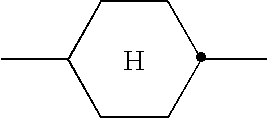 |
||
| n-C7H15O |
 |
||
| CH2═CH |
 |
||
| CH3CH2═CH |
 |
||
| CH2═CHC2H4 |
 |
||
| CH3CH═CHC2H4 |
 |
||
| CH3 |
 |
||
| C2H5 |
 |
||
| n-C3H7 |
 |
||
| n-C4H9 |
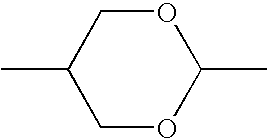 |
||
| n-C5H11 |
 |
||
| n-C6H13 |
 |
||
| n-C7H15 |
 |
||
| CH3O |
 |
||
| C2H5O |
 |
||
| n-C3H7O |
 |
||
| n-C4H9O |
 |
||
| n-C5H11O |
 |
||
| n-C6H13O |
 |
||
| n-C7H15O |
 |
||
| CH2═CH |
 |
||
| CH3CH2═CH |
 |
||
| CH2═CHC2H4 |
 |
||
| CH3CH═CHC2H4 |
 |
||
| CH3 |
 |
||
| C2H5 |
 |
||
| n-C3H7 |
 |
||
| n-C4H9 |
 |
||
| n-C5H11 |
 |
||
| n-C6H13 |
 |
||
| n-C7H15 |
 |
||
| CH3O |
 |
||
| C2H5O |
 |
||
| n-C3H7O |
 |
||
| n-C4H9O |
 |
||
| N-C5H11O |
 |
||
| n-C6H13O |
 |
||
| n-C7H15O |
 |
||
| CH2═CH |
 |
||
| CH3CH2═CH |
 |
||
| CH2═CHC2H4 |
 |
||
| CH3CH═CHC2H4 |
 |
||

A mixture of 80 mmol of 3,5-difluorophenol, 100 ml of dichloromethane and 95 mmol of triethylamine is added slowly at −70° C. to a solution of 50 mmol of B in 250 ml of dichloromethane. After 5 minutes, 270 mmol of triethylamine trishydrofluoride are added, and, after a further 5 minutes, a suspension of 270 mmol of dibromodimethylhydantoin (DBH) in 150 ml of dichloromethane is added. The mixture is stirred at −70° C. for 1 hour, then allowed to warm to −20° C. and poured into 2.5 l of ice-cold 1N NaOH solution. The organic phase is subjected to conventional work-up. The crude product is chromatographed over a silica gel frit in heptane and recrystallised from heptane. 
80 mmol of n-BuLi (15% in hexane) are added dropwise at −70° C. to a solution of 80 mmol of F in 400 ml of THF. The mixture is stirred at −70° C. for 3 hours, and an excess of dry CO2 is then passed in. The mixture is allowed to warm to room temperature and is poured onto 700 g of ice. The mixture is rendered alkaline by addition of 1 N NaOH, and the organic phase is separated off and discarded. The aqueous solution is acidified using conc. HCl, and the precipitated product is filtered off with suction and washed with cold water. The product is crystallised from glacial acetic acid. 
A solution of 50 mmol of G and 70 mmol of diphenoxyphosphoryl azide (DPPA) in 300 ml of dry t-Butanol is heated at the boil for 18 hours. 300 ml of ice-cold saturated NaHCO3 solution and 200 ml of dichloromethane are added, and the organic phase is separated off and evaporated to dryness in a rotary evaporator. The crude t-butylurethane formed as an intermediate is taken up in 100 ml of trifluoroacetic acid and stirred at room temperature for 2 hours. The reaction solution is evaporated to dryness in a rotary evaporator, chromatographed over silica gel in heptane/MTB ether 9:1 and crystallised from heptane. 
A solution of 30 mmol of H and 40 mmol of thiocarbonylbisimidazole in 250 ml of dichloromethane is stirred at room temperature for 24 hours. The reaction solution is filtered and evaporated to dryness, and the residue is chromatographed over silica gel using heptane/MTB ether 9:1. The product is recrystallised from heptane.
The following compounds of the formula 
are prepared analogously:
| R1 | —(A1—Z1)a— | L1 | ||
| CH3 |
 |
H | ||
| CH3 |
 |
F | ||
| C2H5 |
 |
H | ||
| C2H5 |
 |
F | ||
| n-C3H7 |
 |
H | ||
| n-C4H9 |
 |
H | ||
| n-C4H9 |
 |
F | ||
| n-C5H11 |
 |
H | ||
| n-C5H11 |
 |
F | ||
| n-C6H13 |
 |
H | ||
| n-C6H13 |
 |
F | ||
| n-C7H15 |
 |
H | ||
| n-C7H15 |
 |
F | ||
| CH3O |
 |
H | ||
| CH3O |
 |
F | ||
| C2H5O |
 |
H | ||
| C2H5O |
 |
F | ||
| n-C3H7O |
 |
H | ||
| n-C3H7O |
 |
F | ||
| n-C4H9O |
 |
H | ||
| n-C4H9O |
 |
F | ||
| n-C5H11O |
 |
H | ||
| n-C5H11O |
 |
F | ||
| n-C6H13O |
 |
H | ||
| n-C6H13O |
 |
F | ||
| n-C7H15O |
 |
H | ||
| n-C7H15O |
 |
F | ||
| CH2═CH |
 |
H | ||
| CH2═CH |
 |
F | ||
| CH3CH2═CH |
 |
H | ||
| CH3CH2═CH |
 |
F | ||
| CH2═CHC2H4 |
 |
H | ||
| CH2═CHC2H4 |
 |
F | ||
| CH3CH═CHC2H4 |
 |
H | ||
| CH3CH═CHC2H4 |
 |
F | ||
| CH3 | — | H | ||
| CH3 | — | F | ||
| C2H5 | — | H | ||
| C2H5 | — | F | ||
| n-C3H7 | — | H | ||
| n-C3H7 | — | F | ||
| n-C4H9 | — | H | ||
| n-C4H9 | — | F | ||
| n-C5H11 | — | H | ||
| n-C5H11 | — | F | ||
| n-C6H13 | — | H | ||
| n-C6H13 | — | F | ||
| n-C7H15 | — | H | ||
| n-C7H15 | — | F | ||
| CH3O | — | H | ||
| CH3O | — | F | ||
| C2H5O | — | H | ||
| C2H5O | — | F | ||
| n-C3H7O | — | H | ||
| n-C3H7O | — | F | ||
| n-C4H9O | — | H | ||
| n-C4H9O | — | F | ||
| n-C5H11O | — | H | ||
| n-C5H11O | — | F | ||
| n-C6H13O | — | H | ||
| n-C6H13O | — | F | ||
| n-C7H15O | — | H | ||
| n-C7H15O | — | F | ||
| CH2═CH | — | H | ||
| CH2═CH | — | F | ||
| CH3CH2═CH | — | H | ||
| CH3CH2═CH | — | F | ||
| CH2═CHC2H4 | — | H | ||
| CH2═CHC2H4 | — | F | ||
| CH3CH═CHC2H4 | — | H | ||
| CH3CH═CHC2H4 | — | F | ||
| CH3 |
 |
H | ||
| CH3 |
 |
F | ||
| C2H5 |
 |
H | ||
| C2H5 |
 |
F | ||
| n-C3H7 |
 |
H | ||
| n-C3H7 |
 |
F | ||
| n-C4H9 |
 |
H | ||
| n-C4H9 |
 |
F | ||
| n-C5H11 |
 |
H | ||
| n-C5H11 |
 |
F | ||
| n-C6H13 |
 |
H | ||
| n-C6H13 |
 |
F | ||
| n-C7H15 |
 |
H | ||
| n-C7H15 |
 |
F | ||
| CH3O |
 |
H | ||
| CH3O |
 |
F | ||
| C2H5O |
 |
H | ||
| C2H5O |
 |
F | ||
| n-C3H7O |
 |
H | ||
| n-C3H7O |
 |
F | ||
| n-C4H9O |
 |
H | ||
| n-C4H9O |
 |
F | ||
| n-C5H11O |
 |
H | ||
| n-C5H11O |
 |
F | ||
| n-C6H13O |
 |
H | ||
| n-C6H13O |
 |
F | ||
| n-C7H15O |
 |
H | ||
| n-C7H15O |
 |
F | ||
| CH2═CH |
 |
H | ||
| CH2═CH |
 |
F | ||
| CH3CH2═CH |
 |
H | ||
| CH3CH2═CH |
 |
F | ||
| CH2═CHC2H4 |
 |
H | ||
| CH2═CHC2H4 |
 |
F | ||
| CH3CH═CHC2H4 |
 |
H | ||
| CH3CH═CHC2H4 |
 |
F | ||
| CH3 |
 |
H | ||
| CH3 |
 |
F | ||
| C2H5 |
 |
H | ||
| C2H5 |
 |
F | ||
| n-C3H7 |
 |
H | ||
| n-C3H7 |
 |
F | ||
| n-C4H9 |
 |
H | ||
| n-C4H9 |
 |
F | ||
| n-C5H11 |
 |
H | ||
| n-C5H11 |
 |
F | ||
| n-C6H13 |
 |
H | ||
| n-C6H13 |
 |
F | ||
| n-C7H15 |
 |
H | ||
| n-C7H15 |
 |
F | ||
| CH3O |
 |
H | ||
| CH3O |
 |
F | ||
| C2H5O |
 |
H | ||
| C2H5O |
 |
F | ||
| n-C3H7O |
 |
H | ||
| n-C3H7O |
 |
F | ||
| n-C4H9O |
 |
H | ||
| n-C4H9O |
 |
F | ||
| n-C5H11O |
 |
H | ||
| n-C5H11O |
 |
F | ||
| n-C6H13O |
 |
H | ||
| n-C6H13O |
 |
F | ||
| n-C7H15O |
 |
H | ||
| n-C7H15O |
 |
F | ||
| CH2═CH |
 |
H | ||
| CH2═CH |
 |
F | ||
| CH3CH2═CH |
 |
H | ||
| CH3CH2═CH |
 |
F | ||
| CH2═CHC2H4 |
 |
H | ||
| CH2═CHC2H4 |
 |
F | ||
| CH3CH═CHC2H4 |
 |
H | ||
| CH3CH═CHC2H4 |
 |
F | ||
| Example A |
| BCH-3F.F | 10.80% | Clearing point [° C.]: | 103.3 | |
| BCH-5F.F | 9.00% | Δn [589 nm, 20° C.]: | 0.1051 | |
| ECCP-30CF3 | 4.50% | Δε [1 kHz, 20° C.]: | 5.9 | |
| ECCP-50CF3 | 4.50% | |||
| CBC-33F | 1.80% | |||
| CBC-53F | 1.80% | |||
| CBC-55F | 1.80% | |||
| PCH-6F | 7.20% | |||
| PCH-7F | 5.40% | |||
| CCP-20CF3 | 7.20% | |||
| CCP-30CF3 | 10.80% | |||
| CCP-40CF3 | 6.30% | |||
| CCP-50CF3 | 9.90% | |||
| PCH-5F | 9.00% | |||
| CCQP-3-S | 10.00% |
| Example B |
| BCH-3F.F | 10.80% | Clearing point [° C.]: | 99.7 | ||
| BCH-5F.F | 9.00% | Δn [589 nm, 20° C.]: | 0.1039 | ||
| ECCP-30CF3 | 4.50% | Δε [1 kHz, 20° C.]: | 6.3 | ||
| ECCP-50CF3 | 4.50% | γ1 [20° C.] | 151 | ||
| CBC-33F | 1.80% | ||||
| CBC-53F | 1.80% | ||||
| CBC-55F | 1.80% | ||||
| PCH-6F | 7.20% | ||||
| PCH-7F | 5.40% | ||||
| CCP-20CF3 | 7.20% | ||||
| CCP-30CF3 | 10.80% | ||||
| CCP-40CF3 | 6.30% | ||||
| CCP-50CF3 | 9.90% | ||||
| PCH-5F | 9.00% | ||||
| CCQU-3-S | 10.00% | ||||
The preceding examples can be repeated with similar success by substituting the generically or specifically described reactants and/or operating conditions of this invention for those used in the preceding examples.
From the foregoing description, one skilled in the art can easily ascertain the essential characteristics of this invention and, without departing from the spirit and scope thereof, can make various changes and modifications of the invention to adapt it to various usages and conditions.
Claims (16)
1. A liquid-crystalline compound of the formula I 
in which
R1 is an alkyl radical having from 1 to 15 carbon atoms which is unsubstituted, monosubstituted by CN or CF3 or mono-to per halo-substituted by halogen, where one or more CH2 groups in these radicals are optionally replaced by —O—, —S—, —CH═CH—, —C≡C—, —OC—O— or —O—CO— in such a way that O atoms are not linked directly to one another,
A1 and A2 are each, independently of one another,
a) a 1,4-cyclohexenylene or 1,4-cyclohexylene radical, in which one or two non-adjacent CH2 groups are optionally replaced by —O— or —S—,
b) a 1,4-phenylene radical, in which one or two CH groups are optionally replaced by N,
c) a radical selected from the group consisting of piperidine-1,4-diyl, 1,4-bicyclo[2.2.2]octylene, phenanthrene-2,7-diyl, naphthalene-2,6-diyl, decahydronaphthalene-2,6-diyl and 1,2,3,4-tetrahydronaphthalene-2,6-diyl,
where the radicals a), b) and c) are optionally monosubstituted or polysubstituted by halogen atoms,
Z1 and Z2 are each, independently of one another, —CO—O—, —O—CO—, —CF2O—, —OCF2—, —CH2O—, —OCH2—, —CH2CH2—, —(CH2)4—, —C2F4—, —CH2CF2—, —CF2CH2—, —CF═CF—, —CH═CH—, —C≡C— or a single bond, with the proviso that at least one of Z1 and Z2 is —CF2O— or —OCF2—,
a is 0, 1 or 2,
b is 1 or 2, and
L1, L2 and L3 are each, independently of one another, H, F or Cl.
2. A liquid-crystalline compound according to claim 1 , wherein R1 is a straight-chain alkyl radical having from 1 to 10 carbon atoms or an alkenyl radical having from 2 to 10 carbon atoms.
3. A liquid-crystalline compound according to claim 1 , wherein a+b=1 or 2.
4. A liquid-crystalline compound according to claim 2 , wherein a+b=1 or 2.
5. A liquid-crystalline compound according to claim 1 , wherein L1 is fluorine and L2 is fluorine or hydrogen.
6. A liquid-crystalline compound according to claim 2 , wherein L1 is fluorine and L2 is fluorine or hydrogen.
7. A liquid-crystalline compound according to claim 3 , wherein L1 is fluorine and L2 is fluorine or hydrogen.
8. A liquid-crystalline compound according to claim 5 , wherein L2 and L3 are fluorine.
9. A liquid-crystalline compound of claim 1 , which is of one of the formulae I1 to I94: 


in which
R1 is as defined in claim 1 and (F) is fluoro or hydrogen.
10. A liquid-crystalline medium comprising at least two mesogenic compounds, wherein at least one compound is of the formula I according to claim 1 .
11. An electro-optical liquid-crystal display containing a liquid-crystalline, medium according to claim 10 .
12. A compound of claim 1 , wherein a=o.
13. A compound of claim 1 , wherein one of Z1 and Z2 is —CF2O— or —OCF2— and the other is a single bond.
14. A liquid-crystalline medium of claim 10 , which exhibits a nematic phase range from −20° C. to above 100° C., a dielectric anisotropy, Δε, ≧4.
15. A liquid-crystalline medium of claim 10 , wherein the proportion of compounds of the formula I is from 5-95% by weight.
16. A compound of claim 1 , wherein R1 is ethyl or propyl.
Applications Claiming Priority (3)
| Application Number | Priority Date | Filing Date | Title |
|---|---|---|---|
| DE10136188 | 2001-07-25 | ||
| DE10136188.2 | 2001-07-25 | ||
| DE10136188 | 2001-07-25 |
Publications (2)
| Publication Number | Publication Date |
|---|---|
| US20030216554A1 US20030216554A1 (en) | 2003-11-20 |
| US6723866B2 true US6723866B2 (en) | 2004-04-20 |
Family
ID=7693018
Family Applications (1)
| Application Number | Title | Priority Date | Filing Date |
|---|---|---|---|
| US10/202,633 Expired - Fee Related US6723866B2 (en) | 2001-07-25 | 2002-07-25 | Liquid-crystalline compounds |
Country Status (6)
| Country | Link |
|---|---|
| US (1) | US6723866B2 (en) |
| JP (1) | JP4275364B2 (en) |
| KR (1) | KR100845994B1 (en) |
| DE (1) | DE10229476B4 (en) |
| GB (1) | GB2379442B (en) |
| TW (1) | TWI245066B (en) |
Cited By (7)
| Publication number | Priority date | Publication date | Assignee | Title |
|---|---|---|---|---|
| US20030213935A1 (en) * | 2001-09-29 | 2003-11-20 | Merck Patent Gmbh | Liquid-crystalline compounds |
| US20040173776A1 (en) * | 2003-03-05 | 2004-09-09 | Michael Heckmeier | Liquid-crystalline medium |
| US20050040365A1 (en) * | 2002-02-06 | 2005-02-24 | Michael Heckmeier | Liquid-crystalline medium |
| US7125589B1 (en) * | 2002-04-09 | 2006-10-24 | Chisso Corporation | Liquid crystal compound having hydrogen as a terminal group, composition comprising the compound, and liquid crystal display element comprising the composition |
| US20080132716A1 (en) * | 2006-09-13 | 2008-06-05 | Merck Patent Gmbh | Fluorophenyl compounds for liquid-crystalline mixtures |
| US20090101869A1 (en) * | 2006-12-20 | 2009-04-23 | Markus Czanta | Liquid crystalline medium and liquid crystal display |
| US9745512B2 (en) | 2010-03-05 | 2017-08-29 | Merck Patent Gesellschaft Mit Beschrankter Haftung | Liquid-crystalline medium |
Families Citing this family (15)
| Publication number | Priority date | Publication date | Assignee | Title |
|---|---|---|---|---|
| KR101070102B1 (en) * | 2002-11-27 | 2011-10-05 | 메르크 파텐트 게엠베하 | Liquid-crystalline compounds |
| DE102004021334B4 (en) | 2003-05-27 | 2019-05-16 | Merck Patent Gmbh | Aldehydes with difluoroxymethylene bridge |
| KR101014186B1 (en) * | 2003-07-09 | 2011-02-14 | 삼성전자주식회사 | Nematic liquid crystal composition |
| DE602004025254D1 (en) * | 2003-08-25 | 2010-03-11 | Merck Patent Gmbh | COMPOUNDS FOR USE IN LIQUID CRYSTALLINE MEDIA |
| US7732021B2 (en) * | 2004-06-18 | 2010-06-08 | Merck Patent Gesellschaft Mit Beschrankter Haftung | Liquid crystalline medium |
| KR101355300B1 (en) * | 2004-11-26 | 2014-01-23 | 샤프 가부시키가이샤 | Liquid crystal medium |
| JP4876569B2 (en) * | 2005-12-22 | 2012-02-15 | Jnc株式会社 | Liquid crystal composition and liquid crystal display element |
| WO2007118623A1 (en) * | 2006-04-13 | 2007-10-25 | Merck Patent Gmbh | Liquid-crystalline medium |
| EP1935960B1 (en) * | 2006-12-20 | 2010-11-03 | Merck Patent GmbH | Liquid crystalline medium and liquid crystal display |
| JP5212656B2 (en) * | 2009-09-02 | 2013-06-19 | 日産化学工業株式会社 | Method for producing isothiocyanato compound |
| KR200452114Y1 (en) * | 2010-02-23 | 2011-02-08 | (주) 신창테크 | Index structure of the conductive movable beam |
| US9102602B2 (en) | 2010-11-29 | 2015-08-11 | Nissan Chemical Industries, Ltd. | Method for producing isothiocyanate compound |
| CN102433133B (en) * | 2011-09-14 | 2014-09-24 | 深圳超多维光电子有限公司 | Nematic liquid crystal composition |
| JP5850023B2 (en) | 2012-11-27 | 2016-02-03 | Jnc株式会社 | Liquid crystal compound, liquid crystal composition and liquid crystal display element having CF2OCF3 at terminal |
| DE102015008598B3 (en) | 2015-07-02 | 2016-08-11 | Audi Ag | Method and system for providing a driving license |
Citations (1)
| Publication number | Priority date | Publication date | Assignee | Title |
|---|---|---|---|---|
| US6569505B2 (en) * | 2000-02-14 | 2003-05-27 | MERCK Patent Gesellschaft mit beschränkter Haftung | Liquid crystal compounds, liquid crystal medium and liquid crystal display |
Family Cites Families (2)
| Publication number | Priority date | Publication date | Assignee | Title |
|---|---|---|---|---|
| DE4027869B4 (en) * | 1989-09-07 | 2007-06-21 | Merck Patent Gmbh | Difluorophenylisothiocyanate and liquid crystalline medium |
| DE4326020B4 (en) * | 1993-08-03 | 2011-04-07 | Merck Patent Gmbh | Biphenylcyclohexene derivatives and liquid crystalline medium |
-
2002
- 2002-07-01 DE DE10229476A patent/DE10229476B4/en not_active Expired - Fee Related
- 2002-07-22 TW TW091116283A patent/TWI245066B/en not_active IP Right Cessation
- 2002-07-23 GB GB0217060A patent/GB2379442B/en not_active Expired - Fee Related
- 2002-07-24 KR KR1020020043651A patent/KR100845994B1/en not_active Expired - Lifetime
- 2002-07-25 JP JP2002216482A patent/JP4275364B2/en not_active Expired - Lifetime
- 2002-07-25 US US10/202,633 patent/US6723866B2/en not_active Expired - Fee Related
Patent Citations (1)
| Publication number | Priority date | Publication date | Assignee | Title |
|---|---|---|---|---|
| US6569505B2 (en) * | 2000-02-14 | 2003-05-27 | MERCK Patent Gesellschaft mit beschränkter Haftung | Liquid crystal compounds, liquid crystal medium and liquid crystal display |
Cited By (14)
| Publication number | Priority date | Publication date | Assignee | Title |
|---|---|---|---|---|
| US7250198B2 (en) * | 2001-09-29 | 2007-07-31 | Merck Patent Gmbh | Liquid-crystalline compounds |
| US7604851B2 (en) | 2001-09-29 | 2009-10-20 | Merck Patent Gesellschaft Mit Beschrankter Haftung | Liquid-crystalline compounds |
| US20070269614A1 (en) * | 2001-09-29 | 2007-11-22 | Michael Heckmeier | Liquid -crystalline compounds |
| US20030213935A1 (en) * | 2001-09-29 | 2003-11-20 | Merck Patent Gmbh | Liquid-crystalline compounds |
| US7056561B2 (en) * | 2002-02-06 | 2006-06-06 | Merck Patent Gmbh | Liquid-crystalline medium |
| US20050040365A1 (en) * | 2002-02-06 | 2005-02-24 | Michael Heckmeier | Liquid-crystalline medium |
| US7125589B1 (en) * | 2002-04-09 | 2006-10-24 | Chisso Corporation | Liquid crystal compound having hydrogen as a terminal group, composition comprising the compound, and liquid crystal display element comprising the composition |
| US7105210B2 (en) * | 2003-03-05 | 2006-09-12 | Merck Patent Gmbh | Liquid-crystalline medium |
| US20040173776A1 (en) * | 2003-03-05 | 2004-09-09 | Michael Heckmeier | Liquid-crystalline medium |
| US20080132716A1 (en) * | 2006-09-13 | 2008-06-05 | Merck Patent Gmbh | Fluorophenyl compounds for liquid-crystalline mixtures |
| US7767277B2 (en) * | 2006-09-13 | 2010-08-03 | Merck Patent Gesellschaft Mit Beschrankter Haftung | Fluorophenyl compounds for liquid-crystalline mixtures |
| US20090101869A1 (en) * | 2006-12-20 | 2009-04-23 | Markus Czanta | Liquid crystalline medium and liquid crystal display |
| US7682671B2 (en) * | 2006-12-20 | 2010-03-23 | Merck Patent Gmbh | Liquid crystalline medium and liquid crystal display |
| US9745512B2 (en) | 2010-03-05 | 2017-08-29 | Merck Patent Gesellschaft Mit Beschrankter Haftung | Liquid-crystalline medium |
Also Published As
| Publication number | Publication date |
|---|---|
| JP2003176265A (en) | 2003-06-24 |
| GB0217060D0 (en) | 2002-08-28 |
| KR100845994B1 (en) | 2008-07-11 |
| KR20030010517A (en) | 2003-02-05 |
| US20030216554A1 (en) | 2003-11-20 |
| GB2379442B (en) | 2004-07-14 |
| DE10229476B4 (en) | 2011-05-05 |
| TWI245066B (en) | 2005-12-11 |
| JP4275364B2 (en) | 2009-06-10 |
| GB2379442A (en) | 2003-03-12 |
| DE10229476A1 (en) | 2003-02-13 |
Similar Documents
| Publication | Publication Date | Title |
|---|---|---|
| US7250198B2 (en) | Liquid-crystalline compounds | |
| US6723866B2 (en) | Liquid-crystalline compounds | |
| US6159393A (en) | Benzene derivatives and liquid-crystalline medium | |
| US6596350B2 (en) | Liquid-crystalline medium | |
| US6790488B1 (en) | Liquid-crystalline medium | |
| US6780477B2 (en) | Liquid crystalline compounds | |
| US6083573A (en) | Liquid-crystalline medium | |
| US6793984B2 (en) | Fluorinated (dihydro)phenanthrene derivatives, and their use in liquid-crystalline media | |
| US7074462B1 (en) | Ester compounds and their use in liquid crystalline media | |
| US6406761B1 (en) | Liquid-crystalline medium | |
| US6706338B2 (en) | Liquid-crystalline compounds | |
| US5725799A (en) | 3,4,5-trifluoropheny 4-cyclohexylbenzoates | |
| US6908645B2 (en) | Liquid-crystalline medium | |
| US6171665B1 (en) | Liquid-crystalline medium | |
| US7316830B2 (en) | Liquid-crystalline phenol esters | |
| US5827450A (en) | Benzene derivatives, and liquid-crystalline medium | |
| US6287648B1 (en) | Liquid-crystalline medium | |
| US6635318B2 (en) | Tetracyclic and pentacyclic compounds, and their use in liquid-crystalline media | |
| US6541081B1 (en) | Ester compounds and their use in liquid-crystalline media | |
| US6521303B2 (en) | Liquid-crystalline medium | |
| US6677003B2 (en) | Liquid-crystalline medium | |
| EP0768358A1 (en) | Liquid-crystalline medium |
Legal Events
| Date | Code | Title | Description |
|---|---|---|---|
| AS | Assignment |
Owner name: MERCK PATENT, GERMANY Free format text: ASSIGNMENT OF ASSIGNORS INTEREST;ASSIGNORS:KIRSCH, PEER;HECKMEIER, MICHAEL;KRAUSE, JOACHIM;AND OTHERS;REEL/FRAME:013393/0348 Effective date: 20020912 |
|
| FEPP | Fee payment procedure |
Free format text: PAYOR NUMBER ASSIGNED (ORIGINAL EVENT CODE: ASPN); ENTITY STATUS OF PATENT OWNER: LARGE ENTITY |
|
| FPAY | Fee payment |
Year of fee payment: 4 |
|
| REMI | Maintenance fee reminder mailed | ||
| LAPS | Lapse for failure to pay maintenance fees | ||
| STCH | Information on status: patent discontinuation |
Free format text: PATENT EXPIRED DUE TO NONPAYMENT OF MAINTENANCE FEES UNDER 37 CFR 1.362 |
|
| FP | Lapsed due to failure to pay maintenance fee |
Effective date: 20120420 |