US6657742B1 - System for printing facsimile jobs with a property profile - Google Patents
System for printing facsimile jobs with a property profile Download PDFInfo
- Publication number
- US6657742B1 US6657742B1 US08/977,193 US97719397A US6657742B1 US 6657742 B1 US6657742 B1 US 6657742B1 US 97719397 A US97719397 A US 97719397A US 6657742 B1 US6657742 B1 US 6657742B1
- Authority
- US
- United States
- Prior art keywords
- facsimile
- document
- user profile
- print media
- printing
- Prior art date
- Legal status (The legal status is an assumption and is not a legal conclusion. Google has not performed a legal analysis and makes no representation as to the accuracy of the status listed.)
- Expired - Lifetime, expires
Links
Images




Classifications
-
- H—ELECTRICITY
- H04—ELECTRIC COMMUNICATION TECHNIQUE
- H04N—PICTORIAL COMMUNICATION, e.g. TELEVISION
- H04N1/00—Scanning, transmission or reproduction of documents or the like, e.g. facsimile transmission; Details thereof
- H04N1/0035—User-machine interface; Control console
- H04N1/00405—Output means
- H04N1/00408—Display of information to the user, e.g. menus
- H04N1/00413—Display of information to the user, e.g. menus using menus, i.e. presenting the user with a plurality of selectable options
-
- H—ELECTRICITY
- H04—ELECTRIC COMMUNICATION TECHNIQUE
- H04N—PICTORIAL COMMUNICATION, e.g. TELEVISION
- H04N1/00—Scanning, transmission or reproduction of documents or the like, e.g. facsimile transmission; Details thereof
- H04N1/0035—User-machine interface; Control console
- H04N1/00405—Output means
- H04N1/00408—Display of information to the user, e.g. menus
-
- H—ELECTRICITY
- H04—ELECTRIC COMMUNICATION TECHNIQUE
- H04N—PICTORIAL COMMUNICATION, e.g. TELEVISION
- H04N1/00—Scanning, transmission or reproduction of documents or the like, e.g. facsimile transmission; Details thereof
- H04N1/0035—User-machine interface; Control console
- H04N1/00405—Output means
- H04N1/00408—Display of information to the user, e.g. menus
- H04N1/00413—Display of information to the user, e.g. menus using menus, i.e. presenting the user with a plurality of selectable options
- H04N1/00416—Multi-level menus
- H04N1/00419—Arrangements for navigating between pages or parts of the menu
- H04N1/00424—Arrangements for navigating between pages or parts of the menu using a list of graphical elements, e.g. icons or icon bar
-
- H—ELECTRICITY
- H04—ELECTRIC COMMUNICATION TECHNIQUE
- H04N—PICTORIAL COMMUNICATION, e.g. TELEVISION
- H04N1/00—Scanning, transmission or reproduction of documents or the like, e.g. facsimile transmission; Details thereof
- H04N1/0035—User-machine interface; Control console
- H04N1/00405—Output means
- H04N1/00408—Display of information to the user, e.g. menus
- H04N1/00466—Display of information to the user, e.g. menus displaying finishing information, e.g. position of punch holes or staple or orientation references
-
- H—ELECTRICITY
- H04—ELECTRIC COMMUNICATION TECHNIQUE
- H04N—PICTORIAL COMMUNICATION, e.g. TELEVISION
- H04N1/00—Scanning, transmission or reproduction of documents or the like, e.g. facsimile transmission; Details thereof
- H04N1/0035—User-machine interface; Control console
- H04N1/00405—Output means
- H04N1/00482—Output means outputting a plurality of job set-up options, e.g. number of copies, paper size or resolution
-
- H—ELECTRICITY
- H04—ELECTRIC COMMUNICATION TECHNIQUE
- H04N—PICTORIAL COMMUNICATION, e.g. TELEVISION
- H04N1/00—Scanning, transmission or reproduction of documents or the like, e.g. facsimile transmission; Details thereof
- H04N1/32—Circuits or arrangements for control or supervision between transmitter and receiver or between image input and image output device, e.g. between a still-image camera and its memory or between a still-image camera and a printer device
- H04N1/32101—Display, printing, storage or transmission of additional information, e.g. ID code, date and time or title
- H04N1/32106—Display, printing, storage or transmission of additional information, e.g. ID code, date and time or title separate from the image data, e.g. in a different computer file
- H04N1/32122—Display, printing, storage or transmission of additional information, e.g. ID code, date and time or title separate from the image data, e.g. in a different computer file in a separate device, e.g. in a memory or on a display separate from image data
-
- H—ELECTRICITY
- H04—ELECTRIC COMMUNICATION TECHNIQUE
- H04N—PICTORIAL COMMUNICATION, e.g. TELEVISION
- H04N2201/00—Indexing scheme relating to scanning, transmission or reproduction of documents or the like, and to details thereof
- H04N2201/32—Circuits or arrangements for control or supervision between transmitter and receiver or between image input and image output device, e.g. between a still-image camera and its memory or between a still-image camera and a printer device
- H04N2201/3201—Display, printing, storage or transmission of additional information, e.g. ID code, date and time or title
- H04N2201/3204—Display, printing, storage or transmission of additional information, e.g. ID code, date and time or title of data relating to a user, sender, addressee, machine or electronic recording medium
- H04N2201/3205—Display, printing, storage or transmission of additional information, e.g. ID code, date and time or title of data relating to a user, sender, addressee, machine or electronic recording medium of identification information, e.g. name or ID code
-
- H—ELECTRICITY
- H04—ELECTRIC COMMUNICATION TECHNIQUE
- H04N—PICTORIAL COMMUNICATION, e.g. TELEVISION
- H04N2201/00—Indexing scheme relating to scanning, transmission or reproduction of documents or the like, and to details thereof
- H04N2201/32—Circuits or arrangements for control or supervision between transmitter and receiver or between image input and image output device, e.g. between a still-image camera and its memory or between a still-image camera and a printer device
- H04N2201/3201—Display, printing, storage or transmission of additional information, e.g. ID code, date and time or title
- H04N2201/3225—Display, printing, storage or transmission of additional information, e.g. ID code, date and time or title of data relating to an image, a page or a document
- H04N2201/3242—Display, printing, storage or transmission of additional information, e.g. ID code, date and time or title of data relating to an image, a page or a document of processing required or performed, e.g. for reproduction or before recording
-
- H—ELECTRICITY
- H04—ELECTRIC COMMUNICATION TECHNIQUE
- H04N—PICTORIAL COMMUNICATION, e.g. TELEVISION
- H04N2201/00—Indexing scheme relating to scanning, transmission or reproduction of documents or the like, and to details thereof
- H04N2201/32—Circuits or arrangements for control or supervision between transmitter and receiver or between image input and image output device, e.g. between a still-image camera and its memory or between a still-image camera and a printer device
- H04N2201/3201—Display, printing, storage or transmission of additional information, e.g. ID code, date and time or title
- H04N2201/3274—Storage or retrieval of prestored additional information
- H04N2201/3276—Storage or retrieval of prestored additional information of a customised additional information profile, e.g. a profile specific to a user ID
Definitions
- This invention relates generally to a network capable, multifunctional printing system and more particularly to an improvement for a printing system in which a facsimile document or job is transmitted to a destination printing subsystem, from a facsimile input device with minimal programming capability, for use with a facsimile user profile, the facsimile user profile communicating with the destination printing subsystem and providing the facsimile document with an expanded range of programmability when the facsimile document is processed in conjunction with the facsimile user profile.
- Electronic printing systems typically include an input section, a controller, and an output section or print engine. It is particularly significant that an electronic printing system can be adapted to receive jobs for processing by way of a “front end” or “server” communicatively coupled with a local area or wide area network.
- An example of such electronic printing system is the Xerox DocuCentre 35 (“DocuCentre” is a trademark of Xerox Corporation) which communicates with a remote network client by way of network printing software referred to as Centreware (“Centreware” is a trademark of Xerox Corporation).
- a job including image data and control or programming instructions, is prepared at the client and compiled, by way of a suitable print driver, for transmission across the network to the electronic printing system.
- a demand for “multifunctionality” continues to grow.
- a multifunctional digital copier can assume the form of an arrangement in which a single electrostatic processing printer is coupled with a plurality of different image input devices, with such devices being adapted to produce image related information for use by the printer.
- U.S. Pat. No. 4,821,107 to Naito et al. discloses a multifunctional image apparatus which is operable in one of various office automation modes, such as copy mode, facsimile mode, printer mode and the like.
- the multifunctional imaging apparatus is comprised of an image reading section, an image forming section and a communication section for transmitting and receiving image data.
- the client provides the job with a set of control of programming instructions which indicates a manner in which a destination printer or copier is to process the image data of the job.
- the programming instructions provide guidance as to the manner in which a document, corresponding with the image data, is to be processed.
- the programming instructions invariably include information regarding the print media upon which the document is to be printed and may include information indicating how one or more prints are to be finished.
- Job ticket Programming of a job is often achieved with a “job ticket”.
- the job ticket is provided in the form of one or more programmable dialogs, each programmable dialog including values which are selected with a user interface, such as the user interface found in a DocuTech printing system (“DocuTech” is a registered trademark of Xerox Corporation).
- Job tickets can vary dramatically in both structure and functionality.
- the job ticket may assume the form of a relatively simple dialog displayed on a liquid crystal display (“LCD”). Attributes of a corresponding job, such as desired image processing, designated stock and finishing characteristics may be displayed for setting of suitable output values.
- LCD liquid crystal display
- a job can be viewed as “composite” in nature since it may include a plurality of “job segments”.
- Each job segment as defined by U.S. Pat. No. 5,00,762 to Salgado et al. (Issued: Feb. 4, 1997), the disclosure of which is incorporated herein by reference, includes a pair of input/output designations used to describe the processing of the job.
- one job segment may comprise a fax segment in which image data is provided at the scanner of a multifunctional copier for printing at the marking engine of a facsimile device
- another job segment may comprise a print job in which the image data is provided at the scanner of the multifunctional copier for printing at a printer on the network disposed remotely of the multifunctional copier.
- the '461 Patent discloses a method in which a sender automatically distributes information to a receiver on a network using devices (such as printers and facsimile machines) and communication channels (such as electronic mail) defined in a receiver profile.
- the receiver profile establishes the properties and mode for receipt of information for receivers on the network and the profile is published in a network repository for all network users or is accessible by selected groups or individuals on the network.
- the properties of the profile relate to a manner in which a job is to be communicated throughout the network relative to various user locations rather than control instructions for the job.
- U.S. Pat. No. 5,00,762 or U.S. Pat. No. 5,657,461 address a situation in which a user of a typical or common facsimile device desires to transmit a fax segment from a facsimile device to a multifunctional copier where the copier includes many programmable attributes (e.g. image processing, print media and finishing attributes) which are not made available at the typical facsimile device.
- the facsimile device may, through use of a suitable protocol, such as ITU-T T.30 protocol, provide the fax segment with a paper size attribute (e.g. substrate width); however, a host of other attributes, including a number of media related attributes, are not provided at the facsimile device.
- a typical facsimile device does not permit the user to provide a variety of image processing attributes (e.g. auto-sizing), print media attributes (e.g. print media color and print media type) and finishing (e.g. stitching or binding).
- image processing attributes e.g. auto-sizing
- print media attributes e.g. print media color and print media type
- finishing e.g. stitching or binding
- the programming capability of a typical facsimile device can be enhanced by the use of a subsystem in which optical character recognition is used in conjunction with a coded sheet.
- a paper job ticket with programming selections and accompanying selection areas is provided to a user.
- the user Prior to scanning a hard copy document, the user marks the appropriate selection areas and scans the coded sheet with the OCR subsystem. Accordingly, the programming selections of the coded sheet are passed along with the image data of a job for use in job processing at a destination printing device.
- PaperWorks is a trademark of Xerox
- the PaperWorks product utilizes a special encoded fine pattern of special marks (“glyphs”), electronically recognized as such using PC computer software by a facsimile electronic image receiver.
- glyphs special marks
- the PaperWorks product was configured initially to operate on a conventional personal computer having a conventional internal fax card and a modem, electronic mail system or other network connection to telecommunications, and running “Windows” software (“Windows” is a trademark of Microsoft, Inc.).
- a “PaperWorks” fax form carries a coded identification region which, upon scanning, may be decoded by an appropriate processing system.
- This coded identification allows the system to determine which of several different pre-stored forms the received form is, and what its page layout is. From this, the system can also extract the necessary user-entered information from the form to facilitate processing.
- An important feature of the PaperWorks system is the use of data defining a control sheet image to provide information in accordance with which operations are performed on data defining a sequence of images (data defining images, not actual physical sheets of a medium).
- the control sheet image can include information indicating a destination to which a fax server then transmits data defining the sequence of images.
- coded sheets to provide a fax document with a higher degree of programming is well suited for those situations in which a facsimile device user is provided with an appropriate level of resources, such a suitable sheet and the software necessary to interpret the sheet.
- users are not provided with such resources when transmitting a facsimile document from a common facsimile device to a destination printing machine.
- a print media tray is selected for use at a destination multifunctional copier with a plurality of print media trays on the basis of size alone, the possibility of choosing a tray loaded with print media having inappropriate color, type and/or weight is significant. It would be desirable to provide users with the ability to program the facsimile document transmitted from the common facsimile device with a robust set of attribute values without requiring such users to employ software other than the software normally employed with the common facsimile device.
- the present invention is particularly suited for use in a network environment, such as in the context of the world wide web, the internet or the like.
- Examples of some recent patents relating to network environments of plural remote terminal shared users of networked printers include Xerox Corporation U.S. Pat. Nos. 5,483,653, 5,243,518, 5,226,112, 5,170,340 and 5,287,194.
- Some patents on this subject by others include U.S. Pat. Nos. 5,113,355, 5,113,494 (originally filed Feb. 27, 1987), U.S. Pat. Nos. 5,181,162, 5,220,674, 5,247,670; 4,953,080 and 4,821,107.
- patents also include examples of networked systems with printers: U.S. Pat. Nos. 5,153,577; 5,113,517; 5,072,412; 5,065,347; 5,008,853; 4,947,345; 4,939,507; 4,937,036; 4,920,481; 4,914,586; 4,899,136; 4,453,128; 4,063,220; 4,099,024; 3,958,088; 3,920,895; and 3,597,071. Also noted are IBM Corp. U.S. Pat. Nos. 4,651,278 and 4,623,244, as well as Canon U.S. Pat. No. 4,760,458 and Jap. Pub. No. 59-63872 published Nov. 4, 1984. Some of these various above patents also disclose multi-functional printing systems.
- Some other network system related publications include “Xerox Office Systems Technology” “Xerox 8000 Series Products: Workstations, Services, Ethernet, and Software Development” ⁇ 1982, 1984 by Xerox Corporation, OSD-R8203A, Ed. T. Linden and E. Harslem, with a “Table of Contents” citing its numerous prior publications sources, and an Abstract noting the April 1981 announcement of “the 8110 Star Informations System, A New Personal Computer . . . ”; “Xerox System Integration Standard Printing Protocol XSIS 118404”, April 1984; “Xerox Integrated Production Publishers Solutions: “Booklet No.
- the much earlier Xerox Corporation “9700 Electronic printing System”; the “VP Local Laser Printing” software application package, which, together with the Xerox “4045” or other Laser Copier/Printer, the “6085” “Professional Computer System” using Xerox Corporation “ViewPoint” or “GlobalView®” software and a “local printer [print service] Option” kit, comprises the “Documenter” system.
- the even earlier Xerox Corporation “8000” “Xerox Network Services Product Descriptions” further describe other earlier Xerox Corporation electronic document printing systems. Eastman Kodak “Lion Heart®” systems, first announced Sep. 13, 1990, are also noted.
- a printing system with a memory and a plurality of document processing related subsystems, for processing a facsimile document with an image data set.
- the printing system which communicates with an input device, by way of a network, so that one or more prints are producible from the image data set when the image data set is transmitted from the input device to a printing subsystem.
- the printing system includes: a facsimile user profile, stored in the memory of the printing system, including one or more attribute sets with each attribute set, along with a corresponding set of attribute values, defining a manner in which a portion of the facsimile document is to be processed at the printing subsystem; a facsimile processing subsystem for reading the facsimile user profile to determine whether a selected one of the plurality of document processing related subsystems is enabled to process the portion of the facsimile document in accordance with one of the one or more attribute sets if the facsimile user profile; and wherein the portion of the facsimile document is processed with the selected one of the plurality of document processing related subsystems when it is determined, with said facsimile processing subsystem, that the selected one of the plurality of document processing related subsystems is enabled to process the portion of the facsimile document in accordance with the facsimile user profile.
- a method of processing a facsimile document in a network printing system having a printing subsystem communicating with an input device by way of a network.
- the network printing system includes a memory and a plurality of document processing related subsystems, the input device transmitting the facsimile document to a printing subsystem for producing one or more prints based on the facsimile document.
- the method includes: a) determining whether a facsimile user profile, including one or more attribute sets with each attribute set, along with a corresponding set of attribute values, defining a manner in which a portion of the facsimile document is to be processed at the printing subsystem, is stored in the memory; b) in response to determining that the facsimile user profile is stored in the memory, i) reading the facsimile user profile to determine whether a selected one of the plurality of document processing related subsystems is enabled to process the portion of the facsimile document in accordance with one of the one or more attribute sets if the facsimile user profile, and ii) processing the portion of the facsimile document with the selected one of the plurality of document processing related subsystems when it is determined with said (b)(i) that the selected one of the plurality of document processing related subsystems is enabled to process the portion of the facsimile document in accordance with the facsimile user profile; and c) in response to determining that the fac
- FIG. 1 is a perspective view of a networked digital copier suitable for receiving a job developed in accordance with the present invention
- FIG. 2 is a block diagram depicting a multifunctional, network adaptive printing machine
- FIG. 3 is a block diagram of a video control module for the printing machine of FIG. 2;
- FIG. 4 is a block diagram of a transfer module used in conjunction with the printing machine of FIG. 3;
- FIG. 5 is a block diagram of a facsimile card used in conjunction with the printing machine of FIG. 3;
- FIG. 6 is a block diagram of a network controller for the printing machine of FIG. 2;
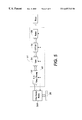
- FIG. 7 comprises a flow diagram demonstrating an approach in which a facsimile document is processed in accordance with a technique embodying the present invention
- FIG. 8 is a elevational view of a dialog screen in which a facsimile user profile adapted to provide an advanced level of print media programming for a typical facsimile document is provided.
- FIG. 9 is a elevational view of a dialog screen in which a facsimile user profile adapted to provide an advanced level of image processing programming for a typical facsimile document is provided.
- a digital copier system of the type suitable for use with the preferred embodiment includes a document feeder 1 and an operation (and display) panel 2 .
- the document feeder 1 conveys a document to a predetermined reading position on an image reading device 3 and, after the document has been read, drives it away from the reading position.
- the image reading device 3 illuminates the document brought to the reading position thereof.
- the resulting reflection from the document is transformed to a corresponding electric signal, or image signal, by a solid state imaging device, e.g., a CCD (Charge Coupled Device) image sensor.
- An image forming device 4 forms an image represented by the image signal on a plain paper or a thermosensitive paper by an electrophotographic, thermosensitive, heat transfer, ink jet or similar conventional system.
- a duplex copy unit 5 is constructed to turn over the paper carrying the image on one side thereof and again feed it to the image forming device 4 . As a result, an image is formed on the other side of the paper to complete a duplex copy.
- the duplex copy unit 5 has customarily been designed to refeed the paper immediately or to sequentially refeed a plurality of papers stacked one upon the other, from the bottom paper to the top paper.
- the papers, or duplex copies, driven out of the image forming device 4 are sequentially sorted by a sorter 6 in order of page or page by page.
- Applications generally 8 , share the document feeder 1 , operation panel 2 , image reading device 3 , image forming device 4 , duplex unit 5 , sorter 6 , and paper cassettes 7 which are the resources built in the copier system.
- the applications include a copier application, a printer (IOT) application, a facsimile (Fax) application and other applications.
- the digital copier system is coupled with a network by way of a conventional network connection 9 .
- a multifunctional, network adaptive printing system is designated by the numeral 10 .
- the printing system 10 includes a printing machine 12 operatively coupled with a network service module 14 .
- the printing machine 12 includes an electronic subsystem 16 , referred to as a video control module (VCM), communicating with a scanner 18 and a printer 20 .
- VCM 16 which will be described in further detail below, coordinates the operation of the scanner and printer in a digital copying arrangement.
- the scanner 18 also referred to as image input terminal (IIT)
- IIT image input terminal
- an image processing system 22 (FIG. 3 ), associated with the scanner 18 , executes signal correction and the like, converts the corrected signals into multi-level signals (e.g. binary signals), compresses the multi-level signals and preferably stores the same in electronic precollation (EPC) memory 24 .
- EPC electronic precollation
- the printer 20 (also referred to as image output terminal (IOT)) preferably includes a xerographic print engine.
- the print engine has a multi-pitch belt (not shown) which is written on with an imaging source, such as a synchronous source (e.g. laser raster output scanning device) or an asynchronous source (e.g. LED print bar).
- an imaging source such as a synchronous source (e.g. laser raster output scanning device) or an asynchronous source (e.g. LED print bar).
- the multi-level image data is read out of the EPC memory 24 (FIG. 3) while the imaging source is turned on and off, in accordance with the image data, forming a latent image on the photoreceptor.
- the latent image is developed with, for example, a hybrid jumping development technique and transferred to a print media sheet.
- the printer can assume other forms besides a xerographic print engine without altering the concept upon which the disclosed embodiment is based.
- the printing system 10 could be implemented with a thermal ink jet or ionographic printer.
- the VCM 16 includes a video bus (VBus) 28 with which various I/O, data transfer and storage components communicate.
- VBus is a high speed, 32 bit data burst transfer bus which is expandable to 64 bit.
- the 32 bit implementation has a sustainable maximum bandwidth of approximately 60 MBytes/sec. In one example, the bandwidth of the VBus is as high as 100 Mbytes/sec.
- the storage components of the VCM reside in the EPC memory section 30 and the mass memory section 32 .
- the EPC memory section includes the EPC memory 24 , the EPC memory being coupled with the VBus by way of a DRAM controller 33 .
- the EPC memory which is preferably DRAM, provides expansion of up to 64 MBytes, by way of two high density 32 bit SIMM modules.
- the mass memory section 32 includes a SCSI hard drive device 34 coupled to the VBus by way of a transfer module 36 a .
- transfer module 36 a As will appear, other I/O and processing components are coupled respectively to the VBus by way of transfer modules 36 . It will be appreciated that other devices (e.g. a workstation) could be coupled to the VBus by way the transfer module 36 a through use of a suitable interface and a SCSI line.
- the illustrated transfer module of FIG. 4 includes a packet buffer 38 , a VBus interface 40 and DMA transfer unit 42 .
- the transfer module 36 which was designed with “VHSIC” Hardware Description Language (VHDL), is a programmable arrangement permitting packets of image data to be transmitted along the VBus at a relatively high transfer rate.
- the packet buffer is programmable so that the segment or packet can be varied according to the available bandwidth of the VBus.
- the packet buffer can be programmed to handle packets of up to 64 Bytes
- the packet size would be reduced for times when the VBus is relatively busy and increased for times when activity on the bus is relatively low.
- Adjustment of the packet size is achieved with the VBus interface 40 and a system controller 44 (FIG. 6 ).
- the VBus interface is an arrangement of logical components, including, among others, address counters, decoders and state machines, which provides the transfer module with a selected degree of intelligence.
- the interface 40 communicates with the system controller to keep track of desired packet size and, in turn, this knowledge is used to adjust the packet size of the packet buffer 38 , in accordance with bus conditions. That is, the controller, in view of its knowledge regarding conditions on the VBus 28 , passes directives to the interface 40 so that the interface can adjust packet size accordingly. Further discussion regarding operation of the transfer module 36 is provided below.
- the DMA transfer unit employs a conventional DMA transfer strategy to transfer the packets, and the beginning and end addresses of the packet are used by the transfer unit in implementing a given transfer.
- the interface 40 transmits a signal back to the system controller 44 so that further information, such as desired packet size and address designations, can be obtained.
- FIGS. 2 and 3 three I/O components are shown as being coupled operatively to the VBus 28 , namely a FAX module 48 , the scanner or IIT 18 , and the printer or IOT 20 ; however, it should be recognized that a wide variety of components could be coupled to the VBus by way an expansion slot 50 .
- a FAX module 48 which is coupled to the VBus 28 by way of transfer module 36 b , is discussed in further detail.
- a facsimile device (FAX) 51 includes a chain of components, namely a section 52 for performing Xerox adaptive compression/decompression, a section 54 for scaling compressed image data, a section 56 for converting compressed image data to or from ITU-T format, and a modem 58 , preferably manufactured by Rockwell Corporation, for transmitting ITU-T formatted data from or to a telephone, by way of a conventional communication line.
- a facsimile device (FAX) 51 includes a chain of components, namely a section 52 for performing Xerox adaptive compression/decompression, a section 54 for scaling compressed image data, a section 56 for converting compressed image data to or from ITU-T format, and a modem 58 , preferably manufactured by Rockwell Corporation, for transmitting ITU-T formatted data from or to a telephone, by way of a conventional communication line.
- each of the sections 52 , 54 and 56 as well as modem 58 are coupled with the transfer module 36 b by way of a control line 60 .
- This permits transfers to be made to and from the FAX module 48 without involving a processor.
- the transfer module 36 b can serve as a master or slave for the FAX module in that the transfer module can provide image data to the FAX for purposes of transmission or receive an incoming FAX. In operation, the transfer module 36 b reacts to the FAX module in the same manner that it would react to any other I/O component.
- the transfer module 36 b feeds packets to the section 52 through use of the DMA transfer unit 42 and, once a packet is fed, the transfer module transmits an interrupt signal to the system processor 44 requesting another packet.
- the transfer module 36 b does not run out of image data even when the controller cannot get back to it immediately upon receiving an interrupt signal.
- the IIT 18 and IOT 20 are operatively coupled to the VBus 28 by of transfer modules 36 c and 36 d . Additionally, the IIT 18 and the IOT 20 are operatively coupled with a compressor 62 and a decompressor 64 , respectively.
- the compressor and decompressor are preferably provided by way of a single module that employs Xerox adaptive compression devices. Xerox adaptive compression devices have been used for compression/decompression operations by Xerox Corporation in its DocuTech® printing system. In practice, at least some of the functionality of the transfer modules is provided by way of a 3 channel DVMA device, which device provides local arbitration for the compression/decompression module.
- the scanner 18 which includes the image processing section 22 , is coupled with an annotate/merge module 66 .
- the image processing section includes one or more dedicated processors programmed to perform various desired functions, such as image enhancement, thresholding/screening, rotation, resolution conversion and TRC adjustment.
- the selective activation of each of these functions can be coordinated by a group of image processing control registers, the registers being programmed by the system controller 44 .
- the functions are arranged along a “pipeline” in which image data is inputted to one end of the pipe, and image processed image data is outputted at the other end of the pipe.
- transfer module 36 e is positioned at one end of the image processing section 22 and transfer module 36 c is positioned at another end of the section 22 . As will appear, positioning of transfer modules 36 c and 36 e in this manner greatly facilitates the concurrency of a loopback process.
- arbitration of the various bus masters of the VCM 16 is implemented by way of a VBus arbiter 70 disposed in a VBus arbiter/bus gateway 71 .
- the arbiter determines which bus master (e.g. FAX module, Scanner, Printer, SCSI Hard Drive, EPC Memory or Network Service Component) can access the VBus at one given time.
- the arbiter is made up of two main sections and a third control section. The first section, i.e., the “Hi-Pass” section, receives input bus requests and current priority selection, and outputs a grant corresponding to the highest priority request pending.
- the current priority selection input is the output from the second section of the arbiter and is referred to as “Priority Select”.
- This section implements priority rotation and selection algorithm.
- the output of the logic for priority select determines the order in which pending requests will be serviced.
- the input to Priority Select is a register which holds an initial placement of devices on a priority chain. On servicing requests, this logic moves the devices up and down the priority chain thereby selecting the position of a device's next request.
- Control logic synchronizes the tasks of the Hi-Pass and the Priority Select by monitoring signals regarding request/grant activity. It also prevents the possibility of race conditions.
- the network service module 14 is discussed in further detail.
- the architecture of the network service module is similar to that of a known “PC clone”. More particularly, in the preferred embodiment, the controller 44 , which preferably assumes the form of a SPARC processor, manufactured by Sun Microsystems, Inc., is coupled with a standard SBus 72 .
- a host memory 74 which preferably assumes the form of DRAM, and a SCSI disk drive device 76 are coupled operatively to the SBus 72 .
- a storage or I/O device could be coupled with the SBus with a suitable interface chip. As further shown in FIG.
- the SBus is coupled with a network 78 by way of an appropriate network interface 80 .
- the network interface includes all of the hardware and software necessary to relate the hardware/software components of the controller 44 with the hardware/software components of the network 78 .
- the network interface could be provided with, among other software, Netware® from Novell Corp.
- the network 78 includes a client, such as a workstation 82 with an emitter or driver 84 .
- a user may generate a job including a plurality of electronic pages and a set of processing instructions.
- the job is converted, with the emitter, into a representation written in a page description language, such as PostScript.
- the job is then transmitted to the controller 44 where it is interpreted with a decomposer, such as one provided by Adobe Corporation.
- the network service module 14 is coupled with the VCM 16 via a bus gateway 88 of the VBus arbiter/bus gateway 71 .
- the bus gateway comprises a field programmable gate array provided by XILINX corporation.
- the bus gateway device provides the interface between the host SBus and the VCM VBus. It provides VBus address translation for accesses to address spaces in the VBus real address range, and passes a virtual address to the host SBus for virtual addresses in the host address range.
- a DMA channel for memory to memory transfers is also implemented in the bus gateway.
- the bus gateway provides seamless access between the VBus and SBus, and decodes virtual addresses from bus masters, such as one of the transfer modules 36 , so that an identifier can be obtained from a corresponding slave component. It will be appreciated by those skilled in the art that many components of the printing system 10 are implemented in the form of a single ASIC.
- each block comprises a plurality of packets.
- one of the transfer modules 36 is provided, by the controller 44 , with the beginning address of a block and the size of the block.
- the transfer module 36 effects a packet transfer and increments/decrements a counter. This procedure is repeated for each packet of the block until the interface 40 determines, by reference to the counter, that the last packet of the block has been transferred.
- several blocks are transferred, in a packet-by-packet manner, as described immediately above.
- a document is, at step 100 , provided to the VCM 16 (FIGS. 2 and 3) for processing.
- the document can be either local, i.e. developed at the scanner 18 as a copy job, or remote, i.e. received at either the network service module 14 as a print job or FAX 51 as a fax job.
- the document to be processed is examined for determining whether it is a fax job.
- a normal marking process is executed at step 104 .
- control instructions for the normal process are obtained with a suitable user interface (“UI”) 210 (FIG. 3) (for copy jobs) or an interpretation process performed with the controller 44 (FIG. 6) of the network service module 14 .
- UI user interface
- FIG. 3 for copy jobs
- FIG. 6 for copy jobs
- the controller 44 determines, at step 108 , whether a Fax User Profile (“FUP”) resides in the memory 74 .
- FUP Fax User Profile
- a FUP can be stored in the memory 74 by way of either the network (from, for example, the workstation 82) or the UI 210 .
- the FUP could be obtained from a server in a manner similar to that disclosed in U.S. Pat. No. 5,619,649.
- the FUP includes three or more menus, two of which are shown in FIGS. 8 and 9.
- each respective dialog of FIGS. 8 and 9 serves to define the overall character of the FUP. That is, the FUP is a composite of subprograms which provide many of the control instructions (i.e. attribute values) which cannot be conveyed by a typical facsimile device from which the fax job may originate.
- the FUP can include any dialog or attribute value menu which would serve to enhance the processing of the facsimile document. Referring first to FIG. 8, stock or print media selections, including print media size, print media color and print media type are defined by the first dialog. While the dialog of FIG.
- the dialog of FIG. 8 is shown as offering a limited amount of print media types and no indication of print media weight is shown, the dialog could be readily configured to provide the wide range of selections suggested by the print media selection dialog of U.S. Pat. No. 5,467,434. Additionally, the dialog of FIG. 8 includes programmable buttons, but in other examples any suitable cursor based system would be suitable for selection of media type. Finally, the dialog of FIG. 8 could be configured so that alternative choices could be made. For example, it might be desirable to program size for 8.5 ⁇ 11.0 or A4 paper. In this event, the dialog would be configured to permit the touching of multiple buttons in any one category, such as size.
- FIG. 9 a dialog which permits the additional programming of image quality is provided.
- an exemplary image quality program is directed toward both sharpness (a procedure typically associated with image processing) and halftoning (a procedure sometimes associated with image manipulation).
- sharpness a procedure typically associated with image processing
- halftoning a procedure sometimes associated with image manipulation
- scaling procedures are not referenced in the dialog of FIG. 9, it will be recognized, in view of the present disclosure, that the FUP could be advantageously employed to obtain “auto-scaling” for selected pages of the fax job.
- the dialog of FIG. 9 could be used to provide an advanced level of annotation for the facsimile document.
- Xerox' DocuTech Production Publisher Model 135.
- a finishing dialog of the type disclosed in U.S. Pat. No. 5,467,434 would allow for finishing operations, such as stitching (e.g. stapling) and binding, to be imposed on the facsimile document. Finishing options would not be limited to stitching or binding, however, since it might be advantageous, under certain circumstances, to perform signaturizing operations on the facsimile document. Moreover, it will be appreciated that the finishing dialog could be enhanced by providing a mailbox option so that facsimile jobs could be directed to secured mailboxes of the type disclosed by U.S. Pat. No. 5,645,396 to Romanowski (Issued: Jul. 8, 1997).
- a job control dialog of the type shown in the U.S. Pat. No. 5,450,571 would be provided for controlling the number of sets to be produced for the facsimile document.
- the illustrated embodiment is directed toward a technique in which the FUP is characterized by the selections made with the dialog of FIG. 8 . Nonetheless, as contemplated herein, the technique of FIG. 7 could be used as a basis for writing source code which examines the viability of processing the facsimile job with, among other document processing related subsystems, an image processing/manipulation subsystem, a finishing subsystem and/or a job level control subsystem.
- step 110 the selections made with the FUP are read at step 110 .
- step 110 which, in the most expansive embodiment includes attribute values for, among other things, print media, image processing, job level control and/or finishing
- a comparison is made at step 114 to determine if the attribute values set by the profile correspond with attribute values set for one of the print media trays or cassettes 7 (FIG. 7 ).
- attribute values for the trays may be set in accordance with the technique of U.S. Pat. No. 5,081,595 to Moreno et al. (Issued: Jan. 14, 1992), the disclosure of which is incorporated herein by reference.
- a developer of the facsimile document may wish to simply provide instructions for making one or more pages of the facsimile document “special”.
- the developer may desire to print the facsimile document on typically print media (e.g. 8.5 ⁇ 11.0, standard, white) with a colored cover page and/or colored separator pages.
- the developer may alternatively wish to use drilled paper, instead of standard paper, so that the document can be placed into a notebook.
- the FUP would be reconfigured slightly, in accordance with the teachings of U.S. Pat. No. 5,206,735 to Gauronski et al. (Issued: Apr. 27, 1993), the disclosure of which is incorporated herein by reference.
- a fault routine is executed at step 116 .
- the routine includes holding the facsimile document in a queue (disposed, for example. in memory 74 of FIG. 6 ), for further input by an owner of the facsimile document.
- the document is released for processing when the owner or printing system user either alters the FUP to correspond with one of the trays or provides a release signal which permits at least certain portions of the job to processed with one or more default attribute settings or values.
- a process for releasing the job is disclosed in U.S. Pat. No. 4,843,5712 Notermans et al. (Issued; Jun. 27, 1989), the disclosure of which is incorporated herein by reference.
- a check is performed at step 118 to determine if multiple trays meet the requirements of the FUP, i.e. to determine if a “tie” exists between more than one tray.
- a prestored priority list is consulted (step 120 ) to determine which tray is preferred for use.
- the facsimile document may require typical paper (8.5 ⁇ 11.0, standard, white) and the multifunctional copier may include a high capacity paper feeder. Accordingly, the priority list would preferably resolve the tie in favor or using the high capacity feeder to fulfill the requirements of the facsimile document.
- step 122 the facsimile document is scheduled, at step 122 , for marking with one of the trays 7 (FIG. 1 ).
- steps 108 , 110 , 114 , 116 , 118 , 120 and 122 could serve as a basis for writing a program which permits the facsimile document to be processed with a composite FUP accommodating for print media, image processing, job level control and/or finishing attributes.
- a required image processing operation e.g. auto-scaling
- the preferred embodiment further contemplates bimodal operation which insures that a suitable print media tray will be used in processing a facsimile document. More particularly, at step 108 , if an FUP does not exist then the process proceeds to step 126 for accessing a subroutine which optimizes tray selection. In some instances it may be desirable to relegate fax marking to a particular tray through use of step 128 . That is, if a particular tray is known to always have typical paper, then it may be desirable to dedicate that tray for use with facsimile document marking. In other instances, it may be desirable, via step 130 , to use an auto-selection program which optimizes tray selection via a “best fit” algorithm.
- a technique for optimizing the programmability of a facsimile document is provided.
- an extensive job ticket cannot be provided at a typical facsimile device, for transmission with a facsimile document to a multifunctional printing machine, without use of special resources.
- a profile is optionally stored in memory for use by the multifunctional printing machine in determining a manner in which the facsimile document is to be processed.
- programming functionality is provided for the facsimile document in a way which could not normally be obtained when using a typical facsimile transmitting device.
- the technique includes multiple safeguards which insure that an improper document processing related subsystem of a multifunctional printing machine will not be used in processing the facsimile document.
- the facsimile user profile (FUP) is employed to insure that part or all of the facsimile document is processed in accordance with attribute values designated by the FUP. More particularly, the facsimile document will not be processed if requirements designated by the FUP do not correspond with requirements available at the multifunctional printing machine. Moreover, when the requirements designated by the FUP do not correspond with the requirements designated by the FUP, processing will not be permitted until an owner of the facsimile document provides the multifunctional printing machine with suitable release information, e.g. a release signal.
- suitable release information e.g. a release signal.
- the multifunctional printing machine insures that the facsimile document is directed to an optimal document processing related subsystem, the optimal document processing related subsystem being either preassigned or selected “on the fly” with a “best fit” algorithm.
Landscapes
- Engineering & Computer Science (AREA)
- Human Computer Interaction (AREA)
- Multimedia (AREA)
- Signal Processing (AREA)
- General Engineering & Computer Science (AREA)
- Facsimiles In General (AREA)
Abstract
Description
Claims (2)
Priority Applications (1)
| Application Number | Priority Date | Filing Date | Title |
|---|---|---|---|
| US08/977,193 US6657742B1 (en) | 1997-11-24 | 1997-11-24 | System for printing facsimile jobs with a property profile |
Applications Claiming Priority (1)
| Application Number | Priority Date | Filing Date | Title |
|---|---|---|---|
| US08/977,193 US6657742B1 (en) | 1997-11-24 | 1997-11-24 | System for printing facsimile jobs with a property profile |
Publications (1)
| Publication Number | Publication Date |
|---|---|
| US6657742B1 true US6657742B1 (en) | 2003-12-02 |
Family
ID=29550583
Family Applications (1)
| Application Number | Title | Priority Date | Filing Date |
|---|---|---|---|
| US08/977,193 Expired - Lifetime US6657742B1 (en) | 1997-11-24 | 1997-11-24 | System for printing facsimile jobs with a property profile |
Country Status (1)
| Country | Link |
|---|---|
| US (1) | US6657742B1 (en) |
Cited By (7)
| Publication number | Priority date | Publication date | Assignee | Title |
|---|---|---|---|---|
| US20020012424A1 (en) * | 2000-07-18 | 2002-01-31 | Tatsuya Nishio | Communication apparatus |
| US20040169682A1 (en) * | 1999-09-17 | 2004-09-02 | Kia Silverbrook | Device for use in a method and system for object selection |
| US20040212834A1 (en) * | 2002-11-22 | 2004-10-28 | Codonics, Inc. | Media selection methods in a multi-media printer utilizing print client indicators |
| US20050213570A1 (en) * | 2004-03-26 | 2005-09-29 | Stacy John K | Hardware filtering support for denial-of-service attacks |
| US20050254100A1 (en) * | 2004-05-17 | 2005-11-17 | Venali, Inc. | Ticket exchange for combating fax spam |
| US7644119B1 (en) * | 2000-02-04 | 2010-01-05 | Canon Kabushiki Kaisha | Computer network scanning |
| US20110126263A1 (en) * | 2006-11-10 | 2011-05-26 | Canon Denshi Kabushiki Kaisha | Image processing apparatus, image processing method, program for implementing the method, and storage medium storing the program |
Citations (11)
| Publication number | Priority date | Publication date | Assignee | Title |
|---|---|---|---|---|
| US4914455A (en) * | 1989-07-31 | 1990-04-03 | Xerox Corporation | Process control for electrostatographic printers |
| US4970554A (en) | 1988-10-24 | 1990-11-13 | Xerox Corporation | Job processing system for high speed electronic copying/printing machines |
| US5467434A (en) | 1992-08-28 | 1995-11-14 | Xerox Corporation | Apparatus and method for determining printer option availability and representing conflict resolution in a combination of print job selections |
| US5600762A (en) | 1994-09-29 | 1997-02-04 | Xerox Corporation | Method of processing a job, in a printing system, with a composite job ticket |
| US5619649A (en) | 1995-06-12 | 1997-04-08 | Xerox Corporation | Network printing system for programming a print job by selecting a job ticket identifier associated with remotely stored predefined document processing control instructions |
| US5644685A (en) * | 1994-12-06 | 1997-07-01 | Sun Microsystems, Inc. | Laser printer output director |
| US5657461A (en) | 1993-10-04 | 1997-08-12 | Xerox Corporation | User interface for defining and automatically transmitting data according to preferred communication channels |
| US5689625A (en) * | 1995-11-28 | 1997-11-18 | Xerox Corporation | Document server for processing a distribution job in a document processing system |
| US5828466A (en) * | 1994-11-14 | 1998-10-27 | Canon Kabushiki Kaisha | Image recording apparatus |
| US5854693A (en) * | 1996-02-07 | 1998-12-29 | Sharp Kabushiki Kaisha | Image forming system |
| US5872899A (en) * | 1995-12-14 | 1999-02-16 | Fuji Xerox Co., Ltd. | Image information processing system |
-
1997
- 1997-11-24 US US08/977,193 patent/US6657742B1/en not_active Expired - Lifetime
Patent Citations (12)
| Publication number | Priority date | Publication date | Assignee | Title |
|---|---|---|---|---|
| US4970554A (en) | 1988-10-24 | 1990-11-13 | Xerox Corporation | Job processing system for high speed electronic copying/printing machines |
| US4914455A (en) * | 1989-07-31 | 1990-04-03 | Xerox Corporation | Process control for electrostatographic printers |
| US5467434A (en) | 1992-08-28 | 1995-11-14 | Xerox Corporation | Apparatus and method for determining printer option availability and representing conflict resolution in a combination of print job selections |
| US5657461A (en) | 1993-10-04 | 1997-08-12 | Xerox Corporation | User interface for defining and automatically transmitting data according to preferred communication channels |
| US5600762A (en) | 1994-09-29 | 1997-02-04 | Xerox Corporation | Method of processing a job, in a printing system, with a composite job ticket |
| US5828466A (en) * | 1994-11-14 | 1998-10-27 | Canon Kabushiki Kaisha | Image recording apparatus |
| US5644685A (en) * | 1994-12-06 | 1997-07-01 | Sun Microsystems, Inc. | Laser printer output director |
| US5619649A (en) | 1995-06-12 | 1997-04-08 | Xerox Corporation | Network printing system for programming a print job by selecting a job ticket identifier associated with remotely stored predefined document processing control instructions |
| US5689625A (en) * | 1995-11-28 | 1997-11-18 | Xerox Corporation | Document server for processing a distribution job in a document processing system |
| US5781711A (en) * | 1995-11-28 | 1998-07-14 | Xerox Corporation | Document server for processing a distribution job in a document processing system |
| US5872899A (en) * | 1995-12-14 | 1999-02-16 | Fuji Xerox Co., Ltd. | Image information processing system |
| US5854693A (en) * | 1996-02-07 | 1998-12-29 | Sharp Kabushiki Kaisha | Image forming system |
Cited By (13)
| Publication number | Priority date | Publication date | Assignee | Title |
|---|---|---|---|---|
| US20040169682A1 (en) * | 1999-09-17 | 2004-09-02 | Kia Silverbrook | Device for use in a method and system for object selection |
| US7404144B2 (en) * | 1999-09-17 | 2008-07-22 | Silverbrook Research Pty Ltd | Device for use in a method and system for object selection |
| US20090024918A1 (en) * | 1999-09-17 | 2009-01-22 | Silverbrook Research Pty Ltd | Editing data |
| US20100033763A1 (en) * | 2000-02-04 | 2010-02-11 | Canon Kabushiki Kaisha | Computer network scanning |
| US8965953B2 (en) | 2000-02-04 | 2015-02-24 | Canon Kabushiki Kaisha | Computer network scanning |
| US7644119B1 (en) * | 2000-02-04 | 2010-01-05 | Canon Kabushiki Kaisha | Computer network scanning |
| US20020012424A1 (en) * | 2000-07-18 | 2002-01-31 | Tatsuya Nishio | Communication apparatus |
| US20040212834A1 (en) * | 2002-11-22 | 2004-10-28 | Codonics, Inc. | Media selection methods in a multi-media printer utilizing print client indicators |
| US8699054B2 (en) * | 2002-11-22 | 2014-04-15 | Codonics, Inc. | Media selection methods in a multi-media printer utilizing print client indicators |
| US20050213570A1 (en) * | 2004-03-26 | 2005-09-29 | Stacy John K | Hardware filtering support for denial-of-service attacks |
| US7411957B2 (en) * | 2004-03-26 | 2008-08-12 | Cisco Technology, Inc. | Hardware filtering support for denial-of-service attacks |
| US20050254100A1 (en) * | 2004-05-17 | 2005-11-17 | Venali, Inc. | Ticket exchange for combating fax spam |
| US20110126263A1 (en) * | 2006-11-10 | 2011-05-26 | Canon Denshi Kabushiki Kaisha | Image processing apparatus, image processing method, program for implementing the method, and storage medium storing the program |
Similar Documents
| Publication | Publication Date | Title |
|---|---|---|
| US5600762A (en) | Method of processing a job, in a printing system, with a composite job ticket | |
| US5615015A (en) | Apparatus and method of programming a job to be processed at a location other than the location at which the job is prepared | |
| US5923826A (en) | Copier/printer with print queue disposed remotely thereof | |
| US5970224A (en) | Multifunctional printing system with queue management | |
| US6006281A (en) | Network printing system with data merge feature | |
| US5790119A (en) | Apparatus and method for programming a job ticket in a document processing system | |
| US5619649A (en) | Network printing system for programming a print job by selecting a job ticket identifier associated with remotely stored predefined document processing control instructions | |
| EP0867799B1 (en) | Network printing system | |
| US5627658A (en) | Automatic networked facsimile queuing system | |
| US6504621B1 (en) | System for managing resource deficient jobs in a multifunctional printing system | |
| US5946461A (en) | System for positioning image information on special print media sheets | |
| US5920685A (en) | Printing machine with merging/annotating/signaturizing capability | |
| US6252681B1 (en) | Multifunctional printing system with queue management | |
| US5761396A (en) | Document server for processing a distribution job in a document processing system | |
| US6353899B1 (en) | Fault management system for a multifunctional printing machine | |
| US6373586B1 (en) | Image printing system and partitioned printing method therein | |
| US6151131A (en) | Print system with deferred job assembly feature | |
| JPH11265266A (en) | Interruption system for multi-functional printing system | |
| US6671065B1 (en) | Method and apparatus to optimize transition of resources from a lower priority to a higher priority job | |
| EP1104167A2 (en) | Method and apparatus for managing job contention for system resources in an electronic reprographic system | |
| EP1104172B1 (en) | Method and apparatus to enable job streaming for a set of commonly shared resources | |
| US6717690B1 (en) | Method and apparatus for managing job contention for system resources in an electrographic reproduction system where images are multibanded | |
| US5970222A (en) | Memory management system for printing a print job with limited capacity | |
| US7649643B2 (en) | Method and device for intermixing hardcopy pages in a print job | |
| US6762857B1 (en) | Method and apparatus to enable processing multiple capabilities for a sub-job when using a set of commonly shared resources |
Legal Events
| Date | Code | Title | Description |
|---|---|---|---|
| AS | Assignment |
Owner name: XEROX CORPORATION, CONNECTICUT Free format text: ASSIGNMENT OF ASSIGNORS INTEREST;ASSIGNOR:KASSMANN, GARY W.;REEL/FRAME:008835/0383 Effective date: 19971119 |
|
| AS | Assignment |
Owner name: BANK ONE, NA, AS ADMINISTRATIVE AGENT, ILLINOIS Free format text: SECURITY AGREEMENT;ASSIGNOR:XEROX CORPORATION;REEL/FRAME:013111/0001 Effective date: 20020621 Owner name: BANK ONE, NA, AS ADMINISTRATIVE AGENT,ILLINOIS Free format text: SECURITY AGREEMENT;ASSIGNOR:XEROX CORPORATION;REEL/FRAME:013111/0001 Effective date: 20020621 |
|
| AS | Assignment |
Owner name: JPMORGAN CHASE BANK, AS COLLATERAL AGENT, TEXAS Free format text: SECURITY AGREEMENT;ASSIGNOR:XEROX CORPORATION;REEL/FRAME:015134/0476 Effective date: 20030625 Owner name: JPMORGAN CHASE BANK, AS COLLATERAL AGENT,TEXAS Free format text: SECURITY AGREEMENT;ASSIGNOR:XEROX CORPORATION;REEL/FRAME:015134/0476 Effective date: 20030625 |
|
| STCF | Information on status: patent grant |
Free format text: PATENTED CASE |
|
| AS | Assignment |
Owner name: JPMORGAN CHASE BANK, AS COLLATERAL AGENT, TEXAS Free format text: SECURITY AGREEMENT;ASSIGNOR:XEROX CORPORATION;REEL/FRAME:015722/0119 Effective date: 20030625 Owner name: JPMORGAN CHASE BANK, AS COLLATERAL AGENT,TEXAS Free format text: SECURITY AGREEMENT;ASSIGNOR:XEROX CORPORATION;REEL/FRAME:015722/0119 Effective date: 20030625 |
|
| FPAY | Fee payment |
Year of fee payment: 4 |
|
| FPAY | Fee payment |
Year of fee payment: 8 |
|
| AS | Assignment |
Owner name: XEROX CORPORATION, NEW YORK Free format text: RELEASE BY SECURED PARTY;ASSIGNOR:BANK ONE, NA;REEL/FRAME:034781/0055 Effective date: 20030625 |
|
| AS | Assignment |
Owner name: XEROX CORPORATION, NEW YORK Free format text: RELEASE BY SECURED PARTY;ASSIGNOR:JPMORGAN CHASE BANK, N.A.;REEL/FRAME:034781/0444 Effective date: 20061204 |
|
| FPAY | Fee payment |
Year of fee payment: 12 |
|
| AS | Assignment |
Owner name: XEROX CORPORATION, CONNECTICUT Free format text: RELEASE BY SECURED PARTY;ASSIGNOR:JPMORGAN CHASE BANK, N.A. AS SUCCESSOR-IN-INTEREST ADMINISTRATIVE AGENT AND COLLATERAL AGENT TO BANK ONE, N.A.;REEL/FRAME:061360/0501 Effective date: 20220822 Owner name: XEROX CORPORATION, CONNECTICUT Free format text: RELEASE OF SECURITY INTEREST;ASSIGNOR:JPMORGAN CHASE BANK, N.A. AS SUCCESSOR-IN-INTEREST ADMINISTRATIVE AGENT AND COLLATERAL AGENT TO BANK ONE, N.A.;REEL/FRAME:061360/0501 Effective date: 20220822 |
|
| AS | Assignment |
Owner name: XEROX CORPORATION, CONNECTICUT Free format text: RELEASE BY SECURED PARTY;ASSIGNOR:JPMORGAN CHASE BANK, N.A. AS SUCCESSOR-IN-INTEREST ADMINISTRATIVE AGENT AND COLLATERAL AGENT TO BANK ONE, N.A.;REEL/FRAME:061388/0388 Effective date: 20220822 Owner name: XEROX CORPORATION, CONNECTICUT Free format text: RELEASE BY SECURED PARTY;ASSIGNOR:JPMORGAN CHASE BANK, N.A. AS SUCCESSOR-IN-INTEREST ADMINISTRATIVE AGENT AND COLLATERAL AGENT TO JPMORGAN CHASE BANK;REEL/FRAME:066728/0193 Effective date: 20220822 |