US6543028B1 - Silent data corruption prevention due to instruction corruption by soft errors - Google Patents
Silent data corruption prevention due to instruction corruption by soft errors Download PDFInfo
- Publication number
- US6543028B1 US6543028B1 US09/540,295 US54029500A US6543028B1 US 6543028 B1 US6543028 B1 US 6543028B1 US 54029500 A US54029500 A US 54029500A US 6543028 B1 US6543028 B1 US 6543028B1
- Authority
- US
- United States
- Prior art keywords
- instruction
- parity
- pipeline
- bit
- buffer
- Prior art date
- Legal status (The legal status is an assumption and is not a legal conclusion. Google has not performed a legal analysis and makes no representation as to the accuracy of the status listed.)
- Expired - Fee Related
Links
Images



Classifications
-
- G—PHYSICS
- G06—COMPUTING OR CALCULATING; COUNTING
- G06F—ELECTRIC DIGITAL DATA PROCESSING
- G06F11/00—Error detection; Error correction; Monitoring
- G06F11/07—Responding to the occurrence of a fault, e.g. fault tolerance
- G06F11/08—Error detection or correction by redundancy in data representation, e.g. by using checking codes
- G06F11/10—Adding special bits or symbols to the coded information, e.g. parity check, casting out 9's or 11's
- G06F11/1008—Adding special bits or symbols to the coded information, e.g. parity check, casting out 9's or 11's in individual solid state devices
- G06F11/1012—Adding special bits or symbols to the coded information, e.g. parity check, casting out 9's or 11's in individual solid state devices using codes or arrangements adapted for a specific type of error
- G06F11/1032—Simple parity
-
- G—PHYSICS
- G06—COMPUTING OR CALCULATING; COUNTING
- G06F—ELECTRIC DIGITAL DATA PROCESSING
- G06F11/00—Error detection; Error correction; Monitoring
- G06F11/07—Responding to the occurrence of a fault, e.g. fault tolerance
- G06F11/14—Error detection or correction of the data by redundancy in operations
- G06F11/1402—Saving, restoring, recovering or retrying
- G06F11/1405—Saving, restoring, recovering or retrying at machine instruction level
-
- H—ELECTRICITY
- H03—ELECTRONIC CIRCUITRY
- H03M—CODING; DECODING; CODE CONVERSION IN GENERAL
- H03M13/00—Coding, decoding or code conversion, for error detection or error correction; Coding theory basic assumptions; Coding bounds; Error probability evaluation methods; Channel models; Simulation or testing of codes
- H03M13/03—Error detection or forward error correction by redundancy in data representation, i.e. code words containing more digits than the source words
- H03M13/05—Error detection or forward error correction by redundancy in data representation, i.e. code words containing more digits than the source words using block codes, i.e. a predetermined number of check bits joined to a predetermined number of information bits
- H03M13/11—Error detection or forward error correction by redundancy in data representation, i.e. code words containing more digits than the source words using block codes, i.e. a predetermined number of check bits joined to a predetermined number of information bits using multiple parity bits
Definitions
- the present invention relates to the field of computer systems and more specifically to preventing data corruption due to soft errors.
- Soft errors in data storage elements occur when incident radiation charges or discharges the storage element, thereby changing its binary state.
- Soft errors are increasingly a concern with smaller scale fabrication processes as the size (hence, the capacitance) of the storage elements shrink, since incident radiation will have greater effect in causing the soft errors on such smaller scale storage elements.
- soft errors were statistically significant only for large and dense storage structures, such as cache memories.
- the smaller feature structures are now more prone to having soft error. Structures, such as pipeline latches (particularly, wide multi-bit datapath latches), are affected to a greater extent by soft errors, where probability of occurrence of such soft errors is much more significant.
- a problem with soft errors is that they have a tendency to silently corrupt data in a program.
- the program continues to execute, since the system is unable to detect the corrupted data, and generates an incorrect result.
- the system may not be able to detect the corrupted result.
- encoding of many instructions differ in only one single bit value.
- a compare-equal instruction and a compare-not-equal instruction may have be different by one bit value.
- a probability of for data corruption is much greater in this instance. Accordingly, this type of silent data corruption (SDC) is not desirable in critical applications, such as for commercial transaction server applications, where wrong results can have broad-reaching implications.
- the pipeline latches are susceptible to such soft errors.
- instruction data latches make up a significant portion of the total number of latches on a chip that are susceptible to soft errors.
- These latches if protected, can significantly reduce the total undetected error count of a high performance processor.
- a preferable option is to detect the error when it occurs and seamlessly continue execution of the application after correcting the error.
- Past practices have used parity checking and error correcting code techniques to identify the occurrence of soft errors.
- Past practices have also used a hardware solution, such as functional redundancy, to check for soft errors.
- this later approach typically requires significant additional circuitry on-chip to provide the error detection. None have addressed soft error detection and seamless correction, when such soft errors are detected, to the extent provided by the practice of the present invention.
- FIG. 1 is a block schematic diagram showing an embodiment of the present invention when parity checking is used along an instruction flow path to detect a soft error occurring on an instruction.
- FIG. 2 is a block diagram showing an embodiment of a front-end parity checking performed to detect a soft error.
- FIG. 3 is a block schematic diagram showing an embodiment of a back-end parity checking performed in pipeline stages to detect a soft error.
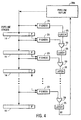
- FIG. 4 is a block schematic diagram showing another embodiment of a back-end parity checking performed in pipeline stages to detect a soft error.
- FIG. 5 is a block schematic diagram showing an exemplary computer system which implements the present invention to detect soft errors.
- FIG. 1 a portion of a processor for fetching and issuing processor instructions is shown.
- An instruction processing apparatus or unit 10 is illustrated according to an instruction flow from fetching of the instruction to its retirement.
- the instruction processing apparatus is comprised of an instruction line buffer 11 , instruction cache memory 12 , instruction issue queue 13 and a plurality of pipeline stages 14 .
- the processor containing the apparatus 10 is a high performance processor, such as a super-scalar processor, having a variety of on-chip circuitry for receiving, processing and outputting data.
- the processor includes other circuitry than that shown in FIG. 1 for fetching, issuing, decoding and executing instructions.
- the general concepts of processing instructions and executing them are known in the art. Accordingly, fill buffers, caches, issue queues and instruction pipeline stages known in the art can be readily adapted for those named units/stages of FIG. 1 and further adapted to practice the present invention.
- the instruction cache memory (also simply stated as a “cache”) 12 is used to store frequently executed instructions.
- An instruction fill buffer 11 which may be part of the instruction cache 12 , is associated with the caching of instructions.
- the fill buffer 11 is comprised of latches (or latch equivalents) to allow returned lines from memory or higher level caches to temporarily reside therein prior to being written into the instruction cache 12 . Accordingly, an instruction line fill is coupled to the fill buffer 11 , so that instructions from another source are returned to fill the buffer 11 .
- the instructions may be returned from memory (either on-chip or off-chip) or, where multi-level cache structures exist, the instructions may be returned from a higher-level cache (either on-chip or off-chip).
- the fill buffer 11 once loaded, can be read in two different ways.
- the line can be read for writing into the instruction cache 12 (shown by path 15 ) or it can be read directly into the pipeline (shown by path 16 ).
- the selected line from the buffer 11 is written into the cache 12 .
- path 16 is available.
- an instruction line fill to the buffer 11 also includes a parity bit 20 for the line stored in the buffer 11 .
- the parity could be generated remotely and imported from memory or higher level cache, or it can be generated locally, as exemplified by a parity generation circuit 21 .
- a typical method for parity generation is by performing an exclusive-OR (XOR) operation on the bits.
- the parity bit 20 is stored in the line buffer 11 , respectively along with the instruction entry.
- the corresponding parity bit is checked by a parity check circuit 22 .
- This parity check detects if any single bit soft error occurred to the instruction when transitioning through the latches of the line buffer 11 . Although possible, the probability of multi-bit soft errors in the buffer latches is statiscally low. If there is a parity check error, a parity error signal from the parity check circuit 22 causes the line not to be written into the cache and the entry is invalidated in the fill buffer.
- a tag in the fill buffer entry will specify whether the particular fill is from an instruction demand-fetch or if the fill is from an instruction prefetch.
- a demand-fetch is a condition in which the processor is waiting to execute the instruction, but is not present in the instruction cache 12 .
- a prefetch is a condition in which the processor may execute the instruction, but may not, due to the speculative nature of the instruction.
- a tag in the fill buffer will identify if the instruction is a demand-fetch instruction or if it is a speculative prefetch instruction.
- block 30 identifies if a parity error has occurred from the parity check circuit 22 . If no error is detected, the process proceeds normally allowing the instruction to be loaded into the cache 12 . If an error is detected, then block 31 determines if the instruction entry is a prefetched instruction. If it is a prefetch, canceling the cache line fill and invalidating the fill buffer entry is sufficient to prevent data corruption in the latch from execution. The entry can be reloaded into the fill buffer 11 . However, if it was a demand fetch, the processor is still waiting for the instruction to continue execution.
- a front-end replay circuit 32 is used to cause the instruction fetch to recur (replay) to the same instruction pointer address to replay the instruction.
- the parity 20 that is generated or loaded into the fill buffer 11 is stored along with the entry into the instruction cache 12 when the cache fill occurs.
- the instruction cache 12 is configured as an array. Then, on reads from the instruction cache 12 , the entries are propagated to the instruction issue queue 13 . The parity bit is also read along with the instruction into the queue 13 .
- stages 14 are propagated through an instruction pipeline, comprised of pipeline stages 14 .
- the actual number of such stages 14 will depend on the processor and/or the computer system, but generally, a number of stages is present for processing (including the decoding of instructions). It is appreciated that many modern processors have degrees of speculative execution built in them, including, but not limited to, branch misprediction and speculative execution of unsafe operations. These processors will utilize a pipeline structure, as well as a mechanism to flush the pipeline in case of an incorrect speculation and restart from a specific program location.
- the parity bit is propagated with the instruction for each entry through the queue 13 and to each pipeline stage 14 .
- the present invention incorporates a number of parity check circuits 23 to check for parity at each of the pipeline stages 14 .
- the parity check circuit 23 operates equivalently to the earlier described circuit 22 to determine the parity of the particular line and check that parity to the parity bit for that corresponding line. If a parity check fails, a fault condition (parity error) is signaled.
- FIG. 1 shows two ways in which the parity fault can be detected.
- the outputs of each parity check circuit 23 (shown as PF 1 -PFn) are used separately for fault detection.
- An embodiment of this first technique is described further below in reference to FIG. 3 .
- a parity check circuit output is OR'ed with next stage parity check circuit output for stages 14 .
- a series of latching circuits (latches or their equivalents) 25 are used to synchronize the parity check outputs through the pipeline.
- the OR'ing function is exemplified by OR gates 39 in FIG. 1 .
- PF single parity flag
- An embodiment of this second technique is described further below in reference to FIG. 4 .
- the instruction queue read time is critical and generally does not provide sufficient time to trigger an instruction fetch replay without slowing the frequency of the processor.
- the issue queue 13 and the pipeline stages 14 utilize latches for propagating the instructions.
- the present invention uses the parity check at each of the pipeline stages (commencing at the output of the instruction entry from the issue queue, which is the input to the first stage of the pipeline) 14 , to determine if a soft error occurred as the instruction propagates. When a soft error is detected, a fault condition is noted in way of a parity check fault.
- each fault is input to a back-end (pipeline) replay circuit 35 a .
- the replay circuit 35 a is capable of identifying in which stage the parity fault occurred and can respond accordingly.
- each of the fault signals is OR'ed (as shown by OR gates 39 ) with the next stage fault signal to generate a parity flag (PF), so that the flag is also propagated down the stages.
- PF parity flag
- a series of latches 25 are used for latching the parity check signals through the pipeline.
- a final flag output is coupled to a back-end replay circuit 35 b , so that whenever a parity check fault is detected, the pipeline is flushed and replayed. The error flag can be factored into the flush logic to restore the processor back to the erroneous instruction.
- replay mechanisms can be readily adapted to provide the replay when a parity check fault is noted in the pipeline. Accordingly, by monitoring each stage of the instruction pipeline, any soft error which could corrupt an output generated by the instruction can be detected and corrected. Although it is desirable to have a parity check circuit for each stage of the pipeline, not every stage input need to be checked for parity. An embodiment of the invention implements select arbitrary stages for the parity checking, so that only some of the stages 14 are checked.
- FIG. 5 illustrates one typical system implementation for the invention.
- a computer 40 is shown in which a processor 41 functions as a sole or one of a plurality of processors comprising the central processing unit (CPU) or units of the computer 40 .
- the processor 41 is embodied in a single integrated circuit chip.
- the processor 41 includes an execution (processing) core 42 , which has one or more execution units.
- a section of the processor is dedicated to include the instruction processing apparatus 10 .
- the instruction processing unit 10 is shown coupled to the core 42 .
- the operating system (OS) and other programs are generally located in a memory.
- OS operating system
- the invention is practiced according to the description above to execute an instruction in the core 42 .
- the memory can be located on-chip (as shown by on-chip memory 43 ) or off-chip (as shown by off-chip memory 44 ).
- the on chip memory can be a cache memory or part of the main memory (RAM).
- the off-chip memory is typically comprised of main memory (as well as off-chip cache, if present) and other memory devices, such as a disk storage medium.
- the invention can be configured in other ways to process the instructions for execution by the core 42 .
- the present invention provides an efficient technique to detect and correct corruption of instructions.
- the detection mechanism is situated at various levels or stages utilized for instruction processing. Thus, soft error detection is provided at the front-end where instructions are fetched and cached. Soft error detection is also provided at the back-end of the issue stage, which typically incorporates pipeline stages for decoding the instructions. The detection stages can be placed at all or only at some of the unit outputs to detect soft errors.
- the soft error detection is provided by propagating a parity bit throughout the instruction processing units/stages, checking for parity at the output of those designated units/stages and providing some form of correction when a parity error is noted. Since replay mechanisms are typically present on modern processors, this replay mechanism is adapted to provide a replay where a fault is noted. In the particular embodiment described, a front-end replay and back-end replay circuits are used, however, a single replay circuit can be readily adapted for use to practice the present invention.
- the front-end replay allows for refetching of the instruction when errors are detected early on in the instruction cycle and if detected later in the pipeline, the back-end replay allows for a flush and prefetch of the pipeline.
- An advantage of the replay is that such circuitry is already present in many processors, so additional chip space needed for practicing the invention is minimized. Also, the replay mechanism allows for corrections to be made seamlessly when parity errors are detected.
- parity is used to detect corrupted instructions.
- other fault detection mechanisms other than parity
- the parity bit operates as an error detection bit, but other forms of error checking can be used.
- the parity check circuits which checks for parity, would be replaced by other error detection circuits.
- the invention is described in reference to instructions, since latches (which are targets of soft errors) are used considerably in latching instructions.
Landscapes
- Engineering & Computer Science (AREA)
- Theoretical Computer Science (AREA)
- Physics & Mathematics (AREA)
- Quality & Reliability (AREA)
- General Engineering & Computer Science (AREA)
- General Physics & Mathematics (AREA)
- Probability & Statistics with Applications (AREA)
- Detection And Correction Of Errors (AREA)
- Techniques For Improving Reliability Of Storages (AREA)
- Advance Control (AREA)
Abstract
A technique to detect and correct corruption of instructions by soft errors. A parity bit is propagated with an instruction through the instruction flow path and checked at selected places. When a parity error is detected, a replay circuit is used to perform a replay to reload the instruction to remove the corrupted instruction.
Description
1. Field of the Invention
The present invention relates to the field of computer systems and more specifically to preventing data corruption due to soft errors.
2. Description of the Related Art
Soft errors in data storage elements, such as memory cells and pipeline latches, occur when incident radiation charges or discharges the storage element, thereby changing its binary state. Soft errors are increasingly a concern with smaller scale fabrication processes as the size (hence, the capacitance) of the storage elements shrink, since incident radiation will have greater effect in causing the soft errors on such smaller scale storage elements. Previously, soft errors were statistically significant only for large and dense storage structures, such as cache memories. However, the smaller feature structures are now more prone to having soft error. Structures, such as pipeline latches (particularly, wide multi-bit datapath latches), are affected to a greater extent by soft errors, where probability of occurrence of such soft errors is much more significant.
A problem with soft errors is that they have a tendency to silently corrupt data in a program. The program continues to execute, since the system is unable to detect the corrupted data, and generates an incorrect result. In some instances the system may not be able to detect the corrupted result. For example, encoding of many instructions differ in only one single bit value. A compare-equal instruction and a compare-not-equal instruction may have be different by one bit value. A probability of for data corruption is much greater in this instance. Accordingly, this type of silent data corruption (SDC) is not desirable in critical applications, such as for commercial transaction server applications, where wrong results can have broad-reaching implications.
In a high frequency, highly-pipelined machine, the pipeline latches are susceptible to such soft errors. For example, instruction data latches make up a significant portion of the total number of latches on a chip that are susceptible to soft errors. These latches, if protected, can significantly reduce the total undetected error count of a high performance processor. Thus, it is desirable to optimize the machine design to reduce, or even prevent, incorrect results due to soft errors. Since it is virtually impossible to stop all soft errors from occurring, at the very minimum it is desirable that soft errors be detected when they occur, so at least the application can be terminated and any data corruption reported. A preferable option is to detect the error when it occurs and seamlessly continue execution of the application after correcting the error.
Past practices have used parity checking and error correcting code techniques to identify the occurrence of soft errors. Past practices have also used a hardware solution, such as functional redundancy, to check for soft errors. However, this later approach typically requires significant additional circuitry on-chip to provide the error detection. None have addressed soft error detection and seamless correction, when such soft errors are detected, to the extent provided by the practice of the present invention.
FIG. 1 is a block schematic diagram showing an embodiment of the present invention when parity checking is used along an instruction flow path to detect a soft error occurring on an instruction.
FIG. 2 is a block diagram showing an embodiment of a front-end parity checking performed to detect a soft error.
FIG. 3 is a block schematic diagram showing an embodiment of a back-end parity checking performed in pipeline stages to detect a soft error.
FIG. 4 is a block schematic diagram showing another embodiment of a back-end parity checking performed in pipeline stages to detect a soft error.
FIG. 5 is a block schematic diagram showing an exemplary computer system which implements the present invention to detect soft errors.
Referring to FIG. 1, a portion of a processor for fetching and issuing processor instructions is shown. An instruction processing apparatus or unit 10 is illustrated according to an instruction flow from fetching of the instruction to its retirement. The instruction processing apparatus is comprised of an instruction line buffer 11, instruction cache memory 12, instruction issue queue 13 and a plurality of pipeline stages 14. In the described embodiment, the processor containing the apparatus 10 is a high performance processor, such as a super-scalar processor, having a variety of on-chip circuitry for receiving, processing and outputting data. The processor includes other circuitry than that shown in FIG. 1 for fetching, issuing, decoding and executing instructions. The general concepts of processing instructions and executing them are known in the art. Accordingly, fill buffers, caches, issue queues and instruction pipeline stages known in the art can be readily adapted for those named units/stages of FIG. 1 and further adapted to practice the present invention.
The instruction cache memory (also simply stated as a “cache”) 12 is used to store frequently executed instructions. An instruction fill buffer 11, which may be part of the instruction cache 12, is associated with the caching of instructions. The fill buffer 11 is comprised of latches (or latch equivalents) to allow returned lines from memory or higher level caches to temporarily reside therein prior to being written into the instruction cache 12. Accordingly, an instruction line fill is coupled to the fill buffer 11, so that instructions from another source are returned to fill the buffer 11. As noted, the instructions may be returned from memory (either on-chip or off-chip) or, where multi-level cache structures exist, the instructions may be returned from a higher-level cache (either on-chip or off-chip).
In the particular embodiment, the fill buffer 11, once loaded, can be read in two different ways. The line can be read for writing into the instruction cache 12 (shown by path 15) or it can be read directly into the pipeline (shown by path 16). Generally, for new instructions, the selected line from the buffer 11 is written into the cache 12. In those instances where a line needs to be sent to the pipeline stages 14, path 16 is available.
In the practice of the invention, an instruction line fill to the buffer 11 also includes a parity bit 20 for the line stored in the buffer 11. The parity could be generated remotely and imported from memory or higher level cache, or it can be generated locally, as exemplified by a parity generation circuit 21. A typical method for parity generation is by performing an exclusive-OR (XOR) operation on the bits. The parity bit 20 is stored in the line buffer 11, respectively along with the instruction entry.
On reads from the fill buffer for updating the instruction cache 12, the corresponding parity bit is checked by a parity check circuit 22. This parity check detects if any single bit soft error occurred to the instruction when transitioning through the latches of the line buffer 11. Although possible, the probability of multi-bit soft errors in the buffer latches is statiscally low. If there is a parity check error, a parity error signal from the parity check circuit 22 causes the line not to be written into the cache and the entry is invalidated in the fill buffer.
When a parity error is indicated from the parity check circuit 22, causing an invalidation for the particular entry in the buffer 11, the entry can be rewritten (reloaded) into the buffer 11. However, an alternative embodiment is shown in FIG. 2. In this alternative technique, the manner in which a parity check from the check circuit 22 is handled will depend on the nature of the instruction being checked. A tag in the fill buffer entry will specify whether the particular fill is from an instruction demand-fetch or if the fill is from an instruction prefetch. A demand-fetch is a condition in which the processor is waiting to execute the instruction, but is not present in the instruction cache 12. A prefetch is a condition in which the processor may execute the instruction, but may not, due to the speculative nature of the instruction. A tag in the fill buffer will identify if the instruction is a demand-fetch instruction or if it is a speculative prefetch instruction.
In FIG. 2, a decision flow is shown in which block 30 identifies if a parity error has occurred from the parity check circuit 22. If no error is detected, the process proceeds normally allowing the instruction to be loaded into the cache 12. If an error is detected, then block 31 determines if the instruction entry is a prefetched instruction. If it is a prefetch, canceling the cache line fill and invalidating the fill buffer entry is sufficient to prevent data corruption in the latch from execution. The entry can be reloaded into the fill buffer 11. However, if it was a demand fetch, the processor is still waiting for the instruction to continue execution.
In this embodiment, a front-end replay circuit 32 is used to cause the instruction fetch to recur (replay) to the same instruction pointer address to replay the instruction. By this described technique, not only is the error detected, but the error is effectively corrected by replacing the erroneous instruction with an error-free version. Since many processors already implement instruction prefetch mechanisms (including, instruction replay), these devices can be readily adapted for the practice of the present invention with minimal incremental design overhead. Furthermore, although the replay is shown for use With only demand-fetch entries, the replay can be extended to prefetch entries as well, if desired.
Referring to FIG. 1 again, the parity 20 that is generated or loaded into the fill buffer 11 is stored along with the entry into the instruction cache 12 when the cache fill occurs. Typically, the instruction cache 12 is configured as an array. Then, on reads from the instruction cache 12, the entries are propagated to the instruction issue queue 13. The parity bit is also read along with the instruction into the queue 13.
Subsequently, the instructions are propagated through an instruction pipeline, comprised of pipeline stages 14. The actual number of such stages 14 will depend on the processor and/or the computer system, but generally, a number of stages is present for processing (including the decoding of instructions). It is appreciated that many modern processors have degrees of speculative execution built in them, including, but not limited to, branch misprediction and speculative execution of unsafe operations. These processors will utilize a pipeline structure, as well as a mechanism to flush the pipeline in case of an incorrect speculation and restart from a specific program location.
As shown in FIG. 1, the parity bit is propagated with the instruction for each entry through the queue 13 and to each pipeline stage 14. The present invention incorporates a number of parity check circuits 23 to check for parity at each of the pipeline stages 14. The parity check circuit 23 operates equivalently to the earlier described circuit 22 to determine the parity of the particular line and check that parity to the parity bit for that corresponding line. If a parity check fails, a fault condition (parity error) is signaled.
FIG. 1 shows two ways in which the parity fault can be detected. In one technique, the outputs of each parity check circuit 23 (shown as PF1-PFn) are used separately for fault detection. An embodiment of this first technique is described further below in reference to FIG. 3. In a second technique, a parity check circuit output is OR'ed with next stage parity check circuit output for stages 14. A series of latching circuits (latches or their equivalents) 25 are used to synchronize the parity check outputs through the pipeline. The OR'ing function is exemplified by OR gates 39 in FIG. 1. At the end of the pipeline stages 14, a single parity flag (PF) is generated. An embodiment of this second technique is described further below in reference to FIG. 4.
It is to be noted that in a typical high speed processor, the instruction queue read time is critical and generally does not provide sufficient time to trigger an instruction fetch replay without slowing the frequency of the processor. Typically, the issue queue 13 and the pipeline stages 14 utilize latches for propagating the instructions. The present invention uses the parity check at each of the pipeline stages (commencing at the output of the instruction entry from the issue queue, which is the input to the first stage of the pipeline) 14, to determine if a soft error occurred as the instruction propagates. When a soft error is detected, a fault condition is noted in way of a parity check fault.
Although a variety of techniques can be applied to handle a parity fault from the pipeline, two techniques described above are further illustrated in FIGS. 3 and 4. In FIG. 3, each fault is input to a back-end (pipeline) replay circuit 35 a. The replay circuit 35 a is capable of identifying in which stage the parity fault occurred and can respond accordingly.
In FIG. 4, each of the fault signals is OR'ed (as shown by OR gates 39) with the next stage fault signal to generate a parity flag (PF), so that the flag is also propagated down the stages. As noted above, a series of latches 25 are used for latching the parity check signals through the pipeline. A final flag output is coupled to a back-end replay circuit 35 b, so that whenever a parity check fault is detected, the pipeline is flushed and replayed. The error flag can be factored into the flush logic to restore the processor back to the erroneous instruction.
As noted above, many modern processors already include replay mechanisms. These replay mechanisms can be readily adapted to provide the replay when a parity check fault is noted in the pipeline. Accordingly, by monitoring each stage of the instruction pipeline, any soft error which could corrupt an output generated by the instruction can be detected and corrected. Although it is desirable to have a parity check circuit for each stage of the pipeline, not every stage input need to be checked for parity. An embodiment of the invention implements select arbitrary stages for the parity checking, so that only some of the stages 14 are checked.
FIG. 5 illustrates one typical system implementation for the invention. A computer 40 is shown in which a processor 41 functions as a sole or one of a plurality of processors comprising the central processing unit (CPU) or units of the computer 40. Typically, the processor 41 is embodied in a single integrated circuit chip. The processor 41 includes an execution (processing) core 42, which has one or more execution units. A section of the processor is dedicated to include the instruction processing apparatus 10. The instruction processing unit 10 is shown coupled to the core 42. In this embodiment, the operating system (OS) and other programs are generally located in a memory.
The invention is practiced according to the description above to execute an instruction in the core 42. The memory can be located on-chip (as shown by on-chip memory 43) or off-chip (as shown by off-chip memory 44). Typically, the on chip memory can be a cache memory or part of the main memory (RAM). The off-chip memory is typically comprised of main memory (as well as off-chip cache, if present) and other memory devices, such as a disk storage medium. However, it is to be noted, that the invention can be configured in other ways to process the instructions for execution by the core 42.
The present invention provides an efficient technique to detect and correct corruption of instructions. The detection mechanism is situated at various levels or stages utilized for instruction processing. Thus, soft error detection is provided at the front-end where instructions are fetched and cached. Soft error detection is also provided at the back-end of the issue stage, which typically incorporates pipeline stages for decoding the instructions. The detection stages can be placed at all or only at some of the unit outputs to detect soft errors.
In the described embodiment, the soft error detection is provided by propagating a parity bit throughout the instruction processing units/stages, checking for parity at the output of those designated units/stages and providing some form of correction when a parity error is noted. Since replay mechanisms are typically present on modern processors, this replay mechanism is adapted to provide a replay where a fault is noted. In the particular embodiment described, a front-end replay and back-end replay circuits are used, however, a single replay circuit can be readily adapted for use to practice the present invention. The front-end replay allows for refetching of the instruction when errors are detected early on in the instruction cycle and if detected later in the pipeline, the back-end replay allows for a flush and prefetch of the pipeline.
An advantage of the replay is that such circuitry is already present in many processors, so additional chip space needed for practicing the invention is minimized. Also, the replay mechanism allows for corrections to be made seamlessly when parity errors are detected.
Furthermore, in the described embodiment, parity is used to detect corrupted instructions. However, other fault detection mechanisms (other than parity) can be employed as well. That is, the parity bit operates as an error detection bit, but other forms of error checking can be used. In that event, the parity check circuits, which checks for parity, would be replaced by other error detection circuits. Additionally, the invention is described in reference to instructions, since latches (which are targets of soft errors) are used considerably in latching instructions.
Thus, a technique for silent data corruption prevention due to instruction corruption by soft errors is described.
Claims (29)
1. An apparatus comprising:
a buffer to receive an entry;
an error detection bit associated with the entry to identify if a bit state change occurred to corrupt the entry, said error detection bit stored in said buffer along with the entry;
a cache memory coupled to said buffer to receive the entry along with its error detection bit; and
an error detection circuit coupled to said buffer to test the entry and compare a result of its test to the error detection bit to identify if the entry is corrupted when the entry is coupled out of said buffer.
2. The apparatus of claim 1 further including a replay circuit coupled to said error detection circuit and said buffer to reload the entry into the buffer if the test indicates that the entry in the buffer is corrupted.
3. The apparatus of claim 1 further including a replay circuit coupled to said error detection circuit and said buffer to reload the entry into the buffer if the test indicates that the entry in the buffer is corrupted and the entry is not a speculative entry.
4. The apparatus of claim 1 wherein said error detection bit is a parity bit and said error detection circuit checks a parity of the entry and compares the checked parity to said parity bit.
5. The apparatus of claim 1 wherein the entry is an instruction for a processor.
6. An apparatus comprising:
a cache memory to store an entry and having an error detection bit stored therein along with the entry to identify if a bit state change occurred corrupting the entry;
a pipeline, comprised of a plurality of stages, coupled to said cache memory to process the entry; and
at least one error detection circuit coupled to said pipeline to test the entry as it propagates through said pipeline and compare a result of the test to the error detection bit to identify if the entry is corrupted.
7. The apparatus of claim 6 further including a replay circuit coupled to said error detection circuit to reload the entry into said pipeline if the entry in said buffer is corrupted.
8. The apparatus of claim 6 wherein each stage of the pipeline has its own error detection circuit, said error detection circuits coupled to a replay circuit to reload the entry into said pipeline if an error in the entry is detected as the entry propagates through said pipeline.
9. The apparatus of claim 8 wherein said error detection bit is a parity bit and said error detection circuit checks a parity of the entry and compares the checked parity to said parity bit.
10. The apparatus of claim 9 wherein each error detection circuit output is logically OR'ed to provide a single fault flag bit if any parity error of the entry is detected in said pipeline stages.
11. The apparatus of claim 10 wherein the entry is an instruction for a processor.
12. A processor comprising:
a buffer to receive an instruction;
a parity bit associated with the instruction to identify if a bit state change occurred to corrupt the instruction, said parity bit stored in said buffer along with the instruction;
a cache memory coupled to said buffer to receive the instruction along with its parity bit;
an error detection circuit coupled to said buffer and said cache memory to test the parity of the instruction and compare a result of its test to the stored parity bit to identify if the instruction is corrupted when the instruction is coupled out of said buffer; and
a replay circuit coupled to said error detection circuit and said buffer to reload the instruction into the buffer if the instruction in the buffer is corrupted.
13. The processor of claim 12 wherein said replay circuit reloads the instruction only if the instruction is not a prefetched instruction.
14. The processor of claim 12 wherein said replay circuit reloads the instruction only if the instruction is a demand-fetched instruction.
15. A processor comprising:
a cache memory to store an instruction and having a parity bit stored therein along with the instruction to identify if a bit state change occurred corrupting the instruction;
a pipeline, comprised of a plurality of stages, coupled to said cache memory to process the instruction;
at least one error detection circuit coupled to said pipeline to test a parity of the instruction as it propagates through said pipeline and compare each test to the parity bit propagated through said pipeline with the instruction to identify if the instruction is corrupted; and
a replay circuit coupled to said error detection circuit or circuits to reload the instruction into said pipeline if an error in the instruction is detected as the instruction propagates through said pipeline.
16. The processor of claim 15 wherein each stage of said pipeline has its own error detection circuit, said error detection circuits coupled to said replay circuit to reload the instruction into said pipeline if an error in the instruction is detected as the instruction propagates through said pipeline.
17. The processor of claim 16 wherein each error detection circuit output is logically OR'ed to provide a single fault flag bit if any parity error of the instruction is detected in said pipeline stages.
18. A processor comprising:
a buffer to receive an instruction;
a parity bit associated with the instruction to identify if a bit state change occurred to corrupt the instruction, said parity bit stored in said buffer along with the instruction;
a cache memory coupled to said buffer to receive the instruction along with its parity bit;
a first error detection circuit coupled to said buffer and said cache memory to test the parity of the instruction and compare a result of its test to the stored parity bit to identify if the instruction is corrupted; and
a first replay circuit coupled to said error detection circuit and said buffer to reload the instruction into the buffer if the instruction in the buffer is corrupted;
an instruction queue coupled to said cache memory for queuing the instruction;
a pipeline, comprised of a plurality of stages, coupled to said instruction queue to process the instruction;
a plurality of second error detection circuits coupled to the stages of said pipeline to test a parity of the instruction as it propagates through the stages of said pipeline and compare each test to the parity bit propagated through said pipeline with the instruction to identify if the instruction is corrupted; and
a second replay circuit coupled to said second error detection circuits to reload the instruction into said pipeline if an error in the instruction is detected as the instruction propagates through said pipeline.
19. The processor of claim 18 wherein the second error detection circuit outputs are logically OR'ed to provide a single fault flag bit if any parity error of the instruction is detected in the pipeline stages.
20. The processor of claim 19 wherein said first replay circuit reloads the instruction into said buffer only if the instruction is not a prefetched instruction.
21. A method comprising:
loading an instruction;
loading a parity bit along with the instruction, the parity bit associated with a parity for the instruction;
performing a parity test of the instruction by checking its parity and comparing the checked parity to the parity bit stored along with the instruction when the instruction is to be cached;
caching the instruction only if the checked parity matches the stored parity bit; and
using a replay to reload the instruction if the checked parity and the parity bit do not match indicating a corrupted instruction.
22. The method of claim 21 further including the invalidating of the instruction if the checked parity does not match the stored parity bit.
23. The method of claim 22 wherein the instruction is invalidated, but not replayed to reload the instruction if the checked parity does not match the stored parity bit.
24. A method comprising:
caching an instruction and a parity bit associated with the instruction, the parity bit to identify if a bit state change occurred corrupting the instruction;
propagating the instruction through stages of a pipeline to process the instruction;
performing a parity test of the instruction by checking its parity and comparing the checked parity to the parity bit at one or more stages of the pipeline; and
using a replay to reload the instruction if the checked parity and the parity bit do not match indicating a corruption in the instruction as it propagates through the pipeline.
25. The method of claim 24 further including performing the parity test at each stage of the pipeline.
26. The method of claim 25 further including the generating of a single fault flag by OR'ing each parity test to indicate a failed parity check in the pipeline.
27. A method comprising:
loading an instruction into a buffer, including a parity bit which is associated with a parity for the instruction;
performing a parity test of the instruction by checking its parity and comparing the checked parity to the parity bit stored along with the instruction when the instruction is to be cached;
caching the instruction only if the checked parity matches the stored parity bit;
using a first replay to reload the instruction if the checked parity and the parity bit do not match indicating a corrupted instruction;
queuing the instruction and the parity bit from the cache;
propagating the queued instruction through stages of a pipeline to process the instruction;
performing a parity test of the instruction by checking its parity and comparing the checked parity to the parity bit at one or more stages of the pipeline; and
using a second replay to reload the instruction if the checked parity and the parity bit do not match, indicating a corruption in the instruction as it propagates through the pipeline.
28. The method of claim 27 further including the invalidating of the instruction in the buffer if the checked parity does not match the stored parity bit when caching the instruction.
29. The method of claim 28 further including performing the parity test at each stage of the pipeline.
Priority Applications (1)
| Application Number | Priority Date | Filing Date | Title |
|---|---|---|---|
| US09/540,295 US6543028B1 (en) | 2000-03-31 | 2000-03-31 | Silent data corruption prevention due to instruction corruption by soft errors |
Applications Claiming Priority (1)
| Application Number | Priority Date | Filing Date | Title |
|---|---|---|---|
| US09/540,295 US6543028B1 (en) | 2000-03-31 | 2000-03-31 | Silent data corruption prevention due to instruction corruption by soft errors |
Publications (1)
| Publication Number | Publication Date |
|---|---|
| US6543028B1 true US6543028B1 (en) | 2003-04-01 |
Family
ID=24154839
Family Applications (1)
| Application Number | Title | Priority Date | Filing Date |
|---|---|---|---|
| US09/540,295 Expired - Fee Related US6543028B1 (en) | 2000-03-31 | 2000-03-31 | Silent data corruption prevention due to instruction corruption by soft errors |
Country Status (1)
| Country | Link |
|---|---|
| US (1) | US6543028B1 (en) |
Cited By (25)
| Publication number | Priority date | Publication date | Assignee | Title |
|---|---|---|---|---|
| US20020144176A1 (en) * | 2001-03-30 | 2002-10-03 | Smith Ronald D. | Method and apparatus for improving reliability in microprocessors |
| US6718494B1 (en) * | 2000-12-22 | 2004-04-06 | Intel Corporation | Method and apparatus for preventing and recovering from TLB corruption by soft error |
| US20050073345A1 (en) * | 2003-10-01 | 2005-04-07 | Ronny Schneider | System and method for automatically-detecting soft errors in latches of an integrated circuit |
| US20050125695A1 (en) * | 2003-12-08 | 2005-06-09 | Gilbert Bruce M. | Non-inline transaction error correction |
| US20050141535A1 (en) * | 2003-12-30 | 2005-06-30 | Chen-Chi Kuo | Method and apparatus to handle parity errors in flow control channels |
| US20050283685A1 (en) * | 2004-06-17 | 2005-12-22 | Emer Joel S | Reducing false error detection in a microprocessor by tracking instructions neutral to errors |
| US20050283716A1 (en) * | 2004-06-17 | 2005-12-22 | Mukherjee Shubhendu S | Method and apparatus for reducing false error detection in a microprocessor |
| US20060004980A1 (en) * | 2004-06-30 | 2006-01-05 | Fujitsu Limited | Address creator and arithmetic circuit |
| US20060294447A1 (en) * | 2005-06-27 | 2006-12-28 | Mackey Richard P | Apparatus and method for parity generation in a data-packing device |
| US20070192656A1 (en) * | 2006-02-08 | 2007-08-16 | Infineon Technologies Ag | Error detection device and method for error detection for a command decoder |
| US7302619B1 (en) * | 2004-07-06 | 2007-11-27 | Mindspeed Technologies, Inc. | Error correction in a cache memory |
| US20070277085A1 (en) * | 2006-02-08 | 2007-11-29 | Infineon Technologies Ag | Error detection device for an address decoder, and device for error detection for an address decoder |
| EP1777623A3 (en) * | 2005-10-24 | 2009-04-29 | Robert Bosch Gmbh | Method and device for monitoring the validity of protected commands in a data procesing unit |
| US20090150722A1 (en) * | 2007-12-06 | 2009-06-11 | Alastair David Reid | Recovering from errors in streaming dsp applications |
| US7562263B1 (en) | 2005-09-14 | 2009-07-14 | Unisys Corporation | System and method for detecting and recovering from errors in a control store of an electronic data processing system |
| US20090204766A1 (en) * | 2008-02-12 | 2009-08-13 | International Business Machines Corporation | Method, system, and computer program product for handling errors in a cache without processor core recovery |
| US20090265579A1 (en) * | 2008-04-16 | 2009-10-22 | Kabushiki Kaisha Toshiba | Information processing apparatus and error correction method |
| US20100042813A1 (en) * | 2008-08-14 | 2010-02-18 | International Business Machines Corporation | Redundant Execution of Instructions in Multistage Execution Pipeline During Unused Execution Cycles |
| US7673190B1 (en) * | 2005-09-14 | 2010-03-02 | Unisys Corporation | System and method for detecting and recovering from errors in an instruction stream of an electronic data processing system |
| US20130036294A1 (en) * | 2011-08-05 | 2013-02-07 | Cisco Technology, Inc. | System and method for instruction sets with run-time consistency check |
| US20140149725A1 (en) * | 2010-09-02 | 2014-05-29 | Valentin Gherman | Method for the On-Line Testing of Pipeline Stages Temporarily Not In Use, and Associated Device |
| US20150113320A1 (en) * | 2012-07-05 | 2015-04-23 | Fujitsu Limited | Processing apparatus, process system, and non-transitory computer-readable recording medium |
| US20170177463A1 (en) * | 2015-12-21 | 2017-06-22 | Intel Corporation | Data flow analysis in processor trace logs using compiler-type information method and apparatus |
| EP3683679A1 (en) * | 2019-01-15 | 2020-07-22 | ARM Limited | Checksum generation |
| US12613768B2 (en) | 2023-12-27 | 2026-04-28 | Nxp Usa, Inc. | System and method of checking integrity of an instruction decoder of a processing system |
Citations (7)
| Publication number | Priority date | Publication date | Assignee | Title |
|---|---|---|---|---|
| US4604750A (en) * | 1983-11-07 | 1986-08-05 | Digital Equipment Corporation | Pipeline error correction |
| US5953351A (en) * | 1995-09-15 | 1999-09-14 | International Business Machines Corporation | Method and apparatus for indicating uncorrectable data errors |
| US6044458A (en) * | 1997-12-12 | 2000-03-28 | Motorola, Inc. | System for monitoring program flow utilizing fixwords stored sequentially to opcodes |
| US6226763B1 (en) * | 1998-07-29 | 2001-05-01 | Intel Corporation | Method and apparatus for performing cache accesses |
| US6412088B1 (en) * | 1999-12-02 | 2002-06-25 | Maxtor Corporation | Method and apparatus for using block reread |
| US6457119B1 (en) * | 1999-07-23 | 2002-09-24 | Intel Corporation | Processor instruction pipeline with error detection scheme |
| US6457067B1 (en) * | 1998-12-18 | 2002-09-24 | Unisys Corporation | System and method for detecting faults in storage device addressing logic |
-
2000
- 2000-03-31 US US09/540,295 patent/US6543028B1/en not_active Expired - Fee Related
Patent Citations (7)
| Publication number | Priority date | Publication date | Assignee | Title |
|---|---|---|---|---|
| US4604750A (en) * | 1983-11-07 | 1986-08-05 | Digital Equipment Corporation | Pipeline error correction |
| US5953351A (en) * | 1995-09-15 | 1999-09-14 | International Business Machines Corporation | Method and apparatus for indicating uncorrectable data errors |
| US6044458A (en) * | 1997-12-12 | 2000-03-28 | Motorola, Inc. | System for monitoring program flow utilizing fixwords stored sequentially to opcodes |
| US6226763B1 (en) * | 1998-07-29 | 2001-05-01 | Intel Corporation | Method and apparatus for performing cache accesses |
| US6457067B1 (en) * | 1998-12-18 | 2002-09-24 | Unisys Corporation | System and method for detecting faults in storage device addressing logic |
| US6457119B1 (en) * | 1999-07-23 | 2002-09-24 | Intel Corporation | Processor instruction pipeline with error detection scheme |
| US6412088B1 (en) * | 1999-12-02 | 2002-06-25 | Maxtor Corporation | Method and apparatus for using block reread |
Cited By (51)
| Publication number | Priority date | Publication date | Assignee | Title |
|---|---|---|---|---|
| US7415633B2 (en) | 2000-12-22 | 2008-08-19 | Intel Corporation | Method and apparatus for preventing and recovering from TLB corruption by soft error |
| US6718494B1 (en) * | 2000-12-22 | 2004-04-06 | Intel Corporation | Method and apparatus for preventing and recovering from TLB corruption by soft error |
| US20040193992A1 (en) * | 2000-12-22 | 2004-09-30 | Sujat Jamil | Method and apparatus for preventing and recovering from TLB corruption by soft error |
| US6708284B2 (en) * | 2001-03-30 | 2004-03-16 | Intel Corporation | Method and apparatus for improving reliability in microprocessors |
| US20020144176A1 (en) * | 2001-03-30 | 2002-10-03 | Smith Ronald D. | Method and apparatus for improving reliability in microprocessors |
| US20050073345A1 (en) * | 2003-10-01 | 2005-04-07 | Ronny Schneider | System and method for automatically-detecting soft errors in latches of an integrated circuit |
| US6975238B2 (en) * | 2003-10-01 | 2005-12-13 | Infineon Technologies Ag | System and method for automatically-detecting soft errors in latches of an integrated circuit |
| US20050125695A1 (en) * | 2003-12-08 | 2005-06-09 | Gilbert Bruce M. | Non-inline transaction error correction |
| US7827449B2 (en) * | 2003-12-08 | 2010-11-02 | International Business Machines Corporation | Non-inline transaction error correction |
| US20080141078A1 (en) * | 2003-12-08 | 2008-06-12 | Gilbert Bruce M | Non-inline transaction error correction |
| US7383464B2 (en) * | 2003-12-08 | 2008-06-03 | International Business Machines Corporation | Non-inline transaction error correction |
| US20050141535A1 (en) * | 2003-12-30 | 2005-06-30 | Chen-Chi Kuo | Method and apparatus to handle parity errors in flow control channels |
| US7337371B2 (en) * | 2003-12-30 | 2008-02-26 | Intel Corporation | Method and apparatus to handle parity errors in flow control channels |
| US7386756B2 (en) | 2004-06-17 | 2008-06-10 | Intel Corporation | Reducing false error detection in a microprocessor by tracking instructions neutral to errors |
| US20050283685A1 (en) * | 2004-06-17 | 2005-12-22 | Emer Joel S | Reducing false error detection in a microprocessor by tracking instructions neutral to errors |
| US7555703B2 (en) * | 2004-06-17 | 2009-06-30 | Intel Corporation | Method and apparatus for reducing false error detection in a microprocessor |
| US7543221B2 (en) * | 2004-06-17 | 2009-06-02 | Intel Corporation | Method and apparatus for reducing false error detection in a redundant multi-threaded system |
| EP1612676A3 (en) * | 2004-06-17 | 2009-04-22 | Intel Corporation | Reducing false error detection in a microprocessor by tracking instructions neutral to errors |
| US20050283716A1 (en) * | 2004-06-17 | 2005-12-22 | Mukherjee Shubhendu S | Method and apparatus for reducing false error detection in a microprocessor |
| US20050283712A1 (en) * | 2004-06-17 | 2005-12-22 | Mukherjee Shubhendu S | Method and apparatus for reducing false error detection in a redundant multi-threaded system |
| US20060004980A1 (en) * | 2004-06-30 | 2006-01-05 | Fujitsu Limited | Address creator and arithmetic circuit |
| US7302619B1 (en) * | 2004-07-06 | 2007-11-27 | Mindspeed Technologies, Inc. | Error correction in a cache memory |
| US7509559B2 (en) * | 2005-06-27 | 2009-03-24 | Intel Corporation | Apparatus and method for parity generation in a data-packing device |
| US20060294447A1 (en) * | 2005-06-27 | 2006-12-28 | Mackey Richard P | Apparatus and method for parity generation in a data-packing device |
| US7562263B1 (en) | 2005-09-14 | 2009-07-14 | Unisys Corporation | System and method for detecting and recovering from errors in a control store of an electronic data processing system |
| US7673190B1 (en) * | 2005-09-14 | 2010-03-02 | Unisys Corporation | System and method for detecting and recovering from errors in an instruction stream of an electronic data processing system |
| US20100131796A1 (en) * | 2005-09-14 | 2010-05-27 | Engelbrecht Kenneth L | System and Method for Detecting and Recovering from Errors in an Instruction Stream of an Electronic Data Processing System |
| EP1777623A3 (en) * | 2005-10-24 | 2009-04-29 | Robert Bosch Gmbh | Method and device for monitoring the validity of protected commands in a data procesing unit |
| US20070192656A1 (en) * | 2006-02-08 | 2007-08-16 | Infineon Technologies Ag | Error detection device and method for error detection for a command decoder |
| US7979783B2 (en) * | 2006-02-08 | 2011-07-12 | Infineon Technologies Ag | Error detection device and method for error detection for a command decoder |
| US7870473B2 (en) | 2006-02-08 | 2011-01-11 | Infineon Technologies Ag | Error detection device for an address decoder, and device for error detection for an address decoder |
| US20070277085A1 (en) * | 2006-02-08 | 2007-11-29 | Infineon Technologies Ag | Error detection device for an address decoder, and device for error detection for an address decoder |
| US8020039B2 (en) * | 2007-12-06 | 2011-09-13 | Arm Limited | Recovering from errors in streaming DSP applications |
| US20090150722A1 (en) * | 2007-12-06 | 2009-06-11 | Alastair David Reid | Recovering from errors in streaming dsp applications |
| US7987384B2 (en) * | 2008-02-12 | 2011-07-26 | International Business Machines Corporation | Method, system, and computer program product for handling errors in a cache without processor core recovery |
| US20090204766A1 (en) * | 2008-02-12 | 2009-08-13 | International Business Machines Corporation | Method, system, and computer program product for handling errors in a cache without processor core recovery |
| US20090265579A1 (en) * | 2008-04-16 | 2009-10-22 | Kabushiki Kaisha Toshiba | Information processing apparatus and error correction method |
| US7716537B2 (en) * | 2008-04-16 | 2010-05-11 | Kabushiki Kaisha Toshiba | Information processing apparatus and error correction method |
| US7975172B2 (en) * | 2008-08-14 | 2011-07-05 | International Business Machines Corporation | Redundant execution of instructions in multistage execution pipeline during unused execution cycles |
| US20100042813A1 (en) * | 2008-08-14 | 2010-02-18 | International Business Machines Corporation | Redundant Execution of Instructions in Multistage Execution Pipeline During Unused Execution Cycles |
| US20140149725A1 (en) * | 2010-09-02 | 2014-05-29 | Valentin Gherman | Method for the On-Line Testing of Pipeline Stages Temporarily Not In Use, and Associated Device |
| US9015528B2 (en) * | 2010-09-02 | 2015-04-21 | Commissariat A L'energie Atomique Et Aux Energies Alternatives | Method for the on-line testing of pipeline stages temporarily not in use, and associated device |
| US9176739B2 (en) * | 2011-08-05 | 2015-11-03 | Cisco Technology, Inc. | System and method for checking run-time consistency for sequentially and non-sequentially fetched instructions |
| US20130036294A1 (en) * | 2011-08-05 | 2013-02-07 | Cisco Technology, Inc. | System and method for instruction sets with run-time consistency check |
| US20150113320A1 (en) * | 2012-07-05 | 2015-04-23 | Fujitsu Limited | Processing apparatus, process system, and non-transitory computer-readable recording medium |
| US9772914B2 (en) * | 2012-07-05 | 2017-09-26 | Fujitsu Limited | Processing apparatus, process system, and non-transitory computer-readable recording medium |
| US20170177463A1 (en) * | 2015-12-21 | 2017-06-22 | Intel Corporation | Data flow analysis in processor trace logs using compiler-type information method and apparatus |
| US10013335B2 (en) * | 2015-12-21 | 2018-07-03 | Intel Corporation | Data flow analysis in processor trace logs using compiler-type information method and apparatus |
| EP3683679A1 (en) * | 2019-01-15 | 2020-07-22 | ARM Limited | Checksum generation |
| US11625316B2 (en) | 2019-01-15 | 2023-04-11 | Arm Limited | Checksum generation |
| US12613768B2 (en) | 2023-12-27 | 2026-04-28 | Nxp Usa, Inc. | System and method of checking integrity of an instruction decoder of a processing system |
Similar Documents
| Publication | Publication Date | Title |
|---|---|---|
| US6543028B1 (en) | Silent data corruption prevention due to instruction corruption by soft errors | |
| US6718494B1 (en) | Method and apparatus for preventing and recovering from TLB corruption by soft error | |
| US5604753A (en) | Method and apparatus for performing error correction on data from an external memory | |
| US7752505B2 (en) | Method and apparatus for detection of data errors in tag arrays | |
| US8589763B2 (en) | Cache memory system | |
| US7437597B1 (en) | Write-back cache with different ECC codings for clean and dirty lines with refetching of uncorrectable clean lines | |
| US6823473B2 (en) | Simultaneous and redundantly threaded processor uncached load address comparator and data value replication circuit | |
| US5974529A (en) | Systems and methods for control flow error detection in reduced instruction set computer processors | |
| US7043679B1 (en) | Piggybacking of ECC corrections behind loads | |
| US8977820B2 (en) | Handling of hard errors in a cache of a data processing apparatus | |
| EP0706128B1 (en) | Fast comparison method and apparatus for errors corrected cache tags | |
| US6519730B1 (en) | Computer and error recovery method for the same | |
| US6802039B1 (en) | Using hardware or firmware for cache tag and data ECC soft error correction | |
| US8468425B2 (en) | Register error correction of speculative data in an out-of-order processor | |
| US8190973B2 (en) | Apparatus and method for error correction of data values in a storage device | |
| US10901865B2 (en) | Error detection for processing elements redundantly processing a same processing workload | |
| US7555703B2 (en) | Method and apparatus for reducing false error detection in a microprocessor | |
| US7058877B2 (en) | Method and apparatus for providing error correction within a register file of a CPU | |
| US6658621B1 (en) | System and method for silent data corruption prevention due to next instruction pointer corruption by soft errors | |
| EP1444580B1 (en) | Method and apparatus for fixing bit errors encountered during cache references without blocking | |
| US6507928B1 (en) | Processor cache system with parity protection and method of operation | |
| US8250440B2 (en) | Address generation checking | |
| US8495452B2 (en) | Handling corrupted background data in an out of order execution environment | |
| US8176406B2 (en) | Hard error detection | |
| US20040078728A1 (en) | Method and apparatus for providing fault-tolerance for temporary results within a CPU |
Legal Events
| Date | Code | Title | Description |
|---|---|---|---|
| AS | Assignment |
Owner name: INTEL CORPORATION, CALIFORNIA Free format text: ASSIGNMENT OF ASSIGNORS INTEREST;ASSIGNORS:JAMIL, SUJAT;NGUYEN, HANG T.;RABAGO, ANDRES;REEL/FRAME:010733/0270 Effective date: 20000330 |
|
| CC | Certificate of correction | ||
| FEPP | Fee payment procedure |
Free format text: PAYOR NUMBER ASSIGNED (ORIGINAL EVENT CODE: ASPN); ENTITY STATUS OF PATENT OWNER: LARGE ENTITY |
|
| FPAY | Fee payment |
Year of fee payment: 4 |
|
| REMI | Maintenance fee reminder mailed | ||
| LAPS | Lapse for failure to pay maintenance fees | ||
| STCH | Information on status: patent discontinuation |
Free format text: PATENT EXPIRED DUE TO NONPAYMENT OF MAINTENANCE FEES UNDER 37 CFR 1.362 |
|
| FP | Lapsed due to failure to pay maintenance fee |
Effective date: 20110401 |