US6479716B2 - Method of recovering 1,3-propanediol from fermentation broth - Google Patents
Method of recovering 1,3-propanediol from fermentation broth Download PDFInfo
- Publication number
- US6479716B2 US6479716B2 US09/808,121 US80812101A US6479716B2 US 6479716 B2 US6479716 B2 US 6479716B2 US 80812101 A US80812101 A US 80812101A US 6479716 B2 US6479716 B2 US 6479716B2
- Authority
- US
- United States
- Prior art keywords
- propanediol
- fermentation broth
- pdo
- recovering
- product fraction
- Prior art date
- Legal status (The legal status is an assumption and is not a legal conclusion. Google has not performed a legal analysis and makes no representation as to the accuracy of the status listed.)
- Expired - Lifetime
Links
- 238000000034 method Methods 0.000 title claims abstract description 47
- DNIAPMSPPWPWGF-VKHMYHEASA-N (+)-propylene glycol Chemical compound C[C@H](O)CO DNIAPMSPPWPWGF-VKHMYHEASA-N 0.000 title claims abstract description 41
- YPFDHNVEDLHUCE-UHFFFAOYSA-N 1,3-propanediol Substances OCCCO YPFDHNVEDLHUCE-UHFFFAOYSA-N 0.000 title claims abstract description 41
- 229920000166 polytrimethylene carbonate Polymers 0.000 title claims abstract description 41
- 238000000855 fermentation Methods 0.000 title claims abstract description 27
- 230000004151 fermentation Effects 0.000 title claims abstract description 27
- 229940035437 1,3-propanediol Drugs 0.000 claims abstract description 40
- 239000011347 resin Substances 0.000 claims abstract description 23
- 229920005989 resin Polymers 0.000 claims abstract description 23
- 239000000203 mixture Substances 0.000 claims description 22
- 239000007788 liquid Substances 0.000 claims description 18
- 125000002091 cationic group Chemical group 0.000 claims description 10
- 238000004821 distillation Methods 0.000 claims description 10
- 238000011084 recovery Methods 0.000 claims description 9
- XLYOFNOQVPJJNP-UHFFFAOYSA-N water Substances O XLYOFNOQVPJJNP-UHFFFAOYSA-N 0.000 claims description 8
- 230000003278 mimic effect Effects 0.000 claims description 6
- 239000002904 solvent Substances 0.000 claims description 6
- 229920001467 poly(styrenesulfonates) Polymers 0.000 claims description 4
- 229960002796 polystyrene sulfonate Drugs 0.000 claims description 4
- 239000011970 polystyrene sulfonate Substances 0.000 claims description 4
- 239000012607 strong cation exchange resin Substances 0.000 claims description 4
- 238000001032 ion-exclusion chromatography Methods 0.000 claims description 2
- 239000012535 impurity Substances 0.000 abstract description 4
- 230000007717 exclusion Effects 0.000 abstract 1
- 239000000047 product Substances 0.000 description 21
- LFQSCWFLJHTTHZ-UHFFFAOYSA-N Ethanol Chemical compound CCO LFQSCWFLJHTTHZ-UHFFFAOYSA-N 0.000 description 15
- 239000000463 material Substances 0.000 description 14
- 244000005700 microbiome Species 0.000 description 10
- PEDCQBHIVMGVHV-UHFFFAOYSA-N Glycerine Chemical compound OCC(O)CO PEDCQBHIVMGVHV-UHFFFAOYSA-N 0.000 description 9
- 150000003839 salts Chemical class 0.000 description 9
- IJGRMHOSHXDMSA-UHFFFAOYSA-N Atomic nitrogen Chemical compound N#N IJGRMHOSHXDMSA-UHFFFAOYSA-N 0.000 description 8
- -1 polytrimethylene terephthalate Polymers 0.000 description 8
- 229910052799 carbon Inorganic materials 0.000 description 7
- OKTJSMMVPCPJKN-UHFFFAOYSA-N Carbon Chemical compound [C] OKTJSMMVPCPJKN-UHFFFAOYSA-N 0.000 description 6
- 238000000926 separation method Methods 0.000 description 6
- 238000012360 testing method Methods 0.000 description 6
- 239000003480 eluent Substances 0.000 description 5
- 239000002699 waste material Substances 0.000 description 5
- 238000005516 engineering process Methods 0.000 description 4
- 238000002156 mixing Methods 0.000 description 4
- 229910052757 nitrogen Inorganic materials 0.000 description 4
- 239000000126 substance Substances 0.000 description 4
- 235000000346 sugar Nutrition 0.000 description 4
- 150000008163 sugars Chemical class 0.000 description 4
- NWUYHJFMYQTDRP-UHFFFAOYSA-N 1,2-bis(ethenyl)benzene;1-ethenyl-2-ethylbenzene;styrene Chemical compound C=CC1=CC=CC=C1.CCC1=CC=CC=C1C=C.C=CC1=CC=CC=C1C=C NWUYHJFMYQTDRP-UHFFFAOYSA-N 0.000 description 3
- QTBSBXVTEAMEQO-UHFFFAOYSA-N Acetic acid Chemical compound CC(O)=O QTBSBXVTEAMEQO-UHFFFAOYSA-N 0.000 description 3
- WQZGKKKJIJFFOK-GASJEMHNSA-N Glucose Natural products OC[C@H]1OC(O)[C@H](O)[C@@H](O)[C@@H]1O WQZGKKKJIJFFOK-GASJEMHNSA-N 0.000 description 3
- WQZGKKKJIJFFOK-VFUOTHLCSA-N beta-D-glucose Chemical compound OC[C@H]1O[C@@H](O)[C@H](O)[C@@H](O)[C@@H]1O WQZGKKKJIJFFOK-VFUOTHLCSA-N 0.000 description 3
- 239000006227 byproduct Substances 0.000 description 3
- 239000003729 cation exchange resin Substances 0.000 description 3
- KRKNYBCHXYNGOX-UHFFFAOYSA-N citric acid Chemical compound OC(=O)CC(O)(C(O)=O)CC(O)=O KRKNYBCHXYNGOX-UHFFFAOYSA-N 0.000 description 3
- 238000010828 elution Methods 0.000 description 3
- 238000002474 experimental method Methods 0.000 description 3
- 239000012530 fluid Substances 0.000 description 3
- 239000003960 organic solvent Substances 0.000 description 3
- HGINCPLSRVDWNT-UHFFFAOYSA-N Acrolein Chemical compound C=CC=O HGINCPLSRVDWNT-UHFFFAOYSA-N 0.000 description 2
- NLXLAEXVIDQMFP-UHFFFAOYSA-N Ammonia chloride Chemical compound [NH4+].[Cl-] NLXLAEXVIDQMFP-UHFFFAOYSA-N 0.000 description 2
- IAYPIBMASNFSPL-UHFFFAOYSA-N Ethylene oxide Chemical compound C1CO1 IAYPIBMASNFSPL-UHFFFAOYSA-N 0.000 description 2
- VZCYOOQTPOCHFL-OWOJBTEDSA-N Fumaric acid Chemical compound OC(=O)\C=C\C(O)=O VZCYOOQTPOCHFL-OWOJBTEDSA-N 0.000 description 2
- XEEYBQQBJWHFJM-UHFFFAOYSA-N Iron Chemical compound [Fe] XEEYBQQBJWHFJM-UHFFFAOYSA-N 0.000 description 2
- XSQUKJJJFZCRTK-UHFFFAOYSA-N Urea Chemical compound NC(N)=O XSQUKJJJFZCRTK-UHFFFAOYSA-N 0.000 description 2
- 240000008042 Zea mays Species 0.000 description 2
- 235000005824 Zea mays ssp. parviglumis Nutrition 0.000 description 2
- 235000002017 Zea mays subsp mays Nutrition 0.000 description 2
- 239000003054 catalyst Substances 0.000 description 2
- 238000003889 chemical engineering Methods 0.000 description 2
- 238000013375 chromatographic separation Methods 0.000 description 2
- 229910017052 cobalt Inorganic materials 0.000 description 2
- 239000010941 cobalt Substances 0.000 description 2
- GUTLYIVDDKVIGB-UHFFFAOYSA-N cobalt atom Chemical compound [Co] GUTLYIVDDKVIGB-UHFFFAOYSA-N 0.000 description 2
- 235000005822 corn Nutrition 0.000 description 2
- XBDQKXXYIPTUBI-UHFFFAOYSA-N dimethylselenoniopropionate Natural products CCC(O)=O XBDQKXXYIPTUBI-UHFFFAOYSA-N 0.000 description 2
- 230000000694 effects Effects 0.000 description 2
- 239000008103 glucose Substances 0.000 description 2
- 229930195733 hydrocarbon Natural products 0.000 description 2
- 150000002430 hydrocarbons Chemical class 0.000 description 2
- 239000002609 medium Substances 0.000 description 2
- 235000015097 nutrients Nutrition 0.000 description 2
- 239000003921 oil Substances 0.000 description 2
- 239000002245 particle Substances 0.000 description 2
- 239000002994 raw material Substances 0.000 description 2
- 238000001179 sorption measurement Methods 0.000 description 2
- 239000001729 Ammonium fumarate Substances 0.000 description 1
- 239000004254 Ammonium phosphate Substances 0.000 description 1
- BTBUEUYNUDRHOZ-UHFFFAOYSA-N Borate Chemical compound [O-]B([O-])[O-] BTBUEUYNUDRHOZ-UHFFFAOYSA-N 0.000 description 1
- OYPRJOBELJOOCE-UHFFFAOYSA-N Calcium Chemical compound [Ca] OYPRJOBELJOOCE-UHFFFAOYSA-N 0.000 description 1
- UGFAIRIUMAVXCW-UHFFFAOYSA-N Carbon monoxide Chemical compound [O+]#[C-] UGFAIRIUMAVXCW-UHFFFAOYSA-N 0.000 description 1
- 108010076119 Caseins Proteins 0.000 description 1
- VEXZGXHMUGYJMC-UHFFFAOYSA-M Chloride anion Chemical compound [Cl-] VEXZGXHMUGYJMC-UHFFFAOYSA-M 0.000 description 1
- RYGMFSIKBFXOCR-UHFFFAOYSA-N Copper Chemical compound [Cu] RYGMFSIKBFXOCR-UHFFFAOYSA-N 0.000 description 1
- XDTMQSROBMDMFD-UHFFFAOYSA-N Cyclohexane Chemical compound C1CCCCC1 XDTMQSROBMDMFD-UHFFFAOYSA-N 0.000 description 1
- FBPFZTCFMRRESA-FSIIMWSLSA-N D-Glucitol Natural products OC[C@H](O)[C@H](O)[C@@H](O)[C@H](O)CO FBPFZTCFMRRESA-FSIIMWSLSA-N 0.000 description 1
- FBPFZTCFMRRESA-JGWLITMVSA-N D-glucitol Chemical compound OC[C@H](O)[C@@H](O)[C@H](O)[C@H](O)CO FBPFZTCFMRRESA-JGWLITMVSA-N 0.000 description 1
- 229920001353 Dextrin Polymers 0.000 description 1
- 239000004375 Dextrin Substances 0.000 description 1
- 241000196324 Embryophyta Species 0.000 description 1
- 229930091371 Fructose Natural products 0.000 description 1
- 239000005715 Fructose Substances 0.000 description 1
- RFSUNEUAIZKAJO-ARQDHWQXSA-N Fructose Chemical compound OC[C@H]1O[C@](O)(CO)[C@@H](O)[C@@H]1O RFSUNEUAIZKAJO-ARQDHWQXSA-N 0.000 description 1
- 230000005526 G1 to G0 transition Effects 0.000 description 1
- 244000068988 Glycine max Species 0.000 description 1
- 235000010469 Glycine max Nutrition 0.000 description 1
- UFHFLCQGNIYNRP-UHFFFAOYSA-N Hydrogen Chemical compound [H][H] UFHFLCQGNIYNRP-UHFFFAOYSA-N 0.000 description 1
- FYYHWMGAXLPEAU-UHFFFAOYSA-N Magnesium Chemical compound [Mg] FYYHWMGAXLPEAU-UHFFFAOYSA-N 0.000 description 1
- ZOKXTWBITQBERF-UHFFFAOYSA-N Molybdenum Chemical compound [Mo] ZOKXTWBITQBERF-UHFFFAOYSA-N 0.000 description 1
- 229910002651 NO3 Inorganic materials 0.000 description 1
- NHNBFGGVMKEFGY-UHFFFAOYSA-N Nitrate Chemical compound [O-][N+]([O-])=O NHNBFGGVMKEFGY-UHFFFAOYSA-N 0.000 description 1
- 235000019764 Soybean Meal Nutrition 0.000 description 1
- 229920002472 Starch Polymers 0.000 description 1
- CZMRCDWAGMRECN-UGDNZRGBSA-N Sucrose Chemical compound O[C@H]1[C@H](O)[C@@H](CO)O[C@@]1(CO)O[C@@H]1[C@H](O)[C@@H](O)[C@H](O)[C@@H](CO)O1 CZMRCDWAGMRECN-UGDNZRGBSA-N 0.000 description 1
- 229930006000 Sucrose Natural products 0.000 description 1
- QAOWNCQODCNURD-UHFFFAOYSA-L Sulfate Chemical compound [O-]S([O-])(=O)=O QAOWNCQODCNURD-UHFFFAOYSA-L 0.000 description 1
- HCHKCACWOHOZIP-UHFFFAOYSA-N Zinc Chemical compound [Zn] HCHKCACWOHOZIP-UHFFFAOYSA-N 0.000 description 1
- 239000002253 acid Substances 0.000 description 1
- 150000001298 alcohols Chemical class 0.000 description 1
- 235000019270 ammonium chloride Nutrition 0.000 description 1
- 235000019297 ammonium fumarate Nutrition 0.000 description 1
- 229910000148 ammonium phosphate Inorganic materials 0.000 description 1
- 235000019289 ammonium phosphates Nutrition 0.000 description 1
- BFNBIHQBYMNNAN-UHFFFAOYSA-N ammonium sulfate Chemical compound N.N.OS(O)(=O)=O BFNBIHQBYMNNAN-UHFFFAOYSA-N 0.000 description 1
- 229910052921 ammonium sulfate Inorganic materials 0.000 description 1
- 235000011130 ammonium sulphate Nutrition 0.000 description 1
- CKKXWJDFFQPBQL-SEPHDYHBSA-N azane;(e)-but-2-enedioic acid Chemical compound N.N.OC(=O)\C=C\C(O)=O CKKXWJDFFQPBQL-SEPHDYHBSA-N 0.000 description 1
- 235000015278 beef Nutrition 0.000 description 1
- 229910052791 calcium Inorganic materials 0.000 description 1
- 239000011575 calcium Substances 0.000 description 1
- 229940041514 candida albicans extract Drugs 0.000 description 1
- 239000004202 carbamide Substances 0.000 description 1
- 150000001720 carbohydrates Chemical class 0.000 description 1
- 235000014633 carbohydrates Nutrition 0.000 description 1
- 150000001721 carbon Chemical group 0.000 description 1
- 229910002091 carbon monoxide Inorganic materials 0.000 description 1
- 239000005018 casein Substances 0.000 description 1
- BECPQYXYKAMYBN-UHFFFAOYSA-N casein, tech. Chemical compound NCCCCC(C(O)=O)N=C(O)C(CC(O)=O)N=C(O)C(CCC(O)=N)N=C(O)C(CC(C)C)N=C(O)C(CCC(O)=O)N=C(O)C(CC(O)=O)N=C(O)C(CCC(O)=O)N=C(O)C(C(C)O)N=C(O)C(CCC(O)=N)N=C(O)C(CCC(O)=N)N=C(O)C(CCC(O)=N)N=C(O)C(CCC(O)=O)N=C(O)C(CCC(O)=O)N=C(O)C(COP(O)(O)=O)N=C(O)C(CCC(O)=N)N=C(O)C(N)CC1=CC=CC=C1 BECPQYXYKAMYBN-UHFFFAOYSA-N 0.000 description 1
- 235000021240 caseins Nutrition 0.000 description 1
- 230000003197 catalytic effect Effects 0.000 description 1
- 150000001768 cations Chemical class 0.000 description 1
- 238000004587 chromatography analysis Methods 0.000 description 1
- 238000010924 continuous production Methods 0.000 description 1
- 229910052802 copper Inorganic materials 0.000 description 1
- 239000010949 copper Substances 0.000 description 1
- 235000019425 dextrin Nutrition 0.000 description 1
- 239000008121 dextrose Substances 0.000 description 1
- MNNHAPBLZZVQHP-UHFFFAOYSA-N diammonium hydrogen phosphate Chemical compound [NH4+].[NH4+].OP([O-])([O-])=O MNNHAPBLZZVQHP-UHFFFAOYSA-N 0.000 description 1
- 230000007613 environmental effect Effects 0.000 description 1
- 239000003344 environmental pollutant Substances 0.000 description 1
- 239000000284 extract Substances 0.000 description 1
- 238000000605 extraction Methods 0.000 description 1
- 239000003925 fat Substances 0.000 description 1
- 239000012527 feed solution Substances 0.000 description 1
- 239000000835 fiber Substances 0.000 description 1
- 238000009472 formulation Methods 0.000 description 1
- 239000001530 fumaric acid Substances 0.000 description 1
- 239000001963 growth medium Substances 0.000 description 1
- 230000036571 hydration Effects 0.000 description 1
- 238000006703 hydration reaction Methods 0.000 description 1
- BHEPBYXIRTUNPN-UHFFFAOYSA-N hydridophosphorus(.) (triplet) Chemical compound [PH] BHEPBYXIRTUNPN-UHFFFAOYSA-N 0.000 description 1
- 239000001257 hydrogen Substances 0.000 description 1
- 229910052739 hydrogen Inorganic materials 0.000 description 1
- 239000004615 ingredient Substances 0.000 description 1
- 238000004255 ion exchange chromatography Methods 0.000 description 1
- 239000003456 ion exchange resin Substances 0.000 description 1
- 229920003303 ion-exchange polymer Polymers 0.000 description 1
- 150000002500 ions Chemical class 0.000 description 1
- 229910052742 iron Inorganic materials 0.000 description 1
- 229910052749 magnesium Inorganic materials 0.000 description 1
- 239000011777 magnesium Substances 0.000 description 1
- WPBNNNQJVZRUHP-UHFFFAOYSA-L manganese(2+);methyl n-[[2-(methoxycarbonylcarbamothioylamino)phenyl]carbamothioyl]carbamate;n-[2-(sulfidocarbothioylamino)ethyl]carbamodithioate Chemical compound [Mn+2].[S-]C(=S)NCCNC([S-])=S.COC(=O)NC(=S)NC1=CC=CC=C1NC(=S)NC(=O)OC WPBNNNQJVZRUHP-UHFFFAOYSA-L 0.000 description 1
- 238000006140 methanolysis reaction Methods 0.000 description 1
- 238000012986 modification Methods 0.000 description 1
- 230000004048 modification Effects 0.000 description 1
- 229910052750 molybdenum Inorganic materials 0.000 description 1
- 239000011733 molybdenum Substances 0.000 description 1
- 150000007524 organic acids Chemical class 0.000 description 1
- 235000005985 organic acids Nutrition 0.000 description 1
- 239000012188 paraffin wax Substances 0.000 description 1
- 230000000737 periodic effect Effects 0.000 description 1
- 229920002215 polytrimethylene terephthalate Polymers 0.000 description 1
- 239000011148 porous material Substances 0.000 description 1
- 239000002243 precursor Substances 0.000 description 1
- 238000002953 preparative HPLC Methods 0.000 description 1
- 238000012545 processing Methods 0.000 description 1
- CMDGQTVYVAKDNA-UHFFFAOYSA-N propane-1,2,3-triol;hydrate Chemical compound O.OCC(O)CO CMDGQTVYVAKDNA-UHFFFAOYSA-N 0.000 description 1
- 235000019260 propionic acid Nutrition 0.000 description 1
- 108010009004 proteose-peptone Proteins 0.000 description 1
- 238000000746 purification Methods 0.000 description 1
- IUVKMZGDUIUOCP-BTNSXGMBSA-N quinbolone Chemical compound O([C@H]1CC[C@H]2[C@H]3[C@@H]([C@]4(C=CC(=O)C=C4CC3)C)CC[C@@]21C)C1=CCCC1 IUVKMZGDUIUOCP-BTNSXGMBSA-N 0.000 description 1
- 238000004064 recycling Methods 0.000 description 1
- 230000003362 replicative effect Effects 0.000 description 1
- 239000000344 soap Substances 0.000 description 1
- 239000000243 solution Substances 0.000 description 1
- 238000000638 solvent extraction Methods 0.000 description 1
- 239000000600 sorbitol Substances 0.000 description 1
- 239000004455 soybean meal Substances 0.000 description 1
- 238000004611 spectroscopical analysis Methods 0.000 description 1
- 235000019698 starch Nutrition 0.000 description 1
- 239000008107 starch Substances 0.000 description 1
- 239000000758 substrate Substances 0.000 description 1
- 239000005720 sucrose Substances 0.000 description 1
- BDHFUVZGWQCTTF-UHFFFAOYSA-M sulfonate Chemical compound [O-]S(=O)=O BDHFUVZGWQCTTF-UHFFFAOYSA-M 0.000 description 1
- VZCYOOQTPOCHFL-UHFFFAOYSA-N trans-butenedioic acid Natural products OC(=O)C=CC(O)=O VZCYOOQTPOCHFL-UHFFFAOYSA-N 0.000 description 1
- 150000003626 triacylglycerols Chemical class 0.000 description 1
- YWYZEGXAUVWDED-UHFFFAOYSA-N triammonium citrate Chemical compound [NH4+].[NH4+].[NH4+].[O-]C(=O)CC(O)(CC([O-])=O)C([O-])=O YWYZEGXAUVWDED-UHFFFAOYSA-N 0.000 description 1
- UFTFJSFQGQCHQW-UHFFFAOYSA-N triformin Chemical compound O=COCC(OC=O)COC=O UFTFJSFQGQCHQW-UHFFFAOYSA-N 0.000 description 1
- 235000013343 vitamin Nutrition 0.000 description 1
- 229940088594 vitamin Drugs 0.000 description 1
- 229930003231 vitamin Natural products 0.000 description 1
- 239000011782 vitamin Substances 0.000 description 1
- 239000012138 yeast extract Substances 0.000 description 1
- 239000011701 zinc Substances 0.000 description 1
- 229910052725 zinc Inorganic materials 0.000 description 1
Images


Classifications
-
- C—CHEMISTRY; METALLURGY
- C07—ORGANIC CHEMISTRY
- C07C—ACYCLIC OR CARBOCYCLIC COMPOUNDS
- C07C29/00—Preparation of compounds having hydroxy or O-metal groups bound to a carbon atom not belonging to a six-membered aromatic ring
- C07C29/74—Separation; Purification; Use of additives, e.g. for stabilisation
- C07C29/76—Separation; Purification; Use of additives, e.g. for stabilisation by physical treatment
Definitions
- the present invention relates to a method of recovering 1,3-propanediol PDO) from fermentation broth.
- 1,3-propanediol is a precursor of polytrimethylene terephthalate which is a raw material for making polymeric fiber.
- ethylene oxide is used to chemically produce PDO (Chopey, N., Chemical Engineering 106(5):56-62 (1999)).
- Ethylene oxide is first converted to 3-hydroxyl-opionaldehyde (3HPA) in presence of a cobalt-based catalyst. Then 3HPA is catalytically hydrogenated to produce PDO. Distillation is used to separate PDO from impurities.
- 1,3-propanediol can also be prepared by the catalytic solution phase hydration of acrolein followed by reduction; or from hydrocarbons such as glycerol, reacted in the presence of carbon monoxide and hydrogen over periodic table group VIII catalysts.
- hydrocarbons such as glycerol
- PDO can also be produced biochemically by fermentation (Chopey, N., Chemical Engineering 106(5):56-62 (1999)).
- substrates such as glycerol and glucose, for example, are converted to PDO by microorganisms. See, for example, U.S. Pat. Nos. 4,962,027; 5,164,309; 5,254,467 and 5,821,092.
- the advantage of the fermentative route is lower raw material cost. Accordingly, there is considerable interest in making PDO fermentatively.
- SMB Simulated moving bed
- It is an object of the invention to provide a method of recovering 1,3-propanediol from a liquid composition comprising a) contacting said liquid composition comprising said 1,3-propanediol with a cationic resin; b) adding solvent and eluting fractions from said resin; and c) recovering said 1,3-propanediol from a product fraction comprised of fractions of part b) comprising detectable ,3-propanediol; wherein said method of recovering lacks a distillation step.
- FIG. 1 shows the results of a pulse test with the resin UBK555 in Na-form.
- the term “others” indicate components consisting mainly of various salts.
- FIG. 2 shows the results of a pulse test with the resin UBK555 in Ca-form.
- FIG. 3 shows the results of a pulse test with the resin CSI IGC350 in Ca-form.
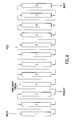
- FIG. 4 shows a representative simulated moving bed apparatus used for 1,3-propanediol recovery.
- It is an object of the invention to provide a method of recovering 1,3-propanediol from a liquid composition comprising a) contacting said liquid composition comprising said 1,3-propanediol with a cationic resin; b) adding solvent and eluting fractions from said resin; and c) recovering said 1,3-propanediol from a product fraction comprised of fractions of part b) comprising detectable 1,3-propanediol, wherein said method of recovering lacks a distillation step. It is a further object of the present invention to utilize simulated moving bed technology to effect the recovery of 1,3-propanediol from a liquid composition.
- the cationic resin is a polystyrene sulfonate strong cation exchange resin.
- polystyrene sulfonate strong cation exchange resins include, but are not limited to UBK555 (Mitsubishi Chemical Co., Carmel Indiana), CS11GC350 or CS11GC480 (Finex Ltd., Finland).
- the size of the cationic resin is 100-500 microns.
- the size of the cationic resin is preferably between about 200-350 microns.
- water is added to a 100 ml column at a flow rate of between about 0.5 to 10 ml/min, preferably about 2.6 ml/min to elute the feed material.
- the elution fraction were collected in volumes of about 5 ml to 200 ml, preferably about 35 ml or 140 ml.
- the method of the current invention utilizes a simulated moving bed (SMB) apparatus.
- SMB apparatus comprise multiple columns containing ion exchange resins are connected in series as shown in FIG. 4 .
- SMB techniques utilize any acceptable variation of SMB apparatuses in order to accomplish significant separation of components of a feed solution.
- the locations of entry ports for feed and eluent, as well as the exit ports for product and waste are changed periodically in the direction of the fluid flow in order to simulate counter current movement of resins with respect to the fluids.
- a portion of the product stream is recycled (known as enrichment stream) back to the apparatus at the port next to the product exit port.
- the ports divide the apparatus into multiple zones.
- the apparatus consists of three zones, namely, the adsorption zone, the enrichment zone, and the elution zone.
- the adsorption zone includes the columns between feed entry port and waste exit port.
- the elution zone consists of columns between eluent entry port and product exit port.
- the columns between the enrichment entry port and feed entry port constitute the enrichment zone.
- a 4-th zone, known as reload zone, is often used in order to minimize the solvent usage.
- SMB apparatus There are a few types of SMB apparatus commercially available. These apparatus can be divided into two categories, namely, moving port system and moving column system (Barker, P. E. and Deeble, R. E., Chromatographia 8:67-69 (1975)).
- the SORBEX system developed by UOP is an example of moving port system.
- moving column systems are the ADSEP system (Morgart, J. R. and Graaskamp, J. M., “Continuous Process Scale Chromatography,” Pittsburgh Conference on Analytical Chemistry and Applied Spectroscopy, Paper No . 230, New Orleans, La. (Feb. 22, 1988)) developed by Illinois Water Treatment (IWT), and the ISEP system (Rossiter, G. J., “ISEP, A Moving Bed Contractor for Chromatographic Separations,” Fourth Workshop on Preparative HPLC , Salzburg, Austria (Mar. 28, 1993)) developed by Advanced Separation Technologies, Inc. (AST).
- step-time of the SMB method can be between about 2 to 20 minutes, preferably between about 5 and 15 minutes, most preferably about 9 minutes.
- the resin flow rates can be from about 10 to 50 ml/min, preferably about 33.3 ml/min for a 300 ml column.
- the flow rates of eluent, product, waste and feed streams can be between about 5 and 50 ml/min, preferably about 32.5 ml/min, about 17.3 ml/min, about 22.5 ml/min, and about 7.3 ml/min, respectively, for a 300 ml column.
- the liquid composition comprises about 1-50% 1,3-propanediol.
- the liquid composition comprises about 5-24% 1,3-propanediol.
- the solvent is water.
- the product fraction of part c) comprises at least 50% 1,3-propanediol. In another embodiment, the product fraction of part c) comprises at least 75% 1,3-propanediol. In a preferred embodiment of the method, the product fraction of part c) comprises at least 85% 1,3-propanediol.
- fixation as used herein is intended to comprise the processes of bioconversion and bioproduction of PDO. Further, the term comprises one or more of the processes, occurring alone, sequentially or together, and at any growth stage (stationary, plateau, replicating, etc.) of the microorganism.
- Biological microorganisms producing PDO by bioconversion and/or bioproduction are cultured by methods known in the art.
- the microorganisms are grown aerobically or anaerobically in a suitable liquid composition, for example, fermentation broth, which contains sources of carbon, nitrogen, and inorganic salts assimilable by the microorganism.
- the liquid compositions can be any fermentation broth, any nutrient medium or any culture medium. Any liquid composition suitable for bioproduction of, and/or bioconversion to, PDO is envisioned in the practice of the invention. Any liquid composition comprising one or more carbon sources which a microorganism can utilize may be employed.
- a “carbon source” means any carbon source capable of being metabolized by a microorganism where the source contains at least one carbon atom.
- sources of carbon there can be employed various carbohydrates such as glucose, fructose, sucrose, dextrin, starch, etc., alcohols such as sorbitol, ethanol, glycerol, etc., organic acids such as fumaric acid, citric acid, acetic acid, propionic acid, etc. and the corresponding salts, hydrocarbons such as paraffin, and various mixtures thereof.
- triglycerides from any plant or animal sources, treated and untreated triglyceride processing streams and glycerol water from methanolysis of fats or oils, or soap splitting. See, for example, U.S. Pat. Nos. 5,164,309; 5,253,467 and 5,356,812.
- the inorganic sources of nitrogen include, among others, inorganic acid ammonium salts such as ammonium chloride, ammonium sulfate, ammonium phosphate, etc. Organic acid ammonium salts such as ammonium fumarate, ammonium citrate etc. can also be used.
- suitable nitrogen sources include, for example, sources of nitrate or ammonium ions, urea, yeast extract, beef extract, proteose peptone, soybean meal, hydrolysates of casein, distiller's solubles, and the like.
- the distiller's solubles can be corn steep liquor, bottom stillage from ethanol distillation or soybean solubles.
- the inorganic salts that can be incorporated into the nutrient medium are the customary salts capable of yielding calcium, zinc, iron, manganese, magnesium, copper, cobalt, phosphorous, sulfate, chloride, borate, molybdenum and like ions. Where necessary, there can also be incorporated factors which promote growth of the strain used, such as vitamins. See, for example, U.S. Pat. Nos. 4,962,027; 5,254,467 and 5,356,812.
- the broth is separated from the microorganisms. Separation of the microorganisms from the broth is by any method known to those in the art. Separation of the microorganisms from the broth results in a material suitable for ion exchange chromatography. Impurities in fermentation broth typically include unconverted sugars, residual salts and by-products.
- the proposed separation method utilizes ion-exclusion chromatography to reject salts, sugars and other materials. In this method, ionic components are rejected due to ionic repulsion. The non-ionic components enter the pores of the stationary phase and, therefore, elute from a column later than the ionic components. The chemical nature of PDO is non-ionic.
- PDO elutes from column later than other ionic components (e.g. salts).
- the fermentation by-products and sugars elute earlier than PDO because of differences in molecular properties.
- two fractions from a column are collected.
- the first fraction contains impurities and contains mainly salts; sugars and other by-products.
- the first fraction can be recycled back to fermentation for further utilization of residual carbon sources and other ingredients.
- the second fraction contains mainly PDO with high purity values.
- a pulse test was carried out in a column containing 100 ml of a cation exchange resin (UBK555)(Mitsubishi Chemical Corporation) in the Na-form.
- the UBK555 resin is a polystyrene sulfonate strong acid cation resin with a narrow particle size distribution (200-240 microns).
- a feed material was formulated in the laboratory by mixing 1,3-propane diol (PDO) and corn steep liquor in order to mimic the fermentation broth. The concentration of PDO in the feed was 56.6 g/L. About 10 ml of the feed material was added to the top of the column. Water was added to the column at a flow rate of 2.6 ml/min to elute the feed material.
- FIG. 1 shows the effluent profile.
- the product fraction consisting of the effluent from 35 ml to 140 ml (a net volume of 105 ml) was 87% pure.
- the recovery of PDO in the product fraction was 95.7%.
- a pulse test was carried out in a column containing 100 ml of a cation exchange resin (UBK555) in the Ca-form.
- a feed material was formulated in the laboratory by mixing 1,3-propanediol (PDO) and bottom stillage from an ethanol distillation column in order to mimic the fermentation broth.
- the concentration of PDO in the feed was 239.9 g/L.
- About 10 ml of the feed material was added to the top of the column. Water was added to the column at a flow rate of 2.6 ml/min to elute the feed material.
- FIG. 2 shows the effluent profile.
- the product fraction consisting of the effluent from 35 ml to 140 ml (a net volume of 105 ml) was 92.4% pure.
- the recovery of PDO in the product fraction was 98.4%.
- a pulse test was carried out in a column containing 100 ml of a cation exchange resin (CS11GC350) in the Ca-form.
- the CS11GC 350 resin is a apolystyrene sulfonate strong cation exchange resin with a mean particle size of 350 microns.
- a feed material was formulated in the laboratory by mixing 1,3-propanediol (PDO) and bottom stillage from an ethanol distillation column in order to mimic the fermentation broth. The concentration of PDO in the feed was 239.9 g/L. About 10 ml of the feed material was added to the top of the column. Water was added to the column at a flow rate of 2.6 ml/min to elute the feed material.
- FIG. 3 shows the effluent profile.
- the product fraction consisting of the effluent from 49 ml to 140 ml (a net volume of 91 ml) was 88.1% pure.
- the recovery of PDO in the product fraction was
- SMB Simulated Moving Bed experiments were carried out wherein 12 columns were loaded with 300 ml of a cationic resin (CS11 GC480) in a Ca-form. The columns were arranged in series suing the configuration as shown in FIG. 4 . In this setup, the columns mover intermittently in an opposite direction relative to the direction of the fluid. Water was used as the eluent.
- a feed material was formulated in the laboratory by mixing 1,3-propanediol (PDO), dextrose and bottom stillage from an ethanol distillation column in order to mimic fermentation broth. A step-time of 9 minutes was used for all the experiments. This was equivalent to 33.3 ml/min of resin flow rate.
- the flow rates of eluent, product, waste and feed streams were 32.5 ml/min, 17.3 ml/min, 22.5 ml/min, and 7.3 ml/min respectively.
- the operations were carried out at ambient temperature.
- the experiments resulted in a product with 89.4% purity.
- the yield was 99.5%.
Landscapes
- Chemical & Material Sciences (AREA)
- Organic Chemistry (AREA)
- Organic Low-Molecular-Weight Compounds And Preparation Thereof (AREA)
- Preparation Of Compounds By Using Micro-Organisms (AREA)
Abstract
A method of recovering 1,3 -propanediol (PDO) from fermentation broth is disclosed. The method employs ion exclusion resins to separate PDO from other impurities. The product fraction contains greater than 80% pure PDO with high yield.
Description
This non-provisional application is related to provisional applications No. 60/266,473, filed Feb. 6, 2001 and 60/192,891, filed Mar. 29, 2000, the content of which is incorporated herein by reference.
Field of the Invention
The present invention relates to a method of recovering 1,3-propanediol PDO) from fermentation broth.
1. Background Art
1,3-propanediol (PDO) is a precursor of polytrimethylene terephthalate which is a raw material for making polymeric fiber. Conventionally, ethylene oxide is used to chemically produce PDO (Chopey, N., Chemical Engineering106(5):56-62 (1999)). Ethylene oxide is first converted to 3-hydroxyl-opionaldehyde (3HPA) in presence of a cobalt-based catalyst. Then 3HPA is catalytically hydrogenated to produce PDO. Distillation is used to separate PDO from impurities.
Other chemical routes to 1,3-propanediol are known. For example, 1,3-propanediol can also be prepared by the catalytic solution phase hydration of acrolein followed by reduction; or from hydrocarbons such as glycerol, reacted in the presence of carbon monoxide and hydrogen over periodic table group VIII catalysts. Although it is possible to generate 1,3-propanediol by these chemical methods, they are expensive and generate waste streams containing environmental pollutants. See, for example, U.S. Pat. Nos. 5,015,789; 5,689,016; 5,723,389; 5,731,478; 5,821,092 and 5,841,003.
PDO can also be produced biochemically by fermentation (Chopey, N., Chemical Engineering 106(5):56-62 (1999)). In these methods, substrates such as glycerol and glucose, for example, are converted to PDO by microorganisms. See, for example, U.S. Pat. Nos. 4,962,027; 5,164,309; 5,254,467 and 5,821,092. The advantage of the fermentative route is lower raw material cost. Accordingly, there is considerable interest in making PDO fermentatively.
Methods for the purification of 1,3-propanediol are known in the art. These methods, however, use extraction with an organic solvent and distillation. See U.S. Pat. Nos. 5,254,467 and 5,356,812. A particularly good organic solvent for this process is cyclohexane (U.S. Pat. No. 5,008,473). Distillation is usually an energy intensive step. Solvent extraction uses organic solvents which can cause environmental problems. Therefore, there is a need for an effective separation method to recover PDO from fermentation broth.
Simulated moving bed (SMB) technology is a convenient and efficient method of chromatographic separation of fermentation broth (U.S. Pat. No. 2,985,589).
It is an object of the invention to provide a method of recovering 1,3-propanediol from a liquid composition comprising a) contacting said liquid composition comprising said 1,3-propanediol with a cationic resin; b) adding solvent and eluting fractions from said resin; and c) recovering said 1,3-propanediol from a product fraction comprised of fractions of part b) comprising detectable ,3-propanediol; wherein said method of recovering lacks a distillation step.
It is a further object of the present invention to utilize simulated moving bed technology to effect the recovery of 1,3-propanediol from a liquid composition. Further object and advantages of the present invention will be clear from the description that follows.
FIG. 1 shows the results of a pulse test with the resin UBK555 in Na-form. The term “others” indicate components consisting mainly of various salts.
FIG. 2 shows the results of a pulse test with the resin UBK555 in Ca-form.
FIG. 3 shows the results of a pulse test with the resin CSI IGC350 in Ca-form.
FIG. 4 shows a representative simulated moving bed apparatus used for 1,3-propanediol recovery.
It is an object of the invention to provide a method of recovering 1,3-propanediol from a liquid composition comprising a) contacting said liquid composition comprising said 1,3-propanediol with a cationic resin; b) adding solvent and eluting fractions from said resin; and c) recovering said 1,3-propanediol from a product fraction comprised of fractions of part b) comprising detectable 1,3-propanediol, wherein said method of recovering lacks a distillation step. It is a further object of the present invention to utilize simulated moving bed technology to effect the recovery of 1,3-propanediol from a liquid composition.
In one embodiment, the cationic resin is a polystyrene sulfonate strong cation exchange resin. Examples of polystyrene sulfonate strong cation exchange resins include, but are not limited to UBK555 (Mitsubishi Chemical Co., Carmel Indiana), CS11GC350 or CS11GC480 (Finex Ltd., Finland).
In a further embodiment, the size of the cationic resin is 100-500 microns. The size of the cationic resin is preferably between about 200-350 microns. In one embodiment, water is added to a 100 ml column at a flow rate of between about 0.5 to 10 ml/min, preferably about 2.6 ml/min to elute the feed material. In a further embodiment, the elution fraction were collected in volumes of about 5 ml to 200 ml, preferably about 35 ml or 140 ml.
In another embodiment, the method of the current invention utilizes a simulated moving bed (SMB) apparatus. SMB apparatus comprise multiple columns containing ion exchange resins are connected in series as shown in FIG. 4. SMB techniques utilize any acceptable variation of SMB apparatuses in order to accomplish significant separation of components of a feed solution. Preferably, the locations of entry ports for feed and eluent, as well as the exit ports for product and waste, are changed periodically in the direction of the fluid flow in order to simulate counter current movement of resins with respect to the fluids. Preferably, a portion of the product stream is recycled (known as enrichment stream) back to the apparatus at the port next to the product exit port. The ports divide the apparatus into multiple zones. Preferably, the apparatus consists of three zones, namely, the adsorption zone, the enrichment zone, and the elution zone. The adsorption zone includes the columns between feed entry port and waste exit port. The elution zone consists of columns between eluent entry port and product exit port. The columns between the enrichment entry port and feed entry port constitute the enrichment zone. A 4-th zone, known as reload zone, is often used in order to minimize the solvent usage. There are a few types of SMB apparatus commercially available. These apparatus can be divided into two categories, namely, moving port system and moving column system (Barker, P. E. and Deeble, R. E., Chromatographia 8:67-69 (1975)). The SORBEX system developed by UOP (Universal Oil Products Inc.) is an example of moving port system. Examples of moving column systems are the ADSEP system (Morgart, J. R. and Graaskamp, J. M., “Continuous Process Scale Chromatography,” Pittsburgh Conference on Analytical Chemistry and Applied Spectroscopy, Paper No. 230, New Orleans, La. (Feb. 22, 1988)) developed by Illinois Water Treatment (IWT), and the ISEP system (Rossiter, G. J., “ISEP, A Moving Bed Contractor for Chromatographic Separations,” Fourth Workshop on Preparative HPLC, Salzburg, Austria (Mar. 28, 1993)) developed by Advanced Separation Technologies, Inc. (AST).
In one embodiment, step-time of the SMB method can be between about 2 to 20 minutes, preferably between about 5 and 15 minutes, most preferably about 9 minutes. The resin flow rates can be from about 10 to 50 ml/min, preferably about 33.3 ml/min for a 300 ml column. In another embodiment, the flow rates of eluent, product, waste and feed streams can be between about 5 and 50 ml/min, preferably about 32.5 ml/min, about 17.3 ml/min, about 22.5 ml/min, and about 7.3 ml/min, respectively, for a 300 ml column.
It is another object of the invention to provide a method for recovering 1,3-propanediol from a liquid composition wherein said liquid composition comprises fermentation broth or compositions which mimic fermentation broth. In one embodiment, the liquid composition comprises about 1-50% 1,3-propanediol. In another embodiment, the liquid composition comprises about 5-24% 1,3-propanediol. In a preferred embodiment of the method, the solvent is water.
In one embodiment of the method of claim 1, the product fraction of part c) comprises at least 50% 1,3-propanediol. In another embodiment, the product fraction of part c) comprises at least 75% 1,3-propanediol. In a preferred embodiment of the method, the product fraction of part c) comprises at least 85% 1,3-propanediol.
It is another object of the invention to provide a method for identifying eluted fractions lacking detectable 1,3-propanediol and recycling the fractions back to the fermentation process.
The term “fermentation” as used herein is intended to comprise the processes of bioconversion and bioproduction of PDO. Further, the term comprises one or more of the processes, occurring alone, sequentially or together, and at any growth stage (stationary, plateau, replicating, etc.) of the microorganism.
In the present invention, it is an object to provide a method for recovery of PDO. Biological microorganisms producing PDO by bioconversion and/or bioproduction are cultured by methods known in the art. The microorganisms are grown aerobically or anaerobically in a suitable liquid composition, for example, fermentation broth, which contains sources of carbon, nitrogen, and inorganic salts assimilable by the microorganism.
The liquid compositions can be any fermentation broth, any nutrient medium or any culture medium. Any liquid composition suitable for bioproduction of, and/or bioconversion to, PDO is envisioned in the practice of the invention. Any liquid composition comprising one or more carbon sources which a microorganism can utilize may be employed.
As used herein, a “carbon source” means any carbon source capable of being metabolized by a microorganism where the source contains at least one carbon atom. As the sources of carbon, there can be employed various carbohydrates such as glucose, fructose, sucrose, dextrin, starch, etc., alcohols such as sorbitol, ethanol, glycerol, etc., organic acids such as fumaric acid, citric acid, acetic acid, propionic acid, etc. and the corresponding salts, hydrocarbons such as paraffin, and various mixtures thereof. Other sources which can be utilized include triglycerides from any plant or animal sources, treated and untreated triglyceride processing streams and glycerol water from methanolysis of fats or oils, or soap splitting. See, for example, U.S. Pat. Nos. 5,164,309; 5,253,467 and 5,356,812.
Many inorganic, organic and proteinaceous materials can be used as nitrogen sources in the liquid composition in the bioconversion/bioproduction process. The inorganic sources of nitrogen include, among others, inorganic acid ammonium salts such as ammonium chloride, ammonium sulfate, ammonium phosphate, etc. Organic acid ammonium salts such as ammonium fumarate, ammonium citrate etc. can also be used. Other suitable nitrogen sources include, for example, sources of nitrate or ammonium ions, urea, yeast extract, beef extract, proteose peptone, soybean meal, hydrolysates of casein, distiller's solubles, and the like. The distiller's solubles can be corn steep liquor, bottom stillage from ethanol distillation or soybean solubles. Among the inorganic salts that can be incorporated into the nutrient medium are the customary salts capable of yielding calcium, zinc, iron, manganese, magnesium, copper, cobalt, phosphorous, sulfate, chloride, borate, molybdenum and like ions. Where necessary, there can also be incorporated factors which promote growth of the strain used, such as vitamins. See, for example, U.S. Pat. Nos. 4,962,027; 5,254,467 and 5,356,812.
After fermentation, which can be batch fermentation or continuous fermentation, the broth is separated from the microorganisms. Separation of the microorganisms from the broth is by any method known to those in the art. Separation of the microorganisms from the broth results in a material suitable for ion exchange chromatography. Impurities in fermentation broth typically include unconverted sugars, residual salts and by-products. The proposed separation method utilizes ion-exclusion chromatography to reject salts, sugars and other materials. In this method, ionic components are rejected due to ionic repulsion. The non-ionic components enter the pores of the stationary phase and, therefore, elute from a column later than the ionic components. The chemical nature of PDO is non-ionic. Therefore, PDO elutes from column later than other ionic components (e.g. salts). The fermentation by-products and sugars elute earlier than PDO because of differences in molecular properties. In this invention, two fractions from a column are collected. The first fraction contains impurities and contains mainly salts; sugars and other by-products. The first fraction can be recycled back to fermentation for further utilization of residual carbon sources and other ingredients. The second fraction contains mainly PDO with high purity values. By varying the number of effluent fractions which are combined and which form a product fraction, the purity of PDO in the product fraction can be varied from at least 50% to greater than 90%, preferably 99%, more preferably about 100%.
A pulse test was carried out in a column containing 100 ml of a cation exchange resin (UBK555)(Mitsubishi Chemical Corporation) in the Na-form. The UBK555 resin is a polystyrene sulfonate strong acid cation resin with a narrow particle size distribution (200-240 microns). A feed material was formulated in the laboratory by mixing 1,3-propane diol (PDO) and corn steep liquor in order to mimic the fermentation broth. The concentration of PDO in the feed was 56.6 g/L. About 10 ml of the feed material was added to the top of the column. Water was added to the column at a flow rate of 2.6 ml/min to elute the feed material. FIG. 1 shows the effluent profile. The product fraction consisting of the effluent from 35 ml to 140 ml (a net volume of 105 ml) was 87% pure. The recovery of PDO in the product fraction was 95.7%.
A pulse test was carried out in a column containing 100 ml of a cation exchange resin (UBK555) in the Ca-form. A feed material was formulated in the laboratory by mixing 1,3-propanediol (PDO) and bottom stillage from an ethanol distillation column in order to mimic the fermentation broth. The concentration of PDO in the feed was 239.9 g/L. About 10 ml of the feed material was added to the top of the column. Water was added to the column at a flow rate of 2.6 ml/min to elute the feed material. FIG. 2 shows the effluent profile. The product fraction consisting of the effluent from 35 ml to 140 ml (a net volume of 105 ml) was 92.4% pure. The recovery of PDO in the product fraction was 98.4%.
A pulse test was carried out in a column containing 100 ml of a cation exchange resin (CS11GC350) in the Ca-form. The CS11GC 350 resin is a apolystyrene sulfonate strong cation exchange resin with a mean particle size of 350 microns. A feed material was formulated in the laboratory by mixing 1,3-propanediol (PDO) and bottom stillage from an ethanol distillation column in order to mimic the fermentation broth. The concentration of PDO in the feed was 239.9 g/L. About 10 ml of the feed material was added to the top of the column. Water was added to the column at a flow rate of 2.6 ml/min to elute the feed material. FIG. 3 shows the effluent profile. The product fraction consisting of the effluent from 49 ml to 140 ml (a net volume of 91 ml) was 88.1% pure. The recovery of PDO in the product fraction was 96.7%.
Simulated Moving Bed (SMB) experiments were carried out wherein 12 columns were loaded with 300 ml of a cationic resin (CS11 GC480) in a Ca-form. The columns were arranged in series suing the configuration as shown in FIG. 4. In this setup, the columns mover intermittently in an opposite direction relative to the direction of the fluid. Water was used as the eluent. A feed material was formulated in the laboratory by mixing 1,3-propanediol (PDO), dextrose and bottom stillage from an ethanol distillation column in order to mimic fermentation broth. A step-time of 9 minutes was used for all the experiments. This was equivalent to 33.3 ml/min of resin flow rate. The flow rates of eluent, product, waste and feed streams were 32.5 ml/min, 17.3 ml/min, 22.5 ml/min, and 7.3 ml/min respectively. The operations were carried out at ambient temperature. The experiments resulted in a product with 89.4% purity. The yield was 99.5%.
Having now fully described the present invention in some detail by way of illustration and example for purposes of clarity of understanding, it will be obvious to one of ordinary skill in the art that same can be performed by modifying or changing the invention with a wide and equivalent range of conditions, formulations and other parameters thereof, and that such modifications or changes are intended to be encompassed within the scope of the appended claims.
All publications, patents and patent applications mentioned in this specification are indicative of the level of skill of those skilled in the art to which this invention pertains, and are herein incorporated by reference to the same extent if each individual publication, patent or patent application was specifically and individually indicated to be incorporated by reference.
Claims (14)
1. A method of recovering 1,3-propanediol from fermentation broth comprising:
(a) contacting said fermentation broth comprising said 1,3-propanediol with a cationic resin using ion exclusion chromatography;
(b) adding solvent and eluting fractions from said resin; and
(c) recovering said 1,3 propanediol from a product fraction comprised of fractions of part b) comprising detectable 1,3-propanediol; wherein said method of recovering lacks a distillation step.
2. The method of claim 1 wherein said cationic resin is a polystyrene sulfonate strong cation exchange resin.
3. The method of claim 1 wherein said method of recovery of 1,3-propanediol is conducted using a simulated moving bed apparatus.
4. The method of claim 1 wherein said method of recovery of 1,3-propanediol is conducted using a simulated moving bed technique.
5. The method of claim 1 wherein the size of the cationic resin is 100-500 microns.
6. The method of claim 4 wherein the size of the cationic resin is 200-350 microns.
7. The method of claim 1 wherein said liquid composition comprises fermentation broth or compositions which mimic fermentation broth.
8. The method of claim 6 wherein said liquid composition comprises 1-50% 1,3-propanediol.
9. The method of claim 7 wherein said liquid composition comprises 5-24% 1,3-propanediol.
10. The method of claim 1 wherein said solvent is water.
11. The method of claim 1 wherein said product fraction of part c) comprises at least 50% 1,3-propanediol.
12. The method of claim 1 wherein said product fraction of part c) comprises at least 75% 1,3-propanediol.
13. The method of claim 1 wherein said product fraction of part c) comprises at least 85% 1,3-propanediol.
14. The method of claim 1 , wherein said eluted fractions lacking detectable 1,3-propanediol are identified and recycled back into the fermentation process.
Priority Applications (1)
| Application Number | Priority Date | Filing Date | Title |
|---|---|---|---|
| US09/808,121 US6479716B2 (en) | 2000-03-29 | 2001-03-15 | Method of recovering 1,3-propanediol from fermentation broth |
Applications Claiming Priority (3)
| Application Number | Priority Date | Filing Date | Title |
|---|---|---|---|
| US19289100P | 2000-03-29 | 2000-03-29 | |
| US26647301P | 2001-02-06 | 2001-02-06 | |
| US09/808,121 US6479716B2 (en) | 2000-03-29 | 2001-03-15 | Method of recovering 1,3-propanediol from fermentation broth |
Publications (2)
| Publication Number | Publication Date |
|---|---|
| US20020133049A1 US20020133049A1 (en) | 2002-09-19 |
| US6479716B2 true US6479716B2 (en) | 2002-11-12 |
Family
ID=27393112
Family Applications (1)
| Application Number | Title | Priority Date | Filing Date |
|---|---|---|---|
| US09/808,121 Expired - Lifetime US6479716B2 (en) | 2000-03-29 | 2001-03-15 | Method of recovering 1,3-propanediol from fermentation broth |
Country Status (1)
| Country | Link |
|---|---|
| US (1) | US6479716B2 (en) |
Cited By (14)
| Publication number | Priority date | Publication date | Assignee | Title |
|---|---|---|---|---|
| US20040222153A1 (en) * | 2003-05-06 | 2004-11-11 | A. E. Staley Manufacturing Co. | Process for producing 1, 3-propanediol |
| US20070200088A1 (en) * | 2006-02-10 | 2007-08-30 | Ann Wehner | Heat transfer compositions comprising renewably-based biodegradable 1,3-propanediol |
| US20070275139A1 (en) * | 2006-02-10 | 2007-11-29 | Melissa Joerger | Food compositions comprising renewably-based, biodegradable1,3-propanediol |
| CN100386297C (en) * | 2005-10-19 | 2008-05-07 | 中国石油化工股份有限公司 | Method for removing bacteria, protein and pigment in 1,3-propanediol fermentation broth |
| US20080176957A1 (en) * | 2006-11-15 | 2008-07-24 | Dupont Tate & Lyle Bio Products Company, Llc | Preservative compositions comprising renewably-based, biodegradable 1,3-propanediol |
| WO2007095261A3 (en) * | 2006-02-10 | 2008-07-31 | Dupont Tate & Lyle Bio Product | Natural deodorant compositions comprising renewably-based, biodegradable 1.3-propanediol |
| CN100439306C (en) * | 2005-10-19 | 2008-12-03 | 中国石油化工股份有限公司 | A method for removing bacteria and protein from 1,3-propanediol fermentation broth |
| US8399717B2 (en) | 2008-10-03 | 2013-03-19 | Metabolic Explorer | Method for purifying an alcohol from a fermentation broth using a falling film, a wiped film, a thin film or a short path evaporator |
| US8568700B2 (en) | 2011-04-13 | 2013-10-29 | Elc Management, Llc | Conditioning agents for personal care compositions |
| WO2015034948A1 (en) | 2013-09-03 | 2015-03-12 | Myriant Corporation | A process for manufacturing acrylic acid, acrylonitrile and 1,4-butanediol from 1,3-propanediol |
| US9242930B2 (en) | 2011-04-13 | 2016-01-26 | Elc Management Llc | Mild anionic surfactants suitable for personal care compositions |
| US9968531B2 (en) | 2015-08-05 | 2018-05-15 | Dupont Tate & Lyle Bio Products Company, Llc | Deodorants containing 1,3-propanediol |
| US10086339B2 (en) | 2015-03-10 | 2018-10-02 | The University Of Connecticut | Polymers and membranes for separation of polar organic compounds from aqueous mixtures and methods of using |
| EP4570370A2 (en) | 2022-01-19 | 2025-06-18 | T.En Process Technology, Inc. | Processes for making ethylene glycol and/or propylene glycol from aldose- and/or ketose-yielding carbohydrates with integrated tungsten catalyst recovery |
Families Citing this family (8)
| Publication number | Priority date | Publication date | Assignee | Title |
|---|---|---|---|---|
| DE602004028359D1 (en) * | 2003-05-06 | 2010-09-09 | Du Pont | PURIFICATION OF BIOLOGICALLY PRODUCED 1,3-PROPANEL |
| KR100629772B1 (en) * | 2004-09-01 | 2006-09-28 | 씨제이 주식회사 | Method for separating 1,3-propanediol, or 1,3-propanediol and 1,2-propanediol from a mixture comprising 1,3-propanediol, 1,2-propanediol, glycerol and glucose |
| US7666501B2 (en) * | 2005-12-07 | 2010-02-23 | E. I. Du Pont De Nemours And Company | Poly(trimethylene terephthalate)/poly(alpha-hydroxy acid) bi-constituent filaments |
| US8177980B2 (en) * | 2007-11-09 | 2012-05-15 | Archer Daniels Midland Company | Separation of a mixture of polyhydric alcohols |
| CN103304374A (en) * | 2012-03-14 | 2013-09-18 | 江苏汉邦科技有限公司 | Method for separating and purifying 1, 3-propylene glycol in fermentation liquor by five-region simulated moving bed |
| CN102816048A (en) * | 2012-09-04 | 2012-12-12 | 华东理工大学 | Method for extracting and separating 1,3-propanediol from fermentation liquid |
| KR102907528B1 (en) * | 2021-06-16 | 2026-01-05 | 지에스칼텍스 주식회사 | Method for obtaining the desired compound from the fermentation broth |
| CN114276217B (en) * | 2021-12-17 | 2023-07-04 | 苏州苏震生物工程有限公司 | Desalination and purification method for 1,3-propanediol fermentation liquor |
Citations (14)
| Publication number | Priority date | Publication date | Assignee | Title |
|---|---|---|---|---|
| US3864406A (en) * | 1973-04-25 | 1975-02-04 | Suomen Sokeri Oy | Process for the production of mannitol and sorbitol |
| US4962027A (en) | 1986-08-07 | 1990-10-09 | The United States Of America As Represented By The Secretary Of Agriculture | Production of 3-hydroxypropionaldehyde from glycerol by Klebsiella pneumoniae |
| US5008473A (en) | 1986-09-24 | 1991-04-16 | Ruhrchemie Aktiengesellschaft | Process for purifying propanediol-1,3 |
| US5015789A (en) | 1989-08-08 | 1991-05-14 | Degussa Aktiengesellschaft | Method of preparing 1,3-propanediol |
| US5164309A (en) | 1988-12-12 | 1992-11-17 | Unilever Patent Holdings B.V. | Process for the microbiological preparation of 1,3-propane-diol from glycerol by citrobacter |
| US5254467A (en) | 1988-09-01 | 1993-10-19 | Henkel Kommanditgesellschaft Auf Aktien | Fermentive production of 1,3-propanediol |
| US5356812A (en) | 1990-08-10 | 1994-10-18 | Daicel Chemical Industries, Ltd. | Processes for production of optically active 3-phenyl-1,3-propanediol by asymmetric assimilation |
| US5652348A (en) * | 1994-09-23 | 1997-07-29 | Massey University | Chromatographic resins and methods for using same |
| US5689016A (en) | 1994-09-30 | 1997-11-18 | Shell Oil Company | Cobalt-catalyzed process for preparing alkanediols using a rhodium promoter |
| US5723389A (en) | 1996-10-15 | 1998-03-03 | Shell Oil Company | Process for preparing alkanediols |
| US5731478A (en) | 1996-10-15 | 1998-03-24 | Shell Oil Company | Process for preparing alkanediols |
| US5821092A (en) | 1995-05-12 | 1998-10-13 | E. I. Du Pont De Nemours And Company | Production of 1,3-propanediol from glycerol by recombinant bacteria expressing recombinant diol dehydratase |
| US5841003A (en) | 1996-07-23 | 1998-11-24 | Shell Oil Company | Process for preparing alkanediols |
| US5985589A (en) | 1996-11-25 | 1999-11-16 | Icos Corporation | Lipid kinase |
-
2001
- 2001-03-15 US US09/808,121 patent/US6479716B2/en not_active Expired - Lifetime
Patent Citations (14)
| Publication number | Priority date | Publication date | Assignee | Title |
|---|---|---|---|---|
| US3864406A (en) * | 1973-04-25 | 1975-02-04 | Suomen Sokeri Oy | Process for the production of mannitol and sorbitol |
| US4962027A (en) | 1986-08-07 | 1990-10-09 | The United States Of America As Represented By The Secretary Of Agriculture | Production of 3-hydroxypropionaldehyde from glycerol by Klebsiella pneumoniae |
| US5008473A (en) | 1986-09-24 | 1991-04-16 | Ruhrchemie Aktiengesellschaft | Process for purifying propanediol-1,3 |
| US5254467A (en) | 1988-09-01 | 1993-10-19 | Henkel Kommanditgesellschaft Auf Aktien | Fermentive production of 1,3-propanediol |
| US5164309A (en) | 1988-12-12 | 1992-11-17 | Unilever Patent Holdings B.V. | Process for the microbiological preparation of 1,3-propane-diol from glycerol by citrobacter |
| US5015789A (en) | 1989-08-08 | 1991-05-14 | Degussa Aktiengesellschaft | Method of preparing 1,3-propanediol |
| US5356812A (en) | 1990-08-10 | 1994-10-18 | Daicel Chemical Industries, Ltd. | Processes for production of optically active 3-phenyl-1,3-propanediol by asymmetric assimilation |
| US5652348A (en) * | 1994-09-23 | 1997-07-29 | Massey University | Chromatographic resins and methods for using same |
| US5689016A (en) | 1994-09-30 | 1997-11-18 | Shell Oil Company | Cobalt-catalyzed process for preparing alkanediols using a rhodium promoter |
| US5821092A (en) | 1995-05-12 | 1998-10-13 | E. I. Du Pont De Nemours And Company | Production of 1,3-propanediol from glycerol by recombinant bacteria expressing recombinant diol dehydratase |
| US5841003A (en) | 1996-07-23 | 1998-11-24 | Shell Oil Company | Process for preparing alkanediols |
| US5723389A (en) | 1996-10-15 | 1998-03-03 | Shell Oil Company | Process for preparing alkanediols |
| US5731478A (en) | 1996-10-15 | 1998-03-24 | Shell Oil Company | Process for preparing alkanediols |
| US5985589A (en) | 1996-11-25 | 1999-11-16 | Icos Corporation | Lipid kinase |
Non-Patent Citations (3)
| Title |
|---|
| Barker, P.E., and Deeble, R.E., "Sequential Chromatographic Equipment for the Separation of a Wide Range of Organic Mixtures," Chromatographia 8:67-69, Pergamon Press (1975). |
| D'Aquuino, R.L., "Three Routes Vie for the 1,3-Propanediol Market," Chemical Engineering 106 (5):56-62, McGraw-Hill Company (1999). |
| Morgart, J.R., and Graaskamp, J.M., "Continuous Process Scale Chromatography," Pittsburgh Conference on Analytical Chemistry and Applied Spectroscopy, Paper No. 230, New Orleans, LA (Feb. 22, 1988). |
Cited By (38)
| Publication number | Priority date | Publication date | Assignee | Title |
|---|---|---|---|---|
| US7056439B2 (en) * | 2003-05-06 | 2006-06-06 | Tate & Lyle Ingredidents Americas, Inc. | Process for producing 1, 3-propanediol |
| US20060124545A1 (en) * | 2003-05-06 | 2006-06-15 | Tate & Lyle Ingredients Americas, Inc. | Process for producing 1,3-propanediol |
| US7572376B2 (en) | 2003-05-06 | 2009-08-11 | Tate & Lyle Ingredients Americas, Inc. | Process for producing 1,3-propanediol |
| US20040222153A1 (en) * | 2003-05-06 | 2004-11-11 | A. E. Staley Manufacturing Co. | Process for producing 1, 3-propanediol |
| CN100386297C (en) * | 2005-10-19 | 2008-05-07 | 中国石油化工股份有限公司 | Method for removing bacteria, protein and pigment in 1,3-propanediol fermentation broth |
| CN100439306C (en) * | 2005-10-19 | 2008-12-03 | 中国石油化工股份有限公司 | A method for removing bacteria and protein from 1,3-propanediol fermentation broth |
| WO2007095261A3 (en) * | 2006-02-10 | 2008-07-31 | Dupont Tate & Lyle Bio Product | Natural deodorant compositions comprising renewably-based, biodegradable 1.3-propanediol |
| US7759393B2 (en) | 2006-02-10 | 2010-07-20 | Dupont Tate & Lyle Bio Products Company, Llc | Bio-derived 1,3-propanediol and its conjugate esters as natural and non irritating solvents for biomass-derived extracts, fragrance concentrates, and oils |
| US20070202073A1 (en) * | 2006-02-10 | 2007-08-30 | Gyorgyi Fenyvesi | Personal care and cosmetics compositions comprising biologically-based mono and di esters |
| US20070200087A1 (en) * | 2006-02-10 | 2007-08-30 | Ann Wehner | Deicing and anti-icing compositions comprising renewably-based, biodegradable 1,3-propanediol |
| US20070207940A1 (en) * | 2006-02-10 | 2007-09-06 | Gyorgyi Fenyvesi | Detergent compositions comprising renewably-based, biodegradable 1,3-propanediol |
| US20070207113A1 (en) * | 2006-02-10 | 2007-09-06 | Melissa Joerger | Personal care and cosmetic compositions comprising renewably-based, biodegradable 1,3-propanediol |
| US20070207939A1 (en) * | 2006-02-10 | 2007-09-06 | Gyorgyi Fenyvesi | Compositions comprising mono and di esters of biologically-based 1,3-propanediol |
| US20070213247A1 (en) * | 2006-02-10 | 2007-09-13 | Gyorgyi Fenyvesi | Detergent and liquid soap compositions comprising biologically-based mono and di esters |
| US20070241306A1 (en) * | 2006-02-10 | 2007-10-18 | Ann Wehner | Biodegradable compositions comprising renewably-based, biodegradable 1,3-propanediol |
| US20070275139A1 (en) * | 2006-02-10 | 2007-11-29 | Melissa Joerger | Food compositions comprising renewably-based, biodegradable1,3-propanediol |
| US20070202126A1 (en) * | 2006-02-10 | 2007-08-30 | Melissa Joerger | Bio-derived 1,3-propanediol and its conjugate esters as natural and non irritating solvents for biomass-derived extracts, fragrance concentrates, and oils |
| US9668951B2 (en) | 2006-02-10 | 2017-06-06 | Dupont Tate & Lyle Bio Products Company, Llc | Pharmaceutical compositions comprising renewably-based biodegradable 1,3-propanediol |
| US20070202580A1 (en) * | 2006-02-10 | 2007-08-30 | Gyorgyi Fenyvesi | Synthesis of mono and di esters from biologically-produced 1,3-propanediol |
| US20070203276A1 (en) * | 2006-02-10 | 2007-08-30 | Gyorgyi Fenyvesi | Plasticizers comprising biologically-based mono and di esters |
| US20070200088A1 (en) * | 2006-02-10 | 2007-08-30 | Ann Wehner | Heat transfer compositions comprising renewably-based biodegradable 1,3-propanediol |
| US20070202062A1 (en) * | 2006-02-10 | 2007-08-30 | Workman Tanya L | Natural deodorant compositions comprising renewably-based, biodegradable 1,3-propanediol |
| US7960575B2 (en) | 2006-02-10 | 2011-06-14 | Dupont Tate & Lyle Bio Products Company, Llc | Synthesis of mono and di esters from biologically-produced 1,3-propanediol |
| US7988883B2 (en) | 2006-02-10 | 2011-08-02 | Dupont Tate & Lyle Bio Products Company, Llc | Heat transfer compositions comprising renewably-based biodegradable 1,3-propanediol |
| US8048920B2 (en) | 2006-02-10 | 2011-11-01 | Dupont Tate & Lyle Bio Products Company, Llc | Personal care composition containing bio-derived 1,3-propanediol and its conjugate esters |
| US9375390B2 (en) | 2006-02-10 | 2016-06-28 | Dupont Tate & Lyle Bio Products Company, Llc | Agricultural compositions comprising renewably-based biodegradable 1,3-propanediol |
| US8802729B2 (en) | 2006-02-10 | 2014-08-12 | Dupont Tate & Lyle Bio Products Company, Llc | Enzyme stabilized detergent compositions |
| US8598231B2 (en) | 2006-02-10 | 2013-12-03 | Dupont Tate & Lyle Bio Products Company, Llc | Flavoring agents containing bio-derived 1,3-propanediol and its conjugate esters |
| US20080176957A1 (en) * | 2006-11-15 | 2008-07-24 | Dupont Tate & Lyle Bio Products Company, Llc | Preservative compositions comprising renewably-based, biodegradable 1,3-propanediol |
| US8399717B2 (en) | 2008-10-03 | 2013-03-19 | Metabolic Explorer | Method for purifying an alcohol from a fermentation broth using a falling film, a wiped film, a thin film or a short path evaporator |
| US8568700B2 (en) | 2011-04-13 | 2013-10-29 | Elc Management, Llc | Conditioning agents for personal care compositions |
| US9242930B2 (en) | 2011-04-13 | 2016-01-26 | Elc Management Llc | Mild anionic surfactants suitable for personal care compositions |
| WO2015034948A1 (en) | 2013-09-03 | 2015-03-12 | Myriant Corporation | A process for manufacturing acrylic acid, acrylonitrile and 1,4-butanediol from 1,3-propanediol |
| KR20160071376A (en) | 2013-09-03 | 2016-06-21 | 미리안트 코포레이션 | A process for manufacturing acrylic acid, acrylonitrile and 1,4-butanediol from 1,3-propanediol |
| US10035749B2 (en) | 2013-09-03 | 2018-07-31 | Myriant Corporation | Process for manufacturing acrylic acid, acrylonitrile and 1,4-butanediol from 1,3-propanediol |
| US10086339B2 (en) | 2015-03-10 | 2018-10-02 | The University Of Connecticut | Polymers and membranes for separation of polar organic compounds from aqueous mixtures and methods of using |
| US9968531B2 (en) | 2015-08-05 | 2018-05-15 | Dupont Tate & Lyle Bio Products Company, Llc | Deodorants containing 1,3-propanediol |
| EP4570370A2 (en) | 2022-01-19 | 2025-06-18 | T.En Process Technology, Inc. | Processes for making ethylene glycol and/or propylene glycol from aldose- and/or ketose-yielding carbohydrates with integrated tungsten catalyst recovery |
Also Published As
| Publication number | Publication date |
|---|---|
| US20020133049A1 (en) | 2002-09-19 |
Similar Documents
| Publication | Publication Date | Title |
|---|---|---|
| US20020133049A1 (en) | Method of recovering 1,3-propanediol from fermentation broth | |
| Qureshi et al. | Recovery of butanol from fermentation broth by gas stripping | |
| Freeman et al. | In situ product removal as a tool for bioprocessing | |
| Li et al. | Aqueous two-phase extraction of 1, 3-propanediol from glycerol-based fermentation broths | |
| Qureshi et al. | Energy-efficient recovery of butanol from model solutions and fermentation broth by adsorption | |
| Woo et al. | Eco-efficient recovery of bio-based volatile C2–6 fatty acids | |
| US5641406A (en) | Lactic acid extraction and purification process | |
| Yang et al. | Extractive fermentation for the production of carboxylic acids | |
| Cho et al. | A novel separation and purification process for 1, 3-propanediol | |
| US8658845B2 (en) | Process and adsorbent for separating ethanol and associated oxygenates from a biofermentation system | |
| EA029944B1 (en) | Fermentation and simulated moving bed process | |
| JP4261196B2 (en) | Product removal method for use in a biofermentation system | |
| CN111487356B (en) | Method for separating coenzyme Q10 by using supercritical fluid chromatography system | |
| WO2009064335A1 (en) | Separation of a mixture of polyhydric alcohols | |
| Li et al. | Separation of succinic acid from fermentation broth using weak alkaline anion exchange adsorbents | |
| Muniasamy et al. | A comprehensive perspective on sustainable bioprocessing through extractive fermentation: Challenges and prospects | |
| Chun et al. | Enhanced extraction of butyric acid under high-pressure CO2 conditions to integrate chemical catalysis for value-added chemicals and biofuels | |
| EP1268838A2 (en) | Method of recovering 1,3-propanediol from fermentation broth | |
| Roncal et al. | Recovery and purification of acetic acid from extremely diluted solutions using a mixed bed ion exchange resin–technical feasibility | |
| US8704016B2 (en) | SMB process for the purification of ethanol and butanediol with integrated regeneration | |
| Cuperus | Membrane processes in agro-food: State-of-the-art and new opportunities | |
| OGINO et al. | Studies on Utilization of Hydrocarbons by Yeasts Part II. Diterminal Oxidation of Alkanes by Yeasts | |
| Salas-Villalobos et al. | In situ product removal | |
| Makart et al. | Separation of amino acids by simulated moving bed under solvent constrained conditions for the integration of continuous chromatography and biotransformation | |
| Weber et al. | Purification of biosurfactants |
Legal Events
| Date | Code | Title | Description |
|---|---|---|---|
| AS | Assignment |
Owner name: ARCHER-DANIELS-MIDLAND COMPANY, ILLINOIS Free format text: ASSIGNMENT OF ASSIGNORS INTEREST;ASSIGNORS:HILALY, AHMAD K.;BINDER, THOMAS P.;REEL/FRAME:011940/0017 Effective date: 20010529 |
|
| STCF | Information on status: patent grant |
Free format text: PATENTED CASE |
|
| FPAY | Fee payment |
Year of fee payment: 4 |
|
| FPAY | Fee payment |
Year of fee payment: 8 |
|
| FPAY | Fee payment |
Year of fee payment: 12 |