US6417187B2 - 1,2,4-triazole based compounds that can be used as insecticides or acaricides and processes - Google Patents
1,2,4-triazole based compounds that can be used as insecticides or acaricides and processes Download PDFInfo
- Publication number
- US6417187B2 US6417187B2 US09/834,845 US83484501A US6417187B2 US 6417187 B2 US6417187 B2 US 6417187B2 US 83484501 A US83484501 A US 83484501A US 6417187 B2 US6417187 B2 US 6417187B2
- Authority
- US
- United States
- Prior art keywords
- substituted
- compound
- pyridyl
- phenyl
- formula
- Prior art date
- Legal status (The legal status is an assumption and is not a legal conclusion. Google has not performed a legal analysis and makes no representation as to the accuracy of the status listed.)
- Expired - Lifetime
Links
- 150000001875 compounds Chemical class 0.000 title claims abstract description 142
- 238000000034 method Methods 0.000 title claims abstract description 29
- 239000002917 insecticide Substances 0.000 title abstract description 11
- 230000000895 acaricidal effect Effects 0.000 title abstract description 10
- 239000000642 acaricide Substances 0.000 title abstract description 10
- NSPMIYGKQJPBQR-UHFFFAOYSA-N 4H-1,2,4-triazole Chemical compound C=1N=CNN=1 NSPMIYGKQJPBQR-UHFFFAOYSA-N 0.000 title description 3
- 239000000203 mixture Substances 0.000 claims abstract description 61
- 241000238631 Hexapoda Species 0.000 claims abstract description 29
- 241000238876 Acari Species 0.000 claims abstract description 18
- 125000001997 phenyl group Chemical group [H]C1=C([H])C([H])=C(*)C([H])=C1[H] 0.000 claims description 46
- 125000004076 pyridyl group Chemical group 0.000 claims description 31
- 125000000217 alkyl group Chemical group 0.000 claims description 26
- 241000196324 Embryophyta Species 0.000 claims description 19
- 125000001544 thienyl group Chemical group 0.000 claims description 19
- KDLHZDBZIXYQEI-UHFFFAOYSA-N Palladium Chemical compound [Pd] KDLHZDBZIXYQEI-UHFFFAOYSA-N 0.000 claims description 12
- 125000003342 alkenyl group Chemical group 0.000 claims description 11
- YTPLMLYBLZKORZ-UHFFFAOYSA-N Thiophene Chemical group C=1C=CSC=1 YTPLMLYBLZKORZ-UHFFFAOYSA-N 0.000 claims description 10
- 125000000842 isoxazolyl group Chemical group 0.000 claims description 9
- 125000001624 naphthyl group Chemical group 0.000 claims description 9
- 125000000714 pyrimidinyl group Chemical group 0.000 claims description 9
- 241001124076 Aphididae Species 0.000 claims description 8
- 241000256244 Heliothis virescens Species 0.000 claims description 7
- 241000256247 Spodoptera exigua Species 0.000 claims description 7
- 241000255993 Trichoplusia ni Species 0.000 claims description 7
- 230000000415 inactivating effect Effects 0.000 claims description 7
- 229930192474 thiophene Natural products 0.000 claims description 7
- 239000002253 acid Substances 0.000 claims description 6
- 238000006555 catalytic reaction Methods 0.000 claims description 6
- 125000000753 cycloalkyl group Chemical group 0.000 claims description 6
- 125000002496 methyl group Chemical group [H]C([H])([H])* 0.000 claims description 6
- 229910052763 palladium Inorganic materials 0.000 claims description 6
- 241000258937 Hemiptera Species 0.000 claims description 5
- 125000000304 alkynyl group Chemical group 0.000 claims description 5
- 125000001188 haloalkyl group Chemical group 0.000 claims description 5
- 229910052739 hydrogen Inorganic materials 0.000 claims description 5
- 239000002689 soil Substances 0.000 claims description 5
- 150000001345 alkine derivatives Chemical group 0.000 claims description 4
- 150000001499 aryl bromides Chemical class 0.000 claims description 4
- 125000001495 ethyl group Chemical group [H]C([H])([H])C([H])([H])* 0.000 claims description 4
- 150000003839 salts Chemical class 0.000 claims description 4
- 150000003577 thiophenes Chemical class 0.000 claims description 4
- 229910052794 bromium Inorganic materials 0.000 claims description 2
- 125000000999 tert-butyl group Chemical group [H]C([H])([H])C(*)(C([H])([H])[H])C([H])([H])[H] 0.000 claims description 2
- 125000000026 trimethylsilyl group Chemical group [H]C([H])([H])[Si]([*])(C([H])([H])[H])C([H])([H])[H] 0.000 claims description 2
- 238000004519 manufacturing process Methods 0.000 claims 2
- 125000000113 cyclohexyl group Chemical group [H]C1([H])C([H])([H])C([H])([H])C([H])(*)C([H])([H])C1([H])[H] 0.000 claims 1
- 239000001257 hydrogen Chemical group 0.000 claims 1
- 125000004435 hydrogen atom Chemical group [H]* 0.000 claims 1
- 125000004108 n-butyl group Chemical group [H]C([H])([H])C([H])([H])C([H])([H])C([H])([H])* 0.000 claims 1
- 125000004368 propenyl group Chemical group C(=CC)* 0.000 claims 1
- 125000001436 propyl group Chemical group [H]C([*])([H])C([H])([H])C([H])([H])[H] 0.000 claims 1
- 125000003107 substituted aryl group Chemical group 0.000 claims 1
- 239000000543 intermediate Substances 0.000 abstract description 14
- 239000000575 pesticide Substances 0.000 abstract description 2
- RTZKZFJDLAIYFH-UHFFFAOYSA-N Diethyl ether Chemical compound CCOCC RTZKZFJDLAIYFH-UHFFFAOYSA-N 0.000 description 33
- YMWUJEATGCHHMB-UHFFFAOYSA-N Dichloromethane Chemical compound ClCCl YMWUJEATGCHHMB-UHFFFAOYSA-N 0.000 description 32
- XEKOWRVHYACXOJ-UHFFFAOYSA-N Ethyl acetate Chemical compound CCOC(C)=O XEKOWRVHYACXOJ-UHFFFAOYSA-N 0.000 description 32
- 239000000243 solution Substances 0.000 description 32
- HEDRZPFGACZZDS-MICDWDOJSA-N Trichloro(2H)methane Chemical compound [2H]C(Cl)(Cl)Cl HEDRZPFGACZZDS-MICDWDOJSA-N 0.000 description 30
- XLYOFNOQVPJJNP-UHFFFAOYSA-N water Substances O XLYOFNOQVPJJNP-UHFFFAOYSA-N 0.000 description 30
- 229910001868 water Inorganic materials 0.000 description 29
- 239000003921 oil Substances 0.000 description 27
- VLKZOEOYAKHREP-UHFFFAOYSA-N n-Hexane Chemical class CCCCCC VLKZOEOYAKHREP-UHFFFAOYSA-N 0.000 description 24
- 238000002360 preparation method Methods 0.000 description 24
- 239000007787 solid Substances 0.000 description 22
- 239000002904 solvent Substances 0.000 description 22
- VYPSYNLAJGMNEJ-UHFFFAOYSA-N Silicium dioxide Chemical compound O=[Si]=O VYPSYNLAJGMNEJ-UHFFFAOYSA-N 0.000 description 21
- ZMANZCXQSJIPKH-UHFFFAOYSA-N Triethylamine Chemical compound CCN(CC)CC ZMANZCXQSJIPKH-UHFFFAOYSA-N 0.000 description 21
- 239000000047 product Substances 0.000 description 20
- 238000005160 1H NMR spectroscopy Methods 0.000 description 19
- 0 CC#C*C1=NC([Ar])=NN1C Chemical compound CC#C*C1=NC([Ar])=NN1C 0.000 description 17
- 239000007858 starting material Substances 0.000 description 17
- CSNNHWWHGAXBCP-UHFFFAOYSA-L Magnesium sulfate Chemical compound [Mg+2].[O-][S+2]([O-])([O-])[O-] CSNNHWWHGAXBCP-UHFFFAOYSA-L 0.000 description 14
- 150000003852 triazoles Chemical class 0.000 description 14
- 238000006243 chemical reaction Methods 0.000 description 13
- CSCPPACGZOOCGX-UHFFFAOYSA-N Acetone Chemical compound CC(C)=O CSCPPACGZOOCGX-UHFFFAOYSA-N 0.000 description 12
- JUJWROOIHBZHMG-UHFFFAOYSA-N Pyridine Chemical compound C1=CC=NC=C1 JUJWROOIHBZHMG-UHFFFAOYSA-N 0.000 description 12
- 235000019439 ethyl acetate Nutrition 0.000 description 12
- 238000003756 stirring Methods 0.000 description 12
- VEXZGXHMUGYJMC-UHFFFAOYSA-N Hydrochloric acid Chemical compound Cl VEXZGXHMUGYJMC-UHFFFAOYSA-N 0.000 description 11
- 239000012267 brine Substances 0.000 description 11
- HPALAKNZSZLMCH-UHFFFAOYSA-M sodium;chloride;hydrate Chemical compound O.[Na+].[Cl-] HPALAKNZSZLMCH-UHFFFAOYSA-M 0.000 description 11
- ZMXDDKWLCZADIW-UHFFFAOYSA-N N,N-Dimethylformamide Chemical compound CN(C)C=O ZMXDDKWLCZADIW-UHFFFAOYSA-N 0.000 description 10
- OFBQJSOFQDEBGM-UHFFFAOYSA-N Pentane Chemical compound CCCCC OFBQJSOFQDEBGM-UHFFFAOYSA-N 0.000 description 10
- YXFVVABEGXRONW-UHFFFAOYSA-N Toluene Chemical compound CC1=CC=CC=C1 YXFVVABEGXRONW-UHFFFAOYSA-N 0.000 description 10
- 150000001411 amidrazones Chemical class 0.000 description 10
- 238000004458 analytical method Methods 0.000 description 10
- 239000007921 spray Substances 0.000 description 10
- 239000004094 surface-active agent Substances 0.000 description 10
- URLKBWYHVLBVBO-UHFFFAOYSA-N CC1=CC=C(C)C=C1 Chemical compound CC1=CC=C(C)C=C1 URLKBWYHVLBVBO-UHFFFAOYSA-N 0.000 description 9
- OKKJLVBELUTLKV-UHFFFAOYSA-N Methanol Chemical compound OC OKKJLVBELUTLKV-UHFFFAOYSA-N 0.000 description 9
- 230000000694 effects Effects 0.000 description 9
- 239000004495 emulsifiable concentrate Substances 0.000 description 9
- 239000000741 silica gel Substances 0.000 description 9
- 229910002027 silica gel Inorganic materials 0.000 description 9
- IAZDPXIOMUYVGZ-WFGJKAKNSA-N Dimethyl sulfoxide Chemical compound [2H]C([2H])([2H])S(=O)C([2H])([2H])[2H] IAZDPXIOMUYVGZ-WFGJKAKNSA-N 0.000 description 8
- PMZURENOXWZQFD-UHFFFAOYSA-L Sodium Sulfate Chemical compound [Na+].[Na+].[O-]S([O-])(=O)=O PMZURENOXWZQFD-UHFFFAOYSA-L 0.000 description 8
- 239000007900 aqueous suspension Substances 0.000 description 8
- 238000009472 formulation Methods 0.000 description 8
- XMBWDFGMSWQBCA-UHFFFAOYSA-N hydrogen iodide Chemical compound I XMBWDFGMSWQBCA-UHFFFAOYSA-N 0.000 description 8
- 229910052938 sodium sulfate Inorganic materials 0.000 description 8
- 125000003545 alkoxy group Chemical group 0.000 description 7
- 230000008878 coupling Effects 0.000 description 7
- 238000010168 coupling process Methods 0.000 description 7
- 238000005859 coupling reaction Methods 0.000 description 7
- 229910052943 magnesium sulfate Inorganic materials 0.000 description 7
- 239000011541 reaction mixture Substances 0.000 description 7
- WEVYAHXRMPXWCK-UHFFFAOYSA-N Acetonitrile Chemical compound CC#N WEVYAHXRMPXWCK-UHFFFAOYSA-N 0.000 description 6
- IJGRMHOSHXDMSA-UHFFFAOYSA-N Atomic nitrogen Chemical group N#N IJGRMHOSHXDMSA-UHFFFAOYSA-N 0.000 description 6
- 238000001914 filtration Methods 0.000 description 6
- 239000007788 liquid Substances 0.000 description 6
- UMJSCPRVCHMLSP-UHFFFAOYSA-N pyridine Natural products COC1=CC=CN=C1 UMJSCPRVCHMLSP-UHFFFAOYSA-N 0.000 description 6
- 239000002002 slurry Substances 0.000 description 6
- FVAUCKIRQBBSSJ-UHFFFAOYSA-M sodium iodide Chemical compound [Na+].[I-] FVAUCKIRQBBSSJ-UHFFFAOYSA-M 0.000 description 6
- 235000011152 sodium sulphate Nutrition 0.000 description 6
- 239000000725 suspension Substances 0.000 description 6
- HXWTXUWGNCIZIE-UHFFFAOYSA-N 5-(5-bromo-3,4-dichlorothiophen-2-yl)-3-(2-chloro-6-fluorophenyl)-1-methyl-1,2,4-triazole Chemical compound CN1N=C(C=2C(=CC=CC=2F)Cl)N=C1C=1SC(Br)=C(Cl)C=1Cl HXWTXUWGNCIZIE-UHFFFAOYSA-N 0.000 description 5
- 229910021595 Copper(I) iodide Inorganic materials 0.000 description 5
- 241001556089 Nilaparvata lugens Species 0.000 description 5
- QAOWNCQODCNURD-UHFFFAOYSA-N Sulfuric acid Chemical compound OS(O)(=O)=O QAOWNCQODCNURD-UHFFFAOYSA-N 0.000 description 5
- 241001454293 Tetranychus urticae Species 0.000 description 5
- LSXDOTMGLUJQCM-UHFFFAOYSA-M copper(i) iodide Chemical compound I[Cu] LSXDOTMGLUJQCM-UHFFFAOYSA-M 0.000 description 5
- 239000012043 crude product Substances 0.000 description 5
- 238000003818 flash chromatography Methods 0.000 description 5
- 125000005843 halogen group Chemical group 0.000 description 5
- 230000002401 inhibitory effect Effects 0.000 description 5
- 230000000749 insecticidal effect Effects 0.000 description 5
- 239000003960 organic solvent Substances 0.000 description 5
- -1 phenoxy, phenyl Chemical group 0.000 description 5
- 241000894007 species Species 0.000 description 5
- 239000012085 test solution Substances 0.000 description 5
- MKHRKFSZMWEJEX-UHFFFAOYSA-N 3-(2-chloro-6-fluorophenyl)-5-(3,4-dichloro-5-ethynylthiophen-2-yl)-1-methyl-1,2,4-triazole Chemical compound CN1N=C(C=2C(=CC=CC=2F)Cl)N=C1C=1SC(C#C)=C(Cl)C=1Cl MKHRKFSZMWEJEX-UHFFFAOYSA-N 0.000 description 4
- GJCOSYZMQJWQCA-UHFFFAOYSA-N 9H-xanthene Chemical compound C1=CC=C2CC3=CC=CC=C3OC2=C1 GJCOSYZMQJWQCA-UHFFFAOYSA-N 0.000 description 4
- 241001600408 Aphis gossypii Species 0.000 description 4
- 229920000742 Cotton Polymers 0.000 description 4
- LFQSCWFLJHTTHZ-UHFFFAOYSA-N Ethanol Chemical compound CCO LFQSCWFLJHTTHZ-UHFFFAOYSA-N 0.000 description 4
- 241000219146 Gossypium Species 0.000 description 4
- 238000003820 Medium-pressure liquid chromatography Methods 0.000 description 4
- 239000007864 aqueous solution Substances 0.000 description 4
- 230000015572 biosynthetic process Effects 0.000 description 4
- YNHIGQDRGKUECZ-UHFFFAOYSA-L bis(triphenylphosphine)palladium(ii) dichloride Chemical compound [Cl-].[Cl-].[Pd+2].C1=CC=CC=C1P(C=1C=CC=CC=1)C1=CC=CC=C1.C1=CC=CC=C1P(C=1C=CC=CC=1)C1=CC=CC=C1 YNHIGQDRGKUECZ-UHFFFAOYSA-L 0.000 description 4
- 239000004927 clay Substances 0.000 description 4
- 238000001816 cooling Methods 0.000 description 4
- 239000011521 glass Substances 0.000 description 4
- 150000002430 hydrocarbons Chemical group 0.000 description 4
- IXCSERBJSXMMFS-UHFFFAOYSA-N hydrogen chloride Substances Cl.Cl IXCSERBJSXMMFS-UHFFFAOYSA-N 0.000 description 4
- 229910000041 hydrogen chloride Inorganic materials 0.000 description 4
- 238000002955 isolation Methods 0.000 description 4
- HDZGCSFEDULWCS-UHFFFAOYSA-N monomethylhydrazine Chemical compound CNN HDZGCSFEDULWCS-UHFFFAOYSA-N 0.000 description 4
- 239000002736 nonionic surfactant Substances 0.000 description 4
- BWHMMNNQKKPAPP-UHFFFAOYSA-L potassium carbonate Chemical compound [K+].[K+].[O-]C([O-])=O BWHMMNNQKKPAPP-UHFFFAOYSA-L 0.000 description 4
- 239000000377 silicon dioxide Substances 0.000 description 4
- 239000000126 substance Substances 0.000 description 4
- 238000003786 synthesis reaction Methods 0.000 description 4
- 229920001285 xanthan gum Polymers 0.000 description 4
- NAWXUBYGYWOOIX-SFHVURJKSA-N (2s)-2-[[4-[2-(2,4-diaminoquinazolin-6-yl)ethyl]benzoyl]amino]-4-methylidenepentanedioic acid Chemical compound C1=CC2=NC(N)=NC(N)=C2C=C1CCC1=CC=C(C(=O)N[C@@H](CC(=C)C(O)=O)C(O)=O)C=C1 NAWXUBYGYWOOIX-SFHVURJKSA-N 0.000 description 3
- QCEBMSJGZSJKEG-UHFFFAOYSA-N 1-butyl-3-(2-chloro-6-fluorophenyl)-5-(3,4,5-trichlorothiophen-2-yl)-1,2,4-triazole Chemical compound CCCCN1N=C(C=2C(=CC=CC=2F)Cl)N=C1C=1SC(Cl)=C(Cl)C=1Cl QCEBMSJGZSJKEG-UHFFFAOYSA-N 0.000 description 3
- CDNBRWKDBSHYFJ-UHFFFAOYSA-N 2,6-difluorobenzenecarbothioamide Chemical compound NC(=S)C1=C(F)C=CC=C1F CDNBRWKDBSHYFJ-UHFFFAOYSA-N 0.000 description 3
- XVHYSMVSLDIUCM-UHFFFAOYSA-N 2-fluoro-1-iodo-4-methylbenzene Chemical compound CC1=CC=C(I)C(F)=C1 XVHYSMVSLDIUCM-UHFFFAOYSA-N 0.000 description 3
- NRQIFSBIYCSMQV-UHFFFAOYSA-N 2-iodo-6-methylpyridine Chemical compound CC1=CC=CC(I)=N1 NRQIFSBIYCSMQV-UHFFFAOYSA-N 0.000 description 3
- SBOBZIWLFWNOOE-UHFFFAOYSA-N 3,5-dichloro-4-[1-methyl-5-(3-methylthiophen-2-yl)-1,2,4-triazol-3-yl]pyridine Chemical compound C1=CSC(C=2N(N=C(N=2)C=2C(=CN=CC=2Cl)Cl)C)=C1C SBOBZIWLFWNOOE-UHFFFAOYSA-N 0.000 description 3
- VEUNRPIODXQIAS-UHFFFAOYSA-N 3,5-dichloropyridine-4-carbothioamide Chemical compound NC(=S)C1=C(Cl)C=NC=C1Cl VEUNRPIODXQIAS-UHFFFAOYSA-N 0.000 description 3
- QTBSBXVTEAMEQO-UHFFFAOYSA-N Acetic acid Chemical compound CC(O)=O QTBSBXVTEAMEQO-UHFFFAOYSA-N 0.000 description 3
- MMZYCBHLNZVROM-UHFFFAOYSA-N CC1=C(F)C=CC=C1 Chemical compound CC1=C(F)C=CC=C1 MMZYCBHLNZVROM-UHFFFAOYSA-N 0.000 description 3
- MZLSNIREOQCDED-UHFFFAOYSA-N CC1=C(F)C=CC=C1F Chemical compound CC1=C(F)C=CC=C1F MZLSNIREOQCDED-UHFFFAOYSA-N 0.000 description 3
- WJAVYWPXOXAOBS-UHFFFAOYSA-N CC1=CC(F)=C(C)C=C1 Chemical compound CC1=CC(F)=C(C)C=C1 WJAVYWPXOXAOBS-UHFFFAOYSA-N 0.000 description 3
- GWHJZXXIDMPWGX-UHFFFAOYSA-N CC1=CC=C(C)C(C)=C1 Chemical compound CC1=CC=C(C)C(C)=C1 GWHJZXXIDMPWGX-UHFFFAOYSA-N 0.000 description 3
- FYGHSUNMUKGBRK-UHFFFAOYSA-N CC1=CC=CC(C)=C1C Chemical compound CC1=CC=CC(C)=C1C FYGHSUNMUKGBRK-UHFFFAOYSA-N 0.000 description 3
- CHLICZRVGGXEOD-UHFFFAOYSA-N COC1=CC=C(C)C=C1 Chemical compound COC1=CC=C(C)C=C1 CHLICZRVGGXEOD-UHFFFAOYSA-N 0.000 description 3
- 241000086608 Empoasca vitis Species 0.000 description 3
- 229920001732 Lignosulfonate Polymers 0.000 description 3
- DNIAPMSPPWPWGF-UHFFFAOYSA-N Propylene glycol Chemical compound CC(O)CO DNIAPMSPPWPWGF-UHFFFAOYSA-N 0.000 description 3
- UIIMBOGNXHQVGW-UHFFFAOYSA-M Sodium bicarbonate Chemical class [Na+].OC([O-])=O UIIMBOGNXHQVGW-UHFFFAOYSA-M 0.000 description 3
- DWAQJAXMDSEUJJ-UHFFFAOYSA-M Sodium bisulfite Chemical compound [Na+].OS([O-])=O DWAQJAXMDSEUJJ-UHFFFAOYSA-M 0.000 description 3
- 125000003118 aryl group Chemical group 0.000 description 3
- 150000001502 aryl halides Chemical class 0.000 description 3
- 235000013601 eggs Nutrition 0.000 description 3
- AEOCXXJPGCBFJA-UHFFFAOYSA-N ethionamide Chemical compound CCC1=CC(C(N)=S)=CC=N1 AEOCXXJPGCBFJA-UHFFFAOYSA-N 0.000 description 3
- 125000002534 ethynyl group Chemical group [H]C#C* 0.000 description 3
- 125000004970 halomethyl group Chemical group 0.000 description 3
- 239000000463 material Substances 0.000 description 3
- 125000000956 methoxy group Chemical group [H]C([H])([H])O* 0.000 description 3
- 229910052757 nitrogen Chemical group 0.000 description 3
- 239000012044 organic layer Substances 0.000 description 3
- 239000003208 petroleum Substances 0.000 description 3
- NLKNQRATVPKPDG-UHFFFAOYSA-M potassium iodide Chemical compound [K+].[I-] NLKNQRATVPKPDG-UHFFFAOYSA-M 0.000 description 3
- 239000000843 powder Substances 0.000 description 3
- 239000002244 precipitate Substances 0.000 description 3
- 238000000746 purification Methods 0.000 description 3
- 238000010992 reflux Methods 0.000 description 3
- 230000010076 replication Effects 0.000 description 3
- 235000010267 sodium hydrogen sulphite Nutrition 0.000 description 3
- CWMFRHBXRUITQE-UHFFFAOYSA-N trimethylsilylacetylene Chemical group C[Si](C)(C)C#C CWMFRHBXRUITQE-UHFFFAOYSA-N 0.000 description 3
- 239000004563 wettable powder Substances 0.000 description 3
- JCSMJLBHTQRTBP-UHFFFAOYSA-N 2-[3,4-dichloro-5-[5-(2-chloro-6-fluorophenyl)-2-methyl-1,2,4-triazol-3-yl]thiophen-2-yl]ethynyl-trimethylsilane Chemical compound CN1N=C(C=2C(=CC=CC=2F)Cl)N=C1C=1SC(C#C[Si](C)(C)C)=C(Cl)C=1Cl JCSMJLBHTQRTBP-UHFFFAOYSA-N 0.000 description 2
- NNBNLTPSXVTDLT-UHFFFAOYSA-N 3-(2-chloro-6-fluorophenyl)-1-methyl-5-(3,4,5-trichlorothiophen-2-yl)-1,2,4-triazole Chemical compound CN1N=C(C=2C(=CC=CC=2F)Cl)N=C1C=1SC(Cl)=C(Cl)C=1Cl NNBNLTPSXVTDLT-UHFFFAOYSA-N 0.000 description 2
- RUTQNWLEFIICEC-UHFFFAOYSA-N 3-(2-chloro-6-fluorophenyl)-5-(3,4-dichlorothiophen-2-yl)-1-methyl-1,2,4-triazole Chemical compound CN1N=C(C=2C(=CC=CC=2F)Cl)N=C1C=1SC=C(Cl)C=1Cl RUTQNWLEFIICEC-UHFFFAOYSA-N 0.000 description 2
- CLOIZBVYJCNLGZ-UHFFFAOYSA-N 3-[5-(2,6-difluorophenyl)-2-methyl-1,2,4-triazol-3-yl]-2-(2-ethynylphenyl)pyridine Chemical compound CN1N=C(C=2C(=CC=CC=2F)F)N=C1C1=CC=CN=C1C1=CC=CC=C1C#C CLOIZBVYJCNLGZ-UHFFFAOYSA-N 0.000 description 2
- NLXLAEXVIDQMFP-UHFFFAOYSA-N Ammonia chloride Chemical compound [NH4+].[Cl-] NLXLAEXVIDQMFP-UHFFFAOYSA-N 0.000 description 2
- 241000254127 Bemisia tabaci Species 0.000 description 2
- 240000007124 Brassica oleracea Species 0.000 description 2
- 235000003899 Brassica oleracea var acephala Nutrition 0.000 description 2
- 235000011301 Brassica oleracea var capitata Nutrition 0.000 description 2
- 235000001169 Brassica oleracea var oleracea Nutrition 0.000 description 2
- JYYNAJVZFGKDEQ-UHFFFAOYSA-N CC1=CC(C)=NC=C1 Chemical compound CC1=CC(C)=NC=C1 JYYNAJVZFGKDEQ-UHFFFAOYSA-N 0.000 description 2
- PKURLGZWDGVUPA-UHFFFAOYSA-N CC1=CC=C(C#CC2=C(Cl)C(Cl)=C(C3=NC(C4=C(F)C=CC=C4Cl)=NN3C)S2)C=C1 Chemical compound CC1=CC=C(C#CC2=C(Cl)C(Cl)=C(C3=NC(C4=C(F)C=CC=C4Cl)=NN3C)S2)C=C1 PKURLGZWDGVUPA-UHFFFAOYSA-N 0.000 description 2
- LRLRAYMYEXQKID-UHFFFAOYSA-N CC1=CC=C(C(F)(F)F)C=C1 Chemical compound CC1=CC=C(C(F)(F)F)C=C1 LRLRAYMYEXQKID-UHFFFAOYSA-N 0.000 description 2
- GWQOOADXMVQEFT-UHFFFAOYSA-N CC1=CC=C(C)S1 Chemical compound CC1=CC=C(C)S1 GWQOOADXMVQEFT-UHFFFAOYSA-N 0.000 description 2
- NPDACUSDTOMAMK-UHFFFAOYSA-N CC1=CC=C(Cl)C=C1 Chemical compound CC1=CC=C(Cl)C=C1 NPDACUSDTOMAMK-UHFFFAOYSA-N 0.000 description 2
- AAIJEURQKZASKQ-UHFFFAOYSA-N CC1=CC=C(F)C(C)=C1 Chemical compound CC1=CC=C(F)C(C)=C1 AAIJEURQKZASKQ-UHFFFAOYSA-N 0.000 description 2
- WRWPPGUCZBJXKX-UHFFFAOYSA-N CC1=CC=C(F)C=C1 Chemical compound CC1=CC=C(F)C=C1 WRWPPGUCZBJXKX-UHFFFAOYSA-N 0.000 description 2
- JUXFXYQUXNXVAA-UHFFFAOYSA-N CC1=CC=C(OC(F)(F)F)C=C1 Chemical compound CC1=CC=C(OC(F)(F)F)C=C1 JUXFXYQUXNXVAA-UHFFFAOYSA-N 0.000 description 2
- NURQLCJSMXZBPC-UHFFFAOYSA-N CC1=CC=NC=C1C Chemical compound CC1=CC=NC=C1C NURQLCJSMXZBPC-UHFFFAOYSA-N 0.000 description 2
- PLWDLPDBEYRTDH-UHFFFAOYSA-N CCOC1=C(C(F)(F)F)C=C(C)C=C1 Chemical compound CCOC1=C(C(F)(F)F)C=C(C)C=C1 PLWDLPDBEYRTDH-UHFFFAOYSA-N 0.000 description 2
- OKTJSMMVPCPJKN-UHFFFAOYSA-N Carbon Chemical group [C] OKTJSMMVPCPJKN-UHFFFAOYSA-N 0.000 description 2
- 240000004244 Cucurbita moschata Species 0.000 description 2
- 235000009854 Cucurbita moschata Nutrition 0.000 description 2
- 235000009852 Cucurbita pepo Nutrition 0.000 description 2
- IAYPIBMASNFSPL-UHFFFAOYSA-N Ethylene oxide Chemical class C1CO1 IAYPIBMASNFSPL-UHFFFAOYSA-N 0.000 description 2
- CPELXLSAUQHCOX-UHFFFAOYSA-N Hydrogen bromide Chemical compound Br CPELXLSAUQHCOX-UHFFFAOYSA-N 0.000 description 2
- 239000007832 Na2SO4 Substances 0.000 description 2
- 229920001213 Polysorbate 20 Polymers 0.000 description 2
- 229910007161 Si(CH3)3 Inorganic materials 0.000 description 2
- FAPWRFPIFSIZLT-UHFFFAOYSA-M Sodium chloride Chemical class [Na+].[Cl-] FAPWRFPIFSIZLT-UHFFFAOYSA-M 0.000 description 2
- DBMJMQXJHONAFJ-UHFFFAOYSA-M Sodium laurylsulphate Chemical compound [Na+].CCCCCCCCCCCCOS([O-])(=O)=O DBMJMQXJHONAFJ-UHFFFAOYSA-M 0.000 description 2
- 108010021119 Trichosanthin Proteins 0.000 description 2
- DTQVDTLACAAQTR-UHFFFAOYSA-N Trifluoroacetic acid Chemical compound OC(=O)C(F)(F)F DTQVDTLACAAQTR-UHFFFAOYSA-N 0.000 description 2
- OKJPEAGHQZHRQV-UHFFFAOYSA-N Triiodomethane Natural products IC(I)I OKJPEAGHQZHRQV-UHFFFAOYSA-N 0.000 description 2
- WETWJCDKMRHUPV-UHFFFAOYSA-N acetyl chloride Chemical compound CC(Cl)=O WETWJCDKMRHUPV-UHFFFAOYSA-N 0.000 description 2
- 239000012346 acetyl chloride Substances 0.000 description 2
- 239000004480 active ingredient Substances 0.000 description 2
- 239000000443 aerosol Substances 0.000 description 2
- HSFWRNGVRCDJHI-UHFFFAOYSA-N alpha-acetylene Natural products C#C HSFWRNGVRCDJHI-UHFFFAOYSA-N 0.000 description 2
- 150000001408 amides Chemical class 0.000 description 2
- 239000003945 anionic surfactant Substances 0.000 description 2
- 239000008135 aqueous vehicle Substances 0.000 description 2
- 239000007844 bleaching agent Substances 0.000 description 2
- 238000009835 boiling Methods 0.000 description 2
- 229910052799 carbon Inorganic materials 0.000 description 2
- 150000001805 chlorine compounds Chemical class 0.000 description 2
- JHIVVAPYMSGYDF-UHFFFAOYSA-N cyclohexanone Chemical compound O=C1CCCCC1 JHIVVAPYMSGYDF-UHFFFAOYSA-N 0.000 description 2
- NPOMSUOUAZCMBL-UHFFFAOYSA-N dichloromethane;ethoxyethane Chemical compound ClCCl.CCOCC NPOMSUOUAZCMBL-UHFFFAOYSA-N 0.000 description 2
- 235000005911 diet Nutrition 0.000 description 2
- 230000037213 diet Effects 0.000 description 2
- 239000002270 dispersing agent Substances 0.000 description 2
- 239000006185 dispersion Substances 0.000 description 2
- 238000001035 drying Methods 0.000 description 2
- 239000003995 emulsifying agent Substances 0.000 description 2
- 239000000284 extract Substances 0.000 description 2
- 239000000706 filtrate Substances 0.000 description 2
- OAKJQQAXSVQMHS-UHFFFAOYSA-N hydrazine Substances NN OAKJQQAXSVQMHS-UHFFFAOYSA-N 0.000 description 2
- 150000002429 hydrazines Chemical class 0.000 description 2
- 150000007529 inorganic bases Chemical class 0.000 description 2
- INQOMBQAUSQDDS-UHFFFAOYSA-N iodomethane Chemical compound IC INQOMBQAUSQDDS-UHFFFAOYSA-N 0.000 description 2
- DLEDOFVPSDKWEF-UHFFFAOYSA-N lithium butane Chemical compound [Li+].CCC[CH2-] DLEDOFVPSDKWEF-UHFFFAOYSA-N 0.000 description 2
- 235000019341 magnesium sulphate Nutrition 0.000 description 2
- 238000002156 mixing Methods 0.000 description 2
- MZRVEZGGRBJDDB-UHFFFAOYSA-N n-Butyllithium Substances [Li]CCCC MZRVEZGGRBJDDB-UHFFFAOYSA-N 0.000 description 2
- PSZYNBSKGUBXEH-UHFFFAOYSA-N naphthalene-1-sulfonic acid Chemical class C1=CC=C2C(S(=O)(=O)O)=CC=CC2=C1 PSZYNBSKGUBXEH-UHFFFAOYSA-N 0.000 description 2
- 150000002825 nitriles Chemical class 0.000 description 2
- 150000007530 organic bases Chemical class 0.000 description 2
- NFHFRUOZVGFOOS-UHFFFAOYSA-N palladium;triphenylphosphane Chemical compound [Pd].C1=CC=CC=C1P(C=1C=CC=CC=1)C1=CC=CC=C1.C1=CC=CC=C1P(C=1C=CC=CC=1)C1=CC=CC=C1.C1=CC=CC=C1P(C=1C=CC=CC=1)C1=CC=CC=C1.C1=CC=CC=C1P(C=1C=CC=CC=1)C1=CC=CC=C1 NFHFRUOZVGFOOS-UHFFFAOYSA-N 0.000 description 2
- 239000002245 particle Substances 0.000 description 2
- 239000004033 plastic Substances 0.000 description 2
- 239000000256 polyoxyethylene sorbitan monolaurate Substances 0.000 description 2
- 235000010486 polyoxyethylene sorbitan monolaurate Nutrition 0.000 description 2
- 229910000027 potassium carbonate Inorganic materials 0.000 description 2
- 239000003380 propellant Substances 0.000 description 2
- 235000009518 sodium iodide Nutrition 0.000 description 2
- LPXPTNMVRIOKMN-UHFFFAOYSA-M sodium nitrite Chemical compound [Na+].[O-]N=O LPXPTNMVRIOKMN-UHFFFAOYSA-M 0.000 description 2
- 235000020354 squash Nutrition 0.000 description 2
- 125000001424 substituent group Chemical group 0.000 description 2
- 239000000758 substrate Substances 0.000 description 2
- 239000008399 tap water Substances 0.000 description 2
- 235000020679 tap water Nutrition 0.000 description 2
- DYHSDKLCOJIUFX-UHFFFAOYSA-N tert-butoxycarbonyl anhydride Chemical compound CC(C)(C)OC(=O)OC(=O)OC(C)(C)C DYHSDKLCOJIUFX-UHFFFAOYSA-N 0.000 description 2
- IHMQNZFRFVYNDS-UHFFFAOYSA-N tert-butyl n-amino-n-methylcarbamate Chemical compound CN(N)C(=O)OC(C)(C)C IHMQNZFRFVYNDS-UHFFFAOYSA-N 0.000 description 2
- 125000005931 tert-butyloxycarbonyl group Chemical group [H]C([H])([H])C(OC(*)=O)(C([H])([H])[H])C([H])([H])[H] 0.000 description 2
- 238000001665 trituration Methods 0.000 description 2
- 125000000008 (C1-C10) alkyl group Chemical group 0.000 description 1
- 125000002861 (C1-C4) alkanoyl group Chemical group 0.000 description 1
- 125000004178 (C1-C4) alkyl group Chemical group 0.000 description 1
- 125000000229 (C1-C4)alkoxy group Chemical group 0.000 description 1
- 125000006529 (C3-C6) alkyl group Chemical group 0.000 description 1
- WSLDOOZREJYCGB-UHFFFAOYSA-N 1,2-Dichloroethane Chemical compound ClCCCl WSLDOOZREJYCGB-UHFFFAOYSA-N 0.000 description 1
- XTKBMZQCDBHHKY-UHFFFAOYSA-N 1-ethynyl-4-(trifluoromethyl)benzene Chemical group FC(F)(F)C1=CC=C(C#C)C=C1 XTKBMZQCDBHHKY-UHFFFAOYSA-N 0.000 description 1
- NFPDFDTYANKKIU-UHFFFAOYSA-N 1-ethynyl-4-hexylbenzene Chemical group CCCCCCC1=CC=C(C#C)C=C1 NFPDFDTYANKKIU-UHFFFAOYSA-N 0.000 description 1
- YKLDMAPEGQYZRT-UHFFFAOYSA-N 2,4-difluoro-1-iodobenzene Chemical compound FC1=CC=C(I)C(F)=C1 YKLDMAPEGQYZRT-UHFFFAOYSA-N 0.000 description 1
- BNBRIFIJRKJGEI-UHFFFAOYSA-N 2,6-difluorobenzonitrile Chemical compound FC1=CC=CC(F)=C1C#N BNBRIFIJRKJGEI-UHFFFAOYSA-N 0.000 description 1
- NGNBDVOYPDDBFK-UHFFFAOYSA-N 2-[2,4-di(pentan-2-yl)phenoxy]acetyl chloride Chemical compound CCCC(C)C1=CC=C(OCC(Cl)=O)C(C(C)CCC)=C1 NGNBDVOYPDDBFK-UHFFFAOYSA-N 0.000 description 1
- SOHDPICLICFSOP-UHFFFAOYSA-N 2-bromo-6-methylpyridine Chemical compound CC1=CC=CC(Br)=N1 SOHDPICLICFSOP-UHFFFAOYSA-N 0.000 description 1
- LOPQDJJEZFCJMU-UHFFFAOYSA-N 2-chloro-4-iodopyrimidine Chemical compound ClC1=NC=CC(I)=N1 LOPQDJJEZFCJMU-UHFFFAOYSA-N 0.000 description 1
- ZNQVEEAIQZEUHB-UHFFFAOYSA-N 2-ethoxyethanol Chemical compound CCOCCO ZNQVEEAIQZEUHB-UHFFFAOYSA-N 0.000 description 1
- 229940093475 2-ethoxyethanol Drugs 0.000 description 1
- ZQEXBVHABAJPHJ-UHFFFAOYSA-N 2-fluoro-4-methylaniline Chemical compound CC1=CC=C(N)C(F)=C1 ZQEXBVHABAJPHJ-UHFFFAOYSA-N 0.000 description 1
- DYBIGIADVHIODH-UHFFFAOYSA-N 2-nonylphenol;oxirane Chemical compound C1CO1.CCCCCCCCCC1=CC=CC=C1O DYBIGIADVHIODH-UHFFFAOYSA-N 0.000 description 1
- MGQHSBXCQUJESR-UHFFFAOYSA-N 3,5-dichloropyridine-4-carboxamide Chemical compound NC(=O)C1=C(Cl)C=NC=C1Cl MGQHSBXCQUJESR-UHFFFAOYSA-N 0.000 description 1
- KPKQWXGFEKRQQA-UHFFFAOYSA-N 3,5-diphenyl-1h-1,2,4-triazole Chemical class C1=CC=CC=C1C1=NNC(C=2C=CC=CC=2)=N1 KPKQWXGFEKRQQA-UHFFFAOYSA-N 0.000 description 1
- CXLDAGXLCDKZGN-UHFFFAOYSA-N 3-(2-chloro-6-fluorophenyl)-5-(2,3-dichloro-4-iodophenyl)-1-methyl-1,2,4-triazole Chemical compound CN1N=C(C=2C(=CC=CC=2F)Cl)N=C1C1=CC=C(I)C(Cl)=C1Cl CXLDAGXLCDKZGN-UHFFFAOYSA-N 0.000 description 1
- AJSVPEVDFBYRCH-UHFFFAOYSA-N 3-methylthiophene-2-carbonyl chloride Chemical compound CC=1C=CSC=1C(Cl)=O AJSVPEVDFBYRCH-UHFFFAOYSA-N 0.000 description 1
- RAHKEAMOHPBHSR-UHFFFAOYSA-N 4-(furan-2-yl)-5-nitro-2h-triazole Chemical class N1N=NC(C=2OC=CC=2)=C1[N+](=O)[O-] RAHKEAMOHPBHSR-UHFFFAOYSA-N 0.000 description 1
- WWRSPDKMKGDJCM-UHFFFAOYSA-N 6-(2-phenylethynyl)pyridine-3-carboxylic acid Chemical compound N1=CC(C(=O)O)=CC=C1C#CC1=CC=CC=C1 WWRSPDKMKGDJCM-UHFFFAOYSA-N 0.000 description 1
- RSWGJHLUYNHPMX-UHFFFAOYSA-N Abietic-Saeure Natural products C12CCC(C(C)C)=CC2=CCC2C1(C)CCCC2(C)C(O)=O RSWGJHLUYNHPMX-UHFFFAOYSA-N 0.000 description 1
- 244000215068 Acacia senegal Species 0.000 description 1
- 229920001817 Agar Polymers 0.000 description 1
- 239000005995 Aluminium silicate Substances 0.000 description 1
- 241001600407 Aphis <genus> Species 0.000 description 1
- 241000239223 Arachnida Species 0.000 description 1
- 241000238421 Arthropoda Species 0.000 description 1
- 241000254123 Bemisia Species 0.000 description 1
- LSNNMFCWUKXFEE-UHFFFAOYSA-M Bisulfite Chemical compound OS([O-])=O LSNNMFCWUKXFEE-UHFFFAOYSA-M 0.000 description 1
- WKBOTKDWSSQWDR-UHFFFAOYSA-N Bromine atom Chemical compound [Br] WKBOTKDWSSQWDR-UHFFFAOYSA-N 0.000 description 1
- YMOPSJBFWHAETC-NTUHNPAUSA-N C/C(=N\N(C)C)C1=C(F)C=CC=C1F Chemical compound C/C(=N\N(C)C)C1=C(F)C=CC=C1F YMOPSJBFWHAETC-NTUHNPAUSA-N 0.000 description 1
- IAQRGUVFOMOMEM-ARJAWSKDSA-N C/C=C\C Chemical compound C/C=C\C IAQRGUVFOMOMEM-ARJAWSKDSA-N 0.000 description 1
- VQTUBCCKSQIDNK-UHFFFAOYSA-N C=C(C)C Chemical compound C=C(C)C VQTUBCCKSQIDNK-UHFFFAOYSA-N 0.000 description 1
- CXHVOINQGKHOHU-UHFFFAOYSA-N CC#CC1=C(Cl)C(Cl)=C(C2=NC(C3=C(F)C=CC=C3Cl)=NN2C)S1 Chemical compound CC#CC1=C(Cl)C(Cl)=C(C2=NC(C3=C(F)C=CC=C3Cl)=NN2C)S1 CXHVOINQGKHOHU-UHFFFAOYSA-N 0.000 description 1
- NAYOGGQFBZAZIV-UHFFFAOYSA-N CC#CC1=CC=C(C)C=C1 Chemical compound CC#CC1=CC=C(C)C=C1 NAYOGGQFBZAZIV-UHFFFAOYSA-N 0.000 description 1
- LPRMLROOAMFWGM-UHFFFAOYSA-N CC#CC1=CC=C(C2=NC(C3=C(F)C=CC=C3Cl)=NN2C)C(Cl)=C1Cl Chemical compound CC#CC1=CC=C(C2=NC(C3=C(F)C=CC=C3Cl)=NN2C)C(Cl)=C1Cl LPRMLROOAMFWGM-UHFFFAOYSA-N 0.000 description 1
- ODVZWGZQZZEFCO-UHFFFAOYSA-N CC#CC1=CN=CC(C)=C1 Chemical compound CC#CC1=CN=CC(C)=C1 ODVZWGZQZZEFCO-UHFFFAOYSA-N 0.000 description 1
- UPBHZXPKAQFIAI-UHFFFAOYSA-N CC1=C(C)C(C#CC2=CC=CC=C2)=CS1 Chemical compound CC1=C(C)C(C#CC2=CC=CC=C2)=CS1 UPBHZXPKAQFIAI-UHFFFAOYSA-N 0.000 description 1
- WYHBENDEZDFJNU-UHFFFAOYSA-N CC1=C(C)C=C(F)C=C1 Chemical compound CC1=C(C)C=C(F)C=C1 WYHBENDEZDFJNU-UHFFFAOYSA-N 0.000 description 1
- HFZKOYWDLDYELC-UHFFFAOYSA-N CC1=C(C)C=C([N+](=O)[O-])C=C1 Chemical compound CC1=C(C)C=C([N+](=O)[O-])C=C1 HFZKOYWDLDYELC-UHFFFAOYSA-N 0.000 description 1
- BZYUMXXOAYSFOW-UHFFFAOYSA-N CC1=C(C)SC=C1 Chemical compound CC1=C(C)SC=C1 BZYUMXXOAYSFOW-UHFFFAOYSA-N 0.000 description 1
- IBSQPLPBRSHTTG-UHFFFAOYSA-N CC1=C(Cl)C=CC=C1 Chemical compound CC1=C(Cl)C=CC=C1 IBSQPLPBRSHTTG-UHFFFAOYSA-N 0.000 description 1
- ZNEHIDGAPGVZSA-UHFFFAOYSA-N CC1=C(F)C(F)=CC=C1 Chemical compound CC1=C(F)C(F)=CC=C1 ZNEHIDGAPGVZSA-UHFFFAOYSA-N 0.000 description 1
- MPXDAIBTYWGBSL-UHFFFAOYSA-N CC1=C(F)C=C(F)C=C1 Chemical compound CC1=C(F)C=C(F)C=C1 MPXDAIBTYWGBSL-UHFFFAOYSA-N 0.000 description 1
- KODFKGRXEMVBEL-UHFFFAOYSA-N CC1=C(OC(F)(F)F)C=C(Br)C=C1 Chemical compound CC1=C(OC(F)(F)F)C=C(Br)C=C1 KODFKGRXEMVBEL-UHFFFAOYSA-N 0.000 description 1
- RCMIVPNJRBRFCM-UHFFFAOYSA-N CC1=CC(C(F)(F)F)=C(F)C=C1 Chemical compound CC1=CC(C(F)(F)F)=C(F)C=C1 RCMIVPNJRBRFCM-UHFFFAOYSA-N 0.000 description 1
- QLCVQHAAUNORSJ-UHFFFAOYSA-N CC1=CC(Cl)=C(OCC(F)(F)F)C(Cl)=C1 Chemical compound CC1=CC(Cl)=C(OCC(F)(F)F)C(Cl)=C1 QLCVQHAAUNORSJ-UHFFFAOYSA-N 0.000 description 1
- YSNVKDGEALPJGC-UHFFFAOYSA-N CC1=CC(F)=CC=C1F Chemical compound CC1=CC(F)=CC=C1F YSNVKDGEALPJGC-UHFFFAOYSA-N 0.000 description 1
- NUIKODMAHKTCOL-UHFFFAOYSA-N CC1=CC=C(C#CC2=C(Cl)C(Cl)=C(C3=NC([Ar])=NN3C)S2)C=C1 Chemical compound CC1=CC=C(C#CC2=C(Cl)C(Cl)=C(C3=NC([Ar])=NN3C)S2)C=C1 NUIKODMAHKTCOL-UHFFFAOYSA-N 0.000 description 1
- YBJMYIMAKUNFRI-UHFFFAOYSA-N CC1=CC=C(C#CC2=C(F)C=CC=C2)S1 Chemical compound CC1=CC=C(C#CC2=C(F)C=CC=C2)S1 YBJMYIMAKUNFRI-UHFFFAOYSA-N 0.000 description 1
- WUAZQOBEYVMSTM-UHFFFAOYSA-N CC1=CC=C(C#CC2=CC(C)=C(C)S2)C=C1 Chemical compound CC1=CC=C(C#CC2=CC(C)=C(C)S2)C=C1 WUAZQOBEYVMSTM-UHFFFAOYSA-N 0.000 description 1
- OFDOCXDLDQXWIX-UHFFFAOYSA-N CC1=CC=C(C#CC2=CC=C(C)C=C2)C=C1 Chemical compound CC1=CC=C(C#CC2=CC=C(C)C=C2)C=C1 OFDOCXDLDQXWIX-UHFFFAOYSA-N 0.000 description 1
- SXUVTEAVKRJOIA-UHFFFAOYSA-N CC1=CC=C(C#CC2=CC=C(C)S2)C=C1 Chemical compound CC1=CC=C(C#CC2=CC=C(C)S2)C=C1 SXUVTEAVKRJOIA-UHFFFAOYSA-N 0.000 description 1
- LENVYSAMNKKWEK-UHFFFAOYSA-N CC1=CC=C(C#CC2=CC=CC=C2)C=C1 Chemical compound CC1=CC=C(C#CC2=CC=CC=C2)C=C1 LENVYSAMNKKWEK-UHFFFAOYSA-N 0.000 description 1
- ZDNLPUJKMXSMFP-UHFFFAOYSA-N CC1=CC=C(C#CC2=CC=CC=C2)S1 Chemical compound CC1=CC=C(C#CC2=CC=CC=C2)S1 ZDNLPUJKMXSMFP-UHFFFAOYSA-N 0.000 description 1
- ZZLCFHIKESPLTH-UHFFFAOYSA-N CC1=CC=C(C2=CC=CC=C2)C=C1 Chemical compound CC1=CC=C(C2=CC=CC=C2)C=C1 ZZLCFHIKESPLTH-UHFFFAOYSA-N 0.000 description 1
- JSMMZMYGEVUURX-UHFFFAOYSA-N CC1=CC=C(Cl)S1 Chemical compound CC1=CC=C(Cl)S1 JSMMZMYGEVUURX-UHFFFAOYSA-N 0.000 description 1
- IWDCLRJOBJJRNH-UHFFFAOYSA-N CC1=CC=C(O)C=C1 Chemical compound CC1=CC=C(O)C=C1 IWDCLRJOBJJRNH-UHFFFAOYSA-N 0.000 description 1
- IVSZLXZYQVIEFR-UHFFFAOYSA-N CC1=CC=CC(C)=C1 Chemical compound CC1=CC=CC(C)=C1 IVSZLXZYQVIEFR-UHFFFAOYSA-N 0.000 description 1
- OISVCGZHLKNMSJ-UHFFFAOYSA-N CC1=CC=CC(C)=N1 Chemical compound CC1=CC=CC(C)=N1 OISVCGZHLKNMSJ-UHFFFAOYSA-N 0.000 description 1
- HPYNZHMRTTWQTB-UHFFFAOYSA-N CC1=CC=CN=C1C Chemical compound CC1=CC=CN=C1C HPYNZHMRTTWQTB-UHFFFAOYSA-N 0.000 description 1
- XQQBUAPQHNYYRS-UHFFFAOYSA-N CC1=CC=CS1 Chemical compound CC1=CC=CS1 XQQBUAPQHNYYRS-UHFFFAOYSA-N 0.000 description 1
- XWKFPIODWVPXLX-UHFFFAOYSA-N CC1=CN=C(C)C=C1 Chemical compound CC1=CN=C(C)C=C1 XWKFPIODWVPXLX-UHFFFAOYSA-N 0.000 description 1
- BSISCMKMMFLRCW-UHFFFAOYSA-N CC1=CN=C(N2CCCCC2)N=C1 Chemical compound CC1=CN=C(N2CCCCC2)N=C1 BSISCMKMMFLRCW-UHFFFAOYSA-N 0.000 description 1
- OVQFFEQHZYGUMV-UHFFFAOYSA-N CC1=CN=C(N2CCOCC2)N=C1 Chemical compound CC1=CN=C(N2CCOCC2)N=C1 OVQFFEQHZYGUMV-UHFFFAOYSA-N 0.000 description 1
- VCMUWBCBVPWJPS-UHFFFAOYSA-N CC1=CN=CC(C)=C1C Chemical compound CC1=CN=CC(C)=C1C VCMUWBCBVPWJPS-UHFFFAOYSA-N 0.000 description 1
- ITQTTZVARXURQS-UHFFFAOYSA-N CC1=CN=CC=C1 Chemical compound CC1=CN=CC=C1 ITQTTZVARXURQS-UHFFFAOYSA-N 0.000 description 1
- QENGPZGAWFQWCZ-UHFFFAOYSA-N CC1=CSC=C1 Chemical compound CC1=CSC=C1 QENGPZGAWFQWCZ-UHFFFAOYSA-N 0.000 description 1
- ZBCOTWQYKCHKQK-UHFFFAOYSA-N CC1=NC=C(C(F)(F)F)C=C1 Chemical compound CC1=NC=C(C(F)(F)F)C=C1 ZBCOTWQYKCHKQK-UHFFFAOYSA-N 0.000 description 1
- DEMKNLXJQNYAFY-UHFFFAOYSA-N CC1=NC=C(Cl)C=C1 Chemical compound CC1=NC=C(Cl)C=C1 DEMKNLXJQNYAFY-UHFFFAOYSA-N 0.000 description 1
- BSKHPKMHTQYZBB-UHFFFAOYSA-N CC1=NC=CC=C1 Chemical compound CC1=NC=CC=C1 BSKHPKMHTQYZBB-UHFFFAOYSA-N 0.000 description 1
- UAEPNZWRGJTJPN-UHFFFAOYSA-N CC1CCCCC1 Chemical compound CC1CCCCC1 UAEPNZWRGJTJPN-UHFFFAOYSA-N 0.000 description 1
- JRLPEMVDPFPYPJ-UHFFFAOYSA-N CCC1=CC=C(C)C=C1 Chemical compound CCC1=CC=C(C)C=C1 JRLPEMVDPFPYPJ-UHFFFAOYSA-N 0.000 description 1
- BTJYHGJIOUOFKH-UHFFFAOYSA-N CCN(CC)C1=NC=C(C#CC2=C(Cl)C(Cl)=C(C3=NC(C4=C(F)C=CC=C4Cl)=NN3C)S2)C=N1 Chemical compound CCN(CC)C1=NC=C(C#CC2=C(Cl)C(Cl)=C(C3=NC(C4=C(F)C=CC=C4Cl)=NN3C)S2)C=N1 BTJYHGJIOUOFKH-UHFFFAOYSA-N 0.000 description 1
- XKOLLWMWDZEDGJ-UHFFFAOYSA-N CCN(CC)C1=NC=C(C)C=N1 Chemical compound CCN(CC)C1=NC=C(C)C=N1 XKOLLWMWDZEDGJ-UHFFFAOYSA-N 0.000 description 1
- ZWPAUEJUXNXDTB-UHFFFAOYSA-N CCOC1=C(F)C=C(C)C=C1 Chemical compound CCOC1=C(F)C=C(C)C=C1 ZWPAUEJUXNXDTB-UHFFFAOYSA-N 0.000 description 1
- WSWPHHNIHLTAHB-UHFFFAOYSA-N CCOC1=CC=C(C)C=C1 Chemical compound CCOC1=CC=C(C)C=C1 WSWPHHNIHLTAHB-UHFFFAOYSA-N 0.000 description 1
- XFUZIALHHPAQTE-UHFFFAOYSA-N CN(C)/N=C(\NC(=O)C1=CN=C(C#CC2=CC=CC=C2)C=C1)C1=C(F)C=CC=C1F Chemical compound CN(C)/N=C(\NC(=O)C1=CN=C(C#CC2=CC=CC=C2)C=C1)C1=C(F)C=CC=C1F XFUZIALHHPAQTE-UHFFFAOYSA-N 0.000 description 1
- CXHJISDFHFAKBB-UHFFFAOYSA-N CN1N=C(C2=C(F)C=CC=C2Cl)N=C1C1=C(Cl)C(Cl)=C(C#CC2=CC=C(F)C=C2F)S1 Chemical compound CN1N=C(C2=C(F)C=CC=C2Cl)N=C1C1=C(Cl)C(Cl)=C(C#CC2=CC=C(F)C=C2F)S1 CXHJISDFHFAKBB-UHFFFAOYSA-N 0.000 description 1
- CTADLBYETYJEMN-UHFFFAOYSA-N CN1N=C(C2=C(F)C=CC=C2Cl)N=C1C1=CC=C(C#CC2=CC=C(C(F)(F)F)C=C2)C(Cl)=C1Cl Chemical compound CN1N=C(C2=C(F)C=CC=C2Cl)N=C1C1=CC=C(C#CC2=CC=C(C(F)(F)F)C=C2)C(Cl)=C1Cl CTADLBYETYJEMN-UHFFFAOYSA-N 0.000 description 1
- PZTNRNOPDNJYIN-UHFFFAOYSA-N CN1N=C(C2=C(F)C=CC=C2Cl)N=C1C1=CN=C(C#CC2=CC=CC=C2)C=C1 Chemical compound CN1N=C(C2=C(F)C=CC=C2Cl)N=C1C1=CN=C(C#CC2=CC=CC=C2)C=C1 PZTNRNOPDNJYIN-UHFFFAOYSA-N 0.000 description 1
- JWJXCMIZQDBJQX-UHFFFAOYSA-N CN1N=C([Ar])N=C1C1=C(Cl)C(Cl)=C(C#CC2=CC=C(F)C=C2)S1 Chemical compound CN1N=C([Ar])N=C1C1=C(Cl)C(Cl)=C(C#CC2=CC=C(F)C=C2)S1 JWJXCMIZQDBJQX-UHFFFAOYSA-N 0.000 description 1
- VUZBRBKYGIQXMP-UHFFFAOYSA-N COC1=C(Cl)C=C(C)C=C1 Chemical compound COC1=C(Cl)C=C(C)C=C1 VUZBRBKYGIQXMP-UHFFFAOYSA-N 0.000 description 1
- LVUBSVWMOWKPDJ-UHFFFAOYSA-N COC1=CC(C)=C(C)C=C1 Chemical compound COC1=CC(C)=C(C)C=C1 LVUBSVWMOWKPDJ-UHFFFAOYSA-N 0.000 description 1
- VKEQTVOKGYYEIF-UHFFFAOYSA-N COC1=CC=C(C#CC2=C(Cl)C(Cl)=C(C)S2)C=C1 Chemical compound COC1=CC=C(C#CC2=C(Cl)C(Cl)=C(C)S2)C=C1 VKEQTVOKGYYEIF-UHFFFAOYSA-N 0.000 description 1
- QMLXATQAEVBXTM-UHFFFAOYSA-N COC1=CC=C(C#CC2=CC(C)=CC=C2)C=C1 Chemical compound COC1=CC=C(C#CC2=CC(C)=CC=C2)C=C1 QMLXATQAEVBXTM-UHFFFAOYSA-N 0.000 description 1
- NVAUKOQBGATNSV-UHFFFAOYSA-N COC1=CC=C(C#CC2=CC=C(C)C=C2)C=C1 Chemical compound COC1=CC=C(C#CC2=CC=C(C)C=C2)C=C1 NVAUKOQBGATNSV-UHFFFAOYSA-N 0.000 description 1
- OJAIYTHQIJQCNG-LGMDPLHJSA-N CS/C(=N\C(=O)C1=C(C)C=CS1)C1=C(Cl)C=NC=C1Cl Chemical compound CS/C(=N\C(=O)C1=C(C)C=CS1)C1=C(Cl)C=NC=C1Cl OJAIYTHQIJQCNG-LGMDPLHJSA-N 0.000 description 1
- OKJNXNLGJKLZRH-UHFFFAOYSA-O CSC(=[NH2+])C1=C(Cl)C=NC=C1Cl.[I-] Chemical compound CSC(=[NH2+])C1=C(Cl)C=NC=C1Cl.[I-] OKJNXNLGJKLZRH-UHFFFAOYSA-O 0.000 description 1
- 101100014810 Caenorhabditis elegans glh-1 gene Proteins 0.000 description 1
- CURLTUGMZLYLDI-UHFFFAOYSA-N Carbon dioxide Chemical compound O=C=O CURLTUGMZLYLDI-UHFFFAOYSA-N 0.000 description 1
- BVKZGUZCCUSVTD-UHFFFAOYSA-L Carbonate Chemical compound [O-]C([O-])=O BVKZGUZCCUSVTD-UHFFFAOYSA-L 0.000 description 1
- JBORNNNGTJSTLC-UHFFFAOYSA-N Cc(ccc(OC)c1)c1[N+]([O-])=O Chemical compound Cc(ccc(OC)c1)c1[N+]([O-])=O JBORNNNGTJSTLC-UHFFFAOYSA-N 0.000 description 1
- HEDRZPFGACZZDS-UHFFFAOYSA-N Chloroform Chemical compound ClC(Cl)Cl HEDRZPFGACZZDS-UHFFFAOYSA-N 0.000 description 1
- 241000207199 Citrus Species 0.000 description 1
- QOSSAOTZNIDXMA-UHFFFAOYSA-N Dicylcohexylcarbodiimide Chemical compound C1CCCCC1N=C=NC1CCCCC1 QOSSAOTZNIDXMA-UHFFFAOYSA-N 0.000 description 1
- 244000068988 Glycine max Species 0.000 description 1
- 235000010469 Glycine max Nutrition 0.000 description 1
- 240000002024 Gossypium herbaceum Species 0.000 description 1
- 235000004341 Gossypium herbaceum Nutrition 0.000 description 1
- 229920000084 Gum arabic Polymers 0.000 description 1
- 206010061217 Infestation Diseases 0.000 description 1
- 238000000023 Kugelrohr distillation Methods 0.000 description 1
- SECXISVLQFMRJM-UHFFFAOYSA-N N-Methylpyrrolidone Chemical compound CN1CCCC1=O SECXISVLQFMRJM-UHFFFAOYSA-N 0.000 description 1
- 241000358422 Nephotettix cincticeps Species 0.000 description 1
- JCXJVPUVTGWSNB-UHFFFAOYSA-N Nitrogen dioxide Chemical compound O=[N]=O JCXJVPUVTGWSNB-UHFFFAOYSA-N 0.000 description 1
- 240000007594 Oryza sativa Species 0.000 description 1
- 235000007164 Oryza sativa Nutrition 0.000 description 1
- 241000118205 Ovicides Species 0.000 description 1
- 229920002057 Pluronic® P 103 Polymers 0.000 description 1
- GOOHAUXETOMSMM-UHFFFAOYSA-N Propylene oxide Chemical compound CC1CO1 GOOHAUXETOMSMM-UHFFFAOYSA-N 0.000 description 1
- KHPCPRHQVVSZAH-HUOMCSJISA-N Rosin Natural products O(C/C=C/c1ccccc1)[C@H]1[C@H](O)[C@@H](O)[C@@H](O)[C@@H](CO)O1 KHPCPRHQVVSZAH-HUOMCSJISA-N 0.000 description 1
- JNJMUWMGHAYGLW-UHFFFAOYSA-N S-(3,5-dichloropyridin-4-yl)thiohydroxylamine Chemical compound NSC1=C(Cl)C=NC=C1Cl JNJMUWMGHAYGLW-UHFFFAOYSA-N 0.000 description 1
- XUIMIQQOPSSXEZ-UHFFFAOYSA-N Silicon Chemical compound [Si] XUIMIQQOPSSXEZ-UHFFFAOYSA-N 0.000 description 1
- VMHLLURERBWHNL-UHFFFAOYSA-M Sodium acetate Chemical compound [Na+].CC([O-])=O VMHLLURERBWHNL-UHFFFAOYSA-M 0.000 description 1
- NINIDFKCEFEMDL-UHFFFAOYSA-N Sulfur Chemical compound [S] NINIDFKCEFEMDL-UHFFFAOYSA-N 0.000 description 1
- 240000006365 Vitis vinifera Species 0.000 description 1
- 235000014787 Vitis vinifera Nutrition 0.000 description 1
- DJHJDWHCOBLSIJ-UHFFFAOYSA-N [amino-(2,6-difluoro-3-methylsulfanylphenyl)methylidene]azanium;iodide Chemical compound [I-].CSC1=CC=C(F)C(C(N)=[NH2+])=C1F DJHJDWHCOBLSIJ-UHFFFAOYSA-N 0.000 description 1
- 239000000205 acacia gum Substances 0.000 description 1
- 235000010489 acacia gum Nutrition 0.000 description 1
- 239000003929 acidic solution Substances 0.000 description 1
- 230000001154 acute effect Effects 0.000 description 1
- 125000004423 acyloxy group Chemical group 0.000 description 1
- 239000008272 agar Substances 0.000 description 1
- 239000003905 agrochemical Substances 0.000 description 1
- 238000007605 air drying Methods 0.000 description 1
- 150000001298 alcohols Chemical class 0.000 description 1
- 125000004183 alkoxy alkyl group Chemical group 0.000 description 1
- 125000005083 alkoxyalkoxy group Chemical group 0.000 description 1
- 125000004453 alkoxycarbonyl group Chemical group 0.000 description 1
- 150000008051 alkyl sulfates Chemical class 0.000 description 1
- 230000029936 alkylation Effects 0.000 description 1
- 238000005804 alkylation reaction Methods 0.000 description 1
- 235000012211 aluminium silicate Nutrition 0.000 description 1
- 235000019270 ammonium chloride Nutrition 0.000 description 1
- 230000000844 anti-bacterial effect Effects 0.000 description 1
- 229940088710 antibiotic agent Drugs 0.000 description 1
- 239000002518 antifoaming agent Substances 0.000 description 1
- 239000004599 antimicrobial Substances 0.000 description 1
- 239000003849 aromatic solvent Substances 0.000 description 1
- 125000005251 aryl acyl group Chemical group 0.000 description 1
- 239000012298 atmosphere Substances 0.000 description 1
- DMSMPAJRVJJAGA-UHFFFAOYSA-N benzo[d]isothiazol-3-one Chemical compound C1=CC=C2C(=O)NSC2=C1 DMSMPAJRVJJAGA-UHFFFAOYSA-N 0.000 description 1
- 125000003236 benzoyl group Chemical group [H]C1=C([H])C([H])=C(C([H])=C1[H])C(*)=O 0.000 description 1
- 125000001231 benzoyloxy group Chemical group C(C1=CC=CC=C1)(=O)O* 0.000 description 1
- 230000003115 biocidal effect Effects 0.000 description 1
- 239000003139 biocide Substances 0.000 description 1
- 229920001400 block copolymer Polymers 0.000 description 1
- GDTBXPJZTBHREO-UHFFFAOYSA-N bromine Substances BrBr GDTBXPJZTBHREO-UHFFFAOYSA-N 0.000 description 1
- 125000001246 bromo group Chemical group Br* 0.000 description 1
- WXOBLSRQYOWIBF-UHFFFAOYSA-N butylhydrazine;oxalic acid Chemical compound CCCCNN.OC(=O)C(O)=O WXOBLSRQYOWIBF-UHFFFAOYSA-N 0.000 description 1
- 239000006227 byproduct Substances 0.000 description 1
- 150000004657 carbamic acid derivatives Chemical class 0.000 description 1
- 235000011089 carbon dioxide Nutrition 0.000 description 1
- 150000001735 carboxylic acids Chemical class 0.000 description 1
- 230000003197 catalytic effect Effects 0.000 description 1
- 235000013339 cereals Nutrition 0.000 description 1
- 239000003795 chemical substances by application Substances 0.000 description 1
- 125000001309 chloro group Chemical group Cl* 0.000 description 1
- 238000004587 chromatography analysis Methods 0.000 description 1
- 235000020971 citrus fruits Nutrition 0.000 description 1
- 229910052681 coesite Inorganic materials 0.000 description 1
- 229910052906 cristobalite Inorganic materials 0.000 description 1
- 125000004122 cyclic group Chemical group 0.000 description 1
- 238000000354 decomposition reaction Methods 0.000 description 1
- GUJOJGAPFQRJSV-UHFFFAOYSA-N dialuminum;dioxosilane;oxygen(2-);hydrate Chemical compound O.[O-2].[O-2].[O-2].[Al+3].[Al+3].O=[Si]=O.O=[Si]=O.O=[Si]=O.O=[Si]=O GUJOJGAPFQRJSV-UHFFFAOYSA-N 0.000 description 1
- CRPOUZQWHJYTMS-UHFFFAOYSA-N dialuminum;magnesium;disilicate Chemical compound [Mg+2].[Al+3].[Al+3].[O-][Si]([O-])([O-])[O-].[O-][Si]([O-])([O-])[O-] CRPOUZQWHJYTMS-UHFFFAOYSA-N 0.000 description 1
- XNFVGEUMTFIVHQ-UHFFFAOYSA-N disodium;sulfide;hydrate Chemical compound O.[Na+].[Na+].[S-2] XNFVGEUMTFIVHQ-UHFFFAOYSA-N 0.000 description 1
- 239000000428 dust Substances 0.000 description 1
- 235000013399 edible fruits Nutrition 0.000 description 1
- 238000002330 electrospray ionisation mass spectrometry Methods 0.000 description 1
- 239000003480 eluent Substances 0.000 description 1
- 239000000839 emulsion Substances 0.000 description 1
- CEIPQQODRKXDSB-UHFFFAOYSA-N ethyl 3-(6-hydroxynaphthalen-2-yl)-1H-indazole-5-carboximidate dihydrochloride Chemical compound Cl.Cl.C1=C(O)C=CC2=CC(C3=NNC4=CC=C(C=C43)C(=N)OCC)=CC=C21 CEIPQQODRKXDSB-UHFFFAOYSA-N 0.000 description 1
- 229940117927 ethylene oxide Drugs 0.000 description 1
- 238000001704 evaporation Methods 0.000 description 1
- 230000008020 evaporation Effects 0.000 description 1
- 244000037666 field crops Species 0.000 description 1
- 235000013305 food Nutrition 0.000 description 1
- 239000007789 gas Substances 0.000 description 1
- 238000000227 grinding Methods 0.000 description 1
- 125000000262 haloalkenyl group Chemical group 0.000 description 1
- 125000004438 haloalkoxy group Chemical group 0.000 description 1
- 150000008282 halocarbons Chemical class 0.000 description 1
- 238000010438 heat treatment Methods 0.000 description 1
- 125000000623 heterocyclic group Chemical group 0.000 description 1
- BHEPBYXIRTUNPN-UHFFFAOYSA-N hydridophosphorus(.) (triplet) Chemical compound [PH] BHEPBYXIRTUNPN-UHFFFAOYSA-N 0.000 description 1
- 229930195733 hydrocarbon Natural products 0.000 description 1
- 229910000042 hydrogen bromide Inorganic materials 0.000 description 1
- 229910000043 hydrogen iodide Inorganic materials 0.000 description 1
- 239000005457 ice water Substances 0.000 description 1
- 150000002463 imidates Chemical class 0.000 description 1
- 239000011261 inert gas Substances 0.000 description 1
- 229940060367 inert ingredients Drugs 0.000 description 1
- 239000012442 inert solvent Substances 0.000 description 1
- 239000011872 intimate mixture Substances 0.000 description 1
- NLYAJNPCOHFWQQ-UHFFFAOYSA-N kaolin Chemical compound O.O.O=[Al]O[Si](=O)O[Si](=O)O[Al]=O NLYAJNPCOHFWQQ-UHFFFAOYSA-N 0.000 description 1
- 239000010410 layer Substances 0.000 description 1
- 235000019357 lignosulphonate Nutrition 0.000 description 1
- 229910052901 montmorillonite Inorganic materials 0.000 description 1
- 229920001206 natural gum Polymers 0.000 description 1
- 239000013642 negative control Substances 0.000 description 1
- 239000012299 nitrogen atmosphere Substances 0.000 description 1
- 230000017448 oviposition Effects 0.000 description 1
- PIBWKRNGBLPSSY-UHFFFAOYSA-L palladium(II) chloride Chemical compound Cl[Pd]Cl PIBWKRNGBLPSSY-UHFFFAOYSA-L 0.000 description 1
- 238000003359 percent control normalization Methods 0.000 description 1
- 125000006678 phenoxycarbonyl group Chemical group 0.000 description 1
- CYQAYERJWZKYML-UHFFFAOYSA-N phosphorus pentasulfide Chemical compound S1P(S2)(=S)SP3(=S)SP1(=S)SP2(=S)S3 CYQAYERJWZKYML-UHFFFAOYSA-N 0.000 description 1
- 239000003755 preservative agent Substances 0.000 description 1
- 230000002335 preservative effect Effects 0.000 description 1
- 125000003226 pyrazolyl group Chemical group 0.000 description 1
- 239000002728 pyrethroid Substances 0.000 description 1
- 239000011369 resultant mixture Substances 0.000 description 1
- 235000009566 rice Nutrition 0.000 description 1
- 238000007363 ring formation reaction Methods 0.000 description 1
- 239000011435 rock Substances 0.000 description 1
- 239000004576 sand Substances 0.000 description 1
- 229920006395 saturated elastomer Polymers 0.000 description 1
- 150000004760 silicates Chemical class 0.000 description 1
- 229910052710 silicon Inorganic materials 0.000 description 1
- 239000010703 silicon Substances 0.000 description 1
- 239000001632 sodium acetate Substances 0.000 description 1
- 235000017281 sodium acetate Nutrition 0.000 description 1
- 235000010288 sodium nitrite Nutrition 0.000 description 1
- FVEFRICMTUKAML-UHFFFAOYSA-M sodium tetradecyl sulfate Chemical compound [Na+].CCCCC(CC)CCC(CC(C)C)OS([O-])(=O)=O FVEFRICMTUKAML-UHFFFAOYSA-M 0.000 description 1
- 239000011877 solvent mixture Substances 0.000 description 1
- 238000010561 standard procedure Methods 0.000 description 1
- 239000012258 stirred mixture Substances 0.000 description 1
- 229910052682 stishovite Inorganic materials 0.000 description 1
- 229910052717 sulfur Inorganic materials 0.000 description 1
- 239000011593 sulfur Substances 0.000 description 1
- 238000010408 sweeping Methods 0.000 description 1
- 230000009885 systemic effect Effects 0.000 description 1
- 239000004753 textile Substances 0.000 description 1
- 150000003556 thioamides Chemical class 0.000 description 1
- 231100000167 toxic agent Toxicity 0.000 description 1
- 239000003440 toxic substance Substances 0.000 description 1
- KHPCPRHQVVSZAH-UHFFFAOYSA-N trans-cinnamyl beta-D-glucopyranoside Natural products OC1C(O)C(O)C(CO)OC1OCC=CC1=CC=CC=C1 KHPCPRHQVVSZAH-UHFFFAOYSA-N 0.000 description 1
- 229910052905 tridymite Inorganic materials 0.000 description 1
- 238000003828 vacuum filtration Methods 0.000 description 1
- 235000013311 vegetables Nutrition 0.000 description 1
- 239000003981 vehicle Substances 0.000 description 1
- 238000005406 washing Methods 0.000 description 1
- 239000004562 water dispersible granule Substances 0.000 description 1
- 239000008096 xylene Substances 0.000 description 1
- 150000003738 xylenes Chemical class 0.000 description 1
Classifications
-
- A—HUMAN NECESSITIES
- A01—AGRICULTURE; FORESTRY; ANIMAL HUSBANDRY; HUNTING; TRAPPING; FISHING
- A01N—PRESERVATION OF BODIES OF HUMANS OR ANIMALS OR PLANTS OR PARTS THEREOF; BIOCIDES, e.g. AS DISINFECTANTS, AS PESTICIDES OR AS HERBICIDES; PEST REPELLANTS OR ATTRACTANTS; PLANT GROWTH REGULATORS
- A01N55/00—Biocides, pest repellants or attractants, or plant growth regulators, containing organic compounds containing elements other than carbon, hydrogen, halogen, oxygen, nitrogen and sulfur
-
- A—HUMAN NECESSITIES
- A01—AGRICULTURE; FORESTRY; ANIMAL HUSBANDRY; HUNTING; TRAPPING; FISHING
- A01N—PRESERVATION OF BODIES OF HUMANS OR ANIMALS OR PLANTS OR PARTS THEREOF; BIOCIDES, e.g. AS DISINFECTANTS, AS PESTICIDES OR AS HERBICIDES; PEST REPELLANTS OR ATTRACTANTS; PLANT GROWTH REGULATORS
- A01N43/00—Biocides, pest repellants or attractants, or plant growth regulators containing heterocyclic compounds
- A01N43/64—Biocides, pest repellants or attractants, or plant growth regulators containing heterocyclic compounds having rings with three nitrogen atoms as the only ring hetero atoms
- A01N43/647—Triazoles; Hydrogenated triazoles
- A01N43/653—1,2,4-Triazoles; Hydrogenated 1,2,4-triazoles
Definitions
- This invention provides new compounds that are useful as insecticides and acaricides, new synthetic procedures and intermediates for preparing the compounds, pesticide compositions containing the compounds, and methods of controlling insects and mites using the compounds.
- This invention provides novel compounds especially useful for the control of insects and mites.
- the invention provides novel insecticidally active compounds of the formula (1)
- Ar is phenyl, substituted phenyl, pyridyl, substituted pyridyl, or lower alkyl;
- R 1 is lower alkyl, cycloalkyl, phenyl, or substituted phenyl
- Q is thienyl, substituted thienyl, phenyl, substituted phenyl, pyridyl, or substituted pyridyl;
- R 2 is selected from H, lower alkyl, lower alkenyl, pyridyl, substituted pyridyl, pyrimidyl, substituted pyrimidyl, isoxazolyl, substituted isoxazolyl, naphthyl, substituted naphthyl, phenyl, substituted phenyl, thienyl, substituted thienyl, —(CH 2 ) m R 3 , —CH ⁇ CHR 3 , —C ⁇ CR 3 , —CH 2 OR 3 , —CH 2 SR 3 , —CH 2 NR 3 R 3 , —OCH 2 R 3 , —SCH 2 R 3 ,—
- R 3 is H, lower alkyl, haloalkyl, lower alkenyl, lower alkynyl, phenyl, or substituted phenyl;
- n 1 or2
- n is an integer from 2 to 6; or a phytologically acceptable acid addition salt thereof.
- Preferred compounds of formula (1) include the following classes:
- R 4 and R 5 are independently H, Cl, F, methyl, halomethyl, methoxy, or halomethoxy.
- R 4 and R 5 are independently H, Cl, F, methyl, halomethyl, methoxy, or halomethoxy.
- the invention also provides new processes and intermediates for preparing compounds of formula (1) as well as new compositions and methods of use, which will be described in detail hereinafter.
- lower alkyl refers to (C 1 -C 6 ) straight hydrocarbon chains and (C 3 -C 6 ) branched and cyclic hydrocarbon groups.
- lower alkenyl and “lower alkynyl” refer to (C 2 -C 6 ) straight hydrocarbon chains and (C 3 -C 6 ) branched hydrocarbon groups containing at least one double or triple bond, respectively.
- lower alkoxy refers to —O—lower alkyl
- halomethyl refers to methyl, lower alkyl, and lower alkenyl groups substituted with one or more halo atoms.
- halomethoxy and haloalkoxy refer to methoxy and lower alkoxy groups substituted with one or more halo atoms.
- alkoxyalkyl refers to a lower alkyl group substituted with a lower alkoxy group.
- alkoxyalkoxy refers to a lower alkoxy group substituted with a lower alkoxy group.
- substituted naphthyl refers to the ring system substituted with one or more groups independently selected from halo, halo (C 1 -C 4 ) alkyl, CN, NO 2 , (C 1 -C 4 ) alkyl, (C 3 -C 4 ) branched alkyl, phenyl, (C 1 -C 4 ) alkoxy, or halo (C 1 -C 4 ) alkoxy.
- substituted phenyl refers to a phenyl group substituted with one or more groups independently selected from halo, (C 1 -C 10 ) alkyl, branched (C 3 -C 6 ) alkyl, halo (C 1 -C 7 ) alkyl, hydroxy (C 1 -C 7 ) alkyl, (C 1 -C 7 ) alkoxy, halo (C 1 -C 7 ) alkoxy, phenoxy, phenyl, NO 2 , OH, CN, (C 1 -C 4 ) alkanoyl, benzoyl, (C 1 -C 4 ) alkanoyloxy, (C 1 -C 4 ) alkoxycarbonyl, phenoxycarbonyl, or benzoyloxy.
- Examples 1 and 2 illustrate the coupling and cyclization utilizing the amidrazone of formula (3) to produce a triazole product of formula (1).
- methyl hydrazine (42.2 g, 0.916 mol) and THF (100 mL). The temperature of the mixture was cooled to 5° C. and a solution of di-tert-butyl dicarbonate (100 g, 0.458 mol) dissolved in THF (150 mL) was added dropwise. The cooling bath was removed and the mixture was stirred at RT overnight. The liquid was decanted from a gummy precipitate and the solvent removed in vacuo to give approximately 70 grams of a clear liquid. The gummy precipitate was partitioned between methylene chloride and water.
- Aryl acyl(thio)imidates of type (12) are known in the literature and can be used as their acid addition salt. In this case, tetrafluoroboric acid, hydrogen chloride, hydrogen bromide, hydrogen iodide, or the like, may be used. Aryl acylimidates are available through the nitrile ( J Org. Chem. 1968, 33, 1679 and U.S. Pat. No. 4,025,504). Methyl thioimidate of formula (12) are prepared from corresponding arylnitriles of formula (14) where R 4 and R 5 are as defined in formula 1 above and X is carbon or nitrogen,
- the following step illustrates the preparation of the S-methyl imidate of formula (12a).
- acetone 80 mL
- 3,5-dichloro-4-pyridylthioamide 15.87 g, 76.6 mmol.
- iodomethane 10.89 g, 4.77 mL, 76.6 mmol
- the slurry was stirred over night.
- the resulting yellow solids were removed via filtration and washed with ether to obtain 15.23 grams (57%) of S-methylthio-3,5-dichloro-4-pyridylimidinium iodide: mp 158-161° C.
- 1 H NMR ⁇ 8.8 (s, 2H), 7.8 (bs, 2H), 2.6 (s, 3H).
- Methylhydrazine (0.225 mL, 4.2 mmol) was added dropwise to a solution of the N-acyl-S-methylthioimidate of Example 7 (0.725 g, 2.1 mmol) in 5 mL of toluene, under N 2 , at room temperature. After stirring at room temperature for 24 hours, TLC analysis showed a 2:1 mixture of starting material to product. An additional 0.2 mL of methylhydrazine was added and the mixture warmed to 40° C. After 5 hours TLC shows a 1:1 mixture of starting material to product. An additional 0.2 mL of methylhydrazine was added and stirring continued for 24 hours at 40-50° C. at which time TLC analysis indicated that all of the starting material had been consumed.
- the reaction was quenched with saturated aqueous ammonium chloride and warmed to room temperature. The phases were separated and the aqueous residue was extracted with methylene chloride (100 mL). The organics were evaporated at reduced pressure, and the resulting dark oil was dissolved in methylene chloride, washed with brine, dried (sodium sulfate), filtered, and the solvent evaporated at reduced pressure to give the crude product as a dark oil.
- compounds of formula (1) can be prepared by coupling the triazole intermediate of formula (6) with trimethylsilyl acetylene to give an intermediate of formula (8) ( J Am. Chem Soc. 1985, 107, 5670 and J Heterocylic Chem. 1995, 32, 1261).
- the trimethylsilyl group can be removed using standard conditions (J Med. Chem. 1987, 30, 1433 and Tetrahedron Lett. 1993, 34, 1223) to give the terminal acetylene intermediate of formula (9).
- Compounds of formula (1) can be prepared by coupling the triazole intermediate of formula (9) with aryl halides of formula (10) under palladium catalysis, wherein Ar, R1, Q, and R2 are defined as in formula (1) above.
- Preparations 8 and 9, hereinafter, illustrate the preparation of the aryl halides of formula (10) from commercially available starting materials.
- examples 5 and 6, hereinafter, illustrates the synthesis of a compound of formula (1) utilizing the palladium-catalyzed reaction between triazole intermediate of formula (9) with aryl halides of formula (10).
- reaction was cooled to room temperature, diluted with aqueous potassium carbonate and sodium bisulfite (75 mL, 10 and 5% respectively), and extracted with diethyl ether (2 ⁇ 75 mL). The organics were combined, washed with the carbonate/bisulfite solution, dried (sodium sulfate), filtered, and the solvent evaporated under reduced pressure to give 2.39 g (94%) of crude product as a dark oil. Used without further purification.
- 2,4-Difluoroiodobenzene ((0.62g, 2.6 mmol), 3-(2-chloro-6-fluorophenyl)-5-(5-alkynyl-3,4-dichloro-2-thiophene)-1-methyl-1H-1,2,4-triazole (1.0g, 2.6 mmol) and copper(I) iodide (49mg, 0.26 mmol) was added to dry dimethylformamide (8 mL) and triethylamine (8 mL) and stirred at room temperature for 5 minutes. Bis-triphenylphosphinepalladium(II) chloride (180 mg, 0.26 mmol) was then added to the solution. This was stirred at 70° C.
- Compounds of formula (1) can also be prepared by coupling the triazole intermediate of formula (6) with terminal alkynes of formula (7) under palladium catalysis, wherein Ar, R1, Q, and R2 are defined as in formula (1) above.
- the terminal alkyne of formula (7) is commercially available or readily synthesized using standard methods.
- reaction mixture was heated at 51° C. for 2 h and poured into 1N HCl aqueous solution under stirring upon cooling down. The mixture was then extracted with ether (3 ⁇ 35 mL) and the combined organic layer was washed with saturated NaHCO 3 solution, water (2 ⁇ 30 mL), brine (30 mL), and dried over anhydrous MgSO 4 .
- reaction mixture was continued to stir at 0° C. until the reaction completed monitored by TLC (1h).
- the mixture was poured into aqueous acidic solution (1N HCl or H 2 SO 4 ), and extracted with ether—CH 2 Cl 2 (4:1).
- the organic layer was washed with water, saturated NaHCO 3 solution and brine successively, and dried over anhydrous MgSO 4 .
- the residue was purified on silica gel by flash chromatography using 4:1:15 ether—CH 2 Cl 2 —hexane as eluent to provide 0.239 g of product as a white solid in 92% yield: mp 138-140° C.
- the compounds identified in the following Tables 1-7 were prepared using the procedures illustrated in the foregoing examples, and the compounds were tested against tobacco budworm, beet armyworm, cabbage looper, cotton aphid, two-spotted spider mite, sweetpotato whitefly, brown planthopper, and green leafhopper using procedures described hereinafter.
- the compounds of the invention are useful for the control of insects, mites, and aphids. Therefore, the present invention also is directed to a method for inhibiting an insect, mite, or aphid which comprises applying to a locus of the insect or mite an insect- or mite-inhibiting amount of a compound of formula (1).
- the compounds are useful for reducing populations of insects and mites and are useful in a method of inhibiting an insect or mite population which comprises applying to a locus of the insect or mite an effective insect- or mite-inactivating amount of a compound of formula (1).
- locus of insects or mites is a term used herein to refer to the environment in which the insects or mites live or where their eggs are present, including the air surrounding them, the food they eat, or objects which they contact.
- plant-ingesting insects or mites can be controlled by applying the active compound to plant parts that the insects or mites eat, particularly the foliage. It is contemplated that the compounds might also be useful to protect textiles, paper, stored grain, or seeds by applying an active compound to such substance.
- inhibiting an insect or mite refers to a decrease in the numbers of living insects or mites, or a decrease in the number of viable insect or mite eggs.
- the extent of reduction accomplished by a compound depends, of course, upon the application rate of the compound, the particular compound used, and the target insect or mite species. At least an inactivating amount should be used.
- the terms “insect-inactivating amount” and “mite-inactivating amount” are used to describe the amount, which is sufficient to cause a measurable reduction in the treated insect or mite population. Generally an amount in the range from about 1 to about 1000 ppm active compound is used.
- the present invention is directed to a method for inhibiting a mite or aphid which comprises applying to a plant an effective mite- or aphid- inactivating amount of a compound of formula (1).
- Insecticidal test for tobacco budworm Heliothis virescens
- beet armyworm Spodoptera exigua
- cabbage looper Trichoplusia ni
- each dried, treated cotton cotyledon disc was infested with a 2 nd instar tobacco budworm larva, and each cabbage leaf disc was infested with a 2 nd instar cabbage looper larva.
- Cups containing the treated substrates and larvae were capped and then held in a growth chamber at 25° C., 50-55% R.H., and 14 hr light: 10 hr dark for 5 days. The number of dead insects of 5 per species per treatment was then determined and the results are given in Table 1-7.
- Squash cotyledons were infested with cotton aphid (all life stages)16-20 hours prior to application of spray solution.
- the solution was sprayed on both sides of each infested squash cotyledon (0.5 mL X 2 each side) with a sweeping action until runoff.
- the plants were allowed to air dry and held for 3 days in a controlled room at 26° C. and 40% RH after which time the test was graded. Grading was by actual count using a dissecting microscope and comparison of test counts to the untreated check. Results are given in Table 1-7 as percent control based on population reduction versus the untreated.
- test compound Four mg of each test compound were dissolved by adding 4 mL of a 90:10 acetone:ethanol solvent mixture to the vial containing the sample compound. This solution was added to 16 mL of water containing 0.05% Tween 20 surfactant to produce
- test substance Ten mg were dissolved in 1 mL of acetone, making a 10,000 ppm solution. Out of this 10,000 ppm solution, 0.1 ml (100 microlitre) are added to 99.9 ml of water to produce 100 ml of a 10 ppm test solution. Twenty-five ml of 10 ppm test solution were added to each of four glass cylinder cages. Within each cylinder, roots of three to five four-week old rice seedlings are submerged in the test. Five laboratory-reared 3 rd instar nymphs of either brown planthopper or green leafhopper were introduced into the glass cylinder cages. The cylinders (four replicates per treatment) were held in a growth chamber at 28° C. and 75% relative humidity, with a photoperiod of 14 hours. Mortality is observed 6 days after infestation of insects into the test arena. Results are given in Table 1-7 as percent mortality.
- Another aspect of the invention is a method of protecting a plant from insects which comprises treating plant seed prior to planting it, treating soil where plant seed is to be planted, or treating soil at the roots of a plant after it is planted, with an effective amount of a compound of formula (1).
- compositions which are important embodiments of the invention, and which comprise a compound of this invention and a phytologically-acceptable inert carrier.
- the compositions are either concentrated formulations which are dispersed in water for application, or are dust or granular formulations which are applied without further treatment.
- the compositions are prepared according to procedures and formulae which are conventional in the agricultural chemical art, but which are novel and important because of the presence therein of the compounds of this invention. Some description of the formulation of the compositions will be given, however, to assure that agricultural chemists can readily prepare any desired composition.
- the dispersions in which the compounds are applied are most often aqueous suspensions or emulsions prepared from concentrated formulations of the compounds.
- Such water-soluble, water-suspendable or emulsifiable formulations are either solids, usually known as wettable powders, or liquids usually known as emulsifiable concentrates or aqueous suspensions.
- Wettable powders which may be compacted to form water dispersible granules, comprise an intimate mixture of the active compound, an inert carrier, and surfactants.
- the concentration of the active compound is usually from about 10% to about 90% by weight.
- the inert carrier is usually chosen from among the attapulgite clays, the montmorillonite clays, the diatomaceous earths, or the purified silicates.
- Effective surfactants comprising from about 0.5% to about 10% of the wettable powder, are found among the sulfonated lignins, the condensed naphthalenesulfonates, the naphthalenesulfonates, the alkylbenzenesulfonates, the alkyl sulfates, and nonionic surfactants such as ethylene oxide adducts of alkyl phenols.
- Emulsifiable concentrates of the compounds comprise a convenient concentration of a compound, such as from about 50 to about 500 grams per liter of liquid, equivalent to about 10% to about 50%, dissolved in an inert carrier which is either a water miscible solvent or a mixture of water-immiscible organic solvent and emulsifiers.
- Useful organic solvents include aromatics, especially the xylenes, and the petroleum fractions, especially the high-boiling naphthalenic and olefinic portions of petroleum such as heavy aromatic naphtha.
- Other organic solvents may also be used, such as the terpenic solvents including rosin derivatives, aliphatic ketones such as cyclohexanone, and complex alcohols such as 2-ethoxyethanol.
- Suitable emulsifiers for emulsifiable concentrates are chosen from conventional nonionic surfactants, such as those discussed above.
- Aqueous suspensions comprise suspensions of water-insoluble compounds of this invention, dispersed in an aqueous vehicle at a concentration in the range from about 5% to about 50% by weight.
- Suspensions are prepared by finely grinding the compound, and vigorously mixing it into a vehicle comprised of water and surfactants chosen from the same types discussed above.
- Inert ingredients such as inorganic salts and synthetic or natural gums, may also be added, to increase the density and viscosity of the aqueous vehicle. It is often most effective to grind and mix the compound at the same time by preparing the aqueous mixture, and homogenizing it in an implement such as a sand mill, ball mill, or piston-type homogenizer.
- the compounds may also be applied as granular compositions, which are particularly useful for applications to the soil.
- Granular compositions usually contain from about 0.5% to about 10% by weight of the compound, dispersed in an inert carrier which consists entirely or in large part of clay or a similar inexpensive substance.
- Such compositions are usually prepared by dissolving the compound in a suitable solvent and applying it to a granular carrier which has been pre-formed to the appropriate particle size, in the range of from about 0.5 to 3 mm.
- Such compositions may also be formulated by making a dough or paste of the carrier and compound and crushing and drying to obtain the desired granular particle size.
- Dusts containing the compounds are prepared simply by intimately mixing the compound in powdered form with a suitable dusty agricultural carrier, such as kaolin clay, ground volcanic rock, and the like. Dusts can suitably contain from about 1% to about 10% of the compound.
- Insecticides and acaricides are generally applied in the form of a dispersion of the active ingredient in a liquid carrier. It is conventional to refer to application rates in terms of the concentration of active ingredient in the carrier. The most widely used carrier is water.
- the compounds of the invention can also be applied in the form of an aerosol composition.
- the active compound is dissolved or dispersed in an inert carrier, which is a pressure-generating propellant mixture.
- the aerosol composition is packaged in a container from which the mixture is dispensed through an atomizing valve.
- Propellant mixtures comprise either low-boiling halocarbons, which may be mixed with organic solvents, or aqueous suspensions pressurized with inert gases or gaseous hydrocarbons.
- the actual amount of compound to be applied to loci of insects, mites, and aphids is not critical and can readily be determined by those skilled in the art in view of the examples above. In general, concentrations of from-10 ppm to 5000 ppm of compound are expected to provide good control. With many of the compounds, concentrations of from 100 to 1500 ppm will suffice.
- a suitable application rate for the compounds is about 0.5 to 1.5 lb/A, typically applied in 5-20 gal/A of spray formulation containing 1200 to 3600 ppm of compound.
- a suitable application rate is from about 100 to 1500 gal/A spray formulation, which is a rate of 100 to 1000 ppm.
- the locus to which a compound is applied can be any locus inhabited by an insect or arachnid, for example, vegetable crops, fruit and nut trees, grape vines, and ornamental plants.
- an insect or arachnid for example, vegetable crops, fruit and nut trees, grape vines, and ornamental plants.
- mite species are specific to a particular host, the foregoing list of mite species provides exemplification of the wide range of settings in which the present compounds can be used.
- Emulsifiable Concentrate Compound of formula (1) 9.38% “TOXIMUL D”(nonionic/anionic surfactant blend) 2.50% “TOXIMUL H’(nonionic/anionic surfactant blend) 2.50% “EXXON 200”(naphthalenic solvent) 85.62%
- B. 1.5 Emulsifiable Concentrate Compound of formula (1) 18.50% “TOXIMUL D” 2.50% “TOXIMUL H” 2.50% “EXXON 200” 76.50%
- Aqueous Suspension Compound of formula (1) 12.00% “PLURONIC P-103”(block copolymer of propylene oxide and 1.50% ethylene oxide, surfactant) “PROXEL GXL”(biocide/preservative) .05% “AF-100”(silicon based antifoam agent) .20% “REAX 88B”(lignosulfonate dispersing agent) 1.00% propylene glycol 10.00% veegum .75% xanthan .25% water 74.25% E.
- Aqueous Suspension Compound of formula (1) 12.50% “MAKON 10”(10 moles ethyleneoxide nonylphenol surfactant 1.00% “ZEOSYL 200”(silica) 1.00% “AF-100” 0.20% “AGRIWET FR”(surfactant) 3.00% 2% xanthan hydrate 10.00% water 72.30% F.
- 1.0 Aqueous Suspension Compound of formula (1) 12.50% “MAKON 10” 1.50% “ZEOSYL 200”(silica) 1.00% “AF-100” 0.20% “POLYFON H”(lignosulfonate dispersing agent) 0.20% 2% xanthan hydrate 10.00% water 74.60% G.
- Wettable Powder Compound of formula (1) 25.80% “POLYFON H” 3.50% “SELLOGEN HR” 5.00% “STEPANOL ME DRY” 1.00% gum arabic 0.50% “HISIL 233” 2.50% Barden clay 61.70% H.
- 1.0 Aqueous Suspension Compound of formula (1) 12.40% “TERGITOL 158-7” 5.00% “ZEOSYL 200” 1.0% “AF-1G0” 0.20% “POLYFON H” 0.50% 2% xanthan solution 10.00% tap water 70.90% I.
- Emulsifiable Concentrate Compound of formula (1) 12.40% “TOXIMUL D” 2.50% “TOXIMUL H” 2.50% “EXXON 200” 82.60% J.
- Wettable Powder Compound of formula (1) 25.80% “SELLOGEN HR” 5.00% “POLYFON H” 4.00% “STEPANOL ME DRY” 2.00% “HISIL 233” 3.00% Barden clay 60.20% K.
- 0.5 Emulsifiable Concentrate Compound of formula (1) 6.19% “TOXIMUL H” 3.60% “TOXIMIUL D” 0.40% “EXXON 200” 89.81% L.
- Emulsifiable Concentrate Compound of formula (1) 5 to 48 surfactant or surfactant blend 2 to 20% Aromatic Solvent or Mixture 55 to 75%
Landscapes
- Life Sciences & Earth Sciences (AREA)
- Agronomy & Crop Science (AREA)
- Pest Control & Pesticides (AREA)
- Plant Pathology (AREA)
- Health & Medical Sciences (AREA)
- Engineering & Computer Science (AREA)
- Dentistry (AREA)
- General Health & Medical Sciences (AREA)
- Wood Science & Technology (AREA)
- Zoology (AREA)
- Environmental Sciences (AREA)
- Plural Heterocyclic Compounds (AREA)
Abstract
3-(Substituted aryl)-5-{substituted aryl-(alkynyl-aryl)}-[1,2,4]- triazole compounds are useful as insecticides and acaricides. New synthetic procedures and intermediates for preparing the compounds, pesticide compositions containing the compounds, and methods of controlling insects and mites using the compounds are also provided.
Description
This application claims a priority from U.S. Provisional Application 60/197,179 filed Apr. 14, 2000.
This invention provides new compounds that are useful as insecticides and acaricides, new synthetic procedures and intermediates for preparing the compounds, pesticide compositions containing the compounds, and methods of controlling insects and mites using the compounds.
There is an acute need for new insecticides and acaricides. Insects and mites are developing resistance to the insecticides and acaricides in current use. At least 400 species of arthropods are resistant to one or more insecticides. The development of resistance to some of the older insecticides, such as DDT, the carbamates, and the organophosphates, is well known. But resistance has even developed to some of the newer pyrethroid insecticides and acaricides. Therefore a need exists for new insecticides and acaricides, and particularly for compounds that have new or atypical modes of action.
A number of 3,5-diphenyl-1H-1,2,4-triazole derivatives have been described in the literature as having acaricidal activity (U.S. Pat. No. 5,482,951; JP 8092224, EP572142, JP 08283261). Nitro furanyl triazoles are described by L. E. Benjamin and H. R. Snyder as antimicrobials (J Heterocyclic Chem. 1976, 13, 1115) and by others as antibacterials (J Med. Chem. 1973, 16(4), 312; J Med. Chem. 1974, 17(7), 756). The present invention provides novel compounds with broad spectrum activity against mites and insects.
This invention provides novel compounds especially useful for the control of insects and mites.
More specifically, the invention provides novel insecticidally active compounds of the formula (1) 
wherein
Ar is phenyl, substituted phenyl, pyridyl, substituted pyridyl, or lower alkyl;
R1 is lower alkyl, cycloalkyl, phenyl, or substituted phenyl;
Q is thienyl, substituted thienyl, phenyl, substituted phenyl, pyridyl, or substituted pyridyl;
R2 is selected from H, lower alkyl, lower alkenyl, pyridyl, substituted pyridyl, pyrimidyl, substituted pyrimidyl, isoxazolyl, substituted isoxazolyl, naphthyl, substituted naphthyl, phenyl, substituted phenyl, thienyl, substituted thienyl, —(CH2)mR3, —CH═CHR3, —C≡CR3, —CH2OR3, —CH2SR3, —CH2NR3R3, —OCH2R3, —SCH2R3,— 
R3 is H, lower alkyl, haloalkyl, lower alkenyl, lower alkynyl, phenyl, or substituted phenyl;
m is 1 or2;
n is an integer from 2 to 6; or a phytologically acceptable acid addition salt thereof.
Preferred compounds of formula (1) include the following classes:
(1) Compounds of formula (1) wherein Ar is a group of the formula 
wherein R4and R5 are independently H, Cl, F, methyl, halomethyl, methoxy, or halomethoxy.
(2) Compounds of formula (1) wherein Ar is a group of the formula 
wherein R4 and R5 are independently H, Cl, F, methyl, halomethyl, methoxy, or halomethoxy.
(3) Compounds of class (1) and (2) wherein R4 and R5 are independently F or Cl.
(4) Compounds of class (1) and (2) wherein R4 and R5 are both F.
(5) Compounds of class (1) and (2) wherein R4 and R5 are both Cl.
(6) Compounds of class (1) and (2) wherein R4 is F and R5 is Cl.
(7) Compounds of formula (1), and particularly compounds of class (1), (2), (3), (4), (5) or (6) as defined above, wherein Q is a substituted thiophene.
(8) Compounds of formula (1), and particularly compounds of class (1), (2), (3), (4), (5) or (6) as defined above, wherein Q is a substituted phenyl.
(9) Compounds of formula (1), and particularly compounds of any one of classes (1) through (8) as defined above, wherein R2 is methyl.
(10) Compounds of formula (1), and particularly compounds of any one of classes (1) through (9) as defined above, wherein R2 is a phenyl or substituted phenyl.
(11) Compounds of formula (1), and particularly compounds of any one of classes (1) through (9) as defined above, wherein R2 is a thiophene or substituted thiophene.
The invention also provides new processes and intermediates for preparing compounds of formula (1) as well as new compositions and methods of use, which will be described in detail hereinafter.
Throughout this document, all temperatures are given in degrees Celsius, and all percentages are weight percentages unless otherwise stated.
The term “lower alkyl” refers to (C1-C6) straight hydrocarbon chains and (C3-C6) branched and cyclic hydrocarbon groups.
The terms “lower alkenyl” and “lower alkynyl” refer to (C2-C6) straight hydrocarbon chains and (C3-C6) branched hydrocarbon groups containing at least one double or triple bond, respectively.
The term “lower alkoxy” refers to —O—lower alkyl.
The terms “halomethyl”, “haloalkyl”, and “haloalkenyl” refer to methyl, lower alkyl, and lower alkenyl groups substituted with one or more halo atoms.
The terms “halomethoxy” and “haloalkoxy” refer to methoxy and lower alkoxy groups substituted with one or more halo atoms.
The term “alkoxyalkyl” refers to a lower alkyl group substituted with a lower alkoxy group.
The term “alkoxyalkoxy” refers to a lower alkoxy group substituted with a lower alkoxy group.
The terms “substituted naphthyl”, “substituted thienyl,” “substituted pyrimidyl,” “substituted pyrazolyl,” “substituted pyridyl,” and “substituted isoxazolyl” refer to the ring system substituted with one or more groups independently selected from halo, halo (C1-C4) alkyl, CN, NO2, (C1-C4) alkyl, (C3-C4) branched alkyl, phenyl, (C1-C4) alkoxy, or halo (C 1-C4) alkoxy.
The term “substituted phenyl” refers to a phenyl group substituted with one or more groups independently selected from halo, (C1-C10) alkyl, branched (C3-C6) alkyl, halo (C1-C7) alkyl, hydroxy (C1-C7) alkyl, (C1-C7) alkoxy, halo (C1-C7) alkoxy, phenoxy, phenyl, NO2, OH, CN, (C1-C4) alkanoyl, benzoyl, (C1-C4) alkanoyloxy, (C1-C4) alkoxycarbonyl, phenoxycarbonyl, or benzoyloxy.
Unless otherwise indicated, when it is stated that a group may be substituted with one or more substituents selected from an identified class, it is intended that the substituents may be independently selected from the class.
Synthesis
Compounds of formula (1) can be prepared by the methods illustrated in Scheme 1: 
wherein Ar is phenyl or substituted phenyl, Q, and R2 are defined as in formula (1) above. The sequence shown in Scheme 1 involves the coupling of acid chlorides of formula (2) with the amidrazone of formula (3). Preparation 1, hereinafter, illustrates preparation of an amidrazone of formula (3). The base used in the coupling could be any organic or inorganic base. Acid chlorides of formula (2) are prepared from corresponding carboxylic acids of formula (11) 
which are either commercially available or are readily made through known procedures. Examples 1 and 2, hereinafter, illustrate the coupling and cyclization utilizing the amidrazone of formula (3) to produce a triazole product of formula (1).
Preparation 1
The following steps illustrate preparation of the amidrazone of formula (3a) 
A. 2,6-difluorobenzenethioamide
Into a 3 L three necked round bottom flask equipped with a mechanical stirrer, dry ice condenser, dropping funnel, and outlet to a trap filled with bleach was added pyridine (550 mL), 2,6-difluorobenzonitrile (208 g, 1.50 mol), triethylamine (202 g, 279 mL, 2.0 mol), and sodium sulfide hydrate (521 g, 2.17 mol-broken into pieces small enough to fit into the flask). The temperature of the stirred mixture was lowered to approximately 5° C. and to the slurry was added dropwise concentrated hydrochloric acid (143 g, 288 mL, 3.99 mol). An exotherm was noted and the rate of addition of the hydrochloric acid was such that the temperature of the reaction mixture did not exceed 25° C. for a total addition time of 75 min. The cooling bath was removed and the slurry was allowed to warm to RT and to stir over night. The mixture was poured into water (2 L) and was extracted with ether (3×500 mL). The ether layer was washed with dilute sulfuric acid, water, brine, dried (MgSO4), and the solvent removed in vacuo to give 232 grams of crude product. The starting material was removed from the product via kugelrohr distillation to give 197 g (76%) of 2,6-difluorobenzenethioamide. This material was used without further purification.
B. S-methylthio-2,6-difluorobenzamidinium iodide
Into a 3 L three necked flask equipped with a mechanical stirrer and dropping funnel was added acetone (1150 mL) and 2,6-difluorobenzenethioamide (197 g, 1.14 mol). The temperature of the stirred solution was lowered to approximately 5° C. and iodomethane (161 g, 70.6 mL, 1.14 mol) was added dropwise. The ice bath was removed and the slurry was allowed to stir over night. The resulting yellow solids were removed via filtration and washed with ether to obtain 223 grams. An additional portion of material was obtained from the filtrate by removal of the solvent in vacuo. Ether was added to the residue and the resulting solids removed via filtration to obtain an additional 57 grams of material. The combined solids totaled 280 g (77.9% yield) of S-methylthio-2,6-difluoro-benzimidinium iodide: mp 168-169° C.; 1H NMR (DMSO-d6) δ7.7 (m, 1H), 7.4 (m, 2H), 2.7 (s, 3H).
C. N-tert-butoxvcarbonyl-N-methylhydrazine
Into a 1 L three necked round bottom flask equipped with a mechanical stirrer and dropping funnel was added methyl hydrazine (42.2 g, 0.916 mol) and THF (100 mL). The temperature of the mixture was cooled to 5° C. and a solution of di-tert-butyl dicarbonate (100 g, 0.458 mol) dissolved in THF (150 mL) was added dropwise. The cooling bath was removed and the mixture was stirred at RT overnight. The liquid was decanted from a gummy precipitate and the solvent removed in vacuo to give approximately 70 grams of a clear liquid. The gummy precipitate was partitioned between methylene chloride and water. The methylene chloride was washed with brine, dried (Na2SO4) and the solvent removed in vacuo. The resulting residue was combined with that from the previous evaporation and distilled at approximately 20 mm Hg (bp 77-78° C.) to give 40.2 g (60% yield) of N-tert-butoxycarbonyl-N-methylhydrazine: 1H NMR (CDCl3) 6 4.1 (bs, 2H), 3.05 (s, 3H), 1.5 (s, 9H).
D. Amidrazone of formula (3a)
Into a 1 L round bottom flask equipped with a mechanical stirrer, dropping funnel, and outlet to a trap filled with bleach, was added S-methyl-2,6-difluorobenziminium iodide (63.8 g, 0.202 mol) and methanol (180 mL). To the stirred solution was added dropwise N-tert-butoxycarbonyl-N-methylhydrazine (29.6 g. 0.202 mol). The solution was allowed to stir overnight and the methanol was removed in vacuo. The residue was triturated with ether and the solids removed via filtration to give 66.3 grams (79.0% yield) of the amidrazone of formula (3a): mp 172-173° C. (dec); 1H NMR (DMSO-d6) δ12.3 (s, b, 1H), 10.4 (d, b, 2H), 7.9 (m, 1H), 7.4 (m, 2H), 3.1 (s, 3H), 1.5 (s, 9H).

1-Methyl-3-(2,6-difluorophenyl)-5-(6-ethynylphenyl-3-pyridinyl)-1,2,4-Triazole (1a) 
A mixture of the t-Boc protected amidrazone (4a) and 5 mL of trifluoroacetic acid was allowed to stir at room temperature. After stirring for three days TLC analysis showed that all of the starting material had been consumed. The reaction mixture was poured into H2O (25 mL) and extracted with ethyl acetate (3×25 mL). The combined organic extracts were washed with H2O (2×25 mL), saturated NaCl (1×25 mL), dried (MgSO4), filtered and concentrated to give 0.63 g of a dark yellow oil. This was chromatographed on silica gel (MPLC), eluting with 70% hexane/30% ethyl acetate. Isolation of the major product gave 0.208 g (56% yield) of the desired product as a light tan solid: mp 137-138° C.; 1H NMR (CDCl3) δ9.02 (dd, 1H, J=0.9, 2.6 Hz), 8.14 (dd, 1H, J=2.1, 8.4 Hz), 7.70 (dd, 1H, J=0.9, 8.1 Hz),7.65-7.62 (m, 2H), 7.42-7.37 (m, 4H), 7.06-7.00 (m, 2H), 5.15 (s, 3H).
Another route to intermediates of formula (5) is shown in Scheme 2, wherein Ar, Q, and R1 are as defined in formula (1). 
Aryl acyl(thio)imidates of type (12) are known in the literature and can be used as their acid addition salt. In this case, tetrafluoroboric acid, hydrogen chloride, hydrogen bromide, hydrogen iodide, or the like, may be used. Aryl acylimidates are available through the nitrile (J Org. Chem. 1968, 33, 1679 and U.S. Pat. No. 4,025,504). Methyl thioimidate of formula (12) are prepared from corresponding arylnitriles of formula (14) where R4 and R5 are as defined in formula 1 above and X is carbon or nitrogen, 
which are either commercially available or are readily made through known procedures as depicted in Scheme 3 and as illustrated hereinafter in Preparation 2. Thioimidates are readily available through alkylation of the corresponding thioamides which themselves are commercially available or can be made from the amide (Phosphorous Sulfur (1985), 25(3), 297-305) or nitrile (Chem.-Ztg. 1980, 104, 365; J Chem. Soc. 1952, 742; Can. J Chem. 1985, 63, 3075). Reaction of the acid chloride of formula (2) and the imidate (12) to give adduct (13) can be accomplished in any inert solvent with any organic or inorganic base. Reaction of compounds such as (13) with alkyl or aryl substituted hydrazine gives the triazole intermediate (5) in good yield with a high degree of regiospecificity. Preparation 3, hereinafter, illustrate the preparation of a thioamide of formula (13) using the above described procedure. Preparations 4 and 5, hereinafter, illustrate the synthesis of a triazole of formula (5) using the procedure involving the addition of a substituted hydrazine to the thioamide of formula (13).
Preparation 2
The following steps illustrate preparation of S-methylthio-3,5-dichloro-4-pyridylimidinium iodide (12a) 
A. 3,5-dichloro-4-pyridinethioamide (16a) 
Into a 3000-mL three-necked round bottom flask equipped with a condenser, mechanical stirrer under an atmosphere of nitrogen was added pyridine (1500 mL), then 3,5-dichloro-4-pyridine-carboxamide (92.9 g, 0.486 mol) which dissolved, and tetraphosphorus decasulfide (237 g, 0.535 mol), which had almost dissolved then a bright yellow precipitate formed and an exotherm heated the mixture to 60° C. The slurry was allowed to stir for 1 h (temperature had dropped to 45° C.) and then the temperature was raised. At 100° C. all of the solids had dissolved and heating was continued to 118° C. and was maintained at 115° C. for 4 h. The mixture was poured into water (3750 mL) carefully as gas began to evolve and the temperature of the aqueous solution rose to approximately 45° C. and was allowed to sit at room temperature over two nights. To the resulting mixture was added water (6000 mL) and was extracted with methylene chloride (3×2000 mL), washed with water (3×1000 mL) and the solvent removed in vacuo to give a brownish yellow liquid, with much pyridine present. The vacuum pump was connected to the rotary evaporator to remove the residual pyridine. The residue (brown solid) was triturated with diethyl ether (3×1500 mL), treated with decolorizing carbon and the solvent removed in vacuo to give a solid which contained pyridine. The yellow solid was slurried in water (2×200 mL) and dried in vacuo at 60° C. to give 63.2 g of a light yellow solid (62.8% yield): mp 186-187° C.; TLC [50/50 ethyl acetate/hexanes] showed amide at Rf=0.31 and thioamide Rf=0.53; 1H NMR (DMSO-d6) δ10.6 (bs, 1H), 10.0 (bs, 1H), 8.6 (s, 2H).
The following step illustrates the preparation of the S-methyl imidate of formula (12a). Into a 3 L three necked flask equipped with a magnetic stirrer was added acetone (80 mL) and 3,5-dichloro-4-pyridylthioamide (15.87 g, 76.6 mmol). To the stirred solution iodomethane (10.89 g, 4.77 mL, 76.6 mmol) was added dropwise. The slurry was stirred over night. The resulting yellow solids were removed via filtration and washed with ether to obtain 15.23 grams (57%) of S-methylthio-3,5-dichloro-4-pyridylimidinium iodide: mp 158-161° C. 1H NMR (DMSO-d6) δ8.8 (s, 2H), 7.8 (bs, 2H), 2.6 (s, 3H).
Preparation 3
N-(3-Methyl-2-thienoyl)-S-methylthio-3,5-dichloro-4-pyridlimidate (13a) 
Pyridine (0.51 mL, 6.3 mmol) was added dropwise to a slurry of 3-methyl-2-thiophenecarbonyl chloride (0.48g, 3.0 mmol) and S-methylthio-3,5-dichloropyridylimidinium iodide (1.05 g, 3.0 mmol) in 5 mL of 1,2-dichloroethane, under N2, at room temperature. After stirring at room temperature for 60 minutes the reaction mixture was poured into H20 (25 mL) and extracted with ethyl acetate (3×25 ml). The combined organic extracts were washed with H2O (1×25 mL), saturated sodium chloride (1×25 mL), dried over anhydrous MgSO4, filtered and concentrated in vacuo to give 0.99 g of a yellow oil. This was chromatographed over silica gel (MPLC), eluting with 90% hexane/10% ethyl acetate. Isolation of the major product gave 0.827 g (80% yield) of the title compound as a faint yellow solid: mp 99-101° C. 1H NMR (CDCl3) δ8.51 (s, 2H), 7.45 (d, 1H), 6.94 (d, 1H), 2.64 (s, 3H), 2.49 (s, 3H).
Preparation 4
1-Methyl-3-(3,5-dichloro-4-pyridyl)-5-(3-methyl-2-thienyl)[1,2,4]triazole (5a) 
Methylhydrazine (0.225 mL, 4.2 mmol) was added dropwise to a solution of the N-acyl-S-methylthioimidate of Example 7 (0.725 g, 2.1 mmol) in 5 mL of toluene, under N2, at room temperature. After stirring at room temperature for 24 hours, TLC analysis showed a 2:1 mixture of starting material to product. An additional 0.2 mL of methylhydrazine was added and the mixture warmed to 40° C. After 5 hours TLC shows a 1:1 mixture of starting material to product. An additional 0.2 mL of methylhydrazine was added and stirring continued for 24 hours at 40-50° C. at which time TLC analysis indicated that all of the starting material had been consumed. The reaction mixture was concentrated in vacuo and the resultant yellow oil was chromatographed over silica gel (MPLC), eluting with 80% hexane/ 20% ethyl acetate. Isolation of the major product gave 0.422 g (65% yield) of the title compound as a faint yellow oil. 1H NMR (CDCl3) δ8.61 (s, 2H), 7.47(d, 1H), 7.02(d, 1H), 4.05(s, 3H), 2.40(s, 3H).
Preparation 5
1-n-Butyl-3-(2-chloro-6-fluorophenyl)-5-(3,4,5-trichlorothien-2-yl)-1H[1,2,4] triazole (5b) 
A mixture of N-(3 ,4,5-trichloro-2-thienoyl)-S-methylthio-(2-fluoro,6-chloro)-phenylimidate (1.04 g, 2.5 mmol), n-butylhydrazine oxalate (1.78 g, 10 mmol) and triethylamine (4.04 g, 10 mmol) in toluene (20 mL) was heated at 105° C. for 16 h. Upon cooling down, the mixture was diluted with ether—CH2Cl2 (3:1) and washed with 1N HCl, saturated NaHCO3 and brine, dried over anhydrous Na2SO4, purified on silica gel by flash chromatography using ether—CH2Cl2—hexane (15:8:77) as eluting solvent to give 0.48 g of product (5b) as a white solid in 88% yield: mp 110-112° C. 1H NMR (CDCl3) δ7.36 (td, J=8.4, 5.4 Hz, 1H), 7.30 (dd, J=7.8, 1.2,1H), 7.10 (td, J=8.4, 1.8 Hz, 1H), 4.24 (t, J=7.2 Hz, 2H), 1.93 (quint, J=7.2 Hz, 2H), 1.31 (hextet, J=7.2 Hz, 2H), 0.91 (t, J =7.2 Hz, 2H). MS (EI): 437 (M+), 402, 367, 226, 197, 156. Anal. Calcd for C16H12C14FN3S: C, 43.76; H, 2.75; N, 9.57. Found: C, 43.80; H, 2.71; N, 9.44.
The final step in the preparation of compounds of formula (1) involve the palladium catalyzed coupling of aryl bromides with terminal acetylene compounds. Therefore, the triazole intermediates of formula (5) were converted to either the aryl bromide or iodide of formula (6) using known procedures. Preparations 6 and 7, hereinafter, illustrate the two step preparation of the aryl bromide of formula (6).
Preparation 6
1-Methyl-3-(2-chloro-6-fluorophenyl)-5-(3,4-dichlorothien-2-yl) [1 2,4]triazole 
To a solution of 1-methyl-3-(2-chloro-6-fluorophenyl)-5-(3,4,5-trichlorothien-2-yl) (1,2,4)triazole (50.0 g, 126 mmol) in 250 mL of dry THF was added n-BuLi (60.4 mL of 2.5 M, 151 mmol) dropwise at −78° C. The resulting dark solution was stirred at −78° C. for 1 hour. TLC analysis (25%EtOAC/Pentane) indicates residual compound (5b). Added additional n-BuLi (4 mL, 1.6 mmol) and stirred at −78° C. for 1 hour. The reaction was quenched with saturated aqueous ammonium chloride and warmed to room temperature. The phases were separated and the aqueous residue was extracted with methylene chloride (100 mL). The organics were evaporated at reduced pressure, and the resulting dark oil was dissolved in methylene chloride, washed with brine, dried (sodium sulfate), filtered, and the solvent evaporated at reduced pressure to give the crude product as a dark oil. Flash chromatography (Silica Gel, 15%EtOAc/Pentane) affords 33.46 g (73%) of the desired product as a tan solid: mp 118-120° C 1H NMR (CDCl3) δ4.03 (s, 3H), 7.08-7.14 (Ar-m, 1H), 7.29-740 (Ar-m, 2H), 7.50 (s, 1H).
Preparation 7
1-Methyl 3-(2-chloro-6-fluorophenyl)-5-(5-bromo-3,4-dichlorothien-2-yl) [1,2,4]triazole (6a) 
To a mixture of 1-methyl-3-(2-chloro-6-fluorophenyl)-5-(3,4-dichlorothien-2-yl) [1,2,4]triazole (33.4 g, 92.1 mmol) and sodium acetate (7.6 g, 92.1 mmol) in acetic acid (250 mL) was added bromine (58.9 g, 368.4 mmol) dropwise at a rate which maintained the reaction temperature below 35° C. The resulting mixture was slowly heated to 70° C. and stirred for 2.5 hours, cooled to 50° C. and stirred overnight, and cooled to room temperature. TLC analysis (methylene chloride) indicates full consumption of the starting material. The reaction was slowly poured into a mixture of 10% aqueous sodium bisulfite and ice (300 mL), and the resulting pale yellow suspension was stirred for 20 minutes. The solids were collected by vacuum filtration, washed with water, and dissolved in methylene chloride. The organics were dried (sodium sulfate), filtered, and the solvent evaporated at reduced pressure to give 39.3 g (96%) of desired product as a tan solid: mp 178-180° C. 1H NMR (CDCl3) δ4.04 (s, 3H), 7.08-7.14 (Ar-m, 1H), 7.29-7.40 (Ar-m, 2H).
As stated above, compounds of formula (1) can be prepared by coupling the triazole intermediate of formula (6) with trimethylsilyl acetylene to give an intermediate of formula (8) (J Am. Chem Soc. 1985, 107, 5670 and J Heterocylic Chem. 1995, 32, 1261). The trimethylsilyl group can be removed using standard conditions (J Med. Chem. 1987, 30, 1433 and Tetrahedron Lett. 1993, 34, 1223) to give the terminal acetylene intermediate of formula (9). Examples 3 and 4, hereinafter, illustrate the preparation of the trimethylsilyl acetylene intermediate of formula (8) and the terminal acetylene of formula (9).

To a mixture of 1-methyl 3-(2-chloro-6-fluorophenyl)-5-(5-bromo-3,4-dichlorothien-2-yl)[1,2,4]triazole (30.0 g, 68.0 mmol), TMS-acetylene (25.0 g, 254.0 mmol), cuprous iodide (0.78 g, 4.1 mmol), and tetrakis(triphenylphosphine) palladium(0) (2.36 g, 2.0 mmol) in toluene (300 mL) was added triethylamine (8.6 g, 85.0 mmol) at room temperature. The mixture was heated to reflux and stirred for 3 hours. TLC analysis (methylene chloride) shows complete consumption of the starting material. The mixture was cooled to room temperature, poured into water, filtered through celite, and extracted with ethyl acetate (3×150 mL). The organics were washed with brine, dried (sodium sulfate), filtered, and the solvent removed under reduced pressure to give the crude product as a dark oil. Flash chromatography (Silica Gel, 10% EtOAc/Pentane) gives the product as a yellow solid. Trituration with hexanes affords 17.0 g (54%) of a white solid: mp 102-104° C. 1H NMR (CDCl3) δ0.30 (s, 9H), 4.02 (s, 3H), 7.08-7.25 (Ar-m,1H), 7.29-7.40 (Ar-m, 2H).
1-Methyl-3-(2-chloro-6-fluorophenyl)-5-(3,4-dichloro-5-ethynvl-thien-2-yl)[1,2,4]triazole (9a) 
To a mixture of 1-methyl-3-(2-chloro-6-fluorophenyl)-5-(3,4-dichloro-5-(2-trimethylsilyl-ethynyl)-thien-2-yl) [1,2,4]triazole (5.0g, 10.9 mmol) in methanol (20 mL) was added potassium carbonate (1.66 g, 12 mmol) at 0° C., and the resulting off-white suspension was stirred at 0° C. for 3.5 hours. TLC analysis (10% EtOAc/Pentane) indicates complete conversion to product. The reaction was acidified with 2 N hydrochloric acid and extracted with ether (2×100 mL). The organics were combined, washed with brine, dried (sodium sulfate), filtered, and the solvent evaporated under reduced pressure to give a tan solid. Trituration with pentane affords 4.06 g (96%) of product as a tan powder: mp 145-165 (slow decomposition) 1H NMR (CDCl3) δ3.77 (s, 1H,), 4.04 (s, 3H), 7.08-7.14 (m, 1H), 7.29-7.40 (Ar-m, 2H).
Compounds of formula (1) can be prepared by coupling the triazole intermediate of formula (9) with aryl halides of formula (10) under palladium catalysis, wherein Ar, R1, Q, and R2 are defined as in formula (1) above. Preparations 8 and 9, hereinafter, illustrate the preparation of the aryl halides of formula (10) from commercially available starting materials. Furthermore, examples 5 and 6, hereinafter, illustrates the synthesis of a compound of formula (1) utilizing the palladium-catalyzed reaction between triazole intermediate of formula (9) with aryl halides of formula (10).
Preparation 8
3-Fluoro-4-iodotoluene (10a) 
To a suspension of 2-fluoro-4-methylaniline (2.0 g, 16 mmol) in aqueous sulfuric acid (˜7 N) was added an aqueous solution of sodium nitrite (1.10 g, 16 mmol, 10 mL water) dropwise at 0° C. and the resulting light orange solution was stirred for 30 minutes. This solution was carefully poured into an aqueous solution of potassium iodide (3.98 g, 24 mmol, 16 mL water) at 80° C. and the resulting red mixture was stirred 1.5 hours at 80° C., and overnight at 50° C. The reaction was cooled to room temperature, poured into water (300 mL), and sodium bisulfite added until the light yellow color remained constant. The aqueous was extracted with diethyl ether (2×125 mL) and the organics were combined, washed with brine, dried (sodium sulfate), filtered, and the ether evaporated to give 2.5 g (66%) of crude product as a yellow green oil. Used without further purification. 1H NMR (CDCl3) δ2.32 (s, 3H,), 6.72 (dd, 1H, J=1.28 Hz, J=8.05 Hz), 6.88 (dd, 1H, J=1.28 Hz, JH=8.97 Hz), 7.58 (dd, 1H, J=1.08 Hz, J=6.78 Hz).
Preparation 9
2-Iodo-6-methylpyridine (10b) 
To a solution of 2-bromo-6-methylpyridine (2.0 g, 11.6 mmol) and sodium iodide (2.78 g, 18.6 mmol) in dry acetonitrile (13 mL) was added acetyl chloride (1.9 g, 24.4 mmol) dropwise, and the resulting light yellow suspension was heated to reflux. G.C. analysis after 16 hours at reflux indicated only 50% conversion. Added additional acetyl chloride (1 equivalent) and sodium iodide (0.8 equivalent) and refluxed for 16 hours. G.C. analysis indicated 90% conversion to desired product in addition to the expected bromo and chloro by-products. The reaction was cooled to room temperature, diluted with aqueous potassium carbonate and sodium bisulfite (75 mL, 10 and 5% respectively), and extracted with diethyl ether (2×75 mL). The organics were combined, washed with the carbonate/bisulfite solution, dried (sodium sulfate), filtered, and the solvent evaporated under reduced pressure to give 2.39 g (94%) of crude product as a dark oil. Used without further purification. 1H NMR (CDCl3) δ2.52 (s, 3H,), 7.10 (d, 1H, J=7.51 Hz), 7.20 (t, 1H, J=7.69 Hz, J=7.51 Hz), 7.58 (d, 1H, J=7.69 Hz). (Tetrahedron Lett. 1990, 31, 6757)
3-(2-chloro-6-fluorophenyl)-5-(5-(2,4-difluorophenylalkynyl)-3,4-dichloro-2-thiophene)-1-methyl-1H-1,2,4-triazole (1b) 
2,4-Difluoroiodobenzene ((0.62g, 2.6 mmol), 3-(2-chloro-6-fluorophenyl)-5-(5-alkynyl-3,4-dichloro-2-thiophene)-1-methyl-1H-1,2,4-triazole (1.0g, 2.6 mmol) and copper(I) iodide (49mg, 0.26 mmol) was added to dry dimethylformamide (8 mL) and triethylamine (8 mL) and stirred at room temperature for 5 minutes. Bis-triphenylphosphinepalladium(II) chloride (180 mg, 0.26 mmol) was then added to the solution. This was stirred at 70° C. for 60 minutes, cooled to room temperature and poured into dilute hydrochloric acid (1M, 150 mL) and extracted with diethyl ether (3×40 mL). Combined organic layers were washed with water (2×70 mL) and brine (50 mL) before drying over magnesium sulphate. After concentration under reduced pressure, the residue was applied to a dry flash silica column and eluted with acetonitrile : methylene chloride : hexane(1:4:10). The second fraction was collected and recrystallised from hexane to give orange prisms. Yield 0.77g (60%). Mp 149° C. 1H (CDCl3) δ7.6 (m, 1H), 7.2-7.4 (m, 2H), 7.1(t, 1H), 6.9 (m, 2H), 4.0 (s,3H).
1-Methyl-3-(2-chloro-6-fluorophenyl)-5-(3,4-dichloro-5-(2-(2-diethylaminopvrimidin-4-yl)ethynynl)-thien-2-yl) [1,2,4]triazole (1c) 
To a mixture of 1-methyl-3-(2-chloro-6-fluorophenyl)-5-(3,4-dichloro-5-ethynyl-thien-2-yl)[1,2,4]triazole (0.50 g, 1.3 mmol), 2-chloro-4-iodopyrimidine (0.313 g, 1.3 mmol), and cuprous iodide (0.0025 g, 0.13 mmol) in triethylamine and N,N-dimethylformamide (1:1, 6 mL total volume) was added bistriphenylphosphine palladium(II)chloride and the resulting black mixture was heated to 60° C. and stirred for 2 hours. TLC analysis (10% EtOAc/hexane) shows complete consumption of the starting material. The reaction was cooled to room temperature, diluted with diethyl ether and washed with brine, dried (magnesium sulfate), filtered, and the solvent evaporated. Chromatography (SiO2, 10% EtOAc-Hex) afforded the product as a yellow solid. (188 mg, 28%) Mp 152-154° C. 1H NMR δ8.46 (s, 2H), 7.29-7.38 (m, 2H), 7.08-7.14 (m, 1H) 4.05 (s, 3H) 3.66 (q, 4H) 1.21 (t, 6H).
Compounds of formula (1) can also be prepared by coupling the triazole intermediate of formula (6) with terminal alkynes of formula (7) under palladium catalysis, wherein Ar, R1, Q, and R2 are defined as in formula (1) above. Examples 7 and 8, hereinafter, illustrates the synthesis of a compound of formula (1) utilizing the palladium catalyzed reaction between triazole intermediate of formula (6) with terminal alkynes of formula (7). The terminal alkyne of formula (7) is commercially available or readily synthesized using standard methods.
EXAMPLE 7
1-Methyl-3-(2-Chloro-6-fluorophenyl)-5-(3,4-dichloro-5-(2-(4-n-hexyl)phenyl)-ethynyl-thien-2-yl)-1H[1,2.4]triazole (1d) 
To a heating-gun dried 50 mL three-neck flask equipped with a magnetic stirrer and electronic thermometer was charged with 3-(2-fluoro-6-chlorophenyl)-5-(3,4-dichloro-5-bromothien-2-yl)-1-methyl[1,2,4]triazole (0.441 g, 1.0 mmol), 4-n-hexylphenylacetylene (0.279 g, 1.5 mmol), dichloro-bis(triphenylphosphine)palladium(II) (0.070 g, 0.1 mmol), cuprous iodide (0.019 g, 0.1 mmol), DMF (2.5 mL), and triethylamine (2.5 mL) under nitrogen. The reaction mixture was heated at 51° C. for 2 h and poured into 1N HCl aqueous solution under stirring upon cooling down. The mixture was then extracted with ether (3×35 mL) and the combined organic layer was washed with saturated NaHCO3 solution, water (2×30 mL), brine (30 mL), and dried over anhydrous MgSO4. After filtration followed by removal of the solvent, the residue was purified on silica gel by flash chromatography using 80:19:1 hexane—CH2Cl2—CH3CN as eluting solvent to provide 0.31 g of product as a brownish oil in 57% yield: 1H NMR (CDCl3) δ7.36 (d, J=8.1 Hz, 2 H), 7.13-7.26 (m, 2H), 7.06 (d, J=8.1 Hz, 2H), 6.97 (td, J=9.0, 1.5 Hz, 1H), 3.91 (s, 3H), 2.50 (t, J=7.5 Hz, 2H), 1.47 (m, 2H), 1.12-1.24 (m, 6H), 0.76 (t, J=6.6 Hz, 3H).
1-Methyl-3-(2-Chloro-6-fluorophenyl)-5-(2,3-dichloro-4-(2-(4-trifluoromethyl)phenyl)-ethynyl-phenyl)-1 H[1,2,4]triazole (1 e) 
A dry 50 mL three-neck flask cooled in an ice-water bath was charged with 3-(2-chloro-6-fluorophenyl)-5-(2,3-dichloro-4-iodophenyl)-1-methyl[1,2,4]triazole (0.241 g, 0.5 mmol), 4-trifluoromethyl phenylacetylene (0.128 g, 0.75 mmol), dichlorobis(triphenylphosphine)palladium(II) (0.035 g, 0.05 mmol), cuprous iodide (0.0095 g, 0.05 mmol), DMF (1.7 mL), and triethylamine (1.7 mL) under nitrogen atmosphere. The reaction mixture was continued to stir at 0° C. until the reaction completed monitored by TLC (1h). The mixture was poured into aqueous acidic solution (1N HCl or H2SO4), and extracted with ether—CH2Cl2 (4:1). The organic layer was washed with water, saturated NaHCO3 solution and brine successively, and dried over anhydrous MgSO4. After filtration followed by removal of the solvent, the residue was purified on silica gel by flash chromatography using 4:1:15 ether—CH2Cl2—hexane as eluent to provide 0.239 g of product as a white solid in 92% yield: mp 138-140° C. 1H NMR (CDCl3) δ7.72 (d, J=8.4 Hz, 2H), 7.66 (d, J=8.4 Hz, 2H), 7.64 (d, J=8.0 Hz, 1H), 7.50 (d, J=8.0 Hz, 1H), 7.30-7.40 (m, 2H), 7.12 (m, 1H), 3.91 (s, 3H).
The compounds identified in the following Tables 1-7 were prepared using the procedures illustrated in the foregoing examples, and the compounds were tested against tobacco budworm, beet armyworm, cabbage looper, cotton aphid, two-spotted spider mite, sweetpotato whitefly, brown planthopper, and green leafhopper using procedures described hereinafter.
| TABLE 1 |
 |
| Compound # | R2 | mp | TBW | BAW | CL | CA | SM | WF | BPH | GLH |
| 1 | —Si(CH3)3 | 102-104 | A | A | A | E | B | F | F | B |
| 2 | —H | 145-165 | G | G | F | D | G | G | D | F |
| 3 | —C(CH3)3 | oil | D | G | A | A | B | F | ||
| 4 | —Ph | 133-135 | F | A | A | B | D | F | E | G |
| 5 | —CH2CH3 | oil | G | G | G | B | G | F | F | F |
| 6 |
 |
160-162 | G | A | A | A | G | G | F | F |
| 7 |
 |
140-142 | F | A | A | D | ||||
| 8 |
 |
155-157 | F | A | A | F | A | G | F | F |
| 9 |
 |
135 | A | B | A | F | F | |||
| 10 |
 |
153-154 | G | A | D | B | F | G | E | G |
| 11 |
 |
118-119 | A | B | A | D | G | G | G | E |
| 12 |
 |
156-157 | G | A | A | C | G | F | F | F |
| 13 |
 |
101-102 | G | A | A | C | G | F | G | G |
| 14 |
 |
104-105 | A | A | A | A | G | F | F | G |
| 15 |
 |
153-154 | F | D | D | D | G | F | F | F |
| 16 |
 |
155-157 | G | F | D | F | G | F | F | F |
| 17 |
 |
205-207 | G | G | G | F | F | D | F | |
| 18 |
 |
160-161 | B | A | A | F | A | G | E | F |
| 19 |
 |
123-125 | B | A | A | G | E | G | D | F |
| 20 |
 |
105-107 | A | A | A | D | B | F | F | G |
| 21 |
 |
127-129 | G | G | G | F | G | G | F | G |
| 22 |
 |
165-166 | G | G | G | F | G | D | F | F |
| 23 |
 |
149 | G | A | A | F | G | F | G | F |
| 24 |
 |
140-142 | G | A | A | D | G | F | F | F |
| 25 |
 |
75-77 | A | A | A | D | G | E | D | F |
| 26 |
 |
161 | A | G | A | F | G | D | C | F |
| 27 |
 |
150 | D | A | A | G | F | D | E | F |
| 28 |
 |
133-134 | A | A | A | F | G | D | F | D |
| 29 |
 |
154-156 | A | G | A | E | G | F | F | F |
| 30 |
 |
128-131 | G | A | G | F | G | E | B | F |
| 31 |
 |
123-125 | G | A | A | D | G | F | F | F |
| 32 |
 |
165-167 | G | G | G | F | G | C | D | F |
| 33 |
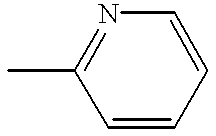 |
148-150 | G | G | G | F | G | D | F | F |
| 34 |
 |
112-114 | G | G | A | E | G | D | D | F |
| 35 |
 |
131-135 | G | G | A | E | G | F | F | G |
| 36 |
 |
144-145 | G | G | A | E | G | F | D | D |
| 37 |
 |
141 | F | D | A | D | B | E | F | F |
| 38 |
 |
oil | G | G | G | D | G | F | ||
| 39 |
 |
oil | G | G | G | B | G | G | F | F |
| 40 |
 |
119-122 | G | B | G | B | G | G | ||
| 41 |
 |
152-154 | D | A | B | F | F | F | E | G |
| 42 |
 |
129-132 | B | D | A | C | G | F | F | F |
| 43 |
 |
183-184 | G | G | G | F | G | F | G | F |
| 44 |
 |
133-135 | G | G | G | F | G | F | G | G |
| 45 |
 |
182-183 | G | G | G | F | G | F | F | F |
| 46 |
 |
120-124 | G | D | D | E | G | F | F | G |
| 47 |
 |
103-105 | A | A | A | C | G | G | F | G |
| 48 |
 |
165-167 | G | A | A | D | G | G | F | G |
| 49 |
 |
118-120 | D | A | A | F | G | F | F | G |
| 50 |
 |
130-133 | G | G | A | D | G | F | D | F |
| 51 |
 |
155-158 | B | A | A | F | G | F | F | F |
| 52 |
 |
123-125 | A | A | A | D | G | F | G | G |
| 53 |
 |
107-108 | F | A | A | E | G | F | F | G |
| 54 |
 |
oil | A | A | B | E | G | F | F | F |
| 55 |
 |
oil | D | A | A | F | G | F | F | F |
| 56 |
 |
84-86 | A | A | A | E | G | F | F | G |
| 57 |
 |
143-144 | G | G | G | G | G | F | G | F |
| 58 |
 |
166-168 | G | G | G | F | G | F | F | F |
| 59 |
 |
83-85 | G | G | G | F | G | F | F | F |
| 60 |
 |
137-138 | G | A | A | F | G | E | G | G |
| 61 |
 |
189-191 | G | G | G | F | G | F | F | F |
| 62 |
 |
153-155 | G | G | G | F | G | F | F | F |
| 63 |
 |
158-161 | G | D | A | G | G | F | ||
| 64 |
 |
155-159 | G | B | A | G | G | F | ||
| 65 |
 |
96-98 | A | A | A | F | ||||
| TABLE 2 |
 |
| compound | Q | mp | TBW | BAW | CL | CA | SM | WF | BPH | GLH |
| 66 |
 |
120-122 | G | GG | G | B | G | F | G | F |
| 67 |
 |
glass | B | A | G | A | B | F | G | G |
| 68 |
 |
114-116 | G | G | G | A | G | F | F | F |
| 69 |
 |
155-157 | G | G | G | E | F | G | F | |
| 70 |
 |
116-117 | G | G | G | C | F | G | G | |
| 71 |
 |
133-134 | G | G | G | A | F | F | G | |
| 72 |
 |
105-106 | G | A | B | C | F | F | F | G |
| TABLE 3 |
 |
| compound | ||||||||||
| number | Ar | mp | TBW | BAW | CL | CA | SM | WF | BPH | GLH |
| 73 |
 |
92 | A | A | F | F | G | F | A | G |
| 74 |
 |
147 | F | F | G | F | G | F | F | F |
| 75 | CH3— | 75-77 | G | G | G | F | G | F | C | F |
| 76 |
 |
125 | G | A | G | G | F | F | F | |
| TABLE 4 |
 |
| compound | Ar | mp | TBW | BAW | CL | CA | SM | WF | BPH | GLH |
| 77 |
 |
149 | G | A | A | F | D | D | F | F |
| 78 | CH3— | 133-135 | G | A | G | F | G | D | F | F |
| 79 |
 |
179 | G | G | G | F | G | D | F | F |
| TABLE 5 |
 |
| compound | R1 | mp | TBW | BAW | CL | CA | SM | WF | BPH | GLH |
| 80 | H | 209-211 | G | G | G | G | G | F | ||
| 81 | —CH2CH3 | oil | F | A | D | F | G | F | ||
| 82 | -nC4H9 | oil | G | D | A | F | G | F | ||
| 83 |
 |
135-137 | G | G | G | F | G | F | ||
| 84 |
 |
125-126 | G | G | G | F | G | F | ||
| TABLE 6 |
 |
| compound | Q | mp | TBW | BAW | CL | CA | SM | WF | BPH | GLH |
| 85 |
 |
oil | G | G | G | B | G | F | E | F |
| 86 |
 |
77-80 | G | G | G | E | C | F | F | F |
| 87 |
 |
oil | F | F | F | |||||
| 88 |
 |
162-164 | G | G | G | D | G | F | G | F |
| 89 |
 |
oil | G | G | G | B | G | F | G | F |
| TABLE 7 |
 |
| compound | R2 | mp | TBW | BAW | CL | CA | SM | WF | BPH | GLH |
| 90 |
 |
oil | G | A | A | B | G | F | E | F |
| 91 |
 |
147-148 | G | A | B | A | G | F | F | F |
| 92 |
 |
123-125 | G | A | A | A | F | F | F | F |
| 93 |
 |
oil | G | A | A | E | G | F | F | F |
| 94 |
 |
138-140 | D | A | A | B | G | F | ||
| 95 |
 |
148-150 | F | B | B | C | G | F | ||
| 96 | —Si(CH3)3 | 121-123 | F | A | A | D | D | F | ||
| 97 | —H | 125-127 | G | G | G | B | G | F | ||
| 98 |
 |
oil | A | A | A | C | ||||
| TBW refers to activity at 400 ppm against tobacco budworm, | ||||||||||
| BAW refers to activity at 400 ppm against beet armyworm, | ||||||||||
| CL refers to activity at 400 ppm against cabbage looper, | ||||||||||
| CA refers to activity at 50 ppm against cotton aphid, | ||||||||||
| SM refers to activity at 2.5 ppm against two-spotted spider mite, | ||||||||||
| WF refers to activity at 200 ppm against whitefly, | ||||||||||
| BPH refers to activity at 10 ppm against brown planthopper, and | ||||||||||
| GLH refers to activity at 10 ppm against green leafbopper. | ||||||||||
| In each case the rating scale is as follows |
| % Control | Rating |
| 90-100 | A |
| 80-89 | B |
| 70-79 | C |
| 60-69 | D |
| 50-59 | E |
| less than 50 | F |
| inactive | G |
Insecticide and Miticide Utility
The compounds of the invention are useful for the control of insects, mites, and aphids. Therefore, the present invention also is directed to a method for inhibiting an insect, mite, or aphid which comprises applying to a locus of the insect or mite an insect- or mite-inhibiting amount of a compound of formula (1).
The compounds are useful for reducing populations of insects and mites and are useful in a method of inhibiting an insect or mite population which comprises applying to a locus of the insect or mite an effective insect- or mite-inactivating amount of a compound of formula (1). The “locus” of insects or mites is a term used herein to refer to the environment in which the insects or mites live or where their eggs are present, including the air surrounding them, the food they eat, or objects which they contact. For example, plant-ingesting insects or mites can be controlled by applying the active compound to plant parts that the insects or mites eat, particularly the foliage. It is contemplated that the compounds might also be useful to protect textiles, paper, stored grain, or seeds by applying an active compound to such substance. The term “inhibiting an insect or mite” refers to a decrease in the numbers of living insects or mites, or a decrease in the number of viable insect or mite eggs. The extent of reduction accomplished by a compound depends, of course, upon the application rate of the compound, the particular compound used, and the target insect or mite species. At least an inactivating amount should be used. The terms “insect-inactivating amount” and “mite-inactivating amount” are used to describe the amount, which is sufficient to cause a measurable reduction in the treated insect or mite population. Generally an amount in the range from about 1 to about 1000 ppm active compound is used.
In a preferred embodiment, the present invention is directed to a method for inhibiting a mite or aphid which comprises applying to a plant an effective mite- or aphid- inactivating amount of a compound of formula (1).
Insecticidal test for tobacco budworm (Heliothis virescens), beet armyworm (Spodoptera exigua), and cabbage looper (Trichoplusia ni).
To prepare test solution, the test compound was formulated at 400 ppm in 7.5 mL of 2 acetone: 1 tap water. 250 μl of the test solution was pipetted upon the surface of 8 mL of lepidopteran diet (modified Shorey) contained in each of five one-ounce plastic cups (one cup=1 replication). A second-instar beet armyworm was placed upon the treated diet in each cup once the solvent had air-dried. The solutions remaining after completing applications to the one-ounce cups were then used as leaf-dip solutions for 3.5 cm leaf discs cut from cabbage leaves and cotton cotyledons. Five discs of each type of plant were dipped until thoroughly coated into each rate of each compound (=5 replications of each treatment). After air-drying, the treated leaf discs were placed individually into one-ounce plastic cups. Each dried, treated cotton cotyledon disc was infested with a 2nd instar tobacco budworm larva, and each cabbage leaf disc was infested with a 2nd instar cabbage looper larva. Cups containing the treated substrates and larvae were capped and then held in a growth chamber at 25° C., 50-55% R.H., and 14 hr light: 10 hr dark for 5 days. The number of dead insects of 5 per species per treatment was then determined and the results are given in Table 1-7.
Insecticidal test for cotton aphid (Aphis gossvpii)
To prepare spray solutions, 1 mg of each test compound was dissolved into 2 nL of a 90:10 acetone:ethanol solvent. This 1 mL of chemical solution was added to 19 mL of water containing 0.05% Tween 20 surfactant to produce a 50 ppm spray solution.
Squash cotyledons were infested with cotton aphid (all life stages)16-20 hours prior to application of spray solution. The solution was sprayed on both sides of each infested squash cotyledon (0.5 mL X 2 each side) with a sweeping action until runoff. The plants were allowed to air dry and held for 3 days in a controlled room at 26° C. and 40% RH after which time the test was graded. Grading was by actual count using a dissecting microscope and comparison of test counts to the untreated check. Results are given in Table 1-7 as percent control based on population reduction versus the untreated.
Insecticidal test for two-spotted spider mite (Tetranychus urticae)
Ovicide Method:
Ten adult female two-spotted spider mites were placed on eight 2.2 cm leaf discs of cotton leaf, allowed to oviposit over 24 hours, and thereafter removed. The leaf discs were sprayed with 100 ppm test solutions using a hand syringe, then allowed to dry with sixteen discs left untreated as a negative control. Discs were placed on an agar substrate and held at 24° C. and 90% relative humidity for 6 days. Percent control based on the number of hatched larvae on treated discs and the number on untreated discs is reported in Table 1-7.
Insecticidal test for Sweetpotato Whitefly (Bemisia tabacia)
Four mg of each test compound were dissolved by adding 4 mL of a 90:10 acetone:ethanol solvent mixture to the vial containing the sample compound. This solution was added to 16 mL of water containing 0.05% Tween 20 surfactant to produce
20 ml of an 200 ppm spray solution.
Five-week-old cotton plants reared in a greenhouse were stripped of all foliage except for the two uppermost true leaves that were greater than 5 cm in diameter. These plants were then placed into a laboratory colony of whiteflies for two days for oviposition by the colony females. All whiteflies were then removed from the test plants with pressurized air. The spray solution was then applied to the test plants with a hand-held syringe fitted with hollow cone nozzle. One mL of spray solution was applied to each leaf top and bottom for a total of 4 mL per plant. Four replications of each test compound utilized a total of 16 mL spray solution. Plants were air dried and then placed in a holding chamber (28° C. and 60% RH) for 13 days. Compound efficacy was evaluated by counting, under an illuminated magnifying glass, the number of large nymphs (3rd-4th instar) per leaf. Percent control based on reduction of large nymphs of a test compound compared to solution-only (no test compound) sprayed plants is reported in Table 1-7.
Insecticidal test for Brown Planthopper (Nilaparvata lugens) and Green Leafhopper (Nephotettix cincticeps)
Ten mg of test substance were dissolved in 1 mL of acetone, making a 10,000 ppm solution. Out of this 10,000 ppm solution, 0.1 ml (100 microlitre) are added to 99.9 ml of water to produce 100 ml of a 10 ppm test solution. Twenty-five ml of 10 ppm test solution were added to each of four glass cylinder cages. Within each cylinder, roots of three to five four-week old rice seedlings are submerged in the test. Five laboratory-reared 3 rd instar nymphs of either brown planthopper or green leafhopper were introduced into the glass cylinder cages. The cylinders (four replicates per treatment) were held in a growth chamber at 28° C. and 75% relative humidity, with a photoperiod of 14 hours. Mortality is observed 6 days after infestation of insects into the test arena. Results are given in Table 1-7 as percent mortality.
In addition to being effective against mites, aphids, and insects when applied to foliage, compounds of formula (1) have systemic activity. Accordingly, another aspect of the invention is a method of protecting a plant from insects which comprises treating plant seed prior to planting it, treating soil where plant seed is to be planted, or treating soil at the roots of a plant after it is planted, with an effective amount of a compound of formula (1).
Compositions
The compounds of this invention are applied in the form of compositions which are important embodiments of the invention, and which comprise a compound of this invention and a phytologically-acceptable inert carrier. The compositions are either concentrated formulations which are dispersed in water for application, or are dust or granular formulations which are applied without further treatment. The compositions are prepared according to procedures and formulae which are conventional in the agricultural chemical art, but which are novel and important because of the presence therein of the compounds of this invention. Some description of the formulation of the compositions will be given, however, to assure that agricultural chemists can readily prepare any desired composition.
The dispersions in which the compounds are applied are most often aqueous suspensions or emulsions prepared from concentrated formulations of the compounds. Such water-soluble, water-suspendable or emulsifiable formulations are either solids, usually known as wettable powders, or liquids usually known as emulsifiable concentrates or aqueous suspensions. Wettable powders, which may be compacted to form water dispersible granules, comprise an intimate mixture of the active compound, an inert carrier, and surfactants. The concentration of the active compound is usually from about 10% to about 90% by weight. The inert carrier is usually chosen from among the attapulgite clays, the montmorillonite clays, the diatomaceous earths, or the purified silicates. Effective surfactants, comprising from about 0.5% to about 10% of the wettable powder, are found among the sulfonated lignins, the condensed naphthalenesulfonates, the naphthalenesulfonates, the alkylbenzenesulfonates, the alkyl sulfates, and nonionic surfactants such as ethylene oxide adducts of alkyl phenols.
Emulsifiable concentrates of the compounds comprise a convenient concentration of a compound, such as from about 50 to about 500 grams per liter of liquid, equivalent to about 10% to about 50%, dissolved in an inert carrier which is either a water miscible solvent or a mixture of water-immiscible organic solvent and emulsifiers. Useful organic solvents include aromatics, especially the xylenes, and the petroleum fractions, especially the high-boiling naphthalenic and olefinic portions of petroleum such as heavy aromatic naphtha. Other organic solvents may also be used, such as the terpenic solvents including rosin derivatives, aliphatic ketones such as cyclohexanone, and complex alcohols such as 2-ethoxyethanol. Suitable emulsifiers for emulsifiable concentrates are chosen from conventional nonionic surfactants, such as those discussed above.
Aqueous suspensions comprise suspensions of water-insoluble compounds of this invention, dispersed in an aqueous vehicle at a concentration in the range from about 5% to about 50% by weight. Suspensions are prepared by finely grinding the compound, and vigorously mixing it into a vehicle comprised of water and surfactants chosen from the same types discussed above. Inert ingredients, such as inorganic salts and synthetic or natural gums, may also be added, to increase the density and viscosity of the aqueous vehicle. It is often most effective to grind and mix the compound at the same time by preparing the aqueous mixture, and homogenizing it in an implement such as a sand mill, ball mill, or piston-type homogenizer.
The compounds may also be applied as granular compositions, which are particularly useful for applications to the soil. Granular compositions usually contain from about 0.5% to about 10% by weight of the compound, dispersed in an inert carrier which consists entirely or in large part of clay or a similar inexpensive substance. Such compositions are usually prepared by dissolving the compound in a suitable solvent and applying it to a granular carrier which has been pre-formed to the appropriate particle size, in the range of from about 0.5 to 3 mm. Such compositions may also be formulated by making a dough or paste of the carrier and compound and crushing and drying to obtain the desired granular particle size.
Dusts containing the compounds are prepared simply by intimately mixing the compound in powdered form with a suitable dusty agricultural carrier, such as kaolin clay, ground volcanic rock, and the like. Dusts can suitably contain from about 1% to about 10% of the compound.
It is equally practical, when desirable for any reason, to apply the compound in the form of a solution in an appropriate organic solvent, usually a bland petroleum oil, such as the spray oils, which are widely used in agricultural chemistry.
Insecticides and acaricides are generally applied in the form of a dispersion of the active ingredient in a liquid carrier. It is conventional to refer to application rates in terms of the concentration of active ingredient in the carrier. The most widely used carrier is water.
The compounds of the invention can also be applied in the form of an aerosol composition. In such compositions the active compound is dissolved or dispersed in an inert carrier, which is a pressure-generating propellant mixture. The aerosol composition is packaged in a container from which the mixture is dispensed through an atomizing valve. Propellant mixtures comprise either low-boiling halocarbons, which may be mixed with organic solvents, or aqueous suspensions pressurized with inert gases or gaseous hydrocarbons.
The actual amount of compound to be applied to loci of insects, mites, and aphids is not critical and can readily be determined by those skilled in the art in view of the examples above. In general, concentrations of from-10 ppm to 5000 ppm of compound are expected to provide good control. With many of the compounds, concentrations of from 100 to 1500 ppm will suffice. For field crops, such as soybeans and cotton, a suitable application rate for the compounds is about 0.5 to 1.5 lb/A, typically applied in 5-20 gal/A of spray formulation containing 1200 to 3600 ppm of compound. For citrus crops, a suitable application rate is from about 100 to 1500 gal/A spray formulation, which is a rate of 100 to 1000 ppm.
The locus to which a compound is applied can be any locus inhabited by an insect or arachnid, for example, vegetable crops, fruit and nut trees, grape vines, and ornamental plants. Inasmuch as many mite species are specific to a particular host, the foregoing list of mite species provides exemplification of the wide range of settings in which the present compounds can be used.
Because of the unique ability of mite eggs to resist toxicant action, repeated applications may be desirable to control newly emerged larvae, as is true of other known acaricides.
The following formulations of compounds of the invention are typical of compositions useful in the practice of the present invention.
| A. 0.75 Emulsifiable Concentrate | |
| Compound of formula (1) | 9.38% |
| “TOXIMUL D”(nonionic/anionic surfactant blend) | 2.50% |
| “TOXIMUL H’(nonionic/anionic surfactant blend) | 2.50% |
| “EXXON 200”(naphthalenic solvent) | 85.62% |
| B. 1.5 Emulsifiable Concentrate | |
| Compound of formula (1) | 18.50% |
| “TOXIMUL D” | 2.50% |
| “TOXIMUL H” | 2.50% |
| “EXXON 200” | 76.50% |
| C. 1.0 Emulsifiable Concentrate | |
| Compound of formula (1) | 12.5% |
| N-methylpyrrolidone | 25.00% |
| “TOXIMUL D” | 2.50% |
| “TOXIMUL H” | 2.50% |
| “EXXON 200” | 57.50% |
| D. 1.0 Aqueous Suspension | |
| Compound of formula (1) | 12.00% |
| “PLURONIC P-103”(block copolymer of propylene oxide and | 1.50% |
| ethylene oxide, surfactant) | |
| “PROXEL GXL”(biocide/preservative) | .05% |
| “AF-100”(silicon based antifoam agent) | .20% |
| “REAX 88B”(lignosulfonate dispersing agent) | 1.00% |
| propylene glycol | 10.00% |
| veegum | .75% |
| xanthan | .25% |
| water | 74.25% |
| E. 1.0 Aqueous Suspension | |
| Compound of formula (1) | 12.50% |
| “MAKON 10”(10 moles ethyleneoxide nonylphenol surfactant | 1.00% |
| “ZEOSYL 200”(silica) | 1.00% |
| “AF-100” | 0.20% |
| “AGRIWET FR”(surfactant) | 3.00% |
| 2% xanthan hydrate | 10.00% |
| water | 72.30% |
| F. 1.0 Aqueous Suspension | |
| Compound of formula (1) | 12.50% |
| “MAKON 10” | 1.50% |
| “ZEOSYL 200”(silica) | 1.00% |
| “AF-100” | 0.20% |
| “POLYFON H”(lignosulfonate dispersing agent) | 0.20% |
| 2% xanthan hydrate | 10.00% |
| water | 74.60% |
| G. Wettable Powder | |
| Compound of formula (1) | 25.80% |
| “POLYFON H” | 3.50% |
| “SELLOGEN HR” | 5.00% |
| “STEPANOL ME DRY” | 1.00% |
| gum arabic | 0.50% |
| “HISIL 233” | 2.50% |
| Barden clay | 61.70% |
| H. 1.0 Aqueous Suspension | |
| Compound of formula (1) | 12.40% |
| “TERGITOL 158-7” | 5.00% |
| “ZEOSYL 200” | 1.0% |
| “AF-1G0” | 0.20% |
| “POLYFON H” | 0.50% |
| 2% xanthan solution | 10.00% |
| tap water | 70.90% |
| I. 1.0 Emulsifiable Concentrate | |
| Compound of formula (1) | 12.40% |
| “TOXIMUL D” | 2.50% |
| “TOXIMUL H” | 2.50% |
| “EXXON 200” | 82.60% |
| J. Wettable Powder | |
| Compound of formula (1) | 25.80% |
| “SELLOGEN HR” | 5.00% |
| “POLYFON H” | 4.00% |
| “STEPANOL ME DRY” | 2.00% |
| “HISIL 233” | 3.00% |
| Barden clay | 60.20% |
| K. 0.5 Emulsifiable Concentrate | |
| Compound of formula (1) | 6.19% |
| “TOXIMUL H” | 3.60% |
| “TOXIMIUL D” | 0.40% |
| “EXXON 200” | 89.81% |
| L. Emulsifiable Concentrate | |
| Compound of formula (1) | 5 to 48 |
| surfactant or surfactant blend | 2 to 20% |
| Aromatic Solvent or Mixture | 55 to 75% |
Claims (27)
1. A compound of the formula (1) 
wherein
Ar is phenyl, substituted phenyl, pyridyl, substituted pyridyl, or lower alkyl;
R1 is lower alkyl, cycloalkyl, or substituted phenyl;
Q is thienyl, substituted thienyl, pyridyl, or substituted pyridyl;
R2 is selected from H, lower alkyl, lower alkenyl, pyridyl, substituted pyridyl, pyrimidyl, substituted pyrimidyl, isoxazolyl, substituted isoxazolyl, naphthyl, substituted naphthyl, phenyl, substituted phenyl, thienyl, substituted thienyl, —(CH2)mR3, —CH═CHR3, —C≡CR3, —CH2OR3, —CH2SR3, —CH2NR3R3, —OCH2R3, 
R3 is H, lower alkyl, haloalkyl, lower alkenyl, lower alkynyl, phenyl, or substituted phenyl;
m is 1 or 2;
n is an integer from 2 to 6;
or a phytologically acceptable acid addition salt thereof.
2. A compound of claim 1 wherein Ar is a group of the formula 
wherein R4 and R5 are independently H, Cl, or F.
3. A compound of claim 2 wherein R4 and R5 are independently F or Cl.
4. A compound of claim 2 wherein R4 and R5 are both F.
5. A compound of claim 2 wherein R4 is F and R5 is Cl.
6. A compound of of claim 1 wherein Ar is a group of the formula 
wherein R4 and R5 are independently H, Cl, or F.
7. A compound of claim 6 wherein R4 and R5 are independently F or Cl.
8. A compound of claim 2 wherein R4 and R5 are both Cl.
9. A compound of claim 1 wherein Ar is lower alkyl.
10. A compound of claim 1 wherein Q is a thiophene or substituted thiophene.
11. A Compound of claim 1 wherein Q is a pyridyl or substituted pyridyl.
12. A compound of claim 1 wherein R1 is methyl, ethyl, hydrogen, cyclohexyl, or substituted phenyl.
13. A compound of claim 1 wherein R2 is a phenyl or substituted phenyl.
14. A compound of claim 1 wherein R2 is a thiophene or substituted thiophene.
15. A compound of claim 1 wherein R2 is a trimethyl silyl, lower alkyl (ethyl, propyl, n-butyl, t-butyl), or lower alkenyl (propenyl).
16. A composition for controlling insects or mites which comprises a compound of claim 1 in combination with a phytologically-acceptable carrier.
17. A method of controlling insects or mites which comprises applying to a locus where control is desired an insect- or mite-inactivating amount of a compound of claim 1 .
18. A method of controlling beet armyworm which comprises applying to a locus where control is desired a beet armyworm inactivating amount of a compound of claim 1 .
19. A method of controlling tobacco budworm which comprises applying to a locus where control is desired a tobacco budworm inactivating amount of a compound of claim 1 .
20. A method of controlling cabbage looper which comprises applying to a locus where control is desired a cabbage looper inactivating amount of a compound of claim 1 .
21. A method of controlling aphids which comprises applying to a locus where control is desired an aphid inactivating amount of a compound of claim 1 .
22. A method of controlling whitefly which comprises applying to a locus where control is desired a whitefly inactivating amount of a compound of claim 1 .
23. A method of controlling mites which comprises applying to a locus where control is desired a mite-inactivating amount of a compound of claim 1 .
24. A method of protecting a plant from aphids, mites, or insects which comprises treating plant seed prior to planting it, treating soil where plant seed is to be planted, or treating soil at the roots of a plant after it is planted, with an effective amount of a compound of claim 1 .
25. A process for preparing a compound of formula (1) 
wherein
Ar is phenyl, substituted phenyl, pyridyl, substituted pyridyl, or lower alkyl;
R1 is lower alkyl, cycloalkyl, or substituted phenyl;
Q is thienyl, substituted thienyl, pyridyl, or substituted pyridyl;
R2 is selected from H, lower alkyl, lower alkenyl, pyridyl, substituted pyridyl, pyrimidyl, substituted pyrimidyl, isoxazolyl, substituted isoxazolyl, naphthyl, substituted naphthyl, phenyl, substituted phenyl, thienyl, substituted thienyl, —(CH2)mR3, —CH═CHR3, —C≡CR3, —CH2OR3, —CH2SR3, —CH2NR3R3, —OCH2R3, 
R3 is H, lower alkyl, haloalkyl, lower alkenyl, lower alkynyl, phenyl, or substituted phenyl;
m is 1 or 2;
n is an integer from 2 to 6;
which comprises reacting a compound of formula 
wherein Ar, Q, and R1 are as defined above,
with an appropriately substituted aryl iodide or aryl bromide of R2 under palladium catalysis.
26. A process for preparing a compound of formula (1) 
wherein
Ar is phenyl, substituted phenyl, pyridyl, substituted pyridyl, or lower alkyl;
R1 is lower alkyl, cycloalkyl, or substituted phenyl;
Q is thienyl, substituted thienyl, pyridyl, or substituted pyridyl;
R2 is selected from H, lower alkyl, lower alkenyl, pyridyl, substituted pyridyl, pyrimidyl, substituted pyrimidyl, isoxazolyl, substituted isoxazolyl, naphthyl, substituted naphthyl, phenyl, substituted phenyl, thienyl, substituted thienyl, —(CH2)mR3, —CH═CHR3, —C≡CR3, —CH2OR3, —CH2SR3, —CH2NR3R3, —OCH2R3, 
R3 is H, lower alkyl, haloalkyl, lower alkenyl, lower alkynyl, phenyl, or substituted phenyl;
m is 1 or 2;
n is an integer from 2 to 6;;
which comprises reacting a compound of formula 
wherein Ar, Q, and R1 are as defined above, and X is Br or I with a terminal alkyne of R2 of formula (1) in claim 1 under palladium catalysis.
27. A compound of the formula 
wherein
Ar is phenyl, substituted phenyl, pyridyl, substituted pyridyl, or lower alkyl;
R1 is lower alkyl, cycloalkyl, or substituted phenyl;
Q is thienyl, substituted thienyl, pyridyl, or substituted pyridyl.
Priority Applications (1)
| Application Number | Priority Date | Filing Date | Title |
|---|---|---|---|
| US09/834,845 US6417187B2 (en) | 2000-04-14 | 2001-04-13 | 1,2,4-triazole based compounds that can be used as insecticides or acaricides and processes |
Applications Claiming Priority (2)
| Application Number | Priority Date | Filing Date | Title |
|---|---|---|---|
| US19717900P | 2000-04-14 | 2000-04-14 | |
| US09/834,845 US6417187B2 (en) | 2000-04-14 | 2001-04-13 | 1,2,4-triazole based compounds that can be used as insecticides or acaricides and processes |
Publications (2)
| Publication Number | Publication Date |
|---|---|
| US20020019370A1 US20020019370A1 (en) | 2002-02-14 |
| US6417187B2 true US6417187B2 (en) | 2002-07-09 |
Family
ID=26892627
Family Applications (1)
| Application Number | Title | Priority Date | Filing Date |
|---|---|---|---|
| US09/834,845 Expired - Lifetime US6417187B2 (en) | 2000-04-14 | 2001-04-13 | 1,2,4-triazole based compounds that can be used as insecticides or acaricides and processes |
Country Status (1)
| Country | Link |
|---|---|
| US (1) | US6417187B2 (en) |
Cited By (9)
| Publication number | Priority date | Publication date | Assignee | Title |
|---|---|---|---|---|
| US20050104062A1 (en) * | 1992-06-01 | 2005-05-19 | Reed Mark A. | Sub-nanoscale electronic devices and processes |
| WO2011017504A1 (en) * | 2009-08-07 | 2011-02-10 | Dow Agrosciences Llc | Pesticidal compositions |
| WO2011017513A1 (en) * | 2009-08-07 | 2011-02-10 | Dow Agrosciences Llc | Pesticidal compositions |
| WO2014163933A1 (en) * | 2013-03-13 | 2014-10-09 | Dow Agrosciences Llc | Process for preparation of triaryl pesticide intermediate |
| WO2014163932A1 (en) * | 2013-03-13 | 2014-10-09 | Dow Agrosciences Llc | Preparation of haloalkoxyarylhydrazines and intermediates therefrom |
| US9006468B2 (en) | 2008-02-12 | 2015-04-14 | Dow Agrosciences, Llc. | Pesticidal compositions |
| US9440964B2 (en) | 2011-07-12 | 2016-09-13 | Dow Agrosciences Llc | Pesticidal compositions and processes related thereto |
| US10233155B2 (en) | 2016-12-29 | 2019-03-19 | Dow Agrosciences Llc | Processes for the preparation of pesticide compounds |
| US10315999B2 (en) | 2013-10-17 | 2019-06-11 | Dow Agrosciences Llc | Processes for the preparation of pesticidal compounds |
Families Citing this family (11)
| Publication number | Priority date | Publication date | Assignee | Title |
|---|---|---|---|---|
| DE10250708A1 (en) * | 2002-10-31 | 2004-05-19 | Boehringer Ingelheim Pharma Gmbh & Co. Kg | New alkyne compounds having MCH antagonist activity and medicaments containing these compounds |
| US7452911B2 (en) * | 2002-10-31 | 2008-11-18 | Boehringer Ingelheim Pharma Gmbh & Co. Kg | Alkyne compounds with MCH antagonistic activity and medicaments comprising these compounds |
| AU2004277000A1 (en) * | 2003-10-01 | 2005-04-07 | W.E.C.U. Technologies Ltd. | Method and system for screening and indicating individuals with hidden intent |
| WO2012162635A1 (en) | 2011-05-26 | 2012-11-29 | Sunovion Pharmaceuticals Inc. | Metabotropic glutamate receptors 5 modulators and methods of use thereof |
| US10056563B2 (en) * | 2016-04-08 | 2018-08-21 | Samsung Electronics Co., Ltd. | Synthetic method of fused heteroaromatic compound and fused heteroaromatic compound, and intermediate thereof |
| KR102677490B1 (en) | 2016-11-08 | 2024-06-20 | 삼성전자주식회사 | Synthetic method of fused heteroaromatic compound and fused heteroaromatic compound and intermediate therefor and synthetic method of intermediate |
| AR112672A1 (en) | 2017-08-11 | 2019-11-27 | Syngenta Participations Ag | THIOPHENE DERIVATIVES ACTIVE AS PESTICIDES |
| CN108727287B (en) * | 2018-05-10 | 2020-10-27 | 东南大学 | 1,2, 4-triazole compound and salt and application thereof |
| TW202317530A (en) * | 2021-06-29 | 2023-05-01 | 日商住友化學股份有限公司 | Method for controlling resistant harmful arthropod using heterocyclic compound and composition comprising same |
| WO2024017150A1 (en) * | 2022-07-18 | 2024-01-25 | 苏州鹏旭医药科技有限公司 | Method for synthesizing deucravacitinib |
| CN117447411B (en) * | 2022-07-18 | 2025-12-23 | 苏州鹏旭医药科技有限公司 | A method for synthesizing a heterocyclic drug intermediate |
Citations (4)
| Publication number | Priority date | Publication date | Assignee | Title |
|---|---|---|---|---|
| EP0572142A2 (en) | 1992-05-29 | 1993-12-01 | Kumiai Chemical Industry Co., Ltd. | Novel 3,5-diphenyl substituted 1,2,4-triazoles and their use as insecticides and acaricides |
| US5482951A (en) | 1992-05-29 | 1996-01-09 | Kumiai Chemical Industry Co., Ltd. | Triazole derivatives as well as insecticide and acaricide |
| JPH0892224A (en) | 1994-09-16 | 1996-04-09 | Kumiai Chem Ind Co Ltd | 3,5-Substituted phenyltriazole derivatives and insecticides and acaricides |
| JPH08283261A (en) | 1995-04-07 | 1996-10-29 | Kumiai Chem Ind Co Ltd | 3-Phenyltriazole derivative and insecticide, acaricide |
-
2001
- 2001-04-13 US US09/834,845 patent/US6417187B2/en not_active Expired - Lifetime
Patent Citations (4)
| Publication number | Priority date | Publication date | Assignee | Title |
|---|---|---|---|---|
| EP0572142A2 (en) | 1992-05-29 | 1993-12-01 | Kumiai Chemical Industry Co., Ltd. | Novel 3,5-diphenyl substituted 1,2,4-triazoles and their use as insecticides and acaricides |
| US5482951A (en) | 1992-05-29 | 1996-01-09 | Kumiai Chemical Industry Co., Ltd. | Triazole derivatives as well as insecticide and acaricide |
| JPH0892224A (en) | 1994-09-16 | 1996-04-09 | Kumiai Chem Ind Co Ltd | 3,5-Substituted phenyltriazole derivatives and insecticides and acaricides |
| JPH08283261A (en) | 1995-04-07 | 1996-10-29 | Kumiai Chem Ind Co Ltd | 3-Phenyltriazole derivative and insecticide, acaricide |
Non-Patent Citations (3)
| Title |
|---|
| Akerblom, Eva B. and Campbell, Dag E.S., J. Med. Chem. "Nitrofuryltriazole Derivatives as Potential Urinary Tract Antibacterial Agents" 1973, 16(4), 312. |
| Akerblom, Eva B., J. Med. Chem. "Nitrofurans with High Renal Excretion" 1974, 17(7), 756. |
| Benjamin, Louis E. and Snyder, Harry R., Jr. "Nitrofuryl Heterocycles. XIII(1). N-Methyl-3-methylthio-5-(5-nitro-2-furanyl)-1H-1,2,4-traizoles" J. Hetercyclic Chem. 1976, 13, 1115. |
Cited By (27)
| Publication number | Priority date | Publication date | Assignee | Title |
|---|---|---|---|---|
| US20050104062A1 (en) * | 1992-06-01 | 2005-05-19 | Reed Mark A. | Sub-nanoscale electronic devices and processes |
| US7015336B2 (en) * | 1992-06-01 | 2006-03-21 | Yale University | Sub-nanoscale electronic devices and processes |
| US9732109B2 (en) | 2008-02-12 | 2017-08-15 | Dow Agrosciences Llc | Pesticidal compositions |
| US9018363B2 (en) | 2008-02-12 | 2015-04-28 | Dow Agrosciences Llc | Pesticidal compositions |
| US9006468B2 (en) | 2008-02-12 | 2015-04-14 | Dow Agrosciences, Llc. | Pesticidal compositions |
| RU2532470C2 (en) * | 2009-08-07 | 2014-11-10 | ДАУ АГРОСАЙЕНСИС ЭлЭлСи | Pesticidal compositions |
| CN102548411A (en) * | 2009-08-07 | 2012-07-04 | 陶氏益农公司 | Pesticidal compositions |
| US8680269B2 (en) | 2009-08-07 | 2014-03-25 | Dow Agrosciences, Llc. | Pesticidal compositions |
| CN102548411B (en) * | 2009-08-07 | 2014-07-02 | 陶氏益农公司 | Pesticidal compositions |
| KR101798247B1 (en) | 2009-08-07 | 2017-11-15 | 다우 아그로사이언시즈 엘엘씨 | Pesticidal compositions |
| KR101798248B1 (en) | 2009-08-07 | 2017-11-15 | 다우 아그로사이언시즈 엘엘씨 | Pesticidal compositions |
| CN102548410B (en) * | 2009-08-07 | 2014-10-22 | 陶氏益农公司 | Pesticidal compositions |
| AP3534A (en) * | 2009-08-07 | 2016-01-13 | Dow Agrosciences Llc | Pesticidal compositions |
| RU2543806C2 (en) * | 2009-08-07 | 2015-03-10 | ДАУ АГРОСАЙЕНСИЗ ЭлЭлСи | Molecule, pesticide composition based thereon (versions) and method of using molecule (versions) |
| CN102548410A (en) * | 2009-08-07 | 2012-07-04 | 陶氏益农公司 | Pesticidal compositions |
| WO2011017513A1 (en) * | 2009-08-07 | 2011-02-10 | Dow Agrosciences Llc | Pesticidal compositions |
| US8674109B2 (en) | 2009-08-07 | 2014-03-18 | Dow Agrosciences, Llc. | Pesticidal compositions |
| US9179681B2 (en) | 2009-08-07 | 2015-11-10 | Dow Agrosciences Llc | Pesticidal compositions |
| WO2011017504A1 (en) * | 2009-08-07 | 2011-02-10 | Dow Agrosciences Llc | Pesticidal compositions |
| US9440964B2 (en) | 2011-07-12 | 2016-09-13 | Dow Agrosciences Llc | Pesticidal compositions and processes related thereto |
| US9108932B2 (en) | 2013-03-13 | 2015-08-18 | Dow Agrosciences Llc | Preparation of haloalkoxyarylhydrazines and intermediates therefrom |
| US9604942B2 (en) | 2013-03-13 | 2017-03-28 | Dow Agrosciences Llc | Preparation of haloalkoxyarylhydrazines and intermediates therefrom |
| US9212150B2 (en) | 2013-03-13 | 2015-12-15 | Dow Agrosciences Llc | Process for the preparation of certain triaryl pesticide intermediates |
| WO2014163932A1 (en) * | 2013-03-13 | 2014-10-09 | Dow Agrosciences Llc | Preparation of haloalkoxyarylhydrazines and intermediates therefrom |
| WO2014163933A1 (en) * | 2013-03-13 | 2014-10-09 | Dow Agrosciences Llc | Process for preparation of triaryl pesticide intermediate |
| US10315999B2 (en) | 2013-10-17 | 2019-06-11 | Dow Agrosciences Llc | Processes for the preparation of pesticidal compounds |
| US10233155B2 (en) | 2016-12-29 | 2019-03-19 | Dow Agrosciences Llc | Processes for the preparation of pesticide compounds |
Also Published As
| Publication number | Publication date |
|---|---|
| US20020019370A1 (en) | 2002-02-14 |
Similar Documents
| Publication | Publication Date | Title |
|---|---|---|
| US6417187B2 (en) | 1,2,4-triazole based compounds that can be used as insecticides or acaricides and processes | |
| US6262305B1 (en) | Process and intermediates for preparing 3-(substituted phenyl)-5-(thienyl or furyl)-1,2,4-triazole compounds | |
| EP1123287B1 (en) | Insecticidal 3- (substituted pyridyl) -1, 2, 4-triazoles | |
| KR100744987B1 (en) | Fungicides | |
| WO1994008975A1 (en) | Pyrimidine derivative | |
| US6413997B1 (en) | 3-(substituted phenyl)-5-(substituted heterocyclyl)-1,2,4-triazole compounds | |
| JPH09235282A (en) | Substituted thiophene derivatives and fungicides for agricultural and horticultural use containing the same as active ingredients | |
| JP2006527172A (en) | Use of isoindolinone derivatives as insecticides | |
| EP1123290B1 (en) | 3-(substituted phenyl)-5-thienyl-1,2,4-triazole compounds with activity against whitefly | |
| EA004574B1 (en) | Oxime o-ether compounds and fungicides for agricultural and horticultural use | |
| EP1292593B1 (en) | 2-(3,5-disubstituted-4-pyridyl)-4-(thienyl, thiazolyl or arylphenyl)-1,3-oxazoline compounds | |
| KR100349484B1 (en) | Plant disease release agent | |
| EP1123281B1 (en) | 3-(substituted phenyl)-5-(substituted cyclopropyl)-1,2,4-triazole compounds | |
| US5814629A (en) | Microbicides | |
| US5556859A (en) | N-(4-pyrimidinyl)amide pesticides | |
| JP3385264B2 (en) | Substituted thiophene derivatives and fungicides for agricultural and horticultural use containing the same as active ingredients | |
| US5451563A (en) | Silyl heterocyclic fungicides | |
| JPH06122680A (en) | Substituted nitroguanidine derivatives, method for producing the same, insecticides and intermediates containing the derivatives as active ingredients, and method for producing the same | |
| MXPA01002806A (en) | 2-methoxyimino -2-(pyridinyloxymethyl) phenyl acetamides with 5 membered heterocyclic rings on the pyridine ring as fungicides | |
| JPH05148280A (en) | 1,2,3-triazole derivative, its production and noxious organism-controlling agent |
Legal Events
| Date | Code | Title | Description |
|---|---|---|---|
| AS | Assignment |
Owner name: DOW AGROSCIENCES LLC, INDIANA Free format text: ASSIGNMENT OF ASSIGNORS INTEREST;ASSIGNORS:HEGDE, VIDYADHAR BABU;BIS, SCOTT JEROME;HEO, EMILIE CHASSAT;AND OTHERS;REEL/FRAME:012897/0231;SIGNING DATES FROM 20020302 TO 20020426 |
|
| STCF | Information on status: patent grant |
Free format text: PATENTED CASE |
|
| FPAY | Fee payment |
Year of fee payment: 4 |
|
| FPAY | Fee payment |
Year of fee payment: 8 |
|
| FPAY | Fee payment |
Year of fee payment: 12 |