US6319929B1 - Suksdorfin analogs, compositions thereof, and methods for making and using thereof - Google Patents
Suksdorfin analogs, compositions thereof, and methods for making and using thereof Download PDFInfo
- Publication number
- US6319929B1 US6319929B1 US09/207,500 US20750098A US6319929B1 US 6319929 B1 US6319929 B1 US 6319929B1 US 20750098 A US20750098 A US 20750098A US 6319929 B1 US6319929 B1 US 6319929B1
- Authority
- US
- United States
- Prior art keywords
- alkyl
- acyl
- hiv
- compound
- coch
- Prior art date
- Legal status (The legal status is an assumption and is not a legal conclusion. Google has not performed a legal analysis and makes no representation as to the accuracy of the status listed.)
- Expired - Fee Related
Links
- 0 C#*C1c2c(c(C)c(C)c3c(C)c(C)c(C)nc23)*C(C)(C)C1OC.[V]I Chemical compound C#*C1c2c(c(C)c(C)c3c(C)c(C)c(C)nc23)*C(C)(C)C1OC.[V]I 0.000 description 39
- OXCXLOAEGPLGMC-UHFFFAOYSA-N CC(=O)C12CCC(C)(C(=O)O1)C2(C)C Chemical compound CC(=O)C12CCC(C)(C(=O)O1)C2(C)C OXCXLOAEGPLGMC-UHFFFAOYSA-N 0.000 description 32
- XAPDXJZDEZJYAK-UHFFFAOYSA-N C.CC1CCCCC1 Chemical compound C.CC1CCCCC1 XAPDXJZDEZJYAK-UHFFFAOYSA-N 0.000 description 9
- UAEPNZWRGJTJPN-UHFFFAOYSA-N CC1CCCCC1 Chemical compound CC1CCCCC1 UAEPNZWRGJTJPN-UHFFFAOYSA-N 0.000 description 6
- MSIVBBJSPUIYNK-UHFFFAOYSA-N CC(=O)C12CCC(C)(C)C(C)(CC1)C(=O)O2 Chemical compound CC(=O)C12CCC(C)(C)C(C)(CC1)C(=O)O2 MSIVBBJSPUIYNK-UHFFFAOYSA-N 0.000 description 5
- KJFCORONARUJDY-UHFFFAOYSA-N C.CC1CCCCO1 Chemical compound C.CC1CCCCO1 KJFCORONARUJDY-UHFFFAOYSA-N 0.000 description 4
- OZTLKCZFPZJQFO-UHFFFAOYSA-N C=CC(C)(C)Cl.CC(=O)C12CCC(C)(C(=O)O1)C2(C)C.CC(=O)CC(C)C.CC1(C)C=CC2=C3OC(=O)C=CC3=CC=C2O1.CC1(C)OC2=CC=C3C=CC(=O)OC3=C2C(O)C1O.CC1(C)OC2=CC=C3C=CC(=O)OC3=C2C(OC(=O)C2=CC(Cl)=CC=C2)C1O.CC1(C)OC2=CC=C3C=CC(=O)OC3=C2C(O[Ac])C1=O.CC1(C)OC2=CC=C3C=CC(=O)OC3=C2CC1=O.CCC(C)C(C)=O.CCC(C)C(C)=O.CCC(C)C(C)=O.CCC(C)C(C)=O.CCC(C)C(C)=O.COC1C(=O)C(C)(C)OC2=CC=C3C=CC(=O)OC3=C21.COC1C2=C3OC(=O)C=CC3=CC=C2OC(C)(C)C1OC.COC1C2=C3OC(=O)C=CC3=CC=C2OC(C)(C)C1OC.O=C1C=CC2=CC=C(O)C=C2O1 Chemical compound C=CC(C)(C)Cl.CC(=O)C12CCC(C)(C(=O)O1)C2(C)C.CC(=O)CC(C)C.CC1(C)C=CC2=C3OC(=O)C=CC3=CC=C2O1.CC1(C)OC2=CC=C3C=CC(=O)OC3=C2C(O)C1O.CC1(C)OC2=CC=C3C=CC(=O)OC3=C2C(OC(=O)C2=CC(Cl)=CC=C2)C1O.CC1(C)OC2=CC=C3C=CC(=O)OC3=C2C(O[Ac])C1=O.CC1(C)OC2=CC=C3C=CC(=O)OC3=C2CC1=O.CCC(C)C(C)=O.CCC(C)C(C)=O.CCC(C)C(C)=O.CCC(C)C(C)=O.CCC(C)C(C)=O.COC1C(=O)C(C)(C)OC2=CC=C3C=CC(=O)OC3=C21.COC1C2=C3OC(=O)C=CC3=CC=C2OC(C)(C)C1OC.COC1C2=C3OC(=O)C=CC3=CC=C2OC(C)(C)C1OC.O=C1C=CC2=CC=C(O)C=C2O1 OZTLKCZFPZJQFO-UHFFFAOYSA-N 0.000 description 2
- GZXVCXQJGIKSNM-FPUFTVHUSA-N CC(=O)C12CCC(C)(C(=O)O1)C2(C)C.CC(=O)CC(C)C.CC(=O)CC(C)C.CC1CCCCO1.CC1CCCCO1.CC1CCCCO1.COC(=O)/C=C/C1=CC=C2OC(C)(C)C(OC)C(OC)C2=C1OC.COC1C(OC(=O)C2=CC(Cl)=CC=C2)C2=C3OC(=O)C=CC3=CC=C2OC1(C)C.COC1C2=C3OC(=O)C=CC3=CC=C2OC(C)(C)C1OC Chemical compound CC(=O)C12CCC(C)(C(=O)O1)C2(C)C.CC(=O)CC(C)C.CC(=O)CC(C)C.CC1CCCCO1.CC1CCCCO1.CC1CCCCO1.COC(=O)/C=C/C1=CC=C2OC(C)(C)C(OC)C(OC)C2=C1OC.COC1C(OC(=O)C2=CC(Cl)=CC=C2)C2=C3OC(=O)C=CC3=CC=C2OC1(C)C.COC1C2=C3OC(=O)C=CC3=CC=C2OC(C)(C)C1OC GZXVCXQJGIKSNM-FPUFTVHUSA-N 0.000 description 2
- XZXZTDYAGIYOJS-UHFFFAOYSA-N CC(C)(C1(C)CC2)C2([NH+](C)[O-])OC1=O Chemical compound CC(C)(C1(C)CC2)C2([NH+](C)[O-])OC1=O XZXZTDYAGIYOJS-UHFFFAOYSA-N 0.000 description 2
- MXKGPJOXFXWFCP-KHHDCOTHSA-N CC(=O)O[C@@H]1[C@H](OC(=O)CC(C)C)C2=C3OC(=O)C=CC3=CC=C2OC1(C)C.CC1(C)OC2=CC=C3C=CC(=O)OC3=C2[C@@H](OC(=O)C23CCC(C)(C(=O)O2)C3(C)C)[C@@H]1OC(=O)C12CCC(C)(C(=O)O1)C2(C)C.CC1(C)OC2=CC=C3C=CC(=O)OC3=C2[C@@H](OC(=O)C23CCC(C)(C(=O)O2)C3(C)C)[C@H]1OC(=O)C12CCC(C)(C(=O)O1)C2(C)C.CC1(C)OC2=CC=C3C=CC(=O)OC3=C2[C@H](OC(=O)C23CCC(C)(C(=O)O2)C3(C)C)[C@@H]1OC(=O)C12CCC(C)(C(=O)O1)C2(C)C.CC1(C)OC2=CC=C3C=CC(=O)OC3=C2[C@H](OC(=O)C23CCC(C)(C(=O)O2)C3(C)C)[C@H]1OC(=O)C12CCC(C)(C(=O)O1)C2(C)C Chemical compound CC(=O)O[C@@H]1[C@H](OC(=O)CC(C)C)C2=C3OC(=O)C=CC3=CC=C2OC1(C)C.CC1(C)OC2=CC=C3C=CC(=O)OC3=C2[C@@H](OC(=O)C23CCC(C)(C(=O)O2)C3(C)C)[C@@H]1OC(=O)C12CCC(C)(C(=O)O1)C2(C)C.CC1(C)OC2=CC=C3C=CC(=O)OC3=C2[C@@H](OC(=O)C23CCC(C)(C(=O)O2)C3(C)C)[C@H]1OC(=O)C12CCC(C)(C(=O)O1)C2(C)C.CC1(C)OC2=CC=C3C=CC(=O)OC3=C2[C@H](OC(=O)C23CCC(C)(C(=O)O2)C3(C)C)[C@@H]1OC(=O)C12CCC(C)(C(=O)O1)C2(C)C.CC1(C)OC2=CC=C3C=CC(=O)OC3=C2[C@H](OC(=O)C23CCC(C)(C(=O)O2)C3(C)C)[C@H]1OC(=O)C12CCC(C)(C(=O)O1)C2(C)C MXKGPJOXFXWFCP-KHHDCOTHSA-N 0.000 description 1
- CBZVLXZXZIAJAT-UHFFFAOYSA-N CC(C)(C1(C)CC2)C2([NH+]([O-])OC)OC1=O Chemical compound CC(C)(C1(C)CC2)C2([NH+]([O-])OC)OC1=O CBZVLXZXZIAJAT-UHFFFAOYSA-N 0.000 description 1
- CPQYPYITCQFGHN-UHFFFAOYSA-N CC(C)(C=C1)Oc(cc2)c1c(O1)c2C=C/C1=[O]\C Chemical compound CC(C)(C=C1)Oc(cc2)c1c(O1)c2C=C/C1=[O]\C CPQYPYITCQFGHN-UHFFFAOYSA-N 0.000 description 1
- ZJDYNVRBCSNMMJ-UHFFFAOYSA-N CC(C)(C=C1)Oc(cc2)c1c1c2C=CC(OC)O1 Chemical compound CC(C)(C=C1)Oc(cc2)c1c1c2C=CC(OC)O1 ZJDYNVRBCSNMMJ-UHFFFAOYSA-N 0.000 description 1
- RPWNPBFZWFWZNJ-UHFFFAOYSA-N CC(C)(C=C1)Oc(cc2O)c1c(Nc1ccccc11)c2C1=O Chemical compound CC(C)(C=C1)Oc(cc2O)c1c(Nc1ccccc11)c2C1=O RPWNPBFZWFWZNJ-UHFFFAOYSA-N 0.000 description 1
- UUYGRFYSTLZUHW-UHFFFAOYSA-N CC(C)=CCO.CC(C)=CCO.CC1(C)OC1CO.CC1=C2C=CC(=O)OC2=C(C)C2=C1C=CO2.COC1=C(O)C=C2OC(=O)C(OC3=CC=C4C=CC(=O)OC4=C3)=CC2=C1 Chemical compound CC(C)=CCO.CC(C)=CCO.CC1(C)OC1CO.CC1=C2C=CC(=O)OC2=C(C)C2=C1C=CO2.COC1=C(O)C=C2OC(=O)C(OC3=CC=C4C=CC(=O)OC4=C3)=CC2=C1 UUYGRFYSTLZUHW-UHFFFAOYSA-N 0.000 description 1
- NEVZEYLISBSKBY-UHFFFAOYSA-N CC1(C)C=CC2=C3OC(=O)C=CC3=CC=C2O1.CC1(C)OC2=CC=C3C=CC(=O)OC3=C2C(O)C1O.CC1(C)OC2=CC=C3C=CC(=O)OC3=C2C(O)C1O.CC1(C)OC2=CC=C3C=CC(=O)OC3=C2C(OC(=O)C2=CC=CC=C2Cl)C1O.O=C1C=CC2=CC=C(O)C=C2O1 Chemical compound CC1(C)C=CC2=C3OC(=O)C=CC3=CC=C2O1.CC1(C)OC2=CC=C3C=CC(=O)OC3=C2C(O)C1O.CC1(C)OC2=CC=C3C=CC(=O)OC3=C2C(O)C1O.CC1(C)OC2=CC=C3C=CC(=O)OC3=C2C(OC(=O)C2=CC=CC=C2Cl)C1O.O=C1C=CC2=CC=C(O)C=C2O1 NEVZEYLISBSKBY-UHFFFAOYSA-N 0.000 description 1
- ZTSZXOHBKFLBBC-XVTIDECISA-N CC1(C)OC2=CC=C3C=CC(=O)OC3=C2[C@@H](O)[C@H]1O.CC1(C)OC2=CC=C3C=CC(=O)OC3=C2[C@H](O)[C@H]1O.CO[C@@H]1C2=C3OC(=O)C=CC3=CC=C2OC(C)(C)[C@@H]1OC Chemical compound CC1(C)OC2=CC=C3C=CC(=O)OC3=C2[C@@H](O)[C@H]1O.CC1(C)OC2=CC=C3C=CC(=O)OC3=C2[C@H](O)[C@H]1O.CO[C@@H]1C2=C3OC(=O)C=CC3=CC=C2OC(C)(C)[C@@H]1OC ZTSZXOHBKFLBBC-XVTIDECISA-N 0.000 description 1
- SVNLRTMMKLKNHL-DYOBQCRQSA-N CC1(C)OC2=CC=C3C=CC(=O)OC3=C2[C@@H](OC(=O)C23CCC(C)(C(=O)O2)C3(C)C)[C@@H]1OC(=O)C12CCC(C)(C(=O)O1)C2(C)C.CC1(C)OC2=CC=C3C=CC(=O)OC3=C2[C@@H](OC(=O)C23CCC(C)(C(=O)O2)C3(C)C)[C@H]1OC(=O)C12CCC(C)(C(=O)O1)C2(C)C.CC1(C)OC2=CC=C3C=CC(=O)OC3=C2[C@H](OC(=O)C23CCC(C)(C(=O)O2)C3(C)C)[C@@H]1OC(=O)C12CCC(C)(C(=O)O1)C2(C)C.CC1(C)OC2=CC=C3C=CC(=O)OC3=C2[C@H](OC(=O)C23CCC(C)(C(=O)O2)C3(C)C)[C@H]1OC(=O)C12CCC(C)(C(=O)O1)C2(C)C Chemical compound CC1(C)OC2=CC=C3C=CC(=O)OC3=C2[C@@H](OC(=O)C23CCC(C)(C(=O)O2)C3(C)C)[C@@H]1OC(=O)C12CCC(C)(C(=O)O1)C2(C)C.CC1(C)OC2=CC=C3C=CC(=O)OC3=C2[C@@H](OC(=O)C23CCC(C)(C(=O)O2)C3(C)C)[C@H]1OC(=O)C12CCC(C)(C(=O)O1)C2(C)C.CC1(C)OC2=CC=C3C=CC(=O)OC3=C2[C@H](OC(=O)C23CCC(C)(C(=O)O2)C3(C)C)[C@@H]1OC(=O)C12CCC(C)(C(=O)O1)C2(C)C.CC1(C)OC2=CC=C3C=CC(=O)OC3=C2[C@H](OC(=O)C23CCC(C)(C(=O)O2)C3(C)C)[C@H]1OC(=O)C12CCC(C)(C(=O)O1)C2(C)C SVNLRTMMKLKNHL-DYOBQCRQSA-N 0.000 description 1
- BIVHFYCDTPZPNA-UHFFFAOYSA-N CC1=C(C)c2ccc(O)cc2OC1=O.CC1=C(C)c2ccc3c(c2OC1=O)C(OC(=O)C12CCC(C)(C(=O)O1)C2(C)C)C(OC(=O)C12CCC(C)(C(=O)O1)C2(C)C)C(C)(C)O3.CC1=C(C)c2ccc3c(c2OC1=O)C=CC(C)(C)O3 Chemical compound CC1=C(C)c2ccc(O)cc2OC1=O.CC1=C(C)c2ccc3c(c2OC1=O)C(OC(=O)C12CCC(C)(C(=O)O1)C2(C)C)C(OC(=O)C12CCC(C)(C(=O)O1)C2(C)C)C(C)(C)O3.CC1=C(C)c2ccc3c(c2OC1=O)C=CC(C)(C)O3 BIVHFYCDTPZPNA-UHFFFAOYSA-N 0.000 description 1
- ANCKMHSBKXKOGS-UHFFFAOYSA-N CC1=CC(=O)NC2=CC(N)=CC=C12.CC1=CC(=O)OC2=CC(N)=CC=C12 Chemical compound CC1=CC(=O)NC2=CC(N)=CC=C12.CC1=CC(=O)OC2=CC(N)=CC=C12 ANCKMHSBKXKOGS-UHFFFAOYSA-N 0.000 description 1
- DXXWGXHJDCZCSN-UHFFFAOYSA-N CC1=CC([N+](=O)[O-])=C(CC(=O)O)C=C1 Chemical compound CC1=CC([N+](=O)[O-])=C(CC(=O)O)C=C1 DXXWGXHJDCZCSN-UHFFFAOYSA-N 0.000 description 1
- DNISIZHISDUPRT-UHFFFAOYSA-N CC1=CC2=C(C=C1)C1=C(C=CC=C1)C(=O)O2 Chemical compound CC1=CC2=C(C=C1)C1=C(C=CC=C1)C(=O)O2 DNISIZHISDUPRT-UHFFFAOYSA-N 0.000 description 1
- YBDQLHBVNXARAU-UHFFFAOYSA-N CC1CCCCO1 Chemical compound CC1CCCCO1 YBDQLHBVNXARAU-UHFFFAOYSA-N 0.000 description 1
- IBRKLUSXDYATLG-UHFFFAOYSA-N CC1NCCC2=CC(O)=C(O)C=C21 Chemical compound CC1NCCC2=CC(O)=C(O)C=C21 IBRKLUSXDYATLG-UHFFFAOYSA-N 0.000 description 1
- IIEWJVIFRVWJOD-UHFFFAOYSA-N CCC1CCCCC1 Chemical compound CCC1CCCCC1 IIEWJVIFRVWJOD-UHFFFAOYSA-N 0.000 description 1
- JYUDOMSPXHSDIA-UHFFFAOYSA-N COC(=O)C12CCC(C)(C(=O)O1)C2(C)C Chemical compound COC(=O)C12CCC(C)(C(=O)O1)C2(C)C JYUDOMSPXHSDIA-UHFFFAOYSA-N 0.000 description 1
- SSHGWCHSSNGCIF-UHFFFAOYSA-N COC(=O)C1CC2=C(C=C(OC)C=C2)N1.OC1=CC2=C(C=C1)C1=C(C=CC=C1)N2 Chemical compound COC(=O)C1CC2=C(C=C(OC)C=C2)N1.OC1=CC2=C(C=C1)C1=C(C=CC=C1)N2 SSHGWCHSSNGCIF-UHFFFAOYSA-N 0.000 description 1
- QSKSOLYZCILXFM-UHFFFAOYSA-N COC(C(C1)Nc2c1ccc(OC)c2)=O Chemical compound COC(C(C1)Nc2c1ccc(OC)c2)=O QSKSOLYZCILXFM-UHFFFAOYSA-N 0.000 description 1
- XTDKZSUYCXHXJM-UHFFFAOYSA-N COC1CCCCO1 Chemical compound COC1CCCCO1 XTDKZSUYCXHXJM-UHFFFAOYSA-N 0.000 description 1
- OEKUDUCFODEIGK-UHFFFAOYSA-N NC1=CC2=C(C=C1)C(=O)C1=C(C=CC(N)=C1)C2=O.O=C1C2=C(C=C(O)C=C2)C(=O)C2=C1C=C(O)C=C2 Chemical compound NC1=CC2=C(C=C1)C(=O)C1=C(C=CC(N)=C1)C2=O.O=C1C2=C(C=C(O)C=C2)C(=O)C2=C1C=C(O)C=C2 OEKUDUCFODEIGK-UHFFFAOYSA-N 0.000 description 1
- WDVSHHCDHLJJJR-UHFFFAOYSA-N NC1=CC=C2C=C3C=CC(N)=CC3=NC2=C1 Chemical compound NC1=CC=C2C=C3C=CC(N)=CC3=NC2=C1 WDVSHHCDHLJJJR-UHFFFAOYSA-N 0.000 description 1
- MECMFSBHVULEJW-UHFFFAOYSA-N NC1=CC=C2C=CC=CC2=C1.SC1=CC=C2C=CC=CC2=C1 Chemical compound NC1=CC=C2C=CC=CC2=C1.SC1=CC=C2C=CC=CC2=C1 MECMFSBHVULEJW-UHFFFAOYSA-N 0.000 description 1
- ICBYIKRIEVEFCX-UHFFFAOYSA-N NC1OCCCC1 Chemical compound NC1OCCCC1 ICBYIKRIEVEFCX-UHFFFAOYSA-N 0.000 description 1
- WQOWBWVMZPPPGX-UHFFFAOYSA-N Nc(cc1C(c(cc2)c3cc2N)=O)ccc1C3=O Chemical compound Nc(cc1C(c(cc2)c3cc2N)=O)ccc1C3=O WQOWBWVMZPPPGX-UHFFFAOYSA-N 0.000 description 1
- GWPGDZPXOZATKL-UHFFFAOYSA-N Oc(cc1)cc2c1c(cccc1)c1[nH]2 Chemical compound Oc(cc1)cc2c1c(cccc1)c1[nH]2 GWPGDZPXOZATKL-UHFFFAOYSA-N 0.000 description 1
- APAJFZPFBHMFQR-UHFFFAOYSA-N Oc(cc1C(c(cc2)c3cc2O)=O)ccc1C3=O Chemical compound Oc(cc1C(c(cc2)c3cc2O)=O)ccc1C3=O APAJFZPFBHMFQR-UHFFFAOYSA-N 0.000 description 1
Classifications
-
- C—CHEMISTRY; METALLURGY
- C07—ORGANIC CHEMISTRY
- C07D—HETEROCYCLIC COMPOUNDS
- C07D407/00—Heterocyclic compounds containing two or more hetero rings, at least one ring having oxygen atoms as the only ring hetero atoms, not provided for by group C07D405/00
- C07D407/02—Heterocyclic compounds containing two or more hetero rings, at least one ring having oxygen atoms as the only ring hetero atoms, not provided for by group C07D405/00 containing two hetero rings
- C07D407/12—Heterocyclic compounds containing two or more hetero rings, at least one ring having oxygen atoms as the only ring hetero atoms, not provided for by group C07D405/00 containing two hetero rings linked by a chain containing hetero atoms as chain links
-
- C—CHEMISTRY; METALLURGY
- C07—ORGANIC CHEMISTRY
- C07D—HETEROCYCLIC COMPOUNDS
- C07D311/00—Heterocyclic compounds containing six-membered rings having one oxygen atom as the only hetero atom, condensed with other rings
- C07D311/02—Heterocyclic compounds containing six-membered rings having one oxygen atom as the only hetero atom, condensed with other rings ortho- or peri-condensed with carbocyclic rings or ring systems
- C07D311/04—Benzo[b]pyrans, not hydrogenated in the carbocyclic ring
- C07D311/22—Benzo[b]pyrans, not hydrogenated in the carbocyclic ring with oxygen or sulfur atoms directly attached in position 4
-
- C—CHEMISTRY; METALLURGY
- C07—ORGANIC CHEMISTRY
- C07D—HETEROCYCLIC COMPOUNDS
- C07D491/00—Heterocyclic compounds containing in the condensed ring system both one or more rings having oxygen atoms as the only ring hetero atoms and one or more rings having nitrogen atoms as the only ring hetero atoms, not provided for by groups C07D451/00 - C07D459/00, C07D463/00, C07D477/00 or C07D489/00
- C07D491/02—Heterocyclic compounds containing in the condensed ring system both one or more rings having oxygen atoms as the only ring hetero atoms and one or more rings having nitrogen atoms as the only ring hetero atoms, not provided for by groups C07D451/00 - C07D459/00, C07D463/00, C07D477/00 or C07D489/00 in which the condensed system contains two hetero rings
- C07D491/04—Ortho-condensed systems
-
- C—CHEMISTRY; METALLURGY
- C07—ORGANIC CHEMISTRY
- C07D—HETEROCYCLIC COMPOUNDS
- C07D493/00—Heterocyclic compounds containing oxygen atoms as the only ring hetero atoms in the condensed system
- C07D493/02—Heterocyclic compounds containing oxygen atoms as the only ring hetero atoms in the condensed system in which the condensed system contains two hetero rings
- C07D493/04—Ortho-condensed systems
Definitions
- the present invention relates to suksdorfin analogs which have been found to be useful in treating viral infections, such as HIV infections, as well as to purifying these analogs.
- Retroviruses are small, single-stranded positive-sense RNA viruses.
- a retroviral particle comprises two identical single-stranded positive sense RNA molecules.
- Their genome contains, among other things, the sequence for the RNA-dependent DNA polymerase, also known as reverse transcriptase. Many molecules of reverse transcriptase are found in close association with the genomic RNA in the mature viral particle. Upon entering a cell, this reverse transcriptase produces a double-stranded DNA copy of the viral genome, which is inserted into the host cell's chromatin. Once inserted, the viral sequence is called a provirus.
- Retroviral integration is directly dependent upon viral proteins. Linear viral DNA termini (the LTRs) are the immediate precursors to the integrated proviral DNA. There is a characteristic duplication of short stretches of the hosts DNA at the site of integration.
- Progeny viral genomes and mRNAs are transcribed from the inserted proviral sequence by host cell RNA polymerase II in response to transcriptional, regulatory signals in the terminal regions of the proviral sequence, the long terminal repeats or LTRs.
- the host cell's proteins production machinery is used to produce viral proteins, many of which are inactive until processed by virally encoded proteases.
- progeny viral particles bud from the cell surface in a non-lytic manner.
- Retroviral infection does not necessarily interfere with the normal life cycle of an infected cell or organism. However, neither is it always benign with respect to the host organism. While most classes of DNA viruses can be implicated in tumorigenesis, retroviruses are the only taxonomic group of RNA viruses that are oncogenic.
- retroviruses such as the Human Immunodeficiency Virus (HIV), which is the etiological agent responsible for acquired immune deficiency syndrome (AIDS) in humans, are also responsible for several very unusual diseases of the immune systems of higher animals.
- HIV Human Immunodeficiency Virus
- AIDS abbreficiency syndrome
- retroviruses Many retroviruses are well-known carcinogens. HIV per se is not known to cause cancer in humans or other animals, but it does present a daunting challenge to the host. HIV integrates its genetic information into the genome of the host. The viral genome contains many regulatory elements which allow the virus to control its rate of replication in both resting and dividing cells. Most importantly, HIV infects and invades cells of the immune system; it breaks down the body's immune system and renders the patient susceptible to opportunistic infections and neoplasms. The immune defect appears to be progressive and irreversible, with a high mortality rate that approaches 100% over several years.
- HIV-1 is trophic and cytopathic for T4 lymphocytes, cells of the immune system which express the cell surface differentiation antigen CD4 (also known as OKT4, T4 and leu3).
- CD4 also known as OKT4, T4 and leu3
- the viral tropism is due to the interactions between the viral envelope glycoprotein, gp120, and the cell-surface CD4 molecules (Dalgleish, et al., Nature 312:763-767, 1984. These interactions not only mediate the infection of susceptible cells by HIV, but are also responsible for the virus-induced fusion of infected and uninfected T cells. This cell fusion results in the formation of giant multinucleated syncytia, cell death, and progressive depletion of CD4 cells in AIDS patients. These events result in HIV-induced immunosuppression and its subsequent sequelae, opportunistic infections and neoplasms.
- the host range of HIV includes cells of the mononuclear phagocytic lineage (Dalgleish et al., supra), including blood monocytes, tissue macrophages, Langerhans cells of the skin and dendritic reticulum cells within lymph nodes. HIV is also neurotropic, capable of infecting monocytes and macrophages in the central nervous system causing severe neurologic damage. Macrophage/monocytes are a major reservoir of HIV. They can interact and fuse with CD4-bearing T cells, causing T cell depletion and thus contributing to the pathogenesis of AIDS.
- nucleoside analogue drugs such as AZT (azidothymidine), and on other dideoxynucleoside derivatives such as ddA, ddT, ddI, and ddC.
- AZT azidothymidine
- ddA, ddT, ddI, and ddC dideoxynucleoside derivatives
- Lomatium suksdorfii (Umbelliferae) is distributed on the United States western coast. The roots of several Lomatium species were used medicinally by the Gosiute Indians who called the plant “pia-a-na-tsu” or “great medicine”. The oil and a crystalline substance obtained from L. suksdorfii were previously found to exhibit antispasmodic and antibacterial activities (Pettinate et al, J. Amer. Pharm. Assoc., 48:423 (1959).
- Gulliya et al in U.S. Pat. No. 5,177,073, discloses therapeutic compositions derived from a pre-activated photoactive compound and a conveyor for destroying tumor or other pathogenic biological contaminants infecting animal body tissues, wherein the conveyor can be a matrix support or an antibody.
- the activation of the photoactive compound is used to produce the pre-activated photoactive compound retaining therapeutic activity subsequent to activation.
- Such photodynamic therapy involves the administration of one or more photoactive agents to a subject to be treated followed by exposing the specific target location or target organ of the subject to light.
- the photoactive compound is required to have one or more chromophores capable of absorbing light energy and capable of being coupled to a matrix support or antibody.
- the present invention is intended to overcome one or more deficiencies of the related art.
- the present invention is intended to also provide suksdorfin analogs which have anti-viral activity and/or anti-retroviral activity, such as anti-HIV activity, in vitro, in situ and/or in vivo, as well as preparing these suksdorfin analogs.
- the present invention provides suksdorfin analogs according to the general formula (G-1) which can be used to inhibit retroviral growth, replication, binding and/or metabolism, and/or to treat a retroviral infection or related symptoms.
- the present invention also provides a process for purifying suksdorfin or suksdorfin analogs having anti-HIV activity from a sample containing such a compound, such as, but not limited to, the fruit of the plant Lomatium suksdorfi, the method comprising: (a) extracting sample preparations with hexane to provide active fractions; (b) centrifuging the active fractions at least once; (c) recovering the supernatant; and (d) purifying the precipitate by silica gel chromatography to recover the suksdorfin analog, thereby purifying the protein.
- the present invention also provides alternative synthetic methods for obtaining suksdorfin analogs according to formula (G-1), such as at least one of formula (G-2) and formulae (I) to (XX):
- M is O or NH;
- Z is O, NH or S;
- R 240 , and R 250 are each H, C 1-10 alkyl, C 1-10 aryl, alkyl, amide, or CH 2 COOR 260 , where R 260 is C 1-10 alkyl or acyl;
- R 200 , R 210 , R 220 and R 230 are each H, halogen, hydroxyl, NH 2 , NH-alkyl, N-(alkyl) 2 , O-alkyl, O-acyl, COCF 3 , OCF 3 or CH 2 COO NH-alkyl; or
- R 200 and R 210 form C 5 -C 10 cyclo or heterocyclo optionally substituted with one or more halogen, hydroxyl, NH 2 , NH-alkyl, N-(alkyl) 2 , O-acyl, O-alkyl, CO, CF 3 , OCF 3 or CH 2 COONH-alkyl,
- Analogs according to (G-1) can also be according to formula (G-2), such as at least one of (I), (III), (IV), (V), (VI), (VII), (X), (XIII), (XIV), (XV) or (XVI):
- M is O or NH
- X and Y are each CH 2 , CO, NHE, S, O, Z is O, NH or S
- R 340 and R 350 are each H, C 1-10 alkyl, C 1-10 aryl, alkyl, amide, or CH 2 COOR 360 , where R 360 is C 1-10 alkyl or acyl
- R 300 , R 310 , R 320 and R 330 are each H, halogen, hydroxyl, NH 2 , NH-alkyl, N-(alkyl) 2 , O-alkyl, O-acyl, COCF 3 , OCF 3 or CH 2 COO NH-alkyl, and wherein C3 and C4 can be bound by a single or double bond
- R340 and R 350 are either cis- ⁇ or cis- ⁇ , or trans-3′- ⁇ or trans-3′- ⁇ oriented, wherein R 300 , R 310 optionally a form C 5 -C 10 cyclo or heterocycl
- the present invention is also directed to synthetic methods for making suksdorf in analogs according to formula (I) or formula (II), and particularly to making specific stereoisomers of suksdorfin analogs.
- the invention is also directed to a method for treating a subject infected with HIV-1 by administering at least one suksdorfin analog, optionally in combination with any one or more of the known anti-AIDS therapeutics or an immunostimulant.
- the treatment methods of the invention also include administering to a subject infected with HIV-1 a conjugate of a suksdorf in derivative with soluble CD4, CD4 derivatives, antibodies specific for CD4, or HIV-coded glycoproteins such as gp120 and gp41, or antibodies thereto.
- the present invention relates to suksdorfin analogs according to formula (G-1), which are now discovered and/or expected to have anti-retroviral activity so as to be useful for inhibiting retroviral infection and/or replication in eukaryotic cells and/or for the treatment of retroviral infections, such as HIV infection, as well as to methods for preparing specific useful stereoisomers thereof.
- Suksdorfin analogs of the present invention can be according to formula (G-1) or any subset thereof.
- Non-limiting examples of subgenus' of the present invention may include any subset of formulae (I)-(XX), such as formula (G-2), or any other subset as one or more of formula (I)-(XX).
- High stereospecificity of suksdorfin derivatives is obtained by asymmetric dihydroxylation os seselin.
- suksdorf in analog according to formula (G-1) of the present invention is a suksdorfin analog according to formula (I).
- R 1 , R 2 are either cis- ⁇ or cis- ⁇ , or trains-3′- ⁇ or trans-3′- ⁇ -oriented, wherein R 1 , R 2 , R 3 and R 4 are H, C 1-10 alkyl, C 1-10 O-acyl, O-alkyl, amide, or CH 2 COOR′, where R′ is C 1-10 alkyl or acyl; R 5 is H, C 1-10 alkyl, C 1-10 acyl, CF 3 , amide or CH 2 COOR 7 , where R 7 is C 1-10 alkyl, acyl or amide; and R 6 is H, halogen, C 1-10 alkyl, or CH 2 CH 2 NCOOR 8 , where R 8 is C 1-10 alkyl; C3 or C4 can be bound by a single or double bond; R 1 or R 2 can be cis- ⁇ or cis- ⁇ , or trans-3′- ⁇ or trans-3′- ⁇ -oriented.
- suksdorf in analog of the present invention is a suksdorfin analog according to formula II:
- R 9 , R 10 , R 11 and R 12 are either cis- ⁇ or cis- ⁇ , or trans-3′- ⁇ or trans-3′- ⁇ -oriented, wherein R 9 , R 10 , R 11 and R 12 are H, C 1-10 , acyl, amide-acyl, amide-alkyl or CH 2 OOR′, where R′ is C 1-10 alkyl or C 1-10 acyl.
- suksdorf in analog of the present invention is a suksdorf in analog according to formula III.
- M is O or NH;
- R 13 , R 14 , R 15 , and R 16 are each H, halogen, OH, O-alkyl, O-acyl, NH 2 , NH-alkyl, N-(alkyl) 2 , CF 3 , OCF 3 or CH 2 CONH-alkyl;
- R 17 and R 18 are each H, C 1-10 alkyl, C 1-10 acyl, aryl, COCF 3 , amide or CH 2 COOR 19′ , where R 19 is C 1-10 alkyl, C 1-10 acyl, aryl or (+)-camphanoyl or ( ⁇ )-camphanoyl; and wherein the bond between C3 and C4 can be double or single.
- Configurations at 3′ or 4′ can be (R) or (S).
- R 17 and R 18 can each be cis- ⁇ or cis- ⁇ or trans-3′- ⁇ or trans-3
- suksdorf in analog of the present invention is a suksdorf in analog according to formula IV.
- M is O or NH;
- Z is O, NH or S;
- R 20 , R 21 , R 22 , R 23 , R 24 are each H, halogen, OH, O-alkyl, O-acyl, NH 3 , NH-alkyl, N-(alkyl) 2 , CF 3 , OCF 3 or CH 2 CONH-alkyl;
- R 15 and R 16 are each H, C 1-10 alkyl, C 1-10 acyl, aryl, COCF 3 , amide or CH 2 COOR 16 , where R 16 is C 1-10 alkyl, C 1-10 acyl, or aryl or (+)-camphanoyl or ( ⁇ )-camphanoyl; wherein the bond between C3 and C4 can be double or single, and wherein the configurations at 3′ or 4′ can be (R), or (S).
- R 25 and R 26 can be oriented cis- ⁇ or cis- ⁇ , or trans-3′- ⁇ or trans
- suksdorfin analog of the present invention is a suksdorf n analog according to formula (V):
- suksdorfin analog of the present invention is a suksdorf in analog according to formula (VI).
- M is O or NH; X and Z ⁇ O, NH or S; R 36 , R 37 , R 38 , and R 39 , are each H, halogen, OH, O-alkyl, O-acyl, NH 2 , NH-alkyl, N-(alkyl) 3 , C 3 , OCF 3 or CH 2 COHN-aklyl, R 40 and R 41 are each H, C 1-10 alkyl, C 1-10 acyl, aryl, COCF 3 , amine or CH 2 COOR 42 , where R 42 is C 1-10 alkyl, C 1-10 acyl, or aryl or (+)-camphanoyl or ( ⁇ )-camphanoyl; wherein the bond between C3 and C4 can be double or single, and where the stereo configurations at 3′ and 4′ can be (R) or (S). R 40 and R 41 can be oriented cis- ⁇ or cis- ⁇ , or trans--3′- ⁇ or trans-3′- ⁇
- suksdorfin analog of the present invent-on is a suksdorf in analog according to -Formula (VII).
- M is O or NH; Z ⁇ O, NH or S;
- R 44 , R 45 , R 46 , R 47 , R 48 are each H, halogen, OH, O-alkyl, O-acyl, NH 2 , NH-alkyl, N-(alkyl) 2 , CF 3 , OCF 3 or CH 2 CONH-alkyl;
- R 49 and R 50 are each H, C 1-10 alkyl, C 1-10 acyl, aryl, COCF 3 , amide or CH 2 COOR, where R 51 is C 1-10 alkyl, C 1-10 acyl, or aryl or (+)-camphanoyl or ( ⁇ ) camphanoyl; wherein the bond between C3 and C4 can be double or single and wherein stereo configurations at 3′ or 4′ can be (R) or (S).
- R 49 and R 50 can be oriented cis- ⁇ or cis- ⁇ , or trans-3′- ⁇ or trans-3′- ⁇ .
- suksdorf in analog of the present invention is a suksdorf in analog according to formula (VIII).
- M is O or NH; X, Y and Z ⁇ O, NH or S; R 52 , R 53 , R 54 , R 55 are each H, halogen, OH, O-alkyl, O-acyl, NH 2 , NH-alkyl, N-(alkyl) 2 , CF 3 , OCF 3 or CH 2 CONH-alkyl; R 56 and R 57 are each H, C 1-10 alkyl, C 1-10 acyl, aryl, COCF 3 , amide or CH 2 COOR 58 , where R 58 is C 1-10 alkyl, C 1-10 acyl, or aryl or (+)-camphanoyl or ( ⁇ ) -camphanoyl; wherein the bond between C3 and C4 can be double or single and wherein stereo configurations at 3′ or 4′ can be (R), or (S). R 56 and R 57 can be oriented cis- ⁇ or cis- ⁇ , or trans-3′- ⁇ or trans-3
- suksdorf in analog of the present invention is a suksdorfin analog according to formula (IX).
- M is O or NH; Z ⁇ O, NH or S;
- R 59 , R 60 , R 61 and R 62 are each H, halogen, OH, O-alkyl, O-acyl, NH 2 , NH-alkyl, N-(alkyl) 3 , CF 3 , OCF 3 or CH 2 CONH-alkyl;
- R 63 and R 64 are each H, C 1-10 alkyl, C 1-10 acyl, aryl, COCF3, amide or CH 2 COOR 65 , where R 65 is C 1-10 alkyl, C 1-10 acyl, or aryl or (+) -camphanoyl or ( ⁇ ) -camphanoyl; and wherein the bond between C3 and C4 can be double or single and wherein stereo configurations at 3′, 4′ can be (R), or (S).
- R 63 and R 64 can be reoriented cis- ⁇ or cis- ⁇ , or trans-3′ - ⁇ or trans
- suksdorfin analog of the present invention is a suksdorfin analog according to formula (X).
- M is O or NH; Z ⁇ O, NH or S; R 66 and R 67 , are each H, halogen, OH, O-alkyl, O-acyl, NH 2 , NH-alkyl, N-(alkyl) 2 , CF 3 , OCF 3 or CH 3 CONH-alkyl; R 68 , R 69 , R 70 are each H, C 1-10 alkyl, C 1-10 acyl, aryl, COCF 3 , amide or CH 2 CCCR 71 , where R 71 is C 1-10 alkyl, C 1-10 acyl, or aryl or (+)-camphanoyl or ( ⁇ )-camphanoyl, wherein the bond between C3 and C4 can be double or single, and wherein stereo configurations at 3′ or 4′ can be (R) or (S). R 68 and R 69 can be oriented cis- ⁇ or cis- ⁇ or trans-3′- ⁇ or trans-3′- ⁇ .
- suksdorfin analog of the present invention is a suksdorf in analog according to formula (XI).
- suksdorfin analog of the present invention is a suksdorf in analog according to formula (XII)
- M is O or NH; Z ⁇ O, NH or S; , R 77 , R 78 , R 80 , R 81 , R 82 , are each H, halogen, OH, O-alkyl, O-acyl, NH 2 , NH-alkyl, N-(alkyl) 2 , CF 3 , OCF 3 or CH 2 CONH-alkyl; R 83 and R 84 , are each H, C 1-10 alkyl, C 1-10 acyl, aryl, COCF 3 , amide or CH 2 COOR 85 , where R 85 is C 1-10 alkyl, C 1-10 acyl, or aryl or (+)-camphanoyl or ( ⁇ )-camphanoyl; wherein the bond between C3 and C4 can be double or single, and wherein stereo configurations at 3′ or 4′ can be (R) or (S). R 83 and R 84 can be oriented cis- ⁇ or cis- ⁇ , or
- suksdorfin analog of the present invention is a suksdorfin analog according to formula XIII.
- R 86 , R 87 , R 88 , R 89 , R 90 , R 91 , R 92 , R 93 are each H, halogen, OH, O-alkyl, O-acyl, NH 2 , NH-alkyl, N-(alkyl) 2 , CF 3 , OCF 3 or CH 2 CONH-alkyl;
- R 94 and R 95 are each H, C 1-10 alkyl, C 1-10 acyl, aryl, COCF 3 , amide or CH 2 COOR 96 , where R 96 is C 1-10 alkyl, C 1-10 acyl, or aryl or (+) -camphanoyl or ( ⁇ ) -camphanoyl; wherein the bond between C3 and C4 can be double or single and wherein stereo configurations at 3′ or 4′ can be (R) or (S).
- R 94 and R 95 can be oriented cis- ⁇ or cis-
- suksdorfin analog of the present invention is a suksdorf in analog according to formula (XIV).
- M is O or NH; X, Y and Z ⁇ O, NH or S; R 97 and R 98 , are each H, halogen, OH, O-alkyl, O-acyl, NH 3 , N-alkyl, N-(alkyl) 2 , CF 3 , OCF 3 or CH 2 CONH-alkyl; R 99 and R 100 are each H, C 1-10 alkyl, C 1-10 acyl, aryl, COCF 3 , amide or CH 2 COOR 101 , where R 101 is C 1-10 alkyl, C 1-10 acyl, or aryl or (+)-camphanoyl or ( ⁇ )-camphanoyl group, wherein the bond between C3 and C4 can be double or single, and wherein stereo configurations at 3′ or 4′ can be (R) or (S). R 99 and R 100 can be oriented cis- ⁇ or C IS- ⁇ , or tans-3′- ⁇ or trans-3- ⁇ .
- suksdorfin analog of the present invention is a suksdorf in analog according to formula (XV).
- R 106 and R 107 are each H, C 1-10 alkyl, C 1-10 acyl, aryl, COCF 3 , amide or CH 2 COOR 108 , where R 108 is C 1-10 alkyl, C 1-10 acyl, or aryl or (+)-camphanoyl or ( ⁇ )-camphanoyl; wherein the bond between C3 and C4 can be double or single, and wherein stereo configurations at 3′ or 4′ can be R or S.
- R 106 and R 107 can be oriented cis- ⁇ or cis- ⁇ , or trans-3′-
- suksdorfin analog of the present invention is a suksdorfin analog according to formula (XVI).
- suksdorfin analog of the present invention is a suksdorfin analog according to formula (XVII).
- M is O or NH; X, Y and Z ⁇ O, NH or S; R 116 , R 117 , R 118 , R 119 , R 120 , R 121 are each H, halogen, OH, O-alkyl, O-acyl, NH 2 , NH-alkyl, N-(alkyl) 2 , CF 3 , OCF 3 or CH 2 CONH-alkyl; R 122 and R 123 are each H, C 1-10 alkyl, C 1-10 acyl, aryl, COCF 3 , amide or C 2 COOR 124 , where R 124 is C 1-10 alkyl, C 1-10 acyl, or aryl or (+) -camphanoyl or ( ⁇ )-camphanoyl; wherein the bond between C3 and C4 can be double or single and wherein stereo configurations at 3′ or 4′ can be (R) or (S).
- R 130 and R 131 can be oriented cis- ⁇ or
- suksdorfin analog of the present invention is a suksdorfin analog according to for formula (XVIII).
- M is O or NH; X, Y and Z ⁇ O, NH or S; R 125 , R 126 , R 127 , R 128 and R 129 are each H, halogen, OH, O-alkyl, O-acyl, NH 2 , NH-alkyl, N-(alkyl) 3 , CF 3 , OCF 3 or CH 2 CONH-alkyl; R 130 and R 131 , are each H, C 1-10 alkyl, C 1-10 acyl, aryl, CCCC 3 , amide or CH 2 COOR 132 , where R 132 is C 1-10 alkyl, C 1-10 acyl, or aryl or (+)-camphanoyl or ( ⁇ )-camphanoyl; wherein the bond between C3 and C4 can be double or single and wherein stereo configurations at 3′ and 4′ can be (R) or (S).
- R 130 and R 131 can be oriented Cis- ⁇ , cis- ⁇
- suksdorfin analog of the present invention is a suksdorfin analog according to Formula (XIX).
- R 139 and R 140 are each H, C 1-10 alkyl, C 1-10 acyl, aryl, COCF 3 , amide or CH 2 COOR 141 , where R 141 is C 1-10 alkyl, C 1-10 acyl, or aryl or (+)-camphanoyl or ( ⁇ )-camphanoyl; wherein the bond between C3 and C4 can be double or single, and wherein stereo configurations at 3′ or 4′ can be (R) or (S).
- R 139 and R 140 can be oriented cis- ⁇ or cis- ⁇ , trans
- suksdorfin analog of the present invention is a suksdorfin analog according to formula (XX).
- M is O or NH; Z ⁇ O, NH or S;
- R 142 , R 143 and R 144 are each H, halogen, OH, O-alkyl, O-acyl, NH 2 , NH-alkyl, N-(alkyl) 2 , CF 3 , OCF 3 or CH 2 CONH-alkyl;
- R 145 , R 146 , and R 147 are each H, C 1-10 alkyl, C 1-10 acyl, aryl, COCF 3 , amide or CH 2 COOR 148 , where R 148 is C 1-10 alkyl, C 1-10 acyl, or aryl or (+)-camphanoyl or ( ⁇ )-camphanoyl, wherein the bond between C3 and C4 can be double or single, and wherein stereo configurations at 3′ and 4′ can be (R) or (S).
- R 146 , R 147 and R 148 can be oriented cis- ⁇ , cis ⁇
- Non-limiting examples of suksdorfin analogs according to formula (I) include the following combinations of R 1 , R 2 , R 3 , R 4 , R 5 and R 6 .
- R 2 OCOCH 2 CH(CH 3 ) 2
- Non-limiting examples of suksdorfin analogs according to formula (II) include the following combinations of R 9 , R 10 , R 11 and R 12
- R 11 H
- R 12 alkyl
- CF 3 CH 2 COO-alkyl
- R 10 COCH 2 CH(CH 3 ) 2
- Non-limiting examples of suksdorfin analogs according to formula (III) include the following combinations R 13 , R 14 of R 15 , R 16 , R 17 , R 18 , X, Y, Z and M.
- R 17 COCH 2 CH(CH 3 ) 2 , M ⁇ Y ⁇ Z ⁇ O, X ⁇ NH
- Non-limiting examples of suksdorfin analogs according to formula (IV) include the following combinations of R 20 , R 21 , R 22 , R 23, R 24 , R 25 , R 26 , Z and M.
- R 22 alkyl, CF 3 , CH 2 COO-alkyl, M ⁇ Z ⁇ O;
- R 22 alkyl
- R 21 halogen or CH 2 CH 2 N-alkyl, M ⁇ R ⁇ O;
- R 26 COCH 2 CH(CH 3 ) 2 , M ⁇ R ⁇ O;
- Non-limiting examples of suksdorfin analogs according to formula (V) include the following combinations of R 28 , R 29 , R 30 , R 31 , R 32 , R 33 , R 34 , X, Z and M.
- R 30 alkyl, CF 3 or CH 2 COO-alkyl
- M ⁇ R ⁇ O X ⁇ NH
- R 33 COCH 2 CH(CH 3 ) 2 , M ⁇ Z ⁇ O, Z ⁇ NH
- Non-limiting examples of suksdorfin analogs according to formula (VI) include the following combinations of R 36 , R 37 , R 38 , R 39 , R 40 , R 41 , X, Z and M.
- R 40 COCH 2 CH(CH 3 ) 2 , M ⁇ R ⁇ O, X ⁇ NH
- Non-limiting examples of suksdorfin analogs according to formula (VII) include the following combinations of R 42 , R 44 , R 45 , R 46 , R 47 , R 48 , R 49 , R 50 , Z and M.
- R 49 COCH 2 CH(CH 3 ) 2 , M ⁇ Z ⁇ O;
- Non-limiting examples of suksdorfin analogs according to formula (VIII) include the following combinations of R 52 , R 53 , R 54 , R 55 , R 56 , X, Y, Z and M.
- R 53 halogen or CH 3 CH 3 N-alkyl
- R 54 alkyl
- M ⁇ Y ⁇ Z ⁇ O X ⁇ NH
- R 56 COCH 2 CH(CH 3 ) 2 , M ⁇ Y ⁇ Z ⁇ O, X ⁇ NH
- Non-limiting examples of suksdorfin analogs according to formula (IX) include the following combinations of R 59 , R 60 , R 61 , R 62 , R 63 , R 64 , Z and M.
- R 59 halogen or CH 2 CH 2 N-alkyl
- R 60 alkyl, M ⁇ R ⁇ O;
- R 63 COCH 2 CH (CH 3 ) 2 , M ⁇ Z ⁇ O;
- Non-limiting examples of suksdorfin analogs according to formula (X) include the following combinations of R 60 , R 67 , R 68 : R 69 , R 70 , Z and M.
- R 70 O-alkyl
- O-CF 3 O-CH 2 COO-alkyl
- R 68 COCH 2 CH(CH 3 ) 2 , M ⁇ R ⁇ O;
- Non-limiting examples of suksdorfin analogs according to formula (XI) include the following combinations of R 72 , R 73 , R 74 , R 75 , X, Y, Z and M.
- R 72 halogen or CH 2 CH 2 N-alkyl
- R 73 alkyl
- M ⁇ Y ⁇ Z ⁇ O X ⁇ NH
- R 75 alkyl or, COCH(CH 3 )CH 5 , M ⁇ Y ⁇ Z ⁇ O, X ⁇ NH
- R 74 COCH 2 CH(CH 3 ) 2 ,
- Non-limiting examples of suksdorfin analogs according to formula (XII) include the following combinations of R 77 , R 78 , R 79 , R 80 , R 81 , R 82 , R 83 , R 84 , Z and M.
- R 79 halogen or CH 2 CH 2 N-alkyl
- R 83 COCH 2 CH(CH 3 ) 2 , M ⁇ Z ⁇ O;
- Non-limiting examples of suksdorfin analogs according to formula (XIII) include the following combinations of R 86 , R 87 , R 88 , R 89 , R 90 , R 91 , R 92 , R 93 , R 94 , R 95 and M.
- R 88 O-alkyl
- O-CF 3 O-CH 2 COO-alkyl
- R 88 halogen or CH 2 CH 2 N-alkyl
- R 89 alkyl, M ⁇ O;
- R 94 COCH 2 CH(CH 3 ) 2 , M ⁇ O;
- Non-limiting examples of suksdorfin analogs according to formula (XIV) include the following combinations of R 97 , R 98 , R 99 , R 100 , X, Y, Z and M.
- R 97 halogen or CH 2 CH 2 N-alkyl
- R 98 alkyl
- M ⁇ Y ⁇ Z ⁇ O X ⁇ NH
- R 99 COCH 2 CH(CH 3 ) 2 , M ⁇ Y ⁇ Z ⁇ O, X ⁇ NH
- Non-limiting examples of suksdorfin analogs according to formula (XV) include the following combinations of R 102 , R 103 , R 104 , R 105 , R 106 , R 107 , X, Z and M.
- R 102 O-alkyl
- O-CF 3 O-CH 2 COO-alkyl
- R 106 COCH 2 CH(CH 3 ) 2 , M ⁇ Z ⁇ O, X ⁇ NH
- Non-limiting examples of suksdorfin analogs according to formula (XVI) include the following combinations of R 109 , R 110 , R 111 , R 112 , R 113 , R 114 , X, Y, Z, and M.
- R 113 COCH 2 CH(CH 3 ) 2 , M ⁇ Y ⁇ Z ⁇ O, X ⁇ NH
- Non-limiting examples of suksdorfin analogs according to formula (XVII) include the following combinations of R 116 , R 117 , R 113 R 119 , R 120 , R 121 , R 122 , R 123 , X, Y, Z and M.
- Non-limiting examples of suksdorf in analogs according to formula (XVIII) include the following combinations of R 125 , R 126 , R 127 , R 128 , R 129 , R 130 , R 131 , X, Z, Z and M.
- R 130 COCH 2 CH(CH 3 ) 2 , M ⁇ Y ⁇ Z ⁇ O, X ⁇ NH
- Non-limiting examples of suksdorfin analogs according to formula (XIX) include the following combinations of R 133 , R 134 , R 135 , R 136 . R 137 , R 138 , R 139 , R 140 , Z and M.
- R 135 O-alkyl, O-CF 3 , O-CH 2 COO-alkyl
- R 135 O- CH 2 CONH-alkyl, M ⁇ R ⁇ O;
- R 135 halogen or CH 2 CN-alkyl
- R 136 alkyl, M ⁇ R ⁇ O;
- R 139 COCH 2 CH(CH 3 ) 2 , M ⁇ R ⁇ O;
- Non-limiting examples of suksdorf in analogs according to formula (XX) include the following combinations of R 142 , R 143 , R 144 , R 145 , R 146 , Z and M.
- R 142 O-alkyl
- O-CF 3 O-CH 2 COO-alkyl
- R 145 COCH 2 CH(CH 3 ) 2 , M ⁇ R ⁇ O;
- Such suksdorf in analogs have been unexpectedly discovered to have anti-retroviral activity, thus providing suitable compounds and compositions for treating retroviral infections, optionally with additional pharmaceutically active ingredients, such as anti-retroviral, anti-HIV, and/or immuno-stimulating compounds or antiviral antibodies or fragments thereof.
- anti-retroviral activity or “anti-HIV activity” is intended the ability to inhibit at least one of (1) retroviral attachment to cells, (2) viral entry into cells, (3) cellular metabolism which permits viral replication, (4) inhibition of intercellular spread of the virus, (5) synthesis and/or cellular expression of viral antigens, (6) activity of virus-coded enzymes (such as reverse transcriptase and protease), and/or (7) any known retroviral or HIV pathogenic actions, such as, for example, immunosuppression.
- any activity which tends to inhibit any of these mechanisms is “anti-retroviral activity” or “anti-HIV activity.”
- the present invention also provides a process for purifying suksdorfin analogs having anti-HIV activity from a sample containing such a compound, such as, but not limited to, the fruit of the plant Lomatium suksdorfi, the method comprising: (a) extracting sample preparations with hexane to provide active fractions; (b) centrifuging the active fractions at least once; (c) recovering the supernatant; and (d) purifying the precipitate by silica gel chromatography to recover the suksdorfin analog, thereby purifying the protein.
- the present invention also provides alternative synthetic methods for obtaining suksdorfin analogs according to formula (I) or formula (II).
- scheme 1 provides one set of alternative synthetic steps for producing compounds synthesis of suksdorf in analogs according to formula (I), based on a synthesis of seselin (2) from 7-hydroxy coumarin 1.
- Seselin can then be used as the starting material for the synthesis of other pyranocoumarin derivatives as presented in Scheme 1, as further described herein, using at least one intermediate compounds designated compounds 3-7, to produce suksdorf in analogs of the present invention, non-limiting as examples of compounds according to formula (I), e.g., as analogs designated compounds 8-11 in scheme 1 and 3; 4′-di-O-acyl cis - khellactone
- reaction temperature is also an important factor in the reaction rate and enantioselectivity.
- the asymmetric dihydroxylation of seselin requires up to four days to reach a turnover rate of 75% at 0° C. If the reaction temperature is raised to room temperature, without other changes in the conditions, the reaction rate is faster and reaction time may be shortened to one day. Unfortunately, with increased temperature the enantioselectivity of the reaction may also drop (cf. entries 2&3, 5&6, 7&8, and 9&10).
- a catalyst such as methanesulfonamide
- reaction temperature is also an important factor in the reaction rate and enantioselectivity.
- the asymmetric dihydroxylation of seselin requires up to four days to reach a turnover rate of 75% at 0° C. If the reaction temperature is raised to room temperature, without other changes in the conditions, the reaction rate is faster and reaction time may be shortened to one day. Unfortunately, with increased temperature the enantioselectivity of the reaction may also drop (cf. entries 2&3, 5&6, 7&8, and 9&10).
- a catalyst such as methanesulfonamide
- the 3′,4′-di-O-acyl- cis-khellactone derivatives (12-21) can be prepared by other routes e.g., as presented in scheme 1.
- seselin (2) can be functionalized at the 3′,4′positions by oxidation with m-chloroperoxybenzoic acid to give the ( ⁇ )-3′-hydroxy-4′-O-acyl derivative 3 (Schroeder et al, Chem. Ber. 92, 2388, (1959), entirely incorporated herein by reference).
- Tosic acid catalyzed dehydration transformed compound 3 to an optically inactive 3-keto derivative compound 4 (Willette et al J. Pharm. Sci. 51, 149 1962), entirely incorporated by reference).
- seselin compound 2 can be oxidized with OsO 4 to give the cis-khellactone intermediate compound 7 in good yield (Schroeder et al, supra).
- the 3′,4′-diester-cis-khellactone compounds 12-17 in which the two ester groups at 3′ and 4′ are identical, can be produced using standard esterification conditions. However, by using equal molar reagents and mild reaction conditions, selective esterification can be achieved giving the 3′-mono compounds 8 and 9 and the 4′-mono ester khellacetone compounds 10 and 11 in a mixture with the diesters.
- Suksdorf in analogs according to formula (I) of the present invention can be synthesized as jatamansinol derivatives according to Scheme 3, e.g., using published method steps (e.g., Murry et al Tetrahedron letters, entirely incorporated herein by reference 27:4901 (1971)).
- a phenyl group can be introduced at C-8 of 7-hydroxycoumarin compound 1 in a three-step sequence, which involves a Claisen rearrangement.
- cyclization of intermediate compound 23 can furnish jatamansinol compound 24.
- ( ⁇ )-3′-O-acyl-jatamansinol derivative compounds 25 and/or 26 can be synthesized in recoverable amounts.
- Preparation of the 3′,4′-trans derivatives proceeds from intermediate compound 3A.
- Compound 3A can be esterified by treatment with the appropriate acyl chloride or acid anhydride to produce the 3′,4′-di-O-acyl-trans-khellactone compounds 27,28,33, and 34.
- Reaction of compound 3A with various alkylating reagents e.g., MeI, benzyl bromide, dihydropyran
- Saponification of these compounds can yield the 3′-O-alkyl-4′-hydroxy derivative compounds 35-38.
- the ( ⁇ )-3′-O-alkyl-4′-O-acyl-trans-khellactone derivatives 39-42 can be synthesized, as presented in scheme 4.
- ( ⁇ )-Benzodihydropyran derivatives according to formula (II) can be synthesized according to Scheme 3.
- the lactone ring in compound 3A or in the 3′,4′-di-O-acyl-trans derivatives can be abolished by using a known hydrolysis method step(s) to give ( ⁇ ) -benzodihydropyran compound 43 according to formula (II).
- the base KOH, Ag 2 O, or NaH
- the free acid or the hydroxyl groups can then undergo alkylation in MeOH or by Mel; to provide suksdorf in analogs according to formula (II) of the presented invention.
- Optically pure ester derivative compounds 8-11, 14-21, 33 and 34 according to formula (I) can be obtained using an optically active acyl chloride or acid a-hydride as presented in scheme 3.
- the products are diastereosomers, which can be separated with repeated chromatography.
- a commercially available starting material 43 can be used to prepare compounds according to formula (IV), using known methods steps, e.g., as presented herein.
- a procedure for preparing seselin can be applied to phenols, such as resorcinol or orcinol, for the synthesis of the compounds as shown by formula (IV), according to known method steps.
- the following compounds 50 and 51 are commercially available as the starting materials for the desired compounds (XII), according to known method steps.
- the compounds represented by formula (XVI) can be prepared from the commercially available 5,7-dihydroxycoumarin by the procedure as for (I), and/or according to known method steps.
- Noracronvcine derivatives can be prepared according to the procedure described in the literature (j. Ilubucek et al., Aust. J. Chem., 23, 1881 (1970), which will be further treated by a similar procedure as for (I) giving compound according to formula (XVIII), according to known method stews.
- a commercially available substituted phenol i.e., orcinol, olivetol, etc., can be used as a starting material for the compounds according to formula (XX), according to known method steps.
- step (2) The product of step (1) in N,N-diethylaniline was heated to boiling for eight hours. After a general conventional work-up procedure, the yield of compound 2C was 60-75%.
- First various concentrations of suksdorf in analogs can be incubated with a chronically HIV-1 infected T cell line, e.g., ACH-2, and a chronically HIV-1 infected monocytic cell line, e.g., U1.
- a chronically HIV-1 infected T cell line e.g., ACH-2
- a chronically HIV-1 infected monocytic cell line e.g., U1.
- These cell lines are useful in predicting if suksdorfin analogs of the present invention could induce virus expression in vivo when given to an individual who is latently infected with HIV and not actively expressing virus.
- PMA phorbol ester
- HIV-1 expression is increased. Since suksdorfin analogs of the present invention can inhibit virus replication during an acute HIV-1 infection of H 9 cells, it will be of interest to determine if it can also suppress HIV-1 expression from these two chronically infected cell lines when they are stimulated with PMA.
- Suksdorf in analogs of the present invention can be tested with other cell types (e.g., freshly isolated cells and/or cell lines) which are infected with HIV.
- Freshly isolated monocyte/macrophages and peripheral blood mononuclear cells (PBMCs) can be infected with a monotropic isolate of HIV-1, Ba-L and/or a laboratory isolate (e.g., IIIB) of HIV-1, respectively.
- virus suppression can be evaluated when a suksdorf in analog is added to acutely HIV-1 (IIIB isolate) infected monocytic cell line, U937, and/or the HIV-2 (D194 isolate) infected T cell line, HUT-78.
- H 9 cells will also be pretreated with suksdorf in analogs to determine if the effect of the drug is on the cells or on the virus.
- Suksdorfin analogs can also be tested in the presence of nucleoside analogs (AZT, ddI, ddC) or other accepted anti-HIV agents, to determine if suksdorf in analogs are synergistic with any of these currently licensed anti-retroviral agents which can ultimately enhance their individual suppressive capability especially at lower concentrations.
- nucleoside analogs AZT, ddI, ddC
- other accepted anti-HIV agents to determine if suksdorf in analogs are synergistic with any of these currently licensed anti-retroviral agents which can ultimately enhance their individual suppressive capability especially at lower concentrations.
- a suksdorfin analog of the present invention can be used for treatment of retroviral (e.g., HIV) infection either alone, or in combination with other modes of therapy known in the art.
- modes of therapy can include chemotherapy with drugs, such as, but not limited to, at least one of AZT, ddC, ddA, ddT, ddI, or any other anti-retroviral antibodies in combination with each other, or associated with a biologically based therapeutic, such as, for example, soluble CD4, antibodies to CD4, and conjugates of CD4 or anti-CD4, or as additionally presented herein.
- suksdorfin analogs of the present invention are relatively less or substantially non-toxic to normal cells, their utility is not limited to the treatment of established retroviral infections.
- a suksdorfin analog according to formulae (I) to (XX) can be used in the treatment of blood products, such as those maintained in blood banks.
- the nation's blood supply is currently tested for antibodies to HIV.
- the test is still imperfect and samples which yield negative tests can still contain HIV virus.
- Treating blood and blood products with the proteins and derivatives of the present invention can add an extra margin of safety, to kill any retrovirus that can have gone undetected.
- compositions of the present invention can comprise at least one suksdorfin analog according to at least one of formulae (I), (II), (G-1), (G-2), and (III)-(XX).
- Pharmaceutical compositions according to the present invention can also further comprise other anti-viral agents, such as, but not limited to, AZT, ddI, 2′- ⁇ -fluoro-ddI, ddA, ddG, ddC, 2′- ⁇ -fluoro-ddC , d4T, AzddU, phosphonylmethoxyethyl-adenine, or soluble CD4, or immunomodulators, e.g., as presented below.
- AZT ddI, 2′- ⁇ -fluoro-ddI, ddA, ddG, ddC, 2′- ⁇ -fluoro-ddC , d4T, AzddU, phosphonylmethoxyethyl-aden
- Additional suitable antiviral agents for optimal use with a coumarin compound of the present invention can include, but are not limited to, AL-721 (lipid mixture) manufactured by Ethigen Corporation and Matrix Research Laboratories; Amphotericin B methyl ester; Ampligen (mismatched RNA) developed by DuPont/HEM Research; anti-AIDS antibody (Nisshon Food); AS-101 (heavy metal based immunostimulant); AZT (azidothymidinel Retrovir/Zidovudine) manufactured by Burroughs Wellcome; Betaseron ( ⁇ -interferon) manufactured by Triton Biosciences (Shell Oil); butylated hydroxytoluene; Carrosyn (polymannoacetate) Castanospermine; Contracan (stearic acid derivative); Creme Pharmatex (contains benzalkonium chloride) manufactured by Pharmelac; CS-87 (5-unsubstituted derivative of Zidovudine); Cytovene (ganciclovir)
- compositions of the present invention can also further comprise immunomodulators.
- Suitable immunomodulators for optional use with a coumarin compound of the present invention in accordance with the invention can include, but are not limited to: ABPP (Bropirimine): Ampligen (mismatched RNA) (DuPont/HEM Research); anti-human interferon- ⁇ antibody (Advance Biotherapy and Concepts); anti-AIDS antibody (Nisshon Food): AS-101 (heavy metal based immunostimulant), ascorbic acid and derivatives thereof; interferon- ⁇ ; Carrosyn (polymannoacetate); Ciamexon (Boehringer-Mannheim); Cyclosporin; Cimetidine; CL-246,738 (American Cyanamid); colony stimulating factors, including GM-CSF (Sandoz; Genetics Institute; dinitrochlorobenzene; interferon- ⁇ ; interferon-gamma; glucan; hyperimmune gamma-globulin (BAYER); IMREG-1 (
- the preferred animal subject of the present invention is a mammal.
- mammal an individual belonging to the class Mammalia.
- the invention is particularly useful in the treatment of human subjects.
- treating is intended the administering to subjects of a suksdorfin analog or derivative for purposes which can include prevention, amelioration, or cure of a retroviral-related pathology.
- Medicaments are considered to be provided “in combination” with one another if they are provided to the patient concurrently or if the time between the administration of each medicament is such as to permit an overlap of biological activity.
- At least one suksdorfin analog comprises a single pharmaceutical composition.
- compositions for administration or diagnosis of the present invention can comprise at least one suksdorf in analog according to at least one of Formulae (G-1), (I) and/or (II) in pharmaceutically acceptable form optionally combined with a pharmaceutically acceptable carrier.
- Such compositions can be administered by any means that achieve their intended purpose.
- Amounts and regimens for the administration of a suksdorf in analog of the present invention can be determined readily by those with ordinary skill in the clinical art of treating a retroviral related pathology.
- administration can be by parenteral, such as subcutaneous, intravenous, intramuscular, intraperitoneal, transdermal, or buccal routes.
- parenteral such as subcutaneous, intravenous, intramuscular, intraperitoneal, transdermal, or buccal routes.
- administration can be by the oral route.
- the dosage administered will be dependent upon the age, health, and weight of the recipient, kind of concurrent treatment, if any, frequency of treatment, and the nature of the effect desired.
- compositions within the scope of this invention include all compositions wherein at least one suksdorfin analog according to formula (I), (II) or (G-1) is comprised in an amount effective to achieve its intended purpose. While individual needs vary, determination of optimal ranges of effective amounts of each component is within the skill of the art. Typical dosages comprise 0.1 to 100 mg/kg/body weight. The preferred dosages comprise 1 to 100 mg/kg/body weight. The most preferred dosages comprise 10 to 100 mg/kg/body weight.
- Therapeutic administration can also include prior, concurrent, subsequent or adjunctive administration of at least one additional sukdorf in or other therapeutic agent, as an anti-viral or immune stimulating agent.
- the dosage of the second drug can preferably be the same or different that as the dosage of the first therapeutic agent.
- the drugs are administered on alternate days in the recommended amounts of each drug.
- a pharmaceutical composition of the present invention can also contain suitable pharmaceutically acceptable carriers comprising excipients and auxiliaries which facilitate processing of the active compounds into preparations which can be used pharmaceutically.
- the preparations particularly those preparations which can be administered orally and which can be used for the preferred type of administration, such as tablets, dragees, and capsules, and also preparations which can be administered rectally, such as suppositories, as well as suitable solutions for administration by injection or orally, contain from about 0.01 to 99 percent, preferably from about 20 to 75 percent of active compound(s), together with the excipient.
- compositions of the present invention are manufactured in a manner which is itself known, for example, by means of conventional mixing, granulating, dragee-making, dissolving, or lyophilizing processes.
- pharmaceutical preparations for oral use can be obtained by combining the active compounds with solid excipients, optionally grinding the resulting mixture and processing the mixture of granules, after adding suitable auxiliaries, if desired or necessary, to obtain tablets or dragee cores.
- Suitable excipients are, e.g., fillers such as saccharide, for example, lactose or sucrose, mannitol or sorbitol, cellulose preparations and/or calcium phosphates, for example, tricalcium phosphate or calcium hydrogen phosphate, as well as binders such as starch paste, using, for example, maize starch, wheat starch, rice starch, potato starch, gelatin, tragacanth, methyl cellulose, hydroxypropylmethylcellulose, sodium carboxymethylcellulose, and/or polyvinyl pyrrolidone.
- fillers such as saccharide, for example, lactose or sucrose, mannitol or sorbitol, cellulose preparations and/or calcium phosphates, for example, tricalcium phosphate or calcium hydrogen phosphate, as well as binders such as starch paste, using, for example, maize starch, wheat starch, rice starch, potato starch, gelatin, tragacanth
- disintegrating agents can be added such as the above-mentioned starches and also carboxymethyl-starch, cross-linked polyvinyl pyrrolidone, agar, or alginic acid or a salt thereof, such as sodium alginate.
- Auxiliaries are, above all, flow-regulating agents and lubricants, for example, silica, talc, stearic acid or salts thereof, such as magnesium stearate or calcium stearate, and/or polyethylene glycol.
- Dragee cores are provided with suitable coatings which, if desired, are resistant to gastric juices.
- concentrated saccharide solutions can be used, which can optionally contain gum arabic, talc, polyvinyl pyrrolidone, polyethylene glycol and/or titanium dioxide, lacquer solutions and suitable organic solvents or solvent mixtures.
- suitable cellulose preparations such as acetylcellulose phthalate or hydroxypropymethyl-cellulose phthalate are used.
- Dye stuffs or pigments can be added to the tablets or dragee coatings, for example, for identification or in order to characterize combinations of active compound doses.
- Other pharmaceutical preparations which can be used orally include push-fit capsules made of gelatin, as well as soft, sealed capsules made of gelatin and a plasticizer such as glycerol or sorbitol.
- the push-fit capsules can contain the active compounds in the form of granules which can be mixed with fillers such as lactose, binders such as starches, and/or lubricants such as talc or magnesium stearate and, optionally, stabilizers.
- the active compounds are preferably dissolved or suspended in suitable liquids, such as fatty oils or liquid paraffin.
- stabilizers can be added.
- Possible pharmaceutical preparations which can be used rectally include, for example, suppositories which consist of a combination of the active compounds with a suppository base.
- Suitable suppository bases are, for example, natural or synthetic triglycerides, or paraffin hydrocarbons.
- gelatin rectal capsules which consist of a combination of the active compounds with a base.
- Possible base materials include, for example, liquid triglycerides, polyethylene glycols, or paraffin hydrocarbons.
- Suitable formulations for parenteral administration include aqueous solutions of the active compounds in water-soluble form, for example, water-soluble salts.
- suspensions of the active compounds as appropriate oily injection suspensions can be administered.
- Suitable lipophilic solvents or vehicles include fatty oils, for example, sesame oil, or synthetic fatty acid esters, for example, ethyl oleate or triglycerides.
- Aqueous injection suspensions that can contain substances which increase the viscosity of the suspension include, for example, sodium carboxymethyl cellulose, sorbitol, and/or dextran.
- the suspension can also contain stabilizers.
- a pharmaceutical formulation for systemic administration according to the invention can be formulated for enteral, parenteral or topical administration. Indeed, all three types of formulation can be used simultaneously to achieve systemic administration of the active ingredient.
- Suitable formulations for oral administration include hard or soft gelatin capsules, dragees, pills tablets, including coated tablets, elixirs, suspensions, syrups or inhalations and controlled release forms thereof.
- Solid dosage forms in addition to those formulated for oral administration include rectal suppositories
- At least one suksdorfin analog can also be administered in the form of an implant.
- Suitable formulations for topical administration include creams, gels, jellies, mucilages, pastes and ointments.
- the compounds can also be formulated for transdermal administration, for example, in the form of transdermal patches so as to achieve systemic administration.
- Suitable injectable solutions include intravenous subcutaneous and intramuscular injectable solutions.
- At least one suksdorfin analog can also be administered in the form of an infusion solution or as a nasal inhalation or spray.
- Suksdorfin was obtained as colorless needles (m.p. 140-141° C.) by silica gel chromatography of the active hexane fractions. Its molecular formula was determined to be C 21 H 24 O 7 by high resolution mass spectroscopy, and a comparison of the UII, IR, and 1 H-NMR spectral data with those described in the literature identified 1 as suksdorfin, which had been previously isolated from this same plant by Willette and Soine (Willette, R. E.; Soine, T. O. J. Pharm. Sci., 1962, 51, 149).
- the therapeutic index (IC 50 for cell growth inhibition divided by EC 50 for HIV inhibition) for suksdorfin compound 1 was >40.
- the therapeutic index of dideoxyinasins (ddI), a dideoxynucleaside which inhibits reverse transcriptase, when tested in our assay system was only 10-fold greater (>400) than that observed with suksdorfin.
- the compounds include an additional dihydroseselin type angular pyranocoumarin, 2 (pteryxin), a dihydro-angelicin type angular coumarin, 3 (columbianadin), three dihydroangelicin linear furanocourins, 4 (nodakenetin), 5 (nodakenin), and 6 (acetylnodakenin), four psoralen type linear furanocoumarins, 7 (imperatorin), 8 (bergapten), 9 (isoimperatorin), and 10 (oxypeucedanin), and a dicoumaryl ether, 11 (daphnoretin).
- HIV inhibition assay The HIV inhibition was measured as described herein. Briefly, H 9 cells, a T cell line, (3.5 ⁇ 10 6 cells/ml) were incubated in the presence or absence of HIV-1 (IIIB strain, 0.01-0.1 TCID 50 /cell) for 1 hour at 37° C. Cells were washed thoroughly and resuspended at a final concentration of 2 ⁇ 10 5 cells/ml in the presence or absence of compound. After incubation for 3-4 days at 37° C., the cell density of uninfected cultures was determined by cell count to assess toxicity of the drug. An aliquot of each cell-free supernatant was assayed by p24 antigen ELISA to quantitate the amount of HIV-1 present in the infected cultures. Test compounds were considered to be active at a particular concentration if p24 antigen levels were less than 70% of infected, untreated controls and were nontoxic to uninfected H 9 cells.
- ( ⁇ )-3′,4′-Di-O-acyl- cis-khellactone derivatives (Scheme 1).
- the 3′,4′-di-O-acyl- cis-khellactone derivative compounds 12-21 can be prepared by two routes. In the first, seselin (compound 2) was functionalized at the 3′,4′ positions by oxidation with m-chloroperoxybenzoic acid to give the ( ⁇ )-3′-hydroxy-4′-O-acyl derivative compound 3 (Schroeder et al, Chem. Ber. 92, 2388, (1959)). Tosic acid catalyzed dehydration transformed compound 3 to an optically inactive 3-keto derivative compound 4 (Willette et al J.
- Jatamansinol derivatives were synthesized using a literature method (Murry et al Tetrahedron letters 27:4901 (1971)). A phenyl group was introduced at C-8 of 7-hydroxycoumarin (1) in a three-step sequence, which involved a Claisen rearrangement. Under slightly acidic conditions, cyclization of intermediate compound 23 furnished jatamansinol compound 24. Using standard esterification conditions, ( ⁇ )-3′-O-acyl-jatamansinol derivatives (compounds 25, 26) were synthesized, as shown in Scheme 3.
- Preparation of the 3′,4′-trans derivatives proceeds from intermediate compound 3.
- Compound 3 was esterified by treatment with the appropriate acyl chloride or acid anhydride to produce the 3′,4′-di-O-acyl-trans-khellactones (compounds 27,28,33,34).
- Reaction of compound 3 with various alkylating reagents (MeI, benzyl bromide, dihydropyran) gave the 3′-alkyl intermediate compounds 29-32.
- Saponification of these compounds gave the 3′-alkyl-4′-hydroxy derivative compounds 35-38.
- the ( ⁇ )-3′-O-alkyl-4′-O-acyl-trans-khellactone derivative compounds 39-42 were synthesized.
- the lactone ring in compound 3 or in the 3′,4′-diacyl-trans derivatives was abolished using a basic hydrolysis procedure to give new ( ⁇ ) -benzodihydropyran compound 43.
- the base KOH, Ag 2 O, or NaH
- the free acid or the hydroxyl groups can then undergo alkylation by MeI.
- Optically pure ester derivatives (compounds 8-11*, 14-21*, 33, 34*) were obtained using an optically active acyl chloride or acid anhydride.
- the products are diastereoisomers, which can be separated with repeated chromatography.
- the inhibitory activities of the synthesized suksdorfin analogs against HIV-replication in H 9 lymphocytes were examined.
- the compounds include cis- (compounds 8-15) and trans- (compounds 27-32) khellactone derivatives, jatamansinol derivatives (compounds 25-26), and optically pure cis- (compounds 16-17) and trans- (compounds 44-45) khellactone derivatives.
- compound 16 exhibited potent anti-HIV activity.
- the ED 50 value of compound 16 is at least 0.00041 AM and its therapeutic index is over 78,125 but less than 390,625. This activity is much better than that of suksdorfin. Since the ED 50 value and therapeutic index of AZT in this assay system are 0.04 ⁇ M and 50,000, respectively, the anti-HIV activity of compound 16 is more potent than that of AZT.
- the experimental design is as follows: The phorbol ester, PMA (10 ⁇ 8 M) and various concentrations of suksdorfin were either added or not added to both the chronically HIV-1 infected T cell line (ACH-2) and to the chronically HIV-1 infected monocytic cell line (U1). Cell-free supernatant was collected 72 hours post culture for p24 antigen ELISA.
- the chronically HIV-1 infected cell lines, ACH-2 and U1 have been used extensively in the literature. When either cell line is cultured with PMA or various cytokines the level of HIV-1 expression as determined by p24 antigen ELISA is increased. Since suksdorfin suppressed virus replication in acutely HIV-1 infected H 9 cells, it was important to determine if it would have an effect on chronically HIV-1 infected cells. In addition, these two cell lines are helpful in predicting whether a drug might increase the in vivo replication of HIV in an individual who is latently virally-infected.
- the data presented in Table 5 show toxicity data on a suksdorfin.
- the IC 50 value has decreased from >20 but ⁇ 100 to >4 but ⁇ 20 and the EC 50 value has increased from 0.5-0.8 to 1.5-2.8 ⁇ g/mi.
- Suksdorfin is found to act synergistically with AZT, ddI and ddC.
- the 20 ⁇ g/ml concentration of suksdorfin was toxic to H 9 cells.
- 4000-fold less ddI was needed when 4 ⁇ g/ml of suksdorfin was present in the cultures as when ddI was used alone.
- suksdorfin Forty-fold less ddC was needed when it was added to cultures containing 4 ⁇ g/ml of suksdorfin. This is significant data demonstrating that suksdorfin is expected to be useful in increasing the anti-HIV activity and/or decreasing the toxicity of these other FDA-approved drugs.
- PBMCs peripheral blood mononuclear cells
- PHA peripheral blood mononuclear cells
- IRB 20X stock HIV-1
- PBMCs were used for the following reasons: (1) It is another type of T cell infection. (2) PMBCs are freshly isolated cells not a cell line as are H 9 cells. (3) We need to know if the effects of suksdorfin were limited to only an acute HIV-1 infection of a T cell line such as H 9 cells. After the cells were infected with HIV-1, the cells were washed and then placed in medium with the cytokine, interleukin 2 (IL-2). IL-2 is needed to keep the cells activated which is necessary also for virus replication.
- IL-2 interleukin 2
- Suksdorfin was also tested on an acute HIV-1 infection of the promonocytic cell line, U937. This was done again to determine drug specificity but this time on a monocytic cell line.
- suksdorfin can suppress an acute HIV-1 replication in fresh PBMCs (a T cell infection) and in U937 cells (a monocytic cell line).
- the data from the PBMC infection correlates with other data in which H 9 cells (a T cell line) were infected with HIV-1 and then suksdorf in was added.
- the EC 50 was 1.5, as presented in Table 6.
- the EC50 value determined from the U937 cells was approximately one third of that for the PBMCs.
- Table 7 shows results from 4 separate assays as presented in the above examples on compound 16 when tested alone and data from 1 experiment when tested in combination with either AZT, ddI, or ddC.
- Compound 16 was tested for its ability to inhibit HIV-1 replication in H 9 cells. An activity was found of 256 pg/ml (0.0041 ⁇ M). The IC 50 range (>32 but ⁇ 160) was consistent and showed low toxicity. EC 50 results: 3 assays demonstrated significant suppression. During the assays the agent mediated 44% and 35% suppression at 0.000256 ⁇ g/ml, respectively. The EC 50 value was at least about 0.000256 ⁇ g/ml (256 pg/ml [0.00041 ⁇ M). Based on an EC 50 value of 256 pg/ml, the TI was >78,125 but ⁇ 390,625 for 16 (LH 70 CI-4L).
- Compound 16 did not induce the U1 cells to make virus. This was also the same for AZT.
- the amount of HIV-1 present in these supernatants is very low and not significantly above assay background.
- the fact that the dr ⁇ g did not induce virus replication is important since individuals tend to be latently infected with HIV; therefore, it is important that a drug not increase in vivo viral burden during therapy, as shown by this data.
- HIV-2 was used.
- the basic assay system is identical to that used for HIV-1 except that a different virus stock was used and rather than a p24 antigen ELISA determination a reverse transcriptase assay was used to detect the presence of the virus.
- AZT was used as a positive drug control and it inhibited HIV-2 replication.
- AZT was used as a positive dr ⁇ g control and it inhibited HIV-1 replication in the human monocytes.
- ACH-2 are chronically HIV-1 infected T cell line. It was derived from A3.01 cells which is a subclone of the CEM cell line. The data below indicates the following points:
- Compound 16 did not induce the ACH-2 cells to make virus. This was also the same for AZT. These cells make a greater quantity of HIV-1 constitutively than do the Ul cells. However, there was no significant increase in the level of virus expression in the presence of either compound 16 or AZT as compared to medium alone. These are good results indicating suitability for in vivo treatment of HIV infection.
- the various drug-treated samples were not significantly different than PMA-induced control. For there to be a significant increase, the amount of p24 antigen in the supernatant needs to increase or decrease at least 4-5 fold.
- the monocytes which were used for this experiment were obtained by adherence and not by elutriation; therefore, this cell population is not as pure as what was used for the 16 monocyte data above.
- Suksdorfin at 20 and 4 ⁇ g/ml did suppress HIV-1 replication in fresh monocytes. This was more pronounced at day 12, which was approximately the peak of virus replication.
- AZT was used as the positive drug control and it was suppressive.
- PBMCs peripheral blood mononuclear cells
- Suksdorf in 1 was obtained according to Example I. Suksdorf in was also isolated previously from the roots of Angelica Moril Hayata (Shan Du Huo), a drug of folk remedy in Taiwan (Hata, et al., Chem.Pharm.Cull. 1974, 22, 957).
- Example I Suksdorf in 1 suppressed virus replication in acutely HIV-l (IIIB isolate) infected H 9 cells as presented in Example I.
- Compound I also suppressed acute HIV-1 replication in fresh peripheral blood mononuclear cells (a T cell infection) with an EC 50 value of 3.9 ⁇ M and in U937 cells (a promonocytic cell line) with an EC 50 value of 1.5 ⁇ M.
- suksdorfin analogs as compounds according to formulae (I)-(XX) are expected to be useful for chemotherapy of HIV infection and/or AIDS, either alone or in combination with FDA-approved nucleosides. Preliminary in vitro results have shown good anti-HIV activities in a variety of cell lines.
- FCS fetal calf serum
- the cell lines were only used in the low phase of growth.
- Cells 0.5 ⁇ 10 6 cells/well
- either various concentrations of suksdorfin or medium alone were added to 24-well plates in the presence or absence of PMA (10 ⁇ 8 M). After 72 hours at 37° C. and 5% CO 2 , an aliquot of the cell-free supernatants were collected and analyzed for p24 antigen by ELISA (see below for details of p24 antigen ELISA).
- the T cell line, H 9 , and the promonocytic cell line, U937 were maintained separately in continuous culture with complete medium (RPMI 1640 and 10l fetal calf serum (FCS) at 5% CO 2 and 37° C.
- FCS fetal calf serum
- Cell lines were used in experiments only when in log phase of growth; whereas, uninfected peripheral blood mononuclear cells (PBMCs) were first stimulated with PHA (1 ⁇ g/ml) for 3 days. All cell targets were incubated with HIV-1 (IIIB isolate, TCID 50 10 4 IU/mi, at a multiplicity of infection of 0.1-0.01 IU/cell) for 1 hour at 37° C. and 5% CO 2 .
- HIV-1 IIIB isolate, TCID 50 10 4 IU/mi, at a multiplicity of infection of 0.1-0.01 IU/cell
- the cell lines and PBMCs were washed thoroughly to remove unabsorbed virions and resuspended at 4 ⁇ 10 5 cells/ml in complete medium or complete medium with 10% v/v interleukin (Pettinato, et al. J. Amer. Pharm. Asso. 1959, 48, 423) IL-2, respectively. Aliquots ( ml) were placed in wells of 24-well culture plates containing an equal volume of test compound (diluted in the appropriate culture medium). After incubation for 4 days at 37° C., cell density of uninfected cultures was determined by counting cells in a Coulter counter to assess toxicity of the test compound.
- a p24 antigen ELISA assay was used to determine the level of virus released in the medium of the HIV-infected cultures.
- the p24 antigen assay uses a HIV-1 anti-p24 specific monoclonal antibody as the capture antibody coated-on 96-well plates. Following a sample incubation period, rabbit serum containing antibodies for HIV-1 p24 is used to tag any p24 “captured” onto the microtiter well surface. Peroxidase conjugated goat anti-rabbit serum is then used to tag HIV-1 p24 specific rabbit antibodies which have complexed with captured p24. The presence of p24 in test samples is then revealed by addition of substrate. The cut-off for the p24 ELISA assay is 12. pg/ml.
- the experimental design is identical to the growth inhibition assay except that various concentrations of AZT, ddI or ddC were also added to cultures of acutely HIV-1 infected H 9 cells that either have or have no received different concentrations of suksdorfin.
- concentrations of AZT, ddI and ddC were 5 ten-fold dilutions starting at 1 ⁇ g/ml.
- RT HIV reverse transcriptase
- nucleoside analogs and peptide mimics, respectively.
- AZT, ddI, and ddC are available as anti-AIDS drugs, their clinical effectiveness i limited by their toxicity as well as the development of drug resistant virus.
- the discovery and development of a new class of anti-HIV agents with structures and mechanisms of action different from those of nucleoside analogs mentioned above are of current interest.
- suksdorfin compound 1 was isolated as an active principle from the fruits of Lomatium suksdorfii (Umbelliferae) e.g., as presented in Example VI.
- Compound 1 exhibited inhibitory activity against HIV-1 replication in acutely infected H 9 lymphocytes with an EC 50 value of 1.3 ⁇ M and a therapeutic index of >40.
- compound 1 was found to demonstrate a synergistic effect against HIV replication when it was co-administered with either AZT, ddl, or ddC (data not shown). This discovery has prompted our synthesis of the dihydroseselin type pyranocoumarin derivatives (compounds 2-5) as a new class of anti-HIV agents.
- compound 7 was treated with m-chloroperbenzoic acid (Schroeder, et al., Chem.Ber., 1959, 93, 93 2388-2363) to furnish 4′-O-m-chlorobenzoyl- (+/ ⁇ ) -trans-khellactone 9, which was then hydrolyzed to produce the racemic trans-khellactone 10.
- Treatment of 8 and 10 with ( ⁇ )-camphanoyl chloride afforded diastereoisomers in each case. The diastereoisomers were separated by repeated column chromatography to yield four isomers of di-O-( ⁇ )-campanoylkhellactone (2-5).
- compound 2 demonstrated extremely potent inhibitory activity against HIV-1 replication in acutely infected H 9 lymphocytes with an EC 50 value of 0.00041 ⁇ M.
- the IC 50 range against uninfected H 9 cell growth was >32 but ⁇ 160 ⁇ M, which was less toxic than the active principle (compound 1).
- the therapeutic index for 2 was >78,049 but ⁇ 390,244. Since the EC 50 value and the therapeutic index of AZT in this assay system are 0.15 ⁇ M and 12,500, respectively, compound 2 is more potent than AZT as an anti-HIV agent.
- PBMCs peripheral blood mononuclear cells
- U937 promonocytic cell line
- compound 2 and its related compounds, such as 1 represent a new class of potent anti-HIV agents, which are structurally unique compared with other known anti-AIDS drugs.
Landscapes
- Chemical & Material Sciences (AREA)
- Organic Chemistry (AREA)
- Pharmaceuticals Containing Other Organic And Inorganic Compounds (AREA)
Abstract
Description


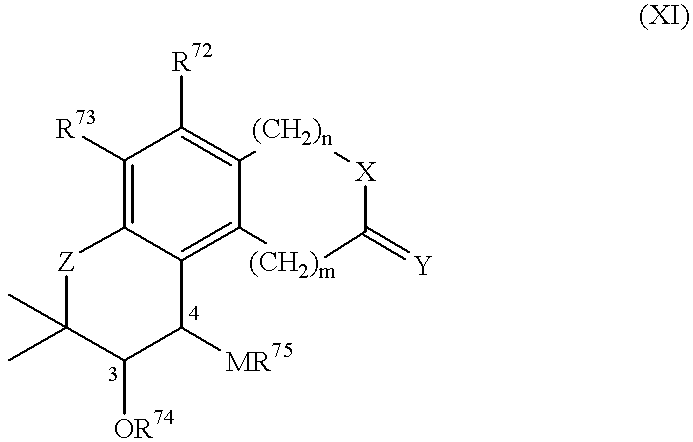


| TABLE 1 |
| Enaniometric Excesses (ee %) of Seselin 5 from Catalytic Asymmetric |
| Dihydroxylation with Various DHQD-R and DHQ-R ligands |
| entry | Ligande | T (° C.) | time (day) | ee %a | config.b | t.r. %c |
| 1 | DHQD-CLB | 0 | 4 | 30 | S,S | 75 |
| 2 | DHQD-PHN | r.t. | 1 | 61 | S,S | 75 |
| 3 | DHQD-PHN | 0 | 4 | 67 | S,S | 75 |
| 4 | (DHQD)2-PYR | 0 | 1 | 80 | S,S | 60 |
| 5 | DHQ-PHN | r.t. | 1 | 15 | R,R | 75 |
| 6 | DHQ-PHN | 0 | 4 | 59 | R,R | 75 |
| 7 | DHQ-CLB | r.t. | 1 | 15 | R,R | 75 |
| 8 | DHQ-CLB | 0 | 4 | 50 | R,R | 75 |
| 9 | DHQ-MEQ | r.t. | 2 | 34 | R,R | 81 |
| 10 | DHQ-MEQ | 0 | 1 | 50 | R,R | 62 |
| 11 | (DHQ)2-PYR | 0 | 1 | 86 | R,R | 58 |
| 12 | (DHQ)2-PYR | 0 | 2.5 | 86 | R,R | 85d |
| aEnantiomeric excesses were determined by 1HNMR analysis of the bis-(-)camphanic esters, 1 and 2. | ||||||
| bThe absolute configurations of the diols were determined by literature comparison.[1] | ||||||
| cThe turnover rates were calculated from the recovered olefin 5. | ||||||
| dMethanesulfonamide was added in this reaction. | ||||||
| eThe ligands are available from Aldrich. | ||||||

| TABLE 1 |
| Enantiometric Excesses (ee %) of Seselin 5 from Catalytic Asymmetric |
| Dihydroxylaton with Various DHQD-R and DHQ-R ligands |
| entry | Ligande | T (° C.) | time (day) | ee %a | config.b | t.r. %c |
| 1 | DHQD-CLB | 0 | 4 | 30 | S,S | 75 |
| 2 | DHQD-PHN | r.t. | 1 | 61 | S,S | 75 |
| 3 | DHQD-PHN | 0 | 4 | 67 | S,S | 75 |
| 4 | (DHQD)2-PYR | 0 | 1 | 80 | S,S | 60 |
| 5 | DHQ-PHN | r.t. | 1 | 15 | R,R | 75 |
| 6 | DHQ-PHN | 0 | 4 | 59 | R.R | 75 |
| 7 | DHQ-CLB | r.t. | 1 | 15 | R,R | 75 |
| 8 | DHQ-CLB | 0 | 4 | 50 | R,R | 75 |
| 9 | DHQ-MEQ | r.t. | 2 | 34 | R,R | 81 |
| 10 | DHQ-MEQ | 0 | 1 | 50 | R,R | 62 |
| 11 | (DHQ)2-PYR | 0 | 1 | 86 | R,R | 58 |
| 12 | (DHQ)2-PYR | 0 | 2.5 | 86 | R,R | 85d |
| aEnantiomeric excesses were determined by 1HNMR analysis of the bis-(-)-camphanic esters, 1 and 2. | ||||||
| bThe absolute configurations of the diols were determined by literature comparison.[1] | ||||||
| cThe turnover rates were calculated from the recovered olefin 5. | ||||||
| dMethanesulfonamide was added in this reaction. | ||||||
| eThe ligands are available from Aldrich. | ||||||


| TABLE 1 |
| HIV Inhibition5 by Suksdorfin (1) and Related |
| Compounds (2-11). |
| Therapeutic | |||
| Compound | IC50 (μM)a | EC50 (μM)b | Index |
| 1 | Suksdorfin | >52 | 1.3 | >40 |
| 2 | Ptyeryxin | >10.4 | 4.6 | >3.7 |
| 3 | Columbianadin | >6.1 | 4.6 | >1.3 |
| 4 | Nodakenetin | NDc | Inactived | ND |
| 5 | Nodakenin | ND | Inactive | ND |
| 6 | Acetylnoda- | ND | Inactive | ND |
| kenin | ||||
| 7 | Imperatorin | >74.1 | 11.1 | >6.7 |
| 8 | Bergapten | >92.6 | 30.1 | >3.1 |
| 9 | Isoimperatorin | >185.2 | 40.7 | >4.6 |
| 10 | Oxypeucedanin | >69.9 | 31.5 | >2.2 |
| 11 | Daphnoretin | ND | Inactive | ND |
| When compound XL-3-44 was tested for HIV inhibition in the manner described above, the IC50 (μg/ml) was >100, and further delutions must be made to obtain EC50 (μg/ml) and Therapeutic Index Values. | ||||
| aConcentration which inhibits uninfected cell growth by 50% | ||||
| bConcentration which inhibits viral replication by 50% | ||||
| cND - not determined | ||||
| dNo suppression of HIV-1 replication in H9 cells | ||||


| TABLE 3 |
| HIV Inhibition by Synthesized Suksdorfin Derivatives |
| Therapeutic | |||||
| Compound | IC50 (μM) | EC50 (μM) | Index | ||
| 8 and 9 | ND | >57.8 | ND | ||
| 10 and 11 | ND | >57.8 | ND | ||
| 12 | ND | >289 | ND | ||
| 13 | ND | >232 | ND | ||
| 14 and 15 | >47 but <233 | 7.0 | >6.7 but | ||
| <33.3 | |||||
| 25 | ND | >69 | ND | ||
| 26 | ND | >12 | ND | ||
| 27 | ND | >45 | ND | ||
| 28 | 10 | 8.3 | 1.2 | ||
| 29 | >48 | 241 | >0.2 | ||
| 30 | >8 but <41 | 6.1 | >1.3 but | ||
| 6.7 | |||||
| 31 | ND | >41 | ND | ||
| 32 | >40 but <200 | 8.3 | >5 but <25 | ||
| 16 | >32 but <160 | 0.00041 | >78,125 but | ||
| <390,625 | |||||
| 17 | 1,700 | 51 | >33.3 | ||
| 44 | >6.4 but <32 | >6.4 but <32 | >1 | ||
| 45 | <32 | 32 | >1 | ||
| AZT | 2000 | 0.04 | 50,000 | ||
| TABLE 4 | ||
| Suksdorfin | ACH-2 Cells | U1 Cells |
| Concentration | −PMA | +PMA | −PMA | +PMA |
| 0 | μg/ml | 3,676 pg/ml | 52,122 pg/ml | 0 pg/ml | 6,963 pg/ml |
| 20 | μg/ml | 4,541 pg/ml | 49,914 pg/ml | 0 pg/ml | 5,096 pg/ml |
| 4 | μg/ml | 4,723 pg/ml | 61,235 pg/ml | 0 pg/ml | 9,728 pg/ml |
| 0.8 | μg/ml | 3,821 pg/ml | 55,910 pg/ml | 0 pg/ml | 7,360 pg/ml |
| 0.16 | μg/ml | 3,688 pg/ml | 50,775 pg/ml | 0 pg/ml | 6,611 pg/ml |
| TABLE 5 | ||||
| Therapeutic | ||||
| Compound | Purity | IC50 (μg/ml) | EC50 (μg/ml) | Index |
| Suksdorfin | pure | >4 but <20 | 2.8 | >1.4 but <7.1 |
| AZT | pure | >1 | 0.04 | >25 |
| ddI | pure | >1 | 0.4 | >2.5 |
| ddC | pure | >1 | 0.004 | >250 |
| 4 μg/ml | pure | >1 | <0.0001 | >10,000 |
| Suksdorfin + | ||||
| AZT | ||||
| μg/ml | pure | >1 | <0.0001 | >10,000 |
| Suksdorfin + | ||||
| ddI | ||||
| μg/ml | pure | >1 | <0.0001 | >10,000 |
| Suksdorfin + | ||||
| ddC | ||||
| TABLE 6 | ||||
| IC50 | EC50 | Therapeutic | ||
| Compound | Purity | (μg/ml) | (μg/ml) | Index |
| Suksdorfin + | pure | |||
| PBMCs | >4 but <20 | 1.5 | >2.7 but <13.3 | |
| U937 | >20 | 0.58 | >34.5 | |
| cell line | ||||
| TABLE 7 | ||||
| 16 | IC50 (μg/ml) | EC5 (μg/ml) | Therapeu- | |
| (LH70C1-4L) | Purity | [μM] | [μM] | tic Index |
| pure | >20 but <100 | 0.000256 | >78,125 | |
| (>32 but | (0.00041) | but | ||
| <160) | >390,625 | |||
| TABLE 8 | ||||
| Sample | P24 | pg/ml | ||
| Identification | −PMA | +PMA | ||
| U1 control | 0 | 5660 | |
| U1 + LHJ70C1-4L 16 [μM] | |||
| (20 μg/ml) [32] | 95 | 9530 | |
| (4 μg/ml) [6.4] | 41 | 8742 | |
| (0.8 μg/ml) [1.3] | 88 | 8390 | |
| (0.16 μg/ml) [0.26] | 76 | 7162 | |
| (0.032 μg/ml) [0.051] | 101 | 8090 | |
| (0.0064 μg/ml) [0.010] | 90 | 6419 | |
| (0.00128 μg/ml) [0.0021] | 99 | 6335 | |
| (0.00025 μg/ml) [0.00040] | 78 | 7757 | |
| (0.0000512 μg/ml) [0.000084] | 56 | 8710 | |
| (0.0000102 μg/ml) [0.000016] | 52 | 7328 |
| U1 + AZT | (10 μg/ml) [37] | 97 | 8653 | ||
| (1 μg/ml) [3.7] | 72 | 7898 | |||
| (0.1 μg/ml) [0.37] | 53 | 4363 | |||
| (0.01 μg/ml) [0.037] | 50 | 9626 | |||
| TABLE 9 | |||
| Sample | RT Activity | ||
| Identification | (CPM) | ||
| LH70C1-4L at: [μM] | |||
| 4 μg/ml [6.4] | 13,664 | ||
| 0.8 μg/ml [1.3] | 14,871 | ||
| 0.16 μg/ml [0.26] | 11,535 | ||
| 0.032 μg/ml [0.051] | 16,463 | ||
| 0.0064 μg/ml [0.010] | 18,403 | ||
| 0.00128 μg/ml [0.0021] | 9,568 | ||
| 0.000256 μg/ml [0.00040] | 15,625 | ||
| 0.0000512 μg/ml [0.000084] | 16,937 | ||
| 0.0000102 μg/ml [0.000016] | 13,992 | ||
| AZT at: [μM] | |||
| 10 μg/ml [37] | 1,990 | ||
| 1 μg/ml [3.7] | 1,826 | ||
| 0.1 μg/ml [0.37] | 2,662 | ||
| 0.01 μg/ml [0.037] | 1,919 | ||
| Infected Control (no drμg) | 17,264 | ||
| Uninfected Control | 719 | ||
| TABLE 10 | ||||
| p24 antigen | p24 antigen | |||
| Sample | (pg/ml) | (pg/ml) | ||
| Identification | Day 17 | Day 28 | ||
| 16 at: [μM] | ||||
| 20 μg/ml [32] | 5 | 0 | ||
| 4 μg/ml [6.4] | 6 | 0 | ||
| 0.8 μg/ml [1.3] | 6 | 0 | ||
| 0.16 μg/ml [0.26] | 7 | 0 | ||
| 0.032 μg/ml [0.051] | 94 | 0 | ||
| 0.0064 μg/ml [0.010] | 66 | 584 | ||
| 0.00128 μg/ml [0.0021] | 306 | 208 | ||
| 0.000256 μg/ml [0.00040] | 70 | 760 | ||
| 0.0000512 μg/ml [0.000084] | 52 | 824 | ||
| 0.0000102 μg/ml [0.000016] | 49 | 1536 | ||
| AZT at: [μM] | ||||
| 10 μg/ml [37] | 0.1 | 0 | ||
| 1 μg/ml [3.7] | 2 | 0 | ||
| 0.1 μg/ml [0.37] | 5 | 0 | ||
| 0.01 μg/ml [0.037] | 7 | 0 | ||
| 0.001 μg/ml [0.0037] | 100 | 0 | ||
| 0.0001 μg/ml [0.00037] | 83 | 0 | ||
| Infected Control (no drμg) | 205 | 2944 | ||
| Uninfected Control | 7 | 14 | ||
| TABLE 11 | ||||
| Sample | P24 | pg/ml | ||
| Identification | −PMA | +PMA | ||
| ACH-2 control | 928 | 25,572 | |
| ACH-2 + 16 at: [μM] | |||
| (20 μg/ml) [3.2] | 1509 | 24,858 | |
| (4 μg/ml) [6.4] | 1194 | 23,547 | |
| (0.8 μg/ml) [1.3] | 976 | 20,183 | |
| (0.16 μg/ml) [0.26] | 1174 | 21,865 | |
| (0.032 μg/ml) [0.051] | 1319 | 24,650 | |
| (0.064 μg/ml) [0.010] | 955 | 24,364 | |
| (0.00128 μg/ml) [0.0021] | 811 | 22,344 | |
| (0.00025 μg/ml) [0.00040] | 777 | 22,756 | |
| (0.0000512 μg/ml) [0.000084] | 659 | 16,079 | |
| (0.0000102 μg/ml) [0.000016] | 666 | 17,938 |
| U1 + AZT | (10 μg/ml) [37] | 939 | 16,584 | ||
| (1 μg/ml) [3.7] | 904 | 17,088 | |||
| (0.1 μg/ml) [0.37] | 942 | 10,621 | |||
| (0.01 μg/ml) [0.037] | 796 | 21,373 | |||
| TABLE 12 | |
| Sample | p24 pg/ml (% suppression) |
| Identification | Day 6 | Day 12 | Day 18 |
| Infected Control | 59,648 | 270,541 | 105,882 |
| Infected + | |||
| Suksdorfin at: | |||
| (20 μg/ml) | 16,712 (72) | 25,567 (91) | 23,506 (78) |
| (4 μg/ml) | 48,748 (18) | 89,467 (67) | 103,834 (0) |
| (0.8 μg/ml) | 53,043 (0) | 163,656 (40) | 130,970 (0) |
| (0.16 μg/ml) | 70,195 (0) | 203,633 (0) | 125,440 (0) |
| (0.032 μg/ml) | 64,614 (0) | 173,998 (0) | 105,882 (0) |
| Infected + AZT at: | |||
| (5 μg/ml) | 13,542 | 10,170 | 12,330 |
| (1 μg/ml) | 8,705 | 5,354 | 6,830 |
| (0.2 μg/ml) | 34,360 | 32,778 | 31,759 |
| (0.04 μg/ml) | 23,234 | 17,144 | 22,993 |
| (0.008 μg/ml) | 42,004 | 70,380 | 75,428 |
| TABLE 13 | ||||
| Thera- | ||||
| Sample | peutic | |||
| Identification | Purity | IC50 (μg/ml) | EC50 (μg/ml) | Index |
| LH70C1-4L (16) | ||||
| +U937 cells | pure | >4 but <20 | 0.00128 | >3,125 |
| but | ||||
| <15,625 | ||||
| +PBMCs | pure | >4 but <20 | 0.018 | >222 but |
| <1,111 | ||||


| TABLE 14 |
| HIV Inhibition of HIV-1 Replication in H9 |
| Lymphocytes by Suksdorfin 1 and Related Compounds |
| 2-11. |
| Therapeutic | |||
| Compound | IC50 (μM)a | IC50 (μM)b | Index |
| 1 | Suksdorfin | >52.0 | 1.3 | >40.0 |
| 2 | Pteryxin | >10.4 | 4.6 | >3.7 |
| 3 | Columbianadin | >6.1 | 4.6 | >1.3 |
| 4 | Nodakenetin | NDc | Inactived | ND |
| 5 | Nodakenin | ND | Inactive | ND |
| 6 | Acetyl Nodakenin | ND | Inactive | ND |
| 7 | Impratorin | >74.1 | 11.1 | >6.7 |
| 8 | Bergapten | >92.6 | 30.1 | >3.1 |
| 9 | Isoimperatorin | >185.2 | 40.7 | >4.6 |
| 10 | Oxypeucedanin | >69.9 | 31.5 | >2.2 |
| 11 | Daphnoretin | ND | Inactive | ND |
| aConcentration which inhibits uninfected cell growth by 50% | ||||
| bConcentration which inhibits viral replication by 50% | ||||
| cND = not determined | ||||
| dNo suppression of HIV-1 replication in H9 cells | ||||
| TABLE 15 |
| Inhibition of HIV-1 Replication in ACH-2 and U1 |
| Cells by Suksdorfin 1 |
| Suksdorfin | ||
| Concentra- | ACH-2 Cellsa | U 1 Cellsb |
| tion | −PMAc | +PMAd | −PMA | +PMA |
| 0 | μg/ml | 3,676 pg/ml | 52,122 pg/ml | 0 pg/ml | 6,963 pg/ml |
| 20 | μg/ml | 4,541 pg/ml | 49,914 pg/ml | 0 pg/ml | 5,096 pg/ml |
| 4 | μg/ml | 4,723 pg/ml | 61,235 pg/ml | 0 pg/ml | 9,728 pg/ml |
| 0.8 | μg/ml | 3,821 pg/ml | 55,910 pg/ml | 0 pg/ml | 7,360 pg/ml |
| 0.16 | μg/ml | 3,688 pg/ml | 50,775 pg/ml | 0 pg/ml | 6,611 pg/ml |
| aChronically HIV-1 infected T cell line | |||||
| bChronically HIV-1 infected promonocytic cell line | |||||
| cp24 antigen level after 72 hours in culture | |||||
| dPMA 10−8 M | |||||
| TABLE 16 |
| Inhibition of HIV-1 replication in H9 Lymphocytic |
| Cells by Combination of Suksdorfin 1 and ATZ, ddI, |
| and ddC. |
| Compound | IC50 (μM)a | IC50 (μM)b | Therapeutic Index |
| Suksdorfin | >4 but <20 | 2.8 | >1.4 but <7.1 |
| AZT | >1 | 0.04 | >25 |
| ddI | >1 | 0.4 | >2.5 |
| ddC | >1 | 0.004 | >250 |
| 4 μg/ml | >1 | <0.0001 | >10,000 |
| Suksdorfin + AZT | |||
| 4 μg/ml | >1 | <0.0001 | >10,000 |
| Suksdorfin + ddI | |||
| 4 μg/ml | >1 | <0.0001 | >10,000 |
| Suksdorfin + ddC | |||
| aConcentration which inhibits uninfected cell growth by 50% | |||
| bConcentration which inhibits viral replication by 50% | |||
| TABLE 17 |
| HIV Inhibition by Di-O-(-)-camphanoylkhellactones (2-5), |
| Suksdorfin 1, and AZT |
| Compounds | IC50 (μM) | EC50 (μM) | Therapeutic Index |
| 2 | >32 but <160 | 0.00041 | >78,049 but <390,244 |
| 3 | 1,700 | 51 | >33.3 |
| 4 | >6.4 but <32 | >6.4 but <32 | >1 |
| 5 | >32 | 32 | >1 |
| Suksdorfin1 | >52 | 1.3 | >40 |
| AZT | 1,875 | 0.15 | 12,500 |


Claims (18)


Priority Applications (1)
| Application Number | Priority Date | Filing Date | Title |
|---|---|---|---|
| US09/207,500 US6319929B1 (en) | 1994-04-29 | 1998-12-08 | Suksdorfin analogs, compositions thereof, and methods for making and using thereof |
Applications Claiming Priority (5)
| Application Number | Priority Date | Filing Date | Title |
|---|---|---|---|
| US23585294A | 1994-04-29 | 1994-04-29 | |
| US08/392,558 US5637589A (en) | 1993-10-29 | 1995-02-21 | Suksdorfin, analogs, compositions thereof, and methods for making and using thereof |
| US08/462,280 US5726204A (en) | 1993-10-29 | 1995-06-05 | Suksdorfin analogs, compositions thereof, and methods for making and using thereof |
| US08/604,305 US5847165A (en) | 1995-02-21 | 1996-02-21 | Suksdorfin analogs, compositions thereof, and methods for making and using thereof |
| US09/207,500 US6319929B1 (en) | 1994-04-29 | 1998-12-08 | Suksdorfin analogs, compositions thereof, and methods for making and using thereof |
Related Parent Applications (1)
| Application Number | Title | Priority Date | Filing Date |
|---|---|---|---|
| US08/604,305 Continuation-In-Part US5847165A (en) | 1994-04-29 | 1996-02-21 | Suksdorfin analogs, compositions thereof, and methods for making and using thereof |
Publications (1)
| Publication Number | Publication Date |
|---|---|
| US6319929B1 true US6319929B1 (en) | 2001-11-20 |
Family
ID=27499821
Family Applications (1)
| Application Number | Title | Priority Date | Filing Date |
|---|---|---|---|
| US09/207,500 Expired - Fee Related US6319929B1 (en) | 1994-04-29 | 1998-12-08 | Suksdorfin analogs, compositions thereof, and methods for making and using thereof |
Country Status (1)
| Country | Link |
|---|---|
| US (1) | US6319929B1 (en) |
Cited By (2)
| Publication number | Priority date | Publication date | Assignee | Title |
|---|---|---|---|---|
| US6768007B2 (en) | 2001-03-13 | 2004-07-27 | Panacos Pharmaceuticals, Inc. | Substituted 3′,4′-di-O-camphanoyl-(+)-cis-khellactone analogs, compositions thereof, and methods for using thereof |
| US9505800B2 (en) | 2006-11-03 | 2016-11-29 | Myrexis, Inc. | Extended triterpene derivatives |
Citations (13)
| Publication number | Priority date | Publication date | Assignee | Title |
|---|---|---|---|---|
| US2980699A (en) | 1957-12-20 | 1961-04-18 | S B Penick And Company | Dihydropyranocoumarin derivatives and process for their production |
| WO1989007939A2 (en) | 1988-03-01 | 1989-09-08 | The Upjohn Company | Coumarins to inhibit reverse transcriptase in humans |
| JPH03227923A (en) | 1990-01-30 | 1991-10-08 | Sawai Seiyaku Kk | Agent for treating human immunoinsufficiency virus disease |
| US5089634A (en) | 1984-08-20 | 1992-02-18 | Georgia Tech Research Corporation | Isocoumarins with cationic substituents |
| WO1992011850A2 (en) | 1990-12-28 | 1992-07-23 | Cortex Pharmaceuticals, Inc. | Use of calpain inhibitors in the inhibition and treatment of neurodegeneration |
| WO1992018123A2 (en) | 1991-04-10 | 1992-10-29 | Octamer, Inc. | A method for inhibition of retroviral replication |
| US5177073A (en) | 1988-09-30 | 1993-01-05 | Baylor Research Institute | Therapeutic compositions derived from photoactive compounds |
| WO1994006787A1 (en) | 1992-09-21 | 1994-03-31 | BIOGAL Gyógyszergyár Rt. | Novel pharmaceutically active flavilium compounds |
| US5324648A (en) | 1987-04-28 | 1994-06-28 | Georgia Tech Research Corporation | Substituted isocoumarins as serine protease inhibitors and anti-inflammatory agents |
| WO1994014789A1 (en) | 1992-12-23 | 1994-07-07 | Smithkline Beecham Corporation | Coumarin derivatives as retroviral inhibitors |
| WO1994018188A1 (en) | 1993-02-05 | 1994-08-18 | The Upjohn Company | 4-hydroxy-benzopyran-2-ones and 4-hydroxy-cycloalkyl[b]pyran-2-ones useful to treat retroviral infections |
| US5637589A (en) | 1993-10-29 | 1997-06-10 | University Of North Carolina At Chapel Hill | Suksdorfin, analogs, compositions thereof, and methods for making and using thereof |
| JP3227923B2 (en) | 1993-07-27 | 2001-11-12 | ソニー株式会社 | Semiconductor storage device |
-
1998
- 1998-12-08 US US09/207,500 patent/US6319929B1/en not_active Expired - Fee Related
Patent Citations (15)
| Publication number | Priority date | Publication date | Assignee | Title |
|---|---|---|---|---|
| US2980699A (en) | 1957-12-20 | 1961-04-18 | S B Penick And Company | Dihydropyranocoumarin derivatives and process for their production |
| US5089634A (en) | 1984-08-20 | 1992-02-18 | Georgia Tech Research Corporation | Isocoumarins with cationic substituents |
| US5324648A (en) | 1987-04-28 | 1994-06-28 | Georgia Tech Research Corporation | Substituted isocoumarins as serine protease inhibitors and anti-inflammatory agents |
| WO1989007939A2 (en) | 1988-03-01 | 1989-09-08 | The Upjohn Company | Coumarins to inhibit reverse transcriptase in humans |
| US5177073A (en) | 1988-09-30 | 1993-01-05 | Baylor Research Institute | Therapeutic compositions derived from photoactive compounds |
| JPH03227923A (en) | 1990-01-30 | 1991-10-08 | Sawai Seiyaku Kk | Agent for treating human immunoinsufficiency virus disease |
| WO1992011850A2 (en) | 1990-12-28 | 1992-07-23 | Cortex Pharmaceuticals, Inc. | Use of calpain inhibitors in the inhibition and treatment of neurodegeneration |
| WO1992018123A2 (en) | 1991-04-10 | 1992-10-29 | Octamer, Inc. | A method for inhibition of retroviral replication |
| WO1994006787A1 (en) | 1992-09-21 | 1994-03-31 | BIOGAL Gyógyszergyár Rt. | Novel pharmaceutically active flavilium compounds |
| WO1994014789A1 (en) | 1992-12-23 | 1994-07-07 | Smithkline Beecham Corporation | Coumarin derivatives as retroviral inhibitors |
| WO1994018188A1 (en) | 1993-02-05 | 1994-08-18 | The Upjohn Company | 4-hydroxy-benzopyran-2-ones and 4-hydroxy-cycloalkyl[b]pyran-2-ones useful to treat retroviral infections |
| JP3227923B2 (en) | 1993-07-27 | 2001-11-12 | ソニー株式会社 | Semiconductor storage device |
| US5637589A (en) | 1993-10-29 | 1997-06-10 | University Of North Carolina At Chapel Hill | Suksdorfin, analogs, compositions thereof, and methods for making and using thereof |
| US5726204A (en) | 1993-10-29 | 1998-03-10 | Biotech Research Laboratories | Suksdorfin analogs, compositions thereof, and methods for making and using thereof |
| US5847165A (en) | 1995-02-21 | 1998-12-08 | The University Of North Carolina At Chapel Hill | Suksdorfin analogs, compositions thereof, and methods for making and using thereof |
Non-Patent Citations (24)
Cited By (2)
| Publication number | Priority date | Publication date | Assignee | Title |
|---|---|---|---|---|
| US6768007B2 (en) | 2001-03-13 | 2004-07-27 | Panacos Pharmaceuticals, Inc. | Substituted 3′,4′-di-O-camphanoyl-(+)-cis-khellactone analogs, compositions thereof, and methods for using thereof |
| US9505800B2 (en) | 2006-11-03 | 2016-11-29 | Myrexis, Inc. | Extended triterpene derivatives |
Similar Documents
| Publication | Publication Date | Title |
|---|---|---|
| EP0810861B1 (en) | Suksdorfin analogs, compositions thereof, and methods for making and using thereof | |
| US5679828A (en) | Betulinic acid and dihydrobetulinic acid derivatives and uses therefor | |
| US6172110B1 (en) | Acylated betulin and dihydrobetulin derivatives, preparation thereof and use thereof | |
| Carneiro et al. | New oxirane derivatives of 1, 4-naphthoquinones and their evaluation against T. cruzi epimastigote forms | |
| CA2163348C (en) | Calanolide and related antiviral compounds, compositions, and uses thereof | |
| EP2736903B1 (en) | Aryl naphthalide lignans as anti-hiv agents | |
| WO1995029920A1 (en) | Khellactone derivatives and related compounds, process for their preparation and their use as antiviral and immunostimulating agents | |
| Seebacher et al. | New 4-aminobicyclo [2.2. 2] octane derivatives and their activities against Plasmodium falciparum and Trypanosoma b. rhodesiense | |
| US6319929B1 (en) | Suksdorfin analogs, compositions thereof, and methods for making and using thereof | |
| US5726203A (en) | Qinghaosu derivatives against AIDS | |
| NZ538896A (en) | Monoacylated betulin and dihydrobetulin derivatives, preparation thereof and use thereof | |
| US5079239A (en) | Sterol disulfates and methods of use | |
| US5612341A (en) | Brominated hexahydroxybiphenyl derivatives | |
| US6768007B2 (en) | Substituted 3′,4′-di-O-camphanoyl-(+)-cis-khellactone analogs, compositions thereof, and methods for using thereof | |
| US7148253B2 (en) | 4-thio coumarins | |
| CA2223898C (en) | Brominated hexahydroxybiphenyl derivatives | |
| EP0304157A1 (en) | Antitumor and antiviral alkaloids | |
| US6673830B2 (en) | Calanolide and related antiviral compounds, compositions, and uses thereof | |
| AU685468C (en) | Calanolide and related antiviral compounds, compositions, and uses thereof | |
| Gebregziabher | Totarol as privileged natural product scaffold for antimalarial drug discovery | |
| Yang | Design and synthesis of novel pyranocoumarin analogs as anti-HIV agents |
Legal Events
| Date | Code | Title | Description |
|---|---|---|---|
| AS | Assignment |
Owner name: NORTH CAROLINA AT CHAPEL HILL, UNIVERSITY OF, THE, Free format text: ASSIGNMENT OF ASSIGNORS INTEREST;ASSIGNORS:LEE, KUO-HSIUNG;KASHIWADA, YOSHIKI;HUANG, LI;AND OTHERS;REEL/FRAME:009921/0372;SIGNING DATES FROM 19990325 TO 19990409 Owner name: BBI-BIOTECH RESEARCH LABORATORIES, MARYLAND Free format text: ASSIGNMENT OF ASSIGNORS INTEREST;ASSIGNORS:COSENTINO, MARK;SNIDER, JIM;MANAK, MARK;REEL/FRAME:009921/0359;SIGNING DATES FROM 19990329 TO 19990331 |
|
| AS | Assignment |
Owner name: BBI BIOTECH RESEARCH LABORATORIES INC., MARYLAND Free format text: CORRECTIVE DOCUMENT (ORIGINAL ASSIGNMENT IS RECORDED AT REEL 9921,FRAME 0359);ASSIGNORS:COSENTINO, MARK;SNIDER, JIM;MANAK, MARK;REEL/FRAME:011265/0472;SIGNING DATES FROM 19990329 TO 19990331 |
|
| AS | Assignment |
Owner name: PANACOS PHARMACEUTICALS, INC., MARYLAND Free format text: TECHNOLOGY TRANFER AGREEMENT;ASSIGNOR:BBI BIOTECH RESEARCH LABORATORIES, INC.;REEL/FRAME:011284/0195 Effective date: 20000101 Owner name: PANACOS PHARMACEUTICALS, INC., MARYLAND Free format text: AMENDMENT TO TECHNOLOGY TRANSFER AGREEMENT;ASSIGNOR:BBI BIOTECH RESEARCH LABORATORIES, INC.;REEL/FRAME:011284/0208 Effective date: 20001110 Owner name: PANACOS PHARMACEUTICALS, INC., MARYLAND Free format text: (TECHNOLOGY TRANSFER AGREEMENT) RE-RECORD TO CORRECT THE NUMBER OF MICROFILM PAGES FROM 9 TO 10 AT REEL 11284, FRAME 0195.;ASSIGNOR:BBI BIOTECH RESEARCH LABORATORIES, INC.;REEL/FRAME:011425/0246 Effective date: 20000101 |
|
| AS | Assignment |
Owner name: SMITH, PHILIP C., NORTH CAROLINA Free format text: SECURITY INTEREST;ASSIGNOR:PANACOS PHARMACEUTICALS, INC.;REEL/FRAME:014539/0788 Effective date: 20030722 Owner name: SCHUMACHER, RICHARD T., MASSACHUSETTS Free format text: SECURITY INTEREST;ASSIGNOR:PANACOS PHARMACEUTICALS, INC.;REEL/FRAME:014539/0788 Effective date: 20030722 Owner name: ALLAWAY, GRAHAM P., MARYLAND Free format text: SECURITY INTEREST;ASSIGNOR:PANACOS PHARMACEUTICALS, INC.;REEL/FRAME:014539/0788 Effective date: 20030722 Owner name: SCHUMACHER, CANDICE J., MASSACHUSETTS Free format text: SECURITY INTEREST;ASSIGNOR:PANACOS PHARMACEUTICALS, INC.;REEL/FRAME:014539/0788 Effective date: 20030722 Owner name: A.M. PAPPAS LIFE SCIENCE VENTURES I, L.P., AS COLL Free format text: SECURITY INTEREST;ASSIGNOR:PANACOS PHARMACEUTICALS, INC.;REEL/FRAME:014539/0788 Effective date: 20030722 Owner name: AMPERSAND 1999 COMPANION FUND LIMITED PARTNERSHIP, Free format text: SECURITY INTEREST;ASSIGNOR:PANACOS PHARMACEUTICALS, INC.;REEL/FRAME:014539/0788 Effective date: 20030722 Owner name: AMPERSAND 1999 LIMITED PARTNERSHIP, MASSACHUSETTS Free format text: SECURITY INTEREST;ASSIGNOR:PANACOS PHARMACEUTICALS, INC.;REEL/FRAME:014539/0788 Effective date: 20030722 Owner name: MARYLAND DEPARTMENT OF BUSINESS AND ECONOMIC DEVEL Free format text: SECURITY INTEREST;ASSIGNOR:PANACOS PHARMACEUTICALS, INC.;REEL/FRAME:014539/0788 Effective date: 20030722 Owner name: PRATHER, WILLIAM R., COLORADO Free format text: SECURITY INTEREST;ASSIGNOR:PANACOS PHARMACEUTICALS, INC.;REEL/FRAME:014539/0788 Effective date: 20030722 |
|
| AS | Assignment |
Owner name: GATX VENTURES, INC., CALIFORNIA Free format text: SECURITY AGREEMENT;ASSIGNOR:PANACOS PHARMACEUTICALS, INC.;REEL/FRAME:014532/0193 Effective date: 20030722 |
|
| AS | Assignment |
Owner name: PANACOS PHARMACEUTICALS, INC., MARYLAND Free format text: PAYEE FINANCING NOTICE AND CONVERSION AGREEMENT (TERMINATES IP SECURITY AGMT);ASSIGNORS:A.M. PAPPAS LIFE SCIENCE VENTURES I, L.P. AS COLLATERAL AGENT;AMPERSAND 1999 LIMITED PARTNERSHIP;AMPERSAND 1999 COMPANION FUND LIMITED PARTNERSHIP;AND OTHERS;REEL/FRAME:015642/0819 Effective date: 20040312 |
|
| AS | Assignment |
Owner name: GATX VENTURES, INC., CALIFORNIA Free format text: TERMINATION OF SECURITY INTEREST;ASSIGNOR:PANACOS PHARMACEUTICALS, INC.;REEL/FRAME:015156/0176 Effective date: 20040827 |
|
| FPAY | Fee payment |
Year of fee payment: 4 |
|
| AS | Assignment |
Owner name: V.I. TECHNOLOGIES, INC., MASSACHUSETTS Free format text: MERGER;ASSIGNOR:PANACOS PHARMACEUTICALS, INC.;REEL/FRAME:016793/0407 Effective date: 20050311 Owner name: PANACOS PHARMACEUTICALS, INC., MARYLAND Free format text: CHANGE OF NAME;ASSIGNOR:V.I. TECHNOLOGIES, INC.;REEL/FRAME:016793/0400 Effective date: 20050817 |
|
| REMI | Maintenance fee reminder mailed | ||
| LAPS | Lapse for failure to pay maintenance fees | ||
| STCH | Information on status: patent discontinuation |
Free format text: PATENT EXPIRED DUE TO NONPAYMENT OF MAINTENANCE FEES UNDER 37 CFR 1.362 |
|
| FP | Lapsed due to failure to pay maintenance fee |
Effective date: 20091120 |
|
| AS | Assignment |
Owner name: NATIONAL INSTITUTES OF HEALTH (NIH), U.S. DEPT. OF Free format text: CONFIRMATORY LICENSE;ASSIGNOR:THE UNIVERSITY OF NORTH CAROLINA AT CHAPEL HILL;REEL/FRAME:024006/0062 Effective date: 20081016 |