US6214604B1 - Biotechnical production process of piperazine R-α-carboxylic acids and piperazine S-α-carboxylic acid amide - Google Patents
Biotechnical production process of piperazine R-α-carboxylic acids and piperazine S-α-carboxylic acid amide Download PDFInfo
- Publication number
- US6214604B1 US6214604B1 US08/952,295 US95229597A US6214604B1 US 6214604 B1 US6214604 B1 US 6214604B1 US 95229597 A US95229597 A US 95229597A US 6214604 B1 US6214604 B1 US 6214604B1
- Authority
- US
- United States
- Prior art keywords
- piperazine
- piperazinecarboxamide
- microorganisms
- medium
- formula
- Prior art date
- Legal status (The legal status is an assumption and is not a legal conclusion. Google has not performed a legal analysis and makes no representation as to the accuracy of the status listed.)
- Expired - Fee Related
Links
- BRYCUMKDWMEGMK-UHFFFAOYSA-N NC(=O)C1CNCCN1 Chemical compound NC(=O)C1CNCCN1 BRYCUMKDWMEGMK-UHFFFAOYSA-N 0.000 description 3
- CMNPDYQKHYKGHQ-UHFFFAOYSA-N CC(=O)C1CNCCN1 Chemical compound CC(=O)C1CNCCN1 CMNPDYQKHYKGHQ-UHFFFAOYSA-N 0.000 description 2
- CMNPDYQKHYKGHQ-LURJTMIESA-N CC(=O)[C@@H]1CNCCN1 Chemical compound CC(=O)[C@@H]1CNCCN1 CMNPDYQKHYKGHQ-LURJTMIESA-N 0.000 description 2
- CBEPFLNAUDAJCD-FYZOBXCZSA-N CC(=O)[C@H]1CNCCN1.II Chemical compound CC(=O)[C@H]1CNCCN1.II CBEPFLNAUDAJCD-FYZOBXCZSA-N 0.000 description 2
- TUWTYJSPFRJNAI-PGMHMLKASA-N II.O=C(O)[C@H]1CNCCN1 Chemical compound II.O=C(O)[C@H]1CNCCN1 TUWTYJSPFRJNAI-PGMHMLKASA-N 0.000 description 1
Classifications
-
- C—CHEMISTRY; METALLURGY
- C12—BIOCHEMISTRY; BEER; SPIRITS; WINE; VINEGAR; MICROBIOLOGY; ENZYMOLOGY; MUTATION OR GENETIC ENGINEERING
- C12N—MICROORGANISMS OR ENZYMES; COMPOSITIONS THEREOF; PROPAGATING, PRESERVING, OR MAINTAINING MICROORGANISMS; MUTATION OR GENETIC ENGINEERING; CULTURE MEDIA
- C12N1/00—Microorganisms; Compositions thereof; Processes of propagating, maintaining or preserving microorganisms or compositions thereof; Processes of preparing or isolating a composition containing a microorganism; Culture media therefor
- C12N1/20—Bacteria; Culture media therefor
- C12N1/205—Bacterial isolates
-
- C—CHEMISTRY; METALLURGY
- C12—BIOCHEMISTRY; BEER; SPIRITS; WINE; VINEGAR; MICROBIOLOGY; ENZYMOLOGY; MUTATION OR GENETIC ENGINEERING
- C12P—FERMENTATION OR ENZYME-USING PROCESSES TO SYNTHESISE A DESIRED CHEMICAL COMPOUND OR COMPOSITION OR TO SEPARATE OPTICAL ISOMERS FROM A RACEMIC MIXTURE
- C12P17/00—Preparation of heterocyclic carbon compounds with only O, N, S, Se or Te as ring hetero atoms
- C12P17/10—Nitrogen as only ring hetero atom
- C12P17/12—Nitrogen as only ring hetero atom containing a six-membered hetero ring
-
- C—CHEMISTRY; METALLURGY
- C12—BIOCHEMISTRY; BEER; SPIRITS; WINE; VINEGAR; MICROBIOLOGY; ENZYMOLOGY; MUTATION OR GENETIC ENGINEERING
- C12P—FERMENTATION OR ENZYME-USING PROCESSES TO SYNTHESISE A DESIRED CHEMICAL COMPOUND OR COMPOSITION OR TO SEPARATE OPTICAL ISOMERS FROM A RACEMIC MIXTURE
- C12P41/00—Processes using enzymes or microorganisms to separate optical isomers from a racemic mixture
- C12P41/006—Processes using enzymes or microorganisms to separate optical isomers from a racemic mixture by reactions involving C-N bonds, e.g. nitriles, amides, hydantoins, carbamates, lactames, transamination reactions, or keto group formation from racemic mixtures
-
- C—CHEMISTRY; METALLURGY
- C12—BIOCHEMISTRY; BEER; SPIRITS; WINE; VINEGAR; MICROBIOLOGY; ENZYMOLOGY; MUTATION OR GENETIC ENGINEERING
- C12R—INDEXING SCHEME ASSOCIATED WITH SUBCLASSES C12C - C12Q, RELATING TO MICROORGANISMS
- C12R2001/00—Microorganisms ; Processes using microorganisms
- C12R2001/01—Bacteria or Actinomycetales ; using bacteria or Actinomycetales
- C12R2001/38—Pseudomonas
Definitions
- the invention relates to novel microorganisms which are capable of converting, in optionally substituted (RS)- ⁇ -piperazinecarboxamides, of the formula
- microorganisms are capable of utilizing optionally substituted ⁇ -piperazinecarboxamides of the above formula I, in the form of their racemate or their optically active isomers, in particular R- ⁇ -piperazinecarboxamides, as the only nitrogen source.
- These microorganisms, or their cell-free enzymes are employed in a novel process for the preparation of optionally substituted R- ⁇ -piperazinecarboxylic acids (formula II) and/or for the preparation of optionally substituted S- ⁇ -piperazinecarboxamides, of the formula
- R- ⁇ -Piperazinecarboxylic acid of the formula II, is an important intermediate for the preparation of (R)-2-carboxy-4-(3-phosphonopropyl)piperazine, which is a selective antagonist of N-methyl-D-aspartate (Synlett, 1996, 143-144).
- microorganisms according to the invention can be isolated from soil samples, sludge or wastewater with the aid of customary microbiological techniques. According to the invention, these microorganisms are isolated in such a way that they are
- Examples of carbon sources which the microorganisms can utilize as growth substrates are sugars, sugar alcohols or carboxylic acids.
- Sugars which can be used are hexoses such as, for example, glucose, or pentoses.
- Carboxylic acids which can be used are di- or tricarboxylic acids or their salts such as, for example, citric acid or succinate.
- a sugar alcohol which may be used is, for example, glycerol.
- a sugar alcohol such as glycerol is preferably employed as the carbon source.
- the selection and growth media which can be used are those conventionally used in expert circles, such as, for example, the mineral salt medium of Kulla et al. (Arch. Microbiol., 135, 1-7, 1983) or the medium described in Table 1.
- the medium described in Table 1 is preferably used.
- Piperazinecarboxamide can be employed as the enzyme inductor.
- the growth and selection stages are expediently carried out at a temperature of from 15 to 55° C., preferably from 20 to 45° C., and a pH of between pH 5 and pH 11, preferably between pH 6 and pH 10.
- Preferred microorganisms with specific R-piperazinecarboxamidase activity are microorganisms of the genus Burkholderia, as well as their functionally equivalent variants and mutants.
- Especially preferred microorganisms are those of the genus Burkholderia, as deposited on Apr. 20, 1995 at the Deutschen Sammlung von Mikroorganismen und Zellkulturen GmbH, Mascheroder Weg 1b, D-38124 Braunschweig in accordance with the Budapest Treaty as DSM 9925, and their functionally equivalent variants and mutants.
- “Functionally equivalent variants and mutants” are to be understood as meaning microorganisms which have essentially the same characteristics and functions as the original microorganisms. Such variants and mutants can be formed accidentally, for example by UV irradiation.
- the corresponding R- ⁇ -piperazinecarboxamide is converted into the corresponding R- ⁇ -piperazinecarboxylic acid by means of the specific microorganisms which have already been described or by means of cell-free enzymes from these microorganisms, and isolated, the biotransformation not only giving R- ⁇ -piperazinecarboxylic acid, but also S- ⁇ -piperazinecarboxamide, which, if appropriate, is isolated.
- piperazinecarboxamides of the formula I which are employed can be substituted or unsubstituted.
- Representatives of substituted piperazinecarboxamides may be C 1 -C 4 -alkyl-substituted, such as, for example, 4-methylpiperazinecarboxamide, H 2 N—CH 2 -substituted, such as, for example, 4-aminomethylpiperazinecarboxamide or acyl-substituted, such as 4-acetylpiperazinecarboxamide.
- Piperazinecarboxamide or 4-methylpiperazinecarboxamide are preferably used.
- the enzymes for the cell-free system can be obtained by rupturing the microorganisms by methods conventionally used in the art. Methods which can be used are, for example, ultrasonic, French press or lysozyme method. These cell-free enzymes can also be immobilized on a suitable support material.
- biotransformation can be effected on dormant cells (non-growing cells which no longer require a carbon and energy source) or on growing cells.
- Media which can be used for the process with dormant cells are those conventionally used in the art, such as, for example, the above-described mineral salt medium of Kulla et al., 1983 (ibid), low-molecular-weight phosphate buffers, HEPES buffers, or the medium described in Table 1.
- a medium which is used for the process with growing cells is normally one which comprises a carbon and nitrogen source, such as, for example, commercially available media or the medium of Table 1. The process is preferably carried out in the medium of Table 1.
- Biotransformation is expediently effected with a single or continuous addition of such an amount of (RS)- ⁇ -piperazinecarboxamide that the concentration of (RS)- ⁇ -piperazinecarboxamide does not exceed 20% by weight, preferably 10% by weight.
- the pH of the medium can be in a range of from pH to pH 11, preferably from pH 6 to pH 10.
- Biotransformation is expediently effected at a temperature of from 15 to 55° C., preferably from 20 to 50° C.
- the R- ⁇ -piperazinecarboxylic acid and/or S- ⁇ -piperazinecarboxamide obtained in this manner can be isolated by customary work-up methods, such as, for example, by acidification, electrodialysis, chromatography or extraction.
- the S- ⁇ -piperazinecarboxamide which has been isolated can be hydrolysed chemically to give S- ⁇ -piperazinecarboxylic acid.
- the medium used for isolating microorganisms which are capable of utilizing racemic piperazinecarboxamide as the only nitrogen source was the A-N medium, whose composition is shown in Table 1.
- 100 ml of this medium were introduced into a 300 ml Erlenmeyer flask and treated with various soil samples (2 g) from the works premises of LONZA AG in Visp, Switzerland.
- the flasks were incubated for 5 days at 30° C. without moving.
- 1 ml of the A-N medium was used for inoculating a fresh flask with the same medium. Again, this flask was incubated under the same conditions.
- This enrichment cycle was repeated for a total of 5 times. Thereafter, the enrichment cultures were streaked out on agar medium (A-N medium with additionally 16 gl ⁇ 1 agar) to produce single colonies.
- the microorganisms which had been isolated were tested in the following qualitative test system for stereoselective amidases.
- Single colonies were used for inoculating 100 ml of A-N medium in 300 ml Erlenmeyer flasks. These flasks were incubated for three days at 30° C. on a shaker, the cultures having grown fully after as little as one day. Thereupon, the cell-free culture supernatants were examined for piperazinecarboxylic acid and piperazinecarboxamide by means of thin-layer chromatography (silica gel, mobile phase: 11 parts ethanol, 6 parts CHCl 3 , 6 parts NH 4 OH (25%), detection by ninhydrin). Microorganisms which had reacted approximately half of the original amount of (RS)-piperazinecarboxamide were used for biochemical tests to ascertain which strains contained R-specific amidases.
- the cells were grown in 1 l of A-N medium at 30° C. and subsequently harvested and dried. 5 g of cells (fresh weight) were resuspended in 10 ml of 69 mM phosphate buffer, pH 7.0, and ruptured by means of a FRENCH® press. The crude extract was centrifuged for 2 hours at 40,000 ⁇ g and then frozen in portions at ⁇ 20° C. To determine the stereoselectivity, the hydrolysis rates of R-prolinamide and S-prolinamide were compared.
- assay volume 1 ml, containing 69 mM phosphate buffer, pH 7.0, 100-800 ⁇ g of protein crude extract, 2 mg of S- or R-prolinamide.HCl, incubation time 1-24 hours, incubation temperature 30° C., detection with ninhydrin after thin-layer chromatography (see above).
- the amidase of the strain termed DSM 9925 showed rapid hydrolysis of R-prolinamide. This strain was used for the preparation of optically active piperazinecarboxylic acid derivatives.
- the cells were grown in A-N medium (Table 1) and then washed once with physiological saline. After they had been resuspended in 69 mM phosphate buffer, pH 8.0 and a cell density of 10 at OD 650 had been adjusted, 20 gl ⁇ 1 of (RS)-piperazinecarboxamide were added at a temperature of 47° C. The batch was then incubated for 18 hours (total volume: 200 ml, 31 mmol of (RS)-piperazinecarboxamide (4 g)). After the cells had been removed, the cell-free solution was concentrated under reduced pressure to 20 ml and then acidified with HCl to approximately pH 0, at which point the product precipitated.
- Table 1 A-N medium
Landscapes
- Chemical & Material Sciences (AREA)
- Organic Chemistry (AREA)
- Life Sciences & Earth Sciences (AREA)
- Engineering & Computer Science (AREA)
- Zoology (AREA)
- Wood Science & Technology (AREA)
- Health & Medical Sciences (AREA)
- Genetics & Genomics (AREA)
- Biotechnology (AREA)
- Bioinformatics & Cheminformatics (AREA)
- General Health & Medical Sciences (AREA)
- Microbiology (AREA)
- Biochemistry (AREA)
- General Engineering & Computer Science (AREA)
- General Chemical & Material Sciences (AREA)
- Chemical Kinetics & Catalysis (AREA)
- Analytical Chemistry (AREA)
- Medicinal Chemistry (AREA)
- Tropical Medicine & Parasitology (AREA)
- Virology (AREA)
- Biomedical Technology (AREA)
- Preparation Of Compounds By Using Micro-Organisms (AREA)
- Micro-Organisms Or Cultivation Processes Thereof (AREA)
Abstract
A biologically pure culture of microorganisms capable of converting RS-α-piperazinecarboxamides into the corresponding R-α-piperazinecarboxylic acid. R-α-piperazinecarboxamides is the only nitrogen source.
Description
The invention relates to novel microorganisms which are capable of converting, in optionally substituted (RS)-α-piperazinecarboxamides, of the formula 
the optionally substituted R-α-piperazinecarboxamide into the corresponding optionally substituted R-α-piperazinecarboxylic acid, of the formula 
The microorganisms are capable of utilizing optionally substituted α-piperazinecarboxamides of the above formula I, in the form of their racemate or their optically active isomers, in particular R-α-piperazinecarboxamides, as the only nitrogen source. These microorganisms, or their cell-free enzymes, are employed in a novel process for the preparation of optionally substituted R-α-piperazinecarboxylic acids (formula II) and/or for the preparation of optionally substituted S-α-piperazinecarboxamides, of the formula 
R-α-Piperazinecarboxylic acid, of the formula II, is an important intermediate for the preparation of (R)-2-carboxy-4-(3-phosphonopropyl)piperazine, which is a selective antagonist of N-methyl-D-aspartate (Synlett, 1996, 143-144).
A microbiological process for the preparation of R-α-piperazinecarboxylic acid has hitherto not been described in the literature.
It is an object of the present invention to provide a simple, technically feasible biotechnological process for the preparation of optically pure R-α-piperazinecarboxylic acids which simultaneously also allows S-α-piperazinecarboxamide to be isolated in high purity.
This object is achieved by the microorganisms according to patent claim 1 and by the process according to patent claim 3.
The microorganisms according to the invention can be isolated from soil samples, sludge or wastewater with the aid of customary microbiological techniques. According to the invention, these microorganisms are isolated in such a way that they are
a) grown in the customary manner in a medium with an optionally substituted α-piperazinecarboxamide (formula I) in the form of its racemate or its optically active isomers as the only nitrogen source, preferably with an R-α-piperazinecarboxamide as the only nitrogen source, and with a suitable carbon source;
b) then, those which are stable and capable of converting, in (RS)-α-piperazinecarboxamides (formula I), the R-α-piperazinecarboxamide into the corresponding R-α-piperazinecarboxylic acid (formula II) are selected from the culture obtained by growing.
Accordingly, all microorganisms which specifically contain the R-piperazinecarboxamidases may be employed.
Examples of carbon sources which the microorganisms can utilize as growth substrates are sugars, sugar alcohols or carboxylic acids. Sugars which can be used are hexoses such as, for example, glucose, or pentoses. Carboxylic acids which can be used are di- or tricarboxylic acids or their salts such as, for example, citric acid or succinate. A sugar alcohol which may be used is, for example, glycerol. A sugar alcohol such as glycerol is preferably employed as the carbon source.
The selection and growth media which can be used are those conventionally used in expert circles, such as, for example, the mineral salt medium of Kulla et al. (Arch. Microbiol., 135, 1-7, 1983) or the medium described in Table 1. The medium described in Table 1 is preferably used.
It is expedient to induce the effective enzymes of the microorganisms during the growth and selection stage. Piperazinecarboxamide can be employed as the enzyme inductor.
The growth and selection stages are expediently carried out at a temperature of from 15 to 55° C., preferably from 20 to 45° C., and a pH of between pH 5 and pH 11, preferably between pH 6 and pH 10.
Preferred microorganisms with specific R-piperazinecarboxamidase activity are microorganisms of the genus Burkholderia, as well as their functionally equivalent variants and mutants. Especially preferred microorganisms are those of the genus Burkholderia, as deposited on Apr. 20, 1995 at the Deutschen Sammlung von Mikroorganismen und Zellkulturen GmbH, Mascheroder Weg 1b, D-38124 Braunschweig in accordance with the Budapest Treaty as DSM 9925, and their functionally equivalent variants and mutants.
Taxonomic characteristics of microorganisms of the genus Burkholderia (DSM 9925)
| Cell shape | rods | ||
| Width μm | 0.7-0.8 | ||
| Length μm | 1.5-3.5 | ||
| Gram reaction | − | ||
| Lysis by 3% KOH | + | ||
| Aminopeptidase (Cerny) | + | ||
| Spores | − | ||
| Oxidase | + | ||
| Catalase | + | ||
| Pigments | yellow | ||
| Growth | − | ||
| anaerobic | |||
| PNPG | + | ||
| ADH | − | ||
| Urease | − | ||
| Hydrolysis of gelatine | − | ||
| Substrate utilization | |||
| Adipate | + | ||
| Citrate | little | ||
| Malate | + | ||
| Glucose | − | ||
| Adonitol | − | ||
| Mannitol | − | ||
| Suberate | + | ||
| Acetamide | + | ||
| 2,3-Butylene glycol | + | ||
| m-Hydroxybenzoate | + | ||
| α-Amylamine | + | ||
| Tryptamine | − | ||
| Abbreviations: | |||
| PNPG: p-nitrophenyl-galactosidase | |||
| ADH: alcohol dehydrogenase | |||
“Functionally equivalent variants and mutants” are to be understood as meaning microorganisms which have essentially the same characteristics and functions as the original microorganisms. Such variants and mutants can be formed accidentally, for example by UV irradiation.
The process according to the invention for the preparation of optionally substituted R-α-piperazinecarboxylic acid, of the formula 
and/or of optionally substituted S-α-piperazinecarboxamides, of the formula 
is carried out in such a way that, in the optionally substituted (RS)-α-piperazinecarboxamide, of the formula 
the corresponding R-α-piperazinecarboxamide is converted into the corresponding R-α-piperazinecarboxylic acid by means of the specific microorganisms which have already been described or by means of cell-free enzymes from these microorganisms, and isolated, the biotransformation not only giving R-α-piperazinecarboxylic acid, but also S-α-piperazinecarboxamide, which, if appropriate, is isolated.
The starting materials, the (RS)-α-piperazinecarboxamides of the formula 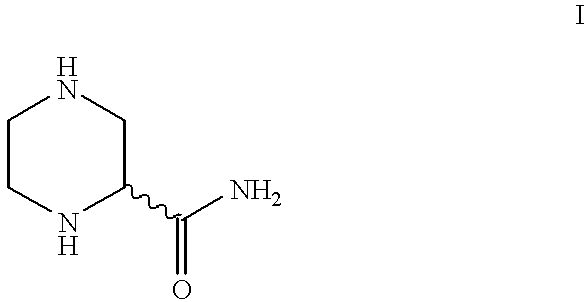
which are optionally substituted can be obtained from the corresponding aromatic amides by hydrogenation methods conventionally used in the art.
The piperazinecarboxamides of the formula I which are employed can be substituted or unsubstituted. Representatives of substituted piperazinecarboxamides may be C1-C4-alkyl-substituted, such as, for example, 4-methylpiperazinecarboxamide, H2N—CH2-substituted, such as, for example, 4-aminomethylpiperazinecarboxamide or acyl-substituted, such as 4-acetylpiperazinecarboxamide. Piperazinecarboxamide or 4-methylpiperazinecarboxamide are preferably used.
The enzymes for the cell-free system can be obtained by rupturing the microorganisms by methods conventionally used in the art. Methods which can be used are, for example, ultrasonic, French press or lysozyme method. These cell-free enzymes can also be immobilized on a suitable support material.
Especially suitable for the process are the above-described specific microorganisms of the genus Burkholderia (DSM 9925), and their functionally equivalent variants and mutants.
After conventionally growing the microorganisms, biotransformation can be effected on dormant cells (non-growing cells which no longer require a carbon and energy source) or on growing cells.
Media which can be used for the process with dormant cells are those conventionally used in the art, such as, for example, the above-described mineral salt medium of Kulla et al., 1983 (ibid), low-molecular-weight phosphate buffers, HEPES buffers, or the medium described in Table 1. A medium which is used for the process with growing cells is normally one which comprises a carbon and nitrogen source, such as, for example, commercially available media or the medium of Table 1. The process is preferably carried out in the medium of Table 1.
Biotransformation is expediently effected with a single or continuous addition of such an amount of (RS)-α-piperazinecarboxamide that the concentration of (RS)-α-piperazinecarboxamide does not exceed 20% by weight, preferably 10% by weight.
The pH of the medium can be in a range of from pH to pH 11, preferably from pH 6 to pH 10.
Biotransformation is expediently effected at a temperature of from 15 to 55° C., preferably from 20 to 50° C.
After a customary reaction time of 1 to 100 hours, all of the R-α-piperazinecarboxamide of the formula I has been converted into R-α-piperazinecarboxylic acid, during which process S-α-piperazinecarboxamide is also obtained.
The R-α-piperazinecarboxylic acid and/or S-α-piperazinecarboxamide obtained in this manner can be isolated by customary work-up methods, such as, for example, by acidification, electrodialysis, chromatography or extraction. The S-α-piperazinecarboxamide which has been isolated can be hydrolysed chemically to give S-α-piperazinecarboxylic acid.
a) Isolation of microorganisms which are capable of utilizing racemic piperazinecarboxamide as the only nitrogen source:
The medium used for isolating microorganisms which are capable of utilizing racemic piperazinecarboxamide as the only nitrogen source was the A-N medium, whose composition is shown in Table 1. 100 ml of this medium were introduced into a 300 ml Erlenmeyer flask and treated with various soil samples (2 g) from the works premises of LONZA AG in Visp, Switzerland. The flasks were incubated for 5 days at 30° C. without moving. Then, 1 ml of the A-N medium was used for inoculating a fresh flask with the same medium. Again, this flask was incubated under the same conditions. This enrichment cycle was repeated for a total of 5 times. Thereafter, the enrichment cultures were streaked out on agar medium (A-N medium with additionally 16 gl−1 agar) to produce single colonies.
The microorganisms which had been isolated were tested in the following qualitative test system for stereoselective amidases. Single colonies were used for inoculating 100 ml of A-N medium in 300 ml Erlenmeyer flasks. These flasks were incubated for three days at 30° C. on a shaker, the cultures having grown fully after as little as one day. Thereupon, the cell-free culture supernatants were examined for piperazinecarboxylic acid and piperazinecarboxamide by means of thin-layer chromatography (silica gel, mobile phase: 11 parts ethanol, 6 parts CHCl3, 6 parts NH4OH (25%), detection by ninhydrin). Microorganisms which had reacted approximately half of the original amount of (RS)-piperazinecarboxamide were used for biochemical tests to ascertain which strains contained R-specific amidases.
b) Biochemical tests for identifying microorganisms with R-specific amidases:
To prepare protein crude extract, the cells were grown in 1 l of A-N medium at 30° C. and subsequently harvested and dried. 5 g of cells (fresh weight) were resuspended in 10 ml of 69 mM phosphate buffer, pH 7.0, and ruptured by means of a FRENCH® press. The crude extract was centrifuged for 2 hours at 40,000× g and then frozen in portions at −20° C. To determine the stereoselectivity, the hydrolysis rates of R-prolinamide and S-prolinamide were compared. To this end, the following enzyme test was used: assay volume 1 ml, containing 69 mM phosphate buffer, pH 7.0, 100-800 μg of protein crude extract, 2 mg of S- or R-prolinamide.HCl, incubation time 1-24 hours, incubation temperature 30° C., detection with ninhydrin after thin-layer chromatography (see above). The amidase of the strain termed DSM 9925 showed rapid hydrolysis of R-prolinamide. This strain was used for the preparation of optically active piperazinecarboxylic acid derivatives.
By altering the incubation temperature and the pH of the assay solution, it was found that the specific activity of the amidases was highest at a temperature of between 30 and 60° C. and a pH of 7-10.
| TABLE 1 |
| A-N medium |
| Composition | Concentration (mg/l) | ||
| (RS)-Piperazinamide | 2000 | ||
| Glycerol | 10,000 | ||
| Yeast extract | 500 | ||
| Na2SO4 | 100 | ||
| Na2HPO4 | 2000 | ||
| KH2PO4 | 1000 | ||
| NaCl | 3000 | ||
| MgCl2x6H2O | 400 | ||
| CaCl2x2H2O | 14.5 | ||
| FeCl3x6H2O | 0.8 | ||
| ZnSO4x7H2O | 100 x 10−3 | ||
| MnCl2x4H2O | 90 x 10−3 | ||
| H3BO3 | 300 x 10−3 | ||
| CoCl2x6H2O | 200 x 10−3 | ||
| CuCl2x2H2O | 10 x 10−3 | ||
| NiCl2x6H2O | 20 x 10−3 | ||
| NaMoO4x2H2O | 30 x 10−3 | ||
| EDTA Na2x2H2O | 5 | ||
| FeSO4x7H2O | 2 | ||
The following conditions were chosen for the preparation of R-piperazinecarboxylic acid using the strains termed DSM 9925.
The cells were grown in A-N medium (Table 1) and then washed once with physiological saline. After they had been resuspended in 69 mM phosphate buffer, pH 8.0 and a cell density of 10 at OD650 had been adjusted, 20 gl−1 of (RS)-piperazinecarboxamide were added at a temperature of 47° C. The batch was then incubated for 18 hours (total volume: 200 ml, 31 mmol of (RS)-piperazinecarboxamide (4 g)). After the cells had been removed, the cell-free solution was concentrated under reduced pressure to 20 ml and then acidified with HCl to approximately pH 0, at which point the product precipitated. The acid which had been isolated was recrystallized in 0.1 M HCl and dried. 1.38 g (6.8 mmol) of R-piperazinecarboxylic acid were isolated as the dihydrochloride, which corresponds to a yield of 44 % based on the original amount of R-amide in the (RS)-piperazinecarboxamide. After derivatization with 2,3,4,6-tetra-O-acetyl-β-D-glucopyranosyl isothiocyanate, the ee value, i.e. the enantiomeric purity, measured by capillary electrophoresis was greater than 99%.
| TABLE 2 |
| Conditions for capillary electrophoresis |
| CE apparatus: | Hewlett-Packard HP 3DCE | ||
| Detector: | Hewlett-Packard diode array detector | ||
| 10 mM disodium hydrogen phosphate, | |||
| Buffer: | 10 mM boric acid, 150 mM sodium | ||
| dodecyl sulphate, pH 9.0 | |||
| Electrolyte: | 900 ml of buffer plus 100 ml of | ||
| methanol | |||
| Capillary: | HP G1600-61211 | ||
| Electric field: | 20 kV | ||
| Current: | approx. 24-30 μA | ||
| Oven | 20° C. | ||
| temperature: | |||
| Detector | 210 nm (range 5 nm) | ||
| setting: | |||
| Migration time: | approx. 17.1 min. (S acid) | ||
| approx. 17.7 min. (R acid) | |||
Claims (2)
1. A biologically pure culture of Burkholderia strain DSM 9925 which converts a substituted or unsubstituted R-α-piperazinecarboxamide in a mixture of substituted or unsubstituted (RS)-α-piperazinecarboxamides of the formula 
into the corresponding substituted or unsubstituted R-α-piperazinecarboxylic acid of the formula 
wherein the substitution is selected from the group consisting of C1-C1 alkyl-, H2N—CH2— and acyl-.
2. The biologically pure culture of claim 1, wherein the substituted R-α-piperazinecarboxamide is selected from the group consisting of 4-methylpiperazinecarboxamide, 4-aminomethylpiperazinecarboxamide, 4-acetylpiperazinecarboxamide, and 4-methylpiperazinecarboxamide.
Applications Claiming Priority (5)
| Application Number | Priority Date | Filing Date | Title |
|---|---|---|---|
| CH131795 | 1995-05-08 | ||
| CH1317/95 | 1995-05-08 | ||
| CH2337/95 | 1995-08-15 | ||
| CH233795 | 1995-08-15 | ||
| PCT/EP1996/001905 WO1996035775A1 (en) | 1995-05-08 | 1996-05-07 | BIOTECHNICAL PRODUCTION PROCESS OF PIPERAZINE R-α-CARBOXYLIC ACIDS AND PIPERAZINE S-α-CARBOXYLIC ACID AMIDE |
Publications (1)
| Publication Number | Publication Date |
|---|---|
| US6214604B1 true US6214604B1 (en) | 2001-04-10 |
Family
ID=25687314
Family Applications (1)
| Application Number | Title | Priority Date | Filing Date |
|---|---|---|---|
| US08/952,295 Expired - Fee Related US6214604B1 (en) | 1995-05-08 | 1996-05-07 | Biotechnical production process of piperazine R-α-carboxylic acids and piperazine S-α-carboxylic acid amide |
Country Status (6)
| Country | Link |
|---|---|
| US (1) | US6214604B1 (en) |
| EP (1) | EP0826032A1 (en) |
| JP (1) | JPH11508761A (en) |
| AU (1) | AU5693996A (en) |
| CA (1) | CA2217067A1 (en) |
| WO (1) | WO1996035775A1 (en) |
Cited By (2)
| Publication number | Priority date | Publication date | Assignee | Title |
|---|---|---|---|---|
| US20100105917A1 (en) * | 2007-02-19 | 2010-04-29 | Kaneka Corporation | Method for producing optically active 3-aminopiperidine or salt thereof |
| CN115461333A (en) * | 2020-04-28 | 2022-12-09 | 豪夫迈·罗氏有限公司 | Process for the preparation of chiral piperazine-2-carboxylic acid |
Families Citing this family (1)
| Publication number | Priority date | Publication date | Assignee | Title |
|---|---|---|---|---|
| FR2825717B1 (en) | 2001-06-08 | 2005-02-18 | Rhodia Chimie Sa | STEREOSELECTIVE PREPARATION OF CYCLIC AMINO ACIDS |
Citations (4)
| Publication number | Priority date | Publication date | Assignee | Title |
|---|---|---|---|---|
| US4080259A (en) * | 1976-01-08 | 1978-03-21 | Novo Industri A/S | Process of preparing L and D α-amino acids by enzyme treatment of DL-α-amino acid amide |
| FR2610932A1 (en) * | 1987-02-18 | 1988-08-19 | Sandoz Sa | NOVEL PIPERAZINECARBOXYLIC ACID, ITS PREPARATION AND ITS USE AS A MEDICINAL PRODUCT |
| EP0330529A1 (en) * | 1988-01-27 | 1989-08-30 | Rhone-Poulenc Sante | Process for the preparation of optically active 2-aryl-propionic acids |
| US4880737A (en) * | 1984-11-15 | 1989-11-14 | Stamicarbon B.V. | Process for the preparation of L-alpha-amino acid and d-alpha-amino acid amide |
-
1996
- 1996-05-07 AU AU56939/96A patent/AU5693996A/en not_active Abandoned
- 1996-05-07 CA CA002217067A patent/CA2217067A1/en not_active Abandoned
- 1996-05-07 WO PCT/EP1996/001905 patent/WO1996035775A1/en not_active Ceased
- 1996-05-07 EP EP96915025A patent/EP0826032A1/en not_active Withdrawn
- 1996-05-07 US US08/952,295 patent/US6214604B1/en not_active Expired - Fee Related
- 1996-05-07 JP JP8533741A patent/JPH11508761A/en active Pending
Patent Citations (4)
| Publication number | Priority date | Publication date | Assignee | Title |
|---|---|---|---|---|
| US4080259A (en) * | 1976-01-08 | 1978-03-21 | Novo Industri A/S | Process of preparing L and D α-amino acids by enzyme treatment of DL-α-amino acid amide |
| US4880737A (en) * | 1984-11-15 | 1989-11-14 | Stamicarbon B.V. | Process for the preparation of L-alpha-amino acid and d-alpha-amino acid amide |
| FR2610932A1 (en) * | 1987-02-18 | 1988-08-19 | Sandoz Sa | NOVEL PIPERAZINECARBOXYLIC ACID, ITS PREPARATION AND ITS USE AS A MEDICINAL PRODUCT |
| EP0330529A1 (en) * | 1988-01-27 | 1989-08-30 | Rhone-Poulenc Sante | Process for the preparation of optically active 2-aryl-propionic acids |
Non-Patent Citations (6)
| Title |
|---|
| ATCC Catalogue of Bacteria, 1996, pp. 78-80.* |
| Betz et al. J Gen Microbiol 75 (1). 1973 167-177.* |
| Bruce et al., Synth. Commun., 1995, 25 (17) 2673-2684.* |
| Chemical Abstracts, vol. 121, No. 25, Dec. 19, 1994, Abstract No. 301238, Massimo Falorni et al., "General and versatile approach to the synthesis of optically active 5-alkylpiperazine-2-carboxylic acids".* |
| Chemical Abstracts, vol. 123, No. 23, Dec. 4, 1995, Aabstract No. 313878, M. A. Bruce et al., Kinetic resolution of piperazinecarboxamide by leucine aminopeptidase. An application in the systhesis of the nucleoside transport blocker (-)-draflazine. * |
| Clarke et al., J Gen Microbiol 71 (2). 1972 241-257.* |
Cited By (3)
| Publication number | Priority date | Publication date | Assignee | Title |
|---|---|---|---|---|
| US20100105917A1 (en) * | 2007-02-19 | 2010-04-29 | Kaneka Corporation | Method for producing optically active 3-aminopiperidine or salt thereof |
| US8338142B2 (en) | 2007-02-19 | 2012-12-25 | Kaneka Corporation | Method for producing optically active 3-aminopiperidine or salt thereof |
| CN115461333A (en) * | 2020-04-28 | 2022-12-09 | 豪夫迈·罗氏有限公司 | Process for the preparation of chiral piperazine-2-carboxylic acid |
Also Published As
| Publication number | Publication date |
|---|---|
| JPH11508761A (en) | 1999-08-03 |
| WO1996035775A1 (en) | 1996-11-14 |
| EP0826032A1 (en) | 1998-03-04 |
| CA2217067A1 (en) | 1996-11-14 |
| AU5693996A (en) | 1996-11-29 |
Similar Documents
| Publication | Publication Date | Title |
|---|---|---|
| CS224624B2 (en) | Method for producing 2,5-diketo-d-gluconic acid or its salts | |
| US5622846A (en) | Biotechnological process for the preparation of cyclic-s-α-imino carboxylic acids and r-α-imino carboxamides | |
| US4636466A (en) | Phenylalanine ammonia lyase-producing microbial cells | |
| US6214604B1 (en) | Biotechnical production process of piperazine R-α-carboxylic acids and piperazine S-α-carboxylic acid amide | |
| US5273903A (en) | Biotechnological process for the production of S-(+)-2,2-dimethylcyclopropanecarboxamide | |
| JPH069504B2 (en) | Rhodococcus specs containing phenylalanine-dehydrogenase and method for obtaining the same | |
| JP3014171B2 (en) | Method for producing 4-halo-3-hydroxybutyramide | |
| DE69738080T2 (en) | BIO-CATALYSTS WITH AMIN ACYLASE ACTIVITY | |
| CH636078A5 (en) | ENZYMATIC COMPLEXES SUITABLE FOR TRANSFORMING IDANTOINE RACEME INTO OPTICALLY ACTIVE AMINO ACIDS AND THEIR APPLICATIONS. | |
| CA1336414C (en) | D-amidase and process for producing d--alanine and/or l--alanineamide | |
| US5496715A (en) | Process for preparing indigo | |
| US6465228B1 (en) | Levodione reductase | |
| CH674018A5 (en) | ||
| JPS61216696A (en) | Method for producing menaquinone-4 | |
| JPH1156358A (en) | Method for producing gallic acid decarboxylase and pyrogallol | |
| JPH0975081A (en) | β-glucosidase and method for producing the same | |
| CZ76393A3 (en) | Micro-biological process for preparing derivatives of malonyl-7-aminocephalosporanic acid | |
| CZ279298B6 (en) | Micro-organisms alcaligenes faecalis dsm 6335 and micro-biological process for preparing 6-hydroxypicolic acid | |
| CZ279297B6 (en) | The microorganisms of agrobacterium sp. DSM 6336 and a method for microbiological production of 6-hydroxynicotinic acid | |
| JP2000515010A (en) | Method for preparing D-proline derivative using microorganism | |
| JPH04183387A (en) | Microbial strain capable of producing l-amino acid | |
| JPH07289276A (en) | Method for producing D-ribose | |
| JPS63123398A (en) | Production of l-alpha-methylphenylalanines | |
| JPH02100687A (en) | Production of protocatechuic acid and salt thereof | |
| JPH09322785A (en) | New microorganisms and their use |
Legal Events
| Date | Code | Title | Description |
|---|---|---|---|
| AS | Assignment |
Owner name: LONZA AG, SWITZERLAND Free format text: ASSIGNMENT OF ASSIGNORS INTEREST;ASSIGNORS:KIENER, ANDREAS;RODUIT, JEAN-PAUL;HEINZMANN, KLAUS;REEL/FRAME:008893/0016;SIGNING DATES FROM 19971015 TO 19971020 |
|
| REMI | Maintenance fee reminder mailed | ||
| LAPS | Lapse for failure to pay maintenance fees | ||
| STCH | Information on status: patent discontinuation |
Free format text: PATENT EXPIRED DUE TO NONPAYMENT OF MAINTENANCE FEES UNDER 37 CFR 1.362 |
|
| FP | Lapsed due to failure to pay maintenance fee |
Effective date: 20050410 |