US6156693A - Method for preparing a highly active, unsupported high-surface-area ub. MoS.s2 catalyst - Google Patents
Method for preparing a highly active, unsupported high-surface-area ub. MoS.s2 catalyst Download PDFInfo
- Publication number
- US6156693A US6156693A US09/413,121 US41312199A US6156693A US 6156693 A US6156693 A US 6156693A US 41312199 A US41312199 A US 41312199A US 6156693 A US6156693 A US 6156693A
- Authority
- US
- United States
- Prior art keywords
- attm
- water
- nmbb
- catalyst
- sulfide
- Prior art date
- Legal status (The legal status is an assumption and is not a legal conclusion. Google has not performed a legal analysis and makes no representation as to the accuracy of the status listed.)
- Expired - Lifetime
Links
- 239000003054 catalyst Substances 0.000 title claims abstract description 54
- 238000000034 method Methods 0.000 title claims abstract description 15
- ZKKLPDLKUGTPME-UHFFFAOYSA-N diazanium;bis(sulfanylidene)molybdenum;sulfanide Chemical compound [NH4+].[NH4+].[SH-].[SH-].S=[Mo]=S ZKKLPDLKUGTPME-UHFFFAOYSA-N 0.000 claims abstract description 107
- XLYOFNOQVPJJNP-UHFFFAOYSA-N water Substances O XLYOFNOQVPJJNP-UHFFFAOYSA-N 0.000 claims abstract description 53
- UCKMPCXJQFINFW-UHFFFAOYSA-N Sulphide Chemical compound [S-2] UCKMPCXJQFINFW-UHFFFAOYSA-N 0.000 claims abstract description 33
- 239000003960 organic solvent Substances 0.000 claims abstract description 5
- IIYFAKIEWZDVMP-UHFFFAOYSA-N linear paraffin C13 Natural products CCCCCCCCCCCCC IIYFAKIEWZDVMP-UHFFFAOYSA-N 0.000 claims description 35
- 238000013022 venting Methods 0.000 claims description 3
- 238000001914 filtration Methods 0.000 claims 1
- 238000010791 quenching Methods 0.000 claims 1
- 230000000171 quenching effect Effects 0.000 claims 1
- IIYFAKIEWZDVMP-NJFSPNSNSA-N tridecane Chemical group CCCCCCCCCCCC[14CH3] IIYFAKIEWZDVMP-NJFSPNSNSA-N 0.000 claims 1
- 238000006243 chemical reaction Methods 0.000 abstract description 42
- 238000012360 testing method Methods 0.000 abstract description 20
- 230000003197 catalytic effect Effects 0.000 abstract description 15
- 238000005984 hydrogenation reaction Methods 0.000 abstract description 10
- 238000010504 bond cleavage reaction Methods 0.000 abstract description 9
- 230000000694 effects Effects 0.000 abstract description 9
- 150000001875 compounds Chemical class 0.000 abstract description 8
- 238000000354 decomposition reaction Methods 0.000 abstract description 8
- 125000003118 aryl group Chemical group 0.000 abstract description 6
- UKRRCRMJNMWWMZ-UHFFFAOYSA-N 1-[[4-(2-phenylethyl)phenyl]methyl]naphthalene Chemical group C=1C=C(CC=2C3=CC=CC=C3C=CC=2)C=CC=1CCC1=CC=CC=C1 UKRRCRMJNMWWMZ-UHFFFAOYSA-N 0.000 abstract description 4
- 238000010926 purge Methods 0.000 abstract description 2
- CWQXQMHSOZUFJS-UHFFFAOYSA-N molybdenum disulfide Chemical compound S=[Mo]=S CWQXQMHSOZUFJS-UHFFFAOYSA-N 0.000 description 24
- 229910052961 molybdenite Inorganic materials 0.000 description 23
- 229910052982 molybdenum disulfide Inorganic materials 0.000 description 23
- 239000003153 chemical reaction reagent Substances 0.000 description 14
- 239000002904 solvent Substances 0.000 description 14
- 239000000047 product Substances 0.000 description 11
- 238000003776 cleavage reaction Methods 0.000 description 7
- 230000007017 scission Effects 0.000 description 7
- CSCPPACGZOOCGX-UHFFFAOYSA-N Acetone Chemical compound CC(C)=O CSCPPACGZOOCGX-UHFFFAOYSA-N 0.000 description 6
- 239000012018 catalyst precursor Substances 0.000 description 6
- 238000011065 in-situ storage Methods 0.000 description 6
- ARNKHYQYAZLEEP-UHFFFAOYSA-N 1-naphthalen-1-yloxynaphthalene Chemical compound C1=CC=C2C(OC=3C4=CC=CC=C4C=CC=3)=CC=CC2=C1 ARNKHYQYAZLEEP-UHFFFAOYSA-N 0.000 description 5
- UFHFLCQGNIYNRP-UHFFFAOYSA-N Hydrogen Chemical compound [H][H] UFHFLCQGNIYNRP-UHFFFAOYSA-N 0.000 description 5
- 229910052739 hydrogen Inorganic materials 0.000 description 5
- 239000001257 hydrogen Substances 0.000 description 5
- 238000001228 spectrum Methods 0.000 description 5
- 238000004458 analytical method Methods 0.000 description 4
- YXFVVABEGXRONW-UHFFFAOYSA-N Toluene Chemical compound CC1=CC=CC=C1 YXFVVABEGXRONW-UHFFFAOYSA-N 0.000 description 3
- 238000006555 catalytic reaction Methods 0.000 description 3
- 238000002290 gas chromatography-mass spectrometry Methods 0.000 description 3
- 238000007327 hydrogenolysis reaction Methods 0.000 description 3
- 239000002245 particle Substances 0.000 description 3
- 238000002360 preparation method Methods 0.000 description 3
- CXWXQJXEFPUFDZ-UHFFFAOYSA-N tetralin Chemical compound C1=CC=C2CCCCC2=C1 CXWXQJXEFPUFDZ-UHFFFAOYSA-N 0.000 description 3
- UFWIBTONFRDIAS-UHFFFAOYSA-N Naphthalene Chemical compound C1=CC=CC2=CC=CC=C21 UFWIBTONFRDIAS-UHFFFAOYSA-N 0.000 description 2
- 238000002441 X-ray diffraction Methods 0.000 description 2
- 238000002474 experimental method Methods 0.000 description 2
- 239000007789 gas Substances 0.000 description 2
- 238000010438 heat treatment Methods 0.000 description 2
- 230000002401 inhibitory effect Effects 0.000 description 2
- 239000000463 material Substances 0.000 description 2
- 239000000203 mixture Substances 0.000 description 2
- 229910052750 molybdenum Inorganic materials 0.000 description 2
- 239000000843 powder Substances 0.000 description 2
- 239000000126 substance Substances 0.000 description 2
- 238000005406 washing Methods 0.000 description 2
- ZYOFZKHSPZUMCN-UHFFFAOYSA-N 1-[(4-methylphenyl)methyl]naphthalene Chemical compound C1=CC(C)=CC=C1CC1=CC=CC2=CC=CC=C12 ZYOFZKHSPZUMCN-UHFFFAOYSA-N 0.000 description 1
- CVFXRTRMJYAVJB-UHFFFAOYSA-N 1-methyl-4-(2-phenylethyl)benzene Chemical group C1=CC(C)=CC=C1CCC1=CC=CC=C1 CVFXRTRMJYAVJB-UHFFFAOYSA-N 0.000 description 1
- RZVAJINKPMORJF-UHFFFAOYSA-N Acetaminophen Chemical compound CC(=O)NC1=CC=C(O)C=C1 RZVAJINKPMORJF-UHFFFAOYSA-N 0.000 description 1
- OKTJSMMVPCPJKN-UHFFFAOYSA-N Carbon Chemical compound [C] OKTJSMMVPCPJKN-UHFFFAOYSA-N 0.000 description 1
- 238000000026 X-ray photoelectron spectrum Methods 0.000 description 1
- 229910052799 carbon Inorganic materials 0.000 description 1
- 238000012512 characterization method Methods 0.000 description 1
- 239000003245 coal Substances 0.000 description 1
- 239000011248 coating agent Substances 0.000 description 1
- 238000000576 coating method Methods 0.000 description 1
- 230000000052 comparative effect Effects 0.000 description 1
- 230000003247 decreasing effect Effects 0.000 description 1
- 230000008034 disappearance Effects 0.000 description 1
- 238000009826 distribution Methods 0.000 description 1
- 239000000706 filtrate Substances 0.000 description 1
- 238000004817 gas chromatography Methods 0.000 description 1
- 239000011261 inert gas Substances 0.000 description 1
- 239000007788 liquid Substances 0.000 description 1
- 230000001404 mediated effect Effects 0.000 description 1
- 238000002156 mixing Methods 0.000 description 1
- MEFBJEMVZONFCJ-UHFFFAOYSA-N molybdate Chemical compound [O-][Mo]([O-])(=O)=O MEFBJEMVZONFCJ-UHFFFAOYSA-N 0.000 description 1
- 229910000476 molybdenum oxide Inorganic materials 0.000 description 1
- 125000002950 monocyclic group Chemical group 0.000 description 1
- 125000001624 naphthyl group Chemical group 0.000 description 1
- 230000003647 oxidation Effects 0.000 description 1
- 238000007254 oxidation reaction Methods 0.000 description 1
- 238000010525 oxidative degradation reaction Methods 0.000 description 1
- PQQKPALAQIIWST-UHFFFAOYSA-N oxomolybdenum Chemical compound [Mo]=O PQQKPALAQIIWST-UHFFFAOYSA-N 0.000 description 1
- 230000036961 partial effect Effects 0.000 description 1
- 230000037361 pathway Effects 0.000 description 1
- 239000011148 porous material Substances 0.000 description 1
- 239000002243 precursor Substances 0.000 description 1
- 230000001737 promoting effect Effects 0.000 description 1
- 238000000746 purification Methods 0.000 description 1
- 239000005297 pyrex Substances 0.000 description 1
- 238000011002 quantification Methods 0.000 description 1
- 230000002829 reductive effect Effects 0.000 description 1
- 239000004576 sand Substances 0.000 description 1
- 238000010517 secondary reaction Methods 0.000 description 1
- 239000004449 solid propellant Substances 0.000 description 1
- 238000003860 storage Methods 0.000 description 1
- 238000005486 sulfidation Methods 0.000 description 1
- 150000004763 sulfides Chemical class 0.000 description 1
- CXVCSRUYMINUSF-UHFFFAOYSA-N tetrathiomolybdate(2-) Chemical compound [S-][Mo]([S-])(=S)=S CXVCSRUYMINUSF-UHFFFAOYSA-N 0.000 description 1
- 238000001291 vacuum drying Methods 0.000 description 1
Images


Classifications
-
- B—PERFORMING OPERATIONS; TRANSPORTING
- B01—PHYSICAL OR CHEMICAL PROCESSES OR APPARATUS IN GENERAL
- B01J—CHEMICAL OR PHYSICAL PROCESSES, e.g. CATALYSIS OR COLLOID CHEMISTRY; THEIR RELEVANT APPARATUS
- B01J27/00—Catalysts comprising the elements or compounds of halogens, sulfur, selenium, tellurium, phosphorus or nitrogen; Catalysts comprising carbon compounds
- B01J27/02—Sulfur, selenium or tellurium; Compounds thereof
- B01J27/04—Sulfides
- B01J27/047—Sulfides with chromium, molybdenum, tungsten or polonium
- B01J27/051—Molybdenum
-
- C—CHEMISTRY; METALLURGY
- C01—INORGANIC CHEMISTRY
- C01G—COMPOUNDS CONTAINING METALS NOT COVERED BY SUBCLASSES C01D OR C01F
- C01G39/00—Compounds of molybdenum
- C01G39/06—Sulfides
Definitions
- Mo sulfide-based catalysts are widely used for hydroprocessing and hydrodesulfurization.
- Mo sulfide can be prepared from molybdate or thiomolybdate.
- a well-established method for preparing MoS 2 catalyst involves decomposition of ammonium tetrathiomolybdate (ATTM) in an inert gas or in H 2 .
- the MoS 2 catalyst generated from decomposition of ATTM is more active than that from sulfidation of molybdenum oxide or the reagent MoS 2 , and thus ATTM has been used as catalyst precursor for generation of active MoS 2 .
- the surface area values for thus-prepared MoS 2 catalysts are relatively low, usually somewhere between 6-70 m 2 /g. It is desirable to have a MoS 2 catalysts with higher surface area values than currently available. It is also desirable to have a MoS 2 catalysts t hat is more active than currently available.
- the present invention is a new and simple method of decomposing ammonium tetrathiomolybdate (ATTM) in an organic solvent with added water under H 2 pressure.
- Model compound reactions of 4-(1-naphthylmethyl)bibenzyl (NMBB) were carried out at 350-425° C. under H 2 pressure in order to examine the activity of the Mo sulfide catalysts generated from ATTM with and without added water for C--C bond cleavage and hydrogenation of aromatic ring.
- the Mo sulfide catalysts generated from ATTM with added water were much more effective for C--C bond cleavage and hydrogenation of aromatic moieties at 350-425° C. than those from ATTM alone.
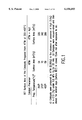
- FIG. 1 is a table of the results from a BET Surface Area of the catalysts prepared from ATTM at 350-400° C.;
- FIG. 2 is a SEM of Mo sulfide prepared at 375° C. from ATTM alone (left) and from ATTM with added water (right) at 375° C.;
- FIG. 3 is a XRD of Mo sulfide prepared at 375° C. from ATTM+H 2 O (top), ATTM alone (middle) and Aldrich MoS2 reagent (bottom);
- FIG. 4 is a XPS survey spectra of Mo sulfide prepared at 375° C. from ATTM alone (top), ATTM+H 2 O(middle) and Aldrich MoS2 reagent (bottom);
- FIG. 5 is a XPS Mo 3d spectra of Mo sulfide prepared at 375° C. from ATTM alone (top), ATTM+H 2 O(middle) and Aldrich MoS, reagent (bottom);
- FIG. 6 is a XPS S 2p spectra of Mo sulfide prepared at 375° C. from ATTM alone (top), ATTM+H 2 O(middle) and Aldrich MoS. reagent (bottom);
- FIG. 7 is a table of the results surface area and pore volume of fresh catalysts prepared from ATTM at 375° C.
- FIG. 8 is a structure of 4-(1-naphthylmethyl)bibenzyl (NMBB) and its potential cleavage sites;
- FIG. 9 is a table of the results of noncatalytic hydrogenolysis of NMBB in 1.48 g tridecane under 6.9 MPa hydrogen;
- FIG. 10 is a table of the results of effect of Mo catalyst precursor on hydrogenolysis of NMBB in 1.48 g tridecane under 6.9 MPa hydrogen;
- FIG. 11 is a table of the results of effect of Mo catalyst precursor on hydrogenolysis of NMBB in 2.95 g tridecane under 6.9 MPa hydrogen;
- FIG. 12 is a comparison of catalytic activity of Mo sulfide in situ generated from ATTM (left) and ATTM+H 2 O for NMBB conversion in about 3 g n-tridecane solvent at 350° C.;
- FIG. 13 is a comparison of catalytic activity of Mo sulfide in situ generated from ATTM (left) and ATTM+H 2 O for NMBB conversion in about 1.5 g n-tridecane solvent at 350° C.;
- FIG. 14 is a table of conversion of NMBB in two-step tests using ATTM+H 2 O as catalyst precursor in the first step.
- the present invention provides a new and simple method to prepare a high-surface-area unsupported MoS 2 type catalysts by decomposing ATTM in an organic solvent in the presence of added water under hydrogen pressure.
- the dispersed (unsupported) MoS catalyst particles are prepared by decomposing ATTM in normal tridecane solvent in the presence of added water under hydrogen pressure at 350, 375 and 400° C. in a micro autoclave. Characterization of the catalysts were performed using various techniques, including BET (first conducted on Micromeritics Gemini 2375, later on Quantachrome Autosorb-1), SEM (conducted on Philips XL-20), XRD (Philips Automated Powder Diffractomer, Cu Koc), XPS (Mg Koc. 14 keV at 20 mA, on Kratos Analytical XSAM800 PCI), TPO (on Mettler TG50 from r.t. to 600° C. in an air flow).
- BET first conducted on Micromeritics Gemini 2375, later on Quantachrome Autosorb-1
- SEM conducted on Philips XL-20
- XRD Philips Automated Powder Diffractomer, Cu Koc
- XPS Mg Koc. 14 keV at
- the BET analysis is shown in FIG. 1, which indicates that the Mo sulfide samples produced from ATTM+H 2 O at 350-400° C. have much higher surface area (286-335 m 2 /g) than those (54-70 m 2 /g from ATTM alone (the word “alone” here means without the addition of water).
- the surface area of the Mo sulfide prepared at 375° C. from ATTM+H 2 O is 342 m 2 /g, which is about times that of the sample from ATTM without water (70 m 2 /g).
- XRD profiles in FIG. 3 indicate that compared to reagent MoS 2 , the MoS 2 from ATTM are poorly crystalline.
- the XRD patterns of the MoS 2 from ATTM at 350-400° C. are very similar to those reported in the industry for MoS 2 . From comparative examination, it becomes clear that the samples prepared from ATTM alone and those from ATTM+H 2 O have similar XRD patterns in general, suggesting that the sample from ATTM+H 2 O is MoS 2 like material. However, the 002 peak of the latter (from ATTM+H 2 O) is broader and has a much lower intensity. This trend was observed for all the samples prepared at 350° C., 375° C. and 400° C.
- the XPS spectra of the samples were measured in two modes: a survey scan for examining the overall composition (FIG. 4), and high resolution scans for the Mo 3d (FIG. 5), S 2p (FIG. 6), S 2s , C 1s and O 1s peaks.
- the survey spectra show that they are similar materials consisting of Mo and S.
- the commercial reagent MoS 2 from Aldrich and the sample from ATTM alone also show the C 1s peak at 284.6 eV.
- the MoS 2 reagent contains significantly more carbon than all the other samples.
- O 1s peak can also be seen around 530 eV from the spectra for Aldrich MoS 2 reagent and that from ATTM, but the O 1s peak for the sample from ATTM+H 2 O is the smallest among the 3 types of samples, despite the use of water during sample preparation.
- TPO Temperature-programmed oxidation
- NMBB 4(1-naphthylmethyl)bibenzyl
- NMBB 4(1-naphthylmethyl)bibenzyl
- FIG. 8 Model compound reactions of NMBB were carried out at 350-425° C. under H 2 pressure in order to examine the activity of the Mo sulfide catalysts generated from ATTM with and without added water for C--C bond cleavage and hydrogenation of aromatic ring.
- ATTM and n-tridecane solvent were purchased from Aldrich, and NMBB was purchased from TCI America. ATTM and NMBB were used without further purification. In this work, a bottle of newly purchased ATTM was used in all experiments on NMBB runs, and the reagent bottle was stored in a refrigerator in order to minimize oxidative degradation.
- the amount of water and the amount of NMBB were determined based on prior work in catalytic coal conversion and model compound studies using NMBB.
- the sealed reactor was purged four times with H 2 and then pressurized with 6.9 MPa H 2 at room temperature for all experiments.
- a preheated fluidized sand bath was used as the heating source, and the reactor was vertically agitated to provide mixing (about 240 strokes/min).
- the microautoclave was quenched in a cold water bath. The contents were washed out with 20-30 mL acetone, and filtered through a low speed filter paper for subsequent GC analysis of the filtrate.
- the active Mo sulfide catalyst was prepared using ATTM in the presence of n-tridecane solvent with added H 2 O under H 2 pressure without NMBB in the 25-mL microautoclave. Then the water vapor and H 2 S and NH 3 gases generated from ATTM decomposition were removed from the reactor by hot venting at 200° C. for 35 min. Subsequently the reactor was opened and NMBB was added into the reactor and then the reaction was conducted at 350° C. in a similar manner as described above.
- the products from both tests were identified by GC-MS using a Hewlet-Packard 5890 II GC coupled with a HP 5971 A mass-selective detector operating at electron impact mode (EI, 70 eV).
- the column used for GC-MS was a J&W DB-17 column; 30-m ⁇ 0.25-mm, coated with 50% phenyl-50% methylpolysiloxane with a coating film thickness of 0.25 mm.
- a Perkin Elmer 8500 GC flame ionization detector and the same type of DB-17 column were used. Both GC and GC-MS were programmed from 40 to 280° C.
- the GC response factors for NMBB and 7 of the products were determined using pure compounds.
- the NMBB conversion is defined as ⁇ [NMBB (wt) charged -NMBB (wt) recovered]/NMBB (wt) charged] ⁇ 100, and the molar yields of products are defined as [product (mol)/NMBB (mol) charged] ⁇ 100. Since the products mainly include the compounds from both C--C bond cleavage and partial hydrogenation of NMBB, the sums of product yields are generally less than twice the value of the conversion.
- FIGS. 9 and 10 show the results of noncatalytic and catalytic runs of NMBB, respectively, at 350, 375, 400, 425 and 450° C. using a small amount of n-tridecane solvent (1.48 g).
- n-tridecane solvent 1.48 g.
- the conversions of NMBB were negligible at 350-375° C., low but observable at 400-425° C. Only when temperature is increased to 450° C., noncatalytic conversion becomes significant, reaching 67.5%.
- ATTM was used as a catalyst precursor, both C--C bond cleavage and hydrogenation were promoted, and NMBB conversions are over 70% in all the catalytic runs. As shown in FIG.
- NMBB conversions increased from 78.9 to 99.3% for runs at 350° C.
- the promoting effect of water is still apparent for runs at 375-400° C., but the net increase in conversion becomes smaller because the NMBB conversions are already over 92% with ATTM without added water. It is clear from these results that the use of ATTM with added water is more effective than ATTM alone for NMBB conversion, particularly at lower temperatures.
- NMBB conversion The difference in NMBB conversion between the two types of catalytic runs is large at 350° C. using 1.48 g of n-tridecane, about 20%; however the difference becomes smaller at 375-425° C. because the conversions are very high.
- NMBB reaction was conducted using larger amount of n-tridecane solvent (2.95 g).
- FIG. 11 summarizes the results.
- FIGS. 12 and 13 compare the performance of the in-situ generated catalysts for the NMBB reaction at 350° C. in the presence of 2.95 g and 1.48 g oft solvent, respectively. NMBB conversions at 350-425° C.
- the Mo sulfide catalysts in-situ generated from ATTM+H 2 O are highly effective for the cleavage of C--C bond a in NMBB even when its concentration is relatively low.
- the catalyst prepared from ATTM+H 2 O at 375° C. is generally more active than those prepared at 350 and 400° C.
- FIG. 14 shows the result of two-step tests of NMBB.
- the conversions of NMBB from the two-step tests are considerably higher than those of one-step tests at 350° C.
- the conversion increased from 93.1% in the one-step tests to 99% in the two-step test.
- the catalyst became more active.
- DNE dinaphthyl ether
- the catalyst prepared from ATTM+H 2 O at 375° C. is generally more active than those prepared at 350 and 400° C. in the onestep tests.
- NMBB conversions with all the catalysts prepared at 350, 375 and 400° C. are almost 100%.
- the yield of the major hydrogenation product, tetralin is the highest with the catalyst generated from ATTM+H 2 O at 375° C., as shown in FIG. 14.
- Mo sulfide catalysts generated from ATTM in the presence of n-tridecane solvent with added H 2 O under H 2 pressure at 350-400° C. are much more active than those from ATTM alone for cleavage of C--C bond a and hydrogenation of naphthalene ring in NMBB.
- Addition of water to ATTM can more than double the conversion of NMBB in the presence of a larger amount of n-tridecane solvent at 350° C. Water addition is effective for generation of highly active catalyst, but water itself does not promote catalytic conversion of NMBB. Removal of water after ATTM decomposition at 350-400° C. under H 2 pressure gives a highly active Mo sulfide catalyst.
Landscapes
- Chemical & Material Sciences (AREA)
- Organic Chemistry (AREA)
- Inorganic Chemistry (AREA)
- Engineering & Computer Science (AREA)
- Materials Engineering (AREA)
- Chemical Kinetics & Catalysis (AREA)
- Organic Low-Molecular-Weight Compounds And Preparation Thereof (AREA)
- Catalysts (AREA)
Abstract
The present invention is a new and simple method of decomposing ammonium tetrathiomolybdate (ATTM) in an organic solvent with added water under H2 pressure. Model compound reactions of 4-(1-naphthylmethyl)bibenzyl (NMBB) were carried out at 350-425° C. under H2 pressure in order to examine the activity of the Mo sulfide catalysts generated from ATTM with and without added water for C--C bond cleavage and hydrogenation of aromatic ring. The Mo sulfide catalysts generated from ATTM with added water were much more effective for C--C bond cleavage and hydrogenation of aromatic moieties at 350-425° C. than those from ATTM alone. Two-step tests revealed that the addition of water is effective for generating highly active Mo sulfide catalyst from ATTM, but water itself does not promote catalytic conversion. Removal of water after the decomposition of ATTM with added water at 350-400° C. under H2 pressure by hot purging gives highly active Mo sulfide catalyst.
Description
This application claims priority to U.S. Provisional Application No. 60/103,606 filed Oct. 9, 1998, which is herein incorporated by reference.
Various catalysts have been tested for conversion and upgrading of liquid and solid fuels. Among them molybdenum sulfide-based catalysts are widely used for hydroprocessing and hydrodesulfurization. Mo sulfide can be prepared from molybdate or thiomolybdate. A well-established method for preparing MoS2 catalyst involves decomposition of ammonium tetrathiomolybdate (ATTM) in an inert gas or in H2. The MoS2 catalyst generated from decomposition of ATTM is more active than that from sulfidation of molybdenum oxide or the reagent MoS2, and thus ATTM has been used as catalyst precursor for generation of active MoS2. The surface area values for thus-prepared MoS2 catalysts are relatively low, usually somewhere between 6-70 m2 /g. It is desirable to have a MoS2 catalysts with higher surface area values than currently available. It is also desirable to have a MoS2 catalysts t hat is more active than currently available.
The present invention is a new and simple method of decomposing ammonium tetrathiomolybdate (ATTM) in an organic solvent with added water under H2 pressure. Model compound reactions of 4-(1-naphthylmethyl)bibenzyl (NMBB) were carried out at 350-425° C. under H2 pressure in order to examine the activity of the Mo sulfide catalysts generated from ATTM with and without added water for C--C bond cleavage and hydrogenation of aromatic ring. The Mo sulfide catalysts generated from ATTM with added water were much more effective for C--C bond cleavage and hydrogenation of aromatic moieties at 350-425° C. than those from ATTM alone. Two-step tests revealed that the addition of water is effective for generating highly active Mo sulfide catalyst from ATTM, but water itself does not promote catalytic conversion. Removal of water after the decomposition of ATTM with added water at 350-400° C. under H2 pressure by hot purging gives highly active Mo sulfide catalyst.
FIG. 1 is a table of the results from a BET Surface Area of the catalysts prepared from ATTM at 350-400° C.;
FIG. 2 is a SEM of Mo sulfide prepared at 375° C. from ATTM alone (left) and from ATTM with added water (right) at 375° C.;
FIG. 3 is a XRD of Mo sulfide prepared at 375° C. from ATTM+H2 O (top), ATTM alone (middle) and Aldrich MoS2 reagent (bottom);
FIG. 4 is a XPS survey spectra of Mo sulfide prepared at 375° C. from ATTM alone (top), ATTM+H2 O(middle) and Aldrich MoS2 reagent (bottom);
FIG. 5 is a XPS Mo 3d spectra of Mo sulfide prepared at 375° C. from ATTM alone (top), ATTM+H2 O(middle) and Aldrich MoS, reagent (bottom);
FIG. 6 is a XPS S 2p spectra of Mo sulfide prepared at 375° C. from ATTM alone (top), ATTM+H2 O(middle) and Aldrich MoS. reagent (bottom);
FIG. 7 is a table of the results surface area and pore volume of fresh catalysts prepared from ATTM at 375° C.;
FIG. 8 is a structure of 4-(1-naphthylmethyl)bibenzyl (NMBB) and its potential cleavage sites;
FIG. 9 is a table of the results of noncatalytic hydrogenolysis of NMBB in 1.48 g tridecane under 6.9 MPa hydrogen;
FIG. 10 is a table of the results of effect of Mo catalyst precursor on hydrogenolysis of NMBB in 1.48 g tridecane under 6.9 MPa hydrogen;
FIG. 11 is a table of the results of effect of Mo catalyst precursor on hydrogenolysis of NMBB in 2.95 g tridecane under 6.9 MPa hydrogen;
FIG. 12 is a comparison of catalytic activity of Mo sulfide in situ generated from ATTM (left) and ATTM+H2 O for NMBB conversion in about 3 g n-tridecane solvent at 350° C.;
FIG. 13 is a comparison of catalytic activity of Mo sulfide in situ generated from ATTM (left) and ATTM+H2 O for NMBB conversion in about 1.5 g n-tridecane solvent at 350° C.; and
FIG. 14 is a table of conversion of NMBB in two-step tests using ATTM+H2 O as catalyst precursor in the first step.
The present invention provides a new and simple method to prepare a high-surface-area unsupported MoS2 type catalysts by decomposing ATTM in an organic solvent in the presence of added water under hydrogen pressure.
The dispersed (unsupported) MoS catalyst particles are prepared by decomposing ATTM in normal tridecane solvent in the presence of added water under hydrogen pressure at 350, 375 and 400° C. in a micro autoclave. Characterization of the catalysts were performed using various techniques, including BET (first conducted on Micromeritics Gemini 2375, later on Quantachrome Autosorb-1), SEM (conducted on Philips XL-20), XRD (Philips Automated Powder Diffractomer, Cu Koc), XPS (Mg Koc. 14 keV at 20 mA, on Kratos Analytical XSAM800 PCI), TPO (on Mettler TG50 from r.t. to 600° C. in an air flow).
The BET analysis is shown in FIG. 1, which indicates that the Mo sulfide samples produced from ATTM+H2 O at 350-400° C. have much higher surface area (286-335 m2 /g) than those (54-70 m2 /g from ATTM alone (the word "alone" here means without the addition of water). For example, the surface area of the Mo sulfide prepared at 375° C. from ATTM+H2 O is 342 m2 /g, which is about times that of the sample from ATTM without water (70 m2 /g).
SEM photos of the Mo sulfide samples prepared at 375° C. are shown in FIG. 2. It is clear from SEM examination that the samples produced from ATTM+H2 O at 350-400° C. are much more porous and their surfaces are rough. On the other hand, Mo sulfides from ATTM alone at 350-400° C. they have a crystalline morphology, and have flat and smooth surface with visible cracks.
XRD profiles in FIG. 3 indicate that compared to reagent MoS2, the MoS2 from ATTM are poorly crystalline. The XRD patterns of the MoS2 from ATTM at 350-400° C. are very similar to those reported in the industry for MoS2. From comparative examination, it becomes clear that the samples prepared from ATTM alone and those from ATTM+H2 O have similar XRD patterns in general, suggesting that the sample from ATTM+H2 O is MoS2 like material. However, the 002 peak of the latter (from ATTM+H2 O) is broader and has a much lower intensity. This trend was observed for all the samples prepared at 350° C., 375° C. and 400° C. The very weak 002 peak suggests that the degree of MoS2 layer stacking is much smaller in the samples prepared from ATTM+H2 O than in the samples from ATTM alone. On the other hand, it is known that XRD is not sensitive to surface species, and it can not detect the extremely small particles below <30 A. Therefore, we also examined the surface of the Mo sulfide catalysts by X-ray photoelectroscopy (XPS).
The XPS spectra of the samples were measured in two modes: a survey scan for examining the overall composition (FIG. 4), and high resolution scans for the Mo3d (FIG. 5), S2p (FIG. 6), S2s, C1s and O1s peaks. The survey spectra (FIG. 4) show that they are similar materials consisting of Mo and S. However, the commercial reagent MoS2 from Aldrich and the sample from ATTM alone also show the C1s peak at 284.6 eV. The MoS2 reagent contains significantly more carbon than all the other samples. We also conducted an acetane washing and vacuum-drying of Aldrich MoS reagent followed by its XPS analysis; since the samples from ATTM with or without added water were washed with acetone. The acetone washing reduced the C1s peak intensity for MoS2 reagent but it is still much higher than that of MoS2 from ATTM alone. However, the C1s peak of the sample from ATTM+H2 O is very small and close to baseline/noise level. It is also interesting to note that O1s peak can also be seen around 530 eV from the spectra for Aldrich MoS2 reagent and that from ATTM, but the O1s peak for the sample from ATTM+H2 O is the smallest among the 3 types of samples, despite the use of water during sample preparation.
Temperature-programmed oxidation (TPO) of the samples in an air flow (conducted using TGA) revealed that the Mo sulfide from ATTM+H2 O can be oxidized at lower temperature and at faster speed. In doing repeated sample analysis, we also observed that once exposed to air, the Mo sulfide samples can lose its surface area partially after storage for weeks, and for these samples the peak for TPO shifts to a higher temperature. This change was more pronounced with the sample prepared from ATTM+H2 O. Subsequently, we stored the catalyst samples in n-tridecane solvent and only dried it immediately before use. The surface area value for such freshly prepared catalyst from ATTM+H2 O at 375° C. (as shown in FIG. 7) is considerably higher than that shown in FIG. 1, which was measured after the sample was exposed to air and stored in the closed Pyrex vial for several days.
4(1-naphthylmethyl)bibenzyl, abbreviated as NMBB has been used as a model compound for examining activity and selectivity of various catalysts, since there are different types of potential cleavage sites of C--C bonds and both monocyclic and bicyclic aromatic moieties in the compound, as illustrated in FIG. 8. Model compound reactions of NMBB were carried out at 350-425° C. under H2 pressure in order to examine the activity of the Mo sulfide catalysts generated from ATTM with and without added water for C--C bond cleavage and hydrogenation of aromatic ring. ATTM and n-tridecane solvent were purchased from Aldrich, and NMBB was purchased from TCI America. ATTM and NMBB were used without further purification. In this work, a bottle of newly purchased ATTM was used in all experiments on NMBB runs, and the reagent bottle was stored in a refrigerator in order to minimize oxidative degradation.
Testing to compare preparation of the Mo sulfide catalysts generated from ATTM with and without added water were done with a one-step test and a two-step test. For both tests a horizontal tubing microautoclave reactor with a capacity of 25 mL was loaded with ca. 0.8 mmol (0.258 g) of NMBB, 1 wt % catalyst precursor ATTM (1 wt % Mo based on NMBB) and 1.47 g or 2.95 g of solvent (n-tridecane). ATTM was added to the reactor in its powder form (as in the fresh reagent vial from Aldrich). When water was added, the weight ratio of H2 O to NMBB was kept at 0.56. The amount of water and the amount of NMBB were determined based on prior work in catalytic coal conversion and model compound studies using NMBB. The sealed reactor was purged four times with H2 and then pressurized with 6.9 MPa H2 at room temperature for all experiments. A preheated fluidized sand bath was used as the heating source, and the reactor was vertically agitated to provide mixing (about 240 strokes/min). After the reaction, the microautoclave was quenched in a cold water bath. The contents were washed out with 20-30 mL acetone, and filtered through a low speed filter paper for subsequent GC analysis of the filtrate. In addition for the two-step test, the active Mo sulfide catalyst was prepared using ATTM in the presence of n-tridecane solvent with added H2 O under H2 pressure without NMBB in the 25-mL microautoclave. Then the water vapor and H2 S and NH3 gases generated from ATTM decomposition were removed from the reactor by hot venting at 200° C. for 35 min. Subsequently the reactor was opened and NMBB was added into the reactor and then the reaction was conducted at 350° C. in a similar manner as described above.
The products from both tests were identified by GC-MS using a Hewlet-Packard 5890 II GC coupled with a HP 5971 A mass-selective detector operating at electron impact mode (EI, 70 eV). The column used for GC-MS was a J&W DB-17 column; 30-m×0.25-mm, coated with 50% phenyl-50% methylpolysiloxane with a coating film thickness of 0.25 mm. For quantification, a Perkin Elmer 8500 GC flame ionization detector and the same type of DB-17 column were used. Both GC and GC-MS were programmed from 40 to 280° C. at a heating ratio of 6° C./min, with a initial holding time of 5 min and a final holding time of 18 min. The GC response factors for NMBB and 7 of the products were determined using pure compounds. The NMBB conversion is defined as {[NMBB (wt) charged -NMBB (wt) recovered]/NMBB (wt) charged]}×100, and the molar yields of products are defined as [product (mol)/NMBB (mol) charged]×100. Since the products mainly include the compounds from both C--C bond cleavage and partial hydrogenation of NMBB, the sums of product yields are generally less than twice the value of the conversion.
FIGS. 9 and 10 show the results of noncatalytic and catalytic runs of NMBB, respectively, at 350, 375, 400, 425 and 450° C. using a small amount of n-tridecane solvent (1.48 g). Without ATTM, the conversions of NMBB were negligible at 350-375° C., low but observable at 400-425° C. Only when temperature is increased to 450° C., noncatalytic conversion becomes significant, reaching 67.5%. When ATTM was used as a catalyst precursor, both C--C bond cleavage and hydrogenation were promoted, and NMBB conversions are over 70% in all the catalytic runs. As shown in FIG. 10, adding water to the runs with ATTM substantially enhanced the catalytic reaction: NMBB conversions increased from 78.9 to 99.3% for runs at 350° C. The promoting effect of water is still apparent for runs at 375-400° C., but the net increase in conversion becomes smaller because the NMBB conversions are already over 92% with ATTM without added water. It is clear from these results that the use of ATTM with added water is more effective than ATTM alone for NMBB conversion, particularly at lower temperatures.
Both types of catalytic runs (ATTM, and ATTM+H2 O) show similar patterns of product distributions. For the run with ATTM and ATTM+H2 O, naphthalene and 4-methylbibenzyl are the major products, indicating that both catalysts effectively promote the cleavage of aromatic-aliphatic C--C bond a in NMBB. However for noncatalytic run at 425° C. toluene and 1-(p-tolylmethyl)naphthalene, abbreviated as TMN, are the major products. This indicates that the cleavage of band d in NMBB occurs predominantly in noncatalytic runs at higher temperatures. The weakest bond in NMBB is bond d. The cleavage of the bond d in NMBB seems to occur predominantly under thermal reaction conditions over 400° C. For the run with Mo sulfide catalyst only catalyst-mediated reactions occur below 375° C., but at over 400° C. both catalytic and thermal reactions occur. Disappearance of TMN in the products at 425° C. seems to be due to secondary reaction of TMN or quick decomposition of NMBB in early stage of catalytic reaction. It is clear that the reaction pathways in catalytic and noncatalytic runs are different.
The difference in NMBB conversion between the two types of catalytic runs is large at 350° C. using 1.48 g of n-tridecane, about 20%; however the difference becomes smaller at 375-425° C. because the conversions are very high. In order to further clarify the difference in activity between the catalysts prepared from ATTM and ATTM+H2 O, NMBB reaction was conducted using larger amount of n-tridecane solvent (2.95 g). FIG. 11 summarizes the results. FIGS. 12 and 13 compare the performance of the in-situ generated catalysts for the NMBB reaction at 350° C. in the presence of 2.95 g and 1.48 g oft solvent, respectively. NMBB conversions at 350-425° C. with the catalyst in-situ generated from ATTM+H2 O are still high, ranging from 91.2 to 99.9%. These values are similar to the corresponding data in FIG. 10 with smaller amount of solvent. However, NMBB conversions with the catalyst from ATTM alone at 350-425° C. dropped significantly when n-tridecane solvent was increased from 1.48 to 2.95 g. For example, the conversions with ATTM alone decreased from 78.9 to 37.4% at 350° C., and from 92.4 to 67.6% at 375° C. These results suggest that the Mo sulfide catalysts in-situ generated from ATTM+H2 O are substantially more active than those from ATTM alone. Moreover, the Mo sulfide catalysts in-situ generated from ATTM+H2 O are highly effective for the cleavage of C--C bond a in NMBB even when its concentration is relatively low. With respect to the effect of temperature for catalyst preparation, the catalyst prepared from ATTM+H2 O at 375° C. is generally more active than those prepared at 350 and 400° C.
An issue that remains unclear from the one-step test is the role of water addition in catalytic conversion of NMBB. Does water promote the catalytic reaction, or does water addition result in highly active catalyst? To clarify the role of water and the activity of the catalyst from ATTM+H2 O, the two-step test was conducted. In the first step, the ATTM precursor was first decomposed in the presence of 2.95 g of n-tridecane with added water under H2 pressure at 350, 375 and 400° C., respectively. In the second step, the water vapor and the NH3 and H2 S gases generated from ATTM decomposition under H2 pressure were removed from the reactor by hot venting at 200° C., and then NMBB was charged into the reactor and reaction was conducted at 350° C. for 30 min.
FIG. 14 shows the result of two-step tests of NMBB. The conversions of NMBB from the two-step tests are considerably higher than those of one-step tests at 350° C. As can he seen from comparison of FIG. 14 with FIG. 10, the conversion increased from 93.1% in the one-step tests to 99% in the two-step test. After the removal of water, the catalyst became more active. In the work on dinaphthyl ether (DNE), it was found that the catalysts generated from ATTM+H2 O in the one-step tests are highly active for C--O bond cleavage. The two-step tests indicated that added water is effective for generating highly active catalyst, but when the active catalyst has been generated, the H2 O addition itself has an inhibiting effect on catalytic conversion of DNE. In other words, water itself does not promote catalytic or noncatalytic conversion of DNE. These results indicate that water addition is effective for generation of active Mo sulfide from ATTM; but when the active catalyst has been generated, the water has an inhibiting effect on the C--O bond cleavage or hydrogenation of aromatic ring in DNE reaction.
In addition, as mentioned above the catalyst prepared from ATTM+H2 O at 375° C. is generally more active than those prepared at 350 and 400° C. in the onestep tests. In the two-step tests, NMBB conversions with all the catalysts prepared at 350, 375 and 400° C. are almost 100%. However, the yield of the major hydrogenation product, tetralin, is the highest with the catalyst generated from ATTM+H2 O at 375° C., as shown in FIG. 14.
The chemical analysis of the catalysts from ATTM alone and ATTM+H2 O gives S-to-Mo atomic ratios of 2.03-2.04, identical to that of the commercially available MoS2 reagent. Therefore, the Mo sulfide samples from both ATTM and ATTM+H2 O have very similar chemical composition, but differ in morphology such as particle shape (SEM), surface area (BET) and degree of layer stacking ot MoS2 slab (XRD).
Mo sulfide catalysts generated from ATTM in the presence of n-tridecane solvent with added H2 O under H2 pressure at 350-400° C. are much more active than those from ATTM alone for cleavage of C--C bond a and hydrogenation of naphthalene ring in NMBB. Addition of water to ATTM can more than double the conversion of NMBB in the presence of a larger amount of n-tridecane solvent at 350° C. Water addition is effective for generation of highly active catalyst, but water itself does not promote catalytic conversion of NMBB. Removal of water after ATTM decomposition at 350-400° C. under H2 pressure gives a highly active Mo sulfide catalyst.
Claims (9)
1. A method of preparing a Mo Sulfide catalyst comprising decomposing ammonium tetrathiomolybdate in an organic solvent with added water under H2 pressure in a reactor, wherein the decomposing of the ammonium tetrathiomolybdate is performed under heat.
2. The method of claim 1, wherein said organic solvent is tridecane.
3. The method of claim 1, wherein said decomposing is performed in a reactor.
4. The method of claim 1, wherein said decomposing is performed at a temperature range between 300 and 500° C.
5. The method of claim 1, wherein the reactor is an autoclave.
6. The method of claim 1, wherein the reactor and its contents are quickly cooled by quenching in a cold water bath.
7. The method of claim 1, wherein the water is removed from the decomposed ammonium tetrathiomolybdate.
8. The method of claim 7, wherein the water is removed by hot venting of water vapor.
9. The method of claim 7, wherein the water is removed by filtration of the water from the decomposed ammonium tetrathiomolybdate.
Priority Applications (2)
| Application Number | Priority Date | Filing Date | Title |
|---|---|---|---|
| US09/413,121 US6156693A (en) | 1998-10-09 | 1999-10-06 | Method for preparing a highly active, unsupported high-surface-area ub. MoS.s2 catalyst |
| US09/687,046 US6451729B1 (en) | 1999-10-06 | 2000-10-13 | Method for preparing a highly active, unsupported high surface-area MoS2 catalyst |
Applications Claiming Priority (2)
| Application Number | Priority Date | Filing Date | Title |
|---|---|---|---|
| US10360698P | 1998-10-09 | 1998-10-09 | |
| US09/413,121 US6156693A (en) | 1998-10-09 | 1999-10-06 | Method for preparing a highly active, unsupported high-surface-area ub. MoS.s2 catalyst |
Related Child Applications (1)
| Application Number | Title | Priority Date | Filing Date |
|---|---|---|---|
| US09/687,046 Continuation-In-Part US6451729B1 (en) | 1999-10-06 | 2000-10-13 | Method for preparing a highly active, unsupported high surface-area MoS2 catalyst |
Publications (1)
| Publication Number | Publication Date |
|---|---|
| US6156693A true US6156693A (en) | 2000-12-05 |
Family
ID=26800641
Family Applications (1)
| Application Number | Title | Priority Date | Filing Date |
|---|---|---|---|
| US09/413,121 Expired - Lifetime US6156693A (en) | 1998-10-09 | 1999-10-06 | Method for preparing a highly active, unsupported high-surface-area ub. MoS.s2 catalyst |
Country Status (1)
| Country | Link |
|---|---|
| US (1) | US6156693A (en) |
Cited By (38)
| Publication number | Priority date | Publication date | Assignee | Title |
|---|---|---|---|---|
| US6451729B1 (en) * | 1999-10-06 | 2002-09-17 | The Penn State Research Foundation | Method for preparing a highly active, unsupported high surface-area MoS2 catalyst |
| US20050032636A1 (en) * | 2003-04-07 | 2005-02-10 | Centro De Investigacion En Materiales Avanzados, S.C. | Preparation of amorphous sulfide sieves |
| WO2005023416A1 (en) * | 2003-04-07 | 2005-03-17 | Board Of Regents, The University Of Texas System | Molybdenum sulfide/carbide catalysts |
| WO2007027079A1 (en) | 2005-08-31 | 2007-03-08 | Instituto Mexicano Del Petróleo | Method of preparing a catalytic composition for the hydroprocessing of petroleum fractions |
| US20090018221A1 (en) * | 2007-07-09 | 2009-01-15 | Range Fuels, Inc. | Methods and apparatus for producing syngas and alcohols |
| US20090018222A1 (en) * | 2007-07-09 | 2009-01-15 | Range Fuels, Inc. | Methods and apparatus for producing syngas |
| US20090018371A1 (en) * | 2007-07-09 | 2009-01-15 | Range Fuels, Inc. | Methods and apparatus for producing alcohols from syngas |
| US20090018372A1 (en) * | 2007-07-09 | 2009-01-15 | Range Fuels, Inc. | Methods and apparatus for producing alcohols from syngas |
| US20090014689A1 (en) * | 2007-07-09 | 2009-01-15 | Range Fuels, Inc. | Methods and apparatus for producing syngas and alcohols |
| US20090057195A1 (en) * | 2005-12-16 | 2009-03-05 | Christopher Alan Powers | Systems and Methods for Producing a Crude Product |
| US20090093555A1 (en) * | 2007-07-09 | 2009-04-09 | Range Fuels, Inc. | Methods and apparatus for producing syngas |
| US7678732B2 (en) | 2004-09-10 | 2010-03-16 | Chevron Usa Inc. | Highly active slurry catalyst composition |
| CN101857273A (en) * | 2010-05-26 | 2010-10-13 | 上海大学 | Preparation method of nanoscale flake molybdenum disulfide |
| US20110017638A1 (en) * | 2009-07-21 | 2011-01-27 | Darush Farshid | Systems and Methods for Producing a Crude Product |
| US20110017637A1 (en) * | 2009-07-21 | 2011-01-27 | Bruce Reynolds | Systems and Methods for Producing a Crude Product |
| US20110017635A1 (en) * | 2009-07-21 | 2011-01-27 | Julie Chabot | Systems and Methods for Producing a Crude Product |
| US7897035B2 (en) | 2008-09-18 | 2011-03-01 | Chevron U.S.A. Inc. | Systems and methods for producing a crude product |
| US7897036B2 (en) | 2008-09-18 | 2011-03-01 | Chevron U.S.A. Inc. | Systems and methods for producing a crude product |
| US7901569B2 (en) | 2005-12-16 | 2011-03-08 | Chevron U.S.A. Inc. | Process for upgrading heavy oil using a reactor with a novel reactor separation system |
| US7931796B2 (en) | 2008-09-18 | 2011-04-26 | Chevron U.S.A. Inc. | Systems and methods for producing a crude product |
| US7935243B2 (en) | 2008-09-18 | 2011-05-03 | Chevron U.S.A. Inc. | Systems and methods for producing a crude product |
| US7938954B2 (en) | 2005-12-16 | 2011-05-10 | Chevron U.S.A. Inc. | Systems and methods for producing a crude product |
| US7955588B2 (en) | 2009-05-26 | 2011-06-07 | Conocophillips Company | Metal sulfide catalysts and methods of making same |
| US7972499B2 (en) | 2004-09-10 | 2011-07-05 | Chevron U.S.A. Inc. | Process for recycling an active slurry catalyst composition in heavy oil upgrading |
| US8236169B2 (en) | 2009-07-21 | 2012-08-07 | Chevron U.S.A. Inc | Systems and methods for producing a crude product |
| WO2012112190A1 (en) | 2011-02-17 | 2012-08-23 | Conocophillips Company | MoS2 CATALYST FOR THE CONVERSION OF SUGAR ALCOHOL TO HYDROCARBONS |
| US8372266B2 (en) | 2005-12-16 | 2013-02-12 | Chevron U.S.A. Inc. | Systems and methods for producing a crude product |
| US8420564B2 (en) | 2010-09-23 | 2013-04-16 | Phillips 66 Company | Sulfur-tolerant catalyst prepared through high pressure decomposition |
| US8435400B2 (en) | 2005-12-16 | 2013-05-07 | Chevron U.S.A. | Systems and methods for producing a crude product |
| WO2013089353A1 (en) * | 2011-12-16 | 2013-06-20 | 한국에너지기술연구원 | Direct methanation catalyst for synthetic gas and method for preparing same |
| US8697594B2 (en) | 2010-12-30 | 2014-04-15 | Chevron U.S.A. Inc. | Hydroprocessing catalysts and methods for making thereof |
| US8759242B2 (en) | 2009-07-21 | 2014-06-24 | Chevron U.S.A. Inc. | Hydroprocessing catalysts and methods for making thereof |
| US8927448B2 (en) | 2009-07-21 | 2015-01-06 | Chevron U.S.A. Inc. | Hydroprocessing catalysts and methods for making thereof |
| US9068132B2 (en) | 2009-07-21 | 2015-06-30 | Chevron U.S.A. Inc. | Hydroprocessing catalysts and methods for making thereof |
| US9321037B2 (en) | 2012-12-14 | 2016-04-26 | Chevron U.S.A., Inc. | Hydroprocessing co-catalyst compositions and methods of introduction thereof into hydroprocessing units |
| US9687823B2 (en) | 2012-12-14 | 2017-06-27 | Chevron U.S.A. Inc. | Hydroprocessing co-catalyst compositions and methods of introduction thereof into hydroprocessing units |
| CN108529678A (en) * | 2017-03-03 | 2018-09-14 | Tcl集团股份有限公司 | A kind of MoSxAnd preparation method, QLED devices and preparation method |
| CN112961130A (en) * | 2021-02-22 | 2021-06-15 | 江南大学 | Two-dimensional MoS2Application of catalyst in preparation of succinic anhydride by catalyzing selective hydrogenation of maleic anhydride |
Citations (6)
| Publication number | Priority date | Publication date | Assignee | Title |
|---|---|---|---|---|
| US4528401A (en) * | 1982-09-21 | 1985-07-09 | Exxon Research & Engineering Co. | Catalytic process for the manufacture of ketones |
| US4557821A (en) * | 1983-08-29 | 1985-12-10 | Gulf Research & Development Company | Heavy oil hydroprocessing |
| US4675344A (en) * | 1984-07-30 | 1987-06-23 | The Dow Chemical Company | Method for adjusting methanol to higher alcohol ratios |
| US4825013A (en) * | 1984-11-05 | 1989-04-25 | The Dow Chemical Company | Preparation of ethanol and higher alcohols from lower carbon number alcohols |
| US4886772A (en) * | 1986-12-22 | 1989-12-12 | Texaco Inc. | Catalyst treatment process |
| US4994498A (en) * | 1990-03-02 | 1991-02-19 | Union Carbide Chemicals And Plastics Company Inc. | Tantalum-containing catalyst useful for producing alcohols from synthesis gas |
-
1999
- 1999-10-06 US US09/413,121 patent/US6156693A/en not_active Expired - Lifetime
Patent Citations (6)
| Publication number | Priority date | Publication date | Assignee | Title |
|---|---|---|---|---|
| US4528401A (en) * | 1982-09-21 | 1985-07-09 | Exxon Research & Engineering Co. | Catalytic process for the manufacture of ketones |
| US4557821A (en) * | 1983-08-29 | 1985-12-10 | Gulf Research & Development Company | Heavy oil hydroprocessing |
| US4675344A (en) * | 1984-07-30 | 1987-06-23 | The Dow Chemical Company | Method for adjusting methanol to higher alcohol ratios |
| US4825013A (en) * | 1984-11-05 | 1989-04-25 | The Dow Chemical Company | Preparation of ethanol and higher alcohols from lower carbon number alcohols |
| US4886772A (en) * | 1986-12-22 | 1989-12-12 | Texaco Inc. | Catalyst treatment process |
| US4994498A (en) * | 1990-03-02 | 1991-02-19 | Union Carbide Chemicals And Plastics Company Inc. | Tantalum-containing catalyst useful for producing alcohols from synthesis gas |
Cited By (68)
| Publication number | Priority date | Publication date | Assignee | Title |
|---|---|---|---|---|
| US6451729B1 (en) * | 1999-10-06 | 2002-09-17 | The Penn State Research Foundation | Method for preparing a highly active, unsupported high surface-area MoS2 catalyst |
| US20050032636A1 (en) * | 2003-04-07 | 2005-02-10 | Centro De Investigacion En Materiales Avanzados, S.C. | Preparation of amorphous sulfide sieves |
| WO2005023416A1 (en) * | 2003-04-07 | 2005-03-17 | Board Of Regents, The University Of Texas System | Molybdenum sulfide/carbide catalysts |
| US20050059545A1 (en) * | 2003-04-07 | 2005-03-17 | Gabriel Alonso | Molybdenum sulfide/carbide catalysts |
| WO2005031025A3 (en) * | 2003-04-07 | 2006-02-23 | Univ Texas | Preparation of amorphous sulfide sieves |
| US7132386B2 (en) | 2003-04-07 | 2006-11-07 | Board Of Regents, The University Of Texas System | Preparation of amorphous sulfide sieves |
| US7223713B2 (en) | 2003-04-07 | 2007-05-29 | Board Of Regents, The University Of Texas System | Molybdenum sulfide/carbide catalysts |
| US20070238607A1 (en) * | 2003-04-07 | 2007-10-11 | Gabriel Alonso | Molybdenum Sulfide/Carbide Catalysts |
| US7972499B2 (en) | 2004-09-10 | 2011-07-05 | Chevron U.S.A. Inc. | Process for recycling an active slurry catalyst composition in heavy oil upgrading |
| US7678732B2 (en) | 2004-09-10 | 2010-03-16 | Chevron Usa Inc. | Highly active slurry catalyst composition |
| US9776174B2 (en) | 2005-08-31 | 2017-10-03 | Instituto Mexicano Del Petroleo | Process for preparing a catalytic composition for the hydroconversion of petroleum fractions |
| US8946110B2 (en) | 2005-08-31 | 2015-02-03 | Instituto Mexicano Del Petroleo | Process for preparing a catalytic composition for the hydroconversion of petroleum fractions |
| US20080280754A1 (en) * | 2005-08-31 | 2008-11-13 | Instituto Mexicano Del Petroleo | Process For Preparing a Catalytic Composition For the Hydroconversion of Petroleum Fractions |
| WO2007027079A1 (en) | 2005-08-31 | 2007-03-08 | Instituto Mexicano Del Petróleo | Method of preparing a catalytic composition for the hydroprocessing of petroleum fractions |
| US8435400B2 (en) | 2005-12-16 | 2013-05-07 | Chevron U.S.A. | Systems and methods for producing a crude product |
| US8372266B2 (en) | 2005-12-16 | 2013-02-12 | Chevron U.S.A. Inc. | Systems and methods for producing a crude product |
| US7901569B2 (en) | 2005-12-16 | 2011-03-08 | Chevron U.S.A. Inc. | Process for upgrading heavy oil using a reactor with a novel reactor separation system |
| US20090057195A1 (en) * | 2005-12-16 | 2009-03-05 | Christopher Alan Powers | Systems and Methods for Producing a Crude Product |
| US8048292B2 (en) | 2005-12-16 | 2011-11-01 | Chevron U.S.A. Inc. | Systems and methods for producing a crude product |
| US7938954B2 (en) | 2005-12-16 | 2011-05-10 | Chevron U.S.A. Inc. | Systems and methods for producing a crude product |
| US8153027B2 (en) | 2007-07-09 | 2012-04-10 | Range Fuels, Inc. | Methods for producing syngas |
| US20090018222A1 (en) * | 2007-07-09 | 2009-01-15 | Range Fuels, Inc. | Methods and apparatus for producing syngas |
| US20090018221A1 (en) * | 2007-07-09 | 2009-01-15 | Range Fuels, Inc. | Methods and apparatus for producing syngas and alcohols |
| US9227895B2 (en) | 2007-07-09 | 2016-01-05 | Albemarle Corporation | Methods and apparatus for producing alcohols from syngas |
| US20090018371A1 (en) * | 2007-07-09 | 2009-01-15 | Range Fuels, Inc. | Methods and apparatus for producing alcohols from syngas |
| US20090018372A1 (en) * | 2007-07-09 | 2009-01-15 | Range Fuels, Inc. | Methods and apparatus for producing alcohols from syngas |
| US20090014689A1 (en) * | 2007-07-09 | 2009-01-15 | Range Fuels, Inc. | Methods and apparatus for producing syngas and alcohols |
| US8142530B2 (en) | 2007-07-09 | 2012-03-27 | Range Fuels, Inc. | Methods and apparatus for producing syngas and alcohols |
| US20090093555A1 (en) * | 2007-07-09 | 2009-04-09 | Range Fuels, Inc. | Methods and apparatus for producing syngas |
| US7931796B2 (en) | 2008-09-18 | 2011-04-26 | Chevron U.S.A. Inc. | Systems and methods for producing a crude product |
| US7897036B2 (en) | 2008-09-18 | 2011-03-01 | Chevron U.S.A. Inc. | Systems and methods for producing a crude product |
| US7897035B2 (en) | 2008-09-18 | 2011-03-01 | Chevron U.S.A. Inc. | Systems and methods for producing a crude product |
| US7935243B2 (en) | 2008-09-18 | 2011-05-03 | Chevron U.S.A. Inc. | Systems and methods for producing a crude product |
| US7955588B2 (en) | 2009-05-26 | 2011-06-07 | Conocophillips Company | Metal sulfide catalysts and methods of making same |
| US7931797B2 (en) | 2009-07-21 | 2011-04-26 | Chevron U.S.A. Inc. | Systems and methods for producing a crude product |
| US8236169B2 (en) | 2009-07-21 | 2012-08-07 | Chevron U.S.A. Inc | Systems and methods for producing a crude product |
| US20110017638A1 (en) * | 2009-07-21 | 2011-01-27 | Darush Farshid | Systems and Methods for Producing a Crude Product |
| US8759242B2 (en) | 2009-07-21 | 2014-06-24 | Chevron U.S.A. Inc. | Hydroprocessing catalysts and methods for making thereof |
| US20110017637A1 (en) * | 2009-07-21 | 2011-01-27 | Bruce Reynolds | Systems and Methods for Producing a Crude Product |
| US9068132B2 (en) | 2009-07-21 | 2015-06-30 | Chevron U.S.A. Inc. | Hydroprocessing catalysts and methods for making thereof |
| US20110017635A1 (en) * | 2009-07-21 | 2011-01-27 | Julie Chabot | Systems and Methods for Producing a Crude Product |
| US8927448B2 (en) | 2009-07-21 | 2015-01-06 | Chevron U.S.A. Inc. | Hydroprocessing catalysts and methods for making thereof |
| US7943036B2 (en) | 2009-07-21 | 2011-05-17 | Chevron U.S.A. Inc. | Systems and methods for producing a crude product |
| CN101857273A (en) * | 2010-05-26 | 2010-10-13 | 上海大学 | Preparation method of nanoscale flake molybdenum disulfide |
| US8420564B2 (en) | 2010-09-23 | 2013-04-16 | Phillips 66 Company | Sulfur-tolerant catalyst prepared through high pressure decomposition |
| US8778828B2 (en) | 2010-12-30 | 2014-07-15 | Chevron U.S.A. Inc. | Hydroprocessing catalysts and methods for making thereof |
| US9040447B2 (en) | 2010-12-30 | 2015-05-26 | Chevron U.S.A. Inc. | Hydroprocessing catalysts and methods for making thereof |
| US8703637B2 (en) | 2010-12-30 | 2014-04-22 | Chevron U.S.A. Inc. | Hydroprocessing catalysts and methods for making thereof |
| US8802587B2 (en) | 2010-12-30 | 2014-08-12 | Chevron U.S.A. Inc. | Hydroprocessing catalysts and methods for making thereof |
| US8802586B2 (en) | 2010-12-30 | 2014-08-12 | Chevron U.S.A. Inc. | Hydroprocessing catalysts and methods for making thereof |
| US8809223B2 (en) | 2010-12-30 | 2014-08-19 | Chevron U.S.A. Inc. | Hydroprocessing catalysts and methods for making thereof |
| US8809222B2 (en) | 2010-12-30 | 2014-08-19 | Chevron U.S.A. Inc. | Hydroprocessing catalysts and methods for making thereof |
| US8846560B2 (en) | 2010-12-30 | 2014-09-30 | Chevron U.S.A. Inc. | Hydroprocessing catalysts and methods for making thereof |
| US9040446B2 (en) | 2010-12-30 | 2015-05-26 | Chevron U.S.A. Inc. | Hydroprocessing catalysts and methods for making thereof |
| US8697594B2 (en) | 2010-12-30 | 2014-04-15 | Chevron U.S.A. Inc. | Hydroprocessing catalysts and methods for making thereof |
| US9018124B2 (en) | 2010-12-30 | 2015-04-28 | Chevron U.S.A. Inc. | Hydroprocessing catalysts and methods for making thereof |
| US20140148627A1 (en) * | 2011-02-17 | 2014-05-29 | Phillips 66 Company | Mos2 catalyst process for the conversion of sugar alcohol to hydrocarbons |
| US8673805B2 (en) | 2011-02-17 | 2014-03-18 | Phillips 66 Company | MoS2 catalyst for the conversion of sugar alcohol to hydrocarbons |
| US9120986B2 (en) * | 2011-02-17 | 2015-09-01 | Phillips 66 Company | MOS2 catalyst process for the conversion of sugar alcohol to hydrocarbons |
| WO2012112190A1 (en) | 2011-02-17 | 2012-08-23 | Conocophillips Company | MoS2 CATALYST FOR THE CONVERSION OF SUGAR ALCOHOL TO HYDROCARBONS |
| KR101381743B1 (en) | 2011-12-16 | 2014-04-18 | 한국에너지기술연구원 | Syngas Direct Methanation Catalyst and Its Preparation Method |
| WO2013089353A1 (en) * | 2011-12-16 | 2013-06-20 | 한국에너지기술연구원 | Direct methanation catalyst for synthetic gas and method for preparing same |
| US9321037B2 (en) | 2012-12-14 | 2016-04-26 | Chevron U.S.A., Inc. | Hydroprocessing co-catalyst compositions and methods of introduction thereof into hydroprocessing units |
| US9687823B2 (en) | 2012-12-14 | 2017-06-27 | Chevron U.S.A. Inc. | Hydroprocessing co-catalyst compositions and methods of introduction thereof into hydroprocessing units |
| CN108529678A (en) * | 2017-03-03 | 2018-09-14 | Tcl集团股份有限公司 | A kind of MoSxAnd preparation method, QLED devices and preparation method |
| CN108529678B (en) * | 2017-03-03 | 2020-06-23 | Tcl科技集团股份有限公司 | MoSxPreparation method, quantum dot light-emitting diode and preparation method |
| CN112961130A (en) * | 2021-02-22 | 2021-06-15 | 江南大学 | Two-dimensional MoS2Application of catalyst in preparation of succinic anhydride by catalyzing selective hydrogenation of maleic anhydride |
| CN112961130B (en) * | 2021-02-22 | 2022-12-02 | 江南大学 | Application of two-dimensional MoS2 catalyst in the selective hydrogenation of maleic anhydride to succinic anhydride |
Similar Documents
| Publication | Publication Date | Title |
|---|---|---|
| US6156693A (en) | Method for preparing a highly active, unsupported high-surface-area ub. MoS.s2 catalyst | |
| US6451729B1 (en) | Method for preparing a highly active, unsupported high surface-area MoS2 catalyst | |
| Coq et al. | Effect of the metal-support interaction on the catalytic properties of palladium for the conversion of difluorodichloromethane with hydrogen: Comparison of oxides and fluorides as supports | |
| US4666878A (en) | Amorphous, iron promoted Mo and W sulfide hydroprocessing catalysts and uses thereof | |
| US4820677A (en) | Amorphous, iron promoted Mo and W sulfide hydroprocessing catalysts and process for their preparation | |
| Sankar et al. | Redox solid catalysts for the selective oxidation of cyclohexane in air | |
| US4740295A (en) | Hydroconversion process using a sulfided molybdenum catalyst concentrate | |
| Berhault et al. | Characterization of acidic sites of silica-supported transition metal sulfides by pyridine and 2, 6 dimethylpyridine adsorption: relation to activity in CH3SH condensation | |
| Balula et al. | Multifunctional catalyst based on sandwich-type polyoxotungstate and MIL-101 for liquid phase oxidations | |
| Rasero-Almansa et al. | Synthesis of bimetallic Zr (Ti)-naphthalendicarboxylate MOFs and their properties as Lewis acid catalysis | |
| Braunstein et al. | Selective carbonylation of nitrobenzene over a mixed palladium-molybdenum cluster-derived catalyst | |
| Abelló et al. | Aldol condensation of campholenic aldehyde and MEK over activated hydrotalcites | |
| AU594465B2 (en) | Catalysts for the production of alkylene oxides and their production | |
| US4792541A (en) | Hydrotreating catalysts comprising supported, mixed metal sulfide of iron promoted Mo and W and their uses | |
| Lee et al. | Fluorination of CF3CH2Cl over Cr–Mg fluoride catalyst: The effect of temperature on the catalyst deactivation | |
| KR100819630B1 (en) | New aluminum trihydroxy phase and catalyst prepared therefrom | |
| Blanc et al. | Reactivity differences between molecular and surface silanols in the preparation of homogeneous and heterogeneous olefin metathesis catalysts | |
| Ramstetter et al. | Infrared spectroscopic investigation of the adsorption states of 1-butene, 1, 3-butadiene, furan, 2, 5H-furanone, and maleic anhydride on alumina-supported V2O5 P2O5 catalyst: I. Adsorption under nonreactive conditions | |
| Kraushaar-Czarnetzki et al. | Oxidation of saturated hydrocarbons involving CoAPO molecular sieves as oxidants and as catalysts | |
| Yoneyama et al. | A new method for preparing highly active unsupported Mo sulfide. Catalytic activity for hydrogenolysis of 4-(1-naphthylmethyl) bibenzyl | |
| Thompson et al. | Catalysts for selective hydrogenation of furfural derived from the double complex salt [Pd (NH3) 4](ReO4) 2 on γ-Al2O3 | |
| EP0297949B1 (en) | Catalyst comprising a mineral support, phosphoras and boron, preparation method and use thereof for hydrotreatment of hydrocarbon fraction | |
| KR20250155018A (en) | Preparation of catalysts for oxidative dehydrogenation | |
| Matsuo et al. | Clustering of metal atoms in organic media: 9. High-Activity NiMgO catalysts prepared by metal vapor methods. Surface area and particle size effects | |
| Kawi et al. | Iridium clusters in NaX zeolite cages: synthesis, characterization, and selective catalysis of CO hydrogenation |
Legal Events
| Date | Code | Title | Description |
|---|---|---|---|
| STCF | Information on status: patent grant |
Free format text: PATENTED CASE |
|
| REMI | Maintenance fee reminder mailed | ||
| FPAY | Fee payment |
Year of fee payment: 4 |
|
| SULP | Surcharge for late payment | ||
| FPAY | Fee payment |
Year of fee payment: 8 |
|
| REMI | Maintenance fee reminder mailed | ||
| FPAY | Fee payment |
Year of fee payment: 12 |
|
| SULP | Surcharge for late payment |
Year of fee payment: 11 |