US6150898A - Low-pass filter with directional coupler and cellular phone - Google Patents

Low-pass filter with directional coupler and cellular phone Download PDF

Info

Publication number
US6150898A
US6150898A US08/952,008 US95200898A US6150898A US 6150898 A US6150898 A US 6150898A US 95200898 A US95200898 A US 95200898A US 6150898 A US6150898 A US 6150898A
Authority
US
United States
Prior art keywords
line
directional coupler
pass filter
low
stub
Prior art date
Legal status (The legal status is an assumption and is not a legal conclusion. Google has not performed a legal analysis and makes no representation as to the accuracy of the status listed.)
Expired - Lifetime
Application number
US08/952,008
Inventor
Hiroshi Kushitani
Naoki Yuda
Yoshikuni Fujihashi
Koji Hashimoto
Current Assignee (The listed assignees may be inaccurate. Google has not performed a legal analysis and makes no representation or warranty as to the accuracy of the list.)
Panasonic Holdings Corp
Original Assignee
Matsushita Electric Industrial Co Ltd
Priority date (The priority date is an assumption and is not a legal conclusion. Google has not performed a legal analysis and makes no representation as to the accuracy of the date listed.)
Filing date
Publication date
Priority claimed from JP06594896A external-priority patent/JP3467959B2/en
Priority claimed from JP9012171A external-priority patent/JPH10209723A/en
Application filed by Matsushita Electric Industrial Co Ltd filed Critical Matsushita Electric Industrial Co Ltd
Assigned to MATSUSHITA ELECTRIC INDUSTRIAL CO., LTD. reassignment MATSUSHITA ELECTRIC INDUSTRIAL CO., LTD. ASSIGNMENT OF ASSIGNORS INTEREST (SEE DOCUMENT FOR DETAILS). Assignors: FUJIHASHI, YOSHIKUNI, HASHIMOTO, KOJI, KUSHITANI, HIROSHI, YUDA, NAOKI
Application granted granted Critical
Publication of US6150898A publication Critical patent/US6150898A/en
Anticipated expiration legal-status Critical
Expired - Lifetime legal-status Critical Current

Links

Images

Classifications

    • HELECTRICITY
    • H01ELECTRIC ELEMENTS
    • H01PWAVEGUIDES; RESONATORS, LINES, OR OTHER DEVICES OF THE WAVEGUIDE TYPE
    • H01P5/00Coupling devices of the waveguide type
    • H01P5/12Coupling devices having more than two ports
    • H01P5/16Conjugate devices, i.e. devices having at least one port decoupled from one other port
    • H01P5/18Conjugate devices, i.e. devices having at least one port decoupled from one other port consisting of two coupled guides, e.g. directional couplers
    • HELECTRICITY
    • H01ELECTRIC ELEMENTS
    • H01PWAVEGUIDES; RESONATORS, LINES, OR OTHER DEVICES OF THE WAVEGUIDE TYPE
    • H01P5/00Coupling devices of the waveguide type
    • H01P5/12Coupling devices having more than two ports
    • H01P5/16Conjugate devices, i.e. devices having at least one port decoupled from one other port
    • H01P5/18Conjugate devices, i.e. devices having at least one port decoupled from one other port consisting of two coupled guides, e.g. directional couplers
    • H01P5/184Conjugate devices, i.e. devices having at least one port decoupled from one other port consisting of two coupled guides, e.g. directional couplers the guides being strip lines or microstrips
    • H01P5/185Edge coupled lines
    • HELECTRICITY
    • H01ELECTRIC ELEMENTS
    • H01PWAVEGUIDES; RESONATORS, LINES, OR OTHER DEVICES OF THE WAVEGUIDE TYPE
    • H01P1/00Auxiliary devices
    • H01P1/20Frequency-selective devices, e.g. filters
    • H01P1/201Filters for transverse electromagnetic waves
    • H01P1/203Strip line filters

Definitions

  • the present invention relates to low-pass filters with directional couplers suitable for use in the transmission circuits of cellular phones used for mobile communications, and cellular phones employing such low-pass filters with directional couplers.
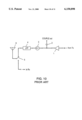
  • FIG. 10 is a block diagram of the transmission system of an ordinary cellular phone.
  • the monitor signal is coupled out from the power amplified by a power amplifier 1 through a capacity-coupling capacitor 2.
  • An isolator 3 and then a low-pass filter 4 are connected in the system, and the signal is transmitted from the antenna 6 after removing second harmonic spurious and third harmonic spurious energy in the transmission system when a mode switch 5 is turned to the transmission side.
  • the number of poles in the low-pass filter 4 may have to be increased to fully attenuate amplified second harmonic spurious energy and third harmonic spurious energy in the system.
  • the isolator 3 connected for preventing reflection signals, regardless of the input position of the mode switch 5, results in a higher price.
  • the present invention offers a small and inexpensive low-pass filter with directional coupler and a cellular phone employing such a low-pass filter for attenuating high-frequency signals, in particular, second harmonic spurious and third harmonic spurious energy in the system.
  • a low-pass filter of the present invention eliminates the use of an isolator and connects a stub line to the main transmission line of the directional coupler for coupling out the monitor signal. With this configuration, a specified frequency band can be attenuated with the same line length as directional couplers of the prior art, thereby reducing the number of components in the transmission system of cellular phones.
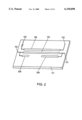
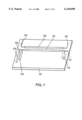
  • FIG. 1 is a perspective of a low-pass filter with directional coupler in accordance with a first exemplary embodiment of the present invention.
  • FIG. 2 is a perspective of a low-pass filter with directional coupler in accordance with a second exemplary embodiment of the present invention.
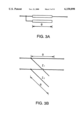
  • FIGS. 3A and 3B are explanatory views of the relation between a main transmission line and a stub line in accordance with the second exemplary embodiment of the present invention.
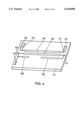
  • FIG. 4 is a perspective of a low-pass filter with directional coupler in accordance with a third exemplary embodiment of the present invention.
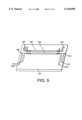
  • FIG. 5 is a perspective of a low-pass filter with directional coupler in accordance with a fourth exemplary embodiment of the present invention.
  • FIG. 6 is a perspective of a low-pass filter with directional coupler in accordance with a fifth exemplary embodiment of the present invention.
  • FIG. 7 is a perspective of a low-pass filter with directional coupler in accordance with a sixth exemplary embodiment of the present invention.
  • FIG. 8 is a perspective of a low-pass filter with directional coupler in accordance with a seventh exemplary embodiment of the present invention.
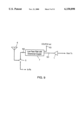
  • FIG. 9 is a block diagram of a transmission system in a cellular phone employing a low-pass filter with directional coupler of the present invention.
  • FIG. 10 is a block diagram of a transmission system in a cellular phone of the prior art.
  • FIGS. 11, 12, and 13 are perspective views of a low-pass filter with differently configured stub lines, respectively.
  • FIG. 1 shows a low-pass filter with directional coupler in the first exemplary embodiment of the present invention which is used in the 900 MHz frequency band.
  • a main transmission line 105 which has terminals 101 and 102 at its ends and a sub transmission line 106 which has terminals 103 and 104 at its ends are disposed in parallel on a dielectric board 107 whose bottom face is a shield electrode.
  • the main transmission line 105 and the sub transmission line 106 are electromagnetically coupled, and the terminal 104 terminates at 50 ⁇ to form a directional coupler.
  • the dielectric board 107 consists of alumina and its bottom face is a shield electrode. Since the dielectric constant is small in the dielectric board 107, the characteristic impedance of the transmission lines can be made larger, thereby improving the characteristics of the directional coupler.
  • the terminals 101 and 102 are connected to stub lines 108 and 109 respectively.
  • These transmission lines and stub lines can be formed using a range of methods including screen printing and film intaglio transfer printing normally used for creating integrated circuit boards.
  • An input impedance Zi at the contact points of the stub lines 108 and 109 can be calculated as follows when the loss is ignored:
  • the stub lines 108 and 109 act as a series resonance circuit depending on conditions of the characteristic impedance of the line, terminating conditions, and line length, and their frequency characteristics include an attenuation pole.
  • the present invention forms a low-pass filter having two attenuation poles with the passband frequency (hereafter referred to as ⁇ 0) where the line length of the main transmission line 105 is a quarter wavelength (hereafter referred to as ⁇ /4 wavelength).
  • the above exemplary embodiment offers a component with the function of a low-pass filter with attenuation poles in a specified frequency band in addition to the function of a directional coupler by connecting stub lines to both ends of the main transmission line of the conventional directional coupler and adjusting the characteristic impedance, terminating conditions, and line length of these stub lines.
  • a single stub line allows the reduction of the area occupied by the component.
  • the length of at least one of the stub lines in this exemplary embodiment can also be set to the length which resonates with the double frequency of ⁇ 0 (hereafter referred to as 2 ⁇ 0). This enables the suppression of the system's second harmonic spurious.
  • This exemplary embodiment can also be realized by setting the line length of one of the stub lines to resonate with 2 ⁇ 0 and the other line length to resonate with the triple frequency of ⁇ 0 (hereafter referred to as 3 ⁇ 0). This enables the suppression of second harmonic spurious and third harmonic spurious output.
  • the stub lines in this exemplary embodiment can be replaced with a meander line 308, spiral line 408, or stepped impedance line 508 as shown in FIGS. 11-13, respectively. This allows the reduction of the size of the low-pass filter with directional coupler without changing its characteristics.
  • the stub lines in this exemplary embodiment can also be replaced with an open stub line.
  • the component will act as a resonator in which the line length of the stub line resonates with ⁇ /4. This enables shortening of the length of line required for forming the required attenuation pole.
  • two stub lines also show the characteristic of a capacitor in the ⁇ 0 band, and the main transmission line and the two stub lines form a ⁇ -type 3-pole low-pass filter for improving attenuation characteristics in the high-frequency band.
  • the 900 MHz frequency band is used in this exemplary embodiment. However, the same effect can be achieved at any frequency for transmitting high frequency signals by the use of the present invention.
  • FIG. 2 shows a low-pass filter with directional coupler used in the 900 MHz frequency band in a second exemplary embodiment of the present invention.
  • the low-pass filter with directional coupler in the second exemplary embodiment shown in FIG. 2 has basically the same configuration as that of the first exemplary embodiment shown in FIG. 1. Detailed explanation is therefore omitted by giving the same numeric codes to the same parts.
  • Stub lines 208 and 209 of the low-pass filter with directional coupler in this exemplary embodiment are disposed parallel to the main transmission line 105 as shown in FIG. 2.
  • the stub lines 208 and 209 are electromagnetically coupled to the main transmission line 105.
  • the other configuration is the same as in the first exemplary embodiment.
  • the main transmission line acts as an inductance, and both its ends are connected to the stub lines to act as a series resonance circuit for forming a low-pass filter with two attenuation poles. Since lines are formed on a board with low dielectric constant, the length of the stub lines becomes relatively longer, resulting in a larger low-pass filter with directional coupler.
  • stub lines 208 and 209 are disposed parallel to the main transmission line 105 and sub transmission line 106, which enables the realization of a low-pass filter with directional coupler with the same length as a directional coupler.
  • the characteristic impedance Z1 of the main transmission line and the characteristic impedance Z2 of the stub line 208 are calculated as follows:
  • the above formula dictates that the characteristic impedance Z2 of the stub line 208 will increase, narrowing the bandwidth for the attenuation pole formed by the stub line 208.
  • the bandwidth for the attenuation pole formed by the stub line 208 similarly narrows when the coupling level of the main transmission line 105 and the stub line 209 is increased.
  • the bandwidth for the attenuation pole formed by the stub lines 208 and 209 can be controlled by changing the width of the main transmission line 105 and the stub line 208, and the distance between the two lines, or the line width of the main transmission line 105 and the stub line 209, and the distance between the two lines.
  • the 900 MHz frequency band is used in this exemplary embodiment. However, the same effect can be achieved at any frequency for transmitting high frequency signals by the use of the present invention.
  • FIG. 4 shows a low-pass filter with directional coupler used in the 900 MHz frequency band in a third exemplary embodiment of the present invention.
  • the low-pass filter with directional coupler in the third exemplary embodiment shown in FIG. 4 has basically the same configuration as that of the second exemplary embodiment shown in FIG. 2. Detailed explanation is therefore omitted by giving the same numeric codes to the same parts.
  • a capacitor 410 is connected to an end of the main transmission line 105, and capacitors 411 and 412 are connected to both ends of the sub transmission line 106.
  • the other configuration is the same as in the second exemplary embodiment.
  • the main transmission line acts as an inductance, and both its ends are connected to the stub lines to form a series resonance circuit which resonates with 2 ⁇ 0 or 3 ⁇ 0 to obtain the characteristics of a low-pass filter having two attenuation poles.
  • the two stub lines also show the characteristics of a capacitor in the w0 band, and form a ⁇ -type 3-pole low-pass filter.
  • the capacity component of the two stub lines is not exactly the same.
  • the admittance of an open stub line which resonates with a low frequency is higher than that of an open stub line which resonates with a higher frequency. Accordingly, the capacity component acting on the terminal 101 is larger than that on the terminal 102. There is no capacity component acting on the terminals 103 and 104. Therefore, impedance is not matched in the low-pass filter with directional coupler of the first and second exemplary embodiments.
  • the third exemplary embodiment realizes a low-pass filter with matched impedance by adjusting the capacitors 410, 411, and 412, thereby correcting each capacity.
  • the capacity of the capacitor 410 is preferably set to the value obtained by subtracting the capacity component of the stub line 209 from the capacity component of the stub line 208.
  • the capacity of the capacitors 411 and 412 are also preferably set to the capacity component of the stub line 208. These settings allow the best impedance match at w0.
  • insufficient capacity of the stub line 209 is corrected by the capacitor 410 connected to the terminal 102.
  • This can alternatively be achieved by making the line width of the stub line 209 wider than the stub line 208, instead of connecting the capacitor. This allows the number of components to be reduced, and also enables finer adjustment of the capacity.
  • the 900 MHz frequency band is used in this exemplary embodiment. However, the same effect can be achieved for any frequency for transmitting high frequency by the use of the present invention.
  • FIG. 5 shows a low-pass filter with directional coupler used in the 900 MHz frequency band in a fourth exemplary embodiment of the present invention.
  • the low-pass filter with directional coupler in the fourth exemplary embodiment shown in FIG. 5 has basically the same configuration as that of the first exemplary embodiment shown in FIG. 1. Detailed explanation is therefore omitted by giving the same numeric codes to the same parts.
  • the stub lines 513 and 514 are connected in parallel, and the stub lines 515 and 516 are also connected in parallel so that each pair forms a capacitor in the low-pass filter with directional coupler.
  • the input impedance Zi at the contact points of stub lines 513, 514, 515, and 516 is calculated as follows when the loss is ignored:
  • the present invention forms a ⁇ -type 3-pole low-pass filter having two attenuation poles with the frequency ⁇ 0 where the line length of the main transmission line 105 is the ⁇ /4 wavelength.
  • the capacity component of stub lines 513 and 514 forms one of the capacitors in the low-pass filter, thereby relatively narrowing the stub lines compared to those of the first exemplary embodiment. The same effect is achieved for the capacity component of the stub lines 515 and 516.
  • the fourth exemplary embodiment offers a small low-pass filter with directional coupler by dividing capacity, thereby narrowing the stub lines.
  • stub lines there are four stub lines in this exemplary embodiment, but this number can be reduced to one to three lines, or increased to more than five lines. This allows the reduction of the area occupied by components.
  • the length of at least one of the stub lines in this exemplary embodiment can be made to the length which resonates with 2 ⁇ 0. This enables the suppression of the second harmonic spurious energy.
  • the length of at least one of the stub lines in this exemplary embodiment can be made to the length which resonates with 3 ⁇ 0. This allows the suppression of the third harmonic spurious energy.
  • At least one of the stub lines in this exemplary embodiment can be made to the length which resonates with 2 ⁇ 0 and at least one of the stub lines can be made to resonate with 3 ⁇ 0. This allows the suppression of both the second harmonic spurious and the third harmonic spurious signals.
  • the length of at least one of the stub lines in this exemplary embodiment can also be made to the length which resonates with a frequency other than 2 ⁇ 0 or 3 ⁇ 0. This allows the suppression of frequencies other than the second harmonic spurious and the third harmonic spurious signals.
  • the length of at least one of the stub lines in this exemplary embodiment can also be made to the length which resonates with a specified frequency. This allows the suppression of spurious output of a specified frequency.
  • the stub lines in this exemplary embodiment are connected on the same side, but the same effect can also be achieved when the lines are connected to the opposite side i.e. to the ends of the subtransmission line 106 in the same manner as the capacitors 411 and 412 in FIG. 4.
  • the frequency band of 900 MHz is used in this exemplary embodiment. However, the same effect can be achieved for any frequency for transmitting high frequency by the use of the present invention.
  • At least one of capacities connected to the main transmission line 105 is a stub line, and a chip capacitor is used for the remaining capacity.
  • the other configuration is the same as that of the fourth exemplary embodiment.
  • the main transmission line 105 acts as an inductance.
  • Stub lines are connected at both ends of the main line 105 to act as a series resonant circuit showing the capacity at the frequency ⁇ 0 for forming a low-pass filter having attenuation pole.
  • the length of the stub line becomes relatively long, e.g., 13.4 mm, resulting in a larger low-pass filter with directional coupler.
  • this exemplary embodiment realizes a smaller low-pass filter with directional coupler by employing a stub line as one of capacities connected to the main transmission electrode line and a chip capacitor for the remaining capacity.
  • the 900 MHz frequency band is used in this exemplary embodiment. However, the same effect can be achieved at any frequency for transmitting high frequency signals by the use of the present invention.
  • FIG. 7 shows a low-pass filter with directional coupler used in the 900 MHz frequency band in a sixth exemplary embodiment of the present invention.
  • the low-pass filter with directional coupler in the sixth exemplary embodiment shown in FIG. 7 has basically the same configuration as that of the fourth exemplary embodiment shown in FIG. 5. Detailed explanation is therefore omitted by giving the same numeric codes to the same parts.
  • At least one of the capacities connected to the main transmission line is a stub line, and an internal capacity 718 is used for the remaining capacity.
  • the other configuration is the same as that of the fourth exemplary embodiment.
  • the main transmission line 105 acts as an inductance.
  • Stub lines are connected at both ends of the main line 105 to act as a series resonant circuit showing the capacity at the frequency ⁇ 0 for forming a low-pass filter having attenuation pole.
  • the length of stub line becomes relatively long, e.g., 13.4 mm, resulting in a larger low-pass filter with directional coupler.
  • an internal capacitor 718 is connected to the main transmission line 105.
  • the internal capacity can be formed with a length less than a few millimeters.
  • this exemplary embodiment realizes a smaller low-pass filter with directional coupler by employing a stub line as one of capacities connected to the main transmission line and an internal capacitor for the remaining capacity.
  • the 900 MHz frequency band is used in this exemplary embodiment. However, the same effect can be achieved at any frequency for transmitting high frequency signals by the use of the present invention.
  • FIG. 8 shows a low-pass filter with directional coupler used in the 900 MHz frequency band in a seventh exemplary embodiment of the present invention.
  • the low-pass filter with directional coupler in the seventh exemplary embodiment shown in FIG. 8 has basically the same configuration as that of the first exemplary embodiment shown in FIG. 1. Detailed explanation is therefore omitted by giving the same numeric codes to the same parts.
  • a stub line connected to the main transmission line is an internal stub line 819 inside the board.
  • the rest of the configuration is the same as that of the first exemplary embodiment.
  • stub line formed on the board using methods such as screen printing and concave printing normally used for creating integrated circuit boards is difficult to be adjusted due to limitations in formation methods.
  • the line is likely to be affected by external factors after formation. Since the stub lines in the present invention are finely adjusted by its characteristics impedance, terminating conditions, and line length, characteristics of this type of stub line may not be stabilized.
  • the seventh exemplary embodiment offers a low-pass filter with directional coupler which maintains the initial condition of the line when it is formed, and prevents external influence by connecting a stub line formed inside the board to the main transmission line 105.
  • One internal stub line is provided in this exemplary embodiment. It will be apparent that two or more internal stub lines can be provided. In this case, characteristics of low-pass filter with directional coupler can be further stabilized.
  • a stub line is provided inside the board, but the entire low-pass filter with directional filter can also be provided inside. It will further stabilize characteristics of low-pass filter with directional coupler.
  • the 900 MHz frequency band is used in this exemplary embodiment. However, the same effect can be achieved at any frequency for transmitting high frequency signals by the use of the present invention.
  • FIG. 9 shows an output circuit of the transmission system in a cellular phone employing a low-pass filter with directional coupler in the eighth exemplary embodiment.
  • the low-pass filter with directional coupler employed in this exemplary embodiment can be one of the first to seventh exemplary embodiments.
  • the terminal 101 is connected to a power amplifier 1, and the terminal 102 is connected to a mode switch 5.
  • the terminal 103 is used as a monitor terminal, and the terminal 104 (not shown) is left as it is terminating at 50 ⁇ .
  • the power amplifier 1 amplifies the system signal, and the signal is transmitted from an antenna 6 through a low-pass filter with directional coupler 7 and the mode switch 5.
  • high-frequency band energy in the system, particularly second harmonic spurious and third harmonic spurious signals are attenuated by the low-pass filter with directional coupler 7, and is not transmitted to the antenna.
  • the monitor signal can also be coupled out by the directional coupler.
  • This exemplary embodiment offers a smaller and more inexpensive cellular phones by the use of a low-pass filter with directional coupler of the present invention which enables to reduce the number of components in the output circuit of the transmission system in cellular phones.
  • the present invention provides a component with an additional function of a low-pass filer having an attenuation pole at a specified frequency band without changing the line length by connecting a stub line to a main transmission line of a directional coupler.
  • the bandwidth of the attenuation pole can also be controlled by electromagnetically connecting the stub line and the main transmission line.
  • Impedance of the low-pass filter with directional coupler can also be matched by grounding both ends of the main and sub transmission lines through a capacitor.
  • the present invention functions as a low-pass filter for attenuating unwanted frequencies and a directional coupler by dividing capacities and providing at least one stub line.
  • the width of the stub line can be narrowed by dividing the capacity, realizing a smaller low-pass filter with directional coupler.
  • the number of components can be reduced and a smaller and less expensive cellular phone can be realized by adopting the low-pass filter with directional coupler of the present invention in the transmission circuit of the cellular phone.

Landscapes

  • Physics & Mathematics (AREA)
  • Electromagnetism (AREA)
  • Control Of Motors That Do Not Use Commutators (AREA)
  • Transceivers (AREA)

Abstract

An integrated component providing the function of both a conventional directional coupler and a low-pass filter having two attenuation poles at a specified frequency band without changing the line length. Stub lines are connected to both ends of a main transmission line of a directional coupler. A frequency of the attenuation poles is adjustable by characteristic impedance, terminating conditions, and line length of the stub lines.

Description

FIELD OF THE INVENTION
The present invention relates to low-pass filters with directional couplers suitable for use in the transmission circuits of cellular phones used for mobile communications, and cellular phones employing such low-pass filters with directional couplers.
BACKGROUND OF THE INVENTION
FIG. 10 is a block diagram of the transmission system of an ordinary cellular phone. The monitor signal is coupled out from the power amplified by a power amplifier 1 through a capacity-coupling capacitor 2. An isolator 3 and then a low-pass filter 4 are connected in the system, and the signal is transmitted from the antenna 6 after removing second harmonic spurious and third harmonic spurious energy in the transmission system when a mode switch 5 is turned to the transmission side.
In the above configuration, however, the number of poles in the low-pass filter 4 may have to be increased to fully attenuate amplified second harmonic spurious energy and third harmonic spurious energy in the system. In addition, the isolator 3 connected for preventing reflection signals, regardless of the input position of the mode switch 5, results in a higher price.
DISCLOSURE OF THE INVENTION
The present invention offers a small and inexpensive low-pass filter with directional coupler and a cellular phone employing such a low-pass filter for attenuating high-frequency signals, in particular, second harmonic spurious and third harmonic spurious energy in the system.
A low-pass filter of the present invention eliminates the use of an isolator and connects a stub line to the main transmission line of the directional coupler for coupling out the monitor signal. With this configuration, a specified frequency band can be attenuated with the same line length as directional couplers of the prior art, thereby reducing the number of components in the transmission system of cellular phones.
BRIEF DESCRIPTION OF THE DRAWINGS
FIG. 1 is a perspective of a low-pass filter with directional coupler in accordance with a first exemplary embodiment of the present invention.
FIG. 2 is a perspective of a low-pass filter with directional coupler in accordance with a second exemplary embodiment of the present invention.
FIGS. 3A and 3B are explanatory views of the relation between a main transmission line and a stub line in accordance with the second exemplary embodiment of the present invention.
FIG. 4 is a perspective of a low-pass filter with directional coupler in accordance with a third exemplary embodiment of the present invention.
FIG. 5 is a perspective of a low-pass filter with directional coupler in accordance with a fourth exemplary embodiment of the present invention.
FIG. 6 is a perspective of a low-pass filter with directional coupler in accordance with a fifth exemplary embodiment of the present invention.
FIG. 7 is a perspective of a low-pass filter with directional coupler in accordance with a sixth exemplary embodiment of the present invention.
FIG. 8 is a perspective of a low-pass filter with directional coupler in accordance with a seventh exemplary embodiment of the present invention.
FIG. 9 is a block diagram of a transmission system in a cellular phone employing a low-pass filter with directional coupler of the present invention.
FIG. 10 is a block diagram of a transmission system in a cellular phone of the prior art.
FIGS. 11, 12, and 13 are perspective views of a low-pass filter with differently configured stub lines, respectively.
DESCRIPTION OF THE PREFERRED EMBODIMENTS
First Exemplary Embodiment
A first exemplary embodiment of the present invention is explained with reference to drawings.
FIG. 1 shows a low-pass filter with directional coupler in the first exemplary embodiment of the present invention which is used in the 900 MHz frequency band. In FIG. 1, a main transmission line 105 which has terminals 101 and 102 at its ends and a sub transmission line 106 which has terminals 103 and 104 at its ends are disposed in parallel on a dielectric board 107 whose bottom face is a shield electrode. The main transmission line 105 and the sub transmission line 106 are electromagnetically coupled, and the terminal 104 terminates at 50Ω to form a directional coupler. The dielectric board 107 consists of alumina and its bottom face is a shield electrode. Since the dielectric constant is small in the dielectric board 107, the characteristic impedance of the transmission lines can be made larger, thereby improving the characteristics of the directional coupler.
The terminals 101 and 102 are connected to stub lines 108 and 109 respectively. These transmission lines and stub lines can be formed using a range of methods including screen printing and film intaglio transfer printing normally used for creating integrated circuit boards.
The operation of the low-pass filter with directional coupler as configured above is explained next.
An input impedance Zi at the contact points of the stub lines 108 and 109 can be calculated as follows when the loss is ignored:
Zi=Z0·(Z1+j Z0 tan βl)/(Z0+jZ1 tan βl)
where
Z0: Characteristic impedance of the line;
β: Phase constant;
l: Line length; and
Z1: Terminating impedance.
This means that the stub lines 108 and 109 act as a series resonance circuit depending on conditions of the characteristic impedance of the line, terminating conditions, and line length, and their frequency characteristics include an attenuation pole. In addition, since the main transmission line 105 acts as an inductance, the present invention forms a low-pass filter having two attenuation poles with the passband frequency (hereafter referred to as ω0) where the line length of the main transmission line 105 is a quarter wavelength (hereafter referred to as λ/4 wavelength).
The above exemplary embodiment offers a component with the function of a low-pass filter with attenuation poles in a specified frequency band in addition to the function of a directional coupler by connecting stub lines to both ends of the main transmission line of the conventional directional coupler and adjusting the characteristic impedance, terminating conditions, and line length of these stub lines.
There are two stub lines in the present exemplary embodiment, but one stub line is also acceptable. A single stub line allows the reduction of the area occupied by the component.
The length of at least one of the stub lines in this exemplary embodiment can also be set to the length which resonates with the double frequency of ω0 (hereafter referred to as 2ω0). This enables the suppression of the system's second harmonic spurious.
This exemplary embodiment can also be realized by setting the line length of one of the stub lines to resonate with 2ω0 and the other line length to resonate with the triple frequency of ω0 (hereafter referred to as 3ω0). This enables the suppression of second harmonic spurious and third harmonic spurious output.
The stub lines in this exemplary embodiment can be replaced with a meander line 308, spiral line 408, or stepped impedance line 508 as shown in FIGS. 11-13, respectively. This allows the reduction of the size of the low-pass filter with directional coupler without changing its characteristics.
The stub lines in this exemplary embodiment can also be replaced with an open stub line. In this case, the component will act as a resonator in which the line length of the stub line resonates with λ/4. This enables shortening of the length of line required for forming the required attenuation pole. Here, two stub lines also show the characteristic of a capacitor in the ω0 band, and the main transmission line and the two stub lines form a π-type 3-pole low-pass filter for improving attenuation characteristics in the high-frequency band.
The 900 MHz frequency band is used in this exemplary embodiment. However, the same effect can be achieved at any frequency for transmitting high frequency signals by the use of the present invention.
Second Exemplary Embodiment
FIG. 2 shows a low-pass filter with directional coupler used in the 900 MHz frequency band in a second exemplary embodiment of the present invention. The low-pass filter with directional coupler in the second exemplary embodiment shown in FIG. 2 has basically the same configuration as that of the first exemplary embodiment shown in FIG. 1. Detailed explanation is therefore omitted by giving the same numeric codes to the same parts.
Stub lines 208 and 209 of the low-pass filter with directional coupler in this exemplary embodiment are disposed parallel to the main transmission line 105 as shown in FIG. 2. The stub lines 208 and 209 are electromagnetically coupled to the main transmission line 105. The other configuration is the same as in the first exemplary embodiment.
The operation of the low-pass filter with directional coupler as configured above is explained next.
In the first exemplary embodiment, the main transmission line acts as an inductance, and both its ends are connected to the stub lines to act as a series resonance circuit for forming a low-pass filter with two attenuation poles. Since lines are formed on a board with low dielectric constant, the length of the stub lines becomes relatively longer, resulting in a larger low-pass filter with directional coupler.
In this exemplary embodiment, stub lines 208 and 209 are disposed parallel to the main transmission line 105 and sub transmission line 106, which enables the realization of a low-pass filter with directional coupler with the same length as a directional coupler.
If a portion of the main transmission line 105 which is electromagnetically coupled with the stub line 208 consists of a two-port circuit employing a coupling transmission line having a length θ as shown in FIG. 3(A), its equivalent circuit will be as shown in FIG. 3(B). In this case, the characteristic impedance Z1 of the main transmission line and the characteristic impedance Z2 of the stub line 208 are calculated as follows:
Z1=(Ze+Zo)/2
Z2=(Ze/Zo)·(Ze+Zo)/2
where
Ze: Even mode impedance of coupling transmission line and
Zo: Odd mode impedance of coupling transmission line.
As the coupling level of the coupling transmission line rises, generating a larger value for Ze-Zo, the above formula dictates that the characteristic impedance Z2 of the stub line 208 will increase, narrowing the bandwidth for the attenuation pole formed by the stub line 208. The bandwidth for the attenuation pole formed by the stub line 208 similarly narrows when the coupling level of the main transmission line 105 and the stub line 209 is increased.
Accordingly, in this exemplary embodiment, the bandwidth for the attenuation pole formed by the stub lines 208 and 209 can be controlled by changing the width of the main transmission line 105 and the stub line 208, and the distance between the two lines, or the line width of the main transmission line 105 and the stub line 209, and the distance between the two lines.
The 900 MHz frequency band is used in this exemplary embodiment. However, the same effect can be achieved at any frequency for transmitting high frequency signals by the use of the present invention.
Third Exemplary Embodiment
FIG. 4 shows a low-pass filter with directional coupler used in the 900 MHz frequency band in a third exemplary embodiment of the present invention. The low-pass filter with directional coupler in the third exemplary embodiment shown in FIG. 4 has basically the same configuration as that of the second exemplary embodiment shown in FIG. 2. Detailed explanation is therefore omitted by giving the same numeric codes to the same parts.
In this exemplary embodiment, a capacitor 410 is connected to an end of the main transmission line 105, and capacitors 411 and 412 are connected to both ends of the sub transmission line 106. The other configuration is the same as in the second exemplary embodiment.
The operation of the low-pass filter with directional coupler as configured above is explained below.
In the first and second exemplary embodiments, the main transmission line acts as an inductance, and both its ends are connected to the stub lines to form a series resonance circuit which resonates with 2ω0 or 3ω0 to obtain the characteristics of a low-pass filter having two attenuation poles. In this case, the two stub lines also show the characteristics of a capacitor in the w0 band, and form a π-type 3-pole low-pass filter. However, the capacity component of the two stub lines is not exactly the same. When the stub lines 208 and 209 are open stub lines as shown in FIG. 4, and each resonates with 2ω0 and 3ω0 respectively, their admittance is:
Y=Y0 tan βl (whereas Y0=l/Z0).
The admittance of an open stub line which resonates with a low frequency is higher than that of an open stub line which resonates with a higher frequency. Accordingly, the capacity component acting on the terminal 101 is larger than that on the terminal 102. There is no capacity component acting on the terminals 103 and 104. Therefore, impedance is not matched in the low-pass filter with directional coupler of the first and second exemplary embodiments.
The third exemplary embodiment realizes a low-pass filter with matched impedance by adjusting the capacitors 410, 411, and 412, thereby correcting each capacity.
The capacity of the capacitor 410 is preferably set to the value obtained by subtracting the capacity component of the stub line 209 from the capacity component of the stub line 208. The capacity of the capacitors 411 and 412 are also preferably set to the capacity component of the stub line 208. These settings allow the best impedance match at w0.
In this exemplary embodiment, insufficient capacity of the stub line 209 is corrected by the capacitor 410 connected to the terminal 102. This can alternatively be achieved by making the line width of the stub line 209 wider than the stub line 208, instead of connecting the capacitor. This allows the number of components to be reduced, and also enables finer adjustment of the capacity.
The 900 MHz frequency band is used in this exemplary embodiment. However, the same effect can be achieved for any frequency for transmitting high frequency by the use of the present invention.
Fourth Exemplary Embodiment
FIG. 5 shows a low-pass filter with directional coupler used in the 900 MHz frequency band in a fourth exemplary embodiment of the present invention. The low-pass filter with directional coupler in the fourth exemplary embodiment shown in FIG. 5 has basically the same configuration as that of the first exemplary embodiment shown in FIG. 1. Detailed explanation is therefore omitted by giving the same numeric codes to the same parts.
In this exemplary embodiment, the stub lines 513 and 514 are connected in parallel, and the stub lines 515 and 516 are also connected in parallel so that each pair forms a capacitor in the low-pass filter with directional coupler. The input impedance Zi at the contact points of stub lines 513, 514, 515, and 516 is calculated as follows when the loss is ignored:
Zi=Z0·(Z1+jZ0 tan βl)/(Z0+jz1 tan βl)
whereas:
Z0: Characteristic impedance of line;
β: Phase constant;
l: Line length; and
Z1: Terminating impedance.
Since the stub lines 513, 514, 515, and 516 act as a series resonance circuit depending on conditions of characteristic impedance, terminating conditions, and the line length, the present invention forms a π-type 3-pole low-pass filter having two attenuation poles with the frequency ω0 where the line length of the main transmission line 105 is the λ/4 wavelength. Here, the capacity component of stub lines 513 and 514 forms one of the capacitors in the low-pass filter, thereby relatively narrowing the stub lines compared to those of the first exemplary embodiment. The same effect is achieved for the capacity component of the stub lines 515 and 516.
As described above, the fourth exemplary embodiment offers a small low-pass filter with directional coupler by dividing capacity, thereby narrowing the stub lines.
There are four stub lines in this exemplary embodiment, but this number can be reduced to one to three lines, or increased to more than five lines. This allows the reduction of the area occupied by components.
The length of at least one of the stub lines in this exemplary embodiment can be made to the length which resonates with 2ω0. This enables the suppression of the second harmonic spurious energy.
The length of at least one of the stub lines in this exemplary embodiment can be made to the length which resonates with 3ω0. This allows the suppression of the third harmonic spurious energy.
Furthermore, at least one of the stub lines in this exemplary embodiment can be made to the length which resonates with 2ω0 and at least one of the stub lines can be made to resonate with 3ω0. This allows the suppression of both the second harmonic spurious and the third harmonic spurious signals.
The length of at least one of the stub lines in this exemplary embodiment can also be made to the length which resonates with a frequency other than 2ω0 or 3ω0. This allows the suppression of frequencies other than the second harmonic spurious and the third harmonic spurious signals.
The length of at least one of the stub lines in this exemplary embodiment can also be made to the length which resonates with a specified frequency. This allows the suppression of spurious output of a specified frequency.
The stub lines in this exemplary embodiment are connected on the same side, but the same effect can also be achieved when the lines are connected to the opposite side i.e. to the ends of the subtransmission line 106 in the same manner as the capacitors 411 and 412 in FIG. 4.
The frequency band of 900 MHz is used in this exemplary embodiment. However, the same effect can be achieved for any frequency for transmitting high frequency by the use of the present invention.
Fifth Exemplary Embodiment
FIG. 6 shows a low-pass filter with directional coupler used in the 900 MHz frequency band in a fifth exemplary embodiment of the present invention. The low-pass filter with directional coupler in the second exemplary embodiment shown in FIG. 6 has basically the same configuration as that of the fourth exemplary embodiment shown in FIG. 5. Detailed explanation is therefore omitted by giving the same numeric codes to the same parts.
In the fifth exemplary embodiment, at least one of capacities connected to the main transmission line 105 is a stub line, and a chip capacitor is used for the remaining capacity. The other configuration is the same as that of the fourth exemplary embodiment.
The operation of the low-pass filter with directional coupler as configured above is explained next.
In the fourth exemplary embodiment, the main transmission line 105 acts as an inductance. Stub lines are connected at both ends of the main line 105 to act as a series resonant circuit showing the capacity at the frequency ω0 for forming a low-pass filter having attenuation pole. However, for attenuating the double frequency of 900 MHz on an alumina board, for example, the length of the stub line becomes relatively long, e.g., 13.4 mm, resulting in a larger low-pass filter with directional coupler.
In this exemplary embodiment, a chip capacitor 617 is connected to the main transmission line 105 as capacity. The length of an applicable chip capacitor is 1 mm.
As mentioned above, this exemplary embodiment realizes a smaller low-pass filter with directional coupler by employing a stub line as one of capacities connected to the main transmission electrode line and a chip capacitor for the remaining capacity.
The 900 MHz frequency band is used in this exemplary embodiment. However, the same effect can be achieved at any frequency for transmitting high frequency signals by the use of the present invention.
Sixth Exemplary Embodiment
FIG. 7 shows a low-pass filter with directional coupler used in the 900 MHz frequency band in a sixth exemplary embodiment of the present invention. The low-pass filter with directional coupler in the sixth exemplary embodiment shown in FIG. 7 has basically the same configuration as that of the fourth exemplary embodiment shown in FIG. 5. Detailed explanation is therefore omitted by giving the same numeric codes to the same parts.
In the sixth exemplary embodiment, at least one of the capacities connected to the main transmission line is a stub line, and an internal capacity 718 is used for the remaining capacity. The other configuration is the same as that of the fourth exemplary embodiment.
The operation of the low-pass filter with directional coupler as configured above is explained next.
In the fourth exemplary embodiment, the main transmission line 105 acts as an inductance. Stub lines are connected at both ends of the main line 105 to act as a series resonant circuit showing the capacity at the frequency ω0 for forming a low-pass filter having attenuation pole. However, for the attenuating double frequency of 900 MHz on an alumina board, for example, the length of stub line becomes relatively long, e.g., 13.4 mm, resulting in a larger low-pass filter with directional coupler.
In this exemplary embodiment, an internal capacitor 718 is connected to the main transmission line 105. The internal capacity can be formed with a length less than a few millimeters.
As mentioned above, this exemplary embodiment realizes a smaller low-pass filter with directional coupler by employing a stub line as one of capacities connected to the main transmission line and an internal capacitor for the remaining capacity.
The 900 MHz frequency band is used in this exemplary embodiment. However, the same effect can be achieved at any frequency for transmitting high frequency signals by the use of the present invention.
Seventh Exemplary Embodiment
FIG. 8 shows a low-pass filter with directional coupler used in the 900 MHz frequency band in a seventh exemplary embodiment of the present invention. The low-pass filter with directional coupler in the seventh exemplary embodiment shown in FIG. 8 has basically the same configuration as that of the first exemplary embodiment shown in FIG. 1. Detailed explanation is therefore omitted by giving the same numeric codes to the same parts.
In the seventh exemplary embodiment, a stub line connected to the main transmission line is an internal stub line 819 inside the board. The rest of the configuration is the same as that of the first exemplary embodiment.
The operation of the low-pass filter with directional coupler as configured above is explained next.
Conditions of a stub line formed on the board using methods such as screen printing and concave printing normally used for creating integrated circuit boards is difficult to be adjusted due to limitations in formation methods. In addition, the line is likely to be affected by external factors after formation. Since the stub lines in the present invention are finely adjusted by its characteristics impedance, terminating conditions, and line length, characteristics of this type of stub line may not be stabilized.
The seventh exemplary embodiment offers a low-pass filter with directional coupler which maintains the initial condition of the line when it is formed, and prevents external influence by connecting a stub line formed inside the board to the main transmission line 105.
One internal stub line is provided in this exemplary embodiment. It will be apparent that two or more internal stub lines can be provided. In this case, characteristics of low-pass filter with directional coupler can be further stabilized.
In this exemplary embodiment, a stub line is provided inside the board, but the entire low-pass filter with directional filter can also be provided inside. It will further stabilize characteristics of low-pass filter with directional coupler.
The 900 MHz frequency band is used in this exemplary embodiment. However, the same effect can be achieved at any frequency for transmitting high frequency signals by the use of the present invention.
Eighth Exemplary Embodiment
FIG. 9 shows an output circuit of the transmission system in a cellular phone employing a low-pass filter with directional coupler in the eighth exemplary embodiment. The low-pass filter with directional coupler employed in this exemplary embodiment can be one of the first to seventh exemplary embodiments.
In FIG. 9, the terminal 101 is connected to a power amplifier 1, and the terminal 102 is connected to a mode switch 5. The terminal 103 is used as a monitor terminal, and the terminal 104 (not shown) is left as it is terminating at 50Ω.
The operation of the output circuit of the transmission system in the cellular phone as configured as above is explained below.
The power amplifier 1 amplifies the system signal, and the signal is transmitted from an antenna 6 through a low-pass filter with directional coupler 7 and the mode switch 5. Here, high-frequency band energy in the system, particularly second harmonic spurious and third harmonic spurious signals are attenuated by the low-pass filter with directional coupler 7, and is not transmitted to the antenna. The monitor signal can also be coupled out by the directional coupler.
This exemplary embodiment offers a smaller and more inexpensive cellular phones by the use of a low-pass filter with directional coupler of the present invention which enables to reduce the number of components in the output circuit of the transmission system in cellular phones.
INDUSTRIAL APPLICABILITY
The present invention provides a component with an additional function of a low-pass filer having an attenuation pole at a specified frequency band without changing the line length by connecting a stub line to a main transmission line of a directional coupler. The bandwidth of the attenuation pole can also be controlled by electromagnetically connecting the stub line and the main transmission line. Impedance of the low-pass filter with directional coupler can also be matched by grounding both ends of the main and sub transmission lines through a capacitor. The use of the low-pass filter with directional coupler of the present invention in the output circuit of the transmission system in a cellular phone reduces the number of components and realizes a smaller and less expensive cellular phone. The present invention functions as a low-pass filter for attenuating unwanted frequencies and a directional coupler by dividing capacities and providing at least one stub line. The width of the stub line can be narrowed by dividing the capacity, realizing a smaller low-pass filter with directional coupler. The number of components can be reduced and a smaller and less expensive cellular phone can be realized by adopting the low-pass filter with directional coupler of the present invention in the transmission circuit of the cellular phone.

Claims (22)

What is claimed is:
1. A low-pass filter with directional coupler comprising:
a directional coupler having a main transmission line and a sub transmission line electromagnetically connected and disposed parallel to each other on the same dielectric board; and
a stub line connected only to one end or respective stub lines connected only to each end of said main transmission line, each said stub line forming a series resonance circuit, and a resonance frequency of said series resonance circuit being adjustable by at least one of characteristic impedance, terminating conditions, and line length of said stub line.
2. A low-pass filter with directional coupler as defined in claim 1, wherein the respective stub lines are connected to each end of said main transmission line of the directional coupler, said respective stub lines being disposed on lengthwise direction of said main transmission line of the directional coupler and being electromagnetically connected with said main transmission line.
3. A low-pass filter with directional coupler as defined in claim 1, wherein the respective stub lines are connected to each end of said main transmission line of the directional coupler.
4. A low-pass filter with directional coupler as defined in claim 3, wherein at least one of said stub lines have the line length which resonates with a double frequency of the passband frequency of the low-pass filter.
5. A low-pass filter with directional coupler as defined in claim 3, wherein at least one of said stub lines has the line length which resonates with a triple frequency of the passband frequency of the low-pass filter.
6. A low-pass filter with directional coupler as defined in claim 3, wherein one of said stub lines has the line length which resonates with a double frequency of the passband frequency of the low-pass filter and the other stub line has the line length which resonates with a triple frequency of the passband frequency.
7. A low-pass filter with directional coupler as defined in claim 6, wherein a respective capacitor is connected between a terminal connected to said stub line which resonates with the triple frequency and GND, and between each terminal of the sub transmission line of the directional coupler and GND.
8. A low-pass filter with directional coupler as defined in claim 6, wherein the line width of the stub line which resonates with the triple frequency is broader than the width of the stub line which resonates with the double frequency.
9. A low-pass filter with directional coupler as defined in claim 1, wherein said stub line is one of a meander line, spiral line and stepped impedance line.
10. A low-pass filter with directional coupler as defined in claim 1, wherein said stub line is an open stub line.
11. A low-pass filter with directional coupler as defined in claim 1, wherein said stub line is disposed inside the board.
12. A cellular phone employing a low-pass filter with directional coupler as defined in claim 1 in a transmission circuit.
13. A low-pass filter with directional coupler comprising:
a directional coupler which comprises a main transmission line and a sub transmission line electromagnetically connected and disposed parallel to each other on the same dielectric board and
a parallel circuit having a plurality of capacity components provided on at least one end of the main transmission line of said directional coupler, said capacity components including at least one stub line, said stub line forming a series resonance circuit, and a resonance frequency of said series resonance circuit being adjustable by at least one of characteristic impedance, terminating conditions, and line length of said stab line.
14. A low-pass filter with directional coupler as defined in claim 13, wherein at least one of said stub lines has the line length which resonates with a double frequency of the passband frequency.
15. A low-pass filter with directional coupler as defined in claim 13, wherein at least one of said stub lines has the line length which resonates with a triple frequency of the passband frequency.
16. A low-pass filter with directional coupler as defined in claim 13, wherein one of said stub lines have the line length which resonate with a double frequency of the passband frequency of the low-pass filter and at least one other stub line has the line length which resonates with a triple frequency of the passband frequency.
17. A low-pass filter with directional coupler as defined in claim 13, wherein at least one of said stub lines has the line length which resonates with a frequency other than double frequency and triple frequency.
18. A low-pass filter with directional coupler as defined in claim 13, wherein a parallel circuit is provided to one end of the main transmission line of the directional coupler, said parallel circuit having a plurality of capacity components, including at least one stub line; and a chip component is provided on the other end of the main transmission line, said chip component having a capacity component.
19. A low-pass filter with directional coupler as defined in claim 13, wherein a parallel circuit is connected to one end of the main transmission line of the directional coupler, said parallel circuit having a plurality of capacity components including at least one stub line; and an internal capacity component is disposed in a board and provided to the other end of the main transmission line of the directional coupler.
20. A low-pass filter with directional coupler as defined in claim 13 wherein said parallel circuit having a plurality of capacity components is connected to the main transmission line side of the directional coupler.
21. A low-pass filter with directional coupler as defined in claim 13, wherein said parallel circuit having a plurality of capacity components is connected to both the main transmission line side and the sub transmission line side of the directional coupler.
22. A low-pass filter with directional coupler comprising:
a directional coupler which comprises a main transmission line and a sub transmission line electromagnetically connected and disposed in parallel with each other on the same dielectric board;
a parallel circuit having a plurality of capacity components disposed on one end of said main transmission line of the directional coupler, said capacity components including at least one stub line; and
at least one stab line disposed on the other end of said main transmission line of the directional coupler, said stub line having the line length which resonates with a specified frequency, said stub line forming a series resonance circuit, and a resonance frequency of said series resonance circuit being adjustable by at least one of characteristic impedance, terminating conditions, and line length of said stub line.
US08/952,008 1996-03-22 1997-03-14 Low-pass filter with directional coupler and cellular phone Expired - Lifetime US6150898A (en)

Applications Claiming Priority (5)

Application Number Priority Date Filing Date Title
JP8-65948 1996-03-22
JP06594896A JP3467959B2 (en) 1996-03-22 1996-03-22 Low-pass filter with directional coupler and mobile phone
JP9012171A JPH10209723A (en) 1997-01-27 1997-01-27 Low-pass filter with directional coupler and mobile phone using the same
JP9-12171 1997-01-27
PCT/JP1997/000815 WO1997036341A1 (en) 1996-03-22 1997-03-14 Low-pass filter with directional coupler and portable telephone set using the same

Publications (1)

Publication Number Publication Date
US6150898A true US6150898A (en) 2000-11-21

Family

ID=26347746

Family Applications (1)

Application Number Title Priority Date Filing Date
US08/952,008 Expired - Lifetime US6150898A (en) 1996-03-22 1997-03-14 Low-pass filter with directional coupler and cellular phone

Country Status (6)

Country Link
US (1) US6150898A (en)
EP (1) EP0828308B1 (en)
KR (1) KR100435801B1 (en)
CN (1) CN100382384C (en)
DE (1) DE69730389T2 (en)
WO (1) WO1997036341A1 (en)

Cited By (24)

* Cited by examiner, † Cited by third party
Publication number Priority date Publication date Assignee Title
US20030224753A1 (en) * 2002-05-28 2003-12-04 Andre Bremond High-frequency coupler
US20040103383A1 (en) * 2002-11-27 2004-05-27 Alok Tripathi Design, layout and method of manufacture for a circuit that taps a differential signal
US20040145034A1 (en) * 2003-01-23 2004-07-29 Toru Fujioka Semiconductor device
US6794954B2 (en) 2002-01-11 2004-09-21 Power Wave Technologies, Inc. Microstrip coupler
US20050212617A1 (en) * 2004-01-02 2005-09-29 Lu Chen Directional coupler
US20050239421A1 (en) * 2004-04-22 2005-10-27 Kim Ki J Directional coupler and dual-band transmitter using the same
US20070001780A1 (en) * 2005-06-30 2007-01-04 Nichols Todd W Independently adjustable combined harmonic rejection filter and power sampler
EP1863116A1 (en) * 2006-05-30 2007-12-05 St Microelectronics S.A. Broadband directional coupler
US20080129420A1 (en) * 2004-08-27 2008-06-05 Itron, Inc. Embedded antenna and filter apparatus and methodology
FR2916086A1 (en) * 2007-05-11 2008-11-14 Thales Sa HYPERFREQUENCY SIGNAL COUPLER IN MICRORUBAN TECHNOLOGY.
US20100001810A1 (en) * 2008-07-01 2010-01-07 Stmicroelectronics (Tours) Sas Integrated directional coupler
US20110057742A1 (en) * 2009-09-10 2011-03-10 Stats Chippac, Ltd. Semiconductor Device and Method of Forming Directional RF Coupler with IPD for Additional RF Signal Processing
US20110150140A1 (en) * 2009-12-18 2011-06-23 Broadcom Corporation Fractal curve based filter
US20110199166A1 (en) * 2010-02-17 2011-08-18 Rodrigo Carrillo-Ramirez Directional Coupler
US20110267194A1 (en) * 2010-05-03 2011-11-03 Song Cheol Hong Compact directional coupler using semiconductor process and mobile rfid reader transceiver system using the same
US20120169436A1 (en) * 2011-01-03 2012-07-05 Nusair Marwan E Microwave filter
US20130027273A1 (en) * 2011-07-27 2013-01-31 Tdk Corporation Directional coupler and wireless communication device
US8620231B2 (en) * 2008-05-08 2013-12-31 Blackberry Limited Mobile wireless communications device with reduced harmonics resulting from metal shield coupling
US8700108B2 (en) 2010-05-25 2014-04-15 Blackberry Limited Mobile wireless communications device with RF shield and related methods
KR101490835B1 (en) * 2013-07-18 2015-02-09 주식회사 네이버스 Broadband coupled line coupler
US20150364805A1 (en) * 2014-06-13 2015-12-17 Sumitomo Electric Industries, Ltd. Electronic device
EP2887542A4 (en) * 2012-09-18 2016-03-09 Zte Corp DOHERTY POWER AMPLIFICATION CIRCUIT
US20170245361A1 (en) * 2016-01-06 2017-08-24 Nokomis, Inc. Electronic device and methods to customize electronic device electromagnetic emissions
US10171033B2 (en) * 2016-11-03 2019-01-01 Intel Corporation Crystal oscillator interconnect architecture with noise immunity

Families Citing this family (18)

* Cited by examiner, † Cited by third party
Publication number Priority date Publication date Assignee Title
JP2000059240A (en) * 1998-08-11 2000-02-25 Nec Saitama Ltd Transmission output control method and its circuit
KR100350472B1 (en) * 2000-05-03 2002-08-28 삼성전자 주식회사 Switch control method of intelligent network
JP2003204203A (en) 2002-01-08 2003-07-18 Murata Mfg Co Ltd Filter with directional coupler and communication device
KR100723243B1 (en) * 2006-08-11 2007-05-29 삼성전기주식회사 Integrated Passive Device Including Coupler and Lowpass Filter
CN101740845B (en) * 2009-12-29 2013-07-17 成都芯通科技股份有限公司 Directional coupling method for radio frequency transmission system and coupler
CN102623777B (en) * 2011-01-27 2014-06-18 鸿富锦精密工业(深圳)有限公司 Low-pass filter
WO2012124374A1 (en) * 2011-03-14 2012-09-20 株式会社村田製作所 Directional coupler
US20140016686A1 (en) * 2012-07-16 2014-01-16 Marvell World Trade Ltd. Overcoming multiple reflections in packages and connectors at high speed broadband signal routing
KR101424226B1 (en) * 2013-02-07 2014-07-28 주식회사 아이스퀘어엠 Ultra wideband coupler improving isolation
US9628041B2 (en) 2014-02-12 2017-04-18 Taiwan Semiconductor Manufacturing Co., Ltd. Device for blocking high frequency signal and passing low frequency signal
TWI560934B (en) * 2014-09-09 2016-12-01 Hon Hai Prec Ind Co Ltd Harmonics suppression filter
CN104733827A (en) * 2015-04-14 2015-06-24 南京邮电大学 High isolation microstrip branch line orientate coupler with short circuit section
CN108140932B (en) * 2015-10-29 2020-07-24 康普技术有限责任公司 Antenna with calibration circuit board having enhanced inter-band isolation
CN106207363A (en) * 2016-08-30 2016-12-07 宇龙计算机通信科技(深圳)有限公司 A kind of directional coupler
JP7120177B2 (en) * 2019-08-01 2022-08-17 株式会社村田製作所 Directional coupler
CN110676543B (en) * 2019-09-27 2021-10-19 南京邮电大学 A coupled-line externally loaded low-pass and band-reject microwave transmission line filter with reconfigurable transmission response
CN112910494B (en) * 2021-02-01 2022-08-02 维沃移动通信有限公司 Signal monitoring circuit and method and electronic equipment
CN115377701A (en) * 2022-07-13 2022-11-22 广州司南技术有限公司 Base station antenna strip line duplexer

Citations (8)

* Cited by examiner, † Cited by third party
Publication number Priority date Publication date Assignee Title
US4555681A (en) * 1984-08-01 1985-11-26 Westinghouse Electric Corp. Improved, low-distortion, broadband directional coupler formed by multiple series transformers
US4706049A (en) * 1985-10-03 1987-11-10 Motorola, Inc. Dual adjacent directional filters/combiners
JPS648802A (en) * 1987-06-30 1989-01-12 Toshiba Corp Controller for ac electric rolling stock
US4999593A (en) * 1989-06-02 1991-03-12 Motorola, Inc. Capacitively compensated microstrip directional coupler
US5075646A (en) * 1990-10-22 1991-12-24 Westinghouse Electric Corp. Compensated mixed dielectric overlay coupler
US5212815A (en) * 1991-09-03 1993-05-18 Motorola, Inc. Radio equipment directional coupler
JPH0878916A (en) * 1994-09-05 1996-03-22 Toyota Autom Loom Works Ltd Directional coupler
JPH10290108A (en) * 1997-04-11 1998-10-27 Murata Mfg Co Ltd Directional coupler

Family Cites Families (4)

* Cited by examiner, † Cited by third party
Publication number Priority date Publication date Assignee Title
JPS648802U (en) * 1987-07-06 1989-01-18
JPH0575646A (en) * 1991-09-11 1993-03-26 Nec Commun Syst Ltd Facsimile store and forward exchange
CN2123145U (en) * 1991-11-29 1992-11-25 机械电子工业部石家庄第五十四研究所 Broadband lumped parameter 90-degree directional coupler
US5363071A (en) * 1993-05-04 1994-11-08 Motorola, Inc. Apparatus and method for varying the coupling of a radio frequency signal

Patent Citations (8)

* Cited by examiner, † Cited by third party
Publication number Priority date Publication date Assignee Title
US4555681A (en) * 1984-08-01 1985-11-26 Westinghouse Electric Corp. Improved, low-distortion, broadband directional coupler formed by multiple series transformers
US4706049A (en) * 1985-10-03 1987-11-10 Motorola, Inc. Dual adjacent directional filters/combiners
JPS648802A (en) * 1987-06-30 1989-01-12 Toshiba Corp Controller for ac electric rolling stock
US4999593A (en) * 1989-06-02 1991-03-12 Motorola, Inc. Capacitively compensated microstrip directional coupler
US5075646A (en) * 1990-10-22 1991-12-24 Westinghouse Electric Corp. Compensated mixed dielectric overlay coupler
US5212815A (en) * 1991-09-03 1993-05-18 Motorola, Inc. Radio equipment directional coupler
JPH0878916A (en) * 1994-09-05 1996-03-22 Toyota Autom Loom Works Ltd Directional coupler
JPH10290108A (en) * 1997-04-11 1998-10-27 Murata Mfg Co Ltd Directional coupler

Cited By (51)

* Cited by examiner, † Cited by third party
Publication number Priority date Publication date Assignee Title
US20050001695A1 (en) * 2002-01-11 2005-01-06 Powerwave Technologies, Inc. Microstrip coupler
US6952147B2 (en) 2002-01-11 2005-10-04 Powerwave Technologies, Inc. Microstrip coupler
US6794954B2 (en) 2002-01-11 2004-09-21 Power Wave Technologies, Inc. Microstrip coupler
US20030224753A1 (en) * 2002-05-28 2003-12-04 Andre Bremond High-frequency coupler
US7005941B2 (en) * 2002-05-28 2006-02-28 Stmicroelectronics S.A. High-frequency coupler
US7307492B2 (en) * 2002-11-27 2007-12-11 Intel Corporation Design, layout and method of manufacture for a circuit that taps a differential signal
US20040103383A1 (en) * 2002-11-27 2004-05-27 Alok Tripathi Design, layout and method of manufacture for a circuit that taps a differential signal
US20040145034A1 (en) * 2003-01-23 2004-07-29 Toru Fujioka Semiconductor device
US20050212617A1 (en) * 2004-01-02 2005-09-29 Lu Chen Directional coupler
US7218186B2 (en) * 2004-01-02 2007-05-15 Scientific Components Corporation Directional coupler
US7187910B2 (en) * 2004-04-22 2007-03-06 Samsung Electro-Mechanics Co., Ltd. Directional coupler and dual-band transmitter using the same
US20050239421A1 (en) * 2004-04-22 2005-10-27 Kim Ki J Directional coupler and dual-band transmitter using the same
US20080129420A1 (en) * 2004-08-27 2008-06-05 Itron, Inc. Embedded antenna and filter apparatus and methodology
EP2287818A1 (en) * 2004-08-27 2011-02-23 Itron, Inc. Embedded filter apparatus
US20070001780A1 (en) * 2005-06-30 2007-01-04 Nichols Todd W Independently adjustable combined harmonic rejection filter and power sampler
US7321276B2 (en) 2005-06-30 2008-01-22 Harris Stratex Networks, Inc. Independently adjustable combined harmonic rejection filter and power sampler
US7671698B2 (en) 2006-05-30 2010-03-02 Stmicroelectronics S.A. Wide-band directional coupler
FR2901919A1 (en) * 2006-05-30 2007-12-07 St Microelectronics Sa BROADBAND DIRECTIVE COUPLER
EP1863116A1 (en) * 2006-05-30 2007-12-05 St Microelectronics S.A. Broadband directional coupler
FR2916086A1 (en) * 2007-05-11 2008-11-14 Thales Sa HYPERFREQUENCY SIGNAL COUPLER IN MICRORUBAN TECHNOLOGY.
WO2008141902A1 (en) * 2007-05-11 2008-11-27 Thales Microstrip technology hyperfrequency signal coupler
US20100194490A1 (en) * 2007-05-11 2010-08-05 Thales Microstrip Technology Hyperfrequency Signal Coupler
US8314664B2 (en) 2007-05-11 2012-11-20 Thales Microstrip technology hyperfrequency signal coupler
US8965308B2 (en) 2008-05-08 2015-02-24 Blackberry Limited Mobile wireless communications device with reduced harmonics resulting from metal shield coupling
US8620231B2 (en) * 2008-05-08 2013-12-31 Blackberry Limited Mobile wireless communications device with reduced harmonics resulting from metal shield coupling
US20100001810A1 (en) * 2008-07-01 2010-01-07 Stmicroelectronics (Tours) Sas Integrated directional coupler
FR2933540A1 (en) * 2008-07-01 2010-01-08 St Microelectronics Tours Sas INTEGRATED DIRECTIVE COUPLER
US8410864B2 (en) 2008-07-01 2013-04-02 Stmicroelectronics (Tours) Sas Integrated directional coupler
US20110057742A1 (en) * 2009-09-10 2011-03-10 Stats Chippac, Ltd. Semiconductor Device and Method of Forming Directional RF Coupler with IPD for Additional RF Signal Processing
US8358179B2 (en) * 2009-09-10 2013-01-22 Stats Chippac, Ltd. Semiconductor device and method of forming directional RF coupler with IPD for additional RF signal processing
US9484334B2 (en) 2009-09-10 2016-11-01 STATS ChipPAC Pte. Ltd. Semiconductor device and method of forming directional RF coupler with IPD for additional RF signal processing
US8606207B2 (en) * 2009-12-18 2013-12-10 Broadcom Corporation Fractal curve based filter
US20110150140A1 (en) * 2009-12-18 2011-06-23 Broadcom Corporation Fractal curve based filter
US8299871B2 (en) 2010-02-17 2012-10-30 Analog Devices, Inc. Directional coupler
US20110199166A1 (en) * 2010-02-17 2011-08-18 Rodrigo Carrillo-Ramirez Directional Coupler
US20110267194A1 (en) * 2010-05-03 2011-11-03 Song Cheol Hong Compact directional coupler using semiconductor process and mobile rfid reader transceiver system using the same
US9036367B2 (en) 2010-05-25 2015-05-19 Blackberry Limited Mobile wireless communications device with RF shield and related methods
US8700108B2 (en) 2010-05-25 2014-04-15 Blackberry Limited Mobile wireless communications device with RF shield and related methods
US8704618B2 (en) * 2011-01-03 2014-04-22 Valentine Research, Inc. Microwave filter
US20120169436A1 (en) * 2011-01-03 2012-07-05 Nusair Marwan E Microwave filter
US20130027273A1 (en) * 2011-07-27 2013-01-31 Tdk Corporation Directional coupler and wireless communication device
US9178264B2 (en) 2011-07-27 2015-11-03 Tdk Corporation Directional coupler and wireless communication device
EP2887542A4 (en) * 2012-09-18 2016-03-09 Zte Corp DOHERTY POWER AMPLIFICATION CIRCUIT
US9531325B2 (en) 2012-09-18 2016-12-27 Zte Corporation Doherty power amplifier circuit
KR101490835B1 (en) * 2013-07-18 2015-02-09 주식회사 네이버스 Broadband coupled line coupler
US20150364805A1 (en) * 2014-06-13 2015-12-17 Sumitomo Electric Industries, Ltd. Electronic device
US9543630B2 (en) * 2014-06-13 2017-01-10 Sumitomo Electric Industries, Ltd. Electronic device
US20170245361A1 (en) * 2016-01-06 2017-08-24 Nokomis, Inc. Electronic device and methods to customize electronic device electromagnetic emissions
US10171033B2 (en) * 2016-11-03 2019-01-01 Intel Corporation Crystal oscillator interconnect architecture with noise immunity
US10516366B2 (en) 2016-11-03 2019-12-24 Intel Corporation Crystal oscillator interconnect architecture with noise immunity
US11290059B2 (en) 2016-11-03 2022-03-29 Intel Corporation Crystal oscillator interconnect architecture with noise immunity

Also Published As

Publication number Publication date
DE69730389T2 (en) 2005-01-13
WO1997036341A1 (en) 1997-10-02
CN100382384C (en) 2008-04-16
EP0828308B1 (en) 2004-08-25
DE69730389D1 (en) 2004-09-30
EP0828308A4 (en) 1999-06-02
EP0828308A1 (en) 1998-03-11
KR19990021870A (en) 1999-03-25
KR100435801B1 (en) 2004-09-08
CN1183172A (en) 1998-05-27

Similar Documents

Publication Publication Date Title
US6150898A (en) Low-pass filter with directional coupler and cellular phone
US5467065A (en) Filter having resonators coupled by a saw filter and a duplex filter formed therefrom
EP0938153B1 (en) Bandpass filter, duplexer, high-frequency module and communications device
US5212815A (en) Radio equipment directional coupler
EP0367061B1 (en) Ceramic filter having integral phase shifting network
US4879533A (en) Surface mount filter with integral transmission line connection
US6621376B2 (en) Multiband matching circuit for a power amplifier
US5812036A (en) Dielectric filter having intrinsic inter-resonator coupling
US20040119562A1 (en) Duplexer and communication apparatus
US5534829A (en) Antenna duplexer
US20010048350A1 (en) Matching circuit chip, filter with matching circuit, duplexer and cellular phone
US7138746B2 (en) Surface acoustic wave apparatus and communication apparatus
US6720849B2 (en) High frequency filter, filter device, and electronic apparatus incorporating the same
US6492886B1 (en) Laminated filter, duplexer, and mobile communication apparatus using the same
US5291160A (en) Filter arrangement including a non-reversible circuit element, a band-pass filter, and an active circuit
US4313097A (en) Image frequency reflection mode filter for use in a high-frequency receiver
EP0942528B1 (en) Harmonic suppression circuit
JPH10322105A (en) Branching filter
JP3467959B2 (en) Low-pass filter with directional coupler and mobile phone
JP2005101946A (en) Power distribution synthesizer
JPH09232909A (en) Branch filter
GB2302453A (en) Dielectric filter
EP0829914B1 (en) Filtering arrangement with impedance step resonators
JP2004297369A (en) Filter circuit, duplexer, and communication apparatus
GB2257335A (en) Antenna switching circuit

Legal Events

Date Code Title Description
AS Assignment

Owner name: MATSUSHITA ELECTRIC INDUSTRIAL CO., LTD., JAPAN

Free format text: ASSIGNMENT OF ASSIGNORS INTEREST;ASSIGNORS:KUSHITANI, HIROSHI;YUDA, NAOKI;FUJIHASHI, YOSHIKUNI;AND OTHERS;REEL/FRAME:009030/0700

Effective date: 19971225

STCF Information on status: patent grant

Free format text: PATENTED CASE

FEPP Fee payment procedure

Free format text: PAYOR NUMBER ASSIGNED (ORIGINAL EVENT CODE: ASPN); ENTITY STATUS OF PATENT OWNER: LARGE ENTITY

FPAY Fee payment

Year of fee payment: 4

FPAY Fee payment

Year of fee payment: 8

FEPP Fee payment procedure

Free format text: PAYOR NUMBER ASSIGNED (ORIGINAL EVENT CODE: ASPN); ENTITY STATUS OF PATENT OWNER: LARGE ENTITY

Free format text: PAYER NUMBER DE-ASSIGNED (ORIGINAL EVENT CODE: RMPN); ENTITY STATUS OF PATENT OWNER: LARGE ENTITY

FPAY Fee payment

Year of fee payment: 12