US6150568A - Valiolone, a method of preparing it, and its use to prepare acarbose and voglibose - Google Patents
Valiolone, a method of preparing it, and its use to prepare acarbose and voglibose Download PDFInfo
- Publication number
- US6150568A US6150568A US09/280,454 US28045499A US6150568A US 6150568 A US6150568 A US 6150568A US 28045499 A US28045499 A US 28045499A US 6150568 A US6150568 A US 6150568A
- Authority
- US
- United States
- Prior art keywords
- valiolone
- reacting
- reducing agent
- process according
- preparing
- Prior art date
- Legal status (The legal status is an assumption and is not a legal conclusion. Google has not performed a legal analysis and makes no representation as to the accuracy of the status listed.)
- Expired - Fee Related
Links
- JCZFNXYQGNLHDQ-VZFHVOOUSA-N valiolone Chemical compound OC[C@@]1(O)CC(=O)[C@H](O)[C@@H](O)[C@@H]1O JCZFNXYQGNLHDQ-VZFHVOOUSA-N 0.000 title claims abstract description 29
- 238000000034 method Methods 0.000 title claims abstract description 19
- FZNCGRZWXLXZSZ-CIQUZCHMSA-N Voglibose Chemical compound OCC(CO)N[C@H]1C[C@](O)(CO)[C@@H](O)[C@H](O)[C@H]1O FZNCGRZWXLXZSZ-CIQUZCHMSA-N 0.000 title claims abstract description 12
- 229960001729 voglibose Drugs 0.000 title claims abstract description 12
- XUFXOAAUWZOOIT-SXARVLRPSA-N (2R,3R,4R,5S,6R)-5-[[(2R,3R,4R,5S,6R)-5-[[(2R,3R,4S,5S,6R)-3,4-dihydroxy-6-methyl-5-[[(1S,4R,5S,6S)-4,5,6-trihydroxy-3-(hydroxymethyl)-1-cyclohex-2-enyl]amino]-2-oxanyl]oxy]-3,4-dihydroxy-6-(hydroxymethyl)-2-oxanyl]oxy]-6-(hydroxymethyl)oxane-2,3,4-triol Chemical compound O([C@H]1O[C@H](CO)[C@H]([C@@H]([C@H]1O)O)O[C@H]1O[C@@H]([C@H]([C@H](O)[C@H]1O)N[C@@H]1[C@@H]([C@@H](O)[C@H](O)C(CO)=C1)O)C)[C@@H]1[C@@H](CO)O[C@@H](O)[C@H](O)[C@H]1O XUFXOAAUWZOOIT-SXARVLRPSA-N 0.000 title claims abstract description 10
- 229960002632 acarbose Drugs 0.000 title claims abstract description 10
- XUFXOAAUWZOOIT-UHFFFAOYSA-N acarviostatin I01 Natural products OC1C(O)C(NC2C(C(O)C(O)C(CO)=C2)O)C(C)OC1OC(C(C1O)O)C(CO)OC1OC1C(CO)OC(O)C(O)C1O XUFXOAAUWZOOIT-UHFFFAOYSA-N 0.000 title claims abstract description 10
- 150000001875 compounds Chemical class 0.000 claims abstract description 8
- MUBZPKHOEPUJKR-UHFFFAOYSA-N Oxalic acid Chemical compound OC(=O)C(O)=O MUBZPKHOEPUJKR-UHFFFAOYSA-N 0.000 claims description 15
- VDLOJRUTNRJDJO-ZYNSJIGGSA-N (1s,2s,3r,4s,5s)-5-amino-1-(hydroxymethyl)cyclohexane-1,2,3,4-tetrol Chemical compound N[C@H]1C[C@](O)(CO)[C@@H](O)[C@H](O)[C@H]1O VDLOJRUTNRJDJO-ZYNSJIGGSA-N 0.000 claims description 13
- VDLOJRUTNRJDJO-UHFFFAOYSA-N Valiolamine Natural products NC1CC(O)(CO)C(O)C(O)C1O VDLOJRUTNRJDJO-UHFFFAOYSA-N 0.000 claims description 12
- 239000003638 chemical reducing agent Substances 0.000 claims description 9
- 238000006460 hydrolysis reaction Methods 0.000 claims description 7
- 230000002378 acidificating effect Effects 0.000 claims description 6
- 230000007062 hydrolysis Effects 0.000 claims description 6
- 235000006408 oxalic acid Nutrition 0.000 claims description 6
- NOUZOVBGCDDMSX-UHFFFAOYSA-N 3,5-ditert-butylcyclohexa-3,5-diene-1,2-dione Chemical group CC(C)(C)C1=CC(=O)C(=O)C(C(C)(C)C)=C1 NOUZOVBGCDDMSX-UHFFFAOYSA-N 0.000 claims description 4
- 229910004664 Cerium(III) chloride Inorganic materials 0.000 claims description 4
- VYLVYHXQOHJDJL-UHFFFAOYSA-K cerium trichloride Chemical compound Cl[Ce](Cl)Cl VYLVYHXQOHJDJL-UHFFFAOYSA-K 0.000 claims description 4
- 239000007800 oxidant agent Substances 0.000 claims description 4
- KJJPLEZQSCZCKE-UHFFFAOYSA-N 2-aminopropane-1,3-diol Chemical compound OCC(N)CO KJJPLEZQSCZCKE-UHFFFAOYSA-N 0.000 claims description 3
- -1 valiolone compound Chemical class 0.000 claims description 3
- 230000003301 hydrolyzing effect Effects 0.000 claims description 2
- 239000007806 chemical reaction intermediate Substances 0.000 claims 3
- 238000004519 manufacturing process Methods 0.000 claims 3
- 239000007795 chemical reaction product Substances 0.000 claims 1
- 239000000543 intermediate Substances 0.000 claims 1
- 101100386054 Saccharomyces cerevisiae (strain ATCC 204508 / S288c) CYS3 gene Proteins 0.000 abstract 1
- 101150035983 str1 gene Proteins 0.000 abstract 1
- OKKJLVBELUTLKV-UHFFFAOYSA-N Methanol Chemical compound OC OKKJLVBELUTLKV-UHFFFAOYSA-N 0.000 description 12
- XLYOFNOQVPJJNP-UHFFFAOYSA-N water Substances O XLYOFNOQVPJJNP-UHFFFAOYSA-N 0.000 description 9
- QTBSBXVTEAMEQO-UHFFFAOYSA-N Acetic acid Chemical compound CC(O)=O QTBSBXVTEAMEQO-UHFFFAOYSA-N 0.000 description 6
- 238000006243 chemical reaction Methods 0.000 description 6
- 150000002466 imines Chemical class 0.000 description 6
- 239000002253 acid Substances 0.000 description 4
- 230000018044 dehydration Effects 0.000 description 4
- 238000006297 dehydration reaction Methods 0.000 description 4
- 229940079593 drug Drugs 0.000 description 4
- 239000003814 drug Substances 0.000 description 4
- 238000003786 synthesis reaction Methods 0.000 description 4
- LFQSCWFLJHTTHZ-UHFFFAOYSA-N Ethanol Chemical compound CCO LFQSCWFLJHTTHZ-UHFFFAOYSA-N 0.000 description 3
- ZMANZCXQSJIPKH-UHFFFAOYSA-N Triethylamine Chemical compound CCN(CC)CC ZMANZCXQSJIPKH-UHFFFAOYSA-N 0.000 description 3
- 150000007513 acids Chemical class 0.000 description 3
- 239000003242 anti bacterial agent Substances 0.000 description 3
- 229940088710 antibiotic agent Drugs 0.000 description 3
- 238000000855 fermentation Methods 0.000 description 3
- 230000004151 fermentation Effects 0.000 description 3
- 150000002576 ketones Chemical class 0.000 description 3
- 239000000203 mixture Substances 0.000 description 3
- 238000002360 preparation method Methods 0.000 description 3
- 239000011541 reaction mixture Substances 0.000 description 3
- 239000000243 solution Substances 0.000 description 3
- HEDRZPFGACZZDS-UHFFFAOYSA-N Chloroform Chemical compound ClC(Cl)Cl HEDRZPFGACZZDS-UHFFFAOYSA-N 0.000 description 2
- KFZMGEQAYNKOFK-UHFFFAOYSA-N Isopropanol Chemical compound CC(C)O KFZMGEQAYNKOFK-UHFFFAOYSA-N 0.000 description 2
- OFOBLEOULBTSOW-UHFFFAOYSA-N Malonic acid Chemical compound OC(=O)CC(O)=O OFOBLEOULBTSOW-UHFFFAOYSA-N 0.000 description 2
- 102100024295 Maltase-glucoamylase Human genes 0.000 description 2
- 229930195482 Validamycin Natural products 0.000 description 2
- 108010028144 alpha-Glucosidases Proteins 0.000 description 2
- 230000015572 biosynthetic process Effects 0.000 description 2
- 239000003795 chemical substances by application Substances 0.000 description 2
- 230000002401 inhibitory effect Effects 0.000 description 2
- BDAGIHXWWSANSR-UHFFFAOYSA-N methanoic acid Natural products OC=O BDAGIHXWWSANSR-UHFFFAOYSA-N 0.000 description 2
- 238000007254 oxidation reaction Methods 0.000 description 2
- 229920001467 poly(styrenesulfonates) Polymers 0.000 description 2
- 239000002904 solvent Substances 0.000 description 2
- JARYYMUOCXVXNK-IMTORBKUSA-N validamycin Chemical compound N([C@H]1C[C@@H]([C@H]([C@H](O)[C@H]1O)O[C@H]1[C@@H]([C@@H](O)[C@H](O)[C@@H](CO)O1)O)CO)[C@H]1C=C(CO)[C@H](O)[C@H](O)[C@H]1O JARYYMUOCXVXNK-IMTORBKUSA-N 0.000 description 2
- VYEGBDHSGHXOGT-ZLIBEWLCSA-N (2r,3s,5r,6s)-2,3,4,5,6-pentahydroxycyclohexan-1-one Chemical class OC1[C@H](O)[C@@H](O)C(=O)[C@@H](O)[C@@H]1O VYEGBDHSGHXOGT-ZLIBEWLCSA-N 0.000 description 1
- RHKPJTFLRQNNGJ-UHFFFAOYSA-N 1,3-benzothiazole-2-carbaldehyde Chemical compound C1=CC=C2SC(C=O)=NC2=C1 RHKPJTFLRQNNGJ-UHFFFAOYSA-N 0.000 description 1
- BOGCXPVULYNZEK-UHFFFAOYSA-N 2-aminopropane-1,3-diol Chemical compound OCC(N)CO.OCC(N)CO BOGCXPVULYNZEK-UHFFFAOYSA-N 0.000 description 1
- OSWFIVFLDKOXQC-UHFFFAOYSA-N 4-(3-methoxyphenyl)aniline Chemical compound COC1=CC=CC(C=2C=CC(N)=CC=2)=C1 OSWFIVFLDKOXQC-UHFFFAOYSA-N 0.000 description 1
- VHUUQVKOLVNVRT-UHFFFAOYSA-N Ammonium hydroxide Chemical compound [NH4+].[OH-] VHUUQVKOLVNVRT-UHFFFAOYSA-N 0.000 description 1
- OKTJSMMVPCPJKN-UHFFFAOYSA-N Carbon Chemical compound [C] OKTJSMMVPCPJKN-UHFFFAOYSA-N 0.000 description 1
- WQZGKKKJIJFFOK-GASJEMHNSA-N Glucose Natural products OC[C@H]1OC(O)[C@H](O)[C@@H](O)[C@@H]1O WQZGKKKJIJFFOK-GASJEMHNSA-N 0.000 description 1
- 229910003556 H2 SO4 Inorganic materials 0.000 description 1
- 101150108015 STR6 gene Proteins 0.000 description 1
- VYPSYNLAJGMNEJ-UHFFFAOYSA-N Silicium dioxide Chemical compound O=[Si]=O VYPSYNLAJGMNEJ-UHFFFAOYSA-N 0.000 description 1
- 241000187391 Streptomyces hygroscopicus Species 0.000 description 1
- 241000081417 Streptomyces hygroscopicus subsp. limoneus Species 0.000 description 1
- GSQYAWMREAXBHF-UHFFFAOYSA-N Validamine Natural products NC1CC(CO)C(O)C(O)C1O GSQYAWMREAXBHF-UHFFFAOYSA-N 0.000 description 1
- XPHOBMULWMGEBA-UHFFFAOYSA-N Valienamine Natural products NC1C=C(CO)C(O)C(O)C1O XPHOBMULWMGEBA-UHFFFAOYSA-N 0.000 description 1
- 238000007171 acid catalysis Methods 0.000 description 1
- 239000003377 acid catalyst Substances 0.000 description 1
- 150000001298 alcohols Chemical class 0.000 description 1
- 150000001412 amines Chemical class 0.000 description 1
- 239000000908 ammonium hydroxide Substances 0.000 description 1
- 238000005349 anion exchange Methods 0.000 description 1
- 229940127003 anti-diabetic drug Drugs 0.000 description 1
- 239000003472 antidiabetic agent Substances 0.000 description 1
- 239000007864 aqueous solution Substances 0.000 description 1
- 125000000051 benzyloxy group Chemical group [H]C1=C([H])C([H])=C(C([H])=C1[H])C([H])([H])O* 0.000 description 1
- 230000003115 biocidal effect Effects 0.000 description 1
- 238000006065 biodegradation reaction Methods 0.000 description 1
- 230000003139 buffering effect Effects 0.000 description 1
- 229910052799 carbon Inorganic materials 0.000 description 1
- 125000002915 carbonyl group Chemical group [*:2]C([*:1])=O 0.000 description 1
- 230000003197 catalytic effect Effects 0.000 description 1
- 150000001768 cations Chemical class 0.000 description 1
- 229920001429 chelating resin Polymers 0.000 description 1
- 239000003153 chemical reaction reagent Substances 0.000 description 1
- 238000004587 chromatography analysis Methods 0.000 description 1
- 238000003776 cleavage reaction Methods 0.000 description 1
- 125000004122 cyclic group Chemical group 0.000 description 1
- 238000000354 decomposition reaction Methods 0.000 description 1
- 206010012601 diabetes mellitus Diseases 0.000 description 1
- 238000010828 elution Methods 0.000 description 1
- NLFBCYMMUAKCPC-KQQUZDAGSA-N ethyl (e)-3-[3-amino-2-cyano-1-[(e)-3-ethoxy-3-oxoprop-1-enyl]sulfanyl-3-oxoprop-1-enyl]sulfanylprop-2-enoate Chemical compound CCOC(=O)\C=C\SC(=C(C#N)C(N)=O)S\C=C\C(=O)OCC NLFBCYMMUAKCPC-KQQUZDAGSA-N 0.000 description 1
- 235000019253 formic acid Nutrition 0.000 description 1
- 229930182470 glycoside Natural products 0.000 description 1
- 150000002338 glycosides Chemical class 0.000 description 1
- 201000001421 hyperglycemia Diseases 0.000 description 1
- 238000011065 in-situ storage Methods 0.000 description 1
- 125000002496 methyl group Chemical group [H]C([H])([H])* 0.000 description 1
- 150000007522 mineralic acids Chemical class 0.000 description 1
- 230000004048 modification Effects 0.000 description 1
- 238000012986 modification Methods 0.000 description 1
- 229930014626 natural product Natural products 0.000 description 1
- 150000007524 organic acids Chemical class 0.000 description 1
- 230000003647 oxidation Effects 0.000 description 1
- 238000007833 oxidative deamination reaction Methods 0.000 description 1
- 238000011027 product recovery Methods 0.000 description 1
- QJZUKDFHGGYHMC-UHFFFAOYSA-N pyridine-3-carbaldehyde Chemical compound O=CC1=CC=CN=C1 QJZUKDFHGGYHMC-UHFFFAOYSA-N 0.000 description 1
- 238000012797 qualification Methods 0.000 description 1
- 238000007142 ring opening reaction Methods 0.000 description 1
- 230000007017 scission Effects 0.000 description 1
- 238000007086 side reaction Methods 0.000 description 1
- 239000000741 silica gel Substances 0.000 description 1
- 229910002027 silica gel Inorganic materials 0.000 description 1
- 239000007787 solid Substances 0.000 description 1
- 238000003756 stirring Methods 0.000 description 1
- 150000003509 tertiary alcohols Chemical group 0.000 description 1
- 229940086542 triethylamine Drugs 0.000 description 1
- 208000001072 type 2 diabetes mellitus Diseases 0.000 description 1
- JABYJIQOLGWMQW-UHFFFAOYSA-N undec-4-ene Chemical compound CCCCCCC=CCCC JABYJIQOLGWMQW-UHFFFAOYSA-N 0.000 description 1
- GSQYAWMREAXBHF-UOYQFSTFSA-N validamine Chemical compound N[C@H]1C[C@H](CO)[C@@H](O)[C@H](O)[C@H]1O GSQYAWMREAXBHF-UOYQFSTFSA-N 0.000 description 1
- XPHOBMULWMGEBA-VZFHVOOUSA-N valienamine Chemical compound N[C@H]1C=C(CO)[C@@H](O)[C@H](O)[C@H]1O XPHOBMULWMGEBA-VZFHVOOUSA-N 0.000 description 1
Images

Classifications
-
- C—CHEMISTRY; METALLURGY
- C07—ORGANIC CHEMISTRY
- C07H—SUGARS; DERIVATIVES THEREOF; NUCLEOSIDES; NUCLEOTIDES; NUCLEIC ACIDS
- C07H15/00—Compounds containing hydrocarbon or substituted hydrocarbon radicals directly attached to hetero atoms of saccharide radicals
- C07H15/20—Carbocyclic rings
- C07H15/22—Cyclohexane rings, substituted by nitrogen atoms
-
- C—CHEMISTRY; METALLURGY
- C07—ORGANIC CHEMISTRY
- C07C—ACYCLIC OR CARBOCYCLIC COMPOUNDS
- C07C213/00—Preparation of compounds containing amino and hydroxy, amino and etherified hydroxy or amino and esterified hydroxy groups bound to the same carbon skeleton
- C07C213/02—Preparation of compounds containing amino and hydroxy, amino and etherified hydroxy or amino and esterified hydroxy groups bound to the same carbon skeleton by reactions involving the formation of amino groups from compounds containing hydroxy groups or etherified or esterified hydroxy groups
-
- C—CHEMISTRY; METALLURGY
- C07—ORGANIC CHEMISTRY
- C07C—ACYCLIC OR CARBOCYCLIC COMPOUNDS
- C07C45/00—Preparation of compounds having >C = O groups bound only to carbon or hydrogen atoms; Preparation of chelates of such compounds
- C07C45/27—Preparation of compounds having >C = O groups bound only to carbon or hydrogen atoms; Preparation of chelates of such compounds by oxidation
-
- C—CHEMISTRY; METALLURGY
- C07—ORGANIC CHEMISTRY
- C07C—ACYCLIC OR CARBOCYCLIC COMPOUNDS
- C07C45/00—Preparation of compounds having >C = O groups bound only to carbon or hydrogen atoms; Preparation of chelates of such compounds
- C07C45/42—Preparation of compounds having >C = O groups bound only to carbon or hydrogen atoms; Preparation of chelates of such compounds by hydrolysis
-
- C—CHEMISTRY; METALLURGY
- C07—ORGANIC CHEMISTRY
- C07C—ACYCLIC OR CARBOCYCLIC COMPOUNDS
- C07C49/00—Ketones; Ketenes; Dimeric ketenes; Ketonic chelates
- C07C49/385—Saturated compounds containing a keto group being part of a ring
- C07C49/487—Saturated compounds containing a keto group being part of a ring containing hydroxy groups
- C07C49/497—Saturated compounds containing a keto group being part of a ring containing hydroxy groups a keto group being part of a six-membered ring
-
- C—CHEMISTRY; METALLURGY
- C07—ORGANIC CHEMISTRY
- C07C—ACYCLIC OR CARBOCYCLIC COMPOUNDS
- C07C2601/00—Systems containing only non-condensed rings
- C07C2601/12—Systems containing only non-condensed rings with a six-membered ring
- C07C2601/14—The ring being saturated
Definitions
- the present invention relates to valiolone, which has the formula: ##STR2## to a method of preparing valiolone, and to a method of using valiolone to prepare acarbose and voglibose.
- Valiolamine can be prepared by the biodegradation of validamycin to a mixture of validamine and valienamine (N. Asano et al., V. Antibiot, 37, 859-867 (1984)) which is then converted chemically into valiolamine (S. Harii et al., Carbohyds Res. 140, 185-200 (1985)).
- Valiolone can be prepared by an oxidative deamination of valiolamine. The procedure involves oxidation of valiolamine (II), in theory, to an intermediate imine, which is hydrolyzed to the ketone (I) under mild acidic conditions.
- Oxidizing agents which are known to be effective in converting amines to imines can be used. These are illustrated by 3,5-di-t-butyl-1,2-benzoquinone (DBQ), nicotinic aldehyde in the presence of a base (such as 1,8-diazabicyclo[4.3.0]undec-7-ene[DBU] or triethyl amine), benzothiazole-2-aldehyde and the like.
- DBQ 3,5-di-t-butyl-1,2-benzoquinone
- nicotinic aldehyde in the presence of a base such as 1,8-diazabicyclo[4.3.0]undec-7-ene[DBU] or triethyl amine
- benzothiazole-2-aldehyde and the like.
- the oxidation reaction proceeds easily generally without heat but heat can be used if desired, such as from room temperature up to about 50° C.
- the reactions
- the solvents can be illustrated by alcohols such as methanol, ethanol, isopropanol and the like.
- the intermediate can be isolated but preferably it is not isolated and is hydrolyzed in situ in the reaction mixture to produce the desired valiolone.
- Hydrolysis proceeds using known reagents and conditions for hydrolyzing an imine to a ketone. Mild acidic conditions (about pH 4-6 and more preferably of about 5 pH) can be used for hydrolysis. Oxalic acid and acids of similar pK a that allow good buffering within the pH range of about 4 to 6 and preferably 4.5 to 5.5 can be used.
- Acids preferably an organic acid, which can be used include oxalic acid, acetic acid, malonic acid, formic acid, as well as inorganic acids and acidic compounds, such as HCl, H 2 SO 4 , wet silica gel, and the like.
- the type of acid used can be readily selected by one of ordinary skill.
- the pH range selected can be guided by the qualification that a significantly more acidic pH can allow for the competing dehydration of valiolone or the intermediate imine. If the pH is allowed to become too basic, yields can decrease, in theory because hydrolysis becomes more sluggish and the possibility of a retroaldol cleavage as a side reaction increases. It has been found that between these two extremes there is a narrow pH range in which both decomposition reactions are sufficiently slow to allow for effective product recovery.
- the valiolamine (II) is preferably unprotected when oxidized. While a variety of oxidizing agents can be used, preference is given to 3,5-di-t-butyl-1,2-benzoquinone (DBQ). Likewise, a variety of hydrolysis agents can be used to convert the imine to the ketone, but preference is given to oxalic acid. Further, the preferred reaction scheme requires careful control of the pH in the hydrolysis step to about 5.0.
- valiolone in unprotected form, is achieved in good yields according to the scheme set forth above.
- the structural feature which is responsible for the easy dehydration of valiolone is the presence of a tertiary alcohol function on a carbon ⁇ to the carbonyl group.
- the dehydration follows a general acid catalysis mechanism and occurs upon exposure of the imine intermediate in the preparation of valiolone to a pH significantly more acidic than the desired pH.
- the retroaldol reaction that valiolone would likely undergo is shown below. It results in a ring opening of the original cyclic structure. ##
- Valiolone is useful as an intermediate in the preparation of the drugs acarbose and voglibose.
- Voglibose can be prepared by reacting valiolone with 2-amino-1,3-propanediol (serinol) in the presence of a reducing agent, preferably Na(CN)BH 3 , with or without an acid catalyst (e.g., acetic acid, HCl), according to the following schematic reaction: ##STR8##
- Acarbose can be prepared by reacting valiolone with the glycoside 4"-amino-4",6"-dideoxymaltotriose (V) in the presence of an acid at a pH within the range of 1-4 followed by reacting the intermediate (VI) with a reducing agent such as Na(CN)BH 3 in the presence of a modifying agent, e.g., CeCl 3 as per the following schematic reaction: ##STR9##
- Voglibose is useful for the treatment of postprandial hyperglycemia in diabetic patients (Annual Reports of Medicinal Chemistry 1995, page 313).
- Acarbose is useful in the treatment of non-insulin-dependent diabetes mellitus (Drugs 46, 1025-1054, 1993).
- the water phase was concentrated to approximately 5 mL in a vacuum and loaded onto an IRA-68 anion exchange column (40 mL, OH - -form). Elution with water gave a fraction containing the product. This solution was concentrated to 1 mL and further purified by chromatography on a weak cation exchanger (Wk-100, 40 mL, NH 4 + -form, mobile phase: water) to give pure valiolone (42 mg, 0.219 mmol, 53% yield).
- the valiolone of the invention can be used to prepare voglibose by the following procedure.
- the residue is dissolved in water and applied successively first to a Amberlite CG-50 (NH 4 + ) or Diaion WK-100 (NH 4 + ) and then a Dowex 1 (OH - ) column and each time the product is eluted with water to give voglibose.
Landscapes
- Chemical & Material Sciences (AREA)
- Organic Chemistry (AREA)
- Health & Medical Sciences (AREA)
- Life Sciences & Earth Sciences (AREA)
- Engineering & Computer Science (AREA)
- Biochemistry (AREA)
- Biotechnology (AREA)
- General Health & Medical Sciences (AREA)
- Genetics & Genomics (AREA)
- Molecular Biology (AREA)
- Chemical Kinetics & Catalysis (AREA)
- Organic Low-Molecular-Weight Compounds And Preparation Thereof (AREA)
Abstract
Disclosed is the compound valiolone, which has the formula (I): ##STR1## a method of preparing valiolone, and a method of using valiolone to prepare acarbose and voglibose.
Description
This application claims the benefit of Provisional Application No. 60/080,134, filed on Mar. 31, 1998, now abandoned.
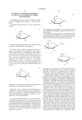
The present invention relates to valiolone, which has the formula: ##STR2## to a method of preparing valiolone, and to a method of using valiolone to prepare acarbose and voglibose.
It is known that the antibiotic validamycin can be produced by fermentation of Streptomyces hygroscopicus subsp. limoneus (Studies on Validamhycins, New Antibiotics II, T. Iwasa et al., Journal of Antibiotics, Vol 24, No. 2 pps. 107-113) 1971. In the search for aminocylitols in the above mentioned fermentation broth, the α-glucosidase inhibiting aminocyclitol valiolamine was isolated (Valiolamine, A New α-Glucosidase Inhibiting Aminocyclitol, Yo Kameda et al., Journal of Antibiotics, Vol. 37, No. 11, pps. 1301-1307) 1984. Valiolamine (II) has the structure ##STR3## Valiolamine is a natural product which can be isolated from fermentations of Streptomyces hygroscopicus.
Valiolamine can be prepared by the biodegradation of validamycin to a mixture of validamine and valienamine (N. Asano et al., V. Antibiot, 37, 859-867 (1984)) which is then converted chemically into valiolamine (S. Harii et al., Carbohyds Res. 140, 185-200 (1985)).
It is known that (1S)-(1(OH),2,4/1,3)-2,3,4-tri-O-benzyl-1-C[(benzyloxy)methyl]-5-oxo-1,2,3,4-cyclohexanetetrol is an important compound in the synthesis of valiolamine and its N-substituted derivatives (Synthesis of a Branched-Chain Inosose Derivative, A Versatile Synthon of N-Substituted Valiolamine Derivatives from D-Glucose, H. Fukase et al., J. Org. Chem. 1992, 57, 3642-3650). This compound can be depicted by the formula ##STR4## The antidiabetic drug voglibose can be synthesized from compound III above though no such process is known for the drug acarbose.
In accordance with the invention, a new compound which can be used to prepare voglibose as well as the drug acarbose has been discovered which has been given the name valiolone and which can be represented by the formula I: ##STR5## Valiolone can be prepared by an oxidative deamination of valiolamine. The procedure involves oxidation of valiolamine (II), in theory, to an intermediate imine, which is hydrolyzed to the ketone (I) under mild acidic conditions.
Oxidizing agents which are known to be effective in converting amines to imines can be used. These are illustrated by 3,5-di-t-butyl-1,2-benzoquinone (DBQ), nicotinic aldehyde in the presence of a base (such as 1,8-diazabicyclo[4.3.0]undec-7-ene[DBU] or triethyl amine), benzothiazole-2-aldehyde and the like. The oxidation reaction proceeds easily generally without heat but heat can be used if desired, such as from room temperature up to about 50° C. The reactions can be conducted with (preferably) or without an appropriate solvent. The solvents can be illustrated by alcohols such as methanol, ethanol, isopropanol and the like. The intermediate can be isolated but preferably it is not isolated and is hydrolyzed in situ in the reaction mixture to produce the desired valiolone. Hydrolysis proceeds using known reagents and conditions for hydrolyzing an imine to a ketone. Mild acidic conditions (about pH 4-6 and more preferably of about 5 pH) can be used for hydrolysis. Oxalic acid and acids of similar pKa that allow good buffering within the pH range of about 4 to 6 and preferably 4.5 to 5.5 can be used. Acids, preferably an organic acid, which can be used include oxalic acid, acetic acid, malonic acid, formic acid, as well as inorganic acids and acidic compounds, such as HCl, H2 SO4, wet silica gel, and the like. The type of acid used can be readily selected by one of ordinary skill. The pH range selected can be guided by the qualification that a significantly more acidic pH can allow for the competing dehydration of valiolone or the intermediate imine. If the pH is allowed to become too basic, yields can decrease, in theory because hydrolysis becomes more sluggish and the possibility of a retroaldol cleavage as a side reaction increases. It has been found that between these two extremes there is a narrow pH range in which both decomposition reactions are sufficiently slow to allow for effective product recovery.
The valiolamine (II) is preferably unprotected when oxidized. While a variety of oxidizing agents can be used, preference is given to 3,5-di-t-butyl-1,2-benzoquinone (DBQ). Likewise, a variety of hydrolysis agents can be used to convert the imine to the ketone, but preference is given to oxalic acid. Further, the preferred reaction scheme requires careful control of the pH in the hydrolysis step to about 5.0.
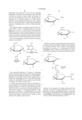
In view of the foregoing, a preferred scheme for preparing valiolone is as follows: ##STR6##
The successful preparation of valiolone is surprising because several structural features of this compound suggest that this compound might be unstable, or be susceptible to dehydration or retroaldol reaction unless prepared in protected form. Surprisingly, however, it has been found that valiolone, in unprotected form, is achieved in good yields according to the scheme set forth above.
In theory, the structural feature which is responsible for the easy dehydration of valiolone is the presence of a tertiary alcohol function on a carbon β to the carbonyl group. The dehydration follows a general acid catalysis mechanism and occurs upon exposure of the imine intermediate in the preparation of valiolone to a pH significantly more acidic than the desired pH. The retroaldol reaction that valiolone would likely undergo is shown below. It results in a ring opening of the original cyclic structure. ##STR7##
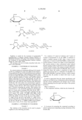
Valiolone is useful as an intermediate in the preparation of the drugs acarbose and voglibose. Voglibose can be prepared by reacting valiolone with 2-amino-1,3-propanediol (serinol) in the presence of a reducing agent, preferably Na(CN)BH3, with or without an acid catalyst (e.g., acetic acid, HCl), according to the following schematic reaction: ##STR8## Acarbose can be prepared by reacting valiolone with the glycoside 4"-amino-4",6"-dideoxymaltotriose (V) in the presence of an acid at a pH within the range of 1-4 followed by reacting the intermediate (VI) with a reducing agent such as Na(CN)BH3 in the presence of a modifying agent, e.g., CeCl3 as per the following schematic reaction: ##STR9##
Voglibose is useful for the treatment of postprandial hyperglycemia in diabetic patients (Annual Reports of Medicinal Chemistry 1995, page 313). Acarbose is useful in the treatment of non-insulin-dependent diabetes mellitus (Drugs 46, 1025-1054, 1993).
The invention will now be further described with reference to the following:
To a stirred solution of valiolamine (80 mg, 0.414 mmol), in 96% aq. methanol (5.2 mL) was added 3,5-di-t-butyl-1,2-benzoquinone (92 mg, 0.418 mmol) dissolved in methanol (2 mL) at room temperature. After stirring for 90 min, water (1 mL) was added, the pH lowered to 5.0 (pH paper control) with an aqueous solution of oxalic acid, and the mixture shaken vigorously for 45 min. Subsequently, the pH was adjusted to 8 with ammonium hydroxide. The mixture was diluted with water (80 mL) and extracted with chloroform (4×40 mL). The water phase was concentrated to approximately 5 mL in a vacuum and loaded onto an IRA-68 anion exchange column (40 mL, OH- -form). Elution with water gave a fraction containing the product. This solution was concentrated to 1 mL and further purified by chromatography on a weak cation exchanger (Wk-100, 40 mL, NH4 + -form, mobile phase: water) to give pure valiolone (42 mg, 0.219 mmol, 53% yield). 1 H NMR (300 MHz, D2 O), δ(ppm): 2.39 (d, 1H, J=14.6 Hz, HCH--C═O); 2.79 (d, 1H, J=14.6 Hz, HCH--C═O); 3.3 (d, 1H, J=11.5 Hz, HCH--C--OH); 3.62 (d, 1H, J=11.3 Hz, HCH--C--OH); 3.63 (t, 1H, J=9.5 Hz, HC-3); 3.84 (d, 1H, J=9.4 Hz, HC-4) and 4.19 (d, 1H, J=9.7 Hz, Hc-2). 13 C NMR (75 MHz, D2 O), δ (ppm): 45.45, 64.37, 72.91, 75.79, 76.01, 78.62 and 209.43.
The valiolone of the invention can be used to prepare voglibose by the following procedure.
To a solution of 5 mmol of valiolone and 5 mmol of 2-amino-1,3-propanediol in 25 mL DMF or methanol is added a catalytic amount of HCl. After 1 hour at room temperature, 2.5 mmol of solid Na(CN)BH3 is added and the reaction mixture is stirred over night at room temperature. The reaction mixture is then concentrated under reduced pressure and the residue is dissolved in water and applied to a Dowex 50 (H+) column. The column is washed with water and the product is eluted with 0.5 N NH4 OH. After concentrating the eluate, the residue is dissolved in water and applied successively first to a Amberlite CG-50 (NH4 +) or Diaion WK-100 (NH4 +) and then a Dowex 1 (OH-) column and each time the product is eluted with water to give voglibose.
It will be appreciated that the instant specification and claims are set forth by way of illustration and not limitation, and that various modifications and changes may be made without departing from the spirit and scope of the present invention.
Claims (12)
1. The compound valiolone, which has the formula (I): ##STR10##
2. A process for preparing the compound according to claim 1, said process comprising reacting valiolamine of the formula (II): with an oxidizing agent followed by hydrolyzing the above reaction product under mild acidic conditions, to yield valiolone (I).
3. The process according to claim 2, wherein the oxidizing agent is 3,5-di-t-butyl-1,2-benzoquinone.
4. The process according to claim 2, wherein the hydrolysis is effected by oxalic acid with control of the pH to about 5.0.
5. The process according to claim 2, wherein the hydrolysis reaction is conducted within a pH ranging from about 4.5 to about 5.5.
6. A process for preparing voglibose from the valiolone compound according to claim 1, said process comprising reacting said valiolone with 2-amino-1,3-propanediol in the presence of a reducing agent.
7. A process for preparing acarbose from the valiolone compound of claim 1, said process comprising reacting said valiolone with 4"-amino-4",6"-dideoxymaltotroise under acidic conditions within a pH range of from about 1 to about 4 to form a reaction intermediate followed by reacting the reaction intermediate in the presence of a reducing agent to form acarbose.
8. The process according to claim 6, wherein the reducing agent is Na(CN)BH3.
9. The process according to claim 7, wherein the reducing agent is Na(CN)BH3.
10. The process according to claim 7, further comprising reacting the reacting intermediate with the reducing agent in the presence of CeCl3.
11. The process according to claim 8, further comprising reacting valiolone with 2-amino-1,3-propanediol in the presence of a reducing agent and in the presence of CeCl3.
12. The process according to claim 9, further comprising reacting the reaction intermediate with the reducing agent in the presence of CeCl3.
Priority Applications (1)
| Application Number | Priority Date | Filing Date | Title |
|---|---|---|---|
| US09/280,454 US6150568A (en) | 1998-03-31 | 1999-03-30 | Valiolone, a method of preparing it, and its use to prepare acarbose and voglibose |
Applications Claiming Priority (2)
| Application Number | Priority Date | Filing Date | Title |
|---|---|---|---|
| US8013498P | 1998-03-31 | 1998-03-31 | |
| US09/280,454 US6150568A (en) | 1998-03-31 | 1999-03-30 | Valiolone, a method of preparing it, and its use to prepare acarbose and voglibose |
Publications (1)
| Publication Number | Publication Date |
|---|---|
| US6150568A true US6150568A (en) | 2000-11-21 |
Family
ID=22155469
Family Applications (1)
| Application Number | Title | Priority Date | Filing Date |
|---|---|---|---|
| US09/280,454 Expired - Fee Related US6150568A (en) | 1998-03-31 | 1999-03-30 | Valiolone, a method of preparing it, and its use to prepare acarbose and voglibose |
Country Status (3)
| Country | Link |
|---|---|
| US (1) | US6150568A (en) |
| AU (1) | AU3601899A (en) |
| WO (1) | WO1999050217A1 (en) |
Cited By (6)
| Publication number | Priority date | Publication date | Assignee | Title |
|---|---|---|---|---|
| US20060193845A1 (en) * | 2004-09-14 | 2006-08-31 | Elixir Pharmaceuticals, Inc. | Combination therapy for controlled carbohydrate digestion |
| KR100828032B1 (en) * | 2002-11-15 | 2008-05-08 | 코오롱생명과학 주식회사 | Method for producing a vivalolone derivative |
| WO2010037179A1 (en) | 2008-10-03 | 2010-04-08 | Glycan Biosciences Pty Ltd | Anionic conjugates of glycosylated bacterial metabolite |
| CN102050846B (en) * | 2009-11-02 | 2013-09-11 | 上海天伟生物制药有限公司 | Amino sugar, and preparation method and use thereof |
| CN104119301A (en) * | 2013-04-27 | 2014-10-29 | 浙江海翔药业股份有限公司 | Voglibose intermediate and preparation method thereof |
| WO2024093091A1 (en) * | 2022-11-02 | 2024-05-10 | 成都科岭源医药技术有限公司 | Preparation method for intermediate of ecteinascidin compound |
Families Citing this family (3)
| Publication number | Priority date | Publication date | Assignee | Title |
|---|---|---|---|---|
| WO2005049547A1 (en) * | 2003-11-21 | 2005-06-02 | Ranbaxy Laboratories Limited | Process for the preparation of 1,2,3,4-cyclohexanetetrol derivatives |
| CN100348604C (en) * | 2004-12-24 | 2007-11-14 | 上海天伟生物制药有限公司 | Crystal of amido sugar |
| CN110511152B (en) * | 2019-09-18 | 2020-11-03 | 无锡富泽药业有限公司 | Preparation method of voglibose impurity I hydrochloride |
Citations (4)
| Publication number | Priority date | Publication date | Assignee | Title |
|---|---|---|---|---|
| US4595678A (en) * | 1982-03-19 | 1986-06-17 | Takeda Chemical Industries, Ltd. | N-substituted pseudo-aminosugars and pharmaceutical compositions containing same |
| US4824943A (en) * | 1986-03-05 | 1989-04-25 | Takeda Chemical Industries, Ltd. | Inosose derivatives and production thereof |
| US4898986A (en) * | 1986-09-09 | 1990-02-06 | Takeda Chemical Industries, Ltd. | Inosose derivatives, production and use thereof |
| US5456920A (en) * | 1993-02-10 | 1995-10-10 | Takeda Chemical Industries, Ltd. | Uncoated tablets and method of producing the same |
Family Cites Families (1)
| Publication number | Priority date | Publication date | Assignee | Title |
|---|---|---|---|---|
| CA1171374A (en) * | 1981-04-13 | 1984-07-24 | Takeda Chemical Industries, Ltd. | Pseudo-aminosugars, their production and use |
-
1999
- 1999-03-29 AU AU36018/99A patent/AU3601899A/en not_active Abandoned
- 1999-03-29 WO PCT/EP1999/002141 patent/WO1999050217A1/en not_active Ceased
- 1999-03-30 US US09/280,454 patent/US6150568A/en not_active Expired - Fee Related
Patent Citations (5)
| Publication number | Priority date | Publication date | Assignee | Title |
|---|---|---|---|---|
| US4595678A (en) * | 1982-03-19 | 1986-06-17 | Takeda Chemical Industries, Ltd. | N-substituted pseudo-aminosugars and pharmaceutical compositions containing same |
| US4824943A (en) * | 1986-03-05 | 1989-04-25 | Takeda Chemical Industries, Ltd. | Inosose derivatives and production thereof |
| US4898986A (en) * | 1986-09-09 | 1990-02-06 | Takeda Chemical Industries, Ltd. | Inosose derivatives, production and use thereof |
| US5004838A (en) * | 1986-09-09 | 1991-04-02 | Takeda Chemical Industries, Ltd. | Inosose derivatives, production and use thereof |
| US5456920A (en) * | 1993-02-10 | 1995-10-10 | Takeda Chemical Industries, Ltd. | Uncoated tablets and method of producing the same |
Non-Patent Citations (20)
| Title |
|---|
| Asano et al., "Microbial Degradation of Validamycin A by Flavobacterium Saccharophilum--Enzymatic Cleavage of C-N Linkage in Validoxylamine A," The Journal of Antibiotics, 37(8), 859-867 (Aug., 1984). |
| Asano et al., Microbial Degradation of Validamycin A by Flavobacterium Saccharophilum Enzymatic Cleavage of C N Linkage in Validoxylamine A, The Journal of Antibiotics , 37(8), 859 867 (Aug., 1984). * |
| Balfour et al., "Acarbose--An Update of its Pharmacology and Therapeutic Use in Diabetes Mellitus," Drugs, 46(6), 1025-1054 (1993). |
| Balfour et al., Acarbose An Update of its Pharmacology and Therapeutic Use in Diabetes Mellitus, Drugs , 46(6), 1025 1054 (1993). * |
| Budavari et al. (eds.), The Merck Index, 11th Edition , Merck & Co., Inc., Rahway, NJ, 1989, only title and text pages 4 and 1558 1559 supplied. * |
| Budavari et al. (eds.), The Merck Index, 11th Edition, Merck & Co., Inc., Rahway, NJ, 1989, only title and text pages 4 and 1558-1559 supplied. |
| Cheng, "Section VII--Trends and Perspectives," Ch. 31 in Annual Reports of Medicinal Chemistry, Bristol (ed.), 1994, only pages 312-313 supplied. |
| Cheng, Section VII Trends and Perspectives, Ch. 31 in Annual Reports of Medicinal Chemistry , Bristol (ed.), 1994, only pages 312 313 supplied. * |
| Fukase et al, (II), Synthesis of Valiolamine and Its N Substituted Derivative AO 128, Validoxylamine G, and Validamycin G via Branched Chain Inosose Derivatives, Journal of Organic Chemistry , 57(13), 3651 3658 (Jun. 19, 1992). * |
| Fukase et al, (II), Synthesis of Valiolamine and Its N-Substituted Derivative AO-128, Validoxylamine G, and Validamycin G via Branched-Chain Inosose Derivatives, Journal of Organic Chemistry, 57(13), 3651-3658 (Jun. 19, 1992). |
| Fukase et al.(I), "Synthesis of a Branched-Chain Inosose Derivative, a Versatile Synthon of N-Substituted Valiolamine Deivative from D-Glucose," Journal of Organic Chemistry, 57(13), 3642-3650 (Jun. 19, 1992). |
| Fukase et al.(I), Synthesis of a Branched Chain Inosose Derivative, a Versatile Synthon of N Substituted Valiolamine Deivative from D Glucose, Journal of Organic Chemistry , 57(13), 3642 3650 (Jun. 19, 1992). * |
| Horii et al. (V), "Stereoselective Conversion of Valienamine and Validamine Into Valiolamine," Carbohydrate Research, 140, 185-200 (1985). |
| Horii et al. (V), Stereoselective Conversion of Valienamine and Validamine Into Valiolamine, Carbohydrate Research , 140, 185 200 (1985). * |
| Iwasa et al., "Studies on Validamycin, New Antibiotics. II--Production and Biological Properties of Validamycins A dn B," The Journal of Antibiotics, 24(2), 107-113 (Feb., 1971). |
| Iwasa et al., Studies on Validamycin, New Antibiotics. II Production and Biological Properties of Validamycins A dn B, The Journal of Antibiotics , 24(2), 107 113 (Feb., 1971). * |
| K o hn et al., 4 Alkylamino 4,6 didesoxyzucker Durch Reduktiv Aminierung, Justus Liebig s Annalen de Chemie , 1985, (Issue No. 4), 775 784 (Apr. 15, 1985). * |
| Kameda et al., "Valiolamine, A New a-Glucosidase Inhibiting Aminocyclitol Produced by Streptomyces Hygroscopus," The Journal of Antibiotics, 37(11), 1301-1307 (Nov. 1984). |
| Kameda et al., Valiolamine, A New a Glucosidase Inhibiting Aminocyclitol Produced by Streptomyces Hygroscopus, The Journal of Antibiotics , 37(11), 1301 1307 (Nov. 1984). * |
| Kohn et al., "4-Alkylamino-4,6-didesoxyzucker Durch Reduktiv Aminierung," Justus Liebig's Annalen de Chemie, 1985, (Issue No. 4), 775-784 (Apr. 15, 1985). |
Cited By (7)
| Publication number | Priority date | Publication date | Assignee | Title |
|---|---|---|---|---|
| KR100828032B1 (en) * | 2002-11-15 | 2008-05-08 | 코오롱생명과학 주식회사 | Method for producing a vivalolone derivative |
| US20060193845A1 (en) * | 2004-09-14 | 2006-08-31 | Elixir Pharmaceuticals, Inc. | Combination therapy for controlled carbohydrate digestion |
| WO2010037179A1 (en) | 2008-10-03 | 2010-04-08 | Glycan Biosciences Pty Ltd | Anionic conjugates of glycosylated bacterial metabolite |
| CN102050846B (en) * | 2009-11-02 | 2013-09-11 | 上海天伟生物制药有限公司 | Amino sugar, and preparation method and use thereof |
| CN104119301A (en) * | 2013-04-27 | 2014-10-29 | 浙江海翔药业股份有限公司 | Voglibose intermediate and preparation method thereof |
| CN104119301B (en) * | 2013-04-27 | 2018-05-08 | 浙江海翔药业股份有限公司 | A kind of voglibose intermediate and preparation method thereof |
| WO2024093091A1 (en) * | 2022-11-02 | 2024-05-10 | 成都科岭源医药技术有限公司 | Preparation method for intermediate of ecteinascidin compound |
Also Published As
| Publication number | Publication date |
|---|---|
| AU3601899A (en) | 1999-10-18 |
| WO1999050217A1 (en) | 1999-10-07 |
Similar Documents
| Publication | Publication Date | Title |
|---|---|---|
| EP0414275B1 (en) | Process for the preparation of cyclic aminoacid derivitives as well as the intermediate products | |
| US4065615A (en) | Deoxyaminoglycoside antibiotic derivatives | |
| WO1999050217A1 (en) | Valiolone, a method of preparing it, and its use to prepare acarbose and voglibose | |
| WO1993005057A1 (en) | Method for synthesizing glucuronides of 4,5-epoxy morphinanes | |
| US5276164A (en) | Process for the production of 4-hydroxy-2-oxopyrrolidin-1-yl-acetamide | |
| Ganguly et al. | Chemical modification of everninomicins | |
| US5179212A (en) | Process for the preparation of 3-pyrrolidinols and intermediates therefor | |
| JPH06172256A (en) | Production of 3-hydroxybutyric acid derivative | |
| Beulshausen et al. | Asymmetric Syntheses via Heterocyclic Intermediates, XLV. Asymmetric Synthesis of Diastereomerically and Enantiomerically Pure 3‐Substituted (2R, 3S)‐serine Methyl Esters | |
| DE69322013T2 (en) | (3R, 5S) -3,5,6-trihydroxyhexanoic acid derivatives and process for their preparation | |
| EP0517345B1 (en) | Intermediates of the mureidomycin group, their preparation, and their use | |
| DE69700477T2 (en) | Process for the preparation of optically active 4-hydroxy-2-pyrrolidone | |
| US20090143614A1 (en) | Process for the Preparation of Cilastatin and Sodium Salt | |
| US20050033088A1 (en) | Process for the preparation of phenethylamine derivative, an intermediate of Venlafaxine hydrochloride | |
| EP0816316A1 (en) | Process for producing 1,2-ethanediol derivatives | |
| US4169942A (en) | Fortimicin derivatives and method for production thereof | |
| DE69701023T2 (en) | Process for the preparation of cyclohexylamino acids | |
| KR100369274B1 (en) | Improved process for producing 4-hydroxy-2-pyrrolidone | |
| US4350641A (en) | 4-Tert.-butoxyphenylglycinonitrile and the preparation of D-(-)- and L-(+)-4-hydroxyphenylglycine | |
| CA1037047A (en) | 2-hydroxymethyl-3-hydroxy-6-(1-hydroxy-2-t-butylaminoethyl)pyridine preparation and intermediate compounds | |
| US5099067A (en) | Use of ammonium formate as a hydrogen transfer reagent for reduction of chiral nitro compounds with retention of configuration | |
| US4290972A (en) | Process for the production of 4-aminobutyric acid or its derivatives | |
| US20050165257A1 (en) | Process for preparation of voglibose | |
| EP0194554B1 (en) | Process for production of oxime derivatives | |
| JP4343398B2 (en) | L-epi-inositol derivative and method for producing the same |
Legal Events
| Date | Code | Title | Description |
|---|---|---|---|
| REMI | Maintenance fee reminder mailed | ||
| LAPS | Lapse for failure to pay maintenance fees | ||
| STCH | Information on status: patent discontinuation |
Free format text: PATENT EXPIRED DUE TO NONPAYMENT OF MAINTENANCE FEES UNDER 37 CFR 1.362 |
|
| FP | Expired due to failure to pay maintenance fee |
Effective date: 20041121 |