US6150561A - Method of making carotenoids - Google Patents
Method of making carotenoids Download PDFInfo
- Publication number
- US6150561A US6150561A US09/148,088 US14808898A US6150561A US 6150561 A US6150561 A US 6150561A US 14808898 A US14808898 A US 14808898A US 6150561 A US6150561 A US 6150561A
- Authority
- US
- United States
- Prior art keywords
- dial
- trimethyl
- methyl
- triarylphosphonium salt
- triphenylphosphonium chloride
- Prior art date
- Legal status (The legal status is an assumption and is not a legal conclusion. Google has not performed a legal analysis and makes no representation as to the accuracy of the status listed.)
- Expired - Lifetime
Links
Images



Classifications
-
- C—CHEMISTRY; METALLURGY
- C07—ORGANIC CHEMISTRY
- C07C—ACYCLIC OR CARBOCYCLIC COMPOUNDS
- C07C403/00—Derivatives of cyclohexane or of a cyclohexene or of cyclohexadiene, having a side-chain containing an acyclic unsaturated part of at least four carbon atoms, this part being directly attached to the cyclohexane or cyclohexene or cyclohexadiene rings, e.g. vitamin A, beta-carotene, beta-ionone
- C07C403/24—Derivatives of cyclohexane or of a cyclohexene or of cyclohexadiene, having a side-chain containing an acyclic unsaturated part of at least four carbon atoms, this part being directly attached to the cyclohexane or cyclohexene or cyclohexadiene rings, e.g. vitamin A, beta-carotene, beta-ionone having side-chains substituted by six-membered non-aromatic rings, e.g. beta-carotene
-
- C—CHEMISTRY; METALLURGY
- C07—ORGANIC CHEMISTRY
- C07C—ACYCLIC OR CARBOCYCLIC COMPOUNDS
- C07C1/00—Preparation of hydrocarbons from one or more compounds, none of them being a hydrocarbon
- C07C1/32—Preparation of hydrocarbons from one or more compounds, none of them being a hydrocarbon starting from compounds containing hetero-atoms other than or in addition to oxygen or halogen
- C07C1/34—Preparation of hydrocarbons from one or more compounds, none of them being a hydrocarbon starting from compounds containing hetero-atoms other than or in addition to oxygen or halogen reacting phosphines with aldehydes or ketones, e.g. Wittig reaction
-
- C—CHEMISTRY; METALLURGY
- C07—ORGANIC CHEMISTRY
- C07C—ACYCLIC OR CARBOCYCLIC COMPOUNDS
- C07C403/00—Derivatives of cyclohexane or of a cyclohexene or of cyclohexadiene, having a side-chain containing an acyclic unsaturated part of at least four carbon atoms, this part being directly attached to the cyclohexane or cyclohexene or cyclohexadiene rings, e.g. vitamin A, beta-carotene, beta-ionone
- C07C403/14—Derivatives of cyclohexane or of a cyclohexene or of cyclohexadiene, having a side-chain containing an acyclic unsaturated part of at least four carbon atoms, this part being directly attached to the cyclohexane or cyclohexene or cyclohexadiene rings, e.g. vitamin A, beta-carotene, beta-ionone having side-chains substituted by doubly-bound oxygen atoms
-
- C—CHEMISTRY; METALLURGY
- C07—ORGANIC CHEMISTRY
- C07C—ACYCLIC OR CARBOCYCLIC COMPOUNDS
- C07C403/00—Derivatives of cyclohexane or of a cyclohexene or of cyclohexadiene, having a side-chain containing an acyclic unsaturated part of at least four carbon atoms, this part being directly attached to the cyclohexane or cyclohexene or cyclohexadiene rings, e.g. vitamin A, beta-carotene, beta-ionone
- C07C403/20—Derivatives of cyclohexane or of a cyclohexene or of cyclohexadiene, having a side-chain containing an acyclic unsaturated part of at least four carbon atoms, this part being directly attached to the cyclohexane or cyclohexene or cyclohexadiene rings, e.g. vitamin A, beta-carotene, beta-ionone having side-chains substituted by carboxyl groups or halides, anhydrides, or (thio)esters thereof
-
- C—CHEMISTRY; METALLURGY
- C07—ORGANIC CHEMISTRY
- C07C—ACYCLIC OR CARBOCYCLIC COMPOUNDS
- C07C45/00—Preparation of compounds having >C = O groups bound only to carbon or hydrogen atoms; Preparation of chelates of such compounds
- C07C45/51—Preparation of compounds having >C = O groups bound only to carbon or hydrogen atoms; Preparation of chelates of such compounds by pyrolysis, rearrangement or decomposition
- C07C45/511—Preparation of compounds having >C = O groups bound only to carbon or hydrogen atoms; Preparation of chelates of such compounds by pyrolysis, rearrangement or decomposition involving transformation of singly bound oxygen functional groups to >C = O groups
- C07C45/515—Preparation of compounds having >C = O groups bound only to carbon or hydrogen atoms; Preparation of chelates of such compounds by pyrolysis, rearrangement or decomposition involving transformation of singly bound oxygen functional groups to >C = O groups the singly bound functional group being an acetalised, ketalised hemi-acetalised, or hemi-ketalised hydroxyl group
-
- C—CHEMISTRY; METALLURGY
- C07—ORGANIC CHEMISTRY
- C07C—ACYCLIC OR CARBOCYCLIC COMPOUNDS
- C07C67/00—Preparation of carboxylic acid esters
- C07C67/30—Preparation of carboxylic acid esters by modifying the acid moiety of the ester, such modification not being an introduction of an ester group
- C07C67/333—Preparation of carboxylic acid esters by modifying the acid moiety of the ester, such modification not being an introduction of an ester group by isomerisation; by change of size of the carbon skeleton
- C07C67/343—Preparation of carboxylic acid esters by modifying the acid moiety of the ester, such modification not being an introduction of an ester group by isomerisation; by change of size of the carbon skeleton by increase in the number of carbon atoms
-
- C—CHEMISTRY; METALLURGY
- C07—ORGANIC CHEMISTRY
- C07C—ACYCLIC OR CARBOCYCLIC COMPOUNDS
- C07C2601/00—Systems containing only non-condensed rings
- C07C2601/12—Systems containing only non-condensed rings with a six-membered ring
- C07C2601/16—Systems containing only non-condensed rings with a six-membered ring the ring being unsaturated
Definitions
- Carotenoids are a class of substances widely distributed in nature and having very interesting properties. Accordingly, there is great interest in industrially realizable syntheses.
- the Wittig reaction plays a very important role in the formation of the carotenoid polyene chain. It has been investigated extensively and also used industrially.
- Carotenoids (intermediates and final products), e.g., carotenes and xanthophylls, are in the normally desired (all E) configuration poorly soluble in most solvents.
- chloroform and methylene chloride occupy as solvents a certain special position because of their good ability to dissolve carotenoids, and have hitherto preferably been used for this purpose.
- carotenoids have a typical property of incorporating solvents in non-stoichiometric amounts.
- Residues of the aforementioned solvents are subject to strict regulations, which, moreover, are not the same everywhere.
- the thermal stability of carotenoids is, however, frequently critical and therefore the removal of the incorporated traces of solvent is difficult and generally can be realized only at the expense of the commencement of decomposition.
- the Wittig reaction which involves the reaction of a carbonyl compound such as an aldehyde or ketone with a triphenylphosphine compound known as a ylide, is generally carried out under basic conditions or at least in the presence of an acid-binding substance.
- a waste product of the Wittig reaction there always results one equivalent of triphenylphosphine oxide, which has to be separated from the reaction mixture.
- the choice of solvent has a decisive influence on the working up.
- R 1 and R 2 and, respectively, R 4 and R 5 each signify hydrogen or an optionally substituted alkyl, alkenyl or aryl, e.g. phenyl, group, whereby a maximum of one of the two symbols R 1 and R 2 and, respectively, R 4 and R 5 can stand for hydrogen;
- R 3 signifies aryl, preferably phenyl, and
- X- signifies an anion, for example chloride, bromide, sulphate or acetate.
- (R 3 ) 3 PO preferably signifies triphenylphosphine oxide.
- the carbonyl compounds are preferably aldehydes (which includes dialdehydes) and ketones, especially aldehydes, well known to a person skilled in the field of carotenoid chemistry.
- 2,7-Dimethyl-2,4,6-octatriene-1,8-dial (“C 10 -dial") is an example of a typically used dialdehyde.
- phosphonium salt there is likewise to be understood especially one which is typically used for the synthesis of carotenoids and therefore will be well-known to a person skilled in the art.
- Many examples of pertinent Wittig reactions are contained in the textbooks "Carotenoids”, Ed. Otto Isler, published by Birkhauser Basel, 1971, and "Carotenoids, Volume 2: Synthesis", Ed. G. Britton, S. Liaaen-Jensen and H. Pfander, published by Birkhauser Basel Boston Berlin, 1996.
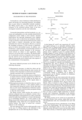
- the strength of base, the water content and/or the reaction temperature can be varied in a very broad range, in each case depending on the substrate, in order to avoid the side reaction which is mentioned above and set forth in the Scheme.
- it is known to carry out Wittig reactions in water as the solvent whereas in other cases the reaction has to be carried out strictly water-free.
- the hydrolysis becomes relatively more rapid with increasing base strength and/or temperature, and accordingly temperatures of -30° C. to room temperature are frequently preferred; on the other hand there are cases in which a higher temperature is advantageously used.
- isomerization reactions of carotenoids are typical at higher temperatures depending on the substrate.
- the Wittig reaction can be carried out in practically all non-acidic solvents. Even acetone, which itself can react with phosphonium salts, has occasionally been used with success.
- the aforementioned known embodiments of the Wittig reaction have disadvantages.
- the most preferred solvents from the toxicological point of view are water, lower alkanols, acetone and esters of acetic acid and other organic acids. These solvents, of which the organic solvents can be optionally combined with water, have as a rule only a very unsatisfactory ability to dissolve carotenoids. Thus, the heterogeneous reaction procedure is frequently used.
- An actual example of this is present in European Patent Publication (EP) 0733619. The limitations are especially apparent in this EP.
- EP European Patent Publication
- both components must previously be dissolved while warming and (as an artifice) one educt must be used as an isomer mixture.
- the actual Wittig reaction requires in this example lower temperatures, and thus the reaction mixture must then be cooled down.
- the object of the present invention is a chemically and industrially widely applicable process which enables carotenoids (not only intermediates but also final products) of widely differing structures to be manufactured while avoiding the aforementioned problems.
- This process comprises carrying out a Wittig reaction used for the manufacture of a carotenoid in a polar reaction medium in such a manner that neither the reactants nor the thus-manufactured carotenoid are significantly dissolved in the reaction medium.
- the invention comprises a method of making a carotenoid intermediate or carotenoid by reacting a dispersion of a carbonyl compound and a triphenylphosphonium salt in a polar reaction medium to obtain a dispersion of the resulting carotenoid intermediate or carotenoid and a solution of triphenylphosphine oxide.
- dispersion includes slurries and non-colloidal suspensions.
- the respective polar reaction medium there is especially suitable a polar, toxicologically acceptable organic solvent which remains monophasic on addition of water in an amount up to about 30 vol. % and which has the capacity of dissolving well the triarylphosphine oxide which is formed.
- a polar, toxicologically acceptable organic solvent which remains monophasic on addition of water in an amount up to about 30 vol. % and which has the capacity of dissolving well the triarylphosphine oxide which is formed.
- Especially suitable for this purpose are lower alkanols and acetone, which can be used individually or as a mixture with one another and/or with water.
- additional polar solvents can, moreover, also be used.
- polar esters especially the methyl and ethyl esters of formic acid, acetic acid or carbonic acid, methyl ethyl ketone, tert.butyl methyl ether and dimethylformamide.
- additional polar solvents too can be used as mixtures with one another.
- a reaction medium consisting of several of the aforementioned polar solvents should be monophasic (homogeneous).
- the process in accordance with the invention is carried out in such a manner that neither the reactants, i.e., the respective carbonyl compound and the respective phosphonium salt, nor the thus-manufactured carotenoid are significantly dissolved in the reaction medium, whereas the triarylphosphine oxide, especially triphenylphosphine oxide, which is formed in the reaction remains in solution. Surprisingly good yields and end product quality can be achieved as a result of the process carried out in this manner.
- the term "neither the reactants--nor the thus-manufactured carotenoid are significantly dissolved” is to be understood as meaning that in the process a clear solution is not present at any time during the reaction and the working up, including the purification.
- the educts, an intermediate which may occur and the desired end product are present as a visually observed suspension or slurry, i.e., a dispersion.
- a maximum of 10% of its weight is present in solution.
- this degree of dissolution amounts to only between about 0.5 and about 2 weight percent. In certain cases this can even be much lower than 0.5 weight percent.
- alkanol there is to be understood an alkanol which has 1 to 6 carbon atoms, especially 1 to 4 carbon atoms; examples thereof are methanol, ethanol, n-propanol and isopropanol.
- a mixture of several of such alkanols with one another or a mixture of one or more of such alkanols with acetone can feature any desired number of these polar solvents and any desired mixture ratio. If water is also present (in the case of aqueous mixtures of one or more lower alkanols and/or of acetone) the mixture ratio among the mentioned polar organic solvents can be varied as desired.
- the amount by volume of water relative to the total volume of the aqueous-organic solvents is normally not more than about 30%, preferably up to 20%.
- the methyl or ethyl ester of carbonic acid is dimethyl carbonate or diethyl carbonate, respectively.
- Methanol, ethanol, n-propanol and isopropanol are preferred among all the polar solvents which come into consideration.
- the reaction should be run under conditions of temperature, time and concentration of reactants such that the reaction mixture is always in the form of a dispersion due to the insoluble reactants, intermediates or products present in the polar reaction medium.
- Such conditions may be any conventional conditions under which Wittig reactions are carried out except that dissolution of the reactants, intermediates or final products are less than about 10% by weight dissolved in the reaction medium, and the triphenylphosphine oxide byproduct of the Wittig reaction is in solution. These conditions will vary considerably due to the nature of the reactants and the final products, but may be monitored routinely by visual observation of the reaction.
- the process in accordance with the invention is suitable in principle for all Wittig reactions for the manufacture of carotenoids.
- the preferred reactions are as follows:
- Zeaxanthin starting from [5-(4-hydroxy-2,6,6-trimethyl-1-cyclohexenyl)-3-methyl-2,4-pentadienyl]triphenylphosphonium chloride and 2,7-dimethyl-2,4,6-octatriene-1,8-dial (C 10 -dial);
- carotene starting from [3-methyl-5-(2,6,6-trimethyl-1-cyclohexenyl)-2,4-pentadienyl]triphenylphosphonium chloride, especially the (2E,4E) isomer, and C 10 -dial;
- canthaxanthin starting from [5-(2,6,6-trimethyl-3-oxo-1-cyclohexenyl)-3-methyl-2,4-pentadienyl]triphenylphosphonium chloride and C 10 -dial;
- astaxanthin starting from [5-(4-hydroxy-2,6,6-trimethyl-3-oxo-1-cyclohexenyl)-3-methyl-2,4-pentadienyl]triphenylphosphonium bromide, especially the (2E,4E) isomer, and C 10 -dial;
- crocetin diethyl ester starting from [3-ethoxycarbonyl-but-2-enyl]triphenylphosphonium chloride and/or bromide, especially the (E) isomer, and C 10 -dial;
- 3-hydroxy-8'-apo- ⁇ -caroten-8'-oic acid ethyl ester starting from 3-hydroxy-12'-apo- ⁇ -caroten-12'-al, especially the (R)-isomer, and [3-ethoxycarbonyl-but-2-enyl]triphenylphosphonium chloride, especially the (E) isomer;
- torularhodin aldehyde starting from the dimethyl acetal of [3-formyl-2-butenyl]triphenylphosphonium chloride, especially the (E) isomer, and ⁇ -apo-4'-carotenal;
- diapo-4,4'-carotenedial starting from the dimethyl acetal of [7-formyl-3,7-dimethyl-octa-2,4,6-trienyl]triphenylphosphonium chloride and C 10 -dial;
- torularhodin starting from ⁇ -apo-8'-carotenal and [7-ethoxycarbonyl-3,7-dimethyl-2,4,6-heptatrienyl]triphenylphosphonium chloride via torularhodin ethyl ester;
- neurosporaxanthin ethyl ester ⁇ -apo-4'-carotenoic acid ethyl ester starting from ⁇ -apo-12'-carotenal and [7-ethoxycarbonyl-3,7-dimethyl-2,4,6-heptatrienyl]triphenylphosphonium chloride.
- reaction procedure in accordance with the present invention contradicts the classical school of thought according to which a good yield and high product quality are to be expected only when the educts have passed completely into solution before the product begins to precipitate out.
- carotenoids it is all the more surprising, since this class of substance tends to non-stochiometric inclusions and carotenoid byproducts cannot themselves be separated satisfactorily by recrystallization because of the common structural features.
- the crystallizate was dried under reduced pressure for about 16 hours at 100° C./40 mbar (4 kPa).
- Carotenyl [(2E,4E)-3-Methyl-5-(2,6,6-trimethyl-1-cyclohexenyl)-2,4-pentadienyl]triphenylphosphonium
- MeOH, EtOH, iPrOH Methanol, ethanol (absolute), isopropanol
- NaOMe, NaOEt Sodium methoxide, sodium ethoxide
- Moist (R)-3-hydroxy-12'-apo- ⁇ -caroten-12'-al (calculated dry weight 32.86 g; 0.0896 mol) was suspended in 200 ml of isopropanol in a 1 l swan-necked suction flask equipped with a thermometer, stirrer and argon gasification.
- the suspension was suction filtered in the swan-necked suction filter flask and the filter cake was washed with aqueous isopropanol (1:1 mixture).
- the filter cake was suspended in 500 ml of water in the swan necked suction filter flask under a weak stream of nitrogen (through the frit).
- the mixture was heated to reflux temperature with an oil bath heated to 125° C. 50 ml of solvent were distilled off over a stepped condenser within 30 minutes, with the internal temperature increasing from 85° to 98° C. Subsequently, the condenser was again fitted as a reflux condenser and the mixture was stirred vigorously at 98° C. internal temperature in order to suppress the strong foam formation.
- the filter cake was suspended in 850 ml of acetone in the swan-necked suction filter flask and dissolved at reflux temperature to give an almost clear solution. After removal of the oil bath the mixture was cooled while stirring and without active cooling. Glistening crystals crystallized out at about 45° C. Then the mixture was cooled, stirred at 0° C. for 3 hours, suction filtered and washed twice with 50 ml each time of acetone at -20° C. The crystallizate was dried at 50° C. for about 6 hours in a vacuum drying oven. In this manner there were obtained 26.91 g of the desired product as wine-red, glistening crystals. This corresponded to a 63% yield based on (R)-3-hydroxy-12'-apo- ⁇ -caroten-12'-al. The purity was 98.2% according to HPLC.
- ⁇ -apo-8'-carotenal 75 g (0.18 mol) of ⁇ -apo-8'-carotenal were placed in a 2.5 l sulphonation flask equipped with a stirrer, condenser, thermometer, automatic dosage device (Dosimat) and argon gasification.
- the ⁇ -apo-8'-carotenal was then suspended in 900 ml of dry isopropanol and the resulting red, not very thick suspension was heated to 70° C.
- the freshly prepared alkaline acetal solution from the previously process step was then added and rinsed in with 100 ml of dry isopropanol.
- the red-brown crystal slurry was stirred for a further 60 minutes, thereafter filtered over a slotted glass suction filter having a paper filter and the filter cake was washed in sequence twice with 340 ml each time of isopropanol and three times with 340 ml each time of deionized water.
- the thus-obtained wine-red crystals were subsequently dried for 2 days at 50° C. in a vacuum drying oven at 20-30 mbar (2-3 kPa). There were obtained 82.7 g of a cystallizate of the desired product, ⁇ -apo-4'-carotenal. The weight yield was 95.2% based on ⁇ -apo-8'-carotenal used.
- the composition of the product according to HPLC or, respectively, Karl-Fischer titration was as follows:
- ⁇ -apo-4'-carotenal For the performance of the Wittig reaction, 50.00 g (0.1036 mol) of ⁇ -apo-4'-carotenal were placed in a 2.5 l sulphonation flask equipped with a stirrer, condenser, thermometer, automatic dosage device (Dosimat) and argon gasification. The ⁇ -apo-4'-carotenal was then suspended in 650 ml of dry isopropanol and the suspension was heated to 65° C., whereby glistening, red-brown crystals formed. The freshly prepared alkaline acetal solution from the previous process step was then added and rinsed in with 100 ml of dry isopropanol.
- the moist crystallizate was placed in a 1.5 l sulphonation flask equipped with a stirrer, reflux condenser, thermometer and argon gasification and treated with 750 ml of isopropanol.
- the mixture was heated to reflux temperature (83° C.) with an oil bath while stirring.
- the crystal slurry was stirred at the reflux temperature for one hour and then cooled to 25° C. with a water bath and stirred for one hour.
- the suspension was suction filtered over a slotted glass suction filter having a paper filter and the crystals were washed twice with 250 ml each time of isopropanol and then three times with 250 ml each time of deionized water.
- the resulting crystallizate was dried in a vacuum drying oven at 50° C. and 20 mbar (2 kPa) for about 16 hours.
- the resulting red suspension was treated with about 2 ml of concentrated acetic acid. Subsequently, 370 ml of ethanol were distilled off from the reaction with an oil bath at 100-110° C. and then 400 ml of water having a low ion content were added. The suspension was then stirred at reflux (internal temperature 82° C.) for a further 10 hours and subsequently stirred for 2 hours in an ice bath (internal temperature 3-4° C.). The precipitate was separated on a glass suction filter and washed with aqueous, ice-cooled ethanol (60% in water). After drying in a water-jet vacuum for about 16 hours at 50° C. there were obtained 34 g of crocetin diethyl ester in red, semi-crystalline, somewhat sticky form (crude product; yield about 88.5% of theory).
- the above crude product was suspended in 175 ml of aqueous ethanol (60% in water) and isomerized at 110° C. and at 21 bar (2.1 kPa) pressure under nitrogen gasification for 10 hours.
- the crystalline product was filtered off under suction in a water-jet vacuum and washed as previously with aqueous ethanol. After drying in a water-jet vacuum for about 16 hours at 50° C. there were obtained 31.1 g of crocetin diethyl ester as a red crystallizate, m.p. 208-209° C.
- the crude torularhodin was suspended in 600 ml of deionized water in a 1 l flask equipped with a stirrer, thermometer, reflux condenser and argon gasification.
- the suspension was heated using an oil bath at 120° C. to reflux temperature (99° C.) and stirred at this temperature for 2 hours. Thereafter, it was cooled to 20° C. using an ice/water bath and the crystallizate was suction filtered. The resulting crystals were washed with deionized water and subsequently with acetone. There were then obtained 21.7 g of acetone-moist torularhodin.
- the acetone-moist torularhodin was suspended in 600 ml of acetone in a 1.5 l sulphonation flask equipped with a stirrer, thermometer, reflux condenser and argon gasification. The suspension was then heated using an oil bath at 80° C. to reflux temperature (57° C.) and stirred at this temperature for 2 hours. Thereafter, the mixture was cooled to 20° C. using an ice/water bath. The crystals were filtered off under suction and washed with acetone.
- 35.16 g of ⁇ -apo-12'-carotenal and 54.24 g of [(E)-3-ethoxycarbonyl-but-2-enyl]triphenylphosphonium chloride were suspended in 200 ml of isopropanol. The suspension was warmed to about 30° C. A total of 6.46 g of solid sodium methylate were added thereto within 15 minutes and rinsed in with 15 ml of isopropanol. The reaction was completed by heating to 50° C. within two hours. Subsequently, 215 ml of water were added and the mixture was neutralized with sulphuric acid and isomerized under reflux conditions for 14 hours.
- the resulting suspension was treated with 2.5 ml of 1% sulphuric acid and then boiled for 17 hours at the reflux temperature (bath temperature 95° C., internal temperature 76° C.).
- the resulting dark red suspension was cooled and the crystals were filtered off under suction and washed successively six times with 40 ml of ethanol/ water (1:1) each time at 50° C. and twice with 40 ml of ethanol each time at 25° C.
- the violet-red crystals were then dried at 45° C. and 20-30 mbar (2-3 kPa) pressure in a vacuum drying oven for about 16 hours.
Landscapes
- Chemical & Material Sciences (AREA)
- Organic Chemistry (AREA)
- Chemical Kinetics & Catalysis (AREA)
- Organic Low-Molecular-Weight Compounds And Preparation Thereof (AREA)
Abstract
Description
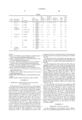
                                  TABLE
__________________________________________________________________________
                               Base  Subsequent      Content
    Eq.  Solvent  addition: reaction: Digestion: Weight of all
  Example Phosphonium P  amount Base in Duration (h); Duration (h);
                                                     Duration (h); yield
                                                     isomers
  No. salt (P salt) salt Solvent in ml solvent T (° C.) T (°
                                                      C.) T (° C.)
                                                     (%) (%)
__________________________________________________________________________
2    Zeanyl, Cl.sup.-
            2.03
               iPrOH  240 NaOMe in
                               0.5; -10
                                     5; -10 to 30
                                           16; 80
                                                 94.9
                                                     100
       MeOH
  3 Lycopyl, Cl.sup.- 2.23 EtOH 277 NaOEt in 2.5; 10 1; 22 24; 80 65.6
                                                     99.9
       EtOH
  4 Lycopyl, 2.23 iPrOH 166 NaOMe in 3; 70 0.5; 70 4; 100 83 99.9
                                                       --OCOCH.sub.3
                                                     MeOH
  5 Carotenyl, Cl.sup.- 2.20 EtOH, 97.5% 408 NaOH in 5; 10 1; 22 16; 80
                                                     90 98.2
       EtOH
  6   " 2.12 EtOH, 98% 355 NaOH in 5; 10 1; 30 4; 80 94.3 99.5
       EtOH
  7 Canthenyl, Cl.sup.- 2.28 MeOH 160 NaOH in 2.5; 10 3.5; 30 2; 60 88.4
                                                     96
       MeOH
  8 Astenyl, Br.sup.- 2.23 EtOH  60 Butylene --; 80 18;  -- 89.6 94.6
                                                           oxide
       (initially)
  9   " 2.27 MeOH 400 NaOH in 2.5; -10 2; 10 16; 20 94.9 93.1
       MeOH
  10    " 2.28   " 160 NaOMe in 2.2; -10 3; 30 2; 60 98.2 93.5
       MeOH
  11    " 2.27   " 400 NaOH in 2.5; 0 2; 10 1; 20 92.7 89
       MeOH
  12  C.sub.5 -Wittig 2.20 EtOH 290 NaOEt in 0.25; 22 12; 22 10; 110 80.9
                                                     97.6
   ester, Cl/Br.sup.-    EtOH
   (60:40)
__________________________________________________________________________
______________________________________
(all-E)-Torularhodin aldehyde
                    96.8%
  (Z)-Torularhodin aldehyde 0.9%
  Residual β-apo-4'-carotenal 0.2%
______________________________________
Claims (29)
Applications Claiming Priority (2)
| Application Number | Priority Date | Filing Date | Title |
|---|---|---|---|
| EP97117192 | 1997-10-03 | ||
| EP97117192 | 1997-10-03 |
Publications (1)
| Publication Number | Publication Date |
|---|---|
| US6150561A true US6150561A (en) | 2000-11-21 |
Family
ID=8227436
Family Applications (1)
| Application Number | Title | Priority Date | Filing Date |
|---|---|---|---|
| US09/148,088 Expired - Lifetime US6150561A (en) | 1997-10-03 | 1998-09-04 | Method of making carotenoids |
Country Status (10)
| Country | Link |
|---|---|
| US (1) | US6150561A (en) |
| EP (1) | EP0908449B1 (en) |
| JP (1) | JPH11180901A (en) |
| KR (1) | KR19990036861A (en) |
| CN (1) | CN1158255C (en) |
| BR (1) | BR9803955A (en) |
| CA (1) | CA2248450A1 (en) |
| DE (1) | DE59802696D1 (en) |
| DK (1) | DK0908449T3 (en) |
| ES (1) | ES2167044T3 (en) |
Cited By (16)
| Publication number | Priority date | Publication date | Assignee | Title |
|---|---|---|---|---|
| US20040014725A1 (en) * | 2002-02-25 | 2004-01-22 | Gainer John L. | Biopolar trans carotenoid salts and their uses |
| US20040116729A1 (en) * | 2002-02-25 | 2004-06-17 | Diffusion Pharmaceuticals Llc | Bipolar trans carotenoid salts and their uses |
| US20060106257A1 (en) * | 2002-11-22 | 2006-05-18 | Hansgeorg Ernst | Method for producing carotenoids |
| US20060194973A1 (en) * | 2005-02-24 | 2006-08-31 | Diffusion Pharmaceuticals Llc | Trans carotenoids, their synthesis, formulation and uses |
| US20080255246A1 (en) * | 2007-04-13 | 2008-10-16 | Diffusion Pharmaceuticals Llc | Use of bipolar trans carotenoids as a pretreatment and in the treatment of peripheral vascular disease |
| US20090110746A1 (en) * | 2007-10-31 | 2009-04-30 | Diffusion Pharmaceuticals Llc | New class of therapeutics that enhance small modecule diffusion |
| US20100322918A1 (en) * | 2009-06-22 | 2010-12-23 | Diffusion Pharmaceuticals Llc | Diffusion enhancing compounds and their use alone or with thrombolytics |
| US8974822B2 (en) | 2010-06-02 | 2015-03-10 | Diffusion Pharmaceuticals Llc | Oral formulations of bipolar trans carotenoids |
| WO2015097717A3 (en) * | 2013-12-23 | 2015-11-26 | Laurus Labs Private Limited | AN IMPROVED PROCESS FOR THE PREPARATION OF β-CAROTENE |
| GB2539120A (en) * | 2014-12-15 | 2016-12-07 | Enpro Subsea Ltd | Apparatus, systems and methods for oil and gas operations |
| US10017466B2 (en) | 2014-10-02 | 2018-07-10 | Basf Se | Process for purifying astaxanthin and canthaxanthin |
| US11185523B2 (en) | 2016-03-24 | 2021-11-30 | Diffusion Pharmaceuticals Llc | Use of bipolar trans carotenoids with chemotherapy and radiotherapy for treatment of cancer |
| CN115784957A (en) * | 2022-12-15 | 2023-03-14 | 上虞新和成生物化工有限公司 | Method for purifying astaxanthin |
| CN116120218A (en) * | 2023-01-03 | 2023-05-16 | 万华化学集团股份有限公司 | Beta-apo-8 ’ Process for preparing ethyl carotenoate |
| WO2024068514A1 (en) * | 2022-09-29 | 2024-04-04 | Dsm Ip Assets B.V. | β-CAROTENE SYNTHESIS (I) |
| WO2024068515A1 (en) * | 2022-09-29 | 2024-04-04 | Dsm Ip Assets B.V. | β-CAROTENE SYNTHESIS (II) |
Families Citing this family (20)
| Publication number | Priority date | Publication date | Assignee | Title |
|---|---|---|---|---|
| CA2537210C (en) * | 2003-08-25 | 2013-06-04 | Diffusion Pharmaceuticals Llc | Bipolar trans carotenoid salts and their uses |
| CN101157645B (en) * | 2007-11-27 | 2010-06-02 | 江南大学 | A kind of synthetic method of crocetin |
| CN102438970B (en) * | 2009-04-06 | 2015-10-14 | 德州大学体系董事会 | Wittig reaction and the light of catalysis prolong reaction |
| JP2010090151A (en) * | 2009-12-09 | 2010-04-22 | Diffusion Pharmaceuticals Llc | Bipolar trans carotenoid salt and its use |
| CN102311320B (en) * | 2011-06-30 | 2013-09-25 | 绍兴文理学院 | Method for preparing 2,6,10-trimethyl-1,1-dialkoxyl-3,5,9-undecatriene |
| WO2015067706A1 (en) | 2013-11-07 | 2015-05-14 | Dsm Ip Assets B.V. | Process for the purification of astaxanthin |
| CN105705040B (en) | 2013-11-07 | 2018-12-11 | 帝斯曼知识产权资产管理有限公司 | The method for purifying astaxanthin |
| EP3514143A1 (en) | 2013-11-07 | 2019-07-24 | DSM IP Assets B.V. | Dietary supplements, oily suspensions and powdery formulations comprising synthetic food-grade astaxanthin |
| WO2015067709A1 (en) | 2013-11-07 | 2015-05-14 | Dsm Ip Assets B.V. | Process for the purification of astaxanthin |
| JP2014144952A (en) * | 2014-01-10 | 2014-08-14 | Diffusion Pharmaceuticals Llc | Bipolar trans carotenoid salts and their uses |
| EP2957565B1 (en) | 2014-06-18 | 2018-03-07 | Allied Biotech Corporation | Methods for preparation of lycopenes from C-15 Wittig salts and methods for purification of high all-E containing and high 6Z containing C15-Wittig salts |
| CN105906672B (en) * | 2016-04-29 | 2017-12-29 | 暨南大学 | Safflower red chlorins compound and application thereof |
| JP2016183174A (en) * | 2016-05-12 | 2016-10-20 | ディフュージョン・ファーマシューティカルズ・エルエルシー | Bipolar trans carotenoid salts and their use |
| CN109715638A (en) * | 2016-09-16 | 2019-05-03 | 巴斯夫欧洲公司 | The method for preparing the structural unit phosphonium salt ester as carotenoid |
| CN106753775B (en) * | 2016-12-29 | 2020-05-05 | 山东师范大学 | A kind of extraction method of Antarctic krill oil with high astaxanthin and its ester content |
| JP2018135329A (en) * | 2018-02-19 | 2018-08-30 | ディフュージョン・ファーマシューティカルズ・エルエルシー | Bipolar trans carotenoid salts and their use |
| CN110749688A (en) * | 2019-11-07 | 2020-02-04 | 贵州省兽药饲料监察所(贵州省兽药残留监测中心) | Method for measuring β -apo-8' -ethyl carotenoate colorant content in feed |
| CN113511993B (en) * | 2021-07-06 | 2023-02-24 | 广州智特奇生物科技股份有限公司 | Synthesis method of beta-apo-8' -ethyl carotenoate |
| CN116102480B (en) * | 2022-12-09 | 2024-02-27 | 万华化学集团股份有限公司 | A kind of continuous preparation process of β-apo-12’-carotedehyde |
| CN116854576B (en) * | 2023-06-28 | 2025-11-04 | 万华化学集团股份有限公司 | A method for preparing C25 aldehyde, an intermediate of apoester |
Citations (3)
| Publication number | Priority date | Publication date | Assignee | Title |
|---|---|---|---|---|
| US3496170A (en) * | 1966-03-23 | 1970-02-17 | Eastman Kodak Co | Carotenoid compounds |
| US3517067A (en) * | 1964-02-11 | 1970-06-23 | Eastman Kodak Co | Syntheses of quaternary phosphonium salts |
| DE19509955A1 (en) * | 1995-03-18 | 1996-09-19 | Basf Ag | Process for the production of astaxanthin |
-
1998
- 1998-09-04 US US09/148,088 patent/US6150561A/en not_active Expired - Lifetime
- 1998-09-22 CA CA002248450A patent/CA2248450A1/en not_active Abandoned
- 1998-09-25 CN CNB981207162A patent/CN1158255C/en not_active Expired - Lifetime
- 1998-09-28 DK DK98118349T patent/DK0908449T3/en active
- 1998-09-28 ES ES98118349T patent/ES2167044T3/en not_active Expired - Lifetime
- 1998-09-28 EP EP98118349A patent/EP0908449B1/en not_active Expired - Lifetime
- 1998-09-28 DE DE59802696T patent/DE59802696D1/en not_active Expired - Lifetime
- 1998-10-01 BR BR9803955-5A patent/BR9803955A/en not_active Application Discontinuation
- 1998-10-01 JP JP10279254A patent/JPH11180901A/en not_active Withdrawn
- 1998-10-02 KR KR1019980041663A patent/KR19990036861A/en not_active Ceased
Patent Citations (5)
| Publication number | Priority date | Publication date | Assignee | Title |
|---|---|---|---|---|
| US3517067A (en) * | 1964-02-11 | 1970-06-23 | Eastman Kodak Co | Syntheses of quaternary phosphonium salts |
| US3496170A (en) * | 1966-03-23 | 1970-02-17 | Eastman Kodak Co | Carotenoid compounds |
| DE19509955A1 (en) * | 1995-03-18 | 1996-09-19 | Basf Ag | Process for the production of astaxanthin |
| EP0733619A1 (en) * | 1995-03-18 | 1996-09-25 | BASF Aktiengesellschaft | Process for the preparation of astaxanthin |
| US5654488A (en) * | 1995-03-18 | 1997-08-05 | Basf Aktiengesellschaft | Preparation of astaxanthin |
Non-Patent Citations (2)
| Title |
|---|
| Mayer et al., "Carotenoids", p. 370, published by Birkhauser Basel (1971). |
| Mayer et al., Carotenoids , p. 370, published by Birkhauser Basel (1971). * |
Cited By (43)
| Publication number | Priority date | Publication date | Assignee | Title |
|---|---|---|---|---|
| US20100137436A1 (en) * | 2002-02-25 | 2010-06-03 | Diffusion Pharmaceuticals Llc | Bipolar trans carotenoid salts and their uses |
| US9604899B2 (en) | 2002-02-25 | 2017-03-28 | Diffusion Pharmaceuticals Llc | Bipolar trans carotenoid salts and their uses |
| US20040014725A1 (en) * | 2002-02-25 | 2004-01-22 | Gainer John L. | Biopolar trans carotenoid salts and their uses |
| US8269027B2 (en) | 2002-02-25 | 2012-09-18 | Diffusion Pharmaceuticals Llc | Bipolar trans carotenoid salts and their uses |
| US20070161610A1 (en) * | 2002-02-25 | 2007-07-12 | Diffusion Pharmaceuticals Llc | Bipolar trans carotenoid salts and their uses |
| US20070203353A1 (en) * | 2002-02-25 | 2007-08-30 | Diffusion Pharmaceuticals Llc | Bipolar trans carotenoid salts and their uses |
| US7919527B2 (en) | 2002-02-25 | 2011-04-05 | Diffusion Pharmaceuticals Llc | Bipolar trans carotenoid salts and their uses |
| US7759506B2 (en) | 2002-02-25 | 2010-07-20 | Diffusion Pharmaceuticals Llc | Bipolar trans carotenoid salts and their uses |
| US20040116729A1 (en) * | 2002-02-25 | 2004-06-17 | Diffusion Pharmaceuticals Llc | Bipolar trans carotenoid salts and their uses |
| US20060106257A1 (en) * | 2002-11-22 | 2006-05-18 | Hansgeorg Ernst | Method for producing carotenoids |
| US7378558B2 (en) * | 2002-11-22 | 2008-05-27 | Basf Aktiengesellschaft | Method for producing carotenoids |
| EP1853544A4 (en) * | 2005-02-24 | 2010-06-16 | Diffusion Pharmaceuticals Llc | Trans carotenoids, their synthesis, formulation and uses |
| US9950067B2 (en) | 2005-02-24 | 2018-04-24 | Diffusion Pharmaceuticals, LLC | Trans carotenoids, their synthesis, formulation and uses |
| KR101315904B1 (en) | 2005-02-24 | 2013-10-08 | 디퓨젼 파마슈티컬즈 엘엘씨 | Trans Carotenoids, Their Synthesis, Formulation and Uses |
| US11278621B2 (en) | 2005-02-24 | 2022-03-22 | Diffusion Pharmaceuticals Llc | Trans carotenoids, their synthesis, formulation and uses |
| US8030350B2 (en) * | 2005-02-24 | 2011-10-04 | Diffusion Pharmaceuticals Llc | Trans carotenoids, their synthesis, formulation and uses |
| US20120095099A1 (en) * | 2005-02-24 | 2012-04-19 | Diffusion Pharmaceuticals Llc | Trans carotenoids, their synthesis, formulation and uses |
| CN104840455A (en) * | 2005-02-24 | 2015-08-19 | 扩散药品有限公司 | Trans carotenoids, their synthesis, formulation and uses |
| AU2006229688B2 (en) * | 2005-02-24 | 2012-07-26 | Diffusion Pharmaceuticals Llc | Trans carotenoids, their synthesis, formulation and uses |
| WO2006104610A3 (en) * | 2005-02-24 | 2007-01-04 | Diffusion Pharmaceuticals Llc | Trans carotenoids, their synthesis, formulation and uses |
| US20060194973A1 (en) * | 2005-02-24 | 2006-08-31 | Diffusion Pharmaceuticals Llc | Trans carotenoids, their synthesis, formulation and uses |
| EA017982B1 (en) * | 2005-02-24 | 2013-04-30 | ДИФФЬЮЖН ФАРМАСЬЮТИКАЛЗ ЭлЭлСи | Trans carotenoids-based pharmaceutical composition and methods for treating tumour |
| US8293804B2 (en) | 2007-04-13 | 2012-10-23 | Diffusion Pharmaceuticals Llc | Use of bipolar trans carotenoids as a pretreatment and in the treatment of peripheral vascular disease |
| US20080255246A1 (en) * | 2007-04-13 | 2008-10-16 | Diffusion Pharmaceuticals Llc | Use of bipolar trans carotenoids as a pretreatment and in the treatment of peripheral vascular disease |
| US8901174B2 (en) | 2007-04-13 | 2014-12-02 | Diffusion Pharmaceuticals Llc | Use of bipolar trans carotenoids as a pretreatment and in the treatment of peripheral vascular disease |
| US8206751B2 (en) | 2007-10-31 | 2012-06-26 | Diffusion Pharmaceuticals Llc | Class of therapeutics that enhance small molecule diffusion |
| US20090110746A1 (en) * | 2007-10-31 | 2009-04-30 | Diffusion Pharmaceuticals Llc | New class of therapeutics that enhance small modecule diffusion |
| US20100322918A1 (en) * | 2009-06-22 | 2010-12-23 | Diffusion Pharmaceuticals Llc | Diffusion enhancing compounds and their use alone or with thrombolytics |
| US10130689B2 (en) | 2009-06-22 | 2018-11-20 | Diffusion Pharmaceuticals Llc | Diffusion enhancing compounds and their use alone or with thrombolytics |
| US11147859B2 (en) | 2009-06-22 | 2021-10-19 | Diffusion Pharmaceuticals Llc | Diffusion enhancing compounds and their use alone or with thrombolytics |
| US8974822B2 (en) | 2010-06-02 | 2015-03-10 | Diffusion Pharmaceuticals Llc | Oral formulations of bipolar trans carotenoids |
| US11491129B2 (en) | 2010-06-02 | 2022-11-08 | Diffusion Pharmaceuticals Llc | Oral formulations of bipolar trans carotenoids |
| US10016384B2 (en) | 2010-06-02 | 2018-07-10 | Diffusion Pharmaceuticals Llc | Oral formulations of bipolar trans carotenoids |
| WO2015097717A3 (en) * | 2013-12-23 | 2015-11-26 | Laurus Labs Private Limited | AN IMPROVED PROCESS FOR THE PREPARATION OF β-CAROTENE |
| US10017466B2 (en) | 2014-10-02 | 2018-07-10 | Basf Se | Process for purifying astaxanthin and canthaxanthin |
| GB2539120B (en) * | 2014-12-15 | 2019-12-11 | Enpro Subsea Ltd | Apparatus, systems and methods for oil and gas operations |
| GB2539120A (en) * | 2014-12-15 | 2016-12-07 | Enpro Subsea Ltd | Apparatus, systems and methods for oil and gas operations |
| US11185523B2 (en) | 2016-03-24 | 2021-11-30 | Diffusion Pharmaceuticals Llc | Use of bipolar trans carotenoids with chemotherapy and radiotherapy for treatment of cancer |
| WO2024068514A1 (en) * | 2022-09-29 | 2024-04-04 | Dsm Ip Assets B.V. | β-CAROTENE SYNTHESIS (I) |
| WO2024068515A1 (en) * | 2022-09-29 | 2024-04-04 | Dsm Ip Assets B.V. | β-CAROTENE SYNTHESIS (II) |
| CN115784957A (en) * | 2022-12-15 | 2023-03-14 | 上虞新和成生物化工有限公司 | Method for purifying astaxanthin |
| CN116120218A (en) * | 2023-01-03 | 2023-05-16 | 万华化学集团股份有限公司 | Beta-apo-8 ’ Process for preparing ethyl carotenoate |
| CN116120218B (en) * | 2023-01-03 | 2024-05-03 | 万华化学集团股份有限公司 | Beta-apo-8’Process for preparing ethyl carotenoate |
Also Published As
| Publication number | Publication date |
|---|---|
| CN1158255C (en) | 2004-07-21 |
| KR19990036861A (en) | 1999-05-25 |
| CA2248450A1 (en) | 1999-04-03 |
| EP0908449B1 (en) | 2001-11-21 |
| DK0908449T3 (en) | 2002-05-21 |
| CN1215723A (en) | 1999-05-05 |
| BR9803955A (en) | 2000-04-11 |
| EP0908449A1 (en) | 1999-04-14 |
| JPH11180901A (en) | 1999-07-06 |
| DE59802696D1 (en) | 2002-02-21 |
| ES2167044T3 (en) | 2002-05-01 |
Similar Documents
| Publication | Publication Date | Title |
|---|---|---|
| US6150561A (en) | Method of making carotenoids | |
| US4105855A (en) | Manufacture of symmetrical carotenoids | |
| JP2006507332A (en) | Method for producing carotenoid | |
| CN101454280A (en) | Process for the preparation of as taxanthin | |
| EP1328506B1 (en) | Intermediates for use in retinoid synthesis | |
| US4127455A (en) | Manufacture of symmetrical carotenoids | |
| JP2553212B2 (en) | 3,7,11-Trimethyldodeca-2,4,6,10-tetraen-1-yl-phosphonium salt and process for producing the same | |
| US20010018544A1 (en) | Process for making 4,4'-diketo-carotenoids | |
| US6187959B1 (en) | Preparation of phosphonium salts | |
| JP4659757B2 (en) | Method for producing phosphonium salt | |
| US5208381A (en) | Method for the manufacture of carotinoids and novel intermediates | |
| US8293946B2 (en) | Dialdehyde compound, preparation method thereof, and synthetic method of carotenoids using the same | |
| US6153769A (en) | Manufacture of polyene aldehydes | |
| DE60023802T2 (en) | Process for producing the lycopene and intermediates thereof | |
| US5276209A (en) | Preparation of polyenes | |
| RU2032667C1 (en) | Method for preparing of beta-carotene | |
| EP1092708A1 (en) | Process for producing vitamin A aldehyde and intermediate for producing the same | |
| US5952519A (en) | C-15 phosphonate reagent compositions for the manufacture of compounds such as canthaxanthin and methods of synthesizing the same | |
| US20090312587A1 (en) | Process for the preparation of zeacarotenes | |
| JP2003277354A (en) | Method for producing allyl sulfone derivative |
Legal Events
| Date | Code | Title | Description |
|---|---|---|---|
| AS | Assignment |
Owner name: F.HOFFMANN-LA ROCHE, SWITZERLAND Free format text: ASSIGNMENT OF ASSIGNORS INTEREST;ASSIGNORS:KREIENBUHL, PAUL;RUDIN, PETER;RUDOLPH, WERNER;REEL/FRAME:009597/0165 Effective date: 19981030 Owner name: ROCHE VITAMINS INC., NEW JERSEY Free format text: ASSIGNMENT OF ASSIGNORS INTEREST;ASSIGNOR:F. HOFFMANN-LA ROCHE AG;REEL/FRAME:009597/0168 Effective date: 19981104 |
|
| STCF | Information on status: patent grant |
Free format text: PATENTED CASE |
|
| FEPP | Fee payment procedure |
Free format text: PAYOR NUMBER ASSIGNED (ORIGINAL EVENT CODE: ASPN); ENTITY STATUS OF PATENT OWNER: LARGE ENTITY |
|
| FPAY | Fee payment |
Year of fee payment: 4 |
|
| AS | Assignment |
Owner name: DSM NUTRITIONAL PRODUCTS, INC., NEW JERSEY Free format text: ASSIGNMENT OF ASSIGNORS INTEREST;ASSIGNOR:ROCHE VITAMINS INC.;REEL/FRAME:015452/0973 Effective date: 20030929 |
|
| FPAY | Fee payment |
Year of fee payment: 8 |
|
| FPAY | Fee payment |
Year of fee payment: 12 |