US6150335A - Tic-containing opioid dipeptide derivatives useful as analgesics - Google Patents
Tic-containing opioid dipeptide derivatives useful as analgesics Download PDFInfo
- Publication number
- US6150335A US6150335A US09/043,881 US4388198A US6150335A US 6150335 A US6150335 A US 6150335A US 4388198 A US4388198 A US 4388198A US 6150335 A US6150335 A US 6150335A
- Authority
- US
- United States
- Prior art keywords
- tic
- alkyl
- patient
- compounds
- compound
- Prior art date
- Legal status (The legal status is an assumption and is not a legal conclusion. Google has not performed a legal analysis and makes no representation as to the accuracy of the status listed.)
- Expired - Fee Related
Links
- 108010016626 Dipeptides Proteins 0.000 title description 9
- 239000000730 antalgic agent Substances 0.000 title description 3
- 229940035676 analgesics Drugs 0.000 title description 2
- 150000001875 compounds Chemical class 0.000 claims abstract description 45
- 230000036407 pain Effects 0.000 claims abstract description 12
- 238000000034 method Methods 0.000 claims description 11
- -1 2-cyclohexylethyl group Chemical group 0.000 claims description 6
- 125000001997 phenyl group Chemical group [H]C1=C([H])C([H])=C(*)C([H])=C1[H] 0.000 claims description 6
- 229910052799 carbon Inorganic materials 0.000 claims description 2
- 125000004432 carbon atom Chemical group C* 0.000 claims description 2
- 125000001424 substituent group Chemical group 0.000 claims description 2
- 125000000094 2-phenylethyl group Chemical group [H]C1=C([H])C([H])=C(C([H])=C1[H])C([H])([H])C([H])([H])* 0.000 claims 1
- 229940127450 Opioid Agonists Drugs 0.000 abstract description 6
- 239000003814 drug Substances 0.000 abstract description 4
- 238000004519 manufacturing process Methods 0.000 abstract description 4
- 239000002756 mu opiate receptor agonist Substances 0.000 abstract description 4
- 108090000765 processed proteins & peptides Proteins 0.000 description 16
- DTQVDTLACAAQTR-UHFFFAOYSA-N trifluoroacetic acid Substances OC(=O)C(F)(F)F DTQVDTLACAAQTR-UHFFFAOYSA-N 0.000 description 12
- 101100108551 Mus musculus Akr1b7 gene Proteins 0.000 description 11
- 239000000556 agonist Substances 0.000 description 11
- QTBSBXVTEAMEQO-UHFFFAOYSA-N Acetic acid Chemical compound CC(O)=O QTBSBXVTEAMEQO-UHFFFAOYSA-N 0.000 description 9
- 101100244562 Pseudomonas aeruginosa (strain ATCC 15692 / DSM 22644 / CIP 104116 / JCM 14847 / LMG 12228 / 1C / PRS 101 / PAO1) oprD gene Proteins 0.000 description 8
- 108700023159 delta Opioid Receptors Proteins 0.000 description 8
- 102000048124 delta Opioid Receptors Human genes 0.000 description 8
- 102000004196 processed proteins & peptides Human genes 0.000 description 8
- 238000010511 deprotection reaction Methods 0.000 description 7
- 238000002360 preparation method Methods 0.000 description 7
- 238000003786 synthesis reaction Methods 0.000 description 7
- JRZGPXSSNPTNMA-UHFFFAOYSA-N 1,2,3,4-tetrahydronaphthalen-1-amine Chemical group C1=CC=C2C(N)CCCC2=C1 JRZGPXSSNPTNMA-UHFFFAOYSA-N 0.000 description 6
- OKKJLVBELUTLKV-UHFFFAOYSA-N Methanol Chemical compound OC OKKJLVBELUTLKV-UHFFFAOYSA-N 0.000 description 6
- SJRJJKPEHAURKC-UHFFFAOYSA-N N-Methylmorpholine Chemical compound CN1CCOCC1 SJRJJKPEHAURKC-UHFFFAOYSA-N 0.000 description 6
- WYURNTSHIVDZCO-UHFFFAOYSA-N Tetrahydrofuran Chemical compound C1CCOC1 WYURNTSHIVDZCO-UHFFFAOYSA-N 0.000 description 6
- 230000027455 binding Effects 0.000 description 6
- 230000015572 biosynthetic process Effects 0.000 description 6
- 230000008499 blood brain barrier function Effects 0.000 description 6
- 210000001218 blood-brain barrier Anatomy 0.000 description 6
- 210000004556 brain Anatomy 0.000 description 6
- 102000051367 mu Opioid Receptors Human genes 0.000 description 6
- 108020001612 μ-opioid receptors Proteins 0.000 description 6
- 241000700199 Cavia porcellus Species 0.000 description 5
- VYPSYNLAJGMNEJ-UHFFFAOYSA-N Silicium dioxide Chemical compound O=[Si]=O VYPSYNLAJGMNEJ-UHFFFAOYSA-N 0.000 description 5
- 239000000872 buffer Substances 0.000 description 5
- 239000000841 delta opiate receptor agonist Substances 0.000 description 5
- 238000004128 high performance liquid chromatography Methods 0.000 description 5
- 230000005764 inhibitory process Effects 0.000 description 5
- 239000012528 membrane Substances 0.000 description 5
- 239000002904 solvent Substances 0.000 description 5
- 238000004809 thin layer chromatography Methods 0.000 description 5
- PKSODCLCMBUCPW-LVNBQDLPSA-N DSLET Chemical compound C([C@@H](C(=O)N[C@@H](CC(C)C)C(=O)N[C@@H]([C@@H](C)O)C(O)=O)NC(=O)CNC(=O)[C@@H](CO)NC(=O)[C@@H](N)CC=1C=CC(O)=CC=1)C1=CC=CC=C1 PKSODCLCMBUCPW-LVNBQDLPSA-N 0.000 description 4
- 102000003840 Opioid Receptors Human genes 0.000 description 4
- 108090000137 Opioid Receptors Proteins 0.000 description 4
- KDLHZDBZIXYQEI-UHFFFAOYSA-N Palladium Chemical compound [Pd] KDLHZDBZIXYQEI-UHFFFAOYSA-N 0.000 description 4
- 230000036592 analgesia Effects 0.000 description 4
- 150000008064 anhydrides Chemical class 0.000 description 4
- 238000003556 assay Methods 0.000 description 4
- 238000004992 fast atom bombardment mass spectroscopy Methods 0.000 description 4
- 210000003405 ileum Anatomy 0.000 description 4
- 239000004031 partial agonist Substances 0.000 description 4
- 239000002287 radioligand Substances 0.000 description 4
- 238000004007 reversed phase HPLC Methods 0.000 description 4
- LSNDLIKCFHLFKO-JTQLQIEISA-N (2s)-2-azaniumyl-3-(4-hydroxy-2,6-dimethylphenyl)propanoate Chemical compound CC1=CC(O)=CC(C)=C1C[C@H](N)C(O)=O LSNDLIKCFHLFKO-JTQLQIEISA-N 0.000 description 3
- HPZJMUBDEAMBFI-WTNAPCKOSA-N (D-Ala(2)-mephe(4)-gly-ol(5))enkephalin Chemical compound C([C@H](N)C(=O)N[C@H](C)C(=O)NCC(=O)N(C)[C@@H](CC=1C=CC=CC=1)C(=O)NCCO)C1=CC=C(O)C=C1 HPZJMUBDEAMBFI-WTNAPCKOSA-N 0.000 description 3
- RXMTUVIKZRXSSM-UHFFFAOYSA-N 2,2-diphenylethanamine Chemical compound C=1C=CC=CC=1C(CN)C1=CC=CC=C1 RXMTUVIKZRXSSM-UHFFFAOYSA-N 0.000 description 3
- YOETUEMZNOLGDB-UHFFFAOYSA-N 2-methylpropyl carbonochloridate Chemical compound CC(C)COC(Cl)=O YOETUEMZNOLGDB-UHFFFAOYSA-N 0.000 description 3
- LEPBHAAYNPPRRA-WMZHIEFXSA-N 3-[(4aS,12aR)-2-methyl-1,3,4,5,12,12a-hexahydropyrido[3,4-b]acridin-4a-yl]phenol Chemical compound C1([C@]23CCN(C[C@@H]2CC2=CC4=CC=CC=C4N=C2C3)C)=CC=CC(O)=C1 LEPBHAAYNPPRRA-WMZHIEFXSA-N 0.000 description 3
- LBLDMHBSVIVJPM-YZIHRLCOSA-N 4-[(R)-[(2S,5R)-2,5-dimethyl-4-prop-2-enyl-1-piperazinyl]-(3-hydroxyphenyl)methyl]-N,N-diethylbenzamide Chemical compound C1=CC(C(=O)N(CC)CC)=CC=C1[C@H](C=1C=C(O)C=CC=1)N1[C@@H](C)CN(CC=C)[C@H](C)C1 LBLDMHBSVIVJPM-YZIHRLCOSA-N 0.000 description 3
- WEVYAHXRMPXWCK-UHFFFAOYSA-N Acetonitrile Chemical compound CC#N WEVYAHXRMPXWCK-UHFFFAOYSA-N 0.000 description 3
- 108700022183 Ala(2)-MePhe(4)-Gly(5)- Enkephalin Proteins 0.000 description 3
- BHSURCCZOBVHJJ-NWOHMYAQSA-N Deltorphin A Chemical compound C([C@H](N)C(=O)N[C@H](CCSC)C(=O)N[C@@H](CC=1C=CC=CC=1)C(=O)N[C@@H](CC=1NC=NC=1)C(=O)N[C@@H](CC(C)C)C(=O)N[C@@H](CCSC)C(=O)N[C@@H](CC(O)=O)C(N)=O)C1=CC=C(O)C=C1 BHSURCCZOBVHJJ-NWOHMYAQSA-N 0.000 description 3
- 241000700159 Rattus Species 0.000 description 3
- 108700019895 Thr(6)- Leu(5) Ser(2) enkephalin Proteins 0.000 description 3
- 239000002253 acid Substances 0.000 description 3
- 150000001412 amines Chemical group 0.000 description 3
- 238000004166 bioassay Methods 0.000 description 3
- 210000004899 c-terminal region Anatomy 0.000 description 3
- 238000009903 catalytic hydrogenation reaction Methods 0.000 description 3
- 229940125904 compound 1 Drugs 0.000 description 3
- 230000008602 contraction Effects 0.000 description 3
- 230000036515 potency Effects 0.000 description 3
- 230000003389 potentiating effect Effects 0.000 description 3
- 238000000159 protein binding assay Methods 0.000 description 3
- 238000000746 purification Methods 0.000 description 3
- 238000001525 receptor binding assay Methods 0.000 description 3
- 239000000243 solution Substances 0.000 description 3
- NHTGHBARYWONDQ-UHFFFAOYSA-N (+-)-α-methyl-tyrosine Chemical compound OC(=O)C(N)(C)CC1=CC=C(O)C=C1 NHTGHBARYWONDQ-UHFFFAOYSA-N 0.000 description 2
- WJEFCEUSQYDJIF-RNJDTFMWSA-N (2r,3r)-2-[[(2s)-2-[[(2s)-2-[[2-[[(2r,3s)-2-[[(2s)-2-amino-3-(4-hydroxyphenyl)propanoyl]amino]-3-hydroxybutanoyl]amino]acetyl]amino]-3-phenylpropanoyl]amino]-4-methylpentanoyl]amino]-3-hydroxybutanoic acid Chemical compound C([C@@H](C(=O)N[C@@H](CC(C)C)C(=O)N[C@H]([C@@H](C)O)C(O)=O)NC(=O)CNC(=O)[C@H](NC(=O)[C@@H](N)CC=1C=CC(O)=CC=1)[C@H](C)O)C1=CC=CC=C1 WJEFCEUSQYDJIF-RNJDTFMWSA-N 0.000 description 2
- HFPVZPNLMJDJFB-LBPRGKRZSA-N (3s)-2-[(2-methylpropan-2-yl)oxycarbonyl]-3,4-dihydro-1h-isoquinoline-3-carboxylic acid Chemical compound C1=CC=C2C[C@@H](C(O)=O)N(C(=O)OC(C)(C)C)CC2=C1 HFPVZPNLMJDJFB-LBPRGKRZSA-N 0.000 description 2
- BWKMGYQJPOAASG-UHFFFAOYSA-N 1,2,3,4-tetrahydroisoquinoline-3-carboxylic acid Chemical compound C1=CC=C2CNC(C(=O)O)CC2=C1 BWKMGYQJPOAASG-UHFFFAOYSA-N 0.000 description 2
- UIYSCXBCJJMZQR-UHFFFAOYSA-N 33100-15-1 Chemical compound NCCC1=CC=CC=C1[N+]([O-])=O UIYSCXBCJJMZQR-UHFFFAOYSA-N 0.000 description 2
- KQWVAUSXZDRQPZ-UMTXDNHDSA-N 4-[(R)-[(2S,5R)-2,5-dimethyl-4-prop-2-enyl-1-piperazinyl]-(3-methoxyphenyl)methyl]-N,N-diethylbenzamide Chemical compound C1=CC(C(=O)N(CC)CC)=CC=C1[C@H](C=1C=C(OC)C=CC=1)N1[C@@H](C)CN(CC=C)[C@H](C)C1 KQWVAUSXZDRQPZ-UMTXDNHDSA-N 0.000 description 2
- HEDRZPFGACZZDS-UHFFFAOYSA-N Chloroform Chemical compound ClC(Cl)Cl HEDRZPFGACZZDS-UHFFFAOYSA-N 0.000 description 2
- 108700022182 D-Penicillamine (2,5)- Enkephalin Proteins 0.000 description 2
- MCMMCRYPQBNCPH-WMIMKTLMSA-N DPDPE Chemical compound C([C@H](N)C(=O)N[C@@H]1C(C)(C)SSC([C@@H](NC(=O)[C@H](CC=2C=CC=CC=2)NC(=O)CNC1=O)C(O)=O)(C)C)C1=CC=C(O)C=C1 MCMMCRYPQBNCPH-WMIMKTLMSA-N 0.000 description 2
- 101800005209 Deltorphin Proteins 0.000 description 2
- NUNBRHVOPFWRRG-RCEFDBTISA-N Deltorphin B Chemical compound C([C@@H](C(=O)N[C@@H](CCC(O)=O)C(=O)N[C@H](C(=O)N[C@@H](C(C)C)C(=O)NCC(N)=O)C(C)C)NC(=O)[C@@H](C)NC(=O)[C@@H](N)CC=1C=CC(O)=CC=1)C1=CC=CC=C1 NUNBRHVOPFWRRG-RCEFDBTISA-N 0.000 description 2
- CJAORFIPPWIGPG-QXYJMILXSA-N Deltorphin C Chemical compound C([C@@H](C(=O)N[C@@H](CC(O)=O)C(=O)N[C@H](C(=O)N[C@@H](C(C)C)C(=O)NCC(N)=O)C(C)C)NC(=O)[C@@H](C)NC(=O)[C@@H](N)CC=1C=CC(O)=CC=1)C1=CC=CC=C1 CJAORFIPPWIGPG-QXYJMILXSA-N 0.000 description 2
- XEKOWRVHYACXOJ-UHFFFAOYSA-N Ethyl acetate Chemical compound CCOC(C)=O XEKOWRVHYACXOJ-UHFFFAOYSA-N 0.000 description 2
- QUSNBJAOOMFDIB-UHFFFAOYSA-N Ethylamine Chemical compound CCN QUSNBJAOOMFDIB-UHFFFAOYSA-N 0.000 description 2
- CSNNHWWHGAXBCP-UHFFFAOYSA-L Magnesium sulfate Chemical compound [Mg+2].[O-][S+2]([O-])([O-])[O-] CSNNHWWHGAXBCP-UHFFFAOYSA-L 0.000 description 2
- 230000002411 adverse Effects 0.000 description 2
- 230000000202 analgesic effect Effects 0.000 description 2
- RDOXTESZEPMUJZ-UHFFFAOYSA-N anisole Chemical compound COC1=CC=CC=C1 RDOXTESZEPMUJZ-UHFFFAOYSA-N 0.000 description 2
- 238000005119 centrifugation Methods 0.000 description 2
- 230000008878 coupling Effects 0.000 description 2
- 238000010168 coupling process Methods 0.000 description 2
- 238000005859 coupling reaction Methods 0.000 description 2
- 239000012043 crude product Substances 0.000 description 2
- 108010062444 deltakephalin Proteins 0.000 description 2
- 238000011161 development Methods 0.000 description 2
- 238000006073 displacement reaction Methods 0.000 description 2
- 238000002474 experimental method Methods 0.000 description 2
- 230000002496 gastric effect Effects 0.000 description 2
- 238000011534 incubation Methods 0.000 description 2
- AWJUIBRHMBBTKR-UHFFFAOYSA-N isoquinoline Chemical compound C1=NC=CC2=CC=CC=C21 AWJUIBRHMBBTKR-UHFFFAOYSA-N 0.000 description 2
- 102000048260 kappa Opioid Receptors Human genes 0.000 description 2
- 230000001404 mediated effect Effects 0.000 description 2
- 239000000203 mixture Substances 0.000 description 2
- BQJCRHHNABKAKU-KBQPJGBKSA-N morphine Chemical compound O([C@H]1[C@H](C=C[C@H]23)O)C4=C5[C@@]12CCN(C)[C@@H]3CC5=CC=C4O BQJCRHHNABKAKU-KBQPJGBKSA-N 0.000 description 2
- 230000009467 reduction Effects 0.000 description 2
- 239000000377 silicon dioxide Substances 0.000 description 2
- 230000009870 specific binding Effects 0.000 description 2
- 230000000638 stimulation Effects 0.000 description 2
- 238000012360 testing method Methods 0.000 description 2
- 125000001493 tyrosinyl group Chemical group [H]OC1=C([H])C([H])=C(C([H])=C1[H])C([H])([H])C([H])(N([H])[H])C(*)=O 0.000 description 2
- 108020001588 κ-opioid receptors Proteins 0.000 description 2
- MRYIHKCPPKHOPJ-AWEZNQCLSA-N (2s)-2-[(2-methylpropan-2-yl)oxycarbonylamino]-3-[4-[(2-methylpropan-2-yl)oxycarbonyloxy]phenyl]propanoic acid Chemical compound CC(C)(C)OC(=O)N[C@H](C(O)=O)CC1=CC=C(OC(=O)OC(C)(C)C)C=C1 MRYIHKCPPKHOPJ-AWEZNQCLSA-N 0.000 description 1
- FCPCUZWAIUYWOB-UHFFFAOYSA-N 2,2-dicyclohexylethanamine Chemical compound C1CCCCC1C(CN)C1CCCCC1 FCPCUZWAIUYWOB-UHFFFAOYSA-N 0.000 description 1
- CDUYAMDJQXHINM-UHFFFAOYSA-N 2,2-diphenylpropylamine Chemical compound C=1C=CC=CC=1C(CN)(C)C1=CC=CC=C1 CDUYAMDJQXHINM-UHFFFAOYSA-N 0.000 description 1
- ITRNQMJXZUWZQL-UHFFFAOYSA-N 2-(2-bromophenyl)ethanamine Chemical compound NCCC1=CC=CC=C1Br ITRNQMJXZUWZQL-UHFFFAOYSA-N 0.000 description 1
- DLNKOYKMWOXYQA-UHFFFAOYSA-N 2-amino-1-phenylpropan-1-ol Chemical compound CC(N)C(O)C1=CC=CC=C1 DLNKOYKMWOXYQA-UHFFFAOYSA-N 0.000 description 1
- QKNYBSVHEMOAJP-UHFFFAOYSA-N 2-amino-2-(hydroxymethyl)propane-1,3-diol;hydron;chloride Chemical compound Cl.OCC(N)(CO)CO QKNYBSVHEMOAJP-UHFFFAOYSA-N 0.000 description 1
- OWOUKRYOZIZVFK-UHFFFAOYSA-N 2-methylphenethylamine Chemical compound CC1=CC=CC=C1CCN OWOUKRYOZIZVFK-UHFFFAOYSA-N 0.000 description 1
- LSBDFXRDZJMBSC-UHFFFAOYSA-N 2-phenylacetamide Chemical compound NC(=O)CC1=CC=CC=C1 LSBDFXRDZJMBSC-UHFFFAOYSA-N 0.000 description 1
- AELCINSCMGFISI-UHFFFAOYSA-N 2-phenylcyclopropan-1-amine Chemical class NC1CC1C1=CC=CC=C1 AELCINSCMGFISI-UHFFFAOYSA-N 0.000 description 1
- OSFDVSOMXCGDLS-UHFFFAOYSA-N 3-amino-2-phenylpropanamide Chemical compound NCC(C(N)=O)C1=CC=CC=C1 OSFDVSOMXCGDLS-UHFFFAOYSA-N 0.000 description 1
- LRCYAJZPDFSJPQ-UHFFFAOYSA-N 3-azaniumyl-2-phenylpropanoate Chemical compound NCC(C(O)=O)C1=CC=CC=C1 LRCYAJZPDFSJPQ-UHFFFAOYSA-N 0.000 description 1
- UKYCQJXBNJJMDX-UHFFFAOYSA-N 3-bromopyrrolidine Chemical compound BrC1CCNC1 UKYCQJXBNJJMDX-UHFFFAOYSA-N 0.000 description 1
- 108700040992 Ala(2)- deltorphin I Proteins 0.000 description 1
- 108700040991 Ala(2)- deltorphin II Proteins 0.000 description 1
- 206010010904 Convulsion Diseases 0.000 description 1
- 241000581650 Ivesia Species 0.000 description 1
- URLZCHNOLZSCCA-VABKMULXSA-N Leu-enkephalin Chemical class C([C@@H](C(=O)N[C@@H](CC(C)C)C(O)=O)NC(=O)CNC(=O)CNC(=O)[C@@H](N)CC=1C=CC(O)=CC=1)C1=CC=CC=C1 URLZCHNOLZSCCA-VABKMULXSA-N 0.000 description 1
- 101000819297 Mus musculus Glucose-6-phosphate isomerase Proteins 0.000 description 1
- 241000699670 Mus sp. Species 0.000 description 1
- LRHPLDYGYMQRHN-UHFFFAOYSA-N N-Butanol Chemical compound CCCCO LRHPLDYGYMQRHN-UHFFFAOYSA-N 0.000 description 1
- 108010093625 Opioid Peptides Proteins 0.000 description 1
- 102000001490 Opioid Peptides Human genes 0.000 description 1
- 208000004756 Respiratory Insufficiency Diseases 0.000 description 1
- 206010038678 Respiratory depression Diseases 0.000 description 1
- 101150108015 STR6 gene Proteins 0.000 description 1
- 238000000297 Sandmeyer reaction Methods 0.000 description 1
- UIIMBOGNXHQVGW-UHFFFAOYSA-M Sodium bicarbonate Chemical class [Na+].OC([O-])=O UIIMBOGNXHQVGW-UHFFFAOYSA-M 0.000 description 1
- 230000009102 absorption Effects 0.000 description 1
- 238000010521 absorption reaction Methods 0.000 description 1
- 238000005903 acid hydrolysis reaction Methods 0.000 description 1
- 230000009435 amidation Effects 0.000 description 1
- 238000007112 amidation reaction Methods 0.000 description 1
- 239000005557 antagonist Substances 0.000 description 1
- 230000003502 anti-nociceptive effect Effects 0.000 description 1
- 150000004982 aromatic amines Chemical class 0.000 description 1
- 125000003118 aryl group Chemical group 0.000 description 1
- 238000009395 breeding Methods 0.000 description 1
- 230000001488 breeding effect Effects 0.000 description 1
- 239000012267 brine Substances 0.000 description 1
- 150000001732 carboxylic acid derivatives Chemical group 0.000 description 1
- 210000001638 cerebellum Anatomy 0.000 description 1
- 239000003153 chemical reaction reagent Substances 0.000 description 1
- 230000036461 convulsion Effects 0.000 description 1
- 238000001816 cooling Methods 0.000 description 1
- 230000003247 decreasing effect Effects 0.000 description 1
- 239000000857 delta opiate receptor antagonist Substances 0.000 description 1
- 238000006193 diazotization reaction Methods 0.000 description 1
- RXKJFZQQPQGTFL-UHFFFAOYSA-N dihydroxyacetone Chemical compound OCC(=O)CO RXKJFZQQPQGTFL-UHFFFAOYSA-N 0.000 description 1
- 231100000673 dose–response relationship Toxicity 0.000 description 1
- 230000000694 effects Effects 0.000 description 1
- 239000006274 endogenous ligand Substances 0.000 description 1
- UCMZOSVQTOVXAB-UHFFFAOYSA-N ethyl 3-amino-2-phenylpropanoate Chemical compound CCOC(=O)C(CN)C1=CC=CC=C1 UCMZOSVQTOVXAB-UHFFFAOYSA-N 0.000 description 1
- 235000019439 ethyl acetate Nutrition 0.000 description 1
- 238000001704 evaporation Methods 0.000 description 1
- 230000008020 evaporation Effects 0.000 description 1
- 230000000763 evoking effect Effects 0.000 description 1
- 238000010265 fast atom bombardment Methods 0.000 description 1
- 238000001914 filtration Methods 0.000 description 1
- 238000007429 general method Methods 0.000 description 1
- PCHJSUWPFVWCPO-UHFFFAOYSA-N gold Chemical compound [Au] PCHJSUWPFVWCPO-UHFFFAOYSA-N 0.000 description 1
- 239000010931 gold Substances 0.000 description 1
- 229910052737 gold Inorganic materials 0.000 description 1
- 238000000338 in vitro Methods 0.000 description 1
- 230000003993 interaction Effects 0.000 description 1
- 238000011835 investigation Methods 0.000 description 1
- 238000010829 isocratic elution Methods 0.000 description 1
- URLZCHNOLZSCCA-UHFFFAOYSA-N leu-enkephalin Chemical compound C=1C=C(O)C=CC=1CC(N)C(=O)NCC(=O)NCC(=O)NC(C(=O)NC(CC(C)C)C(O)=O)CC1=CC=CC=C1 URLZCHNOLZSCCA-UHFFFAOYSA-N 0.000 description 1
- 239000003446 ligand Substances 0.000 description 1
- 239000012280 lithium aluminium hydride Substances 0.000 description 1
- 229910052943 magnesium sulfate Inorganic materials 0.000 description 1
- 238000004949 mass spectrometry Methods 0.000 description 1
- UZKWTJUDCOPSNM-UHFFFAOYSA-N methoxybenzene Substances CCCCOC=C UZKWTJUDCOPSNM-UHFFFAOYSA-N 0.000 description 1
- 229960005181 morphine Drugs 0.000 description 1
- 239000004081 narcotic agent Substances 0.000 description 1
- 239000003887 narcotic antagonist Substances 0.000 description 1
- FEMOMIGRRWSMCU-UHFFFAOYSA-N ninhydrin Chemical compound C1=CC=C2C(=O)C(O)(O)C(=O)C2=C1 FEMOMIGRRWSMCU-UHFFFAOYSA-N 0.000 description 1
- 238000006396 nitration reaction Methods 0.000 description 1
- 150000002825 nitriles Chemical class 0.000 description 1
- 239000003399 opiate peptide Substances 0.000 description 1
- 239000000014 opioid analgesic Substances 0.000 description 1
- 229940005483 opioid analgesics Drugs 0.000 description 1
- 210000000056 organ Anatomy 0.000 description 1
- 150000007524 organic acids Chemical class 0.000 description 1
- 239000012074 organic phase Substances 0.000 description 1
- 239000008188 pellet Substances 0.000 description 1
- 230000002093 peripheral effect Effects 0.000 description 1
- 230000000144 pharmacologic effect Effects 0.000 description 1
- CHKVPAROMQMJNQ-UHFFFAOYSA-M potassium bisulfate Chemical compound [K+].OS([O-])(=O)=O CHKVPAROMQMJNQ-UHFFFAOYSA-M 0.000 description 1
- 229910000343 potassium bisulfate Inorganic materials 0.000 description 1
- 125000002924 primary amino group Chemical group [H]N([H])* 0.000 description 1
- 239000000047 product Substances 0.000 description 1
- 239000011541 reaction mixture Substances 0.000 description 1
- 102000005962 receptors Human genes 0.000 description 1
- 108020003175 receptors Proteins 0.000 description 1
- 238000011160 research Methods 0.000 description 1
- 230000004202 respiratory function Effects 0.000 description 1
- 230000004044 response Effects 0.000 description 1
- MHOVAHRLVXNVSD-UHFFFAOYSA-N rhodium atom Chemical compound [Rh] MHOVAHRLVXNVSD-UHFFFAOYSA-N 0.000 description 1
- 238000005096 rolling process Methods 0.000 description 1
- 239000000741 silica gel Substances 0.000 description 1
- 229910002027 silica gel Inorganic materials 0.000 description 1
- HPALAKNZSZLMCH-UHFFFAOYSA-M sodium;chloride;hydrate Chemical compound O.[Na+].[Cl-] HPALAKNZSZLMCH-UHFFFAOYSA-M 0.000 description 1
- 238000013222 sprague-dawley male rat Methods 0.000 description 1
- 238000003756 stirring Methods 0.000 description 1
- 239000000725 suspension Substances 0.000 description 1
- 125000005931 tert-butyloxycarbonyl group Chemical group [H]C([H])([H])C(OC(*)=O)(C([H])([H])[H])C([H])([H])[H] 0.000 description 1
- YLQBMQCUIZJEEH-UHFFFAOYSA-N tetrahydrofuran Natural products C=1C=COC=1 YLQBMQCUIZJEEH-UHFFFAOYSA-N 0.000 description 1
- 229940124597 therapeutic agent Drugs 0.000 description 1
- 230000001225 therapeutic effect Effects 0.000 description 1
- HNKJADCVZUBCPG-UHFFFAOYSA-N thioanisole Chemical compound CSC1=CC=CC=C1 HNKJADCVZUBCPG-UHFFFAOYSA-N 0.000 description 1
- 230000001988 toxicity Effects 0.000 description 1
- 231100000419 toxicity Toxicity 0.000 description 1
- XREXPQGDOPQPAH-QKUPJAQQSA-K trisodium;[(z)-18-[1,3-bis[[(z)-12-sulfonatooxyoctadec-9-enoyl]oxy]propan-2-yloxy]-18-oxooctadec-9-en-7-yl] sulfate Chemical compound [Na+].[Na+].[Na+].CCCCCCC(OS([O-])(=O)=O)C\C=C/CCCCCCCC(=O)OCC(OC(=O)CCCCCCC\C=C/CC(CCCCCC)OS([O-])(=O)=O)COC(=O)CCCCCCC\C=C/CC(CCCCCC)OS([O-])(=O)=O XREXPQGDOPQPAH-QKUPJAQQSA-K 0.000 description 1
- OUYCCCASQSFEME-UHFFFAOYSA-N tyrosine Natural products OC(=O)C(N)CC1=CC=C(O)C=C1 OUYCCCASQSFEME-UHFFFAOYSA-N 0.000 description 1
- 238000007738 vacuum evaporation Methods 0.000 description 1
- 238000005406 washing Methods 0.000 description 1
Images




Classifications
-
- A—HUMAN NECESSITIES
- A61—MEDICAL OR VETERINARY SCIENCE; HYGIENE
- A61K—PREPARATIONS FOR MEDICAL, DENTAL OR TOILETRY PURPOSES
- A61K38/00—Medicinal preparations containing peptides
- A61K38/04—Peptides having up to 20 amino acids in a fully defined sequence; Derivatives thereof
- A61K38/05—Dipeptides
-
- A—HUMAN NECESSITIES
- A61—MEDICAL OR VETERINARY SCIENCE; HYGIENE
- A61P—SPECIFIC THERAPEUTIC ACTIVITY OF CHEMICAL COMPOUNDS OR MEDICINAL PREPARATIONS
- A61P25/00—Drugs for disorders of the nervous system
- A61P25/04—Centrally acting analgesics, e.g. opioids
-
- A—HUMAN NECESSITIES
- A61—MEDICAL OR VETERINARY SCIENCE; HYGIENE
- A61P—SPECIFIC THERAPEUTIC ACTIVITY OF CHEMICAL COMPOUNDS OR MEDICINAL PREPARATIONS
- A61P43/00—Drugs for specific purposes, not provided for in groups A61P1/00-A61P41/00
Definitions
- This invention is related to a new use of opioid dipeptide derivatives with ⁇ agonist properties, particularly as analgesic compounds.
- opioid agonists that selectively act via ⁇ receptors should have advantages over currently available opioid analgesics.
- potential advantages include the production of analgesia with
- Selective peptide ⁇ agonists currently available include the enkephalin analogs H-Tyr-D-Thr-Gly-Phe-Leu-Thr-OH (DTLET; G. Gacel et al., J. Med. Chem. 31, 1891-1897 (1988)) and ##STR2## (DPDPE, H. I. Mosberg et al., Proc Natl. Acad. Sci.
- Non-peptide ⁇ agonists that have recently been developed include the racemic compound BW373U86 (K.-J. Chang et al., J. Pharmacol. Exp. Ther. 267, 852-857 (1993)) and its chemically modified enantiomer SNC80 (S.N. Calderon et al., J. Med. Chem. 37, 2125-2128 (1994)) as well as the compound TAN-67 (J. Kamei et al., Eur. J. Pharmacol. 276, 131-135 (1995)).
- BW 373U86 produced significant toxicity, manifested behaviorally as convulsions and barrel rolling, in mice (S. D. Comer et al., J. Pharmacol.
- the object of the present invention was to find structurally modified analogs of H-Tyr-Tic-NH--CH 2 --CH 2 --Ph with improved ⁇ agonist potency.
- Compounds of this type should have potential for therapeutic use as centrally acting analgesics because their low molecular weight and lipophilic character can be expected to facilitate crossing of the BBB.
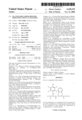
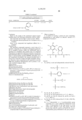
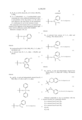
- the present invention is directed to the use of compounds having the formula I ##STR3## wherein R 1 and R 2 is each and independently selected from H; ##STR4## R 3 , R 4 , R 5 , R 6 are all H; or R 4 , R 5 , R 6 are all H, whereas R 3 is C 1 -C 6 alkyl; or
- R 4 and R 5 are both H, whereas R 3 and R 6 are both C 1 -C 6 alkyl; or
- R 3 , R 5 , R 6 are all H, whereas R 4 is F, Cl, Br, I, OH, NO 2 or NH 2 ;
- R 7 is a 2-phenylethyl- or a 2-cyclohexylethyl group containing one or more additional substituents in ortho- or para-position of the ring moiety or at the carbon atom adjacent to the ring moiety; for the manufacture of a medicament for use in the treatment of pain.
- R 7 Illustrative examples of R 7 are: ##STR5## wherein R 8 is selected from H, F, Cl, Br, I, NH 2 , NO 2 , C 1 -C 6 alkyl, and phenyl; and
- Preferred compounds to use in accordance with the present invention are compounds wherein
- R 1 is selected from H and CH 3 ;
- R 2 is selected from H and CH 3 ;
- R 3 is selected from H and CH 3 ;
- R 4 is H
- R 5 is H
- R 6 is selected from H and CH 3 ;
- R 7 is selected from anyone of ##STR10##
- the compounds disclosed in accordance with the present invention are useful as analgesic agents.
- the compounds of the invention are useful in treating analgesia.
- the wording "analgesia” is defined as absence of pain in response to stimulation which would normally be painful. Since the compounds of the formula I above are ⁇ agonists, they are effective in the treatment of pain without having to be administered in combination with a ⁇ opioid agonist which is the case for compounds which are ⁇ antagonists (E. E. Abdelhamid et al, J. Pharmacol. Exp. Ther. 258; pp. 299-303 (1991)).
- one aspect of the present invention is the use of a compound of the formula I above for the manufacture of a medicament for use in the treatment of pain.
- One further aspect of the present invention is a method for the treatment of pain, whereby is an effective amount of a compound according to formula I above, is administered to a subject suffering from pain.
- Boc-amino acids used in the peptide syntheses are commercially available.
- 2-methyltyrosine (Mmt) was prepared by catalytic hydrogenation (Pd/C) of 7-hydroxy-1,2,3,4-tetrahydroisoquinoline-3-carboxylic acid (7-OH-Tic) in AcOH under H 2 pressure at 3 atm.
- 2',6'-dimethyltyrosine (Dmt) was prepared as described by J. H. Dygos et al. Synthesis, No. 8 (August) pp. 741-743 (1992). Most of the C-terminal amine substituents were also commercially available.
- 2-(2-bromophenyl)ethylamine, 2-(2-methylphenyl)ethylamine and 2,2-diphenylpropylamine were prepared by reduction of the corresponding nitriles with lithium aluminum hydride, as described by L. M. Amundsen and L. S. Nelson J. Am. Chem. Soc. 73, 242 (1951).
- 2-(2-biphenyl)ethylamine was synthesized as described by S. Goldschmidt and W. L. C. Veer Recueil 67, 489 (1948).
- Ethyl- ⁇ -phenyl- ⁇ -aminopropionate in racemic form was synthesized as described by E. Testa et al. Liebig's Ann. Chem.
- 2,2-di-p-nitrophenylethylamine was prepared by nitration of 2,2-diphenylethylamine.
- 2,2-di-p-aminophenylethylamine was prepared by catalytic hydrogenation (Pd/C) of 2,2-di-p-nitrophenylethylamine.
- 2,2-di-p-chlorophenylethylamine was obtained from 2,2-di-p-aminophenylethylamine by diazotization of the aromatic amines followed by treatment with Cu 2 Cl 2 (Sandmeyer reaction).
- ⁇ -Phenyl- ⁇ -aminopropanol was prepared by treatment of Boc-protected ⁇ -phenyl- ⁇ -aminopropionic acid with BH 3 /TFA.
- 2-(2-nitrophenyl)ethylamine was obtained by reduction of 2-(2-nitrophenyl)ethylamine with LiAIH 4 .
- All dipeptide derivatives were prepared by solution synthesis by first coupling the C-terminal amine substituent to the carboxylic acid function of Boc-Tic-OH (mixed anhydride method), subsequent deprotection with acid, preferably an organic acid, especially preferred TFA, coupling of the Boc-protected N-terminal tyrosine or tyrosine analog (mixed anhydride method) and final deprotection with acid.
- the preferred acid system for Boc-deprotection is aqueous 95% TFA containing anisole (3%).
- the HPLC system GOLD (Beckman) consisting of the programmable solvent module 126 and the diode array detector module 168 was used for the purification and the purity control of the peptides.
- Reversed-phase HPLC was performed using a gradient made from two solvents: (A) 0.1% TFA in water and (B) 0.1% TFA in acetonitrile.
- a Vidac 218TP1022 column 250 ⁇ 22 mm
- NMM (1 equiv.) was added to a stirred solution of 1 mmol of Boc-protected amino acid in THF.
- the mixture was cooled to -15° C., treated with IBCF (1 equiv.) and was allowed to react for 2 min. Subsequently, the amino component (1 equiv.) was added.
- the reaction mixture was stirred for 30 min at -15° C. and was then allowed to reach room temperature.
- the solvent was then removed by vacuum evaporation and the residual oil was dissolved in 100 ml of EtOAc.
- the resulting solution was extracted consecutively with 5% KHSO 4 , brine and saturated NaHCO 3 .
- the organic phase was dried (MgSO 4 ), filtered and evaporated to dryness. The resulting crude products were used for deprotection without prior purification.
- the Boc-protected peptides were deprotected using aqueous 95% TFA containing thioanisole (3%) under stirring and cooling with ice. After evaporation in vacuo, the TFA salts of the peptides were obtained in pure form by preparative reversed-phase HPLC.
- Boc-Tic-OH (0.4 mmol) was coupled with H 2 N--CH 2 --CH--(Ph) 2 (2,2-diphenylethylamine, 0.43 mmol) according to method 1. After deprotection compound 1 was obtained as a lyophilisate in 95% yield and was used as such in the next step of the synthesis without further purification.
- Boc-Tyr(Boc)-OH (0.38 mmol) was coupled with the TFA salt of compound 1 (0.38 mmol) in the presence of NMM (2 equiv.). After deprotection the crude product was purified by HPLC. The compound in pure form was obtained in 85% yield.
- Example 2-31 The compounds of Examples 2-31 have been synthesized as described for Example 1 above.
- the racemate of the C-terminal amine substituent was used in the synthesis and the resulting diastereomeric dipeptide derivatives were separated by preparative reversed-phase HPLC, using a Vidac 218TP0046 column (250 ⁇ 22 mm), under isocratic conditions: 43% MeOH-57% 0.1% TFA/H 2 O (in the case of Examples 15 and 16, 17 and 18, and 30 and 31), or 34% MeOH-66% 0.1% TFA/H 2 O) (in the case of Examples 27 and 28).
- Bioassays based on inhibition of electrically evoked contractions of the mouse vas deferens (MVD) and of the guinea pig ileum (GPI) were performed.
- the opioid effect is primarily mediated by ⁇ opioid receptors
- the inhibition of the contractions is mostly due to interaction with ⁇ opioid receptors.
- Agonist potencies are expressed as IC50 values (concentration of the agonist that produces 50% inhibition of the electrically induced contractions).
- ⁇ and ⁇ opioid receptor binding constants (K i .sup. ⁇ ,K i .sup. ⁇ ) of the compounds were determrined by displacement of relatively selective ⁇ and ⁇ radioligands from binding sites in rat brain membrane preparations calculated from the measured IC50 values on the basis of the equation by Cheng and Prusoff, (Y. C. Cheng and W. H. Prusoff Biochem. Pharmnacol. 22, 3099-3102 (1973)).
- the ratio K i .sup. ⁇ /K i .sup. ⁇ was a quantitative measure of the ⁇ versus ⁇ receptor selectivity.
- ⁇ -, ⁇ - and ⁇ -opioid receptor affinities of all new analogs were determined in binding assays based on displacement of ⁇ -, ⁇ - and ⁇ -selective radioligands from rat brain membrane binding sites.
- ⁇ -ligands guinea pig brain homogenates were used, since the relative proportion of ⁇ -binding sites is higher in guinea pig brain than in rat brain.
- the experimental procedure being used in our laboratory represents a modified version of the binding assay described by Pasternak et al. (Mol. Pharnacol. 11, 340-351 (1975)).
- K i binding inhibition constants
- the described compounds represent a novel class of ⁇ agonists.
- ⁇ Agonists are of interest as therapeutic agents for use in analgesia because, unlike the traditionally used ⁇ agonists (e.g. morphine), they produce less or no physical dependence, no respiratory depression and less or no adverse gastrointestinal effects.
- ⁇ opioid peptide agonists e.g. morphine
- the compounds according to the claimed invention have a much lower molecular weight and higher lipophilic character. Therefore, these compounds can be expected to cross the BBB after peripheral administration and to produce a centrally mediated analgesic effect.
- BBB blood-brain barrier
- BW373U86 ( ⁇ )-4-(a-R*)-a-(2S*,5R*)-4-allyl-2,5-dimethyl-1-piperazinyl)-3-hydroxybenzyl)-N,N-diethylbenzamide
- FAB-MS fast atom bombardment mass spectrometry
- GPI guinea pig ileum
- SNC80 (+)-4-(a-R*)-a-(2S*,5R*)-4-allyl-2,5-dimethyl-1-piperazinyl)-3-methoxybenzyl)-N,N-diethylbenzarnide
- TAN-67 2-methyl-4 ⁇ , ⁇ -(3-hydroxyphenyl)-1,2,3,4,4a,5,12,12a.alpha.-octahydroquinolino[2,3,3-g]isoquinoline
Landscapes
- Health & Medical Sciences (AREA)
- Life Sciences & Earth Sciences (AREA)
- General Health & Medical Sciences (AREA)
- Veterinary Medicine (AREA)
- Engineering & Computer Science (AREA)
- Chemical & Material Sciences (AREA)
- Medicinal Chemistry (AREA)
- Animal Behavior & Ethology (AREA)
- Public Health (AREA)
- Pharmacology & Pharmacy (AREA)
- Bioinformatics & Cheminformatics (AREA)
- Proteomics, Peptides & Aminoacids (AREA)
- General Chemical & Material Sciences (AREA)
- Organic Chemistry (AREA)
- Epidemiology (AREA)
- Gastroenterology & Hepatology (AREA)
- Nuclear Medicine, Radiotherapy & Molecular Imaging (AREA)
- Immunology (AREA)
- Chemical Kinetics & Catalysis (AREA)
- Pain & Pain Management (AREA)
- Biomedical Technology (AREA)
- Neurology (AREA)
- Neurosurgery (AREA)
- Medicines That Contain Protein Lipid Enzymes And Other Medicines (AREA)
- Peptides Or Proteins (AREA)
- Pharmaceuticals Containing Other Organic And Inorganic Compounds (AREA)
Abstract
PCT No. PCT/SE97/02156 Sec. 371 Date Apr. 1, 1998 Sec. 102(e) Date Apr. 1, 1998 PCT Filed Dec. 18, 1997 PCT Pub. No. WO98/28327 PCT Pub. Date Jul. 2, 1998Use of a compound of the formula I for the manufacture of a medicament for the treatment of pain. The compounds are delta opioid agonists and thus useful in the treatment of pain without the requirement of co-application of a mu opioid agonist.
Description
This invention is related to a new use of opioid dipeptide derivatives with δ agonist properties, particularly as analgesic compounds.
The results of recent studies indicated that opioid agonists that selectively act via δ receptors should have advantages over currently available opioid analgesics. In particular, potential advantages include the production of analgesia with
i) decreased (or no) development of physical dependence (A. Cowan et al., J. Pharmacol. Exp. Ther. 246, 950-955 (1988));
ii) no depression (and the possible stimulation) of respiratory function (P. Y. Cheng et al., Eur. J. Pharmacol. 230, 85-88 (1993)); and
iii) little or no adverse gastrointestinal effects (J. J. Galligan et al., J. Pharmacol. Exp. Ther. 229, 641-648 (1984).
Selective peptide δ agonists currently available include the enkephalin analogs H-Tyr-D-Thr-Gly-Phe-Leu-Thr-OH (DTLET; G. Gacel et al., J. Med. Chem. 31, 1891-1897 (1988)) and ##STR2## (DPDPE, H. I. Mosberg et al., Proc Natl. Acad. Sci. USA 80, 5871-5874 (1983) and the deltorphins (H-Tyr-D-Met-Phe-His-Leu-Met-Asp-NH2 (dermenkephalin)), H-Tyr-D-Ala-Phe-Asp-Val-Val-Gly-NH2 (deltorphin I) and H-Tyr-D-Ala-Phe-Glu-Val-Val-Gly-NH2 (deltorphin II); V. Erspamer et al., Proc. Natl. Acad. Sci. USA 86, 5188-5192 (1989)). However, these peptides are of relatively large molecular size (molecular weight>600) and for this reason their ability to cross the blood-brain barrier (BBB) is very limited.
Non-peptide δ agonists that have recently been developed include the racemic compound BW373U86 (K.-J. Chang et al., J. Pharmacol. Exp. Ther. 267, 852-857 (1993)) and its chemically modified enantiomer SNC80 (S.N. Calderon et al., J. Med. Chem. 37, 2125-2128 (1994)) as well as the compound TAN-67 (J. Kamei et al., Eur. J. Pharmacol. 276, 131-135 (1995)). However, BW 373U86 produced significant toxicity, manifested behaviorally as convulsions and barrel rolling, in mice (S. D. Comer et al., J. Pharmacol. Exp. Ther. 267, 888-895 (1993)), and TAN-67 showed no significant antinociceptive effect in the mouse tail flick test (J. Kamei et al., Eur. J. Pharmacol. 276, 131-135 (1995)). Therefore, there is still a need for the development of new potent δ opioid agonists of low molecular weight and high lipophilic character.
Peptides containing the N-terminal segment H-Tyr-Tic-Aaa (Tic=1,2,3,4-tetrahydroisoquinoline-3-carboxylic acid, Aaa=aromatic or aliphatic amino acid residue) that are very potent and highly selective δ opioid antagonists have recently been disclosed by P. W. Schiller et al., in FASEB J. 6(4), A1575 (1992), at the International Narcotics Research Conference (INRC) Meetings in Keystone, CO, Jun. 24-29 (1992) and in Skovde, Sweden, Jul. 10-15 (1993), at the 2nd Japan Symposium on Peptide Chemistry, Shizuoka, Japan, Nov. 9-13 (1992), at the 22nd European Peptide Symposium in Interlaken, Switzerland, Sept. 9-13 (1992), at the 14th American Peptide Symposium in Columbus, Ohio, Jun. 18-23 (1995), in Proc. Natl. Acad. Sci. USA 89, 11871-11875 (1992), and in J. Med. Chem. 36, 3182-3187 (1993).
Recently, it has been found that dipeptide derivatives of the type H-Tyr-Tic-NH--(CH2)n --Ph (Ph=phenyl) also have δ antagonist properties, if n=1, 3 or 4. In the case of n=2, however, the compound (H-Tyr-Tic-NH-CH2 --CH2 --Ph) surprisingly turned out to be a full, but only moderately potent δ agonist, as reported by P. W. Schiller et al. at the 23rd European Peptide Symposium in Braga, Portugal, Sept. 4-10, 1994.
Thus, the object of the present invention was to find structurally modified analogs of H-Tyr-Tic-NH--CH2 --CH2 --Ph with improved δ agonist potency. Compounds of this type should have potential for therapeutic use as centrally acting analgesics because their low molecular weight and lipophilic character can be expected to facilitate crossing of the BBB.
It has now been found that analogs of the dipeptide derivative H-Tyr-Tic-NH--CH2 --CH2 --Ph, as defined by the following formula I below, have high potency as δ opioid agonists and retain good δ receptor selectivity.
The present invention is directed to the use of compounds having the formula I ##STR3## wherein R1 and R2 is each and independently selected from H; ##STR4## R3, R4, R5, R6 are all H; or R4, R5, R6 are all H, whereas R3 is C1 -C6 alkyl; or
R4 and R5 are both H, whereas R3 and R6 are both C1 -C6 alkyl; or
R3, R5, R6 are all H, whereas R4 is F, Cl, Br, I, OH, NO2 or NH2 ;
R7 is a 2-phenylethyl- or a 2-cyclohexylethyl group containing one or more additional substituents in ortho- or para-position of the ring moiety or at the carbon atom adjacent to the ring moiety; for the manufacture of a medicament for use in the treatment of pain.
The compounds of the formula I above, are disclosed and claimed by the Applicant in the International patent application with the publication number WO 96/06855.
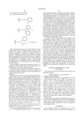
Illustrative examples of R7 are: ##STR5## wherein R8 is selected from H, F, Cl, Br, I, NH2, NO2, C1 -C6 alkyl, and phenyl; and
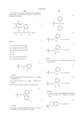
R9 is selected from H, C1 -C6 alkyl, --CH2 OH, and phenyl; ##STR6## wherein R10 and R11 is each and independently selected from H, N02, NH2, F, Cl, Br, I, and C1 -C6 alkyl; ##STR7## wherein R12 is selected from anyone of C1 -C6 alkyl and --(CH2)n --Ph, wherein n=0-3; ##STR8## wherein R13 and R14 is each and independently selected from anyone of H, C1 -C6 alkyl, and --(CH2)n --Ph wherein n=0-3; ##STR9##
Preferred compounds to use in accordance with the present invention are compounds wherein
R1 is selected from H and CH3 ;
R2 is selected from H and CH3 ;
R3 is selected from H and CH3 ;
R4 is H;
R5 is H;
R6 is selected from H and CH3 ;
R7 is selected from anyone of ##STR10##
The compounds disclosed in accordance with the present invention are useful as analgesic agents. Thus, the compounds of the invention are useful in treating analgesia. The wording "analgesia" is defined as absence of pain in response to stimulation which would normally be painful. Since the compounds of the formula I above are δ agonists, they are effective in the treatment of pain without having to be administered in combination with a μ opioid agonist which is the case for compounds which are δ antagonists (E. E. Abdelhamid et al, J. Pharmacol. Exp. Ther. 258; pp. 299-303 (1991)).
Thus, one aspect of the present invention is the use of a compound of the formula I above for the manufacture of a medicament for use in the treatment of pain.
One further aspect of the present invention is a method for the treatment of pain, whereby is an effective amount of a compound according to formula I above, is administered to a subject suffering from pain.
Synthesis
Most Boc-amino acids used in the peptide syntheses are commercially available. 2-methyltyrosine (Mmt) was prepared by catalytic hydrogenation (Pd/C) of 7-hydroxy-1,2,3,4-tetrahydroisoquinoline-3-carboxylic acid (7-OH-Tic) in AcOH under H2 pressure at 3 atm. 2',6'-dimethyltyrosine (Dmt) was prepared as described by J. H. Dygos et al. Synthesis, No. 8 (August) pp. 741-743 (1992). Most of the C-terminal amine substituents were also commercially available. 2-(2-bromophenyl)ethylamine, 2-(2-methylphenyl)ethylamine and 2,2-diphenylpropylamine were prepared by reduction of the corresponding nitriles with lithium aluminum hydride, as described by L. M. Amundsen and L. S. Nelson J. Am. Chem. Soc. 73, 242 (1951). 2-(2-biphenyl)ethylamine was synthesized as described by S. Goldschmidt and W. L. C. Veer Recueil 67, 489 (1948). Ethyl-α-phenyl-β-aminopropionate in racemic form was synthesized as described by E. Testa et al. Liebig's Ann. Chem. 614, 167 (1958). Acid hydrolysis of the latter product and subsequent amidation afforded racemic α-phenyl-β-aminopropionamide. 2,2-dicyclohexylethylamine was prepared from 2,2-diphenylethylamine by catalytic hydrogenation (Rh on carbon) at 6° C. under pressure (60 psi).
2,2-di-p-nitrophenylethylamine was prepared by nitration of 2,2-diphenylethylamine. 2,2-di-p-aminophenylethylamine was prepared by catalytic hydrogenation (Pd/C) of 2,2-di-p-nitrophenylethylamine. 2,2-di-p-chlorophenylethylamine was obtained from 2,2-di-p-aminophenylethylamine by diazotization of the aromatic amines followed by treatment with Cu2 Cl2 (Sandmeyer reaction). α-Phenyl-β-aminopropanol was prepared by treatment of Boc-protected α-phenyl-β-aminopropionic acid with BH3 /TFA. 2-(2-nitrophenyl)ethylamine was obtained by reduction of 2-(2-nitrophenyl)ethylamine with LiAIH4.
All dipeptide derivatives were prepared by solution synthesis by first coupling the C-terminal amine substituent to the carboxylic acid function of Boc-Tic-OH (mixed anhydride method), subsequent deprotection with acid, preferably an organic acid, especially preferred TFA, coupling of the Boc-protected N-terminal tyrosine or tyrosine analog (mixed anhydride method) and final deprotection with acid. The preferred acid system for Boc-deprotection is aqueous 95% TFA containing anisole (3%).
The HPLC system GOLD (Beckman) consisting of the programmable solvent module 126 and the diode array detector module 168 was used for the purification and the purity control of the peptides. Reversed-phase HPLC was performed using a gradient made from two solvents: (A) 0.1% TFA in water and (B) 0.1% TFA in acetonitrile. For preparative runs a Vidac 218TP1022 column (250×22 mm) was used with a linear gradient of 20-50% B over a period of 45 min at a flow rate of 13 ml/min, absorptions being measured at both 216 nm and 280 nm. The same gradient was used for analytical runs on a Vidac 218TP 0046 column (250×4.6 mm) over a period of 30 min at a flow rate of 1.0 ml/min. Purity of peptides was also established by TLC on precoated silica gel plates 60F-254 (E. Merck, Darmstadt, FRG) in the following solvent systems (all v/v): (A) CHCl3 /MeOH/AcOH (85:10:5) and (B) n-BuOH/H2 O/AcOH (4:1:1). Peptides were visualized with UV and with the ninhydrin spray reagent. Molecular weights of peptides were determined by FAB mass spectrometry on an MS-50 HMTCTA mass spectrometer interfaced with a DS-90 data system.
The invention will now be described in more detail by the following examples.
1) Mixed Anhydride Method
NMM (1 equiv.) was added to a stirred solution of 1 mmol of Boc-protected amino acid in THF. The mixture was cooled to -15° C., treated with IBCF (1 equiv.) and was allowed to react for 2 min. Subsequently, the amino component (1 equiv.) was added. The reaction mixture was stirred for 30 min at -15° C. and was then allowed to reach room temperature. The solvent was then removed by vacuum evaporation and the residual oil was dissolved in 100 ml of EtOAc. The resulting solution was extracted consecutively with 5% KHSO4, brine and saturated NaHCO3. The organic phase was dried (MgSO4), filtered and evaporated to dryness. The resulting crude products were used for deprotection without prior purification.
2) Deprotection
The Boc-protected peptides were deprotected using aqueous 95% TFA containing thioanisole (3%) under stirring and cooling with ice. After evaporation in vacuo, the TFA salts of the peptides were obtained in pure form by preparative reversed-phase HPLC.
The invention will now be described by way of the following examples, where the compound of Example 1 in Table 1 has served as the illustrative example for the preparation of the compounds of the present invention. All the exemplified compounds have been prepared by following the same procedure as described for the compound of Example 1. These Examples should however not be construed as limiting the invention in any way.
Boc-Tic-OH (0.4 mmol) was coupled with H2 N--CH2 --CH--(Ph)2 (2,2-diphenylethylamine, 0.43 mmol) according to method 1. After deprotection compound 1 was obtained as a lyophilisate in 95% yield and was used as such in the next step of the synthesis without further purification.
TLC (silica): Rf=0.36 (A)
Using the mixed anhydride method, Boc-Tyr(Boc)-OH (0.38 mmol) was coupled with the TFA salt of compound 1 (0.38 mmol) in the presence of NMM (2 equiv.). After deprotection the crude product was purified by HPLC. The compound in pure form was obtained in 85% yield.
FAB-MS: MH+ =520
TLC (silica): Rf=0.75 (A), Rf=0.72 (B)
HPLC: K'=11.4
The compounds of Examples 2-31 have been synthesized as described for Example 1 above. In the case of the compounds of Examples 15 and 16, Examples 17 and 18, Examples 27 and 28 and Examples 30 and 31, the racemate of the C-terminal amine substituent was used in the synthesis and the resulting diastereomeric dipeptide derivatives were separated by preparative reversed-phase HPLC, using a Vidac 218TP0046 column (250×22 mm), under isocratic conditions: 43% MeOH-57% 0.1% TFA/H2 O (in the case of Examples 15 and 16, 17 and 18, and 30 and 31), or 34% MeOH-66% 0.1% TFA/H2 O) (in the case of Examples 27 and 28).
In the case of compounds of Examples 21 and 22 the mixture of the two trans isomers of 2-phenylcyclopropylamine was used in the synthesis and the dipeptide isomers were separated by preparative reversed-phase HPLC, using a Vidac 218TP0046 column (250×22 mm) with the solvents (A) 0.1% TFA in water and (B) methanol under the following conditions: linear gradient of 20-55% B over a period of 25 min, followed by isocratic elution (45% A, 55% B) over a period of 30 min.
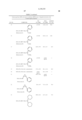
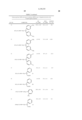
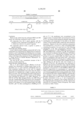
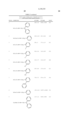
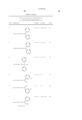
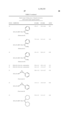
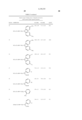
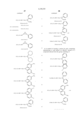
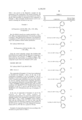
Examples of compounds prepared for use according to the invention are given below in Table 1.
              TABLE 1
______________________________________
EX-
  AM-  Molecular Weight
  PLE COMPOUND (FAB-MS) [MH.sup.+ ]
______________________________________
   1
                               520 11##
   -  2
                               472 12##
   -  3
                               462 13##
   -  4
                               478 14##
   -  5
                               523 15##
   -  6
                               458 16##
   -  7
                               520 17##
   -  8
                               472 18##
   -  9
                               534 19##
   - 10
                               548 20##
   - 11
                               548 21##
   - 12
                               534 22##
   - 13
                               458 23##
   - 14
                               458 24##
   - 15
                               516 25##
   - 16
                               516 26##
   - 17
                               487 27##
   - 18
                               487 28##
   - 19 H-Tyr-Tic-2-S-At (At = aminotetralin) 470
  20 H-Tyr-Tic-2-R-At (At = aminotetralin) 470
   - 21
                               456 29##
   - 22
                               456 30##
   - 23
                               532 31##
   - 24
                               610 32##
   - 25
                               550 33##
   - 26
                               589 34##
   - 27
                               474 35##
   - 28
                               474 36##
   - 29
                               489 37##
   - 30
                               530 38##
   - 31
                               530R39##
______________________________________
Pharmacological Testing in vitro of δ Opioid Agonists
Bioassays based on inhibition of electrically evoked contractions of the mouse vas deferens (MVD) and of the guinea pig ileum (GPI) were performed. In the GPI assay the opioid effect is primarily mediated by μ opioid receptors, whereas in the MVD assay the inhibition of the contractions is mostly due to interaction with δ opioid receptors. Agonist potencies are expressed as IC50 values (concentration of the agonist that produces 50% inhibition of the electrically induced contractions).
Bioassays Using Isolated Organ Preparations
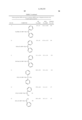
The GPI and MVD bioassays were carried out as reported in P. W. Schiller et al., Biochem. Biophys. Res. Commun. 85, 1332-1338 (1978) and J. DiMaio et al., J. Med. Chem. 25, 1432-1438 (1982). A log-dose response curve was determined with [Leu5 ]enkephalin as standard for each ileum and vas preparation, and IC50 values of the compounds being tested were normalized according to A. A. Waterfield et al., Eur. J. Pharmacol. 58, 11-18 (1979). The results are shown in Table 2 below.
                                  TABLE 2
__________________________________________________________________________
Guinea pig ileum (GPI) and mouse vas deferens (MVD) assay of dipeptide
derivatives with
  δ opioid agonist properties.
                         GPI    MVD    GPI/MVD
  EX. NO. COMPOUND IC.sub.50 [nM] IC.sub.50 [nM] IC.sub.50 ratio
__________________________________________________________________________
                                         2120 0##
                                       ± 640 82.0 ± 10.0 25.9
                                         -  1
                                         3630 ± 470 3.77 ± 1.05 963
   -  2
                                         290 ± 4  10.4 ± 1.4  27.9
                                         -  3
                                          5450 ± 1800 75.5 ± 8.5
                                       72.2
   -  4
                                         partial  agonist 8.77 ± 1.28
                                       --
   -  5
                                         613 ± 26 13.9 ± 1.9  44.1
                                         -  6
                                          759 ± 152 10.1 ± 1.2
                                       75.1
   -  7
                                         >10 000 418 ± 55  >23.9
                                         -  8
                                         48.0 ± 3.6 2.30 ± 0.61
                                       (partial agonist;  max inhib. =
                                       74%) 20.9
   -  9
                                         156 ± 62 0.261 ± 0.046 598
   - 10
                                         290 ± 38 0.726 ± 0.273 399
   - 11
                                          91.1 ± 33.4 3.01 ± 1.04
                                       30.3
   - 12
                                         2830 ± 990 93.4 ± 18.4
                                       30.3
   - 13
                                         3790 ± 640 21.4 ± 8.2  177
   - 14
                                         3430 ± 490 26.0 ± 2.5  132
   - 15
                                         >10 000 1.28 ± 0.18 7810
                                         - 16
                                         >10 000 8.64 ± 1.31 1160
                                         - 17
                                         2140 ± 470 34.0 ± 2.9
                                       62.9
   - 18
                                         >10 000 partial  agonist --
                                         - 19 H-Tyr-Tic-2-S-At (At =
                                       aminotetralin) 1710 ± 230 38.1
                                       ± 12.2 44.9
   - 20 H-Tyr-Tic-2-R-At (At = aminotetralin) partial 36.3 ± 3.58 --
                                          agonist
  21
                                         1600 ± 500 partial  agonist
                                       --
   - 22
                                          518 ± 147 7.31 ± 2.30
                                       70.9
   - 23
                                         1580 ± 610 21.5 ± 6.8
                                       73.5
   - 24
                                          5200 ± 1100 8.91 ± 1.53
                                       584
   - 25
                                         >10 000 7.81 ± 0.48 >1280
                                         - 26
                                         >10 000 397 ± 33  >25.2
                                         - 27
                                         526 ± 51 13.6 ± 2.2  38.7
                                         - 28
                                         >10 000 92.6 ± 6.0  >108
                                         - 29
                                         1850 ± 540 29.1 ± 10.6
                                       63.6
   - 30
                                          826 ± 183 1.62 ± 0.12 510
   - 31
                                          869 ± 209 2.24 ± 0.33
__________________________________________________________________________
                                       388
Conclusion
Based on the results from the performed MVD and GPI assays, the following conclusions could be made:
All compounds were full δ opioid agonists, with the exception of the compounds of Examples 8, 18, and 2 1, which have shown to be partial δ agonists.
All compounds showed weak μ agonist or partial μ agonist properties
Opioid Receptor Binding Assays
μ and δ opioid receptor binding constants (Ki.sup.μ,Ki.sup.δ) of the compounds were determrined by displacement of relatively selective μ and δ radioligands from binding sites in rat brain membrane preparations calculated from the measured IC50 values on the basis of the equation by Cheng and Prusoff, (Y. C. Cheng and W. H. Prusoff Biochem. Pharmnacol. 22, 3099-3102 (1973)).
The ratio Ki.sup.μ /Ki.sup.δ was a quantitative measure of the δ versus μ receptor selectivity.
Opioid Receptor Binding Studies
The μ-, δ- and κ-opioid receptor affinities of all new analogs were determined in binding assays based on displacement of μ-, δ- and κ-selective radioligands from rat brain membrane binding sites. In the case of κ-ligands guinea pig brain homogenates were used, since the relative proportion of κ-binding sites is higher in guinea pig brain than in rat brain. The experimental procedure being used in our laboratory represents a modified version of the binding assay described by Pasternak et al. (Mol. Pharnacol. 11, 340-351 (1975)). Male Sprague-Dawley rats (300-350 g) from the Canadian Breeding Laboratories were decapitated and after removal of the cerebellum the brains were homogenized in 30 volumes of ice-cold standard buffer (50 mnM Tris HCl , pH 7.7). After centrifugation at 30,000×g for 30 min at 4° C. the membranes were reconstituted in the original volume of standard buffer and incubated for 30 min at 37° C. (to release bound endogenous ligands). Subsequent centrifugation and resuspension of the pellet in the initial volume of fresh standard buffer yielded the final membrane suspension. Aliquots (2 ml) of the membrane preparations were incubated for 1-2 h at 25° C. with 1 ml standard buffer containing the peptide to be tested and one of the following radioligands at the final concentration indicated: [3 H]DAMGO, μ-selective, 0.7 nM; [3 H]DSLET, μ-selective, 1.0 nM; and [3 H]U69,563, κ-selective, 0.5 nM. The incubation was terminated by filtration through Whatman GF/B filters under vacuum at 4° C. Following two washings with 5 ml portions of ice-cold standard buffer the filters were transferred to scintillation vials and treated with 1 ml Protosol (New England Nuclear) for 30 min prior to addition of 0.5 ml acetic acid and 10 ml Aquasol (New England Nuclear). After shaking for 30 min the vials were counted at an efficiency of 40-45%. All experiments were performed in duplicate and repeated at least three times. Specific binding of each of the three radioligands was defined by performing incubations in the presence of cold DAMGO, DSLET and U69,563, respectively, at a concentration of 1 micromolar. Values of half-maximal inhibition (IC50) of specific binding were obtained graphically from semilogarithmic plots. From the measured IC50-values, binding inhibition constants (Ki) were calculated based on Cheng and Prusoff's equation (Biochem. Pharmacol. 22, 3099-3102 (1973)). Ratios of the Ki -values determined in the μ-, δ- and κ-representative binding assays are a measure of the receptor selectivity of the compound under investigation (e.g. Ki.sup.μ /Ki.sup.μ indicates the selectivity for δ-receptors versus μ-receptors). The results are shown in Table 3 below.
                                  TABLE 3
__________________________________________________________________________
Opioid receptor binding assays of dipeptide derivatives
  with δ opioid receptor agonist properties
EX.NO.
    COMPOUND             K.sub.i.sup.μ  [nM]
                               K.sub.i.sup.δ  [nM]
                                       K.sub.i.sup.μ /K.sub.i.sup..delt
                                       a.
__________________________________________________________________________
                                         69.1 0##
                                       ± 1.9 5.22 ± 0.02 13.2
                                         - 1
                                         28.8 ± 4.2 0.981 ± 0.038
                                       29.4
   - 2
                                         8.20 ± 0.19 4.51 ± 0.66
                                       1.82
   - 3
                                         255 ± 3 7.71 ± 1.17 33.1
                                         - 4
                                         96.9 ± 9.6 1.43 ± 0.09
                                       67.8
   - 5
                                         23.3 ± 7.7 1.24 ± 0.27
                                       18.8
   - 6
                                         38.7 ± 8.9 1.75 ± 0.10
                                       22.1
   - 7
                                         73.5 ± 7.1 4.76 ± 1.70
                                       15.4
   - 8
                                         1.59 ± 0.14  0.0577 ±
                                       0.0049 27.6
   - 9
                                         12.7 ± 1.2 0.581 ± 0.096
                                       21.9
   - 10
                                         1.62 ± 0.12 0.693 ± 0.126
                                       2.34
   - 11
                                         4.08 ± 0.19 1.75 ± 0.10
                                       2.33
   - 12
                                         22.9 ± 0.05 20.0 ± 4.0
                                       1.15
   - 13
                                         82.3 ± 17.7 6.31 13.0
                                         - 14
                                         51.3 3.67 14.0
   - 15
                                         886 ± 172 0.569 ± 0.080
                                       1560
   - 16
                                         153 ± 5 3.03 ± 0.66 50.5
                                         - 17
                                         73.7 ± 0.6 21.5 ± 4.2 3.43
   - 18
                                         191 ± 19 22.8 ± 2.5 8.38
                                         - 19 H-Tyr-Tic-2-S-At (At =
                                       aminotetralin) 55.8 ± 6.3 4.55
                                       ± 1.03 12.3
  20 H-Tyr-Tic-2-R-At (At = aminotetralin) 26.3 ± 2.3 1.72 ± 0.17
                                       15.3
   - 21
                                         38.0 ± 11.2 4.13 ± 0.27
                                       9.20
   - 22
                                         11.5 ± 1.1 1.36 ± 0.15
                                       8.46
   - 23
                                         52.4 ± 2.5 11.3 ± 3.3 4.64
   - 24
                                         635 ± 109 7.17 ± 0.24 88.6
   - 25
                                         5340 ± 700 2.67 ± 0.83
                                       2000
   - 26
                                         1560 ± 60 2.82 ± 0.07 553
                                         - 27
                                         70.3 ± 2.3 1.26 ± 0.11
                                       55.8
   - 28
                                         242 ± 20 7.80 ± 2.80 31.0
                                         - 29
                                         355 ± 13 7.70 ± 0.45 46.1
                                         - 30
                                         164 ± 11 1.63 ± 0.27 101
                                         - 31
                                         79.7 ± 2.3 1.22 ± 0.04
__________________________________________________________________________
                                       65.3
Conclusion
Based on the results of the performed opioid receptor binding assays, the following conclusions could be made:
All compounds showed high δ opioid receptor affinity
All compounds showed preference for δ receptors over μ receptors
None of the compounds had significant affinity for κ receptors
Potential Use
The described compounds represent a novel class of δ agonists. δ Agonists are of interest as therapeutic agents for use in analgesia because, unlike the traditionally used μ agonists (e.g. morphine), they produce less or no physical dependence, no respiratory depression and less or no adverse gastrointestinal effects. In comparison with the well-known larger δ opioid peptide agonists (DPDPE, deltorphin, etc.), the compounds according to the claimed invention have a much lower molecular weight and higher lipophilic character. Therefore, these compounds can be expected to cross the BBB after peripheral administration and to produce a centrally mediated analgesic effect.
Abbreviations
BBB=blood-brain barrier
Boc=tert-butoxycarbonyl
BW373U86=(±)-4-(a-R*)-a-(2S*,5R*)-4-allyl-2,5-dimethyl-1-piperazinyl)-3-hydroxybenzyl)-N,N-diethylbenzamide
DAMGO=H-Tyr-D-Ala-Gly-Phe(NMe)-Gly-ol
Dmt=2',6'-dimethyltyrosine ##STR100## DSLET=H-Tyr-D-Ser-Gly-Phe-Leu-Thr-OH DTLET=H-Tyr-D-Thr-Gly-Phe-Leu-Thr-OH
FAB-MS=fast atom bombardment mass spectrometry
GPI=guinea pig ileum
HPLC=high performance liquid chromatography
IBCF=isobutylchloroformate
MVD=mouse vas deferens
NMM=N-methylmorpholine
Ph=phenyl
SNC80=(+)-4-(a-R*)-a-(2S*,5R*)-4-allyl-2,5-dimethyl-1-piperazinyl)-3-methoxybenzyl)-N,N-diethylbenzarnide
TAN-67=2-methyl-4α,α-(3-hydroxyphenyl)-1,2,3,4,4a,5,12,12a.alpha.-octahydroquinolino[2,3,3-g]isoquinoline
TFA=trifluoroacetic acid
THF=tetrahydrofuran
Tic=1,2,3,4-tetrahydroisoquinoline-3-carboxylic acid
TLC=thin layer chromatography
U69,593=(5α,7α,8β)-(--)-N-methyl-[7-(pyrrolidinyl)-1-oxaspiro[4,5]dec-8-yl]benzeneacetamide
Claims (4)
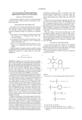
1. A method of treating a patient for pain comprising, administering to said patient an effective amount of a compound of formula I: ##STR101## wherein R1 and R2 is each and independently selected from H; ##STR102## R3, R4, R5, R6 are all H; or R4, R5, R6 are all H whereas R3 is a C1 -C6 alkyl; or
R4 and R5 are both H, whereas R3 and R6 are both a C1 -C6 alkyl; or
R3, R5, R6 are all H, whereas R4 is F, Cl, Br, I, OH, NO2 or NH2 ;
R7 is a 2-phenylethyl- or a 2-cyclohexylethyl group containing one or more additional substituents in the ortho- or para-position of the ring moiety or at the carbon atom adjacent to the ring moiety, with the proviso that, when R1 and R2 are both H, R7 is not a 2-phenylethyl group substituted in the para position.
2. A method of treating a patient for pain, comprising administering to said patient an effective amount of a compound of formula I: ##STR103## wherein: R1 is selected from H and CH3 ;
R2 is selected from H and CH3 ;
R3 is selected from H and CH3 ;
R4 is H;
R5 is H;
R6 is selected from H and CH3 ;
R7 isselected from any one of ##STR104## wherein R8 is selected from H, F, Cl, Br, I, NH2, NO2, C1 -C6 alkyl, and phenyl; and
R9 is selected from H, C1 -C6 alkyl, --CH2 OH, and phenyl;
with the proviso that R8 and R9 may not both be H; ##STR105## wherein R10 and R11 is each and independently selected from H, NO2, NH2, F, Cl, Br, I, and C1 -C6 alkyl; ##STR106## wherein R12 is selected from C1 -C6 alkyl and (--CH2)n --Ph, wherein n=0-3; ##STR107## wherein R13 and R14 is each and independently selected from H, C1 -C6 alkyl, and --(CH2)n --Ph wherein n=0-3; ##STR108##
3. A method of treating a patient for pain, comprising administering to said patient an effective amount of a compound selected from the group consisting of:
4. A method of treating a patient for pain, comprising administering to said patient an effective amount of a compound selected from the group consisting of:
Applications Claiming Priority (3)
| Application Number | Priority Date | Filing Date | Title |
|---|---|---|---|
| SE9604789A SE9604789D0 (en) | 1996-12-20 | 1996-12-20 | New Compounds |
| SE9604789 | 1996-12-20 | ||
| PCT/SE1997/002156 WO1998028327A1 (en) | 1996-12-20 | 1997-12-18 | New use of dipeptide derivatives |
Publications (1)
| Publication Number | Publication Date |
|---|---|
| US6150335A true US6150335A (en) | 2000-11-21 |
Family
ID=20405142
Family Applications (1)
| Application Number | Title | Priority Date | Filing Date |
|---|---|---|---|
| US09/043,881 Expired - Fee Related US6150335A (en) | 1996-12-20 | 1997-12-18 | Tic-containing opioid dipeptide derivatives useful as analgesics |
Country Status (9)
| Country | Link |
|---|---|
| US (1) | US6150335A (en) |
| EP (1) | EP0946588A1 (en) |
| JP (1) | JP2001507026A (en) |
| AU (1) | AU721131B2 (en) |
| CA (1) | CA2274899A1 (en) |
| NO (1) | NO993069D0 (en) |
| NZ (1) | NZ336026A (en) |
| SE (1) | SE9604789D0 (en) |
| WO (1) | WO1998028327A1 (en) |
Cited By (2)
| Publication number | Priority date | Publication date | Assignee | Title |
|---|---|---|---|---|
| US20050181447A1 (en) * | 1999-11-19 | 2005-08-18 | Sharma Shubh D. | Opioid metallopeptide compositions and methods |
| CN115703971A (en) * | 2021-08-11 | 2023-02-17 | Jsr株式会社 | Liquid crystal aligning agent, liquid crystal alignment film and method for producing same, liquid crystal element, polymer and compound |
Families Citing this family (1)
| Publication number | Priority date | Publication date | Assignee | Title |
|---|---|---|---|---|
| WO2007112556A1 (en) * | 2006-03-30 | 2007-10-11 | Salpep Biotechnology Inc. | Suppression and treatment of neuropathic pain |
Citations (2)
| Publication number | Priority date | Publication date | Assignee | Title |
|---|---|---|---|---|
| WO1996006855A1 (en) * | 1994-08-30 | 1996-03-07 | Astra Aktiebolag | NEW PEPTIDE DERIVATIVES WITH δ OPIOID RECEPTOR ANTAGONIST OR MIXED ν AGONIST/δ ANTAGONIST EFFECTS |
| WO1997031940A1 (en) * | 1996-02-28 | 1997-09-04 | Astra Aktiebolag | Isoquinolines useful as analgesics |
-
1996
- 1996-12-20 SE SE9604789A patent/SE9604789D0/en unknown
-
1997
- 1997-12-18 AU AU55808/98A patent/AU721131B2/en not_active Ceased
- 1997-12-18 NZ NZ336026A patent/NZ336026A/en unknown
- 1997-12-18 EP EP97952145A patent/EP0946588A1/en not_active Withdrawn
- 1997-12-18 US US09/043,881 patent/US6150335A/en not_active Expired - Fee Related
- 1997-12-18 CA CA002274899A patent/CA2274899A1/en not_active Abandoned
- 1997-12-18 WO PCT/SE1997/002156 patent/WO1998028327A1/en not_active Ceased
- 1997-12-18 JP JP52869698A patent/JP2001507026A/en active Pending
-
1999
- 1999-06-21 NO NO993069A patent/NO993069D0/en not_active Application Discontinuation
Patent Citations (2)
| Publication number | Priority date | Publication date | Assignee | Title |
|---|---|---|---|---|
| WO1996006855A1 (en) * | 1994-08-30 | 1996-03-07 | Astra Aktiebolag | NEW PEPTIDE DERIVATIVES WITH δ OPIOID RECEPTOR ANTAGONIST OR MIXED ν AGONIST/δ ANTAGONIST EFFECTS |
| WO1997031940A1 (en) * | 1996-02-28 | 1997-09-04 | Astra Aktiebolag | Isoquinolines useful as analgesics |
Non-Patent Citations (42)
| Title |
|---|
| Calderon, et al., "Probes for Narcotic Receptor Mediated Phenomena 19. Synthesis of (+)-4[(αR)-α-((2S,5R)-4-Allyl-2,5-dimethyl-1-piperazinyl)-3-methoxybenzyl]-N,N-diethylbenzamide (SNC 80): A Highly Selective, Nonpeptide δ Opioid Receptor Agonist," J. Med. Chem. 37:2125-2128 (1994). |
| Calderon, et al., Probes for Narcotic Receptor Mediated Phenomena 19. Synthesis of ( ) 4 ( R) ((2S,5R) 4 Allyl 2,5 dimethyl 1 piperazinyl) 3 methoxybenzyl N,N diethylbenzamide (SNC 80): A Highly Selective, Nonpeptide Opioid Receptor Agonist, J. Med. Chem. 37 :2125 2128 (1994). * |
| Carpenter, et al., "Role of Hydrophobic Substituents in the Interaction of Opioid Tyr-Tic Depeptide Analogs with Dodecylphosphocholine Micelles," Eur. J. Biochem. 241:756-764 (1996). |
| Carpenter, et al., Role of Hydrophobic Substituents in the Interaction of Opioid Tyr Tic Depeptide Analogs with Dodecylphosphocholine Micelles, Eur. J. Biochem. 241 :756 764 (1996). * |
| Chang, et al., "A Novel, Potent and Selective Nonpeptidic Delta Opioid Receptor Agonist BW373U86," J. Pharmacol. Exper. Ther. 267:852-857 (1993). |
| Chang, et al., A Novel, Potent and Selective Nonpeptidic Delta Opioid Receptor Agonist BW373U86, J. Pharmacol. Exper. Ther. 267 :852 857 (1993). * |
| Cheng, et al., "Opioid-Induced Stimulation of Fetal Respiratory Activity by [D-Ala2 ]deltorphin I," Eur. J. Pharmacol 230:85-88 (1993). |
| Cheng, et al., Opioid Induced Stimulation of Fetal Respiratory Activity by D Ala 2 deltorphin I, Eur. J. Pharmacol 230 :85 88 (1993). * |
| Comer, et al., "Convulsive Effects of Systemic Administration of the Delta Opioid Agonist BW373U86 in Mice," J. Pharmacol. Exper. Ther. 267:888-895 (1993). |
| Comer, et al., Convulsive Effects of Systemic Administration of the Delta Opioid Agonist BW373U86 in Mice, J. Pharmacol. Exper. Ther. 267 :888 895 (1993). * |
| Cowan, et al., "Direct Dependence Studies in Rats with Agents Selective for Different Types of Opioid Receptor," J. Pharmcacol. Exper. Ther. 246:950-955 (1988). |
| Cowan, et al., Direct Dependence Studies in Rats with Agents Selective for Different Types of Opioid Receptor, J. Pharmcacol. Exper. Ther. 246 :950 955 (1988). * |
| Erspamer, et al., "Deltorphins: A Family of Naturally Occurring Peptides with High Affinity and Selectivity for δ Opioid Binding Sites," Proc. Natl. Acad. Sci. USA 86:5188-5192 (1989). |
| Erspamer, et al., Deltorphins: A Family of Naturally Occurring Peptides with High Affinity and Selectivity for Opioid Binding Sites, Proc. Natl. Acad. Sci. USA 86 :5188 5192 (1989). * |
| Gacel, et al. "Development of Conformationally Constrained Linear Peptides Exhibiting a High Affinity and Pronounced Selectivity for δ Opioid Receptors," J. Med. Chem. 31:1891-1897 (1988). |
| Gacel, et al. Development of Conformationally Constrained Linear Peptides Exhibiting a High Affinity and Pronounced Selectivity for Opioid Receptors, J. Med. Chem. 31 :1891 1897 (1988). * |
| Galligan, et al., "Cerebral Delta Opioid Receptors Mediate Analgesia But Not the Intestinal Motility Effects of Intracerebroventricularly Administered Opioids," J. Pharmacol Exper. Ther. 229:641-648 (1984). |
| Galligan, et al., Cerebral Delta Opioid Receptors Mediate Analgesia But Not the Intestinal Motility Effects of Intracerebroventricularly Administered Opioids, J. Pharmacol Exper. Ther. 229 :641 648 (1984). * |
| International Search Report for PCT/SE97/02156(Dated Mar. 30, 1999). * |
| Kamei, et al., "Antinociceptive Effects of the Selective Non-Peptidic δ-Opioid Receptor Agonist TAN-67 in Diabetic Mice," Eur. J. Pharmacol. 276:131-135 (1995). |
| Kamei, et al., Antinociceptive Effects of the Selective Non Peptidic Opioid Receptor Agonist TAN 67 in Diabetic Mice, Eur. J. Pharmacol. 276 :131 135 (1995). * |
| Mosberg, et al., "Bis-Penicillamine Enkephalins Possess Highly Improved Specificity Toward δ Opioid Receptors," Proc. Natl. Acad. Sci. USA 80:5871-5874 (1983). |
| Mosberg, et al., Bis Penicillamine Enkephalins Possess Highly Improved Specificity Toward Opioid Receptors, Proc. Natl. Acad. Sci. USA 80 :5871 5874 (1983). * |
| Schiller, et al., "A New Class of Potent and Highly Selective δ Opioid Receptor Peptide Antagonists Without μ Antagonist Properties," Abstr. 3699, Faseb J. 6:A1575 (1992). |
| Schiller, et al., "Antagonism As a Consequence of Side Chain Conformational Restriction: A New Class of Potent, δ Opioid Receptor-Selective Peptide Antagonists," Peptides 1992:647-648 (1992). |
| Schiller, et al., "Differential Stereochemical Requirements of μ vs. δ Opioid Receptors for Ligand Binding and Signal Transduction: Development of a Class of Potent and Highly δ-Selective Peptide Antagonists," Proc. Natl. Acad. Sci. USA 89:11871-11875 (1992). |
| Schiller, et al., "Novel Highly Selective δ Opioid Receptor Antagonists Without μ Antagonist Properties," INRC Abstracts:144 (1992). |
| Schiller, et al., "Novel Opioid Peptide Analogs with Mixed μ Agonist/δAntagonist Properties," Peptides 1994:632-633 (1994). |
| Schiller, et al., "Structure-Agonist/Antagonist Activity Relationships of TIPP Analogs," Peptides: Chemistry, Structure and Biology:609-611 (1995). |
| Schiller, et al., "The TIPP Opioid Peptide Family: Development of a New Class of Highly Potent δ-Receptor Antagonists with Extraordinary δ-Selectivity," Peptide Chemistry 1992:337-340 (1992). |
| Schiller, et al., "TIPP Analogs: Highly Selective δ Opioid Antagonists with Subnanomolar Potency and First Known Compounds with Mixed μ Agonist/δ Antagonist Properties," Proc. 24th INRC:S63-S64 (1993). |
| Schiller, et al., "TIPP[ψ]: A Highly Potent and Stable Pseudopeptide δ Opioid Receptor Antagonist with Extraordinary δ Selectivity," J. Med. Chem. 36:3182-3187 (1993). |
| Schiller, et al., A New Class of Potent and Highly Selective Opioid Receptor Peptide Antagonists Without Antagonist Properties, Abstr. 3699, Faseb J. 6 :A1575 (1992). * |
| Schiller, et al., Antagonism As a Consequence of Side Chain Conformational Restriction: A New Class of Potent, Opioid Receptor Selective Peptide Antagonists, Peptides 1992 :647 648 (1992). * |
| Schiller, et al., Differential Stereochemical Requirements of vs. Opioid Receptors for Ligand Binding and Signal Transduction: Development of a Class of Potent and Highly Selective Peptide Antagonists, Proc. Natl. Acad. Sci. USA 89 :11871 11875 (1992). * |
| Schiller, et al., Novel Highly Selective Opioid Receptor Antagonists Without Antagonist Properties, INRC Abstracts :144 (1992). * |
| Schiller, et al., Novel Opioid Peptide Analogs with Mixed Agonist/ Antagonist Properties, Peptides 1994 :632 633 (1994). * |
| Schiller, et al., Structure Agonist/Antagonist Activity Relationships of TIPP Analogs, Peptides: Chemistry, Structure and Biology :609 611 (1995). * |
| Schiller, et al., The TIPP Opioid Peptide Family: Development of a New Class of Highly Potent Receptor Antagonists with Extraordinary Selectivity, Peptide Chemistry 1992 :337 340 (1992). * |
| Schiller, et al., TIPP : A Highly Potent and Stable Pseudopeptide Opioid Receptor Antagonist with Extraordinary Selectivity, J. Med. Chem. 36 :3182 3187 (1993). * |
| Schiller, et al., TIPP Analogs: Highly Selective Opioid Antagonists with Subnanomolar Potency and First Known Compounds with Mixed Agonist/ Antagonist Properties, Proc. 24th INRC :S63 S64 (1993). * |
| Title page for European Journal of Biochemistry, vol. 241, No. 3, Nov. 1996. * |
Cited By (4)
| Publication number | Priority date | Publication date | Assignee | Title |
|---|---|---|---|---|
| US20050181447A1 (en) * | 1999-11-19 | 2005-08-18 | Sharma Shubh D. | Opioid metallopeptide compositions and methods |
| US6979436B2 (en) | 1999-11-19 | 2005-12-27 | Palatin Technologies, Inc. | Opioid metallopeptide compositions and methods |
| CN115703971A (en) * | 2021-08-11 | 2023-02-17 | Jsr株式会社 | Liquid crystal aligning agent, liquid crystal alignment film and method for producing same, liquid crystal element, polymer and compound |
| TWI914553B (en) | 2021-08-11 | 2026-02-11 | 日商Jsr股份有限公司 | Liquid crystal alignment agents, liquid crystal alignment films and their manufacturing methods, liquid crystal elements and polymers |
Also Published As
| Publication number | Publication date |
|---|---|
| CA2274899A1 (en) | 1998-07-02 |
| NO993069L (en) | 1999-06-21 |
| WO1998028327A1 (en) | 1998-07-02 |
| SE9604789D0 (en) | 1996-12-20 |
| JP2001507026A (en) | 2001-05-29 |
| NZ336026A (en) | 2001-02-23 |
| NO993069D0 (en) | 1999-06-21 |
| EP0946588A1 (en) | 1999-10-06 |
| AU721131B2 (en) | 2000-06-22 |
| AU5580898A (en) | 1998-07-17 |
Similar Documents
| Publication | Publication Date | Title |
|---|---|---|
| US5602099A (en) | δ opioid receptor antagonists | |
| US5811400A (en) | Peptide derivatives with δ opioid receptor antagonist or mixed μ agδ antagonist effects | |
| NZ242441A (en) | Alpha-substituted peptides and their therapeutic use | |
| Rich et al. | Analogs of the cytostatic cyclic tetrapeptide chlamydocin. Synthesis of N. beta.-(N-maleoylglycyl) and N. beta.-(tert-butyloxycarbonyl) derivatives of cyclo (Gly-L-Phe-D-Pro-L-Dap) | |
| AU721131B2 (en) | New use of dipeptide derivatives | |
| US20020161189A1 (en) | Dmt-Tic di-and tri-peptidic derivatives and related compositions and methods of use | |
| Arnold et al. | Optically active aromatic amino acids. Part VI. Synthesis and properties of [Leu5]‐enkephalin analogues containing O‐methyl‐L‐tyrosine1 with ring substitution at position 3′ | |
| US5786447A (en) | Opioid peptide analogs | |
| US5733881A (en) | Opioid peptide antagonists | |
| US5521156A (en) | Cyclic neurokinin A antagonists | |
| AU691630C (en) | New opioid peptide antagonists | |
| US6753317B1 (en) | Dmt-Tic di- and tri-peptide derivatives and related compositions and methods of use | |
| HRP930498A2 (en) | Glycine derivatives |
Legal Events
| Date | Code | Title | Description |
|---|---|---|---|
| AS | Assignment |
Owner name: ASTRA AB, SWEDEN Free format text: ASSIGNMENT OF ASSIGNORS INTEREST;ASSIGNOR:SCHILLER, PETER W.;REEL/FRAME:010037/0231 Effective date: 19980126 |
|
| AS | Assignment |
Owner name: ASTRAZENECA AB, SWEDEN Free format text: MERGER;ASSIGNOR:ASTRA AB;REEL/FRAME:011204/0219 Effective date: 20000113 |
|
| REMI | Maintenance fee reminder mailed | ||
| LAPS | Lapse for failure to pay maintenance fees | ||
| STCH | Information on status: patent discontinuation |
Free format text: PATENT EXPIRED DUE TO NONPAYMENT OF MAINTENANCE FEES UNDER 37 CFR 1.362 |
|
| FP | Lapsed due to failure to pay maintenance fee |
Effective date: 20041121 |