US6150127A - Causing a desirable change in a behavior pattern - Google Patents
Causing a desirable change in a behavior pattern Download PDFInfo
- Publication number
- US6150127A US6150127A US09/451,403 US45140399A US6150127A US 6150127 A US6150127 A US 6150127A US 45140399 A US45140399 A US 45140399A US 6150127 A US6150127 A US 6150127A
- Authority
- US
- United States
- Prior art keywords
- species
- adjoiner
- behavior pattern
- test
- desirable change
- Prior art date
- Legal status (The legal status is an assumption and is not a legal conclusion. Google has not performed a legal analysis and makes no representation as to the accuracy of the status listed.)
- Expired - Lifetime
Links
- 230000008859 change Effects 0.000 title claims abstract description 51
- 238000000034 method Methods 0.000 claims abstract description 70
- 239000004615 ingredient Substances 0.000 claims abstract description 14
- 241000894007 species Species 0.000 claims description 218
- 230000008569 process Effects 0.000 claims description 6
- 239000003242 anti bacterial agent Substances 0.000 claims description 5
- 230000003115 biocidal effect Effects 0.000 claims description 5
- 230000002068 genetic effect Effects 0.000 claims description 3
- 239000000203 mixture Substances 0.000 claims description 3
- 230000006399 behavior Effects 0.000 description 68
- 238000010586 diagram Methods 0.000 description 5
- 238000002347 injection Methods 0.000 description 2
- 239000007924 injection Substances 0.000 description 2
- 230000004044 response Effects 0.000 description 2
- 230000000699 topical effect Effects 0.000 description 2
- 241000186046 Actinomyces Species 0.000 description 1
- 208000007848 Alcoholism Diseases 0.000 description 1
- 241000244185 Ascaris lumbricoides Species 0.000 description 1
- 241000606124 Bacteroides fragilis Species 0.000 description 1
- 241000589969 Borreliella burgdorferi Species 0.000 description 1
- 208000032841 Bulimia Diseases 0.000 description 1
- 206010006550 Bulimia nervosa Diseases 0.000 description 1
- 241000222122 Candida albicans Species 0.000 description 1
- 241001647378 Chlamydia psittaci Species 0.000 description 1
- 241000193449 Clostridium tetani Species 0.000 description 1
- 241000223205 Coccidioides immitis Species 0.000 description 1
- 241000193880 Demodex folliculorum Species 0.000 description 1
- 206010012335 Dependence Diseases 0.000 description 1
- 241000224431 Entamoeba Species 0.000 description 1
- 241000194031 Enterococcus faecium Species 0.000 description 1
- 208000001836 Firesetting Behavior Diseases 0.000 description 1
- 241000224467 Giardia intestinalis Species 0.000 description 1
- 208000009889 Herpes Simplex Diseases 0.000 description 1
- 241000228404 Histoplasma capsulatum Species 0.000 description 1
- 206010020710 Hyperphagia Diseases 0.000 description 1
- 240000001046 Lactobacillus acidophilus Species 0.000 description 1
- 235000013956 Lactobacillus acidophilus Nutrition 0.000 description 1
- 244000199885 Lactobacillus bulgaricus Species 0.000 description 1
- 235000013960 Lactobacillus bulgaricus Nutrition 0.000 description 1
- 240000006024 Lactobacillus plantarum Species 0.000 description 1
- 235000013965 Lactobacillus plantarum Nutrition 0.000 description 1
- 241000218588 Lactobacillus rhamnosus Species 0.000 description 1
- 241000700601 Moniliformis Species 0.000 description 1
- 241000186366 Mycobacterium bovis Species 0.000 description 1
- 241000186362 Mycobacterium leprae Species 0.000 description 1
- 241000202934 Mycoplasma pneumoniae Species 0.000 description 1
- 206010029333 Neurosis Diseases 0.000 description 1
- 241000282579 Pan Species 0.000 description 1
- 206010033664 Panic attack Diseases 0.000 description 1
- 206010034158 Pathological gambling Diseases 0.000 description 1
- 241000606726 Rickettsia typhi Species 0.000 description 1
- 241000194020 Streptococcus thermophilus Species 0.000 description 1
- 241000282887 Suidae Species 0.000 description 1
- 241000223997 Toxoplasma gondii Species 0.000 description 1
- 241000243777 Trichinella spiralis Species 0.000 description 1
- 201000007930 alcohol dependence Diseases 0.000 description 1
- 239000008280 blood Substances 0.000 description 1
- 210000004369 blood Anatomy 0.000 description 1
- 206010006514 bruxism Diseases 0.000 description 1
- 229940095731 candida albicans Drugs 0.000 description 1
- 231100000867 compulsive behavior Toxicity 0.000 description 1
- 206010013663 drug dependence Diseases 0.000 description 1
- 230000000694 effects Effects 0.000 description 1
- 229940085435 giardia lamblia Drugs 0.000 description 1
- 229940039695 lactobacillus acidophilus Drugs 0.000 description 1
- 229940004208 lactobacillus bulgaricus Drugs 0.000 description 1
- 229940072205 lactobacillus plantarum Drugs 0.000 description 1
- 230000003340 mental effect Effects 0.000 description 1
- 208000015238 neurotic disease Diseases 0.000 description 1
- 235000020830 overeating Nutrition 0.000 description 1
- 208000019906 panic disease Diseases 0.000 description 1
- 230000001575 pathological effect Effects 0.000 description 1
- 201000004645 pyromania Diseases 0.000 description 1
- 230000009467 reduction Effects 0.000 description 1
- 230000001568 sexual effect Effects 0.000 description 1
- 230000000391 smoking effect Effects 0.000 description 1
- 208000011117 substance-related disease Diseases 0.000 description 1
- 229940096911 trichinella spiralis Drugs 0.000 description 1
Images


Classifications
-
- C—CHEMISTRY; METALLURGY
- C12—BIOCHEMISTRY; BEER; SPIRITS; WINE; VINEGAR; MICROBIOLOGY; ENZYMOLOGY; MUTATION OR GENETIC ENGINEERING
- C12Q—MEASURING OR TESTING PROCESSES INVOLVING ENZYMES, NUCLEIC ACIDS OR MICROORGANISMS; COMPOSITIONS OR TEST PAPERS THEREFOR; PROCESSES OF PREPARING SUCH COMPOSITIONS; CONDITION-RESPONSIVE CONTROL IN MICROBIOLOGICAL OR ENZYMOLOGICAL PROCESSES
- C12Q1/00—Measuring or testing processes involving enzymes, nucleic acids or microorganisms; Compositions therefor; Processes of preparing such compositions
- C12Q1/02—Measuring or testing processes involving enzymes, nucleic acids or microorganisms; Compositions therefor; Processes of preparing such compositions involving viable microorganisms
- C12Q1/04—Determining presence or kind of microorganism; Use of selective media for testing antibiotics or bacteriocides; Compositions containing a chemical indicator therefor
-
- C—CHEMISTRY; METALLURGY
- C12—BIOCHEMISTRY; BEER; SPIRITS; WINE; VINEGAR; MICROBIOLOGY; ENZYMOLOGY; MUTATION OR GENETIC ENGINEERING
- C12Q—MEASURING OR TESTING PROCESSES INVOLVING ENZYMES, NUCLEIC ACIDS OR MICROORGANISMS; COMPOSITIONS OR TEST PAPERS THEREFOR; PROCESSES OF PREPARING SUCH COMPOSITIONS; CONDITION-RESPONSIVE CONTROL IN MICROBIOLOGICAL OR ENZYMOLOGICAL PROCESSES
- C12Q1/00—Measuring or testing processes involving enzymes, nucleic acids or microorganisms; Compositions therefor; Processes of preparing such compositions
- C12Q1/02—Measuring or testing processes involving enzymes, nucleic acids or microorganisms; Compositions therefor; Processes of preparing such compositions involving viable microorganisms
Definitions
- the present invention is directed to causing a desirable change in a behavior pattern from an initial behavior pattern to a desired behavior pattern.
- Behavior pattern relates to activities that are mental-based or psychological-based, such as compulsive behavior. Behavior patterns that one may desire to change include, but are not limited to, overeating, bulimia, addictive smoking, alcoholism, drug addiction, sexual-activity-related addictions, gambling addiction, grinding teeth, depression, panic attacks, fright neurosis, anger-driven conduct, daredevil risk taking and pyromania.
- the present invention provides a method of identifying a carrier-member of a test species that may cause a desirable change in a behavior pattern of at least one member of an adjoiner species from an initial behavior pattern to a desired behavior pattern, the method comprising the steps of:
- Another aspect of the present invention provides a method of identifying a carrier-member of a test species that may cause a desirable change in a behavior pattern of at least one member of an adjoiner species from an initial behavior pattern to a desired behavior pattern, the method comprising the steps of:
- a further aspect of the present invention provides a method of identifying a component of a carrier-member of a test species that is a symbiont of an adjoiner species and has been identified as possibly causing a desirable change in a behavior pattern of at least one member of the adjoiner species from an initial behavior pattern to a desired behavior pattern, the method comprising the steps of:
- the present invention also provides a method of causing a desirable change in a behavior pattern of a subject member of an adjoiner species from an initial behavior pattern to a desired behavior pattern, the method comprising the step of:
- the present invention provides a method of causing a desirable change in a behavior pattern of a subject member of an adjoiner species from an initial behavior pattern to a desired behavior pattern, wherein the method comprising the step of:
- the present invention further provides such products and the processes for making such products.
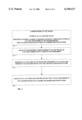
- FIG. 1 is block diagram of one preferred embodiment of an identification method according to the present invention.
- FIG. 2 is block diagram of another preferred embodiment of an identification method according to the present invention.
- FIG. 3 is block diagram of still another preferred embodiment of an identification method according to the present invention.
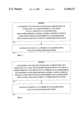
- FIG. 4 is block diagram of one preferred embodiment of a method of causing a desirable change in a behavior pattern according to the present invention.
- FIG. 5 is block diagram of another preferred embodiment of a method of causing a desirable change in a behavior pattern according to the present invention.
- one preferred embodiment of the method of identifying a carrier-member of a test species that may cause a desirable change in a behavior pattern of at least one member of an adjoiner species from an initial behavior pattern to a desired behavior pattern includes a step 10 of providing a sample member of a test species that is a symbiont of the adjoiner species, a step 12 of preparing a culture from the sample member of the test species, a step 14 of separating the culture into a plurality of components; a step 16 of introducing at least one of the separated components to at least one member of the adjoiner species that has the initial behavior pattern; and subsequently a step 18 of collecting data that indicates whether or not the at least one member of the adjoiner species has acquired the desired behavior pattern to thereby make said identification.
- the symbiont test species is able to reproduce in or on the adjoiner species.
- the sample-member-providing step 10 may include the step of identifying the test species as a symbiont of the adjoiner species when the test species had not been known to be a symbiont of the adjoiner species.
- the sample-member-providing step 10 and the component-introduction step 16 methodically and systematically with a large number of the selected test species and to execute the component-introduction step 16 methodically and systematically with a large number of members of the adjoiner species that have the initial behavior pattern.
- another preferred embodiment of the method of identifying a carrier-member of a test species that may cause a desirable change in a behavior pattern of at least one member of an adjoiner species from an initial behavior pattern to a desired behavior pattern includes a step 20 of providing either (i) a sample member of a test species that is a symbiont of the adjoiner species, or (ii) a culture of the symbiont test species; a step 22 of introducing the sample member of the test species, or the culture thereof, to at least one member of the adjoiner species that has the initial behavior pattern; and subsequently a step 24 of collecting data that indicates whether or not the at least one member of the adjoiner species has acquired the desired behavior pattern to thereby make said identification.
- the culture of the symbiont test species introduced to the member of the adjoiner species during step 22 is either a live culture or a dead culture.
- the culture is weakened in order to prevent such reproduction.
- the alternative embodiments in which a live member of the symbiont test species or a culture thereof is introduced to the member of the adjoiner species during step 22 may further include a step 26 prior to step 22 of introducing an antibiotic to the at least one member of the adjoiner species that has the initial behavior pattern to thereby eliminate from the at least one member of the adjoiner species organisims that may inhibit the at least one member of the adjoiner species from acquiring the desired behavior pattern in response to the live member(s) of the test species introduced to the least one member of the adjoiner species during step 22.
- the sample-member-providing step 20 and the component-introduction step 22 methodically and systematically with a large number of the selected test species and to execute the component-introduction step 22 methodically and systematically with a large number of members of the adjoiner species that have the initial behavior pattern.
- the sample-member-providing step 20 may include the step of identifying the test species as a symbiont of the adjoiner species when the test species had not been known to be a symbiont of the adjoiner species.
- a preferred embodiment of a method of identifying a component of a carrier-member of a test species that is a symbiont of an adjoiner species and has been identified as possibly causing a desirable change in a behavior pattern of at least one member of the adjoiner species from an initial behavior pattern to a desired behavior pattern includes a step 30 of providing either (i) a sample of the identified carrier-member of the test species or (ii) a culture of the identified carrier-member of the test species, a step 32 of separating the identified carrier-member of the test species or the culture thereof into a plurality of components, a step 34 of introducing at least one of the separated components to at least one member of an adjoiner species that has the initial behavior pattern; and subsequently a step 36 of collecting data that indicates whether or not the at least one member of the adjoiner species has acquired the desired behavior pattern to thereby make said identification.
- the adjoiner species include, but are not limited to, the human species and a species having a near-human-species genetic composition, such as chimpanzees and pigs.
- the test species are selected from among test species that are or were attached or internal to a member of the adjoiner species that has undergone the desirable change in the behavior pattern.
- the desirable change in the behavior pattern may be temporary or partial, such a reduction in the frequency or intensity of the undesired behavior.
- Samples of the selected test species are collected from either a member of the adjoiner species that has the undergone the desirable change in the behavior pattern, or from a member of the adjoiner species having the initial behavior pattern prior to the component-introduction step 16 that preceded the desirable change in the behavior pattern.
- the test species include, but are not limited to, those species listed below in Table A.
- one preferred embodiment of a method of causing a desirable change in a behavior pattern of a subject member of an adjoiner species from an initial behavior pattern to a desired behavior pattern includes the step of 40 introducing to the subject member of the adjoiner species a product 42 including an ingredient that includes, is based upon, is derived from, or is equivalent to a carrier-member of a test species that is a symbiont of the adjoiner species and has been identified as possibly causing the desirable change in the behavior pattern of some members of the adjoiner species.
- identification may have been accomplished by the identification method described herein with reference to FIG. 2 or by some other technique.
- the method of FIG. 4 may further include prior to the product-introduction step 40, a step of introducing an antibiotic to the subject member of the adjoiner species, to thereby eliminate from the at least one member of the adjoiner species any organisms that may inhibit the at least one member of the adjoiner species from acquiring the desired behavior pattern in response to the live member(s) of the test species introduced to the least one member of the adjoiner species during step 40.
- a process for making the product described above with reference to FIG. 4 includes the step of including within the product the above-described ingredient that includes, is based upon, is derived from, or is equivalent to a carrier-member of a test species that is a symbiont of the adjoiner species and has been identified as possibly causing the desirable change in the behavior pattern of some members of the adjoiner species.
- another preferred embodiment of a method of causing a desirable change in a behavior pattern of a subject member of an adjoiner species from an initial behavior pattern to a desired behavior pattern includes step 50 of introducing to the subject member of the adjoiner species a product including an ingredient that includes, is based upon, is derived from, or is equivalent to at least one component separated from a culture of a carrier-member of a test species that is a symbiont of the adjoiner species, wherein the at least one component has been identified as possibly causing the desirable change in the behavior pattern of some members of the adjoiner species.
- identification may have been accomplished by the identification method described herein with reference to FIGS. 1 or 3 or by some other technique.
- a process for making the product described above with reference to FIG. 5 includes the step of including within said product an ingredient that includes, is based upon, is derived from, or is equivalent to at least one component separated from a culture of a carrier-member of a test species that is a symbiont of the adjoiner species, wherein the at least one component has been identified as possibly causing the desirable change in the behavior pattern of some members of the adjoiner species.
- introduction to an adjoiner species member of a test species member, a culture thereof, or a component separated from a culture thereof, or a product for causing a desirable change in a behavior pattern is made orally, by topical application to an exposed body part or by injection.
- the injection may be topical or into the blood stream.
Landscapes
- Chemical & Material Sciences (AREA)
- Organic Chemistry (AREA)
- Life Sciences & Earth Sciences (AREA)
- Health & Medical Sciences (AREA)
- Zoology (AREA)
- Wood Science & Technology (AREA)
- Proteomics, Peptides & Aminoacids (AREA)
- Engineering & Computer Science (AREA)
- Microbiology (AREA)
- Biochemistry (AREA)
- Physics & Mathematics (AREA)
- Molecular Biology (AREA)
- Biotechnology (AREA)
- Biophysics (AREA)
- Analytical Chemistry (AREA)
- Immunology (AREA)
- Bioinformatics & Cheminformatics (AREA)
- General Engineering & Computer Science (AREA)
- General Health & Medical Sciences (AREA)
- Genetics & Genomics (AREA)
- Toxicology (AREA)
- Measuring Or Testing Involving Enzymes Or Micro-Organisms (AREA)
Abstract
Description
              TABLE A
______________________________________
Demodex folliculorum
                   Mycobacterium leprae
  Lactobacillus acidophilus Mycobacterium bovis
  Lactobacillus rhamnosus Rickettsia typhi
  Lactobacillus bulgaricus Entamoeba histolitica
  Lactobacillus Plantarum Giardia lamblia
  Streptococcus faecium Toxoplasma gondii
  Streptococcus thermophilus Ascaris lumbricoides
  Bifudus adolescentis Trichinella spiralis
  Bifidus longum Histoplasma capsulatum
  Treponena pallidum Coccidioides immitis
  Borrelia burgdorferi Candida albicans
  Strepobacillus moniliformis Picornavirusses
  Bacteroides fragilis Herpes simplex
  Clostridium tetani Chlamydia psittaci
  Actinomyces iraelii Mycoplasma pneumoniae
______________________________________
Claims (32)
Priority Applications (1)
| Application Number | Priority Date | Filing Date | Title |
|---|---|---|---|
| US09/451,403 US6150127A (en) | 1999-11-30 | 1999-11-30 | Causing a desirable change in a behavior pattern |
Applications Claiming Priority (1)
| Application Number | Priority Date | Filing Date | Title |
|---|---|---|---|
| US09/451,403 US6150127A (en) | 1999-11-30 | 1999-11-30 | Causing a desirable change in a behavior pattern |
Publications (1)
| Publication Number | Publication Date |
|---|---|
| US6150127A true US6150127A (en) | 2000-11-21 |
Family
ID=23792050
Family Applications (1)
| Application Number | Title | Priority Date | Filing Date |
|---|---|---|---|
| US09/451,403 Expired - Lifetime US6150127A (en) | 1999-11-30 | 1999-11-30 | Causing a desirable change in a behavior pattern |
Country Status (1)
| Country | Link |
|---|---|
| US (1) | US6150127A (en) |
Cited By (9)
| Publication number | Priority date | Publication date | Assignee | Title |
|---|---|---|---|---|
| US20070178541A1 (en) * | 2003-06-27 | 2007-08-02 | Proteome Systems Intellectual Property Pty Ltd | Method of isolating a protein |
| US20100029552A1 (en) * | 2004-08-20 | 2010-02-04 | Phylogica Limited | Peptide inhibitors of c-jun dimerization and uses thereof |
| US20100074870A1 (en) * | 2008-09-19 | 2010-03-25 | Bristol-Myers Squibb Company | Probiotic infant products |
| US20100074871A1 (en) * | 2008-09-19 | 2010-03-25 | Bristol-Myers Squibb Company | Probiotic infant products |
| US20100166835A1 (en) * | 2006-09-19 | 2010-07-01 | Mark Fear | Compositions and uses thereof for the treatment of wounds |
| US20100196524A1 (en) * | 2009-02-02 | 2010-08-05 | Valio Ltd. | Novel peptides and methods for producing them |
| US20100227777A1 (en) * | 1999-05-05 | 2010-09-09 | Watt Paul M | Isolating biological modulators from biodiverse gene fragment libraries |
| US20110053831A1 (en) * | 2007-06-20 | 2011-03-03 | Phylogica Limited | Compositions and uses thereof for the treatment of acute respiratory distress syndrome (ards) and clinical disorders associated with therewith |
| US20110218118A1 (en) * | 2004-06-03 | 2011-09-08 | Phylogica Limited | Peptide modulators of cellular phenotype and bi-nucleic acid fragment library |
Citations (1)
| Publication number | Priority date | Publication date | Assignee | Title |
|---|---|---|---|---|
| US5843698A (en) * | 1997-04-30 | 1998-12-01 | Universal Ventures | Deleteriously affecting members of a target species by exposure to a component of symbiont or food source of an adjoiner species that is symbiotic with the target species |
-
1999
- 1999-11-30 US US09/451,403 patent/US6150127A/en not_active Expired - Lifetime
Patent Citations (1)
| Publication number | Priority date | Publication date | Assignee | Title |
|---|---|---|---|---|
| US5843698A (en) * | 1997-04-30 | 1998-12-01 | Universal Ventures | Deleteriously affecting members of a target species by exposure to a component of symbiont or food source of an adjoiner species that is symbiotic with the target species |
Non-Patent Citations (4)
| Title |
|---|
| "Can a Virus Make You Fat?", Discover, Apr. 1999 p. 99. |
| Can a Virus Make You Fat , Discover, Apr. 1999 p. 99. * |
| Washington, "Infection Connection", Psychology Today. Jul./Aug. 1999 pp 43-44, 74, 76, 78. |
| Washington, Infection Connection , Psychology Today. Jul./Aug. 1999 pp 43 44, 74, 76, 78. * |
Cited By (15)
| Publication number | Priority date | Publication date | Assignee | Title |
|---|---|---|---|---|
| US20100227777A1 (en) * | 1999-05-05 | 2010-09-09 | Watt Paul M | Isolating biological modulators from biodiverse gene fragment libraries |
| US20070178541A1 (en) * | 2003-06-27 | 2007-08-02 | Proteome Systems Intellectual Property Pty Ltd | Method of isolating a protein |
| US20110218118A1 (en) * | 2004-06-03 | 2011-09-08 | Phylogica Limited | Peptide modulators of cellular phenotype and bi-nucleic acid fragment library |
| US20100029552A1 (en) * | 2004-08-20 | 2010-02-04 | Phylogica Limited | Peptide inhibitors of c-jun dimerization and uses thereof |
| US8063012B2 (en) | 2006-09-19 | 2011-11-22 | Phylogica Limited | Neuroprotective peptide inhibitors of AP-1 signaling and uses therefor |
| US8946381B2 (en) | 2006-09-19 | 2015-02-03 | Phylogica Limited | Compositions and uses thereof for the treatment of wounds |
| US20100166835A1 (en) * | 2006-09-19 | 2010-07-01 | Mark Fear | Compositions and uses thereof for the treatment of wounds |
| US20100190698A1 (en) * | 2006-09-19 | 2010-07-29 | Phylogica Limited | Neuroprotective peptide inhibitors of AP-1 signaling and uses therefor |
| US8822409B2 (en) | 2007-06-20 | 2014-09-02 | Phylogica Limited | Compositions and uses thereof for the treatment of acute respiratory distress syndrome (ARDS) and clinical disorders associated with therewith |
| US20110053831A1 (en) * | 2007-06-20 | 2011-03-03 | Phylogica Limited | Compositions and uses thereof for the treatment of acute respiratory distress syndrome (ards) and clinical disorders associated with therewith |
| US20100074871A1 (en) * | 2008-09-19 | 2010-03-25 | Bristol-Myers Squibb Company | Probiotic infant products |
| US8137718B2 (en) | 2008-09-19 | 2012-03-20 | Mead Johnson Nutrition Company | Probiotic infant products |
| US20100074870A1 (en) * | 2008-09-19 | 2010-03-25 | Bristol-Myers Squibb Company | Probiotic infant products |
| US8445426B2 (en) | 2009-02-02 | 2013-05-21 | Valio Ltd. | Peptides and methods for producing them |
| US20100196524A1 (en) * | 2009-02-02 | 2010-08-05 | Valio Ltd. | Novel peptides and methods for producing them |
Similar Documents
| Publication | Publication Date | Title |
|---|---|---|
| US6150127A (en) | Causing a desirable change in a behavior pattern | |
| DE69423346T2 (en) | QUICK PROCEDURE FOR DNA SEQUENCING AND DIAGNOSTIC APPLICATIONS | |
| Tsuchida et al. | Diversity and geographic distribution of secondary endosymbiotic bacteria in natural populations of the pea aphid, Acyrthosiphon pisum | |
| Harmsen et al. | A 16S rRNA-targeted probe for detection of lactobacilli and enterococci in faecal samples by fluorescent in situ hybridization | |
| DE3854767T2 (en) | Diagnostics and vaccines for Mycobacteria in public health, medical and veterinary practice | |
| Levanony et al. | Ultrastructural localization and identification of Azospirillum brasilense Cd on and within wheat root by immuno-gold labeling | |
| DE60122138T2 (en) | ISOLATION OF NUCLEIC ACIDS | |
| US5492807A (en) | Method of obtaining diagnostic reagents, assays and therapeutics based on clinical manifestations of a disease | |
| EP2198056A2 (en) | Method for determining microorganisms | |
| DE69026995T2 (en) | Nucleic acid probes for the detection of spirochetes causing Lyme disease | |
| JP2001513533A5 (en) | ||
| Costa et al. | Comparative molecular characterization of Corynebacterium pseudotuberculosis of different origin | |
| EP1601967A2 (en) | Identification of antigen epitopes | |
| DE69105497T2 (en) | METHOD FOR REMOVING LIGANDS FROM A PARTICLE SURFACE. | |
| Bourne | Microbiological assessment of a disease outbreak on corals from Magnetic Island (Great Barrier Reef, Australia) | |
| Wilke et al. | Preservation of Giardia cysts in stool samples for subsequent PCR analysis | |
| Schottelius et al. | Presentation by scanning electron microscopy of the life cycle of microsporidia of the genus Encephalitozoon | |
| DE60132221T2 (en) | REAGENTS FOR CELL SELECTION AND METHOD OF USE | |
| Takahashi et al. | Lauraceous fossil flower from the Kamikitaba locality (Lower Coniacian; Upper Cretaceous) in northeastern Japan | |
| DE69737327T2 (en) | METHOD FOR IDENTIFYING ESSENTIAL GENES FOR THE GROWTH OF AN ORGANISM | |
| CA2159456C (en) | Deconvolution of mls response data | |
| EP1362125B8 (en) | METHOD FOR IDENTIFYING of BIOLOGICALLY ACTIVE STRUCTURES OF MICROBIAL PATHOGENS | |
| Portaels et al. | Biochemical properties and fatty acid composition of Mycobacterium haemophilum: study of 16 isolates from Australian patients | |
| Akkermans et al. | A reconsideration of terminology in Frankia research: a need for congruence | |
| Yoshikawa et al. | Light and electron microscopic localization of lipids in Blastocystis hominis |
Legal Events
| Date | Code | Title | Description |
|---|---|---|---|
| AS | Assignment |
Owner name: UNIVERSAL VENTURES, CAYMAN ISLANDS Free format text: ASSIGNMENT OF ASSIGNORS INTEREST;ASSIGNOR:SORENSEN, JENS OLE;REEL/FRAME:010427/0066 Effective date: 19991130 |
|
| STCF | Information on status: patent grant |
Free format text: PATENTED CASE |
|
| AS | Assignment |
Owner name: SORENSEN RESEARCH AND DEVELOPMENT, CALIFORNIA Free format text: ASSIGNMENT OF ASSIGNORS INTEREST;ASSIGNOR:SORENSEN, JENS OLE;REEL/FRAME:014022/0492 Effective date: 20030421 Owner name: SORENSEN, JENS OLE, CAYMAN ISLANDS Free format text: ASSIGNMENT OF ASSIGNORS INTEREST;ASSIGNOR:UNIVERSAL VENTURES;REEL/FRAME:014043/0344 Effective date: 20030408 |
|
| FEPP | Fee payment procedure |
Free format text: PAT HOLDER CLAIMS SMALL ENTITY STATUS, ENTITY STATUS SET TO SMALL (ORIGINAL EVENT CODE: LTOS); ENTITY STATUS OF PATENT OWNER: SMALL ENTITY |
|
| FPAY | Fee payment |
Year of fee payment: 4 |
|
| FPAY | Fee payment |
Year of fee payment: 8 |
|
| FPAY | Fee payment |
Year of fee payment: 12 |