US6149838A - Conjugated nitrile derivative, liquid crystal composition, and liquid crystal display elements - Google Patents
Conjugated nitrile derivative, liquid crystal composition, and liquid crystal display elements Download PDFInfo
- Publication number
- US6149838A US6149838A US09/319,025 US31902599A US6149838A US 6149838 A US6149838 A US 6149838A US 31902599 A US31902599 A US 31902599A US 6149838 A US6149838 A US 6149838A
- Authority
- US
- United States
- Prior art keywords
- sub
- group
- nitrile derivative
- derivative according
- conjugated nitrile
- Prior art date
- Legal status (The legal status is an assumption and is not a legal conclusion. Google has not performed a legal analysis and makes no representation as to the accuracy of the status listed.)
- Expired - Fee Related
Links
- 239000000203 mixture Substances 0.000 title claims abstract description 227
- 239000004973 liquid crystal related substance Substances 0.000 title claims abstract description 155
- 150000002825 nitriles Chemical class 0.000 title claims abstract description 94
- 150000001875 compounds Chemical class 0.000 claims abstract description 270
- 229910052731 fluorine Inorganic materials 0.000 claims abstract description 140
- 125000001153 fluoro group Chemical group F* 0.000 claims abstract description 47
- 125000004435 hydrogen atom Chemical group [H]* 0.000 claims abstract description 46
- -1 fluoromethylene groups Chemical group 0.000 claims abstract description 42
- 125000001140 1,4-phenylene group Chemical group [H]C1=C([H])C([*:2])=C([H])C([H])=C1[*:1] 0.000 claims abstract description 35
- 125000004955 1,4-cyclohexylene group Chemical group [H]C1([H])C([H])([H])C([H])([*:1])C([H])([H])C([H])([H])C1([H])[*:2] 0.000 claims abstract description 34
- 125000000217 alkyl group Chemical group 0.000 claims abstract description 21
- 125000004432 carbon atom Chemical group C* 0.000 claims abstract description 12
- 125000001570 methylene group Chemical group [H]C([H])([*:1])[*:2] 0.000 claims abstract description 10
- 125000004430 oxygen atom Chemical group O* 0.000 claims abstract description 10
- 125000005714 2,5- (1,3-dioxanylene) group Chemical group [H]C1([H])OC([H])([*:1])OC([H])([H])C1([H])[*:2] 0.000 claims abstract description 7
- 125000003709 fluoroalkyl group Chemical group 0.000 claims abstract description 6
- 125000005843 halogen group Chemical group 0.000 claims abstract description 4
- 125000004093 cyano group Chemical group *C#N 0.000 claims abstract description 3
- 125000000876 trifluoromethoxy group Chemical group FC(F)(F)O* 0.000 claims description 26
- 125000005407 trans-1,4-cyclohexylene group Chemical group [H]C1([H])C([H])([H])[C@]([H])([*:2])C([H])([H])C([H])([H])[C@@]1([H])[*:1] 0.000 claims description 15
- 229910052801 chlorine Inorganic materials 0.000 claims description 5
- 125000001309 chloro group Chemical group Cl* 0.000 claims description 3
- 239000007788 liquid Substances 0.000 abstract description 23
- 230000003287 optical effect Effects 0.000 abstract description 4
- 101100386054 Saccharomyces cerevisiae (strain ATCC 204508 / S288c) CYS3 gene Proteins 0.000 abstract 1
- 125000005708 carbonyloxy group Chemical group [*:2]OC([*:1])=O 0.000 abstract 1
- 101150035983 str1 gene Proteins 0.000 abstract 1
- YXFVVABEGXRONW-UHFFFAOYSA-N Toluene Chemical compound CC1=CC=CC=C1 YXFVVABEGXRONW-UHFFFAOYSA-N 0.000 description 42
- WYURNTSHIVDZCO-UHFFFAOYSA-N Tetrahydrofuran Chemical compound C1CCOC1 WYURNTSHIVDZCO-UHFFFAOYSA-N 0.000 description 22
- 238000000034 method Methods 0.000 description 18
- 239000002904 solvent Substances 0.000 description 18
- 239000012071 phase Substances 0.000 description 17
- IMNFDUFMRHMDMM-UHFFFAOYSA-N N-Heptane Chemical compound CCCCCCC IMNFDUFMRHMDMM-UHFFFAOYSA-N 0.000 description 16
- 238000006243 chemical reaction Methods 0.000 description 15
- 239000012044 organic layer Substances 0.000 description 14
- CSNNHWWHGAXBCP-UHFFFAOYSA-L Magnesium sulfate Chemical compound [Mg+2].[O-][S+2]([O-])([O-])[O-] CSNNHWWHGAXBCP-UHFFFAOYSA-L 0.000 description 12
- ZMXDDKWLCZADIW-UHFFFAOYSA-N N,N-Dimethylformamide Chemical compound CN(C)C=O ZMXDDKWLCZADIW-UHFFFAOYSA-N 0.000 description 12
- KDLHZDBZIXYQEI-UHFFFAOYSA-N Palladium Chemical compound [Pd] KDLHZDBZIXYQEI-UHFFFAOYSA-N 0.000 description 12
- 239000013078 crystal Substances 0.000 description 11
- 150000004820 halides Chemical class 0.000 description 11
- YLQBMQCUIZJEEH-UHFFFAOYSA-N tetrahydrofuran Natural products C=1C=COC=1 YLQBMQCUIZJEEH-UHFFFAOYSA-N 0.000 description 11
- FAPWRFPIFSIZLT-UHFFFAOYSA-M Sodium chloride Chemical compound [Na+].[Cl-] FAPWRFPIFSIZLT-UHFFFAOYSA-M 0.000 description 10
- XLYOFNOQVPJJNP-UHFFFAOYSA-N water Substances O XLYOFNOQVPJJNP-UHFFFAOYSA-N 0.000 description 10
- TYZNCUASDJPXMP-UHFFFAOYSA-N 4-[4-(4-ethylcyclohexyl)phenyl]-1,2-difluorobenzene Chemical compound C1CC(CC)CCC1C1=CC=C(C=2C=C(F)C(F)=CC=2)C=C1 TYZNCUASDJPXMP-UHFFFAOYSA-N 0.000 description 9
- LFQSCWFLJHTTHZ-UHFFFAOYSA-N Ethanol Chemical compound CCO LFQSCWFLJHTTHZ-UHFFFAOYSA-N 0.000 description 8
- MZRVEZGGRBJDDB-UHFFFAOYSA-N N-Butyllithium Chemical compound [Li]CCCC MZRVEZGGRBJDDB-UHFFFAOYSA-N 0.000 description 8
- 238000001914 filtration Methods 0.000 description 8
- VYPSYNLAJGMNEJ-UHFFFAOYSA-N Silicium dioxide Chemical compound O=[Si]=O VYPSYNLAJGMNEJ-UHFFFAOYSA-N 0.000 description 7
- 239000003054 catalyst Substances 0.000 description 7
- 230000001965 increasing effect Effects 0.000 description 7
- 230000000704 physical effect Effects 0.000 description 7
- NLXLAEXVIDQMFP-UHFFFAOYSA-N Ammonia chloride Chemical compound [NH4+].[Cl-] NLXLAEXVIDQMFP-UHFFFAOYSA-N 0.000 description 6
- UHOVQNZJYSORNB-UHFFFAOYSA-N Benzene Chemical compound C1=CC=CC=C1 UHOVQNZJYSORNB-UHFFFAOYSA-N 0.000 description 6
- VEXZGXHMUGYJMC-UHFFFAOYSA-N Hydrochloric acid Chemical compound Cl VEXZGXHMUGYJMC-UHFFFAOYSA-N 0.000 description 6
- KWYUFKZDYYNOTN-UHFFFAOYSA-M Potassium hydroxide Chemical compound [OH-].[K+] KWYUFKZDYYNOTN-UHFFFAOYSA-M 0.000 description 6
- RWRDLPDLKQPQOW-UHFFFAOYSA-N Pyrrolidine Chemical compound C1CCNC1 RWRDLPDLKQPQOW-UHFFFAOYSA-N 0.000 description 6
- 238000004440 column chromatography Methods 0.000 description 6
- 230000000052 comparative effect Effects 0.000 description 6
- DOBRDRYODQBAMW-UHFFFAOYSA-N copper(i) cyanide Chemical compound [Cu+].N#[C-] DOBRDRYODQBAMW-UHFFFAOYSA-N 0.000 description 6
- AMXOYNBUYSYVKV-UHFFFAOYSA-M lithium bromide Chemical compound [Li+].[Br-] AMXOYNBUYSYVKV-UHFFFAOYSA-M 0.000 description 6
- 229910052763 palladium Inorganic materials 0.000 description 6
- GBRBMTNGQBKBQE-UHFFFAOYSA-L copper;diiodide Chemical compound I[Cu]I GBRBMTNGQBKBQE-UHFFFAOYSA-L 0.000 description 5
- 239000011541 reaction mixture Substances 0.000 description 5
- 238000001953 recrystallisation Methods 0.000 description 5
- 239000000741 silica gel Substances 0.000 description 5
- 229910002027 silica gel Inorganic materials 0.000 description 5
- 239000011780 sodium chloride Substances 0.000 description 5
- 230000007704 transition Effects 0.000 description 5
- XKRFYHLGVUSROY-UHFFFAOYSA-N Argon Chemical compound [Ar] XKRFYHLGVUSROY-UHFFFAOYSA-N 0.000 description 4
- YZCKVEUIGOORGS-OUBTZVSYSA-N Deuterium Chemical compound [2H] YZCKVEUIGOORGS-OUBTZVSYSA-N 0.000 description 4
- 229910021577 Iron(II) chloride Inorganic materials 0.000 description 4
- SECXISVLQFMRJM-UHFFFAOYSA-N N-Methylpyrrolidone Chemical compound CN1CCCC1=O SECXISVLQFMRJM-UHFFFAOYSA-N 0.000 description 4
- 239000004990 Smectic liquid crystal Substances 0.000 description 4
- HPNMFZURTQLUMO-UHFFFAOYSA-N diethylamine Chemical compound CCNCC HPNMFZURTQLUMO-UHFFFAOYSA-N 0.000 description 4
- 230000005684 electric field Effects 0.000 description 4
- NMCUIPGRVMDVDB-UHFFFAOYSA-L iron dichloride Chemical compound Cl[Fe]Cl NMCUIPGRVMDVDB-UHFFFAOYSA-L 0.000 description 4
- NROKBHXJSPEDAR-UHFFFAOYSA-M potassium fluoride Chemical compound [F-].[K+] NROKBHXJSPEDAR-UHFFFAOYSA-M 0.000 description 4
- 238000002360 preparation method Methods 0.000 description 4
- 230000004044 response Effects 0.000 description 4
- 238000010898 silica gel chromatography Methods 0.000 description 4
- CEBKHWWANWSNTI-UHFFFAOYSA-N 2-methylbut-3-yn-2-ol Chemical compound CC(C)(O)C#C CEBKHWWANWSNTI-UHFFFAOYSA-N 0.000 description 3
- ZCYVEMRRCGMTRW-UHFFFAOYSA-N 7553-56-2 Chemical compound [I] ZCYVEMRRCGMTRW-UHFFFAOYSA-N 0.000 description 3
- OBOCVLXNYDBOJG-GXRSKKDZSA-N C1C[C@@H](CCCCC)CC[C@@H]1[C@H]1CC[C@H](\C=C\C#CC#N)CC1 Chemical compound C1C[C@@H](CCCCC)CC[C@@H]1[C@H]1CC[C@H](\C=C\C#CC#N)CC1 OBOCVLXNYDBOJG-GXRSKKDZSA-N 0.000 description 3
- UHLWTJOTWGEULE-UAPYVXQJSA-N CCC[C@H]1CC[C@@H](CC1)c1ccc(cc1)C#CC#CC#N Chemical compound CCC[C@H]1CC[C@@H](CC1)c1ccc(cc1)C#CC#CC#N UHLWTJOTWGEULE-UAPYVXQJSA-N 0.000 description 3
- XEKOWRVHYACXOJ-UHFFFAOYSA-N Ethyl acetate Chemical compound CCOC(C)=O XEKOWRVHYACXOJ-UHFFFAOYSA-N 0.000 description 3
- ZMANZCXQSJIPKH-UHFFFAOYSA-N Triethylamine Chemical compound CCN(CC)CC ZMANZCXQSJIPKH-UHFFFAOYSA-N 0.000 description 3
- 235000019270 ammonium chloride Nutrition 0.000 description 3
- JFDZBHWFFUWGJE-UHFFFAOYSA-N benzonitrile Chemical compound N#CC1=CC=CC=C1 JFDZBHWFFUWGJE-UHFFFAOYSA-N 0.000 description 3
- 210000004027 cell Anatomy 0.000 description 3
- 230000008859 change Effects 0.000 description 3
- 238000011161 development Methods 0.000 description 3
- 125000005677 ethinylene group Chemical group [*:2]C#C[*:1] 0.000 description 3
- 229910052740 iodine Inorganic materials 0.000 description 3
- 239000011630 iodine Substances 0.000 description 3
- 239000010410 layer Substances 0.000 description 3
- 238000004519 manufacturing process Methods 0.000 description 3
- 238000000926 separation method Methods 0.000 description 3
- NAWXUBYGYWOOIX-SFHVURJKSA-N (2s)-2-[[4-[2-(2,4-diaminoquinazolin-6-yl)ethyl]benzoyl]amino]-4-methylidenepentanedioic acid Chemical compound C1=CC2=NC(N)=NC(N)=C2C=C1CCC1=CC=C(C(=O)N[C@@H](CC(=C)C(O)=O)C(O)=O)C=C1 NAWXUBYGYWOOIX-SFHVURJKSA-N 0.000 description 2
- UKDOTCFNLHHKOF-FGRDZWBJSA-N (z)-1-chloroprop-1-ene;(z)-1,2-dichloroethene Chemical group C\C=C/Cl.Cl\C=C/Cl UKDOTCFNLHHKOF-FGRDZWBJSA-N 0.000 description 2
- XDTMQSROBMDMFD-UHFFFAOYSA-N Cyclohexane Chemical compound C1CCCCC1 XDTMQSROBMDMFD-UHFFFAOYSA-N 0.000 description 2
- JNCMHMUGTWEVOZ-UHFFFAOYSA-N F[CH]F Chemical compound F[CH]F JNCMHMUGTWEVOZ-UHFFFAOYSA-N 0.000 description 2
- YNAVUWVOSKDBBP-UHFFFAOYSA-N Morpholine Chemical compound C1COCCN1 YNAVUWVOSKDBBP-UHFFFAOYSA-N 0.000 description 2
- 239000004988 Nematic liquid crystal Substances 0.000 description 2
- JUJWROOIHBZHMG-UHFFFAOYSA-N Pyridine Chemical compound C1=CC=NC=C1 JUJWROOIHBZHMG-UHFFFAOYSA-N 0.000 description 2
- UIIMBOGNXHQVGW-UHFFFAOYSA-M Sodium bicarbonate Chemical compound [Na+].OC([O-])=O UIIMBOGNXHQVGW-UHFFFAOYSA-M 0.000 description 2
- 239000000010 aprotic solvent Substances 0.000 description 2
- 229910052786 argon Inorganic materials 0.000 description 2
- 238000009835 boiling Methods 0.000 description 2
- 239000012295 chemical reaction liquid Substances 0.000 description 2
- 239000000460 chlorine Substances 0.000 description 2
- 238000005859 coupling reaction Methods 0.000 description 2
- 210000002858 crystal cell Anatomy 0.000 description 2
- 125000004786 difluoromethoxy group Chemical group [H]C(F)(F)O* 0.000 description 2
- 230000000694 effects Effects 0.000 description 2
- 239000007789 gas Substances 0.000 description 2
- 125000005647 linker group Chemical group 0.000 description 2
- 125000001147 pentyl group Chemical group C(CCCC)* 0.000 description 2
- 239000002798 polar solvent Substances 0.000 description 2
- 229920000642 polymer Polymers 0.000 description 2
- 235000003270 potassium fluoride Nutrition 0.000 description 2
- 239000011698 potassium fluoride Substances 0.000 description 2
- 238000010992 reflux Methods 0.000 description 2
- AKHNMLFCWUSKQB-UHFFFAOYSA-L sodium thiosulfate Chemical compound [Na+].[Na+].[O-]S([O-])(=O)=S AKHNMLFCWUSKQB-UHFFFAOYSA-L 0.000 description 2
- 235000019345 sodium thiosulphate Nutrition 0.000 description 2
- 238000001228 spectrum Methods 0.000 description 2
- 239000000126 substance Substances 0.000 description 2
- 229910052723 transition metal Inorganic materials 0.000 description 2
- 150000003624 transition metals Chemical class 0.000 description 2
- CWMFRHBXRUITQE-UHFFFAOYSA-N trimethylsilylacetylene Chemical group C[Si](C)(C)C#C CWMFRHBXRUITQE-UHFFFAOYSA-N 0.000 description 2
- ZCSHACFHMFHFKK-UHFFFAOYSA-N 2-methyl-1,3,5-trinitrobenzene;2,4,6-trinitro-1,3,5-triazinane Chemical compound [O-][N+](=O)C1NC([N+]([O-])=O)NC([N+]([O-])=O)N1.CC1=C([N+]([O-])=O)C=C([N+]([O-])=O)C=C1[N+]([O-])=O ZCSHACFHMFHFKK-UHFFFAOYSA-N 0.000 description 1
- NSGMZTNTQKRAFA-UHFFFAOYSA-N 4-(4-heptylcyclohexyl)benzonitrile Chemical compound C1CC(CCCCCCC)CCC1C1=CC=C(C#N)C=C1 NSGMZTNTQKRAFA-UHFFFAOYSA-N 0.000 description 1
- FURZYCFZFBYJBT-UHFFFAOYSA-N 4-(4-pentylcyclohexyl)benzonitrile Chemical compound C1CC(CCCCC)CCC1C1=CC=C(C#N)C=C1 FURZYCFZFBYJBT-UHFFFAOYSA-N 0.000 description 1
- XXUSEPRYHRDKFV-UHFFFAOYSA-N 4-(4-propylcyclohexyl)benzonitrile Chemical compound C1CC(CCC)CCC1C1=CC=C(C#N)C=C1 XXUSEPRYHRDKFV-UHFFFAOYSA-N 0.000 description 1
- 239000005254 4-(trans-4-Propylcyclohexyl)benzonitrile Substances 0.000 description 1
- 101100177155 Arabidopsis thaliana HAC1 gene Proteins 0.000 description 1
- WKBOTKDWSSQWDR-UHFFFAOYSA-N Bromine atom Chemical compound [Br] WKBOTKDWSSQWDR-UHFFFAOYSA-N 0.000 description 1
- BOHUVONHCGXKIR-JIBACQESSA-N C(CC)[C@@H]1CC[C@H](CC1)C1=CC=C(C=C1)C#CC1=CC=C(C=C1)C#CC#CC#N Chemical compound C(CC)[C@@H]1CC[C@H](CC1)C1=CC=C(C=C1)C#CC1=CC=C(C=C1)C#CC#CC#N BOHUVONHCGXKIR-JIBACQESSA-N 0.000 description 1
- LZBZHWFBTXKWMG-ZYMDQYHBSA-N C(CC)[C@@H]1CC[C@H](CC1)[C@@H]1CC[C@H](CC1)[C@@H]1CC[C@H](CC1)C=CC#CC#N Chemical compound C(CC)[C@@H]1CC[C@H](CC1)[C@@H]1CC[C@H](CC1)[C@@H]1CC[C@H](CC1)C=CC#CC#N LZBZHWFBTXKWMG-ZYMDQYHBSA-N 0.000 description 1
- HAVZPRIZDQLPMQ-VVPTUSLJSA-N C(CCCC)[C@@H]1CC[C@H](CC1)[C@@H]1CC[C@H](CC1)C=CBr Chemical compound C(CCCC)[C@@H]1CC[C@H](CC1)[C@@H]1CC[C@H](CC1)C=CBr HAVZPRIZDQLPMQ-VVPTUSLJSA-N 0.000 description 1
- SZZLANSORKRGBE-LZVVYMEFSA-N C1C[C@@H](CCCCC)CC[C@@H]1[C@H]1CC[C@H](\C=C\C#CC(C)(C)O)CC1 Chemical compound C1C[C@@H](CCCCC)CC[C@@H]1[C@H]1CC[C@H](\C=C\C#CC(C)(C)O)CC1 SZZLANSORKRGBE-LZVVYMEFSA-N 0.000 description 1
- VFMXDHRDXKKXOZ-KOMQPUFPSA-N C=C[C@H]1CC[C@@H](CC1)c1ccc(cc1)C#C Chemical compound C=C[C@H]1CC[C@@H](CC1)c1ccc(cc1)C#C VFMXDHRDXKKXOZ-KOMQPUFPSA-N 0.000 description 1
- DCEROEYXXLPVDS-SAABIXHNSA-N C=C[C@H]1CC[C@@H](CC1)c1ccc(cc1)C#CC=CC#N Chemical compound C=C[C@H]1CC[C@@H](CC1)c1ccc(cc1)C#CC=CC#N DCEROEYXXLPVDS-SAABIXHNSA-N 0.000 description 1
- VVRHXSWIJPNPTB-UBBSCCEASA-N CCC[C@H]1CC[C@@H](CC1)[C@H]1CC[C@@H](CC1)C#CC#CC#N Chemical compound CCC[C@H]1CC[C@@H](CC1)[C@H]1CC[C@@H](CC1)C#CC#CC#N VVRHXSWIJPNPTB-UBBSCCEASA-N 0.000 description 1
- KYVXVDFTTGXGCA-IGQBSVTCSA-N CCC[C@H]1CC[C@@H](CC1)c1ccc(CCc2ccc(cc2)-c2ccc(cc2)C#CC#CC#N)cc1 Chemical group CCC[C@H]1CC[C@@H](CC1)c1ccc(CCc2ccc(cc2)-c2ccc(cc2)C#CC#CC#N)cc1 KYVXVDFTTGXGCA-IGQBSVTCSA-N 0.000 description 1
- NVAIHOYSFLUPRD-SAABIXHNSA-N CCC[C@H]1CC[C@@H](CC1)c1ccc(cc1)C#CC#C Chemical compound CCC[C@H]1CC[C@@H](CC1)c1ccc(cc1)C#CC#C NVAIHOYSFLUPRD-SAABIXHNSA-N 0.000 description 1
- IGSGZCRRFFEEGJ-SAABIXHNSA-N CCC[C@H]1CC[C@@H](CC1)c1ccc(cc1)C#CC#CI Chemical compound CCC[C@H]1CC[C@@H](CC1)c1ccc(cc1)C#CC#CI IGSGZCRRFFEEGJ-SAABIXHNSA-N 0.000 description 1
- OKKKBOCXKZSHSM-XUTJKUGGSA-N CCC[C@H]1CC[C@@H](CC1)c1ccc(cc1)C#CC#C[Si](C)(C)C Chemical compound CCC[C@H]1CC[C@@H](CC1)c1ccc(cc1)C#CC#C[Si](C)(C)C OKKKBOCXKZSHSM-XUTJKUGGSA-N 0.000 description 1
- KNLXDVORGOQIOT-KOMQPUFPSA-N CCC[C@H]1CC[C@@H](CC1)c1ccc(cc1)C#CI Chemical compound CCC[C@H]1CC[C@@H](CC1)c1ccc(cc1)C#CI KNLXDVORGOQIOT-KOMQPUFPSA-N 0.000 description 1
- 101100096890 Caenorhabditis elegans str-217 gene Proteins 0.000 description 1
- IGFWZVXPBDAWIY-JCNLHEQBSA-N ClC=CC#Cc1ccc(cc1)[C@H]1CC[C@@H](CC1)C=C Chemical compound ClC=CC#Cc1ccc(cc1)[C@H]1CC[C@@H](CC1)C=C IGFWZVXPBDAWIY-JCNLHEQBSA-N 0.000 description 1
- XFXPMWWXUTWYJX-UHFFFAOYSA-N Cyanide Chemical compound N#[C-] XFXPMWWXUTWYJX-UHFFFAOYSA-N 0.000 description 1
- 101000913968 Ipomoea purpurea Chalcone synthase C Proteins 0.000 description 1
- 101100434170 Oryza sativa subsp. japonica ACR2.1 gene Proteins 0.000 description 1
- 101100434171 Oryza sativa subsp. japonica ACR2.2 gene Proteins 0.000 description 1
- 101000907988 Petunia hybrida Chalcone-flavanone isomerase C Proteins 0.000 description 1
- 239000004983 Polymer Dispersed Liquid Crystal Substances 0.000 description 1
- 101150108015 STR6 gene Proteins 0.000 description 1
- DPOPAJRDYZGTIR-UHFFFAOYSA-N Tetrazine Chemical compound C1=CN=NN=N1 DPOPAJRDYZGTIR-UHFFFAOYSA-N 0.000 description 1
- PYKYMHQGRFAEBM-UHFFFAOYSA-N anthraquinone Natural products CCC(=O)c1c(O)c2C(=O)C3C(C=CC=C3O)C(=O)c2cc1CC(=O)OC PYKYMHQGRFAEBM-UHFFFAOYSA-N 0.000 description 1
- 150000004056 anthraquinones Chemical class 0.000 description 1
- 125000005337 azoxy group Chemical group [N+]([O-])(=N*)* 0.000 description 1
- GDTBXPJZTBHREO-UHFFFAOYSA-N bromine Substances BrBr GDTBXPJZTBHREO-UHFFFAOYSA-N 0.000 description 1
- 229910052794 bromium Inorganic materials 0.000 description 1
- ODWXUNBKCRECNW-UHFFFAOYSA-M bromocopper(1+) Chemical compound Br[Cu+] ODWXUNBKCRECNW-UHFFFAOYSA-M 0.000 description 1
- IXPXDOLENQYDMB-CJWZQZQMSA-N c1cc(F)ccc1[C@H]1CC[C@H]([C@H]2CC[C@@H](CC2)\C=C\C#CC#N)CC1 Chemical compound c1cc(F)ccc1[C@H]1CC[C@H]([C@H]2CC[C@@H](CC2)\C=C\C#CC#N)CC1 IXPXDOLENQYDMB-CJWZQZQMSA-N 0.000 description 1
- 238000007796 conventional method Methods 0.000 description 1
- 150000001879 copper Chemical class 0.000 description 1
- 238000002425 crystallisation Methods 0.000 description 1
- 230000008025 crystallization Effects 0.000 description 1
- 230000007547 defect Effects 0.000 description 1
- 238000004821 distillation Methods 0.000 description 1
- 230000005670 electromagnetic radiation Effects 0.000 description 1
- 238000005516 engineering process Methods 0.000 description 1
- 125000002485 formyl group Chemical class [H]C(*)=O 0.000 description 1
- 238000007429 general method Methods 0.000 description 1
- 229910052736 halogen Inorganic materials 0.000 description 1
- 150000002367 halogens Chemical class 0.000 description 1
- 230000006872 improvement Effects 0.000 description 1
- 230000001939 inductive effect Effects 0.000 description 1
- 239000011261 inert gas Substances 0.000 description 1
- 238000011835 investigation Methods 0.000 description 1
- 239000007791 liquid phase Substances 0.000 description 1
- 239000000463 material Substances 0.000 description 1
- 239000011159 matrix material Substances 0.000 description 1
- DZVCFNFOPIZQKX-LTHRDKTGSA-M merocyanine Chemical compound [Na+].O=C1N(CCCC)C(=O)N(CCCC)C(=O)C1=C\C=C\C=C/1N(CCCS([O-])(=O)=O)C2=CC=CC=C2O\1 DZVCFNFOPIZQKX-LTHRDKTGSA-M 0.000 description 1
- 229910052751 metal Inorganic materials 0.000 description 1
- 239000002184 metal Substances 0.000 description 1
- 239000012046 mixed solvent Substances 0.000 description 1
- 230000005693 optoelectronics Effects 0.000 description 1
- 238000006053 organic reaction Methods 0.000 description 1
- 150000002940 palladium Chemical class 0.000 description 1
- YJVFFLUZDVXJQI-UHFFFAOYSA-L palladium(ii) acetate Chemical compound [Pd+2].CC([O-])=O.CC([O-])=O YJVFFLUZDVXJQI-UHFFFAOYSA-L 0.000 description 1
- NFHFRUOZVGFOOS-UHFFFAOYSA-N palladium;triphenylphosphane Chemical compound [Pd].C1=CC=CC=C1P(C=1C=CC=CC=1)C1=CC=CC=C1.C1=CC=CC=C1P(C=1C=CC=CC=1)C1=CC=CC=C1.C1=CC=CC=C1P(C=1C=CC=CC=1)C1=CC=CC=C1.C1=CC=CC=C1P(C=1C=CC=CC=1)C1=CC=CC=C1 NFHFRUOZVGFOOS-UHFFFAOYSA-N 0.000 description 1
- 125000001436 propyl group Chemical group [H]C([*])([H])C([H])([H])C([H])([H])[H] 0.000 description 1
- UMJSCPRVCHMLSP-UHFFFAOYSA-N pyridine Natural products COC1=CC=CN=C1 UMJSCPRVCHMLSP-UHFFFAOYSA-N 0.000 description 1
- IZMJMCDDWKSTTK-UHFFFAOYSA-N quinoline yellow Chemical compound C1=CC=CC2=NC(C3C(C4=CC=CC=C4C3=O)=O)=CC=C21 IZMJMCDDWKSTTK-UHFFFAOYSA-N 0.000 description 1
- 230000009257 reactivity Effects 0.000 description 1
- 230000000717 retained effect Effects 0.000 description 1
- 150000003839 salts Chemical class 0.000 description 1
- 229920006395 saturated elastomer Polymers 0.000 description 1
- 238000010008 shearing Methods 0.000 description 1
- 238000007086 side reaction Methods 0.000 description 1
- 235000017557 sodium bicarbonate Nutrition 0.000 description 1
- 229910000030 sodium bicarbonate Inorganic materials 0.000 description 1
- 230000003068 static effect Effects 0.000 description 1
- 125000005504 styryl group Chemical group 0.000 description 1
- 125000001424 substituent group Chemical group 0.000 description 1
- 239000000758 substrate Substances 0.000 description 1
- 238000003786 synthesis reaction Methods 0.000 description 1
- 230000002194 synthesizing effect Effects 0.000 description 1
- 229920002554 vinyl polymer Polymers 0.000 description 1
- 230000000007 visual effect Effects 0.000 description 1
Images

















Classifications
-
- C—CHEMISTRY; METALLURGY
- C07—ORGANIC CHEMISTRY
- C07D—HETEROCYCLIC COMPOUNDS
- C07D239/00—Heterocyclic compounds containing 1,3-diazine or hydrogenated 1,3-diazine rings
- C07D239/02—Heterocyclic compounds containing 1,3-diazine or hydrogenated 1,3-diazine rings not condensed with other rings
- C07D239/24—Heterocyclic compounds containing 1,3-diazine or hydrogenated 1,3-diazine rings not condensed with other rings having three or more double bonds between ring members or between ring members and non-ring members
- C07D239/26—Heterocyclic compounds containing 1,3-diazine or hydrogenated 1,3-diazine rings not condensed with other rings having three or more double bonds between ring members or between ring members and non-ring members with only hydrogen atoms, hydrocarbon or substituted hydrocarbon radicals, directly attached to ring carbon atoms
-
- C—CHEMISTRY; METALLURGY
- C07—ORGANIC CHEMISTRY
- C07C—ACYCLIC OR CARBOCYCLIC COMPOUNDS
- C07C255/00—Carboxylic acid nitriles
- C07C255/01—Carboxylic acid nitriles having cyano groups bound to acyclic carbon atoms
- C07C255/31—Carboxylic acid nitriles having cyano groups bound to acyclic carbon atoms having cyano groups bound to acyclic carbon atoms of a carbon skeleton containing rings other than six-membered aromatic rings
-
- C—CHEMISTRY; METALLURGY
- C07—ORGANIC CHEMISTRY
- C07C—ACYCLIC OR CARBOCYCLIC COMPOUNDS
- C07C255/00—Carboxylic acid nitriles
- C07C255/01—Carboxylic acid nitriles having cyano groups bound to acyclic carbon atoms
- C07C255/32—Carboxylic acid nitriles having cyano groups bound to acyclic carbon atoms having cyano groups bound to acyclic carbon atoms of a carbon skeleton containing at least one six-membered aromatic ring
- C07C255/34—Carboxylic acid nitriles having cyano groups bound to acyclic carbon atoms having cyano groups bound to acyclic carbon atoms of a carbon skeleton containing at least one six-membered aromatic ring with cyano groups linked to the six-membered aromatic ring, or to the condensed ring system containing that ring, by unsaturated carbon chains
-
- C—CHEMISTRY; METALLURGY
- C07—ORGANIC CHEMISTRY
- C07C—ACYCLIC OR CARBOCYCLIC COMPOUNDS
- C07C255/00—Carboxylic acid nitriles
- C07C255/01—Carboxylic acid nitriles having cyano groups bound to acyclic carbon atoms
- C07C255/32—Carboxylic acid nitriles having cyano groups bound to acyclic carbon atoms having cyano groups bound to acyclic carbon atoms of a carbon skeleton containing at least one six-membered aromatic ring
- C07C255/35—Carboxylic acid nitriles having cyano groups bound to acyclic carbon atoms having cyano groups bound to acyclic carbon atoms of a carbon skeleton containing at least one six-membered aromatic ring the carbon skeleton being further substituted by halogen atoms, or by nitro or nitroso groups
-
- C—CHEMISTRY; METALLURGY
- C07—ORGANIC CHEMISTRY
- C07C—ACYCLIC OR CARBOCYCLIC COMPOUNDS
- C07C255/00—Carboxylic acid nitriles
- C07C255/01—Carboxylic acid nitriles having cyano groups bound to acyclic carbon atoms
- C07C255/32—Carboxylic acid nitriles having cyano groups bound to acyclic carbon atoms having cyano groups bound to acyclic carbon atoms of a carbon skeleton containing at least one six-membered aromatic ring
- C07C255/37—Carboxylic acid nitriles having cyano groups bound to acyclic carbon atoms having cyano groups bound to acyclic carbon atoms of a carbon skeleton containing at least one six-membered aromatic ring the carbon skeleton being further substituted by etherified hydroxy groups
-
- C—CHEMISTRY; METALLURGY
- C07—ORGANIC CHEMISTRY
- C07C—ACYCLIC OR CARBOCYCLIC COMPOUNDS
- C07C255/00—Carboxylic acid nitriles
- C07C255/01—Carboxylic acid nitriles having cyano groups bound to acyclic carbon atoms
- C07C255/32—Carboxylic acid nitriles having cyano groups bound to acyclic carbon atoms having cyano groups bound to acyclic carbon atoms of a carbon skeleton containing at least one six-membered aromatic ring
- C07C255/38—Carboxylic acid nitriles having cyano groups bound to acyclic carbon atoms having cyano groups bound to acyclic carbon atoms of a carbon skeleton containing at least one six-membered aromatic ring the carbon skeleton being further substituted by esterified hydroxy groups
-
- C—CHEMISTRY; METALLURGY
- C07—ORGANIC CHEMISTRY
- C07D—HETEROCYCLIC COMPOUNDS
- C07D319/00—Heterocyclic compounds containing six-membered rings having two oxygen atoms as the only ring hetero atoms
- C07D319/04—1,3-Dioxanes; Hydrogenated 1,3-dioxanes
- C07D319/06—1,3-Dioxanes; Hydrogenated 1,3-dioxanes not condensed with other rings
-
- C—CHEMISTRY; METALLURGY
- C09—DYES; PAINTS; POLISHES; NATURAL RESINS; ADHESIVES; COMPOSITIONS NOT OTHERWISE PROVIDED FOR; APPLICATIONS OF MATERIALS NOT OTHERWISE PROVIDED FOR
- C09K—MATERIALS FOR MISCELLANEOUS APPLICATIONS, NOT PROVIDED FOR ELSEWHERE
- C09K19/00—Liquid crystal materials
- C09K19/04—Liquid crystal materials characterised by the chemical structure of the liquid crystal components, e.g. by a specific unit
-
- C—CHEMISTRY; METALLURGY
- C09—DYES; PAINTS; POLISHES; NATURAL RESINS; ADHESIVES; COMPOSITIONS NOT OTHERWISE PROVIDED FOR; APPLICATIONS OF MATERIALS NOT OTHERWISE PROVIDED FOR
- C09K—MATERIALS FOR MISCELLANEOUS APPLICATIONS, NOT PROVIDED FOR ELSEWHERE
- C09K19/00—Liquid crystal materials
- C09K19/04—Liquid crystal materials characterised by the chemical structure of the liquid crystal components, e.g. by a specific unit
- C09K19/06—Non-steroidal liquid crystal compounds
- C09K19/08—Non-steroidal liquid crystal compounds containing at least two non-condensed rings
- C09K19/30—Non-steroidal liquid crystal compounds containing at least two non-condensed rings containing saturated or unsaturated non-aromatic rings, e.g. cyclohexane rings
- C09K19/3001—Cyclohexane rings
-
- C—CHEMISTRY; METALLURGY
- C09—DYES; PAINTS; POLISHES; NATURAL RESINS; ADHESIVES; COMPOSITIONS NOT OTHERWISE PROVIDED FOR; APPLICATIONS OF MATERIALS NOT OTHERWISE PROVIDED FOR
- C09K—MATERIALS FOR MISCELLANEOUS APPLICATIONS, NOT PROVIDED FOR ELSEWHERE
- C09K19/00—Liquid crystal materials
- C09K19/04—Liquid crystal materials characterised by the chemical structure of the liquid crystal components, e.g. by a specific unit
- C09K19/06—Non-steroidal liquid crystal compounds
- C09K19/08—Non-steroidal liquid crystal compounds containing at least two non-condensed rings
- C09K19/30—Non-steroidal liquid crystal compounds containing at least two non-condensed rings containing saturated or unsaturated non-aromatic rings, e.g. cyclohexane rings
- C09K19/3001—Cyclohexane rings
- C09K19/3003—Compounds containing at least two rings in which the different rings are directly linked (covalent bond)
-
- C—CHEMISTRY; METALLURGY
- C09—DYES; PAINTS; POLISHES; NATURAL RESINS; ADHESIVES; COMPOSITIONS NOT OTHERWISE PROVIDED FOR; APPLICATIONS OF MATERIALS NOT OTHERWISE PROVIDED FOR
- C09K—MATERIALS FOR MISCELLANEOUS APPLICATIONS, NOT PROVIDED FOR ELSEWHERE
- C09K19/00—Liquid crystal materials
- C09K19/04—Liquid crystal materials characterised by the chemical structure of the liquid crystal components, e.g. by a specific unit
- C09K19/06—Non-steroidal liquid crystal compounds
- C09K19/08—Non-steroidal liquid crystal compounds containing at least two non-condensed rings
- C09K19/30—Non-steroidal liquid crystal compounds containing at least two non-condensed rings containing saturated or unsaturated non-aromatic rings, e.g. cyclohexane rings
- C09K19/3001—Cyclohexane rings
- C09K19/3028—Cyclohexane rings in which at least two rings are linked by a carbon chain containing carbon to carbon single bonds
-
- C—CHEMISTRY; METALLURGY
- C09—DYES; PAINTS; POLISHES; NATURAL RESINS; ADHESIVES; COMPOSITIONS NOT OTHERWISE PROVIDED FOR; APPLICATIONS OF MATERIALS NOT OTHERWISE PROVIDED FOR
- C09K—MATERIALS FOR MISCELLANEOUS APPLICATIONS, NOT PROVIDED FOR ELSEWHERE
- C09K19/00—Liquid crystal materials
- C09K19/04—Liquid crystal materials characterised by the chemical structure of the liquid crystal components, e.g. by a specific unit
- C09K19/06—Non-steroidal liquid crystal compounds
- C09K19/08—Non-steroidal liquid crystal compounds containing at least two non-condensed rings
- C09K19/30—Non-steroidal liquid crystal compounds containing at least two non-condensed rings containing saturated or unsaturated non-aromatic rings, e.g. cyclohexane rings
- C09K19/3001—Cyclohexane rings
- C09K19/3048—Cyclohexane rings in which at least two rings are linked by a carbon chain containing carbon to carbon double bonds
-
- C—CHEMISTRY; METALLURGY
- C09—DYES; PAINTS; POLISHES; NATURAL RESINS; ADHESIVES; COMPOSITIONS NOT OTHERWISE PROVIDED FOR; APPLICATIONS OF MATERIALS NOT OTHERWISE PROVIDED FOR
- C09K—MATERIALS FOR MISCELLANEOUS APPLICATIONS, NOT PROVIDED FOR ELSEWHERE
- C09K19/00—Liquid crystal materials
- C09K19/04—Liquid crystal materials characterised by the chemical structure of the liquid crystal components, e.g. by a specific unit
- C09K19/06—Non-steroidal liquid crystal compounds
- C09K19/08—Non-steroidal liquid crystal compounds containing at least two non-condensed rings
- C09K19/30—Non-steroidal liquid crystal compounds containing at least two non-condensed rings containing saturated or unsaturated non-aromatic rings, e.g. cyclohexane rings
- C09K19/3001—Cyclohexane rings
- C09K19/3059—Cyclohexane rings in which at least two rings are linked by a carbon chain containing carbon to carbon triple bonds
-
- C—CHEMISTRY; METALLURGY
- C09—DYES; PAINTS; POLISHES; NATURAL RESINS; ADHESIVES; COMPOSITIONS NOT OTHERWISE PROVIDED FOR; APPLICATIONS OF MATERIALS NOT OTHERWISE PROVIDED FOR
- C09K—MATERIALS FOR MISCELLANEOUS APPLICATIONS, NOT PROVIDED FOR ELSEWHERE
- C09K19/00—Liquid crystal materials
- C09K19/04—Liquid crystal materials characterised by the chemical structure of the liquid crystal components, e.g. by a specific unit
- C09K19/42—Mixtures of liquid crystal compounds covered by two or more of the preceding groups C09K19/06 - C09K19/40
-
- C—CHEMISTRY; METALLURGY
- C09—DYES; PAINTS; POLISHES; NATURAL RESINS; ADHESIVES; COMPOSITIONS NOT OTHERWISE PROVIDED FOR; APPLICATIONS OF MATERIALS NOT OTHERWISE PROVIDED FOR
- C09K—MATERIALS FOR MISCELLANEOUS APPLICATIONS, NOT PROVIDED FOR ELSEWHERE
- C09K19/00—Liquid crystal materials
- C09K19/04—Liquid crystal materials characterised by the chemical structure of the liquid crystal components, e.g. by a specific unit
- C09K19/42—Mixtures of liquid crystal compounds covered by two or more of the preceding groups C09K19/06 - C09K19/40
- C09K19/44—Mixtures of liquid crystal compounds covered by two or more of the preceding groups C09K19/06 - C09K19/40 containing compounds with benzene rings directly linked
-
- C—CHEMISTRY; METALLURGY
- C09—DYES; PAINTS; POLISHES; NATURAL RESINS; ADHESIVES; COMPOSITIONS NOT OTHERWISE PROVIDED FOR; APPLICATIONS OF MATERIALS NOT OTHERWISE PROVIDED FOR
- C09K—MATERIALS FOR MISCELLANEOUS APPLICATIONS, NOT PROVIDED FOR ELSEWHERE
- C09K19/00—Liquid crystal materials
- C09K19/04—Liquid crystal materials characterised by the chemical structure of the liquid crystal components, e.g. by a specific unit
- C09K19/42—Mixtures of liquid crystal compounds covered by two or more of the preceding groups C09K19/06 - C09K19/40
- C09K19/46—Mixtures of liquid crystal compounds covered by two or more of the preceding groups C09K19/06 - C09K19/40 containing esters
-
- C—CHEMISTRY; METALLURGY
- C07—ORGANIC CHEMISTRY
- C07C—ACYCLIC OR CARBOCYCLIC COMPOUNDS
- C07C2601/00—Systems containing only non-condensed rings
- C07C2601/06—Systems containing only non-condensed rings with a five-membered ring
- C07C2601/08—Systems containing only non-condensed rings with a five-membered ring the ring being saturated
-
- C—CHEMISTRY; METALLURGY
- C07—ORGANIC CHEMISTRY
- C07C—ACYCLIC OR CARBOCYCLIC COMPOUNDS
- C07C2601/00—Systems containing only non-condensed rings
- C07C2601/12—Systems containing only non-condensed rings with a six-membered ring
- C07C2601/14—The ring being saturated
-
- C—CHEMISTRY; METALLURGY
- C09—DYES; PAINTS; POLISHES; NATURAL RESINS; ADHESIVES; COMPOSITIONS NOT OTHERWISE PROVIDED FOR; APPLICATIONS OF MATERIALS NOT OTHERWISE PROVIDED FOR
- C09K—MATERIALS FOR MISCELLANEOUS APPLICATIONS, NOT PROVIDED FOR ELSEWHERE
- C09K19/00—Liquid crystal materials
- C09K19/04—Liquid crystal materials characterised by the chemical structure of the liquid crystal components, e.g. by a specific unit
- C09K2019/0444—Liquid crystal materials characterised by the chemical structure of the liquid crystal components, e.g. by a specific unit characterized by a linking chain between rings or ring systems, a bridging chain between extensive mesogenic moieties or an end chain group
- C09K2019/0448—Liquid crystal materials characterised by the chemical structure of the liquid crystal components, e.g. by a specific unit characterized by a linking chain between rings or ring systems, a bridging chain between extensive mesogenic moieties or an end chain group the end chain group being a polymerizable end group, e.g. -Sp-P or acrylate
-
- C—CHEMISTRY; METALLURGY
- C09—DYES; PAINTS; POLISHES; NATURAL RESINS; ADHESIVES; COMPOSITIONS NOT OTHERWISE PROVIDED FOR; APPLICATIONS OF MATERIALS NOT OTHERWISE PROVIDED FOR
- C09K—MATERIALS FOR MISCELLANEOUS APPLICATIONS, NOT PROVIDED FOR ELSEWHERE
- C09K19/00—Liquid crystal materials
- C09K19/04—Liquid crystal materials characterised by the chemical structure of the liquid crystal components, e.g. by a specific unit
- C09K2019/0444—Liquid crystal materials characterised by the chemical structure of the liquid crystal components, e.g. by a specific unit characterized by a linking chain between rings or ring systems, a bridging chain between extensive mesogenic moieties or an end chain group
- C09K2019/0451—Liquid crystal materials characterised by the chemical structure of the liquid crystal components, e.g. by a specific unit characterized by a linking chain between rings or ring systems, a bridging chain between extensive mesogenic moieties or an end chain group the end chain group being a CH3CH=CHCH2CH2- chain
-
- C—CHEMISTRY; METALLURGY
- C09—DYES; PAINTS; POLISHES; NATURAL RESINS; ADHESIVES; COMPOSITIONS NOT OTHERWISE PROVIDED FOR; APPLICATIONS OF MATERIALS NOT OTHERWISE PROVIDED FOR
- C09K—MATERIALS FOR MISCELLANEOUS APPLICATIONS, NOT PROVIDED FOR ELSEWHERE
- C09K19/00—Liquid crystal materials
- C09K19/04—Liquid crystal materials characterised by the chemical structure of the liquid crystal components, e.g. by a specific unit
- C09K2019/0488—Liquid crystal materials characterised by the chemical structure of the liquid crystal components, e.g. by a specific unit characterized by a special bonding
- C09K2019/0496—Liquid crystal materials characterised by the chemical structure of the liquid crystal components, e.g. by a specific unit characterized by a special bonding the special bonding being a specific pi-conjugated group
Definitions
- the present invention relates to liquid crystalline compounds and liquid crystal compositions. More specifically, the invention relates to conjugated nitrile derivatives of liquid crystalline compounds preferable as component of liquid crystal compositions; liquid crystal compositions comprising the nitrile derivative; and liquid crystal display devices fabricated by using the liquid crystal composition.
- Liquid crystal display devices utilize optical (refractive) anisotropy and dielectric anisotropy of liquid crystalline compounds.
- display devices of twisted nematic (TN) type, super twisted nematic (STN) type, dynamic scattering (DS) type, guest,host (GH) type, or DAP type organized according to their electrooptical effect are known.
- display devices of static driving mode, time shearing addressing mode, active matrix driving mode, or two-frequency addressing scheme are known.
- Liquid crystal substances used for the display devices are required to exhibit a liquid crystal phase in a wide temperature range and to be stable against heat, light, moisture, air, electric field, and electromagnetic radiation.
- liquid crystalline compounds since it is impossible to satisfy all of such requirements by a single compound at present, it is a current situation that several, or in some cases more than twenty liquid crystalline compounds are mixed and used as liquid crystal compositions. Accordingly, the liquid crystalline compounds have come to be required to exhibit excellent miscibility each other. Recently in particular, since display devices are used in many instances in sever environments such as at cryogenic temperatures, improvement of the compounds in the miscibility at low temperatures has come to be required.
- liquid crystal composition having an improved response speed to the change in electric field, and steepness have been increased.
- liquid crystal materials having a low viscosity and a large dielectric anisotropy value as component of liquid crystal compositions.
- An object of the present invention is to solve the defects in the conventional technology. Another object of the present invention is to provide conjugated nitrile derivatives, novel liquid crystalline compounds having a sufficiently large ⁇ n and a large ⁇ , being excellent in miscibility with other liquid crystalline compounds, having a low viscosity, and being chemically and physically stable; to provide liquid crystal compositions comprising the nitrile derivative; and to provide liquid crystal display devices fabricated by using the liquid crystal composition.
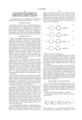
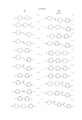
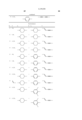
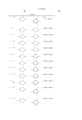
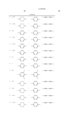
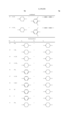
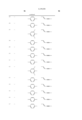
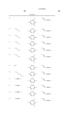
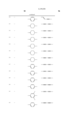
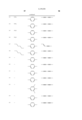
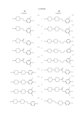
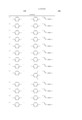
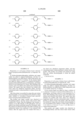
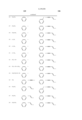
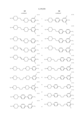
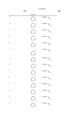
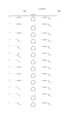
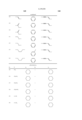
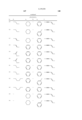
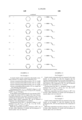
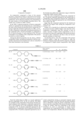
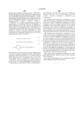
- a conjugated nitrile derivative expressed by the general formula (1) ##STR4## wherein rings A 1 , A 2 , A 3 , and A 4 independently represent 1,4-cyclohexylene, 1,4-phenylene in which one or two hydrogen atoms on the ring may be replaced by fluorine atom, 1,3-dioxane-2,5-diyl, or pyrimidine-2,5-diyl; B 1 , B 2 , and B 3 independently pepresent a covalent bond, 1,2-ethylene, 1,2-ethenylene, 1,2-ethynylene, oxymethylene, methylenoxy, carbonyloxy, or 1,4-butylene group; G represents the formula (2), (3), or (4) ##STR5## R represents an alkyl group having 1 to 10 carbon atoms, a fluoroalkyl group having 1 to 10 carbon atoms, a halogen atom, or cyano group provided that in the alkyl group or fluoroalkyl group
- a liquid crystal composition comprising at least one conjugated nitrile derivative recited in any one of paragraphs (1) through (37) above.
- a liquid crystal composition comprising, as a first component, at least one conjugated nitrile derivative recited in any one of paragraphs (1) through (37) above, and comprising, as a second component, at least one compound selected from the group consisting of the compounds expressed by any one of the general formulas (5), (6), and (7) ##STR6## wherein R 3 , Y 1 , L 1 , L 2 , Z 1 , and Z 2 may be the same or different from one another among the formulas; R 3 represents an alkyl group having 1 to 10 carbon atoms in which alkyl group, one or not-adjacent two or more methylene groups may be replaced by oxygen atom or --CH ⁇ CH--, and any hydrogen atom may be replaced by fluorine atom; Y 1 represents fluorine atom, chlorine atom, OCF 3 , OCF 2 H, CF 3 , CF 2 H, CFH 2 , OCF 2 CF 2 H, or OCF 2 CFHCF 3 ; L
- a liquid crystal composition comprising, as a first component, at least one conjugated nitrile derivative recited in any one of paragraphs (1) through (37) above, and comprising, as a second component, at least one compound selected from the group consisting of the compounds expressed by the general formula (8) or (9) ##STR7## wherein R 4 and R 5 independently represent an alkyl group having 1 to 10 carbon atoms in which alkyl group, one or not-adjacent two or more methylene groups may be replaced by oxygen atom or --CH ⁇ CH--, and any hydrogen atom may be replaced by fluorine atom; Y 2 represents --CN group or --C.tbd.C--CN; ring E represents trans-1,4-cyclohexylene, 1,4-phenylene, 1,3-dioxane-2,5-diyl, or pyrimidine-2,5-diyl; ring G represents trans-1,4-cyclohexylene, 1,4-phenylene in which hydrogen
- a liquid crystal composition comprising, as a first component, at least one conjugated nitrile derivative recited in any one of paragraphs (1) through (37) above, comprising, as a second component, at least one compound selected from the group consisting of the compounds expressed by any one of the general formulas (5), (6), and (7) described above, and comprising, as a third component, at least one compound selected from the group consisting of the compounds expressed by any one of the general formulas (10), (11), and (12) ##STR8## wherein R 6 , R 7 , I, J, and K may be the same or different from one another among the formulas; R 6 and R 7 independently represent an alkyl group having 1 to 10 carbon atoms in which alkyl group, one or not-adjacent two or more methylene groups may be replaced by oxygen atom or --CH ⁇ CH--, and any hydrogen atom may be replaced by fluorine atom; I, J, and K independently represent trans-1,4-cyclohexylene or pyrimidine
- a liquid crystal composition comprising, as a first component, at least one conjugated nitrile derivative recited in any one of paragraphs (1) through (37) above, comprising, as a second component, at least one compound selected from the group consisting of the compounds expressed by the general formula (8) or (9) described above, and comprising, as a third component, at least one compound selected from the group consisting of the compounds expressed by any one of the general formulas (10), (11), and (12) described above.
- a liquid crystal composition comprising, as a first component, at least one conjugated nitrile derivative recited in any one of paragraphs (1) through (37) above, comprising, as a part of a second component, at least one compound selected from the group consisting of the compounds expressed by any one of the general formulas (5), (6), and (7) described above, comprising, as another part of the second component, at least one compound selected from the group consisting of the compounds expressed by the general formula (8) or (9) described above, and comprising, as a third component, at least one compound selected from the group consisting of the compounds expressed by any one of the general formulas (10), (11), and (12) described above.
- liquid crystal composition recited in any one of paragraphs (38) to (43) above wherein the liquid crystal composition further comprises an optically active compound.
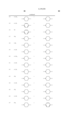
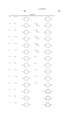
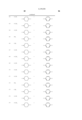
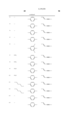
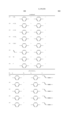
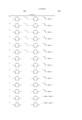
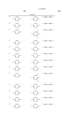
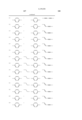
- the conjugated nitrile derivatives, the liquid crystalline compounds of the present invention are expressed by the general formula (1).
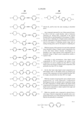
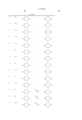
- a group of the compounds expressed by one of the formulas (1-a) to (1-n) can particularly be mentioned as preferable examples.
- R and G have the same meaning as described above.
- any of these compounds of the present invention exhibit a large ⁇ n. Besides, they are low in viscosity, excellent in miscibility with other liquid crystalline compounds, and chemically and physically stable. Since particularly the compounds expressed by one of the formulas (1-k) to (1-n) further have a high clearing point, they can be used as component when liquid crystal compositions having a high upper limit temperature of liquid crystal are produced.
- All liquid crystalline compounds of the present invention expressed by the general formula (1) do not necessarily exhibit a liquid crystal phase. However, since any of the compounds is excellent in miscibility with other liquid crystalline compounds, and does not considerably lower or narrow the temperature range of nematic phase of other liquid crystalline compounds when mixed with them, it is useful as component of liquid crystal compositions even if it does not exhibit a liquid crystal phase by itself.
- Liquid crystal compositions of the present invention comprise, as a first component, at least one liquid crystalline compound expressed by the general formula (1).
- the content of the compound is 0.1 to 99.9% by weight based on the amount of the liquid crystal composition.
- liquid crystal compositions of the present invention may be composed only of the first component described above, compositions in which at least one compound selected from the group consisting of the compounds expressed by one of the general formulas (5), (6), and (7) described above (the compounds are hereinafter referred to as second component A) and/or at least one compound selected from the group consisting of the compounds expressed by the general formula (8) or (9) described above (the compounds are hereinafter referred to as second component B) are mixed as a second component in addition to the first component; or compositions in which at least one compound selected from the group consisting of the compounds expressed by one of the general formulas (10), (11), and (12) described above are additionally mixed as a third component to the first and second components are preferable.
- an optically active compound, and known compounds for the purpose of adjusting threshold voltage, temperature range of liquid crystal phase, ⁇ n, ⁇ , and viscosity can be mixed as other components to the compositions.
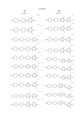
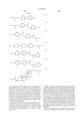
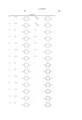
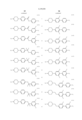
- compounds expressed by one of the formulas (5-1) to (5-9) can be mentioned as preferable examples of the compounds included in the general formula (5)
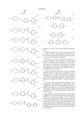
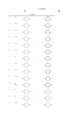
- compounds expressed by one of the formulas (6-1) to (6-69) can be mentioned as preferable examples of the compounds included in the general formula (6)
- compounds expressed by one of the formulas (7-1) to (7-24) can be mentioned as preferable examples of the compounds included in the general formula (7), respectively.
- AM-LCD liquid crystal compositions for TFT
- the amount of the compound to be used is suitably in the range of 1 to 99.9% by weight based on the total amount of liquid crystal composition when liquid crystal compositions for TFT are produced, and the amount is preferably 10 to 97% by weight, and more desirably 40 to 95% by weight.
- the compositions may further comprise a compound expressed by one of the general formulas (10) to (12) for the purpose of adjusting viscosity.
- Compounds expressed by one of these general formula (8) or (9) have a positive and large dielectric anisotropy value ⁇ , and used particularly for the purpose of lowering threshold voltage of liquid crystal compositions.
- liquid crystal compositions for STN display mode or TN display mode are used for the purpose of improving the steepness of liquid crystal compositions for STN display mode or TN display mode, including for the purpose of adjusting ⁇ n, and widening nematic range such as raising clearing point, and thus they are indispensable compounds when liquid crystal compositions for STN display mode or TN display mode are produced.
- the amount of the compounds to be used is suitably in the range of 0.1 to 99.9% by weight based on the total amount of liquid crystal composition, and the amount is preferably 10 to 97% by weight and more desirably 40 to 95% by weight.
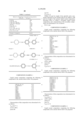
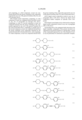
- compounds expressed by one of the formula (10-1) to (10-11) can be mentioned as preferable examples of the compounds included in the general formula (10)
- compounds expressed by one of the formulas (11-1) to (11-18) can be mentioned as preferable examples of the compounds included in the general formula (11)
- compounds expressed by one of the formulas (12-1) to (12-6) can be mentioned as preferable examples of the compounds included in the general formula (12), respectively.
- any compound expressed by one of these general formulas (10) to (12) has a small absolute value of dielectric anisotropy ⁇ .
- compounds of the general formula (10) are used principally for the purpose of adjusting viscosity or adjusting ⁇ n of liquid crystal compositions, and the compounds of the general formula (11) or (12) are used for the purpose of widening nematic range such as raising clearing point, and for the purpose of adjusting ⁇ n.
- this compound raises threshold voltage of liquid crystal compositions, but on the other hand, reduces viscosity. Accordingly, it is desirable to use a large amount of the compound so far as threshold voltage of liquid crystal compositions satisfies a required value.
- the amount of the compound to be used is suitably less than 40% by weight based on the total amount of liquid crystal composition, and preferably less than 35% by weight.
- the amount of the compound to be used is suitably less than 70% by weight, and preferably less than 60% by weight.
- liquid crystal compositions for OCB Optically Compensated Birefringence
- an optically active compound is usually added to the liquid crystal compositions for the purpose of inducing helical structure of liquid crystal composition to adjust required twist angle and to prevent reverse twist.
- optically active compound is selected from a wide range of known compounds
- optically active compound expressed by one of the following formulas (Op-1) to (Op-8) can preferably be mentioned: ##STR13##
- the pitch length of twist of liquid crystal compositions are adjusted.
- the pitch length of twist is preferably adjusted in the range of 40 to 200 ⁇ m in the case of liquid crystal compositions for TFT or TN, and preferably adjusted in the range of 6 to 20 ⁇ m in the case of liquid crystal compositions for STN. In the case for bistable TN mode, it is preferable to adjust the pitch length in the range of 1.5 to 4 ⁇ m. In such cases, two or more kind of optically active compounds may be added for the purpose of adjusting the dependency of the pitch length on temperature.
- Liquid crystal compositions provided according to the present invention can be produced by methods which are conventional by themselves.
- the liquid crystal compositions are usually produced by a method in which various components are dissolved in one another at a high temperature.
- liquid crystal compositions of the present invention can be used as ones for guest-host (GH) mode by adding a dichroic dye such as merocyanine type, styryl type, azo type, azomethine type, azoxy type, quinophthalone type, anthraquinone type, and tetrazine type thereto.
- a dichroic dye such as merocyanine type, styryl type, azo type, azomethine type, azoxy type, quinophthalone type, anthraquinone type, and tetrazine type thereto.
- the liquid crystal compositions of the present invention can be used as NCAP which is prepared by the microencapsulation of a nematic liquid crystal, or as liquid crystal compositions for polymer dispersed liquid crystal display devices (PDLCD) represented by polymer net work liquid crystal display devices (PNLCD) prepared by forming a polymer of three-dimensional reticulated structure in a liquid crystal.
- liquid crystal compositions of the present invention are produced by such methods as described above, the following Composition Examples 1 to 46 can be mentioned as their examples:
- Compound No. appended to the compounds of the present invention in the following Composition Examples means that the compounds are the same as those shown in Examples described below and having the same appended Compound No.; and the content of compounds means % by weight unless otherwise specified.
- T NI phase transition temperature of nematic phase-isotropic liquid, or clearing point
- T MP crystalstallization temperature
- ⁇ viscosity: determined at 20.0° C.
- An optical anisotropy value: determined at 25.0° C.
- ⁇ dielectric anisotropy value: determined at 25.0° C.
- V th threshold voltage: determined at 25.0° C.
- P pitch: determined at 25.0° C.
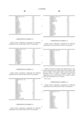
- Liquid crystal composition comprising the following compounds in the amount shown below was prepared:
- V th 2.21 V.
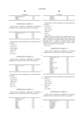
- Liquid crystal composition comprising the following compounds in the amount shown below was prepared:
- V th 2.14 V.
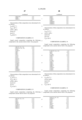
- Liquid crystal composition comprising the following compounds in the amount shown below was prepared:
- V th 1.12 V.
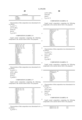
- Liquid crystal composition comprising the following compounds in the amount shown below was prepared:
- Liquid crystal composition comprising the following compounds in the amount shown below was prepared:
- Liquid crystal composition comprising the following compounds in the amount shown below was prepared:
- Liquid crystal composition comprising the following compounds in the amount shown below was prepared:
- Liquid crystal composition comprising the following compounds in the amount shown below was prepared:
- Liquid crystal composition comprising the following compounds in the amount shown below was prepared:
- Liquid crystal composition comprising the following compounds in the amount shown below was prepared:
- Liquid crystal composition comprising the following compounds in the amount shown below was prepared:
- Liquid crystal composition comprising the following compounds in the amount shown below was prepared:
- Liquid crystal composition comprising the following compounds in the amount shown below was prepared:
- V th 2.58 V.
- Liquid crystal composition comprising the following compounds in the amount shown below was prepared:
- Liquid crystal composition comprising the following compounds in the amount shown below was prepared:
- Liquid crystal composition comprising the following compounds in the amount shown below was prepared:
- V th 1.87 V.
- Liquid crystal composition comprising the following compounds in the amount shown below was prepared:
- V th 2.52 V.
- Liquid crystal composition comprising the following compounds in the amount shown below was prepared:
- V th 1.56 V.
- Liquid crystal composition comprising the following compounds in the amount shown below was prepared:
- Liquid crystal composition comprising the following compounds in the amount shown below was prepared:
- Liquid crystal composition comprising the following compounds in the amount shown below was prepared:
- Liquid crystal composition comprising the following compounds in the amount shown below was prepared:
- Liquid crystal composition comprising the following compounds in the amount shown below was prepared:
- Liquid crystal composition comprising the following compounds in the amount shown below was prepared:
- Liquid crystal composition comprising the following compounds in the amount shown below was prepared:
- Liquid crystal composition comprising the following compounds in the amount shown below was prepared:
- Liquid crystal composition comprising the following compounds in the amount shown below was prepared:
- V th 1.70 V.
- Liquid crystal composition comprising the following compounds in the amount shown below was prepared:
- V th 1.57 V.
- Liquid crystal composition comprising the following compounds in the amount shown below was prepared:
- V th 1.91 V.
- Liquid crystal composition comprising the following compounds in the amount shown below was prepared:
- V th 1.80 V.
- Liquid crystal composition comprising the following compounds in the amount shown below was prepared:
- V th 0.82 V.
- Liquid crystal composition comprising the following compounds in the amount shown below was prepared:
- V th 1.86 V.
- Liquid crystal composition comprising the following compounds amount shown below was prepared:
- V th 1.20 V.
- Liquid crystal composition comprising the following compounds in the amount shown below was prepared:
- V th 1.68 V.
- Liquid crystal composition comprising the following compounds in the amount shown below was prepared:
- V th 2.28 V.
- Liquid crystal composition comprising the following compounds in the amount shown below was prepared:
- V th 0.88 V.
- Liquid crystal composition comprising the following compounds in the amount shown below was prepared:
- V th 1.61 V.
- Liquid crystal composition comprising the following compounds in the amount shown below was prepared:
- V th 2.00 V.
- Liquid crystal composition comprising the following compounds in the amount shown below was prepared:
- V th 1.89 V.
- Liquid crystal composition comprising the following compounds in the amount shown below was prepared:
- V th 2.05 V.
- Liquid crystal composition comprising the following compounds in the amount shown below was prepared:
- V th 2.59 V.
- Liquid crystal composition comprising the following compounds in the amount shown below was prepared:
- V th 1.32 V.
- Liquid crystal composition comprising the following compounds in the amount shown below was prepared:
- V th 2.06 V.
- Liquid crystal composition comprising the following compounds in the amount shown below was prepared:
- V th 2.20 V.
- Liquid crystal composition comprising the following compounds in the amount shown below was prepared:
- V th 1.58 V.
- Liquid crystal composition comprising the following compounds in the amount shown below was prepared:
- V th 1.72 V.
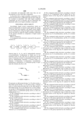
- a halide expressed by the general formula (18) can readily be produced by synthesizing aldehyde (17) according to a method described in Shin-Jikken Kagaku Kouza, vol. 14, p 633 (1977), and converting it by the method (a) or (b) described below.
- a compound expressed by the general formula (19) can readily be obtained by subjecting the halide (18) thus formed to a coupling reaction with 2-methyl-3-butyne-2-ol in a suitable solvent in the presence of a catalyst of a transition metal complex and a promoter added when necessary (reference is mate to the literature mentioned in (b) above).
- the complex catalyst described above zero valent or divalent palladium complexes such as dichlorobistriphenylphosphine palladium, tetrakistriphenylphosphine palladium, palladium acetate, and Kharasch complex can be mentioned. While the amount of the complex catalyst to be used is not constant since it depends on the reactivity of substrates, the range of 0.1 to 20% by mol to halide (18) is generally suitable, and the range of 0.5 to 5% by mol is preferable since conversion time is short and side reactions hardly occur besides.
- copper salts such as copper iodide and copper bromide can be mentioned, and the use of these salts is preferable for increasing the yield of compound (19).
- diethylamine can generally be mentioned
- a polar solvent such as triethylamine, pyridine, pyrrolidine, morpholine, and dimethyl formamide
- a mixed solvent of one of these solvents with another solvent can be used.
- reaction temperature may be in the range from -40° C. to the boiling point of a solvent to be used, it is preferable to use the temperature particularly between 0° C. and the boiling point of the solvent since an excellent activity of the complex catalyst can be retained and the conversion can be maintained at a high level.
- the reaction is preferably carried out in an inert gas as a countermeasure.
- the compound (19) obtained by the method described above is treated according to a method described in the Preparative Acetylenic Chemistry, second edition, ELSEVIER (1988), and led to the compound of the present invention expressed by the general formula (1).
- the compound (19) obtained by the method described above is treated with a base such as potassium hydroxide in a suitable solvent to readily deprotect, thereby being converted into a compound expressed by the general formula (20).
- a halide expressed by the general formula (21) can be synthesized by reacting the compound (20) with a base such as n-butyl lithium (n-BuLi) in an aprotic solvent such as tetrahydrofuran (THF), and then reacting with a halogen such as iodine and bromine.
- reaction solution is subjected to an after-treatment according to a conventional method, and further subjected to purifying operations such as distillation, recrystallization, and column chromatography to isolate the compound (1).
- R, A 1 , A 2 , A 3 , A 4 , B 1 , B 2 , B 3 , G, m, n, and p have the same meaning as described above, G represents the group expressed the formula (3) or (4), and X represents a halogen atom.
- G represents the group expressed by the formula (3) or (4)
- a 4 represents 1,4-phenylene in which hydrogen atom on the ring may be replaced by fluorine atom, or pyrimidine-2,5-diyl group:
- a compound corresponding to the compound (20) described above can readily be obtained by performing a coupling reaction with halide (18) in the same manner as described above with the exception that (trimethylsilyl)acetylene is used instead of 2-methyl-3-butyne-2-ol to obtain a compound expressed by the general formula (22), and then deprotecting it with potassium fluoride in a solvent such as DMF.
- This compound can be converted into a compound which is an an example those of the present invention expressed by the general formula (1) by the same manner as described above.
- a compound of the present invention expressed by the general formula (1) can be obtained by reacting a known ethynylene derivative expressed by the general formula (23) with 1,2-dihalogenoethylene in a dipolar aprotic solvent or basic solvent in the presence of a transition metal catalyst (for example, dichlorobistriphenylphosphine palladium) to convert into a vinyl halide derivative expressed by the general formula (24), and then reacting it with a metal cyanide such as copper cyanide in a suitable polar solvent such as N-methylpyrrolidone (NMP).
- NMP N-methylpyrrolidone
- C indicate crystal
- N nematic phase
- S smectic phase
- I isotropic liquid phase
- the unit of all phase transition temperatures is ° C.
- This compound (58 mmol) and powdered potassium hydroxide (0.36 mmol) were refluxed in toluene for 2 hours. After it was cooled, 3N hydrochloric acid was added thereto until pH became 1, and then the organic layer was isolated. The water layer was further extracted with toluene, combined with the organic layer mentioned above, and then washed with a saturated aqueous sodium bicarbonate solution. After the layer was dried over anhydrous magnesium sulfate, it was subjected to filtration, and the solvent was distilled off under a reduced pressure.
- This unpurified compound (16 mmol), copper cyanide (20 mmol), and lithium bromide (5.9 mmol) were refluxed in THF for 5 hours. After it was cooled, the reaction mixture was poured into 10% aqueous iron (II) chloride solution, and the solution was extracted with toluene twice. After the organic layer thus obtained was washed with an aqueous sodium chloride solution, it was dried over anhydrous magnesium sulfate. After it was subjected to filtration, the solvent was distilled off under a reduced pressure.
- trans-4-(trans-4-propylcyclohexyl)-1-(4-cyano-1,3-butadiyne-1-yl)cyclohexane (Compound No. 56) was synthesized.
- trans-4-(trans-4-(trans-4-propylcyclohexyl)cyclohexyl)-1-(4-cyano-1-E-butene-3-yne-1-yl)cyclohexane (Compound No. 84) was synthesized.
- trans-4-(trans-4-(4-fluorophenyl)cyclohexyl)-1-(4-cyano-1-E-butene-3-yne-1-yl)cyclohexane (Compound No. 90) was synthesized.
- This product and copper cyanide were dissolved in N-methylpyrrolidone and then stirred under heated reflux condition for 3 hours. After the finishing of the reaction, a solution of iron (II) chloride in 6N hydrochloric acid was added to the solution and further stirred for 30 minutes. After this solution was filtrated through Celite (filter medium), and undissolved matters were separated, it was extracted with toluene. After the organic layer was washed with water, it was dried over anhydrous magnesium sulfate, and then concentrated under a reduced pressure to obtain a brown oily product. This product was purified and isolated by using silica gel column chromatography to obtain the subject compound.
- This product and copper cyanide were dissolved in N-methylpyrrolidone and then stirred under heated reflux condition for 3 hours. After finishing of the reaction, a solution of iron (II) chloride in 6N hydrochloric acid was added thereto and further stirred for 30 minutes. After this solution was filtrated through Celite (filter medium), and undissolved matters were separated, it was extracted with toluene. After the organic layer was washed with water, it was dried over anhydrous magnesium sulfate, and then concentrated under a reduced pressure to obtain a brown oily product. This product was purified and isolated by using silica gel column chromatography to obtain the subject compound.
- liquid crystal composition A1 A nematic liquid crystal composition (hereinafter sometimes referred to as liquid crystal composition A1):
- liquid crystal composition B1 in an amount of 85% by weight was mixed 15% by weight of the trans-4-(trans-4-pentylcyclohexyl)-1-(4-cyano-1-E-butene-3-yne-1-yl)cyclohexane (Compound No. 34) obtained in Example 1 to prepare liquid crystal composition B1, and its physical properties were determined to be as follows:
- Liquid crystal composition B2 was prepared in the same manner as in Example 12 with the exception that the 4-(trans-4-propylcyclohexyl)-1-(4-cyano-1,3-butadiyne-1-yl)benzene (Compound No. 62) obtained in Example 2 was used instead of the compound of No. 34, and its physical properties were determined to be as follows:
- Liquid crystal composition B3 was prepared in the same manner as in Example 12 with the exception that the compound of No. 246 was used instead of the compound of No. 34.
- ⁇ , ⁇ n, and ⁇ 20 indicate extrapolated values, and physical properties of known compounds expressed by the formulas (a) to (d) are transcribed from those described in the literature.
- viscosity ( ⁇ 20 ) whereas the compounds of the present invention exhibit a higher value than that of the comparative compounds, when the viscosity is such an extent, viscosity of liquid crystal compositions is not so increased even when the compounds of the present invention are used as their component, and thus it does not become specific problems in actual uses.
- the compounds of the present invention exhibit a large ⁇ n, it is possible to make the thickness of liquid crystal cells small by using the compound as component of liquid crystal compositions. Also, liquid crystal compositions having an increased response speed against the change in electric field and increased steepness can be obtained by using the present compounds as component since the compounds of the present invention exhibit a large ⁇ . Further, when the compounds of the present invention are used as component of liquid crystal compositions, the compositions exhibit an excellent miscibility at low temperatures. Besides, the present compounds are chemically and physically stable since they are not decomposed or react with other components.
- liquid crystalline compounds of the present invention have a sufficiently large ⁇ n and a large ⁇ , are excellent in miscibility with other liquid crystalline compounds, are low in viscosity, and are chemically and physically stable novel liquid crystalline compounds.
- liquid crystal compositions which are improved particularly in response speed against the change in electric field and steepness, and liquid crystal display devices fabricated by using the liquid crystal composition can be provided by using the liquid crystalline compounds of the present invention as component of liquid crystal compositions.
Landscapes
- Chemical & Material Sciences (AREA)
- Organic Chemistry (AREA)
- Crystallography & Structural Chemistry (AREA)
- Engineering & Computer Science (AREA)
- Materials Engineering (AREA)
- Liquid Crystal Substances (AREA)
Abstract
Liquid crystalline compounds having a wide temperature range of liquid crystal phase, a high dielectric anisotropy, and a high optical anisotropy; and liquid crystal compositions and display devices containing the composition. The liquid crystalline compounds are conjugated nitrile derivatives expressed by the formula (1) ##STR1## wherein R represents an alkyl group or a fluoroalkyl group each having 1 to 10 carbon atoms, halogen atom, or cyano group provided that in the alkyl or fluoroalkyl group, one or not-adjacent two or more methylene or fluoromethylene groups may be replaced by oxygen atom or 1,2-ethenylene group; A1, A2, A3 and A4 represent 1,4-cyclohexylene group, 1,4-phenylene in which one or two hydrogen atoms on the ring may be replaced by fluorine atom, 1,3-dioxane-2,5-diyl, or pyrimidine-2,5-diyl; B1, B2, and B3 independently represent a covalent bond, 1,2-ethylene group, 1,2-ethenylene group, 1,2-ethynylene group, carbonyloxy group, methylenoxy group, or 1,4-butylene group; m, n, and p are 0 or 1; and G represents a group expressed by the formula ##STR2##
Description
This application is a 371 application of International Application No. PCT/JP97/04328 filed Nov. 27, 1997.
The present invention relates to liquid crystalline compounds and liquid crystal compositions. More specifically, the invention relates to conjugated nitrile derivatives of liquid crystalline compounds preferable as component of liquid crystal compositions; liquid crystal compositions comprising the nitrile derivative; and liquid crystal display devices fabricated by using the liquid crystal composition.
Liquid crystal display devices utilize optical (refractive) anisotropy and dielectric anisotropy of liquid crystalline compounds. Viewing from the aspect of display mode, display devices of twisted nematic (TN) type, super twisted nematic (STN) type, dynamic scattering (DS) type, guest,host (GH) type, or DAP type organized according to their electrooptical effect are known. From the aspect of driving mode, display devices of static driving mode, time shearing addressing mode, active matrix driving mode, or two-frequency addressing scheme are known. Liquid crystal substances used for the display devices are required to exhibit a liquid crystal phase in a wide temperature range and to be stable against heat, light, moisture, air, electric field, and electromagnetic radiation.
However, since it is impossible to satisfy all of such requirements by a single compound at present, it is a current situation that several, or in some cases more than twenty liquid crystalline compounds are mixed and used as liquid crystal compositions. Accordingly, the liquid crystalline compounds have come to be required to exhibit excellent miscibility each other. Recently in particular, since display devices are used in many instances in sever environments such as at cryogenic temperatures, improvement of the compounds in the miscibility at low temperatures has come to be required.
With the increase of demand for display devices of high quality, requests for liquid crystal composition having an improved response speed to the change in electric field, and steepness have been increased. In order to fulfil the requirements, it is required to use liquid crystal materials having a low viscosity and a large dielectric anisotropy value as component of liquid crystal compositions.
In order to increase the response speed of liquid crystal compositions, it is effective to make the thickness (d) of liquid crystal cells small (thin) in addition to satisfying the requirements described above. In this case, however, it is necessary to increase optical anisotropy value (Δn) (to use liquid crystalline compounds having a large Δn as component) for the reason described below. That is, excellent display contrast and wide visual angle are found as other characteristics required of display devices. In order to achieve this end, it is necessary to maintain the product of Δn and d (Δn·d) at a certain value, and thus, when d is made small according to the measures described above, it is necessary to increase Δn.
For originating liquid crystalline compounds having a large Δn, it is sufficient, for instance, to introduce ethynylene group into a liquid crystal molecule, and it is known by means of the compounds expressed by the formula (13) (Japanese Patent Publication No. Hei 3-29051) and compounds expressed by one of the formulas (14) to (16) (DE 4027458 and WO 90-13610) that the compounds can be changed into ones having a large value even in dielectric anisotropy (Δε) by altering the ethynylene group into the one having an electron attractive group, for example, CN, Cl, CHF2, or CF3 as substituent. ##STR3## wherein R represents an alkyl group.
However, as to the compounds expressed by the formula (13), their electric properties are not disclosed at all in the Japanese Patent Publication No. Hei 3-29051. Compounds expressed by one of the formulas (14) to (16) are narrow in the temperature range of liquid crystal phase, and they can not be said to exhibit a sufficiently large value of either Δn and Δε besides.
An object of the present invention is to solve the defects in the conventional technology. Another object of the present invention is to provide conjugated nitrile derivatives, novel liquid crystalline compounds having a sufficiently large Δn and a large Δε, being excellent in miscibility with other liquid crystalline compounds, having a low viscosity, and being chemically and physically stable; to provide liquid crystal compositions comprising the nitrile derivative; and to provide liquid crystal display devices fabricated by using the liquid crystal composition.
As a result of diligent investigations by the present inventors to achieve the objects described above, compounds of a novel structure having improved characteristics compared with known liquid crystalline compounds have been found, leading to the accomplishment of the present invention.
Summary of the present invention is as follows:
(1) A conjugated nitrile derivative expressed by the general formula (1) ##STR4## wherein rings A1, A2, A3, and A4 independently represent 1,4-cyclohexylene, 1,4-phenylene in which one or two hydrogen atoms on the ring may be replaced by fluorine atom, 1,3-dioxane-2,5-diyl, or pyrimidine-2,5-diyl; B1, B2, and B3 independently pepresent a covalent bond, 1,2-ethylene, 1,2-ethenylene, 1,2-ethynylene, oxymethylene, methylenoxy, carbonyloxy, or 1,4-butylene group; G represents the formula (2), (3), or (4) ##STR5## R represents an alkyl group having 1 to 10 carbon atoms, a fluoroalkyl group having 1 to 10 carbon atoms, a halogen atom, or cyano group provided that in the alkyl group or fluoroalkyl group, one or not-adjacent two or more methylene groups or fluoromethylene groups may be replaced by oxygen atom or 1,2-ethenylene group; m, n, and p are independently 0 or 1; and each element which constitutes the compound may be selected from its isotopes.
(2) The conjugated nitrile derivative recited in paragraph (1) above wherein m=n=p=0.
(3) The conjugated nitrile derivative recited in paragraph (1) above wherein m=n=0, and p=1.
(4) The conjugated nitrile derivative recited in paragraph (1) above wherein m=0, and n=p=1.
(5) The conjugated nitrile derivative recited in paragraph (1) above wherein m=n=p=1.
(6) The conjugated nitrile derivative recited in paragraph (3) above wherein G is the group expressed by the formula (2).
(7) The conjugated nitrile derivative recited in paragraph (6) above wherein A4 is 1,4-cyclohexylene.
(8) The conjugated nitrile derivative recited in paragraph (6) above wherein A4 is 1,4-phenylene ring in which one or two hydrogen atoms on the ring may be replaced by fluorine atom.
(9) The conjugated nitrile derivative recited in paragraph (7) above wherein A3 is 1,4-cyclohexylene, and B3 is a covalent bond.
(10) The conjugated nitrile derivative recited in paragraph (3) above wherein G is the group expressed by the formula (3).
(11) The conjugated nitrile derivative recited in paragraph (10) above wherein A4 is 1,4-cyclohexylene.
(12) The conjugated nitrile derivative recited in paragraph (10) above wherein A4 is 1,4-phenylene ring in which one or two hydrogen atoms on the ring may be replaced by fluorine atom.
(13) The conjugated nitrile derivative recited in paragraph (11) above wherein A3 is 1,4-cyclohexylene, and B3 is a covalent bond.
(14) The conjugated nitrile derivative recited in paragraph (12) above wherein A3 is 1,4-cyclohexylene, and B3 is a covalent bond.
(15) The conjugated nitrile derivative recited in paragraph (3) above wherein G is the group expressed by the formula (4).
(16) The conjugated nitrile derivative recited in paragraph (15) above wherein A4 is 1,4-cyclohexylene.
(17) The conjugated nitrile derivative recited in paragraph (15) above wherein A4 is 1,4-phenylene ring in which one or two hydrogen atoms on the ring may be replaced by fluorine atom.
(18) The conjugated nitrile derivative recited in paragraph (16) above wherein A3 is 1,4-cyclohexylene, and B3 is a covalent bond.
(19) The conjugated nitrile derivative recited in paragraph (17) above wherein A3 is 1,4-cyclohexylene, and B3 is a covalent bond.
(20) The conjugated nitrile derivative recited in paragraph (4) above wherein G is the group expressed by the formula (2).
(21) The conjugated nitrile derivative recited in paragraph (20) above wherein A4 is 1,4-cyclohexylene.
(22) The conjugated nitrile derivative recited in paragraph (20) above wherein A4 is 1,4-phenylene ring in which one or two hydrogen atoms on the ring may be replaced by fluorine atom.
(23) The conjugated nitrile derivative recited in paragraph (4) above wherein G is the group expressed by the formula (3).
(24) The conjugated nitrile derivative recited in paragraph (23) above wherein A4 is 1,4-cyclohexylene.
(25) The conjugated nitrile derivative recited in paragraph (23) above wherein A4 is 1,4-phenylene ring in which one or two hydrogen atoms on the ring may be replaced by fluorine atom.
(26) The conjugated nitrile derivative recited in paragraph (4) above wherein G is the group expressed by the formula (4).
(27) The conjugated nitrile derivative recited in paragraph (26) above wherein A4 is 1,4-cyclohexylene.
(28) The conjugated nitrile derivative recited in paragraph (26) above wherein A4 is 1,4-phenylene ring in which one or two hydrogen atoms on the ring may be replaced by fluorine atom.
(29) The conjugated nitrile derivative recited in paragraph (5) wherein G is the group expressed by the formula (2).
(30) The conjugated nitrile derivative recited in paragraph (29) above wherein A4 is 1,4-cyclohexylene.
(31) The conjugated nitrile derivative recited in paragraph (29) above wherein A4 is 1,4-phenylene ring in which one or two hydrogen atoms on the ring may be replaced by fluorine atom.
(32) The conjugated nitrile derivative recited in paragraph (5) above wherein G is the group expressed by the formula (3).
(33) The conjugated nitrile derivative recited in paragraph (32) above wherein A4 is 1,4-cyclohexylene.
(34) The conjugated nitrile derivative recited in paragraph (32) above wherein A4 is 1,4-phenylene ring in which one or two hydrogen atoms on the ring may be replaced by fluorine atom.
(35) The conjugated nitrile derivative recited in paragraph (5) above wherein G is the group expressed by the formula (4).
(36) The conjugated nitrile derivative recited in paragraph (35) above wherein A4 is 1,4-cyclohexylene.
(37) The conjugated nitrile derivative recited in paragraph (35) above wherein A4 is 1,4-phenylene ring in which one or two hydrogen atoms on the ring may be replaced by fluorine atom.
(38) A liquid crystal composition comprising at least one conjugated nitrile derivative recited in any one of paragraphs (1) through (37) above.
(39) A liquid crystal composition, comprising, as a first component, at least one conjugated nitrile derivative recited in any one of paragraphs (1) through (37) above, and comprising, as a second component, at least one compound selected from the group consisting of the compounds expressed by any one of the general formulas (5), (6), and (7) ##STR6## wherein R3, Y1, L1, L2, Z1, and Z2 may be the same or different from one another among the formulas; R3 represents an alkyl group having 1 to 10 carbon atoms in which alkyl group, one or not-adjacent two or more methylene groups may be replaced by oxygen atom or --CH═CH--, and any hydrogen atom may be replaced by fluorine atom; Y1 represents fluorine atom, chlorine atom, OCF3, OCF2 H, CF3, CF2 H, CFH2, OCF2 CF2 H, or OCF2 CFHCF3 ; L1 and L2 independently represent hydrogen atom or fluorine atom; Z1 and Z2 independently represent 1,2-ethylene group, 1,4-butylene group, --COO--, --CF2 O--, --OCF2 --, --CH═CH--, or a covalent bond; ring B represents trans-1,4-cyclohexylene or 1,3-dioxane-2,5-diyl, or 1,4-phenylene in which hydrogen atom on the ring may be replaced by fluorine atom; ring C represents trans-1,4-cyclohexylene, or 1,4-phenylene in which hydrogen atom on the ring may be replaced by fluorine atom; and each element which constitutes the compounds of each of the general formulas may be selected from its isotopes.
(40) A liquid crystal composition, comprising, as a first component, at least one conjugated nitrile derivative recited in any one of paragraphs (1) through (37) above, and comprising, as a second component, at least one compound selected from the group consisting of the compounds expressed by the general formula (8) or (9) ##STR7## wherein R4 and R5 independently represent an alkyl group having 1 to 10 carbon atoms in which alkyl group, one or not-adjacent two or more methylene groups may be replaced by oxygen atom or --CH═CH--, and any hydrogen atom may be replaced by fluorine atom; Y2 represents --CN group or --C.tbd.C--CN; ring E represents trans-1,4-cyclohexylene, 1,4-phenylene, 1,3-dioxane-2,5-diyl, or pyrimidine-2,5-diyl; ring G represents trans-1,4-cyclohexylene, 1,4-phenylene in which hydrogen atom on the ring may be replaced by fluorine atom, or pyrimidine-2,5-diyl; ring H represents trans-1,4-cyclohexylene or 1,4-phenylene; Z3 represents 1,2-ethylene group, --COO--, or a covalent bond; L3, L4, and L5 independently represent hydrogen atom or fluorine atom; b, c, and d are independently 0 or 1; and each element which constitutes the compounds of each of the general formulas may be selected from its isotopes.
(41) A liquid crystal composition, comprising, as a first component, at least one conjugated nitrile derivative recited in any one of paragraphs (1) through (37) above, comprising, as a second component, at least one compound selected from the group consisting of the compounds expressed by any one of the general formulas (5), (6), and (7) described above, and comprising, as a third component, at least one compound selected from the group consisting of the compounds expressed by any one of the general formulas (10), (11), and (12) ##STR8## wherein R6, R7, I, J, and K may be the same or different from one another among the formulas; R6 and R7 independently represent an alkyl group having 1 to 10 carbon atoms in which alkyl group, one or not-adjacent two or more methylene groups may be replaced by oxygen atom or --CH═CH--, and any hydrogen atom may be replaced by fluorine atom; I, J, and K independently represent trans-1,4-cyclohexylene or pyrimidine-2,5-diyl, or 1,4-phenylene in which hydrogen atom on the ring may be replaced by fluorine atom; Z4 and Z5 independently represent --C.tbd.C--, --COO--, --CH2 CH2 --, --CH═CH--, or a covalent bond; and each element which constitutes the compounds of each of the general formulas may be selected from its isotopes.
(42) A liquid crystal composition, comprising, as a first component, at least one conjugated nitrile derivative recited in any one of paragraphs (1) through (37) above, comprising, as a second component, at least one compound selected from the group consisting of the compounds expressed by the general formula (8) or (9) described above, and comprising, as a third component, at least one compound selected from the group consisting of the compounds expressed by any one of the general formulas (10), (11), and (12) described above.
(43) A liquid crystal composition, comprising, as a first component, at least one conjugated nitrile derivative recited in any one of paragraphs (1) through (37) above, comprising, as a part of a second component, at least one compound selected from the group consisting of the compounds expressed by any one of the general formulas (5), (6), and (7) described above, comprising, as another part of the second component, at least one compound selected from the group consisting of the compounds expressed by the general formula (8) or (9) described above, and comprising, as a third component, at least one compound selected from the group consisting of the compounds expressed by any one of the general formulas (10), (11), and (12) described above.
(44) A liquid crystal composition recited in any one of paragraphs (38) to (43) above wherein the liquid crystal composition further comprises an optically active compound.
(45) A liquid crystal display device fabricated by using the liquid crystal composition recited in any one of paragraphs (38) to (44) above.
As described above, the conjugated nitrile derivatives, the liquid crystalline compounds of the present invention are expressed by the general formula (1). Among them, a group of the compounds expressed by one of the formulas (1-a) to (1-n) can particularly be mentioned as preferable examples. ##STR9## wherein R and G have the same meaning as described above.
Any of these compounds of the present invention exhibit a large Δn. Besides, they are low in viscosity, excellent in miscibility with other liquid crystalline compounds, and chemically and physically stable. Since particularly the compounds expressed by one of the formulas (1-k) to (1-n) further have a high clearing point, they can be used as component when liquid crystal compositions having a high upper limit temperature of liquid crystal are produced.
Since the compounds expressed by one of the formulas (1-e) to (1-n), particularly the compounds expressed by the formula (1-e), (1-j), (1-k), (1-l), or (1-m) have an extremely large Δn, they are remarkably useful.
All liquid crystalline compounds of the present invention expressed by the general formula (1) do not necessarily exhibit a liquid crystal phase. However, since any of the compounds is excellent in miscibility with other liquid crystalline compounds, and does not considerably lower or narrow the temperature range of nematic phase of other liquid crystalline compounds when mixed with them, it is useful as component of liquid crystal compositions even if it does not exhibit a liquid crystal phase by itself.
Liquid crystal compositions of the present invention comprise, as a first component, at least one liquid crystalline compound expressed by the general formula (1).
It is necessary to develop excellent characteristics that the content of the compound is 0.1 to 99.9% by weight based on the amount of the liquid crystal composition.
While the liquid crystal compositions of the present invention may be composed only of the first component described above, compositions in which at least one compound selected from the group consisting of the compounds expressed by one of the general formulas (5), (6), and (7) described above (the compounds are hereinafter referred to as second component A) and/or at least one compound selected from the group consisting of the compounds expressed by the general formula (8) or (9) described above (the compounds are hereinafter referred to as second component B) are mixed as a second component in addition to the first component; or compositions in which at least one compound selected from the group consisting of the compounds expressed by one of the general formulas (10), (11), and (12) described above are additionally mixed as a third component to the first and second components are preferable. Further, an optically active compound, and known compounds for the purpose of adjusting threshold voltage, temperature range of liquid crystal phase, Δn, Δε, and viscosity can be mixed as other components to the compositions.
Among the second component A, compounds expressed by one of the formulas (5-1) to (5-9) can be mentioned as preferable examples of the compounds included in the general formula (5), compounds expressed by one of the formulas (6-1) to (6-69) can be mentioned as preferable examples of the compounds included in the general formula (6), and compounds expressed by one of the formulas (7-1) to (7-24) can be mentioned as preferable examples of the compounds included in the general formula (7), respectively. ##STR10## wherein R3 and Y1 have the same meaning as described above.
Any compounds expressed by one of these general formulas (5) to (7) exhibit a positive Δε, are considerably excellent in thermal stability and chemical stability, and are indispensable when liquid crystal compositions for TFT (AM-LCD) of which a high reliability such as a high voltage holding ratio (large specific resistivity) is required.
The amount of the compound to be used is suitably in the range of 1 to 99.9% by weight based on the total amount of liquid crystal composition when liquid crystal compositions for TFT are produced, and the amount is preferably 10 to 97% by weight, and more desirably 40 to 95% by weight. In that case, the compositions may further comprise a compound expressed by one of the general formulas (10) to (12) for the purpose of adjusting viscosity.
Compounds expressed by one of the general formulas (5) to (7) can be used when liquid crystal compositions for STN display mode or TN display mode are produced. However, since the compounds are relatively low in the effect of lowering threshold voltage of liquid crystal compositions, their amount to be used is preferably less than 50% by weight based on the total amount of liquid crystal composition.
Next, among the second component B, compounds expressed by one of the formulas (8-1) to (8-40) can be mentioned as preferable examples of the compounds included in the general formula (8), and compounds expressed by one of the formulas (9-1) to (9-3) can be mentioned as preferable examples of the compounds included in the general formula (9), respectively. ##STR11## wherein R4, Y2, and R5 have the same meaning as described above.
Compounds expressed by one of these general formula (8) or (9) have a positive and large dielectric anisotropy value Δε, and used particularly for the purpose of lowering threshold voltage of liquid crystal compositions.
Also, they are used for the purpose of improving the steepness of liquid crystal compositions for STN display mode or TN display mode, including for the purpose of adjusting Δn, and widening nematic range such as raising clearing point, and thus they are indispensable compounds when liquid crystal compositions for STN display mode or TN display mode are produced.
As the amount of the compounds to be used is increased, threshold voltage of liquid crystal compositions can be lowered, but on the other hand, viscosity is increased. Accordingly, it is advantageous, for low voltage driving, to use a large amount of the compound so far as viscosity of liquid crystal compositions satisfies a required characteristic.
According to such circumstances, when liquid crystal compositions for STN display mode or TN display mode are produced, the amount of the compounds to be used is suitably in the range of 0.1 to 99.9% by weight based on the total amount of liquid crystal composition, and the amount is preferably 10 to 97% by weight and more desirably 40 to 95% by weight.
Among the third component described above, compounds expressed by one of the formula (10-1) to (10-11) can be mentioned as preferable examples of the compounds included in the general formula (10), compounds expressed by one of the formulas (11-1) to (11-18) can be mentioned as preferable examples of the compounds included in the general formula (11), and compounds expressed by one of the formulas (12-1) to (12-6) can be mentioned as preferable examples of the compounds included in the general formula (12), respectively. ##STR12## wherein R6 and R7 have the same meaning as described above.
Any compound expressed by one of these general formulas (10) to (12) has a small absolute value of dielectric anisotropy Δε. Among them, compounds of the general formula (10) are used principally for the purpose of adjusting viscosity or adjusting Δn of liquid crystal compositions, and the compounds of the general formula (11) or (12) are used for the purpose of widening nematic range such as raising clearing point, and for the purpose of adjusting Δn.
With the increase of the amount to be used, this compound raises threshold voltage of liquid crystal compositions, but on the other hand, reduces viscosity. Accordingly, it is desirable to use a large amount of the compound so far as threshold voltage of liquid crystal compositions satisfies a required value.
According to such circumstances, when liquid crystal compositions for TFT are produced, the amount of the compound to be used is suitably less than 40% by weight based on the total amount of liquid crystal composition, and preferably less than 35% by weight.
On the other hand, when liquid crystal compositions for STN display mode or TN display mode are produced, the amount of the compound to be used is suitably less than 70% by weight, and preferably less than 60% by weight.
With the exception of such specific cases as liquid crystal compositions for OCB (Optically Compensated Birefringence) mode, an optically active compound, among the other components, is usually added to the liquid crystal compositions for the purpose of inducing helical structure of liquid crystal composition to adjust required twist angle and to prevent reverse twist.
While the optically active compound is selected from a wide range of known compounds, the optically active compound expressed by one of the following formulas (Op-1) to (Op-8) can preferably be mentioned: ##STR13##
By the addition of these optically active compounds, the pitch length of twist of liquid crystal compositions are adjusted. The pitch length of twist is preferably adjusted in the range of 40 to 200 μm in the case of liquid crystal compositions for TFT or TN, and preferably adjusted in the range of 6 to 20 μm in the case of liquid crystal compositions for STN. In the case for bistable TN mode, it is preferable to adjust the pitch length in the range of 1.5 to 4 μm. In such cases, two or more kind of optically active compounds may be added for the purpose of adjusting the dependency of the pitch length on temperature.
Liquid crystal compositions provided according to the present invention can be produced by methods which are conventional by themselves. For instance, the liquid crystal compositions are usually produced by a method in which various components are dissolved in one another at a high temperature.
Further, the liquid crystal compositions of the present invention can be used as ones for guest-host (GH) mode by adding a dichroic dye such as merocyanine type, styryl type, azo type, azomethine type, azoxy type, quinophthalone type, anthraquinone type, and tetrazine type thereto. Alternatively, the liquid crystal compositions of the present invention can be used as NCAP which is prepared by the microencapsulation of a nematic liquid crystal, or as liquid crystal compositions for polymer dispersed liquid crystal display devices (PDLCD) represented by polymer net work liquid crystal display devices (PNLCD) prepared by forming a polymer of three-dimensional reticulated structure in a liquid crystal. Still further, the liquid crystal compositions of the present invention can be used as ones for electrically controlled birefringence (ECB) mode or dynamic scattering (DS) mode.
While the liquid crystal compositions of the present invention are produced by such methods as described above, the following Composition Examples 1 to 46 can be mentioned as their examples:
In each of the Composition Examples, compounds are designated by making a particular group or structure shown in the column of left side terminal group, bonding group, ring structure, or right side terminal group in Table 1 below correspond to the symbol shown in the same line and the same column. Designation in the case where the hydrogen atom on trans-1,4-cyclohexylene and trans,trans-bicyclohexane-4,4'-diyl group is replaced by its isotope, heavy hydrogen (deuterium) atom is shown by symbol [1D,˜8D] after excerpting only substituted heavy hydrogen atoms, when both of the groups mentioned above are assumed to be expressed by the formula (60) and (61), respectively, and any one of hydrogen atoms L1, L2, L3, L4, L5, L6, L7, and L8 on the ring is assumed to be replaced by one of heavy hydrogen atoms 1D, 2D, 3D, 4D, 5D, 6D, 7D, and 8D.
Compound No. appended to the compounds of the present invention in the following Composition Examples means that the compounds are the same as those shown in Examples described below and having the same appended Compound No.; and the content of compounds means % by weight unless otherwise specified.
Further, data of characteristics in Composition Examples are indicated by TNI (phase transition temperature of nematic phase-isotropic liquid, or clearing point), TMP (crystallization temperature), η (viscosity: determined at 20.0° C.), An (optical anisotropy value: determined at 25.0° C.), Δε (dielectric anisotropy value: determined at 25.0° C.), Vth (threshold voltage: determined at 25.0° C.), and P (pitch: determined at 25.0° C.). ##STR14##
              TABLE 1
______________________________________
Method for Designating Compounds by Using Symbols
R-(A.sub.1)-Z.sub.1 - . . . -Z.sub.n -(A.sub.n)-X
______________________________________
1) Left side terminal group R-
                      Symbol
______________________________________
C.sub.n H.sub.2n+1 -- n-
C.sub.n H.sub.2n+1 O--
                      nO--
C.sub.n H.sub.2n+1 OC.sub.m H.sub.2m --
                      nOm-
CH.sub.2 ═CH--    V--
CH.sub.2 ═CHC.sub.n H.sub.2n --
                      Vn-
C.sub.n H.sub.2n+1 CH═CHC.sub.m H.sub.2m --
                      nVm-
C.sub.n H.sub.2n+1 CH═CHC.sub.m H.sub.2m CH═CHC.sub.k H.sub.2k
                      nVmVk-
F--                   F--
NC--                  C--
FC.sub.n H.sub.2n --  Fn-
FF--C.sub.n H.sub.2n-1 --
                      FFn-
______________________________________
2) Ring structure -(A.sub.1)-, -(A.sub.n)-
                      Symbol
______________________________________
                      B
 ##STR15##            B(F)
 ##STR16##            B(2F, 3F)
 ##STR17##            B(F, F)
 ##STR18##            H
 ##STR19##            Py
 ##STR20##            G
 ##STR21##            Ch
______________________________________
3) Bonding group -Z.sub.1 -, -Z.sub.n -
                      Symbol
______________________________________
--C.sub.2 H.sub.4 --  2
--C.sub.4 H.sub.8 --  4
--COO--               E
--C.tbd.C--           T
--CH=CH--             V
--CF.sub.2 O--        CF2O
--OCF.sub.2 --        OCF2
______________________________________
4) Right side terminal group -X
                      Symbol
______________________________________
--F                   --F
--Cl                  --CL
--CN                  --C
--CF.sub.3            --CF3
--OCF.sub.3           --OCF3
--OCF.sub.2 H         --OCF2H
--OCF.sub.2 CF.sub.2 H
                      --OCF2CF2H
--C.sub.n H.sub.2n+1
--OC.sub.n H.sub.2n+1 --On
--COOCH.sub.3
EMe
--C.sub.n H.sub.2n CH═CH.sub.2
nV
--C.sub.m H.sub.2m CH═CHC.sub.n H.sub.2n+1
mVn
--C.sub.m H.sub.2m CH═CHC.sub.n H.sub.2n F
mVnF
--CH═CF.sub.2     --VFF
--C.sub.n H.sub.2n CH═CF.sub.2
nVFF
--C.tbd.C--CN
TC
--C.tbd.C--CH═CH--CN
TVC
--CH═CH--C.tbd.C--CN
                      --VTC
--C.tbd.C--C.tbd.C--CN
TTC
______________________________________
5) Example of designation
                      Symbol
______________________________________
Example 1             3-H2B(F, F)B(F)--F
 ##STR22##
Example 2             3-HB(F)TB-2
 ##STR23##
Example 3             1V2-BEB(F, F)--C
 ##STR24##
______________________________________
Liquid crystal composition comprising the following compounds in the amount shown below was prepared:
______________________________________
3-HB-TTC (No. 62)
                 10.0%
1V2-BEB(F,F)-C   5.0%
3-HB-C           15.0%
1-BTB-3          5.0%
2-BTB-1          10.0%
3-HH-4           11.0%
3-HHB-1          11.0%
3-HHB-3          9.0%
3-H2BTB-2        4.0%
3-H2BTB-3        4.0%
3-H2BTB-4        4.0%
3-HB(F)TB-2      6.0%
3-HB(F)TB-3      6.0%
______________________________________
Characteristics of this composition were determined to be as follows:
TNI =104.7° C.
η=14.6 mPa·s
εn=0.190
Δε=7.0
Vth =2.21 V.
Further, 0.8 part by weight of the optically active compound expressed by the formula (Op-4) was added to 100 parts by weight of the primary liquid crystal composition described above to obtain a secondary liquid crystal composition, and a characteristic of the secondary composition was determined to be as follows:
P=11.2 μm.
Liquid crystal composition comprising the following compounds in the amount shown below was prepared:
______________________________________
5-HH-VTC (No. 34) 5.0%
V2-HB-C           12.0%
1V2-HB-C          12.0%
3-HB-C            10.0%
3-H[1D,2D,3D]B-C  9.0%
3-HB(F)-C         5.0%
2-BTB-1           2.0%
3-HH-4            8.0%
3-HH-VFF          6.0%
2-H[1D,2D,3D]HB-C 3.0%
3-HHB-C           6.0%
3-HB(F)TB-2       8.0%
3-H2BTB-2         5.0%
3-H2BTB-3         5.0%
3-H2BTB-4         4.0%
______________________________________
Characteristics of this composition were determined to be as follows:
TNI =95.0° C.
η=18.1 mPa·s
Δn=0.158
Δε=8.5
Vth =2.14 V.
Liquid crystal composition comprising the following compounds in the amount shown below was prepared:
______________________________________
3-HH-TTC (No. 58)
                 5.0%
V-HB-TTC (No. 64)
                 5.0%
3O1-BEB(F)-C     10.0%
4O1-BEB(F)-C     13.0%
5O1-BEB(F)-C     13.0%
2-HHB(F)-C       15.0%
3-HHB(F)-C       15.0%
3-HB(F)TB-2      4.0%
3-HB(F)TB-3      4.0%
3-HB(F)TB-4      4.0%
3-HHB-1          8.0%
3-HHB-O1         4.0%
______________________________________
Characteristics of this composition were determined to be as follows:
TNI =110.4° C.
η=85.5 mPa·s
Δn=0.175
Δε=27.8
Vth =1.12 V.
Liquid crystal composition comprising the following compounds in the amount shown below was prepared:
______________________________________
3-HPy-TTC (No. 67)
                  3.0%
5-PyB-F           4.0%
3-PyB(F)-F        4.0%
2-BB-C            5.0%
4-BB-C            4.0%
5-BB-C            5.0%
2-PyB-2           2.0%
3-PyB-2           2.0%
4-PyB-2           2.0%
6-PyB-O5          3.0%
6-PyB-O6          3.0%
6-PyB-O7          3.0%
3-PyBB-F          6.0%
4-PyBB-F          6.0%
5-PyBB-F          6.0%
3-HHB-1           6.0%
3-HHB-3           8.0%
2-H2BTB-2         4.0%
2-H2BTB-3         4.0%
2-H2BTB-4         5.0%
3-H2BTB-2         5.0%
3-H2BTB-3         5.0%
3-H2BTB-4         5.0%
______________________________________
Liquid crystal composition comprising the following compounds in the amount shown below was prepared:
______________________________________
3-HHH-VTC (No. 84)
                  3.0%
3-GB-C            10.0%
4-GB-C            10.0%
2-BEB-C           12.0%
3-BEB-C           4.0%
3-PyB(F)-F        6.0%
3-HEB-O4          8.0%
4-HEB-O2          6.0%
5-HEB-O1          6.0%
3-HEB-O2          5.0%
5-HEB-O2          4.0%
5-HEB-5           5.0%
4-HEB-5           5.0%
1O-BEB-2          4.0%
3-HHB-1           3.0%
3-HHEBB-C         3.0%
3-HBEBB-C         3.0%
5-HBEBB-C         3.0%
______________________________________
Liquid crystal composition comprising the following compounds in the amount shown below was prepared:
______________________________________
C-BHH-VTC (No. 89)
                  2.0%
3-HB-C            18.0%
7-HB-C            3.0%
1O1-HB-C          10.0%
3-HB(F)-C         10.0%
2-PyB-2           2.0%
3-PyB-2           2.0%
4-PyB-2           2.0%
1O1-HH-3          7.0%
2-BTB-O1          7.0%
3-HHB-1           7.0%
3-HHB-F           4.0%
3-HHB-O1          4.0%
3-HHB-3           6.0%
3-H2BTB-2         3.0%
3-H2BTB-3         3.0%
2-PyBH-3          4.0%
3-PyBH-3          3.0%
3-PyBB-2          3.0%
______________________________________
Liquid crystal composition comprising the following compounds in the amount shown below was prepared:
______________________________________
F-BHH-VTC (No. 90)
                  3.0%
2O1-BEB(F)-C      5.0%
3O1-BEB(F)-C      12.0%
5O1-BEB(F)-C      4.0%
1V2-BEB(F,F)-C    10.0%
3-HH-EMe          10.0%
3-HB-O2           18.0%
7-HEB-F           2.0%
3-HHEB-F          2.0%
5-HHEB-F          2.0%
3-HBEB-F          4.0%
2O1-HBEB(F)-C     2.0%
3-HB(F)EB(F)-C    2.0%
3-HBEB(F,F)-C     2.0%
3-HHB-F           4.0%
3-HHB-O1          4.0%
3-HHB-3           10.0%
3-HEBEB-F         2.0%
3-HEBEB-1         2.0%
______________________________________
Liquid crystal composition comprising the following compounds in the amount shown below was prepared:
______________________________________
3-HB2B-VTC (No. 121)
                   3.0%
5-BEB(F)-C         5.0%
V-HB-C             11.0%
5-PyB-C            6.0%
4-BB-3             11.0%
3-HH-2V            10.0%
5-HH-V             11.0%
V-HHB-1            7.0%
V2-HHB-1           15.0%
3-HHB-1            6.0%
1V2-HBB-2          10.0%
3-HHEBH-3          5.0%
______________________________________
Liquid crystal composition comprising the following compounds in the amount shown below was prepared:
______________________________________
3-HBHB-TTC (N0. 156)
                   2.0%
2O1-BEB(F)-C       5.0%
3O1-BEB(F)-C       12.0%
5O1-BEB(F)-C       4.0%
1V2-BEB(F,F)-C     16.0%
3-HB-O2            10.0%
3-HH-4             3.0%
3-HHB-F            3.0%
3-HHB-1            8.0%
3-HHB-O1           4.0%
3-HBEB-F           4.0%
3-HHEB-F           6.0%
5-HHEB-F           6.0%
3-H2BTB-2          4.0%
3-H2BTB-3          4.0%
3-H2BTB-4          4.0%
3-HB(F)TB-2        5.0%
______________________________________
Liquid crystal composition comprising the following compounds in the amount shown below was prepared:
______________________________________
3-HVHB-TTC (No. 151)
                   3.0%
2-BEB-C            12.0%
3-BEB-C            4.0%
4-BEB-C            6.0%
3-HB-C             25.0%
3-HEB-O4           12.0%
4-HEB-O2           8.0%
5-HEB-O1           8.0%
3-HEB-O2           6.0%
5-HEB-O2           5.0%
3-HHB-1            7.0%
3-HHB-O1           4.0%
______________________________________
Liquid crystal composition comprising the following compounds in the amount shown below was prepared:
______________________________________
3-HBTB-TTC (No. 174)
                   3.0%
2-BEB-C            10.0%
5-BB-C             12.0%
7-BB-C             7.0%
1-BTB-3            7.0%
2-BTB-1            7.0%
1O-BEB-2           10.0%
1O-BEB-5           12.0%
2-HHB-1            4.0%
3-HHB-F            4.0%
3-HHB-1            7.0%
3-HHB-O1           4.0%
3-HHB-3            13.0%
______________________________________
Liquid crystal composition comprising the following compounds in the amount shown below was prepared:
______________________________________
3-GHB-TTC (No. 142)
                  2.0%
1V2-BEB(F,F)-C    8.0%
3-HB-C            10.0%
V2V-HB-C          12.0%
V2V-HH-3          19.0%
3-HB-O2           4.0%
3-HHB-1           10.0%
3-HHB-3           15.0%
3-HB(F)TB-2       4.0%
3-HB(F)TB-3       4.0%
3-H2BTB-2         4.0%
3-H2BTB-3         4.0%
3-H2BTB-4         4.0%
______________________________________
Liquid crystal composition comprising the following compounds in the amount shown below was prepared:
______________________________________
3-HB-TTC (No. 62)
                 5.0%
5-HH-VTC (No. 34)
                 5.0%
3-HH-TTC (No. 59)
                 5.0%
V-HB-TTC (No. 64)
                 5.0%
5-BTB(F)TB-3     10.0%
V2-HB-TC         10.0%
3-HB-TC          5.0%
5-HB-C           7.0%
5-BB-C           3.0%
2-BTB-1          5.0%
2-BTB-O1         5.0%
3-HH-4           5.0%
3-HHB-1          10.0%
3-HHB-3          11.0%
3-H2BTB-2        3.0%
3-H2BTB-3        3.0%
3-HB(F)TB-2      3.0%
______________________________________
Characteristics of this composition were determined to be as follows:
TNI =127.5° C.
η=18.7 mPa·s
Δn=0.238
Δε=5.8
Vth =2.58 V.
Liquid crystal composition comprising the following compounds in the amount shown below was prepared:
______________________________________
3-HB2BB-TTC (No. 231)
                   2.0%
1V2-BEB(F,F)-C     6.0%
3-HB-C             18.0%
2-BTB-1            10.0%
5-HH-VFF           30.0%
1-BHH-VFF          8.0%
1-BHH-2VFF         11.0%
3-H2BTB-2          5.0%
3-H2BTB-3          4.0%
3-H2BTB-4          4.0%
3-HHB-1            2.0%
______________________________________
Liquid crystal composition comprising the following compounds in the amount shown below was prepared:
______________________________________
3-HPy-TTC (No. 67)
                  2.0%
2-HB-C            5.0%
3-HB-C            12.0%
3-HB-O2           15.0%
2-BTB-1           3.0%
3-HHB-1           8.0%
3-HHB-F           4.0%
3-HHB-O1          5.0%
3-HHB-3           12.0%
3-HHEB-F          4.0%
5-HHEB-F          4.0%
2-HHB(F)-F        7.0%
3-HHB(F)-F        7.0%
5-HHB(F)-F        7.0%
3-HHB(F,F)-F      5.0%
______________________________________
Liquid crystal composition comprising the following compounds in the amount shown below was prepared:
______________________________________
3-HB-TTC (No. 62)
                 5.0%
V-HB-TTC (No. 64)
                 5.0%
2-HHB(F)-F       17.0%
3-HHB(F)-F       17.0%
5-HHB(F)-F       16.0%
2-H2HB(F)-F      10.0%
3-H2HB(F)-F      5.0%
2-HBB(F)-F       6.0%
3-HBB(F)-F       6.0%
5-HBB(F)-F       13.0%
______________________________________
Characteristics of this composition were determined to be as follows:
TNI =108.1° C.
η=26.6 mPa·s
Δn=0.127
Δε=5.9
Vth =1.87 V.
Further, 0.3 part by weight of the optically active compound expressed by the formula (Op-8) was added to 100 parts by weight of the primary liquid crystal composition described above to obtain a secondary liquid crystal composition, and a characteristic of the secondary composition was determined to be as follows:
P=77.4 μm.
Liquid crystal composition comprising the following compounds in the amount shown below was prepared:
______________________________________
5-HH-VTC (No. 34)  3.0%
V-HB-VTC (No. 39)  3.0%
7-HB(F)-F          5.0%
5-H2B(F)-F         5.0%
3-HB-O2            10.0%
3-HH-4             2.0%
3-HH[5D,6D,7D]-4   3.0%
2-HHB(F)-F         10.0%
3-HHB(F)-F         10.0%
5-HH[5D,6D,7D]B(F)-F
                   10.0%
3-H2HB(F)-F        5.0%
2-HBB(F)-F         3.0%
3-HBB(F)-F         3.0%
2-H2BB(F)-F        5.0%
3-H2BB(F)-F        6.0%
3-HHB-1            8.0%
3-HHB-O1           5.0%
3-HHB-3            4.0%
______________________________________
Characteristics of this composition were determined to be as follows:
TNI =95.4° C.
η=17.7 mPa·s
Δn=0.100
Δε=3.4
Vth =2.52 V.
Liquid crystal composition comprising the following compounds in the amount shown below was prepared:
______________________________________
3-HB-TTC (No. 62)
                 8.0%
3-HH-TTC (No. 58)
                 8.0%
7-HB(F,F)-F      3.0%
3-HB-O2          7.0%
2-HHB(F)-F       10.0%
3-HHB(F)-F       10.0%
5-HHB(F)-F       10.0%
2-HBB(F)-F       9.0%
3-HBB(F)-F       9.0%
2-HBB-F          4.0%
3-HBB-F          4.0%
5-HBB-F          3.0%
3-HBB(F,F)-F     5.0%
5-HBB(F,F)-F     10.0%
______________________________________
Characteristics of this composition were determined to be as follows:
TNI =103.0° C.
η=22.8 mPa·s
Δn=0.151
Δε=6.5
Vth =1.56 V.
Liquid crystal composition comprising the following compounds in the amount shown below was prepared:
______________________________________
3-HHH-VTC (No. 84)
                  2.0%
7-HB(F,F)-F       3.0%
3-H2HB(F,F)-F     10.0%
4-H2HB(F,F)-F     10.0%
5-H2HB(F,F)-F     10.0%
3-HHB(F,F)-F      5.0%
4-HHB(F,F)-F      5.0%
3-HH2B(F,F)-F     15.0%
5-HH2B(F,F)-F     10.0%
3-HBB(F,F)-F      12.0%
5-HBB(F,F)-F      12.0%
3-HBCF2OB(F,F)-F  6.0%
______________________________________
Liquid crystal composition comprising the following compounds in the amount shown below was prepared:
______________________________________
C-BHH-VTC (No. 89)
                  2.0%
7-HB(F,F)-F       5.0%
3-H2HB(F,F)-F     12.0%
4-H2HB(F,F)-F     10.0%
3-HHB(F,F)-F      10.0%
4-HHB(F,F)-F      5.0%
3-HBB(F,F)-F      10.0%
3-HHEB(F,F)-F     10.0%
4-HHEB(F,F)-F     3.0%
5-HHEB(F,F)-F     3.0%
2-HBEB(F,F)-F     3.0%
3-HBEB(F,F)-F     3.0%
5-HBEB(F,F)-F     3.0%
3-HGB(F,F)-F      15.0%
3-HHBB(F,F)-F     6.0%
______________________________________
Liquid crystal composition comprising the following compounds in the amount shown below was prepared:
______________________________________
F-BHH-VTC (No. 90)
                  2.0%
3-HB-CL           10.0%
5-HB-CL           4.0%
7-HB-CL           4.0%
1O1-HH-5          5.0%
2-HBB(F)-F        8.0%
3-HBB(F)-F        8.0%
5-HBB(F)-F        12.0%
4-HHB-CL          8.0%
5-HHB-CL          8.0%
3-H2HB(F)-CL      4.0%
3-HBB(F,F)-F      10.0%
5-H2BB(F,F)-F     9.0%
3-HB(F)VB-2       4.0%
3-HB(F)VB-3       4.0%
______________________________________
Liquid crystal composition comprising the following compounds in the amount shown below was prepared:
______________________________________
3-HB2B-VTC (No. 121)
                   3.0%
3-HHB(F,F)-F       9.0%
3-H2HB(F,F)-F      8.0%
4-H2HB(F,F)-F      8.0%
5-H2HB(F,F)-F      8.0%
3-HBB(F,F)-F       18.0%
5-HBB(F,F)-F       20.0%
3-H2BB(F,F)-F      10.0%
5-HHBB(F,F)-F      3.0%
5-HHEBB-F          2.0%
3-HH2BB(F,F)-F     3.0%
1O1-HBBH-4         4.0%
1O1-HBBH-5         4.0%
______________________________________
Liquid crystal composition comprising the following compounds in the amount shown below was prepared:
______________________________________
3-HEHB-TTC (No. 156)
                   2.0%
5-HB-F             12.0%
6-HB-F             9.0%
7-HB-F             7.0%
2-HHB-OCF3         7.0%
3-HHB-OCF3         7.0%
4-HHB-OCF3         5.0%
5-HHB-OCF3         5.0%
3-HH2B-OCF3        4.0%
5-HH2B-OCF3        4.0%
3-HHB(F,F)-OCF3    5.0%
3-HBB(F)-F         10.0%
5-HBB(F)-F         10.0%
3-HH2B(F)-F        3.0%
3-HB(F)BH-3        3.0%
5-HBBH-3           3.0%
3-HHB(F,F)-OCF2H   4.0%
______________________________________
Liquid crystal composition comprising the following compounds in the amount shown below was prepared:
______________________________________
3-HVHB-TTC (No. 151)
                   2.0%
5-H4HB(F,F)-F      7.0%
5-H4HB-OCF3        15.0%
3-H4HB(F,F)-CF3    8.0%
5-H4HB(F,F)-CF3    10.0%
3-HB-CL            6.0%
5-HB-CL            4.0%
2-H2BB(F)-F        5.0%
3-H2BB(F)-F        8.0%
5-HVHB(F,F)-F      5.0%
3-HHB-OCF3         5.0%
3-H2HB-OCF3        5.0%
V-HHB(F)-F         5.0%
3-HHB(F)-F         5.0%
5-HHEB-OCF3        2.0%
3-HBEB(F,F)-F      5.0%
5-HH-V2F           3.0%
______________________________________
Liquid crystal composition comprising the following compounds in the amount shown below was prepared:
______________________________________
3-HBTB-TTC (No. 174)
                   2.0%
2-HHB(F)-F         2.0%
3-HHB(F)-F         2.0%
5-HHB(F)-F         2.0%
2-HBB(F)-F         6.0%
3-HBB(F)-F         6.0%
5-HBB(F)-F         10.0%
2-H2BB(F)-F        9.0%
3-H2BB(F)-F        9.0%
3-HBB(F,F)-F       23.0%
5-HBB(F,F)-F       19.0%
1O1-HBBH-4         5.0%
1O1-HBBH-5         5.0%
______________________________________
Further, 0.25 part by weight of the optically active compound expressed by the formula (Op-5) was added to 100 parts by weight of this primary liquid crystal composition described above to obtain a secondary liquid crystal composition, and a characteristic of the secondary composition was determined to be as follows:
P=77.4 μm.
Liquid crystal composition comprising the following compounds in the amount shown below was prepared:
______________________________________
3-GHB-TTC (No. 142)
                   2.0%
5-HB-CL            12.0%
3-HH-4             7.0%
3-HB-O2            20.0%
3-H2HB(F,F)-F      8.0%
3-HHB(F,F)-F       6.0%
3-HBB(F,F)-F       6.0%
2-HHB(F)-F         5.0%
3-HHB(F)-F         5.0%
5-HHB(F)-F         5.0%
2-H2HB(F)-F        2.0%
3-H2HB(F)-F        1.0%
5-H2HB(F)-F        2.0%
3-HHBB(F,F)-F      4.0%
3-HBCF2OB-OCF3     4.0%
5-HBCF2OB(F,F)-CF3 4.0%
3-HHB-1            3.0%
3-HHB-O1           4.0%
______________________________________
Liquid crystal composition comprising the following compounds in the amount shown below was prepared:
______________________________________
3-H2B-TVC (No. 249)
                  15.0%
3-HB-C            20.0%
5-HB-C            31.0%
7-HB-C            21.0%
5-HBB-C           13.0%
______________________________________
Characteristics of this composition were determined to be as follows:
TNI =84.4° C.
TMP <-20° C.
η=30.5 mPa·s
Δn=0.1610
Δε=11.3
Vth =1.70 V.
Liquid crystal composition comprising the following compounds in the amount shown below was prepared:
______________________________________
2-HB-TVC (No. 246)
                  15.0%
3-HB-C            20.0%
5-HB-C            31.0%
7-HB-C            21.0%
5-HBB-C           13.0%
______________________________________
Characteristics of this composition were determined to be as follows:
TNI =83.0° C.
TMP <-20° C.
η=30.4 mPa·s
Δn=0.162
Δε=11.8
Vth =1.57 V.
Liquid crystal composition comprising the following compounds in the amount shown below was prepared:
______________________________________
3-H2B-TVC (No. 249)
                  11.0%
1V2-BEB(F,F)-C    5.0%
3-HB-C            20.0%
1-BTB-3           5.0%
2-BTB-1           10.0%
3-HH-4            11.0%
3-HHB-1           11.0%
3-HHB-3           9.0%
3-H2BTB-2         4.0%
3-H2BTB-3         4.0%
3-H2BTB-4         4.0%
3-HB(F)TB-2       6.0%
______________________________________
Characteristics of this composition were determined to be as follows:
TNI =95.3° C.
TMP <-30° C.
η=17.2 mPa·s
Δn=0.174
Δε=7.8
Vth =1.91 V.
Further, 0.8 part by weight of the optically active compound expressed by the formula (Op-4) was added to 100 parts by weight of the primary liquid crystal composition described above to obtain a secondary liquid crystal composition, and a characteristic of the secondary composition was determined to be as follows:
P=11.5 μm.
Liquid crystal composition comprising the following compounds in the amount shown below was prepared:
______________________________________
2-HB-TVC (No. 246)
                  11.0%
V2-HB-C           12.0%
1V2-HB-C          12.0%
3-HB-C            10.0%
3-H[1D,2D,3D]-C   9.0%
3-HB(F)-C         5.0%
2-BTB-1           2.0%
3-HH-4            8.0%
3-HH-VFF          6.0%
2-H[1D,2D,3D]HB-C 3.0%
3-HHB-C           6.0%
3-HB(F)TB-2       8.0%
3-H2BTB-2         5.0%
3-H2BTB-3         3.0%
______________________________________
Characteristics of this composition were determined to be as follows:
TNI =92.6° C.
TMP <-30° C.
η=19.9 mPa·s
Δn=0.166
Δε=9.6
Vth =1.80 V.
Liquid crystal composition comprising the following compounds in the amount shown below was prepared:
______________________________________
V-HB-TVC (No. 252)
                  8.0%
2O1-BEB(F)-C      5.0%
3O1-BEB(F)-C      15.0%
4O1-BEB(F)-C      13.0%
5O1-BEB(F)-C      13.0%
2-HHB(F)-C        15.0%
3-HHB(F)-C        15.0%
3-HB(F)TB-2       4.0%
3-HHB-1           8.0%
3-HHB-O1          4.0%
______________________________________
Characteristics of this composition were determined to be as follows:
TNI =89.2° C.
TMP <-30° C.
η=89.1 mPa·s
Δn=0.157
Δε=32.3
Vth =0.82 V.
Liquid crystal composition comprising the following compounds in the amount shown below was prepared:
______________________________________
2-HB-TVC (No. 246)
                  10.0%
5-H2B-TVC (No. 250)
                  10.0%
5-PyB-F           4.0%
3-PyB(F)-F        4.0%
2-BB-C            5.0%
4-BB-C            4.0%
5-BB-C            5.0%
2-PyB-2           2.0%
3-PyB-2           2.0%
4-PyB-2           2.0%
6-PyB-O5          3.0%
6-PyB-O6          3.0%
6-PyB-O7          3.0%
6-PyB-O8          3.0%
3-PyBB-F          6.0%
4-PyBB-F          6.0%
5-PyBB-F          6.0%
3-HHB-1           6.0%
3-HHB-3           8.0%
2-H2BTB-2         4.0%
2-H2BTB-3         4.0%
______________________________________
Characteristics of this composition were determined to be as follows:
TNI =87.4° C.
TMP <-20° C.
η=40.6 mPa·s
Δn=0.213
Δε=9.5
Vth =1.86 V.
Liquid crystal composition comprising the following compounds amount shown below was prepared:
______________________________________
3-HB-TVC (No. 247)
                  10.0%
3-DB-C            10.0%
4-DB-C            10.0%
2-BEB-C           12.0%
3-BEB-C           4.0%
3-PyB(F)-F        6.0%
3-HEB-O4          8.0%
4-HEB-O2          6.0%
3-HEB-O2          5.0%
5-HEB-5           5.0%
4-HEB-5           5.0%
1O-BEB-2          4.0%
3-HHB-1           6.0%
3-HHEBB-C         3.0%
3-HBEBB-C         3.0%
5-HBEBB-C         3.0%
______________________________________
Characteristics of this composition were determined to be as follows:
TNI =77.9° C.
η=42.6 mPa·s
Δn=0.144
Δε=13.0
Vth =1.20 V.
Liquid crystal composition comprising the following compounds in the amount shown below was prepared:
______________________________________
V2-HB-TVC (No. 253)
                   6.0%
3-HB-C             18.0%
7-HB-C             3.0%
1O1-HB-C           10.0%
3-HB(F)-C          10.0%
2-PyB-2            2.0%
3-PyB-2            2.0%
4-PyB-2            2.0%
1O1-HH-3           7.0%
2-BTB-O1           7.0%
3-HHB-1            7.0%
3-HHB-F            4.0%
3-HHB-O1           4.0%
3-HHB-3            8.0%
3-H2BTB-2          3.0%
2-PyBH-3           4.0%
3-PyBB-2           3.0%
______________________________________
Characteristics of this composition were determined to be as follows:
TNI =78.2° C.
η=18.8 mPa·s
Δn=0.144
Δε=8.9
Vth =1.68 V.
Liquid crystal composition comprising the following compounds in the amount shown below was prepared:
______________________________________
V-HB-TVC (No. 252)
                  7.0%
5-BEB(F)-C        5.0%
V-HB-C            11.0%
5-PyB-C           6.0%
4-BB-3            11.0%
3-HH-2V           10.0%
5-HH-V            5.0%
V2V-HH-3          6.0%
V-HHB-1           7.0%
V2-HHB-1          15.0%
3-HHB-1           9.0%
1V2-HBB-2         3.0%
3-HHEBH-3         5.0%
______________________________________
Characteristics of this composition were determined to be as follows:
TNI =92.3° C.
η=17.0 mPa·s
Δn=0.123
Δε=5.8
Vth =2.28 V.
Liquid crystal composition comprising the following compounds in the amount shown below was prepared:
______________________________________
3-H2B-TVC (No. 249)
                   10.0%
2-HB-TVC (No. 246) 10.0%
V-HB-TVC (No. 252) 5.0%
V2-HB-TVC (No. 253)
                   5.0%
2O1-BEB(F)-C       5.0%
3O1-BEB(F)-C       12.0%
5O1-BEB(F)-C       4.0%
1V2-BEB(F,F)-C     16.0%
3-HB-O2            6.0%
3-HH-4             3.0%
3-HHB-F            3.0%
3-HHB-1            3.0%
3-HHB-O1           4.0%
3-HBEB-F           4.0%
3-HHEB-F           3.0%
3-H2BTB-2          4.0%
3-HB(F)TB-2        3.0%
______________________________________
Characteristics of this composition were determined to be as follows:
TNI =93.3° C.
η=49.1 mPa·s
Δn=0.189
Δε=32.2
Vth =0.88 V.
Liquid crystal composition comprising the following compounds in the amount shown below was prepared:
______________________________________
2-HB-TVC (No. 246)
                  6.0%
V-HB-TVC (No. 252)
                  7.0%
2-BEB-C           10.0%
5-BB-C            12.0%
7-BB-C            7.0%
1-BTB-3           7.0%
2-BTB-1           10.0%
1O-BEB-2          10.0%
1O-BEB-5          12.0%
2-HHB-1           4.0%
3-HHB-F           4.0%
3-HHB-1           7.0%
3-HHB-O1          4.0%
______________________________________
Characteristics of this composition were determined to be as follows:
TNI =65.8° C.
η=23.6 mPa·s
Δn=0.185
Δε=8.5
Vth =1.61 V.
Liquid crystal composition comprising the following compounds in the amount shown below was prepared:
______________________________________
3-HB-TVC (No. 247)
                  5.0%
5-BTB(F)TB-3      10.0%
V2-HB-TC          10.0%
3-HB-TC           10.0%
3-HB-C            10.0%
5-HB-C            7.0%
5-BB-C            3.0%
2-BTB-1           10.0%
2-BTB-O1          5.0%
3-HH-4            3.0%
3-HHB-1           10.0%
3-HHB-3           11.0%
3-H2BTB-2         3.0%
3-HB(F)TB-2       3.0%
______________________________________
Characteristics of this composition were determined to be as follows:
TNI =101.5° C.
η=15.7 mPa·s
Δn=0.213
Δε=7.4
Vth =2.00 V.
Liquid crystal composition comprising the following compounds in the amount shown below was prepared:
______________________________________
2-HB-TVC (No. 246)
                  10.0%
1V2-BEB(F,F)-C    6.0%
3-HB-C            18.0%
2-BTB-1           8.0%
5-HH-VFF          30.0%
1-BHH-VFF         8.0%
1-BHH-2VFF        11.0%
3-H2BTB-2         5.0%
3-HHB-1           4.0%
______________________________________
Characteristics of this composition were determined to be as follows:
TNI =81.3° C.
η=14.9 mPa·s
Δn=0.135
Δε=8.0
Vth =1.89 V.
Liquid crystal composition comprising the following compounds in the amount shown below was prepared:
______________________________________
2-HB-TVC (No. 224)
                  8.0%
3-HB-TVC (No. 247)
                  5.0%
2-HHB(F)-F        17.0%
3-HHB(F)-F        17.0%
5-HHB(F)-F        16.0%
2-H2HB(F)-F       10.0%
3-H2HB(F)-F       5.0%
5-H2HB(F)-F       10.0%
2-HBB(F)-F        6.0%
3-HBB(F)-F        6.0%
______________________________________
Characteristics of this composition were determined to be as follows:
TNI =105.2° C.
η=28.5 mPa·s
Δn=0.116
Δε=6.1
Vth =2.05 V.
Further, 0.3 part by weight of the optically active compound expressed by the formula (Op-8) was added to 100 parts by weight of the primary liquid crystal composition described above to obtain a secondary liquid crystal composition, and a characteristic of the secondary composition was determined to be as follows:
P=82 μm
Liquid crystal composition comprising the following compounds in the amount shown below was prepared:
______________________________________
3-H2B-TVC (No. 249)
                   6.0%
7-HB(F)-F          5.0%
5-H2B(F)-F         5.0%
3-HB-O2            10.0%
3-HH-4             2.0%
3-HH[5D,6D,7D]-4   3.0%
2-HHB(F)-F         10.0%
3-HHB(F)-F         10.0%
5-HH[5D,6D,7D]B(F)-F
                   10.0%
3-H2HB(F)-F        5.0%
2-HBB(F)-F         3.0%
3-HBB(F)-F         3.0%
2-H2BB(F)-F        5.0%
3-H2BB(F)-F        6.0%
3-HHB-1            8.0%
3-HHB-O1           5.0%
3-HHB-3            4.0%
______________________________________
Characteristics of this composition were determined to be as follows:
TNI =91.7° C.
η=19.4 mPa·s
Δn=0.109
Δε=3.8
Vth =2.59 V.
Liquid crystal composition comprising the following compounds in the amount shown below was prepared:
______________________________________
3-HB-TVC (No. 247)
                  10.0%
7-HB(F,F)-F       5.0%
3-H2HB(F,F)-F     12.0%
4-H2HB(F,F)-F     10.0%
4-HHB(F,F)-F      5.0%
3-HBB(F,F)-F      10.0%
3-HHEB(F,F)-F     10.0%
4-HHEB(F,F)-F     3.0%
5-HHEB(F,F)-F     3.0%
2-HBEB(F,F)-F     3.0%
3-HBEB(F,F)-F     5.0%
5-HBEB(F,F)-F     3.0%
3-HGB(F,F)-F      15.0%
3-HHBB(F,F)-F     6.0%
______________________________________
Characteristics of this composition were determined to be as follows:
TNI =81.2° C.
η=36.6 mPa·s
Δn=0.107
Δε=13.5
Vth =1.32 V.
Liquid crystal composition comprising the following compounds in the amount shown below was prepared:
______________________________________
3-H2B-TVC (No. 249)
                  7.0%
2-HB-TVC (No. 246)
                  7.0%
3-HB-CL           10.0%
5-HB-CL           4.0%
7-HB-CL           4.0%
1O1-HH-5          5.0%
2-HBB(F)-F        8.0%
3-HBB(F)-F        8.0%
4-HHB-CL          8.0%
5-HHB-CL          8.0%
3-H2HB(F)-CL      4.0%
3-HBB(F,F)-F      10.0%
5-H2BB(F,F)-F     9.0%
3-HB(F)VB-2       4.0%
3-HB(F)VB-3       4.0%
______________________________________
Characteristics of this composition were determined to be as follows:
TNI =98.6° C.
η=24.5 mPa·s
Δn=0.153
Δε=6.0
Vth =2.06 V.
Liquid crystal composition comprising the following compounds in the amount shown below was prepared:
______________________________________
3-H2B-TVC (No. 249)
                  5.0%
2-HB-FVC (No. 246)
                  5.0%
5-HB-F            12.0%
6-HB-F            9.0%
7-HB-F            7.0%
2-HHB-OCF3        7.0%
3-HHB-OCF3        7.0%
4-HHB-OCF3        7.0%
5-HHB-OCF3        5.0%
3-HH2B-OCF3       4.0%
5-HH2B-OCF3       4.0%
3-HHB(F,F)-OCF3   5.0%
3-HBB(F)-F        10.0%
3-HH2B(F)-F       3.0%
3-HB(F)BH-3       3.0%
5-HBBH-3          3.0%
3-HHB(F,F)-OCF2H  4.0%
______________________________________
Characteristics of this composition were determined to be as follows:
TNI =91. 0° C.
η=17.4 mPa·s
Δn=0.109
Δε=5.5
Vth =2.20 V.
Liquid crystal composition comprising the following compounds in the amount shown below was prepared:
______________________________________
3-H2B-TVC (No. 249)
                  5.0%
3-HB-TVC (No. 247)
                  5.0%
5-H4HB(F,F)-F     7.0%
5-H4HB-OCF3       15.0%
3-H4HB(F,F)-CF3   8.0%
5-H4HB(F,F)-CF3   10.0%
3-HB-CL           6.0%
5-HB-CL           4.0%
2-H2BB(F)-F       5.0%
5-HVHB(F,F)-F     5.0%
3-HHB-OCF3        5.0%
3-H2HB-OCF3       5.0%
V-HHB(F)-F        5.0%
3-HHB(F)-F        5.0%
5-HHEB-OCF3       2.0%
3-HBEB(F,F)-F     5.0%
5-HH-V2F          3.0%
______________________________________
Characteristics of this composition were determined to be as follows:
TNI =76.4° C.
η=27.3 mPa·s
Δn=0.112
Δε=9.2
Vth =1.58 V.
Liquid crystal composition comprising the following compounds in the amount shown below was prepared:
______________________________________
2-HB-TVC (No. 246)
                  4.0%
V-HB-TVC (No. 252)
                  3.0%
5-H2B-TVC (No. 250)
                  3.0%
2-HHB(F)-F        2.0%
3-HHB(F)-F        2.0%
5-HHB(F)-F        2.0%
2-HBB(F)-F        6.0%
3-HBB(F)-F        6.0%
2-H2BB(F)-F       9.0%
3-H2BB(F)-F       9.0%
3-HBB(F,F)-F      25.0%
5-HBB(F,F)-F      19.0%
1O1-HBBH-4        5.0%
1O1-HBBH-5        5.0%
______________________________________
Characteristics of this composition were determined to be as follows:
TNI =101.1° C.
η=37.9 mPa·s
Δn=0.153
Δε=8.2
Vth =1.72 V.
Compounds of the present invention expressed by the general formula (1) can be produced by known general methods of organic synthesis.
Production of the compounds expressed by the general formula (1) wherein G represents the group expressed by the formula (3) or (4) described above, and ring A4 is 1,4-cyclohexylene or 1,3-dioxane-2,5-diyl.
A halide expressed by the general formula (18) can readily be produced by synthesizing aldehyde (17) according to a method described in Shin-Jikken Kagaku Kouza, vol. 14, p 633 (1977), and converting it by the method (a) or (b) described below.
(a) A method described in Shin-Jikken Kagaku Kouza, vol. 14, p 633 (1977) and Organic Reactions, vol. 14, p 270 (1965) in the case where G1 is 1,2-ethenylene,
(b) A method described in Tetrahedron Lett., vol. 37, 2763 (1996) and Preparative Acetylenic Chemistry, second edition, ELSEVIER (1988) in the case where G1 is 1,2-ethynylene.
A compound expressed by the general formula (19) can readily be obtained by subjecting the halide (18) thus formed to a coupling reaction with 2-methyl-3-butyne-2-ol in a suitable solvent in the presence of a catalyst of a transition metal complex and a promoter added when necessary (reference is mate to the literature mentioned in (b) above).
As examples of the complex catalyst described above, zero valent or divalent palladium complexes such as dichlorobistriphenylphosphine palladium, tetrakistriphenylphosphine palladium, palladium acetate, and Kharasch complex can be mentioned. While the amount of the complex catalyst to be used is not constant since it depends on the reactivity of substrates, the range of 0.1 to 20% by mol to halide (18) is generally suitable, and the range of 0.5 to 5% by mol is preferable since conversion time is short and side reactions hardly occur besides.
As example of the promoter, copper salts such as copper iodide and copper bromide can be mentioned, and the use of these salts is preferable for increasing the yield of compound (19).
As examples of most suitable solvent to be used, while diethylamine can generally be mentioned, a polar solvent such as triethylamine, pyridine, pyrrolidine, morpholine, and dimethyl formamide, and a mixed solvent of one of these solvents with another solvent can be used.
While reaction temperature may be in the range from -40° C. to the boiling point of a solvent to be used, it is preferable to use the temperature particularly between 0° C. and the boiling point of the solvent since an excellent activity of the complex catalyst can be retained and the conversion can be maintained at a high level. In this connection, since the active site of the complex catalyst is unstable against air and moisture in the reaction described above, the reaction is preferably carried out in an inert gas as a countermeasure.
The compound (19) obtained by the method described above is treated according to a method described in the Preparative Acetylenic Chemistry, second edition, ELSEVIER (1988), and led to the compound of the present invention expressed by the general formula (1).
That is, the compound (19) obtained by the method described above is treated with a base such as potassium hydroxide in a suitable solvent to readily deprotect, thereby being converted into a compound expressed by the general formula (20). A halide expressed by the general formula (21) can be synthesized by reacting the compound (20) with a base such as n-butyl lithium (n-BuLi) in an aprotic solvent such as tetrahydrofuran (THF), and then reacting with a halogen such as iodine and bromine. Compounds of the present invention included in the general formula (1) can be obtained by reacting the halide (21) with copper cyanide in a solvent such as THF and N,N-dimethyl formamide (DMF) in which a catalyst such as lithium bromide is added when required.
Subsequent to the reactions described above, the reaction solution is subjected to an after-treatment according to a conventional method, and further subjected to purifying operations such as distillation, recrystallization, and column chromatography to isolate the compound (1). ##STR25## wherein R, A1, A2, A3, A4, B1, B2, B3, G, m, n, and p have the same meaning as described above, G represents the group expressed the formula (3) or (4), and X represents a halogen atom.
Production of the compounds expressed by the general formula (1) wherein G represents the group expressed by the formula (3) or (4), and A4 represents 1,4-phenylene in which hydrogen atom on the ring may be replaced by fluorine atom, or pyrimidine-2,5-diyl group:
A compound corresponding to the compound (20) described above can readily be obtained by performing a coupling reaction with halide (18) in the same manner as described above with the exception that (trimethylsilyl)acetylene is used instead of 2-methyl-3-butyne-2-ol to obtain a compound expressed by the general formula (22), and then deprotecting it with potassium fluoride in a solvent such as DMF. This compound can be converted into a compound which is an an example those of the present invention expressed by the general formula (1) by the same manner as described above. ##STR26## wherein R, A1, A2, A3, A4, B1, B2, B3, G, m, n, and p have the same meaning as described above, and G represents the group expressed the formula (3) or (4).
Production of the compounds expressed by the general formula (1) wherein G represents the group expressed by the formula (2) described above:
A compound of the present invention expressed by the general formula (1) can be obtained by reacting a known ethynylene derivative expressed by the general formula (23) with 1,2-dihalogenoethylene in a dipolar aprotic solvent or basic solvent in the presence of a transition metal catalyst (for example, dichlorobistriphenylphosphine palladium) to convert into a vinyl halide derivative expressed by the general formula (24), and then reacting it with a metal cyanide such as copper cyanide in a suitable polar solvent such as N-methylpyrrolidone (NMP). ##STR27## wherein R, A1, A2, A3, A4, B1, B2, B3, G, m, n, and p have the same meaning as described above.
Now the present invention will be described in more detail with reference to Examples. However, it should be understood that the scope of the present invention is by no means restricted by such specific Examples.
In each of the Examples, C indicate crystal, N: nematic phase, S: smectic phase, and I: isotropic liquid phase, and the unit of all phase transition temperatures is ° C.
Preparation of trans-4-(trans-4-pentylcyclohexyl)-1-(4-cyano-1-E-butene-3-yne-1-yl)cyclohexane (Compound expressed by the general formula (1) wherein R is pentyl group, m=n=0, p=1, both A3 and A4 are 1,4-cyclohexylene group, B3 is a covalent bond, and G is the group expressed by the formula (3), Compound No. 34)
To a mixture of trans-4-(trans-4-pentylcyclohexyl)-1-(2-E-bromovinyl)cyclohexane (66 mmol), 2-methyl-3-butyne-2-ol (132 mmol), dichlorobistriphenylphosphine palladium (2.0 mmol), and copper iodide (7.4 mmol) was added by drops pyrrolidine, and stirred at room temperature under argon gas atmosphere overnight.
Aqueous ammonium chloride solution was added to the reaction solution, and extracted with toluene twice. The organic layer thus obtained was washed with an aqueous sodium chloride solution and dried over anhydrous magnesium sulfate. After filtration, the solvent was distilled off under a reduced pressure. The residue was purified by column chromatography (silica gel/toluene:ethyl acetate=10:1) to obtain colorless crystals of trans-4-(trans-4-pentylcyclohexyl)-1-(5-hydroxy-5,5-dimethyl-1-E-pentene-3-yne-1-yl)cyclohexane. (Yield 92%)
This compound (58 mmol) and powdered potassium hydroxide (0.36 mmol) were refluxed in toluene for 2 hours. After it was cooled, 3N hydrochloric acid was added thereto until pH became 1, and then the organic layer was isolated. The water layer was further extracted with toluene, combined with the organic layer mentioned above, and then washed with a saturated aqueous sodium bicarbonate solution. After the layer was dried over anhydrous magnesium sulfate, it was subjected to filtration, and the solvent was distilled off under a reduced pressure. The residue was purified by column chromatography (silica gel/heptane) and recrystallization (ethanol) to obtain colorless crystals of trans-4-(trans-4-pentylcyclohexyl)-1-(1-E-butene-3-yne-lyl)cyclohexane. (Yield 54%).
To a solution of this compound (34 mmol) in THF was added a solution of n-butyl lithium (38 mmol) in THF at -60° C., and then stirred for 1 hour. Subsequently, a solution of iodine (38 mmol) in THF was added thereto at a temperature lower than -30° C., and then allowed to stand until the temperature of the reaction mixture became 0° C. After an aqueous ammonium chloride solution was added to the reaction solution, and extracted with toluene twice, the organic layer was washed with an aqueous sodium thiosulfate solution and with an aqueous sodium chloride solution. The organic layer was dried over anhydrous magnesium sulfate. After the layer was subjected to filtration, the solvent was distilled off under a reduced pressure to obtain trans-4-(trans-4-pentylcyclohexyl) 1-(4-iodo-1-E-butene-3-yne-lyl)cyclohexane. (Yield 92%). This unpurified compound (31 mmol), copper cyanide (39 mmol), and lithium bromide (11 mmol) were refluxed in THF for 6 hours. After it was cooled, the reaction mixture was poured into 10% aqueous iron (II) chloride solution and extracted with toluene twice. After the organic layer was washed with an aqueous sodium chloride solution, dried over anhydrous magnesium sulfate, and then subjected to filtration, the solvent was distilled off under a reduced pressure. The residue was purified by column chromatography (silica gel/heptane) and recrystallization (heptane) to obtain colorless crystals of the objective trans-4-(trans-4-pentylcyclohexyl)-1-(4-cyano-1-E-butene-3-yne-1-yl)cyclohexane.
(Yield 57%); MS; m/e=311 (M+); Phase transition points C. 42.8 N. 212 (dec. >170).I; Data of each spectrum of this compound and that of each stage well supported their structure.
Preparation of 4-(trans-4-propylcyclohexyl)-1-(4-cyano-1,3-butadiyne-1-yl)benzene (Compound expressed by the general formula (1) wherein R is propyl group, m=n=0, p=1, A3 is 1,4-cyclohexylene group, A4 is 1,4-phenylene group, B3 is a covalent bond, G is the group expressed by the formula (4), Compound No. 62)
To a mixture of dichlorobistriphenylphosphine palladium (4.2 mmol) and copper iodide (0.64 mmol) was added diethylamine, and stirred at room temperature under argon gas atmosphere for 30 minutes. Then, 4-(trans-4-propylcyclohexyl)-1-(2-iodoethynyl)benzene (0.12 mol) was added thereto, and further stirred at room temperature for 15 minutes. To this reaction mixture was added (trimethylsilyl)acetylene (0.14 mol), and stirred at room temperature overnight. After completion of the reaction, water was added thereto and extracted with toluene twice. The organic layer thus obtained was washed with water, and then dried over anhydrous magnesium sulfate. After it was subjected to filtration, the solvent was distilled off under a reduced pressure. The residue was purified by column chromatography (silica gel/heptane) and recrystallization (ethanol) to obtain colorless crystals of 4-(trans-4-propylcyclohexyl)-1-(4-trimethylsilyl-1,3-butadiyne-1-yl)benzene. (Yield 24%).
To this compound (26 mmol) was added potassium fluoride (59 mol), and then stirred in DMF at room temperature for 4 hours. After it was cooled, water was added thereto, and extracted with heptane twice, the organic layer thus obtained was dried over anhydrous magnesium sulfate. After it was subjected to filtration, the solvent was distilled off under a reduced pressure to obtain 4-(trans-4-propylcyclohexyl)-1-(1,3-butadiyne-1-yl)benzene. (Yield 67%).
To a solution of this unpurified compound (16 mmol) in THF was added a solution of n-butyl lithium (18 mmol) in THF at -60° C., and further stirred for 1 hour. Subsequently, a solution of iodine (18 mmol) in THF was added thereto at a temperature lower than -30° C., and the reaction mixture was allowed to stand until its temperature became 0° C. After an aqueous ammonium chloride solution was added to the reaction solution and extracted with toluene twice, the organic layer thus obtained was washed with an aqueous sodium thiosulfate solution and with an aqueous sodium chloride solution, and then dried over anhydrous magnesium sulfate. After it was subjected to filtration, the solvent was distilled off under a reduced pressure to obtain 4-(trans-4-propylcyclohexyl)-1-(4-iodo-1,3-butadiyne-1-yl)benzene. (Yield 100%).
This unpurified compound (16 mmol), copper cyanide (20 mmol), and lithium bromide (5.9 mmol) were refluxed in THF for 5 hours. After it was cooled, the reaction mixture was poured into 10% aqueous iron (II) chloride solution, and the solution was extracted with toluene twice. After the organic layer thus obtained was washed with an aqueous sodium chloride solution, it was dried over anhydrous magnesium sulfate. After it was subjected to filtration, the solvent was distilled off under a reduced pressure. The residue was purified by column chromatography (silica gel/heptane→heptane:toluene=5:1) and recrystallization (heptane) to obtain pale yellow crystals of 4-(trans-4-propylcyclohexyl)-1-(4-cyano-1,3-butadiyne-1-yl)benzene. (Yield 78%).
MS; m/e=275 (M+); Phase transition points C. 71.3.N.dec.>150; Data of each spectrum of this compound and that of each stage well supported their structure.
According to the method of Example 1, trans-4-(trans-4-propylcyclohexyl)-1-(4-cyano-1,3-butadiyne-1-yl)cyclohexane (Compound No. 56) was synthesized.
According to the method of Example 2,4-(trans-4-ethenylcyclohexyl)-1-(4-cyano-1,3-butadiyne-1-yl)benzene (Compound No. 64) was synthesized.
According to the method of Example 1, trans-4-(trans-4-(trans-4-propylcyclohexyl)cyclohexyl)-1-(4-cyano-1-E-butene-3-yne-1-yl)cyclohexane (Compound No. 84) was synthesized.
According to the method of Example 1, trans-4-(trans-4-(4-fluorophenyl)cyclohexyl)-1-(4-cyano-1-E-butene-3-yne-1-yl)cyclohexane (Compound No. 90) was synthesized.
According to the method of Example 2, 4-(trans-4(2-E-(trans-4-propylcyclohexyl)ethenylene-1-yl)cyclohexyl)-1-(4-cyano-1,3-butadiyne-1-yl)benzene (Compound No. 151) was synthesized.
According to the method of Example 2, 4-(trans-4-propylcyclohexyl)-4'-(4-cyano-1,3-butadiyne-1-yl)tolan (Compound No. 174) was synthesized.
According to the method of Example 2, 4-(4-(trans-4-propylcyclohexyl)phenethyl)-4'-(4-cyano-1,3-butadiyne-1-yl)biphenyl (Compound No. 198) was synthesized.
According to Examples 1 to 9 described above, the following compounds of No. 1 through No. 244 can be prepared.
In the following, compounds obtained by one of Examples 1 to 9 are described again.
__________________________________________________________________________
m = n = p = 0
No.
R A.sub.4 G
__________________________________________________________________________
1 CH.sub.3
##STR28##
##STR29##
2 C.sub.2 H.sub.5
##STR30##
##STR31##
3 n-C.sub.3 H.sub.7
##STR32##
##STR33##
4 n-C.sub.5 H.sub.11
##STR34##
##STR35##
5
##STR36##
##STR37##
##STR38##
6 CH.sub.3
##STR39##
##STR40##
7 C.sub.2 H.sub.5
##STR41##
##STR42##
8 n-C.sub.3 H.sub.7
##STR43##
##STR44##
9 n-C.sub.5 H.sub.11
##STR45##
##STR46##
10
##STR47##
##STR48##
##STR49##
11
C.sub.2 H.sub.5 O
##STR50##
##STR51##
12
CH.sub.3
##STR52##
##STR53##
13
C.sub.2 H.sub.5
##STR54##
##STR55##
14
n-C.sub.3 H.sub.7
##STR56##
##STR57##
15
n-C.sub.5 H.sub.11
##STR58##
##STR59##
16
##STR60##
##STR61##
##STR62##
17
CH.sub.3
##STR63##
##STR64##
18
C.sub.2 H.sub.5
##STR65##
##STR66##
19
n-C.sub.3 H.sub.7
##STR67##
##STR68##
20
n-C.sub.5 H.sub.11
##STR69##
##STR70##
21
##STR71##
##STR72##
##STR73##
22
C.sub.2 H.sub.5 O
##STR74##
##STR75##
23
n-C.sub.3 H.sub.7
##STR76##
##STR77##
24
n-C.sub.5 H.sub.11
##STR78##
##STR79##
25
n-C.sub.3 H.sub.7
##STR80##
##STR81##
26
n-C.sub.5 H.sub.11
##STR82##
##STR83##
27
n-C.sub.3 H.sub.7
##STR84##
##STR85##
28
n-C.sub.5 H.sub.11
##STR86##
##STR87##
29
n-C.sub.3 H.sub.7
##STR88##
##STR89##
30
n-C.sub.5 H.sub.11
##STR90##
##STR91##
__________________________________________________________________________
m = n = 0, p = 1
No.
R A.sub.3 B.sub.3
A.sub.4 G
__________________________________________________________________________
31
CH.sub.3
##STR92## --
##STR93##
##STR94##
32
C.sub.2 H.sub.5
##STR95## --
##STR96##
##STR97##
33
n-C.sub.3 H.sub.7
##STR98## --
##STR99##
##STR100##
34
n-C.sub.5 H.sub.11
##STR101##
--
##STR102##
##STR103##
35
CH.sub.3
##STR104##
--
##STR105##
##STR106##
36
C.sub.2 H.sub.5
##STR107##
--
##STR108##
##STR109##
37
n-C.sub.3 H.sub.7
##STR110##
--
##STR111##
##STR112##
38
n-C.sub.5 H.sub.11
##STR113##
--
##STR114##
##STR115##
39
##STR116##
##STR117##
--
##STR118##
##STR119##
40
n-C.sub.3 H.sub.7
##STR120##
--
##STR121##
##STR122##
41
n-C.sub.5 H.sub.11
##STR123##
--
##STR124##
##STR125##
42
n-C.sub.3 H.sub.7
##STR126##
--
##STR127##
##STR128##
43
n-C.sub.5 H.sub.11
##STR129##
--
##STR130##
##STR131##
44
CH.sub.3
##STR132##
--
##STR133##
##STR134##
45
n-C.sub.3 H.sub.7
##STR135##
--
##STR136##
##STR137##
46
n-C.sub.5 H.sub.11
##STR138##
--
##STR139##
##STR140##
47
C.sub.2 H.sub.5 O
##STR141##
--
##STR142##
##STR143##
48
NC
##STR144##
--
##STR145##
##STR146##
49
F
##STR147##
--
##STR148##
##STR149##
50
CH.sub.3
##STR150##
--
##STR151##
##STR152##
51
C.sub.2 H.sub.5
##STR153##
--
##STR154##
##STR155##
52
n-C.sub.3 H.sub.7
##STR156##
--
##STR157##
##STR158##
53
n-C.sub.5 H.sub.11
##STR159##
--
##STR160##
##STR161##
54
n-C.sub.3 H.sub.7
##STR162##
--
##STR163##
##STR164##
55
n-C.sub.5 H.sub.11
##STR165##
--
##STR166##
##STR167##
56
CH.sub.3
##STR168##
--
##STR169##
##STR170##
57
C.sub.2 H.sub.5
##STR171##
--
##STR172##
##STR173##
58
n-C.sub.3 H.sub.7
##STR174##
--
##STR175##
##STR176##
59
n-C.sub.5 H.sub.11
##STR177##
--
##STR178##
##STR179##
60
CH.sub.3
##STR180##
--
##STR181##
##STR182##
61
C.sub.2 H.sub.5
##STR183##
--
##STR184##
##STR185##
62
n-C.sub.3 H.sub.7
##STR186##
--
##STR187##
##STR188##
63
n-C.sub.5 H.sub.11
##STR189##
--
##STR190##
##STR191##
64
##STR192##
##STR193##
--
##STR194##
##STR195##
65
n-C.sub.3 H.sub.7
##STR196##
--
##STR197##
##STR198##
66
n-C.sub.5 H.sub.11
##STR199##
--
##STR200##
##STR201##
67
n-C.sub.3 H.sub.7
##STR202##
--
##STR203##
##STR204##
68
n-C.sub.5 H.sub.11
##STR205##
--
##STR206##
##STR207##
69
CH.sub.3
##STR208##
--
##STR209##
##STR210##
70
n-C.sub.3 H.sub.7
##STR211##
--
##STR212##
##STR213##
71
n-C.sub.5 H.sub.11
##STR214##
--
##STR215##
##STR216##
72
C.sub.2 H.sub.5 O
##STR217##
--
##STR218##
##STR219##
73
NC
##STR220##
--
##STR221##
##STR222##
74
F
##STR223##
--
##STR224##
##STR225##
75
CH.sub.3
##STR226##
--
##STR227##
##STR228##
76
CH.sub.3
##STR229##
--
##STR230##
##STR231##
77
C.sub.2 H.sub.5
##STR232##
--
##STR233##
##STR234##
78
n-C.sub.3 H.sub.7
##STR235##
--
##STR236##
##STR237##
79
n-C.sub.5 H.sub.11
##STR238##
--
##STR239##
##STR240##
80
n-C.sub.3 H.sub.7
##STR241##
--
##STR242##
##STR243##
81
n-C.sub.5 H.sub.11
##STR244##
--
##STR245##
##STR246##
__________________________________________________________________________
m = 0, n = p = 1
No. R A.sub.2 B.sub.2 A.sub.3
__________________________________________________________________________
82 CH.sub.3
##STR247## --
##STR248##
83 C.sub.2 H.sub.5
##STR249## --
##STR250##
84 n-C.sub.3 H.sub.7
##STR251## --
##STR252##
85 n-C.sub.5 H.sub.11
##STR253## --
##STR254##
86 CH.sub.3
##STR255## --
##STR256##
87 n-C.sub.3 H.sub.7
##STR257## --
##STR258##
88 C.sub.2 H.sub.5 O
##STR259## --
##STR260##
89 NC
##STR261## --
##STR262##
90 F
##STR263## --
##STR264##
91 CH.sub.3
##STR265## --
##STR266##
92 C.sub.2 H.sub.5
##STR267## --
##STR268##
93 n-C.sub.3 H.sub.7
##STR269## --
##STR270##
94 n-C.sub.5 H.sub.11
##STR271## --
##STR272##
95 n-C.sub.3 H.sub.7
##STR273## --
##STR274##
96 n-C.sub.3 H.sub.7
##STR275## --
##STR276##
97 CH.sub.3
##STR277## --
##STR278##
98 n-C.sub.3 H.sub.7
##STR279## --
##STR280##
99 CH.sub.3
##STR281## --
##STR282##
100 n-C.sub.3 H.sub.7
##STR283## --
##STR284##
101 CH.sub.3
##STR285## --
##STR286##
102 n-C.sub.3 H.sub.7
##STR287## --
##STR288##
103 CH.sub.3
##STR289##
##STR290##
##STR291##
104 C.sub.2 H.sub.5
##STR292##
##STR293##
##STR294##
105 n-C.sub.3 H.sub.7
##STR295##
##STR296##
##STR297##
106 n-C.sub.5 H.sub.11
##STR298##
##STR299##
##STR300##
107 n-C.sub.3 H.sub.7
##STR301##
##STR302##
##STR303##
108 CH.sub.3
##STR304## --CO.sub.2 --
##STR305##
109 C.sub.2 H.sub.5
##STR306## --CO.sub.2 --
##STR307##
110 n-C.sub.3 H.sub.7
##STR308## --CO.sub.2 --
##STR309##
111 n-C.sub.5 H.sub.11
##STR310## --CO.sub.2 --
##STR311##
112 n-C.sub.3 H.sub.7
##STR312## --CO.sub.2 --
##STR313##
113 CH.sub.3
##STR314## --
##STR315##
114 C.sub.2 H.sub.5
##STR316## --
##STR317##
115 n-C.sub.3 H.sub.7
##STR318## --
##STR319##
116 n-C.sub.5 H.sub.11
##STR320## --
##STR321##
117 n-C.sub.3 H.sub.7
##STR322## --
##STR323##
118 n-C.sub.3 H.sub.7
##STR324## --
##STR325##
119 CH.sub.3
##STR326## --
##STR327##
120 C.sub.2 H.sub.5
##STR328## --
##STR329##
121 n-C.sub.3 H.sub.7
##STR330## --
##STR331##
122 n-C.sub.5 H.sub.11
##STR332## --
##STR333##
123 n-C.sub.3 H.sub.7
##STR334## --
##STR335##
124 n-C.sub.3 H.sub.7
##STR336## --
##STR337##
125 n-C.sub.3 H.sub.7
##STR338## --
##STR339##
126 CH.sub.3
##STR340## --
##STR341##
127 n-C.sub.3 H.sub.7
##STR342## --
##STR343##
128 n-C.sub.5 H.sub.11
##STR344## --
##STR345##
129 n-C.sub.3 H.sub.7
##STR346## --
##STR347##
130
##STR348##
##STR349## --
##STR350##
131 CH.sub.3
##STR351## --
##STR352##
132 C.sub.2 H.sub.5
##STR353## --
##STR354##
133 n-C.sub.3 H.sub.7
##STR355## --
##STR356##
134 n-C.sub.5 H.sub.11
##STR357## --
##STR358##
135 n-C.sub.3 H.sub.7
##STR359## --
##STR360##
136 NC
##STR361## --
##STR362##
137 CH.sub.3
##STR363## --
##STR364##
138 C.sub.2 H.sub.5
##STR365## --
##STR366##
139 n-C.sub.3 H.sub.7
##STR367## --
##STR368##
140 n-C.sub.5 H.sub.11
##STR369## --
##STR370##
141 n-C.sub.3 H.sub.7
##STR371## --
##STR372##
142 n-C.sub.3 H.sub.7
##STR373## --
##STR374##
143 CH.sub.3
##STR375## --
##STR376##
144 n-C.sub.3 H.sub.7
##STR377## --
##STR378##
145 CH.sub.3
##STR379## --
##STR380##
146 n-C.sub.3 H.sub.7
##STR381## --
##STR382##
147 CH.sub.3
##STR383## --
##STR384##
148 n-C.sub.3 H.sub.7
##STR385## --
##STR386##
149 CH.sub.3
##STR387##
##STR388##
##STR389##
150 C.sub.2 H.sub.5
##STR390##
##STR391##
##STR392##
151 n-C.sub.3 H.sub.7
##STR393##
##STR394##
##STR395##
152 n-C.sub.5 H.sub.11
##STR396##
##STR397##
##STR398##
153 n-C.sub.3 H.sub.7
##STR399##
##STR400##
##STR401##
154 CH.sub.3
##STR402## --CO.sub.2 --
##STR403##
155 C.sub.2 H.sub.5
##STR404## --CO.sub.2 --
##STR405##
156 n-C.sub.3 H.sub.7
##STR406## --CO.sub.2 --
##STR407##
157 n-C.sub.5 H.sub.11
##STR408## --CO.sub.2 --
##STR409##
158 n-C.sub.3 H.sub.7
##STR410## --CO.sub.2 --
##STR411##
159 CH.sub.3
##STR412## --
##STR413##
160 C.sub.2 H.sub.5
##STR414## --
##STR415##
161 n-C.sub.3 H.sub.7
##STR416## --
##STR417##
162 n-C.sub.3 H.sub.7
##STR418## --
##STR419##
163 n-C.sub.5 H.sub.11
##STR420## --
##STR421##
164 n-C.sub.3 H.sub.7
##STR422## --
##STR423##
165 CH.sub.3
##STR424## --
##STR425##
166 C.sub.2 H.sub.5
##STR426## --
##STR427##
167 n-C.sub.3 H.sub.7
##STR428## --
##STR429##
168 n-C.sub.5 H.sub.11
##STR430## --
##STR431##
169 n-C.sub.3 H.sub.7
##STR432## --
##STR433##
170 n-C.sub.3 H.sub.7
##STR434## --
##STR435##
171 n-C.sub.3 H.sub.7
##STR436## --
##STR437##
172 CH.sub.3
##STR438## --
##STR439##
173 C.sub.2 H.sub.5
##STR440## --
##STR441##
174 n-C.sub.3 H.sub.7
##STR442## --
##STR443##
175 n-C.sub.5 H.sub.11
##STR444## --
##STR445##
176 n-C.sub.3 H.sub.7
##STR446## --
##STR447##
177
##STR448##
##STR449## --
##STR450##
178
##STR451##
##STR452## --
##STR453##
__________________________________________________________________________
m = 0, n = p = 1
No. B.sub.3 A.sub.4 G
__________________________________________________________________________
82 --
##STR454##
##STR455##
83 --
##STR456##
##STR457##
84 --
##STR458##
##STR459##
85 --
##STR460##
##STR461##
86 --
##STR462##
##STR463##
87 --
##STR464##
##STR465##
88 --
##STR466##
##STR467##
89 --
##STR468##
##STR469##
90 --
##STR470##
##STR471##
91 --
##STR472##
##STR473##
92 --
##STR474##
##STR475##
93 --
##STR476##
##STR477##
94 --
##STR478##
##STR479##
95 --
##STR480##
##STR481##
96 --
##STR482##
##STR483##
97 OCH.sub.2
##STR484##
##STR485##
98 OCH.sub.2
##STR486##
##STR487##
99 CH.sub.2 O
##STR488##
##STR489##
100 CH.sub.2 O
##STR490##
##STR491##
101
##STR492##
##STR493##
##STR494##
102
##STR495##
##STR496##
##STR497##
103 --
##STR498##
##STR499##
104 --
##STR500##
##STR501##
105 --
##STR502##
##STR503##
106 --
##STR504##
##STR505##
107 --
##STR506##
##STR507##
108 --
##STR508##
##STR509##
109 --
##STR510##
##STR511##
110 --
##STR512##
##STR513##
111 --
##STR514##
##STR515##
112 --
##STR516##
##STR517##
113 --
##STR518##
##STR519##
114 --
##STR520##
##STR521##
115 --
##STR522##
##STR523##
116 --
##STR524##
##STR525##
117 --
##STR526##
##STR527##
118 --
##STR528##
##STR529##
119
##STR530##
##STR531##
##STR532##
120
##STR533##
##STR534##
##STR535##
121
##STR536##
##STR537##
##STR538##
122
##STR539##
##STR540##
##STR541##
123
##STR542##
##STR543##
##STR544##
124 CH.sub.2 O
##STR545##
##STR546##
125
##STR547##
##STR548##
##STR549##
126
##STR550##
##STR551##
##STR552##
127
##STR553##
##STR554##
##STR555##
128
##STR556##
##STR557##
##STR558##
129
##STR559##
##STR560##
##STR561##
130 --
##STR562##
##STR563##
131 --
##STR564##
##STR565##
132 --
##STR566##
##STR567##
133 --
##STR568##
##STR569##
134 --
##STR570##
##STR571##
135 --
##STR572##
##STR573##
136 --
##STR574##
##STR575##
137 --
##STR576##
##STR577##
138 --
##STR578##
##STR579##
139 --
##STR580##
##STR581##
140 --
##STR582##
##STR583##
141 --
##STR584##
##STR585##
142 --
##STR586##
##STR587##
143 OCH.sub.2
##STR588##
##STR589##
144 OCH.sub.2
##STR590##
##STR591##
145 CH.sub.2 O
##STR592##
##STR593##
146 CH.sub.2 O
##STR594##
##STR595##
147
##STR596##
##STR597##
##STR598##
148
##STR599##
##STR600##
##STR601##
149 --
##STR602##
##STR603##
150 --
##STR604##
##STR605##
151 --
##STR606##
##STR607##
152 --
##STR608##
##STR609##
153 --
##STR610##
##STR611##
154 --
##STR612##
##STR613##
155 --
##STR614##
##STR615##
156 --
##STR616##
##STR617##
157 --
##STR618##
##STR619##
158 --
##STR620##
##STR621##
159 --
##STR622##
##STR623##
160 --
##STR624##
##STR625##
161 --
##STR626##
##STR627##
162 --
##STR628##
##STR629##
163 --
##STR630##
##STR631##
164 --
##STR632##
##STR633##
165
##STR634##
##STR635##
##STR636##
166
##STR637##
##STR638##
##STR639##
167
##STR640##
##STR641##
##STR642##
168
##STR643##
##STR644##
##STR645##
169
##STR646##
##STR647##
##STR648##
170 CH.sub.2 O
##STR649##
##STR650##
171
##STR651##
##STR652##
##STR653##
172
##STR654##
##STR655##
##STR656##
173
##STR657##
##STR658##
##STR659##
174
##STR660##
##STR661##
##STR662##
175
##STR663##
##STR664##
##STR665##
176
##STR666##
##STR667##
##STR668##
177 --
##STR669##
##STR670##
178
##STR671##
##STR672##
##STR673##
__________________________________________________________________________
m = n = p = 1
No. R A.sub.1 B.sub.1
A.sub.2 B.sub.2
__________________________________________________________________________
179 CH.sub.3
##STR674##
--
##STR675##
--
180 C.sub.2 H.sub.5
##STR676##
--
##STR677##
--
181 n-C.sub.3 H.sub.7
##STR678##
--
##STR679##
--
182 n-C.sub.5 H.sub.11
##STR680##
--
##STR681##
--
183 n-C.sub.3 H.sub.7
##STR682##
--
##STR683##
--
184 CH.sub.3
##STR684##
--
##STR685##
--
185 C.sub.2 H.sub.5
##STR686##
--
##STR687##
--
186 n-C.sub.3 H.sub.7
##STR688##
--
##STR689##
--
187 n-C.sub.5 H.sub.11
##STR690##
--
##STR691##
--
188 n-C.sub.3 H.sub.7
##STR692##
--
##STR693##
--
189
##STR694##
##STR695##
--
##STR696##
--
190 CH.sub.3
##STR697##
--
##STR698##
--
191 C.sub.2 H.sub.5
##STR699##
--
##STR700##
--
192 n-C.sub.3 H.sub.7
##STR701##
--
##STR702##
--
193 n-C.sub.5 H.sub.11
##STR703##
--
##STR704##
--
194 n-C.sub.3 H.sub.7
##STR705##
--
##STR706##
--
195
##STR707##
##STR708##
--
##STR709##
--
196 CH.sub.3
##STR710##
--
##STR711##
##STR712##
197 C.sub.2 H.sub.5
##STR713##
--
##STR714##
##STR715##
198 n-C.sub.3 H.sub.7
##STR716##
--
##STR717##
##STR718##
199 n-C.sub.5 H.sub.11
##STR719##
--
##STR720##
##STR721##
200 n-C.sub.3 H.sub.7
##STR722##
--
##STR723##
##STR724##
201 n-C.sub.3 H.sub.7
##STR725##
--
##STR726##
##STR727##
202
##STR728##
##STR729##
--
##STR730##
##STR731##
203 CH.sub.3
##STR732##
--
##STR733##
--
204 C.sub.2 H.sub.5
##STR734##
--
##STR735##
--
205 n-C.sub.3 H.sub.7
##STR736##
--
##STR737##
--
206 n-C.sub.3 H.sub.7
##STR738##
--
##STR739##
--
207 n-C.sub.5 H.sub.11
##STR740##
--
##STR741##
--
208 C.sub.2 H.sub.5 O
##STR742##
--
##STR743##
--
209
##STR744##
##STR745##
--
##STR746##
--
210 NC
##STR747##
--
##STR748##
--
211 F
##STR749##
--
##STR750##
--
212 CH.sub.3
##STR751##
--
##STR752##
--
213 C.sub.2 H.sub.5
##STR753##
--
##STR754##
--
214 n-C.sub.3 H.sub.7
##STR755##
--
##STR756##
--
215 n-C.sub.5 H.sub.11
##STR757##
--
##STR758##
--
216 n-C.sub.3 H.sub.7
##STR759##
--
##STR760##
--
217 CH.sub.3
##STR761##
--
##STR762##
--
218 C.sub.2 H.sub.5
##STR763##
--
##STR764##
--
219 n-C.sub.3 H.sub.7
##STR765##
--
##STR766##
--
220 n-C.sub.5 H.sub.11
##STR767##
--
##STR768##
--
221 n-C.sub.3 H.sub.7
##STR769##
--
##STR770##
--
222
##STR771##
##STR772##
--
##STR773##
--
223 CH.sub.3
##STR774##
--
##STR775##
--
224 C.sub.2 H.sub.5
##STR776##
--
##STR777##
--
225 n-C.sub.3 H.sub.7
##STR778##
--
##STR779##
--
226 n-C.sub.5 H.sub.11
##STR780##
--
##STR781##
--
227 n-C.sub.3 H.sub.7
##STR782##
--
##STR783##
--
228
##STR784##
##STR785##
--
##STR786##
--
229 CH.sub.3
##STR787##
--
##STR788##
##STR789##
230 C.sub.2 H.sub.5
##STR790##
--
##STR791##
##STR792##
231 n-C.sub.3 H.sub.7
##STR793##
--
##STR794##
##STR795##
232 n-C.sub.5 H.sub.11
##STR796##
--
##STR797##
##STR798##
233 n-C.sub.3 H.sub.7
##STR799##
--
##STR800##
##STR801##
234 n-C.sub.3 H.sub.7
##STR802##
--
##STR803##
##STR804##
235
##STR805##
##STR806##
--
##STR807##
##STR808##
236 CH.sub.3
##STR809##
--
##STR810##
--
237 C.sub.2 H.sub.5
##STR811##
--
##STR812##
--
238 n-C.sub.3 H.sub.7
##STR813##
--
##STR814##
--
239 n-C.sub.3 H.sub.7
##STR815##
--
##STR816##
--
240 n-C.sub.5 H.sub.11
##STR817##
--
##STR818##
--
241 C.sub.2 H.sub.5 O
##STR819##
--
##STR820##
--
242
##STR821##
##STR822##
--
##STR823##
--
243 NC
##STR824##
--
##STR825##
--
244 F
##STR826##
--
##STR827##
--
__________________________________________________________________________
m = n = p = 1
No.
A.sub.3 B.sub.3
A.sub.4 G
__________________________________________________________________________
179
##STR828##
--
##STR829##
##STR830##
180
##STR831##
--
##STR832##
##STR833##
181
##STR834##
--
##STR835##
##STR836##
182
##STR837##
--
##STR838##
##STR839##
183
##STR840##
--
##STR841##
##STR842##
184
##STR843##
##STR844##
##STR845##
##STR846##
185
##STR847##
##STR848##
##STR849##
##STR850##
186
##STR851##
##STR852##
##STR853##
##STR854##
187
##STR855##
##STR856##
##STR857##
##STR858##
188
##STR859##
##STR860##
##STR861##
##STR862##
189
##STR863##
##STR864##
##STR865##
##STR866##
190
##STR867##
--
##STR868##
##STR869##
191
##STR870##
--
##STR871##
##STR872##
192
##STR873##
--
##STR874##
##STR875##
193
##STR876##
--
##STR877##
##STR878##
194
##STR879##
--
##STR880##
##STR881##
195
##STR882##
--
##STR883##
##STR884##
196
##STR885##
--
##STR886##
##STR887##
197
##STR888##
--
##STR889##
##STR890##
198
##STR891##
--
##STR892##
##STR893##
199
##STR894##
--
##STR895##
##STR896##
200
##STR897##
--
##STR898##
##STR899##
201
##STR900##
--
##STR901##
##STR902##
202
##STR903##
--
##STR904##
##STR905##
203
##STR906##
--
##STR907##
##STR908##
204
##STR909##
--
##STR910##
##STR911##
205
##STR912##
--
##STR913##
##STR914##
206
##STR915##
--
##STR916##
##STR917##
207
##STR918##
--
##STR919##
##STR920##
208
##STR921##
--
##STR922##
##STR923##
209
##STR924##
--
##STR925##
##STR926##
210
##STR927##
--
##STR928##
##STR929##
211
##STR930##
--
##STR931##
##STR932##
212
##STR933##
--
##STR934##
##STR935##
213
##STR936##
--
##STR937##
##STR938##
214
##STR939##
--
##STR940##
##STR941##
215
##STR942##
--
##STR943##
##STR944##
216
##STR945##
--
##STR946##
##STR947##
217
##STR948##
##STR949##
##STR950##
##STR951##
218
##STR952##
##STR953##
##STR954##
##STR955##
219
##STR956##
##STR957##
##STR958##
##STR959##
220
##STR960##
##STR961##
##STR962##
##STR963##
221
##STR964##
##STR965##
##STR966##
##STR967##
222
##STR968##
##STR969##
##STR970##
##STR971##
223
##STR972##
--
##STR973##
##STR974##
224
##STR975##
--
##STR976##
##STR977##
225
##STR978##
--
##STR979##
##STR980##
226
##STR981##
--
##STR982##
##STR983##
227
##STR984##
--
##STR985##
##STR986##
228
##STR987##
--
##STR988##
##STR989##
229
##STR990##
--
##STR991##
##STR992##
230
##STR993##
--
##STR994##
##STR995##
231
##STR996##
--
##STR997##
##STR998##
232
##STR999##
--
##STR1000##
##STR1001##
233
##STR1002##
--
##STR1003##
##STR1004##
234
##STR1005##
--
##STR1006##
##STR1007##
235
##STR1008##
--
##STR1009##
##STR1010##
236
##STR1011##
--
##STR1012##
##STR1013##
237
##STR1014##
--
##STR1015##
##STR1016##
238
##STR1017##
--
##STR1018##
##STR1019##
239
##STR1020##
--
##STR1021##
##STR1022##
240
##STR1023##
--
##STR1024##
##STR1025##
241
##STR1026##
--
##STR1027##
##STR1028##
242
##STR1029##
--
##STR1030##
##STR1031##
243
##STR1032##
--
##STR1033##
##STR1034##
244
##STR1035##
--
##STR1036##
##STR1037##
__________________________________________________________________________
Preparation of 1-(4-cyano-1-butyne-3-ene-1-yl)-4-(2-(trans-4-propylcyclohexyl)ethylbenzene (Compound No. 250)
To dichlorobistriphenylphosphine palladium and copper iodide was added to suspend diethylamine, and then 1,2-dichloroethylene was added thereto while being stirred, and it was further stirred for 15 minutes. To the reaction liquid was added by drops a solution of 1-ethynyl-4-(2-(trans-4-propylcyclohexyl)ethylbenzene in diehtylamine, and further stirred at room temperature for 3 hours. After finishing of the reaction, water was added to the solution and extracted with toluene. The organic layer thus obtained was washed with water, dried over anhydrous magnesium sulfate, and then concentrated under a reduced pressure to obtain a brown oily product.
After this product was purified by using silica gel column chromatography, it was recrystallized from ethanol to obtain white crystals of 1-(4-chloro-1-butyne-3-ene-1-yl)-4-(2-(trans-4-propylcyclohexyl)ethylbenzene.
This product and copper cyanide were dissolved in N-methylpyrrolidone and then stirred under heated reflux condition for 3 hours. After the finishing of the reaction, a solution of iron (II) chloride in 6N hydrochloric acid was added to the solution and further stirred for 30 minutes. After this solution was filtrated through Celite (filter medium), and undissolved matters were separated, it was extracted with toluene. After the organic layer was washed with water, it was dried over anhydrous magnesium sulfate, and then concentrated under a reduced pressure to obtain a brown oily product. This product was purified and isolated by using silica gel column chromatography to obtain the subject compound.
C.43.6.N.147.3.I.
Preparation of 1-(4-cyano-1-butyne-3-ene-1-yl)-4-(trans-4-vinylcyclohexyl)benzene (Compound No. 252).
To dichlorobistriphenylphosphine palladium and copper iodide was added to suspend diethylamine, and then 1,2-dichloroethylene was added thereto while being stirred, and it was further stirred for 15 minutes.
To the reaction liquid was added by drops a solution of 1-ethynyl-4-(trans-4-vinylcyclohexyl)benzene in diehtylamine, and further stirred at room temperature for 3 hours. After finishing of the reaction, water was added to the solution and extracted with toluene. The organic layer thus obtained was washed with water, dried over anhydrous magnesium sulfate, and then concentrated under a reduced pressure to obtain a brown oily product. After this product was purified by using silica gel column chromatography, it was recrystallized from ethanol to obtain white crystals of 1-(4-chloro-1-butyne-3-ene-1-yl)-4(trans-4-vinylcyclohexyl)benzene.
This product and copper cyanide were dissolved in N-methylpyrrolidone and then stirred under heated reflux condition for 3 hours. After finishing of the reaction, a solution of iron (II) chloride in 6N hydrochloric acid was added thereto and further stirred for 30 minutes. After this solution was filtrated through Celite (filter medium), and undissolved matters were separated, it was extracted with toluene. After the organic layer was washed with water, it was dried over anhydrous magnesium sulfate, and then concentrated under a reduced pressure to obtain a brown oily product. This product was purified and isolated by using silica gel column chromatography to obtain the subject compound.
Based on the descriptions in Examples 10 and 11, the following compounds of No. 245 to No. 354 can be prepared.
In the following, compounds obtained in Examples 10 and 11 are described again.
__________________________________________________________________________
m = 1, n = p = 0
No.
R A.sub.1
B.sub.1 A.sub.4
G
__________________________________________________________________________
245
CH.sub.3
##STR1038##
--
##STR1039##
##STR1040##
246
CH.sub.3 CH.sub.2
##STR1041##
--
##STR1042##
##STR1043##
247
n-C.sub.3 H.sub.7
##STR1044##
--
##STR1045##
##STR1046##
248
CH.sub.3 OCH.sub.2
##STR1047##
##STR1048##
##STR1049##
##STR1050##
249
n-C.sub.3 H.sub.7
##STR1051##
##STR1052##
##STR1053##
##STR1054##
250
n-C.sub.5 H.sub.11
##STR1055##
##STR1056##
##STR1057##
##STR1058##
251
n-C.sub.7 H.sub.15
##STR1059##
##STR1060##
##STR1061##
##STR1062##
252
CH.sub.2 ═CH
##STR1063##
--
##STR1064##
##STR1065##
253
CH.sub.2 ═CH--(CH.sub.2).sub.2
##STR1066##
--
##STR1067##
##STR1068##
254
CH.sub.2 FCH.sub.2 CH═CH
##STR1069##
--
##STR1070##
##STR1071##
255
CH.sub.3
##STR1072##
--
##STR1073##
##STR1074##
256
CH.sub.3 CH.sub.2
##STR1075##
--
##STR1076##
##STR1077##
257
CH.sub.3 CH.sub.2
##STR1078##
--
##STR1079##
##STR1080##
258
CH.sub.3 OCH.sub.2
##STR1081##
--
##STR1082##
##STR1083##
259
n-C.sub.3 H.sub.7
##STR1084##
--
##STR1085##
##STR1086##
260
n-C.sub.5 H.sub.11
##STR1087##
--
##STR1088##
##STR1089##
261
n-C.sub.7 H.sub.15
##STR1090##
--
##STR1091##
##STR1092##
262
CH.sub.2 ═CH
##STR1093##
--
##STR1094##
##STR1095##
263
CH.sub.2 ═CH--(CH.sub.2).sub.2
##STR1096##
--
##STR1097##
##STR1098##
264
CH.sub.2 FCH.sub.2 CH═CH
##STR1099##
--
##STR1100##
##STR1101##
265
CH.sub.3
##STR1102##
##STR1103##
##STR1104##
##STR1105##
266
CH.sub.3 CH.sub.2
##STR1106##
##STR1107##
##STR1108##
##STR1109##
267
CH.sub.3 CH.sub.2
##STR1110##
##STR1111##
##STR1112##
##STR1113##
268
CH.sub.3 OCH.sub.2
##STR1114##
##STR1115##
##STR1116##
##STR1117##
269
n-C.sub.3 H.sub.7
##STR1118##
##STR1119##
##STR1120##
##STR1121##
270
n-C.sub.5 H.sub.11
##STR1122##
##STR1123##
##STR1124##
##STR1125##
271
n-C.sub.7 H.sub.15
##STR1126##
##STR1127##
##STR1128##
##STR1129##
272
CH.sub.2 ═CH
##STR1130##
##STR1131##
##STR1132##
##STR1133##
273
CH.sub.2 ═CH--(CH.sub.2).sub.2
##STR1134##
##STR1135##
##STR1136##
##STR1137##
274
CH.sub.2 FCH.sub.2 CH═CH
##STR1138##
##STR1139##
##STR1140##
##STR1141##
275
CH.sub.3
##STR1142##
##STR1143##
##STR1144##
##STR1145##
276
CH.sub.3 CH.sub.2
##STR1146##
##STR1147##
##STR1148##
##STR1149##
277
CH.sub.3 CH.sub.2
##STR1150##
##STR1151##
##STR1152##
##STR1153##
278
CH.sub.3 OCH.sub.2
##STR1154##
##STR1155##
##STR1156##
##STR1157##
279
n-C.sub.3 H.sub.7
##STR1158##
##STR1159##
##STR1160##
##STR1161##
280
n-C.sub.5 H.sub.11
##STR1162##
##STR1163##
##STR1164##
##STR1165##
281
n-C.sub.7 H.sub.15
##STR1166##
##STR1167##
##STR1168##
##STR1169##
282
CH.sub.2 ═CH
##STR1170##
##STR1171##
##STR1172##
##STR1173##
283
CH.sub.2 ═CH--(CH.sub.2).sub.2
##STR1174##
##STR1175##
##STR1176##
##STR1177##
284
CH.sub.2 FCH.sub.2 CH═CH
##STR1178##
##STR1179##
##STR1180##
##STR1181##
__________________________________________________________________________
m = n = 1, p = 0
No. R A1 B.sub.1 A2
__________________________________________________________________________
285 CH.sub.3
##STR1182##
--
##STR1183##
286 CH.sub.3 CH.sub.2
##STR1184##
--
##STR1185##
287 CH.sub.3 CH.sub.2
##STR1186##
--
##STR1187##
288 CH.sub.3 OCH.sub.2
##STR1188##
--
##STR1189##
289 n-C.sub.3 H.sub.7
##STR1190##
--
##STR1191##
290 n-C.sub.5 H.sub.11
##STR1192##
--
##STR1193##
291 n-C.sub.7 H.sub.15
##STR1194##
--
##STR1195##
292 CH.sub.2 ═CH
##STR1196##
--
##STR1197##
293 CH.sub.2 ═CH--(CH.sub.2).sub.2
##STR1198##
--
##STR1199##
294 CH.sub.2 FCH.sub.2 CH═CH
##STR1200##
--
##STR1201##
295 CH.sub.3
##STR1202##
##STR1203##
##STR1204##
296 CH.sub.3 CH.sub.2
##STR1205##
##STR1206##
##STR1207##
297 CH.sub.3 CH.sub.2
##STR1208##
##STR1209##
##STR1210##
298 CH.sub.3 OCH.sub.2
##STR1211##
##STR1212##
##STR1213##
299 n-C.sub.3 H.sub.7
##STR1214##
##STR1215##
##STR1216##
300 n-C.sub.5 H.sub.11
##STR1217##
##STR1218##
##STR1219##
301 n-C.sub.7 H.sub.15
##STR1220##
##STR1221##
##STR1222##
302 CH.sub.2 ═CH
##STR1223##
##STR1224##
##STR1225##
303 CH.sub.2 ═CH--(CH.sub.2).sub.2
##STR1226##
##STR1227##
##STR1228##
304 CH.sub.2 FCH.sub.2 CH═CH
##STR1229##
##STR1230##
##STR1231##
305 CH.sub.3
##STR1232##
--
##STR1233##
306 CH.sub.3 CH.sub.2
##STR1234##
--
##STR1235##
307 CH.sub.3 CH.sub.2
##STR1236##
--
##STR1237##
308 CH.sub.3 OCH.sub.2
##STR1238##
--
##STR1239##
309 n-C.sub.3 H.sub.7
##STR1240##
--
##STR1241##
310 n-C.sub.5 H.sub.11
##STR1242##
--
##STR1243##
311 n-C.sub.7 H.sub.15
##STR1244##
--
##STR1245##
312 CH.sub.2 ═CH
##STR1246##
--
##STR1247##
313 CH.sub.2 ═CH--(CH.sub.2).sub.2
##STR1248##
--
##STR1249##
314 CH.sub.2 FCH.sub.2 CH═CH
##STR1250##
--
##STR1251##
315 CH.sub.3
##STR1252##
--
##STR1253##
316 CH.sub.3 CH.sub.2
##STR1254##
--
##STR1255##
317 CH.sub.3 CH.sub.2
##STR1256##
--
##STR1257##
318 CH.sub.3 OCH.sub.2
##STR1258##
--
##STR1259##
319 n-C.sub.3 H.sub.7
##STR1260##
--
##STR1261##
320 n-C.sub.5 H.sub.11
##STR1262##
--
##STR1263##
321 n-C.sub.7 H.sub.15
##STR1264##
--
##STR1265##
322 CH.sub.2 ═CH
##STR1266##
--
##STR1267##
323 CH.sub.2 ═CH--(CH.sub.2).sub.2
##STR1268##
--
##STR1269##
324 CH.sub.2 FCH.sub.2 CH═CH
##STR1270##
##STR1271##
##STR1272##
325 CH.sub.3
##STR1273##
--
##STR1274##
326 CH.sub.3 CH.sub.2
##STR1275##
--
##STR1276##
327 CH.sub.3 CH.sub.2
##STR1277##
--
##STR1278##
328 CH.sub.3 OCH.sub.2
##STR1279##
--
##STR1280##
329 n-C.sub.3 H.sub.7
##STR1281##
--
##STR1282##
330 n-C.sub.5 H.sub.11
##STR1283##
--
##STR1284##
331 n-C.sub.7 H.sub.15
##STR1285##
--
##STR1286##
332 CH.sub.2 ═CH
##STR1287##
--
##STR1288##
333 CH.sub.2 ═CH--(CH.sub.2).sub.2
##STR1289##
--
##STR1290##
334 CH.sub.2 FCH.sub.2 CH═CH
##STR1291##
--
##STR1292##
__________________________________________________________________________
m = n = 1, p = 0
No. B.sub.2 A4 G
__________________________________________________________________________
285 --
##STR1293##
##STR1294##
286 --
##STR1295##
##STR1296##
287 --
##STR1297##
##STR1298##
288 --
##STR1299##
##STR1300##
289 --
##STR1301##
##STR1302##
290 --
##STR1303##
##STR1304##
291 --
##STR1305##
##STR1306##
292 --
##STR1307##
##STR1308##
293 --
##STR1309##
##STR1310##
294 --
##STR1311##
##STR1312##
295 --
##STR1313##
##STR1314##
296 --
##STR1315##
##STR1316##
297 --
##STR1317##
##STR1318##
298 --
##STR1319##
##STR1320##
299 --
##STR1321##
##STR1322##
300 --
##STR1323##
##STR1324##
301 --
##STR1325##
##STR1326##
302 --
##STR1327##
##STR1328##
303 --
##STR1329##
##STR1330##
304 --
##STR1331##
##STR1332##
305 --
##STR1333##
##STR1334##
306 --
##STR1335##
##STR1336##
307 --
##STR1337##
##STR1338##
308 --
##STR1339##
##STR1340##
309 --
##STR1341##
##STR1342##
310 --
##STR1343##
##STR1344##
311 --
##STR1345##
##STR1346##
312 --
##STR1347##
##STR1348##
313 --
##STR1349##
##STR1350##
314 --
##STR1351##
##STR1352##
315
##STR1353##
##STR1354##
##STR1355##
316
##STR1356##
##STR1357##
##STR1358##
317
##STR1359##
##STR1360##
##STR1361##
318
##STR1362##
##STR1363##
##STR1364##
319
##STR1365##
##STR1366##
##STR1367##
320
##STR1368##
##STR1369##
##STR1370##
321
##STR1371##
##STR1372##
##STR1373##
322
##STR1374##
##STR1375##
##STR1376##
323
##STR1377##
##STR1378##
##STR1379##
324
##STR1380##
##STR1381##
##STR1382##
325
##STR1383##
##STR1384##
##STR1385##
326
##STR1386##
##STR1387##
##STR1388##
327
##STR1389##
##STR1390##
##STR1391##
328
##STR1392##
##STR1393##
##STR1394##
329
##STR1395##
##STR1396##
##STR1397##
330
##STR1398##
##STR1399##
##STR1400##
331
##STR1401##
##STR1402##
##STR1403##
332
##STR1404##
##STR1405##
##STR1406##
333
##STR1407##
##STR1408##
##STR1409##
334
##STR1410##
##STR1411##
##STR1412##
__________________________________________________________________________
m = n = p = 1
No. R A.sub.1 B.sub.1 A.sub.2
__________________________________________________________________________
335 CH.sub.3
##STR1413##
--
##STR1414##
336 CH.sub.3 CH.sub.2
##STR1415##
--
##STR1416##
337 CH.sub.3 CH.sub.2
##STR1417##
--
##STR1418##
338 CH.sub.3 OCH.sub.2
##STR1419##
--
##STR1420##
339 n-C.sub.3 H.sub.7
##STR1421##
--
##STR1422##
340 n-C.sub.5 H.sub.11
##STR1423##
--
##STR1424##
341 n-C.sub.7 H.sub.15
##STR1425##
--
##STR1426##
342 CH.sub.2 ═CH
##STR1427##
--
##STR1428##
343 CH.sub.2 ═CH--(CH.sub.2).sub.2
##STR1429##
--
##STR1430##
344 CH.sub.2 FCH.sub.2 CH═CH
##STR1431##
--
##STR1432##
345 CH.sub.3
##STR1433##
--
##STR1434##
346 CH.sub.3 CH.sub.2
##STR1435##
--
##STR1436##
347 CH.sub.3 CH.sub.2
##STR1437##
--
##STR1438##
348 CH.sub.3 OCH.sub.2
##STR1439##
--
##STR1440##
349 n-C.sub.3 H.sub.7
##STR1441##
##STR1442##
##STR1443##
350 n-C.sub.5 H.sub.11
##STR1444##
##STR1445##
##STR1446##
351 n-C.sub.7 H.sub.15
##STR1447##
##STR1448##
##STR1449##
352 CH.sub.2 ═CH
##STR1450##
##STR1451##
##STR1452##
353 CH.sub.2 ═CH--(CH.sub.2).sub.2
##STR1453##
##STR1454##
##STR1455##
354 CH.sub.2 FCH.sub.2 CH═CH
##STR1456##
##STR1457##
##STR1458##
__________________________________________________________________________
m = n = p = 1
No. B.sub.2 A.sub.3
B.sub.3
A.sub.4
G
__________________________________________________________________________
335
##STR1459##
##STR1460##
--
##STR1461##
##STR1462##
336
##STR1463##
##STR1464##
--
##STR1465##
##STR1466##
337
##STR1467##
##STR1468##
--
##STR1469##
##STR1470##
338
##STR1471##
##STR1472##
--
##STR1473##
##STR1474##
339
##STR1475##
##STR1476##
--
##STR1477##
##STR1478##
340
##STR1479##
##STR1480##
--
##STR1481##
##STR1482##
341
##STR1483##
##STR1484##
--
##STR1485##
##STR1486##
342
##STR1487##
##STR1488##
--
##STR1489##
##STR1490##
343
##STR1491##
##STR1492##
--
##STR1493##
##STR1494##
344
##STR1495##
##STR1496##
--
##STR1497##
##STR1498##
345 --
##STR1499##
--
##STR1500##
##STR1501##
346 --
##STR1502##
--
##STR1503##
##STR1504##
347 --
##STR1505##
--
##STR1506##
##STR1507##
348 --
##STR1508##
--
##STR1509##
##STR1510##
349 --
##STR1511##
--
##STR1512##
##STR1513##
350 --
##STR1514##
--
##STR1515##
##STR1516##
351 --
##STR1517##
--
##STR1518##
##STR1519##
352 --
##STR1520##
--
##STR1521##
##STR1522##
353 --
##STR1523##
--
##STR1524##
##STR1525##
354 --
##STR1526##
--
##STR1527##
##STR1528##
__________________________________________________________________________
A nematic liquid crystal composition (hereinafter sometimes referred to as liquid crystal composition A1):
4-(trans-4-propylcyclohexyl)benzonitrile 24% by weight
4-(trans-4-pentylcyclohexyl)benzonitrile 36% by weight
4-(trans-4-heptylcyclohexyl)benzonitrile 25% by weight
4-(trans-4-propylphenyl)benzonitrile 15% by weight had the following characteristics.
Clearing point (Cp): 71.7° C., threshold voltage at a cell thickness of 9 μm (Vth) 1.78 V, Δε: 11.0, Δn: 0.137, viscosity at 20° C. (η20): 27.0 mPa·s
To this liquid crystal composition A1 in an amount of 85% by weight was mixed 15% by weight of the trans-4-(trans-4-pentylcyclohexyl)-1-(4-cyano-1-E-butene-3-yne-1-yl)cyclohexane (Compound No. 34) obtained in Example 1 to prepare liquid crystal composition B1, and its physical properties were determined to be as follows:
Clearing point (Cp): 90.0° C., threshold voltage at a cell thickness of 9 μm (Vth): 1.73 V, Δε: 11.2, Δn: 0.145, viscosity at 20° C. (η20): 27.4 mPa·s
While this composition was left in a freezer at -20° C. for 30 days, either separation of crystals and development of smectic phase were not observed.
Liquid crystal composition B2 was prepared in the same manner as in Example 12 with the exception that the 4-(trans-4-propylcyclohexyl)-1-(4-cyano-1,3-butadiyne-1-yl)benzene (Compound No. 62) obtained in Example 2 was used instead of the compound of No. 34, and its physical properties were determined to be as follows:
Clearing point (Cp): 88.4° C., threshold voltage at a cell thickness of 9 μm (Vth): 1.60 V, Δε: 12.1, Δn: 0.177, viscosity at 20° C. (η20): 25.6 mPa·s
While this composition was left in a freezer at -20° C. for 30 days, either separation of crystals and development of smectic phase were not observed.
Liquid crystal composition B3 was prepared in the same manner as in Example 12 with the exception that the compound of No. 246 was used instead of the compound of No. 34.
While this composition was left in a freezer at -20° C. for 30 days, either separation of crystals and development of smectic phase were not observed.
As comparative compound to those of the present invention, compound (a) which is expressed by the formula (13) described above wherein R is pentyl group was actually synthesized, and its physical properties were determined in the same manner as in the Examples described above. The results were as shown in Table 2 below.
In the Table 2, physical properties of known compounds which are expressed by the formula (b), (c), or (d) which is the same as the formula (a) described above except that CN group at right side terminal is replaced by Cl, CHF2, or CF3, as other comparative compounds; and physical properties of the compound of No. 34 used in Example 12, compound of No. 62 used in Example 13, and compound of No. 246 used in Example 14 as examples of the compounds of the present invention are shown together.
Among the physical properties, Δε, Δn, and η20 indicate extrapolated values, and physical properties of known compounds expressed by the formulas (a) to (d) are transcribed from those described in the literature.
                                  TABLE 2
__________________________________________________________________________
                                 Phase transition
Compound                         temperature Δε
                                                Δn
                                                   η20
__________________________________________________________________________
                                                   (mPa.s)
No. 34
     ##STR1529##                 C.42.8.N.212(dec. >170).I
                                             12.3
                                                0.190
                                                   31.9
No. 62
     ##STR1530##                 C.71.3.N.dec. >150
                                             24.0
                                                0.404
                                                   17.7
No. 246
     ##STR1531##                 C.57.1.N.155.7.I
                                             16.3
                                                0.304
                                                   55.3
(a)
     ##STR1532##                 C.49.7.N.128.9.I
                                             19.0
                                                0.224
                                                   13.9
(b)
     ##STR1533##                 C.66.N.70.I -- -- --
(c)
     ##STR1534##                 C.37(.N.34).I
                                             7.8
                                                0.148
                                                   --
(d)
     ##STR1535##                 C.108.I     -- 0.169
                                                   --
__________________________________________________________________________
From the results shown in Table 2, it can be understood that the compounds of No. 34, No. 62, and No. 246 which are examples of the compounds of the present invention are equal compared with comparative compounds expressed by one of the formulas (a) to (d) (comparison between the compound of No. 62 and the compound expressed by the formula (a)), or considerably wide (comparison between the compound of No. 34 and the compound expressed by one of the formula (a) to (d)) in the temperature range in which the compounds exhibit nematic phase;
about the same (comparison between the compound of No. 34 and the compound expressed by the formula (a)), or considerably large (comparison between the compound of No. 62 and the compound expressed by one of the formulas (a) to (d)) in Δn; and
larger than the compound expressed by the formula (a) which has the largest value among the comparative compounds in Δε.
Further, as to viscosity (η20), whereas the compounds of the present invention exhibit a higher value than that of the comparative compounds, when the viscosity is such an extent, viscosity of liquid crystal compositions is not so increased even when the compounds of the present invention are used as their component, and thus it does not become specific problems in actual uses.
As described above, since the compounds of the present invention exhibit a large Δn, it is possible to make the thickness of liquid crystal cells small by using the compound as component of liquid crystal compositions. Also, liquid crystal compositions having an increased response speed against the change in electric field and increased steepness can be obtained by using the present compounds as component since the compounds of the present invention exhibit a large Δε. Further, when the compounds of the present invention are used as component of liquid crystal compositions, the compositions exhibit an excellent miscibility at low temperatures. Besides, the present compounds are chemically and physically stable since they are not decomposed or react with other components.
As described above, liquid crystalline compounds of the present invention have a sufficiently large Δn and a large Δε, are excellent in miscibility with other liquid crystalline compounds, are low in viscosity, and are chemically and physically stable novel liquid crystalline compounds.
Accordingly, liquid crystal compositions which are improved particularly in response speed against the change in electric field and steepness, and liquid crystal display devices fabricated by using the liquid crystal composition can be provided by using the liquid crystalline compounds of the present invention as component of liquid crystal compositions.
Claims (45)
1. A conjugated nitrile derivative expressed by the general formula (1) ##STR1536## wherein rings A1, A2, A3, and A4 independently represent 1,4-cyclohexylene, 1,4-phenylene in which one or two hydrogen atoms on the ring may be replaced by fluorine atom, 1,3-dioxane-2,5-diyl, or pyrimidine-2,5-diyl; B1, B2, and B3 independently represent a covalent bond, 1,2-ethylene, 1,2-ethenylene, 1,2-ethynylene, oxymethylene, methylenoxy, carbonyloxy, or 1,4-butylene group; G represents the formula (2), (3), or (4) ##STR1537## R represents an alkyl group having 1 to 10 carbon atoms, a fluoroalkyl group having 1 to 10 carbon atoms, a halogen atom, or cyano group provided that in the alkyl group or fluoroalkyl group, one or not-adjacent two or more methylene groups or fluoromethylene groups may be replaced by oxygen atom or 1,2-ethenylene group; and m, n, and p are independently 0 or 1.
2. The conjugated nitrile derivative according to claim 1 wherein m=n=p=0.
3. The conjugated nitrile derivative according to claim 1 wherein m=n=0, and p=1.
4. The conjugated nitrile derivative according to claim 1 wherein m=0, and n=p=1.
5. The conjugated nitrile derivative according to claim 1 wherein m=n=p=1.
6. The conjugated nitrile derivative according to claim 3 wherein G is the group expressed by the formula (2).
7. The conjugated nitrile derivative according to claim 6 wherein A4 is 1,4-cyclohexylene.
8. The conjugated nitrile derivative according to claim 6 wherein A4 is 1,4-phenylene ring in which one or two hydrogen atoms on the ring may be replaced by fluorine atom.
9. The conjugated nitrile derivative according to claim 7 wherein A3 is 1,4-cyclohexylene, and B3 is a covalent bond.
10. The conjugated nitrile derivative according to claim 3 wherein G is the group expressed by the formula (3).
11. The conjugated nitrile derivative according to claim 10 wherein A4 is 1,4-cyclohexylene.
12. The conjugated nitrile derivative according to claim 10 wherein A4 is 1,4-phenylene ring in which one or two hydrogen atoms on the ring may be replaced by fluorine atom.
13. The conjugated nitrile derivative according to claim 11 wherein A3 is 1,4-cyclohexylene, and B3 is a covalent bond.
14. The conjugated nitrile derivative according to claim 12 wherein A3 is 1,4-cyclohexylene, and B3 is a covalent bond.
15. The conjugated nitrile derivative according to claim 3 wherein G is the group expressed by the formula (4).
16. The conjugated nitrile derivative according to claim 15 wherein A4 is 1,4-cyclohexylene.
17. The conjugated nitrile derivative according to claim 15 wherein A4 is 1,4-phenylene ring in which one or two hydrogen atoms on the ring may be replaced by fluorine atom.
18. The conjugated nitrile derivative according to claim 16 wherein A3 is 1,4-cyclohexylene, and B3 is a covalent bond.
19. The conjugated nitrile derivative according to claim 17 wherein A3 is 1,4-cyclohexylene, and B3 is a covalent bond.
20. The conjugated nitrile derivative according to claim 4 wherein G is the group expressed by the formula (2).
21. The conjugated nitrile derivative according to claim 20 wherein A4 is 1,4-cyclohexylene.
22. The conjugated nitrile derivative according to claim 20 wherein A4 is 1,4-phenylene ring in which one or two hydrogen atoms on the ring may be replaced by fluorine atom.
23. The conjugated nitrile derivative according to claim 4 wherein G is the group expressed by the formula (3).
24. The conjugated nitrile derivative according to claim 23 wherein A4 is 1,4-cyclohexylene.
25. The conjugated nitrile derivative according to claim 23 wherein A4 is 1,4-phenylene ring in which one or two hydrogen atoms on the ring may be replaced by fluorine atom.
26. The conjugated nitrile derivative according to claim 4 wherein G is the group expressed by the formula (4).
27. The conjugated nitrile derivative according to claim 26 wherein A4 is 1,4-cyclohexylene.
28. The conjugated nitrile derivative according to claim 26 wherein A4 is 1,4-phenylene ring in which one or two hydrogen atoms on the ring may be replaced by fluorine atom.
29. The conjugated nitrile derivative according to claim 5 wherein G is the group expressed by the formula (2).
30. The conjugated nitrile derivative according to claim 29 wherein A4 is 1,4-cyclohexylene.
31. The conjugated nitrile derivative according to claim 29 wherein A4 is 1,4-phenylene ring in which one or two hydrogen atoms on the ring may be replaced by fluorine atom.
32. The conjugated nitrile derivative according to claim 5 wherein G is the group expressed by the formula (3).
33. The conjugated nitrile derivative according to claim 32 wherein A4 is 1,4-cyclohexylene.
34. The conjugated nitrile derivative according to claim 32 wherein A4 is 1,4-phenylene ring in which one or two hydrogen atoms on the ring may be replaced by fluorine atom.
35. The conjugated nitrile derivative according to claim 5 wherein G is the group expressed by the formula (4).
36. The conjugated nitrile derivative according to claim 35 wherein A4 is 1,4-cyclohexylene.
37. The conjugated nitrile derivative according to claim 35 wherein A4 is 1,4-phenylene ring in which one or two hydrogen atoms on the ring may be replaced by fluorine atom.
38. A liquid crystal composition comprising at least one conjugated nitrile derivative defined in any one of claims 1 through 37.
39. A liquid crystal composition, comprising, as a first component, at least one conjugated nitrile derivative defined in any one of claims 1 through 37, and comprising, as a second component, at least one compound selected from the group consisting of the compounds expressed by any one of the general formulas (5), (6), and (7) ##STR1538## wherein R3, Y1, L1, L2, Z1, and Z2 may be the same or different from one another among the formulas; R3 represents an alkyl group having 1 to 10 carbon atoms in which alkyl group, one or not-adjacent two or more methylene groups may be replaced by oxygen atom or --CH═CH--, and any hydrogen atom may be replaced by fluorine atom; Y1 represents fluorine atom, chlorine atom, OCF3, OCF2 H, CF3, CF2 H, CFH2, OCF2 CF2 H, or OCF2 CFHCF3 ; L1 and L2 independently represent hydrogen atom or fluorine atom; Z1 and Z2 independently represent 1,2-ethylene group, 1,4-butylene group, --COO--, --CF2 --, --OCF2 --, --CH═CH--, or a covalent bond; B represents trans-1,4-cyclohexylene, or 1,3-dioxane-2,5-diyl, or 1,4-phenylene in which hydrogen atom on the ring may be replaced by fluorine atom; and C represents trans-1,4-cyclohexylene, or 1,4-phenylene in which hydrogen atom on the ring may be replaced by fluorine atom.
40. A liquid crystal composition, comprising, as a first component, at least one conjugated nitrile derivative defined in any one of claims 1 through 37, and comprising, as a second component, at least one compound selected from the group consisting of the compounds expressed by the general formula (8) or (9) ##STR1539## wherein R4 and R5 independently represent an alkyl group having 1 to 10 carbon atoms in which alkyl group, one or not-adjacent two or more methylene groups may be replaced by oxygen atom or --CH═CH--, and any hydrogen atom may be replaced by fluorine atom; Y2 represents --CN group or --C.tbd.C--CN; E represents trans-1,4-cyclohexylene, 1,4-phenylene, 1,3-dioxane-2,5-diyl, or pyrimidine-2,5-diyl; G represents trans-1,4-cyclohexylene, 1,4-phenylene in which hydrogen atom on the ring may be replaced by fluorine atom, or pyrimidine-2,5-diyl; H represents trans-1,4-cyclohexylene or 1,4-phenylene; Z3 represents 1,2-ethylene group, --COO--, or a covalent bond; L3, L4, and L5 independently represent hydrogen atom and or fluorine atom; b, c, and d are independently 0 or 1.
41. A liquid crystal composition, comprising, as a first component, at least one conjugated nitrile derivative defined in any one of claims 1 through 37, comprising, as a second component, at least one compound selected from the group consisting of the compounds expressed by any one of the general formulas (5), (6), and (7) ##STR1540## wherein R3, Y1, L1, L2, Z1, and Z2 may be the same or different from one another among the formulas; R3 represents an alkyl group having 1 to 10 carbon atoms in which alkyl group, one or not-adjacent two or more methylene groups may be replaced by oxygen atom or --CH═CH--, and any hydrogen atom may be replaced by fluorine atom; Y1 represents fluorine atom, chlorine atom, OCF3, OCF2 H, CF3, CF2 H, CFH2, OCF2 CF2 H, or OCF2 CFHCF3 ; L1 and L2 independently represent hydrogen atom or fluorine atom; Z1 and Z2 independently represent 1,2-ethylene group, 1,4-butylene group, --COO--, --CF2 O--, --OCF2 --, --CH═CH--, or a covalent bond; B represents trans-1,4-cyclohexylene or 1,3-dioxane-2,5-diyl, or 1,4-phenylene in which hydrogen atom on the ring may be replaced by fluorine atom; and C represents trans-1,4-cyclohexylene, or 1,4-phenylene in which hydrogen atom on the ring may be replaced by fluorine atom, and comprising, as a third component, at least one compound selected from the group consisting of the compounds expressed by any one of the general formulas (10), (11), and (12) ##STR1541## wherein R6, R7, I, J, and K may be the same or different from one another among the formulas; R6 and R7 independently represent an alkyl group having 1 to 10 carbon atoms in which alkyl group, one or not-adjacent two or more methylene groups may be replaced by oxygen atom or --CH═CH--, and any hydrogen atom may be replaced by fluorine atom; I, J, and K independently represent trans-1,4-cyclohexylene or pyrimidine-2,5-diyl, or 1,4-phenylene in which hydrogen atom and on the ring may be replaced by fluorine atom; Z4 and Z5 independently represent --C.tbd.C--, --COO--, --CH2 CH2 --, --CH═CH--, or a covalent bond.
42. A liquid crystal composition, comprising, as a first component, at least one conjugated nitrile derivative defined in any one of claims 1 through 37, comprising, as a second component, at least one compound selected from the group consisting of the compounds expressed by the general formula (8) or (9) recited in claim 40, and comprising, as a third component, at least one compound selected from the group consisting of the compounds expressed by any one of the general formulas (10), (11), and (12) recited in claim 41.
43. A liquid crystal composition, comprising, as a first component, at least one conjugated nitrile derivative defined in any one of claims 1 through 37, comprising, as a part of a second component, at least one compound selected from the group consisting of the compounds expressed by any one of the general formulas (5), (6), and (7) recited in claim 39, comprising, as another part of the second component, at least one compound selected from the group consisting of the compounds expressed by the general formula (8) or (9) recited in claim 40, and comprising, as a third component, at least one compound selected from the group consisting of the compounds expressed by any one of the general formulas (10), (11), and (12) recited in claim 41.
44. A liquid crystal composition comprising the conjugated nitrile derivative defined in claim 1 and an optically active compound.
45. A liquid crystal display device comprising the liquid crystal composition defined in claim 44.
Applications Claiming Priority (5)
| Application Number | Priority Date | Filing Date | Title |
|---|---|---|---|
| JP8-332771 | 1996-11-28 | ||
| JP33277196 | 1996-11-28 | ||
| JP34663696 | 1996-12-10 | ||
| JP8-346636 | 1996-12-10 | ||
| PCT/JP1997/004328 WO1998023583A1 (en) | 1996-11-28 | 1997-11-27 | Conjugated nitrile derivatives, liquid crystal compounds, and liquid crystal display elements |
Publications (1)
| Publication Number | Publication Date |
|---|---|
| US6149838A true US6149838A (en) | 2000-11-21 |
Family
ID=26574294
Family Applications (1)
| Application Number | Title | Priority Date | Filing Date |
|---|---|---|---|
| US09/319,025 Expired - Fee Related US6149838A (en) | 1996-11-28 | 1997-11-27 | Conjugated nitrile derivative, liquid crystal composition, and liquid crystal display elements |
Country Status (3)
| Country | Link |
|---|---|
| US (1) | US6149838A (en) |
| EP (1) | EP0947501A1 (en) |
| WO (1) | WO1998023583A1 (en) |
Families Citing this family (2)
| Publication number | Priority date | Publication date | Assignee | Title |
|---|---|---|---|---|
| JP4817531B2 (en) * | 2000-05-31 | 2011-11-16 | 株式会社Adeka | Liquid crystal composition |
| US10752838B2 (en) * | 2015-07-02 | 2020-08-25 | Dic Corporation | Liquid crystal composition and liquid crystal display device using the same |
Citations (13)
| Publication number | Priority date | Publication date | Assignee | Title |
|---|---|---|---|---|
| JPS5770851A (en) * | 1980-10-21 | 1982-05-01 | Asahi Glass Co Ltd | Cinnamoyl nitrile |
| JPS59139353A (en) * | 1983-01-28 | 1984-08-10 | Chisso Corp | Liquid crystal substance having large positive dielectric anisotropy |
| JPS6019756A (en) * | 1983-07-14 | 1985-01-31 | Chisso Corp | Propiol nitrile compound |
| JPS60169455A (en) * | 1984-02-13 | 1985-09-02 | Mitsubishi Chem Ind Ltd | Propyne nitrile derivative |
| US5154851A (en) * | 1989-01-06 | 1992-10-13 | Chisso Corporation | Liquid crystal compound having large optical anisotropy value |
| JPH06239825A (en) * | 1993-02-16 | 1994-08-30 | Takeda Chem Ind Ltd | 4-@(3754/24)4-substituted aryl)-3-butyn-1-ene-1,1-dicyanide derivative, its production and liquid crystal composition comprising the same derivative |
| US5370819A (en) * | 1992-11-10 | 1994-12-06 | Chisso Corporation | Conjugated enyne derivative and liquid crystal composition |
| JPH07330636A (en) * | 1994-06-03 | 1995-12-19 | Sumitomo Chem Co Ltd | Tolan compound, method for producing the same, and liquid crystal composition containing the same as an active ingredient |
| JPH08283226A (en) * | 1995-04-14 | 1996-10-29 | Chisso Corp | Acrylonitrile derivative, liquid crystal composition and liquid crystal display element |
| US5635108A (en) * | 1995-03-23 | 1997-06-03 | Chisso Corporation | Liquid crystalline compound having conjugated carbon chain and liquid crystal composition containing |
| US5658489A (en) * | 1993-10-13 | 1997-08-19 | Sumitomo Chemical Company, Limited | Diphenylacetylene compound, process for preparing the same and liquid crystal composition and element comprising the same |
| US5725797A (en) * | 1995-10-31 | 1998-03-10 | Shin-Etsu Chemical Co., Ltd. | Silacyclohexane compound, a process for producing the same, and a liquid crystal composition comprising the same |
| US6015508A (en) * | 1997-02-28 | 2000-01-18 | Chisso Corporation | Liquid crystalline compounds containing hydrocarbon groups, liquid crystalline compositions, and liquid crystal display elements |
-
1997
- 1997-11-27 WO PCT/JP1997/004328 patent/WO1998023583A1/en not_active Ceased
- 1997-11-27 EP EP97913456A patent/EP0947501A1/en not_active Withdrawn
- 1997-11-27 US US09/319,025 patent/US6149838A/en not_active Expired - Fee Related
Patent Citations (13)
| Publication number | Priority date | Publication date | Assignee | Title |
|---|---|---|---|---|
| JPS5770851A (en) * | 1980-10-21 | 1982-05-01 | Asahi Glass Co Ltd | Cinnamoyl nitrile |
| JPS59139353A (en) * | 1983-01-28 | 1984-08-10 | Chisso Corp | Liquid crystal substance having large positive dielectric anisotropy |
| JPS6019756A (en) * | 1983-07-14 | 1985-01-31 | Chisso Corp | Propiol nitrile compound |
| JPS60169455A (en) * | 1984-02-13 | 1985-09-02 | Mitsubishi Chem Ind Ltd | Propyne nitrile derivative |
| US5154851A (en) * | 1989-01-06 | 1992-10-13 | Chisso Corporation | Liquid crystal compound having large optical anisotropy value |
| US5370819A (en) * | 1992-11-10 | 1994-12-06 | Chisso Corporation | Conjugated enyne derivative and liquid crystal composition |
| JPH06239825A (en) * | 1993-02-16 | 1994-08-30 | Takeda Chem Ind Ltd | 4-@(3754/24)4-substituted aryl)-3-butyn-1-ene-1,1-dicyanide derivative, its production and liquid crystal composition comprising the same derivative |
| US5658489A (en) * | 1993-10-13 | 1997-08-19 | Sumitomo Chemical Company, Limited | Diphenylacetylene compound, process for preparing the same and liquid crystal composition and element comprising the same |
| JPH07330636A (en) * | 1994-06-03 | 1995-12-19 | Sumitomo Chem Co Ltd | Tolan compound, method for producing the same, and liquid crystal composition containing the same as an active ingredient |
| US5635108A (en) * | 1995-03-23 | 1997-06-03 | Chisso Corporation | Liquid crystalline compound having conjugated carbon chain and liquid crystal composition containing |
| JPH08283226A (en) * | 1995-04-14 | 1996-10-29 | Chisso Corp | Acrylonitrile derivative, liquid crystal composition and liquid crystal display element |
| US5725797A (en) * | 1995-10-31 | 1998-03-10 | Shin-Etsu Chemical Co., Ltd. | Silacyclohexane compound, a process for producing the same, and a liquid crystal composition comprising the same |
| US6015508A (en) * | 1997-02-28 | 2000-01-18 | Chisso Corporation | Liquid crystalline compounds containing hydrocarbon groups, liquid crystalline compositions, and liquid crystal display elements |
Non-Patent Citations (2)
| Title |
|---|
| Coates et al., "Effect of Light on the Liquid Crystal Transition Temperatures of 4-(4-n-Pentylphenyl)vinyl Cyanide", J.C.S. Chem. Comm., 1975, pp. 514-515. |
| Coates et al., Effect of Light on the Liquid Crystal Transition Temperatures of 4 (4 n Pentylphenyl)vinyl Cyanide , J.C.S. Chem. Comm., 1975, pp. 514 515. * |
Also Published As
| Publication number | Publication date |
|---|---|
| WO1998023583A1 (en) | 1998-06-04 |
| EP0947501A1 (en) | 1999-10-06 |
Similar Documents
| Publication | Publication Date | Title |
|---|---|---|
| US5403512A (en) | Vinyl compounds, and a liquid-crystalline medium | |
| US6051288A (en) | Fluorine-substituted liquid-crystal compound, liquid-crystal composition and liquid-crystal display device | |
| US6030546A (en) | Trans-olefin compounds, method for production thereof, liquid crystal composition containing the same as active ingredient, and liquid crystal element using said composition | |
| US5459134A (en) | (Fused) benz (thio) amides | |
| US6007740A (en) | Polyhaloalkyl ether derivatives as well as liquid crystal compositions and liquid crystal display elements containing them | |
| US3996244A (en) | Insecticidal esters of substituted furan methanol | |
| US5858562A (en) | Organic thin film electroluminescent device | |
| US4954518A (en) | 4H-1-benzopyran-4-one derivative or its salt, process for producing the same and pharmaceutical composition comprising the same as active ingredient | |
| US5250524A (en) | Bile acid derivatives, process for their preparation and use of these compounds as pharmaceuticals | |
| US5457134A (en) | Fluoroalkenyl compounds and their use as pest repellents | |
| US5422359A (en) | α-aminoketone derivatives | |
| US4837217A (en) | Pyridazinone derivatives, preparation thereof, and insecticidal, acaricidal, nematicidal, fungicidal compositions | |
| US4062968A (en) | Insecticidal substituted acetate compounds | |
| US6054470A (en) | Src family SH2 domain inhibitors | |
| US5776367A (en) | Alkenylcyclohexane derivatives, liquid crystal composition and liquid crystal display element | |
| US6077814A (en) | 1-Substituted 4-carbamoyl-1,2,4-triazol-5-one derivatives and herbicide | |
| US4918074A (en) | Polyazaheterocycle compounds | |
| US5709820A (en) | Alkenyl cyclohexane derivatives and liquid crystal compositions | |
| US4689411A (en) | 4-thio azetidinone intermediates and process for the preparation of the same | |
| US5795890A (en) | Sulfonamide derivatives | |
| US5574064A (en) | Amino-acid amide derivatives, agricultural or horticultural fungicides, and method for producing the same | |
| US4058622A (en) | Substituted phenyl acetate, insecticidal composition and method of use | |
| US5560863A (en) | 2-Fluorocyclohexene derivatives | |
| US4503059A (en) | 1,3-Dioxacyclopentanes, their pesticidal use and compositions for pesticidal use | |
| US6001275A (en) | Liquid-crystalline compound having dienyl moiety and liquid-crystal composition |
Legal Events
| Date | Code | Title | Description |
|---|---|---|---|
| AS | Assignment |
Owner name: CHISSO CORPORATION, JAPAN Free format text: ASSIGNMENT OF ASSIGNORS INTEREST;ASSIGNORS:FUJITA, ATSUKO;TAMURA, NORIO;MATSUI, SHUICHI;AND OTHERS;REEL/FRAME:010048/0710 Effective date: 19990507 |
|
| FEPP | Fee payment procedure |
Free format text: PAYOR NUMBER ASSIGNED (ORIGINAL EVENT CODE: ASPN); ENTITY STATUS OF PATENT OWNER: LARGE ENTITY |
|
| REMI | Maintenance fee reminder mailed | ||
| LAPS | Lapse for failure to pay maintenance fees | ||
| STCH | Information on status: patent discontinuation |
Free format text: PATENT EXPIRED DUE TO NONPAYMENT OF MAINTENANCE FEES UNDER 37 CFR 1.362 |
|
| FP | Lapsed due to failure to pay maintenance fee |
Effective date: 20041121 |