US6148843A - Variable orifice gas lift valve for high flow rates with detachable power source and method of using - Google Patents
Variable orifice gas lift valve for high flow rates with detachable power source and method of using Download PDFInfo
- Publication number
- US6148843A US6148843A US09/097,897 US9789798A US6148843A US 6148843 A US6148843 A US 6148843A US 9789798 A US9789798 A US 9789798A US 6148843 A US6148843 A US 6148843A
- Authority
- US
- United States
- Prior art keywords
- valve
- gas lift
- variable orifice
- lift valve
- gas
- Prior art date
- Legal status (The legal status is an assumption and is not a legal conclusion. Google has not performed a legal analysis and makes no representation as to the accuracy of the status listed.)
- Expired - Lifetime
Links
Images










Classifications
-
- E—FIXED CONSTRUCTIONS
- E21—EARTH OR ROCK DRILLING; MINING
- E21B—EARTH OR ROCK DRILLING; OBTAINING OIL, GAS, WATER, SOLUBLE OR MELTABLE MATERIALS OR A SLURRY OF MINERALS FROM WELLS
- E21B43/00—Methods or apparatus for obtaining oil, gas, water, soluble or meltable materials or a slurry of minerals from wells
- E21B43/12—Methods or apparatus for controlling the flow of the obtained fluid to or in wells
- E21B43/121—Lifting well fluids
- E21B43/122—Gas lift
- E21B43/123—Gas lift valves
-
- E—FIXED CONSTRUCTIONS
- E21—EARTH OR ROCK DRILLING; MINING
- E21B—EARTH OR ROCK DRILLING; OBTAINING OIL, GAS, WATER, SOLUBLE OR MELTABLE MATERIALS OR A SLURRY OF MINERALS FROM WELLS
- E21B34/00—Valve arrangements for boreholes or wells
- E21B34/06—Valve arrangements for boreholes or wells in wells
- E21B34/066—Valve arrangements for boreholes or wells in wells electrically actuated
-
- Y—GENERAL TAGGING OF NEW TECHNOLOGICAL DEVELOPMENTS; GENERAL TAGGING OF CROSS-SECTIONAL TECHNOLOGIES SPANNING OVER SEVERAL SECTIONS OF THE IPC; TECHNICAL SUBJECTS COVERED BY FORMER USPC CROSS-REFERENCE ART COLLECTIONS [XRACs] AND DIGESTS
- Y10—TECHNICAL SUBJECTS COVERED BY FORMER USPC
- Y10T—TECHNICAL SUBJECTS COVERED BY FORMER US CLASSIFICATION
- Y10T137/00—Fluid handling
- Y10T137/2931—Diverse fluid containing pressure systems
- Y10T137/2934—Gas lift valves for wells
Definitions
- the present invention relates to subsurface well completion equipment and, more particularly, to an apparatus for lifting hydrocarbons from subterranean formations with gas at high production rates. Additionally, embodiments of independent and detachable actuators are disclosed.
- the present invention is a gas lift valve for use in a subterranean well, comprising: a valve body with a longitudinal bore therethrough for sealable insertion in a mandrel; a variable orifice valve in the valve body for controlling fluid flow into the body; and an actuating means connected to the variable orifice valve.
- the actuating means may be electro-mechanically operated and may further include: a mechanical actuator located in a downhole housing and operatively connected to the variable orifice valve; and an electric motor connected to and driving the mechanical actuator upon receipt of a signal from a control panel to control movement of the mechanical actuator whereby movement of the mechanical actuator controls movement of the variable orifice valve.
- the mechanical actuator further may include a moveable operating piston and the actuating means may further include a position sensor to report relative location of the moveable operating piston to the control panel.
- the gas lift valve may be retrievably locatable within a side pocket mandrel by wireline and coiled tubing intervention tools.
- the gas lift valve may be selectively installed and retrievably detached from the actuating means.
- the invention may be a gas lift valve for variably introducing injection gas into a subterranean well, comprising: a valve body with a longitudinal bore therethrough for sealable insertion in a mandrel; a variable orifice valve in the body for controlling flow of injection gas into the body; and an electro-mechanical actuator assembly operatively connected to the variable orifice valve, whereby the amount of injection gas introduced into the well through the variable orifice valve is controlled by electrical control of the movement of the electro-mechanical actuator assembly.
- the electro-mechanical actuator assembly may include: a mechanical lead screw located in a downhole housing; and an electric motor connected to and driving the mechanical lead screw upon receipt of a signal from a control panel.
- the gas lift valve may further include an electrical conduit connecting the control panel to the gas lift valve for providing a signal to the electric motor.
- the gas lift valve may further include a position sensor to report relative location of the moveable operating piston to the control panel.
- the variable orifice valve may be stopped at intermediate positions between a full open and a full closed position to adjust the flow of injection gas therethrough and the variable orifice valve may further include a carbide stem and seat.
- the mandrel may be provided with at least one injection gas port through which injection gas flows when the variable orifice valve is open.
- the gas lift valve may further include an upper and lower one-way check valve located on opposite sides of the variable orifice valve to prevent any fluid flow from the well into the gas lift valve.
- the gas lift valve may further include latch means for adapting the variable orifice valve to be remotely deployed and retrieved and the variable orifice valve may be remotely deployed and retrieved by utilization of coiled tubing.
- the variable orifice valve may be remotely deployed and retrieved by utilization of wireline.
- the gas lift valve may further include a valve connection collet.
- the electro-mechanical actuator assembly may include a moveable operating piston, operatively connected to the mechanical lead screw and the moveable operating piston may include a follower element engaged within a thread portion of the mechanical lead screw.
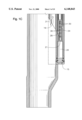
- FIGS. 1A-1C are elevation views which together illustrate an electro-hydraulically operated embodiment of the apparatus of the present invention having an on-board hydraulic system and connected to an electrical conduit running from the earth's surface; the power unit is shown rotated ninety degrees for clarity.
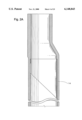
- FIGS. 2A-2C are elevation views which together illustrate a hydraulically operated embodiment of the apparatus of the present invention connected to a single hydraulic control line running from the earth's surface; the power unit is shown rotated ninety degrees for clarity.
- FIGS. 3A-3C are elevation views which together illustrate another hydraulically operated embodiment of the apparatus of the present invention connected to dual hydraulic control lines running from the earth's surface; the power unit is shown rotated ninety degrees for clarity.
- FIGS. 4A-4C are elevation views which together illustrate another hydraulically operated embodiment of the apparatus of the present invention connected to dual hydraulic control lines running from the earth's surface; the power unit is shown rotated ninety degrees for clarity.
- FIGS. 5A-5C are elevation views which together illustrate a pneumatic-hydraulically operated embodiment of the apparatus of the present invention connected to a single hydraulic control line running from the earth's surface; the power unit is shown rotated ninety degrees for clarity.
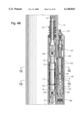
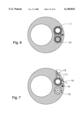
- FIG. 6 is a cross-sectional view taken along line 6--6 of FIG. 1B.
- FIG. 7 is a cross-sectional view taken along line 7--7 of FIG. 1B.
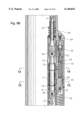
- FIG. 8 is a cross-sectional view taken along line 8--8 of FIG. 2B.
- FIG. 9 is a cross-sectional view taken along line 9--9 of FIG. 2B.
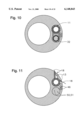
- FIG. 10 is a cross-sectional view taken along line 10--10 of FIG. 3B.
- FIG. 11 is a cross-sectional view taken along line 11--11 of FIG. 3B.
- FIG. 12 is a cross-sectional view taken along line 12--12 of FIG. 4B.
- FIG. 13 is a cross-sectional view taken along line 13--13 of FIG. 4B.
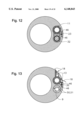
- FIG. 14 is a cross-sectional view taken along line 14--14 of FIG. 5B.
- FIG. 15 is a cross-sectional view taken along line 15--15 of FIG. 5B.
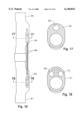
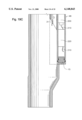
- FIG. 16 is a schematic representation of another embodiment of the present invention with a retrievable actuator positioned in an upper mandrel and a retrievable variable orifice gas lift valve positioned in a lowermost mandrel.
- FIG. 18 is a cross-sectional view taken along line 18--18 of FIG. 16.
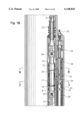
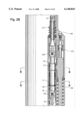
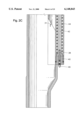
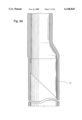
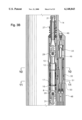
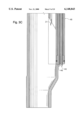
- FIGS. 19A-19C are elevational views which together illustrate an electro-mechanically operated embodiment of the apparatus of the present invention having an on-board electric motorgear box and brake assembly and connected to an electrical conduit running from the earth's surface; the power unit is shown rotated ninety degrees for clarity.
- FIG. 21 is a cross-sectional view taken along line 21--21 of FIG. 19.
- the terms “upper” and “lower,” “up hole” and “downhole,” and “upwardly” and “downwardly” are relative terms to indicate position and direction of movement in easily recognized terms. Usually, these terms are relative to a line drawn from an upmost position at the surface to a point at the center of the earth, and would be appropriate for use in relatively straight, vertical wellbores. However, when the wellbore is highly deviated, such as from about 60 degrees from vertical, or horizontal, these terms do not make sense and therefore should not be taken as limitations. These terms are only used for ease of understanding as an indication of what the position or movement would be if taken within a vertical wellbore.
- FIGS. 1A-1C together show a semidiagrammatic cross section of a gas lift valve 8 shown in the closed position, used in a subterranean well (not shown), illustrating: a valve body 10 with a longitudinal bore 12 for sealable insertion in a side pocket mandrel 14, a variable orifice valve 16 in the body 10 which alternately permits, prohibits, or throttles fluid flow (represented by item 18--see FIG.
- an actuating means shown generally by numeral 20 which is electro-hydraulically operated using a hydraulic pump 22 located in a downhole housing 24, an electric motor 26 connected to and driving the hydraulic pump 22 upon receipt of a signal through an electrical conduit 23 connected to a control panel (not shown) located at the earth's surface. Also shown is a moveable temperature/volume compensator piston 15 for displacing a volume of fluid that is utilized as the actuating means 20 operates and for compensating for pressure changes caused by temperature fluctuations.
- a solenoid valve 28 controls the movement of pressurized fluid pumped from a control fluid reservoir 25 through a pump suction port 21 and in a hydraulic circuitry 30, and the direction of the fluid flowing therethrough, which is connected to and responding to the action of the pump 22.
- a moveable hydraulic piston 32 responding to the pressure signal from the hydraulic circuitry 30 opens and controls the movement of the variable orifice valve 16.
- the actuator has a position sensor 34 which reports the relative location of the moveable hydraulic piston 32 to the control panel (not shown), and a position holder 33 which is configured to mechanically assure that the actuating means 20 remains in the desired position by the operator if conditions in the hydraulic system change slightly in use.
- a pressure transducer 35 communicating with the hydraulic circuitry 30, and transmitting collected data to the control panel (not shown) via the electrical conduit 23.
- a downstream pressure transducer 19 may be provided to cooperate with the pressure transducer 35 for measuring and reporting to the control panel any pressure drop across the variable orifice valve 16.
- variable orifice valve 16 When it is operationally desirable to open the variable orifice valve 16, an electric signal from the surface activates the electric motor 26 and the hydraulic pump 22, which routes pressure to the solenoid valve 28.
- the solenoid valve 28 also responding to stimulus from the control panel, shifts to a position to route hydraulic pressure to the moveable hydraulic piston 32 that opens the variable orifice valve 16.
- the variable orifice valve 16 may be stopped at intermediate positions between open and closed to adjust the flow of lift or injection gas 31 therethrough, and is held in place by the position holder 33.
- the solenoid valve 28 merely has to be moved to the opposite position rerouting hydraulic fluid to the opposite side of the moveable hydraulic piston 32, which then translates back to the closed position.
- variable orifice valve 16 may include a carbide stem and seat 17.
- the gas lift valve 8 may also be provided with one-way check valves 29 to prevent any fluid flow from the well conduit into the gas lift valve 8.
- the gas lift valve 8 may also be provided with a latch 27 so the valve may be remotely installed and/or retrieved by well known wireline or coiled tubing intervention methods.
- this embodiment of the present invention may also be provided with a valve connection collet 11, the structure and operation of which are well known to those of ordinary skill in the art.
- FIGS. 2A-2C together depict a semidiagrammatic cross section of a gas lift valve 8 shown in the closed position, used in a subterranean well (not shown), illustrating: a valve body 10 with a longitudinal bore 12 for sealable insertion in a side pocket mandrel 14, a variable orifice valve 16 in the body 10 which alternately permits, prohibits, or throttles fluid flow (represented by item 18--see FIG. 9) into said body through injection gas ports 13 in the mandrel 14, and an actuating means shown generally by numeral 36 that is hydraulically operated. Further illustrated is: a hydraulic actuating piston 38 located in a downhole housing 40 and operatively connected to a moveable piston 42, which is operatively connected to the variable orifice valve 16.
- a spring 44 biases said variable orifice valve 16 in either the full open or full closed position, and a control line 46 communicates with the hydraulic actuating piston 38 and extends to a hydraulic pressure source (not shown).
- hydraulic pressure is applied from the hydraulic pressure source (not shown), which communicates down the hydraulic control line 46 to the hydraulic actuating piston 38, which moves the moveable piston 42, which opens the variable orifice valve 16.
- variable orifice valve 16 may be stopped at intermediate positions between open and closed to adjust the flow of lift or injection gas 31 therethrough, and is held in place by a position holder 33 which is configured to mechanically assure that the actuating means 36 remains in the position where set by the operator if conditions in the hydraulic system change slightly in use.
- the valve is closed by releasing the pressure on the control line 46, allowing the spring 44 to translate the moveable piston 42, and the variable orifice valve 16 back to the closed position.
- variable orifice valve 16 may include a carbide stem and seat 17.
- the gas lift valve 8 may also be provided with one-way check valves 29 to prevent any fluid flow from the well conduit into the gas lift valve 8.
- the gas lift valve 8 may also be provided with a latch 27 so the valve may be remotely installed and/or retrieved by well known wireline or coiled tubing intervention methods.
- this embodiment of the present invention may also be provided with a valve connection collet 11, the structure and operation of which are well known to those of ordinary skill in the art.
- FIGS. 3A-3C together disclose another embodiment of a semidiagrammatic cross section of a gas lift valve 8 shown in the closed position, used in a subterranean well (not shown), illustrating: a valve body 10 with a longitudinal bore 12 for scalable insertion in a side pocket mandrel 14, a variable orifice valve 16 in the body 10 which alternately permits, prohibits, or throttles fluid flow (represented by item 18--see FIG. 11) into said body through injection gas ports 13 in the mandrel 14, and an actuating means shown generally by numeral 48 that is hydraulically operated. Further illustrated: hydraulic conduits 50 and 51 that route pressurized hydraulic fluid directly to a moveable piston 32, which is operatively connected to the variable orifice valve 16.
- Two control lines 46 extend to a hydraulic pressure source (not shown).
- the moveable hydraulic piston 32 responding to the pressure signal from the "valve open” hydraulic conduit 50 which opens and controls the movement of the variable orifice valve 16 while the “valve closed” hydraulic conduit 51 is bled off.
- the variable orifice valve 16 may be stopped at intermediate positions between open and closed to adjust the flow of lift or injection gas 31 therethrough, and is held in place by a position holder 33 which is configured to mechanically assure that the actuating means 48 remains in the position where set by the operator if conditions in the hydraulic system change slightly in use. Closure of the variable orifice valve 16 is accomplished by sending a pressure signal down the "valve closed” hydraulic conduit 51, and simultaneously bleeding pressure from the "valve open” hydraulic conduit 50.
- a fluid displacement control port 49 may also be provided for use during the bleeding off of the conduits 50 and 51, in a manner well known to those of ordinary skill in the art.
- the variable orifice valve 16 may include a carbide stem and seat 17.
- the gas lift valve 8 may also be provided with one-way check valves 29 to prevent any fluid flow from the well conduit into the gas lift valve 8.
- the gas lift valve 8 may also be provided with a latch 27 so the valve may be remotely installed and/or retrieved by well known wireline or coiled tubing intervention methods.
- this embodiment of the present invention may also be provided with a valve connection collet 11, the structure and operation of which are well known to those of ordinary skill in the art.
- FIGS. 4A-4C together depict a semidiagrammatic cross section of a gas lift valve 8 shown in the closed position, used in a subterranean well (not shown), illustrating: a valve body 10 with a longitudinal bore 12 for sealable insertion in a side pocket mandrel 14, a variable orifice valve 16 in the body 10 which alternately permits, prohibits, or throttles fluid flow (represented by item 18--see FIG. 13) into said body through injection gas ports 13 in the mandrel 14, and an actuating means shown generally by numeral 48 that is hydraulically operated.
- hydraulic conduits 50 and 51 that route pressurized hydraulic fluid directly to a moveable piston 32, which is operatively connected to the variable orifice valve 16, and two control lines 46 extending to a hydraulic pressure source (not shown).
- the movable hydraulic piston 32 responding to the pressure signal from the "valve open” hydraulic conduit 50 which opens and controls the movement of the variable orifice valve 16 while the "valve closed” hydraulic conduit 51 is bled off.
- the variable orifice valve 16 may be stopped at intermediate positions between open and closed to adjust the flow of lift or injection gas 31 therethrough, and is held in place by a position holder 33 which is configured to mechanically assure that the actuating means 20 remains in the position where set by the operator if conditions in the hydraulic system change slightly in use.
- Closure of the variable orifice valve 16 is accomplished by sending a pressure signal down the "valve closed” hydraulic conduit 51, and simultaneously bleeding pressure from the "valve open” hydraulic conduit 50.
- the actuator has a position sensor 34 which reports the relative location of the moveable hydraulic piston 32 to the control panel (not shown) via an electrical conduit 23.
- pressure transducers 35 communicating with the hydraulic conduits 50 and 51 through hydraulic pressure sensor chambers (e.g., conduit 51 communicates with chamber 9), and transmitting collected data to the control panel (not shown) via the electrical conduit 23.
- a downstream pressure transducer 19 may be provided to cooperate with the pressure transducer 35 for measuring and reporting to the control panel any pressure drop across the variable orifice valve 16.
- a fluid displacement control port 49 may also be provided for use during the bleeding off of the conduits 50 and 51, in a manner well known to those of ordinary skill in the art.
- the variable orifice valve 16 may include a carbide stem and seat 17.
- the gas lift valve 8 may also be provided with one-way check valves 29 to prevent any fluid flow from the well conduit into the gas lift valve 8.
- FIGS. 5A-5C together depict a semidiagrammatic cross section of a gas lift valve 8 shown in the closed position, used in a subterranean well (not shown), illustrating: a valve body 10 with a longitudinal bore 12 for sealable insertion in a side pocket mandrel 14, a variable orifice valve 16 in the body 10 which alternately permits, prohibits, or throttles fluid flow (represented by item 18--see FIG. 15) into said body through injection gas ports 13 in the mandrel 14, and an actuating means shown generally by numeral 52 that is hydraulically operated. Further illustrated: a hydraulic conduit 54 that routes pressurized hydraulic fluid directly to a moveable piston 32, which is operatively connected to the variable orifice valve 16.
- Hydraulic pressure is opposed by a pressurized nitrogen charge inside of a nitrogen coil chamber 56, the pressure of which is routed through a pneumatic conduit 58, which acts on an opposite end of the moveable hydraulic piston 32, biasing the variable orifice valve 16 in the closed position.
- the nitrogen coil chamber 56 is charged with nitrogen through a nitrogen charging port 57.
- hydraulic pressure is added to the control line 54, which overcomes pneumatic pressure in the pneumatic conduit 58 and nitrogen coil chamber 56, and translates the moveable piston 32 upward to open the variable orifice valve 16.
- variable orifice valve 16 may include a carbide stem and seat 17.
- the gas lift valve 8 may also be provided with one-way check valves 29 to prevent any fluid flow from the well conduit into the gas lift valve 8.
- the gas lift valve 8 may also be provided with a latch 27 so the valve may be remotely installed and/or retrieved by well known wireline or coiled tubing intervention methods.
- this embodiment of the present invention may also be provided with a valve connection collet 11, the structure and operation of which are well known to those of ordinary skill in the art.
- FIGS. 19A-19C together show a semidiagrammatic cross section of a gas lift valve 8 shown in the closed position, used in a subterranean well (not shown), illustrating: a valve body 10 with a longitudinal bore 12 for sealable insertion in a side pocket mandrel 14, a variable orifice valve 16 in the body 10 which alternately permits, prohibits, or throttles fluid flow (represented by item 18--see FIG.
- an actuating means shown generally by numeral 20 which is electro-mechanically operated using an electromechanical actuator assembly 100, which may include an electrically operated mechanical actuator 110, and may include lead screw 230 and ball screw nut 130 combination operably connected to operating piston 120, which is operably connected to valve 16. Also shown is a moveable temperature/volume compensation piston 15 for compensating for pressure changes caused by temperature fluctuations.
- Operating piston 120 may include a ball screw nut 130 or other follower element 130 for receiving or operably engaging with threads 250 provided in connection with a thread portion 240 of lead screw 230. Ball screw nut 130 may be either fixedly connected to or integral with operating piston 120.
- movement of the operating piston 120, and thereby adjustment of the position of orifice valve 16 is provided by rotatable adjustment of the lead screw 230 operably connected to operating piston 120 and, accordingly, variable orifice valve 16.
- ball screw nut 130, or other follower 130 is moved in a first lateral direction, which may be upward, causing, for example, the variable orifice valve 16 to be opened as the ball screw nut 130 moves along the lead screw 230 in the first, or opening, direction.
- the direction of rotation of the lead screw 230 may be reversed to cause the ball screw nut 130 to travel in a second lateral direction, which may be downward, causing, for example, the variable orifice valve 16 to be closed as the ball screw nut 130 moves along the lead screw 230 in the second, or closing, direction.
- Lead screw 230 may be held in place within the actuating chamber 270 by an upper bearing 170 and a lower bearing 160, which may be located within and fixedly connected to inner walls of the actuating chamber 270 or one or both of the upper and lower bearings 160, 170 may be fixedly connected to operating piston 120.
- lead screw 230 when mounted in the upper and lower bearings 160, 170, lead screw 230 is disposed within operating piston 120 and is held in place within a bore 125 provided through the operating piston 120. Also disposed within the bore 125 of operating piston 120 is ball screw nut 130, which may be comprised of a nut ring 140 and a nut bearing 150. It should be noted that the nut bearing 150 may be a rotatable ball bearing 150 or it may comprise at least one fixed protrusion (not shown), which is sized and shaped to engage within the threads 250 provided in the thread portion 240 of lead screw 230.
- Lead screw 230 is rotated by use of motor-gear box and brake assembly 200, which is disposed within actuating chamber 270 along with operating piston 120 and lead screw 230.
- Motor-gear box and brake assembly 200 is operated by an electronic controller 220, which may be integral with the motor-gear box and brake assembly 200 or may be a separate electronic controller unit (not shown).
- Control line 210 is operably connected between motor-gear box and brake assembly 200 and electronic controller 220 to transmit a control signal from electronic controller 220 to operate motor-gear box and brake assembly 200 and to cause motor-gear box and brake assembly 200 to selectively rotate between a first, or opening, direction and a second, or closing direction.
- Electronic controller 220 may be provided either at the surface or may be provided downhole in the actutating chamber. In the embodiment shown, electronic controller 220 is disposed within actuating chamber 270 and communicates with a control panel (not shown) at the surface by way of control line 210.
- an electric signal from the surface communicates with the electronic controller 220, which activates the motor-gear box and brake assembly 200, which is thereby caused to rotate in either the first, or opening, direction, or the second, or closing, direction.
- Rotation of the motor-gear box and brake assembly 220 is communicated to the lead screw 230 by a connector 180, which may be disposed within a connector housing 190.
- a first portion of connector 180 is operably connected to motor-gear box and brake assembly 200 and a second portion of connector 180 is operably connected to the body 260 of lead screw 230.
- variable orifice valve 16 may be stopped at intermediate positions between open and closed to adjust the flow of lift or injection gas 31 therethrough by merely stopping the rotation of the lead screw 230.
- the lead screw 230 is caused to rotate in the first, or opening, direction.
- the lead screw 230 is caused to rotate in the second, or closing, direction.
- FIG. 16 is a schematic representation of one preferred embodiment of the present invention. Disclosed are uppermost and lowermost side pocket mandrels 60 and 61 sealably connected by a well coupling 62. A coiled tubing or wireline retrievable actuator 64 is positioned in the uppermost mandrel 60, and a variable orifice gas lift valve 66 is positioned in the lowermost mandrel 61, and are operatively connected by hydraulic control lines 68. In previous figures, the variable orifice valve 16 and the actuating mechanisms described in FIGS. 1-5 are shown located in the same mandrel, making retrieval of both mechanisms difficult, if not impossible.
- variable orifice gas lift valve 66, and the electro-hydraulic wireline or coiled tubing retrievable actuator 64 of the present invention are located, installed and retrieved separately, but are operatively connected one to another by hydraulic control lines 68.
- This allows retrieval of each mechanism separately, using either wireline or coiled tubing intervention methods which are well known in the art.
- FIG. 18 which is a cross-sectional view taken along line 18--18 of FIG. 16 an operating piston 72 is disposed adjacent the variable orifice valve 66 in the lowermost mandrel 61. In every other aspect, however, the mechanisms operate as heretofore described.
- valve mechanism generically known as a poppet valve to those skilled in the art of valve mechanics. It can, however, be appreciated that several well known valve mechanisms may obviously be employed and still be within the scope and spirit of the present invention. Rotating balls or plugs, butterfly valves, rising stem gates, and flappers are several other generic valve mechanisms which may obviously be employed to accomplish the same function in the same manner.
Landscapes
- Geology (AREA)
- Life Sciences & Earth Sciences (AREA)
- Engineering & Computer Science (AREA)
- Mining & Mineral Resources (AREA)
- Environmental & Geological Engineering (AREA)
- Fluid Mechanics (AREA)
- Physics & Mathematics (AREA)
- General Life Sciences & Earth Sciences (AREA)
- Geochemistry & Mineralogy (AREA)
- Fluid-Driven Valves (AREA)
- Lift Valve (AREA)
- Safety Valves (AREA)
- Mechanically-Actuated Valves (AREA)
- Self-Closing Valves And Venting Or Aerating Valves (AREA)
Abstract
The present invention is a surface controlled gas lift valve designed for high flow rates and used in a subterranean well, comprising: a valve for sealable insertion in a mandrel, having a variable orifice which alternately permits, prohibits, or throttles fluid flow into the valve, and a detachable and/or remote actuator are disclosed. The valve can be actuated by an electro-mechanical actuating assembly while sensors can relay the position of the variable orifice to a panel on the surface. The orifice valve and the actuator while operatively connected, may be separately installed in or retrieved from by either wireline or coiled tubing intervention methods.
Description
This application claims the benefit of U.S. Provisional Application No. 60/023,965, filed Aug. 15, 1996 and is a continuation-in-part of U.S. application Ser. No. 08/912,150, filed Aug. 15, 1997, now U.S. Pat No. 6,070,608.
1. Field of the Invention
The present invention relates to subsurface well completion equipment and, more particularly, to an apparatus for lifting hydrocarbons from subterranean formations with gas at high production rates. Additionally, embodiments of independent and detachable actuators are disclosed.
2. Description of the Related Art
Artificial lift systems, long known by those skilled in the art of oil well production, are used to assist in the extraction of fluids from subterranean geological formations. The most ideal well for a company concerned with the production of oil, is one that flows naturally and without assistance. Often wells drilled in new fields have this advantage. In this ideal case, the pressure of the producing formation is greater than the hydrostatic pressure of the fluid in the wellbore, allowing the well to flow without artificial lift. However, as an oil bearing formation matures, and some significant percentage of the product is recovered, a reduction in the formation pressure occurs. With this reduction in formation pressure, the hydrocarbon issuance therefrom is likewise reduced to a point where the well no longer flows without assistance, despite the presence of significant volumes of valuable product still in place in the oil bearing stratum. In wells where this type of production decrease occurs, or if the formation pressure is low from the outset, artificial lift is commonly employed to enhance the recovery of oil from the formation. This disclosure is primarily concerned with one type of artificial lift called "Gas Lift."
Gas lift has long been known to those skilled in the art, as shown in U.S. Pat. No. 2,137,441 filed in November 1938. Other patents of some historic significance are U.S. Pat. Nos. 2,672,827, 2,679,827, 2,679,903, and 2,824,525, all commonly assigned hereto. Other, more recent developments in this field include U.S. Pat. Nos. 4,239,082, 4,360,064 of common assignment, as well as U.S. Pat. Nos. 4,295,796, 4,625,941, and 5,176,164. While these patents all contributed to furthering the art of gas lift valves in wells, recent trends in drilling and completion techniques expose and highlight long felt limitations with this matured technology.
The economic climate in the oil industry of the 1990's demands that oil producing companies produce more oil, that is now exponentially more difficult to exploit, in less time, and without increasing prices to the consumer. One successful technique that is currently being employed is deviated and horizontal drilling, which more efficiently drains hydrocarbon bearing formations. This increase in production makes it necessary to use much larger production tubing sizes. For example, in years past, 23/8 inch production tubing was most common. Today, tubing sizes of offshore wells range from 41/2 to 7 inches. While much more oil can be produced from tubing this large, conventional gas lift techniques have reached or exceeded their operational limit as a result.
In order for oil to be produced utilizing gas lift, a precise volume and velocity of the gas flowing upward through the tubing must be maintained. Gas injected into the hydrostatic column of fluid decreases the column's total density and pressure gradient, allowing the well to flow. As the tubing size increases, the volume of gas required to maintain the well in a flowing condition increases as the square of the increase in tubing diameter. If the volume of the gas lifting the oil is not maintained, the produced oil falls back down the tubing, and the well suffers a condition commonly known as "loading up." If the volume of gas is too great, the cost of compression and recovery of the lift gas becomes a significant percentage of the production cost. As a result, the size of a gas injection orifice in the gas lift valve is of crucial importance to the stable operation of the well. Prior art gas lift valves employ fixed diameter orifices in a range up to 3/4 inch, which may be inadequate for optimal production in large diameter tubing. This size limitation is geometrically limited by the gas lift valve's requisite small size, and the position of its operating mechanism, which prevents a full bore through the valve for maximum flow.
Because well conditions and gas lift requirements change over time, those skilled in the art of well operations are also constantly aware of the compromise of well efficiency that must be balanced versus the cost of intervention to install the most optimal gas lift valves therein as well conditions change over time. Well intervention is expensive, most especially on prolific offshore or subsea wells, so a valve that can be utilized over the entire life of the well, and whose orifice size and subsequent flow rate can be adjusted to changing downhole conditions, is a long felt and unresolved need in the oil industry. There is also a need for a novel gas lift valve that has a gas injection orifice that is large enough to inject a volume of gas adequate to lift oil in large diameter production tubing. There is also a need for differing and novel operating mechanisms for gas lift valves that will not impede the flow of injection gas therethrough.
The present invention has been contemplated to overcome the foregoing deficiencies and meet the above described needs. In one aspect, the present invention is a gas lift valve for use in a subterranean well, comprising: a valve body with a longitudinal bore therethrough for sealable insertion in a mandrel; a variable orifice valve in the valve body for controlling fluid flow into the body; and an actuating means connected to the variable orifice valve. Another feature of this aspect of the invention is that the actuating means may be electro-mechanically operated and may further include: a mechanical actuator located in a downhole housing and operatively connected to the variable orifice valve; and an electric motor connected to and driving the mechanical actuator upon receipt of a signal from a control panel to control movement of the mechanical actuator whereby movement of the mechanical actuator controls movement of the variable orifice valve.
Another feature of this aspect of the invention is that the mechanical actuator further may include a moveable operating piston and the actuating means may further include a position sensor to report relative location of the moveable operating piston to the control panel. Another feature of this aspect of the invention is that the gas lift valve may be retrievably locatable within a side pocket mandrel by wireline and coiled tubing intervention tools. Another feature of this aspect of the invention is that the gas lift valve may be selectively installed and retrievably detached from the actuating means.
In another aspect, the invention may be a gas lift valve for variably introducing injection gas into a subterranean well, comprising: a valve body with a longitudinal bore therethrough for sealable insertion in a mandrel; a variable orifice valve in the body for controlling flow of injection gas into the body; and an electro-mechanical actuator assembly operatively connected to the variable orifice valve, whereby the amount of injection gas introduced into the well through the variable orifice valve is controlled by electrical control of the movement of the electro-mechanical actuator assembly. Another feature of this aspect of the invention is that the the electro-mechanical actuator assembly may include: a mechanical lead screw located in a downhole housing; and an electric motor connected to and driving the mechanical lead screw upon receipt of a signal from a control panel.
Another feature of this aspect of the invention is that the gas lift valve may further include an electrical conduit connecting the control panel to the gas lift valve for providing a signal to the electric motor. Another feature of this aspect of the invention is that the gas lift valve may further include a position sensor to report relative location of the moveable operating piston to the control panel. Another feature of this aspect of the invention is that the variable orifice valve may be stopped at intermediate positions between a full open and a full closed position to adjust the flow of injection gas therethrough and the variable orifice valve may further include a carbide stem and seat. Another feature of this aspect of the invention is that the mandrel may be provided with at least one injection gas port through which injection gas flows when the variable orifice valve is open. Another feature of this aspect of the invention is that the gas lift valve may further include an upper and lower one-way check valve located on opposite sides of the variable orifice valve to prevent any fluid flow from the well into the gas lift valve.
Another feature of this aspect of the invention is that the gas lift valve may further include latch means for adapting the variable orifice valve to be remotely deployed and retrieved and the variable orifice valve may be remotely deployed and retrieved by utilization of coiled tubing. Another feature of this aspect of the invention is that the variable orifice valve may be remotely deployed and retrieved by utilization of wireline. Another feature of this aspect of the invention is that the gas lift valve may further include a valve connection collet. Another feature of this aspect of the invention is that the electro-mechanical actuator assembly may include a moveable operating piston, operatively connected to the mechanical lead screw and the moveable operating piston may include a follower element engaged within a thread portion of the mechanical lead screw.
FIGS. 1A-1C are elevation views which together illustrate an electro-hydraulically operated embodiment of the apparatus of the present invention having an on-board hydraulic system and connected to an electrical conduit running from the earth's surface; the power unit is shown rotated ninety degrees for clarity.
FIGS. 2A-2C are elevation views which together illustrate a hydraulically operated embodiment of the apparatus of the present invention connected to a single hydraulic control line running from the earth's surface; the power unit is shown rotated ninety degrees for clarity.
FIGS. 3A-3C are elevation views which together illustrate another hydraulically operated embodiment of the apparatus of the present invention connected to dual hydraulic control lines running from the earth's surface; the power unit is shown rotated ninety degrees for clarity.
FIGS. 4A-4C are elevation views which together illustrate another hydraulically operated embodiment of the apparatus of the present invention connected to dual hydraulic control lines running from the earth's surface; the power unit is shown rotated ninety degrees for clarity.
FIGS. 5A-5C are elevation views which together illustrate a pneumatic-hydraulically operated embodiment of the apparatus of the present invention connected to a single hydraulic control line running from the earth's surface; the power unit is shown rotated ninety degrees for clarity.
FIG. 6 is a cross-sectional view taken along line 6--6 of FIG. 1B.
FIG. 7 is a cross-sectional view taken along line 7--7 of FIG. 1B.
FIG. 8 is a cross-sectional view taken along line 8--8 of FIG. 2B.
FIG. 9 is a cross-sectional view taken along line 9--9 of FIG. 2B.
FIG. 10 is a cross-sectional view taken along line 10--10 of FIG. 3B.
FIG. 11 is a cross-sectional view taken along line 11--11 of FIG. 3B.
FIG. 12 is a cross-sectional view taken along line 12--12 of FIG. 4B.
FIG. 13 is a cross-sectional view taken along line 13--13 of FIG. 4B.
FIG. 14 is a cross-sectional view taken along line 14--14 of FIG. 5B.
FIG. 15 is a cross-sectional view taken along line 15--15 of FIG. 5B.
FIG. 16 is a schematic representation of another embodiment of the present invention with a retrievable actuator positioned in an upper mandrel and a retrievable variable orifice gas lift valve positioned in a lowermost mandrel.
FIG. 17 is a cross-sectional view taken along line 17--17 of FIG. 16.
FIG. 18 is a cross-sectional view taken along line 18--18 of FIG. 16.
FIGS. 19A-19C are elevational views which together illustrate an electro-mechanically operated embodiment of the apparatus of the present invention having an on-board electric motorgear box and brake assembly and connected to an electrical conduit running from the earth's surface; the power unit is shown rotated ninety degrees for clarity.
FIG. 20 is a cross-sectional view taken along line 20--20 of FIG. 19.
FIG. 21 is a cross-sectional view taken along line 21--21 of FIG. 19.
While the invention will be described in connection with the preferred embodiments, it will be understood that it is not intended to limit the invention to those embodiments. On the contrary, it is intended to cover all alternatives, modifications, and equivalents as may be included within the spirit and scope of the invention as defined by the appended claims.
In the description that follows, like parts are marked through the specification and drawings with the same reference numerals, respectively. The figures are not necessarily drawn to scale, and in some instances, have been exaggerated or simplified to clarify certain features of the invention. One skilled in the art will appreciate many differing applications of the described apparatus.
For the purposes of this discussion, the terms "upper" and "lower," "up hole" and "downhole," and "upwardly" and "downwardly" are relative terms to indicate position and direction of movement in easily recognized terms. Usually, these terms are relative to a line drawn from an upmost position at the surface to a point at the center of the earth, and would be appropriate for use in relatively straight, vertical wellbores. However, when the wellbore is highly deviated, such as from about 60 degrees from vertical, or horizontal, these terms do not make sense and therefore should not be taken as limitations. These terms are only used for ease of understanding as an indication of what the position or movement would be if taken within a vertical wellbore.
FIGS. 1A-1C together show a semidiagrammatic cross section of a gas lift valve 8 shown in the closed position, used in a subterranean well (not shown), illustrating: a valve body 10 with a longitudinal bore 12 for sealable insertion in a side pocket mandrel 14, a variable orifice valve 16 in the body 10 which alternately permits, prohibits, or throttles fluid flow (represented by item 18--see FIG. 7) into said body through injection gas ports 13 in the mandrel 14, and an actuating means, shown generally by numeral 20 which is electro-hydraulically operated using a hydraulic pump 22 located in a downhole housing 24, an electric motor 26 connected to and driving the hydraulic pump 22 upon receipt of a signal through an electrical conduit 23 connected to a control panel (not shown) located at the earth's surface. Also shown is a moveable temperature/volume compensator piston 15 for displacing a volume of fluid that is utilized as the actuating means 20 operates and for compensating for pressure changes caused by temperature fluctuations. A solenoid valve 28 controls the movement of pressurized fluid pumped from a control fluid reservoir 25 through a pump suction port 21 and in a hydraulic circuitry 30, and the direction of the fluid flowing therethrough, which is connected to and responding to the action of the pump 22. A moveable hydraulic piston 32 responding to the pressure signal from the hydraulic circuitry 30 opens and controls the movement of the variable orifice valve 16. The actuator has a position sensor 34 which reports the relative location of the moveable hydraulic piston 32 to the control panel (not shown), and a position holder 33 which is configured to mechanically assure that the actuating means 20 remains in the desired position by the operator if conditions in the hydraulic system change slightly in use. Also shown is a pressure transducer 35 communicating with the hydraulic circuitry 30, and transmitting collected data to the control panel (not shown) via the electrical conduit 23. As shown in FIG. 1C, a downstream pressure transducer 19 may be provided to cooperate with the pressure transducer 35 for measuring and reporting to the control panel any pressure drop across the variable orifice valve 16. It will be obvious to one skilled in the art that the electric motor 26 and downhole pump 22 have been used to eliminate the cost of running a control line from a surface pressure source. This representation should not be taken as a limitation. Obviously, a control line could be run from the surface to replace the electric motor 26 and downhole pump 22, and would be controlled in the same manner without altering the scope or spirit of this invention. When it is operationally desirable to open the variable orifice valve 16, an electric signal from the surface activates the electric motor 26 and the hydraulic pump 22, which routes pressure to the solenoid valve 28. The solenoid valve 28 also responding to stimulus from the control panel, shifts to a position to route hydraulic pressure to the moveable hydraulic piston 32 that opens the variable orifice valve 16. The variable orifice valve 16 may be stopped at intermediate positions between open and closed to adjust the flow of lift or injection gas 31 therethrough, and is held in place by the position holder 33. To close the valve, the solenoid valve 28 merely has to be moved to the opposite position rerouting hydraulic fluid to the opposite side of the moveable hydraulic piston 32, which then translates back to the closed position.
As shown in FIG. 1B, the variable orifice valve 16 may include a carbide stem and seat 17. The gas lift valve 8 may also be provided with one-way check valves 29 to prevent any fluid flow from the well conduit into the gas lift valve 8. The gas lift valve 8 may also be provided with a latch 27 so the valve may be remotely installed and/or retrieved by well known wireline or coiled tubing intervention methods. As shown in FIG. 6, this embodiment of the present invention may also be provided with a valve connection collet 11, the structure and operation of which are well known to those of ordinary skill in the art.
FIGS. 2A-2C together depict a semidiagrammatic cross section of a gas lift valve 8 shown in the closed position, used in a subterranean well (not shown), illustrating: a valve body 10 with a longitudinal bore 12 for sealable insertion in a side pocket mandrel 14, a variable orifice valve 16 in the body 10 which alternately permits, prohibits, or throttles fluid flow (represented by item 18--see FIG. 9) into said body through injection gas ports 13 in the mandrel 14, and an actuating means shown generally by numeral 36 that is hydraulically operated. Further illustrated is: a hydraulic actuating piston 38 located in a downhole housing 40 and operatively connected to a moveable piston 42, which is operatively connected to the variable orifice valve 16. A spring 44, biases said variable orifice valve 16 in either the full open or full closed position, and a control line 46 communicates with the hydraulic actuating piston 38 and extends to a hydraulic pressure source (not shown). When it is operationally desirable to open the variable orifice valve 16, hydraulic pressure is applied from the hydraulic pressure source (not shown), which communicates down the hydraulic control line 46 to the hydraulic actuating piston 38, which moves the moveable piston 42, which opens the variable orifice valve 16. The variable orifice valve 16 may be stopped at intermediate positions between open and closed to adjust the flow of lift or injection gas 31 therethrough, and is held in place by a position holder 33 which is configured to mechanically assure that the actuating means 36 remains in the position where set by the operator if conditions in the hydraulic system change slightly in use. The valve is closed by releasing the pressure on the control line 46, allowing the spring 44 to translate the moveable piston 42, and the variable orifice valve 16 back to the closed position.
As shown in FIG. 2B, the variable orifice valve 16 may include a carbide stem and seat 17. The gas lift valve 8 may also be provided with one-way check valves 29 to prevent any fluid flow from the well conduit into the gas lift valve 8. The gas lift valve 8 may also be provided with a latch 27 so the valve may be remotely installed and/or retrieved by well known wireline or coiled tubing intervention methods. As shown in FIG. 8, this embodiment of the present invention may also be provided with a valve connection collet 11, the structure and operation of which are well known to those of ordinary skill in the art.
FIGS. 3A-3C together disclose another embodiment of a semidiagrammatic cross section of a gas lift valve 8 shown in the closed position, used in a subterranean well (not shown), illustrating: a valve body 10 with a longitudinal bore 12 for scalable insertion in a side pocket mandrel 14, a variable orifice valve 16 in the body 10 which alternately permits, prohibits, or throttles fluid flow (represented by item 18--see FIG. 11) into said body through injection gas ports 13 in the mandrel 14, and an actuating means shown generally by numeral 48 that is hydraulically operated. Further illustrated: hydraulic conduits 50 and 51 that route pressurized hydraulic fluid directly to a moveable piston 32, which is operatively connected to the variable orifice valve 16. Two control lines 46 extend to a hydraulic pressure source (not shown). The moveable hydraulic piston 32 responding to the pressure signal from the "valve open" hydraulic conduit 50 which opens and controls the movement of the variable orifice valve 16 while the "valve closed" hydraulic conduit 51 is bled off. The variable orifice valve 16 may be stopped at intermediate positions between open and closed to adjust the flow of lift or injection gas 31 therethrough, and is held in place by a position holder 33 which is configured to mechanically assure that the actuating means 48 remains in the position where set by the operator if conditions in the hydraulic system change slightly in use. Closure of the variable orifice valve 16 is accomplished by sending a pressure signal down the "valve closed" hydraulic conduit 51, and simultaneously bleeding pressure from the "valve open" hydraulic conduit 50.
A fluid displacement control port 49 may also be provided for use during the bleeding off of the conduits 50 and 51, in a manner well known to those of ordinary skill in the art. As shown in FIG. 3B, the variable orifice valve 16 may include a carbide stem and seat 17. The gas lift valve 8 may also be provided with one-way check valves 29 to prevent any fluid flow from the well conduit into the gas lift valve 8. The gas lift valve 8 may also be provided with a latch 27 so the valve may be remotely installed and/or retrieved by well known wireline or coiled tubing intervention methods. As shown in FIG. 10, this embodiment of the present invention may also be provided with a valve connection collet 11, the structure and operation of which are well known to those of ordinary skill in the art.
FIGS. 4A-4C together depict a semidiagrammatic cross section of a gas lift valve 8 shown in the closed position, used in a subterranean well (not shown), illustrating: a valve body 10 with a longitudinal bore 12 for sealable insertion in a side pocket mandrel 14, a variable orifice valve 16 in the body 10 which alternately permits, prohibits, or throttles fluid flow (represented by item 18--see FIG. 13) into said body through injection gas ports 13 in the mandrel 14, and an actuating means shown generally by numeral 48 that is hydraulically operated. Further illustrated: hydraulic conduits 50 and 51 that route pressurized hydraulic fluid directly to a moveable piston 32, which is operatively connected to the variable orifice valve 16, and two control lines 46 extending to a hydraulic pressure source (not shown). The movable hydraulic piston 32 responding to the pressure signal from the "valve open" hydraulic conduit 50 which opens and controls the movement of the variable orifice valve 16 while the "valve closed" hydraulic conduit 51 is bled off. The variable orifice valve 16 may be stopped at intermediate positions between open and closed to adjust the flow of lift or injection gas 31 therethrough, and is held in place by a position holder 33 which is configured to mechanically assure that the actuating means 20 remains in the position where set by the operator if conditions in the hydraulic system change slightly in use. Closure of the variable orifice valve 16 is accomplished by sending a pressure signal down the "valve closed" hydraulic conduit 51, and simultaneously bleeding pressure from the "valve open" hydraulic conduit 50. The actuator has a position sensor 34 which reports the relative location of the moveable hydraulic piston 32 to the control panel (not shown) via an electrical conduit 23. Also shown are pressure transducers 35 communicating with the hydraulic conduits 50 and 51 through hydraulic pressure sensor chambers (e.g., conduit 51 communicates with chamber 9), and transmitting collected data to the control panel (not shown) via the electrical conduit 23.
As shown in FIG. 4C, a downstream pressure transducer 19 may be provided to cooperate with the pressure transducer 35 for measuring and reporting to the control panel any pressure drop across the variable orifice valve 16. As shown in FIG. 4B, a fluid displacement control port 49 may also be provided for use during the bleeding off of the conduits 50 and 51, in a manner well known to those of ordinary skill in the art. As also shown in FIG. 4B, the variable orifice valve 16 may include a carbide stem and seat 17. The gas lift valve 8 may also be provided with one-way check valves 29 to prevent any fluid flow from the well conduit into the gas lift valve 8. The gas lift valve 8 may also be provided with a latch 27 so the valve may be remotely installed and/or retrieved by well known wireline or coiled tubing intervention methods. As shown in FIG. 12, this embodiment of the present invention may also be provided with a valve connection collet 11, the structure and operation of which are well known to those of ordinary skill in the art.
FIGS. 5A-5C together depict a semidiagrammatic cross section of a gas lift valve 8 shown in the closed position, used in a subterranean well (not shown), illustrating: a valve body 10 with a longitudinal bore 12 for sealable insertion in a side pocket mandrel 14, a variable orifice valve 16 in the body 10 which alternately permits, prohibits, or throttles fluid flow (represented by item 18--see FIG. 15) into said body through injection gas ports 13 in the mandrel 14, and an actuating means shown generally by numeral 52 that is hydraulically operated. Further illustrated: a hydraulic conduit 54 that routes pressurized hydraulic fluid directly to a moveable piston 32, which is operatively connected to the variable orifice valve 16. Hydraulic pressure is opposed by a pressurized nitrogen charge inside of a nitrogen coil chamber 56, the pressure of which is routed through a pneumatic conduit 58, which acts on an opposite end of the moveable hydraulic piston 32, biasing the variable orifice valve 16 in the closed position. The nitrogen coil chamber 56 is charged with nitrogen through a nitrogen charging port 57. When it is operationally desirable to open the variable orifice valve 16, hydraulic pressure is added to the control line 54, which overcomes pneumatic pressure in the pneumatic conduit 58 and nitrogen coil chamber 56, and translates the moveable piston 32 upward to open the variable orifice valve 16. As before, the variable orifice valve 16 may be stopped at intermediate positions between open and closed to adjust the flow of lift or injection gas 31 therethrough, and is held in place by a position holder 33 which is configured to mechanically assure that the actuating means 52 remains in the position where set by the operator if conditions in the hydraulic system change slightly in use. Closing the variable orifice valve 16 is accomplished by bleeding off the pressure from the control line 54, which causes the pneumatic pressure in the nitrogen coil chamber 56 to close the valve because it is higher than the hydraulic pressure in the hydraulic conduit 54. An annulus port 53 may also be provided through the wall of the mandrel 14 through which pressure may be discharged to the annulus during operation.
As shown in FIG. 5B, the variable orifice valve 16 may include a carbide stem and seat 17. The gas lift valve 8 may also be provided with one-way check valves 29 to prevent any fluid flow from the well conduit into the gas lift valve 8. The gas lift valve 8 may also be provided with a latch 27 so the valve may be remotely installed and/or retrieved by well known wireline or coiled tubing intervention methods. As shown in FIG. 14, this embodiment of the present invention may also be provided with a valve connection collet 11, the structure and operation of which are well known to those of ordinary skill in the art.
FIGS. 19A-19C together show a semidiagrammatic cross section of a gas lift valve 8 shown in the closed position, used in a subterranean well (not shown), illustrating: a valve body 10 with a longitudinal bore 12 for sealable insertion in a side pocket mandrel 14, a variable orifice valve 16 in the body 10 which alternately permits, prohibits, or throttles fluid flow (represented by item 18--see FIG. 20) into said body 10 through injection gas ports 13 in the mandrel 14, and an actuating means, shown generally by numeral 20 which is electro-mechanically operated using an electromechanical actuator assembly 100, which may include an electrically operated mechanical actuator 110, and may include lead screw 230 and ball screw nut 130 combination operably connected to operating piston 120, which is operably connected to valve 16. Also shown is a moveable temperature/volume compensation piston 15 for compensating for pressure changes caused by temperature fluctuations. Operating piston 120 may include a ball screw nut 130 or other follower element 130 for receiving or operably engaging with threads 250 provided in connection with a thread portion 240 of lead screw 230. Ball screw nut 130 may be either fixedly connected to or integral with operating piston 120. In the event that a ball screw nut 130 is not provided, the follower element 130 may comprise at least one pinion or other protrusion (not shown) integrally formed in the body of operating piston 120 or formed in or connected to some other component (not shown) operably connected to the operating piston 120 for translating rotatatable movement of the lead screw 230 into lateral movement of the operating piston 120, thereby providing adjustment of the position of orifice valve 16 operably connected thereto.
In a preferred embodiment shown in FIGS. 19A-19C, movement of the operating piston 120, and thereby adjustment of the position of orifice valve 16, is provided by rotatable adjustment of the lead screw 230 operably connected to operating piston 120 and, accordingly, variable orifice valve 16. As the lead screw 230 is rotated in a first rotatable direction, ball screw nut 130, or other follower 130, is moved in a first lateral direction, which may be upward, causing, for example, the variable orifice valve 16 to be opened as the ball screw nut 130 moves along the lead screw 230 in the first, or opening, direction. Similarly, the direction of rotation of the lead screw 230 may be reversed to cause the ball screw nut 130 to travel in a second lateral direction, which may be downward, causing, for example, the variable orifice valve 16 to be closed as the ball screw nut 130 moves along the lead screw 230 in the second, or closing, direction. Lead screw 230 may be held in place within the actuating chamber 270 by an upper bearing 170 and a lower bearing 160, which may be located within and fixedly connected to inner walls of the actuating chamber 270 or one or both of the upper and lower bearings 160, 170 may be fixedly connected to operating piston 120. In the preferred embodiment shown, when mounted in the upper and lower bearings 160, 170, lead screw 230 is disposed within operating piston 120 and is held in place within a bore 125 provided through the operating piston 120. Also disposed within the bore 125 of operating piston 120 is ball screw nut 130, which may be comprised of a nut ring 140 and a nut bearing 150. It should be noted that the nut bearing 150 may be a rotatable ball bearing 150 or it may comprise at least one fixed protrusion (not shown), which is sized and shaped to engage within the threads 250 provided in the thread portion 240 of lead screw 230.
Lead screw 230 is rotated by use of motor-gear box and brake assembly 200, which is disposed within actuating chamber 270 along with operating piston 120 and lead screw 230. Motor-gear box and brake assembly 200 is operated by an electronic controller 220, which may be integral with the motor-gear box and brake assembly 200 or may be a separate electronic controller unit (not shown). Control line 210 is operably connected between motor-gear box and brake assembly 200 and electronic controller 220 to transmit a control signal from electronic controller 220 to operate motor-gear box and brake assembly 200 and to cause motor-gear box and brake assembly 200 to selectively rotate between a first, or opening, direction and a second, or closing direction. Electronic controller 220 may be provided either at the surface or may be provided downhole in the actutating chamber. In the embodiment shown, electronic controller 220 is disposed within actuating chamber 270 and communicates with a control panel (not shown) at the surface by way of control line 210.
When it is operationally desirable to open the variable orifice valve 16, an electric signal from the surface communicates with the electronic controller 220, which activates the motor-gear box and brake assembly 200, which is thereby caused to rotate in either the first, or opening, direction, or the second, or closing, direction. Rotation of the motor-gear box and brake assembly 220 is communicated to the lead screw 230 by a connector 180, which may be disposed within a connector housing 190. A first portion of connector 180 is operably connected to motor-gear box and brake assembly 200 and a second portion of connector 180 is operably connected to the body 260 of lead screw 230.
The actuating means 20 has a position sensor 34, which reports the relative location of the moveable operating piston 120 to the control panel (not shown). The lead screw geometry, itself, which may be assisted by the braking effect of motor-gear box and brake assembly 200, may mechanically assure that the operating piston 120 will remain in the desired position by the operator. Therefore, position holder 33 may not be required in the embodiment shown. Also shown is a moveable temperature/volume compensator piston 15 for displacing a volume of fluid that is utilized as the actuating means 20 operates and for compensating for pressure changes caused by temperature fluctuations.
The variable orifice valve 16 may be stopped at intermediate positions between open and closed to adjust the flow of lift or injection gas 31 therethrough by merely stopping the rotation of the lead screw 230. To open the valve 16, the lead screw 230 is caused to rotate in the first, or opening, direction. To close the valve, the lead screw 230 is caused to rotate in the second, or closing, direction.
As shown in FIG. 19B, the variable orifice valve 16 may include a carbide stem and seat 17. The gas lift valve 8 may also be provided with one-way check valves 29 to prevent any fluid flow from the well conduit into the gas lift valve 8. The gas lift valve 8 may also be provided with a latch 27 so the valve may be remotely installed and/or retrieved by well known wireline or coiled tubing intervention methods. As shown in FIG. 20, this embodiment of the present invention may also be provided with a valve connection collet 11, the structure and operation of which arc well known to those of ordinary skill in the art.
FIG. 16 is a schematic representation of one preferred embodiment of the present invention. Disclosed are uppermost and lowermost side pocket mandrels 60 and 61 sealably connected by a well coupling 62. A coiled tubing or wireline retrievable actuator 64 is positioned in the uppermost mandrel 60, and a variable orifice gas lift valve 66 is positioned in the lowermost mandrel 61, and are operatively connected by hydraulic control lines 68. In previous figures, the variable orifice valve 16 and the actuating mechanisms described in FIGS. 1-5 are shown located in the same mandrel, making retrieval of both mechanisms difficult, if not impossible. In this embodiment, the variable orifice gas lift valve 66, and the electro-hydraulic wireline or coiled tubing retrievable actuator 64 of the present invention are located, installed and retrieved separately, but are operatively connected one to another by hydraulic control lines 68. This allows retrieval of each mechanism separately, using either wireline or coiled tubing intervention methods which are well known in the art. As shown in FIG. 18, which is a cross-sectional view taken along line 18--18 of FIG. 16, an operating piston 72 is disposed adjacent the variable orifice valve 66 in the lowermost mandrel 61. In every other aspect, however, the mechanisms operate as heretofore described.
It should be noted that the preferred embodiments described herein employ a well known valve mechanism generically known as a poppet valve to those skilled in the art of valve mechanics. It can, however, be appreciated that several well known valve mechanisms may obviously be employed and still be within the scope and spirit of the present invention. Rotating balls or plugs, butterfly valves, rising stem gates, and flappers are several other generic valve mechanisms which may obviously be employed to accomplish the same function in the same manner.
Whereas the present invention has been described in particular relation to the drawings attached hereto, it should be understood that other and further modifications, apart from those shown or suggested herein, may be made within the scope and spirit of the present invention. Accordingly, the invention is therefore to be limited only by the scope of the appended claims.
Claims (18)
1. A gas lift valve for use in a subterranean well, comprising:
a valve body with a longitudinal bore therethrough for sealable insertion in a mandrel;
a variable orifice valve in the valve body for controlling fluid flow into the body;
a mechanical actuator located in a downhole housing, the downhole housing being substantially parallel with the longitudinal bore, and the mechanical actuator being operatively connected to the variable orifice valve; and
an electric motor connected to and driving the mechanical actuator upon receipt of a signal from a control panel to control movement of the mechanical actuator, whereby movement of the mechanical actuator controls movement of the variable orifice valve.
2. The gas lift valve of claim 1, wherein the mechanical actuator further includes a moveable operating piston and wherein the actuating means further includes a position sensor to report relative location of the moveable operating piston to the control panel.
3. The gas lift valve of claim 1, wherein the gas lift valve is retrievably locatable within a side pocket mandrel by wireline and coiled tubing intervention tools.
4. The gas lift valve of claim 3, wherein the gas lift valve is selectively installed and retrievably detached from the actuating means.
5. A gas lift valve for variably introducing injection gas into a subterranean well, comprising:
a valve body with a longitudinal bore therethrough for sealable insertion in a mandrel;
a variable orifice valve in the body for controlling flow of injection gas into the body; and
an electromechanical actuator assembly located in a downhole housing, the downhole housing being substantially parallel with the longitudinal bore, and the electro-mechanical actuator assembly being operatively connected to the variable orifice valve,
whereby the amount of injection gas introduced into the well through the variable orifice valve is controlled by electrical control of the movement of the electromechanical actuator assembly.
6. The gas lift valve of claim 5, wherein the electro-mechanical actuator assembly includes:
a mechanical lead screw located in a downhole housing; and
an electric motor connected to and driving the mechanical lead screw upon receipt of a signal from a control panel.
7. The gas lift valve of claim 6, further including an electrical conduit connecting the control panel to the gas lift valve for providing a signal to the electric motor.
8. The gas lift valve of claim 6, wherein the mechanical lead screw is operatively connected to a movable operating piston, and further including a position sensor to report relative location of the moveable operating piston to the control panel.
9. The gas lift valve of claim 8, wherein the variable orifice valve may be stopped at intermediate positions between a full open and a full closed position to adjust the flow of injection gas therethrough.
10. The gas lift valve of claim 6, wherein the electro-mechanical actuator assembly includes a moveable operating piston, operatively connected to the mechanical lead screw.
11. The gas lift valve of claim 10, wherein the moveable operating piston includes a follower element engaged within a thread portion of the mechanical lead screw.
12. The gas lift valve of claim 5, wherein the variable orifice valve further includes a carbide stem and seat.
13. The gas lift valve of claim 5, wherein the mandrel is provided with at least one injection gas port through which injection gas flows when the variable orifice valve is open.
14. The gas lift valve of claim 5, further including an upper and lower one-way check valve located on opposite sides of the variable orifice valve to prevent any fluid flow from the well into the gas lift valve.
15. The gas lift valve of claim 5, further including latch means for adapting the variable orifice valve to be remotely deployed and retrieved.
16. The gas lift valve of claim 15, wherein the variable orifice valve is remotely deployed and retrieved by utilization of coiled tubing.
17. The gas lift valve of claim 15, wherein the variable orifice valve is remotely deployed and retrieved by utilization of wireline.
18. The gas lift valve of claim 5, further including a valve connection collet.
Priority Applications (8)
| Application Number | Priority Date | Filing Date | Title |
|---|---|---|---|
| US09/097,897 US6148843A (en) | 1996-08-15 | 1998-06-16 | Variable orifice gas lift valve for high flow rates with detachable power source and method of using |
| CA 2335198 CA2335198C (en) | 1998-06-16 | 1999-06-08 | Variable orifice gas lift valve for high flow rates with detachable power source and method of using |
| GB0104249A GB2356899A (en) | 1998-06-16 | 1999-06-08 | Variable orifice gas lift valve for high flow rates with detachable power source and method of using |
| AU45531/99A AU4553199A (en) | 1998-06-16 | 1999-06-08 | Variable orifice gas lift valve for high flow rates with detachable power sourceand method of using |
| PCT/US1999/012863 WO2001006130A1 (en) | 1998-06-16 | 1999-06-08 | Variable orifice gas lift valve for high flow rates with detachable power source and method of using |
| BR9911295A BR9911295A (en) | 1998-06-16 | 1999-06-08 | Gas extraction valve for use in an underground well |
| GB0030695A GB0030695D0 (en) | 1998-06-16 | 2000-12-15 | Early case |
| NO20006402A NO327803B1 (en) | 1998-06-16 | 2000-12-15 | Variable orifice gas vent valve for high flow rate and removable power source as a method for its use |
Applications Claiming Priority (3)
| Application Number | Priority Date | Filing Date | Title |
|---|---|---|---|
| US2396596P | 1996-08-15 | 1996-08-15 | |
| US08/912,150 US6070608A (en) | 1997-08-15 | 1997-08-15 | Variable orifice gas lift valve for high flow rates with detachable power source and method of using |
| US09/097,897 US6148843A (en) | 1996-08-15 | 1998-06-16 | Variable orifice gas lift valve for high flow rates with detachable power source and method of using |
Related Parent Applications (1)
| Application Number | Title | Priority Date | Filing Date |
|---|---|---|---|
| US08/912,150 Continuation-In-Part US6070608A (en) | 1996-08-15 | 1997-08-15 | Variable orifice gas lift valve for high flow rates with detachable power source and method of using |
Publications (1)
| Publication Number | Publication Date |
|---|---|
| US6148843A true US6148843A (en) | 2000-11-21 |
Family
ID=22265666
Family Applications (1)
| Application Number | Title | Priority Date | Filing Date |
|---|---|---|---|
| US09/097,897 Expired - Lifetime US6148843A (en) | 1996-08-15 | 1998-06-16 | Variable orifice gas lift valve for high flow rates with detachable power source and method of using |
Country Status (7)
| Country | Link |
|---|---|
| US (1) | US6148843A (en) |
| AU (1) | AU4553199A (en) |
| BR (1) | BR9911295A (en) |
| CA (1) | CA2335198C (en) |
| GB (2) | GB2356899A (en) |
| NO (1) | NO327803B1 (en) |
| WO (1) | WO2001006130A1 (en) |
Cited By (38)
| Publication number | Priority date | Publication date | Assignee | Title |
|---|---|---|---|---|
| WO2002059457A1 (en) | 2001-01-24 | 2002-08-01 | Shell Internationale Research Maatschappij B.V. | Downhole motorized flow control valve |
| WO2004092537A1 (en) | 2003-04-15 | 2004-10-28 | Petroleo Brasileiro S.A. - Petrobras | Mandrel for a gas lift valve |
| US20070267200A1 (en) * | 2006-05-18 | 2007-11-22 | Schlumberger Technology Corporation | Kickover Tool and Selective Mandrel System |
| US20090025938A1 (en) * | 2006-02-07 | 2009-01-29 | Petroleum Technology Company As | Fluid injection device |
| US20090056954A1 (en) * | 2007-08-31 | 2009-03-05 | Schlumberger Technology Corporation | High angle water flood kickover tool |
| US20090056937A1 (en) * | 2007-08-31 | 2009-03-05 | Schlumberger Technology Corporation | High angle water flood kickover tool |
| US20090065215A1 (en) * | 2006-02-07 | 2009-03-12 | Petroleum Technology Company As | Fluid injection device |
| GB2462480A (en) * | 2008-06-07 | 2010-02-17 | Camcon Ltd | Gas injection control device and method |
| US20100139388A1 (en) * | 2004-07-05 | 2010-06-10 | Neil Griffiths | Monitoring fluid pressure in a well and retrievable pressure sensor assembly for use in the method |
| US20110079394A1 (en) * | 2009-10-07 | 2011-04-07 | Plunkett Kevin R | Multi-stage Pressure Equalization Valve Assembly for Subterranean Valves |
| US20120006563A1 (en) * | 2007-09-07 | 2012-01-12 | Patel Dinesh R | Retrievable inflow control device |
| US20130094975A1 (en) * | 2010-04-21 | 2013-04-18 | Øyvind Stokka | Device and method of enhancing production of hydrocarbons |
| US20130206239A1 (en) * | 2010-06-28 | 2013-08-15 | Petroleum Technology Technology Company AS | Valve assembly |
| US8616291B2 (en) | 2010-09-24 | 2013-12-31 | Weatherford/Lamb | Fail safe regulator for deep-set safety valve having dual control lines |
| US8640769B2 (en) | 2011-09-07 | 2014-02-04 | Weatherford/Lamb, Inc. | Multiple control line assembly for downhole equipment |
| WO2016181154A1 (en) | 2015-05-12 | 2016-11-17 | Weatherford U.K. Limited | Gas lift method and apparatus |
| US10091929B2 (en) | 2016-12-12 | 2018-10-09 | Cnh Industrial Canada, Ltd. | Calibration method for adjustable orifice valve |
| US10415347B2 (en) * | 2016-09-29 | 2019-09-17 | Halliburton Energy Services, Inc. | Downhole tool having an axially rotatable valve member |
| US11035201B2 (en) * | 2018-08-21 | 2021-06-15 | Exxonmobil Upstream Research Company | Hydrocarbon wells including electrically actuated gas lift valve assemblies and methods of providing gas lift in a hydrocarbon well |
| US20220205346A1 (en) * | 2019-09-19 | 2022-06-30 | Petrochina Company Limited | Downhole throttling device based on wireless control |
| US20220220818A1 (en) * | 2021-01-14 | 2022-07-14 | Halliburton Energy Services, Inc. | Gauge sensor for downhole pressure/temperature monitoring of esp intake pressure and discharge temperature |
| US20220251932A1 (en) * | 2021-02-08 | 2022-08-11 | Baker Hughes Oilfield Operations Llc | Variable Orifice Valve for Gas Lift Mandrel |
| WO2022212320A1 (en) * | 2021-03-29 | 2022-10-06 | Sam and Gail LLC | Gas lift system and method |
| US11692405B2 (en) | 2021-02-10 | 2023-07-04 | Baker Hughes Oilfield Operations Llc | Guide sleeve for use with side pocket mandrel |
| US11725490B2 (en) | 2020-11-11 | 2023-08-15 | Baker Hughes Oilfield Onerations LLC | Gas lift side pocket mandrel with modular interchangeable pockets |
| US11761300B2 (en) * | 2018-06-22 | 2023-09-19 | Schlumberger Technology Corporation | Full bore electric flow control valve system |
| US11885202B2 (en) * | 2019-06-12 | 2024-01-30 | Halliburton Energy Services, Inc. | Electric/hydraulic safety valve |
| US20240052722A1 (en) * | 2022-08-10 | 2024-02-15 | Halliburton Energy Services, Inc. | Electro-Mechanical Clutch For Downhole Tools |
| US11933150B2 (en) | 2021-01-14 | 2024-03-19 | Baker Hughes Oilfield | Electric remote operated gas lift mandrel |
| US20240141762A1 (en) * | 2019-10-17 | 2024-05-02 | Ouro Negro Tecnologias Em Equipamentos Industriais S/A | Electric drive valve control and safety system for gas injection in oil production column |
| US12104472B2 (en) | 2021-10-06 | 2024-10-01 | Baker Hughes Oilfield Operations Llc | Dual string gas injection system with flow control |
| US20240360743A1 (en) * | 2023-04-27 | 2024-10-31 | Schlumberger Technology Corporation | Gas lift system and method |
| US12297723B2 (en) | 2023-04-19 | 2025-05-13 | Baker Hughes Oilfield Operations Llc | Electric closing side pocket mandrel |
| US12366147B2 (en) | 2021-02-09 | 2025-07-22 | Schlumberger Technology Corporation | Electrical gas lift valves and assemblies |
| US12398629B2 (en) | 2023-04-19 | 2025-08-26 | Baker Hughes Oilfield Operations Llc | Side pocket mandrel with retrievable redundant electric gas lift valve |
| US12410693B2 (en) | 2023-01-06 | 2025-09-09 | Schlumberger Technology Corporation | Single actuated rotational electric gas lift valve |
| US12492619B2 (en) | 2022-11-14 | 2025-12-09 | Baker Hughes Oilfield Operations Llc | Side pocket mandrel with direct check valves |
| US12492618B2 (en) | 2023-10-05 | 2025-12-09 | Baker Hughes Oilfield Operations Llc | Delayed opening side pocket mandrel |
Families Citing this family (3)
| Publication number | Priority date | Publication date | Assignee | Title |
|---|---|---|---|---|
| US7347275B2 (en) | 2004-06-17 | 2008-03-25 | Schlumberger Technology Corporation | Apparatus and method to detect actuation of a flow control device |
| BR102021017557A2 (en) * | 2021-09-03 | 2023-03-14 | Ouro Negro Tecnologias Em Equipamentos Industriais S/A | GAS INJECTION VALVE IN OIL PRODUCTION COLUMN |
| CA3263683A1 (en) * | 2022-08-23 | 2024-02-29 | Interwell Norway As | Valve system for use in a wellbore |
Citations (27)
| Publication number | Priority date | Publication date | Assignee | Title |
|---|---|---|---|---|
| US2304303A (en) * | 1939-08-21 | 1942-12-08 | Baash Ross Tool Co | Flow valve for wells |
| US2710655A (en) * | 1952-07-19 | 1955-06-14 | J B Nelson | Rotatable port control sleeve |
| US2803197A (en) * | 1954-08-23 | 1957-08-20 | Phillips Petroleum Co | Motor control circuit |
| US3073392A (en) * | 1960-03-08 | 1963-01-15 | Us Industries Inc | Well apparatus |
| US3280914A (en) * | 1956-06-20 | 1966-10-25 | Otis Engineering Corp Of Delaw | Method for controlling flow within a well |
| US3581820A (en) * | 1969-05-29 | 1971-06-01 | Erwin Burns | Port collar |
| US3665955A (en) * | 1970-07-20 | 1972-05-30 | George Eugene Conner Sr | Self-contained valve control system |
| US3756076A (en) * | 1970-07-16 | 1973-09-04 | Aquitaine Petrole | Device with independent hydraulic control to transmit measurements taken at the bottom of a well |
| US4094359A (en) * | 1977-05-27 | 1978-06-13 | Gearhart-Owen Industries, Inc. | Apparatus and methods for testing earth formations |
| US4124070A (en) * | 1977-09-06 | 1978-11-07 | Gearhart-Owen Industries, Inc. | Wireline shifting tool apparatus and methods |
| US4239082A (en) * | 1979-03-23 | 1980-12-16 | Camco, Incorporated | Multiple flow valves and sidepocket mandrel |
| US4252197A (en) * | 1979-04-05 | 1981-02-24 | Camco, Incorporated | Piston actuated well safety valve |
| EP0069530A2 (en) * | 1981-07-06 | 1983-01-12 | Dresser Industries,Inc. | Mud by-pass regulator apparatus for measurement while drilling system |
| US4527630A (en) * | 1982-06-01 | 1985-07-09 | Camco, Incorporated | Hydraulic actuating means for subsurface safety valve |
| US4621695A (en) * | 1984-08-27 | 1986-11-11 | Camco, Incorporated | Balance line hydraulically operated well safety valve |
| US4660646A (en) * | 1985-11-27 | 1987-04-28 | Camco, Incorporated | Failsafe gas closed safety valve |
| US4700782A (en) * | 1986-11-07 | 1987-10-20 | Dresser Industries, Inc. | Flow control valve for use in oil and gas wells and the like |
| US4716969A (en) * | 1987-01-12 | 1988-01-05 | Camco, Incorporated | Hydraulic valve actuating means for subsurface safety valve |
| US5172717A (en) * | 1989-12-27 | 1992-12-22 | Otis Engineering Corporation | Well control system |
| US5176164A (en) * | 1989-12-27 | 1993-01-05 | Otis Engineering Corporation | Flow control valve system |
| US5404948A (en) * | 1994-04-11 | 1995-04-11 | Atlantic Richfield Company | Injection well flow measurement |
| GB2289296A (en) * | 1994-05-11 | 1995-11-15 | Camco Int | Spoolable coiled tubing mandrel and gas lift valves |
| US5469878A (en) * | 1993-09-03 | 1995-11-28 | Camco International Inc. | Coiled tubing concentric gas lift valve assembly |
| US5503229A (en) * | 1994-09-09 | 1996-04-02 | Camco International Inc. | Equalizing subsurface safety valve |
| US5535767A (en) * | 1995-03-14 | 1996-07-16 | Halliburton Company | Remotely actuated adjustable choke valve and method for using same |
| US5598864A (en) * | 1994-10-19 | 1997-02-04 | Camco International Inc. | Subsurface safety valve |
| US5896924A (en) * | 1997-03-06 | 1999-04-27 | Baker Hughes Incorporated | Computer controlled gas lift system |
-
1998
- 1998-06-16 US US09/097,897 patent/US6148843A/en not_active Expired - Lifetime
-
1999
- 1999-06-08 CA CA 2335198 patent/CA2335198C/en not_active Expired - Fee Related
- 1999-06-08 BR BR9911295A patent/BR9911295A/en not_active IP Right Cessation
- 1999-06-08 WO PCT/US1999/012863 patent/WO2001006130A1/en not_active Ceased
- 1999-06-08 GB GB0104249A patent/GB2356899A/en not_active Withdrawn
- 1999-06-08 AU AU45531/99A patent/AU4553199A/en not_active Abandoned
-
2000
- 2000-12-15 NO NO20006402A patent/NO327803B1/en not_active IP Right Cessation
- 2000-12-15 GB GB0030695A patent/GB0030695D0/en active Pending
Patent Citations (28)
| Publication number | Priority date | Publication date | Assignee | Title |
|---|---|---|---|---|
| US2304303A (en) * | 1939-08-21 | 1942-12-08 | Baash Ross Tool Co | Flow valve for wells |
| US2710655A (en) * | 1952-07-19 | 1955-06-14 | J B Nelson | Rotatable port control sleeve |
| US2803197A (en) * | 1954-08-23 | 1957-08-20 | Phillips Petroleum Co | Motor control circuit |
| US3280914A (en) * | 1956-06-20 | 1966-10-25 | Otis Engineering Corp Of Delaw | Method for controlling flow within a well |
| US3073392A (en) * | 1960-03-08 | 1963-01-15 | Us Industries Inc | Well apparatus |
| US3581820A (en) * | 1969-05-29 | 1971-06-01 | Erwin Burns | Port collar |
| US3756076A (en) * | 1970-07-16 | 1973-09-04 | Aquitaine Petrole | Device with independent hydraulic control to transmit measurements taken at the bottom of a well |
| US3665955A (en) * | 1970-07-20 | 1972-05-30 | George Eugene Conner Sr | Self-contained valve control system |
| US4094359A (en) * | 1977-05-27 | 1978-06-13 | Gearhart-Owen Industries, Inc. | Apparatus and methods for testing earth formations |
| US4124070A (en) * | 1977-09-06 | 1978-11-07 | Gearhart-Owen Industries, Inc. | Wireline shifting tool apparatus and methods |
| US4239082A (en) * | 1979-03-23 | 1980-12-16 | Camco, Incorporated | Multiple flow valves and sidepocket mandrel |
| US4252197A (en) * | 1979-04-05 | 1981-02-24 | Camco, Incorporated | Piston actuated well safety valve |
| EP0069530A2 (en) * | 1981-07-06 | 1983-01-12 | Dresser Industries,Inc. | Mud by-pass regulator apparatus for measurement while drilling system |
| US4527630A (en) * | 1982-06-01 | 1985-07-09 | Camco, Incorporated | Hydraulic actuating means for subsurface safety valve |
| US4621695A (en) * | 1984-08-27 | 1986-11-11 | Camco, Incorporated | Balance line hydraulically operated well safety valve |
| US4660646A (en) * | 1985-11-27 | 1987-04-28 | Camco, Incorporated | Failsafe gas closed safety valve |
| US4700782A (en) * | 1986-11-07 | 1987-10-20 | Dresser Industries, Inc. | Flow control valve for use in oil and gas wells and the like |
| US4716969A (en) * | 1987-01-12 | 1988-01-05 | Camco, Incorporated | Hydraulic valve actuating means for subsurface safety valve |
| US5172717A (en) * | 1989-12-27 | 1992-12-22 | Otis Engineering Corporation | Well control system |
| US5176164A (en) * | 1989-12-27 | 1993-01-05 | Otis Engineering Corporation | Flow control valve system |
| US5469878A (en) * | 1993-09-03 | 1995-11-28 | Camco International Inc. | Coiled tubing concentric gas lift valve assembly |
| US5404948A (en) * | 1994-04-11 | 1995-04-11 | Atlantic Richfield Company | Injection well flow measurement |
| GB2289296A (en) * | 1994-05-11 | 1995-11-15 | Camco Int | Spoolable coiled tubing mandrel and gas lift valves |
| US5483988A (en) * | 1994-05-11 | 1996-01-16 | Camco International Inc. | Spoolable coiled tubing mandrel and gas lift valves |
| US5503229A (en) * | 1994-09-09 | 1996-04-02 | Camco International Inc. | Equalizing subsurface safety valve |
| US5598864A (en) * | 1994-10-19 | 1997-02-04 | Camco International Inc. | Subsurface safety valve |
| US5535767A (en) * | 1995-03-14 | 1996-07-16 | Halliburton Company | Remotely actuated adjustable choke valve and method for using same |
| US5896924A (en) * | 1997-03-06 | 1999-04-27 | Baker Hughes Incorporated | Computer controlled gas lift system |
Non-Patent Citations (3)
| Title |
|---|
| "Multi-Lateral Flow Control and Re-Entry System Proposal" Jul. 9, 1996. |
| J.S. Gresham, Development of a Deepset Electric Solenoid Subsurface Safety Valve System 1985. * |
| Multi Lateral Flow Control and Re Entry System Proposal Jul. 9, 1996. * |
Cited By (62)
| Publication number | Priority date | Publication date | Assignee | Title |
|---|---|---|---|---|
| WO2002059457A1 (en) | 2001-01-24 | 2002-08-01 | Shell Internationale Research Maatschappij B.V. | Downhole motorized flow control valve |
| WO2004092537A1 (en) | 2003-04-15 | 2004-10-28 | Petroleo Brasileiro S.A. - Petrobras | Mandrel for a gas lift valve |
| US8528395B2 (en) * | 2004-07-05 | 2013-09-10 | Shell Oil Company | Monitoring fluid pressure in a well and retrievable pressure sensor assembly for use in the method |
| US20100139388A1 (en) * | 2004-07-05 | 2010-06-10 | Neil Griffiths | Monitoring fluid pressure in a well and retrievable pressure sensor assembly for use in the method |
| US8181705B2 (en) * | 2006-02-07 | 2012-05-22 | Petroleum Technology Company As | Fluid injection device |
| US20090025938A1 (en) * | 2006-02-07 | 2009-01-29 | Petroleum Technology Company As | Fluid injection device |
| US20130133896A1 (en) * | 2006-02-07 | 2013-05-30 | Petroleum Technology Company As | Fluid injection device |
| US20090065215A1 (en) * | 2006-02-07 | 2009-03-12 | Petroleum Technology Company As | Fluid injection device |
| US8186440B2 (en) * | 2006-02-07 | 2012-05-29 | Petroleum Technology Company As | Fluid injection device |
| US8640776B2 (en) * | 2006-02-07 | 2014-02-04 | Petroleum Technology Company As | Fluid injection device |
| US7451810B2 (en) | 2006-05-18 | 2008-11-18 | Schlumberger Technology Corporation | Kickover tool and selective mandrel system |
| US20070267200A1 (en) * | 2006-05-18 | 2007-11-22 | Schlumberger Technology Corporation | Kickover Tool and Selective Mandrel System |
| US20090056937A1 (en) * | 2007-08-31 | 2009-03-05 | Schlumberger Technology Corporation | High angle water flood kickover tool |
| US7967075B2 (en) | 2007-08-31 | 2011-06-28 | Schlumberger Technology Corporation | High angle water flood kickover tool |
| US7886835B2 (en) | 2007-08-31 | 2011-02-15 | Schlumberger Technology Corporation | High angle water flood kickover tool |
| US20090056954A1 (en) * | 2007-08-31 | 2009-03-05 | Schlumberger Technology Corporation | High angle water flood kickover tool |
| US20120006563A1 (en) * | 2007-09-07 | 2012-01-12 | Patel Dinesh R | Retrievable inflow control device |
| US8336627B2 (en) * | 2007-09-07 | 2012-12-25 | Schlumberger Technology Corporation | Retrievable inflow control device |
| GB2462480A (en) * | 2008-06-07 | 2010-02-17 | Camcon Ltd | Gas injection control device and method |
| US8925638B2 (en) | 2008-06-07 | 2015-01-06 | Camcon Oil Limited | Gas injection control devices and methods of operation thereof |
| GB2462480B (en) * | 2008-06-07 | 2012-10-17 | Camcon Ltd | Gas injection control devices and methods of operation thereof |
| US20110083855A1 (en) * | 2008-06-07 | 2011-04-14 | Camcon Oil Limited | Gas Injection Control Devices and Methods of Operation Thereof |
| US8534361B2 (en) * | 2009-10-07 | 2013-09-17 | Baker Hughes Incorporated | Multi-stage pressure equalization valve assembly for subterranean valves |
| US20110079394A1 (en) * | 2009-10-07 | 2011-04-07 | Plunkett Kevin R | Multi-stage Pressure Equalization Valve Assembly for Subterranean Valves |
| US20130094975A1 (en) * | 2010-04-21 | 2013-04-18 | Øyvind Stokka | Device and method of enhancing production of hydrocarbons |
| US20130206239A1 (en) * | 2010-06-28 | 2013-08-15 | Petroleum Technology Technology Company AS | Valve assembly |
| US8616291B2 (en) | 2010-09-24 | 2013-12-31 | Weatherford/Lamb | Fail safe regulator for deep-set safety valve having dual control lines |
| US8640769B2 (en) | 2011-09-07 | 2014-02-04 | Weatherford/Lamb, Inc. | Multiple control line assembly for downhole equipment |
| WO2016181154A1 (en) | 2015-05-12 | 2016-11-17 | Weatherford U.K. Limited | Gas lift method and apparatus |
| GB2540455A (en) * | 2015-05-12 | 2017-01-18 | Weatherford Uk Ltd | Gas lift method and apparatus |
| US10655439B2 (en) | 2015-05-12 | 2020-05-19 | Weatherford U.K. Limited | Gas lift method and apparatus |
| GB2540455B (en) * | 2015-05-12 | 2020-01-08 | Weatherford Uk Ltd | Gas lift method and apparatus |
| US10415347B2 (en) * | 2016-09-29 | 2019-09-17 | Halliburton Energy Services, Inc. | Downhole tool having an axially rotatable valve member |
| US10091929B2 (en) | 2016-12-12 | 2018-10-09 | Cnh Industrial Canada, Ltd. | Calibration method for adjustable orifice valve |
| US11761300B2 (en) * | 2018-06-22 | 2023-09-19 | Schlumberger Technology Corporation | Full bore electric flow control valve system |
| US12312910B2 (en) | 2018-06-22 | 2025-05-27 | Schlumberger Technology Corporation | Full bore electric flow control valve system |
| US11035201B2 (en) * | 2018-08-21 | 2021-06-15 | Exxonmobil Upstream Research Company | Hydrocarbon wells including electrically actuated gas lift valve assemblies and methods of providing gas lift in a hydrocarbon well |
| US11885202B2 (en) * | 2019-06-12 | 2024-01-30 | Halliburton Energy Services, Inc. | Electric/hydraulic safety valve |
| US20220205346A1 (en) * | 2019-09-19 | 2022-06-30 | Petrochina Company Limited | Downhole throttling device based on wireless control |
| US11946349B2 (en) * | 2019-09-19 | 2024-04-02 | Petrochina Company Limited | Downhole throttling device based on wireless control |
| US20240141762A1 (en) * | 2019-10-17 | 2024-05-02 | Ouro Negro Tecnologias Em Equipamentos Industriais S/A | Electric drive valve control and safety system for gas injection in oil production column |
| US11725490B2 (en) | 2020-11-11 | 2023-08-15 | Baker Hughes Oilfield Onerations LLC | Gas lift side pocket mandrel with modular interchangeable pockets |
| US20220220818A1 (en) * | 2021-01-14 | 2022-07-14 | Halliburton Energy Services, Inc. | Gauge sensor for downhole pressure/temperature monitoring of esp intake pressure and discharge temperature |
| US11933150B2 (en) | 2021-01-14 | 2024-03-19 | Baker Hughes Oilfield | Electric remote operated gas lift mandrel |
| US12385385B2 (en) * | 2021-01-14 | 2025-08-12 | Halliburton Energy Services, Inc. | Gauge sensor for downhole pressure/temperature monitoring of esp intake pressure and discharge temperature |
| US11542798B2 (en) * | 2021-02-08 | 2023-01-03 | Baker Hughes Oilfield Operations Llc | Variable orifice valve for gas lift mandrel |
| US20220251932A1 (en) * | 2021-02-08 | 2022-08-11 | Baker Hughes Oilfield Operations Llc | Variable Orifice Valve for Gas Lift Mandrel |
| US12366147B2 (en) | 2021-02-09 | 2025-07-22 | Schlumberger Technology Corporation | Electrical gas lift valves and assemblies |
| US11692405B2 (en) | 2021-02-10 | 2023-07-04 | Baker Hughes Oilfield Operations Llc | Guide sleeve for use with side pocket mandrel |
| WO2022212320A1 (en) * | 2021-03-29 | 2022-10-06 | Sam and Gail LLC | Gas lift system and method |
| US12024988B2 (en) | 2021-03-29 | 2024-07-02 | Sam and Gail LLC | Gas lift system and method |
| US12104472B2 (en) | 2021-10-06 | 2024-10-01 | Baker Hughes Oilfield Operations Llc | Dual string gas injection system with flow control |
| US12123282B2 (en) * | 2022-08-10 | 2024-10-22 | Halliburton Energy Services, Inc. | Electro-mechanical clutch for downhole tools |
| AU2022473999B2 (en) * | 2022-08-10 | 2025-09-25 | Halliburton Energy Services, Inc. | Electro-mechanical clutch for downhole tools |
| US20240052722A1 (en) * | 2022-08-10 | 2024-02-15 | Halliburton Energy Services, Inc. | Electro-Mechanical Clutch For Downhole Tools |
| US12492619B2 (en) | 2022-11-14 | 2025-12-09 | Baker Hughes Oilfield Operations Llc | Side pocket mandrel with direct check valves |
| US12410693B2 (en) | 2023-01-06 | 2025-09-09 | Schlumberger Technology Corporation | Single actuated rotational electric gas lift valve |
| US12398629B2 (en) | 2023-04-19 | 2025-08-26 | Baker Hughes Oilfield Operations Llc | Side pocket mandrel with retrievable redundant electric gas lift valve |
| US12297723B2 (en) | 2023-04-19 | 2025-05-13 | Baker Hughes Oilfield Operations Llc | Electric closing side pocket mandrel |
| US12352140B2 (en) * | 2023-04-27 | 2025-07-08 | Schlumberger Technology Corporation | Gas lift system and method |
| US20240360743A1 (en) * | 2023-04-27 | 2024-10-31 | Schlumberger Technology Corporation | Gas lift system and method |
| US12492618B2 (en) | 2023-10-05 | 2025-12-09 | Baker Hughes Oilfield Operations Llc | Delayed opening side pocket mandrel |
Also Published As
| Publication number | Publication date |
|---|---|
| NO20006402L (en) | 2001-02-15 |
| GB0104249D0 (en) | 2001-04-11 |
| WO2001006130A1 (en) | 2001-01-25 |
| AU4553199A (en) | 2001-02-05 |
| NO327803B1 (en) | 2009-09-28 |
| BR9911295A (en) | 2006-01-03 |
| GB0030695D0 (en) | 2001-01-31 |
| CA2335198C (en) | 2006-08-01 |
| CA2335198A1 (en) | 2001-01-25 |
| GB2356899A8 (en) | 2001-11-14 |
| NO20006402D0 (en) | 2000-12-15 |
| GB2356899A (en) | 2001-06-06 |
Similar Documents
| Publication | Publication Date | Title |
|---|---|---|
| US6148843A (en) | Variable orifice gas lift valve for high flow rates with detachable power source and method of using | |
| US6231312B1 (en) | Variable orifice gas lift valve for high flow rates with detachable power source and method of using | |
| US6068015A (en) | Sidepocket mandrel with orienting feature | |
| US5971004A (en) | Variable orifice gas lift valve assembly for high flow rates with detachable power source and method of using same | |
| US6000468A (en) | Method and apparatus for the downhole metering and control of fluids produced from wells | |
| US5465787A (en) | Fluid circulation apparatus | |
| EP2836667B1 (en) | Apparatus and method to remotely control fluid flow in tubular strings and wellbore annulus | |
| CA2501839C (en) | Hydraulic stepping valve actuated sliding sleeve | |
| CA2371420C (en) | Apparatus and method for controlling fluid flow in a wellbore | |
| US6419022B1 (en) | Retrievable zonal isolation control system | |
| GB2315508A (en) | Downhole circulation valve | |
| GB2438043A (en) | Downhole electrical to hydraulic actuator | |
| US9169716B2 (en) | Liquid valve for flow control devices | |
| US10995586B2 (en) | Fully electric tool for continous downhole flow control | |
| EP1279795B1 (en) | Variable orifice gas lift valve for high flow rates with detachable power source and method of using | |
| US6648073B1 (en) | Retrievable sliding sleeve flow control valve for zonal isolation control system | |
| US20240240544A1 (en) | Electric gas lift valve | |
| EP0918918B1 (en) | Variable orifice gas lift valve for high flow rates with detachable power source and method of using | |
| CA2320195C (en) | Sidepocket mandrel for orienting a gas lift valve | |
| EP2909430A1 (en) | Liquid valve for flow control devices | |
| CA2235022C (en) | Variable orifice gas lift valve assembly for high flow rates with detachable power source and method of using same | |
| WO2015061134A1 (en) | Annular gas lift valve |
Legal Events
| Date | Code | Title | Description |
|---|---|---|---|
| AS | Assignment |
Owner name: CAMCO INTERNATIONAL INC., TEXAS Free format text: ASSIGNMENT OF ASSIGNORS INTEREST;ASSIGNOR:PRINGLE, RONALD E.;REEL/FRAME:009275/0064 Effective date: 19980610 |
|
| STCF | Information on status: patent grant |
Free format text: PATENTED CASE |
|
| FPAY | Fee payment |
Year of fee payment: 4 |
|
| FPAY | Fee payment |
Year of fee payment: 8 |
|
| FPAY | Fee payment |
Year of fee payment: 12 |